Category: Machine Learning

  • Cultivating A Culture Of Continuous Learning In The Workplace

    Cultivating A Culture Of Continuous Learning In The Workplace

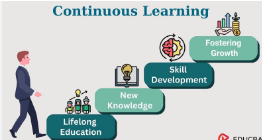
    In today’s fast-paced, innovation-driven economy, stagnation is the true enemy of success. Companies that fail to prioritize learning inevitably fall behind, not because their competitors have better tools, but because they’ve cultivated better minds. As technology reshapes industries overnight, the need for organizations to foster a culture of continuous learning is no longer a luxury—it’s a necessity for survival and growth.

    A workplace that embraces ongoing learning doesn’t just upskill its workforce—it builds resilience, nurtures creativity, and ensures long-term adaptability. Forward-thinking organizations are redefining professional development, embedding learning into the very fabric of daily operations. In doing so, they’re creating environments where curiosity is encouraged, knowledge is shared, and innovation becomes second nature. As Peter Senge famously wrote in The Fifth Discipline, “The only sustainable competitive advantage is an organization’s ability to learn faster than the competition.”

    Developing a culture of learning requires more than periodic training sessions or access to online courses; it demands a mindset shift across leadership, management, and employees. This blog will explore twenty strategic actions that can help organizations transition from traditional, static environments to dynamic learning ecosystems. Each point offers a lens into the principles, practices, and philosophies that drive continual growth and intellectual vitality in the modern workplace.


    1- Leadership Commitment to Learning
    The foundation of any learning culture starts at the top. Leaders must not only endorse continuous learning but actively model it. When executives visibly engage in professional development—attending workshops, reading current literature, or pursuing certifications—they send a powerful message that learning is both valuable and expected. This visibility sets the tone and creates psychological safety for employees to invest in their own development.

    Moreover, leadership’s commitment must be tangible. Allocating time, budget, and resources toward employee education signals a prioritization of learning. Harvard Business Review emphasizes that transformational leadership is key in driving learning initiatives, with leaders acting as both champions and co-learners. To delve deeper into this dynamic, Leadership and the New Science by Margaret Wheatley offers insight into how adaptive leadership supports continuous evolution.


    2- Learning Aligned with Business Strategy
    For learning to gain traction, it must be relevant and aligned with organizational goals. Training programs that connect directly to the company’s mission, performance objectives, and future vision are more likely to gain buy-in and demonstrate ROI. When learning initiatives are strategically mapped to business priorities, they empower teams to innovate and solve real-world challenges.

    This alignment also ensures employees see the relevance of their learning efforts. When team members understand how their growth contributes to the bigger picture, motivation and engagement increase. As Edgar Schein notes in Organizational Culture and Leadership, alignment between culture and strategy fosters organizational coherence and resilience. Learning becomes not just a personal endeavor, but a business imperative.


    3- Establishing Psychological Safety
    A culture of continuous learning cannot thrive without psychological safety—the belief that one can take risks, make mistakes, and express ideas without fear of judgment. When employees feel safe to experiment and fail forward, they unlock creative potential and deeper engagement in their work.

    Amy Edmondson’s research at Harvard underscores the importance of psychological safety in team performance and innovation. Encouraging questions, rewarding transparency, and welcoming constructive dissent are vital practices. Organizations should foster environments where inquiry is respected, mistakes are reframed as learning moments, and no question is considered too basic.


    4- Access to Learning Resources
    Easy and democratic access to learning tools—such as e-learning platforms, digital libraries, and expert networks—is crucial. Employees must be equipped with high-quality resources that cater to different learning styles, from video tutorials and webinars to podcasts and hands-on workshops.

    This accessibility eliminates barriers to development and promotes a habit of self-directed learning. The book Make It Stick by Peter C. Brown et al. emphasizes how varied learning methods enhance retention and mastery. By investing in diverse, scalable tools, companies empower employees to learn continuously, anytime and anywhere.


    5- Encourage Knowledge Sharing
    Internal knowledge sharing accelerates collective intelligence. Whether through mentorship programs, peer-led training sessions, or collaborative platforms, organizations should institutionalize the exchange of insights and experiences.

    When knowledge becomes a shared currency, it dissolves silos and promotes a unified learning community. As Etienne Wenger highlights in Communities of Practice, learning is inherently social. Creating spaces—digital or physical—where employees can ask questions, share lessons learned, and co-create solutions builds cultural momentum around learning.


    6- Reward Learning Behavior
    Recognizing and rewarding learning reinforces its value. This doesn’t always mean promotions or bonuses; public acknowledgment, certifications, or badges of completion can also be powerful incentives. The key is to create visible signals that ongoing education is valued.

    By linking learning to career progression and performance reviews, organizations make development a core metric of success. Daniel Pink, in Drive, notes that autonomy, mastery, and purpose are fundamental motivators. Rewarding learning behavior taps into all three, fueling intrinsic motivation and engagement.


    7- Integrating Learning into Daily Work
    Continuous learning should not be a separate activity squeezed in between tasks—it must be embedded into everyday workflows. Techniques like just-in-time learning, on-the-job coaching, and reflective practice ensure that development is integrated, contextual, and relevant.

    As highlighted by Bersin by Deloitte, high-performing organizations “learn in the flow of work.” This approach allows employees to apply new skills immediately, reinforcing retention and fostering a seamless feedback loop between theory and practice.


    8- Encourage Reflective Practice
    Reflection transforms experience into insight. Encouraging employees to regularly pause, analyze outcomes, and consider what could be improved helps deepen learning and build critical thinking. This habit cultivates self-awareness and personal growth.

    Journaling, team retrospectives, and learning logs are effective methods. Donald Schön, in The Reflective Practitioner, emphasized how reflection-in-action and reflection-on-action are essential to professional competence. Embedding reflection in meetings, project reviews, and leadership development cultivates a more thoughtful, resilient workforce.


    9- Promote Lifelong Learning Mindset
    Lifelong learning isn’t just about acquiring skills—it’s about fostering curiosity, adaptability, and intellectual agility. Organizations that celebrate growth mindsets help employees view learning as an ongoing journey rather than a fixed destination.

    Carol Dweck’s seminal work, Mindset, demonstrates that individuals who believe abilities can be developed are more likely to embrace challenges and persist through setbacks. Embedding this philosophy into performance management, onboarding, and leadership messaging helps normalize continuous evolution.


    10- Use Technology to Enhance Learning
    Digital tools can democratize and personalize learning like never before. Learning management systems (LMS), AI-driven recommendations, and gamification can tailor content to individual needs and create engaging experiences.

    But technology must serve pedagogy—not the other way around. Effective use of tech blends instructional design with interactivity. The book Learning in the Age of Digital Reason by Petar Jandrić explores how digital environments are reshaping knowledge creation, offering valuable context for L&D leaders.


    11- Develop Internal Trainers and Coaches
    Identifying and training internal experts as coaches or trainers amplifies learning at scale. These individuals understand the organization’s nuances and can translate external concepts into actionable strategies for their peers.

    This peer-driven model builds trust, lowers the cost of development, and reinforces a learning identity. John Whitmore’s Coaching for Performance emphasizes how coaching unlocks potential and fosters autonomy, making it a cornerstone of any robust learning culture.


    12- Measure Learning Impact
    Learning without measurement is a shot in the dark. Organizations must evaluate the effectiveness of their learning initiatives through metrics like knowledge retention, skill application, and performance improvement.

    Kirkpatrick’s Four Levels of Evaluation remain a classic framework, guiding organizations to assess learning at reaction, learning, behavior, and results stages. Measurement helps justify investment, improve design, and showcase learning’s strategic value.


    13- Offer Personalized Learning Paths
    Customization is key to relevance. Employees have different goals, learning speeds, and preferred formats. Personalized pathways—enabled through adaptive platforms or mentorship—enhance engagement and ownership.

    Organizations like IBM and AT&T use AI to personalize learning content based on role, aspirations, and behavior. As highlighted in The Expertise Economy by Kelly Palmer and David Blake, personalization is central to preparing workers for the future of work.


    14- Cultivate Mentorship Relationships
    Mentorship offers both guidance and inspiration. Pairing less experienced employees with seasoned professionals facilitates knowledge transfer, accelerates growth, and deepens organizational connection.

    Formal programs, reverse mentoring, and cross-functional pairings expand perspectives and strengthen networks. Kram’s Mentoring at Work provides a foundational understanding of how developmental relationships enhance individual and collective learning.


    15- Embed Learning in Performance Reviews
    When learning goals are embedded into performance reviews, they gain legitimacy and urgency. Linking development efforts to performance management signals that learning is not optional—it’s central to advancement.

    This approach also promotes accountability and alignment. As highlighted by Josh Bersin, modern performance management is continuous, development-focused, and data-informed, making it a natural home for learning objectives.


    16- Create Space and Time for Learning
    Busyness is the enemy of reflection and growth. Organizations must carve out time during work hours for learning—whether through “learning Fridays,” development sprints, or microlearning breaks.

    Allocating time removes the guilt barrier and normalizes learning as a core activity, not an extracurricular. Cal Newport, in Deep Work, underscores the need for undistracted focus to truly absorb and internalize complex knowledge.


    17- Encourage Cross-Functional Learning
    Cross-functional exposure expands cognitive boundaries. When employees engage with other departments, they gain new perspectives, understand systemic interdependencies, and build collaborative competence.

    Rotational programs, interdisciplinary projects, and cross-training initiatives are effective enablers. In Range by David Epstein, the author makes a compelling case for generalist knowledge in a complex world—a principle echoed in cross-functional learning.


    18- Celebrate Learning Milestones
    Celebrating milestones—like course completions, certifications, or learning anniversaries—reinforces progress and cultivates a sense of achievement. These rituals affirm that learning is meaningful and valued.

    Public recognition, internal newsletters, and digital badges all contribute to a shared sense of accomplishment. As Teresa Amabile’s research shows, small wins significantly boost motivation and morale—a principle organizations should leverage in learning journeys.


    19- Leverage External Expertise
    Bringing in external thought leaders, trainers, and consultants injects fresh ideas and prevents intellectual insularity. These experts challenge assumptions, offer broader perspectives, and introduce new frameworks.

    Collaborating with universities, attending industry conferences, or hosting expert webinars are effective strategies. Books like The Innovator’s DNA by Jeff Dyer et al. showcase how external inspiration fuels innovation and learning inside organizations.


    20- Build a Learning Brand Internally and Externally
    Organizations that market their learning culture internally and externally attract top talent and retain curious minds. A strong learning brand signals a growth-oriented environment and positions the company as a talent magnet.

    Internally, storytelling and internal communications can spotlight learner journeys. Externally, promoting learning on LinkedIn or company websites reinforces the employer value proposition. As Simon Sinek puts it in Start With Why, people don’t buy what you do—they buy why you do it. A visible learning brand reflects a deeper purpose of human development.


    21- Opportunities that Spark Curiosity, Creativity, and Enthusiasm
    Creating learning opportunities that spark curiosity is central to igniting creativity and enthusiasm. This involves designing content that connects with real-world challenges, evokes personal interest, and allows for experimentation. Hands-on projects, exploratory research, and interactive simulations fuel intellectual excitement, making learning intrinsically rewarding.

    Albert Einstein famously said, “I have no special talent. I am only passionately curious.” Organizations must foster environments where such passion can thrive. Giving employees the freedom to explore their interests within a structured framework leads to meaningful innovation and engagement. Books like Drive by Daniel Pink reinforce that intrinsic motivation is rooted in autonomy, mastery, and purpose—key drivers in cultivating creativity.


    22- Anticipating Change Rather Than Reacting to It
    In a volatile global economy, reactive strategies are insufficient. Proactive organizations forecast trends, identify skill gaps early, and prepare their workforce accordingly. This anticipatory approach not only reduces downtime during transitions but positions companies as market leaders rather than followers.

    Strategic foresight—combined with agile learning—builds a future-proof culture. As Rita McGrath argues in Seeing Around Corners, the ability to spot inflection points early separates thriving companies from declining ones. Continuous learning becomes a radar system, detecting early signals of disruption and driving timely action.


    23- Embedding Learning into the Cultural DNA
    When continuous learning is deeply embedded in organizational culture, it becomes second nature. It’s not an obligation; it’s a shared value system. Employees don’t wait to be told when to learn—they instinctively seek knowledge as part of their everyday roles.

    Culture is transmitted through language, rituals, and shared narratives. Companies that spotlight learning in their town halls, recognize learner achievements, and encourage curiosity at every level institutionalize this value. As Schein states in Organizational Culture and Leadership, “Culture is what a group learns over a period of time.” When learning is constant, the culture becomes adaptive and robust.


    24- Beyond Periodic Courses and Certifications
    True continuous learning surpasses the boundaries of scheduled training. It’s about creating a dynamic environment where microlearning, informal coaching, and spontaneous discovery happen daily. Static, one-off sessions are no match for the demands of the modern workforce.

    The shift from episodic to ecosystemic learning means integrating knowledge into workflows. This approach ensures learning becomes habitual and immediate. Referencing Informal Learning by Jay Cross, we find that up to 80% of learning happens outside traditional settings—emphasizing the need to support spontaneous learning moments.


    25- Staying Ahead of Industry Shifts
    Industries evolve quickly, and staying current requires constant upskilling. Continuous learning ensures employees can adapt to regulatory changes, emerging technologies, and evolving consumer expectations. It builds a workforce that is not just reactive but future-ready.

    The World Economic Forum’s Future of Jobs Report highlights that reskilling and upskilling will be crucial to workforce sustainability. Organizations must view learning not as a perk, but as a strategic necessity that keeps them on the cutting edge of their industries.


    26- Benefits: Engagement, Innovation, Competitive Advantage
    Organizations that prioritize learning report consistently higher engagement scores. Employees who see growth opportunities are more loyal, motivated, and energized. Additionally, a learning-centric culture directly fuels innovation by encouraging experimentation and critical thinking.

    According to Deloitte’s Human Capital Trends, high-performing learning organizations are 92% more likely to innovate. These companies also enjoy stronger retention and better brand perception. Competitive advantage today is built not solely on products, but on people who think, adapt, and improve continuously.


    27- A Response to Accelerating Technological Change
    Technological advancement is relentless. From AI to blockchain to quantum computing, today’s innovations demand an agile and informed workforce. Continuous learning allows organizations to keep pace, preventing obsolescence and facilitating transformation.

    Books like The Second Machine Age by Erik Brynjolfsson and Andrew McAfee explore how digital disruption redefines business. Learning ecosystems that evolve in tandem with technology are essential for maintaining relevance in this new era.


    28- Skills That Foster Innovation and Agility
    Employees who regularly update their skills become change agents. They embrace new tools, think critically about process improvements, and are unafraid to pivot when necessary. These traits are the lifeblood of innovation and organizational agility.

    Encouraging such adaptability creates teams that can self-organize, collaborate across functions, and respond to emerging challenges swiftly. In Reinventing Organizations by Frederic Laloux, companies that empower learning at all levels are shown to be more resilient and transformational.


    29- Supporting Personal and Professional Growth
    People inherently seek progress. Organizations that support both personal and professional development foster deeper engagement and satisfaction. This includes offering pathways for leadership, wellness education, and creative pursuits.

    Supporting the whole individual—not just their job title—builds loyalty and enhances workplace morale. Books like First, Break All the Rules by Marcus Buckingham highlight how personal growth opportunities correlate with high employee performance.


    30- Tangible Organizational Benefits
    The impact of continuous learning can be measured in productivity metrics, innovation indices, and retention rates. Companies that champion learning see tangible improvements in employee output, team cohesion, and market adaptability.

    Learning drives business outcomes. McKinsey’s research indicates that organizations with effective L&D functions outperform their peers by as much as 30% in productivity. Knowledge is no longer a hidden asset—it’s a strategic differentiator.


    31- Proactive Response to Market Disruptions
    Being reactive is expensive. Continuous learning equips organizations to respond proactively, with strategic agility and informed confidence. Teams anticipate market shifts and innovate accordingly.

    This proactive stance is not about prediction—it’s about preparation. In Antifragile by Nassim Nicholas Taleb, organizations that thrive amid volatility are those that grow stronger from shocks, precisely because they’re always learning.


    32- Dialogue with Employees About Their Experiences
    Regular conversations about learning experiences humanize the process and surface valuable feedback. These dialogues help leaders understand what’s working, what’s not, and how employees feel about their growth journeys.

    This two-way communication fosters trust and ownership. Leaders who regularly engage in these discussions signal that learning isn’t top-down—it’s co-created. Feedback loops are a cornerstone of adaptive learning systems.


    33- Active Listening to Employee Feedback
    Listening is more than hearing; it’s about acting on insights. When leaders actively respond to feedback, they build credibility and momentum around learning programs. It shows that the organization is invested in its people.

    Active listening also uncovers hidden barriers to learning—time constraints, access issues, or content relevance. Addressing these pain points creates a more inclusive and effective learning environment.


    34- Self-Assessment and Supportive Environments
    Encouraging employees to evaluate their strengths and growth areas promotes ownership. Self-assessment tools like learning journals, 360-degree feedback, or reflection exercises deepen self-awareness and intentional learning.

    Pairing this with a supportive environment—where vulnerability is welcomed—amplifies development. As Brené Brown notes in Dare to Lead, psychological safety is essential for growth. Supportive cultures help employees view development as a shared journey, not a solitary pursuit.


    35- Foundational Elements for Consistent Growth
    A successful learning culture rests on key pillars: leadership buy-in, accessible resources, embedded reflection, and aligned strategy. These foundational elements create a stable platform on which consistent growth can flourish.

    When learning is structurally and philosophically supported, it becomes a repeatable and sustainable process. Referencing The Learning Organization by Peter Senge, growth is most effective when it is systemic, not situational.


    36- Leveraging Social Learning Platforms
    Platforms that facilitate collaborative learning—such as Slack, Microsoft Teams, or specialized LXP platforms—make learning social and scalable. Employees benefit from shared knowledge, crowdsourced answers, and peer validation.

    Social learning reduces knowledge bottlenecks and accelerates problem-solving. The book Social Learning by Tony Bingham and Marcia Conner argues that the most effective learning happens through conversation, not just consumption.


    37- Peer-Sharing Networks
    Establishing internal networks for peer learning ensures expertise is democratized. These can include communities of practice, knowledge cafés, or cross-functional guilds where colleagues teach and learn from each other.

    Peer networks foster mutual respect and collective intelligence. They reduce reliance on external trainers and create more sustainable, embedded learning practices. Collaborative ecosystems outperform siloed systems in both agility and innovation.


    38- Navigating Hurdles and Demonstrating Value
    Learning initiatives often face resistance—lack of time, unclear benefits, or cultural inertia. Addressing these hurdles head-on through transparent communication, quick wins, and leadership advocacy ensures momentum.

    Demonstrating ROI—through performance data, innovation metrics, or qualitative testimonials—helps secure ongoing investment. Continuous learning must be positioned not as a cost, but as a critical capability.


    39- Learning Fuels Innovation and Success
    The direct correlation between learning and innovation is well-documented. Learning creates the space for experimentation, the skills for execution, and the mindset for iteration. It fuels not just ideas, but sustainable success.

    As Thomas Friedman states in Thank You for Being Late, “The most important competitive advantage today is not IQ, but AQ—adaptability quotient.” Learning raises AQ across the organization, setting the stage for long-term success.


    40- Dedicate Time to Passion-Driven Projects
    Allocating a fifth of working hours to self-chosen projects can yield tremendous benefits. These initiatives foster creativity, reinforce autonomy, and often generate valuable business insights.

    Google’s famous “20% time” led to the creation of Gmail and AdSense. Allowing space for passion projects supports personal growth while often delivering organizational breakthroughs.


    41- Microsoft’s Regular Learning Days
    Microsoft sets aside specific days where employees focus solely on learning and development. These intentional pauses from routine allow for deeper immersion, reflection, and reinvigoration.

    Such rituals institutionalize learning and combat burnout. They create rhythm and recognition for growth, setting a precedent that learning is not secondary to performance—it is performance.


    42- LinkedIn and Unlimited Learning Access
    LinkedIn’s model of giving employees unlimited access to LinkedIn Learning empowers self-direction. It signals trust in the learner and provides a vast array of development tools at no additional effort.

    This strategy democratizes development and encourages exploration. Organizations can replicate this by offering open-access learning platforms curated to company goals and individual interests.


    43- A Culture of Curiosity and Self-Directed Growth
    Fostering curiosity means empowering employees to ask “why” and “what if” without fear. When individuals own their development paths, learning becomes not just efficient, but transformative.

    Self-directed learning creates accountability and relevance. According to The Adult Learner by Malcolm Knowles, adult learning is most effective when it’s self-initiated and problem-centered.


    44- Commitment Brings Lasting Results
    Organizations that genuinely commit to continuous learning don’t just see short-term benefits—they build lasting capability. They attract lifelong learners and develop resilient, future-ready teams.

    Commitment involves time, resources, and cultural alignment. It’s a strategic asset, not an HR function. Long-term learning investments consistently outperform reactive training approaches.


    45- Lead by Example
    Leadership must walk the talk. When executives participate in training, share their learning journeys, and publicly admit what they’re still learning, it fosters a culture of humility and growth.

    This visibility breaks down hierarchical barriers and normalizes development. As Simon Sinek suggests, “Leadership is not about being in charge. It is about taking care of those in your charge”—and modeling learning is a form of care.


    46- Foster Psychological Safety and Trust
    Without trust, learning halts. Teams must feel safe to question, fail, and express doubt. Psychological safety underpins curiosity and creativity, both vital for learning.

    Edmondson’s concept of a “learning zone” combines high accountability with high psychological safety. Creating this space is crucial for maximizing development and performance.


    47- Embed Learning into Daily Life
    Learning should not feel like an interruption. It should be part of meetings, goal-setting, project reviews, and daily routines. This makes development continuous and integrated.

    Every task becomes an opportunity to reflect, experiment, and grow. Embedding learning turns every job role into a learning role—scaling growth without formal training overhead.


    48- Celebrate Learning as a Journey
    Milestones matter, but so do small steps. Celebrating progress reinforces a growth mindset and cultivates momentum. Recognizing learning as a journey encourages persistence and patience.

    Whether it’s peer recognition, badges, or storytelling, honoring progress builds pride and connection. As Maya Angelou said, “Do the best you can until you know better. Then when you know better, do better.”


    49- Value Every Step Forward
    A culture of learning honors every act of growth. Whether mastering a new tool or gaining clarity from feedback, each step forward is a victory.

    This mindset nurtures grit and gratitude. Over time, small steps accumulate into transformational progress—both for individuals and the organization.


    50- A Culture of Continuous Learning Takes Time
    This culture isn’t built in a quarter or even a fiscal year. It evolves over time through consistent action, leadership, and values. Patience and persistence are critical.

    Building such a culture is akin to planting a forest—it starts small but grows into something powerful and enduring. With sustained investment, the rewards become exponential.


    Conclusion
    Building a culture of continuous learning is an enduring strategy for success. It’s not about a single program or platform but a holistic shift in how an organization thinks, acts, and grows. In a world defined by change, learning is the only constant. By embedding it deeply into daily operations, leadership practices, and organizational values, companies can thrive amid complexity.

    The rewards of such a culture—agility, innovation, engagement, and competitive advantage—are not theoretical; they are demonstrable and lasting. As the landscape of work continues to evolve, the organizations that learn will be the ones that lead.

    Cultivating a culture of continuous learning is not a one-time initiative—it is a long-term commitment to growth, innovation, and adaptability. Organizations that embed learning into their DNA are not only more agile in times of change but also more attractive to top talent and more resilient in the face of disruption. As Alvin Toffler said, “The illiterate of the 21st century will not be those who cannot read and write, but those who cannot learn, unlearn, and relearn.”

    This journey begins with intentional leadership and touches every layer of the organizational fabric—from strategy and structure to values and rituals. The future belongs to those who learn continuously. By following these twenty practical strategies, organizations can transform into living systems of knowledge, creativity, and sustained excellence.

    Bibliography

    1. Senge, Peter M. The Fifth Discipline: The Art & Practice of The Learning Organization. Doubleday/Currency, 2006.

    2. Brown, Brené. Dare to Lead: Brave Work. Tough Conversations. Whole Hearts. Random House, 2018.

    3. Pink, Daniel H. Drive: The Surprising Truth About What Motivates Us. Riverhead Books, 2009.

    4. Taleb, Nassim Nicholas. Antifragile: Things That Gain from Disorder. Random House, 2012.

    5. Schein, Edgar H. Organizational Culture and Leadership. 5th ed., Wiley, 2016.

    6. Cross, Jay. Informal Learning: Rediscovering the Natural Pathways That Inspire Innovation and Performance. Pfeiffer, 2006.

    7. McGrath, Rita Gunther. Seeing Around Corners: How to Spot Inflection Points in Business Before They Happen. Houghton Mifflin Harcourt, 2019.

    8. Brynjolfsson, Erik, and McAfee, Andrew. The Second Machine Age: Work, Progress, and Prosperity in a Time of Brilliant Technologies. W. W. Norton & Company, 2014.

    9. Friedman, Thomas L. Thank You for Being Late: An Optimist’s Guide to Thriving in the Age of Accelerations. Farrar, Straus and Giroux, 2016.

    10. Laloux, Frederic. Reinventing Organizations: A Guide to Creating Organizations Inspired by the Next Stage of Human Consciousness. Nelson Parker, 2014.

    11. Knowles, Malcolm S. The Adult Learner: The Definitive Classic in Adult Education and Human Resource Development. 8th ed., Routledge, 2015.

    12. Bingham, Tony, and Conner, Marcia. The New Social Learning: Connect. Collaborate. Work. Berrett-Koehler Publishers, 2010.

    13. Buckingham, Marcus, and Coffman, Curt. First, Break All the Rules: What the World’s Greatest Managers Do Differently. Gallup Press, 1999.

    14. Angelou, Maya. Wouldn’t Take Nothing for My Journey Now. Random House, 1993.

    15. Sinek, Simon. Leaders Eat Last: Why Some Teams Pull Together and Others Don’t. Portfolio, 2014.

    16. Edmondson, Amy C. The Fearless Organization: Creating Psychological Safety in the Workplace for Learning, Innovation, and Growth. Wiley, 2018.

    17. Kegan, Robert, and Lahey, Lisa Laskow. An Everyone Culture: Becoming a Deliberately Developmental Organization. Harvard Business Review Press, 2016.

    18. Drucker, Peter F. Management Challenges for the 21st Century. HarperBusiness, 1999.

    19. Argyris, Chris. On Organizational Learning. 2nd ed., Wiley-Blackwell, 1999.

    20. Kolb, David A. Experiential Learning: Experience as the Source of Learning and Development. 2nd ed., Pearson FT Press, 2014.

    By Amjad Izhar
    Contact: amjad.izhar@gmail.com
    https://amjadizhar.blog

  • PyTorch for Deep Learning & Machine Learning – Study Notes

    PyTorch for Deep Learning & Machine Learning – Study Notes

    PyTorch for Deep Learning FAQ

    1. What are tensors and how are they represented in PyTorch?

    Tensors are the fundamental data structures in PyTorch, used to represent numerical data. They can be thought of as multi-dimensional arrays. In PyTorch, tensors are created using the torch.tensor() function and can be classified as:

    • Scalar: A single number (zero dimensions)
    • Vector: A one-dimensional array (one dimension)
    • Matrix: A two-dimensional array (two dimensions)
    • Tensor: A general term for arrays with three or more dimensions

    You can identify the number of dimensions by counting the pairs of closing square brackets used to define the tensor.

    2. How do you determine the shape and dimensions of a tensor?

    • Dimensions: Determined by counting the pairs of closing square brackets (e.g., [[]] represents two dimensions). Accessed using tensor.ndim.
    • Shape: Represents the number of elements in each dimension. Accessed using tensor.shape or tensor.size().

    For example, a tensor defined as [[1, 2], [3, 4]] has two dimensions and a shape of (2, 2), indicating two rows and two columns.

    3. What are tensor data types and how do you change them?

    Tensors have data types that specify the kind of numerical values they hold (e.g., float32, int64). The default data type in PyTorch is float32. You can change the data type of a tensor using the .type() method:

    float_32_tensor = torch.tensor([1.0, 2.0, 3.0])

    float_16_tensor = float_32_tensor.type(torch.float16)

    4. What does “requires_grad” mean in PyTorch?

    requires_grad is a parameter used when creating tensors. Setting it to True indicates that you want to track gradients for this tensor during training. This is essential for PyTorch to calculate derivatives and update model weights during backpropagation.

    5. What is matrix multiplication in PyTorch and what are the rules?

    Matrix multiplication, a key operation in deep learning, is performed using the @ operator or torch.matmul() function. Two important rules apply:

    • Inner dimensions must match: The number of columns in the first matrix must equal the number of rows in the second matrix.
    • Resulting matrix shape: The resulting matrix will have the number of rows from the first matrix and the number of columns from the second matrix.

    6. What are common tensor operations for aggregation?

    PyTorch provides several functions to aggregate tensor values, such as:

    • torch.min(): Finds the minimum value.
    • torch.max(): Finds the maximum value.
    • torch.mean(): Calculates the average.
    • torch.sum(): Calculates the sum.

    These functions can be applied to the entire tensor or along specific dimensions.

    7. What are the differences between reshape, view, and stack?

    • reshape: Changes the shape of a tensor while maintaining the same data. The new shape must be compatible with the original number of elements.
    • view: Creates a new view of the same underlying data as the original tensor, with a different shape. Changes to the view affect the original tensor.
    • stack: Concatenates tensors along a new dimension, creating a higher-dimensional tensor.

    8. What are the steps involved in a typical PyTorch training loop?

    1. Forward Pass: Input data is passed through the model to get predictions.
    2. Calculate Loss: The difference between predictions and actual labels is calculated using a loss function.
    3. Zero Gradients: Gradients from previous iterations are reset to zero.
    4. Backpropagation: Gradients are calculated for all parameters with requires_grad=True.
    5. Optimize Step: The optimizer updates model weights based on calculated gradients.

    Deep Learning and Machine Learning with PyTorch

    Short-Answer Quiz

    Instructions: Answer the following questions in 2-3 sentences each.

    1. What are the key differences between a scalar, a vector, a matrix, and a tensor in PyTorch?
    2. How can you determine the number of dimensions of a tensor in PyTorch?
    3. Explain the concept of “shape” in relation to PyTorch tensors.
    4. Describe how to create a PyTorch tensor filled with ones and specify its data type.
    5. What is the purpose of the torch.zeros_like() function?
    6. How do you convert a PyTorch tensor from one data type to another?
    7. Explain the importance of ensuring tensors are on the same device and have compatible data types for operations.
    8. What are tensor attributes, and provide two examples?
    9. What is tensor broadcasting, and what are the two key rules for its operation?
    10. Define tensor aggregation and provide two examples of aggregation functions in PyTorch.

    Short-Answer Quiz Answer Key

    1. In PyTorch, a scalar is a single number, a vector is an array of numbers with direction, a matrix is a 2-dimensional array of numbers, and a tensor is a multi-dimensional array that encompasses scalars, vectors, and matrices. All of these are represented as torch.Tensor objects in PyTorch.
    2. The number of dimensions of a tensor can be determined using the tensor.ndim attribute, which returns the number of dimensions or axes present in the tensor.
    3. The shape of a tensor refers to the number of elements along each dimension of the tensor. It is represented as a tuple, where each element in the tuple corresponds to the size of each dimension.
    4. To create a PyTorch tensor filled with ones, use torch.ones(size) where size is a tuple specifying the desired dimensions. To specify the data type, use the dtype parameter, for example, torch.ones(size, dtype=torch.float64).
    5. The torch.zeros_like() function creates a new tensor filled with zeros, having the same shape and data type as the input tensor. It is useful for quickly creating a tensor with the same structure but with zero values.
    6. To convert a PyTorch tensor from one data type to another, use the .type() method, specifying the desired data type as an argument. For example, to convert a tensor to float16: tensor = tensor.type(torch.float16).
    7. PyTorch operations require tensors to be on the same device (CPU or GPU) and have compatible data types for successful computation. Performing operations on tensors with mismatched devices or incompatible data types will result in errors.
    8. Tensor attributes provide information about the tensor’s properties. Two examples are:
    • dtype: Specifies the data type of the tensor elements.
    • shape: Represents the dimensionality of the tensor as a tuple.
    1. Tensor broadcasting allows operations between tensors with different shapes, automatically expanding the smaller tensor to match the larger one under certain conditions. The two key rules for broadcasting are:
    • Inner dimensions must match.
    • The resulting matrix has the shape of the broadcasted tensors.
    1. Tensor aggregation involves reducing the elements of a tensor to a single value using specific functions. Two examples are:
    • torch.min(): Finds the minimum value in a tensor.
    • torch.mean(): Calculates the average value of the elements in a tensor.

    Essay Questions

    1. Discuss the concept of dimensionality in PyTorch tensors. Explain how to create tensors with different dimensions and demonstrate how to access specific elements within a tensor. Provide examples and illustrate the relationship between dimensions, shape, and indexing.
    2. Explain the importance of data types in PyTorch. Describe different data types available for tensors and discuss the implications of choosing specific data types for tensor operations. Provide examples of data type conversion and highlight potential issues arising from data type mismatches.
    3. Compare and contrast the torch.reshape(), torch.view(), and torch.permute() functions. Explain their functionalities, use cases, and any potential limitations or considerations. Provide code examples to illustrate their usage.
    4. Discuss the purpose and functionality of the PyTorch nn.Module class. Explain how to create custom neural network modules by subclassing nn.Module. Provide a code example demonstrating the creation of a simple neural network module with at least two layers.
    5. Describe the typical workflow for training a neural network model in PyTorch. Explain the steps involved, including data loading, model creation, loss function definition, optimizer selection, training loop implementation, and model evaluation. Provide a code example outlining the essential components of the training process.

    Glossary of Key Terms

    Tensor: A multi-dimensional array, the fundamental data structure in PyTorch.

    Dimensionality: The number of axes or dimensions present in a tensor.

    Shape: A tuple representing the size of each dimension in a tensor.

    Data Type: The type of values stored in a tensor (e.g., float32, int64).

    Tensor Broadcasting: Automatically expanding the dimensions of tensors during operations to enable compatibility.

    Tensor Aggregation: Reducing the elements of a tensor to a single value using functions like min, max, or mean.

    nn.Module: The base class for building neural network modules in PyTorch.

    Forward Pass: The process of passing input data through a neural network to obtain predictions.

    Loss Function: A function that measures the difference between predicted and actual values during training.

    Optimizer: An algorithm that adjusts the model’s parameters to minimize the loss function.

    Training Loop: Iteratively performing forward passes, loss calculation, and parameter updates to train a model.

    Device: The hardware used for computation (CPU or GPU).

    Data Loader: An iterable that efficiently loads batches of data for training or evaluation.

    Exploring Deep Learning with PyTorch

    Fundamentals of Tensors

    1. Understanding Tensors

    • Introduction to tensors, the fundamental data structure in PyTorch.
    • Differentiating between scalars, vectors, matrices, and tensors.
    • Exploring tensor attributes: dimensions, shape, and indexing.

    2. Manipulating Tensors

    • Creating tensors with varying data types, devices, and gradient tracking.
    • Performing arithmetic operations on tensors and managing potential data type errors.
    • Reshaping tensors, understanding the concept of views, and employing stacking operations like torch.stack, torch.vstack, and torch.hstack.
    • Utilizing torch.squeeze to remove single dimensions and torch.unsqueeze to add them.
    • Practicing advanced indexing techniques on multi-dimensional tensors.

    3. Tensor Aggregation and Comparison

    • Exploring tensor aggregation with functions like torch.min, torch.max, and torch.mean.
    • Utilizing torch.argmin and torch.argmax to find the indices of minimum and maximum values.
    • Understanding element-wise tensor comparison and its role in machine learning tasks.

    Building Neural Networks

    4. Introduction to torch.nn

    • Introducing the torch.nn module, the cornerstone of neural network construction in PyTorch.
    • Exploring the concept of neural network layers and their role in transforming data.
    • Utilizing matplotlib for data visualization and understanding PyTorch version compatibility.

    5. Linear Regression with PyTorch

    • Implementing a simple linear regression model using PyTorch.
    • Generating synthetic data, splitting it into training and testing sets.
    • Defining a linear model with parameters, understanding gradient tracking with requires_grad.
    • Setting up a training loop, iterating through epochs, performing forward and backward passes, and optimizing model parameters.

    6. Non-Linear Regression with PyTorch

    • Transitioning from linear to non-linear regression.
    • Introducing non-linear activation functions like ReLU and Sigmoid.
    • Visualizing the impact of activation functions on data transformations.
    • Implementing custom ReLU and Sigmoid functions and comparing them with PyTorch’s built-in versions.

    Working with Datasets and Data Loaders

    7. Multi-Class Classification with PyTorch

    • Exploring multi-class classification using the make_blobs dataset from scikit-learn.
    • Setting hyperparameters for data creation, splitting data into training and testing sets.
    • Visualizing multi-class data with matplotlib and understanding the relationship between features and labels.
    • Converting NumPy arrays to PyTorch tensors, managing data type consistency between NumPy and PyTorch.

    8. Building a Multi-Class Classification Model

    • Constructing a multi-class classification model using PyTorch.
    • Defining a model class, utilizing linear layers and activation functions.
    • Implementing the forward pass, calculating logits and probabilities.
    • Setting up a training loop, calculating loss, performing backpropagation, and optimizing model parameters.

    9. Model Evaluation and Prediction

    • Evaluating the trained multi-class classification model.
    • Making predictions using the model and converting probabilities to class labels.
    • Visualizing model predictions and comparing them to true labels.

    10. Introduction to Data Loaders

    • Understanding the importance of data loaders in PyTorch for efficient data handling.
    • Implementing data loaders using torch.utils.data.DataLoader for both training and testing data.
    • Exploring data loader attributes and understanding their role in data batching and shuffling.

    11. Building a Convolutional Neural Network (CNN)

    • Introduction to CNNs, a specialized architecture for image and sequence data.
    • Implementing a CNN using PyTorch’s nn.Conv2d layer, understanding concepts like kernels, strides, and padding.
    • Flattening convolutional outputs using nn.Flatten and connecting them to fully connected layers.
    • Defining a CNN model class, implementing the forward pass, and understanding the flow of data through the network.

    12. Training and Evaluating a CNN

    • Setting up a training loop for the CNN model, utilizing device-agnostic code for CPU and GPU compatibility.
    • Implementing helper functions for training and evaluation, calculating loss, accuracy, and training time.
    • Visualizing training progress, tracking loss and accuracy over epochs.

    13. Transfer Learning with Pre-trained Models

    • Exploring the concept of transfer learning, leveraging pre-trained models for faster training and improved performance.
    • Introducing torchvision, a library for computer vision tasks, and understanding its dataset and model functionalities.
    • Implementing data transformations using torchvision.transforms for data augmentation and pre-processing.

    14. Custom Datasets and Data Augmentation

    • Creating custom datasets using torch.utils.data.Dataset for managing image data.
    • Implementing data transformations for resizing, converting to tensors, and normalizing images.
    • Visualizing data transformations and understanding their impact on image data.
    • Implementing data augmentation techniques to increase data variability and improve model robustness.

    15. Advanced CNN Architectures and Optimization

    • Exploring advanced CNN architectures, understanding concepts like convolutional blocks, residual connections, and pooling layers.
    • Implementing a more complex CNN model using convolutional blocks and exploring its performance.
    • Optimizing the training process, introducing learning rate scheduling and momentum-based optimizers.

    Please provide me with the full text to analyze, as I need the complete context to create a detailed timeline and a cast of characters. The provided text snippets focus on PyTorch concepts and code examples related to tensors, neural networks, and data loading.

    For a comprehensive analysis, I need the entire document to understand the flow of information, identify specific events, and extract relevant character details.

    Once you provide the complete text, I can generate:

    • Timeline: A chronological list of significant events discussed in the text, including conceptual explanations, code demonstrations, and challenges presented.
    • Cast of Characters: A list of key individuals mentioned, along with their roles and contributions based on the provided information.

    Please share the complete “748-PyTorch for Deep Learning & Machine Learning – Full Course.pdf” document for a more accurate and detailed analysis.

    Briefing Doc: Deep Dive into PyTorch for Deep Learning

    This briefing document summarizes key themes and concepts extracted from excerpts of the “748-PyTorch for Deep Learning & Machine Learning – Full Course.pdf” focusing on PyTorch fundamentals, tensor manipulation, model building, and training.

    Core Themes:

    1. Tensors: The Heart of PyTorch:
    • Understanding Tensors:
    • Tensors are multi-dimensional arrays representing numerical data in PyTorch.
    • Understanding dimensions, shapes, and data types of tensors is crucial.
    • Scalar, Vector, Matrix, and Tensor are different names for tensors with varying dimensions.
    • “Dimension is like the number of square brackets… the shape of the vector is two. So we have two by one elements. So that means a total of two elements.”
    • Manipulating Tensors:
    • Reshaping, viewing, stacking, squeezing, and unsqueezing tensors are essential for preparing data.
    • Indexing and slicing allow access to specific elements within a tensor.
    • “Reshape has to be compatible with the original dimensions… view of a tensor shares the same memory as the original input.”
    • Tensor Operations:
    • PyTorch provides various operations for manipulating tensors, including arithmetic, aggregation, and matrix multiplication.
    • Understanding broadcasting rules is vital for performing element-wise operations on tensors of different shapes.
    • “The min of this tensor would be 27. So you’re turning it from nine elements to one element, hence aggregation.”
    1. Building Neural Networks with PyTorch:
    • torch.nn Module:
    • This module provides building blocks for constructing neural networks, including layers, activation functions, and loss functions.
    • nn.Module is the base class for defining custom models.
    • “nn is the building block layer for neural networks. And within nn, so nn stands for neural network, is module.”
    • Model Construction:
    • Defining a model involves creating layers and arranging them in a specific order.
    • nn.Sequential allows stacking layers in a sequential manner.
    • Custom models can be built by subclassing nn.Module and defining the forward method.
    • “Can you see what’s going on here? So as you might have guessed, sequential, it implements most of this code for us”
    • Parameters and Gradients:
    • Model parameters are tensors that store the model’s learned weights and biases.
    • Gradients are used during training to update these parameters.
    • requires_grad=True enables gradient tracking for a tensor.
    • “Requires grad optional. If the parameter requires gradient. Hmm. What does requires gradient mean? Well, let’s come back to that in a second.”
    1. Training Neural Networks:
    • Training Loop:
    • The training loop iterates over the dataset multiple times (epochs) to optimize the model’s parameters.
    • Each iteration involves a forward pass (making predictions), calculating the loss, performing backpropagation, and updating parameters.
    • “Epochs, an epoch is one loop through the data…So epochs, we’re going to start with one. So one time through all of the data.”
    • Optimizers:
    • Optimizers, like Stochastic Gradient Descent (SGD), are used to update model parameters based on the calculated gradients.
    • “Optimise a zero grad, loss backwards, optimise a step, step, step.”
    • Loss Functions:
    • Loss functions measure the difference between the model’s predictions and the actual targets.
    • The choice of loss function depends on the specific task (e.g., mean squared error for regression, cross-entropy for classification).
    1. Data Handling and Visualization:
    • Data Loading:
    • PyTorch provides DataLoader for efficiently iterating over datasets in batches.
    • “DataLoader, this creates a python iterable over a data set.”
    • Data Transformations:
    • The torchvision.transforms module offers various transformations for preprocessing images, such as converting to tensors, resizing, and normalization.
    • Visualization:
    • matplotlib is a commonly used library for visualizing data and model outputs.
    • Visualizing data and model predictions is crucial for understanding the learning process and debugging potential issues.
    1. Device Agnostic Code:
    • PyTorch allows running code on different devices (CPU or GPU).
    • Writing device agnostic code ensures flexibility and portability.
    • “Device agnostic code for the model and for the data.”

    Important Facts:

    • PyTorch’s default tensor data type is torch.float32.
    • CUDA (Compute Unified Device Architecture) enables utilizing GPUs for accelerated computations.
    • torch.no_grad() disables gradient tracking, often used during inference or evaluation.
    • torch.argmax finds the index of the maximum value in a tensor.

    Next Steps:

    • Explore different model architectures (CNNs, RNNs, etc.).
    • Implement various optimizers and loss functions.
    • Work with more complex datasets and tasks.
    • Experiment with hyperparameter tuning.
    • Dive deeper into PyTorch’s documentation and tutorials.

    Traditional Programming vs. Machine Learning

    Traditional programming involves providing the computer with data and explicit rules to generate output. Machine learning, on the other hand, involves providing the computer with data and desired outputs, allowing the computer to learn the rules for itself. [1, 2]

    Here’s a breakdown of the differences, illustrated with the example of creating a program for cooking a Sicilian grandmother’s roast chicken dish:

    Traditional Programming

    • Input: Vegetables, chicken
    • Rules: Cut vegetables, season chicken, preheat oven, cook chicken for 30 minutes, add vegetables (rules are explicitly programmed)
    • Output: Roast chicken dish

    Machine Learning

    • Input: A collection of various ingredients (vegetables, chicken)
    • Desired output: A collection of images showcasing the finished roast chicken dish
    • Process: The machine learning algorithm analyzes the inputs and desired outputs to figure out the rules (patterns) for transforming the ingredients into the desired dish. [2-4]

    Key Differences in Approach

    • In traditional programming, humans define the rules, while in machine learning, the computer learns the rules. [2, 3]
    • Traditional programming requires a complete understanding of the problem and the steps to solve it. In contrast, machine learning can be used for complex problems where explicitly defining all the rules would be challenging. [5]

    Why Use Machine Learning?

    Machine learning excels in scenarios where:

    • Complex problems involve long lists of rules: For instance, teaching a computer to drive a car involves countless rules that would be difficult to program manually. [5]
    • Environments are constantly changing: A self-driving car needs to adapt to unpredictable situations on the road. Machine learning enables algorithms to learn and adjust based on new data. [6]
    • Large datasets offer valuable insights: Machine learning algorithms can uncover hidden patterns and relationships within massive datasets. [7]

    The sources also emphasize that machine learning isn’t always the solution. Google’s number one rule of machine learning advises that if a problem can be solved with a simple rule-based system, that approach should be preferred. [8-10]

    Here is how PyTorch leverages tensors and neural networks for deep learning:

    • Tensors: Deep learning relies on numerical data representation. In PyTorch, this is done using tensors. Tensors are multi-dimensional arrays of numbers that can represent various data types, including images, audio, and text [1-3].
    • Neural Networks: Neural networks are a fundamental aspect of deep learning, consisting of interconnected layers that perform mathematical operations on tensors [2, 4-6]. PyTorch provides the building blocks for creating these networks through the torch.nn module [7, 8].
    • GPU Acceleration: PyTorch leverages GPUs (Graphics Processing Units) to accelerate the computation of deep learning models [9]. GPUs excel at number crunching, originally designed for video games but now crucial for deep learning tasks due to their parallel processing capabilities [9, 10]. PyTorch uses CUDA, a parallel computing platform, to interface with NVIDIA GPUs, allowing for faster computations [10, 11].
    • Key Modules:torch.nn: Contains layers, loss functions, and other components needed for constructing computational graphs (neural networks) [8, 12].
    • torch.nn.Parameter: Defines learnable parameters for the model, often set by PyTorch layers [12].
    • torch.nn.Module: The base class for all neural network modules; models should subclass this and override the forward method [12].
    • torch.optim: Contains optimizers that help adjust model parameters during training through gradient descent [13].
    • torch.utils.data.Dataset: The base class for creating custom datasets [14].
    • torch.utils.data.DataLoader: Creates a Python iterable over a dataset, allowing for batched data loading [14-16].
    1. Workflow:Data Preparation: Involves loading, preprocessing, and transforming data into tensors [17, 18].
    2. Building a Model: Constructing a neural network by combining different layers from torch.nn [7, 19, 20].
    3. Loss Function: Choosing a suitable loss function to measure the difference between model predictions and the actual targets [21-24].
    4. Optimizer: Selecting an optimizer (e.g., SGD, Adam) to adjust the model’s parameters based on the calculated gradients [21, 22, 24-26].
    5. Training Loop: Implementing a training loop that iteratively feeds data through the model, calculates the loss, backpropagates the gradients, and updates the model’s parameters [22, 24, 27, 28].
    6. Evaluation: Evaluating the trained model on unseen data to assess its performance [24, 28].

    Overall, PyTorch uses tensors as the fundamental data structure and provides the necessary tools (modules, classes, and functions) to construct neural networks, optimize their parameters using gradient descent, and efficiently run deep learning models, often with GPU acceleration.

    Training, Evaluating, and Saving a Deep Learning Model Using PyTorch

    To train a deep learning model with PyTorch, you first need to prepare your data and turn it into tensors [1]. Tensors are the fundamental building blocks of deep learning and can represent almost any kind of data, such as images, videos, audio, or even DNA [2, 3]. Once your data is ready, you need to build or pick a pre-trained model to suit your problem [1, 4].

    • PyTorch offers a variety of pre-built deep learning models through resources like Torch Hub and Torch Vision.Models [5]. These models can be used as is or adjusted for a specific problem through transfer learning [5].
    • If you are building your model from scratch, PyTorch provides a flexible and powerful framework for building neural networks using various layers and modules [6].
    • The torch.nn module contains all the building blocks for computational graphs, another term for neural networks [7, 8].
    • PyTorch also offers layers for specific tasks, such as convolutional layers for image data, linear layers for simple calculations, and many more [9].
    • The torch.nn.Module serves as the base class for all neural network modules [8, 10]. When building a model from scratch, you should subclass nn.Module and override the forward method to define the computations that your model will perform [8, 11].

    After choosing or building a model, you need to select a loss function and an optimizer [1, 4].

    • The loss function measures how wrong your model’s predictions are compared to the ideal outputs [12].
    • The optimizer takes into account the loss of a model and adjusts the model’s parameters, such as weights and biases, to improve the loss function [13].
    • The specific loss function and optimizer you use will depend on the problem you are trying to solve [14].

    With your data, model, loss function, and optimizer in place, you can now build a training loop [1, 13].

    • The training loop iterates through your training data, making predictions, calculating the loss, and updating the model’s parameters to minimize the loss [15].
    • PyTorch implements the mathematical algorithms of back propagation and gradient descent behind the scenes, making the training process relatively straightforward [16, 17].
    • The loss.backward() function calculates the gradients of the loss function with respect to each parameter in the model [18]. The optimizer.step() function then uses those gradients to update the model’s parameters in the direction that minimizes the loss [18].
    • You can monitor the training process by printing out the loss and other metrics [19].

    In addition to a training loop, you also need a testing loop to evaluate your model’s performance on data it has not seen during training [13, 20]. The testing loop is similar to the training loop but does not update the model’s parameters. Instead, it calculates the loss and other metrics to evaluate how well the model generalizes to new data [21, 22].

    To save your trained model, PyTorch provides several methods, including torch.save, torch.load, and torch.nn.Module.load_state_dict [23-25].

    • The recommended way to save and load a PyTorch model is by saving and loading its state dictionary [26].
    • The state dictionary is a Python dictionary object that maps each layer in the model to its parameter tensor [27].
    • You can save the state dictionary using torch.save and load it back in using torch.load and the model’s load_state_dict method [28, 29].

    By following this general workflow, you can train, evaluate, and save deep learning models using PyTorch for a wide range of real-world applications.

    A Comprehensive Discussion of the PyTorch Workflow

    The PyTorch workflow outlines the steps involved in building, training, and deploying deep learning models using the PyTorch framework. The sources offer a detailed walkthrough of this workflow, emphasizing its application in various domains, including computer vision and custom datasets.

    1. Data Preparation and Loading

    The foundation of any machine learning project lies in data. Getting your data ready is the crucial first step in the PyTorch workflow [1-3]. This step involves:

    • Data Acquisition: Gathering the data relevant to your problem. This could involve downloading existing datasets or collecting your own.
    • Data Preprocessing: Cleaning and transforming the raw data into a format suitable for training a machine learning model. This often includes handling missing values, normalizing numerical features, and converting categorical variables into numerical representations.
    • Data Transformation into Tensors: Converting the preprocessed data into PyTorch tensors. Tensors are multi-dimensional arrays that serve as the fundamental data structure in PyTorch [4-6]. This step uses torch.tensor to create tensors from various data types.
    • Dataset and DataLoader Creation:Organizing the data into PyTorch datasets using torch.utils.data.Dataset. This involves defining how to access individual samples and their corresponding labels [7, 8].
    • Creating data loaders using torch.utils.data.DataLoader [7, 9-11]. Data loaders provide a Python iterable over the dataset, allowing you to efficiently iterate through the data in batches during training. They handle shuffling, batching, and other data loading operations.

    2. Building or Picking a Pre-trained Model

    Once your data is ready, the next step is to build or pick a pre-trained model [1, 2]. This is a critical decision that will significantly impact your model’s performance.

    • Pre-trained Models: PyTorch offers pre-built models through resources like Torch Hub and Torch Vision.Models [12].
    • Benefits: Leveraging pre-trained models can save significant time and resources. These models have already learned useful features from large datasets, which can be adapted to your specific task through transfer learning [12, 13].
    • Transfer Learning: Involves fine-tuning a pre-trained model on your dataset, adapting its learned features to your problem. This is especially useful when working with limited data [12, 14].
    • Building from Scratch:When Necessary: You might need to build a model from scratch if your problem is unique or if no suitable pre-trained models exist.
    • PyTorch Flexibility: PyTorch provides the tools to create diverse neural network architectures, including:
    • Multi-layer Perceptrons (MLPs): Composed of interconnected layers of neurons, often using torch.nn.Linear layers [15].
    • Convolutional Neural Networks (CNNs): Specifically designed for image data, utilizing convolutional layers (torch.nn.Conv2d) to extract spatial features [16-18].
    • Recurrent Neural Networks (RNNs): Suitable for sequential data, leveraging recurrent layers to process information over time.

    Key Considerations in Model Building:

    • Subclassing torch.nn.Module: PyTorch models typically subclass nn.Module and override the forward method to define the computational flow [19-23].
    • Understanding Layers: Familiarity with various PyTorch layers (available in torch.nn) is crucial for constructing effective models. Each layer performs specific mathematical operations that transform the data as it flows through the network [24-26].
    • Model Inspection:print(model): Provides a basic overview of the model’s structure and parameters.
    • model.parameters(): Allows you to access and inspect the model’s learnable parameters [27].
    • Torch Info: This package offers a more programmatic way to obtain a detailed summary of your model, including the input and output shapes of each layer [28-30].

    3. Setting Up a Loss Function and Optimizer

    Training a deep learning model involves optimizing its parameters to minimize a loss function. Therefore, choosing the right loss function and optimizer is essential [31-33].

    • Loss Function: Measures the difference between the model’s predictions and the actual target values. The choice of loss function depends on the type of problem you are solving [34, 35]:
    • Regression: Mean Squared Error (MSE) or Mean Absolute Error (MAE) are common choices [36].
    • Binary Classification: Binary Cross Entropy (BCE) is often used [35-39]. PyTorch offers variations like torch.nn.BCELoss and torch.nn.BCEWithLogitsLoss. The latter combines a sigmoid layer with the BCE loss, often simplifying the code [38, 39].
    • Multi-Class Classification: Cross Entropy Loss is a standard choice [35-37].
    • Optimizer: Responsible for updating the model’s parameters based on the calculated gradients to minimize the loss function [31-33, 40]. Popular optimizers in PyTorch include:
    • Stochastic Gradient Descent (SGD): A foundational optimization algorithm [35, 36, 41, 42].
    • Adam: An adaptive optimization algorithm often offering faster convergence [35, 36, 42].

    PyTorch provides various loss functions in torch.nn and optimizers in torch.optim [7, 40, 43].

    4. Building a Training Loop

    The heart of the PyTorch workflow lies in the training loop [32, 44-46]. It’s where the model learns patterns in the data through repeated iterations of:

    • Forward Pass: Passing the input data through the model to generate predictions [47, 48].
    • Loss Calculation: Using the chosen loss function to measure the difference between the predictions and the actual target values [47, 48].
    • Back Propagation: Calculating the gradients of the loss with respect to each parameter in the model using loss.backward() [41, 47-49]. PyTorch handles this complex mathematical operation automatically.
    • Parameter Update: Updating the model’s parameters using the calculated gradients and the chosen optimizer (e.g., optimizer.step()) [41, 47, 49]. This step nudges the parameters in a direction that minimizes the loss.

    Key Aspects of a Training Loop:

    • Epochs: The number of times the training loop iterates through the entire training dataset [50].
    • Batches: Dividing the training data into smaller batches to improve computational efficiency and model generalization [10, 11, 51].
    • Monitoring Training Progress: Printing the loss and other metrics during training allows you to track how well the model is learning [50]. You can use techniques like progress bars (e.g., using the tqdm library) to visualize the training progress [52].

    5. Evaluation and Testing Loop

    After training, you need to evaluate your model’s performance on unseen data using a testing loop [46, 48, 53]. The testing loop is similar to the training loop, but it does not update the model’s parameters [48]. Its purpose is to assess how well the trained model generalizes to new data.

    Steps in a Testing Loop:

    • Setting Evaluation Mode: Switching the model to evaluation mode (model.eval()) deactivates certain layers like dropout, which are only needed during training [53, 54].
    • Inference Mode: Using PyTorch’s inference mode (torch.inference_mode()) disables gradient tracking and other computations unnecessary for inference, making the evaluation process faster [53-56].
    • Forward Pass: Making predictions on the test data by passing it through the model [57].
    • Loss and Metric Calculation: Calculating the loss and other relevant metrics (e.g., accuracy, precision, recall) to assess the model’s performance on the test data [53].

    6. Saving and Loading the Model

    Once you have a trained model that performs well, you need to save it for later use or deployment [58]. PyTorch offers different ways to save and load models, including saving the entire model or saving its state dictionary [59].

    • State Dictionary: The recommended way is to save the model’s state dictionary [59, 60], which is a Python dictionary containing the model’s parameters. This approach is more efficient and avoids saving unnecessary information.

    Saving and Loading using State Dictionary:

    • Saving: torch.save(model.state_dict(), ‘model_filename.pth’)
    1. Loading:Create an instance of the model: loaded_model = MyModel()
    2. Load the state dictionary: loaded_model.load_state_dict(torch.load(‘model_filename.pth’))

    7. Improving the Model (Iterative Process)

    Building a successful deep learning model often involves an iterative process of experimentation and improvement [61-63]. After evaluating your initial model, you might need to adjust various aspects to enhance its performance. This includes:

    • Hyperparameter Tuning: Experimenting with different values for hyperparameters like learning rate, batch size, and model architecture [64].
    • Data Augmentation: Applying transformations to the training data (e.g., random cropping, flipping, rotations) to increase data diversity and improve model generalization [65].
    • Regularization Techniques: Using techniques like dropout or weight decay to prevent overfitting and improve model robustness.
    • Experiment Tracking: Utilizing tools like TensorBoard or Weights & Biases to track your experiments, log metrics, and visualize results [66]. This can help you gain insights into the training process and make informed decisions about model improvements.

    Additional Insights from the Sources:

    • Functionalization: As your models and training loops become more complex, it’s beneficial to functionalize your code to improve readability and maintainability [67]. The sources demonstrate this by creating functions for training and evaluation steps [68, 69].
    • Device Agnostic Code: PyTorch allows you to write code that can run on either a CPU or a GPU [70-73]. By using torch.device to determine the available device, you can make your code more flexible and efficient.
    • Debugging and Troubleshooting: The sources emphasize common debugging tips, such as printing shapes and values to check for errors and using the PyTorch documentation as a reference [9, 74-77].

    By following the PyTorch workflow and understanding the key steps involved, you can effectively build, train, evaluate, and deploy deep learning models for various applications. The sources provide valuable code examples and explanations to guide you through this process, enabling you to tackle real-world problems with PyTorch.

    A Comprehensive Discussion of Neural Networks

    Neural networks are a cornerstone of deep learning, a subfield of machine learning. They are computational models inspired by the structure and function of the human brain. The sources, while primarily focused on the PyTorch framework, offer valuable insights into the principles and applications of neural networks.

    1. What are Neural Networks?

    Neural networks are composed of interconnected nodes called neurons, organized in layers. These layers typically include:

    • Input Layer: Receives the initial data, representing features or variables.
    • Hidden Layers: Perform computations on the input data, transforming it through a series of mathematical operations. A network can have multiple hidden layers, increasing its capacity to learn complex patterns.
    • Output Layer: Produces the final output, such as predictions or classifications.

    The connections between neurons have associated weights that determine the strength of the signal transmitted between them. During training, the network adjusts these weights to learn the relationships between input and output data.

    2. The Power of Linear and Nonlinear Functions

    Neural networks leverage a combination of linear and nonlinear functions to approximate complex relationships in data.

    • Linear functions represent straight lines. While useful, they are limited in their ability to model nonlinear patterns.
    • Nonlinear functions introduce curves and bends, allowing the network to capture more intricate relationships in the data.

    The sources illustrate this concept by demonstrating how a simple linear model struggles to separate circularly arranged data points. However, introducing nonlinear activation functions like ReLU (Rectified Linear Unit) allows the model to capture the nonlinearity and successfully classify the data.

    3. Key Concepts and Terminology

    • Activation Functions: Nonlinear functions applied to the output of neurons, introducing nonlinearity into the network and enabling it to learn complex patterns. Common activation functions include sigmoid, ReLU, and tanh.
    • Layers: Building blocks of a neural network, each performing specific computations.
    • Linear Layers (torch.nn.Linear): Perform linear transformations on the input data using weights and biases.
    • Convolutional Layers (torch.nn.Conv2d): Specialized for image data, extracting features using convolutional kernels.
    • Pooling Layers: Reduce the spatial dimensions of feature maps, often used in CNNs.

    4. Architectures and Applications

    The specific arrangement of layers and their types defines the network’s architecture. Different architectures are suited to various tasks. The sources explore:

    • Multi-layer Perceptrons (MLPs): Basic neural networks with fully connected layers, often used for tabular data.
    • Convolutional Neural Networks (CNNs): Excellent at image recognition tasks, utilizing convolutional layers to extract spatial features.
    • Recurrent Neural Networks (RNNs): Designed for sequential data like text or time series, using recurrent connections to process information over time.

    5. Training Neural Networks

    Training a neural network involves adjusting its weights to minimize a loss function, which measures the difference between predicted and actual values. The sources outline the key steps of a training loop:

    1. Forward Pass: Input data flows through the network, generating predictions.
    2. Loss Calculation: The loss function quantifies the error between predictions and target values.
    3. Backpropagation: The algorithm calculates gradients of the loss with respect to each weight, indicating the direction and magnitude of weight adjustments needed to reduce the loss.
    4. Parameter Update: An optimizer (e.g., SGD or Adam) updates the weights based on the calculated gradients, moving them towards values that minimize the loss.

    6. PyTorch and Neural Network Implementation

    The sources demonstrate how PyTorch provides a flexible and powerful framework for building and training neural networks. Key features include:

    • torch.nn Module: Contains pre-built layers, activation functions, and other components for constructing neural networks.
    • Automatic Differentiation: PyTorch automatically calculates gradients during backpropagation, simplifying the training process.
    • GPU Acceleration: PyTorch allows you to leverage GPUs for faster training, especially beneficial for computationally intensive deep learning models.

    7. Beyond the Basics

    While the sources provide a solid foundation, the world of neural networks is vast and constantly evolving. Further exploration might involve:

    • Advanced Architectures: Researching more complex architectures like ResNet, Transformer networks, and Generative Adversarial Networks (GANs).
    • Transfer Learning: Utilizing pre-trained models to accelerate training and improve performance on tasks with limited data.
    • Deployment and Applications: Learning how to deploy trained models into real-world applications, from image recognition systems to natural language processing tools.

    By understanding the fundamental principles, architectures, and training processes, you can unlock the potential of neural networks to solve a wide range of problems across various domains. The sources offer a practical starting point for your journey into the world of deep learning.

    Training Machine Learning Models: A Deep Dive

    Building upon the foundation of neural networks, the sources provide a detailed exploration of the model training process, focusing on the practical aspects using PyTorch. Here’s an expanded discussion on the key concepts and steps involved:

    1. The Significance of the Training Loop

    The training loop lies at the heart of fitting a model to data, iteratively refining its parameters to learn the underlying patterns. This iterative process involves several key steps, often likened to a song with a specific sequence:

    1. Forward Pass: Input data, transformed into tensors, is passed through the model’s layers, generating predictions.
    2. Loss Calculation: The loss function quantifies the discrepancy between the model’s predictions and the actual target values, providing a measure of how “wrong” the model is.
    3. Optimizer Zero Grad: Before calculating gradients, the optimizer’s gradients are reset to zero to prevent accumulating gradients from previous iterations.
    4. Loss Backwards: Backpropagation calculates the gradients of the loss with respect to each weight in the network, indicating how much each weight contributes to the error.
    5. Optimizer Step: The optimizer, using algorithms like Stochastic Gradient Descent (SGD) or Adam, adjusts the model’s weights based on the calculated gradients. These adjustments aim to nudge the weights in a direction that minimizes the loss.

    2. Choosing a Loss Function and Optimizer

    The sources emphasize the crucial role of selecting an appropriate loss function and optimizer tailored to the specific machine learning task:

    • Loss Function: Different tasks require different loss functions. For example, binary classification tasks often use binary cross-entropy loss, while multi-class classification tasks use cross-entropy loss. The loss function guides the model’s learning by quantifying its errors.
    • Optimizer: Optimizers like SGD and Adam employ various algorithms to update the model’s weights during training. Selecting the right optimizer can significantly impact the model’s convergence speed and performance.

    3. Training and Evaluation Modes

    PyTorch provides distinct training and evaluation modes for models, each with specific settings to optimize performance:

    • Training Mode (model.train): This mode enables gradient tracking and activates components like dropout and batch normalization layers, essential for the learning process.
    • Evaluation Mode (model.eval): This mode disables gradient tracking and deactivates components not needed during evaluation or prediction. It ensures that the model’s behavior during testing reflects its true performance without the influence of training-specific mechanisms.

    4. Monitoring Progress with Loss Curves

    The sources introduce the concept of loss curves as visual tools to track the model’s performance during training. Loss curves plot the loss value over epochs (passes through the entire dataset). Observing these curves helps identify potential issues like underfitting or overfitting:

    • Underfitting: Indicated by a high and relatively unchanging loss value for both training and validation data, suggesting the model is not effectively learning the patterns in the data.
    • Overfitting: Characterized by a low training loss but a high validation loss, implying the model has memorized the training data but struggles to generalize to unseen data.

    5. Improving Through Experimentation

    Model training often involves an iterative process of experimentation to improve performance. The sources suggest several strategies for improving a model’s ability to learn and generalize:

    Model-centric approaches:

    • Adding more layers: Increasing the depth of the network can enhance its capacity to learn complex patterns.
    • Adding more hidden units: Expanding the width of layers can provide more representational power.
    • Changing the activation function: Experimenting with different activation functions like ReLU or sigmoid can influence the model’s nonlinearity and learning behavior.

    Data-centric approaches:

    • Training for longer: Increasing the number of epochs allows the model more iterations to adjust its weights and potentially reach a lower loss.
    • Data Augmentation: Artificially expanding the training dataset by applying transformations like rotations, flips, and crops can help the model generalize better to unseen data.

    6. Saving and Loading Models

    PyTorch enables saving and loading trained models, crucial for deploying models or resuming training from a previous state. This process often involves saving the model’s state dictionary, containing the learned weights and biases:

    • Saving a model (torch.save): Preserves the model’s state dictionary for later use.
    • Loading a model (torch.load): Retrieves a saved model’s state dictionary to restore a previously trained model.

    7. Going Beyond the Basics

    The sources provide a comprehensive foundation for understanding and implementing model training using PyTorch. As you progress, further exploration might include:

    • Advanced Optimizers: Investigating optimizers beyond SGD and Adam, such as RMSprop and Adagrad, each with different advantages and characteristics.
    • Hyperparameter Tuning: Exploring techniques like grid search and random search to systematically find optimal hyperparameters for the model, loss function, and optimizer.
    • Monitoring with TensorBoard: Utilizing TensorBoard, a visualization tool, to track various metrics like loss, accuracy, and gradients during training, providing insights into the learning process.

    By grasping the core principles of the training loop, the importance of loss functions and optimizers, and techniques for improving model performance, you gain the tools to effectively train neural networks and other machine learning models using PyTorch. The sources offer a practical guide to navigate the intricacies of model training, setting the stage for tackling more complex deep learning challenges.

    A Deep Dive into Computer Vision with PyTorch

    Building on the foundation of neural networks and model training, the sources provide an extensive exploration of computer vision using the PyTorch framework. They guide you through the process of building, training, and evaluating computer vision models, offering valuable insights into the core concepts and practical techniques involved.

    1. Understanding Computer Vision Problems

    Computer vision, broadly defined, encompasses tasks that enable computers to “see” and interpret visual information, mimicking human visual perception. The sources illustrate the vast scope of computer vision problems, ranging from basic classification to more complex tasks like object detection and image segmentation.

    Examples of Computer Vision Problems:

    • Image Classification: Assigning a label to an image from a predefined set of categories. For instance, classifying an image as containing a cat, dog, or bird.
    • Object Detection: Identifying and localizing specific objects within an image, often by drawing bounding boxes around them. Applications include self-driving cars recognizing pedestrians and traffic signs.
    • Image Segmentation: Dividing an image into meaningful regions, labeling each pixel with its corresponding object or category. This technique is used in medical imaging to identify organs and tissues.

    2. The Power of Convolutional Neural Networks (CNNs)

    The sources highlight CNNs as powerful deep learning models well-suited for computer vision tasks. CNNs excel at extracting spatial features from images using convolutional layers, mimicking the human visual system’s hierarchical processing of visual information.

    Key Components of CNNs:

    • Convolutional Layers: Perform convolutions using learnable filters (kernels) that slide across the input image, extracting features like edges, textures, and patterns.
    • Activation Functions: Introduce nonlinearity, allowing CNNs to model complex relationships between image features and output predictions.
    • Pooling Layers: Downsample feature maps, reducing computational complexity and making the model more robust to variations in object position and scale.
    • Fully Connected Layers: Combine features extracted by convolutional and pooling layers, generating final predictions for classification or other tasks.

    The sources provide practical insights into building CNNs using PyTorch’s torch.nn module, guiding you through the process of defining layers, constructing the network architecture, and implementing the forward pass.

    3. Working with Torchvision

    PyTorch’s Torchvision library emerges as a crucial tool for computer vision projects, offering a rich ecosystem of pre-built datasets, models, and transformations.

    Key Components of Torchvision:

    • Datasets: Provides access to popular computer vision datasets like MNIST, FashionMNIST, CIFAR, and ImageNet. These datasets simplify the process of obtaining and loading data for model training and evaluation.
    • Models: Offers pre-trained models for various computer vision tasks, allowing you to leverage the power of transfer learning by fine-tuning these models on your own datasets.
    • Transforms: Enables data preprocessing and augmentation. You can use transforms to resize, crop, flip, normalize, and augment images, artificially expanding your dataset and improving model generalization.

    4. The Computer Vision Workflow

    The sources outline a typical workflow for computer vision projects using PyTorch, emphasizing practical steps and considerations:

    1. Data Preparation: Obtaining or creating a suitable dataset, organizing it into appropriate folders (e.g., by class labels), and applying necessary preprocessing or transformations.
    2. Dataset and DataLoader: Utilizing PyTorch’s Dataset and DataLoader classes to efficiently load and batch data for training and evaluation.
    3. Model Construction: Defining the CNN architecture using PyTorch’s torch.nn module, specifying layers, activation functions, and other components based on the problem’s complexity and requirements.
    4. Loss Function and Optimizer: Selecting a suitable loss function that aligns with the task (e.g., cross-entropy loss for classification) and choosing an optimizer like SGD or Adam to update the model’s weights during training.
    5. Training Loop: Implementing the iterative training process, involving forward pass, loss calculation, backpropagation, and weight updates. Monitoring training progress using loss curves to identify potential issues like underfitting or overfitting.
    6. Evaluation: Assessing the model’s performance on a held-out test dataset using metrics like accuracy, precision, recall, and F1-score, depending on the task.
    7. Model Saving and Loading: Preserving trained models for later use or deployment using torch.save and loading them back using torch.load.
    8. Prediction on Custom Data: Demonstrating how to load and preprocess custom images, pass them through the trained model, and obtain predictions.

    5. Going Beyond the Basics

    The sources provide a comprehensive foundation, but computer vision is a rapidly evolving field. Further exploration might lead you to:

    • Advanced Architectures: Exploring more complex CNN architectures like ResNet, Inception, and EfficientNet, each designed to address challenges in image recognition.
    • Object Detection and Segmentation: Investigating specialized models and techniques for object detection (e.g., YOLO, Faster R-CNN) and image segmentation (e.g., U-Net, Mask R-CNN).
    • Transfer Learning in Depth: Experimenting with various pre-trained models and fine-tuning strategies to optimize performance on your specific computer vision tasks.
    • Real-world Applications: Researching how computer vision is applied in diverse domains, such as medical imaging, autonomous driving, robotics, and image editing software.

    By mastering the fundamentals of computer vision, understanding CNNs, and leveraging PyTorch’s powerful tools, you can build and deploy models that empower computers to “see” and understand the visual world. The sources offer a practical guide to navigate this exciting domain, equipping you with the skills to tackle a wide range of computer vision challenges.

    Understanding Data Augmentation in Computer Vision

    Data augmentation is a crucial technique in computer vision that artificially expands the diversity and size of a training dataset by applying various transformations to the existing images [1, 2]. This process enhances the model’s ability to generalize and learn more robust patterns, ultimately improving its performance on unseen data.

    Why Data Augmentation is Important

    1. Increased Dataset Diversity: Data augmentation introduces variations in the training data, exposing the model to different perspectives of the same image [2]. This prevents the model from overfitting, where it learns to memorize the specific details of the training set rather than the underlying patterns of the target classes.
    2. Reduced Overfitting: By making the training data more challenging, data augmentation forces the model to learn more generalizable features that are less sensitive to minor variations in the input images [3, 4].
    3. Improved Model Generalization: A model trained with augmented data is better equipped to handle unseen data, as it has learned to recognize objects and patterns under various transformations, making it more robust and reliable in real-world applications [1, 5].

    Types of Data Augmentations

    The sources highlight several commonly used data augmentation techniques, particularly within the context of PyTorch’s torchvision.transforms module [6-8].

    • Resize: Changing the dimensions of the images [9]. This helps standardize the input size for the model and can also introduce variations in object scale.
    • Random Horizontal Flip: Flipping the images horizontally with a certain probability [8]. This technique is particularly effective for objects that are symmetric or appear in both left-right orientations.
    • Random Rotation: Rotating the images by a random angle [3]. This helps the model learn to recognize objects regardless of their orientation.
    • Random Crop: Cropping random sections of the images [9, 10]. This forces the model to focus on different parts of the image and can also introduce variations in object position.
    • Color Jitter: Adjusting the brightness, contrast, saturation, and hue of the images [11]. This helps the model learn to recognize objects under different lighting conditions.

    Trivial Augment: A State-of-the-Art Approach

    The sources mention Trivial Augment, a data augmentation strategy used by the PyTorch team to achieve state-of-the-art results on their computer vision models [12, 13]. Trivial Augment leverages randomness to select and apply a combination of augmentations from a predefined set with varying intensities, leading to a diverse and challenging training dataset [14].

    Practical Implementation in PyTorch

    PyTorch’s torchvision.transforms module provides a comprehensive set of functions for data augmentation [6-8]. You can create a transform pipeline by composing a sequence of transformations using transforms.Compose. For example, a basic transform pipeline might include resizing, random horizontal flipping, and conversion to a tensor:

    from torchvision import transforms

    train_transform = transforms.Compose([

    transforms.Resize((64, 64)),

    transforms.RandomHorizontalFlip(p=0.5),

    transforms.ToTensor(),

    ])

    To apply data augmentation during training, you would pass this transform pipeline to the Dataset or DataLoader when loading your images [7, 15].

    Evaluating the Impact of Data Augmentation

    The sources emphasize the importance of comparing model performance with and without data augmentation to assess its effectiveness [16, 17]. By monitoring training metrics like loss and accuracy, you can observe how data augmentation influences the model’s learning process and its ability to generalize to unseen data [18, 19].

    The Crucial Role of Hyperparameters in Model Training

    Hyperparameters are external configurations that are set by the machine learning engineer or data scientist before training a model. They are distinct from the parameters of a model, which are the internal values (weights and biases) that the model learns from the data during training. Hyperparameters play a critical role in shaping the model’s architecture, behavior, and ultimately, its performance.

    Defining Hyperparameters

    As the sources explain, hyperparameters are values that we, as the model builders, control and adjust. In contrast, parameters are values that the model learns and updates during training. The sources use the analogy of parking a car:

    • Hyperparameters are akin to the external controls of the car, such as the steering wheel, accelerator, and brake, which the driver uses to guide the vehicle.
    • Parameters are like the internal workings of the engine and transmission, which adjust automatically based on the driver’s input.

    Impact of Hyperparameters on Model Training

    Hyperparameters directly influence the learning process of a model. They determine factors such as:

    • Model Complexity: Hyperparameters like the number of layers and hidden units dictate the model’s capacity to learn intricate patterns in the data. More layers and hidden units typically increase the model’s complexity and ability to capture nonlinear relationships. However, excessive complexity can lead to overfitting.
    • Learning Rate: The learning rate governs how much the optimizer adjusts the model’s parameters during each training step. A high learning rate allows for rapid learning but can lead to instability or divergence. A low learning rate ensures stability but may require longer training times.
    • Batch Size: The batch size determines how many training samples are processed together before updating the model’s weights. Smaller batches can lead to faster convergence but might introduce more noise in the gradients. Larger batches provide more stable gradients but can slow down training.
    • Number of Epochs: The number of epochs determines how many times the entire training dataset is passed through the model. More epochs can improve learning, but excessive training can also lead to overfitting.

    Example: Tuning Hyperparameters for a CNN

    Consider the task of building a CNN for image classification, as described in the sources. Several hyperparameters are crucial to the model’s performance:

    • Number of Convolutional Layers: This hyperparameter determines how many layers are used to extract features from the images. More layers allow for the capture of more complex features but increase computational complexity.
    • Kernel Size: The kernel size (filter size) in convolutional layers dictates the receptive field of the filters, influencing the scale of features extracted. Smaller kernels capture fine-grained details, while larger kernels cover wider areas.
    • Stride: The stride defines how the kernel moves across the image during convolution. A larger stride results in downsampling and a smaller feature map.
    • Padding: Padding adds extra pixels around the image borders before convolution, preventing information loss at the edges and ensuring consistent feature map dimensions.
    • Activation Function: Activation functions like ReLU introduce nonlinearity, enabling the model to learn complex relationships between features. The choice of activation function can significantly impact model performance.
    • Optimizer: The optimizer (e.g., SGD, Adam) determines how the model’s parameters are updated based on the calculated gradients. Different optimizers have different convergence properties and might be more suitable for specific datasets or architectures.

    By carefully tuning these hyperparameters, you can optimize the CNN’s performance on the image classification task. Experimentation and iteration are key to finding the best hyperparameter settings for a given dataset and model architecture.

    The Hyperparameter Tuning Process

    The sources highlight the iterative nature of finding the best hyperparameter configurations. There’s no single “best” set of hyperparameters that applies universally. The optimal settings depend on the specific dataset, model architecture, and task. The sources also emphasize:

    • Experimentation: Try different combinations of hyperparameters to observe their impact on model performance.
    • Monitoring Loss Curves: Use loss curves to gain insights into the model’s training behavior, identifying potential issues like underfitting or overfitting and adjusting hyperparameters accordingly.
    • Validation Sets: Employ a validation dataset to evaluate the model’s performance on unseen data during training, helping to prevent overfitting and select the best-performing hyperparameters.
    • Automated Techniques: Explore automated hyperparameter tuning methods like grid search, random search, or Bayesian optimization to efficiently search the hyperparameter space.

    By understanding the role of hyperparameters and mastering techniques for tuning them, you can unlock the full potential of your models and achieve optimal performance on your computer vision tasks.

    The Learning Process of Deep Learning Models

    Deep learning models learn from data by adjusting their internal parameters to capture patterns and relationships within the data. The sources provide a comprehensive overview of this process, particularly within the context of supervised learning using neural networks.

    1. Data Representation: Turning Data into Numbers

    The first step in deep learning is to represent the data in a numerical format that the model can understand. As the sources emphasize, “machine learning is turning things into numbers” [1, 2]. This process involves encoding various forms of data, such as images, text, or audio, into tensors, which are multi-dimensional arrays of numbers.

    2. Model Architecture: Building the Learning Framework

    Once the data is numerically encoded, a model architecture is defined. Neural networks are a common type of deep learning model, consisting of interconnected layers of neurons. Each layer performs mathematical operations on the input data, transforming it into increasingly abstract representations.

    • Input Layer: Receives the numerical representation of the data.
    • Hidden Layers: Perform computations on the input, extracting features and learning representations.
    • Output Layer: Produces the final output of the model, which is tailored to the specific task (e.g., classification, regression).

    3. Parameter Initialization: Setting the Starting Point

    The parameters of a neural network, typically weights and biases, are initially assigned random values. These parameters determine how the model processes the data and ultimately define its behavior.

    4. Forward Pass: Calculating Predictions

    During training, the data is fed forward through the network, layer by layer. Each layer performs its mathematical operations, using the current parameter values to transform the input data. The final output of the network represents the model’s prediction for the given input.

    5. Loss Function: Measuring Prediction Errors

    A loss function is used to quantify the difference between the model’s predictions and the true target values. The loss function measures how “wrong” the model’s predictions are, providing a signal for how to adjust the parameters to improve performance.

    6. Backpropagation: Calculating Gradients

    Backpropagation is the core algorithm that enables deep learning models to learn. It involves calculating the gradients of the loss function with respect to each parameter in the network. These gradients indicate the direction and magnitude of change needed for each parameter to reduce the loss.

    7. Optimizer: Updating Parameters

    An optimizer uses the calculated gradients to update the model’s parameters. The optimizer’s goal is to minimize the loss function by iteratively adjusting the parameters in the direction that reduces the error. Common optimizers include Stochastic Gradient Descent (SGD) and Adam.

    8. Training Loop: Iterative Learning Process

    The training loop encompasses the steps of forward pass, loss calculation, backpropagation, and parameter update. This process is repeated iteratively over the training data, allowing the model to progressively refine its parameters and improve its predictive accuracy.

    • Epochs: Each pass through the entire training dataset is called an epoch.
    • Batch Size: Data is typically processed in batches, where a batch is a subset of the training data.

    9. Evaluation: Assessing Model Performance

    After training, the model is evaluated on a separate dataset (validation or test set) to assess its ability to generalize to unseen data. Metrics like accuracy, precision, and recall are used to measure the model’s performance on the task.

    10. Hyperparameter Tuning: Optimizing the Learning Process

    Hyperparameters are external configurations that influence the model’s learning process. Examples include learning rate, batch size, and the number of layers. Tuning hyperparameters is crucial to achieving optimal model performance. This often involves experimentation and monitoring training metrics to find the best settings.

    Key Concepts and Insights

    • Iterative Learning: Deep learning models learn through an iterative process of making predictions, calculating errors, and adjusting parameters.
    • Gradient Descent: Backpropagation and optimizers work together to implement gradient descent, guiding the parameter updates towards minimizing the loss function.
    • Feature Learning: Hidden layers in neural networks automatically learn representations of the data, extracting meaningful features that contribute to the model’s predictive ability.
    • Nonlinearity: Activation functions introduce nonlinearity, allowing models to capture complex relationships in the data that cannot be represented by simple linear models.

    By understanding these fundamental concepts, you can gain a deeper appreciation for how deep learning models learn from data and achieve remarkable performance on a wide range of tasks.

    Key Situations for Deep Learning Solutions

    The sources provide a detailed explanation of when deep learning is a good solution and when simpler approaches might be more suitable. Here are three key situations where deep learning often excels:

    1. Problems with Long Lists of Rules

    Deep learning models are particularly effective when dealing with problems that involve a vast and intricate set of rules that would be difficult or impossible to program explicitly. The sources use the example of driving a car, which encompasses countless rules regarding navigation, safety, and traffic regulations.

    • Traditional programming struggles with such complexity, requiring engineers to manually define and code every possible scenario. This approach quickly becomes unwieldy and prone to errors.
    • Deep learning offers a more flexible and adaptable solution. Instead of explicitly programming rules, deep learning models learn from data, automatically extracting patterns and relationships that represent the underlying rules.

    2. Continuously Changing Environments

    Deep learning shines in situations where the environment or the data itself is constantly evolving. Unlike traditional rule-based systems, which require manual updates to adapt to changes, deep learning models can continuously learn and update their knowledge as new data becomes available.

    • The sources highlight the adaptability of deep learning, stating that models can “keep learning if it needs to” and “adapt and learn to new scenarios.”
    • This capability is crucial in applications such as self-driving cars, where road conditions, traffic patterns, and even driving regulations can change over time.

    3. Discovering Insights Within Large Collections of Data

    Deep learning excels at uncovering hidden patterns and insights within massive datasets. The ability to process vast amounts of data is a key advantage of deep learning, enabling it to identify subtle relationships and trends that might be missed by traditional methods.

    • The sources emphasize the flourishing of deep learning in handling large datasets, citing examples like the Food 101 dataset, which contains images of 101 different kinds of foods.
    • This capacity for large-scale data analysis is invaluable in fields such as medical image analysis, where deep learning can assist in detecting diseases, identifying anomalies, and predicting patient outcomes.

    In these situations, deep learning offers a powerful and flexible approach, allowing models to learn from data, adapt to changes, and extract insights from vast datasets, providing solutions that were previously challenging or even impossible to achieve with traditional programming techniques.

    The Most Common Errors in Deep Learning

    The sources highlight shape errors as one of the most prevalent challenges encountered by deep learning developers. The sources emphasize that this issue stems from the fundamental reliance on matrix multiplication operations in neural networks.

    • Neural networks are built upon interconnected layers, and matrix multiplication is the primary mechanism for data transformation between these layers. [1]
    • Shape errors arise when the dimensions of the matrices involved in these multiplications are incompatible. [1, 2]
    • The sources illustrate this concept by explaining that for matrix multiplication to succeed, the inner dimensions of the matrices must match. [2, 3]

    Three Big Errors in PyTorch and Deep Learning

    The sources further elaborate on this concept within the specific context of the PyTorch deep learning framework, identifying three primary categories of errors:

    1. Tensors not having the Right Data Type: The sources point out that using the incorrect data type for tensors can lead to errors, especially during the training of large neural networks. [4]
    2. Tensors not having the Right Shape: This echoes the earlier discussion of shape errors and their importance in matrix multiplication operations. [4]
    3. Device Issues: This category of errors arises when tensors are located on different devices, typically the CPU and GPU. PyTorch requires tensors involved in an operation to reside on the same device. [5]

    The Ubiquity of Shape Errors

    The sources consistently underscore the significance of understanding tensor shapes and dimensions in deep learning.

    • They emphasize that mismatches in input and output shapes between layers are a frequent source of errors. [6]
    • The process of reshaping, stacking, squeezing, and unsqueezing tensors is presented as a crucial technique for addressing shape-related issues. [7, 8]
    • The sources advise developers to become familiar with their data’s shape and consult documentation to understand the expected input shapes for various layers and operations. [9]

    Troubleshooting Tips and Practical Advice

    Beyond identifying shape errors as a common challenge, the sources offer practical tips and insights for troubleshooting such issues.

    • Understanding matrix multiplication rules: Developers are encouraged to grasp the fundamental rules governing matrix multiplication to anticipate and prevent shape errors. [3]
    • Visualizing matrix multiplication: The sources recommend using the website matrixmultiplication.xyz as a tool for visualizing matrix operations and understanding their dimensional requirements. [10]
    • Programmatic shape checking: The sources advocate for incorporating programmatic checks of tensor shapes using functions like tensor.shape to identify and debug shape mismatches. [11, 12]

    By understanding the importance of tensor shapes and diligently checking for dimensional compatibility, deep learning developers can mitigate the occurrence of shape errors and streamline their development workflow.

    Two Common Deep Learning Errors

    The sources describe three major errors faced by deep learning developers: tensors not having the correct data type, tensors not having the correct shape, and device issues. [1] Two particularly common errors are data type and shape mismatches. [1, 2]

    Data Type Mismatches

    The sources explain that using the wrong data type for a tensor, especially when training large neural networks, can lead to errors. [1] For example, the torch.mean() function requires a float32 tensor, but if a long tensor is used, an error occurs. [3] Data type mismatches can also occur with loss functions. For instance, if the torch.nn.BCELoss is used instead of the torch.nn.BCEWithLogitsLoss, the inputs to the loss function must have gone through a sigmoid activation function. [4-6]

    Shape Mismatches

    Shape errors are extremely common in deep learning. [1, 2, 7-13] The sources explain that shape errors arise when the dimensions of matrices are incompatible during matrix multiplication operations. [7-9] To perform matrix multiplication, the inner dimensions of the matrices must match. [7, 14] Shape errors can also occur if the input or output shapes of tensors are mismatched between layers in a neural network. [11, 15] For example, a convolutional layer might expect a four-dimensional tensor, but if a three-dimensional tensor is used, an error will occur. [13] The sources recommend checking the shape of tensors frequently to catch these errors. [11, 16]

    Let’s go through the topics covered in the “PyTorch for Deep Learning & Machine Learning – Full Course” one by one.

    1. Introduction: Deep Learning vs. Traditional Programming

    The sources start by introducing deep learning as a subset of machine learning, which itself is a subset of artificial intelligence [1]. They explain the key difference between traditional programming and machine learning [2].

    • In traditional programming, we give the computer specific rules and data, and it produces the output.
    • In machine learning, we provide the computer with data and desired outputs, and it learns the rules to map the data to the outputs.

    The sources argue that deep learning is particularly well-suited for complex problems where it’s difficult to hand-craft rules [3, 4]. Examples include self-driving cars and image recognition. However, they also caution against using machine learning when a simpler, rule-based system would suffice [4, 5].

    2. PyTorch Fundamentals: Tensors and Operations

    The sources then introduce PyTorch, a popular deep learning framework written in Python [6, 7]. The core data structure in PyTorch is the tensor, a multi-dimensional array that can be used to represent various types of data [8].

    • The sources explain the different types of tensors: scalars, vectors, matrices, and higher-order tensors [9].
    • They demonstrate how to create tensors using torch.tensor() and showcase various operations like reshaping, indexing, stacking, and permuting [9-11].

    Understanding tensor shapes and dimensions is crucial for avoiding errors in deep learning, as highlighted in our previous conversation about shape mismatches [12].

    3. The PyTorch Workflow: From Data to Model

    The sources then outline a typical PyTorch workflow [13] for developing deep learning models:

    1. Data Preparation and Loading: The sources emphasize the importance of preparing data for machine learning [14] and the process of transforming raw data into a numerical representation suitable for models. They introduce data loaders (torch.utils.data.DataLoader) [15] for efficiently loading data in batches [16].
    2. Building a Machine Learning Model: The sources demonstrate how to build models in PyTorch by subclassing nn.Module [17]. This involves defining the model’s layers and the forward pass, which specifies how data flows through the model.
    3. Fitting the Model to the Data (Training): The sources explain the concept of a training loop [18], where the model iteratively learns from the data. Key steps in the training loop include:
    • Forward Pass: Passing data through the model to get predictions.
    • Calculating the Loss: Measuring how wrong the model’s predictions are using a loss function [19].
    • Backpropagation: Calculating gradients to determine how to adjust the model’s parameters.
    • Optimizer Step: Updating the model’s parameters using an optimizer [20] to minimize the loss.
    1. Evaluating the Model: The sources highlight the importance of evaluating the model’s performance on unseen data to assess its generalization ability. This typically involves calculating metrics such as accuracy, precision, and recall [21].
    2. Saving and Reloading the Model: The sources discuss methods for saving and loading trained models using torch.save() and torch.load() [22, 23].
    3. Improving the Model: The sources provide tips and strategies for enhancing the model’s performance, including techniques like hyperparameter tuning, data augmentation, and using different model architectures [24].

    4. Classification with PyTorch: Binary and Multi-Class

    The sources dive into classification problems, a common type of machine learning task where the goal is to categorize data into predefined classes [25]. They discuss:

    • Binary Classification: Predicting one of two possible classes [26].
    • Multi-Class Classification: Choosing from more than two classes [27].

    The sources demonstrate how to build classification models in PyTorch and showcase various techniques:

    • Choosing appropriate loss functions like binary cross entropy loss (nn.BCELoss) for binary classification and cross entropy loss (nn.CrossEntropyLoss) for multi-class classification [28].
    • Using activation functions like sigmoid for binary classification and softmax for multi-class classification [29].
    • Evaluating classification models using metrics like accuracy, precision, recall, and confusion matrices [30].

    5. Computer Vision with PyTorch: Convolutional Neural Networks (CNNs)

    The sources introduce computer vision, the field of enabling computers to “see” and interpret images [31]. They focus on convolutional neural networks (CNNs), a type of neural network architecture specifically designed for processing image data [32].

    • Torchvision: The sources introduce torchvision, a PyTorch library containing datasets, model architectures, and image transformation tools [33].
    • Data Augmentation: The sources showcase data augmentation techniques using torchvision.transforms to create variations of training images and improve model robustness [34].
    • CNN Building Blocks: The sources explain and demonstrate key CNN components like convolutional layers (nn.Conv2d), pooling layers, and activation functions [35].

    They guide you through building CNNs from scratch and visualizing the learned features.

    6. Custom Datasets: Working with Your Own Data

    The sources address the challenge of working with custom datasets not readily available in PyTorch’s built-in libraries [36]. They explain how to:

    • Create custom datasets by subclassing torch.utils.data.Dataset [37] and implementing methods for loading and processing data.
    • Integrate custom datasets with PyTorch’s data loaders for efficient training.

    This section empowers you to apply PyTorch to real-world problems using your own data.

    7. Further Resources and Exercises

    The sources provide numerous extracurricular resources and exercises [38-40] to deepen your understanding and practice your skills. These resources include:

    • Links to relevant PyTorch documentation and tutorials
    • Blog posts and articles on specific deep learning concepts
    • Code templates and solution notebooks for exercises

    By actively engaging with these resources, you can continue your learning journey and solidify your PyTorch proficiency.

    This comprehensive overview of the topics covered in the “PyTorch for Deep Learning & Machine Learning – Full Course” provides a structured understanding of the key concepts and techniques. Remember, the best way to learn is by practicing and experimenting with the code provided in the sources.

    Here are summaries of each set of 10 pages from the source document:

    Pages 1-10 Summary: Introduction to Deep Learning and PyTorch Fundamentals

    These pages introduce the fundamental concepts of deep learning, positioning it as a powerful subset of machine learning. The sources draw a clear distinction between traditional programming, where explicit rules dictate output, and machine learning, where algorithms learn rules from data. The emphasis is on PyTorch as the chosen deep learning framework, highlighting its core data structure: the tensor.

    The sources provide practical guidance on creating tensors using torch.tensor() and manipulating them with operations like reshaping and indexing. They underscore the crucial role of understanding tensor shapes and dimensions, connecting it to the common challenge of shape errors discussed in our earlier conversation.

    This set of pages lays the groundwork for understanding both the conceptual framework of deep learning and the practical tools provided by PyTorch.

    Pages 11-20 Summary: Exploring Tensors, Neural Networks, and PyTorch Documentation

    These pages build upon the introduction of tensors, expanding on operations like stacking and permuting to manipulate tensor structures further. They transition into a conceptual overview of neural networks, emphasizing their ability to learn complex patterns from data. However, the sources don’t provide detailed definitions of deep learning or neural networks, encouraging you to explore these concepts independently through external resources like Wikipedia and educational channels.

    The sources strongly advocate for actively engaging with PyTorch documentation. They highlight the website as a valuable resource for understanding PyTorch’s features, functions, and examples. They encourage you to spend time reading and exploring the documentation, even if you don’t fully grasp every detail initially.

    Pages 21-30 Summary: The PyTorch Workflow: Data, Models, Loss, and Optimization

    This section of the source delves into the core PyTorch workflow, starting with the importance of data preparation. It emphasizes the transformation of raw data into tensors, making it suitable for deep learning models. Data loaders are presented as essential tools for efficiently handling large datasets by loading data in batches.

    The sources then guide you through the process of building a machine learning model in PyTorch, using the concept of subclassing nn.Module. The forward pass is introduced as a fundamental step that defines how data flows through the model’s layers. The sources explain how models are trained by fitting them to the data, highlighting the iterative process of the training loop:

    1. Forward pass: Input data is fed through the model to generate predictions.
    2. Loss calculation: A loss function quantifies the difference between the model’s predictions and the actual target values.
    3. Backpropagation: The model’s parameters are adjusted by calculating gradients, indicating how each parameter contributes to the loss.
    4. Optimization: An optimizer uses the calculated gradients to update the model’s parameters, aiming to minimize the loss.

    Pages 31-40 Summary: Evaluating Models, Running Tensors, and Important Concepts

    The sources focus on evaluating the model’s performance, emphasizing its significance in determining how well the model generalizes to unseen data. They mention common metrics like accuracy, precision, and recall as tools for evaluating model effectiveness.

    The sources introduce the concept of running tensors on different devices (CPU and GPU) using .to(device), highlighting its importance for computational efficiency. They also discuss the use of random seeds (torch.manual_seed()) to ensure reproducibility in deep learning experiments, enabling consistent results across multiple runs.

    The sources stress the importance of documentation reading as a key exercise for understanding PyTorch concepts and functionalities. They also advocate for practical coding exercises to reinforce learning and develop proficiency in applying PyTorch concepts.

    Pages 41-50 Summary: Exercises, Classification Introduction, and Data Visualization

    The sources dedicate these pages to practical application and reinforcement of previously learned concepts. They present exercises designed to challenge your understanding of PyTorch workflows, data manipulation, and model building. They recommend referring to the documentation, practicing independently, and checking provided solutions as a learning approach.

    The focus shifts to classification problems, distinguishing between binary classification, where the task is to predict one of two classes, and multi-class classification, involving more than two classes.

    The sources then begin exploring data visualization, emphasizing the importance of understanding your data before applying machine learning models. They introduce the make_circles dataset as an example and use scatter plots to visualize its structure, highlighting the need for visualization as a crucial step in the data exploration process.

    Pages 51-60 Summary: Data Splitting, Building a Classification Model, and Training

    The sources discuss the critical concept of splitting data into training and test sets. This separation ensures that the model is evaluated on unseen data to assess its generalization capabilities accurately. They utilize the train_test_split function to divide the data and showcase the process of building a simple binary classification model in PyTorch.

    The sources emphasize the familiar training loop process, where the model iteratively learns from the training data:

    1. Forward pass through the model
    2. Calculation of the loss function
    3. Backpropagation of gradients
    4. Optimization of model parameters

    They guide you through implementing these steps and visualizing the model’s training progress using loss curves, highlighting the importance of monitoring these curves for insights into the model’s learning behavior.

    Pages 61-70 Summary: Multi-Class Classification, Data Visualization, and the Softmax Function

    The sources delve into multi-class classification, expanding upon the previously covered binary classification. They illustrate the differences between the two and provide examples of scenarios where each is applicable.

    The focus remains on data visualization, emphasizing the importance of understanding your data before applying machine learning algorithms. The sources introduce techniques for visualizing multi-class data, aiding in pattern recognition and insight generation.

    The softmax function is introduced as a crucial component in multi-class classification models. The sources explain its role in converting the model’s raw outputs (logits) into probabilities, enabling interpretation and decision-making based on these probabilities.

    Pages 71-80 Summary: Evaluation Metrics, Saving/Loading Models, and Computer Vision Introduction

    This section explores various evaluation metrics for assessing the performance of classification models. They introduce metrics like accuracy, precision, recall, F1 score, confusion matrices, and classification reports. The sources explain the significance of each metric and how to interpret them in the context of evaluating model effectiveness.

    The sources then discuss the practical aspects of saving and loading trained models, highlighting the importance of preserving model progress and enabling future use without retraining.

    The focus shifts to computer vision, a field that enables computers to “see” and interpret images. They discuss the use of convolutional neural networks (CNNs) as specialized neural network architectures for image processing tasks.

    Pages 81-90 Summary: Computer Vision Libraries, Data Exploration, and Mini-Batching

    The sources introduce essential computer vision libraries in PyTorch, particularly highlighting torchvision. They explain the key components of torchvision, including datasets, model architectures, and image transformation tools.

    They guide you through exploring a computer vision dataset, emphasizing the importance of understanding data characteristics before model building. Techniques for visualizing images and examining data structure are presented.

    The concept of mini-batching is discussed as a crucial technique for efficiently training deep learning models on large datasets. The sources explain how mini-batching involves dividing the data into smaller batches, reducing memory requirements and improving training speed.

    Pages 91-100 Summary: Building a CNN, Training Steps, and Evaluation

    This section dives into the practical aspects of building a CNN for image classification. They guide you through defining the model’s architecture, including convolutional layers (nn.Conv2d), pooling layers, activation functions, and a final linear layer for classification.

    The familiar training loop process is revisited, outlining the steps involved in training the CNN model:

    1. Forward pass of data through the model
    2. Calculation of the loss function
    3. Backpropagation to compute gradients
    4. Optimization to update model parameters

    The sources emphasize the importance of monitoring the training process by visualizing loss curves and calculating evaluation metrics like accuracy and loss. They provide practical code examples for implementing these steps and evaluating the model’s performance on a test dataset.

    Pages 101-110 Summary: Troubleshooting, Non-Linear Activation Functions, and Model Building

    The sources provide practical advice for troubleshooting common errors in PyTorch code, encouraging the use of the data explorer’s motto: visualize, visualize, visualize. The importance of checking tensor shapes, understanding error messages, and referring to the PyTorch documentation is highlighted. They recommend searching for specific errors online, utilizing resources like Stack Overflow, and if all else fails, asking questions on the course’s GitHub discussions page.

    The concept of non-linear activation functions is introduced as a crucial element in building effective neural networks. These functions, such as ReLU, introduce non-linearity into the model, enabling it to learn complex, non-linear patterns in the data. The sources emphasize the importance of combining linear and non-linear functions within a neural network to achieve powerful learning capabilities.

    Building upon this concept, the sources guide you through the process of constructing a more complex classification model incorporating non-linear activation functions. They demonstrate the step-by-step implementation, highlighting the use of ReLU and its impact on the model’s ability to capture intricate relationships within the data.

    Pages 111-120 Summary: Data Augmentation, Model Evaluation, and Performance Improvement

    The sources introduce data augmentation as a powerful technique for artificially increasing the diversity and size of training data, leading to improved model performance. They demonstrate various data augmentation methods, including random cropping, flipping, and color adjustments, emphasizing the role of torchvision.transforms in implementing these techniques. The TrivialAugment technique is highlighted as a particularly effective and efficient data augmentation strategy.

    The sources reinforce the importance of model evaluation and explore advanced techniques for assessing the performance of classification models. They introduce metrics beyond accuracy, including precision, recall, F1-score, and confusion matrices. The use of torchmetrics and other libraries for calculating these metrics is demonstrated.

    The sources discuss strategies for improving model performance, focusing on optimizing training speed and efficiency. They introduce concepts like mixed precision training and highlight the potential benefits of using TPUs (Tensor Processing Units) for accelerated deep learning tasks.

    Pages 121-130 Summary: CNN Hyperparameters, Custom Datasets, and Image Loading

    The sources provide a deeper exploration of CNN hyperparameters, focusing on kernel size, stride, and padding. They utilize the CNN Explainer website as a valuable resource for visualizing and understanding the impact of these hyperparameters on the convolutional operations within a CNN. They guide you through calculating output shapes based on these hyperparameters, emphasizing the importance of understanding the transformations applied to the input data as it passes through the network’s layers.

    The concept of custom datasets is introduced, moving beyond the use of pre-built datasets like FashionMNIST. The sources outline the process of creating a custom dataset using PyTorch’s Dataset class, enabling you to work with your own data sources. They highlight the importance of structuring your data appropriately for use with PyTorch’s data loading utilities.

    They demonstrate techniques for loading images using PyTorch, leveraging libraries like PIL (Python Imaging Library) and showcasing the steps involved in reading image data, converting it into tensors, and preparing it for use in a deep learning model.

    Pages 131-140 Summary: Building a Custom Dataset, Data Visualization, and Data Augmentation

    The sources guide you step-by-step through the process of building a custom dataset in PyTorch, specifically focusing on creating a food image classification dataset called FoodVision Mini. They cover techniques for organizing image data, creating class labels, and implementing a custom dataset class that inherits from PyTorch’s Dataset class.

    They emphasize the importance of data visualization throughout the process, demonstrating how to visually inspect images, verify labels, and gain insights into the dataset’s characteristics. They provide code examples for plotting random images from the custom dataset, enabling visual confirmation of data loading and preprocessing steps.

    The sources revisit data augmentation in the context of custom datasets, highlighting its role in improving model generalization and robustness. They demonstrate the application of various data augmentation techniques using torchvision.transforms to artificially expand the training dataset and introduce variations in the images.

    Pages 141-150 Summary: Training and Evaluation with a Custom Dataset, Transfer Learning, and Advanced Topics

    The sources guide you through the process of training and evaluating a deep learning model using your custom dataset (FoodVision Mini). They cover the steps involved in setting up data loaders, defining a model architecture, implementing a training loop, and evaluating the model’s performance using appropriate metrics. They emphasize the importance of monitoring training progress through visualization techniques like loss curves and exploring the model’s predictions on test data.

    The sources introduce transfer learning as a powerful technique for leveraging pre-trained models to improve performance on a new task, especially when working with limited data. They explain the concept of using a model trained on a large dataset (like ImageNet) as a starting point and fine-tuning it on your custom dataset to achieve better results.

    The sources provide an overview of advanced topics in PyTorch deep learning, including:

    • Model experiment tracking: Tools and techniques for managing and tracking multiple deep learning experiments, enabling efficient comparison and analysis of model variations.
    • PyTorch paper replicating: Replicating research papers using PyTorch, a valuable approach for understanding cutting-edge deep learning techniques and applying them to your own projects.
    • PyTorch workflow debugging: Strategies for debugging and troubleshooting issues that may arise during the development and training of deep learning models in PyTorch.

    These advanced topics provide a glimpse into the broader landscape of deep learning research and development using PyTorch, encouraging further exploration and experimentation beyond the foundational concepts covered in the previous sections.

    Pages 151-160 Summary: Custom Datasets, Data Exploration, and the FoodVision Mini Dataset

    The sources emphasize the importance of custom datasets when working with data that doesn’t fit into pre-existing structures like FashionMNIST. They highlight the different domain libraries available in PyTorch for handling specific types of data, including:

    • Torchvision: for image data
    • Torchtext: for text data
    • Torchaudio: for audio data
    • Torchrec: for recommendation systems data

    Each of these libraries has a datasets module that provides tools for loading and working with data from that domain. Additionally, the sources mention Torchdata, which is a more general-purpose data loading library that is still under development.

    The sources guide you through the process of creating a custom image dataset called FoodVision Mini, based on the larger Food101 dataset. They provide detailed instructions for:

    1. Obtaining the Food101 data: This involves downloading the dataset from its original source.
    2. Structuring the data: The sources recommend organizing the data in a specific folder structure, where each subfolder represents a class label and contains images belonging to that class.
    3. Exploring the data: The sources emphasize the importance of becoming familiar with the data through visualization and exploration. This can help you identify potential issues with the data and gain insights into its characteristics.

    They introduce the concept of becoming one with the data, spending significant time understanding its structure, format, and nuances before diving into model building. This echoes the data explorer’s motto: visualize, visualize, visualize.

    The sources provide practical advice for exploring the dataset, including walking through directories and visualizing images to confirm the organization and content of the data. They introduce a helper function called walk_through_dir that allows you to systematically traverse the dataset’s folder structure and gather information about the number of directories and images within each class.

    Pages 161-170 Summary: Creating a Custom Dataset Class and Loading Images

    The sources continue the process of building the FoodVision Mini custom dataset, guiding you through creating a custom dataset class using PyTorch’s Dataset class. They outline the essential components and functionalities of such a class:

    1. Initialization (__init__): This method sets up the dataset’s attributes, including the target directory containing the data and any necessary transformations to be applied to the images.
    2. Length (__len__): This method returns the total number of samples in the dataset, providing a way to iterate through the entire dataset.
    3. Item retrieval (__getitem__): This method retrieves a specific sample (image and label) from the dataset based on its index, enabling access to individual data points during training.

    The sources demonstrate how to load images using the PIL (Python Imaging Library) and convert them into tensors, a format suitable for PyTorch deep learning models. They provide a detailed implementation of the load_image function, which takes an image path as input and returns a PIL image object. This function is then utilized within the __getitem__ method to load and preprocess images on demand.

    They highlight the steps involved in creating a class-to-index mapping, associating each class label with a numerical index, a requirement for training classification models in PyTorch. This mapping is generated by scanning the target directory and extracting the class names from the subfolder names.

    Pages 171-180 Summary: Data Visualization, Data Augmentation Techniques, and Implementing Transformations

    The sources reinforce the importance of data visualization as an integral part of building a custom dataset. They provide code examples for creating a function that displays random images from the dataset along with their corresponding labels. This visual inspection helps ensure that the images are loaded correctly, the labels are accurate, and the data is appropriately preprocessed.

    They further explore data augmentation techniques, highlighting their significance in enhancing model performance and generalization. They demonstrate the implementation of various augmentation methods, including random horizontal flipping, random cropping, and color jittering, using torchvision.transforms. These augmentations introduce variations in the training images, artificially expanding the dataset and helping the model learn more robust features.

    The sources introduce the TrivialAugment technique, a data augmentation strategy that leverages randomness to apply a series of transformations to images, promoting diversity in the training data. They provide code examples for implementing TrivialAugment using torchvision.transforms and showcase its impact on the visual appearance of the images. They suggest experimenting with different augmentation strategies and visualizing their effects to understand their impact on the dataset.

    Pages 181-190 Summary: Building a TinyVGG Model and Evaluating its Performance

    The sources guide you through building a TinyVGG model architecture, a simplified version of the VGG convolutional neural network architecture. They demonstrate the step-by-step implementation of the model’s layers, including convolutional layers, ReLU activation functions, and max-pooling layers, using torch.nn modules. They use the CNN Explainer website as a visual reference for the TinyVGG architecture and encourage exploration of this resource to gain a deeper understanding of the model’s structure and operations.

    The sources introduce the torchinfo package, a helpful tool for summarizing the structure and parameters of a PyTorch model. They demonstrate its usage for the TinyVGG model, providing a clear representation of the input and output shapes of each layer, the number of parameters in each layer, and the overall model size. This information helps in verifying the model’s architecture and understanding its computational complexity.

    They walk through the process of evaluating the TinyVGG model’s performance on the FoodVision Mini dataset, covering the steps involved in setting up data loaders, defining a training loop, and calculating metrics like loss and accuracy. They emphasize the importance of monitoring training progress through visualization techniques like loss curves, plotting the loss value over epochs to observe the model’s learning trajectory and identify potential issues like overfitting.

    Pages 191-200 Summary: Implementing Training and Testing Steps, and Setting Up a Training Loop

    The sources guide you through the implementation of separate functions for the training step and testing step of the model training process. These functions encapsulate the logic for processing a single batch of data during training and testing, respectively.

    The train_step function, as described in the sources, performs the following actions:

    1. Forward pass: Passes the input batch through the model to obtain predictions.
    2. Loss calculation: Computes the loss between the predictions and the ground truth labels.
    3. Backpropagation: Calculates the gradients of the loss with respect to the model’s parameters.
    4. Optimizer step: Updates the model’s parameters based on the calculated gradients to minimize the loss.

    The test_step function is similar to the training step, but it omits the backpropagation and optimizer step since the goal during testing is to evaluate the model’s performance on unseen data without updating its parameters.

    The sources then demonstrate how to integrate these functions into a training loop. This loop iterates over the specified number of epochs, processing the training data in batches. For each epoch, the loop performs the following steps:

    1. Training phase: Calls the train_step function for each batch of training data, updating the model’s parameters.
    2. Testing phase: Calls the test_step function for each batch of testing data, evaluating the model’s performance on unseen data.

    The sources emphasize the importance of monitoring training progress by tracking metrics like loss and accuracy during both the training and testing phases. This allows you to observe how well the model is learning and identify potential issues like overfitting.

    Pages 201-210 Summary: Visualizing Model Predictions and Exploring the Concept of Transfer Learning

    The sources emphasize the value of visualizing the model’s predictions to gain insights into its performance and identify potential areas for improvement. They guide you through the process of making predictions on a set of test images and displaying the images along with their predicted and actual labels. This visual assessment helps you understand how well the model is generalizing to unseen data and can reveal patterns in the model’s errors.

    They introduce the concept of transfer learning, a powerful technique in deep learning where you leverage knowledge gained from training a model on a large dataset to improve the performance of a model on a different but related task. The sources suggest exploring the torchvision.models module, which provides a collection of pre-trained models for various computer vision tasks. They highlight that these pre-trained models can be used as a starting point for your own models, either by fine-tuning the entire model or using parts of it as feature extractors.

    They provide an overview of how to load pre-trained models from the torchvision.models module and modify their architecture to suit your specific task. The sources encourage experimentation with different pre-trained models and fine-tuning strategies to achieve optimal performance on your custom dataset.

    Pages 211-310 Summary: Fine-Tuning a Pre-trained ResNet Model, Multi-Class Classification, and Exploring Binary vs. Multi-Class Problems

    The sources shift focus to fine-tuning a pre-trained ResNet model for the FoodVision Mini dataset. They highlight the advantages of using a pre-trained model, such as faster training and potentially better performance due to leveraging knowledge learned from a larger dataset. The sources guide you through:

    1. Loading a pre-trained ResNet model: They show how to use the torchvision.models module to load a pre-trained ResNet model, such as ResNet18 or ResNet34.
    2. Modifying the final fully connected layer: To adapt the model to the FoodVision Mini dataset, the sources demonstrate how to change the output size of the final fully connected layer to match the number of classes in the dataset (3 in this case).
    3. Freezing the initial layers: The sources discuss the strategy of freezing the weights of the initial layers of the pre-trained model to preserve the learned features from the larger dataset. This helps prevent catastrophic forgetting, where the model loses its previously acquired knowledge during fine-tuning.
    4. Training the modified model: They provide instructions for training the fine-tuned model on the FoodVision Mini dataset, emphasizing the importance of monitoring training progress and evaluating the model’s performance.

    The sources transition to discussing multi-class classification, explaining the distinction between binary classification (predicting between two classes) and multi-class classification (predicting among more than two classes). They provide examples of both types of classification problems:

    • Binary Classification: Identifying email as spam or not spam, classifying images as containing a cat or a dog.
    • Multi-class Classification: Categorizing images of different types of food, assigning topics to news articles, predicting the sentiment of a text review.

    They introduce the ImageNet dataset, a large-scale dataset for image classification with 1000 object classes, as an example of a multi-class classification problem. They highlight the use of the softmax activation function for multi-class classification, explaining its role in converting the model’s raw output (logits) into probability scores for each class.

    The sources guide you through building a neural network for a multi-class classification problem using PyTorch. They illustrate:

    1. Creating a multi-class dataset: They use the sklearn.datasets.make_blobs function to generate a synthetic dataset with multiple classes for demonstration purposes.
    2. Visualizing the dataset: The sources emphasize the importance of visualizing the dataset to understand its structure and distribution of classes.
    3. Building a neural network model: They walk through the steps of defining a neural network model with multiple layers and activation functions using torch.nn modules.
    4. Choosing a loss function: For multi-class classification, they introduce the cross-entropy loss function and explain its suitability for this type of problem.
    5. Setting up an optimizer: They discuss the use of optimizers, such as stochastic gradient descent (SGD), for updating the model’s parameters during training.
    6. Training the model: The sources provide instructions for training the multi-class classification model, highlighting the importance of monitoring training progress and evaluating the model’s performance.

    Pages 311-410 Summary: Building a Robust Training Loop, Working with Nonlinearities, and Performing Model Sanity Checks

    The sources guide you through building a more robust training loop for the multi-class classification problem, incorporating best practices like using a validation set for monitoring overfitting. They provide a detailed code implementation of the training loop, highlighting the key steps:

    1. Iterating over epochs: The loop iterates over a specified number of epochs, processing the training data in batches.
    2. Forward pass: For each batch, the input data is passed through the model to obtain predictions.
    3. Loss calculation: The loss between the predictions and the target labels is computed using the chosen loss function.
    4. Backward pass: The gradients of the loss with respect to the model’s parameters are calculated through backpropagation.
    5. Optimizer step: The optimizer updates the model’s parameters based on the calculated gradients.
    6. Validation: After each epoch, the model’s performance is evaluated on a separate validation set to monitor overfitting.

    The sources introduce the concept of nonlinearities in neural networks and explain the importance of activation functions in introducing non-linearity to the model. They discuss various activation functions, such as:

    • ReLU (Rectified Linear Unit): A popular activation function that sets negative values to zero and leaves positive values unchanged.
    • Sigmoid: An activation function that squashes the input values between 0 and 1, commonly used for binary classification problems.
    • Softmax: An activation function used for multi-class classification, producing a probability distribution over the different classes.

    They demonstrate how to incorporate these activation functions into the model architecture and explain their impact on the model’s ability to learn complex patterns in the data.

    The sources stress the importance of performing model sanity checks to verify that the model is functioning correctly and learning as expected. They suggest techniques like:

    1. Testing on a simpler problem: Before training on the full dataset, the sources recommend testing the model on a simpler problem with known solutions to ensure that the model’s architecture and implementation are sound.
    2. Visualizing model predictions: Comparing the model’s predictions to the ground truth labels can help identify potential issues with the model’s learning process.
    3. Checking the loss function: Monitoring the loss value during training can provide insights into how well the model is optimizing its parameters.

    Pages 411-510 Summary: Exploring Multi-class Classification Metrics and Deep Diving into Convolutional Neural Networks

    The sources explore a range of multi-class classification metrics beyond accuracy, emphasizing that different metrics provide different perspectives on the model’s performance. They introduce:

    • Precision: A measure of the proportion of correctly predicted positive cases out of all positive predictions.
    • Recall: A measure of the proportion of correctly predicted positive cases out of all actual positive cases.
    • F1-score: A harmonic mean of precision and recall, providing a balanced measure of the model’s performance.
    • Confusion matrix: A visualization tool that shows the counts of true positive, true negative, false positive, and false negative predictions, providing a detailed breakdown of the model’s performance across different classes.

    They guide you through implementing these metrics using PyTorch and visualizing the confusion matrix to gain insights into the model’s strengths and weaknesses.

    The sources transition to discussing convolutional neural networks (CNNs), a specialized type of neural network architecture well-suited for image classification tasks. They provide an in-depth explanation of the key components of a CNN, including:

    1. Convolutional layers: Layers that apply convolution operations to the input image, extracting features at different spatial scales.
    2. Activation functions: Functions like ReLU that introduce non-linearity to the model, enabling it to learn complex patterns.
    3. Pooling layers: Layers that downsample the feature maps, reducing the computational complexity and increasing the model’s robustness to variations in the input.
    4. Fully connected layers: Layers that connect all the features extracted by the convolutional and pooling layers, performing the final classification.

    They provide a visual explanation of the convolution operation, using the CNN Explainer website as a reference to illustrate how filters are applied to the input image to extract features. They discuss important hyperparameters of convolutional layers, such as:

    • Kernel size: The size of the filter used for the convolution operation.
    • Stride: The step size used to move the filter across the input image.
    • Padding: The technique of adding extra pixels around the borders of the input image to control the output size of the convolutional layer.

    Pages 511-610 Summary: Building a CNN Model from Scratch and Understanding Convolutional Layers

    The sources provide a step-by-step guide to building a CNN model from scratch using PyTorch for the FoodVision Mini dataset. They walk through the process of defining the model architecture, including specifying the convolutional layers, activation functions, pooling layers, and fully connected layers. They emphasize the importance of carefully designing the model architecture to suit the specific characteristics of the dataset and the task at hand. They recommend starting with a simpler architecture and gradually increasing the model’s complexity if needed.

    They delve deeper into understanding convolutional layers, explaining how they work and their role in extracting features from images. They illustrate:

    1. Filters: Convolutional layers use filters (also known as kernels) to scan the input image, detecting patterns like edges, corners, and textures.
    2. Feature maps: The output of a convolutional layer is a set of feature maps, each representing the presence of a particular feature in the input image.
    3. Hyperparameters: They revisit the importance of hyperparameters like kernel size, stride, and padding in controlling the output size and feature extraction capabilities of convolutional layers.

    The sources guide you through experimenting with different hyperparameter settings for the convolutional layers, emphasizing the importance of understanding how these choices affect the model’s performance. They recommend using visualization techniques, such as displaying the feature maps generated by different convolutional layers, to gain insights into how the model is learning features from the data.

    The sources emphasize the iterative nature of the model development process, where you experiment with different architectures, hyperparameters, and training strategies to optimize the model’s performance. They recommend keeping track of the different experiments and their results to identify the most effective approaches.

    Pages 611-710 Summary: Understanding CNN Building Blocks, Implementing Max Pooling, and Building a TinyVGG Model

    The sources guide you through a deeper understanding of the fundamental building blocks of a convolutional neural network (CNN) for image classification. They highlight the importance of:

    • Convolutional Layers: These layers extract features from input images using learnable filters. They discuss the interplay of hyperparameters like kernel size, stride, and padding, emphasizing their role in shaping the output feature maps and controlling the network’s receptive field.
    • Activation Functions: Introducing non-linearity into the network is crucial for learning complex patterns. They revisit popular activation functions like ReLU (Rectified Linear Unit), which helps prevent vanishing gradients and speeds up training.
    • Pooling Layers: Pooling layers downsample feature maps, making the network more robust to variations in the input image while reducing computational complexity. They explain the concept of max pooling, where the maximum value within a pooling window is selected, preserving the most prominent features.

    The sources provide a detailed code implementation for max pooling using PyTorch’s torch.nn.MaxPool2d module, demonstrating how to apply it to the output of convolutional layers. They showcase how to calculate the output dimensions of the pooling layer based on the input size, stride, and pooling kernel size.

    Building on these foundational concepts, the sources guide you through the construction of a TinyVGG model, a simplified version of the popular VGG architecture known for its effectiveness in image classification tasks. They demonstrate how to define the network architecture using PyTorch, stacking convolutional layers, activation functions, and pooling layers to create a deep and hierarchical representation of the input image. They emphasize the importance of designing the network structure based on principles like increasing the number of filters in deeper layers to capture more complex features.

    The sources highlight the role of flattening the output of the convolutional layers before feeding it into fully connected layers, transforming the multi-dimensional feature maps into a one-dimensional vector. This transformation prepares the extracted features for the final classification task. They emphasize the importance of aligning the output size of the flattening operation with the input size of the subsequent fully connected layer.

    Pages 711-810 Summary: Training a TinyVGG Model, Addressing Overfitting, and Evaluating the Model

    The sources guide you through training the TinyVGG model on the FoodVision Mini dataset, emphasizing the importance of structuring the training process for optimal performance. They showcase a training loop that incorporates:

    • Data Loading: Using DataLoader from PyTorch to efficiently load and batch training data, shuffling the samples in each epoch to prevent the model from learning spurious patterns from the data order.
    • Device Agnostic Code: Writing code that can seamlessly switch between CPU and GPU devices for training and inference, making the code more flexible and adaptable to different hardware setups.
    • Forward Pass: Passing the input data through the model to obtain predictions, applying the softmax function to the output logits to obtain probabilities for each class.
    • Loss Calculation: Computing the loss between the model’s predictions and the ground truth labels using a suitable loss function, typically cross-entropy loss for multi-class classification tasks.
    • Backward Pass: Calculating gradients of the loss with respect to the model’s parameters using backpropagation, highlighting the importance of understanding this fundamental algorithm that allows neural networks to learn from data.
    • Optimization: Updating the model’s parameters using an optimizer like stochastic gradient descent (SGD) to minimize the loss and improve the model’s ability to make accurate predictions.

    The sources emphasize the importance of monitoring the training process to ensure the model is learning effectively and generalizing well to unseen data. They guide you through tracking metrics like training loss and accuracy across epochs, visualizing them to identify potential issues like overfitting, where the model performs well on the training data but struggles to generalize to new data.

    The sources address the problem of overfitting, suggesting techniques like:

    • Data Augmentation: Artificially increasing the diversity of the training data by applying random transformations to the images, such as rotations, flips, and color adjustments, making the model more robust to variations in the input.
    • Dropout: Randomly deactivating a proportion of neurons during training, forcing the network to learn more robust and generalizable features.

    The sources showcase how to implement these techniques in PyTorch, highlighting the importance of finding the right balance between overfitting and underfitting, where the model is too simple to capture the patterns in the data.

    The sources guide you through evaluating the trained model on the test set, measuring its performance using metrics like accuracy, precision, recall, and the F1-score. They emphasize the importance of using a separate test set, unseen during training, to assess the model’s ability to generalize to new data. They showcase how to generate a confusion matrix to visualize the model’s performance across different classes, identifying which classes the model struggles with the most.

    The sources provide insights into analyzing the confusion matrix to gain a deeper understanding of the model’s strengths and weaknesses, informing further improvements and refinements. They emphasize that evaluating a model is not merely about reporting a single accuracy score, but rather a multifaceted process of understanding its behavior and limitations.

    The main topic of the book, based on the provided excerpts and our conversation history, is deep learning with PyTorch. The book appears to function as a comprehensive course, designed to guide readers from foundational concepts to practical implementation, ultimately empowering them to build their own deep learning models.

    • The book begins by introducing fundamental concepts:
    • Machine Learning (ML) and Deep Learning (DL): The book establishes a clear understanding of these core concepts, explaining that DL is a subset of ML. [1-3] It emphasizes that DL is particularly well-suited for tasks involving complex patterns in large datasets. [1, 2]
    • PyTorch: The book highlights PyTorch as a popular and powerful framework for deep learning. [4, 5] It emphasizes the practical, hands-on nature of the course, encouraging readers to “see things happen” rather than getting bogged down in theoretical definitions. [1, 3, 6]
    • Tensors: The book underscores the role of tensors as the fundamental building blocks of data in deep learning, explaining how they represent data numerically for processing within neural networks. [5, 7, 8]
    • The book then transitions into the PyTorch workflow, outlining the key steps involved in building and training deep learning models:
    • Preparing and Loading Data: The book emphasizes the critical importance of data preparation, [9] highlighting techniques for loading, splitting, and visualizing data. [10-17]
    • Building Models: The book guides readers through the process of constructing neural network models in PyTorch, introducing key modules like torch.nn. [18-22] It covers essential concepts like:
    • Sub-classing nn.Module to define custom models [20]
    • Implementing the forward method to define the flow of data through the network [21, 22]
    • Training Models: The book details the training process, explaining:
    • Loss Functions: These measure how well the model is performing, guiding the optimization process. [23, 24]
    • Optimizers: These update the model’s parameters based on the calculated gradients, aiming to minimize the loss and improve accuracy. [25, 26]
    • Training Loops: These iterate through the data, performing forward and backward passes to update the model’s parameters. [26-29]
    • The Importance of Monitoring: The book stresses the need to track metrics like loss and accuracy during training to ensure the model is learning effectively and to diagnose issues like overfitting. [30-32]
    • Evaluating Models: The book explains techniques for evaluating the performance of trained models on a separate test set, unseen during training. [15, 30, 33] It introduces metrics like accuracy, precision, recall, and the F1-score to assess model performance. [34, 35]
    • Saving and Loading Models: The book provides instructions on how to save trained models and load them for later use, preserving the model’s learned parameters. [36-39]
    • Beyond the foundational workflow, the book explores specific applications of deep learning:
    • Classification: The book dedicates significant attention to classification problems, which involve categorizing data into predefined classes. [40-42] It covers:
    • Binary Classification: Distinguishing between two classes (e.g., spam or not spam) [41, 43]
    • Multi-Class Classification: Categorizing into more than two classes (e.g., different types of images) [41, 43]
    • Computer Vision: The book dives into the world of computer vision, which focuses on enabling computers to “see” and interpret images. [44, 45] It introduces:
    • Convolutional Neural Networks (CNNs): Specialized architectures designed to effectively process image data. [44-46]
    • Torchvision: PyTorch’s library specifically designed for computer vision tasks. [47]
    • Throughout the book, there is a strong emphasis on practical implementation, with:
    • Coding Examples: The book uses plentiful code snippets to illustrate concepts and techniques, encouraging readers to experiment and learn by doing. [1, 3, 6, 48, 49]
    • Exercises: The book provides exercises at the end of each section to reinforce learning and challenge readers to apply their knowledge. [50-64]
    • Troubleshooting Tips: The book offers practical advice on how to debug code, interpret errors, and find solutions to common problems. [65-78]
    • The book encourages continuous learning beyond the course material:
    • Extracurricular Resources: The book consistently points readers to additional resources, such as the official PyTorch documentation, research papers, and blog posts, to deepen their understanding and explore more advanced topics. [7, 8, 19, 35, 37, 39, 55, 57-59, 61, 63, 64, 71, 79-94]
    • The book strongly advocates for a visual and experimental approach to deep learning:
    • Visualization: The book frequently encourages visualizing data and model outputs to gain insights and understand complex concepts. [14, 16, 17, 95-101]
    • Experimentation: The book encourages readers to actively experiment with code, adjust parameters, and observe the effects to develop a deeper understanding. [32, 51, 53, 65, 102, 103]

    In essence, the book provides a guided journey into the world of deep learning with PyTorch. It doesn’t just explain concepts—it empowers readers to build, train, and evaluate their own deep learning models. It does this by combining clear explanations, engaging code examples, practical exercises, and insightful references to supplementary resources, creating a comprehensive and stimulating learning experience.

    Python’s Role in Deep Learning and Machine Learning with PyTorch

    The sources strongly emphasize the use of Python as the primary programming language for working with PyTorch, a popular deep learning framework. While the sources focus on teaching PyTorch itself, they highlight Python’s integral role in making deep learning accessible and efficient. Here’s a discussion of Python’s significance, drawing upon insights from the sources:

    • Python’s User-Friendliness: The sources mention that PyTorch “allows you to write fast deep learning code in Python” [1], implying that Python’s readability and ease of use make it suitable for expressing complex deep learning concepts in code. This is particularly beneficial for beginners with some Python experience (3-6 months is suggested) [2]. Python’s clear syntax and extensive libraries simplify the process of translating mathematical ideas into working deep learning models.
    • PyTorch’s Pythonic Nature: The sources highlight how PyTorch seamlessly integrates with Python. Phrases like “beautifully interactive with pure Python” [3] and “testament to the Pythonic nature of PyTorch” [3] suggest that PyTorch leverages Python’s strengths, allowing developers to work with familiar Python constructs like functions and classes while building deep learning models. This tight integration enhances flexibility and allows for the incorporation of custom Python code directly into PyTorch workflows, as seen in the creation of custom accuracy functions [3].
    • Integration with the Scientific Python Ecosystem: The sources mention the interaction between PyTorch and NumPy, a core library in the scientific Python ecosystem. PyTorch provides methods for converting data between NumPy arrays and PyTorch tensors [4, 5]. This interoperability signifies that PyTorch doesn’t exist in isolation. It leverages the rich ecosystem of scientific computing tools available in Python, allowing developers to utilize familiar libraries for tasks like data manipulation, visualization, and analysis in conjunction with PyTorch’s deep learning capabilities.
    • Python as the Foundation: The sources consistently present code examples in Python, using Python syntax and constructs to demonstrate PyTorch concepts. This pervasive use of Python throughout the course material reinforces its position as the foundational language for interacting with PyTorch.

    The sources, while focusing specifically on PyTorch, make it evident that Python plays a critical role in enabling deep learning. Python’s user-friendliness, its seamless integration with PyTorch, and its connection to a broader ecosystem of scientific computing tools contribute to PyTorch’s popularity and make deep learning more accessible to a wider audience.

    Note: It is worth noting that while Python is dominant in the deep learning landscape, other languages are also used for deep learning, such as C++ and R. This information is not directly derived from the sources you provided and you may want to independently verify it.

    Okay, here is a detailed summary of the book, broken down into sets of 10 pages, based on the provided excerpts. Keep in mind that these excerpts do not represent the full text of the book, so this summary provides insights into the covered topics and the overall teaching style.

    Pages 1-10: Laying the Foundation: Machine Learning, Deep Learning, and PyTorch

    • Introduction (Pages 1-2): These pages set the stage for the course, highlighting the importance of hands-on learning and experimentation with PyTorch. They emphasize the availability of course materials on GitHub and through the online book version at learnpytorch.io. It is also stated that the book may contain more content than is covered in the video transcript.
    • Understanding Deep Learning (Pages 3-6): The book provides a concise overview of machine learning (ML) and deep learning (DL), emphasizing DL’s ability to handle complex patterns in large datasets. It suggests focusing on practical implementation rather than dwelling on detailed definitions, as these can be easily accessed online. The importance of considering simpler, rule-based solutions before resorting to ML is also stressed.
    • Embracing Self-Learning (Pages 6-7): The book encourages active learning by suggesting readers explore topics like deep learning and neural networks independently, utilizing resources such as Wikipedia and specific YouTube channels like 3Blue1Brown. It stresses the value of forming your own understanding by consulting multiple sources and synthesizing information.
    • Introducing PyTorch (Pages 8-10): PyTorch is introduced as a prominent deep learning framework, particularly popular in research. Its Pythonic nature is highlighted, making it efficient for writing deep learning code. The book directs readers to the official PyTorch documentation as a primary resource for exploring the framework’s capabilities.

    Pages 11-20: PyTorch Fundamentals: Tensors, Operations, and More

    • Getting Specific (Pages 11-12): The book emphasizes a hands-on approach, encouraging readers to explore concepts like tensors through online searches and coding experimentation. It highlights the importance of asking questions and actively engaging with the material rather than passively following along. The inclusion of exercises at the end of each module is mentioned to reinforce understanding.
    • Learning Through Doing (Pages 12-14): The book emphasizes the importance of active learning through:
    • Asking questions of yourself, the code, the community, and online resources.
    • Completing the exercises provided to test knowledge and solidify understanding.
    • Sharing your work to reinforce learning and contribute to the community.
    • Avoiding Overthinking (Page 13): A key piece of advice is to avoid getting overwhelmed by the complexity of the subject. Starting with a clear understanding of the fundamentals and building upon them gradually is encouraged.
    • Course Resources (Pages 14-17): The book reiterates the availability of course materials:
    • GitHub repository: Containing code and other resources.
    • GitHub discussions: A platform for asking questions and engaging with the community.
    • learnpytorch.io: The online book version of the course.
    • Tensors in Action (Pages 17-20): The book dives into PyTorch tensors, explaining their creation using torch.tensor and referencing the official documentation for further exploration. It demonstrates basic tensor operations, emphasizing that writing code and interacting with tensors is the best way to grasp their functionality. The use of the torch.arange function is introduced to create tensors with specific ranges and step sizes.

    Pages 21-30: Understanding PyTorch’s Data Loading and Workflow

    • Tensor Manipulation and Stacking (Pages 21-22): The book covers tensor manipulation techniques, including permuting dimensions (e.g., rearranging color channels, height, and width in an image tensor). The torch.stack function is introduced to concatenate tensors along a new dimension. The concept of a pseudo-random number generator and the role of a random seed are briefly touched upon, referencing the PyTorch documentation for a deeper understanding.
    • Running Tensors on Devices (Pages 22-23): The book mentions the concept of running PyTorch tensors on different devices, such as CPUs and GPUs, although the details of this are not provided in the excerpts.
    • Exercises and Extra Curriculum (Pages 23-27): The importance of practicing concepts through exercises is highlighted, and the book encourages readers to refer to the PyTorch documentation for deeper understanding. It provides guidance on how to approach exercises using Google Colab alongside the book material. The book also points out the availability of solution templates and a dedicated folder for exercise solutions.
    • PyTorch Workflow in Action (Pages 28-31): The book begins exploring a complete PyTorch workflow, emphasizing a code-driven approach with explanations interwoven as needed. A six-step workflow is outlined:
    1. Data preparation and loading
    2. Building a machine learning/deep learning model
    3. Fitting the model to data
    4. Making predictions
    5. Evaluating the model
    6. Saving and loading the model

    Pages 31-40: Data Preparation, Linear Regression, and Visualization

    • The Two Parts of Machine Learning (Pages 31-33): The book breaks down machine learning into two fundamental parts:
    • Representing Data Numerically: Converting data into a format suitable for models to process.
    • Building a Model to Learn Patterns: Training a model to identify relationships within the numerical representation.
    • Linear Regression Example (Pages 33-35): The book uses a linear regression example (y = a + bx) to illustrate the relationship between data and model parameters. It encourages a hands-on approach by coding the formula, emphasizing that coding helps solidify understanding compared to simply reading formulas.
    • Visualizing Data (Pages 35-40): The book underscores the importance of data visualization using Matplotlib, adhering to the “visualize, visualize, visualize” motto. It provides code for plotting data, highlighting the use of scatter plots and the importance of consulting the Matplotlib documentation for detailed information on plotting functions. It guides readers through the process of creating plots, setting figure sizes, plotting training and test data, and customizing plot elements like colors, markers, and labels.

    Pages 41-50: Model Building Essentials and Inference

    • Color-Coding and PyTorch Modules (Pages 41-42): The book uses color-coding in the online version to enhance visual clarity. It also highlights essential PyTorch modules for data preparation, model building, optimization, evaluation, and experimentation, directing readers to the learnpytorch.io book and the PyTorch documentation.
    • Model Predictions (Pages 42-43): The book emphasizes the process of making predictions using a trained model, noting the expectation that an ideal model would accurately predict output values based on input data. It introduces the concept of “inference mode,” which can enhance code performance during prediction. A Twitter thread and a blog post on PyTorch’s inference mode are referenced for further exploration.
    • Understanding Loss Functions (Pages 44-47): The book dives into loss functions, emphasizing their role in measuring the discrepancy between a model’s predictions and the ideal outputs. It clarifies that loss functions can also be referred to as cost functions or criteria in different contexts. A table in the book outlines various loss functions in PyTorch, providing common values and links to documentation. The concept of Mean Absolute Error (MAE) and the L1 loss function are introduced, with encouragement to explore other loss functions in the documentation.
    • Understanding Optimizers and Hyperparameters (Pages 48-50): The book explains optimizers, which adjust model parameters based on the calculated loss, with the goal of minimizing the loss over time. The distinction between parameters (values set by the model) and hyperparameters (values set by the data scientist) is made. The learning rate, a crucial hyperparameter controlling the step size of the optimizer, is introduced. The process of minimizing loss within a training loop is outlined, emphasizing the iterative nature of adjusting weights and biases.

    Pages 51-60: Training Loops, Saving Models, and Recap

    • Putting It All Together: The Training Loop (Pages 51-53): The book assembles the previously discussed concepts into a training loop, demonstrating the iterative process of updating a model’s parameters over multiple epochs. It shows how to track and print loss values during training, illustrating the gradual reduction of loss as the model learns. The convergence of weights and biases towards ideal values is shown as a sign of successful training.
    • Saving and Loading Models (Pages 53-56): The book explains the process of saving trained models, preserving learned parameters for later use. The concept of a “state dict,” a Python dictionary mapping layers to their parameter tensors, is introduced. The use of torch.save and torch.load for saving and loading models is demonstrated. The book also references the PyTorch documentation for more detailed information on saving and loading models.
    • Wrapping Up the Fundamentals (Pages 57-60): The book concludes the section on PyTorch workflow fundamentals, reiterating the key steps:
    • Getting data ready
    • Converting data to tensors
    • Building or selecting a model
    • Choosing a loss function and an optimizer
    • Training the model
    • Evaluating the model
    • Saving and loading the model
    • Exercises and Resources (Pages 57-60): The book provides exercises focused on the concepts covered in the section, encouraging readers to practice implementing a linear regression model from scratch. A variety of extracurricular resources are listed, including links to articles on gradient descent, backpropagation, loading and saving models, a PyTorch cheat sheet, and the unofficial PyTorch optimization loop song. The book directs readers to the extras folder in the GitHub repository for exercise templates and solutions.

    This breakdown of the first 60 pages, based on the excerpts provided, reveals the book’s structured and engaging approach to teaching deep learning with PyTorch. It balances conceptual explanations with hands-on coding examples, exercises, and references to external resources. The book emphasizes experimentation and active learning, encouraging readers to move beyond passive reading and truly grasp the material by interacting with code and exploring concepts independently.

    Note: Please keep in mind that this summary only covers the content found within the provided excerpts, which may not represent the entirety of the book.

    Pages 61-70: Multi-Class Classification and Building a Neural Network

    • Multi-Class Classification (Pages 61-63): The book introduces multi-class classification, where a model predicts one out of multiple possible classes. It shifts from the linear regression example to a new task involving a data set with four distinct classes. It also highlights the use of one-hot encoding to represent categorical data numerically, and emphasizes the importance of understanding the problem domain and using appropriate data representations for a given task.
    • Preparing Data (Pages 63-64): The sources demonstrate the creation of a multi-class data set. The book uses PyTorch’s make_blobs function to generate synthetic data points representing four classes, each with its own color. It emphasizes the importance of visualizing the generated data and confirming that it aligns with the desired structure. The train_test_split function is used to divide the data into training and testing sets.
    • Building a Neural Network (Pages 64-66): The book starts building a neural network model using PyTorch’s nn.Module class, showing how to define layers and connect them in a sequential manner. It provides a step-by-step explanation of the process:
    1. Initialization: Defining the model class with layers and computations.
    2. Input Layer: Specifying the number of features for the input layer based on the data set.
    3. Hidden Layers: Creating hidden layers and determining their input and output sizes.
    4. Output Layer: Defining the output layer with a size corresponding to the number of classes.
    5. Forward Method: Implementing the forward pass, where data flows through the network.
    • Matching Shapes (Pages 67-70): The book emphasizes the crucial concept of shape compatibility between layers. It shows how to calculate output shapes based on input shapes and layer parameters. It explains that input shapes must align with the expected shapes of subsequent layers to ensure smooth data flow. The book also underscores the importance of code experimentation to confirm shape alignment. The sources specifically focus on checking that the output shape of the network matches the shape of the target values (y) for training.

    Pages 71-80: Loss Functions and Activation Functions

    • Revisiting Loss Functions (Pages 71-73): The book revisits loss functions, now in the context of multi-class classification. It highlights that the choice of loss function depends on the specific problem type. The Mean Absolute Error (MAE), used for regression in previous examples, is not suitable for classification. Instead, the book introduces cross-entropy loss (nn.CrossEntropyLoss), emphasizing its suitability for classification tasks with multiple classes. It also mentions the BCEWithLogitsLoss, another common loss function for classification problems.
    • The Role of Activation Functions (Pages 74-76): The book raises the concept of activation functions, hinting at their significance in model performance. The sources state that combining multiple linear layers in a neural network doesn’t increase model capacity because a series of linear transformations is still ultimately linear. This suggests that linear models might be limited in capturing complex, non-linear relationships in data.
    • Visualizing Limitations (Pages 76-78): The sources introduce the “Data Explorer’s Motto”: “Visualize, visualize, visualize!” This highlights the importance of visualization for understanding both data and model behavior. The book provides a visualization demonstrating the limitations of a linear model, showing its inability to accurately classify data with non-linear boundaries.
    • Exploring Nonlinearities (Pages 78-80): The sources pose the question, “What patterns could you draw if you were given an infinite amount of straight and non-straight lines?” This prompts readers to consider the expressive power of combining linear and non-linear components. The book then encourages exploring non-linear activation functions within the PyTorch documentation, specifically referencing torch.nn, and suggests trying to identify an activation function that has already been used in the examples. This interactive approach pushes learners to actively seek out information and connect concepts.

    Pages 81-90: Building and Training with Non-Linearity

    • Introducing ReLU (Pages 81-83): The sources emphasize the crucial role of non-linearity in neural network models, introducing the Rectified Linear Unit (ReLU) as a commonly used non-linear activation function. The book describes ReLU as a “magic piece of the puzzle,” highlighting its ability to add non-linearity to the model and enable the learning of more complex patterns. The sources again emphasize the importance of trying to draw various patterns using a combination of straight and curved lines to gain intuition about the impact of non-linearity.
    • Building with ReLU (Pages 83-87): The book guides readers through modifying the neural network model by adding ReLU activation functions between the existing linear layers. The placement of ReLU functions within the model architecture is shown. The sources suggest experimenting with the TensorFlow Playground, a web-based tool for visualizing neural networks, to recreate the model and observe the effects of ReLU on data separation.
    • Training the Enhanced Model (Pages 87-90): The book outlines the training process for the new model, utilizing familiar steps such as creating a loss function (BCEWithLogitsLoss in this case), setting up an optimizer (torch.optim.Adam), and defining training and evaluation loops. It demonstrates how to pass data through the model, calculate the loss, perform backpropagation, and update model parameters. The sources emphasize that even though the code structure is familiar, learners should strive to understand the underlying mechanisms and how they contribute to model training. It also suggests considering how the training code could be further optimized and modularized into functions for reusability.

    It’s important to remember that this information is based on the provided excerpts, and the book likely covers these topics and concepts in more depth. The book’s interactive approach, focusing on experimentation, code interaction, and visualization, encourages active engagement with the material, urging readers to explore, question, and discover rather than passively follow along.

    Continuing with Non-Linearity and Multi-Class Classification

    • Visualizing Non-Linearity (Pages 91-94): The sources emphasize the importance of visualizing the model’s performance after incorporating the ReLU activation function. They use a custom plotting function, plot_decision_boundary, to visually assess the model’s ability to separate the circular data. The visualization reveals a significant improvement compared to the linear model, demonstrating that ReLU enables the model to learn non-linear decision boundaries and achieve a better separation of the classes.
    • Pushing for Improvement (Pages 94-96): Even though the non-linear model shows improvement, the sources encourage continued experimentation to achieve even better performance. They challenge readers to improve the model’s accuracy on the test data to over 80%. This encourages an iterative approach to model development, where experimentation, analysis, and refinement are key. The sources suggest potential strategies, such as:
    • Adding more layers to the network
    • Increasing the number of hidden units
    • Training for a greater number of epochs
    • Adjusting the learning rate of the optimizer
    • Multi-Class Classification Revisited (Pages 96-99): The sources return to multi-class classification, moving beyond the binary classification example of the circular data. They introduce a new data set called “X BLOB,” which consists of data points belonging to three distinct classes. This shift introduces additional challenges in model building and training, requiring adjustments to the model architecture, loss function, and evaluation metrics.
    • Data Preparation and Model Building (Pages 99-102): The sources guide readers through preparing the X BLOB data set for training, using familiar steps such as splitting the data into training and testing sets and creating data loaders. The book emphasizes the importance of understanding the data set’s characteristics, such as the number of classes, and adjusting the model architecture accordingly. It also encourages experimentation with different model architectures, specifically referencing PyTorch’s torch.nn module, to find an appropriate model for the task. The TensorFlow Playground is again suggested as a tool for visualizing and experimenting with neural network architectures.

    The sources repeatedly emphasize the iterative and experimental nature of machine learning and deep learning, urging learners to actively engage with the code, explore different options, and visualize results to gain a deeper understanding of the concepts. This hands-on approach fosters a mindset of continuous learning and improvement, crucial for success in these fields.

    Building and Training with Non-Linearity: Pages 103-113

    • The Power of Non-Linearity (Pages 103-105): The sources continue emphasizing the crucial role of non-linearity in neural networks, highlighting its ability to capture complex patterns in data. The book states that neural networks combine linear and non-linear functions to find patterns in data. It reiterates that linear functions alone are limited in their expressive power and that non-linear functions, like ReLU, enable models to learn intricate decision boundaries and achieve better separation of classes. The sources encourage readers to experiment with different non-linear activation functions and observe their impact on model performance, reinforcing the idea that experimentation is essential in machine learning.
    • Multi-Class Model with Non-Linearity (Pages 105-108): Building upon the previous exploration, the sources guide readers through constructing a multi-class classification model with a non-linear activation function. The book provides a step-by-step breakdown of the model architecture, including:
    1. Input Layer: Takes in features from the data set, same as before.
    2. Hidden Layers: Incorporate linear transformations using PyTorch’s nn.Linear layers, just like in previous models.
    3. ReLU Activation: Introduces ReLU activation functions between the linear layers, adding non-linearity to the model.
    4. Output Layer: Produces a set of raw output values, also known as logits, corresponding to the number of classes.
    • Prediction Probabilities (Pages 108-110): The sources explain that the raw output logits from the model need to be converted into probabilities to interpret the model’s predictions. They introduce the torch.softmax function, which transforms the logits into a probability distribution over the classes, indicating the likelihood of each class for a given input. The book emphasizes that understanding the relationship between logits, probabilities, and model predictions is crucial for evaluating and interpreting model outputs.
    • Training and Evaluation (Pages 110-111): The sources outline the training process for the multi-class model, utilizing familiar steps such as setting up a loss function (Cross-Entropy Loss is recommended for multi-class classification), defining an optimizer (torch.optim.SGD), creating training and testing loops, and evaluating the model’s performance using loss and accuracy metrics. The sources reiterate the importance of device-agnostic code, ensuring that the model and data reside on the same device (CPU or GPU) for seamless computation. They also encourage readers to experiment with different optimizers and hyperparameters, such as learning rate and batch size, to observe their effects on training dynamics and model performance.
    • Experimentation and Visualization (Pages 111-113): The sources strongly advocate for ongoing experimentation, urging readers to modify the model, adjust hyperparameters, and visualize results to gain insights into model behavior. They demonstrate how removing the ReLU activation function leads to a model with linear decision boundaries, resulting in a significant decrease in accuracy, highlighting the importance of non-linearity in capturing complex patterns. The sources also encourage readers to refer back to previous notebooks, experiment with different model architectures, and explore advanced visualization techniques to enhance their understanding of the concepts and improve model performance.

    The consistent theme across these sections is the value of active engagement and experimentation. The sources emphasize that learning in machine learning and deep learning is an iterative process. Readers are encouraged to question assumptions, try different approaches, visualize results, and continuously refine their models based on observations and experimentation. This hands-on approach is crucial for developing a deep understanding of the concepts and fostering the ability to apply these techniques to real-world problems.

    The Impact of Non-Linearity and Multi-Class Classification Challenges: Pages 113-116

    • Non-Linearity’s Impact on Model Performance: The sources examine the critical role non-linearity plays in a model’s ability to accurately classify data. They demonstrate this by training a model without the ReLU activation function, resulting in linear decision boundaries and significantly reduced accuracy. The visualizations provided highlight the stark difference between the model with ReLU and the one without, showcasing how non-linearity enables the model to capture the circular patterns in the data and achieve better separation between classes [1]. This emphasizes the importance of understanding how different activation functions contribute to a model’s capacity to learn complex relationships within data.
    • Understanding the Data and Model Relationship (Pages 115-116): The sources remind us that evaluating a model is as crucial as building one. They highlight the importance of becoming one with the data, both at the beginning and after training a model, to gain a deeper understanding of its behavior and performance. Analyzing the model’s predictions on the data helps identify potential issues, such as overfitting or underfitting, and guides further experimentation and refinement [2].
    • Key Takeaways: The sources reinforce several key concepts and best practices in machine learning and deep learning:
    • Visualize, Visualize, Visualize: Visualizing data and model predictions is crucial for understanding patterns, identifying potential issues, and guiding model development.
    • Experiment, Experiment, Experiment: Trying different approaches, adjusting hyperparameters, and iteratively refining models based on observations is essential for achieving optimal performance.
    • The Data Scientist’s/Machine Learning Practitioner’s Motto: Experimentation is at the heart of successful machine learning, encouraging continuous learning and improvement.
    • Steps in Modeling with PyTorch: The sources repeatedly reinforce a structured workflow for building and training models in PyTorch, emphasizing the importance of following a methodical approach to ensure consistency and reproducibility.

    The sources conclude this section by directing readers to a set of exercises and extra curriculum designed to solidify their understanding of non-linearity, multi-class classification, and the steps involved in building, training, and evaluating models in PyTorch. These resources provide valuable opportunities for hands-on practice and further exploration of the concepts covered. They also serve as a reminder that learning in these fields is an ongoing process that requires continuous engagement, experimentation, and a willingness to iterate and refine models based on observations and analysis [3].

    Continuing the Computer Vision Workflow: Pages 116-129

    • Introducing Computer Vision and CNNs: The sources introduce a new module focusing on computer vision and convolutional neural networks (CNNs). They acknowledge the excitement surrounding this topic and emphasize its importance as a core concept within deep learning. The sources also provide clear instructions on how to access help and resources if learners encounter challenges during the module, encouraging active engagement and a problem-solving mindset. They reiterate the motto of “if in doubt, run the code,” highlighting the value of practical experimentation. They also point to available resources, including the PyTorch Deep Learning repository, specific notebooks, and a dedicated discussions tab for questions and answers.
    • Understanding Custom Datasets: The sources explain the concept of custom datasets, recognizing that while pre-built datasets like FashionMNIST are valuable for learning, real-world applications often involve working with unique data. They acknowledge the potential need for custom data loading solutions when existing libraries don’t provide the necessary functionality. The sources introduce the idea of creating a custom PyTorch dataset class by subclassing torch.utils.data.Dataset and implementing specific methods to handle data loading and preparation tailored to the unique requirements of the custom dataset.
    • Building a Baseline Model (Pages 118-120): The sources guide readers through building a baseline computer vision model using PyTorch. They emphasize the importance of understanding the input and output shapes to ensure the model is appropriately configured for the task. The sources also introduce the concept of creating a dummy forward pass to check the model’s functionality and verify the alignment of input and output dimensions.
    • Training the Baseline Model (Pages 120-125): The sources step through the process of training the baseline computer vision model. They provide a comprehensive breakdown of the code, including the use of a progress bar for tracking training progress. The steps highlighted include:
    1. Setting up the training loop: Iterating through epochs and batches of data
    2. Performing the forward pass: Passing data through the model to obtain predictions
    3. Calculating the loss: Measuring the difference between predictions and ground truth labels
    4. Backpropagation: Calculating gradients to update model parameters
    5. Updating model parameters: Using the optimizer to adjust weights based on calculated gradients
    • Evaluating Model Performance (Pages 126-128): The sources stress the importance of comprehensive evaluation, going beyond simple loss and accuracy metrics. They introduce techniques like plotting loss curves to visualize training dynamics and gain insights into model behavior. The sources also emphasize the value of experimentation, encouraging readers to explore the impact of different devices (CPU vs. GPU) on training time and performance.
    • Improving Through Experimentation: The sources encourage ongoing experimentation to improve model performance. They introduce the idea of building a better model with non-linearity, suggesting the inclusion of activation functions like ReLU. They challenge readers to try building such a model and experiment with different configurations to observe their impact on results.

    The sources maintain their consistent focus on hands-on learning, guiding readers through each step of building, training, and evaluating computer vision models using PyTorch. They emphasize the importance of understanding the underlying concepts while actively engaging with the code, trying different approaches, and visualizing results to gain deeper insights and build practical experience.

    Functionizing Code for Efficiency and Readability: Pages 129-139

    • The Benefits of Functionizing Training and Evaluation Loops: The sources introduce the concept of functionizing code, specifically focusing on training and evaluation (testing) loops in PyTorch. They explain that writing reusable functions for these repetitive tasks brings several advantages:
    • Improved code organization and readability: Breaking down complex processes into smaller, modular functions enhances the overall structure and clarity of the code. This makes it easier to understand, maintain, and modify in the future.
    • Reduced errors: Encapsulating common operations within functions helps prevent inconsistencies and errors that can arise from repeatedly writing similar code blocks.
    • Increased efficiency: Reusable functions streamline the development process by eliminating the need to rewrite the same code for different models or datasets.
    • Creating the train_step Function (Pages 130-132): The sources guide readers through creating a function called train_step that encapsulates the logic of a single training step within a PyTorch training loop. The function takes several arguments:
    • model: The PyTorch model to be trained
    • data_loader: The data loader providing batches of training data
    • loss_function: The loss function used to calculate the training loss
    • optimizer: The optimizer responsible for updating model parameters
    • accuracy_function: A function for calculating the accuracy of the model’s predictions
    • device: The device (CPU or GPU) on which to perform the computations
    • The train_step function performs the following steps for each batch of training data:
    1. Sets the model to training mode using model.train()
    2. Sends the input data and labels to the specified device
    3. Performs the forward pass by passing the data through the model
    4. Calculates the loss using the provided loss function
    5. Performs backpropagation to calculate gradients
    6. Updates model parameters using the optimizer
    7. Calculates and accumulates the training loss and accuracy for the batch
    • Creating the test_step Function (Pages 132-136): The sources proceed to create a function called test_step that performs a single evaluation step on a batch of testing data. This function follows a similar structure to train_step, but with key differences:
    • It sets the model to evaluation mode using model.eval() to disable certain behaviors, such as dropout, specific to training.
    • It utilizes the torch.inference_mode() context manager to potentially optimize computations for inference tasks, aiming for speed improvements.
    • It calculates and accumulates the testing loss and accuracy for the batch without updating the model’s parameters.
    • Combining train_step and test_step into a train Function (Pages 137-139): The sources combine the functionality of train_step and test_step into a single function called train, which orchestrates the entire training and evaluation process over a specified number of epochs. The train function takes arguments similar to train_step and test_step, including the number of epochs to train for. It iterates through the specified epochs, calling train_step for each batch of training data and test_step for each batch of testing data. It tracks and prints the training and testing loss and accuracy for each epoch, providing a clear view of the model’s progress during training.

    By encapsulating the training and evaluation logic into these functions, the sources demonstrate best practices in PyTorch code development, emphasizing modularity, readability, and efficiency. This approach makes it easier to experiment with different models, datasets, and hyperparameters while maintaining a structured and manageable codebase.

    Leveraging Functions for Model Training and Evaluation: Pages 139-148

    • Training Model 1 Using the train Function: The sources demonstrate how to use the newly created train function to train the model_1 that was built earlier. They highlight that only a few lines of code are needed to initiate the training process, showcasing the efficiency gained from functionization.
    • Examining Training Results and Performance Comparison: The sources emphasize the importance of carefully examining the training results, particularly the training and testing loss curves. They point out that while model_1 achieves good results, the baseline model_0 appears to perform slightly better. This observation prompts a discussion on potential reasons for the difference in performance, including the possibility that the simpler baseline model might be better suited for the dataset or that further experimentation and hyperparameter tuning might be needed for model_1 to surpass model_0. The sources also highlight the impact of using a GPU for computations, showing that training on a GPU generally leads to faster training times compared to using a CPU.
    • Creating a Results Dictionary to Track Experiments: The sources introduce the concept of creating a dictionary to store the results of different experiments. This organized approach allows for easy comparison and analysis of model performance across various configurations and hyperparameter settings. They emphasize the importance of such systematic tracking, especially when exploring multiple models and variations, to gain insights into the factors influencing performance and make informed decisions about model selection and improvement.
    • Visualizing Loss Curves for Model Analysis: The sources encourage visualizing the loss curves using a function called plot_loss_curves. They stress the value of visual representations in understanding the training dynamics and identifying potential issues like overfitting or underfitting. By plotting the training and testing losses over epochs, it becomes easier to assess whether the model is learning effectively and generalizing well to unseen data. The sources present different scenarios for loss curves, including:
    • Underfitting: The training loss remains high, indicating that the model is not capturing the patterns in the data effectively.
    • Overfitting: The training loss decreases significantly, but the testing loss increases, suggesting that the model is memorizing the training data and failing to generalize to new examples.
    • Good Fit: Both the training and testing losses decrease and converge, indicating that the model is learning effectively and generalizing well to unseen data.
    • Addressing Overfitting and Introducing Data Augmentation: The sources acknowledge overfitting as a common challenge in machine learning and introduce data augmentation as one technique to mitigate it. Data augmentation involves creating variations of existing training data by applying transformations like random rotations, flips, or crops. This expands the effective size of the training set, potentially improving the model’s ability to generalize to new data. They acknowledge that while data augmentation may not always lead to significant improvements, it remains a valuable tool in the machine learning practitioner’s toolkit, especially when dealing with limited datasets or complex models prone to overfitting.
    • Building and Training a CNN Model: The sources shift focus towards building a convolutional neural network (CNN) using PyTorch. They guide readers through constructing a CNN architecture, referencing the TinyVGG model from the CNN Explainer website as a starting point. The process involves stacking convolutional layers, activation functions (ReLU), and pooling layers to create a network capable of learning features from images effectively. They emphasize the importance of choosing appropriate hyperparameters, such as the number of filters, kernel size, and padding, and understanding their influence on the model’s capacity and performance.
    • Creating Functions for Training and Evaluation with Custom Datasets: The sources revisit the concept of functionization, this time adapting the train_step and test_step functions to work with custom datasets. They highlight the importance of writing reusable and adaptable code that can handle various data formats and scenarios.

    The sources continue to guide learners through a comprehensive workflow for building, training, and evaluating models in PyTorch, introducing advanced concepts and techniques along the way. They maintain their focus on practical application, encouraging hands-on experimentation, visualization, and analysis to deepen understanding and foster mastery of the tools and concepts involved in machine learning and deep learning.

    Training and Evaluating Models with Custom Datasets: Pages 171-187

    • Building the TinyVGG Architecture: The sources guide the creation of a CNN model based on the TinyVGG architecture. The model consists of convolutional layers, ReLU activation functions, and max-pooling layers arranged in a specific pattern to extract features from images effectively. The sources highlight the importance of understanding the role of each layer and how they work together to process image data. They also mention a blog post, “Making deep learning go brrr from first principles,” which might provide further insights into the principles behind deep learning models. You might want to explore this resource for a deeper understanding.
    • Adapting Training and Evaluation Functions for Custom Datasets: The sources revisit the train_step and test_step functions, modifying them to accommodate custom datasets. They emphasize the need for flexibility in code, enabling it to handle different data formats and structures. The changes involve ensuring the data is loaded and processed correctly for the specific dataset used.
    • Creating a train Function for Custom Dataset Training: The sources combine the train_step and test_step functions within a new train function specifically designed for custom datasets. This function orchestrates the entire training and evaluation process, looping through epochs, calling the appropriate step functions for each batch of data, and tracking the model’s performance.
    • Training and Evaluating the Model: The sources demonstrate the process of training the TinyVGG model on the custom food image dataset using the newly created train function. They emphasize the importance of setting random seeds for reproducibility, ensuring consistent results across different runs.
    • Analyzing Loss Curves and Accuracy Trends: The sources analyze the training results, focusing on the loss curves and accuracy trends. They point out that the model exhibits good performance, with the loss decreasing and the accuracy increasing over epochs. They also highlight the potential for further improvement by training for a longer duration.
    • Exploring Different Loss Curve Scenarios: The sources discuss different types of loss curves, including:
    • Underfitting: The training loss remains high, indicating the model isn’t effectively capturing the data patterns.
    • Overfitting: The training loss decreases substantially, but the testing loss increases, signifying the model is memorizing the training data and failing to generalize to new examples.
    • Good Fit: Both training and testing losses decrease and converge, demonstrating that the model is learning effectively and generalizing well.
    • Addressing Overfitting with Data Augmentation: The sources introduce data augmentation as a technique to combat overfitting. Data augmentation creates variations of the training data through transformations like rotations, flips, and crops. This approach effectively expands the training dataset, potentially improving the model’s generalization abilities. They acknowledge that while data augmentation might not always yield significant enhancements, it remains a valuable strategy, especially for smaller datasets or complex models prone to overfitting.
    • Building a Model with Data Augmentation: The sources demonstrate how to build a TinyVGG model incorporating data augmentation techniques. They explore the impact of data augmentation on model performance.
    • Visualizing Results and Evaluating Performance: The sources advocate for visualizing results to gain insights into model behavior. They encourage using techniques like plotting loss curves and creating confusion matrices to assess the model’s effectiveness.
    • Saving and Loading the Best Model: The sources highlight the importance of saving the best-performing model to preserve its state for future use. They demonstrate the process of saving and loading a PyTorch model.
    • Exercises and Extra Curriculum: The sources provide guidance on accessing exercises and supplementary materials, encouraging learners to further explore and solidify their understanding of custom datasets, data augmentation, and CNNs in PyTorch.

    The sources provide a comprehensive walkthrough of building, training, and evaluating models with custom datasets in PyTorch, introducing and illustrating various concepts and techniques along the way. They underscore the value of practical application, experimentation, and analysis to enhance understanding and skill development in machine learning and deep learning.

    Continuing the Exploration of Custom Datasets and Data Augmentation

    • Building a Model with Data Augmentation: The sources guide the construction of a TinyVGG model incorporating data augmentation techniques to potentially improve its generalization ability and reduce overfitting. [1] They introduce data augmentation as a way to create variations of existing training data by applying transformations like random rotations, flips, or crops. [1] This increases the effective size of the training dataset and exposes the model to a wider range of input patterns, helping it learn more robust features.
    • Training the Model with Data Augmentation and Analyzing Results: The sources walk through the process of training the model with data augmentation and evaluating its performance. [2] They observe that, in this specific case, data augmentation doesn’t lead to substantial improvements in quantitative metrics. [2] The reasons for this could be that the baseline model might already be underfitting, or the specific augmentations used might not be optimal for the dataset. They emphasize that experimenting with different augmentations and hyperparameters is crucial to determine the most effective strategies for a given problem.
    • Visualizing Loss Curves and Emphasizing the Importance of Evaluation: The sources stress the importance of visualizing results, especially loss curves, to understand the training dynamics and identify potential issues like overfitting or underfitting. [2] They recommend using the plot_loss_curves function to visually compare the training and testing losses across epochs. [2]
    • Providing Access to Exercises and Extra Curriculum: The sources conclude by directing learners to the resources available for practicing the concepts covered, including an exercise template notebook and example solutions. [3] They encourage readers to attempt the exercises independently and use the example solutions as a reference only after making a genuine effort. [3] The exercises focus on building a CNN model for image classification, highlighting the steps involved in data loading, model creation, training, and evaluation. [3]
    • Concluding the Section on Custom Datasets and Looking Ahead: The sources wrap up the section on working with custom datasets and using data augmentation techniques. [4] They point out that learners have now covered a significant portion of the course material and gained valuable experience in building, training, and evaluating PyTorch models for image classification tasks. [4] They briefly touch upon the next steps in the deep learning journey, including deployment, and encourage learners to continue exploring and expanding their knowledge. [4]

    The sources aim to equip learners with the necessary tools and knowledge to tackle real-world deep learning projects. They advocate for a hands-on, experimental approach, emphasizing the importance of understanding the data, choosing appropriate models and techniques, and rigorously evaluating the results. They also encourage learners to continuously seek out new information and refine their skills through practice and exploration.

    Exploring Techniques for Model Improvement and Evaluation: Pages 188-190

    • Examining the Impact of Data Augmentation: The sources continue to assess the effectiveness of data augmentation in improving model performance. They observe that, despite its potential benefits, data augmentation might not always result in significant enhancements. In the specific example provided, the model trained with data augmentation doesn’t exhibit noticeable improvements compared to the baseline model. This outcome could be attributed to the baseline model potentially underfitting the data, implying that the model’s capacity is insufficient to capture the complexities of the dataset even with augmented data. Alternatively, the specific data augmentations employed might not be well-suited to the dataset, leading to minimal performance gains.
    • Analyzing Loss Curves to Understand Model Behavior: The sources emphasize the importance of visualizing results, particularly loss curves, to gain insights into the model’s training dynamics. They recommend plotting the training and validation loss curves to observe how the model’s performance evolves over epochs. These visualizations help identify potential issues such as:
    • Underfitting: When both training and validation losses remain high, suggesting the model isn’t effectively learning the patterns in the data.
    • Overfitting: When the training loss decreases significantly while the validation loss increases, indicating the model is memorizing the training data rather than learning generalizable features.
    • Good Fit: When both training and validation losses decrease and converge, demonstrating the model is learning effectively and generalizing well to unseen data.
    • Directing Learners to Exercises and Supplementary Materials: The sources encourage learners to engage with the exercises and extra curriculum provided to solidify their understanding of the concepts covered. They point to resources like an exercise template notebook and example solutions designed to reinforce the knowledge acquired in the section. The exercises focus on building a CNN model for image classification, covering aspects like data loading, model creation, training, and evaluation.

    The sources strive to equip learners with the critical thinking skills necessary to analyze model performance, identify potential problems, and explore strategies for improvement. They highlight the value of visualizing results and understanding the implications of different loss curve patterns. Furthermore, they encourage learners to actively participate in the provided exercises and seek out supplementary materials to enhance their practical skills in deep learning.

    Evaluating the Effectiveness of Data Augmentation

    The sources consistently emphasize the importance of evaluating the impact of data augmentation on model performance. While data augmentation is a widely used technique to mitigate overfitting and potentially improve generalization ability, its effectiveness can vary depending on the specific dataset and model architecture.

    In the context of the food image classification task, the sources demonstrate building a TinyVGG model with and without data augmentation. They analyze the results and observe that, in this particular instance, data augmentation doesn’t lead to significant improvements in quantitative metrics like loss or accuracy. This outcome could be attributed to several factors:

    • Underfitting Baseline Model: The baseline model, even without augmentation, might already be underfitting the data. This suggests that the model’s capacity is insufficient to capture the complexities of the dataset effectively. In such scenarios, data augmentation might not provide substantial benefits as the model’s limitations prevent it from leveraging the augmented data fully.
    • Suboptimal Augmentations: The specific data augmentation techniques used might not be well-suited to the characteristics of the food image dataset. The chosen transformations might not introduce sufficient diversity or might inadvertently alter crucial features, leading to limited performance gains.
    • Dataset Size: The size of the original dataset could influence the impact of data augmentation. For larger datasets, data augmentation might have a more pronounced effect, as it helps expand the training data and exposes the model to a wider range of variations. However, for smaller datasets, the benefits of augmentation might be less noticeable.

    The sources stress the importance of experimentation and analysis to determine the effectiveness of data augmentation for a specific task. They recommend exploring different augmentation techniques, adjusting hyperparameters, and carefully evaluating the results to find the optimal strategy. They also point out that even if data augmentation doesn’t result in substantial quantitative improvements, it can still contribute to a more robust and generalized model. [1, 2]

    Exploring Data Augmentation and Addressing Overfitting

    The sources highlight the importance of data augmentation as a technique to combat overfitting in machine learning models, particularly in the realm of computer vision. They emphasize that data augmentation involves creating variations of the existing training data by applying transformations such as rotations, flips, or crops. This effectively expands the training dataset and presents the model with a wider range of input patterns, promoting the learning of more robust and generalizable features.

    However, the sources caution that data augmentation is not a guaranteed solution and its effectiveness can vary depending on several factors, including:

    • The nature of the dataset: The type of data and the inherent variability within the dataset can influence the impact of data augmentation. Certain datasets might benefit significantly from augmentation, while others might exhibit minimal improvement.
    • The model architecture: The complexity and capacity of the model can determine how effectively it can leverage augmented data. A simple model might not fully utilize the augmented data, while a more complex model might be prone to overfitting even with augmentation.
    • The choice of augmentation techniques: The specific transformations applied during augmentation play a crucial role in its success. Selecting augmentations that align with the characteristics of the data and the task at hand is essential. Inappropriate or excessive augmentations can even hinder performance.

    The sources demonstrate the application of data augmentation in the context of a food image classification task using a TinyVGG model. They train the model with and without augmentation and compare the results. Notably, they observe that, in this particular scenario, data augmentation does not lead to substantial improvements in quantitative metrics such as loss or accuracy. This outcome underscores the importance of carefully evaluating the impact of data augmentation and not assuming its universal effectiveness.

    To gain further insights into the model’s behavior and the effects of data augmentation, the sources recommend visualizing the training and validation loss curves. These visualizations can reveal patterns that indicate:

    • Underfitting: If both the training and validation losses remain high, it suggests the model is not adequately learning from the data, even with augmentation.
    • Overfitting: If the training loss decreases while the validation loss increases, it indicates the model is memorizing the training data and failing to generalize to unseen data.
    • Good Fit: If both the training and validation losses decrease and converge, it signifies the model is learning effectively and generalizing well.

    The sources consistently emphasize the importance of experimentation and analysis when applying data augmentation. They encourage trying different augmentation techniques, fine-tuning hyperparameters, and rigorously evaluating the results to determine the optimal strategy for a given problem. They also highlight that, even if data augmentation doesn’t yield significant quantitative gains, it can still contribute to a more robust and generalized model.

    Ultimately, the sources advocate for a nuanced approach to data augmentation, recognizing its potential benefits while acknowledging its limitations. They urge practitioners to adopt a data-driven methodology, carefully considering the characteristics of the dataset, the model architecture, and the task requirements to determine the most effective data augmentation strategy.

    The Purpose and Impact of Inference Mode in PyTorch

    The sources introduce inference mode, a feature in PyTorch designed to optimize the model for making predictions, often referred to as “inference” or “evaluation” in machine learning. Inference mode is activated using the torch.inference_mode context manager, as demonstrated in source [1].

    Key Benefits of Inference Mode

    While the sources don’t go into extensive detail about the internal workings of inference mode, they highlight its primary benefits:

    • Improved Speed: Inference mode disables gradient calculations and certain operations not required during prediction, resulting in faster code execution. Source [2] specifically mentions a Twitter thread where PyTorch developers discuss the speed enhancements achieved using inference mode.
    • Reduced Memory Consumption: By disabling gradient tracking, inference mode reduces the memory footprint of the model during prediction. This can be particularly advantageous when deploying models on resource-constrained devices or handling large datasets.

    Observing the Difference

    Source [3] presents a comparison between predictions made with and without inference mode. The key distinction lies in the presence or absence of a grad_fn attribute in the output. The grad_fn attribute is associated with gradient calculations, essential for training but unnecessary during inference. When inference mode is active, the output lacks the grad_fn, indicating that gradient tracking is disabled, leading to speed and memory optimizations.

    Making Inference Mode a Habit

    The sources encourage developing the habit of using inference mode whenever making predictions with a PyTorch model. This practice ensures that the model operates in its most efficient mode for inference tasks, maximizing performance and minimizing resource utilization.

    Beyond the Sources

    The sources provide a high-level overview of inference mode and its benefits, recommending further exploration through external resources, particularly the PyTorch documentation and the mentioned Twitter thread. For a deeper understanding of the technical aspects and implementation details of inference mode, consulting the official PyTorch documentation would be beneficial.

    Building a Robust PyTorch Training Loop: Pages 201-210

    The sources transition into providing a detailed walkthrough of constructing a robust training loop in PyTorch for a machine-learning task involving straight-line data. This example focuses on regression, where the goal is to predict a continuous numerical value. They emphasize that while this specific task involves a simple linear relationship, the concepts and steps involved are generalizable to more complex scenarios.

    Here’s a breakdown of the key elements covered in the sources:

    • Data Generation and Preparation: The sources guide the reader through generating a synthetic dataset representing a straight line with a predefined weight and bias. This dataset simulates a real-world scenario where the goal is to train a model to learn the underlying relationship between input features and target variables.
    • Model Definition: The sources introduce the nn.Linear module, a fundamental building block in PyTorch for defining linear layers in neural networks. They demonstrate how to instantiate a linear layer, specifying the input and output dimensions based on the dataset. This layer will learn the weight and bias parameters during training to approximate the straight-line relationship.
    • Loss Function and Optimizer: The sources explain the importance of a loss function in training a machine learning model. In this case, they use the Mean Squared Error (MSE) loss, a common choice for regression tasks that measures the average squared difference between the predicted and actual values. They also introduce the concept of an optimizer, specifically Stochastic Gradient Descent (SGD), responsible for updating the model’s parameters to minimize the loss function during training.
    • Training Loop Structure: The sources outline the core components of a training loop:
    • Iterating Through Epochs: The training process typically involves multiple passes over the entire training dataset, each pass referred to as an epoch. The loop iterates through the specified number of epochs, performing the training steps for each epoch.
    • Forward Pass: For each batch of data, the model makes predictions based on the current parameter values. This step involves passing the input data through the linear layer and obtaining the output, referred to as logits.
    • Loss Calculation: The loss function (MSE in this example) is used to compute the difference between the model’s predictions (logits) and the actual target values.
    • Backpropagation: This step involves calculating the gradients of the loss with respect to the model’s parameters. These gradients indicate the direction and magnitude of adjustments needed to minimize the loss.
    • Optimizer Step: The optimizer (SGD in this case) utilizes the calculated gradients to update the model’s weight and bias parameters, moving them towards values that reduce the loss.
    • Visualizing the Training Process: The sources emphasize the importance of visualizing the training progress to gain insights into the model’s behavior. They demonstrate plotting the loss values and parameter updates over epochs, helping to understand how the model is learning and whether the loss is decreasing as expected.
    • Illustrating Epochs and Stepping the Optimizer: The sources use a coin analogy to explain the concept of epochs and the role of the optimizer in adjusting model parameters. They compare each epoch to moving closer to a coin at the back of a couch, with the optimizer taking steps to reduce the distance to the target (the coin).

    The sources provide a comprehensive guide to constructing a fundamental PyTorch training loop for a regression problem, emphasizing the key components and the rationale behind each step. They stress the importance of visualization to understand the training dynamics and the role of the optimizer in guiding the model towards a solution that minimizes the loss function.

    Understanding Non-Linearities and Activation Functions: Pages 211-220

    The sources shift their focus to the concept of non-linearities in neural networks and their crucial role in enabling models to learn complex patterns beyond simple linear relationships. They introduce activation functions as the mechanism for introducing non-linearity into the model’s computations.

    Here’s a breakdown of the key concepts covered in the sources:

    • Limitations of Linear Models: The sources revisit the previous example of training a linear model to fit a straight line. They acknowledge that while linear models are straightforward to understand and implement, they are inherently limited in their capacity to model complex, non-linear relationships often found in real-world data.
    • The Need for Non-Linearities: The sources emphasize that introducing non-linearity into the model’s architecture is essential for capturing intricate patterns and making accurate predictions on data with non-linear characteristics. They highlight that without non-linearities, neural networks would essentially collapse into a series of linear transformations, offering no advantage over simple linear models.
    • Activation Functions: The sources introduce activation functions as the primary means of incorporating non-linearities into neural networks. Activation functions are applied to the output of linear layers, transforming the linear output into a non-linear representation. They act as “decision boundaries,” allowing the network to learn more complex and nuanced relationships between input features and target variables.
    • Sigmoid Activation Function: The sources specifically discuss the sigmoid activation function, a common choice that squashes the input values into a range between 0 and 1. They highlight that while sigmoid was historically popular, it has limitations, particularly in deep networks where it can lead to vanishing gradients, hindering training.
    • ReLU Activation Function: The sources present the ReLU (Rectified Linear Unit) activation function as a more modern and widely used alternative to sigmoid. ReLU is computationally efficient and addresses the vanishing gradient problem associated with sigmoid. It simply sets all negative values to zero and leaves positive values unchanged, introducing non-linearity while preserving the benefits of linear behavior in certain regions.
    • Visualizing the Impact of Non-Linearities: The sources emphasize the importance of visualization to understand the impact of activation functions. They demonstrate how the addition of a ReLU activation function to a simple linear model drastically changes the model’s decision boundary, enabling it to learn non-linear patterns in a toy dataset of circles. They showcase how the ReLU-augmented model achieves near-perfect performance, highlighting the power of non-linearities in enhancing model capabilities.
    • Exploration of Activation Functions in torch.nn: The sources guide the reader to explore the torch.nn module in PyTorch, which contains a comprehensive collection of activation functions. They encourage exploring the documentation and experimenting with different activation functions to understand their properties and impact on model behavior.

    The sources provide a clear and concise introduction to the fundamental concepts of non-linearities and activation functions in neural networks. They emphasize the limitations of linear models and the essential role of activation functions in empowering models to learn complex patterns. The sources encourage a hands-on approach, urging readers to experiment with different activation functions in PyTorch and visualize their effects on model behavior.

    Optimizing Gradient Descent: Pages 221-230

    The sources move on to refining the gradient descent process, a crucial element in training machine-learning models. They highlight several techniques and concepts aimed at enhancing the efficiency and effectiveness of gradient descent.

    • Gradient Accumulation and the optimizer.zero_grad() Method: The sources explain the concept of gradient accumulation, where gradients are calculated and summed over multiple batches before being applied to update model parameters. They emphasize the importance of resetting the accumulated gradients to zero before each batch using the optimizer.zero_grad() method. This prevents gradients from previous batches from interfering with the current batch’s calculations, ensuring accurate gradient updates.
    • The Intertwined Nature of Gradient Descent Steps: The sources point out the interconnectedness of the steps involved in gradient descent:
    • optimizer.zero_grad(): Resets the gradients to zero.
    • loss.backward(): Calculates gradients through backpropagation.
    • optimizer.step(): Updates model parameters based on the calculated gradients.
    • They emphasize that these steps work in tandem to optimize the model parameters, moving them towards values that minimize the loss function.
    • Learning Rate Scheduling and the Coin Analogy: The sources introduce the concept of learning rate scheduling, a technique for dynamically adjusting the learning rate, a hyperparameter controlling the size of parameter updates during training. They use the analogy of reaching for a coin at the back of a couch to explain this concept.
    • Large Steps Initially: When starting the arm far from the coin (analogous to the initial stages of training), larger steps are taken to cover more ground quickly.
    • Smaller Steps as the Target Approaches: As the arm gets closer to the coin (similar to approaching the optimal solution), smaller, more precise steps are needed to avoid overshooting the target.
    • The sources suggest exploring resources on learning rate scheduling for further details.
    • Visualizing Model Improvement: The sources demonstrate the positive impact of training for more epochs, showing how predictions align better with the target values as training progresses. They visualize the model’s predictions alongside the actual data points, illustrating how the model learns to fit the data more accurately over time.
    • The torch.no_grad() Context Manager for Evaluation: The sources introduce the torch.no_grad() context manager, used during the evaluation phase to disable gradient calculations. This optimization enhances speed and reduces memory consumption, as gradients are unnecessary for evaluating a trained model.
    • The Jingle for Remembering Training Steps: To help remember the key steps in a training loop, the sources introduce a catchy jingle: “For an epoch in a range, do the forward pass, calculate the loss, optimizer zero grad, loss backward, optimizer step, step, step.” This mnemonic device reinforces the sequence of actions involved in training a model.
    • Customizing Printouts and Monitoring Metrics: The sources emphasize the flexibility of customizing printouts during training to monitor relevant metrics. They provide examples of printing the loss, weights, and bias values at specific intervals (every 10 epochs in this case) to track the training progress. They also hint at introducing accuracy metrics in later stages.
    • Reinitializing the Model and the Importance of Random Seeds: The sources demonstrate reinitializing the model to start training from scratch, showcasing how the model begins with random predictions but progressively improves as training progresses. They emphasize the role of random seeds in ensuring reproducibility, allowing for consistent model initialization and experimentation.

    The sources provide a comprehensive exploration of techniques and concepts for optimizing the gradient descent process in PyTorch. They cover gradient accumulation, learning rate scheduling, and the use of context managers for efficient evaluation. They emphasize visualization to monitor progress and the importance of random seeds for reproducible experiments.

    Saving, Loading, and Evaluating Models: Pages 231-240

    The sources guide readers through saving a trained model, reloading it for later use, and exploring additional evaluation metrics beyond just loss.

    • Saving a Trained Model with torch.save(): The sources introduce the torch.save() function in PyTorch to save a trained model to a file. They emphasize the importance of saving models to preserve the learned parameters, allowing for later reuse without retraining. The code examples demonstrate saving the model’s state dictionary, containing the learned parameters, to a file named “01_pytorch_workflow_model_0.pth”.
    • Verifying Model File Creation with ls: The sources suggest using the ls command in a terminal or command prompt to verify that the model file has been successfully created in the designated directory.
    • Loading a Saved Model with torch.load(): The sources then present the torch.load() function for loading a saved model back into the environment. They highlight the ease of loading saved models, allowing for continued training or deployment for making predictions without the need to repeat the entire training process. They challenge readers to attempt loading the saved model before providing the code solution.
    • Examining Loaded Model Parameters: The sources suggest examining the loaded model’s parameters, particularly the weights and biases, to confirm that they match the values from the saved model. This step ensures that the model has been loaded correctly and is ready for further use.
    • Improving Model Performance with More Epochs: The sources revisit the concept of training for more epochs to improve model performance. They demonstrate how increasing the number of epochs can lead to lower loss and better alignment between predictions and target values. They encourage experimentation with different epoch values to observe the impact on model accuracy.
    • Plotting Loss Curves to Visualize Training Progress: The sources showcase plotting loss curves to visualize the training progress over time. They track the loss values for both the training and test sets across epochs and plot these values to observe the trend of decreasing loss as training proceeds. The sources point out that if the training and test loss curves converge closely, it indicates that the model is generalizing well to unseen data, a desirable outcome.
    • Storing Useful Values During Training: The sources recommend creating empty lists to store useful values during training, such as epoch counts, loss values, and test loss values. This organized storage facilitates later analysis and visualization of the training process.
    • Reviewing Code, Slides, and Extra Curriculum: The sources encourage readers to review the code, accompanying slides, and extra curriculum resources for a deeper understanding of the concepts covered. They particularly recommend the book version of the course, which contains comprehensive explanations and additional resources.

    This section of the sources focuses on the practical aspects of saving, loading, and evaluating PyTorch models. The sources provide clear code examples and explanations for these essential tasks, enabling readers to efficiently manage their trained models and assess their performance. They continue to emphasize the importance of visualization for understanding training progress and model behavior.

    Building and Understanding Neural Networks: Pages 241-250

    The sources transition from focusing on fundamental PyTorch workflows to constructing and comprehending neural networks for more complex tasks, particularly classification. They guide readers through building a neural network designed to classify data points into distinct categories.

    • Shifting Focus to PyTorch Fundamentals: The sources highlight that the upcoming content will concentrate on the core principles of PyTorch, shifting away from the broader workflow-oriented perspective. They direct readers to specific sections in the accompanying resources, such as the PyTorch Fundamentals notebook and the online book version of the course, for supplementary materials and in-depth explanations.
    • Exercises and Extra Curriculum: The sources emphasize the availability of exercises and extra curriculum materials to enhance learning and practical application. They encourage readers to actively engage with these resources to solidify their understanding of the concepts.
    • Introduction to Neural Network Classification: The sources mark the beginning of a new section focused on neural network classification, a common machine learning task where models learn to categorize data into predefined classes. They distinguish between binary classification (one thing or another) and multi-class classification (more than two classes).
    • Examples of Classification Problems: To illustrate classification tasks, the sources provide real-world examples:
    • Image Classification: Classifying images as containing a cat or a dog.
    • Spam Filtering: Categorizing emails as spam or not spam.
    • Social Media Post Classification: Labeling posts on platforms like Facebook or Twitter based on their content.
    • Fraud Detection: Identifying fraudulent transactions.
    • Multi-Class Classification with Wikipedia Labels: The sources extend the concept of multi-class classification to using labels from the Wikipedia page for “deep learning.” They note that the Wikipedia page itself has multiple categories or labels, such as “deep learning,” “artificial neural networks,” “artificial intelligence,” and “emerging technologies.” This example highlights how a machine learning model could be trained to classify text based on multiple labels.
    • Architecture, Input/Output Shapes, Features, and Labels: The sources outline the key aspects of neural network classification models that they will cover:
    • Architecture: The structure and organization of the neural network, including the layers and their connections.
    • Input/Output Shapes: The dimensions of the data fed into the model and the expected dimensions of the model’s predictions.
    • Features: The input variables or characteristics used by the model to make predictions.
    • Labels: The target variables representing the classes or categories to which the data points belong.
    • Practical Example with the make_circles Dataset: The sources introduce a hands-on example using the make_circles dataset from scikit-learn, a Python library for machine learning. They generate a synthetic dataset consisting of 1000 data points arranged in two concentric circles, each circle representing a different class.
    • Data Exploration and Visualization: The sources emphasize the importance of exploring and visualizing data before model building. They print the first five samples of both the features (X) and labels (Y) and guide readers through understanding the structure of the data. They acknowledge that discerning patterns from raw numerical data can be challenging and advocate for visualization to gain insights.
    • Creating a Dictionary for Structured Data Representation: The sources structure the data into a dictionary format to organize the features (X1, X2) and labels (Y) for each sample. They explain the rationale behind this approach, highlighting how it improves readability and understanding of the dataset.
    • Transitioning to Visualization: The sources prepare to shift from numerical representations to visual representations of the data, emphasizing the power of visualization for revealing patterns and gaining a deeper understanding of the dataset’s characteristics.

    This section of the sources marks a transition to a more code-centric and hands-on approach to understanding neural networks for classification. They introduce essential concepts, provide real-world examples, and guide readers through a practical example using a synthetic dataset. They continue to advocate for visualization as a crucial tool for data exploration and model understanding.

    Visualizing and Building a Classification Model: Pages 251-260

    The sources demonstrate how to visualize the make_circles dataset and begin constructing a neural network model designed for binary classification.

    • Visualizing the make_circles Dataset: The sources utilize Matplotlib, a Python plotting library, to visualize the make_circles dataset created earlier. They emphasize the data explorer’s motto: “Visualize, visualize, visualize,” underscoring the importance of visually inspecting data to understand patterns and relationships. The visualization reveals two distinct circles, each representing a different class, confirming the expected structure of the dataset.
    • Splitting Data into Training and Test Sets: The sources guide readers through splitting the dataset into training and test sets using array slicing. They explain the rationale for this split:
    • Training Set: Used to train the model and allow it to learn patterns from the data.
    • Test Set: Held back from training and used to evaluate the model’s performance on unseen data, providing an estimate of its ability to generalize to new examples.
    • They calculate and verify the lengths of the training and test sets, ensuring that the split adheres to the desired proportions (in this case, 80% for training and 20% for testing).
    • Building a Simple Neural Network with PyTorch: The sources initiate building a simple neural network model using PyTorch. They introduce essential components of a PyTorch model:
    • torch.nn.Module: The base class for all neural network modules in PyTorch.
    • __init__ Method: The constructor method where model layers are defined.
    • forward Method: Defines the forward pass of data through the model.
    • They guide readers through creating a class named CircleModelV0 that inherits from torch.nn.Module and outline the steps for defining the model’s layers and the forward pass logic.
    • Key Concepts in the Neural Network Model:
    • Linear Layers: The model uses linear layers (torch.nn.Linear), which apply a linear transformation to the input data.
    • Non-Linear Activation Function (Sigmoid): The model employs a non-linear activation function, specifically the sigmoid function (torch.sigmoid), to introduce non-linearity into the model. Non-linearity allows the model to learn more complex patterns in the data.
    • Input and Output Dimensions: The sources carefully consider the input and output dimensions of each layer to ensure compatibility between the layers and the data. They emphasize the importance of aligning these dimensions to prevent errors during model execution.
    • Visualizing the Neural Network Architecture: The sources present a visual representation of the neural network architecture, highlighting the flow of data through the layers, the application of the sigmoid activation function, and the final output representing the model’s prediction. They encourage readers to visualize their own neural networks to aid in comprehension.
    • Loss Function and Optimizer: The sources introduce the concept of a loss function and an optimizer, crucial components of the training process:
    • Loss Function: Measures the difference between the model’s predictions and the true labels, providing a signal to guide the model’s learning.
    • Optimizer: Updates the model’s parameters (weights and biases) based on the calculated loss, aiming to minimize the loss and improve the model’s accuracy.
    • They select the binary cross-entropy loss function (torch.nn.BCELoss) and the stochastic gradient descent (SGD) optimizer (torch.optim.SGD) for this classification task. They mention that alternative loss functions and optimizers exist and provide resources for further exploration.
    • Training Loop and Evaluation: The sources establish a training loop, a fundamental process in machine learning where the model iteratively learns from the training data. They outline the key steps involved in each iteration of the loop:
    1. Forward Pass: Pass the training data through the model to obtain predictions.
    2. Calculate Loss: Compute the loss using the chosen loss function.
    3. Zero Gradients: Reset the gradients of the model’s parameters.
    4. Backward Pass (Backpropagation): Calculate the gradients of the loss with respect to the model’s parameters.
    5. Update Parameters: Adjust the model’s parameters using the optimizer based on the calculated gradients.
    • They perform a small number of training epochs (iterations over the entire training dataset) to demonstrate the training process. They evaluate the model’s performance after training by calculating the loss on the test data.
    • Visualizing Model Predictions: The sources visualize the model’s predictions on the test data using Matplotlib. They plot the data points, color-coded by their true labels, and overlay the decision boundary learned by the model, illustrating how the model separates the data into different classes. They note that the model’s predictions, although far from perfect at this early stage of training, show some initial separation between the classes, indicating that the model is starting to learn.
    • Improving a Model: An Overview: The sources provide a high-level overview of techniques for improving the performance of a machine learning model. They suggest various strategies for enhancing model accuracy, including adding more layers, increasing the number of hidden units, training for a longer duration, and incorporating non-linear activation functions. They emphasize that these strategies may not always guarantee improvement and that experimentation is crucial to determine the optimal approach for a particular dataset and problem.
    • Saving and Loading Models with PyTorch: The sources reiterate the importance of saving trained models for later use. They demonstrate the use of torch.save() to save the model’s state dictionary to a file. They also showcase how to load a saved model using torch.load(), allowing for reuse without the need for retraining.
    • Transition to Putting It All Together: The sources prepare to transition to a section where they will consolidate the concepts covered so far by working through a comprehensive example that incorporates the entire machine learning workflow, emphasizing practical application and problem-solving.

    This section of the sources focuses on the practical aspects of building and training a simple neural network for binary classification. They guide readers through defining the model architecture, choosing a loss function and optimizer, implementing a training loop, and visualizing the model’s predictions. They also introduce strategies for improving model performance and reinforce the importance of saving and loading trained models.

    Putting It All Together: Pages 261-270

    The sources revisit the key steps in the PyTorch workflow, bringing together the concepts covered previously to solidify readers’ understanding of the end-to-end process. They emphasize a code-centric approach, encouraging readers to code along to reinforce their learning.

    • Reiterating the PyTorch Workflow: The sources highlight the importance of practicing the PyTorch workflow to gain proficiency. They guide readers through a step-by-step review of the process, emphasizing a shift toward coding over theoretical explanations.
    • The Importance of Practice: The sources stress that actively writing and running code is crucial for internalizing concepts and developing practical skills. They encourage readers to participate in coding exercises and explore additional resources to enhance their understanding.
    • Data Preparation and Transformation into Tensors: The sources reiterate the initial steps of preparing data and converting it into tensors, a format suitable for PyTorch models. They remind readers of the importance of data exploration and transformation, emphasizing that these steps are fundamental to successful model development.
    • Model Building, Loss Function, and Optimizer Selection: The sources revisit the core components of model construction:
    • Building or Selecting a Model: Choosing an appropriate model architecture or constructing a custom model based on the problem’s requirements.
    • Picking a Loss Function: Selecting a loss function that measures the difference between the model’s predictions and the true labels, guiding the model’s learning process.
    • Building an Optimizer: Choosing an optimizer that updates the model’s parameters based on the calculated loss, aiming to minimize the loss and improve the model’s accuracy.
    • Training Loop and Model Fitting: The sources highlight the central role of the training loop in machine learning. They recap the key steps involved in each iteration:
    1. Forward Pass: Pass the training data through the model to obtain predictions.
    2. Calculate Loss: Compute the loss using the chosen loss function.
    3. Zero Gradients: Reset the gradients of the model’s parameters.
    4. Backward Pass (Backpropagation): Calculate the gradients of the loss with respect to the model’s parameters.
    5. Update Parameters: Adjust the model’s parameters using the optimizer based on the calculated gradients.
    • Making Predictions and Evaluating the Model: The sources remind readers of the steps involved in using the trained model to make predictions on new data and evaluating its performance using appropriate metrics, such as loss and accuracy. They emphasize the importance of evaluating models on unseen data (the test set) to assess their ability to generalize to new examples.
    • Saving and Loading Trained Models: The sources reiterate the value of saving trained models to avoid retraining. They demonstrate the use of torch.save() to save the model’s state dictionary to a file and torch.load() to load a saved model for reuse.
    • Exercises and Extra Curriculum Resources: The sources consistently emphasize the availability of exercises and extra curriculum materials to supplement learning. They direct readers to the accompanying resources, such as the online book and the GitHub repository, where these materials can be found. They encourage readers to actively engage with these resources to solidify their understanding and develop practical skills.
    • Transition to Convolutional Neural Networks: The sources prepare to move into a new section focused on computer vision and convolutional neural networks (CNNs), indicating that readers have gained a solid foundation in the fundamental PyTorch workflow and are ready to explore more advanced deep learning architectures. [1]

    This section of the sources serves as a review and consolidation of the key concepts and steps involved in the PyTorch workflow. It reinforces the importance of practice and hands-on coding and prepares readers to explore more specialized deep learning techniques, such as CNNs for computer vision tasks.

    Navigating Resources and Deep Learning Concepts: Pages 271-280

    The sources transition into discussing resources for further learning and exploring essential deep learning concepts, setting the stage for a deeper understanding of PyTorch and its applications.

    • Emphasizing Continuous Learning: The sources emphasize the importance of ongoing learning in the ever-evolving field of deep learning. They acknowledge that a single course cannot cover every aspect of PyTorch and encourage readers to actively seek out additional resources to expand their knowledge.
    • Recommended Resources for PyTorch Mastery: The sources provide specific recommendations for resources that can aid in further exploration of PyTorch:
    • Google Search: A fundamental tool for finding answers to specific questions, troubleshooting errors, and exploring various concepts related to PyTorch and deep learning. [1, 2]
    • PyTorch Documentation: The official PyTorch documentation serves as an invaluable reference for understanding PyTorch’s functions, modules, and classes. The sources demonstrate how to effectively navigate the documentation to find information about specific functions, such as torch.arange. [3]
    • GitHub Repository: The sources highlight a dedicated GitHub repository that houses the materials covered in the course, including notebooks, code examples, and supplementary resources. They encourage readers to utilize this repository as a learning aid and a source of reference. [4-14]
    • Learn PyTorch Website: The sources introduce an online book version of the course, accessible through a website, offering a readable format for revisiting course content and exploring additional chapters that cover more advanced topics, including transfer learning, model experiment tracking, and paper replication. [1, 4, 5, 7, 11, 15-30]
    • Course Q&A Forum: The sources acknowledge the importance of community support and encourage readers to utilize a dedicated Q&A forum, possibly on GitHub, to seek assistance from instructors and fellow learners. [4, 8, 11, 15]
    • Encouraging Active Exploration of Definitions: The sources recommend that readers proactively research definitions of key deep learning concepts, such as deep learning and neural networks. They suggest using resources like Google Search and Wikipedia to explore various interpretations and develop a personal understanding of these concepts. They prioritize hands-on work over rote memorization of definitions. [1, 2]
    • Structured Approach to the Course: The sources suggest a structured approach to navigating the course materials, presenting them in numerical order for ease of comprehension. They acknowledge that alternative learning paths exist but recommend following the numerical sequence for clarity. [31]
    • Exercises, Extra Curriculum, and Documentation Reading: The sources emphasize the significance of hands-on practice and provide exercises designed to reinforce the concepts covered in the course. They also highlight the availability of extra curriculum materials for those seeking to deepen their understanding. Additionally, they encourage readers to actively engage with the PyTorch documentation to familiarize themselves with its structure and content. [6, 10, 12, 13, 16, 18-21, 23, 24, 28-30, 32-34]

    This section of the sources focuses on directing readers towards valuable learning resources and fostering a mindset of continuous learning in the dynamic field of deep learning. They provide specific recommendations for accessing course materials, leveraging the PyTorch documentation, engaging with the community, and exploring definitions of key concepts. They also encourage active participation in exercises, exploration of extra curriculum content, and familiarization with the PyTorch documentation to enhance practical skills and deepen understanding.

    Introducing the Coding Environment: Pages 281-290

    The sources transition from theoretical discussion and resource navigation to a more hands-on approach, guiding readers through setting up their coding environment and introducing Google Colab as the primary tool for the course.

    • Shifting to Hands-On Coding: The sources signal a shift in focus toward practical coding exercises, encouraging readers to actively participate and write code alongside the instructions. They emphasize the importance of getting involved with hands-on work rather than solely focusing on theoretical definitions.
    • Introducing Google Colab: The sources introduce Google Colab, a cloud-based Jupyter notebook environment, as the primary tool for coding throughout the course. They suggest that using Colab facilitates a consistent learning experience and removes the need for local installations and setup, allowing readers to focus on learning PyTorch. They recommend using Colab as the preferred method for following along with the course materials.
    • Advantages of Google Colab: The sources highlight the benefits of using Google Colab, including its accessibility, ease of use, and collaborative features. Colab provides a pre-configured environment with necessary libraries and dependencies already installed, simplifying the setup process for readers. Its cloud-based nature allows access from various devices and facilitates code sharing and collaboration.
    • Navigating the Colab Interface: The sources guide readers through the basic functionality of Google Colab, demonstrating how to create new notebooks, run code cells, and access various features within the Colab environment. They introduce essential commands, such as torch.version and torchvision.version, for checking the versions of installed libraries.
    • Creating and Running Code Cells: The sources demonstrate how to create new code cells within Colab notebooks and execute Python code within these cells. They illustrate the use of print() statements to display output and introduce the concept of importing necessary libraries, such as torch for PyTorch functionality.
    • Checking Library Versions: The sources emphasize the importance of ensuring compatibility between PyTorch and its associated libraries. They demonstrate how to check the versions of installed libraries, such as torch and torchvision, using commands like torch.__version__ and torchvision.__version__. This step ensures that readers are using compatible versions for the upcoming code examples and exercises.
    • Emphasizing Hands-On Learning: The sources reiterate their preference for hands-on learning and a code-centric approach, stating that they will prioritize coding together rather than spending extensive time on slides or theoretical explanations.

    This section of the sources marks a transition from theoretical discussions and resource exploration to a more hands-on coding approach. They introduce Google Colab as the primary coding environment for the course, highlighting its benefits and demonstrating its basic functionality. The sources guide readers through creating code cells, running Python code, and checking library versions to ensure compatibility. By focusing on practical coding examples, the sources encourage readers to actively participate in the learning process and reinforce their understanding of PyTorch concepts.

    Setting the Stage for Classification: Pages 291-300

    The sources shift focus to classification problems, a fundamental task in machine learning, and begin by explaining the core concepts of binary, multi-class, and multi-label classification, providing examples to illustrate each type. They then delve into the specifics of binary and multi-class classification, setting the stage for building classification models in PyTorch.

    • Introducing Classification Problems: The sources introduce classification as a key machine learning task where the goal is to categorize data into predefined classes or categories. They differentiate between various types of classification problems:
    • Binary Classification: Involves classifying data into one of two possible classes. Examples include:
    • Image Classification: Determining whether an image contains a cat or a dog.
    • Spam Detection: Classifying emails as spam or not spam.
    • Fraud Detection: Identifying fraudulent transactions from legitimate ones.
    • Multi-Class Classification: Deals with classifying data into one of multiple (more than two) classes. Examples include:
    • Image Recognition: Categorizing images into different object classes, such as cars, bicycles, and pedestrians.
    • Handwritten Digit Recognition: Classifying handwritten digits into the numbers 0 through 9.
    • Natural Language Processing: Assigning text documents to specific topics or categories.
    • Multi-Label Classification: Involves assigning multiple labels to a single data point. Examples include:
    • Image Tagging: Assigning multiple tags to an image, such as “beach,” “sunset,” and “ocean.”
    • Text Classification: Categorizing documents into multiple relevant topics.
    • Understanding the ImageNet Dataset: The sources reference the ImageNet dataset, a large-scale dataset commonly used in computer vision research, as an example of multi-class classification. They point out that ImageNet contains thousands of object categories, making it a challenging dataset for multi-class classification tasks.
    • Illustrating Multi-Label Classification with Wikipedia: The sources use a Wikipedia article about deep learning as an example of multi-label classification. They point out that the article has multiple categories assigned to it, such as “deep learning,” “artificial neural networks,” and “artificial intelligence,” demonstrating that a single data point (the article) can have multiple labels.
    • Real-World Examples of Classification: The sources provide relatable examples from everyday life to illustrate different classification scenarios:
    • Photo Categorization: Modern smartphone cameras often automatically categorize photos based on their content, such as “people,” “food,” or “landscapes.”
    • Email Filtering: Email services frequently categorize emails into folders like “primary,” “social,” or “promotions,” performing a multi-class classification task.
    • Focusing on Binary and Multi-Class Classification: The sources acknowledge the existence of other types of classification but choose to focus on binary and multi-class classification for the remainder of the section. They indicate that these two types are fundamental and provide a strong foundation for understanding more complex classification scenarios.

    This section of the sources sets the stage for exploring classification problems in PyTorch. They introduce different types of classification, providing examples and real-world applications to illustrate each type. The sources emphasize the importance of understanding binary and multi-class classification as fundamental building blocks for more advanced classification tasks. By providing clear definitions, examples, and a structured approach, the sources prepare readers to build and train classification models using PyTorch.

    Building a Binary Classification Model with PyTorch: Pages 301-310

    The sources begin the practical implementation of a binary classification model using PyTorch. They guide readers through generating a synthetic dataset, exploring its characteristics, and visualizing it to gain insights into the data before proceeding to model building.

    • Generating a Synthetic Dataset with make_circles: The sources introduce the make_circles function from the sklearn.datasets module to create a synthetic dataset for binary classification. This function generates a dataset with two concentric circles, each representing a different class. The sources provide a code example using make_circles to generate 1000 samples, storing the features in the variable X and the corresponding labels in the variable Y. They emphasize the common convention of using capital X to represent a matrix of features and capital Y for labels.
    • Exploring the Dataset: The sources guide readers through exploring the characteristics of the generated dataset:
    • Examining the First Five Samples: The sources provide code to display the first five samples of both features (X) and labels (Y) using array slicing. They use print() statements to display the output, encouraging readers to visually inspect the data.
    • Formatting for Clarity: The sources emphasize the importance of presenting data in a readable format. They use a dictionary to structure the data, mapping feature names (X1 and X2) to the corresponding values and including the label (Y). This structured format enhances the readability and interpretation of the data.
    • Visualizing the Data: The sources highlight the importance of visualizing data, especially in classification tasks. They emphasize the data explorer’s motto: “visualize, visualize, visualize.” They point out that while patterns might not be evident from numerical data alone, visualization can reveal underlying structures and relationships.
    • Visualizing with Matplotlib: The sources introduce Matplotlib, a popular Python plotting library, for visualizing the generated dataset. They provide a code example using plt.scatter() to create a scatter plot of the data, with different colors representing the two classes. The visualization reveals the circular structure of the data, with one class forming an inner circle and the other class forming an outer circle. This visual representation provides a clear understanding of the dataset’s characteristics and the challenge posed by the binary classification task.

    This section of the sources marks the beginning of hands-on model building with PyTorch. They start by generating a synthetic dataset using make_circles, allowing for controlled experimentation and a clear understanding of the data’s structure. They guide readers through exploring the dataset’s characteristics, both numerically and visually. The use of Matplotlib to visualize the data reinforces the importance of understanding data patterns before proceeding to model development. By emphasizing the data explorer’s motto, the sources encourage readers to actively engage with the data and gain insights that will inform their subsequent modeling choices.

    Exploring Model Architecture and PyTorch Fundamentals: Pages 311-320

    The sources proceed with building a simple neural network model using PyTorch, introducing key components like layers, neurons, activation functions, and matrix operations. They guide readers through understanding the model’s architecture, emphasizing the connection between the code and its visual representation. They also highlight PyTorch’s role in handling computations and the importance of visualizing the network’s structure.

    • Creating a Simple Neural Network Model: The sources guide readers through creating a basic neural network model in PyTorch. They introduce the concept of layers, representing different stages of computation in the network, and neurons, the individual processing units within each layer. They provide code to construct a model with:
    • An Input Layer: Takes in two features, corresponding to the X1 and X2 features from the generated dataset.
    • A Hidden Layer: Consists of five neurons, introducing the idea of hidden layers for learning complex patterns.
    • An Output Layer: Produces a single output, suitable for binary classification.
    • Relating Code to Visual Representation: The sources emphasize the importance of understanding the connection between the code and its visual representation. They encourage readers to visualize the network’s structure, highlighting the flow of data through the input, hidden, and output layers. This visualization clarifies how the network processes information and makes predictions.
    • PyTorch’s Role in Computation: The sources explain that while they write the code to define the model’s architecture, PyTorch handles the underlying computations. PyTorch takes care of matrix operations, activation functions, and other mathematical processes involved in training and using the model.
    • Illustrating Network Structure with torch.nn.Linear: The sources use the torch.nn.Linear module to create the layers in the neural network. They provide code examples demonstrating how to define the input and output dimensions for each layer, emphasizing that the output of one layer becomes the input to the subsequent layer.
    • Understanding Input and Output Shapes: The sources emphasize the significance of input and output shapes in neural networks. They explain that the input shape corresponds to the number of features in the data, while the output shape depends on the type of problem. In this case, the binary classification model has an output shape of one, representing a single probability score for the positive class.

    This section of the sources introduces readers to the fundamental concepts of building neural networks in PyTorch. They guide through creating a simple binary classification model, explaining the key components like layers, neurons, and activation functions. The sources emphasize the importance of visualizing the network’s structure and understanding the connection between the code and its visual representation. They highlight PyTorch’s role in handling computations and guide readers through defining the input and output shapes for each layer, ensuring the model’s structure aligns with the dataset and the classification task. By combining code examples with clear explanations, the sources provide a solid foundation for building and understanding neural networks in PyTorch.

    Setting up for Success: Approaching the PyTorch Deep Learning Course: Pages 321-330

    The sources transition from the specifics of model architecture to a broader discussion about navigating the PyTorch deep learning course effectively. They emphasize the importance of active learning, self-directed exploration, and leveraging available resources to enhance understanding and skill development.

    • Embracing Google and Exploration: The sources advocate for active learning and encourage learners to “Google it.” They suggest that encountering unfamiliar concepts or terms should prompt learners to independently research and explore, using search engines like Google to delve deeper into the subject matter. This approach fosters a self-directed learning style and encourages learners to go beyond the course materials.
    • Prioritizing Hands-On Experience: The sources stress the significance of hands-on experience over theoretical definitions. They acknowledge that while definitions are readily available online, the focus of the course is on practical implementation and building models. They encourage learners to prioritize coding and experimentation to solidify their understanding of PyTorch.
    • Utilizing Wikipedia for Definitions: The sources specifically recommend Wikipedia as a reliable resource for looking up definitions. They recognize Wikipedia’s comprehensive and well-maintained content, suggesting it as a valuable tool for learners seeking clear and accurate explanations of technical terms.
    • Structuring the Course for Effective Learning: The sources outline a structured approach to the course, breaking down the content into manageable modules and emphasizing a sequential learning process. They introduce the concept of “chapters” as distinct units of learning, each covering specific topics and building upon previous knowledge.
    • Encouraging Questions and Discussion: The sources foster an interactive learning environment, encouraging learners to ask questions and engage in discussions. They highlight the importance of seeking clarification and sharing insights with instructors and peers to enhance the learning experience. They recommend utilizing online platforms, such as GitHub discussion pages, for asking questions and engaging in course-related conversations.
    • Providing Course Materials on GitHub: The sources ensure accessibility to course materials by making them readily available on GitHub. They specify the repository where learners can access code, notebooks, and other resources used throughout the course. They also mention “learnpytorch.io” as an alternative location where learners can find an online, readable book version of the course content.

    This section of the sources provides guidance on approaching the PyTorch deep learning course effectively. The sources encourage a self-directed learning style, emphasizing the importance of active exploration, independent research, and hands-on experimentation. They recommend utilizing online resources, including search engines and Wikipedia, for in-depth understanding and advocate for engaging in discussions and seeking clarification. By outlining a structured approach, providing access to comprehensive course materials, and fostering an interactive learning environment, the sources aim to equip learners with the necessary tools and mindset for a successful PyTorch deep learning journey.

    Navigating Course Resources and Documentation: Pages 331-340

    The sources guide learners on how to effectively utilize the course resources and navigate PyTorch documentation to enhance their learning experience. They emphasize the importance of referring to the materials provided on GitHub, engaging in Q&A sessions, and familiarizing oneself with the structure and features of the online book version of the course.

    • Identifying Key Resources: The sources highlight three primary resources for the PyTorch course:
    • Materials on GitHub: The sources specify a GitHub repository (“Mr. D. Burks in my GitHub slash PyTorch deep learning” [1]) as the central location for accessing course materials, including outlines, code, notebooks, and additional resources. This repository serves as a comprehensive hub for learners to find everything they need to follow along with the course. They note that this repository is a work in progress [1] but assure users that the organization will remain largely the same [1].
    • Course Q&A: The sources emphasize the importance of asking questions and seeking clarification throughout the learning process. They encourage learners to utilize the designated Q&A platform, likely a forum or discussion board, to post their queries and engage with instructors and peers. This interactive component of the course fosters a collaborative learning environment and provides a valuable avenue for resolving doubts and gaining insights.
    • Course Online Book (learnpytorch.io): The sources recommend referring to the online book version of the course, accessible at “learn pytorch.io” [2, 3]. This platform offers a structured and readable format for the course content, presenting the material in a more organized and comprehensive manner compared to the video lectures. The online book provides learners with a valuable resource to reinforce their understanding and revisit concepts in a more detailed format.
    • Navigating the Online Book: The sources describe the key features of the online book platform, highlighting its user-friendly design and functionality:
    • Readable Format and Search Functionality: The online book presents the course content in a clear and easily understandable format, making it convenient for learners to review and grasp the material. Additionally, the platform offers search functionality, enabling learners to quickly locate specific topics or concepts within the book. This feature enhances the book’s usability and allows learners to efficiently find the information they need.
    • Structured Headings and Images: The online book utilizes structured headings and includes relevant images to organize and illustrate the content effectively. The use of headings breaks down the material into logical sections, improving readability and comprehension. The inclusion of images provides visual aids to complement the textual explanations, further enhancing understanding and engagement.

    This section of the sources focuses on guiding learners on how to effectively utilize the various resources provided for the PyTorch deep learning course. The sources emphasize the importance of accessing the materials on GitHub, actively engaging in Q&A sessions, and utilizing the online book version of the course to supplement learning. By describing the structure and features of these resources, the sources aim to equip learners with the knowledge and tools to navigate the course effectively, enhance their understanding of PyTorch, and ultimately succeed in their deep learning journey.

    Deep Dive into PyTorch Tensors: Pages 341-350

    The sources shift focus to PyTorch tensors, the fundamental data structure for working with numerical data in PyTorch. They explain how to create tensors using various methods and introduce essential tensor operations like indexing, reshaping, and stacking. The sources emphasize the significance of tensors in deep learning, highlighting their role in representing data and performing computations. They also stress the importance of understanding tensor shapes and dimensions for effective manipulation and model building.

    • Introducing the torch.nn Module: The sources introduce the torch.nn module as the core component for building neural networks in PyTorch. They explain that torch.nn provides a collection of classes and functions for defining and working with various layers, activation functions, and loss functions. They highlight that almost everything in PyTorch relies on torch.tensor as the foundational data structure.
    • Creating PyTorch Tensors: The sources provide a practical introduction to creating PyTorch tensors using the torch.tensor function. They emphasize that this function serves as the primary method for creating tensors, which act as multi-dimensional arrays for storing and manipulating numerical data. They guide readers through basic examples, illustrating how to create tensors from lists of values.
    • Encouraging Exploration of PyTorch Documentation: The sources consistently encourage learners to explore the official PyTorch documentation for in-depth understanding and reference. They specifically recommend spending at least 10 minutes reviewing the documentation for torch.tensor after completing relevant video tutorials. This practice fosters familiarity with PyTorch’s functionalities and encourages a self-directed learning approach.
    • Exploring the torch.arange Function: The sources introduce the torch.arange function for generating tensors containing a sequence of evenly spaced values within a specified range. They provide code examples demonstrating how to use torch.arange to create tensors similar to Python’s built-in range function. They also explain the function’s parameters, including start, end, and step, allowing learners to control the sequence generation.
    • Highlighting Deprecated Functions: The sources point out that certain PyTorch functions, like torch.range, may become deprecated over time as the library evolves. They inform learners about such deprecations and recommend using updated functions like torch.arange as alternatives. This awareness ensures learners are using the most current and recommended practices.
    • Addressing Tensor Shape Compatibility in Reshaping: The sources discuss the concept of shape compatibility when reshaping tensors using the torch.reshape function. They emphasize that the new shape specified for the tensor must be compatible with the original number of elements in the tensor. They provide examples illustrating both compatible and incompatible reshaping scenarios, explaining the potential errors that may arise when incompatibility occurs. They also note that encountering and resolving errors during coding is a valuable learning experience, promoting problem-solving skills.
    • Understanding Tensor Stacking with torch.stack: The sources introduce the torch.stack function for combining multiple tensors along a new dimension. They explain that stacking effectively concatenates tensors, creating a higher-dimensional tensor. They guide readers through code examples, demonstrating how to use torch.stack to combine tensors and control the stacking dimension using the dim parameter. They also reference the torch.stack documentation, encouraging learners to review it for a comprehensive understanding of the function’s usage.
    • Illustrating Tensor Permutation with torch.permute: The sources delve into the torch.permute function for rearranging the dimensions of a tensor. They explain that permuting changes the order of axes in a tensor, effectively reshaping it without altering the underlying data. They provide code examples demonstrating how to use torch.permute to change the order of dimensions, illustrating the transformation of tensor shape. They also connect this concept to real-world applications, particularly in image processing, where permuting can be used to rearrange color channels, height, and width dimensions.
    • Explaining Random Seed for Reproducibility: The sources address the importance of setting a random seed for reproducibility in deep learning experiments. They introduce the concept of pseudo-random number generators and explain how setting a random seed ensures consistent results when working with random processes. They link to PyTorch documentation for further exploration of random number generation and the role of random seeds.
    • Providing Guidance on Exercises and Curriculum: The sources transition to discussing exercises and additional curriculum for learners to solidify their understanding of PyTorch fundamentals. They refer to the “PyTorch fundamentals notebook,” which likely contains a collection of exercises and supplementary materials for learners to practice the concepts covered in the course. They recommend completing these exercises to reinforce learning and gain hands-on experience. They also mention that each chapter in the online book concludes with exercises and extra curriculum, providing learners with ample opportunities for practice and exploration.

    This section focuses on introducing PyTorch tensors, a fundamental concept in deep learning, and providing practical examples of tensor manipulation using functions like torch.arange, torch.reshape, and torch.stack. The sources encourage learners to refer to PyTorch documentation for comprehensive understanding and highlight the significance of tensors in representing data and performing computations. By combining code demonstrations with explanations and real-world connections, the sources equip learners with a solid foundation for working with tensors in PyTorch.

    Working with Loss Functions and Optimizers in PyTorch: Pages 351-360

    The sources transition to a discussion of loss functions and optimizers, crucial components of the training process for neural networks in PyTorch. They explain that loss functions measure the difference between model predictions and actual target values, guiding the optimization process towards minimizing this difference. They introduce different types of loss functions suitable for various machine learning tasks, such as binary classification and multi-class classification, highlighting their specific applications and characteristics. The sources emphasize the significance of selecting an appropriate loss function based on the nature of the problem and the desired model output. They also explain the role of optimizers in adjusting model parameters to reduce the calculated loss, introducing common optimizer choices like Stochastic Gradient Descent (SGD) and Adam, each with its unique approach to parameter updates.

    • Understanding Binary Cross Entropy Loss: The sources introduce binary cross entropy loss as a commonly used loss function for binary classification problems, where the model predicts one of two possible classes. They note that PyTorch provides multiple implementations of binary cross entropy loss, including torch.nn.BCELoss and torch.nn.BCEWithLogitsLoss. They highlight a key distinction: torch.nn.BCELoss requires inputs to have already passed through the sigmoid activation function, while torch.nn.BCEWithLogitsLoss incorporates the sigmoid activation internally, offering enhanced numerical stability. The sources emphasize the importance of understanding these differences and selecting the appropriate implementation based on the model’s structure and activation functions.
    • Exploring Loss Functions and Optimizers for Diverse Problems: The sources emphasize that PyTorch offers a wide range of loss functions and optimizers suitable for various machine learning problems beyond binary classification. They recommend referring to the online book version of the course for a comprehensive overview and code examples of different loss functions and optimizers applicable to diverse tasks. This comprehensive resource aims to equip learners with the knowledge to select appropriate components for their specific machine learning applications.
    • Outlining the Training Loop Steps: The sources outline the key steps involved in a typical training loop for a neural network:
    1. Forward Pass: Input data is fed through the model to obtain predictions.
    2. Loss Calculation: The difference between predictions and actual target values is measured using the chosen loss function.
    3. Optimizer Zeroing Gradients: Accumulated gradients from previous iterations are reset to zero.
    4. Backpropagation: Gradients of the loss function with respect to model parameters are calculated, indicating the direction and magnitude of parameter adjustments needed to minimize the loss.
    5. Optimizer Step: Model parameters are updated based on the calculated gradients and the optimizer’s update rule.
    • Applying Sigmoid Activation for Binary Classification: The sources emphasize the importance of applying the sigmoid activation function to the raw output (logits) of a binary classification model before making predictions. They explain that the sigmoid function transforms the logits into a probability value between 0 and 1, representing the model’s confidence in each class.
    • Illustrating Tensor Rounding and Dimension Squeezing: The sources demonstrate the use of torch.round to round tensor values to the nearest integer, often used for converting predicted probabilities into class labels in binary classification. They also explain the use of torch.squeeze to remove singleton dimensions from tensors, ensuring compatibility for operations requiring specific tensor shapes.
    • Structuring Training Output for Clarity: The sources highlight the practice of organizing training output to enhance clarity and monitor progress. They suggest printing relevant metrics like epoch number, loss, and accuracy at regular intervals, allowing users to track the model’s learning progress over time.

    This section introduces the concepts of loss functions and optimizers in PyTorch, emphasizing their importance in the training process. It guides learners on choosing suitable loss functions based on the problem type and provides insights into common optimizer choices. By explaining the steps involved in a typical training loop and showcasing practical code examples, the sources aim to equip learners with a solid understanding of how to train neural networks effectively in PyTorch.

    Building and Evaluating a PyTorch Model: Pages 361-370

    The sources transition to the practical application of the previously introduced concepts, guiding readers through the process of building, training, and evaluating a PyTorch model for a specific task. They emphasize the importance of structuring code clearly and organizing output for better understanding and analysis. The sources highlight the iterative nature of model development, involving multiple steps of training, evaluation, and refinement.

    • Defining a Simple Linear Model: The sources provide a code example demonstrating how to define a simple linear model in PyTorch using torch.nn.Linear. They explain that this model takes a specified number of input features and produces a corresponding number of output features, performing a linear transformation on the input data. They stress that while this simple model may not be suitable for complex tasks, it serves as a foundational example for understanding the basics of building neural networks in PyTorch.
    • Emphasizing Visualization in Data Exploration: The sources reiterate the importance of visualization in data exploration, encouraging readers to represent data visually to gain insights and understand patterns. They advocate for the “data explorer’s motto: visualize, visualize, visualize,” suggesting that visualizing data helps users become more familiar with its structure and characteristics, aiding in the model development process.
    • Preparing Data for Model Training: The sources outline the steps involved in preparing data for model training, which often includes splitting data into training and testing sets. They explain that the training set is used to train the model, while the testing set is used to evaluate its performance on unseen data. They introduce a simple method for splitting data based on a predetermined index and mention the popular scikit-learn library’s train_test_split function as a more robust method for random data splitting. They highlight that data splitting ensures that the model’s ability to generalize to new data is assessed accurately.
    • Creating a Training Loop: The sources provide a code example demonstrating the creation of a training loop, a fundamental component of training neural networks. The training loop iterates over the training data for a specified number of epochs, performing the steps outlined previously: forward pass, loss calculation, optimizer zeroing gradients, backpropagation, and optimizer step. They emphasize that one epoch represents a complete pass through the entire training dataset. They also explain the concept of a “training loop” as the iterative process of updating model parameters over multiple epochs to minimize the loss function. They provide guidance on customizing the training loop, such as printing out loss and other metrics at specific intervals to monitor training progress.
    • Visualizing Loss and Parameter Convergence: The sources encourage visualizing the loss function’s value over epochs to observe its convergence, indicating the model’s learning progress. They also suggest tracking changes in model parameters (weights and bias) to understand how they adjust during training to minimize the loss. The sources highlight that these visualizations provide valuable insights into the training process and help users assess the model’s effectiveness.
    • Understanding the Concept of Overfitting: The sources introduce the concept of overfitting, a common challenge in machine learning, where a model performs exceptionally well on the training data but poorly on unseen data. They explain that overfitting occurs when the model learns the training data too well, capturing noise and irrelevant patterns that hinder its ability to generalize. They mention that techniques like early stopping, regularization, and data augmentation can mitigate overfitting, promoting better model generalization.
    • Evaluating Model Performance: The sources guide readers through evaluating a trained model’s performance using the testing set, data that the model has not seen during training. They calculate the loss on the testing set to assess how well the model generalizes to new data. They emphasize the importance of evaluating the model on data separate from the training set to obtain an unbiased estimate of its real-world performance. They also introduce the idea of visualizing model predictions alongside the ground truth data (actual labels) to gain qualitative insights into the model’s behavior.
    • Saving and Loading a Trained Model: The sources highlight the significance of saving a trained PyTorch model to preserve its learned parameters for future use. They provide a code example demonstrating how to save the model’s state dictionary, which contains the trained weights and biases, using torch.save. They also show how to load a saved model using torch.load, enabling users to reuse trained models without retraining.

    This section guides readers through the practical steps of building, training, and evaluating a simple linear model in PyTorch. The sources emphasize visualization as a key aspect of data exploration and model understanding. By combining code examples with clear explanations and introducing essential concepts like overfitting and model evaluation, the sources equip learners with a practical foundation for building and working with neural networks in PyTorch.

    Understanding Neural Networks and PyTorch Resources: Pages 371-380

    The sources shift focus to neural networks, providing a conceptual understanding and highlighting resources for further exploration. They encourage active learning by posing challenges to readers, prompting them to apply their knowledge and explore concepts independently. The sources also emphasize the practical aspects of learning PyTorch, advocating for a hands-on approach with code over theoretical definitions.

    • Encouraging Exploration of Neural Network Definitions: The sources acknowledge the abundance of definitions for neural networks available online and encourage readers to formulate their own understanding by exploring various sources. They suggest engaging with external resources like Google searches and Wikipedia to broaden their knowledge and develop a personal definition of neural networks.
    • Recommending a Hands-On Approach to Learning: The sources advocate for a hands-on approach to learning PyTorch, emphasizing the importance of practical experience over theoretical definitions. They prioritize working with code and experimenting with different concepts to gain a deeper understanding of the framework.
    • Presenting Key PyTorch Resources: The sources introduce valuable resources for learning PyTorch, including:
    • GitHub Repository: A repository containing all course materials, including code examples, notebooks, and supplementary resources.
    • Course Q&A: A dedicated platform for asking questions and seeking clarification on course content.
    • Online Book: A comprehensive online book version of the course, providing in-depth explanations and code examples.
    • Highlighting Benefits of the Online Book: The sources highlight the advantages of the online book version of the course, emphasizing its user-friendly features:
    • Searchable Content: Users can easily search for specific topics or keywords within the book.
    • Interactive Elements: The book incorporates interactive elements, allowing users to engage with the content more dynamically.
    • Comprehensive Material: The book covers a wide range of PyTorch concepts and provides in-depth explanations.
    • Demonstrating PyTorch Documentation Usage: The sources demonstrate how to effectively utilize PyTorch documentation, emphasizing its value as a reference guide. They showcase examples of searching for specific functions within the documentation, highlighting the clear explanations and usage examples provided.
    • Addressing Common Errors in Deep Learning: The sources acknowledge that shape errors are common in deep learning, emphasizing the importance of understanding tensor shapes and dimensions for successful model implementation. They provide examples of shape errors encountered during code demonstrations, illustrating how mismatched tensor dimensions can lead to errors. They encourage users to pay close attention to tensor shapes and use debugging techniques to identify and resolve such issues.
    • Introducing the Concept of Tensor Stacking: The sources introduce the concept of tensor stacking using torch.stack, explaining its functionality in concatenating a sequence of tensors along a new dimension. They clarify the dim parameter, which specifies the dimension along which the stacking operation is performed. They provide code examples demonstrating the usage of torch.stack and its impact on tensor shapes, emphasizing its utility in combining tensors effectively.
    • Explaining Tensor Permutation: The sources explain tensor permutation as a method for rearranging the dimensions of a tensor using torch.permute. They emphasize that permuting a tensor changes how the data is viewed without altering the underlying data itself. They illustrate the concept with an example of permuting a tensor representing color channels, height, and width of an image, highlighting how the permutation operation reorders these dimensions while preserving the image data.
    • Introducing Indexing on Tensors: The sources introduce the concept of indexing on tensors, a fundamental operation for accessing specific elements or subsets of data within a tensor. They present a challenge to readers, asking them to practice indexing on a given tensor to extract specific values. This exercise aims to reinforce the understanding of tensor indexing and its practical application.
    • Explaining Random Seed and Random Number Generation: The sources explain the concept of a random seed in the context of random number generation, highlighting its role in controlling the reproducibility of random processes. They mention that setting a random seed ensures that the same sequence of random numbers is generated each time the code is executed, enabling consistent results for debugging and experimentation. They provide external resources, such as documentation links, for those interested in delving deeper into random number generation concepts in computing.

    This section transitions from general concepts of neural networks to practical aspects of using PyTorch, highlighting valuable resources for further exploration and emphasizing a hands-on learning approach. By demonstrating documentation usage, addressing common errors, and introducing tensor manipulation techniques like stacking, permutation, and indexing, the sources equip learners with essential tools for working effectively with PyTorch.

    Building a Model with PyTorch: Pages 381-390

    The sources guide readers through building a more complex model in PyTorch, introducing the concept of subclassing nn.Module to create custom model architectures. They highlight the importance of understanding the PyTorch workflow, which involves preparing data, defining a model, selecting a loss function and optimizer, training the model, making predictions, and evaluating performance. The sources emphasize that while the steps involved remain largely consistent across different tasks, understanding the nuances of each step and how they relate to the specific problem being addressed is crucial for effective model development.

    • Introducing the nn.Module Class: The sources explain that in PyTorch, neural network models are built by subclassing the nn.Module class, which provides a structured framework for defining model components and their interactions. They highlight that this approach offers flexibility and organization, enabling users to create custom architectures tailored to specific tasks.
    • Defining a Custom Model Architecture: The sources provide a code example demonstrating how to define a custom model architecture by subclassing nn.Module. They emphasize the key components of a model definition:
    • Constructor (__init__): This method initializes the model’s layers and other components.
    • Forward Pass (forward): This method defines how the input data flows through the model’s layers during the forward propagation step.
    • Understanding PyTorch Building Blocks: The sources explain that PyTorch provides a rich set of building blocks for neural networks, contained within the torch.nn module. They highlight that nn contains various layers, activation functions, loss functions, and other components essential for constructing neural networks.
    • Illustrating the Flow of Data Through a Model: The sources visually illustrate the flow of data through the defined model, using diagrams to represent the input features, hidden layers, and output. They explain that the input data is passed through a series of linear transformations (nn.Linear layers) and activation functions, ultimately producing an output that corresponds to the task being addressed.
    • Creating a Training Loop with Multiple Epochs: The sources demonstrate how to create a training loop that iterates over the training data for a specified number of epochs, performing the steps involved in training a neural network: forward pass, loss calculation, optimizer zeroing gradients, backpropagation, and optimizer step. They highlight the importance of training for multiple epochs to allow the model to learn from the data iteratively and adjust its parameters to minimize the loss function.
    • Observing Loss Reduction During Training: The sources show the output of the training loop, emphasizing how the loss value decreases over epochs, indicating that the model is learning from the data and improving its performance. They explain that this decrease in loss signifies that the model’s predictions are becoming more aligned with the actual labels.
    • Emphasizing Visual Inspection of Data: The sources reiterate the importance of visualizing data, advocating for visually inspecting the data before making predictions. They highlight that understanding the data’s characteristics and patterns is crucial for informed model development and interpretation of results.
    • Preparing Data for Visualization: The sources guide readers through preparing data for visualization, including splitting it into training and testing sets and organizing it into appropriate data structures. They mention using libraries like matplotlib to create visual representations of the data, aiding in data exploration and understanding.
    • Introducing the torch.no_grad Context: The sources introduce the concept of the torch.no_grad context, explaining its role in performing computations without tracking gradients. They highlight that this context is particularly useful during model evaluation or inference, where gradient calculations are not required, leading to more efficient computation.
    • Defining a Testing Loop: The sources guide readers through defining a testing loop, similar to the training loop, which iterates over the testing data to evaluate the model’s performance on unseen data. They emphasize the importance of evaluating the model on data separate from the training set to obtain an unbiased assessment of its ability to generalize. They outline the steps involved in the testing loop: performing a forward pass, calculating the loss, and accumulating relevant metrics like loss and accuracy.

    The sources provide a comprehensive walkthrough of building and training a more sophisticated neural network model in PyTorch. They emphasize the importance of understanding the PyTorch workflow, from data preparation to model evaluation, and highlight the flexibility and organization offered by subclassing nn.Module to create custom model architectures. They continue to stress the value of visual inspection of data and encourage readers to explore concepts like data visualization and model evaluation in detail.

    Building and Evaluating Models in PyTorch: Pages 391-400

    The sources focus on training and evaluating a regression model in PyTorch, emphasizing the iterative nature of model development and improvement. They guide readers through the process of building a simple model, training it, evaluating its performance, and identifying areas for potential enhancements. They introduce the concept of non-linearity in neural networks, explaining how the addition of non-linear activation functions can enhance a model’s ability to learn complex patterns.

    • Building a Regression Model with PyTorch: The sources provide a step-by-step guide to building a simple regression model using PyTorch. They showcase the creation of a model with linear layers (nn.Linear), illustrating how to define the input and output dimensions of each layer. They emphasize that for regression tasks, the output layer typically has a single output unit representing the predicted value.
    • Creating a Training Loop for Regression: The sources demonstrate how to create a training loop specifically for regression tasks. They outline the familiar steps involved: forward pass, loss calculation, optimizer zeroing gradients, backpropagation, and optimizer step. They emphasize that the loss function used for regression differs from classification tasks, typically employing mean squared error (MSE) or similar metrics to measure the difference between predicted and actual values.
    • Observing Loss Reduction During Regression Training: The sources show the output of the training loop for the regression model, highlighting how the loss value decreases over epochs, indicating that the model is learning to predict the target values more accurately. They explain that this decrease in loss signifies that the model’s predictions are converging towards the actual values.
    • Evaluating the Regression Model: The sources guide readers through evaluating the trained regression model. They emphasize the importance of using a separate testing dataset to assess the model’s ability to generalize to unseen data. They outline the steps involved in evaluating the model on the testing set, including performing a forward pass, calculating the loss, and accumulating metrics.
    • Visualizing Regression Model Predictions: The sources advocate for visualizing the predictions of the regression model, explaining that visual inspection can provide valuable insights into the model’s performance and potential areas for improvement. They suggest plotting the predicted values against the actual values, allowing users to assess how well the model captures the underlying relationship in the data.
    • Introducing Non-Linearities in Neural Networks: The sources introduce the concept of non-linearity in neural networks, explaining that real-world data often exhibits complex, non-linear relationships. They highlight that incorporating non-linear activation functions into neural network models can significantly enhance their ability to learn and represent these intricate patterns. They mention activation functions like ReLU (Rectified Linear Unit) as common choices for introducing non-linearity.
    • Encouraging Experimentation with Non-Linearities: The sources encourage readers to experiment with different non-linear activation functions, explaining that the choice of activation function can impact model performance. They suggest trying various activation functions and observing their effects on the model’s ability to learn from the data and make accurate predictions.
    • Highlighting the Role of Hyperparameters: The sources emphasize that various components of a neural network, such as the number of layers, number of units in each layer, learning rate, and activation functions, are hyperparameters that can be adjusted to influence model performance. They encourage experimentation with different hyperparameter settings to find optimal configurations for specific tasks.
    • Demonstrating the Impact of Adding Layers: The sources visually demonstrate the effect of adding more layers to a neural network model, explaining that increasing the model’s depth can enhance its ability to learn complex representations. They show how a deeper model, compared to a shallower one, can better capture the intricacies of the data and make more accurate predictions.
    • Illustrating the Addition of ReLU Activation Functions: The sources provide a visual illustration of incorporating ReLU activation functions into a neural network model. They show how ReLU introduces non-linearity by applying a thresholding operation to the output of linear layers, enabling the model to learn non-linear decision boundaries and better represent complex relationships in the data.

    This section guides readers through the process of building, training, and evaluating a regression model in PyTorch, emphasizing the iterative nature of model development. The sources highlight the importance of visualizing predictions and the role of non-linear activation functions in enhancing model capabilities. They encourage experimentation with different architectures and hyperparameters, fostering a deeper understanding of the factors influencing model performance and promoting a data-driven approach to model building.

    Working with Tensors and Data in PyTorch: Pages 401-410

    The sources guide readers through various aspects of working with tensors and data in PyTorch, emphasizing the fundamental role tensors play in deep learning computations. They introduce techniques for creating, manipulating, and understanding tensors, highlighting their importance in representing and processing data for neural networks.

    • Creating Tensors in PyTorch: The sources detail methods for creating tensors in PyTorch, focusing on the torch.arange() function. They explain that torch.arange() generates a tensor containing a sequence of evenly spaced values within a specified range. They provide code examples illustrating the use of torch.arange() with various parameters like start, end, and step to control the generated sequence.
    • Understanding the Deprecation of torch.range(): The sources note that the torch.range() function, previously used for creating tensors with a range of values, has been deprecated in favor of torch.arange(). They encourage users to adopt torch.arange() for creating tensors containing sequences of values.
    • Exploring Tensor Shapes and Reshaping: The sources emphasize the significance of understanding tensor shapes in PyTorch, explaining that the shape of a tensor determines its dimensionality and the arrangement of its elements. They introduce the concept of reshaping tensors, using functions like torch.reshape() to modify a tensor’s shape while preserving its total number of elements. They provide code examples demonstrating how to reshape tensors to match specific requirements for various operations or layers in neural networks.
    • Stacking Tensors Together: The sources introduce the torch.stack() function, explaining its role in concatenating a sequence of tensors along a new dimension. They explain that torch.stack() takes a list of tensors as input and combines them into a higher-dimensional tensor, effectively stacking them together along a specified dimension. They illustrate the use of torch.stack() with code examples, highlighting how it can be used to combine multiple tensors into a single structure.
    • Permuting Tensor Dimensions: The sources explore the concept of permuting tensor dimensions, explaining that it involves rearranging the axes of a tensor. They introduce the torch.permute() function, which reorders the dimensions of a tensor according to specified indices. They demonstrate the use of torch.permute() with code examples, emphasizing its application in tasks like transforming image data from the format (Height, Width, Channels) to (Channels, Height, Width), which is often required by convolutional neural networks.
    • Visualizing Tensors and Their Shapes: The sources advocate for visualizing tensors and their shapes, explaining that visual inspection can aid in understanding the structure and arrangement of tensor data. They suggest using tools like matplotlib to create graphical representations of tensors, allowing users to better comprehend the dimensionality and organization of tensor elements.
    • Indexing and Slicing Tensors: The sources guide readers through techniques for indexing and slicing tensors, explaining how to access specific elements or sub-regions within a tensor. They demonstrate the use of square brackets ([]) for indexing tensors, illustrating how to retrieve elements based on their indices along various dimensions. They further explain how slicing allows users to extract a portion of a tensor by specifying start and end indices along each dimension. They provide code examples showcasing various indexing and slicing operations, emphasizing their role in manipulating and extracting data from tensors.
    • Introducing the Concept of Random Seeds: The sources introduce the concept of random seeds, explaining their significance in controlling the randomness in PyTorch operations that involve random number generation. They explain that setting a random seed ensures that the same sequence of random numbers is generated each time the code is run, promoting reproducibility of results. They provide code examples demonstrating how to set a random seed using torch.manual_seed(), highlighting its importance in maintaining consistency during model training and experimentation.
    • Exploring the torch.rand() Function: The sources explore the torch.rand() function, explaining its role in generating tensors filled with random numbers drawn from a uniform distribution between 0 and 1. They provide code examples demonstrating the use of torch.rand() to create tensors of various shapes filled with random values.
    • Discussing Running Tensors and GPUs: The sources introduce the concept of running tensors on GPUs (Graphics Processing Units), explaining that GPUs offer significant computational advantages for deep learning tasks compared to CPUs. They highlight that PyTorch provides mechanisms for transferring tensors to and from GPUs, enabling users to leverage GPU acceleration for training and inference.
    • Emphasizing Documentation and Extra Resources: The sources consistently encourage readers to refer to the PyTorch documentation for detailed information on functions, modules, and concepts. They also highlight the availability of supplementary resources, including online tutorials, blog posts, and research papers, to enhance understanding and provide deeper insights into various aspects of PyTorch.

    This section guides readers through various techniques for working with tensors and data in PyTorch, highlighting the importance of understanding tensor shapes, reshaping, stacking, permuting, indexing, and slicing operations. They introduce concepts like random seeds and GPU acceleration, emphasizing the importance of leveraging available documentation and resources to enhance understanding and facilitate effective deep learning development using PyTorch.

    Constructing and Training Neural Networks with PyTorch: Pages 411-420

    The sources focus on building and training neural networks in PyTorch, specifically in the context of binary classification tasks. They guide readers through the process of creating a simple neural network architecture, defining a suitable loss function, setting up an optimizer, implementing a training loop, and evaluating the model’s performance on test data. They emphasize the use of activation functions, such as the sigmoid function, to introduce non-linearity into the network and enable it to learn complex decision boundaries.

    • Building a Neural Network for Binary Classification: The sources provide a step-by-step guide to constructing a neural network specifically for binary classification. They show the creation of a model with linear layers (nn.Linear) stacked sequentially, illustrating how to define the input and output dimensions of each layer. They emphasize that the output layer for binary classification tasks typically has a single output unit, representing the probability of the positive class.
    • Using the Sigmoid Activation Function: The sources introduce the sigmoid activation function, explaining its role in transforming the output of linear layers into a probability value between 0 and 1. They highlight that the sigmoid function introduces non-linearity into the network, allowing it to model complex relationships between input features and the target class.
    • Creating a Training Loop for Binary Classification: The sources demonstrate the implementation of a training loop tailored for binary classification tasks. They outline the familiar steps involved: forward pass to calculate the loss, optimizer zeroing gradients, backpropagation to calculate gradients, and optimizer step to update model parameters.
    • Understanding Binary Cross-Entropy Loss: The sources explain the concept of binary cross-entropy loss, a common loss function used for binary classification tasks. They describe how binary cross-entropy loss measures the difference between the predicted probabilities and the true labels, guiding the model to learn to make accurate predictions.
    • Calculating Accuracy for Binary Classification: The sources demonstrate how to calculate accuracy for binary classification tasks. They show how to convert the model’s predicted probabilities into binary predictions using a threshold (typically 0.5), comparing these predictions to the true labels to determine the percentage of correctly classified instances.
    • Evaluating the Model on Test Data: The sources emphasize the importance of evaluating the trained model on a separate testing dataset to assess its ability to generalize to unseen data. They outline the steps involved in testing the model, including performing a forward pass on the test data, calculating the loss, and computing the accuracy.
    • Plotting Predictions and Decision Boundaries: The sources advocate for visualizing the model’s predictions and decision boundaries, explaining that visual inspection can provide valuable insights into the model’s behavior and performance. They suggest using plotting techniques to display the decision boundary learned by the model, illustrating how the model separates data points belonging to different classes.
    • Using Helper Functions to Simplify Code: The sources introduce the use of helper functions to organize and streamline the code for training and evaluating the model. They demonstrate how to encapsulate repetitive tasks, such as plotting predictions or calculating accuracy, into reusable functions, improving code readability and maintainability.

    This section guides readers through the construction and training of neural networks for binary classification in PyTorch. The sources emphasize the use of activation functions to introduce non-linearity, the choice of suitable loss functions and optimizers, the implementation of a training loop, and the evaluation of the model on test data. They highlight the importance of visualizing predictions and decision boundaries and introduce techniques for organizing code using helper functions.

    Exploring Non-Linearities and Multi-Class Classification in PyTorch: Pages 421-430

    The sources continue the exploration of neural networks, focusing on incorporating non-linearities using activation functions and expanding into multi-class classification. They guide readers through the process of enhancing model performance by adding non-linear activation functions, transitioning from binary classification to multi-class classification, choosing appropriate loss functions and optimizers, and evaluating model performance with metrics such as accuracy.

    • Incorporating Non-Linearity with Activation Functions: The sources emphasize the crucial role of non-linear activation functions in enabling neural networks to learn complex patterns and relationships within data. They introduce the ReLU (Rectified Linear Unit) activation function, highlighting its effectiveness and widespread use in deep learning. They explain that ReLU introduces non-linearity by setting negative values to zero and passing positive values unchanged. This simple yet powerful activation function allows neural networks to model non-linear decision boundaries and capture intricate data representations.
    • Understanding the Importance of Non-Linearity: The sources provide insights into the rationale behind incorporating non-linearity into neural networks. They explain that without non-linear activation functions, a neural network, regardless of its depth, would essentially behave as a single linear layer, severely limiting its ability to learn complex patterns. Non-linear activation functions, like ReLU, introduce bends and curves into the model’s decision boundaries, allowing it to capture non-linear relationships and make more accurate predictions.
    • Transitioning to Multi-Class Classification: The sources smoothly transition from binary classification to multi-class classification, where the task involves classifying data into more than two categories. They explain the key differences between binary and multi-class classification, highlighting the need for adjustments in the model’s output layer and the choice of loss function and activation function.
    • Using Softmax for Multi-Class Classification: The sources introduce the softmax activation function, commonly used in the output layer of multi-class classification models. They explain that softmax transforms the raw output scores (logits) of the network into a probability distribution over the different classes, ensuring that the predicted probabilities for all classes sum up to one.
    • Choosing an Appropriate Loss Function for Multi-Class Classification: The sources guide readers in selecting appropriate loss functions for multi-class classification. They discuss cross-entropy loss, a widely used loss function for multi-class classification tasks, explaining how it measures the difference between the predicted probability distribution and the true label distribution.
    • Implementing a Training Loop for Multi-Class Classification: The sources outline the steps involved in implementing a training loop for multi-class classification models. They demonstrate the familiar process of iterating through the training data in batches, performing a forward pass, calculating the loss, backpropagating to compute gradients, and updating the model’s parameters using an optimizer.
    • Evaluating Multi-Class Classification Models: The sources focus on evaluating the performance of multi-class classification models using metrics like accuracy. They explain that accuracy measures the percentage of correctly classified instances over the entire dataset, providing an overall assessment of the model’s predictive ability.
    • Visualizing Multi-Class Classification Results: The sources suggest visualizing the predictions and decision boundaries of multi-class classification models, emphasizing the importance of visual inspection for gaining insights into the model’s behavior and performance. They demonstrate techniques for plotting the decision boundaries learned by the model, showing how the model divides the feature space to separate data points belonging to different classes.
    • Highlighting the Interplay of Linear and Non-linear Functions: The sources emphasize the combined effect of linear transformations (performed by linear layers) and non-linear transformations (introduced by activation functions) in allowing neural networks to learn complex patterns. They explain that the interplay of linear and non-linear functions enables the model to capture intricate data representations and make accurate predictions across a wide range of tasks.

    This section guides readers through the process of incorporating non-linearity into neural networks using activation functions like ReLU and transitioning from binary to multi-class classification using the softmax activation function. The sources discuss the choice of appropriate loss functions for multi-class classification, demonstrate the implementation of a training loop, and highlight the importance of evaluating model performance using metrics like accuracy and visualizing decision boundaries to gain insights into the model’s behavior. They emphasize the critical role of combining linear and non-linear functions to enable neural networks to effectively learn complex patterns within data.

    Visualizing and Building Neural Networks for Multi-Class Classification: Pages 431-440

    The sources emphasize the importance of visualization in understanding data patterns and building intuition for neural network architectures. They guide readers through the process of visualizing data for multi-class classification, designing a simple neural network for this task, understanding input and output shapes, and selecting appropriate loss functions and optimizers. They introduce tools like PyTorch’s nn.Sequential container to structure models and highlight the flexibility of PyTorch for customizing neural networks.

    • Visualizing Data for Multi-Class Classification: The sources advocate for visualizing data before building models, especially for multi-class classification. They illustrate the use of scatter plots to display data points with different colors representing different classes. This visualization helps identify patterns, clusters, and potential decision boundaries that a neural network could learn.
    • Designing a Neural Network for Multi-Class Classification: The sources demonstrate the construction of a simple neural network for multi-class classification using PyTorch’s nn.Sequential container, which allows for a streamlined definition of the model’s architecture by stacking layers in a sequential order. They show how to define linear layers (nn.Linear) with appropriate input and output dimensions based on the number of features and the number of classes in the dataset.
    • Determining Input and Output Shapes: The sources guide readers in determining the input and output shapes for the different layers of the neural network. They explain that the input shape of the first layer is determined by the number of features in the dataset, while the output shape of the last layer corresponds to the number of classes. The input and output shapes of intermediate layers can be adjusted to control the network’s capacity and complexity. They highlight the importance of ensuring that the input and output dimensions of consecutive layers are compatible for a smooth flow of data through the network.
    • Selecting Loss Functions and Optimizers: The sources discuss the importance of choosing appropriate loss functions and optimizers for multi-class classification. They explain the concept of cross-entropy loss, a commonly used loss function for this type of classification task, and discuss its role in guiding the model to learn to make accurate predictions. They also mention optimizers like Stochastic Gradient Descent (SGD), highlighting their role in updating the model’s parameters to minimize the loss function.
    • Using PyTorch’s nn Module for Neural Network Components: The sources emphasize the use of PyTorch’s nn module, which contains building blocks for constructing neural networks. They specifically demonstrate the use of nn.Linear for creating linear layers and nn.Sequential for structuring the model by combining multiple layers in a sequential manner. They highlight that PyTorch offers a vast array of modules within the nn package for creating diverse and sophisticated neural network architectures.

    This section encourages the use of visualization to gain insights into data patterns for multi-class classification and guides readers in designing simple neural networks for this task. The sources emphasize the importance of understanding and setting appropriate input and output shapes for the different layers of the network and provide guidance on selecting suitable loss functions and optimizers. They showcase PyTorch’s flexibility and its powerful nn module for constructing neural network architectures.

    Building a Multi-Class Classification Model: Pages 441-450

    The sources continue the discussion of multi-class classification, focusing on designing a neural network architecture and creating a custom MultiClassClassification model in PyTorch. They guide readers through the process of defining the input and output shapes of each layer based on the number of features and classes in the dataset, constructing the model using PyTorch’s nn.Linear and nn.Sequential modules, and testing the data flow through the model with a forward pass. They emphasize the importance of understanding how the shape of data changes as it passes through the different layers of the network.

    • Defining the Neural Network Architecture: The sources present a structured approach to designing a neural network architecture for multi-class classification. They outline the key components of the architecture:
    • Input layer shape: Determined by the number of features in the dataset.
    • Hidden layers: Allow the network to learn complex relationships within the data. The number of hidden layers and the number of neurons (hidden units) in each layer can be customized to control the network’s capacity and complexity.
    • Output layer shape: Corresponds to the number of classes in the dataset. Each output neuron represents a different class.
    • Output activation: Typically uses the softmax function for multi-class classification. Softmax transforms the network’s output scores (logits) into a probability distribution over the classes, ensuring that the predicted probabilities sum to one.
    • Creating a Custom MultiClassClassification Model in PyTorch: The sources guide readers in implementing a custom MultiClassClassification model using PyTorch. They demonstrate how to define the model class, inheriting from PyTorch’s nn.Module, and how to structure the model using nn.Sequential to stack layers in a sequential manner.
    • Using nn.Linear for Linear Transformations: The sources explain the use of nn.Linear for creating linear layers in the neural network. nn.Linear applies a linear transformation to the input data, calculating a weighted sum of the input features and adding a bias term. The weights and biases are the learnable parameters of the linear layer that the network adjusts during training to make accurate predictions.
    • Testing Data Flow Through the Model: The sources emphasize the importance of testing the data flow through the model to ensure that the input and output shapes of each layer are compatible. They demonstrate how to perform a forward pass with dummy data to verify that data can successfully pass through the network without encountering shape errors.
    • Troubleshooting Shape Issues: The sources provide tips for troubleshooting shape issues, highlighting the significance of paying attention to the error messages that PyTorch provides. Error messages related to shape mismatches often provide clues about which layers or operations need adjustments to ensure compatibility.
    • Visualizing Shape Changes with Print Statements: The sources suggest using print statements within the model’s forward method to display the shape of the data as it passes through each layer. This visual inspection helps confirm that data transformations are occurring as expected and aids in identifying and resolving shape-related issues.

    This section guides readers through the process of designing and implementing a multi-class classification model in PyTorch. The sources emphasize the importance of understanding input and output shapes for each layer, utilizing PyTorch’s nn.Linear for linear transformations, using nn.Sequential for structuring the model, and verifying the data flow with a forward pass. They provide tips for troubleshooting shape issues and encourage the use of print statements to visualize shape changes, facilitating a deeper understanding of the model’s architecture and behavior.

    Training and Evaluating the Multi-Class Classification Model: Pages 451-460

    The sources shift focus to the practical aspects of training and evaluating the multi-class classification model in PyTorch. They guide readers through creating a training loop, setting up an optimizer and loss function, implementing a testing loop to evaluate model performance on unseen data, and calculating accuracy as a performance metric. The sources emphasize the iterative nature of model training, involving forward passes, loss calculation, backpropagation, and parameter updates using an optimizer.

    • Creating a Training Loop in PyTorch: The sources emphasize the importance of a training loop in machine learning, which is the process of iteratively training a model on a dataset. They guide readers in creating a training loop in PyTorch, incorporating the following key steps:
    1. Iterating over epochs: An epoch represents one complete pass through the entire training dataset. The number of epochs determines how many times the model will see the training data during the training process.
    2. Iterating over batches: The training data is typically divided into smaller batches to make the training process more manageable and efficient. Each batch contains a subset of the training data.
    3. Performing a forward pass: Passing the input data (a batch of data) through the model to generate predictions.
    4. Calculating the loss: Comparing the model’s predictions to the true labels to quantify how well the model is performing. This comparison is done using a loss function, such as cross-entropy loss for multi-class classification.
    5. Performing backpropagation: Calculating gradients of the loss function with respect to the model’s parameters. These gradients indicate how much each parameter contributes to the overall error.
    6. Updating model parameters: Adjusting the model’s parameters (weights and biases) using an optimizer, such as Stochastic Gradient Descent (SGD). The optimizer uses the calculated gradients to update the parameters in a direction that minimizes the loss function.
    • Setting up an Optimizer and Loss Function: The sources demonstrate how to set up an optimizer and a loss function in PyTorch. They explain that optimizers play a crucial role in updating the model’s parameters to minimize the loss function during training. They showcase the use of the Adam optimizer (torch.optim.Adam), a popular optimization algorithm for deep learning. For the loss function, they use the cross-entropy loss (nn.CrossEntropyLoss), a common choice for multi-class classification tasks.
    • Evaluating Model Performance with a Testing Loop: The sources guide readers in creating a testing loop in PyTorch to evaluate the trained model’s performance on unseen data (the test dataset). The testing loop follows a similar structure to the training loop but without the backpropagation and parameter update steps. It involves performing a forward pass on the test data, calculating the loss, and often using additional metrics like accuracy to assess the model’s generalization capability.
    • Calculating Accuracy as a Performance Metric: The sources introduce accuracy as a straightforward metric for evaluating classification model performance. Accuracy measures the proportion of correctly classified samples in the test dataset, providing a simple indication of how well the model generalizes to unseen data.

    This section emphasizes the importance of the training loop, which iteratively improves the model’s performance by adjusting its parameters based on the calculated loss. It guides readers through implementing the training loop in PyTorch, setting up an optimizer and loss function, creating a testing loop to evaluate model performance, and calculating accuracy as a basic performance metric for classification tasks.

    Refining and Improving Model Performance: Pages 461-470

    The sources guide readers through various strategies for refining and improving the performance of the multi-class classification model. They cover techniques like adjusting the learning rate, experimenting with different optimizers, exploring the concept of nonlinear activation functions, and understanding the idea of running tensors on a Graphical Processing Unit (GPU) for faster training. They emphasize that model improvement in machine learning often involves experimentation, trial-and-error, and a systematic approach to evaluating and comparing different model configurations.

    • Adjusting the Learning Rate: The sources emphasize the importance of the learning rate in the training process. They explain that the learning rate controls the size of the steps the optimizer takes when updating model parameters during backpropagation. A high learning rate may lead to the model missing the optimal minimum of the loss function, while a very low learning rate can cause slow convergence, making the training process unnecessarily lengthy. The sources suggest experimenting with different learning rates to find an appropriate balance between speed and convergence.
    • Experimenting with Different Optimizers: The sources highlight the importance of choosing an appropriate optimizer for training neural networks. They mention that different optimizers use different strategies for updating model parameters based on the calculated gradients, and some optimizers might be more suitable than others for specific problems or datasets. The sources encourage readers to experiment with various optimizers available in PyTorch, such as Stochastic Gradient Descent (SGD), Adam, and RMSprop, to observe their impact on model performance.
    • Introducing Nonlinear Activation Functions: The sources introduce the concept of nonlinear activation functions and their role in enhancing the capacity of neural networks. They explain that linear layers alone can only model linear relationships within the data, limiting the complexity of patterns the model can learn. Nonlinear activation functions, applied to the outputs of linear layers, introduce nonlinearities into the model, enabling it to learn more complex relationships and capture nonlinear patterns in the data. The sources mention the sigmoid activation function as an example, but PyTorch offers a variety of nonlinear activation functions within the nn module.
    • Utilizing GPUs for Faster Training: The sources touch on the concept of running PyTorch tensors on a GPU (Graphical Processing Unit) to significantly speed up the training process. GPUs are specialized hardware designed for parallel computations, making them particularly well-suited for the matrix operations involved in deep learning. By utilizing a GPU, training times can be significantly reduced, allowing for faster experimentation and model development.
    • Improving a Model: The sources discuss the iterative process of improving a machine learning model, highlighting that model development rarely produces optimal results on the first attempt. They suggest a systematic approach involving the following:
    • Starting simple: Beginning with a simpler model architecture and gradually increasing complexity if needed.
    • Experimenting with hyperparameters: Tuning parameters like learning rate, batch size, and the number of hidden layers to find an optimal configuration.
    • Evaluating and comparing results: Carefully analyzing the model’s performance on the training and test datasets, using metrics like loss and accuracy to assess its effectiveness and generalization capabilities.

    This section guides readers in exploring various strategies for refining and improving the multi-class classification model. The sources emphasize the importance of adjusting the learning rate, experimenting with different optimizers, introducing nonlinear activation functions for enhanced model capacity, and leveraging GPUs for faster training. They underscore the iterative nature of model improvement, encouraging readers to adopt a systematic approach involving experimentation, hyperparameter tuning, and thorough evaluation.

    Please note that specific recommendations about optimal learning rates or best optimizers for a given problem may vary depending on the dataset, model architecture, and other factors. These aspects often require experimentation and a deeper understanding of the specific machine learning problem being addressed.

    Exploring the PyTorch Workflow and Model Evaluation: Pages 471-480

    The sources guide readers through crucial aspects of the PyTorch workflow, focusing on saving and loading trained models, understanding common choices for loss functions and optimizers, and exploring additional classification metrics beyond accuracy. They delve into the concept of a confusion matrix as a valuable tool for evaluating classification models, providing deeper insights into the model’s performance across different classes. The sources advocate for a holistic approach to model evaluation, emphasizing that multiple metrics should be considered to gain a comprehensive understanding of a model’s strengths and weaknesses.

    • Saving and Loading Trained PyTorch Models: The sources emphasize the importance of saving trained models in PyTorch. They demonstrate the process of saving a model’s state dictionary, which contains the learned parameters (weights and biases), using torch.save(). They also showcase the process of loading a saved model using torch.load(), enabling users to reuse trained models for inference or further training.
    • Common Choices for Loss Functions and Optimizers: The sources present a table summarizing common choices for loss functions and optimizers in PyTorch, specifically tailored for binary and multi-class classification tasks. They provide brief descriptions of each loss function and optimizer, highlighting key characteristics and situations where they are commonly used. For binary classification, they mention the Binary Cross Entropy Loss (nn.BCELoss) and the Stochastic Gradient Descent (SGD) optimizer as common choices. For multi-class classification, they mention the Cross Entropy Loss (nn.CrossEntropyLoss) and the Adam optimizer.
    • Exploring Additional Classification Metrics: The sources introduce additional classification metrics beyond accuracy, emphasizing the importance of considering multiple metrics for a comprehensive evaluation. They touch on precision, recall, the F1 score, confusion matrices, and classification reports as valuable tools for assessing model performance, particularly when dealing with imbalanced datasets or situations where different types of errors carry different weights.
    • Constructing and Interpreting a Confusion Matrix: The sources introduce the confusion matrix as a powerful tool for visualizing the performance of a classification model. They explain that a confusion matrix displays the counts (or proportions) of correctly and incorrectly classified instances for each class. The rows of the matrix typically represent the true classes, while the columns represent the predicted classes. Each cell in the matrix represents the number of instances that were classified as belonging to a particular predicted class when their true class was different. The sources guide readers through creating a confusion matrix in PyTorch using the torchmetrics library, which provides a dedicated ConfusionMatrix class. They emphasize that confusion matrices offer valuable insights into:
    • True positives (TP): Correctly predicted positive instances.
    • True negatives (TN): Correctly predicted negative instances.
    • False positives (FP): Incorrectly predicted positive instances (Type I errors).
    • False negatives (FN): Incorrectly predicted negative instances (Type II errors).

    This section highlights the practical steps of saving and loading trained PyTorch models, providing users with the ability to reuse trained models for different purposes. It presents common choices for loss functions and optimizers, aiding users in selecting appropriate configurations for their classification tasks. The sources expand the discussion on classification metrics, introducing additional measures like precision, recall, the F1 score, and the confusion matrix. They advocate for using a combination of metrics to gain a more nuanced understanding of model performance, particularly when addressing real-world problems where different types of errors have varying consequences.

    Visualizing and Evaluating Model Predictions: Pages 481-490

    The sources guide readers through the process of visualizing and evaluating the predictions made by the trained convolutional neural network (CNN) model. They emphasize the importance of going beyond overall accuracy and examining individual predictions to gain a deeper understanding of the model’s behavior and identify potential areas for improvement. The sources introduce techniques for plotting predictions visually, comparing model predictions to ground truth labels, and using a confusion matrix to assess the model’s performance across different classes.

    • Visualizing Model Predictions: The sources introduce techniques for visualizing model predictions on individual images from the test dataset. They suggest randomly sampling a set of images from the test dataset, obtaining the model’s predictions for these images, and then displaying both the images and their corresponding predicted labels. This approach allows for a qualitative assessment of the model’s performance, enabling users to visually inspect how well the model aligns with human perception.
    • Comparing Predictions to Ground Truth: The sources stress the importance of comparing the model’s predictions to the ground truth labels associated with the test images. By visually aligning the predicted labels with the true labels, users can quickly identify instances where the model makes correct predictions and instances where it errs. This comparison helps to pinpoint specific types of images or classes that the model might struggle with, providing valuable insights for further model refinement.
    • Creating a Confusion Matrix for Deeper Insights: The sources reiterate the value of a confusion matrix for evaluating classification models. They guide readers through creating a confusion matrix using libraries like torchmetrics and mlxtend, which offer tools for calculating and visualizing confusion matrices. The confusion matrix provides a comprehensive overview of the model’s performance across all classes, highlighting the counts of true positives, true negatives, false positives, and false negatives. This visualization helps to identify classes that the model might be confusing, revealing patterns of misclassification that can inform further model development or data augmentation strategies.

    This section guides readers through practical techniques for visualizing and evaluating the predictions made by the trained CNN model. The sources advocate for a multi-faceted evaluation approach, emphasizing the value of visually inspecting individual predictions, comparing them to ground truth labels, and utilizing a confusion matrix to analyze the model’s performance across all classes. By combining qualitative and quantitative assessment methods, users can gain a more comprehensive understanding of the model’s capabilities, identify its strengths and weaknesses, and glean insights for potential improvements.

    Getting Started with Computer Vision and Convolutional Neural Networks: Pages 491-500

    The sources introduce the field of computer vision and convolutional neural networks (CNNs), providing readers with an overview of key libraries, resources, and the basic concepts involved in building computer vision models with PyTorch. They guide readers through setting up the necessary libraries, understanding the structure of CNNs, and preparing to work with image datasets. The sources emphasize a hands-on approach to learning, encouraging readers to experiment with code and explore the concepts through practical implementation.

    • Essential Computer Vision Libraries in PyTorch: The sources present several essential libraries commonly used for computer vision tasks in PyTorch, highlighting their functionalities and roles in building and training CNNs:
    • Torchvision: This library serves as the core domain library for computer vision in PyTorch. It provides utilities for data loading, image transformations, pre-trained models, and more. Within torchvision, several sub-modules are particularly relevant:
    • datasets: This module offers a collection of popular computer vision datasets, including ImageNet, CIFAR10, CIFAR100, MNIST, and FashionMNIST, readily available for download and use in PyTorch.
    • models: This module contains a variety of pre-trained CNN architectures, such as ResNet, AlexNet, VGG, and Inception, which can be used directly for inference or fine-tuned for specific tasks.
    • transforms: This module provides a range of image transformations, including resizing, cropping, flipping, and normalization, which are crucial for preprocessing image data before feeding it into a CNN.
    • utils: This module offers helpful utilities for tasks like visualizing images, displaying model summaries, and saving and loading checkpoints.
    • Matplotlib: This versatile plotting library is essential for visualizing images, plotting training curves, and exploring data patterns in computer vision tasks.
    • Exploring Convolutional Neural Networks: The sources provide a high-level introduction to CNNs, explaining that they are specialized neural networks designed for processing data with a grid-like structure, such as images. They highlight the key components of a CNN:
    • Convolutional Layers: These layers apply a series of learnable filters (kernels) to the input image, extracting features like edges, textures, and patterns. The filters slide across the input image, performing convolutions to produce feature maps that highlight specific characteristics of the image.
    • Pooling Layers: These layers downsample the feature maps generated by convolutional layers, reducing their spatial dimensions while preserving important features. Pooling layers help to make the model more robust to variations in the position of features within the image.
    • Fully Connected Layers: These layers, often found in the final stages of a CNN, connect all the features extracted by the convolutional and pooling layers, enabling the model to learn complex relationships between these features and perform high-level reasoning about the image content.
    • Obtaining and Preparing Image Datasets: The sources guide readers through the process of obtaining image datasets for training computer vision models, emphasizing the importance of:
    • Choosing the right dataset: Selecting a dataset relevant to the specific computer vision task being addressed.
    • Understanding dataset structure: Familiarizing oneself with the organization of images and labels within the dataset, ensuring compatibility with PyTorch’s data loading mechanisms.
    • Preprocessing images: Applying necessary transformations to the images, such as resizing, cropping, normalization, and data augmentation, to prepare them for input into a CNN.

    This section serves as a starting point for readers venturing into the world of computer vision and CNNs using PyTorch. The sources introduce essential libraries, resources, and basic concepts, equipping readers with the foundational knowledge and tools needed to begin building and training computer vision models. They highlight the structure of CNNs, emphasizing the roles of convolutional, pooling, and fully connected layers in processing image data. The sources stress the importance of selecting appropriate image datasets, understanding their structure, and applying necessary preprocessing steps to prepare the data for training.

    Getting Hands-on with the FashionMNIST Dataset: Pages 501-510

    The sources walk readers through the practical steps involved in working with the FashionMNIST dataset for image classification using PyTorch. They cover checking library versions, exploring the torchvision.datasets module, setting up the FashionMNIST dataset for training, understanding data loaders, and visualizing samples from the dataset. The sources emphasize the importance of familiarizing oneself with the dataset’s structure, accessing its elements, and gaining insights into the images and their corresponding labels.

    • Checking Library Versions for Compatibility: The sources recommend checking the versions of the PyTorch and torchvision libraries to ensure compatibility and leverage the latest features. They provide code snippets to display the version numbers of both libraries using torch.__version__ and torchvision.__version__. This step helps to avoid potential issues arising from version mismatches and ensures a smooth workflow.
    • Exploring the torchvision.datasets Module: The sources introduce the torchvision.datasets module as a valuable resource for accessing a variety of popular computer vision datasets. They demonstrate how to explore the available datasets within this module, providing examples like Caltech101, CIFAR100, CIFAR10, MNIST, FashionMNIST, and ImageNet. The sources explain that these datasets can be easily downloaded and loaded into PyTorch using dedicated functions within the torchvision.datasets module.
    • Setting Up the FashionMNIST Dataset: The sources guide readers through the process of setting up the FashionMNIST dataset for training an image classification model. They outline the following steps:
    1. Importing Necessary Modules: Import the required modules from torchvision.datasets and torchvision.transforms.
    2. Downloading the Dataset: Download the FashionMNIST dataset using the FashionMNIST class from torchvision.datasets, specifying the desired root directory for storing the dataset.
    3. Applying Transformations: Apply transformations to the images using the transforms.Compose function. Common transformations include:
    • transforms.ToTensor(): Converts PIL images (common format for image data) to PyTorch tensors.
    • transforms.Normalize(): Normalizes the pixel values of the images, typically to a range of 0 to 1 or -1 to 1, which can help to improve model training.
    • Understanding Data Loaders: The sources introduce data loaders as an essential component for efficiently loading and iterating through datasets in PyTorch. They explain that data loaders provide several benefits:
    • Batching: They allow you to easily create batches of data, which is crucial for training models on large datasets that cannot be loaded into memory all at once.
    • Shuffling: They can shuffle the data between epochs, helping to prevent the model from memorizing the order of the data and improving its ability to generalize.
    • Parallel Loading: They support parallel loading of data, which can significantly speed up the training process.
    • Visualizing Samples from the Dataset: The sources emphasize the importance of visualizing samples from the dataset to gain a better understanding of the data being used for training. They provide code examples for iterating through a data loader, extracting image tensors and their corresponding labels, and displaying the images using matplotlib. This visual inspection helps to ensure that the data has been loaded and preprocessed correctly and can provide insights into the characteristics of the images within the dataset.

    This section offers practical guidance on working with the FashionMNIST dataset for image classification. The sources emphasize the importance of checking library versions, exploring available datasets in torchvision.datasets, setting up the FashionMNIST dataset for training, understanding the role of data loaders, and visually inspecting samples from the dataset. By following these steps, readers can effectively load, preprocess, and visualize image data, laying the groundwork for building and training computer vision models.

    Mini-Batches and Building a Baseline Model with Linear Layers: Pages 511-520

    The sources introduce the concept of mini-batches in machine learning, explaining their significance in training models on large datasets. They guide readers through the process of creating mini-batches from the FashionMNIST dataset using PyTorch’s DataLoader class. The sources then demonstrate how to build a simple baseline model using linear layers for classifying images from the FashionMNIST dataset, highlighting the steps involved in setting up the model’s architecture, defining the input and output shapes, and performing a forward pass to verify data flow.

    • The Importance of Mini-Batches: The sources explain that mini-batches play a crucial role in training machine learning models, especially when dealing with large datasets. They break down the dataset into smaller, manageable chunks called mini-batches, which are processed by the model in each training iteration. Using mini-batches offers several advantages:
    • Efficient Memory Usage: Processing the entire dataset at once can overwhelm the computer’s memory, especially for large datasets. Mini-batches allow the model to work on smaller portions of the data, reducing memory requirements and making training feasible.
    • Faster Training: Updating the model’s parameters after each sample can be computationally expensive. Mini-batches enable the model to calculate gradients and update parameters based on a group of samples, leading to faster convergence and reduced training time.
    • Improved Generalization: Training on mini-batches introduces some randomness into the process, as the samples within each batch are shuffled. This randomness can help the model to learn more robust patterns and improve its ability to generalize to unseen data.
    • Creating Mini-Batches with DataLoader: The sources demonstrate how to create mini-batches from the FashionMNIST dataset using PyTorch’s DataLoader class. The DataLoader class provides a convenient way to iterate through the dataset in batches, handling shuffling, batching, and data loading automatically. It takes the dataset as input, along with the desired batch size and other optional parameters.
    • Building a Baseline Model with Linear Layers: The sources guide readers through the construction of a simple baseline model using linear layers for classifying images from the FashionMNIST dataset. They outline the following steps:
    1. Defining the Model Architecture: The sources start by creating a class called LinearModel that inherits from nn.Module, which is the base class for all neural network modules in PyTorch. Within the class, they define the following layers:
    • A linear layer (nn.Linear) that takes the flattened input image (784 features, representing the 28×28 pixels of a FashionMNIST image) and maps it to a hidden layer with a specified number of units.
    • Another linear layer that maps the hidden layer to the output layer, producing a tensor of scores for each of the 10 classes in FashionMNIST.
    1. Setting Up the Input and Output Shapes: The sources emphasize the importance of aligning the input and output shapes of the linear layers to ensure proper data flow through the model. They specify the input features and output features for each linear layer based on the dataset’s characteristics and the desired number of hidden units.
    2. Performing a Forward Pass: The sources demonstrate how to perform a forward pass through the model using a randomly generated tensor. This step verifies that the data flows correctly through the layers and helps to confirm the expected output shape. They print the output tensor and its shape, providing insights into the model’s behavior.

    This section introduces the concept of mini-batches and their importance in machine learning, providing practical guidance on creating mini-batches from the FashionMNIST dataset using PyTorch’s DataLoader class. It then demonstrates how to build a simple baseline model using linear layers for classifying images, highlighting the steps involved in defining the model architecture, setting up the input and output shapes, and verifying data flow through a forward pass. This foundation prepares readers for building more complex convolutional neural networks for image classification tasks.

    Training and Evaluating a Linear Model on the FashionMNIST Dataset: Pages 521-530

    The sources guide readers through the process of training and evaluating the previously built linear model on the FashionMNIST dataset, focusing on creating a training loop, setting up a loss function and an optimizer, calculating accuracy, and implementing a testing loop to assess the model’s performance on unseen data.

    • Setting Up the Loss Function and Optimizer: The sources explain that a loss function quantifies how well the model’s predictions match the true labels, with lower loss values indicating better performance. They discuss common choices for loss functions and optimizers, emphasizing the importance of selecting appropriate options based on the problem and dataset.
    • The sources specifically recommend binary cross-entropy loss (BCE) for binary classification problems and cross-entropy loss (CE) for multi-class classification problems.
    • They highlight that PyTorch provides both nn.BCELoss and nn.CrossEntropyLoss implementations for these loss functions.
    • For the optimizer, the sources mention stochastic gradient descent (SGD) as a common choice, with PyTorch offering the torch.optim.SGD class for its implementation.
    • Creating a Training Loop: The sources outline the fundamental steps involved in a training loop, emphasizing the iterative process of adjusting the model’s parameters to minimize the loss and improve its ability to classify images correctly. The typical steps in a training loop include:
    1. Forward Pass: Pass a batch of data through the model to obtain predictions.
    2. Calculate the Loss: Compare the model’s predictions to the true labels using the chosen loss function.
    3. Optimizer Zero Grad: Reset the gradients calculated from the previous batch to avoid accumulating gradients across batches.
    4. Loss Backward: Perform backpropagation to calculate the gradients of the loss with respect to the model’s parameters.
    5. Optimizer Step: Update the model’s parameters based on the calculated gradients and the optimizer’s learning rate.
    • Calculating Accuracy: The sources introduce accuracy as a metric for evaluating the model’s performance, representing the percentage of correctly classified samples. They provide a code snippet to calculate accuracy by comparing the predicted labels to the true labels.
    • Implementing a Testing Loop: The sources explain the importance of evaluating the model’s performance on a separate set of data, the test set, that was not used during training. This helps to assess the model’s ability to generalize to unseen data and prevent overfitting, where the model performs well on the training data but poorly on new data. The testing loop follows similar steps to the training loop, but without updating the model’s parameters:
    1. Forward Pass: Pass a batch of test data through the model to obtain predictions.
    2. Calculate the Loss: Compare the model’s predictions to the true test labels using the loss function.
    3. Calculate Accuracy: Determine the percentage of correctly classified test samples.

    The sources provide code examples for implementing the training and testing loops, including detailed explanations of each step. They also emphasize the importance of monitoring the loss and accuracy values during training to track the model’s progress and ensure that it is learning effectively. These steps provide a comprehensive understanding of the training and evaluation process, enabling readers to apply these techniques to their own image classification tasks.

    Building and Training a Multi-Layer Model with Non-Linear Activation Functions: Pages 531-540

    The sources extend the image classification task by introducing non-linear activation functions and building a more complex multi-layer model. They emphasize the importance of non-linearity in enabling neural networks to learn complex patterns and improve classification accuracy. The sources guide readers through implementing the ReLU (Rectified Linear Unit) activation function and constructing a multi-layer model, demonstrating its performance on the FashionMNIST dataset.

    • The Role of Non-Linear Activation Functions: The sources explain that linear models, while straightforward, are limited in their ability to capture intricate relationships in data. Introducing non-linear activation functions between linear layers enhances the model’s capacity to learn complex patterns. Non-linear activation functions allow the model to approximate non-linear decision boundaries, enabling it to classify data points that are not linearly separable.
    • Introducing ReLU Activation: The sources highlight ReLU as a popular non-linear activation function, known for its simplicity and effectiveness. ReLU replaces negative values in the input tensor with zero, while retaining positive values. This simple operation introduces non-linearity into the model, allowing it to learn more complex representations of the data. The sources provide the code for implementing ReLU in PyTorch using nn.ReLU().
    • Constructing a Multi-Layer Model: The sources guide readers through building a more complex model with multiple linear layers and ReLU activations. They introduce a three-layer model:
    1. A linear layer that takes the flattened input image (784 features) and maps it to a hidden layer with a specified number of units.
    2. A ReLU activation function applied to the output of the first linear layer.
    3. Another linear layer that maps the activated hidden layer to a second hidden layer with a specified number of units.
    4. A ReLU activation function applied to the output of the second linear layer.
    5. A final linear layer that maps the activated second hidden layer to the output layer (10 units, representing the 10 classes in FashionMNIST).
    • Training and Evaluating the Multi-Layer Model: The sources demonstrate how to train and evaluate this multi-layer model using the same training and testing loops described in the previous pages summary. They emphasize that the inclusion of ReLU activations between the linear layers significantly enhances the model’s performance compared to the previous linear models. This improvement highlights the crucial role of non-linearity in enabling neural networks to learn complex patterns and achieve higher classification accuracy.

    The sources provide code examples for implementing the multi-layer model with ReLU activations, showcasing the steps involved in defining the model’s architecture, setting up the layers and activations, and training the model using the established training and testing loops. These examples offer practical guidance on building and training more complex models with non-linear activation functions, laying the foundation for understanding and implementing even more sophisticated architectures like convolutional neural networks.

    Improving Model Performance and Visualizing Predictions: Pages 541-550

    The sources discuss strategies for improving the performance of machine learning models, focusing on techniques to enhance a model’s ability to learn from data and make accurate predictions. They also guide readers through visualizing the model’s predictions, providing insights into its decision-making process and highlighting areas for potential improvement.

    • Improving a Model’s Performance: The sources acknowledge that achieving satisfactory results with machine learning models often involves an iterative process of experimentation and refinement. They outline several strategies to improve a model’s performance, emphasizing that the effectiveness of these techniques can vary depending on the complexity of the problem and the characteristics of the dataset. Some common approaches include:
    1. Adding More Layers: Increasing the depth of the neural network by adding more layers can enhance its capacity to learn complex representations of the data. However, adding too many layers can lead to overfitting, especially if the dataset is small.
    2. Adding More Hidden Units: Increasing the number of hidden units within each layer can also enhance the model’s ability to capture intricate patterns. Similar to adding more layers, adding too many hidden units can contribute to overfitting.
    3. Training for Longer: Allowing the model to train for a greater number of epochs can provide more opportunities to adjust its parameters and minimize the loss. However, excessive training can also lead to overfitting, especially if the model’s capacity is high.
    4. Changing the Learning Rate: The learning rate determines the step size the optimizer takes when updating the model’s parameters. A learning rate that is too high can cause the optimizer to overshoot the optimal values, while a learning rate that is too low can slow down convergence. Experimenting with different learning rates can improve the model’s ability to find the optimal parameter values.
    • Visualizing Model Predictions: The sources stress the importance of visualizing the model’s predictions to gain insights into its decision-making process. Visualizations can reveal patterns in the data that the model is capturing and highlight areas where it is struggling to make accurate predictions. The sources guide readers through creating visualizations using Matplotlib, demonstrating how to plot the model’s predictions for different classes and analyze its performance.

    The sources provide practical advice and code examples for implementing these improvement strategies, encouraging readers to experiment with different techniques to find the optimal configuration for their specific problem. They also emphasize the value of visualizing model predictions to gain a deeper understanding of its strengths and weaknesses, facilitating further model refinement and improvement. This section equips readers with the knowledge and tools to iteratively improve their models and enhance their understanding of the model’s behavior through visualizations.

    Saving, Loading, and Evaluating Models: Pages 551-560

    The sources shift their focus to the practical aspects of saving, loading, and comprehensively evaluating trained models. They emphasize the importance of preserving trained models for future use, enabling the application of trained models to new data without retraining. The sources also introduce techniques for assessing model performance beyond simple accuracy, providing a more nuanced understanding of a model’s strengths and weaknesses.

    • Saving and Loading Trained Models: The sources highlight the significance of saving trained models to avoid the time and computational expense of retraining. They outline the process of saving a model’s state dictionary, which contains the learned parameters (weights and biases), using PyTorch’s torch.save() function. The sources provide a code example demonstrating how to save a model’s state dictionary to a file, typically with a .pth extension. They also explain how to load a saved model using torch.load(), emphasizing the need to create an instance of the model with the same architecture before loading the saved state dictionary.
    • Making Predictions With a Loaded Model: The sources guide readers through making predictions using a loaded model, emphasizing the importance of setting the model to evaluation mode (model.eval()) before making predictions. Evaluation mode deactivates certain layers, such as dropout, that are used during training but not during inference. They provide a code snippet illustrating the process of loading a saved model, setting it to evaluation mode, and using it to generate predictions on new data.
    • Evaluating Model Performance Beyond Accuracy: The sources acknowledge that accuracy, while a useful metric, can provide an incomplete picture of a model’s performance, especially when dealing with imbalanced datasets where some classes have significantly more samples than others. They introduce the concept of a confusion matrix as a valuable tool for evaluating classification models. A confusion matrix displays the number of correct and incorrect predictions for each class, providing a detailed breakdown of the model’s performance across different classes. The sources explain how to interpret a confusion matrix, highlighting its ability to reveal patterns in misclassifications and identify classes where the model is performing poorly.

    The sources guide readers through the essential steps of saving, loading, and evaluating trained models, equipping them with the skills to manage trained models effectively and perform comprehensive assessments of model performance beyond simple accuracy. This section focuses on the practical aspects of deploying and understanding the behavior of trained models, providing a valuable foundation for applying machine learning models to real-world tasks.

    Putting it All Together: A PyTorch Workflow and Building a Classification Model: Pages 561 – 570

    The sources guide readers through a comprehensive PyTorch workflow for building and training a classification model, consolidating the concepts and techniques covered in previous sections. They illustrate this workflow by constructing a binary classification model to classify data points generated using the make_circles dataset in scikit-learn.

    • PyTorch End-to-End Workflow: The sources outline a structured approach to developing PyTorch models, encompassing the following key steps:
    1. Data: Acquire, prepare, and transform data into a suitable format for training. This step involves understanding the dataset, loading the data, performing necessary preprocessing steps, and splitting the data into training and testing sets.
    2. Model: Choose or build a model architecture appropriate for the task, considering the complexity of the problem and the nature of the data. This step involves selecting suitable layers, activation functions, and other components of the model.
    3. Loss Function: Select a loss function that quantifies the difference between the model’s predictions and the actual target values. The choice of loss function depends on the type of problem (e.g., binary classification, multi-class classification, regression).
    4. Optimizer: Choose an optimization algorithm that updates the model’s parameters to minimize the loss function. Popular optimizers include stochastic gradient descent (SGD), Adam, and RMSprop.
    5. Training Loop: Implement a training loop that iteratively feeds the training data to the model, calculates the loss, and updates the model’s parameters using the chosen optimizer.
    6. Evaluation: Evaluate the trained model’s performance on the testing set using appropriate metrics, such as accuracy, precision, recall, and the confusion matrix.
    • Building a Binary Classification Model: The sources demonstrate this workflow by creating a binary classification model to classify data points generated using scikit-learn’s make_circles dataset. They guide readers through:
    1. Generating the Dataset: Using make_circles to create a dataset of data points arranged in concentric circles, with each data point belonging to one of two classes.
    2. Visualizing the Data: Employing Matplotlib to visualize the generated data points, providing a visual representation of the classification task.
    3. Building the Model: Constructing a multi-layer neural network with linear layers and ReLU activation functions. The output layer utilizes the sigmoid activation function to produce probabilities for the two classes.
    4. Choosing the Loss Function and Optimizer: Selecting the binary cross-entropy loss function (nn.BCELoss) and the stochastic gradient descent (SGD) optimizer for this binary classification task.
    5. Implementing the Training Loop: Implementing the training loop to train the model, including the steps for calculating the loss, backpropagation, and updating the model’s parameters.
    6. Evaluating the Model: Assessing the model’s performance using accuracy, precision, recall, and visualizing the predictions.

    The sources provide a clear and structured approach to developing PyTorch models for classification tasks, emphasizing the importance of a systematic workflow that encompasses data preparation, model building, loss function and optimizer selection, training, and evaluation. This section offers a practical guide to applying the concepts and techniques covered in previous sections to build a functioning classification model, preparing readers for more complex tasks and datasets.

    Multi-Class Classification with PyTorch: Pages 571-580

    The sources introduce the concept of multi-class classification, expanding on the binary classification discussed in previous sections. They guide readers through building a multi-class classification model using PyTorch, highlighting the key differences and considerations when dealing with problems involving more than two classes. The sources utilize a synthetic dataset of multi-dimensional blobs created using scikit-learn’s make_blobs function to illustrate this process.

    • Multi-Class Classification: The sources distinguish multi-class classification from binary classification, explaining that multi-class classification involves assigning data points to one of several possible classes. They provide examples of real-world multi-class classification problems, such as classifying images into different categories (e.g., cats, dogs, birds) or identifying different types of objects in an image.
    • Building a Multi-Class Classification Model: The sources outline the steps for building a multi-class classification model in PyTorch, emphasizing the adjustments needed compared to binary classification:
    1. Generating the Dataset: Using scikit-learn’s make_blobs function to create a synthetic dataset with multiple classes, where each data point has multiple features and belongs to one specific class.
    2. Visualizing the Data: Utilizing Matplotlib to visualize the generated data points and their corresponding class labels, providing a visual understanding of the multi-class classification problem.
    3. Building the Model: Constructing a neural network with linear layers and ReLU activation functions. The key difference in multi-class classification lies in the output layer. Instead of a single output neuron with a sigmoid activation function, the output layer has multiple neurons, one for each class. The softmax activation function is applied to the output layer to produce a probability distribution over the classes.
    4. Choosing the Loss Function and Optimizer: Selecting an appropriate loss function for multi-class classification, such as the cross-entropy loss (nn.CrossEntropyLoss), and choosing an optimizer like stochastic gradient descent (SGD) or Adam.
    5. Implementing the Training Loop: Implementing the training loop to train the model, similar to binary classification but using the chosen loss function and optimizer for multi-class classification.
    6. Evaluating the Model: Evaluating the performance of the trained model using appropriate metrics for multi-class classification, such as accuracy and the confusion matrix. The sources emphasize that accuracy alone may not be sufficient for evaluating models on imbalanced datasets and suggest exploring other metrics like precision and recall.

    The sources provide a comprehensive guide to building and training multi-class classification models in PyTorch, highlighting the adjustments needed in model architecture, loss function, and evaluation metrics compared to binary classification. By working through a concrete example using the make_blobs dataset, the sources equip readers with the fundamental knowledge and practical skills to tackle multi-class classification problems using PyTorch.

    Enhancing a Model and Introducing Nonlinearities: Pages 581 – 590

    The sources discuss strategies for improving the performance of machine learning models and introduce the concept of nonlinear activation functions, which play a crucial role in enabling neural networks to learn complex patterns in data. They explore ways to enhance a previously built multi-class classification model and introduce the ReLU (Rectified Linear Unit) activation function as a widely used nonlinearity in deep learning.

    • Improving a Model’s Performance: The sources acknowledge that achieving satisfactory results with a machine learning model often involves experimentation and iterative improvement. They present several strategies for enhancing a model’s performance, including:
    1. Adding More Layers: Increasing the depth of the neural network by adding more layers can allow the model to learn more complex representations of the data. The sources suggest that adding layers can be particularly beneficial for tasks with intricate data patterns.
    2. Increasing Hidden Units: Expanding the number of hidden units within each layer can provide the model with more capacity to capture and learn the underlying patterns in the data.
    3. Training for Longer: Extending the number of training epochs can give the model more opportunities to learn from the data and potentially improve its performance. However, training for too long can lead to overfitting, where the model performs well on the training data but poorly on unseen data.
    4. Using a Smaller Learning Rate: Decreasing the learning rate can lead to more stable training and allow the model to converge to a better solution, especially when dealing with complex loss landscapes.
    5. Adding Nonlinearities: Incorporating nonlinear activation functions between layers is essential for enabling neural networks to learn nonlinear relationships in the data. Without nonlinearities, the model would essentially be a series of linear transformations, limiting its ability to capture complex patterns.
    • Introducing the ReLU Activation Function: The sources introduce the ReLU activation function as a widely used nonlinearity in deep learning. They describe ReLU’s simple yet effective operation: it outputs the input directly if the input is positive and outputs zero if the input is negative. Mathematically, ReLU(x) = max(0, x).
    • The sources highlight the benefits of ReLU, including its computational efficiency and its tendency to mitigate the vanishing gradient problem, which can hinder training in deep networks.
    • Incorporating ReLU into the Model: The sources guide readers through adding ReLU activation functions to the previously built multi-class classification model. They demonstrate how to insert ReLU layers between the linear layers of the model, enabling the network to learn nonlinear decision boundaries and improve its ability to classify the data.

    The sources provide a practical guide to improving machine learning model performance and introduce the concept of nonlinearities, emphasizing the importance of ReLU activation functions in enabling neural networks to learn complex data patterns. By incorporating ReLU into the multi-class classification model, the sources showcase the power of nonlinearities in enhancing a model’s ability to capture and represent the underlying structure of the data.

    Building and Evaluating Convolutional Neural Networks: Pages 591 – 600

    The sources transition from traditional feedforward neural networks to convolutional neural networks (CNNs), a specialized architecture particularly effective for computer vision tasks. They emphasize the power of CNNs in automatically learning and extracting features from images, eliminating the need for manual feature engineering. The sources utilize a simplified version of the VGG architecture, dubbed “TinyVGG,” to illustrate the building blocks of CNNs and their application in image classification.

    • Convolutional Neural Networks (CNNs): The sources introduce CNNs as a powerful type of neural network specifically designed for processing data with a grid-like structure, such as images. They explain that CNNs excel in computer vision tasks because they exploit the spatial relationships between pixels in an image, learning to identify patterns and features that are relevant for classification.
    • Key Components of CNNs: The sources outline the fundamental building blocks of CNNs:
    1. Convolutional Layers: Convolutional layers perform convolutions, a mathematical operation that involves sliding a filter (also called a kernel) over the input image to extract features. The filter acts as a pattern detector, learning to recognize specific shapes, edges, or textures in the image.
    2. Activation Functions: Non-linear activation functions, such as ReLU, are applied to the output of convolutional layers to introduce non-linearity into the network, enabling it to learn complex patterns.
    3. Pooling Layers: Pooling layers downsample the output of convolutional layers, reducing the spatial dimensions of the feature maps while retaining the most important information. Common pooling operations include max pooling and average pooling.
    4. Fully Connected Layers: Fully connected layers, similar to those in traditional feedforward networks, are often used in the final stages of a CNN to perform classification based on the extracted features.
    • Building TinyVGG: The sources guide readers through implementing a simplified version of the VGG architecture, named TinyVGG, to demonstrate how to build and train a CNN for image classification. They detail the architecture of TinyVGG, which consists of:
    1. Convolutional Blocks: Multiple convolutional blocks, each comprising convolutional layers, ReLU activation functions, and a max pooling layer.
    2. Classifier Layer: A final classifier layer consisting of a flattening operation followed by fully connected layers to perform classification.
    • Training and Evaluating TinyVGG: The sources provide code for training TinyVGG using the FashionMNIST dataset, a collection of grayscale images of clothing items. They demonstrate how to define the training loop, calculate the loss, perform backpropagation, and update the model’s parameters using an optimizer. They also guide readers through evaluating the trained model’s performance using accuracy and other relevant metrics.

    The sources provide a clear and accessible introduction to CNNs and their application in image classification, demonstrating the power of CNNs in automatically learning features from images without manual feature engineering. By implementing and training TinyVGG, the sources equip readers with the practical skills and understanding needed to build and work with CNNs for computer vision tasks.

    Visualizing CNNs and Building a Custom Dataset: Pages 601-610

    The sources emphasize the importance of understanding how convolutional neural networks (CNNs) operate and guide readers through visualizing the effects of convolutional layers, kernels, strides, and padding. They then transition to the concept of custom datasets, explaining the need to go beyond pre-built datasets and create datasets tailored to specific machine learning problems. The sources utilize the Food101 dataset, creating a smaller subset called “Food Vision Mini” to illustrate building a custom dataset for image classification.

    • Visualizing CNNs: The sources recommend using the CNN Explainer website (https://poloclub.github.io/cnn-explainer/) to gain a deeper understanding of how CNNs work.
    • They acknowledge that the mathematical operations involved in convolutions can be challenging to grasp. The CNN Explainer provides an interactive visualization that allows users to experiment with different CNN parameters and observe their effects on the input image.
    • Key Insights from CNN Explainer: The sources highlight the following key concepts illustrated by the CNN Explainer:
    1. Kernels: Kernels, also called filters, are small matrices that slide across the input image, extracting features by performing element-wise multiplications and summations. The values within the kernel represent the weights that the CNN learns during training.
    2. Strides: Strides determine how much the kernel moves across the input image in each step. Larger strides result in a larger downsampling of the input, reducing the spatial dimensions of the output feature maps.
    3. Padding: Padding involves adding extra pixels around the borders of the input image. Padding helps control the spatial dimensions of the output feature maps and can prevent information loss at the edges of the image.
    • Building a Custom Dataset: The sources recognize that many real-world machine learning problems require creating custom datasets that are not readily available. They guide readers through the process of building a custom dataset for image classification, using the Food101 dataset as an example.
    • Creating Food Vision Mini: The sources construct a smaller subset of the Food101 dataset called Food Vision Mini, which contains only three classes (pizza, steak, and sushi) and a reduced number of images. They advocate for starting with a smaller dataset for experimentation and development, scaling up to the full dataset once the model and workflow are established.
    • Standard Image Classification Format: The sources emphasize the importance of organizing the dataset into a standard image classification format, where images are grouped into separate folders corresponding to their respective classes. This standard format facilitates data loading and preprocessing using PyTorch’s built-in tools.
    • Loading Image Data using ImageFolder: The sources introduce PyTorch’s ImageFolder class, a convenient tool for loading image data that is organized in the standard image classification format. They demonstrate how to use ImageFolder to create dataset objects for the training and testing splits of Food Vision Mini.
    • They highlight the benefits of ImageFolder, including its automatic labeling of images based on their folder location and its ability to apply transformations to the images during loading.
    • Visualizing the Custom Dataset: The sources encourage visualizing the custom dataset to ensure that the images and labels are loaded correctly. They provide code for displaying random images and their corresponding labels from the training dataset, enabling a qualitative assessment of the dataset’s content.

    The sources offer a practical guide to understanding and visualizing CNNs and provide a step-by-step approach to building a custom dataset for image classification. By using the Food Vision Mini dataset as a concrete example, the sources equip readers with the knowledge and skills needed to create and work with datasets tailored to their specific machine learning problems.

    Building a Custom Dataset Class and Exploring Data Augmentation: Pages 611-620

    The sources shift from using the convenient ImageFolder class to building a custom Dataset class in PyTorch, providing greater flexibility and control over data loading and preprocessing. They explain the structure and key methods of a custom Dataset class and demonstrate how to implement it for the Food Vision Mini dataset. The sources then explore data augmentation techniques, emphasizing their role in improving model generalization by artificially increasing the diversity of the training data.

    • Building a Custom Dataset Class: The sources guide readers through creating a custom Dataset class in PyTorch, offering a more versatile approach compared to ImageFolder for handling image data. They outline the essential components of a custom Dataset:
    1. Initialization (__init__): The initialization method sets up the necessary attributes of the dataset, such as the image paths, labels, and transformations.
    2. Length (__len__): The length method returns the total number of samples in the dataset, allowing PyTorch’s data loaders to determine the dataset’s size.
    3. Get Item (__getitem__): The get item method retrieves a specific sample from the dataset given its index. It typically involves loading the image, applying transformations, and returning the transformed image and its corresponding label.
    • Implementing the Custom Dataset: The sources provide a step-by-step implementation of a custom Dataset class for the Food Vision Mini dataset. They demonstrate how to:
    1. Collect Image Paths and Labels: Iterate through the image directories and store the paths to each image along with their corresponding labels.
    2. Define Transformations: Specify the desired image transformations to be applied during data loading, such as resizing, cropping, and converting to tensors.
    3. Implement __getitem__: Retrieve the image at the given index, apply transformations, and return the transformed image and label as a tuple.
    • Benefits of Custom Dataset Class: The sources highlight the advantages of using a custom Dataset class:
    1. Flexibility: Custom Dataset classes offer greater control over data loading and preprocessing, allowing developers to tailor the data handling process to their specific needs.
    2. Extensibility: Custom Dataset classes can be easily extended to accommodate various data formats and incorporate complex data loading logic.
    3. Code Clarity: Custom Dataset classes promote code organization and readability, making it easier to understand and maintain the data loading pipeline.
    • Data Augmentation: The sources introduce data augmentation as a crucial technique for improving the generalization ability of machine learning models. Data augmentation involves artificially expanding the training dataset by applying various transformations to the original images.
    • Purpose of Data Augmentation: The goal of data augmentation is to expose the model to a wider range of variations in the data, reducing the risk of overfitting and enabling the model to learn more robust and generalizable features.
    • Types of Data Augmentations: The sources showcase several common data augmentation techniques, including:
    1. Random Flipping: Flipping images horizontally or vertically.
    2. Random Cropping: Cropping images to different sizes and positions.
    3. Random Rotation: Rotating images by a random angle.
    4. Color Jitter: Adjusting image brightness, contrast, saturation, and hue.
    • Benefits of Data Augmentation: The sources emphasize the following benefits of data augmentation:
    1. Increased Data Diversity: Data augmentation artificially expands the training dataset, exposing the model to a wider range of image variations.
    2. Improved Generalization: Training on augmented data helps the model learn more robust features that generalize better to unseen data.
    3. Reduced Overfitting: Data augmentation can mitigate overfitting by preventing the model from memorizing specific examples in the training data.
    • Incorporating Data Augmentations: The sources guide readers through applying data augmentations to the Food Vision Mini dataset using PyTorch’s transforms module.
    • They demonstrate how to compose multiple transformations into a pipeline, applying them sequentially to the images during data loading.
    • Visualizing Augmented Images: The sources encourage visualizing the augmented images to ensure that the transformations are being applied as expected. They provide code for displaying random augmented images from the training dataset, allowing a qualitative assessment of the augmentation pipeline’s effects.

    The sources provide a comprehensive guide to building a custom Dataset class in PyTorch, empowering readers to handle data loading and preprocessing with greater flexibility and control. They then explore the concept and benefits of data augmentation, emphasizing its role in enhancing model generalization by introducing artificial diversity into the training data.

    Constructing and Training a TinyVGG Model: Pages 621-630

    The sources guide readers through constructing a TinyVGG model, a simplified version of the VGG (Visual Geometry Group) architecture commonly used in computer vision. They explain the rationale behind TinyVGG’s design, detail its layers and activation functions, and demonstrate how to implement it in PyTorch. They then focus on training the TinyVGG model using the custom Food Vision Mini dataset. They highlight the importance of setting a random seed for reproducibility and illustrate the training process using a combination of code and explanatory text.

    • Introducing TinyVGG Architecture: The sources introduce the TinyVGG architecture as a simplified version of the VGG architecture, well-known for its performance in image classification tasks.
    • Rationale Behind TinyVGG: They explain that TinyVGG aims to capture the essential elements of the VGG architecture while using fewer layers and parameters, making it more computationally efficient and suitable for smaller datasets like Food Vision Mini.
    • Layers and Activation Functions in TinyVGG: The sources provide a detailed breakdown of the layers and activation functions used in the TinyVGG model:
    1. Convolutional Layers (nn.Conv2d): Multiple convolutional layers are used to extract features from the input images. Each convolutional layer applies a set of learnable filters (kernels) to the input, generating feature maps that highlight different patterns in the image.
    2. ReLU Activation Function (nn.ReLU): The rectified linear unit (ReLU) activation function is applied after each convolutional layer. ReLU introduces non-linearity into the model, allowing it to learn complex relationships between features. It is defined as f(x) = max(0, x), meaning it outputs the input directly if it is positive and outputs zero if the input is negative.
    3. Max Pooling Layers (nn.MaxPool2d): Max pooling layers downsample the feature maps by selecting the maximum value within a small window. This reduces the spatial dimensions of the feature maps while retaining the most salient features.
    4. Flatten Layer (nn.Flatten): The flatten layer converts the multi-dimensional feature maps from the convolutional layers into a one-dimensional feature vector. This vector is then fed into the fully connected layers for classification.
    5. Linear Layer (nn.Linear): The linear layer performs a matrix multiplication on the input feature vector, producing a set of scores for each class.
    • Implementing TinyVGG in PyTorch: The sources guide readers through implementing the TinyVGG architecture using PyTorch’s nn.Module class. They define a class called TinyVGG that inherits from nn.Module and implements the model’s architecture in its __init__ and forward methods.
    • __init__ Method: This method initializes the model’s layers, including convolutional layers, ReLU activation functions, max pooling layers, a flatten layer, and a linear layer for classification.
    • forward Method: This method defines the flow of data through the model, taking an input tensor and passing it through the various layers in the correct sequence.
    • Setting the Random Seed: The sources stress the importance of setting a random seed before training the model using torch.manual_seed(42). This ensures that the model’s initialization and training process are deterministic, making the results reproducible.
    • Training the TinyVGG Model: The sources demonstrate how to train the TinyVGG model on the Food Vision Mini dataset. They provide code for:
    1. Creating an Instance of the Model: Instantiating the TinyVGG class creates an object representing the model.
    2. Choosing a Loss Function: Selecting an appropriate loss function to measure the difference between the model’s predictions and the true labels.
    3. Setting up an Optimizer: Choosing an optimization algorithm to update the model’s parameters during training, aiming to minimize the loss function.
    4. Defining a Training Loop: Implementing a loop that iterates through the training data, performs forward and backward passes, updates model parameters, and tracks the training progress.

    The sources provide a practical walkthrough of constructing and training a TinyVGG model using the Food Vision Mini dataset. They explain the architecture’s design principles, detail its layers and activation functions, and demonstrate how to implement and train the model in PyTorch. They emphasize the importance of setting a random seed for reproducibility, enabling others to replicate the training process and results.

    Visualizing the Model, Evaluating Performance, and Comparing Results: Pages 631-640

    The sources move towards visualizing the TinyVGG model’s layers and their effects on input data, offering insights into how convolutional neural networks process information. They then focus on evaluating the model’s performance using various metrics, emphasizing the need to go beyond simple accuracy and consider measures like precision, recall, and F1 score for a more comprehensive assessment. Finally, the sources introduce techniques for comparing the performance of different models, highlighting the role of dataframes in organizing and presenting the results.

    • Visualizing TinyVGG’s Convolutional Layers: The sources explore how to visualize the convolutional layers of the TinyVGG model.
    • They leverage the CNN Explainer website, which offers an interactive tool for understanding the workings of convolutional neural networks.
    • The sources guide readers through creating dummy data in the same shape as the input data used in the CNN Explainer, allowing them to observe how the model’s convolutional layers transform the input.
    • The sources emphasize the importance of understanding hyperparameters like kernel size, stride, and padding and their influence on the convolutional operation.
    • Understanding Kernel Size, Stride, and Padding: The sources explain the significance of key hyperparameters involved in convolutional layers:
    1. Kernel Size: Refers to the size of the filter that slides across the input image. A larger kernel captures a wider receptive field, allowing the model to learn more complex features. However, a larger kernel also increases the number of parameters and computational complexity.
    2. Stride: Determines the step size at which the kernel moves across the input. A larger stride results in a smaller output feature map, effectively downsampling the input.
    3. Padding: Involves adding extra pixels around the input image to control the output size and prevent information loss at the edges. Different padding strategies, such as “same” padding or “valid” padding, influence how the kernel interacts with the image boundaries.
    • Evaluating Model Performance: The sources shift focus to evaluating the performance of the trained TinyVGG model. They emphasize that relying solely on accuracy may not provide a complete picture, especially when dealing with imbalanced datasets where one class might dominate the others.
    • Metrics Beyond Accuracy: The sources introduce several additional metrics for evaluating classification models:
    1. Precision: Measures the proportion of correctly predicted positive instances out of all instances predicted as positive. A high precision indicates that the model is good at avoiding false positives.
    2. Recall: Measures the proportion of correctly predicted positive instances out of all actual positive instances. A high recall suggests that the model is effective at identifying most of the positive instances.
    3. F1 Score: The harmonic mean of precision and recall, providing a balanced measure that considers both false positives and false negatives. It is particularly useful when dealing with imbalanced datasets where precision and recall might provide conflicting insights.
    • Confusion Matrix: The sources introduce the concept of a confusion matrix, a powerful tool for visualizing the performance of a classification model.
    • Structure of a Confusion Matrix: The confusion matrix is a table that shows the counts of true positives, true negatives, false positives, and false negatives for each class, providing a detailed breakdown of the model’s prediction patterns.
    • Benefits of Confusion Matrix: The confusion matrix helps identify classes that the model struggles with, providing insights into potential areas for improvement.
    • Comparing Model Performance: The sources explore techniques for comparing the performance of different models trained on the Food Vision Mini dataset. They demonstrate how to use Pandas dataframes to organize and present the results clearly and concisely.
    • Creating a Dataframe for Comparison: The sources guide readers through creating a dataframe that includes relevant metrics like training time, training loss, test loss, and test accuracy for each model. This allows for a side-by-side comparison of their performance.
    • Benefits of Dataframes: Dataframes provide a structured and efficient way to handle and analyze tabular data. They enable easy sorting, filtering, and visualization of the results, facilitating the process of model selection and comparison.

    The sources emphasize the importance of going beyond simple accuracy when evaluating classification models. They introduce a range of metrics, including precision, recall, and F1 score, and highlight the usefulness of the confusion matrix in providing a detailed analysis of the model’s prediction patterns. The sources then demonstrate how to use dataframes to compare the performance of multiple models systematically, aiding in model selection and understanding the impact of different design choices or training strategies.

    Building, Training, and Evaluating a Multi-Class Classification Model: Pages 641-650

    The sources transition from binary classification, where models distinguish between two classes, to multi-class classification, which involves predicting one of several possible classes. They introduce the concept of multi-class classification, comparing it to binary classification, and use the Fashion MNIST dataset as an example, where models need to classify images into ten different clothing categories. The sources guide readers through adapting the TinyVGG architecture and training process for this multi-class setting, explaining the modifications needed for handling multiple classes.

    • From Binary to Multi-Class Classification: The sources explain the shift from binary to multi-class classification.
    • Binary Classification: Involves predicting one of two possible classes, like “cat” or “dog” in an image classification task.
    • Multi-Class Classification: Extends the concept to predicting one of multiple classes, as in the Fashion MNIST dataset, where models must classify images into classes like “T-shirt,” “Trouser,” “Pullover,” “Dress,” “Coat,” “Sandal,” “Shirt,” “Sneaker,” “Bag,” and “Ankle Boot.” [1, 2]
    • Adapting TinyVGG for Multi-Class Classification: The sources explain how to modify the TinyVGG architecture for multi-class problems.
    • Output Layer: The key change involves adjusting the output layer of the TinyVGG model. The number of output units in the final linear layer needs to match the number of classes in the dataset. For Fashion MNIST, this means having ten output units, one for each clothing category. [3]
    • Activation Function: They also recommend using the softmax activation function in the output layer for multi-class classification. The softmax function converts the raw output scores (logits) from the linear layer into a probability distribution over the classes, where each probability represents the model’s confidence in assigning the input to that particular class. [4]
    • Choosing the Right Loss Function and Optimizer: The sources guide readers through selecting appropriate loss functions and optimizers for multi-class classification:
    • Cross-Entropy Loss: They recommend using the cross-entropy loss function, a common choice for multi-class classification tasks. Cross-entropy loss measures the dissimilarity between the predicted probability distribution and the true label distribution. [5]
    • Optimizers: The sources discuss using optimizers like Stochastic Gradient Descent (SGD) or Adam to update the model’s parameters during training, aiming to minimize the cross-entropy loss. [5]
    • Training the Multi-Class Model: The sources demonstrate how to train the adapted TinyVGG model on the Fashion MNIST dataset, following a similar training loop structure used in previous sections:
    • Data Loading: Loading batches of image data and labels from the Fashion MNIST dataset using PyTorch’s DataLoader. [6, 7]
    • Forward Pass: Passing the input data through the model to obtain predictions (logits). [8]
    • Calculating Loss: Computing the cross-entropy loss between the predicted logits and the true labels. [8]
    • Backpropagation: Calculating gradients of the loss with respect to the model’s parameters. [8]
    • Optimizer Step: Updating the model’s parameters using the chosen optimizer, aiming to minimize the loss. [8]
    • Evaluating Performance: The sources reiterate the importance of evaluating model performance using metrics beyond simple accuracy, especially in multi-class settings.
    • Precision, Recall, F1 Score: They encourage considering metrics like precision, recall, and F1 score, which provide a more nuanced understanding of the model’s ability to correctly classify instances across different classes. [9]
    • Confusion Matrix: They highlight the usefulness of the confusion matrix, allowing visualization of the model’s prediction patterns and identification of classes the model struggles with. [10]

    The sources smoothly transition readers from binary to multi-class classification. They outline the key differences, provide clear instructions on adapting the TinyVGG architecture for multi-class tasks, and guide readers through the training process. They emphasize the need for comprehensive model evaluation, suggesting the use of metrics beyond accuracy and showcasing the value of the confusion matrix in analyzing the model’s performance.

    Evaluating Model Predictions and Understanding Data Augmentation: Pages 651-660

    The sources guide readers through evaluating model predictions on individual samples from the Fashion MNIST dataset, emphasizing the importance of visual inspection and understanding where the model succeeds or fails. They then introduce the concept of data augmentation as a technique for artificially increasing the diversity of the training data, aiming to improve the model’s generalization ability and robustness.

    • Visually Evaluating Model Predictions: The sources demonstrate how to make predictions on individual samples from the test set and visualize them alongside their true labels.
    • Selecting Random Samples: They guide readers through selecting random samples from the test data, preparing the images for visualization using matplotlib, and making predictions using the trained model.
    • Visualizing Predictions: They showcase a technique for creating a grid of images, displaying each test sample alongside its predicted label and its true label. This visual approach provides insights into the model’s performance on specific instances.
    • Analyzing Results: The sources encourage readers to analyze the visual results, looking for patterns in the model’s predictions and identifying instances where it might be making errors. This process helps understand the strengths and weaknesses of the model’s learned representations.
    • Confusion Matrix for Deeper Insights: The sources revisit the concept of the confusion matrix, introduced earlier, as a powerful tool for evaluating classification model performance.
    • Creating a Confusion Matrix: They guide readers through creating a confusion matrix using libraries like torchmetrics and mlxtend, which offer convenient functions for computing and visualizing confusion matrices.
    • Interpreting the Confusion Matrix: The sources explain how to interpret the confusion matrix, highlighting the patterns in the model’s predictions and identifying classes that might be easily confused.
    • Benefits of Confusion Matrix: They emphasize that the confusion matrix provides a more granular view of the model’s performance compared to simple accuracy, allowing for a deeper understanding of its prediction patterns.
    • Data Augmentation: The sources introduce the concept of data augmentation as a technique to improve model generalization and performance.
    • Definition of Data Augmentation: They define data augmentation as the process of artificially increasing the diversity of the training data by applying various transformations to the original images.
    • Benefits of Data Augmentation: The sources explain that data augmentation helps expose the model to a wider range of variations during training, making it more robust to changes in input data and improving its ability to generalize to unseen examples.
    • Common Data Augmentation Techniques: The sources discuss several commonly used data augmentation techniques:
    1. Random Cropping: Involves randomly selecting a portion of the image to use for training, helping the model learn to recognize objects regardless of their location within the image.
    2. Random Flipping: Horizontally flipping images, teaching the model to recognize objects even when they are mirrored.
    3. Random Rotation: Rotating images by a random angle, improving the model’s ability to handle different object orientations.
    4. Color Jitter: Adjusting the brightness, contrast, saturation, and hue of images, making the model more robust to variations in lighting and color.
    • Applying Data Augmentation in PyTorch: The sources demonstrate how to apply data augmentation using PyTorch’s transforms module, which offers a wide range of built-in transformations for image data. They create a custom transformation pipeline that includes random cropping, random horizontal flipping, and random rotation. They then visualize examples of augmented images, highlighting the diversity introduced by these transformations.

    The sources guide readers through evaluating individual model predictions, showcasing techniques for visual inspection and analysis using matplotlib. They reiterate the importance of the confusion matrix as a tool for gaining deeper insights into the model’s prediction patterns. They then introduce the concept of data augmentation, explaining its purpose and benefits. The sources provide clear explanations of common data augmentation techniques and demonstrate how to apply them using PyTorch’s transforms module, emphasizing the role of data augmentation in improving model generalization and robustness.

    Building and Training a TinyVGG Model on a Custom Dataset: Pages 661-670

    The sources shift focus to building and training a TinyVGG convolutional neural network model on the custom food dataset (pizza, steak, sushi) prepared in the previous sections. They guide readers through the process of model definition, setting up a loss function and optimizer, and defining training and testing steps for the model. The sources emphasize a step-by-step approach, encouraging experimentation and understanding of the model’s architecture and training dynamics.

    • Defining the TinyVGG Architecture: The sources provide a detailed breakdown of the TinyVGG architecture, outlining the layers and their configurations:
    • Convolutional Blocks: They describe the arrangement of convolutional layers (nn.Conv2d), activation functions (typically ReLU – nn.ReLU), and max-pooling layers (nn.MaxPool2d) within convolutional blocks. They explain how these blocks extract features from the input images at different levels of abstraction.
    • Classifier Layer: They describe the classifier layer, consisting of a flattening operation (nn.Flatten) followed by fully connected linear layers (nn.Linear). This layer takes the extracted features from the convolutional blocks and maps them to the output classes (pizza, steak, sushi).
    • Model Implementation: The sources guide readers through implementing the TinyVGG model in PyTorch, showing how to define the model class by subclassing nn.Module:
    • __init__ Method: They demonstrate the initialization of the model’s layers within the __init__ method, setting up the convolutional blocks and the classifier layer.
    • forward Method: They explain the forward method, which defines the flow of data through the model during the forward pass, outlining how the input data passes through each layer and transformation.
    • Input and Output Shape Verification: The sources stress the importance of verifying the input and output shapes of each layer in the model. They encourage readers to print the shapes at different stages to ensure the data is flowing correctly through the network and that the dimensions are as expected. They also mention techniques for troubleshooting shape mismatches.
    • Introducing torchinfo Package: The sources introduce the torchinfo package as a helpful tool for summarizing the architecture of a PyTorch model, providing information about layer shapes, parameters, and the overall structure of the model. They demonstrate how to use torchinfo to get a concise overview of the defined TinyVGG model.
    • Setting Up the Loss Function and Optimizer: The sources guide readers through selecting a suitable loss function and optimizer for training the TinyVGG model:
    • Cross-Entropy Loss: They recommend using the cross-entropy loss function for the multi-class classification problem of the food dataset. They explain that cross-entropy loss is commonly used for classification tasks and measures the difference between the predicted probability distribution and the true label distribution.
    • Stochastic Gradient Descent (SGD) Optimizer: They suggest using the SGD optimizer for updating the model’s parameters during training. They explain that SGD is a widely used optimization algorithm that iteratively adjusts the model’s parameters to minimize the loss function.
    • Defining Training and Testing Steps: The sources provide code for defining the training and testing steps of the model training process:
    • train_step Function: They define a train_step function, which takes a batch of training data as input, performs a forward pass through the model, calculates the loss, performs backpropagation to compute gradients, and updates the model’s parameters using the optimizer. They emphasize accumulating the loss and accuracy over the batches within an epoch.
    • test_step Function: They define a test_step function, which takes a batch of testing data as input, performs a forward pass to get predictions, calculates the loss, and accumulates the loss and accuracy over the batches. They highlight that the test_step does not involve updating the model’s parameters, as it’s used for evaluation purposes.

    The sources guide readers through the process of defining the TinyVGG architecture, verifying layer shapes, setting up the loss function and optimizer, and defining the training and testing steps for the model. They emphasize the importance of understanding the model’s structure and the flow of data through it. They encourage readers to experiment and pay attention to details to ensure the model is correctly implemented and set up for training.

    Training, Evaluating, and Saving the TinyVGG Model: Pages 671-680

    The sources guide readers through the complete training process of the TinyVGG model on the custom food dataset, highlighting techniques for visualizing training progress, evaluating model performance, and saving the trained model for later use. They emphasize practical considerations, such as setting up training loops, tracking loss and accuracy metrics, and making predictions on test data.

    • Implementing the Training Loop: The sources provide code for implementing the training loop, iterating through multiple epochs and performing training and testing steps for each epoch. They break down the training loop into clear steps:
    • Epoch Iteration: They use a for loop to iterate over the specified number of training epochs.
    • Setting Model to Training Mode: Before starting the training step for each epoch, they explicitly set the model to training mode using model.train(). They explain that this is important for activating certain layers, like dropout or batch normalization, which behave differently during training and evaluation.
    • Iterating Through Batches: Within each epoch, they use another for loop to iterate through the batches of data from the training data loader.
    • Calling the train_step Function: For each batch, they call the previously defined train_step function, which performs a forward pass, calculates the loss, performs backpropagation, and updates the model’s parameters.
    • Accumulating Loss and Accuracy: They accumulate the training loss and accuracy values over the batches within an epoch.
    • Setting Model to Evaluation Mode: Before starting the testing step, they set the model to evaluation mode using model.eval(). They explain that this deactivates training-specific behaviors of certain layers.
    • Iterating Through Test Batches: They iterate through the batches of data from the test data loader.
    • Calling the test_step Function: For each batch, they call the test_step function, which calculates the loss and accuracy on the test data.
    • Accumulating Test Loss and Accuracy: They accumulate the test loss and accuracy values over the test batches.
    • Calculating Average Loss and Accuracy: After iterating through all the training and testing batches, they calculate the average training loss, training accuracy, test loss, and test accuracy for the epoch.
    • Printing Epoch Statistics: They print the calculated statistics for each epoch, providing a clear view of the model’s progress during training.
    • Visualizing Training Progress: The sources emphasize the importance of visualizing the training process to gain insights into the model’s learning dynamics:
    • Creating Loss and Accuracy Curves: They guide readers through creating plots of the training loss and accuracy values over the epochs, allowing for visual inspection of how the model is improving.
    • Analyzing Loss Curves: They explain how to analyze the loss curves, looking for trends that indicate convergence or potential issues like overfitting. They suggest that a steadily decreasing loss curve generally indicates good learning progress.
    • Saving and Loading the Best Model: The sources highlight the importance of saving the model with the best performance achieved during training:
    • Tracking the Best Test Loss: They introduce a variable to track the best test loss achieved so far during training.
    • Saving the Model When Test Loss Improves: They include a condition within the training loop to save the model’s state dictionary (model.state_dict()) whenever a new best test loss is achieved.
    • Loading the Saved Model: They demonstrate how to load the saved model’s state dictionary using torch.load() and use it to restore the model’s parameters for later use.
    • Evaluating the Loaded Model: The sources guide readers through evaluating the performance of the loaded model on the test data:
    • Performing a Test Pass: They use the test_step function to calculate the loss and accuracy of the loaded model on the entire test dataset.
    • Comparing Results: They compare the results of the loaded model with the results obtained during training to ensure that the loaded model performs as expected.

    The sources provide a comprehensive walkthrough of the training process for the TinyVGG model, emphasizing the importance of setting up the training loop, tracking loss and accuracy metrics, visualizing training progress, saving the best model, and evaluating its performance. They offer practical tips and best practices for effective model training, encouraging readers to actively engage in the process, analyze the results, and gain a deeper understanding of how the model learns and improves.

    Understanding and Implementing Custom Datasets: Pages 681-690

    The sources shift focus to explaining the concept and implementation of custom datasets in PyTorch, emphasizing the flexibility and customization they offer for handling diverse types of data beyond pre-built datasets. They guide readers through the process of creating a custom dataset class, understanding its key methods, and visualizing samples from the custom dataset.

    • Introducing Custom Datasets: The sources introduce the concept of custom datasets in PyTorch, explaining that they allow for greater control and flexibility in handling data that doesn’t fit the structure of pre-built datasets. They highlight that custom datasets are especially useful when working with:
    • Data in Non-Standard Formats: Data that is not readily available in formats supported by pre-built datasets, requiring specific loading and processing steps.
    • Data with Unique Structures: Data with specific organizational structures or relationships that need to be represented in a particular way.
    • Data Requiring Specialized Transformations: Data that requires specific transformations or augmentations to prepare it for model training.
    • Using torchvision.datasets.ImageFolder : The sources acknowledge that the torchvision.datasets.ImageFolder class can handle many image classification datasets. They explain that ImageFolder works well when the data follows a standard directory structure, where images are organized into subfolders representing different classes. However, they also emphasize the need for custom dataset classes when dealing with data that doesn’t conform to this standard structure.
    • Building FoodVisionMini Custom Dataset: The sources guide readers through creating a custom dataset class called FoodVisionMini, designed to work with the smaller subset of the Food 101 dataset (pizza, steak, sushi) prepared earlier. They outline the key steps and considerations involved:
    • Subclassing torch.utils.data.Dataset: They explain that custom dataset classes should inherit from the torch.utils.data.Dataset class, which provides the basic framework for representing a dataset in PyTorch.
    • Implementing Required Methods: They highlight the essential methods that need to be implemented in a custom dataset class:
    • __init__ Method: The __init__ method initializes the dataset, taking the necessary arguments, such as the data directory, transformations to be applied, and any other relevant information.
    • __len__ Method: The __len__ method returns the total number of samples in the dataset.
    • __getitem__ Method: The __getitem__ method retrieves a data sample at a given index. It typically involves loading the data, applying transformations, and returning the processed data and its corresponding label.
    • __getitem__ Method Implementation: The sources provide a detailed breakdown of implementing the __getitem__ method in the FoodVisionMini dataset:
    • Getting the Image Path: The method first determines the file path of the image to be loaded based on the provided index.
    • Loading the Image: It uses PIL.Image.open() to open the image file.
    • Applying Transformations: It applies the specified transformations (if any) to the loaded image.
    • Converting to Tensor: It converts the transformed image to a PyTorch tensor.
    • Returning Data and Label: It returns the processed image tensor and its corresponding class label.
    • Overriding the __len__ Method: The sources also explain the importance of overriding the __len__ method to return the correct number of samples in the custom dataset. They demonstrate a simple implementation that returns the length of the list of image file paths.
    • Visualizing Samples from the Custom Dataset: The sources emphasize the importance of visually inspecting samples from the custom dataset to ensure that the data is loaded and processed correctly. They guide readers through creating a function to display random images from the dataset, including their labels, to verify the dataset’s integrity and the effectiveness of applied transformations.

    The sources provide a detailed guide to understanding and implementing custom datasets in PyTorch. They explain the motivations for using custom datasets, the key methods to implement, and practical considerations for loading, processing, and visualizing data. They encourage readers to explore the flexibility of custom datasets and create their own to handle diverse data formats and structures for their specific machine learning tasks.

    Exploring Data Augmentation and Building the TinyVGG Model Architecture: Pages 691-700

    The sources introduce the concept of data augmentation, a powerful technique for enhancing the diversity and robustness of training datasets, and then guide readers through building the TinyVGG model architecture using PyTorch.

    • Visualizing the Effects of Data Augmentation: The sources demonstrate the visual effects of applying data augmentation techniques to images from the custom food dataset. They showcase examples where images have been:
    • Cropped: Portions of the original images have been removed, potentially changing the focus or composition.
    • Darkened/Brightened: The overall brightness or contrast of the images has been adjusted, simulating variations in lighting conditions.
    • Shifted: The content of the images has been moved within the frame, altering the position of objects.
    • Rotated: The images have been rotated by a certain angle, introducing variations in orientation.
    • Color-Modified: The color balance or saturation of the images has been altered, simulating variations in color perception.

    The sources emphasize that applying these augmentations randomly during training can help the model learn more robust and generalizable features, making it less sensitive to variations in image appearance and less prone to overfitting the training data.

    • Creating a Function to Display Random Transformed Images: The sources provide code for creating a function to display random images from the custom dataset after they have been transformed using data augmentation techniques. This function allows for visual inspection of the augmented images, helping readers understand the impact of different transformations on the dataset. They explain how this function can be used to:
    • Verify Transformations: Ensure that the intended augmentations are being applied correctly to the images.
    • Assess Augmentation Strength: Evaluate whether the strength or intensity of the augmentations is appropriate for the dataset and task.
    • Visualize Data Diversity: Observe the increased diversity in the dataset resulting from data augmentation.
    • Implementing the TinyVGG Model Architecture: The sources guide readers through implementing the TinyVGG model architecture, a convolutional neural network architecture known for its simplicity and effectiveness in image classification tasks. They outline the key building blocks of the TinyVGG model:
    • Convolutional Blocks (conv_block): The model uses multiple convolutional blocks, each consisting of:
    • Convolutional Layers (nn.Conv2d): These layers apply learnable filters to the input image, extracting features at different scales and orientations.
    • ReLU Activation Layers (nn.ReLU): These layers introduce non-linearity into the model, allowing it to learn complex patterns in the data.
    • Max Pooling Layers (nn.MaxPool2d): These layers downsample the feature maps, reducing their spatial dimensions while retaining the most important features.
    • Classifier Layer: The convolutional blocks are followed by a classifier layer, which consists of:
    • Flatten Layer (nn.Flatten): This layer converts the multi-dimensional feature maps from the convolutional blocks into a one-dimensional feature vector.
    • Linear Layer (nn.Linear): This layer performs a linear transformation on the feature vector, producing output logits that represent the model’s predictions for each class.

    The sources emphasize the hierarchical structure of the TinyVGG model, where the convolutional blocks progressively extract more abstract and complex features from the input image, and the classifier layer uses these features to make predictions. They explain that the TinyVGG model’s simple yet effective design makes it a suitable choice for various image classification tasks, and its modular structure allows for customization and experimentation with different layer configurations.

    • Troubleshooting Shape Mismatches: The sources address the common issue of shape mismatches that can occur when building deep learning models, emphasizing the importance of carefully checking the input and output dimensions of each layer:
    • Using Error Messages as Guides: They explain that error messages related to shape mismatches can provide valuable clues for identifying the source of the issue.
    • Printing Shapes for Verification: They recommend printing the shapes of tensors at various points in the model to verify that the dimensions are as expected and to trace the flow of data through the model.
    • Calculating Shapes Manually: They suggest calculating the expected output shapes of convolutional and pooling layers manually, considering factors like kernel size, stride, and padding, to ensure that the model is structured correctly.
    • Using torchinfo for Model Summary: The sources introduce the torchinfo package, a useful tool for visualizing the structure and parameters of a PyTorch model. They explain that torchinfo can provide a comprehensive summary of the model, including:
    • Layer Information: The type and configuration of each layer in the model.
    • Input and Output Shapes: The expected dimensions of tensors at each stage of the model.
    • Number of Parameters: The total number of trainable parameters in the model.
    • Memory Usage: An estimate of the model’s memory requirements.

    The sources demonstrate how to use torchinfo to summarize the TinyVGG model, highlighting its ability to provide insights into the model’s architecture and complexity, and assist in debugging shape-related issues.

    The sources provide a practical guide to understanding and implementing data augmentation techniques, building the TinyVGG model architecture, and troubleshooting common issues. They emphasize the importance of visualizing the effects of augmentations, carefully checking layer shapes, and utilizing tools like torchinfo for model analysis. These steps lay the foundation for training the TinyVGG model on the custom food dataset in subsequent sections.

    Training and Evaluating the TinyVGG Model on a Custom Dataset: Pages 701-710

    The sources guide readers through training and evaluating the TinyVGG model on the custom food dataset, explaining how to implement training and evaluation loops, track model performance, and visualize results.

    • Preparing for Model Training: The sources outline the steps to prepare for training the TinyVGG model:
    • Setting a Random Seed: They emphasize the importance of setting a random seed for reproducibility. This ensures that the random initialization of model weights and any data shuffling during training is consistent across different runs, making it easier to compare and analyze results. [1]
    • Creating a List of Image Paths: They generate a list of paths to all the image files in the custom dataset. This list will be used to access and process images during training. [1]
    • Visualizing Data with PIL: They demonstrate how to use the Python Imaging Library (PIL) to:
    • Open and Display Images: Load and display images from the dataset using PIL.Image.open(). [2]
    • Convert Images to Arrays: Transform images into numerical arrays using np.array(), enabling further processing and analysis. [3]
    • Inspect Color Channels: Examine the red, green, and blue (RGB) color channels of images, understanding how color information is represented numerically. [3]
    • Implementing Image Transformations: They review the concept of image transformations and their role in preparing images for model input, highlighting:
    • Conversion to Tensors: Transforming images into PyTorch tensors, the required data format for inputting data into PyTorch models. [3]
    • Resizing and Cropping: Adjusting image dimensions to ensure consistency and compatibility with the model’s input layer. [3]
    • Normalization: Scaling pixel values to a specific range, typically between 0 and 1, to improve model training stability and efficiency. [3]
    • Data Augmentation: Applying random transformations to images during training to increase data diversity and prevent overfitting. [4]
    • Utilizing ImageFolder for Data Loading: The sources demonstrate the convenience of using the torchvision.datasets.ImageFolder class for loading images from a directory structured according to image classification standards. They explain how ImageFolder:
    • Organizes Data by Class: Automatically infers class labels based on the subfolder structure of the image directory, streamlining data organization. [5]
    • Provides Data Length: Offers a __len__ method to determine the number of samples in the dataset, useful for tracking progress during training. [5]
    • Enables Sample Access: Implements a __getitem__ method to retrieve a specific image and its corresponding label based on its index, facilitating data access during training. [5]
    • Creating DataLoader for Batch Processing: The sources emphasize the importance of using the torch.utils.data.DataLoader class to create data loaders, explaining their role in:
    • Batching Data: Grouping multiple images and labels into batches, allowing the model to process multiple samples simultaneously, which can significantly speed up training. [6]
    • Shuffling Data: Randomizing the order of samples within batches to prevent the model from learning spurious patterns based on the order of data presentation. [6]
    • Loading Data Efficiently: Optimizing data loading and transfer, especially when working with large datasets, to minimize training time and resource usage. [6]
    • Visualizing a Sample and Label: The sources guide readers through visualizing an image and its label from the custom dataset using Matplotlib, allowing for a visual confirmation that the data is being loaded and processed correctly. [7]
    • Understanding Data Shape and Transformations: The sources highlight the importance of understanding how data shapes change as they pass through different stages of the model:
    • Color Channels First (NCHW): PyTorch often expects images in the format “Batch Size (N), Color Channels (C), Height (H), Width (W).” [8]
    • Transformations and Shape: They reiterate the importance of verifying that image transformations result in the expected output shapes, ensuring compatibility with subsequent layers. [8]
    • Replicating ImageFolder Functionality: The sources provide code for replicating the core functionality of ImageFolder manually. They explain that this exercise can deepen understanding of how custom datasets are created and provide a foundation for building more specialized datasets in the future. [9]

    The sources meticulously guide readers through the essential steps of preparing data, loading it using ImageFolder, and creating data loaders for efficient batch processing. They emphasize the importance of data visualization, shape verification, and understanding the transformations applied to images. These detailed explanations set the stage for training and evaluating the TinyVGG model on the custom food dataset.

    Constructing the Training Loop and Evaluating Model Performance: Pages 711-720

    The sources focus on building the training loop and evaluating the performance of the TinyVGG model on the custom food dataset. They introduce techniques for tracking training progress, calculating loss and accuracy, and visualizing the training process.

    • Creating Training and Testing Step Functions: The sources explain the importance of defining separate functions for the training and testing steps. They guide readers through implementing these functions:
    • train_step Function: This function outlines the steps involved in a single training iteration. It includes:
    1. Setting the Model to Train Mode: The model is set to training mode (model.train()) to enable gradient calculations and updates during backpropagation.
    2. Performing a Forward Pass: The input data (images) is passed through the model to obtain the output predictions (logits).
    3. Calculating the Loss: The predicted logits are compared to the true labels using a loss function (e.g., cross-entropy loss), providing a measure of how well the model’s predictions match the actual data.
    4. Calculating the Accuracy: The model’s accuracy is calculated by determining the percentage of correct predictions.
    5. Zeroing Gradients: The gradients from the previous iteration are reset to zero (optimizer.zero_grad()) to prevent their accumulation and ensure that each iteration’s gradients are calculated independently.
    6. Performing Backpropagation: The gradients of the loss function with respect to the model’s parameters are calculated (loss.backward()), tracing the path of error back through the network.
    7. Updating Model Parameters: The optimizer updates the model’s parameters (optimizer.step()) based on the calculated gradients, adjusting the model’s weights and biases to minimize the loss function.
    8. Returning Loss and Accuracy: The function returns the calculated loss and accuracy for the current training iteration, allowing for performance monitoring.
    • test_step Function: This function performs a similar process to the train_step function, but without gradient calculations or parameter updates. It is designed to evaluate the model’s performance on a separate test dataset, providing an unbiased assessment of how well the model generalizes to unseen data.
    • Implementing the Training Loop: The sources outline the structure of the training loop, which iteratively trains and evaluates the model over a specified number of epochs:
    • Looping through Epochs: The loop iterates through the desired number of epochs, allowing the model to see and learn from the training data multiple times.
    • Looping through Batches: Within each epoch, the loop iterates through the batches of data provided by the training data loader.
    • Calling train_step and test_step: For each batch, the train_step function is called to train the model, and periodically, the test_step function is called to evaluate the model’s performance on the test dataset.
    • Tracking and Accumulating Loss and Accuracy: The loss and accuracy values from each batch are accumulated to calculate the average loss and accuracy for the entire epoch.
    • Printing Progress: The training progress, including epoch number, loss, and accuracy, is printed to the console, providing a real-time view of the model’s performance.
    • Using tqdm for Progress Bars: The sources recommend using the tqdm library to create progress bars, which visually display the progress of the training loop, making it easier to track how long each epoch takes and estimate the remaining training time.
    • Visualizing Training Progress with Loss Curves: The sources emphasize the importance of visualizing the model’s training progress by plotting loss curves. These curves show how the loss function changes over time (epochs or batches), providing insights into:
    • Model Convergence: Whether the model is successfully learning and reducing the error on the training data, indicated by a decreasing loss curve.
    • Overfitting: If the loss on the training data continues to decrease while the loss on the test data starts to increase, it might indicate that the model is overfitting the training data and not generalizing well to unseen data.
    • Understanding Ideal and Problematic Loss Curves: The sources provide examples of ideal and problematic loss curves, helping readers identify patterns that suggest healthy training progress or potential issues that may require adjustments to the model’s architecture, hyperparameters, or training process.

    The sources provide a detailed guide to constructing the training loop, tracking model performance, and visualizing the training process. They explain how to implement training and testing steps, use tqdm for progress tracking, and interpret loss curves to monitor the model’s learning and identify potential issues. These steps are crucial for successfully training and evaluating the TinyVGG model on the custom food dataset.

    Experiment Tracking and Enhancing Model Performance: Pages 721-730

    The sources guide readers through tracking model experiments and exploring techniques to enhance the TinyVGG model’s performance on the custom food dataset. They explain methods for comparing results, adjusting hyperparameters, and introduce the concept of transfer learning.

    • Comparing Model Results: The sources introduce strategies for comparing the results of different model training experiments. They demonstrate how to:
    • Create a Dictionary to Store Results: Organize the results of each experiment, including loss, accuracy, and training time, into separate dictionaries for easy access and comparison.
    • Use Pandas DataFrames for Analysis: Leverage the power of Pandas DataFrames to:
    • Structure Results: Neatly organize the results from different experiments into a tabular format, facilitating clear comparisons.
    • Sort and Analyze Data: Sort and analyze the data to identify trends, such as which model configuration achieved the lowest loss or highest accuracy, and to observe how changes in hyperparameters affect performance.
    • Exploring Ways to Improve a Model: The sources discuss various techniques for improving the performance of a deep learning model, including:
    • Adjusting Hyperparameters: Modifying hyperparameters, such as the learning rate, batch size, and number of epochs, can significantly impact model performance. They suggest experimenting with these parameters to find optimal settings for a given dataset.
    • Adding More Layers: Increasing the depth of the model by adding more layers can potentially allow the model to learn more complex representations of the data, leading to improved accuracy.
    • Adding More Hidden Units: Increasing the number of hidden units in each layer can also enhance the model’s capacity to learn intricate patterns in the data.
    • Training for Longer: Training the model for more epochs can sometimes lead to further improvements, but it is crucial to monitor the loss curves for signs of overfitting.
    • Using a Different Optimizer: Different optimizers employ distinct strategies for updating model parameters. Experimenting with various optimizers, such as Adam or RMSprop, might yield better performance compared to the default stochastic gradient descent (SGD) optimizer.
    • Leveraging Transfer Learning: The sources introduce the concept of transfer learning, a powerful technique where a model pre-trained on a large dataset is used as a starting point for training on a smaller, related dataset. They explain how transfer learning can:
    • Improve Performance: Benefit from the knowledge gained by the pre-trained model, often resulting in faster convergence and higher accuracy on the target dataset.
    • Reduce Training Time: Leverage the pre-trained model’s existing feature representations, potentially reducing the need for extensive training from scratch.
    • Making Predictions on a Custom Image: The sources demonstrate how to use the trained model to make predictions on a custom image. This involves:
    • Loading and Transforming the Image: Loading the image using PIL, applying the same transformations used during training (resizing, normalization, etc.), and converting the image to a PyTorch tensor.
    • Passing the Image through the Model: Inputting the transformed image tensor into the trained model to obtain the predicted logits.
    • Applying Softmax for Probabilities: Converting the raw logits into probabilities using the softmax function, indicating the model’s confidence in each class prediction.
    • Determining the Predicted Class: Selecting the class with the highest probability as the model’s prediction for the input image.
    • Understanding Model Performance: The sources emphasize the importance of evaluating the model’s performance both quantitatively and qualitatively:
    • Quantitative Evaluation: Using metrics like loss and accuracy to assess the model’s performance numerically, providing objective measures of its ability to learn and generalize.
    • Qualitative Evaluation: Examining predictions on individual images to gain insights into the model’s decision-making process. This can help identify areas where the model struggles and suggest potential improvements to the training data or model architecture.

    The sources cover important aspects of tracking experiments, improving model performance, and making predictions. They explain methods for comparing results, discuss various hyperparameter tuning techniques and introduce transfer learning. They also guide readers through making predictions on custom images and emphasize the importance of both quantitative and qualitative evaluation to understand the model’s strengths and limitations.

    Building Custom Datasets with PyTorch: Pages 731-740

    The sources shift focus to constructing custom datasets in PyTorch. They explain the motivation behind creating custom datasets, walk through the process of building one for the food classification task, and highlight the importance of understanding the dataset structure and visualizing the data.

    • Understanding the Need for Custom Datasets: The sources explain that while pre-built datasets like FashionMNIST are valuable for learning and experimentation, real-world machine learning projects often require working with custom datasets specific to the problem at hand. Building custom datasets allows for greater flexibility and control over the data used for training models.
    • Creating a Custom ImageDataset Class: The sources guide readers through creating a custom dataset class named ImageDataset, which inherits from the Dataset class provided by PyTorch. They outline the key steps and methods involved:
    1. Initialization (__init__): This method initializes the dataset by:
    • Defining the root directory where the image data is stored.
    • Setting up the transformation pipeline to be applied to each image (e.g., resizing, normalization).
    • Creating a list of image file paths by recursively traversing the directory structure.
    • Generating a list of corresponding labels based on the image’s parent directory (representing the class).
    1. Calculating Dataset Length (__len__): This method returns the total number of samples in the dataset, determined by the length of the image file path list. This allows PyTorch’s data loaders to know how many samples are available.
    2. Getting a Sample (__getitem__): This method fetches a specific sample from the dataset given its index. It involves:
    • Retrieving the image file path and label corresponding to the provided index.
    • Loading the image using PIL.
    • Applying the defined transformations to the image.
    • Converting the image to a PyTorch tensor.
    • Returning the transformed image tensor and its associated label.
    • Mapping Class Names to Integers: The sources demonstrate a helper function that maps class names (e.g., “pizza”, “steak”, “sushi”) to integer labels (e.g., 0, 1, 2). This is necessary for PyTorch models, which typically work with numerical labels.
    • Visualizing Samples and Labels: The sources stress the importance of visually inspecting the data to gain a better understanding of the dataset’s structure and contents. They guide readers through creating a function to display random images from the custom dataset along with their corresponding labels, allowing for a qualitative assessment of the data.

    The sources provide a comprehensive overview of building custom datasets in PyTorch, specifically focusing on creating an ImageDataset class for image classification tasks. They outline the essential methods for initialization, calculating length, and retrieving samples, along with the process of mapping class names to integers and visualizing the data.

    Visualizing and Augmenting Custom Datasets: Pages 741-750

    The sources focus on visualizing data from the custom ImageDataset and introduce the concept of data augmentation as a technique to enhance model performance. They guide readers through creating a function to display random images from the dataset and explore various data augmentation techniques, specifically using the torchvision.transforms module.

    • Creating a Function to Display Random Images: The sources outline the steps involved in creating a function to visualize random images from the custom dataset, enabling a qualitative assessment of the data and the transformations applied. They provide detailed guidance on:
    1. Function Definition: Define a function that accepts the dataset, class names, the number of images to display (defaulting to 10), and a boolean flag (display_shape) to optionally show the shape of each image.
    2. Limiting Display for Practicality: To prevent overwhelming the display, the function caps the maximum number of images to 10. If the user requests more than 10 images, the function automatically sets the limit to 10 and disables the display_shape option.
    3. Random Sampling: Generate a list of random indices within the range of the dataset’s length using random.sample. The number of indices to sample is determined by the n parameter (number of images to display).
    4. Setting up the Plot: Create a Matplotlib figure with a size adjusted based on the number of images to display.
    5. Iterating through Samples: Loop through the randomly sampled indices, retrieving the corresponding image and label from the dataset using the __getitem__ method.
    6. Creating Subplots: For each image, create a subplot within the Matplotlib figure, arranging them in a single row.
    7. Displaying Images: Use plt.imshow to display the image within its designated subplot.
    8. Setting Titles: Set the title of each subplot to display the class name of the image.
    9. Optional Shape Display: If the display_shape flag is True, print the shape of each image tensor below its subplot.
    • Introducing Data Augmentation: The sources highlight the importance of data augmentation, a technique that artificially increases the diversity of training data by applying various transformations to the original images. Data augmentation helps improve the model’s ability to generalize and reduces the risk of overfitting. They provide a conceptual explanation of data augmentation and its benefits, emphasizing its role in enhancing model robustness and performance.
    • Exploring torchvision.transforms: The sources guide readers through the torchvision.transforms module, a valuable tool in PyTorch that provides a range of image transformations for data augmentation. They discuss specific transformations like:
    • RandomHorizontalFlip: Randomly flips the image horizontally with a given probability.
    • RandomRotation: Rotates the image by a random angle within a specified range.
    • ColorJitter: Randomly adjusts the brightness, contrast, saturation, and hue of the image.
    • RandomResizedCrop: Crops a random portion of the image and resizes it to a given size.
    • ToTensor: Converts the PIL image to a PyTorch tensor.
    • Normalize: Normalizes the image tensor using specified mean and standard deviation values.
    • Visualizing Transformed Images: The sources demonstrate how to visualize images after applying data augmentation transformations. They create a new transformation pipeline incorporating the desired augmentations and then use the previously defined function to display random images from the dataset after they have been transformed.

    The sources provide valuable insights into visualizing custom datasets and leveraging data augmentation to improve model training. They explain the creation of a function to display random images, introduce data augmentation as a concept, and explore various transformations provided by the torchvision.transforms module. They also demonstrate how to visualize the effects of these transformations, allowing for a better understanding of how they augment the training data.

    Implementing a Convolutional Neural Network for Food Classification: Pages 751-760

    The sources shift focus to building and training a convolutional neural network (CNN) to classify images from the custom food dataset. They walk through the process of implementing a TinyVGG architecture, setting up training and testing functions, and evaluating the model’s performance.

    • Building a TinyVGG Architecture: The sources introduce the TinyVGG architecture as a simplified version of the popular VGG network, known for its effectiveness in image classification tasks. They provide a step-by-step guide to constructing the TinyVGG model using PyTorch:
    1. Defining Input Shape and Hidden Units: Establish the input shape of the images, considering the number of color channels, height, and width. Also, determine the number of hidden units to use in convolutional layers.
    2. Constructing Convolutional Blocks: Create two convolutional blocks, each consisting of:
    • A 2D convolutional layer (nn.Conv2d) to extract features from the input images.
    • A ReLU activation function (nn.ReLU) to introduce non-linearity.
    • Another 2D convolutional layer.
    • Another ReLU activation function.
    • A max-pooling layer (nn.MaxPool2d) to downsample the feature maps, reducing their spatial dimensions.
    1. Creating the Classifier Layer: Define the classifier layer, responsible for producing the final classification output. This layer comprises:
    • A flattening layer (nn.Flatten) to convert the multi-dimensional feature maps from the convolutional blocks into a one-dimensional feature vector.
    • A linear layer (nn.Linear) to perform the final classification, mapping the features to the number of output classes.
    • A ReLU activation function.
    • Another linear layer to produce the final output with the desired number of classes.
    1. Combining Layers in nn.Sequential: Utilize nn.Sequential to organize and connect the convolutional blocks and the classifier layer in a sequential manner, defining the flow of data through the model.
    • Verifying Model Architecture with torchinfo: The sources introduce the torchinfo package as a helpful tool for summarizing and verifying the architecture of a PyTorch model. They demonstrate its usage by passing the created TinyVGG model to torchinfo.summary, providing a concise overview of the model’s layers, input and output shapes, and the number of trainable parameters.
    • Setting up Training and Testing Functions: The sources outline the process of creating functions for training and testing the TinyVGG model. They provide a detailed explanation of the steps involved in each function:
    • Training Function (train_step): This function handles a single training step, accepting the model, data loader, loss function, optimizer, and device as input:
    1. Set the model to training mode (model.train()).
    2. Iterate through batches of data from the data loader.
    3. For each batch, send the input data and labels to the specified device.
    4. Perform a forward pass through the model to obtain predictions (logits).
    5. Calculate the loss using the provided loss function.
    6. Perform backpropagation to compute gradients.
    7. Update model parameters using the optimizer.
    8. Accumulate training loss for the epoch.
    9. Return the average training loss.
    • Testing Function (test_step): This function evaluates the model’s performance on a given dataset, accepting the model, data loader, loss function, and device as input:
    1. Set the model to evaluation mode (model.eval()).
    2. Disable gradient calculation using torch.no_grad().
    3. Iterate through batches of data from the data loader.
    4. For each batch, send the input data and labels to the specified device.
    5. Perform a forward pass through the model to obtain predictions.
    6. Calculate the loss.
    7. Accumulate testing loss.
    8. Return the average testing loss.
    • Training and Evaluating the Model: The sources guide readers through the process of training the TinyVGG model using the defined training function. They outline steps such as:
    1. Instantiating the model and moving it to the desired device (CPU or GPU).
    2. Defining the loss function (e.g., cross-entropy loss) and optimizer (e.g., SGD).
    3. Setting up the training loop for a specified number of epochs.
    4. Calling the train_step function for each epoch to train the model on the training data.
    5. Evaluating the model’s performance on the test data using the test_step function.
    6. Tracking and printing training and testing losses for each epoch.
    • Visualizing the Loss Curve: The sources emphasize the importance of visualizing the loss curve to monitor the model’s training progress and detect potential issues like overfitting or underfitting. They provide guidance on creating a plot showing the training loss over epochs, allowing users to observe how the loss decreases as the model learns.
    • Preparing for Model Improvement: The sources acknowledge that the initial performance of the TinyVGG model may not be optimal. They suggest various techniques to potentially improve the model’s performance in subsequent steps, paving the way for further experimentation and model refinement.

    The sources offer a comprehensive walkthrough of building and training a TinyVGG model for image classification using a custom food dataset. They detail the architecture of the model, explain the training and testing procedures, and highlight the significance of visualizing the loss curve. They also lay the foundation for exploring techniques to enhance the model’s performance in later stages.

    Improving Model Performance and Tracking Experiments: Pages 761-770

    The sources transition from establishing a baseline model to exploring techniques for enhancing its performance and introduce methods for tracking experimental results. They focus on data augmentation strategies using the torchvision.transforms module and creating a system for comparing different model configurations.

    • Evaluating the Custom ImageDataset: The sources revisit the custom ImageDataset created earlier, emphasizing the importance of assessing its functionality. They use the previously defined plot_random_images function to visually inspect a sample of images from the dataset, confirming that the images are loaded correctly and transformed as intended.
    • Data Augmentation for Enhanced Performance: The sources delve deeper into data augmentation as a crucial technique for improving the model’s ability to generalize to unseen data. They highlight how data augmentation artificially increases the diversity and size of the training data, leading to more robust models that are less prone to overfitting.
    • Exploring torchvision.transforms for Augmentation: The sources guide users through different data augmentation techniques available in the torchvision.transforms module. They explain the purpose and effects of various transformations, including:
    • RandomHorizontalFlip: Randomly flips the image horizontally, adding variability to the dataset.
    • RandomRotation: Rotates the image by a random angle within a specified range, exposing the model to different orientations.
    • ColorJitter: Randomly adjusts the brightness, contrast, saturation, and hue of the image, making the model more robust to variations in lighting and color.
    • Visualizing Augmented Images: The sources demonstrate how to visualize the effects of data augmentation by applying transformations to images and then displaying the transformed images. This visual inspection helps understand the impact of the augmentations and ensure they are applied correctly.
    • Introducing TrivialAugment: The sources introduce TrivialAugment, a data augmentation strategy that randomly applies a sequence of simple augmentations to each image. They explain that TrivialAugment has been shown to be effective in improving model performance, particularly when combined with other techniques. They provide a link to a research paper for further reading on TrivialAugment, encouraging users to explore the strategy in more detail.
    • Applying TrivialAugment to the Custom Dataset: The sources guide users through applying TrivialAugment to the custom food dataset. They create a new transformation pipeline incorporating TrivialAugment and then use the plot_random_images function to display a sample of augmented images, allowing users to visually assess the impact of the augmentations.
    • Creating a System for Comparing Model Results: The sources shift focus to establishing a structured approach for tracking and comparing the performance of different model configurations. They create a dictionary called compare_results to store results from various model experiments. This dictionary is designed to hold information such as training time, training loss, testing loss, and testing accuracy for each model.
    • Setting Up a Pandas DataFrame: The sources introduce Pandas DataFrames as a convenient tool for organizing and analyzing experimental results. They convert the compare_results dictionary into a Pandas DataFrame, providing a structured table-like representation of the results, making it easier to compare the performance of different models.

    The sources provide valuable insights into techniques for improving model performance, specifically focusing on data augmentation strategies. They guide users through various transformations available in the torchvision.transforms module, explain the concept and benefits of TrivialAugment, and demonstrate how to visualize the effects of these augmentations. Moreover, they introduce a structured approach for tracking and comparing experimental results using a dictionary and a Pandas DataFrame, laying the groundwork for systematic model experimentation and analysis.

    Predicting on a Custom Image and Wrapping Up the Custom Datasets Section: Pages 771-780

    The sources shift focus to making predictions on a custom image using the trained TinyVGG model and summarize the key concepts covered in the custom datasets section. They guide users through the process of preparing the image, making predictions, and analyzing the results.

    • Preparing a Custom Image for Prediction: The sources outline the steps for preparing a custom image for prediction:
    1. Obtaining the Image: Acquire an image that aligns with the classes the model was trained on. In this case, the image should be of either pizza, steak, or sushi.
    2. Resizing and Converting to RGB: Ensure the image is resized to the dimensions expected by the model (64×64 in this case) and converted to RGB format. This resizing step is crucial as the model was trained on images with specific dimensions and expects the same input format during prediction.
    3. Converting to a PyTorch Tensor: Transform the image into a PyTorch tensor using torchvision.transforms.ToTensor(). This conversion is necessary to feed the image data into the PyTorch model.
    • Making Predictions with the Trained Model: The sources walk through the process of using the trained TinyVGG model to make predictions on the prepared custom image:
    1. Setting the Model to Evaluation Mode: Switch the model to evaluation mode using model.eval(). This step ensures that the model behaves appropriately for prediction, deactivating functionalities like dropout that are only used during training.
    2. Performing a Forward Pass: Pass the prepared image tensor through the model to obtain the model’s predictions (logits).
    3. Applying Softmax to Obtain Probabilities: Convert the raw logits into prediction probabilities using the softmax function (torch.softmax()). Softmax transforms the logits into a probability distribution, where each value represents the model’s confidence in the image belonging to a particular class.
    4. Determining the Predicted Class: Identify the class with the highest predicted probability, representing the model’s final prediction for the input image.
    • Analyzing the Prediction Results: The sources emphasize the importance of carefully analyzing the prediction results, considering both quantitative and qualitative aspects. They highlight that even if the model’s accuracy may not be perfect, a qualitative assessment of the predictions can provide valuable insights into the model’s behavior and potential areas for improvement.
    • Summarizing the Custom Datasets Section: The sources provide a comprehensive summary of the key concepts covered in the custom datasets section:
    1. Understanding Custom Datasets: They reiterate the importance of working with custom datasets, especially when dealing with domain-specific problems or when pre-trained models may not be readily available. They emphasize the ability of custom datasets to address unique challenges and tailor models to specific needs.
    2. Building a Custom Dataset: They recap the process of building a custom dataset using torchvision.datasets.ImageFolder. They highlight the benefits of ImageFolder for handling image data organized in standard image classification format, where images are stored in separate folders representing different classes.
    3. Creating a Custom ImageDataset Class: They review the steps involved in creating a custom ImageDataset class, demonstrating the flexibility and control this approach offers for handling and processing data. They explain the key methods required for a custom dataset, including __init__, __len__, and __getitem__, and how these methods interact with the data loader.
    4. Data Augmentation Techniques: They emphasize the importance of data augmentation for improving model performance, particularly in scenarios where the training data is limited. They reiterate the techniques explored earlier, including random horizontal flipping, random rotation, color jittering, and TrivialAugment, highlighting how these techniques can enhance the model’s ability to generalize to unseen data.
    5. Training and Evaluating Models: They summarize the process of training and evaluating models on custom datasets, highlighting the steps involved in setting up training loops, evaluating model performance, and visualizing results.
    • Introducing Exercises and Extra Curriculum: The sources conclude the custom datasets section by providing a set of exercises and extra curriculum resources to reinforce the concepts covered. They direct users to the learnpytorch.io website and the pytorch-deep-learning GitHub repository for exercise templates, example solutions, and additional learning materials.
    • Previewing Upcoming Sections: The sources briefly preview the upcoming sections of the course, hinting at topics like transfer learning, model experiment tracking, paper replicating, and more advanced architectures. They encourage users to continue their learning journey, exploring more complex concepts and techniques in deep learning with PyTorch.

    The sources provide a practical guide to making predictions on a custom image using a trained TinyVGG model, carefully explaining the preparation steps, prediction process, and analysis of results. Additionally, they offer a concise summary of the key concepts covered in the custom datasets section, reinforcing the understanding of custom datasets, data augmentation techniques, and model training and evaluation. Finally, they introduce exercises and extra curriculum resources to encourage further practice and learning while previewing the exciting topics to come in the remainder of the course.

    Setting Up a TinyVGG Model and Exploring Model Architectures: Pages 781-790

    The sources transition from data preparation and augmentation to building a convolutional neural network (CNN) model using the TinyVGG architecture. They guide users through the process of defining the model’s architecture, understanding its components, and preparing it for training.

    • Introducing the TinyVGG Architecture: The sources introduce TinyVGG, a simplified version of the VGG (Visual Geometry Group) architecture, known for its effectiveness in image classification tasks. They provide a visual representation of the TinyVGG architecture, outlining its key components, including:
    • Convolutional Blocks: The foundation of TinyVGG, composed of convolutional layers (nn.Conv2d) followed by ReLU activation functions (nn.ReLU) and max-pooling layers (nn.MaxPool2d). Convolutional layers extract features from the input images, ReLU introduces non-linearity, and max-pooling downsamples the feature maps, reducing their dimensionality and making the model more robust to variations in the input.
    • Classifier Layer: The final layer of TinyVGG, responsible for classifying the extracted features into different categories. It consists of a flattening layer (nn.Flatten), which converts the multi-dimensional feature maps from the convolutional blocks into a single vector, followed by a linear layer (nn.Linear) that outputs a score for each class.
    • Building a TinyVGG Model in PyTorch: The sources provide a step-by-step guide to building a TinyVGG model in PyTorch using the nn.Module class. They explain the structure of the model definition, outlining the key components:
    1. __init__ Method: Initializes the model’s layers and components, including convolutional blocks and the classifier layer.
    2. forward Method: Defines the forward pass of the model, specifying how the input data flows through the different layers and operations.
    • Understanding Input and Output Shapes: The sources emphasize the importance of understanding and verifying the input and output shapes of each layer in the model. They guide users through calculating the dimensions of the feature maps at different stages of the network, taking into account factors such as the kernel size, stride, and padding of the convolutional layers. This understanding of shape transformations is crucial for ensuring that data flows correctly through the network and for debugging potential shape mismatches.
    • Passing a Random Tensor Through the Model: The sources recommend passing a random tensor with the expected input shape through the model as a preliminary step to verify the model’s architecture and identify potential shape errors. This technique helps ensure that data can successfully flow through the network before proceeding with training.
    • Introducing torchinfo for Model Summary: The sources introduce the torchinfo package as a helpful tool for summarizing PyTorch models. They demonstrate how to use torchinfo.summary to obtain a concise overview of the model’s architecture, including the input and output shapes of each layer and the number of trainable parameters. This package provides a convenient way to visualize and verify the model’s structure, making it easier to understand and debug.

    The sources provide a detailed walkthrough of building a TinyVGG model in PyTorch, explaining the architecture’s components, the steps involved in defining the model using nn.Module, and the significance of understanding input and output shapes. They introduce practical techniques like passing a random tensor through the model for verification and leverage the torchinfo package for obtaining a comprehensive model summary. These steps lay a solid foundation for building and understanding CNN models for image classification tasks.

    Training the TinyVGG Model and Evaluating its Performance: Pages 791-800

    The sources shift focus to training the constructed TinyVGG model on the custom food image dataset. They guide users through creating training and testing functions, setting up a training loop, and evaluating the model’s performance using metrics like loss and accuracy.

    • Creating Training and Testing Functions: The sources outline the process of creating separate functions for the training and testing steps, promoting modularity and code reusability.
    • train_step Function: This function performs a single training step, encompassing the forward pass, loss calculation, backpropagation, and parameter updates.
    1. Forward Pass: It takes a batch of data from the training dataloader, passes it through the model, and obtains the model’s predictions.
    2. Loss Calculation: It calculates the loss between the predictions and the ground truth labels using a chosen loss function (e.g., cross-entropy loss for classification).
    3. Backpropagation: It computes the gradients of the loss with respect to the model’s parameters using the loss.backward() method. Backpropagation determines how each parameter contributed to the error, guiding the optimization process.
    4. Parameter Updates: It updates the model’s parameters based on the computed gradients using an optimizer (e.g., stochastic gradient descent). The optimizer adjusts the parameters to minimize the loss, improving the model’s performance over time.
    5. Accuracy Calculation: It calculates the accuracy of the model’s predictions on the current batch of training data. Accuracy measures the proportion of correctly classified samples.
    • test_step Function: This function evaluates the model’s performance on a batch of test data, computing the loss and accuracy without updating the model’s parameters.
    1. Forward Pass: It takes a batch of data from the testing dataloader, passes it through the model, and obtains the model’s predictions. The model’s behavior is set to evaluation mode (model.eval()) before performing the forward pass to ensure that training-specific functionalities like dropout are deactivated.
    2. Loss Calculation: It calculates the loss between the predictions and the ground truth labels using the same loss function as in train_step.
    3. Accuracy Calculation: It calculates the accuracy of the model’s predictions on the current batch of testing data.
    • Setting up a Training Loop: The sources demonstrate the implementation of a training loop that iterates through the training data for a specified number of epochs, calling the train_step and test_step functions at each epoch.
    1. Epoch Iteration: The loop iterates for a predefined number of epochs, each epoch representing a complete pass through the entire training dataset.
    2. Training Phase: For each epoch, the loop iterates through the batches of training data provided by the training dataloader, calling the train_step function for each batch. The train_step function performs the forward pass, loss calculation, backpropagation, and parameter updates as described above. The training loss and accuracy values are accumulated across all batches within an epoch.
    3. Testing Phase: After each epoch, the loop iterates through the batches of testing data provided by the testing dataloader, calling the test_step function for each batch. The test_step function computes the loss and accuracy on the testing data without updating the model’s parameters. The testing loss and accuracy values are also accumulated across all batches.
    4. Printing Progress: The loop prints the training and testing loss and accuracy values at regular intervals, typically after each epoch or a set number of epochs. This step provides feedback on the model’s progress and allows for monitoring its performance over time.
    • Visualizing Training Progress: The sources highlight the importance of visualizing the training process, particularly the loss curves, to gain insights into the model’s behavior and identify potential issues like overfitting or underfitting. They suggest plotting the training and testing losses over epochs to observe how the loss values change during training.

    The sources guide users through setting up a robust training pipeline for the TinyVGG model, emphasizing modularity through separate training and testing functions and a structured training loop. They recommend monitoring and visualizing training progress, particularly using loss curves, to gain a deeper understanding of the model’s behavior and performance. These steps provide a practical foundation for training and evaluating CNN models on custom image datasets.

    Training and Experimenting with the TinyVGG Model on a Custom Dataset: Pages 801-810

    The sources guide users through training their TinyVGG model on the custom food image dataset using the training functions and loop set up in the previous steps. They emphasize the importance of tracking and comparing model results, including metrics like loss, accuracy, and training time, to evaluate performance and make informed decisions about model improvements.

    • Tracking Model Results: The sources recommend using a dictionary to store the training and testing results for each epoch, including the training loss, training accuracy, testing loss, and testing accuracy. This approach allows users to track the model’s performance over epochs and to easily compare the results of different models or training configurations. [1]
    • Setting Up the Training Process: The sources provide code for setting up the training process, including:
    1. Initializing a Results Dictionary: Creating a dictionary to store the model’s training and testing results. [1]
    2. Implementing the Training Loop: Utilizing the tqdm library to display a progress bar during training and iterating through the specified number of epochs. [2]
    3. Calling Training and Testing Functions: Invoking the train_step and test_step functions for each epoch, passing in the necessary arguments, including the model, dataloaders, loss function, optimizer, and device. [3]
    4. Updating the Results Dictionary: Storing the training and testing loss and accuracy values for each epoch in the results dictionary. [2]
    5. Printing Epoch Results: Displaying the training and testing results for each epoch. [3]
    6. Calculating and Printing Total Training Time: Measuring the total time taken for training and printing the result. [4]
    • Evaluating and Comparing Model Results: The sources guide users through plotting the training and testing losses and accuracies over epochs to visualize the model’s performance. They explain how to analyze the loss curves for insights into the training process, such as identifying potential overfitting or underfitting. [5, 6] They also recommend comparing the results of different models trained with various configurations to understand the impact of different architectural choices or hyperparameters on performance. [7]
    • Improving Model Performance: Building upon the visualization and comparison of results, the sources discuss strategies for improving the model’s performance, including:
    1. Adding More Layers: Increasing the depth of the model to enable it to learn more complex representations of the data. [8]
    2. Adding More Hidden Units: Expanding the capacity of each layer to enhance its ability to capture intricate patterns in the data. [8]
    3. Training for Longer: Increasing the number of epochs to allow the model more time to learn from the data. [9]
    4. Using a Smaller Learning Rate: Adjusting the learning rate, which determines the step size during parameter updates, to potentially improve convergence and prevent oscillations around the optimal solution. [8]
    5. Trying a Different Optimizer: Exploring alternative optimization algorithms, each with its unique approach to updating parameters, to potentially find one that better suits the specific problem. [8]
    6. Using Learning Rate Decay: Gradually reducing the learning rate over epochs to fine-tune the model and improve convergence towards the optimal solution. [8]
    7. Adding Regularization Techniques: Implementing methods like dropout or weight decay to prevent overfitting, which occurs when the model learns the training data too well and performs poorly on unseen data. [8]
    • Visualizing Loss Curves: The sources emphasize the importance of understanding and interpreting loss curves to gain insights into the training process. They provide visual examples of different loss curve shapes and explain how to identify potential issues like overfitting or underfitting based on the curves’ behavior. They also offer guidance on interpreting ideal loss curves and discuss strategies for addressing problems like overfitting or underfitting, pointing to additional resources for further exploration. [5, 10]

    The sources offer a structured approach to training and evaluating the TinyVGG model on a custom food image dataset, encouraging the use of dictionaries to track results, visualizing performance through loss curves, and comparing different model configurations. They discuss potential areas for model improvement and highlight resources for delving deeper into advanced techniques like learning rate scheduling and regularization. These steps empower users to systematically experiment, analyze, and enhance their models’ performance on image classification tasks using custom datasets.

    Evaluating Model Performance and Introducing Data Augmentation: Pages 811-820

    The sources emphasize the need to comprehensively evaluate model performance beyond just loss and accuracy. They introduce concepts like training time and tools for visualizing comparisons between different trained models. They also explore the concept of data augmentation as a strategy to improve model performance, focusing specifically on the “Trivial Augment” technique.

    • Comparing Model Results: The sources guide users through creating a Pandas DataFrame to organize and compare the results of different trained models. The DataFrame includes columns for metrics like training loss, training accuracy, testing loss, testing accuracy, and training time, allowing for a clear comparison of the models’ performance across various metrics.
    • Data Augmentation: The sources explain data augmentation as a technique for artificially increasing the diversity and size of the training dataset by applying various transformations to the original images. Data augmentation aims to improve the model’s generalization ability and reduce overfitting by exposing the model to a wider range of variations within the training data.
    • Trivial Augment: The sources focus on Trivial Augment [1], a data augmentation technique known for its simplicity and effectiveness. They guide users through implementing Trivial Augment using PyTorch’s torchvision.transforms module, showcasing how to apply transformations like random cropping, horizontal flipping, color jittering, and other augmentations to the training images. They provide code examples for defining a transformation pipeline using torchvision.transforms.Compose to apply a sequence of augmentations to the input images.
    • Visualizing Augmented Images: The sources recommend visualizing the augmented images to ensure that the applied transformations are appropriate and effective. They provide code using Matplotlib to display a grid of augmented images, allowing users to visually inspect the impact of the transformations on the training data.
    • Understanding the Benefits of Data Augmentation: The sources explain the potential benefits of data augmentation, including:
    • Improved Generalization: Exposing the model to a wider range of variations within the training data can help it learn more robust and generalizable features, leading to better performance on unseen data.
    • Reduced Overfitting: Increasing the diversity of the training data can mitigate overfitting, which occurs when the model learns the training data too well and performs poorly on new, unseen data.
    • Increased Effective Dataset Size: Artificially expanding the training dataset through augmentations can be beneficial when the original dataset is relatively small.

    The sources present a structured approach to evaluating and comparing model performance using Pandas DataFrames. They introduce data augmentation, particularly Trivial Augment, as a valuable technique for enhancing model generalization and performance. They guide users through implementing data augmentation pipelines using PyTorch’s torchvision.transforms module and recommend visualizing augmented images to ensure their effectiveness. These steps empower users to perform thorough model evaluation, understand the importance of data augmentation, and implement it effectively using PyTorch to potentially boost model performance on image classification tasks.

    Exploring Convolutional Neural Networks and Building a Custom Model: Pages 821-830

    The sources shift focus to the fundamentals of Convolutional Neural Networks (CNNs), introducing their key components and operations. They walk users through building a custom CNN model, incorporating concepts like convolutional layers, ReLU activation functions, max pooling layers, and flattening layers to create a model capable of learning from image data.

    • Introduction to CNNs: The sources provide an overview of CNNs, explaining their effectiveness in image classification tasks due to their ability to learn spatial hierarchies of features. They introduce the essential components of a CNN, including:
    1. Convolutional Layers: Convolutional layers apply filters to the input image to extract features like edges, textures, and patterns. These filters slide across the image, performing convolutions to create feature maps that capture different aspects of the input.
    2. ReLU Activation Function: ReLU (Rectified Linear Unit) is a non-linear activation function applied to the output of convolutional layers. It introduces non-linearity into the model, allowing it to learn complex relationships between features.
    3. Max Pooling Layers: Max pooling layers downsample the feature maps produced by convolutional layers, reducing their dimensionality while retaining important information. They help make the model more robust to variations in the input image.
    4. Flattening Layer: A flattening layer converts the multi-dimensional output of the convolutional and pooling layers into a one-dimensional vector, preparing it as input for the fully connected layers of the network.
    • Building a Custom CNN Model: The sources guide users through constructing a custom CNN model using PyTorch’s nn.Module class. They outline a step-by-step process, explaining how to define the model’s architecture:
    1. Defining the Model Class: Creating a Python class that inherits from nn.Module, setting up the model’s structure and layers.
    2. Initializing the Layers: Instantiating the convolutional layers (nn.Conv2d), ReLU activation function (nn.ReLU), max-pooling layers (nn.MaxPool2d), and flattening layer (nn.Flatten) within the model’s constructor (__init__).
    3. Implementing the Forward Pass: Defining the forward method, outlining the flow of data through the model’s layers during the forward pass, including the application of convolutional operations, activation functions, and pooling.
    4. Setting Model Input Shape: Determining the expected input shape for the model based on the dimensions of the input images, considering the number of color channels, height, and width.
    5. Verifying Input and Output Shapes: Ensuring that the input and output shapes of each layer are compatible, using techniques like printing intermediate shapes or utilizing tools like torchinfo to summarize the model’s architecture.
    • Understanding Input and Output Shapes: The sources highlight the importance of comprehending the input and output shapes of each layer in the CNN. They explain how to calculate the output shape of convolutional layers based on factors like kernel size, stride, and padding, providing resources for a deeper understanding of these concepts.
    • Using torchinfo for Model Summary: The sources introduce the torchinfo package as a helpful tool for summarizing PyTorch models, visualizing their architecture, and verifying input and output shapes. They demonstrate how to use torchinfo to print a concise summary of the model’s layers, parameters, and input/output sizes, aiding in understanding the model’s structure and ensuring its correctness.

    The sources provide a clear and structured introduction to CNNs and guide users through building a custom CNN model using PyTorch. They explain the key components of CNNs, including convolutional layers, activation functions, pooling layers, and flattening layers. They walk users through defining the model’s architecture, understanding input/output shapes, and using tools like torchinfo to visualize and verify the model’s structure. These steps equip users with the knowledge and skills to create and work with CNNs for image classification tasks using custom datasets.

    Training and Evaluating the TinyVGG Model: Pages 831-840

    The sources walk users through the process of training and evaluating the TinyVGG model using the custom dataset created in the previous steps. They guide users through setting up training and testing functions, training the model for multiple epochs, visualizing the training progress using loss curves, and comparing the performance of the custom TinyVGG model to a baseline model.

    • Setting up Training and Testing Functions: The sources present Python functions for training and testing the model, highlighting the key steps involved in each phase:
    • train_step Function: This function performs a single training step, iterating through batches of training data and performing the following actions:
    1. Forward Pass: Passing the input data through the model to get predictions.
    2. Loss Calculation: Computing the loss between the predictions and the target labels using a chosen loss function.
    3. Backpropagation: Calculating gradients of the loss with respect to the model’s parameters.
    4. Optimizer Update: Updating the model’s parameters using an optimization algorithm to minimize the loss.
    5. Accuracy Calculation: Calculating the accuracy of the model’s predictions on the training batch.
    • test_step Function: Similar to the train_step function, this function evaluates the model’s performance on the test data, iterating through batches of test data and performing the forward pass, loss calculation, and accuracy calculation.
    • Training the Model: The sources guide users through training the TinyVGG model for a specified number of epochs, calling the train_step and test_step functions in each epoch. They showcase how to track and store the training and testing loss and accuracy values across epochs for later analysis and visualization.
    • Visualizing Training Progress with Loss Curves: The sources emphasize the importance of visualizing the training progress by plotting loss curves. They explain that loss curves depict the trend of the loss value over epochs, providing insights into the model’s learning process.
    • Interpreting Loss Curves: They guide users through interpreting loss curves, highlighting that a decreasing loss generally indicates that the model is learning effectively. They explain that if the training loss continues to decrease but the testing loss starts to increase or plateau, it might indicate overfitting, where the model performs well on the training data but poorly on unseen data.
    • Comparing Models and Exploring Hyperparameter Tuning: The sources compare the performance of the custom TinyVGG model to a baseline model, providing insights into the effectiveness of the chosen architecture. They suggest exploring techniques like hyperparameter tuning to potentially improve the model’s performance.
    • Hyperparameter Tuning: They briefly introduce hyperparameter tuning as the process of finding the optimal values for the model’s hyperparameters, such as learning rate, batch size, and the number of hidden units.

    The sources provide a comprehensive guide to training and evaluating the TinyVGG model using the custom dataset. They outline the steps involved in creating training and testing functions, performing the training process, visualizing training progress using loss curves, and comparing the model’s performance to a baseline model. These steps equip users with a structured approach to training, evaluating, and iteratively improving CNN models for image classification tasks.

    Saving, Loading, and Reflecting on the PyTorch Workflow: Pages 841-850

    The sources guide users through saving and loading the trained TinyVGG model, emphasizing the importance of preserving trained models for future use. They also provide a comprehensive reflection on the key steps involved in the PyTorch workflow for computer vision tasks, summarizing the concepts and techniques covered throughout the previous sections and offering insights into the overall process.

    • Saving and Loading the Trained Model: The sources highlight the significance of saving trained models to avoid retraining from scratch. They explain that saving the model’s state dictionary, which contains the learned parameters, allows for easy reloading and reuse.
    • Using torch.save: They demonstrate how to use PyTorch’s torch.save function to save the model’s state dictionary to a file, specifying the file path and the state dictionary as arguments. This step ensures that the trained model’s parameters are stored persistently.
    • Using torch.load: They showcase how to use PyTorch’s torch.load function to load the saved state dictionary back into a new model instance. They explain the importance of creating a new model instance with the same architecture as the saved model before loading the state dictionary. This step allows for seamless restoration of the trained model’s parameters.
    • Verifying Loaded Model: They suggest making predictions using the loaded model to ensure that it performs as expected and the loading process was successful.
    • Reflecting on the PyTorch Workflow: The sources provide a comprehensive recap of the essential steps involved in the PyTorch workflow for computer vision tasks, summarizing the concepts and techniques covered in the previous sections. They present a structured overview of the workflow, highlighting the following key stages:
    1. Data Preparation: Preparing the data, including loading, splitting into training and testing sets, and applying necessary transformations.
    2. Model Building: Constructing the neural network model, defining its architecture, layers, and activation functions.
    3. Loss Function and Optimizer Selection: Choosing an appropriate loss function to measure the model’s performance and an optimizer to update the model’s parameters during training.
    4. Training Loop: Implementing a training loop to iteratively train the model on the training data, performing forward passes, loss calculations, backpropagation, and optimizer updates.
    5. Model Evaluation: Evaluating the model’s performance on the test data, using metrics like loss and accuracy.
    6. Hyperparameter Tuning and Experimentation: Exploring different model architectures, hyperparameters, and data augmentation techniques to potentially improve the model’s performance.
    7. Saving and Loading the Model: Preserving the trained model by saving its state dictionary to a file for future use.
    • Encouraging Further Exploration and Practice: The sources emphasize that mastering the PyTorch workflow requires practice and encourage users to explore different datasets, models, and techniques to deepen their understanding. They recommend referring to the PyTorch documentation and online resources for additional learning and problem-solving.

    The sources provide clear guidance on saving and loading trained models, emphasizing the importance of preserving trained models for reuse. They offer a thorough recap of the PyTorch workflow for computer vision tasks, summarizing the key steps and techniques covered in the previous sections. They guide users through the process of saving the model’s state dictionary and loading it back into a new model instance. By emphasizing the overall workflow and providing practical examples, the sources equip users with a solid foundation for tackling computer vision projects using PyTorch. They encourage further exploration and experimentation to solidify understanding and enhance practical skills in building, training, and deploying computer vision models.

    Expanding the Horizons of PyTorch: Pages 851-860

    The sources shift focus from the specific TinyVGG model and custom dataset to a broader exploration of PyTorch’s capabilities. They introduce additional concepts, resources, and areas of study within the realm of deep learning and PyTorch, encouraging users to expand their knowledge and pursue further learning beyond the scope of the initial tutorial.

    • Advanced Topics and Resources for Further Learning: The sources recognize that the covered material represents a foundational introduction to PyTorch and deep learning, and they acknowledge that there are many more advanced topics and areas of specialization within this field.
    • Transfer Learning: The sources highlight transfer learning as a powerful technique that involves leveraging pre-trained models on large datasets to improve the performance on new, potentially smaller datasets.
    • Model Experiment Tracking: They introduce the concept of model experiment tracking, emphasizing the importance of keeping track of different model architectures, hyperparameters, and results for organized experimentation and analysis.
    • PyTorch Paper Replication: The sources mention the practice of replicating research papers that introduce new deep learning architectures or techniques using PyTorch. They suggest that this is a valuable way to gain deeper understanding and practical experience with cutting-edge advancements in the field.
    • Additional Chapters and Resources: The sources point to additional chapters and resources available on the learnpytorch.io website, indicating that the learning journey continues beyond the current section. They encourage users to explore these resources to deepen their understanding of various aspects of deep learning and PyTorch.
    • Encouraging Continued Learning and Exploration: The sources strongly emphasize the importance of continuous learning and exploration within the field of deep learning. They recognize that deep learning is a rapidly evolving field with new architectures, techniques, and applications emerging frequently.
    • Staying Updated with Advancements: They advise users to stay updated with the latest research papers, blog posts, and online courses to keep their knowledge and skills current.
    • Building Projects and Experimenting: The sources encourage users to actively engage in building projects, experimenting with different datasets and models, and participating in the deep learning community.

    The sources gracefully transition from the specific tutorial on TinyVGG and custom datasets to a broader perspective on the vast landscape of deep learning and PyTorch. They introduce additional topics, resources, and areas of study, encouraging users to continue their learning journey and explore more advanced concepts. By highlighting these areas and providing guidance on where to find further information, the sources empower users to expand their knowledge, skills, and horizons within the exciting and ever-evolving world of deep learning and PyTorch.

    Diving into Multi-Class Classification with PyTorch: Pages 861-870

    The sources introduce the concept of multi-class classification, a common task in machine learning where the goal is to categorize data into one of several possible classes. They contrast this with binary classification, which involves only two classes. The sources then present the FashionMNIST dataset, a collection of grayscale images of clothing items, as an example for demonstrating multi-class classification using PyTorch.

    • Multi-Class Classification: The sources distinguish multi-class classification from binary classification, explaining that multi-class classification involves assigning data points to one of multiple possible categories, while binary classification deals with only two categories. They emphasize that many real-world problems fall under the umbrella of multi-class classification. [1]
    • FashionMNIST Dataset: The sources introduce the FashionMNIST dataset, a widely used dataset for image classification tasks. This dataset comprises 70,000 grayscale images of 10 different clothing categories, including T-shirt/top, trouser, pullover, dress, coat, sandal, shirt, sneaker, bag, and ankle boot. The sources highlight that this dataset provides a suitable playground for experimenting with multi-class classification techniques using PyTorch. [1, 2]
    • Preparing the Data: The sources outline the steps involved in preparing the FashionMNIST dataset for use in PyTorch, emphasizing the importance of loading the data, splitting it into training and testing sets, and applying necessary transformations. They mention using PyTorch’s DataLoader class to efficiently handle data loading and batching during training and testing. [2]
    • Building a Multi-Class Classification Model: The sources guide users through building a simple neural network model for multi-class classification using PyTorch. They discuss the choice of layers, activation functions, and the output layer’s activation function. They mention using a softmax activation function in the output layer to produce a probability distribution over the possible classes. [2]
    • Training the Model: The sources outline the process of training the multi-class classification model, highlighting the use of a suitable loss function (such as cross-entropy loss) and an optimization algorithm (such as stochastic gradient descent) to minimize the loss and improve the model’s accuracy during training. [2]
    • Evaluating the Model: The sources emphasize the need to evaluate the trained model’s performance on the test dataset, using metrics such as accuracy, precision, recall, and the F1-score to assess its effectiveness in classifying images into the correct categories. [2]
    • Visualization for Understanding: The sources advocate for visualizing the data and the model’s predictions to gain insights into the classification process. They suggest techniques like plotting the images and their corresponding predicted labels to qualitatively assess the model’s performance. [2]

    The sources effectively introduce the concept of multi-class classification and its relevance in various machine learning applications. They guide users through the process of preparing the FashionMNIST dataset, building a neural network model, training the model, and evaluating its performance. By emphasizing visualization and providing code examples, the sources equip users with the tools and knowledge to tackle multi-class classification problems using PyTorch.

    Beyond Accuracy: Exploring Additional Classification Metrics: Pages 871-880

    The sources introduce several additional metrics for evaluating the performance of classification models, going beyond the commonly used accuracy metric. They highlight the importance of considering multiple metrics to gain a more comprehensive understanding of a model’s strengths and weaknesses. The sources also emphasize that the choice of appropriate metrics depends on the specific problem and the desired balance between different types of errors.

    • Limitations of Accuracy: The sources acknowledge that accuracy, while a useful metric, can be misleading in situations where the classes are imbalanced. In such cases, a model might achieve high accuracy simply by correctly classifying the majority class, even if it performs poorly on the minority class.
    • Precision and Recall: The sources introduce precision and recall as two important metrics that provide a more nuanced view of a classification model’s performance, particularly when dealing with imbalanced datasets.
    • Precision: Precision measures the proportion of correctly classified positive instances out of all instances predicted as positive. A high precision indicates that the model is good at avoiding false positives.
    • Recall: Recall, also known as sensitivity or the true positive rate, measures the proportion of correctly classified positive instances out of all actual positive instances. A high recall suggests that the model is effective at identifying all positive instances.
    • F1-Score: The sources present the F1-score as a harmonic mean of precision and recall, providing a single metric that balances both precision and recall. A high F1-score indicates a good balance between minimizing false positives and false negatives.
    • Confusion Matrix: The sources introduce the confusion matrix as a valuable tool for visualizing the performance of a classification model. A confusion matrix displays the counts of true positives, true negatives, false positives, and false negatives, providing a detailed breakdown of the model’s predictions across different classes.
    • Classification Report: The sources mention the classification report as a comprehensive summary of key classification metrics, including precision, recall, F1-score, and support (the number of instances of each class) for each class in the dataset.
    • TorchMetrics Module: The sources recommend exploring the torchmetrics module in PyTorch, which provides a wide range of pre-implemented classification metrics. Using this module simplifies the calculation and tracking of various metrics during model training and evaluation.

    The sources effectively expand the discussion of classification model evaluation by introducing additional metrics that go beyond accuracy. They explain precision, recall, the F1-score, the confusion matrix, and the classification report, highlighting their importance in understanding a model’s performance, especially in cases of imbalanced datasets. By encouraging the use of the torchmetrics module, the sources provide users with practical tools to easily calculate and track these metrics during their machine learning workflows. They emphasize that choosing the right metrics depends on the specific problem and the relative importance of different types of errors.

    Exploring Convolutional Neural Networks and Computer Vision: Pages 881-890

    The sources mark a transition into the realm of computer vision, specifically focusing on Convolutional Neural Networks (CNNs), a type of neural network architecture highly effective for image-related tasks. They introduce core concepts of CNNs and showcase their application in image classification using the FashionMNIST dataset.

    • Introduction to Computer Vision: The sources acknowledge computer vision as a rapidly expanding field within deep learning, encompassing tasks like image classification, object detection, and image segmentation. They emphasize the significance of CNNs as a powerful tool for extracting meaningful features from image data, enabling machines to “see” and interpret visual information.
    • Convolutional Neural Networks (CNNs): The sources provide a foundational understanding of CNNs, highlighting their key components and how they differ from traditional neural networks.
    • Convolutional Layers: They explain how convolutional layers apply filters (also known as kernels) to the input image to extract features such as edges, textures, and patterns. These filters slide across the image, performing convolutions to produce feature maps.
    • Activation Functions: The sources discuss the use of activation functions like ReLU (Rectified Linear Unit) within CNNs to introduce non-linearity, allowing the network to learn complex relationships in the image data.
    • Pooling Layers: They explain how pooling layers, such as max pooling, downsample the feature maps, reducing their dimensionality while retaining essential information, making the network more computationally efficient and robust to variations in the input image.
    • Fully Connected Layers: The sources mention that after several convolutional and pooling layers, the extracted features are flattened and passed through fully connected layers, similar to those found in traditional neural networks, to perform the final classification.
    • Applying CNNs to FashionMNIST: The sources guide users through building a simple CNN model for image classification using the FashionMNIST dataset. They walk through the process of defining the model architecture, choosing appropriate layers and hyperparameters, and training the model using the training dataset.
    • Evaluation and Visualization: The sources emphasize evaluating the trained CNN model on the test dataset, using metrics like accuracy to assess its performance. They also encourage visualizing the model’s predictions and the learned feature maps to gain a deeper understanding of how the CNN is “seeing” and interpreting the images.
    • Importance of Experimentation: The sources highlight that designing and training effective CNNs often involves experimentation with different architectures, hyperparameters, and training techniques. They encourage users to explore different approaches and carefully analyze the results to optimize their models for specific computer vision tasks.

    Working with Tensors and Building Models in PyTorch: Pages 891-900

    The sources shift focus to the practical aspects of working with tensors in PyTorch and building neural network models for both regression and classification tasks. They emphasize the importance of understanding tensor operations, data manipulation, and building blocks of neural networks within the PyTorch framework.

    • Understanding Tensors: The sources reiterate the importance of tensors as the fundamental data structure in PyTorch, highlighting their role in representing data and model parameters. They discuss tensor creation, indexing, and various operations like stacking, permuting, and reshaping tensors to prepare data for use in neural networks.
    • Building a Regression Model: The sources walk through the steps of building a simple linear regression model in PyTorch to predict a continuous target variable from a set of input features. They explain:
    • Model Architecture: Defining a model class that inherits from PyTorch’s nn.Module, specifying the linear layers and activation functions that make up the model.
    • Loss Function: Choosing an appropriate loss function, such as Mean Squared Error (MSE), to measure the difference between the model’s predictions and the actual target values.
    • Optimizer: Selecting an optimizer, such as Stochastic Gradient Descent (SGD), to update the model’s parameters during training, minimizing the loss function.
    • Training Loop: Implementing a training loop that iterates through the training data, performs forward and backward passes, calculates the loss, and updates the model’s parameters using the optimizer.
    • Addressing Shape Errors: The sources address common shape errors that arise when working with tensors in PyTorch, emphasizing the importance of ensuring that tensor dimensions are compatible for operations like matrix multiplication. They provide examples of troubleshooting shape mismatches and adjusting tensor dimensions using techniques like reshaping or transposing.
    • Visualizing Data and Predictions: The sources advocate for visualizing the data and the model’s predictions to gain insights into the regression process. They suggest plotting the input features against the target variable, along with the model’s predicted line, to visually assess the model’s fit and performance.
    • Introducing Non-linearities: The sources acknowledge the limitations of linear models in capturing complex relationships in data. They introduce the concept of non-linear activation functions, such as ReLU (Rectified Linear Unit), as a way to introduce non-linearity into the model, enabling it to learn more complex patterns. They explain how incorporating ReLU layers can enhance a model’s ability to fit non-linear data.

    The sources effectively transition from theoretical concepts to practical implementation by demonstrating how to work with tensors in PyTorch and build basic neural network models for both regression and classification tasks. They guide users through the essential steps of model definition, loss function selection, optimizer choice, and training loop implementation. By highlighting common pitfalls like shape errors and emphasizing visualization, the sources provide a hands-on approach to learning PyTorch and its application in building machine learning models. They also introduce the crucial concept of non-linear activation functions, laying the foundation for exploring more complex neural network architectures in subsequent sections.

    Here are two ways to improve a model’s performance, based on the provided sources:

    • Add More Layers to the Model: Adding more layers gives the model more opportunities to learn about patterns in the data. If a model currently has two layers with approximately 20 parameters, adding more layers would increase the number of parameters the model uses to try and learn the patterns in the data [1].
    • Fit the Model for Longer: Every epoch is one pass through the data. Fitting the model for longer gives it more of a chance to learn. For example, if the model has only had 100 opportunities to look at a dataset, it may not be enough. Increasing the opportunities to 1,000 may improve the model’s results [2].

    How Loss Functions Measure Model Performance

    The sources explain that a loss function is crucial for training machine learning models. A loss function quantifies how “wrong” a model’s predictions are compared to the desired output. [1-6] The output of a loss function is a numerical value representing the error. Lower loss values indicate better performance.

    Here’s how the loss function works in practice:

    • Forward Pass: The model makes predictions on the input data. [7, 8] These predictions are often referred to as “logits” before further processing. [9-14]
    • Comparing Predictions to True Values: The loss function takes the model’s predictions and compares them to the true labels from the dataset. [4, 8, 15-19]
    • Calculating the Error: The loss function calculates a numerical value representing the difference between the predictions and the true labels. [1, 4-6, 8, 20-29] This value is the “loss,” and the specific calculation depends on the type of loss function used.
    • Guiding Model Improvement: The loss value is used by the optimizer to adjust the model’s parameters (weights and biases) to reduce the error in subsequent predictions. [3, 20, 24, 27, 30-38] This iterative process of making predictions, calculating the loss, and updating the parameters is what drives the model’s learning during training.

    The goal of training is to minimize the loss function, effectively bringing the model’s predictions closer to the true values. [4, 21, 27, 32, 37, 39-41]

    The sources explain that different loss functions are appropriate for different types of problems. [42-48] For example:

    • Regression problems (predicting a continuous numerical value) often use loss functions like Mean Absolute Error (MAE, also called L1 loss in PyTorch) or Mean Squared Error (MSE). [42, 44-46, 49, 50]
    • Classification problems (predicting a category or class label) might use loss functions like Binary Cross Entropy (BCE) for binary classification or Cross Entropy for multi-class classification. [42, 43, 45, 46, 48, 50, 51]

    The sources also highlight the importance of using the appropriate loss function for the chosen model and task. [44, 52, 53]

    Key takeaway: Loss functions serve as a feedback mechanism, providing a quantitative measure of how well a model is performing. By minimizing the loss, the model learns to make more accurate predictions and improve its overall performance.

    Main Steps in a PyTorch Training Loop

    The sources provide a detailed explanation of the PyTorch training loop, highlighting its importance in the machine learning workflow. The training loop is the process where the model iteratively learns from the data and adjusts its parameters to improve its predictions. The sources provide code examples and explanations for both regression and classification problems.

    Here is a breakdown of the main steps involved in a PyTorch training loop:

    1. Setting Up

    • Epochs: Define the number of epochs, which represent the number of times the model will iterate through the entire training dataset. [1]
    • Training Mode: Set the model to training mode using model.train(). This activates specific settings and behaviors within the model, such as enabling dropout and batch normalization layers, crucial for training. [1, 2]
    • Data Loading: Prepare the data loader to feed batches of training data to the model. [3]

    2. Iterating Through Data Batches

    • Loop: Initiate a loop to iterate through each batch of data provided by the data loader. [1]

    3. The Optimization Loop (for each batch)

    • Forward Pass: Pass the input data through the model to obtain predictions (often referred to as “logits” before further processing). [4, 5]
    • Loss Calculation: Calculate the loss, which measures the difference between the model’s predictions and the true labels. Choose a loss function appropriate for the problem type (e.g., MSE for regression, Cross Entropy for classification). [5, 6]
    • Zero Gradients: Reset the gradients of the model’s parameters to zero. This step is crucial to ensure that gradients from previous batches do not accumulate and affect the current batch’s calculations. [5, 7]
    • Backpropagation: Calculate the gradients of the loss function with respect to the model’s parameters. This step involves going backward through the network, computing how much each parameter contributed to the loss. PyTorch handles this automatically using loss.backward(). [5, 7, 8]
    • Gradient Descent: Update the model’s parameters to minimize the loss function. This step uses an optimizer (e.g., SGD, Adam) to adjust the weights and biases in the direction that reduces the loss. PyTorch’s optimizer.step() performs this parameter update. [5, 7, 8]

    4. Testing (Evaluation) Loop (typically performed after each epoch)

    • Evaluation Mode: Set the model to evaluation mode using model.eval(). This deactivates training-specific settings (like dropout) and prepares the model for inference. [2, 9]
    • Inference Mode: Use the torch.inference_mode() context manager to perform inference. This disables gradient calculations and other operations not required for testing, potentially improving speed and memory efficiency. [9, 10]
    • Forward Pass (on Test Data): Pass the test data through the model to obtain predictions. [4, 9]
    • Loss Calculation (on Test Data): Calculate the loss on the test data to assess the model’s performance on unseen data. [9, 11]
    • Performance Metrics: Calculate additional performance metrics relevant to the problem, such as accuracy for classification or other evaluation metrics suitable for the specific task. [9]

    5. Repetition

    The training loop repeats for the specified number of epochs, iterating through the data, performing the optimization steps, and periodically evaluating the model on the test data.

    Key Takeaways

    • The training loop is the heart of the model’s learning process in PyTorch.
    • Each step in the loop plays a vital role in enabling the model to learn from data and improve its predictions.
    • PyTorch simplifies many aspects of the training loop, handling backpropagation and gradient updates automatically, allowing you to focus on defining the model architecture, choosing appropriate loss functions and optimizers, and preparing the data.

    The sources emphasize the importance of understanding these steps and how they work together to train effective machine learning models in PyTorch. They provide code examples and detailed explanations for each step, illustrating the concepts with practical implementations.

    Reasons for PyTorch’s Popularity

    The sources offer several insights into why PyTorch has become so popular for deep learning and machine learning:

    • Research Favorite: The sources emphasize that PyTorch is the most popular deep learning research framework, as evidenced by its widespread use in published research papers and code repositories. [1, 2] For example, Papers with Code, a website tracking machine learning papers and their associated code, shows that 58% of the 65,000 papers with code they’ve tracked are implemented with PyTorch. [2] This popularity stems from PyTorch’s flexibility, ease of use, and ability to support cutting-edge research in various domains.
    • Pythonic and User-Friendly: PyTorch is written in Python, making it highly accessible to the vast community of Python developers and researchers. [3] Its intuitive and Pythonic API simplifies the process of defining, training, and evaluating models. The dynamic computational graph enables flexible experimentation and debugging, contributing to its popularity among researchers and practitioners.
    • Strong Industry Adoption: Beyond research, PyTorch has seen significant adoption by industry leaders like Tesla, Microsoft, OpenAI, and Facebook (Meta). [4-9] Tesla utilizes PyTorch for the computer vision models powering its Autopilot system. [5] OpenAI has standardized on PyTorch for its research and development. [6, 7] Facebook leverages PyTorch for its diverse machine learning applications. [9] This widespread industry adoption further validates PyTorch’s capabilities and reinforces its position as a leading deep learning framework.
    • GPU Acceleration: PyTorch allows developers to leverage the power of GPUs (Graphics Processing Units) for faster computations. [3, 10] This is crucial for deep learning tasks, which often involve large datasets and computationally intensive operations. PyTorch utilizes CUDA, NVIDIA’s parallel computing platform and API, to enable efficient execution on GPUs, significantly accelerating training and inference processes. [11, 12]
    • Rich Ecosystem and Resources: PyTorch benefits from a robust ecosystem of tools, libraries, and resources. Torch Hub provides access to pre-trained models, facilitating transfer learning. [3] Torchvision offers datasets, transformations, and model architectures specifically designed for computer vision tasks. [3, 13] PyTorch’s extensive documentation, active community forums, and numerous tutorials provide ample support for learners and practitioners at all levels.
    • Accessibility and Ease of Setup: Tools like Google Colab further enhance PyTorch’s accessibility by providing a cloud-based environment with free GPU access and pre-installed PyTorch. [14-21] This ease of setup lowers the barrier to entry for beginners and enables rapid experimentation and prototyping without requiring extensive local hardware setup.

    The sources, along with the conversation history, consistently portray PyTorch as a powerful, flexible, and user-friendly framework well-suited for both research and production-level deep learning applications. Its popularity is driven by a confluence of factors, including its research focus, Pythonic nature, strong industry support, GPU acceleration capabilities, a rich ecosystem, and ease of accessibility.

    One of the main reasons for PyTorch’s popularity in research is its prominence as the most popular deep learning research framework [1, 2]. The sources emphasize that PyTorch is widely used in published research papers and code repositories.

    For example, Papers with Code, a website tracking machine learning papers and their associated code, shows that 58% of the 65,000 papers with code they’ve tracked are implemented with PyTorch [3]. This demonstrates how often researchers choose PyTorch when implementing their models. This popularity likely stems from PyTorch’s flexibility, ease of use, and ability to support cutting-edge research in various domains.

    The Impact of Random Seeds on Neural Network Training

    The sources explain that randomness is a fundamental aspect of training neural networks in PyTorch. They highlight the use of random seeds as a mechanism for controlling this randomness and enabling reproducibility in experiments. Here’s how random seeds influence the training process:

    1. Initialization with Random Numbers

    • Random Parameters: Neural networks typically start with their parameters (weights and biases) initialized with random values. Source [1] emphasizes this, stating that “Random tensors are important because the way many neural networks learn is that they start with tensors full of random numbers and then adjust those random numbers to better represent the data.” The sources demonstrate this with code examples, using functions like torch.rand() to generate random tensors for weight and bias initialization.
    • Stochastic Gradient Descent: The sources mention “stochastic” gradient descent [2], highlighting that the optimization process itself involves randomness. The optimizer takes random steps to update the model’s parameters, gradually reducing the loss.

    2. The Role of the Random Seed

    • Flavoring the Randomness: Source [3] explains the concept of a random seed as a way to “flavor the randomness” Because computers generate pseudo-random numbers, the random seed acts as a starting point for this pseudo-random number generation process. Setting a specific seed ensures that the sequence of random numbers generated will be the same every time the code is run.
    • Enabling Reproducibility: Using a random seed makes experiments reproducible. This means that if you share your code and the seed value with someone else, they should be able to obtain the same results as you, assuming they are using the same software and hardware environment. Source [4] illustrates this with the example of sharing a notebook with a friend and wanting to reduce the randomness in the results.
    • PyTorch Implementation: In PyTorch, you can set the random seed using torch.manual_seed(seed_value). Source [5] provides examples of setting the random seed and creating reproducible random tensors. Source [6] further notes that there is a separate seed for CUDA operations, torch.cuda.manual_seed(seed_value), to control randomness when using GPUs.

    3. Effects on Training

    • Deterministic Initialization: Setting a random seed ensures that the model starts with the same initial parameters every time you run the training code. This removes variability in the starting point of the optimization process.
    • Consistent Optimization Path: With a fixed seed, the optimizer will take the same steps during training, leading to a more consistent learning trajectory. This can be helpful for debugging and understanding the model’s behavior.
    • Comparable Experiments: Using random seeds makes it easier to compare the results of different experiments. For example, if you are trying different model architectures or hyperparameters, using the same seed across experiments ensures that the observed differences are due to the changes you made rather than random variations in initialization or optimization.

    Key Takeaways

    • Randomness is inherent in neural network training, impacting both parameter initialization and the optimization process.
    • Random seeds provide a mechanism for controlling this randomness, making experiments reproducible and facilitating comparisons.
    • Setting a random seed doesn’t eliminate randomness entirely but ensures that the same sequence of “random” numbers is used, leading to more consistent and comparable results.

    The sources encourage developers to be mindful of randomness and leverage random seeds to enhance the reproducibility and reliability of their machine learning experiments. While complete determinism is often difficult to achieve due to factors beyond the random seed, using seeds is a valuable practice for improving the scientific rigor of deep learning research and development.

    Training a Neural Network in PyTorch: A Step-by-Step Guide

    The sources outline the primary steps involved in training a neural network using the PyTorch deep learning framework. These steps, often referred to as the PyTorch workflow, provide a structured approach to building, training, and evaluating models.

    1. Data Preparation and Loading

    • Data Acquisition: This initial step involves obtaining the data required for your machine-learning task. As noted in Source, data can take various forms, including structured data (e.g., spreadsheets), images, videos, audio, and even DNA sequences.
    • Data Exploration: Becoming familiar with your data is crucial. This might involve visualizing the data (e.g., plotting images, creating histograms) and understanding its distribution, patterns, and potential biases.
    • Data Preprocessing: Preparing the data for use with a PyTorch model often requires transformation and formatting. This could involve:
    • Numerical Encoding: Converting categorical data into numerical representations, as many machine learning models operate on numerical inputs.
    • Normalization: Scaling numerical features to a standard range (e.g., between 0 and 1) to prevent features with larger scales from dominating the learning process.
    • Reshaping: Restructuring data into the appropriate dimensions expected by the neural network.
    • Tensor Conversion: The sources emphasize that tensors are the fundamental building blocks of data in PyTorch. You’ll need to convert your data into PyTorch tensors using functions like torch.tensor().
    • Dataset and DataLoader: Source recommends using PyTorch’s Dataset and DataLoader classes to efficiently manage and load data during training. A Dataset object represents your dataset, while a DataLoader provides an iterable over the dataset, enabling batching, shuffling, and other data handling operations.

    2. Model Building or Selection

    • Model Architecture: This step involves defining the structure of your neural network. You’ll need to decide on:
    • Layer Types: PyTorch provides a wide range of layers in the torch.nn module, including linear layers (nn.Linear), convolutional layers (nn.Conv2d), recurrent layers (nn.LSTM), and more.
    • Number of Layers: The depth of your network, often determined through experimentation and the complexity of the task.
    • Number of Hidden Units: The dimensionality of the hidden representations within the network.
    • Activation Functions: Non-linear functions applied to the output of layers to introduce non-linearity into the model.
    • Model Implementation: You can build models from scratch, stacking layers together manually, or leverage pre-trained models from repositories like Torch Hub, particularly for tasks like image classification. Source showcases both approaches:
    • Subclassing nn.Module: This common pattern involves creating a Python class that inherits from nn.Module. You’ll define layers as attributes of the class and implement the forward() method to specify how data flows through the network.
    • Using nn.Sequential: Source demonstrates this simpler method for creating sequential models where data flows linearly through a sequence of layers.

    3. Loss Function and Optimizer Selection

    • Loss Function: The loss function measures how well the model is performing during training. It quantifies the difference between the model’s predictions and the actual target values. The choice of loss function depends on the nature of the problem:
    • Regression: Common loss functions include Mean Squared Error (MSE) and Mean Absolute Error (MAE).
    • Classification: Common loss functions include Cross-Entropy Loss and Binary Cross-Entropy Loss.
    • Optimizer: The optimizer is responsible for updating the model’s parameters (weights and biases) during training, aiming to minimize the loss function. Popular optimizers in PyTorch include Stochastic Gradient Descent (SGD) and Adam.
    • Hyperparameters: Both the loss function and optimizer often have hyperparameters that you’ll need to tune. For example, the learning rate for an optimizer controls the step size taken during parameter updates.

    4. Training Loop Implementation

    • Epochs: The training process is typically organized into epochs. An epoch involves iterating over the entire training dataset once. You’ll specify the number of epochs to train for.
    • Batches: To improve efficiency, data is often processed in batches rather than individually. You’ll set the batch size, determining the number of data samples processed in each iteration of the training loop.
    • Training Steps: The core of the training loop involves the following steps, repeated for each batch of data:
    • Forward Pass: Passing the input data through the model to obtain predictions.
    • Loss Calculation: Computing the loss by comparing predictions to the target values.
    • Backpropagation: Calculating gradients of the loss with respect to the model’s parameters. This identifies how each parameter contributed to the error.
    • Parameter Update: Using the optimizer to update the model’s parameters based on the calculated gradients. The goal is to adjust parameters in a direction that reduces the loss.
    • Evaluation: Periodically, you’ll evaluate the model’s performance on a separate validation set to monitor its progress and prevent overfitting (where the model learns the training data too well and performs poorly on unseen data).

    5. Model Saving and Loading

    • Saving: Once the model is trained to a satisfactory level, you’ll want to save it for later use. The sources describe methods for saving PyTorch models, including:
    • Saving the State Dictionary: This approach saves the model’s learned parameters in a dictionary-like object. It’s generally the recommended method as it’s more efficient and flexible.
    • Saving the Entire Model: This saves the entire model architecture and parameters. However, it can lead to larger file sizes and potential compatibility issues if the PyTorch version changes.
    • Loading: You can later load a saved model to reuse it for inference (making predictions on new data) or to continue training.

    6. Additional Considerations

    • GPU Acceleration: The sources highlight the importance of utilizing GPUs for faster training, especially for large models and datasets. PyTorch provides mechanisms for transferring models and data to GPUs.
    • Experiment Tracking: As you train and experiment with different models and hyperparameters, it’s essential to keep track of your experiments. Tools like Weights & Biases, MLflow, and TensorBoard (mentioned in Source) can help you log metrics, visualize training progress, and compare different runs.
    • Deployment: Once you have a well-trained model, you might want to deploy it to make predictions in real-world applications. This often involves considerations related to model serving, optimization, and integration with other systems.

    Key Points from Sources

    • Iterative Workflow: The PyTorch workflow is iterative, meaning you’ll often go back and forth between different steps, experimenting with various model architectures, hyperparameters, and data preprocessing techniques to improve performance.
    • Experimentation: The sources encourage experimentation as a core part of the machine-learning process. Trying different things and observing their impact is crucial for finding the best model for your task.
    • Focus on Code: While a theoretical understanding of deep learning concepts is helpful, the sources prioritize a hands-on, code-centric approach, emphasizing that writing code and running experiments is the most effective way to learn PyTorch.
    • Abundant Resources: The sources emphasize the availability of extensive PyTorch documentation, tutorials, and community forums. These resources are invaluable for learning the framework and troubleshooting issues.

    Beyond the Basics

    The training steps described here provide a foundational understanding of how to train neural networks in PyTorch. As you progress in your deep learning journey, you’ll encounter more advanced topics and techniques. This might include:

    • Transfer Learning: Leveraging pre-trained models to jump-start your model’s performance, particularly when you have limited data.
    • Fine-tuning: Adapting pre-trained models to your specific task by modifying and training certain layers.
    • Custom Layers and Architectures: Designing and implementing your own specialized neural network layers and architectures to address unique challenges.
    • Distributed Training: Training models across multiple GPUs or machines to accelerate the process and handle extremely large datasets.

    The sources provide a strong foundation for getting started with PyTorch. They encourage an experimental mindset, highlighting the importance of writing code, running experiments, and iteratively refining your models to achieve optimal performance.

    Key Advantages of Utilizing PyTorch

    The sources highlight several key benefits of using PyTorch as a deep learning framework, particularly for research and building machine learning models. Here’s a summary of the main advantages:

    1. Research-Oriented and Widely Adopted:

    • PyTorch is positioned as the “most popular research deep learning framework” [1], with statistics from December 2021 indicating that 58% of papers with code on Papers With Code were implemented using PyTorch [2]. This popularity within the research community stems from its flexibility and ease of use, making it a preferred choice for developing state-of-the-art machine learning algorithms.
    • The widespread adoption of PyTorch is further evidenced by its use in prominent organizations like Tesla (for Autopilot computer vision models), OpenAI, Facebook (for in-house machine learning applications), and Microsoft [3-5].

    2. Pythonic and User-Friendly:

    • PyTorch is deeply integrated with Python, making it highly accessible for Python developers [1]. Its syntax and structure align closely with Pythonic conventions, reducing the learning curve for those already familiar with the language.
    • This user-friendliness is emphasized throughout the sources, advocating for a hands-on, code-centric approach to learning PyTorch and stressing that “if you know Python, it’s a very user-friendly programming language” [6].

    3. Dynamic Computational Graph and Debugging Ease:

    • PyTorch’s dynamic computational graph is a significant advantage. Unlike static graph frameworks like TensorFlow (at least in its earlier versions), PyTorch builds the graph as you execute the code [This information is not from your provided sources]. This dynamic nature allows for greater flexibility during development, as you can modify the graph on the fly. It also simplifies debugging, as you can use standard Python debugging tools to inspect variables and step through the code.

    4. GPU Acceleration and Fast Computations:

    • PyTorch enables you to leverage the power of GPUs to accelerate computations [1, 7]. This is particularly crucial for deep learning, where training often involves vast amounts of data and computationally intensive operations.
    • PyTorch accomplishes GPU acceleration through CUDA, NVIDIA’s parallel computing platform and API [8, 9]. It also supports TPUs (Tensor Processing Units), although GPUs are more commonly used with PyTorch [9].
    • The sources highlight this benefit, noting that PyTorch “allows you to write fast deep learning code in Python” [1] and “enables you to run your code, your machine learning code accelerated on a GPU” [7].

    5. Extensive Ecosystem and Community Support:

    • PyTorch benefits from a rich ecosystem of tools, libraries, and resources. Source mentions Torch Hub, a repository for pre-trained models, and Torch Vision, a library specifically designed for computer vision tasks [6].
    • There’s also a vibrant PyTorch community, providing support through forums, tutorials, and online resources [This information is not from your provided sources].

    6. Flexibility and Customization:

    • PyTorch’s flexibility allows you to build a wide range of models, from simple linear regressions to complex convolutional neural networks, and experiment with various architectures and techniques.
    • The sources demonstrate this flexibility through examples, showing how to create models by subclassing nn.Module, using nn.Sequential, and implementing custom layers.

    7. Focus on Tensors as Fundamental Building Blocks:

    • The sources repeatedly emphasize that tensors are the core data structures in PyTorch [10, 11]. This focus on tensors simplifies data handling and manipulation, as tensors provide a unified representation for various data types, including images, text, and numerical data.

    In summary, PyTorch offers a compelling combination of research-oriented features, user-friendliness, performance, and a robust ecosystem, making it a powerful and popular choice for deep learning practitioners.

    PyTorch and GPU Acceleration: A CUDA-Powered Partnership

    The sources provide a clear explanation of how PyTorch utilizes GPUs to achieve faster computations in deep learning. Here’s a breakdown:

    • GPUs are inherently designed for numerical computation. They were initially developed for video games, which require intensive graphical processing that involves a significant number of mathematical calculations. This inherent capability makes them well-suited for the complex operations involved in deep learning. [1]
    • PyTorch provides an interface to harness this computational power through CUDA. CUDA, which stands for Compute Unified Device Architecture, is NVIDIA’s parallel computing platform and API. It acts as a bridge between software, like PyTorch, and NVIDIA GPUs, enabling the software to use the GPU for general-purpose computing tasks. [2]
    • By leveraging CUDA, PyTorch can execute deep learning code on NVIDIA GPUs. This allows for significant speedups, particularly when dealing with large datasets and complex models. [3]
    • Device Agnostic Code: PyTorch promotes the concept of “device agnostic code”, which means the code can run on either a GPU (if available) or a CPU. This is achieved by setting a device variable that defaults to CUDA if a GPU is present and falls back to the CPU if not. [4, 5]
    • The to method plays a crucial role. This method is used to move tensors and models to the desired device (either CUDA for GPU or CPU). By moving the data and the model to the GPU, PyTorch ensures that all computations are performed on the faster hardware. [6, 7]
    • The sources strongly emphasize the performance benefits of using a GPU. They mention that it results in “faster computations”, allowing for faster pattern discovery in data, more experimentation, and ultimately, finding the best model. [8, 9]

    Key Takeaways:

    • PyTorch’s ability to utilize GPUs stems from its integration with CUDA.
    • The to method allows for seamless movement of data and models to the GPU.
    • Utilizing a GPU can lead to substantial speed improvements in deep learning tasks.

    It’s important to note that while GPUs generally offer significant performance gains, there are situations where the overhead of transferring data to and from the GPU might outweigh the computational benefits, particularly with smaller datasets and less complex models. [10]

    Top Three Errors in PyTorch

    The sources identify three major error types that you’re likely to encounter when working with PyTorch and deep learning:

    1. Tensor Data Type Mismatches

    • The Root of the Problem: PyTorch relies heavily on tensors for representing and manipulating data. Tensors have an associated data type, such as float32, int64, or bool. Many PyTorch functions and operations require tensors to have specific data types to work correctly. If the data types of tensors involved in a calculation are incompatible, PyTorch will raise an error.
    • Common Manifestations: You might encounter this error when:
    • Performing mathematical operations between tensors with mismatched data types (e.g., multiplying a float32 tensor by an int64 tensor) [1, 2].
    • Using a function that expects a particular data type but receiving a tensor of a different type (e.g., torch.mean requires a float32 tensor) [3-5].
    • Real-World Example: The sources illustrate this error with torch.mean. If you attempt to calculate the mean of a tensor that isn’t a floating-point type, PyTorch will throw an error. To resolve this, you need to convert the tensor to float32 using tensor.type(torch.float32) [4].
    • Debugging Strategies:Carefully inspect the data types of the tensors involved in the operation or function call where the error occurs.
    • Use tensor.dtype to check a tensor’s data type.
    • Convert tensors to the required data type using tensor.type().
    • Key Insight: Pay close attention to data types. When in doubt, default to float32 as it’s PyTorch’s preferred data type [6].

    2. Tensor Shape Mismatches

    • The Core Issue: Tensors also have a shape, which defines their dimensionality. For example, a vector is a 1-dimensional tensor, a matrix is a 2-dimensional tensor, and an image with three color channels is often represented as a 3-dimensional tensor. Many PyTorch operations, especially matrix multiplications and neural network layers, have strict requirements regarding the shapes of input tensors.
    • Where It Goes Wrong:Matrix Multiplication: The inner dimensions of matrices being multiplied must match [7, 8].
    • Neural Networks: The output shape of one layer needs to be compatible with the input shape of the next layer.
    • Reshaping Errors: Attempting to reshape a tensor into an incompatible shape (e.g., squeezing 9 elements into a shape of 1×7) [9].
    • Example in Action: The sources provide an example of a shape error during matrix multiplication using torch.matmul. If the inner dimensions don’t match, PyTorch will raise an error [8].
    • Troubleshooting Tips:Shape Inspection: Thoroughly understand the shapes of your tensors using tensor.shape.
    • Visualization: When possible, visualize tensors (especially high-dimensional ones) to get a better grasp of their structure.
    • Reshape Carefully: Ensure that reshaping operations (tensor.reshape, tensor.view) result in compatible shapes.
    • Crucial Takeaway: Always verify shape compatibility before performing operations. Shape errors are prevalent in deep learning, so be vigilant.

    3. Device Mismatches (CPU vs. GPU)

    • The Device Divide: PyTorch supports both CPUs and GPUs for computation. GPUs offer significant performance advantages, but require data and models to reside in GPU memory. If you attempt to perform an operation between tensors or models located on different devices, PyTorch will raise an error.
    • Typical Scenarios:Moving Data to GPU: You might forget to move your input data to the GPU using tensor.to(device), leading to an error when performing calculations with a model that’s on the GPU [10].
    • NumPy and GPU Tensors: NumPy operates on CPU memory, so you can’t directly use NumPy functions on GPU tensors [11]. You need to first move the tensor back to the CPU using tensor.cpu() [12].
    • Source Illustration: The sources demonstrate this issue when trying to use numpy.array() on a tensor that’s on the GPU. The solution is to bring the tensor back to the CPU using tensor.cpu() [12].
    • Best Practices:Device Agnostic Code: Use the device variable and the to() method to ensure that data and models are on the correct device [11, 13].
    • CPU-to-GPU Transfers: Minimize the number of data transfers between the CPU and GPU, as these transfers can introduce overhead.
    • Essential Reminder: Be device-aware. Always ensure that all tensors involved in an operation are on the same device (either CPU or GPU) to avoid errors.

    The Big Three Errors in PyTorch and Deep Learning

    The sources dedicate significant attention to highlighting the three most common errors encountered when working with PyTorch for deep learning, emphasizing that mastering these will equip you to handle a significant portion of the challenges you’ll face in your deep learning journey.

    1. Tensor Not the Right Data Type

    • The Core of the Issue: Tensors, the fundamental building blocks of data in PyTorch, come with associated data types (dtype), such as float32, float16, int32, and int64 [1, 2]. These data types specify how much detail a single number is stored with in memory [3]. Different PyTorch functions and operations may require specific data types to work correctly [3, 4].
    • Why it’s Tricky: Sometimes operations may unexpectedly work even if tensors have different data types [4, 5]. However, other operations, especially those involved in training large neural networks, can be quite sensitive to data type mismatches and will throw errors [4].
    • Debugging and Prevention:Awareness is Key: Be mindful of the data types of your tensors and the requirements of the operations you’re performing.
    • Check Data Types: Utilize tensor.dtype to inspect the data type of a tensor [6].
    • Conversion: If needed, convert tensors to the desired data type using tensor.type(desired_dtype) [7].
    • Real-World Example: The sources provide examples of using torch.mean, a function that requires a float32 tensor [8, 9]. If you attempt to use it with an integer tensor, PyTorch will throw an error. You’ll need to convert the tensor to float32 before calculating the mean.

    2. Tensor Not the Right Shape

    • The Heart of the Problem: Neural networks are essentially intricate structures built upon layers of matrix multiplications. For these operations to work seamlessly, the shapes (dimensions) of tensors must be compatible [10-12].
    • Shape Mismatch Scenarios: This error arises when:
    • The inner dimensions of matrices being multiplied don’t match, violating the fundamental rule of matrix multiplication [10, 13].
    • Neural network layers receive input tensors with incompatible shapes, preventing the data from flowing through the network as expected [11].
    • You attempt to reshape a tensor into a shape that doesn’t accommodate all its elements [14].
    • Troubleshooting and Best Practices:Inspect Shapes: Make it a habit to meticulously examine the shapes of your tensors using tensor.shape [6].
    • Visualize: Whenever possible, try to visualize your tensors to gain a clearer understanding of their structure, especially for higher-dimensional tensors. This can help you identify potential shape inconsistencies.
    • Careful Reshaping: Exercise caution when using operations like tensor.reshape or tensor.view to modify the shape of a tensor. Always ensure that the resulting shape is compatible with the intended operation or layer.
    • Source Illustration: The sources offer numerous instances where shape errors occur during matrix multiplication and when passing data through neural network layers [13-18].

    3. Tensor Not on the Right Device

    • The Device Dilemma: PyTorch allows you to perform computations on either a CPU or a GPU, with GPUs offering substantial speed advantages for deep learning tasks [19, 20]. However, this flexibility introduces the potential for device mismatches, where you attempt to perform operations between tensors located on different devices (CPU or GPU), resulting in errors [19, 21].
    • Common Culprits:Data on CPU, Model on GPU: You might load your data but forget to transfer it to the GPU using tensor.to(device), leading to an error when interacting with a model that’s on the GPU [22].
    • NumPy and GPUs: NumPy, a popular Python library for numerical computing, operates on CPU memory. Attempting to directly use NumPy functions on GPU tensors will result in errors. You’ll need to first move the tensor back to the CPU using tensor.cpu() [19].
    • Debugging and Solutions:Device-Agnostic Code: Adopt the practice of writing device-agnostic code, using the device variable and the to() method. This will help ensure that your data and models are consistently on the correct device [17].
    • Minimize Transfers: Be mindful of the overhead associated with data transfers between the CPU and GPU. Try to minimize these transfers to optimize performance.
    • Source Walkthrough: The sources provide examples of device mismatch errors, particularly when attempting to use NumPy functions with tensors on the GPU [19] and when data and models are not explicitly moved to the same device [17, 22-24].

    The sources consistently emphasize that these three types of errors are incredibly prevalent in PyTorch and deep learning in general, often leading to a significant amount of troubleshooting and debugging. By understanding the nature of these errors, their common causes, and how to address them, you’ll be well-prepared to tackle a substantial portion of the challenges you’ll encounter while developing and training deep learning models with PyTorch.

    The Dynamic Duo: Gradient Descent and Backpropagation

    The sources highlight two fundamental algorithms that are at the heart of training neural networks: gradient descent and backpropagation. Let’s explore each of these in detail.

    1. Gradient Descent: The Optimizer

    • What it Does: Gradient descent is an optimization algorithm that aims to find the best set of parameters (weights and biases) for a neural network to minimize the loss function. The loss function quantifies how “wrong” the model’s predictions are compared to the actual target values.
    • The Analogy: Imagine you’re standing on a mountain and want to find the lowest point (the valley). Gradient descent is like taking small steps downhill, following the direction of the steepest descent. The “steepness” is determined by the gradient of the loss function.
    • In PyTorch: PyTorch provides the torch.optim module, which contains various implementations of gradient descent and other optimization algorithms. You specify the model’s parameters and a learning rate (which controls the size of the steps taken downhill). [1-3]
    • Variations: There are different flavors of gradient descent:
    • Stochastic Gradient Descent (SGD): Updates parameters based on the gradient calculated from a single data point or a small batch of data. This introduces some randomness (noise) into the optimization process, which can help escape local minima. [3]
    • Adam: A more sophisticated variant of SGD that uses momentum and adaptive learning rates to improve convergence speed and stability. [4, 5]
    • Key Insight: The choice of optimizer and its hyperparameters (like learning rate) can significantly influence the training process and the final performance of your model. Experimentation is often needed to find the best settings for a given problem.

    2. Backpropagation: The Gradient Calculator

    • Purpose: Backpropagation is the algorithm responsible for calculating the gradients of the loss function with respect to the neural network’s parameters. These gradients are then used by gradient descent to update the parameters in the direction that reduces the loss.
    • How it Works: Backpropagation uses the chain rule from calculus to efficiently compute gradients, starting from the output layer and propagating them backward through the network layers to the input.
    • The “Backward Pass”: In PyTorch, you trigger backpropagation by calling the loss.backward() method. This calculates the gradients and stores them in the grad attribute of each parameter tensor. [6-9]
    • PyTorch’s Magic: PyTorch’s autograd feature handles the complexities of backpropagation automatically. You don’t need to manually implement the chain rule or derivative calculations. [10, 11]
    • Essential for Learning: Backpropagation is the key to enabling neural networks to learn from data by adjusting their parameters in a way that minimizes prediction errors.

    The sources emphasize that gradient descent and backpropagation work in tandem: backpropagation computes the gradients, and gradient descent uses these gradients to update the model’s parameters, gradually improving its performance over time. [6, 10]

    Transfer Learning: Leveraging Existing Knowledge

    Transfer learning is a powerful technique in deep learning where you take a model that has already been trained on a large dataset for a particular task and adapt it to solve a different but related task. This approach offers several advantages, especially when dealing with limited data or when you want to accelerate the training process. The sources provide examples of how transfer learning can be applied and discuss some of the key resources within PyTorch that support this technique.

    The Core Idea: Instead of training a model from scratch, you start with a model that has already learned a rich set of features from a massive dataset (often called a pre-trained model). These pre-trained models are typically trained on datasets like ImageNet, which contains millions of images across thousands of categories.

    How it Works:

    1. Choose a Pre-trained Model: Select a pre-trained model that is relevant to your target task. For image classification, popular choices include ResNet, VGG, and Inception.
    2. Feature Extraction: Use the pre-trained model as a feature extractor. You can either:
    • Freeze the weights of the early layers of the model (which have learned general image features) and only train the later layers (which are more specific to your task).
    • Fine-tune the entire pre-trained model, allowing all layers to adapt to your target dataset.
    1. Transfer to Your Task: Replace the final layer(s) of the pre-trained model with layers that match the output requirements of your task. For example, if you’re classifying images into 10 categories, you’d replace the final layer with a layer that outputs 10 probabilities.
    2. Train on Your Data: Train the modified model on your dataset. Since the pre-trained model already has a good understanding of general image features, the training process can converge faster and achieve better performance, even with limited data.

    PyTorch Resources for Transfer Learning:

    • Torch Hub: A repository of pre-trained models that can be easily loaded and used. The sources mention Torch Hub as a valuable resource for finding models to use in transfer learning.
    • torchvision.models: Contains a collection of popular computer vision architectures (like ResNet and VGG) that come with pre-trained weights. You can easily load these models and modify them for your specific tasks.

    Benefits of Transfer Learning:

    • Faster Training: Since you’re not starting from random weights, the training process typically requires less time.
    • Improved Performance: Pre-trained models often bring a wealth of knowledge that can lead to better accuracy on your target task, especially when you have a small dataset.
    • Less Data Required: Transfer learning can be highly effective even when your dataset is relatively small.

    Examples in the Sources:

    The sources provide a glimpse into how transfer learning can be applied to image classification problems. For instance, you could leverage a model pre-trained on ImageNet to classify different types of food images or to distinguish between different clothing items in fashion images.

    Key Takeaway: Transfer learning is a valuable technique that allows you to build upon the knowledge gained from training large models on extensive datasets. By adapting these pre-trained models, you can often achieve better results faster, particularly in scenarios where labeled data is scarce.

    Here are some reasons why you might choose a machine learning algorithm over traditional programming:

    • When you have problems with long lists of rules, it can be helpful to use a machine learning or a deep learning approach. For example, the rules of driving would be very difficult to code into a traditional program, but machine learning and deep learning are currently being used in self-driving cars to manage these complexities [1].
    • Machine learning can be beneficial in continually changing environments because it can adapt to new data. For example, a machine learning model for self-driving cars could learn to adapt to new neighborhoods and driving conditions [2].
    • Machine learning and deep learning excel at discovering insights within large collections of data. For example, the Food 101 data set contains images of 101 different kinds of food, which would be very challenging to classify using traditional programming techniques [3].
    • If a problem can be solved with a simple set of rules, you should use traditional programming. For example, if you could write five steps to make your grandmother’s famous roast chicken, then it is better to do that than to use a machine learning algorithm [4, 5].

    Traditional programming is when you write code to define a set of rules that map inputs to outputs. For example, you could write a program to make your grandmother’s roast chicken by defining a set of steps that map the ingredients to the finished dish [6, 7].

    Machine learning, on the other hand, is when you give a computer a set of inputs and outputs, and it figures out the rules for itself. For example, you could give a machine learning algorithm a bunch of pictures of cats and dogs, and it would learn to distinguish between them [8, 9]. This is often described as supervised learning, because the algorithm is given both the inputs and the desired outputs, also known as features and labels. The algorithm’s job is to figure out the relationship between the features and the labels [8].

    Deep learning is a subset of machine learning that uses neural networks with many layers. This allows deep learning models to learn more complex patterns than traditional machine learning algorithms. Deep learning is typically better for unstructured data, such as images, text, and audio [10].

    Machine learning can be used for a wide variety of tasks, including:

    • Image classification: Identifying the objects in an image. [11]
    • Object detection: Locating objects in an image. [11]
    • Natural language processing: Understanding and processing human language. [12]
    • Speech recognition: Converting speech to text. [13]
    • Machine translation: Translating text from one language to another. [13]

    Overall, machine learning algorithms can be a powerful tool for solving complex problems that would be difficult or impossible to solve with traditional programming. However, it is important to remember that machine learning is not a silver bullet. There are many problems that are still best solved with traditional programming.

    Here are the key advantages of using deep learning for problems with long lists of rules:

    • Deep learning can excel at finding patterns in complex data, making it suitable for problems where it is difficult to explicitly code all of the rules. [1] For example, driving a car involves many rules, such as how to back out of a driveway, how to turn left, how to parallel park, and how to stop at an intersection. It would be extremely difficult to code all of these rules into a traditional program. [2]
    • Deep learning is also well-suited for problems that involve continually changing environments. [3] This is because deep learning models can continue to learn and adapt to new data. [3] For example, a self-driving car might need to adapt to new neighborhoods and driving conditions. [3]
    • Deep learning can be used to discover insights within large collections of data. [4] This is because deep learning models are able to learn complex patterns from large amounts of data. [4] For example, a deep learning model could be trained on a large dataset of food images to learn to classify different types of food. [4]

    However, there are also some potential drawbacks to using deep learning for problems with long lists of rules:

    • Deep learning models can be difficult to interpret. [5] This is because the patterns learned by a deep learning model are often represented as a large number of weights and biases, which can be difficult for humans to understand. [5]
    • Deep learning models can be computationally expensive to train. [5] This is because deep learning models often have a large number of parameters, which require a lot of computational power to train. [5]

    Overall, deep learning can be a powerful tool for solving problems with long lists of rules, but it is important to be aware of the potential drawbacks before using it.

    Here is a comprehensive response to your query.

    Deep Learning Models Learn by Adjusting Random Numbers

    Deep learning models learn by starting with tensors full of random numbers and then adjusting those random numbers to represent data better. [1] This process is repeated over and over, with the model gradually improving its representation of the data. [2] This is a fundamental concept in deep learning. [1]

    This process of adjusting random numbers is driven by two algorithms: gradient descent and backpropagation. [3, 4]

    • Gradient descent minimizes the difference between the model’s predictions and the actual outputs by adjusting model parameters (weights and biases). [3, 4] The learning rate is a hyperparameter that determines how large the steps are that the model takes during gradient descent. [5, 6]
    • Backpropagation calculates the gradients of the parameters with respect to the loss function. [4] In other words, backpropagation tells the model how much each parameter needs to be adjusted to reduce the error. [4] PyTorch implements backpropagation behind the scenes, making it easier to build deep learning models without needing to understand the complex math involved. [4, 7]

    Deep learning models have many parameters, often thousands or even millions. [8, 9] These parameters represent the patterns that the model has learned from the data. [8, 10] By adjusting these parameters using gradient descent and backpropagation, the model can improve its performance on a given task. [1, 2]

    This learning process is similar to how humans learn. For example, when a child learns to ride a bike, they start by making random movements. Through trial and error, they gradually learn to coordinate their movements and balance on the bike. Similarly, a deep learning model starts with random parameters and gradually adjusts them to better represent the data it is trying to learn.

    In short, the main concept behind a deep learning model’s ability to learn is its ability to adjust a large number of random parameters to better represent the data, driven by gradient descent and backpropagation.

    Supervised and Unsupervised Learning Paradigms

    Supervised learning is a type of machine learning where you have data and labels. The labels are the desired outputs for each input. The goal of supervised learning is to train a model that can accurately predict the labels for new, unseen data. An example of supervised learning is training a model to discern between cat and dog photos using photos labeled as either “cat” or “dog”. [1, 2]

    Unsupervised and self-supervised learning are types of machine learning where you only have data, and no labels. The goal of unsupervised learning is to find patterns in the data without any guidance from labels. The goal of self-supervised learning is similar, but the algorithm attempts to learn an inherent representation of the data without being told what to look for. [2, 3] For example, a self-supervised learning algorithm could be trained on a dataset of dog and cat photos without being told which photos are of cats and which are of dogs. The algorithm would then learn to identify the underlying patterns in the data that distinguish cats from dogs. This representation of the data could then be used to train a supervised learning model to classify cats and dogs. [3, 4]

    Transfer learning is a type of machine learning where you take the patterns that one model has learned on one dataset and apply them to another dataset. This is a powerful technique that can be used to improve the performance of machine learning models on new tasks. For example, you could use a model that has been trained to classify images of dogs and cats to help train a model to classify images of birds. [4, 5]

    Reinforcement learning is another machine learning paradigm that does not fall into the categories of supervised, unsupervised, or self-supervised learning. [6] In reinforcement learning, an agent learns to interact with an environment by performing actions and receiving rewards or observations in return. [6, 7] An example of reinforcement learning is teaching a dog to urinate outside by rewarding it for urinating outside. [7]

    This response has comprehensively covered the key differences between supervised and unsupervised learning based on the information in the sources.

    Underfitting in Machine Learning

    Underfitting occurs when a machine learning model is not complex enough to capture the patterns in the training data. As a result, an underfit model will have high training error and high test error. This means it will make inaccurate predictions on both the data it was trained on and new, unseen data.

    Here are some ways to identify underfitting:

    • The model’s loss on the training and test data sets could be lower [1].
    • The loss curve does not decrease significantly over time, remaining relatively flat [1].
    • The accuracy of the model is lower than desired on both the training and test sets [2].

    Here’s an analogy to better understand underfitting: Imagine you are trying to learn to play a complex piano piece but are only allowed to use one finger. You can learn to play a simplified version of the song, but it will not sound very good. You are underfitting the data because your one-finger technique is not complex enough to capture the nuances of the original piece.

    Underfitting is often caused by using a model that is too simple for the data. For example, using a linear model to fit data with a non-linear relationship will result in underfitting [3]. It can also be caused by not training the model for long enough. If you stop training too early, the model may not have had enough time to learn the patterns in the data.

    Here are some ways to address underfitting:

    • Add more layers or units to your model: This will increase the complexity of the model and allow it to learn more complex patterns [4].
    • Train for longer: This will give the model more time to learn the patterns in the data [5].
    • Tweak the learning rate: If the learning rate is too high, the model may not be able to converge on a good solution. Reducing the learning rate can help the model learn more effectively [4].
    • Use transfer learning: Transfer learning can help to improve the performance of a model by using knowledge learned from a previous task [6].
    • Use less regularization: Regularization is a technique that can help to prevent overfitting, but if you use too much regularization, it can lead to underfitting. Reducing the amount of regularization can help the model learn more effectively [7].

    The goal in machine learning is to find the sweet spot between underfitting and overfitting, where the model is complex enough to capture the patterns in the data, but not so complex that it overfits. This is an ongoing challenge, and there is no one-size-fits-all solution. However, by understanding the concepts of underfitting and overfitting, you can take steps to improve the performance of your machine learning models.

    Impact of the Learning Rate on Gradient Descent

    The learning rate, often abbreviated as “LR”, is a hyperparameter that determines the size of the steps taken during the gradient descent algorithm [1-3]. Gradient descent, as previously discussed, is an iterative optimization algorithm that aims to find the optimal set of model parameters (weights and biases) that minimize the loss function [4-6].

    A smaller learning rate means the model parameters are adjusted in smaller increments during each iteration of gradient descent [7-10]. This leads to slower convergence, requiring more epochs to reach the optimal solution. However, a smaller learning rate can also be beneficial as it allows the model to explore the loss landscape more carefully, potentially avoiding getting stuck in local minima [11].

    Conversely, a larger learning rate results in larger steps taken during gradient descent [7-10]. This can lead to faster convergence, potentially reaching the optimal solution in fewer epochs. However, a large learning rate can also be detrimental as it can cause the model to overshoot the optimal solution, leading to oscillations or even divergence, where the loss increases instead of decreasing [7, 10, 12].

    Visualizing the learning rate’s effect can be helpful. Imagine trying to find the lowest point in a valley. A small learning rate is like taking small, careful steps down the slope, ensuring you don’t miss the bottom. A large learning rate is like taking large, confident strides, potentially reaching the bottom faster but risking stepping over it entirely.

    The choice of learning rate is crucial and often involves experimentation to find the optimal balance between convergence speed and stability [12-15]. Setting the learning rate too low can result in unnecessarily long training times, while setting it too high can prevent the model from converging at all [7, 10, 12].

    In the sources, a learning rate of 0.01 is described as “relatively large” [16]. A learning rate of 0.1 is mentioned as a common starting point but potentially too large for some scenarios [10, 17]. Smaller learning rates like 0.001 are also used, particularly with the Adam optimizer, which has a default learning rate of 0.001 [18-20].

    The sources demonstrate the impact of the learning rate on the training process. In one instance, lowering the learning rate from 0.1 to 0.01 resulted in a lower loss on the test dataset [21]. Additionally, using a TensorFlow Playground visualization, varying the learning rate illustrated how it affects the speed of convergence and the ability to find the optimal solution [11, 22, 23].

    Therefore, selecting an appropriate learning rate is an important consideration when training machine learning models. Experimentation and monitoring the training process are often necessary to find the learning rate that yields the best results for a specific problem and model architecture.

    Here is a response to your query about the benefits and drawbacks of using deep learning models compared to traditional machine learning algorithms:

    Benefits and Drawbacks of Deep Learning Compared to Traditional Machine Learning

    Deep learning, a subfield of machine learning, has gained immense popularity due to its ability to achieve state-of-the-art performance on various complex tasks. However, it’s essential to consider both its advantages and disadvantages compared to traditional machine learning algorithms before deciding which approach is suitable for a particular problem.

    Benefits of Deep Learning

    • Handles Unstructured Data: Deep learning excels in handling unstructured data such as images, text, and audio. Traditional machine learning algorithms often struggle with such data types, requiring extensive feature engineering to convert them into structured formats [1, 2]. Deep learning models, particularly convolutional neural networks (CNNs) for images and recurrent neural networks (RNNs) or transformers for text, automatically learn relevant features from raw data, simplifying the process [1-3].
    • Superior Performance on Complex Tasks: Deep learning models, due to their depth and complexity, can capture intricate patterns and relationships in data that traditional algorithms may miss [3-5]. This enables them to outperform traditional methods on tasks like image recognition, natural language processing, and speech synthesis [6-8].
    • Adaptability and Continuous Learning: Deep learning models can adapt to changing environments and learn from new data continuously [9]. This is crucial for applications like self-driving cars, where the model needs to adjust to new scenarios and learn from ongoing experiences [4, 9, 10].

    Drawbacks of Deep Learning

    • Black Box Nature and Explainability: Deep learning models often lack explainability. Their complex architectures and vast number of parameters make it challenging to interpret how they arrive at their predictions [11, 12]. This can be a concern in applications where understanding the reasoning behind a decision is critical, such as medical diagnosis or financial modeling [11, 13].
    • Data Hungry and Computationally Intensive: Deep learning models typically require massive amounts of data to train effectively [14, 15]. Gathering and preparing such large datasets can be time-consuming and expensive. Additionally, training deep learning models can be computationally demanding, requiring powerful hardware like GPUs or TPUs [16, 17].
    • Potential for Overfitting: Due to their complexity, deep learning models are susceptible to overfitting, where they learn the training data too well but generalize poorly to unseen data [18-20]. This requires careful tuning and techniques like regularization or dropout to mitigate [21, 22].

    Traditional Machine Learning Algorithms: Strengths and Limitations

    Traditional machine learning algorithms, like linear regression, support vector machines (SVMs), and decision trees, have been widely used and remain relevant for many applications. They often excel in scenarios where data is structured, explainability is crucial, or computational resources are limited.

    • Strengths: They generally require less data, are easier to interpret, and are computationally less demanding compared to deep learning models [23, 24].
    • Limitations: They may struggle with complex tasks involving unstructured data, require extensive feature engineering, and may not perform as well as deep learning on specific tasks.

    The sources primarily focus on deep learning, and there is limited information on specific advantages and disadvantages of traditional machine learning algorithms. You may want to independently verify this information.

    The choice between deep learning and traditional machine learning depends on the specific problem, available data, computational resources, and the importance of explainability. Deep learning often outperforms traditional methods on complex tasks with unstructured data. However, traditional algorithms may be a better choice when data is structured, interpretability is crucial, or computational resources are limited.

    Google’s Number One Rule of Machine Learning: Benefits of Simplicity

    Google’s number one rule of machine learning emphasizes choosing simplicity over complexity when possible. It states: “If you can build a simple rule-based system that doesn’t require machine learning, do that.” [1-3] This principle, although seemingly counterintuitive at the start of a machine learning course, highlights the importance of considering the trade-offs before deploying complex models. [4]

    Here’s why it’s crucial to consider Google’s number one rule:

    • Efficiency and Maintainability: Simple rule-based systems are often easier to implement, understand, maintain, and debug compared to machine learning models. They require less code, are more transparent in their decision-making process, and don’t need extensive training data or computational resources. [1-3]
    • Reliability and Predictability: Rule-based systems provide predictable outcomes based on predefined rules. In contrast, machine learning models, especially deep learning models, involve probabilistic predictions, meaning there’s always a chance of error. [5] For tasks requiring absolute certainty or where errors are unacceptable, a rule-based system might be a more suitable choice. [5]
    • Reduced Development Time and Costs: Building and deploying a machine learning model involves several steps, including data collection, preprocessing, model selection, training, and evaluation. This process can be time-consuming and resource-intensive. If a simple rule-based system can achieve the desired outcome, it can significantly reduce development time and costs. [1, 2]
    • Avoiding Unnecessary Complexity: Machine learning models, especially deep learning models, can become highly complex, making them challenging to interpret and debug. Using a machine learning model when a simpler solution exists introduces unnecessary complexity, potentially leading to difficulties in maintenance and troubleshooting. [4]

    The sources provide an analogy to illustrate this principle. If a simple set of five rules can accurately map ingredients to a Sicilian grandmother’s roast chicken recipe, there’s no need to employ a complex machine learning model. The rule-based system, in this case, would be more efficient and reliable. [1, 2]

    However, it’s important to acknowledge that rule-based systems have limitations. They may not be suitable for complex problems with a vast number of rules, constantly changing environments, or situations requiring insights from large datasets. [6, 7]

    Therefore, Google’s number one rule encourages a thoughtful approach to problem-solving, urging consideration of simpler alternatives before resorting to the complexity of machine learning. It emphasizes that machine learning, although powerful, is not a universal solution and should be applied judiciously when the problem demands it. [4, 7]

    Here is a breakdown of the difference between parameters and hyperparameters in machine learning, based on the provided sources:

    Parameters: Learned by the Model

    • Parameters are the internal values of a machine learning model that are learned automatically during the training process. [1]
    • They are responsible for capturing patterns and relationships within the data. [1]
    • Examples of parameters include weights and biases in a neural network. [1, 2]
    • Parameters are updated iteratively through optimization algorithms like gradient descent, guided by the loss function. [3, 4]
    • The number of parameters can vary significantly depending on the complexity of the model and the dataset. Models can have from a few parameters to millions or even billions. [2]
    • In the context of PyTorch, accessing model parameters can be done using model.parameters(). [5]

    Hyperparameters: Set by the Machine Learning Engineer

    • Hyperparameters are external configurations that are set by the machine learning engineer or data scientist before training the model. [4]
    • They control the learning process and influence the behavior of the model, such as its complexity, learning speed, and ability to generalize. [6]
    • Examples of hyperparameters:
    • Learning rate (LR) [7]
    • Number of hidden layers [8]
    • Number of hidden units per layer [8]
    • Number of epochs [9]
    • Activation functions [8]
    • Loss function [8]
    • Optimizer [8]
    • Batch size [10]
    • Choosing appropriate hyperparameters is crucial for optimal model performance. [6]
    • Finding the best hyperparameter settings often involves experimentation and techniques like grid search or random search. [This information about grid search or random search is not from your provided sources and you may want to independently verify it.]

    Key Differences

    • Learned vs. Set: The key difference is that parameters are learned by the model during training, while hyperparameters are set manually before training.
    • Internal vs. External: Parameters are internal to the model, representing its learned knowledge, whereas hyperparameters are external configurations that guide the learning process.
    • Optimization Target vs. Optimization Control: The model’s optimization algorithms aim to find the optimal parameter values, while hyperparameters control how this optimization process occurs.

    The sources provide a clear distinction between parameters and hyperparameters. Parameters are like the model’s internal settings that it adjusts to capture patterns in the data. Hyperparameters are the external knobs that the machine learning engineer tweaks to guide the model’s learning process. Understanding this distinction is essential for building and training effective machine learning models.

    Here is an explanation of back propagation and its role in gradient descent, based on the provided sources and our conversation history.

    Back Propagation and Gradient Descent: A Collaborative Learning Process

    Back propagation and gradient descent are two essential algorithms that work together to enable a machine learning model to learn from data and improve its performance. These concepts are particularly relevant to deep learning models, which involve complex architectures with numerous parameters that need to be optimized.

    Back Propagation: Calculating the Gradients

    Back propagation is an algorithm that calculates the gradients of the loss function with respect to each parameter in the model. The gradients represent the direction and magnitude of change needed in each parameter to minimize the loss function.

    • Forward Pass: It begins with a forward pass, where data is fed through the model’s layers, and predictions are generated.
    • Loss Calculation: The difference between these predictions and the actual target values is quantified using a loss function.
    • Backward Pass: The back propagation algorithm then works backward through the network, starting from the output layer and moving towards the input layer.
    • Chain Rule: It uses the chain rule of calculus to calculate the gradients of the loss function with respect to each parameter. This process involves calculating the partial derivatives of the loss function with respect to the outputs of each layer, and then using these derivatives to calculate the gradients for the parameters within that layer.
    • Gradient Accumulation: The gradients are accumulated during this backward pass, providing information about how each parameter contributes to the overall error.

    Gradient Descent: Updating the Parameters

    Gradient descent is an optimization algorithm that uses the gradients calculated by back propagation to update the model’s parameters iteratively. The goal is to find the parameter values that minimize the loss function, leading to improved model performance.

    • Learning Rate: The learning rate is a hyperparameter that determines the step size taken in the direction of the negative gradient. It controls how much the parameters are adjusted during each update.
    • Iterative Updates: Gradient descent starts with an initial set of parameter values (often randomly initialized) and repeatedly updates these values based on the calculated gradients.
    • Minimizing the Loss: The update rule involves moving the parameters in the opposite direction of the gradient, scaled by the learning rate. This process continues iteratively until the loss function reaches a minimum or a satisfactory level of convergence is achieved.

    The Interplay

    Back propagation provides the essential information needed for gradient descent to operate. By calculating the gradients of the loss function with respect to each parameter, back propagation tells gradient descent which direction to move each parameter to reduce the error.

    The sources emphasize that PyTorch handles the intricate mathematics of back propagation and gradient descent behind the scenes. When you define your model, loss function, and optimizer in PyTorch, and execute the training loop, these algorithms are automatically triggered to update the model’s parameters. The loss.backward() function triggers back propagation, and the optimizer.step() function performs the parameter update using gradient descent.

    Example: Imagine a neural network trained to classify images of cats and dogs. During training, back propagation calculates how much each weight and bias parameter contributes to misclassifications. Gradient descent then uses this information to adjust these parameters slightly, moving them in a direction that reduces the error. This process continues iteratively, gradually improving the model’s ability to distinguish between cats and dogs.

    In summary, back propagation and gradient descent form a powerful duo in machine learning. Back propagation determines the direction and magnitude of change needed in the model’s parameters, and gradient descent uses this information to iteratively update the parameters, driving the model towards better performance. While the mathematical details can be complex, PyTorch simplifies this process by abstracting away the complexity, allowing you to focus on building and training models without manually implementing these algorithms.

    The Role of Random Seeds in Neural Networks

    The sources provide a detailed explanation of how randomness plays a crucial role in the initialization and training of neural networks. Here’s how random seeds influence this randomness:

    Random Initialization of Parameters:

    • Neural networks start with random values for their parameters, such as weights and biases. [1, 2] This random initialization is essential for breaking symmetry and allowing the model to explore different regions of the parameter space during training.
    • Without random initialization, all neurons in a layer would learn the same features, hindering the network’s ability to learn complex patterns. [This point is not explicitly mentioned in your sources, so you may want to independently verify it.]

    Sources of Randomness in PyTorch:

    • PyTorch uses pseudo-random number generators to create these random values. [3] Pseudo-randomness means that while the generated numbers appear random, they are actually determined by a deterministic algorithm.
    • Random Tensor Creation: When you create a random tensor in PyTorch using functions like torch.rand(), the underlying random number generator determines the values within that tensor. [1, 4] Each time you run the code, you get a different set of random values.

    The Impact of Random Seeds:

    • Reproducibility: The problem with this inherent randomness is that it makes it difficult to reproduce experiments. If you share your code with someone else, they will likely get different results due to the different random initializations.
    • Controlling the Randomness: A random seed allows you to “flavor” the randomness. [5] Setting a seed using torch.manual_seed() ensures that the random number generator starts from a specific point, producing the same sequence of random numbers every time you run the code. [6]
    • Flavors of Randomness: Think of each seed value as a different “flavor” of randomness. [6] While the numbers will still be random, they will be the same random numbers every time you use that specific seed.

    Benefits of Using Random Seeds:

    • Consistent Results: Using a random seed enables you to reproduce experiments and ensure consistency in your results. This is essential for debugging, sharing code, and comparing different model architectures or hyperparameter settings.
    • Controlled Experiments: Random seeds allow you to control the randomness in your experiments, isolating the effects of other factors like model architecture or hyperparameters.

    Limitations of Random Seeds:

    • Not True Randomness: It’s important to remember that even with a random seed, you’re not getting true randomness. The numbers are still generated by a deterministic algorithm.
    • Generalization: Over-reliance on a specific random seed may lead to a model that overfits to the specific random initialization, potentially harming its ability to generalize to unseen data. [This is a point worth noting but is not from your sources.]

    Practical Usage:

    • The sources recommend setting the random seed at the beginning of your code using torch.manual_seed(). [6] This ensures that all subsequent random operations in your code, such as creating random tensors or initializing model parameters, use the same “flavored” randomness.
    • CUDA Random Seed: If you’re using CUDA for GPU computations, you also need to set the CUDA random seed using torch.cuda.manual_seed() to control randomness on the GPU. [7]

    In summary, random seeds are a valuable tool for controlling the randomness inherent in neural networks, enabling reproducibility and facilitating controlled experiments. By setting a random seed, you ensure that the same “flavored” randomness is used every time you run your code, leading to consistent and reproducible results.

    Here is an in-depth explanation of how batch size influences the efficiency of training a neural network, drawing on the information provided in the sources and our previous conversation.

    Batch Size: A Balancing Act for Efficiency and Performance

    Batch size is a crucial hyperparameter in machine learning that determines how many samples are processed by the model before updating its parameters. Instead of processing the entire training dataset in one go, the data is divided into smaller groups called batches. The model iterates through these batches, updating its parameters after processing each batch.

    Impact of Batch Size on Training:

    • Computational Efficiency: The sources highlight that batch size significantly impacts computational efficiency. Processing a large batch of images requires significant memory and computational power. Using a smaller batch size can make training more manageable, especially when dealing with limited hardware resources or large datasets.
    • Gradient Update Frequency: A smaller batch size leads to more frequent updates to the model’s parameters because the gradients are calculated and applied after each batch. This can lead to faster convergence, especially in the early stages of training.
    • Generalization: Using smaller batch sizes can also improve the model’s ability to generalize to unseen data. This is because the model is exposed to a more diverse set of samples during each epoch, potentially leading to a more robust representation of the data.

    Choosing the Right Batch Size:

    • Hardware Constraints: The sources emphasize that hardware constraints play a significant role in determining the batch size. If you have a powerful GPU with ample memory, you can use larger batch sizes without running into memory issues. However, if you’re working with limited hardware, smaller batch sizes may be necessary.
    • Dataset Size: The size of your dataset also influences the choice of batch size. For smaller datasets, you might be able to use larger batch sizes, but for massive datasets, smaller batch sizes are often preferred.
    • Experimentation: Finding the optimal batch size often involves experimentation. The sources recommend starting with a common batch size like 32 and adjusting it based on the specific problem and hardware limitations.

    Mini-Batch Gradient Descent:

    • Efficiency and Performance Trade-off: The concept of using batches to train a neural network is called mini-batch gradient descent. Mini-batch gradient descent strikes a balance between the computational efficiency of batch gradient descent (processing the entire dataset in one go) and the faster convergence of stochastic gradient descent (processing one sample at a time).
    • Advantages of Mini-Batches: The sources list two primary benefits of using mini-batches:
    1. Computational Efficiency: Mini-batches make it feasible to train models on large datasets that might not fit entirely in memory.
    2. More Frequent Gradient Updates: More frequent updates lead to potentially faster convergence and can help the model escape local minima during training.

    Example from the Sources:

    • In the context of image classification using the Fashion MNIST dataset, the sources demonstrate how a batch size of 32 is used to divide the 60,000 training images into smaller, manageable batches. This allows the model to process and learn from the data more efficiently.

    Key Considerations When Choosing Batch Size:

    • Larger Batch Sizes:Can be more computationally efficient because you’re processing more samples in one go.
    • Can potentially lead to smoother gradient updates, but also may require more memory.
    • Risk of overfitting if the batch size is too large and doesn’t allow the model to explore diverse samples.
    • Smaller Batch Sizes:Lead to more frequent gradient updates, potentially leading to faster convergence, especially in the early stages of training.
    • Can help the model generalize better to unseen data due to exposure to more diverse samples during training.
    • May be less computationally efficient as you’re processing fewer samples at a time.

    In conclusion, batch size is a critical hyperparameter that significantly influences the efficiency of training a neural network. Choosing the right batch size involves considering hardware constraints, dataset size, and experimental findings. Mini-batch gradient descent, by processing the data in batches, offers a balance between computational efficiency and performance, enabling the training of complex models on large datasets.

    Please note that while I have tried my best to provide a comprehensive response, some insights may be based on general machine learning knowledge and best practices that extend beyond the specific details provided in the sources. You may want to independently verify this additional information.

    By Amjad Izhar
    Contact: amjad.izhar@gmail.com
    https://amjadizhar.blog

  • PyTorch for Deep Learning & Machine Learning – Study Notes

    PyTorch for Deep Learning & Machine Learning – Study Notes

    PyTorch for Deep Learning FAQ

    1. What are tensors and how are they represented in PyTorch?

    Tensors are the fundamental data structures in PyTorch, used to represent numerical data. They can be thought of as multi-dimensional arrays. In PyTorch, tensors are created using the torch.tensor() function and can be classified as:

    • Scalar: A single number (zero dimensions)
    • Vector: A one-dimensional array (one dimension)
    • Matrix: A two-dimensional array (two dimensions)
    • Tensor: A general term for arrays with three or more dimensions

    You can identify the number of dimensions by counting the pairs of closing square brackets used to define the tensor.

    2. How do you determine the shape and dimensions of a tensor?

    • Dimensions: Determined by counting the pairs of closing square brackets (e.g., [[]] represents two dimensions). Accessed using tensor.ndim.
    • Shape: Represents the number of elements in each dimension. Accessed using tensor.shape or tensor.size().

    For example, a tensor defined as [[1, 2], [3, 4]] has two dimensions and a shape of (2, 2), indicating two rows and two columns.

    3. What are tensor data types and how do you change them?

    Tensors have data types that specify the kind of numerical values they hold (e.g., float32, int64). The default data type in PyTorch is float32. You can change the data type of a tensor using the .type() method:

    float_32_tensor = torch.tensor([1.0, 2.0, 3.0])

    float_16_tensor = float_32_tensor.type(torch.float16)

    4. What does “requires_grad” mean in PyTorch?

    requires_grad is a parameter used when creating tensors. Setting it to True indicates that you want to track gradients for this tensor during training. This is essential for PyTorch to calculate derivatives and update model weights during backpropagation.

    5. What is matrix multiplication in PyTorch and what are the rules?

    Matrix multiplication, a key operation in deep learning, is performed using the @ operator or torch.matmul() function. Two important rules apply:

    • Inner dimensions must match: The number of columns in the first matrix must equal the number of rows in the second matrix.
    • Resulting matrix shape: The resulting matrix will have the number of rows from the first matrix and the number of columns from the second matrix.

    6. What are common tensor operations for aggregation?

    PyTorch provides several functions to aggregate tensor values, such as:

    • torch.min(): Finds the minimum value.
    • torch.max(): Finds the maximum value.
    • torch.mean(): Calculates the average.
    • torch.sum(): Calculates the sum.

    These functions can be applied to the entire tensor or along specific dimensions.

    7. What are the differences between reshape, view, and stack?

    • reshape: Changes the shape of a tensor while maintaining the same data. The new shape must be compatible with the original number of elements.
    • view: Creates a new view of the same underlying data as the original tensor, with a different shape. Changes to the view affect the original tensor.
    • stack: Concatenates tensors along a new dimension, creating a higher-dimensional tensor.

    8. What are the steps involved in a typical PyTorch training loop?

    1. Forward Pass: Input data is passed through the model to get predictions.
    2. Calculate Loss: The difference between predictions and actual labels is calculated using a loss function.
    3. Zero Gradients: Gradients from previous iterations are reset to zero.
    4. Backpropagation: Gradients are calculated for all parameters with requires_grad=True.
    5. Optimize Step: The optimizer updates model weights based on calculated gradients.

    Deep Learning and Machine Learning with PyTorch

    Short-Answer Quiz

    Instructions: Answer the following questions in 2-3 sentences each.

    1. What are the key differences between a scalar, a vector, a matrix, and a tensor in PyTorch?
    2. How can you determine the number of dimensions of a tensor in PyTorch?
    3. Explain the concept of “shape” in relation to PyTorch tensors.
    4. Describe how to create a PyTorch tensor filled with ones and specify its data type.
    5. What is the purpose of the torch.zeros_like() function?
    6. How do you convert a PyTorch tensor from one data type to another?
    7. Explain the importance of ensuring tensors are on the same device and have compatible data types for operations.
    8. What are tensor attributes, and provide two examples?
    9. What is tensor broadcasting, and what are the two key rules for its operation?
    10. Define tensor aggregation and provide two examples of aggregation functions in PyTorch.

    Short-Answer Quiz Answer Key

    1. In PyTorch, a scalar is a single number, a vector is an array of numbers with direction, a matrix is a 2-dimensional array of numbers, and a tensor is a multi-dimensional array that encompasses scalars, vectors, and matrices. All of these are represented as torch.Tensor objects in PyTorch.
    2. The number of dimensions of a tensor can be determined using the tensor.ndim attribute, which returns the number of dimensions or axes present in the tensor.
    3. The shape of a tensor refers to the number of elements along each dimension of the tensor. It is represented as a tuple, where each element in the tuple corresponds to the size of each dimension.
    4. To create a PyTorch tensor filled with ones, use torch.ones(size) where size is a tuple specifying the desired dimensions. To specify the data type, use the dtype parameter, for example, torch.ones(size, dtype=torch.float64).
    5. The torch.zeros_like() function creates a new tensor filled with zeros, having the same shape and data type as the input tensor. It is useful for quickly creating a tensor with the same structure but with zero values.
    6. To convert a PyTorch tensor from one data type to another, use the .type() method, specifying the desired data type as an argument. For example, to convert a tensor to float16: tensor = tensor.type(torch.float16).
    7. PyTorch operations require tensors to be on the same device (CPU or GPU) and have compatible data types for successful computation. Performing operations on tensors with mismatched devices or incompatible data types will result in errors.
    8. Tensor attributes provide information about the tensor’s properties. Two examples are:
    • dtype: Specifies the data type of the tensor elements.
    • shape: Represents the dimensionality of the tensor as a tuple.
    1. Tensor broadcasting allows operations between tensors with different shapes, automatically expanding the smaller tensor to match the larger one under certain conditions. The two key rules for broadcasting are:
    • Inner dimensions must match.
    • The resulting matrix has the shape of the broadcasted tensors.
    1. Tensor aggregation involves reducing the elements of a tensor to a single value using specific functions. Two examples are:
    • torch.min(): Finds the minimum value in a tensor.
    • torch.mean(): Calculates the average value of the elements in a tensor.

    Essay Questions

    1. Discuss the concept of dimensionality in PyTorch tensors. Explain how to create tensors with different dimensions and demonstrate how to access specific elements within a tensor. Provide examples and illustrate the relationship between dimensions, shape, and indexing.
    2. Explain the importance of data types in PyTorch. Describe different data types available for tensors and discuss the implications of choosing specific data types for tensor operations. Provide examples of data type conversion and highlight potential issues arising from data type mismatches.
    3. Compare and contrast the torch.reshape(), torch.view(), and torch.permute() functions. Explain their functionalities, use cases, and any potential limitations or considerations. Provide code examples to illustrate their usage.
    4. Discuss the purpose and functionality of the PyTorch nn.Module class. Explain how to create custom neural network modules by subclassing nn.Module. Provide a code example demonstrating the creation of a simple neural network module with at least two layers.
    5. Describe the typical workflow for training a neural network model in PyTorch. Explain the steps involved, including data loading, model creation, loss function definition, optimizer selection, training loop implementation, and model evaluation. Provide a code example outlining the essential components of the training process.

    Glossary of Key Terms

    Tensor: A multi-dimensional array, the fundamental data structure in PyTorch.

    Dimensionality: The number of axes or dimensions present in a tensor.

    Shape: A tuple representing the size of each dimension in a tensor.

    Data Type: The type of values stored in a tensor (e.g., float32, int64).

    Tensor Broadcasting: Automatically expanding the dimensions of tensors during operations to enable compatibility.

    Tensor Aggregation: Reducing the elements of a tensor to a single value using functions like min, max, or mean.

    nn.Module: The base class for building neural network modules in PyTorch.

    Forward Pass: The process of passing input data through a neural network to obtain predictions.

    Loss Function: A function that measures the difference between predicted and actual values during training.

    Optimizer: An algorithm that adjusts the model’s parameters to minimize the loss function.

    Training Loop: Iteratively performing forward passes, loss calculation, and parameter updates to train a model.

    Device: The hardware used for computation (CPU or GPU).

    Data Loader: An iterable that efficiently loads batches of data for training or evaluation.

    Exploring Deep Learning with PyTorch

    Fundamentals of Tensors

    1. Understanding Tensors

    • Introduction to tensors, the fundamental data structure in PyTorch.
    • Differentiating between scalars, vectors, matrices, and tensors.
    • Exploring tensor attributes: dimensions, shape, and indexing.

    2. Manipulating Tensors

    • Creating tensors with varying data types, devices, and gradient tracking.
    • Performing arithmetic operations on tensors and managing potential data type errors.
    • Reshaping tensors, understanding the concept of views, and employing stacking operations like torch.stack, torch.vstack, and torch.hstack.
    • Utilizing torch.squeeze to remove single dimensions and torch.unsqueeze to add them.
    • Practicing advanced indexing techniques on multi-dimensional tensors.

    3. Tensor Aggregation and Comparison

    • Exploring tensor aggregation with functions like torch.min, torch.max, and torch.mean.
    • Utilizing torch.argmin and torch.argmax to find the indices of minimum and maximum values.
    • Understanding element-wise tensor comparison and its role in machine learning tasks.

    Building Neural Networks

    4. Introduction to torch.nn

    • Introducing the torch.nn module, the cornerstone of neural network construction in PyTorch.
    • Exploring the concept of neural network layers and their role in transforming data.
    • Utilizing matplotlib for data visualization and understanding PyTorch version compatibility.

    5. Linear Regression with PyTorch

    • Implementing a simple linear regression model using PyTorch.
    • Generating synthetic data, splitting it into training and testing sets.
    • Defining a linear model with parameters, understanding gradient tracking with requires_grad.
    • Setting up a training loop, iterating through epochs, performing forward and backward passes, and optimizing model parameters.

    6. Non-Linear Regression with PyTorch

    • Transitioning from linear to non-linear regression.
    • Introducing non-linear activation functions like ReLU and Sigmoid.
    • Visualizing the impact of activation functions on data transformations.
    • Implementing custom ReLU and Sigmoid functions and comparing them with PyTorch’s built-in versions.

    Working with Datasets and Data Loaders

    7. Multi-Class Classification with PyTorch

    • Exploring multi-class classification using the make_blobs dataset from scikit-learn.
    • Setting hyperparameters for data creation, splitting data into training and testing sets.
    • Visualizing multi-class data with matplotlib and understanding the relationship between features and labels.
    • Converting NumPy arrays to PyTorch tensors, managing data type consistency between NumPy and PyTorch.

    8. Building a Multi-Class Classification Model

    • Constructing a multi-class classification model using PyTorch.
    • Defining a model class, utilizing linear layers and activation functions.
    • Implementing the forward pass, calculating logits and probabilities.
    • Setting up a training loop, calculating loss, performing backpropagation, and optimizing model parameters.

    9. Model Evaluation and Prediction

    • Evaluating the trained multi-class classification model.
    • Making predictions using the model and converting probabilities to class labels.
    • Visualizing model predictions and comparing them to true labels.

    10. Introduction to Data Loaders

    • Understanding the importance of data loaders in PyTorch for efficient data handling.
    • Implementing data loaders using torch.utils.data.DataLoader for both training and testing data.
    • Exploring data loader attributes and understanding their role in data batching and shuffling.

    11. Building a Convolutional Neural Network (CNN)

    • Introduction to CNNs, a specialized architecture for image and sequence data.
    • Implementing a CNN using PyTorch’s nn.Conv2d layer, understanding concepts like kernels, strides, and padding.
    • Flattening convolutional outputs using nn.Flatten and connecting them to fully connected layers.
    • Defining a CNN model class, implementing the forward pass, and understanding the flow of data through the network.

    12. Training and Evaluating a CNN

    • Setting up a training loop for the CNN model, utilizing device-agnostic code for CPU and GPU compatibility.
    • Implementing helper functions for training and evaluation, calculating loss, accuracy, and training time.
    • Visualizing training progress, tracking loss and accuracy over epochs.

    13. Transfer Learning with Pre-trained Models

    • Exploring the concept of transfer learning, leveraging pre-trained models for faster training and improved performance.
    • Introducing torchvision, a library for computer vision tasks, and understanding its dataset and model functionalities.
    • Implementing data transformations using torchvision.transforms for data augmentation and pre-processing.

    14. Custom Datasets and Data Augmentation

    • Creating custom datasets using torch.utils.data.Dataset for managing image data.
    • Implementing data transformations for resizing, converting to tensors, and normalizing images.
    • Visualizing data transformations and understanding their impact on image data.
    • Implementing data augmentation techniques to increase data variability and improve model robustness.

    15. Advanced CNN Architectures and Optimization

    • Exploring advanced CNN architectures, understanding concepts like convolutional blocks, residual connections, and pooling layers.
    • Implementing a more complex CNN model using convolutional blocks and exploring its performance.
    • Optimizing the training process, introducing learning rate scheduling and momentum-based optimizers.

    Please provide me with the full text to analyze, as I need the complete context to create a detailed timeline and a cast of characters. The provided text snippets focus on PyTorch concepts and code examples related to tensors, neural networks, and data loading.

    For a comprehensive analysis, I need the entire document to understand the flow of information, identify specific events, and extract relevant character details.

    Once you provide the complete text, I can generate:

    • Timeline: A chronological list of significant events discussed in the text, including conceptual explanations, code demonstrations, and challenges presented.
    • Cast of Characters: A list of key individuals mentioned, along with their roles and contributions based on the provided information.

    Please share the complete “748-PyTorch for Deep Learning & Machine Learning – Full Course.pdf” document for a more accurate and detailed analysis.

    Briefing Doc: Deep Dive into PyTorch for Deep Learning

    This briefing document summarizes key themes and concepts extracted from excerpts of the “748-PyTorch for Deep Learning & Machine Learning – Full Course.pdf” focusing on PyTorch fundamentals, tensor manipulation, model building, and training.

    Core Themes:

    1. Tensors: The Heart of PyTorch:
    • Understanding Tensors:
    • Tensors are multi-dimensional arrays representing numerical data in PyTorch.
    • Understanding dimensions, shapes, and data types of tensors is crucial.
    • Scalar, Vector, Matrix, and Tensor are different names for tensors with varying dimensions.
    • “Dimension is like the number of square brackets… the shape of the vector is two. So we have two by one elements. So that means a total of two elements.”
    • Manipulating Tensors:
    • Reshaping, viewing, stacking, squeezing, and unsqueezing tensors are essential for preparing data.
    • Indexing and slicing allow access to specific elements within a tensor.
    • “Reshape has to be compatible with the original dimensions… view of a tensor shares the same memory as the original input.”
    • Tensor Operations:
    • PyTorch provides various operations for manipulating tensors, including arithmetic, aggregation, and matrix multiplication.
    • Understanding broadcasting rules is vital for performing element-wise operations on tensors of different shapes.
    • “The min of this tensor would be 27. So you’re turning it from nine elements to one element, hence aggregation.”
    1. Building Neural Networks with PyTorch:
    • torch.nn Module:
    • This module provides building blocks for constructing neural networks, including layers, activation functions, and loss functions.
    • nn.Module is the base class for defining custom models.
    • “nn is the building block layer for neural networks. And within nn, so nn stands for neural network, is module.”
    • Model Construction:
    • Defining a model involves creating layers and arranging them in a specific order.
    • nn.Sequential allows stacking layers in a sequential manner.
    • Custom models can be built by subclassing nn.Module and defining the forward method.
    • “Can you see what’s going on here? So as you might have guessed, sequential, it implements most of this code for us”
    • Parameters and Gradients:
    • Model parameters are tensors that store the model’s learned weights and biases.
    • Gradients are used during training to update these parameters.
    • requires_grad=True enables gradient tracking for a tensor.
    • “Requires grad optional. If the parameter requires gradient. Hmm. What does requires gradient mean? Well, let’s come back to that in a second.”
    1. Training Neural Networks:
    • Training Loop:
    • The training loop iterates over the dataset multiple times (epochs) to optimize the model’s parameters.
    • Each iteration involves a forward pass (making predictions), calculating the loss, performing backpropagation, and updating parameters.
    • “Epochs, an epoch is one loop through the data…So epochs, we’re going to start with one. So one time through all of the data.”
    • Optimizers:
    • Optimizers, like Stochastic Gradient Descent (SGD), are used to update model parameters based on the calculated gradients.
    • “Optimise a zero grad, loss backwards, optimise a step, step, step.”
    • Loss Functions:
    • Loss functions measure the difference between the model’s predictions and the actual targets.
    • The choice of loss function depends on the specific task (e.g., mean squared error for regression, cross-entropy for classification).
    1. Data Handling and Visualization:
    • Data Loading:
    • PyTorch provides DataLoader for efficiently iterating over datasets in batches.
    • “DataLoader, this creates a python iterable over a data set.”
    • Data Transformations:
    • The torchvision.transforms module offers various transformations for preprocessing images, such as converting to tensors, resizing, and normalization.
    • Visualization:
    • matplotlib is a commonly used library for visualizing data and model outputs.
    • Visualizing data and model predictions is crucial for understanding the learning process and debugging potential issues.
    1. Device Agnostic Code:
    • PyTorch allows running code on different devices (CPU or GPU).
    • Writing device agnostic code ensures flexibility and portability.
    • “Device agnostic code for the model and for the data.”

    Important Facts:

    • PyTorch’s default tensor data type is torch.float32.
    • CUDA (Compute Unified Device Architecture) enables utilizing GPUs for accelerated computations.
    • torch.no_grad() disables gradient tracking, often used during inference or evaluation.
    • torch.argmax finds the index of the maximum value in a tensor.

    Next Steps:

    • Explore different model architectures (CNNs, RNNs, etc.).
    • Implement various optimizers and loss functions.
    • Work with more complex datasets and tasks.
    • Experiment with hyperparameter tuning.
    • Dive deeper into PyTorch’s documentation and tutorials.

    Traditional Programming vs. Machine Learning

    Traditional programming involves providing the computer with data and explicit rules to generate output. Machine learning, on the other hand, involves providing the computer with data and desired outputs, allowing the computer to learn the rules for itself. [1, 2]

    Here’s a breakdown of the differences, illustrated with the example of creating a program for cooking a Sicilian grandmother’s roast chicken dish:

    Traditional Programming

    • Input: Vegetables, chicken
    • Rules: Cut vegetables, season chicken, preheat oven, cook chicken for 30 minutes, add vegetables (rules are explicitly programmed)
    • Output: Roast chicken dish

    Machine Learning

    • Input: A collection of various ingredients (vegetables, chicken)
    • Desired output: A collection of images showcasing the finished roast chicken dish
    • Process: The machine learning algorithm analyzes the inputs and desired outputs to figure out the rules (patterns) for transforming the ingredients into the desired dish. [2-4]

    Key Differences in Approach

    • In traditional programming, humans define the rules, while in machine learning, the computer learns the rules. [2, 3]
    • Traditional programming requires a complete understanding of the problem and the steps to solve it. In contrast, machine learning can be used for complex problems where explicitly defining all the rules would be challenging. [5]

    Why Use Machine Learning?

    Machine learning excels in scenarios where:

    • Complex problems involve long lists of rules: For instance, teaching a computer to drive a car involves countless rules that would be difficult to program manually. [5]
    • Environments are constantly changing: A self-driving car needs to adapt to unpredictable situations on the road. Machine learning enables algorithms to learn and adjust based on new data. [6]
    • Large datasets offer valuable insights: Machine learning algorithms can uncover hidden patterns and relationships within massive datasets. [7]

    The sources also emphasize that machine learning isn’t always the solution. Google’s number one rule of machine learning advises that if a problem can be solved with a simple rule-based system, that approach should be preferred. [8-10]

    Here is how PyTorch leverages tensors and neural networks for deep learning:

    • Tensors: Deep learning relies on numerical data representation. In PyTorch, this is done using tensors. Tensors are multi-dimensional arrays of numbers that can represent various data types, including images, audio, and text [1-3].
    • Neural Networks: Neural networks are a fundamental aspect of deep learning, consisting of interconnected layers that perform mathematical operations on tensors [2, 4-6]. PyTorch provides the building blocks for creating these networks through the torch.nn module [7, 8].
    • GPU Acceleration: PyTorch leverages GPUs (Graphics Processing Units) to accelerate the computation of deep learning models [9]. GPUs excel at number crunching, originally designed for video games but now crucial for deep learning tasks due to their parallel processing capabilities [9, 10]. PyTorch uses CUDA, a parallel computing platform, to interface with NVIDIA GPUs, allowing for faster computations [10, 11].
    • Key Modules:torch.nn: Contains layers, loss functions, and other components needed for constructing computational graphs (neural networks) [8, 12].
    • torch.nn.Parameter: Defines learnable parameters for the model, often set by PyTorch layers [12].
    • torch.nn.Module: The base class for all neural network modules; models should subclass this and override the forward method [12].
    • torch.optim: Contains optimizers that help adjust model parameters during training through gradient descent [13].
    • torch.utils.data.Dataset: The base class for creating custom datasets [14].
    • torch.utils.data.DataLoader: Creates a Python iterable over a dataset, allowing for batched data loading [14-16].
    1. Workflow:Data Preparation: Involves loading, preprocessing, and transforming data into tensors [17, 18].
    2. Building a Model: Constructing a neural network by combining different layers from torch.nn [7, 19, 20].
    3. Loss Function: Choosing a suitable loss function to measure the difference between model predictions and the actual targets [21-24].
    4. Optimizer: Selecting an optimizer (e.g., SGD, Adam) to adjust the model’s parameters based on the calculated gradients [21, 22, 24-26].
    5. Training Loop: Implementing a training loop that iteratively feeds data through the model, calculates the loss, backpropagates the gradients, and updates the model’s parameters [22, 24, 27, 28].
    6. Evaluation: Evaluating the trained model on unseen data to assess its performance [24, 28].

    Overall, PyTorch uses tensors as the fundamental data structure and provides the necessary tools (modules, classes, and functions) to construct neural networks, optimize their parameters using gradient descent, and efficiently run deep learning models, often with GPU acceleration.

    Training, Evaluating, and Saving a Deep Learning Model Using PyTorch

    To train a deep learning model with PyTorch, you first need to prepare your data and turn it into tensors [1]. Tensors are the fundamental building blocks of deep learning and can represent almost any kind of data, such as images, videos, audio, or even DNA [2, 3]. Once your data is ready, you need to build or pick a pre-trained model to suit your problem [1, 4].

    • PyTorch offers a variety of pre-built deep learning models through resources like Torch Hub and Torch Vision.Models [5]. These models can be used as is or adjusted for a specific problem through transfer learning [5].
    • If you are building your model from scratch, PyTorch provides a flexible and powerful framework for building neural networks using various layers and modules [6].
    • The torch.nn module contains all the building blocks for computational graphs, another term for neural networks [7, 8].
    • PyTorch also offers layers for specific tasks, such as convolutional layers for image data, linear layers for simple calculations, and many more [9].
    • The torch.nn.Module serves as the base class for all neural network modules [8, 10]. When building a model from scratch, you should subclass nn.Module and override the forward method to define the computations that your model will perform [8, 11].

    After choosing or building a model, you need to select a loss function and an optimizer [1, 4].

    • The loss function measures how wrong your model’s predictions are compared to the ideal outputs [12].
    • The optimizer takes into account the loss of a model and adjusts the model’s parameters, such as weights and biases, to improve the loss function [13].
    • The specific loss function and optimizer you use will depend on the problem you are trying to solve [14].

    With your data, model, loss function, and optimizer in place, you can now build a training loop [1, 13].

    • The training loop iterates through your training data, making predictions, calculating the loss, and updating the model’s parameters to minimize the loss [15].
    • PyTorch implements the mathematical algorithms of back propagation and gradient descent behind the scenes, making the training process relatively straightforward [16, 17].
    • The loss.backward() function calculates the gradients of the loss function with respect to each parameter in the model [18]. The optimizer.step() function then uses those gradients to update the model’s parameters in the direction that minimizes the loss [18].
    • You can monitor the training process by printing out the loss and other metrics [19].

    In addition to a training loop, you also need a testing loop to evaluate your model’s performance on data it has not seen during training [13, 20]. The testing loop is similar to the training loop but does not update the model’s parameters. Instead, it calculates the loss and other metrics to evaluate how well the model generalizes to new data [21, 22].

    To save your trained model, PyTorch provides several methods, including torch.save, torch.load, and torch.nn.Module.load_state_dict [23-25].

    • The recommended way to save and load a PyTorch model is by saving and loading its state dictionary [26].
    • The state dictionary is a Python dictionary object that maps each layer in the model to its parameter tensor [27].
    • You can save the state dictionary using torch.save and load it back in using torch.load and the model’s load_state_dict method [28, 29].

    By following this general workflow, you can train, evaluate, and save deep learning models using PyTorch for a wide range of real-world applications.

    A Comprehensive Discussion of the PyTorch Workflow

    The PyTorch workflow outlines the steps involved in building, training, and deploying deep learning models using the PyTorch framework. The sources offer a detailed walkthrough of this workflow, emphasizing its application in various domains, including computer vision and custom datasets.

    1. Data Preparation and Loading

    The foundation of any machine learning project lies in data. Getting your data ready is the crucial first step in the PyTorch workflow [1-3]. This step involves:

    • Data Acquisition: Gathering the data relevant to your problem. This could involve downloading existing datasets or collecting your own.
    • Data Preprocessing: Cleaning and transforming the raw data into a format suitable for training a machine learning model. This often includes handling missing values, normalizing numerical features, and converting categorical variables into numerical representations.
    • Data Transformation into Tensors: Converting the preprocessed data into PyTorch tensors. Tensors are multi-dimensional arrays that serve as the fundamental data structure in PyTorch [4-6]. This step uses torch.tensor to create tensors from various data types.
    • Dataset and DataLoader Creation:Organizing the data into PyTorch datasets using torch.utils.data.Dataset. This involves defining how to access individual samples and their corresponding labels [7, 8].
    • Creating data loaders using torch.utils.data.DataLoader [7, 9-11]. Data loaders provide a Python iterable over the dataset, allowing you to efficiently iterate through the data in batches during training. They handle shuffling, batching, and other data loading operations.

    2. Building or Picking a Pre-trained Model

    Once your data is ready, the next step is to build or pick a pre-trained model [1, 2]. This is a critical decision that will significantly impact your model’s performance.

    • Pre-trained Models: PyTorch offers pre-built models through resources like Torch Hub and Torch Vision.Models [12].
    • Benefits: Leveraging pre-trained models can save significant time and resources. These models have already learned useful features from large datasets, which can be adapted to your specific task through transfer learning [12, 13].
    • Transfer Learning: Involves fine-tuning a pre-trained model on your dataset, adapting its learned features to your problem. This is especially useful when working with limited data [12, 14].
    • Building from Scratch:When Necessary: You might need to build a model from scratch if your problem is unique or if no suitable pre-trained models exist.
    • PyTorch Flexibility: PyTorch provides the tools to create diverse neural network architectures, including:
    • Multi-layer Perceptrons (MLPs): Composed of interconnected layers of neurons, often using torch.nn.Linear layers [15].
    • Convolutional Neural Networks (CNNs): Specifically designed for image data, utilizing convolutional layers (torch.nn.Conv2d) to extract spatial features [16-18].
    • Recurrent Neural Networks (RNNs): Suitable for sequential data, leveraging recurrent layers to process information over time.

    Key Considerations in Model Building:

    • Subclassing torch.nn.Module: PyTorch models typically subclass nn.Module and override the forward method to define the computational flow [19-23].
    • Understanding Layers: Familiarity with various PyTorch layers (available in torch.nn) is crucial for constructing effective models. Each layer performs specific mathematical operations that transform the data as it flows through the network [24-26].
    • Model Inspection:print(model): Provides a basic overview of the model’s structure and parameters.
    • model.parameters(): Allows you to access and inspect the model’s learnable parameters [27].
    • Torch Info: This package offers a more programmatic way to obtain a detailed summary of your model, including the input and output shapes of each layer [28-30].

    3. Setting Up a Loss Function and Optimizer

    Training a deep learning model involves optimizing its parameters to minimize a loss function. Therefore, choosing the right loss function and optimizer is essential [31-33].

    • Loss Function: Measures the difference between the model’s predictions and the actual target values. The choice of loss function depends on the type of problem you are solving [34, 35]:
    • Regression: Mean Squared Error (MSE) or Mean Absolute Error (MAE) are common choices [36].
    • Binary Classification: Binary Cross Entropy (BCE) is often used [35-39]. PyTorch offers variations like torch.nn.BCELoss and torch.nn.BCEWithLogitsLoss. The latter combines a sigmoid layer with the BCE loss, often simplifying the code [38, 39].
    • Multi-Class Classification: Cross Entropy Loss is a standard choice [35-37].
    • Optimizer: Responsible for updating the model’s parameters based on the calculated gradients to minimize the loss function [31-33, 40]. Popular optimizers in PyTorch include:
    • Stochastic Gradient Descent (SGD): A foundational optimization algorithm [35, 36, 41, 42].
    • Adam: An adaptive optimization algorithm often offering faster convergence [35, 36, 42].

    PyTorch provides various loss functions in torch.nn and optimizers in torch.optim [7, 40, 43].

    4. Building a Training Loop

    The heart of the PyTorch workflow lies in the training loop [32, 44-46]. It’s where the model learns patterns in the data through repeated iterations of:

    • Forward Pass: Passing the input data through the model to generate predictions [47, 48].
    • Loss Calculation: Using the chosen loss function to measure the difference between the predictions and the actual target values [47, 48].
    • Back Propagation: Calculating the gradients of the loss with respect to each parameter in the model using loss.backward() [41, 47-49]. PyTorch handles this complex mathematical operation automatically.
    • Parameter Update: Updating the model’s parameters using the calculated gradients and the chosen optimizer (e.g., optimizer.step()) [41, 47, 49]. This step nudges the parameters in a direction that minimizes the loss.

    Key Aspects of a Training Loop:

    • Epochs: The number of times the training loop iterates through the entire training dataset [50].
    • Batches: Dividing the training data into smaller batches to improve computational efficiency and model generalization [10, 11, 51].
    • Monitoring Training Progress: Printing the loss and other metrics during training allows you to track how well the model is learning [50]. You can use techniques like progress bars (e.g., using the tqdm library) to visualize the training progress [52].

    5. Evaluation and Testing Loop

    After training, you need to evaluate your model’s performance on unseen data using a testing loop [46, 48, 53]. The testing loop is similar to the training loop, but it does not update the model’s parameters [48]. Its purpose is to assess how well the trained model generalizes to new data.

    Steps in a Testing Loop:

    • Setting Evaluation Mode: Switching the model to evaluation mode (model.eval()) deactivates certain layers like dropout, which are only needed during training [53, 54].
    • Inference Mode: Using PyTorch’s inference mode (torch.inference_mode()) disables gradient tracking and other computations unnecessary for inference, making the evaluation process faster [53-56].
    • Forward Pass: Making predictions on the test data by passing it through the model [57].
    • Loss and Metric Calculation: Calculating the loss and other relevant metrics (e.g., accuracy, precision, recall) to assess the model’s performance on the test data [53].

    6. Saving and Loading the Model

    Once you have a trained model that performs well, you need to save it for later use or deployment [58]. PyTorch offers different ways to save and load models, including saving the entire model or saving its state dictionary [59].

    • State Dictionary: The recommended way is to save the model’s state dictionary [59, 60], which is a Python dictionary containing the model’s parameters. This approach is more efficient and avoids saving unnecessary information.

    Saving and Loading using State Dictionary:

    • Saving: torch.save(model.state_dict(), ‘model_filename.pth’)
    1. Loading:Create an instance of the model: loaded_model = MyModel()
    2. Load the state dictionary: loaded_model.load_state_dict(torch.load(‘model_filename.pth’))

    7. Improving the Model (Iterative Process)

    Building a successful deep learning model often involves an iterative process of experimentation and improvement [61-63]. After evaluating your initial model, you might need to adjust various aspects to enhance its performance. This includes:

    • Hyperparameter Tuning: Experimenting with different values for hyperparameters like learning rate, batch size, and model architecture [64].
    • Data Augmentation: Applying transformations to the training data (e.g., random cropping, flipping, rotations) to increase data diversity and improve model generalization [65].
    • Regularization Techniques: Using techniques like dropout or weight decay to prevent overfitting and improve model robustness.
    • Experiment Tracking: Utilizing tools like TensorBoard or Weights & Biases to track your experiments, log metrics, and visualize results [66]. This can help you gain insights into the training process and make informed decisions about model improvements.

    Additional Insights from the Sources:

    • Functionalization: As your models and training loops become more complex, it’s beneficial to functionalize your code to improve readability and maintainability [67]. The sources demonstrate this by creating functions for training and evaluation steps [68, 69].
    • Device Agnostic Code: PyTorch allows you to write code that can run on either a CPU or a GPU [70-73]. By using torch.device to determine the available device, you can make your code more flexible and efficient.
    • Debugging and Troubleshooting: The sources emphasize common debugging tips, such as printing shapes and values to check for errors and using the PyTorch documentation as a reference [9, 74-77].

    By following the PyTorch workflow and understanding the key steps involved, you can effectively build, train, evaluate, and deploy deep learning models for various applications. The sources provide valuable code examples and explanations to guide you through this process, enabling you to tackle real-world problems with PyTorch.

    A Comprehensive Discussion of Neural Networks

    Neural networks are a cornerstone of deep learning, a subfield of machine learning. They are computational models inspired by the structure and function of the human brain. The sources, while primarily focused on the PyTorch framework, offer valuable insights into the principles and applications of neural networks.

    1. What are Neural Networks?

    Neural networks are composed of interconnected nodes called neurons, organized in layers. These layers typically include:

    • Input Layer: Receives the initial data, representing features or variables.
    • Hidden Layers: Perform computations on the input data, transforming it through a series of mathematical operations. A network can have multiple hidden layers, increasing its capacity to learn complex patterns.
    • Output Layer: Produces the final output, such as predictions or classifications.

    The connections between neurons have associated weights that determine the strength of the signal transmitted between them. During training, the network adjusts these weights to learn the relationships between input and output data.

    2. The Power of Linear and Nonlinear Functions

    Neural networks leverage a combination of linear and nonlinear functions to approximate complex relationships in data.

    • Linear functions represent straight lines. While useful, they are limited in their ability to model nonlinear patterns.
    • Nonlinear functions introduce curves and bends, allowing the network to capture more intricate relationships in the data.

    The sources illustrate this concept by demonstrating how a simple linear model struggles to separate circularly arranged data points. However, introducing nonlinear activation functions like ReLU (Rectified Linear Unit) allows the model to capture the nonlinearity and successfully classify the data.

    3. Key Concepts and Terminology

    • Activation Functions: Nonlinear functions applied to the output of neurons, introducing nonlinearity into the network and enabling it to learn complex patterns. Common activation functions include sigmoid, ReLU, and tanh.
    • Layers: Building blocks of a neural network, each performing specific computations.
    • Linear Layers (torch.nn.Linear): Perform linear transformations on the input data using weights and biases.
    • Convolutional Layers (torch.nn.Conv2d): Specialized for image data, extracting features using convolutional kernels.
    • Pooling Layers: Reduce the spatial dimensions of feature maps, often used in CNNs.

    4. Architectures and Applications

    The specific arrangement of layers and their types defines the network’s architecture. Different architectures are suited to various tasks. The sources explore:

    • Multi-layer Perceptrons (MLPs): Basic neural networks with fully connected layers, often used for tabular data.
    • Convolutional Neural Networks (CNNs): Excellent at image recognition tasks, utilizing convolutional layers to extract spatial features.
    • Recurrent Neural Networks (RNNs): Designed for sequential data like text or time series, using recurrent connections to process information over time.

    5. Training Neural Networks

    Training a neural network involves adjusting its weights to minimize a loss function, which measures the difference between predicted and actual values. The sources outline the key steps of a training loop:

    1. Forward Pass: Input data flows through the network, generating predictions.
    2. Loss Calculation: The loss function quantifies the error between predictions and target values.
    3. Backpropagation: The algorithm calculates gradients of the loss with respect to each weight, indicating the direction and magnitude of weight adjustments needed to reduce the loss.
    4. Parameter Update: An optimizer (e.g., SGD or Adam) updates the weights based on the calculated gradients, moving them towards values that minimize the loss.

    6. PyTorch and Neural Network Implementation

    The sources demonstrate how PyTorch provides a flexible and powerful framework for building and training neural networks. Key features include:

    • torch.nn Module: Contains pre-built layers, activation functions, and other components for constructing neural networks.
    • Automatic Differentiation: PyTorch automatically calculates gradients during backpropagation, simplifying the training process.
    • GPU Acceleration: PyTorch allows you to leverage GPUs for faster training, especially beneficial for computationally intensive deep learning models.

    7. Beyond the Basics

    While the sources provide a solid foundation, the world of neural networks is vast and constantly evolving. Further exploration might involve:

    • Advanced Architectures: Researching more complex architectures like ResNet, Transformer networks, and Generative Adversarial Networks (GANs).
    • Transfer Learning: Utilizing pre-trained models to accelerate training and improve performance on tasks with limited data.
    • Deployment and Applications: Learning how to deploy trained models into real-world applications, from image recognition systems to natural language processing tools.

    By understanding the fundamental principles, architectures, and training processes, you can unlock the potential of neural networks to solve a wide range of problems across various domains. The sources offer a practical starting point for your journey into the world of deep learning.

    Training Machine Learning Models: A Deep Dive

    Building upon the foundation of neural networks, the sources provide a detailed exploration of the model training process, focusing on the practical aspects using PyTorch. Here’s an expanded discussion on the key concepts and steps involved:

    1. The Significance of the Training Loop

    The training loop lies at the heart of fitting a model to data, iteratively refining its parameters to learn the underlying patterns. This iterative process involves several key steps, often likened to a song with a specific sequence:

    1. Forward Pass: Input data, transformed into tensors, is passed through the model’s layers, generating predictions.
    2. Loss Calculation: The loss function quantifies the discrepancy between the model’s predictions and the actual target values, providing a measure of how “wrong” the model is.
    3. Optimizer Zero Grad: Before calculating gradients, the optimizer’s gradients are reset to zero to prevent accumulating gradients from previous iterations.
    4. Loss Backwards: Backpropagation calculates the gradients of the loss with respect to each weight in the network, indicating how much each weight contributes to the error.
    5. Optimizer Step: The optimizer, using algorithms like Stochastic Gradient Descent (SGD) or Adam, adjusts the model’s weights based on the calculated gradients. These adjustments aim to nudge the weights in a direction that minimizes the loss.

    2. Choosing a Loss Function and Optimizer

    The sources emphasize the crucial role of selecting an appropriate loss function and optimizer tailored to the specific machine learning task:

    • Loss Function: Different tasks require different loss functions. For example, binary classification tasks often use binary cross-entropy loss, while multi-class classification tasks use cross-entropy loss. The loss function guides the model’s learning by quantifying its errors.
    • Optimizer: Optimizers like SGD and Adam employ various algorithms to update the model’s weights during training. Selecting the right optimizer can significantly impact the model’s convergence speed and performance.

    3. Training and Evaluation Modes

    PyTorch provides distinct training and evaluation modes for models, each with specific settings to optimize performance:

    • Training Mode (model.train): This mode enables gradient tracking and activates components like dropout and batch normalization layers, essential for the learning process.
    • Evaluation Mode (model.eval): This mode disables gradient tracking and deactivates components not needed during evaluation or prediction. It ensures that the model’s behavior during testing reflects its true performance without the influence of training-specific mechanisms.

    4. Monitoring Progress with Loss Curves

    The sources introduce the concept of loss curves as visual tools to track the model’s performance during training. Loss curves plot the loss value over epochs (passes through the entire dataset). Observing these curves helps identify potential issues like underfitting or overfitting:

    • Underfitting: Indicated by a high and relatively unchanging loss value for both training and validation data, suggesting the model is not effectively learning the patterns in the data.
    • Overfitting: Characterized by a low training loss but a high validation loss, implying the model has memorized the training data but struggles to generalize to unseen data.

    5. Improving Through Experimentation

    Model training often involves an iterative process of experimentation to improve performance. The sources suggest several strategies for improving a model’s ability to learn and generalize:

    Model-centric approaches:

    • Adding more layers: Increasing the depth of the network can enhance its capacity to learn complex patterns.
    • Adding more hidden units: Expanding the width of layers can provide more representational power.
    • Changing the activation function: Experimenting with different activation functions like ReLU or sigmoid can influence the model’s nonlinearity and learning behavior.

    Data-centric approaches:

    • Training for longer: Increasing the number of epochs allows the model more iterations to adjust its weights and potentially reach a lower loss.
    • Data Augmentation: Artificially expanding the training dataset by applying transformations like rotations, flips, and crops can help the model generalize better to unseen data.

    6. Saving and Loading Models

    PyTorch enables saving and loading trained models, crucial for deploying models or resuming training from a previous state. This process often involves saving the model’s state dictionary, containing the learned weights and biases:

    • Saving a model (torch.save): Preserves the model’s state dictionary for later use.
    • Loading a model (torch.load): Retrieves a saved model’s state dictionary to restore a previously trained model.

    7. Going Beyond the Basics

    The sources provide a comprehensive foundation for understanding and implementing model training using PyTorch. As you progress, further exploration might include:

    • Advanced Optimizers: Investigating optimizers beyond SGD and Adam, such as RMSprop and Adagrad, each with different advantages and characteristics.
    • Hyperparameter Tuning: Exploring techniques like grid search and random search to systematically find optimal hyperparameters for the model, loss function, and optimizer.
    • Monitoring with TensorBoard: Utilizing TensorBoard, a visualization tool, to track various metrics like loss, accuracy, and gradients during training, providing insights into the learning process.

    By grasping the core principles of the training loop, the importance of loss functions and optimizers, and techniques for improving model performance, you gain the tools to effectively train neural networks and other machine learning models using PyTorch. The sources offer a practical guide to navigate the intricacies of model training, setting the stage for tackling more complex deep learning challenges.

    A Deep Dive into Computer Vision with PyTorch

    Building on the foundation of neural networks and model training, the sources provide an extensive exploration of computer vision using the PyTorch framework. They guide you through the process of building, training, and evaluating computer vision models, offering valuable insights into the core concepts and practical techniques involved.

    1. Understanding Computer Vision Problems

    Computer vision, broadly defined, encompasses tasks that enable computers to “see” and interpret visual information, mimicking human visual perception. The sources illustrate the vast scope of computer vision problems, ranging from basic classification to more complex tasks like object detection and image segmentation.

    Examples of Computer Vision Problems:

    • Image Classification: Assigning a label to an image from a predefined set of categories. For instance, classifying an image as containing a cat, dog, or bird.
    • Object Detection: Identifying and localizing specific objects within an image, often by drawing bounding boxes around them. Applications include self-driving cars recognizing pedestrians and traffic signs.
    • Image Segmentation: Dividing an image into meaningful regions, labeling each pixel with its corresponding object or category. This technique is used in medical imaging to identify organs and tissues.

    2. The Power of Convolutional Neural Networks (CNNs)

    The sources highlight CNNs as powerful deep learning models well-suited for computer vision tasks. CNNs excel at extracting spatial features from images using convolutional layers, mimicking the human visual system’s hierarchical processing of visual information.

    Key Components of CNNs:

    • Convolutional Layers: Perform convolutions using learnable filters (kernels) that slide across the input image, extracting features like edges, textures, and patterns.
    • Activation Functions: Introduce nonlinearity, allowing CNNs to model complex relationships between image features and output predictions.
    • Pooling Layers: Downsample feature maps, reducing computational complexity and making the model more robust to variations in object position and scale.
    • Fully Connected Layers: Combine features extracted by convolutional and pooling layers, generating final predictions for classification or other tasks.

    The sources provide practical insights into building CNNs using PyTorch’s torch.nn module, guiding you through the process of defining layers, constructing the network architecture, and implementing the forward pass.

    3. Working with Torchvision

    PyTorch’s Torchvision library emerges as a crucial tool for computer vision projects, offering a rich ecosystem of pre-built datasets, models, and transformations.

    Key Components of Torchvision:

    • Datasets: Provides access to popular computer vision datasets like MNIST, FashionMNIST, CIFAR, and ImageNet. These datasets simplify the process of obtaining and loading data for model training and evaluation.
    • Models: Offers pre-trained models for various computer vision tasks, allowing you to leverage the power of transfer learning by fine-tuning these models on your own datasets.
    • Transforms: Enables data preprocessing and augmentation. You can use transforms to resize, crop, flip, normalize, and augment images, artificially expanding your dataset and improving model generalization.

    4. The Computer Vision Workflow

    The sources outline a typical workflow for computer vision projects using PyTorch, emphasizing practical steps and considerations:

    1. Data Preparation: Obtaining or creating a suitable dataset, organizing it into appropriate folders (e.g., by class labels), and applying necessary preprocessing or transformations.
    2. Dataset and DataLoader: Utilizing PyTorch’s Dataset and DataLoader classes to efficiently load and batch data for training and evaluation.
    3. Model Construction: Defining the CNN architecture using PyTorch’s torch.nn module, specifying layers, activation functions, and other components based on the problem’s complexity and requirements.
    4. Loss Function and Optimizer: Selecting a suitable loss function that aligns with the task (e.g., cross-entropy loss for classification) and choosing an optimizer like SGD or Adam to update the model’s weights during training.
    5. Training Loop: Implementing the iterative training process, involving forward pass, loss calculation, backpropagation, and weight updates. Monitoring training progress using loss curves to identify potential issues like underfitting or overfitting.
    6. Evaluation: Assessing the model’s performance on a held-out test dataset using metrics like accuracy, precision, recall, and F1-score, depending on the task.
    7. Model Saving and Loading: Preserving trained models for later use or deployment using torch.save and loading them back using torch.load.
    8. Prediction on Custom Data: Demonstrating how to load and preprocess custom images, pass them through the trained model, and obtain predictions.

    5. Going Beyond the Basics

    The sources provide a comprehensive foundation, but computer vision is a rapidly evolving field. Further exploration might lead you to:

    • Advanced Architectures: Exploring more complex CNN architectures like ResNet, Inception, and EfficientNet, each designed to address challenges in image recognition.
    • Object Detection and Segmentation: Investigating specialized models and techniques for object detection (e.g., YOLO, Faster R-CNN) and image segmentation (e.g., U-Net, Mask R-CNN).
    • Transfer Learning in Depth: Experimenting with various pre-trained models and fine-tuning strategies to optimize performance on your specific computer vision tasks.
    • Real-world Applications: Researching how computer vision is applied in diverse domains, such as medical imaging, autonomous driving, robotics, and image editing software.

    By mastering the fundamentals of computer vision, understanding CNNs, and leveraging PyTorch’s powerful tools, you can build and deploy models that empower computers to “see” and understand the visual world. The sources offer a practical guide to navigate this exciting domain, equipping you with the skills to tackle a wide range of computer vision challenges.

    Understanding Data Augmentation in Computer Vision

    Data augmentation is a crucial technique in computer vision that artificially expands the diversity and size of a training dataset by applying various transformations to the existing images [1, 2]. This process enhances the model’s ability to generalize and learn more robust patterns, ultimately improving its performance on unseen data.

    Why Data Augmentation is Important

    1. Increased Dataset Diversity: Data augmentation introduces variations in the training data, exposing the model to different perspectives of the same image [2]. This prevents the model from overfitting, where it learns to memorize the specific details of the training set rather than the underlying patterns of the target classes.
    2. Reduced Overfitting: By making the training data more challenging, data augmentation forces the model to learn more generalizable features that are less sensitive to minor variations in the input images [3, 4].
    3. Improved Model Generalization: A model trained with augmented data is better equipped to handle unseen data, as it has learned to recognize objects and patterns under various transformations, making it more robust and reliable in real-world applications [1, 5].

    Types of Data Augmentations

    The sources highlight several commonly used data augmentation techniques, particularly within the context of PyTorch’s torchvision.transforms module [6-8].

    • Resize: Changing the dimensions of the images [9]. This helps standardize the input size for the model and can also introduce variations in object scale.
    • Random Horizontal Flip: Flipping the images horizontally with a certain probability [8]. This technique is particularly effective for objects that are symmetric or appear in both left-right orientations.
    • Random Rotation: Rotating the images by a random angle [3]. This helps the model learn to recognize objects regardless of their orientation.
    • Random Crop: Cropping random sections of the images [9, 10]. This forces the model to focus on different parts of the image and can also introduce variations in object position.
    • Color Jitter: Adjusting the brightness, contrast, saturation, and hue of the images [11]. This helps the model learn to recognize objects under different lighting conditions.

    Trivial Augment: A State-of-the-Art Approach

    The sources mention Trivial Augment, a data augmentation strategy used by the PyTorch team to achieve state-of-the-art results on their computer vision models [12, 13]. Trivial Augment leverages randomness to select and apply a combination of augmentations from a predefined set with varying intensities, leading to a diverse and challenging training dataset [14].

    Practical Implementation in PyTorch

    PyTorch’s torchvision.transforms module provides a comprehensive set of functions for data augmentation [6-8]. You can create a transform pipeline by composing a sequence of transformations using transforms.Compose. For example, a basic transform pipeline might include resizing, random horizontal flipping, and conversion to a tensor:

    from torchvision import transforms

    train_transform = transforms.Compose([

    transforms.Resize((64, 64)),

    transforms.RandomHorizontalFlip(p=0.5),

    transforms.ToTensor(),

    ])

    To apply data augmentation during training, you would pass this transform pipeline to the Dataset or DataLoader when loading your images [7, 15].

    Evaluating the Impact of Data Augmentation

    The sources emphasize the importance of comparing model performance with and without data augmentation to assess its effectiveness [16, 17]. By monitoring training metrics like loss and accuracy, you can observe how data augmentation influences the model’s learning process and its ability to generalize to unseen data [18, 19].

    The Crucial Role of Hyperparameters in Model Training

    Hyperparameters are external configurations that are set by the machine learning engineer or data scientist before training a model. They are distinct from the parameters of a model, which are the internal values (weights and biases) that the model learns from the data during training. Hyperparameters play a critical role in shaping the model’s architecture, behavior, and ultimately, its performance.

    Defining Hyperparameters

    As the sources explain, hyperparameters are values that we, as the model builders, control and adjust. In contrast, parameters are values that the model learns and updates during training. The sources use the analogy of parking a car:

    • Hyperparameters are akin to the external controls of the car, such as the steering wheel, accelerator, and brake, which the driver uses to guide the vehicle.
    • Parameters are like the internal workings of the engine and transmission, which adjust automatically based on the driver’s input.

    Impact of Hyperparameters on Model Training

    Hyperparameters directly influence the learning process of a model. They determine factors such as:

    • Model Complexity: Hyperparameters like the number of layers and hidden units dictate the model’s capacity to learn intricate patterns in the data. More layers and hidden units typically increase the model’s complexity and ability to capture nonlinear relationships. However, excessive complexity can lead to overfitting.
    • Learning Rate: The learning rate governs how much the optimizer adjusts the model’s parameters during each training step. A high learning rate allows for rapid learning but can lead to instability or divergence. A low learning rate ensures stability but may require longer training times.
    • Batch Size: The batch size determines how many training samples are processed together before updating the model’s weights. Smaller batches can lead to faster convergence but might introduce more noise in the gradients. Larger batches provide more stable gradients but can slow down training.
    • Number of Epochs: The number of epochs determines how many times the entire training dataset is passed through the model. More epochs can improve learning, but excessive training can also lead to overfitting.

    Example: Tuning Hyperparameters for a CNN

    Consider the task of building a CNN for image classification, as described in the sources. Several hyperparameters are crucial to the model’s performance:

    • Number of Convolutional Layers: This hyperparameter determines how many layers are used to extract features from the images. More layers allow for the capture of more complex features but increase computational complexity.
    • Kernel Size: The kernel size (filter size) in convolutional layers dictates the receptive field of the filters, influencing the scale of features extracted. Smaller kernels capture fine-grained details, while larger kernels cover wider areas.
    • Stride: The stride defines how the kernel moves across the image during convolution. A larger stride results in downsampling and a smaller feature map.
    • Padding: Padding adds extra pixels around the image borders before convolution, preventing information loss at the edges and ensuring consistent feature map dimensions.
    • Activation Function: Activation functions like ReLU introduce nonlinearity, enabling the model to learn complex relationships between features. The choice of activation function can significantly impact model performance.
    • Optimizer: The optimizer (e.g., SGD, Adam) determines how the model’s parameters are updated based on the calculated gradients. Different optimizers have different convergence properties and might be more suitable for specific datasets or architectures.

    By carefully tuning these hyperparameters, you can optimize the CNN’s performance on the image classification task. Experimentation and iteration are key to finding the best hyperparameter settings for a given dataset and model architecture.

    The Hyperparameter Tuning Process

    The sources highlight the iterative nature of finding the best hyperparameter configurations. There’s no single “best” set of hyperparameters that applies universally. The optimal settings depend on the specific dataset, model architecture, and task. The sources also emphasize:

    • Experimentation: Try different combinations of hyperparameters to observe their impact on model performance.
    • Monitoring Loss Curves: Use loss curves to gain insights into the model’s training behavior, identifying potential issues like underfitting or overfitting and adjusting hyperparameters accordingly.
    • Validation Sets: Employ a validation dataset to evaluate the model’s performance on unseen data during training, helping to prevent overfitting and select the best-performing hyperparameters.
    • Automated Techniques: Explore automated hyperparameter tuning methods like grid search, random search, or Bayesian optimization to efficiently search the hyperparameter space.

    By understanding the role of hyperparameters and mastering techniques for tuning them, you can unlock the full potential of your models and achieve optimal performance on your computer vision tasks.

    The Learning Process of Deep Learning Models

    Deep learning models learn from data by adjusting their internal parameters to capture patterns and relationships within the data. The sources provide a comprehensive overview of this process, particularly within the context of supervised learning using neural networks.

    1. Data Representation: Turning Data into Numbers

    The first step in deep learning is to represent the data in a numerical format that the model can understand. As the sources emphasize, “machine learning is turning things into numbers” [1, 2]. This process involves encoding various forms of data, such as images, text, or audio, into tensors, which are multi-dimensional arrays of numbers.

    2. Model Architecture: Building the Learning Framework

    Once the data is numerically encoded, a model architecture is defined. Neural networks are a common type of deep learning model, consisting of interconnected layers of neurons. Each layer performs mathematical operations on the input data, transforming it into increasingly abstract representations.

    • Input Layer: Receives the numerical representation of the data.
    • Hidden Layers: Perform computations on the input, extracting features and learning representations.
    • Output Layer: Produces the final output of the model, which is tailored to the specific task (e.g., classification, regression).

    3. Parameter Initialization: Setting the Starting Point

    The parameters of a neural network, typically weights and biases, are initially assigned random values. These parameters determine how the model processes the data and ultimately define its behavior.

    4. Forward Pass: Calculating Predictions

    During training, the data is fed forward through the network, layer by layer. Each layer performs its mathematical operations, using the current parameter values to transform the input data. The final output of the network represents the model’s prediction for the given input.

    5. Loss Function: Measuring Prediction Errors

    A loss function is used to quantify the difference between the model’s predictions and the true target values. The loss function measures how “wrong” the model’s predictions are, providing a signal for how to adjust the parameters to improve performance.

    6. Backpropagation: Calculating Gradients

    Backpropagation is the core algorithm that enables deep learning models to learn. It involves calculating the gradients of the loss function with respect to each parameter in the network. These gradients indicate the direction and magnitude of change needed for each parameter to reduce the loss.

    7. Optimizer: Updating Parameters

    An optimizer uses the calculated gradients to update the model’s parameters. The optimizer’s goal is to minimize the loss function by iteratively adjusting the parameters in the direction that reduces the error. Common optimizers include Stochastic Gradient Descent (SGD) and Adam.

    8. Training Loop: Iterative Learning Process

    The training loop encompasses the steps of forward pass, loss calculation, backpropagation, and parameter update. This process is repeated iteratively over the training data, allowing the model to progressively refine its parameters and improve its predictive accuracy.

    • Epochs: Each pass through the entire training dataset is called an epoch.
    • Batch Size: Data is typically processed in batches, where a batch is a subset of the training data.

    9. Evaluation: Assessing Model Performance

    After training, the model is evaluated on a separate dataset (validation or test set) to assess its ability to generalize to unseen data. Metrics like accuracy, precision, and recall are used to measure the model’s performance on the task.

    10. Hyperparameter Tuning: Optimizing the Learning Process

    Hyperparameters are external configurations that influence the model’s learning process. Examples include learning rate, batch size, and the number of layers. Tuning hyperparameters is crucial to achieving optimal model performance. This often involves experimentation and monitoring training metrics to find the best settings.

    Key Concepts and Insights

    • Iterative Learning: Deep learning models learn through an iterative process of making predictions, calculating errors, and adjusting parameters.
    • Gradient Descent: Backpropagation and optimizers work together to implement gradient descent, guiding the parameter updates towards minimizing the loss function.
    • Feature Learning: Hidden layers in neural networks automatically learn representations of the data, extracting meaningful features that contribute to the model’s predictive ability.
    • Nonlinearity: Activation functions introduce nonlinearity, allowing models to capture complex relationships in the data that cannot be represented by simple linear models.

    By understanding these fundamental concepts, you can gain a deeper appreciation for how deep learning models learn from data and achieve remarkable performance on a wide range of tasks.

    Key Situations for Deep Learning Solutions

    The sources provide a detailed explanation of when deep learning is a good solution and when simpler approaches might be more suitable. Here are three key situations where deep learning often excels:

    1. Problems with Long Lists of Rules

    Deep learning models are particularly effective when dealing with problems that involve a vast and intricate set of rules that would be difficult or impossible to program explicitly. The sources use the example of driving a car, which encompasses countless rules regarding navigation, safety, and traffic regulations.

    • Traditional programming struggles with such complexity, requiring engineers to manually define and code every possible scenario. This approach quickly becomes unwieldy and prone to errors.
    • Deep learning offers a more flexible and adaptable solution. Instead of explicitly programming rules, deep learning models learn from data, automatically extracting patterns and relationships that represent the underlying rules.

    2. Continuously Changing Environments

    Deep learning shines in situations where the environment or the data itself is constantly evolving. Unlike traditional rule-based systems, which require manual updates to adapt to changes, deep learning models can continuously learn and update their knowledge as new data becomes available.

    • The sources highlight the adaptability of deep learning, stating that models can “keep learning if it needs to” and “adapt and learn to new scenarios.”
    • This capability is crucial in applications such as self-driving cars, where road conditions, traffic patterns, and even driving regulations can change over time.

    3. Discovering Insights Within Large Collections of Data

    Deep learning excels at uncovering hidden patterns and insights within massive datasets. The ability to process vast amounts of data is a key advantage of deep learning, enabling it to identify subtle relationships and trends that might be missed by traditional methods.

    • The sources emphasize the flourishing of deep learning in handling large datasets, citing examples like the Food 101 dataset, which contains images of 101 different kinds of foods.
    • This capacity for large-scale data analysis is invaluable in fields such as medical image analysis, where deep learning can assist in detecting diseases, identifying anomalies, and predicting patient outcomes.

    In these situations, deep learning offers a powerful and flexible approach, allowing models to learn from data, adapt to changes, and extract insights from vast datasets, providing solutions that were previously challenging or even impossible to achieve with traditional programming techniques.

    The Most Common Errors in Deep Learning

    The sources highlight shape errors as one of the most prevalent challenges encountered by deep learning developers. The sources emphasize that this issue stems from the fundamental reliance on matrix multiplication operations in neural networks.

    • Neural networks are built upon interconnected layers, and matrix multiplication is the primary mechanism for data transformation between these layers. [1]
    • Shape errors arise when the dimensions of the matrices involved in these multiplications are incompatible. [1, 2]
    • The sources illustrate this concept by explaining that for matrix multiplication to succeed, the inner dimensions of the matrices must match. [2, 3]

    Three Big Errors in PyTorch and Deep Learning

    The sources further elaborate on this concept within the specific context of the PyTorch deep learning framework, identifying three primary categories of errors:

    1. Tensors not having the Right Data Type: The sources point out that using the incorrect data type for tensors can lead to errors, especially during the training of large neural networks. [4]
    2. Tensors not having the Right Shape: This echoes the earlier discussion of shape errors and their importance in matrix multiplication operations. [4]
    3. Device Issues: This category of errors arises when tensors are located on different devices, typically the CPU and GPU. PyTorch requires tensors involved in an operation to reside on the same device. [5]

    The Ubiquity of Shape Errors

    The sources consistently underscore the significance of understanding tensor shapes and dimensions in deep learning.

    • They emphasize that mismatches in input and output shapes between layers are a frequent source of errors. [6]
    • The process of reshaping, stacking, squeezing, and unsqueezing tensors is presented as a crucial technique for addressing shape-related issues. [7, 8]
    • The sources advise developers to become familiar with their data’s shape and consult documentation to understand the expected input shapes for various layers and operations. [9]

    Troubleshooting Tips and Practical Advice

    Beyond identifying shape errors as a common challenge, the sources offer practical tips and insights for troubleshooting such issues.

    • Understanding matrix multiplication rules: Developers are encouraged to grasp the fundamental rules governing matrix multiplication to anticipate and prevent shape errors. [3]
    • Visualizing matrix multiplication: The sources recommend using the website matrixmultiplication.xyz as a tool for visualizing matrix operations and understanding their dimensional requirements. [10]
    • Programmatic shape checking: The sources advocate for incorporating programmatic checks of tensor shapes using functions like tensor.shape to identify and debug shape mismatches. [11, 12]

    By understanding the importance of tensor shapes and diligently checking for dimensional compatibility, deep learning developers can mitigate the occurrence of shape errors and streamline their development workflow.

    Two Common Deep Learning Errors

    The sources describe three major errors faced by deep learning developers: tensors not having the correct data type, tensors not having the correct shape, and device issues. [1] Two particularly common errors are data type and shape mismatches. [1, 2]

    Data Type Mismatches

    The sources explain that using the wrong data type for a tensor, especially when training large neural networks, can lead to errors. [1] For example, the torch.mean() function requires a float32 tensor, but if a long tensor is used, an error occurs. [3] Data type mismatches can also occur with loss functions. For instance, if the torch.nn.BCELoss is used instead of the torch.nn.BCEWithLogitsLoss, the inputs to the loss function must have gone through a sigmoid activation function. [4-6]

    Shape Mismatches

    Shape errors are extremely common in deep learning. [1, 2, 7-13] The sources explain that shape errors arise when the dimensions of matrices are incompatible during matrix multiplication operations. [7-9] To perform matrix multiplication, the inner dimensions of the matrices must match. [7, 14] Shape errors can also occur if the input or output shapes of tensors are mismatched between layers in a neural network. [11, 15] For example, a convolutional layer might expect a four-dimensional tensor, but if a three-dimensional tensor is used, an error will occur. [13] The sources recommend checking the shape of tensors frequently to catch these errors. [11, 16]

    Let’s go through the topics covered in the “PyTorch for Deep Learning & Machine Learning – Full Course” one by one.

    1. Introduction: Deep Learning vs. Traditional Programming

    The sources start by introducing deep learning as a subset of machine learning, which itself is a subset of artificial intelligence [1]. They explain the key difference between traditional programming and machine learning [2].

    • In traditional programming, we give the computer specific rules and data, and it produces the output.
    • In machine learning, we provide the computer with data and desired outputs, and it learns the rules to map the data to the outputs.

    The sources argue that deep learning is particularly well-suited for complex problems where it’s difficult to hand-craft rules [3, 4]. Examples include self-driving cars and image recognition. However, they also caution against using machine learning when a simpler, rule-based system would suffice [4, 5].

    2. PyTorch Fundamentals: Tensors and Operations

    The sources then introduce PyTorch, a popular deep learning framework written in Python [6, 7]. The core data structure in PyTorch is the tensor, a multi-dimensional array that can be used to represent various types of data [8].

    • The sources explain the different types of tensors: scalars, vectors, matrices, and higher-order tensors [9].
    • They demonstrate how to create tensors using torch.tensor() and showcase various operations like reshaping, indexing, stacking, and permuting [9-11].

    Understanding tensor shapes and dimensions is crucial for avoiding errors in deep learning, as highlighted in our previous conversation about shape mismatches [12].

    3. The PyTorch Workflow: From Data to Model

    The sources then outline a typical PyTorch workflow [13] for developing deep learning models:

    1. Data Preparation and Loading: The sources emphasize the importance of preparing data for machine learning [14] and the process of transforming raw data into a numerical representation suitable for models. They introduce data loaders (torch.utils.data.DataLoader) [15] for efficiently loading data in batches [16].
    2. Building a Machine Learning Model: The sources demonstrate how to build models in PyTorch by subclassing nn.Module [17]. This involves defining the model’s layers and the forward pass, which specifies how data flows through the model.
    3. Fitting the Model to the Data (Training): The sources explain the concept of a training loop [18], where the model iteratively learns from the data. Key steps in the training loop include:
    • Forward Pass: Passing data through the model to get predictions.
    • Calculating the Loss: Measuring how wrong the model’s predictions are using a loss function [19].
    • Backpropagation: Calculating gradients to determine how to adjust the model’s parameters.
    • Optimizer Step: Updating the model’s parameters using an optimizer [20] to minimize the loss.
    1. Evaluating the Model: The sources highlight the importance of evaluating the model’s performance on unseen data to assess its generalization ability. This typically involves calculating metrics such as accuracy, precision, and recall [21].
    2. Saving and Reloading the Model: The sources discuss methods for saving and loading trained models using torch.save() and torch.load() [22, 23].
    3. Improving the Model: The sources provide tips and strategies for enhancing the model’s performance, including techniques like hyperparameter tuning, data augmentation, and using different model architectures [24].

    4. Classification with PyTorch: Binary and Multi-Class

    The sources dive into classification problems, a common type of machine learning task where the goal is to categorize data into predefined classes [25]. They discuss:

    • Binary Classification: Predicting one of two possible classes [26].
    • Multi-Class Classification: Choosing from more than two classes [27].

    The sources demonstrate how to build classification models in PyTorch and showcase various techniques:

    • Choosing appropriate loss functions like binary cross entropy loss (nn.BCELoss) for binary classification and cross entropy loss (nn.CrossEntropyLoss) for multi-class classification [28].
    • Using activation functions like sigmoid for binary classification and softmax for multi-class classification [29].
    • Evaluating classification models using metrics like accuracy, precision, recall, and confusion matrices [30].

    5. Computer Vision with PyTorch: Convolutional Neural Networks (CNNs)

    The sources introduce computer vision, the field of enabling computers to “see” and interpret images [31]. They focus on convolutional neural networks (CNNs), a type of neural network architecture specifically designed for processing image data [32].

    • Torchvision: The sources introduce torchvision, a PyTorch library containing datasets, model architectures, and image transformation tools [33].
    • Data Augmentation: The sources showcase data augmentation techniques using torchvision.transforms to create variations of training images and improve model robustness [34].
    • CNN Building Blocks: The sources explain and demonstrate key CNN components like convolutional layers (nn.Conv2d), pooling layers, and activation functions [35].

    They guide you through building CNNs from scratch and visualizing the learned features.

    6. Custom Datasets: Working with Your Own Data

    The sources address the challenge of working with custom datasets not readily available in PyTorch’s built-in libraries [36]. They explain how to:

    • Create custom datasets by subclassing torch.utils.data.Dataset [37] and implementing methods for loading and processing data.
    • Integrate custom datasets with PyTorch’s data loaders for efficient training.

    This section empowers you to apply PyTorch to real-world problems using your own data.

    7. Further Resources and Exercises

    The sources provide numerous extracurricular resources and exercises [38-40] to deepen your understanding and practice your skills. These resources include:

    • Links to relevant PyTorch documentation and tutorials
    • Blog posts and articles on specific deep learning concepts
    • Code templates and solution notebooks for exercises

    By actively engaging with these resources, you can continue your learning journey and solidify your PyTorch proficiency.

    This comprehensive overview of the topics covered in the “PyTorch for Deep Learning & Machine Learning – Full Course” provides a structured understanding of the key concepts and techniques. Remember, the best way to learn is by practicing and experimenting with the code provided in the sources.

    Here are summaries of each set of 10 pages from the source document:

    Pages 1-10 Summary: Introduction to Deep Learning and PyTorch Fundamentals

    These pages introduce the fundamental concepts of deep learning, positioning it as a powerful subset of machine learning. The sources draw a clear distinction between traditional programming, where explicit rules dictate output, and machine learning, where algorithms learn rules from data. The emphasis is on PyTorch as the chosen deep learning framework, highlighting its core data structure: the tensor.

    The sources provide practical guidance on creating tensors using torch.tensor() and manipulating them with operations like reshaping and indexing. They underscore the crucial role of understanding tensor shapes and dimensions, connecting it to the common challenge of shape errors discussed in our earlier conversation.

    This set of pages lays the groundwork for understanding both the conceptual framework of deep learning and the practical tools provided by PyTorch.

    Pages 11-20 Summary: Exploring Tensors, Neural Networks, and PyTorch Documentation

    These pages build upon the introduction of tensors, expanding on operations like stacking and permuting to manipulate tensor structures further. They transition into a conceptual overview of neural networks, emphasizing their ability to learn complex patterns from data. However, the sources don’t provide detailed definitions of deep learning or neural networks, encouraging you to explore these concepts independently through external resources like Wikipedia and educational channels.

    The sources strongly advocate for actively engaging with PyTorch documentation. They highlight the website as a valuable resource for understanding PyTorch’s features, functions, and examples. They encourage you to spend time reading and exploring the documentation, even if you don’t fully grasp every detail initially.

    Pages 21-30 Summary: The PyTorch Workflow: Data, Models, Loss, and Optimization

    This section of the source delves into the core PyTorch workflow, starting with the importance of data preparation. It emphasizes the transformation of raw data into tensors, making it suitable for deep learning models. Data loaders are presented as essential tools for efficiently handling large datasets by loading data in batches.

    The sources then guide you through the process of building a machine learning model in PyTorch, using the concept of subclassing nn.Module. The forward pass is introduced as a fundamental step that defines how data flows through the model’s layers. The sources explain how models are trained by fitting them to the data, highlighting the iterative process of the training loop:

    1. Forward pass: Input data is fed through the model to generate predictions.
    2. Loss calculation: A loss function quantifies the difference between the model’s predictions and the actual target values.
    3. Backpropagation: The model’s parameters are adjusted by calculating gradients, indicating how each parameter contributes to the loss.
    4. Optimization: An optimizer uses the calculated gradients to update the model’s parameters, aiming to minimize the loss.

    Pages 31-40 Summary: Evaluating Models, Running Tensors, and Important Concepts

    The sources focus on evaluating the model’s performance, emphasizing its significance in determining how well the model generalizes to unseen data. They mention common metrics like accuracy, precision, and recall as tools for evaluating model effectiveness.

    The sources introduce the concept of running tensors on different devices (CPU and GPU) using .to(device), highlighting its importance for computational efficiency. They also discuss the use of random seeds (torch.manual_seed()) to ensure reproducibility in deep learning experiments, enabling consistent results across multiple runs.

    The sources stress the importance of documentation reading as a key exercise for understanding PyTorch concepts and functionalities. They also advocate for practical coding exercises to reinforce learning and develop proficiency in applying PyTorch concepts.

    Pages 41-50 Summary: Exercises, Classification Introduction, and Data Visualization

    The sources dedicate these pages to practical application and reinforcement of previously learned concepts. They present exercises designed to challenge your understanding of PyTorch workflows, data manipulation, and model building. They recommend referring to the documentation, practicing independently, and checking provided solutions as a learning approach.

    The focus shifts to classification problems, distinguishing between binary classification, where the task is to predict one of two classes, and multi-class classification, involving more than two classes.

    The sources then begin exploring data visualization, emphasizing the importance of understanding your data before applying machine learning models. They introduce the make_circles dataset as an example and use scatter plots to visualize its structure, highlighting the need for visualization as a crucial step in the data exploration process.

    Pages 51-60 Summary: Data Splitting, Building a Classification Model, and Training

    The sources discuss the critical concept of splitting data into training and test sets. This separation ensures that the model is evaluated on unseen data to assess its generalization capabilities accurately. They utilize the train_test_split function to divide the data and showcase the process of building a simple binary classification model in PyTorch.

    The sources emphasize the familiar training loop process, where the model iteratively learns from the training data:

    1. Forward pass through the model
    2. Calculation of the loss function
    3. Backpropagation of gradients
    4. Optimization of model parameters

    They guide you through implementing these steps and visualizing the model’s training progress using loss curves, highlighting the importance of monitoring these curves for insights into the model’s learning behavior.

    Pages 61-70 Summary: Multi-Class Classification, Data Visualization, and the Softmax Function

    The sources delve into multi-class classification, expanding upon the previously covered binary classification. They illustrate the differences between the two and provide examples of scenarios where each is applicable.

    The focus remains on data visualization, emphasizing the importance of understanding your data before applying machine learning algorithms. The sources introduce techniques for visualizing multi-class data, aiding in pattern recognition and insight generation.

    The softmax function is introduced as a crucial component in multi-class classification models. The sources explain its role in converting the model’s raw outputs (logits) into probabilities, enabling interpretation and decision-making based on these probabilities.

    Pages 71-80 Summary: Evaluation Metrics, Saving/Loading Models, and Computer Vision Introduction

    This section explores various evaluation metrics for assessing the performance of classification models. They introduce metrics like accuracy, precision, recall, F1 score, confusion matrices, and classification reports. The sources explain the significance of each metric and how to interpret them in the context of evaluating model effectiveness.

    The sources then discuss the practical aspects of saving and loading trained models, highlighting the importance of preserving model progress and enabling future use without retraining.

    The focus shifts to computer vision, a field that enables computers to “see” and interpret images. They discuss the use of convolutional neural networks (CNNs) as specialized neural network architectures for image processing tasks.

    Pages 81-90 Summary: Computer Vision Libraries, Data Exploration, and Mini-Batching

    The sources introduce essential computer vision libraries in PyTorch, particularly highlighting torchvision. They explain the key components of torchvision, including datasets, model architectures, and image transformation tools.

    They guide you through exploring a computer vision dataset, emphasizing the importance of understanding data characteristics before model building. Techniques for visualizing images and examining data structure are presented.

    The concept of mini-batching is discussed as a crucial technique for efficiently training deep learning models on large datasets. The sources explain how mini-batching involves dividing the data into smaller batches, reducing memory requirements and improving training speed.

    Pages 91-100 Summary: Building a CNN, Training Steps, and Evaluation

    This section dives into the practical aspects of building a CNN for image classification. They guide you through defining the model’s architecture, including convolutional layers (nn.Conv2d), pooling layers, activation functions, and a final linear layer for classification.

    The familiar training loop process is revisited, outlining the steps involved in training the CNN model:

    1. Forward pass of data through the model
    2. Calculation of the loss function
    3. Backpropagation to compute gradients
    4. Optimization to update model parameters

    The sources emphasize the importance of monitoring the training process by visualizing loss curves and calculating evaluation metrics like accuracy and loss. They provide practical code examples for implementing these steps and evaluating the model’s performance on a test dataset.

    Pages 101-110 Summary: Troubleshooting, Non-Linear Activation Functions, and Model Building

    The sources provide practical advice for troubleshooting common errors in PyTorch code, encouraging the use of the data explorer’s motto: visualize, visualize, visualize. The importance of checking tensor shapes, understanding error messages, and referring to the PyTorch documentation is highlighted. They recommend searching for specific errors online, utilizing resources like Stack Overflow, and if all else fails, asking questions on the course’s GitHub discussions page.

    The concept of non-linear activation functions is introduced as a crucial element in building effective neural networks. These functions, such as ReLU, introduce non-linearity into the model, enabling it to learn complex, non-linear patterns in the data. The sources emphasize the importance of combining linear and non-linear functions within a neural network to achieve powerful learning capabilities.

    Building upon this concept, the sources guide you through the process of constructing a more complex classification model incorporating non-linear activation functions. They demonstrate the step-by-step implementation, highlighting the use of ReLU and its impact on the model’s ability to capture intricate relationships within the data.

    Pages 111-120 Summary: Data Augmentation, Model Evaluation, and Performance Improvement

    The sources introduce data augmentation as a powerful technique for artificially increasing the diversity and size of training data, leading to improved model performance. They demonstrate various data augmentation methods, including random cropping, flipping, and color adjustments, emphasizing the role of torchvision.transforms in implementing these techniques. The TrivialAugment technique is highlighted as a particularly effective and efficient data augmentation strategy.

    The sources reinforce the importance of model evaluation and explore advanced techniques for assessing the performance of classification models. They introduce metrics beyond accuracy, including precision, recall, F1-score, and confusion matrices. The use of torchmetrics and other libraries for calculating these metrics is demonstrated.

    The sources discuss strategies for improving model performance, focusing on optimizing training speed and efficiency. They introduce concepts like mixed precision training and highlight the potential benefits of using TPUs (Tensor Processing Units) for accelerated deep learning tasks.

    Pages 121-130 Summary: CNN Hyperparameters, Custom Datasets, and Image Loading

    The sources provide a deeper exploration of CNN hyperparameters, focusing on kernel size, stride, and padding. They utilize the CNN Explainer website as a valuable resource for visualizing and understanding the impact of these hyperparameters on the convolutional operations within a CNN. They guide you through calculating output shapes based on these hyperparameters, emphasizing the importance of understanding the transformations applied to the input data as it passes through the network’s layers.

    The concept of custom datasets is introduced, moving beyond the use of pre-built datasets like FashionMNIST. The sources outline the process of creating a custom dataset using PyTorch’s Dataset class, enabling you to work with your own data sources. They highlight the importance of structuring your data appropriately for use with PyTorch’s data loading utilities.

    They demonstrate techniques for loading images using PyTorch, leveraging libraries like PIL (Python Imaging Library) and showcasing the steps involved in reading image data, converting it into tensors, and preparing it for use in a deep learning model.

    Pages 131-140 Summary: Building a Custom Dataset, Data Visualization, and Data Augmentation

    The sources guide you step-by-step through the process of building a custom dataset in PyTorch, specifically focusing on creating a food image classification dataset called FoodVision Mini. They cover techniques for organizing image data, creating class labels, and implementing a custom dataset class that inherits from PyTorch’s Dataset class.

    They emphasize the importance of data visualization throughout the process, demonstrating how to visually inspect images, verify labels, and gain insights into the dataset’s characteristics. They provide code examples for plotting random images from the custom dataset, enabling visual confirmation of data loading and preprocessing steps.

    The sources revisit data augmentation in the context of custom datasets, highlighting its role in improving model generalization and robustness. They demonstrate the application of various data augmentation techniques using torchvision.transforms to artificially expand the training dataset and introduce variations in the images.

    Pages 141-150 Summary: Training and Evaluation with a Custom Dataset, Transfer Learning, and Advanced Topics

    The sources guide you through the process of training and evaluating a deep learning model using your custom dataset (FoodVision Mini). They cover the steps involved in setting up data loaders, defining a model architecture, implementing a training loop, and evaluating the model’s performance using appropriate metrics. They emphasize the importance of monitoring training progress through visualization techniques like loss curves and exploring the model’s predictions on test data.

    The sources introduce transfer learning as a powerful technique for leveraging pre-trained models to improve performance on a new task, especially when working with limited data. They explain the concept of using a model trained on a large dataset (like ImageNet) as a starting point and fine-tuning it on your custom dataset to achieve better results.

    The sources provide an overview of advanced topics in PyTorch deep learning, including:

    • Model experiment tracking: Tools and techniques for managing and tracking multiple deep learning experiments, enabling efficient comparison and analysis of model variations.
    • PyTorch paper replicating: Replicating research papers using PyTorch, a valuable approach for understanding cutting-edge deep learning techniques and applying them to your own projects.
    • PyTorch workflow debugging: Strategies for debugging and troubleshooting issues that may arise during the development and training of deep learning models in PyTorch.

    These advanced topics provide a glimpse into the broader landscape of deep learning research and development using PyTorch, encouraging further exploration and experimentation beyond the foundational concepts covered in the previous sections.

    Pages 151-160 Summary: Custom Datasets, Data Exploration, and the FoodVision Mini Dataset

    The sources emphasize the importance of custom datasets when working with data that doesn’t fit into pre-existing structures like FashionMNIST. They highlight the different domain libraries available in PyTorch for handling specific types of data, including:

    • Torchvision: for image data
    • Torchtext: for text data
    • Torchaudio: for audio data
    • Torchrec: for recommendation systems data

    Each of these libraries has a datasets module that provides tools for loading and working with data from that domain. Additionally, the sources mention Torchdata, which is a more general-purpose data loading library that is still under development.

    The sources guide you through the process of creating a custom image dataset called FoodVision Mini, based on the larger Food101 dataset. They provide detailed instructions for:

    1. Obtaining the Food101 data: This involves downloading the dataset from its original source.
    2. Structuring the data: The sources recommend organizing the data in a specific folder structure, where each subfolder represents a class label and contains images belonging to that class.
    3. Exploring the data: The sources emphasize the importance of becoming familiar with the data through visualization and exploration. This can help you identify potential issues with the data and gain insights into its characteristics.

    They introduce the concept of becoming one with the data, spending significant time understanding its structure, format, and nuances before diving into model building. This echoes the data explorer’s motto: visualize, visualize, visualize.

    The sources provide practical advice for exploring the dataset, including walking through directories and visualizing images to confirm the organization and content of the data. They introduce a helper function called walk_through_dir that allows you to systematically traverse the dataset’s folder structure and gather information about the number of directories and images within each class.

    Pages 161-170 Summary: Creating a Custom Dataset Class and Loading Images

    The sources continue the process of building the FoodVision Mini custom dataset, guiding you through creating a custom dataset class using PyTorch’s Dataset class. They outline the essential components and functionalities of such a class:

    1. Initialization (__init__): This method sets up the dataset’s attributes, including the target directory containing the data and any necessary transformations to be applied to the images.
    2. Length (__len__): This method returns the total number of samples in the dataset, providing a way to iterate through the entire dataset.
    3. Item retrieval (__getitem__): This method retrieves a specific sample (image and label) from the dataset based on its index, enabling access to individual data points during training.

    The sources demonstrate how to load images using the PIL (Python Imaging Library) and convert them into tensors, a format suitable for PyTorch deep learning models. They provide a detailed implementation of the load_image function, which takes an image path as input and returns a PIL image object. This function is then utilized within the __getitem__ method to load and preprocess images on demand.

    They highlight the steps involved in creating a class-to-index mapping, associating each class label with a numerical index, a requirement for training classification models in PyTorch. This mapping is generated by scanning the target directory and extracting the class names from the subfolder names.

    Pages 171-180 Summary: Data Visualization, Data Augmentation Techniques, and Implementing Transformations

    The sources reinforce the importance of data visualization as an integral part of building a custom dataset. They provide code examples for creating a function that displays random images from the dataset along with their corresponding labels. This visual inspection helps ensure that the images are loaded correctly, the labels are accurate, and the data is appropriately preprocessed.

    They further explore data augmentation techniques, highlighting their significance in enhancing model performance and generalization. They demonstrate the implementation of various augmentation methods, including random horizontal flipping, random cropping, and color jittering, using torchvision.transforms. These augmentations introduce variations in the training images, artificially expanding the dataset and helping the model learn more robust features.

    The sources introduce the TrivialAugment technique, a data augmentation strategy that leverages randomness to apply a series of transformations to images, promoting diversity in the training data. They provide code examples for implementing TrivialAugment using torchvision.transforms and showcase its impact on the visual appearance of the images. They suggest experimenting with different augmentation strategies and visualizing their effects to understand their impact on the dataset.

    Pages 181-190 Summary: Building a TinyVGG Model and Evaluating its Performance

    The sources guide you through building a TinyVGG model architecture, a simplified version of the VGG convolutional neural network architecture. They demonstrate the step-by-step implementation of the model’s layers, including convolutional layers, ReLU activation functions, and max-pooling layers, using torch.nn modules. They use the CNN Explainer website as a visual reference for the TinyVGG architecture and encourage exploration of this resource to gain a deeper understanding of the model’s structure and operations.

    The sources introduce the torchinfo package, a helpful tool for summarizing the structure and parameters of a PyTorch model. They demonstrate its usage for the TinyVGG model, providing a clear representation of the input and output shapes of each layer, the number of parameters in each layer, and the overall model size. This information helps in verifying the model’s architecture and understanding its computational complexity.

    They walk through the process of evaluating the TinyVGG model’s performance on the FoodVision Mini dataset, covering the steps involved in setting up data loaders, defining a training loop, and calculating metrics like loss and accuracy. They emphasize the importance of monitoring training progress through visualization techniques like loss curves, plotting the loss value over epochs to observe the model’s learning trajectory and identify potential issues like overfitting.

    Pages 191-200 Summary: Implementing Training and Testing Steps, and Setting Up a Training Loop

    The sources guide you through the implementation of separate functions for the training step and testing step of the model training process. These functions encapsulate the logic for processing a single batch of data during training and testing, respectively.

    The train_step function, as described in the sources, performs the following actions:

    1. Forward pass: Passes the input batch through the model to obtain predictions.
    2. Loss calculation: Computes the loss between the predictions and the ground truth labels.
    3. Backpropagation: Calculates the gradients of the loss with respect to the model’s parameters.
    4. Optimizer step: Updates the model’s parameters based on the calculated gradients to minimize the loss.

    The test_step function is similar to the training step, but it omits the backpropagation and optimizer step since the goal during testing is to evaluate the model’s performance on unseen data without updating its parameters.

    The sources then demonstrate how to integrate these functions into a training loop. This loop iterates over the specified number of epochs, processing the training data in batches. For each epoch, the loop performs the following steps:

    1. Training phase: Calls the train_step function for each batch of training data, updating the model’s parameters.
    2. Testing phase: Calls the test_step function for each batch of testing data, evaluating the model’s performance on unseen data.

    The sources emphasize the importance of monitoring training progress by tracking metrics like loss and accuracy during both the training and testing phases. This allows you to observe how well the model is learning and identify potential issues like overfitting.

    Pages 201-210 Summary: Visualizing Model Predictions and Exploring the Concept of Transfer Learning

    The sources emphasize the value of visualizing the model’s predictions to gain insights into its performance and identify potential areas for improvement. They guide you through the process of making predictions on a set of test images and displaying the images along with their predicted and actual labels. This visual assessment helps you understand how well the model is generalizing to unseen data and can reveal patterns in the model’s errors.

    They introduce the concept of transfer learning, a powerful technique in deep learning where you leverage knowledge gained from training a model on a large dataset to improve the performance of a model on a different but related task. The sources suggest exploring the torchvision.models module, which provides a collection of pre-trained models for various computer vision tasks. They highlight that these pre-trained models can be used as a starting point for your own models, either by fine-tuning the entire model or using parts of it as feature extractors.

    They provide an overview of how to load pre-trained models from the torchvision.models module and modify their architecture to suit your specific task. The sources encourage experimentation with different pre-trained models and fine-tuning strategies to achieve optimal performance on your custom dataset.

    Pages 211-310 Summary: Fine-Tuning a Pre-trained ResNet Model, Multi-Class Classification, and Exploring Binary vs. Multi-Class Problems

    The sources shift focus to fine-tuning a pre-trained ResNet model for the FoodVision Mini dataset. They highlight the advantages of using a pre-trained model, such as faster training and potentially better performance due to leveraging knowledge learned from a larger dataset. The sources guide you through:

    1. Loading a pre-trained ResNet model: They show how to use the torchvision.models module to load a pre-trained ResNet model, such as ResNet18 or ResNet34.
    2. Modifying the final fully connected layer: To adapt the model to the FoodVision Mini dataset, the sources demonstrate how to change the output size of the final fully connected layer to match the number of classes in the dataset (3 in this case).
    3. Freezing the initial layers: The sources discuss the strategy of freezing the weights of the initial layers of the pre-trained model to preserve the learned features from the larger dataset. This helps prevent catastrophic forgetting, where the model loses its previously acquired knowledge during fine-tuning.
    4. Training the modified model: They provide instructions for training the fine-tuned model on the FoodVision Mini dataset, emphasizing the importance of monitoring training progress and evaluating the model’s performance.

    The sources transition to discussing multi-class classification, explaining the distinction between binary classification (predicting between two classes) and multi-class classification (predicting among more than two classes). They provide examples of both types of classification problems:

    • Binary Classification: Identifying email as spam or not spam, classifying images as containing a cat or a dog.
    • Multi-class Classification: Categorizing images of different types of food, assigning topics to news articles, predicting the sentiment of a text review.

    They introduce the ImageNet dataset, a large-scale dataset for image classification with 1000 object classes, as an example of a multi-class classification problem. They highlight the use of the softmax activation function for multi-class classification, explaining its role in converting the model’s raw output (logits) into probability scores for each class.

    The sources guide you through building a neural network for a multi-class classification problem using PyTorch. They illustrate:

    1. Creating a multi-class dataset: They use the sklearn.datasets.make_blobs function to generate a synthetic dataset with multiple classes for demonstration purposes.
    2. Visualizing the dataset: The sources emphasize the importance of visualizing the dataset to understand its structure and distribution of classes.
    3. Building a neural network model: They walk through the steps of defining a neural network model with multiple layers and activation functions using torch.nn modules.
    4. Choosing a loss function: For multi-class classification, they introduce the cross-entropy loss function and explain its suitability for this type of problem.
    5. Setting up an optimizer: They discuss the use of optimizers, such as stochastic gradient descent (SGD), for updating the model’s parameters during training.
    6. Training the model: The sources provide instructions for training the multi-class classification model, highlighting the importance of monitoring training progress and evaluating the model’s performance.

    Pages 311-410 Summary: Building a Robust Training Loop, Working with Nonlinearities, and Performing Model Sanity Checks

    The sources guide you through building a more robust training loop for the multi-class classification problem, incorporating best practices like using a validation set for monitoring overfitting. They provide a detailed code implementation of the training loop, highlighting the key steps:

    1. Iterating over epochs: The loop iterates over a specified number of epochs, processing the training data in batches.
    2. Forward pass: For each batch, the input data is passed through the model to obtain predictions.
    3. Loss calculation: The loss between the predictions and the target labels is computed using the chosen loss function.
    4. Backward pass: The gradients of the loss with respect to the model’s parameters are calculated through backpropagation.
    5. Optimizer step: The optimizer updates the model’s parameters based on the calculated gradients.
    6. Validation: After each epoch, the model’s performance is evaluated on a separate validation set to monitor overfitting.

    The sources introduce the concept of nonlinearities in neural networks and explain the importance of activation functions in introducing non-linearity to the model. They discuss various activation functions, such as:

    • ReLU (Rectified Linear Unit): A popular activation function that sets negative values to zero and leaves positive values unchanged.
    • Sigmoid: An activation function that squashes the input values between 0 and 1, commonly used for binary classification problems.
    • Softmax: An activation function used for multi-class classification, producing a probability distribution over the different classes.

    They demonstrate how to incorporate these activation functions into the model architecture and explain their impact on the model’s ability to learn complex patterns in the data.

    The sources stress the importance of performing model sanity checks to verify that the model is functioning correctly and learning as expected. They suggest techniques like:

    1. Testing on a simpler problem: Before training on the full dataset, the sources recommend testing the model on a simpler problem with known solutions to ensure that the model’s architecture and implementation are sound.
    2. Visualizing model predictions: Comparing the model’s predictions to the ground truth labels can help identify potential issues with the model’s learning process.
    3. Checking the loss function: Monitoring the loss value during training can provide insights into how well the model is optimizing its parameters.

    Pages 411-510 Summary: Exploring Multi-class Classification Metrics and Deep Diving into Convolutional Neural Networks

    The sources explore a range of multi-class classification metrics beyond accuracy, emphasizing that different metrics provide different perspectives on the model’s performance. They introduce:

    • Precision: A measure of the proportion of correctly predicted positive cases out of all positive predictions.
    • Recall: A measure of the proportion of correctly predicted positive cases out of all actual positive cases.
    • F1-score: A harmonic mean of precision and recall, providing a balanced measure of the model’s performance.
    • Confusion matrix: A visualization tool that shows the counts of true positive, true negative, false positive, and false negative predictions, providing a detailed breakdown of the model’s performance across different classes.

    They guide you through implementing these metrics using PyTorch and visualizing the confusion matrix to gain insights into the model’s strengths and weaknesses.

    The sources transition to discussing convolutional neural networks (CNNs), a specialized type of neural network architecture well-suited for image classification tasks. They provide an in-depth explanation of the key components of a CNN, including:

    1. Convolutional layers: Layers that apply convolution operations to the input image, extracting features at different spatial scales.
    2. Activation functions: Functions like ReLU that introduce non-linearity to the model, enabling it to learn complex patterns.
    3. Pooling layers: Layers that downsample the feature maps, reducing the computational complexity and increasing the model’s robustness to variations in the input.
    4. Fully connected layers: Layers that connect all the features extracted by the convolutional and pooling layers, performing the final classification.

    They provide a visual explanation of the convolution operation, using the CNN Explainer website as a reference to illustrate how filters are applied to the input image to extract features. They discuss important hyperparameters of convolutional layers, such as:

    • Kernel size: The size of the filter used for the convolution operation.
    • Stride: The step size used to move the filter across the input image.
    • Padding: The technique of adding extra pixels around the borders of the input image to control the output size of the convolutional layer.

    Pages 511-610 Summary: Building a CNN Model from Scratch and Understanding Convolutional Layers

    The sources provide a step-by-step guide to building a CNN model from scratch using PyTorch for the FoodVision Mini dataset. They walk through the process of defining the model architecture, including specifying the convolutional layers, activation functions, pooling layers, and fully connected layers. They emphasize the importance of carefully designing the model architecture to suit the specific characteristics of the dataset and the task at hand. They recommend starting with a simpler architecture and gradually increasing the model’s complexity if needed.

    They delve deeper into understanding convolutional layers, explaining how they work and their role in extracting features from images. They illustrate:

    1. Filters: Convolutional layers use filters (also known as kernels) to scan the input image, detecting patterns like edges, corners, and textures.
    2. Feature maps: The output of a convolutional layer is a set of feature maps, each representing the presence of a particular feature in the input image.
    3. Hyperparameters: They revisit the importance of hyperparameters like kernel size, stride, and padding in controlling the output size and feature extraction capabilities of convolutional layers.

    The sources guide you through experimenting with different hyperparameter settings for the convolutional layers, emphasizing the importance of understanding how these choices affect the model’s performance. They recommend using visualization techniques, such as displaying the feature maps generated by different convolutional layers, to gain insights into how the model is learning features from the data.

    The sources emphasize the iterative nature of the model development process, where you experiment with different architectures, hyperparameters, and training strategies to optimize the model’s performance. They recommend keeping track of the different experiments and their results to identify the most effective approaches.

    Pages 611-710 Summary: Understanding CNN Building Blocks, Implementing Max Pooling, and Building a TinyVGG Model

    The sources guide you through a deeper understanding of the fundamental building blocks of a convolutional neural network (CNN) for image classification. They highlight the importance of:

    • Convolutional Layers: These layers extract features from input images using learnable filters. They discuss the interplay of hyperparameters like kernel size, stride, and padding, emphasizing their role in shaping the output feature maps and controlling the network’s receptive field.
    • Activation Functions: Introducing non-linearity into the network is crucial for learning complex patterns. They revisit popular activation functions like ReLU (Rectified Linear Unit), which helps prevent vanishing gradients and speeds up training.
    • Pooling Layers: Pooling layers downsample feature maps, making the network more robust to variations in the input image while reducing computational complexity. They explain the concept of max pooling, where the maximum value within a pooling window is selected, preserving the most prominent features.

    The sources provide a detailed code implementation for max pooling using PyTorch’s torch.nn.MaxPool2d module, demonstrating how to apply it to the output of convolutional layers. They showcase how to calculate the output dimensions of the pooling layer based on the input size, stride, and pooling kernel size.

    Building on these foundational concepts, the sources guide you through the construction of a TinyVGG model, a simplified version of the popular VGG architecture known for its effectiveness in image classification tasks. They demonstrate how to define the network architecture using PyTorch, stacking convolutional layers, activation functions, and pooling layers to create a deep and hierarchical representation of the input image. They emphasize the importance of designing the network structure based on principles like increasing the number of filters in deeper layers to capture more complex features.

    The sources highlight the role of flattening the output of the convolutional layers before feeding it into fully connected layers, transforming the multi-dimensional feature maps into a one-dimensional vector. This transformation prepares the extracted features for the final classification task. They emphasize the importance of aligning the output size of the flattening operation with the input size of the subsequent fully connected layer.

    Pages 711-810 Summary: Training a TinyVGG Model, Addressing Overfitting, and Evaluating the Model

    The sources guide you through training the TinyVGG model on the FoodVision Mini dataset, emphasizing the importance of structuring the training process for optimal performance. They showcase a training loop that incorporates:

    • Data Loading: Using DataLoader from PyTorch to efficiently load and batch training data, shuffling the samples in each epoch to prevent the model from learning spurious patterns from the data order.
    • Device Agnostic Code: Writing code that can seamlessly switch between CPU and GPU devices for training and inference, making the code more flexible and adaptable to different hardware setups.
    • Forward Pass: Passing the input data through the model to obtain predictions, applying the softmax function to the output logits to obtain probabilities for each class.
    • Loss Calculation: Computing the loss between the model’s predictions and the ground truth labels using a suitable loss function, typically cross-entropy loss for multi-class classification tasks.
    • Backward Pass: Calculating gradients of the loss with respect to the model’s parameters using backpropagation, highlighting the importance of understanding this fundamental algorithm that allows neural networks to learn from data.
    • Optimization: Updating the model’s parameters using an optimizer like stochastic gradient descent (SGD) to minimize the loss and improve the model’s ability to make accurate predictions.

    The sources emphasize the importance of monitoring the training process to ensure the model is learning effectively and generalizing well to unseen data. They guide you through tracking metrics like training loss and accuracy across epochs, visualizing them to identify potential issues like overfitting, where the model performs well on the training data but struggles to generalize to new data.

    The sources address the problem of overfitting, suggesting techniques like:

    • Data Augmentation: Artificially increasing the diversity of the training data by applying random transformations to the images, such as rotations, flips, and color adjustments, making the model more robust to variations in the input.
    • Dropout: Randomly deactivating a proportion of neurons during training, forcing the network to learn more robust and generalizable features.

    The sources showcase how to implement these techniques in PyTorch, highlighting the importance of finding the right balance between overfitting and underfitting, where the model is too simple to capture the patterns in the data.

    The sources guide you through evaluating the trained model on the test set, measuring its performance using metrics like accuracy, precision, recall, and the F1-score. They emphasize the importance of using a separate test set, unseen during training, to assess the model’s ability to generalize to new data. They showcase how to generate a confusion matrix to visualize the model’s performance across different classes, identifying which classes the model struggles with the most.

    The sources provide insights into analyzing the confusion matrix to gain a deeper understanding of the model’s strengths and weaknesses, informing further improvements and refinements. They emphasize that evaluating a model is not merely about reporting a single accuracy score, but rather a multifaceted process of understanding its behavior and limitations.

    The main topic of the book, based on the provided excerpts and our conversation history, is deep learning with PyTorch. The book appears to function as a comprehensive course, designed to guide readers from foundational concepts to practical implementation, ultimately empowering them to build their own deep learning models.

    • The book begins by introducing fundamental concepts:
    • Machine Learning (ML) and Deep Learning (DL): The book establishes a clear understanding of these core concepts, explaining that DL is a subset of ML. [1-3] It emphasizes that DL is particularly well-suited for tasks involving complex patterns in large datasets. [1, 2]
    • PyTorch: The book highlights PyTorch as a popular and powerful framework for deep learning. [4, 5] It emphasizes the practical, hands-on nature of the course, encouraging readers to “see things happen” rather than getting bogged down in theoretical definitions. [1, 3, 6]
    • Tensors: The book underscores the role of tensors as the fundamental building blocks of data in deep learning, explaining how they represent data numerically for processing within neural networks. [5, 7, 8]
    • The book then transitions into the PyTorch workflow, outlining the key steps involved in building and training deep learning models:
    • Preparing and Loading Data: The book emphasizes the critical importance of data preparation, [9] highlighting techniques for loading, splitting, and visualizing data. [10-17]
    • Building Models: The book guides readers through the process of constructing neural network models in PyTorch, introducing key modules like torch.nn. [18-22] It covers essential concepts like:
    • Sub-classing nn.Module to define custom models [20]
    • Implementing the forward method to define the flow of data through the network [21, 22]
    • Training Models: The book details the training process, explaining:
    • Loss Functions: These measure how well the model is performing, guiding the optimization process. [23, 24]
    • Optimizers: These update the model’s parameters based on the calculated gradients, aiming to minimize the loss and improve accuracy. [25, 26]
    • Training Loops: These iterate through the data, performing forward and backward passes to update the model’s parameters. [26-29]
    • The Importance of Monitoring: The book stresses the need to track metrics like loss and accuracy during training to ensure the model is learning effectively and to diagnose issues like overfitting. [30-32]
    • Evaluating Models: The book explains techniques for evaluating the performance of trained models on a separate test set, unseen during training. [15, 30, 33] It introduces metrics like accuracy, precision, recall, and the F1-score to assess model performance. [34, 35]
    • Saving and Loading Models: The book provides instructions on how to save trained models and load them for later use, preserving the model’s learned parameters. [36-39]
    • Beyond the foundational workflow, the book explores specific applications of deep learning:
    • Classification: The book dedicates significant attention to classification problems, which involve categorizing data into predefined classes. [40-42] It covers:
    • Binary Classification: Distinguishing between two classes (e.g., spam or not spam) [41, 43]
    • Multi-Class Classification: Categorizing into more than two classes (e.g., different types of images) [41, 43]
    • Computer Vision: The book dives into the world of computer vision, which focuses on enabling computers to “see” and interpret images. [44, 45] It introduces:
    • Convolutional Neural Networks (CNNs): Specialized architectures designed to effectively process image data. [44-46]
    • Torchvision: PyTorch’s library specifically designed for computer vision tasks. [47]
    • Throughout the book, there is a strong emphasis on practical implementation, with:
    • Coding Examples: The book uses plentiful code snippets to illustrate concepts and techniques, encouraging readers to experiment and learn by doing. [1, 3, 6, 48, 49]
    • Exercises: The book provides exercises at the end of each section to reinforce learning and challenge readers to apply their knowledge. [50-64]
    • Troubleshooting Tips: The book offers practical advice on how to debug code, interpret errors, and find solutions to common problems. [65-78]
    • The book encourages continuous learning beyond the course material:
    • Extracurricular Resources: The book consistently points readers to additional resources, such as the official PyTorch documentation, research papers, and blog posts, to deepen their understanding and explore more advanced topics. [7, 8, 19, 35, 37, 39, 55, 57-59, 61, 63, 64, 71, 79-94]
    • The book strongly advocates for a visual and experimental approach to deep learning:
    • Visualization: The book frequently encourages visualizing data and model outputs to gain insights and understand complex concepts. [14, 16, 17, 95-101]
    • Experimentation: The book encourages readers to actively experiment with code, adjust parameters, and observe the effects to develop a deeper understanding. [32, 51, 53, 65, 102, 103]

    In essence, the book provides a guided journey into the world of deep learning with PyTorch. It doesn’t just explain concepts—it empowers readers to build, train, and evaluate their own deep learning models. It does this by combining clear explanations, engaging code examples, practical exercises, and insightful references to supplementary resources, creating a comprehensive and stimulating learning experience.

    Python’s Role in Deep Learning and Machine Learning with PyTorch

    The sources strongly emphasize the use of Python as the primary programming language for working with PyTorch, a popular deep learning framework. While the sources focus on teaching PyTorch itself, they highlight Python’s integral role in making deep learning accessible and efficient. Here’s a discussion of Python’s significance, drawing upon insights from the sources:

    • Python’s User-Friendliness: The sources mention that PyTorch “allows you to write fast deep learning code in Python” [1], implying that Python’s readability and ease of use make it suitable for expressing complex deep learning concepts in code. This is particularly beneficial for beginners with some Python experience (3-6 months is suggested) [2]. Python’s clear syntax and extensive libraries simplify the process of translating mathematical ideas into working deep learning models.
    • PyTorch’s Pythonic Nature: The sources highlight how PyTorch seamlessly integrates with Python. Phrases like “beautifully interactive with pure Python” [3] and “testament to the Pythonic nature of PyTorch” [3] suggest that PyTorch leverages Python’s strengths, allowing developers to work with familiar Python constructs like functions and classes while building deep learning models. This tight integration enhances flexibility and allows for the incorporation of custom Python code directly into PyTorch workflows, as seen in the creation of custom accuracy functions [3].
    • Integration with the Scientific Python Ecosystem: The sources mention the interaction between PyTorch and NumPy, a core library in the scientific Python ecosystem. PyTorch provides methods for converting data between NumPy arrays and PyTorch tensors [4, 5]. This interoperability signifies that PyTorch doesn’t exist in isolation. It leverages the rich ecosystem of scientific computing tools available in Python, allowing developers to utilize familiar libraries for tasks like data manipulation, visualization, and analysis in conjunction with PyTorch’s deep learning capabilities.
    • Python as the Foundation: The sources consistently present code examples in Python, using Python syntax and constructs to demonstrate PyTorch concepts. This pervasive use of Python throughout the course material reinforces its position as the foundational language for interacting with PyTorch.

    The sources, while focusing specifically on PyTorch, make it evident that Python plays a critical role in enabling deep learning. Python’s user-friendliness, its seamless integration with PyTorch, and its connection to a broader ecosystem of scientific computing tools contribute to PyTorch’s popularity and make deep learning more accessible to a wider audience.

    Note: It is worth noting that while Python is dominant in the deep learning landscape, other languages are also used for deep learning, such as C++ and R. This information is not directly derived from the sources you provided and you may want to independently verify it.

    Okay, here is a detailed summary of the book, broken down into sets of 10 pages, based on the provided excerpts. Keep in mind that these excerpts do not represent the full text of the book, so this summary provides insights into the covered topics and the overall teaching style.

    Pages 1-10: Laying the Foundation: Machine Learning, Deep Learning, and PyTorch

    • Introduction (Pages 1-2): These pages set the stage for the course, highlighting the importance of hands-on learning and experimentation with PyTorch. They emphasize the availability of course materials on GitHub and through the online book version at learnpytorch.io. It is also stated that the book may contain more content than is covered in the video transcript.
    • Understanding Deep Learning (Pages 3-6): The book provides a concise overview of machine learning (ML) and deep learning (DL), emphasizing DL’s ability to handle complex patterns in large datasets. It suggests focusing on practical implementation rather than dwelling on detailed definitions, as these can be easily accessed online. The importance of considering simpler, rule-based solutions before resorting to ML is also stressed.
    • Embracing Self-Learning (Pages 6-7): The book encourages active learning by suggesting readers explore topics like deep learning and neural networks independently, utilizing resources such as Wikipedia and specific YouTube channels like 3Blue1Brown. It stresses the value of forming your own understanding by consulting multiple sources and synthesizing information.
    • Introducing PyTorch (Pages 8-10): PyTorch is introduced as a prominent deep learning framework, particularly popular in research. Its Pythonic nature is highlighted, making it efficient for writing deep learning code. The book directs readers to the official PyTorch documentation as a primary resource for exploring the framework’s capabilities.

    Pages 11-20: PyTorch Fundamentals: Tensors, Operations, and More

    • Getting Specific (Pages 11-12): The book emphasizes a hands-on approach, encouraging readers to explore concepts like tensors through online searches and coding experimentation. It highlights the importance of asking questions and actively engaging with the material rather than passively following along. The inclusion of exercises at the end of each module is mentioned to reinforce understanding.
    • Learning Through Doing (Pages 12-14): The book emphasizes the importance of active learning through:
    • Asking questions of yourself, the code, the community, and online resources.
    • Completing the exercises provided to test knowledge and solidify understanding.
    • Sharing your work to reinforce learning and contribute to the community.
    • Avoiding Overthinking (Page 13): A key piece of advice is to avoid getting overwhelmed by the complexity of the subject. Starting with a clear understanding of the fundamentals and building upon them gradually is encouraged.
    • Course Resources (Pages 14-17): The book reiterates the availability of course materials:
    • GitHub repository: Containing code and other resources.
    • GitHub discussions: A platform for asking questions and engaging with the community.
    • learnpytorch.io: The online book version of the course.
    • Tensors in Action (Pages 17-20): The book dives into PyTorch tensors, explaining their creation using torch.tensor and referencing the official documentation for further exploration. It demonstrates basic tensor operations, emphasizing that writing code and interacting with tensors is the best way to grasp their functionality. The use of the torch.arange function is introduced to create tensors with specific ranges and step sizes.

    Pages 21-30: Understanding PyTorch’s Data Loading and Workflow

    • Tensor Manipulation and Stacking (Pages 21-22): The book covers tensor manipulation techniques, including permuting dimensions (e.g., rearranging color channels, height, and width in an image tensor). The torch.stack function is introduced to concatenate tensors along a new dimension. The concept of a pseudo-random number generator and the role of a random seed are briefly touched upon, referencing the PyTorch documentation for a deeper understanding.
    • Running Tensors on Devices (Pages 22-23): The book mentions the concept of running PyTorch tensors on different devices, such as CPUs and GPUs, although the details of this are not provided in the excerpts.
    • Exercises and Extra Curriculum (Pages 23-27): The importance of practicing concepts through exercises is highlighted, and the book encourages readers to refer to the PyTorch documentation for deeper understanding. It provides guidance on how to approach exercises using Google Colab alongside the book material. The book also points out the availability of solution templates and a dedicated folder for exercise solutions.
    • PyTorch Workflow in Action (Pages 28-31): The book begins exploring a complete PyTorch workflow, emphasizing a code-driven approach with explanations interwoven as needed. A six-step workflow is outlined:
    1. Data preparation and loading
    2. Building a machine learning/deep learning model
    3. Fitting the model to data
    4. Making predictions
    5. Evaluating the model
    6. Saving and loading the model

    Pages 31-40: Data Preparation, Linear Regression, and Visualization

    • The Two Parts of Machine Learning (Pages 31-33): The book breaks down machine learning into two fundamental parts:
    • Representing Data Numerically: Converting data into a format suitable for models to process.
    • Building a Model to Learn Patterns: Training a model to identify relationships within the numerical representation.
    • Linear Regression Example (Pages 33-35): The book uses a linear regression example (y = a + bx) to illustrate the relationship between data and model parameters. It encourages a hands-on approach by coding the formula, emphasizing that coding helps solidify understanding compared to simply reading formulas.
    • Visualizing Data (Pages 35-40): The book underscores the importance of data visualization using Matplotlib, adhering to the “visualize, visualize, visualize” motto. It provides code for plotting data, highlighting the use of scatter plots and the importance of consulting the Matplotlib documentation for detailed information on plotting functions. It guides readers through the process of creating plots, setting figure sizes, plotting training and test data, and customizing plot elements like colors, markers, and labels.

    Pages 41-50: Model Building Essentials and Inference

    • Color-Coding and PyTorch Modules (Pages 41-42): The book uses color-coding in the online version to enhance visual clarity. It also highlights essential PyTorch modules for data preparation, model building, optimization, evaluation, and experimentation, directing readers to the learnpytorch.io book and the PyTorch documentation.
    • Model Predictions (Pages 42-43): The book emphasizes the process of making predictions using a trained model, noting the expectation that an ideal model would accurately predict output values based on input data. It introduces the concept of “inference mode,” which can enhance code performance during prediction. A Twitter thread and a blog post on PyTorch’s inference mode are referenced for further exploration.
    • Understanding Loss Functions (Pages 44-47): The book dives into loss functions, emphasizing their role in measuring the discrepancy between a model’s predictions and the ideal outputs. It clarifies that loss functions can also be referred to as cost functions or criteria in different contexts. A table in the book outlines various loss functions in PyTorch, providing common values and links to documentation. The concept of Mean Absolute Error (MAE) and the L1 loss function are introduced, with encouragement to explore other loss functions in the documentation.
    • Understanding Optimizers and Hyperparameters (Pages 48-50): The book explains optimizers, which adjust model parameters based on the calculated loss, with the goal of minimizing the loss over time. The distinction between parameters (values set by the model) and hyperparameters (values set by the data scientist) is made. The learning rate, a crucial hyperparameter controlling the step size of the optimizer, is introduced. The process of minimizing loss within a training loop is outlined, emphasizing the iterative nature of adjusting weights and biases.

    Pages 51-60: Training Loops, Saving Models, and Recap

    • Putting It All Together: The Training Loop (Pages 51-53): The book assembles the previously discussed concepts into a training loop, demonstrating the iterative process of updating a model’s parameters over multiple epochs. It shows how to track and print loss values during training, illustrating the gradual reduction of loss as the model learns. The convergence of weights and biases towards ideal values is shown as a sign of successful training.
    • Saving and Loading Models (Pages 53-56): The book explains the process of saving trained models, preserving learned parameters for later use. The concept of a “state dict,” a Python dictionary mapping layers to their parameter tensors, is introduced. The use of torch.save and torch.load for saving and loading models is demonstrated. The book also references the PyTorch documentation for more detailed information on saving and loading models.
    • Wrapping Up the Fundamentals (Pages 57-60): The book concludes the section on PyTorch workflow fundamentals, reiterating the key steps:
    • Getting data ready
    • Converting data to tensors
    • Building or selecting a model
    • Choosing a loss function and an optimizer
    • Training the model
    • Evaluating the model
    • Saving and loading the model
    • Exercises and Resources (Pages 57-60): The book provides exercises focused on the concepts covered in the section, encouraging readers to practice implementing a linear regression model from scratch. A variety of extracurricular resources are listed, including links to articles on gradient descent, backpropagation, loading and saving models, a PyTorch cheat sheet, and the unofficial PyTorch optimization loop song. The book directs readers to the extras folder in the GitHub repository for exercise templates and solutions.

    This breakdown of the first 60 pages, based on the excerpts provided, reveals the book’s structured and engaging approach to teaching deep learning with PyTorch. It balances conceptual explanations with hands-on coding examples, exercises, and references to external resources. The book emphasizes experimentation and active learning, encouraging readers to move beyond passive reading and truly grasp the material by interacting with code and exploring concepts independently.

    Note: Please keep in mind that this summary only covers the content found within the provided excerpts, which may not represent the entirety of the book.

    Pages 61-70: Multi-Class Classification and Building a Neural Network

    • Multi-Class Classification (Pages 61-63): The book introduces multi-class classification, where a model predicts one out of multiple possible classes. It shifts from the linear regression example to a new task involving a data set with four distinct classes. It also highlights the use of one-hot encoding to represent categorical data numerically, and emphasizes the importance of understanding the problem domain and using appropriate data representations for a given task.
    • Preparing Data (Pages 63-64): The sources demonstrate the creation of a multi-class data set. The book uses PyTorch’s make_blobs function to generate synthetic data points representing four classes, each with its own color. It emphasizes the importance of visualizing the generated data and confirming that it aligns with the desired structure. The train_test_split function is used to divide the data into training and testing sets.
    • Building a Neural Network (Pages 64-66): The book starts building a neural network model using PyTorch’s nn.Module class, showing how to define layers and connect them in a sequential manner. It provides a step-by-step explanation of the process:
    1. Initialization: Defining the model class with layers and computations.
    2. Input Layer: Specifying the number of features for the input layer based on the data set.
    3. Hidden Layers: Creating hidden layers and determining their input and output sizes.
    4. Output Layer: Defining the output layer with a size corresponding to the number of classes.
    5. Forward Method: Implementing the forward pass, where data flows through the network.
    • Matching Shapes (Pages 67-70): The book emphasizes the crucial concept of shape compatibility between layers. It shows how to calculate output shapes based on input shapes and layer parameters. It explains that input shapes must align with the expected shapes of subsequent layers to ensure smooth data flow. The book also underscores the importance of code experimentation to confirm shape alignment. The sources specifically focus on checking that the output shape of the network matches the shape of the target values (y) for training.

    Pages 71-80: Loss Functions and Activation Functions

    • Revisiting Loss Functions (Pages 71-73): The book revisits loss functions, now in the context of multi-class classification. It highlights that the choice of loss function depends on the specific problem type. The Mean Absolute Error (MAE), used for regression in previous examples, is not suitable for classification. Instead, the book introduces cross-entropy loss (nn.CrossEntropyLoss), emphasizing its suitability for classification tasks with multiple classes. It also mentions the BCEWithLogitsLoss, another common loss function for classification problems.
    • The Role of Activation Functions (Pages 74-76): The book raises the concept of activation functions, hinting at their significance in model performance. The sources state that combining multiple linear layers in a neural network doesn’t increase model capacity because a series of linear transformations is still ultimately linear. This suggests that linear models might be limited in capturing complex, non-linear relationships in data.
    • Visualizing Limitations (Pages 76-78): The sources introduce the “Data Explorer’s Motto”: “Visualize, visualize, visualize!” This highlights the importance of visualization for understanding both data and model behavior. The book provides a visualization demonstrating the limitations of a linear model, showing its inability to accurately classify data with non-linear boundaries.
    • Exploring Nonlinearities (Pages 78-80): The sources pose the question, “What patterns could you draw if you were given an infinite amount of straight and non-straight lines?” This prompts readers to consider the expressive power of combining linear and non-linear components. The book then encourages exploring non-linear activation functions within the PyTorch documentation, specifically referencing torch.nn, and suggests trying to identify an activation function that has already been used in the examples. This interactive approach pushes learners to actively seek out information and connect concepts.

    Pages 81-90: Building and Training with Non-Linearity

    • Introducing ReLU (Pages 81-83): The sources emphasize the crucial role of non-linearity in neural network models, introducing the Rectified Linear Unit (ReLU) as a commonly used non-linear activation function. The book describes ReLU as a “magic piece of the puzzle,” highlighting its ability to add non-linearity to the model and enable the learning of more complex patterns. The sources again emphasize the importance of trying to draw various patterns using a combination of straight and curved lines to gain intuition about the impact of non-linearity.
    • Building with ReLU (Pages 83-87): The book guides readers through modifying the neural network model by adding ReLU activation functions between the existing linear layers. The placement of ReLU functions within the model architecture is shown. The sources suggest experimenting with the TensorFlow Playground, a web-based tool for visualizing neural networks, to recreate the model and observe the effects of ReLU on data separation.
    • Training the Enhanced Model (Pages 87-90): The book outlines the training process for the new model, utilizing familiar steps such as creating a loss function (BCEWithLogitsLoss in this case), setting up an optimizer (torch.optim.Adam), and defining training and evaluation loops. It demonstrates how to pass data through the model, calculate the loss, perform backpropagation, and update model parameters. The sources emphasize that even though the code structure is familiar, learners should strive to understand the underlying mechanisms and how they contribute to model training. It also suggests considering how the training code could be further optimized and modularized into functions for reusability.

    It’s important to remember that this information is based on the provided excerpts, and the book likely covers these topics and concepts in more depth. The book’s interactive approach, focusing on experimentation, code interaction, and visualization, encourages active engagement with the material, urging readers to explore, question, and discover rather than passively follow along.

    Continuing with Non-Linearity and Multi-Class Classification

    • Visualizing Non-Linearity (Pages 91-94): The sources emphasize the importance of visualizing the model’s performance after incorporating the ReLU activation function. They use a custom plotting function, plot_decision_boundary, to visually assess the model’s ability to separate the circular data. The visualization reveals a significant improvement compared to the linear model, demonstrating that ReLU enables the model to learn non-linear decision boundaries and achieve a better separation of the classes.
    • Pushing for Improvement (Pages 94-96): Even though the non-linear model shows improvement, the sources encourage continued experimentation to achieve even better performance. They challenge readers to improve the model’s accuracy on the test data to over 80%. This encourages an iterative approach to model development, where experimentation, analysis, and refinement are key. The sources suggest potential strategies, such as:
    • Adding more layers to the network
    • Increasing the number of hidden units
    • Training for a greater number of epochs
    • Adjusting the learning rate of the optimizer
    • Multi-Class Classification Revisited (Pages 96-99): The sources return to multi-class classification, moving beyond the binary classification example of the circular data. They introduce a new data set called “X BLOB,” which consists of data points belonging to three distinct classes. This shift introduces additional challenges in model building and training, requiring adjustments to the model architecture, loss function, and evaluation metrics.
    • Data Preparation and Model Building (Pages 99-102): The sources guide readers through preparing the X BLOB data set for training, using familiar steps such as splitting the data into training and testing sets and creating data loaders. The book emphasizes the importance of understanding the data set’s characteristics, such as the number of classes, and adjusting the model architecture accordingly. It also encourages experimentation with different model architectures, specifically referencing PyTorch’s torch.nn module, to find an appropriate model for the task. The TensorFlow Playground is again suggested as a tool for visualizing and experimenting with neural network architectures.

    The sources repeatedly emphasize the iterative and experimental nature of machine learning and deep learning, urging learners to actively engage with the code, explore different options, and visualize results to gain a deeper understanding of the concepts. This hands-on approach fosters a mindset of continuous learning and improvement, crucial for success in these fields.

    Building and Training with Non-Linearity: Pages 103-113

    • The Power of Non-Linearity (Pages 103-105): The sources continue emphasizing the crucial role of non-linearity in neural networks, highlighting its ability to capture complex patterns in data. The book states that neural networks combine linear and non-linear functions to find patterns in data. It reiterates that linear functions alone are limited in their expressive power and that non-linear functions, like ReLU, enable models to learn intricate decision boundaries and achieve better separation of classes. The sources encourage readers to experiment with different non-linear activation functions and observe their impact on model performance, reinforcing the idea that experimentation is essential in machine learning.
    • Multi-Class Model with Non-Linearity (Pages 105-108): Building upon the previous exploration, the sources guide readers through constructing a multi-class classification model with a non-linear activation function. The book provides a step-by-step breakdown of the model architecture, including:
    1. Input Layer: Takes in features from the data set, same as before.
    2. Hidden Layers: Incorporate linear transformations using PyTorch’s nn.Linear layers, just like in previous models.
    3. ReLU Activation: Introduces ReLU activation functions between the linear layers, adding non-linearity to the model.
    4. Output Layer: Produces a set of raw output values, also known as logits, corresponding to the number of classes.
    • Prediction Probabilities (Pages 108-110): The sources explain that the raw output logits from the model need to be converted into probabilities to interpret the model’s predictions. They introduce the torch.softmax function, which transforms the logits into a probability distribution over the classes, indicating the likelihood of each class for a given input. The book emphasizes that understanding the relationship between logits, probabilities, and model predictions is crucial for evaluating and interpreting model outputs.
    • Training and Evaluation (Pages 110-111): The sources outline the training process for the multi-class model, utilizing familiar steps such as setting up a loss function (Cross-Entropy Loss is recommended for multi-class classification), defining an optimizer (torch.optim.SGD), creating training and testing loops, and evaluating the model’s performance using loss and accuracy metrics. The sources reiterate the importance of device-agnostic code, ensuring that the model and data reside on the same device (CPU or GPU) for seamless computation. They also encourage readers to experiment with different optimizers and hyperparameters, such as learning rate and batch size, to observe their effects on training dynamics and model performance.
    • Experimentation and Visualization (Pages 111-113): The sources strongly advocate for ongoing experimentation, urging readers to modify the model, adjust hyperparameters, and visualize results to gain insights into model behavior. They demonstrate how removing the ReLU activation function leads to a model with linear decision boundaries, resulting in a significant decrease in accuracy, highlighting the importance of non-linearity in capturing complex patterns. The sources also encourage readers to refer back to previous notebooks, experiment with different model architectures, and explore advanced visualization techniques to enhance their understanding of the concepts and improve model performance.

    The consistent theme across these sections is the value of active engagement and experimentation. The sources emphasize that learning in machine learning and deep learning is an iterative process. Readers are encouraged to question assumptions, try different approaches, visualize results, and continuously refine their models based on observations and experimentation. This hands-on approach is crucial for developing a deep understanding of the concepts and fostering the ability to apply these techniques to real-world problems.

    The Impact of Non-Linearity and Multi-Class Classification Challenges: Pages 113-116

    • Non-Linearity’s Impact on Model Performance: The sources examine the critical role non-linearity plays in a model’s ability to accurately classify data. They demonstrate this by training a model without the ReLU activation function, resulting in linear decision boundaries and significantly reduced accuracy. The visualizations provided highlight the stark difference between the model with ReLU and the one without, showcasing how non-linearity enables the model to capture the circular patterns in the data and achieve better separation between classes [1]. This emphasizes the importance of understanding how different activation functions contribute to a model’s capacity to learn complex relationships within data.
    • Understanding the Data and Model Relationship (Pages 115-116): The sources remind us that evaluating a model is as crucial as building one. They highlight the importance of becoming one with the data, both at the beginning and after training a model, to gain a deeper understanding of its behavior and performance. Analyzing the model’s predictions on the data helps identify potential issues, such as overfitting or underfitting, and guides further experimentation and refinement [2].
    • Key Takeaways: The sources reinforce several key concepts and best practices in machine learning and deep learning:
    • Visualize, Visualize, Visualize: Visualizing data and model predictions is crucial for understanding patterns, identifying potential issues, and guiding model development.
    • Experiment, Experiment, Experiment: Trying different approaches, adjusting hyperparameters, and iteratively refining models based on observations is essential for achieving optimal performance.
    • The Data Scientist’s/Machine Learning Practitioner’s Motto: Experimentation is at the heart of successful machine learning, encouraging continuous learning and improvement.
    • Steps in Modeling with PyTorch: The sources repeatedly reinforce a structured workflow for building and training models in PyTorch, emphasizing the importance of following a methodical approach to ensure consistency and reproducibility.

    The sources conclude this section by directing readers to a set of exercises and extra curriculum designed to solidify their understanding of non-linearity, multi-class classification, and the steps involved in building, training, and evaluating models in PyTorch. These resources provide valuable opportunities for hands-on practice and further exploration of the concepts covered. They also serve as a reminder that learning in these fields is an ongoing process that requires continuous engagement, experimentation, and a willingness to iterate and refine models based on observations and analysis [3].

    Continuing the Computer Vision Workflow: Pages 116-129

    • Introducing Computer Vision and CNNs: The sources introduce a new module focusing on computer vision and convolutional neural networks (CNNs). They acknowledge the excitement surrounding this topic and emphasize its importance as a core concept within deep learning. The sources also provide clear instructions on how to access help and resources if learners encounter challenges during the module, encouraging active engagement and a problem-solving mindset. They reiterate the motto of “if in doubt, run the code,” highlighting the value of practical experimentation. They also point to available resources, including the PyTorch Deep Learning repository, specific notebooks, and a dedicated discussions tab for questions and answers.
    • Understanding Custom Datasets: The sources explain the concept of custom datasets, recognizing that while pre-built datasets like FashionMNIST are valuable for learning, real-world applications often involve working with unique data. They acknowledge the potential need for custom data loading solutions when existing libraries don’t provide the necessary functionality. The sources introduce the idea of creating a custom PyTorch dataset class by subclassing torch.utils.data.Dataset and implementing specific methods to handle data loading and preparation tailored to the unique requirements of the custom dataset.
    • Building a Baseline Model (Pages 118-120): The sources guide readers through building a baseline computer vision model using PyTorch. They emphasize the importance of understanding the input and output shapes to ensure the model is appropriately configured for the task. The sources also introduce the concept of creating a dummy forward pass to check the model’s functionality and verify the alignment of input and output dimensions.
    • Training the Baseline Model (Pages 120-125): The sources step through the process of training the baseline computer vision model. They provide a comprehensive breakdown of the code, including the use of a progress bar for tracking training progress. The steps highlighted include:
    1. Setting up the training loop: Iterating through epochs and batches of data
    2. Performing the forward pass: Passing data through the model to obtain predictions
    3. Calculating the loss: Measuring the difference between predictions and ground truth labels
    4. Backpropagation: Calculating gradients to update model parameters
    5. Updating model parameters: Using the optimizer to adjust weights based on calculated gradients
    • Evaluating Model Performance (Pages 126-128): The sources stress the importance of comprehensive evaluation, going beyond simple loss and accuracy metrics. They introduce techniques like plotting loss curves to visualize training dynamics and gain insights into model behavior. The sources also emphasize the value of experimentation, encouraging readers to explore the impact of different devices (CPU vs. GPU) on training time and performance.
    • Improving Through Experimentation: The sources encourage ongoing experimentation to improve model performance. They introduce the idea of building a better model with non-linearity, suggesting the inclusion of activation functions like ReLU. They challenge readers to try building such a model and experiment with different configurations to observe their impact on results.

    The sources maintain their consistent focus on hands-on learning, guiding readers through each step of building, training, and evaluating computer vision models using PyTorch. They emphasize the importance of understanding the underlying concepts while actively engaging with the code, trying different approaches, and visualizing results to gain deeper insights and build practical experience.

    Functionizing Code for Efficiency and Readability: Pages 129-139

    • The Benefits of Functionizing Training and Evaluation Loops: The sources introduce the concept of functionizing code, specifically focusing on training and evaluation (testing) loops in PyTorch. They explain that writing reusable functions for these repetitive tasks brings several advantages:
    • Improved code organization and readability: Breaking down complex processes into smaller, modular functions enhances the overall structure and clarity of the code. This makes it easier to understand, maintain, and modify in the future.
    • Reduced errors: Encapsulating common operations within functions helps prevent inconsistencies and errors that can arise from repeatedly writing similar code blocks.
    • Increased efficiency: Reusable functions streamline the development process by eliminating the need to rewrite the same code for different models or datasets.
    • Creating the train_step Function (Pages 130-132): The sources guide readers through creating a function called train_step that encapsulates the logic of a single training step within a PyTorch training loop. The function takes several arguments:
    • model: The PyTorch model to be trained
    • data_loader: The data loader providing batches of training data
    • loss_function: The loss function used to calculate the training loss
    • optimizer: The optimizer responsible for updating model parameters
    • accuracy_function: A function for calculating the accuracy of the model’s predictions
    • device: The device (CPU or GPU) on which to perform the computations
    • The train_step function performs the following steps for each batch of training data:
    1. Sets the model to training mode using model.train()
    2. Sends the input data and labels to the specified device
    3. Performs the forward pass by passing the data through the model
    4. Calculates the loss using the provided loss function
    5. Performs backpropagation to calculate gradients
    6. Updates model parameters using the optimizer
    7. Calculates and accumulates the training loss and accuracy for the batch
    • Creating the test_step Function (Pages 132-136): The sources proceed to create a function called test_step that performs a single evaluation step on a batch of testing data. This function follows a similar structure to train_step, but with key differences:
    • It sets the model to evaluation mode using model.eval() to disable certain behaviors, such as dropout, specific to training.
    • It utilizes the torch.inference_mode() context manager to potentially optimize computations for inference tasks, aiming for speed improvements.
    • It calculates and accumulates the testing loss and accuracy for the batch without updating the model’s parameters.
    • Combining train_step and test_step into a train Function (Pages 137-139): The sources combine the functionality of train_step and test_step into a single function called train, which orchestrates the entire training and evaluation process over a specified number of epochs. The train function takes arguments similar to train_step and test_step, including the number of epochs to train for. It iterates through the specified epochs, calling train_step for each batch of training data and test_step for each batch of testing data. It tracks and prints the training and testing loss and accuracy for each epoch, providing a clear view of the model’s progress during training.

    By encapsulating the training and evaluation logic into these functions, the sources demonstrate best practices in PyTorch code development, emphasizing modularity, readability, and efficiency. This approach makes it easier to experiment with different models, datasets, and hyperparameters while maintaining a structured and manageable codebase.

    Leveraging Functions for Model Training and Evaluation: Pages 139-148

    • Training Model 1 Using the train Function: The sources demonstrate how to use the newly created train function to train the model_1 that was built earlier. They highlight that only a few lines of code are needed to initiate the training process, showcasing the efficiency gained from functionization.
    • Examining Training Results and Performance Comparison: The sources emphasize the importance of carefully examining the training results, particularly the training and testing loss curves. They point out that while model_1 achieves good results, the baseline model_0 appears to perform slightly better. This observation prompts a discussion on potential reasons for the difference in performance, including the possibility that the simpler baseline model might be better suited for the dataset or that further experimentation and hyperparameter tuning might be needed for model_1 to surpass model_0. The sources also highlight the impact of using a GPU for computations, showing that training on a GPU generally leads to faster training times compared to using a CPU.
    • Creating a Results Dictionary to Track Experiments: The sources introduce the concept of creating a dictionary to store the results of different experiments. This organized approach allows for easy comparison and analysis of model performance across various configurations and hyperparameter settings. They emphasize the importance of such systematic tracking, especially when exploring multiple models and variations, to gain insights into the factors influencing performance and make informed decisions about model selection and improvement.
    • Visualizing Loss Curves for Model Analysis: The sources encourage visualizing the loss curves using a function called plot_loss_curves. They stress the value of visual representations in understanding the training dynamics and identifying potential issues like overfitting or underfitting. By plotting the training and testing losses over epochs, it becomes easier to assess whether the model is learning effectively and generalizing well to unseen data. The sources present different scenarios for loss curves, including:
    • Underfitting: The training loss remains high, indicating that the model is not capturing the patterns in the data effectively.
    • Overfitting: The training loss decreases significantly, but the testing loss increases, suggesting that the model is memorizing the training data and failing to generalize to new examples.
    • Good Fit: Both the training and testing losses decrease and converge, indicating that the model is learning effectively and generalizing well to unseen data.
    • Addressing Overfitting and Introducing Data Augmentation: The sources acknowledge overfitting as a common challenge in machine learning and introduce data augmentation as one technique to mitigate it. Data augmentation involves creating variations of existing training data by applying transformations like random rotations, flips, or crops. This expands the effective size of the training set, potentially improving the model’s ability to generalize to new data. They acknowledge that while data augmentation may not always lead to significant improvements, it remains a valuable tool in the machine learning practitioner’s toolkit, especially when dealing with limited datasets or complex models prone to overfitting.
    • Building and Training a CNN Model: The sources shift focus towards building a convolutional neural network (CNN) using PyTorch. They guide readers through constructing a CNN architecture, referencing the TinyVGG model from the CNN Explainer website as a starting point. The process involves stacking convolutional layers, activation functions (ReLU), and pooling layers to create a network capable of learning features from images effectively. They emphasize the importance of choosing appropriate hyperparameters, such as the number of filters, kernel size, and padding, and understanding their influence on the model’s capacity and performance.
    • Creating Functions for Training and Evaluation with Custom Datasets: The sources revisit the concept of functionization, this time adapting the train_step and test_step functions to work with custom datasets. They highlight the importance of writing reusable and adaptable code that can handle various data formats and scenarios.

    The sources continue to guide learners through a comprehensive workflow for building, training, and evaluating models in PyTorch, introducing advanced concepts and techniques along the way. They maintain their focus on practical application, encouraging hands-on experimentation, visualization, and analysis to deepen understanding and foster mastery of the tools and concepts involved in machine learning and deep learning.

    Training and Evaluating Models with Custom Datasets: Pages 171-187

    • Building the TinyVGG Architecture: The sources guide the creation of a CNN model based on the TinyVGG architecture. The model consists of convolutional layers, ReLU activation functions, and max-pooling layers arranged in a specific pattern to extract features from images effectively. The sources highlight the importance of understanding the role of each layer and how they work together to process image data. They also mention a blog post, “Making deep learning go brrr from first principles,” which might provide further insights into the principles behind deep learning models. You might want to explore this resource for a deeper understanding.
    • Adapting Training and Evaluation Functions for Custom Datasets: The sources revisit the train_step and test_step functions, modifying them to accommodate custom datasets. They emphasize the need for flexibility in code, enabling it to handle different data formats and structures. The changes involve ensuring the data is loaded and processed correctly for the specific dataset used.
    • Creating a train Function for Custom Dataset Training: The sources combine the train_step and test_step functions within a new train function specifically designed for custom datasets. This function orchestrates the entire training and evaluation process, looping through epochs, calling the appropriate step functions for each batch of data, and tracking the model’s performance.
    • Training and Evaluating the Model: The sources demonstrate the process of training the TinyVGG model on the custom food image dataset using the newly created train function. They emphasize the importance of setting random seeds for reproducibility, ensuring consistent results across different runs.
    • Analyzing Loss Curves and Accuracy Trends: The sources analyze the training results, focusing on the loss curves and accuracy trends. They point out that the model exhibits good performance, with the loss decreasing and the accuracy increasing over epochs. They also highlight the potential for further improvement by training for a longer duration.
    • Exploring Different Loss Curve Scenarios: The sources discuss different types of loss curves, including:
    • Underfitting: The training loss remains high, indicating the model isn’t effectively capturing the data patterns.
    • Overfitting: The training loss decreases substantially, but the testing loss increases, signifying the model is memorizing the training data and failing to generalize to new examples.
    • Good Fit: Both training and testing losses decrease and converge, demonstrating that the model is learning effectively and generalizing well.
    • Addressing Overfitting with Data Augmentation: The sources introduce data augmentation as a technique to combat overfitting. Data augmentation creates variations of the training data through transformations like rotations, flips, and crops. This approach effectively expands the training dataset, potentially improving the model’s generalization abilities. They acknowledge that while data augmentation might not always yield significant enhancements, it remains a valuable strategy, especially for smaller datasets or complex models prone to overfitting.
    • Building a Model with Data Augmentation: The sources demonstrate how to build a TinyVGG model incorporating data augmentation techniques. They explore the impact of data augmentation on model performance.
    • Visualizing Results and Evaluating Performance: The sources advocate for visualizing results to gain insights into model behavior. They encourage using techniques like plotting loss curves and creating confusion matrices to assess the model’s effectiveness.
    • Saving and Loading the Best Model: The sources highlight the importance of saving the best-performing model to preserve its state for future use. They demonstrate the process of saving and loading a PyTorch model.
    • Exercises and Extra Curriculum: The sources provide guidance on accessing exercises and supplementary materials, encouraging learners to further explore and solidify their understanding of custom datasets, data augmentation, and CNNs in PyTorch.

    The sources provide a comprehensive walkthrough of building, training, and evaluating models with custom datasets in PyTorch, introducing and illustrating various concepts and techniques along the way. They underscore the value of practical application, experimentation, and analysis to enhance understanding and skill development in machine learning and deep learning.

    Continuing the Exploration of Custom Datasets and Data Augmentation

    • Building a Model with Data Augmentation: The sources guide the construction of a TinyVGG model incorporating data augmentation techniques to potentially improve its generalization ability and reduce overfitting. [1] They introduce data augmentation as a way to create variations of existing training data by applying transformations like random rotations, flips, or crops. [1] This increases the effective size of the training dataset and exposes the model to a wider range of input patterns, helping it learn more robust features.
    • Training the Model with Data Augmentation and Analyzing Results: The sources walk through the process of training the model with data augmentation and evaluating its performance. [2] They observe that, in this specific case, data augmentation doesn’t lead to substantial improvements in quantitative metrics. [2] The reasons for this could be that the baseline model might already be underfitting, or the specific augmentations used might not be optimal for the dataset. They emphasize that experimenting with different augmentations and hyperparameters is crucial to determine the most effective strategies for a given problem.
    • Visualizing Loss Curves and Emphasizing the Importance of Evaluation: The sources stress the importance of visualizing results, especially loss curves, to understand the training dynamics and identify potential issues like overfitting or underfitting. [2] They recommend using the plot_loss_curves function to visually compare the training and testing losses across epochs. [2]
    • Providing Access to Exercises and Extra Curriculum: The sources conclude by directing learners to the resources available for practicing the concepts covered, including an exercise template notebook and example solutions. [3] They encourage readers to attempt the exercises independently and use the example solutions as a reference only after making a genuine effort. [3] The exercises focus on building a CNN model for image classification, highlighting the steps involved in data loading, model creation, training, and evaluation. [3]
    • Concluding the Section on Custom Datasets and Looking Ahead: The sources wrap up the section on working with custom datasets and using data augmentation techniques. [4] They point out that learners have now covered a significant portion of the course material and gained valuable experience in building, training, and evaluating PyTorch models for image classification tasks. [4] They briefly touch upon the next steps in the deep learning journey, including deployment, and encourage learners to continue exploring and expanding their knowledge. [4]

    The sources aim to equip learners with the necessary tools and knowledge to tackle real-world deep learning projects. They advocate for a hands-on, experimental approach, emphasizing the importance of understanding the data, choosing appropriate models and techniques, and rigorously evaluating the results. They also encourage learners to continuously seek out new information and refine their skills through practice and exploration.

    Exploring Techniques for Model Improvement and Evaluation: Pages 188-190

    • Examining the Impact of Data Augmentation: The sources continue to assess the effectiveness of data augmentation in improving model performance. They observe that, despite its potential benefits, data augmentation might not always result in significant enhancements. In the specific example provided, the model trained with data augmentation doesn’t exhibit noticeable improvements compared to the baseline model. This outcome could be attributed to the baseline model potentially underfitting the data, implying that the model’s capacity is insufficient to capture the complexities of the dataset even with augmented data. Alternatively, the specific data augmentations employed might not be well-suited to the dataset, leading to minimal performance gains.
    • Analyzing Loss Curves to Understand Model Behavior: The sources emphasize the importance of visualizing results, particularly loss curves, to gain insights into the model’s training dynamics. They recommend plotting the training and validation loss curves to observe how the model’s performance evolves over epochs. These visualizations help identify potential issues such as:
    • Underfitting: When both training and validation losses remain high, suggesting the model isn’t effectively learning the patterns in the data.
    • Overfitting: When the training loss decreases significantly while the validation loss increases, indicating the model is memorizing the training data rather than learning generalizable features.
    • Good Fit: When both training and validation losses decrease and converge, demonstrating the model is learning effectively and generalizing well to unseen data.
    • Directing Learners to Exercises and Supplementary Materials: The sources encourage learners to engage with the exercises and extra curriculum provided to solidify their understanding of the concepts covered. They point to resources like an exercise template notebook and example solutions designed to reinforce the knowledge acquired in the section. The exercises focus on building a CNN model for image classification, covering aspects like data loading, model creation, training, and evaluation.

    The sources strive to equip learners with the critical thinking skills necessary to analyze model performance, identify potential problems, and explore strategies for improvement. They highlight the value of visualizing results and understanding the implications of different loss curve patterns. Furthermore, they encourage learners to actively participate in the provided exercises and seek out supplementary materials to enhance their practical skills in deep learning.

    Evaluating the Effectiveness of Data Augmentation

    The sources consistently emphasize the importance of evaluating the impact of data augmentation on model performance. While data augmentation is a widely used technique to mitigate overfitting and potentially improve generalization ability, its effectiveness can vary depending on the specific dataset and model architecture.

    In the context of the food image classification task, the sources demonstrate building a TinyVGG model with and without data augmentation. They analyze the results and observe that, in this particular instance, data augmentation doesn’t lead to significant improvements in quantitative metrics like loss or accuracy. This outcome could be attributed to several factors:

    • Underfitting Baseline Model: The baseline model, even without augmentation, might already be underfitting the data. This suggests that the model’s capacity is insufficient to capture the complexities of the dataset effectively. In such scenarios, data augmentation might not provide substantial benefits as the model’s limitations prevent it from leveraging the augmented data fully.
    • Suboptimal Augmentations: The specific data augmentation techniques used might not be well-suited to the characteristics of the food image dataset. The chosen transformations might not introduce sufficient diversity or might inadvertently alter crucial features, leading to limited performance gains.
    • Dataset Size: The size of the original dataset could influence the impact of data augmentation. For larger datasets, data augmentation might have a more pronounced effect, as it helps expand the training data and exposes the model to a wider range of variations. However, for smaller datasets, the benefits of augmentation might be less noticeable.

    The sources stress the importance of experimentation and analysis to determine the effectiveness of data augmentation for a specific task. They recommend exploring different augmentation techniques, adjusting hyperparameters, and carefully evaluating the results to find the optimal strategy. They also point out that even if data augmentation doesn’t result in substantial quantitative improvements, it can still contribute to a more robust and generalized model. [1, 2]

    Exploring Data Augmentation and Addressing Overfitting

    The sources highlight the importance of data augmentation as a technique to combat overfitting in machine learning models, particularly in the realm of computer vision. They emphasize that data augmentation involves creating variations of the existing training data by applying transformations such as rotations, flips, or crops. This effectively expands the training dataset and presents the model with a wider range of input patterns, promoting the learning of more robust and generalizable features.

    However, the sources caution that data augmentation is not a guaranteed solution and its effectiveness can vary depending on several factors, including:

    • The nature of the dataset: The type of data and the inherent variability within the dataset can influence the impact of data augmentation. Certain datasets might benefit significantly from augmentation, while others might exhibit minimal improvement.
    • The model architecture: The complexity and capacity of the model can determine how effectively it can leverage augmented data. A simple model might not fully utilize the augmented data, while a more complex model might be prone to overfitting even with augmentation.
    • The choice of augmentation techniques: The specific transformations applied during augmentation play a crucial role in its success. Selecting augmentations that align with the characteristics of the data and the task at hand is essential. Inappropriate or excessive augmentations can even hinder performance.

    The sources demonstrate the application of data augmentation in the context of a food image classification task using a TinyVGG model. They train the model with and without augmentation and compare the results. Notably, they observe that, in this particular scenario, data augmentation does not lead to substantial improvements in quantitative metrics such as loss or accuracy. This outcome underscores the importance of carefully evaluating the impact of data augmentation and not assuming its universal effectiveness.

    To gain further insights into the model’s behavior and the effects of data augmentation, the sources recommend visualizing the training and validation loss curves. These visualizations can reveal patterns that indicate:

    • Underfitting: If both the training and validation losses remain high, it suggests the model is not adequately learning from the data, even with augmentation.
    • Overfitting: If the training loss decreases while the validation loss increases, it indicates the model is memorizing the training data and failing to generalize to unseen data.
    • Good Fit: If both the training and validation losses decrease and converge, it signifies the model is learning effectively and generalizing well.

    The sources consistently emphasize the importance of experimentation and analysis when applying data augmentation. They encourage trying different augmentation techniques, fine-tuning hyperparameters, and rigorously evaluating the results to determine the optimal strategy for a given problem. They also highlight that, even if data augmentation doesn’t yield significant quantitative gains, it can still contribute to a more robust and generalized model.

    Ultimately, the sources advocate for a nuanced approach to data augmentation, recognizing its potential benefits while acknowledging its limitations. They urge practitioners to adopt a data-driven methodology, carefully considering the characteristics of the dataset, the model architecture, and the task requirements to determine the most effective data augmentation strategy.

    The Purpose and Impact of Inference Mode in PyTorch

    The sources introduce inference mode, a feature in PyTorch designed to optimize the model for making predictions, often referred to as “inference” or “evaluation” in machine learning. Inference mode is activated using the torch.inference_mode context manager, as demonstrated in source [1].

    Key Benefits of Inference Mode

    While the sources don’t go into extensive detail about the internal workings of inference mode, they highlight its primary benefits:

    • Improved Speed: Inference mode disables gradient calculations and certain operations not required during prediction, resulting in faster code execution. Source [2] specifically mentions a Twitter thread where PyTorch developers discuss the speed enhancements achieved using inference mode.
    • Reduced Memory Consumption: By disabling gradient tracking, inference mode reduces the memory footprint of the model during prediction. This can be particularly advantageous when deploying models on resource-constrained devices or handling large datasets.

    Observing the Difference

    Source [3] presents a comparison between predictions made with and without inference mode. The key distinction lies in the presence or absence of a grad_fn attribute in the output. The grad_fn attribute is associated with gradient calculations, essential for training but unnecessary during inference. When inference mode is active, the output lacks the grad_fn, indicating that gradient tracking is disabled, leading to speed and memory optimizations.

    Making Inference Mode a Habit

    The sources encourage developing the habit of using inference mode whenever making predictions with a PyTorch model. This practice ensures that the model operates in its most efficient mode for inference tasks, maximizing performance and minimizing resource utilization.

    Beyond the Sources

    The sources provide a high-level overview of inference mode and its benefits, recommending further exploration through external resources, particularly the PyTorch documentation and the mentioned Twitter thread. For a deeper understanding of the technical aspects and implementation details of inference mode, consulting the official PyTorch documentation would be beneficial.

    Building a Robust PyTorch Training Loop: Pages 201-210

    The sources transition into providing a detailed walkthrough of constructing a robust training loop in PyTorch for a machine-learning task involving straight-line data. This example focuses on regression, where the goal is to predict a continuous numerical value. They emphasize that while this specific task involves a simple linear relationship, the concepts and steps involved are generalizable to more complex scenarios.

    Here’s a breakdown of the key elements covered in the sources:

    • Data Generation and Preparation: The sources guide the reader through generating a synthetic dataset representing a straight line with a predefined weight and bias. This dataset simulates a real-world scenario where the goal is to train a model to learn the underlying relationship between input features and target variables.
    • Model Definition: The sources introduce the nn.Linear module, a fundamental building block in PyTorch for defining linear layers in neural networks. They demonstrate how to instantiate a linear layer, specifying the input and output dimensions based on the dataset. This layer will learn the weight and bias parameters during training to approximate the straight-line relationship.
    • Loss Function and Optimizer: The sources explain the importance of a loss function in training a machine learning model. In this case, they use the Mean Squared Error (MSE) loss, a common choice for regression tasks that measures the average squared difference between the predicted and actual values. They also introduce the concept of an optimizer, specifically Stochastic Gradient Descent (SGD), responsible for updating the model’s parameters to minimize the loss function during training.
    • Training Loop Structure: The sources outline the core components of a training loop:
    • Iterating Through Epochs: The training process typically involves multiple passes over the entire training dataset, each pass referred to as an epoch. The loop iterates through the specified number of epochs, performing the training steps for each epoch.
    • Forward Pass: For each batch of data, the model makes predictions based on the current parameter values. This step involves passing the input data through the linear layer and obtaining the output, referred to as logits.
    • Loss Calculation: The loss function (MSE in this example) is used to compute the difference between the model’s predictions (logits) and the actual target values.
    • Backpropagation: This step involves calculating the gradients of the loss with respect to the model’s parameters. These gradients indicate the direction and magnitude of adjustments needed to minimize the loss.
    • Optimizer Step: The optimizer (SGD in this case) utilizes the calculated gradients to update the model’s weight and bias parameters, moving them towards values that reduce the loss.
    • Visualizing the Training Process: The sources emphasize the importance of visualizing the training progress to gain insights into the model’s behavior. They demonstrate plotting the loss values and parameter updates over epochs, helping to understand how the model is learning and whether the loss is decreasing as expected.
    • Illustrating Epochs and Stepping the Optimizer: The sources use a coin analogy to explain the concept of epochs and the role of the optimizer in adjusting model parameters. They compare each epoch to moving closer to a coin at the back of a couch, with the optimizer taking steps to reduce the distance to the target (the coin).

    The sources provide a comprehensive guide to constructing a fundamental PyTorch training loop for a regression problem, emphasizing the key components and the rationale behind each step. They stress the importance of visualization to understand the training dynamics and the role of the optimizer in guiding the model towards a solution that minimizes the loss function.

    Understanding Non-Linearities and Activation Functions: Pages 211-220

    The sources shift their focus to the concept of non-linearities in neural networks and their crucial role in enabling models to learn complex patterns beyond simple linear relationships. They introduce activation functions as the mechanism for introducing non-linearity into the model’s computations.

    Here’s a breakdown of the key concepts covered in the sources:

    • Limitations of Linear Models: The sources revisit the previous example of training a linear model to fit a straight line. They acknowledge that while linear models are straightforward to understand and implement, they are inherently limited in their capacity to model complex, non-linear relationships often found in real-world data.
    • The Need for Non-Linearities: The sources emphasize that introducing non-linearity into the model’s architecture is essential for capturing intricate patterns and making accurate predictions on data with non-linear characteristics. They highlight that without non-linearities, neural networks would essentially collapse into a series of linear transformations, offering no advantage over simple linear models.
    • Activation Functions: The sources introduce activation functions as the primary means of incorporating non-linearities into neural networks. Activation functions are applied to the output of linear layers, transforming the linear output into a non-linear representation. They act as “decision boundaries,” allowing the network to learn more complex and nuanced relationships between input features and target variables.
    • Sigmoid Activation Function: The sources specifically discuss the sigmoid activation function, a common choice that squashes the input values into a range between 0 and 1. They highlight that while sigmoid was historically popular, it has limitations, particularly in deep networks where it can lead to vanishing gradients, hindering training.
    • ReLU Activation Function: The sources present the ReLU (Rectified Linear Unit) activation function as a more modern and widely used alternative to sigmoid. ReLU is computationally efficient and addresses the vanishing gradient problem associated with sigmoid. It simply sets all negative values to zero and leaves positive values unchanged, introducing non-linearity while preserving the benefits of linear behavior in certain regions.
    • Visualizing the Impact of Non-Linearities: The sources emphasize the importance of visualization to understand the impact of activation functions. They demonstrate how the addition of a ReLU activation function to a simple linear model drastically changes the model’s decision boundary, enabling it to learn non-linear patterns in a toy dataset of circles. They showcase how the ReLU-augmented model achieves near-perfect performance, highlighting the power of non-linearities in enhancing model capabilities.
    • Exploration of Activation Functions in torch.nn: The sources guide the reader to explore the torch.nn module in PyTorch, which contains a comprehensive collection of activation functions. They encourage exploring the documentation and experimenting with different activation functions to understand their properties and impact on model behavior.

    The sources provide a clear and concise introduction to the fundamental concepts of non-linearities and activation functions in neural networks. They emphasize the limitations of linear models and the essential role of activation functions in empowering models to learn complex patterns. The sources encourage a hands-on approach, urging readers to experiment with different activation functions in PyTorch and visualize their effects on model behavior.

    Optimizing Gradient Descent: Pages 221-230

    The sources move on to refining the gradient descent process, a crucial element in training machine-learning models. They highlight several techniques and concepts aimed at enhancing the efficiency and effectiveness of gradient descent.

    • Gradient Accumulation and the optimizer.zero_grad() Method: The sources explain the concept of gradient accumulation, where gradients are calculated and summed over multiple batches before being applied to update model parameters. They emphasize the importance of resetting the accumulated gradients to zero before each batch using the optimizer.zero_grad() method. This prevents gradients from previous batches from interfering with the current batch’s calculations, ensuring accurate gradient updates.
    • The Intertwined Nature of Gradient Descent Steps: The sources point out the interconnectedness of the steps involved in gradient descent:
    • optimizer.zero_grad(): Resets the gradients to zero.
    • loss.backward(): Calculates gradients through backpropagation.
    • optimizer.step(): Updates model parameters based on the calculated gradients.
    • They emphasize that these steps work in tandem to optimize the model parameters, moving them towards values that minimize the loss function.
    • Learning Rate Scheduling and the Coin Analogy: The sources introduce the concept of learning rate scheduling, a technique for dynamically adjusting the learning rate, a hyperparameter controlling the size of parameter updates during training. They use the analogy of reaching for a coin at the back of a couch to explain this concept.
    • Large Steps Initially: When starting the arm far from the coin (analogous to the initial stages of training), larger steps are taken to cover more ground quickly.
    • Smaller Steps as the Target Approaches: As the arm gets closer to the coin (similar to approaching the optimal solution), smaller, more precise steps are needed to avoid overshooting the target.
    • The sources suggest exploring resources on learning rate scheduling for further details.
    • Visualizing Model Improvement: The sources demonstrate the positive impact of training for more epochs, showing how predictions align better with the target values as training progresses. They visualize the model’s predictions alongside the actual data points, illustrating how the model learns to fit the data more accurately over time.
    • The torch.no_grad() Context Manager for Evaluation: The sources introduce the torch.no_grad() context manager, used during the evaluation phase to disable gradient calculations. This optimization enhances speed and reduces memory consumption, as gradients are unnecessary for evaluating a trained model.
    • The Jingle for Remembering Training Steps: To help remember the key steps in a training loop, the sources introduce a catchy jingle: “For an epoch in a range, do the forward pass, calculate the loss, optimizer zero grad, loss backward, optimizer step, step, step.” This mnemonic device reinforces the sequence of actions involved in training a model.
    • Customizing Printouts and Monitoring Metrics: The sources emphasize the flexibility of customizing printouts during training to monitor relevant metrics. They provide examples of printing the loss, weights, and bias values at specific intervals (every 10 epochs in this case) to track the training progress. They also hint at introducing accuracy metrics in later stages.
    • Reinitializing the Model and the Importance of Random Seeds: The sources demonstrate reinitializing the model to start training from scratch, showcasing how the model begins with random predictions but progressively improves as training progresses. They emphasize the role of random seeds in ensuring reproducibility, allowing for consistent model initialization and experimentation.

    The sources provide a comprehensive exploration of techniques and concepts for optimizing the gradient descent process in PyTorch. They cover gradient accumulation, learning rate scheduling, and the use of context managers for efficient evaluation. They emphasize visualization to monitor progress and the importance of random seeds for reproducible experiments.

    Saving, Loading, and Evaluating Models: Pages 231-240

    The sources guide readers through saving a trained model, reloading it for later use, and exploring additional evaluation metrics beyond just loss.

    • Saving a Trained Model with torch.save(): The sources introduce the torch.save() function in PyTorch to save a trained model to a file. They emphasize the importance of saving models to preserve the learned parameters, allowing for later reuse without retraining. The code examples demonstrate saving the model’s state dictionary, containing the learned parameters, to a file named “01_pytorch_workflow_model_0.pth”.
    • Verifying Model File Creation with ls: The sources suggest using the ls command in a terminal or command prompt to verify that the model file has been successfully created in the designated directory.
    • Loading a Saved Model with torch.load(): The sources then present the torch.load() function for loading a saved model back into the environment. They highlight the ease of loading saved models, allowing for continued training or deployment for making predictions without the need to repeat the entire training process. They challenge readers to attempt loading the saved model before providing the code solution.
    • Examining Loaded Model Parameters: The sources suggest examining the loaded model’s parameters, particularly the weights and biases, to confirm that they match the values from the saved model. This step ensures that the model has been loaded correctly and is ready for further use.
    • Improving Model Performance with More Epochs: The sources revisit the concept of training for more epochs to improve model performance. They demonstrate how increasing the number of epochs can lead to lower loss and better alignment between predictions and target values. They encourage experimentation with different epoch values to observe the impact on model accuracy.
    • Plotting Loss Curves to Visualize Training Progress: The sources showcase plotting loss curves to visualize the training progress over time. They track the loss values for both the training and test sets across epochs and plot these values to observe the trend of decreasing loss as training proceeds. The sources point out that if the training and test loss curves converge closely, it indicates that the model is generalizing well to unseen data, a desirable outcome.
    • Storing Useful Values During Training: The sources recommend creating empty lists to store useful values during training, such as epoch counts, loss values, and test loss values. This organized storage facilitates later analysis and visualization of the training process.
    • Reviewing Code, Slides, and Extra Curriculum: The sources encourage readers to review the code, accompanying slides, and extra curriculum resources for a deeper understanding of the concepts covered. They particularly recommend the book version of the course, which contains comprehensive explanations and additional resources.

    This section of the sources focuses on the practical aspects of saving, loading, and evaluating PyTorch models. The sources provide clear code examples and explanations for these essential tasks, enabling readers to efficiently manage their trained models and assess their performance. They continue to emphasize the importance of visualization for understanding training progress and model behavior.

    Building and Understanding Neural Networks: Pages 241-250

    The sources transition from focusing on fundamental PyTorch workflows to constructing and comprehending neural networks for more complex tasks, particularly classification. They guide readers through building a neural network designed to classify data points into distinct categories.

    • Shifting Focus to PyTorch Fundamentals: The sources highlight that the upcoming content will concentrate on the core principles of PyTorch, shifting away from the broader workflow-oriented perspective. They direct readers to specific sections in the accompanying resources, such as the PyTorch Fundamentals notebook and the online book version of the course, for supplementary materials and in-depth explanations.
    • Exercises and Extra Curriculum: The sources emphasize the availability of exercises and extra curriculum materials to enhance learning and practical application. They encourage readers to actively engage with these resources to solidify their understanding of the concepts.
    • Introduction to Neural Network Classification: The sources mark the beginning of a new section focused on neural network classification, a common machine learning task where models learn to categorize data into predefined classes. They distinguish between binary classification (one thing or another) and multi-class classification (more than two classes).
    • Examples of Classification Problems: To illustrate classification tasks, the sources provide real-world examples:
    • Image Classification: Classifying images as containing a cat or a dog.
    • Spam Filtering: Categorizing emails as spam or not spam.
    • Social Media Post Classification: Labeling posts on platforms like Facebook or Twitter based on their content.
    • Fraud Detection: Identifying fraudulent transactions.
    • Multi-Class Classification with Wikipedia Labels: The sources extend the concept of multi-class classification to using labels from the Wikipedia page for “deep learning.” They note that the Wikipedia page itself has multiple categories or labels, such as “deep learning,” “artificial neural networks,” “artificial intelligence,” and “emerging technologies.” This example highlights how a machine learning model could be trained to classify text based on multiple labels.
    • Architecture, Input/Output Shapes, Features, and Labels: The sources outline the key aspects of neural network classification models that they will cover:
    • Architecture: The structure and organization of the neural network, including the layers and their connections.
    • Input/Output Shapes: The dimensions of the data fed into the model and the expected dimensions of the model’s predictions.
    • Features: The input variables or characteristics used by the model to make predictions.
    • Labels: The target variables representing the classes or categories to which the data points belong.
    • Practical Example with the make_circles Dataset: The sources introduce a hands-on example using the make_circles dataset from scikit-learn, a Python library for machine learning. They generate a synthetic dataset consisting of 1000 data points arranged in two concentric circles, each circle representing a different class.
    • Data Exploration and Visualization: The sources emphasize the importance of exploring and visualizing data before model building. They print the first five samples of both the features (X) and labels (Y) and guide readers through understanding the structure of the data. They acknowledge that discerning patterns from raw numerical data can be challenging and advocate for visualization to gain insights.
    • Creating a Dictionary for Structured Data Representation: The sources structure the data into a dictionary format to organize the features (X1, X2) and labels (Y) for each sample. They explain the rationale behind this approach, highlighting how it improves readability and understanding of the dataset.
    • Transitioning to Visualization: The sources prepare to shift from numerical representations to visual representations of the data, emphasizing the power of visualization for revealing patterns and gaining a deeper understanding of the dataset’s characteristics.

    This section of the sources marks a transition to a more code-centric and hands-on approach to understanding neural networks for classification. They introduce essential concepts, provide real-world examples, and guide readers through a practical example using a synthetic dataset. They continue to advocate for visualization as a crucial tool for data exploration and model understanding.

    Visualizing and Building a Classification Model: Pages 251-260

    The sources demonstrate how to visualize the make_circles dataset and begin constructing a neural network model designed for binary classification.

    • Visualizing the make_circles Dataset: The sources utilize Matplotlib, a Python plotting library, to visualize the make_circles dataset created earlier. They emphasize the data explorer’s motto: “Visualize, visualize, visualize,” underscoring the importance of visually inspecting data to understand patterns and relationships. The visualization reveals two distinct circles, each representing a different class, confirming the expected structure of the dataset.
    • Splitting Data into Training and Test Sets: The sources guide readers through splitting the dataset into training and test sets using array slicing. They explain the rationale for this split:
    • Training Set: Used to train the model and allow it to learn patterns from the data.
    • Test Set: Held back from training and used to evaluate the model’s performance on unseen data, providing an estimate of its ability to generalize to new examples.
    • They calculate and verify the lengths of the training and test sets, ensuring that the split adheres to the desired proportions (in this case, 80% for training and 20% for testing).
    • Building a Simple Neural Network with PyTorch: The sources initiate building a simple neural network model using PyTorch. They introduce essential components of a PyTorch model:
    • torch.nn.Module: The base class for all neural network modules in PyTorch.
    • __init__ Method: The constructor method where model layers are defined.
    • forward Method: Defines the forward pass of data through the model.
    • They guide readers through creating a class named CircleModelV0 that inherits from torch.nn.Module and outline the steps for defining the model’s layers and the forward pass logic.
    • Key Concepts in the Neural Network Model:
    • Linear Layers: The model uses linear layers (torch.nn.Linear), which apply a linear transformation to the input data.
    • Non-Linear Activation Function (Sigmoid): The model employs a non-linear activation function, specifically the sigmoid function (torch.sigmoid), to introduce non-linearity into the model. Non-linearity allows the model to learn more complex patterns in the data.
    • Input and Output Dimensions: The sources carefully consider the input and output dimensions of each layer to ensure compatibility between the layers and the data. They emphasize the importance of aligning these dimensions to prevent errors during model execution.
    • Visualizing the Neural Network Architecture: The sources present a visual representation of the neural network architecture, highlighting the flow of data through the layers, the application of the sigmoid activation function, and the final output representing the model’s prediction. They encourage readers to visualize their own neural networks to aid in comprehension.
    • Loss Function and Optimizer: The sources introduce the concept of a loss function and an optimizer, crucial components of the training process:
    • Loss Function: Measures the difference between the model’s predictions and the true labels, providing a signal to guide the model’s learning.
    • Optimizer: Updates the model’s parameters (weights and biases) based on the calculated loss, aiming to minimize the loss and improve the model’s accuracy.
    • They select the binary cross-entropy loss function (torch.nn.BCELoss) and the stochastic gradient descent (SGD) optimizer (torch.optim.SGD) for this classification task. They mention that alternative loss functions and optimizers exist and provide resources for further exploration.
    • Training Loop and Evaluation: The sources establish a training loop, a fundamental process in machine learning where the model iteratively learns from the training data. They outline the key steps involved in each iteration of the loop:
    1. Forward Pass: Pass the training data through the model to obtain predictions.
    2. Calculate Loss: Compute the loss using the chosen loss function.
    3. Zero Gradients: Reset the gradients of the model’s parameters.
    4. Backward Pass (Backpropagation): Calculate the gradients of the loss with respect to the model’s parameters.
    5. Update Parameters: Adjust the model’s parameters using the optimizer based on the calculated gradients.
    • They perform a small number of training epochs (iterations over the entire training dataset) to demonstrate the training process. They evaluate the model’s performance after training by calculating the loss on the test data.
    • Visualizing Model Predictions: The sources visualize the model’s predictions on the test data using Matplotlib. They plot the data points, color-coded by their true labels, and overlay the decision boundary learned by the model, illustrating how the model separates the data into different classes. They note that the model’s predictions, although far from perfect at this early stage of training, show some initial separation between the classes, indicating that the model is starting to learn.
    • Improving a Model: An Overview: The sources provide a high-level overview of techniques for improving the performance of a machine learning model. They suggest various strategies for enhancing model accuracy, including adding more layers, increasing the number of hidden units, training for a longer duration, and incorporating non-linear activation functions. They emphasize that these strategies may not always guarantee improvement and that experimentation is crucial to determine the optimal approach for a particular dataset and problem.
    • Saving and Loading Models with PyTorch: The sources reiterate the importance of saving trained models for later use. They demonstrate the use of torch.save() to save the model’s state dictionary to a file. They also showcase how to load a saved model using torch.load(), allowing for reuse without the need for retraining.
    • Transition to Putting It All Together: The sources prepare to transition to a section where they will consolidate the concepts covered so far by working through a comprehensive example that incorporates the entire machine learning workflow, emphasizing practical application and problem-solving.

    This section of the sources focuses on the practical aspects of building and training a simple neural network for binary classification. They guide readers through defining the model architecture, choosing a loss function and optimizer, implementing a training loop, and visualizing the model’s predictions. They also introduce strategies for improving model performance and reinforce the importance of saving and loading trained models.

    Putting It All Together: Pages 261-270

    The sources revisit the key steps in the PyTorch workflow, bringing together the concepts covered previously to solidify readers’ understanding of the end-to-end process. They emphasize a code-centric approach, encouraging readers to code along to reinforce their learning.

    • Reiterating the PyTorch Workflow: The sources highlight the importance of practicing the PyTorch workflow to gain proficiency. They guide readers through a step-by-step review of the process, emphasizing a shift toward coding over theoretical explanations.
    • The Importance of Practice: The sources stress that actively writing and running code is crucial for internalizing concepts and developing practical skills. They encourage readers to participate in coding exercises and explore additional resources to enhance their understanding.
    • Data Preparation and Transformation into Tensors: The sources reiterate the initial steps of preparing data and converting it into tensors, a format suitable for PyTorch models. They remind readers of the importance of data exploration and transformation, emphasizing that these steps are fundamental to successful model development.
    • Model Building, Loss Function, and Optimizer Selection: The sources revisit the core components of model construction:
    • Building or Selecting a Model: Choosing an appropriate model architecture or constructing a custom model based on the problem’s requirements.
    • Picking a Loss Function: Selecting a loss function that measures the difference between the model’s predictions and the true labels, guiding the model’s learning process.
    • Building an Optimizer: Choosing an optimizer that updates the model’s parameters based on the calculated loss, aiming to minimize the loss and improve the model’s accuracy.
    • Training Loop and Model Fitting: The sources highlight the central role of the training loop in machine learning. They recap the key steps involved in each iteration:
    1. Forward Pass: Pass the training data through the model to obtain predictions.
    2. Calculate Loss: Compute the loss using the chosen loss function.
    3. Zero Gradients: Reset the gradients of the model’s parameters.
    4. Backward Pass (Backpropagation): Calculate the gradients of the loss with respect to the model’s parameters.
    5. Update Parameters: Adjust the model’s parameters using the optimizer based on the calculated gradients.
    • Making Predictions and Evaluating the Model: The sources remind readers of the steps involved in using the trained model to make predictions on new data and evaluating its performance using appropriate metrics, such as loss and accuracy. They emphasize the importance of evaluating models on unseen data (the test set) to assess their ability to generalize to new examples.
    • Saving and Loading Trained Models: The sources reiterate the value of saving trained models to avoid retraining. They demonstrate the use of torch.save() to save the model’s state dictionary to a file and torch.load() to load a saved model for reuse.
    • Exercises and Extra Curriculum Resources: The sources consistently emphasize the availability of exercises and extra curriculum materials to supplement learning. They direct readers to the accompanying resources, such as the online book and the GitHub repository, where these materials can be found. They encourage readers to actively engage with these resources to solidify their understanding and develop practical skills.
    • Transition to Convolutional Neural Networks: The sources prepare to move into a new section focused on computer vision and convolutional neural networks (CNNs), indicating that readers have gained a solid foundation in the fundamental PyTorch workflow and are ready to explore more advanced deep learning architectures. [1]

    This section of the sources serves as a review and consolidation of the key concepts and steps involved in the PyTorch workflow. It reinforces the importance of practice and hands-on coding and prepares readers to explore more specialized deep learning techniques, such as CNNs for computer vision tasks.

    Navigating Resources and Deep Learning Concepts: Pages 271-280

    The sources transition into discussing resources for further learning and exploring essential deep learning concepts, setting the stage for a deeper understanding of PyTorch and its applications.

    • Emphasizing Continuous Learning: The sources emphasize the importance of ongoing learning in the ever-evolving field of deep learning. They acknowledge that a single course cannot cover every aspect of PyTorch and encourage readers to actively seek out additional resources to expand their knowledge.
    • Recommended Resources for PyTorch Mastery: The sources provide specific recommendations for resources that can aid in further exploration of PyTorch:
    • Google Search: A fundamental tool for finding answers to specific questions, troubleshooting errors, and exploring various concepts related to PyTorch and deep learning. [1, 2]
    • PyTorch Documentation: The official PyTorch documentation serves as an invaluable reference for understanding PyTorch’s functions, modules, and classes. The sources demonstrate how to effectively navigate the documentation to find information about specific functions, such as torch.arange. [3]
    • GitHub Repository: The sources highlight a dedicated GitHub repository that houses the materials covered in the course, including notebooks, code examples, and supplementary resources. They encourage readers to utilize this repository as a learning aid and a source of reference. [4-14]
    • Learn PyTorch Website: The sources introduce an online book version of the course, accessible through a website, offering a readable format for revisiting course content and exploring additional chapters that cover more advanced topics, including transfer learning, model experiment tracking, and paper replication. [1, 4, 5, 7, 11, 15-30]
    • Course Q&A Forum: The sources acknowledge the importance of community support and encourage readers to utilize a dedicated Q&A forum, possibly on GitHub, to seek assistance from instructors and fellow learners. [4, 8, 11, 15]
    • Encouraging Active Exploration of Definitions: The sources recommend that readers proactively research definitions of key deep learning concepts, such as deep learning and neural networks. They suggest using resources like Google Search and Wikipedia to explore various interpretations and develop a personal understanding of these concepts. They prioritize hands-on work over rote memorization of definitions. [1, 2]
    • Structured Approach to the Course: The sources suggest a structured approach to navigating the course materials, presenting them in numerical order for ease of comprehension. They acknowledge that alternative learning paths exist but recommend following the numerical sequence for clarity. [31]
    • Exercises, Extra Curriculum, and Documentation Reading: The sources emphasize the significance of hands-on practice and provide exercises designed to reinforce the concepts covered in the course. They also highlight the availability of extra curriculum materials for those seeking to deepen their understanding. Additionally, they encourage readers to actively engage with the PyTorch documentation to familiarize themselves with its structure and content. [6, 10, 12, 13, 16, 18-21, 23, 24, 28-30, 32-34]

    This section of the sources focuses on directing readers towards valuable learning resources and fostering a mindset of continuous learning in the dynamic field of deep learning. They provide specific recommendations for accessing course materials, leveraging the PyTorch documentation, engaging with the community, and exploring definitions of key concepts. They also encourage active participation in exercises, exploration of extra curriculum content, and familiarization with the PyTorch documentation to enhance practical skills and deepen understanding.

    Introducing the Coding Environment: Pages 281-290

    The sources transition from theoretical discussion and resource navigation to a more hands-on approach, guiding readers through setting up their coding environment and introducing Google Colab as the primary tool for the course.

    • Shifting to Hands-On Coding: The sources signal a shift in focus toward practical coding exercises, encouraging readers to actively participate and write code alongside the instructions. They emphasize the importance of getting involved with hands-on work rather than solely focusing on theoretical definitions.
    • Introducing Google Colab: The sources introduce Google Colab, a cloud-based Jupyter notebook environment, as the primary tool for coding throughout the course. They suggest that using Colab facilitates a consistent learning experience and removes the need for local installations and setup, allowing readers to focus on learning PyTorch. They recommend using Colab as the preferred method for following along with the course materials.
    • Advantages of Google Colab: The sources highlight the benefits of using Google Colab, including its accessibility, ease of use, and collaborative features. Colab provides a pre-configured environment with necessary libraries and dependencies already installed, simplifying the setup process for readers. Its cloud-based nature allows access from various devices and facilitates code sharing and collaboration.
    • Navigating the Colab Interface: The sources guide readers through the basic functionality of Google Colab, demonstrating how to create new notebooks, run code cells, and access various features within the Colab environment. They introduce essential commands, such as torch.version and torchvision.version, for checking the versions of installed libraries.
    • Creating and Running Code Cells: The sources demonstrate how to create new code cells within Colab notebooks and execute Python code within these cells. They illustrate the use of print() statements to display output and introduce the concept of importing necessary libraries, such as torch for PyTorch functionality.
    • Checking Library Versions: The sources emphasize the importance of ensuring compatibility between PyTorch and its associated libraries. They demonstrate how to check the versions of installed libraries, such as torch and torchvision, using commands like torch.__version__ and torchvision.__version__. This step ensures that readers are using compatible versions for the upcoming code examples and exercises.
    • Emphasizing Hands-On Learning: The sources reiterate their preference for hands-on learning and a code-centric approach, stating that they will prioritize coding together rather than spending extensive time on slides or theoretical explanations.

    This section of the sources marks a transition from theoretical discussions and resource exploration to a more hands-on coding approach. They introduce Google Colab as the primary coding environment for the course, highlighting its benefits and demonstrating its basic functionality. The sources guide readers through creating code cells, running Python code, and checking library versions to ensure compatibility. By focusing on practical coding examples, the sources encourage readers to actively participate in the learning process and reinforce their understanding of PyTorch concepts.

    Setting the Stage for Classification: Pages 291-300

    The sources shift focus to classification problems, a fundamental task in machine learning, and begin by explaining the core concepts of binary, multi-class, and multi-label classification, providing examples to illustrate each type. They then delve into the specifics of binary and multi-class classification, setting the stage for building classification models in PyTorch.

    • Introducing Classification Problems: The sources introduce classification as a key machine learning task where the goal is to categorize data into predefined classes or categories. They differentiate between various types of classification problems:
    • Binary Classification: Involves classifying data into one of two possible classes. Examples include:
    • Image Classification: Determining whether an image contains a cat or a dog.
    • Spam Detection: Classifying emails as spam or not spam.
    • Fraud Detection: Identifying fraudulent transactions from legitimate ones.
    • Multi-Class Classification: Deals with classifying data into one of multiple (more than two) classes. Examples include:
    • Image Recognition: Categorizing images into different object classes, such as cars, bicycles, and pedestrians.
    • Handwritten Digit Recognition: Classifying handwritten digits into the numbers 0 through 9.
    • Natural Language Processing: Assigning text documents to specific topics or categories.
    • Multi-Label Classification: Involves assigning multiple labels to a single data point. Examples include:
    • Image Tagging: Assigning multiple tags to an image, such as “beach,” “sunset,” and “ocean.”
    • Text Classification: Categorizing documents into multiple relevant topics.
    • Understanding the ImageNet Dataset: The sources reference the ImageNet dataset, a large-scale dataset commonly used in computer vision research, as an example of multi-class classification. They point out that ImageNet contains thousands of object categories, making it a challenging dataset for multi-class classification tasks.
    • Illustrating Multi-Label Classification with Wikipedia: The sources use a Wikipedia article about deep learning as an example of multi-label classification. They point out that the article has multiple categories assigned to it, such as “deep learning,” “artificial neural networks,” and “artificial intelligence,” demonstrating that a single data point (the article) can have multiple labels.
    • Real-World Examples of Classification: The sources provide relatable examples from everyday life to illustrate different classification scenarios:
    • Photo Categorization: Modern smartphone cameras often automatically categorize photos based on their content, such as “people,” “food,” or “landscapes.”
    • Email Filtering: Email services frequently categorize emails into folders like “primary,” “social,” or “promotions,” performing a multi-class classification task.
    • Focusing on Binary and Multi-Class Classification: The sources acknowledge the existence of other types of classification but choose to focus on binary and multi-class classification for the remainder of the section. They indicate that these two types are fundamental and provide a strong foundation for understanding more complex classification scenarios.

    This section of the sources sets the stage for exploring classification problems in PyTorch. They introduce different types of classification, providing examples and real-world applications to illustrate each type. The sources emphasize the importance of understanding binary and multi-class classification as fundamental building blocks for more advanced classification tasks. By providing clear definitions, examples, and a structured approach, the sources prepare readers to build and train classification models using PyTorch.

    Building a Binary Classification Model with PyTorch: Pages 301-310

    The sources begin the practical implementation of a binary classification model using PyTorch. They guide readers through generating a synthetic dataset, exploring its characteristics, and visualizing it to gain insights into the data before proceeding to model building.

    • Generating a Synthetic Dataset with make_circles: The sources introduce the make_circles function from the sklearn.datasets module to create a synthetic dataset for binary classification. This function generates a dataset with two concentric circles, each representing a different class. The sources provide a code example using make_circles to generate 1000 samples, storing the features in the variable X and the corresponding labels in the variable Y. They emphasize the common convention of using capital X to represent a matrix of features and capital Y for labels.
    • Exploring the Dataset: The sources guide readers through exploring the characteristics of the generated dataset:
    • Examining the First Five Samples: The sources provide code to display the first five samples of both features (X) and labels (Y) using array slicing. They use print() statements to display the output, encouraging readers to visually inspect the data.
    • Formatting for Clarity: The sources emphasize the importance of presenting data in a readable format. They use a dictionary to structure the data, mapping feature names (X1 and X2) to the corresponding values and including the label (Y). This structured format enhances the readability and interpretation of the data.
    • Visualizing the Data: The sources highlight the importance of visualizing data, especially in classification tasks. They emphasize the data explorer’s motto: “visualize, visualize, visualize.” They point out that while patterns might not be evident from numerical data alone, visualization can reveal underlying structures and relationships.
    • Visualizing with Matplotlib: The sources introduce Matplotlib, a popular Python plotting library, for visualizing the generated dataset. They provide a code example using plt.scatter() to create a scatter plot of the data, with different colors representing the two classes. The visualization reveals the circular structure of the data, with one class forming an inner circle and the other class forming an outer circle. This visual representation provides a clear understanding of the dataset’s characteristics and the challenge posed by the binary classification task.

    This section of the sources marks the beginning of hands-on model building with PyTorch. They start by generating a synthetic dataset using make_circles, allowing for controlled experimentation and a clear understanding of the data’s structure. They guide readers through exploring the dataset’s characteristics, both numerically and visually. The use of Matplotlib to visualize the data reinforces the importance of understanding data patterns before proceeding to model development. By emphasizing the data explorer’s motto, the sources encourage readers to actively engage with the data and gain insights that will inform their subsequent modeling choices.

    Exploring Model Architecture and PyTorch Fundamentals: Pages 311-320

    The sources proceed with building a simple neural network model using PyTorch, introducing key components like layers, neurons, activation functions, and matrix operations. They guide readers through understanding the model’s architecture, emphasizing the connection between the code and its visual representation. They also highlight PyTorch’s role in handling computations and the importance of visualizing the network’s structure.

    • Creating a Simple Neural Network Model: The sources guide readers through creating a basic neural network model in PyTorch. They introduce the concept of layers, representing different stages of computation in the network, and neurons, the individual processing units within each layer. They provide code to construct a model with:
    • An Input Layer: Takes in two features, corresponding to the X1 and X2 features from the generated dataset.
    • A Hidden Layer: Consists of five neurons, introducing the idea of hidden layers for learning complex patterns.
    • An Output Layer: Produces a single output, suitable for binary classification.
    • Relating Code to Visual Representation: The sources emphasize the importance of understanding the connection between the code and its visual representation. They encourage readers to visualize the network’s structure, highlighting the flow of data through the input, hidden, and output layers. This visualization clarifies how the network processes information and makes predictions.
    • PyTorch’s Role in Computation: The sources explain that while they write the code to define the model’s architecture, PyTorch handles the underlying computations. PyTorch takes care of matrix operations, activation functions, and other mathematical processes involved in training and using the model.
    • Illustrating Network Structure with torch.nn.Linear: The sources use the torch.nn.Linear module to create the layers in the neural network. They provide code examples demonstrating how to define the input and output dimensions for each layer, emphasizing that the output of one layer becomes the input to the subsequent layer.
    • Understanding Input and Output Shapes: The sources emphasize the significance of input and output shapes in neural networks. They explain that the input shape corresponds to the number of features in the data, while the output shape depends on the type of problem. In this case, the binary classification model has an output shape of one, representing a single probability score for the positive class.

    This section of the sources introduces readers to the fundamental concepts of building neural networks in PyTorch. They guide through creating a simple binary classification model, explaining the key components like layers, neurons, and activation functions. The sources emphasize the importance of visualizing the network’s structure and understanding the connection between the code and its visual representation. They highlight PyTorch’s role in handling computations and guide readers through defining the input and output shapes for each layer, ensuring the model’s structure aligns with the dataset and the classification task. By combining code examples with clear explanations, the sources provide a solid foundation for building and understanding neural networks in PyTorch.

    Setting up for Success: Approaching the PyTorch Deep Learning Course: Pages 321-330

    The sources transition from the specifics of model architecture to a broader discussion about navigating the PyTorch deep learning course effectively. They emphasize the importance of active learning, self-directed exploration, and leveraging available resources to enhance understanding and skill development.

    • Embracing Google and Exploration: The sources advocate for active learning and encourage learners to “Google it.” They suggest that encountering unfamiliar concepts or terms should prompt learners to independently research and explore, using search engines like Google to delve deeper into the subject matter. This approach fosters a self-directed learning style and encourages learners to go beyond the course materials.
    • Prioritizing Hands-On Experience: The sources stress the significance of hands-on experience over theoretical definitions. They acknowledge that while definitions are readily available online, the focus of the course is on practical implementation and building models. They encourage learners to prioritize coding and experimentation to solidify their understanding of PyTorch.
    • Utilizing Wikipedia for Definitions: The sources specifically recommend Wikipedia as a reliable resource for looking up definitions. They recognize Wikipedia’s comprehensive and well-maintained content, suggesting it as a valuable tool for learners seeking clear and accurate explanations of technical terms.
    • Structuring the Course for Effective Learning: The sources outline a structured approach to the course, breaking down the content into manageable modules and emphasizing a sequential learning process. They introduce the concept of “chapters” as distinct units of learning, each covering specific topics and building upon previous knowledge.
    • Encouraging Questions and Discussion: The sources foster an interactive learning environment, encouraging learners to ask questions and engage in discussions. They highlight the importance of seeking clarification and sharing insights with instructors and peers to enhance the learning experience. They recommend utilizing online platforms, such as GitHub discussion pages, for asking questions and engaging in course-related conversations.
    • Providing Course Materials on GitHub: The sources ensure accessibility to course materials by making them readily available on GitHub. They specify the repository where learners can access code, notebooks, and other resources used throughout the course. They also mention “learnpytorch.io” as an alternative location where learners can find an online, readable book version of the course content.

    This section of the sources provides guidance on approaching the PyTorch deep learning course effectively. The sources encourage a self-directed learning style, emphasizing the importance of active exploration, independent research, and hands-on experimentation. They recommend utilizing online resources, including search engines and Wikipedia, for in-depth understanding and advocate for engaging in discussions and seeking clarification. By outlining a structured approach, providing access to comprehensive course materials, and fostering an interactive learning environment, the sources aim to equip learners with the necessary tools and mindset for a successful PyTorch deep learning journey.

    Navigating Course Resources and Documentation: Pages 331-340

    The sources guide learners on how to effectively utilize the course resources and navigate PyTorch documentation to enhance their learning experience. They emphasize the importance of referring to the materials provided on GitHub, engaging in Q&A sessions, and familiarizing oneself with the structure and features of the online book version of the course.

    • Identifying Key Resources: The sources highlight three primary resources for the PyTorch course:
    • Materials on GitHub: The sources specify a GitHub repository (“Mr. D. Burks in my GitHub slash PyTorch deep learning” [1]) as the central location for accessing course materials, including outlines, code, notebooks, and additional resources. This repository serves as a comprehensive hub for learners to find everything they need to follow along with the course. They note that this repository is a work in progress [1] but assure users that the organization will remain largely the same [1].
    • Course Q&A: The sources emphasize the importance of asking questions and seeking clarification throughout the learning process. They encourage learners to utilize the designated Q&A platform, likely a forum or discussion board, to post their queries and engage with instructors and peers. This interactive component of the course fosters a collaborative learning environment and provides a valuable avenue for resolving doubts and gaining insights.
    • Course Online Book (learnpytorch.io): The sources recommend referring to the online book version of the course, accessible at “learn pytorch.io” [2, 3]. This platform offers a structured and readable format for the course content, presenting the material in a more organized and comprehensive manner compared to the video lectures. The online book provides learners with a valuable resource to reinforce their understanding and revisit concepts in a more detailed format.
    • Navigating the Online Book: The sources describe the key features of the online book platform, highlighting its user-friendly design and functionality:
    • Readable Format and Search Functionality: The online book presents the course content in a clear and easily understandable format, making it convenient for learners to review and grasp the material. Additionally, the platform offers search functionality, enabling learners to quickly locate specific topics or concepts within the book. This feature enhances the book’s usability and allows learners to efficiently find the information they need.
    • Structured Headings and Images: The online book utilizes structured headings and includes relevant images to organize and illustrate the content effectively. The use of headings breaks down the material into logical sections, improving readability and comprehension. The inclusion of images provides visual aids to complement the textual explanations, further enhancing understanding and engagement.

    This section of the sources focuses on guiding learners on how to effectively utilize the various resources provided for the PyTorch deep learning course. The sources emphasize the importance of accessing the materials on GitHub, actively engaging in Q&A sessions, and utilizing the online book version of the course to supplement learning. By describing the structure and features of these resources, the sources aim to equip learners with the knowledge and tools to navigate the course effectively, enhance their understanding of PyTorch, and ultimately succeed in their deep learning journey.

    Deep Dive into PyTorch Tensors: Pages 341-350

    The sources shift focus to PyTorch tensors, the fundamental data structure for working with numerical data in PyTorch. They explain how to create tensors using various methods and introduce essential tensor operations like indexing, reshaping, and stacking. The sources emphasize the significance of tensors in deep learning, highlighting their role in representing data and performing computations. They also stress the importance of understanding tensor shapes and dimensions for effective manipulation and model building.

    • Introducing the torch.nn Module: The sources introduce the torch.nn module as the core component for building neural networks in PyTorch. They explain that torch.nn provides a collection of classes and functions for defining and working with various layers, activation functions, and loss functions. They highlight that almost everything in PyTorch relies on torch.tensor as the foundational data structure.
    • Creating PyTorch Tensors: The sources provide a practical introduction to creating PyTorch tensors using the torch.tensor function. They emphasize that this function serves as the primary method for creating tensors, which act as multi-dimensional arrays for storing and manipulating numerical data. They guide readers through basic examples, illustrating how to create tensors from lists of values.
    • Encouraging Exploration of PyTorch Documentation: The sources consistently encourage learners to explore the official PyTorch documentation for in-depth understanding and reference. They specifically recommend spending at least 10 minutes reviewing the documentation for torch.tensor after completing relevant video tutorials. This practice fosters familiarity with PyTorch’s functionalities and encourages a self-directed learning approach.
    • Exploring the torch.arange Function: The sources introduce the torch.arange function for generating tensors containing a sequence of evenly spaced values within a specified range. They provide code examples demonstrating how to use torch.arange to create tensors similar to Python’s built-in range function. They also explain the function’s parameters, including start, end, and step, allowing learners to control the sequence generation.
    • Highlighting Deprecated Functions: The sources point out that certain PyTorch functions, like torch.range, may become deprecated over time as the library evolves. They inform learners about such deprecations and recommend using updated functions like torch.arange as alternatives. This awareness ensures learners are using the most current and recommended practices.
    • Addressing Tensor Shape Compatibility in Reshaping: The sources discuss the concept of shape compatibility when reshaping tensors using the torch.reshape function. They emphasize that the new shape specified for the tensor must be compatible with the original number of elements in the tensor. They provide examples illustrating both compatible and incompatible reshaping scenarios, explaining the potential errors that may arise when incompatibility occurs. They also note that encountering and resolving errors during coding is a valuable learning experience, promoting problem-solving skills.
    • Understanding Tensor Stacking with torch.stack: The sources introduce the torch.stack function for combining multiple tensors along a new dimension. They explain that stacking effectively concatenates tensors, creating a higher-dimensional tensor. They guide readers through code examples, demonstrating how to use torch.stack to combine tensors and control the stacking dimension using the dim parameter. They also reference the torch.stack documentation, encouraging learners to review it for a comprehensive understanding of the function’s usage.
    • Illustrating Tensor Permutation with torch.permute: The sources delve into the torch.permute function for rearranging the dimensions of a tensor. They explain that permuting changes the order of axes in a tensor, effectively reshaping it without altering the underlying data. They provide code examples demonstrating how to use torch.permute to change the order of dimensions, illustrating the transformation of tensor shape. They also connect this concept to real-world applications, particularly in image processing, where permuting can be used to rearrange color channels, height, and width dimensions.
    • Explaining Random Seed for Reproducibility: The sources address the importance of setting a random seed for reproducibility in deep learning experiments. They introduce the concept of pseudo-random number generators and explain how setting a random seed ensures consistent results when working with random processes. They link to PyTorch documentation for further exploration of random number generation and the role of random seeds.
    • Providing Guidance on Exercises and Curriculum: The sources transition to discussing exercises and additional curriculum for learners to solidify their understanding of PyTorch fundamentals. They refer to the “PyTorch fundamentals notebook,” which likely contains a collection of exercises and supplementary materials for learners to practice the concepts covered in the course. They recommend completing these exercises to reinforce learning and gain hands-on experience. They also mention that each chapter in the online book concludes with exercises and extra curriculum, providing learners with ample opportunities for practice and exploration.

    This section focuses on introducing PyTorch tensors, a fundamental concept in deep learning, and providing practical examples of tensor manipulation using functions like torch.arange, torch.reshape, and torch.stack. The sources encourage learners to refer to PyTorch documentation for comprehensive understanding and highlight the significance of tensors in representing data and performing computations. By combining code demonstrations with explanations and real-world connections, the sources equip learners with a solid foundation for working with tensors in PyTorch.

    Working with Loss Functions and Optimizers in PyTorch: Pages 351-360

    The sources transition to a discussion of loss functions and optimizers, crucial components of the training process for neural networks in PyTorch. They explain that loss functions measure the difference between model predictions and actual target values, guiding the optimization process towards minimizing this difference. They introduce different types of loss functions suitable for various machine learning tasks, such as binary classification and multi-class classification, highlighting their specific applications and characteristics. The sources emphasize the significance of selecting an appropriate loss function based on the nature of the problem and the desired model output. They also explain the role of optimizers in adjusting model parameters to reduce the calculated loss, introducing common optimizer choices like Stochastic Gradient Descent (SGD) and Adam, each with its unique approach to parameter updates.

    • Understanding Binary Cross Entropy Loss: The sources introduce binary cross entropy loss as a commonly used loss function for binary classification problems, where the model predicts one of two possible classes. They note that PyTorch provides multiple implementations of binary cross entropy loss, including torch.nn.BCELoss and torch.nn.BCEWithLogitsLoss. They highlight a key distinction: torch.nn.BCELoss requires inputs to have already passed through the sigmoid activation function, while torch.nn.BCEWithLogitsLoss incorporates the sigmoid activation internally, offering enhanced numerical stability. The sources emphasize the importance of understanding these differences and selecting the appropriate implementation based on the model’s structure and activation functions.
    • Exploring Loss Functions and Optimizers for Diverse Problems: The sources emphasize that PyTorch offers a wide range of loss functions and optimizers suitable for various machine learning problems beyond binary classification. They recommend referring to the online book version of the course for a comprehensive overview and code examples of different loss functions and optimizers applicable to diverse tasks. This comprehensive resource aims to equip learners with the knowledge to select appropriate components for their specific machine learning applications.
    • Outlining the Training Loop Steps: The sources outline the key steps involved in a typical training loop for a neural network:
    1. Forward Pass: Input data is fed through the model to obtain predictions.
    2. Loss Calculation: The difference between predictions and actual target values is measured using the chosen loss function.
    3. Optimizer Zeroing Gradients: Accumulated gradients from previous iterations are reset to zero.
    4. Backpropagation: Gradients of the loss function with respect to model parameters are calculated, indicating the direction and magnitude of parameter adjustments needed to minimize the loss.
    5. Optimizer Step: Model parameters are updated based on the calculated gradients and the optimizer’s update rule.
    • Applying Sigmoid Activation for Binary Classification: The sources emphasize the importance of applying the sigmoid activation function to the raw output (logits) of a binary classification model before making predictions. They explain that the sigmoid function transforms the logits into a probability value between 0 and 1, representing the model’s confidence in each class.
    • Illustrating Tensor Rounding and Dimension Squeezing: The sources demonstrate the use of torch.round to round tensor values to the nearest integer, often used for converting predicted probabilities into class labels in binary classification. They also explain the use of torch.squeeze to remove singleton dimensions from tensors, ensuring compatibility for operations requiring specific tensor shapes.
    • Structuring Training Output for Clarity: The sources highlight the practice of organizing training output to enhance clarity and monitor progress. They suggest printing relevant metrics like epoch number, loss, and accuracy at regular intervals, allowing users to track the model’s learning progress over time.

    This section introduces the concepts of loss functions and optimizers in PyTorch, emphasizing their importance in the training process. It guides learners on choosing suitable loss functions based on the problem type and provides insights into common optimizer choices. By explaining the steps involved in a typical training loop and showcasing practical code examples, the sources aim to equip learners with a solid understanding of how to train neural networks effectively in PyTorch.

    Building and Evaluating a PyTorch Model: Pages 361-370

    The sources transition to the practical application of the previously introduced concepts, guiding readers through the process of building, training, and evaluating a PyTorch model for a specific task. They emphasize the importance of structuring code clearly and organizing output for better understanding and analysis. The sources highlight the iterative nature of model development, involving multiple steps of training, evaluation, and refinement.

    • Defining a Simple Linear Model: The sources provide a code example demonstrating how to define a simple linear model in PyTorch using torch.nn.Linear. They explain that this model takes a specified number of input features and produces a corresponding number of output features, performing a linear transformation on the input data. They stress that while this simple model may not be suitable for complex tasks, it serves as a foundational example for understanding the basics of building neural networks in PyTorch.
    • Emphasizing Visualization in Data Exploration: The sources reiterate the importance of visualization in data exploration, encouraging readers to represent data visually to gain insights and understand patterns. They advocate for the “data explorer’s motto: visualize, visualize, visualize,” suggesting that visualizing data helps users become more familiar with its structure and characteristics, aiding in the model development process.
    • Preparing Data for Model Training: The sources outline the steps involved in preparing data for model training, which often includes splitting data into training and testing sets. They explain that the training set is used to train the model, while the testing set is used to evaluate its performance on unseen data. They introduce a simple method for splitting data based on a predetermined index and mention the popular scikit-learn library’s train_test_split function as a more robust method for random data splitting. They highlight that data splitting ensures that the model’s ability to generalize to new data is assessed accurately.
    • Creating a Training Loop: The sources provide a code example demonstrating the creation of a training loop, a fundamental component of training neural networks. The training loop iterates over the training data for a specified number of epochs, performing the steps outlined previously: forward pass, loss calculation, optimizer zeroing gradients, backpropagation, and optimizer step. They emphasize that one epoch represents a complete pass through the entire training dataset. They also explain the concept of a “training loop” as the iterative process of updating model parameters over multiple epochs to minimize the loss function. They provide guidance on customizing the training loop, such as printing out loss and other metrics at specific intervals to monitor training progress.
    • Visualizing Loss and Parameter Convergence: The sources encourage visualizing the loss function’s value over epochs to observe its convergence, indicating the model’s learning progress. They also suggest tracking changes in model parameters (weights and bias) to understand how they adjust during training to minimize the loss. The sources highlight that these visualizations provide valuable insights into the training process and help users assess the model’s effectiveness.
    • Understanding the Concept of Overfitting: The sources introduce the concept of overfitting, a common challenge in machine learning, where a model performs exceptionally well on the training data but poorly on unseen data. They explain that overfitting occurs when the model learns the training data too well, capturing noise and irrelevant patterns that hinder its ability to generalize. They mention that techniques like early stopping, regularization, and data augmentation can mitigate overfitting, promoting better model generalization.
    • Evaluating Model Performance: The sources guide readers through evaluating a trained model’s performance using the testing set, data that the model has not seen during training. They calculate the loss on the testing set to assess how well the model generalizes to new data. They emphasize the importance of evaluating the model on data separate from the training set to obtain an unbiased estimate of its real-world performance. They also introduce the idea of visualizing model predictions alongside the ground truth data (actual labels) to gain qualitative insights into the model’s behavior.
    • Saving and Loading a Trained Model: The sources highlight the significance of saving a trained PyTorch model to preserve its learned parameters for future use. They provide a code example demonstrating how to save the model’s state dictionary, which contains the trained weights and biases, using torch.save. They also show how to load a saved model using torch.load, enabling users to reuse trained models without retraining.

    This section guides readers through the practical steps of building, training, and evaluating a simple linear model in PyTorch. The sources emphasize visualization as a key aspect of data exploration and model understanding. By combining code examples with clear explanations and introducing essential concepts like overfitting and model evaluation, the sources equip learners with a practical foundation for building and working with neural networks in PyTorch.

    Understanding Neural Networks and PyTorch Resources: Pages 371-380

    The sources shift focus to neural networks, providing a conceptual understanding and highlighting resources for further exploration. They encourage active learning by posing challenges to readers, prompting them to apply their knowledge and explore concepts independently. The sources also emphasize the practical aspects of learning PyTorch, advocating for a hands-on approach with code over theoretical definitions.

    • Encouraging Exploration of Neural Network Definitions: The sources acknowledge the abundance of definitions for neural networks available online and encourage readers to formulate their own understanding by exploring various sources. They suggest engaging with external resources like Google searches and Wikipedia to broaden their knowledge and develop a personal definition of neural networks.
    • Recommending a Hands-On Approach to Learning: The sources advocate for a hands-on approach to learning PyTorch, emphasizing the importance of practical experience over theoretical definitions. They prioritize working with code and experimenting with different concepts to gain a deeper understanding of the framework.
    • Presenting Key PyTorch Resources: The sources introduce valuable resources for learning PyTorch, including:
    • GitHub Repository: A repository containing all course materials, including code examples, notebooks, and supplementary resources.
    • Course Q&A: A dedicated platform for asking questions and seeking clarification on course content.
    • Online Book: A comprehensive online book version of the course, providing in-depth explanations and code examples.
    • Highlighting Benefits of the Online Book: The sources highlight the advantages of the online book version of the course, emphasizing its user-friendly features:
    • Searchable Content: Users can easily search for specific topics or keywords within the book.
    • Interactive Elements: The book incorporates interactive elements, allowing users to engage with the content more dynamically.
    • Comprehensive Material: The book covers a wide range of PyTorch concepts and provides in-depth explanations.
    • Demonstrating PyTorch Documentation Usage: The sources demonstrate how to effectively utilize PyTorch documentation, emphasizing its value as a reference guide. They showcase examples of searching for specific functions within the documentation, highlighting the clear explanations and usage examples provided.
    • Addressing Common Errors in Deep Learning: The sources acknowledge that shape errors are common in deep learning, emphasizing the importance of understanding tensor shapes and dimensions for successful model implementation. They provide examples of shape errors encountered during code demonstrations, illustrating how mismatched tensor dimensions can lead to errors. They encourage users to pay close attention to tensor shapes and use debugging techniques to identify and resolve such issues.
    • Introducing the Concept of Tensor Stacking: The sources introduce the concept of tensor stacking using torch.stack, explaining its functionality in concatenating a sequence of tensors along a new dimension. They clarify the dim parameter, which specifies the dimension along which the stacking operation is performed. They provide code examples demonstrating the usage of torch.stack and its impact on tensor shapes, emphasizing its utility in combining tensors effectively.
    • Explaining Tensor Permutation: The sources explain tensor permutation as a method for rearranging the dimensions of a tensor using torch.permute. They emphasize that permuting a tensor changes how the data is viewed without altering the underlying data itself. They illustrate the concept with an example of permuting a tensor representing color channels, height, and width of an image, highlighting how the permutation operation reorders these dimensions while preserving the image data.
    • Introducing Indexing on Tensors: The sources introduce the concept of indexing on tensors, a fundamental operation for accessing specific elements or subsets of data within a tensor. They present a challenge to readers, asking them to practice indexing on a given tensor to extract specific values. This exercise aims to reinforce the understanding of tensor indexing and its practical application.
    • Explaining Random Seed and Random Number Generation: The sources explain the concept of a random seed in the context of random number generation, highlighting its role in controlling the reproducibility of random processes. They mention that setting a random seed ensures that the same sequence of random numbers is generated each time the code is executed, enabling consistent results for debugging and experimentation. They provide external resources, such as documentation links, for those interested in delving deeper into random number generation concepts in computing.

    This section transitions from general concepts of neural networks to practical aspects of using PyTorch, highlighting valuable resources for further exploration and emphasizing a hands-on learning approach. By demonstrating documentation usage, addressing common errors, and introducing tensor manipulation techniques like stacking, permutation, and indexing, the sources equip learners with essential tools for working effectively with PyTorch.

    Building a Model with PyTorch: Pages 381-390

    The sources guide readers through building a more complex model in PyTorch, introducing the concept of subclassing nn.Module to create custom model architectures. They highlight the importance of understanding the PyTorch workflow, which involves preparing data, defining a model, selecting a loss function and optimizer, training the model, making predictions, and evaluating performance. The sources emphasize that while the steps involved remain largely consistent across different tasks, understanding the nuances of each step and how they relate to the specific problem being addressed is crucial for effective model development.

    • Introducing the nn.Module Class: The sources explain that in PyTorch, neural network models are built by subclassing the nn.Module class, which provides a structured framework for defining model components and their interactions. They highlight that this approach offers flexibility and organization, enabling users to create custom architectures tailored to specific tasks.
    • Defining a Custom Model Architecture: The sources provide a code example demonstrating how to define a custom model architecture by subclassing nn.Module. They emphasize the key components of a model definition:
    • Constructor (__init__): This method initializes the model’s layers and other components.
    • Forward Pass (forward): This method defines how the input data flows through the model’s layers during the forward propagation step.
    • Understanding PyTorch Building Blocks: The sources explain that PyTorch provides a rich set of building blocks for neural networks, contained within the torch.nn module. They highlight that nn contains various layers, activation functions, loss functions, and other components essential for constructing neural networks.
    • Illustrating the Flow of Data Through a Model: The sources visually illustrate the flow of data through the defined model, using diagrams to represent the input features, hidden layers, and output. They explain that the input data is passed through a series of linear transformations (nn.Linear layers) and activation functions, ultimately producing an output that corresponds to the task being addressed.
    • Creating a Training Loop with Multiple Epochs: The sources demonstrate how to create a training loop that iterates over the training data for a specified number of epochs, performing the steps involved in training a neural network: forward pass, loss calculation, optimizer zeroing gradients, backpropagation, and optimizer step. They highlight the importance of training for multiple epochs to allow the model to learn from the data iteratively and adjust its parameters to minimize the loss function.
    • Observing Loss Reduction During Training: The sources show the output of the training loop, emphasizing how the loss value decreases over epochs, indicating that the model is learning from the data and improving its performance. They explain that this decrease in loss signifies that the model’s predictions are becoming more aligned with the actual labels.
    • Emphasizing Visual Inspection of Data: The sources reiterate the importance of visualizing data, advocating for visually inspecting the data before making predictions. They highlight that understanding the data’s characteristics and patterns is crucial for informed model development and interpretation of results.
    • Preparing Data for Visualization: The sources guide readers through preparing data for visualization, including splitting it into training and testing sets and organizing it into appropriate data structures. They mention using libraries like matplotlib to create visual representations of the data, aiding in data exploration and understanding.
    • Introducing the torch.no_grad Context: The sources introduce the concept of the torch.no_grad context, explaining its role in performing computations without tracking gradients. They highlight that this context is particularly useful during model evaluation or inference, where gradient calculations are not required, leading to more efficient computation.
    • Defining a Testing Loop: The sources guide readers through defining a testing loop, similar to the training loop, which iterates over the testing data to evaluate the model’s performance on unseen data. They emphasize the importance of evaluating the model on data separate from the training set to obtain an unbiased assessment of its ability to generalize. They outline the steps involved in the testing loop: performing a forward pass, calculating the loss, and accumulating relevant metrics like loss and accuracy.

    The sources provide a comprehensive walkthrough of building and training a more sophisticated neural network model in PyTorch. They emphasize the importance of understanding the PyTorch workflow, from data preparation to model evaluation, and highlight the flexibility and organization offered by subclassing nn.Module to create custom model architectures. They continue to stress the value of visual inspection of data and encourage readers to explore concepts like data visualization and model evaluation in detail.

    Building and Evaluating Models in PyTorch: Pages 391-400

    The sources focus on training and evaluating a regression model in PyTorch, emphasizing the iterative nature of model development and improvement. They guide readers through the process of building a simple model, training it, evaluating its performance, and identifying areas for potential enhancements. They introduce the concept of non-linearity in neural networks, explaining how the addition of non-linear activation functions can enhance a model’s ability to learn complex patterns.

    • Building a Regression Model with PyTorch: The sources provide a step-by-step guide to building a simple regression model using PyTorch. They showcase the creation of a model with linear layers (nn.Linear), illustrating how to define the input and output dimensions of each layer. They emphasize that for regression tasks, the output layer typically has a single output unit representing the predicted value.
    • Creating a Training Loop for Regression: The sources demonstrate how to create a training loop specifically for regression tasks. They outline the familiar steps involved: forward pass, loss calculation, optimizer zeroing gradients, backpropagation, and optimizer step. They emphasize that the loss function used for regression differs from classification tasks, typically employing mean squared error (MSE) or similar metrics to measure the difference between predicted and actual values.
    • Observing Loss Reduction During Regression Training: The sources show the output of the training loop for the regression model, highlighting how the loss value decreases over epochs, indicating that the model is learning to predict the target values more accurately. They explain that this decrease in loss signifies that the model’s predictions are converging towards the actual values.
    • Evaluating the Regression Model: The sources guide readers through evaluating the trained regression model. They emphasize the importance of using a separate testing dataset to assess the model’s ability to generalize to unseen data. They outline the steps involved in evaluating the model on the testing set, including performing a forward pass, calculating the loss, and accumulating metrics.
    • Visualizing Regression Model Predictions: The sources advocate for visualizing the predictions of the regression model, explaining that visual inspection can provide valuable insights into the model’s performance and potential areas for improvement. They suggest plotting the predicted values against the actual values, allowing users to assess how well the model captures the underlying relationship in the data.
    • Introducing Non-Linearities in Neural Networks: The sources introduce the concept of non-linearity in neural networks, explaining that real-world data often exhibits complex, non-linear relationships. They highlight that incorporating non-linear activation functions into neural network models can significantly enhance their ability to learn and represent these intricate patterns. They mention activation functions like ReLU (Rectified Linear Unit) as common choices for introducing non-linearity.
    • Encouraging Experimentation with Non-Linearities: The sources encourage readers to experiment with different non-linear activation functions, explaining that the choice of activation function can impact model performance. They suggest trying various activation functions and observing their effects on the model’s ability to learn from the data and make accurate predictions.
    • Highlighting the Role of Hyperparameters: The sources emphasize that various components of a neural network, such as the number of layers, number of units in each layer, learning rate, and activation functions, are hyperparameters that can be adjusted to influence model performance. They encourage experimentation with different hyperparameter settings to find optimal configurations for specific tasks.
    • Demonstrating the Impact of Adding Layers: The sources visually demonstrate the effect of adding more layers to a neural network model, explaining that increasing the model’s depth can enhance its ability to learn complex representations. They show how a deeper model, compared to a shallower one, can better capture the intricacies of the data and make more accurate predictions.
    • Illustrating the Addition of ReLU Activation Functions: The sources provide a visual illustration of incorporating ReLU activation functions into a neural network model. They show how ReLU introduces non-linearity by applying a thresholding operation to the output of linear layers, enabling the model to learn non-linear decision boundaries and better represent complex relationships in the data.

    This section guides readers through the process of building, training, and evaluating a regression model in PyTorch, emphasizing the iterative nature of model development. The sources highlight the importance of visualizing predictions and the role of non-linear activation functions in enhancing model capabilities. They encourage experimentation with different architectures and hyperparameters, fostering a deeper understanding of the factors influencing model performance and promoting a data-driven approach to model building.

    Working with Tensors and Data in PyTorch: Pages 401-410

    The sources guide readers through various aspects of working with tensors and data in PyTorch, emphasizing the fundamental role tensors play in deep learning computations. They introduce techniques for creating, manipulating, and understanding tensors, highlighting their importance in representing and processing data for neural networks.

    • Creating Tensors in PyTorch: The sources detail methods for creating tensors in PyTorch, focusing on the torch.arange() function. They explain that torch.arange() generates a tensor containing a sequence of evenly spaced values within a specified range. They provide code examples illustrating the use of torch.arange() with various parameters like start, end, and step to control the generated sequence.
    • Understanding the Deprecation of torch.range(): The sources note that the torch.range() function, previously used for creating tensors with a range of values, has been deprecated in favor of torch.arange(). They encourage users to adopt torch.arange() for creating tensors containing sequences of values.
    • Exploring Tensor Shapes and Reshaping: The sources emphasize the significance of understanding tensor shapes in PyTorch, explaining that the shape of a tensor determines its dimensionality and the arrangement of its elements. They introduce the concept of reshaping tensors, using functions like torch.reshape() to modify a tensor’s shape while preserving its total number of elements. They provide code examples demonstrating how to reshape tensors to match specific requirements for various operations or layers in neural networks.
    • Stacking Tensors Together: The sources introduce the torch.stack() function, explaining its role in concatenating a sequence of tensors along a new dimension. They explain that torch.stack() takes a list of tensors as input and combines them into a higher-dimensional tensor, effectively stacking them together along a specified dimension. They illustrate the use of torch.stack() with code examples, highlighting how it can be used to combine multiple tensors into a single structure.
    • Permuting Tensor Dimensions: The sources explore the concept of permuting tensor dimensions, explaining that it involves rearranging the axes of a tensor. They introduce the torch.permute() function, which reorders the dimensions of a tensor according to specified indices. They demonstrate the use of torch.permute() with code examples, emphasizing its application in tasks like transforming image data from the format (Height, Width, Channels) to (Channels, Height, Width), which is often required by convolutional neural networks.
    • Visualizing Tensors and Their Shapes: The sources advocate for visualizing tensors and their shapes, explaining that visual inspection can aid in understanding the structure and arrangement of tensor data. They suggest using tools like matplotlib to create graphical representations of tensors, allowing users to better comprehend the dimensionality and organization of tensor elements.
    • Indexing and Slicing Tensors: The sources guide readers through techniques for indexing and slicing tensors, explaining how to access specific elements or sub-regions within a tensor. They demonstrate the use of square brackets ([]) for indexing tensors, illustrating how to retrieve elements based on their indices along various dimensions. They further explain how slicing allows users to extract a portion of a tensor by specifying start and end indices along each dimension. They provide code examples showcasing various indexing and slicing operations, emphasizing their role in manipulating and extracting data from tensors.
    • Introducing the Concept of Random Seeds: The sources introduce the concept of random seeds, explaining their significance in controlling the randomness in PyTorch operations that involve random number generation. They explain that setting a random seed ensures that the same sequence of random numbers is generated each time the code is run, promoting reproducibility of results. They provide code examples demonstrating how to set a random seed using torch.manual_seed(), highlighting its importance in maintaining consistency during model training and experimentation.
    • Exploring the torch.rand() Function: The sources explore the torch.rand() function, explaining its role in generating tensors filled with random numbers drawn from a uniform distribution between 0 and 1. They provide code examples demonstrating the use of torch.rand() to create tensors of various shapes filled with random values.
    • Discussing Running Tensors and GPUs: The sources introduce the concept of running tensors on GPUs (Graphics Processing Units), explaining that GPUs offer significant computational advantages for deep learning tasks compared to CPUs. They highlight that PyTorch provides mechanisms for transferring tensors to and from GPUs, enabling users to leverage GPU acceleration for training and inference.
    • Emphasizing Documentation and Extra Resources: The sources consistently encourage readers to refer to the PyTorch documentation for detailed information on functions, modules, and concepts. They also highlight the availability of supplementary resources, including online tutorials, blog posts, and research papers, to enhance understanding and provide deeper insights into various aspects of PyTorch.

    This section guides readers through various techniques for working with tensors and data in PyTorch, highlighting the importance of understanding tensor shapes, reshaping, stacking, permuting, indexing, and slicing operations. They introduce concepts like random seeds and GPU acceleration, emphasizing the importance of leveraging available documentation and resources to enhance understanding and facilitate effective deep learning development using PyTorch.

    Constructing and Training Neural Networks with PyTorch: Pages 411-420

    The sources focus on building and training neural networks in PyTorch, specifically in the context of binary classification tasks. They guide readers through the process of creating a simple neural network architecture, defining a suitable loss function, setting up an optimizer, implementing a training loop, and evaluating the model’s performance on test data. They emphasize the use of activation functions, such as the sigmoid function, to introduce non-linearity into the network and enable it to learn complex decision boundaries.

    • Building a Neural Network for Binary Classification: The sources provide a step-by-step guide to constructing a neural network specifically for binary classification. They show the creation of a model with linear layers (nn.Linear) stacked sequentially, illustrating how to define the input and output dimensions of each layer. They emphasize that the output layer for binary classification tasks typically has a single output unit, representing the probability of the positive class.
    • Using the Sigmoid Activation Function: The sources introduce the sigmoid activation function, explaining its role in transforming the output of linear layers into a probability value between 0 and 1. They highlight that the sigmoid function introduces non-linearity into the network, allowing it to model complex relationships between input features and the target class.
    • Creating a Training Loop for Binary Classification: The sources demonstrate the implementation of a training loop tailored for binary classification tasks. They outline the familiar steps involved: forward pass to calculate the loss, optimizer zeroing gradients, backpropagation to calculate gradients, and optimizer step to update model parameters.
    • Understanding Binary Cross-Entropy Loss: The sources explain the concept of binary cross-entropy loss, a common loss function used for binary classification tasks. They describe how binary cross-entropy loss measures the difference between the predicted probabilities and the true labels, guiding the model to learn to make accurate predictions.
    • Calculating Accuracy for Binary Classification: The sources demonstrate how to calculate accuracy for binary classification tasks. They show how to convert the model’s predicted probabilities into binary predictions using a threshold (typically 0.5), comparing these predictions to the true labels to determine the percentage of correctly classified instances.
    • Evaluating the Model on Test Data: The sources emphasize the importance of evaluating the trained model on a separate testing dataset to assess its ability to generalize to unseen data. They outline the steps involved in testing the model, including performing a forward pass on the test data, calculating the loss, and computing the accuracy.
    • Plotting Predictions and Decision Boundaries: The sources advocate for visualizing the model’s predictions and decision boundaries, explaining that visual inspection can provide valuable insights into the model’s behavior and performance. They suggest using plotting techniques to display the decision boundary learned by the model, illustrating how the model separates data points belonging to different classes.
    • Using Helper Functions to Simplify Code: The sources introduce the use of helper functions to organize and streamline the code for training and evaluating the model. They demonstrate how to encapsulate repetitive tasks, such as plotting predictions or calculating accuracy, into reusable functions, improving code readability and maintainability.

    This section guides readers through the construction and training of neural networks for binary classification in PyTorch. The sources emphasize the use of activation functions to introduce non-linearity, the choice of suitable loss functions and optimizers, the implementation of a training loop, and the evaluation of the model on test data. They highlight the importance of visualizing predictions and decision boundaries and introduce techniques for organizing code using helper functions.

    Exploring Non-Linearities and Multi-Class Classification in PyTorch: Pages 421-430

    The sources continue the exploration of neural networks, focusing on incorporating non-linearities using activation functions and expanding into multi-class classification. They guide readers through the process of enhancing model performance by adding non-linear activation functions, transitioning from binary classification to multi-class classification, choosing appropriate loss functions and optimizers, and evaluating model performance with metrics such as accuracy.

    • Incorporating Non-Linearity with Activation Functions: The sources emphasize the crucial role of non-linear activation functions in enabling neural networks to learn complex patterns and relationships within data. They introduce the ReLU (Rectified Linear Unit) activation function, highlighting its effectiveness and widespread use in deep learning. They explain that ReLU introduces non-linearity by setting negative values to zero and passing positive values unchanged. This simple yet powerful activation function allows neural networks to model non-linear decision boundaries and capture intricate data representations.
    • Understanding the Importance of Non-Linearity: The sources provide insights into the rationale behind incorporating non-linearity into neural networks. They explain that without non-linear activation functions, a neural network, regardless of its depth, would essentially behave as a single linear layer, severely limiting its ability to learn complex patterns. Non-linear activation functions, like ReLU, introduce bends and curves into the model’s decision boundaries, allowing it to capture non-linear relationships and make more accurate predictions.
    • Transitioning to Multi-Class Classification: The sources smoothly transition from binary classification to multi-class classification, where the task involves classifying data into more than two categories. They explain the key differences between binary and multi-class classification, highlighting the need for adjustments in the model’s output layer and the choice of loss function and activation function.
    • Using Softmax for Multi-Class Classification: The sources introduce the softmax activation function, commonly used in the output layer of multi-class classification models. They explain that softmax transforms the raw output scores (logits) of the network into a probability distribution over the different classes, ensuring that the predicted probabilities for all classes sum up to one.
    • Choosing an Appropriate Loss Function for Multi-Class Classification: The sources guide readers in selecting appropriate loss functions for multi-class classification. They discuss cross-entropy loss, a widely used loss function for multi-class classification tasks, explaining how it measures the difference between the predicted probability distribution and the true label distribution.
    • Implementing a Training Loop for Multi-Class Classification: The sources outline the steps involved in implementing a training loop for multi-class classification models. They demonstrate the familiar process of iterating through the training data in batches, performing a forward pass, calculating the loss, backpropagating to compute gradients, and updating the model’s parameters using an optimizer.
    • Evaluating Multi-Class Classification Models: The sources focus on evaluating the performance of multi-class classification models using metrics like accuracy. They explain that accuracy measures the percentage of correctly classified instances over the entire dataset, providing an overall assessment of the model’s predictive ability.
    • Visualizing Multi-Class Classification Results: The sources suggest visualizing the predictions and decision boundaries of multi-class classification models, emphasizing the importance of visual inspection for gaining insights into the model’s behavior and performance. They demonstrate techniques for plotting the decision boundaries learned by the model, showing how the model divides the feature space to separate data points belonging to different classes.
    • Highlighting the Interplay of Linear and Non-linear Functions: The sources emphasize the combined effect of linear transformations (performed by linear layers) and non-linear transformations (introduced by activation functions) in allowing neural networks to learn complex patterns. They explain that the interplay of linear and non-linear functions enables the model to capture intricate data representations and make accurate predictions across a wide range of tasks.

    This section guides readers through the process of incorporating non-linearity into neural networks using activation functions like ReLU and transitioning from binary to multi-class classification using the softmax activation function. The sources discuss the choice of appropriate loss functions for multi-class classification, demonstrate the implementation of a training loop, and highlight the importance of evaluating model performance using metrics like accuracy and visualizing decision boundaries to gain insights into the model’s behavior. They emphasize the critical role of combining linear and non-linear functions to enable neural networks to effectively learn complex patterns within data.

    Visualizing and Building Neural Networks for Multi-Class Classification: Pages 431-440

    The sources emphasize the importance of visualization in understanding data patterns and building intuition for neural network architectures. They guide readers through the process of visualizing data for multi-class classification, designing a simple neural network for this task, understanding input and output shapes, and selecting appropriate loss functions and optimizers. They introduce tools like PyTorch’s nn.Sequential container to structure models and highlight the flexibility of PyTorch for customizing neural networks.

    • Visualizing Data for Multi-Class Classification: The sources advocate for visualizing data before building models, especially for multi-class classification. They illustrate the use of scatter plots to display data points with different colors representing different classes. This visualization helps identify patterns, clusters, and potential decision boundaries that a neural network could learn.
    • Designing a Neural Network for Multi-Class Classification: The sources demonstrate the construction of a simple neural network for multi-class classification using PyTorch’s nn.Sequential container, which allows for a streamlined definition of the model’s architecture by stacking layers in a sequential order. They show how to define linear layers (nn.Linear) with appropriate input and output dimensions based on the number of features and the number of classes in the dataset.
    • Determining Input and Output Shapes: The sources guide readers in determining the input and output shapes for the different layers of the neural network. They explain that the input shape of the first layer is determined by the number of features in the dataset, while the output shape of the last layer corresponds to the number of classes. The input and output shapes of intermediate layers can be adjusted to control the network’s capacity and complexity. They highlight the importance of ensuring that the input and output dimensions of consecutive layers are compatible for a smooth flow of data through the network.
    • Selecting Loss Functions and Optimizers: The sources discuss the importance of choosing appropriate loss functions and optimizers for multi-class classification. They explain the concept of cross-entropy loss, a commonly used loss function for this type of classification task, and discuss its role in guiding the model to learn to make accurate predictions. They also mention optimizers like Stochastic Gradient Descent (SGD), highlighting their role in updating the model’s parameters to minimize the loss function.
    • Using PyTorch’s nn Module for Neural Network Components: The sources emphasize the use of PyTorch’s nn module, which contains building blocks for constructing neural networks. They specifically demonstrate the use of nn.Linear for creating linear layers and nn.Sequential for structuring the model by combining multiple layers in a sequential manner. They highlight that PyTorch offers a vast array of modules within the nn package for creating diverse and sophisticated neural network architectures.

    This section encourages the use of visualization to gain insights into data patterns for multi-class classification and guides readers in designing simple neural networks for this task. The sources emphasize the importance of understanding and setting appropriate input and output shapes for the different layers of the network and provide guidance on selecting suitable loss functions and optimizers. They showcase PyTorch’s flexibility and its powerful nn module for constructing neural network architectures.

    Building a Multi-Class Classification Model: Pages 441-450

    The sources continue the discussion of multi-class classification, focusing on designing a neural network architecture and creating a custom MultiClassClassification model in PyTorch. They guide readers through the process of defining the input and output shapes of each layer based on the number of features and classes in the dataset, constructing the model using PyTorch’s nn.Linear and nn.Sequential modules, and testing the data flow through the model with a forward pass. They emphasize the importance of understanding how the shape of data changes as it passes through the different layers of the network.

    • Defining the Neural Network Architecture: The sources present a structured approach to designing a neural network architecture for multi-class classification. They outline the key components of the architecture:
    • Input layer shape: Determined by the number of features in the dataset.
    • Hidden layers: Allow the network to learn complex relationships within the data. The number of hidden layers and the number of neurons (hidden units) in each layer can be customized to control the network’s capacity and complexity.
    • Output layer shape: Corresponds to the number of classes in the dataset. Each output neuron represents a different class.
    • Output activation: Typically uses the softmax function for multi-class classification. Softmax transforms the network’s output scores (logits) into a probability distribution over the classes, ensuring that the predicted probabilities sum to one.
    • Creating a Custom MultiClassClassification Model in PyTorch: The sources guide readers in implementing a custom MultiClassClassification model using PyTorch. They demonstrate how to define the model class, inheriting from PyTorch’s nn.Module, and how to structure the model using nn.Sequential to stack layers in a sequential manner.
    • Using nn.Linear for Linear Transformations: The sources explain the use of nn.Linear for creating linear layers in the neural network. nn.Linear applies a linear transformation to the input data, calculating a weighted sum of the input features and adding a bias term. The weights and biases are the learnable parameters of the linear layer that the network adjusts during training to make accurate predictions.
    • Testing Data Flow Through the Model: The sources emphasize the importance of testing the data flow through the model to ensure that the input and output shapes of each layer are compatible. They demonstrate how to perform a forward pass with dummy data to verify that data can successfully pass through the network without encountering shape errors.
    • Troubleshooting Shape Issues: The sources provide tips for troubleshooting shape issues, highlighting the significance of paying attention to the error messages that PyTorch provides. Error messages related to shape mismatches often provide clues about which layers or operations need adjustments to ensure compatibility.
    • Visualizing Shape Changes with Print Statements: The sources suggest using print statements within the model’s forward method to display the shape of the data as it passes through each layer. This visual inspection helps confirm that data transformations are occurring as expected and aids in identifying and resolving shape-related issues.

    This section guides readers through the process of designing and implementing a multi-class classification model in PyTorch. The sources emphasize the importance of understanding input and output shapes for each layer, utilizing PyTorch’s nn.Linear for linear transformations, using nn.Sequential for structuring the model, and verifying the data flow with a forward pass. They provide tips for troubleshooting shape issues and encourage the use of print statements to visualize shape changes, facilitating a deeper understanding of the model’s architecture and behavior.

    Training and Evaluating the Multi-Class Classification Model: Pages 451-460

    The sources shift focus to the practical aspects of training and evaluating the multi-class classification model in PyTorch. They guide readers through creating a training loop, setting up an optimizer and loss function, implementing a testing loop to evaluate model performance on unseen data, and calculating accuracy as a performance metric. The sources emphasize the iterative nature of model training, involving forward passes, loss calculation, backpropagation, and parameter updates using an optimizer.

    • Creating a Training Loop in PyTorch: The sources emphasize the importance of a training loop in machine learning, which is the process of iteratively training a model on a dataset. They guide readers in creating a training loop in PyTorch, incorporating the following key steps:
    1. Iterating over epochs: An epoch represents one complete pass through the entire training dataset. The number of epochs determines how many times the model will see the training data during the training process.
    2. Iterating over batches: The training data is typically divided into smaller batches to make the training process more manageable and efficient. Each batch contains a subset of the training data.
    3. Performing a forward pass: Passing the input data (a batch of data) through the model to generate predictions.
    4. Calculating the loss: Comparing the model’s predictions to the true labels to quantify how well the model is performing. This comparison is done using a loss function, such as cross-entropy loss for multi-class classification.
    5. Performing backpropagation: Calculating gradients of the loss function with respect to the model’s parameters. These gradients indicate how much each parameter contributes to the overall error.
    6. Updating model parameters: Adjusting the model’s parameters (weights and biases) using an optimizer, such as Stochastic Gradient Descent (SGD). The optimizer uses the calculated gradients to update the parameters in a direction that minimizes the loss function.
    • Setting up an Optimizer and Loss Function: The sources demonstrate how to set up an optimizer and a loss function in PyTorch. They explain that optimizers play a crucial role in updating the model’s parameters to minimize the loss function during training. They showcase the use of the Adam optimizer (torch.optim.Adam), a popular optimization algorithm for deep learning. For the loss function, they use the cross-entropy loss (nn.CrossEntropyLoss), a common choice for multi-class classification tasks.
    • Evaluating Model Performance with a Testing Loop: The sources guide readers in creating a testing loop in PyTorch to evaluate the trained model’s performance on unseen data (the test dataset). The testing loop follows a similar structure to the training loop but without the backpropagation and parameter update steps. It involves performing a forward pass on the test data, calculating the loss, and often using additional metrics like accuracy to assess the model’s generalization capability.
    • Calculating Accuracy as a Performance Metric: The sources introduce accuracy as a straightforward metric for evaluating classification model performance. Accuracy measures the proportion of correctly classified samples in the test dataset, providing a simple indication of how well the model generalizes to unseen data.

    This section emphasizes the importance of the training loop, which iteratively improves the model’s performance by adjusting its parameters based on the calculated loss. It guides readers through implementing the training loop in PyTorch, setting up an optimizer and loss function, creating a testing loop to evaluate model performance, and calculating accuracy as a basic performance metric for classification tasks.

    Refining and Improving Model Performance: Pages 461-470

    The sources guide readers through various strategies for refining and improving the performance of the multi-class classification model. They cover techniques like adjusting the learning rate, experimenting with different optimizers, exploring the concept of nonlinear activation functions, and understanding the idea of running tensors on a Graphical Processing Unit (GPU) for faster training. They emphasize that model improvement in machine learning often involves experimentation, trial-and-error, and a systematic approach to evaluating and comparing different model configurations.

    • Adjusting the Learning Rate: The sources emphasize the importance of the learning rate in the training process. They explain that the learning rate controls the size of the steps the optimizer takes when updating model parameters during backpropagation. A high learning rate may lead to the model missing the optimal minimum of the loss function, while a very low learning rate can cause slow convergence, making the training process unnecessarily lengthy. The sources suggest experimenting with different learning rates to find an appropriate balance between speed and convergence.
    • Experimenting with Different Optimizers: The sources highlight the importance of choosing an appropriate optimizer for training neural networks. They mention that different optimizers use different strategies for updating model parameters based on the calculated gradients, and some optimizers might be more suitable than others for specific problems or datasets. The sources encourage readers to experiment with various optimizers available in PyTorch, such as Stochastic Gradient Descent (SGD), Adam, and RMSprop, to observe their impact on model performance.
    • Introducing Nonlinear Activation Functions: The sources introduce the concept of nonlinear activation functions and their role in enhancing the capacity of neural networks. They explain that linear layers alone can only model linear relationships within the data, limiting the complexity of patterns the model can learn. Nonlinear activation functions, applied to the outputs of linear layers, introduce nonlinearities into the model, enabling it to learn more complex relationships and capture nonlinear patterns in the data. The sources mention the sigmoid activation function as an example, but PyTorch offers a variety of nonlinear activation functions within the nn module.
    • Utilizing GPUs for Faster Training: The sources touch on the concept of running PyTorch tensors on a GPU (Graphical Processing Unit) to significantly speed up the training process. GPUs are specialized hardware designed for parallel computations, making them particularly well-suited for the matrix operations involved in deep learning. By utilizing a GPU, training times can be significantly reduced, allowing for faster experimentation and model development.
    • Improving a Model: The sources discuss the iterative process of improving a machine learning model, highlighting that model development rarely produces optimal results on the first attempt. They suggest a systematic approach involving the following:
    • Starting simple: Beginning with a simpler model architecture and gradually increasing complexity if needed.
    • Experimenting with hyperparameters: Tuning parameters like learning rate, batch size, and the number of hidden layers to find an optimal configuration.
    • Evaluating and comparing results: Carefully analyzing the model’s performance on the training and test datasets, using metrics like loss and accuracy to assess its effectiveness and generalization capabilities.

    This section guides readers in exploring various strategies for refining and improving the multi-class classification model. The sources emphasize the importance of adjusting the learning rate, experimenting with different optimizers, introducing nonlinear activation functions for enhanced model capacity, and leveraging GPUs for faster training. They underscore the iterative nature of model improvement, encouraging readers to adopt a systematic approach involving experimentation, hyperparameter tuning, and thorough evaluation.

    Please note that specific recommendations about optimal learning rates or best optimizers for a given problem may vary depending on the dataset, model architecture, and other factors. These aspects often require experimentation and a deeper understanding of the specific machine learning problem being addressed.

    Exploring the PyTorch Workflow and Model Evaluation: Pages 471-480

    The sources guide readers through crucial aspects of the PyTorch workflow, focusing on saving and loading trained models, understanding common choices for loss functions and optimizers, and exploring additional classification metrics beyond accuracy. They delve into the concept of a confusion matrix as a valuable tool for evaluating classification models, providing deeper insights into the model’s performance across different classes. The sources advocate for a holistic approach to model evaluation, emphasizing that multiple metrics should be considered to gain a comprehensive understanding of a model’s strengths and weaknesses.

    • Saving and Loading Trained PyTorch Models: The sources emphasize the importance of saving trained models in PyTorch. They demonstrate the process of saving a model’s state dictionary, which contains the learned parameters (weights and biases), using torch.save(). They also showcase the process of loading a saved model using torch.load(), enabling users to reuse trained models for inference or further training.
    • Common Choices for Loss Functions and Optimizers: The sources present a table summarizing common choices for loss functions and optimizers in PyTorch, specifically tailored for binary and multi-class classification tasks. They provide brief descriptions of each loss function and optimizer, highlighting key characteristics and situations where they are commonly used. For binary classification, they mention the Binary Cross Entropy Loss (nn.BCELoss) and the Stochastic Gradient Descent (SGD) optimizer as common choices. For multi-class classification, they mention the Cross Entropy Loss (nn.CrossEntropyLoss) and the Adam optimizer.
    • Exploring Additional Classification Metrics: The sources introduce additional classification metrics beyond accuracy, emphasizing the importance of considering multiple metrics for a comprehensive evaluation. They touch on precision, recall, the F1 score, confusion matrices, and classification reports as valuable tools for assessing model performance, particularly when dealing with imbalanced datasets or situations where different types of errors carry different weights.
    • Constructing and Interpreting a Confusion Matrix: The sources introduce the confusion matrix as a powerful tool for visualizing the performance of a classification model. They explain that a confusion matrix displays the counts (or proportions) of correctly and incorrectly classified instances for each class. The rows of the matrix typically represent the true classes, while the columns represent the predicted classes. Each cell in the matrix represents the number of instances that were classified as belonging to a particular predicted class when their true class was different. The sources guide readers through creating a confusion matrix in PyTorch using the torchmetrics library, which provides a dedicated ConfusionMatrix class. They emphasize that confusion matrices offer valuable insights into:
    • True positives (TP): Correctly predicted positive instances.
    • True negatives (TN): Correctly predicted negative instances.
    • False positives (FP): Incorrectly predicted positive instances (Type I errors).
    • False negatives (FN): Incorrectly predicted negative instances (Type II errors).

    This section highlights the practical steps of saving and loading trained PyTorch models, providing users with the ability to reuse trained models for different purposes. It presents common choices for loss functions and optimizers, aiding users in selecting appropriate configurations for their classification tasks. The sources expand the discussion on classification metrics, introducing additional measures like precision, recall, the F1 score, and the confusion matrix. They advocate for using a combination of metrics to gain a more nuanced understanding of model performance, particularly when addressing real-world problems where different types of errors have varying consequences.

    Visualizing and Evaluating Model Predictions: Pages 481-490

    The sources guide readers through the process of visualizing and evaluating the predictions made by the trained convolutional neural network (CNN) model. They emphasize the importance of going beyond overall accuracy and examining individual predictions to gain a deeper understanding of the model’s behavior and identify potential areas for improvement. The sources introduce techniques for plotting predictions visually, comparing model predictions to ground truth labels, and using a confusion matrix to assess the model’s performance across different classes.

    • Visualizing Model Predictions: The sources introduce techniques for visualizing model predictions on individual images from the test dataset. They suggest randomly sampling a set of images from the test dataset, obtaining the model’s predictions for these images, and then displaying both the images and their corresponding predicted labels. This approach allows for a qualitative assessment of the model’s performance, enabling users to visually inspect how well the model aligns with human perception.
    • Comparing Predictions to Ground Truth: The sources stress the importance of comparing the model’s predictions to the ground truth labels associated with the test images. By visually aligning the predicted labels with the true labels, users can quickly identify instances where the model makes correct predictions and instances where it errs. This comparison helps to pinpoint specific types of images or classes that the model might struggle with, providing valuable insights for further model refinement.
    • Creating a Confusion Matrix for Deeper Insights: The sources reiterate the value of a confusion matrix for evaluating classification models. They guide readers through creating a confusion matrix using libraries like torchmetrics and mlxtend, which offer tools for calculating and visualizing confusion matrices. The confusion matrix provides a comprehensive overview of the model’s performance across all classes, highlighting the counts of true positives, true negatives, false positives, and false negatives. This visualization helps to identify classes that the model might be confusing, revealing patterns of misclassification that can inform further model development or data augmentation strategies.

    This section guides readers through practical techniques for visualizing and evaluating the predictions made by the trained CNN model. The sources advocate for a multi-faceted evaluation approach, emphasizing the value of visually inspecting individual predictions, comparing them to ground truth labels, and utilizing a confusion matrix to analyze the model’s performance across all classes. By combining qualitative and quantitative assessment methods, users can gain a more comprehensive understanding of the model’s capabilities, identify its strengths and weaknesses, and glean insights for potential improvements.

    Getting Started with Computer Vision and Convolutional Neural Networks: Pages 491-500

    The sources introduce the field of computer vision and convolutional neural networks (CNNs), providing readers with an overview of key libraries, resources, and the basic concepts involved in building computer vision models with PyTorch. They guide readers through setting up the necessary libraries, understanding the structure of CNNs, and preparing to work with image datasets. The sources emphasize a hands-on approach to learning, encouraging readers to experiment with code and explore the concepts through practical implementation.

    • Essential Computer Vision Libraries in PyTorch: The sources present several essential libraries commonly used for computer vision tasks in PyTorch, highlighting their functionalities and roles in building and training CNNs:
    • Torchvision: This library serves as the core domain library for computer vision in PyTorch. It provides utilities for data loading, image transformations, pre-trained models, and more. Within torchvision, several sub-modules are particularly relevant:
    • datasets: This module offers a collection of popular computer vision datasets, including ImageNet, CIFAR10, CIFAR100, MNIST, and FashionMNIST, readily available for download and use in PyTorch.
    • models: This module contains a variety of pre-trained CNN architectures, such as ResNet, AlexNet, VGG, and Inception, which can be used directly for inference or fine-tuned for specific tasks.
    • transforms: This module provides a range of image transformations, including resizing, cropping, flipping, and normalization, which are crucial for preprocessing image data before feeding it into a CNN.
    • utils: This module offers helpful utilities for tasks like visualizing images, displaying model summaries, and saving and loading checkpoints.
    • Matplotlib: This versatile plotting library is essential for visualizing images, plotting training curves, and exploring data patterns in computer vision tasks.
    • Exploring Convolutional Neural Networks: The sources provide a high-level introduction to CNNs, explaining that they are specialized neural networks designed for processing data with a grid-like structure, such as images. They highlight the key components of a CNN:
    • Convolutional Layers: These layers apply a series of learnable filters (kernels) to the input image, extracting features like edges, textures, and patterns. The filters slide across the input image, performing convolutions to produce feature maps that highlight specific characteristics of the image.
    • Pooling Layers: These layers downsample the feature maps generated by convolutional layers, reducing their spatial dimensions while preserving important features. Pooling layers help to make the model more robust to variations in the position of features within the image.
    • Fully Connected Layers: These layers, often found in the final stages of a CNN, connect all the features extracted by the convolutional and pooling layers, enabling the model to learn complex relationships between these features and perform high-level reasoning about the image content.
    • Obtaining and Preparing Image Datasets: The sources guide readers through the process of obtaining image datasets for training computer vision models, emphasizing the importance of:
    • Choosing the right dataset: Selecting a dataset relevant to the specific computer vision task being addressed.
    • Understanding dataset structure: Familiarizing oneself with the organization of images and labels within the dataset, ensuring compatibility with PyTorch’s data loading mechanisms.
    • Preprocessing images: Applying necessary transformations to the images, such as resizing, cropping, normalization, and data augmentation, to prepare them for input into a CNN.

    This section serves as a starting point for readers venturing into the world of computer vision and CNNs using PyTorch. The sources introduce essential libraries, resources, and basic concepts, equipping readers with the foundational knowledge and tools needed to begin building and training computer vision models. They highlight the structure of CNNs, emphasizing the roles of convolutional, pooling, and fully connected layers in processing image data. The sources stress the importance of selecting appropriate image datasets, understanding their structure, and applying necessary preprocessing steps to prepare the data for training.

    Getting Hands-on with the FashionMNIST Dataset: Pages 501-510

    The sources walk readers through the practical steps involved in working with the FashionMNIST dataset for image classification using PyTorch. They cover checking library versions, exploring the torchvision.datasets module, setting up the FashionMNIST dataset for training, understanding data loaders, and visualizing samples from the dataset. The sources emphasize the importance of familiarizing oneself with the dataset’s structure, accessing its elements, and gaining insights into the images and their corresponding labels.

    • Checking Library Versions for Compatibility: The sources recommend checking the versions of the PyTorch and torchvision libraries to ensure compatibility and leverage the latest features. They provide code snippets to display the version numbers of both libraries using torch.__version__ and torchvision.__version__. This step helps to avoid potential issues arising from version mismatches and ensures a smooth workflow.
    • Exploring the torchvision.datasets Module: The sources introduce the torchvision.datasets module as a valuable resource for accessing a variety of popular computer vision datasets. They demonstrate how to explore the available datasets within this module, providing examples like Caltech101, CIFAR100, CIFAR10, MNIST, FashionMNIST, and ImageNet. The sources explain that these datasets can be easily downloaded and loaded into PyTorch using dedicated functions within the torchvision.datasets module.
    • Setting Up the FashionMNIST Dataset: The sources guide readers through the process of setting up the FashionMNIST dataset for training an image classification model. They outline the following steps:
    1. Importing Necessary Modules: Import the required modules from torchvision.datasets and torchvision.transforms.
    2. Downloading the Dataset: Download the FashionMNIST dataset using the FashionMNIST class from torchvision.datasets, specifying the desired root directory for storing the dataset.
    3. Applying Transformations: Apply transformations to the images using the transforms.Compose function. Common transformations include:
    • transforms.ToTensor(): Converts PIL images (common format for image data) to PyTorch tensors.
    • transforms.Normalize(): Normalizes the pixel values of the images, typically to a range of 0 to 1 or -1 to 1, which can help to improve model training.
    • Understanding Data Loaders: The sources introduce data loaders as an essential component for efficiently loading and iterating through datasets in PyTorch. They explain that data loaders provide several benefits:
    • Batching: They allow you to easily create batches of data, which is crucial for training models on large datasets that cannot be loaded into memory all at once.
    • Shuffling: They can shuffle the data between epochs, helping to prevent the model from memorizing the order of the data and improving its ability to generalize.
    • Parallel Loading: They support parallel loading of data, which can significantly speed up the training process.
    • Visualizing Samples from the Dataset: The sources emphasize the importance of visualizing samples from the dataset to gain a better understanding of the data being used for training. They provide code examples for iterating through a data loader, extracting image tensors and their corresponding labels, and displaying the images using matplotlib. This visual inspection helps to ensure that the data has been loaded and preprocessed correctly and can provide insights into the characteristics of the images within the dataset.

    This section offers practical guidance on working with the FashionMNIST dataset for image classification. The sources emphasize the importance of checking library versions, exploring available datasets in torchvision.datasets, setting up the FashionMNIST dataset for training, understanding the role of data loaders, and visually inspecting samples from the dataset. By following these steps, readers can effectively load, preprocess, and visualize image data, laying the groundwork for building and training computer vision models.

    Mini-Batches and Building a Baseline Model with Linear Layers: Pages 511-520

    The sources introduce the concept of mini-batches in machine learning, explaining their significance in training models on large datasets. They guide readers through the process of creating mini-batches from the FashionMNIST dataset using PyTorch’s DataLoader class. The sources then demonstrate how to build a simple baseline model using linear layers for classifying images from the FashionMNIST dataset, highlighting the steps involved in setting up the model’s architecture, defining the input and output shapes, and performing a forward pass to verify data flow.

    • The Importance of Mini-Batches: The sources explain that mini-batches play a crucial role in training machine learning models, especially when dealing with large datasets. They break down the dataset into smaller, manageable chunks called mini-batches, which are processed by the model in each training iteration. Using mini-batches offers several advantages:
    • Efficient Memory Usage: Processing the entire dataset at once can overwhelm the computer’s memory, especially for large datasets. Mini-batches allow the model to work on smaller portions of the data, reducing memory requirements and making training feasible.
    • Faster Training: Updating the model’s parameters after each sample can be computationally expensive. Mini-batches enable the model to calculate gradients and update parameters based on a group of samples, leading to faster convergence and reduced training time.
    • Improved Generalization: Training on mini-batches introduces some randomness into the process, as the samples within each batch are shuffled. This randomness can help the model to learn more robust patterns and improve its ability to generalize to unseen data.
    • Creating Mini-Batches with DataLoader: The sources demonstrate how to create mini-batches from the FashionMNIST dataset using PyTorch’s DataLoader class. The DataLoader class provides a convenient way to iterate through the dataset in batches, handling shuffling, batching, and data loading automatically. It takes the dataset as input, along with the desired batch size and other optional parameters.
    • Building a Baseline Model with Linear Layers: The sources guide readers through the construction of a simple baseline model using linear layers for classifying images from the FashionMNIST dataset. They outline the following steps:
    1. Defining the Model Architecture: The sources start by creating a class called LinearModel that inherits from nn.Module, which is the base class for all neural network modules in PyTorch. Within the class, they define the following layers:
    • A linear layer (nn.Linear) that takes the flattened input image (784 features, representing the 28×28 pixels of a FashionMNIST image) and maps it to a hidden layer with a specified number of units.
    • Another linear layer that maps the hidden layer to the output layer, producing a tensor of scores for each of the 10 classes in FashionMNIST.
    1. Setting Up the Input and Output Shapes: The sources emphasize the importance of aligning the input and output shapes of the linear layers to ensure proper data flow through the model. They specify the input features and output features for each linear layer based on the dataset’s characteristics and the desired number of hidden units.
    2. Performing a Forward Pass: The sources demonstrate how to perform a forward pass through the model using a randomly generated tensor. This step verifies that the data flows correctly through the layers and helps to confirm the expected output shape. They print the output tensor and its shape, providing insights into the model’s behavior.

    This section introduces the concept of mini-batches and their importance in machine learning, providing practical guidance on creating mini-batches from the FashionMNIST dataset using PyTorch’s DataLoader class. It then demonstrates how to build a simple baseline model using linear layers for classifying images, highlighting the steps involved in defining the model architecture, setting up the input and output shapes, and verifying data flow through a forward pass. This foundation prepares readers for building more complex convolutional neural networks for image classification tasks.

    Training and Evaluating a Linear Model on the FashionMNIST Dataset: Pages 521-530

    The sources guide readers through the process of training and evaluating the previously built linear model on the FashionMNIST dataset, focusing on creating a training loop, setting up a loss function and an optimizer, calculating accuracy, and implementing a testing loop to assess the model’s performance on unseen data.

    • Setting Up the Loss Function and Optimizer: The sources explain that a loss function quantifies how well the model’s predictions match the true labels, with lower loss values indicating better performance. They discuss common choices for loss functions and optimizers, emphasizing the importance of selecting appropriate options based on the problem and dataset.
    • The sources specifically recommend binary cross-entropy loss (BCE) for binary classification problems and cross-entropy loss (CE) for multi-class classification problems.
    • They highlight that PyTorch provides both nn.BCELoss and nn.CrossEntropyLoss implementations for these loss functions.
    • For the optimizer, the sources mention stochastic gradient descent (SGD) as a common choice, with PyTorch offering the torch.optim.SGD class for its implementation.
    • Creating a Training Loop: The sources outline the fundamental steps involved in a training loop, emphasizing the iterative process of adjusting the model’s parameters to minimize the loss and improve its ability to classify images correctly. The typical steps in a training loop include:
    1. Forward Pass: Pass a batch of data through the model to obtain predictions.
    2. Calculate the Loss: Compare the model’s predictions to the true labels using the chosen loss function.
    3. Optimizer Zero Grad: Reset the gradients calculated from the previous batch to avoid accumulating gradients across batches.
    4. Loss Backward: Perform backpropagation to calculate the gradients of the loss with respect to the model’s parameters.
    5. Optimizer Step: Update the model’s parameters based on the calculated gradients and the optimizer’s learning rate.
    • Calculating Accuracy: The sources introduce accuracy as a metric for evaluating the model’s performance, representing the percentage of correctly classified samples. They provide a code snippet to calculate accuracy by comparing the predicted labels to the true labels.
    • Implementing a Testing Loop: The sources explain the importance of evaluating the model’s performance on a separate set of data, the test set, that was not used during training. This helps to assess the model’s ability to generalize to unseen data and prevent overfitting, where the model performs well on the training data but poorly on new data. The testing loop follows similar steps to the training loop, but without updating the model’s parameters:
    1. Forward Pass: Pass a batch of test data through the model to obtain predictions.
    2. Calculate the Loss: Compare the model’s predictions to the true test labels using the loss function.
    3. Calculate Accuracy: Determine the percentage of correctly classified test samples.

    The sources provide code examples for implementing the training and testing loops, including detailed explanations of each step. They also emphasize the importance of monitoring the loss and accuracy values during training to track the model’s progress and ensure that it is learning effectively. These steps provide a comprehensive understanding of the training and evaluation process, enabling readers to apply these techniques to their own image classification tasks.

    Building and Training a Multi-Layer Model with Non-Linear Activation Functions: Pages 531-540

    The sources extend the image classification task by introducing non-linear activation functions and building a more complex multi-layer model. They emphasize the importance of non-linearity in enabling neural networks to learn complex patterns and improve classification accuracy. The sources guide readers through implementing the ReLU (Rectified Linear Unit) activation function and constructing a multi-layer model, demonstrating its performance on the FashionMNIST dataset.

    • The Role of Non-Linear Activation Functions: The sources explain that linear models, while straightforward, are limited in their ability to capture intricate relationships in data. Introducing non-linear activation functions between linear layers enhances the model’s capacity to learn complex patterns. Non-linear activation functions allow the model to approximate non-linear decision boundaries, enabling it to classify data points that are not linearly separable.
    • Introducing ReLU Activation: The sources highlight ReLU as a popular non-linear activation function, known for its simplicity and effectiveness. ReLU replaces negative values in the input tensor with zero, while retaining positive values. This simple operation introduces non-linearity into the model, allowing it to learn more complex representations of the data. The sources provide the code for implementing ReLU in PyTorch using nn.ReLU().
    • Constructing a Multi-Layer Model: The sources guide readers through building a more complex model with multiple linear layers and ReLU activations. They introduce a three-layer model:
    1. A linear layer that takes the flattened input image (784 features) and maps it to a hidden layer with a specified number of units.
    2. A ReLU activation function applied to the output of the first linear layer.
    3. Another linear layer that maps the activated hidden layer to a second hidden layer with a specified number of units.
    4. A ReLU activation function applied to the output of the second linear layer.
    5. A final linear layer that maps the activated second hidden layer to the output layer (10 units, representing the 10 classes in FashionMNIST).
    • Training and Evaluating the Multi-Layer Model: The sources demonstrate how to train and evaluate this multi-layer model using the same training and testing loops described in the previous pages summary. They emphasize that the inclusion of ReLU activations between the linear layers significantly enhances the model’s performance compared to the previous linear models. This improvement highlights the crucial role of non-linearity in enabling neural networks to learn complex patterns and achieve higher classification accuracy.

    The sources provide code examples for implementing the multi-layer model with ReLU activations, showcasing the steps involved in defining the model’s architecture, setting up the layers and activations, and training the model using the established training and testing loops. These examples offer practical guidance on building and training more complex models with non-linear activation functions, laying the foundation for understanding and implementing even more sophisticated architectures like convolutional neural networks.

    Improving Model Performance and Visualizing Predictions: Pages 541-550

    The sources discuss strategies for improving the performance of machine learning models, focusing on techniques to enhance a model’s ability to learn from data and make accurate predictions. They also guide readers through visualizing the model’s predictions, providing insights into its decision-making process and highlighting areas for potential improvement.

    • Improving a Model’s Performance: The sources acknowledge that achieving satisfactory results with machine learning models often involves an iterative process of experimentation and refinement. They outline several strategies to improve a model’s performance, emphasizing that the effectiveness of these techniques can vary depending on the complexity of the problem and the characteristics of the dataset. Some common approaches include:
    1. Adding More Layers: Increasing the depth of the neural network by adding more layers can enhance its capacity to learn complex representations of the data. However, adding too many layers can lead to overfitting, especially if the dataset is small.
    2. Adding More Hidden Units: Increasing the number of hidden units within each layer can also enhance the model’s ability to capture intricate patterns. Similar to adding more layers, adding too many hidden units can contribute to overfitting.
    3. Training for Longer: Allowing the model to train for a greater number of epochs can provide more opportunities to adjust its parameters and minimize the loss. However, excessive training can also lead to overfitting, especially if the model’s capacity is high.
    4. Changing the Learning Rate: The learning rate determines the step size the optimizer takes when updating the model’s parameters. A learning rate that is too high can cause the optimizer to overshoot the optimal values, while a learning rate that is too low can slow down convergence. Experimenting with different learning rates can improve the model’s ability to find the optimal parameter values.
    • Visualizing Model Predictions: The sources stress the importance of visualizing the model’s predictions to gain insights into its decision-making process. Visualizations can reveal patterns in the data that the model is capturing and highlight areas where it is struggling to make accurate predictions. The sources guide readers through creating visualizations using Matplotlib, demonstrating how to plot the model’s predictions for different classes and analyze its performance.

    The sources provide practical advice and code examples for implementing these improvement strategies, encouraging readers to experiment with different techniques to find the optimal configuration for their specific problem. They also emphasize the value of visualizing model predictions to gain a deeper understanding of its strengths and weaknesses, facilitating further model refinement and improvement. This section equips readers with the knowledge and tools to iteratively improve their models and enhance their understanding of the model’s behavior through visualizations.

    Saving, Loading, and Evaluating Models: Pages 551-560

    The sources shift their focus to the practical aspects of saving, loading, and comprehensively evaluating trained models. They emphasize the importance of preserving trained models for future use, enabling the application of trained models to new data without retraining. The sources also introduce techniques for assessing model performance beyond simple accuracy, providing a more nuanced understanding of a model’s strengths and weaknesses.

    • Saving and Loading Trained Models: The sources highlight the significance of saving trained models to avoid the time and computational expense of retraining. They outline the process of saving a model’s state dictionary, which contains the learned parameters (weights and biases), using PyTorch’s torch.save() function. The sources provide a code example demonstrating how to save a model’s state dictionary to a file, typically with a .pth extension. They also explain how to load a saved model using torch.load(), emphasizing the need to create an instance of the model with the same architecture before loading the saved state dictionary.
    • Making Predictions With a Loaded Model: The sources guide readers through making predictions using a loaded model, emphasizing the importance of setting the model to evaluation mode (model.eval()) before making predictions. Evaluation mode deactivates certain layers, such as dropout, that are used during training but not during inference. They provide a code snippet illustrating the process of loading a saved model, setting it to evaluation mode, and using it to generate predictions on new data.
    • Evaluating Model Performance Beyond Accuracy: The sources acknowledge that accuracy, while a useful metric, can provide an incomplete picture of a model’s performance, especially when dealing with imbalanced datasets where some classes have significantly more samples than others. They introduce the concept of a confusion matrix as a valuable tool for evaluating classification models. A confusion matrix displays the number of correct and incorrect predictions for each class, providing a detailed breakdown of the model’s performance across different classes. The sources explain how to interpret a confusion matrix, highlighting its ability to reveal patterns in misclassifications and identify classes where the model is performing poorly.

    The sources guide readers through the essential steps of saving, loading, and evaluating trained models, equipping them with the skills to manage trained models effectively and perform comprehensive assessments of model performance beyond simple accuracy. This section focuses on the practical aspects of deploying and understanding the behavior of trained models, providing a valuable foundation for applying machine learning models to real-world tasks.

    Putting it All Together: A PyTorch Workflow and Building a Classification Model: Pages 561 – 570

    The sources guide readers through a comprehensive PyTorch workflow for building and training a classification model, consolidating the concepts and techniques covered in previous sections. They illustrate this workflow by constructing a binary classification model to classify data points generated using the make_circles dataset in scikit-learn.

    • PyTorch End-to-End Workflow: The sources outline a structured approach to developing PyTorch models, encompassing the following key steps:
    1. Data: Acquire, prepare, and transform data into a suitable format for training. This step involves understanding the dataset, loading the data, performing necessary preprocessing steps, and splitting the data into training and testing sets.
    2. Model: Choose or build a model architecture appropriate for the task, considering the complexity of the problem and the nature of the data. This step involves selecting suitable layers, activation functions, and other components of the model.
    3. Loss Function: Select a loss function that quantifies the difference between the model’s predictions and the actual target values. The choice of loss function depends on the type of problem (e.g., binary classification, multi-class classification, regression).
    4. Optimizer: Choose an optimization algorithm that updates the model’s parameters to minimize the loss function. Popular optimizers include stochastic gradient descent (SGD), Adam, and RMSprop.
    5. Training Loop: Implement a training loop that iteratively feeds the training data to the model, calculates the loss, and updates the model’s parameters using the chosen optimizer.
    6. Evaluation: Evaluate the trained model’s performance on the testing set using appropriate metrics, such as accuracy, precision, recall, and the confusion matrix.
    • Building a Binary Classification Model: The sources demonstrate this workflow by creating a binary classification model to classify data points generated using scikit-learn’s make_circles dataset. They guide readers through:
    1. Generating the Dataset: Using make_circles to create a dataset of data points arranged in concentric circles, with each data point belonging to one of two classes.
    2. Visualizing the Data: Employing Matplotlib to visualize the generated data points, providing a visual representation of the classification task.
    3. Building the Model: Constructing a multi-layer neural network with linear layers and ReLU activation functions. The output layer utilizes the sigmoid activation function to produce probabilities for the two classes.
    4. Choosing the Loss Function and Optimizer: Selecting the binary cross-entropy loss function (nn.BCELoss) and the stochastic gradient descent (SGD) optimizer for this binary classification task.
    5. Implementing the Training Loop: Implementing the training loop to train the model, including the steps for calculating the loss, backpropagation, and updating the model’s parameters.
    6. Evaluating the Model: Assessing the model’s performance using accuracy, precision, recall, and visualizing the predictions.

    The sources provide a clear and structured approach to developing PyTorch models for classification tasks, emphasizing the importance of a systematic workflow that encompasses data preparation, model building, loss function and optimizer selection, training, and evaluation. This section offers a practical guide to applying the concepts and techniques covered in previous sections to build a functioning classification model, preparing readers for more complex tasks and datasets.

    Multi-Class Classification with PyTorch: Pages 571-580

    The sources introduce the concept of multi-class classification, expanding on the binary classification discussed in previous sections. They guide readers through building a multi-class classification model using PyTorch, highlighting the key differences and considerations when dealing with problems involving more than two classes. The sources utilize a synthetic dataset of multi-dimensional blobs created using scikit-learn’s make_blobs function to illustrate this process.

    • Multi-Class Classification: The sources distinguish multi-class classification from binary classification, explaining that multi-class classification involves assigning data points to one of several possible classes. They provide examples of real-world multi-class classification problems, such as classifying images into different categories (e.g., cats, dogs, birds) or identifying different types of objects in an image.
    • Building a Multi-Class Classification Model: The sources outline the steps for building a multi-class classification model in PyTorch, emphasizing the adjustments needed compared to binary classification:
    1. Generating the Dataset: Using scikit-learn’s make_blobs function to create a synthetic dataset with multiple classes, where each data point has multiple features and belongs to one specific class.
    2. Visualizing the Data: Utilizing Matplotlib to visualize the generated data points and their corresponding class labels, providing a visual understanding of the multi-class classification problem.
    3. Building the Model: Constructing a neural network with linear layers and ReLU activation functions. The key difference in multi-class classification lies in the output layer. Instead of a single output neuron with a sigmoid activation function, the output layer has multiple neurons, one for each class. The softmax activation function is applied to the output layer to produce a probability distribution over the classes.
    4. Choosing the Loss Function and Optimizer: Selecting an appropriate loss function for multi-class classification, such as the cross-entropy loss (nn.CrossEntropyLoss), and choosing an optimizer like stochastic gradient descent (SGD) or Adam.
    5. Implementing the Training Loop: Implementing the training loop to train the model, similar to binary classification but using the chosen loss function and optimizer for multi-class classification.
    6. Evaluating the Model: Evaluating the performance of the trained model using appropriate metrics for multi-class classification, such as accuracy and the confusion matrix. The sources emphasize that accuracy alone may not be sufficient for evaluating models on imbalanced datasets and suggest exploring other metrics like precision and recall.

    The sources provide a comprehensive guide to building and training multi-class classification models in PyTorch, highlighting the adjustments needed in model architecture, loss function, and evaluation metrics compared to binary classification. By working through a concrete example using the make_blobs dataset, the sources equip readers with the fundamental knowledge and practical skills to tackle multi-class classification problems using PyTorch.

    Enhancing a Model and Introducing Nonlinearities: Pages 581 – 590

    The sources discuss strategies for improving the performance of machine learning models and introduce the concept of nonlinear activation functions, which play a crucial role in enabling neural networks to learn complex patterns in data. They explore ways to enhance a previously built multi-class classification model and introduce the ReLU (Rectified Linear Unit) activation function as a widely used nonlinearity in deep learning.

    • Improving a Model’s Performance: The sources acknowledge that achieving satisfactory results with a machine learning model often involves experimentation and iterative improvement. They present several strategies for enhancing a model’s performance, including:
    1. Adding More Layers: Increasing the depth of the neural network by adding more layers can allow the model to learn more complex representations of the data. The sources suggest that adding layers can be particularly beneficial for tasks with intricate data patterns.
    2. Increasing Hidden Units: Expanding the number of hidden units within each layer can provide the model with more capacity to capture and learn the underlying patterns in the data.
    3. Training for Longer: Extending the number of training epochs can give the model more opportunities to learn from the data and potentially improve its performance. However, training for too long can lead to overfitting, where the model performs well on the training data but poorly on unseen data.
    4. Using a Smaller Learning Rate: Decreasing the learning rate can lead to more stable training and allow the model to converge to a better solution, especially when dealing with complex loss landscapes.
    5. Adding Nonlinearities: Incorporating nonlinear activation functions between layers is essential for enabling neural networks to learn nonlinear relationships in the data. Without nonlinearities, the model would essentially be a series of linear transformations, limiting its ability to capture complex patterns.
    • Introducing the ReLU Activation Function: The sources introduce the ReLU activation function as a widely used nonlinearity in deep learning. They describe ReLU’s simple yet effective operation: it outputs the input directly if the input is positive and outputs zero if the input is negative. Mathematically, ReLU(x) = max(0, x).
    • The sources highlight the benefits of ReLU, including its computational efficiency and its tendency to mitigate the vanishing gradient problem, which can hinder training in deep networks.
    • Incorporating ReLU into the Model: The sources guide readers through adding ReLU activation functions to the previously built multi-class classification model. They demonstrate how to insert ReLU layers between the linear layers of the model, enabling the network to learn nonlinear decision boundaries and improve its ability to classify the data.

    The sources provide a practical guide to improving machine learning model performance and introduce the concept of nonlinearities, emphasizing the importance of ReLU activation functions in enabling neural networks to learn complex data patterns. By incorporating ReLU into the multi-class classification model, the sources showcase the power of nonlinearities in enhancing a model’s ability to capture and represent the underlying structure of the data.

    Building and Evaluating Convolutional Neural Networks: Pages 591 – 600

    The sources transition from traditional feedforward neural networks to convolutional neural networks (CNNs), a specialized architecture particularly effective for computer vision tasks. They emphasize the power of CNNs in automatically learning and extracting features from images, eliminating the need for manual feature engineering. The sources utilize a simplified version of the VGG architecture, dubbed “TinyVGG,” to illustrate the building blocks of CNNs and their application in image classification.

    • Convolutional Neural Networks (CNNs): The sources introduce CNNs as a powerful type of neural network specifically designed for processing data with a grid-like structure, such as images. They explain that CNNs excel in computer vision tasks because they exploit the spatial relationships between pixels in an image, learning to identify patterns and features that are relevant for classification.
    • Key Components of CNNs: The sources outline the fundamental building blocks of CNNs:
    1. Convolutional Layers: Convolutional layers perform convolutions, a mathematical operation that involves sliding a filter (also called a kernel) over the input image to extract features. The filter acts as a pattern detector, learning to recognize specific shapes, edges, or textures in the image.
    2. Activation Functions: Non-linear activation functions, such as ReLU, are applied to the output of convolutional layers to introduce non-linearity into the network, enabling it to learn complex patterns.
    3. Pooling Layers: Pooling layers downsample the output of convolutional layers, reducing the spatial dimensions of the feature maps while retaining the most important information. Common pooling operations include max pooling and average pooling.
    4. Fully Connected Layers: Fully connected layers, similar to those in traditional feedforward networks, are often used in the final stages of a CNN to perform classification based on the extracted features.
    • Building TinyVGG: The sources guide readers through implementing a simplified version of the VGG architecture, named TinyVGG, to demonstrate how to build and train a CNN for image classification. They detail the architecture of TinyVGG, which consists of:
    1. Convolutional Blocks: Multiple convolutional blocks, each comprising convolutional layers, ReLU activation functions, and a max pooling layer.
    2. Classifier Layer: A final classifier layer consisting of a flattening operation followed by fully connected layers to perform classification.
    • Training and Evaluating TinyVGG: The sources provide code for training TinyVGG using the FashionMNIST dataset, a collection of grayscale images of clothing items. They demonstrate how to define the training loop, calculate the loss, perform backpropagation, and update the model’s parameters using an optimizer. They also guide readers through evaluating the trained model’s performance using accuracy and other relevant metrics.

    The sources provide a clear and accessible introduction to CNNs and their application in image classification, demonstrating the power of CNNs in automatically learning features from images without manual feature engineering. By implementing and training TinyVGG, the sources equip readers with the practical skills and understanding needed to build and work with CNNs for computer vision tasks.

    Visualizing CNNs and Building a Custom Dataset: Pages 601-610

    The sources emphasize the importance of understanding how convolutional neural networks (CNNs) operate and guide readers through visualizing the effects of convolutional layers, kernels, strides, and padding. They then transition to the concept of custom datasets, explaining the need to go beyond pre-built datasets and create datasets tailored to specific machine learning problems. The sources utilize the Food101 dataset, creating a smaller subset called “Food Vision Mini” to illustrate building a custom dataset for image classification.

    • Visualizing CNNs: The sources recommend using the CNN Explainer website (https://poloclub.github.io/cnn-explainer/) to gain a deeper understanding of how CNNs work.
    • They acknowledge that the mathematical operations involved in convolutions can be challenging to grasp. The CNN Explainer provides an interactive visualization that allows users to experiment with different CNN parameters and observe their effects on the input image.
    • Key Insights from CNN Explainer: The sources highlight the following key concepts illustrated by the CNN Explainer:
    1. Kernels: Kernels, also called filters, are small matrices that slide across the input image, extracting features by performing element-wise multiplications and summations. The values within the kernel represent the weights that the CNN learns during training.
    2. Strides: Strides determine how much the kernel moves across the input image in each step. Larger strides result in a larger downsampling of the input, reducing the spatial dimensions of the output feature maps.
    3. Padding: Padding involves adding extra pixels around the borders of the input image. Padding helps control the spatial dimensions of the output feature maps and can prevent information loss at the edges of the image.
    • Building a Custom Dataset: The sources recognize that many real-world machine learning problems require creating custom datasets that are not readily available. They guide readers through the process of building a custom dataset for image classification, using the Food101 dataset as an example.
    • Creating Food Vision Mini: The sources construct a smaller subset of the Food101 dataset called Food Vision Mini, which contains only three classes (pizza, steak, and sushi) and a reduced number of images. They advocate for starting with a smaller dataset for experimentation and development, scaling up to the full dataset once the model and workflow are established.
    • Standard Image Classification Format: The sources emphasize the importance of organizing the dataset into a standard image classification format, where images are grouped into separate folders corresponding to their respective classes. This standard format facilitates data loading and preprocessing using PyTorch’s built-in tools.
    • Loading Image Data using ImageFolder: The sources introduce PyTorch’s ImageFolder class, a convenient tool for loading image data that is organized in the standard image classification format. They demonstrate how to use ImageFolder to create dataset objects for the training and testing splits of Food Vision Mini.
    • They highlight the benefits of ImageFolder, including its automatic labeling of images based on their folder location and its ability to apply transformations to the images during loading.
    • Visualizing the Custom Dataset: The sources encourage visualizing the custom dataset to ensure that the images and labels are loaded correctly. They provide code for displaying random images and their corresponding labels from the training dataset, enabling a qualitative assessment of the dataset’s content.

    The sources offer a practical guide to understanding and visualizing CNNs and provide a step-by-step approach to building a custom dataset for image classification. By using the Food Vision Mini dataset as a concrete example, the sources equip readers with the knowledge and skills needed to create and work with datasets tailored to their specific machine learning problems.

    Building a Custom Dataset Class and Exploring Data Augmentation: Pages 611-620

    The sources shift from using the convenient ImageFolder class to building a custom Dataset class in PyTorch, providing greater flexibility and control over data loading and preprocessing. They explain the structure and key methods of a custom Dataset class and demonstrate how to implement it for the Food Vision Mini dataset. The sources then explore data augmentation techniques, emphasizing their role in improving model generalization by artificially increasing the diversity of the training data.

    • Building a Custom Dataset Class: The sources guide readers through creating a custom Dataset class in PyTorch, offering a more versatile approach compared to ImageFolder for handling image data. They outline the essential components of a custom Dataset:
    1. Initialization (__init__): The initialization method sets up the necessary attributes of the dataset, such as the image paths, labels, and transformations.
    2. Length (__len__): The length method returns the total number of samples in the dataset, allowing PyTorch’s data loaders to determine the dataset’s size.
    3. Get Item (__getitem__): The get item method retrieves a specific sample from the dataset given its index. It typically involves loading the image, applying transformations, and returning the transformed image and its corresponding label.
    • Implementing the Custom Dataset: The sources provide a step-by-step implementation of a custom Dataset class for the Food Vision Mini dataset. They demonstrate how to:
    1. Collect Image Paths and Labels: Iterate through the image directories and store the paths to each image along with their corresponding labels.
    2. Define Transformations: Specify the desired image transformations to be applied during data loading, such as resizing, cropping, and converting to tensors.
    3. Implement __getitem__: Retrieve the image at the given index, apply transformations, and return the transformed image and label as a tuple.
    • Benefits of Custom Dataset Class: The sources highlight the advantages of using a custom Dataset class:
    1. Flexibility: Custom Dataset classes offer greater control over data loading and preprocessing, allowing developers to tailor the data handling process to their specific needs.
    2. Extensibility: Custom Dataset classes can be easily extended to accommodate various data formats and incorporate complex data loading logic.
    3. Code Clarity: Custom Dataset classes promote code organization and readability, making it easier to understand and maintain the data loading pipeline.
    • Data Augmentation: The sources introduce data augmentation as a crucial technique for improving the generalization ability of machine learning models. Data augmentation involves artificially expanding the training dataset by applying various transformations to the original images.
    • Purpose of Data Augmentation: The goal of data augmentation is to expose the model to a wider range of variations in the data, reducing the risk of overfitting and enabling the model to learn more robust and generalizable features.
    • Types of Data Augmentations: The sources showcase several common data augmentation techniques, including:
    1. Random Flipping: Flipping images horizontally or vertically.
    2. Random Cropping: Cropping images to different sizes and positions.
    3. Random Rotation: Rotating images by a random angle.
    4. Color Jitter: Adjusting image brightness, contrast, saturation, and hue.
    • Benefits of Data Augmentation: The sources emphasize the following benefits of data augmentation:
    1. Increased Data Diversity: Data augmentation artificially expands the training dataset, exposing the model to a wider range of image variations.
    2. Improved Generalization: Training on augmented data helps the model learn more robust features that generalize better to unseen data.
    3. Reduced Overfitting: Data augmentation can mitigate overfitting by preventing the model from memorizing specific examples in the training data.
    • Incorporating Data Augmentations: The sources guide readers through applying data augmentations to the Food Vision Mini dataset using PyTorch’s transforms module.
    • They demonstrate how to compose multiple transformations into a pipeline, applying them sequentially to the images during data loading.
    • Visualizing Augmented Images: The sources encourage visualizing the augmented images to ensure that the transformations are being applied as expected. They provide code for displaying random augmented images from the training dataset, allowing a qualitative assessment of the augmentation pipeline’s effects.

    The sources provide a comprehensive guide to building a custom Dataset class in PyTorch, empowering readers to handle data loading and preprocessing with greater flexibility and control. They then explore the concept and benefits of data augmentation, emphasizing its role in enhancing model generalization by introducing artificial diversity into the training data.

    Constructing and Training a TinyVGG Model: Pages 621-630

    The sources guide readers through constructing a TinyVGG model, a simplified version of the VGG (Visual Geometry Group) architecture commonly used in computer vision. They explain the rationale behind TinyVGG’s design, detail its layers and activation functions, and demonstrate how to implement it in PyTorch. They then focus on training the TinyVGG model using the custom Food Vision Mini dataset. They highlight the importance of setting a random seed for reproducibility and illustrate the training process using a combination of code and explanatory text.

    • Introducing TinyVGG Architecture: The sources introduce the TinyVGG architecture as a simplified version of the VGG architecture, well-known for its performance in image classification tasks.
    • Rationale Behind TinyVGG: They explain that TinyVGG aims to capture the essential elements of the VGG architecture while using fewer layers and parameters, making it more computationally efficient and suitable for smaller datasets like Food Vision Mini.
    • Layers and Activation Functions in TinyVGG: The sources provide a detailed breakdown of the layers and activation functions used in the TinyVGG model:
    1. Convolutional Layers (nn.Conv2d): Multiple convolutional layers are used to extract features from the input images. Each convolutional layer applies a set of learnable filters (kernels) to the input, generating feature maps that highlight different patterns in the image.
    2. ReLU Activation Function (nn.ReLU): The rectified linear unit (ReLU) activation function is applied after each convolutional layer. ReLU introduces non-linearity into the model, allowing it to learn complex relationships between features. It is defined as f(x) = max(0, x), meaning it outputs the input directly if it is positive and outputs zero if the input is negative.
    3. Max Pooling Layers (nn.MaxPool2d): Max pooling layers downsample the feature maps by selecting the maximum value within a small window. This reduces the spatial dimensions of the feature maps while retaining the most salient features.
    4. Flatten Layer (nn.Flatten): The flatten layer converts the multi-dimensional feature maps from the convolutional layers into a one-dimensional feature vector. This vector is then fed into the fully connected layers for classification.
    5. Linear Layer (nn.Linear): The linear layer performs a matrix multiplication on the input feature vector, producing a set of scores for each class.
    • Implementing TinyVGG in PyTorch: The sources guide readers through implementing the TinyVGG architecture using PyTorch’s nn.Module class. They define a class called TinyVGG that inherits from nn.Module and implements the model’s architecture in its __init__ and forward methods.
    • __init__ Method: This method initializes the model’s layers, including convolutional layers, ReLU activation functions, max pooling layers, a flatten layer, and a linear layer for classification.
    • forward Method: This method defines the flow of data through the model, taking an input tensor and passing it through the various layers in the correct sequence.
    • Setting the Random Seed: The sources stress the importance of setting a random seed before training the model using torch.manual_seed(42). This ensures that the model’s initialization and training process are deterministic, making the results reproducible.
    • Training the TinyVGG Model: The sources demonstrate how to train the TinyVGG model on the Food Vision Mini dataset. They provide code for:
    1. Creating an Instance of the Model: Instantiating the TinyVGG class creates an object representing the model.
    2. Choosing a Loss Function: Selecting an appropriate loss function to measure the difference between the model’s predictions and the true labels.
    3. Setting up an Optimizer: Choosing an optimization algorithm to update the model’s parameters during training, aiming to minimize the loss function.
    4. Defining a Training Loop: Implementing a loop that iterates through the training data, performs forward and backward passes, updates model parameters, and tracks the training progress.

    The sources provide a practical walkthrough of constructing and training a TinyVGG model using the Food Vision Mini dataset. They explain the architecture’s design principles, detail its layers and activation functions, and demonstrate how to implement and train the model in PyTorch. They emphasize the importance of setting a random seed for reproducibility, enabling others to replicate the training process and results.

    Visualizing the Model, Evaluating Performance, and Comparing Results: Pages 631-640

    The sources move towards visualizing the TinyVGG model’s layers and their effects on input data, offering insights into how convolutional neural networks process information. They then focus on evaluating the model’s performance using various metrics, emphasizing the need to go beyond simple accuracy and consider measures like precision, recall, and F1 score for a more comprehensive assessment. Finally, the sources introduce techniques for comparing the performance of different models, highlighting the role of dataframes in organizing and presenting the results.

    • Visualizing TinyVGG’s Convolutional Layers: The sources explore how to visualize the convolutional layers of the TinyVGG model.
    • They leverage the CNN Explainer website, which offers an interactive tool for understanding the workings of convolutional neural networks.
    • The sources guide readers through creating dummy data in the same shape as the input data used in the CNN Explainer, allowing them to observe how the model’s convolutional layers transform the input.
    • The sources emphasize the importance of understanding hyperparameters like kernel size, stride, and padding and their influence on the convolutional operation.
    • Understanding Kernel Size, Stride, and Padding: The sources explain the significance of key hyperparameters involved in convolutional layers:
    1. Kernel Size: Refers to the size of the filter that slides across the input image. A larger kernel captures a wider receptive field, allowing the model to learn more complex features. However, a larger kernel also increases the number of parameters and computational complexity.
    2. Stride: Determines the step size at which the kernel moves across the input. A larger stride results in a smaller output feature map, effectively downsampling the input.
    3. Padding: Involves adding extra pixels around the input image to control the output size and prevent information loss at the edges. Different padding strategies, such as “same” padding or “valid” padding, influence how the kernel interacts with the image boundaries.
    • Evaluating Model Performance: The sources shift focus to evaluating the performance of the trained TinyVGG model. They emphasize that relying solely on accuracy may not provide a complete picture, especially when dealing with imbalanced datasets where one class might dominate the others.
    • Metrics Beyond Accuracy: The sources introduce several additional metrics for evaluating classification models:
    1. Precision: Measures the proportion of correctly predicted positive instances out of all instances predicted as positive. A high precision indicates that the model is good at avoiding false positives.
    2. Recall: Measures the proportion of correctly predicted positive instances out of all actual positive instances. A high recall suggests that the model is effective at identifying most of the positive instances.
    3. F1 Score: The harmonic mean of precision and recall, providing a balanced measure that considers both false positives and false negatives. It is particularly useful when dealing with imbalanced datasets where precision and recall might provide conflicting insights.
    • Confusion Matrix: The sources introduce the concept of a confusion matrix, a powerful tool for visualizing the performance of a classification model.
    • Structure of a Confusion Matrix: The confusion matrix is a table that shows the counts of true positives, true negatives, false positives, and false negatives for each class, providing a detailed breakdown of the model’s prediction patterns.
    • Benefits of Confusion Matrix: The confusion matrix helps identify classes that the model struggles with, providing insights into potential areas for improvement.
    • Comparing Model Performance: The sources explore techniques for comparing the performance of different models trained on the Food Vision Mini dataset. They demonstrate how to use Pandas dataframes to organize and present the results clearly and concisely.
    • Creating a Dataframe for Comparison: The sources guide readers through creating a dataframe that includes relevant metrics like training time, training loss, test loss, and test accuracy for each model. This allows for a side-by-side comparison of their performance.
    • Benefits of Dataframes: Dataframes provide a structured and efficient way to handle and analyze tabular data. They enable easy sorting, filtering, and visualization of the results, facilitating the process of model selection and comparison.

    The sources emphasize the importance of going beyond simple accuracy when evaluating classification models. They introduce a range of metrics, including precision, recall, and F1 score, and highlight the usefulness of the confusion matrix in providing a detailed analysis of the model’s prediction patterns. The sources then demonstrate how to use dataframes to compare the performance of multiple models systematically, aiding in model selection and understanding the impact of different design choices or training strategies.

    Building, Training, and Evaluating a Multi-Class Classification Model: Pages 641-650

    The sources transition from binary classification, where models distinguish between two classes, to multi-class classification, which involves predicting one of several possible classes. They introduce the concept of multi-class classification, comparing it to binary classification, and use the Fashion MNIST dataset as an example, where models need to classify images into ten different clothing categories. The sources guide readers through adapting the TinyVGG architecture and training process for this multi-class setting, explaining the modifications needed for handling multiple classes.

    • From Binary to Multi-Class Classification: The sources explain the shift from binary to multi-class classification.
    • Binary Classification: Involves predicting one of two possible classes, like “cat” or “dog” in an image classification task.
    • Multi-Class Classification: Extends the concept to predicting one of multiple classes, as in the Fashion MNIST dataset, where models must classify images into classes like “T-shirt,” “Trouser,” “Pullover,” “Dress,” “Coat,” “Sandal,” “Shirt,” “Sneaker,” “Bag,” and “Ankle Boot.” [1, 2]
    • Adapting TinyVGG for Multi-Class Classification: The sources explain how to modify the TinyVGG architecture for multi-class problems.
    • Output Layer: The key change involves adjusting the output layer of the TinyVGG model. The number of output units in the final linear layer needs to match the number of classes in the dataset. For Fashion MNIST, this means having ten output units, one for each clothing category. [3]
    • Activation Function: They also recommend using the softmax activation function in the output layer for multi-class classification. The softmax function converts the raw output scores (logits) from the linear layer into a probability distribution over the classes, where each probability represents the model’s confidence in assigning the input to that particular class. [4]
    • Choosing the Right Loss Function and Optimizer: The sources guide readers through selecting appropriate loss functions and optimizers for multi-class classification:
    • Cross-Entropy Loss: They recommend using the cross-entropy loss function, a common choice for multi-class classification tasks. Cross-entropy loss measures the dissimilarity between the predicted probability distribution and the true label distribution. [5]
    • Optimizers: The sources discuss using optimizers like Stochastic Gradient Descent (SGD) or Adam to update the model’s parameters during training, aiming to minimize the cross-entropy loss. [5]
    • Training the Multi-Class Model: The sources demonstrate how to train the adapted TinyVGG model on the Fashion MNIST dataset, following a similar training loop structure used in previous sections:
    • Data Loading: Loading batches of image data and labels from the Fashion MNIST dataset using PyTorch’s DataLoader. [6, 7]
    • Forward Pass: Passing the input data through the model to obtain predictions (logits). [8]
    • Calculating Loss: Computing the cross-entropy loss between the predicted logits and the true labels. [8]
    • Backpropagation: Calculating gradients of the loss with respect to the model’s parameters. [8]
    • Optimizer Step: Updating the model’s parameters using the chosen optimizer, aiming to minimize the loss. [8]
    • Evaluating Performance: The sources reiterate the importance of evaluating model performance using metrics beyond simple accuracy, especially in multi-class settings.
    • Precision, Recall, F1 Score: They encourage considering metrics like precision, recall, and F1 score, which provide a more nuanced understanding of the model’s ability to correctly classify instances across different classes. [9]
    • Confusion Matrix: They highlight the usefulness of the confusion matrix, allowing visualization of the model’s prediction patterns and identification of classes the model struggles with. [10]

    The sources smoothly transition readers from binary to multi-class classification. They outline the key differences, provide clear instructions on adapting the TinyVGG architecture for multi-class tasks, and guide readers through the training process. They emphasize the need for comprehensive model evaluation, suggesting the use of metrics beyond accuracy and showcasing the value of the confusion matrix in analyzing the model’s performance.

    Evaluating Model Predictions and Understanding Data Augmentation: Pages 651-660

    The sources guide readers through evaluating model predictions on individual samples from the Fashion MNIST dataset, emphasizing the importance of visual inspection and understanding where the model succeeds or fails. They then introduce the concept of data augmentation as a technique for artificially increasing the diversity of the training data, aiming to improve the model’s generalization ability and robustness.

    • Visually Evaluating Model Predictions: The sources demonstrate how to make predictions on individual samples from the test set and visualize them alongside their true labels.
    • Selecting Random Samples: They guide readers through selecting random samples from the test data, preparing the images for visualization using matplotlib, and making predictions using the trained model.
    • Visualizing Predictions: They showcase a technique for creating a grid of images, displaying each test sample alongside its predicted label and its true label. This visual approach provides insights into the model’s performance on specific instances.
    • Analyzing Results: The sources encourage readers to analyze the visual results, looking for patterns in the model’s predictions and identifying instances where it might be making errors. This process helps understand the strengths and weaknesses of the model’s learned representations.
    • Confusion Matrix for Deeper Insights: The sources revisit the concept of the confusion matrix, introduced earlier, as a powerful tool for evaluating classification model performance.
    • Creating a Confusion Matrix: They guide readers through creating a confusion matrix using libraries like torchmetrics and mlxtend, which offer convenient functions for computing and visualizing confusion matrices.
    • Interpreting the Confusion Matrix: The sources explain how to interpret the confusion matrix, highlighting the patterns in the model’s predictions and identifying classes that might be easily confused.
    • Benefits of Confusion Matrix: They emphasize that the confusion matrix provides a more granular view of the model’s performance compared to simple accuracy, allowing for a deeper understanding of its prediction patterns.
    • Data Augmentation: The sources introduce the concept of data augmentation as a technique to improve model generalization and performance.
    • Definition of Data Augmentation: They define data augmentation as the process of artificially increasing the diversity of the training data by applying various transformations to the original images.
    • Benefits of Data Augmentation: The sources explain that data augmentation helps expose the model to a wider range of variations during training, making it more robust to changes in input data and improving its ability to generalize to unseen examples.
    • Common Data Augmentation Techniques: The sources discuss several commonly used data augmentation techniques:
    1. Random Cropping: Involves randomly selecting a portion of the image to use for training, helping the model learn to recognize objects regardless of their location within the image.
    2. Random Flipping: Horizontally flipping images, teaching the model to recognize objects even when they are mirrored.
    3. Random Rotation: Rotating images by a random angle, improving the model’s ability to handle different object orientations.
    4. Color Jitter: Adjusting the brightness, contrast, saturation, and hue of images, making the model more robust to variations in lighting and color.
    • Applying Data Augmentation in PyTorch: The sources demonstrate how to apply data augmentation using PyTorch’s transforms module, which offers a wide range of built-in transformations for image data. They create a custom transformation pipeline that includes random cropping, random horizontal flipping, and random rotation. They then visualize examples of augmented images, highlighting the diversity introduced by these transformations.

    The sources guide readers through evaluating individual model predictions, showcasing techniques for visual inspection and analysis using matplotlib. They reiterate the importance of the confusion matrix as a tool for gaining deeper insights into the model’s prediction patterns. They then introduce the concept of data augmentation, explaining its purpose and benefits. The sources provide clear explanations of common data augmentation techniques and demonstrate how to apply them using PyTorch’s transforms module, emphasizing the role of data augmentation in improving model generalization and robustness.

    Building and Training a TinyVGG Model on a Custom Dataset: Pages 661-670

    The sources shift focus to building and training a TinyVGG convolutional neural network model on the custom food dataset (pizza, steak, sushi) prepared in the previous sections. They guide readers through the process of model definition, setting up a loss function and optimizer, and defining training and testing steps for the model. The sources emphasize a step-by-step approach, encouraging experimentation and understanding of the model’s architecture and training dynamics.

    • Defining the TinyVGG Architecture: The sources provide a detailed breakdown of the TinyVGG architecture, outlining the layers and their configurations:
    • Convolutional Blocks: They describe the arrangement of convolutional layers (nn.Conv2d), activation functions (typically ReLU – nn.ReLU), and max-pooling layers (nn.MaxPool2d) within convolutional blocks. They explain how these blocks extract features from the input images at different levels of abstraction.
    • Classifier Layer: They describe the classifier layer, consisting of a flattening operation (nn.Flatten) followed by fully connected linear layers (nn.Linear). This layer takes the extracted features from the convolutional blocks and maps them to the output classes (pizza, steak, sushi).
    • Model Implementation: The sources guide readers through implementing the TinyVGG model in PyTorch, showing how to define the model class by subclassing nn.Module:
    • __init__ Method: They demonstrate the initialization of the model’s layers within the __init__ method, setting up the convolutional blocks and the classifier layer.
    • forward Method: They explain the forward method, which defines the flow of data through the model during the forward pass, outlining how the input data passes through each layer and transformation.
    • Input and Output Shape Verification: The sources stress the importance of verifying the input and output shapes of each layer in the model. They encourage readers to print the shapes at different stages to ensure the data is flowing correctly through the network and that the dimensions are as expected. They also mention techniques for troubleshooting shape mismatches.
    • Introducing torchinfo Package: The sources introduce the torchinfo package as a helpful tool for summarizing the architecture of a PyTorch model, providing information about layer shapes, parameters, and the overall structure of the model. They demonstrate how to use torchinfo to get a concise overview of the defined TinyVGG model.
    • Setting Up the Loss Function and Optimizer: The sources guide readers through selecting a suitable loss function and optimizer for training the TinyVGG model:
    • Cross-Entropy Loss: They recommend using the cross-entropy loss function for the multi-class classification problem of the food dataset. They explain that cross-entropy loss is commonly used for classification tasks and measures the difference between the predicted probability distribution and the true label distribution.
    • Stochastic Gradient Descent (SGD) Optimizer: They suggest using the SGD optimizer for updating the model’s parameters during training. They explain that SGD is a widely used optimization algorithm that iteratively adjusts the model’s parameters to minimize the loss function.
    • Defining Training and Testing Steps: The sources provide code for defining the training and testing steps of the model training process:
    • train_step Function: They define a train_step function, which takes a batch of training data as input, performs a forward pass through the model, calculates the loss, performs backpropagation to compute gradients, and updates the model’s parameters using the optimizer. They emphasize accumulating the loss and accuracy over the batches within an epoch.
    • test_step Function: They define a test_step function, which takes a batch of testing data as input, performs a forward pass to get predictions, calculates the loss, and accumulates the loss and accuracy over the batches. They highlight that the test_step does not involve updating the model’s parameters, as it’s used for evaluation purposes.

    The sources guide readers through the process of defining the TinyVGG architecture, verifying layer shapes, setting up the loss function and optimizer, and defining the training and testing steps for the model. They emphasize the importance of understanding the model’s structure and the flow of data through it. They encourage readers to experiment and pay attention to details to ensure the model is correctly implemented and set up for training.

    Training, Evaluating, and Saving the TinyVGG Model: Pages 671-680

    The sources guide readers through the complete training process of the TinyVGG model on the custom food dataset, highlighting techniques for visualizing training progress, evaluating model performance, and saving the trained model for later use. They emphasize practical considerations, such as setting up training loops, tracking loss and accuracy metrics, and making predictions on test data.

    • Implementing the Training Loop: The sources provide code for implementing the training loop, iterating through multiple epochs and performing training and testing steps for each epoch. They break down the training loop into clear steps:
    • Epoch Iteration: They use a for loop to iterate over the specified number of training epochs.
    • Setting Model to Training Mode: Before starting the training step for each epoch, they explicitly set the model to training mode using model.train(). They explain that this is important for activating certain layers, like dropout or batch normalization, which behave differently during training and evaluation.
    • Iterating Through Batches: Within each epoch, they use another for loop to iterate through the batches of data from the training data loader.
    • Calling the train_step Function: For each batch, they call the previously defined train_step function, which performs a forward pass, calculates the loss, performs backpropagation, and updates the model’s parameters.
    • Accumulating Loss and Accuracy: They accumulate the training loss and accuracy values over the batches within an epoch.
    • Setting Model to Evaluation Mode: Before starting the testing step, they set the model to evaluation mode using model.eval(). They explain that this deactivates training-specific behaviors of certain layers.
    • Iterating Through Test Batches: They iterate through the batches of data from the test data loader.
    • Calling the test_step Function: For each batch, they call the test_step function, which calculates the loss and accuracy on the test data.
    • Accumulating Test Loss and Accuracy: They accumulate the test loss and accuracy values over the test batches.
    • Calculating Average Loss and Accuracy: After iterating through all the training and testing batches, they calculate the average training loss, training accuracy, test loss, and test accuracy for the epoch.
    • Printing Epoch Statistics: They print the calculated statistics for each epoch, providing a clear view of the model’s progress during training.
    • Visualizing Training Progress: The sources emphasize the importance of visualizing the training process to gain insights into the model’s learning dynamics:
    • Creating Loss and Accuracy Curves: They guide readers through creating plots of the training loss and accuracy values over the epochs, allowing for visual inspection of how the model is improving.
    • Analyzing Loss Curves: They explain how to analyze the loss curves, looking for trends that indicate convergence or potential issues like overfitting. They suggest that a steadily decreasing loss curve generally indicates good learning progress.
    • Saving and Loading the Best Model: The sources highlight the importance of saving the model with the best performance achieved during training:
    • Tracking the Best Test Loss: They introduce a variable to track the best test loss achieved so far during training.
    • Saving the Model When Test Loss Improves: They include a condition within the training loop to save the model’s state dictionary (model.state_dict()) whenever a new best test loss is achieved.
    • Loading the Saved Model: They demonstrate how to load the saved model’s state dictionary using torch.load() and use it to restore the model’s parameters for later use.
    • Evaluating the Loaded Model: The sources guide readers through evaluating the performance of the loaded model on the test data:
    • Performing a Test Pass: They use the test_step function to calculate the loss and accuracy of the loaded model on the entire test dataset.
    • Comparing Results: They compare the results of the loaded model with the results obtained during training to ensure that the loaded model performs as expected.

    The sources provide a comprehensive walkthrough of the training process for the TinyVGG model, emphasizing the importance of setting up the training loop, tracking loss and accuracy metrics, visualizing training progress, saving the best model, and evaluating its performance. They offer practical tips and best practices for effective model training, encouraging readers to actively engage in the process, analyze the results, and gain a deeper understanding of how the model learns and improves.

    Understanding and Implementing Custom Datasets: Pages 681-690

    The sources shift focus to explaining the concept and implementation of custom datasets in PyTorch, emphasizing the flexibility and customization they offer for handling diverse types of data beyond pre-built datasets. They guide readers through the process of creating a custom dataset class, understanding its key methods, and visualizing samples from the custom dataset.

    • Introducing Custom Datasets: The sources introduce the concept of custom datasets in PyTorch, explaining that they allow for greater control and flexibility in handling data that doesn’t fit the structure of pre-built datasets. They highlight that custom datasets are especially useful when working with:
    • Data in Non-Standard Formats: Data that is not readily available in formats supported by pre-built datasets, requiring specific loading and processing steps.
    • Data with Unique Structures: Data with specific organizational structures or relationships that need to be represented in a particular way.
    • Data Requiring Specialized Transformations: Data that requires specific transformations or augmentations to prepare it for model training.
    • Using torchvision.datasets.ImageFolder : The sources acknowledge that the torchvision.datasets.ImageFolder class can handle many image classification datasets. They explain that ImageFolder works well when the data follows a standard directory structure, where images are organized into subfolders representing different classes. However, they also emphasize the need for custom dataset classes when dealing with data that doesn’t conform to this standard structure.
    • Building FoodVisionMini Custom Dataset: The sources guide readers through creating a custom dataset class called FoodVisionMini, designed to work with the smaller subset of the Food 101 dataset (pizza, steak, sushi) prepared earlier. They outline the key steps and considerations involved:
    • Subclassing torch.utils.data.Dataset: They explain that custom dataset classes should inherit from the torch.utils.data.Dataset class, which provides the basic framework for representing a dataset in PyTorch.
    • Implementing Required Methods: They highlight the essential methods that need to be implemented in a custom dataset class:
    • __init__ Method: The __init__ method initializes the dataset, taking the necessary arguments, such as the data directory, transformations to be applied, and any other relevant information.
    • __len__ Method: The __len__ method returns the total number of samples in the dataset.
    • __getitem__ Method: The __getitem__ method retrieves a data sample at a given index. It typically involves loading the data, applying transformations, and returning the processed data and its corresponding label.
    • __getitem__ Method Implementation: The sources provide a detailed breakdown of implementing the __getitem__ method in the FoodVisionMini dataset:
    • Getting the Image Path: The method first determines the file path of the image to be loaded based on the provided index.
    • Loading the Image: It uses PIL.Image.open() to open the image file.
    • Applying Transformations: It applies the specified transformations (if any) to the loaded image.
    • Converting to Tensor: It converts the transformed image to a PyTorch tensor.
    • Returning Data and Label: It returns the processed image tensor and its corresponding class label.
    • Overriding the __len__ Method: The sources also explain the importance of overriding the __len__ method to return the correct number of samples in the custom dataset. They demonstrate a simple implementation that returns the length of the list of image file paths.
    • Visualizing Samples from the Custom Dataset: The sources emphasize the importance of visually inspecting samples from the custom dataset to ensure that the data is loaded and processed correctly. They guide readers through creating a function to display random images from the dataset, including their labels, to verify the dataset’s integrity and the effectiveness of applied transformations.

    The sources provide a detailed guide to understanding and implementing custom datasets in PyTorch. They explain the motivations for using custom datasets, the key methods to implement, and practical considerations for loading, processing, and visualizing data. They encourage readers to explore the flexibility of custom datasets and create their own to handle diverse data formats and structures for their specific machine learning tasks.

    Exploring Data Augmentation and Building the TinyVGG Model Architecture: Pages 691-700

    The sources introduce the concept of data augmentation, a powerful technique for enhancing the diversity and robustness of training datasets, and then guide readers through building the TinyVGG model architecture using PyTorch.

    • Visualizing the Effects of Data Augmentation: The sources demonstrate the visual effects of applying data augmentation techniques to images from the custom food dataset. They showcase examples where images have been:
    • Cropped: Portions of the original images have been removed, potentially changing the focus or composition.
    • Darkened/Brightened: The overall brightness or contrast of the images has been adjusted, simulating variations in lighting conditions.
    • Shifted: The content of the images has been moved within the frame, altering the position of objects.
    • Rotated: The images have been rotated by a certain angle, introducing variations in orientation.
    • Color-Modified: The color balance or saturation of the images has been altered, simulating variations in color perception.

    The sources emphasize that applying these augmentations randomly during training can help the model learn more robust and generalizable features, making it less sensitive to variations in image appearance and less prone to overfitting the training data.

    • Creating a Function to Display Random Transformed Images: The sources provide code for creating a function to display random images from the custom dataset after they have been transformed using data augmentation techniques. This function allows for visual inspection of the augmented images, helping readers understand the impact of different transformations on the dataset. They explain how this function can be used to:
    • Verify Transformations: Ensure that the intended augmentations are being applied correctly to the images.
    • Assess Augmentation Strength: Evaluate whether the strength or intensity of the augmentations is appropriate for the dataset and task.
    • Visualize Data Diversity: Observe the increased diversity in the dataset resulting from data augmentation.
    • Implementing the TinyVGG Model Architecture: The sources guide readers through implementing the TinyVGG model architecture, a convolutional neural network architecture known for its simplicity and effectiveness in image classification tasks. They outline the key building blocks of the TinyVGG model:
    • Convolutional Blocks (conv_block): The model uses multiple convolutional blocks, each consisting of:
    • Convolutional Layers (nn.Conv2d): These layers apply learnable filters to the input image, extracting features at different scales and orientations.
    • ReLU Activation Layers (nn.ReLU): These layers introduce non-linearity into the model, allowing it to learn complex patterns in the data.
    • Max Pooling Layers (nn.MaxPool2d): These layers downsample the feature maps, reducing their spatial dimensions while retaining the most important features.
    • Classifier Layer: The convolutional blocks are followed by a classifier layer, which consists of:
    • Flatten Layer (nn.Flatten): This layer converts the multi-dimensional feature maps from the convolutional blocks into a one-dimensional feature vector.
    • Linear Layer (nn.Linear): This layer performs a linear transformation on the feature vector, producing output logits that represent the model’s predictions for each class.

    The sources emphasize the hierarchical structure of the TinyVGG model, where the convolutional blocks progressively extract more abstract and complex features from the input image, and the classifier layer uses these features to make predictions. They explain that the TinyVGG model’s simple yet effective design makes it a suitable choice for various image classification tasks, and its modular structure allows for customization and experimentation with different layer configurations.

    • Troubleshooting Shape Mismatches: The sources address the common issue of shape mismatches that can occur when building deep learning models, emphasizing the importance of carefully checking the input and output dimensions of each layer:
    • Using Error Messages as Guides: They explain that error messages related to shape mismatches can provide valuable clues for identifying the source of the issue.
    • Printing Shapes for Verification: They recommend printing the shapes of tensors at various points in the model to verify that the dimensions are as expected and to trace the flow of data through the model.
    • Calculating Shapes Manually: They suggest calculating the expected output shapes of convolutional and pooling layers manually, considering factors like kernel size, stride, and padding, to ensure that the model is structured correctly.
    • Using torchinfo for Model Summary: The sources introduce the torchinfo package, a useful tool for visualizing the structure and parameters of a PyTorch model. They explain that torchinfo can provide a comprehensive summary of the model, including:
    • Layer Information: The type and configuration of each layer in the model.
    • Input and Output Shapes: The expected dimensions of tensors at each stage of the model.
    • Number of Parameters: The total number of trainable parameters in the model.
    • Memory Usage: An estimate of the model’s memory requirements.

    The sources demonstrate how to use torchinfo to summarize the TinyVGG model, highlighting its ability to provide insights into the model’s architecture and complexity, and assist in debugging shape-related issues.

    The sources provide a practical guide to understanding and implementing data augmentation techniques, building the TinyVGG model architecture, and troubleshooting common issues. They emphasize the importance of visualizing the effects of augmentations, carefully checking layer shapes, and utilizing tools like torchinfo for model analysis. These steps lay the foundation for training the TinyVGG model on the custom food dataset in subsequent sections.

    Training and Evaluating the TinyVGG Model on a Custom Dataset: Pages 701-710

    The sources guide readers through training and evaluating the TinyVGG model on the custom food dataset, explaining how to implement training and evaluation loops, track model performance, and visualize results.

    • Preparing for Model Training: The sources outline the steps to prepare for training the TinyVGG model:
    • Setting a Random Seed: They emphasize the importance of setting a random seed for reproducibility. This ensures that the random initialization of model weights and any data shuffling during training is consistent across different runs, making it easier to compare and analyze results. [1]
    • Creating a List of Image Paths: They generate a list of paths to all the image files in the custom dataset. This list will be used to access and process images during training. [1]
    • Visualizing Data with PIL: They demonstrate how to use the Python Imaging Library (PIL) to:
    • Open and Display Images: Load and display images from the dataset using PIL.Image.open(). [2]
    • Convert Images to Arrays: Transform images into numerical arrays using np.array(), enabling further processing and analysis. [3]
    • Inspect Color Channels: Examine the red, green, and blue (RGB) color channels of images, understanding how color information is represented numerically. [3]
    • Implementing Image Transformations: They review the concept of image transformations and their role in preparing images for model input, highlighting:
    • Conversion to Tensors: Transforming images into PyTorch tensors, the required data format for inputting data into PyTorch models. [3]
    • Resizing and Cropping: Adjusting image dimensions to ensure consistency and compatibility with the model’s input layer. [3]
    • Normalization: Scaling pixel values to a specific range, typically between 0 and 1, to improve model training stability and efficiency. [3]
    • Data Augmentation: Applying random transformations to images during training to increase data diversity and prevent overfitting. [4]
    • Utilizing ImageFolder for Data Loading: The sources demonstrate the convenience of using the torchvision.datasets.ImageFolder class for loading images from a directory structured according to image classification standards. They explain how ImageFolder:
    • Organizes Data by Class: Automatically infers class labels based on the subfolder structure of the image directory, streamlining data organization. [5]
    • Provides Data Length: Offers a __len__ method to determine the number of samples in the dataset, useful for tracking progress during training. [5]
    • Enables Sample Access: Implements a __getitem__ method to retrieve a specific image and its corresponding label based on its index, facilitating data access during training. [5]
    • Creating DataLoader for Batch Processing: The sources emphasize the importance of using the torch.utils.data.DataLoader class to create data loaders, explaining their role in:
    • Batching Data: Grouping multiple images and labels into batches, allowing the model to process multiple samples simultaneously, which can significantly speed up training. [6]
    • Shuffling Data: Randomizing the order of samples within batches to prevent the model from learning spurious patterns based on the order of data presentation. [6]
    • Loading Data Efficiently: Optimizing data loading and transfer, especially when working with large datasets, to minimize training time and resource usage. [6]
    • Visualizing a Sample and Label: The sources guide readers through visualizing an image and its label from the custom dataset using Matplotlib, allowing for a visual confirmation that the data is being loaded and processed correctly. [7]
    • Understanding Data Shape and Transformations: The sources highlight the importance of understanding how data shapes change as they pass through different stages of the model:
    • Color Channels First (NCHW): PyTorch often expects images in the format “Batch Size (N), Color Channels (C), Height (H), Width (W).” [8]
    • Transformations and Shape: They reiterate the importance of verifying that image transformations result in the expected output shapes, ensuring compatibility with subsequent layers. [8]
    • Replicating ImageFolder Functionality: The sources provide code for replicating the core functionality of ImageFolder manually. They explain that this exercise can deepen understanding of how custom datasets are created and provide a foundation for building more specialized datasets in the future. [9]

    The sources meticulously guide readers through the essential steps of preparing data, loading it using ImageFolder, and creating data loaders for efficient batch processing. They emphasize the importance of data visualization, shape verification, and understanding the transformations applied to images. These detailed explanations set the stage for training and evaluating the TinyVGG model on the custom food dataset.

    Constructing the Training Loop and Evaluating Model Performance: Pages 711-720

    The sources focus on building the training loop and evaluating the performance of the TinyVGG model on the custom food dataset. They introduce techniques for tracking training progress, calculating loss and accuracy, and visualizing the training process.

    • Creating Training and Testing Step Functions: The sources explain the importance of defining separate functions for the training and testing steps. They guide readers through implementing these functions:
    • train_step Function: This function outlines the steps involved in a single training iteration. It includes:
    1. Setting the Model to Train Mode: The model is set to training mode (model.train()) to enable gradient calculations and updates during backpropagation.
    2. Performing a Forward Pass: The input data (images) is passed through the model to obtain the output predictions (logits).
    3. Calculating the Loss: The predicted logits are compared to the true labels using a loss function (e.g., cross-entropy loss), providing a measure of how well the model’s predictions match the actual data.
    4. Calculating the Accuracy: The model’s accuracy is calculated by determining the percentage of correct predictions.
    5. Zeroing Gradients: The gradients from the previous iteration are reset to zero (optimizer.zero_grad()) to prevent their accumulation and ensure that each iteration’s gradients are calculated independently.
    6. Performing Backpropagation: The gradients of the loss function with respect to the model’s parameters are calculated (loss.backward()), tracing the path of error back through the network.
    7. Updating Model Parameters: The optimizer updates the model’s parameters (optimizer.step()) based on the calculated gradients, adjusting the model’s weights and biases to minimize the loss function.
    8. Returning Loss and Accuracy: The function returns the calculated loss and accuracy for the current training iteration, allowing for performance monitoring.
    • test_step Function: This function performs a similar process to the train_step function, but without gradient calculations or parameter updates. It is designed to evaluate the model’s performance on a separate test dataset, providing an unbiased assessment of how well the model generalizes to unseen data.
    • Implementing the Training Loop: The sources outline the structure of the training loop, which iteratively trains and evaluates the model over a specified number of epochs:
    • Looping through Epochs: The loop iterates through the desired number of epochs, allowing the model to see and learn from the training data multiple times.
    • Looping through Batches: Within each epoch, the loop iterates through the batches of data provided by the training data loader.
    • Calling train_step and test_step: For each batch, the train_step function is called to train the model, and periodically, the test_step function is called to evaluate the model’s performance on the test dataset.
    • Tracking and Accumulating Loss and Accuracy: The loss and accuracy values from each batch are accumulated to calculate the average loss and accuracy for the entire epoch.
    • Printing Progress: The training progress, including epoch number, loss, and accuracy, is printed to the console, providing a real-time view of the model’s performance.
    • Using tqdm for Progress Bars: The sources recommend using the tqdm library to create progress bars, which visually display the progress of the training loop, making it easier to track how long each epoch takes and estimate the remaining training time.
    • Visualizing Training Progress with Loss Curves: The sources emphasize the importance of visualizing the model’s training progress by plotting loss curves. These curves show how the loss function changes over time (epochs or batches), providing insights into:
    • Model Convergence: Whether the model is successfully learning and reducing the error on the training data, indicated by a decreasing loss curve.
    • Overfitting: If the loss on the training data continues to decrease while the loss on the test data starts to increase, it might indicate that the model is overfitting the training data and not generalizing well to unseen data.
    • Understanding Ideal and Problematic Loss Curves: The sources provide examples of ideal and problematic loss curves, helping readers identify patterns that suggest healthy training progress or potential issues that may require adjustments to the model’s architecture, hyperparameters, or training process.

    The sources provide a detailed guide to constructing the training loop, tracking model performance, and visualizing the training process. They explain how to implement training and testing steps, use tqdm for progress tracking, and interpret loss curves to monitor the model’s learning and identify potential issues. These steps are crucial for successfully training and evaluating the TinyVGG model on the custom food dataset.

    Experiment Tracking and Enhancing Model Performance: Pages 721-730

    The sources guide readers through tracking model experiments and exploring techniques to enhance the TinyVGG model’s performance on the custom food dataset. They explain methods for comparing results, adjusting hyperparameters, and introduce the concept of transfer learning.

    • Comparing Model Results: The sources introduce strategies for comparing the results of different model training experiments. They demonstrate how to:
    • Create a Dictionary to Store Results: Organize the results of each experiment, including loss, accuracy, and training time, into separate dictionaries for easy access and comparison.
    • Use Pandas DataFrames for Analysis: Leverage the power of Pandas DataFrames to:
    • Structure Results: Neatly organize the results from different experiments into a tabular format, facilitating clear comparisons.
    • Sort and Analyze Data: Sort and analyze the data to identify trends, such as which model configuration achieved the lowest loss or highest accuracy, and to observe how changes in hyperparameters affect performance.
    • Exploring Ways to Improve a Model: The sources discuss various techniques for improving the performance of a deep learning model, including:
    • Adjusting Hyperparameters: Modifying hyperparameters, such as the learning rate, batch size, and number of epochs, can significantly impact model performance. They suggest experimenting with these parameters to find optimal settings for a given dataset.
    • Adding More Layers: Increasing the depth of the model by adding more layers can potentially allow the model to learn more complex representations of the data, leading to improved accuracy.
    • Adding More Hidden Units: Increasing the number of hidden units in each layer can also enhance the model’s capacity to learn intricate patterns in the data.
    • Training for Longer: Training the model for more epochs can sometimes lead to further improvements, but it is crucial to monitor the loss curves for signs of overfitting.
    • Using a Different Optimizer: Different optimizers employ distinct strategies for updating model parameters. Experimenting with various optimizers, such as Adam or RMSprop, might yield better performance compared to the default stochastic gradient descent (SGD) optimizer.
    • Leveraging Transfer Learning: The sources introduce the concept of transfer learning, a powerful technique where a model pre-trained on a large dataset is used as a starting point for training on a smaller, related dataset. They explain how transfer learning can:
    • Improve Performance: Benefit from the knowledge gained by the pre-trained model, often resulting in faster convergence and higher accuracy on the target dataset.
    • Reduce Training Time: Leverage the pre-trained model’s existing feature representations, potentially reducing the need for extensive training from scratch.
    • Making Predictions on a Custom Image: The sources demonstrate how to use the trained model to make predictions on a custom image. This involves:
    • Loading and Transforming the Image: Loading the image using PIL, applying the same transformations used during training (resizing, normalization, etc.), and converting the image to a PyTorch tensor.
    • Passing the Image through the Model: Inputting the transformed image tensor into the trained model to obtain the predicted logits.
    • Applying Softmax for Probabilities: Converting the raw logits into probabilities using the softmax function, indicating the model’s confidence in each class prediction.
    • Determining the Predicted Class: Selecting the class with the highest probability as the model’s prediction for the input image.
    • Understanding Model Performance: The sources emphasize the importance of evaluating the model’s performance both quantitatively and qualitatively:
    • Quantitative Evaluation: Using metrics like loss and accuracy to assess the model’s performance numerically, providing objective measures of its ability to learn and generalize.
    • Qualitative Evaluation: Examining predictions on individual images to gain insights into the model’s decision-making process. This can help identify areas where the model struggles and suggest potential improvements to the training data or model architecture.

    The sources cover important aspects of tracking experiments, improving model performance, and making predictions. They explain methods for comparing results, discuss various hyperparameter tuning techniques and introduce transfer learning. They also guide readers through making predictions on custom images and emphasize the importance of both quantitative and qualitative evaluation to understand the model’s strengths and limitations.

    Building Custom Datasets with PyTorch: Pages 731-740

    The sources shift focus to constructing custom datasets in PyTorch. They explain the motivation behind creating custom datasets, walk through the process of building one for the food classification task, and highlight the importance of understanding the dataset structure and visualizing the data.

    • Understanding the Need for Custom Datasets: The sources explain that while pre-built datasets like FashionMNIST are valuable for learning and experimentation, real-world machine learning projects often require working with custom datasets specific to the problem at hand. Building custom datasets allows for greater flexibility and control over the data used for training models.
    • Creating a Custom ImageDataset Class: The sources guide readers through creating a custom dataset class named ImageDataset, which inherits from the Dataset class provided by PyTorch. They outline the key steps and methods involved:
    1. Initialization (__init__): This method initializes the dataset by:
    • Defining the root directory where the image data is stored.
    • Setting up the transformation pipeline to be applied to each image (e.g., resizing, normalization).
    • Creating a list of image file paths by recursively traversing the directory structure.
    • Generating a list of corresponding labels based on the image’s parent directory (representing the class).
    1. Calculating Dataset Length (__len__): This method returns the total number of samples in the dataset, determined by the length of the image file path list. This allows PyTorch’s data loaders to know how many samples are available.
    2. Getting a Sample (__getitem__): This method fetches a specific sample from the dataset given its index. It involves:
    • Retrieving the image file path and label corresponding to the provided index.
    • Loading the image using PIL.
    • Applying the defined transformations to the image.
    • Converting the image to a PyTorch tensor.
    • Returning the transformed image tensor and its associated label.
    • Mapping Class Names to Integers: The sources demonstrate a helper function that maps class names (e.g., “pizza”, “steak”, “sushi”) to integer labels (e.g., 0, 1, 2). This is necessary for PyTorch models, which typically work with numerical labels.
    • Visualizing Samples and Labels: The sources stress the importance of visually inspecting the data to gain a better understanding of the dataset’s structure and contents. They guide readers through creating a function to display random images from the custom dataset along with their corresponding labels, allowing for a qualitative assessment of the data.

    The sources provide a comprehensive overview of building custom datasets in PyTorch, specifically focusing on creating an ImageDataset class for image classification tasks. They outline the essential methods for initialization, calculating length, and retrieving samples, along with the process of mapping class names to integers and visualizing the data.

    Visualizing and Augmenting Custom Datasets: Pages 741-750

    The sources focus on visualizing data from the custom ImageDataset and introduce the concept of data augmentation as a technique to enhance model performance. They guide readers through creating a function to display random images from the dataset and explore various data augmentation techniques, specifically using the torchvision.transforms module.

    • Creating a Function to Display Random Images: The sources outline the steps involved in creating a function to visualize random images from the custom dataset, enabling a qualitative assessment of the data and the transformations applied. They provide detailed guidance on:
    1. Function Definition: Define a function that accepts the dataset, class names, the number of images to display (defaulting to 10), and a boolean flag (display_shape) to optionally show the shape of each image.
    2. Limiting Display for Practicality: To prevent overwhelming the display, the function caps the maximum number of images to 10. If the user requests more than 10 images, the function automatically sets the limit to 10 and disables the display_shape option.
    3. Random Sampling: Generate a list of random indices within the range of the dataset’s length using random.sample. The number of indices to sample is determined by the n parameter (number of images to display).
    4. Setting up the Plot: Create a Matplotlib figure with a size adjusted based on the number of images to display.
    5. Iterating through Samples: Loop through the randomly sampled indices, retrieving the corresponding image and label from the dataset using the __getitem__ method.
    6. Creating Subplots: For each image, create a subplot within the Matplotlib figure, arranging them in a single row.
    7. Displaying Images: Use plt.imshow to display the image within its designated subplot.
    8. Setting Titles: Set the title of each subplot to display the class name of the image.
    9. Optional Shape Display: If the display_shape flag is True, print the shape of each image tensor below its subplot.
    • Introducing Data Augmentation: The sources highlight the importance of data augmentation, a technique that artificially increases the diversity of training data by applying various transformations to the original images. Data augmentation helps improve the model’s ability to generalize and reduces the risk of overfitting. They provide a conceptual explanation of data augmentation and its benefits, emphasizing its role in enhancing model robustness and performance.
    • Exploring torchvision.transforms: The sources guide readers through the torchvision.transforms module, a valuable tool in PyTorch that provides a range of image transformations for data augmentation. They discuss specific transformations like:
    • RandomHorizontalFlip: Randomly flips the image horizontally with a given probability.
    • RandomRotation: Rotates the image by a random angle within a specified range.
    • ColorJitter: Randomly adjusts the brightness, contrast, saturation, and hue of the image.
    • RandomResizedCrop: Crops a random portion of the image and resizes it to a given size.
    • ToTensor: Converts the PIL image to a PyTorch tensor.
    • Normalize: Normalizes the image tensor using specified mean and standard deviation values.
    • Visualizing Transformed Images: The sources demonstrate how to visualize images after applying data augmentation transformations. They create a new transformation pipeline incorporating the desired augmentations and then use the previously defined function to display random images from the dataset after they have been transformed.

    The sources provide valuable insights into visualizing custom datasets and leveraging data augmentation to improve model training. They explain the creation of a function to display random images, introduce data augmentation as a concept, and explore various transformations provided by the torchvision.transforms module. They also demonstrate how to visualize the effects of these transformations, allowing for a better understanding of how they augment the training data.

    Implementing a Convolutional Neural Network for Food Classification: Pages 751-760

    The sources shift focus to building and training a convolutional neural network (CNN) to classify images from the custom food dataset. They walk through the process of implementing a TinyVGG architecture, setting up training and testing functions, and evaluating the model’s performance.

    • Building a TinyVGG Architecture: The sources introduce the TinyVGG architecture as a simplified version of the popular VGG network, known for its effectiveness in image classification tasks. They provide a step-by-step guide to constructing the TinyVGG model using PyTorch:
    1. Defining Input Shape and Hidden Units: Establish the input shape of the images, considering the number of color channels, height, and width. Also, determine the number of hidden units to use in convolutional layers.
    2. Constructing Convolutional Blocks: Create two convolutional blocks, each consisting of:
    • A 2D convolutional layer (nn.Conv2d) to extract features from the input images.
    • A ReLU activation function (nn.ReLU) to introduce non-linearity.
    • Another 2D convolutional layer.
    • Another ReLU activation function.
    • A max-pooling layer (nn.MaxPool2d) to downsample the feature maps, reducing their spatial dimensions.
    1. Creating the Classifier Layer: Define the classifier layer, responsible for producing the final classification output. This layer comprises:
    • A flattening layer (nn.Flatten) to convert the multi-dimensional feature maps from the convolutional blocks into a one-dimensional feature vector.
    • A linear layer (nn.Linear) to perform the final classification, mapping the features to the number of output classes.
    • A ReLU activation function.
    • Another linear layer to produce the final output with the desired number of classes.
    1. Combining Layers in nn.Sequential: Utilize nn.Sequential to organize and connect the convolutional blocks and the classifier layer in a sequential manner, defining the flow of data through the model.
    • Verifying Model Architecture with torchinfo: The sources introduce the torchinfo package as a helpful tool for summarizing and verifying the architecture of a PyTorch model. They demonstrate its usage by passing the created TinyVGG model to torchinfo.summary, providing a concise overview of the model’s layers, input and output shapes, and the number of trainable parameters.
    • Setting up Training and Testing Functions: The sources outline the process of creating functions for training and testing the TinyVGG model. They provide a detailed explanation of the steps involved in each function:
    • Training Function (train_step): This function handles a single training step, accepting the model, data loader, loss function, optimizer, and device as input:
    1. Set the model to training mode (model.train()).
    2. Iterate through batches of data from the data loader.
    3. For each batch, send the input data and labels to the specified device.
    4. Perform a forward pass through the model to obtain predictions (logits).
    5. Calculate the loss using the provided loss function.
    6. Perform backpropagation to compute gradients.
    7. Update model parameters using the optimizer.
    8. Accumulate training loss for the epoch.
    9. Return the average training loss.
    • Testing Function (test_step): This function evaluates the model’s performance on a given dataset, accepting the model, data loader, loss function, and device as input:
    1. Set the model to evaluation mode (model.eval()).
    2. Disable gradient calculation using torch.no_grad().
    3. Iterate through batches of data from the data loader.
    4. For each batch, send the input data and labels to the specified device.
    5. Perform a forward pass through the model to obtain predictions.
    6. Calculate the loss.
    7. Accumulate testing loss.
    8. Return the average testing loss.
    • Training and Evaluating the Model: The sources guide readers through the process of training the TinyVGG model using the defined training function. They outline steps such as:
    1. Instantiating the model and moving it to the desired device (CPU or GPU).
    2. Defining the loss function (e.g., cross-entropy loss) and optimizer (e.g., SGD).
    3. Setting up the training loop for a specified number of epochs.
    4. Calling the train_step function for each epoch to train the model on the training data.
    5. Evaluating the model’s performance on the test data using the test_step function.
    6. Tracking and printing training and testing losses for each epoch.
    • Visualizing the Loss Curve: The sources emphasize the importance of visualizing the loss curve to monitor the model’s training progress and detect potential issues like overfitting or underfitting. They provide guidance on creating a plot showing the training loss over epochs, allowing users to observe how the loss decreases as the model learns.
    • Preparing for Model Improvement: The sources acknowledge that the initial performance of the TinyVGG model may not be optimal. They suggest various techniques to potentially improve the model’s performance in subsequent steps, paving the way for further experimentation and model refinement.

    The sources offer a comprehensive walkthrough of building and training a TinyVGG model for image classification using a custom food dataset. They detail the architecture of the model, explain the training and testing procedures, and highlight the significance of visualizing the loss curve. They also lay the foundation for exploring techniques to enhance the model’s performance in later stages.

    Improving Model Performance and Tracking Experiments: Pages 761-770

    The sources transition from establishing a baseline model to exploring techniques for enhancing its performance and introduce methods for tracking experimental results. They focus on data augmentation strategies using the torchvision.transforms module and creating a system for comparing different model configurations.

    • Evaluating the Custom ImageDataset: The sources revisit the custom ImageDataset created earlier, emphasizing the importance of assessing its functionality. They use the previously defined plot_random_images function to visually inspect a sample of images from the dataset, confirming that the images are loaded correctly and transformed as intended.
    • Data Augmentation for Enhanced Performance: The sources delve deeper into data augmentation as a crucial technique for improving the model’s ability to generalize to unseen data. They highlight how data augmentation artificially increases the diversity and size of the training data, leading to more robust models that are less prone to overfitting.
    • Exploring torchvision.transforms for Augmentation: The sources guide users through different data augmentation techniques available in the torchvision.transforms module. They explain the purpose and effects of various transformations, including:
    • RandomHorizontalFlip: Randomly flips the image horizontally, adding variability to the dataset.
    • RandomRotation: Rotates the image by a random angle within a specified range, exposing the model to different orientations.
    • ColorJitter: Randomly adjusts the brightness, contrast, saturation, and hue of the image, making the model more robust to variations in lighting and color.
    • Visualizing Augmented Images: The sources demonstrate how to visualize the effects of data augmentation by applying transformations to images and then displaying the transformed images. This visual inspection helps understand the impact of the augmentations and ensure they are applied correctly.
    • Introducing TrivialAugment: The sources introduce TrivialAugment, a data augmentation strategy that randomly applies a sequence of simple augmentations to each image. They explain that TrivialAugment has been shown to be effective in improving model performance, particularly when combined with other techniques. They provide a link to a research paper for further reading on TrivialAugment, encouraging users to explore the strategy in more detail.
    • Applying TrivialAugment to the Custom Dataset: The sources guide users through applying TrivialAugment to the custom food dataset. They create a new transformation pipeline incorporating TrivialAugment and then use the plot_random_images function to display a sample of augmented images, allowing users to visually assess the impact of the augmentations.
    • Creating a System for Comparing Model Results: The sources shift focus to establishing a structured approach for tracking and comparing the performance of different model configurations. They create a dictionary called compare_results to store results from various model experiments. This dictionary is designed to hold information such as training time, training loss, testing loss, and testing accuracy for each model.
    • Setting Up a Pandas DataFrame: The sources introduce Pandas DataFrames as a convenient tool for organizing and analyzing experimental results. They convert the compare_results dictionary into a Pandas DataFrame, providing a structured table-like representation of the results, making it easier to compare the performance of different models.

    The sources provide valuable insights into techniques for improving model performance, specifically focusing on data augmentation strategies. They guide users through various transformations available in the torchvision.transforms module, explain the concept and benefits of TrivialAugment, and demonstrate how to visualize the effects of these augmentations. Moreover, they introduce a structured approach for tracking and comparing experimental results using a dictionary and a Pandas DataFrame, laying the groundwork for systematic model experimentation and analysis.

    Predicting on a Custom Image and Wrapping Up the Custom Datasets Section: Pages 771-780

    The sources shift focus to making predictions on a custom image using the trained TinyVGG model and summarize the key concepts covered in the custom datasets section. They guide users through the process of preparing the image, making predictions, and analyzing the results.

    • Preparing a Custom Image for Prediction: The sources outline the steps for preparing a custom image for prediction:
    1. Obtaining the Image: Acquire an image that aligns with the classes the model was trained on. In this case, the image should be of either pizza, steak, or sushi.
    2. Resizing and Converting to RGB: Ensure the image is resized to the dimensions expected by the model (64×64 in this case) and converted to RGB format. This resizing step is crucial as the model was trained on images with specific dimensions and expects the same input format during prediction.
    3. Converting to a PyTorch Tensor: Transform the image into a PyTorch tensor using torchvision.transforms.ToTensor(). This conversion is necessary to feed the image data into the PyTorch model.
    • Making Predictions with the Trained Model: The sources walk through the process of using the trained TinyVGG model to make predictions on the prepared custom image:
    1. Setting the Model to Evaluation Mode: Switch the model to evaluation mode using model.eval(). This step ensures that the model behaves appropriately for prediction, deactivating functionalities like dropout that are only used during training.
    2. Performing a Forward Pass: Pass the prepared image tensor through the model to obtain the model’s predictions (logits).
    3. Applying Softmax to Obtain Probabilities: Convert the raw logits into prediction probabilities using the softmax function (torch.softmax()). Softmax transforms the logits into a probability distribution, where each value represents the model’s confidence in the image belonging to a particular class.
    4. Determining the Predicted Class: Identify the class with the highest predicted probability, representing the model’s final prediction for the input image.
    • Analyzing the Prediction Results: The sources emphasize the importance of carefully analyzing the prediction results, considering both quantitative and qualitative aspects. They highlight that even if the model’s accuracy may not be perfect, a qualitative assessment of the predictions can provide valuable insights into the model’s behavior and potential areas for improvement.
    • Summarizing the Custom Datasets Section: The sources provide a comprehensive summary of the key concepts covered in the custom datasets section:
    1. Understanding Custom Datasets: They reiterate the importance of working with custom datasets, especially when dealing with domain-specific problems or when pre-trained models may not be readily available. They emphasize the ability of custom datasets to address unique challenges and tailor models to specific needs.
    2. Building a Custom Dataset: They recap the process of building a custom dataset using torchvision.datasets.ImageFolder. They highlight the benefits of ImageFolder for handling image data organized in standard image classification format, where images are stored in separate folders representing different classes.
    3. Creating a Custom ImageDataset Class: They review the steps involved in creating a custom ImageDataset class, demonstrating the flexibility and control this approach offers for handling and processing data. They explain the key methods required for a custom dataset, including __init__, __len__, and __getitem__, and how these methods interact with the data loader.
    4. Data Augmentation Techniques: They emphasize the importance of data augmentation for improving model performance, particularly in scenarios where the training data is limited. They reiterate the techniques explored earlier, including random horizontal flipping, random rotation, color jittering, and TrivialAugment, highlighting how these techniques can enhance the model’s ability to generalize to unseen data.
    5. Training and Evaluating Models: They summarize the process of training and evaluating models on custom datasets, highlighting the steps involved in setting up training loops, evaluating model performance, and visualizing results.
    • Introducing Exercises and Extra Curriculum: The sources conclude the custom datasets section by providing a set of exercises and extra curriculum resources to reinforce the concepts covered. They direct users to the learnpytorch.io website and the pytorch-deep-learning GitHub repository for exercise templates, example solutions, and additional learning materials.
    • Previewing Upcoming Sections: The sources briefly preview the upcoming sections of the course, hinting at topics like transfer learning, model experiment tracking, paper replicating, and more advanced architectures. They encourage users to continue their learning journey, exploring more complex concepts and techniques in deep learning with PyTorch.

    The sources provide a practical guide to making predictions on a custom image using a trained TinyVGG model, carefully explaining the preparation steps, prediction process, and analysis of results. Additionally, they offer a concise summary of the key concepts covered in the custom datasets section, reinforcing the understanding of custom datasets, data augmentation techniques, and model training and evaluation. Finally, they introduce exercises and extra curriculum resources to encourage further practice and learning while previewing the exciting topics to come in the remainder of the course.

    Setting Up a TinyVGG Model and Exploring Model Architectures: Pages 781-790

    The sources transition from data preparation and augmentation to building a convolutional neural network (CNN) model using the TinyVGG architecture. They guide users through the process of defining the model’s architecture, understanding its components, and preparing it for training.

    • Introducing the TinyVGG Architecture: The sources introduce TinyVGG, a simplified version of the VGG (Visual Geometry Group) architecture, known for its effectiveness in image classification tasks. They provide a visual representation of the TinyVGG architecture, outlining its key components, including:
    • Convolutional Blocks: The foundation of TinyVGG, composed of convolutional layers (nn.Conv2d) followed by ReLU activation functions (nn.ReLU) and max-pooling layers (nn.MaxPool2d). Convolutional layers extract features from the input images, ReLU introduces non-linearity, and max-pooling downsamples the feature maps, reducing their dimensionality and making the model more robust to variations in the input.
    • Classifier Layer: The final layer of TinyVGG, responsible for classifying the extracted features into different categories. It consists of a flattening layer (nn.Flatten), which converts the multi-dimensional feature maps from the convolutional blocks into a single vector, followed by a linear layer (nn.Linear) that outputs a score for each class.
    • Building a TinyVGG Model in PyTorch: The sources provide a step-by-step guide to building a TinyVGG model in PyTorch using the nn.Module class. They explain the structure of the model definition, outlining the key components:
    1. __init__ Method: Initializes the model’s layers and components, including convolutional blocks and the classifier layer.
    2. forward Method: Defines the forward pass of the model, specifying how the input data flows through the different layers and operations.
    • Understanding Input and Output Shapes: The sources emphasize the importance of understanding and verifying the input and output shapes of each layer in the model. They guide users through calculating the dimensions of the feature maps at different stages of the network, taking into account factors such as the kernel size, stride, and padding of the convolutional layers. This understanding of shape transformations is crucial for ensuring that data flows correctly through the network and for debugging potential shape mismatches.
    • Passing a Random Tensor Through the Model: The sources recommend passing a random tensor with the expected input shape through the model as a preliminary step to verify the model’s architecture and identify potential shape errors. This technique helps ensure that data can successfully flow through the network before proceeding with training.
    • Introducing torchinfo for Model Summary: The sources introduce the torchinfo package as a helpful tool for summarizing PyTorch models. They demonstrate how to use torchinfo.summary to obtain a concise overview of the model’s architecture, including the input and output shapes of each layer and the number of trainable parameters. This package provides a convenient way to visualize and verify the model’s structure, making it easier to understand and debug.

    The sources provide a detailed walkthrough of building a TinyVGG model in PyTorch, explaining the architecture’s components, the steps involved in defining the model using nn.Module, and the significance of understanding input and output shapes. They introduce practical techniques like passing a random tensor through the model for verification and leverage the torchinfo package for obtaining a comprehensive model summary. These steps lay a solid foundation for building and understanding CNN models for image classification tasks.

    Training the TinyVGG Model and Evaluating its Performance: Pages 791-800

    The sources shift focus to training the constructed TinyVGG model on the custom food image dataset. They guide users through creating training and testing functions, setting up a training loop, and evaluating the model’s performance using metrics like loss and accuracy.

    • Creating Training and Testing Functions: The sources outline the process of creating separate functions for the training and testing steps, promoting modularity and code reusability.
    • train_step Function: This function performs a single training step, encompassing the forward pass, loss calculation, backpropagation, and parameter updates.
    1. Forward Pass: It takes a batch of data from the training dataloader, passes it through the model, and obtains the model’s predictions.
    2. Loss Calculation: It calculates the loss between the predictions and the ground truth labels using a chosen loss function (e.g., cross-entropy loss for classification).
    3. Backpropagation: It computes the gradients of the loss with respect to the model’s parameters using the loss.backward() method. Backpropagation determines how each parameter contributed to the error, guiding the optimization process.
    4. Parameter Updates: It updates the model’s parameters based on the computed gradients using an optimizer (e.g., stochastic gradient descent). The optimizer adjusts the parameters to minimize the loss, improving the model’s performance over time.
    5. Accuracy Calculation: It calculates the accuracy of the model’s predictions on the current batch of training data. Accuracy measures the proportion of correctly classified samples.
    • test_step Function: This function evaluates the model’s performance on a batch of test data, computing the loss and accuracy without updating the model’s parameters.
    1. Forward Pass: It takes a batch of data from the testing dataloader, passes it through the model, and obtains the model’s predictions. The model’s behavior is set to evaluation mode (model.eval()) before performing the forward pass to ensure that training-specific functionalities like dropout are deactivated.
    2. Loss Calculation: It calculates the loss between the predictions and the ground truth labels using the same loss function as in train_step.
    3. Accuracy Calculation: It calculates the accuracy of the model’s predictions on the current batch of testing data.
    • Setting up a Training Loop: The sources demonstrate the implementation of a training loop that iterates through the training data for a specified number of epochs, calling the train_step and test_step functions at each epoch.
    1. Epoch Iteration: The loop iterates for a predefined number of epochs, each epoch representing a complete pass through the entire training dataset.
    2. Training Phase: For each epoch, the loop iterates through the batches of training data provided by the training dataloader, calling the train_step function for each batch. The train_step function performs the forward pass, loss calculation, backpropagation, and parameter updates as described above. The training loss and accuracy values are accumulated across all batches within an epoch.
    3. Testing Phase: After each epoch, the loop iterates through the batches of testing data provided by the testing dataloader, calling the test_step function for each batch. The test_step function computes the loss and accuracy on the testing data without updating the model’s parameters. The testing loss and accuracy values are also accumulated across all batches.
    4. Printing Progress: The loop prints the training and testing loss and accuracy values at regular intervals, typically after each epoch or a set number of epochs. This step provides feedback on the model’s progress and allows for monitoring its performance over time.
    • Visualizing Training Progress: The sources highlight the importance of visualizing the training process, particularly the loss curves, to gain insights into the model’s behavior and identify potential issues like overfitting or underfitting. They suggest plotting the training and testing losses over epochs to observe how the loss values change during training.

    The sources guide users through setting up a robust training pipeline for the TinyVGG model, emphasizing modularity through separate training and testing functions and a structured training loop. They recommend monitoring and visualizing training progress, particularly using loss curves, to gain a deeper understanding of the model’s behavior and performance. These steps provide a practical foundation for training and evaluating CNN models on custom image datasets.

    Training and Experimenting with the TinyVGG Model on a Custom Dataset: Pages 801-810

    The sources guide users through training their TinyVGG model on the custom food image dataset using the training functions and loop set up in the previous steps. They emphasize the importance of tracking and comparing model results, including metrics like loss, accuracy, and training time, to evaluate performance and make informed decisions about model improvements.

    • Tracking Model Results: The sources recommend using a dictionary to store the training and testing results for each epoch, including the training loss, training accuracy, testing loss, and testing accuracy. This approach allows users to track the model’s performance over epochs and to easily compare the results of different models or training configurations. [1]
    • Setting Up the Training Process: The sources provide code for setting up the training process, including:
    1. Initializing a Results Dictionary: Creating a dictionary to store the model’s training and testing results. [1]
    2. Implementing the Training Loop: Utilizing the tqdm library to display a progress bar during training and iterating through the specified number of epochs. [2]
    3. Calling Training and Testing Functions: Invoking the train_step and test_step functions for each epoch, passing in the necessary arguments, including the model, dataloaders, loss function, optimizer, and device. [3]
    4. Updating the Results Dictionary: Storing the training and testing loss and accuracy values for each epoch in the results dictionary. [2]
    5. Printing Epoch Results: Displaying the training and testing results for each epoch. [3]
    6. Calculating and Printing Total Training Time: Measuring the total time taken for training and printing the result. [4]
    • Evaluating and Comparing Model Results: The sources guide users through plotting the training and testing losses and accuracies over epochs to visualize the model’s performance. They explain how to analyze the loss curves for insights into the training process, such as identifying potential overfitting or underfitting. [5, 6] They also recommend comparing the results of different models trained with various configurations to understand the impact of different architectural choices or hyperparameters on performance. [7]
    • Improving Model Performance: Building upon the visualization and comparison of results, the sources discuss strategies for improving the model’s performance, including:
    1. Adding More Layers: Increasing the depth of the model to enable it to learn more complex representations of the data. [8]
    2. Adding More Hidden Units: Expanding the capacity of each layer to enhance its ability to capture intricate patterns in the data. [8]
    3. Training for Longer: Increasing the number of epochs to allow the model more time to learn from the data. [9]
    4. Using a Smaller Learning Rate: Adjusting the learning rate, which determines the step size during parameter updates, to potentially improve convergence and prevent oscillations around the optimal solution. [8]
    5. Trying a Different Optimizer: Exploring alternative optimization algorithms, each with its unique approach to updating parameters, to potentially find one that better suits the specific problem. [8]
    6. Using Learning Rate Decay: Gradually reducing the learning rate over epochs to fine-tune the model and improve convergence towards the optimal solution. [8]
    7. Adding Regularization Techniques: Implementing methods like dropout or weight decay to prevent overfitting, which occurs when the model learns the training data too well and performs poorly on unseen data. [8]
    • Visualizing Loss Curves: The sources emphasize the importance of understanding and interpreting loss curves to gain insights into the training process. They provide visual examples of different loss curve shapes and explain how to identify potential issues like overfitting or underfitting based on the curves’ behavior. They also offer guidance on interpreting ideal loss curves and discuss strategies for addressing problems like overfitting or underfitting, pointing to additional resources for further exploration. [5, 10]

    The sources offer a structured approach to training and evaluating the TinyVGG model on a custom food image dataset, encouraging the use of dictionaries to track results, visualizing performance through loss curves, and comparing different model configurations. They discuss potential areas for model improvement and highlight resources for delving deeper into advanced techniques like learning rate scheduling and regularization. These steps empower users to systematically experiment, analyze, and enhance their models’ performance on image classification tasks using custom datasets.

    Evaluating Model Performance and Introducing Data Augmentation: Pages 811-820

    The sources emphasize the need to comprehensively evaluate model performance beyond just loss and accuracy. They introduce concepts like training time and tools for visualizing comparisons between different trained models. They also explore the concept of data augmentation as a strategy to improve model performance, focusing specifically on the “Trivial Augment” technique.

    • Comparing Model Results: The sources guide users through creating a Pandas DataFrame to organize and compare the results of different trained models. The DataFrame includes columns for metrics like training loss, training accuracy, testing loss, testing accuracy, and training time, allowing for a clear comparison of the models’ performance across various metrics.
    • Data Augmentation: The sources explain data augmentation as a technique for artificially increasing the diversity and size of the training dataset by applying various transformations to the original images. Data augmentation aims to improve the model’s generalization ability and reduce overfitting by exposing the model to a wider range of variations within the training data.
    • Trivial Augment: The sources focus on Trivial Augment [1], a data augmentation technique known for its simplicity and effectiveness. They guide users through implementing Trivial Augment using PyTorch’s torchvision.transforms module, showcasing how to apply transformations like random cropping, horizontal flipping, color jittering, and other augmentations to the training images. They provide code examples for defining a transformation pipeline using torchvision.transforms.Compose to apply a sequence of augmentations to the input images.
    • Visualizing Augmented Images: The sources recommend visualizing the augmented images to ensure that the applied transformations are appropriate and effective. They provide code using Matplotlib to display a grid of augmented images, allowing users to visually inspect the impact of the transformations on the training data.
    • Understanding the Benefits of Data Augmentation: The sources explain the potential benefits of data augmentation, including:
    • Improved Generalization: Exposing the model to a wider range of variations within the training data can help it learn more robust and generalizable features, leading to better performance on unseen data.
    • Reduced Overfitting: Increasing the diversity of the training data can mitigate overfitting, which occurs when the model learns the training data too well and performs poorly on new, unseen data.
    • Increased Effective Dataset Size: Artificially expanding the training dataset through augmentations can be beneficial when the original dataset is relatively small.

    The sources present a structured approach to evaluating and comparing model performance using Pandas DataFrames. They introduce data augmentation, particularly Trivial Augment, as a valuable technique for enhancing model generalization and performance. They guide users through implementing data augmentation pipelines using PyTorch’s torchvision.transforms module and recommend visualizing augmented images to ensure their effectiveness. These steps empower users to perform thorough model evaluation, understand the importance of data augmentation, and implement it effectively using PyTorch to potentially boost model performance on image classification tasks.

    Exploring Convolutional Neural Networks and Building a Custom Model: Pages 821-830

    The sources shift focus to the fundamentals of Convolutional Neural Networks (CNNs), introducing their key components and operations. They walk users through building a custom CNN model, incorporating concepts like convolutional layers, ReLU activation functions, max pooling layers, and flattening layers to create a model capable of learning from image data.

    • Introduction to CNNs: The sources provide an overview of CNNs, explaining their effectiveness in image classification tasks due to their ability to learn spatial hierarchies of features. They introduce the essential components of a CNN, including:
    1. Convolutional Layers: Convolutional layers apply filters to the input image to extract features like edges, textures, and patterns. These filters slide across the image, performing convolutions to create feature maps that capture different aspects of the input.
    2. ReLU Activation Function: ReLU (Rectified Linear Unit) is a non-linear activation function applied to the output of convolutional layers. It introduces non-linearity into the model, allowing it to learn complex relationships between features.
    3. Max Pooling Layers: Max pooling layers downsample the feature maps produced by convolutional layers, reducing their dimensionality while retaining important information. They help make the model more robust to variations in the input image.
    4. Flattening Layer: A flattening layer converts the multi-dimensional output of the convolutional and pooling layers into a one-dimensional vector, preparing it as input for the fully connected layers of the network.
    • Building a Custom CNN Model: The sources guide users through constructing a custom CNN model using PyTorch’s nn.Module class. They outline a step-by-step process, explaining how to define the model’s architecture:
    1. Defining the Model Class: Creating a Python class that inherits from nn.Module, setting up the model’s structure and layers.
    2. Initializing the Layers: Instantiating the convolutional layers (nn.Conv2d), ReLU activation function (nn.ReLU), max-pooling layers (nn.MaxPool2d), and flattening layer (nn.Flatten) within the model’s constructor (__init__).
    3. Implementing the Forward Pass: Defining the forward method, outlining the flow of data through the model’s layers during the forward pass, including the application of convolutional operations, activation functions, and pooling.
    4. Setting Model Input Shape: Determining the expected input shape for the model based on the dimensions of the input images, considering the number of color channels, height, and width.
    5. Verifying Input and Output Shapes: Ensuring that the input and output shapes of each layer are compatible, using techniques like printing intermediate shapes or utilizing tools like torchinfo to summarize the model’s architecture.
    • Understanding Input and Output Shapes: The sources highlight the importance of comprehending the input and output shapes of each layer in the CNN. They explain how to calculate the output shape of convolutional layers based on factors like kernel size, stride, and padding, providing resources for a deeper understanding of these concepts.
    • Using torchinfo for Model Summary: The sources introduce the torchinfo package as a helpful tool for summarizing PyTorch models, visualizing their architecture, and verifying input and output shapes. They demonstrate how to use torchinfo to print a concise summary of the model’s layers, parameters, and input/output sizes, aiding in understanding the model’s structure and ensuring its correctness.

    The sources provide a clear and structured introduction to CNNs and guide users through building a custom CNN model using PyTorch. They explain the key components of CNNs, including convolutional layers, activation functions, pooling layers, and flattening layers. They walk users through defining the model’s architecture, understanding input/output shapes, and using tools like torchinfo to visualize and verify the model’s structure. These steps equip users with the knowledge and skills to create and work with CNNs for image classification tasks using custom datasets.

    Training and Evaluating the TinyVGG Model: Pages 831-840

    The sources walk users through the process of training and evaluating the TinyVGG model using the custom dataset created in the previous steps. They guide users through setting up training and testing functions, training the model for multiple epochs, visualizing the training progress using loss curves, and comparing the performance of the custom TinyVGG model to a baseline model.

    • Setting up Training and Testing Functions: The sources present Python functions for training and testing the model, highlighting the key steps involved in each phase:
    • train_step Function: This function performs a single training step, iterating through batches of training data and performing the following actions:
    1. Forward Pass: Passing the input data through the model to get predictions.
    2. Loss Calculation: Computing the loss between the predictions and the target labels using a chosen loss function.
    3. Backpropagation: Calculating gradients of the loss with respect to the model’s parameters.
    4. Optimizer Update: Updating the model’s parameters using an optimization algorithm to minimize the loss.
    5. Accuracy Calculation: Calculating the accuracy of the model’s predictions on the training batch.
    • test_step Function: Similar to the train_step function, this function evaluates the model’s performance on the test data, iterating through batches of test data and performing the forward pass, loss calculation, and accuracy calculation.
    • Training the Model: The sources guide users through training the TinyVGG model for a specified number of epochs, calling the train_step and test_step functions in each epoch. They showcase how to track and store the training and testing loss and accuracy values across epochs for later analysis and visualization.
    • Visualizing Training Progress with Loss Curves: The sources emphasize the importance of visualizing the training progress by plotting loss curves. They explain that loss curves depict the trend of the loss value over epochs, providing insights into the model’s learning process.
    • Interpreting Loss Curves: They guide users through interpreting loss curves, highlighting that a decreasing loss generally indicates that the model is learning effectively. They explain that if the training loss continues to decrease but the testing loss starts to increase or plateau, it might indicate overfitting, where the model performs well on the training data but poorly on unseen data.
    • Comparing Models and Exploring Hyperparameter Tuning: The sources compare the performance of the custom TinyVGG model to a baseline model, providing insights into the effectiveness of the chosen architecture. They suggest exploring techniques like hyperparameter tuning to potentially improve the model’s performance.
    • Hyperparameter Tuning: They briefly introduce hyperparameter tuning as the process of finding the optimal values for the model’s hyperparameters, such as learning rate, batch size, and the number of hidden units.

    The sources provide a comprehensive guide to training and evaluating the TinyVGG model using the custom dataset. They outline the steps involved in creating training and testing functions, performing the training process, visualizing training progress using loss curves, and comparing the model’s performance to a baseline model. These steps equip users with a structured approach to training, evaluating, and iteratively improving CNN models for image classification tasks.

    Saving, Loading, and Reflecting on the PyTorch Workflow: Pages 841-850

    The sources guide users through saving and loading the trained TinyVGG model, emphasizing the importance of preserving trained models for future use. They also provide a comprehensive reflection on the key steps involved in the PyTorch workflow for computer vision tasks, summarizing the concepts and techniques covered throughout the previous sections and offering insights into the overall process.

    • Saving and Loading the Trained Model: The sources highlight the significance of saving trained models to avoid retraining from scratch. They explain that saving the model’s state dictionary, which contains the learned parameters, allows for easy reloading and reuse.
    • Using torch.save: They demonstrate how to use PyTorch’s torch.save function to save the model’s state dictionary to a file, specifying the file path and the state dictionary as arguments. This step ensures that the trained model’s parameters are stored persistently.
    • Using torch.load: They showcase how to use PyTorch’s torch.load function to load the saved state dictionary back into a new model instance. They explain the importance of creating a new model instance with the same architecture as the saved model before loading the state dictionary. This step allows for seamless restoration of the trained model’s parameters.
    • Verifying Loaded Model: They suggest making predictions using the loaded model to ensure that it performs as expected and the loading process was successful.
    • Reflecting on the PyTorch Workflow: The sources provide a comprehensive recap of the essential steps involved in the PyTorch workflow for computer vision tasks, summarizing the concepts and techniques covered in the previous sections. They present a structured overview of the workflow, highlighting the following key stages:
    1. Data Preparation: Preparing the data, including loading, splitting into training and testing sets, and applying necessary transformations.
    2. Model Building: Constructing the neural network model, defining its architecture, layers, and activation functions.
    3. Loss Function and Optimizer Selection: Choosing an appropriate loss function to measure the model’s performance and an optimizer to update the model’s parameters during training.
    4. Training Loop: Implementing a training loop to iteratively train the model on the training data, performing forward passes, loss calculations, backpropagation, and optimizer updates.
    5. Model Evaluation: Evaluating the model’s performance on the test data, using metrics like loss and accuracy.
    6. Hyperparameter Tuning and Experimentation: Exploring different model architectures, hyperparameters, and data augmentation techniques to potentially improve the model’s performance.
    7. Saving and Loading the Model: Preserving the trained model by saving its state dictionary to a file for future use.
    • Encouraging Further Exploration and Practice: The sources emphasize that mastering the PyTorch workflow requires practice and encourage users to explore different datasets, models, and techniques to deepen their understanding. They recommend referring to the PyTorch documentation and online resources for additional learning and problem-solving.

    The sources provide clear guidance on saving and loading trained models, emphasizing the importance of preserving trained models for reuse. They offer a thorough recap of the PyTorch workflow for computer vision tasks, summarizing the key steps and techniques covered in the previous sections. They guide users through the process of saving the model’s state dictionary and loading it back into a new model instance. By emphasizing the overall workflow and providing practical examples, the sources equip users with a solid foundation for tackling computer vision projects using PyTorch. They encourage further exploration and experimentation to solidify understanding and enhance practical skills in building, training, and deploying computer vision models.

    Expanding the Horizons of PyTorch: Pages 851-860

    The sources shift focus from the specific TinyVGG model and custom dataset to a broader exploration of PyTorch’s capabilities. They introduce additional concepts, resources, and areas of study within the realm of deep learning and PyTorch, encouraging users to expand their knowledge and pursue further learning beyond the scope of the initial tutorial.

    • Advanced Topics and Resources for Further Learning: The sources recognize that the covered material represents a foundational introduction to PyTorch and deep learning, and they acknowledge that there are many more advanced topics and areas of specialization within this field.
    • Transfer Learning: The sources highlight transfer learning as a powerful technique that involves leveraging pre-trained models on large datasets to improve the performance on new, potentially smaller datasets.
    • Model Experiment Tracking: They introduce the concept of model experiment tracking, emphasizing the importance of keeping track of different model architectures, hyperparameters, and results for organized experimentation and analysis.
    • PyTorch Paper Replication: The sources mention the practice of replicating research papers that introduce new deep learning architectures or techniques using PyTorch. They suggest that this is a valuable way to gain deeper understanding and practical experience with cutting-edge advancements in the field.
    • Additional Chapters and Resources: The sources point to additional chapters and resources available on the learnpytorch.io website, indicating that the learning journey continues beyond the current section. They encourage users to explore these resources to deepen their understanding of various aspects of deep learning and PyTorch.
    • Encouraging Continued Learning and Exploration: The sources strongly emphasize the importance of continuous learning and exploration within the field of deep learning. They recognize that deep learning is a rapidly evolving field with new architectures, techniques, and applications emerging frequently.
    • Staying Updated with Advancements: They advise users to stay updated with the latest research papers, blog posts, and online courses to keep their knowledge and skills current.
    • Building Projects and Experimenting: The sources encourage users to actively engage in building projects, experimenting with different datasets and models, and participating in the deep learning community.

    The sources gracefully transition from the specific tutorial on TinyVGG and custom datasets to a broader perspective on the vast landscape of deep learning and PyTorch. They introduce additional topics, resources, and areas of study, encouraging users to continue their learning journey and explore more advanced concepts. By highlighting these areas and providing guidance on where to find further information, the sources empower users to expand their knowledge, skills, and horizons within the exciting and ever-evolving world of deep learning and PyTorch.

    Diving into Multi-Class Classification with PyTorch: Pages 861-870

    The sources introduce the concept of multi-class classification, a common task in machine learning where the goal is to categorize data into one of several possible classes. They contrast this with binary classification, which involves only two classes. The sources then present the FashionMNIST dataset, a collection of grayscale images of clothing items, as an example for demonstrating multi-class classification using PyTorch.

    • Multi-Class Classification: The sources distinguish multi-class classification from binary classification, explaining that multi-class classification involves assigning data points to one of multiple possible categories, while binary classification deals with only two categories. They emphasize that many real-world problems fall under the umbrella of multi-class classification. [1]
    • FashionMNIST Dataset: The sources introduce the FashionMNIST dataset, a widely used dataset for image classification tasks. This dataset comprises 70,000 grayscale images of 10 different clothing categories, including T-shirt/top, trouser, pullover, dress, coat, sandal, shirt, sneaker, bag, and ankle boot. The sources highlight that this dataset provides a suitable playground for experimenting with multi-class classification techniques using PyTorch. [1, 2]
    • Preparing the Data: The sources outline the steps involved in preparing the FashionMNIST dataset for use in PyTorch, emphasizing the importance of loading the data, splitting it into training and testing sets, and applying necessary transformations. They mention using PyTorch’s DataLoader class to efficiently handle data loading and batching during training and testing. [2]
    • Building a Multi-Class Classification Model: The sources guide users through building a simple neural network model for multi-class classification using PyTorch. They discuss the choice of layers, activation functions, and the output layer’s activation function. They mention using a softmax activation function in the output layer to produce a probability distribution over the possible classes. [2]
    • Training the Model: The sources outline the process of training the multi-class classification model, highlighting the use of a suitable loss function (such as cross-entropy loss) and an optimization algorithm (such as stochastic gradient descent) to minimize the loss and improve the model’s accuracy during training. [2]
    • Evaluating the Model: The sources emphasize the need to evaluate the trained model’s performance on the test dataset, using metrics such as accuracy, precision, recall, and the F1-score to assess its effectiveness in classifying images into the correct categories. [2]
    • Visualization for Understanding: The sources advocate for visualizing the data and the model’s predictions to gain insights into the classification process. They suggest techniques like plotting the images and their corresponding predicted labels to qualitatively assess the model’s performance. [2]

    The sources effectively introduce the concept of multi-class classification and its relevance in various machine learning applications. They guide users through the process of preparing the FashionMNIST dataset, building a neural network model, training the model, and evaluating its performance. By emphasizing visualization and providing code examples, the sources equip users with the tools and knowledge to tackle multi-class classification problems using PyTorch.

    Beyond Accuracy: Exploring Additional Classification Metrics: Pages 871-880

    The sources introduce several additional metrics for evaluating the performance of classification models, going beyond the commonly used accuracy metric. They highlight the importance of considering multiple metrics to gain a more comprehensive understanding of a model’s strengths and weaknesses. The sources also emphasize that the choice of appropriate metrics depends on the specific problem and the desired balance between different types of errors.

    • Limitations of Accuracy: The sources acknowledge that accuracy, while a useful metric, can be misleading in situations where the classes are imbalanced. In such cases, a model might achieve high accuracy simply by correctly classifying the majority class, even if it performs poorly on the minority class.
    • Precision and Recall: The sources introduce precision and recall as two important metrics that provide a more nuanced view of a classification model’s performance, particularly when dealing with imbalanced datasets.
    • Precision: Precision measures the proportion of correctly classified positive instances out of all instances predicted as positive. A high precision indicates that the model is good at avoiding false positives.
    • Recall: Recall, also known as sensitivity or the true positive rate, measures the proportion of correctly classified positive instances out of all actual positive instances. A high recall suggests that the model is effective at identifying all positive instances.
    • F1-Score: The sources present the F1-score as a harmonic mean of precision and recall, providing a single metric that balances both precision and recall. A high F1-score indicates a good balance between minimizing false positives and false negatives.
    • Confusion Matrix: The sources introduce the confusion matrix as a valuable tool for visualizing the performance of a classification model. A confusion matrix displays the counts of true positives, true negatives, false positives, and false negatives, providing a detailed breakdown of the model’s predictions across different classes.
    • Classification Report: The sources mention the classification report as a comprehensive summary of key classification metrics, including precision, recall, F1-score, and support (the number of instances of each class) for each class in the dataset.
    • TorchMetrics Module: The sources recommend exploring the torchmetrics module in PyTorch, which provides a wide range of pre-implemented classification metrics. Using this module simplifies the calculation and tracking of various metrics during model training and evaluation.

    The sources effectively expand the discussion of classification model evaluation by introducing additional metrics that go beyond accuracy. They explain precision, recall, the F1-score, the confusion matrix, and the classification report, highlighting their importance in understanding a model’s performance, especially in cases of imbalanced datasets. By encouraging the use of the torchmetrics module, the sources provide users with practical tools to easily calculate and track these metrics during their machine learning workflows. They emphasize that choosing the right metrics depends on the specific problem and the relative importance of different types of errors.

    Exploring Convolutional Neural Networks and Computer Vision: Pages 881-890

    The sources mark a transition into the realm of computer vision, specifically focusing on Convolutional Neural Networks (CNNs), a type of neural network architecture highly effective for image-related tasks. They introduce core concepts of CNNs and showcase their application in image classification using the FashionMNIST dataset.

    • Introduction to Computer Vision: The sources acknowledge computer vision as a rapidly expanding field within deep learning, encompassing tasks like image classification, object detection, and image segmentation. They emphasize the significance of CNNs as a powerful tool for extracting meaningful features from image data, enabling machines to “see” and interpret visual information.
    • Convolutional Neural Networks (CNNs): The sources provide a foundational understanding of CNNs, highlighting their key components and how they differ from traditional neural networks.
    • Convolutional Layers: They explain how convolutional layers apply filters (also known as kernels) to the input image to extract features such as edges, textures, and patterns. These filters slide across the image, performing convolutions to produce feature maps.
    • Activation Functions: The sources discuss the use of activation functions like ReLU (Rectified Linear Unit) within CNNs to introduce non-linearity, allowing the network to learn complex relationships in the image data.
    • Pooling Layers: They explain how pooling layers, such as max pooling, downsample the feature maps, reducing their dimensionality while retaining essential information, making the network more computationally efficient and robust to variations in the input image.
    • Fully Connected Layers: The sources mention that after several convolutional and pooling layers, the extracted features are flattened and passed through fully connected layers, similar to those found in traditional neural networks, to perform the final classification.
    • Applying CNNs to FashionMNIST: The sources guide users through building a simple CNN model for image classification using the FashionMNIST dataset. They walk through the process of defining the model architecture, choosing appropriate layers and hyperparameters, and training the model using the training dataset.
    • Evaluation and Visualization: The sources emphasize evaluating the trained CNN model on the test dataset, using metrics like accuracy to assess its performance. They also encourage visualizing the model’s predictions and the learned feature maps to gain a deeper understanding of how the CNN is “seeing” and interpreting the images.
    • Importance of Experimentation: The sources highlight that designing and training effective CNNs often involves experimentation with different architectures, hyperparameters, and training techniques. They encourage users to explore different approaches and carefully analyze the results to optimize their models for specific computer vision tasks.

    Working with Tensors and Building Models in PyTorch: Pages 891-900

    The sources shift focus to the practical aspects of working with tensors in PyTorch and building neural network models for both regression and classification tasks. They emphasize the importance of understanding tensor operations, data manipulation, and building blocks of neural networks within the PyTorch framework.

    • Understanding Tensors: The sources reiterate the importance of tensors as the fundamental data structure in PyTorch, highlighting their role in representing data and model parameters. They discuss tensor creation, indexing, and various operations like stacking, permuting, and reshaping tensors to prepare data for use in neural networks.
    • Building a Regression Model: The sources walk through the steps of building a simple linear regression model in PyTorch to predict a continuous target variable from a set of input features. They explain:
    • Model Architecture: Defining a model class that inherits from PyTorch’s nn.Module, specifying the linear layers and activation functions that make up the model.
    • Loss Function: Choosing an appropriate loss function, such as Mean Squared Error (MSE), to measure the difference between the model’s predictions and the actual target values.
    • Optimizer: Selecting an optimizer, such as Stochastic Gradient Descent (SGD), to update the model’s parameters during training, minimizing the loss function.
    • Training Loop: Implementing a training loop that iterates through the training data, performs forward and backward passes, calculates the loss, and updates the model’s parameters using the optimizer.
    • Addressing Shape Errors: The sources address common shape errors that arise when working with tensors in PyTorch, emphasizing the importance of ensuring that tensor dimensions are compatible for operations like matrix multiplication. They provide examples of troubleshooting shape mismatches and adjusting tensor dimensions using techniques like reshaping or transposing.
    • Visualizing Data and Predictions: The sources advocate for visualizing the data and the model’s predictions to gain insights into the regression process. They suggest plotting the input features against the target variable, along with the model’s predicted line, to visually assess the model’s fit and performance.
    • Introducing Non-linearities: The sources acknowledge the limitations of linear models in capturing complex relationships in data. They introduce the concept of non-linear activation functions, such as ReLU (Rectified Linear Unit), as a way to introduce non-linearity into the model, enabling it to learn more complex patterns. They explain how incorporating ReLU layers can enhance a model’s ability to fit non-linear data.

    The sources effectively transition from theoretical concepts to practical implementation by demonstrating how to work with tensors in PyTorch and build basic neural network models for both regression and classification tasks. They guide users through the essential steps of model definition, loss function selection, optimizer choice, and training loop implementation. By highlighting common pitfalls like shape errors and emphasizing visualization, the sources provide a hands-on approach to learning PyTorch and its application in building machine learning models. They also introduce the crucial concept of non-linear activation functions, laying the foundation for exploring more complex neural network architectures in subsequent sections.

    Here are two ways to improve a model’s performance, based on the provided sources:

    • Add More Layers to the Model: Adding more layers gives the model more opportunities to learn about patterns in the data. If a model currently has two layers with approximately 20 parameters, adding more layers would increase the number of parameters the model uses to try and learn the patterns in the data [1].
    • Fit the Model for Longer: Every epoch is one pass through the data. Fitting the model for longer gives it more of a chance to learn. For example, if the model has only had 100 opportunities to look at a dataset, it may not be enough. Increasing the opportunities to 1,000 may improve the model’s results [2].

    How Loss Functions Measure Model Performance

    The sources explain that a loss function is crucial for training machine learning models. A loss function quantifies how “wrong” a model’s predictions are compared to the desired output. [1-6] The output of a loss function is a numerical value representing the error. Lower loss values indicate better performance.

    Here’s how the loss function works in practice:

    • Forward Pass: The model makes predictions on the input data. [7, 8] These predictions are often referred to as “logits” before further processing. [9-14]
    • Comparing Predictions to True Values: The loss function takes the model’s predictions and compares them to the true labels from the dataset. [4, 8, 15-19]
    • Calculating the Error: The loss function calculates a numerical value representing the difference between the predictions and the true labels. [1, 4-6, 8, 20-29] This value is the “loss,” and the specific calculation depends on the type of loss function used.
    • Guiding Model Improvement: The loss value is used by the optimizer to adjust the model’s parameters (weights and biases) to reduce the error in subsequent predictions. [3, 20, 24, 27, 30-38] This iterative process of making predictions, calculating the loss, and updating the parameters is what drives the model’s learning during training.

    The goal of training is to minimize the loss function, effectively bringing the model’s predictions closer to the true values. [4, 21, 27, 32, 37, 39-41]

    The sources explain that different loss functions are appropriate for different types of problems. [42-48] For example:

    • Regression problems (predicting a continuous numerical value) often use loss functions like Mean Absolute Error (MAE, also called L1 loss in PyTorch) or Mean Squared Error (MSE). [42, 44-46, 49, 50]
    • Classification problems (predicting a category or class label) might use loss functions like Binary Cross Entropy (BCE) for binary classification or Cross Entropy for multi-class classification. [42, 43, 45, 46, 48, 50, 51]

    The sources also highlight the importance of using the appropriate loss function for the chosen model and task. [44, 52, 53]

    Key takeaway: Loss functions serve as a feedback mechanism, providing a quantitative measure of how well a model is performing. By minimizing the loss, the model learns to make more accurate predictions and improve its overall performance.

    Main Steps in a PyTorch Training Loop

    The sources provide a detailed explanation of the PyTorch training loop, highlighting its importance in the machine learning workflow. The training loop is the process where the model iteratively learns from the data and adjusts its parameters to improve its predictions. The sources provide code examples and explanations for both regression and classification problems.

    Here is a breakdown of the main steps involved in a PyTorch training loop:

    1. Setting Up

    • Epochs: Define the number of epochs, which represent the number of times the model will iterate through the entire training dataset. [1]
    • Training Mode: Set the model to training mode using model.train(). This activates specific settings and behaviors within the model, such as enabling dropout and batch normalization layers, crucial for training. [1, 2]
    • Data Loading: Prepare the data loader to feed batches of training data to the model. [3]

    2. Iterating Through Data Batches

    • Loop: Initiate a loop to iterate through each batch of data provided by the data loader. [1]

    3. The Optimization Loop (for each batch)

    • Forward Pass: Pass the input data through the model to obtain predictions (often referred to as “logits” before further processing). [4, 5]
    • Loss Calculation: Calculate the loss, which measures the difference between the model’s predictions and the true labels. Choose a loss function appropriate for the problem type (e.g., MSE for regression, Cross Entropy for classification). [5, 6]
    • Zero Gradients: Reset the gradients of the model’s parameters to zero. This step is crucial to ensure that gradients from previous batches do not accumulate and affect the current batch’s calculations. [5, 7]
    • Backpropagation: Calculate the gradients of the loss function with respect to the model’s parameters. This step involves going backward through the network, computing how much each parameter contributed to the loss. PyTorch handles this automatically using loss.backward(). [5, 7, 8]
    • Gradient Descent: Update the model’s parameters to minimize the loss function. This step uses an optimizer (e.g., SGD, Adam) to adjust the weights and biases in the direction that reduces the loss. PyTorch’s optimizer.step() performs this parameter update. [5, 7, 8]

    4. Testing (Evaluation) Loop (typically performed after each epoch)

    • Evaluation Mode: Set the model to evaluation mode using model.eval(). This deactivates training-specific settings (like dropout) and prepares the model for inference. [2, 9]
    • Inference Mode: Use the torch.inference_mode() context manager to perform inference. This disables gradient calculations and other operations not required for testing, potentially improving speed and memory efficiency. [9, 10]
    • Forward Pass (on Test Data): Pass the test data through the model to obtain predictions. [4, 9]
    • Loss Calculation (on Test Data): Calculate the loss on the test data to assess the model’s performance on unseen data. [9, 11]
    • Performance Metrics: Calculate additional performance metrics relevant to the problem, such as accuracy for classification or other evaluation metrics suitable for the specific task. [9]

    5. Repetition

    The training loop repeats for the specified number of epochs, iterating through the data, performing the optimization steps, and periodically evaluating the model on the test data.

    Key Takeaways

    • The training loop is the heart of the model’s learning process in PyTorch.
    • Each step in the loop plays a vital role in enabling the model to learn from data and improve its predictions.
    • PyTorch simplifies many aspects of the training loop, handling backpropagation and gradient updates automatically, allowing you to focus on defining the model architecture, choosing appropriate loss functions and optimizers, and preparing the data.

    The sources emphasize the importance of understanding these steps and how they work together to train effective machine learning models in PyTorch. They provide code examples and detailed explanations for each step, illustrating the concepts with practical implementations.

    Reasons for PyTorch’s Popularity

    The sources offer several insights into why PyTorch has become so popular for deep learning and machine learning:

    • Research Favorite: The sources emphasize that PyTorch is the most popular deep learning research framework, as evidenced by its widespread use in published research papers and code repositories. [1, 2] For example, Papers with Code, a website tracking machine learning papers and their associated code, shows that 58% of the 65,000 papers with code they’ve tracked are implemented with PyTorch. [2] This popularity stems from PyTorch’s flexibility, ease of use, and ability to support cutting-edge research in various domains.
    • Pythonic and User-Friendly: PyTorch is written in Python, making it highly accessible to the vast community of Python developers and researchers. [3] Its intuitive and Pythonic API simplifies the process of defining, training, and evaluating models. The dynamic computational graph enables flexible experimentation and debugging, contributing to its popularity among researchers and practitioners.
    • Strong Industry Adoption: Beyond research, PyTorch has seen significant adoption by industry leaders like Tesla, Microsoft, OpenAI, and Facebook (Meta). [4-9] Tesla utilizes PyTorch for the computer vision models powering its Autopilot system. [5] OpenAI has standardized on PyTorch for its research and development. [6, 7] Facebook leverages PyTorch for its diverse machine learning applications. [9] This widespread industry adoption further validates PyTorch’s capabilities and reinforces its position as a leading deep learning framework.
    • GPU Acceleration: PyTorch allows developers to leverage the power of GPUs (Graphics Processing Units) for faster computations. [3, 10] This is crucial for deep learning tasks, which often involve large datasets and computationally intensive operations. PyTorch utilizes CUDA, NVIDIA’s parallel computing platform and API, to enable efficient execution on GPUs, significantly accelerating training and inference processes. [11, 12]
    • Rich Ecosystem and Resources: PyTorch benefits from a robust ecosystem of tools, libraries, and resources. Torch Hub provides access to pre-trained models, facilitating transfer learning. [3] Torchvision offers datasets, transformations, and model architectures specifically designed for computer vision tasks. [3, 13] PyTorch’s extensive documentation, active community forums, and numerous tutorials provide ample support for learners and practitioners at all levels.
    • Accessibility and Ease of Setup: Tools like Google Colab further enhance PyTorch’s accessibility by providing a cloud-based environment with free GPU access and pre-installed PyTorch. [14-21] This ease of setup lowers the barrier to entry for beginners and enables rapid experimentation and prototyping without requiring extensive local hardware setup.

    The sources, along with the conversation history, consistently portray PyTorch as a powerful, flexible, and user-friendly framework well-suited for both research and production-level deep learning applications. Its popularity is driven by a confluence of factors, including its research focus, Pythonic nature, strong industry support, GPU acceleration capabilities, a rich ecosystem, and ease of accessibility.

    One of the main reasons for PyTorch’s popularity in research is its prominence as the most popular deep learning research framework [1, 2]. The sources emphasize that PyTorch is widely used in published research papers and code repositories.

    For example, Papers with Code, a website tracking machine learning papers and their associated code, shows that 58% of the 65,000 papers with code they’ve tracked are implemented with PyTorch [3]. This demonstrates how often researchers choose PyTorch when implementing their models. This popularity likely stems from PyTorch’s flexibility, ease of use, and ability to support cutting-edge research in various domains.

    The Impact of Random Seeds on Neural Network Training

    The sources explain that randomness is a fundamental aspect of training neural networks in PyTorch. They highlight the use of random seeds as a mechanism for controlling this randomness and enabling reproducibility in experiments. Here’s how random seeds influence the training process:

    1. Initialization with Random Numbers

    • Random Parameters: Neural networks typically start with their parameters (weights and biases) initialized with random values. Source [1] emphasizes this, stating that “Random tensors are important because the way many neural networks learn is that they start with tensors full of random numbers and then adjust those random numbers to better represent the data.” The sources demonstrate this with code examples, using functions like torch.rand() to generate random tensors for weight and bias initialization.
    • Stochastic Gradient Descent: The sources mention “stochastic” gradient descent [2], highlighting that the optimization process itself involves randomness. The optimizer takes random steps to update the model’s parameters, gradually reducing the loss.

    2. The Role of the Random Seed

    • Flavoring the Randomness: Source [3] explains the concept of a random seed as a way to “flavor the randomness” Because computers generate pseudo-random numbers, the random seed acts as a starting point for this pseudo-random number generation process. Setting a specific seed ensures that the sequence of random numbers generated will be the same every time the code is run.
    • Enabling Reproducibility: Using a random seed makes experiments reproducible. This means that if you share your code and the seed value with someone else, they should be able to obtain the same results as you, assuming they are using the same software and hardware environment. Source [4] illustrates this with the example of sharing a notebook with a friend and wanting to reduce the randomness in the results.
    • PyTorch Implementation: In PyTorch, you can set the random seed using torch.manual_seed(seed_value). Source [5] provides examples of setting the random seed and creating reproducible random tensors. Source [6] further notes that there is a separate seed for CUDA operations, torch.cuda.manual_seed(seed_value), to control randomness when using GPUs.

    3. Effects on Training

    • Deterministic Initialization: Setting a random seed ensures that the model starts with the same initial parameters every time you run the training code. This removes variability in the starting point of the optimization process.
    • Consistent Optimization Path: With a fixed seed, the optimizer will take the same steps during training, leading to a more consistent learning trajectory. This can be helpful for debugging and understanding the model’s behavior.
    • Comparable Experiments: Using random seeds makes it easier to compare the results of different experiments. For example, if you are trying different model architectures or hyperparameters, using the same seed across experiments ensures that the observed differences are due to the changes you made rather than random variations in initialization or optimization.

    Key Takeaways

    • Randomness is inherent in neural network training, impacting both parameter initialization and the optimization process.
    • Random seeds provide a mechanism for controlling this randomness, making experiments reproducible and facilitating comparisons.
    • Setting a random seed doesn’t eliminate randomness entirely but ensures that the same sequence of “random” numbers is used, leading to more consistent and comparable results.

    The sources encourage developers to be mindful of randomness and leverage random seeds to enhance the reproducibility and reliability of their machine learning experiments. While complete determinism is often difficult to achieve due to factors beyond the random seed, using seeds is a valuable practice for improving the scientific rigor of deep learning research and development.

    Training a Neural Network in PyTorch: A Step-by-Step Guide

    The sources outline the primary steps involved in training a neural network using the PyTorch deep learning framework. These steps, often referred to as the PyTorch workflow, provide a structured approach to building, training, and evaluating models.

    1. Data Preparation and Loading

    • Data Acquisition: This initial step involves obtaining the data required for your machine-learning task. As noted in Source, data can take various forms, including structured data (e.g., spreadsheets), images, videos, audio, and even DNA sequences.
    • Data Exploration: Becoming familiar with your data is crucial. This might involve visualizing the data (e.g., plotting images, creating histograms) and understanding its distribution, patterns, and potential biases.
    • Data Preprocessing: Preparing the data for use with a PyTorch model often requires transformation and formatting. This could involve:
    • Numerical Encoding: Converting categorical data into numerical representations, as many machine learning models operate on numerical inputs.
    • Normalization: Scaling numerical features to a standard range (e.g., between 0 and 1) to prevent features with larger scales from dominating the learning process.
    • Reshaping: Restructuring data into the appropriate dimensions expected by the neural network.
    • Tensor Conversion: The sources emphasize that tensors are the fundamental building blocks of data in PyTorch. You’ll need to convert your data into PyTorch tensors using functions like torch.tensor().
    • Dataset and DataLoader: Source recommends using PyTorch’s Dataset and DataLoader classes to efficiently manage and load data during training. A Dataset object represents your dataset, while a DataLoader provides an iterable over the dataset, enabling batching, shuffling, and other data handling operations.

    2. Model Building or Selection

    • Model Architecture: This step involves defining the structure of your neural network. You’ll need to decide on:
    • Layer Types: PyTorch provides a wide range of layers in the torch.nn module, including linear layers (nn.Linear), convolutional layers (nn.Conv2d), recurrent layers (nn.LSTM), and more.
    • Number of Layers: The depth of your network, often determined through experimentation and the complexity of the task.
    • Number of Hidden Units: The dimensionality of the hidden representations within the network.
    • Activation Functions: Non-linear functions applied to the output of layers to introduce non-linearity into the model.
    • Model Implementation: You can build models from scratch, stacking layers together manually, or leverage pre-trained models from repositories like Torch Hub, particularly for tasks like image classification. Source showcases both approaches:
    • Subclassing nn.Module: This common pattern involves creating a Python class that inherits from nn.Module. You’ll define layers as attributes of the class and implement the forward() method to specify how data flows through the network.
    • Using nn.Sequential: Source demonstrates this simpler method for creating sequential models where data flows linearly through a sequence of layers.

    3. Loss Function and Optimizer Selection

    • Loss Function: The loss function measures how well the model is performing during training. It quantifies the difference between the model’s predictions and the actual target values. The choice of loss function depends on the nature of the problem:
    • Regression: Common loss functions include Mean Squared Error (MSE) and Mean Absolute Error (MAE).
    • Classification: Common loss functions include Cross-Entropy Loss and Binary Cross-Entropy Loss.
    • Optimizer: The optimizer is responsible for updating the model’s parameters (weights and biases) during training, aiming to minimize the loss function. Popular optimizers in PyTorch include Stochastic Gradient Descent (SGD) and Adam.
    • Hyperparameters: Both the loss function and optimizer often have hyperparameters that you’ll need to tune. For example, the learning rate for an optimizer controls the step size taken during parameter updates.

    4. Training Loop Implementation

    • Epochs: The training process is typically organized into epochs. An epoch involves iterating over the entire training dataset once. You’ll specify the number of epochs to train for.
    • Batches: To improve efficiency, data is often processed in batches rather than individually. You’ll set the batch size, determining the number of data samples processed in each iteration of the training loop.
    • Training Steps: The core of the training loop involves the following steps, repeated for each batch of data:
    • Forward Pass: Passing the input data through the model to obtain predictions.
    • Loss Calculation: Computing the loss by comparing predictions to the target values.
    • Backpropagation: Calculating gradients of the loss with respect to the model’s parameters. This identifies how each parameter contributed to the error.
    • Parameter Update: Using the optimizer to update the model’s parameters based on the calculated gradients. The goal is to adjust parameters in a direction that reduces the loss.
    • Evaluation: Periodically, you’ll evaluate the model’s performance on a separate validation set to monitor its progress and prevent overfitting (where the model learns the training data too well and performs poorly on unseen data).

    5. Model Saving and Loading

    • Saving: Once the model is trained to a satisfactory level, you’ll want to save it for later use. The sources describe methods for saving PyTorch models, including:
    • Saving the State Dictionary: This approach saves the model’s learned parameters in a dictionary-like object. It’s generally the recommended method as it’s more efficient and flexible.
    • Saving the Entire Model: This saves the entire model architecture and parameters. However, it can lead to larger file sizes and potential compatibility issues if the PyTorch version changes.
    • Loading: You can later load a saved model to reuse it for inference (making predictions on new data) or to continue training.

    6. Additional Considerations

    • GPU Acceleration: The sources highlight the importance of utilizing GPUs for faster training, especially for large models and datasets. PyTorch provides mechanisms for transferring models and data to GPUs.
    • Experiment Tracking: As you train and experiment with different models and hyperparameters, it’s essential to keep track of your experiments. Tools like Weights & Biases, MLflow, and TensorBoard (mentioned in Source) can help you log metrics, visualize training progress, and compare different runs.
    • Deployment: Once you have a well-trained model, you might want to deploy it to make predictions in real-world applications. This often involves considerations related to model serving, optimization, and integration with other systems.

    Key Points from Sources

    • Iterative Workflow: The PyTorch workflow is iterative, meaning you’ll often go back and forth between different steps, experimenting with various model architectures, hyperparameters, and data preprocessing techniques to improve performance.
    • Experimentation: The sources encourage experimentation as a core part of the machine-learning process. Trying different things and observing their impact is crucial for finding the best model for your task.
    • Focus on Code: While a theoretical understanding of deep learning concepts is helpful, the sources prioritize a hands-on, code-centric approach, emphasizing that writing code and running experiments is the most effective way to learn PyTorch.
    • Abundant Resources: The sources emphasize the availability of extensive PyTorch documentation, tutorials, and community forums. These resources are invaluable for learning the framework and troubleshooting issues.

    Beyond the Basics

    The training steps described here provide a foundational understanding of how to train neural networks in PyTorch. As you progress in your deep learning journey, you’ll encounter more advanced topics and techniques. This might include:

    • Transfer Learning: Leveraging pre-trained models to jump-start your model’s performance, particularly when you have limited data.
    • Fine-tuning: Adapting pre-trained models to your specific task by modifying and training certain layers.
    • Custom Layers and Architectures: Designing and implementing your own specialized neural network layers and architectures to address unique challenges.
    • Distributed Training: Training models across multiple GPUs or machines to accelerate the process and handle extremely large datasets.

    The sources provide a strong foundation for getting started with PyTorch. They encourage an experimental mindset, highlighting the importance of writing code, running experiments, and iteratively refining your models to achieve optimal performance.

    Key Advantages of Utilizing PyTorch

    The sources highlight several key benefits of using PyTorch as a deep learning framework, particularly for research and building machine learning models. Here’s a summary of the main advantages:

    1. Research-Oriented and Widely Adopted:

    • PyTorch is positioned as the “most popular research deep learning framework” [1], with statistics from December 2021 indicating that 58% of papers with code on Papers With Code were implemented using PyTorch [2]. This popularity within the research community stems from its flexibility and ease of use, making it a preferred choice for developing state-of-the-art machine learning algorithms.
    • The widespread adoption of PyTorch is further evidenced by its use in prominent organizations like Tesla (for Autopilot computer vision models), OpenAI, Facebook (for in-house machine learning applications), and Microsoft [3-5].

    2. Pythonic and User-Friendly:

    • PyTorch is deeply integrated with Python, making it highly accessible for Python developers [1]. Its syntax and structure align closely with Pythonic conventions, reducing the learning curve for those already familiar with the language.
    • This user-friendliness is emphasized throughout the sources, advocating for a hands-on, code-centric approach to learning PyTorch and stressing that “if you know Python, it’s a very user-friendly programming language” [6].

    3. Dynamic Computational Graph and Debugging Ease:

    • PyTorch’s dynamic computational graph is a significant advantage. Unlike static graph frameworks like TensorFlow (at least in its earlier versions), PyTorch builds the graph as you execute the code [This information is not from your provided sources]. This dynamic nature allows for greater flexibility during development, as you can modify the graph on the fly. It also simplifies debugging, as you can use standard Python debugging tools to inspect variables and step through the code.

    4. GPU Acceleration and Fast Computations:

    • PyTorch enables you to leverage the power of GPUs to accelerate computations [1, 7]. This is particularly crucial for deep learning, where training often involves vast amounts of data and computationally intensive operations.
    • PyTorch accomplishes GPU acceleration through CUDA, NVIDIA’s parallel computing platform and API [8, 9]. It also supports TPUs (Tensor Processing Units), although GPUs are more commonly used with PyTorch [9].
    • The sources highlight this benefit, noting that PyTorch “allows you to write fast deep learning code in Python” [1] and “enables you to run your code, your machine learning code accelerated on a GPU” [7].

    5. Extensive Ecosystem and Community Support:

    • PyTorch benefits from a rich ecosystem of tools, libraries, and resources. Source mentions Torch Hub, a repository for pre-trained models, and Torch Vision, a library specifically designed for computer vision tasks [6].
    • There’s also a vibrant PyTorch community, providing support through forums, tutorials, and online resources [This information is not from your provided sources].

    6. Flexibility and Customization:

    • PyTorch’s flexibility allows you to build a wide range of models, from simple linear regressions to complex convolutional neural networks, and experiment with various architectures and techniques.
    • The sources demonstrate this flexibility through examples, showing how to create models by subclassing nn.Module, using nn.Sequential, and implementing custom layers.

    7. Focus on Tensors as Fundamental Building Blocks:

    • The sources repeatedly emphasize that tensors are the core data structures in PyTorch [10, 11]. This focus on tensors simplifies data handling and manipulation, as tensors provide a unified representation for various data types, including images, text, and numerical data.

    In summary, PyTorch offers a compelling combination of research-oriented features, user-friendliness, performance, and a robust ecosystem, making it a powerful and popular choice for deep learning practitioners.

    PyTorch and GPU Acceleration: A CUDA-Powered Partnership

    The sources provide a clear explanation of how PyTorch utilizes GPUs to achieve faster computations in deep learning. Here’s a breakdown:

    • GPUs are inherently designed for numerical computation. They were initially developed for video games, which require intensive graphical processing that involves a significant number of mathematical calculations. This inherent capability makes them well-suited for the complex operations involved in deep learning. [1]
    • PyTorch provides an interface to harness this computational power through CUDA. CUDA, which stands for Compute Unified Device Architecture, is NVIDIA’s parallel computing platform and API. It acts as a bridge between software, like PyTorch, and NVIDIA GPUs, enabling the software to use the GPU for general-purpose computing tasks. [2]
    • By leveraging CUDA, PyTorch can execute deep learning code on NVIDIA GPUs. This allows for significant speedups, particularly when dealing with large datasets and complex models. [3]
    • Device Agnostic Code: PyTorch promotes the concept of “device agnostic code”, which means the code can run on either a GPU (if available) or a CPU. This is achieved by setting a device variable that defaults to CUDA if a GPU is present and falls back to the CPU if not. [4, 5]
    • The to method plays a crucial role. This method is used to move tensors and models to the desired device (either CUDA for GPU or CPU). By moving the data and the model to the GPU, PyTorch ensures that all computations are performed on the faster hardware. [6, 7]
    • The sources strongly emphasize the performance benefits of using a GPU. They mention that it results in “faster computations”, allowing for faster pattern discovery in data, more experimentation, and ultimately, finding the best model. [8, 9]

    Key Takeaways:

    • PyTorch’s ability to utilize GPUs stems from its integration with CUDA.
    • The to method allows for seamless movement of data and models to the GPU.
    • Utilizing a GPU can lead to substantial speed improvements in deep learning tasks.

    It’s important to note that while GPUs generally offer significant performance gains, there are situations where the overhead of transferring data to and from the GPU might outweigh the computational benefits, particularly with smaller datasets and less complex models. [10]

    Top Three Errors in PyTorch

    The sources identify three major error types that you’re likely to encounter when working with PyTorch and deep learning:

    1. Tensor Data Type Mismatches

    • The Root of the Problem: PyTorch relies heavily on tensors for representing and manipulating data. Tensors have an associated data type, such as float32, int64, or bool. Many PyTorch functions and operations require tensors to have specific data types to work correctly. If the data types of tensors involved in a calculation are incompatible, PyTorch will raise an error.
    • Common Manifestations: You might encounter this error when:
    • Performing mathematical operations between tensors with mismatched data types (e.g., multiplying a float32 tensor by an int64 tensor) [1, 2].
    • Using a function that expects a particular data type but receiving a tensor of a different type (e.g., torch.mean requires a float32 tensor) [3-5].
    • Real-World Example: The sources illustrate this error with torch.mean. If you attempt to calculate the mean of a tensor that isn’t a floating-point type, PyTorch will throw an error. To resolve this, you need to convert the tensor to float32 using tensor.type(torch.float32) [4].
    • Debugging Strategies:Carefully inspect the data types of the tensors involved in the operation or function call where the error occurs.
    • Use tensor.dtype to check a tensor’s data type.
    • Convert tensors to the required data type using tensor.type().
    • Key Insight: Pay close attention to data types. When in doubt, default to float32 as it’s PyTorch’s preferred data type [6].

    2. Tensor Shape Mismatches

    • The Core Issue: Tensors also have a shape, which defines their dimensionality. For example, a vector is a 1-dimensional tensor, a matrix is a 2-dimensional tensor, and an image with three color channels is often represented as a 3-dimensional tensor. Many PyTorch operations, especially matrix multiplications and neural network layers, have strict requirements regarding the shapes of input tensors.
    • Where It Goes Wrong:Matrix Multiplication: The inner dimensions of matrices being multiplied must match [7, 8].
    • Neural Networks: The output shape of one layer needs to be compatible with the input shape of the next layer.
    • Reshaping Errors: Attempting to reshape a tensor into an incompatible shape (e.g., squeezing 9 elements into a shape of 1×7) [9].
    • Example in Action: The sources provide an example of a shape error during matrix multiplication using torch.matmul. If the inner dimensions don’t match, PyTorch will raise an error [8].
    • Troubleshooting Tips:Shape Inspection: Thoroughly understand the shapes of your tensors using tensor.shape.
    • Visualization: When possible, visualize tensors (especially high-dimensional ones) to get a better grasp of their structure.
    • Reshape Carefully: Ensure that reshaping operations (tensor.reshape, tensor.view) result in compatible shapes.
    • Crucial Takeaway: Always verify shape compatibility before performing operations. Shape errors are prevalent in deep learning, so be vigilant.

    3. Device Mismatches (CPU vs. GPU)

    • The Device Divide: PyTorch supports both CPUs and GPUs for computation. GPUs offer significant performance advantages, but require data and models to reside in GPU memory. If you attempt to perform an operation between tensors or models located on different devices, PyTorch will raise an error.
    • Typical Scenarios:Moving Data to GPU: You might forget to move your input data to the GPU using tensor.to(device), leading to an error when performing calculations with a model that’s on the GPU [10].
    • NumPy and GPU Tensors: NumPy operates on CPU memory, so you can’t directly use NumPy functions on GPU tensors [11]. You need to first move the tensor back to the CPU using tensor.cpu() [12].
    • Source Illustration: The sources demonstrate this issue when trying to use numpy.array() on a tensor that’s on the GPU. The solution is to bring the tensor back to the CPU using tensor.cpu() [12].
    • Best Practices:Device Agnostic Code: Use the device variable and the to() method to ensure that data and models are on the correct device [11, 13].
    • CPU-to-GPU Transfers: Minimize the number of data transfers between the CPU and GPU, as these transfers can introduce overhead.
    • Essential Reminder: Be device-aware. Always ensure that all tensors involved in an operation are on the same device (either CPU or GPU) to avoid errors.

    The Big Three Errors in PyTorch and Deep Learning

    The sources dedicate significant attention to highlighting the three most common errors encountered when working with PyTorch for deep learning, emphasizing that mastering these will equip you to handle a significant portion of the challenges you’ll face in your deep learning journey.

    1. Tensor Not the Right Data Type

    • The Core of the Issue: Tensors, the fundamental building blocks of data in PyTorch, come with associated data types (dtype), such as float32, float16, int32, and int64 [1, 2]. These data types specify how much detail a single number is stored with in memory [3]. Different PyTorch functions and operations may require specific data types to work correctly [3, 4].
    • Why it’s Tricky: Sometimes operations may unexpectedly work even if tensors have different data types [4, 5]. However, other operations, especially those involved in training large neural networks, can be quite sensitive to data type mismatches and will throw errors [4].
    • Debugging and Prevention:Awareness is Key: Be mindful of the data types of your tensors and the requirements of the operations you’re performing.
    • Check Data Types: Utilize tensor.dtype to inspect the data type of a tensor [6].
    • Conversion: If needed, convert tensors to the desired data type using tensor.type(desired_dtype) [7].
    • Real-World Example: The sources provide examples of using torch.mean, a function that requires a float32 tensor [8, 9]. If you attempt to use it with an integer tensor, PyTorch will throw an error. You’ll need to convert the tensor to float32 before calculating the mean.

    2. Tensor Not the Right Shape

    • The Heart of the Problem: Neural networks are essentially intricate structures built upon layers of matrix multiplications. For these operations to work seamlessly, the shapes (dimensions) of tensors must be compatible [10-12].
    • Shape Mismatch Scenarios: This error arises when:
    • The inner dimensions of matrices being multiplied don’t match, violating the fundamental rule of matrix multiplication [10, 13].
    • Neural network layers receive input tensors with incompatible shapes, preventing the data from flowing through the network as expected [11].
    • You attempt to reshape a tensor into a shape that doesn’t accommodate all its elements [14].
    • Troubleshooting and Best Practices:Inspect Shapes: Make it a habit to meticulously examine the shapes of your tensors using tensor.shape [6].
    • Visualize: Whenever possible, try to visualize your tensors to gain a clearer understanding of their structure, especially for higher-dimensional tensors. This can help you identify potential shape inconsistencies.
    • Careful Reshaping: Exercise caution when using operations like tensor.reshape or tensor.view to modify the shape of a tensor. Always ensure that the resulting shape is compatible with the intended operation or layer.
    • Source Illustration: The sources offer numerous instances where shape errors occur during matrix multiplication and when passing data through neural network layers [13-18].

    3. Tensor Not on the Right Device

    • The Device Dilemma: PyTorch allows you to perform computations on either a CPU or a GPU, with GPUs offering substantial speed advantages for deep learning tasks [19, 20]. However, this flexibility introduces the potential for device mismatches, where you attempt to perform operations between tensors located on different devices (CPU or GPU), resulting in errors [19, 21].
    • Common Culprits:Data on CPU, Model on GPU: You might load your data but forget to transfer it to the GPU using tensor.to(device), leading to an error when interacting with a model that’s on the GPU [22].
    • NumPy and GPUs: NumPy, a popular Python library for numerical computing, operates on CPU memory. Attempting to directly use NumPy functions on GPU tensors will result in errors. You’ll need to first move the tensor back to the CPU using tensor.cpu() [19].
    • Debugging and Solutions:Device-Agnostic Code: Adopt the practice of writing device-agnostic code, using the device variable and the to() method. This will help ensure that your data and models are consistently on the correct device [17].
    • Minimize Transfers: Be mindful of the overhead associated with data transfers between the CPU and GPU. Try to minimize these transfers to optimize performance.
    • Source Walkthrough: The sources provide examples of device mismatch errors, particularly when attempting to use NumPy functions with tensors on the GPU [19] and when data and models are not explicitly moved to the same device [17, 22-24].

    The sources consistently emphasize that these three types of errors are incredibly prevalent in PyTorch and deep learning in general, often leading to a significant amount of troubleshooting and debugging. By understanding the nature of these errors, their common causes, and how to address them, you’ll be well-prepared to tackle a substantial portion of the challenges you’ll encounter while developing and training deep learning models with PyTorch.

    The Dynamic Duo: Gradient Descent and Backpropagation

    The sources highlight two fundamental algorithms that are at the heart of training neural networks: gradient descent and backpropagation. Let’s explore each of these in detail.

    1. Gradient Descent: The Optimizer

    • What it Does: Gradient descent is an optimization algorithm that aims to find the best set of parameters (weights and biases) for a neural network to minimize the loss function. The loss function quantifies how “wrong” the model’s predictions are compared to the actual target values.
    • The Analogy: Imagine you’re standing on a mountain and want to find the lowest point (the valley). Gradient descent is like taking small steps downhill, following the direction of the steepest descent. The “steepness” is determined by the gradient of the loss function.
    • In PyTorch: PyTorch provides the torch.optim module, which contains various implementations of gradient descent and other optimization algorithms. You specify the model’s parameters and a learning rate (which controls the size of the steps taken downhill). [1-3]
    • Variations: There are different flavors of gradient descent:
    • Stochastic Gradient Descent (SGD): Updates parameters based on the gradient calculated from a single data point or a small batch of data. This introduces some randomness (noise) into the optimization process, which can help escape local minima. [3]
    • Adam: A more sophisticated variant of SGD that uses momentum and adaptive learning rates to improve convergence speed and stability. [4, 5]
    • Key Insight: The choice of optimizer and its hyperparameters (like learning rate) can significantly influence the training process and the final performance of your model. Experimentation is often needed to find the best settings for a given problem.

    2. Backpropagation: The Gradient Calculator

    • Purpose: Backpropagation is the algorithm responsible for calculating the gradients of the loss function with respect to the neural network’s parameters. These gradients are then used by gradient descent to update the parameters in the direction that reduces the loss.
    • How it Works: Backpropagation uses the chain rule from calculus to efficiently compute gradients, starting from the output layer and propagating them backward through the network layers to the input.
    • The “Backward Pass”: In PyTorch, you trigger backpropagation by calling the loss.backward() method. This calculates the gradients and stores them in the grad attribute of each parameter tensor. [6-9]
    • PyTorch’s Magic: PyTorch’s autograd feature handles the complexities of backpropagation automatically. You don’t need to manually implement the chain rule or derivative calculations. [10, 11]
    • Essential for Learning: Backpropagation is the key to enabling neural networks to learn from data by adjusting their parameters in a way that minimizes prediction errors.

    The sources emphasize that gradient descent and backpropagation work in tandem: backpropagation computes the gradients, and gradient descent uses these gradients to update the model’s parameters, gradually improving its performance over time. [6, 10]

    Transfer Learning: Leveraging Existing Knowledge

    Transfer learning is a powerful technique in deep learning where you take a model that has already been trained on a large dataset for a particular task and adapt it to solve a different but related task. This approach offers several advantages, especially when dealing with limited data or when you want to accelerate the training process. The sources provide examples of how transfer learning can be applied and discuss some of the key resources within PyTorch that support this technique.

    The Core Idea: Instead of training a model from scratch, you start with a model that has already learned a rich set of features from a massive dataset (often called a pre-trained model). These pre-trained models are typically trained on datasets like ImageNet, which contains millions of images across thousands of categories.

    How it Works:

    1. Choose a Pre-trained Model: Select a pre-trained model that is relevant to your target task. For image classification, popular choices include ResNet, VGG, and Inception.
    2. Feature Extraction: Use the pre-trained model as a feature extractor. You can either:
    • Freeze the weights of the early layers of the model (which have learned general image features) and only train the later layers (which are more specific to your task).
    • Fine-tune the entire pre-trained model, allowing all layers to adapt to your target dataset.
    1. Transfer to Your Task: Replace the final layer(s) of the pre-trained model with layers that match the output requirements of your task. For example, if you’re classifying images into 10 categories, you’d replace the final layer with a layer that outputs 10 probabilities.
    2. Train on Your Data: Train the modified model on your dataset. Since the pre-trained model already has a good understanding of general image features, the training process can converge faster and achieve better performance, even with limited data.

    PyTorch Resources for Transfer Learning:

    • Torch Hub: A repository of pre-trained models that can be easily loaded and used. The sources mention Torch Hub as a valuable resource for finding models to use in transfer learning.
    • torchvision.models: Contains a collection of popular computer vision architectures (like ResNet and VGG) that come with pre-trained weights. You can easily load these models and modify them for your specific tasks.

    Benefits of Transfer Learning:

    • Faster Training: Since you’re not starting from random weights, the training process typically requires less time.
    • Improved Performance: Pre-trained models often bring a wealth of knowledge that can lead to better accuracy on your target task, especially when you have a small dataset.
    • Less Data Required: Transfer learning can be highly effective even when your dataset is relatively small.

    Examples in the Sources:

    The sources provide a glimpse into how transfer learning can be applied to image classification problems. For instance, you could leverage a model pre-trained on ImageNet to classify different types of food images or to distinguish between different clothing items in fashion images.

    Key Takeaway: Transfer learning is a valuable technique that allows you to build upon the knowledge gained from training large models on extensive datasets. By adapting these pre-trained models, you can often achieve better results faster, particularly in scenarios where labeled data is scarce.

    Here are some reasons why you might choose a machine learning algorithm over traditional programming:

    • When you have problems with long lists of rules, it can be helpful to use a machine learning or a deep learning approach. For example, the rules of driving would be very difficult to code into a traditional program, but machine learning and deep learning are currently being used in self-driving cars to manage these complexities [1].
    • Machine learning can be beneficial in continually changing environments because it can adapt to new data. For example, a machine learning model for self-driving cars could learn to adapt to new neighborhoods and driving conditions [2].
    • Machine learning and deep learning excel at discovering insights within large collections of data. For example, the Food 101 data set contains images of 101 different kinds of food, which would be very challenging to classify using traditional programming techniques [3].
    • If a problem can be solved with a simple set of rules, you should use traditional programming. For example, if you could write five steps to make your grandmother’s famous roast chicken, then it is better to do that than to use a machine learning algorithm [4, 5].

    Traditional programming is when you write code to define a set of rules that map inputs to outputs. For example, you could write a program to make your grandmother’s roast chicken by defining a set of steps that map the ingredients to the finished dish [6, 7].

    Machine learning, on the other hand, is when you give a computer a set of inputs and outputs, and it figures out the rules for itself. For example, you could give a machine learning algorithm a bunch of pictures of cats and dogs, and it would learn to distinguish between them [8, 9]. This is often described as supervised learning, because the algorithm is given both the inputs and the desired outputs, also known as features and labels. The algorithm’s job is to figure out the relationship between the features and the labels [8].

    Deep learning is a subset of machine learning that uses neural networks with many layers. This allows deep learning models to learn more complex patterns than traditional machine learning algorithms. Deep learning is typically better for unstructured data, such as images, text, and audio [10].

    Machine learning can be used for a wide variety of tasks, including:

    • Image classification: Identifying the objects in an image. [11]
    • Object detection: Locating objects in an image. [11]
    • Natural language processing: Understanding and processing human language. [12]
    • Speech recognition: Converting speech to text. [13]
    • Machine translation: Translating text from one language to another. [13]

    Overall, machine learning algorithms can be a powerful tool for solving complex problems that would be difficult or impossible to solve with traditional programming. However, it is important to remember that machine learning is not a silver bullet. There are many problems that are still best solved with traditional programming.

    Here are the key advantages of using deep learning for problems with long lists of rules:

    • Deep learning can excel at finding patterns in complex data, making it suitable for problems where it is difficult to explicitly code all of the rules. [1] For example, driving a car involves many rules, such as how to back out of a driveway, how to turn left, how to parallel park, and how to stop at an intersection. It would be extremely difficult to code all of these rules into a traditional program. [2]
    • Deep learning is also well-suited for problems that involve continually changing environments. [3] This is because deep learning models can continue to learn and adapt to new data. [3] For example, a self-driving car might need to adapt to new neighborhoods and driving conditions. [3]
    • Deep learning can be used to discover insights within large collections of data. [4] This is because deep learning models are able to learn complex patterns from large amounts of data. [4] For example, a deep learning model could be trained on a large dataset of food images to learn to classify different types of food. [4]

    However, there are also some potential drawbacks to using deep learning for problems with long lists of rules:

    • Deep learning models can be difficult to interpret. [5] This is because the patterns learned by a deep learning model are often represented as a large number of weights and biases, which can be difficult for humans to understand. [5]
    • Deep learning models can be computationally expensive to train. [5] This is because deep learning models often have a large number of parameters, which require a lot of computational power to train. [5]

    Overall, deep learning can be a powerful tool for solving problems with long lists of rules, but it is important to be aware of the potential drawbacks before using it.

    Here is a comprehensive response to your query.

    Deep Learning Models Learn by Adjusting Random Numbers

    Deep learning models learn by starting with tensors full of random numbers and then adjusting those random numbers to represent data better. [1] This process is repeated over and over, with the model gradually improving its representation of the data. [2] This is a fundamental concept in deep learning. [1]

    This process of adjusting random numbers is driven by two algorithms: gradient descent and backpropagation. [3, 4]

    • Gradient descent minimizes the difference between the model’s predictions and the actual outputs by adjusting model parameters (weights and biases). [3, 4] The learning rate is a hyperparameter that determines how large the steps are that the model takes during gradient descent. [5, 6]
    • Backpropagation calculates the gradients of the parameters with respect to the loss function. [4] In other words, backpropagation tells the model how much each parameter needs to be adjusted to reduce the error. [4] PyTorch implements backpropagation behind the scenes, making it easier to build deep learning models without needing to understand the complex math involved. [4, 7]

    Deep learning models have many parameters, often thousands or even millions. [8, 9] These parameters represent the patterns that the model has learned from the data. [8, 10] By adjusting these parameters using gradient descent and backpropagation, the model can improve its performance on a given task. [1, 2]

    This learning process is similar to how humans learn. For example, when a child learns to ride a bike, they start by making random movements. Through trial and error, they gradually learn to coordinate their movements and balance on the bike. Similarly, a deep learning model starts with random parameters and gradually adjusts them to better represent the data it is trying to learn.

    In short, the main concept behind a deep learning model’s ability to learn is its ability to adjust a large number of random parameters to better represent the data, driven by gradient descent and backpropagation.

    Supervised and Unsupervised Learning Paradigms

    Supervised learning is a type of machine learning where you have data and labels. The labels are the desired outputs for each input. The goal of supervised learning is to train a model that can accurately predict the labels for new, unseen data. An example of supervised learning is training a model to discern between cat and dog photos using photos labeled as either “cat” or “dog”. [1, 2]

    Unsupervised and self-supervised learning are types of machine learning where you only have data, and no labels. The goal of unsupervised learning is to find patterns in the data without any guidance from labels. The goal of self-supervised learning is similar, but the algorithm attempts to learn an inherent representation of the data without being told what to look for. [2, 3] For example, a self-supervised learning algorithm could be trained on a dataset of dog and cat photos without being told which photos are of cats and which are of dogs. The algorithm would then learn to identify the underlying patterns in the data that distinguish cats from dogs. This representation of the data could then be used to train a supervised learning model to classify cats and dogs. [3, 4]

    Transfer learning is a type of machine learning where you take the patterns that one model has learned on one dataset and apply them to another dataset. This is a powerful technique that can be used to improve the performance of machine learning models on new tasks. For example, you could use a model that has been trained to classify images of dogs and cats to help train a model to classify images of birds. [4, 5]

    Reinforcement learning is another machine learning paradigm that does not fall into the categories of supervised, unsupervised, or self-supervised learning. [6] In reinforcement learning, an agent learns to interact with an environment by performing actions and receiving rewards or observations in return. [6, 7] An example of reinforcement learning is teaching a dog to urinate outside by rewarding it for urinating outside. [7]

    This response has comprehensively covered the key differences between supervised and unsupervised learning based on the information in the sources.

    Underfitting in Machine Learning

    Underfitting occurs when a machine learning model is not complex enough to capture the patterns in the training data. As a result, an underfit model will have high training error and high test error. This means it will make inaccurate predictions on both the data it was trained on and new, unseen data.

    Here are some ways to identify underfitting:

    • The model’s loss on the training and test data sets could be lower [1].
    • The loss curve does not decrease significantly over time, remaining relatively flat [1].
    • The accuracy of the model is lower than desired on both the training and test sets [2].

    Here’s an analogy to better understand underfitting: Imagine you are trying to learn to play a complex piano piece but are only allowed to use one finger. You can learn to play a simplified version of the song, but it will not sound very good. You are underfitting the data because your one-finger technique is not complex enough to capture the nuances of the original piece.

    Underfitting is often caused by using a model that is too simple for the data. For example, using a linear model to fit data with a non-linear relationship will result in underfitting [3]. It can also be caused by not training the model for long enough. If you stop training too early, the model may not have had enough time to learn the patterns in the data.

    Here are some ways to address underfitting:

    • Add more layers or units to your model: This will increase the complexity of the model and allow it to learn more complex patterns [4].
    • Train for longer: This will give the model more time to learn the patterns in the data [5].
    • Tweak the learning rate: If the learning rate is too high, the model may not be able to converge on a good solution. Reducing the learning rate can help the model learn more effectively [4].
    • Use transfer learning: Transfer learning can help to improve the performance of a model by using knowledge learned from a previous task [6].
    • Use less regularization: Regularization is a technique that can help to prevent overfitting, but if you use too much regularization, it can lead to underfitting. Reducing the amount of regularization can help the model learn more effectively [7].

    The goal in machine learning is to find the sweet spot between underfitting and overfitting, where the model is complex enough to capture the patterns in the data, but not so complex that it overfits. This is an ongoing challenge, and there is no one-size-fits-all solution. However, by understanding the concepts of underfitting and overfitting, you can take steps to improve the performance of your machine learning models.

    Impact of the Learning Rate on Gradient Descent

    The learning rate, often abbreviated as “LR”, is a hyperparameter that determines the size of the steps taken during the gradient descent algorithm [1-3]. Gradient descent, as previously discussed, is an iterative optimization algorithm that aims to find the optimal set of model parameters (weights and biases) that minimize the loss function [4-6].

    A smaller learning rate means the model parameters are adjusted in smaller increments during each iteration of gradient descent [7-10]. This leads to slower convergence, requiring more epochs to reach the optimal solution. However, a smaller learning rate can also be beneficial as it allows the model to explore the loss landscape more carefully, potentially avoiding getting stuck in local minima [11].

    Conversely, a larger learning rate results in larger steps taken during gradient descent [7-10]. This can lead to faster convergence, potentially reaching the optimal solution in fewer epochs. However, a large learning rate can also be detrimental as it can cause the model to overshoot the optimal solution, leading to oscillations or even divergence, where the loss increases instead of decreasing [7, 10, 12].

    Visualizing the learning rate’s effect can be helpful. Imagine trying to find the lowest point in a valley. A small learning rate is like taking small, careful steps down the slope, ensuring you don’t miss the bottom. A large learning rate is like taking large, confident strides, potentially reaching the bottom faster but risking stepping over it entirely.

    The choice of learning rate is crucial and often involves experimentation to find the optimal balance between convergence speed and stability [12-15]. Setting the learning rate too low can result in unnecessarily long training times, while setting it too high can prevent the model from converging at all [7, 10, 12].

    In the sources, a learning rate of 0.01 is described as “relatively large” [16]. A learning rate of 0.1 is mentioned as a common starting point but potentially too large for some scenarios [10, 17]. Smaller learning rates like 0.001 are also used, particularly with the Adam optimizer, which has a default learning rate of 0.001 [18-20].

    The sources demonstrate the impact of the learning rate on the training process. In one instance, lowering the learning rate from 0.1 to 0.01 resulted in a lower loss on the test dataset [21]. Additionally, using a TensorFlow Playground visualization, varying the learning rate illustrated how it affects the speed of convergence and the ability to find the optimal solution [11, 22, 23].

    Therefore, selecting an appropriate learning rate is an important consideration when training machine learning models. Experimentation and monitoring the training process are often necessary to find the learning rate that yields the best results for a specific problem and model architecture.

    Here is a response to your query about the benefits and drawbacks of using deep learning models compared to traditional machine learning algorithms:

    Benefits and Drawbacks of Deep Learning Compared to Traditional Machine Learning

    Deep learning, a subfield of machine learning, has gained immense popularity due to its ability to achieve state-of-the-art performance on various complex tasks. However, it’s essential to consider both its advantages and disadvantages compared to traditional machine learning algorithms before deciding which approach is suitable for a particular problem.

    Benefits of Deep Learning

    • Handles Unstructured Data: Deep learning excels in handling unstructured data such as images, text, and audio. Traditional machine learning algorithms often struggle with such data types, requiring extensive feature engineering to convert them into structured formats [1, 2]. Deep learning models, particularly convolutional neural networks (CNNs) for images and recurrent neural networks (RNNs) or transformers for text, automatically learn relevant features from raw data, simplifying the process [1-3].
    • Superior Performance on Complex Tasks: Deep learning models, due to their depth and complexity, can capture intricate patterns and relationships in data that traditional algorithms may miss [3-5]. This enables them to outperform traditional methods on tasks like image recognition, natural language processing, and speech synthesis [6-8].
    • Adaptability and Continuous Learning: Deep learning models can adapt to changing environments and learn from new data continuously [9]. This is crucial for applications like self-driving cars, where the model needs to adjust to new scenarios and learn from ongoing experiences [4, 9, 10].

    Drawbacks of Deep Learning

    • Black Box Nature and Explainability: Deep learning models often lack explainability. Their complex architectures and vast number of parameters make it challenging to interpret how they arrive at their predictions [11, 12]. This can be a concern in applications where understanding the reasoning behind a decision is critical, such as medical diagnosis or financial modeling [11, 13].
    • Data Hungry and Computationally Intensive: Deep learning models typically require massive amounts of data to train effectively [14, 15]. Gathering and preparing such large datasets can be time-consuming and expensive. Additionally, training deep learning models can be computationally demanding, requiring powerful hardware like GPUs or TPUs [16, 17].
    • Potential for Overfitting: Due to their complexity, deep learning models are susceptible to overfitting, where they learn the training data too well but generalize poorly to unseen data [18-20]. This requires careful tuning and techniques like regularization or dropout to mitigate [21, 22].

    Traditional Machine Learning Algorithms: Strengths and Limitations

    Traditional machine learning algorithms, like linear regression, support vector machines (SVMs), and decision trees, have been widely used and remain relevant for many applications. They often excel in scenarios where data is structured, explainability is crucial, or computational resources are limited.

    • Strengths: They generally require less data, are easier to interpret, and are computationally less demanding compared to deep learning models [23, 24].
    • Limitations: They may struggle with complex tasks involving unstructured data, require extensive feature engineering, and may not perform as well as deep learning on specific tasks.

    The sources primarily focus on deep learning, and there is limited information on specific advantages and disadvantages of traditional machine learning algorithms. You may want to independently verify this information.

    The choice between deep learning and traditional machine learning depends on the specific problem, available data, computational resources, and the importance of explainability. Deep learning often outperforms traditional methods on complex tasks with unstructured data. However, traditional algorithms may be a better choice when data is structured, interpretability is crucial, or computational resources are limited.

    Google’s Number One Rule of Machine Learning: Benefits of Simplicity

    Google’s number one rule of machine learning emphasizes choosing simplicity over complexity when possible. It states: “If you can build a simple rule-based system that doesn’t require machine learning, do that.” [1-3] This principle, although seemingly counterintuitive at the start of a machine learning course, highlights the importance of considering the trade-offs before deploying complex models. [4]

    Here’s why it’s crucial to consider Google’s number one rule:

    • Efficiency and Maintainability: Simple rule-based systems are often easier to implement, understand, maintain, and debug compared to machine learning models. They require less code, are more transparent in their decision-making process, and don’t need extensive training data or computational resources. [1-3]
    • Reliability and Predictability: Rule-based systems provide predictable outcomes based on predefined rules. In contrast, machine learning models, especially deep learning models, involve probabilistic predictions, meaning there’s always a chance of error. [5] For tasks requiring absolute certainty or where errors are unacceptable, a rule-based system might be a more suitable choice. [5]
    • Reduced Development Time and Costs: Building and deploying a machine learning model involves several steps, including data collection, preprocessing, model selection, training, and evaluation. This process can be time-consuming and resource-intensive. If a simple rule-based system can achieve the desired outcome, it can significantly reduce development time and costs. [1, 2]
    • Avoiding Unnecessary Complexity: Machine learning models, especially deep learning models, can become highly complex, making them challenging to interpret and debug. Using a machine learning model when a simpler solution exists introduces unnecessary complexity, potentially leading to difficulties in maintenance and troubleshooting. [4]

    The sources provide an analogy to illustrate this principle. If a simple set of five rules can accurately map ingredients to a Sicilian grandmother’s roast chicken recipe, there’s no need to employ a complex machine learning model. The rule-based system, in this case, would be more efficient and reliable. [1, 2]

    However, it’s important to acknowledge that rule-based systems have limitations. They may not be suitable for complex problems with a vast number of rules, constantly changing environments, or situations requiring insights from large datasets. [6, 7]

    Therefore, Google’s number one rule encourages a thoughtful approach to problem-solving, urging consideration of simpler alternatives before resorting to the complexity of machine learning. It emphasizes that machine learning, although powerful, is not a universal solution and should be applied judiciously when the problem demands it. [4, 7]

    Here is a breakdown of the difference between parameters and hyperparameters in machine learning, based on the provided sources:

    Parameters: Learned by the Model

    • Parameters are the internal values of a machine learning model that are learned automatically during the training process. [1]
    • They are responsible for capturing patterns and relationships within the data. [1]
    • Examples of parameters include weights and biases in a neural network. [1, 2]
    • Parameters are updated iteratively through optimization algorithms like gradient descent, guided by the loss function. [3, 4]
    • The number of parameters can vary significantly depending on the complexity of the model and the dataset. Models can have from a few parameters to millions or even billions. [2]
    • In the context of PyTorch, accessing model parameters can be done using model.parameters(). [5]

    Hyperparameters: Set by the Machine Learning Engineer

    • Hyperparameters are external configurations that are set by the machine learning engineer or data scientist before training the model. [4]
    • They control the learning process and influence the behavior of the model, such as its complexity, learning speed, and ability to generalize. [6]
    • Examples of hyperparameters:
    • Learning rate (LR) [7]
    • Number of hidden layers [8]
    • Number of hidden units per layer [8]
    • Number of epochs [9]
    • Activation functions [8]
    • Loss function [8]
    • Optimizer [8]
    • Batch size [10]
    • Choosing appropriate hyperparameters is crucial for optimal model performance. [6]
    • Finding the best hyperparameter settings often involves experimentation and techniques like grid search or random search. [This information about grid search or random search is not from your provided sources and you may want to independently verify it.]

    Key Differences

    • Learned vs. Set: The key difference is that parameters are learned by the model during training, while hyperparameters are set manually before training.
    • Internal vs. External: Parameters are internal to the model, representing its learned knowledge, whereas hyperparameters are external configurations that guide the learning process.
    • Optimization Target vs. Optimization Control: The model’s optimization algorithms aim to find the optimal parameter values, while hyperparameters control how this optimization process occurs.

    The sources provide a clear distinction between parameters and hyperparameters. Parameters are like the model’s internal settings that it adjusts to capture patterns in the data. Hyperparameters are the external knobs that the machine learning engineer tweaks to guide the model’s learning process. Understanding this distinction is essential for building and training effective machine learning models.

    Here is an explanation of back propagation and its role in gradient descent, based on the provided sources and our conversation history.

    Back Propagation and Gradient Descent: A Collaborative Learning Process

    Back propagation and gradient descent are two essential algorithms that work together to enable a machine learning model to learn from data and improve its performance. These concepts are particularly relevant to deep learning models, which involve complex architectures with numerous parameters that need to be optimized.

    Back Propagation: Calculating the Gradients

    Back propagation is an algorithm that calculates the gradients of the loss function with respect to each parameter in the model. The gradients represent the direction and magnitude of change needed in each parameter to minimize the loss function.

    • Forward Pass: It begins with a forward pass, where data is fed through the model’s layers, and predictions are generated.
    • Loss Calculation: The difference between these predictions and the actual target values is quantified using a loss function.
    • Backward Pass: The back propagation algorithm then works backward through the network, starting from the output layer and moving towards the input layer.
    • Chain Rule: It uses the chain rule of calculus to calculate the gradients of the loss function with respect to each parameter. This process involves calculating the partial derivatives of the loss function with respect to the outputs of each layer, and then using these derivatives to calculate the gradients for the parameters within that layer.
    • Gradient Accumulation: The gradients are accumulated during this backward pass, providing information about how each parameter contributes to the overall error.

    Gradient Descent: Updating the Parameters

    Gradient descent is an optimization algorithm that uses the gradients calculated by back propagation to update the model’s parameters iteratively. The goal is to find the parameter values that minimize the loss function, leading to improved model performance.

    • Learning Rate: The learning rate is a hyperparameter that determines the step size taken in the direction of the negative gradient. It controls how much the parameters are adjusted during each update.
    • Iterative Updates: Gradient descent starts with an initial set of parameter values (often randomly initialized) and repeatedly updates these values based on the calculated gradients.
    • Minimizing the Loss: The update rule involves moving the parameters in the opposite direction of the gradient, scaled by the learning rate. This process continues iteratively until the loss function reaches a minimum or a satisfactory level of convergence is achieved.

    The Interplay

    Back propagation provides the essential information needed for gradient descent to operate. By calculating the gradients of the loss function with respect to each parameter, back propagation tells gradient descent which direction to move each parameter to reduce the error.

    The sources emphasize that PyTorch handles the intricate mathematics of back propagation and gradient descent behind the scenes. When you define your model, loss function, and optimizer in PyTorch, and execute the training loop, these algorithms are automatically triggered to update the model’s parameters. The loss.backward() function triggers back propagation, and the optimizer.step() function performs the parameter update using gradient descent.

    Example: Imagine a neural network trained to classify images of cats and dogs. During training, back propagation calculates how much each weight and bias parameter contributes to misclassifications. Gradient descent then uses this information to adjust these parameters slightly, moving them in a direction that reduces the error. This process continues iteratively, gradually improving the model’s ability to distinguish between cats and dogs.

    In summary, back propagation and gradient descent form a powerful duo in machine learning. Back propagation determines the direction and magnitude of change needed in the model’s parameters, and gradient descent uses this information to iteratively update the parameters, driving the model towards better performance. While the mathematical details can be complex, PyTorch simplifies this process by abstracting away the complexity, allowing you to focus on building and training models without manually implementing these algorithms.

    The Role of Random Seeds in Neural Networks

    The sources provide a detailed explanation of how randomness plays a crucial role in the initialization and training of neural networks. Here’s how random seeds influence this randomness:

    Random Initialization of Parameters:

    • Neural networks start with random values for their parameters, such as weights and biases. [1, 2] This random initialization is essential for breaking symmetry and allowing the model to explore different regions of the parameter space during training.
    • Without random initialization, all neurons in a layer would learn the same features, hindering the network’s ability to learn complex patterns. [This point is not explicitly mentioned in your sources, so you may want to independently verify it.]

    Sources of Randomness in PyTorch:

    • PyTorch uses pseudo-random number generators to create these random values. [3] Pseudo-randomness means that while the generated numbers appear random, they are actually determined by a deterministic algorithm.
    • Random Tensor Creation: When you create a random tensor in PyTorch using functions like torch.rand(), the underlying random number generator determines the values within that tensor. [1, 4] Each time you run the code, you get a different set of random values.

    The Impact of Random Seeds:

    • Reproducibility: The problem with this inherent randomness is that it makes it difficult to reproduce experiments. If you share your code with someone else, they will likely get different results due to the different random initializations.
    • Controlling the Randomness: A random seed allows you to “flavor” the randomness. [5] Setting a seed using torch.manual_seed() ensures that the random number generator starts from a specific point, producing the same sequence of random numbers every time you run the code. [6]
    • Flavors of Randomness: Think of each seed value as a different “flavor” of randomness. [6] While the numbers will still be random, they will be the same random numbers every time you use that specific seed.

    Benefits of Using Random Seeds:

    • Consistent Results: Using a random seed enables you to reproduce experiments and ensure consistency in your results. This is essential for debugging, sharing code, and comparing different model architectures or hyperparameter settings.
    • Controlled Experiments: Random seeds allow you to control the randomness in your experiments, isolating the effects of other factors like model architecture or hyperparameters.

    Limitations of Random Seeds:

    • Not True Randomness: It’s important to remember that even with a random seed, you’re not getting true randomness. The numbers are still generated by a deterministic algorithm.
    • Generalization: Over-reliance on a specific random seed may lead to a model that overfits to the specific random initialization, potentially harming its ability to generalize to unseen data. [This is a point worth noting but is not from your sources.]

    Practical Usage:

    • The sources recommend setting the random seed at the beginning of your code using torch.manual_seed(). [6] This ensures that all subsequent random operations in your code, such as creating random tensors or initializing model parameters, use the same “flavored” randomness.
    • CUDA Random Seed: If you’re using CUDA for GPU computations, you also need to set the CUDA random seed using torch.cuda.manual_seed() to control randomness on the GPU. [7]

    In summary, random seeds are a valuable tool for controlling the randomness inherent in neural networks, enabling reproducibility and facilitating controlled experiments. By setting a random seed, you ensure that the same “flavored” randomness is used every time you run your code, leading to consistent and reproducible results.

    Here is an in-depth explanation of how batch size influences the efficiency of training a neural network, drawing on the information provided in the sources and our previous conversation.

    Batch Size: A Balancing Act for Efficiency and Performance

    Batch size is a crucial hyperparameter in machine learning that determines how many samples are processed by the model before updating its parameters. Instead of processing the entire training dataset in one go, the data is divided into smaller groups called batches. The model iterates through these batches, updating its parameters after processing each batch.

    Impact of Batch Size on Training:

    • Computational Efficiency: The sources highlight that batch size significantly impacts computational efficiency. Processing a large batch of images requires significant memory and computational power. Using a smaller batch size can make training more manageable, especially when dealing with limited hardware resources or large datasets.
    • Gradient Update Frequency: A smaller batch size leads to more frequent updates to the model’s parameters because the gradients are calculated and applied after each batch. This can lead to faster convergence, especially in the early stages of training.
    • Generalization: Using smaller batch sizes can also improve the model’s ability to generalize to unseen data. This is because the model is exposed to a more diverse set of samples during each epoch, potentially leading to a more robust representation of the data.

    Choosing the Right Batch Size:

    • Hardware Constraints: The sources emphasize that hardware constraints play a significant role in determining the batch size. If you have a powerful GPU with ample memory, you can use larger batch sizes without running into memory issues. However, if you’re working with limited hardware, smaller batch sizes may be necessary.
    • Dataset Size: The size of your dataset also influences the choice of batch size. For smaller datasets, you might be able to use larger batch sizes, but for massive datasets, smaller batch sizes are often preferred.
    • Experimentation: Finding the optimal batch size often involves experimentation. The sources recommend starting with a common batch size like 32 and adjusting it based on the specific problem and hardware limitations.

    Mini-Batch Gradient Descent:

    • Efficiency and Performance Trade-off: The concept of using batches to train a neural network is called mini-batch gradient descent. Mini-batch gradient descent strikes a balance between the computational efficiency of batch gradient descent (processing the entire dataset in one go) and the faster convergence of stochastic gradient descent (processing one sample at a time).
    • Advantages of Mini-Batches: The sources list two primary benefits of using mini-batches:
    1. Computational Efficiency: Mini-batches make it feasible to train models on large datasets that might not fit entirely in memory.
    2. More Frequent Gradient Updates: More frequent updates lead to potentially faster convergence and can help the model escape local minima during training.

    Example from the Sources:

    • In the context of image classification using the Fashion MNIST dataset, the sources demonstrate how a batch size of 32 is used to divide the 60,000 training images into smaller, manageable batches. This allows the model to process and learn from the data more efficiently.

    Key Considerations When Choosing Batch Size:

    • Larger Batch Sizes:Can be more computationally efficient because you’re processing more samples in one go.
    • Can potentially lead to smoother gradient updates, but also may require more memory.
    • Risk of overfitting if the batch size is too large and doesn’t allow the model to explore diverse samples.
    • Smaller Batch Sizes:Lead to more frequent gradient updates, potentially leading to faster convergence, especially in the early stages of training.
    • Can help the model generalize better to unseen data due to exposure to more diverse samples during training.
    • May be less computationally efficient as you’re processing fewer samples at a time.

    In conclusion, batch size is a critical hyperparameter that significantly influences the efficiency of training a neural network. Choosing the right batch size involves considering hardware constraints, dataset size, and experimental findings. Mini-batch gradient descent, by processing the data in batches, offers a balance between computational efficiency and performance, enabling the training of complex models on large datasets.

    Please note that while I have tried my best to provide a comprehensive response, some insights may be based on general machine learning knowledge and best practices that extend beyond the specific details provided in the sources. You may want to independently verify this additional information.

    By Amjad Izhar
    Contact: amjad.izhar@gmail.com
    https://amjadizhar.blog

  • AI Foundations Python, Machine Learning, Deep Learning, Data Science – Study Notes

    AI Foundations Python, Machine Learning, Deep Learning, Data Science – Study Notes

    Pages 1-10: Overview of Machine Learning and Data Science, Statistical Prerequisites, and Python for Machine Learning

    The initial segment of the sources provides an introduction to machine learning, data science, and the foundational skills necessary for these fields. The content is presented in a conversational, transcript-style format, likely extracted from an online course or tutorial.

    • Crash Course Introduction: The sources begin with a welcoming message for a comprehensive course on machine learning and data science, spanning approximately 11 hours. The course aims to equip aspiring machine learning and AI engineers with the essential knowledge and skills. [1-3]
    • Machine Learning Algorithms and Case Studies: The course structure includes an in-depth exploration of key machine learning algorithms, from fundamental concepts like linear regression to more advanced techniques like boosting algorithms. The emphasis is on understanding the theory, advantages, limitations, and practical Python implementations of these algorithms. Hands-on case studies are incorporated to provide real-world experience, starting with a focus on behavioral analysis and data analytics using Python. [4-7]
    • Essential Statistical Concepts: The sources stress the importance of statistical foundations for a deep understanding of machine learning. They outline key statistical concepts:
    • Descriptive Statistics: Understanding measures of central tendency (mean, median), variability (standard deviation, variance), and data distribution is crucial.
    • Inferential Statistics: Concepts like the Central Limit Theorem, hypothesis testing, confidence intervals, and statistical significance are highlighted.
    • Probability Distributions: Familiarity with various probability distributions (normal, binomial, uniform, exponential) is essential for comprehending machine learning models.
    • Bayes’ Theorem and Conditional Probability: These concepts are crucial for understanding algorithms like Naive Bayes classifiers. [8-12]
    • Python Programming: Python’s prevalence in data science and machine learning is emphasized. The sources recommend acquiring proficiency in Python, including:
    • Basic Syntax and Data Structures: Understanding variables, lists, and how to work with libraries like scikit-learn.
    • Data Processing and Manipulation: Mastering techniques for identifying and handling missing data, duplicates, feature engineering, data aggregation, filtering, sorting, and A/B testing in Python.
    • Machine Learning Model Implementation: Learning to train, test, evaluate, and visualize the performance of machine learning models using Python. [13-15]

    Pages 11-20: Transformers, Project Recommendations, Evaluation Metrics, Bias-Variance Trade-off, and Decision Tree Applications

    This section shifts focus towards more advanced topics in machine learning, including transformer models, project suggestions, performance evaluation metrics, the bias-variance trade-off, and the applications of decision trees.

    • Transformers and Attention Mechanisms: The sources recommend understanding transformer models, particularly in the context of natural language processing. Key concepts include self-attention, multi-head attention, encoder-decoder architectures, and the advantages of transformers over recurrent neural networks (RNNs) and Long Short-Term Memory (LSTM) networks. [16]
    • Project Recommendations: The sources suggest four diverse projects to showcase a comprehensive understanding of machine learning:
    • Supervised Learning Project: Utilizing algorithms like Random Forest, Gradient Boosting Machines (GBMs), and support vector machines (SVMs) for classification, along with evaluation metrics like F1 score and ROC curves.
    • Unsupervised Learning Project: Demonstrating expertise in clustering techniques.
    • Time Series Project: Working with time-dependent data.
    • Building a Basic GPT (Generative Pre-trained Transformer): Showcasing an understanding of transformer architectures and large language models. [17-19]
    • Evaluation Metrics: The sources discuss various performance metrics for evaluating machine learning models:
    • Regression Models: Mean Absolute Error (MAE) and Mean Squared Error (MSE) are presented as common metrics for measuring prediction accuracy in regression tasks.
    • Classification Models: Accuracy, precision, recall, and F1 score are explained as standard metrics for evaluating the performance of classification models. The sources provide definitions and interpretations of these metrics, highlighting the trade-offs between precision and recall, and emphasizing the importance of the F1 score for balancing these two.
    • Clustering Models: Metrics like homogeneity, silhouette score, and completeness are introduced for assessing the quality of clusters in unsupervised learning. [20-25]
    • Bias-Variance Trade-off: The importance of this concept is emphasized in the context of model evaluation. The sources highlight the challenges of finding the right balance between bias (underfitting) and variance (overfitting) to achieve optimal model performance. They suggest techniques like splitting data into training, validation, and test sets for effective model training and evaluation. [26-28]
    • Applications of Decision Trees: Decision trees are presented as valuable tools across various industries, showcasing their effectiveness in:
    • Business and Finance: Customer segmentation, fraud detection, credit risk assessment.
    • Healthcare: Medical diagnosis support, treatment planning, disease risk prediction.
    • Data Science and Engineering: Fault diagnosis, classification in biology, remote sensing analysis.
    • Customer Service: Troubleshooting guides, chatbot development. [29-35]

    Pages 21-30: Model Evaluation and Training Process, Dependent and Independent Variables in Linear Regression

    This section delves into the practical aspects of machine learning, including the steps involved in training and evaluating models, as well as understanding the roles of dependent and independent variables in linear regression.

    • Model Evaluation and Training Process: The sources outline a simplified process for evaluating machine learning models:
    • Data Preparation: Splitting the data into training, validation (if applicable), and test sets.
    • Model Training: Using the training set to fit the model.
    • Hyperparameter Tuning: Optimizing the model’s hyperparameters using the validation set (if available).
    • Model Evaluation: Assessing the model’s performance on the held-out test set using appropriate metrics. [26, 27]
    • Bias-Variance Trade-off: The sources further emphasize the importance of understanding the trade-off between bias (underfitting) and variance (overfitting). They suggest that the choice between models often depends on the specific task and data characteristics, highlighting the need to consider both interpretability and predictive performance. [36]
    • Decision Tree Applications: The sources continue to provide examples of decision tree applications, focusing on their effectiveness in scenarios requiring interpretability and handling diverse data types. [37]
    • Dependent and Independent Variables: In the context of linear regression, the sources define and differentiate between dependent and independent variables:
    • Dependent Variable: The variable being predicted or measured, often referred to as the response variable or explained variable.
    • Independent Variable: The variable used to predict the dependent variable, also called the predictor variable or explanatory variable. [38]

    Pages 31-40: Linear Regression, Logistic Regression, and Model Interpretation

    This segment dives into the details of linear and logistic regression, illustrating their application and interpretation with specific examples.

    • Linear Regression: The sources describe linear regression as a technique for modeling the linear relationship between independent and dependent variables. The goal is to find the best-fitting straight line (regression line) that minimizes the sum of squared errors (residuals). They introduce the concept of Ordinary Least Squares (OLS) estimation, a common method for finding the optimal regression coefficients. [39]
    • Multicollinearity: The sources mention the problem of multicollinearity, where independent variables are highly correlated. They suggest addressing this issue by removing redundant variables or using techniques like principal component analysis (PCA). They also mention the Durbin-Watson (DW) test for detecting autocorrelation in regression residuals. [40]
    • Linear Regression Example: A practical example is provided, modeling the relationship between class size and test scores. This example demonstrates the steps involved in preparing data, fitting a linear regression model using scikit-learn, making predictions, and interpreting the model’s output. [41, 42]
    • Advantages and Disadvantages of Linear Regression: The sources outline the strengths and weaknesses of linear regression, highlighting its simplicity and interpretability as advantages, but cautioning against its sensitivity to outliers and assumptions of linearity. [43]
    • Logistic Regression Example: The sources shift to logistic regression, a technique for predicting categorical outcomes (binary or multi-class). An example is provided, predicting whether a person will like a book based on the number of pages. The example illustrates data preparation, model training using scikit-learn, plotting the sigmoid curve, and interpreting the prediction results. [44-46]
    • Interpreting Logistic Regression Output: The sources explain the significance of the slope and the sigmoid shape in logistic regression. The slope indicates the direction of the relationship between the independent variable and the probability of the outcome. The sigmoid curve represents the nonlinear nature of this relationship, where changes in probability are more pronounced for certain ranges of the independent variable. [47, 48]

    Pages 41-50: Data Visualization, Decision Tree Case Study, and Bagging

    This section explores the importance of data visualization, presents a case study using decision trees, and introduces the concept of bagging as an ensemble learning technique.

    • Data Visualization for Insights: The sources emphasize the value of data visualization for gaining insights into relationships between variables and identifying potential patterns. An example involving fruit enjoyment based on size and sweetness is presented. The scatter plot visualization highlights the separation between liked and disliked fruits, suggesting that size and sweetness are relevant factors in predicting enjoyment. The overlap between classes suggests the presence of other influencing factors. [49]
    • Decision Tree Case Study: The sources describe a scenario where decision trees are applied to predict student test scores based on the number of hours studied. The code implementation involves data preparation, model training, prediction, and visualization of the decision boundary. The sources highlight the interpretability of decision trees, allowing for a clear understanding of the relationship between study hours and predicted scores. [37, 50]
    • Decision Tree Applications: The sources continue to enumerate applications of decision trees, emphasizing their suitability for tasks where interpretability, handling diverse data, and capturing nonlinear relationships are crucial. [33, 51]
    • Bagging (Bootstrap Aggregating): The sources introduce bagging as a technique for improving the stability and accuracy of machine learning models. Bagging involves creating multiple subsets of the training data (bootstrap samples), training a model on each subset, and combining the predictions from all models. [52]

    Pages 51-60: Bagging, AdaBoost, and Decision Tree Example for Species Classification

    This section continues the exploration of ensemble methods, focusing on bagging and AdaBoost, and provides a detailed decision tree example for species classification.

    • Applications of Bagging: The sources illustrate the use of bagging for both regression and classification problems, highlighting its ability to reduce variance and improve prediction accuracy. [52]
    • Decision Tree Example for Species Classification: A code example is presented, using a decision tree classifier to predict plant species based on leaf size and flower color. The code demonstrates data preparation, train-test splitting, model training, performance evaluation using a classification report, and visualization of the decision boundary and feature importance. The scatter plot reveals the distribution of data points and the separation between species. The feature importance plot highlights the relative contribution of each feature in the model’s decision-making. [53-55]
    • AdaBoost (Adaptive Boosting): The sources introduce AdaBoost as another ensemble method that combines multiple weak learners (often decision trees) into a strong classifier. AdaBoost sequentially trains weak learners, focusing on misclassified instances in each iteration. The final prediction is a weighted sum of the predictions from all weak learners. [56]

    Pages 61-70: AdaBoost, Gradient Boosting Machines (GBMs), Customer Segmentation, and Analyzing Customer Loyalty

    This section continues the discussion of ensemble methods, focusing on AdaBoost and GBMs, and transitions to a customer segmentation case study, emphasizing the analysis of customer loyalty.

    • AdaBoost Steps: The sources outline the steps involved in building an AdaBoost model, including initial weight assignment, optimal predictor selection, stump weight computation, weight updating, and combining stumps. They provide a visual analogy of AdaBoost using the example of predicting house prices based on the number of rooms and house age. [56-58]
    • Scatter Plot Interpretation: The sources discuss the interpretation of a scatter plot visualizing the relationship between house price, the number of rooms, and house age. They point out the positive correlation between the number of rooms and house price, and the general trend of older houses being cheaper. [59]
    • AdaBoost’s Focus on Informative Features: The sources highlight how AdaBoost analyzes data to determine the most informative features for prediction. In the house price example, AdaBoost identifies the number of rooms as a stronger predictor compared to house age, providing insights beyond simple correlation visualization. [60]
    • Gradient Boosting Machines (GBMs): The sources introduce GBMs as powerful ensemble methods that build a series of decision trees, each tree correcting the errors of its predecessors. They mention XGboost (Extreme Gradient Boosting) as a popular implementation of GBMs. [61]
    • Customer Segmentation Case Study: The sources shift to a case study focused on customer segmentation, aiming to understand customer behavior, track sales patterns, and improve business decisions. They emphasize the importance of segmenting customers into groups based on their shopping habits to personalize marketing messages and offers. [62, 63]
    • Data Loading and Preparation: The sources demonstrate the initial steps of the case study, including importing necessary Python libraries (pandas, NumPy, matplotlib, seaborn), loading the dataset, and handling missing values. [64]
    • Customer Segmentation: The sources introduce the concept of customer segmentation and its importance in tailoring marketing strategies to specific customer groups. They explain how segmentation helps businesses understand the contribution and importance of their various customer segments. [65, 66]

    Pages 71-80: Customer Segmentation, Visualizing Customer Types, and Strategies for Optimizing Marketing Efforts

    This section delves deeper into customer segmentation, showcasing techniques for visualizing customer types and discussing strategies for optimizing marketing efforts based on segment insights.

    • Identifying Customer Types: The sources demonstrate how to extract and analyze customer types from the dataset. They provide code examples for counting unique values in the segment column, creating a pie chart to visualize the distribution of customer types (Consumer, Corporate, Home Office), and creating a bar graph to illustrate sales per customer type. [67-69]
    • Interpreting Customer Type Distribution: The sources analyze the pie chart and bar graph, revealing that consumers make up the majority of customers (52%), followed by corporates (30%) and home offices (18%). They suggest that while focusing on the largest segment (consumers) is important, overlooking the potential within the corporate and home office segments could limit growth. [70, 71]
    • Strategies for Optimizing Marketing Efforts: The sources propose strategies for maximizing growth by leveraging customer segmentation insights:
    • Integrating Sales Figures: Combining customer data with sales figures to identify segments generating the most revenue per customer, average order value, and overall profitability. This analysis helps determine customer lifetime value (CLTV).
    • Segmenting by Purchase Frequency and Basket Size: Understanding buying behavior within each segment to tailor marketing campaigns effectively.
    • Analyzing Customer Acquisition Cost (CAC): Determining the cost of acquiring a customer in each segment to optimize marketing spend.
    • Assessing Customer Satisfaction and Churn Rate: Evaluating satisfaction levels and the rate at which customers leave in each segment to improve customer retention strategies. [71-74]

    Pages 81-90: Identifying Loyal Customers, Analyzing Shipping Methods, and Geographical Analysis

    This section focuses on identifying loyal customers, understanding shipping preferences, and conducting geographical analysis to identify high-potential areas and underperforming stores.

    • Identifying Loyal Customers: The sources emphasize the importance of identifying and nurturing relationships with loyal customers. They provide code examples for ranking customers by the number of orders placed and the total amount spent, highlighting the need to consider both frequency and spending habits to identify the most valuable customers. [75-78]
    • Strategies for Engaging Loyal Customers: The sources suggest targeted email campaigns, personalized support, and tiered loyalty programs with exclusive rewards as effective ways to strengthen relationships with loyal customers and maximize their lifetime value. [79]
    • Analyzing Shipping Methods: The sources emphasize the importance of understanding customer shipping preferences and identifying the most cost-effective and reliable shipping methods. They provide code examples for analyzing the popularity of different shipping modes (Standard Class, Second Class, First Class, Same Day) and suggest that focusing on the most popular and reliable method can enhance customer satisfaction and potentially increase revenue. [80, 81]
    • Geographical Analysis: The sources highlight the challenges many stores face in identifying high-potential areas and underperforming stores. They propose conducting geographical analysis by counting the number of sales per city and state to gain insights into regional performance. This information can guide decisions regarding resource allocation, store expansion, and targeted marketing campaigns. [82, 83]

    Pages 91-100: Geographical Analysis, Top-Performing Products, and Tracking Sales Performance

    This section delves deeper into geographical analysis, techniques for identifying top-performing products and categories, and methods for tracking sales performance over time.

    • Geographical Analysis Continued: The sources continue the discussion on geographical analysis, providing code examples for ranking states and cities based on sales amount and order count. They emphasize the importance of focusing on both underperforming and overperforming areas to optimize resource allocation and marketing strategies. [84-86]
    • Identifying Top-Performing Products: The sources stress the importance of understanding product popularity, identifying best-selling products, and analyzing sales performance across categories and subcategories. This information can inform inventory management, product placement strategies, and marketing campaigns. [87]
    • Analyzing Product Categories and Subcategories: The sources provide code examples for extracting product categories and subcategories, counting the number of subcategories per category, and identifying top-performing subcategories based on sales. They suggest that understanding the popularity of products and subcategories can help businesses make informed decisions about product placement and marketing strategies. [88-90]
    • Tracking Sales Performance: The sources emphasize the significance of tracking sales performance over different timeframes (monthly, quarterly, yearly) to identify trends, react to emerging patterns, and forecast future demand. They suggest that analyzing sales data can provide insights into the effectiveness of marketing campaigns, product launches, and seasonal fluctuations. [91]

    Pages 101-110: Tracking Sales Performance, Creating Sales Maps, and Data Visualization

    This section continues the discussion on tracking sales performance, introduces techniques for visualizing sales data on maps, and emphasizes the role of data visualization in conveying insights.

    • Tracking Sales Performance Continued: The sources continue the discussion on tracking sales performance, providing code examples for converting order dates to a datetime format, grouping sales data by year, and creating bar graphs and line graphs to visualize yearly sales trends. They point out the importance of visualizing sales data to identify growth patterns, potential seasonal trends, and areas that require further investigation. [92-95]
    • Analyzing Quarterly and Monthly Sales: The sources extend the analysis to quarterly and monthly sales data, providing code examples for grouping and visualizing sales trends over these timeframes. They highlight the importance of considering different time scales to identify patterns and fluctuations that might not be apparent in yearly data. [96, 97]
    • Creating Sales Maps: The sources introduce the concept of visualizing sales data on maps to understand geographical patterns and identify high-performing and low-performing regions. They suggest that creating sales maps can provide valuable insights for optimizing marketing strategies, resource allocation, and expansion decisions. [98]
    • Example of a Sales Map: The sources walk through an example of creating a sales map using Python libraries, illustrating how to calculate sales per state, add state abbreviations to the dataset, and generate a map where states are colored based on their sales amount. They explain how to interpret the map, identifying areas with high sales (represented by yellow) and areas with low sales (represented by blue). [99, 100]

    Pages 111-120: Data Visualization, California Housing Case Study Introduction, and Understanding the Dataset

    This section focuses on data visualization, introduces a case study involving California housing prices, and explains the structure and variables of the dataset.

    • Data Visualization Continued: The sources continue to emphasize the importance of data visualization in conveying insights and supporting decision-making. They present a bar graph visualizing total sales per state and a treemap chart illustrating the hierarchy of product categories and subcategories based on sales. They highlight the effectiveness of these visualizations in presenting data clearly and supporting arguments with visual evidence. [101, 102]
    • California Housing Case Study Introduction: The sources introduce a new case study focused on analyzing California housing prices using a linear regression model. The goal of the case study is to practice linear regression techniques and understand the factors that influence housing prices. [103]
    • Understanding the Dataset: The sources provide a detailed explanation of the dataset, which is derived from the 1990 US Census and contains information on housing characteristics for different census blocks in California. They describe the following variables in the dataset:
    • medInc: Median income in the block group.
    • houseAge: Median house age in the block group.
    • aveRooms: Average number of rooms per household.
    • aveBedrooms: Average number of bedrooms per household.
    • population: Block group population.
    • aveOccup: Average number of occupants per household.
    • latitude: Latitude of the block group.
    • longitude: Longitude of the block group.
    • medianHouseValue: Median house value for the block group (the target variable). [104-107]

    Pages 121-130: Data Exploration and Preprocessing, Handling Missing Data, and Visualizing Distributions

    This section delves into the initial steps of the California housing case study, focusing on data exploration, preprocessing, handling missing data, and visualizing the distribution of key variables.

    • Data Exploration: The sources stress the importance of understanding the nature of the data before applying any statistical or machine learning techniques. They explain that the California housing dataset is cross-sectional, meaning it captures data for multiple observations at a single point in time. They also highlight the use of median as a descriptive measure for aggregating data, particularly when dealing with skewed distributions. [108]
    • Loading Libraries and Exploring Data: The sources demonstrate the process of loading necessary Python libraries for data manipulation (pandas, NumPy), visualization (matplotlib, seaborn), and statistical modeling (statsmodels). They show examples of exploring the dataset by viewing the first few rows and using the describe() function to obtain descriptive statistics. [109-114]
    • Handling Missing Data: The sources explain the importance of addressing missing values in the dataset. They demonstrate how to identify missing values, calculate the percentage of missing data per variable, and make decisions about handling these missing values. In this case study, they choose to remove rows with missing values in the ‘totalBedrooms’ variable due to the small percentage of missing data. [115-118]
    • Visualizing Distributions: The sources emphasize the role of data visualization in understanding data patterns and identifying potential outliers. They provide code examples for creating histograms to visualize the distribution of the ‘medianHouseValue’ variable. They explain how histograms can help identify clusters of frequently occurring values and potential outliers. [119-123]

    Pages 131-140 Summary

    • Customer segmentation is a process that helps businesses understand the contribution and importance of their various customer segments. This information can be used to tailor marketing and customer satisfaction resources to specific customer groups. [1]
    • By grouping data by the segment column and calculating total sales for each segment, businesses can identify their main consumer segment. [1, 2]
    • A pie chart can be used to illustrate the revenue contribution of each customer segment, while a bar chart can be used to visualize the distribution of sales across customer segments. [3, 4]
    • Customer lifetime value (CLTV) is a metric that can be used to identify which segments generate the most revenue over time. [5]
    • Businesses can use customer segmentation data to develop targeted marketing messages and offers for each segment. For example, if analysis reveals that consumers are price-sensitive, businesses could offer them discounts or promotions. [6]
    • Businesses can also use customer segmentation data to identify their most loyal customers. This can be done by ranking customers by the number of orders they have placed or the total amount they have spent. [7]
    • Identifying loyal customers allows businesses to strengthen relationships with those customers and maximize their lifetime value. [7]
    • Businesses can also use customer segmentation data to identify opportunities to increase revenue per customer. For example, if analysis reveals that corporate customers have a higher average order value than consumers, businesses could develop marketing campaigns that encourage consumers to purchase bundles or higher-priced items. [6]
    • Businesses can also use customer segmentation data to reduce customer churn. This can be done by identifying the factors that are driving customers to leave and then taking steps to address those factors. [7]
    • By analyzing factors like customer acquisition cost (CAC), customer satisfaction, and churn rate, businesses can create a customer segmentation model that prioritizes segments based on their overall value and growth potential. [8]
    • Shipping methods are an important consideration for businesses because they can impact customer satisfaction and revenue. Businesses need to know which shipping methods are most cost-effective, reliable, and popular with customers. [9]
    • Businesses can identify the most popular shipping method by counting the number of times each shipping method is used. [10]
    • Geographical analysis can help businesses identify high-potential areas and underperforming stores. This information can be used to allocate resources accordingly. [11]
    • By counting the number of sales for each city and state, businesses can see which areas are performing best and which areas are performing worst. [12]
    • Businesses can also organize sales data by the amount of sales per state and city. This can help businesses identify areas where they may need to adjust their strategy in order to increase revenue or profitability. [13]
    • Analyzing sales performance across categories and subcategories can help businesses identify their top-performing products and spot weaker subcategories that might need improvement. [14]
    • By grouping data by product category, businesses can see how many subcategories each category has. [15]
    • Businesses can also see their top-performing subcategory by counting sales by category. [16]
    • Businesses can use sales data to identify seasonal trends in product popularity. This information can help businesses forecast future demand and plan accordingly. [14]
    • Visualizing sales data in different ways, such as using pie charts, bar graphs, and line graphs, can help businesses gain a better understanding of their sales performance. [17]
    • Businesses can use sales data to identify their most popular category of products and their best-selling products. This information can be used to make decisions about product placement and marketing. [14]
    • Businesses can use sales data to track sales patterns over time. This information can be used to identify trends and make predictions about future sales. [18]
    • Mapping sales data can help businesses visualize sales performance by geographic area. This information can be used to identify high-potential areas and underperforming areas. [19]
    • Businesses can create a map of sales per state, with each state colored according to the amount of sales. This can help businesses see which areas are generating the most revenue. [19]
    • Businesses can use maps to identify areas where they may want to allocate more resources or develop new marketing strategies. [20]
    • Businesses can also use maps to identify areas where they may want to open new stores or expand their operations. [21]

    Pages 141-150 Summary

    • Understanding customer loyalty is crucial for businesses as it can significantly impact revenue. By analyzing customer data, businesses can identify their most loyal customers and tailor their services and marketing efforts accordingly.
    • One way to identify repeat customers is to analyze the order frequency, focusing on customers who have placed orders more than once.
    • By sorting customers based on their total number of orders, businesses can create a ranked list of their most frequent buyers. This information can be used to develop targeted loyalty programs and offers.
    • While the total number of orders is a valuable metric, it doesn’t fully reflect customer spending habits. Businesses should also consider customer spending patterns to identify their most valuable customers.
    • Understanding shipping methods preferences among customers is essential for businesses to optimize customer satisfaction and revenue. This involves analyzing data to determine the most popular and cost-effective shipping options.
    • Geographical analysis, focusing on sales performance across different locations, is crucial for businesses with multiple stores or branches. By examining sales data by state and city, businesses can identify high-performing areas and those requiring attention or strategic adjustments.
    • Analyzing sales data per location can reveal valuable insights into customer behavior and preferences in specific regions. This information can guide businesses in tailoring their marketing and product offerings to meet local demand.
    • Businesses should analyze their product categories and subcategories to understand sales performance and identify areas for improvement. This involves examining the number of subcategories within each category and analyzing sales data to determine the top-performing subcategories.
    • Businesses can use data visualization techniques, such as bar graphs, to represent sales data across different subcategories. This visual representation helps in identifying trends and areas where adjustments may be needed.
    • Tracking sales performance over time, including yearly, quarterly, and monthly sales trends, is crucial for businesses to understand growth patterns, seasonality, and the effectiveness of marketing efforts.
    • Businesses can use line graphs to visualize sales trends over different periods. This visual representation allows for easier identification of growth patterns, seasonal dips, and potential areas for improvement.
    • Analyzing quarterly sales data can help businesses understand sales fluctuations and identify potential factors contributing to these changes.
    • Monthly sales data provides a more granular view of sales performance, allowing businesses to identify trends and react more quickly to emerging patterns.

    Pages 151-160 Summary

    • Mapping sales data provides a visual representation of sales performance across geographical areas, helping businesses understand regional variations and identify areas for potential growth or improvement.
    • Creating a map that colors states according to their sales volume can help businesses quickly identify high-performing regions and those that require attention.
    • Analyzing sales performance through maps enables businesses to allocate resources and marketing efforts strategically, targeting specific regions with tailored approaches.
    • Multiple linear regression is a statistical technique that allows businesses to analyze the relationship between multiple independent variables and a dependent variable. This technique helps in understanding the factors that influence a particular outcome, such as house prices.
    • When working with a dataset, it’s essential to conduct data exploration and understand the data types, missing values, and potential outliers. This step ensures data quality and prepares the data for further analysis.
    • Descriptive statistics, including measures like mean, median, standard deviation, and percentiles, provide insights into the distribution and characteristics of different variables in the dataset.
    • Data visualization techniques, such as histograms and box plots, help in understanding the distribution of data and identifying potential outliers that may need further investigation or removal.
    • Correlation analysis helps in understanding the relationships between different variables, particularly the independent variables and the dependent variable. Identifying highly correlated independent variables (multicollinearity) is crucial for building a robust regression model.
    • Splitting the data into training and testing sets is essential for evaluating the performance of the regression model. This step ensures that the model is tested on unseen data to assess its generalization ability.
    • When using specific libraries in Python for regression analysis, understanding the underlying assumptions and requirements, such as adding a constant term for intercept, is crucial for obtaining accurate and valid results.
    • Evaluating the regression model’s summary involves understanding key metrics like P-values, R-squared, F-statistic, and interpreting the coefficients of the independent variables.
    • Checking OLS (Ordinary Least Squares) assumptions, such as linearity, homoscedasticity, and normality of residuals, is crucial for ensuring the validity and reliability of the regression model’s results.

    Pages 161-170 Summary

    • Violating OLS assumptions, such as the presence of heteroscedasticity (non-constant variance of errors), can affect the accuracy and efficiency of the regression model’s estimates.
    • Predicting the dependent variable on the test data allows for evaluating the model’s performance on unseen data. This step assesses the model’s generalization ability and its effectiveness in making accurate predictions.
    • Recommendation systems play a significant role in various industries, providing personalized suggestions to users based on their preferences and behavior. These systems leverage techniques like content-based filtering and collaborative filtering.
    • Feature engineering, a crucial aspect of building recommendation systems, involves selecting and transforming data points that best represent items and user preferences. For instance, combining genres and overviews of movies creates a comprehensive descriptor for each film.
    • Content-based recommendation systems suggest items similar in features to those the user has liked or interacted with in the past. For example, recommending movies with similar genres or themes based on a user’s viewing history.
    • Collaborative filtering recommendation systems identify users with similar tastes and preferences and recommend items based on what similar users have liked. This approach leverages the collective behavior of users to provide personalized recommendations.
    • Transforming text data into numerical vectors is essential for training machine learning models, as these models work with numerical inputs. Techniques like TF-IDF (Term Frequency-Inverse Document Frequency) help convert textual descriptions into numerical representations.

    Pages 171-180 Summary

    • Cosine similarity, a measure of similarity between two non-zero vectors, is used in recommendation systems to determine how similar two items are based on their feature representations.
    • Calculating cosine similarity between movie vectors, derived from their features or combined descriptions, helps in identifying movies that are similar in content or theme.
    • Ranking movies based on their cosine similarity scores allows for generating recommendations where movies with higher similarity to a user’s preferred movie appear at the top.
    • Building a web application for a movie recommendation system involves combining front-end design elements with backend functionality to create a user-friendly interface.
    • Fetching movie posters from external APIs enhances the visual appeal of the recommendation system, providing users with a more engaging experience.
    • Implementing a dropdown menu allows users to select a movie title, triggering the recommendation system to generate a list of similar movies based on cosine similarity.

    Pages 181-190 Summary

    • Creating a recommendation function that takes a movie title as input involves identifying the movie’s index in the dataset and calculating its similarity scores with other movies.
    • Ranking movies based on their similarity scores and returning the top five most similar movies provides users with a concise list of relevant recommendations.
    • Networking and building relationships are crucial aspects of career growth, especially in the data science field.
    • Taking initiative and seeking opportunities to work on impactful projects, even if they seem mundane initially, demonstrates a proactive approach and willingness to learn.
    • Building trust and demonstrating competence by completing tasks efficiently and effectively is essential for junior data scientists to establish a strong reputation.
    • Developing essential skills such as statistics, programming, and machine learning requires a structured and organized approach, following a clear roadmap to avoid jumping between different areas without proper depth.
    • Communication skills are crucial for data scientists to convey complex technical concepts effectively to business stakeholders and non-technical audiences.
    • Leadership skills become increasingly important as data scientists progress in their careers, particularly for roles involving managing teams and projects.

    Pages 191-200 Summary

    • Data science managers play a critical role in overseeing teams, projects, and communication with stakeholders, requiring strong leadership, communication, and organizational skills.
    • Balancing responsibilities related to people management, project success, and business requirements is a significant aspect of a data science manager’s daily tasks.
    • The role of a data science manager often involves numerous meetings and communication with different stakeholders, demanding effective time management and communication skills.
    • Working on high-impact projects that align with business objectives and demonstrate the value of data science is crucial for career advancement and recognition.
    • Building personal branding is essential for professionals in any field, including data science. It involves showcasing expertise, networking, and establishing a strong online presence.
    • Creating valuable content, sharing insights, and engaging with the community through platforms like LinkedIn and Medium contribute to building a strong personal brand and thought leadership.
    • Networking with industry leaders, attending events, and actively participating in online communities helps expand connections and opportunities.

    Pages 201-210 Summary

    • Building a personal brand requires consistency and persistence in creating content, engaging with the community, and showcasing expertise.
    • Collaborating with others who have established personal brands can help leverage their network and gain broader visibility.
    • Identifying a specific niche or area of expertise can help establish a unique brand identity and attract a relevant audience.
    • Leveraging multiple platforms, such as LinkedIn, Medium, and GitHub, for showcasing skills, projects, and insights expands reach and professional visibility.
    • Starting with a limited number of platforms and gradually expanding as the personal brand grows helps avoid feeling overwhelmed and ensures consistent effort.
    • Understanding the business applications of data science and effectively translating technical solutions to address business needs is crucial for data scientists to demonstrate their value.
    • Data scientists need to consider the explainability and integration of their models and solutions within existing business processes to ensure practical implementation and impact.
    • Building a strong data science portfolio with diverse projects showcasing practical skills and solutions is essential for aspiring data scientists to impress potential employers.
    • Technical skills alone are not sufficient for success in data science; communication, presentation, and business acumen are equally important for effectively conveying results and demonstrating impact.

    Pages 211-220 Summary

    • Planning for an exit strategy is essential for entrepreneurs and businesses to maximize the value of their hard work and ensure a successful transition.
    • Having a clear destination or goal in mind from the beginning helps guide business decisions and ensure alignment with the desired exit outcome.
    • Business acumen, financial understanding, and strategic planning are crucial skills for entrepreneurs to navigate the complexities of building and exiting a business.
    • Private equity firms play a significant role in the business world, providing capital and expertise to help companies grow and achieve their strategic goals.
    • Turnaround strategies are essential for businesses facing challenges or decline, involving identifying areas for improvement and implementing necessary changes to restore profitability and growth.
    • Gradient descent, a widely used optimization algorithm in machine learning, aims to minimize the loss function of a model by iteratively adjusting its parameters.
    • Understanding the different variants of gradient descent, such as batch gradient descent, stochastic gradient descent (SGD), and mini-batch gradient descent, is crucial for selecting the appropriate optimization technique based on data size and computational constraints.

    Pages 221-230 Summary

    • Batch gradient descent uses the entire training dataset for each iteration to calculate gradients and update model parameters, resulting in stable but computationally expensive updates.
    • Stochastic gradient descent (SGD) randomly selects a single data point or a small batch of data for each iteration, leading to faster but potentially noisy updates.
    • Mini-batch gradient descent strikes a balance between batch GD and SGD, using a small batch of data for each iteration, offering a compromise between stability and efficiency.
    • The choice of gradient descent variant depends on factors such as dataset size, computational resources, and desired convergence speed.
    • Key considerations when comparing gradient descent variants include update frequency, computational efficiency, and convergence patterns.
    • Feature selection is a crucial step in machine learning, involving selecting the most relevant features from a dataset to improve model performance and reduce complexity.
    • Combining features, such as genres and overviews of movies, can create more comprehensive representations that enhance the accuracy of recommendation systems.

    Pages 231-240 Summary

    • Stop word removal, a common text pre-processing technique, involves eliminating common words that do not carry much meaning, such as “the,” “a,” and “is,” from the dataset.
    • Vectorization converts text data into numerical representations that machine learning models can understand.
    • Calculating cosine similarity between movie vectors allows for identifying movies with similar themes or content, forming the basis for recommendations.
    • Building a web application for a movie recommendation system involves using frameworks like Streamlit to create a user-friendly interface.
    • Integrating backend functionality, including fetching movie posters and generating recommendations based on user input, enhances the user experience.

    Pages 241-250 Summary

    • Building a personal brand involves taking initiative, showcasing skills, and networking with others in the field.
    • Working on impactful projects, even if they seem small initially, demonstrates a proactive approach and can lead to significant learning experiences.
    • Junior data scientists should focus on building trust and demonstrating competence by completing tasks effectively, showcasing their abilities to senior colleagues and potential mentors.
    • Having a clear learning plan and following a structured approach to developing essential data science skills is crucial for building a strong foundation.
    • Communication, presentation, and business acumen are essential skills for data scientists to effectively convey technical concepts and solutions to non-technical audiences.

    Pages 251-260 Summary

    • Leadership skills become increasingly important as data scientists progress in their careers, particularly for roles involving managing teams and projects.
    • Data science managers need to balance responsibilities related to people management, project success, and business requirements.
    • Effective communication and stakeholder management are key aspects of a data science manager’s role, requiring strong interpersonal and communication skills.
    • Working on high-impact projects that demonstrate the value of data science to the business is crucial for career advancement and recognition.
    • Building a personal brand involves showcasing expertise, networking, and establishing a strong online presence.
    • Creating valuable content, sharing insights, and engaging with the community through platforms like LinkedIn and Medium contribute to building a strong personal brand and thought leadership.
    • Networking with industry leaders, attending events, and actively participating in online communities helps expand connections and opportunities.

    Pages 261-270 Summary

    • Building a personal brand requires consistency and persistence in creating content, engaging with the community, and showcasing expertise.
    • Collaborating with others who have established personal brands can help leverage their network and gain broader visibility.
    • Identifying a specific niche or area of expertise can help establish a unique brand identity and attract a relevant audience.
    • Leveraging multiple platforms, such as LinkedIn, Medium, and GitHub, for showcasing skills, projects, and insights expands reach and professional visibility.
    • Starting with a limited number of platforms and gradually expanding as the personal brand grows helps avoid feeling overwhelmed and ensures consistent effort.
    • Understanding the business applications of data science and effectively translating technical solutions to address business needs is crucial for data scientists to demonstrate their value.

    Pages 271-280 Summary

    • Data scientists need to consider the explainability and integration of their models and solutions within existing business processes to ensure practical implementation and impact.
    • Building a strong data science portfolio with diverse projects showcasing practical skills and solutions is essential for aspiring data scientists to impress potential employers.
    • Technical skills alone are not sufficient for success in data science; communication, presentation, and business acumen are equally important for effectively conveying results and demonstrating impact.
    • The future of data science is bright, with increasing demand for skilled professionals to leverage data-driven insights and AI for business growth and innovation.
    • Automation and data-driven decision-making are expected to play a significant role in shaping various industries in the coming years.

    Pages 281-End of Book Summary

    • Planning for an exit strategy is essential for entrepreneurs and businesses to maximize the value of their efforts.
    • Having a clear destination or goal in mind from the beginning guides business decisions and ensures alignment with the desired exit outcome.
    • Business acumen, financial understanding, and strategic planning are crucial skills for navigating the complexities of building and exiting a business.
    • Private equity firms play a significant role in the business world, providing capital and expertise to support companies’ growth and strategic goals.
    • Turnaround strategies are essential for businesses facing challenges or decline, involving identifying areas for improvement and implementing necessary changes to restore profitability and growth.

    FAQ: Data Science Concepts and Applications

    1. What are some real-world applications of data science?

    Data science is used across various industries to improve decision-making, optimize processes, and enhance revenue. Some examples include:

    • Agriculture: Farmers can use data science to predict crop yields, monitor soil health, and optimize resource allocation for improved revenue.
    • Entertainment: Streaming platforms like Netflix leverage data science to analyze user viewing habits and suggest personalized movie recommendations.

    2. What are the essential mathematical concepts for understanding data science algorithms?

    To grasp the fundamentals of data science algorithms, you need a solid understanding of the following mathematical concepts:

    • Exponents and Logarithms: Understanding different exponents of variables, logarithms at various bases (2, e, 10), and the concept of Pi are crucial.
    • Derivatives: Knowing how to take derivatives of logarithms and exponents is important for optimizing algorithms.

    3. What statistical concepts are necessary for a successful data science journey?

    Key statistical concepts essential for data science include:

    • Descriptive Statistics: This includes understanding distance measures, variational measures, and how to summarize and describe data effectively.
    • Inferential Statistics: This encompasses theories like the Central Limit Theorem and the Law of Large Numbers, hypothesis testing, confidence intervals, statistical significance, and sampling techniques.

    4. Can you provide examples of both supervised and unsupervised learning algorithms used in data science?

    Supervised Learning:

    • Linear Discriminant Analysis (LDA)
    • K-Nearest Neighbors (KNN)
    • Decision Trees (for classification and regression)
    • Random Forest
    • Bagging and Boosting algorithms (e.g., LightGBM, GBM, XGBoost)

    Unsupervised Learning:

    • K-means (usually for clustering)
    • DBSCAN (Density-Based Spatial Clustering of Applications with Noise)
    • Hierarchical Clustering

    5. What is the concept of Residual Sum of Squares (RSS) and its importance in evaluating regression models?

    RSS measures the difference between the actual values of the dependent variable and the predicted values by the regression model. It’s calculated by squaring the residuals (differences between observed and predicted values) and summing them up.

    In linear regression, OLS (Ordinary Least Squares) aims to minimize RSS, finding the line that best fits the data and reduces prediction errors.

    6. What is the Silhouette Score, and when is it used?

    The Silhouette Score measures the similarity of a data point to its own cluster compared to other clusters. It ranges from -1 to 1, where a higher score indicates better clustering performance.

    It’s commonly used to evaluate clustering algorithms like DBSCAN and K-means, helping determine the optimal number of clusters and assess cluster quality.

    7. How are L1 and L2 regularization techniques used in regression models?

    L1 and L2 regularization are techniques used to prevent overfitting in regression models by adding a penalty term to the loss function.

    • L1 regularization (Lasso): Shrinks some coefficients to zero, performing feature selection and simplifying the model.
    • L2 regularization (Ridge): Shrinks coefficients towards zero but doesn’t eliminate them, reducing their impact and preventing overfitting.

    The tuning parameter (lambda) controls the regularization strength.

    8. How can you leverage cosine similarity for movie recommendations?

    Cosine similarity measures the similarity between two vectors, in this case, representing movie features or genres. By calculating the cosine similarity between movie vectors, you can identify movies with similar characteristics and recommend relevant titles to users based on their preferences.

    For example, if a user enjoys action and sci-fi movies, the recommendation system can identify movies with high cosine similarity to their preferred genres, suggesting titles with overlapping features.

    Data Science and Machine Learning Review

    Short Answer Quiz

    Instructions: Answer the following questions in 2-3 sentences each.

    1. What are two examples of how data science is used in different industries?
    2. Explain the concept of a logarithm and its relevance to machine learning.
    3. Describe the Central Limit Theorem and its importance in inferential statistics.
    4. What is the difference between supervised and unsupervised learning algorithms? Provide examples of each.
    5. Explain the concept of generative AI and provide an example of its application.
    6. Define the term “residual sum of squares” (RSS) and its significance in linear regression.
    7. What is the Silhouette score and in which clustering algorithms is it typically used?
    8. Explain the difference between L1 and L2 regularization techniques in linear regression.
    9. What is the purpose of using dummy variables in linear regression when dealing with categorical variables?
    10. Describe the concept of cosine similarity and its application in recommendation systems.

    Short Answer Quiz Answer Key

    1. Data science is used in agriculture to optimize crop yields and monitor soil health. In entertainment, companies like Netflix utilize data science for movie recommendations based on user preferences.
    2. A logarithm is the inverse operation to exponentiation. It determines the power to which a base number must be raised to produce a given value. Logarithms are used in machine learning for feature scaling, data transformation, and optimization algorithms.
    3. The Central Limit Theorem states that the distribution of sample means approaches a normal distribution as the sample size increases, regardless of the original population distribution. This theorem is crucial for inferential statistics as it allows us to make inferences about the population based on sample data.
    4. Supervised learning algorithms learn from labeled data to predict outcomes, while unsupervised learning algorithms identify patterns in unlabeled data. Examples of supervised learning include linear regression and decision trees, while examples of unsupervised learning include K-means clustering and DBSCAN.
    5. Generative AI refers to algorithms that can create new content, such as images, text, or audio. An example is the use of Variational Autoencoders (VAEs) for generating realistic images or Large Language Models (LLMs) like ChatGPT for generating human-like text.
    6. Residual sum of squares (RSS) is the sum of the squared differences between the actual values and the predicted values in a linear regression model. It measures the model’s accuracy in fitting the data, with lower RSS indicating better model fit.
    7. The Silhouette score measures the similarity of a data point to its own cluster compared to other clusters. A higher score indicates better clustering performance. It is typically used for evaluating DBSCAN and K-means clustering algorithms.
    8. L1 regularization adds a penalty to the sum of absolute values of coefficients, leading to sparse solutions where some coefficients are zero. L2 regularization penalizes the sum of squared coefficients, shrinking coefficients towards zero but not forcing them to be exactly zero.
    9. Dummy variables are used to represent categorical variables in linear regression. Each category within the variable is converted into a binary (0/1) variable, allowing the model to quantify the impact of each category on the outcome.
    10. Cosine similarity measures the angle between two vectors, representing the similarity between two data points. In recommendation systems, it is used to identify similar movies based on their feature vectors, allowing for personalized recommendations based on user preferences.

    Essay Questions

    Instructions: Answer the following questions in an essay format.

    1. Discuss the importance of data preprocessing in machine learning. Explain various techniques used for data cleaning, transformation, and feature engineering.
    2. Compare and contrast different regression models, such as linear regression, logistic regression, and polynomial regression. Explain their strengths and weaknesses and provide suitable use cases for each model.
    3. Evaluate the different types of clustering algorithms, including K-means, DBSCAN, and hierarchical clustering. Discuss their underlying principles, advantages, and disadvantages, and explain how to choose an appropriate clustering algorithm for a given problem.
    4. Explain the concept of overfitting in machine learning. Discuss techniques to prevent overfitting, such as regularization, cross-validation, and early stopping.
    5. Analyze the ethical implications of using artificial intelligence and machine learning in various domains. Discuss potential biases, fairness concerns, and the need for responsible AI development and deployment.

    Glossary of Key Terms

    Attention Mechanism: A technique used in deep learning, particularly in natural language processing, to focus on specific parts of an input sequence.

    Bagging: An ensemble learning method that combines predictions from multiple models trained on different subsets of the training data.

    Boosting: An ensemble learning method that sequentially trains multiple weak learners, focusing on misclassified data points in each iteration.

    Central Limit Theorem: A statistical theorem stating that the distribution of sample means approaches a normal distribution as the sample size increases.

    Clustering: An unsupervised learning technique that groups data points into clusters based on similarity.

    Cosine Similarity: A measure of similarity between two non-zero vectors, calculated by the cosine of the angle between them.

    DBSCAN: A density-based clustering algorithm that identifies clusters of varying shapes and sizes based on data point density.

    Decision Tree: A supervised learning model that uses a tree-like structure to make predictions based on a series of decisions.

    Deep Learning: A subset of machine learning that uses artificial neural networks with multiple layers to learn complex patterns from data.

    Entropy: A measure of randomness or uncertainty in a dataset.

    Generative AI: AI algorithms that can create new content, such as images, text, or audio.

    Gradient Descent: An iterative optimization algorithm used to minimize the cost function of a machine learning model.

    Hierarchical Clustering: A clustering technique that creates a tree-like hierarchy of clusters.

    Hypothesis Testing: A statistical method used to test a hypothesis about a population parameter based on sample data.

    Inferential Statistics: A branch of statistics that uses sample data to make inferences about a population.

    K-means Clustering: A clustering algorithm that partitions data points into k clusters, minimizing the within-cluster variance.

    KNN: A supervised learning algorithm that classifies data points based on the majority class of their k nearest neighbors.

    Large Language Model (LLM): A deep learning model trained on a massive text dataset, capable of generating human-like text.

    Linear Discriminant Analysis (LDA): A supervised learning technique used for dimensionality reduction and classification.

    Linear Regression: A supervised learning model that predicts a continuous outcome based on a linear relationship with independent variables.

    Logarithm: The inverse operation to exponentiation, determining the power to which a base number must be raised to produce a given value.

    Machine Learning: A field of artificial intelligence that enables systems to learn from data without explicit programming.

    Multicollinearity: A situation where independent variables in a regression model are highly correlated with each other.

    Naive Bayes: A probabilistic classification algorithm based on Bayes’ theorem, assuming independence between features.

    Natural Language Processing (NLP): A field of artificial intelligence that focuses on enabling computers to understand and process human language.

    Overfitting: A situation where a machine learning model learns the training data too well, resulting in poor performance on unseen data.

    Regularization: A technique used to prevent overfitting in machine learning by adding a penalty to the cost function.

    Residual Sum of Squares (RSS): The sum of the squared differences between the actual values and the predicted values in a regression model.

    Silhouette Score: A metric used to evaluate the quality of clustering, measuring the similarity of a data point to its own cluster compared to other clusters.

    Supervised Learning: A type of machine learning where algorithms learn from labeled data to predict outcomes.

    Unsupervised Learning: A type of machine learning where algorithms identify patterns in unlabeled data without specific guidance.

    Variational Autoencoder (VAE): A generative AI model that learns a latent representation of data and uses it to generate new samples.

    747-AI Foundations Course – Python, Machine Learning, Deep Learning, Data Science

    Excerpts from “747-AI Foundations Course – Python, Machine Learning, Deep Learning, Data Science.pdf”

    I. Introduction to Data Science and Machine Learning

    • This section introduces the broad applications of data science across various industries like agriculture, entertainment, and others, highlighting its role in optimizing processes and improving revenue.

    II. Foundational Mathematics for Machine Learning

    • This section delves into the mathematical prerequisites for understanding machine learning, covering exponents, logarithms, derivatives, and core concepts like Pi and Euler’s number (e).

    III. Essential Statistical Concepts

    • This section outlines essential statistical concepts necessary for machine learning, including descriptive and inferential statistics. It covers key theorems like the Central Limit Theorem and the Law of Large Numbers, as well as hypothesis testing and confidence intervals.

    IV. Supervised Learning Algorithms

    • This section explores various supervised learning algorithms, including linear discriminant analysis, K-Nearest Neighbors (KNN), decision trees, random forests, bagging, boosting techniques like LightGBM and XGBoost, as well as clustering algorithms like K-means, DBSCAN, and hierarchical clustering.

    V. Introduction to Generative AI

    • This section introduces the concepts of generative AI and delves into topics like variational autoencoders, large language models, the functioning of GPT models and BERT, n-grams, attention mechanisms, and the encoder-decoder architecture of Transformers.

    VI. Applications of Machine Learning: Customer Segmentation

    • This section illustrates the practical application of machine learning in customer segmentation, showcasing how techniques like K-means, DBSCAN, and hierarchical clustering can be used to categorize customers based on their purchasing behavior.

    VII. Model Evaluation Metrics for Regression

    • This section introduces key metrics for evaluating regression models, including Residual Sum of Squares (RSS), defining its formula and its role in assessing a model’s performance in estimating coefficients.

    VIII. Model Evaluation Metrics for Clustering

    • This section discusses metrics for evaluating clustering models, specifically focusing on the Silhouette score. It explains how the Silhouette score measures data point similarity within and across clusters, indicating its relevance for algorithms like DBSCAN and K-means.

    IX. Regularization Techniques: Ridge Regression

    • This section introduces the concept of regularization, specifically focusing on Ridge Regression. It defines the formula for Ridge Regression, explaining how it incorporates a penalty term to control the impact of coefficients and prevent overfitting.

    X. Regularization Techniques: L1 and L2 Norms

    • This section further explores regularization, explaining the difference between L1 and L2 norms. It emphasizes how L1 norm (LASSO) can drive coefficients to zero, promoting feature selection, while L2 norm (Ridge) shrinks coefficients towards zero but doesn’t eliminate them entirely.

    XI. Understanding Linear Regression

    • This section provides a comprehensive overview of linear regression, defining key components like the intercept (beta zero), slope coefficient (beta one), dependent and independent variables, and the error term. It emphasizes the interpretation of coefficients and their impact on the dependent variable.

    XII. Linear Regression Estimation Techniques

    • This section explains the estimation techniques used in linear regression, specifically focusing on Ordinary Least Squares (OLS). It clarifies the distinction between errors and residuals, highlighting how OLS aims to minimize the sum of squared residuals to find the best-fitting line.

    XIII. Assumptions of Linear Regression

    • This section outlines the key assumptions of linear regression, emphasizing the importance of checking these assumptions for reliable model interpretation. It discusses assumptions like linearity, independence of errors, constant variance (homoscedasticity), and normality of errors, providing visual and analytical methods for verification.

    XIV. Implementing Linear Discriminant Analysis (LDA)

    • This section provides a practical example of LDA, demonstrating its application in predicting fruit preferences based on features like size and sweetness. It utilizes Python libraries like NumPy and Matplotlib, showcasing code snippets for implementing LDA and visualizing the results.

    XV. Implementing Gaussian Naive Bayes

    • This section demonstrates the application of Gaussian Naive Bayes in predicting movie preferences based on features like movie length and genre. It utilizes Python libraries, showcasing code snippets for implementing the algorithm, visualizing decision boundaries, and interpreting the results.

    XVI. Ensemble Methods: Bagging

    • This section introduces the concept of bagging as an ensemble method for improving prediction stability. It uses an example of predicting weight loss based on calorie intake and workout duration, showcasing code snippets for implementing bagging with decision trees and visualizing the results.

    XVII. Ensemble Methods: AdaBoost

    • This section explains the AdaBoost algorithm, highlighting its iterative process of building decision trees and assigning weights to observations based on classification errors. It provides a step-by-step plan for building an AdaBoost model, emphasizing the importance of initial weight assignment, optimal predictor selection, and weight updates.

    XVIII. Data Wrangling and Exploratory Data Analysis (EDA)

    • This section focuses on data wrangling and EDA using a sales dataset. It covers steps like importing libraries, handling missing values, checking for duplicates, analyzing customer segments, identifying top-spending customers, visualizing sales trends, and creating maps to visualize sales patterns geographically.

    XIX. Feature Engineering and Selection for House Price Prediction

    • This section delves into feature engineering and selection using the California housing dataset. It explains the importance of understanding the dataset’s features, their potential impact on house prices, and the rationale behind selecting specific features for analysis.

    XX. Data Preprocessing and Visualization for House Price Prediction

    • This section covers data preprocessing and visualization techniques for the California housing dataset. It explains how to handle categorical variables like “ocean proximity” by converting them into dummy variables, visualize data distributions, and create scatterplots to analyze relationships between variables.

    XXI. Implementing Linear Regression for House Price Prediction

    • This section demonstrates the implementation of linear regression for predicting house prices using the California housing dataset. It details steps like splitting the data into training and testing sets, adding a constant term to the independent variables, fitting the model using the statsmodels library, and interpreting the model’s output, including coefficients, R-squared, and p-values.

    XXII. Evaluating Linear Regression Model Performance

    • This section focuses on evaluating the performance of the linear regression model for house price prediction. It covers techniques like analyzing residuals, checking for homoscedasticity visually, and interpreting the statistical significance of coefficients.

    XXIII. Content-Based Recommendation System

    • This section focuses on building a content-based movie recommendation system. It introduces the concept of feature engineering, explaining how to represent movie genres and user preferences as vectors, and utilizes cosine similarity to measure similarity between movies for recommendation purposes.

    XXIV. Cornelius’ Journey into Data Science

    • This section is an interview with a data scientist named Cornelius. It chronicles his non-traditional career path into data science from a background in biology, highlighting his proactive approach to learning, networking, and building a personal brand.

    XXV. Key Skills and Advice for Aspiring Data Scientists

    • This section continues the interview with Cornelius, focusing on his advice for aspiring data scientists. He emphasizes the importance of hands-on project experience, effective communication skills, and having a clear career plan.

    XXVI. Transitioning to Data Science Management

    • This section delves into Cornelius’ transition from a data scientist role to a data science manager role. It explores the responsibilities, challenges, and key skills required for effective data science leadership.

    XXVII. Building a Personal Brand in Data Science

    • This section focuses on the importance of building a personal brand for data science professionals. It discusses various channels and strategies, including LinkedIn, newsletters, coaching services, GitHub, and blogging platforms like Medium, to establish expertise and visibility in the field.

    XXVIII. The Future of Data Science

    • This section explores Cornelius’ predictions for the future of data science, anticipating significant growth and impact driven by advancements in AI and the increasing value of data-driven decision-making for businesses.

    XXIX. Insights from a Serial Entrepreneur

    • This section shifts focus to an interview with a serial entrepreneur, highlighting key lessons learned from building and scaling multiple businesses. It touches on the importance of strategic planning, identifying needs-based opportunities, and utilizing mergers and acquisitions (M&A) for growth.

    XXX. Understanding Gradient Descent

    • This section provides an overview of Gradient Descent (GD) as an optimization algorithm. It explains the concept of cost functions, learning rates, and the iterative process of updating parameters to minimize the cost function.

    XXXI. Variants of Gradient Descent: Stochastic and Mini-Batch GD

    • This section explores different variants of Gradient Descent, specifically Stochastic Gradient Descent (SGD) and Mini-Batch Gradient Descent. It explains the advantages and disadvantages of each approach, highlighting the trade-offs between computational efficiency and convergence speed.

    XXXII. Advanced Optimization Algorithms: Momentum and RMSprop

    • This section introduces more advanced optimization algorithms, including SGD with Momentum and RMSprop. It explains how momentum helps to accelerate convergence and smooth out oscillations in SGD, while RMSprop adapts learning rates for individual parameters based on their gradient history.

    Timeline of Events

    This source does not provide a narrative with events and dates. Instead, it is an instructional text focused on teaching principles of data science and AI using Python. The examples used in the text are not presented as a chronological series of events.

    Cast of Characters

    This source does not focus on individuals, rather on concepts and techniques in data science. However, a few individuals are mentioned as examples:

    1. Sarah (fictional example)

    • Bio: A fictional character used in an example to illustrate Linear Discriminant Analysis (LDA). Sarah wants to predict customer preferences for fruit based on size and sweetness.
    • Role: Illustrative example for explaining LDA.

    2. Jack Welsh

    • Bio: Former CEO of General Electric (GE) during what is known as the “Camelot era” of the company. Credited with leading GE through a period of significant growth.
    • Role: Mentioned as an influential figure in the business world, inspiring approaches to growth and business strategy.

    3. Cornelius (the speaker)

    • Bio: The primary speaker in the source material, which appears to be a transcript or notes from a podcast or conversation. He is a data science manager with experience in various data science roles. He transitioned from a background in biology and research to a career in data science.
    • Role: Cornelius provides insights into his career path, data science projects, the role of a data science manager, personal branding for data scientists, the future of data science, and the importance of practical experience for aspiring data scientists. He emphasizes the importance of personal branding, networking, and continuous learning in the field. He is also an advocate for using platforms like GitHub and Medium to showcase data science skills and thought processes.

    Additional Notes

    • The source material heavily references Python libraries and functions commonly used in data science, but the creators of these libraries are not discussed as individuals.
    • The examples given (Netflix recommendations, customer segmentation, California housing prices) are used to illustrate concepts, not to tell stories about particular people or companies.

    Briefing Doc: Exploring the Foundations of Data Science and Machine Learning

    This briefing doc reviews key themes and insights from provided excerpts of the “747-AI Foundations Course” material. It highlights essential concepts in Python, machine learning, deep learning, and data science, emphasizing practical applications and real-world examples.

    I. The Wide Reach of Data Science

    The document emphasizes the broad applicability of data science across various industries:

    • Agriculture:

    “understand…the production of different plants…the outcome…to make decisions…optimize…crop yields to monitor…soil health…improve…revenue for the farmers”

    Data science can be leveraged to optimize crop yields, monitor soil health, and improve revenue for farmers.

    • Entertainment:

    “Netflix…uses…data…you are providing…related to the movies…and…what kind of movies you are watching”

    Streaming services like Netflix utilize user data to understand preferences and provide personalized recommendations.

    II. Essential Mathematical and Statistical Foundations

    The course underscores the importance of solid mathematical and statistical knowledge for data scientists:

    • Calculus: Understanding exponents, logarithms, and their derivatives is crucial.
    • Statistics: Knowledge of descriptive and inferential statistics, including central limit theorem, law of large numbers, hypothesis testing, and confidence intervals, is essential.

    III. Machine Learning Algorithms and Techniques

    A wide range of supervised and unsupervised learning algorithms are discussed, including:

    • Supervised Learning: Linear discriminant analysis, KNN, decision trees, random forest, bagging, boosting (LightGBM, GBM, XGBoost).
    • Unsupervised Learning: K-means, DBSCAN, hierarchical clustering.
    • Deep Learning & Generative AI: Variational autoencoders, large language models (ChatGPT, GPTs, BERT), attention mechanisms, encoder-decoder architectures, transformers.

    IV. Model Evaluation Metrics

    The course emphasizes the importance of evaluating model performance using appropriate metrics. Examples discussed include:

    • Regression: Residual Sum of Squares (RSS), R-squared.
    • Classification: Gini index, entropy, silhouette score.
    • Regularization: L1 and L2 norms, penalty parameter (lambda).

    V. Linear Regression: In-depth Exploration

    A significant portion of the material focuses on linear regression, a foundational statistical modeling technique. Concepts covered include:

    • Model Specification: Defining dependent and independent variables, understanding coefficients (intercept and slope), and accounting for error terms.
    • Estimation Techniques: Ordinary Least Squares (OLS) for minimizing the sum of squared residuals.
    • Model Assumptions: Constant variance (homoskedasticity), no perfect multicollinearity.
    • Interpretation of Results: Understanding the significance of coefficients and P-values.
    • Model Evaluation: Examining residuals for patterns and evaluating the goodness of fit.

    VI. Practical Case Studies

    The course incorporates real-world case studies to illustrate the application of data science concepts:

    • Customer Segmentation: Using clustering algorithms like K-means, DBSCAN, and hierarchical clustering to group customers based on their purchasing behavior.
    • Sales Trend Analysis: Visualizing and analyzing sales data to identify trends and patterns, including seasonal trends.
    • Geographic Mapping of Sales: Creating maps to visualize sales performance across different geographic regions.
    • California Housing Price Prediction: Using linear regression to identify key features influencing house prices in California, emphasizing data preprocessing, feature engineering, and model interpretation.
    • Movie Recommendation System: Building a recommendation system using cosine similarity to identify similar movies based on genre and textual descriptions.

    VII. Career Insights from a Data Science Manager

    The excerpts include an interview with a data science manager, providing valuable career advice:

    • Importance of Personal Projects: Building a portfolio of data science projects demonstrates practical skills and problem-solving abilities to potential employers.
    • Continuous Learning and Focus: Data science is a rapidly evolving field, requiring continuous learning and a clear career plan.
    • Beyond Technical Skills: Effective communication, storytelling, and understanding business needs are essential for success as a data scientist.
    • The Future of Data Science: Data science will become increasingly valuable to businesses as AI and data technologies continue to advance.

    VIII. Building a Business Through Data-Driven Decisions

    Insights from a successful entrepreneur highlight the importance of data-driven decision-making in business:

    • Needs-Based Innovation: Focusing on solving real customer needs is crucial for building a successful business.
    • Strategic Acquisitions: Using data to identify and acquire companies that complement the existing business and drive growth.
    • Data-Informed Exits: Planning exit strategies from the beginning and utilizing data to maximize shareholder value.

    IX. Deep Dive into Optimization Algorithms

    The material explores various optimization algorithms crucial for training machine learning models:

    • Gradient Descent (GD): The foundational optimization algorithm for finding the minimum of a function.
    • Stochastic Gradient Descent (SGD): A faster but potentially less stable variation of GD, processing one data point at a time.
    • SGD with Momentum: An improvement on SGD that uses a “momentum” term to smooth out oscillations and accelerate convergence.
    • Mini-Batch Gradient Descent: Strikes a balance between GD and SGD by processing data in small batches.
    • RMSprop: An adaptive learning rate optimization algorithm that addresses vanishing gradients.

    X. Conclusion

    The “747-AI Foundations Course” material provides a comprehensive overview of essential concepts and techniques in data science and machine learning. It emphasizes the practical application of these concepts across diverse industries and provides valuable insights for aspiring data scientists. By mastering these foundations, individuals can equip themselves with the tools and knowledge necessary to navigate the exciting and rapidly evolving world of data science.

    Here are the main skills and knowledge necessary to succeed in a data science career in 2024, based on the sources provided:

    • Mathematics [1]:
    • Linear algebra (matrix multiplication, vectors, matrices, dot product, matrix transformation, inverse of a matrix, identity matrix, and diagonal matrix). [2]
    • Calculus (differentiation and integration theory). [3]
    • Discrete mathematics (graph theory, combinations, and complexity/Big O notation). [3, 4]
    • Basic math (multiplication, division, and understanding parentheses and symbols). [4]
    • Statistics [5]:
    • Descriptive statistics (mean, median, standard deviation, variance, distance measures, and variation measures). [5]
    • Inferential statistics (central limit theorem, law of large numbers, population/sample, hypothesis testing, confidence intervals, statistical significance, power of the test, and type 1 and 2 errors). [6]
    • Probability distributions and probabilities (sample vs. population and probability estimation). [7]
    • Bayesian thinking (Bayes’ theorem, conditional probability, and Bayesian statistics). [8, 9]
    • Machine Learning [10]:
    • Supervised, unsupervised, and semi-supervised learning. [11]
    • Classification, regression, and clustering. [11]
    • Time series analysis. [11]
    • Specific algorithms: linear regression, logistic regression, LDA, KNN, decision trees, random forest, bagging, boosting algorithms, K-means, DB scan, and hierarchical clustering. [11, 12]
    • Training a machine learning model: hyperparameter tuning, optimization algorithms, testing processes, and resampling techniques. [13, 14]
    • Python [15]:
    • Libraries: Pandas, NumPy, Scikit-learn, SciPy, NLTK, TensorFlow, PyTorch, Matplotlib, and Seaborn. [16, 17]
    • Data structures: variables, matrices, arrays, indexing, lists, and sets. [17]
    • Data processing: identifying/removing missing or duplicate data, feature engineering, aggregating data, filtering data, sorting data, A/B testing, training, testing, evaluating, and visualizing models. [18, 19]
    • Natural Language Processing (NLP) [20]:
    • Text data, cleaning text data (lowercasing, removing punctuation, tokenization, stemming, lemmatization, and stop words), and using NLTK in Python for cleaning. [21]
    • Embeddings: TF-IDF, word embeddings, subword embeddings, and character embeddings. [22]
    • Additional Skills: [23, 24]
    • Data Science communication and translation skills.
    • Business acumen.
    • Presentation skills.

    The sources emphasize the importance of building a portfolio of data science projects that demonstrate your thought process and ability to solve real-world business problems [25]. They also stress the need for continuous learning and staying up-to-date with the latest technologies to future-proof your career, especially with the rapid advancements in AI [26, 27].

    It’s important to note that soft skills like communication, collaboration, and problem-solving are also crucial for success in data science, although the sources don’t go into detail about these. You may want to research these skills independently.

    Here are some examples of how data science techniques can be used to solve real-world business problems and improve business outcomes, based on the sources you provided:

    • Customer Segmentation: Businesses can use data science techniques like clustering algorithms, such as k-means, DB scan, and hierarchical clustering, to group customers based on shared characteristics. By understanding customer segments, businesses can target specific groups with customized marketing messages and offers, optimize pricing strategies, and enhance the overall customer experience. For instance, a business might discover that a particular customer segment is price-sensitive, while another prioritizes premium products or services [1]. This allows for the development of targeted marketing campaigns, personalized recommendations, and tailored customer service approaches.
    • Predictive Analytics: Data science enables businesses to leverage historical data to make predictions about future trends. This includes predicting sales patterns, identifying potential customer churn, and forecasting demand for specific products or services. For instance, linear regression can be used to understand the relationship between variables and predict continuous outcomes. A real estate company could use linear regression to determine the impact of proximity to city centers on property prices [2]. Similarly, financial institutions employ linear regression to assess creditworthiness, supply chain companies predict costs, healthcare researchers analyze treatment outcomes, and energy companies forecast electricity usage [3-5].
    • Causal Analysis: By employing statistical methods like linear regression and hypothesis testing, businesses can determine the causal relationships between different variables. This can help them to understand which factors are driving particular outcomes, such as customer satisfaction or sales performance. For example, a business can use causal analysis to investigate the impact of marketing campaigns on sales or identify the root causes of customer churn.
    • Recommendation Systems: Data science plays a crucial role in developing personalized recommendation systems. Techniques like collaborative filtering and content-based filtering are used to suggest products, services, or content that align with individual user preferences. These systems leverage past user behavior, purchase history, ratings, and other relevant data to predict future preferences and enhance user engagement [6]. Examples include movie recommendations on Netflix, music suggestions on Spotify, and product recommendations on e-commerce platforms.
    • Fraud Detection: Data science algorithms can be trained to identify patterns and anomalies that may indicate fraudulent activities. Financial institutions, insurance companies, and other businesses can use these models to prevent fraud, reduce losses, and protect their assets [7, 8].
    • Operations Management: Data science can optimize various operational aspects of a business. This includes optimizing inventory management, improving logistics and supply chain efficiency, and enhancing resource allocation. By using predictive modeling and other data-driven techniques, businesses can reduce costs, streamline operations, and improve overall productivity [9].

    In addition to these specific examples, data science offers numerous other benefits to businesses.

    • Improved Decision-Making: Data science empowers businesses to make more informed decisions based on data-driven insights. This reduces reliance on intuition and subjective judgment, leading to better strategic planning and more effective execution.
    • Enhanced Efficiency: Data science techniques automate many tasks and processes, freeing up human resources for more strategic and creative endeavors. This can significantly improve operational efficiency and reduce labor costs.
    • Competitive Advantage: Businesses that effectively leverage data science gain a significant competitive advantage in today’s data-driven world. They can identify new opportunities, optimize their operations, and deliver superior customer experiences.
    • Innovation: Data science fosters innovation by helping businesses uncover hidden patterns, identify emerging trends, and develop new products and services. This can lead to significant growth and market leadership.

    Key Skills for Aspiring Data Scientists

    In addition to the technical skills required for data science, such as programming (Python), statistics, machine learning, and deep learning, individuals seeking a career in this field should focus on developing the following skills:

    • Business Acumen: Understanding the business context, including key performance indicators (KPIs), operational processes, and industry trends, is crucial for translating data insights into actionable solutions [10].
    • Communication and Translation Skills: Effectively communicating complex technical concepts to non-technical stakeholders is essential. This involves translating data-driven findings into clear, concise, and understandable language for decision-makers [11].
    • Problem-Solving and Critical Thinking: Data science requires the ability to define problems, identify relevant data sources, select appropriate methodologies, and interpret results critically [12].
    • Portfolio Development: Building a strong portfolio of projects demonstrating practical data science skills is crucial for impressing potential employers and showcasing the ability to apply knowledge to real-world problems [13, 14].

    The sources emphasize the importance of continuous learning and staying up-to-date with the latest technologies, particularly in the rapidly evolving field of artificial intelligence (AI) [15, 16]. Individuals should actively engage in self-learning, pursue relevant courses and certifications, and participate in industry events and online communities. By focusing on both technical and soft skills, aspiring data scientists can position themselves for success in this in-demand profession.

    Remember, the information provided above is based on the content of the sources you provided. You may wish to consult additional resources or experts in the field to gain a more comprehensive understanding of the applications of data science.

    Here are the key differences between traditional machine learning and generative AI:

    • Traditional machine learning algorithms are typically used for prediction or classification tasks, while generative AI algorithms are used to create new content, such as images, text, or music. [1-3]
    • Traditional machine learning models learn from labeled data, while generative AI models can learn from unlabeled data. [4] Supervised machine learning, which includes algorithms such as linear regression, logistic regression, and random forest, requires labeled examples to guide the training process. [4] Unsupervised machine learning, which encompasses algorithms like clustering models and outlier detection techniques, does not rely on labeled data. [5] In contrast, generative AI models, such as those used in chatbots and personalized text-based applications, can be trained on unlabeled text data. [6]
    • Traditional machine learning models are often more interpretable than generative AI models. [7, 8] Interpretability refers to the ability to understand the reasoning behind a model’s predictions. [9] Linear regression models, for example, provide coefficients that quantify the impact of a unit change in an independent variable on the dependent variable. [10] Lasso regression, a type of L1 regularization, can shrink less important coefficients to zero, making the model more interpretable and easier to understand. [8] Generative AI models, on the other hand, are often more complex and difficult to interpret. [7] For example, large language models (LLMs), such as GPT and BERT, involve complex architectures like transformers and attention mechanisms that make it difficult to discern the precise factors driving their outputs. [11, 12]
    • Generative AI models are often more computationally expensive to train than traditional machine learning models. [3, 13, 14] Deep learning, which encompasses techniques like recurrent neural networks (RNNs), convolutional neural networks (CNNs), and generative adversarial networks (GANs), delves into the realm of advanced machine learning. [3] Training such models requires frameworks like PyTorch and TensorFlow and demands a deeper understanding of concepts such as backpropagation, optimization algorithms, and generative AI topics. [3, 15, 16]

    In the sources, there are examples of both traditional machine learning and generative AI:

    • Traditional Machine Learning:
    • Predicting Californian house prices using linear regression [17]
    • Building a movie recommender system using collaborative filtering [18, 19]
    • Classifying emails as spam or not spam using logistic regression [20]
    • Clustering customers into groups based on their transaction history using k-means [21]
    • Generative AI:
    • Building a chatbot using a large language model [2, 22]
    • Generating text using a GPT model [11, 23]

    Overall, traditional machine learning and generative AI are both powerful tools that can be used to solve a variety of problems. However, they have different strengths and weaknesses, and it is important to choose the right tool for the job.

    Understanding Data Science and Its Applications

    Data science is a multifaceted field that utilizes scientific methods, algorithms, processes, and systems to extract knowledge and insights from structured and unstructured data. The sources provided emphasize that data science professionals use a range of techniques, including statistical analysis, machine learning, and deep learning, to solve real-world problems and enhance business outcomes.

    Key Applications of Data Science

    The sources illustrate the applicability of data science across various industries and problem domains. Here are some notable examples:

    • Customer Segmentation: By employing clustering algorithms, businesses can group customers with similar behaviors and preferences, enabling targeted marketing strategies and personalized customer experiences. [1, 2] For instance, supermarkets can analyze customer purchase history to segment them into groups, such as loyal customers, price-sensitive customers, and bulk buyers. This allows for customized promotions and targeted product recommendations.
    • Predictive Analytics: Data science empowers businesses to forecast future trends based on historical data. This includes predicting sales, identifying potential customer churn, and forecasting demand for products or services. [1, 3, 4] For instance, a real estate firm can leverage linear regression to predict house prices based on features like the number of rooms, proximity to amenities, and historical market trends. [5]
    • Causal Analysis: Businesses can determine the causal relationships between variables using statistical methods, such as linear regression and hypothesis testing. [6] This helps in understanding the factors influencing outcomes like customer satisfaction or sales performance. For example, an e-commerce platform can use causal analysis to assess the impact of website design changes on conversion rates.
    • Recommendation Systems: Data science plays a crucial role in building personalized recommendation systems. [4, 7, 8] Techniques like collaborative filtering and content-based filtering suggest products, services, or content aligned with individual user preferences. This enhances user engagement and drives sales.
    • Fraud Detection: Data science algorithms are employed to identify patterns indicative of fraudulent activities. [9] Financial institutions, insurance companies, and other businesses use these models to prevent fraud, minimize losses, and safeguard their assets.
    • Operations Management: Data science optimizes various operational aspects of a business, including inventory management, logistics, supply chain efficiency, and resource allocation. [9] For example, retail stores can use predictive modeling to optimize inventory levels based on sales forecasts, reducing storage costs and minimizing stockouts.

    Traditional Machine Learning vs. Generative AI

    While traditional machine learning excels in predictive and classification tasks, the emerging field of generative AI focuses on creating new content. [10]

    Traditional machine learning algorithms learn from labeled data to make predictions or classify data into predefined categories. Examples from the sources include:

    • Predicting Californian house prices using linear regression. [3, 11]
    • Building a movie recommender system using collaborative filtering. [7, 12]
    • Classifying emails as spam or not spam using logistic regression. [13]
    • Clustering customers into groups based on their transaction history using k-means. [2]

    Generative AI algorithms, on the other hand, learn from unlabeled data and generate new content, such as images, text, music, and more. For instance:

    • Building a chatbot using a large language model. [14, 15]
    • Generating text using a GPT model. [16]

    The sources highlight the increasing demand for data science professionals and the importance of continuous learning to stay abreast of technological advancements, particularly in AI. Aspiring data scientists should focus on developing both technical and soft skills, including programming (Python), statistics, machine learning, deep learning, business acumen, communication, and problem-solving abilities. [17-21]

    Building a strong portfolio of data science projects is essential for showcasing practical skills and impressing potential employers. [4, 22] Individuals can leverage publicly available datasets and creatively formulate business problems to demonstrate their problem-solving abilities and data science expertise. [23, 24]

    Overall, data science plays a transformative role in various industries, enabling businesses to make informed decisions, optimize operations, and foster innovation. As AI continues to evolve, data science professionals will play a crucial role in harnessing its power to create novel solutions and drive positive change.

    An In-Depth Look at Machine Learning

    Machine learning is a subfield of artificial intelligence (AI) that enables computer systems to learn from data and make predictions or decisions without explicit programming. It involves the development of algorithms that can identify patterns, extract insights, and improve their performance over time based on the data they are exposed to. The sources provide a comprehensive overview of machine learning, covering various aspects such as types of algorithms, training processes, evaluation metrics, and real-world applications.

    Fundamental Concepts

    • Supervised vs. Unsupervised Learning: Machine learning algorithms are broadly categorized into supervised and unsupervised learning based on the availability of labeled data during training.
    • Supervised learning algorithms require labeled examples to guide their learning process. The algorithm learns the relationship between input features and the corresponding output labels, allowing it to make predictions on unseen data. Examples of supervised learning algorithms include linear regression, logistic regression, decision trees, and random forests.
    • Unsupervised learning algorithms, on the other hand, operate on unlabeled data. They aim to discover patterns, relationships, or structures within the data without the guidance of predefined labels. Common unsupervised learning algorithms include clustering algorithms like k-means and DBSCAN, and outlier detection techniques.
    • Regression vs. Classification: Supervised learning tasks are further divided into regression and classification based on the nature of the output variable.
    • Regression problems involve predicting a continuous output variable, such as house prices, stock prices, or temperature. Algorithms like linear regression, decision tree regression, and support vector regression are suitable for regression tasks.
    • Classification problems involve predicting a categorical output variable, such as classifying emails as spam or not spam, identifying the type of animal in an image, or predicting customer churn. Logistic regression, support vector machines, decision tree classification, and naive Bayes are examples of classification algorithms.
    • Training, Validation, and Testing: The process of building a machine learning model involves dividing the data into three sets: training, validation, and testing.
    • The training set is used to train the model and allow it to learn the underlying patterns in the data.
    • The validation set is used to fine-tune the model’s hyperparameters and select the best-performing model.
    • The testing set, which is unseen by the model during training and validation, is used to evaluate the final model’s performance and assess its ability to generalize to new data.

    Essential Skills for Machine Learning Professionals

    The sources highlight the importance of acquiring a diverse set of skills to excel in the field of machine learning. These include:

    • Mathematics: A solid understanding of linear algebra, calculus, and probability is crucial for comprehending the mathematical foundations of machine learning algorithms.
    • Statistics: Proficiency in descriptive statistics, inferential statistics, hypothesis testing, and probability distributions is essential for analyzing data, evaluating model performance, and drawing meaningful insights.
    • Programming: Python is the dominant programming language in machine learning. Familiarity with Python libraries such as Pandas for data manipulation, NumPy for numerical computations, Scikit-learn for machine learning algorithms, and TensorFlow or PyTorch for deep learning is necessary.
    • Domain Knowledge: Understanding the specific domain or industry to which machine learning is being applied is crucial for formulating relevant problems, selecting appropriate algorithms, and interpreting results effectively.
    • Communication and Business Acumen: Machine learning professionals must be able to communicate complex technical concepts to both technical and non-technical audiences. Business acumen is essential for understanding the business context, aligning machine learning solutions with business objectives, and demonstrating the value of machine learning to stakeholders.

    Addressing Challenges in Machine Learning

    The sources discuss several challenges that machine learning practitioners encounter and provide strategies for overcoming them.

    • Overfitting: Overfitting occurs when a model learns the training data too well, including noise and random fluctuations, resulting in poor performance on unseen data. Techniques for addressing overfitting include:
    • Regularization: L1 and L2 regularization add penalty terms to the loss function, discouraging the model from assigning excessive weight to any single feature, thus reducing model complexity.
    • Cross-Validation: Cross-validation techniques, such as k-fold cross-validation, involve splitting the data into multiple folds and using different folds for training and validation, providing a more robust estimate of model performance.
    • Early Stopping: Monitoring the model’s performance on a validation set during training and stopping the training process when the performance starts to decline can prevent overfitting.
    • Bias-Variance Trade-off: The bias-variance trade-off is a fundamental concept in machine learning that describes the balance between a model’s ability to fit the training data (low bias) and its ability to generalize to new data (low variance).
    • High bias models are too simple and fail to capture the underlying patterns in the data (underfitting).
    • High variance models are too complex and overfit the training data.
    • The goal is to find the optimal balance that minimizes both bias and variance, achieving good generalization performance.

    Real-World Applications

    The sources showcase the wide range of applications of machine learning across diverse industries:

    • Recommender Systems: Personalized movie and job recommendations based on user preferences, browsing history, and item features.
    • Predictive Analytics: Forecasting house prices based on features like location, size, and amenities. Predicting student scores based on study hours.
    • Causal Analysis: Identifying factors influencing house prices using linear regression and assessing their statistical significance.
    • Classification: Classifying emails as spam or not spam. Classifying plant species based on characteristics.
    • Natural Language Processing (NLP): Building chatbots that can understand and respond to human language. Analyzing text data to extract insights and classify documents.

    The Future of Machine Learning

    The sources emphasize that machine learning is a rapidly evolving field with significant growth potential. Advancements in deep learning and generative AI are creating new opportunities for solving complex problems and driving innovation. Aspiring data scientists and machine learning professionals must embrace continuous learning to keep pace with these advancements and expand their skillsets.

    The rise of AI and automation has sparked debates about its potential impact on the workforce. However, the sources suggest that AI is more likely to augment and enhance human capabilities rather than replace them entirely. Machine learning professionals who can adapt to these changes, develop full-stack expertise, and effectively communicate their skills and insights will remain in high demand.

    Overall, machine learning is a transformative technology with the potential to revolutionize industries, improve decision-making, and create novel solutions to complex problems. As the field continues to evolve, individuals with a passion for learning, problem-solving, and data-driven decision-making will find ample opportunities for growth and innovation.

    An Examination of AI Models

    The sources primarily focus on machine learning, a subfield of AI, and don’t explicitly discuss AI models in a broader sense. However, they provide information about various machine learning models and algorithms, which can be considered a subset of AI models.

    Understanding AI Models

    AI models are complex computational systems designed to mimic human intelligence. They learn from data, identify patterns, and make predictions or decisions. These models power applications like self-driving cars, language translation, image recognition, and recommendation systems. While the sources don’t offer a general definition of AI models, they extensively cover machine learning models, which are a crucial component of the AI landscape.

    Machine Learning Models: A Core Component of AI

    The sources focus heavily on machine learning models and algorithms, offering a detailed exploration of their types, training processes, and applications.

    • Supervised Learning Models: These models learn from labeled data, where the input features are paired with corresponding output labels. They aim to predict outcomes based on patterns identified during training. The sources highlight:
    • Linear Regression: This model establishes a linear relationship between input features and a continuous output variable. For example, predicting house prices based on features like location, size, and amenities. [1-3]
    • Logistic Regression: This model predicts a categorical output variable by estimating the probability of belonging to a specific category. For example, classifying emails as spam or not spam based on content and sender information. [2, 4, 5]
    • Decision Trees: These models use a tree-like structure to make decisions based on a series of rules. For example, predicting student scores based on study hours using decision tree regression. [6]
    • Random Forests: This ensemble learning method combines multiple decision trees to improve prediction accuracy and reduce overfitting. [7]
    • Support Vector Machines: These models find the optimal hyperplane that separates data points into different categories, useful for both classification and regression tasks. [8, 9]
    • Naive Bayes: This model applies Bayes’ theorem to classify data based on the probability of features belonging to different classes, assuming feature independence. [10-13]
    • Unsupervised Learning Models: These models learn from unlabeled data, uncovering hidden patterns and structures without predefined outcomes. The sources mention:
    • Clustering Algorithms: These algorithms group data points into clusters based on similarity. For example, segmenting customers into different groups based on purchasing behavior using k-means clustering. [14, 15]
    • Outlier Detection Techniques: These methods identify data points that deviate significantly from the norm, potentially indicating anomalies or errors. [16]
    • Deep Learning Models: The sources touch upon deep learning models, which are a subset of machine learning using artificial neural networks with multiple layers to extract increasingly complex features from data. Examples include:
    • Recurrent Neural Networks (RNNs): Designed to process sequential data, like text or speech. [17]
    • Convolutional Neural Networks (CNNs): Primarily used for image recognition and computer vision tasks. [17]
    • Generative Adversarial Networks (GANs): Used for generating new data that resembles the training data, for example, creating realistic images or text. [17]
    • Transformers: These models utilize attention mechanisms to process sequential data, powering language models like ChatGPT. [18-22]

    Ensemble Learning: Combining Models for Enhanced Performance

    The sources emphasize the importance of ensemble learning methods, which combine multiple machine learning models to improve overall prediction accuracy and robustness.

    • Bagging: This technique creates multiple subsets of the training data and trains a separate model on each subset. The final prediction is an average or majority vote of all models. Random forests are a prime example of bagging. [23, 24]
    • Boosting: This technique sequentially trains weak models, each focusing on correcting the errors made by previous models. AdaBoost, Gradient Boosting Machines (GBMs), and XGBoost are popular boosting algorithms. [25-27]

    Evaluating AI Model Performance

    The sources stress the importance of using appropriate metrics to evaluate AI model performance. These metrics vary depending on the task:

    • Regression Metrics: Mean Squared Error (MSE), Root Mean Squared Error (RMSE), Mean Absolute Error (MAE) assess the difference between predicted and actual values. [28, 29]
    • Classification Metrics: Accuracy, Precision, Recall, F1-score, and Area Under the ROC Curve (AUC) measure the model’s ability to correctly classify data points. [30, 31]
    • Clustering Metrics: Silhouette score and Davies-Bouldin Index assess the quality of clusters formed by clustering algorithms. [30]

    Choosing the Right AI Model

    The choice of AI model depends on various factors:

    • Task: Regression, classification, clustering, or other AI tasks.
    • Data Characteristics: Size, type (numerical, categorical, text, image), quality, and distribution of data.
    • Desired Interpretability: Some models, like decision trees, offer high interpretability, while others, like neural networks, are considered black boxes.
    • Computational Resources: Some models are more computationally intensive than others, requiring significant processing power and memory.

    The Evolving Landscape of AI

    The sources highlight the rapid advancements in AI, particularly in deep learning and generative AI. These advancements are expanding the capabilities of AI models, enabling them to tackle increasingly complex tasks and generate creative outputs.

    • Large Language Models (LLMs): Models like ChatGPT, trained on vast amounts of text data, demonstrate impressive language understanding and generation capabilities, powering conversational AI, text summarization, and content creation.
    • Generative AI: GANs and other generative models are enabling the creation of realistic images, videos, music, and even code, opening up new possibilities in various fields.

    Staying Ahead in the AI Revolution

    The sources emphasize the importance of continuous learning and skill development for AI professionals. As AI continues to evolve, professionals need to stay updated with the latest advancements and adapt their skillsets to meet the demands of the industry.

    While the sources primarily focus on machine learning models, understanding the broader context of AI models, their applications, and the challenges they present is crucial for anyone interested in this rapidly evolving field.

    The Importance of Data Analysis in Machine Learning and AI

    The sources provided heavily emphasize the critical role of data analysis in the fields of machine learning and AI. While they don’t offer an explicit definition of data analysis, they showcase its various facets and applications throughout the discussions of different machine learning models, algorithms, and real-world case studies.

    Data Analysis: Unveiling Insights from Data

    Data analysis, in the context of the sources, encompasses a range of processes aimed at extracting meaningful insights and patterns from data. This involves understanding the data’s characteristics, cleaning and preparing it for analysis, applying statistical techniques and visualizations, and ultimately drawing conclusions that can inform decision-making or drive the development of AI models.

    Key Stages of Data Analysis

    The sources implicitly outline several crucial stages involved in data analysis:

    • Data Exploration and Understanding:
    • Examining the data fields (variables) to understand their meaning and type. [1]
    • Inspecting the first few rows of the data to get a glimpse of its structure and potential patterns. [2]
    • Determining data types (numerical, categorical, string) and identifying missing values. [3, 4]
    • Generating descriptive statistics (mean, median, standard deviation, etc.) to summarize the data’s central tendencies and spread. [5, 6]
    • Data Cleaning and Preprocessing:
    • Handling missing data by either removing observations with missing values or imputing them using appropriate techniques. [7-10]
    • Identifying and addressing outliers through visualization techniques like box plots and statistical methods like interquartile range. [11-16]
    • Transforming categorical variables (e.g., using one-hot encoding) to make them suitable for machine learning algorithms. [17-20]
    • Scaling or standardizing numerical features to improve model performance, especially in predictive analytics. [21-23]
    • Data Visualization:
    • Employing various visualization techniques (histograms, box plots, scatter plots) to gain insights into data distribution, identify patterns, and detect outliers. [5, 14, 24-28]
    • Using maps to visualize sales data geographically, revealing regional trends and opportunities. [29, 30]
    • Correlation Analysis:
    • Examining relationships between variables, especially between independent variables and the target variable. [31]
    • Identifying potential multicollinearity issues, where independent variables are highly correlated, which can impact model interpretability and stability. [19]

    Data Analysis in Action: Real-World Applications

    The sources provide numerous examples of how data analysis is applied in practical scenarios:

    • Customer Segmentation: Analyzing customer data (e.g., purchase history, demographics) to group customers into segments with similar characteristics and behaviors, enabling targeted marketing strategies. [32-42]
    • Sales Trend Analysis: Tracking sales patterns over time (monthly, quarterly, yearly) to understand seasonality, identify growth opportunities, and optimize inventory management. [29, 43-46]
    • Causal Analysis: Investigating the factors influencing house prices using linear regression to determine the statistically significant predictors of house values. [31, 47-55]
    • Feature Engineering for Recommendation Systems: Combining movie overview and genre information to create a more informative feature (“tags”) for building a movie recommendation system. [56-59]
    • Text Data Analysis: Using techniques like count vectorization to transform textual data (e.g., movie overviews) into numerical vectors for machine learning models. [60-62]

    Data Analysis: A Foundation for AI

    The sources, through their examples and discussions, highlight that data analysis is not merely a preliminary step but an integral part of the entire AI development process. From understanding the data to evaluating model performance, data analysis techniques play a vital role in ensuring the effectiveness and reliability of AI models.

    As the field of AI continues to advance, particularly with the rise of data-driven approaches like deep learning and generative AI, the importance of rigorous and insightful data analysis becomes even more pronounced.

    The Significance of Business Acumen in Data Science and AI

    The sources, while primarily centered on the technical aspects of machine learning and AI, offer valuable insights into the importance of business acumen for data science professionals. This acumen is presented as a crucial skill set that complements technical expertise and enables data scientists to effectively bridge the gap between technical solutions and real-world business impact.

    Business Acumen: Understanding the Business Landscape

    Business acumen, in the context of the sources, refers to the ability of data scientists to understand the fundamentals of business operations, strategic goals, and financial considerations. This understanding allows them to:

    • Identify and Frame Business Problems: Data scientists with strong business acumen can translate vague business requirements into well-defined data science problems. They can identify areas where data analysis and AI can provide valuable solutions and articulate the potential benefits to stakeholders. [1-4]
    • Align Data Science Solutions with Business Objectives: Business acumen helps data scientists ensure that their technical solutions are aligned with the overall strategic goals of the organization. They can prioritize projects that deliver the most significant business value and communicate the impact of their work in terms of key performance indicators (KPIs). [2, 3, 5, 6]
    • Communicate Effectively with Business Stakeholders: Data scientists with business acumen can effectively communicate their findings and recommendations to non-technical audiences. They can translate technical jargon into understandable business language, presenting their insights in a clear and concise manner that resonates with stakeholders. [3, 7, 8]
    • Negotiate and Advocate for Data Science Initiatives: Data scientists with business acumen can effectively advocate for the resources and support needed to implement their solutions. They can negotiate with stakeholders, demonstrate the return on investment (ROI) of their projects, and secure buy-in for their initiatives. [9-11]
    • Navigate the Corporate Landscape: Understanding the organizational structure, decision-making processes, and internal politics empowers data scientists to effectively navigate the corporate world and advance their careers. [10, 12, 13]

    Building Business Acumen: Strategies and Examples

    The sources offer various examples and advice on how data scientists can develop and leverage business acumen:

    • Take Initiative and Seek Business-Oriented Projects: Cornelius, the data science manager featured in the sources, emphasizes the importance of proactively seeking projects that have a clear business impact. He recommends taking ownership of such projects, managing stakeholder expectations, and delivering tangible results. [14-16]
    • Understand the Business Context of Data Science Projects: Cornelius highlights the need to go beyond simply executing technical tasks. Data scientists should understand why a particular project is important to the business, who the target users are, and how the project’s outcomes will be used. [2, 6, 17]
    • Develop Communication and Translation Skills: The sources stress the importance of being able to translate technical concepts into understandable business language. Data scientists should be able to present their findings in a clear and concise way, focusing on the business implications of their work. [3, 7, 8]
    • Learn from Business Professionals: Cornelius credits his rapid career progression to his willingness to learn from experienced business professionals. He recommends actively seeking out mentors, participating in business meetings, and engaging in conversations about business strategy and operations. [2, 17, 18]
    • Build a Strong Data Science Portfolio with Business Focus: Cornelius, when hiring data scientists, prioritizes candidates who demonstrate a strong understanding of business problems in their portfolios. He recommends selecting projects that showcase the ability to formulate business problems, apply data science techniques to solve them, and present the results in a business-oriented manner. [4, 6, 19, 20]

    Business Acumen as a Differentiator

    The sources suggest that business acumen is a key differentiator for data scientists, especially for those seeking career advancement. In a competitive job market, technical skills alone may not be sufficient. Data scientists who can combine their technical expertise with a strong understanding of business needs and priorities are more likely to secure leadership roles and drive impactful projects. [1, 21, 22]

    Business Acumen in the Evolving AI Landscape

    As the field of AI rapidly evolves, with the rise of powerful technologies like generative AI and large language models, the importance of business acumen becomes even more crucial. [23-25] Data scientists need to understand the potential business applications of these technologies, identify opportunities for innovation, and navigate the ethical and societal implications of AI implementation.

    In conclusion, the sources, while emphasizing the importance of technical expertise, clearly indicate that business acumen is an essential ingredient for success in data science and AI. Data scientists who develop this skill set can unlock the full potential of AI, delivering impactful solutions that drive business value and shape the future of industries.

    Balancing Innovation with Sustainable Growth: Adam Coffee’s Advice for Tech Startups

    Adam Coffee [1], an experienced business leader and advisor, provides valuable insights into balancing innovation with sustainable growth for tech startups. He emphasizes the importance of recognizing the distinct challenges and opportunities that tech ventures face compared to traditional businesses. While innovation is crucial for differentiation and attracting investors, Coffee cautions against an overemphasis on pursuing the “next best thing” at the expense of establishing a commercially viable and sustainable business.

    Focus on Solving Real Problems, Not Just Creating Novelty

    Coffee suggests that tech entrepreneurs often overestimate the need for radical innovation [2]. Instead of striving to create entirely new products or services, he recommends focusing on solving existing problems in new and efficient ways [2, 3]. Addressing common pain points for a broad audience can lead to greater market traction and faster revenue generation [4] than trying to convince customers of the need for a novel solution to a problem they may not even recognize they have.

    Prioritize Revenue Generation and Sustainable Growth

    While innovation is essential in the early stages of a tech startup, Coffee stresses the need to shift gears towards revenue generation and sustainable growth once a proof of concept has been established [5]. He cautions against continuously pouring resources into innovation without demonstrating a clear path to profitability. Investors, he warns, have limited patience and will eventually withdraw support if a startup cannot demonstrate its ability to generate revenue and create a sustainable business model [6, 7].

    Strike a Balance Between Innovation and Commercial Viability

    Coffee advocates for a balanced approach where innovation is tempered by a strong focus on the commercial aspects of the business [8, 9]. He suggests that tech startups should:

    • Throttle back on innovation once a product or service is ready for market launch [5, 10].
    • Redirect resources towards marketing and sales to drive customer adoption and revenue growth [7, 10].
    • Demonstrate sustainable high levels of revenue growth and healthy profit margins [10] to reassure investors and secure continued funding.

    Manage Ego and Maintain a Realistic Perspective

    Coffee observes that tech entrepreneurs often fall prey to ego and an inflated sense of their own brilliance, leading them to prioritize innovation over commercial viability [11, 12]. This “accidental arrogance of success” can alienate investors who are looking for realistic and commercially sound ventures [13]. He advises entrepreneurs to:

    • Balance confidence with humility, recognizing that even the most innovative ideas require a solid business plan and a path to profitability.
    • Partner with individuals who have strong business acumen [12] to complement their technical expertise and ensure a balanced approach to growth.

    Key Takeaways: Balancing Act for Sustainable Success

    Coffee’s insights highlight the delicate balancing act that tech startups must perform to achieve sustainable growth. While innovation is crucial for capturing attention and securing initial investment, it’s essential to recognize that commercial success hinges on generating revenue and building a sustainable business model. By tempering innovation with a strong focus on revenue generation, managing ego, and seeking guidance from experienced business professionals, tech startups can increase their chances of long-term success.

    Building a Successful Data Science Career: Key Steps from Cornelius

    Cornelius, a data science manager featured in the sources, offers valuable advice for those aspiring to build a successful data science career, especially those starting from scratch with a non-traditional background. His insights, gleaned from his own experience transitioning from biology to data science and rising through the ranks to become a manager, highlight the importance of a strategic and proactive approach to career development.

    1. Follow a Structured Roadmap

    Cornelius emphasizes the importance of following a structured roadmap to acquire the essential skills for a data science career. He suggests starting with the fundamentals:

    • Statistics: Build a strong foundation in statistical concepts, including descriptive statistics, inferential statistics, probability distributions, and Bayesian thinking. These concepts are crucial for understanding data, analyzing patterns, and drawing meaningful insights.
    • Programming: Master a programming language commonly used in data science, such as Python. Learn to work with data structures, algorithms, and libraries like Pandas, NumPy, and Scikit-learn, which are essential for data manipulation, analysis, and model building.
    • Machine Learning: Gain a solid understanding of core machine learning algorithms, including their underlying mathematics, advantages, and disadvantages. This knowledge will enable you to select the right algorithms for specific tasks and interpret their results.

    Cornelius cautions against jumping from one skill to another without a clear plan. He suggests following a structured approach, building a solid foundation in each area before moving on to more advanced topics.

    2. Build a Strong Data Science Portfolio

    Cornelius highlights the crucial role of a compelling data science portfolio in showcasing your skills and impressing potential employers. He emphasizes the need to go beyond simply completing technical tasks and focus on demonstrating your ability to:

    • Identify and Formulate Business Problems: Select projects that address real-world business problems, demonstrating your ability to translate business needs into data science tasks.
    • Apply a Variety of Techniques and Algorithms: Showcase your versatility by using different machine learning algorithms and data analysis techniques across your projects, tackling a range of challenges, such as classification, regression, and clustering.
    • Communicate Insights and Tell a Data Story: Present your project findings in a clear and concise manner, focusing on the business implications of your analysis and the value generated by your solutions.
    • Think End-to-End: Demonstrate your ability to approach projects holistically, from data collection and cleaning to model building, evaluation, and deployment.

    3. Take Initiative and Seek Business-Oriented Projects

    Cornelius encourages aspiring data scientists to be proactive in seeking out projects that have a tangible impact on business outcomes. He suggests:

    • Networking within your Organization: Engage with colleagues from different departments, identify areas where data science can add value, and propose projects that address these needs.
    • Taking Ownership and Delivering Results: Don’t shy away from taking responsibility for projects, even those that may seem mundane initially. Delivering tangible results builds trust and opens doors for more challenging opportunities.
    • Thinking Beyond Technical Execution: Understand the broader business context of your projects, including the stakeholders involved, their expectations, and how the project outcomes will be used.

    4. Develop Communication and Business Acumen

    Cornelius stresses the importance of communication and business acumen as critical skills that complement technical expertise. He advises aspiring data scientists to:

    • Translate Technical Jargon into Understandable Language: Practice explaining complex concepts in a way that non-technical audiences can grasp, focusing on the business implications of your work.
    • Develop Storytelling Skills: Present your findings in a compelling way, using data visualizations and narratives to convey the key insights and their relevance to the business.
    • Seek Mentorship from Business Professionals: Learn from those with experience in business strategy, operations, and decision-making to gain insights into how data science can drive business value.

    5. Embrace Continuous Learning and Stay Updated

    Cornelius emphasizes the need for continuous learning in the rapidly evolving field of data science. He recommends:

    • Staying Abreast of New Technologies and Techniques: Keep up-to-date with the latest developments in AI, machine learning, and data analysis tools.
    • Expanding Your Skillset: Explore areas beyond traditional data science, such as cloud computing, MLOps, and data engineering, to become a more well-rounded professional.
    • Embracing a Growth Mindset: Be open to new challenges and learning opportunities, continuously seeking ways to improve your skills and knowledge.

    By following these key steps, aspiring data scientists can build a successful career, even without a traditional background. Remember that technical skills are essential, but they are only part of the equation. Developing business acumen, communication skills, and a proactive approach to learning will set you apart from the competition and propel your career forward.

    Building Trust With Investors: Adam Coffee’s Perspective

    Adam Coffee [1-3] recognizes that building trust with investors is crucial for tech startups, especially those with limited operating history and revenue. He understands the “chicken or the egg” dilemma faced by startups: needing resources to generate revenue but lacking the revenue to attract investors.

    Demonstrate Proof of Concept and a Path to Revenue

    Coffee emphasizes the importance of moving beyond mere ideas and demonstrating proof of concept. Investors want to see evidence that the startup can execute its plan and generate revenue. Simply pitching a “great idea” without a clear path to profitability won’t attract serious investors [2].

    Instead of relying on promises of future riches, Coffee suggests focusing on showcasing tangible progress, including:

    • Market Validation: Conduct thorough market research to validate the need for the product or service.
    • Minimum Viable Product (MVP): Develop a basic version of the product or service to test its functionality and gather user feedback.
    • Early Traction: Secure early customers or users, even on a small scale, to demonstrate market demand.

    Focus on Solving Real Problems

    Building on the concept of proof of concept, Coffee advises startups to target existing problems, rather than trying to invent new ones [4, 5]. Solving a common problem for a large audience is more likely to attract investor interest and generate revenue than trying to convince customers of the need for a novel solution to a problem they may not even recognize.

    Present a Realistic Business Plan

    While enthusiasm is important, Coffee cautions against overconfidence and arrogance [6, 7]. Investors are wary of entrepreneurs who overestimate their own brilliance or the revolutionary nature of their ideas, especially when those claims are not backed by tangible results.

    To build trust, entrepreneurs should present a realistic and well-structured business plan, detailing:

    • Target Market: Clearly define the target audience and their needs.
    • Revenue Model: Explain how the startup will generate revenue, including pricing strategies and projected sales.
    • Financial Projections: Provide realistic financial forecasts, demonstrating a path to profitability.
    • Team and Expertise: Showcase the team’s capabilities and experience, highlighting relevant skills and accomplishments.

    Build Relationships and Seek Mentorship

    Building trust is also about building relationships. Coffee emphasizes the importance of networking and seeking mentorship from experienced business professionals [8, 9]. Engaging with potential investors, advisors, and industry experts can help entrepreneurs:

    • Gain valuable insights and feedback on their business plans.
    • Establish credibility by demonstrating a willingness to learn and seek guidance.
    • Expand their network and create opportunities for future collaboration.

    Align Incentives and Offer Value

    Coffee highlights the challenges of attracting top talent in the early stages of a startup, particularly when cash flow is limited. He suggests:

    • Offer Competitive Compensation: Strive to provide a fair market wage whenever possible.
    • Utilize Incentive Equity: Offer equity stakes to attract talented individuals willing to take a risk on the startup’s potential.
    • Target the Right Profile: Recognize that early-stage startups may not be able to attract seasoned executives seeking high salaries. Instead, focus on attracting younger, talented individuals with lower cash flow needs but high potential and a strong belief in the company’s vision.

    Key Takeaways: Trust is Earned, Not Given

    Adam Coffee’s perspective underscores that trust is earned, not given. New entrants in the tech startup world must demonstrate their ability to execute, generate revenue, and present a realistic and commercially viable business plan. By focusing on solving real problems, building relationships, and aligning incentives, entrepreneurs can build trust with investors and secure the resources they need to achieve sustainable growth.

    Project Examples for Aspiring Data Scientists

    Cornelius recommends that aspiring data scientists with no experience create a portfolio of data science projects to showcase their skills and thought process to potential employers [1-3]. He emphasizes the importance of formulating a business problem based on a dataset and demonstrating how data science techniques can be used to solve that problem [3, 4]. The sources provide several examples of case studies and projects that could serve as inspiration for aspiring data scientists:

    • Recommender System: In [5], Cornelius mentions that Amazon uses machine learning, particularly recommender system algorithms, to analyze user behavior and predict which items a user will be most likely to buy. A potential project could involve building a basic recommender system for movies or jobs [6]. This type of project would demonstrate an understanding of distance measures, the k-nearest neighbors algorithm, and how to use both text and numeric data to build a recommender system [6].
    • Regression Model: In [7], Cornelius suggests building a regression-based model, such as one that estimates job salaries based on job characteristics. This project showcases an understanding of predictive analytics, regression algorithms, and model evaluation metrics like RMSE. Aspiring data scientists can use publicly available datasets from sources like Kaggle to train and compare the performance of various regression algorithms, like linear regression, decision tree regression, and random forest regression [7].
    • Classification Model: Building a classification model, like one that identifies spam emails, is another valuable project idea [8]. This project highlights the ability to train a machine learning model for classification purposes and evaluate its performance using metrics like the F1 score and AUC [9, 10]. Potential data scientists could utilize publicly available email datasets and explore different classification algorithms, such as logistic regression, decision trees, random forests, and gradient boosting machines [9, 10].
    • Customer Segmentation with Unsupervised Learning: Cornelius suggests using unsupervised learning techniques to segment customers into different groups based on their purchase history or spending habits [11]. For instance, a project could focus on clustering customers into “good,” “better,” and “best” categories using algorithms like K-means, DBSCAN, or hierarchical clustering. This demonstrates proficiency in unsupervised learning and model evaluation in a clustering context [11].

    Cornelius emphasizes that the specific algorithms and techniques are not as important as the overall thought process, problem formulation, and ability to extract meaningful insights from the data [3, 4]. He encourages aspiring data scientists to be creative, find interesting datasets, and demonstrate their passion for solving real-world problems using data science techniques [12].

    Five Fundamental Assumptions of Linear Regression

    The sources describe the five fundamental assumptions of the linear regression model and ordinary least squares (OLS) estimation. Understanding and testing these assumptions is crucial for ensuring the validity and reliability of the model results. Here are the five assumptions:

    1. Linearity

    The relationship between the independent variables and the dependent variable must be linear. This means that the model is linear in parameters, and a unit change in an independent variable will result in a constant change in the dependent variable, regardless of the value of the independent variable. [1]

    • Testing: Plot the residuals against the fitted values. A non-linear pattern indicates a violation of this assumption. [1]

    2. Random Sampling

    The data used in the regression must be a random sample from the population of interest. This ensures that the errors (residuals) are independent of each other and are not systematically biased. [2]

    • Testing: Plot the residuals. The mean of the residuals should be around zero. If not, the OLS estimate may be biased, indicating a systematic over- or under-prediction of the dependent variable. [3]

    3. Exogeneity

    This assumption states that each independent variable is uncorrelated with the error term. In other words, the independent variables are determined independently of the errors in the model. Exogeneity is crucial because it allows us to interpret the estimated coefficients as representing the true causal effect of the independent variables on the dependent variable. [3, 4]

    • Violation: When the exogeneity assumption is violated, it’s called endogeneity. This can arise from issues like omitted variable bias or reverse causality. [5-7]
    • Testing: While the sources mention formal statistical tests like the Hausman test, they are considered outside the scope of the course material. [8]

    4. Homoscedasticity

    This assumption requires that the variance of the errors is constant across all predicted values. It’s also known as the homogeneity of variance. Homoscedasticity is important for the validity of statistical tests and inferences about the model parameters. [9]

    • Violation: When this assumption is violated, it’s called heteroscedasticity. This means that the variance of the error terms is not constant across all predicted values. Heteroscedasticity can lead to inaccurate standard error estimates, confidence intervals, and statistical test results. [10, 11]
    • Testing: Plot the residuals against the predicted values. A pattern in the variance, such as a cone shape, suggests heteroscedasticity. [12]

    5. No Perfect Multicollinearity

    This assumption states that there should be no exact linear relationships between the independent variables. Multicollinearity occurs when two or more independent variables are highly correlated with each other, making it difficult to isolate their individual effects on the dependent variable. [13]

    • Perfect Multicollinearity: This occurs when one independent variable can be perfectly predicted from the other, leading to unstable and unreliable coefficient estimates. [14]
    • Testing:VIF (Variance Inflation Factor): This statistical test can help identify variables causing multicollinearity. While not explicitly mentioned in the sources, it is a common method for assessing multicollinearity.
    • Correlation Matrix and Heatmap: A correlation matrix and corresponding heatmap can visually reveal pairs of highly correlated independent variables. [15, 16]

    Cornelius highlights the importance of understanding these assumptions and how to test them to ensure the reliability and validity of the linear regression model results.

    Relationship Between Housing Median Age and Median House Value

    According to Cornelius, the “housing median age” feature has a positive and statistically significant relationship with the “median house value” in the California housing market.

    In Cornelius’s analysis, the coefficient for the “housing median age” variable is 846, and its p-value is 0.0. The positive coefficient indicates that as the median age of houses in a block increases by one year, the median house value for that block is expected to increase by $846, holding all other factors constant.

    The p-value of 0.0 indicates that the relationship between housing median age and median house value is statistically significant at a very high level. This means that it is extremely unlikely to observe such a strong relationship due to random chance alone, suggesting a true underlying connection between these two variables.

    Cornelius explains the concept of statistical significance as follows:

    We call the effect statistically significant if it’s unlikely to have occurred by random chance. In other words, a statistically significant effect is one that is likely to be real and not due to a random chance. [1]

    In this case, the very low p-value for the housing median age coefficient strongly suggests that the observed positive relationship with median house value is not just a random fluke but reflects a real pattern in the data.

    Cornelius further emphasizes the importance of interpreting the coefficients in the context of the specific case study and real-world factors. While the model indicates a positive relationship between housing median age and median house value, this does not necessarily mean that older houses are always more valuable.

    Other factors, such as location, amenities, and the overall condition of the property, also play a significant role in determining house values. Therefore, the positive coefficient for housing median age should be interpreted cautiously, recognizing that it is just one piece of the puzzle in understanding the complex dynamics of the housing market.

    Steps in a California Housing Price Prediction Case Study

    Cornelius outlines a detailed, step-by-step process for conducting a California housing price prediction case study using linear regression. The goal of this case study is to identify the features of a house that influence its price, both for causal analysis and as a standalone machine learning prediction model.

    1. Understanding the Data

    The first step involves gaining a thorough understanding of the dataset. Cornelius utilizes the “California housing prices” dataset from Kaggle, originally sourced from the 1990 US Census. The dataset contains information on various features of census blocks, such as:

    • Longitude and latitude
    • Housing median age
    • Total rooms
    • Total bedrooms
    • Population
    • Households
    • Median income
    • Median house value
    • Ocean proximity

    2. Data Wrangling and Preprocessing

    • Loading Libraries: Begin by importing necessary libraries like pandas for data manipulation, NumPy for numerical operations, matplotlib for visualization, and scikit-learn for machine learning tasks. [1]
    • Data Exploration: Examine the data fields (column names), data types, and the first few rows of the dataset to get a sense of the data’s structure and potential issues. [2-4]
    • Missing Data Analysis: Identify and handle missing data. Cornelius suggests calculating the percentage of missing values for each variable and deciding on an appropriate method for handling them, such as removing rows with missing values or imputation techniques. [5-7]
    • Outlier Detection and Removal: Use techniques like histograms, box plots, and the interquartile range (IQR) method to identify and remove outliers, ensuring a more representative sample of the population. [8-22]
    • Data Visualization: Employ various plots, such as histograms and scatter plots, to explore the distribution of variables, identify potential relationships, and gain insights into the data. [8, 20]

    3. Feature Engineering and Selection

    • Correlation Analysis: Compute the correlation matrix and visualize it using a heatmap to understand the relationships between variables and identify potential multicollinearity issues. [23]
    • Handling Categorical Variables: Convert categorical variables, like “ocean proximity,” into numerical dummy variables using one-hot encoding, remembering to drop one category to avoid perfect multicollinearity. [24-27]

    4. Model Building and Training

    • Splitting the Data: Divide the data into training and testing sets using the train_test_split function from scikit-learn. This allows for training the model on one subset of the data and evaluating its performance on an unseen subset. [28]
    • Linear Regression with Statsmodels: Cornelius suggests using the Statsmodels library to fit a linear regression model. This approach provides comprehensive statistical results useful for causal analysis.
    • Add a constant term to the independent variables to account for the intercept. [29]
    • Fit the Ordinary Least Squares (OLS) model using the sm.OLS function. [30]

    5. Model Evaluation and Interpretation

    • Checking OLS Assumptions: Ensure that the model meets the five fundamental assumptions of linear regression (linearity, random sampling, exogeneity, homoscedasticity, no perfect multicollinearity). Use techniques like residual plots and statistical tests to assess these assumptions. [31-35]
    • Model Summary and Coefficients: Analyze the model summary, focusing on the R-squared value, F-statistic, p-values, and coefficients. Interpret the coefficients to understand the magnitude and direction of the relationship between each independent variable and the median house value. [36-49]
    • Predictions and Error Analysis: Use the trained model to predict median house values for the test data and compare the predictions to the actual values. Calculate error metrics like mean squared error (MSE) to assess the model’s predictive accuracy. [31-35, 50-55]

    6. Alternative Approach: Linear Regression with Scikit-Learn

    Cornelius also demonstrates how to implement linear regression for predictive analytics using scikit-learn.

    • Data Scaling: Standardize the data using StandardScaler to improve the performance of the model. This step is crucial when focusing on prediction accuracy. [35, 52, 53]
    • Model Training and Prediction: Fit a linear regression model using LinearRegression from scikit-learn and use it to predict median house values for the test data. [54]
    • Error Evaluation: Calculate error metrics like MSE to evaluate the model’s predictive performance. [55]

    By following these steps, aspiring data scientists can gain hands-on experience with linear regression, data preprocessing techniques, and model evaluation, ultimately building a portfolio project that demonstrates their analytical skills and problem-solving abilities to potential employers.

    Key Areas for Effective Decision Tree Use

    The sources highlight various industries and problem domains where decision trees are particularly effective due to their intuitive branching structure and ability to handle diverse data types.

    Business and Finance

    • Customer Segmentation: Decision trees can analyze customer data to identify groups with similar behaviors or purchasing patterns. This information helps create targeted marketing strategies and personalize customer experiences.
    • Fraud Detection: Decision trees can identify patterns in transactions that might indicate fraudulent activity, helping financial institutions protect their assets.
    • Credit Risk Assessment: By evaluating the creditworthiness of loan applicants based on financial history and other factors, decision trees assist in making informed lending decisions.
    • Operations Management: Decision trees optimize decision-making in areas like inventory management, logistics, and resource allocation, improving efficiency and cost-effectiveness.

    Healthcare

    • Medical Diagnosis Support: Decision trees can guide clinicians through a series of questions and tests based on patient symptoms and medical history, supporting diagnosis and treatment planning.
    • Treatment Planning: They help determine the most suitable treatment options based on individual patient characteristics and disease severity, leading to personalized healthcare.
    • Disease Risk Prediction: By identifying individuals at high risk of developing specific health conditions based on factors like lifestyle, family history, and medical data, decision trees support preventative care and early interventions.

    Data Science and Engineering

    • Fault Diagnosis: Decision trees can isolate the cause of malfunctions or failures in complex systems by analyzing sensor data and system logs, improving troubleshooting and maintenance processes.
    • Classification in Biology: They can categorize species based on their characteristics or DNA sequences, supporting research and understanding in biological fields.
    • Remote Sensing: Analyzing satellite imagery with decision trees helps classify land cover types, identify areas affected by natural disasters, and monitor environmental changes.

    Customer Service and Other Applications

    • Troubleshooting Guides: Interactive decision trees can guide customers through troubleshooting steps for products or services, offering self-service solutions and reducing support wait times.
    • Chatbots: Decision trees can power automated chatbots that categorize customer inquiries and provide appropriate responses, enhancing customer support efficiency.
    • Game Playing: They enable the design of AI opponents in games that can make strategic decisions based on the game state, enhancing gameplay and user experience.
    • E-commerce: Decision trees personalize product recommendations based on user browsing behavior and past purchases, boosting sales and customer engagement.
    • Human Resources: They can identify key factors influencing employee retention, supporting HR strategies and improving employee satisfaction.

    Advantages of Decision Trees

    The sources attribute the effectiveness of decision trees in these areas to several key factors:

    • Interpretability: The decision-making process is transparent, allowing humans to understand the reasoning behind the model’s predictions, which is crucial in fields like healthcare and finance.
    • Handling Diverse Data: They can accommodate both numerical and categorical features, making them versatile for various applications.
    • Nonlinear Relationships: Decision trees can capture non-linear relationships between variables, making them suitable for complex datasets where linear models might struggle.

    The sources provide concrete examples of decision tree applications, such as predicting student test scores based on study hours and classifying plant species based on leaf size and flower color. These examples illustrate how decision trees can be applied in practical settings to solve real-world problems.

    Advantages and Disadvantages of SGD Compared to GD in Deep Learning Optimization

    The sources provide a detailed explanation of both Gradient Descent (GD) and Stochastic Gradient Descent (SGD), highlighting their respective strengths and weaknesses in optimizing deep learning models.

    Gradient Descent (GD)

    • Data Usage: GD utilizes the entire training dataset for each iteration when computing gradients and updating model parameters. [1, 2]
    • Quality: This comprehensive approach leads to accurate gradient calculations and stable convergence, typically finding the true global optimum of the loss function. [3, 4]
    • Computational Efficiency: The need to process the entire dataset for each update makes GD computationally expensive and slow, especially for large datasets. [4, 5]

    Stochastic Gradient Descent (SGD)

    • Data Usage: SGD randomly samples a single or a small subset of training observations for each iteration, drastically reducing the amount of data processed at each step. [6, 7]
    • Computational Efficiency: This approach results in significantly faster training times and lower memory requirements compared to GD, making it more feasible for large datasets. [8, 9]
    • Quality: The use of small data samples leads to noisy gradient estimates, introducing instability and oscillations during the optimization process. [9, 10] SGD often converges to a local optimum instead of the global optimum due to these erratic movements. [11, 12]

    Summary Table

    FeatureGradient Descent (GD)Stochastic Gradient Descent (SGD)Data UsageEntire datasetRandom single/small subsetGradient CalculationAccurateNoisy EstimatesConvergenceStableOscillatingComputational CostHighLowOptimum FoundGlobalOften LocalImproving SGD: SGD with Momentum

    To mitigate the oscillations and improve the convergence quality of SGD, the sources introduce the concept of SGD with momentum. [13] This technique incorporates a momentum term that adds a fraction of the previous update to the current update. This approach smooths out the trajectory of parameter updates, reducing oscillations and helping the algorithm converge more consistently toward the global optimum. [14]

    Mini-Batch Gradient Descent

    The sources also discuss mini-batch gradient descent, a compromise between GD and SGD. This method randomly divides the training dataset into small batches and uses each batch for gradient calculations and parameter updates. [15] This approach combines the efficiency benefits of SGD with the improved stability of using larger data samples than single observations. [16]

    Conclusion

    The choice between GD and SGD in deep learning optimization depends on factors like dataset size, computational resources, and the desired balance between speed and accuracy. While GD offers high-quality convergence but can be slow, SGD is faster but more prone to instability. Mini-batch gradient descent and SGD with momentum provide alternative approaches that balance these trade-offs.

    The Bias-Variance Tradeoff: A Balancing Act in Machine Learning

    The sources describe the bias-variance tradeoff as a fundamental concept that underscores the challenge of building effective machine learning models. It’s about finding that sweet spot where a model can accurately capture the true patterns in data without being overly sensitive to noise or random fluctuations in the training set. This tradeoff directly influences how we choose the right model for a given task.

    Understanding Bias

    The sources define bias as the inability of a model to accurately capture the true underlying relationship in the data [1, 2]. A high-bias model oversimplifies these relationships, leading to underfitting. This means the model will make inaccurate predictions on both the training data it learned from and new, unseen data [3]. Think of it like trying to fit a straight line to a dataset that follows a curve – the line won’t capture the true trend.

    Understanding Variance

    Variance, on the other hand, refers to the inconsistency of a model’s performance when applied to different datasets [4]. A high-variance model is overly sensitive to the specific data points it was trained on, leading to overfitting [3, 4]. While it might perform exceptionally well on the training data, it will likely struggle with new data because it has memorized the noise and random fluctuations in the training set rather than the true underlying pattern [5, 6]. Imagine a model that perfectly fits every twist and turn of a noisy dataset – it’s overfitting and won’t generalize well to new data.

    The Tradeoff: Finding the Right Balance

    The sources emphasize that reducing bias often leads to an increase in variance, and vice versa [7, 8]. This creates a tradeoff:

    • Complex Models: These models, like deep neural networks or decision trees with many branches, are flexible enough to capture complex relationships in the data. They tend to have low bias because they can closely fit the training data. However, their flexibility also makes them prone to high variance, meaning they risk overfitting.
    • Simpler Models: Models like linear regression are less flexible and make stronger assumptions about the data. They have high bias because they may struggle to capture complex patterns. However, their simplicity leads to low variance as they are less influenced by noise and fluctuations in the training data.

    The Impact of Model Flexibility

    Model flexibility is a key factor in the bias-variance tradeoff. The sources explain that as model flexibility increases, it becomes better at finding patterns in the data, reducing bias [9]. However, this also increases the model’s sensitivity to noise and random fluctuations, leading to higher variance [9].

    Navigating the Tradeoff in Practice

    There’s no one-size-fits-all solution when it comes to balancing bias and variance. The optimal balance depends on the specific problem you’re trying to solve and the nature of your data. The sources provide insights on how to approach this tradeoff:

    • Understand the Problem: Clearly define the goals and constraints of your machine learning project. Are you prioritizing highly accurate predictions, even at the cost of interpretability? Or is understanding the model’s decision-making process more important, even if it means slightly lower accuracy?
    • Assess the Data: The characteristics of your data play a crucial role. If the data is noisy or has outliers, a simpler model might be more robust. If the relationships are complex, a more flexible model might be necessary.
    • Regularization Techniques: Techniques like L1 and L2 regularization (discussed as Lasso and Ridge regression in the sources) add a penalty to the model’s complexity, discouraging overly large weights [10]. This helps reduce variance and prevent overfitting.
    • Ensemble Methods: Bagging and boosting methods combine multiple models to make predictions, often reducing variance without drastically increasing bias [11]. The sources give examples like Random Forests (bagging) and AdaBoost, Gradient Boosting (boosting).

    Key Takeaway: The bias-variance tradeoff is a constant consideration in machine learning. Successfully navigating this tradeoff involves understanding the strengths and weaknesses of different algorithms, using techniques to manage model complexity, and carefully evaluating model performance on unseen data to ensure generalization.

    A Comparative Look at Gradient Descent, Stochastic Gradient Descent, and Mini-Batch Gradient Descent

    The sources extensively describe Gradient Descent (GD), Stochastic Gradient Descent (SGD), and Mini-Batch Gradient Descent as optimization algorithms that iteratively refine the parameters (weights and biases) of a deep learning model to minimize the loss function. The loss function measures how well the model is performing, and our goal is to find the set of parameters that lead to the lowest possible loss, indicating the best possible model performance. Here’s a breakdown of these algorithms and their differences:

    Batch Gradient Descent (GD)

    • Data Usage: GD processes the entire training dataset for each iteration to calculate the gradients of the loss function.
    • Gradient Calculation: This comprehensive approach yields accurate gradients, leading to stable and smooth convergence towards the minimum of the loss function.
    • Optimum Found: GD is more likely to find the true global optimum because it considers the complete picture of the data in each update step.
    • Computational Cost: GD is computationally expensive and slow, especially for large datasets. Each iteration requires a full pass through the entire dataset, which can take a significant amount of time and memory.
    • Update Frequency: GD updates the model parameters less frequently compared to SGD because it needs to process the whole dataset before making any adjustments.

    Stochastic Gradient Descent (SGD)

    • Data Usage: SGD randomly selects a single training observation or a very small subset for each iteration.
    • Computational Efficiency: This approach results in much faster training times and lower memory requirements compared to GD.
    • Gradient Calculation: The use of small data samples for gradient calculation introduces noise, meaning the gradients are estimates of the true gradients that would be obtained by using the full dataset.
    • Convergence: SGD’s convergence is more erratic and oscillatory. Instead of a smooth descent, it tends to bounce around as it updates parameters based on limited information from each small data sample.
    • Optimum Found: SGD is more likely to get stuck in a local minimum rather than finding the true global minimum of the loss function. This is a consequence of its noisy, less accurate gradient calculations.
    • Update Frequency: SGD updates model parameters very frequently, for each individual data point or small subset.

    Mini-Batch Gradient Descent

    • Data Usage: Mini-batch gradient descent aims to strike a balance between GD and SGD. It randomly divides the training dataset into small batches.
    • Gradient Calculation: The gradients are calculated using each batch, providing a more stable estimate compared to SGD while being more efficient than using the entire dataset like GD.
    • Convergence: Mini-batch gradient descent typically exhibits smoother convergence than SGD, but it may not be as smooth as GD.
    • Computational Cost: Mini-batch gradient descent offers a compromise between computational efficiency and convergence quality. It’s faster than GD but slower than SGD.
    • Update Frequency: Parameters are updated for each batch, striking a middle ground between the update frequency of GD and SGD.

    Summary Table

    FeatureBatch Gradient Descent (GD)Stochastic Gradient Descent (SGD)Mini-Batch Gradient DescentData UsageEntire datasetRandom single/small subsetBatches of dataGradient CalculationAccurateNoisy EstimatesMore stable than SGDConvergenceStable, SmoothOscillating, ErraticSmoother than SGDComputational CostHighLowModerateOptimum FoundGlobalOften LocalMore likely Global than SGDUpdate FrequencyLowHighModerateThe sources highlight that the choice of which gradient descent variant to use in deep learning optimization depends on factors like:

    • Dataset Size: For very large datasets, GD can become computationally infeasible, making SGD or mini-batch gradient descent more practical choices.
    • Computational Resources: If computational resources are limited, SGD or mini-batch gradient descent might be preferred due to their lower computational demands.
    • Desired Balance Between Speed and Accuracy: GD offers the highest accuracy but at the cost of speed. SGD is the fastest but can compromise accuracy. Mini-batch gradient descent aims to find a middle ground.

    The sources further discuss techniques like SGD with momentum and RMSprop that address the limitations of the basic SGD algorithm, improving its convergence properties and making it a more reliable optimization method.

    AdaBoost: A Look at Strengths and Weaknesses

    The sources describe AdaBoost as a powerful boosting algorithm that combines multiple “weak learners” (often decision trees) to create a stronger predictive model. However, while they mention AdaBoost and provide general information about boosting, they don’t go into great detail about AdaBoost’s specific advantages and disadvantages. Based on the provided information and drawing from a broader understanding of boosting algorithms, here are some key points to consider:

    Advantages of AdaBoost

    • High Accuracy: AdaBoost is known for its ability to achieve high accuracy, often outperforming single decision trees and other individual machine learning algorithms. This is because it leverages the strengths of multiple weak learners and focuses on correcting the mistakes made by previous learners.
    • Resistance to Overfitting: While AdaBoost can be susceptible to overfitting, especially if the weak learners are too complex or the number of iterations is excessive, it generally exhibits good resistance to overfitting compared to some other complex algorithms.
    • Versatility: AdaBoost can be applied to both classification and regression problems, making it a versatile algorithm for various machine learning tasks.
    • Ease of Implementation: AdaBoost is relatively straightforward to implement, with readily available libraries in Python and other programming languages. The algorithm itself is conceptually intuitive.

    Disadvantages of AdaBoost

    • Sensitivity to Noisy Data and Outliers: AdaBoost can be sensitive to noisy data and outliers. This is because it assigns higher weights to misclassified data points in each iteration, potentially giving too much emphasis to outliers or noisy examples, leading to a less robust model.
    • Potential for Overfitting (if not carefully tuned): As mentioned earlier, if the weak learners are too complex or the number of boosting iterations is too high, AdaBoost can overfit the training data, reducing its ability to generalize to new data. Careful hyperparameter tuning is essential.
    • Computational Cost (for large datasets): Training AdaBoost models can be computationally expensive, especially when using a large number of weak learners or dealing with large datasets. This is because the algorithm sequentially builds trees and updates weights in each iteration.
    • Black-Box Nature (in some cases): While individual decision trees are interpretable, an ensemble of many trees in an AdaBoost model can lead to a loss of interpretability, making it harder to understand the reasoning behind the model’s predictions.

    Important Considerations When Using AdaBoost:

    • Data Quality: Ensure your data is clean and free of outliers as much as possible before using AdaBoost.
    • Weak Learner Choice: Carefully choose the type and complexity of the weak learners. Simple decision trees are often a good starting point.
    • Hyperparameter Tuning: Pay close attention to hyperparameter tuning, including the number of weak learners, the learning rate, and the complexity of the base learner.
    • Regularization: Consider incorporating regularization techniques to prevent overfitting.
    • Performance Evaluation: Rigorously evaluate the model’s performance on unseen data to assess its generalization ability.

    Note: This information is based on a general understanding of AdaBoost and boosting techniques. The sources provided do not offer detailed insights into AdaBoost’s specific strengths and weaknesses.

    Regularization: L1 and L2 Techniques and their Impact on Overfitting

    The sources discuss L1 and L2 regularization as techniques used in machine learning, including deep learning, to address the problem of overfitting. Overfitting occurs when a model learns the training data too well, capturing noise and random fluctuations along with the true patterns. This results in a model that performs very well on the training data but poorly on new, unseen data, as it’s unable to generalize effectively.

    Regularization helps prevent overfitting by adding a penalty term to the loss function. This penalty discourages the model from assigning excessively large weights to any single feature, thus promoting a more balanced and generalizable model. The two most common types of regularization are L1 and L2:

    L1 Regularization (Lasso Regression)

    • Penalty Term: L1 regularization adds a penalty to the loss function that is proportional to the sum of the absolute values of the model’s weights.
    • Impact on Weights: L1 regularization forces the weights of unimportant features to become exactly zero. This is because the penalty is applied to the absolute value of the weight, so even small weights are penalized.
    • Feature Selection: As a result of driving some weights to zero, L1 regularization effectively performs feature selection, simplifying the model by identifying and removing irrelevant features.
    • Impact on Overfitting: By simplifying the model and reducing its reliance on noisy or irrelevant features, L1 regularization helps prevent overfitting.

    L2 Regularization (Ridge Regression)

    • Penalty Term: L2 regularization adds a penalty to the loss function that is proportional to the sum of the squared values of the model’s weights.
    • Impact on Weights: L2 regularization shrinks the weights of all features towards zero, but it doesn’t force them to become exactly zero.
    • Impact on Overfitting: By reducing the magnitude of the weights, L2 regularization prevents any single feature from dominating the model’s predictions, leading to a more stable and generalizable model, thus mitigating overfitting.

    Key Differences between L1 and L2 Regularization

    FeatureL1 RegularizationL2 RegularizationPenalty TermSum of absolute values of weightsSum of squared values of weightsImpact on WeightsForces weights to zero (feature selection)Shrinks weights towards zero (no feature selection)Impact on Model ComplexitySimplifies the modelMakes the model more stable but not necessarily simplerComputational CostCan be more computationally expensive than L2Generally computationally efficientThe sources [1-4] further highlight the advantages of L1 and L2 regularization:

    • Solve Overfitting: Both L1 and L2 help prevent overfitting by adding bias to the model, making it less sensitive to the specific noise and fluctuations present in the training data.
    • Improve Prediction Accuracy: By reducing overfitting and creating a more generalizable model, both methods can lead to improved prediction accuracy on unseen data.

    Choosing Between L1 and L2 Regularization

    The choice between L1 and L2 regularization depends on the specific problem and dataset:

    • Feature Selection: If you have a high-dimensional dataset with many features, and you suspect that many of them are irrelevant, L1 regularization is a good choice as it will automatically perform feature selection.
    • Model Interpretability: L1 regularization also improves model interpretability by simplifying the model and identifying the most influential features.
    • Stable and Robust Model: If you want a more stable model that is less sensitive to outliers or noise, L2 regularization is generally preferred.

    Beyond L1 and L2

    The sources also mention Dropout [5], a regularization technique specifically used for neural networks. Dropout randomly deactivates a fraction of neurons during training. This forces the network to learn more robust features that are not dependent on the presence of any single neuron, reducing overfitting.

    Local vs. Global Minimum in Optimization Algorithms

    The sources primarily focus on machine learning concepts and don’t directly define “local minimum” and “global minimum” in the context of optimization algorithms. However, based on your previous questions and the discussion of optimization techniques like gradient descent, we can understand these concepts and their relevance.

    Let’s first understand that optimization algorithms are used to find the best set of parameters for a model, aiming to minimize the model’s error (often represented by a loss function). This process involves searching for the lowest point on the “error surface,” which represents the relationship between the model’s parameters and its error.

    Imagine a landscape with hills and valleys:

    • Global Minimum: The global minimum represents the absolute lowest point on the entire error surface. It corresponds to the set of model parameters that results in the lowest possible error. This is the ideal solution that optimization algorithms strive to find.
    • Local Minimum: A local minimum is a point that is the lowest point within a certain neighborhood or region on the error surface. It might appear to be the minimum, but only from a limited perspective. There might be other, lower points (including the global minimum) elsewhere on the error surface.

    Why is this distinction important?

    Optimization algorithms, especially gradient descent-based methods, can get “stuck” in a local minimum. They follow the direction of the steepest descent, and if they reach a local minimum, they might stop searching, assuming they’ve found the best solution. However, this might not be the true global minimum, leading to a suboptimal model.

    How to address the issue of local minima:

    The sources mention several techniques to help optimization algorithms avoid getting trapped in local minima and increase the likelihood of finding the global minimum:

    • Stochastic Gradient Descent (SGD): The randomness introduced by using small batches of data in SGD can help the algorithm “jump out” of local minima.
    • Momentum: Adding momentum to SGD helps the algorithm overcome small local minima by continuing its search in a consistent direction.
    • Adaptive Learning Rates (like RMSprop): Adaptive learning rate algorithms like RMSprop adjust the learning rate dynamically, which can help escape shallow local minima.
    • Initialization: Carefully initializing the model’s parameters can influence the optimization process and reduce the chances of getting stuck in a poor local minimum.

    It’s important to note: that finding the global minimum is not always guaranteed, especially for complex error surfaces. Optimization algorithms typically aim to find a “good enough” solution, a minimum that’s sufficiently low to achieve acceptable model performance.

    The Curse of Dimensionality and its Effect on Machine Learning

    The curse of dimensionality is a phenomenon that arises when working with high-dimensional data, where the number of features (dimensions) is very large. While not explicitly defined in the sources, this concept is relevant to machine learning as a whole and can be connected to some of the topics discussed in the sources, such as distance-based algorithms like K-Nearest Neighbors (KNN) and the challenges of handling data sparsity.

    Here’s how the curse of dimensionality can negatively impact the effectiveness of machine learning models:

    1. Increased Data Sparsity: As the number of dimensions increases, the available data becomes increasingly sparse. This means that data points become more isolated from each other in the high-dimensional space.

    • Impact on Distance-Based Algorithms: This sparsity is particularly problematic for algorithms like KNN, which rely on measuring distances between data points. In high-dimensional space, distances between points tend to become more uniform, making it difficult to distinguish between neighbors and non-neighbors. [1, 2]
    • Impact on Model Training: Sparse data can also make it difficult to train machine learning models effectively, as there are fewer examples to learn from in each region of the feature space.

    2. Computational Complexity: The computational cost of many machine learning algorithms increases exponentially with the number of dimensions.

    • Impact on Model Training and Prediction: This can lead to significantly longer training times and slower predictions, making it challenging to work with high-dimensional datasets, especially for real-time applications. [1]

    3. Risk of Overfitting: High-dimensional data can increase the risk of overfitting, especially if the number of data points is not proportionally large.

    • Explanation: With more dimensions, the model has more degrees of freedom to fit the training data, potentially capturing noise and random variations as patterns. [3]

    4. Difficulty in Visualization and Interpretation: Visualizing and interpreting data in high dimensions become extremely challenging.

    • Impact on Model Understanding: This can make it difficult to understand the relationships between features and the target variable, and to gain insights from the model’s predictions.

    Strategies to Mitigate the Curse of Dimensionality

    While the curse of dimensionality can pose significant challenges, there are several techniques to mitigate its effects:

    • Feature Selection: Carefully selecting the most relevant features and eliminating irrelevant ones can help reduce dimensionality and improve model performance. [3, 4]
    • Dimensionality Reduction: Techniques like Principal Component Analysis (PCA) can transform high-dimensional data into a lower-dimensional space while preserving as much variance as possible.
    • Regularization: As discussed in our conversation history, regularization techniques like L1 and L2 can help prevent overfitting by penalizing complex models and encouraging simpler representations.
    • Feature Engineering: Creating new features from existing ones can sometimes help capture important relationships in a lower-dimensional space.

    Connecting to the Sources:

    • While the sources don’t explicitly define the “curse of dimensionality,” they touch upon related concepts like the importance of feature selection ([4]), the use of regularization techniques ([4-11]), and the challenges of handling data sparsity ([12, 13]).
    • The sources also emphasize the significance of data preprocessing ([12-17]) and the careful selection of appropriate machine learning algorithms ([18-22]), which are crucial considerations when dealing with high-dimensional data.

    By understanding the curse of dimensionality and its potential impact, you can make more informed decisions about data preprocessing, feature engineering, model selection, and hyperparameter tuning to improve the effectiveness of machine learning models when working with high-dimensional datasets.

    Contrasting AdaBoost and Gradient Boosting: Two Ensemble Powerhouses

    The sources provide insights into AdaBoost and gradient boosting, both ensemble learning methods that combine multiple “weak” learners (typically decision trees) to create a more powerful “strong” learner. While both algorithms share the goal of improving predictive accuracy, they differ in how they achieve this objective.

    AdaBoost (Adaptive Boosting):

    • Focus on Misclassified Examples: AdaBoost focuses on the examples that were misclassified by the previous weak learner. It assigns higher weights to these misclassified examples, forcing the next weak learner to pay more attention to them and improve its performance on these difficult cases.
    • Sequential Training with Weighted Examples: AdaBoost trains weak learners sequentially. Each weak learner is trained on a modified version of the training data where the weights of the examples are adjusted based on the performance of the previous learner.
    • Weighted Voting for Final Prediction: In the final prediction, AdaBoost combines the predictions of all the weak learners using a weighted voting scheme. The weights of the learners are determined based on their individual performance during training, with better-performing learners receiving higher weights.

    Gradient Boosting:

    • Focus on Residual Errors: Gradient boosting focuses on the residual errors made by the previous learners. It trains each new weak learner to predict these residuals, effectively trying to correct the mistakes of the previous learners.
    • Sequential Training with Gradient Descent: Gradient boosting also trains weak learners sequentially, but instead of adjusting weights, it uses gradient descent to minimize a loss function. The loss function measures the difference between the actual target values and the predictions of the ensemble.
    • Additive Model for Final Prediction: The final prediction in gradient boosting is obtained by adding the predictions of all the weak learners. The contribution of each learner is scaled by a learning rate, which controls the step size in the gradient descent process.

    Key Differences between AdaBoost and Gradient Boosting:

    FeatureAdaBoostGradient BoostingFocusMisclassified examplesResidual errorsTraining ApproachSequential training with weighted examplesSequential training with gradient descentWeak Learner UpdateAdjust weights of training examplesFit new weak learners to predict residualsCombining Weak LearnersWeighted votingAdditive model with learning rate scalingHandling of OutliersSensitive to outliers due to focus on misclassified examplesMore robust to outliers as it focuses on overall error reductionCommon ApplicationsClassification problems with well-separated classesBoth regression and classification problems, often outperforms AdaBoostSpecific Points from the Sources:

    • AdaBoost: The sources describe AdaBoost as combining weak learners (decision stumps in the source’s example) using the previous stump’s errors to build the next tree [1]. It highlights that AdaBoost assigns weights to observations, with the weights representing the importance of the observations being correctly classified [2].
    • Gradient Boosting: The sources explain that, unlike AdaBoost, gradient boosting starts with a single leaf and builds larger trees than just stumps [3]. It emphasizes that gradient boosting uses a learning rate to scale the contributions of each tree, moving slowly in the right direction to minimize the residuals [4, 5].
    • XG Boost: The sources also introduce XG Boost (Extreme Gradient Boosting), a popular variant of gradient boosting that uses second-order derivatives (Hessian) for more precise gradient calculations and advanced regularization techniques [6, 7].

    Key Insights:

    • Bias-Variance Trade-Off: Both AdaBoost and gradient boosting aim to reduce both bias and variance, finding a balance between underfitting (high bias) and overfitting (high variance). However, AdaBoost can be more sensitive to noisy data and outliers, potentially leading to higher variance. Gradient boosting, particularly with regularization, tends to be more robust and generalizes better.
    • Computational Efficiency: Gradient boosting, especially XG Boost, can be computationally more expensive than AdaBoost, particularly for large datasets.
    • Hyperparameter Tuning: Both algorithms have hyperparameters that need to be carefully tuned for optimal performance.

    By understanding the core principles and differences between AdaBoost and gradient boosting, you can choose the most suitable algorithm for a given problem and dataset.

    Utilizing Data in Gradient Descent Variations

    The sources and our conversation history extensively discuss different optimization algorithms, including gradient descent (GD) and its variants: stochastic gradient descent (SGD) and mini-batch gradient descent. The primary distinction between these algorithms lies in how they utilize the available data during the training process to update the model’s parameters and minimize the loss function. Let’s examine each approach and its data usage characteristics.

    1. Batch Gradient Descent (GD):

    • Data Usage: GD employs the entire training dataset to compute the gradient of the loss function with respect to the model’s parameters in each iteration. This means that for every update to the weights and biases, the algorithm considers all the available training examples.
    • Advantages:Stable Convergence: By using the entire dataset, GD calculates the true gradient, resulting in a more stable and smooth convergence toward the global minimum of the loss function.
    • Guaranteed Convergence (Convex Functions): For convex loss functions, GD is guaranteed to find the global minimum.
    • Disadvantages:Computational Cost: Processing the entire dataset for each iteration can be computationally expensive, especially for large datasets, leading to longer training times.
    • Memory Requirements: Storing the entire dataset in memory can be a challenge for very large datasets, potentially exceeding memory limits.

    2. Stochastic Gradient Descent (SGD):

    • Data Usage: SGD takes an opposite approach, utilizing only a single randomly selected training example (or a very small subset) to compute the gradient and update the model parameters in each iteration.
    • Advantages:Computational Efficiency: By processing only one example at a time, SGD significantly reduces computational cost and memory requirements, making it suitable for large datasets.
    • Faster Convergence (Initially): In the early stages of training, SGD often converges faster than GD as it makes more frequent updates to the parameters.
    • Escape from Local Minima: The randomness in SGD can help the algorithm escape from local minima, potentially finding a better solution.
    • Disadvantages:Noisy Updates: The gradient calculated from a single example is a noisy approximation of the true gradient, leading to erratic updates and oscillations during training.
    • Slower Convergence (Later Stages): As the training progresses, SGD’s convergence can become slower due to these oscillations.
    • Suboptimal Solutions: While SGD can escape local minima, it might not always converge to the global minimum.

    3. Mini-Batch Gradient Descent:

    • Data Usage: Mini-batch GD strikes a balance between the extremes of GD and SGD by using a small randomly selected batch of training examples (typically between 10 and 1000 examples) for each iteration.
    • Advantages:Balance of Efficiency and Stability: It combines the computational efficiency of SGD with the stability of GD.
    • Reduced Noise: Using a batch of examples reduces the noise in gradient estimates compared to SGD, leading to smoother convergence.
    • Hardware Optimization: Processing batches of data can be optimized for modern hardware, such as GPUs, further enhancing training speed.
    • Disadvantages:Hyperparameter Tuning: The batch size is a hyperparameter that needs to be tuned to find the optimal balance between speed and stability.

    Connecting to the Sources:

    • The sources provide detailed explanations of GD, SGD, and their variations, highlighting the use of different data sampling techniques.
    • The sources also emphasize the trade-offs between computational efficiency, convergence speed, and solution quality associated with each algorithm.

    Summarizing the Differences:

    FeatureBatch GDStochastic GDMini-Batch GDData UsedEntire datasetSingle exampleBatch of examplesGradientTrue gradientEstimated gradientLess noisy estimated gradientUpdatesLess frequentVery frequentModerately frequentComputational CostHighLowModerateConvergenceSmooth, stableNoisy, potentially slowRelatively smooth and stableKey Insights:

    • Understanding the Trade-Offs: The choice of gradient descent algorithm depends on factors such as dataset size, computational resources, and the desired balance between training speed and solution quality.
    • Adaptive Methods: The sources also mention adaptive optimization algorithms like RMSprop and Adam, which dynamically adjust the learning rate for each parameter based on the history of gradient updates. These methods can further improve the efficiency and convergence of gradient descent.

    By grasping how these algorithms utilize the training data, you can make informed decisions when selecting and tuning optimization algorithms for your machine learning models.

    The Impact of Momentum in SGD: Smoothing the Path to Optimization

    As discussed in our conversation history, stochastic gradient descent (SGD) offers computational efficiency but suffers from noisy updates and oscillations during training. These oscillations arise from the use of small, randomly selected data subsets to estimate the true gradient. The momentum term in SGD with momentum addresses this issue, enhancing the optimization process.

    The sources primarily focus on the mechanics of AdaBoost and Gradient Boosting but don’t explicitly discuss the momentum term in SGD. However, based on general machine learning knowledge, here’s an explanation of how momentum works and its benefits:

    Addressing Oscillations with Momentum:

    Imagine a ball rolling down a hilly landscape. Without momentum, the ball might get stuck in small valleys or bounce back and forth between slopes. Momentum, however, gives the ball inertia, allowing it to smoothly navigate these obstacles and continue its descent towards the lowest point.

    Similarly, in SGD with momentum, the momentum term acts like inertia, guiding the parameter updates towards a more consistent direction and reducing oscillations. Instead of relying solely on the current gradient, which can be noisy, momentum considers the history of previous updates.

    Calculating Momentum:

    The momentum term is calculated as a weighted average of past gradients, with more recent gradients receiving higher weights. This weighted average smooths out the update direction, reducing the impact of noisy individual gradients.

    Mathematical Representation:

    The update rule for SGD with momentum can be expressed as:

    • vt+1 = γvt + η∇θJ(θt)
    • θt+1 = θt – vt+1

    where:

    • vt+1 is the momentum term at time step t+1
    • γ is the momentum coefficient (typically between 0 and 1)
    • vt is the momentum term at time step t
    • η is the learning rate
    • ∇θJ(θt) is the gradient of the loss function with respect to the parameters at time step t
    • θt+1 is the updated parameter vector at time step t+1
    • θt is the parameter vector at time step t

    Benefits of Using Momentum:

    • Faster Convergence: By reducing oscillations, momentum allows SGD to take larger steps towards the minimum, potentially speeding up convergence.
    • Improved Stability: Momentum smooths out the optimization trajectory, leading to a more stable and consistent convergence process.
    • Escape from Local Minima: The added inertia can help SGD overcome small local minima and continue towards the global minimum.

    Key Insights:

    • Momentum acts as a guiding force in SGD, smoothing out noisy updates and improving the optimization process.
    • The momentum coefficient controls the influence of past gradients, with a higher value leading to more smoothing.
    • SGD with momentum is often a better choice than standard SGD, especially when dealing with complex loss landscapes.

    Note: While the sources provide a foundation for understanding optimization algorithms, they don’t delve into the specifics of momentum. The explanation of momentum in this response draws upon broader machine learning knowledge.

    Assumptions of Linear Regression: Real-World Implications

    The sources provide a comprehensive explanation of linear regression, emphasizing its assumptions and their impact on model validity and interpretation. Violating these assumptions can lead to biased or misleading results, hindering the reliability of real-world applications. Let’s explore how each assumption affects the use of linear regression in practice:

    1. Linearity Assumption:

    • Definition: The relationship between the independent variables and the dependent variable should be linear. This means that a unit change in an independent variable results in a proportional change in the dependent variable.
    • Real-World Impact: If the true relationship is non-linear, a linear regression model will fail to capture the underlying patterns, leading to inaccurate predictions and misleading interpretations.
    • Example: [1, 2] The sources mention that if the true relationship between house price and features like square footage is non-linear, a linear model will provide incorrect predictions.
    • Solution: Employing non-linear models like decision trees or polynomial regression if the data suggests a non-linear relationship. [3]

    2. Random Sampling Assumption:

    • Definition: The data used for training the model should be a random sample from the population of interest. This ensures that the sample is representative and the results can be generalized to the broader population.
    • Real-World Impact: A biased sample will lead to biased model estimates, making the results unreliable for decision-making. [3]
    • Example: [4] The sources discuss removing outliers in housing data to obtain a representative sample that reflects the typical housing market.
    • Solution: Employing proper sampling techniques to ensure the data is randomly selected and representative of the population.

    3. Exogeneity Assumption:

    • Definition: The independent variables should not be correlated with the error term in the model. This assumption ensures that the estimated coefficients accurately represent the causal impact of the independent variables on the dependent variable.
    • Real-World Impact: Violation of this assumption, known as endogeneity, can lead to biased and inconsistent coefficient estimates, making the results unreliable for causal inference. [5-7]
    • Example: [7, 8] The sources illustrate endogeneity using the example of predicting salary based on education and experience. Omitting a variable like intelligence, which influences both salary and the other predictors, leads to biased estimates.
    • Solution: Identifying and controlling for potential sources of endogeneity, such as omitted variable bias or reverse causality. Techniques like instrumental variable regression or two-stage least squares can address endogeneity.

    4. Homoscedasticity Assumption:

    • Definition: The variance of the errors should be constant across all levels of the independent variables. This ensures that the model’s predictions are equally reliable across the entire range of the data.
    • Real-World Impact: Heteroscedasticity (violation of this assumption) can lead to inefficient coefficient estimates and inaccurate standard errors, affecting hypothesis testing and confidence intervals. [9-12]
    • Example: [13, 14] The source demonstrates how a large standard error in a house price prediction model suggests potential heteroscedasticity, which can impact the model’s reliability.
    • Solution: Using robust standard errors, transforming the dependent variable, or employing weighted least squares regression to account for heteroscedasticity.

    5. No Perfect Multicollinearity Assumption:

    • Definition: There should be no perfect linear relationship between the independent variables. This ensures that each independent variable contributes unique information to the model.
    • Real-World Impact: Perfect multicollinearity makes it impossible to estimate the model’s coefficients, rendering the model unusable. High multicollinearity, while not as severe, can lead to unstable coefficient estimates and difficulty in interpreting the individual effects of predictors. [15-17]
    • Example: [18, 19] The sources highlight a strong correlation between “total bedrooms” and “households” in housing data, indicating potential multicollinearity. This can affect the model’s stability and interpretability.
    • Solution: Identifying and removing highly correlated variables, combining variables, or using regularization techniques like ridge regression or principal component analysis to address multicollinearity.

    Key Insights:

    • Linear regression relies on several assumptions that must be met for the model to produce valid and interpretable results.
    • Violating these assumptions can lead to biased coefficients, inaccurate predictions, and misleading conclusions, impacting the usefulness of the model in real-world applications.
    • Thoroughly checking and addressing violations of these assumptions is crucial for ensuring the reliability and trustworthiness of linear regression models.

    Note: The information provided above is solely based on the sources provided and our previous conversation. Real-world applications of linear regression may involve additional considerations and advanced techniques for dealing with complex datasets and model limitations.

    Decision Trees in Educational Data Analysis: Advantages and Disadvantages

    The sources offer several examples of using decision trees and related ensemble methods like Random Forests for data analysis in various fields, including education. Based on these examples and the general principles of decision trees, the following advantages and disadvantages can be considered for their application in educational data analysis:

    Advantages:

    • Interpretability: As exemplified in source [1], decision trees provide a clear, visual representation of the decision-making process. This transparency allows educators and researchers to understand the factors influencing student outcomes and the logic behind the model’s predictions. This interpretability is particularly valuable in education, where understanding the “why” behind a prediction is crucial for designing interventions and improving educational strategies.
    • Handling Diverse Data: Decision trees seamlessly accommodate both numerical and categorical data, a common characteristic of educational datasets. This flexibility allows for the inclusion of various factors like student demographics, academic performance, socioeconomic indicators, and learning styles, providing a holistic view of student learning. Sources [2], [3], [4], and [5] demonstrate this capability by using decision trees and Random Forests to classify and predict outcomes based on diverse features like fruit characteristics, plant species, and movie genres.
    • Capturing Non-Linear Relationships: Decision trees can effectively model complex, non-linear relationships between variables, a feature often encountered in educational data. Unlike linear models, which assume a proportional relationship between variables, decision trees can capture thresholds and interactions that better reflect the complexities of student learning. This ability to handle non-linearity is illustrated in source [1], where a decision tree regressor accurately predicts test scores based on study hours, capturing the step-function nature of the relationship.
    • Feature Importance Identification: Decision trees can rank features based on their importance in predicting the outcome. This feature importance ranking helps educators and researchers identify the key factors influencing student success. For instance, in source [6], a Random Forest model identifies flower color as a more influential feature than leaf size for classifying plant species, highlighting the dominant factor driving the model’s decisions. This insight can be valuable for focusing interventions and resource allocation.
    • Versatility: Decision trees can be applied to various educational tasks, including predicting student performance, identifying at-risk students, classifying learning styles, and personalizing learning paths. This versatility stems from their ability to handle both classification and regression problems, as illustrated in sources [7] and [8], where decision trees are used for predicting test scores (regression) and classifying plant species (classification).

    Disadvantages:

    • Overfitting: Decision trees, especially when grown deep, are prone to overfitting, meaning they may memorize the training data instead of learning generalizable patterns. This can lead to poor performance on unseen data, limiting the model’s predictive power. Sources [9] and [10] mention setting a maximum depth for decision trees to prevent overfitting, acknowledging this potential issue.
    • Instability: Small changes in the data can lead to significantly different decision tree structures, making the model sensitive to data variations. This instability can affect the reliability and reproducibility of the results. The sources primarily focus on ensemble methods like Random Forests and boosting techniques, which address this instability by combining multiple trees, but they acknowledge the inherent instability of individual decision trees.
    • Difficulty with Continuous Variables: While decision trees can handle continuous variables, they tend to create sharp splits, which may not be appropriate for representing smooth relationships. This can lead to oversimplification and loss of information.
    • Limited Extrapolation: Decision trees are generally poor at extrapolating beyond the range of the training data, meaning they may struggle to make accurate predictions for students with characteristics significantly different from those in the training set.

    Considerations for Educational Data Analysis:

    • Data Quality: Decision trees are sensitive to data quality, and noisy or incomplete data can significantly impact their performance. Careful data cleaning and preprocessing are essential.
    • Ensemble Methods: Using ensemble methods like Random Forests or boosting techniques can mitigate some of the disadvantages of individual decision trees, such as overfitting and instability. Sources [11], [12], and [13] advocate for these ensemble methods, highlighting their superior performance and robustness.
    • Domain Expertise: While decision trees offer interpretability, interpreting the results and deriving meaningful insights from complex decision tree structures still require domain expertise in education. Collaboration between data scientists and educators is crucial for translating model outputs into actionable strategies.

    Key Takeaways:

    • Decision trees offer several advantages for educational data analysis, including interpretability, handling diverse data, capturing non-linear relationships, and identifying feature importance.
    • However, they are also susceptible to overfitting, instability, and limitations in handling continuous variables and extrapolation.
    • Using ensemble methods, ensuring data quality, and incorporating domain expertise are crucial for effectively applying decision trees in educational research and practice.

    The Curse of Dimensionality: Impact on Machine Learning Models

    The sources discuss various machine learning algorithms, including distance-based methods like K-Nearest Neighbors (KNN), and highlight the challenges posed by high-dimensional data. The “curse of dimensionality” refers to the phenomenon where the performance of certain machine learning models deteriorates as the number of features (dimensions) increases. This deterioration stems from several factors:

    1. Data Sparsity: As the number of dimensions grows, the available data becomes increasingly sparse, meaning data points are spread thinly across a vast feature space. This sparsity makes it difficult for distance-based models like KNN to find meaningful neighbors, as the distance between points becomes less informative. [1] Imagine searching for similar houses in a dataset. With only a few features like price and location, finding similar houses is relatively easy. But as you add more features like the number of bedrooms, bathrooms, square footage, lot size, architectural style, year built, etc., finding truly similar houses becomes increasingly challenging. The data points representing houses are spread thinly across a high-dimensional space, making it difficult to determine which houses are truly “close” to each other.

    2. Computational Challenges: The computational complexity of many algorithms increases exponentially with the number of dimensions. Calculating distances, finding neighbors, and optimizing model parameters become significantly more computationally expensive in high-dimensional spaces. [1] For instance, calculating the Euclidean distance between two points requires summing the squared differences of each feature. As the number of features increases, this summation involves more terms, leading to higher computational costs.

    3. Risk of Overfitting: High-dimensional data increases the risk of overfitting, where the model learns the noise in the training data instead of the underlying patterns. This overfitting leads to poor generalization performance on unseen data. The sources emphasize the importance of regularization techniques like L1 and L2 regularization, as well as ensemble methods like Random Forests, to address overfitting, particularly in high-dimensional settings. [2, 3] Overfitting in high dimensions is like trying to fit a complex curve to a few data points. You can always find a curve that perfectly passes through all the points, but it’s likely to be highly irregular and poorly represent the true underlying relationship.

    4. Difficulty in Distance Measure Selection: In high-dimensional spaces, the choice of distance measure becomes crucial, as different measures can produce drastically different results. The sources mention several distance measures, including Euclidean distance, cosine similarity, and Manhattan distance. [1, 4] The effectiveness of each measure depends on the nature of the data and the specific task. For instance, cosine similarity is often preferred for text data where the magnitude of the vectors is less important than their direction.

    5. Decreased Interpretability: As the number of dimensions increases, interpreting the model and understanding the relationships between features become more difficult. This reduced interpretability can hinder the model’s usefulness for explaining phenomena or guiding decision-making.

    Impact on Specific Models:

    • Distance-Based Models: Models like KNN are particularly susceptible to the curse of dimensionality, as their performance relies heavily on the distance between data points. In high-dimensional spaces, distances become less meaningful, leading to decreased accuracy and reliability. [1]
    • Linear Models: Linear regression, while less affected by the curse of dimensionality than distance-based models, can still suffer from multicollinearity, where highly correlated features can destabilize the model and make it difficult to interpret coefficients. [5]
    • Tree-Based Models: Decision trees and ensemble methods like Random Forests are generally more robust to high-dimensional data due to their ability to select relevant features and partition the data space effectively. However, careful feature selection and hyperparameter tuning remain essential for optimal performance. [3]

    Addressing the Curse of Dimensionality:

    • Dimensionality Reduction: Techniques like Principal Component Analysis (PCA) or Linear Discriminant Analysis (LDA) can reduce the number of features while preserving the most important information. [6]
    • Feature Selection: Identifying and selecting the most relevant features can improve model performance and interpretability. This selection can be done using statistical methods, domain expertise, or feature importance rankings from tree-based models. [6, 7]
    • Regularization: Techniques like L1 and L2 regularization can penalize large weights, preventing overfitting and improving generalization. [2]
    • Ensemble Methods: Combining multiple models, each trained on different subsets of features or data points, can mitigate the impact of the curse of dimensionality and improve model robustness. [8]

    Key Takeaways:

    • The curse of dimensionality is a significant challenge in machine learning, particularly for models that rely on distance calculations or struggle with high-dimensional data.
    • As the number of features increases, data sparsity, computational complexity, and the risk of overfitting rise, potentially leading to degraded model performance.
    • Addressing the curse of dimensionality requires employing techniques like dimensionality reduction, feature selection, regularization, and ensemble methods.
    • Understanding the curse of dimensionality and its implications is crucial for building effective and reliable machine learning models, especially when dealing with complex, high-dimensional datasets.

    Here are two types of loss functions commonly used in deep learning, based on the sources provided.

    • Mean Squared Error (MSE): MSE is a common loss function for regression problems [1-3]. It measures the average squared difference between the predicted values and the true values [1, 4]. A lower MSE indicates a better fit for the model [1-4]. For example, if a model is predicting weight loss, MSE would calculate the average squared difference between the predicted weight loss and the actual weight loss [3].
    • Cross-Entropy: Cross-entropy is commonly used for classification problems, particularly in deep learning [5-7]. It measures the performance of a classification model that outputs probabilities [7]. Cross-entropy is particularly well-suited for binary classification problems [7], but a variation known as multiclass cross-entropy (often referred to as the softmax function) can be used for multiclass classification [8]. For example, in a model that classifies images as containing cats, dogs, or houses, cross-entropy would evaluate how accurately the model assigns probabilities to each class for a given image.

    Early Stopping: A Technique to Combat Overfitting

    Early stopping is a regularization technique commonly used in deep learning to prevent overfitting. [1] Overfitting occurs when a model learns the training data too well, including its noise and random fluctuations, leading to poor generalization performance on new, unseen data. [2, 3] As discussed in our previous conversation, overfitting is often associated with high variance and low bias, where the model’s predictions are sensitive to small changes in the training data.

    The sources describe early stopping as a technique that monitors the model’s performance on a validation set during training. [1] The validation set is a portion of the data held out from the training process and used to evaluate the model’s performance on unseen data. The key idea behind early stopping is to stop training when the model’s performance on the validation set starts to decrease. [1, 4]

    How Early Stopping Prevents Overfitting

    During the initial stages of training, the model’s performance on both the training set and the validation set typically improves. However, as training continues, the model may start to overfit the training data. This overfitting manifests as a continued improvement in performance on the training set, while the performance on the validation set plateaus or even deteriorates. [5]

    Early stopping detects this divergence in performance and halts training before the model becomes too specialized to the training data. By stopping training at the point where validation performance is optimal, early stopping prevents the model from learning the noise and idiosyncrasies of the training set, promoting better generalization to new data. [5]

    Implementation and Considerations

    Early stopping involves tracking the model’s performance on the validation set at regular intervals (e.g., after every epoch). If the performance metric (e.g., validation loss) does not improve for a predetermined number of intervals (called the patience parameter), training stops. [4]

    The choice of performance metric and patience parameter depends on the specific problem and dataset. Common performance metrics include validation accuracy for classification tasks and validation loss for regression tasks. A higher patience value allows the model to train for longer, potentially achieving better performance but increasing the risk of overfitting. Conversely, a lower patience value reduces the risk of overfitting but may stop training prematurely, preventing the model from reaching its full potential.

    Benefits of Early Stopping

    • Reduces Overfitting: By halting training before performance on unseen data degrades, early stopping helps prevent overfitting and improves generalization.
    • Saves Computational Resources: Early stopping avoids unnecessary training iterations, saving time and computational resources.
    • Simplifies Hyperparameter Tuning: Early stopping can act as a form of automatic hyperparameter tuning, finding a balance between model complexity and generalization performance.

    Limitations

    • Potential for Premature Stopping: If the patience parameter is set too low, early stopping may halt training before the model has fully converged, leading to suboptimal performance.
    • Dependence on Validation Set: The effectiveness of early stopping depends on the quality and representativeness of the validation set. If the validation set is too small or does not accurately reflect the distribution of unseen data, early stopping may not be reliable.

    Conclusion

    Early stopping is a valuable technique for preventing overfitting in deep learning models. By monitoring validation performance and halting training at the optimal point, early stopping promotes generalization and reduces the risk of learning spurious patterns from the training data. This technique, while simple to implement, plays a crucial role in building robust and reliable deep learning models.

    Challenges of High-Dimensional Data in Machine Learning

    Training a machine learning model with a large number of features presents several challenges, primarily stemming from the phenomenon known as the “curse of dimensionality,” a concept discussed in our previous conversation. As the number of features (dimensions) increases, the performance of many machine learning models can deteriorate due to several factors:

    1. Data Sparsity

    • As the number of dimensions grows, the available data becomes increasingly sparse, meaning data points are spread thinly across a vast feature space [1].
    • This sparsity makes it difficult for distance-based models like K-Nearest Neighbors (KNN) to find meaningful neighbors, as the distances between data points become less informative [1]. The sources use the example of classifying movies based on genre to illustrate how cosine similarity can be used to calculate the similarity between movies even in high-dimensional spaces where traditional distance measures might be less effective [2].
    • Imagine trying to find similar houses in a dataset. With a few features like price and location, finding similar houses is straightforward. However, introducing numerous features like bedrooms, bathrooms, square footage, and lot size makes identifying genuinely similar houses much harder [1].

    2. Computational Complexity

    • The computational complexity of many algorithms increases exponentially with the number of dimensions [1, 3].
    • Tasks like calculating distances, finding neighbors, and optimizing model parameters become significantly more computationally expensive in high-dimensional spaces [3].
    • For instance, in the context of linear regression, the sources mention that as the number of features (represented by ‘P’) increases, the adjusted R-squared value becomes more important than the R-squared value [4]. The adjusted R-squared considers the number of features in the model and helps determine if the model’s performance is genuinely due to the inclusion of relevant features or simply an artifact of adding numerous variables [4].

    3. Risk of Overfitting

    • High-dimensional data significantly increases the risk of overfitting, where the model learns the noise in the training data instead of the underlying patterns [1, 5-8].
    • This overfitting leads to poor generalization performance on unseen data [6, 7].
    • The sources emphasize regularization techniques, like L1 and L2 regularization (also known as Lasso and Ridge regression, respectively), to address overfitting [9-11]. These techniques add a penalty term to the loss function, discouraging the model from assigning excessively large weights to individual features [10, 11].
    • Overfitting in high dimensions is analogous to fitting a complex curve to a few data points; while a curve perfectly fitting the points might be found, it likely represents a flawed understanding of the actual relationship [7].

    4. Difficulty in Distance Measure Selection

    • In high-dimensional spaces, the choice of distance measure becomes crucial [1]. Different measures can yield significantly different results, with their effectiveness depending on the data and the task [1].
    • The sources mention distance measures like Euclidean distance, cosine similarity, and Manhattan distance [1]. For example, cosine similarity is often preferred for text data where the magnitude of vectors is less important than their direction [2].

    5. Decreased Interpretability

    • As the number of dimensions increases, interpreting the model and understanding feature relationships becomes more difficult [1, 12, 13]. This reduced interpretability can hinder the model’s usefulness for explaining phenomena or guiding decision-making.
    • The sources provide an example of how converting a categorical variable with five categories into dummy variables makes interpreting linear regression results for causal analysis easier compared to using a single string categorical variable [14]. While both approaches achieve the same result, dummy variables offer better interpretability [14].

    These challenges highlight the need for carefully considering the number of features when training a machine learning model. Techniques like dimensionality reduction (e.g., PCA, LDA) [15], feature selection [16], regularization [17], and ensemble methods (e.g., Random Forests) [18, 19] can help mitigate the curse of dimensionality and improve model performance.

    Note: While the sources provide a comprehensive overview of various machine learning algorithms and concepts, they do not explicitly address all the nuances of high-dimensional data and its impact on every type of model. Further research and exploration might be beneficial for a deeper understanding of this complex topic.

    Comparing Boosting Algorithms: AdaBoost, Gradient Boosting, and XGBoost

    The sources offer a detailed explanation of three popular boosting algorithms: AdaBoost, Gradient Boosting (GBM), and XGBoost. Here’s a breakdown of their key differences:

    1. Tree Building Strategy:

    • AdaBoost: AdaBoost builds decision trees sequentially, focusing on instances that previous trees misclassified. It assigns higher weights to misclassified instances, forcing subsequent trees to pay more attention to them. Each tree is typically a simple “decision stump” – a tree with only one split, using a single predictor. [1]
    • Gradient Boosting: GBM also builds trees sequentially, but instead of focusing on individual instances, it focuses on the residuals (errors) made by the previous trees. Each new tree is trained to predict these residuals, effectively reducing the overall error of the model. The trees in GBM can be larger than stumps, with a user-defined maximum number of leaves to prevent overfitting. [2, 3]
    • XGBoost: XGBoost (Extreme Gradient Boosting) builds upon the principles of GBM but introduces several enhancements. One crucial difference is that XGBoost calculates second-order derivatives of the loss function, providing more precise information about the gradient’s direction and aiding in faster convergence to the minimum loss. [4]

    2. Handling Weak Learners:

    • AdaBoost: AdaBoost identifies weak learners (decision stumps) by calculating the weighted Gini index (for classification) or the residual sum of squares (RSS) (for regression) for each predictor. The stump with the lowest Gini index or RSS is selected as the next tree. [5]
    • Gradient Boosting: GBM identifies weak learners by fitting a decision tree to the residuals from the previous trees. The tree’s complexity (number of leaves) is controlled to prevent overfitting. [3]
    • XGBoost: XGBoost utilizes an approximate greedy algorithm to find split points for nodes in decision trees, considering only a limited number of thresholds based on quantiles of the predictor. This approach speeds up the training process, especially for large datasets. [6]

    3. Regularization:

    • AdaBoost: AdaBoost implicitly applies regularization by limiting the complexity of individual trees (using stumps) and combining them with weighted votes.
    • Gradient Boosting: GBM typically uses L1 (Lasso) or L2 (Ridge) regularization to prevent overfitting, similar to traditional linear regression models. [7]
    • XGBoost: XGBoost also incorporates L1 and L2 regularization, along with other techniques like tree pruning and early stopping to control model complexity and prevent overfitting. [6]

    4. Computational Efficiency:

    • AdaBoost: AdaBoost is generally faster than GBM and XGBoost, especially for smaller datasets.
    • Gradient Boosting: GBM can be computationally expensive, particularly for large datasets with many features.
    • XGBoost: Despite its more complex calculations, XGBoost is often faster than GBM due to its optimized implementation, including parallelization, caching, and an approximate greedy algorithm for finding split points. [6]

    5. Practical Considerations:

    • AdaBoost: AdaBoost is known for its simplicity and ease of implementation but can be sensitive to noisy data and outliers. [1]
    • Gradient Boosting: GBM offers more flexibility in terms of tree complexity and regularization options but requires careful tuning to prevent overfitting. [7]
    • XGBoost: XGBoost provides a high-performance implementation with various features for handling large datasets, missing values, and regularization. It’s widely used in machine learning competitions and practical applications due to its accuracy and efficiency. [6]

    The table below summarizes these key differences:

    FeatureAdaBoostGradient BoostingXGBoostTree BuildingSequential, weighted instancesSequential, residualsSequential, 2nd-order gradientsWeak LearnerDecision stumpsDecision treesDecision trees with approx. greedy split findingRegularizationImplicit (tree complexity)L1, L2L1, L2, pruning, early stoppingComputational EfficiencyFast for small datasetsCan be slowFast due to optimizationPractical NotesSensitive to noiseNeeds careful tuningHigh-performance, robustThe sources also emphasize the importance of understanding the bias-variance tradeoff when choosing and tuning these boosting algorithms. As discussed in our previous conversation, complex models like GBM and XGBoost tend to have lower bias (better fit to the training data) but higher variance (sensitivity to fluctuations in the data). Simpler models like AdaBoost have higher bias but lower variance. The ideal choice depends on the specific problem, dataset, and desired balance between accuracy and robustness.

    How Early Stopping Prevents Overfitting in Machine Learning Models

    Early stopping is a regularization technique that helps prevent overfitting in machine learning models, particularly in iterative learning algorithms like gradient boosting.

    • Overfitting, as explained in previous conversations, occurs when a model learns the training data too well, including its noise and random fluctuations, which leads to poor generalization to new, unseen data [1, 2].
    • Regularization refers to methods that aim to make a model more generalizable by shrinking some estimated coefficients toward zero and penalizing unimportant variables, increasing bias while significantly decreasing variance [3].
    • Early stopping works by monitoring the model’s performance on a separate validation set during the training process. The training is stopped when the performance on the validation set stops improving or starts to deteriorate, even if the training performance continues to improve [4, 5]. This is because the continued improvement on the training set often indicates that the model is starting to overfit, memorizing the training data instead of learning the underlying patterns.

    The sources specifically mention early stopping in the context of gradient boosting, which is an ensemble method that sequentially builds decision trees, with each tree attempting to correct the errors made by the previous ones [6]. In gradient boosting, early stopping can be implemented by tracking a performance metric (like validation loss) after adding each tree. If the metric doesn’t improve for a predefined number of iterations (the “patience” parameter), the training process is stopped [7].

    The sources suggest that early stopping in gradient boosting can be based on:

    • An out-of-bag sample set: This is a subset of the training data that is not used to train the model in a particular iteration. It provides an unbiased estimate of the model’s performance on unseen data.
    • Cross-validation: This technique divides the training data into multiple folds (subsets). The model is trained on some of the folds and validated on the remaining fold. This process is repeated, with each fold serving as the validation set once [8].

    Key Benefits of Early Stopping

    • Prevents Overfitting: By stopping the training process before overfitting sets in, early stopping ensures that the final model generalizes well to new data.
    • Optimizes Model Complexity: Early stopping finds the optimal number of iterations (or trees in the case of gradient boosting) needed to achieve good performance without overfitting, effectively controlling model complexity.
    • Saves Computational Resources: Halting training when performance plateaus saves time and computing power.

    Important Considerations

    • Validation Set Choice: The validation set must be representative of the unseen data to accurately estimate the model’s generalization performance.
    • Patience Parameter: The “patience” parameter, which defines how many iterations to wait for improvement before stopping, needs to be carefully chosen. A value that is too low might stop the training prematurely, while a value that is too high might not effectively prevent overfitting.

    The sources do not mention any specific examples of early stopping in other machine learning models. However, the principle of early stopping can be applied to any iterative learning algorithm where overfitting is a concern, including neural networks and other ensemble methods.

    Regularization Techniques in Machine Learning

    The sources discuss three main types of regularization techniques used in machine learning, primarily in the context of neural networks:

    1. L1 Regularization (Lasso Regression):

    • L1 regularization adds a penalty term to the loss function that is proportional to the sum of the absolute values of the model’s weights. This penalty encourages the model to have sparse weights, meaning that many of the weights will be exactly zero. This effectively performs feature selection, as the model ignores features with zero weights. [1-4]
    • L1 regularization is particularly useful when dealing with high-dimensional data with many irrelevant features.
    • The sources highlight the advantage of L1 regularization in terms of model interpretability, as the resulting model is simpler and has fewer features. [5]

    2. L2 Regularization (Ridge Regression):

    • L2 regularization adds a penalty term to the loss function that is proportional to the sum of the squared values of the model’s weights. This penalty encourages the model to have small weights, but it does not force weights to be exactly zero. [1, 4, 6, 7]
    • L2 regularization is generally more effective than L1 regularization at preventing overfitting, as it shrinks all the weights towards zero, preventing any single weight from becoming too large and dominating the model.
    • The sources note that L2 regularization is computationally less expensive than L1 regularization. [2]

    3. Dropout:

    • Dropout is a regularization technique specifically designed for neural networks. It randomly “drops out” (sets to zero) a certain percentage of neurons during each training iteration. This forces the network to learn more robust features that are not reliant on any single neuron. [8]
    • Dropout prevents overfitting by reducing the co-dependencies between neurons, making the network more generalizable.
    • The sources mention that dropout-related questions sometimes appear in data science interviews, even for candidates with no experience. [8]

    Both L1 and L2 regularization techniques are applied to the loss function of the model, influencing the way weights are adjusted during training. Dropout, on the other hand, directly modifies the network structure during training.

    It’s worth noting that the sources do not discuss early stopping as a regularization technique. While early stopping prevents overfitting, it does so by controlling the training duration rather than directly modifying the model’s structure or loss function.

    The sources emphasize that there’s no single solution that works for all overfitting scenarios. A combination of these techniques is often used to address the problem effectively. [9]

    The Building Blocks of Movie Recommender Systems

    While the sources provide comprehensive details on various machine learning algorithms, including their application in areas like fraud detection and house price prediction, they primarily focus on building a movie recommender system through a step-by-step coding tutorial. This tutorial highlights three key components:

    1. Feature Engineering: This component involves selecting and processing the data points (features) used to characterize movies and user preferences. The sources emphasize the importance of choosing meaningful features that provide insights into movie content and user tastes for generating personalized recommendations.

    The tutorial uses the following features from the TMDB Movies dataset:

    • ID: A unique identifier for each movie, crucial for indexing and retrieval.
    • Title: The movie’s name, a fundamental feature for identification.
    • Genre: Categorizing movies into different types, like action, comedy, or drama, to facilitate recommendations based on content similarity and user preferences.
    • Overview: A brief summary of the movie’s plot, used as a rich source for content-based filtering through Natural Language Processing (NLP).

    The tutorial combines genre and overview into a single “tags” feature to provide a fuller picture of each movie, helping the system identify similar movies based on theme, story, or style.

    2. Text Vectorization: This component transforms textual features like movie titles, genres, and overviews into numerical vectors that machine learning models can understand and process. The sources explain that models can’t be trained directly on text data.

    The tutorial utilizes the Count Vectorization method:

    • Each movie overview is converted into a vector in a high-dimensional space.
    • Each unique word represents a dimension.
    • The word’s frequency in the overview determines the value in that dimension.

    This process translates textual information into a structured numerical format, enabling machine learning algorithms to interpret and analyze movie data.

    3. Cosine Similarity: This component measures the similarity between movies based on their vector representations. The sources illustrate cosine similarity using the example of movie genres.

    The tutorial calculates cosine similarity as follows:

    • Each movie’s genre is represented as a vector.
    • The cosine similarity between two movies is calculated as the dot product of their genre vectors divided by the product of their magnitudes.
    • A higher cosine similarity score indicates a stronger similarity between the movies’ genres.

    The tutorial emphasizes the importance of cosine similarity for identifying and recommending movies with similar themes, stories, or styles.

    The tutorial’s Python code demonstrates how to implement these components to build a functional movie recommender system, culminating in a web application using Streamlit.

    It’s important to note that while the tutorial provides a foundation for building recommender systems, more complex systems used by companies like Netflix and Spotify likely incorporate additional components, such as collaborative filtering techniques, which analyze user behavior and preferences across a larger dataset. These additional components may go beyond the scope of the sources provided.

    Content-Based vs. Collaborative Filtering in Recommendation Systems

    The sources primarily focus on building a content-based movie recommender system, but they also briefly explain the difference between content-based filtering and collaborative filtering. Here’s a breakdown of each approach:

    Content-Based Filtering:

    • Focus: This method recommends items similar to those a user has liked in the past.
    • Mechanism: It analyzes the features (content) of items a user has interacted with and recommends other items with similar features.
    • Example: If a user enjoys the movie Inception, a content-based system might recommend Interstellar because both films share a similar director (Christopher Nolan) and have a complex narrative structure, science fiction themes, and adventurous plots. [1]
    • Advantages:Personalization: Recommendations are tailored to individual user preferences based on their past interactions with items.
    • Transparency: The reasoning behind recommendations is clear, as it’s based on the features of items the user has already liked.
    • No Cold Start Problem: The system can recommend items even if there’s limited user data, as it relies on item features.

    Collaborative Filtering:

    • Focus: This method recommends items that other users with similar tastes have liked.
    • Mechanism: It identifies users who have liked similar items in the past and recommends items that those similar users have liked but the target user hasn’t yet interacted with.
    • Example: If many users who enjoy Stranger Things also like The Witcher, a collaborative filtering system might recommend The Witcher to a user who has watched and liked Stranger Things. [2]
    • Advantages:Serendipity: Can recommend items outside a user’s usual preferences, introducing them to new content they might not have discovered otherwise.
    • Diversity: Can recommend items from a wider range of genres or categories, as it considers the preferences of many users.

    Key Differences:

    • Data Used: Content-based filtering relies on item features, while collaborative filtering relies on user interactions (ratings, purchases, watch history, etc.).
    • Personalization Level: Content-based filtering focuses on individual preferences, while collaborative filtering considers group preferences.
    • Cold Start Handling: Content-based filtering can handle new items or users easily, while collaborative filtering struggles with the cold start problem (new items with no ratings, new users with no interaction history).

    Combining Approaches:

    The sources suggest that combining content-based and collaborative filtering can enhance the accuracy and effectiveness of recommender systems. [3] A hybrid system can leverage the strengths of both methods to generate more personalized and diverse recommendations.

    For instance, a system could start with content-based filtering for new users with limited interaction history and then incorporate collaborative filtering as the user interacts with more items.

    Early Stopping in Machine Learning

    The sources highlight the importance of preventing overfitting in machine learning models, emphasizing that an overfit model performs well on training data but poorly on unseen data. They introduce various techniques to combat overfitting, including regularization methods like L1 and L2 regularization and dropout. Among these techniques, the sources specifically explain the concept and application of early stopping.

    Purpose of Early Stopping:

    Early stopping aims to prevent overfitting by halting the training process before the model starts to memorize the training data and lose its ability to generalize to new data. It acts as a form of regularization by finding the sweet spot where the model has learned enough from the training data to perform well but hasn’t learned so much that it becomes overspecialized to the training data’s nuances.

    How Early Stopping Works:

    1. Data Splitting: Early stopping requires splitting the data into three sets: training, validation, and testing.
    2. Training Phase Monitoring: During training, the model’s performance is continuously evaluated on the validation set. This monitoring focuses on a chosen performance metric, such as accuracy for classification tasks or mean squared error for regression tasks.
    3. Performance Trend Analysis: The validation performance is typically plotted over training iterations or epochs. The goal is to identify the point where the validation performance stops improving and may even start to decline, indicating the onset of overfitting.
    4. Training Termination: When the validation performance plateaus or begins to worsen, the training process is stopped, even if the model hasn’t reached a predefined number of iterations. The model’s parameters at the point of termination are then saved as the final model.

    Benefits of Early Stopping:

    • Simplicity: Early stopping is a relatively straightforward technique to implement, requiring only monitoring the validation performance during training.
    • Effectiveness: It can effectively prevent overfitting by finding the optimal point to stop training, preventing the model from learning the noise and random fluctuations in the training data.
    • Computational Efficiency: It can save computational resources by terminating training early, avoiding unnecessary iterations when performance is no longer improving.

    The sources provide a detailed explanation of how early stopping is employed in the context of Gradient Boosting Machines (GBM). In GBM, early stopping can be based on an out-of-bag sample set or cross-validation. The sources stress that the ideal time to stop training is when the validation error starts to stabilize before increasing due to overfitting.

    Relationship to Bias-Variance Trade-Off:

    Early stopping is closely linked to the bias-variance trade-off. By halting training before overfitting occurs, early stopping helps to find a balance between bias (underfitting) and variance (overfitting), leading to a model that generalizes well to unseen data.

    Random Forests vs. Single Decision Trees: Advantages and Disadvantages

    The sources extensively discuss decision trees as a machine learning algorithm and introduce more advanced ensemble methods like bagging and random forests. Ensemble methods combine multiple individual models (in this case, decision trees) to improve overall performance.

    The sources explicitly compare random forests to single decision trees, highlighting the advantages of random forests:

    Advantages of Random Forests:

    • Reduced Variance: The sources stress that the key advantage of random forests is their ability to reduce variance compared to single decision trees [1, 2]. By averaging predictions from multiple decorrelated trees, random forests mitigate the tendency of single decision trees to be highly sensitive to the training data, making their predictions more stable and robust. [2, 3]
    • Improved Accuracy: The sources directly state that random forests are generally more accurate than bagging (which itself uses multiple decision trees) due to their ability to further decorrelate the trees in the ensemble [2]. This decorrelation is achieved by randomly selecting a subset of features (predictors) at each split when building individual trees in the random forest. This strategy prevents all trees from being overly similar, leading to more diverse predictions and ultimately higher accuracy. [1, 2]
    • Handling Multicollinearity: The sources point out that random forests can be particularly helpful when dealing with a large number of correlated predictors [2]. This advantage relates to their ability to randomly select a subset of features at each split, effectively reducing the impact of highly correlated predictors and leading to a more robust model. [2]

    Disadvantages of Random Forests:

    While the sources don’t explicitly list disadvantages of random forests, they do offer insights that suggest potential drawbacks compared to single decision trees:

    • Increased Complexity: Building a random forest involves training multiple decision trees, making it inherently more complex than using a single decision tree. This complexity can lead to increased computational costs and longer training times, especially for large datasets or ensembles with many trees.
    • Reduced Interpretability: While single decision trees are known for their interpretability (their decision-making process is easy to visualize and understand), random forests are more challenging to interpret due to the combined effect of multiple trees. The sources do provide an example of visualizing feature importance in a random forest [4], which can offer some insight into the model’s behavior, but the overall decision logic is more opaque than a single decision tree.

    Trade-offs and Considerations:

    The choice between a random forest and a single decision tree involves a trade-off between accuracy, variance, interpretability, and computational cost.

    • If accuracy and robustness are paramount, a random forest is generally preferred, especially when dealing with complex datasets with many features or high correlation between predictors.
    • If interpretability and simplicity are more important, a single decision tree might be a better choice, particularly if the dataset is relatively small and the relationships between variables are relatively straightforward.

    It’s crucial to consider the specific requirements of the machine learning task, the characteristics of the dataset, and the available computational resources when deciding between these models.

    AdaBoost vs. Gradient Boosting: Key Differences in Boosting Algorithms

    The sources offer a detailed explanation of boosting, a powerful ensemble learning technique that combines multiple weak learners (typically decision trees) to create a stronger predictive model. They specifically discuss AdaBoost and Gradient Boosting as two prominent boosting algorithms, outlining their distinct approaches to building the ensemble.

    Sequential Tree Building and Dependence

    Both AdaBoost and Gradient Boosting construct trees sequentially, where each new tree attempts to correct the errors made by previous trees. This sequential process is a fundamental characteristic that distinguishes boosting from other ensemble methods like bagging, where trees are built independently.

    • AdaBoost (Adaptive Boosting): AdaBoost focuses on instances (data points) that were misclassified by previous trees. It assigns higher weights to these misclassified instances, forcing subsequent trees to pay more attention to them. This iterative process of re-weighting instances guides the ensemble towards improved accuracy.
    • Gradient Boosting: Gradient Boosting, on the other hand, focuses on the residuals (errors) made by previous trees. Each new tree is trained to predict these residuals, effectively fitting on a modified version of the original data. By sequentially reducing residuals, gradient boosting gradually improves the model’s predictive performance.

    Weak Learner Choice and Tree Size

    • AdaBoost: Typically employs decision stumps (decision trees with only one split, or two terminal nodes) as weak learners. This choice emphasizes simplicity and speed, but may limit the model’s ability to capture complex relationships in the data.
    • Gradient Boosting: Allows for more flexibility in terms of weak learner complexity. It can use larger decision trees with more splits, enabling the model to capture more intricate patterns in the data. However, this flexibility comes at the cost of increased computational complexity and potential for overfitting, requiring careful tuning of tree size parameters.

    Error Handling and Update Mechanism

    • AdaBoost: Addresses errors by adjusting instance weights. It increases the weights of misclassified instances, making them more prominent in the subsequent training rounds, thus forcing the next weak learners to focus on correcting those specific errors.
    • Gradient Boosting: Tackles errors by directly fitting new trees to the residuals of previous trees. This approach involves calculating gradients of the loss function to identify the direction of greatest error reduction. The learning rate, a key hyperparameter in gradient boosting, controls the contribution of each new tree to the ensemble, preventing drastic updates that could lead to instability.

    Addressing Overfitting

    • AdaBoost: While AdaBoost can be effective in reducing bias, it’s known to be sensitive to noisy data and outliers due to its focus on re-weighting misclassified instances. This sensitivity can lead to overfitting, especially with complex datasets.
    • Gradient Boosting: The sources emphasize that Gradient Boosting, particularly its implementation in algorithms like XGBoost, incorporates advanced regularization techniques to prevent overfitting. These techniques, including L1 and L2 regularization, penalize complex models and help to control the model’s flexibility, striking a balance between bias and variance.

    Popular Implementations: XGBoost and LightGBM

    The sources mention XGBoost and LightGBM as highly popular and efficient implementations of gradient boosting. These algorithms introduce further enhancements, such as second-order gradient calculations in XGBoost for improved convergence speed and a histogram-based approach in LightGBM for faster training and memory efficiency, particularly with large datasets.

    Summary and Considerations

    The choice between AdaBoost and Gradient Boosting depends on various factors, including dataset characteristics, computational resources, and the desired balance between speed, accuracy, and complexity.

    • AdaBoost: Favored for its simplicity and speed, especially with smaller datasets. However, it can be susceptible to overfitting with noisy data or complex relationships.
    • Gradient Boosting: Offers greater flexibility and accuracy potential, but requires careful hyperparameter tuning to manage complexity and prevent overfitting. Its implementations like XGBoost and LightGBM provide further advancements in speed and efficiency.

    Identifying Weak Learners: XGBoost vs. GBM

    The sources describe Gradient Boosting Machines (GBM) and Extreme Gradient Boosting (XGBoost) as powerful boosting algorithms that combine multiple decision trees to make predictions. Both algorithms iteratively build trees, with each new tree attempting to correct the errors made by previous trees [1, 2]. However, XGBoost introduces some key distinctions in its approach to identifying and incorporating weak learners:

    Second-Order Gradient Information

    One of the main differentiators of XGBoost is its utilization of second-order gradient information [2]. While GBM typically relies on first-order gradients to determine the direction and magnitude of error reduction, XGBoost takes it a step further by incorporating second-order derivatives (Hessians).

    • First-order gradients: Indicate the direction of steepest descent, helping the algorithm move towards a minimum of the loss function.
    • Second-order gradients: Provide information about the curvature of the loss function, offering insights into the rate of change of the gradient itself.

    By using second-order gradient information, XGBoost can make more informed decisions about how to adjust model parameters. It essentially gains a better understanding of the “shape” of the loss function, allowing it to converge towards the optimal solution more efficiently and accurately.

    Regularization for Overfitting Control

    The sources point out that XGBoost, unlike AdaBoost, employs advanced regularization techniques to mitigate overfitting [3]. These techniques, including L1 and L2 regularization, are added to the objective function that XGBoost aims to minimize.

    • Regularization: Penalizes complex models, encouraging the algorithm to favor simpler trees that generalize better to unseen data. This approach helps to prevent the model from fitting the training data too closely, reducing the risk of capturing noise and outliers that could lead to poor performance on new data.

    XGBoost’s use of regularization contributes to its ability to create more robust models, particularly when dealing with complex datasets or high-dimensional feature spaces.

    Approximate Greedy Algorithm for Split Finding

    The sources mention that XGBoost utilizes an approximate greedy algorithm to determine the best splits when building decision trees [3]. This algorithm aims to find the split points that minimize the loss function, but instead of considering all possible split points, it uses a quantile-based approximation.

    • Quantiles: Divide the data into equal-sized groups, allowing XGBoost to focus on a limited number of potential split points that are representative of the data distribution.

    This approach to split finding speeds up the training process, particularly for large datasets where evaluating all possible split points would be computationally expensive.

    Summary: Enhanced Precision and Efficiency

    In summary, XGBoost’s approach to identifying weak learners differs from GBM in its:

    • Use of second-order gradient information: Enabling more precise parameter updates and faster convergence.
    • Application of advanced regularization techniques: Preventing overfitting and promoting model robustness.
    • Implementation of an approximate greedy algorithm: Making split finding more efficient, particularly with large datasets.

    These enhancements contribute to XGBoost’s reputation as a highly performant and efficient boosting algorithm, widely used in various machine learning tasks.

    Distinguishing Between Batch Gradient Descent and Stochastic Gradient Descent

    The sources and conversation history provide insights into various optimization algorithms used in machine learning, including Gradient Descent (GD) and Stochastic Gradient Descent (SGD). These algorithms play a crucial role in training models, particularly neural networks, by iteratively adjusting model parameters to minimize the loss function, which represents the error between predicted and actual values.

    Let’s break down the distinctions between batch gradient descent and stochastic gradient descent across several key aspects:

    1. Data Usage

    • Batch Gradient Descent (GD): GD adheres to a traditional approach, utilizing the entire training dataset in each iteration to calculate the gradients. This comprehensive use of data ensures accurate gradient calculations, as it considers all available information about the relationships between features and the target variable.
    • Stochastic Gradient Descent (SGD): In contrast, SGD introduces randomness (hence “stochastic”) into the process. It randomly selects a single data point or a small subset (mini-batch) of the training data in each iteration to compute the gradients and update model parameters. This reliance on a small portion of data in each step makes SGD computationally faster but sacrifices some accuracy in gradient estimations.

    2. Update Frequency

    • GD: Due to its reliance on the entire dataset for each update, GD performs updates less frequently. It needs to process all training examples before making any adjustments to the model parameters.
    • SGD: SGD updates model parameters much more frequently. As it uses only a single data point or a small batch in each iteration, it can make adjustments after each example or mini-batch, leading to a faster progression through the optimization process.

    3. Computational Efficiency

    • GD: The sources highlight that GD can be computationally expensive, especially when dealing with large datasets. Processing the entire dataset for each iteration demands significant computational resources and memory. This can lead to prolonged training times, particularly for complex models or high-dimensional data.
    • SGD: SGD shines in its computational efficiency. By using only a fraction of the data in each step, it significantly reduces the computational burden and memory requirements. This allows for faster training times, making SGD more suitable for large datasets or situations where computational resources are limited.

    4. Convergence Pattern

    • GD: GD typically exhibits a smoother and more stable convergence pattern. Its use of the full training dataset in each iteration leads to more precise gradient calculations, resulting in a more consistent descent towards the minimum of the loss function.
    • SGD: The randomness inherent in SGD’s data selection leads to a more erratic convergence pattern. The use of a small subset of data in each iteration introduces noise in the gradient estimations, causing the algorithm to bounce around or oscillate as it seeks the optimal solution. This oscillation can sometimes lead SGD to converge to a local minimum instead of the global minimum of the loss function.

    Addressing SGD’s Oscillations: The Role of Momentum

    The sources further explain that SGD’s oscillatory behavior can be mitigated by incorporating a momentum term. This technique, known as SGD with momentum, aims to smooth out the updates and improve the algorithm’s ability to find the true global minimum.

    Momentum in SGD works by considering the “history” of previous updates. It introduces a factor that accumulates the gradients from past iterations, giving more weight to recent gradients. This accumulation creates a sort of “inertia” in the optimization process, guiding the updates in a more consistent direction and reducing the impact of noisy gradients from individual data points or mini-batches.

    Understanding the Momentum Term in SGD with Momentum

    As discussed in our conversation, Stochastic Gradient Descent (SGD) offers computational advantages over Batch Gradient Descent (GD), especially when dealing with large datasets. However, SGD’s reliance on a small, randomly selected subset of data for each update introduces noise in the gradient estimations, causing the optimization process to exhibit oscillations. These oscillations, essentially random movements or bounces as the algorithm searches for the optimal solution, can sometimes hinder SGD from efficiently converging to the global minimum of the loss function.

    SGD with momentum is a technique that aims to address these oscillations and improve the convergence behavior of SGD. It achieves this by incorporating a momentum term that considers the “history” of previous parameter updates.

    Here’s how the momentum term works:

    1. Accumulating Gradients: The momentum term accumulates a weighted average of past gradients. This means it doesn’t solely rely on the gradient calculated from the current mini-batch but incorporates information from previous updates as well.
    2. Weighting Recent Gradients: The momentum term gives more weight to recent gradients, assuming that they provide a better indication of the overall direction towards the global minimum. Older gradients are given progressively less weight, reducing their influence on the current update.
    3. Smoothing the Updates: By considering past gradients, the momentum term helps to smooth out the parameter updates, reducing the oscillations caused by noisy gradients from individual mini-batches. It essentially acts like a “moving average” of the gradients, guiding the optimization process in a more consistent direction.

    Impact on the Optimization Process

    The introduction of the momentum term in SGD has several beneficial effects on the optimization process:

    • Faster Convergence: Momentum helps to accelerate the convergence of SGD, particularly in situations where the loss function has a “ravine” structure (narrow valleys). In these scenarios, traditional SGD might oscillate back and forth across the ravine, slowing down convergence. Momentum, by considering the history of updates, helps to build up speed in the correct direction, leading to faster convergence.
    • Reduced Oscillations: The primary purpose of the momentum term is to reduce the oscillations inherent in SGD. By smoothing out the updates, momentum prevents abrupt changes in direction caused by noisy gradients from small data samples. This leads to a more stable and controlled descent towards the minimum.
    • Improved Stability: Momentum contributes to the stability of the optimization process. It dampens the effects of random fluctuations in the gradients, making the descent towards the optimal solution less sensitive to the noise introduced by mini-batch sampling.

    Mathematical Representation

    The sources provide a mathematical representation of the momentum term, which helps to clarify its role in the update process:

    V(t+1) = γ * V(t) + η * ∇θ(J(θ(t)))

    Where:

    • V(t+1): The momentum term at time step (t+1)
    • γ: The momentum coefficient (typically around 0.9)
    • V(t): The momentum term from the previous time step
    • η: The learning rate
    • ∇θ(J(θ(t))): The gradient of the loss function with respect to the parameters (θ) at time step (t)

    This equation shows how the momentum term at a given time step depends on the momentum from the previous time step and the current gradient. The momentum coefficient (γ) controls how much weight is given to the previous momentum, influencing the degree of smoothing in the updates.

    In summary, the momentum term in SGD with momentum acts as a stabilizing force, guiding the optimization process towards the global minimum with greater speed and stability by reducing oscillations and smoothing out the parameter updates.

    The Importance of Loss Functions and Gradient Descent in Deep Learning

    The sources primarily focus on machine learning concepts and optimization techniques, with a particular emphasis on linear regression and gradient-based methods. While they don’t directly discuss deep learning in detail, the principles of loss functions and gradient descent are fundamental to both machine learning and deep learning. This response will draw upon the core concepts presented in the sources and our conversation history to explain the purpose of loss functions and the mechanism of gradient descent optimization in the context of deep learning.

    Loss Functions: Measuring the “Badness” of a Model

    In deep learning, a loss function serves as a mathematical measure of how well a model is performing. It quantifies the difference between the model’s predictions and the actual target values. The goal of any deep learning model is to make accurate predictions, and the loss function provides a way to assess the “badness” of those predictions.

    • Objective: To minimize the loss function, making the model’s predictions as close as possible to the true values.
    • Analogy: Imagine throwing darts at a target. The loss function would be analogous to the distance between where your dart lands and the bullseye. A smaller distance represents a lower loss, indicating a more accurate throw.

    Types of Loss Functions

    The sources mention various loss functions commonly used in machine learning, and these principles extend to deep learning as well. The choice of loss function depends on the specific task:

    • Regression (predicting continuous values):
    • Mean Squared Error (MSE): Measures the average squared difference between predicted and actual values. [1, 2]
    • Root Mean Squared Error (RMSE): The square root of MSE, providing an error measure in the same units as the target variable. [1, 2]
    • Mean Absolute Error (MAE): Measures the average absolute difference between predicted and actual values. [1, 2]
    • Classification (predicting categories):
    • Cross-Entropy: A common choice for classification tasks, measuring the difference between the predicted probability distribution and the true distribution of classes. [3]
    • Precision, Recall, F1-Score: Metrics that evaluate the model’s ability to correctly classify instances into categories, often used alongside cross-entropy. [4, 5]

    Gradient Descent: Iteratively Finding the Best Model Parameters

    Gradient descent is a widely used optimization algorithm that iteratively adjusts the model’s parameters to minimize the chosen loss function. It’s a fundamental concept in training deep learning models. Here’s how it works:

    1. Initialization: The process begins by initializing the model’s parameters (weights and biases) with random values. These parameters control the behavior of the model and its predictions.
    2. Forward Pass: The input data is fed through the model’s layers, and the model generates predictions based on its current parameters.
    3. Calculate Loss: The loss function is used to quantify the difference between the model’s predictions and the actual target values.
    4. Backward Pass (Backpropagation): The gradients of the loss function with respect to each parameter are calculated. These gradients indicate the direction and magnitude of change needed in each parameter to reduce the loss.
    5. Parameter Update: The model parameters are updated by taking a step in the direction opposite to the calculated gradients. The learning rate controls the size of this step.
    6. Iteration: Steps 2-5 are repeated iteratively until the loss function reaches a sufficiently low value, indicating that the model’s predictions have become reasonably accurate.

    Visualizing Gradient Descent

    Imagine a person standing on a mountain and wanting to find the lowest point (the valley). The person can’t see the entire landscape but can feel the slope of the ground under their feet. Gradient descent would be analogous to the person taking small steps downhill, following the direction of the steepest descent (the gradient). Over time, by repeatedly taking these steps, the person would eventually reach the valley.

    Variants of Gradient Descent

    As discussed in our conversation, there are different variations of gradient descent, each with its own data usage and update frequency characteristics:

    • Batch Gradient Descent: Uses the entire training dataset for each parameter update. [6, 7]
    • Stochastic Gradient Descent (SGD): Uses a single data point or a small random subset (mini-batch) for each update. [6, 8, 9]
    • Mini-Batch Gradient Descent: A compromise between the two, using a small batch of data for each update. [10]

    The choice of gradient descent variant depends on factors like dataset size, computational resources, and the desired balance between accuracy and efficiency.

    Key Takeaway

    Loss functions and gradient descent form the core of deep learning model training. The loss function guides the optimization process by providing a measure of error, and gradient descent iteratively adjusts the model’s parameters to minimize this error, ultimately improving the model’s ability to make accurate predictions.

    Understanding and Preventing Overfitting

    The sources define overfitting as a common problem in machine learning where a model learns the training data too well, including its noise and random fluctuations. This intense focus on the training data negatively impacts the model’s ability to generalize to new, unseen data [1]. Essentially, the model becomes a “memorizer” of the training set rather than a “learner” of the underlying patterns.

    Key Indicators of Overfitting

    • Excellent Performance on Training Data, Poor Performance on Test Data: A key symptom of overfitting is a large discrepancy between the model’s performance on the training data (low training error rate) and its performance on unseen test data (high test error rate) [1]. This indicates that the model has tailored itself too specifically to the nuances of the training set and cannot effectively handle the variations present in new data.
    • High Variance, Low Bias: Overfitting models generally exhibit high variance and low bias [2]. High variance implies that the model’s predictions are highly sensitive to the specific training data used, resulting in inconsistent performance across different datasets. Low bias means that the model makes few assumptions about the underlying data patterns, allowing it to fit the training data closely, including its noise.

    Causes of Overfitting

    • Excessive Model Complexity: Using a model that is too complex for the given data is a major contributor to overfitting [2]. Complex models with many parameters have more flexibility to fit the data, increasing the likelihood of capturing noise as meaningful patterns.
    • Insufficient Data: Having too little training data makes it easier for a model to memorize the limited examples rather than learn the underlying patterns [3].

    Preventing Overfitting: A Multifaceted Approach

    The sources outline various techniques to combat overfitting, emphasizing that a combination of strategies is often necessary.

    1. Reduce Model Complexity:

    • Choose Simpler Models: Opt for simpler models with fewer parameters when appropriate. For instance, using a linear model instead of a high-degree polynomial model can reduce the risk of overfitting. [4]
    • Regularization (L1 or L2): Introduce penalty terms to the loss function that discourage large weights, effectively shrinking the model’s complexity and preventing it from fitting the noise in the data [5, 6]. The sources explain two primary regularization techniques:
    • L1 Regularization (Lasso Regression): Shrinks some coefficients to exactly zero, effectively performing feature selection [7, 8].
    • L2 Regularization (Ridge Regression): Shrinks coefficients towards zero but does not eliminate them completely [6, 9].

    2. Increase Data:

    • Collect More Data: The more data you have, the less likely your model is to overfit. A larger, more diverse dataset makes it more difficult for the model to memorize specific instances and encourages it to learn more generalizable patterns [3].

    3. Resampling Techniques:

    • Cross-Validation: Train and test the model on different subsets of the data to assess its generalization ability and detect overfitting [3].

    4. Early Stopping:

    • Monitor Validation Performance: Stop the training process when the model’s performance on a validation set starts to decrease, preventing it from continuing to overfit to the training data [10].

    5. Ensemble Methods:

    • Combine Multiple Models: Techniques like bagging (Bootstrap Aggregating) and boosting can reduce overfitting by combining predictions from multiple models trained on different subsets of the data or with different emphasis on misclassified instances [10-12]. The sources discuss the applications and mechanisms of these ensemble methods in detail.

    6. Dropout (For Neural Networks):

    • Randomly Deactivate Neurons: During training, randomly “drop out” or deactivate a fraction of neurons in each layer. This forces the network to learn more robust features that are not reliant on any specific neuron, reducing overfitting [13].

    Importance of Context

    It’s crucial to note that the best approach for preventing overfitting depends heavily on the specific problem, the characteristics of the data, and the available computational resources. The sources consistently emphasize the need to strike a balance between model complexity, data availability, and the risk of overfitting.

    Three Main Regularization Techniques

    The sources and our conversation history primarily focus on L1 and L2 regularization as methods for preventing overfitting in machine learning and deep learning models. They also mention Dropout as a regularization technique specific to neural networks.

    1. L1 Regularization (Lasso Regression):

    • Mechanism: L1 regularization adds a penalty term to the loss function that is proportional to the sum of the absolute values of the model’s weights. This penalty encourages the model to set some weights to exactly zero, effectively performing feature selection.
    • Effect: By shrinking less important weights to zero, L1 regularization simplifies the model and makes it less likely to overfit the training data. It also helps with model interpretability by identifying and eliminating features that are not strongly predictive.
    • Loss Function Formula:
    • The sources provide the loss function for Lasso Regression:
    • Loss Function = RSS + λ * Σ|βj|
    • RSS: Residual Sum of Squares (the sum of squared differences between predicted and actual values).
    • λ (Lambda): The regularization parameter, controlling the strength of the penalty. A higher lambda leads to more aggressive shrinkage of weights.
    • βj: The coefficient for the jth feature.

    2. L2 Regularization (Ridge Regression):

    • Mechanism: L2 regularization adds a penalty term to the loss function that is proportional to the sum of the squared values of the model’s weights. This penalty encourages the model to shrink the weights towards zero without eliminating them completely.
    • Effect: L2 regularization reduces the impact of less important features on the model’s predictions, making it less sensitive to noise and improving its generalization ability. However, unlike L1 regularization, it does not perform feature selection.
    • Loss Function Formula:
    • The sources provide the loss function for Ridge Regression:
    • Loss Function = RSS + λ * Σ(βj)^2
    • RSS: Residual Sum of Squares.
    • λ (Lambda): The regularization parameter, controlling the strength of the penalty.
    • βj: The coefficient for the jth feature.

    3. Dropout (For Neural Networks):

    • Mechanism: Dropout is a regularization technique specifically for neural networks. During training, it randomly “drops out” or deactivates a fraction of neurons in each layer. This prevents the network from becoming overly reliant on any specific neuron and forces it to learn more robust features that generalize well.
    • Effect: Dropout helps to prevent overfitting by reducing the co-adaptation of neurons. By forcing the network to learn multiple independent representations of the data, it reduces the sensitivity to the specific training examples and improves generalization.
    • Parameters: The primary parameter in dropout is the dropout rate, which determines the probability of a neuron being deactivated during training.

    Key Takeaways

    • Regularization techniques are essential for building robust and generalizable machine learning and deep learning models.
    • The choice of regularization technique depends on the specific problem and the desired level of model complexity and feature selection.
    • L1 and L2 regularization are widely applicable, while Dropout is particularly beneficial for preventing overfitting in deep neural networks.

    Here are three primary applications of bagging techniques in machine learning, as discussed in the sources:

    1. Regression Problems

    • Predicting Housing Prices: The sources use the example of predicting housing prices in a city to illustrate the effectiveness of bagging in regression tasks. Many factors contribute to housing prices, such as square footage, location, and the number of bedrooms. [1] A single linear regression model might not be able to fully capture the complex interplay of these features. [2]
    • Bagging’s Solution: Bagging addresses this by training multiple regression models, often decision trees, on diverse subsets of the housing data. These subsets are created through bootstrapping, where random samples are drawn with replacement from the original dataset. [1] By averaging the predictions from these individual models, bagging reduces variance and improves the accuracy of the overall price prediction. [2]

    2. Classification Quests

    • Classifying Customer Reviews: Consider the task of classifying customer reviews as positive or negative. A single classifier, like a Naive Bayes model, might oversimplify the relationships between words in the reviews, leading to less accurate classifications. [2]
    • Bagging’s Solution: Bagging allows you to create an ensemble of classifiers, each trained on a different bootstrapped sample of the reviews. Each classifier in the ensemble gets to “vote” on the classification of a new review, and the majority vote is typically used to make the final decision. This ensemble approach helps to reduce the impact of any individual model’s weaknesses and improves the overall classification accuracy. [2]

    3. Image Recognition

    • Challenges of Image Recognition: Image recognition often involves dealing with high-dimensional data, where each pixel in an image can be considered a feature. While Convolutional Neural Networks (CNNs) are very powerful for image recognition, they can be prone to overfitting, especially when trained on limited data. [3]
    • Bagging’s Solution: Bagging allows you to train multiple CNNs, each on different subsets of the image data. The predictions from these individual CNNs are then aggregated to produce a more robust and accurate classification. This ensemble approach mitigates the risk of overfitting and can significantly improve the performance of image recognition systems. [4]

    Metrics for Evaluating Regression Models

    The sources provide a comprehensive overview of performance metrics used to assess regression models. They emphasize that these metrics quantify the difference between the predicted values generated by the model and the true values of the target variable. A lower value for these metrics generally indicates a better fit of the model to the data.

    Here are three commonly used performance metrics for regression models:

    1. Mean Squared Error (MSE)

    • Definition: MSE is the average of the squared differences between the predicted values (ŷ) and the true values (y). It is a widely used metric due to its sensitivity to large errors, which get amplified by the squaring operation.
    • Formula:
    • MSE = (1/n) * Σ(yi – ŷi)^2
    • n: The number of data points.
    • yi: The true value of the target variable for the ith data point.
    • ŷi: The predicted value of the target variable for the ith data point.
    • Interpretation: The sources state that MSE is particularly useful when you want to penalize large errors more heavily. However, its sensitivity to outliers means that it might not be the best choice if your data contains many extreme values. [1]

    2. Root Mean Squared Error (RMSE)

    • Definition: RMSE is the square root of the MSE. Taking the square root makes the metric more interpretable, as it is expressed in the same units as the target variable.
    • Formula:
    • RMSE = √MSE
    • Interpretation: The sources highlight that RMSE is commonly used to compare the performance of different models or when you need to report the error in a way that is easier to understand and explain to non-technical audiences. [1]

    3. Mean Absolute Error (MAE)

    • Definition: MAE is the average of the absolute differences between the predicted values and the true values. It treats all errors equally, regardless of their size.
    • Formula:
    • MAE = (1/n) * Σ|yi – ŷi|
    • Interpretation: The sources explain that MAE is less sensitive to outliers than MSE. It is a suitable metric when you want to penalize all errors equally and minimize the impact of extreme values on the overall error assessment. [1, 2]

    The sources emphasize that the choice of the most appropriate regression metric depends on the specific problem you are trying to solve and the nature of your data. [3] There is no one-size-fits-all metric, and the trade-offs between sensitivity to outliers, interpretability, and the emphasis on different error magnitudes should guide your selection.

    Gradient Descent: Optimizing Deep Learning Models

    Gradient Descent (GD) is a fundamental optimization algorithm widely used in machine learning and deep learning. Its primary purpose is to find the optimal set of parameters for a model that minimizes the loss function. The loss function, as discussed in previous turns of our conversation, quantifies the overall error the model makes in its predictions. The sources provide a detailed explanation of how GD works, along with its advantages and disadvantages, particularly in the context of neural network training.

    Here’s a breakdown of the key concepts:

    1. The Goal: Minimizing Loss

    • Loss Function as a Guide: The loss function acts as a guide for the optimization process. It measures how well the model’s predictions align with the true values of the target variable. A lower loss function value indicates better model performance.
    • Iterative Improvement: GD operates by iteratively adjusting the model’s parameters—weights and biases in neural networks—to gradually reduce the loss function.

    2. How Gradient Descent Works:

    • Forward Pass and Loss Calculation: In each iteration, GD performs a forward pass through the neural network, using the current parameter values to generate predictions. It then calculates the loss function based on the difference between these predictions and the true target values.
    • Backpropagation and Gradient Calculation: The algorithm then uses backpropagation to compute the gradients of the loss function with respect to each parameter. The gradient represents the direction and magnitude of change needed in each parameter to minimize the loss.
    • Parameter Update: GD updates the parameters by moving them in the opposite direction of the gradient. This movement is scaled by a hyperparameter called the learning rate, which controls the size of the steps taken in each iteration.

    3. Advantages of Gradient Descent:

    • Finding the Global Optimum: When using the entire training data for each iteration (batch gradient descent), GD is known for its ability to find the global minimum of the loss function, leading to optimal model performance.
    • Conceptual Simplicity: GD is conceptually straightforward and relatively easy to implement, making it a popular choice for optimizing deep learning models.

    4. Disadvantages of Gradient Descent:

    • Computational Cost: Using the entire training dataset for each parameter update can be computationally expensive, especially with large datasets. The sources highlight that this can make GD slow and memory-intensive.
    • Local Optima: While GD excels at finding the global optimum in ideal scenarios, it can sometimes get stuck in local optima, especially when dealing with non-convex loss functions, which are common in deep learning.

    5. Variations of Gradient Descent:

    • Stochastic Gradient Descent (SGD): To address the computational cost of GD, SGD updates the parameters using a randomly selected single or a small batch of training examples in each iteration. This makes SGD much faster but introduces more noise into the optimization process, potentially leading to oscillations and slower convergence.
    • Mini-Batch Gradient Descent: This approach strikes a balance between GD and SGD by using small batches of training data for each update. Mini-batch GD offers a good trade-off between accuracy and efficiency.

    In essence, Gradient Descent is a powerful optimization tool that forms the foundation of many deep learning algorithms. Understanding its principles, advantages, and limitations is essential for effectively training and optimizing deep neural networks.

    Regression vs. Classification in Machine Learning

    The sources offer a clear explanation of the fundamental differences between regression and classification problems in machine learning. These two categories represent distinct types of supervised learning tasks, where the model learns from labeled data to make predictions.

    1. Output Type:

    • Regression: Regression models predict a continuous output variable. This variable can take on any value within a given range. Think of it as a number on a scale, rather than a discrete category. Examples of regression problems include predicting house prices ([1]), estimating student test scores based on study hours ([2]), and forecasting stock market values ([3]).
    • Classification: Classification models predict a categorical output variable. This variable can only belong to one of a limited number of predefined categories or classes. Examples include classifying customer reviews as positive or negative ([4]), identifying fraudulent transactions ([5]), and diagnosing medical conditions ([6]).

    2. Evaluation Metrics:

    • Regression: As we discussed in a previous turn of our conversation, common evaluation metrics for regression models focus on measuring the differences between the predicted and true values of the continuous output variable. Examples include Mean Squared Error (MSE), Root Mean Squared Error (RMSE), and Mean Absolute Error (MAE). The sources emphasize that a lower value for these metrics indicates a better fit of the model to the data ([7, 8]).
    • Classification: Evaluation metrics for classification models assess the model’s ability to correctly classify instances into their respective categories. Common metrics include accuracy, precision, recall, and F1 score. These metrics provide insights into the model’s performance in terms of correct predictions, false positives, and false negatives ([7, 9]).

    3. Applications:

    • Regression: The sources highlight that regression models are well-suited for prediction tasks where the goal is to estimate a continuous value. Examples include:
    • Predicting the price of a house based on features like size, location, and amenities ([10]).
    • Forecasting future sales based on historical data and market trends.
    • Estimating the expected weight loss of a client based on their calorie intake and exercise routine ([11]).
    • Classification: Classification models excel in decision-making tasks where the goal is to assign an instance to a specific category. Examples include:
    • Classifying emails as spam or not spam based on their content and sender information ([12]).
    • Identifying the species of a plant based on its characteristics such as leaf size and flower color ([13]).
    • Determining whether a customer is likely to churn based on their usage patterns and demographics ([14]).

    4. Algorithms:

    • Regression: The sources mention several regression algorithms, including linear regression, fixed-effect regression, and Cox regression ([10]). We have discussed linear regression in detail in previous turns, exploring its assumptions, advantages, and limitations.
    • Classification: Common classification algorithms include logistic regression, Cox classification, and random forest classification ([12]). We have also explored logistic regression, naive Bayes, and decision trees in our conversation, discussing their applications and the trade-offs between bias and variance.

    The sources and our conversation history provide a comprehensive understanding of the key differences between regression and classification. These two categories represent the fundamental building blocks of supervised learning and have diverse applications across various domains. The choice of the appropriate approach—regression or classification—depends entirely on the nature of the prediction task and the type of output variable you are aiming to model.

    Comparing Ensemble Methods: Bagging vs. Boosting

    Both bagging and boosting are ensemble machine learning techniques that combine multiple individual models to improve overall predictive performance. However, they differ significantly in how they construct and combine these models. The sources focus on the distinctions between bagging and boosting, emphasizing the mechanisms that contribute to their unique strengths.

    1. Model Construction: Independent vs. Sequential

    • Bagging (Bootstrap Aggregating): The core principle of bagging is to create multiple independent models, each trained on a different bootstrapped sample of the original data. Bootstrapping involves randomly sampling the data with replacement, creating datasets of the same size as the original but with some instances repeated and others omitted. This process introduces diversity among the models, as each one learns from a slightly different perspective of the data. The sources emphasize that this diversity helps to reduce variance, especially when dealing with unstable algorithms like decision trees ( [1, 2]).
    • Boosting: Boosting, on the other hand, builds models sequentially. Each new model is trained to correct the errors made by the previous models. This sequential approach focuses on iteratively improving the overall performance by addressing the weaknesses of the existing ensemble. The sources highlight this aspect of boosting, explaining that it converts weak learners into strong learners through this iterative refinement process ([3, 4]).

    2. Model Combination: Averaging vs. Weighted Voting

    • Bagging: In bagging, the predictions of all the individual models are typically averaged to produce the final prediction. This averaging smooths out the variations introduced by the independent models, leading to a more stable and robust prediction.
    • Boosting: Boosting assigns weights to the individual models based on their performance. Models that perform well on the training data receive higher weights, giving them more influence on the final prediction. The weighted voting mechanism allows boosting to prioritize the contributions of the most effective models.

    3. Focus: Variance Reduction vs. Bias Reduction

    • Bagging: The sources stress that bagging primarily aims to reduce variance in the predictions, particularly when using unstable algorithms like decision trees. By averaging the predictions of multiple models trained on diverse datasets, bagging smooths out the fluctuations that can arise from the random nature of the training process ([1]).
    • Boosting: Boosting focuses on reducing bias. It iteratively improves the ensemble’s ability to capture the underlying patterns in the data by training each new model to correct the errors made by its predecessors.

    4. Examples in the Sources:

    • Bagging: The sources provide an example of applying bagging to predict weight loss based on calorie intake and workout duration ([5]). By creating an ensemble of decision tree regressors trained on bootstrapped samples of the data, bagging reduces the variance in the predictions, leading to a more stable and accurate model.
    • Boosting: The sources illustrate the application of boosting techniques, specifically AdaBoost, Gradient Boosting Machines (GBM), and Extreme Gradient Boosting (XGBoost), for predicting house prices ([6-8]). They showcase how boosting leverages sequential model construction and weighted voting to iteratively refine the predictions, achieving higher accuracy than bagging methods.

    Summary: Key Distinctions and Applications

    The following table summarizes the key differences between bagging and boosting:

    FeatureBaggingBoostingModel ConstructionIndependent, parallelSequential, dependentModel CombinationAveragingWeighted votingPrimary FocusVariance reductionBias reductionData SamplingBootstrappingNo bootstrapping, uses modified datasetsExample AlgorithmsRandom ForestsAdaBoost, GBM, XGBoostBoth bagging and boosting offer powerful mechanisms for improving the performance of machine learning models. The choice of the most appropriate technique depends on the specific problem, the characteristics of the data, and the trade-off between bias and variance.

    Contrasting Batch Gradient Descent and Mini-Batch Gradient Descent

    The sources extensively discuss various gradient descent optimization algorithms employed in training neural networks. They provide clear explanations of the differences between batch gradient descent (GD) and mini-batch gradient descent, highlighting their advantages and disadvantages.

    Data Usage: Entire Dataset vs. Batches

    • Batch Gradient Descent (GD): GD utilizes the entire training dataset to compute the gradients of the loss function with respect to the model parameters in each iteration (). This means that for every update of the weights and biases, the algorithm considers all the available training data points. As we discussed in a previous conversation turn, this approach leads to stable and accurate gradient calculations, as it captures the true relationships within the entire dataset (). The sources highlight this stability, stating that GD is “known to be a good Optimizer and it’s able to find with higher likelihood the global Optimum of the loss function” ().
    • Mini-Batch Gradient Descent: In contrast, mini-batch gradient descent divides the training dataset into smaller, randomly sampled batches (). In each iteration, the algorithm computes the gradients and updates the model parameters based on one of these batches. This batch size is typically much larger than the single data point used in stochastic gradient descent (SGD) but significantly smaller than the entire dataset used in GD. The sources emphasize this aspect of mini-batch gradient descent, describing it as a “Silver Lining between the batch gradient descent and the original SGD” () that “tries to strike this balance between the traditional GD and the SGD” ().

    Update Frequency: Less Frequent vs. More Frequent

    • GD: Due to its reliance on the entire dataset, GD performs parameter updates less frequently than mini-batch gradient descent (). It requires processing all the training data points before making a single adjustment to the weights and biases.
    • Mini-Batch Gradient Descent: Mini-batch gradient descent updates the parameters more frequently, as it processes only a subset of the training data in each iteration (). This higher update frequency can lead to faster convergence, as the model adapts more readily to the patterns in the data.

    Computational Efficiency: Less Efficient vs. More Efficient

    • GD: The sources point out that GD can be computationally expensive, especially when dealing with large datasets (). Processing the entire dataset for each update can require significant memory and time, slowing down the training process. They state that “GD is known to be a good Optimizer but in some cases it’s just not feasible to use it because it’s just not efficient” ().
    • Mini-Batch Gradient Descent: By processing smaller batches of data, mini-batch gradient descent achieves greater computational efficiency (). This approach reduces the memory requirements and speeds up the training process compared to GD, making it more practical for handling large and complex datasets.

    Convergence Pattern: Smooth vs. Oscillating

    • GD: GD generally exhibits a smoother convergence pattern, gradually approaching the global optimum with stable updates (). This stability arises from the accurate gradient calculations based on the entire training dataset.
    • Mini-Batch Gradient Descent: The convergence pattern of mini-batch gradient descent is often more oscillating than GD (). The use of randomly sampled batches introduces some noise into the gradient calculations, leading to more erratic updates. However, this noise can also be beneficial, as it helps the algorithm escape local optima and explore a wider range of parameter values. The sources mention that “the convergence is much faster in case of SGD compared to GD which makes it much more efficient than the GD” (), but also note that “the eff efficiency of HGD comes at a cost of the quality of it of finding the global optim” ().

    Summary: Balancing Efficiency and Stability

    Mini-batch gradient descent emerges as a compromise between the stability of GD and the efficiency of SGD. It leverages the advantages of both approaches by:

    • Processing smaller batches of data than GD, leading to faster training and reduced memory requirements.
    • Using larger batches than SGD, resulting in more stable gradient calculations and a less erratic convergence pattern.

    The choice between batch gradient descent and mini-batch gradient descent depends on the specific characteristics of the dataset and the computational resources available. For very large datasets, mini-batch gradient descent is often the preferred choice due to its efficiency. However, if stability and the ability to find the true global optimum are paramount, batch gradient descent might be a better option, especially if the dataset is manageable in size.

    Understanding and Implementing Early Stopping in Machine Learning

    The concept of “early stopping” is discussed in the sources within the context of preventing overfitting and optimizing machine learning models. It is presented as a technique that can enhance model generalization by monitoring performance on a separate dataset during training.

    Early Stopping: A Technique for Preventing Overfitting

    Early stopping addresses the common challenge of overfitting, where a model learns the training data too well, including its noise and random fluctuations. While achieving low training error, overfit models often perform poorly on unseen data. The sources explain that “overfitting occurs when the model performs well in the training while the model performs worse on the test data” ().

    Early stopping aims to prevent overfitting by stopping the training process before the model starts to overfit. This involves:

    1. Monitoring Performance on a Validation Set: During training, the model’s performance is continuously evaluated on a separate dataset called the validation set. This set is distinct from the training data and acts as a proxy for unseen data.
    2. Identifying the Inflection Point: The training process continues until the model’s performance on the validation set starts to deteriorate. This point indicates that the model is beginning to overfit the training data and losing its ability to generalize.
    3. Stopping Training: Once this inflection point is detected, the training is stopped, and the model parameters at that point are considered optimal.

    Applying Early Stopping: Practical Considerations

    The sources offer insights into the practical implementation of early stopping, including:

    • Stopping Criteria: The specific criteria for stopping training can vary depending on the problem and the desired level of precision. A common approach is to stop training when the validation error has stopped decreasing and begun to stabilize or increase for a certain number of iterations ().
    • Monitoring Multiple Metrics: Depending on the task, it might be necessary to monitor multiple performance metrics, such as accuracy, precision, recall, or F1 score, on the validation set. The stopping decision should be based on the overall trend of these metrics rather than focusing on a single metric in isolation.
    • Hyperparameter Tuning: Early stopping can be influenced by other hyperparameters, such as the learning rate and the batch size. Careful tuning of these hyperparameters, potentially using techniques like cross-validation or grid search, can further optimize the model’s performance.

    Benefits of Early Stopping:

    • Improved Generalization: By stopping training at the optimal point, early stopping prevents the model from overfitting the training data, leading to better performance on unseen data.
    • Computational Efficiency: Early stopping can reduce training time, especially when working with complex models and large datasets. It avoids unnecessary training iterations that do not contribute to improved generalization.
    • Automation: Early stopping automates the process of finding the optimal training duration, eliminating the need for manual intervention and reducing the risk of human bias.

    The sources provide examples of applying early stopping in the context of specific algorithms:

    • Gradient Boosting Machines (GBM): The sources mention that early stopping for GBM can be implemented based on an out-of-bag sample or cross-validation techniques (). These methods provide alternative approaches for creating a validation set to monitor performance during training.
    • Decision Trees: Early stopping can also be applied to decision trees, preventing excessive tree growth that can lead to overfitting.

    Summary

    Early stopping is a powerful technique that can enhance the performance and efficiency of machine learning models. By monitoring performance on a separate dataset and stopping training at the right time, it prevents overfitting and promotes generalization to unseen data. The successful implementation of early stopping requires careful consideration of stopping criteria, performance metrics, and hyperparameter tuning.

    Calculating and Utilizing the Running Average in RMSprop

    The sources provide a detailed explanation of the RMSprop optimization algorithm and its use of a running average to adapt the learning rate during neural network training. This approach addresses the challenges of vanishing and exploding gradients, leading to more stable and efficient optimization.

    RMSprop: An Adaptive Optimization Algorithm

    RMSprop, which stands for Root Mean Squared Propagation, belongs to a family of optimization algorithms that dynamically adjust the learning rate during training. Unlike traditional gradient descent methods, which use a fixed learning rate for all parameters, adaptive algorithms like RMSprop modify the learning rate for each parameter based on the history of its gradients. The sources explain that RMSprop “tries to address some of the shortcomings of the traditional gradient descent algorithm and it is especially useful when we are dealing with Vanishing gradient problem or exploring gradient problem” ().

    The Role of the Running Average

    At the core of RMSprop lies the concept of a running average of the squared gradients. This running average serves as an estimate of the variance of the gradients for each parameter. The algorithm uses this information to scale the learning rate, effectively dampening oscillations and promoting smoother convergence towards the optimal parameter values.

    Calculating the Running Average

    The sources provide a mathematical formulation for calculating the running average in RMSprop:

    • Vt = β * Vt-1 + (1 – β) * Gt2

    Where:

    • Vt represents the running average of the squared gradients at time step t.
    • β is a decay factor, typically set to a value close to 1 (e.g., 0.9). This factor controls how much weight is given to past gradients versus the current gradient. A higher value for β means that the running average incorporates more information from previous time steps.
    • Gt represents the gradient of the loss function with respect to the parameter at time step t.

    This equation demonstrates that the running average is an exponentially weighted moving average, giving more importance to recent gradients while gradually forgetting older ones.

    Adapting the Learning Rate

    The running average Vt is then used to adapt the learning rate for each parameter. The sources present the update rule for the parameter θ as:

    • θt+1 = θt – (η / √Vt + ε) * Gt

    Where:

    • θt+1 represents the updated parameter value at time step t+1.
    • θt represents the current parameter value at time step t.
    • η is the base learning rate.
    • ε is a small constant (e.g., 10-8) added for numerical stability to prevent division by zero.

    This equation shows that the learning rate is effectively scaled by the inverse of the square root of the running average Vt.

    Benefits of Using a Running Average

    The use of a running average in RMSprop offers several benefits:

    • Addressing Vanishing and Exploding Gradients: By scaling the learning rate based on the magnitude of the gradients, RMSprop effectively mitigates the problems of vanishing and exploding gradients. Parameters with large gradients receive smaller updates, preventing instability, while parameters with small gradients receive larger updates, preventing stagnation.
    • Smoother Convergence: The running average smooths out the updates, reducing oscillations and promoting a more stable convergence path towards the optimal parameter values.
    • Faster Training: RMSprop can often lead to faster training compared to traditional gradient descent methods, as it adapts the learning rate to the characteristics of the data and the model.

    Summary

    The concept of a running average is fundamental to the RMSprop optimization algorithm. By calculating an exponentially weighted moving average of the squared gradients, RMSprop adapts the learning rate for each parameter, effectively addressing vanishing and exploding gradients and promoting more efficient and stable training of neural networks.

    L1 and L2 Regularization: Advantages and Disadvantages

    The sources discuss L1 and L2 regularization as techniques for addressing overfitting in both traditional machine learning and deep learning models. They explain how these methods add penalty terms to the loss function, influencing the weights of the model parameters to improve generalization.

    L1 Regularization (Lasso Regression)

    L1 regularization, also known as Lasso regression, adds a penalty term to the loss function proportional to the sum of the absolute values of the model weights. The sources describe the loss function of L1 regularization as follows:

    • RSS + λ * Σ|βj|

    Where:

    • RSS represents the residual sum of squares, the standard loss function for ordinary least squares regression.
    • λ is the regularization parameter, a hyperparameter that controls the strength of the penalty. A larger λ leads to stronger regularization.
    • βj represents the coefficient (weight) for the j-th feature.

    This penalty term forces some of the weights to become exactly zero, effectively performing feature selection. The sources highlight that “in case of lasso it overcomes this disadvantage” of Ridge regression (L2 regularization) which does not set coefficients to zero and therefore does not perform feature selection ().

    Advantages of L1 Regularization:

    • Feature Selection: By forcing some weights to zero, L1 regularization automatically selects the most relevant features for the model. This can improve model interpretability and reduce computational complexity.
    • Robustness to Outliers: L1 regularization is less sensitive to outliers in the data compared to L2 regularization because it uses the absolute values of the weights rather than their squares.

    Disadvantages of L1 Regularization:

    • Bias: L1 regularization introduces bias into the model by shrinking the weights towards zero. This can lead to underfitting if the regularization parameter is too large.
    • Computational Complexity: While L1 regularization can lead to sparse models, the optimization process can be computationally more expensive than L2 regularization, especially for large datasets with many features.

    L2 Regularization (Ridge Regression)

    L2 regularization, also known as Ridge regression, adds a penalty term to the loss function proportional to the sum of the squared values of the model weights. The sources explain that “Ridge regression is a variation of linear regression but instead of trying to minimize the sum of squared residuales that linear regression does it aims to minimize the sum of squared residuales added on the top of the squared coefficients what we call L2 regularization term” ().

    The loss function of L2 regularization can be represented as:

    • RSS + λ * Σβj2

    Where the terms are the same as in the L1 regularization loss function.

    This penalty term encourages the weights to be small, but it does not force them to become exactly zero.

    Advantages of L2 Regularization:

    • Reduced Variance: L2 regularization effectively reduces the variance of the model by shrinking the weights, which can improve generalization performance.
    • Computational Efficiency: The optimization process for L2 regularization is generally faster and more stable than L1 regularization, especially for high-dimensional datasets.

    Disadvantages of L2 Regularization:

    • Loss of Interpretability: As L2 regularization does not set weights to zero, all features remain in the model, making it difficult to interpret the relative importance of each feature.
    • Sensitivity to Outliers: L2 regularization is more sensitive to outliers in the data compared to L1 regularization because it uses the squared values of the weights, which amplifies the impact of extreme values.

    Choosing Between L1 and L2 Regularization

    The choice between L1 and L2 regularization depends on the specific problem and the desired properties of the model:

    • Feature Selection: If feature selection is a priority, L1 regularization is preferred as it forces some weights to zero.
    • Interpretability vs. Performance: If model interpretability is more important than achieving the highest possible predictive accuracy, L1 regularization can be a good choice. However, if maximizing predictive performance is the primary goal, L2 regularization might be more suitable, as it generally leads to lower bias.
    • Computational Constraints: If computational efficiency is a concern, L2 regularization is often preferred, especially for large datasets with many features.

    Summary

    L1 and L2 regularization are effective techniques for addressing overfitting in machine learning and deep learning models. They differ in their penalty terms and their impact on the model weights, leading to trade-offs in feature selection, interpretability, robustness to outliers, and computational complexity. The choice between these methods depends on the specific problem and the desired model characteristics.

    Understanding and Addressing Overfitting in Machine Learning

    The concept of overfitting is crucial in machine learning, as it directly impacts the performance and generalizability of models. The sources explain overfitting as a phenomenon where a model learns the training data too well, capturing noise and random fluctuations instead of the underlying patterns. This leads to excellent performance on the training data but poor performance on unseen data.

    Definition of Overfitting

    The sources define overfitting as a scenario where “the model performs well in the training while the model performs worse on the test data”, resulting in a low training error rate but a high test error rate [1]. This discrepancy arises because the model has essentially memorized the training data, including its idiosyncrasies and noise, instead of learning the true underlying patterns that would allow it to generalize to new, unseen data. The sources emphasize that “overfitting is a common problem in machine learning where a model learns the detail and noise in training data to the point where it negatively impacts the performance of the model on this new data” [1].

    Causes of Overfitting

    Several factors can contribute to overfitting:

    • Model Complexity: Complex models with many parameters are more prone to overfitting, as they have greater flexibility to fit the training data, including its noise. The sources state that “higher the complexity of the model higher is the chance of the following the data including the noise too closely resulting in overfitting” [2].
    • Insufficient Data: When the amount of training data is limited, models are more likely to overfit, as they may not have enough examples to distinguish between true patterns and noise.
    • Presence of Noise: Noisy data, containing errors or random fluctuations, can mislead the model during training, leading to overfitting.

    Consequences of Overfitting

    Overfitting has detrimental consequences for machine learning models:

    • Poor Generalization: Overfit models fail to generalize well to new data, meaning they perform poorly on unseen examples. This limits their practical applicability.
    • Unreliable Predictions: The predictions made by overfit models are unreliable, as they are heavily influenced by the noise and specific characteristics of the training data.
    • Misleading Insights: Overfit models can provide misleading insights, as the relationships they capture may not reflect true underlying patterns but rather spurious correlations present only in the training data.

    Addressing Overfitting

    The sources outline various strategies for mitigating or preventing overfitting:

    • Reducing Model Complexity: Using simpler models with fewer parameters can reduce the risk of overfitting. This can involve choosing a different algorithm altogether or adjusting hyperparameters that control model complexity, such as the depth of a decision tree or the number of neurons in a neural network. The sources suggest that “reducing the flexibility of the model will reduce the overfitting as well” [2].
    • Increasing Data Size: Collecting more data can help prevent overfitting, as it provides the model with more examples to learn from and better distinguish between noise and true patterns. The sources note that “the more data you have the less likely your model will overfit” [3].
    • Using Resampling Techniques: Techniques like cross-validation involve training and evaluating the model on different subsets of the data, providing a more robust estimate of its performance and helping to detect overfitting. The sources explain that cross-validation “is a technique that allows you to train and test your model on different subsets of your data which can help you to identify if your model is overfitting” [3].
    • Applying Regularization: Regularization techniques, such as L1 and L2 regularization, add penalty terms to the loss function, discouraging large weights and preventing the model from fitting the training data too closely. This can effectively reduce overfitting and improve generalization. In our conversation history, we explored the advantages and disadvantages of L1 and L2 regularization in detail.
    • Early Stopping: This technique involves monitoring the model’s performance on a validation set during training and stopping the training process when the performance on the validation set starts to decrease. This helps prevent the model from continuing to overfit to the training data.
    • Ensemble Methods: Ensemble methods, such as bagging and boosting, combine multiple models to improve prediction accuracy and reduce overfitting. Each model in the ensemble is trained on a different subset of the data or with different parameters, and their predictions are combined to produce a final prediction.
    • Dropout: Dropout is a regularization technique specific to neural networks. It involves randomly dropping out (setting to zero) some of the neurons during the training process. This forces the network to learn more robust features and prevents it from relying too heavily on any single neuron, reducing overfitting. The sources mention that “Dropout related questions do appear during the data science interviews for people with no experience” [4].

    Summary

    Overfitting is a pervasive challenge in machine learning, arising when models learn the training data too well, including its noise and fluctuations, at the expense of generalizability. Addressing overfitting is essential for building robust and reliable machine learning models. Strategies for combating overfitting include reducing model complexity, collecting more data, using resampling techniques, applying regularization, employing early stopping, leveraging ensemble methods, and utilizing dropout in neural networks.

    Training and Evaluating a Machine Learning Model: A Comprehensive Process

    The sources, primarily focusing on a machine learning and data science crash course, provide insights into the process of training and evaluating machine learning models, particularly in the context of practical application and interview preparation. They emphasize the importance of understanding the steps involved and the techniques used to build effective and generalizable models.

    Here’s a breakdown of the process, drawing upon the information presented in the sources:

    1. Data Preparation

    • Data Collection: The first step involves gathering relevant data for the machine learning task. This data can come from various sources, including databases, APIs, or web scraping.
    • Data Cleaning: Real-world data is often messy and contains errors, missing values, and inconsistencies. Data cleaning involves handling these issues to prepare the data for model training. This might include:
    • Removing or imputing missing values
    • Correcting errors
    • Transforming variables (e.g., standardization, normalization)
    • Handling categorical variables (e.g., one-hot encoding)
    • Feature Engineering: This step involves creating new features from existing ones to improve model performance. This might include:
    • Creating interaction terms
    • Transforming variables (e.g., logarithmic transformations)
    • Extracting features from text or images
    • Data Splitting: The data is divided into training, validation, and test sets:
    • The training set is used to train the model.
    • The validation set is used to tune hyperparameters and select the best model.
    • The test set, kept separate and unseen during training, is used to evaluate the final model’s performance on new, unseen data.

    The sources highlight the data splitting process, emphasizing that “we always need to split that data into train uh and test set”. Sometimes, a “validation set” is also necessary, especially when dealing with complex models or when hyperparameter tuning is required [1]. The sources demonstrate data preparation steps within the context of a case study predicting Californian house values using linear regression [2].

    2. Model Selection and Training

    • Algorithm Selection: The choice of machine learning algorithm depends on the type of problem (e.g., classification, regression, clustering), the nature of the data, and the desired model characteristics.
    • Model Initialization: Once an algorithm is chosen, the model is initialized with a set of initial parameters.
    • Model Training: The model is trained on the training data using an optimization algorithm to minimize the loss function. The optimization algorithm iteratively updates the model parameters to improve its performance.

    The sources mention several algorithms, including:

    • Supervised Learning: Linear Regression [3, 4], Logistic Regression [5, 6], Linear Discriminant Analysis (LDA) [7], Decision Trees [8, 9], Random Forest [10, 11], Support Vector Machines (SVMs) [not mentioned directly but alluded to in the context of classification], Naive Bayes [12, 13].
    • Unsupervised Learning: K-means clustering [14], DBSCAN [15].
    • Ensemble Methods: AdaBoost [16], Gradient Boosting Machines (GBM) [17], XGBoost [18].

    They also discuss the concepts of bias and variance [19] and the bias-variance trade-off [20], which are important considerations when selecting and training models.

    3. Hyperparameter Tuning and Model Selection

    • Hyperparameter Tuning: Most machine learning algorithms have hyperparameters that control their behavior. Hyperparameter tuning involves finding the optimal values for these hyperparameters to improve model performance. The sources mention techniques like cross-validation [21] for this purpose.
    • Model Selection: After training multiple models with different hyperparameters, the best model is selected based on its performance on the validation set.

    The sources explain that “the training process starts with the preparing of the data this includes splitting the data into training and test sets or if you are using more advanced resampling techniques that we will talk about later than splitting your data into multiple sets” [22]. They further note that the validation set is used for “optimize your hyperparameters and to pick the best model” [22].

    4. Model Evaluation

    • Performance Metrics: The chosen model is evaluated on the test set using appropriate performance metrics. The choice of metrics depends on the type of problem.
    • For regression problems, metrics like mean squared error (MSE), root mean squared error (RMSE), and mean absolute error (MAE) are commonly used [23].
    • For classification problems, metrics like accuracy, precision, recall, and F1-score are used [24-26].
    • Analysis of Results: The evaluation results are analyzed to understand the model’s strengths and weaknesses. This analysis can guide further model improvement or refinement.

    5. Model Deployment and Monitoring

    • Model Deployment: Once the model is deemed satisfactory, it can be deployed to make predictions on new, unseen data. This might involve integrating the model into an application or system.
    • Model Monitoring: Deployed models should be monitored over time to ensure they continue to perform well. This might involve tracking performance metrics, retraining the model periodically, or adapting the model to changing data patterns.

    The sources, while touching upon the training and evaluation process, primarily focus on the steps involved in preparing for machine learning interviews. They provide a high-level overview of these concepts and illustrate them with practical examples using popular Python libraries like scikit-learn. However, they do not provide in-depth explanations of model deployment and monitoring, which are important aspects of the machine learning lifecycle.

    This information is not from the sources you provided: There are numerous resources available online and in textbooks that cover model deployment and monitoring in detail.

    Summary

    Training and evaluating machine learning models is an iterative process that requires careful consideration of data preparation, model selection, hyperparameter tuning, model evaluation, and deployment and monitoring strategies. The sources provide a practical introduction to these concepts, emphasizing the skills and knowledge needed to succeed in machine learning roles.

    Three Popular Ensemble Learning Algorithms: A Comparative Analysis

    The sources provide a broad overview of several machine learning algorithms, including a selection of popular ensemble methods. Ensemble learning involves combining multiple individual models (often referred to as “base learners”) to create a more powerful and robust predictive model. The sources touch upon three popular ensemble algorithms: AdaBoost, Gradient Boosting Machines (GBM), and XGBoost.

    1. AdaBoost (Adaptive Boosting)

    • Description: AdaBoost is a boosting algorithm that works by sequentially training a series of weak learners (typically decision trees with limited depth, called “decision stumps”). Each weak learner focuses on correcting the errors made by the previous ones. AdaBoost assigns weights to the training instances, giving higher weights to instances that were misclassified by earlier learners.
    • Strengths:Simplicity and Ease of Implementation: AdaBoost is relatively straightforward to implement.
    • Improved Accuracy: It can significantly improve the accuracy of weak learners, often achieving high predictive performance.
    • Versatility: AdaBoost can be used for both classification and regression tasks.
    • Weaknesses:Sensitivity to Noise and Outliers: AdaBoost can be sensitive to noisy data and outliers, as they can receive disproportionately high weights, potentially leading to overfitting.
    • Potential for Overfitting: While boosting can reduce bias, it can increase variance if not carefully controlled.

    The sources provide a step-by-step plan for building an AdaBoost model and illustrate its application in predicting house prices using synthetic data. They emphasize that AdaBoost “analyzes the data to determine which features… are most informative for predicting” the target variable.

    2. Gradient Boosting Machines (GBM)

    • Description: GBM is another boosting algorithm that builds an ensemble of decision trees sequentially. However, unlike AdaBoost, which adjusts instance weights, GBM fits each new tree to the residuals (the errors) of the previous trees. This process aims to minimize a loss function using gradient descent optimization.
    • Strengths:High Predictive Accuracy: GBM is known for its high predictive accuracy, often outperforming other machine learning algorithms.
    • Handles Complex Relationships: It can effectively capture complex nonlinear relationships within data.
    • Feature Importance: GBM provides insights into feature importance, aiding in feature selection and understanding data patterns.
    • Weaknesses:Computational Complexity: GBM can be computationally expensive, especially with large datasets or complex models.
    • Potential for Overfitting: Like other boosting methods, GBM is susceptible to overfitting if not carefully tuned.

    The sources mention a technique called “early stopping” to prevent overfitting in GBM and other algorithms like random forests. They note that early stopping involves monitoring the model’s performance on a separate validation set and halting the training process when performance begins to decline.

    3. XGBoost (Extreme Gradient Boosting)

    • Description: XGBoost is an optimized implementation of GBM that incorporates several enhancements for improved performance and scalability. It uses second-order derivatives of the loss function (Hessian matrix) for more precise gradient calculations, leading to faster convergence. XGBoost also includes regularization techniques (L1 and L2) to prevent overfitting.
    • Strengths:Speed and Scalability: XGBoost is highly optimized for speed and efficiency, making it suitable for large datasets.
    • Regularization: The inclusion of regularization techniques helps to prevent overfitting and improve model generalization.
    • Handling Missing Values: XGBoost has built-in mechanisms for handling missing values effectively.
    • Weaknesses:Complexity: XGBoost, while powerful, can be more complex to tune compared to AdaBoost or GBM.

    The sources highlight the advantages of XGBoost over AdaBoost, stating that “unlike Ada boost, XG boost is parallelizable due to its special caching mechanism, making it convenient to handle large and complex data sets.” They also explain that XGBoost “applies advanced regularization in the form of L1 or L2 Norms to address overfitting.”

    Summary

    Ensemble learning methods like AdaBoost, GBM, and XGBoost leverage the power of combining multiple models to improve predictive accuracy and robustness. Each algorithm has its own strengths and weaknesses, making the choice of the best algorithm dependent on the specific problem, dataset characteristics, and computational constraints. The sources provide a basic understanding of these algorithms and illustrate their application within the broader context of machine learning and data science.

    Variations on Gradient Descent: Batch, Stochastic, and Mini-Batch

    The sources and our conversation history focus primarily on providing an overview of various machine learning concepts, particularly in preparation for data science interviews. They touch upon gradient descent as an optimization algorithm used in both traditional machine learning and deep learning but don’t offer in-depth explanations of its variations. However, based on the information provided and drawing upon common knowledge in the field of machine learning, here’s a comprehensive comparison of batch gradient descent, stochastic gradient descent, and mini-batch gradient descent:

    Key Differences

    These three gradient descent variations primarily differ in how they use training data to update model parameters, leading to trade-offs in computational efficiency, convergence behavior, and the quality of the optima they find.

    1. Data Usage

    • Batch Gradient Descent (BGD): BGD uses the entire training dataset to compute the gradient of the loss function for each parameter update. This means that for every step taken during optimization, BGD considers the error for all training examples.
    • Stochastic Gradient Descent (SGD): In contrast to BGD, SGD uses only a single randomly selected training example (or a very small subset) to compute the gradient and update parameters. This random selection introduces “stochasticity” into the process.
    • Mini-Batch Gradient Descent: Mini-batch GD strikes a balance between the two extremes. It uses a small randomly selected batch of training examples (typically between 10 and 1000 examples) to compute the gradient and update parameters.

    The sources mention SGD in the context of neural networks, explaining that it “is using just single uh randomly selected training observation to perform the update.” They also compare SGD to BGD, stating that “SGD is making those updates in the model parameters per training observation” while “GD updates the model parameters based on the entire training data every time.”

    2. Update Frequency

    • BGD: Updates parameters less frequently as it requires processing the entire dataset before each update.
    • SGD: Updates parameters very frequently, after each training example (or a small subset).
    • Mini-Batch GD: Updates parameters with moderate frequency, striking a balance between BGD and SGD.

    The sources highlight this difference, stating that “BGD makes much less of this updates compared to the SGD because SGD then very frequently every time for this single data point or just two training data points it updates the model parameters.”

    3. Computational Efficiency

    • BGD: Computationally expensive, especially for large datasets, as it requires processing all examples for each update.
    • SGD: Computationally efficient due to the small amount of data used in each update.
    • Mini-Batch GD: Offers a compromise between efficiency and accuracy, being faster than BGD but slower than SGD.

    The sources emphasize the computational advantages of SGD, explaining that “SGD is much more efficient and very fast because it’s using a very small amount of data to perform the updates which means that it is it requires less amount of memory to sort of data it uses small data and it will then take much less amount of time to find a global Optimum or at least it thinks that it finds the global Optimum.”

    4. Convergence Behavior

    • BGD: Typically converges smoothly to a minimum but can be slow, especially if the dataset is large and redundant (i.e., contains many similar examples).
    • SGD: Convergence is highly erratic due to the noisy gradient estimates from using only a single example at a time. It tends to oscillate around the minimum and might not settle at the exact minimum.
    • Mini-Batch GD: Offers a smoother convergence than SGD while being more efficient than BGD. It reduces the noise in gradient estimates compared to SGD, leading to more stable convergence.

    The sources note that “GD is known to be smoother and of higher quality as an optimization algorithm than SGD. SGD is known to be a bad Optimizer.” They explain that the “efficiency of SGD comes at a cost of the quality of it of finding the global optimum” as “SGD makes all the all this oscillations given that it’s using a very small part of the training data when estimating the true gradients.”

    Advantages and Disadvantages

    AlgorithmAdvantagesDisadvantagesBatch Gradient Descent* Finds the true gradient.* Computationally expensive for large datasets.* Stable convergence.* Can get stuck in local minima (especially with non-convex loss functions).Stochastic GD* Computationally efficient.* Noisy gradient estimates leading to erratic convergence.* Can escape local minima due to its randomness.* Might not converge to the exact minimum.Mini-Batch GD* Balances efficiency and accuracy.* Requires tuning the batch size, which can be problem-dependent.* Smoother convergence than SGD.* Can still exhibit oscillations, but generally less than SGD.* Leverages hardware acceleration (e.g., GPUs) for faster computation by processing batches in parallel.Choosing the Right Algorithm

    The choice of gradient descent algorithm depends on factors like the size of the dataset, computational resources, and the desired convergence behavior:

    • BGD: Suitable for smaller datasets where computational cost is not a primary concern and a stable, smooth convergence is desired.
    • SGD: Good for very large datasets or online learning settings where efficiency is crucial. It can also help escape local minima in non-convex optimization problems.
    • Mini-Batch GD: Often the preferred choice as it balances computational efficiency with convergence stability. It is widely used in training deep neural networks.

    The sources primarily discuss the use of these algorithms within the context of deep learning and interview preparation. While they mention the differences between BGD and SGD, they don’t provide specific guidance on choosing the right algorithm for a given problem.

    Note: The information in this response regarding the advantages and disadvantages of the three gradient descent algorithms, as well as the guidance on choosing the right algorithm, is based on common knowledge in machine learning. It’s not explicitly stated in the sources you provided.

    Main Topics Covered in the “747-AI Foundations Course” Excerpts

    The excerpts from the “747-AI Foundations Course” PDF cover a wide range of topics related to machine learning, data science, and career development within the AI field. The content seems to be structured as a guide for individuals aspiring to break into machine learning in 2024.

    Here’s a breakdown of the main topics, along with explanations and insights based on the provided excerpts:

    1. Introduction to Machine Learning and its Applications

    The excerpts begin by providing a high-level overview of machine learning, defining it as a branch of artificial intelligence that uses data and algorithms to learn and make predictions. They emphasize its widespread applications across various industries, including:

    • Finance: Fraud detection, trading decisions, price estimation. [1]
    • Retail: Demand estimation, inventory optimization, warehouse operations. [1, 2]
    • E-commerce: Recommender systems, search engines. [2]
    • Marketing: Customer segmentation, personalized recommendations. [3]
    • Virtual Assistants and Chatbots: Natural language processing and understanding. [4]
    • Smart Home Devices: Voice assistants, automation. [4]
    • Agriculture: Weather forecasting, crop yield optimization, soil health monitoring. [4]
    • Entertainment: Content recommendations (e.g., Netflix). [5]

    2. Essential Skills for Machine Learning

    The excerpts outline the key skills required to become a machine learning professional. These skills include:

    • Mathematics: Linear algebra, calculus, differential equations, discrete mathematics. The excerpts stress the importance of understanding basic mathematical concepts such as exponents, logarithms, derivatives, and symbols used in these areas. [6, 7]
    • Statistics: Descriptive statistics, inferential statistics, probability distributions, hypothesis testing, Bayesian thinking. The excerpts emphasize the need to grasp fundamental statistical concepts like central limit theorem, confidence intervals, statistical significance, probability distributions, and Bayes’ theorem. [8-11]
    • Machine Learning Fundamentals: Basics of machine learning, popular machine learning algorithms, categorization of machine learning models (supervised, unsupervised, semi-supervised), understanding classification, regression, clustering, time series analysis, training, validation, and testing machine learning models. The excerpts highlight algorithms like linear regression, logistic regression, and LDA. [12-14]
    • Python Programming: Basic Python knowledge, working with libraries like Pandas, NumPy, and Scikit-learn, data manipulation, and machine learning model implementation. [15]
    • Natural Language Processing (NLP): Text data processing, cleaning techniques (lowercasing, removing punctuation, tokenization), stemming, lemmatization, stop words, embeddings, and basic NLP algorithms. [16-18]

    3. Advanced Machine Learning and Deep Learning Concepts

    The excerpts touch upon more advanced topics such as:

    • Generative AI: Variational autoencoders, large language models. [19]
    • Deep Learning Architectures: Recurrent neural networks (RNNs), long short-term memory networks (LSTMs), Transformers, attention mechanisms, encoder-decoder architectures. [19, 20]

    4. Portfolio Projects for Machine Learning

    The excerpts recommend specific portfolio projects to showcase skills and practical experience:

    • Movie Recommender System: A project that demonstrates knowledge of NLP, data science tools, and recommender systems. [21, 22]
    • Regression Model: A project that exemplifies building a regression model, potentially for tasks like price prediction. [22]
    • Classification Model: A project involving binary classification, such as spam detection, using algorithms like logistic regression, decision trees, and random forests. [23]
    • Unsupervised Learning Project: A project that demonstrates clustering or dimensionality reduction techniques. [24]

    5. Career Paths in Machine Learning

    The excerpts discuss the different career paths and job titles associated with machine learning, including:

    • AI Research and Engineering: Roles focused on developing and applying advanced AI algorithms and models. [25]
    • NLP Research and Engineering: Specializing in natural language processing and its applications. [25]
    • Computer Vision and Image Processing: Working with image and video data, often in areas like object detection and image recognition. [25]

    6. Machine Learning Algorithms and Concepts in Detail

    The excerpts provide explanations of various machine learning algorithms and concepts:

    • Supervised and Unsupervised Learning: Defining and differentiating between these two main categories of machine learning. [26, 27]
    • Regression and Classification: Explaining these two types of supervised learning tasks and the metrics used to evaluate them. [26, 27]
    • Performance Metrics: Discussing common metrics used to evaluate machine learning models, including mean squared error (MSE), root mean squared error (RMSE), silhouette score, and entropy. [28, 29]
    • Model Training Process: Outlining the steps involved in training a machine learning model, including data splitting, hyperparameter optimization, and model evaluation. [27, 30]
    • Bias and Variance: Introducing these important concepts related to model performance and generalization ability. [31]
    • Overfitting and Regularization: Explaining the problem of overfitting and techniques to mitigate it using regularization. [32]
    • Linear Regression: Providing a detailed explanation of linear regression, including its mathematical formulation, estimation techniques (OLS), assumptions, advantages, and disadvantages. [33-42]
    • Linear Discriminant Analysis (LDA): Briefly explaining LDA as a dimensionality reduction and classification technique. [43]
    • Decision Trees: Discussing the applications and advantages of decision trees in various domains. [44-49]
    • Naive Bayes: Explaining the Naive Bayes algorithm, its assumptions, and applications in classification tasks. [50-52]
    • Random Forest: Describing random forests as an ensemble learning method based on decision trees and their effectiveness in classification. [53]
    • AdaBoost: Explaining AdaBoost as a boosting algorithm that combines weak learners to create a strong classifier. [54, 55]
    • Gradient Boosting Machines (GBMs): Discussing GBMs and their implementation in XGBoost, a popular gradient boosting library. [56]

    7. Practical Data Analysis and Business Insights

    The excerpts include practical data analysis examples using a “Superstore Sales” dataset, covering topics such as:

    • Customer Segmentation: Identifying different customer types and analyzing their contribution to sales. [57-62]
    • Repeat Customer Analysis: Identifying and analyzing the behavior of repeat customers. [63-65]
    • Top Spending Customers: Identifying customers who generate the most revenue. [66, 67]
    • Shipping Analysis: Understanding customer preferences for shipping methods and their impact on customer satisfaction and revenue. [67-70]
    • Geographic Performance Analysis: Analyzing sales performance across different states and cities to optimize resource allocation. [71-76]
    • Product Performance Analysis: Identifying top-performing product categories and subcategories, analyzing sales trends, and forecasting demand. [77-84]
    • Data Visualization: Using various plots and charts to represent and interpret data, including bar charts, pie charts, scatter plots, and heatmaps.

    8. Predictive Analytics and Causal Analysis Case Study

    The excerpts feature a case study using linear regression for predictive analytics and causal analysis on the “California Housing Prices” dataset:

    • Understanding the Dataset: Describing the variables and their meanings, as well as the goal of the analysis. [85-90]
    • Data Exploration and Preprocessing: Examining data types, handling missing values, identifying and handling outliers, and performing correlation analysis. [91-121]
    • Model Training and Evaluation: Applying linear regression using libraries like Statsmodels and Scikit-learn, interpreting coefficients, assessing model fit, and validating OLS assumptions. [122-137]
    • Causal Inference: Identifying features that have a statistically significant impact on house prices and interpreting their effects. [138-140]

    9. Movie Recommender System Project

    The excerpts provide a detailed walkthrough of building a movie recommender system:

    • Dataset Selection and Feature Engineering: Choosing a suitable dataset, identifying relevant features (movie ID, title, genre, overview), and combining features to create meaningful representations. [141-146]
    • Content-Based and Collaborative Filtering: Explaining these two main approaches to recommendation systems and their differences. [147-151]
    • Text Preprocessing: Cleaning and preparing text data using techniques like removing stop words, lowercasing, and tokenization. [146, 152, 153]
    • Count Vectorization: Transforming text data into numerical vectors using the CountVectorizer method. [154-158]
    • Cosine Similarity: Using cosine similarity to measure the similarity between movie representations. [157-159]
    • Building a Web Application: Implementing the recommender system within a web application using Streamlit. [160-165]

    10. Career Insights from an Experienced Data Scientist

    The excerpts include an interview with an experienced data scientist, Cornelius, who shares his insights on:

    • Career Journey: Discussing his progression in the data science field and how he climbed the corporate ladder. [166, 167]
    • Building a Portfolio: Emphasizing the importance of showcasing projects that demonstrate problem-solving skills and business impact. [167-171]
    • Personal Branding: Highlighting the value of building a personal brand through content creation on platforms like LinkedIn and Medium. [172-176]
    • The Future of Data Science: Sharing his perspective on the growing importance of data science and the impact of emerging technologies like AI and ChatGPT. [171, 177, 178]

    11. Business Insights from a Private Equity Expert

    The excerpts include an interview with Adam, a private equity expert, who provides insights on:

    • Building a Successful Startup: Offering advice on attracting investors, focusing on revenue and profitability, and avoiding common pitfalls. [179-181]

    12. Deep Learning Optimization and Evaluation

    The excerpts delve into deep learning optimization and evaluation:

    • Backpropagation and Gradient Descent: Explaining the backpropagation algorithm and the role of gradient descent in updating model parameters. [182, 183]
    • Loss Functions: Discussing various loss functions used in deep learning, including mean squared error (MSE), cross-entropy, precision, recall, F1 score, and F-beta score. [184, 185]
    • Softmax Function: Explaining the Softmax function and its use in multi-class classification problems. [186]
    • Optimization Techniques: Comparing different optimization methods like batch gradient descent, stochastic gradient descent, mini-batch gradient descent, stochastic gradient descent with momentum, RMSprop, and Adam. [187-189]

    Note: These main topics represent a comprehensive overview of the content within the provided excerpts. Keep in mind that these are just excerpts from a larger course, so there might be additional topics covered in the full course material.

    A Detailed Look at Machine Learning

    Machine learning, as defined in the sources, is a subfield of artificial intelligence (AI) focused on using data and algorithms to learn and make predictions. [1] It involves building models that can learn from data, identify patterns, and make decisions without explicit programming. [1] The ultimate goal of machine learning is to create systems that can perform tasks and make accurate predictions based on the data they have been trained on.

    Here’s a closer look at key aspects of machine learning based on the provided sources:

    1. Types of Machine Learning

    Machine learning models are broadly categorized into two main types:

    • Supervised learning: In this type, the training data includes labels, essentially providing the model with the correct answers. [2, 3] The model learns to map input features to the corresponding output labels, allowing it to make predictions on unseen data. Examples of supervised learning models include:
    • Regression: Used to predict continuous output variables. Examples: predicting house prices, stock prices, or temperature. [2, 4]
    • Classification: Used to predict categorical output variables. Examples: spam detection, image recognition, or disease diagnosis. [2, 5]
    • Unsupervised learning: This type involves training models on unlabeled data. [2, 6] The model must discover patterns and relationships in the data without explicit guidance. Examples of unsupervised learning models include:
    • Clustering: Grouping similar data points together. Examples: customer segmentation, document analysis, or anomaly detection. [2, 7]
    • Dimensionality reduction: Reducing the number of input features while preserving important information. Examples: feature extraction, noise reduction, or data visualization.

    2. The Machine Learning Process

    The process of building and deploying a machine learning model typically involves the following steps:

    1. Data Collection and Preparation: Gathering relevant data and preparing it for training. This includes cleaning the data, handling missing values, dealing with outliers, and potentially transforming features. [8, 9]
    2. Feature Engineering: Selecting or creating relevant features that best represent the data and the problem you’re trying to solve. This can involve transforming existing features or combining them to create new, more informative features. [10]
    3. Model Selection: Choosing an appropriate machine learning algorithm based on the type of problem, the nature of the data, and the desired outcome. [11]
    4. Model Training: Using the prepared data to train the selected model. This involves finding the optimal model parameters that minimize the error or loss function. [11]
    5. Model Evaluation: Assessing the trained model’s performance on a separate set of data (the test set) to measure its accuracy, generalization ability, and robustness. [8, 12]
    6. Hyperparameter Tuning: Adjusting the model’s hyperparameters to improve its performance on the validation set. [8]
    7. Model Deployment: Deploying the trained model into a production environment, where it can make predictions on real-world data.

    3. Key Concepts in Machine Learning

    Understanding these fundamental concepts is crucial for building and deploying effective machine learning models:

    • Bias and Variance: These concepts relate to the model’s ability to generalize to unseen data. Bias refers to the model’s tendency to consistently overestimate or underestimate the target variable. Variance refers to the model’s sensitivity to fluctuations in the training data. [13] A good model aims for low bias and low variance.
    • Overfitting: Occurs when a model learns the training data too well, capturing noise and fluctuations that don’t generalize to new data. [14] An overfit model performs well on the training data but poorly on unseen data.
    • Regularization: A set of techniques used to prevent overfitting by adding a penalty term to the loss function, encouraging the model to learn simpler patterns. [15, 16]
    • Loss Functions: Mathematical functions used to measure the error made by the model during training. The choice of loss function depends on the type of machine learning problem. [17]
    • Optimization Algorithms: Used to find the optimal model parameters that minimize the loss function. Examples include gradient descent and its variants. [18, 19]
    • Cross-Validation: A technique used to evaluate the model’s performance by splitting the data into multiple folds and training the model on different combinations of these folds. [15] This helps to assess the model’s generalization ability and avoid overfitting.

    4. Popular Machine Learning Algorithms

    The sources mention a variety of machine learning algorithms, including:

    • Linear Regression: Used for predicting a continuous output variable based on a linear relationship with input features. [2, 4]
    • Logistic Regression: Used for binary classification problems, predicting the probability of an instance belonging to one of two classes. [20, 21]
    • Decision Trees: Create a tree-like structure to make decisions based on a series of rules inferred from the data. They can be used for both classification and regression tasks. [22, 23]
    • Random Forest: An ensemble learning method that combines multiple decision trees to improve prediction accuracy and robustness. [24, 25]
    • Naive Bayes: A probabilistic classifier based on Bayes’ theorem, often used for text classification and spam filtering. [26, 27]
    • Support Vector Machines (SVMs): Find the optimal hyperplane that separates data points belonging to different classes.

    5. Applications of Machine Learning

    Machine learning has numerous applications across various industries. The sources highlight examples in:

    • Finance: Fraud detection, credit scoring, algorithmic trading. [28]
    • Retail: Customer segmentation, demand forecasting, inventory optimization. [29]
    • E-commerce: Recommender systems, personalized product suggestions, search ranking. [29]
    • Marketing: Targeted advertising, customer churn prediction, campaign optimization. [30]
    • Healthcare: Disease diagnosis, drug discovery, personalized medicine. [31]
    • Entertainment: Content recommendation, music personalization. [32]

    6. The Future of Machine Learning

    Machine learning is a rapidly evolving field with continuous advancements in algorithms, techniques, and applications. [33] As AI technologies continue to develop, machine learning is expected to play an increasingly significant role in various aspects of our lives.

    The emergence of powerful generative AI models like ChatGPT is transforming how we interact with technology and creating new possibilities for innovation. [34] However, it’s important to remember that building and deploying effective machine learning solutions requires a strong foundation in the fundamentals, as well as a deep understanding of the problem domain and the ethical implications of AI. [35]

    Python in the Realm of Machine Learning

    Python plays a pivotal role in the world of machine learning, serving as a primary language for implementing and deploying machine learning models. Its popularity stems from its user-friendly syntax, vast ecosystem of libraries, and extensive community support.

    1. Python Libraries for Machine Learning

    The sources emphasize several key Python libraries that are essential for machine learning tasks:

    • NumPy: The bedrock of numerical computing in Python. NumPy provides efficient array operations, mathematical functions, linear algebra routines, and random number generation, making it fundamental for handling and manipulating data. [1-8]
    • Pandas: Built on top of NumPy, Pandas introduces powerful data structures like DataFrames, offering a convenient way to organize, clean, explore, and manipulate data. Its intuitive API simplifies data wrangling tasks, such as handling missing values, filtering data, and aggregating information. [1, 7-11]
    • Matplotlib: The go-to library for data visualization in Python. Matplotlib allows you to create a wide range of static, interactive, and animated plots, enabling you to gain insights from your data and effectively communicate your findings. [1-8, 12]
    • Seaborn: Based on Matplotlib, Seaborn provides a higher-level interface for creating statistically informative and aesthetically pleasing visualizations. It simplifies the process of creating complex plots and offers a variety of built-in themes for enhanced visual appeal. [8, 9, 12]
    • Scikit-learn: A comprehensive machine learning library that provides a wide range of algorithms for classification, regression, clustering, dimensionality reduction, model selection, and evaluation. Its consistent API and well-documented functions simplify the process of building, training, and evaluating machine learning models. [1, 3, 5, 6, 8, 13-18]
    • SciPy: Extends NumPy with additional scientific computing capabilities, including optimization, integration, interpolation, signal processing, and statistics. [19]
    • NLTK: The Natural Language Toolkit, a leading library for natural language processing (NLP). NLTK offers a vast collection of tools for text analysis, tokenization, stemming, lemmatization, and more, enabling you to process and analyze textual data. [19, 20]
    • TensorFlow and PyTorch: These are deep learning frameworks used to build and train complex neural network models. They provide tools for automatic differentiation, GPU acceleration, and distributed training, enabling the development of state-of-the-art deep learning applications. [19, 21-23]

    2. Python for Data Wrangling and Preprocessing

    Python’s data manipulation capabilities, primarily through Pandas, are essential for preparing data for machine learning. The sources demonstrate the use of Python for:

    • Loading data: Using functions like pd.read_csv to import data from various file formats. [24]
    • Data exploration: Utilizing functions like data.info, data.describe, and data.head to understand the structure, statistics, and initial rows of a dataset. [25-27]
    • Data cleaning: Addressing missing values using techniques like imputation or removing rows with missing data. [9]
    • Outlier detection and removal: Applying statistical methods or visualization techniques to identify and remove extreme values that could distort model training. [28, 29]
    • Feature engineering: Creating new features from existing ones or transforming features to improve model performance. [30, 31]

    3. Python for Model Building, Training, and Evaluation

    Python’s machine learning libraries simplify the process of building, training, and evaluating models. Examples in the sources include:

    • Linear Regression: Implementing linear regression models using libraries like statsmodels.api or scikit-learn. [1, 8, 17, 32]
    • Decision Trees: Using DecisionTreeRegressor from scikit-learn to build decision tree models for regression tasks. [5]
    • Random Forest: Utilizing RandomForestClassifier from scikit-learn to create random forest models for classification. [6]
    • Model training: Employing functions like fit to train models on prepared data. [17, 33-35]
    • Model evaluation: Using metrics like accuracy, F1 score, and AUC (area under the curve) to assess model performance on test data. [36]

    4. Python for Data Visualization

    Python’s visualization libraries, such as Matplotlib and Seaborn, are invaluable for exploring data, understanding model behavior, and communicating insights. Examples in the sources demonstrate:

    • Histograms: Creating histograms to visualize the distribution of data. [37]
    • Scatter plots: Plotting scatter plots to explore relationships between variables. [33, 34, 38]
    • Pie charts: Using pie charts to display proportions and percentages. [39, 40]
    • Line graphs: Generating line graphs to visualize trends over time. [41]
    • Heatmaps: Creating heatmaps to display correlations between variables. [42]

    5. Python for Building Applications

    Python’s versatility extends to building applications, including web applications, that leverage machine learning models. The sources provide an example of using Python with the Streamlit library to create a movie recommender system. [18, 43-45]

    6. Python for Advanced Machine Learning

    For those venturing into more advanced machine learning techniques, Python provides libraries like TensorFlow and PyTorch, empowering you to build and train deep learning models, explore generative AI, and work with large language models. [22, 46]

    In summary, Python’s rich ecosystem of libraries, user-friendly syntax, and extensive community support make it an indispensable tool for anyone working in the field of machine learning. Its capabilities span from data preprocessing and model building to data visualization and application development, making it a versatile and powerful language for tackling a wide range of machine learning tasks.

    Deep Learning: A Subset of Machine Learning

    Deep learning is a subfield of machine learning that draws inspiration from the structure and function of the human brain. At its core, deep learning involves training artificial neural networks (ANNs) to learn from data and make predictions or decisions. These ANNs consist of interconnected nodes, organized in layers, mimicking the neurons in the brain.

    Core Concepts and Algorithms

    The sources offer insights into several deep learning concepts and algorithms:

    • Recurrent Neural Networks (RNNs): RNNs are specifically designed to handle sequential data, such as time series data, natural language, and speech. Their architecture allows them to process information with a memory of past inputs, making them suitable for tasks like language translation, sentiment analysis, and speech recognition. [1]
    • Artificial Neural Networks (ANNs): ANNs serve as the foundation of deep learning. They consist of layers of interconnected nodes (neurons), each performing a simple computation. These layers are typically organized into an input layer, one or more hidden layers, and an output layer. By adjusting the weights and biases of the connections between neurons, ANNs can learn complex patterns from data. [1]
    • Convolutional Neural Networks (CNNs): CNNs are a specialized type of ANN designed for image and video processing. They leverage convolutional layers, which apply filters to extract features from the input data, making them highly effective for tasks like image classification, object detection, and image segmentation. [1]
    • Autoencoders: Autoencoders are a type of neural network used for unsupervised learning tasks like dimensionality reduction and feature extraction. They consist of an encoder that compresses the input data into a lower-dimensional representation and a decoder that reconstructs the original input from the compressed representation. By minimizing the reconstruction error, autoencoders can learn efficient representations of the data. [1]
    • Generative Adversarial Networks (GANs): GANs are a powerful class of deep learning models used for generative tasks, such as generating realistic images, videos, or text. They consist of two competing neural networks: a generator that creates synthetic data and a discriminator that tries to distinguish between real and generated data. By training these networks in an adversarial manner, GANs can generate highly realistic data samples. [1]
    • Large Language Models (LLMs): LLMs, such as GPT (Generative Pre-trained Transformer), are a type of deep learning model trained on massive text datasets to understand and generate human-like text. They have revolutionized NLP tasks, enabling applications like chatbots, machine translation, text summarization, and code generation. [1, 2]

    Applications of Deep Learning in Machine Learning

    The sources provide examples of deep learning applications in machine learning:

    • Recommender Systems: Deep learning can be used to build sophisticated recommender systems that provide personalized recommendations based on user preferences and historical data. [3, 4]
    • Predictive Analytics: Deep learning models can be trained to predict future outcomes based on historical data, such as predicting customer churn or housing prices. [5]
    • Causal Analysis: Deep learning can be used to analyze relationships between variables and identify factors that have a significant impact on a particular outcome. [5]
    • Image Recognition: CNNs excel in image recognition tasks, enabling applications like object detection, image classification, and facial recognition. [6]
    • Natural Language Processing (NLP): Deep learning has revolutionized NLP, powering applications like chatbots, machine translation, text summarization, and sentiment analysis. [1, 2]

    Deep Learning Libraries

    The sources highlight two prominent deep learning frameworks:

    • TensorFlow: TensorFlow is an open-source deep learning library developed by Google. It provides a comprehensive ecosystem for building and deploying deep learning models, with support for various hardware platforms and deployment scenarios. [7]
    • PyTorch: PyTorch is another popular open-source deep learning framework, primarily developed by Facebook’s AI Research lab (FAIR). It offers a flexible and dynamic computational graph, making it well-suited for research and experimentation in deep learning. [7]

    Challenges and Considerations

    While deep learning has achieved remarkable success, it’s essential to be aware of potential challenges and considerations:

    • Computational Resources: Deep learning models often require substantial computational resources for training, especially for large datasets or complex architectures.
    • Data Requirements: Deep learning models typically need large amounts of data for effective training. Insufficient data can lead to poor generalization and overfitting.
    • Interpretability: Deep learning models can be complex and challenging to interpret, making it difficult to understand the reasoning behind their predictions.

    Continuous Learning and Evolution

    The field of deep learning is constantly evolving, with new architectures, algorithms, and applications emerging regularly. Staying updated with the latest advancements is crucial for anyone working in this rapidly evolving domain. [8]

    A Multifaceted Field: Exploring Data Science

    Data science is a multifaceted field that encompasses a wide range of disciplines and techniques to extract knowledge and insights from data. The sources highlight several key aspects of data science, emphasizing its role in understanding customer behavior, making informed business decisions, and predicting future outcomes.

    1. Data Analytics and Business Insights

    The sources showcase the application of data science techniques to gain insights into customer behavior and inform business strategies. In the Superstore Customer Behavior Analysis case study [1], data science is used to:

    • Segment customers: By grouping customers with similar behaviors or purchasing patterns, businesses can tailor their marketing strategies and product offerings to specific customer segments [2].
    • Identify sales patterns: Analyzing sales data over time can reveal trends and seasonality, enabling businesses to anticipate demand, optimize inventory, and plan marketing campaigns effectively [3].
    • Optimize operations: Data analysis can pinpoint areas where sales are strong and areas with growth potential [3], guiding decisions related to store locations, product assortment, and marketing investments.

    2. Predictive Analytics and Causal Analysis

    The sources demonstrate the use of predictive analytics and causal analysis, particularly in the context of the Californian house prices case study [4]. Key concepts and techniques include:

    • Linear Regression: A statistical technique used to model the relationship between a dependent variable (e.g., house price) and one or more independent variables (e.g., number of rooms, house age) [4, 5].
    • Causal Analysis: Exploring correlations between variables to identify factors that have a statistically significant impact on the outcome of interest [5]. For example, determining which features influence house prices [5].
    • Exploratory Data Analysis (EDA): Using visualization techniques and summary statistics to understand data patterns, identify potential outliers, and inform subsequent analysis [6].
    • Data Wrangling and Preprocessing: Cleaning data, handling missing values, and transforming variables to prepare them for model training [7]. This includes techniques like outlier detection and removal [6].

    3. Machine Learning and Data Science Tools

    The sources emphasize the crucial role of machine learning algorithms and Python libraries in data science:

    • Scikit-learn: A versatile machine learning library in Python, providing tools for tasks like classification, regression, clustering, and model evaluation [4, 8].
    • Pandas: A Python library for data manipulation and analysis, used extensively for data cleaning, transformation, and exploration [8, 9].
    • Statsmodels: A Python library for statistical modeling, particularly useful for linear regression and causal analysis [10].
    • Data Visualization Libraries: Matplotlib and Seaborn are used to create visualizations that help explore data, understand patterns, and communicate findings effectively [6, 11].

    4. Building Data Science Projects

    The sources provide practical examples of data science projects, illustrating the process from problem definition to model building and evaluation:

    • Superstore Customer Behavior Analysis [1]: Demonstrates the use of data segmentation, trend analysis, and visualization techniques to understand customer behavior and inform business strategies.
    • Californian House Prices Prediction [4]: Illustrates the application of linear regression, data preprocessing, and visualization to predict house prices and analyze the impact of different features.
    • Movie Recommender System [12]: Showcases the use of natural language processing (NLP), feature engineering, and similarity measures to build a recommender system that suggests movies based on user preferences.

    5. Career Insights and Importance of Personal Branding

    The conversation with Cornelius, a data science manager at Aliens [13], provides valuable insights into the career path of a data scientist and the importance of personal branding:

    • Challenges for Junior Data Scientists: Cornelius highlights the challenges of breaking into the field and emphasizes the importance of understanding business context, communication skills, and translating technical concepts into business terms [14, 15].
    • Building Trust and Proactiveness: He stresses the importance of building trust through consistent work, taking initiative, and proactively seeking opportunities for growth [16, 17].
    • Personal Branding: Cornelius advocates for building a strong personal brand through networking, sharing knowledge, and showcasing skills, as it opens doors to new opportunities and establishes credibility [18].

    6. The Evolving Landscape of Data Science

    The sources acknowledge the rapid evolution of the data science field, particularly with the advent of AI and generative AI:

    • AI’s Impact: Cornelius believes that while AI will automate certain tasks, it will not replace data scientists entirely. Instead, it will push data scientists to become more well-rounded professionals, proficient in areas like MLOps and cloud technologies [19, 20].
    • Continuous Learning: With the constant emergence of new technologies and tools, continuous learning is crucial for data scientists to stay relevant and adaptable in this dynamic field [21].

    In conclusion, data science is a dynamic and interdisciplinary field that leverages data analysis, machine learning, and domain expertise to extract valuable insights and solve real-world problems. The sources provide a comprehensive overview of data science principles, tools, and applications, while also emphasizing the importance of continuous learning, communication skills, and personal branding for success in this rapidly evolving field.

    Here’s a look at the three main types of machine learning algorithms:

    Three Main Types of Machine Learning Algorithms

    • Supervised Learning: Supervised learning algorithms learn from labeled data, where each data point is paired with a corresponding output or target variable. The algorithm’s goal is to learn a mapping function that can accurately predict the output for new, unseen data. The sources describe supervised learning’s use in applications like regression and classification. [1, 2] For example, in the Californian house prices case study, a supervised learning algorithm (linear regression) was used to predict house prices based on features such as the number of rooms, house age, and location. [3, 4] Supervised learning comes in two main types:
    • Regression: Regression algorithms predict a continuous output variable. Linear regression, a common example, predicts a target value based on a linear combination of input features. [5-7]
    • Classification: Classification algorithms predict a categorical output variable, assigning data points to predefined classes or categories. Examples include logistic regression, decision trees, and random forests. [6, 8, 9]
    • Unsupervised Learning: Unsupervised learning algorithms learn from unlabeled data, where the algorithm aims to discover underlying patterns, structures, or relationships within the data without explicit guidance. [1, 10] Clustering and outlier detection are examples of unsupervised learning tasks. [6] A practical application of unsupervised learning is customer segmentation, grouping customers based on their purchase history, demographics, or behavior. [11] Common unsupervised learning algorithms include:
    • Clustering: Clustering algorithms group similar data points into clusters based on their features or attributes. For instance, K-means clustering partitions data into ‘K’ clusters based on distance from cluster centers. [11, 12]
    • Outlier Detection: Outlier detection algorithms identify data points that deviate significantly from the norm or expected patterns, which can be indicative of errors, anomalies, or unusual events.
    • Semi-Supervised Learning: This approach combines elements of both supervised and unsupervised learning. It uses a limited amount of labeled data along with a larger amount of unlabeled data. This is particularly useful when obtaining labeled data is expensive or time-consuming. [8, 13, 14]

    The sources focus primarily on supervised and unsupervised learning algorithms, providing examples and use cases within data science and machine learning projects. [1, 6, 10]

    Main Types of Machine Learning Algorithms

    The sources primarily discuss two main types of machine learning algorithms: supervised learning and unsupervised learning [1]. They also briefly mention semi-supervised learning [1].

    Supervised Learning

    Supervised learning algorithms learn from labeled data, meaning each data point includes an output or target variable [1]. The aim is for the algorithm to learn a mapping function that can accurately predict the output for new, unseen data [1]. The sources describe how supervised learning is used in applications like regression and classification [1].

    • Regression algorithms predict a continuous output variable. Linear regression, a common example, predicts a target value based on a linear combination of input features [2, 3]. The sources illustrate the application of linear regression in the Californian house prices case study, where it’s used to predict house prices based on features like number of rooms and house age [3, 4]. Other regression model examples given include fixed effect regression and Exus regression [3].
    • Classification algorithms predict a categorical output variable, assigning data points to predefined classes or categories [2, 5]. Examples include logistic regression, Exus classification, and Random Forest classification [5]. A practical application of classification is identifying spam emails [6].

    Unsupervised Learning

    Unsupervised learning algorithms learn from unlabeled data, meaning the data points don’t have associated output variables [7]. The goal is to discover underlying patterns, structures, or relationships within the data without explicit guidance [7]. Common unsupervised learning tasks include clustering and outlier detection [2, 7].

    • Clustering algorithms group similar data points into clusters based on their features or attributes [2]. For instance, K-means clustering partitions data into ‘K’ clusters based on distance from cluster centers [8]. Other clustering algorithms mentioned include DB scan and hierarchical clustering [8].
    • Outlier detection algorithms identify data points that deviate significantly from the norm or expected patterns [2]. These deviations can indicate errors, anomalies, or unusual events.

    Semi-Supervised Learning

    Semi-supervised learning combines elements of both supervised and unsupervised learning [1]. It utilizes a limited amount of labeled data along with a larger amount of unlabeled data [1]. This approach is particularly useful when obtaining labeled data is expensive or time-consuming [1].

    The sources focus primarily on supervised and unsupervised learning, offering examples and use cases within data science and machine learning projects [1, 7].

    Techniques for Preventing Overfitting in Machine Learning Models

    Overfitting is a common challenge in machine learning where a model learns the training data too well, including its noise and random fluctuations, to the detriment of its ability to generalize to new, unseen data. This results in a model that performs well on the training data but poorly on the test data. The sources provide several techniques to prevent overfitting in machine learning models:

    1. Reducing Model Complexity

    As the flexibility of a model increases, its ability to find patterns in the data improves, reducing bias. However, this increased flexibility also increases the risk of the model following the data too closely, including noise, leading to overfitting. [1] Reducing model complexity can help prevent this. [2]

    • Simpler Models: Using simpler models with fewer parameters can limit the model’s capacity to learn noise in the data. For example, using a linear model instead of a more complex polynomial model. [3]
    • Regularization Techniques: Regularization techniques like L1 (LASSO) and L2 (Ridge) regularization introduce a penalty term to the loss function, discouraging the model from assigning overly large weights to features. This helps prevent the model from relying too heavily on specific features and encourages it to learn a more generalized representation of the data. [3, 4]

    2. Collecting More Data

    With more data, the model is less likely to overfit because it has a more comprehensive representation of the underlying patterns and is less influenced by the noise present in any single data point. [3]

    3. Resampling Techniques

    Resampling techniques, such as cross-validation, involve training and testing the model on different subsets of the data. [3] This helps assess how well the model generalizes to unseen data and can reveal if the model is overfitting.

    • Cross-Validation: Cross-validation techniques like k-fold cross-validation divide the data into ‘k’ folds. The model is trained on ‘k-1’ folds and tested on the remaining fold. This process is repeated ‘k’ times, with each fold serving as the test set once. The average performance across all folds provides a more robust estimate of the model’s generalization ability. [3, 5]

    4. Early Stopping

    Early stopping involves monitoring the model’s performance on a validation set during the training process and stopping training when the performance on the validation set begins to decrease. [6] This prevents the model from continuing to train and potentially overfitting to the training data.

    5. Ensemble Methods

    Ensemble methods combine multiple models, such as decision trees, to reduce overfitting. [6] The idea is that by averaging the predictions of multiple models, the variance of the overall prediction is reduced.

    6. Dropout

    Dropout is a regularization technique specifically designed for neural networks. It involves randomly dropping out or setting to zero a portion of the neurons during the training process. [7] This forces the network to learn more robust features that are not reliant on any single neuron and helps prevent overfitting.

    It’s important to note that there isn’t a single solution for all types of overfitting. Often, a combination of these techniques is needed to effectively address the issue. [4]

    Note: This response focuses on the techniques explicitly mentioned in the sources for preventing overfitting. Other techniques for preventing overfitting, like data augmentation, are not mentioned in the sources.

    Here are ways the course helps students prepare for machine learning and AI interviews, based on the provided source:

    • Comprehensive Overview of Machine Learning and AI: The course provides a comprehensive overview of machine learning and AI, encompassing theoretical concepts, practical applications, and career insights. This well-rounded foundation prepares students for a wide range of interview questions. [1, 2]
    • Focus on Essential Skills: The course emphasizes the essential skills required for machine learning and AI, including: [3]
    • Mathematics: Linear algebra, calculus, differential theory, and discrete mathematics are covered to equip students with the mathematical foundations for understanding machine learning algorithms. [3-7]
    • Statistics: Descriptive and multivariate statistics, inferential statistics, probability distributions, and Bayesian thinking are included to provide a strong statistical foundation. [8-13]
    • Machine Learning Fundamentals: Supervised, unsupervised, and semi-supervised learning, as well as popular algorithms like linear regression, logistic regression, LDA, and more, are explained with a focus on their benefits, limitations, and applications. [13-20]
    • Python Programming: Python, being a widely used language in machine learning, is covered in detail, including essential libraries like Pandas, NumPy, scikit-learn, TensorFlow, and PyTorch. [21-27]
    • Natural Language Processing (NLP): Basic NLP concepts are introduced to familiarize students with text data processing techniques. [27-29]
    • Hands-On Case Studies: The course features three in-depth case studies that provide practical experience and demonstrate how machine learning and AI are applied in real-world scenarios: [30-32]
    • Superstore Customer Behavior Analysis: This case study teaches data analytics and customer segmentation using Python. [30, 33]
    • Predicting Californian House Prices: Students learn exploratory data analysis, data cleaning, outlier detection, causal analysis, and linear regression for prediction. [31]
    • Building a Movie Recommender System: This case study focuses on natural language processing, text data analysis, and recommender system development. [32]
    • Career Guidance: The course includes career guidance and insights from industry professionals, helping students understand the data science career landscape and prepare for interviews. [34, 35]
    • Interview Preparation: A dedicated section covers popular machine learning interview questions and provides detailed answers, specifically designed to help students ace their interviews. [36, 37]

    By covering these key aspects, the course equips students with both the technical and soft skills necessary to excel in machine learning or AI interviews.

    Here are three common machine learning career paths and typical roles within each, based on the sources:

    1. Research-Oriented Path

    This path focuses on advancing the field of machine learning through research and development of new algorithms, techniques, and models.

    • Machine Learning Researcher: Conducts research, develops novel algorithms, designs experiments, analyzes data, and publishes findings in academic papers. This role often requires a strong academic background with a Ph.D. in a related field like computer science, statistics, or mathematics. [1]
    • AI Researcher: Similar to a Machine Learning Researcher, but focuses on more advanced AI topics like deep learning, generative AI, and large language models (LLMs). This role also typically requires a Ph.D. and expertise in specific AI subfields. [2, 3]
    • NLP Researcher: Specializes in natural language processing, conducting research to advance the understanding and processing of human language by machines. This role may involve developing new NLP techniques, building language models, or working on applications like machine translation, sentiment analysis, or chatbot development. [4]

    2. Engineering-Oriented Path

    This path emphasizes building, deploying, and maintaining machine learning systems in real-world applications.

    • Machine Learning Engineer: Develops, trains, and deploys machine learning models, builds data pipelines, and integrates models into existing systems. This role requires strong programming skills, experience with cloud technologies, and an understanding of software engineering principles. [5]
    • AI Engineer: Similar to a Machine Learning Engineer, but focuses on more advanced AI systems, including deep learning models, LLMs, and generative AI. This role requires expertise in specific AI subfields and may involve building complex AI pipelines, optimizing model performance, or deploying AI models at scale. [3]
    • NLP Engineer: Develops and deploys NLP applications like chatbots, machine translation systems, or sentiment analysis tools. This role requires strong programming skills, knowledge of NLP techniques, and experience working with large text datasets. [4]
    • Data Scientist: Analyzes data, builds machine learning models, and derives insights to solve business problems. This role requires a blend of statistical knowledge, programming skills, and domain expertise. [6]
    • Technical Data Scientist: Focuses on the technical aspects of data science, such as data engineering, building machine learning pipelines, and developing algorithms. This role typically requires strong programming skills and experience with big data technologies. [6]

    3. Business-Oriented Path

    This path focuses on leveraging machine learning to drive business value and solve real-world problems.

    • Data Science Manager: Leads and manages teams of data scientists, sets project goals, oversees project execution, and communicates results to stakeholders. This role requires strong leadership skills, business acumen, and a deep understanding of data science principles. [7, 8]
    • Product Manager (AI/ML Focus): Defines product strategy, sets product roadmap, and collaborates with engineering teams to build AI/ML products. This role requires a blend of product management skills, technical understanding, and market knowledge. This role is not explicitly mentioned in the sources.

    Note: While the sources don’t explicitly mention specific career paths, this response has been structured based on common industry trends and roles that naturally cluster into research, engineering, and business-oriented paths.

    Here are three common types of projects that can be used to build a machine learning portfolio, and the skills they highlight, based on the sources and our conversation:

    Common Machine Learning Portfolio Projects

    1. Recommender Systems

    Project Examples:

    • Job recommender system.
    • Movie recommender system. [1, 2]

    Skills Highlighted:

    • Data preprocessing and feature engineering: Transforming raw data into a suitable format for machine learning algorithms, such as converting textual information (like job advertisements or movie overviews) into numerical vectors. [3]
    • Distance measures: Calculating similarities between items or users based on their features or preferences, for example using cosine similarity to recommend similar movies based on shared features or user ratings. [2, 3]
    • Recommender system algorithms: Implementing and evaluating various recommender system techniques, such as content-based filtering (recommending items similar to those a user has liked in the past) and collaborative filtering (recommending items based on the preferences of similar users). [4]
    • Evaluation metrics: Assessing the performance of recommender systems using appropriate metrics, like precision, recall, and F1-score, to measure how effectively the system recommends relevant items.

    Why This Project is Valuable:

    Recommender systems are widely used in various industries, including e-commerce, entertainment, and social media, making this project type highly relevant and sought-after by employers.

    2. Predictive Analytics

    Project Examples:

    • Predicting salaries of jobs based on job characteristics. [5]
    • Predicting housing prices based on features like square footage, location, and number of bedrooms. [6, 7]
    • Predicting customer churn based on usage patterns and demographics. [8]

    Skills Highlighted:

    • Regression algorithms: Implementing and evaluating various regression techniques, such as linear regression, decision trees, random forests, gradient boosting machines (GBMs), and XGBoost. [5, 7]
    • Data cleaning and outlier detection: Handling missing data, identifying and addressing outliers, and ensuring data quality for accurate predictions.
    • Feature engineering: Selecting and transforming relevant features to improve model performance.
    • Causal analysis: Identifying features that have a statistically significant impact on the target variable, helping to understand the drivers of the predicted outcome. [9-11]
    • Model evaluation metrics: Using metrics like mean squared error (MSE), root mean squared error (RMSE), and mean absolute error (MAE) to assess the accuracy of predictions. [12, 13]

    Why This Project is Valuable:

    Predictive analytics plays a crucial role in decision-making across various industries, showcasing your ability to leverage data for forecasting and gaining insights into future trends.

    3. Classification

    Project Examples:

    • Classifying emails as spam or not spam. [14]
    • Classifying customer reviews as positive or negative. [15]
    • Classifying plant species based on features like leaf size and flower color. [16, 17]

    Skills Highlighted:

    • Classification algorithms: Implementing and evaluating different classification techniques, such as logistic regression, decision trees, random forests, support vector machines (SVMs), and naive Bayes classifiers. [15, 18]
    • Data preprocessing and feature selection: Preparing data for classification tasks, selecting relevant features, and handling categorical variables. [19]
    • Model evaluation metrics: Assessing the performance of classification models using metrics like accuracy, precision, recall, F1-score, and the area under the ROC curve (AUC). [20]
    • Handling imbalanced datasets: Addressing challenges posed by datasets where one class is significantly more prevalent than others, using techniques like oversampling, undersampling, or cost-sensitive learning.

    Why This Project is Valuable:

    Classification is a fundamental machine learning task with applications in diverse fields, including spam filtering, sentiment analysis, image recognition, and fraud detection, demonstrating your ability to solve real-world problems involving categorical predictions.

    The sources emphasize the importance of showcasing a diverse range of skills through portfolio projects, covering different types of algorithms, evaluation metrics, and problem-solving approaches. [21] By including these types of projects in your portfolio, you can demonstrate a strong understanding of machine learning concepts and your ability to apply them to practical scenarios, increasing your chances of impressing potential employers.

    Here are three key differences between supervised and unsupervised machine learning models, based on the sources:

    Supervised vs. Unsupervised Learning: Key Differences

    1. Labelled vs. Unlabelled Data

    • Supervised learning: Models are trained on labelled data, which means each data point includes both input features and the corresponding correct output (the target variable). This labelled data acts as a “supervisor” guiding the model to learn the relationship between inputs and outputs. [1]
    • Unsupervised learning: Models are trained on unlabelled data, meaning the dataset only contains input features without the corresponding target variable. The model must discover patterns and relationships in the data independently, without explicit guidance on what the outputs should be. [2]

    2. Task and Objective

    • Supervised learning: Primarily used for predictive tasks, such as classification (predicting categorical outputs, like whether an email is spam or not) and regression (predicting continuous outputs, like housing prices). The objective is to learn a mapping from inputs to outputs that can accurately predict the target variable for new, unseen data. [3-5]
    • Unsupervised learning: Typically used for exploratory tasks, such as clustering (grouping similar data points together), anomaly detection (identifying data points that deviate significantly from the norm), and dimensionality reduction (reducing the number of features in a dataset while preserving important information). The objective is to discover hidden patterns and structure in the data, often without a predefined target variable. [2]

    3. Algorithms and Examples

    • Supervised learning algorithms: Include linear regression, logistic regression, decision trees, random forests, support vector machines (SVMs), and naive Bayes classifiers. [5, 6]
    • Unsupervised learning algorithms: Include k-means clustering, DBSCAN (Density-Based Spatial Clustering of Applications with Noise), hierarchical clustering, and principal component analysis (PCA). [3]

    Summary: Supervised learning uses labelled data to learn a mapping from inputs to outputs, while unsupervised learning explores unlabelled data to discover hidden patterns and structure. Supervised learning focuses on prediction, while unsupervised learning emphasizes exploration and insight discovery.

    Understanding the Bias-Variance Trade-off in Machine Learning

    The bias-variance trade-off is a fundamental concept in machine learning that describes the relationship between a model’s ability to fit the training data (bias) and its ability to generalize to new, unseen data (variance).

    Defining Bias and Variance

    • Bias: The inability of a model to capture the true relationship in the data is referred to as bias [1]. A model with high bias oversimplifies the relationship, leading to underfitting. Underfitting occurs when a model makes overly simplistic assumptions, resulting in poor performance on both the training and test data.
    • Variance: The level of inconsistency or variability in a model’s performance when applied to different datasets is called variance [2]. A model with high variance is overly sensitive to the specific training data, leading to overfitting. Overfitting occurs when a model learns the training data too well, including noise and random fluctuations, making it perform poorly on new data.

    The Trade-off

    The challenge lies in finding the optimal balance between bias and variance [3, 4]. There is an inherent trade-off:

    • Complex Models: Complex or flexible models (like deep neural networks) tend to have low bias because they can capture intricate patterns in the data. However, they are prone to high variance, making them susceptible to overfitting [5, 6].
    • Simple Models: Simple models (like linear regression) have high bias as they make stronger assumptions about the data’s structure. However, they exhibit low variance making them less likely to overfit [5, 6].

    Minimizing Error: The Goal

    The goal is to minimize the error rate on unseen data (the test error rate) [7]. The test error rate can be decomposed into three components [8]:

    1. Squared Bias: The error due to the model’s inherent assumptions and inability to fully capture the true relationship in the data.
    2. Variance: The error due to the model’s sensitivity to the specific training data and its fluctuations.
    3. Irreducible Error: The inherent noise in the data that no model can eliminate.

    To minimize the test error rate, we aim to select a machine learning model that simultaneously achieves low variance and low bias [5], striking the right balance.

    Model Flexibility: The Key Factor

    The flexibility of a model has a direct impact on its bias and variance:

    • Increasing Flexibility: Reduces bias but increases variance [6, 9, 10].
    • Decreasing Flexibility: Increases bias but decreases variance [6, 10].

    Addressing the Trade-off

    Several techniques can be employed to manage the bias-variance trade-off:

    • Regularization: Techniques like L1 (Lasso) and L2 (Ridge) regularization add a penalty term to the model’s loss function, discouraging overly complex models and reducing overfitting [11-17].
    • Cross-Validation: A technique for evaluating model performance on different subsets of the data, helping to choose a model with good generalization capabilities.
    • Early Stopping: Halting the training process before the model starts to overfit, based on monitoring its performance on a validation set [18].

    Examples from the Sources

    The sources provide several examples that illustrate the bias-variance trade-off in the context of specific algorithms:

    • Naive Bayes vs. Logistic Regression: Naive Bayes, with its simplifying assumption of feature independence, exhibits high bias but low variance. Logistic regression, being more flexible, offers lower bias but is more susceptible to overfitting [3, 16, 19-24].
    • Bagging: This ensemble learning technique creates multiple models trained on diverse samples of the data. By averaging their predictions, bagging reduces variance without significantly affecting bias [25-28].
    • Boosting: Boosting algorithms, like AdaBoost and Gradient Boosting, iteratively build an ensemble of models, each focusing on correcting the errors of the previous ones. Boosting tends to reduce both bias and variance, but can be more prone to overfitting if not carefully tuned [29].

    Understanding the bias-variance trade-off is crucial for building effective machine learning models. By carefully choosing algorithms, tuning hyperparameters, and employing appropriate techniques to control model complexity, you can strike the optimal balance between bias and variance, achieving good performance on unseen data and avoiding the pitfalls of underfitting or overfitting.

    Three Types of Machine Learning Algorithms

    The sources discuss three different types of machine learning algorithms, focusing on their practical applications and highlighting the trade-offs between model complexity, bias, and variance. These algorithm types are:

    1. Linear Regression

    • Purpose: Predicts a continuous target variable based on a linear relationship with one or more independent variables.
    • Applications: Predicting house prices, salaries, weight loss, and other continuous outcomes.
    • Strengths: Simple, interpretable, and computationally efficient.
    • Limitations: Assumes a linear relationship, sensitive to outliers, and may not capture complex non-linear patterns.
    • Example in Sources: Predicting Californian house values based on features like median income, housing age, and location.

    2. Decision Trees

    • Purpose: Creates a tree-like structure to make predictions by recursively splitting the data based on feature values.
    • Applications: Customer segmentation, fraud detection, medical diagnosis, troubleshooting guides, and various classification and regression tasks.
    • Strengths: Handles both numerical and categorical data, captures non-linear relationships, and provides interpretable decision rules.
    • Limitations: Prone to overfitting if not carefully controlled, can be sensitive to small changes in the data, and may not generalize well to unseen data.
    • Example in Sources: Classifying plant species based on leaf size and flower color.

    3. Ensemble Methods (Bagging and Boosting)

    • Purpose: Combines multiple individual models (often decision trees) to improve predictive performance and address the bias-variance trade-off.
    • Types:Bagging: Creates multiple models trained on different bootstrapped samples of the data, averaging their predictions to reduce variance. Example: Random Forest.
    • Boosting: Sequentially builds an ensemble, with each model focusing on correcting the errors of the previous ones, reducing both bias and variance. Examples: AdaBoost, Gradient Boosting, XGBoost.
    • Applications: Widely used across domains like healthcare, finance, image recognition, and natural language processing.
    • Strengths: Can achieve high accuracy, robust to outliers, and effective for both classification and regression tasks.
    • Limitations: Can be more complex to interpret than individual models, and may require careful tuning to prevent overfitting.

    The sources emphasize that choosing the right algorithm depends on the specific problem, data characteristics, and the desired balance between interpretability, accuracy, and robustness.

    The Bias-Variance Tradeoff and Model Performance

    The bias-variance tradeoff is a fundamental concept in machine learning that describes the relationship between a model’s flexibility, its ability to accurately capture the true patterns in the data (bias), and its consistency in performance across different datasets (variance). [1, 2]

    • Bias refers to the model’s inability to capture the true relationships within the data. Models with low bias are better at detecting these true relationships. [3] Complex, flexible models tend to have lower bias than simpler models. [2, 3]
    • Variance refers to the level of inconsistency in a model’s performance when applied to different datasets. A model with high variance will perform very differently when trained on different datasets, even if the datasets are drawn from the same underlying distribution. [4] Complex models tend to have higher variance. [2, 4]
    • Error in a supervised learning model can be mathematically expressed as the sum of the squared bias, the variance, and the irreducible error. [5]

    The Goal: Minimize the expected test error rate on unseen data. [5]

    The Problem: There is a negative correlation between variance and bias. [2]

    • As model flexibility increases, the model is better at finding true patterns in the data, thus reducing bias. [6] However, this increases variance, making the model more sensitive to the specific noise and fluctuations in the training data. [6]
    • As model flexibility decreases, the model struggles to find true patterns, increasing bias. [6] But, this also decreases variance, making the model less sensitive to the specific training data and thus more generalizable. [6]

    The Tradeoff: Selecting a machine learning model involves finding a balance between low variance and low bias. [2] This means finding a model that is complex enough to capture the true patterns in the data (low bias) but not so complex that it overfits to the specific noise and fluctuations in the training data (low variance). [2, 6]

    The sources provide examples of models with different bias-variance characteristics:

    • Naive Bayes is a simple model with high bias and low variance. [7-9] This means it makes strong assumptions about the data (high bias) but is less likely to be affected by the specific training data (low variance). [8, 9] Naive Bayes is computationally fast to train. [8, 9]
    • Logistic regression is a more flexible model with low bias and higher variance. [8, 10] This means it can model complex decision boundaries (low bias) but is more susceptible to overfitting (high variance). [8, 10]

    The choice of which model to use depends on the specific problem and the desired tradeoff between flexibility and stability. [11, 12] If speed and simplicity are priorities, Naive Bayes might be a good starting point. [10, 13] If the data relationships are complex, logistic regression’s flexibility becomes valuable. [10, 13] However, if you choose logistic regression, you need to actively manage overfitting, potentially using techniques like regularization. [13, 14]

    Types of Machine Learning Models

    The sources highlight several different types of machine learning models, categorized in various ways:

    Supervised vs. Unsupervised Learning [1, 2]

    This categorization depends on whether the training dataset includes labeled data, specifically the dependent variable.

    • Supervised learning algorithms learn from labeled examples. The model is guided by the known outputs for each input, learning to map inputs to outputs. While generally more reliable, this method requires a large amount of labeled data, which can be time-consuming and expensive to collect. Examples of supervised learning models include:
    • Regression models (predict continuous values) [3, 4]
    • Linear regression
    • Fixed effect regression
    • Exogenous regression
    • Classification models (predict categorical values) [3, 5]
    • Logistic Regression
    • Exogenous classification
    • Random Forest classification
    • Unsupervised learning algorithms are trained on unlabeled data. Without the guidance of known outputs, the model must identify patterns and relationships within the data itself. Examples include:
    • Clustering models [3]
    • Outlier detection techniques [3]

    Regression vs. Classification Models [3]

    Within supervised learning, models are further categorized based on the type of dependent variable they predict:

    • Regression algorithms predict continuous values, such as price or probability. For example:
    • Predicting the price of a house based on size, location, and features [4]
    • Classification algorithms predict categorical values. They take an input and classify it into one of several predetermined categories. For example:
    • Classifying emails as spam or not spam [5]
    • Identifying the type of animal in an image [5]

    Specific Model Examples

    The sources provide examples of many specific machine learning models, including:

    • Linear Regression [6-20]
    • Used for predicting a continuous target variable based on a linear relationship with one or more independent variables.
    • Relatively simple to understand and implement.
    • Can be used for both causal analysis (identifying features that significantly impact the target variable) and predictive analytics.
    • Logistic Regression [8, 21-30]
    • Used for binary classification problems (predicting one of two possible outcomes).
    • Predicts the probability of an event occurring.
    • Linear Discriminant Analysis (LDA) [8, 27, 28, 31-34]
    • Used for classification problems.
    • Can handle multiple classes.
    • More stable than logistic regression when the classes are well-separated or when there are more than two classes.
    • K-Nearest Neighbors (KNN) [8, 35, 36]
    • A simple algorithm that classifies data points based on their proximity to other data points.
    • Can be computationally expensive for large datasets.
    • Decision Trees [8, 9, 21, 37-44]
    • Used for both classification and regression.
    • Easy to interpret and visualize.
    • Can be prone to overfitting.
    • Random Forest [8, 9, 34, 38, 45-52]
    • An ensemble learning method that combines multiple decision trees to improve accuracy and reduce overfitting.
    • Bagging [9, 15, 38, 43, 53-60]
    • An ensemble learning method that creates multiple models by training on different bootstrapped samples of the data.
    • Reduces variance and improves prediction accuracy.
    • Boosting [6, 9, 38, 44, 45, 53]
    • An ensemble learning method that combines multiple weak learners to create a strong learner.
    • AdaBoost, Gradient Boosting Machines (GBM), and XGBoost are popular boosting algorithms.
    • Naive Bayes [15, 28-30, 38, 61-71]
    • A probabilistic classifier based on Bayes’ theorem.
    • Known for its simplicity and speed.
    • Assumes feature independence, which can be a limitation in some cases.
    • Recurrent Neural Networks (RNN) [72, 73]
    • A type of neural network designed for sequential data, such as text or time series data.
    • Convolutional Neural Networks (CNN) [57, 72, 73]
    • A type of neural network designed for image and video data.
    • Generative Adversarial Networks (GAN) [72]
    • A type of neural network that can generate new data that is similar to the training data.

    This is not an exhaustive list of all machine learning models. However, it illustrates the diversity of approaches available for tackling various problems. The choice of model depends on the specific problem, data characteristics, and desired performance tradeoffs.

    The Role of a Machine Learning Engineer

    The sources primarily focus on providing a comprehensive overview of the skills and knowledge needed to become a machine learning engineer, rather than explicitly describing the role itself. However, based on the information presented, we can infer key aspects of the role:

    1. Blending Machine Learning Expertise with Engineering Skills:

    • A machine learning engineer combines machine learning skills with engineering skills, focusing not only on the model’s performance but also on aspects like productionizing pipelines, robustness, and scalability [1].
    • This implies that machine learning engineers are involved in building and deploying machine learning models in real-world applications, considering the practical challenges of implementation and operation.

    2. Potential Career Paths:

    • The sources highlight several potential career paths related to machine learning, including:
    • Machine Learning Researcher: Focuses on research, training, testing, and evaluating machine learning algorithms. This role often attracts individuals with academic backgrounds [2].
    • Machine Learning Engineer: Combines machine learning with engineering, focusing on productionization, scalability, and robustness [1].
    • AI Researcher/Engineer: Similar to the machine learning roles but focused on more advanced AI topics like deep learning and generative AI [3].
    • NLP Researcher/Engineer: Specializes in natural language processing (NLP) [4].
    • Data Scientist: Machine learning skills are crucial for many data science positions [5].

    3. Required Skillset:

    • The sources emphasize a specific set of skills needed to become a machine learning engineer, which likely reflects the tasks and responsibilities of the role:
    • Mathematics: Linear algebra, calculus, and discrete mathematics are foundational [6-10].
    • Statistics: Descriptive statistics, multivariate statistics, inferential statistics, probability distributions, and Bayesian thinking are crucial [11-16].
    • Machine Learning Fundamentals: Understanding different types of models (supervised/unsupervised, classification/regression), popular algorithms, training processes, and performance metrics is essential [16-19].
    • Python Programming: Python is a universal language for machine learning, and proficiency in key libraries like Pandas, NumPy, scikit-learn, TensorFlow, and PyTorch is necessary [20-25].
    • NLP Basics: Understanding text data, cleaning techniques, and basic NLP concepts is increasingly important given the prevalence of text data in modern AI applications [25-30].

    4. Building a Portfolio:

    • The sources recommend building a portfolio of projects showcasing your skills in different areas of machine learning, including:
    • Recommender Systems
    • Regression Models
    • Classification Models
    • Unsupervised Learning Techniques [30-39]

    5. Continuous Learning:

    • The rapidly evolving nature of AI and machine learning demands continuous learning and staying updated with the latest technologies and advancements, such as MLOps and cloud technologies [40].

    It’s important to note that these inferences about the role of a machine learning engineer are based on the skills and knowledge emphasized in the sources, rather than an explicit definition of the role. Further research and exploration of industry resources might be needed to gain a more comprehensive understanding of the day-to-day responsibilities and work environment of a machine learning engineer.

    Advantages of Decision Tree Algorithms

    The sources highlight several key benefits of using decision tree algorithms in machine learning:

    1. Interpretability:

    • Decision trees are highly interpretable, meaning the decision-making process of the model is transparent and easily understood by humans. [1, 2]
    • This transparency allows users to see the reasoning behind the model’s predictions, making it valuable for explaining model behavior to stakeholders, especially those who are not technical experts. [1, 2]
    • The tree-like structure visually represents the decision rules, making it easy to follow the path from input features to the final prediction. [3]

    2. Handling Diverse Data:

    • Decision trees can accommodate both numerical and categorical features, making them versatile for various datasets. [4]
    • They can also handle nonlinear relationships between features and the target variable, capturing complex patterns that linear models might miss. [5]

    3. Intuitive Threshold Modeling:

    • Decision trees excel at modeling thresholds or cut-off points, which are particularly relevant in certain domains. [6]
    • For instance, in education, decision trees can easily identify the minimum study hours needed to achieve a specific test score. [6] This information can be valuable for setting realistic study goals and planning interventions.

    4. Applicability in Various Industries and Problems:

    • The sources provide extensive lists of applications for decision trees across diverse industries and problem domains. [1, 7, 8]
    • This wide range of applications demonstrates the versatility and practical utility of decision tree algorithms in addressing real-world problems.

    5. Use in Ensemble Methods:

    • While individual decision trees can be prone to overfitting, they serve as valuable building blocks for more powerful ensemble methods like bagging and random forests. [9]
    • Ensemble methods combine multiple decision trees to reduce variance, improve accuracy, and increase robustness. [9, 10]

    Example from the Sources:

    The sources provide a specific example of using decision tree regression to predict a student’s test score based on the number of hours studied. [11] The resulting model, visualized as a step function, effectively captured the nonlinear relationship between study hours and test scores. [3] The interpretable nature of the decision tree allowed for insights into how additional study hours, beyond specific thresholds, could lead to score improvements. [6]

    Overall, decision trees offer a balance of interpretability, flexibility, and practicality, making them a valuable tool in the machine learning toolbox. However, it’s important to be mindful of their potential for overfitting and to consider ensemble methods for enhanced performance in many cases.

    The Bias-Variance Trade-Off and Model Flexibility

    The sources explain the bias-variance trade-off as a fundamental concept in machine learning. It centers around finding the optimal balance between a model’s ability to accurately capture the underlying patterns in the data (low bias) and its consistency in performance when trained on different datasets (low variance).

    Understanding Bias and Variance:

    • Bias: Represents the model’s inability to capture the true relationship within the data. A high-bias model oversimplifies the relationship, leading to underfitting.
    • Imagine trying to fit a straight line to a curved dataset – the linear model would have high bias, failing to capture the curve’s complexity.
    • Variance: Represents the model’s tendency to be sensitive to fluctuations in the training data. A high-variance model is prone to overfitting, learning the noise in the training data rather than the underlying patterns.
    • A highly flexible model might perfectly fit the training data, including its random noise, but perform poorly on new, unseen data.

    Model Flexibility and its Impact:

    Model flexibility, also referred to as model complexity, plays a crucial role in the bias-variance trade-off.

    • Complex models (high flexibility): Tend to have lower bias as they can capture intricate patterns. However, this flexibility increases the risk of higher variance, making them susceptible to overfitting.
    • Simpler models (low flexibility): Tend to have higher bias, as they might oversimplify the data relationship. However, they benefit from lower variance, making them less prone to overfitting.

    The Trade-Off:

    The bias-variance trade-off arises because decreasing one often leads to an increase in the other.

    • Reducing bias often requires increasing model complexity, which in turn can increase variance.
    • Reducing variance often involves simplifying the model, potentially increasing bias.

    Finding the Sweet Spot:

    The ideal model strikes a balance, achieving low bias and low variance. However, this balance depends heavily on:

    • The nature of the data: Some datasets exhibit inherently complex relationships, requiring more flexible models.
    • The specific problem: Certain applications prioritize interpretability over raw predictive power, favoring simpler models.
    • The trade-off you’re willing to make: In some cases, a slight increase in bias might be acceptable if it significantly reduces variance and improves generalization.

    Addressing the Trade-Off:

    Techniques to address the bias-variance trade-off include:

    • Regularization (L1, L2): Introduces a penalty term to the model’s loss function, discouraging overly complex models and reducing variance.
    • Collecting more data: More data can help reduce variance by providing a more representative sample of the underlying patterns.
    • Resampling techniques (e.g., cross-validation): Help assess model performance on different subsets of the data, providing insights into overfitting.
    • Ensemble methods (e.g., bagging, boosting): Combine multiple models to reduce variance and improve overall prediction accuracy.

    Examples from the Sources:

    • Naive Bayes vs. Logistic Regression: The sources illustrate the trade-off using these two classifiers. Naive Bayes, with its simplifying assumption of feature independence, exhibits high bias and low variance. Conversely, the more flexible logistic regression boasts lower bias but is more prone to overfitting (high variance).
    • Decision Trees: Individual decision trees are susceptible to overfitting due to their flexibility. However, ensemble methods like random forests utilize multiple decision trees, effectively reducing variance and improving generalization.

    The bias-variance trade-off is a continuous challenge in machine learning, requiring careful consideration of the data, the problem, and the desired model properties. Regularization techniques, data collection strategies, and ensemble methods provide tools to navigate this trade-off and build models that generalize well to new data.

    Minimizing Loss Functions in Deep Learning: A Comparison of Optimization Algorithms

    The sources provide a detailed explanation of various optimization algorithms used in deep learning to minimize loss functions and improve model performance. Here’s a comprehensive overview of these algorithms and their approaches:

    1. Gradient Descent (GD):

    • Data Usage: GD uses the entire training dataset to compute the gradients of the loss function with respect to the model parameters (weights and biases).
    • Update Frequency: Updates the model parameters once per epoch (a complete pass through the entire training dataset).
    • Computational Cost: GD can be computationally expensive, especially for large datasets, as it requires processing the entire dataset for each parameter update.
    • Convergence Pattern: Generally exhibits a smooth and stable convergence pattern, gradually moving towards the global minimum of the loss function.
    • Quality: Considered a high-quality optimizer due to its use of the true gradients based on the entire dataset. However, its computational cost can be a significant drawback.

    2. Stochastic Gradient Descent (SGD):

    • Data Usage: SGD uses a single randomly selected data point or a small mini-batch of data points to compute the gradients and update the parameters in each iteration.
    • Update Frequency: Updates the model parameters much more frequently than GD, making updates for each data point or mini-batch.
    • Computational Cost: Significantly more efficient than GD as it processes only a small portion of the data per iteration.
    • Convergence Pattern: The convergence pattern of SGD is more erratic than GD, with more oscillations and fluctuations. This is due to the noisy estimates of the gradients based on small data samples.
    • Quality: While SGD is efficient, it’s considered a less stable optimizer due to the noisy gradient estimates. It can be prone to converging to local minima instead of the global minimum.

    3. Mini-Batch Gradient Descent:

    • Data Usage: Mini-batch gradient descent strikes a balance between GD and SGD by using randomly sampled batches of data (larger than a single data point but smaller than the entire dataset) for parameter updates.
    • Update Frequency: Updates the model parameters more frequently than GD but less frequently than SGD.
    • Computational Cost: Offers a compromise between efficiency and stability, being more computationally efficient than GD while benefiting from smoother convergence compared to SGD.
    • Convergence Pattern: Exhibits a more stable convergence pattern than SGD, with fewer oscillations, while still being more efficient than GD.
    • Quality: Generally considered a good choice for many deep learning applications as it balances efficiency and stability.

    4. SGD with Momentum:

    • Motivation: Aims to address the erratic convergence pattern of SGD by incorporating momentum into the update process.
    • Momentum Term: Adds a fraction of the previous parameter update to the current update. This helps smooth out the updates and reduce oscillations.
    • Benefits: Momentum helps accelerate convergence towards the global minimum and reduce the likelihood of getting stuck in local minima.
    • Quality: Offers a significant improvement over vanilla SGD in terms of stability and convergence speed.

    5. RMSprop:

    • Motivation: Designed to tackle the vanishing gradient problem often encountered in deep neural networks.
    • Adaptive Learning Rate: RMSprop uses an adaptive learning rate that adjusts for each parameter based on the historical magnitudes of gradients.
    • Running Average of Gradients: Maintains a running average of the squared gradients to scale the learning rate.
    • Benefits: RMSprop helps prevent the gradients from becoming too small (vanishing) and stabilizes the training process.

    6. Adam:

    • Adaptive Moment Estimation: Adam combines the concepts of momentum and adaptive learning rates to optimize the training process.
    • Benefits: Considered a robust and versatile optimizer that often performs well across various deep learning tasks. It incorporates both momentum to smooth out updates and an adaptive learning rate to handle different parameter scales.

    Key Concepts:

    • Loss Function: A function that quantifies the difference between the model’s predictions and the true values. Optimization algorithms aim to minimize this loss.
    • Gradients: The partial derivatives of the loss function with respect to the model parameters. Gradients indicate the direction and magnitude of change needed in the parameters to reduce the loss.
    • Learning Rate: A hyperparameter that controls the step size of parameter updates during training.
    • Epoch: A complete pass through the entire training dataset.
    • Batch: A subset of the training data used for a single parameter update.

    Choosing the Right Optimizer:

    The choice of optimization algorithm depends on the specific problem, the dataset, and the model architecture.

    • For large datasets, mini-batch gradient descent or SGD with momentum are often good choices.
    • Adaptive optimizers like RMSprop and Adam can help address vanishing gradients and often provide faster convergence.

    Experimentation and fine-tuning are usually needed to determine the optimal optimizer and hyperparameters for a particular task.

    Distinguishing Local and Global Minima in Loss Functions

    The sources and our conversation history highlight the importance of minimizing loss functions in machine learning and deep learning. This minimization process often involves navigating a complex landscape where the goal is to find the optimal set of model parameters that result in the lowest possible loss. Understanding the distinction between local and global minima is crucial in this context.

    Loss Function Landscape:

    Visualize the loss function as a multi-dimensional surface with peaks and valleys. Each point on this surface represents a particular combination of model parameters, and the height of the point corresponds to the value of the loss function for those parameters.

    • The goal of optimization algorithms is to traverse this landscape and find the lowest point – the minimum of the loss function. This minimum represents the set of parameters that yields the best model performance.

    Local Minimum:

    • A local minimum is a point on the loss function landscape that is lower than all its immediate neighboring points. It’s like a valley surrounded by hills.
    • If an optimization algorithm gets stuck in a local minimum, it might prematurely conclude that it has found the best solution, even though a lower point (the global minimum) might exist elsewhere.

    Global Minimum:

    • The global minimum is the absolute lowest point on the entire loss function landscape. It represents the optimal set of model parameters that achieves the lowest possible loss.
    • Finding the global minimum guarantees the best possible model performance, but it can be challenging, especially in complex, high-dimensional landscapes.

    Challenges in Finding the Global Minimum:

    • Non-Convex Loss Functions: Many deep learning models have non-convex loss functions, meaning the landscape has multiple local minima. This makes it difficult for optimization algorithms to guarantee finding the global minimum.
    • High Dimensionality: As the number of model parameters increases, the loss function landscape becomes increasingly complex, with more potential local minima. This is related to the concept of the curse of dimensionality, where the difficulty of optimization increases exponentially with the number of dimensions.
    • Noisy Gradients: Optimization algorithms rely on gradients (the partial derivatives of the loss function) to determine the direction of parameter updates. When using algorithms like SGD that estimate gradients based on small data samples, these estimates can be noisy, leading to oscillations and potential convergence to local minima.

    Strategies to Address the Challenge:

    • Advanced Optimization Algorithms: Algorithms like SGD with momentum, RMSprop, and Adam incorporate techniques to mitigate oscillations and escape local minima. They adjust learning rates adaptively and use momentum to smooth out updates.
    • Careful Hyperparameter Tuning: The learning rate and other hyperparameters of optimization algorithms play a crucial role in convergence behavior. Careful tuning can help find a balance between exploration (searching for the global minimum) and exploitation (converging to a good solution).
    • Initialization Strategies: The initial values assigned to model parameters can influence the optimization trajectory. Different initialization techniques can help guide the algorithm towards a better starting point in the loss function landscape.

    Distinguishing Between the Two:

    In practice, it’s often impossible to definitively determine whether an optimization algorithm has found a local or global minimum. However, certain signs might suggest convergence to a local minimum:

    • Premature Convergence: The algorithm stops improving early, even though the loss value might still be relatively high.
    • Oscillations: The algorithm fluctuates around a particular point without making consistent progress towards a lower loss.

    While finding the absolute global minimum is often challenging, the goal is to find a set of model parameters that achieves a sufficiently low loss and generalizes well to new data. Advanced optimization algorithms, careful hyperparameter tuning, and appropriate initialization strategies help navigate the complexities of the loss function landscape and improve the chances of finding a good solution.

    Early Stopping as a Tool Against Overfitting in GBMs

    Early stopping is a technique used to prevent overfitting in machine learning models, including GBMs. The sources provide a general explanation of early stopping and its application in neural networks, but they lack specific details about its use in GBMs. To fully understand how early stopping works in GBMs, additional information from outside the sources is necessary.

    Here’s an explanation based on general machine learning principles and knowledge not explicitly stated in the sources:

    Overfitting in GBMs:

    • GBMs, like other complex models, can be prone to overfitting if they are allowed to train for too long. Overfitting occurs when a model learns the training data too well, capturing noise and random fluctuations that are specific to the training set.
    • An overfit GBM model will perform exceptionally well on the training data but poorly on unseen data. This is because it has memorized the training set rather than learning the underlying patterns that generalize to new data.

    How Early Stopping Works:

    • Early stopping involves monitoring the model’s performance on a validation set—a portion of the data held out from training.
    • During training, the GBM model’s performance on both the training set and the validation set is tracked. As training progresses:
    • The training error (the loss on the training set) typically continues to decrease.
    • The validation error (the loss on the validation set) initially decreases but eventually starts to increase.
    • The point at which the validation error starts to increase is the signal to stop training. This is because the model is starting to overfit to the training data.

    Benefits of Early Stopping:

    • Prevents Overfitting: By stopping training before the model overfits, early stopping helps ensure that the model generalizes well to unseen data.
    • Saves Time and Resources: Training complex models like GBMs can be computationally expensive. Early stopping can significantly reduce training time by halting the process when further training would be detrimental.
    • Automatic Optimization: Early stopping provides a way to automatically determine the optimal number of training iterations without the need for manual hyperparameter tuning.

    Implementation in GBMs:

    In GBM libraries like XGBoost and LightGBM, early stopping is typically implemented as a parameter that specifies the number of rounds (iterations) to wait for improvement on the validation set before stopping training.

    For example, in XGBoost, the parameter early_stopping_rounds can be set to a value like 10. This means that training will stop if the validation error does not improve for 10 consecutive rounds.

    Key Considerations:

    • Choice of Validation Set: The size and representativeness of the validation set are important. A small or biased validation set can lead to unreliable early stopping decisions.
    • Monitoring Metric: The choice of metric to monitor (e.g., accuracy, AUC, log loss) should align with the goals of the task.
    • Patience Parameter: The early_stopping_rounds parameter (or its equivalent in other libraries) determines how long to wait for improvement before stopping. Tuning this parameter is crucial to balance overfitting prevention with allowing sufficient training time.

    Early stopping, although not explicitly discussed in the provided sources in the context of GBMs, is a valuable technique in practice. It provides a simple yet effective way to prevent overfitting, improve model generalization, and optimize training efficiency.

    The Bias-Variance Trade-Off in Choosing Between Naive Bayes and Logistic Regression

    The sources extensively discuss the concepts of bias, variance, and their trade-off, particularly in the context of model flexibility and overfitting [1-10]. The sources also explain Naive Bayes and Logistic Regression as classification algorithms but don’t directly compare them in terms of bias-variance trade-off [11-20]. The following insights draw on the sources and our conversation history to address your query.

    Understanding Bias and Variance:

    • Bias reflects a model’s tendency to systematically oversimplify or misrepresent the true relationships in the data [3, 5]. High bias leads to underfitting, where the model fails to capture the complexity of the data and performs poorly on both training and unseen data [8, 9].
    • Variance refers to the model’s sensitivity to fluctuations in the training data [4, 5]. High variance results in overfitting, where the model memorizes the training data’s noise and generalizes poorly to new data [8, 9].

    Naive Bayes: High Bias, Low Variance

    • Naive Bayes makes a strong assumption of feature independence [12]. This assumption simplifies the model and makes it computationally efficient but can lead to high bias if the features are, in reality, dependent [14].
    • Due to its simplicity, Naive Bayes is less prone to overfitting and generally exhibits low variance [12, 20].

    Logistic Regression: Lower Bias, Higher Variance

    • Logistic Regression is more flexible and can model complex decision boundaries [12, 15]. It doesn’t assume feature independence, allowing it to capture more nuanced relationships in the data, leading to lower bias [15, 16].
    • This flexibility, however, comes at the risk of overfitting, especially with many features or limited regularization [12, 16]. Logistic Regression generally has a higher variance compared to Naive Bayes.

    Applying the Bias-Variance Trade-Off:

    When choosing between Naive Bayes and Logistic Regression, the bias-variance trade-off guides the decision based on the specific problem and data characteristics:

    • Prioritize Speed and Simplicity: If speed and interpretability are paramount, and the data relationships are likely to be simple or relatively independent, Naive Bayes might be a suitable choice [13, 21]. Its high bias can be acceptable if the model’s simplicity outweighs the need for precise modeling.
    • Embrace Flexibility: When data relationships are complex and potentially nonlinear, Logistic Regression’s flexibility becomes advantageous [13, 21]. Its lower bias allows it to better capture intricate patterns, potentially leading to improved accuracy on unseen data.
    • Manage Overfitting: If choosing Logistic Regression, it’s essential to actively manage overfitting [13, 21]. Regularization techniques like L1 or L2 regularization can help control model complexity and reduce variance [22-26].

    Conclusion:

    The choice between Naive Bayes and Logistic Regression involves a trade-off between bias and variance. Naive Bayes offers speed and simplicity, while Logistic Regression provides flexibility but requires careful management of overfitting. Understanding the data characteristics, the complexity of relationships, and the priorities of the task will guide the selection of the most appropriate model.

    Techniques to Mitigate Overfitting in Neural Networks

    The sources and our conversation history highlight the problem of overfitting in machine learning models, including neural networks. Overfitting occurs when a model learns the training data too well, capturing noise and random fluctuations that hinder its ability to generalize to new data. The sources offer several strategies to prevent overfitting in neural networks. Here are two notable methods:

    1. Regularization (L1 and L2)

    Regularization techniques, specifically L1 and L2 regularization, are commonly used to prevent overfitting in neural networks. These techniques modify the loss function by adding a penalty term that discourages the model from having excessively large weights.

    • L1 Regularization: Adds a penalty proportional to the sum of the absolute values of the weights. This penalty can force some weights to become exactly zero, effectively performing feature selection and simplifying the model. [1-3]
    • L2 Regularization: Adds a penalty proportional to the sum of the squared values of the weights. This penalty encourages weights to be small but does not force them to be exactly zero. [1-3]

    How Regularization Prevents Overfitting:

    By shrinking the weights, regularization techniques constrain the model’s complexity, making it less likely to memorize the training data’s noise. This leads to a more generalized model that performs better on unseen data. [4, 5]

    2. Dropout

    Dropout is a regularization technique specifically designed for neural networks. It involves randomly “dropping out” (setting to zero) a certain percentage of neurons during each training iteration. [6]

    How Dropout Prevents Overfitting:

    • Reduces Co-adaptation: By randomly deactivating neurons, dropout prevents the network from relying too heavily on any single neuron or group of neurons. This forces the network to learn more robust and redundant representations of the data.
    • Ensemble Effect: Dropout can be seen as a form of ensemble learning, where multiple sub-networks (created by different dropout configurations) are trained simultaneously. The final predictions are an average of the predictions from these sub-networks, improving generalization.

    Implementation and Considerations:

    Dropout is typically implemented as a layer within a neural network architecture. The dropout rate (the percentage of neurons to drop out) is a hyperparameter that needs to be tuned. Typical dropout rates range from 0.1 to 0.5.

    Additional Note:

    The sources and our conversation history do not mention early stopping in the specific context of neural networks. However, based on general machine learning principles, early stopping is a technique that can be applied to prevent overfitting in various models, including neural networks. This information about early stopping in neural networks is not explicitly provided in the sources and may require independent verification.

    Weighing the Pros and Cons of Mini-Batch Gradient Descent

    The sources provide detailed explanations of Gradient Descent (GD) and Stochastic Gradient Descent (SGD), highlighting their respective strengths and weaknesses. They also introduce Mini-Batch Gradient Descent as a method that combines the benefits of both GD and SGD. This response will draw on information from the sources and our conversation history to address the advantages and disadvantages of using Mini-Batch Gradient Descent.

    Advantages:

    • Computational Efficiency: Mini-Batch GD strikes a balance between the computational intensity of GD and the noisy updates of SGD. It processes data in small batches, allowing for faster training compared to GD, especially when dealing with large datasets. The sources emphasize the computational challenges of using the entire training dataset for each update in GD, particularly for large and complex data. [1-3]
    • Smoother Convergence: While SGD’s updates can be erratic due to its reliance on small random samples, Mini-Batch GD utilizes larger batches, leading to more stable gradient estimates and smoother convergence towards the optimum. The sources discuss the oscillating behavior of SGD, which can hinder its ability to consistently find the global optimum. [4-6]
    • Improved Generalization: By processing data in batches, Mini-Batch GD introduces a degree of randomness in the training process. This randomness helps prevent the model from overfitting to the training data, leading to improved generalization performance on unseen data. The sources highlight the importance of generalization and the risks of overfitting, particularly in complex models. [7-9]
    • Hardware Utilization: Modern hardware architectures, especially GPUs, are optimized for parallel processing. Mini-Batch GD effectively leverages this parallelism by processing batches of data simultaneously, accelerating training speed. This information about hardware utilization is not explicitly provided in the sources and may require independent verification.

    Disadvantages:

    • Hyperparameter Tuning: Mini-Batch GD introduces an additional hyperparameter—batch size. Choosing the optimal batch size can require experimentation and tuning to achieve the best performance. The sources mention the importance of hyperparameter tuning in machine learning but do not specifically address batch size selection. [10-12]
    • Potential for Suboptimal Convergence: While Mini-Batch GD generally converges well, there’s a chance it could get stuck in a local minimum, especially if the batch size is too small or the learning rate is not properly tuned. The sources discuss the challenges of finding the global optimum, particularly with optimization methods that rely on noisy gradient estimates. [5, 6]

    Conclusion:

    Mini-Batch GD offers a practical approach to training deep learning models. It combines the computational advantages of SGD with the stability and improved convergence of GD. By carefully tuning the batch size and learning rate, practitioners can leverage the strengths of Mini-Batch GD while mitigating its potential drawbacks.

    Strengths of Decision Trees in Educational Data Analysis

    The sources provide several examples of using decision trees for educational data analysis. They highlight the advantages of this approach, particularly its ability to handle diverse data, capture nonlinear relationships, and offer transparency in the decision-making process.

    Advantages:

    • Interpretability: Decision trees are highly interpretable, allowing educators and stakeholders to understand the logic behind the model’s predictions. The branching structure of the tree visually represents the decision rules, making it easy to trace the factors leading to specific outcomes. This transparency is particularly valuable in education, where understanding the reasoning behind predictions can inform interventions and improve educational strategies. For example, a decision tree model predicting student performance might reveal that students who spend less than two hours studying and do not participate in study groups are at higher risk of failing. This insight can guide educators to encourage these students to increase their study time and form study groups.
    • Handles Diverse Data: Decision trees can accommodate both numerical and categorical data, making them well-suited for educational datasets that often include a mix of variables like test scores, grades, demographics, learning styles, and extracurricular activities. The sources emphasize the importance of handling diverse data types in machine learning, noting that decision trees are versatile enough to incorporate a wide range of features.
    • Captures Nonlinear Relationships: Decision trees can effectively model complex nonlinear relationships between variables, which are common in educational data. Unlike linear models that assume a straight-line relationship, decision trees can capture intricate patterns and interactions, leading to more accurate predictions. For instance, the relationship between study time and test scores might not be linear; studying for an additional hour might have a greater impact for students who have already studied for a few hours compared to those who have barely studied. Decision trees can model this nonlinearity, providing a more realistic representation of the data.
    • Versatility: Decision trees are applicable for both classification (predicting a class label, such as pass/fail) and regression (predicting a continuous value, such as test scores). This versatility makes them suitable for various educational tasks, including predicting student performance, identifying at-risk students, recommending personalized learning paths, and evaluating the effectiveness of interventions.

    Specific Examples from the Sources:

    The sources offer concrete examples of applying decision trees to educational data:

    • Predicting Test Scores: One source describes a scenario where a decision tree regression model is used to predict student test scores based on the number of hours studied. The model’s visualization reveals a step-function relationship, highlighting thresholds in study time that significantly impact predicted scores. This information can be used to guide students in setting realistic study goals and understanding the potential benefits of increased study time.
    • Identifying At-Risk Students: The sources mention decision trees’ utility in identifying students at risk of academic difficulties. By analyzing various factors like grades, attendance, and engagement metrics, a decision tree can highlight patterns that indicate a high probability of academic struggles. This early identification allows for timely interventions and support systems to be put in place, potentially improving student outcomes.

    Conclusion:

    Decision trees offer a valuable tool for analyzing educational data. Their interpretability, ability to handle diverse data, capacity to capture nonlinear relationships, and versatility make them suitable for a wide range of applications in education, from predicting student outcomes to informing personalized learning strategies.

    By Amjad Izhar
    Contact: amjad.izhar@gmail.com
    https://amjadizhar.blog

  • Cultivating A Culture Of Continuous Learning In The Workplace

    Cultivating A Culture Of Continuous Learning In The Workplace

    In today’s fast-paced, innovation-driven economy, stagnation is the true enemy of success. Companies that fail to prioritize learning inevitably fall behind, not because their competitors have better tools, but because they’ve cultivated better minds. As technology reshapes industries overnight, the need for organizations to foster a culture of continuous learning is no longer a luxury—it’s a necessity for survival and growth.

    A workplace that embraces ongoing learning doesn’t just upskill its workforce—it builds resilience, nurtures creativity, and ensures long-term adaptability. Forward-thinking organizations are redefining professional development, embedding learning into the very fabric of daily operations. In doing so, they’re creating environments where curiosity is encouraged, knowledge is shared, and innovation becomes second nature. As Peter Senge famously wrote in The Fifth Discipline, “The only sustainable competitive advantage is an organization’s ability to learn faster than the competition.”

    Developing a culture of learning requires more than periodic training sessions or access to online courses; it demands a mindset shift across leadership, management, and employees. This blog will explore twenty strategic actions that can help organizations transition from traditional, static environments to dynamic learning ecosystems. Each point offers a lens into the principles, practices, and philosophies that drive continual growth and intellectual vitality in the modern workplace.


    1- Leadership Commitment to Learning
    The foundation of any learning culture starts at the top. Leaders must not only endorse continuous learning but actively model it. When executives visibly engage in professional development—attending workshops, reading current literature, or pursuing certifications—they send a powerful message that learning is both valuable and expected. This visibility sets the tone and creates psychological safety for employees to invest in their own development.

    Moreover, leadership’s commitment must be tangible. Allocating time, budget, and resources toward employee education signals a prioritization of learning. Harvard Business Review emphasizes that transformational leadership is key in driving learning initiatives, with leaders acting as both champions and co-learners. To delve deeper into this dynamic, Leadership and the New Science by Margaret Wheatley offers insight into how adaptive leadership supports continuous evolution.


    2- Learning Aligned with Business Strategy
    For learning to gain traction, it must be relevant and aligned with organizational goals. Training programs that connect directly to the company’s mission, performance objectives, and future vision are more likely to gain buy-in and demonstrate ROI. When learning initiatives are strategically mapped to business priorities, they empower teams to innovate and solve real-world challenges.

    This alignment also ensures employees see the relevance of their learning efforts. When team members understand how their growth contributes to the bigger picture, motivation and engagement increase. As Edgar Schein notes in Organizational Culture and Leadership, alignment between culture and strategy fosters organizational coherence and resilience. Learning becomes not just a personal endeavor, but a business imperative.


    3- Establishing Psychological Safety
    A culture of continuous learning cannot thrive without psychological safety—the belief that one can take risks, make mistakes, and express ideas without fear of judgment. When employees feel safe to experiment and fail forward, they unlock creative potential and deeper engagement in their work.

    Amy Edmondson’s research at Harvard underscores the importance of psychological safety in team performance and innovation. Encouraging questions, rewarding transparency, and welcoming constructive dissent are vital practices. Organizations should foster environments where inquiry is respected, mistakes are reframed as learning moments, and no question is considered too basic.


    4- Access to Learning Resources
    Easy and democratic access to learning tools—such as e-learning platforms, digital libraries, and expert networks—is crucial. Employees must be equipped with high-quality resources that cater to different learning styles, from video tutorials and webinars to podcasts and hands-on workshops.

    This accessibility eliminates barriers to development and promotes a habit of self-directed learning. The book Make It Stick by Peter C. Brown et al. emphasizes how varied learning methods enhance retention and mastery. By investing in diverse, scalable tools, companies empower employees to learn continuously, anytime and anywhere.


    5- Encourage Knowledge Sharing
    Internal knowledge sharing accelerates collective intelligence. Whether through mentorship programs, peer-led training sessions, or collaborative platforms, organizations should institutionalize the exchange of insights and experiences.

    When knowledge becomes a shared currency, it dissolves silos and promotes a unified learning community. As Etienne Wenger highlights in Communities of Practice, learning is inherently social. Creating spaces—digital or physical—where employees can ask questions, share lessons learned, and co-create solutions builds cultural momentum around learning.


    6- Reward Learning Behavior
    Recognizing and rewarding learning reinforces its value. This doesn’t always mean promotions or bonuses; public acknowledgment, certifications, or badges of completion can also be powerful incentives. The key is to create visible signals that ongoing education is valued.

    By linking learning to career progression and performance reviews, organizations make development a core metric of success. Daniel Pink, in Drive, notes that autonomy, mastery, and purpose are fundamental motivators. Rewarding learning behavior taps into all three, fueling intrinsic motivation and engagement.


    7- Integrating Learning into Daily Work
    Continuous learning should not be a separate activity squeezed in between tasks—it must be embedded into everyday workflows. Techniques like just-in-time learning, on-the-job coaching, and reflective practice ensure that development is integrated, contextual, and relevant.

    As highlighted by Bersin by Deloitte, high-performing organizations “learn in the flow of work.” This approach allows employees to apply new skills immediately, reinforcing retention and fostering a seamless feedback loop between theory and practice.


    8- Encourage Reflective Practice
    Reflection transforms experience into insight. Encouraging employees to regularly pause, analyze outcomes, and consider what could be improved helps deepen learning and build critical thinking. This habit cultivates self-awareness and personal growth.

    Journaling, team retrospectives, and learning logs are effective methods. Donald Schön, in The Reflective Practitioner, emphasized how reflection-in-action and reflection-on-action are essential to professional competence. Embedding reflection in meetings, project reviews, and leadership development cultivates a more thoughtful, resilient workforce.


    9- Promote Lifelong Learning Mindset
    Lifelong learning isn’t just about acquiring skills—it’s about fostering curiosity, adaptability, and intellectual agility. Organizations that celebrate growth mindsets help employees view learning as an ongoing journey rather than a fixed destination.

    Carol Dweck’s seminal work, Mindset, demonstrates that individuals who believe abilities can be developed are more likely to embrace challenges and persist through setbacks. Embedding this philosophy into performance management, onboarding, and leadership messaging helps normalize continuous evolution.


    10- Use Technology to Enhance Learning
    Digital tools can democratize and personalize learning like never before. Learning management systems (LMS), AI-driven recommendations, and gamification can tailor content to individual needs and create engaging experiences.

    But technology must serve pedagogy—not the other way around. Effective use of tech blends instructional design with interactivity. The book Learning in the Age of Digital Reason by Petar Jandrić explores how digital environments are reshaping knowledge creation, offering valuable context for L&D leaders.


    11- Develop Internal Trainers and Coaches
    Identifying and training internal experts as coaches or trainers amplifies learning at scale. These individuals understand the organization’s nuances and can translate external concepts into actionable strategies for their peers.

    This peer-driven model builds trust, lowers the cost of development, and reinforces a learning identity. John Whitmore’s Coaching for Performance emphasizes how coaching unlocks potential and fosters autonomy, making it a cornerstone of any robust learning culture.


    12- Measure Learning Impact
    Learning without measurement is a shot in the dark. Organizations must evaluate the effectiveness of their learning initiatives through metrics like knowledge retention, skill application, and performance improvement.

    Kirkpatrick’s Four Levels of Evaluation remain a classic framework, guiding organizations to assess learning at reaction, learning, behavior, and results stages. Measurement helps justify investment, improve design, and showcase learning’s strategic value.


    13- Offer Personalized Learning Paths
    Customization is key to relevance. Employees have different goals, learning speeds, and preferred formats. Personalized pathways—enabled through adaptive platforms or mentorship—enhance engagement and ownership.

    Organizations like IBM and AT&T use AI to personalize learning content based on role, aspirations, and behavior. As highlighted in The Expertise Economy by Kelly Palmer and David Blake, personalization is central to preparing workers for the future of work.


    14- Cultivate Mentorship Relationships
    Mentorship offers both guidance and inspiration. Pairing less experienced employees with seasoned professionals facilitates knowledge transfer, accelerates growth, and deepens organizational connection.

    Formal programs, reverse mentoring, and cross-functional pairings expand perspectives and strengthen networks. Kram’s Mentoring at Work provides a foundational understanding of how developmental relationships enhance individual and collective learning.


    15- Embed Learning in Performance Reviews
    When learning goals are embedded into performance reviews, they gain legitimacy and urgency. Linking development efforts to performance management signals that learning is not optional—it’s central to advancement.

    This approach also promotes accountability and alignment. As highlighted by Josh Bersin, modern performance management is continuous, development-focused, and data-informed, making it a natural home for learning objectives.


    16- Create Space and Time for Learning
    Busyness is the enemy of reflection and growth. Organizations must carve out time during work hours for learning—whether through “learning Fridays,” development sprints, or microlearning breaks.

    Allocating time removes the guilt barrier and normalizes learning as a core activity, not an extracurricular. Cal Newport, in Deep Work, underscores the need for undistracted focus to truly absorb and internalize complex knowledge.


    17- Encourage Cross-Functional Learning
    Cross-functional exposure expands cognitive boundaries. When employees engage with other departments, they gain new perspectives, understand systemic interdependencies, and build collaborative competence.

    Rotational programs, interdisciplinary projects, and cross-training initiatives are effective enablers. In Range by David Epstein, the author makes a compelling case for generalist knowledge in a complex world—a principle echoed in cross-functional learning.


    18- Celebrate Learning Milestones
    Celebrating milestones—like course completions, certifications, or learning anniversaries—reinforces progress and cultivates a sense of achievement. These rituals affirm that learning is meaningful and valued.

    Public recognition, internal newsletters, and digital badges all contribute to a shared sense of accomplishment. As Teresa Amabile’s research shows, small wins significantly boost motivation and morale—a principle organizations should leverage in learning journeys.


    19- Leverage External Expertise
    Bringing in external thought leaders, trainers, and consultants injects fresh ideas and prevents intellectual insularity. These experts challenge assumptions, offer broader perspectives, and introduce new frameworks.

    Collaborating with universities, attending industry conferences, or hosting expert webinars are effective strategies. Books like The Innovator’s DNA by Jeff Dyer et al. showcase how external inspiration fuels innovation and learning inside organizations.


    20- Build a Learning Brand Internally and Externally
    Organizations that market their learning culture internally and externally attract top talent and retain curious minds. A strong learning brand signals a growth-oriented environment and positions the company as a talent magnet.

    Internally, storytelling and internal communications can spotlight learner journeys. Externally, promoting learning on LinkedIn or company websites reinforces the employer value proposition. As Simon Sinek puts it in Start With Why, people don’t buy what you do—they buy why you do it. A visible learning brand reflects a deeper purpose of human development.


    21- Opportunities that Spark Curiosity, Creativity, and Enthusiasm
    Creating learning opportunities that spark curiosity is central to igniting creativity and enthusiasm. This involves designing content that connects with real-world challenges, evokes personal interest, and allows for experimentation. Hands-on projects, exploratory research, and interactive simulations fuel intellectual excitement, making learning intrinsically rewarding.

    Albert Einstein famously said, “I have no special talent. I am only passionately curious.” Organizations must foster environments where such passion can thrive. Giving employees the freedom to explore their interests within a structured framework leads to meaningful innovation and engagement. Books like Drive by Daniel Pink reinforce that intrinsic motivation is rooted in autonomy, mastery, and purpose—key drivers in cultivating creativity.


    22- Anticipating Change Rather Than Reacting to It
    In a volatile global economy, reactive strategies are insufficient. Proactive organizations forecast trends, identify skill gaps early, and prepare their workforce accordingly. This anticipatory approach not only reduces downtime during transitions but positions companies as market leaders rather than followers.

    Strategic foresight—combined with agile learning—builds a future-proof culture. As Rita McGrath argues in Seeing Around Corners, the ability to spot inflection points early separates thriving companies from declining ones. Continuous learning becomes a radar system, detecting early signals of disruption and driving timely action.


    23- Embedding Learning into the Cultural DNA
    When continuous learning is deeply embedded in organizational culture, it becomes second nature. It’s not an obligation; it’s a shared value system. Employees don’t wait to be told when to learn—they instinctively seek knowledge as part of their everyday roles.

    Culture is transmitted through language, rituals, and shared narratives. Companies that spotlight learning in their town halls, recognize learner achievements, and encourage curiosity at every level institutionalize this value. As Schein states in Organizational Culture and Leadership, “Culture is what a group learns over a period of time.” When learning is constant, the culture becomes adaptive and robust.


    24- Beyond Periodic Courses and Certifications
    True continuous learning surpasses the boundaries of scheduled training. It’s about creating a dynamic environment where microlearning, informal coaching, and spontaneous discovery happen daily. Static, one-off sessions are no match for the demands of the modern workforce.

    The shift from episodic to ecosystemic learning means integrating knowledge into workflows. This approach ensures learning becomes habitual and immediate. Referencing Informal Learning by Jay Cross, we find that up to 80% of learning happens outside traditional settings—emphasizing the need to support spontaneous learning moments.


    25- Staying Ahead of Industry Shifts
    Industries evolve quickly, and staying current requires constant upskilling. Continuous learning ensures employees can adapt to regulatory changes, emerging technologies, and evolving consumer expectations. It builds a workforce that is not just reactive but future-ready.

    The World Economic Forum’s Future of Jobs Report highlights that reskilling and upskilling will be crucial to workforce sustainability. Organizations must view learning not as a perk, but as a strategic necessity that keeps them on the cutting edge of their industries.


    26- Benefits: Engagement, Innovation, Competitive Advantage
    Organizations that prioritize learning report consistently higher engagement scores. Employees who see growth opportunities are more loyal, motivated, and energized. Additionally, a learning-centric culture directly fuels innovation by encouraging experimentation and critical thinking.

    According to Deloitte’s Human Capital Trends, high-performing learning organizations are 92% more likely to innovate. These companies also enjoy stronger retention and better brand perception. Competitive advantage today is built not solely on products, but on people who think, adapt, and improve continuously.


    27- A Response to Accelerating Technological Change
    Technological advancement is relentless. From AI to blockchain to quantum computing, today’s innovations demand an agile and informed workforce. Continuous learning allows organizations to keep pace, preventing obsolescence and facilitating transformation.

    Books like The Second Machine Age by Erik Brynjolfsson and Andrew McAfee explore how digital disruption redefines business. Learning ecosystems that evolve in tandem with technology are essential for maintaining relevance in this new era.


    28- Skills That Foster Innovation and Agility
    Employees who regularly update their skills become change agents. They embrace new tools, think critically about process improvements, and are unafraid to pivot when necessary. These traits are the lifeblood of innovation and organizational agility.

    Encouraging such adaptability creates teams that can self-organize, collaborate across functions, and respond to emerging challenges swiftly. In Reinventing Organizations by Frederic Laloux, companies that empower learning at all levels are shown to be more resilient and transformational.


    29- Supporting Personal and Professional Growth
    People inherently seek progress. Organizations that support both personal and professional development foster deeper engagement and satisfaction. This includes offering pathways for leadership, wellness education, and creative pursuits.

    Supporting the whole individual—not just their job title—builds loyalty and enhances workplace morale. Books like First, Break All the Rules by Marcus Buckingham highlight how personal growth opportunities correlate with high employee performance.


    30- Tangible Organizational Benefits
    The impact of continuous learning can be measured in productivity metrics, innovation indices, and retention rates. Companies that champion learning see tangible improvements in employee output, team cohesion, and market adaptability.

    Learning drives business outcomes. McKinsey’s research indicates that organizations with effective L&D functions outperform their peers by as much as 30% in productivity. Knowledge is no longer a hidden asset—it’s a strategic differentiator.


    31- Proactive Response to Market Disruptions
    Being reactive is expensive. Continuous learning equips organizations to respond proactively, with strategic agility and informed confidence. Teams anticipate market shifts and innovate accordingly.

    This proactive stance is not about prediction—it’s about preparation. In Antifragile by Nassim Nicholas Taleb, organizations that thrive amid volatility are those that grow stronger from shocks, precisely because they’re always learning.


    32- Dialogue with Employees About Their Experiences
    Regular conversations about learning experiences humanize the process and surface valuable feedback. These dialogues help leaders understand what’s working, what’s not, and how employees feel about their growth journeys.

    This two-way communication fosters trust and ownership. Leaders who regularly engage in these discussions signal that learning isn’t top-down—it’s co-created. Feedback loops are a cornerstone of adaptive learning systems.


    33- Active Listening to Employee Feedback
    Listening is more than hearing; it’s about acting on insights. When leaders actively respond to feedback, they build credibility and momentum around learning programs. It shows that the organization is invested in its people.

    Active listening also uncovers hidden barriers to learning—time constraints, access issues, or content relevance. Addressing these pain points creates a more inclusive and effective learning environment.


    34- Self-Assessment and Supportive Environments
    Encouraging employees to evaluate their strengths and growth areas promotes ownership. Self-assessment tools like learning journals, 360-degree feedback, or reflection exercises deepen self-awareness and intentional learning.

    Pairing this with a supportive environment—where vulnerability is welcomed—amplifies development. As Brené Brown notes in Dare to Lead, psychological safety is essential for growth. Supportive cultures help employees view development as a shared journey, not a solitary pursuit.


    35- Foundational Elements for Consistent Growth
    A successful learning culture rests on key pillars: leadership buy-in, accessible resources, embedded reflection, and aligned strategy. These foundational elements create a stable platform on which consistent growth can flourish.

    When learning is structurally and philosophically supported, it becomes a repeatable and sustainable process. Referencing The Learning Organization by Peter Senge, growth is most effective when it is systemic, not situational.


    36- Leveraging Social Learning Platforms
    Platforms that facilitate collaborative learning—such as Slack, Microsoft Teams, or specialized LXP platforms—make learning social and scalable. Employees benefit from shared knowledge, crowdsourced answers, and peer validation.

    Social learning reduces knowledge bottlenecks and accelerates problem-solving. The book Social Learning by Tony Bingham and Marcia Conner argues that the most effective learning happens through conversation, not just consumption.


    37- Peer-Sharing Networks
    Establishing internal networks for peer learning ensures expertise is democratized. These can include communities of practice, knowledge cafés, or cross-functional guilds where colleagues teach and learn from each other.

    Peer networks foster mutual respect and collective intelligence. They reduce reliance on external trainers and create more sustainable, embedded learning practices. Collaborative ecosystems outperform siloed systems in both agility and innovation.


    38- Navigating Hurdles and Demonstrating Value
    Learning initiatives often face resistance—lack of time, unclear benefits, or cultural inertia. Addressing these hurdles head-on through transparent communication, quick wins, and leadership advocacy ensures momentum.

    Demonstrating ROI—through performance data, innovation metrics, or qualitative testimonials—helps secure ongoing investment. Continuous learning must be positioned not as a cost, but as a critical capability.


    39- Learning Fuels Innovation and Success
    The direct correlation between learning and innovation is well-documented. Learning creates the space for experimentation, the skills for execution, and the mindset for iteration. It fuels not just ideas, but sustainable success.

    As Thomas Friedman states in Thank You for Being Late, “The most important competitive advantage today is not IQ, but AQ—adaptability quotient.” Learning raises AQ across the organization, setting the stage for long-term success.


    40- Dedicate Time to Passion-Driven Projects
    Allocating a fifth of working hours to self-chosen projects can yield tremendous benefits. These initiatives foster creativity, reinforce autonomy, and often generate valuable business insights.

    Google’s famous “20% time” led to the creation of Gmail and AdSense. Allowing space for passion projects supports personal growth while often delivering organizational breakthroughs.


    41- Microsoft’s Regular Learning Days
    Microsoft sets aside specific days where employees focus solely on learning and development. These intentional pauses from routine allow for deeper immersion, reflection, and reinvigoration.

    Such rituals institutionalize learning and combat burnout. They create rhythm and recognition for growth, setting a precedent that learning is not secondary to performance—it is performance.


    42- LinkedIn and Unlimited Learning Access
    LinkedIn’s model of giving employees unlimited access to LinkedIn Learning empowers self-direction. It signals trust in the learner and provides a vast array of development tools at no additional effort.

    This strategy democratizes development and encourages exploration. Organizations can replicate this by offering open-access learning platforms curated to company goals and individual interests.


    43- A Culture of Curiosity and Self-Directed Growth
    Fostering curiosity means empowering employees to ask “why” and “what if” without fear. When individuals own their development paths, learning becomes not just efficient, but transformative.

    Self-directed learning creates accountability and relevance. According to The Adult Learner by Malcolm Knowles, adult learning is most effective when it’s self-initiated and problem-centered.


    44- Commitment Brings Lasting Results
    Organizations that genuinely commit to continuous learning don’t just see short-term benefits—they build lasting capability. They attract lifelong learners and develop resilient, future-ready teams.

    Commitment involves time, resources, and cultural alignment. It’s a strategic asset, not an HR function. Long-term learning investments consistently outperform reactive training approaches.


    45- Lead by Example
    Leadership must walk the talk. When executives participate in training, share their learning journeys, and publicly admit what they’re still learning, it fosters a culture of humility and growth.

    This visibility breaks down hierarchical barriers and normalizes development. As Simon Sinek suggests, “Leadership is not about being in charge. It is about taking care of those in your charge”—and modeling learning is a form of care.


    46- Foster Psychological Safety and Trust
    Without trust, learning halts. Teams must feel safe to question, fail, and express doubt. Psychological safety underpins curiosity and creativity, both vital for learning.

    Edmondson’s concept of a “learning zone” combines high accountability with high psychological safety. Creating this space is crucial for maximizing development and performance.


    47- Embed Learning into Daily Life
    Learning should not feel like an interruption. It should be part of meetings, goal-setting, project reviews, and daily routines. This makes development continuous and integrated.

    Every task becomes an opportunity to reflect, experiment, and grow. Embedding learning turns every job role into a learning role—scaling growth without formal training overhead.


    48- Celebrate Learning as a Journey
    Milestones matter, but so do small steps. Celebrating progress reinforces a growth mindset and cultivates momentum. Recognizing learning as a journey encourages persistence and patience.

    Whether it’s peer recognition, badges, or storytelling, honoring progress builds pride and connection. As Maya Angelou said, “Do the best you can until you know better. Then when you know better, do better.”


    49- Value Every Step Forward
    A culture of learning honors every act of growth. Whether mastering a new tool or gaining clarity from feedback, each step forward is a victory.

    This mindset nurtures grit and gratitude. Over time, small steps accumulate into transformational progress—both for individuals and the organization.


    50- A Culture of Continuous Learning Takes Time
    This culture isn’t built in a quarter or even a fiscal year. It evolves over time through consistent action, leadership, and values. Patience and persistence are critical.

    Building such a culture is akin to planting a forest—it starts small but grows into something powerful and enduring. With sustained investment, the rewards become exponential.


    Conclusion
    Building a culture of continuous learning is an enduring strategy for success. It’s not about a single program or platform but a holistic shift in how an organization thinks, acts, and grows. In a world defined by change, learning is the only constant. By embedding it deeply into daily operations, leadership practices, and organizational values, companies can thrive amid complexity.

    The rewards of such a culture—agility, innovation, engagement, and competitive advantage—are not theoretical; they are demonstrable and lasting. As the landscape of work continues to evolve, the organizations that learn will be the ones that lead.

    Cultivating a culture of continuous learning is not a one-time initiative—it is a long-term commitment to growth, innovation, and adaptability. Organizations that embed learning into their DNA are not only more agile in times of change but also more attractive to top talent and more resilient in the face of disruption. As Alvin Toffler said, “The illiterate of the 21st century will not be those who cannot read and write, but those who cannot learn, unlearn, and relearn.”

    This journey begins with intentional leadership and touches every layer of the organizational fabric—from strategy and structure to values and rituals. The future belongs to those who learn continuously. By following these twenty practical strategies, organizations can transform into living systems of knowledge, creativity, and sustained excellence.

    Bibliography

    1. Senge, Peter M. The Fifth Discipline: The Art & Practice of The Learning Organization. Doubleday/Currency, 2006.

    2. Brown, Brené. Dare to Lead: Brave Work. Tough Conversations. Whole Hearts. Random House, 2018.

    3. Pink, Daniel H. Drive: The Surprising Truth About What Motivates Us. Riverhead Books, 2009.

    4. Taleb, Nassim Nicholas. Antifragile: Things That Gain from Disorder. Random House, 2012.

    5. Schein, Edgar H. Organizational Culture and Leadership. 5th ed., Wiley, 2016.

    6. Cross, Jay. Informal Learning: Rediscovering the Natural Pathways That Inspire Innovation and Performance. Pfeiffer, 2006.

    7. McGrath, Rita Gunther. Seeing Around Corners: How to Spot Inflection Points in Business Before They Happen. Houghton Mifflin Harcourt, 2019.

    8. Brynjolfsson, Erik, and McAfee, Andrew. The Second Machine Age: Work, Progress, and Prosperity in a Time of Brilliant Technologies. W. W. Norton & Company, 2014.

    9. Friedman, Thomas L. Thank You for Being Late: An Optimist’s Guide to Thriving in the Age of Accelerations. Farrar, Straus and Giroux, 2016.

    10. Laloux, Frederic. Reinventing Organizations: A Guide to Creating Organizations Inspired by the Next Stage of Human Consciousness. Nelson Parker, 2014.

    11. Knowles, Malcolm S. The Adult Learner: The Definitive Classic in Adult Education and Human Resource Development. 8th ed., Routledge, 2015.

    12. Bingham, Tony, and Conner, Marcia. The New Social Learning: Connect. Collaborate. Work. Berrett-Koehler Publishers, 2010.

    13. Buckingham, Marcus, and Coffman, Curt. First, Break All the Rules: What the World’s Greatest Managers Do Differently. Gallup Press, 1999.

    14. Angelou, Maya. Wouldn’t Take Nothing for My Journey Now. Random House, 1993.

    15. Sinek, Simon. Leaders Eat Last: Why Some Teams Pull Together and Others Don’t. Portfolio, 2014.

    16. Edmondson, Amy C. The Fearless Organization: Creating Psychological Safety in the Workplace for Learning, Innovation, and Growth. Wiley, 2018.

    17. Kegan, Robert, and Lahey, Lisa Laskow. An Everyone Culture: Becoming a Deliberately Developmental Organization. Harvard Business Review Press, 2016.

    18. Drucker, Peter F. Management Challenges for the 21st Century. HarperBusiness, 1999.

    19. Argyris, Chris. On Organizational Learning. 2nd ed., Wiley-Blackwell, 1999.

    20. Kolb, David A. Experiential Learning: Experience as the Source of Learning and Development. 2nd ed., Pearson FT Press, 2014.

    By Amjad Izhar
    Contact: amjad.izhar@gmail.com
    https://amjadizhar.blog

  • Modern SQL Data Warehouse Project: A Comprehensive Guide

    Modern SQL Data Warehouse Project: A Comprehensive Guide

    This source details the creation of a modern data warehouse project using SQL. It presents a practical guide to designing data architecture, writing code for data transformation and loading, and creating data models. The project emphasizes real-world implementation, focusing on organizing and preparing data for analysis. The resource covers the ETL process, data quality, and documentation while building bronze, silver, and gold layers. It provides a comprehensive approach to data warehousing, from understanding requirements to creating a professional portfolio project.

    Modern SQL Data Warehouse Project Study Guide

    Quiz:

    1. What is the primary purpose of data warehousing projects? Data warehousing projects focus on organizing, structuring, and preparing data for data analysis, forming the foundation for any data analytics initiatives.
    2. Briefly explain the ETL/ELT process in SQL data warehousing. ETL/ELT in SQL involves extracting data from various sources, transforming it to fit the data warehouse schema (cleaning, standardizing), and loading it into the data warehouse for analysis and reporting.
    3. According to Bill Inmon’s definition, what are the four key characteristics of a data warehouse? According to Bill Inmon’s definition, the four key characteristics of a data warehouse are subject-oriented, integrated, time-variant, and non-volatile.
    4. Why is creating a project plan crucial for data warehouse projects, according to the source? Creating a project plan is crucial for data warehouse projects because they are complex, and a clear plan improves the chances of success by providing organization and direction, reducing the risk of failure.
    5. What is the “separation of concerns” principle in data architecture, and why is it important? The “separation of concerns” principle involves breaking down a complex system into smaller, independent parts, each responsible for a specific task, to avoid mixing everything and to maintain a clear and efficient architecture.
    6. Explain the purpose of the bronze, silver, and gold layers in a data warehouse architecture. The bronze layer stores raw, unprocessed data directly from the source systems, the silver layer contains cleaned and standardized data, and the gold layer holds business-ready data transformed and aggregated for reporting and analysis.
    7. What are metadata columns, and why are they useful in a data warehouse? Metadata columns are additional columns added to tables by data engineers to provide extra information about each record, such as create date or source system, aiding in data tracking and troubleshooting.
    8. What is a surrogate key, and why is it used in data modeling? A surrogate key is a system-generated unique identifier assigned to each record to make the record unique. It provides more control over the data model without dependence on source system keys.
    9. Describe the star schema data model, including the roles of fact and dimension tables. The star schema is a data modeling approach with a central fact table surrounded by dimension tables. Fact tables contain events or transactions, while dimension tables hold descriptive attributes, related via foreign keys.
    10. Explain the importance of clear documentation for end users of a data warehouse, as highlighted in the source.

    Clear documentation is essential for end users to understand the data model and use the data warehouse effectively.

    Quiz Answer Key:

    1. Data warehousing projects focus on organizing, structuring, and preparing data for data analysis, forming the foundation for any data analytics initiatives.
    2. ETL/ELT in SQL involves extracting data from various sources, transforming it to fit the data warehouse schema (cleaning, standardizing), and loading it into the data warehouse for analysis and reporting.
    3. According to Bill Inmon’s definition, the four key characteristics of a data warehouse are subject-oriented, integrated, time-variant, and non-volatile.
    4. Creating a project plan is crucial for data warehouse projects because they are complex, and a clear plan improves the chances of success by providing organization and direction, reducing the risk of failure.
    5. The “separation of concerns” principle involves breaking down a complex system into smaller, independent parts, each responsible for a specific task, to avoid mixing everything and to maintain a clear and efficient architecture.
    6. The bronze layer stores raw, unprocessed data directly from the source systems, the silver layer contains cleaned and standardized data, and the gold layer holds business-ready data transformed and aggregated for reporting and analysis.
    7. Metadata columns are additional columns added to tables by data engineers to provide extra information about each record, such as create date or source system, aiding in data tracking and troubleshooting.
    8. A surrogate key is a system-generated unique identifier assigned to each record to make the record unique. It provides more control over the data model without dependence on source system keys.
    9. The star schema is a data modeling approach with a central fact table surrounded by dimension tables. Fact tables contain events or transactions, while dimension tables hold descriptive attributes, related via foreign keys.
    10. Clear documentation is essential for end users to understand the data model and use the data warehouse effectively.

    Essay Questions:

    1. Discuss the importance of data quality in a modern SQL data warehouse project. Explain the role of the bronze and silver layers in ensuring high data quality, and provide examples of data transformations that might be performed in the silver layer.
    2. Describe the Medan architecture and how it’s implemented using bronze, silver, and gold layers. Discuss the advantages of this architecture, including separation of concerns and data quality management, and explain how data flows through each layer.
    3. Explain the process of creating a detailed project plan for a data warehouse project using a tool like Notion. Describe the key phases and stages involved, the importance of defining epics and tasks, and how this plan contributes to project success.
    4. Explain the importance of source system analysis in a data warehouse project, and describe the key questions that should be asked when connecting to a new source system.
    5. Compare and contrast the star schema with other data modeling approaches, such as snowflake and data vault. Discuss the advantages and disadvantages of the star schema for reporting and analytics, and explain the roles of fact and dimension tables in this model.

    Glossary of Key Terms:

    • Data Warehouse: A subject-oriented, integrated, time-variant, and non-volatile collection of data designed to support management’s decision-making process.
    • ETL (Extract, Transform, Load): A process in data warehousing where data is extracted from various sources, transformed into a suitable format, and loaded into the data warehouse.
    • ELT (Extract, Load, Transform): A process similar to ETL, but the transformation step occurs after the data has been loaded into the data warehouse.
    • Data Architecture: The overall structure and design of data systems, including databases, data warehouses, and data lakes.
    • Data Integration: The process of combining data from different sources into a unified view.
    • Data Modeling: The process of creating a visual representation of data structures and relationships.
    • Bronze Layer: The first layer in a data warehouse architecture, containing raw, unprocessed data from source systems.
    • Silver Layer: The second layer in a data warehouse architecture, containing cleaned and standardized data ready for transformation.
    • Gold Layer: The third layer in a data warehouse architecture, containing business-ready data transformed and aggregated for reporting and analysis.
    • Subject-Oriented: Focused on a specific business area, such as sales, customers, or finance.
    • Integrated: Combines data from multiple source systems into a unified view.
    • Time-Variant: Keeps historical data for analysis over time.
    • Non-Volatile: Data is not deleted or modified once it enters the data warehouse.
    • Project Epic: A large task or stage in a project that requires significant effort to complete.
    • Separation of Concerns: A design principle that breaks down complex systems into smaller, independent parts, each responsible for a specific task.
    • Data Cleansing: The process of correcting or removing inaccurate, incomplete, or irrelevant data.
    • Data Standardization: The process of converting data into a consistent format or standard.
    • Metadata Columns: Additional columns added to tables to provide extra information about each record, such as creation date or source system.
    • Surrogate Key: A system-generated unique identifier assigned to each record, used to connect data models and avoid dependence on source system keys.
    • Star Schema: A data modeling approach with a central fact table surrounded by dimension tables.
    • Fact Table: A table in a data warehouse that contains events or transactions, along with foreign keys to dimension tables.
    • Dimension Table: A table in a data warehouse that contains descriptive attributes or categories related to the data in fact tables.
    • Data Lineage: Tracking the origin and movement of data from its source to its final destination.
    • Stored Procedure: A precompiled collection of SQL statements stored under a name and executed as a single unit.
    • Data Normalization: The process of organizing data to reduce redundancy and improve data integrity.
    • Data Lookup: Joining tables to retrieve specific data, such as surrogate keys, from related dimensions.
    • Data Flow Diagram: A visual representation of how data moves through a system.

    Modern SQL Data Warehouse Project Guide

    Okay, here’s a detailed briefing document summarizing the main themes and ideas from the provided text excerpts.

    Briefing Document: Modern SQL Data Warehouse Project

    Overview:

    This document summarizes the key concepts and practical steps outlined in a guide for building a modern SQL data warehouse. The guide, presented by Bar Zini, aims to equip data architects, data engineers, and data modelers with real-world skills by walking them through the creation of a data warehouse project using SQL Server (though adaptable to other SQL databases). The project emphasizes best practices and provides a professional portfolio piece upon completion.

    Main Themes and Key Ideas:

    1. Data Warehousing Fundamentals:
    • Definition: The project begins by defining a data warehouse using Bill Inmon’s classic definition: “A data warehouse is subject oriented, integrated, time variant, and nonvolatile collection of data designed to support the Management’s decision-making process.”
    • Subject Oriented: Focused on business areas (e.g., sales, customers, finance).
    • Integrated: Combines data from multiple source systems.
    • Time Variant: Stores historical data.
    • Nonvolatile: Data is not deleted or modified once entered.
    • Purpose: To address the inefficiencies of data analysts extracting and transforming data directly from operational systems, replacing it with an organized and structured data system as a foundation for data analytics projects.
    • SQL Data Warehousing in Relation to Other Types of Data Analytics Projects: The guide mentions that SQL Data Warehousing is the foundation of any data analytics projects and that it is the first step before being able to do exploratory data analyzes (EDA) and Advanced analytics projects.
    1. Project Structure and Skills Developed:
    • Roles: The project is designed to provide experience in three key roles: data architect, data engineer, and data modeler.
    • Skills: Participants will learn:
    • ETL/ELT processing using SQL.
    • Data architecture design.
    • Data integration (merging multiple sources).
    • Data loading and data modeling.
    • Portfolio Building: The guide emphasizes the project’s value as a portfolio piece for demonstrating skills on platforms like LinkedIn.
    1. Project Setup and Planning (Using Notion):
    • Importance of Planning: The guide stresses that “creating a project plan is the key to success.” This is particularly important for data warehouse projects, where a high failure rate (over 50%, according to Gartner reports) is attributed to complexity.
    • Iterative Planning: The planning process is described as iterative. An initial “rough project plan” is created, which is then refined as understanding of the data architecture evolves.
    • Project Epics (Main Phases): The initial project phases identified are:
    • Requirements analysis.
    • Designing the data architecture.
    • Project initialization.
    • Task Breakdown: The project uses Notion (a free tool) to organize the project into epics and subtasks, enabling a structured approach.
    • It is also mentioned the importance of icons to add a personal style to the project and to keep it more organized.
    • Project success: One important element of the project to be successful is to be able to visualize the whole picture in the project by closing small chunks of work and tasks that gives a sense of motivation and accomplishment.
    1. Data Architecture Design (Using Draw.io):
    • Medallion Architecture: The guide advocates for a “Medallion architecture” (Bronze, Silver, Gold layers) within the data warehouse.
    • Separation of Concerns: A core architectural principle is “separation of concerns.” This means breaking down the complex system into independent parts, each responsible for a specific task, with no duplication of components. “A good data architect follow this concept this principle.”
    • Layer Responsibilities:Bronze Layer (Raw Data): Contains raw data, with no transformations. “In the bronze layer it’s going to be the row data.”
    • Silver Layer (Cleaned and Standardized Data): Focuses on data cleansing and standardization. “In the silver you are cleans standard data.”
    • Gold Layer (Business-Ready Data): Contains business-transformed data ready for analysis. “For the gos we can say business ready data.”
    • Data Flow Diagram: The project utilizes Draw.io (a free diagramming tool) to visualize the data architecture and data lineage.
    • Naming Conventions: A naming convention is created to ensure clarity and consistency, creating specific naming rules for tables and columns. Examples include fact_sales for a fact table and dim_customers for a dimension. It is recommended to create clear documentation about each rule and to add examples so that there is a general consensus about how to proceed.
    1. Project Initialization and Tools:
    • Software: The project uses SQL Server Express (database server) and SQL Server Management Studio (client for interacting with the database). Other tools include GitHub and Draw.io. Notion is used for project management.
    • Initial Database Setup: The guide outlines the creation of a new database and schemas (Bronze, Silver, Gold) within SQL Server.
    • Git Repository: The project emphasizes the importance of using Git for version control and collaboration. A repository structure is established with folders for data sets, documents, scripts, and tests.
    • ReadMe: it is important to create a read me file at the root of the repo where the main characteristics and goal of the repo are specified so that other developers can have a better understanding of the project when collaborating.
    1. Building the Bronze Layer
    • The process to build the bronze layer is by first doing data analysis about what is to be built. The goal of this first process is to interview source system experts, identify the source of the data, the size of the data to be processed, the performance of the source system so that it is not to be affected and authentication/authorization like access tokens, keys and passwords.
    • The project also makes a step-by-step approach from creating all the required queries and stored procedures to loading them efficiently. This step contains steps about testing that the tables have no nulls and that the separator used matches with the data.
    1. Building the Silver Layer
    • The specifications of the silver layer are to have clean and standardized data and building tables inside the silver layer. The data should be loaded from the bronze layer using full load, truncating and then inserting the data after which we will apply a lot of data transformation.
    • In the silver layer, we will implement metadata columns where more data information is stored that doesn’t come directly from the source system. Some examples that can be stored are create and update dates, the source system, and the file location where this data came from. This can help track where there are corrupted data as well as find if there is a gap in the imported data.
    1. Building the Gold Layer

    *The gold layer is very focused on business goals and should be easy to consume for business reports. That is why we will create a data model for our business area. *When implementing a data model, it should contain two types of tables: fact tables and dimension tables. Dimension tables are descriptive and give some context to the data. One example of a dimension table is to use product info to use the product name, category and subcategories. Fact tables are events like transactions that contain IDs from dimensions. The question to define whether we should use a dimension table or a fact table comes to be: * How much and How many: fact table *Who, What, and Where: dimension table

    1. General Data Cleaning
    • In the project we will be building data transformations and cleansing where we will be writing insert statements that will have functions where the data will be transformed and cleaned up. This will include data checks in the primary keys, handling unwanted space, identifying the inconsistencies of the cardinality (the number of elements in a table) where we will be replacing null values, and fixing the dates and values of the sales order.
    • During the data cleaning process, one tool to check the quality of our data is through quality checks where we can go and select data that is incorrect, and then we can have a quick fix. For any numerical column it is best to validate it against the negative numbers, null values, and against the data type to make sure to convert into the right format. *In the silver layer, some techniques will have to be applied for the data that is old, in that case, it will have to be removed or have a flag, and for the birthday, we can filter data in the future. *To find errors in SQL, it is possible to use try and catch in between code blocks and then print error messages, numbers, and states so that the messages can be handled to find errors easier. *There is a lot of information that might have missing values. The code includes techniques to fill missing values and then also to provide data normalization.

    In summary, this guide provides a comprehensive, practical approach to building a modern SQL data warehouse, emphasizing structured planning, sound architectural principles, and hands-on coding experience. The emphasis on building a portfolio project makes it particularly valuable for those seeking to demonstrate their data warehousing skills.

    SQL Data Warehouse Fundamentals

    # What is a modern SQL data warehouse?

    A modern SQL data warehouse, according to the excerpt from “A Journey Through Grief”, is a subject-oriented, integrated, time-variant, and non-volatile collection of data designed to support management’s decision-making process. It consolidates data from multiple source systems, organizes it around business subjects (like sales, customers, or finance), retains historical data, and ensures that the data is not deleted or modified once loaded.

    # What are the key roles involved in building a data warehouse project?

    According to the excerpt from “A Journey Through Grief”, building a data warehouse involves different roles including:

    * **Data Architect:** Designs the overall data architecture following best practices.

    * **Data Engineer:** Writes code to clean, transform, load, and prepare data.

    * **Data Modeler:** Creates the data model for analysis.

    # What are the three types of data analytics projects that can be done using SQL?

    The three types of data analytics projects, according to the excerpt from “A Journey Through Grief”, are:

    * **Data Warehousing:** Focuses on organizing, structuring, and preparing data for analysis, which is foundational for other analytics projects.

    * **Exploratory Data Analysis (EDA):** Involves understanding and uncovering insights from datasets by asking the right questions and finding answers using basic SQL skills.

    * **Advanced Analytics Projects:** Uses advanced SQL techniques to answer business questions, such as identifying trends, comparing performance, segmenting data, and generating reports.

    # What is the Medici architecture and why is it relevant to designing a data warehouse?

    The Medici architecture is a layered approach to data warehousing, which this source calls “Medan” and which is composed of:

    * **Bronze Layer:** Raw data “as is” from source systems.

    * **Silver Layer:** Cleaned and standardized data.

    * **Gold Layer:** Business-ready data with transformed and aggregated information.

    The Medici architecture enables separation of concerns, allowing unique sets of tasks for each layer, and helps organize and manage the complexity of data warehousing. It provides a structured approach to data processing, ensuring data quality and consistency.

    # What tools are commonly used in data warehouse projects, and why is creating a project plan important?

    Common tools used in data warehouse projects include:

    * **SQL Server Express:** A local server for the database.

    * **SQL Server Management Studio (SSMS):** A client to interact with the database and run queries.

    * **GitHub:** For version control and collaboration.

    * **draw.io:** A tool for creating diagrams, data models, data architectures and data lineage.

    * **Notion:** A tool for project management, planning, and organizing resources.

    Creating a project plan is essential for success due to the complexity of data warehouse projects. A clear plan helps organize tasks, manage resources, and track progress.

    # What is data lineage, and why is it important in a data warehouse environment?

    Data lineage refers to the data’s journey from its origin in source systems, through various transformations, to its final destination in the data warehouse. It provides visibility into the data’s history, transformations, and dependencies. Data lineage is crucial for troubleshooting data quality issues, understanding data flows, ensuring compliance, and auditing data processes.

    # What are surrogate keys, and why are they used in data modeling?

    Surrogate keys are system-generated unique identifiers assigned to each record in a dimension table. They are used to ensure uniqueness, simplify data relationships, and insulate the data warehouse from changes in source system keys. Surrogate keys provide control over the data model and facilitate efficient data integration and querying.

    # What are some essential naming conventions for data warehouse projects, and why are they important?

    Essential naming conventions help ensure consistency and clarity across the data warehouse. Examples include:

    * Using prefixes to indicate the type of table (e.g., `dim_` for dimension, `fact_` for fact).

    * Consistent naming of columns (e.g., surrogate keys ending with `_key`, technical columns starting with `dw_`).

    * Standardized naming for stored procedures (e.g., `load_bronze` for bronze layer loading).

    These conventions improve collaboration, code readability, and maintenance, enabling efficient data management and analysis.

    Data Warehousing: Architectures, Models, and Key Concepts

    Data warehousing involves organizing, structuring, and preparing data for analysis and is the foundation for any data analytics project. It focuses on how to consolidate data from various sources into a centralized repository for reporting and analysis.

    Key aspects of data warehousing:

    • A data warehouse is subject-oriented, integrated, time-variant, and a nonvolatile collection of data designed to support management’s decision-making process.
    • Subject-oriented: Focuses on specific business areas like sales, customers, or finance.
    • Integrated: Integrates data from multiple source systems.
    • Time-variant: Keeps historical data.
    • Nonvolatile: Data is not deleted or modified once it’s in the warehouse.
    • ETL (Extract, Transform, Load): A process to extract data from sources, transform it, and load it into the data warehouse, which then becomes the single source of truth for analysis and reporting.
    • Benefits of a data warehouse:
    • Organized data: A data warehouse helps organize data so that the data team is not fighting with the data.
    • Single point of truth: Serves as a single point of truth for analyses and reporting.
    • Automation: Automates the data collection and transformation process, reducing manual errors and processing time.
    • Historical data: Enables access to historical data for trend analysis.
    • Data integration: Integrates data from various sources, making it easier to create integrated reports.
    • Improved decision-making: Provides fresh and reliable reports for making informed decisions.
    • Data Management: Data management is important for making real and good decisions.
    • Data Modeling: Data modeling is creating a new data model for analyses.

    Different Approaches to Data Warehouse Architecture:

    • Inmon Model: Uses a three-layer approach (staging, enterprise data warehouse, and data marts) to organize and model data.
    • Kimball Model: Focuses on quickly building data marts, which may lead to inconsistencies over time.
    • Data Vault: Adds more standards and rules to the central data warehouse layer by splitting it into raw and business vaults.
    • Medallion Architecture: Uses three layers: bronze (raw data), silver (cleaned and standardized data), and gold (business-ready data).

    The Medallion architecture consists of the following:

    • Bronze Layer: Stores raw, unprocessed data directly from the sources for traceability and debugging.
    • Data is not transformed in this layer.
    • Typically uses tables as object types.
    • Full load method is applied.
    • Access restricted to data engineers only.
    • Silver Layer: Stores clean and standardized data with basic transformations.
    • Focuses on data cleansing, standardization, and normalization.
    • Uses tables as object types.
    • Full load method is applied.
    • Accessible to data engineers, data analysts, and data scientists.
    • Gold Layer: Contains business-ready data for consumption by business users and analysts.
    • Applies business rules, data integration, and aggregation.
    • Uses views as object types for dynamic access.
    • Suitable for data analysts and business users.

    The ETL Process: Extract, Transform, and Load

    The ETL (Extract, Transform, Load) process is a critical component of data warehousing used to extract data from various sources, transform it into a usable format, and load it into a data warehouse. The data warehouse then becomes the single point of truth for analyses and reporting.

    The ETL process consists of three key stages:

    • Extract: Involves identifying and extracting data from source systems without changing it. The goal is to pull out a subset of data from the source in order to prepare it and load it to the target. This step focuses solely on data retrieval, maintaining a one-to-one correspondence with the source system.
    • Transform: Manipulates and transforms the extracted data into a format suitable for analysis and reporting. This stage may include data cleansing, integration, formatting, and normalization to reshape the data into the required format.
    • Load: Inserts the transformed data into the target data warehouse. The prepared data from the transformation step is moved into its final destination, such as a data warehouse.

    In real-world projects, the data architecture may have multiple layers, and the ETL process can vary between these layers. Depending on the data architecture’s design, it is not always necessary to use the complete ETL process to move data from a source to a target. For example, data can be loaded directly to a layer without transformations or undergo only transformation or loading steps between layers.

    Different techniques and methods exist within each stage of the ETL process:

    Extraction:

    • Methods:
    • Pull: The data warehouse pulls data from the source system.
    • Push: The source system pushes data to the data warehouse.
    • Types:
    • Full Extraction: All records from the source tables are extracted.
    • Incremental Extraction: Only new or changed data is extracted.
    • Techniques:
    • Manual extraction
    • Querying a database
    • Parsing a file
    • Connecting to an API
    • Event-based streaming
    • Change data capture (CDC)
    • Web scraping

    Transformation:

    • Data enrichment
    • Data integration
    • Deriving new columns
    • Data normalization
    • Applying business rules and logic
    • Data aggregation
    • Data cleansing:
    • Removing duplicates
    • Data filtering
    • Handling missing data
    • Handling invalid values
    • Removing unwanted spaces
    • Casting data types
    • Detecting outliers

    Load:

    • Processing Types:
    • Batch Processing: Loading the data warehouse in one large batch of data.
    • Stream Processing: Processing changes as soon as they occur in the source system.
    • Methods:
    • Full Load:
    • Truncate and insert
    • Upsert (update and insert)
    • Drop, create, and insert
    • Incremental Load:
    • Upsert
    • Insert (append data)
    • Merge (update, insert, delete)
    • Slowly Changing Dimensions (SCD):
    • SCD0: No historization; no changes are tracked.
    • SCD1: Overwrite; records are updated with new information, losing history.
    • SCD2: Add historization by inserting new records for each change and inactivating old records.

    Data Modeling for Warehousing and Business Intelligence

    Data modeling is the process of organizing and structuring raw data into a meaningful way that is easy to understand. In data modeling, data is put into new, friendly, and easy-to-understand formats like customers, orders, and products. Each format is focused on specific information, and the relationships between those objects are described. The goal is to create a logical data model.

    For analytics, especially in data warehousing and business intelligence, data models should be optimized for reporting, flexible, scalable, and easy to understand.

    Different Stages of Data Modeling:

    • Conceptual Data Model: Focuses on identifying the main entities (e.g., customers, orders, products) and their relationships without specifying details like columns or attributes.
    • Logical Data Model: Specifies columns, attributes, and primary keys for each entity and defines the relationships between entities.
    • Physical Data Model: Includes technical details like data types, lengths, and database-specific configurations for implementing the data model in a database.

    Data Models for Data Warehousing and Business Intelligence:

    • Star Schema: Features a central fact table surrounded by dimension tables. The fact table contains events or transactions, while dimensions contain descriptive information. The relationship between fact and dimension tables forms a star shape.
    • Snowflake Schema: Similar to the star schema but breaks down dimensions into smaller sub-dimensions, creating a more complex, snowflake-like structure.

    Comparison of Star and Snowflake Schemas:

    • Star Schema:
    • Easier to understand and query.
    • Suitable for reporting and analytics.
    • May contain duplicate data in dimensions.
    • Snowflake Schema:
    • More complex and requires more knowledge to query.
    • Optimizes storage by reducing data redundancy through normalization.
    • The star schema is commonly used and perfect for reporting.

    Types of Tables:

    • Fact Tables: Contain events or transactions and include IDs from multiple dimensions, dates, and measures. They answer questions about “how much” or “how many”.
    • Dimension Tables: Provide descriptive information and context about the data, answering questions about “who,” “what,” and “where”.

    In the gold layer, data modeling involves creating new structures that are easy to consume for business reporting and analyses.

    Data Transformation: ETL Process and Techniques

    Data transformation is a key stage in the ETL (Extract, Transform, Load) process where extracted data is manipulated and converted into a format that is suitable for analysis and reporting. It occurs after data has been extracted from its source and before it is loaded into the target data warehouse. This process is essential for ensuring data quality, consistency, and relevance in the data warehouse.

    Here’s a detailed breakdown of data transformation, drawing from the sources:

    Purpose and Importance

    • Data transformation changes the shape of the original data.
    • It is a heavy working process that can include data cleansing, data integration, and various formatting and normalization techniques.
    • The goal is to reshape and reformat original data to meet specific analytical and reporting needs.

    Types of Transformations There are various types of transformations that can be performed:

    • Data Cleansing:
    • Removing duplicates to ensure each primary key has only one record.
    • Filtering data to retain relevant information.
    • Handling missing data by filling in blanks with default values.
    • Handling invalid values to ensure data accuracy.
    • Removing unwanted spaces or characters to ensure consistency.
    • Casting data types to ensure compatibility and correctness.
    • Detecting outliers to identify and manage anomalous data points.
    • Data Enrichment: Adding value to data sets by including relevant information.
    • Data Integration: Bringing multiple sources together into a unified data model.
    • Deriving New Columns: Creating new columns based on calculations or transformations of existing ones.
    • Data Normalization: Mapping coded values to user-friendly descriptions.
    • Applying Business Rules and Logic: Implementing criteria to build new columns based on business requirements.
    • Data Aggregation: Aggregating data to different granularities.
    • Data Type Casting: Converting data from one data type to another.

    Data Transformation in the Medallion Architecture In the Medallion architecture, data transformation is strategically applied across different layers:

    • Bronze Layer: No transformations are applied. The data remains in its raw, unprocessed state.
    • Silver Layer: Focuses on basic transformations to clean and standardize data. This includes data cleansing, standardization, and normalization.
    • Gold Layer: Focuses on business-related transformations needed for the consumers, such as data integration, data aggregation, and the application of business logic and rules. The goal is to provide business-ready data that can be used for reporting and analytics.

    SQL Server for Data Warehousing

    The sources mention SQL Server as a tool used for building data warehouses. It is a platform that can run locally on a PC where a database can reside.

    Here’s what the sources indicate about using SQL Server in the context of data warehousing:

    • Building a data warehouse: SQL Server can be used to develop a modern data warehouse.
    • Project platform: In at least one of the projects described in the sources, the data warehouse was built completely in SQL Server.
    • Data loading: SQL Server is used to load data from source files, such as CSV files, into database tables. The BULK INSERT command is used to load data quickly from a file into a table.
    • Database and schema creation: SQL scripts are used to create a database and schemas within SQL Server to organize data.
    • SQL Server Management Studio: SQL Server Management Studio is a client tool used to interact with the database and run queries.
    • Three-layer architecture: The SQL Server database is organized into three schemas corresponding to the bronze, silver, and gold layers of a data warehouse.
    • DDL scripts: DDL (Data Definition Language) scripts are created and executed in SQL Server to define the structure of tables in each layer of the data warehouse.
    • Stored procedures: Stored procedures are created in SQL Server to encapsulate ETL processes, such as loading data from CSV files into the bronze layer.
    • Data quality checks: SQL queries are written and executed in SQL Server to validate data quality, such as checking for duplicates or null values.
    • Views in the gold layer: Views are created in the gold layer of the data warehouse within SQL Server to provide a business-ready, integrated view of the data.
    SQL Data Warehouse from Scratch | Full Hands-On Data Engineering Project

    The Original Text

    hey friends so today we are diving into something very exciting Building Together modern SQL data warehouse projects but this one is not any project this one is a special one not only you will learn how to build a modern Data Warehouse from the scratch but also you will learn how I implement this kind of projects in Real World Companies I’m bar zini and I have built more than five successful data warehouse projects in different companies and right now I’m leading big data and Pi Projects at Mercedes-Benz so that’s me I’m sharing with you real skills real Knowledge from complex projects and here’s what you will get out of this project as a data architect we will be designing a modern data architecture following the best practices and as a data engineer you will be writing your codes to clean transform load and prepare the data for analyzis and as a data Modell you will learn the basics of data moding and we will be creating from the scratch a new data model for analyzes and my friends by the end of this project you will have a professional portfolio project to Showcase your new skills for example on LinkedIn so feel free to take the project modify it and as well share it with others but it going to mean the work for me if you share my content and guess what everything is for free so there are no hidden costs at all and in this project we will be using SQL server but if you prefer other databases like my SQL or bis don’t worry you can follow along just fine all right my friends so now if you want to do data analytics projects using SQL we have three different types the first type of projects you can do data warehousing it’s all about how to organize structure and prepare your data for data analysis it is the foundations of any data analytics projects and in The Next Step you can do exploratory data analyzes Eda and all what you have to do is to understand and cover insights about our data sets in this kind of project you can learn how to ask the right questions and how to find the answer using SQL by just using basic SQL skills now moving on to the last stage where you can do Advanced analytics projects where you going to use Advanced SQL techniques in order to answer business questions like finding Trends over time comparing the performance segmenting your data into different sections and as well generate reports for your stack holders so here you will be solving real business questions using Advanced SQL techniques now what we’re going to do we’re going to start with the first type of projects SQL data warehousing where you will gain the following skills so first you will learn how to do ETL elt processing using SQL in order to prepare the data you will learn as well how to build data architecture how to do data Integrations where we can merge multiple sources together and as well how to do data load and data modeling so if I got you interested grab your coffee and let’s jump to the projects all right my friends so now before we Deep dive into the tools and the cool stuff we have first to have good understanding about what is exactly a data warehouse why the companies try to build such a data management system so now the question is what is a data warehouse I will just use the definition of the father of the data warehouse Bill Inon a data warehouse is subject oriented integrated time variance and nonvolatile collection of data designed to support the Management’s decision-making process okay I I know that might be confusing subject oriented it means thata Warehouse is always focused on a business area like the sales customers finance and so on integrated because it goes and integrate multiple Source systems usually you build a warehouse not only for one source but for multiple sources time variance it means you can keep historical data inside the data warehouse nonvolatile it means once the data enter the data warehouse it is not deleted or modified so this is how build and mod defined data warehouse okay so now I’m going to show you the scenario where your company don’t have a real data management so now let’s say that you have one system and you have like one data analyst has to go to this system and start collecting and extracting the data and then he going to spend days and sometimes weeks transforming the row data into something meaningful then once they have the report they’re going to go and share it and this data analyst is sharing the report using an Excel and then you have like another source of data and you have another data analyst that she is doing maybe the same steps collecting the data spending a lot of time transforming the data and then share at the end like a report and this time she is sharing the data using PowerPoint and a third system and the same story but this time he is sharing the data using maybe powerbi so now if the company works like this then there is a lot of issues first this process it take too way long I saw a lot of scenarios where sometimes it takes weeks and even months until the employee manually generating those reports and of course what going to happen for the users they are consuming multiple reports with multiple state of the data one report is 40 days old another one 10 days and a third one is like 5 days so it’s going to be really hard to make a real decision based on this structure a manual process is always slow and stressful and the more employees you involved in the process the more you open the door for human errors and errors of course in reports leads to bad decisions and another issue of course is handling the Big Data if one of your sources generating like massive amount of data then the data analyst going to struggle collecting the data and maybe in some scenarios it will not be any more possible to get the data so the whole process can breaks and you cannot generate any more fresh data for specific reports and one last very big issue with that if one of your stack holders asks for an integrated report from multiple sources well good luck with that because merging all those data manually is very chaotic timec consuming and full of risk so this is just a picture if a company is working without a proper data management without a data leak data warehouse data leak houses so in order to make real and good decisions you need data management so now let’s talk about the scenario of a data warehouse so the first thing that can happen is that you will not have your data team collecting manually the data you’re going to have a very important component called ETL ETL stands for extract transform and load it is a process that you do in order to extract the data from the sources and then apply multiple Transformations on those sources and at the end it loads the data to the data warehouse and this one going to be the single point of Truth for analyzes and Reporting and it is called Data Warehouse so now what can happen all your reports going to be consuming this single point of Truth so with that you create your multiple reports and as well you can create integrated reports from multiple sources not only from one single source so now by looking to the right side it looks already organized right and the whole process is completely automated there is no more manual steps which of course it ru uses the human error and as well it is pretty fast so usually you can load the data from the sources until the reports in matter of hours or sometimes in minutes so there is no need to wait like weeks and months in order to refresh anything and of course the big Advantage is that the data warehouse itself it is completely integrated so that means it goes and bring all those sources together in one place which makes it really easier for reporting and not only integrate you can build in the data warehouse as well history so we have now the possibility to access historical data and what is also amazing that all those reports having the same data status so all those reports can have the same status maybe sometimes one day old or something and of course if you have a modern Data Warehouse in Cloud platforms you can really easily handle any big data sources so no need to panic if one of your sources is delivering massive amount of data and of course in order to build the data warehouse you need different types of Developers so usually the one that builds the ATL component and the data warehouse is the data engineer so they are the one that is accessing the sources scripting the atls and building the database for the data warehouse and now for the other part the one that is responsible for that is the data analyst they are the one that is consuming the data warehouse building different data models and reports and sharing it with the stack holders so they are usually contacting the stack holders understanding the requirements and building multiple reports based on the data warehouse so now if you have a look to those two scenarios this is exactly why we need data management your data team is not wasting time and fighting with the data they are now more organized and more focused and with like data warehouse and you are delivering professional and fresh reports that your company can count on in order to make good and fast decisions so this is why you need a data management like a data warehouse think about data warehouse as a busy restaurant every day different suppliers bring in fresh ingredients vegetables spices meat you name it they don’t just use it immediately and throw everything in one pot right they clean it shop it and organize everything and store each ingredients in the right place fridge or freezer so this is the preparing face and when the order comes in they quickly grab the prepared ingredients and create a perfect dish and then serve it to the customers of the restaurant and this process is exactly like the data warehouse process it is like the kitchen where the raw ingredients your data are cleaned sorted and stored and when you need a report or analyzes it is ready to serve up exactly like what you need okay so now we’re going to zoom in and focus on the component ETL if you are building such a project you’re going to spend almost 90% just building this component the ATL so it is the core element of the data warehouse and I want you to have a clear understanding what is exactly an ETL so our data exist in a source system and now what we want to do is is to get our data from the source and move it to the Target source and Target could be like database tables so now the first step that we have to do is to specify which data we have to load from the source of course we can say that we want to load everything but let’s say that we are doing incremental loads so we’re going to go and specify a subset of the data from The Source in order to prepare it and load it later to the Target so this step in the ATL process we call it extract we are just identifying the data that we need we pull it out and we don’t change anything it’s going to be like one to one like the source system so the extract has only one task to identify the data that you have to pull out from the source and to not change anything so we will not manipulate the data at all it can stay as it is so this is the first step in the ETL process the extracts now moving on to the stage number two we’re going to take this extract data and we will do some manipulations Transformations and we’re going to change the shape of those data and this process is really heavy working we can do a lot of stuff like data cleansing data integration and a lot of formatting and data normalizations so a lot of stuff we can do in this step so this is the second step in the ETL process the transformation we’re going to take the original data and reshape it transformat into exactly the format that we need into a new format and shapes that we need for anal and Reporting now finally we get to the last step in the ATL process we have the load so in this step we’re going to take this new data and we’re going to insert it into the targets so it is very simple we’re going to take this prepared data from the transformation step and we’re going to move it into its final destination the target like for example data warehouse so that’s ETL in the nutshell first extract the row data then transform it into something meaningful and finally load it to a Target where it’s going to make a difference so that’s that’s it this is what we mean with the ETL process now in real projects we don’t have like only source and targets our thata architecture going to have like multiple layers depend on your design whether you are building a warehouse or a data lake or a data warehouse and usually there are like different ways on how to load the data between all those layers and in order now to load the data from one layer to another one there are like multiple ways on how to use the ATL process so usually if you are loading the data from the source to the layer number one like only the data from the source and load it directly to the layer number one without doing any Transformations because I want to see the data as it is in the first layer and now between the layer number one and the layer number two you might go and use the full ETL so we’re going to extract from the layer one transform it and then load it to the layer number two so with that we are using the whole process the ATL and now between Layer Two and layer three we can do only transformation and then load so we don’t have to deal with how to extract the data because it is maybe using the same technology and we are taking all data from Layer Two to layer three so we transform the whole layer two and then load it to layer three and now between three and four you can use only the L so maybe it’s something like duplicating and replicating the data and then you are doing the transformation so you load to the new layer and then transform it of course this is not a real scenario I’m just showing you that in order to move from source to a Target you don’t have always to use a complete ETL depend on the design of your data architecture you might use only few components from the ETL okay so this is how ETL looks like in real projects okay so now I would like to show you an overview of the different techniques and methods in the etls we have wide range of possibilities where you have to make decisions on which one you want to apply to your projects so let’s start first with the extraction the first thing that I want to show you is we have different methods of extraction either you are going to The Source system and pulling the data from the source or the source system is pushing the data to the data warehouse so those are the two main methods on how to extract data and then we have in the extraction two types we have a full extraction everything all the records from tables and every day we load all the data to the data warehouse or we make more smarter one where we say we’re going to do an incremental extraction where every day we’re going to identify only the new changing data so we don’t have to load the whole thing only the new data we go extract it and then load it to the data warehouse and in data extraction we have different techniques the first one is like manually where someone has to access a source system and extract the data manually or we connect ourself to a database and we have then a query in order to extract the data or we have a file that we have to pass it to the data warehouse or another technique is to connect ourself to API and do their cods in order to extract the data or if the data is available in streaming like in kfka we can do event based streaming in order to extract the data another way is to use the change data capture CDC is as well something very similar to streaming or another way is by using web scrapping where you have a code that going to run and extract all the informations from the web so those are the different techniques and types that we have in the extraction now if you are talking on the transformation there are wide range of different Transformations that we can do on our data like for example doing data enrichment where we add values to our data sets or we do a data integration where we have multiple sources and we bring everything to one data model or we derive a new of columns based on already existing one another type of data Transformations we have the data normalization so the sources has values that are like a code and you go and map it to more friendly values for the analyzers which is more easier to understand and to use another Transformations we have the business rules and logic depend on the business you can Define different criterias in order to build like new columns and what belongs to Transformations is the data aggregation so here we aggregate the data to a different granularity and then we have type of transformation called Data cleansing there are many different ways on how to clean our data for example removing the duplicates doing data filtering handling the missing data handling invalid values or removing unwanted spaces casting the data types and detecting the outliers and many more so we have different types of data cleansing that we can do in our data warehouse and this is very important transformation so as you can see we have different types of Transformations that we can do in our data warehouse now moving on to the load so what do we have over here we have different processing types so either we are doing patch processing or stream processing patch processing means we are loading the data warehouse in one big patch of data that’s going to run and load the data warehouse so it is only one time job in order to refresh the content of the data warehouse and as well the reports so that means we are scheduling the data warehouse in order to load it in the day once or twice and the other type we have the stream processing so this means if there is like a change in the source system we going to process this change as soon as possible so we’re going to process it through all the layers of the data warehouse once something changes from The Source system so we are streaming the data in order to have real time data warehouse which is very challenging things to do in data warehousing and if you are talking about the loads we have two methods either we are doing a full load or incremental load it’s a same thing as extraction right so for the full load in databases there are like different methods on how to do it like for example we trate and then insert that means we make the table completely empty and then we insert everything from the scratch or another one you are doing an update insert we call it upsert so we can go and update all the records and then insert the new one and another way is to drop create an insert so that means we drop the whole table and then we create it from scratch and then we insert the data it is very similar to the truncate but here we are as well removing and drubbing the whole table so those are the different methods of full loads the incremental load we can use as well the upserts so update and inserts so we’re going to do an update or insert statements to our tables or if the source is something like a log we can do only inserts so we can go and Abend the data always to the table without having to update anything another way to do incremental load is to do a merge and here it is very similar to the upsert but as well with a delete so update insert delete so those are the different methods on how to load the data to your tables and one more thing in data warehousing we have something called slowly changing Dimensions so here it’s all about the hyz of your table and there are many different ways on how to handle the Hyer in your table the first type is sd0 we say there is no historization and nothing should be changed at all so that means you are not going to update anything the second one which is more famous it is the sd1 you are doing an override so that means you are updating the records with the new informations from The Source system by overwriting the old value so we are doing something like the upsert so update and insert but you are losing of course history another one we have the scd2 and here you want to add historization to your table so what we do so what we do each change that we get from The Source system that means we are inserting new records and we are not going to overwrite or delete the old data we are just going to make it inactive and the new record going to be active one so there are different methods on how to do historization as well while you are loading the data to the data warehouse all right so those are the different types and techniques that you might encounter in data management projects so now what I’m going to show you quickly which of those types we will be using in our projects so now if we are talking about the extraction over here we will be doing a pull extraction and about the full or incremental it’s going to be a full extraction and about the technique we are going to be passsing files to the data warehouse and now about the data transformation well this one we will cover everything all those types of Transformations that I’m showing you now is going to be part of the project because I believe in each data project you will be facing those Transformations now if we have a look to the load our project going to be patch processing and about the load methods we will be doing a full load since we have full extraction and it’s going to be trunk it and inserts and now about the historization we will be doing the sd1 so that means we will be updating the content of the thata Warehouse so those are the different techniques and types that we will be using in our ETL process for this project all right so with that we have now clear understanding what is a data warehouse and we are done with the theory parts so now the next step we’re going to start with the projects the first thing that you have to do is to prepare our environment to develop the projects so let’s start with that all right so now we go to the link in the description and from there we’re going to go to the downloads and and here you can find all the materials of all courses and projects but the one that we need now is the SQL data warehouse projects so let’s go to the link and here we have bunch of links that we need for the projects but the most important one to get all data and files is this one download all project files so let’s go and do that and after you do that you’re going to get a zip file where you have there a lot of stuff so let’s go and extract it and now inside it if you go over here you will find the reposter structure from git and the most important one here is the data ass sets so you have two sources the CRM and the Erp and in each one of them there are three CSV files so those are the data set for the project for the other stuffs don’t worry about it we will be explaining that during the project so go and get the data and put it somewhere at your PC where you don’t lose it okay so now what else do we have we have here a link to the get repository so this is the link to my repository that I have created through the projects so you can go and access it but don’t worry about it we’re going to explain the whole structure during the project and you will be creating your own repository and as well we have the link to the notion here we are doing the project management here you’re going to find the main steps the main phes of the SQL projects that we will do and as well all the task that we will be doing together during the projects and now we have links to the project tools so if you don’t have it already go and download the SQL Server Express so it’s like a server that going to run locally at your PC where your database going to live another one that you have to download is the SQL Server management Studio it is just a client in order to interact with the database and there we’re going to run all our queries and then link to the GitHub and as well link to the draw AO if you don’t have it already go and download it it is free and amazing tool in order to draw diagrams so through the project we will be drawing data models the data architecture a data lineage so a lot of stuff we’ll be doing using this tool so go and download it and the last thing it is nice to have you have a link to the notion where you can go and create of course free account accounts if you want to build the project plan and as well Follow Me by creating the project steps and the project tasks okay so that’s all those are all the links for the projects so go and download all those stuff create the accounts and once you are ready then we continue with the projects all right so now I hope that you have downloaded all the tools and created the accounts now it’s time to move to very important step that’s almost all people skip while doing projects and then that is by creating the project plan and for that we will be using the tool notion notion is of course free tool and it can help you to organize your ideas your plans and resources all in one place I use it very intensively for my private projects like for example creating this course and I can tell you creating a project plan is the key to success creating a data warehouse project is usually very complex and according to Gardner reports over 50% of data warehouse projects fail and my opinion about any complex project the key to success is to have a clear project plan so now at this phase of the project we’re going to go and create a rough project plan because at the moment we don’t have yet clear understanding about the data architecture so let’s go okay so now let’s create a new page and let’s call it data warehouse projects the first thing is that we have to go and create the main phases and stages of the projects and for that we need a table so in order to do that hit slash and then type database in line and then let’s go and call it something like data warehouse epic and we’re going to go and hide it because I don’t like it and then on the table we can go and rename it like for example project epics something like that and now what we’re going to do we’re going to go and list all the big task of the projects so an epic is usually like a large task that needs a lot of efforts in order to solve it so you can call it epics stages faces of the project whatever you want so we’re going to go and list our project steps so it start with the requirements analyzes and then designing data architecture and another one we have the project initialization so those are the three big task in the project first and now what do we need we need another table for the small chunks of the tasks the subtasks and we’re going to do the same thing so we’re going to go and hit slash and we’re going to search for the table in line and we’re going to do the same thing so first we’re going to call it data warehouse tasks and then we’re going to hide it and over here we’re going to rename it and say this is the project tasks so now what we’re going to do we’re going to go to the plus icon over here and then search for relation this one over here with the arrow and now we’re going to search for the name of the first table so we called it data warehouse iix so let’s go and click it and we’re going to say as well two-way relation so let’s go and add the relation so with that we got a fi in the new table called Data Warehouse iix this comes from this table and as well we have here data warehouse tasks that comes from from the below table so as you can see we have linked them together now what I’m going to do I’m going to take this to the left side and then what we’re going to do we’re going to go and select one of those epics like for example let’s take design the data architecture and now what we’re going to do we’re going to go and break down this Epic into multiple tasks like for example choose data management approach and then we have another task what we’re going to do we’re going to go and select as well the same epic so maybe the next step is brainstorm and design the layers and then let’s go to another iic for example the project initialization and we say over here for example create get repo prepare the structure we can go and make another one in the same epic let’s say we’re going to go and create the database and the schemas so as you can see I’m just defining the subtasks of those epics so now what we’re going to do we’re going to go and add a checkbox in order to understand whether we have done the task or not so we go to the plus and search for check we need the check box and what we’re going to do we’re going to make it really small like this and with that each time we are done with the task we’re going to go and click on it just to make sure that we have done the task now there is one more thing that is not really working nice and that is here we’re going to have like a long list of tasks and it’s really annoying so what we’re going to do we’re going to go to the plus over here and let’s search for roll up so let’s go and select it so now what we’re going to do we have to go and select the relationship it’s going to be that data warehouse task and after that we’re going to go to the property and make it as the check box so now as you can see in the first table we are saying how many tasks is closed but I don’t want to show it like this what you going to do we’re going to go to the calculation and to the percent and then percent checked and with that we can see the progress of our project and now instead of the numbers we can have really nice bar great so as well we can go and give it a name like progress so that’s it and we can go and hide the data warehouse tasks and now with that we have really nice progress bar for each epic and if we close all the tasks of this epic we can see that we have reached 100% so this is the main structure now we can go and add some cosmetics and rename stuff in order to make things looks nicer like for example if I go to the tasks over here I can go and call it tasks and as well go and change the icon to something like this and if you’d like to have an icon for all those epics what we going to do we’re going to go to the Epic for example design data architecture and then if you hover on top of the title you can see add an icon and you can go and pick any icon that you want so for example this one and now now as you can see we have defined it here in the top and the icon going to be as well in the pillow table okay so now one more thing that we can do for the project tasks is that we can go and group them by the epics so if you go to the three dots and then we go to groups and then we can group up by the epics and as you can see now we have like a section for each epic and you can go and sort the epics if you want if you go over here sort then manual and you can go over here and start sorting the epics as you want and with that you can expand and minimize each task if you don’t want to see always all tasks in one go so this is really nice way in order to build like data management for your projects of course in companies we use professional Tools in order to do projects like for example Gyra but for private person projects that I do I always do it like this and I really recommend you to do it not only for this project for any project that you are doing CU if you see the whole project in one go you can see the big picture and closing tasks and doing it like this these small things can makes you really satisfied and keeps you motivated to finish the whole project and makes you proud okay friends so now I just went and added few icons a rename stuff and as well more tasks for each epic and this going to be our starting point in the project and once we have more informations we’re going to go and add more details on how exactly we’re going to build the data warehouse so at the start we’re going to go and analyze and understand the requirements and only after that we’re going to start designing the data architecture and here we have three tasks first we have to to choose the data management approach and after that we’re going to do brainstorming and designing the layers of the data warehouse and at the end we’re going to go and draw a data architecture so with that we have clear understanding how the data architecture looks like and after that we’re going to go to the next epic where we’re going to start preparing our projects so once we have clear understanding of the data architecture the first task here is to go and create detailed project tasks so we’re going to go and add more epes and more tasks and once we are done then we’re going to go and create the naming conventions for the project just to make sure that we have rules and standards in the whole project and next we’re going to go and create a repository in the git and we can to prepare as well the structure of the repository so that we always commit our work there and then we can start with the first script where we can create a database and schemas so my friends this is the initial plan for the project now let’s start with the first epic we have the requirements analyzes now analyzing the requirement it is very important to understand which type of data wehous you’re going to go and build because there is like not only one standard on how to build it and if you go blindly implementing the data warehouse you might be doing a lot of stuff that is totally unnecessary and you will be burning a lot of time so that’s why you have to sit with the stockholders with the department and understand what we exactly have to build and depend on the requirements you design the shape of the data warehouse so now let’s go and analyze the requirement of this project now the whole project is splitted into two main sections the first section we have to go and build a data warehouse so this is a data engineering task and we will go and develop etls and data warehouse and once we have done that we have to go and build analytics and reporting business intelligence so we’re going to do data analysis but now first we will be focusing on the first part building the data warehouse so what do you have here the statement is very simple it says develop a modern data warehouse using SQL Server to consolidate sales data enabling analytical reporting and informed decision making so this is the main statements and then we have specifications the first one is about the data sources it says import data from two Source systems Erb and CRM and they are provided as CSV files and now the second task is talking about the data quality we have to clean and fix data quality issues before we do the data analyses because let’s be real there is no R data that is perfect is always missing and we have to clean that up now the next task is talking about the integration so it says we have to go and combine both of the sources into one single userfriendly data model that is designed for analytics and Reporting so that means we have to go and merge those two sources into one single data model and now we have here another specifications it says focus on the latest data sets so there is no need for historization so that means we don’t have to go and build histories in the the database and the final requirement is talking about the documentation so it says provide clear documentations of the data model so that means the last product of the data warehouse to support the business users and the analytical teams so that means we have to generate a manual that’s going to help the users that makes lives easier for the consumers of our data so as you can see maybe this is very generic requirements but it has a lot of information already for you so it’s saying that we have to use the platform SQL Server we have two Source systems using using the CSV files and it sounds that we really have a bad data quality in the sources and as well it wants us to focus on building completely new data model that is designed for reporting and it says we don’t have to do historization and it is expected from us to generate documentations of the system so these are the requirements for the data engineering part where we’re going to go and build a data warehouse that fulfill these requirements all right so with that we have analyzed the requirements and as well we have closed at the first easiest epic so we are done with this let’s go and close it and now let’s open another one here we have to design the data architecture and the first task is to choose data management approach so let’s go now designing the data architecture it is exactly like building a house so before construction starts an architect going to go and design a plan a blueprint for the house how the rooms will be connected how to make the house functional safe and wonderful and without this blueprint from The Architects the builders might create something unstable inefficient or maybe unlivable the same goes for data projects a data architect is like a house architect they design how your data will flow integrate and be accessed so as data Architects we make sure that the data warehouse is not only functioning but also scalable and easy to maintain and this is exactly what we will do now we will play the role of the data architect and we will start brainstorming and designing the architecture of the data warehouse so now I’m going to show you a sketch in order to understand what are the different approaches in order to design a data architecture and this phase of the projects usually is very exciting for me because this is my main role in data projects I am a data architect and I discuss a lot of different projects where we try to find out the best design for the projects all right so now let’s go now the first step of building a data architecture is to make very important decision to choose between four major types the first approach is to build a data warehouse it is very suitable if you have only structured data and your business want to build solid foundations for reporting and business intelligence and another approach is to build a data leak this one is way more flexible than a data warehouse where you can store not only structured data but as well semi and unstructured data we usually use this approach if you have mixed types of data like database tables locks images videos and your business want to focus not only on reporting but as well on Advanced analytics or machine learning but it’s not that organized like a data warehouse and data leaks if it’s too much unorganized can turns into Data swamp and this is where we need the next approach so the next one we can go and build data leak house so it is like a mix between data warehouse and data leak you get the flexibility of having different types of data from the data Lake but you still want to structure and organiz your data like we do in the data warehouse so you mix those two words into one and this is a very modern way on how to build data Architects and this is currently my favorite way of building data management system now the last and very recent approach is to build data Mish so this is a little bit different instead of having centralized data management system the idea now in the data Mish is to make it decentralized you cannot have like one centralized data management system because always if you say centralized then it means bottleneck so instead you have multiple departments and multiple domains where each one of them is building a data product and sharing it with others so now you have to go and pick one of those approaches and in this project we will be focusing on the data warehouse so now the question is how to build the data warehouse well there is as well four different approaches on how to build it the first one is the inone approach so again you have your sources and the first layer you start with the staging where the row data is landing and then the next layer you organize your data in something called Enterprise data Warehouse where you go and model the data using the third normal format it’s about like how to structure and normalize your tables so you are building a new integrated data model from the multiple sources and then we go to the third layer it’s called the data Mars where you go and take like small subset of the data warehouse and you design it in a way that is ready to be consumed from reporting and it focus on only one toque like for example the customers sales or products and after that you go and connect your bi tool like powerbi or Tableau to the data Mars so with that you have three layers to prepare the data before reporting now moving on to the next one we have the kle approach he says you know what building this Enterprise data warehouse it is wasting a lot of time so what we can do we can jump immediately from the stage layer to the final data marks because building this Enterprise data warehouse it is a big struggle and usually waste a lot of time so he always want you to focus and building the data marks quickly as possible so it is faster approach than Inon but with the time you might get chaos in the data Mars because you are not always focusing in the big picture and you might be repeating same Transformations and Integrations in different data Mars so there is like trade-off between the speed and consistent data warehouse now moving on to the third approach we have the Data Vault so we still have the stage and the data Mars but it says we still need this Central Data Warehouse in the middle but this middle layer we’re going to bring more standards and rules so it tells you to split this middle layer into two layers the row Vault and the business vault in the row Vault you have the original data but in the business Vault you have all the business rules and Transformations that prepares the data for the data Mars so Data Vault it is very similar to the in one but it brings more standards and rules to the middle layer now I’m going to go and add a fourth one that I’m going to call it Medallion architecture and this one is my favorite one because it is very easy to understand and to build so it says you’re going to go and build three layers bronze silver and gold the bronze layer it is very similar to the stage but we have understood with the time that the stage layer is very important because having the original data as it is it going to helps a lot by tracebility and finding issues then the next layer we have the silver layer it is where we do Transformations data cleansy but we don’t apply yet any business rules now moving on to the last layer the gold layer it is as well very similar to the data Mars but there we can build different typ type of objects not only for reporting but as well for machine learning for AI and for many different purposes so they are like business ready objects that you want to share as a data product so those are the four approaches that you can use in order to build a data warehouse so again if you are building a data architecture you have to specify which approach you want to follow so at the start we said we want to build a data warehouse and then we have to decide between those four approaches on how to build the data warehouse and in this project we will be using using The Medallion architecture so this is a very important question that you have to answer as the first step of building a data architecture all right so with that we have decided on the approach so we can go and Mark it as done the next step we’re going to go and design the layers of the data warehouse now there is like not 100% standard way and rules for each layer what you have to do as a data architect you have to Define exactly what is the purpose of each layer so we start with the bronze layer so we say it going to store row and unprocessed data as it is from the sources and why we are doing that it is for tracebility and debugging if you have a layer where you are keeping the row data it is very important to have the data as it is from the sources because we can go always back to the pron layer and investigate the data of specific Source if something goes wrong so the main objective is to have row untouched data that’s going to helps you as a data engineer by analyzing the road cause of issues now moving on to the silver layer it is the layer where we’re going to store clean and standardized data and this is the place where we’re going to do basic transformations in order to prepare the data for the final layer now for the good layer it going to contain business ready data so the main goal here is to provide data that could be consumed by business users and analysts in order to build reporting and analytics so with that we have defined the main goal for each layer now next what I would like to do is to to define the object types and since we are talking about a data warehouse in database we have here generally two types either a table or a view so we are going for the bronze layer and the silver layer with tables but for the gold layer we are going with the views so the best practice says for the last layer in your data warehouse make it virtual using views it going to gives you a lot of dynamic and of course speed in order to build it since we don’t have to make a load process for it and now the next step is that we’re going to go and Define the load method so in this project I have decided to go with the full load using the method of trating and inserting it is just faster and way easier so we’re going to say for the pron layer we’re going to go with the full load and you have to specify as well for the silver layer as well we’re going to go with the full load and of course for the views we don’t need any load process so each time you decide to go with tables you have to define the load methods with full load incremental loads and so on now we come to the very interesting part the data Transformations now for the pron layer it is the easiest one about this topic because we don’t have any transformations we have to commit ourself to not touch the data do not manipulate it don’t change anything so it’s going to stay as it is if it comes bad it’s going to stay bad in the bronze layer and now we come to the silver layer where we have the heavy lifting as we committed in the objective we have to make clean and standardized data and for that we have different types of Transformations so we have to do data cleansing data standardizations data normalizations we have to go and derive new columns and data enrichment so there are like bunch of trans transformation that we have to do in order to prepare the data our Focus here is to transform the data to make it clean and following standards and try to push all business transformations to the next layer so that means in the god layer we will be focusing on business Transformations that is needed for the consumers for the use cases so what we do here we do data Integrations between Source system we do data aggregations we apply a lot of business Logics and rules and we build a data model that is ready for for example business inions so here we do a lot of business Transformations and in the silver layer we do basic data Transformations so it is really here very important to make the fine decisions what type of transformations to be done in each layer and make sure that you commit to those rules now the next aspect is about the data modeling in the bronze layer and the silver layer we will not break the data model that comes from the source system so if the source system deliver five tables we’re going to have here like five tables and as well in the silver layer we will not go and D normalize or normalize or like make something new we’re going to leave it exactly like it comes from the source system because what we’re going to do we’re going to build the data model in the gold layer and here you have to Define which data model you want to follow are you following the star schema the snowflake or are you just making aggregated objects so you have to go and make a list of all data models types that you’re going to follow in the gold layer and at the end what you can specify in each layer is the target audience and this is of course very important decision in the bronze layer you don’t want to give access access to any end user it is really important to make sure that only data Engineers access the bronze layer it makes no sense for data analysts or data scientist to go to the bad data because you have a better version for that in the silver layer so in the silver layer of course the data Engineers have to have an access to it and as well the data analysts and the data scientist and so on but still you don’t give it to any business user that can’t deal with the row data model from the sources because for the business users you’re going to get a bit layer for them and that is the gold layer so the gold layer it is suitable for the data analyst and as well the business users because usually the business users don’t have a deep knowledge on the technicality of the Sero layer so if you are designing multiple layers you have to discuss all those topics and make clear decision for each layer all right my friends so now before we proceed with the design I want to tell you a secret principle Concepts that each data architect must know and that is the separation of concerns so what is that as you are designing an architecture you have to make sure to break down the complex system into smaller independent parts and each part is responsible for a specific task and here comes the magic the component of your architecture must not be duplicated so you cannot have two parts are doing the same thing so the idea here is to not mix everything and this is one of the biggest mistakes in any big projects and I have sewn that almost everywhere so a good data architect follow this concept this principle so for example if you are looking to our data architecture we have already done that so we have defined unique set of tasks for each layer so for example we have said in the silver layer we do data cleansing but in the gold layer we do business Transformations and with that you will not be allowing to do any business transformations in the silver layer and the same thing goes for the gold layer you don’t do in the gold layer any data cleansing so each layer has its own unique tasks and the same thing goes for the pron layer and the silver layer you do not allow to load data from The Source systems directly to the silver layer because we have decided the landing layer the first layer is the pron layer otherwise you will have like set of source systems that are loaded first to the pron layer and another set is skipping the layer and going to the silver and with that we have overlapping you are doing data inje in two different layers so my friends if you have this mindsets separation of concerns I promise you you’re going to be a data architect so think about it all right my friends so with that we have designed the layers of the data warehouse we can go and close it the next step we’re going to go to draw o and start drawing the data architecture so there is like no one standard on how to build a data architecture you can add your style and the way that you want so now the first thing that we have to show in data architecture is the different layers that we have the first layer is the source system layer so let’s go and take a box like this and make it a little bit bigger and I’m just going to go and make the design so I’m going to remove the fill and make the line dotted one and after dots I’m going to go and change maybe the color to something like this gray so now we have like a container for the first layer and then we have to go and add like a text on top of it so what I’m going to do I’m going to take another box let’s go and type inside it sources and I’m going to go and style it so I’m going to go to the text and make it maybe 24 and then remove the lines like this make it a little bit smaller and put it on top so this is the first layer this is where the data come from and then the data going to go inside a data warehouse so I’m just going to go and duplicate this one this one is the data warehouse all right so now the third layer what is going to be it’s going to be the consumers who will be consuming this data warehouse so I’m going to put another box and say this is the consume layer okay so those are the three containers now inside the data warehouse we have decided to build it using the Medan architecture so we’re going to have three layers inside the warehouse so I’m going to take again another box I’m going to call this one this is the bronze layer and now we have to go and put a design for it so I’m going to go with this color over here and then the text and maybe something like 20 and then make it a little bit smaller and just put it here and beneath that we’re going to have the component so this is just a title of a container so I’m going to have it like this this remove the text from inside it and remove the filling so this container is for the bronze layer let’s go and duplicate it for the next one so this one going to be the silver layer and of course we can go and change the coloring to gray because it is silver and as well the lines and remove the filling great and now maybe I’m going to make the font as bold all right now the third layer going to be the gold layer and we have to go and pick it color for that so style and here we have like something like yellow the same thing for the container I remove the filling so with that we are showing now the different layers inside our data warehouse now those containers are empty what we’re going to do we’re going to go inside each one of them and start adding contents so now in the sources it is very important to make it clear what are the different types of source system that you are connecting to the data warehouse because in real project there are like multiple types you might have a database API files CFA and here it’s important to show those different types in our projects we have folders and inside those folders We have CSV files so now what you have to do we have to make it clear in this layer that the input for our project is CSV file so it really depend how you want to show that I’m going to go over here and say maybe folder and then I’m going to go and take the folder and put it here inside and then maybe search for file more results and go pick one of those icons for example I’m going to go with this one over here so I’m going to make it smaller and add it on top of the folder so with that we make it clear for everyone seeing the architecture that the sources is not a database is not an API it is a file inside the folder so now very important here to show is the source systems what are the sources that is involved in the project so here what we’re going to do we’re going to go and give it a name for example we have one source called CRM B like this and maybe make the icon and we have another source called Erp so we going to go and duplicate it put it over here and then rename it Erp so now it is for everyone clear we have two sources for the this project and the technology is used is simply a file so now what we can do as well we can go and add some descriptions inside this box to make it more clear so what I’m going to do I’m going to take a line because I want to split the description from the icons something like this and make it gray and then below it we’re going to go and add some text and we’re going to say is CSV file and the next point and we can say the interface is simply files in folder and of course you can go and add any specifications and explanation about the sources if it is a database you can see the type of the database and so on so with that we made it in the data architecture clear what are the sources of our data warehouse and now the next step what we’re going to do we’re going to go and design the content of the bronze silver and gold so I’m going to start by adding like an icon in each container it is to show about that we are talking about database so what we’re going to do we’re going to go and search for database and then more result more results I’m going to go with this icon over here so let’s go and make it it’s bigger something like this maybe change the color of that so we’re going to have the bronze and as well here the silver and the gold so now what we’re going to do we’re going to go and add some arrows between those layers so we’re going to go over here so we can go and search for Arrow and maybe go and pick one of those let’s go and put it here and we can go and pick a color for that maybe something like this and adjust it so now we can have this nice Arrow between all the layers just to explain the direction of our architecture right so we can read this from left to right and as well between the gold layer and the consume okay so now what I’m going to do next we’re going to go and add one statement about each layer the main objective so let’s go and grab a text and put it beneath the database and we’re going to say for example for the bl’s layer it’s going to be the row data maybe make the text bigger so you are the row data and then the next one in the silver you are cleans standard data and then the last one for the gos we can say business ready data so with that we make the objective clear for each layer now below all those icons what we going to do we’re going to have a separator again like this make it like colored and beneath it we’re going to add the most important specifications of this layer so let’s go and add those separators in each layer okay so now we need a text below it let’s take this one here so what is the object type of the bronze layer it’s going to be a table and we can go and add the load methods we say this is patch processing since we are not doing streaming we can say it is a full load we are not doing incremental load so we can say here Tran and insert and then we add one more section maybe about the Transformations so we can say no Transformations and one more about the data model we’re going to say none as is and now what I’m going to do I’m going to go and add those specifications as well for the silver and gold so here what we have discussed the object type the load process the Transformations and whether we are breaking the data model or not the same thing for the gold layer so I can say with that we have really nice layering of the data warehouse and what we are left is with the consumers over here you can go and add the different use cases and tools that can access your data warehouse like for example I’m adding here business intelligence and Reporting maybe using poweri or Tau or you can say you can access my data warehouse in order to do atoc analyzes using the SQ queries and this is what we’re going to focus on the projects after we buil the data warehouse and as well you can offer it for machine learning purposes and of course it is really nice to add some icons in your architecture and usually I use this nice websites called Flat icon it has really amazing icons that you can go and use it in your architecture now of course we can go and keep adding icons and stuff to explain the data architecture and as well the system like for example it is very important here to say which tools you are using in order to build this data warehouse is it in the cloud are you using Azure data breaks or maybe snowflake so we’re going to go and add for our project the icon of SQL Server since we are building this data warehouse completely in the SQL Server so for now I’m really happy about it as you can see we have now a plan right all right guys so with that we have designed the data architecture using the drw O and with that we have done the last step in this epic and now with that we have a design for the data architecture and we can say we have closed this epic now let’s go to the next one we will start doing the first step to prepare our projects and the first task here is to create a detailed project plan all right my friends so now it’s clear for us that we have three layers and we have to go and build them so that means our big epic is going to be after the layers so here I have added three more epics so we have build bronze layer build silver layer and gold layer and after that I went and start defining all the different tasks that we have to follow in the projects so at the start will be analyzing then coding and after that we’re going to go and do testing and once everything is ready we’re going to go and document stuff and at the end we have to commit our work in the get repo all those epics are following the same like pattern in the tasks so as you can see now we have a very detailed project structure and now things are more cleared for us how we going to build the data warehouse so with that we are done from this task and now the next task we have to go and Define the naming Convention of the projects all right so now at this phase of the projects we usually Define the naming conventions so what is that it a set of rules that you define for naming everything in the projects whether it is a database schema tables start procedures folders anything and if you don’t do that at the early phase of the project I promise you chaos can happen because what going to happen you will have different developers in your projects and each of those developers have their own style of course so one developer might name a tabled Dimension customers where everything is lowercase and between them underscore and you have another developer creating another table called Dimension products but using the camel case so there is no separation between the words and the first character is capitalized and maybe another one using some prefixes like di imore categories so we have here like a shortcut of the dimension so as you can see there are different designs and styles and if you leave the door open what can happen in the middle of the projects you will notice okay everything looks inconsistence and you can define a big task to go and rename everything following specific role so instead of wasting all this time at this phase you go and Define the naming conventions and let’s go and do that so we will start with a very important decision and that is which naming convention we going to follow in the whole project so you have different cases like the camel case the Pascal case the Kebab case and the snake case and for this project we’re going to go with the snake case where all the letters of award going to be lowercase and the separation between wordss going to be an underscore for example a table name called customer info customer is lowercased info is as well lowercased and between them an underscore so this is always the first thing that you have to decide for your data project the second thing is to decide the language so for example I work in Germany and there is always like a decision that we have to make whether we use Germany or English so we have to decide for our project which language we’re going to use and a very important general rule is that avoid reserved words so don’t use a square reserved word as an object name like for example table don’t give a table name as a table so those are the general principles so those are the general rules that you have to follow in the whole project this applies for everything for tables columns start procedures any names that you are giving in your scripts now moving on we have specifications for the table names and here we have different set of rules for each layer so here the rule says Source system uncore entity so we are saying all the tables in the bronze layer should start first with the source system name like for example CRM or Erb and after that we have an underscore and then at the end we have the entity name or the table name so for example we have this table name CRM uncore so that means this table comes from the source system CRM and then we have the table name the entity name customer info so this is the rule that we’re going to follow in naming all tables in the pron layer then moving on to the silver layer it is exactly like the bronze because we are not going to rename anything we are not going to build any new data model so the naming going to be one to one like the bronze so it is exactly the same rules as the bronze but if we go to the gold here since we are building new data model we have to go and rename things and since as well we are integrating multi sources together we will not be using the source system name in the tables because inside one table you could have multiple sources so the rule says all the names must be meaningful business aligned names for the tables starting with the category prefix so here the rule says it start with category then underscore and then entity now what is category we have in the go layer different types of tables so we could build a table called a fact table another one could be a dimension a third type could be an aggregation or report so we have different types of tables and we can specify those types as a perect at the start so for example we are seeing here effect uncore sales so the category is effect and the table name called sales and here I just made like a table with different type of patterns so we could have a dimension so we say it start with the di imore for example the IM customers or products and then we have another type called fact table so it starts with fact underscore or aggregated table where we have the fair three characters like aggregating the customers or the sales monthly so as you can see as you are creating a naming convention you have first to make it clear what is the rule describe each part of the rule and start giving examples so with that we make it clear for the whole team which names they should follow so we talked here about the table naming convention then you can as well go and make naming convention for the columns like for example in the gold layer we’re going to go and have circuit keys so we can Define it like this the circuit key should start with a table name and then underscore a key like for example we can call it customer underscore key it is a surrogate key in the dimension customers the same thing for technical columns as a data engineer we might add our own columns to the tables that don’t come from the source system and those columns are the technical columns or sometimes we call them metadata columns now in order to separate them from the original columns that comes from the source system we can have like a prefix for that like for example the rule says if you are building any technical or metadata columns the column should start with dwore and then that column name for example if you want the metadata load date we can have dwore load dates so with that if anyone sees that column starts with DW we understand this data comes from a data engineer and we can keep adding rules like for example the St procedure over here if you are making an ETL script then it should should start with the prefix load uncore and then the layer for example the St procedure that is responsible for loading the bronze going to be called load uncore bronze and for the Silver Load uncore silver so those are currently the rules for the St procedure so this is how I do it usually in my projects all right my friends so with do we have a solid namey conventions for our projects so this is done and now the next with that we’re going to go to git and you will create a brand new repository and we’re going to prepare its structure so let’s go go all right so now we come to as well important step in any projects and that’s by creating the git repository so if you are new to git don’t worry about it it is simpler than it sounds so it’s all about to have a safe place where you can put your codes that you are developing and you will have the possibility to track everything happen to the codes and as well you can use it in order to collaborate with your team and if something goes wrong you can always roll back and the best part here once you are done with the project you can share your reposter as a part of your portfolio and it is really amazing thing if you are applying for a job by showcasing your skills that you have built a data warehouse by using well documented get reposter so now let’s go and create the reposter of the project now we are at the overview of our account so the first thing that you have to do is to go to the repos stories over here and then we’re going to go to this green button and click on you the first thing that we have to do is to give Theory name so let’s call it SQL data warehouse project and then here we can go and give it a description so for example I’m saying building a modern data warehouse with SQL Server now the next option whether you want to make it public and private I’m going to leave it as a public and then let’s go and add here a read me file and then here about the license we can go over here and select the MIT MIT license gives everyone the freedom of using and modifying your code okay so I think I’m happy with the setup let’s go and create the repost story and with that we have our brand new reposter now the next step that I usually do is to create the structure of the reposter and usually I always follow the same patterns in any projects so here we need few folders in order to put our files right so what I usually do I go over here to add file create a new file and I start creating the structure over here so the first thing is that we need data sets then slash and with that the repos you can understand this is a folder not a file and then you can go and add anything like here play holder just an empty file this just can to help me to create the folders so let’s go and commit so commit the changes and now if you go back to the main projects you can see now we have a folder called data sets so I’m going to go and keep creating stuff so I will go and create the documents placeholder commit the changes and then I’m going to go and create the scripts Place holder and the final one what I usually add is the the tests something like this so with that as you can see now we have the main folders of our repository now what I usually do the next with that I’m going to go and edit the main readme so you can see it over here as well so what we’re going to do we’re going to go inside the read me and then we’re going to go to the edit button here and we’re going to start writing the main information about our project this is really depend on your style so you can go and add whatever you want this is the main page of your repository and now as you can see the file name here ismd it stands for markdown it is just an easy and friendly format in order to write a text so if you have like documentations you are writing a text it is a really nice format in order to organize it structure it and it is very friendly so what I’m going to do at the start I’m going to give a few description about the project so we have the main title and then we have like a welcome message and what this reposter is about and in the next section maybe we can start with the project requirements and then maybe at the end you can say few words about the licensing and few words about you so as you can see it’s like the homepage of the project and the repository so once you are done we’re going to go and commit the changes and now if you go to the main page of the repository you can see always the folder and files at the start and then below it we’re going to see the informations from the read me so again here we have the welcome statement and then the projects requirements and at the end we have the licensing and about me so my friends that’s that’s it we have now a repost story and we have now the main structure of the projects and through the projects as we are building the data warehouse we’re going to go and commit all our work in this repository nice right all right so with that we have now your repository ready and as we go in the projects we will be adding stuff to it so this step is done and now the last step finally we’re going to go to the SQL server and we’re going to write our first scripts where we’re going to create a database and schemas all right now the first step is we have to go and create brand new database so now in order to do that first we have to switch to the database master so you can do it like this use master and semicolon and if you go and execute it now we are switched to the master database it is a system database in SQL Server where you can go and create other databases and you can see from the toolbar that we are now logged into the master database now the next step we have to go and create our new database so we’re going to say say create database and you can call it whatever you want so I’m going to go with data warehouse semicolon let’s go and execute it and with that we have created our database let’s go and check it from the object Explorer let’s go and refresh and you can see our new data warehouse this is our new database awesome right now to the next step we’re going to go and switch to the new database so we’re going to say use data warehouse and semicolon so let’s go and switch to it and you can see now now we are logged into the data warehouse database and now we can go and start building stuff inside this data warehouse so now the first step that I usually do is I go and start creating the schemas so what is the schema think about it it’s like a folder or a container that helps you to keep things organized so now as we decided in the architecture we have three layers bronze silver gold and now we’re going to go and create for each layer a schema so let’s go and do that we’re going to start with the first one create schema and the first one is bronze so let’s do it like this and a semicolon let’s go and create the first schema nice so we have new schema let’s go to our database and then in order to check the schemas we go to the security and then to the schemas over here and as you can see we have the bronze and if you don’t find it you have to go and refresh the whole schemas and then you will find the new schema great so now we have the first schema now what we’re going to do we’re going to go and create the others two so I’m just going to go and duplicate it so the next one going to be the silver and the third one going to be the golds so let’s go and execute those two together we will get an error and that’s because we are not having the go in between so after each command let’s have a go and now if I highlight the silver and gold and then execute it will be working the go in SQL it is like separator so it tells SQL first execute completely the First Command before go to the next one so it is just separator now let’s go to our schemas refresh and now we can see as well we have the gold and the silver so with this we have now a database we have the three layers and we can start developing each layer individually okay so now let’s go and commit our work in the git so now since it is a script and code we’re going to go to the folder scripts over here and then we’re going to go and add a new file let’s call it init database.sql and now we’re going to go and paste our code over here so now I have done few modifications like for example before we create the database we have to check whether the database exists this is an important step if you are recreating the database otherwise if you don’t do that you will get an error where it’s going going to say the database already exists so first it is checking whether the database exist then it drops it I have added few comments like here we are saying creating the data warehouse creating the schemas and now we have a very important step we have to go and add a header comment at the start of each scripts to be honest after 3 months from now you will not be remembering all the details of these scripts and adding a comment like this it is like a sticky note for you later once you visit this script again and it is as well very important for the other developers in the team because each time you open a scripts the first question going to be what is the purpose of this script because if you or anyone in the team open the file the first question going to be what is the purpose of these scripts why we are doing these stuff so as you can see here we have a comment saying this scripts create a new data warehouse after checking if it already exists if the database exists it’s going to drop it and recreate it and additionally it’s going to go and create three schemas bronze silver gold so that it gives Clarity what this script is about and it makes everyone life easier now the second reason why this is very important to add is that you can add warnings and especially for this script it is very important to add these notes because if you run these scripts what’s going to happen it’s going to go and destroy the whole database imagine someone open the script and run it imagine an admin open the script and run it in your database everything going to be destroyed and all the data will be lost and this going to be a disaster if you don’t have any backup so with that we have nice H our comment and we have added few comments in our codes and now we are ready to commit our codes so let’s go and commit it and now we have our scripts in the git as well and of course if you are doing any modifications make sure to update the changes in the Gs okay my friends so with that we have an empty database and schemas and we are done with this task and as well we are done with the whole epic so we have completed the project initialization and now we’re going to go to the interesting stuff we will go and build the bronze layer so now the first task is to analyze the source systems so let’s go all right so now the big question is how to build the bronze layer so first thing first we do analyzing as you are developing anything you don’t immediately start writing a code so before we start coding the bronze layer what we usually do is we have to understand the source system so what I usually do I make an interview with the source system experts and ask them many many questions in order to understand the nature of the source system that I’m connecting to the data warehouse and once you know the source systems then we can start coding and the main focus here is to do the data ingestion so that means we have to find a way on how to load the data from The Source into the data warehouse so it’s like we are building a bridge between the source and our Target system the data warehouse and once we have the code ready the next step is we have to do data validation so here comes the quality control it is very important in the bronze layer to check the data completeness so that means we have to compare the number of Records between the source system and the bronze layer just to make sure we are not losing any data in between and another check that we will be doing is the schema checks and that’s to make sure that the data is placed on the right position and finally we don’t have to forget about documentation and committing our work in the gits so this is the process that we’re going to follow to build the bronze layer all right my friends so now before connecting any Source systems to our data warehouse we have to make very important step is to understand the sources so how I usually do it I set up a meeting with the source systems experts in order to interview them to ask them a lot of stuff about the source and gaining this knowledge is very important because asking the right question will help you to design the correct scripts in order to extract the data and to avoid a lot of mistakes and challenges and now I’m going to show you the most common questions that I usually ask before connecting anything okay so we start first by understanding the business context and the ownership so I would like to understand the story behind the data I would like to understand who is responsible for the data which it departments and so on and then it’s nice to understand as well what business process it supports does it support the customer transactions the supply chain Logistics or maybe Finance reporting so with that you’re going to understand the importance of your data and then I ask about the system and data documentation so having documentations from the source is your learning materials about your data and it going to saves you a lot of time later when you are working and designing maybe new data models and as well I would like always to understand the data model for the source system and if they have like descript I of the columns and the tables it’s going to be nice to have the data catalog this can helps me a lot in the data warehouse how I’m going to go and join the tables together so with that you get a solid foundations about the business context the processes and the ownership of the data and now in The Next Step we’re going to start talking about the technicality so I would like to understand the architecture and as well the technology stack so the first question that I usually ask is how the source system is storing the data do we have the data on the on Prem like an SQL Server Oracle or is it in the cloud like Azure lws and so on and then once we understand that then we can discuss what are the integration capabilities like how I’m going to go and get the data do the source system offer apis maybe CFA or they have only like file extractions or they’re going to give you like a direct connection to the database so once you understand the technology that you’re going to use in order to extract the data then we’re going to Deep dive into more technical questions and here we can understand how to extract the data from The Source system and and then load it into the data warehouse so the first things that we have to discuss with the experts can we do an incremental load or a full load and then after that we’re going to discuss the data scope the historization do we need all data do we need only maybe 10 years of the data are there history is already in the source system or should we build it in the data warehouse and so on and then we’re going to go and discuss what is the expected size of the extracts are we talking here about megabytes gigabytes terabytes and this is very important to understand whether we have the right tools and platform to connect the source system and then I try to understand whether there are any data volume limitations like if you have some Old Source systems they might struggle a lot with performance and so on so if you have like an ETL that extracting large amount of data you might bring the performance down of the source system so that’s why you have to try to understand whether there are any limitations for your extracts and as well other aspects that might impact the performance of The Source system this is very important if they give you an access to the database you have to be responsible that you are not bringing the performance of the database down and of course very important question is to ask about the authentication and the authorization like how you going to go and access the data in the source system do you need any tokens Keys password and so on so those are the questions that you have to ask if you are connecting new source system to the data warehouse and once you have the answers for those questions you can proceed with the next steps to connect the sources to the that Warehouse all right my friends so with that you have learned how to analyze a new source systems that you want to connect to your data warehouse so this STP is done and now we’re going to go back to coding where we’re going to write scripts in order to do the data ingestion from the CSV files to the Bros layer and let’s have quick look again to our bronze layer specifications so we just have to load the data from the sources to the data warehouse we’re going to build tables in the bronze layer we are doing a full load so that means we are trating and then inserting the data there will be no data Transformations at all in the bronze layer and as well we will not be creating any data model so this is the specifications of the bronze layer all right now in order to create the ddl script for the bronze layer creating the tables of the bronze we have to understand the metadata the structure the schema of the incoming data and here either you ask the technical experts from The Source system about these informations or you can go and explore the incoming data and try to define the structure of your tables so now what we’re going to do we’re going to start with the First Source system the CRM so let’s go inside it and we’re going to start with the first table that customer info now if you open the file and check the data inside it you see we have a Header information and that is very good because now we have the names of the columns that are coming from the source and from the content you can Define of course the data types so let’s go and do that first we’re going to say create table and then we have to define the layer it’s going to be the bronze and now very important we have to follow the naming convention so we start with the name of the source system it is the CRM underscore and then after that the table name from The Source system so it’s going to be the costore info so this is the name of our first table in the bronze layer then the next step we have to go and Define of course the columns and here again the column names in the bronze layer going to be one to one exactly like the source system so the first one going to be the ID and I will go with the data type integer then the next one going to be the key invar Char and the length I will go with [Music] 50 and the last one going to be the create dates it’s going to be date so with that we have covered all the columns available from The Source system so let’s go and check and yes the last one is the create date so that’s it for the first table now semicolon of course at the end let’s go and execute it and now we’re going to go to the object Explorer over here refresh and we can see the first table inside our data warehouse amazing right so now next what you have to do is to go and create a ddl statement for each file for those two systems so for the CRM we need three ddls and as well for the other system the Erp we have as well to create three ddls for the three files so at the ends we’re going to have in the bronze ler Six Tables six ddls so now pause the video go create those ddls I will be doing the same as well and we will see you soon all right so now I hope you have created all those details I’m going to show you what I have just created so the second table in the source CRM we have the product informations and the third one is the sales details then we go to the second system and here we make sure that we are following the naming convention so first The Source system Erb and then the table name so the second system was really easy you can see we have only here like two columns and for the customers like only three and for the categories only four columns all right so after defining those stuff of course we have to go and execute them so let’s go and do that and then we go to the object Explorer over here refresh the tables and with that you can see we have six empty tables in the bronze layer and with that we have all the tables from the two Source systems inside our database but still we don’t have any data and you can see our naming convention is really nice you see the first three tables comes from the CRM Source system and then the other three comes from the Erb so we can see in the bronze layer the things are really splitted nicely and you can identify quickly which table belonged to which source system now there is something else that I usually add to the ddl script is to check whether the table exists before creating so for example let’s say that you are renaming or you would like to change the data type of specific field if you just go and run this Square you will get an error because the database going to say we have already this table so in other databases you can say create or replace table but in the SQL Server you have to go and build a tsql logic so it is very simple first we have to go and check whether the object exist in the database so we say if object ID and then we have to go and specify the table name so let’s go and copy the whole thing over here and make sure you get exactly the same name as a table name so there is see like space I’m just going to go and remove it and then we’re going to go and Define the object type so going to be the U it stands for user it is the user defined tables so if this table is not null so this means the database did find this object in the database so what can happen we say go and drop the table so the whole thing again and semicolon so again if the table exist in the database is not null then go and drop the table and after that go and created so now if you go and highlight the whole thing and then execute it it will be working so first drop the table if it exist then go and create the table from scratch now what you have to do is to go and add this check before creating any table inside our database so it’s going to be the same thing for the next table and so on I went and added all those checks for each table and what can happen if I go and execute the whole thing it going to work so with that I’m recreating all the tables in the bronze layer from the scratch now the methods that we’re going to use in order to load the data from the source to the data warehouse is the bulk inserts bulk insert is a method of loading massive amount of data very quickly from files like CSV files or maybe a text file directly into a database it’s is not like the classical normal inserts where it’s going to go and insert the data row by row but instead the PK insert is one operation that’s going to load all the data in one go into the database and that’s what makes it very fast so let’s go and use this methods okay so now let’s start writing the script in order to load the first table in the source CRM so we’re going to go and load the table customer info from the CSV file to the database table so the syntax is very simple we’re going to start to saying pulk insert so with that SQL understand we are doing not a normal insert we are doing a pulk insert and then we have to go and specify the table name so it is bronze. CRM cost info so now now we have to specify the full location of the file that we are trying to load in this table so now what we have to do is to go and get the path where the file is stored so I’m going to go and copy the whole path and then add it to the P insert exactly like where the data exists so for me it is in csql data warehouse project data set in the source CRM and then I have to specify the file name so it’s going to be the costore info. CSV you have to get it exactly like like the path of your files otherwise it will not be working so after the path now we come to the with CLA now we have to tell the SQL Server how to handle our file so here comes the specifications there is a lot of stuff that we can Define so let’s start with the very important one is the row header now if you check the content of our files you can see always the first row includes the Header information of the file so those informations are actually not the data it’s just the column names the ACT data starts from the second row and we have to tell the database about this information so we’re going to say first row is actually the second row so with that we are telling SQL to skip the first row in the file we don’t need to load those informations because we have already defined the structure of our table so this is the first specifications the next one which is as well very important and loading any CSV file is the separator between Fields the delimiter between Fields so it’s really depend on the file structure that you are getting from the source as you can see all those values are splitted with a comma and we call this comma as a file separator or a delimiter and I saw a lot of different csvs like sometime they use a semicolon or a pipe or special character like a hash and so on so you have to understand how the values are splitted and in this file it’s splitted by the comma and we have to tell SQL about this info it’s very important so we going to say fill Terminator and then we’re going to say it is the comma and basically those two informations are very important for SQL in order to be able to read your CSV file now there are like many different options that you can go and add for example tabe lock it is an option in order to improve the performance where you are locking the entire table during loading it so as SQL is loading the data to this table it going to go and lock the whole table so that’s it for now I’m just going to go and add the semicolon and let’s go and insert the data from the file inside our pron table let’s execute it and now you can see SQL did insert around 880,000 rows inside our table so it is working we just loaded the file into our data Bas but now it is not enough to just write the script you have to test the quality of your bronze table especially if you are working with files so let’s go and just do a simple select so from our new table and let’s run it so now the first thing that I check is do we have data like in each column well yes as you can see we have data and the second thing is do we have the data in the correct column this is very critical as you are loading the data from a file to a database do we have the data in the correct column so for example here we have the first name which of course makes sense and here we have the last name but what could happen and this mistakes happens a lot is that you find the first name informations inside the key and as well you see the last name inside the first name and the status inside the last name so there is like shifting of the data and this data engineering mistake is very common if you are working with CSV files and there are like different reasons why it happens maybe the definition of your table is wrong or the filled separator is wrong maybe it’s not a comma it’s something else or the separator is a bad separator because sometimes maybe in the keys or in the first name there is a comma and the SQL is not able to split the data correctly so the quality of the CSV file is not really good and there are many different reasons why you are not getting the data in the correct column but for now everything looks fine for us and the next step is that I go and count the rows inside this table so let’s go and select that so we can see we have 18,490 and now what we can do we can go to our CSV file and check how many rows do we have inside this file and as you can see we have 18,490 we are almost there there is like one extra row inside the file and that’s because of the header the first Header information is not loaded inside our table and that’s why always in our tables we’re going to have one less row than the original files so everything looks nice and we have done this step correctly now if I go and run it again what’s going to happen we will get dcat inside the bronze layer so now we have loaded the file like twice inside the same table which is not really correct the method that we have discussed is first to make the table empty and then load trate and then insert in order to do that before the bulk inserts what we’re going to do we’re going to say truncate table and then we’re going to have our table and that’s it with a semicolon so now what we are doing is first we are making the table empty and then we start loading from the scratch we are loading the whole content of the file inside the table and this is what we call full load so now let’s go and Mark everything together and execute and again if you go and check the content of the table you can see we have only 18,000 rows let’s go and run it again the count of the bronze layer you can see we still have the 18,000 so each time you run this script now we are refreshing the table customer info from the file into the database table so we are refreshing the bronze layer table so that means if there is like now any changes in the file it will be loaded to the table so this is how you do a full load in the bronze layer by trating the table and then doing the inserts and now of course what we have to do is to Bow the video and go and write WR the same script for all six files so let’s go and do [Music] that okay back so I hope that you have as well written all those scripts so I have the three tables in order to load the First Source system and then three sections in order to load the Second Source system and as I’m writing those scripts make sure to have the correct path so for the Second Source system you have to go and change the path for the other folder and as well don’t forget the table name on the bronze layer is different from the file name because we start always with the source system name with the files we don’t have that so now I think I have everything is ready so let’s go and execute the whole thing perfect awesome so everything is working let me check the messages so we can see from the message how many rows are inserted in each table and now of course the task is to go through each table and check the content so that means now we have really ni script in order to load the bronze layer and we will use this script in daily basis every day we have to run it in order to get a new content to the data warehouse and as you learned before if you have like a script of SQL that is frequently used what we can do we can go and create a stored procedure from those scripts so let’s go and do that it’s going to be very simple we’re going to go over here and say create or alter procedure and now we have to define the name of the Sol procedure I’m going to go and put it in the schema bronze because it belongs to the bronze layer so then we’re going to go and follow the naming convention the S procedure starts with load underscore and then the bronze layer so that’s it about the name and then very important we have to define the begin and as well the end of our SQL statements so here is the beginning and let’s go to the end and say this is the end and then let’s go highlight everything in between and give it one push with tab so with that it is easier to read so now next one we’re going to do we’re going to go and execute it so let’s go and create this St procedure and now if you want to go and check your St procedure you go to the database and then we have here folder called programmability and then inside we have start procedure so if you go and refresh you will see our new start procedure let’s go and test it so I’m going to go and have new query and what we’re going to do we’re going to say execute bronze. load bronze so let’s go and execute it and with that we have just loaded completely the pron layer so as you can see SQL did go and insert all the data from the files to the bronze layer it is way easier than each time running those scripts of course all right so now the next step is that as you can see the output message it is really not having a lot of informations the message of your ETL with s procedure it will not be really clear so that’s why if you are writing an ETL script always take care of the messaging of your code so let me show you a nice design let’s go back to our St procedure so now what we can do we can go and divide the message p based on our code so now we can start with a message for example over here let’s say print and we say what you are doing with this thir procedure we are loading the bronze ler so this is the main message the most important one and we can go and play with the separators like this so we can say print and now we can go and add some nice separators like for example the equals at the start and at the end just to have like a section so this is just a nice message at the start so now by looking to our code we can see that our code is splited into two sections the first section we are loading all the tables from The Source system CRM and the second section is loading the tables from the Erp so we can split the prints by The Source system so let’s go and do that so we’re going to say print and we’re going to say loading CRM tables this is for the first section and then we can go and add some nice separators like the one let’s take the minus and of course don’t forget to add semicolons like me so we can to have semicolon for each print same thing over here I will go and copy the whole thing because we’re going to have it at the start and as well at the end let’s go copy the whole thing for the second section so for the Erp it starts over here and we’re going to have it like this and we’re going to call it loading Erp so with that in the output we can see nice separation between loading each Source system now we go to the next step where we go and add like a print for each action so for example here we are Tran getting the table so we say print and now what we can do we can go and add two arrows and we say what we are doing so we are trating the table and then we can go and add the table name in the message as well so this is the first action that we are doing and we can go and add another print for inserting the data so we can say inserting data into and then we have the table name so with that in the output we can understand what SQL is doing so let’s go and repeat this for all other tables Okay so I just added all those prints and don’t forget the semicolon at the end so I would say let’s go and execute it and check the output so let’s go and do that and then maybe at the start just to have quick output execute our stored procedure like this so let’s see now if you check the output you can see things are more organized than before so at the start we are reading okay we are loading the bronze layer now first we are loading the source system CRM and then the second section is for the Erp and we can see the actions so we trating inserting trating inserting for each table and as well the same thing for the Second Source so as you can see it is nice and cosmetic but it’s very important as you are debugging any errors and speaking of Errors we have to go and handle the errors in our St procedure so let’s go and do that it’s going to be the first thing that we do we say begin try and then we go to the end of our scripts and we say before the last end we say end try and then the next thing we have to add the catch so we’re going to say begin catch and end catch so now first let’s go and organize our code I’m going to take the whole codes and give it one more push and as well the begin try so it is more organized and as you know the try and catch is going to go and execute the try and if there is like any errors during executing this script the second section going to be executed so the catch will be executed only if the SQL failed to run that try so now what we have to do is to go and Define for SQL what to do if there’s like an error in your code and here we can do multiple stuff like maybe creating a logging tables and add the messages inside this table or we can go and add some nice messaging to the output like very example we can go and add like a section again over here so again some equals and we can go and repeat it over here and then add some content in between so we can start with something like to say error Accord during loading bronze layer and then we can go and add many stuff like for example we can go and add the error message and here we can go and call the function error message and we can go and add as well for example the error number so error number and of course the output of this going to be in number but the error message here is a text so we have to go and change the data type so we’re going to do a cast as in VAR Char like this and then there is like many functions that you can add to the output like for example the error States and so on so you can design what can happen if there is an error in the ETL now what else is very important in each ETL process is to add the duration of each like step so for example I would like to understand how long it takes to load this table over here but looking to the output I don’t have any informations how long is taking to load my tables and this is very important because because as you are building like a big data warehouse the ATL process is going to take long time and you would like to understand where is the issue where is the bottleneck which table is consuming a lot of time to be loaded so that’s why we have to add those informations as well to the output or even maybe to protocol it in a table so let’s go and add as well this step so we’re going to go to the start and now in order to calculate the duration you need the starting time and the end time so we have to understand when we started loaded and when we ended loading the table so now the first thing is we have to go and declare the variables so we’re going to say declare and then let’s make one called start time and the data type of this going to be the date time I need exactly the second when it started and then another one for the end time so another variable end time and as well the same thing date time so with that we have declared the variables and the next step is to go and use them so now let’s go to the first table to the customer info and at the start we’re going to say set start time equal to get date so we will get the exact time when we start loading this table and then let’s go and copy the whole thing and go to the end of loading over here so we’re going to say set this time the end time equal as well to the get dates so with that now we have the values of when we start loading this table and when we completed loading the table and now the next step is we have to go and print the duration those informations so over here we can go and say print and we can go and have as again the same design so two arrows and we can say very simply load duration and then double points and space and now what we have to do is to calculate the duration and we can do that using the date and time function date diff in order to find the interval between two dates so we’re going to say plus over here and then use date diff and here we have to Define three arguments first one is the unit so you can Define second minute hours and so on so we’re going to go with a second and then we’re going to define the start of the interval it’s going to be the start time and then the last argument is going to be the end of the boundary it’s going to be the end time and now of course the output of this going to be in number that’s why we have to go and cast it so we’re going to say cast as enar Char and then we’re going to close it like this and maybe at the ends we’re going to say plus space seconds in order to have a nice message so again what we have done we have declared the two variables and we are using them at the start we we are getting the current date and time and at the end of loading the table we are getting the current date and time and then we are finding the differences between them in order to get the load duration and in this case we are just priting this information and now we can go of course and add some nice separator between each table so I’m going to go and do it like this just few minuses not a lot of stuff so now what we have to do is to go and add this mechanism for each table in order to measure the speed of the ETL for each one of [Music] them okay so now I have added all those configurations for each table and let’s go and run the whole thing now so let’s go and edit the stor procedure this and we’re going to go and run it so let’s go and execute so now as you can see we have here one more info about the load durations and it is everywhere I can see we have zero seconds and that’s because it is super fast of loading those informations we are doing everything locally at PC so loading the data from files to database going to be Mega fast but of course in real projects you have like different servers and networking between them and you have millions of rods in the tables of course the duration going to be not like 0 seconds things going to be slower and now you can see easily how long it takes to load each of your tables and now of course what is very interesting is to understand how long it takes to load the whole pron lier so now your task is is as well to print at the ends informations about the whole patch how long it took to load the bronze [Music] layer okay I hope we are done now I have done it like this we have to Define two new variables so the start time of the batch and the end time of the batch and the first step in the start procedure is to get that date and time informations for the first variable and exactly at the end the last thing that we do in the start procedure we’re going to go and get the date and time informations for the end time so we say again set get date for the patch in time and then all what you have to do is to go and print a message so we are saying loading bronze layer is completed and then we are printing total load duration and the same thing with a date difference between the patch start time and the end time and we are calculating the seconds and so on so now what you have to do is to go and execute the whole thing so let’s go and refresh the definition of the S procedure and then let’s go and execute it so in the output we have to go to the last message and we can see loading pron layer is completed and the total load duration is as well 0 seconds because the execution time is less than 1 seconds so with that you are getting now a feeling about how to build an ETL process so as you can see the data engineering is not all about how to load the data it’s how to engineer the whole pipeline how to measure the speed of loading the data what can happen happen if there’s like an error and to print each step in your ETL process and make everything organized and cleared in the output and maybe in the logging just to make debugging and optimizing the performance way easier and there is like a lot of things that we can add we can add the quality measures and stuff so we can add many stuff to our ETL scripts to make our data warehouse professional all right my friends so with that we have developed a code in order to load the pron layer and we have tested that as well and now in the next step we we’re going to go back to draw because we want to draw a diagram about the data flow so let’s go so now what is a data flow diagram we’re going to draw a Syle visual in order to map the flow of your data where it come froms and where it ends up so we want just to make clear how the data flows through different layers of your projects and that’s help us to create something called the data lineage and this is really nice especially if you are analyzing an issue so if you have like multiple layers and you don’t have a real data lineage or flow it’s going to be really hard to analyze the scripts in order to understand the origin of the data and having this diagram going to improve the process of finding issues so now let’s go and create one okay so now back to draw and we’re going to go and build the flow diagram so we’re going to start first with the source system so let’s build the layer I’m going to go and remove the fill dotted and then we’re going to go and add like a box saying sources and we’re going to put it over here increase the size 24 and as well without any lines now what do we have inside the sources we have like folder and files so let’s go and search for a folder icon I’m going to go and take this one over here and say you are the CRM and we can as well increase the size and we have another source we have the Erp okay so this is the first layer let’s go and now have the bronze layer so we’re going to go and grab another box and we’re going to go and make the coloring like this and instead of Auto maybe take the hatch maybe something like this whatever you know so rounded and then we can go and put on top of it like the title so we can say you are the bronze layer and increase as well the size of the font so now what you’re going to do we’re going to go and add boxes for each table that we have in the bronze layer so for example we have the sales details we can go and make it little bit smaller so maybe 16 and not bold and we have other two tables from the CRM we have the customer info and as well the product info so those are the three tables that comes from the CRM and now what we’re going to do we’re going to go and connect now the source CRM with all three tables so what we going to do we’re going to go to the folder and start making arrows from the folder to the bronze layer like this and now we have to do the same thing for the Erp source so as you can see the data flow diagram shows us in one picture the data lineage between the two layers so here we can see easily those three tables actually comes from the CRM and as well those three tables in the bronze layer are coming from the Erp I understand if we have like a lot of tables it’s going to be a huge Miss but if you have like small or medium data warehouse building those diagrams going to make things really easier to understand how everything is Flowing from the sources into the different layers in your data warehouse all right so with that we have the first version of the data flow so this step is done and the final step is to commit our code in the get repo okay so now let’s go and commit our work since it is scripts we’re going to go to the folder scripts and here we’re going to have like scripts for the bronze silver and gold that’s why maybe it makes sense to create a folder for each layer so let’s go and start creating the bronze folder so I’m going to go and create a new file and then I’m going to say pron slash and then we can have the DL script of the pron layer dot SQL so now I’m going to go and paste the edal codes that we have created so those six tables and as usual at the start we have a comment where we are explaining the purpose of these scripts so we are saying these scripts creates tables in the pron schema and by running the scripts you are redefining the DL structure of the pron tables so let’s have it like that and I’m going to go and commit the changes all right so now as you can see inside the scripts we have a folder called bronze and inside it we have the ddl script for the bronze layer and as well in the pron layer we’re going to go and put our start procedure so we’re going to go and create a new file let’s call it proc load bronze. SQL and then let’s go and paste our scripts and as usual I have put it at the start an explanation about the sord procedure so we are seeing this St procedure going to go and load the data from the CSV files into the pron schema so it going go and truncate first the tables and then do a pulk inserts and about the parameters this s procedure does not accept any parameter or return any values and here a quick example how to execute it all right so I think I’m happy with that so let’s go and commit it all right my friends so with that we have committed our code into the gch and with that we are done building the pron layer so the whole is done now we’re going to go to the next one this one going to be more advanced than the bronze layer because the there will be a lot of struggle with cleaning the data and so on so we’re going to start with the first task where we’re going to analyze and explore the data in the source systems so let’s go okay so now we’re going to start with the big question how to build the silver layer what is the process okay as usual first things first we have to analyze and now the task before building anything in the silver layer we have to go and explore the data in order to understand the content of our sources once we have it what we’re going to do we will be starting coding and here the transformation that we’re going to do is data cleansing this is usually process that take really long time and I usually do it in three steps the first step is to check first the data quality issues that we have in the pron layer so before writing any data Transformations first we have to understand what are the issues and only then I start writing data transformations in order to fix all those quality issues that we have in the bronze and the last step once I have clean results what we’re going to do we’re going to go and inserted into the silver layer and those are the three faces that we will be doing as we are writing the code for the silver layer and the third step once we have all the data in the server layer we have to make sure that the data is now correct and we don’t have any quality issues anymore and if you find any issues of course what you going to do we’re going to go back to coding we’re going to do the data cleansing and again check so it is like a cycle between validating and coding once the quality of the silver layer is good we cannot skip the last phase where we going to document and commit our work in the Gs and here we’re going to have two new documentations we’re going to build the data flow diagram and as well the data integration diagram after we understood the relationship between the sources from the first step so this is the process and this is how we going to build the server layer all right so now exploring the data in the pron layer so why it is very important because understanding the data it is the key to make smart decisions in the server layer it was not the focus in the BR layer to understand the content of the data at all we focused only how to get the data to the data warehouse so that’s why we have now to take a moment in order to explore and understand the tables and as well how to connect them what are the relationship between these tables and it is very important as you are learning about a new source system is to create like some kind of documentation so now let’s go and explore the sources okay so now let’s go and explore them one by one we can start with the first one from the CRM we have the customer info so right click on it and say select top thousand rows and this is of course important if you have like a lot of data don’t go and explore millions of rows always limit your queries so for example here we are using the top thousands just to make sure that you are not impacting the system with your queries so now let’s have a look to the content of this table so we can see that we have here customer informations so we have an ID we have a key for the customer we have first name last name my Ral status gender and the creation date of the customer so simply this is a table for the customer customer information and a lot of details for the customers and here we have like two identifiers one it is like technical ID and another one it’s like the customer number so maybe we can use either the ID or the key in order to join it with other tables so now what I usually do is to go and draw like data model or let’s say integration model just to document and visual what I am understanding because if you don’t do that you’re going to forget it after a while so now we go and search for a shape let’s search for table and I’m going to go and pick this one over here so here we can go and change the style for example we can make it rounded or you can go make it sketch and so on and we can go and change the color so I’m going to make it blue then go to the text make sure to select the whole thing and let’s make it bigger 26 and then what I’m going to do for those items I’m just going to select them and go to arrange and maybe make it 40 something like this so now what we’re going to do we’re going to just go and put the table name so this is the one that we are now learning about and what I’m going to do I’m just going to go and put here the primary key I will not go and list all the informations so the primary key was the ID and I will go and remove all those stuff I don’t need it now as you can see the table name is not really friendly so I can go and bring a text and put it here on top and say this is the customer information just to make it friendly and do not forget about it and as well going to increase the size to maybe 20 something like this okay with that we have our first table and we’re going to go and keep exploring so let’s move to the second one we’re going to take the product information right click on it and select the top thousand rows I will just put it below the previous query query it now by looking to this table we can see we have product informations so we have here a primary key for the product and then we have like key or let’s say product number and after that we have the full name of the product the product costs and then we have the product line and then we have like start and end well this is interesting to understand why we have start and ends let’s have a look for example for those three rows all of those three having the same key but they have different IDs so it is the same product but with different costs so for 2011 we have the cost of 12 then 2012 we have 14 and for the last year 2013 we have 13 so it’s like we have like a history for the changes so this table not only holding the current affirmations of the product but also history informations of the products and that’s why we have those two dates start and end now let’s go back and draw this information over here so I’m just going to go and duplicate it so the name of this table going to be the BRD info and let’s go and give it like a short description current and history products information something like this just to not forget that we have history in this table and here we have as well the PRD ID and there is like nothing that we can use in order to join those two tables we don’t have like a customer ID here or in the other table we don’t have any product ID okay so that’s it for this table let’s jump to the third table and the last one in the CRM so let’s go and select I just made other queries as well short so let’s go and execute so what do you have over here we have a lot of informations about the order the sales and a lot of measures order number we have the product key so this is something that we can use in order to join it with the product table we have the customer ID we don’t have the customer key so here we have like ID and here we have key so there’s like two different ways on how to join tables and then we have here like dates the order dates the shipping date the due date and then we have the sales amount the quantity and the price so this is like an event table it is transactional table about the orders and sales and it is great table in order to connect the customers with the products and as well with the orders so let’s document this new information that we have so the table name is the sales details so we can go and describe it like this transactional records about sales and orders and now we have to go and describe how we can connect this table to the other two so we are not using the product ID we are using the product key and now we need a new column over here so you can hold control and enter or you can go over here and add a new row and the other row is going to be the customer ID so now for the the customer ID it is easy we can gr and grab an arrow in order to connect those two tables but for the product key we are not using the ID so that’s why I’m just going to go and remove this one and say product key let’s have here again a check so this is a product key it’s not a product ID and if we go and check the old table the products info you can see we are using this key and not the primary key so what we’re going to do now we will just go and Link it like this and maybe switch those two tables so I will put the customer below just perfect it looks nice okay so let’s keep moving let’s go now to the other source system we have the Erp and the first one is ARB cost and we have this cryptical name let’s go and select the data so now here it’s small table and we have only three informations so we have here something called C and then we have something I think this is the birthday and the gender information so we have here male female and so on so it looks again like the customer informations but here we have like extra data about the birthday and now if you go and compare it to the customer table that we have from the other source system let’s go and query it you can see the new table from the Erb don’t have IDs it has actually the customer number or the key so we can go and join those two tables using the customer key let’s go and document this information so I will just go and copy paste and put it here on the right side I will just go and change the color now since we are now talking about different Source system and here the table name going to be this one and the key called C ID now in order to join this table with the customer info we cannot join it with the customer ID we need the customer key that’s why here we have to go and add a new row so contrl enter and we’re going to say customer key and then we have to go and make a nice Arrow between those two keys so we’re going to go and give it a description customer information and here we have the birth dates okay so now let’s keep going we’re going to go to the next one we have the Erp location let’s go and query this table so what do you have over here we have the CID again and as you can see we have country informations and this is of course again the customer number and we have only this information the country so let’s go and docment this information this is the customer location table name going to be like this and we still have the same ID so we have here still the customer ID and we can go and join it using the customer key and we have to give it the description locate of customers and we can say here the country okay so now let’s go to the last table and explore it we have the Erp PX catalog so let’s go and query those informations so what do we have here we have like an ID a category a subcategory and the maintenance here we have like either yes and no so by looking to this table we have all the categories and the subcategories of the products and here we have like special identifier for those informations now the question is how to join it so I would like to join it actually with the product informations so let’s go and check those two tables together okay so in the products we don’t have any ID for the categories but we have these informations actually in the product key so the first five characters of the product key is actually the category ID so we can use this information over here in order to join it with the categories so we can go and describe this information like this and then we have to go and give it a name and then here we have the ID and the ID could be joined using the product key so that means for the product information we don’t need at all the product ID the primary key all what we need is the product key or the product number and what I would like to do is like to group those informations in a box so let’s go grab like any boxes here on the left side and make it bigger and then make the edges a little bit smaller let’s remove move the fill and the line I will make a dotted line and then let’s grab another box over here and say this is the CRM and we can go and increase the size maybe something like 40 smaller 35 bold and change the color to Blue and just place it here on top of this box so with that we can understand all those tables belongs to the source system CRM and we can do the same stuff for the right side as well now of course we have to go and add the description here so it’s going to be the product categories all right so with that we have now clear understanding how the tables are connected to each others we understand now the content of each table and of course it can to help us to clean up the data in the silver layer in order to prepare it so as you can see it is very important to take time understanding the structure of the tables the relationship between them before start writing any code all right so with that we have now clear understanding about the sources and with that we have as well created a data integration in the dro so with that we have more understanding about how to connect the sources and now in the next two task we will go back to SQL where we’re going to start checking the quality and as well doing a lot of data Transformations so let’s go okay so now let’s have a quick look to the specifications of the server layer so the main objective to have clean and standardized data we have to prepare the data before going to the gold layer and we will be building tables inside the silver layer and the way of loading the data from the bronze to the silver is a full load so that means we’re going to trate and then insert and here we’re going to have a lot of data Transformations so we’re going to clean the data we’re going to bring normalizations standardizations we’re going to derive new columns we will be doing as well data enrichment so a lot of things to be done in the data transformation but we will not be building any new data model so those are the specifications and we have to commit ourself to this scope okay so now building the ddl script for the layer going to be way easier than the bronze because the definition and the structure of each table in the silver going to be identical to the bronze layer we are not doing anything new so all what you have to do is to take the ddl script from the bronze layer and just go and search and replace for the schema I’m just using the notepad++ for the scripts so I’m going to go over here and say replace the bronze dots with silver dots and I’m going to go and replace all so with that now all the ddl is targeting the schema silver layer which is exactly what we need all right now before we execute our new ddl script for the silver we have to talk about something called the metadata columns they are additional columns or fields that the data Engineers add to each table that don’t come directly from the source systems but the data Engineers use it in order to provide extra informations for each record like we can add a column called create date is when the record was loaded or an update date when the the record got updated or we can add the source system in order to understand the origin of the data that we have or sometimes we can add the file location in order to understand the lineage from which file the data come from those are great tool if you have data issue in your data warehouse if there is like corrupt data and so on this can help you to track exactly where this issue happens and when and as well it is great in order to understand whether I have Gap in my data especially if you are doing incremental mod it is like putting labels on everything and you will thank yourself later when you start using them in hard times as you have an issue in your data warehouse so now back to our ddl scripts and all what you have to do is to go and do the following so for example for the first table I will go and add at the end one more extra column so it start with the prefix DW as we have defined in the naming convention and then underscore let’s have the create dates and the data tabe going to be date time to and now what we can do is we can go and add a default value for it I want the database to generate these informations automatically we don’t have to specify that in any ETL scripts so which value it’s going to be the get datee so each record going to be inserted in this table will get automatically a value from the current date and time so now as you can see the naming convention it is very important all those columns comes from the source system and only this one column comes from the data engineer of the data warehouse okay so that’s it let’s go and repeat the same thing for all other tables so I will just go and add this piece of information for each ddl all right so I think that’s it all what you have to do is now to go and execute the whole ddl script for the silver layer let’s go into that all right perfect there’s no errors let’s go and refresh the tables on the object Explorer and with that as you can see we have six tables for the silver layer it is identical to the bronze layer but we have one extra column for the metadata all right so now in the server layer before we start writing any data Transformations and cleansing we have first to detect the quality issues in the pron without knowing the issues we cannot find solution right we will explore first the quality issues only then we start writing the transformation scripts so let’s [Music] go okay so now what we’re going to do we’re going to go through all the tables over the bronze layer clean up the data and then insert it to the server layer so let’s start with the first table the first bronze table from The Source CRM so we’re going to go to the bronze CRM customer info so let’s go and query the data over here now of course before writing any data and Transformations we have to go and detect and identify the quality issues of this table so usually I start with the first check where we go and check the primary key so we have to go and check whether there are nulls inside the primary key and whether there are duplicates so now in order to detect the duplicates in the primary key what we have to do is to go and aggregate the primary key if we find any value in the primary key that exist more than once that means it is not unique and we have duplicates in the table so let’s go and write query for that so what we’re going to do we’re going to go with the customer ID and then we’re going to go and count and then we have to group up the data so Group by based on the primary key and of course we don’t need all the results we need only where we have an issue so we’re going to say having counts higher than one so we are interested in the values where the count is higher than one so let’s go and execute it now as you can see we have issue in this table we have duplicates because all those IDs exist more than one in the table which is completely wrong we should have the primary key unique and you can see as well we have three records where the primary key is empty which is as well a bad thing now there is an issue here if we have only one null it will not be here at the result so what I’m going to do I’m going to go over here and say or the primary key is null just in case if we have only one null I’m still interested to see the results so if I go and run it again we’ll get the same results so this is equality check that you can do on the table and as you can see it is not meeting the expectation so that means we have to do something about it so let’s go and create a new query so here what we’re going to do we can to start writing the query that is doing the data transformation and the data cleansing so let’s start again by selecting the [Music] data and excuse it again so now what I usually do I go and focus on the issue so for example let’s go and take one of those values and I focus on it before start writing the transformation so we’re going to say where customer ID equal to this value all right so now as you can see we have here the issue where the ID exist three times but actually we are interested only on one of them so the question is how to pick one of those usually we search for a timestamp or date value to help us so if you check the creation date over here we can understand that this record this one over here is the newest one and the previous two are older than it so that means if I have to go and pick one of those values I would like to get the latest one because it holds the most fresh information so what we have to do is we have to go and rank all those values based on the create dates and only pick the highest one so that means we need a ranking function and for that in scale we have the amazing window functions so let’s go and do that we will use the function row number over and then Partition by and here we have to divide the table by the customer ID so we’re going to divide it by the customer ID and in order now to rank those rows we have to sort the data by something so order by and as we discussed we want to sort the data by the creation date so create date and we’re going to sort it descending so the highest first then the lowest so let’s go and do that and now we’re going to go and give it the name flag last so now let’s go and executed now the data is sorted by the creation date and you can see over here that this record is the number one then the one that is older is two and the oldest one is three of course we are interested in the rank number one now let’s go and moove the filter and check everything so now if you have a look to the table you can see that on the flag we have everywhere like one and that’s because the those primary Keys exist only one but sometimes we will not have one we will have two three and so on if there’s like duplicates we can go of course and do a double check so let’s go over here and say select star from this query we’re going to say where flag last is in equal to one so let’s go and query it and now we can see all the data that we don’t need because they are causing duplicates in the primary key and they have like an old status so what we’re going to do we’re going to say equal to one and with that we guarantee that our primary key is unique and each value exist only once so if I go and query it like this you will see we will not find any duplicate inside our table and we can go and check that of course so let’s go and check this primary key and we’re going to say and customer ID equal to this value and you can see it exists now only once and we are getting the freshest data from this key so with that we have defined like transformation in order to remove any D Kates okay so now moving on to the next one as you can see in our table we have a lot of values where they are like string values now for these string values we have to check the unwanted spaces so now let’s go and write a query that’s going to detect those unwanted spaces so we’re going to say select this column the first name from our table bronze customer information so let’s go and query it now by just looking to the data it’s going to be really hard to find those unwanted spaces especially if they are at the end of the world but there is a very easy way in order to detect those issues so what we’re going to do we’re going to do a filter so now we’re going to say the first name is not equal to the first name after trimming the values so if you use the function trim what it going to do it’s going to go and remove all the leading and trailing spaces so the first name so if this value is not equal to the first name after trimming it then we have an issue so it is very simple let’s go and execute it so now in the result we will get the list of all first names where we have spaces either at the start or at the end so again the expectation here is no results and the same thing we can go and check something else like for example the last name so let’s go and do that over here and here let’s go and execute it we see in the result we have as well customers where they have like space in their last name which is not really good and we can go and keep checking all the string values that you have inside the table so for example the gender so let’s go and check that and execute now as you can see we don’t have any results that means the quality of the gender is better and we don’t have any unwanted spaces so now we have to go and write transformation in order to clean up those two columns now what I’m going to do I’m just going to go and list all the column in the query instead of the star all right so now I have a list of all the columns that I need and now what we have to do is to go to those two columns and start removing The Unwanted spaces so we’ll just use the trim it’s very simple and give it a name of course the same name and we will trim as well the last name so let’s go and query this and with that we have cleaned up those two colums from any unwanted spaces okay so now moving on we have those two informations we have the marital status and as well the gender if you check the values inside those two columns as you can see we have here low cardinality so we have limited numbers of possible values that is used inside those two columns so what we usually do is to go and check the data consistency inside those two columns so it’s very simple what we’re going to do we’re going to do the following we’re going to say distinct and we’re going to check the values let’s go and do that and now as you can see we have only three possible values either null F or M which is okay we can stay like this of course but we can make a rule in our project where we can say we will not be working with data abbreviations we will go and use only friendly full names so instead of having an F we’re going to have like a full word female and instead of M we’re going to have like male and we make it as a rule for the whole project so each time we find the gender informations we try to give the full name of it so let’s go and map those two values to a friendly one so we’re going to go to the gender of over here and say case when and we’re going to say the gender is equal to F then make it a female and when it is equal to M then M it to male and now we have to make decision about the nulls as you can see over here we have nulls so do we want to leave it as a null or we want to use always the value unknown so with that we are replacing the missing values with a standard default value or you can leave it as a null but let’s say in our project that we are replacing all the missing value with a default value so let’s go and do that we going to say else I’m going to go with the na not available or you can go with the unknown of course so that’s for the gender information like this and we can go and remove the old one and now there is one thing that I usually do in this case where sometimes what happens currently we are getting the capital F and the capital M but maybe in the the time something changed and you will get like lower M and lower F so just to make sure in those cases we still are able to map those values to the correct value what we’re going to do we’re going to just use the function upper just to make sure that if we get any lowercase values we are able to catch it so the same thing over here as well and now one more thing that you can add as well of course if you are not trusting the data because we saw some unwanted spaces in the first name and the last name you might not trust that in the future you will get here as well unwanted spaces you can go and make sure to trim everything just to make sure that you are catching all those cases so that’s it for now let’s go and excute now as you can see we don’t have an m and an F we have a full word male and female and if we don’t have a value we don’t have a null we are getting here not available now we can go and do the same stuff for the Merial status you can see as well we have only three possibil ities the S null and an M we can go and do the same stuff so I will just go and copy everything from here and I will go and use the marital status I just remove this one from here and now what are the possible values we have the S so it’s going to be single we have an M for married and we have as well a null and with that we are getting the not available so with that we are making as well data standardizations for this column so let’s go and execute it now as you can see we don’t have those short values we have a full friendly value for the status and as well for the gender and at the same time we are handling the nulls inside those two columns so with that we are done with those two columns and now we can go to the last one that create date for this type of informations we make sure that this column is a real date and not as a string or barar and as we defined it in the data type it is a date which is completely correct so nothing to do with this column and now the next step is that we’re going to go and write the insert statement so how we’re going to do it we’re going to go to the start over here and say insert into silver do SRM customer info now we have to go and specify all the columns that should be inserted so we’re going to go and type it so something like this and then we have the query over here let’s go and execute it so let’s do that so with that we have inserted clean data inside the silver table so now what we’re going to do we’re going to go and take all the queries that we have used used in order to check the quality of the bronze and let’s go and take it to another query and instead of having bronze we’re going to say silver so this is about the primary key let’s go and execute it perfect we don’t have any results so we don’t have any duplicates the same thing for the next one so the silver and it was for the first name so let’s go and check the first name and run it as you can see there is no results it is perfect we don’t have any issues you can of course go and check the last name and run it again we don’t have any result over here and now we can go and check those low cardinality columns like for example the gender let’s go and execute it so as you can see we have the not available or the unknown male and female so perfect and you can go and have a final look to the table to the silver customer info let’s go and check that so now we can have a look to all those columns as you can see everything looks perfect and you can see it is working this metadata information that we have added to the table definition now it says when we have inserted all those three cords to the table which is really amazing information to have a track and audit okay so now by looking to the script we have done different types of data Transformations the first one is with the first name and the last name here we have done trimming removing unwanted spaces this is one of the types of data cleansing so we remove unnecessary spaces or unwanted characters to to ensure data consistency now moving on to the next transformation we have this casewin so what we have done here is data normalization or we call it sometimes data standardization so this transformation is type of data cleansing where we can map coded values to meaningful userfriendly description and we have done the same transformation as well to the agender another type of transformation that we have done as well in the same case when is that we have handled the missing values so instead of nulls we can have not available so handling missing data is as well type of data cleansing where we are filling the blanks by adding for example a default value so instead of having an empty string or a null we’re going to have a default value like the not available or unknown another type of data and Transformations that we have done in this script is we have removed the duplicates so removing duplicates is as well type of data cleansing where we ensure only one record for each primary key by identifying and retaining only the most relevant role to ensure there is no duplicates inside our data and as we are removing the duplicates of course we are doing data filtering so those are the different types of data Transformations that we have done in this script all right moving on to the second table in the bronze layer from the CRM we have the product info and of course as usual before we start writing any Transformations we have to search for data quality issues and we start with the first one we have to check the primary key so we have to check whether we have duplicates or nulls inside this key so what you have to do we have to group up the data by the primary key or check whether we have nulls so let’s go and execute it so as you can see everything is safe we don’t have dcat or nulls in the primary key now moving on to the next one we have the product key here we have in this column a lot of informations so now what you have to do is to go and split this string into two informations so we are deriving new two columns so now let’s start with the first one is the category ID the first five characters they are actually the category ID and we can go and use the substring function in order to extract part of a string it needs three arguments the first one going to be the column that we want to extract from and then we have to define the position where to extract and since the first part is on the left side we going to start from the first position and then we have to specify the length so how many characters we want to extract we need five characters so 1 2 3 4 five so that’s set for the category ID category ID let’s go and execute it now as you can see we have a new column called the category ID and it contains the first part of the string and in our database from the other source system we have as well the category ID now we can go and double check just in order to make sure that we can join data together so we’re going to go and check the ID from the pron table Erp and this can be from the category so in this table we have the category ID and you can see over here those are the IDS of the category and in the C layer we have to go and join those two tables but here we still have an issue we have here an underscore between the category and the subcategory but in our table we have actually a minus so we have to replace that with an underscore in order to have matching informations between those two tables otherwise we will not be able to join the tables so we’re going to use the function replace and what we are replacing we are replacing the m with an underscore something like this and if you go now and execute it we will get an underscore exactly like the other table and of course we can go and check whether everything is matching by having very simple query where we say this new information not in and then we have this nice subquery so we are trying to find any category ID that is not available in the second table so let’s go and execute it now as you can see we have only one category that is not matching we are not finding it in this table which is maybe correct so if you go over here you will not find this category I just make it a little bit bigger so we are not finding this one category from this table which is fine so our check is okay okay so with that we have the first part now we have to go and extract the second part and we’re going to do the same thing so we’re going to use the substring and the three argument the product key but this time we will not start cutting from the first position we have to be in the middle so 1 2 2 3 4 5 6 7 so we start from the position number seven and now we have to define the length how many characters to be extracted but if you look over here you can see that we have different length of the product keys it is not fixed like the category ID so we cannot go and use specified number we have to make something Dynamic and there is Trick In order to do that we can to go and use the length of the whole column with that we make sure that we are always getting enough characters to be extra Ed and we will not be losing any informations so we will make it Dynamic like this we will not have it as a fixed length and with that we have the product key so let’s go and execute it as you can see we are now extracting the second part from this string now why we need the product key we need it in order to join it with another table called sales details so let’s go and check the sales details so let me just check the column name it is SLS product key so from bronze CRM sales let’s go and check the data over here and it looks wonderful so actually we can go and join those informations together but of course we can go and check that so we’re going to say where and we’re going to take our new column and we’re going to say not in the subquery just to make sure that we are not missing anything so let’s go and execute so it looks like we have a lot of products that don’t have any orders well I don’t have a nice feelings about it let’s go and try something like this one here and we say where LS BRD key like this value over here so I’ll just cut the last three just to search inside this table so we really don’t have such a keys let me just cut the second one so let’s go and search for it we don’t have it as well so anything that starts with the FK we don’t have any order with the product where it starts with the F key so let’s go and remove it but still we are able to join the tables right so if I go and say in instead of not in so with that you are able to match all those products so that means everything is fine actually it’s just products that don’t have any orders so with that I’m happy with this transformation now moving on to the next one we have here the name of the product we can go and check whether there is unwanted spaces so let’s go to our quality checks make sure to use the same table and we’re going to use the product name and check whether we find any unmatching after trimming so let’s go and do it well it looks really fine so we don’t have to trim anything this column is safe now moving on to the next one we have the costs so here we have numbers and we have to check the quality of the numbers so what we can do we can check whether we have nulls or negative numbers so negative costs or negative prices which is not really realistic depend on the business of course so let’s say in our business we don’t have any negative costs so it’s going to be like this let’s go and check whether is something less than zero or whether we have costs that is null so let’s go and check those informations well as you can see we don’t have any negative values but we have nulls so we can go and handle that by replacing the null with a zero of course if the business allow that so in SQL server in order to replace the null with a zero we have a very nice function called is null so we are saying if it is null then replace this value with a zero it is very simple like this and we give it a name of course so let’s go and execute it and as you can see we don’t have any more nulls we have zero which is better for the calculations if you are later doing any aggregate functions like the average now moving on to the next one we have the product line This is again abbreviation of something and the cardinality is low so let’s go and check all possible values inside this column so we’re just going to use the distinct going to be BRD line so let’s go and execute it and as you can see the possible values are null Mr rst and again those are abbreviations but in our data warehouse we have decided to give full nice names so we have to go and replace those codes those abbreviations with a friendly value and of course in order to get those informations I usually go and ask the expert from the The Source system or an expert from the process so let’s start building our case win and then let’s use the upper and as well the trim just to make sure that we are having all the cases so the BRD line is equal to so let’s start with the first value the M then we will get the friendly value it’s going to be Mountain then to the next one so I will just copy and paste here if it is an R then it is rods and another one for let me check what do we have here we have Mr and then s the S stands for other sales and we have the T so let’s go and get the T so the T stands for touring we have at the end an else for unknown not available so we don’t need any nulls so that’s it and we’re going to name it as before so product line so let’s remove the old one and let’s execute it and as you can see we don’t have here anymore those shortcuts and the abbreviations we have now full friendly value but I will go and have here like capital O it looks nicer so that we have nice friendly value now by looking to this case when as you can see it is always like we are mapping one value to another value and we are repeating all time upper time upper time and so on we have here a quick form in the case when if it is just a simple mapping so the syntax is very simple we say case and then we have the column so we are evaluating this value over here and then we just say when without the equal so if it is an M then make it Mountain the same thing for the next one and so so with that we have the functions only once and we don’t have to go and keep repeating the same function over and over and this one only if you are mapping values but if you have complex conditions you can do it like this but for now I’m going to stay with the quick form of the case wi it looks nicer and shorter so let’s go and execute it we will get the same results okay so now back to our table let’s go to the last two columns we have the start and end date so it’s like defining an interval we have start and end so let’s go and check the quality of the start and end dates we’re going to go and say select star from our bronze table and now we’re going to go and search it like this we are searching for the end date that is smaller than the starts so PRT start dates so let’s let’s go and query this so you can see the start is always like after the end which makes no sense at all so we have here data issue with those two dates so now for this kind of data Transformations what I usually do is I go and grab few examples and put it in Excel and try to think about how I’m going to go and fix it so here I took like two products this one and this one over here and for that we have like three rows for each one of them and we have this situation over here so the question now how we going to go and fix it I will go and make like a copy of one solution where we’re going to say it’s very simple let’s go and switch the start date with the end date so if I go and grab the end dates and put it at the starts things going to look way nicer right so we have the start is always younger than the end but my friends the data now makes no sense because we say it starts from 2007 and ends by 2011 the price was 12 but between 2018 and 2012 we have 14 which is not really good because if you take for example the year 2010 for 2010 it was 12 and at the same time 14 so it is really bad to have an overlapping between those two dates it should start from 2007 and end with 11 and then start febe from 12 and end with something else there should be no overlapping between years so it’s not enough to say the start should be always smaller than the end but as well the end of the first history should be younger than the start of the next records this is as well a rule in order to have no overlapping this one has no start but has already an end which is not really okay because we have always to have a starts each new record in historization has to has a start so for this record over here this is as well wrong and of course it is okay to have the start without an end so in this scenario it’s fine because this indicate this is the current informations about the costs so again this solution is not working at all so now for for the solution to what we can say let’s go and ignore completely the end date and we take only the start dates so let’s go and paste it over here but now we go and rebuild the end date completely from the start date following the rules that we have defined so the rule says the end of date of the current records comes from the start date from the next records so here this end date comes from this value over here from the next record so that means we take the next start date and put it at the end date for the previous records so with that as you can see it is working the end date is higher than the start dates and as well we are making sure this date is not overlapping with the next record but as well in order to make it way nicer we can subtract it with one so we can take the previous day like this so with that we are making sure the end date is smaller than the next start now for the next record this one over here the end date going to come from the next start date so we will take this one for here and put it as an end Ag and subtract it with one so we will get the previous day so now if you compare those two you can see it’s still higher than the start and if you compare it with the NY record this one over here it is still smaller than the next one so there is no overlapping and now for the last record since we don’t have here any informations it will be a null which is totally fine so as you can see I’m really happy with this scenario over here of course you can go and validate this with an exp from The Source system let’s say I’ve done that and they approved it and now I can go and clean up the data using this New Logic so this is how I usually brainstorm about fixing an issues if I have like a complex stuff I go and use Excel and then discuss it with the expert using this example it’s way better than showing a database queries and so on it just makees things easier to explain and as well to discuss so now how I usually do it I usually go and make a focus on only the columns that I need and take only one two scenarios while I’m building the logic and once everything is ready I go and integrate it in the query so now I’m focusing only on these columns and only for these products so now let’s go and build our logic now in SQL if you are at specific record and you want to access another information from another records and for that we have two amazing window functions we have the lead and lag in this scenario we want to access the next records that’s why we have to go with the function lead so let’s go and build it lead and then what do we need we need the lead or the start date so we want the start date of the next records and then we say over and we have to partition the data so the window going to be focusing on only one product which is the product key and not the product ID so we are dividing the data by product key and of course we have to go and sort the data so order by and we are sorting the data by the start dates and ascending so from the lowest to the highest and let’s go and give it another name so as let’s say test for example just to test the data so let’s go and execute and I think I missed something here it say Partition by so let’s go and execute again and now let’s go and check the results for the first partition over here so the start is 2011 and the end is 2012 and this information came from the next record so this data is moved to the previous record over here and the same thing for this record so the end date comes from the next record so our logic is working and the last record over here is null because we are at the end of the window and there is no next data that’s why we will get null and this is perfect of course so it looks really awesome but what is missing is we have to go and get the previous day and we can do that very simply using minus one we are just subtracting one day so we have no overlapping between those two dates and the same thing for those two dates so as you can see we have just buil a perfect end date which is way better than the original data that we got from the source system now let’s take this one over here and put it inside our query so we don’t need the end H we need our new end dat we just remove that test and execute now it looks perfect all right now we are not done yet with those two dates actually we are saying all time dates because we don’t have here any informations about the time always zero so it makes no sense to have these informations inside our data so what we can do we can do a very simple cast and we make this column as a date instead of date time so this is for the first one and as well for the next one as dates so let’s try that out and as you can see it is nicer we don’t have the time informations of course we can tell the source systems about all those issues but since they don’t provide the time it makes no sense to have date and time okay so it was a long run but we have now cleaned product informations and this is way nicer than the original product information that we got from the source CRM so if you grab the ddl of the server table you can see that we don’t have a category ID so we have product ID and product key and as well those two columns we just change the data type so it’s date time here but we have changed that to a date so that means we have to go and do few modifications to the ddl so what we going to do we’re going to go over here and say category ID and I will be using the same data type and for the start and end this time it’s going to be date and not date and time so that’s it for now let’s go ah and execute it in order to repair the ddl and this is what happen in the silver layer sometimes we have to adjust the metadata if the quality of the data types and so on is not good or we are building new derived informations in order later to integrate the data so it will be like very close to the bronze layer but with few modifications so make sure to update your ddl scripts and now the next step is that we’re going to go and insert the data into the table and now the next step we’re going to go and insert the result of this query that is cleaning up the bronze table into the silver table so as we’ done it before insert into silver the product info and then we have to go and list all the columns I’ve just prepared those columns so with that we can go and now run our query in order to insert the data so now as you can see SQL did insert the data and the very important step is now to check the quality of the silver table so we go back to our data quality checks and we go switch to the silver so let’s check the primary key there is no issues and we can go and check for example here the the trims there is as well no issue and now let’s go and check the costs it should not be negative or null which is perfect let’s go and check the data standardizations as you can see they are friendly and we don’t have any nulls and now very interesting the order of the dates so let’s go and check that as you can see we don’t have any issues and finally what I do I go and have a final look to the silver table and as we can see everything is inserted correctly in the correct color colums so all those columns comes from the source system and the last one is automatically generated from the ddl indicate when we loaded this table now let’s sit back and have a look to our script what are the different types of data Transformations that we have done here is for example over here the category ID and the product key we have derived new columns so it is when we create a new column based on calculations or transformations of an existing one so sometimes we need columns only for analytics and we cannot each time go to the source system and ask them to create it so instead of that we derive our own columns that we need for the analytics another transformation we have is that is null over here so we are handling here missing information instead of null we’re going to have a zero and one more transformation we have over here for the product line we have done here data normalization instead of having a code value we have a friendly value and as well we have handled the missing data for example over here instead of having a null we’re going to have not available all right moving on to another data transformation we have done data type casting so we are converting the data type from one to another and this considered as well to be a data transformation and now moving on to the last one we are doing as well data type casting but what’s more important we are doing data enrichment this type of transformation it’s all about adding a value to your data so we are adding a new relevant data to our data sets so those are the different types of data Transformations that we have done for this table okay so let’s keep going we have the sales details and this is the last table in the CRM so what do you have over here we have the order number and this is a string of course we can go and check whether we have an issue with the unwanted spaces so we can search whether we’re going to find something so we can say trim and something like this and let’s go and execute it so we can see that we don’t have any unwanted spaces that means we don’t have to transform this column so we can leave it as it is now the next two columns they are like keys and ideas is in order to connect it with the other tables as we learned before we are using the product key in order to connect it with the product informations and we are connecting the customer ID with the customer ID from the customer info so that means we have to go and check whether everything is working perfectly so we can go and check the Integrity of those columns where we say the product key Nots in and then we make a subquery and this time we can work with the silver layer right so we can say the product key from Silver do product info so let’s go and query this and as you can see we are not getting any issue that means all the product keys from the sales details can be used and connected with the product info the same thing we can go and check the Integrity of the customer ID and we can use not the products we can go to the customer info and the name was CST ID so let’s go and query that and the same thing we don’t have here any issues so that means we can go and connect the sales with the customers using the customer ID and we don’t have to do any Transformations for it so things looks really nice for those three columns now we come to the challenging one we have here the dates now those dates are not actual dates they are integer so those are numbers and we don’t want to have it like this we would like to clean that up we have to change the data type from integer to a DAT now if you want to convert an integer to a date we have to be careful with the values that we have inside each of those columns so now let’s check the quality for example of the order dates let’s say where order dates is less than zero for example something negative well we don’t have any negative values which is good let’s go and check whether we have any zeros well this is bad so we have here a lot of zeros now what we can do we can replace those informations with a null we can use of course the null IF function like this we can say null if and if it is zero then make it null so let’s execute it and as you can see now all those informations are null now let’s go and check again the data so now this integer has the years information at the start then the months and then the day so here we have to have like 1 2 3 4 5 so the length of each number should be H and if the length is less than eight or higher than eight then we have an issue let’s go and check that so we’re going to say or length sales order is not equal to eight that means less or higher let’s go and execute it now let’s go and check the results over here and those two informations they don’t look like dates so we cannot go and make from these informations a real dates they are just bad data and of course you can go and check the boundaries of a DAT like for example it should not be higher than for example let’s go and get this value 2050 and then I need for the month and the date so let’s go and execute it and if we just remove those informations just to make sure so we don’t have any date that is outside of the boundaries that you have in your business or you go for example and say the boundary should be not less than depend when your business started maybe something like this we are getting of course those values because they are less than n but if you have values around these dates you will get it as well in the query so we can go and add the rests so all those checks like validate the column that has date informations and it has the data type integer so again what are the issues over here we have zeros and sometimes we have like strange numbers that cannot be converted to a dates so let’s go and fix that in our query so we can say case when the sales order the order date is equal to zero or of the order date is not equal to 8 then null right we don’t want to deal with those values they are just wrong and they are not real dates otherwise we say else it’s going to be the order dates now what we’re going to do we’re going to go and convert this to a date we don’t want this as an integer so how we can do that we can go and cast it first to varar because we cannot cast from integer to date in SQL Server first you have to convert it to a varar and then from varar you go to a dates well this is how we do it in scq server so we cast it first to a varar and then we cast it to a date like this that’s it so we have end and we are using the same column name so this is how we transform an integer to a date so let’s go and query this and as you can see the order date now is a real date it is not a number so we can go and get rid of the old column now we have to go and do the same stuff for the shipping dates so we can go over here and replace everything with the shipping date and let’s go query well as you can see the shipping date is perfect we don’t have any issue with this column but still I don’t like that we found a lot of issues with the order dates so what we’re going to do just in case this happens for the shipping date in the future I will go and apply the same rules to the shipping dates oh let’s take the shipping date like this and if you don’t want to apply it now you have always to build like quality checks that runs every day in order to detect those issues and once you detect it then you can go and do the Transformations but for now I’m going to apply it right away so that is for the shipping date now we go to the due date and we will do the same test let’s go and execute it and as well it is perfect so still I’m going to apply the same rules so let’s get the D everywhere here in the query just make sure you don’t miss anything here so let’s go and execute now perfect as you can see we have the order date shipping date and due date and all of them are date and don’t have any wrong data inside those columns now still there is one more check that we can do and is that the order date should be always smaller than the shipping date or the due date because it’s makes no sense right if you are delivering an item without an order so first the order should happen then we are shipping the items so there is like an order of those dates and we can go and check that so we are checking now for invalid date orders where we going to say the order date is higher than the shipping date or we are searching as well for an order where the order date date is higher than the due dates so we going to have it like this due dates so let’s go and check well that’s really good we don’t have such a mistake on the data and the quality looks good so the order date is always smaller than the shipping date or the due dates so we don’t have to do any Transformations or cleanup okay friends now moving on to the last three columns we have the sales quantity and the price all those informations are connected to each others so we have a business rule or calculation it says the sales must be equal to quantity multiplied by the price and all sales quantity and price informations must be positive numbers so it’s not allowed to be negative zero or null so those are the business rules and we have to check the data consistency in our table does all those three informations following our rules so we’re going to start first with our rule right so we’re going to say if the sales is not equal to quantity multiplied by the price so we are searching where the result is not matching our expectation and as well we can go and check other stuff like the nulls so for example we can say or sales is null or quantity is null and the last one for the price and as well we can go and check whether they are negative numbers or zero so we can go over here and say less or equal to zero and apply it for the other columns as well so with that we are checking the calculation and as well we are checking whether we have null0 Z or negative numbers let’s go and check our informations I’m going to have here A distinct so let’s go and query it and of course we have here bad data but we can go and sort the data by the sales quantity and the price so let’s do it now by looking to the data we can see in the sales we have nulls we have negative numbers and zeros so we have all bad combinations and as well we have here bad calculations so as you can see the price here is 50 the quantity is one but the sales is two which is not correct and here we have as well wrong calculations here we have to have a 10 and here nine or maybe the price is wrong and by looking to the quantity now you can see we don’t have any nulls we don’t have any zeros or negative numbers so the quantity looks better than the sales and if you look to the prices we have nulls we have negatives and yeah we don’t have zeros so that means the quality of the sales and the price is wrong the calculation is not working and we have these scenarios now of course how I do it here I don’t go and try now to transform everything on my own I usually go and talk to an expert maybe someone from the business or from the source system and I show those scenarios and discuss and usually there is like two answers either they going to tell me you know what I will fix it in my source so I have to live with it there is incoming bad data and the bad data can be presented in the warehouse until the source system clean up those issues and the other answer you might get you know what we don’t have the budget and those data are really old and we are not going to do anything so here you have to decide either you leave it as it is or you say you know what let’s go and improve the quality of the data but here you have to ask for the experts to support you solving these issues because it really depend on their rules different rules makes different Transformations so now let’s say that we have the following rules if the sales informations are null or negative or zero then use the calculation the formula by multiplying the quality with the price and now if the prices are wrong for example we have here null or zero then go and calculate it from the sales and a quantity and if you have a price that is a minus like minus 21 a negative number then you have to go and convert it to a 21 so from a negative to a positive without any calculations so those are the rules and now we’re going to go and build the Transformations based on those rules so let’s do it step by step I will go over here and we’re going to start building the new sales so what is the rule Sals case when of course as usual if the sales is null or let’s say the sales is negative number or equal to zero or another scenario we have a sales information but it is not following the calculation so we have wrong information in the sales so we’re going to say the sales is not equal to the quantity multiplied by the price but of course we will not leave the price like this by using the function APS the absolute it’s going to go and convert everything from negative to a positive then what we have to do is to go and use the calculation so so it’s going to be the quantity multiplied by the price so that means we are not using the value that come from the source system we are recalculating it now let’s say the sales is correct and not one of those scenarios so we can say else we will go with the sales as it is that comes from the source because it is correct it’s really nice let’s go and say an end and give it the same name I will go and rename the old one here as an old value and the same for the price the quantity will not T it because it is correct so like this and now let’s go and transform the prices so again as usual we go with case wi so what are the scenarios the price is null or the price is less or equal to zero then what we’re going to do we’re going to do the calculation so it going to be the sales divided by the quantity the SLS quantity but here we have to make sure that we are not dividing by zero currently we don’t have any zeros in the quantity but you don’t know future you might get a zero and the whole code going to break so what you have to do is to go and say if you get any zero replace it with a null so null if if it is zero then make it null so that’s it now if the price is not null and the price is not negative or equal to zero then everything is fine and that’s why we’re going to have now the else it’s going to be the price as it is from The Source system so that’s it we’re going to say end as price so I’m totally happy with that let’s go and execute it and check of course so those are the old informations and those are the new transformed cleaned up informations so here previously we have a null but now we have two so two multiply with one we are getting two so the sales is here correct now moving on to the next one we have in the sales 40 but the price is two so two multiplied with one we should get two so the new sales is correct it is two and not 40 now to the next one over here the old sales is zero but if you go and multiply the four with the quantity you will get four so the sales here is not correct that’s why in the new sales we have it correct as a four and let’s go and get a minus so in this case we have a minus which is not correct so we are getting the price multiplied with one we should get here a nine and this sales here is correct now let’s go and get a scenario where the price is a null like this here so we don’t have here price but we calculated from the sales and the quantity so we divided the 10 by two and we have five so the new price is better and the same thing for the minuses so we have here minus 21 and in the output we have 21 which is correct so for now I don’t see any scenario where the data is wrong so everything looks better than before and with that we have applied the business rules from the experts and we have cleaned up the data in the data warehouse and this is way better than before because we are presenting now better data for analyzes and Reporting but it is challenging and you have exactly to understand the business so now what we’re going to do we’re going to go and copy those informations and integrate it in our query so instead of sales we’re going to get our new calculation and instead of the price we will get our correct calculation and here I’m missing the end let’s go and run the whole thing again so with that we have as well now cleaned sales quantity and price and it is following our business rules so with that we are done cleaning up the sales details The Next Step we’re going to go and inserted to the sales details but we have to go and check again the ddl so now all what you have to do is to compare those results with the ddl so the first one is the order number it’s fine the product key the customer ID but here we have an issue all those informations now are date and not an integer so we have to go and change the data type and with that we have better data type than before then the sales quantity price it is correct let’s go and drop the table and create it from scratch again and don’t forget to update your ddl script so that’s it for this and we’re going to go now and insert the results into our silver table say details and we have to go and list now all the columns I have already prepared the list of all the columns so make sure that you have the correct order of the columns so let’s go now and insert the data and with that and with that we can see that the SQL did insert data to our sales details but now very important is to check the health of the silver table so what we going to do instead here of bronze we’re going to go and switch it to Silver so let’s check over here so here always the order is smaller than the shipping and the due date which is really nice but now I’m very interested on the calculations so here we’re going to switch it from bronze to Silver and I’m going to go and get rid of all those calculations because we don’t need it this and now let’s see whether we have any issue well perfect our data is following the business rules we don’t have any nulls negative values zeros now as usual the last step the final check we will just have a final look to the table so we have the order number the product key the customer ID the three dates we have have the sales quantity and the price and of course we have our metadata column everything is perfect so now by looking to our code what are the different types of data Transformations that we are doing so in those three columns we are doing the following so at the start we are handling invalid data and this is as well type of transformation and as well at the same time we are doing data type casting so we are changing it to more correct data type and if you are looking to the sales over here then what we are doing over here is we are handling the missing data and as well the invalid data by deriving the column from already existing one and it is as well very similar for the price we are handling as well the invalid data by deriving it from specific calculation over here so those are the different types of data Transformations that you have done in these scripts all right now let’s keep moving to the next our system we have the customer AZ 12 so here we have we have like only three columns and let’s start with the ID first so here again we have the customers informations and if we go and check again our model you can see that we can connect this table with the CRM table customer info using the customer key so that means we have to go and make sure that we can go and connect those two tables so let’s go and check the other table we can go and check of course the silver layer so let’s query it and we can query both of the tables now we can see there is here like exract characters that are not included in the customer key from the CRM so let’s go and search for example for this customer over here where C ID like so we are searching for customer has similar ID now as you can see we are finding this customer but the issue is that we have those three characters in as there is no specifications or explanation why we have the nas so actually what we have to do is to go and remove those informations we don’t need it so let’s again check the data so it looks like the old data have an Nas at the start and then afterward we have new data without those three characters so we have to clean up those IDs in order to be able to connect it with other tables so we’re going to do it like this we’re going to start with the case wiin since we have like two scenarios in our data so if the C ID is like the three characters in as so if the ID start with those three characters then we’re going to go and apply transformation function otherwise eyes it’s going to stay like it is so that’s it so now we have to go and build the transformation so we’re going to use substring and then we have to define the string it’s going to be the C ID and then we have to define the position where it start cutting or extracting so we can say 1 2 3 and then four so we have to define the position number four and then we have to define the string how many characters should be extracted I will make it Dynamic so I will go with the link I will not go and count how much so we’re going to say the C ID so it looks good if it’s like an as then go and extract from the CID at the position number four the rest of the characters so let’s go and execute it and I’m missing here a comma again where we don’t have any Nas at the start and if you scroll down you can see those as well are not affected so with that we have now a nice ID to be joined with other table of course we can go and test it like this where and then we take the whole thing the whole transformation and say not in we remove of course the alas name we don’t need it and then we make very simple substring select distinct CST key the customer key from the silver table can be silver CRM cost info so that’s it let’s go and check so as you can see it is working fine so we are not able to find any unmatching data between the customer info from ERB and the CRM but of course after the transformation if you don’t use the transformation so if I just remove it like this we will find a lot of unmatching data so this means our transformation is working perfectly and we can go and remove the original value so that’s it for the First Column okay now moving on to the next field we have the birthday of their customers so the first thing to do is to check the data type it is a date so it’s fine it is not an integer or a string so we don’t have to convert anything but still there is something to check with the birth dates so we can check whether we have something out of range so for example we can go and check whether we have really old dates at the birth dates so let’s take 1900 and let’s say 24 and we can take the first date of the month so let’s go and check that well it looks like that we have customers that are older than a 100 Year well I don’t know maybe this is correct but it sounds of course strange to bit of the business of course this is Creed and he is in charge of something that is correct say hi to the kids hi kids yay and then we can go and check the other boundary where it is almost impossible to have a customer that the birthday is in the future so we can say birth date is higher than the current dates like this so let’s go and query this information well it will not work because we have to have like an or between them and now if we check the list over here we have dates that are invalid for the birth dates so all those dates they are all birthday in the future and this is totally unacceptable so this is an indicator for bad data quality of course you can go and report it to the source system in order to correct it so here it’s up to you what to do with those dates either leave it as it is as a bad data or we can go and clean that up by replacing all those dates with a null or maybe replacing only the one that is Extreme where it is 100% is incorrect so let’s go and write the transformation for that as usual we’re going to start with case whenn per dates is larger than the current date and time then null otherwise we can have an else where we have the birth dat as it is and then we have an end as birth date so let’s go and excuse it and with that we should not get any customer we the birthday in the future so that’s it for the birth dates now let’s move to the next one we have the gender now again the gender informations is localities so we have to go and check all the possible values inside this column so in order to check all the possible values we’re going to use select distinct gen from our table so let’s go and execute it and now the data doesn’t look really good so we have here a null we have an F we have here an empty string we have male female and again we have the m so this is not really good what we going to do we’re going to go and clean up all those informations in order to have only three values male female and not available so we’re going to do it like this we’re going to say case when and now we’re going to go and trim the values just to make sure there is like no empty spaces and as well I’m going to go and use the upper function just to make sure that in the future if we get any lower cases and so on we are covering all the different scenarios so case this is in F4 let’s say female then make it as female and we can go and do the same thing for the male like this so if it is an M or a male make sure it is capital letters because here we are using the upper then it is a male otherwise all other scenarios it should be not available so whether it is an empty string or nulls and so on so we have to have an end of course as gen so now let’s go and test it and check whether we have covered everything so you can see the m is now male the empty is not available the f is female the empty string or maybe spaces here is not available female going to stay as it is and the same for the male so with that we are covering all the scenarios and we are following our standards in the project so I’m going to go and cut this and put it in our original query over here so let’s go and execute the whole thing and with that we have cleaned up all those three columns now the question is did we change anything in the ddl well we didn’t change anything we didn’t introduce any new column or change any data type so that means the next step is we’re going to go and insert it in the server layer so as usual we’re going to say here insert into silver Erp the customer and then we’re going to go and list all the column names so C ID birth dat and the gender all right so let’s go and execute it and with that we can see it inserted all the data and of course the very important step as the next is to check that data quality so let’s go back to our query over here and change it from bronze to Silver so let’s go and check the silver layer well of course we are getting those very old customers but we didn’t change that we only change the birthday that is in the future and we don’t see it here in the results so that means everything is clean so for the next one let’s go and check the different genders and as you can see we have only those three values and of course we can go and take a final look to our table so you can see the C ID here the birth date the gender and then we see our metadata column and everything looks amazing so that’s it what are the different types of data Transformations that we have done first with the ID what you have done we have handled inv valid values so we have removed this part where it is not needed and the same thing goes for the birth dates we have handled as well invalid values and then for the last one for the gender we have done data normalizations by mapping the code to more friendly value and as well we have handled the missing values so those are the types that we have done in this code okay moving on to the second table we have the location informations so we have Erp location a101 so now here the task is easy because we have only two columns and if you go and check the integration model we can find our table over here so we can go and connect it together with the customer info from the other system using the CI ID with the customer key so those two informations must be matching in order to join the tables so that means we have to go and check the data so let’s go and select the data CST key from let’s go and get the silver Data customer info so let’s now if you go and check the result you can see over here that we have an issue with the CI ID there is like a minus between the characters and the numbers but the customer ID the customer number we don’t have anything that splits the characters with the numbers so if you go and join those two informations it will not be working so what we have to do we have to go and get rid of this minus because it is totally unnecessary so let’s go and fix that it’s going to be very simple so what we’re going to do we’re going to say C ID so we’re going to go and search for the m and replace it with nothing it’s very simple like this so let’s go and quer it again and with that things looks very similar to each others and as well we can go and query it so we’re going to say where our transformation is not in then we can go and use this as a subquery like this so let’s go and execute it and as you can see we are not finding any unmatching data now so that means our transformation is working and with that we can go and connect those two tables together so if I take take the transformation away you can see that we will find a lot of unmatching data so the transformation is okay we’re going to stay with it and now let’s speak about the countries now we have here multiple values and so on what I’m going to do this is low cardinality and we have to go and check all possible values inside this column so that means we are checking whether the data is consistent so we can do it like this distinct the country from our table I’m just going to go and copy it like this and as well I’m going to go s the data by the country so let’s go and check the informations now you can see we have a null we have an empty string which is really bad and then we have a full name of country and then we have as well an abbreviation of the countries well this is a mix this is not really good because sometimes we have the E and sometimes we have Germany and then we have the United Kingdom and then for the United States we have like three versions of the same information which is as well not really good so the quality of the is not really good so let’s go and work on the transformation as usual we’re going to start with the case win if trim country is equal to D then we’re going to transform it to Germany and the next one it’s going to be about the USA so if trim country is in so now let’s go and get those two values the US and the USA so us and USA then it’s going to be the United States States states so with that we have covered as well those three cases now we have to talk about the null and the empty string so we’re going to say when trim country is equal to empty string or country is null then it’s going to be not available otherwise I would like to get the country as it is so trim country just to make sure that we don’t have any leading or trailing spaces so that’s it let’s go and say this is the country so it is working and the country information is transformed and now what I’m going to do I’m going to take the whole new transformation and compare it to the old one let me just call this as old country and let’s go and query it so now we can check those value State as before so nothing did change the de is now Germany the empty string is not available the null the same thing and the United Kingdom State as like it’s like before and now we have one value for all those information so it’s only the United States so it looks perfect and with that we have cleaned as well the second column so with that we have now clean results and now the question did we change anything in the ddl well we haven’t changed anything both of them are varar so we can go now immediately and insert it into our table so insert into silver customer location and here we have to specify the columns it’s very simple the ID and the country so let’s go and execute it and as you can see we got now inserted all those values of course as a next we go and double check those informations I would just go and remove all those stuff as well here and instead of bronze let’s go with the silver so as you can see all the values of the country looks good and let’s have a final look to the table so like this so we have the IDS without the separator we have the countries and as well our metadata information so with that we have cleaned up the data for the location okay so now what are the different types of data transformation that we have done here is first we have handled invalid values so we have removed the minus with an empty string and for the country we have done data normalization so we have replaced codes with friendly values and as well at the same time we have handled missing values by replacing the empty string and null with not available and one more thing of course we have removed the unwanted spaces so those are the different types of transformation that we have done for this table okay guys now keep the energy up keep the spirit up we have to go and clean up the last table in the bronze layer and of course we cannot go and Skip anything we have to check the quality and to detect all the errors so now we have a table about the categories for the products and here we have like four columns let’s go and start with the first one the ID as you can see in our integration model we can connect this table together with the product info from the CRM using the product key and as as you remember in the silver layer we have created an extra column for that in the product info so if you go and select those data you can see we have a column called category ID and this one is exactly matching the ID that we have in this table and we have done the testing so this ID is ready to be used together with the other table so there is nothing to do over here and now for the next columns they are string and of course we can go and check whether there are any unwanted spaces so we are checking for The Unwanted spaces is so let’s go and check select star from and we’re going to go and get the same table like this here and first we are checking the category so the category is not equal to the category after trimming The Unwanted spaces so let’s go and execute it and as you can see we don’t have any results so there are no unwanted spaces let’s go and check the other column for example the subcategory the next one so let’s get the subcategory and the under query as well we don’t have anything so that means we don’t have unwanted spaces for the subcategory let’s go now and check the last column so I will just copy and paste now let’s get the maintenance and let’s go and execute and as well no results perfect we don’t have any unwanted spaces inside this table so now the next step is that we’re going to go and check the data standardizations because all those columns has low cardinality so what we’re going to do we’re going to say select this thing let’s get the cat category from our table I’ll just copy and paste it and check all values so as you can see we have the accessories bikes clothing and components everything looks perfect we don’t have to change anything in this column let’s go and check the subcategory and if you scroll down all values are friendly and nice as well nothing to change here and let’s go and check the last column the maintenance perfect we have only two values yes and no we don’t have any nulls so my friends that means this table has really nice data quality and we don’t have to clean up anything but still we have to follow our process we have to go and load it from the bronze to the silver even if we didn’t transform anything so our job is really easy here we’re going to go and say insert into silver dots Erp PX and so on and we’re going to go and Define The Columns so it’s going to be the ID the category sub category maintenance so that’s it let’s go and insert the data now as usual what we’re going to do we’re going to go and check the data so silver Erp PX let’s have a look all right so we can see the IDS are here the categories the subcategories the maintenance and we have our meta column so everything is inserted correctly all right so now I have all those queries and the insert statements for all six tables and now what is important before inserting any data we have to make sure that we are trating and emptying the table because if you run this qu twice what’s going to happen you will be inserting duplicates so first truncate the data and then do a full load insert all data so we’re going to have one step before it’s like the bronze layer we’re going to say trate table and then we will be trating the silver customer info and only after that we have to go and insert the data and of course we can go and give this nice information at the start so first we are truncating the table and then inserting so if I go and run the whole thing so let’s go and do it it will be working so if I can run it again we will not have any duplicates so we have to go and add this tip before each insert so let’s go and do that all right so I’m done with all tables so now let’s go and run everything so let’s go and execute it and we can see in the messaging everything working perfectly so with that we made all tables empty and then we inserted the data so perfect with that we have a nice script that loads the silver layer but of course like the bronze layer we’re going to put everything in one stored procedure so let’s go and do that we’ll go to the beginning over here and say create or alter procedure and we’re going to put it in the schema silver and using the naming convention load silver and we’re going to go over here and say begin and take the whole code end it is long one and give it one push with a tab and then at the end we’re going to say and perfect so we have our s procedure but we forgot here the US with that we will not have any error let’s go and execute it so the thir procedure is created if you go to the programmability and you will find two procedures load bronze and load silver so now let’s go and try it out all what you have to do is now only to execute the Silver Load silver so let’s execute the start procedure and with that we will get the same results this thir procedure now is responsible of loading the whole silver layer now of course the messaging here is not really good because we have learned in the bronze layer we can go and add many stuff like handling the error doing nce messaging catching the duration time so now your task is to pause the video take this thir procedure and go and transform it to be very similar to the bronze layer with the same messaging and all the add-ons that we have added so pause the video now I will do it as well offline and I will see you soon okay so I hope you are done and I can show you the results it’s like the bronze layer we have defined at the star few variables in order to catch the duration so we have the start time the end time patch start time and Patch end time and then we are printing a lot of stuff in order to have like nice messaging in the outut so at the start we are saying loading the server layer and then we start splitting by The Source system so loading the CRM tables and I’m going to show you only one table for now so we are setting the timer so we are saying start time get the dat date and time informations to it then we are doing the usual we are truncating the table and then we are inserting the new informations after cleaning it up and we have this nice message where we say load duration where we are finding the differences between the start time and the end time using the function dat diff and we want to show the result in the seconds so we are just printing how long it took to load this table and we’re going to go and repeat this process for all the tables and of course we are putting everything in try and Cat so the SQL going to go and try to execute the tri part and if there are any issues the SQL going to go and execute the catch and here we are just printing few information like the error message the error number and the error States and we are following exactly the same standard at the bronze layer so let’s go and execute the whole thing and with that we have updated the definition of the S procedure let’s go now and execute it so execute silver do load silver so let’s go and do that it went very fast like few than 1 second again because we are working on local machine loading the server layer loading the CRM tables and we can see this nice messaging so it start with trating the table inserting the data and we are getting the load duration for this table and you will see that everything is below 1 second and that’s because at in real project you will get of course more than 1 second so at the end we have low duration of the whole silver layer and now I have one more thing for you let’s say that you are changing the design of this thr procedure for the silver layer you are adding different types of messaging or maybe are creating logs and so on so now all those new ideas and redesigns that you are doing for the silver layer you have always to think about bringing the same changes as well in the other store procedure for the pron layer so always try to keep your codes following the same standards don’t have like one idea in One S procedure and an old idea in another one always try to maintain those scripts and to keep them all up to date following the same standards otherwise it can to be really hard for other developers to understand the cause I know that needs a lot of work and commitments but this is your job to make everything following the best practices and following the same naming convention and standards that you put for your projects so guys now we have very nice two ETL scripts one that loads the pron layer and another one for the server layer so now our data bear house is very simple all what you have to do is to run first the bronze layer and with that we are taking all the data from the CSV files from the source and we put it inside our data warehouse in the pron layer and with that we are refreshing the whole bronze layer once it’s done the next step is to run the start procedure of the servey layer so once you executed you are taking now all the data from the bronze layer transforming it cleaning it up and then loading it to the server layer and as you can see the concept is very simple we are just moving the data from one layer another layer with different tasks all right guys so as you can see in the silver layer we have done a lot of data Transformations and we have covered all the types that we have in the data cleansing so we remove duplicates data filtering handling missing data invalid data unwanted spaces casting the data types and so on and as well we have derived new columns we have done data enrichment and we have normalized a lot of data so now of course what we have not done yet business rules and logic data aggregations and data integration this is for the next layer all right my friends so finally we are done cleaning up the data and checking the quality of our data so we can go and close those two steps and now to the next step we have to go and extend the data flow diagram so let’s go okay so now let’s go and extend our data flow for the silver layer so what I’m going to do I’m just going to go and copy the whole thing and put it side by side to the bronze layer and let’s call it silver layer and the table names going to stay as before because we have like one to one like the bronze layer but what we’re going to do we’re going to go and change the coloring so I’m going to go and Mark everything and make it gray like silver and of course what is very important is to make the lineage so I’m going to go now from the bronze and take an arrow and put it to the server table and now with that we have like a lineage between three layers and you are checking this table the customer info you can understand aha this comes from the bronze layer from the customer info and as well this comes from the source system CRM so now you can see the lineage between different layers and without looking to any scripts and so on in one picture you can understand the whole projects so I don’t have to explain a lot of stuff by just looking to this picture you can understand how the data is Flowing between sources bronze layer silver layer and to the gold layer of course later so as you can see it looks really nice and clean all right so with that we have updated the data flow next we’re going to go and commit our work in the get repo so let’s go okay so now let’s go and commit our scripts we’re going to go to the folder scripts and here we have a server layer if you don’t have it of course you can go and create it so first we’re going to go and put the ddl scripts for the server layer so let’s go and I will paste the code over here and as usually we have this comment at the header explaining the purpose of this scripts so let’s go and commit our work work and we’re going to do the same thing for the start procedure that loads the silver layer so I’m going to go over here I have already file for that so let’s go and paste that so we have here our stored procedures and as usual at the start we have as well so this script is doing the ETL process where we load the data from bronze into silver so the action is to truncate the table first and then insert transformed cleans data from bronze to Silver there are no parameters at all and this is how you can use the start procedure okay so we’re going to go and commit our work and now one more thing that we want to commit in our project all those quaries that you have built to check the quality of the server layer so this time we will not put it in the scripts we’re going to go to the tests and here we’re going to go and make a new file called quality checks silver and inside it we’re going to go and paste all the queries that we have filled I just here reorganize them by the tables so here we can see all the checks that we have done during the course and at the header we have here nice comments so here we are just saying that this script is going to check the quality of the server layer and we are checking for nulls duplicates unwanted spaces invalid date range and so on so that each time you come up with a new quality check I’m going to recommend you to share it with the project and with other team in order to make it part of multiple checks that you do after running the atls so that’s it I’m going to go and put those checks in our repo and in case I come up with new check I’m going to go and update it perfect so now we have our code in our repository all right so with that our code is safe and we are done with the whole epic so we have build the silver layer now let’s go and minimize it and now we come to my favorite layer the gold layer so we’re going to go and build it the first step as usual we have to analyze and this time we’re going to explore the business objects so let’s go all right so now we come to the big question how we going to build the gold layer as usual we start with analyzing so now what we’re going to do here is to explore and understand what are the main business objects that are hidden inside our source system so as you can see we have two sources six files and here we have to identify what are the business objects once we have this understanding then we can start coding and here the main transformation that we are doing is data integration and here usually I split it into three steps the first one we’re going to go and build those business objects that we have identified and after we have a business object we have to look at it and decide what is the type of this table is it a dimension is it a fact or is it like maybe a flat table so what type of table that we have built and the last step is of course we have now to rename all the columns into something friendly and easy to understand so that our consumers don’t struggle with technical names so once we have all those steps what we’re going to do it’s time to validate what we have created so what we have to do the new data model that we have created it should be connectable and we have to check that the data integration is done correctly and once everything is fine we cannot skip the last step we have to document and as well commit our work in the git and here we will be introducing new type of documentations so we’re going to have a diagram about the data model we’re going to build a data dictionary where we going to describe the data model and of course we can extend the data flow diagram so this is our process those are the main steps that we will do in order to build the gold layer okay so what is exactly data modeling usually usually the source system going to deliver for you row data an organized messy not very useful in its current States but now the data modeling is the process of taking this row data and then organize it and structure it in meaningful way so what we are doing we are putting the data in a new friendly and easy to understand objects like customers orders products each one of them is focused on specific information and what is very important is we’re going to describe the relationship between those objects so by connecting them using lines so what you have built on the right side we call it logical data model if you compare to the left side you can see the data model makes it really easy to understand our data and the relationship the processes behind them now in data modeling we have three different stages or let’s say three different ways on how to draw a data model the first stage is the conceptual data model here the focus is only on the entity so we have customers orders products and we don’t go in details at all so we don’t specify any columns or attributes inside those boxes we just want to focus what are the entities that we have and as well the relationship between them so the conceptual data model don’t focus at all on the details it just gives the big picture so the second data model that we can build is The Logical data model and here we start specifying what are the different columns that we can find in each entity like we have the customer ID the first name last name and so on and we still draw the relationship between those entities and as well we make it clear which columns are the primary key and so on so as you can see we have here more details but one thing we don’t describe a lot of details for each column and we are not worry how exactly we going to store those tables in the database the third and last stage we have the physical data model this is where everything gets ready before creating it in the database so here you have to add all the technical details like adding for each column the data types and the length of each data type and many other database techniques and details so again if if you look to the conceptual data model it gives us the big picture and in The Logical data model we dive into details of what data we need and the physical layer model prepares everything for the implementation in the database and to be honest in my projects I only draw the conceptual and The Logical data model because drawing and building the physical data model needs a lot of efforts and time and there are many tools like in data bricks they automatically generate those models so in this project what we’re going to do we’re going to draw The Logical data model for the gold layer all right so now for analytics and specially for data warehousing and business intelligence we need a special data model that is optimized for reporting and analytics and it should be flexible scalable and as well easy to understand and for that we have two special data models the first type of data model we have the star schema it has a central fact table in the middle and surrounded by Dimensions the fact table contains transactions events and the dimensions contains descriptive informations and the relationship between the fact table in the middle and the dimensions around it forms like a star shape and that’s why we call it star schema and we have another data model called snowflake schema it looks very similar to the star schema so we have again the fact in the middle and surrounded by Dimensions but the big difference is that we break the dimensions into smaller subdimensions and the shape of this data model as you are extending the dimensions it’s going to look like a snowflake so now if you compare them side by side you can see that the star schema looks easier right so it is usually easy to understand easy to query it is really perfect for analyzes but it has one issue with that the dimension might contain duplicates and your Dimensions get bigger with the time now if you compare to the snowflake you can see the schema is more complex you so you need a lot of knowledge and efforts in order to query something from the snowflake but the main advantage here comes with the normalization as you are breaking those redundancies in small tables you can optimize the storage but to be honest who care about the storage so for this project I have chose to use the star schema because it is very commonly used perfect for reporting like for example if you’re using power pii and we don’t have to worry about the storage so that’s why we going to adapt this model to build our gold layer okay so now one more thing about those data models is that they contain two types of tables fact and dimensions so when I I say this is a fact table or a dimension table well the dimension contains descriptive informations or like categories that gives some context to your data for example a product info you have product name category subcategories and so on this is like a table that is describing the product and this we call it Dimension but in the other hand we have facts they are events like transactions they contain three important informations first you have multiple IDs from multiple dimensions then we have like the informations like when the transaction or the event did happen and the third type of information you’re going to have like measures and numbers so if you see those three types of data in one table then this is a fact so if you have a table that answers how much or how many then this is a fact but if you have a table that answers who what where then this is a dimension table so this is what dimension and fact tables all right my friends so so far in the bronze layer and in the silver layer we didn’t discuss anything about the business so the bronze and silver were very technical we are focusing on data Eng gestion we are focusing on cleaning up the data quality of the data but still the tables are very oriented to the source system now comes the fun part in the god layer where we’re going to go and break the whole data model of the sources so we’re going to create something completely new to our business that is easy to consume for business reporting and analyzes and here it is very very important to have a clear understanding of the business and the processes and if you don’t know it already at this phase you have really to invest time by meeting maybe process experts the domain experts in order to have clear understanding what we are talking about in the data so now what we’re going to do we’re going to try to detect what are the business objects that are hidden in the source systems so now let’s go and explore that all right now in order to build a new data model I have to understand first the original data model what are the main business objects that we have how things are related to each others and this is very important process in building a new model so now what I usually do I start giving labels to all those tables so if you go to the shapes over here let’s go and search for label and if you go to more icons I’m going to go and take this label over here so drag and drop it and then I’m going to go and increase maybe the size of the font so let’s go with 20 and bold just make it a little bit bigger so now by looking to this data model we can see that we have a bradu for informations in the CRM and as well in the ARP and then we have like customer informations and transactional table so now let’s focus on the product so the product information is over here we have here the current and the history product informations and here we have the categories that’s belong to the products so in our data model we have something called products so let’s go and create this label it’s going to be the products and so let’s go and give it a color to the style let’s Pi for example the red one now let’s go and move this label and put it beneath this table over here that I have like a label saying this table belongs to the objects called products now I’m going to do the same thing for the other table over here so I’m going to go and tag this table to the product as well so that I can see easily which tables from the sources does has informations about the product business object all right now moving on we have here a table called customer information so we have a lot of information about the customer we have as well in the ARB customer information where we have the birthday and the country so those three tables has to do with the object customer so that means we’re going to go and label it like that so let’s call it customer and I’m going to go and pick different color for that let’s go with the green so I will tag this table like this and the same thing for the other tables so copy tag the second table and the third table now it is very easily for me to see which table to belong to which business objects and now we have the final table over here and only one table about the sales and orders in the ARB we don’t have any informations about that so this one going to be easy let’s call it sales and let’s move it over here and as well maybe change the color of that to for example this color over here now this step is very important by building any data model in the gold layer it gives you a big picture about the things that you are going to module so now the next step with that we’re going to go and build those objects step by step so let’s start with the first objects with our customers so here we we have three tables and we’re going to start with the CRM so let’s start with this table over here all right so with that we know what are our business objects and this task is done and now in The Next Step we’re going to go back to SQL and start doing data Integrations and building completely new data model so let’s go and do that now let’s have a quick look to the gold layer specifications so this is the final stage we’re going to provide data to be consumed by reporting and Analytics and this time we will not be building tables we will be using views so that means we will not be having like start procedure or any load process to the gold layer all what you are doing is only data transformation and the focus of the data transformation going to be data integration aggregation business logic and so on and this time we’re going to introduce a new data model we will be doing star schema so those are the specifications for the gold layer and this is our scope so this time we make sure that we are selecting data from the silver layer not from the bronze because the bronze has bad data quality and the server is everything is prepared and cleaned up in order to build the good layer going to be targeting the server layer so let’s start with select star from and we’re going to go to the silver CRM customer info so let’s go and hit execute and now we’re going to go and select the columns that we need to be presented in the gold layer so let’s start selecting The Columns that we want we have the ID the key the first name I will not go and get the metadata information this only belongs to the Silver Perfect the next step is that I’m going to go and give this table an ilas so let’s go and call it CI and I’m going to make sure that we are selecting from this alas because later we’re going to go and join this table with other tables so something like this so we’re going to go with those columns now let’s move to the second table let’s go and get the birthday information so now we’re going to jump to the other system and we have to join the data by the CI ID together with the customer key so now we have to go and join the data with another table and here I try to avoid using the inner join because if the other table doesn’t have all the information about the customers I might lose customers so always start with the master table and if you join it with any other table in order to get informations try always to avoid the inner join because the other source might not have all the customers and if you do inner join you might lose customers so iend to start from the master table and then everything else is about the lift join so I’m going to say Lift join silver Erp customer a z12 so let’s give it the ls CA and now we have to join the tables so it’s going to be by C from the first table it going to be the customer key equal to ca and we have the CI ID now of course we’re going to get matching data because we checked the silver layer but if we haven’t prepared the data in the silver layer we have to do here preparation step in order to join Jo the tables but we don’t have to do that because that was a preep in the silver layer so now you can see the systematic that we have in this pron silver gold so now after joining the tables we have to go and pick the information that we need from the second table which is the birth dat so B dat and as well from this table there is another nice information it is the gender information so that’s all what we need from the second table let’s go and check the third table so the third table is about the location information the countries and as well we connect the tables by the C ID with the key so let’s go and do that we’re going to say as well left join silver Erp location and I’m going to give it the name LA and then we have to join while the keys the same thing it’s going to be CI customer key equal to La a CI ID again we have prepared those IDs and keys in the server layer so the joint should be working now we have to go and pick the data from the second table so what do we we have over here we have the ID the country and the metadata information so let’s go and just get the country perfect so now with that we have joined all the three tables and we have picked all the columns that we want in this object so again by looking over here we have joined this table with this one and this one so with that we have collected all the customer informations that we have from the two Source systems okay so now let’s go and query in order to make sure that we have everything correct and in order to understand that your joints are correct you have to keep your eye in those three columns so if you are seeing that you are getting data that means you are doing the the joints correctly but if you are seeing a lot of nulls or no data at all that means your joints are incorrect but now it looks for me it is working and another check that I do is that if your first table has no duplicates what could happen is that after doing multiple joints you might now start getting dgates because the relationship between those tables is not clear one to one you might get like one to many relationship or many to many relationships so now the check that I usually do at this stage advance I have to make sure that I don’t have duplicates from their results so we don’t have like multiple rows for the same customer so in order to do that we go and do a quick group bu so we’re going to group by the data by the customer ID and then we do the counts from this subquery so this is the whole subquery and then after that we’re going to go and say Group by the customer ID and then we say having counts higher than one so this query actually try to find out whether we have any duplicates in the primary key so let’s go and executed we don’t have any duplicate and that means after joining all those tables with the customer info those tables didn’t didn’t cause any issues and it didn’t duplicate my data so this is very important check to make sure that you are in the right way all right so that means everything is fine about the D Kates we don’t have to worry about it now we have here an integration issue so let’s go and execute it again and now if you look to the data we have two sources for the gender informations one comes from the CRM and another where come from the Erp so now the question is what are we going to do with this well we have to do data integration so let me show you how I do it first I go and have a new query and then I’m going to go and remove all other stuff and I’m going to leave only those two informations and use it distinct just to focus on the integration and let’s go and execute it and maybe as well to do an order bu so let’s do one and two let’s go and execute it again so now here we have all the scenarios and we can see sometimes there is a matching so from the first table we have female and the other table we have as well female but sometimes we have an issue like those two tables are giving different informations and the same thing over here so this is as well an issue different informations another scenario where we have a from the first table like here we have the female but in the other table we have not available well this is not a problem so we can get it from the first table but we have as well the exact opposite scenario where from the first table the data is not available but it is available from the second table and now here you might wonder why I’m getting a null over here we did handle all the missing data in the silver layer and we replace everything with not available so why we are still getting a null this null doesn’t come directly from the tables it just come because of joining tables so that means there are customers in the CRM table that is not available in the Erb table and if there is like no match what’s going to happen we will get a null from scel so this null means there was no match and that’s why we are getting this null it is not coming from the content of the tables and this is of course an issue but now the big issue what can happen for those two scenarios here we have the data but they are different and here again we have to ask the experts about it what is the master here is it the CRM system or the ARP and let’s say from their answer going to say the master data for the customer information is the CRM so that means the CRM informations are more accurate than the Erp information and this is only about the customers of course so for this scenario where we have female and male then the correct information is the female from the First Source system the same goes over here and here we have like male and female then the correct one is is the mail because this Source system is the master okay so now let’s go and build this business rule we’re going to start as usual with the case wi so the first very important rule is if we have a data in the gender information from the CRM system from the master then go and use it so we’re going to go and check the gender information from the CRM table so customer gender is not equal to not available so that means we have a value male or female let me just have here a comma like this then what going to happen go and use it so we’re going to use the value from the master CRM is the master for gender info now otherwise that means it is not available from the CRM table then go and use and grab the information from the second table so we’re going to say ca gender but now we have to be careful this null over here we have to convert it to not available as well so we’re going to use the Calis so if this is a null then go and use the not available like this so that’s it let’s have an end let me just push this over here so let’s go and call it new chin for now let’s go and excute it and let’s go and check the different scenarios all those values over here we have data from the CRM system and this is as well represented in the new column but now for the second parts we don’t have data from the first system so we are trying to get it from the second system so for the first one is not available and then we try to get it from the Second Source system so now we are activating the else well it is null and with that the CIS is activated and we are replacing the null with not available for the second scenario as well the first system don’t have the gender information that’s why we are grabbing it from the second so with that we have a female and then the third one the same thing we don’t have information but we get it from the Second Source system we have the mail and the last one it is not available in in both Source systems that’s why we are getting not available so with that as you can see we have a perfect new column where we are integrating two different Source system in one and this is exactly what we call data integration this piece of information it is way better than the source CRM and as well the source ARP it is more rich and has more information and this is exactly why we Tred to get data from different Source system in order to get rich information in the data warehouse so do we have a nice logic and as you can see it’s way easier to separate it in separate query in order first to build the logic and then take it to the original query so what I’m going to do I’m just going to go and copy everything from here and go back to our query I’m going to go and delete those informations the gender and I will put our new logic over here so a comma and let’s go and execute so with that we have our new nice column now with that we have very nice objects we don’t have delates and we have integrated data together so we took three three tables and we put it in one object now the next step is that we’re going to go and give nice friendly names the rule in the gold layer that to use friendly names and not to follow the names that we get from The Source system and we have to make sure that we are following the rules by the naming conventions so we are following the snake case so let’s go and do it step by step for the first one let’s go and call it the customer ID and then the next one I will get rid of using keys and so on I’m going to go and call it customer number because those are customer numbers then for the next one we’re going to call it first name without using any prefixes and the next one last name and we have here marital status so I will be using the exact name but without the prefix and here we just going to call it gender and this one we going to call it create date and this one birth dat and the last one going to be the country so let’s go and execute it now as you can see the names are really friendly so we have customer ID customer numbers first name last name material status gender so as you can see the names are really nice and really easy to understand now the next step I’m going to think about the order of those columns so the first two it makes sense to have it together the first name last name then I think the country is very important information so I’m going to go and get it from here and put it exactly after the last name it’s just nicer so let’s go and execute it again so the first name last name country it’s always nice to group up relevant columns together right so we have here the status of the gender and so on and then we have the CATE date and the birth date I think I’m going to go and switch the birth date with the CATE date it’s more important than the CATE dates like this and here not forget a comma so execute again so it looks wonderful now comes a very important decision about this objects is it a fact table or a dimension well as we learned Dimensions hold descriptive information about an object and as you can see we have here a descriptions about the customers so all those columns are describing the customer information and we don’t have here like transactions and events and we don’t have like measures and so on so we cannot say this object is a fact it is clearly a dimension so that’s why we’re going to go and call this object the dimension customer now there is one thing that if you creating a new dimension you need always a primary key for the dimension of course we can go over here and the depend on the primary key that we get from The Source system but sometimes you can have like Dimensions where you don’t have like a primary key that you can count on so what we have to do is to go and generate a new primary key in the data warehouse and those primary Keys we call it surrogate keys serate keys are system generated unique identifier that is assigned to each record to make the record unique it is not a business key it has no meaning and no one in the business knows about it we only use it in order to connect our data model and in this way we have more control on how to connect our data model and we don’t have to depend all way on the source system and there are different ways on how to generate surrogate Keys like defining it in the ddl or maybe using the window function row number in this data warehouse I’m going to go with a simple solution where we’re going to go and use the window function so now in order to generate a Sur key for this Dimension what we’re going to do it is very simple so we’re going to say row number over and here if we have to order by something you can order by the create date or the customer ID or the customer number whatever you want but in this example I’m going to go and order by the customer ID so we have to follow the naming convention that’s all surate keys with the key at the end as a suffix so now let’s go and query those informations and as you can see at the start we have a customer key and this is a sequence we don’t have here of course any duplicates and now this sgate key is generated in the data warehouse and we going to use this key in order to connect the data model so now with that our query is ready and the last step is that we’re going to go and create the object and as we decided all the objects in the gold layer going to be a virtual one so that means we’re going to go and create a view so we’re going to say create View gold. dim so follow damic convention stand for the dimension and we’re going to have the customers and then after that we have us so with that everything is ready let’s go and excuse it it was successful let’s go to the Views now and you can see our first objects so we have the dimension customers in the gold layer now as you know me in the next of that we’re going to go and check the quality of this new objects so let’s go and have a new query so select star from our view temp customers and now we have to make sure that everything in the right position like this and now we can do different checks like the uniqueness and so on but I’m worried about the gender information so let’s go and have a distinct of all values so as you can see it is working perfectly we have only female male and not available so that’s it with that we have our first new dimension okay friends so now let’s go and build the second object we have the products so as you can see product information is available in both Source systems as usual we’re going to start with the CRM informations and then we’re going to go and join it with the other table in order to get the category informations so those are the columns that we want from this table now we come here to a big decision about this objects this objects contains historical informations and as well the current informations now of course depend on the requirement whether you have to do analysis on the historical informations but if you don’t have such a requirements we can go and stay with only the current informations of the products so we don’t have to include all the history in the objects and it is anyway as we learned from the model over here we are not using the primary key we are using the product key so now what we have to do is to filter out the historical data and to stay only with the current data so we’re going to have here aware condition and now in order to select the current data what we’re going to do we’re going to go and Target the end dates if the end date is null that means it is a current data let’s take this example over here so you can see here we have three record for the same product key and for the first two records we have here an information in the end dates because it is historical informations but the last record over here we have it as a null and that’s because this is the current information it is open and it’s not closed yet so in order to select only the current informations it is very simple we’re going to say BRD in dat is null so if you go now and execute it you will get only the current products you will not have any history and of course we can go and add comment to it filter out all historical data and this means of course we don’t need the end date in our selection of course because it is always a null so with that we have only the current data now the next step that we have to go and join it with the product categories from the Erp and we’re going to use here the ID so as usual the master information is the CRM and everything else going to be secondary that’s why I use the Live join just to make sure I’m not losing I’m not filtering any data because if there is no match then we lose data so let’s join silver Erp and the category so let’s call it PC and now what we’re going to do we’re going to go and join it using the key so PN from the CRM we have the category ID equal to PC ID and now we have to go and pick columns from the second table so it’s going to be the PC we have the category very important PC we have the subcategory and we can go and get the maintenance so something like this let’s go and query and with that we have all those columns comes from the first table and those three comes from the second so with that we have collected all the product informations from the two Source systems now the next step is we have to go and check the quality of these results and of course what is very important is to check the uniqueness so what we’re going to do we’re going to go and have the following query I want to make sure that the product key is unique because we’re going to use it later in order to join the table with the sales so from and then we have to have group by product key and we’re going to say having counts higher than one so let’s go and check perfect we don’t have any duplicates the second table didn’t cause any duplicates for our join and as well this means we don’t have historical data and each product is only one records and we don’t have any duplicates so I’m really happy about that so let’s go in query again now of course the next step do we have anything to integrate together do we have the same information twice well we don’t have that the next step is that we’re going to go and group up the relevant informations together so I’m going to say the product ID then the product key and the product name are together so all those three informations are together and after that we can put all the category informations together so we can have the category ID the category itself the subcategory let me just query and see the results so we have the product ID key name and then we have the category ID name and the subcategory and then maybe as well to put the maintenance after the subcategory like this and I think the product cost and the line can start could stay at the end so let me just check so those three four informations about the category and then we have the cost line and the start date I’m really happy with that the next step we’re going to go and give n names friendly names for those columns so let’s start with the first one this is the product ID the next one going to be the product number we need the key for the surrogate key later and then we have the product name and after that we have the category ID and the category and this is the subcategory and then the next one going to stay as it is I don’t have to rename it the next one going to be the cost and the line and the last one will be the start dates so let’s go and execute it now we can see very nicely in the output all those friendly names for the columns and it looks way nicer than before I don’t have even to describe those informations the name describe it so perfect now the next big decision is what do we have here do we have a effect or Dimension what do you think well as you can see here again we have a lot of descriptions about the products so all those informations are describing the business object products we don’t have like here transactions events a lot of different keys and ideas so we don’t have really here a facts we have a dimension each row is exactly describing one object describing one products that’s why this is a dimension okay so now since this is a dimension we have to go and create a primary key for it well actually the surrogate key and as we have done it for the customers we’re going to go and use the window function row number in order to generate it over and then we have to S the data I will go with the start dates so let’s go with the start dates and as well the product key and we’re going to gra it a name products key like this so let’s go and execute it with that we have now generated a primary key for each product and we’re going to be using it in order to connect our data model all right now the next step we does we’re going to go and build the view so we’re going to say create view we’re going to say go and dimension products and then ask so let’s go and create our objects and now if you go and refresh the views you will see our second object the second dimension so we have here in the gold layer the dimension products and as usual we’re going to go and have a look to this view just to make sure that everything is fine so them products so let’s execute it and by looking to the data everything looks nice so with that we have now two dimensions all right friends so with that we have covered a lot of stuff so we have covered the customers and the products and we are left with only one table where we have the transactions the sales and for the sales information we have only data from the CRM we don’t have anything from the Erp so let’s go and build it okay so now I have all those informations and now of course we have only one table we don’t have to do any Integrations and so on and now we have to answer the big question do we have here a dimension or a fact well by looking to those details we can see transactions we can see events we have a lot of dates informations we have as well a lot of measures and metrics and as well we have a lot of IDs so it is connecting multiple dimensions and this is exactly a perfect setup for effects so we’re going to go and use those informations as effects and of course as we learned effect is connecting multiple Dimensions we have to present in this fact the surrogate keys that comes from the dimensions so those two informations the product key and the customer ID those informations comes from the searce system and as we learned we want to connect our data model using the surate keys so what we’re going to do we’re going to replace those two informations with the surate keys that we have generated and in order to do that we have to go and join now the two dimensions in order to get the surate key and we call this process of course data lookup so we are joining the tables in order only to get one information so let’s go and do that we will go with the lift joint of course not to lose any transaction so first we’re going to go and join it with the product key now of course in the silver layer we don’t have any ciruit Keys we have it in the good layer so that means for the fact table we’re going to be joining the server layer together with the gold layer so gold dots and then the dimension products and I’m going to just call it PR and we’re going to join the SD using the product key together with the product number [Music] from the dimension and now the only information that we need from the dimension is the key the sget key so we’re going to go over here and say product key and what I’m going to do I’m going to go and remove this information from here because we don’t need it we don’t need the original product key from The Source system we need the circuit key that we have generated in our own in this data warehouse so the same thing going to happen as well for the customer so gold Dimension customer again again we are doing here a look up in order to get the information on SD so we are joining using this ID over here equal to the customer ID because this is a customer ID and what we’re going to do the same thing we need the circuit key the customer key and we’re going to delete the ID because we don’t need it now we have the circuit key so now let’s go and execute it and now with that we have in our fact table the two keys from the dimensions and now this can help us to connect the data model to connect the facts with the dimensions so this is very necessary Step Building the fact table you have to put the surrogate keys from the dimensions in the facts so that was actually the hardest part building the facts now the next step all what you have to do is to go and give friendly names so we’re going to go over here and say order number then the surrogate keys are already friendly so we’re going to go over here and say this is the order date and the next one going to be shipping date and then the next one due date and the sales going to be I’m going to say sales amount the quantity and the final one is the price so now let’s go and execute it and look to the results so now as you can see the columns looks very friendly and now about the order of the columns we use the following schema so first in the fact table we have all the surrogate keys from the dimensions then second we have all the dates and at the end you group up all the measures and the matrics at the end of The Facts so that’s it for the query for the facts now we can go and build it so we’re going to say create a view gold in the gold layer and this time we’re going to use the fact underscore and we’re going to go and call it sales and then don’t forget about the ass so that’s it let’s go and create it perfect now we can see the facts so with that we have three objects in the gold layer we have two dimensions and one and facts and now of course the next step with this we’re going to go and check the quality of the view so let’s have a simple select fact sales so let’s execute it now by checking the result you can see it is exactly like the result from the query and everything looks nice okay so now one more trick that I usually do after building a fact is try to connect the whole data model in order to find any issues so let’s go and do that we will do just simple left join with the dimensions so gold Dimension customers C and we will use the [Music] keys and then we’re going to say where customer key is null so there is no matching so let’s go and execute this and with that as you can see in the results we are not getting anything that means everything is matching perfectly and we can do as well the same thing with the products so left join C them products p on product key and then we connect it with the facts product key and then we going to go and check the product key from the dimension like this so we are checking whether we can connect the facts together with the dimension products let’s go and check and as you can see as well we are not getting anything and this is all right so with that we have now SQL codes that is tested and as well creating the gold layer now in The Next Step as you know in our requirements we have to make clear documentations for the end users in order to use our data model so let’s go and draw a data model of the star schema so let’s go and draw our data model let’s go and search for a table and now what I’m going to do I’m going to go and take this one where I can say what is the primary key and what is the for key and I’m going to go and change little bit the design so it’s going to be rounded and let’s say I’m going to go and change to this color and maybe go to the size make it 16 and then I’m going to go and select all the columns and make it as well 16 just to increase the size and then go to our range and we can go and increase it 39 so now let’s go and zoom in a little bit for the first table let’s go and call it gold Dimension customers and make it a little bit bigger like this and now we’re going to go and Define here the primary key it is the customer key and what else we’re going to do we’re going to go and list all the columns in the dimension is little bit annoying but the results going to be awesome so what do we we have the customer ID we have the customer number and then we have the first name now in case you want a new rows so you can hold control and enter and you can go and add the other columns so now pause the video and then go and create the two Dimensions the customers and the products and add all the columns that you have built in the [Music] view welcome back so now I have those two Dimensions the third one one going to be the fact table now for the fact table I’m going to go with different color for example the blue and I’m going to go and put it in the middle something like this so we’re going to say gold fact sales and here for that we don’t have primary key so we’re going to go and delete it and I have to go and add all The Columns of the facts so order number products key customer key okay all right perfect now what we can do we can go and add the foreign key information so the product key is a foreign key key for the products so you’re going to say fk1 and the customer key going to be the foreign key for the customers so fk2 and of course you can go and increase the spacing for that okay so now after we have the tables the next step in data modeling is to go and describe the relationship between these tables this is of course very important for reporting and analytics in order to understand how I’m going to go and use the data model and we have different types of relationships we have one to one one too many and in Star schema data model the relationship between the dimension and the fact is one too many and that’s because in the table customers we have for a specific customer only one record describing the customer but in the fact table the customer might exist in multiple records and that’s because customers can order multiple times so that’s why in fact it is many and in the dimension side it is one now in order to see all those relationships we’re going to go to the menu to the left side and as you can see we have here entity relations and now you have different types of arrows so here for example we have zero to many one one to many one to one and many different types of relations so now which one we going to take we’re going to go and pick with this one so it says one mandatory so that means the customer must exist in the dimension table too many but it is optional so here we have three scenarios the customer didn’t order anything or the customer did order only once or the customer did order many things so that’s why in the fact table it is optional so we’re going to take this one and place it over here so we’re going to go and connect this part to the customer Dimension and the many parts to the facts well actually we have to do it on the customers so with that we are describing the relationship between the dimensions and fact with one to many one is mandatory for the customer Dimension and many is optional to the facts so we have the same story as well for the products so the many part to the facts and the one goes to the products so it’s going to look like this each time you are connecting new dimension to the fact table it is usually one too many relationship so you can go and add anything you want to this model like for example a text like explaining something for example if you have some complicated calculations and so on you can go and write this information over here so for example we can say over here sales calculation we can make it a little bit smaller so let’s go with 18 so we can go and write here the formula for that so sales equal quantity multipli with a price and make this a little bit bigger so it is really nice info that we can add it to the data model and even we can go and Link it to the column so we can go and take this arrow for example with it like this and Link it to the column and with that you have as well nice explanation about the business rule or the calculation so you can go and add any descriptions that you want to the data model just to make it clear for anyone that is using your data model so with that you don’t have only like three tables in the database you have as well like some kind of documentations and explanation in one Blick we can see how the data model is built and how you can connect the tables together it is amazing really for all users of your data model all right so now with that we have really nice data model and now in The Next Step we’re going to go and create quickly a data catalog all right great so with that we have a data model and we can say we have something called a data products and we will be sharing this data product with different type of users and there’s something that’s every every data product absolutely needs and that is the data catalog it is a document that can describe everything about your data model The Columns the tables maybe the relationship between the tables as well and with that you make your data product clear for everyone and it’s going to be for them way easier to derive more insights and reports from your data product and what is the most important one it is timesaving because if you don’t do that what can happen each consumer each user of your data product will keep asking you the same question questions about what do you mean with this column what is this table how to connect the table a with the table B and you will keep repeating yourself and explaining stuff so instead of that you prepare a data catalog a data model and you deliver everything together to the users and with that you are saving a lot of time and stress I know it is annoying to create a data catalog but it is Investments and best practices so now let’s go and create one okay so now in order to do that I’ve have created a new file called Data catalog in the folder documents and here what we’re going to do is very St straightforwards we’re going to make a section for each table in the gold layer so for example we have here the table dimension customers what you have to do first is to describe this table so we are saying it stores details about the customers with the demographics and Geographics data so you give a short description for the table and then after that you’re going to go and list all your columns inside this table and maybe as well the data type but what is way important is the description for each column so you give a very short description like for example here the gender of the customer now one of the best practices of describing a column is to give examples because you can understand quickly the purpose of the columns by just seeing an example right so here we are seeing we can find inside it a male female and not available so with that the consumer of your table can immediately understand uhhuh it will not be an M or an F it’s going to be a full friendly value without having them to go and query the content of the table they can understand quickly the purpose of the column so with that we have a full description for all the columns of our Dimension the same thing we’re going to do for the products so again a description for the table and as well a description for each column and the same thing for the facts so that’s it with that you have like data catalog for your data product at the code layer and with that the business user or the data analyst have better and clear understanding of the content of your gold layer all right my friends so that’s all for the data catalog in The Next Step we’re going to go back to Dro where we’re going to finalize the data flow diagram so let’s go okay so now we’re going to go and extend our data flow diagram but this time for the gold layer so now let’s go and copy the whole thing from the silver layer and put it over here side by side and of course we’re going to go and change the coloring to the gold and now we’re going to go and rename stuff so this is the gold layer but now of course we cannot leave those tables like this we have completely new data model so what do we have over here we have the fact sales we have dimension customers and as well we have Dimension products so now what I’m going to do I’m going to go and remove all those stuff we have only three tables and let’s go and put those three tables somewhere here in the center so now what you have to do is to go and start connecting those stuff I’m going to go with this Arrow over here direct connection and start connecting stuff so the sales details goes to the fact table maybe put the fact table over here and then we have the dimension customer this comes from the CRM customer our info and we have two tables from the Erp it comes from this table as well and the location from the Erp now the same thing goes for the products it comes from the product info and comes from the categories from the Erp now as you can see here we have cross arrows so what we going to do we can go and select everything and we can say line jumps with a gap and this makes it a little bit like Pitter individual for the arrows so now for example if someone asks you where the data come from for the dimension products you can open this diagram and tell them okay this comes from the silver layer we have like two tables the product info from the CRM and as well the categories from the Erp and those server tables comes from the pron layer and you can see the product info comes from the CRM and the category comes from the Erp so it is very simple we have just created a full data lineage for our data warehouse from the sources into the different layers in our data warehouse and data lineage is is really amazing documentation that’s going help not only your users but as well the developers all right so with that we have very nice data flow diagram and a data lineage all right so we have completed the data flow it’s really feel like progress like achievement as we are clicking through all those tasks and now we come to the last task in building the data warehouse where we’re going to go and commit our work in the get repo okay so now let’s put our scripts in the project so we’re going to go to the scripts over here we have here bronze silver but we don’t have a gold so let’s go and create a new file we’re going to have gold/ and then we’re going to say ddl gold. SQL so now we’re going to go and paste our views so we have here our three views and as usual at the start we going to describe the purpose of the views so we are saying create gold views this script can go and create views for the code layer and the code layer represent the final Dimension and fact tables the star schema each view perform Transformations and combination data from the server layer to produce business ready data sets and those us can be used for analytics and Reporting so that it let’s go and commit it okay so with that as you can see we have the PRS the silver so we have all our etls and scripts in the reposter and now as well for the gold layer we’re going to go and add all those quality checks that we have used in order to validate the dimensions and facts so we’re going to go to The Taste over here and we’re going to go and create a new file it’s going to be quality checks gold and the file type is SQL so now let’s go and paste our quality checks so we have the check for the fact the two dimensions and as well an explanation about the script so we are validating the integrity and the accuracy of the gold layer and here we are checking the uniqueness of the circuit keys and whether we are able to connect the data model so let’s put that as well in our git and commit the changes and in case we come up with a new quality checks we’re going to go and add it to our script here so those checks are really important if you are modifying the atls or you want to make sure that after each ATL those script SC should run and so on it is like a quality gate to make sure that everything is fine in the gold layer perfect so now we have our code in our repo story okay friends so now what you have to do is to go and finalize the get repo so for example all the documentations that we have created during the projects we can go and upload them in the docs so for example you can see here the data architecture the data flow data integration data model and so on so with that each time you edit those pages you can commit your work and you have likey version of that and another thing that you can do is that you go to the read me like for example over here I have added the project overview some important links and as well the data architecture and a little description of the architecture of course and of course don’t forget to add few words about yourself and important profiles in the different social medias all right my friends so with that we have completed our work and as well closed the last epek building the gold layer and with that we have completed all the faces of building a data warehouse everything is 100% And this feels really nice all right my friends so if you’re still here and you have built with me the data warehouse then I can say I’m really proud of you you have built something really complex and amazing because building a data warehouse is usually a very complex data projects and with that you have not only learned SQL but you have learned as well how we do a complex data projects in real world so with that you have a real knowledge and as well amazing portfolio that you can share with others if you are applying for a job or if you are showcase that you have learned something new and with that you have experienced different rules in the project what the data Architects and the data Engineers do in complex data projects so that was really an amazing journey even for me as I’m creating this project so now in the next and with that you have done the first type of data analytics projects using SQL the data warehousing now in The Next Step we’re going to do another type of projects the exploratory data analyzes Eda where we’re going to understand and explore our data sets if you like this video and you want me to create more content like this I’m going to really appreciate it if you support the channel by subscribing liking sharing commenting all those stuff going to help the Channel with the YouTube algorithm and as well my content going to reach to the others so thank you so much for watching and I will see you in the next tutorial bye

    By Amjad Izhar
    Contact: amjad.izhar@gmail.com
    https://amjadizhar.blog

  • Data Science and Machine Learning Foundations

    Data Science and Machine Learning Foundations

    This PDF excerpt details a machine learning foundations course. It covers core concepts like supervised and unsupervised learning, regression and classification models, and essential algorithms. The curriculum also explores practical skills, including Python programming with relevant libraries, natural language processing (NLP), and model evaluation metrics. Several case studies illustrate applying these techniques to various problems, such as house price prediction and customer segmentation. Finally, career advice is offered on navigating the data science job market and building a strong professional portfolio.

    Data Science & Machine Learning Study Guide

    Quiz

    1. How can machine learning improve crop yields for farmers? Machine learning can analyze data to optimize crop yields by monitoring soil health and making decisions about planting, fertilizing, and other practices. This can lead to increased revenue for farmers by improving the efficiency of their operations and reducing costs.
    2. Explain the purpose of the Central Limit Theorem in statistical analysis. The Central Limit Theorem states that the distribution of sample means will approximate a normal distribution as the sample size increases, regardless of the original population distribution. This allows for statistical inference about a population based on sample data.
    3. What is the primary difference between supervised and unsupervised learning? In supervised learning, a model is trained using labeled data to predict outcomes. In unsupervised learning, a model is trained on unlabeled data to find patterns or clusters within the data without a specific target variable.
    4. Name three popular supervised learning algorithms. Three popular supervised learning algorithms are K-Nearest Neighbors (KNN), Decision Trees, and Random Forest. These algorithms are used for both classification and regression tasks.
    5. Explain the concept of “bagging” in machine learning. Bagging, short for bootstrap aggregating, involves training multiple models on different subsets of the training data, and then combining their predictions. This technique reduces variance in predictions and creates a more stable prediction model.
    6. What are two metrics used to evaluate the performance of a regression model? Two metrics used to evaluate regression models include Residual Sum of Squares (RSS) and R-squared. The RSS measures the sum of the squared differences between predicted and actual values, while R-squared quantifies the proportion of variance explained by the model.
    7. Define entropy as it relates to decision trees. In the context of decision trees, entropy measures the impurity or randomness of a data set. A higher entropy value indicates a more mixed class distribution, and decision trees attempt to reduce entropy by splitting data into more pure subsets.
    8. What are dummy variables and why are they used in linear regression? Dummy variables are binary variables (0 or 1) used to represent categorical variables in a regression model. They are used to include categorical data in linear regression without misinterpreting the nature of the categorical variables.
    9. Why is it necessary to split data into training and testing sets? Splitting data into training and testing sets allows for training the model on one subset of data and then evaluating its performance on a different, unseen subset. This prevents overfitting and helps determine how well the model generalizes to new, real-world data.
    10. What is the role of the learning rate in gradient descent? The learning rate (or step size) determines how much the model’s parameters are adjusted during each iteration of gradient descent. A smaller learning rate means smaller steps toward the minimum. A large rate can lead to overshooting or oscillations, and is not the same thing as momentum.

    Answer Key

    1. Machine learning algorithms can analyze data related to crop health and soil conditions to make data-driven recommendations, which allows farmers to optimize their yield and revenue by using resources more effectively.
    2. The Central Limit Theorem is important because it allows data scientists to make inferences about a population by analyzing a sample, and it allows them to understand the distribution of sample means which is a building block to statistical analysis.
    3. Supervised learning uses labeled data with defined inputs and outputs for model training, while unsupervised learning works with unlabeled data to discover structures and patterns without predefined results.
    4. K-Nearest Neighbors, Decision Trees, and Random Forests are some of the most popular supervised learning algorithms. Each can be used for classification or regression problems.
    5. Bagging involves creating multiple training sets using resampling techniques, which allows multiple models to train before their outputs are averaged or voted on. This increases the stability and robustness of the final output.
    6. Residual Sum of Squares (RSS) measures error while R-squared measures goodness of fit.
    7. Entropy in decision trees measures the impurity or disorder of a dataset. The lower the entropy, the more pure the classification for a given subset of data and vice-versa.
    8. Dummy variables are numerical values (0 or 1) that can represent string or categorical variables in an algorithm. This transformation is often required for regression models that are designed to read numerical inputs.
    9. Data should be split into training and test sets to prevent overfitting, train and evaluate the model, and ensure that it can generalize well to real-world data that it has not seen.
    10. The learning rate is the size of the step taken in each iteration of gradient descent, which determines how quickly the algorithm converges towards the local or global minimum of the error function.

    Essay Questions

    1. Discuss the importance of data preprocessing in machine learning projects. What are some common data preprocessing techniques, and why are they necessary?
    2. Compare and contrast the strengths and weaknesses of different types of machine learning algorithms (e.g., supervised vs. unsupervised, linear vs. non-linear, etc.). Provide specific examples to illustrate your points.
    3. Explain the concept of bias and variance in machine learning. How can these issues be addressed when building predictive models?
    4. Describe the process of building a recommendation system, including the key challenges and techniques involved. Consider different data sources and evaluation methods.
    5. Discuss the ethical considerations that data scientists should take into account when working on machine learning projects. How can fairness and transparency be ensured in the development of AI systems?

    Glossary

    • Adam: An optimization algorithm that combines the benefits of AdaGrad and RMSprop, often used for training neural networks.
    • Bagging: A machine learning ensemble method that creates multiple models using random subsets of the training data to reduce variance.
    • Boosting: A machine learning ensemble method that combines weak learners into a strong learner by iteratively focusing on misclassified samples.
    • Central Limit Theorem: A theorem stating that the distribution of sample means approaches a normal distribution as the sample size increases.
    • Classification: A machine learning task that involves predicting the category or class of a given data point.
    • Clustering: An unsupervised learning technique that groups similar data points into clusters.
    • Confidence Interval: A range of values that is likely to contain the true population parameter with a certain level of confidence.
    • Cosine Similarity: A measure of similarity between two non-zero vectors, often used in recommendation systems.
    • DB Scan: A density-based clustering algorithm that identifies clusters based on data point density.
    • Decision Trees: A supervised learning algorithm that uses a tree-like structure to make decisions based on input features.
    • Dummy Variable: A binary variable (0 or 1) used to represent categorical variables in a regression model.
    • Entropy: A measure of disorder or randomness in a dataset, particularly used in decision trees.
    • Feature Engineering: The process of transforming raw data into features that can be used in machine learning models.
    • Gradient Descent: An optimization algorithm used to minimize the error function of a model by iteratively updating parameters.
    • Heteroskedasticity: A condition in which the variance of the error terms in a regression model is not constant across observations.
    • Homoskedasticity: A condition in which the variance of the error terms in a regression model is constant across observations.
    • Hypothesis Testing: A statistical method used to determine whether there is enough evidence to reject a null hypothesis.
    • Inferential Statistics: A branch of statistics that deals with drawing conclusions about a population based on a sample of data.
    • K-Means: A clustering algorithm that partitions data points into a specified number of clusters based on their distance from cluster centers.
    • K-Nearest Neighbors (KNN): A supervised learning algorithm that classifies or predicts data based on the majority class among its nearest neighbors.
    • Law of Large Numbers: A theorem stating that as the sample size increases, the sample mean will converge to the population mean.
    • Linear Discriminant Analysis (LDA): A dimensionality reduction and classification technique that finds linear combinations of features to separate classes.
    • Logarithm: The inverse operation of exponentiation, used to find the exponent required to reach a certain value.
    • Mini-batch Gradient Descent: An optimization method that updates parameters based on a subset of the training data in each iteration.
    • Momentum (in Gradient Descent): A technique used with gradient descent that adds a fraction of the previous parameter update to the current update, which reduces oscillations during the search for local or global minima.
    • Multi-colinearity: A condition in which independent variables in a regression model are highly correlated with each other.
    • Ordinary Least Squares (OLS): A method for estimating the parameters of a linear regression model by minimizing the sum of squared residuals.
    • Overfitting: When a model learns the training data too well and cannot generalize to unseen data.
    • P-value: The probability of obtaining a result as extreme as the observed result, assuming the null hypothesis is true.
    • Random Forest: An ensemble learning method that combines multiple decision trees to make predictions.
    • Regression: A machine learning task that involves predicting a continuous numerical output.
    • Residual: The difference between the actual value of the dependent variable and the value predicted by a regression model.
    • Residual Sum of Squares (RSS): A metric that calculates the sum of the squared differences between the actual and predicted values.
    • RMSprop: An optimization algorithm that adapts the learning rate for each parameter based on the root mean square of past gradients.
    • R-squared (R²): A statistical measure that indicates the proportion of variance in the dependent variable that is explained by the independent variables in a regression model.
    • Standard Deviation: A measure of the amount of variation or dispersion in a set of values.
    • Statistical Significance: A concept that determines if a given finding is likely not due to chance; statistical significance is determined through the calculation of a p-value.
    • Stochastic Gradient Descent (SGD): An optimization algorithm that updates parameters based on a single random sample of the training data in each iteration.
    • Stop Words: Common words in a language that are often removed from text during preprocessing (e.g., “the,” “is,” “a”).
    • Supervised Learning: A type of machine learning where a model is trained using labeled data to make predictions.
    • Unsupervised Learning: A type of machine learning where a model is trained using unlabeled data to discover patterns or clusters.

    AI, Machine Learning, and Data Science Foundations

    Okay, here is a detailed briefing document synthesizing the provided sources.

    Briefing Document: AI, Machine Learning, and Data Science Foundations

    Overview

    This document summarizes key concepts and techniques discussed in the provided material. The sources primarily cover a range of topics, including: foundational mathematical and statistical concepts, various machine learning algorithms, deep learning and generative AI, model evaluation techniques, practical application examples in customer segmentation and sales analysis, and finally optimization methods and concepts related to building a recommendation system. The materials appear to be derived from a course or a set of educational resources aimed at individuals seeking to develop skills in AI, machine learning and data science.

    Key Themes and Ideas

    1. Foundational Mathematics and Statistics
    • Essential Math Concepts: A strong foundation in mathematics is crucial. The materials emphasize the importance of understanding exponents, logarithms, the mathematical constant “e,” and pi. Crucially, understanding how these concepts transform when taking derivatives is critical for many machine learning algorithms. For instance, the material mentions that “you need to know what is logarithm what is logarithm at the base of two what is logarithm at the base of e and then at the base of 10…and how does those transform when it comes to taking derivative of the logarithm taking the derivative of the exponent.”
    • Statistical Foundations: The course emphasizes descriptive and inferential statistics. Descriptive measures include “distance measures” and “variational measures.” Inferential statistics requires an understanding of theories such as the “Central limit theorem” and “the law of large numbers.” There is also the need to grasp “population sample,” “unbiased sample,” “hypothesis testing,” “confidence interval,” and “statistical significance.” The importance is highlighted that “you need to know those Infamous theories such as Central limit theorem the law of uh large numbers uh and how you can um relate to this idea of population sample unbias sample and also u a hypothesis testing confidence interval statistical sign ific an uh and uh how you can test different theories by using uh this idea of statistical”.
    1. Machine Learning Algorithms:
    • Supervised Learning: The course covers various supervised learning algorithms, including:
    • “Linear discriminant analysis” (LDA): Used for classification by combining multiple features to predict outcomes, as shown in the example of predicting movie preferences by combining movie length and genre.
    • “K-Nearest Neighbors” (KNN)
    • “Decision Trees”: Used for both classification and regression tasks.
    • “Random Forests”: An ensemble method that combines multiple decision trees.
    • Boosting Algorithms (e.g. “light GBM, GBM, HG Boost”): Another approach to improve model performance by sequentially training models. The training of these algorithms incorporates “previous stump’s errors.”
    • Unsupervised Learning:“K-Means”: A clustering algorithm for grouping data points. Example is given in customer segmentation by their transaction history, “you can for instance use uh K means uh DB scan hierarchal clustering and then you can evaluate your uh clustering algoritms and then select the one that performs the best”.
    • “DBScan”: A density-based clustering algorithm, noted for its increasing popularity.
    • “Hierarchical Clustering”: Another approach to clustering.
    • Bagging: An ensemble method used to reduce variance and create more stable predictions, exemplified through a weight loss prediction based on “daily calorie intake and workout duration.”
    • AdaBoost: An algorithm where “each stump is made by using the previous stump’s errors”, also used for building prediction models, exemplified with a housing price prediction project.
    1. Deep Learning and Generative AI
    • Optimization Algorithms: The material introduces the need for “Adam W RMS prop” optimization techniques.
    • Generative Models: The course touches upon more advanced topics including “variation Auto encoders” and “large language models.”
    • Natural Language Processing (NLP): It emphasizes the importance of understanding concepts like “n-grams,” “attention mechanisms” (both self-attention and multi-head self-attention), “encoder-decoder architecture of Transformers,” and related algorithms such as “gpts or Birch model.” The sources emphasize “if you want to move towards the NLP side of generative Ai and you want to know how the ched GPT has been invented how the gpts work or the birth mode Ro uh then you will definitely need to uh get into this topic of language model”.
    1. Model Evaluation
    • Regression Metrics: The document introduces “residual sum of squares” (RSS) as a common metric for evaluating linear regression models. The formula for the RSS is explicitly provided: “the RSS or the residual sum of square or the beta is equal to sum of all the squar of y i minus y hat across all I is equal to 1 till n”.
    • Clustering Metrics: The course mentions entropy, and the “Silo score” which is “a measure of the similarity of the data point to its own cluster compared to the other clusters”.
    • Regularization: The use of L2 regularization is mentioned, where “Lambda which is always positive so is always larger than equal zero is the tuning parameter or the penalty” and “the Lambda serves to control the relative impact of the penalty on the regression coefficient estimates.”
    1. Practical Applications and Case Studies:
    • Customer Segmentation: Clustering algorithms (K-means, DBScan) can be used to segment customers based on transaction history.
    • Sales Analysis: The material includes analysis of customer types, “consumer, corporate, and home office”, top spending customers, and sales trends over time. There is a suggestion that “a seasonal Trend” might be apparent if a longer time period is considered.
    • Geographic Sales Mapping: The material includes using maps to visualize sales per state, which is deemed helpful for companies looking to expand into new geographic areas.
    • Housing Price Prediction: A linear regression model is applied to predict house prices using features like median income, average rooms, and proximity to the ocean. An important note is made about the definition of “residual” in this context, with the reminder that “you do not confuse the error with the residual so error can never be observed error you can never calculate and you will never know but what you can do is to predict the error and you can when you predict the error then you get a residual”.
    1. Linear Regression and OLS
    • Regression Model: The document explains that the linear regression model aims to estimate the relationship between independent and dependent variables. In the context, it emphasizes that “beta Z that you see here is not a variable and it’s called intercept or constant something that is unknown so we don’t have that in our data and is one of the parameters of linear regression it’s an unknown number which the linear regression model should estimate”.
    • Ordinary Least Squares (OLS): OLS is a core method to minimize the “sum of squared residuals”. The material states that “the OLS tries to find the line that will minimize its value”.
    • Assumptions: The materials mention an assumption of constant variance (homoscedasticity) for errors, and notes “you can check for this assumption by plotting the residual and see whether there is a funnel like graph”. The importance of using a correct statistical test is also highlighted when considering p values.
    • Dummy Variables: The need to transform categorical features into dummy variables to be used in linear regression models, with the warning that “you always need to drop at least one of the categories” due to the multicolinearity problem. The process of creating dummy variables is outlined: “we will use the uh get uncore d function in Python from pandas in order to uh go from this one variable to uh five different variable per each of this category”.
    • Variable Interpretation: Coefficients in a linear regression model represent the impact of an independent variable on the dependent variable. For example, the material notes, “when we look at the total number of rooms and we increase the number of rooms by uh one additional unit so one more room added to the total underscore rooms then the uh house value uh decreases by minus 2.67”.
    • Model Summary Output: The materials discuss interpreting model output metrics such as R-squared which “is the Matrix that show cases what is the um goodness of fit of your model”. It also mentions how to interpret p values.
    1. Recommendation Systems
    • Feature Engineering: A critical step is identifying and engineering the appropriate features, with the recommendation system based on “data points you use to make decisions about what to recommend”.
    • Text Preprocessing: Text data must be cleaned and preprocessed, including removing “stop words” and vectorizing using TF-IDF or similar methods. An example is given “if we use no pen we use no action pack we use denture once we use movies once you 233 use Inspire once and you re use me once and the rest we don’t use it SWS which means we get the vector 0 0 1 1 1 1 0 0 zero here”.
    • Cosine Similarity: A technique to find similarity between text vectors. The cosine similarity is defined as “an equation of the dot product of two vectors and the multiplication of the magnitudes of the two vectors”.
    • Recommending: The system then recommends items with the highest cosine similarity scores, as mentioned with “we are going to provide we are going to recommend five movies of course you can recommend many or 50 movies that’s completely up to [Music] you”.
    1. Career Advice and Perspective
    • The Importance of a Plan: The material emphasizes the value of creating a career plan and focusing on actionable steps. The advice is “this kind of plan actually make you focus because if you are not focusing on that thing you could just going anywhere at that lose loose loose loose lose your way”.
    • Learning by Doing: The speaker advocates doing smaller projects to prove your abilities, especially as a junior data scientist. As they state, “the best way is like yeah just do the work if like a smaller like as you said previously youly like it might be boring stuff it might be an assum it might be not leading anywhere but those kind of work show”.
    • Business Acumen: Data scientists should focus on how their work provides value to the business, and “data scientist is someone who bring the value to the business and making the decision for the battle any business”.
    • Personal Branding: Building a personal brand is also seen as important, with the recommendation that “having a newsletter and having a LinkedIn following” can help. Technical portfolio sites like “GitHub” are recommended.
    • Data Scientist Skills: The ability to show your thought process and motivation is important in data science interviews. As the speaker notes, “how’s your uh thought process going how’s your what what motivated you to do this kind of project what motivated you to do uh this kind of code what motivated you to present this kinde of result”.
    • Future of Data Science: The future of data science is predicted to become “invaluable to the business”, especially given the current rapid development of AI.
    • Business Fundamentals: The importance of thinking about the needs-based aspect of a business, that it must be something people need or “if my roof was leaking and it’s raining outside and I’m in my house you know and water is pouring on my head I have to fix that whether I’m broke or not you know”.
    • Entrepreneurship: The importance of planning, which was inspired by being a pilot where “pilots don’t take off unless we know where we’re going”.
    • Growth: The experience at GE emphasized that “growing so fast it was doubling in size every three years and that that really informed my thinking about growth”.
    • Mergers and Aquisitions (M&A): The business principle of using debt to buy underpriced assets that can be later sold at a higher multiple for profit.
    1. Optimization
    • Gradient Descent (GD): The update of the weight is equal to the current weight parameter minus the learning rate times the gradient and so “the same we also do for our second parameter which is the bias Factor”.
    • Stochastic Gradient Descent (SGD): HGD is different from GD in that it “uses the gradient from a single data point which is just one observation in order to update our parameters”. This makes it “much faster and computationally much less expensive compared to the GD”.
    • SGD With Momentum: SGD with momentum addresses the disadvantages of the basic SGD algorithm.
    • Mini-Batch Gradient Descent: A trade-off between the two, and “it tries to strike a balance by selecting smaller batches and calculating the gradient over them”.
    • RMSprop: RMSprop is introduced as an algorithm for controlling learning rates, where “for the parameters that will have a small gradients we will be then controlling this and we will be increasing their learning rate to ensure that the gradient will not vanish”.

    Conclusion

    These materials provide a broad introduction to data science, machine learning, and AI. They cover mathematical and statistical foundations, various algorithms (both supervised and unsupervised), deep learning concepts, model evaluation, and provide case studies to illustrate the practical application of such techniques. The inclusion of career advice and reflections makes it a very holistic learning experience. The information is designed to build a foundational understanding and introduce more complex concepts.

    Essential Concepts in Machine Learning

    Frequently Asked Questions

    • What are some real-world applications of machine learning, as discussed in the context of this course? Machine learning has diverse applications, including optimizing crop yields by monitoring soil health, and predicting customer preferences, such as in the entertainment industry as seen with Netflix’s recommendations. It’s also useful in customer segmentation (identifying “good”, “better”, and “best” customers based on transaction history) and creating personalized recommendations (like prioritizing movies based on a user’s preferred genre). Further, machine learning can help companies decide which geographic areas are most promising for their products based on sales data and can help investors identify which features of a house are correlated with its value.
    • What are the core mathematical concepts that are essential for understanding machine learning and data science? A foundational understanding of several mathematical concepts is critical. This includes: the idea of using variables with different exponents (e.g., X, X², X³), understanding logarithms at different bases (base 2, base e, base 10), comprehending the meaning of ‘e’ and ‘Pi’, mastering exponents and logarithms and how they transform when taking derivatives. A fundamental understanding of descriptive (distance measures, variational measures) and inferential statistics (central limit theorem, law of large numbers, population vs. sample, hypothesis testing) is also essential.
    • What specific machine learning algorithms should I be familiar with, and what are their uses? The course highlights the importance of both supervised and unsupervised learning techniques. For supervised learning, you should know linear discriminant analysis (LDA), K-Nearest Neighbors (KNN), decision trees (for both classification and regression), random forests, and boosting algorithms like light GBM, GBM, and XGBoost. For unsupervised learning, understanding K-Means clustering, DBSCAN, and hierarchical clustering is crucial. These algorithms are used in various applications like classification, clustering, and regression.
    • How can I assess the performance of my machine learning models? Several metrics are used to evaluate model performance, depending on the task at hand. For regression models, the residual sum of squares (RSS) is crucial; it measures the difference between predicted and actual values. Metrics like entropy, also the Gini index, and the silhouette score (which measures the similarity of a data point to its own cluster vs. other clusters) are used for evaluating classification and clustering models. Additionally, concepts like the penalty term, used to control impact of model complexity, and the L2 Norm used in regression are highlighted as important for proper evaluation.
    • What is the significance of linear regression and what key concepts should I know? Linear regression is used to model the relationship between a dependent variable (Y) and one or more independent variables (X). A crucial aspect is estimating coefficients (betas) and intercepts which quantify these relationships. It is key to understand concepts like the residuals (differences between predicted and actual values), and how ordinary least squares (OLS) is used to minimize the sum of squared residuals. In understanding linear regression, it is also important not to confuse errors (which are never observed and can’t be calculated) with residuals (which are predictions of errors). It’s also crucial to be aware of assumptions about your errors and their variance.
    • What are dummy variables, and why are they used in modeling? Dummy variables are binary (0 or 1) variables used to represent categorical data in regression models. When transforming categorical variables like ocean proximity (with categories such as near bay, inland, etc.), each category becomes a separate dummy variable. The “1” indicates that a condition is met, and a “0” indicates that it is not. It is essential to drop one of these dummy variables to avoid perfect multicollinearity (where one variable is predictable from other variables) which could cause an OLS violation.
    • What are some of the main ideas behind recommendation systems as discussed in the course? Recommendation systems rely on data points to identify similarities between items to generate personalized results. Text data preprocessing is often done using techniques like tokenization, removing stop words, and stemming to convert data into vectors. Cosine similarity is used to measure the angle between two vector representations. This allows one to calculate how similar different data points (such as movies) are, based on common features (like genre, plot keywords). For example, a movie can be represented as a vector in a high-dimensional space that captures different properties about the movie. This approach enables recommendations based on calculated similarity scores.
    • What key steps and strategies are recommended for aspiring data scientists? The course emphasizes several critical steps. It’s important to start with projects to demonstrate the ability to apply data science skills. This includes going beyond basic technical knowledge and considering the “why” behind projects. A focus on building a personal brand, which can be done through online platforms like LinkedIn, GitHub, and Medium is recommended. Understanding the business value of data science is key, which includes communicating project findings effectively. Also emphasized is creating a career plan and acting responsibly for your career choices. Finally, focusing on a niche or specific sector is recommended to ensure that one’s technical skills match the business needs.

    Fundamentals of Machine Learning

    Machine learning (ML) is a branch of artificial intelligence (AI) that builds models based on data, learns from that data, and makes decisions [1]. ML is used across many industries, including healthcare, finance, entertainment, marketing, and transportation [2-9].

    Key Concepts in Machine Learning:

    • Supervised Learning: Algorithms are trained using labeled data [10]. Examples include regression and classification models [11].
    • Regression: Predicts continuous values, such as house prices [12, 13].
    • Classification: Predicts categorical values, such as whether an email is spam [12, 14].
    • Unsupervised Learning: Algorithms are trained using unlabeled data, and the model must find patterns without guidance [11]. Examples include clustering and outlier detection techniques [12].
    • Semi-Supervised Learning: A combination of supervised and unsupervised learning [15].

    Machine Learning Algorithms:

    • Linear Regression: A statistical or machine learning method used to model the impact of a change in a variable [16, 17]. It can be used for causal analysis and predictive analytics [17].
    • Logistic Regression: Used for classification, especially with binary outcomes [14, 15, 18].
    • K-Nearest Neighbors (KNN): A classification algorithm [19, 20].
    • Decision Trees: Can be used for both classification and regression [19, 21]. They are transparent and handle diverse data, making them useful in various industries [22-25].
    • Random Forest: An ensemble learning method that combines multiple decision trees, suitable for classification and regression [19, 26, 27].
    • Boosting Algorithms: Such as AdaBoost, light GBM, GBM, and XGBoost, build trees using information from previous trees to improve performance [19, 28, 29].
    • K-Means: A clustering algorithm [19, 30].
    • DB Scan: A clustering algorithm that is becoming increasingly popular [19].
    • Hierarchical Clustering: Another clustering technique [19, 30].

    Important Steps in Machine Learning:

    • Data Preparation: This involves splitting data into training and test sets and handling missing values [31-33].
    • Feature Engineering: Identifying and selecting the most relevant data points (features) to be used by the model to generate the most accurate results [34, 35].
    • Model Training: Selecting an appropriate algorithm and training it on the training data [36].
    • Model Evaluation: Assessing model performance using appropriate metrics [37].

    Model Evaluation Metrics:

    • Regression Models:
    • Residual Sum of Squares (RSS) [38].
    • Mean Squared Error (MSE) [38, 39].
    • Root Mean Squared Error (RMSE) [38, 39].
    • Mean Absolute Error (MAE) [38, 39].
    • Classification Models:
    • Accuracy: Proportion of correctly classified instances [40].
    • Precision: Measures the accuracy of positive predictions [40].
    • Recall: Measures the model’s ability to identify all positive instances [40].
    • F1 Score: Combines precision and recall into a single metric [39, 40].

    Bias-Variance Tradeoff:

    • Bias: The inability of a model to capture the true relationship in the data [41]. Complex models tend to have low bias but high variance [41-43].
    • Variance: The sensitivity of a model to changes in the training data [41-43]. Simpler models have low variance but high bias [41-43].
    • Overfitting: Occurs when a model learns the training data too well, including noise [44, 45]. This results in poor performance on unseen data [44].
    • Underfitting: Occurs when a model is too simple to capture the underlying patterns in the data [45].

    Techniques to address overfitting:

    • Reducing model complexity: Using simpler models to reduce the chances of overfitting [46].
    • Cross-validation: Using different subsets of data for training and testing to get a more realistic measure of model performance [46].
    • Early stopping: Monitoring the model performance and stopping the training process when it begins to decrease [47].
    • Regularization techniques: Such as L1 and L2 regularization, helps to prevent overfitting by adding penalty terms that reduce the complexity of the model [48-50].

    Python and Machine Learning:

    • Python is a popular programming language for machine learning because it has a lot of libraries, including:
    • Pandas: For data manipulation and analysis [51].
    • NumPy: For numerical operations [51, 52].
    • Scikit-learn (sklearn): For machine learning algorithms and tools [13, 51-59].
    • SciPy: For scientific computing [51].
    • NLTK: For natural language processing [51].
    • TensorFlow and PyTorch: For deep learning [51, 60, 61].
    • Matplotlib: For data visualization [52, 62, 63].
    • Seaborn: For data visualization [62].

    Natural Language Processing (NLP):

    • NLP is used to process and analyze text data [64, 65].
    • Key steps include: text cleaning (lowercasing, punctuation removal, tokenization, stemming, and lemmatization), and converting text to numerical data with techniques such as TF-IDF, word embeddings, subword embeddings and character embeddings [66-68].
    • NLP is used in applications such as chatbots, virtual assistants, and recommender systems [7, 8, 66].

    Deep Learning:

    • Deep learning is an advanced form of machine learning that uses neural networks with multiple layers [7, 60, 68].
    • Examples include:
    • Recurrent Neural Networks (RNNs) [69, 70].
    • Artificial Neural Networks (ANNs) [69].
    • Convolutional Neural Networks (CNNs) [69, 70].
    • Generative Adversarial Networks (GANs) [69].
    • Transformers [8, 61, 71-74].

    Practical Applications of Machine Learning:

    • Recommender Systems: Suggesting products, movies, or jobs to users [6, 9, 64, 75-77].
    • Predictive Analytics: Using data to forecast future outcomes, such as house prices [13, 17, 78].
    • Fraud Detection: Identifying fraudulent transactions in finance [4, 27, 79].
    • Customer Segmentation: Grouping customers based on their behavior [30, 80].
    • Image Recognition: Classifying images [14, 81, 82].
    • Autonomous Vehicles: Enabling self-driving cars [7].
    • Chatbots and virtual assistants: Providing automated customer support using NLP [8, 18, 83].

    Career Paths in Machine Learning:

    • Machine Learning Researcher: Focuses on developing and testing new machine learning algorithms [84, 85].
    • Machine Learning Engineer: Focuses on implementing and deploying machine learning models [85-87].
    • AI Researcher: Similar to machine learning researcher but focuses on more advanced models like deep learning and generative AI [70, 74, 88].
    • AI Engineer: Similar to machine learning engineer but works with more advanced AI models [70, 74, 88].
    • Data Scientist: A broad role that uses data analysis, statistics, and machine learning to solve business problems [54, 89-93].

    Additional Considerations:

    • It’s important to develop not only technical skills, but also communication skills, business acumen, and the ability to translate business needs into data science problems [91, 94-96].
    • A strong data science portfolio is key for getting into the field [97].
    • Continuous learning is essential to keep up with the latest technology [98, 99].
    • Personal branding can open up many opportunities [100].

    This overview should provide a strong foundation in the fundamentals of machine learning.

    A Comprehensive Guide to Data Science

    Data science is a field that uses data analysis, statistics, and machine learning to solve business problems [1, 2]. It is a broad field with many applications, and it is becoming increasingly important in today’s world [3]. Data science is not just about crunching numbers; it also involves communication, business acumen, and translation skills [4].

    Key Aspects of Data Science:

    • Data Analysis: Examining data to understand patterns and insights [5, 6].
    • Statistics: Applying statistical methods to analyze data, test hypotheses and make inferences [7, 8].
    • Descriptive statistics, which includes measures like mean, median, and standard deviation, helps in summarizing data [8].
    • Inferential statistics, which involves concepts like the central limit theorem and hypothesis testing, help in drawing conclusions about a population based on a sample [9].
    • Probability distributions are also important in understanding machine learning concepts [10].
    • Machine Learning (ML): Using algorithms to build models based on data, learn from it, and make decisions [2, 11-13].
    • Supervised learning involves training algorithms on labeled data for tasks like regression and classification [13-16]. Regression is used to predict continuous values, while classification is used to predict categorical values [13, 17].
    • Unsupervised learning involves training algorithms on unlabeled data to identify patterns, as in clustering and outlier detection [13, 18, 19].
    • Programming: Using programming languages such as Python to implement data science techniques [20]. Python is popular due to its versatility and many libraries [20, 21].
    • Libraries such as Pandas and NumPy are used for data manipulation [22, 23].
    • Scikit-learn is used for implementing machine learning models [22, 24, 25].
    • TensorFlow and PyTorch are used for deep learning [22, 26].
    • Libraries such as Matplotlib and Seaborn are used for data visualization [17, 25, 27, 28].
    • Data Visualization: Representing data through charts, graphs, and other visual formats to communicate insights [25, 27].
    • Business Acumen: Understanding business needs and translating them into data science problems and solutions [4, 29].

    The Data Science Process:

    1. Data Collection: Gathering relevant data from various sources [30].
    2. Data Preparation: Cleaning and preprocessing data, which involves:
    • Handling missing values by removing or imputing them [31, 32].
    • Identifying and removing outliers [32-35].
    • Data wrangling: transforming and cleaning data for analysis [6].
    • Data exploration: using descriptive statistics and data visualization to understand the data [36-39].
    • Data Splitting: Dividing data into training, validation, and test sets [14].
    1. Feature Engineering: Identifying, selecting, and transforming variables [40, 41].
    2. Model Training: Selecting an appropriate algorithm, training it on the training data, and optimizing it with validation data [14].
    3. Model Evaluation: Assessing model performance using relevant metrics on the test data [14, 42].
    4. Deployment and Communication: Communicating results and translating them into actionable insights for stakeholders [43].

    Applications of Data Science:

    • Business and Finance: Customer segmentation, fraud detection, credit risk assessment [44-46].
    • Healthcare: Disease diagnosis, risk prediction, treatment planning [46, 47].
    • Operations Management: Optimizing decision-making using data [44].
    • Engineering: Fault diagnosis [46-48].
    • Biology: Classification of species [47-49].
    • Customer service: Developing troubleshooting guides and chatbots [47-49].
    • Recommender systems are used in entertainment, marketing, and other industries to suggest products or movies to users [30, 50, 51].
    • Predictive Analytics are used to forecast future outcomes [24, 41, 52].

    Key Skills for Data Scientists:

    • Technical Skills: Proficiency in programming languages such as Python and knowledge of relevant libraries. Also expertise in statistics, mathematics, and machine learning [20].
    • Communication Skills: Ability to communicate results to technical and non-technical audiences [4, 43].
    • Business Skills: Understanding business requirements and translating them into data-driven solutions [4, 29].
    • Problem-solving skills: Ability to define, analyze, and solve complex problems [4, 29].

    Career Paths in Data Science:

    • Data Scientist
    • Machine Learning Engineer
    • AI Engineer
    • Data Science Manager
    • NLP Engineer
    • Data Analyst

    Additional Considerations:

    • A strong portfolio demonstrating data science project is essential to showcase practical skills [53-56].
    • Continuous learning is necessary to keep up with the latest technology in the field [57].
    • Personal branding can enhance opportunities in data science [58-61].
    • Data scientists must be able to adapt to the evolving landscape of AI and machine learning [62, 63].

    This information should give a comprehensive overview of the field of data science.

    Artificial Intelligence: Applications Across Industries

    Artificial intelligence (AI) has a wide range of applications across various industries [1, 2]. Machine learning, a branch of AI, is used to build models based on data and learn from this data to make decisions [1].

    Here are some key applications of AI:

    • Healthcare: AI is used in the diagnosis of diseases, including cancer, and for identifying severe effects of illnesses [3]. It also helps with drug discovery, personalized medicine, treatment plans, and improving hospital operations [3, 4]. Additionally, AI helps in predicting the number of patients that a hospital can expect in the emergency room [4].
    • Finance: AI is used for fraud detection in credit card and banking operations [5]. It is also used in trading, combined with quantitative finance, to help traders make decisions about stocks, bonds, and other assets [5].
    • Retail: AI helps in understanding and estimating demand for products, determining the most appropriate warehouses for shipping, and building recommender systems and search engines [5, 6].
    • Marketing: AI is used to understand consumer behavior and target specific groups, which helps reduce marketing costs and increase conversion rates [7, 8].
    • Transportation: AI is used in autonomous vehicles and self-driving cars [8].
    • Natural Language Processing (NLP): AI is behind applications such as chatbots, virtual assistants, and large language models [8, 9]. These tools use text data to answer questions and provide information [9].
    • Smart Home Devices: AI powers smart home devices like Alexa [9].
    • Agriculture: AI is used to estimate weather conditions, predict crop production, monitor soil health, and optimize crop yields [9, 10].
    • Entertainment: AI is used to build recommender systems that suggest movies and other content based on user data. Netflix is a good example of a company that uses AI in this way [10, 11].
    • Customer service: AI powers chatbots that can categorize customer inquiries and provide appropriate responses, reducing wait times and improving support efficiency [12-15].
    • Game playing: AI is used to design AI opponents in games [13, 14, 16].
    • E-commerce: AI is used to provide personalized product recommendations [14, 16].
    • Human Resources: AI helps to identify factors influencing employee retention [16, 17].
    • Fault Diagnosis: AI helps isolate the cause of malfunctions in complex systems by analyzing sensor data [12, 18].
    • Biology: AI is used to categorize species based on characteristics or DNA sequences [12, 15].
    • Remote Sensing: AI is used to analyze satellite imagery and classify land cover types [12, 15].

    In addition to these, AI is also used in many areas of data science, such as customer segmentation [19-21], fraud detection [19-22], credit risk assessment [19-21], and operations management [19, 21, 23, 24].

    Overall, AI is a powerful technology with a wide range of applications that improve efficiency, decision-making, and customer experience in many areas [11].

    Essential Python Libraries for Data Science

    Python libraries are essential tools in data science, machine learning, and AI, providing pre-written functions and modules that streamline complex tasks [1]. Here’s an overview of the key Python libraries mentioned in the sources:

    • Pandas: This library is fundamental for data manipulation and analysis [2, 3]. It provides data structures like DataFrames, which are useful for data wrangling, cleaning, and preprocessing [3, 4]. Pandas is used for tasks such as reading data, handling missing values, identifying outliers, and performing data filtering [3, 5].
    • NumPy: NumPy is a library for numerical computing in Python [2, 3, 6]. It is used for working with arrays and matrices and performing mathematical operations [3, 7]. NumPy is essential for data visualization and other tasks in machine learning [3].
    • Matplotlib: This library is used for creating visualizations like plots, charts, and histograms [6-8]. Specifically, pyplot is a module within Matplotlib used for plotting [9, 10].
    • Seaborn: Seaborn is another data visualization library that is known for creating more appealing visualizations [8, 11].
    • Scikit-learn (psyit learn): This library provides a wide range of machine learning algorithms and tools for tasks like regression, classification, clustering, and model evaluation [2, 6, 10, 12]. It includes modules for model selection, ensemble learning, and metrics [13]. Scikit-learn also includes tools for data preprocessing, such as splitting the data into training and testing sets [14, 15].
    • Statsmodels: This library is used for statistical modeling and econometrics and has capabilities for linear regression [12, 16]. It is particularly useful for causal analysis because it provides detailed statistical summaries of model results [17, 18].
    • NLTK (Natural Language Toolkit): This library is used for natural language processing tasks [2]. It is helpful for text data cleaning, such as tokenization, stemming, lemmatization, and stop word removal [19, 20]. NLTK also assists in text analysis and processing [21].
    • TensorFlow and PyTorch: These are deep learning frameworks used for building and training neural networks and implementing deep learning models [2, 22, 23]. They are essential for advanced machine learning tasks, such as building large language models [2].
    • Pickle: This library is used for serializing and deserializing Python objects, which is useful for saving and loading models and data [24, 25].
    • Requests: This library is used for making HTTP requests, which is useful for fetching data from web APIs, like movie posters [25].

    These libraries facilitate various stages of the data science workflow [26]:

    • Data loading and preparation: Libraries like Pandas and NumPy are used to load, clean, and transform data [2, 26].
    • Data visualization: Libraries like Matplotlib and Seaborn are used to create plots and charts that help to understand data and communicate insights [6-8].
    • Model training and evaluation: Libraries like Scikit-learn and Statsmodels are used to implement machine learning algorithms, train models, and evaluate their performance [2, 12, 26].
    • Deep learning: Frameworks such as TensorFlow and PyTorch are used for building complex neural networks and deep learning models [2, 22].
    • Natural language processing: Libraries such as NLTK are used for processing and analyzing text data [2, 27].

    Mastering these Python libraries is crucial for anyone looking to work in data science, machine learning, or AI [1, 26]. They provide the necessary tools for implementing a wide array of tasks, from basic data analysis to advanced model building [1, 2, 22, 26].

    Machine Learning Model Evaluation

    Model evaluation is a crucial step in the machine learning process that assesses the performance and effectiveness of a trained model [1, 2]. It involves using various metrics to quantify how well the model is performing, which helps to identify whether the model is suitable for its intended purpose and how it can be improved [2-4]. The choice of evaluation metrics depends on the specific type of machine learning problem, such as regression or classification [5].

    Key Concepts in Model Evaluation:

    • Performance Metrics: These are measures used to evaluate how well a model is performing. Different metrics are appropriate for different types of tasks [5, 6].
    • For regression models, common metrics include:
    • Residual Sum of Squares (RSS): Measures the sum of the squares of the differences between the predicted and true values [6-8].
    • Mean Squared Error (MSE): Calculates the average of the squared differences between predicted and true values [6, 7].
    • Root Mean Squared Error (RMSE): The square root of the MSE, which provides a measure of the error in the same units as the target variable [6, 7].
    • Mean Absolute Error (MAE): Calculates the average of the absolute differences between predicted and true values. MAE is less sensitive to outliers compared to MSE [6, 7, 9].
    • For classification models, common metrics include:
    • Accuracy: Measures the proportion of correct predictions made by the model [9, 10].
    • Precision: Measures the proportion of true positive predictions among all positive predictions made by the model [7, 9, 10].
    • Recall: Measures the proportion of true positive predictions among all actual positive instances [7, 9, 11].
    • F1 Score: The harmonic mean of precision and recall, providing a balanced measure of a model’s performance [7, 9].
    • Area Under the Curve (AUC): A metric used when plotting the Receiver Operating Characteristic (ROC) curve to assess the performance of binary classification models [12].
    • Cross-entropy: A loss function used to measure the difference between the predicted and true probability distributions, often used in classification problems [7, 13, 14].
    • Bias and Variance: These concepts are essential for understanding model performance [3, 15].
    • Bias refers to the error introduced by approximating a real-world problem with a simplified model, which can cause the model to underfit the data [3, 4].
    • Variance measures how much the model’s predictions vary for different training data sets; high variance can cause the model to overfit the data [3, 16].
    • Overfitting and Underfitting: These issues can affect model accuracy [17, 18].
    • Overfitting occurs when a model learns the training data too well, including noise, and performs poorly on new, unseen data [17-19].
    • Underfitting occurs when a model is too simple and cannot capture the underlying patterns in the training data [17, 18].
    • Training, Validation, and Test Sets: Data is typically split into three sets [2, 20]:
    • Training Set: Used to train the model.
    • Validation Set: Used to tune model hyperparameters and prevent overfitting.
    • Test Set: Used to evaluate the final model’s performance on unseen data [20-22].
    • Hyperparameter Tuning: Adjusting model parameters to minimize errors and optimize performance, often using the validation set [21, 23, 24].
    • Cross-Validation: A resampling technique that allows the model to be trained and tested on different subsets of the data to assess its generalization ability [7, 25].
    • K-fold cross-validation divides the data into k subsets or folds and iteratively trains and evaluates the model by using each fold as the test set once [7].
    • Leave-one-out cross-validation uses each data point as a test set, training the model on all the remaining data points [7].
    • Early Stopping: A technique where the model’s performance on a validation set is monitored during the training process, and training is stopped when the performance starts to decrease [25, 26].
    • Ensemble Methods: Techniques that combine multiple models to improve performance and reduce overfitting. Some ensemble techniques are decision trees, random forests, and boosting techniques such as Adaboost, Gradient Boosting Machines (GBM), and XGBoost [26]. Bagging is an ensemble technique that reduces variance by training multiple models and averaging the results [27-29].

    Step-by-Step Process for Model Evaluation:

    1. Data Splitting: Divide the data into training, validation, and test sets [2, 20].
    2. Algorithm Selection: Choose an appropriate algorithm based on the problem and data characteristics [24].
    3. Model Training: Train the selected model using the training data [24].
    4. Hyperparameter Tuning: Adjust model parameters using the validation data to minimize errors [21].
    5. Model Evaluation: Evaluate the model’s performance on the test data using chosen metrics [21, 22].
    6. Analysis and Refinement: Analyze the results, make adjustments, and retrain the model if necessary [3, 17, 30].

    Importance of Model Evaluation:

    • Ensures Model Generalization: It helps to ensure that the model performs well on new, unseen data, rather than just memorizing the training data [22].
    • Identifies Model Issues: It helps in detecting issues like overfitting, underfitting, and bias [17-19].
    • Guides Model Improvement: It provides insights into how the model can be improved through hyperparameter tuning, data collection, or algorithm selection [21, 24, 25].
    • Validates Model Reliability: It validates the model’s ability to provide accurate and reliable results [2, 15].

    Additional Notes:

    • Statistical significance is an important concept in model evaluation to ensure that the results are unlikely to have occurred by random chance [31, 32].
    • When evaluating models, it is important to understand the trade-off between model complexity and generalizability [33, 34].
    • It is important to check the assumptions of the model, for example, when using linear regression, it is essential to check assumptions such as linearity, exogeneity, and homoscedasticity [35-39].
    • Different types of machine learning models should be evaluated using appropriate metrics. For example, classification models use metrics like accuracy, precision, recall, and F1 score, while regression models use metrics like MSE, RMSE, and MAE [6, 9].

    By carefully evaluating machine learning models, one can build reliable systems that address real-world problems effectively [2, 3, 40, 41].

    AI Foundations Course – Python, Machine Learning, Deep Learning, Data Science

    By Amjad Izhar
    Contact: amjad.izhar@gmail.com
    https://amjadizhar.blog

  • SQL Fundamentals: Querying, Filtering, and Aggregating Data

    SQL Fundamentals: Querying, Filtering, and Aggregating Data

    The text is a tutorial on SQL, a language for managing and querying data. It highlights the fundamental differences between SQL and spreadsheets, emphasizing the organized structure of data in tables with defined schemas and relationships. The tutorial introduces core SQL concepts like statements, clauses (SELECT, FROM, WHERE), and the logical order of operations. It explains how to retrieve and filter data, perform calculations, aggregate results (SUM, COUNT, AVERAGE), and use window functions for more complex data manipulation without altering the data’s structure. The material also covers advanced techniques such as subqueries, Common Table Expressions (CTEs), and joins to combine data from multiple tables. The tutorial emphasizes the importance of Boolean algebra and provides practical exercises to reinforce learning.

    SQL Study Guide

    Review of Core Concepts

    This study guide focuses on the following key areas:

    • BigQuery Data Organization: How data is structured within BigQuery (Projects, Datasets, Tables).
    • SQL Fundamentals: Basic SQL syntax, clauses (SELECT, FROM, WHERE, GROUP BY, HAVING, ORDER BY, LIMIT).
    • Data Types and Schemas: Understanding data types and how they influence operations.
    • Logical Order of Operations: The sequence in which SQL operations are executed.
    • Boolean Algebra: Using logical operators (AND, OR, NOT) and truth tables.
    • Set Operations: Combining data using UNION, INTERSECT, EXCEPT.
    • CASE Statements: Conditional logic for data transformation.
    • Subqueries: Nested queries and their correlation.
    • JOIN Operations: Combining tables (INNER, LEFT, RIGHT, FULL OUTER).
    • GROUP BY and Aggregations: Summarizing data using aggregate functions (SUM, AVG, COUNT, MIN, MAX).
    • HAVING Clause: Filtering aggregated data.
    • Window Functions: Performing calculations across rows without changing the table’s structure (OVER, PARTITION BY, ORDER BY, ROWS BETWEEN).
    • Numbering Functions: Ranking and numbering rows (ROW_NUMBER, RANK, DENSE_RANK, NTILE).
    • Date and Time Functions: Extracting and manipulating date and time components.
    • Common Table Expressions (CTEs): Defining temporary result sets for complex queries.

    Quiz

    Answer each question in 2-3 sentences.

    1. Explain the relationship between projects, datasets, and tables in BigQuery.
    2. What is a SQL clause and can you provide three examples?
    3. Why is it important to understand data types when working with SQL?
    4. Describe the logical order of operations in SQL.
    5. Explain the purpose of Boolean algebra in SQL.
    6. Describe the difference between UNION, INTERSECT, and EXCEPT set operators.
    7. What is a CASE statement, and how is it used in SQL?
    8. Explain the difference between correlated and uncorrelated subqueries.
    9. Compare and contrast INNER JOIN, LEFT JOIN, and FULL OUTER JOIN.
    10. Explain the fundamental difference between GROUP BY aggregations and WINDOW functions.

    Quiz Answer Key

    1. BigQuery organizes data hierarchically, with projects acting as top-level containers, datasets serving as folders for tables within a project, and tables storing the actual data in rows and columns. Datasets organize tables, while projects organize datasets, offering a structured way to manage and access data.
    2. A SQL clause is a building block that makes up a complete SQL statement, defining specific actions or conditions. Examples include the SELECT clause to choose columns, the FROM clause to specify the table, and the WHERE clause to filter rows.
    3. Understanding data types is crucial because it dictates the types of operations that can be performed on a column and determines how data is stored and manipulated, and it also avoids errors and ensures accurate results.
    4. The logical order of operations determines the sequence in which SQL clauses are executed, starting with FROM, then WHERE, GROUP BY, HAVING, SELECT, ORDER BY, and finally LIMIT, impacting the query’s outcome.
    5. Boolean algebra allows for complex filtering and conditional logic within WHERE clauses using AND, OR, and NOT operators to specify precise conditions for row selection based on truth values.
    6. UNION combines the results of two or more queries into a single result set, INTERSECT returns only the rows that are common to all input queries, and EXCEPT returns the rows from the first query that are not present in the second query.
    7. A CASE statement allows for conditional logic within a SQL query, enabling you to define different outputs based on specified conditions, similar to an “if-then-else” structure.
    8. A correlated subquery depends on the outer query, executing once for each row processed, while an uncorrelated subquery is independent and executes only once, providing a constant value to the outer query.
    9. INNER JOIN returns only matching rows from both tables, LEFT JOIN returns all rows from the left table and matching rows from the right, filling in NULL for non-matches, while FULL OUTER JOIN returns all rows from both tables, filling in NULL where there are no matches.
    10. GROUP BY aggregations collapse multiple rows into a single row based on grouped values, while window functions perform calculations across a set of table rows that are related to the current row without collapsing or grouping rows.

    Essay Questions

    1. Discuss the importance of understanding the logical order of operations in SQL when writing complex queries. Provide examples of how misunderstanding this order can lead to unexpected results.
    2. Explain the different types of JOIN operations available in SQL, providing scenarios in which each type would be most appropriate. Illustrate with specific examples related to the course material.
    3. Describe the use of window functions in SQL. Include the purpose of PARTITION BY and ORDER BY. Explain some practical applications of these functions, emphasizing their ability to perform complex calculations without altering the structure of the table.
    4. Discuss the use of Common Table Expressions (CTEs) in SQL. How do they improve the readability and maintainability of complex queries? Provide an example of a query that benefits from the use of CTEs.
    5. Develop a SQL query using different levels of aggregations. Explain the query and explain its purpose.

    Glossary of Key Terms

    • Project (BigQuery): A top-level container for datasets and resources in BigQuery.
    • Dataset (BigQuery): A collection of tables within a BigQuery project, similar to a folder.
    • Table (SQL): A structured collection of data organized in rows and columns.
    • Schema (SQL): The structure of a table, including column names and data types.
    • Clause (SQL): A component of a SQL statement that performs a specific action (e.g., SELECT, FROM, WHERE).
    • Data Type (SQL): The type of data that a column can hold (e.g., INTEGER, VARCHAR, DATE).
    • Logical Order of Operations (SQL): The sequence in which SQL clauses are executed (FROM -> WHERE -> GROUP BY -> HAVING -> SELECT -> ORDER BY -> LIMIT).
    • Boolean Algebra: A system of logic dealing with true and false values, used in SQL for conditional filtering.
    • Set Operations (SQL): Operations that combine or compare result sets from multiple queries (UNION, INTERSECT, EXCEPT).
    • CASE Statement (SQL): A conditional expression that allows for different outputs based on specified conditions.
    • Subquery (SQL): A query nested inside another query.
    • Correlated Subquery (SQL): A subquery that depends on the outer query for its values.
    • Uncorrelated Subquery (SQL): A subquery that does not depend on the outer query.
    • JOIN (SQL): An operation that combines rows from two or more tables based on a related column.
    • INNER JOIN (SQL): Returns only matching rows from both tables.
    • LEFT JOIN (SQL): Returns all rows from the left table and matching rows from the right table.
    • RIGHT JOIN (SQL): Returns all rows from the right table and matching rows from the left table.
    • FULL OUTER JOIN (SQL): Returns all rows from both tables, matching or not.
    • GROUP BY (SQL): A clause that groups rows with the same values in specified columns.
    • Aggregation (SQL): A function that summarizes data (e.g., SUM, AVG, COUNT, MIN, MAX).
    • HAVING (SQL): A clause that filters aggregated data.
    • Window Function (SQL): A function that performs a calculation across a set of table rows that are related to the current row.
    • OVER (SQL): A clause that specifies the window for a window function.
    • PARTITION BY (SQL): A clause that divides the rows into partitions for window functions.
    • ORDER BY (SQL): A clause that specifies the order of rows within a window function.
    • ROWS BETWEEN (SQL): A clause that defines the boundaries of a window.
    • Numbering Functions (SQL): Window functions that assign numbers to rows based on specified criteria (ROW_NUMBER, RANK, DENSE_RANK, NTILE).
    • ROW_NUMBER() (SQL): Assigns a unique sequential integer to each row within a partition.
    • RANK() (SQL): Assigns a rank to each row within a partition based on the order of the rows. Rows with equal values receive the same rank, and the next rank is skipped.
    • DENSE_RANK() (SQL): Similar to RANK(), but assigns consecutive ranks without skipping.
    • NTILE(n) (SQL): Divides the rows within a partition into ‘n’ approximately equal groups, assigning a bucket number to each row.
    • Common Table Expression (CTE): A named temporary result set defined within a SELECT, INSERT, UPDATE, or DELETE statement.

    SQL and BigQuery: A Comprehensive Guide

    Okay, I will analyze the provided text excerpts and create a briefing document that summarizes the main themes, important ideas, and key facts related to SQL and BigQuery. I will include quotes from the original source where appropriate.

    Briefing Document: SQL and BigQuery Fundamentals

    Overview:

    This document summarizes key concepts and functionalities of SQL, specifically within the context of BigQuery. The material covers data organization, query structure, data manipulation, and advanced techniques like window functions and common table expressions. The focus is on understanding the logical order of operations within SQL queries and using this understanding to write efficient and effective code.

    1. Data Organization in BigQuery:

    • Tables: Data is stored in tables, which consist of rows and columns, similar to spreadsheets.
    • “Data in BigQuery and in SQL in general exists in the form of tables and a table looks just like this… it is a collection of rows and columns and it is quite similar to a spreadsheet…”
    • Datasets: Tables are organized into datasets, analogous to folders in a file system.
    • “In order to organize our tables we use data sets… a data set is just that it’s a collection of tables and it’s similar to how a folder works in a file system.”
    • Projects: Datasets belong to projects. BigQuery allows querying data from other projects, including public datasets.
    • “In BigQuery each data set belongs to a project… in Big Query I’m not limited to working with data that leaves in my project I could also from within my project query data that leaves in another project for example the bigquery public data is a project that is not mine…”

    2. Basic SQL Query Structure:

    • Statements: A complete SQL instruction, defining data retrieval and processing.
    • “This is a SQL statement it is like a complete sentence in the SQL language. The statement defines where we want to get our data from and how we want to receive these data including any processing that we want to apply to it…”
    • Clauses: Building blocks of SQL statements (e.g., SELECT, FROM, WHERE, GROUP BY, ORDER BY, LIMIT).
    • “The statement is made up of building block blocks which we call Clauses and in this statement we have a clause for every line… the Clauses that we see here are select from where Group by having order and limit…”
    • Importance of Data Types: Columns have defined data types which dictates the operations that can be performed. SQL tables can be clearly connected with each other.
    • “You create a table and when creating that table you define the schema the schema is the list of columns and their names and their data types you then insert data into this table and finally you have a way to define how the tables are connected with each other…”

    3. Key SQL Concepts:

    • Cost Consideration: BigQuery charges based on the amount of data scanned by a query. Monitoring query size is crucial.
    • “This query will process 1 kilobyte when run so this is very important because here big query is telling you how much data will be scanned in order to give you the results of this query… the amount of data that scanned by the query is the primary determinant of bigquery costs.”
    • Arithmetic Operations: SQL supports combining columns and constants using arithmetic operators and functions.
    • “We are able to combine columns and constants with any sort of arithmetic operations. Another very powerful thing that SQL can do is to apply functions and a function is a prepackaged piece of logic that you can apply to our data…”
    • Aliases: Using aliases (AS) to rename columns or tables for clarity and brevity.
    • Boolean Algebra in WHERE Clause: The WHERE clause uses Boolean logic (AND, OR, NOT) to filter rows based on conditions. Truth tables help understand operator behavior.
    • “The way that these logical statements work is through something called Boolean algebra which is an essential theory for working with SQL… though the name may sound a bit scary it is really easy to understand the fundamentals of Boolean algebra now…”
    • Set Operators (UNION, INTERSECT, EXCEPT): Combining the results of multiple queries using set operations. UNION combines rows, INTERSECT returns common rows, and EXCEPT returns rows present in the first table but not the second. UNION DISTINCT removes duplicate rows, while UNION ALL keeps them.
    • “This command is called Union and not like stack or or something else is is that this is a set terminology right this comes from the mathematical theory of sets… and unioning means combining the values of two sets…”

    4. Advanced SQL Techniques:

    • CASE WHEN Statements: Creating conditional logic to assign values based on specified conditions.
    • “When this condition is true we want to return the value low which is a string a piece of text that says low… all of this that you see here this is the case Clause right or the case statement and all of this is basically defining a new column in my table…”
    • Subqueries: Embedding queries within other queries to perform complex filtering or calculations. Correlated subqueries are slower as they need to be recomputed for each row.
    • “SQL solves this query first gets the result and then plugs that result back back into the original query to get the data we need… on the right we have something that’s called a correlated subquery and on the left we Define this as uncor related subquery…”
    • Common Table Expressions (CTEs): Defining temporary named result sets (tables) within a query for modularity and readability.
    • JOIN Operations: Combining data from multiple tables based on related columns. Types include INNER JOIN, LEFT JOIN, RIGHT JOIN, and FULL OUTER JOIN.
    • “A full outer join is like an inner join plus a left join plus a right join…”.
    • GROUP BY and Aggregation: Summarizing data by grouping rows based on one or more columns and applying aggregate functions (e.g., SUM, AVG, COUNT, MIN, MAX). The HAVING clause filters aggregated results.
    • “Having you are free to write filters on aggregated values regardless of the columns that you are selecting…”.
    • Window Functions: Performing calculations across a set of rows that are related to the current row without altering the table structure. They use the OVER() clause to define the window.
    • “Window functions allow us to do computations and aggregations on multiple rows in that sense they are similar to what we have seen with aggregations and group bu the fundamental difference between grouping and window function is that grouping is fundamentally altering the structure of the table…”
    • Numbering Functions (ROW_NUMBER, DENSE_RANK, RANK): Assigning sequential numbers or ranks to rows based on specified criteria.
    • “Numbering functions are functions that we use in order to number the rows in our data according to our needs and there are several numbering functions but the three most important ones are without any doubt row number dense Rank and rank…”

    5. Logical Order of SQL Operations:

    The excerpts emphasize the importance of understanding the order in which SQL operations are performed. This order dictates which operations can “see” the results of previous operations. The general order is:

    1. FROM (Source data)
    2. WHERE (Filter rows)
    3. GROUP BY (Aggregate into groups)
    4. Aggregate Functions (Calculate aggregations within groups)
    5. HAVING (Filter aggregated groups)
    6. Window Functions (Calculate windowed aggregates)
    7. SELECT (Choose columns and apply aliases)
    8. DISTINCT (Remove duplicate rows)
    9. UNION/INTERSECT/EXCEPT (Combine result sets)
    10. ORDER BY (Sort results)
    11. LIMIT (Restrict number of rows)

    6. Postgress SQL Quirk

    Integer Division: When dividing two integers postgress assumes that you you are doing integer Division and returns integer as well. To avoid it, at least one number needs to be floating point number.

    Conclusion:

    The provided text excerpts offer a comprehensive overview of SQL fundamentals and advanced techniques within BigQuery. A strong understanding of data organization, query structure, the logical order of operations, and the various functions and clauses available is crucial for writing efficient and effective SQL code. Mastering these concepts will enable users to extract valuable insights from their data and solve complex analytical problems.

    BigQuery and SQL: Data Management, Queries, and Functions

    FAQ on SQL and Data Management with BigQuery

    1. How is data organized in BigQuery and SQL in general?

    Data in BigQuery is organized in a hierarchical structure. At the lowest level, data resides in tables. Tables are collections of rows and columns, similar to spreadsheets. To organize tables, datasets are used, which are collections of tables, analogous to folders in a file system. Finally, datasets belong to projects, providing a top-level organizational unit. BigQuery also allows querying data from public projects, expanding access beyond a single project.

    2. How does BigQuery handle costs and data limits?

    BigQuery’s costs are primarily determined by the amount of data scanned by a query. Within the sandbox program, users can scan up to one terabyte of data each month for free. It’s important to check the amount of data that a query will process before running it, especially with large tables, to avoid unexpected charges. The query interface displays this information before execution.

    3. What are the fundamental differences between SQL tables and spreadsheets?

    While both spreadsheets and SQL tables store data in rows and columns, key differences exist. Spreadsheets are typically disconnected, whereas SQL provides mechanisms to define connections between tables. This allows relating data across multiple tables through defined schemas, specifying column names and data types. SQL also enforces a logical order of operations, which dictates the order in which the various parts of a query are executed.

    4. How are calculations and functions used in SQL queries?

    SQL allows performing calculations using columns and constants. Common arithmetic operations are supported, and functions, pre-packaged logic, can be applied to data. The order of operations in SQL follows standard arithmetic rules: brackets first, then functions, multiplication and division, and finally addition and subtraction.

    5. What are Clauses in SQL, and how are they used?

    SQL statements are constructed from building blocks known as Clauses. Key clauses include SELECT, FROM, WHERE, GROUP BY, HAVING, ORDER BY, and LIMIT. Clauses define where the data comes from, how it should be processed, and how the results should be presented. The clauses are assembled to form a complete SQL statement. The order in which you write the clauses is less important than the logical order in which they are executed, which is FROM, WHERE, GROUP BY, HAVING, SELECT, ORDER BY and LIMIT.

    6. How do the WHERE clause and Boolean algebra work together to filter data in SQL?

    The WHERE clause is used to filter rows based on logical conditions. These conditions rely on Boolean algebra, which uses operators like NOT, AND, and OR to create complex expressions. Understanding the order of operations within Boolean algebra is crucial for writing effective WHERE clauses. NOT is evaluated first, then AND, and finally OR.

    7. What are set operations in SQL, and how are they used?

    SQL provides set operations like UNION, INTERSECT, and EXCEPT to combine or compare the results of multiple queries. UNION combines rows from two or more tables, with UNION DISTINCT removing duplicate rows and UNION ALL keeping all rows, including duplicates. INTERSECT DISTINCT returns only the rows that are common to both tables. EXCEPT DISTINCT returns rows from the first table that are not present in the second table.

    8. How can window functions be used to perform calculations across rows without altering the structure of the table?

    Window functions perform calculations across a set of table rows related to the current row, without grouping the rows like GROUP BY. They are defined using the OVER() clause, which specifies the window of rows used for the calculation. Window functions can perform aggregations, ordering, and numbering within the defined window, adding insights without collapsing the table’s structure. Numbering functions include ROW_NUMBER, RANK, and DENSE_RANK. Numbering functions are often used in conjunction with Partition By and Order By which can divide data into logical partitions in which to number results. Ranking functions, when used with PARTITION BY and ORDER BY can define a rank, for instance, for each race result, ordered fastest to slowest. They can then be further filtered with use of a CTE, a Common Table Expression.

    SQL Data Types and Schemas

    In SQL, a data model is defined by the name of columns and the data type that each column will contain.

    • Definition: The schema of a table includes the name of each column in the table and the data type of each column. The data type of a column defines the type of operations that can be done to the column.
    • Examples of data types:
    • Integer: A whole number.
    • Float: A floating point number.
    • String: A piece of text.
    • Boolean: A value that is either true or false.
    • Timestamp: A value that represents a specific point in time.
    • Interval: A data type that specifies a certain span of time.
    • Data types and operations: Knowing the data types of columns is important because it allows you to know which operations can be applied. For example, you can perform mathematical operations such as multiplication or division on integers or floats. For strings, you can change the string to uppercase or lowercase. For timestamps, you can subtract a certain amount of time from that moment.

    SQL Tables: Structure, Schema, and Operations

    In SQL, data exists in the form of tables. Here’s what you need to know about SQL tables:

    • StructureA table is a collection of rows and columns, similar to a spreadsheet.
    • Each row represents an entry, and each column represents an attribute of that entry. For example, in a table of fantasy characters, each row may represent a character, and each column may represent information about them such as their ID, name, class, or level.
    • SchemaEach SQL table has a schema that defines the columns of the table and the data type of each column.
    • The schema is assumed as a given when working in SQL and is assumed not to change over time.
    • OrganizationIn SQL, tables are organized into data sets.
    • A data set is a collection of tables and is similar to a folder in a file system.
    • In BigQuery, each data set belongs to a project.
    • Table IDThe table ID represents the full address of the table.
    • The address is made up of three components: the ID of the project, the data set that contains the table, and the name of the table.
    • Connections between tablesSQL allows you to define connections between tables.
    • Tables can be connected with each other through arrows. These connections indicate that one of the tables contains a column with the same data as a column in another table, and that the tables can be joined using those columns to combine data.
    • Table operations and clausesFROM: indicates the table from which to retrieve data.
    • SELECT: specifies the columns to retrieve from the table.
    • WHERE: filters rows based on specified conditions.
    • DISTINCT: removes duplicate rows from the result set.
    • UNION: stacks the results from multiple tables.
    • ORDER BY: sorts the result set based on specified columns.
    • LIMIT: limits the number of rows returned by the query.
    • JOIN: combines rows from two or more tables based on a related column.
    • GROUP BY: groups rows with the same values in specified columns into summary rows.

    SQL Statements: Structure, Clauses, and Operations

    Here’s what the sources say about SQL statements:

    General Information

    • In SQL, a statement is like a complete sentence that defines where to get data and how to receive it, including any processing to apply.
    • A statement is made up of building blocks called clauses.
    • Query statements allow for retrieving, analyzing, and transforming data.
    • In this course, the focus is exclusively on query statements.

    Components and Structure

    • Clauses are assembled to build statements.
    • There is a specific order to writing clauses; writing them in the wrong order will result in an error.
    • Common clauses include SELECT, FROM, WHERE, GROUP BY, HAVING, ORDER BY, and LIMIT.

    Order of Execution

    • The order in which clauses are written (lexical order) is not the same as the order in which they are executed (logical order).
    • The logical order of execution is FROM, WHERE, GROUP BY, HAVING, SELECT, ORDER BY, and finally LIMIT.
    • The actual order of execution (effective order) may differ from the logical order due to optimizations made by the SQL engine. The course focuses on mastering the lexical order and the logical order.

    Clauses and their Function

    • FROM: Specifies the table from which to retrieve the data. It is always the first component in the logical order of operations because you need to source the data before you can work with it.
    • SELECT: Specifies which columns of the table to retrieve. It allows you to get any columns from the table in any order. You can also use it to rename columns, define constant columns, combine columns in calculations, and apply functions.
    • WHERE: Filters rows based on specified conditions. It follows right after the FROM clause in the logical order. The WHERE clause can reference columns of the tables, operations on columns, and combinations between columns.
    • DISTINCT: removes duplicate rows from the result set.

    Combining statements

    • UNION allows you to stack the results from two or more tables. In BigQuery, you must specify UNION ALL to include duplicate rows or UNION DISTINCT to only include unique rows.
    • INTERSECT returns only the rows that are shared between two tables.
    • EXCEPT returns all of the elements in one table except those that are shared with another table.
    • For UNION, INTERSECT, and EXCEPT, the tables must have the same number of columns, and the columns must have the same data types.

    Subqueries

    • Subqueries are nested queries used to perform complex tasks that cannot be done with a single query.
    • A subquery is a piece of SQL logic that returns a table.
    • Subqueries can be used in the FROM clause instead of a table name.

    Common Table Expressions (CTEs)

    • CTEs are virtual tables defined within a query that can be used to simplify complex queries and improve readability.
    • CTEs are defined using the WITH keyword, followed by the name of the table and the query that defines it.
    • CTEs can be used to build data pipelines within SQL code.

    SQL Logical Order of Operations

    Here’s what the sources say about the logical order of operations in SQL:

    Basics

    • The order in which clauses are written (lexical order) is not the order in which they are executed (logical order).
    • Understanding the logical order is crucial for accelerating learning SQL.
    • The logical order helps in building a powerful mental model of SQL that allows tackling complex and tricky problems.

    The Logical Order

    • The logical order of execution is: FROM, WHERE, GROUP BY, HAVING, SELECT, ORDER BY, and finally LIMIT.
    • The JOIN clause is not really separate from the FROM clause; they are the same component in the logical order of operations.

    Rules for Understanding the Schema

    • Operations are executed sequentially from left to right.
    • Each operation can only use data that was produced by operations that came before it.
    • Each operation cannot know anything about data that is produced by operations that follow it.

    Implications of the Logical Order

    • FROM is the very first component in the logical order of operations because the data must be sourced before it can be processed. The FROM clause specifies the table from which to retrieve the data. The JOIN clause is part of this step, as it defines how tables are combined to form the data source.
    • WHERE Clause follows right after the FROM Clause. After sourcing the data, the next logical step is to filter the rows that are not needed. The WHERE clause drops all the rows that are not needed, so the table becomes smaller and easier to deal with.
    • GROUP BY fundamentally alters the structure of the table. The GROUP BY operation compresses down the values; in the grouping field, a single row will appear for each distinct value, and in the aggregate field, the values will be compressed or squished down to a single value as well.
    • SELECT determines which columns to retrieve from the table. The SELECT clause is where new columns are defined.
    • ORDER BY sorts the result of the query. Because the ordering occurs so late in the process, SQL knows the final list of rows that will be included in the results, which is the right moment to order those rows.
    • LIMIT is the very last operation. After all the logic of the query is executed and all data is computed, the LIMIT clause restricts the number of rows that are output.

    Window Functions and the Logical Order

    • Window functions operate on the result of the GROUP BY clause, if present; otherwise, they operate on the data after the WHERE filter is applied.
    • After applying the window function, the SELECT clause is used to choose which columns to show and to label them.

    Common Errors

    • A common error is to try to use LIMIT to make a query cheaper. The LIMIT clause does not reduce the amount of data that is scanned; it only limits the number of rows that are returned.
    • Another common error is to violate the logical order of operations. For example, you cannot use a column alias defined in the SELECT clause in the WHERE clause because the WHERE clause is executed before the SELECT clause.
    • In Postgres, you cannot use the labels that you assign to aggregations in the HAVING clause.

    Boolean Algebra: Concepts, Operators, and SQL Application

    Here’s what the sources say about Boolean algebra:

    Basics

    • Boolean algebra is essential for working with SQL and other programming languages.
    • It is fundamental to how computers work.
    • It is a simple way to understand the fundamentals.

    Elements

    • In Boolean algebra, there are only two elements: true and false.
    • A Boolean field in SQL is a column that can only have these two values.

    Operators

    • Boolean algebra has operators that transform elements.
    • The three most important operators are NOT, AND, and OR.

    Operations and Truth Tables

    • In Boolean algebra, operations combine operators and elements and return elements.
    • To understand how a Boolean operator works, you have to look at its truth table.

    NOT Operator

    • The NOT operator works on a single element, such as NOT TRUE or NOT FALSE.
    • The negation of p is the opposite value.
    • NOT TRUE is FALSE
    • NOT FALSE is TRUE

    AND Operator

    • The AND operator connects two elements, such as TRUE AND FALSE.
    • If both elements are true, then the AND operator will return true; otherwise, it returns false.

    OR Operator

    • The OR operator combines two elements.
    • If at least one of the two elements is true, then the OR operator returns true; only if both elements are false does it return false.

    Order of Operations

    • There is an agreed-upon order of operations that helps solve complex expressions.
    • The order of operations is:
    1. Brackets (solve the innermost brackets first)
    2. NOT
    3. AND
    4. OR

    Application in SQL

    • A complex logical statement that is plugged into the WHERE filter isolates only certain rows.
    • SQL converts statements in the WHERE filter to true or false, using values from a row.
    • SQL uses Boolean algebra rules to compute a final result, which is either true or false.
    • If the result computes as true for the row, then the row is kept; otherwise, the row is discarded.

    Example

    To solve a complex expression, such as NOT (TRUE OR FALSE) AND (FALSE OR TRUE), proceed step by step:

    1. Solve the innermost brackets:
    • TRUE OR FALSE is TRUE
    • FALSE OR TRUE is TRUE
    1. The expression becomes: NOT (TRUE) AND (TRUE)
    2. Solve the NOT:
    • NOT (TRUE) is FALSE
    1. The expression becomes: FALSE AND TRUE
    2. Solve the AND:
    • FALSE AND TRUE is FALSE
    1. The final result is FALSE
    Intuitive SQL For Data Analytics – Tutorial
    Data Analytics FULL Course for Beginners to Pro in 29 HOURS – 2025 Edition

    The Original Text

    learn SQL for analytics Vlad is a data engineer and in this course he covers both the theory and the practice so you can confidently solve hard SQL challenges on your own no previous experience required and you’ll do everything in your browser using big query hi everyone my name is Vlad and I’m a date engineer welcome to intuitive SQL for analytics this here is the main web page for the course you will find it in the video description and this will get updated over time with links and resources so be sure to bookmark it now the goal of this course is to quickly enable you to use SQL to analyze and manipulate data this is arguably the most important use case for SQL and the Practical objective is that by the end of this course you should be able to confidently solve hard SQL problems of the kind that are suggested during data interviews the course assumes no previous knowledge of SQL or programming although it will be helpful if you’ve work with spreadsheets such as Microsoft Excel or Google Sheets because there’s a lot of analogies between manipulating data in spreadsheets and doing it in SQL and I also like to use spreadsheets to explain SQL Concepts now there are two parts to this course theory and practice the theory part is a series of short and sweet explainers about the fundamental concepts in SQL and for this part we will use Google bigquery bigquery which you can see here is a Google service that allows you to upload your own data and run SQL on top of it so in the course I will teach you how to do that and how to do it for free you won’t have to to spend anything and then we will load our data and we will run SQL code and besides this there will be drawings and we will also be working with spreadsheets and anything it takes to make the SQL Concepts as simple and understandable as possible the practice part involves doing SQL exercises and for this purpose I recommend this website postest SQL exercises this is a free and open-source website where you will find plenty of exercises and you will be able to run SQL code to solve these exercises check your answer and then see a suggested way to do it so I will encourage you to go here and attempt to solve these exercises on your own however I have also solved 42 of these exercises the most important ones and I have filmed explainers where I solve the exercise break it apart and then connect it to the concepts of the course so after you’ve attempted the exercise you will be able to see me solving it and connect it to the rest of the course so how should you take this course there are actually many ways to do it and you’re free to choose the one that works best if you are a total beginner I recommend doing the following you should watch the theory lectures and try to understand everything and then once you are ready you should attempt to do the exercises on your own on the exercise uh website that I’ve shown you here and if you get stuck or after you’re done you can Watch How I solved the exercise but like I said this is just a suggestion and uh you can combine theory and practice as you wish and for example a more aggressive way of doing this course would be to jump straight into the exercises and try to do them and every time that you are stuck you can actually go to my video and see how I solved the exercise and then if you struggle to understand the solution that means that maybe there’s a theoretical Gap and then you can go to the theory and see how the fundamental concepts work so feel free to experiment and find the way that works best for you now let us take a quick look at the syllabus for the course so one uh getting started this is a super short explainer on what SQL actually is and then I teach you how to set up bigquery the Google service where we will load our data and run SQL for the theory part the second uh chapter writing your first query so here I explained to you how big query works and how you can use it um and how you are able to take your own data and load it in big query so you can run SQL on top of it and at the end of it we finally run our first SQL query chapter 3 is about exploring some ESS IAL SQL Concepts so this is a short explainer of how data is organized in SQL how the SQL statement Works meaning how we write code in SQL and here is actually the most important concept of the whole course the order of SQL operations this is something that is not usually taught properly and a lot of beginners Miss and this causes a lot of trouble when you’re you’re trying to work with SQL so once you learn this from the start you will be empowered to progress much faster in your SQL knowledge and then finally we get into the meat of the course this is where we learn all the different components in SQL how they work and how to combine them together so this happens in a few phases in the first phase we look at the basic components of SQL so these are uh there’s a few of them uh there’s select and from uh there’s learning how to transform columns the wear filter the distinct Union order by limit and then finally we see how to do simple aggregations at the end of this part you will be empowered to do the first batch of exercises um don’t worry about the fact that there’s no links yet I will I will add them but this is basically involves going to this post SQL exercises website and going here and doing this uh first batch of exercises and like I said before after you’ve done the exercises you can watch the video of me also solving them and breaking them down next we take a look at complex queries and this involves learning about subqueries and Common Table expressions and then we look at joining tables so here is where we understand how SQL tables are connected uh with each other and how we can use different types of joints to bring them together and then you are ready for the second batch of exercises which are those that involve joints and subqueries and here there are eight exercises the next step is learning about aggregations in SQL so this involves the group bu the having and window functions and then finally you are ready for the final batch of exercises which actually bring together all the concepts that we’ve learned in this course and these are 22 exercises and like before for each exercise you have a video for me solving it and breaking it apart and then finally we have the conclusion in the conclusion we see how we can put all of this knowledge together and then we take a look at how to use this knowledge to actually go out there and solve SQL challenges such as the ones that are done in data interviews and then here you’ll find uh all the resources that are connected to the course so you have the files with our data you have the link to the spreadsheet that we will use the exercises and all the drawings that we will do this will definitely evolve over over time as the course evolves so bookmark this page and keep an eye on it that was that was all you needed to know to get started so I will see you in the course if you are working with SQL or you are planning to work with SQL you’re certainly a great company in the 2023 developer survey by stack Overflow there is a ranking of the most popular Technologies out there if we look at professional developers where we have almost 70,000 responses we can see that SQL is ranked as the third most popular technology SQL is certainly one of the most in demand skills out there not just for developers but for anyone who works with data in any capacity and in this course I’m going to help you learn SQL the way I wish I would have learned it when I started out on my journey since this is a practical course we won’t go too deep into the theory all you need to know for our purposes is that SQL is a language for working with data like most languages SQL has several dialects you may have heard of post SQL or my sqil for example you don’t need to worry about these dialects because they’re all very similar so if you learn SQL in any one of the dialects you’ll do well on all the others in this course we will be working with B query and thus we will write SQL in the Google SQL dialect here is the documentation for Google big query the service that we will use to write SQL code in this course you can see that big query uses Google SQL a dialect of SQL which is an compliant an compliant means that Google SQL respects the generally recognized standard for creating SQL dialects and so it is highly compatible with with all other common SQL dialects as you can read here Google SQL supports many types of statements and statements are the building blocks that we use in order to get work done with SQL and there are several types of statements listed here for example query statements allow us to retrieve and analyze and transform data data definition language statements allow us to create and modify database objects such as tables and Views whereas data manipulation language statements allows us to update and insert and delete data from our tables now in this course we focus exclusively on query statements statements that allow us to retrieve and process data and the reason for this is that if you’re going to start working with big query you will most likely start working with this family of statements furthermore query statements are in a sense the foundation for all other families of statements so if you understand uh query statements you’ll have no trouble learning the others on your own why did I pick big query for this course I believe that the best way to learn is to load your own data and follow questions that interest you and play around with your own projects and P query is a great tool to do just that first of all it is free at least for the purposes of learning and for the purposes of this course it has a great interface that will give you U really good insights into your data and most importantly it is really easy to get started you don’t have to install anything on your computer you don’t have to deal with complex software you just sign up for Google cloud and you’re ready to go and finally as you will see next big query gives you many ways to load your own data easily and quickly and get started writing SQL right away I will now show you how you can sign up for Google cloud and get started with bigquery so it all starts with this link which I will share in the resources and this is the homepage of Google cloud and if you don’t have an account with Google Cloud you can go here and select sign in and here you need to sign in with your Google account which you probably have but if you don’t you can go here and select create account so I have now signed in with my Google account which you can see here in the upper right corner and now I get a button that says start free so I’m going to click that and now I get taken to this page and on the right you see that the first time you sign up for Google Cloud you get $300 of free credits so that you can try the services and that’s pretty neat and here I have to enter some extra information about myself so I will keep it as is and agree to the terms of service and continue finally I need to do the payment information verification so unfortunately this is something I need to do even though I’m not going to be charged for the services and this is for Google to be able to verify my my identity so I will pick individual as account type and insert my address and finally I need to add a payment method and again uh I need to do this even though I’m not going to pay I will actually not do it here because I don’t intend to sign up but after you are done you can click Start my free trial and then you should be good to go now your interface may look a bit different but essentially after you’ve signed up for Google Cloud you will need to create a project and the project is a tool that organizes all your work in Google cloud and essentially every work that you do in Google cloud has to happen inside a specific project now as you can see here there is a limited quota of projects but that’s not an issue because we will only need one project to work in this course and of course creating a new project is totally free so I will go ahead and give it a name and I don’t need any organization and I will simply click on create once that’s done I can go back back to the homepage for Google cloud and here as you can see I can select a project and here I find the project that I have created before and once I select it the rest of the page won’t change but you will see the name of the project in the upper bar here now although I’ve created this project as an example for you for the rest of the course you will see me working within this other project which was the one that I had originally now I will show you how you can avoid paying for Google cloud services if you don’t want to so from the homepage you have the search bar over here and you can go here and write billing and click payment overview to go to the billing service now here on the left you will see your billing account account which could be called like this or have another name and clicking here I can go to manage billing accounts now here I can go to my projects Tab and I see a list of all of my projects in Google cloud and a project might or might not be connected to a billing account if a project is not connected to a billing account then then Google won’t be able to charge you for this project although keep in mind that if you link your project with a billing account and then you incur some expenses if you then remove the billing account you will still owe Google Cloud for those uh expenses so what I can do here is go to my projects and on actions I can select disabled building in case I have a billing account connected now while this is probably the shest way to avoid incurring any charges you will see that you will be severely limited in what you can do in your project if that project is not linked to any billing account however you should still be able to do most of what you need to do in B query at least for this course and we can get more insight into how that works by by going to the big query pricing table so this page gives us an overview of how pricing works for big query I will not analyze this in depth but what you need to know is that when you work with bigquery you can fundamentally be charged for two things one is compute pricing and this basically means all the data that bigquery scans in order to return the results that you need when you write your query and then you have storage pricing which is the what you pay in order to store your data inside bigquery now if I click on compute pricing I will go to the pricing table and here you can select the region that uh most reflects where you are located and I have selected Europe here and as you can see you are charged $625 at the time of this video for scanning a terabyte of data however the first terabyte per month is free so every month you can write queries that scan one terabyte of data and not pay for them and as you will see more in detail this is more than enough for what we will be doing in this course and also for for what you’ll be doing on your own in order to experiment with SQL and if I go back to the top of the page and then click on storage pricing you can see here that again you can select your region and see um several pricing uh units but here you can see that the first 10 gab of storage per month is free so you can put up to 10 gigabytes of data in B query and you won’t need a billing account you won’t pay for storage and this is more than enough for our needs in order to learn SQL in short bigquery gives us a pretty generous free allowance for us to load data and play with it and we should be fine however I do urge you to come back to this page and read it again because things may have changed since I recorded this video video to summarize go to the billing service check out your billing account and you have the option to decouple your project from the billing account to avoid incurring any charges and you should still be able to use B query but as a disclaimer I cannot guarantee that things will work just the same uh at the time that you are watching this video so be sure to check the documentation or maybe discuss with Google Cloud support to um avoid incurring any unexpected expenses please do your research and be careful in your usage of these services for this course I have created an imaginary data set with the help of chat GPT the data set is about a group of fantasy characters as well as their items and inventories I then proceed proed to load this data into bigquery which is our SQL system I also loaded it into Google Sheets which is a spreadsheet system similar to Microsoft Excel this will allow me to manipulate the data visually and help you develop a strong intuition about SQL operations I’m going to link a separate video which explains how you can also use chat PT to generate imaginary data according to your needs and then load this data in Google Sheets or bigquery I will also link the files for this data in the description which you can use to reproduce this data on your side next I will show you how we can load the data for this course into bigquery so I’m on the homepage of Google cloud and I have a search bar up here and I can write big query and select it from here and this will take me to the big query page now there is a panel on the left side that appears here if I hover or it could be fixed and this is showing you several tools that you can use within bigquery and you can see that we are in the SQL workspace and this is actually the only tool that we will need for this course so if you if you’re seeing this panel on the left I recommend going to this arrow in the upper left corner and clicking it so you can disable it and make more room for yourself now I want to draw your attention to the Explorer tab which shows us where our data is and how it is organized so I’m going to expand it here now data in bigquery and in SQL in general exists in the form of tables and a table looks just like this as you can see here the customer’s table it is a collection of rows and columns and it is quite similar to a spreadsheet so this will be familiar to you if you’ve ever worked with Microsoft Excel or Google Sheets or any spreadsheet program so your data is actually living in a table and you could have as many tables as you need in B query there could be quite a lot of them so in order to organize our tables we use data sets for example in this case my data is a data set which contains the table customers and employee data and a data set is is just that it’s a collection of tables and it’s similar to how a folder Works in a file setem system it is like a for folder for tables finally in bigquery each data set belongs to a project so you can see here that we have two data sets SQL course and my data and they both belong to this project idelic physics and so on and this is actually the ID of my project this is the ID of the project that I’m working in right now the reason the Explorer tab shows the project as well is that in big query I’m not limited to working with data that leaves in my project I could also from within my project query data that leaves in another project for example the bigquery public data is a project that is not mine but it’s actually a public project by bigquery and if I expand this you will see that it contains a collection of of several data sets which are in themselves um collections of tables and I would be able to query these uh tables as well but you don’t need to worry about that now because in this course we will only focus on our own data that lives in our own project so this in short is how data is organized in big query now for the purpose of this course I recommend creating a new data set so so that our tables can be neatly organized and to do that I can click the three dots next to the project uh ID over here and select create data set and here I need to pick a name for the data set so I will call this fantasy and I suggest you use the same name because if you do then the code that I share with you will work immediately then as for the location you can select the multi region and choose the region that is closest to you and finally click on create data set so now the data set fantasy has been created and if I try to expand it here I will see that it is empty because I haven’t loaded any data yet the next step is to load our tables so I assume that you have downloaded the zip file with the tables and extracted it on your local computer and then we can select the action point here next to the fantasy data set and select create table now as a source I will select upload and here I will click on browse and access the files that I have downloaded and I will select the first table here here which is the characters table the file format is CSV so Google has already understood that and scrolling down here I need to choose a name for my table so I will call it just like the file uh which is characters and very important under schema I need to select autodetect and we will see what this means in a bit but basically this is all we need so now I will select create table and now you will see that the characters table has appeared under the fantasy data set and if I click on the table and then go on preview I will should be able to see my data I will now do the same for the other two tables so again create table source is upload file is inventory repeat the name and select autod detect and I have done the same with the third table so at the end of this exercise the fantasy data set should have three tables and you can select them and go on preview to make sure that the data looks as expected now our data is fully loaded and we are ready to start querying it within big query now let’s take a look at how the bigquery interface works so on the left here you can see the Explorer which shows all the data that I have access to and so to get a table in big query first of all you open the name of the project and then you look at the data sets that are available within this project you open a data set and finally you see a table such as characters and if I click now on characters I will open the table view now in the table view I will find a lot of important information about my table in these tabs over here so let’s look at the first tab schema the schema tab shows me the structure of my table which as we shall see is very important and the schema is defined essentially by two things the name of each column in my table and the data type of each column so here we see that the characters table contains a few columns such as ID name Guild class and so on and these columns have different data types for example ID is an integer which means that it contains natural numbers whereas name is string which means that it contains text and as we shall see the schema is very important because it defines what you can do with the table and next we have the details tab which contains a few things first of all is the table ID and this ID represents the full address of the table and this address is made up of three components first of all you have the ID of the project which is as you can see the project in which I’m working and it’s the same that you see here on the left in the Explorer tab the next component is the data set that contains the table and again you see it in the Explorer Tab and finally you have the name of the table this address is important because it’s what we use to reference the table and it’s what we use to get data from this table and then we see a few more things about the table such as when it was created when it was last modified and here we can see the storage information so we can see here that this table has 15 rows and on the dis it occupies approximately one kilobyte if you work extensively with P query this information will be important for two reasons number one it defines how much you are paying every month to store this table and number two it defines how much you would pay for a query that scans all the data in this table and as we have seen in the lecture on bigquery pricing these are the two determinants of bigquery costs however for the purpose of this course you don’t need to worry about this because the tables we are working with are so small that they won’t put a dent in your free month monthly allowance for using big query next we have the preview tab which is really cool to get a sense of the data and this basically shows you a graphical representation of your table and as you will notice it looks very similar to a spreadsheet so you can see our columns the same ones that we saw in the schema tab ID name Guild and so on and as you remember we saw that ID is an integer column so you can only contain numbers name is a text column and then you see that this table has 15 rows and because it’s such a small table all of it fits into this graphical representation but in the real world you may have tables with millions of rows and in this case the preview will show you only a small portion of that table table but still enough to get a good sense of the data now there are a few more tabs in the table view we have lineage data profile data quality but I’m not going to look at them now because they are like Advanced features in bigquery and you won’t need them in this course instead I will run a very basic query on this table and this is not for the purpose of understanding query that will come soon it is for the purpose of showing you what the interface looks like after you run a query so I have a very basic query here that will run on my table and you can see that the interface is telling me how much data this query will process and this is important because this is the main determinant of cost in bigquery every query scans a certain amount of data and you have to pay for that but as we saw in the lecture of bigquery pricing this table is so small that you could run a million or more of these queries and not exhaust your monthly allowance so if you see 1 kilobyte you don’t have to worry about that so now I will click run and my query will execute and here I get the query results view this is the view that that appears after you have successfully run a query so we have a few tabs here and the first step that you see is results and this shows you graphically the table that was returned by your query so as we shall see every query in SQL runs on a table and returns a table and just like the preview tab showed you a graphical view of your table the results tab shows you a graphical view of the table that your query has returned and this is really the only tab in the query results view that you will need on this course the other ones show different features or more advanced features that we won’t look at but feel free to explore them on your own if you are curious but what’s also important in this view is this button over here save results which you can use to EXP report the result of your query towards several different destinations such as Google drive or local files on your computer in different formats or another big query table a spreadsheet in Google Sheets or even copying them to your clipboard so that you can paste them somewhere else but we shall discuss this more in detail in the lecture on getting data in and out of big query finally if you click on this little keyboard icon up here you can see a list of shortcuts that you can use in the big query interface and if you end up running a lot of queries and you want to be fast this is a nice way to improve your experience with big query so be sure to check these out we are finally ready to write our first query and in the process we will keep exploring the Fantastic bigquery interface so one way to get started would be to click this plus symbol over here so that we can open a new tab now to write the query the first thing I will do is to tell big query where the data that I want leaves and to do that I will use the from Clause so I will simply write from and my data lives in the fantasy data set and in the characters table next I will tell SQL what data I actually want from this table and the simplest thing to ask for is to get all the data and I can do this by writing select star now my query is ready and I can either click run up here or I can press command enter on my Mac keyboard and the query will run and here I get a new tab which shows me the results now the results here are displayed as a table just as uh we saw in the preview tab of the table and I can get an idea of uh my results and this is actually the whole table because this is what I asked for in the query there are also other ways to see the results which are provided by bigquery such as Json which shows the same data but in a different format but we’re not going to be looking into that for this course one cool option that the interface provides is if I click on this Arrow right here in my tab I can select split tab to right and now I have a bit of less room in my interface but I am seeing the table on the left and the query on the right so that I can look at the structure of the table while writing my query for example if I click on schema here I could see which columns I’m able to um reference in my query and that can be pretty handy I could also click this toggle to close the Explorer tab temporarily if I don’t need to look look at those tables so I can make a bit more room or I can reactivate it when needed I will now close this tab over here go back to the characters table and show you another way that I can write a query which is to use this query command over here so if I click here I can select whether I want my query in a new tab or in a split tab let let me say in new tab and now bigquery has helpfully uh written a temp template for a query that I can easily modify in order to get my data and to break down this template as you can see we have the select Clause that we used before we have the from clause and then we have a new one called limit now the from Clause is doing the same job as before it is telling query where we want to get our data but you will notice that the address looks a bit different from the one that I had used specifically I used the address fantasy. characters so what’s happening here is that fantasy. characters is a useful shorthand for the actual address of the table and what we see here that big query provided is the actual full address of the table or in other words it is the table ID and as you remember the table ID indicates the project ID the data set name and the table name and importantly this ID is usually enclosed by back ticks which are a quite specific character long story short if you want to be 100% sure you can use the full address of the table and bigquery will provide it for you but if you are working within the same project where the data lives so you don’t need to reference the project you can also use this shorthand here to make writing the address easier and in this course I will use these two ways to reference a table interchangeably I will now keep the address that bigquery provided now the limit statement as we will see is simply limiting the number of rows that will be returned by this query no more than 1,000 rows will be returned and next to the select we have to say what data we want to get from this table and like before I can write star and now my query will be complete before we run our query I want to draw your attention to this message over here this query will process 1 kilobyte when run so this is very important because here big query is telling you how much data will be scanned in order to give you the results of this query in this case we are returning um all the data in the table therefore all of the table will be scanned and actually limit does not have any influence on that it doesn’t reduce how much data is scanned so this query will scan 1 kilobyte of data and the amount of data that scanned by the query is the primary determinant of bigquery costs now as you remember we are able to scan up to one terabyte of data each month within the sandbox program and if we wanted to scan more data then we would have to pay so the question is how many of these queries could we run before running out of our free allowance well to answer that we could check how many kilobytes are in a terabyte and if you Google this the conversion says it’s one to um multipli by 10 to the power of 9 which ends up being 1 billion therefore we can run 1 billion of these queries each month before running out of our allowance now you understand why I’ve told you that as long as you work with small tables you won’t really run out of your allowance and you don’t really have to worry about costs however here’s an example of a query that will scan a large amount of data and what I’ve done here is I’ve taken one of the public tables provided by big query which I’ve seen to be quite large and I have told big query to get me all the data for this table and as you can see here big query says that 120 gabt of data will be processed once this query runs now you would need about eight of these queries to get over your free allowance and if you had connected to B query you could also be charged money for any extra work that you do so be very careful about this and if you work with large tables always check this message over here before running the query and remember you won’t actually be charged until you actually hit run on the query and there you have it we learned how the big query interface works and wrote our first SQL query it is important that we understand how data is organized in SQL so we’ve already seen a a preview of the characters table and we’ve said that this is quite similar to how you would see data in a spreadsheet namely you have a table which is a collection of rows and columns and then in this case on every row you have a character and for every character you have a number of information points such as their ID their name their class level and so on the first fundamental difference with the spreadsheet is that if I want to have some data in a spreadsheet I can just open a new one and uh insert some data in here right so ID level name and so on then I could say that I have a character id one who is level 10 and his name is Gandalf and this looks like the data I have in SQL and I can add some more data as well well a new character id 2 level five and the name is frao now I will save this spreadsheet and then some days later someone else comes in let’s say a colleague and they want to add some new data and they say oh ID uh is unknown level is um 20.3 and the name here and then I also want to uh show their class so I will just add another column here and call this Mage now spreadsheets are of course extremely flexible because you can always um add another column and write in more cells and you can basically write wherever you want but this flexibility comes at a price because the more additions we make to this uh to the data model that is represented here the more complex it will get with time and the more likely it will be that we make confusions or mistakes which is what actually happens in real life when people work with spreadsheets SQL takes a different approach in SQL before we insert any actual data we have to agree on the data model that we are going to use and the data model is essentially defined by two elements the name of our columns and the data type that each column will contain for example we can agree that we will use three columns in our table ID level and name and then we can agree that ID will be an integer meaning that it will contain contain whole numbers level will be a integer as well and name will be a string meaning that it contains text now that we’ve agreed on this structure we can start inserting data on the table and we have a guarantee that the structure will not change with time and so any queries that we write on top of this table any sort of analysis that we create for this table will also be durable in time because it will have the guarantee that the data model of the table will not change and then if someone else comes in and wants to insert this row they will actually not be allowed to first of all because they are trying to insert text into an integer column and so they’re violating the data type of the column and they are not allowed to do that in level they are also violating the data type of the column because this column only accepts whole numbers and they’re trying to put a floating Point number in there and then finally there are also violating the column definition because they’re they’re trying to add a column class that was not actually included in our data model and that we didn’t agree on so the most important difference between spreadsheets and SQL is that for each SQL table you have a schema and as we’ve seen before the schema defines exactly which columns our table has and what is the data type of each column so in this case for the characters table we have several columns uh and here we can see their names and then each column has a specific data types and all the most important data types are actually represented here specifically by integer we mean a whole number and by float we mean a floating Point number string is a piece of text Boolean is a value that is either true or false and time stamp is a value that represents a specific point in time all of this information so the number of columns the name of each column and the type of each column they constitute the schema of the table and like we’ve said the schema is as assumed as a given when working in SQL and it is assumed that will not change over time now in special circumstances there are ways to alter the schema of a table but it is generally assumed as a given when writing queries and we shall do the same in this course and why is it important to keep track of the data type why is it important to distinguish between integer string Boolean the simple answer is that the data type defines the type of operations that you you can do to a column for example if you have an integer or a float you can multiply the value by two or divide it and so on if you have a string you can turn that string to uppercase or lowercase if you have a time stamp you can subtract 30 days from that specific moment in time and so on so by looking at the data type you can find out what type of work you can do with a column the second fundamental difference from spreadsheets is that spreadsheets are usually disconnected but SQL has a way to define connections between tables so what we see here is a representation of our three tables and for each table you can see the schema meaning the list of columns and their types but the extra information that we have here is the connection between the tables so you can see that the inventory table is connected to the items table and also to the character table moreover the characters table is connected with itself now we’re not going to explore this in depth now because I don’t want to add too much Theory we will see this in detail in the chapter on joints but it is a fundamental difference from spreadsheets that SQL tables can be clearly connected with each other and that’s basically all you need to understand how data is organized in SQL for now you create a table and when creating that table you define the schema the schema is the list of columns and their names and their data types you then insert data into this table and finally you have a way to define how the tables are connected with each other I will now show you how SQL code is structured and give you the most important concept that you need to understand in order to succeed at SQL now this is a SQL statement it is like a complete sentence in the SQL language the statement defines where we want to get our data from and how we want to receive these data including any processing that we want to apply to it and once we have a statement we can select run and it will give us our data now the statement is made up of building block blocks which we call Clauses and in this statement we have a clause for every line so the Clauses that we see here are select from where Group by having order and limit and clauses are really the building blocks that we assemble in order to build statements what this course is about is understanding what each Clause is and how it works and then understanding how we can put together these Clauses in order to write effective statements now the first thing that you need to understand is that there is an order to write in these Clauses you have to write them in the correct order and there is no flexibility there if you write them in the wrong order you will simply get an error for example if I I were to take the work clause and put it below the group Clause you can see that I’m already getting an error here which is a syntax error but you don’t have to worry about memorizing this now because you will pick up this order as we learn each clause in turn now the essential thing that you need to understand and that slows down so many SQL Learners is that while we are forced by SQL to write Clauses in this specific order this is not actually the order in which the Clauses are executed if you’ve interacted with another programming language such as python or or JavaScript you’re used to the fact that each line of your program is executed in turn from top to bottom generally speaking and that is pretty transparent to understand but this is not what is happening here in SQL to give you a sense of the order in which these Clauses are run on a logical level what SQL does is that first it reads the from then it does the wear then the group by then the having then it does the select part after the select part is do it does the order by and finally the limit all of this just to show that the order in which operations are executed is not the same as the order in which they’re written in fact we can distinguish three orders that pertain to SQL Clauses and this distinction is so important to help you master SQL the first level is what we call the lexical order and this is simply what I’ve just shown you it’s the order in which you have to write these Clauses so that SQL can actually execute the statement and not throw you an error then there’s the logical order and this is the order in which the clause are actually run logically in the background and understanding this logical order is crucial for accelerating your learning of SQL and finally for the sake of completeness I had to include the effective order here because what happens in practice is that your statement is executed by a SQL engine and that engine will usually try to take shortcuts and optimize things and save on processing power and memory and so the actual order might be a bit different because the Clauses might be moved around um in the process of optimization but like I said I’ve only included it for the sake of completeness and we’re not going to worry about that level in this course with we are going to focus on mastering the lexical order and The Logical order of SQL Clauses and to help you master The Logical order of SQL Clauses or SQL operations I have created this schema and this is the fundamental tool that you will use in this course this schema as you learn it progressively will allow you to build a powerful mental model of SQL that will allow you to tackle even the most complex and tricky SQL problems now what this schema shows you is all of the Clauses that you will work with when writing SQL statements so these are the building blocks that you will use in order to assemble your logic and then the sequence in which they’re shown is corresponding to The Logical order in which they are actually executed and there are three simple rules for you to understand this schema the first rule is that operations are EX executed sequentially from left to right the second rule is that each operation can only use data that was produced by operations that came before it and the third rule is that each operation cannot know anything about data that is produced by operations that follow it what this means in practice is that if you take any of these components for example the having component you already know that having will have access to data that was produced by the operations that are to to its left so aggregations Group by where and from however having will have absolutely no idea of information that is produced by the operations that follow for example window or select or Union and so on of course you don’t have to worry about understanding this and memorizing it now because we will tackle this gradually throughout the course and throughout the course we will go back to the schema again and again in order to make sense of the work we’re doing and understand the typical errors and Pitfall that happen when working with SQL now you may be wondering why there are these two cases where you actually see two components stacked on top of each other that being from and join and then select an alas these are actually components that are tightly coupled together and they occur at the same place in The Logical ordering which is why I have stacked them like this in this section we tackle the basic components that you need to master in order to write simple but powerful SQL queries and we are back here with our schema of The Logical order of SQL operations which is also our map for everything that we learn in this course but as you can see there is now some empty space in the schema because to help us manage the complexity I have removed all of the components that we will not be tackling in this section let us now learn about from and select which are really the two essential components that you need in order to write the simplest SQL queries going back now to our data let’s say that we wanted to retrieve all of the data from the characters table in the fantasy data set now when you have to write a SQL query the first question you need to ask yourself is where is the data that I need because the first thing that you have to do is to retrieve the data which you can then process and display as needed so in this case it’s pretty simple we know that the data we want leaves in the characters table once you figured out where your data leaves you can write the from Clause so I always suggest starting queries with the from clause and to get the table that we need we can write the name of the data set followed by a DOT followed by the name of the table and you can see that bigquery has recognized the table here so I have written the from clause and I have specified the address of the table which is where the data leaves and now I can write the select clause and in the select Clause I can specify which Columns of the table I want to see so if I click on the characters table here it will open in a new tab in my panel and as you remember the it shows me here the schema of the table and the schema includes the list of all the columns now I can simply decide that I want to see the name and the guilt and so in the select statement here I will write name and guilt and when I run this I get the table with the two columns that I need and one neat thing about this I could write the columns in any order it doesn’t have to be the original order of the schema and the result will show that order and if I I wanted to get all of The Columns of the table I could write them here one by one or I could write star with which is a shorthand for saying please give me all of the columns so this is the corresponding data to our table in Google Sheets and if you want to visualize select in your mind you can imagine it as vertically selecting the parts of the table that you need for example if I were to write select Guild and level this would be equivalent to taking these two columns over here and selecting them let us now think of The Logical order of these operations so first comes the from and then comes the select and this makes logical sense right because the first thing you need to do is to Source the data and later you can select the parts of the data that you need in fact if we look at our schema over here from is the very first component in The Logical order of operations because the first thing that we need to do is to get our data we have seen that the select Clause allows us to get any columns from our table in any order but the select Clause has many other powers so let’s see what else we can do with it one useful thing to know about SQL is that you can add comments in the code and comments are parts of text which are not uh executed as code they’re just there for you to um keep track track of things or or explain what you are doing so I’m going to write a few comments now and the way we do comments is by doing Dash Dash and now I’m going to show you aliasing aliasing is simply renaming a column so I could take the level column and say as character level provided a new name and after I run this we can see that the name of the colum has changed now one thing that’s important to understand as we now start transforming the data with our queries is that any sort of change that we apply such as in this case we change the name of the column it only affects our results it does not affect the original table that we are querying so no matter what we do here moving forward Ward the actual table fantasy characters will not change all that will change are the results that we get after running our query and of course there are ways to go back to Fantasy characters and permanently change it but that is outside the scope for us and going back to our schema you will see that Alias has its own component and it happens happens at the same time as the select component and this is important because as we will see in a bit that it’s a common temptation to use these aliases these labels that we give to columns in the phases that precede this stage which typically fails because as our rules say um every component does not have access to data that is computed after it so something that we will come back to now another power of Select that we want to show is constants and constants is the ability of creating new columns which have a constant value for example let’s say that I wanted to implement a versioning system for my characters and I would say that right now all the characters I have are version one but then in the future every time I change a character I will increase that version and so that will allow me to keep track of changes I can do that by simply writing one over here in the column definition and when I run this you will see that SQL has created a new column and it has put one for every Row in that column this is why we call it a constant column so if I scroll down down all of it will be one and this column has a weird name because we haven’t provided a name for it yet but we already know how to do this we can use the alas sync command to say to call it version and here we go so in short when you write a column name in the select statement SQL looks for that column in the table and gives you that column but when instead you write a value SQL creates a new column and puts that value in every Row the next thing that SQL allows me to do is calculations so let me call the experience column here as well and get my data now one thing I could do is to take experience and divide it by 100 so what we see here is a new column which is the result of this calculation now 100 is a constant value right so you can imagine in the background SQL has created a new column and put 100 in every row and then it has done the calculation between experience and that new column and we get this result and and in short we can do any sort of calculation we want combining current columns and constants as well for example although this doesn’t make any sense I could take experience add 100 to it divided by character level and then multiply it by two and and we see that we got an error can you understand why we got this error pause the video and think for a second I am referring to my column as character level but what is character level really it is a label that I have assigned over here now if we go back to our schema we can see that select and Alias happen at the same time so so this is the phase in which we assign our label and this is also the phase in which we try to call our label now if you look at our rules this is not supposed to work because an operation can only use data produced by operations before it and Alias does not happen before select it happens at the same time in other words this part part over here when we say character level is attempting to use information that was produced right here when we assigned the label but because these parts happen at the same time it’s not aware of the label all this to say that the logical order of operations matters and that what we want here is to actually call it level because that is the name of the column in the table and now when I run this I get a resulting number and so going back to our original point we are able to combine columns and constants with any sort of arithmetic operations another very powerful thing that SQL can do is to apply functions and a function is a prepackaged piece of logic that you can apply to our data and it works like this there is a function called sqrt which stands for square root which takes a number and computes the square root so you call the function by name and then you open round brackets and in round brackets you provide the argument and the argument can be a constant such as 16 or it can be a column such as level and when I run this you can see that in this case the square root of 16 is calculated as four and this creates a constant column and then here for each value of level we have also computed the square root there are many functions in SQL and they vary according to the data type which you provide as you remember we said that knowing the data types of columns such as distinguishing between numbers and text is important because it it allows us to know which operations we can apply and so there are functions that work only on certain data types for example here we see square root which only works on numbers but we also have text functions or string functions which only work on text one of them is upper so if I take upper and provide Guild as an argument what do you expect will happen we have created a new column where the G is shown in all uppercase so how can I remember which functions there are and how to use them the short answer is I don’t uh there are many many functions in SQL and here in the documentation you can see a very long list of all the functions that you can use in big query and as we said the functions vary according to the data that they can work on so if you look look here on the left we have array functions um date functions mathematical functions numbering functions time functions and so on and so on it is impossible to remember all of these functions so all you need to know is how to look them up when you need them for example if I know I need to work with numbers I could scroll down here and go to mathematic iCal functions and here I have a long list of all the mathematical functions and I can see them all on the right and I should be able to find the square root function that I have showed you and here the description tells me what the function does and it also provides some examples to summarize these are some of the most powerful things you can do with a select statement not only you can retrieve every column you need in any order you can rename columns according to your needs you can Define constant columns with a value that you choose you can combine columns and constant columns in all sorts of calculations and you can apply functions to do more complex work I definitely invite you to go ahead and put your own data in big query as a I’ve shown you and then start playing around with select and see how you can transform your data with it one thing worth knowing is that I can also write queries that only include select without the front part that is queries that do not reference a table let’s see how that works now after I write select I clearly cannot reference any columns because there is no table but I can still reference constant for example I could say hello one and false and if I run this I get this result so remember in SQL we always query tables and we always get back tables in this case we didn’t reference any previous table we’ve just created constants so what we have here are three columns with constant values and there is only one row in the resulting table this is useful mainly to test stuff so let’s say I wanted to make sure that the square root function does what I expect it to do so I could call it right here and uh look at the result let’s use this capability to look into the order of arithmetic operations in SQL so if I write an expression like this would you be able to compute the final result in order to do that you should be able to figure out the order in which all these operations are done and you might remember this from arithmetic in school because SQL applies the same order that is taught in school and we could Define the order as follows first you would execute any specific functions that take a number as Target and uh then you have multi multiplication and division then you have addition and subtraction and finally brackets go first so you first execute things that are within brackets so pause the video and apply these rules and see if you can figure out what this result will give us now let’s do this operation and do it in stages like we were doing in school so first of all we want to worry about what’s in the brackets right so I will now consider this bracket over here and in this bracket we have the multiplication and addition multiplication goes first so first I will execute this which will give me four and then I will have 3 + 4 + 1 which should give me 8 next I will copy the rest of the operation and here here I reach another bracket to execute what is in these brackets I need to First execute the function so this is the power function so it takes two and exponentiate it to the power of two which gives four and then 4 minus 2 will give me two and this is what we get now we can solve this line and first of all we need to execute multiplication and division in the order in which they occur so the first operation that occurs here is 4 / 2 which is 2 and I will just copy this for clarity 8 – 2 * 2 / 2 the next operation that occurs now is 2 * 2 which is 4 so that would be 8 – 4 / 2 and the next operation is 4 / 2 which is two so I will have 8 – 2 and all of these will give me a six now all of these are comments and we only have one line of code here and to see whether I was right I just need to execute this code and indeed I get six so that’s how you can use the select Clause only to test your assumptions and uh your operations and a short refresher on the order of arithmetic operations which will be important for solving certain sequal problems let us now see how the where statement works now looking at the characters table I see that there is a field which is called is alive and this field is of type Boolean that means that the value can be either true or false so if I go to the preview here and scroll to the right I can see that for some characters this is true and for others it is false now let’s say I only wanted to get those characters which are actually alive and so to write my query I would first write the address of the table which is fantasy characters next I could use the where Clause to get those rows where is a five is true and finally I could do a simple select star to get all the columns and here I see that I only get the rows where is alive is equal to true so where is effectively a tool for filtering table rows it filters them because it only keeps rows where a certain condition is true and discards all of the other rows so if you want to visualize how the wear Filter Works you can see it as a horizontal selection of certain slices of the table like in this case where I have colored all of the rows in which is alive is true now the we statement is not limited to Boolean Fields it’s not limited to columns that can only be true or false we can run the we filter on any column by making a logical statement about it for example I could ask to keep all the rows where Health number is bigger than 50 this is a logical statement Health bigger than 50 because it is either true or fals for every row and of course the wh filter will only keep those rows where this statement evaluates to true and if I run this I can see that in all of my results health will be bigger than 50 and I can also combine smaller logical statements with each other to make more complex logical statements for example I could say that I want all the rows where health is bigger than 50 and is a live is equal to true now all of this becomes one big logical statement and again this will be true or false for every row and we will only keep the rows where it is true and if I run this you will see that in the resulting table the health value is always above 50 and is alive is always true in the next lecture we will see in detail how these logical statements work and how we can combine them effectively but now let us focus on the order of operations and how the wear statement fits in there when it comes to the lexical order the order in which we write things it is pretty clear from this example first you have select then from and after from you have the WHERE statement and you have to respect this order when it comes to The Logical order you can see that the where Clause follows right after the from Clause so it is second actually in The Logical order if you think about it this makes a lot of sense because the first thing that I need to do is to get the data from where it Lees and then the first thing I want to do after that is is that I’m going to drop all the rows that I don’t need so that my table becomes actually smaller and easier to deal with there is no reason why I should carry over rows that I don’t actually need data that I don’t actually want and waste memory and processing power on it so I want to drop those unneeded rows as soon as possible and now that you know that where happens at this stage in The Logical order you can avoid many of the pitfalls that happen when you’re just learning SQL let’s see an example now take a look at this query I’m going to the fantasy characters table and then I’m getting the name and the level and then I’m defining a new column this is simply level divided by 10 and I’m calling this level scaled now let’s say that I wanted to only keep the rows that have at at least three as level scaled so I would go here and write aware filter where level scaled bigger than three and if I run this I get an error unrecognized name can you figure out why we get this error level scaled is an alas that we assign in the select stage but the we Clause occurs before the select stage so the we Clause has no way to know about this alias in other words the we Clause is at this point and our rules say that an operation can only use data produced by operations before it so the we Clause has no way of knowing about the label which is a sign at this stage so how can we solve this problem right here the solution is to not use the Alias and to instead repeat the logic of the transformation and this actually works because it turns out that when you write logical statements in the we filter you can not only reference The Columns of the tables but you can also reference operations on columns and this way of writing operations of on columns and combinations between columns works just as what we have shown in the select part so that was all you need to know to get started with the wear clause which is a powerful Clause that allows us to filter out the row that we don’t need and keep the rows that we need based on logical conditions now let’s delve a bit deeper into how exactly these logical statements work in SQL and here is a motivating example for you this is a selection from the characters table and we have a wear filter and this we filter is needlessly complicated and I did this intentionally because by the end of this lecture you should have no trouble at all interpreting this statement and figuring out for which rows it will be true and likewise you will have no problem writing complex statements yourself or deciphering them when you encounter them in the wild the way that these logical statements work is through something called Boolean algebra which is an essential theory for working with SQL but also for working with any other programming language and is indeed fundamental to the way that computers work and though the name may sound a bit scary it is really easy to understand the fundamentals of Boolean algebra now let’s look back at so-called normal algebra meaning the common form that is taught in schools in this algebra you have a bunch of elements which in this case I’m only showing a few positive numbers such as 0 25 100 you also have operators that act on these elements for example the square root symbol the plus sign the minus sign the division sign or the multiplication sign and finally you have operations right so in operations you apply The Operators to your elements and then you get some new elements out of them so here are two different types of operation in one case we take this operator the square root and we apply it to a single element and out of this we get another element in the second kind of operation we use this operator the plus sign to actually combine two elements and again we get another element in return Boolean algebra is actually very similar except that it’s simpler in a way because you can only have two elements either true or false those are all the elements that you are working with and of course this is why when there’s a Boolean field in SQL it is a column that can only have these two values which are true and false now just like normal algebra Boolean algebra has several operators that we can use to transform the elements and for now we will only focus on the three most important ones which are not and and or and finally in Boolean algebra we also have operations and in operations we combine operators and elements and get back elements now we need to understand how these operators work so let us start with the not operator to figure out how a Boolean operator works we have to look at something that’s called a truth table so let me look up the truth table for the not operator and in this Wikipedia article this is available here at logical negation now first of all we see that logical negation is an operation on one logical value what does this mean it means that the not operator works on a single element such as not true or not false and this this is similar to the square root operator in algebra that works on a single element a single number next we can see how exactly this works so given an element that we call P and of course P can only be true or false the negation of p is simply the opposite value so not true is false and not false is true and we can easily test this in our SQL code so if I say select not true what do you expect to get we get false and if I do select not false I will of course get true next let’s see how the end operator works so we’ve seen that the not operator works on a single element on the other hand the end operator connects two elements such as writing true and false and in this sense the end operator is more similar to the plus sign here which is connecting two elements so what is the result of true and false to figure this out we have to go back to our truth tables and I can see here at The Logical conjunction function section which is another word for the end operator now the end operator combines two elements and each element can either be true or false so this creates four combinations that we see here in this table and what we see here is that only if both elements are true then the end operator will return true in any other case it will return false so going back here if I select true and false what do you expect to see I am going to get false and it’s only in the case when I do true and true that the result here will be true and finally we can look at the or operator which is also known as a logical disjunction it’s also combining two elements it also has four combinations but in this case if at least one of the two elements is true then you get true and only if both elements are false then you get false and so going back to our SQL true or true will of course be true but but even if one of them is false we will still get true and only if both are false we will get false so now you know how the three most important operators in Boolean algebra work now the next step is to be able to solve long and complex Expressions such as this one and you already know how operators work the only information you’re missing is the order of operations and just like in arithmetic we have an agreed upon order of operations that helps us solve complex expressions and the Order of Operations is written here first you solve for not then you solve for and and finally for or and as with arithmetic you first solve for the brackets so let’s see how that works in practice let us now simplify this expression so the first thing I want to do is to deal with the brackets so if I copy all of this part over here as a comment so it doesn’t run as code you will see that this is the most nested bracket the innermost bracket in our expression and we have to solve for this so what is true or true this is true right and now I can copy the rest of my EXP expression up to here and here I can solve the innermost bracket as well so I can say true and what I have here is false and true so this is false right because when you have end both of them need to be true for you to return true otherwise it’s false so I will write false moving on to the next line I need to solve what’s in the bracket so I can copy the knot and now I have to solve what’s in this bracket over here now there are several operators here but we have seen that not has the Precedence right so I will copy true and here I have not false which becomes true and then I can copy the last of the bracket I’m not going to do any more at this step to avoid confusion and then I have or and I can solve for this bracket over here and true and false is actually false moving on I can keep working on my bracket and so I have a lot of operations here but I need to give precedence to the ends so the first end that occurs is this one and that means I have to start with this expression over here true and and true results in true and then moving on I will copy the or over here and now I have another end which means that I have to isolate this expression false and true results in false and finally I can copy the final end because I’m not able to compute it yet because I needed to compute the left side and I can copy the remaining part as well moving on to the next line um I need to still do the end because the end takes precedence and so this is the expression that I have to compute so I will say true or and then this expression false and true computes to false and then copy the rest now let me make some rul over here and go to the next line and I can finally compute this bracket we have true or false which we know is true next I need to invert this value because I have not true which is false and then I have or false and finally this computes to false and now for the Moment of Truth F intended I can run my code and see if the result actually corresponds to what we got and the result is false so in short this is how you can solve complex expressions in Boolean algebra you just need to understand how these three operators work and you can use truth tables like like this one over here to help you with that and then you need to remember to respect the order of operations and then if you proceed step by step you will have no problem solving this but now let’s go back to the query with which we started because what we have here is a complex logical statement that is plugged into the wear filter and it isolates only certain rows and we want to understand exactly how this statement works so let us apply what we’ve just learned about Boolean algebra to decipher this statement now what I’ve done here is to take the first row of our results which you see here and just copi the values in a comment and then I’ve taken our logical statement and copied it here as well so let us see what SQL does when it checks for this Row the first thing that we need to do is to take all of these statements in our wear filter and convert them to true or false and to do that we have to look at our data let us start with the first component which is level bigger than 20 so for the row that we are considering level is 12 so this comes out as false next I will copy this end and here we have is alive equals true now for our row is alive equals false so this statement computes as false Mentor ID is not null with null representing absence of data in our case Mentor ID is one so it is indeed not null so here we have true and finally what we have in here is class in Mage Archer so we have not seen this before but it should be pretty intuitive this is a membership test this is looking at class which in this case is Hobbit and checking whether it can be found in this list and in our case this is now false so now that we’ve plugged in all the values for our row what we have here is a classic Boolean algebra expression and we are able to solve this based on what we’ve learned so let us go and solve this and first I need to deal with the brackets and what I have here I have an end and an or and the end TR takes precedence so false and false is false and I will copy the rest and here I have not false which is true next we have false or true which is true and true and in the end this computes to true now in this case we sort of knew that the result was meant to come out as true because we started from a row that survived the wear filter and that means that for this particular row this statement had to compute as true but it’s still good to know exactly how SQL has computed this and understand exactly what’s going on and this is how SQL deals with complex logical statements for each row it looks at the relevant values in the row so that it can convert the statement to a Boolean algebra expression and then it uses the Boolean algebra rules to compute a final result which is either true or false and then if this computes as true for the row then the row is kept and otherwise the row is discarded and this is great to know because this way of resoling solving logical statements applies not only to the word component but to all components in SQL which use logical statements and which we shall see in this course let us now look at the distinct clause which allows me to remove duplicate rows so let’s say that I wanted to examine the class column in my data so I could simply select it and check out the results so what if I simply wanted to see all the unique types of class that I have in my data this is where distinct comes in handy if I write distinct here I will see that there are only four unique classes in my data now what if I was interested in the combinations between class and guilt in my data so let me remove the distinct from now and add guilt here and for us to better understand the results I’m going to add an ordering and here are the combinations of class and Guild in my data there is a character who is an Archer and belongs to Gondor and there are actually two characters who are archers and belong belong to mirkwood and there are many Hobbits from sholk and so on but again what if I was interested in the unique combinations of class and Guild in my data I could add the distinct keyword here and as you can see there are no more repetitions here Archer and merkwood occurs only once Hobbit and Shar f occurs only once because I’m only looking at unique combinations and of course I could go on and on and add more columns and expand the results to show the unique combinations between these columns so here Hobbit and sherol has expanded again because some Hobbits are alive and others unfortunately are not at the limit I could have a star here and what I would get back is actually my whole data all the 15 rows because what we’re doing here is looking at rows that have the same value on all columns rows that are complete duplicates and there are no such rows in the data so when I do select star in this case distinct has no effect so in short how distinct works it looks at the columns that you’ve selected only those which you have selected and then it looks at all the rows and two rows are duplicate if they have the exact same values on every column that you have selected and then duplicate rows are removed and only unique values are preserved so just like the wear filter the distinct is a clause that removes certain rows but it is more strict and less flexible in a sense it only want does one job and that job is to remove duplicate rows based on your selection and if we look at our map of SQL operations we can place distinct it occurs right after select right and and this makes sense because we have seen that distinct Works only on the columns that you have selected and so it has to wait for select to choose the columns that we’re interested in and then we can D duplicate based on those for the following lecture on unions I wanted to have a very clear example so I decided to go to the characters table and split it in two and create two new tables out of it and then I thought that I should show you how I’m doing this because it’s a pretty neat thing to know and it will help you when you are working with SQL in bigquery so here’s a short primer on yet another way to create a table in bigquery you can use your newly acquired power of writing cql queries to turn those queries into permanent tables so here’s how you can do it first I’ve written a simple query here and you should have no trouble understanding it by now go to the fantasy characters table keep only rows where is alive is true and then get all the columns next we need to choose where the new table will live and how it will be called so I’m placing it also in the fantasy data set and I’m calling it characters alive and finally I have a simple command which is create table now what you see here is a single statement in SQL it’s a single command that will create the table and you can have in fact multiple statements within the same code and you can run all the statements together when you hit run the trick is to separate all of them with this semicolon over here the semicolon tell SQL hey this command over here is over and and uh next I might add another one so here we have the second statement that we’re going to run and this looks just like the one above except that our query has changed because we’re getting rows where is alive is false and then we are calling these table characters dead so I have my two statements they’re separated by semicolons and I can just hit run and I will see over here that bigquery is showing me the two statements on two different rows and you can see that they are both done now so if I open my Explorer over here I will see that I have two new tables characters alive and characters dead and if I go here for characters alive is alive will of course be true on every row now what do you think would happen if I ran this script again let’s try it so I get an error the error says that the table already exists and this makes sense because I’ve told SQL to create a table but SQL says that table already exists I cannot create it again so there are ways that we can tell SQL what to do if the table already exists again so that we specify the behavior we want and we are not going to just get an error one way is to say create or replace table fantasy characters alive and what this will do is that if the table already exists uh big query will delete it and then create it again or in other words it will overwrite the data so let’s write it down to and let’s make sure that this query actually works so when I run this I will get no errors even if the table already existed because bigquery was able to remove the previous table and create a new one alternatively we may want to create the table only if it doesn’t exist yet and leave it untouched otherwise so in that case we could say create table if not exists so what this will do is that if this table is already existing big query won’t touch it and it won’t throw an error but if it doesn’t exist it will create it so let us write it down two and make sure that this query runs without errors and we see that also here we get no errors and that in short is how you can save the results of your queries in big query and make them into full-fledged tables that you can save and and create query at will and I think this is a really useful feature if you’re analyzing data in big query because any results of your queries that you would like to keep you can just save them and then come back and find them later let’s learn about unions now to show you how this works I have taken our characters table and I have split it into two parts and I believe the name is quite self descriptive there is a separate table now for characters who are alive and a separate table for characters who are dead and you can look at the previous lecture to see how I’ve done this how I’ve used a query to create two new tables but this is exactly the characters table with you know the same schema the same columns the same times is just split in two based on the E alive column now now let us imagine that we do not have the fantasy. characters table anymore we do not have the table with all the characters because it was deleted or we never had it in the first place and let’s pretend that we only have these two tables now characters alive and characters dead and we want to reconstruct the characters table out of it we want to create a table with all the characters how can we do that now what I have here are two simple queries select star from fantasy characters alive and select star from fantasy characters dead so these are two separate queries but actually in big query there are ways to run multiple queries at the same time so I’m going to show you first how to do that now an easy way to do that is to write your queries and then add a semicolon at the end and so what you have here is basically a SQL script which contains multiple SQL statements in this case two and if you hit run all of these will be executed sequentially and when you look at the results so you’re not just getting a table anymore because it’s not just a single query that has been executed but you can see that there have been two commands uh that have been executed which are here and then for each of those two you can simply click View results and you will get to the familiar results tab for that and if I want to see the other one I will click on the back arrow here and click on the other view results and then I can see the other one another way to handle this is that I can select the query that I’m interested in and then click run and here I see the results so big query has only executed the part that I have selected or I can decide to run the other query in my script select it click run and then I will see the results for that query and this is a pretty handy functionality in big query it’s also functionality that might give you some headaches if you don’t know about it because if for some reason you selected a part of the code uh during your work and then you just want to run everything you might hit run and get an error here because B queer is only seeing the part that you selected and cannot make sense of it so it’s good to know about this but our problem has not been solved yet because remember we want to reconstruct the characters table and what we have here are two queries and we can run them separately and we can look at the results separately but we still don’t have a single table with all the results and this is where Union comes into play Union allows me to stack the results from these two tables so so if I take first I will take off the semic columns because this will become a single statement and then in between these two queries I will write Union distinct and when I run this you can verify for yourself we have 15 rows and we have indeed reconstructed the characters table so what exactly is going on here well it’s actually pretty simple SQL is taking all of the rows from this first query and then all of the rows for the second query and then it’s stacking them on top of each other so you can really imagine the act of horizontally stacking a table on top of the other to create a new table which contains all of the rows of these two queries combined and that in short is what union does now there are a few details that we need to know when working with Union and to figure them out let us look at a toy example so I’ve created two very simple tables toy one and toy two and you can see how they look in these comments over here they all have three columns which are called imaginatively call One Call two call three and then this is the uh Toy one table and then this is the toy 2 table now just like before we can combine this table tabls by selecting all of them and then writing a union in between them now in B query you’re not allow to write Union without the further qualifier a keyword and it has to be either all or distinct so you have to choose one of these two and what is the choice about well if you do Union all you will get all of the rows that are in the first table and those that are in the second table regardless of whether they are duplicate okay but with Union distinct you will get again all of the rows from the two tables but you will only consider unique rows you will not get any duplicates now we can see that these two table share a column which is actually identical one through yes over here and the same row over here now if I write Union all I expect the result to include this row twice so let us verify that and you can see that here you have one true yes and at the end you also have one true yes and in total you get four rows which are all the rows in the two tables however if I do Union distinct I expect to get three rows and I expect this row to appear only once and not to be duplicated again you need to make sure you’re not selecting any little part of your script before you run it so the whole script will be run and as you can see we have three rows and there are no duplicates now it’s interesting that big query actually forces you to choose between all or distinct because in many SQL systems for your information you are able to write Union without any qualifier and in that case it means Union distinct so in other SQL systems when you write Union it is understood that you want Union distinct and if you actually want to keep the duplicate rows you will explicitly write Union all but in big query you always have to explicitly say whether you want Union all or Union distinct now the reason this command is called Union and not like stack or or something else is is that this is a set terminology right this comes from the mathematical theory of sets which you might remember from school and the idea is that a table is simply a set of rows so this table over here is a set of two rows and this table over here is a set of two rows and once you have two sets you can do various set operations between them and the most common operation that we do in SQL is unioning and unioning means combining the values of two sets so you might remember from school the V diagram which is a typical way to visualize the relations between sets so in this simple vent diagram we have two circles A and B which represent two sets and in our case a represents the collection of rows in the first table and B represents the all the rows that are in the second table so what does it mean to Union these sets it means taking all of the elements that are in both sets so taking all of the rows that are in both tables and what is the difference here between union distinct and Union all where you can see that the rows of a are this part over here plus this part over here and the rows of B are this part over here plus this part over here and so when we combine them we’re actually counting the intersection twice we are counting this part twice and so what do you do with this double counting do you keep it or do you discard it if you do Union all you will keep it so rows that are in common between A and B will duplicate you will see them twice twice but if you do Union distinct you will discard it and so um you won’t have any duplicates in the results so that’s one way to think about it in terms of sets but we also know that Union is not the only set operation right there are other set operations a very popular one is the intersect operation now the intersect looks like this right it it says take only the El elements that are in common between these two sets so can we do that in SQL can we say give me only the rows that are in common between the two tables and the answer is yes we can do this and if we go back here we can instead of Union write intersect and then distinct and what do you expect to see after I run this command take a minute to think about it so what I expect to see is to get only the rows that are shared between the two tables now there is one row which is shared between these two tables which is uh the one true yes row which we have seen and if I run this I will get exactly this row so intersect distinct gives me the rows that are shared between the two tables and I have to write intersect distinct I cannot write intersect all because actually doesn’t mean anything so it’s not going to work and here’s another set operation which you might consider which is subtraction so what if I told you give me all of the elements in a except the elements that a shares with B so what would that look on the drawing it would look like this right so this is taking all of the elements that are in a except these ones over here because they are in a but they’re also in B and I don’t want the elements shared with b and yes I can also do that in squl I can come here and I could say give me everything from Toy one except distinct everything from Toy two and what this means is that I want to get all of my rows from Toy one except the rows that are shared with toy two so what do you expect to see when I run this let’s hit run and I expect to see only this row over here because this other row is actually shared with b and this is what I get again you have to write accept distinct you cannot write accept all because it’s actually actually doesn’t mean anything and keep in mind that unlike the previous two operations which are union and distinct the accept operation is not symmetric right so if I swap the tables over here I actually expect to get a different result right I expect to see this row over here selected because I’m saying give me everything from this table uh Toy 2 except the rows that are shared with toy one so so let us run this and make sure and in fact I get the three through uh maybe row so careful that the accept operation is not symmetric the order in which you put the two tables matters so that was a short overview of Union intersect except and I will link this here which is the bigquery documentation on this and you can see that they’re actually called set operators in fact in real life you almost always see Union very rarely you will see somebody using intersect or accept a lot of people also don’t know about them but I think it’s worth it that we briefly looked at all three and it’s especially good for you to get used to thinking about tables as sets of rows and thinking about SQL operations in terms of set set operations and that will also come in handy when we study joints but let us quickly go back to our toy example and there are two essential prerequisites for you to be able to do a union or any type of sort operations number one the tables must have the same number of columns and number two the columns must have the same same data type so as you can see here we are combining toy 2 and toy 1 and both of them have three columns and the First Column is an integer the second is a Boolean and the third is a string in both tables and this is how we are able to combine them so what would happen if I went to the first table and I got only the first two columns and then I tried to combine it you guessed it I would get an error because I have a mismatched column count so if I want to select only the first two columns in a table I need to select only the first two columns in another table and then the union will work now what would happen if I messed up the order of the columns so let’s say that here I will select uh column one and column 3 and here I will select column one and column two let me run this and I will get an error because of incompatible types string and bull so what’s happening here is that SQL is trying to get the values of call three over here and put it into call two over here and it’s trying to get a string and put it into a Boolean column and that simply doesn’t work because as you know SQL enforces streak Types on columns and so this will not work but of course I could select call three in here as well and now again we will have a string column going into a string column and of course this will work so so to summarize you can Union or intersect or accept any two tables as long as they have the same number of columns and the columns have the same data types let us now illustrate a union with a more concrete example so we have our items table here and our characters table here so the items table repres represents like magical items right while the characters table we’re familiar with it represents actual characters so let’s say that you are managing a video game and someone asks you for a single table that contains all of the entities in that video game right and the entities include both characters and items so you want to create a table which combines these two tables into one we know we can use Union to do that we know we can use Union to stack all the rows but we cannot directly Union these two tables be because they have a different schema right they have a different number of columns and then those columns have different data types but let’s analyze what these two tables have in common and how we could maybe combine that so first of all they both have an ID and in both cases it’s an integer so that’s already pretty good they both have a name and in both cases the name is a string so we can combine that as as well the item type can be thought of being similar to the class and then each item has a level of power which is expressed as an integer and each character has a level of experience which is expressed as an integer and you can think that they are kind of similar and then finally we have a timestamp field representing a moment in time for both columns which are date added and last active so looking at this columns that the two have sort of in common we can find a way to combine them and here’s how we can translate this into SQL right so I’m went to the fantasy items table and I selected The Columns that I wanted and then I went to the characters table and I selected the columns that I wanted to combine with those um in in the right order so we have ID with ID name with name class with item type level with power and last active with date added so I have my columns they’re in the right order I wrote Union distinct and if I run this you will see that I have successfully combined the rows from these two tables by finding out which columns they have in common and then writing them in the right order and then adding Union distinct now all the columns that we’ve chosen for the combination have the same type but what would happen if I wanted to combine two columns that are not actually the same type so let’s say what if we wanted to combine Rarity which is a string with experience which is an integer as you know I cannot do this directly but I can go around it by either taking Rarity and turning it into an integer or taking um experience and turning it into a string I just have to make sure that they both have the same data type now the easiest way is usually to take um any other data type and turn it into a string because we you just turn it into text so let’s say that for the sake of this demonstration we will take integer experience which is an integer and turn it into a string which is text and then combine that with Rarity so I will go back to my code and I will make some room over here and here in items I will add Rarity and here in characters I will add experience and you can see that I already get an error here saying that the union distinct has incompatible types just like expected so what I want to do here is to take experience and turn it into string and I can do that with the cast function so I can do cast experience as string and what this will do is basically take these values and convert them to string and if I run this you can see that this has worked so we combined two tables into one and now the result is a single table it has a column called Rarity the reason it’s called Rarity is that um it’s it’s taking the name from the first table in the in the operation but we could of course rename it to whatever we need and this is now a text column because we have combined a text column with also a text column thanks to the casting function so what we see here are a bunch of numbers which came originally from The Experience uh column from the character table but they’re now converted to text and if I scroll down then I will also see the original values of Rarity from the items table finally let us examine Union in the context of The Logical order of SQL operations so you can see here that we have our logical map but it looks a bit different than usual and the reason it’s different is that we are considering what happens when you un two tables and here the blue represents one table and the red represents the other table so I wanted to show you that all of the ordering that we have seen until now so first get the table then use the filter with where then select the columns you want and if you want use this thing to remove duplicates all of these happens in the same order separately for the two tables that you are unioning and this applies to all of the other operations like joining and grouping which we will see um later in the course so at first the two tables are working on two separate tracks and SQL is doing all this operations on them in this specific order and only at the end of all this only after all of these operations have run then we have the union and in the Union these two tables are combined into one and only after that only after the tables have been combined into one you apply the last two operations which are order by and limit and actually nothing forces you to combine only two tables you could actually have any number of tables that you are combining in Union but then the logic doesn’t change at all all of these operations will happen separately for each of the tables and then only when all of these operations are done only when all of the tables are ready then they will be combined into one and if you think about it it makes a lot of sense because first of all you need the select to have run in order to know what is the schema of the tables that you are combining and then you also also need to know if distinct has run on each uh table because you need to know which rows you need to combine in the union and that is all you need to know to get started with Union this very powerful statement that allows us to combine rows from different tables let us now look at order by so I’m looking at the characters table here and as you can see we have an ID column that goes from one to 15 which assigns an ID to every character but you will see that the IDS don’t appear in any particular order and in fact this is a general rule for SQL there is absolutely no order guarantee for your data your data is not stored in any specific order and your data is not going to be returned in any specific order and the reason for this is fun fundamentally one of efficiency because if we had to always make sure that our data was perfectly ordered that would add a lot of work it would add a lot of overhead to the engine that makes the queries work and uh there’s really no reason to do this however we do often want to order our data when we are querying it we want to order the way that it is displayed and this is why the order by clause is here so let us see how it works I am selecting everything from fantasy characters and again I’m going to get the results in no particular order but let’s say I wanted to see them in uh ordered by name so then I would do order by name and as you can see the rows are now ordered alphabetically according to the name I could also invert the order by writing desk which stands for descending and that means U descending alphabetical order which means from the last letter in the alphabet to the first I can of course also order by number columns such as level and we would see that the level is increasing here and of course that could also be descending to to go in the opposite direction and the corresponding keyword here is ask which stands for ascending and this is actually the default Behavior so even if you omit this you will get the same going from the smallest to the largest I can also order by multiple columns so I could say order by class and then level and what that looks like is that first of all the rows are ordered by class so as you can see this is done alphabetically so first Archer and then the last is Warrior and then within each class the values within the class are ordered according to the level going from the smallest level to the biggest level and I can invert the order of one of them for example class and in this case we will start with Warriors and then within the warrior class we will still will order the level in ascending order so I can for every column uh that’s in the ordering I can decide whether that ordering is in ascending order or descending order now let us remove this and select the name and the class and once again I get my rows in no particular order and I’m seeing the name and the class so I wanted to show you that you can also order by columns which you have not selected Ed so I could order these elements by level even though I’m not looking at at level and it will work all the same and finally I can also order by operations so I could say take level divide it by experience and then multiply that by two for some reason and it would also work in the order ordering even though I am not seeing that calculation that calculation is being done in the background and used for the ordering so I could actually take this here and copy it create a new column call it calc for calculation and if I show you this you will see the results are not uh very meaningful but you will see that they are in ascending order so we have ordered by that and sometimes you will see this notation over here order by 21 for example and as you can see what we’ve done here is that we’ve ordered by class first of all because we starting with archers and going to Warriors and then within each class we are ordering by name uh also in ascending order so this is basically referring to the columns that are referenced in the select two means order by the second column which you have referenced which in this case is class and one means order by the First Column that you referenced so it’s basically a shortcut that people sometimes use to avoid rewriting the names of columns that they have selected and finally when we go back to the order of operations we can see that order bu is happening really at the end of all of this process so as you will recall I have created this diagram that’s a bit more complex to show show what happens when we Union different tables together what happens is that basically all these operations they run independently on each table and then finally the tables get uh unioned together and after all of this is done SQL knows the final list of rows that we will include in our results and that’s the right moment to order those rows it would not be possible to do that before so it makes sense that order is located here let us now look at the limit Clause so what I have here is a simple query it goes to the characters table it filters for the rows where the character is alive and then it gets three columns out of this so let’s run this query and you can see that this query returns 11 rows now let us say that I only wanted to see five of those rows and this is where limit comes into place limit will look at the final results and then pick five rows out of those results reducing the size of my output and here you can see that we get five rows now as we said in the lecture of ordering by default there is no guarantee of order in a SQL system so when you are getting all your data with a query and then you run limit five on top of it you have no way of kn knowing which of the rows will be selected to fit amongst those five you’re basically saying that you’re okay with getting any five of all of the rows from your result because of this people often will use limit in combination with order by for example I could say order by level and then limit five and what I would get here is essenti the first five most inexperienced characters in my data set and let us say that you have a problem of finding the least experienced character in your data the character with the lowest level so of course you could say order by level and then limit one and you would get the character with the lowest level right and this works however it is not ideal there is a problem with this solution so can you figure out what the problem with this solution is the problem will be obvious once I go back to limit 5 and I look here and I see that I actually have two characters which have the lowest level in my data set so in theory I should be able to return both of them because they both have the lowest level however when I write limit one it simply cuts the rows in my output and it is unaware of that uh further information that is here in this second row and in the further lectures we will see how we can solve this better and get results which are more precise and if we look at The Logical order of operations we can see that limit is the very last operation and so all of the logic of our query is executed all our data is computed and then based on that final result we sometimes decide to not output all of it but to Output a limited number of rows so a common mistake for someone who is starting with SQL is thinking that they can use limit in order to have a cheaper query for example you could say oh this is a really large table this table has two terabytes of data it would cost a lot to scan the whole table so I will say select star but then I will put limit 20 because I only want to see the first 20 rows and that will means that I will only scan 20 rows and my query will be very cheap right no that is actually wrong that doesn’t save you anything and you can understand this if you look at the map because all of the logic is going to execute before you get to limit so you’re going to scan the whole table when you say select star and you’re going to apply all of the logic and the limit is actually just changing the way your result is displayed it’s not actually changing the way the your result is computed if you did want to write your query so that it scans less rows one thing you should do is focus on the where statement actually because the where statement is the one that runs in the beginning right after getting the table and it is able to actually eliminate rows which usually saves you on computation and money and so on however I do need to say that there are systems where writing limit may actually turn into savings because different systems are optimized in different ways and um allow you to do different things with the commands but as a rule usually with SQL limit is just changing the way your result is displayed and doesn’t actually change anything in the logic of execution let us now look at the case clause which allows us to apply conditional logic in SQL so you can see here a simple query I am getting the data from the characters table I am filtering it so that we only look at characters who are alive and then for each character we’re getting the name and the level now when you have a column that contains numbers such as level one typical thing that you do in data analysis is bucketing and bucketing basically means that I look at all these multiple values that level can have and and I reduce them to a smaller number of values so that whoever looks at the data can make sense of it uh more easily now the simplest form of bucketing that you can have is the one that has only two buckets right so looking at level our two buckets for example could be uh in one bucket we put values that are equal or bigger than 20 so characters who have a level that’s at least 20 and in the other bucket we put all the characters that have a level that is less than 20 for example now how could I Define those two buckets so we know that we can Define new columns in the select statement and that we can use calculations and logical statements to define those columns so one thing that I could do would be to go here and then write level bigger than bigger or equal than 20 and then call this new column level at least 20 for example and when I run this I get my column now of course this is a logical statement and for each row this will be true or false and then you can see that our new column here gives us true or false on every column and this is a really basic form of bucketing because it allows us to take you know level has basically 11 different values in our data and it can be complicated to look at this many values at once and now we’ve taken these 11 values and reduced them to two uh to two buckets so that we have um organized our data better and it’s easier to read but there are two limitations with this approach one I might not want to call my buckets true or false I might want to give more informative names to my buckets such as experienced or inexperienced for example the other limitation is that with this approach I can effectively only divide my data in two buckets because once I write a logical statement it’s either either true or false so my data gets divided in two but often it’s the case that I want to use multiple buckets for my use case now bucketing is a typical use case for the case when statement so let’s see it in action now so let me first write a comment not any actual code where I Define what I want to do and then I will do it with the code so I have written here the buckets that I want to use to classify the characters level so up to 15 they are considered low experience between 15 and 25 they are considered mid and anything above 25 we will classify as super now let us apply the case Clause to make this work so the case Clause Is Always bookended by these two parts case and end so it starts with case it ends with end and a typical error when you’re getting started is to forget about the end part so my recommendation is to always start by writing both of these and then going in the middle to write the rest now in the middle we’re going to Define all the conditions that we’re interested in and each condition starts with the keyword when and is Then followed by a logical condition so our logical condition here is level smaller than 15 now we have to Define what to do when this condition is true and it follows with the keyword then and when this condition is true we want to return the value low which is a string a piece of text that says low next we proceed with the following condition so when level is bigger and equal to 15 and level is lower than 25 so if you have trouble understanding this logical statement I suggest you go back to the lecture about Boolean algebra but what we have here there are two micro statements right Level under 25 and level equal or bigger than 15 they are conect connected by end which means that both of these statements have to be true in order for the whole statement to be true which is what we want in this case right and what do we want to return in this case we will return the value mid and the last condition that we want to apply when level is bigger or equal than 25 then we will return super now all of this that you see here this is the case Clause right or the case statement and all of this is basically defining a new column in my table and given that it’s a new column I can use the alas sync to also give it a name and I can call this level bucket now let’s run this and see what we get and as you can see we have our level bucket and the characters that are above 25 are super and then we have a few Ms and then everyone who’s under 15 is low so we got the results we wanted and now let us see exactly how the case statement works so I’m going to take Gandalf over here and he has level 30 so I’m going to write over here level equals 30 because we’re looking at the first low row and that is the value of level and then I’m going to take the conditions for the case statement that we are examining and add them here as a comment now because in our first row level equals 30 I’m going to take the value and substitute it here for level now what we have here is a sequence of logical statements and we have seen how to work with these logical statements in the lecture on Boolean algebra now our job is to go through each of these logical statements in turn and evaluate them and then as soon as we find one that’s true we will stop so the first one is 30 smaller than 50 now this is false so we continue the second one is a more complex statement we have 30 greater or equal to 15 which is actually true and 30 Oops I did not substitute it there but I will do it now and 30 smaller than 25 which is false and we know from our Boolean algebra that true and false evaluates to false therefore the second statement is also false so we continue and now we have 30 greater or equal than 25 which is true so we finally found a line which evaluates as true and that means that we return the value super and as you can see for Gandalf we have indeed gotten the value super let us look very quickly at one more example we get Legolas which is level 22 and so I will once again copy this whole thing and comment it and I will substitute 22 for every value of level cuz that’s the row we’re looking at and then looking at the first row 22 small than 15 is false so we proceed and then looking at the second row 22 bigger than 15 is true and 22 smaller than 25 is also true so we get true and true which evaluates to true and so we return mid and then looking at Legolas we get mid so this is how the case when statement Works in short for each row you insert the values that correspond to your Row in this case the value of level and then you evaluate each of these logical conditions in turn and as soon as one of them returns true then you return the value that corresponds to that condition and then you move on to the next row now I will clean this up a bit and now looking at this statement now and knowing what we know about the way way it works can we think of a way to optimize it to make it nicer to remove redundancies think about it for a minute now one thing we could do to improve it is to remove this little bit over here because if you think about it this part that I have highlighted is making sure that the character is not under 15 so that it can be classified as meat but actually we already have the first condition that makes sure that if the character is under 15 then the statement will output low and then move on so if the character is under 15 we will never end up in the second statement but if we do end up in the second statement we already know that the character is not under 15 this is due to the fact that case when proceeds condition by condition and exits as soon as the condition is true so effectively I can remove this part over here and then at the second condition only make sure that the level is below 25 and you will see if you run this that our bucketing system works just the same and the other Improvement that I can add is to replace this last line with an else CL Clause so the else Clause takes care of all the cases that did not meet any of the conditions that we specified so the case statement will go condition by condition and look for a condition that’s true but in the end if none of the conditions were true it will return what the else Clause says so it’s like a fallback for the cases when none of our conditions turned out to be true and if you look at our logic you will see that if this has returned false and this has returned false all that’s left is characters that have a level which is either 25 or bigger than 25 so it is sufficient to use an else and to call those super and if I run this you will see that our bucketing works just the same for example Gandalf is still marked as super because in the case of Gandalf this condition has returned false and this condition has returned false and so the else output has been written there now what do you think would happen if I completely removed the else what do you think would happen if I only had two conditions but it can be the the case that none of them is true what will SQL do in that case let us try it and see what happens so the typical response in SQL when it doesn’t know what to do is to select the null value right and if you think about it it makes sense because we have specified what happens when level is below 15 and when level is is below 25 but none of these are true and we haven’t specified what we want to do when none of these are true and because we have been silent on this issue SQL has no choice but to put a null value in there so this is practically equivalent to saying else null this is the default behavior for SQL when you don’t specify an else Clause now like every other piece of SQL the case statement is quite flexible for instance you are not forced to always create a text column out of it you can also create an integer column so you could Define a simpler leveling system for your characters by using one and two else three for the higher level characters and uh this of course will also work as you can see here however one thing that you cannot do is to mix types right because what this does is that it results in one column in a new column and as you know in SQL you’re not allowed to mix types between columns so always keep it consistent when it comes to typing and then when it comes to writing the when condition all the computational power of SQL is available so you can reference columns that you are not selecting you can run calculations as I am doing here and you can change logical statements right Boolean statements in complex ways you can really do anything you want although I generally suggest to keep it as simple as possible for your sake and the sake of the people who use your code and that is really all you need to know to get started with the case statement to summarize the case statement allows us to define a new columns whose values are changing conditional on the other values of my row this is also called conditional logic which means that we consider several conditions and then we do have different behaviors based on which condition is true and the way it works is that in the select statement when you are mentioning all your columns you create a new column which in our case is this one and you bookend it with a case and end and then between those you write your actual conditions so every condition starts with a when is followed by a logical statement which needs to evaluate to true or false and then has the keyword then and then a value and then the case when statement will go through each of these conditions in turn and as soon as one of them evaluates to true you will output the value that you have specified if none of the conditions evaluate to true then it will output the value that you specify in the else keyword and if the lse keyword is missing it will output null and so this is what you need to use the case statement and then experience and exercise and coding challenges will teach you when it’s the case to use it pun intended now where does the case statement fit in our logical order of SQL operations and the short answer is that it is defined here at the step when you are selecting your columns that’s when you can use the case when statement to create a new column that applies your conditional logic and this is the same as what we’ve shown in the lecture on SQL calculations you you can use select statement not only to get columns which already exist but to Define new columns based on calculations and logic now let us talk about aggregations which are really a staple of any sort of data analysis and an aggregation is a function that takes any number of values and compresses them down to a single informative value so I’m looking here at at my usual characters table but this is the version that I have in Google Sheets and as you know we have this level column which contains the level of each character and if I select this column in Google Sheets you will see that in the bottom right corner I can see here a number of aggregations on this column and like I said no matter how many values there are in the level columns I can use aggregations to compress them to one value and here you see some of the most important aggregations that you will work with some simply adding up all values together the average which is doing the sum and then dividing by the number of values the minimum value the maximum the count and the count numbers which is the same here so these are basically summaries of my column and you can imagine in cases where where you have thousands or millions of values how useful these aggregations can be for you to understand your data now here’s how I can get the exact same result in SQL I simply need to use the functions that SQL provides for this purpose so as you can see here I’m asking for the sum average minimum maximum and count of the column level and you can see the same results down here now now of course I could also give names to this column for example I could take this one and call it max level and in the result I will get a more informative column name and I can do the same for all columns now of course I can run aggregations on any columns that I want for example I could also get the maximum of experience and call this Max experience and I can also run aggregations on calculations that involve multiple columns as well as constants so everything we’ve seen about applying arithmetic and logic in SQL also applies now of course looking at the characters table we know that our columns have different data types and the behavior of the aggregate functions also is sensitive to the data types of the columns for example let us look at the many text columns that we have such as class now clearly not all of the aggregate functions that we’ve seen will work on class because how would you take the average of these values it’s not possible right however there are some aggregate functions that also work on strings so here’s an example of aggregate functions that we can run on a string column such as class first we have count which simply counts the total number of non null values and I will give you a bit more detail about the count functions soon then we have minimum and maximum now the way that strings are ordered in SQL is something called lexicographic order which is basically a fancy word for alphabetical order and basically you can see here that for minimum we get the text value that occurs earlier in uh alphabetical order whereas Warrior occurs last and finally here’s an interesting one called string EG and what this does is that this is a function that actually takes two arguments the first argument as usual is the name of the column and the second argument is a separator and what this outputs is now a single string a single piece of text where all of the other pieces of text have been glued together and then separated by this character that we specified over here which in our case is a comma Now if you go to the Google documentation you will find an extensive list of all the aggregate functions that you can use in Google SQL and this includes the ones that we’ve just seen such as average or Max as well as a few others that we will not explore in detail here so let us select one of them such as average and see what the description looks like now you can see that this function Returns the average of all values that are not null and don’t worry about this expression in an aggregated group for now just think about this as meaning all the values that you provide to the function all the values in the column now there is a bit about window functions which we will see later and here there are in the caveat section there are some interesting edge cases for example what happens if you use average on an empty group or if all values are null in that case it returns null and so on you could see what the function does when it finds these edge cases and here is perhaps the most important section which is supported argument types and this tells you what type of columns you can use this aggregation function on so you can see that you can use average on any numeric input type right any column that contains some kind of number and also on interval and interval we haven’t examined it in detail but this is actually a data type that specifies a certain span of time so interval could express something like 2 hours or 4 days or 3 months it is a quantity of time and finally in this table returned data types you can see what the average function will give you based on the data type that you insert so if you insert uh integer column it will return to you a float column and that makes sense because the average function involves a division and that division will usually give you floating Point values but for any other of the allowed input types such as numeric bit numeric and so on and these are all data types which represent numbers in B query the average function as you can see here will present Reserve that data type and finally we have some examples so whenever you need to use an aggregate function that is whenever you need to take many values a sequence of multiple values and compress them all down to one value but you’re not sure about which function to use or what the behavior of the function is you can come to this page and look up the functions that interest you and then read the documentation to see how they work now here’s an error that typically occurs when starting out with aggregations so you might say well I want to get the name of each character and their level but I also want to see the average of all levels and because I want to compare those two values I want to compare the level of my character with the average on all levels so I can write a query that looks like this right go to the Fant as a characters table and then select name level and then average level but as you can already see this query is not functioning it’s giving me an error and the error says that the select list expression references column name which is neither grouped nor aggregated so what does this actually mean to show you what this means I’ve gone back to my Google Sheets where I have the same data for my characters table and I have copy pasted our query over here now what this query does it takes the name column so I will copy paste it over here and then it takes the level column copy paste this here as well and then it computes the average over level now I can easily compute this with sheet formula by writing equal and then calling the function which is actually called average and then within the function I can select all these values over here and I get the average now this is the result that SQL computes but SQL is actually not able to return this result and the reason is that there are three columns but they have mismatch number of values specifically these two columns have 15 values each whereas this column has a single value and SQL is not able to handle this mismatch because as a rule every SQL query needs to return a table and a table is a series of columns where each column has the same number of values if that constraint is not respected you will get an error in SQL and we will come back to this limitation when we examine Advanced aggregation techniques but for now just remember that you can mix non-aggregated columns with other non-aggregated columns such as name and level and you can mix aggregated columns with aggregated columns such as average level with some level for example so I could simply do this and I would be able to return this as a table because as you can see there are two columns both columns have a single Row the number of rows matches and this is actually valid but you might ask can’t I simply take this value over here and just copy it in every row and until I make sure that average level has the same number of values as name and level and so return a table and respect that constraint indeed this is possible you can totally do this and then it would work and then this whole table would become a single table and you would be able to return this result however this requires the use of window functions which is a a feature that we will see in later lectures but yes it is totally possible and it does solve the problem now here’s a special aggregation expression that you should know about because it is often used which is the count star and count star is simply counting the total number of rows in a table and as you can see if I say from fantasy characters select count star I get the total count of rows in my results and this is a common expression used across all SQL systems to figure out how many rows a table has and of course you can also combine it with filters with the wear clause in order to get other types of measures for example I could say where is alive equals true and then the count would become actually the count of characters who are alive in my data so this is a universal way to count rows in SQL although you should know that if you’re simply interested in the total rows of a table and you are working with bigquery an easy and totally free way to do it is to go to the details Tab and look at the number of rows here so this was all I wanted to tell you about simp Le aggregations for now and last question is why do we call them simple simple as opposed to what I call them simple because the way we’ve seen them until now the aggregations take all of the values of a column and simply return One summary value for example the sum agregation will take all of the values of the level column and then return a single number which is the sum of all levels and more advanced aggregations involved grouping our data for example a question we might ask is what is the average level for Mages as opposed to the average level for Archers and for Hobbits and for warriors and so on so now you’re Computing aggregations not over your whole data but over groups that you find in your data and we will see how to do that in the lecture on groupi but for now you can already find out a lot of interesting stuff about your data by running simple aggregations let us now look at subqueries and Common Table expressions and these are two fundamental functionalities in SQL these functionalities solve a very specific problem and the problem is the following sometimes you just cannot get the result you require with a single query sometimes you have to combine multiple SQL queries to get where you need to go so here’s a fun problem that will illustrate my point so we’re looking at the characters table and we have this requirement we want to find all those characters whose experience is between the minimum and the maximum maximum value of our experience another way to say this we want characters who are more experienced than the least experienced character but less experienced than the most experienced character in other words we want to find that middle ground that is between the least and the most experienced characters so let us see how we could do that uh I have here A Simple Start where I am getting the name and experience column from the characters table now let us focus on the first half of the problem find characters who have more experience than the least experienced character now because this is a toy data set I can sort of eyeball it so I can scroll down here and I can see that the lowest value of experience is pipin with 2100 and so what I need to do now is to filter out from this table all the rows that have this level of experience but apart from eyeballing how would we find the lowest level of experience in our data if you thought of aggregate functions you are right so we have seen a in a previous lecture that we have aggregated functions that take any number of values and speed out a single value that’s a summary for example meing minum and maximum and indeed we need to use a function like that for this problem so your first instinct might be let us take this table and let us filter out rows in this way so let’s say where experience is bigger than the minimum of experience and on the surface this makes sense right I am using an aggregation to get the smallest value of experience and then I’m only keeping rows that have a higher value than that however as you see from this red line this actually does not work because it tells us aggregate function is not allowed in the work Clause so what is going on here so if you followed the lecture on aggregation you might have a clue as to why this doesn’t work but it is good to go back to to it and understand exactly what the problem is so I’m going back to my Google sheet over here where I have the exact same data and I copied our current query down here and now let’s see what happens when SQL tries to run this so SQL goes to the fantasy characters table and the Second Step In The Logical order as you remember is to filter it and for the filter it has to take the column of experience so let me take this column and copy it down here and then it has to compute minimum of experience right so I will Define this column here and I will use Google Sheets function to achieve that result so equals mean and then selecting the numbers and here I get the minimum value of experience and now SQL has to compare these column but this comparison doesn’t work right because these are two columns that have a different number of rows they have a different number of values so SQL is not able to do this comparison you cannot do an element by element comparison between a column that has 15 values and a column that has a single value so SQL throws an error but you might say wait there is a simple solution to this just take this value and copy it all over here until you have two columns of the same size and then you can do the comparison indeed that would work that’s a solution but SQL doesn’t do it automatically whereas if you work with other analytics tools such as pandas in python or npy you will find that um in a situation like this this would be done automatically this would be copied all over here and there’s a process called broadcasting for that but SQL does not take so many assumptions and so many risks with your data if it literally doesn’t work then SQL will not do it so hopefully now you have a better understanding of why this solution does not work so how could we actually approach this problem now a Insight is that I can run a different query so I will open this on the right to find out the minimum experience right I can go back to the characters table and I can select the minimum of experience this is simply what we’ve learned to do in the lecture on aggregations and I get the value here that is the minimum value of experience now that I know the minimum value of experience I could simply copy this value and insert it here into a wear filter and if I run this this will actually work it will solve my problem the issue of course is that I do not want to hard code this value first of all it is not very practical to run a separate query and copy paste the value in the code and second the minimum value might change someday and then I might not remember to update it in my code and then this whole query would become invalid to solve this problem I will use a subquery and I will simply delete the hardcoded value and I will open round brackets which is a way to get started on a subquery and I will take the query that I have over here and put them put it in the round brackets and when I run this I get the result that I need so what exactly is going on here we are using a subquery or in other words a query within a query so when SQL looks at this code it says all right so this is the outer query right and it has a inner query inside it a nested query so I have to start with the innermost query I have to start with the nested query so let me compute this and so SQL runs this query first and then it gets a value out of it which in our case we know that is 2100 and after that SQL substitutes this code over here by the value that was computed and we know from before that this works as expected and to compute the other half of our problem we want our character to have less experience than the most experienced character so this is just another condition in the wear filter and so I can add an end here and copy this code over here except that now I want my experience to be smaller than the maximum of EXP experience in my table now you might know this trick that if you select only part of your code like this and then you click run SQL will only execute that part of the code and so here we get the actual maximum for our experience and we can write it here in the comment and now we know that when SQL runs this query all of these will be computed to 15,000 and then experience will will be compared on that and the query will work as intended and here is the solution to our problem now here’s the second problem which shows another side of subqueries we want to find the difference between a character’s experience and their mentors so let us solve it manually for one case in the characters table so let us look at this character over here which is Saran with id1 and their experience is 8500 and then Saruman has character id6 as their Mentor so if I look for id6 we have Gandalf this is not very Canon compared to the story but let’s just roll with it and Gandalf has 10,000 of experience and now if we select the experience of Gandalf minus the experience of Saran we can see that there is A500 difference between their experience and this is what I want to find with my query now back to my query I will first Alias my columns in order to make them more informative and this is a great trick trick to make problems clearer in your head assign the right names to things so here instead of ID I will call this mentee ID and here I have Mentor ID and here instead of experience I will call this Mente experience so I have just renamed my columns now the missing piece of the puzzle is the mentor experience right so how can I get the mentor experience for example in the first case I know that character 11 is mentored by character 6 how can I get the experience of character six now of course I can take a new tab over here split it to the right go to Fantasy characters filter for ID being equal to six which is the ID of our mentor and get their experience and the experience in this case is 10,000 this is the same example that we saw before but now I would have to write this separate query for each of my rows so here six I’ve already checked but then I will need to check two and seven and one and this is really not feasible right and the solution of course is to solve it with a subquery so what I’m going to do here is open round brackets and in here I will write the code that I need and here I can simply copy the code that I’ve written here get experience from the characters where ID equals six now the six part is still hardcoded because in the first row Mentor ID is six to avoid hardcoding this part there are two components to this the first one is noticing that I am referencing the same table fantasy. characters in two different places in my code and this could get buggy and this could get confusing and the solution is to give separate names to these two instances now what are the right names to give so if we look at this outer query right here this is really information about the M te right because we have the Mente ID the ID of their mentor and the Mente experience so I can simply call this Mente table and as you can see I can Alias my table by simply writing it like this or I could also add the as keyword it would work works just the same on the other hand this table will give us the experience of the mentor this is really information about the mentor so we can call this Mentor table now we’re not going to get confused anymore because these two instances have different names and now what do we want this ID to be if we’re not going to hardcode it we want it to be this value over here we want it to be the mentor ID value from the Mente table we want it to be the M’s mentor and to refer to that column I will get the table name dot the column name so this is telling me get the mentor ID value from mentee table and now that I have the subquery which defines a colum with these two brackets I can Alias the result just like I always do and run this and now you will see after making some room here that we have successfully retrieved The Experience value for the mentor now I realize that this is not the simplest process so let us go back to our query over here and make sure that we understand exactly what is happening now first of all we are going to the characters table which contains information about our mentee the person who is being mentored and we label the table so that we remember what it’s about we filter it because we’re not interested in characters that do not have a mentor and then we’re getting a few data right the ID in this case represents the IDE of the mentee and we also have their Mentor ID and we also have the experience which again this is the table about the Mente represents the mentee experience now our goal is to also get the experience of their Mentor our goal is to see that we have a mentor id6 and we want to know that their experience is 10,000 and we do that with a subquery it’s a query within a query and in this subquery which is an independent piece of SQL code we are going back to the characters table but this is another instance of the table right that we’re looking at so to make sure we remember that we call this Mentor table because it contains information about the mentor and how do we make sure that we get the right value over here that we don’t get confused between separate mentors we make sure that for each row the ID of the character in this table is equal to the mentor ID value in the menty table in other words we make sure that we plug in this value over here in this case six into the table to get the right row and then from that row we get the experience value all of these code over here defines a new column which we call Mentor experience and this is basically the same thing that we did manually when we opened a table on the right and queried the table and copy pasted a hardcoded value this is just the way to do it dynamically with a subquery now we are not fully done with the problem right because we wanted to see the difference between the characters experience and their mentors so let’s see how to do this and the way to do it is with a column calculation just like the ones we’ve seen before so given that this column represents the mentor experience I can remove the Alias over here and over here as well and I can subtract the experience from this and a column minus a column gives me another column which I can then Alias as experience difference and if I I run this I will see the value that we originally computed manually which is the difference between the mentor and the Mente experience there’s nothing really new about this as long as you realize that this expression over here defines a column and this is the reference to a column and so you can subtract them and then give a name an alias to the result and now we can look at our two examples of nested queries side by side and we can figure out what they have in common and where do they differ so what they have in common is that they’re both problem that you cannot resolve with a simple query because you need to use values that you have to compute separately values that you cannot simply refer to by name like we usually do with our columns in this case on the left you need to know what are the minimum and maximum values for experience and in this case on the right you need to know what is the experience of a character’s mentor and so we solve that problem by writing a new query a nested query and making sure that SQL solves this query first gets the result and then plugs that result back back into the original query to get the data we need there is however a subtle difference between these two queries that turns out to be pretty important in practice and I can give you a clue to what this difference is by telling you that on the right we have something that’s called a correlated subquery and on the left we Define this as uncor related subquery now what does this really mean it means that here on the left our subqueries are Computing the minimum and the maximum experience and these are actually fixed values for all of our characters it doesn’t matter which character you’re looking at the whole data set has the same values from minimum experience and maximum experience so you could even imagine comp Computing these values first before running your queries for example you could say minimum experience is the minimum and maximum experience is the max and then you could imagine replacing these values over here right this will not actually work because you cannot Define variables like this in in SQL but on a logical level you can imagine doing this right because you only need to compute these two once I will revert this here so we don’t get confused on the other hand on the right you will see that the value that is returned by sub by this subquery needs to be computed dynamically for every row this value as you also see in the results is different for every row because every row references a different Mentor ID and so SQL cannot compute this one value here for for all rows at once it has to recompute it for every row and this is why we call it a correlated subquery because it’s connected to the value that is in each row and so it must run for each row and an important reason to distinguish between uncorrelated and correlated subqueries is that you can imagine that correlated subqueries are actually slow slower and more expensive to run because you have you’re running a SQL query for every row at least At The Logical level so this was our introduction to subqueries they allow you to implement more complex logic and as long as you understand it logically you’re off to a great start and then by doing exercises and solving problems you will learn with experience when it’s the case to use them in the last lecture we saw that we could use subqueries to retrieve singular values for example what is the minimum value of experience in my data set but we can also use subqueries and Common Table Expressions as well to create new tables all together so here’s a motivating example for that so what I’m doing in this query right here is that I am scaling the value of level based on the character’s class and you might need this in order to create some balance in your game or for whatever reason now what this does is that if the character is Mage the level gets divided by half or multiplied by 0.5 if the character is Archer or Warrior the level we take the 75% of it and in all other cases the level gains 50% so the details are not very important it’s just an example but the point is that we modify the value of level based on the character class and we do this with the case when statement that we saw in a previous lecture and as you can see in the results we get a new value of power level for each character that you can see here but now let’s say that I wanted to filter my my characters based on this new column of power level say that I wanted to only keep characters that have a power level of at least 15 how would I do that well we know that the wear filter can be used to filter rows so you might just want to go here and add a wear statement and say where power level is equal or bigger than 15 but this is not going to work right we know this cannot work because we know how the logical order of SQL operations works and so the case when column that we create power level is defined here at the select stage but the wear filter occurs here at the beginning right after we Source our table so due to our rules the wear component cannot know about this power level column that will actually get created later so the query that we just wrote actually violates the logical order of SQL operations and this is why we cannot filter here now there is actually one thing that I could do here to avoid using a subquery and get around this error and that’s something would be to avoid using this Alias power level that we assigned here and that the we statement cannot know about and replace it with the whole logic of the case when statement so this is going to look pretty ugly but I’m going to do it and if I run this you will see that we in fact get the result we wanted now in the wear lecture we saw that the wear Clause doesn’t just accept simple logical statements you can use all the calculations and all the techniques that are available to you at the select stage and you can also use case when statements and this is why this solution here actually works however this is obviously very ugly and impractical and you should never duplicate code like this so I’m going to remove this wear Clause over here and show you how you can achieve the same result with a subquery so let me first rerun this query over here so that you can see the results and now what I’m going to do I’m going to select this whole logic over here and wrap it in round brackets and then up here I’m going to say select star from and when I run this new query this data that I’m seeing over here should be unchanged so let us run it and you will see that the data has not changed at all but what is actually happening here well it’s pretty simple usually we say select star from fantasy characters right and by this we indicate the name of a table that our system can access but now instead of a table name we are showing a subquery and this subquery is a piece of SQL logic that obviously returns a table so SQL will look at this whole code and we’ll say say okay there is a outer query which is this one and there is an inner query a nested query which is this one so I will compute this one first and then I will treat this as just another table that I can then select from and now because this is just another table we can actually apply a wear filter on top of it we can say where power level is equal or greater than 15 and you will see that we get the result we wanted just like before but now our code looks actually better and the case when logic is not duplicated if you wanted to visualize this in our schema it would look something like this so the flow of data is the following first we run the inner query that works just like all the other queries we’ve seen until now it starts with the from component which gets the table from the database and then it goes through the usual pipeline of SQL logic that eventually produces a result which is a table next that table gets piped into the outer query the outer query also starts with the from component but now the from component is not redem directly from the dat database it is reading the result of the inner query and now the outer query goes through the usual pipeline of components and finally it produces a table and that table is our result and this process could have many levels of nesting because the inner query could reference another query which references another query and eventually we would get to the database but it could take many steps to get there and to demonstrate how multiple levels of nesting works I will go back to my query over here and I will go into my inner query which is this one and this is clearly referencing the table in the database but now instead of referencing the table I will reference yet an other subquery which can be something like from fantasy characters where is alive equals true select star so I will now run this and we have added yet another subquery to our code this was actually not necessary at all you could add the wear filter up here but it is just to demonstrate the fact that you can Nest a lot of queries within each other the other reason I wanted to show you this code is that I hope you will recognize that this is also not a great way of writing code it can get quite confusing and it’s not something that can be easily read and understood one major issue is that it interrupts the natural flow of reading code because you constantly have to interrupt a query because another nested query is beginning within it so you will read select start from and then here another query starts and this is also querying from another subquery and after reading all of these lines you will find this wear filter that actually refers to the outer query that has started many many lines back and if you find this confusing well I think you’re right because it is and the truth is that when you read code on the job or in the wild or when you see solutions that people propose to coding challenges unfortunately this is something that occurs a lot you have subqueries within subqueries within subqueries and very quickly the code becomes impossible to read fortunately there is a better way to handle this and a way that I definitely recommend over this which is to use common table Expressions which we shall see shortly it is however very important that you understand this way of writing subqueries and that you familiarize yourself with it because whether we like it or not a lot of code out there is written like this we’ve seen that we can use the subquery functionality to define a new table on the Fly just by writing some code a new table that we can then query just like any other SQL table and what this allows us to do is to run jobs that are too complex for a single query and to do that without defining new tables in our database and and storing new tables in our database it is essentially a tool to manage complexity and this is how it works for subqueries so instead of saying from and then the name of a table we open round brackets and then we write a independent SQL query in there and we know that every sqle query returns a table and this is the table that we can then work on what we do here is to select star from this table and then apply a filter on this new column that we created in the subquery power level and now I will show you another way to achieve the same result which is through a functionality called Common Table Expressions to build a Common Table expression I will take the logic of this query right here and I will move it up and next I will give a name to this table I will call it power level table and then all I need to say is with power level table as followed by the logic and now this is just another table that is available in my query and it is defined by the logic of what occurs Within the round brackets and so I can refer to this over here and query it just like I need and when I run this you see that we get the same results as before and this is how a Common Table expression works you start with the keyword with you give an alias to the table that you’re going to create you put as open round brackets write an independent query that will of course return a table under this alas over here and then in your code you can query this Alias just like you’ve done until now for any SQL table and although our data result hasn’t changed I would argue that this is a better and more elegant way to achieve the same result because we have separated in the code the logic for the these two different tables instead of putting this logic in between this query and sort of breaking the flow of this table we now have a much cleaner solution where first we Define the virtual table that we will need and by virtual I mean that we treat it like a table but it’s not actually saved in our database it’s still defined by our code and then below that we have the logic that uses this virtual table we can also have multiple Common Table expressions in our query let me show you what that looks like so in our previous example on subquery we added another part where here instead of querying the fantasy characters table we queried a filter on this characters table and it looked like this we were doing select star where is alive equals true so I’m just reproducing what I did in the previous lecture on subqueries now you will notice that this is really not necessary because all we’re doing here is add a wear filter and we could do this in this query directly but please bear with with me because I just want to show you how to handle multiple queries the second thing I want to tell you is although this code actually works and you can verify for yourself I do not recommend doing this meaning mixing Common Table expressions and subqueries it is really not advisable because it adds unnecessary complexity to your code so here we have a common table expression that contains a subquery and I will rather turn this into a situation where we have two common table expressions and no subqueries at all and to do that I will take this logic over here and paste it at the top and I will give this now an alias so I will call it characters alive but you can call it whatever is best for you and then I will do the keyword as add some lines in here to make it more readable and now once we are defining multiple Common Table Expressions we only need to do the with keyword once at the beginning and then we can simply add a comma and please remember this the comma is very important and then we have the Alias of the new table the as keyword and then the logic for that table all that’s needed to do now is to fill in this from because we took away the subquery and we need to query the characters alive virtual table here and this is what it looks like and if you run this you will get your result so this is what the syntax looks like when you have multiple Common Table Expressions you start with the keyword with which you’re only going to need once and then you give the Alias of your first table as keyword and then the logic between round brackets and then for every extra virtual table that you want to add for every extra Common Table expression you only need to add a comma and then another Alias the ask keyword and then the logic between round brackets and when you are done listing your Common Table Expressions you will omit the comma you will not have a comma here because it will break your code and finally you will run your main query and in each of these queries that you can see here you are totally free to query real tables you know material tables that exist in your database as well as common table Expressions that you have defined in this code and in fact you can see that our second virtual table here is quering the first one however be advised that the order in which you write these Common Table Expressions matters because a Common Table expression can only reference Common Table Expressions that came before it it’s not going to be able to see those that came after it so if I say here instead of from fantasy characters I try to query from power level table you will see that I get an error from bigquery because it thinks it doesn’t recognize it basically because the code is below so the order in which you write them matters now an important question to ask is when should I use subqueries and when should I use common table expressions and the truth is that they have a basically equivalent functionality what you can do with the subquery you can do with a common table expression my very opinionated advice is that every time you need to define a new table in your code you should use a Common Table expression because they are simpler easier to understand cleaner and they will make your code more professional in fact I can tell you that in the industry it is a best practice to use common table Expressions instead of subqueries and if I were to interview you for a data job I would definitely pay attention to this issue but there is an exception to this and this is the reason why I’m showing you this query which we wrote in a previous lect lecture on subqueries this is a query where you need to get a single specific value right so if you remember we wanted to get characters whose experience is above the minimum experience in the data and also below the maximum experience so characters that are in the middle to do this we need to dynamically find at any point you know when this query is being run what is the minimum experience and the maximum experience and the subquery is actually great for that you will notice here that we don’t really need to define a whole new table we just really need to get a specific value and this is where a subquery works well because it implements very simple logic and doesn’t actually break the flow of the query but for something more complex like power level table you know this specific query we’re using here which takes the name takes the level then applies a case when logic to level to create a new column called power level you could this do this with a subquery but I actually recommend doing it with a common table expression and this is a cool blog post on this topic by the company DBT it talks about common table expressions in SQL why they are so useful for writing complex SQL code and the best best practices for using Common Table expressions and towards the end of the article there’s also an interesting comparison between Common Table expressions and subqueries and you can see that of CTE Common Table expressions are more readable whereas subqueries are less readable especially if there there are many nested ones so you know a subquery within a subquery within a subquery quickly becomes unreadable recursiveness is a great advantage of CTE although we won’t examine this in detail but basically what this means is that once you define a Common Table expression in your code you can reuse it in any part of your code you can use it in multiple parts right you can use it in other CTE you can use it in your main query and so on on the other hand once you define a subquery you can really only use it in the query in which you defined it you cannot use it in other parts of your code and this is another disadvantage this is a less important factor but when you define a CTE you always need to give it a name whereas subqueries can be anonymous you can see it very well here we of course had to give a name to both of these CTE but the subqueries that we’re using here are Anonymous however I don’t I wouldn’t say that’s a huge difference and finally you have that CTE cannot be used in a work Clause whereas subqueries can and this is exactly the example that I’ve shown you here because this is a simple value that we want to use in our work clause in order to filter our table subqueries are the perfect use case for this whereas CTE are suitable for more complex use cases when you need to Define entire tables in conclusion the article says CTS are essentially temporary views that you can use I’ve used the term virtual table but temporary view works just as well conveys the same idea they are great to give your SQL more structure and readability and they also allow reusability before we move on to other topics I wanted to show you what an amazing tool to Common Table expressions are to create complex data workflows because Common Table expressions are not just a trick to execute certain SQL queries they’re actually a tool that allows us to build data pipelines within our SQL code and that can really give us data superpowers so here I have drawn a typical workflow that you will see in complex SQL queries that make use of Common Table Expressions now what we’re looking at here is a single SQL query it’s however a complex one because it uses CTE and the query is represented graphically here and in a simple code reference here the blue rectangles represent the Common Table Expressions these virtual tables that you can Define with the CTE syntax whereas the Red Square represents the base query the query at the bottom of your code that ultimately will return the result so a typical flow will look like this you will have a first Common Table expression called T1 that is a query that references a real table a table that actually exists in your data set such as fantasy characters and of course this query will do some work right it can apply filters it can calculate new columns and so on everything that we’ve seen until now and then the result of this query gets piped in to another Common Table expression this one is T2 that gets the result of whatever happen happened at T1 and then apply some further logic to it apply some more Transformations and then again the result gets piped into another table where more Transformations run and this can happen for any number of steps until you get to the final query and in the base query we finally compute the end result that will then be returned to the user so this is effectively a dat pipeline that gets data from the source and then applies a series of complex Transformations and this is similar to The Logical schema that we’ve been seeing about SQL right except that this is one level further because in our usual schema the steps are done by Clauses by these components of the SQL queries but here every step is actually a query in itself so of course this is a very powerful feature and this data pipeline applies many queries sequentially until it produces the final result and you can do a lot with this capability and also you should now be able to understand how this is implemented in code so we have our usual CTE syntax with and then the first table we call T1 and then here we have the logic within round brackets for T1 and you can see here that in the from we are referencing a table in the data set and then for every successive Common Table expression we just add a comma a new Alias and the logic comma new Alias and the logic and finally when we’re done we write our base query and you can see that the base query is selecting from T3 T3 is selecting from T2 T2 is selecting from T1 and T1 is selecting from the database but you are not limited to this type of workflow here is another maybe slightly more complex workflow that you will also see in the wild and here you can see that at the top we have two common table Expressions that reference the the database so you can see here like like the first one is getting data from table one and then transforming it the second one is getting data from table two and then transforming it and next we have the third CTE that’s actually combining data from these two tables over here so we haven’t yet seen how to combine data except through the union um I wrote The Joint here which we’re going to see shortly but all you need to know is that T3 is combining data from this these two parent tables and then finally the base query is not only using the data from T3 but also going back to T1 and using that data as well and you remember we said that great thing about ctes is that tables are reusable you define them once and then you can use them anywhere well here’s an example with T1 because T1 is defined here at the top of the code and then it is referenced by T3 but it is also referenced by the base query so this is another example of a workflow that you could have and really the limit here is your imagination and the complexity of your needs you can have complex workflows such as this one which can Implement very complex data requirements so this is a short overview of the power of CTE and I hope you’re excited to learn about them and to use them in your sequel challenges we now move on to joints which are a powerful way to bring many different tables together and combine their information and I’m going to start us off here with a little motivating example now on the left here I see my characters table and by now we’re familiar with this table so let’s say that I wanted to know for each character how many items they are carrying in their inventory now you will notice that this information is not available in the characters table however this information is available in the inventory table so how exactly does the inventory table works when you are looking at a table for the first time and you want to understand how it works the best question you can ask is the following what does each row represent so what does each row represent in this table well if we look at the columns we can see that for every row of this table we have a specific character id and an item id as well as a quantity and some other information as well such as whether the item is equipped when it was purchased and and so on so looking at this I realized that each row in this table represents a fact the fact that a character has an item right so I know by looking at this table that character id 2 has item 101 and character ID3 has item six and so on so clearly I can use this in order order to answer my question so how many items is Gandalf carrying to find this out I have to look up the ID of Gandalf which as you can see here is six and then I have to go to the inventory table and in the character id column look for the ID of Gandalf right now unfortunately it’s not ordered but I can look for myself here and I can see that at least this row is related to Gandalf because he has character id6 and I can see that Gandalf has item id 16 in his inventory and I’m actually seeing another one now which is this one which is 11 and I’m not seeing anyone uh any other item at the moment so for now based on my imperfect uh visual analysis is I can say that Gandalf has two items in his inventory of course our analysis skills are not limited to eyeballing stuff right we have learned that we can search uh a table for the information we need so I could go here and query the inventory table in a new tab right and I could say give me um from the inventory table where character id equals 6 this should give me all the information for Gandalf and I could say give me all the columns and when I run this I should see that indeed we have uh two rows here and we know that Gandalf has items 16 and 11 in his inventory we don’t know exactly what these items are but we know that he’s carrying two items so that’s a good start okay but uh what if I wanted to know which items Frodo is carrying well again I can go to the characters table and uh look up the name Frodo and I find out that Frodo is id4 so going here I can just plug that uh number into my we filter and I will find out that Frodo is carrying a single type of item which has id9 although it’s in a quantity of two and of course I could go on and do this for every character but it is quite impractical to change the filter every time and what if I wanted to know how many items each character is carrying or at least which items each character is carrying all at once well this is where joints come into play what I really want to do in this case is to combine these two tables into one and by bringing them together to create a new table which will have all of the information that I need so let’s see how to do this now the first question we must answer is what unites these two tables what connects them what can we use in order to combine them and actually we’ve already seen this in our example um the inventory table has a character id field which is actually referring to the ID of the character in the character’s table so we have two columns here the character id column in inventory and the ID column in characters which actually represent the same thing the identifier for a character and this logical connection the fact that these columns repres repr the same thing can be used in order to combine these tables so let me start a fresh query over here and as usual I will start with the from part now where do I want to get my data from I want to get my data from the characters table just as we’ve been doing until now however the characters table is not not enough for me anymore I need to join this table on the fantasy. inventory table so I want to join these two tables how do I want to join these two tables well we know that the inventory table has a character id column which is the same as the character tables ID column so like we said before these two columns from the different tables they represent the same thing so there’s a logical connection between them and we will use it for the join and I want to draw your attention to the notation that we’re using here because in this query we have two tables present and so it is not enough to Simply write the name of columns it is also necessary to specify to which table each column belongs and we do it with this notation so the inventory. character uh is saying that the we are talking about the character id colum in the inventory table and the ID column in the characters table so it’s important to write columns with this notation in order to avoid ambiguity when you have more than one table in your your query so until now we have used the from uh Clause to specify where do we want to get data from and normally this was simply specifying the name of a table here we are doing something very similar except that we are creating a new table that is obtained by combining two pre-existing tables okay so we are not getting our data from the characters table and we are not getting it from the inventory table but we are getting it from a brand new table that we have created by combining these two and this is where our data lives and to complete the query for now we can simply add a select star and you will now see the result of this query so let me actually make some room here and expand these results so I can show you what we got and as you can see here we have a brand new table in our result and you will notice if you check the columns that this table includes all of the columns from the characters table and also all of the columns from the inventory table as as you can see here and they have been combined by our join statement now to get a better sense of what’s Happening let us get rid of this star and let us actually select the columns that we’re interested in and once again I will write columns with this notation in order to avoid ambiguity and in selecting these columns uh I will remind you that we have all of the columns from the characters table and all of the columns from the inventory table to choose from so what I will do here is that I will take the ID columns from characters and I will take the name column from characters and then I will want to see the ID of the item so I will take the inventory table and the item id column from that table and from the inventory table I will also want to see the quantity of each item and to make our results clearer I will order my results by the characters ID and the item ID and you can see here that we get the result that we needed we have all of our characters here with their IDs and their name and then for each character we can tell which items are in their inventory so you can see here that Aragorn has item id4 in his inventory in quantity of two he also has Item 99 so because of this Aragorn has two rows if we look back at Frodo we see the uh information that we retrieved before and the same for Gandalf who has these two items so we have combined the characters table and the inventory table to get the information that we needed what does each row represent in our result well it’s the same as the inventory table each row is a fact which is that a certain character possesses a certain item but unlike the inventory table we now have all the information we want for a character and not just the ID so here we’ve uh we’re showing the name of each character but we could of course select more columns and get more information for each character as needed now a short note on notation when you see SQL code in the wild and u a query is joining on two or more tables people uh you know programmers were usually quite lazy and we don’t feel like writing the name of the table all all of the time right like we we’re doing in this case with characters so what we usually do is that we add an alias um on the table like this so from fantasy characters call it C we will join on inventory call it I and then basically we use this Alias um everywhere in the query both in the instructions for joining and in the column names and the same with characters so I will substitute everything here and and yes maybe it’s a bit less readable but it’s faster to write and we programmers are quite lazy so we’ll often see this notation and you will often also see that in the code we omit the as keyword which can be let’s say implicit in SQL code and so we write it like this from fantasy. character C join uh fantasy. inventory i and then C and I refer to the two tables that we’re joining and I can run this and show you that the query works just as well now we’ve seen why join is useful and how it looks like but now I want you to get a detailed understanding of how exactly the logic of join works and for this I’m going to go back to my spreadsheet and what I have here is my characters table and my inventory table these are just like you’ve seen them in big query except that I’m only taking um four rows each in order to make it simpler for the example and what you see here is the same query that I’ve just run on big query this is a t a query that takes the characters table joins it on the inventory table on this particular condition and then picks a few columns from this so let us see how to simulate this query in Google Sheets now the first thing I need to do is to build the table that I will run my query on because as we’ve said before the from part is now referencing not the characters table not the inventory table but the new table which is built by combining these two and so our first job is to build this new table and the first step to building this new table is to take all of the columns from characters and put them in the new table and then take all of the columns from inventory and then put them in the new table and what we’ve obtained here is the structure of our new table the structure of our new table is uh simply created by taking all of The Columns of the T table on the left along with all of the columns from the table on the right now I will go through each character in turn and consider the join condition the join condition is that the ID of a character is present in the character id column of inventory so let us look at my first character um we have Aragorn and he has ID one now is this ID present in the character id column yes I see it here in the first row so we have a match given that we have a match I will take all of the data that I have in the characters table for Aragorn and then I will take all of the data in the inventory table for the row that matches and I have built here my first row do I have any other Row in the inventory table that matches yes the second row also has a character id of one so because I have another match I will repeat the operation I will will take all of the data that I have in the left table for Aragorn and I will add all of the data from the right column in the row that matches now there are no more matches for id1 uh in the inventory table so I can proceed and I will proceed with Legolas he has character id of two question is there any row that has the value two in the character id column yes I can see it here so I have another match so just like before I will take the information for Legolas and paste it here and then I will take the matching row which is this one and paste it here we move on to gimly because there’s no other matches for Legolas now gimly has ID3 and I can see a match over here so I will take the row for gimly paste it here and then take the matching row character id 3 and paste it here great finally we come to Frodo character id for is there any match for this character I can actually find no match at all so I do nothing this row does not come into the resulting table because there is no match and this completes the job of this part of the query over here building the table that comes from joining these two tables this is my resulting table and now to complete the query I simply have to pick the columns that the query asks for so the First Column is character. ID which is this column over here so I will take it and I will put it in my result the second column I want is character. name which is this column over here the third column is the item id column which is this one right here and finally I have quantity which is this one right here and this is the final result of my query and of course this is just like any other SQL table so I can use all of the other things I’ve learned to run Logic on this table for example I might only want to keep items that are present in a quantity of two and so to do that I will simply add a wear filter here and I will refer uh the inventory table because that’s the parent table of the quantity column so I will say I will say i. quantity um bigger or equal to two and then how my query will work is that first it will build this table like we’ve seen so it will do this stage first and then it will run the wear filter on this table and it will only keep the rows where quantity is at least two and so as a result we will only get this row over here instead of this result that we see right here H except that um we will of course also have to only keep the columns that are specified in the select statement so we will get ID name um Item ID and quantity so this will be the result of my query after I’ve added a wear filter so let us actually take this and add it to B query and make sure that it works so so I have to add that after the from part and before the order by part right this is the order and after I run this I will see that indeed I get um Aragorn and Frodo is not exactly the same as in our sheet but that’s because our sheet has um less data but uh this is what we want to achieve and now let us go back to our super important diagram of the order of SQL operation and let us ask ourselves where does the join fit in in this schema and as you can see I have placed join at the very beginning of our flow together with the from because the truth is that the joint Clause is not really separate from the from CL Clause they are actually one and the same component in The Logical order of operations so as you remember the first stage specifies where our data lives where we do we want to get our data from and until now we were content to answer this question with a single table name with the address of a single table because all the data we needed was in just one table and now instead of doing this we are taking it a step further we are saying our data lives in a particular combination of two or more tables so let me tell you which tables I want to combine and how I want to combine them and the result of this will be of course yet another table and then this table will be the beginning of my flow and after that I can apply all the other operations that I’ve come to know uh on my table and it will work just like U all our previous examples the result of a join is of course just another table so when you look at a SQL query and this query includes a join you really have to see it as one and the same with the front part it defines the source of your data by combining tables and everything else that you do will be applied not to a single table not to any of the tables that you’re combining everything that you do will be applied to the resultant table that comes from this combination and this is why from and join are really the same component and this is why they are the first step in The Logical order of SQL operations let us now briefly look at multiple joints because sometimes the data that you need is in three tables or four tables and you can actually join as many tables as you want uh or at least as many tables as your system uh allows you to join before it becomes too slow so we have our example here from before we have each character and we have their name and we know which items are in their inventory but we actually don’t know what the items are we just know their ID so how can I know uh that if Aragorn has item four what item does Aragorn actually have what is the name of this item now obviously this information is available in the items table that you have here on the right and you can see here that we have a name column and just like before I can actually eyeball it I can look for it myself I know that I’m looking for item id 4 and if I go here and uh I go to four I can see that this item is a healing potion and now let us see how we can add this with the join so now I will go to my query and after joining with characters in inventory I will take that result and simply join it on a third table so I will write join on fantasy. items and I can call this it to use a uh brief form uh because I am lazy as all programmers are and now I need to specify the condition on which to join so the condition is that the item ID column which actually came from the inventory table right that’s its parent so I’m going to call it inventory. item um ID except that yeah I’m referring to inventory as a simple I that is the brief form is the same as the items table the ID column in the items table and now that I’ve added my condition the data that I’m searcing is now a combination of these three tables and in my result I now have access to The Columns of the items table and I can access these columns simply by referring to them so I will say it. name and some other thing it. power and after I run this query I should be able for each item to see the name and the power right so Aragorn has a healing potion with power of 50 Legolas has a Elven bow with power of 85 and so on now you may have noticed something a bit curious and it’s that name here is actually written as name1 and can you figure out why this is happening well well it’s happening because there’s an ambiguity right the characters table has a column called name and the items table also has a column called name and because bigquery is not referring to the columns the way we are doing it right by saying the the parent table and then the name of the column it uh it would find itself in a position of having two identically named columns so the second one uh it tries to distinguish it by adding underscore one and how we can remedy this is by renaming the column to something more meaningful for example we could say call this item name which would be a lot clearer for whoever looks at the result of our query and as you can see now the name makes more sense so you can see that the multiple join is actually nothing new because when we join the first time like we did before we have combined two two tables into a new one and then this new table gets joined to a third table so it’s simply repeating the join operation twice it’s nothing actually new but let us actually simulate a multiple join in our spreadsheet to make sure that we understand it and that it’s nothing new so again I have our tables here but I have added the items table which we will combine and I’ve written here our query right so take the characters table and join it with inventory uh like we did before and then take the result of that table and join it to items and here we have the condition so the first thing we need to do is to process our first join and this is actually exactly what we’ve done before so let us do it again first of all the combined table uh characters and inventory its structure is obtained by taking all the columns of characters and then all the columns of inventory and putting them side by side and this is the result table now for the logic of this table I will now do it faster because we’ve done it before but basically we get the first character id1 it has two matches so I’ll actually take this values and put them into two rows and for the inventory part I will simply call copy these two rows to um complete my match then we have Legolas there is one match here so I will take the left side and I will take so I’m looking for id2 so I will take this row over here that’s all we have and then we have gimle and he also has one match so I’ll will take it here and the resulting column and then finally Frodo has no match so I will not add him to my result this is exactly what we’ve done before so now that we have this new table we can proceed with our next join which is with items okay so the resulting table will be the result of our first join combined with items and to show you that we’ve already computed uh this and now it’s one table I have added round brackets now the rules for joining are just the same so take all of the columns in the left side table and then take all of the columns in the right side table and now we have the resulting structure of our table and then let us go through every row so let us look at the first row what does the joint condition say Item ID needs to be in the ID table of items so I can see a match here so I will simply take this row on the left side and the matching row on the right side and add it here second row the item ID is four do I have a match yes I can see that I have a match so I will paste the row on the left and the mat matching row on the right third column item id 2 do I have a match no I don’t so I don’t need to do anything and in the final row item id 101 I don’t see a match so I don’t have to do anything and so this is my final result in short multiple join works just like a normal join combine the first two tables get the resulting table and then keep doing this until you run out of joins now there’s another special case of join uh which is the self join and this is something that people who are getting started with SQL tend to find confusing but I want to show you that there’s nothing uh confusing about it because really it’s just a regular join that works just like all the other joints that we’ve seen there’s nothing actually special about it so we can see here uh the characters table and you might remember that for each character we are we have a column of Mentor ID now in a lot of cases this column has value null so it means that there’s nothing there but in some cases there is a value there and what this means is that this particular character so we are looking at number three uh that is Saruman uh this particular character has a mentor and who is this Mentor uh all we know is that their ID is six and it turns out that the ID in this column is referring to the ID in the characters table so to find out who six is I just have to look who has an ID of six and I can see that it is Gandalf so by eyeballing it I know that San has a mentor and that Mentor is Gandalf and then elron also has the same Mentor which is Gand so I can solve this by eyeballing the table but how can I get a table that shows for each character who has a mentor who their Mentor is it turns out that I have to take the character’s table and join it on the characters table on itself so let’s see how that works in practice so let me start a new query here on the right and so my goal here is to list every character in the table and then to also show their Mentor if they have one so I will of course have to get the characters table for this and the first time I take this table it is simply to list all of the characters right so to remind myself of that I can give it a label which is chars now as you know each character has a mentor ID value and but to find out who like what is the name of this Mentor I actually need to look it up in the characters table so to do this I will join on another instance of the characters table right this is another let’s say copy of the same data but now I’m going to use it for a different purpose I will not use it to list my characters I will use it to get the name of the mentor so I will call this mentors to reflect this use now what is The Logical connection between these two copies of the characters table each character in my list of characters has a mentor ID field and I want to match this on the the ID field of my mentor table so this is The Logical connection that I’m looking for and I can now add a select star to quickly complete my query and see the results over here so the resulting table has all of The Columns of the left table and all of The Columns of the right table which means that the columns of the characters table will be repeated uh twice in the result as you can see here but on the left I simply have my list of characters okay so the first one is Saruman and then on the right I have the data about their Mentor so Saran has a mentor ID of six and then here starts the data about the mentor he has ID of six and his name is Gandalf so you can see here that our self jooin has worked as intended but this is actually a bit messy uh we don’t need uh all of these columns so let us now select Only The Columns that we need so from my list of characters I want the name and then from the corresponding Mentor I also want the name and I will label these columns so that they make sense to whoever is looking at my data so I will call this character character name and I will call this Mentor name and when I run this query you can see that quite simply we get what we wanted we have the list of all our characters at least the ones who have a mentor and for each character we can see the name of their Mentor so a self join works just like any other join and the key to avoiding confusion is to realize that you are joining on two different copies of the same data okay you’re not actually joining on the same exact table so one copy of fantasy characters we call characters and we use for a purpose and then a second copy we call mentors and we use for another purpose and when you realize this you see that you are simply joining two tables uh and all the rules that you’ve learned about normal joints apply it just so happens that in this case the two tables are identical because you’re getting the data from the same source and to drive the point home let us quickly simulate this in our trusty spreadsheet and so as you can see here uh I have the query that I’ve run in B query and we’re now going to simulate it so the important thing to see here is that that we’re not actually joining one table to itself although that’s what it looks like we’re actually joining two tables which just happen to look the same okay and so one is called chars and one is called mentors based on the label that we’ve given them but then once we join them the rules are just the same as we’ve seen until now so to create the structure of the resulting table take all the columns from the left left and then take all the columns from the right and then go row by row and look for matches based on on the condition now the condition is that Mentor ID in chars needs to be in the ID column of mentors so first row Aragorn has Mentor 2 is this in the ID column yes I can see a match here so let me take all the values from here and all the values from the matching rows paste them together are there any other matches no second row we’re looking for Mentor ID 4 do we have a match yes I can see it here so let me take all of the values from the left and all of the values from the matching row on the right now we have two more rows but but as you can see in both cases Mentor ID is null which means that they have no mentor and basically for the purposes of the join we can ignore these rows we are not going to find a match in these rows in fact as an aside even if there was a character whose ID was null uh we wouldn’t match with Mentor ID null on a character whose ID was null because in squl in a sense null does not equal null because null is not a specific value but it represents the absence of data so in short when Mentor ID is null we can be sure that in this case uh there will be no match and the row will not appear in the join now that we have our result we simply need to select the columns that we want and so the first one is name which comes from the charge table which is this one over here and the second one is name that comes from the mentor table which is this one over here and here is our result so that’s how a self join works so until now we have seen uh joint conditions which are pretty strict and and straightforward right so there’s a column in the left table and there’s a column in the right table and they represent the same thing and then you look for an exact match between those two columns and typically they’re an ID number right so one table has the item id the other table also has the item ID and then you look for an exact match and if there’s an exact match you include the row in the join otherwise not that’s pretty straightforward but what I want to show you here is that the join is actually much more flexible and and powerful than that and you don’t always need you know two columns that represent the exact same thing or an exact match in order to write a joining condition in fact you can create your own you know complex conditions and combinations that decide how to join two tables and for this you can simply use the Boolean algebra magic that we’ve learned about in this course and that we’ve been using for example when working on the wear filter so so let us see how this works in practice now I’ve tried to come up with an example that will illustrate this so let’s say that we have a game you know board game or video game or whatever and we have our characters and we have our items okay and in our game um a character cannot simply use all of the items in the world okay there is a limit to which items a character can use and a limit is based on the following rule um let me write it here as a comment and then we will uh use it in our logic so a character can use any item for which the power level is equal or greater than the characters experience divided by 100 okay so this is just a rule uh that exists in our game and now let us say that we wanted to get a list of all characters and the items that they can use okay and this is clearly uh a case where we would need a join so let us actually write this query I will start by getting my data from fantasy. characters and I will call this c as a shorthand and I will need to join on the items table right and what is the condition of the join the condition of the join is that the character’s experience divided by 100 is greater or equal than the items power level and I forgot here to add a short hand I for the items table so this is the condition that refects our Rule and out of this table that I’ve created I would like to see the characters name and the characters experience divided by 100 and then I would like to see the items name and the items power to make sure that my um join is working as intended so let us run this and look at the result so this looks a bit weird because we haven’t given a label to this column but basically I can see um that I have Gandalf and his experience divided by 100 is 100 and he can wear the item Excalibur that has a power of 100 which satisfies our condition let me actually order by character name so that I can see in one place all of the items that a character can wear so we can see that Aragorn is first and his experience divided by 100 is 90 and then uh this is the same in all all of these rows that we see right now but then we see all of the items that Aragorn is allowed to use and we see their power and in each case you will see that their power does not exceed this value on the left so the condition uh that we wrote works as intended so as you can see what we have here is a Boolean expression just like the ones we’ve seen before which is a logical statement that eventually if you run it it evaluates to either true or false and all of the rules that we’ve seen for Boolean Expressions apply here as well for example I can decide that this rule over here does not apply to Mages because Mages are special and then I can say that if a character is Mage then I want them to be able to use all of the items well how can I do this in this query can you pause the video and figure it out so what I can do is to Simply expand my Boolean expression by adding an or right and what I want to test for is that character class equals Mage so let me check for a second that I have class and I have Mage so this should work and if I run this going through the result I will not do it but you can uh do it yourself and and verify for yourself that if a character is a Mage you will find out that they can use all of the items and this of course is just a Boolean expression um in which you have two statements connected by an or so if any of this is true if at least one of these two is true then the whole statement will evaluate to true and so the row will match if you have trouble seeing this then go back to the video on the Boolean algebra and uh everything is explained in there so this is just what we did before when we simulated The Joint in the spreadsheet you can imagine taking the left side table which is uh characters and then going row by row and then for the first row you check all of the rows in the right side table which is items all of the rows that have a match but this time you won’t check if the ID corresponds you will actually run this expression to see whether there is a match and when this expression evaluates as true you consider that to be a match and you include the row in the join however if this condition does not evaluate to true it’s not a match and so the row is not included in the join so this is simply a generalization from the exact match which shows you that you can use any conditions in order to join uh two tables now I’ve been pretending that there is only one type of join in SQL but that is actually not true there are a few different types of join that we need to know so let us see uh what they are and how they work now this is the query that we wrote before and this is exactly how we’ve written it before and as you can see we’ve simply specified join but uh it turns out that what we were doing all the time was something called inner join okay and now that I’ve written it explicitly you can see that if I rerun the query I will get exactly the same results and this is because the inner join is by far the most common type of join that you find in SQL and so in many uh styles of SQL such as the one used by bigquery they allow you to skip this specification and they allow you to Simply write join and then it is considered as an inner join so when you want to do an inner join you have the choice whether to specify it explicitly or to Simply write join but what I want to show you you now is another type of join called Left join okay and to see how that works I want to show you um how we can simulate this query in the spreadsheet so as you can see this is very similar to what we’ve done before I have the query uh that I want to simulate and notice the left join and then I have my two tables now what is the purpose of the left join in the previous examples which were featuring the inner join we’ve seen that when we combine two tables with an inner join the resulting table will only have rows that have a match in both tables okay so what we did is that we went through every Row in the characters table and if it had a match in the inventory table we kept that row but if there was no match we completely discarded that row but what if we wanted in our resulting table to see all of the characters to make sure that our list of characters was complete regardless of whether they had a match in the inventory table this is what left join is for left join exists so that we can keep all of the rows in the left table whether they have a match or not so let us see that in practice okay so when we need to do a left join between characters and inventory so first of all I need to determine the structure of the resulting table and to do this I will take all of the columns from the left table and all of the columns from the right table nothing new there next step let us go row by Row in the left table and look for matches so we have Aragorn and he actually has two matches uh by now we’ve uh remembered this so these two rows have a match in character id with the ID of characters so I will take these two rows and add them to my resulting table next is Legolas and I see a match here so I will take the rows where Legolas matches and put it here it’s only one row actually gimly has also a single match so I will create the row over here um and so this is the match for gimly and of course I can ensure that I’m doing things correctly by looking at this ID column and uh this character id column over here and they have to be identical right if they’re not then I’ve made a mistake and finally we come to Frodo now Frodo you will see does not have a match in this table so before we basically discarded this row because it had no match right now though we are dealing with the left join that means that all of the rows in the characters table need to be included so I don’t have a choice I need to take this row and include it and add it here and now the question is what values will I put in here well I cannot put any value from the inventory table because I don’t have a match so the only thing that I can do is to put NS in here NS of course represent the absence of data so they’re perfect for this use case and that basically completes uh the sourcing part of our left join now you may have noticed that there is an extra row here in inventory which does not have a match right it is referred into character id 10 but there is no character id 10 so here the frao row also did not have a match but we included it so should we include this row as well the answer is no why not because this is a left joint okay so left joint means that we include all of the rows in the left table even if they don’t have a match but we do not include rows in the right table when they do not have a match okay this this is why it’s a left join so but if you’re still confused about this don’t worry because it will become clearer once we see the other types of join and of course for the sake of completeness I can actually finish the query by selecting my columns which would be the uh character id and the character name and the item ID and the item quantity and this is my final result and in the case of Frodo we have null values which tells us that this row found no match in the right table which in this case means that Frodo does not have any items now that you understand the left join you can also easily understand the right joint it is simply the symmetrical operation to the left joint right right so whether you do characters left joint inventory or you do inventory right join characters the result will be identical it’s just the symmetrical operation right this is why I wrote here that table a left joint b equals table B right joint a so hopefully that’s pretty intuitive but of course if I I did characters right join inventory then the results would be reversed because I would have to keep all of the rows of inventory regardless of whether they have a match or not and only keep rows in characters which have a match so if you experiment for yourself on the data you will easily convince yourself of this result let us now see the left joint in practice so remember the query from before um where we take each character and then we see their Mentor this is the code exactly as we’ve written it before and so now you know that this is an inner join because when you don’t specify what type of join you want SQL assumes it’s an inner join at least that’s what the SQL in bigquery does and you can see that if I write inner join um I think I have a typo there uh the result is absolutely identical and in this case we’re only including characters who have a mentor right we are missing out on characters who don’t have a mentor meaning that Mentor ID is null because in the inner join there is no match and so they are discarded but what would happen if I went here and instead turn this into a left join what I expect to happen is that I will keep all of my characters so all of the rows from the left side table regardless of whether they have a match or not regardless of whether they have a mentor or not and so let us run this and let us see that this is in fact the case I now have a row for each of my characters and I have a row for Gandalf even though Gandalf does not have mentor and so I have a null value in here so the left join allows me to keep all of the rows of the left table now we’ve seen the inner join the left join and the right join which are really the same thing just symmetrical to each other and finally I want to show you the full outer join this is the last type of join that I want to that I want to show you now you will see that a full outer joint is like a combination of all of the joints that we’ve seen until now so a full outer join gives us all of the rows uh that have a match in the two tables plus all of the rows in the left table that don’t have a match with the right table plus all of the rows in the right table that don’t have a match in the left table so let us see how that works in practice what I have here is our usual query but now as you can see I have specified a full outer join so let us now simulate this join between the two tables now the first step as usual is to take all of the columns from the left table and all of the columns from the right table to get the structure of the resulting table and now I will go row by Row in the left table so as usual we have Aragorn and you know what I’m already going to copy it here because even if there’s not a match I still have to keep this row uh because this is a full outer joint and I’m basically not discarding any row now that I’ve copied it is there a match well I already know from the previous examples that there are two rows uh in the inventory table that match because they have character id one so I’m just going to take them and copy them over here and in the second row I will need to replicate these values perfect let me move on to Legolas and again I can already paste it because there’s no way that I’m going to discard this row but of course we know that Legolas has a m match and moving quickly cuz we’ve already seen this gimly has a match as well and now we come to Frodo now Frodo again I can already copy it because I’m keeping all the rows but Frodo does not have a match so just like before with the left join I’m going to keep this row but I’m going to add null values in the columns that come from the invent table so now I’ve been through all of the rows in the left table but I’m not done yet with my join because in a full outer join I have to also include all of the rows from the right table so now the question is are there any rows in the inventory table that I have not considered yet and for this I can check the inventory ID from my result 1 2 3 4 and compare it with the ID from my table 1 2 3 4 5 and then I realize that I have not included row number five because it was not selected by any match but since this is a full outer join I will add this row over here I will copy it and of course it has no correspondent uh in the left table so what do I do once again I will insert null values and that completes the first phase of my full outer join the last phase is always the same right pick the columns that are listed in the select so you have the ID the name Item ID and quantity and this completes my full outer join so remember how I said that a full outer join is like an inner join plus a left join plus a right join here is a visualization that demonstrates now in the result the green rows are the rows in which you have a match on the left table and the right table right and these rows correspond to the inner join and if you run an inner join this this will be the only rows that are returned right now the purple row is including a row that is present in the left table but does not have any match in the right table so if you were to run a left join what would the result be a left joint would include all of the green rows because they have a match and and additionally they would also include the purple row because in the left joint you keep all of the rows from the left if on the other hand you were to run a right join and you wouldn’t like swap the names of the tables or anything right you would do characters right join inventory you would get of course all of the green rows because they are a match Additionally you would get the blue row at the end because this row is present in the right table even though there’s no match and in the right join we want to keep all the rows that are in the right table and finally in a full outer join you will include all of these rows right so first of all all of the rows that have a match and then all of the rows in the left table even though they don’t have a match and finally all of the rows in the right table even though they don’t have a match and these are the three or four types of joint that you need to know and that you will find useful in solving your problems now here’s yet another way to think about joints in SQL and to visualize joints which you might find helpful so one way to think about SQL tables is that a table is a set of rows and that joints correspond to different ways of uh combining sets and you might remember this from school this is a v diagram it represents the relation uh between uh two sets and the elements that are inside these two sets so you can take set a to be our left table uh containing all of the rows from um the left table and set B to be our right table with all of the rows from the right table and in the middle here you can see that there is an intersection between the sets this intersection represents the rows that have a match uh so this would be the rows that I have colored green in our example over here so what will happen if I select if I want to see only the rows that are a match only the rows that belong in both tables let me select this now and you can see that this corresponds to an inner joint because I only want to get the rows that have a match then what would happen if I wanted to include all of the rows in the left table regardless of whether they have a match or not to what type of join does that correspond I will select it here and you can see that that corresponds to a left join the left join produces a complete set of records from table a with the matching records in table B if there is no match the right side will contain null likewise if I wanted to keep all of the rows in uh table B including the ones that match with a I would of course get a right join which is just symmetrical to a left join finally what would I have to do to include all of the rows from both tables regardless of whether they have a match or not if I do this then I will get a full outer join so this is just one way to visualize what we’ve already seen there is one more thing you can actually realize from this uh tool which is in some cases you might want to get all of the records that are in a except those that match in B so all of the record that records that a does not have in common with b and you can see how you can actually do this this is actually a left join with an added filter where the b key is null so what does that mean the meaning will be clear if I go back to our example for the left join you can see that this is our result for the left join and because Frodo had no match in the right table the ID column over here is null so if I take this table and I apply a filter where ID where inventory ID is null I will only get this result over here and this is exactly the one row in the left table that does not have a match in the right table so this is more of a special case you don’t actually see this a lot in practice but I wanted it wanted to show it briefly to you in case you try it and get curious about it likewise the last thing that you can do you could get all of the rows from A and B that do not have a match so the set of Records unique to table a and table B and this is actually very similar you do a full outer join and you check that either key is null so either inventory ID is null or character id is null and if you apply that filter you will get these two rows which is the set of rows that are in a and only in a plus the rows that are in B and only in B once again I’ve honestly never used this in practice I’m just telling you for the sake of completeness in case you get curious about it now a brief but very important note on how SQL organizes data so you might remember from the start of the course that I’ve told you that in a way SQL tables are quite similar to spreadsheet tables but there are two fundamental difference one difference is that each SQL table has a fixed schema meaning we always know what the columns are and what type of data they contain and we’ve seen how this works extensively the second thing was that SQL tables are actually connected with each other which makes SQL very powerful and now we are finally in a position to understand just exactly how SQL tables can be connected with each other and this will allow you to understand how SQL represents data so I came here to DB diagram. which is a very uh nice website for building representations of SQL data and this is uh this type of um of chart of representation that we see here is also known as ER as you can see me writing here which is stands for entity relationship diagram and it’s basically a diagram that shows you how your data is organized in your SQL system and so you can see a representation of each table uh this is the example that’s shown on the web website and so you have three tables here users follows and posts and then for each table you can see the schema right you can see that the users table has four columns one is the user ID which is an integer the other is the username which is varar this is another way of saying string so this is a piece of text rooll is also a piece of text and then you have a Tim stamp that shows when the user was created and the important thing to notice here is that these tables are actually they’re not they don’t exist in isolation but they are connected with each other they are connected through these arrows that you see here and what do these arrows represent well let’s look at the follows table okay so each row of this table is a fact shows that one user follows another and so in each row you see the ID of the user who follows and the ID of the user who is followed as well as the time when this event happened and what are these uh arrows telling us they’re telling us that the IDS in this table are the same thing as the user ID column in this table which means that you can join the follows table with the users table to get the information about the two users that are here the user who is following and the user who is followed so like we’ve seen before a table has a column which is the same thing as another tables column which means that you can join them to combine their data and this is how in SQL several tables are connected with each other they are connected by logical correspondences that allow you to join those tables and combine their data likewise you have the post table and each row represent a post and each post post has a user ID and what this arrow is telling you is that uh you can join on the user table using this ID to get all the information you need about the user who has created this post now of course as we have seen you are not limited to joining the tables along these lines you can actually join these tables on whatever condition you can think of but this is a guarantee of consistency between these tables that comes from how the data was distributed and it’s a guarantee it’s a promise that you can get the data you need by joining on these specific columns and that is really all you need to know in order to get started with joints and use them to explore your data and solve SQL problems to conclude this section I want to go back to our diagram and to remind you that from and join are really one and the same they are the way for you to get the data that you need in order to answer your question and so when the data is in one table alone you can get away with just um using the from and then specifying the name of the table but often your data will be distributed in many different tables so you can look at the ER diagram such as this one if you have it to figure out how your uh data works and then once you decided which tables you want to combine you can write a from which combines with a join and so create a new table uh which is a combination of two or more tables and then all of the other operations that you’ve learned will run on top of that table we are finally ready for a in-depth discussion of grouping and aggregations in SQL and why is this important well as you can see I have asked Chad GPT to show me some typical business questions that can be answered by data aggregation so let’s see what we have here What’s the total revenue by quarter how many units did did each product sell last month what is the average customer spent per transaction which region has the highest number of sales now as you can see these are some of the most common and fundamental business questions um that you would be asking when you do analytics and this is why grouping and aggregation are so important when we talk about SQL now let’s open our date once again in the spreadsheet and see what we might achieve through aggregation so I have copied here four columns from my characters table Guild class level and experience and I’m going to be asking a few questions the first question which you can see here is what are the level measures by class so what does this mean well earlier in the course we looked at aggregations and we call them simple aggregations because we were running them over the whole table so you might remember that if I select the values for level here I will get a few different aggregations in the lower right of my screen so what you can see here is that I have a count of of 15 which means that there are 15 rows for level and that the maximum level is 40 the minimum is 11 and then I have an average level of 21.3 more or less and if you sum all the levels you get 319 so this is already some useful information but now I would like to take it a step further and I would like to know this aggregate value within each class so for example what is the maximum level for warriors and what is the maximum level for Hobbits are they different how do they compare this is where aggregation comes into play so let us do just that now let us find the maximum level Within each class and let us see how we might achieve this now to make things quicker I’m going to sort the data to fit my purpose so I will select the range over here and then go to data sort range and then in the in the advanced options I will say that I want to sort by column B because that’s my class and now as you can see the data is ordered by class and I can see the different values for each class next I will take all the different values for class and separate them just like this so first I have Archer then I have hobbit then I have Mage and finally I have Warrior so here they are they’re all have their own sp right now finally I just need to take to compress each of these ranges so that each of them covers only one row so for Archer I will take the value of the class Archer and then I will have to compress these numbers to a single number and to do that I will use the max function this is the aggregation function that we are using and quite intuitively this function will look at the list of values we’ll pick the biggest one and it will reduce everything to the biggest value and you can also see it here in this tool tip over here doing the same for Hobbit compress all of the values to a single value and then compress all of the numbers to a single number by applying a an aggregation function so I’ve gone ahead and done the same for mage and Warrior and all that’s left to do is to take this and bring all these rows together and this is my result this is doing what I have asked for I was looking to find the maximum level Within each class so I have taken all the unique values of class and then all the values of level within each class I have compressed them to a single number by taking the maximum and so here I have a nice summary which shows me what the maximum level is for each class and I can see that mes are much more powerful than everyone and that Hobbits are much more weaker according to this measure I’ve learned something new about my data now crucially and this is very important in my results I have class which is a grouping field and then level which is an aggregate field okay so what exactly do I mean by this now class is a grouping field because it divides my data in several groups So based on the value of class I have divided my data as you see here so Archer has three values Hobbit has four values and so on level is an aggregate field because it was obtained by taking a list of several values so here we have three here we have four and in the wild we could have a thousand or 100 thousand or Millions it doesn’t matter it’s a list of multiple values and then I’ve taken these values and compressed them down to one value I have aggregated them down to one value and this is why level is an aggregate field and whenever you work with groups and aggregations you always have this division okay you are have some fields that you use for grouping you know for subdividing your data and then you have some fields on which you run aggregations and aggregations such as for example looking at a list of value and taking the maximum value or the average or the minimum and so on aggregations are what allow you to understand the differences between groups so after aggregating you can say oh well the the Mages are certainly much more powerful than the hobbits and so on and if you look work with the dashboards like Tableau or other analytical tools you will see that another way to refer to these terms is by calling the grouping Fields dimensions and the aggregate Fields measures okay so I’m just leaving it here you can say grouping field and aggregate field or you can talk about dimensions and measures and they typically refer to the same type of idea now let’s see how I can achieve the same result in SQL so I will start a new query here and I want to get data from fantasy. characters and after I’ve sourced this table I want to Define my groups okay so I will use Group by which is my new clause and then here I will have to specify the grouping field I will have to specify the group that I want to use in order to subdivide the data and that group is class in this case after that I will want to define the columns that I want to see in my result so I will say select and first of all I want to see the class and then I want to see the maximum level within each class so if I run this you will see that I get exactly the same result that I have in Google Sheets so we have seen this before Max is an aggregation function it takes a list of Val vales and then compresses them down to a single value right except that before we were running it on at the level of the whole table right so if I select this query alone and run it what do you expect to see I expect to see a single value because it has looked at all the levels in the table and it has simply selected the biggest one it has reduced all of them to a single value however if I run it after defining a group buy then this will run not on the whole table at once it will run within each group identified by my grouping field and we’ll compute the maximum within that group and so the result of this will be that I can see the maximum level for each group now I’m going to delete this and I don’t need to limit myself to a single aggregation I can write as many aggregations as I wish so I will put this down here and I’ll actually give it a label so that it makes sense and then I will write a bunch of other aggregations such as count star which basically is the number of values within that class um I can also look at the minimum level I can also look at the average level so let’s run this and make sure that it works so as you can see we have our unique values for class as usual and then and for each class we can compute as many aggregated values as we want so we have the maximum level the minimum level and we didn’t give a label to this so we can call it average level and then number of values n values is not referring to level in itself it’s a more General aggregation which is simply counting how many examples I have of each class right so I know I have four Mages three archers four Hobbits and four Warriors by looking at this value over here and here’s another thing I am absolutely not limited to the level column as you can see I also have the experience column which is also an integer and the health column which is a floating Point number so I can get the maximum health and I can get the minimum [Music] experience and it all works all the same all the aggregations are computed within each class but one thing I need to be really careful of is the match between the type of aggregation that I want to run and the data type of the field on which I plan to run it so all of these that we show here they’re number columns right either integers or floats what would happen if I ran the average aggregation on the name column which is a string what do you expect to happen you can already see that this is an error why no matching signature for aggregate function average for a type string so it’s saying this function does not accept the type string it accepts integer float and all types of number columns but if you ask me to find the average between a bunch of strings I have no idea how to do that so I can add as many aggregations as I want within my grouping but the aggregations need to make sense but these Expressions can be as complex as I want them to be so instead of taking the average of the name which is a string it doesn’t make sense I could actually run another function instead of this inside of this which is length and what I expect this to do is that for each name it will count how long that name is and then after I’ve done all these counts I can aggregate them uh I could take the average for them and what I get back is the average name length within each class doesn’t sound really helpful as a thing to calculate but this is just to show you that these Expressions can get quite complex now whatever system you’re working with it will have a documentation in some place which lists all the aggregate functions that you have at your disposal so here is that page for big query and as you can see here we have our aggregate functions and if you go through the list you will see some of the ones that I’ve shown you such as count Max mean and some others that uh I haven’t shown you in this example such as sum so summing up all the values um any value which simply picks uh one value I think it it happens at random and U array a which actually built a list out of those values and so on so when you need to do an analysis you can start by asking yourself how do I want to subdivide the data what are the different groups that I want to find in the data and then after that you can ask yourself what type of aggregations do I need within each group what do I want to know um about each group and then you can go here and try to find the aggregate function that works best and once you think you found it you can go to the documentation for that function and you can read the description so Returns the average of non-null values in an aggregated group and then you can see what type of argument is supported for example average supports any numeric input type right so any data type that represents a number as well as interval which represents a space of time now in the previous example we have used a single grouping field right so if we go back here we have our grouping field which is class and we only use this one field to subdivide the data but you can actually use multiple grouping Fields so let’s see how that works what I have here is my items table and for each item we have an item type and a rarity type uh and then for each item we know the power so what would happen if we wanted to say to see the average Power by item type and Rarity combination one reason we might want to see this is that we might ask ourselves is within every item type is it always true that if you go from common to rare to Legendary the power increases is this true for all item types or only for certain item types let us go and find out so what what I’m going to do now is that I’m going to use two fields to subdivide my data I’m going to use item type and Rarity and to do this as a first step I will sort the data so that it makes it convenient for me so I will go here and I will say sort range Advanced ranged sorting option and first of all I want to sort by column A which is item type and I want to add another sort column which will be column B and you can see that my data has been sorted next I’m going to take each unique combination of the values of my two grouping Fields okay so the first combination is armor common so I’m going to take this here and then I’m going to to write down all the values that come within this combination so in this case we only have one value which is 40 next I have armor legendary and within this combination I only have one value which is 90 next I have armor rare So for armor rare I actually have two values so I’m going to write them here next we have potion and common for this we actually have three values so I’m going to write them here so I’ve gone ahead and I’ve done it for each combination and you can see that each unique combination of item type and Rarity I’ve now copied the re relevant values and now I need to get the average power with in these combinations so I will take the first one put it over here and then I will take the average of the values this is quite easy because there’s a single value so I’ll simply write 40 next I will take the armor legendary combination and once again I have a single value for armor rare I have two values so I will actually press equal and write average to call the the spreadsheet function and then select the two values in here to compute the average and here we have it and I can go on like this potion common get the average Within These values potion legendary is a single value so I’ve gone ahead and completed this and this gives me the result of my query here I have all the different combinations for the values of uh what were they item type and Rarity and within each combination the average power so to answer my question is it that within each item type the power grows with the level of Rarity where for armor it goes from 40 to 74 to 90 so yes for potion we don’t have um a rare potion but basically it also grows from common to Legendary and in weapon we have uh 74 87 and 98 so I would say yes within each item type power grows with the level of Rarity so what are these three fields in the context of my grouping well item type is grouping field and Rarity is also a grouping field and the average power within each group is a aggregate field right so I am now using two grouping fields to subdivide my data and then I’m Computing this aggregation within those groups so let us now figure figure out how to write this in SQL it’s actually quite similar to what we’ve seen before we have to take our data from the items table and then we want to group by and here I have to list my grouping Fields okay so as I’ve said I have two grouping Fields they are item type and and Rarity so this defines my groups and then in the select part I will want to see my grouping fields and then within each group I will want to see the average of power I believe we used yes so I will get the average of power and here are our results just like in the sheets now as a tiny detail you may notice that power here is colored in blue and the reason for this is that power is actually a big query function so if you do power of two three you should get uh eight because it calculates the two to to to the power of three so it can be confusing when power is the name of a column because B query might think it’s a function but there’s an easy way to remedy this you can just use back ticks and that’s your way of telling big query hey don’t get confused this is not the name of a function this is actually the name of a column and as you can see it also works and it doesn’t create issues and just like before we could add as many aggregations as we wanted and for example we could take the sum of power also on other fields not just on Power and everything would be computed within the groups defined by the two grouping fields that I have chosen as expected now now let us see where Group by fits in The Logical order of SQL operations so as you know a SQL query starts with from and join this is where we Source the data this is where we take the data that we need and as we learned in the join section we could either just specify a single table in the from clause or we could specify a join of two or more tables either way the result is the same we have assembled the table where our data leaves and we’re going to run our Pipeline on that data we’re going to run all the next operations on that data next the work Clause comes into play which we can use in order to filter out rows that we don’t need and then finally our group group Pi executes so the group Pi is going to work on the data that we have sourced minus the rows that we have excluded and then the group Pi is going to fundamentally alter the structure of our table because as you have seen in our examples the group I basically compresses down our values or squishes them as I wrote here because in the grouping field you will get a single Row for each distinct value and then in the aggregate field you will get an aggregate value within each class okay so if I use a group bu it’s going to alter the structure of my table after doing the group bu I can compute my aggregations like you’ve seen in our examples so I can compute uh minimum maximum average sum count and and all of that and of course I need to do this after I have applied my grouping and after that after I I’ve computed my aggregations I can select them right so I can choose which columns to see um and this will include the grouping fields and the aggregated fields we shall see this more in detail in a second and then finally there’s all the other oper ations that we have seen in this course and this is where Group by and aggregations fit in our order of SQL operations now I want to show you an error that’s extremely common when starting to work with group pi and if you understand this error I promise you you will avoid a lot of headaches when solving SQL problems so I have my IDE items table here again and you can see the preview on the right and I have a simple SQL query okay so take the items table Group by item type and then show me the item type and the average level of power within that item type so so far so good but what if I wanted to see what I’m showing you here in the comments what if I wanted to see each specific item the name of that item the type of that item and then the average Power by the type of that item right so let’s look at the first item chain mail armor this is a armor type of item and we know that the average power for armors is 69.5 so I would like to see this row and then let’s take Elven bow now Elven baow is a weapon as you can see here the average powerful weapons is 85. 58 and so I would like to see that now stop for a second and think how might I achieve this how might I modify my SQL query to achieve this oh and there is a error in the column name over here because I actually wanted to say name but let’s see how to do it in the SQL query so you might be tempted to Simply go to your query and add the name field in order to reproduce What you see here and if I do this and I run it you will see that I get an error select expression references column name which is neither grouped nor aggregated understanding this error is what I want to achieve now because it’s very important so can you try to figure out on your own why this query is failing and what exactly this error message means so I’m going to go back to my spreadsheet and get a copy of my items table and as you can see I have copied the query that doesn’t work over here so let us now uh go ahead and reproduce this query so I have to take the items table here it is and then I have to group by item type and as you can see I’ve already sorted by item type to facilitate our work and then for each item we want to select the item type so that would be armor and we want to select the average power so to find that I can run a spreadsheet function like this it’s called average and get the power over here and then I am asked to get the name so if I take the name for armor and put it here this is what I have to add and here you can already see the problem that we are facing for this particular class armor there is a mismatch in the number of rows that each column is providing because as an effect of group by item type now there is only one row in which item type is armor and as an effect of applying average to power within the armor group now there is only one row of power corresponding to the armor group but then when it comes to name it’s neither present in a group Pi nor is it present in an aggregate function and that means that in the case of name we still have four values four values instead of one and this mismatch is an issue SQL cannot accept it because SQL doesn’t know how to combine columns which have different numbers of rows in a way it’s like SQL is telling us look you’ve told me to group the data by item type and I did so I found all the rows that correspond to armor and then you told me to take the average of the power level for those rows and I did but then you asked me for name now the item type armor has four names in it what am I supposed to do with them how am I supposed to combine them how am I supposed to squish them into a single value you haven’t explained how to do that so I cannot do it and this takes us to a fundamental rule of SQL something I like to call the law of grouping and the law of grouping is actually quite simple but essential it tells you what type of columns you can select after you’ve run a group pi and there are basically two types of columns that you can select after running a group bu one is grouping Fields so those those are the columns that appear after the group by Clause those are the columns you are using to group the data and two aggregations of other fields okay so those are fields that go inside a Max function a mean function a sum function a count function and so on now those are the only two types of columns that you can select if you try to select any other column you will get an error and the reason you will get an error is Illustrated here after a group Pi each value in the grouping Fields is repeated exactly once and then for that value the aggregation makes sure that there’s only one corresponding value in the aggregated field in this case there’s only one average power number within each item type however any other field if it’s not a grouping field and you haven’t run an aggregation on it you’re going to get all of its values and then there’s going to be a mismatch so the law of grouping is made to prevent this issue now if we go back to our SQL hopefully you understand now better why this error Isen happening and in fact this error message makes a lot more sense after you’ve heard about the law of grouping you are referencing a column name which is neither grouped nor aggregated so how could we change this code so that we can include the column name without triggering an error well we have two options either we turn it into a grouping field or we turn it into an aggregation so let’s try turning it into an aggregation let’s say for example that I said mean of name what do you expect would happen in that case so if I run this you will see that I have my grouping by item type I have the average power within each item type and then I have one name and so when you run mean on a sequence of uh text values what it does is that it gives you the first value in alphabetical order so we are in fact seeing the first name in alphabetical order within each item type so we’ve overcome the error but this field is actually not very useful we don’t really care to see what’s the first name in alphabetical order within each type but at least our aggregation is making sure that there’s only one value of name for each item type and so the golden rule of grouping is respected and we don’t get that error anymore the second alternative is to take name and add it as a grouping field which simply means putting it after item type type in here now what do you expect to happen if I run this query so these results as they show here are a bit misleading because there’s actually the name column is hidden so I will also add it here and as you can see I can now refer the name column in select without an aggregation why because it is a grouping field okay and what do we see here in the results well we’ve seen what happens when you Group by multiple columns that the unique combinations of these columns end up subdividing the data so in fact our values for average power are not divided by item type anymore we don’t have the average power for armor potion and weapon anymore we have the average power for an item that’s type armor and it’s called chain mail armor and that is in fact there’s only one row that does that and has power 70 likewise we have the average power for uh any item called cloak of invisibility which is of item type armor and again there’s only one example of that so we’ve overcome our error by adding name as a grouping field but we have lost the original group division by item type and we have subdivided the data to the point that it doesn’t make sense anymore so as you surely have noticed by now we made the error Disappear by including name but we haven’t actually achieved our original objective which was to show the name of each item the item type and then the average power within that item type well to be honest my original objective was to teach you to spot this error and understand the law of grouping but now you might rightfully ask how do I actually achieve this and the answer unfortunately is that you cannot achieve this with group Pi not in a direct simple way and this is a limitation of group Pi which is a very powerful feature but it doesn’t satisfy all the requirements of aggregating data the good news however is that this can be easily achieved with another feature called window functions now window functions are the object of another section of this course so I’m not going to go into depth now but I will write the window function for you just to demonstrate that it can be done easily with that feature so I’m going to go down here and write a a new query I’m going to take the items table and I’m going to select the name and the item type and then I’m going to get the average of power and again I’m going to use back ticks so bigquery doesn’t get confused with the function that has the same name and then I’m going to say take the average of power over Partition by item type so this is like saying average of power based on this item type and I will call this average Power by type and if I select this and run the query you will see that I get what I need I have a chain mail armor it’s armor and the average power for an armor is 69.5 so this is how we can achieve the original objective unfortunately not with grouping but with window functions now I want to show you how you can filter on aggregated values after a group buy so what I have here is a basic Group by query go to the fantasy characters table group it by class and then show me the class and within each class the average of the experience for all the characters in that class and you can see the results here now what if I wanted to only keep those classes where the average experience is at least 7,000 how could I go and do that one Instinct you might have is to add a wear filter right for example Le I could say where average experience is greater than or equal to 7,000 and if I run this I get an error unrecognized name average experience the wear filter doesn’t work here maybe it’s a labeling problem what if I actually add the logic instead of the label so what if I say where average of experience is bigger or equal to 7,000 well an aggregate function is actually not allowed in the work Clause so this also doesn’t work what’s happening here now if we look at the order of SQL operations we can see that the where Clause runs right after sourcing the data and according to our rules over here an operation can only use data produced before it and doesn’t know about data produced after it so the wear operation cannot have any way of knowing about aggregations which are computed later after it runs and after running the group bu and this is why it is not allowed to use aggregations inside the wear filter luckily SQL provides us with a having operation which works just like the wear filter except it works on aggregations and it works on aggregations because it happens after the group buy and after the aggregations so to summarize you can Source the table and then drop rows before grouping this is what the wear filter is for and then you can do your grouping and Compu your aggregations and after that you have another chance to drop rows based on a filter that runs on your aggregations so let us see how that works in practice now instead of saying where average experience actually let me just show you what we had before this is our actual result and we want to keep only those rows where average experience is at least 7,000 so after group Pi I will write having and then I will say average experience greater than or equal to 7,000 let me remove this part here run the query and you can see that we get what we need and you might be thinking well why do I have to to write down the function again can’t I just use the label that I’ve assigned well let’s try it and see if it still works and the answer is that yes this works in Big query however you should be aware that bigquery is an especially userfriendly and funto use product in many databases however this is actually not allowed in the sense that the database will not be kind enough to recognize your label in the having operation instead you will have to actually repeat the logic as I’m doing now and this is why I write it like this because I want you to be aware of this limitation another thing that you might not realize immediately is that you you can also filter by aggregated columns which you are not selecting so let’s say that I wanted to group by class and get the average experience for each class but only keep classes with a high enough average level I am perfectly able to do that I just have to write having average level greater than or equal to 20 and after I run this you will see that instead of four values I actually get three values so I’ve lost one value and average level is not shown in the results but I can of course show it and you will realize that out of the values that have stayed they all respect this condition they all have at least 20 of average level so in having you are free to write filters on aggregated values regardless of the columns that you are selecting so to summarize once more you get the data that you need you drop rows that are not needed you can then Group by if you want subdivide the data and then compute aggregations within those groups if you’ve done that you have the option to now filter on the result of those aggregations and then finally you can pick which columns you want to see and then apply all the other operations that we have seen in the course we are now ready to learn about window function a very powerful tool in SQL now window functions allow us to do computations and aggregations on multiple rows in that sense they are similar to what we have seen with aggregations and group bu the fundamental difference between grouping and window function is that grouping is fundamentally altering the structure of the table right because if I go here and I take this items table and I group by item type right now I’m looking at uh about 20 rows right but if I were to group the resulting table would have one two three three rows only because there’re only three types of items so that would significantly compress the structure of my table and in fact we have seen with the basic law of grouping that after you apply a group ey you have to work around this fundamental alteration in the structure of a table right because here you can see that the items table has 20 rows but how many rows do you expect it to have after you Group by item type I would expect it to have three rows because there’s only three types of items and so my table is being compressed my table is changing its structure and the basic law of grouping teaches you how to work with that it tells you that if you want a group by item type you can just select power as is because your table will have three rows but you have 20 values of power so you have to instead select an aggregation on power so that you can compress those values to a single value for each item type and if you want to select name you also cannot select name as is you also have to apply some sort of aggregation for example you could put the names into a list an array uh or so on but window functions are different window functions allow us to do aggregations allow us to work on multiple values without however altering the structure of the table without changing the number of rows of the table so let us see how this works in practice now imagine that I wanted to get the sum of all the power values for my items so what is the total power for all of my items so you should already be aware of how to do this in SQL to just get that sum right I can I can do this by getting my fantasy items table and then selecting the sum over the power so if I take this query and paste it in big query I will get exactly that and this now is a typical aggregation right the sum aggregation has taken 20 different values of power and has compressed them down to one value and it has done the same to my table it’s taken 20 different rows to my table and it has squished them it has compressed them down to one row and this is how aggregations work as we’ve seen in the course but what if I wanted to show the total power without altering the structure of the table what if I wanted to show the total power on every Row in other words I can take the sum of all the values of power and this is the same number that we’ve seen in B query and I can paste it over here and hopefully I can now expand it and this is exactly what I meant what if I can take that number and put it on every row and why would I want to do this well there’s several things that I can do with this setup right for example I could go here um for Phoenix Feather which is power 100 and I could say take this 100 and divide it by the total power in this row and then turn this into a percentage and now I have this 6.5 approximately percentage and thanks to this I can say Hey look um the phoenix feather covers about 6 or 7% of all the power that is in my items of all the power that is in my game and that might be a useful information a more mundane concern uh could be that this is uh your your budget so this is the stuff you’re spending on and instead of power you have the the price of everything and then you get the total sum right which is maybe what you spent in a month and then you want to know going at the movies what percent of your budget it covered and so on now I will delete this value because we’re not going to use it and let us see what we need to write to obtain this result in SQL so once again we go to the fantasy items table and I’m going to move it a bit down and then we select the sum power just just like before except that now I’m going to add this over open round bracket and close round bracket and this is enough to obtain this result well to be precise when I write this in B query I will want to see a few columns as well so I will want to see the name item tab Ty and power and here I will need a comma at the end as well as the sum power over and I will also want to give a label to this just like I have in the spreadsheet now this is the query that will reproduce What you see here in the spreadsheet so how this works is that the over keyword is signaling to SQL that you want to use a window function and this means that you will get an aggregation you will do a calculation but you’re not going to alter the structure of the table you are simply going to take the value and put it in each row this is what the over keyword signals to SQL now because this is a window function we also need to define a window what exactly is a window a window is the part of the table that each row is is able to see now we will understand what this means much more in detail by the end of this lecture so don’t worry about it but for now I want to show you that this is the place where we usually specify the window inside these brackets after the over but we have nothing here and what this means is that our window for each row is the entire table so that’s pretty simple right each row sees the entire table so to understand how the window function is working we always have to think row by row because the results can always be different on different rows so let us go row by row and figure out how this window function is working so now we have the first row and what is the window in this case meaning what part of the table does does this row see well the answer is that this row sees all of the table given that it sees all of the table it has to do the sum of power and so it will take this thing compute a sum over it put it in the cell now that was the first row moving on to the second row now what’s the window here what part of the table does this row see once again it sees all of the table given that it sees all of the table it takes power computes some over it gets the result and puts it in the cell now I hope you can see that the result has to be identical in every cell in every Row in other words because every row sees the same thing and every Row computes the same thing and this is why every Row in here gets the same value and this is probably the simplest possible use of a window function so let us now take this code and bring it to B query and make sure that it runs as intended and like I said in the lecture on grouping you will see that power is blue because bequer is getting confused with its functions so always be best practice to put it into back tis to be very explicit that you are referring to a column but basically what you see here is exactly what we have in our sheet and now of course we have this new field which shows me the total of power on every row and like I said we can use this for several purposes for example I can decide to show for each item what p percentage of total power it covers right that’s what I did before in the sheet so to do this I can take the power and I can divide by this window expression which will give me the total power not sure what happened there but let me copy paste here and I can call this percent total power now this is actually just a division so if I want to see the percentage I will have to also multiply by 100 but we know how to do this and once I look at this we can see that when we have power 100 we have almost 6.5% of the total power so this is the same thing that we did before and this goes to show that you can use these fields for your calculations and like I said if this was your budget you could use this to calculate what percentage of your total budget is covered by each item it’s a pretty handy thing to know now why do I have to take this uh to repeat uh all of this logic over here why can’t I just say give me power divided by some power well as you know from other parts of the course the select part is not aware of these aliases it’s not aware of these labels that we are providing so when I try to do this it won’t recognize the label so unfortunately if I want to show both I have to repeat the logic and of course I’m not limited to just taking the sum right what I have here is an aggregation function just like the ones we’ve seen with simple aggregations and grouping in aggregation so instead of sum I could use something like average using the back TI over right I need to remember uh to add the over otherwise it won’t work because it won’t know it’s a window function and I can give it a label and now for each row I will see the same value which is the average of power over the whole data set and you you can basically use any aggregation function that you need it will work all the same few more btics to put in here just to be precise but the result is what we expect now let us proceed with our Explorations so I would like now to see the total power for each row but now I’m not interested in the total power of the data set I’m interested of in the total Power by item type okay so if my item is an armor I want to see the total power of all armors if my have item is a potion I want to see the total power of all potions and so on because I want to compare items within their category I don’t want to compare every item with every item so how can I achieve this in the spreadsheet well let us start with the first r row so I need to check what item type I have and conveniently I have sorted this so we can be quicker now we have an armor so I want to see the total power for armor so what I can do is to get the sum function and be careful to select only rows where the item type is armor and this is what I get and then the next step would be to Simply copy this value and then fill in all of the rows which are armor because for all of the rows but again you have to be careful because the spreadsheet wants to complete the pattern but what I want is the exact same number and then all of the rows that have item type armor will have this value because I’m looking within the item type now I will do it for potion so here I need to get the sum of power for all items that are potions 239 and then make sure to co copy the exact same value and to extend it to all potions and next we have weapons so sum of all power by weapon which is here then copy it and copy it and then let’s see if it tries to complete the pattern it does so I’m just going to go ahead and paste it and now make this a bit nicer and now I have what I wanted to get each row is showing the total power within the items that are the same as the one that we see in the row now how can I write this in SQL so let me go ahead and write it here now two parts of this query will be the same same because we want to get the items table and see these columns but we need to change how we write the window function so once again I want to get the sum of power and I will need now to define a specific window now remember the window defines what each row sees so what do I want each row to see when it takes the sum of power for example what do I want the first row to see when it takes the sum of power I wanted to see only rows which have the item type armor or in other words all the rows with the same item type and I can achieve this in the window function by writing Partition by item type by adding a partition defining the window as a partition by item type means that each row will look at its item type and then we’ll partition the table so that it only sees rows which have the same item type so this row over here will see only these four rows and then you will take the sum of power and then you will put it in the cell and for this uh the second third third and fourth row the result will be the same because they will each see this part of the table when we come to potion so this row over here will say hey what is my item type it’s potion okay then I I will only look at rows that have item type potion and so this will be the window for these four rows and then in those rows I’m going to take power and I’m going to Summit and finally when we come to to these rows over here so starting with this row it will look at its item type and say okay I have item type uh weapon let me look at all the rows that share the same item type and so each window will look like this so let me color it properly its window will look like this and then it will take the sum of these values of power that fit in the window and put it in the cell second cell sees the same window sums over these values of power puts it in the cell and this is how we get the required result this is how we use partitioning in window functions so let’s go now to Big query and make sure that this actually works and when I run this I didn’t put a label but you can see that I’m basically getting the same result when I have a weapon I see a certain value when I have a potion I see uh another one and when I have an armor I see the third value so now for each item I am seeing the total power not over the whole table but within the item type now next task find the cumulative sum of power which is this column over here what is a cumulative sum it’s the sum of the powers of this item plus all of the items that are less powerful so to do this in the spreadsheet I will first want to reorder my data because I want to see it simply in order of power so I will actually take this whole range and I will go to data sort range Advance options and I will say that the data has a header row so that I can see the names of the columns and then I will order by power ascending so as you can see my records have now been sorted in direction of ascending power now how do I compute the cumulative sum of power in the first row all we have is 30 so the sum will be 30 in the second row I have 40 in this row plus 30 before so E I will have 70 when it comes here I have 50 in this row and then the sum up to now was actually 70 which I can see by looking at these two cells or I can see more simply by looking at the last cell so 50 + 70 will be 820 and proceeding like this I could compute the cumulative power over the whole column now for your reference I have figured out the correct Google Sheets formula that will allow you to compute the cumulative sum of power for our example and I went ahead and computed it so that we have it for all our data now this is is the formula right here and I’m not going to go in depth into it because this is not a course on on spreadsheets but I will show you the formula just in case you’re curious so the sum IF function will take the sum over a range only but it will only consider values that satisfy a certain logical condition so the first argument is the range that we want to sum over and this is the power and the Criterion so what needs to be true for a value to be um to be considered is that this value is lesser than or equal to the level of power in this row so what this formula is saying is take the level of power in this row and then take all the values of power which are lesser or equal and then sum them up this is exactly what our window function does and so our formula reproduces this now if you go and look what’s the way to do a cumulative sum in Google Sheets or what’s the way to do a running total there are other Solutions but they do come with some um pitfalls they do come with some Corner cases so this is a Formula that’s actually reproducing the behavior of SQL now let us go back to actually SQL and see how we would write this so I’m going to take the fantasy items table and I’m still going to select the columns and now I have to write my window function now the aggregation is just the same so take the sum of power and now I have to Define my window now my window is not defined Now by a partition but it is defined by an ordering order by power and when I say order by power in a window function what’s implicit in this is the keyword ask for ascending so this means that the window will order power from the smallest to the biggest and I can choose to write this keyword or not because just like in order by in SQL when you don’t specify it the default value is ascending from smallest to biggest so how does this window work work let’s start with the first row and let’s say we need to fill in this value so I’m going to look at my power level it is 30 and then the window says that I can only see rows where the power level is equal or smaller and what are the rows where the power level is equal or smaller to 30 there’re these rows over here so effectively this this is the only part of the table that this window sees on the first row and then take the sum over power so sum over 30 is 30 move on to the second row the power level is 40 the window says I only see rows where the power level is smaller uh or equal and this includes these two rows over here now take the sum of power over here you get 70 put it in the cell third row I have power level 50 I’m only seeing these rows so take the sum of power over this it’s 120 put it in the cell and I can continue like this until I get to the highest value in my data set it’s 100 never mind that is not the last row because both of the last two rows they have the highest value and when you look at this um when you come to this row and you look at 100 and and you say what’s the window what rows can I see I can see all rows where power is 100 or less and that basically includes all of the table right it includes all of the table so when you take the sum of power you will get the total sum and in fact you can see that in this case the cumulative power is equal to the total power that we computed before just as we would expect so this is easy to see here because we have ordered um our data conveniently but it works in any case and so what the order by does in a window function is that it makes sure that each row only sees rows which come before it given your ordering so if I want to order from the smallest power to the biggest power each row will only see rows that come before it in this ordering so they have the same level of power or lower but they don’t have a higher level of power so let us now take it to Big query and make sure it works as intended and I will add an ordering by power and here I will see the same thing that I’ve shown you in the spreadsheet I notice now that some numbers are different that these two items have 90 instead of 100 but never mind that the logic is the same and the numbers make sense now I’m also able to change the direction of the ordering right so let’s say that I take this field and copy it just the same except that instead of ordering by power ascending I order by power descending so what do you expect to see in this case let’s take a look now what I see here is that each item is going to look at its level of power and then it’s only going to consider items that are just as powerful or more powerful right so it’s the exact same logic but it’s reversed so when you look at the weakest item potion it has 30 and so it is looking at all the items because there’s no weaker item and so it finds the total level of power in our data set but if you go to the strongest item like Excalibur it has a power level of 100 and there’s only two items in the whole data set that have this power level itself and the phoenix feather so if you sum the power over this you get 200 so you can see it’s the exact same logic but now each row only sees items that have the same level of power or higher so when you order inside a window function you can decide the direction of this ordering by using descending or ascending or if you are a lazy programmer you can omit the um ascending key word and it will work just the same because that’s the default and finally we want to compute the cumulative sum of Power by type and you might notice that it is in a way the combination of these two uh requirements so let us see how to do that now the first thing I want to do is to sort our data in order to help us so I’m going to get this whole thing and I’m going to say sort range I’m going to need the advanced options I have a heading row and so first of all I want to order by type and then within each type I want to order by power and this is our data now now for each item I want to show the cumulative sum of power just like I did here except that now I only want to do it within the same item type so if we look at Armor it’s already sorted right so I have power 40 and this is the smallest one so I will just put 40 over here next I have uh this item with power 70 it’s still armor has power 70 and so I’m going to look at these two values and sum them up now I have uh 7 8 so I will take this plus 78 which is the sum of these three values and finally I have um 90 which is the sum of those values and now I’m done with armor right I’m beginning with a new item type so I have to start all over again I’m looking at potions now so we start with 30 that is the smallest value then we move to uh 50 so this is now seeing 30 and 50 uh which is 80 add 60 to 80 that is 140 and finally we want to add we want to add 99 plus 140 which is another way of saying that we want to add these values all the values for potion so this is what we want cumulative sum of power within item type so we do it within the item type and then when we find a new type we start over so to calculate it for weapon I could copy my function from here paste it in weapon and then I would need to modify it right I would need the range to only include weapon so that’s from C10 so go here C10 is the first one and the value that I want to look at here would have to be C10 as well because I want to start by looking at the power level for the for weapon and for some reason it’s purple however it should be correct it should always be the sum of the previous value so we start with 65 then we have 65 + 75 66 75 65 and so on so this is our result it’s cumulative power within the item type and to write this in SQL I will take my previous query over here and now when we Define the window we can simply combine what we’ve done before we can combine the partition buy with the order bu and you need to write them in the following order first the partition and then the order so I will Partition by item type and I will order by power ascending and this will achieve the required result so for each row in this field the window will be defined as follows first Partition by item type right so first of all you can only see rows which have the same item type as you have but then within this partition you can you have to keep only rows where the power is equal or smaller than what you have so in the case of the first item you only get this row likewise in the case of the first potion item you only get this row if you look at the second armor item again it looks it partitions right so it looks at all the items which have armor but then it has to discard those that have a bigger power than itself so it will be looking at these two rows and if for example example we look at the last row over here so this row will say oh okay I’m a weapon so I can only see those that are weapon and then I can only see those that have a level of power that’s equal or smaller than mine and that checks out those are all the rows and in fact the sum over here is equal to the sum of Power by type which is what we would expect so once again let us verify that this works in Big query and I will actually want to order by item type and power just so I have the same ordering as in my sheet and I should be able to see that within armor you have this like growing uh cumulative sum and then once the item changes it starts all over right it starts again at the value it grows it grows it accumulates and then we’re done with potions and then we have weapons and then again it starts and then it grows and it goes all the way to include the total sum of all powers in the weapon item type so here’s a summary of all the variants of Windows that we’ve seen we have seen four variants now in all of those for clarity we’ve kept the aggregation identical right we are doing some over the power field but of course you know that you can use any aggregate function here on any column which is compatible with that aggregate function and then we have defined four different Windows the first one is the simplest one there’s actually nothing in the definition we just say over and this means that it will just look at all the table so every row will see the whole table and so every row will show you the total of power for the whole table simple as that the second window is introducing a partition by item type and what this means in practice is that each row will uh look at its own item type and then only consider rows which share the same exact item type and So within those rows it will calculate the sum of power third window we have an ordering field so what this means is that each row is going to look at its level of power because we are ordering by power and then it’s going to only see rows where the power level is equal or smaller and the reason why we’re looking in this direction is that when we order by power is implicitly uh understood that we want to order by power ascending If instead we ordered by power descending it would be the same just in the opposite direction each row would would look at its level of power and then only consider rows where power is equal or bigger and then finally we have a combination of these two right a we have a window where we use both a partition and an order and so what this means is that uh each row is going to look at its item type and discard all of the rows which don’t have the same item type but then within the rows that remain it’s going to apply that ordering it’s going to only consider rows which have the same level of power or lesser so it’s simply a combination of these two conditions and this is the gist of how window functions work first thing to remember window function provide aggregation but they don’t change the structure of the table they just insert a specific value at each row but after applying a window function the number of rows in your table is the same second thing thing to remember is that in the window definition you get to Define what each row is able to see when Computing the aggregation so when you are thinking about window function you should be asking yourself what part of the table does each row see what’s the perspective that each row has and there are two dimensions on which you can work in order to Define these windows one is the partition Dimension and the other is the ordering Dimension the partition Dimension Cuts up the table based on the value of a column so you will only keep rows that have the same value the order Dimension Cuts up the table based on the ordering of a field and then depending on ascending or descending depending on the direction that you choose you can you can look at rows that are after you in the ordering or you can look at rows that are before you in the ordering and you can pick either of these right either partitioning or ordering or you can combine them and by using this you can Define all of the windows that you might need to get your data now as a quick extension of this I want to show you that you’re not limited to defining windows on single fields on single columns you can list as many columns as you want so in this example I’m going to the fantasy characters table I’m getting a few columns and then I’m defining an aggregation uh on a window function so I’m taking the level uh field and I’m summing it up and then I’m partitioning by two Fields actually by Guild and is alive so what do you expect to happen if I do this this is actually the exact same logic as grouping by multiple fields which we’ve seen in the group ey now the data is not going to be divided by Guild and is not going to be divided by whether the character is alive or not but by the all the mutual combinations between these fields okay so um merkwood and true is one combin ation and so the people in here are going to fit together right so in fact we have two characters here 22 and 26 and their sum is 48 so you can see here that they both get 48 for sum of level and likewise when you look at Sher folk true these three they all end up in the same group and so they all share the same sum of level which is 35 but sh Fulk fals this is another group and they’re actually alone right it’s 12 and then the sum is 12 so again when you Partition by multiple Fields the data is divided in groups that are obtained by all the combinations between the values that these fields can have and if you experiment a bit by yourself you should have an easier time to convince yourself of this likewise the same idea applies to the order uh part of a window we have until now for Simplicity ordered by one field to be honest most times you will only need to order by one field but sometimes you might want to order by different fields so in this example you can see that we are defining our ordering based on two Fields power and then weight and then based on that ordering we calculate the sum of power and this is again a case of cumulative sum however now the ordering is different and you will realize this if we go to the most powerful items in our data these last two which are both at 100 so if you remember when we were ordering by power alone these two uh Fields had the same value in this um window function because when you order just by power they are actually the same they both have 100 but because now we’re ordering by weight and again we’re ordering by weight ascending so from the smallest weight to the biggest weight now the phoenix feather comes first because although it has the same power as Excalibur the Phoenix weather is lighter and because it comes first it has a different value for this aggregation and of course we have the power to to say ascending or descending on each of the fields by which we order so if I wanted to reverse this I could simply write descending after the weight and be careful that in this case descending is only referring to weight it’s not referring to power so this is just as if I’ve wrote this right so the this one can be omitted um because it’s ascending by default but I would write both to be clear and now if I run this you will see that our result is reversed right Excalibur comes first because we have weight descending so it’s heavier and then last we have the phoenix feather which is lighter and again understanding this theoretically is one thing but I do encourage you to experiment with this with your data with exercises and then you will um you will be able to internalize it and now we are back to our schema for The Logical order of SQL operations and it is finally complete again because we’ve seen all of the components that we can use to assemble our SQL query and now the question is where do window functions fit into this well as you can see uh we have placed them right here so what happens is that again you get your data and then the we filter runs dropping rows which you don’t need and then you have a choice whether to do a group by right now if you do a group by you’re going to change the structure of your table it’s not going to have the same number of rows it’s going to have a number of rows that depends of the unique values of your grouping field or the unique combinations of values of your Fields if you have used more than one if you group you will probably want to compute some aggregations and then you may want to filter on those aggregations meaning dropping rows uh based on the values of those aggregations and here is where window functions come into play it is on this result that window functions work so if you haven’t done a group bu then window functions will work on your data after the wear filter runs if you have done a group buy we window functions will work on the result of your aggregation and then after applying the window function you can select which columns you want to show give them uh labels and then all the other parts run right so you can choose to drop duplicates from your result meaning duplicate rows rows which have the same value on every column you can stack together different tables right you can put them on top of each other and then finally when you have your result you can apply some ordering and also you can cut the result you can limit it so you only show a few uh rows and this is where window functions fit into the big scheme of things and there are some other implications of this ordering one interesting one is that if you have computed aggregations such as the sum of a value Within within a um a class um you can actually use those aggregations in the window function so you can sort of do an aggregation of an aggregation but this is uh in my opinion an advanced topic and it doesn’t fit into this um fundamentals course it may fit uh someday in a later more advanced course I want to show you another type of window functions which are very commonly used and very useful in SQL challenges and SQL interviews and these are numbering functions numbering functions are functions that we use in order to number the rows in our data according to our needs and there are several numbering functions but the three most important ones are without any doubt row number dense Rank and rank so let’s let’s see how they work in practice now what I have here is a part of my uh inventory table I’m basically showing you the item ID and the value of each number and conveniently I have ordered our rows uh by value ascending okay and now we are going to number our rows according to the value by using these window functions now I’ve already written the query that I want to reproduce so I’m going to the fantasy inventory table and then I’m selecting the item ID and the item value as you see here and then I’m using uh three window functions so the syntax is the same as what we’ve seen uh in the previous exercise except that now I’m not using an aggregation function over a field like I did before when I was doing a sum of power and so on but I’m using another type of function this is a numbering function okay so this functions over here they don’t actually take a parameter as you can see that there’s nothing between these round brackets because I don’t need to provide it an argument or a parameter all I need to do is to call the function but what really uh what’s really important here is to define the correct window and as you can see in the three examples here the windows are all the same I am simply ordering my rows by value ascending which means that when it’s going to compute the window function every row will look at its own value and then say okay I’m only going to see rows where the value is the same or smaller I’m not going to be able to visualize rows where the value is bigger than mine and this is what the window does so the first row over here will’ll only see value of 30 the second row will see this the third row will see these and so on up until the last row which will see itself and all the other rows as well now let us start with row number so row number is going to use this ordering over here in order to number my rows and it’s as simple as saying putting one in the first row two in the second one 3 four and so on so if I extend this pattern I’m going to get a number for every row and that’s it that’s all that row number does it assigns a unique integer number to every row based on the ordering that’s defined by the window function and you might think oh big deal why do I need this don’t I already have like row numbers over here in the spreadsheet well in Pro SQ problems you often need to order things based on different values and um row number allows you to do this you can also have many different orderings coexisting in the same table based on different conditions and that can come in handy as you will discover if you do SQL problems now let’s move on to ranking so first of all we have dense rank okay and ranking is another way of counting but is slightly different sometimes you just want to count things you know sometimes uh like we did here in row number like I don’t know you are a dog sitter and you’re given 20 dogs and you getting confused between all their their names and then you assign a unique number to every dog so that you can identify them uh and you can sort them by I don’t know by age or by how much you’re getting paid to docit them sometimes on the other hand you want to rank things like when choosing which product to buy or expressing the results of a race right if and the difference between ranking and Counting can be seen when you have the same value right so when you want to Simply number like we did here when you want to Simply assign assign a different number to each element and two things have the same value then you don’t really care right you need to sort of arbitrarily decide that okay one of them will be a number two and one of them will be number three but you cannot do the same for ranking if two students in a classroom get the best score you can’t just randomly choose that one of them is number one and the other is number two they have to both be number one right and if two people finish a race at at the same time and is the best time you can’t say that one uh won the race and the other didn’t that because one is number one the other is arbitrarily number two they both have to be number one right they have to share that Rank and this is where ranking differs so let’s go in here and apply our rank now we are ordering by value ascending which means that the smallest value will have rank number one and so 30 has rank number one now we go to the second row and again remember window functions that you always have to think row by row you have to think what each row sees and what each row decides so again the row is going to order by uh value so it’s only going to see these values over here and it has to decide its rank so this row says uh oh I’m not actually number one because there is a value which is smaller than me so that means I have to be number number two and then we get to the third row and this row is uh seeing all the values that come before it right they’re equal or or or smaller and now it’s saying oh I’m not number one because there’s something smaller but then uh the value 50 which uh this guy has uh is rank two and I have the same value number 50 we arrived in the same spot so I must have the same rank okay and this is the difference between row number and rank that identical values get the same rank but they don’t get the same row number and now we come to this row which is 60 so it’s going to look back and it’s going to say oh from what I see 30 is the smallest one so it has a rank of one and then you have 50 and 50 they both share a rank of two but I am bigger so I need a new rank and so what am I going to pick now as a new rank well I’m going to pick three because it’s the next uh number in the sequence then the next one is going to pick four the next one is going to pick five and then we have six and then it proceeds in the following way so I’ll do it quickly now so 7 8 9 10 11 and again careful here we’re sharing the same value so they are both 11 next we can proceed to 12 13 again the same value right so they have to share the 13th spot 14 so 14 for 1700 and then 14 again and then 15 and then 16 and this is what we expect to see when we compute the dense rank and finally we come to rank now rank is very similar to dense rank but there is one important difference so let’s do this again smallest value has rank number one like before and then we have 50 which has rank number two and then 50 is once more sharing rank number two and now we move from 50 to 60 so we need a new rank but instead of three we put four over here why do we put four because the previous rank covered uh two rows and it sort of at the three it sort of expanded to eight the three So based on the rules of Simply rank we have to lose the three and put four over here so this is just another way of managing ranking and you will notice that it conveys another piece of information compared to dense rank because not only I see that um this row over here has a different rank than the previous row but I can only I can also see how many members were covered by the previous uh ranks I can see that in the previous ranks uh they must have involved three members because I’m at four already and this piece of information was not available for dence rank so I will continue over here and so I have a new value which is uh rank five and then I have rank six rank seven rank 8 rank n Rank 10 rank 11 now I have rank 12 and again I have to share the rank 12 because two identical values but now because 12 has eaten up two spots I can’t use the 13 anymore the second 12 has like eaten the 13 and so I need to jump straight to 14 15 15 again and now I have to jump to 17 because 15 had two spots 17 again and now I have to jump to 19 and then finally I have 20 so you can see that the final number uh is 20 for rank just as with row number because it’s not only differentiating between ranks but it’s also counting for me how many elements have come before me how many rows are contained in the previous ranks I can tell that there’s 19 rows in the previous ranks uh because of how rank Works whereas with 10 rank we end ended up using only 16 uh ended up being only up to 16 so we sort of lost information on how many records we have and this might be one of the reasons why by default you have this method of ranking instead of this method of ranking even though dense rank seems more intuitive when you are uh building the ranking yourself so we can now take this query and hopefully I’ve written it correctly and go to big query and try to run it and as you can see we have our items they are sorted by value and then we have our numbering functions so row number should go from one to 20 without any surprises CU it’s just numbering the rows this dense rank should have rank one for the first and then these two should share the same rank because they have both have 50 and then the next rank is three so just as I’ve shown you in the spreadsheet similarly here you have 11 11 and then 12 rank uh instead starts off uh just the same uh smallest value has rank number one and the next two values have rank number two but then after using up two and two it’s like you’ve used up the three so you jump straight to four and after doing 15 and 15 you jump straight to 17 after doing 17 17 you jump straight to 19 and then the the highest number here is 20 which tells you how many rows you’re dealing with of course what you see here are window functions they work just the same as we I’ve shown you and so you could pick up Rank and you could order by value descending and then you will see you will find the inverse of that rank in the sense that the highest value item will give you rank one and it will go from there and the lowest value item will have sort of the the biggest rank number and and rank is often used like this you know the thing that has the most of what we want you know the biggest salary the biggest value the most successful product we rank it we make it so that it’s rank one it’s like the first in our race and then everyone else goes from there and so we often have actually we order by something descending when we calculate the rank and of course because these numbering functions are window functions they can also be combined with Partition by if you want to cut the data into subgroups so here’s an example on the fantasy characters table we are basically uh partitioning by class meaning that each row only sees the other rows that share the same class so archers only care about archers Warriors only care about Warriors and so forth and then within the class we are ordering by level descending okay so the highest levels come first and using this to rank the characters okay so if I go here then I can see that within the archers the highest level Archer has level 26 so they get the first Rank and then all the others is go down down from there and then we have our Warriors and the highest level Warrior is 25 and they also get rank one because they are being ranked within Warriors so this is like when you have races and there are categories this like when you have a race and there are categories within the race so there are like many people who arrive first because they arrive first in their category it’s not that everyone competes with everyone and so on and so forth you can see that each uh class of character has their own dedicated ranking and you can check the uh bigquery page on numbering function if you want to learn more about these functions you can see here the ones we’ve talked about rank row number and dense rank there are a few more but these are the ones that are most commonly used in SQL problems and because I know that it can be a bit confusing um to distinguish between row number dense Rank and rank here’s a visualization that you might find useful so let’s say that we have a list of values uh which are these ones and we are ordering them in descending order so you can see that there’s quite some repetition in these values and given this list of values how would these different numbering functions work on them right so here’s row number row number is easy it just um assigns a unique number to to each of them so it doesn’t matter that the values are sometimes the same you sort of arbitrarily pick um one to be one the other to be two and then you have three and then here you have 10 10 10 but it doesn’t matter you just want to order them so you uh do four five six and then finally seven dense rank is actually cares about the values being the same so 50 and 50 they both get one uh 40 gets two and then uh the 10 get three and then five gets four so easy the rank just grows uh using all the integer numbers dense rank is also assigning rank one to 50 and 50 but it’s also throwing away the two because there are two elements in here then the next one is getting rank three because the two has already been used and then the next batch 1011 is getting rank four but it’s also burning five and six and the next one then can only get rank seven so these are the differences between row number dance Rank and rank visualized we have now reached the end of our journey through the SQL fundamentals I hope you enjoyed it and I hoped that you learned something new you hopefully now have some understanding of the different components of SQL queries and the order in which they work and how they come together to allow us to do what we need with the data now of course learning the individual components and understanding how they work is only half the battle the other half of the battle is how do I put these pieces together how do I use them to solve real problems and in my opinion the response to that is not more Theory but it’s exercises go out there and do SQL challenges do SQL interviews find exercises or even better find some data that you’re interested in upload it in big query and then try to analyze it with SQL I should let you know that I have another playlist where I am solving 42 SQL exercises in postrest SQL and I think this can be really useful to get the other half of the course which is doing exercises and knowing how to face real problems with SQL and I really like this playlist because I’m using a free website a website that doesn’t require any sign up or any login uh it just works works and you get a chance to go there and do all of these exercises that cover all the theory that we’ve seen in this course and then after trying it yourself you get to see me solving it and my thought process and my explanation and I think it could be really useful if you want to deepen your SQL skills but in terms of uh how do I put it all together how do I combine all of this stuff I do want to leave you with another resource that I have created which is this table and this table shows you the fundamental moves that you will need to do whenever you do any type of data analytics and I believe that every sort of analytics that you might work on no matter how simple or complicated can ultimately be reduced to these few basic moves and what are these moves they should actually be quite familiar to you by now so we have joining and this is where we combine data from multiple tables based on some connections between columns and in SQL you can do that with the join then we have filtering filtering is when we pick certain rows and discard others so you know let’s look only at customers that joined after 2022 now how do you do that in SQL there are a few tools tools that you can use to do that the most important one is the wear filter and the wear filter comes in action right after you’ve loaded your data and it decides which rows to keep which rows to discard having does just the same except that it works on aggregated fields it works on fields that you’ve obtained after a group by qualify we actually haven’t seen it in this course because it’s not a universal component of SQL certain systems have it others don’t but qualify is basically also a filter and it works on the result of window functions and finally you have distinct which runs quite at the end of your query and it’s basically removing all duplicate rows and then of course you have grouping and aggregation and we’ve seen this in detail in the course you subdivide the data um on certain dimensions and then you calculate aggregate values within those Dimensions fundamental for analytics how do we aggregate in SQL we have the group by we have the window functions and for both of them we use aggregate functions such as sum average and so on and then we have column Transformations so this is where you apply logic uh arithmetic to transform columns combine column values and take take the data that you have in order to compute data that you need and we do this where we write the select right we can write calculations that involve our columns we have the case when which allows us to have a sort of branching logic and decide what to do based on some conditions and of course we have a lot of functions that make our life easier by doing specific next we have Union Union is pretty simp simple take tables that have the same columns and stack them together meaning put their rows together and combine them and finally we have sorting which can change how your data is sorted when you get the result of your analysis and can be also used in window functions in order to number or rank our data and these are really the fundamental elements of every analysis and every equal problem that you will need to solve so one way to face a problem even if you are finding it difficult is to come back to these fundamental components and try to think of how do you need to combine them in order to solve your problem and how can you take your problem and break it down to simpler operations that involve these steps now at the beginning of the course I promised you that uh we we would be solving a hard squl challenge together at the end of the course so here it is let us try now to solve this challenge applying the concepts in this course now as a quick disclaimer I’m picking a hard challenge because it’s sort of fun and it gives us um a playground to Showcase several Concepts that we’ve seen in the course and also because I would like to show you that even big hard scary ch Alles that are marked as hard and even have advanced in their name can be tackled by applying the basic concepts of SQL however I do not intend for you to jump into these hard challenges um from the very start it would be much better to start with basic exercises and do them step by step and be sure that you are confident with the basic steps before you move on to more advanced steps so if you have trouble uh approaching this problem or even understanding my solution don’t worry about it just go back to your exercises and start from the simple ones and then gradually build your way up that being said let’s look at the challenge marketing campaign success Advanced on strata scratch so first of all we have one table that we will work on for this challenge marketing campaign so marketing campaign has a few columns and it actually looks like this okay so there’s a user ID created that product ID quantity price now when I’m looking at the new table the one question that I must ask to understand it is what does each row represent and just by looking at this table I can have some hypotheses but I’m actually not sure what each row represents so I better go and read the text until I can get a sense of that so let’s scroll up and read you have a table of inapp purchases by user okay so this explains my table what does each row represent it represents an event that is a purchase okay so it means that user ID 10 bought product ID 101 in a quantity of three at the price of 55 and created that tells me when this happened so this happened 1st of January 2019 so great now I understand my table and now I can see what the problem wants from me let’s go on and read the question so I have a table of inapp purchases by users users that make their first inapp purchase are placed in a marketing campaign where they see call to actions for more Ina purchases find the number of users that made additional purchases due to the success of the marketing campaign the marketing campaign doesn’t start until one day after the initial app purchase so users that made one or multiple purchases on the first day do not count nor do we count users that over time purchase only the products they purchased on the first day all right so that was a mouthful okay so this on the first run it’s actually a pretty complicated problem so our next task now is to understand this text and to simplify it to the point that we can convert it into code okay and a good intermediate step before jumping into the code is to write some notes and we can use the SQL commenting feature for that so what I understand from this text is that users make purchases and we are interested in users that make additional purchases we’re interested in users who make additional purchases thanks to this marketing campaign how do we Define additional purchases additional purchase is defined as and the fundamental sentence is this one users that made one or multiple Pur purchases on the first day do not count so additional purchase happens after the first day right nor do we count users that over time purchase only the products they purchased on the first day so the other condition that we’re interested in is that it involves a product that was not bought the first day and finally what we want is the number of users so get the number of these users that should be a good start for us to begin writing the code so let us look at the marketing campaign table again and I remind you that each row represents a purchase so what do we need to find First in this table so we want to compare purchases that happen on the first day with purchases that happen the following day so we need a way to count days and what do we mean first day and following days do we mean the first day that the shop was uh open no we actually mean the first day that the user ordered right because the user signs up does the first order and then after that the marketing campaign starts so we’re interested in numbering days for each user such that we know what purchases happened on the first day what purchases happened on the second day third day and so on and what can we use to run a numbering by user we can use a window function with a numbering function right so I can go to my marketing campaign table and I can select the user ID and the date in which they bought something and the product ID for now now I said that I need a window function so let me start and Define the window now I want to count the days within each user so I will actually need to Partition by user ID so that each row only looks at the rows that correspond to that same user and then there is an ordering right there is a a sequence from the first day uh in which the user bought something to the second and the third and so on so my window will also need an ordering and what column in my table can provide an ordering it is created at and then what counting function do I need to use here well the the way to choose is to say what happens when the same user made two two different purchases on the same date what do I want my function to Output do I want it to Output two different numbers as a simple count or do I want them want it to Output the same number and the answer is that I wanted to Output the same number because all of the purchases that happened on day one need to be marked as day one and all the purchases that have happened on day two need to be marked as day two and so on and so the numbering function that allows us to achieve this is Rank and if you remember ranking is works just like ranking the winners of a race everyone who shares the same spot gets the same number right and this is what we want to achieve here so let us see what this looks like now and let us order by user ID and created at let us now see our purchases now user 10 started buying stuff on this day they bought one product and the rank is one Let’s us actually give a better name to this column so that it’s not just rank and we can call it user day all right so this user id10 had first user day on the this date and they brought one product then at a later date they had their second user day and they bought another product and then they had a third now user 14 started buying on this date this was their first user day they bought product 109 and then the same day they bought product 107 and this is also marked as user day one so this is what we want and then at a later day they bought another product and this is marked as user day three remember with rank you can go from 1 one to three because this the F the spot marked as one has eaten the spot Mark as two that’s not an issue in this problem so we are happy with this now if we go back to our notes we see that we are interested in users who made additional purchases and additional means that it happen s after the first day and how can we identify purchases that happened after the first day well there’s a simple solution for this we can simply filter out rows that have a user day one right all of the rows where the user day is one represent purchases that the user made on their first day so we can discard this and keep only purchase that happened on the following days now I don’t really have a way to filter on this uh window function because as you recall from the order of SQL operation the window function happens here and the wear filter happens before that so the wear filter cannot be aware of what happens in the window function and the having also happens before it so I need a different solution to filter on this field what I need to do is to use a Common Table expression so that I can break this query in two steps so I’m going to wrap this logic into a table called T1 or I can call it purchases for it to be more meaningful and if I do select star from purchases you will see that the result does not change but what I can do now is to use the wear filter and make sure that the user day is bigger than one and if I look here you will see that I have all purchases which happened after the users first day but there is yet one last requirement that I have to deal with which is that the purchase must happen after the first day and it must involve a product that the user didn’t buy on the first day so how can I comply with this requirement now for all of the rows that represent a purchase I need to drop the rows that involve a product ID that the user bought the first day so if I find out that user 10 bought product 119 on day one this purchase does not count I’m not interested in it so how can I achieve this in code I’m already getting all the purchases that didn’t happen on day one and then I want another condition so I will say and product ID not in and here I will say products that this user bought on day one right it makes sense so this is all the filters I need to complete my problem show me all the purchases that happened not on day one and also make sure that the user didn’t buy this product on day one so what I need to do is to add a subquery in here and before I do that let me give a Alias to this table so so that I don’t get confused when I call it again in the subquery so this first version of purchases that we’re using we could call it next days because we’re only looking at purchases that happen after the first day whereas in the subquery we want to look at purchases but we’re interested in the ones that actually happened on day one so we could call this first day and and we can use a wear filter to say that first day user day needs to be equal to one so this is a way that we can use to look at the purchases that happened on the first day now when we make this list we need to make sure that we are use looking at the same user right and to do that we can say end first day user ID needs to be the same as next day’s user ID and this ensures that we’re looking at the same user and we’re not getting confused between users and finally what do we need from the list of first day purchases we need the list of products so let me first see if the query runs so it runs there’s no mistakes and now let us review the logic of this query we have purchases which is basically a list of purchases with the added value that we know if it happened on day one on day two on day three and so on and then we are getting all of these purchases the ones that happened after day one and we are also getting the the list of products that they this user bought on day one and we are making sure to exclude those products from our final list and this is a correlated subquery because it is a specific SQL query that provides different results for every row that must run for every row because in the first row we need to get the list of products that user ID 10 has bought on day one and make sure that this product is not in it um and then when we go to another row such as this one we need to get the list of all products that user 13 bought on day one and make sure that 118 is not in those products so this is why it’s a correlated subquery and the final step in our problem is to get the number of these users so instead of selecting star and getting all of the C columns I can say count distinct user ID and if I run this I get 23 checking and this is indeed the right solution so this is one way to solve the problem and hopefully it’s not too confusing but if it is don’t worry it is after all an advanced problem if you go to solution here I do think however that my solution is a bit clearer than what strata scratch provides this is actually a bit of a weird solution but that’s ultimately up to you to decide and I am grateful to strata scratch for providing problems that I can solve for free such as this one welcome to postgress SQL exercises the website that we will use to exercise our SQL skills now I am not the author of this website I’m not the author of these exercises the author is Alis D Owens and he has generously created this website for anyone to use and it’s free you don’t even need to sign up you can go here right away and start working on it I believe it is a truly awesome website in fact the best at uh what it does and I’m truly grateful to Alis there for making this available to all the way the website works is pretty simple you have a few categories of exercises here and you can select a session and once you select a session you have a list of exercises you can click on an exercise and then here in the exercise view you have a question that you need to solve and you see a representation of your three tables we’re going to go into this shortly and then you see your expected results and here in this text box over here you can write your uh answer and then hit run to see if it’s the correct one the results will appear in this lower quadrant over here and if you get stock you can ask for a hint um and uh here there are also a few keyboard shortcuts that you can use and then after you submit your answer uh or if you are completely stuck you can go here and see the answers and and discussion and that’s basically all there is to it now let’s have a brief look at the data and see what that’s about and the data is the same for all exercises and what we have here is the data about a newly opened Country Club and we have three tables here members represents the members of the country club so we have their surname and first name their address their telephone and uh the the date that which they joined and so on and then we have the bookings so whenever a member makes a booking into a facility that event is stored into this table and then finally we have a table of facility where we have information about each facility and U in there we have some some tennis courts some badminton courts uh massage rooms uh and so on now as you may know this is a standard way of representing how data is stored in a SQL system so you have um the tables and for each table you see the columns and for each column you see the name and then the data type right so the data type is the type of data that is allowed into this column and as you know each column has a single data type and you are not allowed to mix multiple data types within each column so we have a few different data types here and they have the postgress um name so in postgress an integer is a whole number like 1 2 3 and a numeric is actually a FL floating Point number such as 2.5 or 3.2 character varying is the same as string it represents a piece of text and if you wonder about this number in round brackets 200 it represents the maximum limit of characters that you can put into this piece of text so you cannot have a surname that’s bigger than 200 characters and then you have a time stamp which represents a specific point in time and this is actually all the data types that we have here and finally you can see that the tables are connected so in the booking table every entry every row of this table represent an event where a certain facility ID was booked by a certain member ID at a certain time for a certain number of slots and the facility ID is the same as the facility ID field in facilities and the M ID field field is the same as the M ID or member ID field in members therefore the booking table is connecting to to both of these table and these logical connections will allow us to use joins in order to build queries that work on all of these three tables together and we shall see in detail how that works finally we have an interesting Arrow over here which represents a self relation meaning that the members table has a relation to itself and if you and if you look here this is actually very similar to the example that I have shown in my U mental models course um for each member we can have a recommended bu field which is the ID of another member the member who recommended them into the club and this basically means that you can join the members table to itself in order to get at the same time information about a specific member and about the member who recommended them and we shall see that in the exercises and clearly the exercises run on post SQL and postgress is one of the most popular open-source SQL systems out there postgress SQL is a specific dialect of SQL which has some minor difference es from other dialects such as my SQL or Google SQL that used is used by bigquery but it is mostly the same as all the others if you’ve learned SQL with another dialect you’re going to be just fine postgress sqle does have a couple of quirks that you should be aware about but I will address them specifically as we solve these exercises now if you want to rock these exercises I recommend keep keeping in mind The Logical order of SQL operations and this is a chart that I have introduced and explained extensively in my mental models course where we actually start with this chart being mostly empty and then we add one element at a time making sure that we understand it in detail so I won’t go in depth on this chart now but in short this chart represents the logical order of SQL operations these are are all the components that we can assemble to build our SQL queries they’re like our Lego building blocks for for SQL and these components when they’re assembled they run in a specific order right so the chart represents this order it goes from top to bottom so first you have from then you have where and then you have all the others and there are two very important rules that each operation can only use data produced above it and an operation doesn’t know anything about data produced below it so if you can keep this in mind and keep this chart as a reference it will greatly help you with the exercises and as I solve the exercises you will see that I put a lot of emphasis on coming back to this order and actually thinking in this order in order to write effective queries let us now jump in and get started with our basic exercises so I will jump into the first exercise which is retrieve everything from a table so here I have my question and how can I get all the information I need from the facilities table and as you know all my data is represented here so I can check here to see where I can find the data that I need now as I write my query I aim to always start with the front part why start with the front part first of all it is the first component that runs in The Logical order so again if I go back to my chart over here I can see that the from component is the first and that makes sense right because before I do any work I need to get my data so I need to tell SQL where my data is so in this case the data is in the facilities table next I need to retrieve all the information from this table so that means I’m not going to drop any rows and I’m going to select all the columns and so I can simply write select star and if I hit run I get the result that I need here in this quadrant I can see my result and it fits the expected results now the star is a shortcut for saying give me all of The Columns of this table so I could have listed each column in turn but instead I took a shortcut and used a star retrieve specific columns from a table I want to print a list of all the facilities and their cost to members so as always let’s start with the front part where is the data that we need it’s in the facilities table again and now the question is actually not super clear but luckily I can check the expected results so what I need are two columns from this table which is name and member cost so to get those two columns I can write select name member cost hit run and I get the result that I need so if I write select star I’m going to get all the columns of the table but if I write the name of specific columns separated by comma I will get uh only those columns specifically control which rows are retrieved we need a list of facilities that charge a fee to members so we know that we’re going to work with the facilities table and now we need to keep certain rows and drop others we need to keep only the rows that charge a fee to members so what component can we use in order to do this if I go back to my components chart I can see that right after from we have the we component and the we component is used to drop rows that we don’t need right so in after getting the facilities table I can see I can say where member cost is bigger than zero meaning that they charge a fee to members and finally I can get all of the columns from this control which rows are retrieved part two so like before we want the list of facilities that charge a fee to members but our filtering condition is now a bit more complex because we need that fee to be less than 150th of the monthly maintenance cost so I copied over the code from the last exercise we’re getting the data from our facilities list and we’re filtering for those where the member cost is bigger than zero and now we need to add a new condition which is that that fee which is member cost is less than 150th of the monthly maintenance cost so I can take monthly maintenance over here and divide it by 50 and I have my condition now when I have multiple logical conditions in the wear I need to link them with the logical operator so SQL can figure out how to combine them because the final result of all my conditions needs to be a single value which is either true or false right so let’s see how to do this in my mental models course I introduced the Boolean operators and how they work so you can go there for more detail but can you figure out which logical operator do we need here to chain these two conditions as suggested in the question the operator that I need is end so I can put it here here and what end does is that both of these conditions need to be true for the whole expression to evaluate to true and for the row to be kept so only the rows where both of these conditions are true will be kept and all other rows will be discarded now to complete my exercise I just need to select a few specific columns because we don’t want to return all the columns here and I think that I will cheat a bit by copying them from the expected results and putting them here but normally you would look at the table schema and figure out which columns you need and that completes our exercise basic string searches produce a list of all facilities with the word tennis in their name so where is the data we need it’s in the CD facilities table next question do I need all the rows from this table or do I need to filter out some rows well I only want facilities with the word tennis in their name so clearly I need a filter therefore I need to use the wear statement how can I write the wear statement I need to check the name and I need to keep only facilities which have tennis in their name so I can use the like statement here to say that the facility needs to have tennis in its name but what this wild card signify is that we don’t care what precedes tennis and what follows tennis it could be zero or more characters before it and after it we just care to check that they have tennis in their name and finally we need to select all all the columns from these facilities and that’s our result beware like I said before of your use of the quotes So what you have here is a string it’s a piece of text that uh allows you to do your match therefore you need single quotes if you as it’s likely to happen used double quotes you would get an error here and the error tells you that the column tenis the does not exist because double quotes are used to represent column names and not pieces of text so be careful with that matching against multiple possible values can we get the details of facilities with id1 and id5 so where is my data is in the facilities table and do I need all the rows from this table or only certain ones I need only certain rows because I want those that have id1 and id5 so I need to use a wear statement Now what are my conditions here their ID actually facility ID equals 1 and facility ID equals 5 so I have my two logical conditions now what operator do I need to use in order to chain them I need to use the or operator right because only one of these need needs to be true in order for the whole expression to evaluate to true and in fact only one of them can be true because it’s impossible for the idea of a facility to be equal to one and five at the same time therefore the end operator would not work and what we need is the or operator and finally we need to get all the data meaning all the columns about this facility so I will use select star the problem is now solved but now let’s imagine that tomorrow we need this query again and we need to include another id id 10 so what we can do is put or facility ID equals 10 but this is becoming a bit unwieldy right because imagine having a list of 10 IDs and then writing or every time and it’s it’s not very scalable as an approach approach so as an alternative we can say facility ID in and then list the values like one and five so if I take this and make it into my condition I will again get the same result I will get the the solution but this is a more elegant approach and it’s also more scalable because it’s much easier to come back and insert other IDs inside this list so this is a preferred solution in this case and logically what in is doing is looking at the facility ID for each row and then checking whether that ID is included in this list if it is it returns true therefore it keeps the row if it’s not returns false therefore it drops the row and we shall see a bit later that the in uh notation is also powerful because in this case we have a static list of IDs we know that we want IDs one and five but in more advanced use cases instead of a static list we could provide another query a SQL query or a subquery that would dynamically retrieve a certain list and then we could use that in our query so we shall see that in later exercises classify result into buckets produce a list of facilities and label them cheap or expensive based on their monthly maintenance so we want to get our facilities do we need a filter do we need to drop certain rows no we actually don’t we want to get all facilities and then we want to label them and we need to select the name of the facility and then here we need to provide the label so what SQL statement can we use to provide a text level label according to the value of a certain column what we need here is a case statement which implements conditional logic which implements a branching right it’s similar to the if else statements in other programming languages because if the monthly maintenance cost is more than 100 then it’s expensive otherwise it’s cheap so this call for a case statement now I always start with case and end with end and I always write these at the beginning so I don’t forget them and then for each condition I write when and what is the condition that I’m interested in monthly maintenance being above 100 that’s my first condition what do I do in that case I output a piece of text which says expensive and remember single quotes for test text next I could write the next condition explicitly but actually if it’s not 100 then it’s less than 100 so all I need here is an else and in that case I need to Output the piece of text which says cheap and finally I have a new column and I can give it a label I can call it cost and I get my result so whenever you need to put values into buckets or you need to label values according to certain rules that’s usually when you need a case statement working with dates let’s get a list of members who joined after the start of September 2012 so looking at these tables where is our data it’s in the members table so I will start writing this and now do I need to filter this table yes I only want to keep members that joined after a certain time and now how can I run this the condition on this table I can say where join date is bigger than 2012 September 01 so luckily in SQL and in postgress filtering on dates is quite intuitive even though here we have a time stamp that represents a specific moment in time up to the second we can say bigger or equal actually because we also want to include those who joined on the first day we can write bigger or equal and just specify the the date and SQL will fill in the the rest of the remaining values and the filter will work and next we want to get a few columns for these members so I will copy paste here select and this solves our query removing duplicates and ordering results we want an ordered list of the first 10 surnames in the members table and the list must not contain duplicates so let’s start by getting our table which is the members table now we want to see the surnames so if I write this I will see that there are surnames which are shared by members so there are actually duplicates here so what what can we do in SQL in order to remove duplicates we have seen in the mental models course that we have the distinct keyword and the distinct is going to remove all duplicate rows based on the columns that we have selected so if I run this again I will not see any duplicates anymore now the list needs to be ordered alphabetically as I see here in the expected results and we can do that with the order by statement and when you use order by on a piece of text the default behavior is that the text is ordered alphabetically and uh if I were to use Des sending then it would be ordered in Reverse alphabetical order however that’s not what I need I need it in alphabetical order so now I see that they are ordered and finally I want the first 10 surnames so how can I return the first 10 rows of my result I can do that with the limit statement so if I say limit 10 I will get the first 10 surnames and since I have ordered alphabetically I will get the first 10 surnames in alphabetical order and this is my result now going back to our map over here we have the from which gets a table we have a where which drops rows that we don’t need from that table and then all the way down here we have the select which gets the columns that we need and then we have the distinct right and the distinct needs to know which columns we need because it’s it drops duplicates based on these columns so in this example over here we’re only taking a single column surname so the distinct is going to drop duplicate surnames and then at the end of it all when all the processing is done we can order our results and then finally once our results are ordered we can do a limit to limit the number of rows that we return so I hope this makes sense combining results from multiple queries so let’s get a combined list of all surnames and all facility names so where are the surnames there in CD members and from CD m mbers I can select surname right and this will give me the list of all surnames and where are the facility names there are in CD facilities and I could say select name from CD facilities and I would get a list of all the facilities now we have two distinct queries and they both produce a list or a column of text values and we want to combine them what does it mean we want to stack them on top of each other right and how does that work well if I just say run query like this I will get an error because I have two distinct query here queries here and they’re not connected in any way but when I have two queries or more defining tables and I want to stack them on top of each other I can use the union statement right and if I do Union here I will uh get what I want because all the surnames will be stacked uh vertically with all the names and I will get a unique list containing both of these columns now as I mentioned in the mental models course typically when you have just Union uh it means Union distinct and actually other systems like bigquery don’t allow you to write just Union they want you to specify Union distinct and what this actually does is that after stacking together these two tables it removes all duplicate rows and uh the alternative to this is Union all which um does not do this it actually keeps all the rows and as you know we have some duplicate surnames and then we get them here and it doesn’t fit with our result but if you write just Union it will be Union distinct and you won’t have any duplicates and if you look at our map for The Logical order of SQL operations we are getting the data from a certain table and uh filtering it and then doing all sorts of operations and um on on this data and then we are selecting The Columns that we need and then we can uh remove the the duplicates from this one table and then what comes next is that we could combine this table U with other tables right we can tell SQL that we want to Stack this table on top of another table so this is where the union comes into play and only after we have combined all the tables only after we have stacked them all up on top of each other we can order the results and limit the results also remember and I showed this in detail in the mental models course um when I combine two or more table tables with a union what I need is for them to have the exact same number of columns and all of the columns need to have the same data type so in this case both tables have one column and this column is a text so the the union works but if I were to add another column here and it’s an integer column it would not work because the union query must have the same number of columns right I will get an error however if I were to add an integer column in the second position in both tables they would work again because again I have the same number of columns and they have the same data type simple aggregation I need the sign up date of my last member so I need to work with the members table and we have a field here which is join date and I need to get the latest value of this date the time when a member last joined right so how can I do that I can take my join date field and run an aggregation on top of it what is the correct aggregation in this case it is Max because when it comes to dates Max will take the latest date whereas mean will take the earliest date and I can label this as latest and get the result I need now how aggregations work they are uh functions that look like this you write the name of the function and then in round brackets you provide the arguments the first argument is always the column on which to run the aggregation and what the aggregation does is that it takes a list of values could be 10 100 a million 10 million it doesn’t matter it takes a long list of values and it compresses this list to a single value it um does like we’ve seen in this case taking all of the dates and then returning the latest date now to place this in our map we get the data from the table we filter it and then sometimes we do a grouping which we we shall see later in the exercises but whether we do grouping or not here we have aggregations and if we haven’t done any grouping the aggregation works at the level of all the rows so in the absence of grouping as in this case the aggregation will look at all the rows in my table except for the rows that I filtered away but otherwise it will look at all the rows and then it will compress them into a single value more aggregation we need the first and last name of the last member who signed up not just the date so in the previous exercise we saw that we can say select Max join date from members and we would get the last join date the date when the last member signed up right so given that I want the first and the last name you might think that you can say first name and surname in here but this actually doesn’t work this gives an error the error is that the column first name must appear in the group by clause or be used in a aggregate function now the meaning behind this error and how to avoid it is described in detail in the mental models course in the group by section but the short version of it is that what you’re doing here is that with this aggregation you’re compressing join date to a single value but you’re doing no such compression or aggregation for first name and surname and so SQL is left with the um instruction to return something like this and as you can see here we have a single value but for these columns we have multiple values and this does not work in SQL because you need all columns to have the same number of values and so it it throws an error and what we really need to do here is to take this maximum join date and use it in a wear filter because we only want to keep that row which corresponds to the latest join date so we can take the members table and get the row where join date is equal to the max join date and from that select the name and the surname unfortunately this also doesn’t work so what we saw in the course is that you cannot you’re not allowed to use aggregations inside wear so you cannot use max inside where and the reason why is that actually pretty clear because aggregations happen at this stage in the in the process and aggregations need to know whether a group ey has occurred or not they need to know whether they have to happen over all the rows in the table or only within the groups defined by the group ey and when we are at the where stage the groupy hasn’t happened yet so we don’t know at which level to execute the aggregations and because of this we are not allowed to do aggregations inside the where statement so how can we solve the problem now well a a sort of cheating solution would be if we knew the exact value of join date we could place it here and then our filter would work we’re not using an aggregation and we could put join date in here to display it as well and that would would work however this is a bit cheating right because um the maximum join date is actually a dynamic value it will change with time so we don’t want to hardcode it we want to actually um compute it but because this is not allowed what we actually need is a subquery and the subquery is a SQL query that runs within a query to return a certain result and we can have a subquery by opening round brackets here and write writing a a query and in this query we need to go to the members table and select the maximum join date and this is our actual solution so in this execution you can imagine that SQL will go here inside the subquery run this get the maximum jointed place it in the filter uh keep only the row for the latest member who has joined and then retrieve what we need about this member let us now move to the joints and subqueries exercises the first exercise retrieve the start times of members bookings now we can see that the information we need is spread out into tables because we want the start time for bookings that and that information is in the bookings table but we want to filter to only get members named David farel and the name of the member is contained in the members table so because of that we will need a join so if we briefly look at the map for the order of SQL operations we we can see here that from and join are really the same uh step um and how this works is that in the from statement sometimes uh all my data is in one table and then I just provide the name of that table but sometimes I need to combine two or more different tables in order to get my data and in that case I would use the join but everything in SQL works with tables right so when I when I take two or more tables and combine them together at the end all I get is just another table and this is why from and join are actually the same component and they are the same step so as usual let us start with the front part and we need to take the booking table and we need to join it on the members table and I can give an alas to each table to make my life easier so I will call this book and I will call this mem and then I need to specify The Logical condition for joining this table and The Logical condition is that the M ID column in the booking table is really the same thing as the M ID column in the members table concretely you can imagine um SQL going row by Row in the booking table and looking at the M ID and then checking whether this m ID is present in the members table and if it’s present it combines the row uh the current Row from bookings with the matching Row for members does this with all the matching rows and then drops rows which don’t have a match and we saw that in detail in the mental models course so I’m not going to go in depth into it now that we have our table which is uh comes from the joint of members and bookings we can properly properly filter it and what we want is that the first name column is David in the column which comes from the members table right so m. first name is indicating the parent table and then the column name and the surname is equal to FAL and remember single quotes when using pieces of text this is a where filter you have two logical conditions and then we use the operator end because both of them need to be true so now we have uh filtered our data and finally we need to select the start time and that’s our query now remember that when we use join in a query what’s implied is that we are using inner join and there are several types of join but inner joint is the most common so it’s the default one and what inner joint means is that it’s going to return uh from the two tables that we’re joining is going to return only the rows that have a match and all the row that don’t have a match are going to be dropped so if there’s a row in bookings and it has a m ID that doesn’t exist in the members table that row will be dropped and conversely if there’s a row in the members table and it has a m ID that is not referenced in the booking table that row will also be dropped and that’s an inner join work out the start times of bookings for tennis courts so we need to get the facilities that are actually tennis courts and then for each of the facility we’ll have several bookings and we need to get the start time for those uh bookings and it will be in a specific date so we know that we need the data from these two tables because the name of the facility is here but the data about the bookings is here so I will go from CD facilities join CD bookings on what are the fields that we can join on logically now let me first give an alias to these tables so I will call this fox and this I will call book and now what I need to see is that the facility ID matches on both sides now we can work work on our filters so first of all I only want to look at tennis courts and if you look at the result here um it means that in the name of the facility we want to see tennis and so we can filter on uh string patterns on text patterns by using the like uh command so I can take facilities name and get it like tennis and the percentage signs are um wild cards which means that tennis could be preceded and followed by zero or more characters we don’t care we just want to get those strings that have tennis in them but that’s not enough as a condition we also need the booking to have happened on a specific date so I will put an end here so end is the operator we need because we’re providing two logical conditions and they both need to be true so end is what we need and then I can take the start time from the booking table and um say that it should be equal to the date provided in the instructions because I want the booking to have happened in this particular date however this will not work so I can actually complete the query and show you that it will not work because here we get zero results so can you figure out why this um command here did not work now I’m going to write a few comments here and uh this is how you write them and they are just pieces of text they’re not actually executed as code and I’ll just use them to show you what’s going on so the value for start time looks like this so this is a time stamp and is showing a specific point in time but the date that we are providing for the comparison looks like this so as you can see we have something that is uh less granular because we we’re not showing all of this data about hour minute and uh and second now in order to compare these two things which are different SQL automatically fills in uh this date over here and what it does is that since there’s nothing there it puts zeros in there and now that it has made this um extension it’s going to actually compare them so when you look at this uh comparison over here between these two elements this comparison is false false because the hour is different now when we write this uh filter command over here SQL is looking at every single start time and then comparing it with this value over here which is the very first moment of that date but there’s no start time that is exactly like this one so basically this is always false and thus we get uh zero rows in our result so what is the solution to this before when we take a start time from the data before comparing it we can put it into the date function and if I take my example here if I put it into the date function it’s going to drop that extra information about hour minute and second and it’s only going to keep uh the information about the date so once I do this if I uh if I pass it to the date function before comparing it to my reference date now this one is going to become the result which is this one and then I’m going to compare it with my reference date and then this is going to be true so all this to say that before we compare start time with our reference date we need to reduce its granularity and we need to reduce it to its uh to its date so if I run the query now I will actually get my start times and after this I just need to add the name and finally I need to order by time so I need to order bu um book start time there is still a small error here so sometimes you just have to look at what you get and what’s expected and if you notice here we are returning data about the table tennis facility but we’re actually just interested in tennis court so what are we missing here the string filter is not precise enough and we need to change this into tennis court and now we get our results produce a list of all members who have recommended another member now if we look at the members table we have all these data about each member and then we know if they were recommended by another member and recommended by is the ID of the member who has recommended them and because of this the members table like we said has a relation to itself because one of its column references its ID column so let’s see how to put this in practice so to be clear I simply want a list of members who appear to have recommended another member so if I wanted just the IDS of these people my task would be much simpler right I would go to the members table and then I could select recommended by and then I will put a distinct in here to avoid repetitions and what I would get here is the IDS of all members who have recommended another member however the problem does not want this because the problem wants the first name and Sur name of these uh of these people so in order to get the first name and the name of these people I need to plug this ID back into the members table and get the the data there so for example if I went to the members table and I selected everything where the M ID is 11 then I would get the data for this first member but now I need to do this for all members so what I will have to do is to take the members table and join it to itself and the first time I take the table I’m looking at the members quite simply but the second time I take the members table I’m looking at data about the recommenders of the members so I will call this second instance re so both of these they come from the same table but they’re now two separate instances and what is the logic to join these two tables the members table has this recommended by field and we take the ID from recommended by and we plug it back into the table into M ID to get the data about the recommenders and now we can go into the recommenders which we got by plugging that ID and get their first name and surname I want to avoid repetition because a member may have been recommending multiple members but I want to avoid repetition so I will put a distinct to make sure that I don’t get any uh repeated rows at the end and then finally I can order by surname and first name and I get my result so I encourage you to play with this and experiment a bit until it is clear and in my U mental models course I go into depth into the self joint and uh do a visualization in Google Sheets that also makes it uh much clearer produce a list of all members along with a recommender now if we look at the members table we have a few column and then we have the recommended by column and sometimes we have the ID of another member who recommended this member um it can be repeated because the same member may have recommended multiple people and then sometimes this is empty and when this is empty we have a null in here which is the value that SQL uses to represent absence of data now let us count the rows in members so you might know that to count the rows of a table we can do a simple aggregation which is Count star and we get 31 and let’s just make a note of this that members has 31 rows because in the result we want a list of all members so we must ensure that we return 31 rows in our results now I’m going to delete this select and as before I want want to go for each member and check the ID they have here in recommended bu and then plug this back into the table into M ID so I can get the data about the recommender as well and I can do that with a self jooin so let me take members and join on itself and the first time I will call it Ms and the second time I will call it Rex and the logic for joining is that in Ms recommended by is the same um is connected to to Rex M ID so this is taking the ID in the recommended by field and plugging it back into me ID to get the data about the recommender now what do I want from this I want to get the first name of the member and the last name uh surname and then the first name and last name of the recommender uh surname great so it’s starting to look like the right result but how many rows do we think we have here and in order to count the rows I can do select count star from and then if I simply take this table uh if I simply take this query and en close it in Brackets now this becomes a a subquery so I can ah the subquery must have an alias so I can give it an alias like this and I get 22 so how this works is that first SQL will compute the content of the subquery which is the table that we saw before and then it will uh we need to assign it an alas otherwise it doesn’t work this changes a bit by System but in post you need to do this so we we call it simply T1 and then we run a count star on this table to get the number of rows and we see that the result has 22 rows and this is an issue because we saw before that members has 31 rows and that we want to return all of the members therefore our result should also have 31 rows so can you figure figure out why are we missing some rows here now the issue here is that we are using an inner join so remember when we don’t specify the type of joint it’s an inner joint and what does an inner joint do it keeps only rows that have matches so if you we saw before that in members sometimes this field is empty it has a null value because U you know maybe the member wasn’t recommended by anyone maybe they just apply it themselves and what happens when we use this in an inner joint and it has a null value the row for that me member will be dropped because obviously it cannot have a match with M ID because null cannot match with with anything with any ID and so that row is dropped and we lose it however that’s not what we want to do therefore instead of an inner join we need to use a left join here the the left join will look at the left table so the table that is left of the join command and it will make sure to keep all the rows in that table even the rows that don’t have a match in the rows that don’t have a match it will not drop them it will just put a null in the values that correspond to the right table and if I run the count again uh I will get 31 so now I have I’m keeping all the members and I have the number of rows that I need so now I can get rid of all of these because I know I have the right amount of of rows and I can um get my selection over here and it would actually help if we could make this a bit uh more ordered and a assign aliases to the columns so I will follow the expected results here and call this m first name me surname W first name Rec surname now we have the proper labels and you can see here that we always have the name of the member but some member weren’t recommended by anyone and therefore for the first and last name of the recommender we simply have null values and this is what the left join does the last step here is to order and we want to order by the last name and the first name of each member and we finally get our result so typically you use inner joints which is the default joint because you’re only interested in the rows from both tables that actually have a match but sometimes you want to keep all the data about one table and then you would put that table on the left side and do a left join as we did in this case produce a list of all members who have used a tennis court now now for this problem we need to combine data from all our tables because we need to get look at the members and we need to look at their bookings and we need to check what’s the name of the facility for their bookings so as always let us start with the front part and let us start by joining together all of these tables CD facilities on facility ID and then I want to also join on members and that is my join so we can always join two or more tables in this case we’re joining three tables and how this works is that the first join creates a new table and then this new table is joined with the with the next one over here and this is how multiple joints are managed now I have my table which is the join of all of these tables and um we we’re only interested in members who have used the tennis court if a member has made no bookings um we are we don’t we’re not interested in that member and so it’s okay to have a join and not a left join and we’re for each booking we want to see the name of the facility and if there was a booking who didn’t have the name of the facility we wouldn’t be interested in that booking anyway and so um this joint here also can be an inner join and doesn’t need to be a left join this is how you can think about whether to have a join or left join now we want the booking to include a tennis court so we can filter on this table and we will look at the name of the facility and uh make sure that it has tennis court in it with the like operator and now that we have filtered we can get the first name and the surname of the member and we can get the facility name so here we have a starting result now in the expected result we have merged the first name and the surname into a single string and um in SQL you can do this with a concatenation operator which is basically taking two strings and putting them together into one string now if I do this here I will get um something like this and so this looks a bit weird and what I want to do here is to add an empty space in between and again concatenate it and now the names will look uh will look fine I also want to label this as member and this other column as facility to match the expected results next I need to ensure that there is no duplicate data so at the end of it all I will want to have distinct in order to remove duplicate rows and then I want to order the final result by member name and facility name so order by member and then facility and this will work because the order bu coming second to last coming at the end of our logical order of SQL operations over here the order by is aware of the alas is aware of the label that I have that I have put on the columns and here I get the results that I needed not a lot happening here to be honest it’s just that we’re joining three tables instead of two but it still works um just like uh any other join and then concatenating the strings filtering according to the facility name and then removing duplicate rows and finally ordering produce a list of costly bookings so we want to see all bookings that occurred in this particular particular day and we want to see how much they cost the member and we want to keep the bookings that cost more than $30 so clearly in this case we also need the information from from all tables because if you look at the expected results we want the name of the member which is in the members table the name of the facility which is in the facilities table and the cost for which we will need the booking table so we need to start with a join of these three tables and since we did it already in the last exercise I have copied the code for that uh join so if you want more detail on this go and check the last exercise as well as I have copied the code to get the first name of the member by concatenating strings and the name of the of the facility now we need to calculate the cost of each booking so how does it work looking at our data so we have here a list of bookings and um a booking is defined as a number of slots and a slot is a one uh is a 30 minute usage of that facility and then we also have mid which tells us whether the member is a guest or not I mean whether the person is a guest or a member because if mid is zero then that person is a guest otherwise that person is a member and then I also know the facility that this person booked and if I go and look at the facility it has uh two different prices right one price uh is for members the other price is for guests and the price applies to the slots so we have all of the ingredients that we need for the cost in our join right and to convince ourselves of that let us actually select the here so in Booking I can see facility ID member ID and then slots and then in facility I can see the member cost the guest cost and I guess that’s all I need really to calculate the cost and as you can see after the join I’m in a really good position because for each row I do have all of these values placed on each row so now I just have to figure out how to combine all of these values in order to get the cost now the way that I can get the cost is that I can look at the number of slots and then I need to multiply this by the right cost which is either member cost or guest cost and how do I know which of these to pick if it depends on the M ID if the M id M ID is zero then I will use the guess cost otherwise I will use the member cost so let me go back to my code here and after this I can say I want to take the slots and I want to multiply it by either member cost or guest cost now how can I put some logic in here that will choose uh either member cost or guest cost based on the ID of this person what can I use in order to make this Choice whenever I have such a choice to make I need to use a case statement so I can start with a case statement here and I will already write the end of it so that I don’t forget it and then in the case statement M what do I need to check for I need to check that the member ID is zero in that case I will use the guest cost and in all other cases I will use the member cost so I’m taking slots and then I’m using this case when to decide by which column I’m going to multiply it and this is actually my cost now let’s take a look at this and so I get this error that the column reference M ID is ambiguous so can you figure out why I got this error what’s happening is that I have joined U multiple tables and the M ID column appears twice now in my join and so I cannot refer to it just by name because SQL doesn’t know which column I want so I have to to reference the parent of the column every time I use it so here I will say that it comes from the booking table and now I get my result so if I see here then um I can see that I have successfully calculated my cost and let’s look at the first row uh first it’s um the me ID is not zero therefore it’s a member and here the member cost is zero meaning that this facility is free for members so regardless of the slots the cost will be zero and let’s look at one who is a guest so this one uh is clearly a a guest and they have uh taken one slot and the member cost is zero but uh so it’s free for members but it costs five per slot for guests so the total cost is five So based on this sanity check the cost looks good now I need to actually filter my table because we have um we should consider only bookings that occurred in a certain day so after creating my new table uh and joining I can write aware filter to drop the rows that I don’t need and I can say this is the the time column that I’m interested in the start time needs to be equal to this date over here and we have seen before that this will not work because start time is a Tim stamp it also shows hour um minute and seconds whereas here is just a date so this comparison will fail and so before I do the comparison I need to take this and reduce it to a date so that I’m comparing Apples to Apples on the time check that that didn’t break anything now we should have significantly fewer rows so now what we need to do is to only keep rows that have a cost which is higher than 30 so can I go here and say end cost bigger than 30 no I cannot do it column cost does not exist right typical mistake but if you look at the logical order of SQL operations first you have the sourcing of the data then you have the wear filter and then all of the logic um by which we calculate the cost happens here and the label cost happens here as well so we cannot um filter on this column on the column cost because the we component has no idea about the uh column cost so this will now work but what we can do is to take all of the logic we’ve done until now and wrap it in round brackets and then introduce a Common Table expression and call this T1 so I will say with T1 as and then I can from T1 and now I can use my filter right so cost bigger than 30 I can select star from this table and I’m starting to get somewhere because the cost has been successfully filtered now I have a lot of columns that I don’t want in my final result that I used to help me reason about the cost so I want to keep member and I want to keep the facility but I don’t want to keep any of these great now as a final step I need to order by cost descending and there’s actually a issue that I have because I copy pasted code from the previous exercise I kept a distinct and you have to be very careful with this especially if you copy paste code anyway for learning it would be best to write it always from scratch but the distinct will remove uh rows that are duplicate and can actually cause an issue now I remove the distinct and I get the um solution that I want and if you look here we have if you look at the last two rows you can see that they’re absolutely identical and so the distinct would remove them but there are two uh bookings that happen to be just the same uh in our data and we want to keep them we don’t want to delete them so having distinct was a mistake in this case to summarize what we did here first we joined all the tables so we could have all the columns uh that we needed side by side and then we filtered on on the date pretty straightforward and then we took the first name and surname and um concatenated them together as well as the facility name and then we computed the cost and to compute the cost we got the number of slots and we used used a case when to multiply this by either the guest cost or the member cost according to the member’s ID and at the end we wrapped everything in a Common Table expression so that we could filter on this newly computed value of cost and keep only those bookings that had a cost higher than 30 now I am aware that the question said not to use any subqueries technically I didn’t because this is a common table expression but if you look at the author solution it is slightly different than ours so here they did basically the same thing that we did to compute the the cost except that in the case when they inserted the whole uh expression which is fine works just the same the difference is that um in this case they added a lot of logic in the we filter so that they could use a we filter in the first query so clearly they didn’t use any columns that were added at the stage of the select they didn’t use cost for example because like we said that wouldn’t be possible so what they did is that they added the date filter over here and then in this case they added a um logical expression and in this logical expression either one of these two needed to be true for us to keep the row either the M ID is zero meaning that it’s a it’s a guest and so the calculation based on Guess cost ends up being bigger than 30 or the M ID is not zero which means it’s a member and then this calculation based on the member cost ends up being bigger than 30 so this works I personally think that there’s quite some repetition of the cost calculation both by putting it in the we filter and by uh putting it inside the case when and so I think that uh the solution we have here is a bit cleaner because we’re only calculating cost once uh in this case and then we’re simply referencing it thanks to the Common Table expression so if you look at the mental models course you will see that I warmly recommend not repeating logic in the code and using Common Table Expressions as often as possible because I think that they made the code uh clearer and um simpler to to understand produce a list of all members and the recommender without any joins now we have already Sol solved this problem and we have solved it with a self join as you remember we take the members table and join it on itself so that we can get this uh recommend by ID and plug it into members ID and then see the names of both the member and the recommender side by side but here we are challenged to do it without a join so let us go to the members table and let us select the first name and the surname now we actually want want to concatenate these two into a single string and call this member now how can we get data about the recommender without a self-join typically when you have to combine data you always have a choice between a join in a subquery right so what we we can do is to have a subquery here which looks at the recommended by ID from this table and um goes back to the members table and gets the the data that we need so let’s see how that would look let us give an alias to this table and call it Ms and now we need to go back to this table inside the subquery and we can call it Rex and we want to select again the first name and surname like we’re doing here and how are we able to identify the right row inside this subquery we can use aware filter and we want the Rex M ID to be equal to the Mims recommended by value and once we get this value we can call this recommender and now we want to avoid duplicates so after our outer select we can say distinct which will remove any duplicates from the result and then we want to sort I guess by member and recommender and here we get our result so replacing a join with a subquery so we go row by Row in members and then we take the recommended by ID and then we query the members table again inside the subquery and we use the wear filter to plug in that recommended by and find the row where the mem ID is equal to it and then getting first name and surname we get the data about the recommender and uh and that’s how we can do it in the mental models course we discuss the subqueries and um and this particular case we talk about a correlated subquery why is this a correlated subquery because you can imagine that the the query that is in here it runs again for every row because for every row row I have a different value recommended by and I need and I need to plug this value into the members table to get the data about the recommender so this is a correlated subquery because it runs uh every time and it is different for every row of the members table produce a list of costly bookings using a subquery so this is the exact exercise that we did before and as you will remember uh we actually ignored it instructions a bit and we did use not a subquery but a Common Table expression and by reference this is the code that we used and this code works with that exercise as well and we get the result so you can go back to that exercise to see the logic behind this code and why this works and if we look at the author’s uh solution they are actually using a subquery instead of a common table expression so they have an outer quer query which is Select member facility cost from and then instead of the from instead of telling the name of the table they have all of this logic here in this subquery which they call bookings and finally they they add a filter and order now this is technically correct it works but I’m not a fan of uh of writing queries like this I prefer writing them like this as a common table expression and I explain this in detail in my mental models course the reason I prefer this is because U it doesn’t break queries apart so in my case this is one query and this is another query and it’s pretty easy and simple to read however in this case you will start reading this query and then it is broken uh in in two by another query and when people do this sometimes they go even further and here when you have the from instead of a table you have yet another subquery it gets really complicated um so because of these uh two approaches are equivalent I definitely recommend going for a Common Table expression every time and avoiding subqueries unless they are really Compact and you can fit them in one row let us now get started with aggregation exercises and the first problem count the number of facilities so I can go to the facilities table and then when I want to count the number of rows in a table and here every row is a facility I can use the countar aggregation and we get the count of facilities so what we see here is a global aggregation and when you run an aggregation without having done any grouping it runs on the whole table therefore it will take all the rows of this table no matter how many compress them into one number which is determined by the aggregation function in this case we have a count and it returns a total of nine rows so in our map aggregation happens right here so we Source the table we filtered it if needed and then we might do a grouping which we didn’t do in this case but whether we do it or not aggregations happen here and if grouping didn’t happen the aggregation is at the level of the whole table count the number of expensive facilities this is similar to the previous exercise we can go to the facilities table but here we can add a filtering because we’re only interested in facilities that have guest cost greater than or equal to 10 and now once again I can get my aggregation count star to count the number of rows of this resulting table looking again at our map why does this work because with the from We’re sourcing the table and immediately after the wear runs and it drops unneeded rows and then we can decide whether to group by or not and in our case in this case we’re not doing it um but then the aggregations Run so by the time the aggregations run I’ve already dropped the rows in the wear and this is why in this case after dropping some rows the aggregation only sees six rows which is what we want count the number of recommendations each member makes so in the members table we have a field which is recommended by and here is the ID of the member who recommended the member that that this row is about so now we want to get all these uh recommended by values and count how many times they appear so I can go to my members table and what I need to do here is to group by recommended by so what this will do is that it will take all the unique values of this column recommended by and then you will allow me to do an aggregation on all of the rows in which those values occur so now I can go here to select and call this column again and if I run this query I get all the unique values of recommended buy without any repetitions and now I can run an aggregation like count star what this will do is that for recomend recomended by value 11 it will run this aggregation on all the rows in which recommended by is 11 and the aggregation in this case is Count star which means that it will return the number of rows in which 11 appears which in the result happens to be one and so on for all the values what I also want to do is to order by recommended buy to match the expected results now what we get here is almost correct we see all the unique values of this column and we see the number of times that it appears in our data but there’s one discrepancy which is this last row over here so in this last row you cannot see anything which means that it’s a null value so it’s a value that represents absence of data and why does this occur if you look at the original recommended by column there is a bunch of null values in this column because there’s a bunch of member that have null in recommended by so maybe we don’t know who recommended them or maybe they weren’t recommended they just applied independently when you group bu you take all the unique values of the recommended by column and that includes the null value the null value defines a group of its own and the count works as expected because we can see that there are nine members for whom we don’t have the recommended by value but the solution does not want to see this because we only want to see the number of recommendations each member has made so we actually need to drop this row therefore how how can I drop this row well it’s as simple as going to uh after the from and putting a simple filter and saying recommended by is not not null and this will drop all of the rows in which in which that value is null therefore we won’t appear in the grouping and now our results are correct remember when you’re checking whether a value is null or not you need to use the is null or is not null you cannot actually do equal or um not equal because um null is not an act ual value it’s just a notation for the absence of a value so you cannot say that something is equal or not equal to null you have to say that it is not null let’s list the total slots booked per facility now first question where is the information that I need the number of slots booked in the is in the CD bookings and there I also have the facility ID so I can work with that table and now how can I get the total slots for each facility I can Group by facility ID and then I can select that facility ID and within each unique facility ID what type of uh aggregation might I want to do in every booking we have a certain number of slots right and so we want to find all the bookings for a certain facility ID and then sum all the slots that are being booked so I can write sum of slots over here and then I want to name this column total slots uh looking at the expected results but this will actually not work because um it’s it’s two two separate words so I actually need to use quotes for this and remember I have to use double quotes because it’s a column name so it’s always double quotes for the column name and single quotes for pieces of text and finally I need to order by facility ID and I get the results so for facility ID zero we looked at all the rows where facility ID was zero and we squished all of this to a single value which is the unique facility ID and then we looked at all the slots that were occurring in these rows and then we compress them we squished them to a single value as well using the sum aggregation so summing them all up and then we get the slum the sum of the total slots list the total slots booked per facility in a given month so this is similar to the previous problem except that we are now isolating a specific time period And so let’s us think about how we can um select bookings that happened in the month of September 2012 now we can go to the bookings table and select the start time column and to help our exercise I will order by start time uh descending and I will limit our results to 20 and you can see here that start time is a time stamp call and it goes down to the second because we have year month day hour minutes second so how can we check whether any of these dates is corresponds to September 2012 we could add a logical check here we could say that start time needs to be greater than or equal to 2012 September 1st and it needs to be strictly smaller than 2012 October 1st and this will actually work as an alternative there is a nice function that we could use which is the following date trunk month start time let’s see what that looks like so what do you think this function does like the name suggests it truncates the date to a specific U granularity that we choose here and so all of the months are reduced to the very first moment of the month in which they occur so it is sort of cutting that date and removing some information and reducing the granularity I could of course uh have other values here such as day and then every um time stem here would be reduced to its day but I actually want to use month and now that I have this I can set an equality and I can say that I want this to be equal to September 2012 and this will actually work and I also think it’s nicer than the range that we showed before now I’ve taken the code for the previous exercise and copied it here because it’s actually pretty similar except that now after we get bookings we need to insert a filter to isolate our time range and actually we can use this logical condition directly I’ll delete all the rest and now what I need to do is to change the ordering and I actually need to order by the the total slots here and I get my result to summarize I get the booking table and then I uh take the start time time stamp and I truncate it because I’m only interested in the month of that of that time and then I make sure that the month is the one I actually need and then I’m grouping by facility ID and then I’m getting the facility ID and within each of those groups I’m summing all the slots and finally I’m ordering by this uh column list the total slots booked per facility per month in the year 2012 so again our data is in bookings and now we want to see how we how can we isolate the time period of the year 2012 for this table now once again I am looking at the start time column from bookings uh to see how we can extract the the year so in the previous exercise we we saw the date trunk function and we could apply it here as well so we could say date trunk start time um Year from start time right because we want to see it at the Year resolution and then we will get something like this and then we could check that this is equal to 2012 0101 and this would actually work but there’s actually a better way to do it what we could do here is that we could say extract Year from start time and when we look at here we got a integer that actually represents the year and it will be easy now to just say equal to 2012 and make that test so if we look at what happened here extract is a different function than date time because extract is getting the year and outputting it as an integer whereas date time is still outputting a time stamp or a date just with lower granularity so you have to use one or another according to your needs now to proceed with our query we can get CD bookings and add a filter here and insert this expression in the filter and we want the year to be 2012 so this will take care of isolating our desired time period next we want to check the total slots within groups defined by facility fac ID and month so we want a total for each facility for each month as you can see here in the respected results such that we can say that for facility ID zero in the month of July in the year 2012 we uh booked to 170 slots so let’s see how we can do that this basically means that we have to group by multiple values right and facility ID is easy we have it however we do not have the month so how can we extract the month from the start time over here well we can use the extract function right which is which we just saw so if we write it like this and we put month here um this function will look at the month and then we’ll output the month as an actual integer and um the thing is that I can Group by uh the names of columns but I can also Group by Transformations on columns it works just as well SQL will compute uh this expression over here and then it will get the value and then it will Group by that value now when it comes to getting the columns what I usually do is that when I group by I want to see the The Columns in which I grouped so I just copy what I had here and I add it to my query and then what aggregation do I want to do within the groups defined by these two columns I have seen it in the previous exercise I want to sum over the the slots and get the total slots I also want to take this column over here and rename it as month and now I have to order by ID and month and we get the data that we needed so what did we learn with this exercise we learned to use the extract function to get a number out of a date and we use that we have used uh grouping by multiple columns which simply defines a group as the combination of the unique values of two or more columns that’s what multiple grouping does we have also seen that not only you can Group by providing a column name but you can also Group by a logical operation and you should then reference that same operation in the select statement so that you can get the uh value that was obtained find the count of members who have made at least one booking so where is the data that we need it’s in the bookings table and for every booking we have the ID of the member who has made the booking so I can select this column and clearly I can run a count on this column and the count will return the number of nonnull values however this count as you can see is quite inflated What’s Happening Here is that uh a single member can make any number of bookings and now we’re basically counting all the bookings in here but if I put distinct in here then I’m only going to count the unique values of mid in my booking table and this give me gives me the total number of members who have made at least one booking so count will get you the count of non-null values and count distinct will get you the count of unique nonnull values list the facilities with more than 1,000 slots booked so what do we need to do here we need to look at each facility and how many slots they each booked so where is the data for this as you can see again the data is in the bookings table now I don’t need to do any filter so I don’t need the wear statement but I need to count the total slots within each facility so I need a group pi and I can Group by the facility ID and once I do that I can select the facility ID and to get the total slots I can simply do sum of slots and I can call this total slots it’s double quotes for a column name now I need to add the filter I want to keep those that have some of slots bigger than 1,000 and I cannot do it in a where statement right so if I were to write this in a where statement I would get that aggregate functions are not allowed in wear and if I look at my map uh we have been through this again the wear runs first right after we Source the data whereas aggregations happens happen later so the wear cannot be aware of any aggregations that I’ve done for this purpose we actually have the having component so the having component works just like wear it’s a filter it drops rows based on logical conditions the difference is that having runs after the aggregations and it works on the aggregations so I get the data do my first filtering then do the grouping compute an aggregation and then I can filter it again based on the result of the aggregation so I can now now go to my query and take this and put having instead of where and place it after the group pi and we get our result and all we need to do is to order bu facility ID and we get our result find the total revenue of each facility so we want a list of facilities by name along with their total revenue first question as always where is my data so if I want facility’s name it’s in the facilities table but to calculate the revenue I need to know about the bookings so I’ll actually need to join on both of these tables so I will write from CD bookings book join CD facilities fact on facility ID next I will want the total revenue of the facilities but I don’t even have the revenue yet so my first priority should be to compute the revenue let us first select the facility name and here I will now need to add the revenue so to do that I will need to have something like cost times slots and that determines the revenue of each booking however I don’t have a single value for cost I have two values member cost and guest cost and as you remember from previous exercises I need to choose every time which of them to apply and the way that I can choose is by looking at the member ID and if it’s zero then I need to use the guest cost otherwise I need to use the member cost so what can we use now in order to choose between these two variants for each booking we can use the case statement for this so I will say case and then immediately close it with end and I’ll say when uh book M ID equals zero then Fox guest cost I always need to reference the parent Table after a join to avoid confusion else fax member cost so this will allow me to get the C cost dynamically it allows me to choose between two columns and I can multiply this by slots and get the revenue now if I run this I get this result which is the name of the facility and the revenue but I need to ask myself at what level am I working here in other words what does each row represent well I haven’t grouped yet so each row here represents a single booking having joined bookings and facilities and not having grouped anything we are still at the level of this table where every row represent a single booking so to find the total revenue for each facility I now need to do an aggregation I need to group by facility name and then sum all all the revenue I can actually do this within the same query by saying Group by facility name and if I run this I will now get an error can you figure out why I’m getting this error now so I have grouped by facility name and then I’m selecting by facility name and that works well because now this column has been squished has been compressed to show only the unique names for each facility however I am then adding another column which is revenue which I have not compressed in any way therefore this column has a different number of rows than than this column and the general rule of grouping is that after I group by one or more columns I can select by The Columns that are in the grouping and aggregations right so nothing else is allowed so fax name is good because it’s in the grouping revenue is not good because it’s not in the grouping and it’s not an aggregation and to solve this I can simply turn it into an aggregation by doing sum over here and when I run this this actually works and now all I need to do is to sort by Revenue so if I say order by Revenue I will get the result that I need so there’s a few things going on here but I can understand it by looking at my map now what I’m doing is that I’m first sourcing the data and I’m actually joining two tables in order to create a new table where my data is then I’m grouping by a c a column which is the facility name so this compresses the column to all the unique facility name and next I run the aggregation right so the aggregation can be a sum over an existing column but as we saw in the mental models course the aggregation can also be a sum over a calculation I can actually run logic in there it’s very flexible so if I had a revenue column here I would just say sum Revenue as revenue and it would be simpler but I need to do some to put some logic in there and uh this logic involves uh choosing whether to get guest cost or member cost but I’m perfectly able to put that logic inside the sum and so SQL will first evaluate this Logic for each row and then um it will sum up all the results and it will give me Revenue finally after Computing that aggregation I uh select the columns that I need and then I do an order buy at the end find facilities with a total revenue of less than 1,000 so the the question is pretty clear but wait a second we calculate ated the total revenue by facility in the previous exercise so we can probably just adapt that code here’s the code from the previous exercise so check that out if you want to know how I wrote this and if I run this code I do indeed get the total revenue for for each facility and now I just need to keep those with a revenue less than 1,000 so how can I do that it’s a filter right I need to filter on this Revenue column um I cannot use a wear filter because this uh revenue is an aggregation and it was computed after the group buy after the wear so the wear wouldn’t be aware of that uh column but as we have seen there is a keyword there is a statement called having which does the same job as where it filters based on logical conditions however it works on aggregations so I could say having Revenue smaller than 1,000 unfortunately this doesn’t work can you figure out why this doesn’t work in our query we do a grouping and then we compute an aggregation and then we give it a label and then we try to run a having filter on this label if you look now at our map for The Logical order of SQL operations this is where the group by happens this is where we compute our aggregation and this is where having runs and now having is trying to use the Alias that comes at this step but according to our rules having does not know of the Alias that’s assigned at this step because it hasn’t happened yet now as the discussion for this exercise says there are in fact database systems that try to make your life easier by allowing you to use labels in having but that’s not the case with postgress so we need a slightly different solution here note that if I repeated all of my logic in here instead of using the label it would work so if I do this I will get my result I just need to order by Revenue and you see that I get the correct result why does it work when I put the whole logic in there instead of using the label once again the logic happens here and so the having is aware of this logic having happened but the having is just not aware of the Alias however I do not recommend repeating logic like this in your queries because it increases the chances of errors and it also makes them less elegant less readable so the simpler solution we can do here is to take this original query and put it in round brackets and then create a virtual table using a Common Table expression here and call this all of these T1 and then we can treat T1 like any other table so I can say from T1 select everything where revenue is smaller than 1,000 and then order by Revenue remove all this and we get the correct answer to summarize you can use having to filter on the result of aggregation ations unfortunately in postest you cannot use the labels that you assign to aggregations in having so if it’s a really small aggregation like if it’s select some revenue and then all of the rest then it’s fine to say sum Revenue smaller than 1,000 there’s a small repetition but it’s not an issue however if your aggregation is more complex as in this case you don’t really want to repeat it and then your forced to add an extra step to your query which you can do with a common table expression output the facility ID that has the highest number of slots booked so first of all we need to get the number of slots booked by facility and we’ve actually done it before but let’s do it again where is our data the data is in the booking table and uh we don’t need to filter this table but we need we do need to group by the facility ID and then once we do this we can select the facility ID this will isolate all the unique values of this column and within each unique value we can sum the number of slots and call this total slots and if we do this we get the total slots for each facility now to get the top one the quickest solution really would be to order by total slots and then limit the result to one however this would give me the one with the smallest number of slots because order is ascending by default so I need to turn this into descending and here I would get my solution but given that this is a simple solution and it solved our exercise can you imagine a situation in which this query would not achieve what we wanted it to let us say that there were multiple facilities that had the top number of total slots so the top number of slots in our data set is 1404 that’s all good but let’s say that there were two facilities that had this uh this top number and we wanted to see both of them for our business purposes what would happen here is that limit one so the everything else would work correctly and the ordering would work correctly but inevitably in the ordering one of them would get the first spot and the other would get the second spot and limit one is always cutting the output to a single row therefore in this query we would only ever see one facility ID even if there were more that had the same number of top slots so how can we solve this clearly in instead of combining order by and limit we need to figure out a filter we need to filter our table such that only the facilities with the top number of slots are returned but we cannot really get the maximum of some slots in this query because if I tried to do having some slots equals maximum of some slots I would be told that aggregate function calls cannot be nested and if I go back to my map I can see that having can only run after all the aggregations have completed but what we’re trying to do here is to add a new aggregation inside having and that basically doesn’t work so the simplest solution here is to just wrap all of this into a Common Table expression and then get this uh table that we’ve just defined and then select star where the total slots is equal to the maximum number of slots which we know to be 1404 however we cannot hardcode the maximum number of slots because for one we might not know what it is and for and second it uh it will change with time so this won’t work when the data changes so what’s the alternative to hardcoding this we actually need some logic here to get the maximum value and we can put that logic inside the subquery and the subquery will go back to my table T1 and you will actually find the maximum of total slots from T1 so first this query will run it will get the maximum and then the filter will check for that maximum and then I will get uh the required result and this won’t break if there are many facilities that share the same top spot because we’re using a filter all of them will be returned so this is a perfectly good solution for your information you can also solve this with a window function and um which is a sort of row level aggregation that doesn’t change the structure of the data we’ve seen it in detail in the mental models course so what I can do here is to use a window function to get the maximum value over the sum of slots and then I can I will say over to make it clear that this is a window function but I won’t put anything in the window definition because I I just want to look at my whole data set here and I can label this Max slots and if I look at the data here you can see that I will get the maximum for every row and then to get the correct result I can add a simple filter here saying that total slots should be equal to Max slots and I will only want to return facility ID and total slots so this also solves the problem what’s interesting to note here for the sake of understanding window functions more deeply is that the aggregation function for this uh window Clause works over an aggregation as well so here we sum the total slots over each facility and then the window function gets the maximum of all of those uh value and this is quite a powerful feature um and if I look at my map over here I can see that it makes perfect sense because here is where we Group by facility ID and here is where we compute the aggregation and then the window comes later so the window is aware of the aggregation and the window can work on on that so A few different solutions here and overall um a really interesting exercise list the total slots booked per facility per month part two so this is a bit of a complex query but the easiest way to get it is to look at the expected results so what we see here is a facility ID and then within each month of the year 2012 we get the total number of slots and um at the end of it we have a null value here and for facility zero and what we get is the sum of all slots booked in 2012 and then the same pattern repeats repeats with every facility we have the total within each month and then finally we have the total for that facility in the year here so there’s two level of aggregations here and then if I go at the end there’s a third level of aggregation which is the total for all facilities within that year so there are three levels of aggregation here by increasing granularity it’s total over the year then total by facility over the year and then finally total by Facility by month within that year so this is a bit breaking the mold of what SQL usually does in the sense that SQL is not designed to return a single result with multiple levels of aggregation so we will need to be a bit creative around that but let us start now with the lowest level of granularity let’s get this uh this part right facility ID and month and and then we’ll build on top of that so the table that I need is in the bookings table and first question do I need to filter this table yes because I’m only interested in the year 2012 so we have seen that we can use the extract function to get the year out of a Tim stamp which would be start time and we can use this function in a wear filter and what this function will do is that it will go to that time stamp and then we will get an integer out of it it will get a number and then we can check that this is uh the year that we’re interested in and let’s do a quick sanity check to make sure this worked so I will get some bookings here and they will all be in the year 2012 next I need to Define my grouping right so I will need to group by facility ID but then I will also need to group by month however I don’t actually have a column named uh month in this table so I need to calculate it I can calculate it once again with the extract function so I can say extract extract month from start time and once again this will go to the start time and sped out a integer which for this first row would be seven and uh as you know in the group bu I can select a column but I can also select an operation over a column which works just as well now after grouping I cannot do select star anymore but I want to see The Columns that I have grouped by and so let us do a quick sanity check on that it looks pretty good I get the facility ID and the month and I can actually label this month and next I simply need to take the sum over the slots within each facility and within each month and when I look at this I have my first level of granularity and you can see that the first row corresponds to the expected result now I need to add the next level of granularity which is the total within each facility so can you think of how can I add that next level of granularity to my results the key Insight is to look at this uh expected results table and to see it as multiple tables stacked on top of each other one table is the one that we have here and this is uh total by facility month a second table that we will need is the total by facility and then the third table that we will need is the overall total which you could see here at the bottom and how can we stack multiple tables on top of each each other with a union statement right Union will stack all the rows from my tables on top of each other so now let us compute the table which has the total by facility and I will actually copy paste what I have here and and I just need to remove a level of grouping right so if I do this I I will not Group by month anymore and I will not Group by month anymore and once I do this I get an error Union query must have the same number of columns so do you understand this error here so I will write a bit to show you what’s happening so how does it work when we Union two tables let’s say the first table in our case is facility ID month and then slots and then the second table if you look here it’s facility ID and then slots now when you Union these two tables SQL assumes that you have the same number of columns and that the ordering is also identical so here we are failing because the first table has three columns and the second table has only two and not only We are failing because there’s a numbers mismatch but we are also mixing the values of month and Slots now this might work because they’re both integers so SQL won’t necessarily complain about this but it is logically wrong so what we need to do is to make sure that when we’re unioning these two tables we have the same number of columns and the same ordering as well but how can we do this given that the second table does indeed have one column less it does have less information so what I can do is to put null over here so what happens if I do select null this will create a column of a of constant value which is a column of all NS and then the structure will become like this now when I Union first of all I’m going to have the same number of columns so I’m not going to see this uh this error again that we have here and second in u the facility ID is going to be mixed with the facility ID slots is going to be mixed with slots which is all good and then month is going to be mixed with null which is what we want because in some cases we will have the actual month and in some cases we won’t have any anything so I have added uh null over here and I am unioning the tables and if I run the query I can see that I don’t get any error anymore and this is what I want so I can tell that this row is coming from the second table because it has null in the value of month and so it’s showing the total slots for facility um zero in every month whereas this row came from the upper table because it’s showing the sum of slots for a facility within a certain month so this achieves the desired result next we want to compute the last level of granularity which is the total so once again I will select my query over here and and I don’t even need to group by anymore right because it’s the total number of slots over the whole year so I can simply say sum of slots as slots and remove the grouping next I can add the Union as well so that that I can keep stacking these tables and if I run this I get the same error as before so going back to our little uh text over here we are now adding a third table and this table only has slots and of course I cannot this doesn’t work because there’s a mismatch in the number of columns and so the solution here is to also add a null column here and a null column here and so I have the same number of columns and Slots gets combined with slots and everything else gets filled with null values and I can do it here making sure that the ordering is correct so I will select null null and then sum of slots and if I run this query I can see that the result works the final step is to add ordering sorted by ID and month so at the end of all of these unions I can say order by facility ID one and I finally get my result so this is now the combination of three different tables stacked on top of each other that show different levels of granularity and as you can see here in the schema we added null columns to uh two of these tables just to make sure that they have the same number of columns and that they can stack up correctly and now if we look again at the whole query we can see that there are actually three select statements in this query meaning three tables which are calculated and then finally stack with Union and all of them they do some pretty straightforward aggregation the first one um Aggregates by facility ad and month after extracting the month the second one simply Aggregates by facility ID and the third one gets the sum of slots over the whole data without any grouping and then we are adding the null uh constant columns here to make the the column count [Music] match and it’s also worth it to see this in our map of the SQL operations so here um you can see that this order is actually repeating for every table so for each of our three tables we are getting our data and then we are running a filter to keep the year 2012 and then we do a grouping and compute an aggregation and select the columns that we need adding null columns when necessary and then it repeats all over right so for the second table again the same process for the third table the same process except that in the third table we don’t Group by and then when all three tables are done the union r runs the union runs and stacks them all up together and now instead of three tables I only have one table and after the union has run now I can finally order my table and return the result list the total hours booked per named facility so we want to get the facility ID and the facility name and the total hours that they’ve been booked keeping keeping in mind that what we have here are number of slots for each booking and a slot represents 30 minutes of booking now to get my data I will need both the booking table and the facilities table because I need both the information on the bookings and the facility name so I will get the bookings table and the facilities table and join them together next I don’t really need to filter on anything but I need to group by facility so I will Group by facility ID and then I also need to group by facility name otherwise I won’t be able to use this in the select part and now I can select these two columns and to get the total hours I will need to get the sum of the slots so I can get the total number of slots within each facility and I will need to divide this by two right so let’s see what that looks like now superficially this looks correct but there’s actually a pitfall in here and to realize a pitfall I will take some slots as well before dividing it by two and you can see it already in the first row 9911 ided by 2 is not quite 455 so what is happening here the thing is that in postgress when you take an integer number such as some slots the sum of the slots is an integer number and you divide by another integer postgress assumes that you you are doing integer Division and since you are dividing two integers it returns uh an integer as well so that means that um that the solution is not exact if you are thinking in floating Point numbers and the solution for this is that at least one of the two numbers needs to be a Flo floating Point number and so we can turn two into 2.0 and if I run this I now get the correct result so it’s important to be careful with integer division in postest it is a potential Pitfall now what I need to do is to reduce the number of zeros after the comma so I need some sort of rounding and for this I can use the round function which looks like this and this is a typical function in uh in SQL and how it works is that it takes two arguments the first argument is a column and actually this is the column right this whole operation and then the second argument is how many uh figures do you want to see after the zero after the comma sorry so now I can clean this up a bit label this as total hours and then I will need to order by facility ID and I get my result so nothing crazy here really we Source our data from a join which is this part over here and then we Group by two columns we select those columns and U then we sum over the slots divide making sure to not have integer division so we use one of the numbers becomes a floating Point number and we round the result of this column list each Member’s First booking after September 1st 2012 so in order to get our data where does our data leave we need the data about the member and we also need data about their bookings so the data is actually in the members and bookings table so I will quickly join on these [Music] tables and we now have our data do we need a filter on our data yes because we only want to look after September 1st 2012 so we can say where start time is bigger than and it should be enough to just provide the date like this now in the result we need the members surname and first name and their memory ID and then we get to we need to see the first booking in our data meaning the earliest time so again we have an aggregation here so in order to implement this aggregation I need to group by all of these columns that I want to call so surname first name and member ID now that I have grouped by this columns I can select them so now I am I have grouped by each member and now I have all the dates for all their bookings after September 1st 2012 and now how can I look at all these dates and get the earliest date what type of aggregation do I need to use I can use the mean aggregation which will look at all of the dates and then compress them to a single date which is the smallest date and I can call this start time finally I need to order by member ID and I get the result that I needed so this is actually quite straightforward I get my data by joining two tables I make sure I only have the data that I need by filtering on the on the time period and then I group by all the information that I want to see for each member and then within each member I use mean to get the smallest date meaning the earliest date now I wanted to give you a bit of an insight into the subtleties of how SQL Compares timestamps and dates because the results here can be a bit surprising so I wrote three logical Expressions here for you and your job is to try to guess if either of these three Expressions will be true or false so take a look at them and try to answer that as you can see what we have here is a time stamp uh that indicates the 1st of September 8:00 whereas here we have uh simply the indication of the date the 1st of September and the values are the same in all three but my question is are they equal is this uh greater or is this smaller so what do you think I think the intuitive answer is to say that in the first case we have September 1st on one side September 1st on the other they are the same day so this ought to be true whereas here we have again the same day on both sides so this is not strictly bigger than the other one so this should be false and it is also not strictly smaller so this would be false as well now let’s run the query and see what’s actually happening right so what we see here is that we thought this would be true but it’s actually false we thought this would be false but it’s actually uh true and this one is indeed false so are you surprised by this result or is it what you expected if you are surprised can you figure out what’s going on here now what is happening here is that you are running a comparison between two expressions which have a different level of granularity the one on the left is showing you day hour minute seconds and the one on the right is showing you the date only in other words the value on the left is a Tim stamp whereas the value on the right is a date so different levels of precision here now to make the comparison work SQL needs to convert one into the other it needs to do something that is known technically as implicit type coercion what does it mean type is the data type right so either time stamp or date type coercion is when you take a value and you convert it to a different type and it’s implicit uh because we haven’t ask for it and SQL has to do it on its own behind the scenes and so how does SQL choose which one to convert to the other the choice is based on let’s keep the one with the highest precision and convert the other so we have the time stamp with the higher Precision on the left and we need to convert the date into the timestamp this is how SQL is going to handle this situation it’s going to favor the one with the highest Precision now in order to convert a date to a time stamp what SQL will do is that it will add all zeros here so this will basically represent the very first second of the day of uh September 1st 2012 now we can verify which I just showed you I’m going to comment this line and I’m going to add another logical expression here which is taking the Tim stamp representing all zeros here and then setting it equal to the date right here so what do we we expect to happen now we have two different types there will be a type coercion and then SQL will take this value on the right and turn it into exactly this value on the left therefore after I check whether they’re equal I should get true here turns out that this is true but I need to add another step which is to convert this to a Tim stamp and after I do this I get what I expected which is that this comparison here is true so what this notation does in postest is that it does the type coercion taking this date and forcing it into a time stamp and I’ll be honest with you I don’t understand exactly why I need to to do this here I thought that this would work simply by taking this part over here but u i I also need to somehow explicitly tell SQL that I want this to be a time stamp nonetheless this is the Insight that we needed here and it allows us to understand why this comparison is actually false because we are comparing a time stamp for the very first second of September 1st with a time stamp that is the first second of the eighth hour of September 1st and so it fails and we can also see why on on this line the left side is bigger than the right hand side and uh and this one did not actually fool us so we’re good with that so long story short if you’re just getting started you might not know that SQL does this uh implicit type coercion in the background and this dates comparison might leave you quite confused now I’ve cleaned the code up a bit and now the question is what do we need to do with the code in order to match our initial intuition so what do we need to do such that this line is true and the second line is false and this one is still false so we don’t have to worry about it well since the implicit coercion turns the date into a time stamp we actually want to do the opposite we want to turn the time stamp into a date so it will be enough to do the type coion ourselves and transform this into dates like this and when I run this new query I get exactly what I expected so now I’m comparing at the level of precision or granularity that I wanted I’m only looking at the at the date so I hope this wasn’t too confusing I hope it was a bit insightful and that you have a new appreciation for the complexities that can arise when you work with dates and time stamps in SQL produce a list of member names with each row containing the total member count let’s look at the expected results we have the first name and the surname for each member and then every single row shows the total count of members there are 31 members in our table now if I want to get the total count of members I can take the members table and then select the count and this will give me 31 right but I cannot add first name and surname to this I will get uh an error because count star is an aggregation and it takes all the 31 rows and produces a single number which is 31 while I’m not aggregating first name and surname so the standard aggregation doesn’t work here I need an aggregation that doesn’t change the structure of my table and that works at the level of the row and to have an aggregation that works at the level of the row I can use a window function and the window function looks like having an aggregation followed by the keyword over and then the definition of the window so if I do this I get the count at the level of the row and to respect the results I need to change the order a bit here and I get the result that I wanted so a window function has these two main components an aggregation and a window definition in this case the aggregation counts the number of rows and the window definition is empty meaning that our window is the entire table and so this aggregation will be computed over the entire table and then added to each row there are far more details about the window functions and how they work in my mental model course produce a numbered list of members ordered by their date of joining so I will take the members table and I will select the first name and surname and to to produce a numbered list I can use a window function with the row number aggregation so I’ll say row number over so row number is a special aggregation that works only for window functions and what it does is that it numbers the rows um monotonically giving a number to each starting from one and going uh forward and it never assigns the same number to two rows and in the window you need to define the ordering uh for for the numbering so what is the ordering in this case it’s um defined by the join date and by default it’s ascending so that’s good and we can call this row number and we get the results we wanted and again you can find a longer explanation for this with much more detail about the window functions and and row number in the mental models course output the facility ID that has the highest number of slots booked again so we’ve we’ve already solved this problem in a few different ways let’s see a new way to to solve it so we can go to our bookings table and we can Group by facility ID and then we can get the facility ID in our select and then we could sum on slots to get the total slots booked for each facility and since we’re dealing with window functions we can also rank facilities based on the total slots that they have booked and this would look like rank over order by some slots descending and we can call this RK for Rank and if I order by some slots uh descending I should see that my rank works as intended so we’ve seen this in the mental models course you can think of rank as U deciding the outcome of a Race So the person who did the most in this case gets ranked one and then everyone else gets rank two 3 four but if there were two um candidates that got the same score the highest score they would both get rank one because they would both have won the race so to speak and the rank here is defined over the window of the sum of slots descending so that is what we need and next to get all the facilities that have the highest score or we could wrap this into a Common Table expression and then take that table and then select the facility ID and we can label this column total then we will get total and filter for where ranking is equal to one and we get our result aside from how rank works the the other thing to note in this exercise is that we can Define the window based on an aggregation so in this case we are ordering the elements of our window based on the sum of slots and if we look at our map over here we can see that uh we get the data we have our group ey we have the aggregation and then we have the window so the window follows the aggregation and So based on our rules the window has access to the aggregation and it’s able to use it rank members by rounded hours used so the expected results are quite straightforward we have the first name and the surname of each member we have the total hours that they have used and then we are ranking them based on that so the information for this result where is it uh we can see that it’s in the members and bookings tables and so we will need to join on these two tables members Ms join bookings book on M ID and that’s our join now we need to get the total hours so we can Group by our first name and we also need to group by the surname because we will want to display it and now we can select these two columns and we need to compute the total hours so how can we get that for each member we know the slots that they got uh at every booking so we need to get all those those uh slots sum them up and uh every slot represents a 30 minute interval right so to get the hours we need to divide this value by two and remember if I take an integer like sum of slots and divide by two which is also an integer I’m going to have integer division so I won’t have the part after the comma in the result of the division and that’s not what I want so instead of saying divide by two I will say divide by 2.0 so let’s check um how the data looks like this is looking good now but um if we read the question we want to round to the nearest 10 hours so 19 should probably be 20 115 should probably be 120 because I think that we round up when we have 15 and so on as you can see here in the result so how can we do this rounding well we have a Nifty round function which as the first argument takes the column with all the values and the second argument we can specify how do we want the rounding and to round to the nearest 10 you can put -1 here so actually let’s keep displaying the the total hours as well as the rounded value to make sure that we’re doing it correctly so as you can see we are indeed um rounding to to the nearest 10 so this is looking good and for the to understand the reason why I used minus one here and how the rounding function works I will have a small section about it when we’re done with this exercise but meanwhile Let’s uh finish this exercise so now I want to rank all of my rows based on this value here that I have comped computed and since this is an aggregation it will already be available to a window function right because in The Logical order of operations aggregation happen here and then Windows happen afterward and they have access to the data uh from the aggregation so it should be possible to transform this into a window function so think for a moment uh of how we could do that so window function has its own aggregation which in this case is a simple Rank and then we have the over part which defines the window and what do we want to put in our window in this case we want to order by let’s say our um rounded hours and we want to order descending because we want the guest the member with the high hours to have the best rank but uh clearly we don’t have a column called rounded hours what we have here is this logic over here so I will substitute this name with my actual logic and I will get my actual Rank and now I can delete this column here that I was was just looking at and I can sort by rank surname first name small error here I actually do need to show the hour as well so I need to take this logic over here again and call this ours and I finally get my result so to summarize what we are doing in this exercise we’re getting our data by joining these two tables and then we’re grouping by the first name and the surname of the member and then we are summing over the slots for each member dividing by 2.0 to make sure we have an exact Division and uh using the rounding function to round down to the nearest hour and so we get the hours and we use the same logic inside a window function to have a ranking such that the members with the with most hours get rank of one and then the one with the second most hours get rank of two and so on as you can see here in the result and I am perfectly able to use use this logic to Define The Ordering of my window because window functions can use uh aggregations as seen in The Logical order of SQL operations here because window functions occur after aggregations and um and that’s it then we just order by the required values and get our results now here’s a brief overview of how rounding Works in SQL now rounding is a function that takes a certain number and then returns an approximation of that number which is usually easier to parse and easier to read and you have the round function and it works like this the first argument is a value and it can be a constant as in this case so we just have a number or it can be a column um in which case it will apply the round function to every element of the column and the second argument specifies how we want the rounding to occur so here you can see the number from which we start and the first rounding we apply has an argument of two so this means that we really just want to see two uh numbers after the decimal so this is what the first rounding does as you can see here and we we round down or up based on whether the values are equal or greater than five in which case we round up or smaller than five in which case we round down so in this first example two is lesser than five so we just get rid of it and then we have eight eight is greater than five so we have to round up and so when we round up this 79 becomes an 80 and this is how we get to this first round over here here then we have round with an argument of one which leaves one place after the decimal and which is this result over here and then we have round without any argument which is actually the same as providing an argument of zero which means that we really just want to see the whole number and then what’s interesting to note is that the rounding function can be generalized to continue even after we got rid of all the decimal part by providing negative arguments so round with the argument of-1 really means that I want to round uh round this number to the nearest 10 so you can see here that from 48,2 192 we end up at 48,2 190 going to the nearest 10 rounding with a value of -2 means going to the nearest 100 so uh 290 the nearest 100 is 300 right so we have to round up and so we get this minus 3 means uh round to the nearest thousand so if you look at here we have 48,3 and so the nearest thousand to that is 48,000 minus 4 means the nearest 10,000 ,000 so given that we have 48,000 the nearest 10,000 is 50,000 and finally round minus 5 means round to the nearest 100,000 and um the given that we have 48,000 the nearest 100,000 is actually zero and from now on as we keep going negatively we will always get zero on this number so this is how rounding Works in brief it’s a pretty useful function not everyone knows that you can provide it negative arguments actually I didn’t know and then when I did the first version of this course um commenter pointed it out so shout out to him U don’t know if he wants me to say his name but hopefully now you understand how rounding works and you can use it in your problems find the top three Revenue generating facilities so we want a list of the facilities that have the top three revenues including ties this is important and if you look at the expected results we simply have a the facility name and a bit of a giveaway of what we will need to use the rank of these facilities so there’s this other exercise that we did a while back which is find the total revenue of each facility and from this exercise I have taken the code that uh allows us to get to this point where we see the name of the facility and the total revenue for that facility and you can go back there to that exercise to see in detail how this code works but in brief we are joining the bookings and Facilities tables and we are grouping by facility name and then we are getting that facility name and then within each booking we are Computing the revenue by taking the slots and using a case when to choose whether to use guest cost or member cost and so this is how we get the revenue for each single booking and now given that we grouped by facility we can sum all of these revenues to get the total revenue of each facility and this is how we get to this point given this partial result all that’s left to do now is to rank these facilities based on their revenue so what I need here is a window function that will allow me to implement this ranking and this window function would look something like this I have a rank and why is rank the right function even though they sort of uh gave it away because if you want the facilities who have the top revenues including ties you can think of it as a race all facilities are racing to get to the top revenue and then if two or three or four facilities get that top Revenue if there are more in the top position you can’t arbitrarily say oh you are first and they are second second you have to give them all the rank one because you have to tell them um recognize that they are all first so these type of problems uh call for a ranking solution so our window function would use rank as the aggregation and then we need to Define our window and how do we Define our window we Define the ordering for the ranking here so we can say order by Revenue descending such that the high highest revenue will get rank one the next highest will get rank two and so on now this will not work because I don’t have the revenue column right I do have something here that is labeled as Revenue but the ranking part will not be aware of this label however I do have the logic to compute the revenue so I could take the logic right here and paste it over here and I will add a comma now this is not the most elegant looking code but let’s see if it works and we need to order by Revenue descending to see it in action and if I order by Revenue descending you can in fact see that the facility with the highest revenue gets rank one and then it goes down from there so now I just need to clean this up a bit first I will remove the revenue column and then I will remove the ordering and what I need here for the result is to keep only the facilities that have rank of three or smaller so ranks 1 2 three and there’s actually no way to do it in this query so I actually have to wrap this query into a common table expr expression and then take that table and say select star from T1 where rank is smaller or equal to three and I will need to order by rank ascending here and I get the result I needed so what happened here we built upon the logic of getting the total revenue for each facility and again we saw that in the previous exercise and um then what we did here is that we added a rank window function and within this rank we order by this total revenue so this might look a bit complex but you have to remember that when we have many operations that are nested you always start with the innermost operation and move your way up from there so the innermost operation is a case when which chooses between guest cost and member cost and then multiplies it by slots and this inner operation over here is calculating the revenue for each single booking the next operation is an aggregation that takes that revenue for each single booking and sums this these revenues up to get the total revenue by each facility and finally the outermost operation is taking the total revenue for each facility and it’s ordering them in descending order in order to figure out the ranking and the reason all of this works we can go back to our map of SQL operations you can see here that after getting the table the first thing that happens here is the group buy and then the aggregations and here is where we sum over the total of of Revenue and after the aggregation is completed we have the window function so the window function has access to the aggregation and can use them when defining the window and finally after we get the ranking we we have no way of isolating only the first three ranks in this query so we need to do it with a common table expression and if you look here back to our map this makes sense because what components do we have in order to filter our table in order to only keep certain rows we have the wear which happens here very early and we have the having and they both happen before the window so after the window function you actually don’t have another filter so you need to use a Common Table expression classify facilities by value so we want to classify facilities into equally sized groups of high average and low based on their revenue and the result you can see it here for each facility it’s classified as high average or low and the point is that we decid decided uh at the beginning that we want three groups and this is arbitrary we could have said we want two groups or five or six or seven and then but we have three and then all the facilities that we have are distributed equally Within These groups so because we have nine facilities we get uh three facilities within each group and I can already tell you that there is a spe special function that will do this for us so we will not go through the trouble of implementing this manually which could be pretty complex so I have copied here the code that allow allows me to get the total revenue for each facility and we have seen this code more than one time in past exercises so if you’re still not clear about how we can get to this point uh check out the the previous exercises so what we did in the previous exercise was rank the facilities based on the revenue and how we did that is that we took the ranking window function and then we def defined our window as order by Revenue descending except that we don’t have a revenue column here but we do have the logic to compute the revenue so we can just get this logic and paste it in here and when I run this I will get a rank for each of my facilities where the biggest Revenue gets rank one and then it goes up from there now the whole trick to solve this exercise is to replace the rank aggregation with a antile aggregation and provide here the number of groups in which we want to divide our facilities and if I run this you see that I get what I need the facilities have been equally distributed into three groups where group number one has the facilities with the highest revenue and then we have group number two and finally group number three which has the facilities with the lowest revenue and to see how this function works I will simply go to Google and say postest antile and the second link here is the postest documentation and this is the page for window functions so if I scroll down here I can see all of the functions that I can use in window functions and you will recognize some of our old friends here row number rank dance rank uh and here we have antile and what we see here is that antile returns an integer ranging from one to the argument value and the argument value is what we have here which is the number of buckets dividing the partition as equally as possible so we call the enti function and we provide how many buckets we want to divide our data into and then the function divides the data as equally as possible into our buckets and how will this division take place that depends on the definition of the window in this case we are ordering by Revenue descending and so this is how the ntile function works so we just need to clean this up a bit I will remove the revenue part because that’s not required from us and I will call this uh enti quite simply and now I need to add a label on top of this enti value as you can see in the results so to do that I will wrap this into a Common Table expression and when I have a common table expression I don’t need the ordering anymore and then I can select from the table that I have just defined and what what do I want to get from this table I want to get the name of the facility and then I want to get the enti value with a label on top of it so I will use a case when statement to assign this label so case when NTI equals 1 then I will have high when anti equals 2 then I will have average else I will have low uh and the case and call this revenue and finally I want to order by antile so the results are first showing High then average then low and also by facility name and I get the result that I wanted so to summarize uh this is just like the previous exercise except that we use a different window function because instead of rank we use end tile so that we can pocket our data and in the window like we said in the previous exercise there’s a few nested operations and you can figure it out by going to the deepest one and moving upwards so the first one picks up the guest cost or member cost multiplies it by slots gets the revenue Vue for each single booking the next one Aggregates on top of this within each facility so we get the total revenue by facility and then we use this we order by Revenue descending this defines our window and this is what the bucketing system uses to distribute the facilities uh in each bucket based on their revenue and then finally we need to add another layer of logic uh here we need to use a common table expression so that we can label our our percentile with the required um text labels calculate the payback time for each facility so this requires some understanding of the business reality that this data represents so if we look at the facilities table we have an initial outlay which represents the initial investment that was put into getting this facility and then we also have a value of monthly maintenance which is what we pay each month to keep this facility running and of course we will also have a value of monthly revenue for each facility so how can we calculate the amount of time that each facility will take to repay its cost of ownership let’s actually write it down so we don’t lose track of it we can get the monthly revenue of each facility but what we’re actually interested in is the monthly profit right um and to get the profit we can subtract the monthly maintenance for each facility so Revenue minus expenses equals profit and when we know how much profit we make for the facility each month we can take the initial investment and divided by the monthly profit and then we can see how many months it will take to repay the initial investment so let us do that now and what I have done here once again I copied the code to calculate the total revenue for each facility and um we have seen this in the previous exercises so you can check those out if you still have some questions about this and now that we have the total revenue for each facility we know that we have three complete months of data so far so how do we get to this to the monthly Revenue it’s as simple as dividing all of this by three and I will say 3.0 so we don’t have integer division but we have proper division you know and I can call this monthly revenue and now the revenue column does not exist anymore so I can remove the order buy and here I can see the monthly revenue for each facility and now from the monthly revenue for each facility I can subtract the monthly maintenance and this will give me the monthly profit but now we get this error and can you figure out what this is about monthly maintenance does not appear in the group by Clause so what we did here is that we grouped by facility name and then we selected that which is fine and all the rest was gation so remember as a rule when you Group by you can only select the columns that you have grouped by and aggregations and monthly maintenance uh is not an aggregation so in order to make it work we need to add it to the group by statement over here and now I get the monthly profit and finally the last step that I need to take is to take the initial outlay and divide it by by all of the rest that we have computed until now and we can call this months because this will give us the number of months that we need in order to repay our initial investment and again we get the same issue initial outlay is not an aggregation does not appear in the group by clause and easy solution we can just add it to the group by clause so something is pretty wrong here the values look pretty weird so looking at all this calculation that we have done until now can you figure out why the value is wrong the issue here is related to the order of operations because we have no round brackets here the order of operation will be the following initial outlay will be divided by the total revenue then it will be divided by 3.0 and then out of all of these we will subtract monthly maintenance but that’s not what we want to do right what we want to do is to take initial outlay and divide it by everything else which is the profit so I will add round brackets here and here and now we get something that makes much more sense because first we execute everything that’s Within These round brackets and we get the monthly profit and then all of it we divide initial outlay by and then what we want to do is to order by facility name so I will add it here and we get the result so quite a representative business problem calculating a revenue and profits and time to repay initial investment and uh overall is just a bunch of calculations starting from the group bu that allows us to get the total revenue for each booking we sum those revenues to get the total revenue for each facility divide by three to get the monthly Revenue subtract the monthly expenses to get the monthly profit and then take the initial investment and divide by the monthly profit and then we get the number of months that it will take to repay the facility calculate a rolling average of total revenue so for each day in August 2012 we want to see a rolling average of total revenue over the previous 15 days rolling averages are quite common in business analytics and how it works is that if you look at August 1st this value over here is the average of daily revenue for all facilities over the past 15 days including the day of August 1st and then this average is rolling by one win one day or sliding by one day every time so that the next average is the uh same one except it has shifted by one day because now it includes the 2nd of August so let’s see how to calculate this and in here I have basic code that calculates the revenue for each booking and I’ve taken this from previous exercises so if you have any questions uh check those out and what we have here is the name of each facility and um and the revenue for each booking so each row here represents just a single booking so this is what we had until now but if you think about it we’re not actually interested in seeing the name of the facility because we’re going to be uh summing up over all facilities we’re not interested in the revenue by each facility but we are interested in seeing the date in which each booking occurs because we want to aggregate within the date here so to get the date I can get the start part time field from bookings and because this is a time stamp so it shows hours minutes seconds I need to reduce it to a date and what I get here is that for again each row is a booking and for each booking I know the date on which it occurred and the revenue that it generated now for the next step I need to see the total revenue over each facility within the date right so this is a simple grouping so if I group by this calculation over here which gives me my date I can then get the date and now I have um I have compressed all the different occurrences of dates to Unique values right one row for every date and now I need to compress as well all these different revenues for each date to a single value and for that I can put this logic inside the sum aggregation as we have done before and this will give me the total revenue across all facilities for each day and we have it here for the next step my question for you is how can I see the global average over all revenues on each of these rows so that is a roow level aggregation that doesn’t change the structure of the table and that’s a window function right so I can have a window function here that gets the average of Revenue over and for now I can leave my window definition open because I will look at the whole table however um Revenue will not work because revenue is just a label that I’ve given on this column and but but this part here is not aware of the label I don’t actually have a revenue column at this point but instead of saying Revenue I could actually copy this logic over here and it would work because the window function occurs after Computing the aggregation so the window function is aware of it so this should work and now for every row I see the global average over all the revenues by day now for the next step I would like to first order by date ascending so we have it here in order and my next question of for you is how can we make this a cumulative average average so let’s say that our rows are already ordered by date and how can I get the average to grow by date so in the first case the average would be equal to the revenue because we only have one value on the second day the average would be the average of these two values so all the values we’ve seen until now on the third day it would be the average of the first three values and so on how can I do that the way that I can do that is that I can go to my window definition over here and I can add an ordering and I can order by date but of course the column date does not exist because that’s a label that will be assigned after all this part is done uh window function is not aware of labels but again window function works great with logic so I will take the logic and put it in here and now you can see that I get exactly what I wanted on the first row I get the average is equal to the revenue and then as it grows we only look at the current revenue and all the previous revenues to compute the average and but we don’t look at all of the revenues so on the second row uh we have the average between this Revenue over here and this one over here and then on the third row we have the average between these three revenues and so on now you will realize that we are almost done with our problem and the only piece that’s missing is that right now if I pick a random day within my data set say this one the the average here is computed over all the revenues from the previous days so all the days in my data that lead up to this one they get averaged and we compute this revenue and what I want to do to finish this problem is that instead of looking at all the days I only want to look 15 days back so I need to to reduce the maximum length that this window can extend in time from limited to 15 days back now here is where it gets interesting so what we need to do is to fine-tune the window definition in order to only look 15 days back and with window functions we do have the option to fine-tune the window and it turns out that there’s a another element to the window definition which is usually implicit it’s usually not written explicitly but it’s there in the background and it’s the rows part so I will now write rows between unbounded preceding and current rows row now what the rose part does is that it defines how far back the window can look and how far forward the the window can look and what we see in this command is actually the standard Behavior it’s the thing that happens by default which is why we usually don’t need to write it and what this means is that it says look as far back in the past as you can look as far back as you can based on the ordering and the current row so this is what we’ve been seeing until now and if I now run the query again after adding this part you will see that the values don’t change at all because this is what we have been doing until now so now instead of unbounded proceeding I want to look 14 rows back plus the current row which together makes 15 and if I run this my averages change because I’m now looking um I’m now averaging over the current row and the 14 previous rows so the last 15 values and now what’s left to do to match our result is to remove the actual Revenue over here and call this Revenue and finally we’re only interested in values for the month of August 2012 so we need to add a filter but we cannot add a filter in this table definition here because if we added a wear filter here um isolating the period for August 2012 can you see what the problem would be um if my data could only see um Revenue starting from the 1st of August he wouldn’t be able to compute the rolling average here because to get the rolling average for this value you need to look two weeks back and so you need to look into July so you need all the data to compute the rolling revenue and we must filter after getting our result so what that looks like is that we can wrap all of this into a Common Table expression and we can we won’t need the order within the Common Table expression anymore and then selecting this we can filter to make sure that the date fits in the required period so we could truncate this date at the month level and make sure that it is equal that the truncated value value is equal to the month of August and we have seen how day trunk works in the previous exercises and then we could select all of our columns and order by date I believe we may have an extra small error here because I kept the partial wear statement and if I run this I finally get the result that I wanted so a query that was a bit more complex it was the final boss of our exercises um so let’s summarize it we get the data we need by joining booking and facility um and then we are getting the revenue for each booking that is this um multiply slots by either guest cost or member cost cost depending on whether the member is a guest or not this is getting the revenue within each booking then we are grouping by date which you see uh over here and summing all of these revenues that we computed so that we get the total revenue within each day for all facilities then the total revenue for each day goes into a window function which computes an aggre ation at the level of each row and the window function computes the average for these total revenues within a specific window and the window is defines an ordering based on time so the the ordering based on date and the default behavior of the window would be to look at the average for the current day and all the days that precede up until the earliest date and we’re doing here is that we are fine-tuning the behavior of this function by saying hey don’t look all the way back in the past uh only look at 14 rows preceding plus the current row which means that given the time ordering we compute the average over the last 15 values of total revenue and then finally we wrap this in a Common Table expression and we filter so that we only see the rolling average for the month of August and we order by date and that were all the exercises that I wanted to do with you I hope you enjoyed it I hope you learned something new as you know there are more sections in here that go more into depth into date functions and string functions and how you can modify data I really think you can tackle those on your own these were the uh Essentials ones that I wanted to address and once again thank you to the author of this website aliser Owens who created this and made it available for free I did not create this website um so you can just go here and without signing up or paying anything you can just do these exercises my final advice for you don’t be afraid of repetition we live in the age of endless content so there’s always something new to do but there’s a lot of value to um repeating the same exercises over and over again when I Was preparing for interviews when I began as a date engineer I did these exercises and altogether I did them like maybe three or four times um and um I found that it was really helpful to do the same exercises over and over again because often I did not remember the solution and I had to think through it all over again and it strengthened those those uh those learning patterns for me so now that you’ve gone through all the exercises and seen my Solutions uh let it rest for a bit and then come back here and try to do them again I think it will be really beneficial in my course I start from the very Basics and I show you in depth how each of the SQL components work I um explore the logical order of of SQL operations and I spend a lot of time in Google Sheets um simulating SQL operations in the spreadsheet coloring cells moving them around making some drawings in excal draw uh so that I can help you understand in depth what’s happening and build those mental models for how SQL operations work this course was actually intended as a complement to that so be sure to check it out

    By Amjad Izhar
    Contact: amjad.izhar@gmail.com
    https://amjadizhar.blog

  • PyTorch for Deep Learning & Machine Learning – Study Notes

    PyTorch for Deep Learning & Machine Learning – Study Notes

    PyTorch for Deep Learning FAQ

    1. What are tensors and how are they represented in PyTorch?

    Tensors are the fundamental data structures in PyTorch, used to represent numerical data. They can be thought of as multi-dimensional arrays. In PyTorch, tensors are created using the torch.tensor() function and can be classified as:

    • Scalar: A single number (zero dimensions)
    • Vector: A one-dimensional array (one dimension)
    • Matrix: A two-dimensional array (two dimensions)
    • Tensor: A general term for arrays with three or more dimensions

    You can identify the number of dimensions by counting the pairs of closing square brackets used to define the tensor.

    2. How do you determine the shape and dimensions of a tensor?

    • Dimensions: Determined by counting the pairs of closing square brackets (e.g., [[]] represents two dimensions). Accessed using tensor.ndim.
    • Shape: Represents the number of elements in each dimension. Accessed using tensor.shape or tensor.size().

    For example, a tensor defined as [[1, 2], [3, 4]] has two dimensions and a shape of (2, 2), indicating two rows and two columns.

    3. What are tensor data types and how do you change them?

    Tensors have data types that specify the kind of numerical values they hold (e.g., float32, int64). The default data type in PyTorch is float32. You can change the data type of a tensor using the .type() method:

    float_32_tensor = torch.tensor([1.0, 2.0, 3.0])

    float_16_tensor = float_32_tensor.type(torch.float16)

    4. What does “requires_grad” mean in PyTorch?

    requires_grad is a parameter used when creating tensors. Setting it to True indicates that you want to track gradients for this tensor during training. This is essential for PyTorch to calculate derivatives and update model weights during backpropagation.

    5. What is matrix multiplication in PyTorch and what are the rules?

    Matrix multiplication, a key operation in deep learning, is performed using the @ operator or torch.matmul() function. Two important rules apply:

    • Inner dimensions must match: The number of columns in the first matrix must equal the number of rows in the second matrix.
    • Resulting matrix shape: The resulting matrix will have the number of rows from the first matrix and the number of columns from the second matrix.

    6. What are common tensor operations for aggregation?

    PyTorch provides several functions to aggregate tensor values, such as:

    • torch.min(): Finds the minimum value.
    • torch.max(): Finds the maximum value.
    • torch.mean(): Calculates the average.
    • torch.sum(): Calculates the sum.

    These functions can be applied to the entire tensor or along specific dimensions.

    7. What are the differences between reshape, view, and stack?

    • reshape: Changes the shape of a tensor while maintaining the same data. The new shape must be compatible with the original number of elements.
    • view: Creates a new view of the same underlying data as the original tensor, with a different shape. Changes to the view affect the original tensor.
    • stack: Concatenates tensors along a new dimension, creating a higher-dimensional tensor.

    8. What are the steps involved in a typical PyTorch training loop?

    1. Forward Pass: Input data is passed through the model to get predictions.
    2. Calculate Loss: The difference between predictions and actual labels is calculated using a loss function.
    3. Zero Gradients: Gradients from previous iterations are reset to zero.
    4. Backpropagation: Gradients are calculated for all parameters with requires_grad=True.
    5. Optimize Step: The optimizer updates model weights based on calculated gradients.

    Deep Learning and Machine Learning with PyTorch

    Short-Answer Quiz

    Instructions: Answer the following questions in 2-3 sentences each.

    1. What are the key differences between a scalar, a vector, a matrix, and a tensor in PyTorch?
    2. How can you determine the number of dimensions of a tensor in PyTorch?
    3. Explain the concept of “shape” in relation to PyTorch tensors.
    4. Describe how to create a PyTorch tensor filled with ones and specify its data type.
    5. What is the purpose of the torch.zeros_like() function?
    6. How do you convert a PyTorch tensor from one data type to another?
    7. Explain the importance of ensuring tensors are on the same device and have compatible data types for operations.
    8. What are tensor attributes, and provide two examples?
    9. What is tensor broadcasting, and what are the two key rules for its operation?
    10. Define tensor aggregation and provide two examples of aggregation functions in PyTorch.

    Short-Answer Quiz Answer Key

    1. In PyTorch, a scalar is a single number, a vector is an array of numbers with direction, a matrix is a 2-dimensional array of numbers, and a tensor is a multi-dimensional array that encompasses scalars, vectors, and matrices. All of these are represented as torch.Tensor objects in PyTorch.
    2. The number of dimensions of a tensor can be determined using the tensor.ndim attribute, which returns the number of dimensions or axes present in the tensor.
    3. The shape of a tensor refers to the number of elements along each dimension of the tensor. It is represented as a tuple, where each element in the tuple corresponds to the size of each dimension.
    4. To create a PyTorch tensor filled with ones, use torch.ones(size) where size is a tuple specifying the desired dimensions. To specify the data type, use the dtype parameter, for example, torch.ones(size, dtype=torch.float64).
    5. The torch.zeros_like() function creates a new tensor filled with zeros, having the same shape and data type as the input tensor. It is useful for quickly creating a tensor with the same structure but with zero values.
    6. To convert a PyTorch tensor from one data type to another, use the .type() method, specifying the desired data type as an argument. For example, to convert a tensor to float16: tensor = tensor.type(torch.float16).
    7. PyTorch operations require tensors to be on the same device (CPU or GPU) and have compatible data types for successful computation. Performing operations on tensors with mismatched devices or incompatible data types will result in errors.
    8. Tensor attributes provide information about the tensor’s properties. Two examples are:
    • dtype: Specifies the data type of the tensor elements.
    • shape: Represents the dimensionality of the tensor as a tuple.
    1. Tensor broadcasting allows operations between tensors with different shapes, automatically expanding the smaller tensor to match the larger one under certain conditions. The two key rules for broadcasting are:
    • Inner dimensions must match.
    • The resulting matrix has the shape of the broadcasted tensors.
    1. Tensor aggregation involves reducing the elements of a tensor to a single value using specific functions. Two examples are:
    • torch.min(): Finds the minimum value in a tensor.
    • torch.mean(): Calculates the average value of the elements in a tensor.

    Essay Questions

    1. Discuss the concept of dimensionality in PyTorch tensors. Explain how to create tensors with different dimensions and demonstrate how to access specific elements within a tensor. Provide examples and illustrate the relationship between dimensions, shape, and indexing.
    2. Explain the importance of data types in PyTorch. Describe different data types available for tensors and discuss the implications of choosing specific data types for tensor operations. Provide examples of data type conversion and highlight potential issues arising from data type mismatches.
    3. Compare and contrast the torch.reshape(), torch.view(), and torch.permute() functions. Explain their functionalities, use cases, and any potential limitations or considerations. Provide code examples to illustrate their usage.
    4. Discuss the purpose and functionality of the PyTorch nn.Module class. Explain how to create custom neural network modules by subclassing nn.Module. Provide a code example demonstrating the creation of a simple neural network module with at least two layers.
    5. Describe the typical workflow for training a neural network model in PyTorch. Explain the steps involved, including data loading, model creation, loss function definition, optimizer selection, training loop implementation, and model evaluation. Provide a code example outlining the essential components of the training process.

    Glossary of Key Terms

    Tensor: A multi-dimensional array, the fundamental data structure in PyTorch.

    Dimensionality: The number of axes or dimensions present in a tensor.

    Shape: A tuple representing the size of each dimension in a tensor.

    Data Type: The type of values stored in a tensor (e.g., float32, int64).

    Tensor Broadcasting: Automatically expanding the dimensions of tensors during operations to enable compatibility.

    Tensor Aggregation: Reducing the elements of a tensor to a single value using functions like min, max, or mean.

    nn.Module: The base class for building neural network modules in PyTorch.

    Forward Pass: The process of passing input data through a neural network to obtain predictions.

    Loss Function: A function that measures the difference between predicted and actual values during training.

    Optimizer: An algorithm that adjusts the model’s parameters to minimize the loss function.

    Training Loop: Iteratively performing forward passes, loss calculation, and parameter updates to train a model.

    Device: The hardware used for computation (CPU or GPU).

    Data Loader: An iterable that efficiently loads batches of data for training or evaluation.

    Exploring Deep Learning with PyTorch

    Fundamentals of Tensors

    1. Understanding Tensors

    • Introduction to tensors, the fundamental data structure in PyTorch.
    • Differentiating between scalars, vectors, matrices, and tensors.
    • Exploring tensor attributes: dimensions, shape, and indexing.

    2. Manipulating Tensors

    • Creating tensors with varying data types, devices, and gradient tracking.
    • Performing arithmetic operations on tensors and managing potential data type errors.
    • Reshaping tensors, understanding the concept of views, and employing stacking operations like torch.stack, torch.vstack, and torch.hstack.
    • Utilizing torch.squeeze to remove single dimensions and torch.unsqueeze to add them.
    • Practicing advanced indexing techniques on multi-dimensional tensors.

    3. Tensor Aggregation and Comparison

    • Exploring tensor aggregation with functions like torch.min, torch.max, and torch.mean.
    • Utilizing torch.argmin and torch.argmax to find the indices of minimum and maximum values.
    • Understanding element-wise tensor comparison and its role in machine learning tasks.

    Building Neural Networks

    4. Introduction to torch.nn

    • Introducing the torch.nn module, the cornerstone of neural network construction in PyTorch.
    • Exploring the concept of neural network layers and their role in transforming data.
    • Utilizing matplotlib for data visualization and understanding PyTorch version compatibility.

    5. Linear Regression with PyTorch

    • Implementing a simple linear regression model using PyTorch.
    • Generating synthetic data, splitting it into training and testing sets.
    • Defining a linear model with parameters, understanding gradient tracking with requires_grad.
    • Setting up a training loop, iterating through epochs, performing forward and backward passes, and optimizing model parameters.

    6. Non-Linear Regression with PyTorch

    • Transitioning from linear to non-linear regression.
    • Introducing non-linear activation functions like ReLU and Sigmoid.
    • Visualizing the impact of activation functions on data transformations.
    • Implementing custom ReLU and Sigmoid functions and comparing them with PyTorch’s built-in versions.

    Working with Datasets and Data Loaders

    7. Multi-Class Classification with PyTorch

    • Exploring multi-class classification using the make_blobs dataset from scikit-learn.
    • Setting hyperparameters for data creation, splitting data into training and testing sets.
    • Visualizing multi-class data with matplotlib and understanding the relationship between features and labels.
    • Converting NumPy arrays to PyTorch tensors, managing data type consistency between NumPy and PyTorch.

    8. Building a Multi-Class Classification Model

    • Constructing a multi-class classification model using PyTorch.
    • Defining a model class, utilizing linear layers and activation functions.
    • Implementing the forward pass, calculating logits and probabilities.
    • Setting up a training loop, calculating loss, performing backpropagation, and optimizing model parameters.

    9. Model Evaluation and Prediction

    • Evaluating the trained multi-class classification model.
    • Making predictions using the model and converting probabilities to class labels.
    • Visualizing model predictions and comparing them to true labels.

    10. Introduction to Data Loaders

    • Understanding the importance of data loaders in PyTorch for efficient data handling.
    • Implementing data loaders using torch.utils.data.DataLoader for both training and testing data.
    • Exploring data loader attributes and understanding their role in data batching and shuffling.

    11. Building a Convolutional Neural Network (CNN)

    • Introduction to CNNs, a specialized architecture for image and sequence data.
    • Implementing a CNN using PyTorch’s nn.Conv2d layer, understanding concepts like kernels, strides, and padding.
    • Flattening convolutional outputs using nn.Flatten and connecting them to fully connected layers.
    • Defining a CNN model class, implementing the forward pass, and understanding the flow of data through the network.

    12. Training and Evaluating a CNN

    • Setting up a training loop for the CNN model, utilizing device-agnostic code for CPU and GPU compatibility.
    • Implementing helper functions for training and evaluation, calculating loss, accuracy, and training time.
    • Visualizing training progress, tracking loss and accuracy over epochs.

    13. Transfer Learning with Pre-trained Models

    • Exploring the concept of transfer learning, leveraging pre-trained models for faster training and improved performance.
    • Introducing torchvision, a library for computer vision tasks, and understanding its dataset and model functionalities.
    • Implementing data transformations using torchvision.transforms for data augmentation and pre-processing.

    14. Custom Datasets and Data Augmentation

    • Creating custom datasets using torch.utils.data.Dataset for managing image data.
    • Implementing data transformations for resizing, converting to tensors, and normalizing images.
    • Visualizing data transformations and understanding their impact on image data.
    • Implementing data augmentation techniques to increase data variability and improve model robustness.

    15. Advanced CNN Architectures and Optimization

    • Exploring advanced CNN architectures, understanding concepts like convolutional blocks, residual connections, and pooling layers.
    • Implementing a more complex CNN model using convolutional blocks and exploring its performance.
    • Optimizing the training process, introducing learning rate scheduling and momentum-based optimizers.

    Please provide me with the full text to analyze, as I need the complete context to create a detailed timeline and a cast of characters. The provided text snippets focus on PyTorch concepts and code examples related to tensors, neural networks, and data loading.

    For a comprehensive analysis, I need the entire document to understand the flow of information, identify specific events, and extract relevant character details.

    Once you provide the complete text, I can generate:

    • Timeline: A chronological list of significant events discussed in the text, including conceptual explanations, code demonstrations, and challenges presented.
    • Cast of Characters: A list of key individuals mentioned, along with their roles and contributions based on the provided information.

    Please share the complete “748-PyTorch for Deep Learning & Machine Learning – Full Course.pdf” document for a more accurate and detailed analysis.

    Briefing Doc: Deep Dive into PyTorch for Deep Learning

    This briefing document summarizes key themes and concepts extracted from excerpts of the “748-PyTorch for Deep Learning & Machine Learning – Full Course.pdf” focusing on PyTorch fundamentals, tensor manipulation, model building, and training.

    Core Themes:

    1. Tensors: The Heart of PyTorch:
    • Understanding Tensors:
    • Tensors are multi-dimensional arrays representing numerical data in PyTorch.
    • Understanding dimensions, shapes, and data types of tensors is crucial.
    • Scalar, Vector, Matrix, and Tensor are different names for tensors with varying dimensions.
    • “Dimension is like the number of square brackets… the shape of the vector is two. So we have two by one elements. So that means a total of two elements.”
    • Manipulating Tensors:
    • Reshaping, viewing, stacking, squeezing, and unsqueezing tensors are essential for preparing data.
    • Indexing and slicing allow access to specific elements within a tensor.
    • “Reshape has to be compatible with the original dimensions… view of a tensor shares the same memory as the original input.”
    • Tensor Operations:
    • PyTorch provides various operations for manipulating tensors, including arithmetic, aggregation, and matrix multiplication.
    • Understanding broadcasting rules is vital for performing element-wise operations on tensors of different shapes.
    • “The min of this tensor would be 27. So you’re turning it from nine elements to one element, hence aggregation.”
    1. Building Neural Networks with PyTorch:
    • torch.nn Module:
    • This module provides building blocks for constructing neural networks, including layers, activation functions, and loss functions.
    • nn.Module is the base class for defining custom models.
    • “nn is the building block layer for neural networks. And within nn, so nn stands for neural network, is module.”
    • Model Construction:
    • Defining a model involves creating layers and arranging them in a specific order.
    • nn.Sequential allows stacking layers in a sequential manner.
    • Custom models can be built by subclassing nn.Module and defining the forward method.
    • “Can you see what’s going on here? So as you might have guessed, sequential, it implements most of this code for us”
    • Parameters and Gradients:
    • Model parameters are tensors that store the model’s learned weights and biases.
    • Gradients are used during training to update these parameters.
    • requires_grad=True enables gradient tracking for a tensor.
    • “Requires grad optional. If the parameter requires gradient. Hmm. What does requires gradient mean? Well, let’s come back to that in a second.”
    1. Training Neural Networks:
    • Training Loop:
    • The training loop iterates over the dataset multiple times (epochs) to optimize the model’s parameters.
    • Each iteration involves a forward pass (making predictions), calculating the loss, performing backpropagation, and updating parameters.
    • “Epochs, an epoch is one loop through the data…So epochs, we’re going to start with one. So one time through all of the data.”
    • Optimizers:
    • Optimizers, like Stochastic Gradient Descent (SGD), are used to update model parameters based on the calculated gradients.
    • “Optimise a zero grad, loss backwards, optimise a step, step, step.”
    • Loss Functions:
    • Loss functions measure the difference between the model’s predictions and the actual targets.
    • The choice of loss function depends on the specific task (e.g., mean squared error for regression, cross-entropy for classification).
    1. Data Handling and Visualization:
    • Data Loading:
    • PyTorch provides DataLoader for efficiently iterating over datasets in batches.
    • “DataLoader, this creates a python iterable over a data set.”
    • Data Transformations:
    • The torchvision.transforms module offers various transformations for preprocessing images, such as converting to tensors, resizing, and normalization.
    • Visualization:
    • matplotlib is a commonly used library for visualizing data and model outputs.
    • Visualizing data and model predictions is crucial for understanding the learning process and debugging potential issues.
    1. Device Agnostic Code:
    • PyTorch allows running code on different devices (CPU or GPU).
    • Writing device agnostic code ensures flexibility and portability.
    • “Device agnostic code for the model and for the data.”

    Important Facts:

    • PyTorch’s default tensor data type is torch.float32.
    • CUDA (Compute Unified Device Architecture) enables utilizing GPUs for accelerated computations.
    • torch.no_grad() disables gradient tracking, often used during inference or evaluation.
    • torch.argmax finds the index of the maximum value in a tensor.

    Next Steps:

    • Explore different model architectures (CNNs, RNNs, etc.).
    • Implement various optimizers and loss functions.
    • Work with more complex datasets and tasks.
    • Experiment with hyperparameter tuning.
    • Dive deeper into PyTorch’s documentation and tutorials.

    Traditional Programming vs. Machine Learning

    Traditional programming involves providing the computer with data and explicit rules to generate output. Machine learning, on the other hand, involves providing the computer with data and desired outputs, allowing the computer to learn the rules for itself. [1, 2]

    Here’s a breakdown of the differences, illustrated with the example of creating a program for cooking a Sicilian grandmother’s roast chicken dish:

    Traditional Programming

    • Input: Vegetables, chicken
    • Rules: Cut vegetables, season chicken, preheat oven, cook chicken for 30 minutes, add vegetables (rules are explicitly programmed)
    • Output: Roast chicken dish

    Machine Learning

    • Input: A collection of various ingredients (vegetables, chicken)
    • Desired output: A collection of images showcasing the finished roast chicken dish
    • Process: The machine learning algorithm analyzes the inputs and desired outputs to figure out the rules (patterns) for transforming the ingredients into the desired dish. [2-4]

    Key Differences in Approach

    • In traditional programming, humans define the rules, while in machine learning, the computer learns the rules. [2, 3]
    • Traditional programming requires a complete understanding of the problem and the steps to solve it. In contrast, machine learning can be used for complex problems where explicitly defining all the rules would be challenging. [5]

    Why Use Machine Learning?

    Machine learning excels in scenarios where:

    • Complex problems involve long lists of rules: For instance, teaching a computer to drive a car involves countless rules that would be difficult to program manually. [5]
    • Environments are constantly changing: A self-driving car needs to adapt to unpredictable situations on the road. Machine learning enables algorithms to learn and adjust based on new data. [6]
    • Large datasets offer valuable insights: Machine learning algorithms can uncover hidden patterns and relationships within massive datasets. [7]

    The sources also emphasize that machine learning isn’t always the solution. Google’s number one rule of machine learning advises that if a problem can be solved with a simple rule-based system, that approach should be preferred. [8-10]

    Here is how PyTorch leverages tensors and neural networks for deep learning:

    • Tensors: Deep learning relies on numerical data representation. In PyTorch, this is done using tensors. Tensors are multi-dimensional arrays of numbers that can represent various data types, including images, audio, and text [1-3].
    • Neural Networks: Neural networks are a fundamental aspect of deep learning, consisting of interconnected layers that perform mathematical operations on tensors [2, 4-6]. PyTorch provides the building blocks for creating these networks through the torch.nn module [7, 8].
    • GPU Acceleration: PyTorch leverages GPUs (Graphics Processing Units) to accelerate the computation of deep learning models [9]. GPUs excel at number crunching, originally designed for video games but now crucial for deep learning tasks due to their parallel processing capabilities [9, 10]. PyTorch uses CUDA, a parallel computing platform, to interface with NVIDIA GPUs, allowing for faster computations [10, 11].
    • Key Modules:torch.nn: Contains layers, loss functions, and other components needed for constructing computational graphs (neural networks) [8, 12].
    • torch.nn.Parameter: Defines learnable parameters for the model, often set by PyTorch layers [12].
    • torch.nn.Module: The base class for all neural network modules; models should subclass this and override the forward method [12].
    • torch.optim: Contains optimizers that help adjust model parameters during training through gradient descent [13].
    • torch.utils.data.Dataset: The base class for creating custom datasets [14].
    • torch.utils.data.DataLoader: Creates a Python iterable over a dataset, allowing for batched data loading [14-16].
    1. Workflow:Data Preparation: Involves loading, preprocessing, and transforming data into tensors [17, 18].
    2. Building a Model: Constructing a neural network by combining different layers from torch.nn [7, 19, 20].
    3. Loss Function: Choosing a suitable loss function to measure the difference between model predictions and the actual targets [21-24].
    4. Optimizer: Selecting an optimizer (e.g., SGD, Adam) to adjust the model’s parameters based on the calculated gradients [21, 22, 24-26].
    5. Training Loop: Implementing a training loop that iteratively feeds data through the model, calculates the loss, backpropagates the gradients, and updates the model’s parameters [22, 24, 27, 28].
    6. Evaluation: Evaluating the trained model on unseen data to assess its performance [24, 28].

    Overall, PyTorch uses tensors as the fundamental data structure and provides the necessary tools (modules, classes, and functions) to construct neural networks, optimize their parameters using gradient descent, and efficiently run deep learning models, often with GPU acceleration.

    Training, Evaluating, and Saving a Deep Learning Model Using PyTorch

    To train a deep learning model with PyTorch, you first need to prepare your data and turn it into tensors [1]. Tensors are the fundamental building blocks of deep learning and can represent almost any kind of data, such as images, videos, audio, or even DNA [2, 3]. Once your data is ready, you need to build or pick a pre-trained model to suit your problem [1, 4].

    • PyTorch offers a variety of pre-built deep learning models through resources like Torch Hub and Torch Vision.Models [5]. These models can be used as is or adjusted for a specific problem through transfer learning [5].
    • If you are building your model from scratch, PyTorch provides a flexible and powerful framework for building neural networks using various layers and modules [6].
    • The torch.nn module contains all the building blocks for computational graphs, another term for neural networks [7, 8].
    • PyTorch also offers layers for specific tasks, such as convolutional layers for image data, linear layers for simple calculations, and many more [9].
    • The torch.nn.Module serves as the base class for all neural network modules [8, 10]. When building a model from scratch, you should subclass nn.Module and override the forward method to define the computations that your model will perform [8, 11].

    After choosing or building a model, you need to select a loss function and an optimizer [1, 4].

    • The loss function measures how wrong your model’s predictions are compared to the ideal outputs [12].
    • The optimizer takes into account the loss of a model and adjusts the model’s parameters, such as weights and biases, to improve the loss function [13].
    • The specific loss function and optimizer you use will depend on the problem you are trying to solve [14].

    With your data, model, loss function, and optimizer in place, you can now build a training loop [1, 13].

    • The training loop iterates through your training data, making predictions, calculating the loss, and updating the model’s parameters to minimize the loss [15].
    • PyTorch implements the mathematical algorithms of back propagation and gradient descent behind the scenes, making the training process relatively straightforward [16, 17].
    • The loss.backward() function calculates the gradients of the loss function with respect to each parameter in the model [18]. The optimizer.step() function then uses those gradients to update the model’s parameters in the direction that minimizes the loss [18].
    • You can monitor the training process by printing out the loss and other metrics [19].

    In addition to a training loop, you also need a testing loop to evaluate your model’s performance on data it has not seen during training [13, 20]. The testing loop is similar to the training loop but does not update the model’s parameters. Instead, it calculates the loss and other metrics to evaluate how well the model generalizes to new data [21, 22].

    To save your trained model, PyTorch provides several methods, including torch.save, torch.load, and torch.nn.Module.load_state_dict [23-25].

    • The recommended way to save and load a PyTorch model is by saving and loading its state dictionary [26].
    • The state dictionary is a Python dictionary object that maps each layer in the model to its parameter tensor [27].
    • You can save the state dictionary using torch.save and load it back in using torch.load and the model’s load_state_dict method [28, 29].

    By following this general workflow, you can train, evaluate, and save deep learning models using PyTorch for a wide range of real-world applications.

    A Comprehensive Discussion of the PyTorch Workflow

    The PyTorch workflow outlines the steps involved in building, training, and deploying deep learning models using the PyTorch framework. The sources offer a detailed walkthrough of this workflow, emphasizing its application in various domains, including computer vision and custom datasets.

    1. Data Preparation and Loading

    The foundation of any machine learning project lies in data. Getting your data ready is the crucial first step in the PyTorch workflow [1-3]. This step involves:

    • Data Acquisition: Gathering the data relevant to your problem. This could involve downloading existing datasets or collecting your own.
    • Data Preprocessing: Cleaning and transforming the raw data into a format suitable for training a machine learning model. This often includes handling missing values, normalizing numerical features, and converting categorical variables into numerical representations.
    • Data Transformation into Tensors: Converting the preprocessed data into PyTorch tensors. Tensors are multi-dimensional arrays that serve as the fundamental data structure in PyTorch [4-6]. This step uses torch.tensor to create tensors from various data types.
    • Dataset and DataLoader Creation:Organizing the data into PyTorch datasets using torch.utils.data.Dataset. This involves defining how to access individual samples and their corresponding labels [7, 8].
    • Creating data loaders using torch.utils.data.DataLoader [7, 9-11]. Data loaders provide a Python iterable over the dataset, allowing you to efficiently iterate through the data in batches during training. They handle shuffling, batching, and other data loading operations.

    2. Building or Picking a Pre-trained Model

    Once your data is ready, the next step is to build or pick a pre-trained model [1, 2]. This is a critical decision that will significantly impact your model’s performance.

    • Pre-trained Models: PyTorch offers pre-built models through resources like Torch Hub and Torch Vision.Models [12].
    • Benefits: Leveraging pre-trained models can save significant time and resources. These models have already learned useful features from large datasets, which can be adapted to your specific task through transfer learning [12, 13].
    • Transfer Learning: Involves fine-tuning a pre-trained model on your dataset, adapting its learned features to your problem. This is especially useful when working with limited data [12, 14].
    • Building from Scratch:When Necessary: You might need to build a model from scratch if your problem is unique or if no suitable pre-trained models exist.
    • PyTorch Flexibility: PyTorch provides the tools to create diverse neural network architectures, including:
    • Multi-layer Perceptrons (MLPs): Composed of interconnected layers of neurons, often using torch.nn.Linear layers [15].
    • Convolutional Neural Networks (CNNs): Specifically designed for image data, utilizing convolutional layers (torch.nn.Conv2d) to extract spatial features [16-18].
    • Recurrent Neural Networks (RNNs): Suitable for sequential data, leveraging recurrent layers to process information over time.

    Key Considerations in Model Building:

    • Subclassing torch.nn.Module: PyTorch models typically subclass nn.Module and override the forward method to define the computational flow [19-23].
    • Understanding Layers: Familiarity with various PyTorch layers (available in torch.nn) is crucial for constructing effective models. Each layer performs specific mathematical operations that transform the data as it flows through the network [24-26].
    • Model Inspection:print(model): Provides a basic overview of the model’s structure and parameters.
    • model.parameters(): Allows you to access and inspect the model’s learnable parameters [27].
    • Torch Info: This package offers a more programmatic way to obtain a detailed summary of your model, including the input and output shapes of each layer [28-30].

    3. Setting Up a Loss Function and Optimizer

    Training a deep learning model involves optimizing its parameters to minimize a loss function. Therefore, choosing the right loss function and optimizer is essential [31-33].

    • Loss Function: Measures the difference between the model’s predictions and the actual target values. The choice of loss function depends on the type of problem you are solving [34, 35]:
    • Regression: Mean Squared Error (MSE) or Mean Absolute Error (MAE) are common choices [36].
    • Binary Classification: Binary Cross Entropy (BCE) is often used [35-39]. PyTorch offers variations like torch.nn.BCELoss and torch.nn.BCEWithLogitsLoss. The latter combines a sigmoid layer with the BCE loss, often simplifying the code [38, 39].
    • Multi-Class Classification: Cross Entropy Loss is a standard choice [35-37].
    • Optimizer: Responsible for updating the model’s parameters based on the calculated gradients to minimize the loss function [31-33, 40]. Popular optimizers in PyTorch include:
    • Stochastic Gradient Descent (SGD): A foundational optimization algorithm [35, 36, 41, 42].
    • Adam: An adaptive optimization algorithm often offering faster convergence [35, 36, 42].

    PyTorch provides various loss functions in torch.nn and optimizers in torch.optim [7, 40, 43].

    4. Building a Training Loop

    The heart of the PyTorch workflow lies in the training loop [32, 44-46]. It’s where the model learns patterns in the data through repeated iterations of:

    • Forward Pass: Passing the input data through the model to generate predictions [47, 48].
    • Loss Calculation: Using the chosen loss function to measure the difference between the predictions and the actual target values [47, 48].
    • Back Propagation: Calculating the gradients of the loss with respect to each parameter in the model using loss.backward() [41, 47-49]. PyTorch handles this complex mathematical operation automatically.
    • Parameter Update: Updating the model’s parameters using the calculated gradients and the chosen optimizer (e.g., optimizer.step()) [41, 47, 49]. This step nudges the parameters in a direction that minimizes the loss.

    Key Aspects of a Training Loop:

    • Epochs: The number of times the training loop iterates through the entire training dataset [50].
    • Batches: Dividing the training data into smaller batches to improve computational efficiency and model generalization [10, 11, 51].
    • Monitoring Training Progress: Printing the loss and other metrics during training allows you to track how well the model is learning [50]. You can use techniques like progress bars (e.g., using the tqdm library) to visualize the training progress [52].

    5. Evaluation and Testing Loop

    After training, you need to evaluate your model’s performance on unseen data using a testing loop [46, 48, 53]. The testing loop is similar to the training loop, but it does not update the model’s parameters [48]. Its purpose is to assess how well the trained model generalizes to new data.

    Steps in a Testing Loop:

    • Setting Evaluation Mode: Switching the model to evaluation mode (model.eval()) deactivates certain layers like dropout, which are only needed during training [53, 54].
    • Inference Mode: Using PyTorch’s inference mode (torch.inference_mode()) disables gradient tracking and other computations unnecessary for inference, making the evaluation process faster [53-56].
    • Forward Pass: Making predictions on the test data by passing it through the model [57].
    • Loss and Metric Calculation: Calculating the loss and other relevant metrics (e.g., accuracy, precision, recall) to assess the model’s performance on the test data [53].

    6. Saving and Loading the Model

    Once you have a trained model that performs well, you need to save it for later use or deployment [58]. PyTorch offers different ways to save and load models, including saving the entire model or saving its state dictionary [59].

    • State Dictionary: The recommended way is to save the model’s state dictionary [59, 60], which is a Python dictionary containing the model’s parameters. This approach is more efficient and avoids saving unnecessary information.

    Saving and Loading using State Dictionary:

    • Saving: torch.save(model.state_dict(), ‘model_filename.pth’)
    1. Loading:Create an instance of the model: loaded_model = MyModel()
    2. Load the state dictionary: loaded_model.load_state_dict(torch.load(‘model_filename.pth’))

    7. Improving the Model (Iterative Process)

    Building a successful deep learning model often involves an iterative process of experimentation and improvement [61-63]. After evaluating your initial model, you might need to adjust various aspects to enhance its performance. This includes:

    • Hyperparameter Tuning: Experimenting with different values for hyperparameters like learning rate, batch size, and model architecture [64].
    • Data Augmentation: Applying transformations to the training data (e.g., random cropping, flipping, rotations) to increase data diversity and improve model generalization [65].
    • Regularization Techniques: Using techniques like dropout or weight decay to prevent overfitting and improve model robustness.
    • Experiment Tracking: Utilizing tools like TensorBoard or Weights & Biases to track your experiments, log metrics, and visualize results [66]. This can help you gain insights into the training process and make informed decisions about model improvements.

    Additional Insights from the Sources:

    • Functionalization: As your models and training loops become more complex, it’s beneficial to functionalize your code to improve readability and maintainability [67]. The sources demonstrate this by creating functions for training and evaluation steps [68, 69].
    • Device Agnostic Code: PyTorch allows you to write code that can run on either a CPU or a GPU [70-73]. By using torch.device to determine the available device, you can make your code more flexible and efficient.
    • Debugging and Troubleshooting: The sources emphasize common debugging tips, such as printing shapes and values to check for errors and using the PyTorch documentation as a reference [9, 74-77].

    By following the PyTorch workflow and understanding the key steps involved, you can effectively build, train, evaluate, and deploy deep learning models for various applications. The sources provide valuable code examples and explanations to guide you through this process, enabling you to tackle real-world problems with PyTorch.

    A Comprehensive Discussion of Neural Networks

    Neural networks are a cornerstone of deep learning, a subfield of machine learning. They are computational models inspired by the structure and function of the human brain. The sources, while primarily focused on the PyTorch framework, offer valuable insights into the principles and applications of neural networks.

    1. What are Neural Networks?

    Neural networks are composed of interconnected nodes called neurons, organized in layers. These layers typically include:

    • Input Layer: Receives the initial data, representing features or variables.
    • Hidden Layers: Perform computations on the input data, transforming it through a series of mathematical operations. A network can have multiple hidden layers, increasing its capacity to learn complex patterns.
    • Output Layer: Produces the final output, such as predictions or classifications.

    The connections between neurons have associated weights that determine the strength of the signal transmitted between them. During training, the network adjusts these weights to learn the relationships between input and output data.

    2. The Power of Linear and Nonlinear Functions

    Neural networks leverage a combination of linear and nonlinear functions to approximate complex relationships in data.

    • Linear functions represent straight lines. While useful, they are limited in their ability to model nonlinear patterns.
    • Nonlinear functions introduce curves and bends, allowing the network to capture more intricate relationships in the data.

    The sources illustrate this concept by demonstrating how a simple linear model struggles to separate circularly arranged data points. However, introducing nonlinear activation functions like ReLU (Rectified Linear Unit) allows the model to capture the nonlinearity and successfully classify the data.

    3. Key Concepts and Terminology

    • Activation Functions: Nonlinear functions applied to the output of neurons, introducing nonlinearity into the network and enabling it to learn complex patterns. Common activation functions include sigmoid, ReLU, and tanh.
    • Layers: Building blocks of a neural network, each performing specific computations.
    • Linear Layers (torch.nn.Linear): Perform linear transformations on the input data using weights and biases.
    • Convolutional Layers (torch.nn.Conv2d): Specialized for image data, extracting features using convolutional kernels.
    • Pooling Layers: Reduce the spatial dimensions of feature maps, often used in CNNs.

    4. Architectures and Applications

    The specific arrangement of layers and their types defines the network’s architecture. Different architectures are suited to various tasks. The sources explore:

    • Multi-layer Perceptrons (MLPs): Basic neural networks with fully connected layers, often used for tabular data.
    • Convolutional Neural Networks (CNNs): Excellent at image recognition tasks, utilizing convolutional layers to extract spatial features.
    • Recurrent Neural Networks (RNNs): Designed for sequential data like text or time series, using recurrent connections to process information over time.

    5. Training Neural Networks

    Training a neural network involves adjusting its weights to minimize a loss function, which measures the difference between predicted and actual values. The sources outline the key steps of a training loop:

    1. Forward Pass: Input data flows through the network, generating predictions.
    2. Loss Calculation: The loss function quantifies the error between predictions and target values.
    3. Backpropagation: The algorithm calculates gradients of the loss with respect to each weight, indicating the direction and magnitude of weight adjustments needed to reduce the loss.
    4. Parameter Update: An optimizer (e.g., SGD or Adam) updates the weights based on the calculated gradients, moving them towards values that minimize the loss.

    6. PyTorch and Neural Network Implementation

    The sources demonstrate how PyTorch provides a flexible and powerful framework for building and training neural networks. Key features include:

    • torch.nn Module: Contains pre-built layers, activation functions, and other components for constructing neural networks.
    • Automatic Differentiation: PyTorch automatically calculates gradients during backpropagation, simplifying the training process.
    • GPU Acceleration: PyTorch allows you to leverage GPUs for faster training, especially beneficial for computationally intensive deep learning models.

    7. Beyond the Basics

    While the sources provide a solid foundation, the world of neural networks is vast and constantly evolving. Further exploration might involve:

    • Advanced Architectures: Researching more complex architectures like ResNet, Transformer networks, and Generative Adversarial Networks (GANs).
    • Transfer Learning: Utilizing pre-trained models to accelerate training and improve performance on tasks with limited data.
    • Deployment and Applications: Learning how to deploy trained models into real-world applications, from image recognition systems to natural language processing tools.

    By understanding the fundamental principles, architectures, and training processes, you can unlock the potential of neural networks to solve a wide range of problems across various domains. The sources offer a practical starting point for your journey into the world of deep learning.

    Training Machine Learning Models: A Deep Dive

    Building upon the foundation of neural networks, the sources provide a detailed exploration of the model training process, focusing on the practical aspects using PyTorch. Here’s an expanded discussion on the key concepts and steps involved:

    1. The Significance of the Training Loop

    The training loop lies at the heart of fitting a model to data, iteratively refining its parameters to learn the underlying patterns. This iterative process involves several key steps, often likened to a song with a specific sequence:

    1. Forward Pass: Input data, transformed into tensors, is passed through the model’s layers, generating predictions.
    2. Loss Calculation: The loss function quantifies the discrepancy between the model’s predictions and the actual target values, providing a measure of how “wrong” the model is.
    3. Optimizer Zero Grad: Before calculating gradients, the optimizer’s gradients are reset to zero to prevent accumulating gradients from previous iterations.
    4. Loss Backwards: Backpropagation calculates the gradients of the loss with respect to each weight in the network, indicating how much each weight contributes to the error.
    5. Optimizer Step: The optimizer, using algorithms like Stochastic Gradient Descent (SGD) or Adam, adjusts the model’s weights based on the calculated gradients. These adjustments aim to nudge the weights in a direction that minimizes the loss.

    2. Choosing a Loss Function and Optimizer

    The sources emphasize the crucial role of selecting an appropriate loss function and optimizer tailored to the specific machine learning task:

    • Loss Function: Different tasks require different loss functions. For example, binary classification tasks often use binary cross-entropy loss, while multi-class classification tasks use cross-entropy loss. The loss function guides the model’s learning by quantifying its errors.
    • Optimizer: Optimizers like SGD and Adam employ various algorithms to update the model’s weights during training. Selecting the right optimizer can significantly impact the model’s convergence speed and performance.

    3. Training and Evaluation Modes

    PyTorch provides distinct training and evaluation modes for models, each with specific settings to optimize performance:

    • Training Mode (model.train): This mode enables gradient tracking and activates components like dropout and batch normalization layers, essential for the learning process.
    • Evaluation Mode (model.eval): This mode disables gradient tracking and deactivates components not needed during evaluation or prediction. It ensures that the model’s behavior during testing reflects its true performance without the influence of training-specific mechanisms.

    4. Monitoring Progress with Loss Curves

    The sources introduce the concept of loss curves as visual tools to track the model’s performance during training. Loss curves plot the loss value over epochs (passes through the entire dataset). Observing these curves helps identify potential issues like underfitting or overfitting:

    • Underfitting: Indicated by a high and relatively unchanging loss value for both training and validation data, suggesting the model is not effectively learning the patterns in the data.
    • Overfitting: Characterized by a low training loss but a high validation loss, implying the model has memorized the training data but struggles to generalize to unseen data.

    5. Improving Through Experimentation

    Model training often involves an iterative process of experimentation to improve performance. The sources suggest several strategies for improving a model’s ability to learn and generalize:

    Model-centric approaches:

    • Adding more layers: Increasing the depth of the network can enhance its capacity to learn complex patterns.
    • Adding more hidden units: Expanding the width of layers can provide more representational power.
    • Changing the activation function: Experimenting with different activation functions like ReLU or sigmoid can influence the model’s nonlinearity and learning behavior.

    Data-centric approaches:

    • Training for longer: Increasing the number of epochs allows the model more iterations to adjust its weights and potentially reach a lower loss.
    • Data Augmentation: Artificially expanding the training dataset by applying transformations like rotations, flips, and crops can help the model generalize better to unseen data.

    6. Saving and Loading Models

    PyTorch enables saving and loading trained models, crucial for deploying models or resuming training from a previous state. This process often involves saving the model’s state dictionary, containing the learned weights and biases:

    • Saving a model (torch.save): Preserves the model’s state dictionary for later use.
    • Loading a model (torch.load): Retrieves a saved model’s state dictionary to restore a previously trained model.

    7. Going Beyond the Basics

    The sources provide a comprehensive foundation for understanding and implementing model training using PyTorch. As you progress, further exploration might include:

    • Advanced Optimizers: Investigating optimizers beyond SGD and Adam, such as RMSprop and Adagrad, each with different advantages and characteristics.
    • Hyperparameter Tuning: Exploring techniques like grid search and random search to systematically find optimal hyperparameters for the model, loss function, and optimizer.
    • Monitoring with TensorBoard: Utilizing TensorBoard, a visualization tool, to track various metrics like loss, accuracy, and gradients during training, providing insights into the learning process.

    By grasping the core principles of the training loop, the importance of loss functions and optimizers, and techniques for improving model performance, you gain the tools to effectively train neural networks and other machine learning models using PyTorch. The sources offer a practical guide to navigate the intricacies of model training, setting the stage for tackling more complex deep learning challenges.

    A Deep Dive into Computer Vision with PyTorch

    Building on the foundation of neural networks and model training, the sources provide an extensive exploration of computer vision using the PyTorch framework. They guide you through the process of building, training, and evaluating computer vision models, offering valuable insights into the core concepts and practical techniques involved.

    1. Understanding Computer Vision Problems

    Computer vision, broadly defined, encompasses tasks that enable computers to “see” and interpret visual information, mimicking human visual perception. The sources illustrate the vast scope of computer vision problems, ranging from basic classification to more complex tasks like object detection and image segmentation.

    Examples of Computer Vision Problems:

    • Image Classification: Assigning a label to an image from a predefined set of categories. For instance, classifying an image as containing a cat, dog, or bird.
    • Object Detection: Identifying and localizing specific objects within an image, often by drawing bounding boxes around them. Applications include self-driving cars recognizing pedestrians and traffic signs.
    • Image Segmentation: Dividing an image into meaningful regions, labeling each pixel with its corresponding object or category. This technique is used in medical imaging to identify organs and tissues.

    2. The Power of Convolutional Neural Networks (CNNs)

    The sources highlight CNNs as powerful deep learning models well-suited for computer vision tasks. CNNs excel at extracting spatial features from images using convolutional layers, mimicking the human visual system’s hierarchical processing of visual information.

    Key Components of CNNs:

    • Convolutional Layers: Perform convolutions using learnable filters (kernels) that slide across the input image, extracting features like edges, textures, and patterns.
    • Activation Functions: Introduce nonlinearity, allowing CNNs to model complex relationships between image features and output predictions.
    • Pooling Layers: Downsample feature maps, reducing computational complexity and making the model more robust to variations in object position and scale.
    • Fully Connected Layers: Combine features extracted by convolutional and pooling layers, generating final predictions for classification or other tasks.

    The sources provide practical insights into building CNNs using PyTorch’s torch.nn module, guiding you through the process of defining layers, constructing the network architecture, and implementing the forward pass.

    3. Working with Torchvision

    PyTorch’s Torchvision library emerges as a crucial tool for computer vision projects, offering a rich ecosystem of pre-built datasets, models, and transformations.

    Key Components of Torchvision:

    • Datasets: Provides access to popular computer vision datasets like MNIST, FashionMNIST, CIFAR, and ImageNet. These datasets simplify the process of obtaining and loading data for model training and evaluation.
    • Models: Offers pre-trained models for various computer vision tasks, allowing you to leverage the power of transfer learning by fine-tuning these models on your own datasets.
    • Transforms: Enables data preprocessing and augmentation. You can use transforms to resize, crop, flip, normalize, and augment images, artificially expanding your dataset and improving model generalization.

    4. The Computer Vision Workflow

    The sources outline a typical workflow for computer vision projects using PyTorch, emphasizing practical steps and considerations:

    1. Data Preparation: Obtaining or creating a suitable dataset, organizing it into appropriate folders (e.g., by class labels), and applying necessary preprocessing or transformations.
    2. Dataset and DataLoader: Utilizing PyTorch’s Dataset and DataLoader classes to efficiently load and batch data for training and evaluation.
    3. Model Construction: Defining the CNN architecture using PyTorch’s torch.nn module, specifying layers, activation functions, and other components based on the problem’s complexity and requirements.
    4. Loss Function and Optimizer: Selecting a suitable loss function that aligns with the task (e.g., cross-entropy loss for classification) and choosing an optimizer like SGD or Adam to update the model’s weights during training.
    5. Training Loop: Implementing the iterative training process, involving forward pass, loss calculation, backpropagation, and weight updates. Monitoring training progress using loss curves to identify potential issues like underfitting or overfitting.
    6. Evaluation: Assessing the model’s performance on a held-out test dataset using metrics like accuracy, precision, recall, and F1-score, depending on the task.
    7. Model Saving and Loading: Preserving trained models for later use or deployment using torch.save and loading them back using torch.load.
    8. Prediction on Custom Data: Demonstrating how to load and preprocess custom images, pass them through the trained model, and obtain predictions.

    5. Going Beyond the Basics

    The sources provide a comprehensive foundation, but computer vision is a rapidly evolving field. Further exploration might lead you to:

    • Advanced Architectures: Exploring more complex CNN architectures like ResNet, Inception, and EfficientNet, each designed to address challenges in image recognition.
    • Object Detection and Segmentation: Investigating specialized models and techniques for object detection (e.g., YOLO, Faster R-CNN) and image segmentation (e.g., U-Net, Mask R-CNN).
    • Transfer Learning in Depth: Experimenting with various pre-trained models and fine-tuning strategies to optimize performance on your specific computer vision tasks.
    • Real-world Applications: Researching how computer vision is applied in diverse domains, such as medical imaging, autonomous driving, robotics, and image editing software.

    By mastering the fundamentals of computer vision, understanding CNNs, and leveraging PyTorch’s powerful tools, you can build and deploy models that empower computers to “see” and understand the visual world. The sources offer a practical guide to navigate this exciting domain, equipping you with the skills to tackle a wide range of computer vision challenges.

    Understanding Data Augmentation in Computer Vision

    Data augmentation is a crucial technique in computer vision that artificially expands the diversity and size of a training dataset by applying various transformations to the existing images [1, 2]. This process enhances the model’s ability to generalize and learn more robust patterns, ultimately improving its performance on unseen data.

    Why Data Augmentation is Important

    1. Increased Dataset Diversity: Data augmentation introduces variations in the training data, exposing the model to different perspectives of the same image [2]. This prevents the model from overfitting, where it learns to memorize the specific details of the training set rather than the underlying patterns of the target classes.
    2. Reduced Overfitting: By making the training data more challenging, data augmentation forces the model to learn more generalizable features that are less sensitive to minor variations in the input images [3, 4].
    3. Improved Model Generalization: A model trained with augmented data is better equipped to handle unseen data, as it has learned to recognize objects and patterns under various transformations, making it more robust and reliable in real-world applications [1, 5].

    Types of Data Augmentations

    The sources highlight several commonly used data augmentation techniques, particularly within the context of PyTorch’s torchvision.transforms module [6-8].

    • Resize: Changing the dimensions of the images [9]. This helps standardize the input size for the model and can also introduce variations in object scale.
    • Random Horizontal Flip: Flipping the images horizontally with a certain probability [8]. This technique is particularly effective for objects that are symmetric or appear in both left-right orientations.
    • Random Rotation: Rotating the images by a random angle [3]. This helps the model learn to recognize objects regardless of their orientation.
    • Random Crop: Cropping random sections of the images [9, 10]. This forces the model to focus on different parts of the image and can also introduce variations in object position.
    • Color Jitter: Adjusting the brightness, contrast, saturation, and hue of the images [11]. This helps the model learn to recognize objects under different lighting conditions.

    Trivial Augment: A State-of-the-Art Approach

    The sources mention Trivial Augment, a data augmentation strategy used by the PyTorch team to achieve state-of-the-art results on their computer vision models [12, 13]. Trivial Augment leverages randomness to select and apply a combination of augmentations from a predefined set with varying intensities, leading to a diverse and challenging training dataset [14].

    Practical Implementation in PyTorch

    PyTorch’s torchvision.transforms module provides a comprehensive set of functions for data augmentation [6-8]. You can create a transform pipeline by composing a sequence of transformations using transforms.Compose. For example, a basic transform pipeline might include resizing, random horizontal flipping, and conversion to a tensor:

    from torchvision import transforms

    train_transform = transforms.Compose([

    transforms.Resize((64, 64)),

    transforms.RandomHorizontalFlip(p=0.5),

    transforms.ToTensor(),

    ])

    To apply data augmentation during training, you would pass this transform pipeline to the Dataset or DataLoader when loading your images [7, 15].

    Evaluating the Impact of Data Augmentation

    The sources emphasize the importance of comparing model performance with and without data augmentation to assess its effectiveness [16, 17]. By monitoring training metrics like loss and accuracy, you can observe how data augmentation influences the model’s learning process and its ability to generalize to unseen data [18, 19].

    The Crucial Role of Hyperparameters in Model Training

    Hyperparameters are external configurations that are set by the machine learning engineer or data scientist before training a model. They are distinct from the parameters of a model, which are the internal values (weights and biases) that the model learns from the data during training. Hyperparameters play a critical role in shaping the model’s architecture, behavior, and ultimately, its performance.

    Defining Hyperparameters

    As the sources explain, hyperparameters are values that we, as the model builders, control and adjust. In contrast, parameters are values that the model learns and updates during training. The sources use the analogy of parking a car:

    • Hyperparameters are akin to the external controls of the car, such as the steering wheel, accelerator, and brake, which the driver uses to guide the vehicle.
    • Parameters are like the internal workings of the engine and transmission, which adjust automatically based on the driver’s input.

    Impact of Hyperparameters on Model Training

    Hyperparameters directly influence the learning process of a model. They determine factors such as:

    • Model Complexity: Hyperparameters like the number of layers and hidden units dictate the model’s capacity to learn intricate patterns in the data. More layers and hidden units typically increase the model’s complexity and ability to capture nonlinear relationships. However, excessive complexity can lead to overfitting.
    • Learning Rate: The learning rate governs how much the optimizer adjusts the model’s parameters during each training step. A high learning rate allows for rapid learning but can lead to instability or divergence. A low learning rate ensures stability but may require longer training times.
    • Batch Size: The batch size determines how many training samples are processed together before updating the model’s weights. Smaller batches can lead to faster convergence but might introduce more noise in the gradients. Larger batches provide more stable gradients but can slow down training.
    • Number of Epochs: The number of epochs determines how many times the entire training dataset is passed through the model. More epochs can improve learning, but excessive training can also lead to overfitting.

    Example: Tuning Hyperparameters for a CNN

    Consider the task of building a CNN for image classification, as described in the sources. Several hyperparameters are crucial to the model’s performance:

    • Number of Convolutional Layers: This hyperparameter determines how many layers are used to extract features from the images. More layers allow for the capture of more complex features but increase computational complexity.
    • Kernel Size: The kernel size (filter size) in convolutional layers dictates the receptive field of the filters, influencing the scale of features extracted. Smaller kernels capture fine-grained details, while larger kernels cover wider areas.
    • Stride: The stride defines how the kernel moves across the image during convolution. A larger stride results in downsampling and a smaller feature map.
    • Padding: Padding adds extra pixels around the image borders before convolution, preventing information loss at the edges and ensuring consistent feature map dimensions.
    • Activation Function: Activation functions like ReLU introduce nonlinearity, enabling the model to learn complex relationships between features. The choice of activation function can significantly impact model performance.
    • Optimizer: The optimizer (e.g., SGD, Adam) determines how the model’s parameters are updated based on the calculated gradients. Different optimizers have different convergence properties and might be more suitable for specific datasets or architectures.

    By carefully tuning these hyperparameters, you can optimize the CNN’s performance on the image classification task. Experimentation and iteration are key to finding the best hyperparameter settings for a given dataset and model architecture.

    The Hyperparameter Tuning Process

    The sources highlight the iterative nature of finding the best hyperparameter configurations. There’s no single “best” set of hyperparameters that applies universally. The optimal settings depend on the specific dataset, model architecture, and task. The sources also emphasize:

    • Experimentation: Try different combinations of hyperparameters to observe their impact on model performance.
    • Monitoring Loss Curves: Use loss curves to gain insights into the model’s training behavior, identifying potential issues like underfitting or overfitting and adjusting hyperparameters accordingly.
    • Validation Sets: Employ a validation dataset to evaluate the model’s performance on unseen data during training, helping to prevent overfitting and select the best-performing hyperparameters.
    • Automated Techniques: Explore automated hyperparameter tuning methods like grid search, random search, or Bayesian optimization to efficiently search the hyperparameter space.

    By understanding the role of hyperparameters and mastering techniques for tuning them, you can unlock the full potential of your models and achieve optimal performance on your computer vision tasks.

    The Learning Process of Deep Learning Models

    Deep learning models learn from data by adjusting their internal parameters to capture patterns and relationships within the data. The sources provide a comprehensive overview of this process, particularly within the context of supervised learning using neural networks.

    1. Data Representation: Turning Data into Numbers

    The first step in deep learning is to represent the data in a numerical format that the model can understand. As the sources emphasize, “machine learning is turning things into numbers” [1, 2]. This process involves encoding various forms of data, such as images, text, or audio, into tensors, which are multi-dimensional arrays of numbers.

    2. Model Architecture: Building the Learning Framework

    Once the data is numerically encoded, a model architecture is defined. Neural networks are a common type of deep learning model, consisting of interconnected layers of neurons. Each layer performs mathematical operations on the input data, transforming it into increasingly abstract representations.

    • Input Layer: Receives the numerical representation of the data.
    • Hidden Layers: Perform computations on the input, extracting features and learning representations.
    • Output Layer: Produces the final output of the model, which is tailored to the specific task (e.g., classification, regression).

    3. Parameter Initialization: Setting the Starting Point

    The parameters of a neural network, typically weights and biases, are initially assigned random values. These parameters determine how the model processes the data and ultimately define its behavior.

    4. Forward Pass: Calculating Predictions

    During training, the data is fed forward through the network, layer by layer. Each layer performs its mathematical operations, using the current parameter values to transform the input data. The final output of the network represents the model’s prediction for the given input.

    5. Loss Function: Measuring Prediction Errors

    A loss function is used to quantify the difference between the model’s predictions and the true target values. The loss function measures how “wrong” the model’s predictions are, providing a signal for how to adjust the parameters to improve performance.

    6. Backpropagation: Calculating Gradients

    Backpropagation is the core algorithm that enables deep learning models to learn. It involves calculating the gradients of the loss function with respect to each parameter in the network. These gradients indicate the direction and magnitude of change needed for each parameter to reduce the loss.

    7. Optimizer: Updating Parameters

    An optimizer uses the calculated gradients to update the model’s parameters. The optimizer’s goal is to minimize the loss function by iteratively adjusting the parameters in the direction that reduces the error. Common optimizers include Stochastic Gradient Descent (SGD) and Adam.

    8. Training Loop: Iterative Learning Process

    The training loop encompasses the steps of forward pass, loss calculation, backpropagation, and parameter update. This process is repeated iteratively over the training data, allowing the model to progressively refine its parameters and improve its predictive accuracy.

    • Epochs: Each pass through the entire training dataset is called an epoch.
    • Batch Size: Data is typically processed in batches, where a batch is a subset of the training data.

    9. Evaluation: Assessing Model Performance

    After training, the model is evaluated on a separate dataset (validation or test set) to assess its ability to generalize to unseen data. Metrics like accuracy, precision, and recall are used to measure the model’s performance on the task.

    10. Hyperparameter Tuning: Optimizing the Learning Process

    Hyperparameters are external configurations that influence the model’s learning process. Examples include learning rate, batch size, and the number of layers. Tuning hyperparameters is crucial to achieving optimal model performance. This often involves experimentation and monitoring training metrics to find the best settings.

    Key Concepts and Insights

    • Iterative Learning: Deep learning models learn through an iterative process of making predictions, calculating errors, and adjusting parameters.
    • Gradient Descent: Backpropagation and optimizers work together to implement gradient descent, guiding the parameter updates towards minimizing the loss function.
    • Feature Learning: Hidden layers in neural networks automatically learn representations of the data, extracting meaningful features that contribute to the model’s predictive ability.
    • Nonlinearity: Activation functions introduce nonlinearity, allowing models to capture complex relationships in the data that cannot be represented by simple linear models.

    By understanding these fundamental concepts, you can gain a deeper appreciation for how deep learning models learn from data and achieve remarkable performance on a wide range of tasks.

    Key Situations for Deep Learning Solutions

    The sources provide a detailed explanation of when deep learning is a good solution and when simpler approaches might be more suitable. Here are three key situations where deep learning often excels:

    1. Problems with Long Lists of Rules

    Deep learning models are particularly effective when dealing with problems that involve a vast and intricate set of rules that would be difficult or impossible to program explicitly. The sources use the example of driving a car, which encompasses countless rules regarding navigation, safety, and traffic regulations.

    • Traditional programming struggles with such complexity, requiring engineers to manually define and code every possible scenario. This approach quickly becomes unwieldy and prone to errors.
    • Deep learning offers a more flexible and adaptable solution. Instead of explicitly programming rules, deep learning models learn from data, automatically extracting patterns and relationships that represent the underlying rules.

    2. Continuously Changing Environments

    Deep learning shines in situations where the environment or the data itself is constantly evolving. Unlike traditional rule-based systems, which require manual updates to adapt to changes, deep learning models can continuously learn and update their knowledge as new data becomes available.

    • The sources highlight the adaptability of deep learning, stating that models can “keep learning if it needs to” and “adapt and learn to new scenarios.”
    • This capability is crucial in applications such as self-driving cars, where road conditions, traffic patterns, and even driving regulations can change over time.

    3. Discovering Insights Within Large Collections of Data

    Deep learning excels at uncovering hidden patterns and insights within massive datasets. The ability to process vast amounts of data is a key advantage of deep learning, enabling it to identify subtle relationships and trends that might be missed by traditional methods.

    • The sources emphasize the flourishing of deep learning in handling large datasets, citing examples like the Food 101 dataset, which contains images of 101 different kinds of foods.
    • This capacity for large-scale data analysis is invaluable in fields such as medical image analysis, where deep learning can assist in detecting diseases, identifying anomalies, and predicting patient outcomes.

    In these situations, deep learning offers a powerful and flexible approach, allowing models to learn from data, adapt to changes, and extract insights from vast datasets, providing solutions that were previously challenging or even impossible to achieve with traditional programming techniques.

    The Most Common Errors in Deep Learning

    The sources highlight shape errors as one of the most prevalent challenges encountered by deep learning developers. The sources emphasize that this issue stems from the fundamental reliance on matrix multiplication operations in neural networks.

    • Neural networks are built upon interconnected layers, and matrix multiplication is the primary mechanism for data transformation between these layers. [1]
    • Shape errors arise when the dimensions of the matrices involved in these multiplications are incompatible. [1, 2]
    • The sources illustrate this concept by explaining that for matrix multiplication to succeed, the inner dimensions of the matrices must match. [2, 3]

    Three Big Errors in PyTorch and Deep Learning

    The sources further elaborate on this concept within the specific context of the PyTorch deep learning framework, identifying three primary categories of errors:

    1. Tensors not having the Right Data Type: The sources point out that using the incorrect data type for tensors can lead to errors, especially during the training of large neural networks. [4]
    2. Tensors not having the Right Shape: This echoes the earlier discussion of shape errors and their importance in matrix multiplication operations. [4]
    3. Device Issues: This category of errors arises when tensors are located on different devices, typically the CPU and GPU. PyTorch requires tensors involved in an operation to reside on the same device. [5]

    The Ubiquity of Shape Errors

    The sources consistently underscore the significance of understanding tensor shapes and dimensions in deep learning.

    • They emphasize that mismatches in input and output shapes between layers are a frequent source of errors. [6]
    • The process of reshaping, stacking, squeezing, and unsqueezing tensors is presented as a crucial technique for addressing shape-related issues. [7, 8]
    • The sources advise developers to become familiar with their data’s shape and consult documentation to understand the expected input shapes for various layers and operations. [9]

    Troubleshooting Tips and Practical Advice

    Beyond identifying shape errors as a common challenge, the sources offer practical tips and insights for troubleshooting such issues.

    • Understanding matrix multiplication rules: Developers are encouraged to grasp the fundamental rules governing matrix multiplication to anticipate and prevent shape errors. [3]
    • Visualizing matrix multiplication: The sources recommend using the website matrixmultiplication.xyz as a tool for visualizing matrix operations and understanding their dimensional requirements. [10]
    • Programmatic shape checking: The sources advocate for incorporating programmatic checks of tensor shapes using functions like tensor.shape to identify and debug shape mismatches. [11, 12]

    By understanding the importance of tensor shapes and diligently checking for dimensional compatibility, deep learning developers can mitigate the occurrence of shape errors and streamline their development workflow.

    Two Common Deep Learning Errors

    The sources describe three major errors faced by deep learning developers: tensors not having the correct data type, tensors not having the correct shape, and device issues. [1] Two particularly common errors are data type and shape mismatches. [1, 2]

    Data Type Mismatches

    The sources explain that using the wrong data type for a tensor, especially when training large neural networks, can lead to errors. [1] For example, the torch.mean() function requires a float32 tensor, but if a long tensor is used, an error occurs. [3] Data type mismatches can also occur with loss functions. For instance, if the torch.nn.BCELoss is used instead of the torch.nn.BCEWithLogitsLoss, the inputs to the loss function must have gone through a sigmoid activation function. [4-6]

    Shape Mismatches

    Shape errors are extremely common in deep learning. [1, 2, 7-13] The sources explain that shape errors arise when the dimensions of matrices are incompatible during matrix multiplication operations. [7-9] To perform matrix multiplication, the inner dimensions of the matrices must match. [7, 14] Shape errors can also occur if the input or output shapes of tensors are mismatched between layers in a neural network. [11, 15] For example, a convolutional layer might expect a four-dimensional tensor, but if a three-dimensional tensor is used, an error will occur. [13] The sources recommend checking the shape of tensors frequently to catch these errors. [11, 16]

    Let’s go through the topics covered in the “PyTorch for Deep Learning & Machine Learning – Full Course” one by one.

    1. Introduction: Deep Learning vs. Traditional Programming

    The sources start by introducing deep learning as a subset of machine learning, which itself is a subset of artificial intelligence [1]. They explain the key difference between traditional programming and machine learning [2].

    • In traditional programming, we give the computer specific rules and data, and it produces the output.
    • In machine learning, we provide the computer with data and desired outputs, and it learns the rules to map the data to the outputs.

    The sources argue that deep learning is particularly well-suited for complex problems where it’s difficult to hand-craft rules [3, 4]. Examples include self-driving cars and image recognition. However, they also caution against using machine learning when a simpler, rule-based system would suffice [4, 5].

    2. PyTorch Fundamentals: Tensors and Operations

    The sources then introduce PyTorch, a popular deep learning framework written in Python [6, 7]. The core data structure in PyTorch is the tensor, a multi-dimensional array that can be used to represent various types of data [8].

    • The sources explain the different types of tensors: scalars, vectors, matrices, and higher-order tensors [9].
    • They demonstrate how to create tensors using torch.tensor() and showcase various operations like reshaping, indexing, stacking, and permuting [9-11].

    Understanding tensor shapes and dimensions is crucial for avoiding errors in deep learning, as highlighted in our previous conversation about shape mismatches [12].

    3. The PyTorch Workflow: From Data to Model

    The sources then outline a typical PyTorch workflow [13] for developing deep learning models:

    1. Data Preparation and Loading: The sources emphasize the importance of preparing data for machine learning [14] and the process of transforming raw data into a numerical representation suitable for models. They introduce data loaders (torch.utils.data.DataLoader) [15] for efficiently loading data in batches [16].
    2. Building a Machine Learning Model: The sources demonstrate how to build models in PyTorch by subclassing nn.Module [17]. This involves defining the model’s layers and the forward pass, which specifies how data flows through the model.
    3. Fitting the Model to the Data (Training): The sources explain the concept of a training loop [18], where the model iteratively learns from the data. Key steps in the training loop include:
    • Forward Pass: Passing data through the model to get predictions.
    • Calculating the Loss: Measuring how wrong the model’s predictions are using a loss function [19].
    • Backpropagation: Calculating gradients to determine how to adjust the model’s parameters.
    • Optimizer Step: Updating the model’s parameters using an optimizer [20] to minimize the loss.
    1. Evaluating the Model: The sources highlight the importance of evaluating the model’s performance on unseen data to assess its generalization ability. This typically involves calculating metrics such as accuracy, precision, and recall [21].
    2. Saving and Reloading the Model: The sources discuss methods for saving and loading trained models using torch.save() and torch.load() [22, 23].
    3. Improving the Model: The sources provide tips and strategies for enhancing the model’s performance, including techniques like hyperparameter tuning, data augmentation, and using different model architectures [24].

    4. Classification with PyTorch: Binary and Multi-Class

    The sources dive into classification problems, a common type of machine learning task where the goal is to categorize data into predefined classes [25]. They discuss:

    • Binary Classification: Predicting one of two possible classes [26].
    • Multi-Class Classification: Choosing from more than two classes [27].

    The sources demonstrate how to build classification models in PyTorch and showcase various techniques:

    • Choosing appropriate loss functions like binary cross entropy loss (nn.BCELoss) for binary classification and cross entropy loss (nn.CrossEntropyLoss) for multi-class classification [28].
    • Using activation functions like sigmoid for binary classification and softmax for multi-class classification [29].
    • Evaluating classification models using metrics like accuracy, precision, recall, and confusion matrices [30].

    5. Computer Vision with PyTorch: Convolutional Neural Networks (CNNs)

    The sources introduce computer vision, the field of enabling computers to “see” and interpret images [31]. They focus on convolutional neural networks (CNNs), a type of neural network architecture specifically designed for processing image data [32].

    • Torchvision: The sources introduce torchvision, a PyTorch library containing datasets, model architectures, and image transformation tools [33].
    • Data Augmentation: The sources showcase data augmentation techniques using torchvision.transforms to create variations of training images and improve model robustness [34].
    • CNN Building Blocks: The sources explain and demonstrate key CNN components like convolutional layers (nn.Conv2d), pooling layers, and activation functions [35].

    They guide you through building CNNs from scratch and visualizing the learned features.

    6. Custom Datasets: Working with Your Own Data

    The sources address the challenge of working with custom datasets not readily available in PyTorch’s built-in libraries [36]. They explain how to:

    • Create custom datasets by subclassing torch.utils.data.Dataset [37] and implementing methods for loading and processing data.
    • Integrate custom datasets with PyTorch’s data loaders for efficient training.

    This section empowers you to apply PyTorch to real-world problems using your own data.

    7. Further Resources and Exercises

    The sources provide numerous extracurricular resources and exercises [38-40] to deepen your understanding and practice your skills. These resources include:

    • Links to relevant PyTorch documentation and tutorials
    • Blog posts and articles on specific deep learning concepts
    • Code templates and solution notebooks for exercises

    By actively engaging with these resources, you can continue your learning journey and solidify your PyTorch proficiency.

    This comprehensive overview of the topics covered in the “PyTorch for Deep Learning & Machine Learning – Full Course” provides a structured understanding of the key concepts and techniques. Remember, the best way to learn is by practicing and experimenting with the code provided in the sources.

    Here are summaries of each set of 10 pages from the source document:

    Pages 1-10 Summary: Introduction to Deep Learning and PyTorch Fundamentals

    These pages introduce the fundamental concepts of deep learning, positioning it as a powerful subset of machine learning. The sources draw a clear distinction between traditional programming, where explicit rules dictate output, and machine learning, where algorithms learn rules from data. The emphasis is on PyTorch as the chosen deep learning framework, highlighting its core data structure: the tensor.

    The sources provide practical guidance on creating tensors using torch.tensor() and manipulating them with operations like reshaping and indexing. They underscore the crucial role of understanding tensor shapes and dimensions, connecting it to the common challenge of shape errors discussed in our earlier conversation.

    This set of pages lays the groundwork for understanding both the conceptual framework of deep learning and the practical tools provided by PyTorch.

    Pages 11-20 Summary: Exploring Tensors, Neural Networks, and PyTorch Documentation

    These pages build upon the introduction of tensors, expanding on operations like stacking and permuting to manipulate tensor structures further. They transition into a conceptual overview of neural networks, emphasizing their ability to learn complex patterns from data. However, the sources don’t provide detailed definitions of deep learning or neural networks, encouraging you to explore these concepts independently through external resources like Wikipedia and educational channels.

    The sources strongly advocate for actively engaging with PyTorch documentation. They highlight the website as a valuable resource for understanding PyTorch’s features, functions, and examples. They encourage you to spend time reading and exploring the documentation, even if you don’t fully grasp every detail initially.

    Pages 21-30 Summary: The PyTorch Workflow: Data, Models, Loss, and Optimization

    This section of the source delves into the core PyTorch workflow, starting with the importance of data preparation. It emphasizes the transformation of raw data into tensors, making it suitable for deep learning models. Data loaders are presented as essential tools for efficiently handling large datasets by loading data in batches.

    The sources then guide you through the process of building a machine learning model in PyTorch, using the concept of subclassing nn.Module. The forward pass is introduced as a fundamental step that defines how data flows through the model’s layers. The sources explain how models are trained by fitting them to the data, highlighting the iterative process of the training loop:

    1. Forward pass: Input data is fed through the model to generate predictions.
    2. Loss calculation: A loss function quantifies the difference between the model’s predictions and the actual target values.
    3. Backpropagation: The model’s parameters are adjusted by calculating gradients, indicating how each parameter contributes to the loss.
    4. Optimization: An optimizer uses the calculated gradients to update the model’s parameters, aiming to minimize the loss.

    Pages 31-40 Summary: Evaluating Models, Running Tensors, and Important Concepts

    The sources focus on evaluating the model’s performance, emphasizing its significance in determining how well the model generalizes to unseen data. They mention common metrics like accuracy, precision, and recall as tools for evaluating model effectiveness.

    The sources introduce the concept of running tensors on different devices (CPU and GPU) using .to(device), highlighting its importance for computational efficiency. They also discuss the use of random seeds (torch.manual_seed()) to ensure reproducibility in deep learning experiments, enabling consistent results across multiple runs.

    The sources stress the importance of documentation reading as a key exercise for understanding PyTorch concepts and functionalities. They also advocate for practical coding exercises to reinforce learning and develop proficiency in applying PyTorch concepts.

    Pages 41-50 Summary: Exercises, Classification Introduction, and Data Visualization

    The sources dedicate these pages to practical application and reinforcement of previously learned concepts. They present exercises designed to challenge your understanding of PyTorch workflows, data manipulation, and model building. They recommend referring to the documentation, practicing independently, and checking provided solutions as a learning approach.

    The focus shifts to classification problems, distinguishing between binary classification, where the task is to predict one of two classes, and multi-class classification, involving more than two classes.

    The sources then begin exploring data visualization, emphasizing the importance of understanding your data before applying machine learning models. They introduce the make_circles dataset as an example and use scatter plots to visualize its structure, highlighting the need for visualization as a crucial step in the data exploration process.

    Pages 51-60 Summary: Data Splitting, Building a Classification Model, and Training

    The sources discuss the critical concept of splitting data into training and test sets. This separation ensures that the model is evaluated on unseen data to assess its generalization capabilities accurately. They utilize the train_test_split function to divide the data and showcase the process of building a simple binary classification model in PyTorch.

    The sources emphasize the familiar training loop process, where the model iteratively learns from the training data:

    1. Forward pass through the model
    2. Calculation of the loss function
    3. Backpropagation of gradients
    4. Optimization of model parameters

    They guide you through implementing these steps and visualizing the model’s training progress using loss curves, highlighting the importance of monitoring these curves for insights into the model’s learning behavior.

    Pages 61-70 Summary: Multi-Class Classification, Data Visualization, and the Softmax Function

    The sources delve into multi-class classification, expanding upon the previously covered binary classification. They illustrate the differences between the two and provide examples of scenarios where each is applicable.

    The focus remains on data visualization, emphasizing the importance of understanding your data before applying machine learning algorithms. The sources introduce techniques for visualizing multi-class data, aiding in pattern recognition and insight generation.

    The softmax function is introduced as a crucial component in multi-class classification models. The sources explain its role in converting the model’s raw outputs (logits) into probabilities, enabling interpretation and decision-making based on these probabilities.

    Pages 71-80 Summary: Evaluation Metrics, Saving/Loading Models, and Computer Vision Introduction

    This section explores various evaluation metrics for assessing the performance of classification models. They introduce metrics like accuracy, precision, recall, F1 score, confusion matrices, and classification reports. The sources explain the significance of each metric and how to interpret them in the context of evaluating model effectiveness.

    The sources then discuss the practical aspects of saving and loading trained models, highlighting the importance of preserving model progress and enabling future use without retraining.

    The focus shifts to computer vision, a field that enables computers to “see” and interpret images. They discuss the use of convolutional neural networks (CNNs) as specialized neural network architectures for image processing tasks.

    Pages 81-90 Summary: Computer Vision Libraries, Data Exploration, and Mini-Batching

    The sources introduce essential computer vision libraries in PyTorch, particularly highlighting torchvision. They explain the key components of torchvision, including datasets, model architectures, and image transformation tools.

    They guide you through exploring a computer vision dataset, emphasizing the importance of understanding data characteristics before model building. Techniques for visualizing images and examining data structure are presented.

    The concept of mini-batching is discussed as a crucial technique for efficiently training deep learning models on large datasets. The sources explain how mini-batching involves dividing the data into smaller batches, reducing memory requirements and improving training speed.

    Pages 91-100 Summary: Building a CNN, Training Steps, and Evaluation

    This section dives into the practical aspects of building a CNN for image classification. They guide you through defining the model’s architecture, including convolutional layers (nn.Conv2d), pooling layers, activation functions, and a final linear layer for classification.

    The familiar training loop process is revisited, outlining the steps involved in training the CNN model:

    1. Forward pass of data through the model
    2. Calculation of the loss function
    3. Backpropagation to compute gradients
    4. Optimization to update model parameters

    The sources emphasize the importance of monitoring the training process by visualizing loss curves and calculating evaluation metrics like accuracy and loss. They provide practical code examples for implementing these steps and evaluating the model’s performance on a test dataset.

    Pages 101-110 Summary: Troubleshooting, Non-Linear Activation Functions, and Model Building

    The sources provide practical advice for troubleshooting common errors in PyTorch code, encouraging the use of the data explorer’s motto: visualize, visualize, visualize. The importance of checking tensor shapes, understanding error messages, and referring to the PyTorch documentation is highlighted. They recommend searching for specific errors online, utilizing resources like Stack Overflow, and if all else fails, asking questions on the course’s GitHub discussions page.

    The concept of non-linear activation functions is introduced as a crucial element in building effective neural networks. These functions, such as ReLU, introduce non-linearity into the model, enabling it to learn complex, non-linear patterns in the data. The sources emphasize the importance of combining linear and non-linear functions within a neural network to achieve powerful learning capabilities.

    Building upon this concept, the sources guide you through the process of constructing a more complex classification model incorporating non-linear activation functions. They demonstrate the step-by-step implementation, highlighting the use of ReLU and its impact on the model’s ability to capture intricate relationships within the data.

    Pages 111-120 Summary: Data Augmentation, Model Evaluation, and Performance Improvement

    The sources introduce data augmentation as a powerful technique for artificially increasing the diversity and size of training data, leading to improved model performance. They demonstrate various data augmentation methods, including random cropping, flipping, and color adjustments, emphasizing the role of torchvision.transforms in implementing these techniques. The TrivialAugment technique is highlighted as a particularly effective and efficient data augmentation strategy.

    The sources reinforce the importance of model evaluation and explore advanced techniques for assessing the performance of classification models. They introduce metrics beyond accuracy, including precision, recall, F1-score, and confusion matrices. The use of torchmetrics and other libraries for calculating these metrics is demonstrated.

    The sources discuss strategies for improving model performance, focusing on optimizing training speed and efficiency. They introduce concepts like mixed precision training and highlight the potential benefits of using TPUs (Tensor Processing Units) for accelerated deep learning tasks.

    Pages 121-130 Summary: CNN Hyperparameters, Custom Datasets, and Image Loading

    The sources provide a deeper exploration of CNN hyperparameters, focusing on kernel size, stride, and padding. They utilize the CNN Explainer website as a valuable resource for visualizing and understanding the impact of these hyperparameters on the convolutional operations within a CNN. They guide you through calculating output shapes based on these hyperparameters, emphasizing the importance of understanding the transformations applied to the input data as it passes through the network’s layers.

    The concept of custom datasets is introduced, moving beyond the use of pre-built datasets like FashionMNIST. The sources outline the process of creating a custom dataset using PyTorch’s Dataset class, enabling you to work with your own data sources. They highlight the importance of structuring your data appropriately for use with PyTorch’s data loading utilities.

    They demonstrate techniques for loading images using PyTorch, leveraging libraries like PIL (Python Imaging Library) and showcasing the steps involved in reading image data, converting it into tensors, and preparing it for use in a deep learning model.

    Pages 131-140 Summary: Building a Custom Dataset, Data Visualization, and Data Augmentation

    The sources guide you step-by-step through the process of building a custom dataset in PyTorch, specifically focusing on creating a food image classification dataset called FoodVision Mini. They cover techniques for organizing image data, creating class labels, and implementing a custom dataset class that inherits from PyTorch’s Dataset class.

    They emphasize the importance of data visualization throughout the process, demonstrating how to visually inspect images, verify labels, and gain insights into the dataset’s characteristics. They provide code examples for plotting random images from the custom dataset, enabling visual confirmation of data loading and preprocessing steps.

    The sources revisit data augmentation in the context of custom datasets, highlighting its role in improving model generalization and robustness. They demonstrate the application of various data augmentation techniques using torchvision.transforms to artificially expand the training dataset and introduce variations in the images.

    Pages 141-150 Summary: Training and Evaluation with a Custom Dataset, Transfer Learning, and Advanced Topics

    The sources guide you through the process of training and evaluating a deep learning model using your custom dataset (FoodVision Mini). They cover the steps involved in setting up data loaders, defining a model architecture, implementing a training loop, and evaluating the model’s performance using appropriate metrics. They emphasize the importance of monitoring training progress through visualization techniques like loss curves and exploring the model’s predictions on test data.

    The sources introduce transfer learning as a powerful technique for leveraging pre-trained models to improve performance on a new task, especially when working with limited data. They explain the concept of using a model trained on a large dataset (like ImageNet) as a starting point and fine-tuning it on your custom dataset to achieve better results.

    The sources provide an overview of advanced topics in PyTorch deep learning, including:

    • Model experiment tracking: Tools and techniques for managing and tracking multiple deep learning experiments, enabling efficient comparison and analysis of model variations.
    • PyTorch paper replicating: Replicating research papers using PyTorch, a valuable approach for understanding cutting-edge deep learning techniques and applying them to your own projects.
    • PyTorch workflow debugging: Strategies for debugging and troubleshooting issues that may arise during the development and training of deep learning models in PyTorch.

    These advanced topics provide a glimpse into the broader landscape of deep learning research and development using PyTorch, encouraging further exploration and experimentation beyond the foundational concepts covered in the previous sections.

    Pages 151-160 Summary: Custom Datasets, Data Exploration, and the FoodVision Mini Dataset

    The sources emphasize the importance of custom datasets when working with data that doesn’t fit into pre-existing structures like FashionMNIST. They highlight the different domain libraries available in PyTorch for handling specific types of data, including:

    • Torchvision: for image data
    • Torchtext: for text data
    • Torchaudio: for audio data
    • Torchrec: for recommendation systems data

    Each of these libraries has a datasets module that provides tools for loading and working with data from that domain. Additionally, the sources mention Torchdata, which is a more general-purpose data loading library that is still under development.

    The sources guide you through the process of creating a custom image dataset called FoodVision Mini, based on the larger Food101 dataset. They provide detailed instructions for:

    1. Obtaining the Food101 data: This involves downloading the dataset from its original source.
    2. Structuring the data: The sources recommend organizing the data in a specific folder structure, where each subfolder represents a class label and contains images belonging to that class.
    3. Exploring the data: The sources emphasize the importance of becoming familiar with the data through visualization and exploration. This can help you identify potential issues with the data and gain insights into its characteristics.

    They introduce the concept of becoming one with the data, spending significant time understanding its structure, format, and nuances before diving into model building. This echoes the data explorer’s motto: visualize, visualize, visualize.

    The sources provide practical advice for exploring the dataset, including walking through directories and visualizing images to confirm the organization and content of the data. They introduce a helper function called walk_through_dir that allows you to systematically traverse the dataset’s folder structure and gather information about the number of directories and images within each class.

    Pages 161-170 Summary: Creating a Custom Dataset Class and Loading Images

    The sources continue the process of building the FoodVision Mini custom dataset, guiding you through creating a custom dataset class using PyTorch’s Dataset class. They outline the essential components and functionalities of such a class:

    1. Initialization (__init__): This method sets up the dataset’s attributes, including the target directory containing the data and any necessary transformations to be applied to the images.
    2. Length (__len__): This method returns the total number of samples in the dataset, providing a way to iterate through the entire dataset.
    3. Item retrieval (__getitem__): This method retrieves a specific sample (image and label) from the dataset based on its index, enabling access to individual data points during training.

    The sources demonstrate how to load images using the PIL (Python Imaging Library) and convert them into tensors, a format suitable for PyTorch deep learning models. They provide a detailed implementation of the load_image function, which takes an image path as input and returns a PIL image object. This function is then utilized within the __getitem__ method to load and preprocess images on demand.

    They highlight the steps involved in creating a class-to-index mapping, associating each class label with a numerical index, a requirement for training classification models in PyTorch. This mapping is generated by scanning the target directory and extracting the class names from the subfolder names.

    Pages 171-180 Summary: Data Visualization, Data Augmentation Techniques, and Implementing Transformations

    The sources reinforce the importance of data visualization as an integral part of building a custom dataset. They provide code examples for creating a function that displays random images from the dataset along with their corresponding labels. This visual inspection helps ensure that the images are loaded correctly, the labels are accurate, and the data is appropriately preprocessed.

    They further explore data augmentation techniques, highlighting their significance in enhancing model performance and generalization. They demonstrate the implementation of various augmentation methods, including random horizontal flipping, random cropping, and color jittering, using torchvision.transforms. These augmentations introduce variations in the training images, artificially expanding the dataset and helping the model learn more robust features.

    The sources introduce the TrivialAugment technique, a data augmentation strategy that leverages randomness to apply a series of transformations to images, promoting diversity in the training data. They provide code examples for implementing TrivialAugment using torchvision.transforms and showcase its impact on the visual appearance of the images. They suggest experimenting with different augmentation strategies and visualizing their effects to understand their impact on the dataset.

    Pages 181-190 Summary: Building a TinyVGG Model and Evaluating its Performance

    The sources guide you through building a TinyVGG model architecture, a simplified version of the VGG convolutional neural network architecture. They demonstrate the step-by-step implementation of the model’s layers, including convolutional layers, ReLU activation functions, and max-pooling layers, using torch.nn modules. They use the CNN Explainer website as a visual reference for the TinyVGG architecture and encourage exploration of this resource to gain a deeper understanding of the model’s structure and operations.

    The sources introduce the torchinfo package, a helpful tool for summarizing the structure and parameters of a PyTorch model. They demonstrate its usage for the TinyVGG model, providing a clear representation of the input and output shapes of each layer, the number of parameters in each layer, and the overall model size. This information helps in verifying the model’s architecture and understanding its computational complexity.

    They walk through the process of evaluating the TinyVGG model’s performance on the FoodVision Mini dataset, covering the steps involved in setting up data loaders, defining a training loop, and calculating metrics like loss and accuracy. They emphasize the importance of monitoring training progress through visualization techniques like loss curves, plotting the loss value over epochs to observe the model’s learning trajectory and identify potential issues like overfitting.

    Pages 191-200 Summary: Implementing Training and Testing Steps, and Setting Up a Training Loop

    The sources guide you through the implementation of separate functions for the training step and testing step of the model training process. These functions encapsulate the logic for processing a single batch of data during training and testing, respectively.

    The train_step function, as described in the sources, performs the following actions:

    1. Forward pass: Passes the input batch through the model to obtain predictions.
    2. Loss calculation: Computes the loss between the predictions and the ground truth labels.
    3. Backpropagation: Calculates the gradients of the loss with respect to the model’s parameters.
    4. Optimizer step: Updates the model’s parameters based on the calculated gradients to minimize the loss.

    The test_step function is similar to the training step, but it omits the backpropagation and optimizer step since the goal during testing is to evaluate the model’s performance on unseen data without updating its parameters.

    The sources then demonstrate how to integrate these functions into a training loop. This loop iterates over the specified number of epochs, processing the training data in batches. For each epoch, the loop performs the following steps:

    1. Training phase: Calls the train_step function for each batch of training data, updating the model’s parameters.
    2. Testing phase: Calls the test_step function for each batch of testing data, evaluating the model’s performance on unseen data.

    The sources emphasize the importance of monitoring training progress by tracking metrics like loss and accuracy during both the training and testing phases. This allows you to observe how well the model is learning and identify potential issues like overfitting.

    Pages 201-210 Summary: Visualizing Model Predictions and Exploring the Concept of Transfer Learning

    The sources emphasize the value of visualizing the model’s predictions to gain insights into its performance and identify potential areas for improvement. They guide you through the process of making predictions on a set of test images and displaying the images along with their predicted and actual labels. This visual assessment helps you understand how well the model is generalizing to unseen data and can reveal patterns in the model’s errors.

    They introduce the concept of transfer learning, a powerful technique in deep learning where you leverage knowledge gained from training a model on a large dataset to improve the performance of a model on a different but related task. The sources suggest exploring the torchvision.models module, which provides a collection of pre-trained models for various computer vision tasks. They highlight that these pre-trained models can be used as a starting point for your own models, either by fine-tuning the entire model or using parts of it as feature extractors.

    They provide an overview of how to load pre-trained models from the torchvision.models module and modify their architecture to suit your specific task. The sources encourage experimentation with different pre-trained models and fine-tuning strategies to achieve optimal performance on your custom dataset.

    Pages 211-310 Summary: Fine-Tuning a Pre-trained ResNet Model, Multi-Class Classification, and Exploring Binary vs. Multi-Class Problems

    The sources shift focus to fine-tuning a pre-trained ResNet model for the FoodVision Mini dataset. They highlight the advantages of using a pre-trained model, such as faster training and potentially better performance due to leveraging knowledge learned from a larger dataset. The sources guide you through:

    1. Loading a pre-trained ResNet model: They show how to use the torchvision.models module to load a pre-trained ResNet model, such as ResNet18 or ResNet34.
    2. Modifying the final fully connected layer: To adapt the model to the FoodVision Mini dataset, the sources demonstrate how to change the output size of the final fully connected layer to match the number of classes in the dataset (3 in this case).
    3. Freezing the initial layers: The sources discuss the strategy of freezing the weights of the initial layers of the pre-trained model to preserve the learned features from the larger dataset. This helps prevent catastrophic forgetting, where the model loses its previously acquired knowledge during fine-tuning.
    4. Training the modified model: They provide instructions for training the fine-tuned model on the FoodVision Mini dataset, emphasizing the importance of monitoring training progress and evaluating the model’s performance.

    The sources transition to discussing multi-class classification, explaining the distinction between binary classification (predicting between two classes) and multi-class classification (predicting among more than two classes). They provide examples of both types of classification problems:

    • Binary Classification: Identifying email as spam or not spam, classifying images as containing a cat or a dog.
    • Multi-class Classification: Categorizing images of different types of food, assigning topics to news articles, predicting the sentiment of a text review.

    They introduce the ImageNet dataset, a large-scale dataset for image classification with 1000 object classes, as an example of a multi-class classification problem. They highlight the use of the softmax activation function for multi-class classification, explaining its role in converting the model’s raw output (logits) into probability scores for each class.

    The sources guide you through building a neural network for a multi-class classification problem using PyTorch. They illustrate:

    1. Creating a multi-class dataset: They use the sklearn.datasets.make_blobs function to generate a synthetic dataset with multiple classes for demonstration purposes.
    2. Visualizing the dataset: The sources emphasize the importance of visualizing the dataset to understand its structure and distribution of classes.
    3. Building a neural network model: They walk through the steps of defining a neural network model with multiple layers and activation functions using torch.nn modules.
    4. Choosing a loss function: For multi-class classification, they introduce the cross-entropy loss function and explain its suitability for this type of problem.
    5. Setting up an optimizer: They discuss the use of optimizers, such as stochastic gradient descent (SGD), for updating the model’s parameters during training.
    6. Training the model: The sources provide instructions for training the multi-class classification model, highlighting the importance of monitoring training progress and evaluating the model’s performance.

    Pages 311-410 Summary: Building a Robust Training Loop, Working with Nonlinearities, and Performing Model Sanity Checks

    The sources guide you through building a more robust training loop for the multi-class classification problem, incorporating best practices like using a validation set for monitoring overfitting. They provide a detailed code implementation of the training loop, highlighting the key steps:

    1. Iterating over epochs: The loop iterates over a specified number of epochs, processing the training data in batches.
    2. Forward pass: For each batch, the input data is passed through the model to obtain predictions.
    3. Loss calculation: The loss between the predictions and the target labels is computed using the chosen loss function.
    4. Backward pass: The gradients of the loss with respect to the model’s parameters are calculated through backpropagation.
    5. Optimizer step: The optimizer updates the model’s parameters based on the calculated gradients.
    6. Validation: After each epoch, the model’s performance is evaluated on a separate validation set to monitor overfitting.

    The sources introduce the concept of nonlinearities in neural networks and explain the importance of activation functions in introducing non-linearity to the model. They discuss various activation functions, such as:

    • ReLU (Rectified Linear Unit): A popular activation function that sets negative values to zero and leaves positive values unchanged.
    • Sigmoid: An activation function that squashes the input values between 0 and 1, commonly used for binary classification problems.
    • Softmax: An activation function used for multi-class classification, producing a probability distribution over the different classes.

    They demonstrate how to incorporate these activation functions into the model architecture and explain their impact on the model’s ability to learn complex patterns in the data.

    The sources stress the importance of performing model sanity checks to verify that the model is functioning correctly and learning as expected. They suggest techniques like:

    1. Testing on a simpler problem: Before training on the full dataset, the sources recommend testing the model on a simpler problem with known solutions to ensure that the model’s architecture and implementation are sound.
    2. Visualizing model predictions: Comparing the model’s predictions to the ground truth labels can help identify potential issues with the model’s learning process.
    3. Checking the loss function: Monitoring the loss value during training can provide insights into how well the model is optimizing its parameters.

    Pages 411-510 Summary: Exploring Multi-class Classification Metrics and Deep Diving into Convolutional Neural Networks

    The sources explore a range of multi-class classification metrics beyond accuracy, emphasizing that different metrics provide different perspectives on the model’s performance. They introduce:

    • Precision: A measure of the proportion of correctly predicted positive cases out of all positive predictions.
    • Recall: A measure of the proportion of correctly predicted positive cases out of all actual positive cases.
    • F1-score: A harmonic mean of precision and recall, providing a balanced measure of the model’s performance.
    • Confusion matrix: A visualization tool that shows the counts of true positive, true negative, false positive, and false negative predictions, providing a detailed breakdown of the model’s performance across different classes.

    They guide you through implementing these metrics using PyTorch and visualizing the confusion matrix to gain insights into the model’s strengths and weaknesses.

    The sources transition to discussing convolutional neural networks (CNNs), a specialized type of neural network architecture well-suited for image classification tasks. They provide an in-depth explanation of the key components of a CNN, including:

    1. Convolutional layers: Layers that apply convolution operations to the input image, extracting features at different spatial scales.
    2. Activation functions: Functions like ReLU that introduce non-linearity to the model, enabling it to learn complex patterns.
    3. Pooling layers: Layers that downsample the feature maps, reducing the computational complexity and increasing the model’s robustness to variations in the input.
    4. Fully connected layers: Layers that connect all the features extracted by the convolutional and pooling layers, performing the final classification.

    They provide a visual explanation of the convolution operation, using the CNN Explainer website as a reference to illustrate how filters are applied to the input image to extract features. They discuss important hyperparameters of convolutional layers, such as:

    • Kernel size: The size of the filter used for the convolution operation.
    • Stride: The step size used to move the filter across the input image.
    • Padding: The technique of adding extra pixels around the borders of the input image to control the output size of the convolutional layer.

    Pages 511-610 Summary: Building a CNN Model from Scratch and Understanding Convolutional Layers

    The sources provide a step-by-step guide to building a CNN model from scratch using PyTorch for the FoodVision Mini dataset. They walk through the process of defining the model architecture, including specifying the convolutional layers, activation functions, pooling layers, and fully connected layers. They emphasize the importance of carefully designing the model architecture to suit the specific characteristics of the dataset and the task at hand. They recommend starting with a simpler architecture and gradually increasing the model’s complexity if needed.

    They delve deeper into understanding convolutional layers, explaining how they work and their role in extracting features from images. They illustrate:

    1. Filters: Convolutional layers use filters (also known as kernels) to scan the input image, detecting patterns like edges, corners, and textures.
    2. Feature maps: The output of a convolutional layer is a set of feature maps, each representing the presence of a particular feature in the input image.
    3. Hyperparameters: They revisit the importance of hyperparameters like kernel size, stride, and padding in controlling the output size and feature extraction capabilities of convolutional layers.

    The sources guide you through experimenting with different hyperparameter settings for the convolutional layers, emphasizing the importance of understanding how these choices affect the model’s performance. They recommend using visualization techniques, such as displaying the feature maps generated by different convolutional layers, to gain insights into how the model is learning features from the data.

    The sources emphasize the iterative nature of the model development process, where you experiment with different architectures, hyperparameters, and training strategies to optimize the model’s performance. They recommend keeping track of the different experiments and their results to identify the most effective approaches.

    Pages 611-710 Summary: Understanding CNN Building Blocks, Implementing Max Pooling, and Building a TinyVGG Model

    The sources guide you through a deeper understanding of the fundamental building blocks of a convolutional neural network (CNN) for image classification. They highlight the importance of:

    • Convolutional Layers: These layers extract features from input images using learnable filters. They discuss the interplay of hyperparameters like kernel size, stride, and padding, emphasizing their role in shaping the output feature maps and controlling the network’s receptive field.
    • Activation Functions: Introducing non-linearity into the network is crucial for learning complex patterns. They revisit popular activation functions like ReLU (Rectified Linear Unit), which helps prevent vanishing gradients and speeds up training.
    • Pooling Layers: Pooling layers downsample feature maps, making the network more robust to variations in the input image while reducing computational complexity. They explain the concept of max pooling, where the maximum value within a pooling window is selected, preserving the most prominent features.

    The sources provide a detailed code implementation for max pooling using PyTorch’s torch.nn.MaxPool2d module, demonstrating how to apply it to the output of convolutional layers. They showcase how to calculate the output dimensions of the pooling layer based on the input size, stride, and pooling kernel size.

    Building on these foundational concepts, the sources guide you through the construction of a TinyVGG model, a simplified version of the popular VGG architecture known for its effectiveness in image classification tasks. They demonstrate how to define the network architecture using PyTorch, stacking convolutional layers, activation functions, and pooling layers to create a deep and hierarchical representation of the input image. They emphasize the importance of designing the network structure based on principles like increasing the number of filters in deeper layers to capture more complex features.

    The sources highlight the role of flattening the output of the convolutional layers before feeding it into fully connected layers, transforming the multi-dimensional feature maps into a one-dimensional vector. This transformation prepares the extracted features for the final classification task. They emphasize the importance of aligning the output size of the flattening operation with the input size of the subsequent fully connected layer.

    Pages 711-810 Summary: Training a TinyVGG Model, Addressing Overfitting, and Evaluating the Model

    The sources guide you through training the TinyVGG model on the FoodVision Mini dataset, emphasizing the importance of structuring the training process for optimal performance. They showcase a training loop that incorporates:

    • Data Loading: Using DataLoader from PyTorch to efficiently load and batch training data, shuffling the samples in each epoch to prevent the model from learning spurious patterns from the data order.
    • Device Agnostic Code: Writing code that can seamlessly switch between CPU and GPU devices for training and inference, making the code more flexible and adaptable to different hardware setups.
    • Forward Pass: Passing the input data through the model to obtain predictions, applying the softmax function to the output logits to obtain probabilities for each class.
    • Loss Calculation: Computing the loss between the model’s predictions and the ground truth labels using a suitable loss function, typically cross-entropy loss for multi-class classification tasks.
    • Backward Pass: Calculating gradients of the loss with respect to the model’s parameters using backpropagation, highlighting the importance of understanding this fundamental algorithm that allows neural networks to learn from data.
    • Optimization: Updating the model’s parameters using an optimizer like stochastic gradient descent (SGD) to minimize the loss and improve the model’s ability to make accurate predictions.

    The sources emphasize the importance of monitoring the training process to ensure the model is learning effectively and generalizing well to unseen data. They guide you through tracking metrics like training loss and accuracy across epochs, visualizing them to identify potential issues like overfitting, where the model performs well on the training data but struggles to generalize to new data.

    The sources address the problem of overfitting, suggesting techniques like:

    • Data Augmentation: Artificially increasing the diversity of the training data by applying random transformations to the images, such as rotations, flips, and color adjustments, making the model more robust to variations in the input.
    • Dropout: Randomly deactivating a proportion of neurons during training, forcing the network to learn more robust and generalizable features.

    The sources showcase how to implement these techniques in PyTorch, highlighting the importance of finding the right balance between overfitting and underfitting, where the model is too simple to capture the patterns in the data.

    The sources guide you through evaluating the trained model on the test set, measuring its performance using metrics like accuracy, precision, recall, and the F1-score. They emphasize the importance of using a separate test set, unseen during training, to assess the model’s ability to generalize to new data. They showcase how to generate a confusion matrix to visualize the model’s performance across different classes, identifying which classes the model struggles with the most.

    The sources provide insights into analyzing the confusion matrix to gain a deeper understanding of the model’s strengths and weaknesses, informing further improvements and refinements. They emphasize that evaluating a model is not merely about reporting a single accuracy score, but rather a multifaceted process of understanding its behavior and limitations.

    The main topic of the book, based on the provided excerpts and our conversation history, is deep learning with PyTorch. The book appears to function as a comprehensive course, designed to guide readers from foundational concepts to practical implementation, ultimately empowering them to build their own deep learning models.

    • The book begins by introducing fundamental concepts:
    • Machine Learning (ML) and Deep Learning (DL): The book establishes a clear understanding of these core concepts, explaining that DL is a subset of ML. [1-3] It emphasizes that DL is particularly well-suited for tasks involving complex patterns in large datasets. [1, 2]
    • PyTorch: The book highlights PyTorch as a popular and powerful framework for deep learning. [4, 5] It emphasizes the practical, hands-on nature of the course, encouraging readers to “see things happen” rather than getting bogged down in theoretical definitions. [1, 3, 6]
    • Tensors: The book underscores the role of tensors as the fundamental building blocks of data in deep learning, explaining how they represent data numerically for processing within neural networks. [5, 7, 8]
    • The book then transitions into the PyTorch workflow, outlining the key steps involved in building and training deep learning models:
    • Preparing and Loading Data: The book emphasizes the critical importance of data preparation, [9] highlighting techniques for loading, splitting, and visualizing data. [10-17]
    • Building Models: The book guides readers through the process of constructing neural network models in PyTorch, introducing key modules like torch.nn. [18-22] It covers essential concepts like:
    • Sub-classing nn.Module to define custom models [20]
    • Implementing the forward method to define the flow of data through the network [21, 22]
    • Training Models: The book details the training process, explaining:
    • Loss Functions: These measure how well the model is performing, guiding the optimization process. [23, 24]
    • Optimizers: These update the model’s parameters based on the calculated gradients, aiming to minimize the loss and improve accuracy. [25, 26]
    • Training Loops: These iterate through the data, performing forward and backward passes to update the model’s parameters. [26-29]
    • The Importance of Monitoring: The book stresses the need to track metrics like loss and accuracy during training to ensure the model is learning effectively and to diagnose issues like overfitting. [30-32]
    • Evaluating Models: The book explains techniques for evaluating the performance of trained models on a separate test set, unseen during training. [15, 30, 33] It introduces metrics like accuracy, precision, recall, and the F1-score to assess model performance. [34, 35]
    • Saving and Loading Models: The book provides instructions on how to save trained models and load them for later use, preserving the model’s learned parameters. [36-39]
    • Beyond the foundational workflow, the book explores specific applications of deep learning:
    • Classification: The book dedicates significant attention to classification problems, which involve categorizing data into predefined classes. [40-42] It covers:
    • Binary Classification: Distinguishing between two classes (e.g., spam or not spam) [41, 43]
    • Multi-Class Classification: Categorizing into more than two classes (e.g., different types of images) [41, 43]
    • Computer Vision: The book dives into the world of computer vision, which focuses on enabling computers to “see” and interpret images. [44, 45] It introduces:
    • Convolutional Neural Networks (CNNs): Specialized architectures designed to effectively process image data. [44-46]
    • Torchvision: PyTorch’s library specifically designed for computer vision tasks. [47]
    • Throughout the book, there is a strong emphasis on practical implementation, with:
    • Coding Examples: The book uses plentiful code snippets to illustrate concepts and techniques, encouraging readers to experiment and learn by doing. [1, 3, 6, 48, 49]
    • Exercises: The book provides exercises at the end of each section to reinforce learning and challenge readers to apply their knowledge. [50-64]
    • Troubleshooting Tips: The book offers practical advice on how to debug code, interpret errors, and find solutions to common problems. [65-78]
    • The book encourages continuous learning beyond the course material:
    • Extracurricular Resources: The book consistently points readers to additional resources, such as the official PyTorch documentation, research papers, and blog posts, to deepen their understanding and explore more advanced topics. [7, 8, 19, 35, 37, 39, 55, 57-59, 61, 63, 64, 71, 79-94]
    • The book strongly advocates for a visual and experimental approach to deep learning:
    • Visualization: The book frequently encourages visualizing data and model outputs to gain insights and understand complex concepts. [14, 16, 17, 95-101]
    • Experimentation: The book encourages readers to actively experiment with code, adjust parameters, and observe the effects to develop a deeper understanding. [32, 51, 53, 65, 102, 103]

    In essence, the book provides a guided journey into the world of deep learning with PyTorch. It doesn’t just explain concepts—it empowers readers to build, train, and evaluate their own deep learning models. It does this by combining clear explanations, engaging code examples, practical exercises, and insightful references to supplementary resources, creating a comprehensive and stimulating learning experience.

    Python’s Role in Deep Learning and Machine Learning with PyTorch

    The sources strongly emphasize the use of Python as the primary programming language for working with PyTorch, a popular deep learning framework. While the sources focus on teaching PyTorch itself, they highlight Python’s integral role in making deep learning accessible and efficient. Here’s a discussion of Python’s significance, drawing upon insights from the sources:

    • Python’s User-Friendliness: The sources mention that PyTorch “allows you to write fast deep learning code in Python” [1], implying that Python’s readability and ease of use make it suitable for expressing complex deep learning concepts in code. This is particularly beneficial for beginners with some Python experience (3-6 months is suggested) [2]. Python’s clear syntax and extensive libraries simplify the process of translating mathematical ideas into working deep learning models.
    • PyTorch’s Pythonic Nature: The sources highlight how PyTorch seamlessly integrates with Python. Phrases like “beautifully interactive with pure Python” [3] and “testament to the Pythonic nature of PyTorch” [3] suggest that PyTorch leverages Python’s strengths, allowing developers to work with familiar Python constructs like functions and classes while building deep learning models. This tight integration enhances flexibility and allows for the incorporation of custom Python code directly into PyTorch workflows, as seen in the creation of custom accuracy functions [3].
    • Integration with the Scientific Python Ecosystem: The sources mention the interaction between PyTorch and NumPy, a core library in the scientific Python ecosystem. PyTorch provides methods for converting data between NumPy arrays and PyTorch tensors [4, 5]. This interoperability signifies that PyTorch doesn’t exist in isolation. It leverages the rich ecosystem of scientific computing tools available in Python, allowing developers to utilize familiar libraries for tasks like data manipulation, visualization, and analysis in conjunction with PyTorch’s deep learning capabilities.
    • Python as the Foundation: The sources consistently present code examples in Python, using Python syntax and constructs to demonstrate PyTorch concepts. This pervasive use of Python throughout the course material reinforces its position as the foundational language for interacting with PyTorch.

    The sources, while focusing specifically on PyTorch, make it evident that Python plays a critical role in enabling deep learning. Python’s user-friendliness, its seamless integration with PyTorch, and its connection to a broader ecosystem of scientific computing tools contribute to PyTorch’s popularity and make deep learning more accessible to a wider audience.

    Note: It is worth noting that while Python is dominant in the deep learning landscape, other languages are also used for deep learning, such as C++ and R. This information is not directly derived from the sources you provided and you may want to independently verify it.

    Okay, here is a detailed summary of the book, broken down into sets of 10 pages, based on the provided excerpts. Keep in mind that these excerpts do not represent the full text of the book, so this summary provides insights into the covered topics and the overall teaching style.

    Pages 1-10: Laying the Foundation: Machine Learning, Deep Learning, and PyTorch

    • Introduction (Pages 1-2): These pages set the stage for the course, highlighting the importance of hands-on learning and experimentation with PyTorch. They emphasize the availability of course materials on GitHub and through the online book version at learnpytorch.io. It is also stated that the book may contain more content than is covered in the video transcript.
    • Understanding Deep Learning (Pages 3-6): The book provides a concise overview of machine learning (ML) and deep learning (DL), emphasizing DL’s ability to handle complex patterns in large datasets. It suggests focusing on practical implementation rather than dwelling on detailed definitions, as these can be easily accessed online. The importance of considering simpler, rule-based solutions before resorting to ML is also stressed.
    • Embracing Self-Learning (Pages 6-7): The book encourages active learning by suggesting readers explore topics like deep learning and neural networks independently, utilizing resources such as Wikipedia and specific YouTube channels like 3Blue1Brown. It stresses the value of forming your own understanding by consulting multiple sources and synthesizing information.
    • Introducing PyTorch (Pages 8-10): PyTorch is introduced as a prominent deep learning framework, particularly popular in research. Its Pythonic nature is highlighted, making it efficient for writing deep learning code. The book directs readers to the official PyTorch documentation as a primary resource for exploring the framework’s capabilities.

    Pages 11-20: PyTorch Fundamentals: Tensors, Operations, and More

    • Getting Specific (Pages 11-12): The book emphasizes a hands-on approach, encouraging readers to explore concepts like tensors through online searches and coding experimentation. It highlights the importance of asking questions and actively engaging with the material rather than passively following along. The inclusion of exercises at the end of each module is mentioned to reinforce understanding.
    • Learning Through Doing (Pages 12-14): The book emphasizes the importance of active learning through:
    • Asking questions of yourself, the code, the community, and online resources.
    • Completing the exercises provided to test knowledge and solidify understanding.
    • Sharing your work to reinforce learning and contribute to the community.
    • Avoiding Overthinking (Page 13): A key piece of advice is to avoid getting overwhelmed by the complexity of the subject. Starting with a clear understanding of the fundamentals and building upon them gradually is encouraged.
    • Course Resources (Pages 14-17): The book reiterates the availability of course materials:
    • GitHub repository: Containing code and other resources.
    • GitHub discussions: A platform for asking questions and engaging with the community.
    • learnpytorch.io: The online book version of the course.
    • Tensors in Action (Pages 17-20): The book dives into PyTorch tensors, explaining their creation using torch.tensor and referencing the official documentation for further exploration. It demonstrates basic tensor operations, emphasizing that writing code and interacting with tensors is the best way to grasp their functionality. The use of the torch.arange function is introduced to create tensors with specific ranges and step sizes.

    Pages 21-30: Understanding PyTorch’s Data Loading and Workflow

    • Tensor Manipulation and Stacking (Pages 21-22): The book covers tensor manipulation techniques, including permuting dimensions (e.g., rearranging color channels, height, and width in an image tensor). The torch.stack function is introduced to concatenate tensors along a new dimension. The concept of a pseudo-random number generator and the role of a random seed are briefly touched upon, referencing the PyTorch documentation for a deeper understanding.
    • Running Tensors on Devices (Pages 22-23): The book mentions the concept of running PyTorch tensors on different devices, such as CPUs and GPUs, although the details of this are not provided in the excerpts.
    • Exercises and Extra Curriculum (Pages 23-27): The importance of practicing concepts through exercises is highlighted, and the book encourages readers to refer to the PyTorch documentation for deeper understanding. It provides guidance on how to approach exercises using Google Colab alongside the book material. The book also points out the availability of solution templates and a dedicated folder for exercise solutions.
    • PyTorch Workflow in Action (Pages 28-31): The book begins exploring a complete PyTorch workflow, emphasizing a code-driven approach with explanations interwoven as needed. A six-step workflow is outlined:
    1. Data preparation and loading
    2. Building a machine learning/deep learning model
    3. Fitting the model to data
    4. Making predictions
    5. Evaluating the model
    6. Saving and loading the model

    Pages 31-40: Data Preparation, Linear Regression, and Visualization

    • The Two Parts of Machine Learning (Pages 31-33): The book breaks down machine learning into two fundamental parts:
    • Representing Data Numerically: Converting data into a format suitable for models to process.
    • Building a Model to Learn Patterns: Training a model to identify relationships within the numerical representation.
    • Linear Regression Example (Pages 33-35): The book uses a linear regression example (y = a + bx) to illustrate the relationship between data and model parameters. It encourages a hands-on approach by coding the formula, emphasizing that coding helps solidify understanding compared to simply reading formulas.
    • Visualizing Data (Pages 35-40): The book underscores the importance of data visualization using Matplotlib, adhering to the “visualize, visualize, visualize” motto. It provides code for plotting data, highlighting the use of scatter plots and the importance of consulting the Matplotlib documentation for detailed information on plotting functions. It guides readers through the process of creating plots, setting figure sizes, plotting training and test data, and customizing plot elements like colors, markers, and labels.

    Pages 41-50: Model Building Essentials and Inference

    • Color-Coding and PyTorch Modules (Pages 41-42): The book uses color-coding in the online version to enhance visual clarity. It also highlights essential PyTorch modules for data preparation, model building, optimization, evaluation, and experimentation, directing readers to the learnpytorch.io book and the PyTorch documentation.
    • Model Predictions (Pages 42-43): The book emphasizes the process of making predictions using a trained model, noting the expectation that an ideal model would accurately predict output values based on input data. It introduces the concept of “inference mode,” which can enhance code performance during prediction. A Twitter thread and a blog post on PyTorch’s inference mode are referenced for further exploration.
    • Understanding Loss Functions (Pages 44-47): The book dives into loss functions, emphasizing their role in measuring the discrepancy between a model’s predictions and the ideal outputs. It clarifies that loss functions can also be referred to as cost functions or criteria in different contexts. A table in the book outlines various loss functions in PyTorch, providing common values and links to documentation. The concept of Mean Absolute Error (MAE) and the L1 loss function are introduced, with encouragement to explore other loss functions in the documentation.
    • Understanding Optimizers and Hyperparameters (Pages 48-50): The book explains optimizers, which adjust model parameters based on the calculated loss, with the goal of minimizing the loss over time. The distinction between parameters (values set by the model) and hyperparameters (values set by the data scientist) is made. The learning rate, a crucial hyperparameter controlling the step size of the optimizer, is introduced. The process of minimizing loss within a training loop is outlined, emphasizing the iterative nature of adjusting weights and biases.

    Pages 51-60: Training Loops, Saving Models, and Recap

    • Putting It All Together: The Training Loop (Pages 51-53): The book assembles the previously discussed concepts into a training loop, demonstrating the iterative process of updating a model’s parameters over multiple epochs. It shows how to track and print loss values during training, illustrating the gradual reduction of loss as the model learns. The convergence of weights and biases towards ideal values is shown as a sign of successful training.
    • Saving and Loading Models (Pages 53-56): The book explains the process of saving trained models, preserving learned parameters for later use. The concept of a “state dict,” a Python dictionary mapping layers to their parameter tensors, is introduced. The use of torch.save and torch.load for saving and loading models is demonstrated. The book also references the PyTorch documentation for more detailed information on saving and loading models.
    • Wrapping Up the Fundamentals (Pages 57-60): The book concludes the section on PyTorch workflow fundamentals, reiterating the key steps:
    • Getting data ready
    • Converting data to tensors
    • Building or selecting a model
    • Choosing a loss function and an optimizer
    • Training the model
    • Evaluating the model
    • Saving and loading the model
    • Exercises and Resources (Pages 57-60): The book provides exercises focused on the concepts covered in the section, encouraging readers to practice implementing a linear regression model from scratch. A variety of extracurricular resources are listed, including links to articles on gradient descent, backpropagation, loading and saving models, a PyTorch cheat sheet, and the unofficial PyTorch optimization loop song. The book directs readers to the extras folder in the GitHub repository for exercise templates and solutions.

    This breakdown of the first 60 pages, based on the excerpts provided, reveals the book’s structured and engaging approach to teaching deep learning with PyTorch. It balances conceptual explanations with hands-on coding examples, exercises, and references to external resources. The book emphasizes experimentation and active learning, encouraging readers to move beyond passive reading and truly grasp the material by interacting with code and exploring concepts independently.

    Note: Please keep in mind that this summary only covers the content found within the provided excerpts, which may not represent the entirety of the book.

    Pages 61-70: Multi-Class Classification and Building a Neural Network

    • Multi-Class Classification (Pages 61-63): The book introduces multi-class classification, where a model predicts one out of multiple possible classes. It shifts from the linear regression example to a new task involving a data set with four distinct classes. It also highlights the use of one-hot encoding to represent categorical data numerically, and emphasizes the importance of understanding the problem domain and using appropriate data representations for a given task.
    • Preparing Data (Pages 63-64): The sources demonstrate the creation of a multi-class data set. The book uses PyTorch’s make_blobs function to generate synthetic data points representing four classes, each with its own color. It emphasizes the importance of visualizing the generated data and confirming that it aligns with the desired structure. The train_test_split function is used to divide the data into training and testing sets.
    • Building a Neural Network (Pages 64-66): The book starts building a neural network model using PyTorch’s nn.Module class, showing how to define layers and connect them in a sequential manner. It provides a step-by-step explanation of the process:
    1. Initialization: Defining the model class with layers and computations.
    2. Input Layer: Specifying the number of features for the input layer based on the data set.
    3. Hidden Layers: Creating hidden layers and determining their input and output sizes.
    4. Output Layer: Defining the output layer with a size corresponding to the number of classes.
    5. Forward Method: Implementing the forward pass, where data flows through the network.
    • Matching Shapes (Pages 67-70): The book emphasizes the crucial concept of shape compatibility between layers. It shows how to calculate output shapes based on input shapes and layer parameters. It explains that input shapes must align with the expected shapes of subsequent layers to ensure smooth data flow. The book also underscores the importance of code experimentation to confirm shape alignment. The sources specifically focus on checking that the output shape of the network matches the shape of the target values (y) for training.

    Pages 71-80: Loss Functions and Activation Functions

    • Revisiting Loss Functions (Pages 71-73): The book revisits loss functions, now in the context of multi-class classification. It highlights that the choice of loss function depends on the specific problem type. The Mean Absolute Error (MAE), used for regression in previous examples, is not suitable for classification. Instead, the book introduces cross-entropy loss (nn.CrossEntropyLoss), emphasizing its suitability for classification tasks with multiple classes. It also mentions the BCEWithLogitsLoss, another common loss function for classification problems.
    • The Role of Activation Functions (Pages 74-76): The book raises the concept of activation functions, hinting at their significance in model performance. The sources state that combining multiple linear layers in a neural network doesn’t increase model capacity because a series of linear transformations is still ultimately linear. This suggests that linear models might be limited in capturing complex, non-linear relationships in data.
    • Visualizing Limitations (Pages 76-78): The sources introduce the “Data Explorer’s Motto”: “Visualize, visualize, visualize!” This highlights the importance of visualization for understanding both data and model behavior. The book provides a visualization demonstrating the limitations of a linear model, showing its inability to accurately classify data with non-linear boundaries.
    • Exploring Nonlinearities (Pages 78-80): The sources pose the question, “What patterns could you draw if you were given an infinite amount of straight and non-straight lines?” This prompts readers to consider the expressive power of combining linear and non-linear components. The book then encourages exploring non-linear activation functions within the PyTorch documentation, specifically referencing torch.nn, and suggests trying to identify an activation function that has already been used in the examples. This interactive approach pushes learners to actively seek out information and connect concepts.

    Pages 81-90: Building and Training with Non-Linearity

    • Introducing ReLU (Pages 81-83): The sources emphasize the crucial role of non-linearity in neural network models, introducing the Rectified Linear Unit (ReLU) as a commonly used non-linear activation function. The book describes ReLU as a “magic piece of the puzzle,” highlighting its ability to add non-linearity to the model and enable the learning of more complex patterns. The sources again emphasize the importance of trying to draw various patterns using a combination of straight and curved lines to gain intuition about the impact of non-linearity.
    • Building with ReLU (Pages 83-87): The book guides readers through modifying the neural network model by adding ReLU activation functions between the existing linear layers. The placement of ReLU functions within the model architecture is shown. The sources suggest experimenting with the TensorFlow Playground, a web-based tool for visualizing neural networks, to recreate the model and observe the effects of ReLU on data separation.
    • Training the Enhanced Model (Pages 87-90): The book outlines the training process for the new model, utilizing familiar steps such as creating a loss function (BCEWithLogitsLoss in this case), setting up an optimizer (torch.optim.Adam), and defining training and evaluation loops. It demonstrates how to pass data through the model, calculate the loss, perform backpropagation, and update model parameters. The sources emphasize that even though the code structure is familiar, learners should strive to understand the underlying mechanisms and how they contribute to model training. It also suggests considering how the training code could be further optimized and modularized into functions for reusability.

    It’s important to remember that this information is based on the provided excerpts, and the book likely covers these topics and concepts in more depth. The book’s interactive approach, focusing on experimentation, code interaction, and visualization, encourages active engagement with the material, urging readers to explore, question, and discover rather than passively follow along.

    Continuing with Non-Linearity and Multi-Class Classification

    • Visualizing Non-Linearity (Pages 91-94): The sources emphasize the importance of visualizing the model’s performance after incorporating the ReLU activation function. They use a custom plotting function, plot_decision_boundary, to visually assess the model’s ability to separate the circular data. The visualization reveals a significant improvement compared to the linear model, demonstrating that ReLU enables the model to learn non-linear decision boundaries and achieve a better separation of the classes.
    • Pushing for Improvement (Pages 94-96): Even though the non-linear model shows improvement, the sources encourage continued experimentation to achieve even better performance. They challenge readers to improve the model’s accuracy on the test data to over 80%. This encourages an iterative approach to model development, where experimentation, analysis, and refinement are key. The sources suggest potential strategies, such as:
    • Adding more layers to the network
    • Increasing the number of hidden units
    • Training for a greater number of epochs
    • Adjusting the learning rate of the optimizer
    • Multi-Class Classification Revisited (Pages 96-99): The sources return to multi-class classification, moving beyond the binary classification example of the circular data. They introduce a new data set called “X BLOB,” which consists of data points belonging to three distinct classes. This shift introduces additional challenges in model building and training, requiring adjustments to the model architecture, loss function, and evaluation metrics.
    • Data Preparation and Model Building (Pages 99-102): The sources guide readers through preparing the X BLOB data set for training, using familiar steps such as splitting the data into training and testing sets and creating data loaders. The book emphasizes the importance of understanding the data set’s characteristics, such as the number of classes, and adjusting the model architecture accordingly. It also encourages experimentation with different model architectures, specifically referencing PyTorch’s torch.nn module, to find an appropriate model for the task. The TensorFlow Playground is again suggested as a tool for visualizing and experimenting with neural network architectures.

    The sources repeatedly emphasize the iterative and experimental nature of machine learning and deep learning, urging learners to actively engage with the code, explore different options, and visualize results to gain a deeper understanding of the concepts. This hands-on approach fosters a mindset of continuous learning and improvement, crucial for success in these fields.

    Building and Training with Non-Linearity: Pages 103-113

    • The Power of Non-Linearity (Pages 103-105): The sources continue emphasizing the crucial role of non-linearity in neural networks, highlighting its ability to capture complex patterns in data. The book states that neural networks combine linear and non-linear functions to find patterns in data. It reiterates that linear functions alone are limited in their expressive power and that non-linear functions, like ReLU, enable models to learn intricate decision boundaries and achieve better separation of classes. The sources encourage readers to experiment with different non-linear activation functions and observe their impact on model performance, reinforcing the idea that experimentation is essential in machine learning.
    • Multi-Class Model with Non-Linearity (Pages 105-108): Building upon the previous exploration, the sources guide readers through constructing a multi-class classification model with a non-linear activation function. The book provides a step-by-step breakdown of the model architecture, including:
    1. Input Layer: Takes in features from the data set, same as before.
    2. Hidden Layers: Incorporate linear transformations using PyTorch’s nn.Linear layers, just like in previous models.
    3. ReLU Activation: Introduces ReLU activation functions between the linear layers, adding non-linearity to the model.
    4. Output Layer: Produces a set of raw output values, also known as logits, corresponding to the number of classes.
    • Prediction Probabilities (Pages 108-110): The sources explain that the raw output logits from the model need to be converted into probabilities to interpret the model’s predictions. They introduce the torch.softmax function, which transforms the logits into a probability distribution over the classes, indicating the likelihood of each class for a given input. The book emphasizes that understanding the relationship between logits, probabilities, and model predictions is crucial for evaluating and interpreting model outputs.
    • Training and Evaluation (Pages 110-111): The sources outline the training process for the multi-class model, utilizing familiar steps such as setting up a loss function (Cross-Entropy Loss is recommended for multi-class classification), defining an optimizer (torch.optim.SGD), creating training and testing loops, and evaluating the model’s performance using loss and accuracy metrics. The sources reiterate the importance of device-agnostic code, ensuring that the model and data reside on the same device (CPU or GPU) for seamless computation. They also encourage readers to experiment with different optimizers and hyperparameters, such as learning rate and batch size, to observe their effects on training dynamics and model performance.
    • Experimentation and Visualization (Pages 111-113): The sources strongly advocate for ongoing experimentation, urging readers to modify the model, adjust hyperparameters, and visualize results to gain insights into model behavior. They demonstrate how removing the ReLU activation function leads to a model with linear decision boundaries, resulting in a significant decrease in accuracy, highlighting the importance of non-linearity in capturing complex patterns. The sources also encourage readers to refer back to previous notebooks, experiment with different model architectures, and explore advanced visualization techniques to enhance their understanding of the concepts and improve model performance.

    The consistent theme across these sections is the value of active engagement and experimentation. The sources emphasize that learning in machine learning and deep learning is an iterative process. Readers are encouraged to question assumptions, try different approaches, visualize results, and continuously refine their models based on observations and experimentation. This hands-on approach is crucial for developing a deep understanding of the concepts and fostering the ability to apply these techniques to real-world problems.

    The Impact of Non-Linearity and Multi-Class Classification Challenges: Pages 113-116

    • Non-Linearity’s Impact on Model Performance: The sources examine the critical role non-linearity plays in a model’s ability to accurately classify data. They demonstrate this by training a model without the ReLU activation function, resulting in linear decision boundaries and significantly reduced accuracy. The visualizations provided highlight the stark difference between the model with ReLU and the one without, showcasing how non-linearity enables the model to capture the circular patterns in the data and achieve better separation between classes [1]. This emphasizes the importance of understanding how different activation functions contribute to a model’s capacity to learn complex relationships within data.
    • Understanding the Data and Model Relationship (Pages 115-116): The sources remind us that evaluating a model is as crucial as building one. They highlight the importance of becoming one with the data, both at the beginning and after training a model, to gain a deeper understanding of its behavior and performance. Analyzing the model’s predictions on the data helps identify potential issues, such as overfitting or underfitting, and guides further experimentation and refinement [2].
    • Key Takeaways: The sources reinforce several key concepts and best practices in machine learning and deep learning:
    • Visualize, Visualize, Visualize: Visualizing data and model predictions is crucial for understanding patterns, identifying potential issues, and guiding model development.
    • Experiment, Experiment, Experiment: Trying different approaches, adjusting hyperparameters, and iteratively refining models based on observations is essential for achieving optimal performance.
    • The Data Scientist’s/Machine Learning Practitioner’s Motto: Experimentation is at the heart of successful machine learning, encouraging continuous learning and improvement.
    • Steps in Modeling with PyTorch: The sources repeatedly reinforce a structured workflow for building and training models in PyTorch, emphasizing the importance of following a methodical approach to ensure consistency and reproducibility.

    The sources conclude this section by directing readers to a set of exercises and extra curriculum designed to solidify their understanding of non-linearity, multi-class classification, and the steps involved in building, training, and evaluating models in PyTorch. These resources provide valuable opportunities for hands-on practice and further exploration of the concepts covered. They also serve as a reminder that learning in these fields is an ongoing process that requires continuous engagement, experimentation, and a willingness to iterate and refine models based on observations and analysis [3].

    Continuing the Computer Vision Workflow: Pages 116-129

    • Introducing Computer Vision and CNNs: The sources introduce a new module focusing on computer vision and convolutional neural networks (CNNs). They acknowledge the excitement surrounding this topic and emphasize its importance as a core concept within deep learning. The sources also provide clear instructions on how to access help and resources if learners encounter challenges during the module, encouraging active engagement and a problem-solving mindset. They reiterate the motto of “if in doubt, run the code,” highlighting the value of practical experimentation. They also point to available resources, including the PyTorch Deep Learning repository, specific notebooks, and a dedicated discussions tab for questions and answers.
    • Understanding Custom Datasets: The sources explain the concept of custom datasets, recognizing that while pre-built datasets like FashionMNIST are valuable for learning, real-world applications often involve working with unique data. They acknowledge the potential need for custom data loading solutions when existing libraries don’t provide the necessary functionality. The sources introduce the idea of creating a custom PyTorch dataset class by subclassing torch.utils.data.Dataset and implementing specific methods to handle data loading and preparation tailored to the unique requirements of the custom dataset.
    • Building a Baseline Model (Pages 118-120): The sources guide readers through building a baseline computer vision model using PyTorch. They emphasize the importance of understanding the input and output shapes to ensure the model is appropriately configured for the task. The sources also introduce the concept of creating a dummy forward pass to check the model’s functionality and verify the alignment of input and output dimensions.
    • Training the Baseline Model (Pages 120-125): The sources step through the process of training the baseline computer vision model. They provide a comprehensive breakdown of the code, including the use of a progress bar for tracking training progress. The steps highlighted include:
    1. Setting up the training loop: Iterating through epochs and batches of data
    2. Performing the forward pass: Passing data through the model to obtain predictions
    3. Calculating the loss: Measuring the difference between predictions and ground truth labels
    4. Backpropagation: Calculating gradients to update model parameters
    5. Updating model parameters: Using the optimizer to adjust weights based on calculated gradients
    • Evaluating Model Performance (Pages 126-128): The sources stress the importance of comprehensive evaluation, going beyond simple loss and accuracy metrics. They introduce techniques like plotting loss curves to visualize training dynamics and gain insights into model behavior. The sources also emphasize the value of experimentation, encouraging readers to explore the impact of different devices (CPU vs. GPU) on training time and performance.
    • Improving Through Experimentation: The sources encourage ongoing experimentation to improve model performance. They introduce the idea of building a better model with non-linearity, suggesting the inclusion of activation functions like ReLU. They challenge readers to try building such a model and experiment with different configurations to observe their impact on results.

    The sources maintain their consistent focus on hands-on learning, guiding readers through each step of building, training, and evaluating computer vision models using PyTorch. They emphasize the importance of understanding the underlying concepts while actively engaging with the code, trying different approaches, and visualizing results to gain deeper insights and build practical experience.

    Functionizing Code for Efficiency and Readability: Pages 129-139

    • The Benefits of Functionizing Training and Evaluation Loops: The sources introduce the concept of functionizing code, specifically focusing on training and evaluation (testing) loops in PyTorch. They explain that writing reusable functions for these repetitive tasks brings several advantages:
    • Improved code organization and readability: Breaking down complex processes into smaller, modular functions enhances the overall structure and clarity of the code. This makes it easier to understand, maintain, and modify in the future.
    • Reduced errors: Encapsulating common operations within functions helps prevent inconsistencies and errors that can arise from repeatedly writing similar code blocks.
    • Increased efficiency: Reusable functions streamline the development process by eliminating the need to rewrite the same code for different models or datasets.
    • Creating the train_step Function (Pages 130-132): The sources guide readers through creating a function called train_step that encapsulates the logic of a single training step within a PyTorch training loop. The function takes several arguments:
    • model: The PyTorch model to be trained
    • data_loader: The data loader providing batches of training data
    • loss_function: The loss function used to calculate the training loss
    • optimizer: The optimizer responsible for updating model parameters
    • accuracy_function: A function for calculating the accuracy of the model’s predictions
    • device: The device (CPU or GPU) on which to perform the computations
    • The train_step function performs the following steps for each batch of training data:
    1. Sets the model to training mode using model.train()
    2. Sends the input data and labels to the specified device
    3. Performs the forward pass by passing the data through the model
    4. Calculates the loss using the provided loss function
    5. Performs backpropagation to calculate gradients
    6. Updates model parameters using the optimizer
    7. Calculates and accumulates the training loss and accuracy for the batch
    • Creating the test_step Function (Pages 132-136): The sources proceed to create a function called test_step that performs a single evaluation step on a batch of testing data. This function follows a similar structure to train_step, but with key differences:
    • It sets the model to evaluation mode using model.eval() to disable certain behaviors, such as dropout, specific to training.
    • It utilizes the torch.inference_mode() context manager to potentially optimize computations for inference tasks, aiming for speed improvements.
    • It calculates and accumulates the testing loss and accuracy for the batch without updating the model’s parameters.
    • Combining train_step and test_step into a train Function (Pages 137-139): The sources combine the functionality of train_step and test_step into a single function called train, which orchestrates the entire training and evaluation process over a specified number of epochs. The train function takes arguments similar to train_step and test_step, including the number of epochs to train for. It iterates through the specified epochs, calling train_step for each batch of training data and test_step for each batch of testing data. It tracks and prints the training and testing loss and accuracy for each epoch, providing a clear view of the model’s progress during training.

    By encapsulating the training and evaluation logic into these functions, the sources demonstrate best practices in PyTorch code development, emphasizing modularity, readability, and efficiency. This approach makes it easier to experiment with different models, datasets, and hyperparameters while maintaining a structured and manageable codebase.

    Leveraging Functions for Model Training and Evaluation: Pages 139-148

    • Training Model 1 Using the train Function: The sources demonstrate how to use the newly created train function to train the model_1 that was built earlier. They highlight that only a few lines of code are needed to initiate the training process, showcasing the efficiency gained from functionization.
    • Examining Training Results and Performance Comparison: The sources emphasize the importance of carefully examining the training results, particularly the training and testing loss curves. They point out that while model_1 achieves good results, the baseline model_0 appears to perform slightly better. This observation prompts a discussion on potential reasons for the difference in performance, including the possibility that the simpler baseline model might be better suited for the dataset or that further experimentation and hyperparameter tuning might be needed for model_1 to surpass model_0. The sources also highlight the impact of using a GPU for computations, showing that training on a GPU generally leads to faster training times compared to using a CPU.
    • Creating a Results Dictionary to Track Experiments: The sources introduce the concept of creating a dictionary to store the results of different experiments. This organized approach allows for easy comparison and analysis of model performance across various configurations and hyperparameter settings. They emphasize the importance of such systematic tracking, especially when exploring multiple models and variations, to gain insights into the factors influencing performance and make informed decisions about model selection and improvement.
    • Visualizing Loss Curves for Model Analysis: The sources encourage visualizing the loss curves using a function called plot_loss_curves. They stress the value of visual representations in understanding the training dynamics and identifying potential issues like overfitting or underfitting. By plotting the training and testing losses over epochs, it becomes easier to assess whether the model is learning effectively and generalizing well to unseen data. The sources present different scenarios for loss curves, including:
    • Underfitting: The training loss remains high, indicating that the model is not capturing the patterns in the data effectively.
    • Overfitting: The training loss decreases significantly, but the testing loss increases, suggesting that the model is memorizing the training data and failing to generalize to new examples.
    • Good Fit: Both the training and testing losses decrease and converge, indicating that the model is learning effectively and generalizing well to unseen data.
    • Addressing Overfitting and Introducing Data Augmentation: The sources acknowledge overfitting as a common challenge in machine learning and introduce data augmentation as one technique to mitigate it. Data augmentation involves creating variations of existing training data by applying transformations like random rotations, flips, or crops. This expands the effective size of the training set, potentially improving the model’s ability to generalize to new data. They acknowledge that while data augmentation may not always lead to significant improvements, it remains a valuable tool in the machine learning practitioner’s toolkit, especially when dealing with limited datasets or complex models prone to overfitting.
    • Building and Training a CNN Model: The sources shift focus towards building a convolutional neural network (CNN) using PyTorch. They guide readers through constructing a CNN architecture, referencing the TinyVGG model from the CNN Explainer website as a starting point. The process involves stacking convolutional layers, activation functions (ReLU), and pooling layers to create a network capable of learning features from images effectively. They emphasize the importance of choosing appropriate hyperparameters, such as the number of filters, kernel size, and padding, and understanding their influence on the model’s capacity and performance.
    • Creating Functions for Training and Evaluation with Custom Datasets: The sources revisit the concept of functionization, this time adapting the train_step and test_step functions to work with custom datasets. They highlight the importance of writing reusable and adaptable code that can handle various data formats and scenarios.

    The sources continue to guide learners through a comprehensive workflow for building, training, and evaluating models in PyTorch, introducing advanced concepts and techniques along the way. They maintain their focus on practical application, encouraging hands-on experimentation, visualization, and analysis to deepen understanding and foster mastery of the tools and concepts involved in machine learning and deep learning.

    Training and Evaluating Models with Custom Datasets: Pages 171-187

    • Building the TinyVGG Architecture: The sources guide the creation of a CNN model based on the TinyVGG architecture. The model consists of convolutional layers, ReLU activation functions, and max-pooling layers arranged in a specific pattern to extract features from images effectively. The sources highlight the importance of understanding the role of each layer and how they work together to process image data. They also mention a blog post, “Making deep learning go brrr from first principles,” which might provide further insights into the principles behind deep learning models. You might want to explore this resource for a deeper understanding.
    • Adapting Training and Evaluation Functions for Custom Datasets: The sources revisit the train_step and test_step functions, modifying them to accommodate custom datasets. They emphasize the need for flexibility in code, enabling it to handle different data formats and structures. The changes involve ensuring the data is loaded and processed correctly for the specific dataset used.
    • Creating a train Function for Custom Dataset Training: The sources combine the train_step and test_step functions within a new train function specifically designed for custom datasets. This function orchestrates the entire training and evaluation process, looping through epochs, calling the appropriate step functions for each batch of data, and tracking the model’s performance.
    • Training and Evaluating the Model: The sources demonstrate the process of training the TinyVGG model on the custom food image dataset using the newly created train function. They emphasize the importance of setting random seeds for reproducibility, ensuring consistent results across different runs.
    • Analyzing Loss Curves and Accuracy Trends: The sources analyze the training results, focusing on the loss curves and accuracy trends. They point out that the model exhibits good performance, with the loss decreasing and the accuracy increasing over epochs. They also highlight the potential for further improvement by training for a longer duration.
    • Exploring Different Loss Curve Scenarios: The sources discuss different types of loss curves, including:
    • Underfitting: The training loss remains high, indicating the model isn’t effectively capturing the data patterns.
    • Overfitting: The training loss decreases substantially, but the testing loss increases, signifying the model is memorizing the training data and failing to generalize to new examples.
    • Good Fit: Both training and testing losses decrease and converge, demonstrating that the model is learning effectively and generalizing well.
    • Addressing Overfitting with Data Augmentation: The sources introduce data augmentation as a technique to combat overfitting. Data augmentation creates variations of the training data through transformations like rotations, flips, and crops. This approach effectively expands the training dataset, potentially improving the model’s generalization abilities. They acknowledge that while data augmentation might not always yield significant enhancements, it remains a valuable strategy, especially for smaller datasets or complex models prone to overfitting.
    • Building a Model with Data Augmentation: The sources demonstrate how to build a TinyVGG model incorporating data augmentation techniques. They explore the impact of data augmentation on model performance.
    • Visualizing Results and Evaluating Performance: The sources advocate for visualizing results to gain insights into model behavior. They encourage using techniques like plotting loss curves and creating confusion matrices to assess the model’s effectiveness.
    • Saving and Loading the Best Model: The sources highlight the importance of saving the best-performing model to preserve its state for future use. They demonstrate the process of saving and loading a PyTorch model.
    • Exercises and Extra Curriculum: The sources provide guidance on accessing exercises and supplementary materials, encouraging learners to further explore and solidify their understanding of custom datasets, data augmentation, and CNNs in PyTorch.

    The sources provide a comprehensive walkthrough of building, training, and evaluating models with custom datasets in PyTorch, introducing and illustrating various concepts and techniques along the way. They underscore the value of practical application, experimentation, and analysis to enhance understanding and skill development in machine learning and deep learning.

    Continuing the Exploration of Custom Datasets and Data Augmentation

    • Building a Model with Data Augmentation: The sources guide the construction of a TinyVGG model incorporating data augmentation techniques to potentially improve its generalization ability and reduce overfitting. [1] They introduce data augmentation as a way to create variations of existing training data by applying transformations like random rotations, flips, or crops. [1] This increases the effective size of the training dataset and exposes the model to a wider range of input patterns, helping it learn more robust features.
    • Training the Model with Data Augmentation and Analyzing Results: The sources walk through the process of training the model with data augmentation and evaluating its performance. [2] They observe that, in this specific case, data augmentation doesn’t lead to substantial improvements in quantitative metrics. [2] The reasons for this could be that the baseline model might already be underfitting, or the specific augmentations used might not be optimal for the dataset. They emphasize that experimenting with different augmentations and hyperparameters is crucial to determine the most effective strategies for a given problem.
    • Visualizing Loss Curves and Emphasizing the Importance of Evaluation: The sources stress the importance of visualizing results, especially loss curves, to understand the training dynamics and identify potential issues like overfitting or underfitting. [2] They recommend using the plot_loss_curves function to visually compare the training and testing losses across epochs. [2]
    • Providing Access to Exercises and Extra Curriculum: The sources conclude by directing learners to the resources available for practicing the concepts covered, including an exercise template notebook and example solutions. [3] They encourage readers to attempt the exercises independently and use the example solutions as a reference only after making a genuine effort. [3] The exercises focus on building a CNN model for image classification, highlighting the steps involved in data loading, model creation, training, and evaluation. [3]
    • Concluding the Section on Custom Datasets and Looking Ahead: The sources wrap up the section on working with custom datasets and using data augmentation techniques. [4] They point out that learners have now covered a significant portion of the course material and gained valuable experience in building, training, and evaluating PyTorch models for image classification tasks. [4] They briefly touch upon the next steps in the deep learning journey, including deployment, and encourage learners to continue exploring and expanding their knowledge. [4]

    The sources aim to equip learners with the necessary tools and knowledge to tackle real-world deep learning projects. They advocate for a hands-on, experimental approach, emphasizing the importance of understanding the data, choosing appropriate models and techniques, and rigorously evaluating the results. They also encourage learners to continuously seek out new information and refine their skills through practice and exploration.

    Exploring Techniques for Model Improvement and Evaluation: Pages 188-190

    • Examining the Impact of Data Augmentation: The sources continue to assess the effectiveness of data augmentation in improving model performance. They observe that, despite its potential benefits, data augmentation might not always result in significant enhancements. In the specific example provided, the model trained with data augmentation doesn’t exhibit noticeable improvements compared to the baseline model. This outcome could be attributed to the baseline model potentially underfitting the data, implying that the model’s capacity is insufficient to capture the complexities of the dataset even with augmented data. Alternatively, the specific data augmentations employed might not be well-suited to the dataset, leading to minimal performance gains.
    • Analyzing Loss Curves to Understand Model Behavior: The sources emphasize the importance of visualizing results, particularly loss curves, to gain insights into the model’s training dynamics. They recommend plotting the training and validation loss curves to observe how the model’s performance evolves over epochs. These visualizations help identify potential issues such as:
    • Underfitting: When both training and validation losses remain high, suggesting the model isn’t effectively learning the patterns in the data.
    • Overfitting: When the training loss decreases significantly while the validation loss increases, indicating the model is memorizing the training data rather than learning generalizable features.
    • Good Fit: When both training and validation losses decrease and converge, demonstrating the model is learning effectively and generalizing well to unseen data.
    • Directing Learners to Exercises and Supplementary Materials: The sources encourage learners to engage with the exercises and extra curriculum provided to solidify their understanding of the concepts covered. They point to resources like an exercise template notebook and example solutions designed to reinforce the knowledge acquired in the section. The exercises focus on building a CNN model for image classification, covering aspects like data loading, model creation, training, and evaluation.

    The sources strive to equip learners with the critical thinking skills necessary to analyze model performance, identify potential problems, and explore strategies for improvement. They highlight the value of visualizing results and understanding the implications of different loss curve patterns. Furthermore, they encourage learners to actively participate in the provided exercises and seek out supplementary materials to enhance their practical skills in deep learning.

    Evaluating the Effectiveness of Data Augmentation

    The sources consistently emphasize the importance of evaluating the impact of data augmentation on model performance. While data augmentation is a widely used technique to mitigate overfitting and potentially improve generalization ability, its effectiveness can vary depending on the specific dataset and model architecture.

    In the context of the food image classification task, the sources demonstrate building a TinyVGG model with and without data augmentation. They analyze the results and observe that, in this particular instance, data augmentation doesn’t lead to significant improvements in quantitative metrics like loss or accuracy. This outcome could be attributed to several factors:

    • Underfitting Baseline Model: The baseline model, even without augmentation, might already be underfitting the data. This suggests that the model’s capacity is insufficient to capture the complexities of the dataset effectively. In such scenarios, data augmentation might not provide substantial benefits as the model’s limitations prevent it from leveraging the augmented data fully.
    • Suboptimal Augmentations: The specific data augmentation techniques used might not be well-suited to the characteristics of the food image dataset. The chosen transformations might not introduce sufficient diversity or might inadvertently alter crucial features, leading to limited performance gains.
    • Dataset Size: The size of the original dataset could influence the impact of data augmentation. For larger datasets, data augmentation might have a more pronounced effect, as it helps expand the training data and exposes the model to a wider range of variations. However, for smaller datasets, the benefits of augmentation might be less noticeable.

    The sources stress the importance of experimentation and analysis to determine the effectiveness of data augmentation for a specific task. They recommend exploring different augmentation techniques, adjusting hyperparameters, and carefully evaluating the results to find the optimal strategy. They also point out that even if data augmentation doesn’t result in substantial quantitative improvements, it can still contribute to a more robust and generalized model. [1, 2]

    Exploring Data Augmentation and Addressing Overfitting

    The sources highlight the importance of data augmentation as a technique to combat overfitting in machine learning models, particularly in the realm of computer vision. They emphasize that data augmentation involves creating variations of the existing training data by applying transformations such as rotations, flips, or crops. This effectively expands the training dataset and presents the model with a wider range of input patterns, promoting the learning of more robust and generalizable features.

    However, the sources caution that data augmentation is not a guaranteed solution and its effectiveness can vary depending on several factors, including:

    • The nature of the dataset: The type of data and the inherent variability within the dataset can influence the impact of data augmentation. Certain datasets might benefit significantly from augmentation, while others might exhibit minimal improvement.
    • The model architecture: The complexity and capacity of the model can determine how effectively it can leverage augmented data. A simple model might not fully utilize the augmented data, while a more complex model might be prone to overfitting even with augmentation.
    • The choice of augmentation techniques: The specific transformations applied during augmentation play a crucial role in its success. Selecting augmentations that align with the characteristics of the data and the task at hand is essential. Inappropriate or excessive augmentations can even hinder performance.

    The sources demonstrate the application of data augmentation in the context of a food image classification task using a TinyVGG model. They train the model with and without augmentation and compare the results. Notably, they observe that, in this particular scenario, data augmentation does not lead to substantial improvements in quantitative metrics such as loss or accuracy. This outcome underscores the importance of carefully evaluating the impact of data augmentation and not assuming its universal effectiveness.

    To gain further insights into the model’s behavior and the effects of data augmentation, the sources recommend visualizing the training and validation loss curves. These visualizations can reveal patterns that indicate:

    • Underfitting: If both the training and validation losses remain high, it suggests the model is not adequately learning from the data, even with augmentation.
    • Overfitting: If the training loss decreases while the validation loss increases, it indicates the model is memorizing the training data and failing to generalize to unseen data.
    • Good Fit: If both the training and validation losses decrease and converge, it signifies the model is learning effectively and generalizing well.

    The sources consistently emphasize the importance of experimentation and analysis when applying data augmentation. They encourage trying different augmentation techniques, fine-tuning hyperparameters, and rigorously evaluating the results to determine the optimal strategy for a given problem. They also highlight that, even if data augmentation doesn’t yield significant quantitative gains, it can still contribute to a more robust and generalized model.

    Ultimately, the sources advocate for a nuanced approach to data augmentation, recognizing its potential benefits while acknowledging its limitations. They urge practitioners to adopt a data-driven methodology, carefully considering the characteristics of the dataset, the model architecture, and the task requirements to determine the most effective data augmentation strategy.

    The Purpose and Impact of Inference Mode in PyTorch

    The sources introduce inference mode, a feature in PyTorch designed to optimize the model for making predictions, often referred to as “inference” or “evaluation” in machine learning. Inference mode is activated using the torch.inference_mode context manager, as demonstrated in source [1].

    Key Benefits of Inference Mode

    While the sources don’t go into extensive detail about the internal workings of inference mode, they highlight its primary benefits:

    • Improved Speed: Inference mode disables gradient calculations and certain operations not required during prediction, resulting in faster code execution. Source [2] specifically mentions a Twitter thread where PyTorch developers discuss the speed enhancements achieved using inference mode.
    • Reduced Memory Consumption: By disabling gradient tracking, inference mode reduces the memory footprint of the model during prediction. This can be particularly advantageous when deploying models on resource-constrained devices or handling large datasets.

    Observing the Difference

    Source [3] presents a comparison between predictions made with and without inference mode. The key distinction lies in the presence or absence of a grad_fn attribute in the output. The grad_fn attribute is associated with gradient calculations, essential for training but unnecessary during inference. When inference mode is active, the output lacks the grad_fn, indicating that gradient tracking is disabled, leading to speed and memory optimizations.

    Making Inference Mode a Habit

    The sources encourage developing the habit of using inference mode whenever making predictions with a PyTorch model. This practice ensures that the model operates in its most efficient mode for inference tasks, maximizing performance and minimizing resource utilization.

    Beyond the Sources

    The sources provide a high-level overview of inference mode and its benefits, recommending further exploration through external resources, particularly the PyTorch documentation and the mentioned Twitter thread. For a deeper understanding of the technical aspects and implementation details of inference mode, consulting the official PyTorch documentation would be beneficial.

    Building a Robust PyTorch Training Loop: Pages 201-210

    The sources transition into providing a detailed walkthrough of constructing a robust training loop in PyTorch for a machine-learning task involving straight-line data. This example focuses on regression, where the goal is to predict a continuous numerical value. They emphasize that while this specific task involves a simple linear relationship, the concepts and steps involved are generalizable to more complex scenarios.

    Here’s a breakdown of the key elements covered in the sources:

    • Data Generation and Preparation: The sources guide the reader through generating a synthetic dataset representing a straight line with a predefined weight and bias. This dataset simulates a real-world scenario where the goal is to train a model to learn the underlying relationship between input features and target variables.
    • Model Definition: The sources introduce the nn.Linear module, a fundamental building block in PyTorch for defining linear layers in neural networks. They demonstrate how to instantiate a linear layer, specifying the input and output dimensions based on the dataset. This layer will learn the weight and bias parameters during training to approximate the straight-line relationship.
    • Loss Function and Optimizer: The sources explain the importance of a loss function in training a machine learning model. In this case, they use the Mean Squared Error (MSE) loss, a common choice for regression tasks that measures the average squared difference between the predicted and actual values. They also introduce the concept of an optimizer, specifically Stochastic Gradient Descent (SGD), responsible for updating the model’s parameters to minimize the loss function during training.
    • Training Loop Structure: The sources outline the core components of a training loop:
    • Iterating Through Epochs: The training process typically involves multiple passes over the entire training dataset, each pass referred to as an epoch. The loop iterates through the specified number of epochs, performing the training steps for each epoch.
    • Forward Pass: For each batch of data, the model makes predictions based on the current parameter values. This step involves passing the input data through the linear layer and obtaining the output, referred to as logits.
    • Loss Calculation: The loss function (MSE in this example) is used to compute the difference between the model’s predictions (logits) and the actual target values.
    • Backpropagation: This step involves calculating the gradients of the loss with respect to the model’s parameters. These gradients indicate the direction and magnitude of adjustments needed to minimize the loss.
    • Optimizer Step: The optimizer (SGD in this case) utilizes the calculated gradients to update the model’s weight and bias parameters, moving them towards values that reduce the loss.
    • Visualizing the Training Process: The sources emphasize the importance of visualizing the training progress to gain insights into the model’s behavior. They demonstrate plotting the loss values and parameter updates over epochs, helping to understand how the model is learning and whether the loss is decreasing as expected.
    • Illustrating Epochs and Stepping the Optimizer: The sources use a coin analogy to explain the concept of epochs and the role of the optimizer in adjusting model parameters. They compare each epoch to moving closer to a coin at the back of a couch, with the optimizer taking steps to reduce the distance to the target (the coin).

    The sources provide a comprehensive guide to constructing a fundamental PyTorch training loop for a regression problem, emphasizing the key components and the rationale behind each step. They stress the importance of visualization to understand the training dynamics and the role of the optimizer in guiding the model towards a solution that minimizes the loss function.

    Understanding Non-Linearities and Activation Functions: Pages 211-220

    The sources shift their focus to the concept of non-linearities in neural networks and their crucial role in enabling models to learn complex patterns beyond simple linear relationships. They introduce activation functions as the mechanism for introducing non-linearity into the model’s computations.

    Here’s a breakdown of the key concepts covered in the sources:

    • Limitations of Linear Models: The sources revisit the previous example of training a linear model to fit a straight line. They acknowledge that while linear models are straightforward to understand and implement, they are inherently limited in their capacity to model complex, non-linear relationships often found in real-world data.
    • The Need for Non-Linearities: The sources emphasize that introducing non-linearity into the model’s architecture is essential for capturing intricate patterns and making accurate predictions on data with non-linear characteristics. They highlight that without non-linearities, neural networks would essentially collapse into a series of linear transformations, offering no advantage over simple linear models.
    • Activation Functions: The sources introduce activation functions as the primary means of incorporating non-linearities into neural networks. Activation functions are applied to the output of linear layers, transforming the linear output into a non-linear representation. They act as “decision boundaries,” allowing the network to learn more complex and nuanced relationships between input features and target variables.
    • Sigmoid Activation Function: The sources specifically discuss the sigmoid activation function, a common choice that squashes the input values into a range between 0 and 1. They highlight that while sigmoid was historically popular, it has limitations, particularly in deep networks where it can lead to vanishing gradients, hindering training.
    • ReLU Activation Function: The sources present the ReLU (Rectified Linear Unit) activation function as a more modern and widely used alternative to sigmoid. ReLU is computationally efficient and addresses the vanishing gradient problem associated with sigmoid. It simply sets all negative values to zero and leaves positive values unchanged, introducing non-linearity while preserving the benefits of linear behavior in certain regions.
    • Visualizing the Impact of Non-Linearities: The sources emphasize the importance of visualization to understand the impact of activation functions. They demonstrate how the addition of a ReLU activation function to a simple linear model drastically changes the model’s decision boundary, enabling it to learn non-linear patterns in a toy dataset of circles. They showcase how the ReLU-augmented model achieves near-perfect performance, highlighting the power of non-linearities in enhancing model capabilities.
    • Exploration of Activation Functions in torch.nn: The sources guide the reader to explore the torch.nn module in PyTorch, which contains a comprehensive collection of activation functions. They encourage exploring the documentation and experimenting with different activation functions to understand their properties and impact on model behavior.

    The sources provide a clear and concise introduction to the fundamental concepts of non-linearities and activation functions in neural networks. They emphasize the limitations of linear models and the essential role of activation functions in empowering models to learn complex patterns. The sources encourage a hands-on approach, urging readers to experiment with different activation functions in PyTorch and visualize their effects on model behavior.

    Optimizing Gradient Descent: Pages 221-230

    The sources move on to refining the gradient descent process, a crucial element in training machine-learning models. They highlight several techniques and concepts aimed at enhancing the efficiency and effectiveness of gradient descent.

    • Gradient Accumulation and the optimizer.zero_grad() Method: The sources explain the concept of gradient accumulation, where gradients are calculated and summed over multiple batches before being applied to update model parameters. They emphasize the importance of resetting the accumulated gradients to zero before each batch using the optimizer.zero_grad() method. This prevents gradients from previous batches from interfering with the current batch’s calculations, ensuring accurate gradient updates.
    • The Intertwined Nature of Gradient Descent Steps: The sources point out the interconnectedness of the steps involved in gradient descent:
    • optimizer.zero_grad(): Resets the gradients to zero.
    • loss.backward(): Calculates gradients through backpropagation.
    • optimizer.step(): Updates model parameters based on the calculated gradients.
    • They emphasize that these steps work in tandem to optimize the model parameters, moving them towards values that minimize the loss function.
    • Learning Rate Scheduling and the Coin Analogy: The sources introduce the concept of learning rate scheduling, a technique for dynamically adjusting the learning rate, a hyperparameter controlling the size of parameter updates during training. They use the analogy of reaching for a coin at the back of a couch to explain this concept.
    • Large Steps Initially: When starting the arm far from the coin (analogous to the initial stages of training), larger steps are taken to cover more ground quickly.
    • Smaller Steps as the Target Approaches: As the arm gets closer to the coin (similar to approaching the optimal solution), smaller, more precise steps are needed to avoid overshooting the target.
    • The sources suggest exploring resources on learning rate scheduling for further details.
    • Visualizing Model Improvement: The sources demonstrate the positive impact of training for more epochs, showing how predictions align better with the target values as training progresses. They visualize the model’s predictions alongside the actual data points, illustrating how the model learns to fit the data more accurately over time.
    • The torch.no_grad() Context Manager for Evaluation: The sources introduce the torch.no_grad() context manager, used during the evaluation phase to disable gradient calculations. This optimization enhances speed and reduces memory consumption, as gradients are unnecessary for evaluating a trained model.
    • The Jingle for Remembering Training Steps: To help remember the key steps in a training loop, the sources introduce a catchy jingle: “For an epoch in a range, do the forward pass, calculate the loss, optimizer zero grad, loss backward, optimizer step, step, step.” This mnemonic device reinforces the sequence of actions involved in training a model.
    • Customizing Printouts and Monitoring Metrics: The sources emphasize the flexibility of customizing printouts during training to monitor relevant metrics. They provide examples of printing the loss, weights, and bias values at specific intervals (every 10 epochs in this case) to track the training progress. They also hint at introducing accuracy metrics in later stages.
    • Reinitializing the Model and the Importance of Random Seeds: The sources demonstrate reinitializing the model to start training from scratch, showcasing how the model begins with random predictions but progressively improves as training progresses. They emphasize the role of random seeds in ensuring reproducibility, allowing for consistent model initialization and experimentation.

    The sources provide a comprehensive exploration of techniques and concepts for optimizing the gradient descent process in PyTorch. They cover gradient accumulation, learning rate scheduling, and the use of context managers for efficient evaluation. They emphasize visualization to monitor progress and the importance of random seeds for reproducible experiments.

    Saving, Loading, and Evaluating Models: Pages 231-240

    The sources guide readers through saving a trained model, reloading it for later use, and exploring additional evaluation metrics beyond just loss.

    • Saving a Trained Model with torch.save(): The sources introduce the torch.save() function in PyTorch to save a trained model to a file. They emphasize the importance of saving models to preserve the learned parameters, allowing for later reuse without retraining. The code examples demonstrate saving the model’s state dictionary, containing the learned parameters, to a file named “01_pytorch_workflow_model_0.pth”.
    • Verifying Model File Creation with ls: The sources suggest using the ls command in a terminal or command prompt to verify that the model file has been successfully created in the designated directory.
    • Loading a Saved Model with torch.load(): The sources then present the torch.load() function for loading a saved model back into the environment. They highlight the ease of loading saved models, allowing for continued training or deployment for making predictions without the need to repeat the entire training process. They challenge readers to attempt loading the saved model before providing the code solution.
    • Examining Loaded Model Parameters: The sources suggest examining the loaded model’s parameters, particularly the weights and biases, to confirm that they match the values from the saved model. This step ensures that the model has been loaded correctly and is ready for further use.
    • Improving Model Performance with More Epochs: The sources revisit the concept of training for more epochs to improve model performance. They demonstrate how increasing the number of epochs can lead to lower loss and better alignment between predictions and target values. They encourage experimentation with different epoch values to observe the impact on model accuracy.
    • Plotting Loss Curves to Visualize Training Progress: The sources showcase plotting loss curves to visualize the training progress over time. They track the loss values for both the training and test sets across epochs and plot these values to observe the trend of decreasing loss as training proceeds. The sources point out that if the training and test loss curves converge closely, it indicates that the model is generalizing well to unseen data, a desirable outcome.
    • Storing Useful Values During Training: The sources recommend creating empty lists to store useful values during training, such as epoch counts, loss values, and test loss values. This organized storage facilitates later analysis and visualization of the training process.
    • Reviewing Code, Slides, and Extra Curriculum: The sources encourage readers to review the code, accompanying slides, and extra curriculum resources for a deeper understanding of the concepts covered. They particularly recommend the book version of the course, which contains comprehensive explanations and additional resources.

    This section of the sources focuses on the practical aspects of saving, loading, and evaluating PyTorch models. The sources provide clear code examples and explanations for these essential tasks, enabling readers to efficiently manage their trained models and assess their performance. They continue to emphasize the importance of visualization for understanding training progress and model behavior.

    Building and Understanding Neural Networks: Pages 241-250

    The sources transition from focusing on fundamental PyTorch workflows to constructing and comprehending neural networks for more complex tasks, particularly classification. They guide readers through building a neural network designed to classify data points into distinct categories.

    • Shifting Focus to PyTorch Fundamentals: The sources highlight that the upcoming content will concentrate on the core principles of PyTorch, shifting away from the broader workflow-oriented perspective. They direct readers to specific sections in the accompanying resources, such as the PyTorch Fundamentals notebook and the online book version of the course, for supplementary materials and in-depth explanations.
    • Exercises and Extra Curriculum: The sources emphasize the availability of exercises and extra curriculum materials to enhance learning and practical application. They encourage readers to actively engage with these resources to solidify their understanding of the concepts.
    • Introduction to Neural Network Classification: The sources mark the beginning of a new section focused on neural network classification, a common machine learning task where models learn to categorize data into predefined classes. They distinguish between binary classification (one thing or another) and multi-class classification (more than two classes).
    • Examples of Classification Problems: To illustrate classification tasks, the sources provide real-world examples:
    • Image Classification: Classifying images as containing a cat or a dog.
    • Spam Filtering: Categorizing emails as spam or not spam.
    • Social Media Post Classification: Labeling posts on platforms like Facebook or Twitter based on their content.
    • Fraud Detection: Identifying fraudulent transactions.
    • Multi-Class Classification with Wikipedia Labels: The sources extend the concept of multi-class classification to using labels from the Wikipedia page for “deep learning.” They note that the Wikipedia page itself has multiple categories or labels, such as “deep learning,” “artificial neural networks,” “artificial intelligence,” and “emerging technologies.” This example highlights how a machine learning model could be trained to classify text based on multiple labels.
    • Architecture, Input/Output Shapes, Features, and Labels: The sources outline the key aspects of neural network classification models that they will cover:
    • Architecture: The structure and organization of the neural network, including the layers and their connections.
    • Input/Output Shapes: The dimensions of the data fed into the model and the expected dimensions of the model’s predictions.
    • Features: The input variables or characteristics used by the model to make predictions.
    • Labels: The target variables representing the classes or categories to which the data points belong.
    • Practical Example with the make_circles Dataset: The sources introduce a hands-on example using the make_circles dataset from scikit-learn, a Python library for machine learning. They generate a synthetic dataset consisting of 1000 data points arranged in two concentric circles, each circle representing a different class.
    • Data Exploration and Visualization: The sources emphasize the importance of exploring and visualizing data before model building. They print the first five samples of both the features (X) and labels (Y) and guide readers through understanding the structure of the data. They acknowledge that discerning patterns from raw numerical data can be challenging and advocate for visualization to gain insights.
    • Creating a Dictionary for Structured Data Representation: The sources structure the data into a dictionary format to organize the features (X1, X2) and labels (Y) for each sample. They explain the rationale behind this approach, highlighting how it improves readability and understanding of the dataset.
    • Transitioning to Visualization: The sources prepare to shift from numerical representations to visual representations of the data, emphasizing the power of visualization for revealing patterns and gaining a deeper understanding of the dataset’s characteristics.

    This section of the sources marks a transition to a more code-centric and hands-on approach to understanding neural networks for classification. They introduce essential concepts, provide real-world examples, and guide readers through a practical example using a synthetic dataset. They continue to advocate for visualization as a crucial tool for data exploration and model understanding.

    Visualizing and Building a Classification Model: Pages 251-260

    The sources demonstrate how to visualize the make_circles dataset and begin constructing a neural network model designed for binary classification.

    • Visualizing the make_circles Dataset: The sources utilize Matplotlib, a Python plotting library, to visualize the make_circles dataset created earlier. They emphasize the data explorer’s motto: “Visualize, visualize, visualize,” underscoring the importance of visually inspecting data to understand patterns and relationships. The visualization reveals two distinct circles, each representing a different class, confirming the expected structure of the dataset.
    • Splitting Data into Training and Test Sets: The sources guide readers through splitting the dataset into training and test sets using array slicing. They explain the rationale for this split:
    • Training Set: Used to train the model and allow it to learn patterns from the data.
    • Test Set: Held back from training and used to evaluate the model’s performance on unseen data, providing an estimate of its ability to generalize to new examples.
    • They calculate and verify the lengths of the training and test sets, ensuring that the split adheres to the desired proportions (in this case, 80% for training and 20% for testing).
    • Building a Simple Neural Network with PyTorch: The sources initiate building a simple neural network model using PyTorch. They introduce essential components of a PyTorch model:
    • torch.nn.Module: The base class for all neural network modules in PyTorch.
    • __init__ Method: The constructor method where model layers are defined.
    • forward Method: Defines the forward pass of data through the model.
    • They guide readers through creating a class named CircleModelV0 that inherits from torch.nn.Module and outline the steps for defining the model’s layers and the forward pass logic.
    • Key Concepts in the Neural Network Model:
    • Linear Layers: The model uses linear layers (torch.nn.Linear), which apply a linear transformation to the input data.
    • Non-Linear Activation Function (Sigmoid): The model employs a non-linear activation function, specifically the sigmoid function (torch.sigmoid), to introduce non-linearity into the model. Non-linearity allows the model to learn more complex patterns in the data.
    • Input and Output Dimensions: The sources carefully consider the input and output dimensions of each layer to ensure compatibility between the layers and the data. They emphasize the importance of aligning these dimensions to prevent errors during model execution.
    • Visualizing the Neural Network Architecture: The sources present a visual representation of the neural network architecture, highlighting the flow of data through the layers, the application of the sigmoid activation function, and the final output representing the model’s prediction. They encourage readers to visualize their own neural networks to aid in comprehension.
    • Loss Function and Optimizer: The sources introduce the concept of a loss function and an optimizer, crucial components of the training process:
    • Loss Function: Measures the difference between the model’s predictions and the true labels, providing a signal to guide the model’s learning.
    • Optimizer: Updates the model’s parameters (weights and biases) based on the calculated loss, aiming to minimize the loss and improve the model’s accuracy.
    • They select the binary cross-entropy loss function (torch.nn.BCELoss) and the stochastic gradient descent (SGD) optimizer (torch.optim.SGD) for this classification task. They mention that alternative loss functions and optimizers exist and provide resources for further exploration.
    • Training Loop and Evaluation: The sources establish a training loop, a fundamental process in machine learning where the model iteratively learns from the training data. They outline the key steps involved in each iteration of the loop:
    1. Forward Pass: Pass the training data through the model to obtain predictions.
    2. Calculate Loss: Compute the loss using the chosen loss function.
    3. Zero Gradients: Reset the gradients of the model’s parameters.
    4. Backward Pass (Backpropagation): Calculate the gradients of the loss with respect to the model’s parameters.
    5. Update Parameters: Adjust the model’s parameters using the optimizer based on the calculated gradients.
    • They perform a small number of training epochs (iterations over the entire training dataset) to demonstrate the training process. They evaluate the model’s performance after training by calculating the loss on the test data.
    • Visualizing Model Predictions: The sources visualize the model’s predictions on the test data using Matplotlib. They plot the data points, color-coded by their true labels, and overlay the decision boundary learned by the model, illustrating how the model separates the data into different classes. They note that the model’s predictions, although far from perfect at this early stage of training, show some initial separation between the classes, indicating that the model is starting to learn.
    • Improving a Model: An Overview: The sources provide a high-level overview of techniques for improving the performance of a machine learning model. They suggest various strategies for enhancing model accuracy, including adding more layers, increasing the number of hidden units, training for a longer duration, and incorporating non-linear activation functions. They emphasize that these strategies may not always guarantee improvement and that experimentation is crucial to determine the optimal approach for a particular dataset and problem.
    • Saving and Loading Models with PyTorch: The sources reiterate the importance of saving trained models for later use. They demonstrate the use of torch.save() to save the model’s state dictionary to a file. They also showcase how to load a saved model using torch.load(), allowing for reuse without the need for retraining.
    • Transition to Putting It All Together: The sources prepare to transition to a section where they will consolidate the concepts covered so far by working through a comprehensive example that incorporates the entire machine learning workflow, emphasizing practical application and problem-solving.

    This section of the sources focuses on the practical aspects of building and training a simple neural network for binary classification. They guide readers through defining the model architecture, choosing a loss function and optimizer, implementing a training loop, and visualizing the model’s predictions. They also introduce strategies for improving model performance and reinforce the importance of saving and loading trained models.

    Putting It All Together: Pages 261-270

    The sources revisit the key steps in the PyTorch workflow, bringing together the concepts covered previously to solidify readers’ understanding of the end-to-end process. They emphasize a code-centric approach, encouraging readers to code along to reinforce their learning.

    • Reiterating the PyTorch Workflow: The sources highlight the importance of practicing the PyTorch workflow to gain proficiency. They guide readers through a step-by-step review of the process, emphasizing a shift toward coding over theoretical explanations.
    • The Importance of Practice: The sources stress that actively writing and running code is crucial for internalizing concepts and developing practical skills. They encourage readers to participate in coding exercises and explore additional resources to enhance their understanding.
    • Data Preparation and Transformation into Tensors: The sources reiterate the initial steps of preparing data and converting it into tensors, a format suitable for PyTorch models. They remind readers of the importance of data exploration and transformation, emphasizing that these steps are fundamental to successful model development.
    • Model Building, Loss Function, and Optimizer Selection: The sources revisit the core components of model construction:
    • Building or Selecting a Model: Choosing an appropriate model architecture or constructing a custom model based on the problem’s requirements.
    • Picking a Loss Function: Selecting a loss function that measures the difference between the model’s predictions and the true labels, guiding the model’s learning process.
    • Building an Optimizer: Choosing an optimizer that updates the model’s parameters based on the calculated loss, aiming to minimize the loss and improve the model’s accuracy.
    • Training Loop and Model Fitting: The sources highlight the central role of the training loop in machine learning. They recap the key steps involved in each iteration:
    1. Forward Pass: Pass the training data through the model to obtain predictions.
    2. Calculate Loss: Compute the loss using the chosen loss function.
    3. Zero Gradients: Reset the gradients of the model’s parameters.
    4. Backward Pass (Backpropagation): Calculate the gradients of the loss with respect to the model’s parameters.
    5. Update Parameters: Adjust the model’s parameters using the optimizer based on the calculated gradients.
    • Making Predictions and Evaluating the Model: The sources remind readers of the steps involved in using the trained model to make predictions on new data and evaluating its performance using appropriate metrics, such as loss and accuracy. They emphasize the importance of evaluating models on unseen data (the test set) to assess their ability to generalize to new examples.
    • Saving and Loading Trained Models: The sources reiterate the value of saving trained models to avoid retraining. They demonstrate the use of torch.save() to save the model’s state dictionary to a file and torch.load() to load a saved model for reuse.
    • Exercises and Extra Curriculum Resources: The sources consistently emphasize the availability of exercises and extra curriculum materials to supplement learning. They direct readers to the accompanying resources, such as the online book and the GitHub repository, where these materials can be found. They encourage readers to actively engage with these resources to solidify their understanding and develop practical skills.
    • Transition to Convolutional Neural Networks: The sources prepare to move into a new section focused on computer vision and convolutional neural networks (CNNs), indicating that readers have gained a solid foundation in the fundamental PyTorch workflow and are ready to explore more advanced deep learning architectures. [1]

    This section of the sources serves as a review and consolidation of the key concepts and steps involved in the PyTorch workflow. It reinforces the importance of practice and hands-on coding and prepares readers to explore more specialized deep learning techniques, such as CNNs for computer vision tasks.

    Navigating Resources and Deep Learning Concepts: Pages 271-280

    The sources transition into discussing resources for further learning and exploring essential deep learning concepts, setting the stage for a deeper understanding of PyTorch and its applications.

    • Emphasizing Continuous Learning: The sources emphasize the importance of ongoing learning in the ever-evolving field of deep learning. They acknowledge that a single course cannot cover every aspect of PyTorch and encourage readers to actively seek out additional resources to expand their knowledge.
    • Recommended Resources for PyTorch Mastery: The sources provide specific recommendations for resources that can aid in further exploration of PyTorch:
    • Google Search: A fundamental tool for finding answers to specific questions, troubleshooting errors, and exploring various concepts related to PyTorch and deep learning. [1, 2]
    • PyTorch Documentation: The official PyTorch documentation serves as an invaluable reference for understanding PyTorch’s functions, modules, and classes. The sources demonstrate how to effectively navigate the documentation to find information about specific functions, such as torch.arange. [3]
    • GitHub Repository: The sources highlight a dedicated GitHub repository that houses the materials covered in the course, including notebooks, code examples, and supplementary resources. They encourage readers to utilize this repository as a learning aid and a source of reference. [4-14]
    • Learn PyTorch Website: The sources introduce an online book version of the course, accessible through a website, offering a readable format for revisiting course content and exploring additional chapters that cover more advanced topics, including transfer learning, model experiment tracking, and paper replication. [1, 4, 5, 7, 11, 15-30]
    • Course Q&A Forum: The sources acknowledge the importance of community support and encourage readers to utilize a dedicated Q&A forum, possibly on GitHub, to seek assistance from instructors and fellow learners. [4, 8, 11, 15]
    • Encouraging Active Exploration of Definitions: The sources recommend that readers proactively research definitions of key deep learning concepts, such as deep learning and neural networks. They suggest using resources like Google Search and Wikipedia to explore various interpretations and develop a personal understanding of these concepts. They prioritize hands-on work over rote memorization of definitions. [1, 2]
    • Structured Approach to the Course: The sources suggest a structured approach to navigating the course materials, presenting them in numerical order for ease of comprehension. They acknowledge that alternative learning paths exist but recommend following the numerical sequence for clarity. [31]
    • Exercises, Extra Curriculum, and Documentation Reading: The sources emphasize the significance of hands-on practice and provide exercises designed to reinforce the concepts covered in the course. They also highlight the availability of extra curriculum materials for those seeking to deepen their understanding. Additionally, they encourage readers to actively engage with the PyTorch documentation to familiarize themselves with its structure and content. [6, 10, 12, 13, 16, 18-21, 23, 24, 28-30, 32-34]

    This section of the sources focuses on directing readers towards valuable learning resources and fostering a mindset of continuous learning in the dynamic field of deep learning. They provide specific recommendations for accessing course materials, leveraging the PyTorch documentation, engaging with the community, and exploring definitions of key concepts. They also encourage active participation in exercises, exploration of extra curriculum content, and familiarization with the PyTorch documentation to enhance practical skills and deepen understanding.

    Introducing the Coding Environment: Pages 281-290

    The sources transition from theoretical discussion and resource navigation to a more hands-on approach, guiding readers through setting up their coding environment and introducing Google Colab as the primary tool for the course.

    • Shifting to Hands-On Coding: The sources signal a shift in focus toward practical coding exercises, encouraging readers to actively participate and write code alongside the instructions. They emphasize the importance of getting involved with hands-on work rather than solely focusing on theoretical definitions.
    • Introducing Google Colab: The sources introduce Google Colab, a cloud-based Jupyter notebook environment, as the primary tool for coding throughout the course. They suggest that using Colab facilitates a consistent learning experience and removes the need for local installations and setup, allowing readers to focus on learning PyTorch. They recommend using Colab as the preferred method for following along with the course materials.
    • Advantages of Google Colab: The sources highlight the benefits of using Google Colab, including its accessibility, ease of use, and collaborative features. Colab provides a pre-configured environment with necessary libraries and dependencies already installed, simplifying the setup process for readers. Its cloud-based nature allows access from various devices and facilitates code sharing and collaboration.
    • Navigating the Colab Interface: The sources guide readers through the basic functionality of Google Colab, demonstrating how to create new notebooks, run code cells, and access various features within the Colab environment. They introduce essential commands, such as torch.version and torchvision.version, for checking the versions of installed libraries.
    • Creating and Running Code Cells: The sources demonstrate how to create new code cells within Colab notebooks and execute Python code within these cells. They illustrate the use of print() statements to display output and introduce the concept of importing necessary libraries, such as torch for PyTorch functionality.
    • Checking Library Versions: The sources emphasize the importance of ensuring compatibility between PyTorch and its associated libraries. They demonstrate how to check the versions of installed libraries, such as torch and torchvision, using commands like torch.__version__ and torchvision.__version__. This step ensures that readers are using compatible versions for the upcoming code examples and exercises.
    • Emphasizing Hands-On Learning: The sources reiterate their preference for hands-on learning and a code-centric approach, stating that they will prioritize coding together rather than spending extensive time on slides or theoretical explanations.

    This section of the sources marks a transition from theoretical discussions and resource exploration to a more hands-on coding approach. They introduce Google Colab as the primary coding environment for the course, highlighting its benefits and demonstrating its basic functionality. The sources guide readers through creating code cells, running Python code, and checking library versions to ensure compatibility. By focusing on practical coding examples, the sources encourage readers to actively participate in the learning process and reinforce their understanding of PyTorch concepts.

    Setting the Stage for Classification: Pages 291-300

    The sources shift focus to classification problems, a fundamental task in machine learning, and begin by explaining the core concepts of binary, multi-class, and multi-label classification, providing examples to illustrate each type. They then delve into the specifics of binary and multi-class classification, setting the stage for building classification models in PyTorch.

    • Introducing Classification Problems: The sources introduce classification as a key machine learning task where the goal is to categorize data into predefined classes or categories. They differentiate between various types of classification problems:
    • Binary Classification: Involves classifying data into one of two possible classes. Examples include:
    • Image Classification: Determining whether an image contains a cat or a dog.
    • Spam Detection: Classifying emails as spam or not spam.
    • Fraud Detection: Identifying fraudulent transactions from legitimate ones.
    • Multi-Class Classification: Deals with classifying data into one of multiple (more than two) classes. Examples include:
    • Image Recognition: Categorizing images into different object classes, such as cars, bicycles, and pedestrians.
    • Handwritten Digit Recognition: Classifying handwritten digits into the numbers 0 through 9.
    • Natural Language Processing: Assigning text documents to specific topics or categories.
    • Multi-Label Classification: Involves assigning multiple labels to a single data point. Examples include:
    • Image Tagging: Assigning multiple tags to an image, such as “beach,” “sunset,” and “ocean.”
    • Text Classification: Categorizing documents into multiple relevant topics.
    • Understanding the ImageNet Dataset: The sources reference the ImageNet dataset, a large-scale dataset commonly used in computer vision research, as an example of multi-class classification. They point out that ImageNet contains thousands of object categories, making it a challenging dataset for multi-class classification tasks.
    • Illustrating Multi-Label Classification with Wikipedia: The sources use a Wikipedia article about deep learning as an example of multi-label classification. They point out that the article has multiple categories assigned to it, such as “deep learning,” “artificial neural networks,” and “artificial intelligence,” demonstrating that a single data point (the article) can have multiple labels.
    • Real-World Examples of Classification: The sources provide relatable examples from everyday life to illustrate different classification scenarios:
    • Photo Categorization: Modern smartphone cameras often automatically categorize photos based on their content, such as “people,” “food,” or “landscapes.”
    • Email Filtering: Email services frequently categorize emails into folders like “primary,” “social,” or “promotions,” performing a multi-class classification task.
    • Focusing on Binary and Multi-Class Classification: The sources acknowledge the existence of other types of classification but choose to focus on binary and multi-class classification for the remainder of the section. They indicate that these two types are fundamental and provide a strong foundation for understanding more complex classification scenarios.

    This section of the sources sets the stage for exploring classification problems in PyTorch. They introduce different types of classification, providing examples and real-world applications to illustrate each type. The sources emphasize the importance of understanding binary and multi-class classification as fundamental building blocks for more advanced classification tasks. By providing clear definitions, examples, and a structured approach, the sources prepare readers to build and train classification models using PyTorch.

    Building a Binary Classification Model with PyTorch: Pages 301-310

    The sources begin the practical implementation of a binary classification model using PyTorch. They guide readers through generating a synthetic dataset, exploring its characteristics, and visualizing it to gain insights into the data before proceeding to model building.

    • Generating a Synthetic Dataset with make_circles: The sources introduce the make_circles function from the sklearn.datasets module to create a synthetic dataset for binary classification. This function generates a dataset with two concentric circles, each representing a different class. The sources provide a code example using make_circles to generate 1000 samples, storing the features in the variable X and the corresponding labels in the variable Y. They emphasize the common convention of using capital X to represent a matrix of features and capital Y for labels.
    • Exploring the Dataset: The sources guide readers through exploring the characteristics of the generated dataset:
    • Examining the First Five Samples: The sources provide code to display the first five samples of both features (X) and labels (Y) using array slicing. They use print() statements to display the output, encouraging readers to visually inspect the data.
    • Formatting for Clarity: The sources emphasize the importance of presenting data in a readable format. They use a dictionary to structure the data, mapping feature names (X1 and X2) to the corresponding values and including the label (Y). This structured format enhances the readability and interpretation of the data.
    • Visualizing the Data: The sources highlight the importance of visualizing data, especially in classification tasks. They emphasize the data explorer’s motto: “visualize, visualize, visualize.” They point out that while patterns might not be evident from numerical data alone, visualization can reveal underlying structures and relationships.
    • Visualizing with Matplotlib: The sources introduce Matplotlib, a popular Python plotting library, for visualizing the generated dataset. They provide a code example using plt.scatter() to create a scatter plot of the data, with different colors representing the two classes. The visualization reveals the circular structure of the data, with one class forming an inner circle and the other class forming an outer circle. This visual representation provides a clear understanding of the dataset’s characteristics and the challenge posed by the binary classification task.

    This section of the sources marks the beginning of hands-on model building with PyTorch. They start by generating a synthetic dataset using make_circles, allowing for controlled experimentation and a clear understanding of the data’s structure. They guide readers through exploring the dataset’s characteristics, both numerically and visually. The use of Matplotlib to visualize the data reinforces the importance of understanding data patterns before proceeding to model development. By emphasizing the data explorer’s motto, the sources encourage readers to actively engage with the data and gain insights that will inform their subsequent modeling choices.

    Exploring Model Architecture and PyTorch Fundamentals: Pages 311-320

    The sources proceed with building a simple neural network model using PyTorch, introducing key components like layers, neurons, activation functions, and matrix operations. They guide readers through understanding the model’s architecture, emphasizing the connection between the code and its visual representation. They also highlight PyTorch’s role in handling computations and the importance of visualizing the network’s structure.

    • Creating a Simple Neural Network Model: The sources guide readers through creating a basic neural network model in PyTorch. They introduce the concept of layers, representing different stages of computation in the network, and neurons, the individual processing units within each layer. They provide code to construct a model with:
    • An Input Layer: Takes in two features, corresponding to the X1 and X2 features from the generated dataset.
    • A Hidden Layer: Consists of five neurons, introducing the idea of hidden layers for learning complex patterns.
    • An Output Layer: Produces a single output, suitable for binary classification.
    • Relating Code to Visual Representation: The sources emphasize the importance of understanding the connection between the code and its visual representation. They encourage readers to visualize the network’s structure, highlighting the flow of data through the input, hidden, and output layers. This visualization clarifies how the network processes information and makes predictions.
    • PyTorch’s Role in Computation: The sources explain that while they write the code to define the model’s architecture, PyTorch handles the underlying computations. PyTorch takes care of matrix operations, activation functions, and other mathematical processes involved in training and using the model.
    • Illustrating Network Structure with torch.nn.Linear: The sources use the torch.nn.Linear module to create the layers in the neural network. They provide code examples demonstrating how to define the input and output dimensions for each layer, emphasizing that the output of one layer becomes the input to the subsequent layer.
    • Understanding Input and Output Shapes: The sources emphasize the significance of input and output shapes in neural networks. They explain that the input shape corresponds to the number of features in the data, while the output shape depends on the type of problem. In this case, the binary classification model has an output shape of one, representing a single probability score for the positive class.

    This section of the sources introduces readers to the fundamental concepts of building neural networks in PyTorch. They guide through creating a simple binary classification model, explaining the key components like layers, neurons, and activation functions. The sources emphasize the importance of visualizing the network’s structure and understanding the connection between the code and its visual representation. They highlight PyTorch’s role in handling computations and guide readers through defining the input and output shapes for each layer, ensuring the model’s structure aligns with the dataset and the classification task. By combining code examples with clear explanations, the sources provide a solid foundation for building and understanding neural networks in PyTorch.

    Setting up for Success: Approaching the PyTorch Deep Learning Course: Pages 321-330

    The sources transition from the specifics of model architecture to a broader discussion about navigating the PyTorch deep learning course effectively. They emphasize the importance of active learning, self-directed exploration, and leveraging available resources to enhance understanding and skill development.

    • Embracing Google and Exploration: The sources advocate for active learning and encourage learners to “Google it.” They suggest that encountering unfamiliar concepts or terms should prompt learners to independently research and explore, using search engines like Google to delve deeper into the subject matter. This approach fosters a self-directed learning style and encourages learners to go beyond the course materials.
    • Prioritizing Hands-On Experience: The sources stress the significance of hands-on experience over theoretical definitions. They acknowledge that while definitions are readily available online, the focus of the course is on practical implementation and building models. They encourage learners to prioritize coding and experimentation to solidify their understanding of PyTorch.
    • Utilizing Wikipedia for Definitions: The sources specifically recommend Wikipedia as a reliable resource for looking up definitions. They recognize Wikipedia’s comprehensive and well-maintained content, suggesting it as a valuable tool for learners seeking clear and accurate explanations of technical terms.
    • Structuring the Course for Effective Learning: The sources outline a structured approach to the course, breaking down the content into manageable modules and emphasizing a sequential learning process. They introduce the concept of “chapters” as distinct units of learning, each covering specific topics and building upon previous knowledge.
    • Encouraging Questions and Discussion: The sources foster an interactive learning environment, encouraging learners to ask questions and engage in discussions. They highlight the importance of seeking clarification and sharing insights with instructors and peers to enhance the learning experience. They recommend utilizing online platforms, such as GitHub discussion pages, for asking questions and engaging in course-related conversations.
    • Providing Course Materials on GitHub: The sources ensure accessibility to course materials by making them readily available on GitHub. They specify the repository where learners can access code, notebooks, and other resources used throughout the course. They also mention “learnpytorch.io” as an alternative location where learners can find an online, readable book version of the course content.

    This section of the sources provides guidance on approaching the PyTorch deep learning course effectively. The sources encourage a self-directed learning style, emphasizing the importance of active exploration, independent research, and hands-on experimentation. They recommend utilizing online resources, including search engines and Wikipedia, for in-depth understanding and advocate for engaging in discussions and seeking clarification. By outlining a structured approach, providing access to comprehensive course materials, and fostering an interactive learning environment, the sources aim to equip learners with the necessary tools and mindset for a successful PyTorch deep learning journey.

    Navigating Course Resources and Documentation: Pages 331-340

    The sources guide learners on how to effectively utilize the course resources and navigate PyTorch documentation to enhance their learning experience. They emphasize the importance of referring to the materials provided on GitHub, engaging in Q&A sessions, and familiarizing oneself with the structure and features of the online book version of the course.

    • Identifying Key Resources: The sources highlight three primary resources for the PyTorch course:
    • Materials on GitHub: The sources specify a GitHub repository (“Mr. D. Burks in my GitHub slash PyTorch deep learning” [1]) as the central location for accessing course materials, including outlines, code, notebooks, and additional resources. This repository serves as a comprehensive hub for learners to find everything they need to follow along with the course. They note that this repository is a work in progress [1] but assure users that the organization will remain largely the same [1].
    • Course Q&A: The sources emphasize the importance of asking questions and seeking clarification throughout the learning process. They encourage learners to utilize the designated Q&A platform, likely a forum or discussion board, to post their queries and engage with instructors and peers. This interactive component of the course fosters a collaborative learning environment and provides a valuable avenue for resolving doubts and gaining insights.
    • Course Online Book (learnpytorch.io): The sources recommend referring to the online book version of the course, accessible at “learn pytorch.io” [2, 3]. This platform offers a structured and readable format for the course content, presenting the material in a more organized and comprehensive manner compared to the video lectures. The online book provides learners with a valuable resource to reinforce their understanding and revisit concepts in a more detailed format.
    • Navigating the Online Book: The sources describe the key features of the online book platform, highlighting its user-friendly design and functionality:
    • Readable Format and Search Functionality: The online book presents the course content in a clear and easily understandable format, making it convenient for learners to review and grasp the material. Additionally, the platform offers search functionality, enabling learners to quickly locate specific topics or concepts within the book. This feature enhances the book’s usability and allows learners to efficiently find the information they need.
    • Structured Headings and Images: The online book utilizes structured headings and includes relevant images to organize and illustrate the content effectively. The use of headings breaks down the material into logical sections, improving readability and comprehension. The inclusion of images provides visual aids to complement the textual explanations, further enhancing understanding and engagement.

    This section of the sources focuses on guiding learners on how to effectively utilize the various resources provided for the PyTorch deep learning course. The sources emphasize the importance of accessing the materials on GitHub, actively engaging in Q&A sessions, and utilizing the online book version of the course to supplement learning. By describing the structure and features of these resources, the sources aim to equip learners with the knowledge and tools to navigate the course effectively, enhance their understanding of PyTorch, and ultimately succeed in their deep learning journey.

    Deep Dive into PyTorch Tensors: Pages 341-350

    The sources shift focus to PyTorch tensors, the fundamental data structure for working with numerical data in PyTorch. They explain how to create tensors using various methods and introduce essential tensor operations like indexing, reshaping, and stacking. The sources emphasize the significance of tensors in deep learning, highlighting their role in representing data and performing computations. They also stress the importance of understanding tensor shapes and dimensions for effective manipulation and model building.

    • Introducing the torch.nn Module: The sources introduce the torch.nn module as the core component for building neural networks in PyTorch. They explain that torch.nn provides a collection of classes and functions for defining and working with various layers, activation functions, and loss functions. They highlight that almost everything in PyTorch relies on torch.tensor as the foundational data structure.
    • Creating PyTorch Tensors: The sources provide a practical introduction to creating PyTorch tensors using the torch.tensor function. They emphasize that this function serves as the primary method for creating tensors, which act as multi-dimensional arrays for storing and manipulating numerical data. They guide readers through basic examples, illustrating how to create tensors from lists of values.
    • Encouraging Exploration of PyTorch Documentation: The sources consistently encourage learners to explore the official PyTorch documentation for in-depth understanding and reference. They specifically recommend spending at least 10 minutes reviewing the documentation for torch.tensor after completing relevant video tutorials. This practice fosters familiarity with PyTorch’s functionalities and encourages a self-directed learning approach.
    • Exploring the torch.arange Function: The sources introduce the torch.arange function for generating tensors containing a sequence of evenly spaced values within a specified range. They provide code examples demonstrating how to use torch.arange to create tensors similar to Python’s built-in range function. They also explain the function’s parameters, including start, end, and step, allowing learners to control the sequence generation.
    • Highlighting Deprecated Functions: The sources point out that certain PyTorch functions, like torch.range, may become deprecated over time as the library evolves. They inform learners about such deprecations and recommend using updated functions like torch.arange as alternatives. This awareness ensures learners are using the most current and recommended practices.
    • Addressing Tensor Shape Compatibility in Reshaping: The sources discuss the concept of shape compatibility when reshaping tensors using the torch.reshape function. They emphasize that the new shape specified for the tensor must be compatible with the original number of elements in the tensor. They provide examples illustrating both compatible and incompatible reshaping scenarios, explaining the potential errors that may arise when incompatibility occurs. They also note that encountering and resolving errors during coding is a valuable learning experience, promoting problem-solving skills.
    • Understanding Tensor Stacking with torch.stack: The sources introduce the torch.stack function for combining multiple tensors along a new dimension. They explain that stacking effectively concatenates tensors, creating a higher-dimensional tensor. They guide readers through code examples, demonstrating how to use torch.stack to combine tensors and control the stacking dimension using the dim parameter. They also reference the torch.stack documentation, encouraging learners to review it for a comprehensive understanding of the function’s usage.
    • Illustrating Tensor Permutation with torch.permute: The sources delve into the torch.permute function for rearranging the dimensions of a tensor. They explain that permuting changes the order of axes in a tensor, effectively reshaping it without altering the underlying data. They provide code examples demonstrating how to use torch.permute to change the order of dimensions, illustrating the transformation of tensor shape. They also connect this concept to real-world applications, particularly in image processing, where permuting can be used to rearrange color channels, height, and width dimensions.
    • Explaining Random Seed for Reproducibility: The sources address the importance of setting a random seed for reproducibility in deep learning experiments. They introduce the concept of pseudo-random number generators and explain how setting a random seed ensures consistent results when working with random processes. They link to PyTorch documentation for further exploration of random number generation and the role of random seeds.
    • Providing Guidance on Exercises and Curriculum: The sources transition to discussing exercises and additional curriculum for learners to solidify their understanding of PyTorch fundamentals. They refer to the “PyTorch fundamentals notebook,” which likely contains a collection of exercises and supplementary materials for learners to practice the concepts covered in the course. They recommend completing these exercises to reinforce learning and gain hands-on experience. They also mention that each chapter in the online book concludes with exercises and extra curriculum, providing learners with ample opportunities for practice and exploration.

    This section focuses on introducing PyTorch tensors, a fundamental concept in deep learning, and providing practical examples of tensor manipulation using functions like torch.arange, torch.reshape, and torch.stack. The sources encourage learners to refer to PyTorch documentation for comprehensive understanding and highlight the significance of tensors in representing data and performing computations. By combining code demonstrations with explanations and real-world connections, the sources equip learners with a solid foundation for working with tensors in PyTorch.

    Working with Loss Functions and Optimizers in PyTorch: Pages 351-360

    The sources transition to a discussion of loss functions and optimizers, crucial components of the training process for neural networks in PyTorch. They explain that loss functions measure the difference between model predictions and actual target values, guiding the optimization process towards minimizing this difference. They introduce different types of loss functions suitable for various machine learning tasks, such as binary classification and multi-class classification, highlighting their specific applications and characteristics. The sources emphasize the significance of selecting an appropriate loss function based on the nature of the problem and the desired model output. They also explain the role of optimizers in adjusting model parameters to reduce the calculated loss, introducing common optimizer choices like Stochastic Gradient Descent (SGD) and Adam, each with its unique approach to parameter updates.

    • Understanding Binary Cross Entropy Loss: The sources introduce binary cross entropy loss as a commonly used loss function for binary classification problems, where the model predicts one of two possible classes. They note that PyTorch provides multiple implementations of binary cross entropy loss, including torch.nn.BCELoss and torch.nn.BCEWithLogitsLoss. They highlight a key distinction: torch.nn.BCELoss requires inputs to have already passed through the sigmoid activation function, while torch.nn.BCEWithLogitsLoss incorporates the sigmoid activation internally, offering enhanced numerical stability. The sources emphasize the importance of understanding these differences and selecting the appropriate implementation based on the model’s structure and activation functions.
    • Exploring Loss Functions and Optimizers for Diverse Problems: The sources emphasize that PyTorch offers a wide range of loss functions and optimizers suitable for various machine learning problems beyond binary classification. They recommend referring to the online book version of the course for a comprehensive overview and code examples of different loss functions and optimizers applicable to diverse tasks. This comprehensive resource aims to equip learners with the knowledge to select appropriate components for their specific machine learning applications.
    • Outlining the Training Loop Steps: The sources outline the key steps involved in a typical training loop for a neural network:
    1. Forward Pass: Input data is fed through the model to obtain predictions.
    2. Loss Calculation: The difference between predictions and actual target values is measured using the chosen loss function.
    3. Optimizer Zeroing Gradients: Accumulated gradients from previous iterations are reset to zero.
    4. Backpropagation: Gradients of the loss function with respect to model parameters are calculated, indicating the direction and magnitude of parameter adjustments needed to minimize the loss.
    5. Optimizer Step: Model parameters are updated based on the calculated gradients and the optimizer’s update rule.
    • Applying Sigmoid Activation for Binary Classification: The sources emphasize the importance of applying the sigmoid activation function to the raw output (logits) of a binary classification model before making predictions. They explain that the sigmoid function transforms the logits into a probability value between 0 and 1, representing the model’s confidence in each class.
    • Illustrating Tensor Rounding and Dimension Squeezing: The sources demonstrate the use of torch.round to round tensor values to the nearest integer, often used for converting predicted probabilities into class labels in binary classification. They also explain the use of torch.squeeze to remove singleton dimensions from tensors, ensuring compatibility for operations requiring specific tensor shapes.
    • Structuring Training Output for Clarity: The sources highlight the practice of organizing training output to enhance clarity and monitor progress. They suggest printing relevant metrics like epoch number, loss, and accuracy at regular intervals, allowing users to track the model’s learning progress over time.

    This section introduces the concepts of loss functions and optimizers in PyTorch, emphasizing their importance in the training process. It guides learners on choosing suitable loss functions based on the problem type and provides insights into common optimizer choices. By explaining the steps involved in a typical training loop and showcasing practical code examples, the sources aim to equip learners with a solid understanding of how to train neural networks effectively in PyTorch.

    Building and Evaluating a PyTorch Model: Pages 361-370

    The sources transition to the practical application of the previously introduced concepts, guiding readers through the process of building, training, and evaluating a PyTorch model for a specific task. They emphasize the importance of structuring code clearly and organizing output for better understanding and analysis. The sources highlight the iterative nature of model development, involving multiple steps of training, evaluation, and refinement.

    • Defining a Simple Linear Model: The sources provide a code example demonstrating how to define a simple linear model in PyTorch using torch.nn.Linear. They explain that this model takes a specified number of input features and produces a corresponding number of output features, performing a linear transformation on the input data. They stress that while this simple model may not be suitable for complex tasks, it serves as a foundational example for understanding the basics of building neural networks in PyTorch.
    • Emphasizing Visualization in Data Exploration: The sources reiterate the importance of visualization in data exploration, encouraging readers to represent data visually to gain insights and understand patterns. They advocate for the “data explorer’s motto: visualize, visualize, visualize,” suggesting that visualizing data helps users become more familiar with its structure and characteristics, aiding in the model development process.
    • Preparing Data for Model Training: The sources outline the steps involved in preparing data for model training, which often includes splitting data into training and testing sets. They explain that the training set is used to train the model, while the testing set is used to evaluate its performance on unseen data. They introduce a simple method for splitting data based on a predetermined index and mention the popular scikit-learn library’s train_test_split function as a more robust method for random data splitting. They highlight that data splitting ensures that the model’s ability to generalize to new data is assessed accurately.
    • Creating a Training Loop: The sources provide a code example demonstrating the creation of a training loop, a fundamental component of training neural networks. The training loop iterates over the training data for a specified number of epochs, performing the steps outlined previously: forward pass, loss calculation, optimizer zeroing gradients, backpropagation, and optimizer step. They emphasize that one epoch represents a complete pass through the entire training dataset. They also explain the concept of a “training loop” as the iterative process of updating model parameters over multiple epochs to minimize the loss function. They provide guidance on customizing the training loop, such as printing out loss and other metrics at specific intervals to monitor training progress.
    • Visualizing Loss and Parameter Convergence: The sources encourage visualizing the loss function’s value over epochs to observe its convergence, indicating the model’s learning progress. They also suggest tracking changes in model parameters (weights and bias) to understand how they adjust during training to minimize the loss. The sources highlight that these visualizations provide valuable insights into the training process and help users assess the model’s effectiveness.
    • Understanding the Concept of Overfitting: The sources introduce the concept of overfitting, a common challenge in machine learning, where a model performs exceptionally well on the training data but poorly on unseen data. They explain that overfitting occurs when the model learns the training data too well, capturing noise and irrelevant patterns that hinder its ability to generalize. They mention that techniques like early stopping, regularization, and data augmentation can mitigate overfitting, promoting better model generalization.
    • Evaluating Model Performance: The sources guide readers through evaluating a trained model’s performance using the testing set, data that the model has not seen during training. They calculate the loss on the testing set to assess how well the model generalizes to new data. They emphasize the importance of evaluating the model on data separate from the training set to obtain an unbiased estimate of its real-world performance. They also introduce the idea of visualizing model predictions alongside the ground truth data (actual labels) to gain qualitative insights into the model’s behavior.
    • Saving and Loading a Trained Model: The sources highlight the significance of saving a trained PyTorch model to preserve its learned parameters for future use. They provide a code example demonstrating how to save the model’s state dictionary, which contains the trained weights and biases, using torch.save. They also show how to load a saved model using torch.load, enabling users to reuse trained models without retraining.

    This section guides readers through the practical steps of building, training, and evaluating a simple linear model in PyTorch. The sources emphasize visualization as a key aspect of data exploration and model understanding. By combining code examples with clear explanations and introducing essential concepts like overfitting and model evaluation, the sources equip learners with a practical foundation for building and working with neural networks in PyTorch.

    Understanding Neural Networks and PyTorch Resources: Pages 371-380

    The sources shift focus to neural networks, providing a conceptual understanding and highlighting resources for further exploration. They encourage active learning by posing challenges to readers, prompting them to apply their knowledge and explore concepts independently. The sources also emphasize the practical aspects of learning PyTorch, advocating for a hands-on approach with code over theoretical definitions.

    • Encouraging Exploration of Neural Network Definitions: The sources acknowledge the abundance of definitions for neural networks available online and encourage readers to formulate their own understanding by exploring various sources. They suggest engaging with external resources like Google searches and Wikipedia to broaden their knowledge and develop a personal definition of neural networks.
    • Recommending a Hands-On Approach to Learning: The sources advocate for a hands-on approach to learning PyTorch, emphasizing the importance of practical experience over theoretical definitions. They prioritize working with code and experimenting with different concepts to gain a deeper understanding of the framework.
    • Presenting Key PyTorch Resources: The sources introduce valuable resources for learning PyTorch, including:
    • GitHub Repository: A repository containing all course materials, including code examples, notebooks, and supplementary resources.
    • Course Q&A: A dedicated platform for asking questions and seeking clarification on course content.
    • Online Book: A comprehensive online book version of the course, providing in-depth explanations and code examples.
    • Highlighting Benefits of the Online Book: The sources highlight the advantages of the online book version of the course, emphasizing its user-friendly features:
    • Searchable Content: Users can easily search for specific topics or keywords within the book.
    • Interactive Elements: The book incorporates interactive elements, allowing users to engage with the content more dynamically.
    • Comprehensive Material: The book covers a wide range of PyTorch concepts and provides in-depth explanations.
    • Demonstrating PyTorch Documentation Usage: The sources demonstrate how to effectively utilize PyTorch documentation, emphasizing its value as a reference guide. They showcase examples of searching for specific functions within the documentation, highlighting the clear explanations and usage examples provided.
    • Addressing Common Errors in Deep Learning: The sources acknowledge that shape errors are common in deep learning, emphasizing the importance of understanding tensor shapes and dimensions for successful model implementation. They provide examples of shape errors encountered during code demonstrations, illustrating how mismatched tensor dimensions can lead to errors. They encourage users to pay close attention to tensor shapes and use debugging techniques to identify and resolve such issues.
    • Introducing the Concept of Tensor Stacking: The sources introduce the concept of tensor stacking using torch.stack, explaining its functionality in concatenating a sequence of tensors along a new dimension. They clarify the dim parameter, which specifies the dimension along which the stacking operation is performed. They provide code examples demonstrating the usage of torch.stack and its impact on tensor shapes, emphasizing its utility in combining tensors effectively.
    • Explaining Tensor Permutation: The sources explain tensor permutation as a method for rearranging the dimensions of a tensor using torch.permute. They emphasize that permuting a tensor changes how the data is viewed without altering the underlying data itself. They illustrate the concept with an example of permuting a tensor representing color channels, height, and width of an image, highlighting how the permutation operation reorders these dimensions while preserving the image data.
    • Introducing Indexing on Tensors: The sources introduce the concept of indexing on tensors, a fundamental operation for accessing specific elements or subsets of data within a tensor. They present a challenge to readers, asking them to practice indexing on a given tensor to extract specific values. This exercise aims to reinforce the understanding of tensor indexing and its practical application.
    • Explaining Random Seed and Random Number Generation: The sources explain the concept of a random seed in the context of random number generation, highlighting its role in controlling the reproducibility of random processes. They mention that setting a random seed ensures that the same sequence of random numbers is generated each time the code is executed, enabling consistent results for debugging and experimentation. They provide external resources, such as documentation links, for those interested in delving deeper into random number generation concepts in computing.

    This section transitions from general concepts of neural networks to practical aspects of using PyTorch, highlighting valuable resources for further exploration and emphasizing a hands-on learning approach. By demonstrating documentation usage, addressing common errors, and introducing tensor manipulation techniques like stacking, permutation, and indexing, the sources equip learners with essential tools for working effectively with PyTorch.

    Building a Model with PyTorch: Pages 381-390

    The sources guide readers through building a more complex model in PyTorch, introducing the concept of subclassing nn.Module to create custom model architectures. They highlight the importance of understanding the PyTorch workflow, which involves preparing data, defining a model, selecting a loss function and optimizer, training the model, making predictions, and evaluating performance. The sources emphasize that while the steps involved remain largely consistent across different tasks, understanding the nuances of each step and how they relate to the specific problem being addressed is crucial for effective model development.

    • Introducing the nn.Module Class: The sources explain that in PyTorch, neural network models are built by subclassing the nn.Module class, which provides a structured framework for defining model components and their interactions. They highlight that this approach offers flexibility and organization, enabling users to create custom architectures tailored to specific tasks.
    • Defining a Custom Model Architecture: The sources provide a code example demonstrating how to define a custom model architecture by subclassing nn.Module. They emphasize the key components of a model definition:
    • Constructor (__init__): This method initializes the model’s layers and other components.
    • Forward Pass (forward): This method defines how the input data flows through the model’s layers during the forward propagation step.
    • Understanding PyTorch Building Blocks: The sources explain that PyTorch provides a rich set of building blocks for neural networks, contained within the torch.nn module. They highlight that nn contains various layers, activation functions, loss functions, and other components essential for constructing neural networks.
    • Illustrating the Flow of Data Through a Model: The sources visually illustrate the flow of data through the defined model, using diagrams to represent the input features, hidden layers, and output. They explain that the input data is passed through a series of linear transformations (nn.Linear layers) and activation functions, ultimately producing an output that corresponds to the task being addressed.
    • Creating a Training Loop with Multiple Epochs: The sources demonstrate how to create a training loop that iterates over the training data for a specified number of epochs, performing the steps involved in training a neural network: forward pass, loss calculation, optimizer zeroing gradients, backpropagation, and optimizer step. They highlight the importance of training for multiple epochs to allow the model to learn from the data iteratively and adjust its parameters to minimize the loss function.
    • Observing Loss Reduction During Training: The sources show the output of the training loop, emphasizing how the loss value decreases over epochs, indicating that the model is learning from the data and improving its performance. They explain that this decrease in loss signifies that the model’s predictions are becoming more aligned with the actual labels.
    • Emphasizing Visual Inspection of Data: The sources reiterate the importance of visualizing data, advocating for visually inspecting the data before making predictions. They highlight that understanding the data’s characteristics and patterns is crucial for informed model development and interpretation of results.
    • Preparing Data for Visualization: The sources guide readers through preparing data for visualization, including splitting it into training and testing sets and organizing it into appropriate data structures. They mention using libraries like matplotlib to create visual representations of the data, aiding in data exploration and understanding.
    • Introducing the torch.no_grad Context: The sources introduce the concept of the torch.no_grad context, explaining its role in performing computations without tracking gradients. They highlight that this context is particularly useful during model evaluation or inference, where gradient calculations are not required, leading to more efficient computation.
    • Defining a Testing Loop: The sources guide readers through defining a testing loop, similar to the training loop, which iterates over the testing data to evaluate the model’s performance on unseen data. They emphasize the importance of evaluating the model on data separate from the training set to obtain an unbiased assessment of its ability to generalize. They outline the steps involved in the testing loop: performing a forward pass, calculating the loss, and accumulating relevant metrics like loss and accuracy.

    The sources provide a comprehensive walkthrough of building and training a more sophisticated neural network model in PyTorch. They emphasize the importance of understanding the PyTorch workflow, from data preparation to model evaluation, and highlight the flexibility and organization offered by subclassing nn.Module to create custom model architectures. They continue to stress the value of visual inspection of data and encourage readers to explore concepts like data visualization and model evaluation in detail.

    Building and Evaluating Models in PyTorch: Pages 391-400

    The sources focus on training and evaluating a regression model in PyTorch, emphasizing the iterative nature of model development and improvement. They guide readers through the process of building a simple model, training it, evaluating its performance, and identifying areas for potential enhancements. They introduce the concept of non-linearity in neural networks, explaining how the addition of non-linear activation functions can enhance a model’s ability to learn complex patterns.

    • Building a Regression Model with PyTorch: The sources provide a step-by-step guide to building a simple regression model using PyTorch. They showcase the creation of a model with linear layers (nn.Linear), illustrating how to define the input and output dimensions of each layer. They emphasize that for regression tasks, the output layer typically has a single output unit representing the predicted value.
    • Creating a Training Loop for Regression: The sources demonstrate how to create a training loop specifically for regression tasks. They outline the familiar steps involved: forward pass, loss calculation, optimizer zeroing gradients, backpropagation, and optimizer step. They emphasize that the loss function used for regression differs from classification tasks, typically employing mean squared error (MSE) or similar metrics to measure the difference between predicted and actual values.
    • Observing Loss Reduction During Regression Training: The sources show the output of the training loop for the regression model, highlighting how the loss value decreases over epochs, indicating that the model is learning to predict the target values more accurately. They explain that this decrease in loss signifies that the model’s predictions are converging towards the actual values.
    • Evaluating the Regression Model: The sources guide readers through evaluating the trained regression model. They emphasize the importance of using a separate testing dataset to assess the model’s ability to generalize to unseen data. They outline the steps involved in evaluating the model on the testing set, including performing a forward pass, calculating the loss, and accumulating metrics.
    • Visualizing Regression Model Predictions: The sources advocate for visualizing the predictions of the regression model, explaining that visual inspection can provide valuable insights into the model’s performance and potential areas for improvement. They suggest plotting the predicted values against the actual values, allowing users to assess how well the model captures the underlying relationship in the data.
    • Introducing Non-Linearities in Neural Networks: The sources introduce the concept of non-linearity in neural networks, explaining that real-world data often exhibits complex, non-linear relationships. They highlight that incorporating non-linear activation functions into neural network models can significantly enhance their ability to learn and represent these intricate patterns. They mention activation functions like ReLU (Rectified Linear Unit) as common choices for introducing non-linearity.
    • Encouraging Experimentation with Non-Linearities: The sources encourage readers to experiment with different non-linear activation functions, explaining that the choice of activation function can impact model performance. They suggest trying various activation functions and observing their effects on the model’s ability to learn from the data and make accurate predictions.
    • Highlighting the Role of Hyperparameters: The sources emphasize that various components of a neural network, such as the number of layers, number of units in each layer, learning rate, and activation functions, are hyperparameters that can be adjusted to influence model performance. They encourage experimentation with different hyperparameter settings to find optimal configurations for specific tasks.
    • Demonstrating the Impact of Adding Layers: The sources visually demonstrate the effect of adding more layers to a neural network model, explaining that increasing the model’s depth can enhance its ability to learn complex representations. They show how a deeper model, compared to a shallower one, can better capture the intricacies of the data and make more accurate predictions.
    • Illustrating the Addition of ReLU Activation Functions: The sources provide a visual illustration of incorporating ReLU activation functions into a neural network model. They show how ReLU introduces non-linearity by applying a thresholding operation to the output of linear layers, enabling the model to learn non-linear decision boundaries and better represent complex relationships in the data.

    This section guides readers through the process of building, training, and evaluating a regression model in PyTorch, emphasizing the iterative nature of model development. The sources highlight the importance of visualizing predictions and the role of non-linear activation functions in enhancing model capabilities. They encourage experimentation with different architectures and hyperparameters, fostering a deeper understanding of the factors influencing model performance and promoting a data-driven approach to model building.

    Working with Tensors and Data in PyTorch: Pages 401-410

    The sources guide readers through various aspects of working with tensors and data in PyTorch, emphasizing the fundamental role tensors play in deep learning computations. They introduce techniques for creating, manipulating, and understanding tensors, highlighting their importance in representing and processing data for neural networks.

    • Creating Tensors in PyTorch: The sources detail methods for creating tensors in PyTorch, focusing on the torch.arange() function. They explain that torch.arange() generates a tensor containing a sequence of evenly spaced values within a specified range. They provide code examples illustrating the use of torch.arange() with various parameters like start, end, and step to control the generated sequence.
    • Understanding the Deprecation of torch.range(): The sources note that the torch.range() function, previously used for creating tensors with a range of values, has been deprecated in favor of torch.arange(). They encourage users to adopt torch.arange() for creating tensors containing sequences of values.
    • Exploring Tensor Shapes and Reshaping: The sources emphasize the significance of understanding tensor shapes in PyTorch, explaining that the shape of a tensor determines its dimensionality and the arrangement of its elements. They introduce the concept of reshaping tensors, using functions like torch.reshape() to modify a tensor’s shape while preserving its total number of elements. They provide code examples demonstrating how to reshape tensors to match specific requirements for various operations or layers in neural networks.
    • Stacking Tensors Together: The sources introduce the torch.stack() function, explaining its role in concatenating a sequence of tensors along a new dimension. They explain that torch.stack() takes a list of tensors as input and combines them into a higher-dimensional tensor, effectively stacking them together along a specified dimension. They illustrate the use of torch.stack() with code examples, highlighting how it can be used to combine multiple tensors into a single structure.
    • Permuting Tensor Dimensions: The sources explore the concept of permuting tensor dimensions, explaining that it involves rearranging the axes of a tensor. They introduce the torch.permute() function, which reorders the dimensions of a tensor according to specified indices. They demonstrate the use of torch.permute() with code examples, emphasizing its application in tasks like transforming image data from the format (Height, Width, Channels) to (Channels, Height, Width), which is often required by convolutional neural networks.
    • Visualizing Tensors and Their Shapes: The sources advocate for visualizing tensors and their shapes, explaining that visual inspection can aid in understanding the structure and arrangement of tensor data. They suggest using tools like matplotlib to create graphical representations of tensors, allowing users to better comprehend the dimensionality and organization of tensor elements.
    • Indexing and Slicing Tensors: The sources guide readers through techniques for indexing and slicing tensors, explaining how to access specific elements or sub-regions within a tensor. They demonstrate the use of square brackets ([]) for indexing tensors, illustrating how to retrieve elements based on their indices along various dimensions. They further explain how slicing allows users to extract a portion of a tensor by specifying start and end indices along each dimension. They provide code examples showcasing various indexing and slicing operations, emphasizing their role in manipulating and extracting data from tensors.
    • Introducing the Concept of Random Seeds: The sources introduce the concept of random seeds, explaining their significance in controlling the randomness in PyTorch operations that involve random number generation. They explain that setting a random seed ensures that the same sequence of random numbers is generated each time the code is run, promoting reproducibility of results. They provide code examples demonstrating how to set a random seed using torch.manual_seed(), highlighting its importance in maintaining consistency during model training and experimentation.
    • Exploring the torch.rand() Function: The sources explore the torch.rand() function, explaining its role in generating tensors filled with random numbers drawn from a uniform distribution between 0 and 1. They provide code examples demonstrating the use of torch.rand() to create tensors of various shapes filled with random values.
    • Discussing Running Tensors and GPUs: The sources introduce the concept of running tensors on GPUs (Graphics Processing Units), explaining that GPUs offer significant computational advantages for deep learning tasks compared to CPUs. They highlight that PyTorch provides mechanisms for transferring tensors to and from GPUs, enabling users to leverage GPU acceleration for training and inference.
    • Emphasizing Documentation and Extra Resources: The sources consistently encourage readers to refer to the PyTorch documentation for detailed information on functions, modules, and concepts. They also highlight the availability of supplementary resources, including online tutorials, blog posts, and research papers, to enhance understanding and provide deeper insights into various aspects of PyTorch.

    This section guides readers through various techniques for working with tensors and data in PyTorch, highlighting the importance of understanding tensor shapes, reshaping, stacking, permuting, indexing, and slicing operations. They introduce concepts like random seeds and GPU acceleration, emphasizing the importance of leveraging available documentation and resources to enhance understanding and facilitate effective deep learning development using PyTorch.

    Constructing and Training Neural Networks with PyTorch: Pages 411-420

    The sources focus on building and training neural networks in PyTorch, specifically in the context of binary classification tasks. They guide readers through the process of creating a simple neural network architecture, defining a suitable loss function, setting up an optimizer, implementing a training loop, and evaluating the model’s performance on test data. They emphasize the use of activation functions, such as the sigmoid function, to introduce non-linearity into the network and enable it to learn complex decision boundaries.

    • Building a Neural Network for Binary Classification: The sources provide a step-by-step guide to constructing a neural network specifically for binary classification. They show the creation of a model with linear layers (nn.Linear) stacked sequentially, illustrating how to define the input and output dimensions of each layer. They emphasize that the output layer for binary classification tasks typically has a single output unit, representing the probability of the positive class.
    • Using the Sigmoid Activation Function: The sources introduce the sigmoid activation function, explaining its role in transforming the output of linear layers into a probability value between 0 and 1. They highlight that the sigmoid function introduces non-linearity into the network, allowing it to model complex relationships between input features and the target class.
    • Creating a Training Loop for Binary Classification: The sources demonstrate the implementation of a training loop tailored for binary classification tasks. They outline the familiar steps involved: forward pass to calculate the loss, optimizer zeroing gradients, backpropagation to calculate gradients, and optimizer step to update model parameters.
    • Understanding Binary Cross-Entropy Loss: The sources explain the concept of binary cross-entropy loss, a common loss function used for binary classification tasks. They describe how binary cross-entropy loss measures the difference between the predicted probabilities and the true labels, guiding the model to learn to make accurate predictions.
    • Calculating Accuracy for Binary Classification: The sources demonstrate how to calculate accuracy for binary classification tasks. They show how to convert the model’s predicted probabilities into binary predictions using a threshold (typically 0.5), comparing these predictions to the true labels to determine the percentage of correctly classified instances.
    • Evaluating the Model on Test Data: The sources emphasize the importance of evaluating the trained model on a separate testing dataset to assess its ability to generalize to unseen data. They outline the steps involved in testing the model, including performing a forward pass on the test data, calculating the loss, and computing the accuracy.
    • Plotting Predictions and Decision Boundaries: The sources advocate for visualizing the model’s predictions and decision boundaries, explaining that visual inspection can provide valuable insights into the model’s behavior and performance. They suggest using plotting techniques to display the decision boundary learned by the model, illustrating how the model separates data points belonging to different classes.
    • Using Helper Functions to Simplify Code: The sources introduce the use of helper functions to organize and streamline the code for training and evaluating the model. They demonstrate how to encapsulate repetitive tasks, such as plotting predictions or calculating accuracy, into reusable functions, improving code readability and maintainability.

    This section guides readers through the construction and training of neural networks for binary classification in PyTorch. The sources emphasize the use of activation functions to introduce non-linearity, the choice of suitable loss functions and optimizers, the implementation of a training loop, and the evaluation of the model on test data. They highlight the importance of visualizing predictions and decision boundaries and introduce techniques for organizing code using helper functions.

    Exploring Non-Linearities and Multi-Class Classification in PyTorch: Pages 421-430

    The sources continue the exploration of neural networks, focusing on incorporating non-linearities using activation functions and expanding into multi-class classification. They guide readers through the process of enhancing model performance by adding non-linear activation functions, transitioning from binary classification to multi-class classification, choosing appropriate loss functions and optimizers, and evaluating model performance with metrics such as accuracy.

    • Incorporating Non-Linearity with Activation Functions: The sources emphasize the crucial role of non-linear activation functions in enabling neural networks to learn complex patterns and relationships within data. They introduce the ReLU (Rectified Linear Unit) activation function, highlighting its effectiveness and widespread use in deep learning. They explain that ReLU introduces non-linearity by setting negative values to zero and passing positive values unchanged. This simple yet powerful activation function allows neural networks to model non-linear decision boundaries and capture intricate data representations.
    • Understanding the Importance of Non-Linearity: The sources provide insights into the rationale behind incorporating non-linearity into neural networks. They explain that without non-linear activation functions, a neural network, regardless of its depth, would essentially behave as a single linear layer, severely limiting its ability to learn complex patterns. Non-linear activation functions, like ReLU, introduce bends and curves into the model’s decision boundaries, allowing it to capture non-linear relationships and make more accurate predictions.
    • Transitioning to Multi-Class Classification: The sources smoothly transition from binary classification to multi-class classification, where the task involves classifying data into more than two categories. They explain the key differences between binary and multi-class classification, highlighting the need for adjustments in the model’s output layer and the choice of loss function and activation function.
    • Using Softmax for Multi-Class Classification: The sources introduce the softmax activation function, commonly used in the output layer of multi-class classification models. They explain that softmax transforms the raw output scores (logits) of the network into a probability distribution over the different classes, ensuring that the predicted probabilities for all classes sum up to one.
    • Choosing an Appropriate Loss Function for Multi-Class Classification: The sources guide readers in selecting appropriate loss functions for multi-class classification. They discuss cross-entropy loss, a widely used loss function for multi-class classification tasks, explaining how it measures the difference between the predicted probability distribution and the true label distribution.
    • Implementing a Training Loop for Multi-Class Classification: The sources outline the steps involved in implementing a training loop for multi-class classification models. They demonstrate the familiar process of iterating through the training data in batches, performing a forward pass, calculating the loss, backpropagating to compute gradients, and updating the model’s parameters using an optimizer.
    • Evaluating Multi-Class Classification Models: The sources focus on evaluating the performance of multi-class classification models using metrics like accuracy. They explain that accuracy measures the percentage of correctly classified instances over the entire dataset, providing an overall assessment of the model’s predictive ability.
    • Visualizing Multi-Class Classification Results: The sources suggest visualizing the predictions and decision boundaries of multi-class classification models, emphasizing the importance of visual inspection for gaining insights into the model’s behavior and performance. They demonstrate techniques for plotting the decision boundaries learned by the model, showing how the model divides the feature space to separate data points belonging to different classes.
    • Highlighting the Interplay of Linear and Non-linear Functions: The sources emphasize the combined effect of linear transformations (performed by linear layers) and non-linear transformations (introduced by activation functions) in allowing neural networks to learn complex patterns. They explain that the interplay of linear and non-linear functions enables the model to capture intricate data representations and make accurate predictions across a wide range of tasks.

    This section guides readers through the process of incorporating non-linearity into neural networks using activation functions like ReLU and transitioning from binary to multi-class classification using the softmax activation function. The sources discuss the choice of appropriate loss functions for multi-class classification, demonstrate the implementation of a training loop, and highlight the importance of evaluating model performance using metrics like accuracy and visualizing decision boundaries to gain insights into the model’s behavior. They emphasize the critical role of combining linear and non-linear functions to enable neural networks to effectively learn complex patterns within data.

    Visualizing and Building Neural Networks for Multi-Class Classification: Pages 431-440

    The sources emphasize the importance of visualization in understanding data patterns and building intuition for neural network architectures. They guide readers through the process of visualizing data for multi-class classification, designing a simple neural network for this task, understanding input and output shapes, and selecting appropriate loss functions and optimizers. They introduce tools like PyTorch’s nn.Sequential container to structure models and highlight the flexibility of PyTorch for customizing neural networks.

    • Visualizing Data for Multi-Class Classification: The sources advocate for visualizing data before building models, especially for multi-class classification. They illustrate the use of scatter plots to display data points with different colors representing different classes. This visualization helps identify patterns, clusters, and potential decision boundaries that a neural network could learn.
    • Designing a Neural Network for Multi-Class Classification: The sources demonstrate the construction of a simple neural network for multi-class classification using PyTorch’s nn.Sequential container, which allows for a streamlined definition of the model’s architecture by stacking layers in a sequential order. They show how to define linear layers (nn.Linear) with appropriate input and output dimensions based on the number of features and the number of classes in the dataset.
    • Determining Input and Output Shapes: The sources guide readers in determining the input and output shapes for the different layers of the neural network. They explain that the input shape of the first layer is determined by the number of features in the dataset, while the output shape of the last layer corresponds to the number of classes. The input and output shapes of intermediate layers can be adjusted to control the network’s capacity and complexity. They highlight the importance of ensuring that the input and output dimensions of consecutive layers are compatible for a smooth flow of data through the network.
    • Selecting Loss Functions and Optimizers: The sources discuss the importance of choosing appropriate loss functions and optimizers for multi-class classification. They explain the concept of cross-entropy loss, a commonly used loss function for this type of classification task, and discuss its role in guiding the model to learn to make accurate predictions. They also mention optimizers like Stochastic Gradient Descent (SGD), highlighting their role in updating the model’s parameters to minimize the loss function.
    • Using PyTorch’s nn Module for Neural Network Components: The sources emphasize the use of PyTorch’s nn module, which contains building blocks for constructing neural networks. They specifically demonstrate the use of nn.Linear for creating linear layers and nn.Sequential for structuring the model by combining multiple layers in a sequential manner. They highlight that PyTorch offers a vast array of modules within the nn package for creating diverse and sophisticated neural network architectures.

    This section encourages the use of visualization to gain insights into data patterns for multi-class classification and guides readers in designing simple neural networks for this task. The sources emphasize the importance of understanding and setting appropriate input and output shapes for the different layers of the network and provide guidance on selecting suitable loss functions and optimizers. They showcase PyTorch’s flexibility and its powerful nn module for constructing neural network architectures.

    Building a Multi-Class Classification Model: Pages 441-450

    The sources continue the discussion of multi-class classification, focusing on designing a neural network architecture and creating a custom MultiClassClassification model in PyTorch. They guide readers through the process of defining the input and output shapes of each layer based on the number of features and classes in the dataset, constructing the model using PyTorch’s nn.Linear and nn.Sequential modules, and testing the data flow through the model with a forward pass. They emphasize the importance of understanding how the shape of data changes as it passes through the different layers of the network.

    • Defining the Neural Network Architecture: The sources present a structured approach to designing a neural network architecture for multi-class classification. They outline the key components of the architecture:
    • Input layer shape: Determined by the number of features in the dataset.
    • Hidden layers: Allow the network to learn complex relationships within the data. The number of hidden layers and the number of neurons (hidden units) in each layer can be customized to control the network’s capacity and complexity.
    • Output layer shape: Corresponds to the number of classes in the dataset. Each output neuron represents a different class.
    • Output activation: Typically uses the softmax function for multi-class classification. Softmax transforms the network’s output scores (logits) into a probability distribution over the classes, ensuring that the predicted probabilities sum to one.
    • Creating a Custom MultiClassClassification Model in PyTorch: The sources guide readers in implementing a custom MultiClassClassification model using PyTorch. They demonstrate how to define the model class, inheriting from PyTorch’s nn.Module, and how to structure the model using nn.Sequential to stack layers in a sequential manner.
    • Using nn.Linear for Linear Transformations: The sources explain the use of nn.Linear for creating linear layers in the neural network. nn.Linear applies a linear transformation to the input data, calculating a weighted sum of the input features and adding a bias term. The weights and biases are the learnable parameters of the linear layer that the network adjusts during training to make accurate predictions.
    • Testing Data Flow Through the Model: The sources emphasize the importance of testing the data flow through the model to ensure that the input and output shapes of each layer are compatible. They demonstrate how to perform a forward pass with dummy data to verify that data can successfully pass through the network without encountering shape errors.
    • Troubleshooting Shape Issues: The sources provide tips for troubleshooting shape issues, highlighting the significance of paying attention to the error messages that PyTorch provides. Error messages related to shape mismatches often provide clues about which layers or operations need adjustments to ensure compatibility.
    • Visualizing Shape Changes with Print Statements: The sources suggest using print statements within the model’s forward method to display the shape of the data as it passes through each layer. This visual inspection helps confirm that data transformations are occurring as expected and aids in identifying and resolving shape-related issues.

    This section guides readers through the process of designing and implementing a multi-class classification model in PyTorch. The sources emphasize the importance of understanding input and output shapes for each layer, utilizing PyTorch’s nn.Linear for linear transformations, using nn.Sequential for structuring the model, and verifying the data flow with a forward pass. They provide tips for troubleshooting shape issues and encourage the use of print statements to visualize shape changes, facilitating a deeper understanding of the model’s architecture and behavior.

    Training and Evaluating the Multi-Class Classification Model: Pages 451-460

    The sources shift focus to the practical aspects of training and evaluating the multi-class classification model in PyTorch. They guide readers through creating a training loop, setting up an optimizer and loss function, implementing a testing loop to evaluate model performance on unseen data, and calculating accuracy as a performance metric. The sources emphasize the iterative nature of model training, involving forward passes, loss calculation, backpropagation, and parameter updates using an optimizer.

    • Creating a Training Loop in PyTorch: The sources emphasize the importance of a training loop in machine learning, which is the process of iteratively training a model on a dataset. They guide readers in creating a training loop in PyTorch, incorporating the following key steps:
    1. Iterating over epochs: An epoch represents one complete pass through the entire training dataset. The number of epochs determines how many times the model will see the training data during the training process.
    2. Iterating over batches: The training data is typically divided into smaller batches to make the training process more manageable and efficient. Each batch contains a subset of the training data.
    3. Performing a forward pass: Passing the input data (a batch of data) through the model to generate predictions.
    4. Calculating the loss: Comparing the model’s predictions to the true labels to quantify how well the model is performing. This comparison is done using a loss function, such as cross-entropy loss for multi-class classification.
    5. Performing backpropagation: Calculating gradients of the loss function with respect to the model’s parameters. These gradients indicate how much each parameter contributes to the overall error.
    6. Updating model parameters: Adjusting the model’s parameters (weights and biases) using an optimizer, such as Stochastic Gradient Descent (SGD). The optimizer uses the calculated gradients to update the parameters in a direction that minimizes the loss function.
    • Setting up an Optimizer and Loss Function: The sources demonstrate how to set up an optimizer and a loss function in PyTorch. They explain that optimizers play a crucial role in updating the model’s parameters to minimize the loss function during training. They showcase the use of the Adam optimizer (torch.optim.Adam), a popular optimization algorithm for deep learning. For the loss function, they use the cross-entropy loss (nn.CrossEntropyLoss), a common choice for multi-class classification tasks.
    • Evaluating Model Performance with a Testing Loop: The sources guide readers in creating a testing loop in PyTorch to evaluate the trained model’s performance on unseen data (the test dataset). The testing loop follows a similar structure to the training loop but without the backpropagation and parameter update steps. It involves performing a forward pass on the test data, calculating the loss, and often using additional metrics like accuracy to assess the model’s generalization capability.
    • Calculating Accuracy as a Performance Metric: The sources introduce accuracy as a straightforward metric for evaluating classification model performance. Accuracy measures the proportion of correctly classified samples in the test dataset, providing a simple indication of how well the model generalizes to unseen data.

    This section emphasizes the importance of the training loop, which iteratively improves the model’s performance by adjusting its parameters based on the calculated loss. It guides readers through implementing the training loop in PyTorch, setting up an optimizer and loss function, creating a testing loop to evaluate model performance, and calculating accuracy as a basic performance metric for classification tasks.

    Refining and Improving Model Performance: Pages 461-470

    The sources guide readers through various strategies for refining and improving the performance of the multi-class classification model. They cover techniques like adjusting the learning rate, experimenting with different optimizers, exploring the concept of nonlinear activation functions, and understanding the idea of running tensors on a Graphical Processing Unit (GPU) for faster training. They emphasize that model improvement in machine learning often involves experimentation, trial-and-error, and a systematic approach to evaluating and comparing different model configurations.

    • Adjusting the Learning Rate: The sources emphasize the importance of the learning rate in the training process. They explain that the learning rate controls the size of the steps the optimizer takes when updating model parameters during backpropagation. A high learning rate may lead to the model missing the optimal minimum of the loss function, while a very low learning rate can cause slow convergence, making the training process unnecessarily lengthy. The sources suggest experimenting with different learning rates to find an appropriate balance between speed and convergence.
    • Experimenting with Different Optimizers: The sources highlight the importance of choosing an appropriate optimizer for training neural networks. They mention that different optimizers use different strategies for updating model parameters based on the calculated gradients, and some optimizers might be more suitable than others for specific problems or datasets. The sources encourage readers to experiment with various optimizers available in PyTorch, such as Stochastic Gradient Descent (SGD), Adam, and RMSprop, to observe their impact on model performance.
    • Introducing Nonlinear Activation Functions: The sources introduce the concept of nonlinear activation functions and their role in enhancing the capacity of neural networks. They explain that linear layers alone can only model linear relationships within the data, limiting the complexity of patterns the model can learn. Nonlinear activation functions, applied to the outputs of linear layers, introduce nonlinearities into the model, enabling it to learn more complex relationships and capture nonlinear patterns in the data. The sources mention the sigmoid activation function as an example, but PyTorch offers a variety of nonlinear activation functions within the nn module.
    • Utilizing GPUs for Faster Training: The sources touch on the concept of running PyTorch tensors on a GPU (Graphical Processing Unit) to significantly speed up the training process. GPUs are specialized hardware designed for parallel computations, making them particularly well-suited for the matrix operations involved in deep learning. By utilizing a GPU, training times can be significantly reduced, allowing for faster experimentation and model development.
    • Improving a Model: The sources discuss the iterative process of improving a machine learning model, highlighting that model development rarely produces optimal results on the first attempt. They suggest a systematic approach involving the following:
    • Starting simple: Beginning with a simpler model architecture and gradually increasing complexity if needed.
    • Experimenting with hyperparameters: Tuning parameters like learning rate, batch size, and the number of hidden layers to find an optimal configuration.
    • Evaluating and comparing results: Carefully analyzing the model’s performance on the training and test datasets, using metrics like loss and accuracy to assess its effectiveness and generalization capabilities.

    This section guides readers in exploring various strategies for refining and improving the multi-class classification model. The sources emphasize the importance of adjusting the learning rate, experimenting with different optimizers, introducing nonlinear activation functions for enhanced model capacity, and leveraging GPUs for faster training. They underscore the iterative nature of model improvement, encouraging readers to adopt a systematic approach involving experimentation, hyperparameter tuning, and thorough evaluation.

    Please note that specific recommendations about optimal learning rates or best optimizers for a given problem may vary depending on the dataset, model architecture, and other factors. These aspects often require experimentation and a deeper understanding of the specific machine learning problem being addressed.

    Exploring the PyTorch Workflow and Model Evaluation: Pages 471-480

    The sources guide readers through crucial aspects of the PyTorch workflow, focusing on saving and loading trained models, understanding common choices for loss functions and optimizers, and exploring additional classification metrics beyond accuracy. They delve into the concept of a confusion matrix as a valuable tool for evaluating classification models, providing deeper insights into the model’s performance across different classes. The sources advocate for a holistic approach to model evaluation, emphasizing that multiple metrics should be considered to gain a comprehensive understanding of a model’s strengths and weaknesses.

    • Saving and Loading Trained PyTorch Models: The sources emphasize the importance of saving trained models in PyTorch. They demonstrate the process of saving a model’s state dictionary, which contains the learned parameters (weights and biases), using torch.save(). They also showcase the process of loading a saved model using torch.load(), enabling users to reuse trained models for inference or further training.
    • Common Choices for Loss Functions and Optimizers: The sources present a table summarizing common choices for loss functions and optimizers in PyTorch, specifically tailored for binary and multi-class classification tasks. They provide brief descriptions of each loss function and optimizer, highlighting key characteristics and situations where they are commonly used. For binary classification, they mention the Binary Cross Entropy Loss (nn.BCELoss) and the Stochastic Gradient Descent (SGD) optimizer as common choices. For multi-class classification, they mention the Cross Entropy Loss (nn.CrossEntropyLoss) and the Adam optimizer.
    • Exploring Additional Classification Metrics: The sources introduce additional classification metrics beyond accuracy, emphasizing the importance of considering multiple metrics for a comprehensive evaluation. They touch on precision, recall, the F1 score, confusion matrices, and classification reports as valuable tools for assessing model performance, particularly when dealing with imbalanced datasets or situations where different types of errors carry different weights.
    • Constructing and Interpreting a Confusion Matrix: The sources introduce the confusion matrix as a powerful tool for visualizing the performance of a classification model. They explain that a confusion matrix displays the counts (or proportions) of correctly and incorrectly classified instances for each class. The rows of the matrix typically represent the true classes, while the columns represent the predicted classes. Each cell in the matrix represents the number of instances that were classified as belonging to a particular predicted class when their true class was different. The sources guide readers through creating a confusion matrix in PyTorch using the torchmetrics library, which provides a dedicated ConfusionMatrix class. They emphasize that confusion matrices offer valuable insights into:
    • True positives (TP): Correctly predicted positive instances.
    • True negatives (TN): Correctly predicted negative instances.
    • False positives (FP): Incorrectly predicted positive instances (Type I errors).
    • False negatives (FN): Incorrectly predicted negative instances (Type II errors).

    This section highlights the practical steps of saving and loading trained PyTorch models, providing users with the ability to reuse trained models for different purposes. It presents common choices for loss functions and optimizers, aiding users in selecting appropriate configurations for their classification tasks. The sources expand the discussion on classification metrics, introducing additional measures like precision, recall, the F1 score, and the confusion matrix. They advocate for using a combination of metrics to gain a more nuanced understanding of model performance, particularly when addressing real-world problems where different types of errors have varying consequences.

    Visualizing and Evaluating Model Predictions: Pages 481-490

    The sources guide readers through the process of visualizing and evaluating the predictions made by the trained convolutional neural network (CNN) model. They emphasize the importance of going beyond overall accuracy and examining individual predictions to gain a deeper understanding of the model’s behavior and identify potential areas for improvement. The sources introduce techniques for plotting predictions visually, comparing model predictions to ground truth labels, and using a confusion matrix to assess the model’s performance across different classes.

    • Visualizing Model Predictions: The sources introduce techniques for visualizing model predictions on individual images from the test dataset. They suggest randomly sampling a set of images from the test dataset, obtaining the model’s predictions for these images, and then displaying both the images and their corresponding predicted labels. This approach allows for a qualitative assessment of the model’s performance, enabling users to visually inspect how well the model aligns with human perception.
    • Comparing Predictions to Ground Truth: The sources stress the importance of comparing the model’s predictions to the ground truth labels associated with the test images. By visually aligning the predicted labels with the true labels, users can quickly identify instances where the model makes correct predictions and instances where it errs. This comparison helps to pinpoint specific types of images or classes that the model might struggle with, providing valuable insights for further model refinement.
    • Creating a Confusion Matrix for Deeper Insights: The sources reiterate the value of a confusion matrix for evaluating classification models. They guide readers through creating a confusion matrix using libraries like torchmetrics and mlxtend, which offer tools for calculating and visualizing confusion matrices. The confusion matrix provides a comprehensive overview of the model’s performance across all classes, highlighting the counts of true positives, true negatives, false positives, and false negatives. This visualization helps to identify classes that the model might be confusing, revealing patterns of misclassification that can inform further model development or data augmentation strategies.

    This section guides readers through practical techniques for visualizing and evaluating the predictions made by the trained CNN model. The sources advocate for a multi-faceted evaluation approach, emphasizing the value of visually inspecting individual predictions, comparing them to ground truth labels, and utilizing a confusion matrix to analyze the model’s performance across all classes. By combining qualitative and quantitative assessment methods, users can gain a more comprehensive understanding of the model’s capabilities, identify its strengths and weaknesses, and glean insights for potential improvements.

    Getting Started with Computer Vision and Convolutional Neural Networks: Pages 491-500

    The sources introduce the field of computer vision and convolutional neural networks (CNNs), providing readers with an overview of key libraries, resources, and the basic concepts involved in building computer vision models with PyTorch. They guide readers through setting up the necessary libraries, understanding the structure of CNNs, and preparing to work with image datasets. The sources emphasize a hands-on approach to learning, encouraging readers to experiment with code and explore the concepts through practical implementation.

    • Essential Computer Vision Libraries in PyTorch: The sources present several essential libraries commonly used for computer vision tasks in PyTorch, highlighting their functionalities and roles in building and training CNNs:
    • Torchvision: This library serves as the core domain library for computer vision in PyTorch. It provides utilities for data loading, image transformations, pre-trained models, and more. Within torchvision, several sub-modules are particularly relevant:
    • datasets: This module offers a collection of popular computer vision datasets, including ImageNet, CIFAR10, CIFAR100, MNIST, and FashionMNIST, readily available for download and use in PyTorch.
    • models: This module contains a variety of pre-trained CNN architectures, such as ResNet, AlexNet, VGG, and Inception, which can be used directly for inference or fine-tuned for specific tasks.
    • transforms: This module provides a range of image transformations, including resizing, cropping, flipping, and normalization, which are crucial for preprocessing image data before feeding it into a CNN.
    • utils: This module offers helpful utilities for tasks like visualizing images, displaying model summaries, and saving and loading checkpoints.
    • Matplotlib: This versatile plotting library is essential for visualizing images, plotting training curves, and exploring data patterns in computer vision tasks.
    • Exploring Convolutional Neural Networks: The sources provide a high-level introduction to CNNs, explaining that they are specialized neural networks designed for processing data with a grid-like structure, such as images. They highlight the key components of a CNN:
    • Convolutional Layers: These layers apply a series of learnable filters (kernels) to the input image, extracting features like edges, textures, and patterns. The filters slide across the input image, performing convolutions to produce feature maps that highlight specific characteristics of the image.
    • Pooling Layers: These layers downsample the feature maps generated by convolutional layers, reducing their spatial dimensions while preserving important features. Pooling layers help to make the model more robust to variations in the position of features within the image.
    • Fully Connected Layers: These layers, often found in the final stages of a CNN, connect all the features extracted by the convolutional and pooling layers, enabling the model to learn complex relationships between these features and perform high-level reasoning about the image content.
    • Obtaining and Preparing Image Datasets: The sources guide readers through the process of obtaining image datasets for training computer vision models, emphasizing the importance of:
    • Choosing the right dataset: Selecting a dataset relevant to the specific computer vision task being addressed.
    • Understanding dataset structure: Familiarizing oneself with the organization of images and labels within the dataset, ensuring compatibility with PyTorch’s data loading mechanisms.
    • Preprocessing images: Applying necessary transformations to the images, such as resizing, cropping, normalization, and data augmentation, to prepare them for input into a CNN.

    This section serves as a starting point for readers venturing into the world of computer vision and CNNs using PyTorch. The sources introduce essential libraries, resources, and basic concepts, equipping readers with the foundational knowledge and tools needed to begin building and training computer vision models. They highlight the structure of CNNs, emphasizing the roles of convolutional, pooling, and fully connected layers in processing image data. The sources stress the importance of selecting appropriate image datasets, understanding their structure, and applying necessary preprocessing steps to prepare the data for training.

    Getting Hands-on with the FashionMNIST Dataset: Pages 501-510

    The sources walk readers through the practical steps involved in working with the FashionMNIST dataset for image classification using PyTorch. They cover checking library versions, exploring the torchvision.datasets module, setting up the FashionMNIST dataset for training, understanding data loaders, and visualizing samples from the dataset. The sources emphasize the importance of familiarizing oneself with the dataset’s structure, accessing its elements, and gaining insights into the images and their corresponding labels.

    • Checking Library Versions for Compatibility: The sources recommend checking the versions of the PyTorch and torchvision libraries to ensure compatibility and leverage the latest features. They provide code snippets to display the version numbers of both libraries using torch.__version__ and torchvision.__version__. This step helps to avoid potential issues arising from version mismatches and ensures a smooth workflow.
    • Exploring the torchvision.datasets Module: The sources introduce the torchvision.datasets module as a valuable resource for accessing a variety of popular computer vision datasets. They demonstrate how to explore the available datasets within this module, providing examples like Caltech101, CIFAR100, CIFAR10, MNIST, FashionMNIST, and ImageNet. The sources explain that these datasets can be easily downloaded and loaded into PyTorch using dedicated functions within the torchvision.datasets module.
    • Setting Up the FashionMNIST Dataset: The sources guide readers through the process of setting up the FashionMNIST dataset for training an image classification model. They outline the following steps:
    1. Importing Necessary Modules: Import the required modules from torchvision.datasets and torchvision.transforms.
    2. Downloading the Dataset: Download the FashionMNIST dataset using the FashionMNIST class from torchvision.datasets, specifying the desired root directory for storing the dataset.
    3. Applying Transformations: Apply transformations to the images using the transforms.Compose function. Common transformations include:
    • transforms.ToTensor(): Converts PIL images (common format for image data) to PyTorch tensors.
    • transforms.Normalize(): Normalizes the pixel values of the images, typically to a range of 0 to 1 or -1 to 1, which can help to improve model training.
    • Understanding Data Loaders: The sources introduce data loaders as an essential component for efficiently loading and iterating through datasets in PyTorch. They explain that data loaders provide several benefits:
    • Batching: They allow you to easily create batches of data, which is crucial for training models on large datasets that cannot be loaded into memory all at once.
    • Shuffling: They can shuffle the data between epochs, helping to prevent the model from memorizing the order of the data and improving its ability to generalize.
    • Parallel Loading: They support parallel loading of data, which can significantly speed up the training process.
    • Visualizing Samples from the Dataset: The sources emphasize the importance of visualizing samples from the dataset to gain a better understanding of the data being used for training. They provide code examples for iterating through a data loader, extracting image tensors and their corresponding labels, and displaying the images using matplotlib. This visual inspection helps to ensure that the data has been loaded and preprocessed correctly and can provide insights into the characteristics of the images within the dataset.

    This section offers practical guidance on working with the FashionMNIST dataset for image classification. The sources emphasize the importance of checking library versions, exploring available datasets in torchvision.datasets, setting up the FashionMNIST dataset for training, understanding the role of data loaders, and visually inspecting samples from the dataset. By following these steps, readers can effectively load, preprocess, and visualize image data, laying the groundwork for building and training computer vision models.

    Mini-Batches and Building a Baseline Model with Linear Layers: Pages 511-520

    The sources introduce the concept of mini-batches in machine learning, explaining their significance in training models on large datasets. They guide readers through the process of creating mini-batches from the FashionMNIST dataset using PyTorch’s DataLoader class. The sources then demonstrate how to build a simple baseline model using linear layers for classifying images from the FashionMNIST dataset, highlighting the steps involved in setting up the model’s architecture, defining the input and output shapes, and performing a forward pass to verify data flow.

    • The Importance of Mini-Batches: The sources explain that mini-batches play a crucial role in training machine learning models, especially when dealing with large datasets. They break down the dataset into smaller, manageable chunks called mini-batches, which are processed by the model in each training iteration. Using mini-batches offers several advantages:
    • Efficient Memory Usage: Processing the entire dataset at once can overwhelm the computer’s memory, especially for large datasets. Mini-batches allow the model to work on smaller portions of the data, reducing memory requirements and making training feasible.
    • Faster Training: Updating the model’s parameters after each sample can be computationally expensive. Mini-batches enable the model to calculate gradients and update parameters based on a group of samples, leading to faster convergence and reduced training time.
    • Improved Generalization: Training on mini-batches introduces some randomness into the process, as the samples within each batch are shuffled. This randomness can help the model to learn more robust patterns and improve its ability to generalize to unseen data.
    • Creating Mini-Batches with DataLoader: The sources demonstrate how to create mini-batches from the FashionMNIST dataset using PyTorch’s DataLoader class. The DataLoader class provides a convenient way to iterate through the dataset in batches, handling shuffling, batching, and data loading automatically. It takes the dataset as input, along with the desired batch size and other optional parameters.
    • Building a Baseline Model with Linear Layers: The sources guide readers through the construction of a simple baseline model using linear layers for classifying images from the FashionMNIST dataset. They outline the following steps:
    1. Defining the Model Architecture: The sources start by creating a class called LinearModel that inherits from nn.Module, which is the base class for all neural network modules in PyTorch. Within the class, they define the following layers:
    • A linear layer (nn.Linear) that takes the flattened input image (784 features, representing the 28×28 pixels of a FashionMNIST image) and maps it to a hidden layer with a specified number of units.
    • Another linear layer that maps the hidden layer to the output layer, producing a tensor of scores for each of the 10 classes in FashionMNIST.
    1. Setting Up the Input and Output Shapes: The sources emphasize the importance of aligning the input and output shapes of the linear layers to ensure proper data flow through the model. They specify the input features and output features for each linear layer based on the dataset’s characteristics and the desired number of hidden units.
    2. Performing a Forward Pass: The sources demonstrate how to perform a forward pass through the model using a randomly generated tensor. This step verifies that the data flows correctly through the layers and helps to confirm the expected output shape. They print the output tensor and its shape, providing insights into the model’s behavior.

    This section introduces the concept of mini-batches and their importance in machine learning, providing practical guidance on creating mini-batches from the FashionMNIST dataset using PyTorch’s DataLoader class. It then demonstrates how to build a simple baseline model using linear layers for classifying images, highlighting the steps involved in defining the model architecture, setting up the input and output shapes, and verifying data flow through a forward pass. This foundation prepares readers for building more complex convolutional neural networks for image classification tasks.

    Training and Evaluating a Linear Model on the FashionMNIST Dataset: Pages 521-530

    The sources guide readers through the process of training and evaluating the previously built linear model on the FashionMNIST dataset, focusing on creating a training loop, setting up a loss function and an optimizer, calculating accuracy, and implementing a testing loop to assess the model’s performance on unseen data.

    • Setting Up the Loss Function and Optimizer: The sources explain that a loss function quantifies how well the model’s predictions match the true labels, with lower loss values indicating better performance. They discuss common choices for loss functions and optimizers, emphasizing the importance of selecting appropriate options based on the problem and dataset.
    • The sources specifically recommend binary cross-entropy loss (BCE) for binary classification problems and cross-entropy loss (CE) for multi-class classification problems.
    • They highlight that PyTorch provides both nn.BCELoss and nn.CrossEntropyLoss implementations for these loss functions.
    • For the optimizer, the sources mention stochastic gradient descent (SGD) as a common choice, with PyTorch offering the torch.optim.SGD class for its implementation.
    • Creating a Training Loop: The sources outline the fundamental steps involved in a training loop, emphasizing the iterative process of adjusting the model’s parameters to minimize the loss and improve its ability to classify images correctly. The typical steps in a training loop include:
    1. Forward Pass: Pass a batch of data through the model to obtain predictions.
    2. Calculate the Loss: Compare the model’s predictions to the true labels using the chosen loss function.
    3. Optimizer Zero Grad: Reset the gradients calculated from the previous batch to avoid accumulating gradients across batches.
    4. Loss Backward: Perform backpropagation to calculate the gradients of the loss with respect to the model’s parameters.
    5. Optimizer Step: Update the model’s parameters based on the calculated gradients and the optimizer’s learning rate.
    • Calculating Accuracy: The sources introduce accuracy as a metric for evaluating the model’s performance, representing the percentage of correctly classified samples. They provide a code snippet to calculate accuracy by comparing the predicted labels to the true labels.
    • Implementing a Testing Loop: The sources explain the importance of evaluating the model’s performance on a separate set of data, the test set, that was not used during training. This helps to assess the model’s ability to generalize to unseen data and prevent overfitting, where the model performs well on the training data but poorly on new data. The testing loop follows similar steps to the training loop, but without updating the model’s parameters:
    1. Forward Pass: Pass a batch of test data through the model to obtain predictions.
    2. Calculate the Loss: Compare the model’s predictions to the true test labels using the loss function.
    3. Calculate Accuracy: Determine the percentage of correctly classified test samples.

    The sources provide code examples for implementing the training and testing loops, including detailed explanations of each step. They also emphasize the importance of monitoring the loss and accuracy values during training to track the model’s progress and ensure that it is learning effectively. These steps provide a comprehensive understanding of the training and evaluation process, enabling readers to apply these techniques to their own image classification tasks.

    Building and Training a Multi-Layer Model with Non-Linear Activation Functions: Pages 531-540

    The sources extend the image classification task by introducing non-linear activation functions and building a more complex multi-layer model. They emphasize the importance of non-linearity in enabling neural networks to learn complex patterns and improve classification accuracy. The sources guide readers through implementing the ReLU (Rectified Linear Unit) activation function and constructing a multi-layer model, demonstrating its performance on the FashionMNIST dataset.

    • The Role of Non-Linear Activation Functions: The sources explain that linear models, while straightforward, are limited in their ability to capture intricate relationships in data. Introducing non-linear activation functions between linear layers enhances the model’s capacity to learn complex patterns. Non-linear activation functions allow the model to approximate non-linear decision boundaries, enabling it to classify data points that are not linearly separable.
    • Introducing ReLU Activation: The sources highlight ReLU as a popular non-linear activation function, known for its simplicity and effectiveness. ReLU replaces negative values in the input tensor with zero, while retaining positive values. This simple operation introduces non-linearity into the model, allowing it to learn more complex representations of the data. The sources provide the code for implementing ReLU in PyTorch using nn.ReLU().
    • Constructing a Multi-Layer Model: The sources guide readers through building a more complex model with multiple linear layers and ReLU activations. They introduce a three-layer model:
    1. A linear layer that takes the flattened input image (784 features) and maps it to a hidden layer with a specified number of units.
    2. A ReLU activation function applied to the output of the first linear layer.
    3. Another linear layer that maps the activated hidden layer to a second hidden layer with a specified number of units.
    4. A ReLU activation function applied to the output of the second linear layer.
    5. A final linear layer that maps the activated second hidden layer to the output layer (10 units, representing the 10 classes in FashionMNIST).
    • Training and Evaluating the Multi-Layer Model: The sources demonstrate how to train and evaluate this multi-layer model using the same training and testing loops described in the previous pages summary. They emphasize that the inclusion of ReLU activations between the linear layers significantly enhances the model’s performance compared to the previous linear models. This improvement highlights the crucial role of non-linearity in enabling neural networks to learn complex patterns and achieve higher classification accuracy.

    The sources provide code examples for implementing the multi-layer model with ReLU activations, showcasing the steps involved in defining the model’s architecture, setting up the layers and activations, and training the model using the established training and testing loops. These examples offer practical guidance on building and training more complex models with non-linear activation functions, laying the foundation for understanding and implementing even more sophisticated architectures like convolutional neural networks.

    Improving Model Performance and Visualizing Predictions: Pages 541-550

    The sources discuss strategies for improving the performance of machine learning models, focusing on techniques to enhance a model’s ability to learn from data and make accurate predictions. They also guide readers through visualizing the model’s predictions, providing insights into its decision-making process and highlighting areas for potential improvement.

    • Improving a Model’s Performance: The sources acknowledge that achieving satisfactory results with machine learning models often involves an iterative process of experimentation and refinement. They outline several strategies to improve a model’s performance, emphasizing that the effectiveness of these techniques can vary depending on the complexity of the problem and the characteristics of the dataset. Some common approaches include:
    1. Adding More Layers: Increasing the depth of the neural network by adding more layers can enhance its capacity to learn complex representations of the data. However, adding too many layers can lead to overfitting, especially if the dataset is small.
    2. Adding More Hidden Units: Increasing the number of hidden units within each layer can also enhance the model’s ability to capture intricate patterns. Similar to adding more layers, adding too many hidden units can contribute to overfitting.
    3. Training for Longer: Allowing the model to train for a greater number of epochs can provide more opportunities to adjust its parameters and minimize the loss. However, excessive training can also lead to overfitting, especially if the model’s capacity is high.
    4. Changing the Learning Rate: The learning rate determines the step size the optimizer takes when updating the model’s parameters. A learning rate that is too high can cause the optimizer to overshoot the optimal values, while a learning rate that is too low can slow down convergence. Experimenting with different learning rates can improve the model’s ability to find the optimal parameter values.
    • Visualizing Model Predictions: The sources stress the importance of visualizing the model’s predictions to gain insights into its decision-making process. Visualizations can reveal patterns in the data that the model is capturing and highlight areas where it is struggling to make accurate predictions. The sources guide readers through creating visualizations using Matplotlib, demonstrating how to plot the model’s predictions for different classes and analyze its performance.

    The sources provide practical advice and code examples for implementing these improvement strategies, encouraging readers to experiment with different techniques to find the optimal configuration for their specific problem. They also emphasize the value of visualizing model predictions to gain a deeper understanding of its strengths and weaknesses, facilitating further model refinement and improvement. This section equips readers with the knowledge and tools to iteratively improve their models and enhance their understanding of the model’s behavior through visualizations.

    Saving, Loading, and Evaluating Models: Pages 551-560

    The sources shift their focus to the practical aspects of saving, loading, and comprehensively evaluating trained models. They emphasize the importance of preserving trained models for future use, enabling the application of trained models to new data without retraining. The sources also introduce techniques for assessing model performance beyond simple accuracy, providing a more nuanced understanding of a model’s strengths and weaknesses.

    • Saving and Loading Trained Models: The sources highlight the significance of saving trained models to avoid the time and computational expense of retraining. They outline the process of saving a model’s state dictionary, which contains the learned parameters (weights and biases), using PyTorch’s torch.save() function. The sources provide a code example demonstrating how to save a model’s state dictionary to a file, typically with a .pth extension. They also explain how to load a saved model using torch.load(), emphasizing the need to create an instance of the model with the same architecture before loading the saved state dictionary.
    • Making Predictions With a Loaded Model: The sources guide readers through making predictions using a loaded model, emphasizing the importance of setting the model to evaluation mode (model.eval()) before making predictions. Evaluation mode deactivates certain layers, such as dropout, that are used during training but not during inference. They provide a code snippet illustrating the process of loading a saved model, setting it to evaluation mode, and using it to generate predictions on new data.
    • Evaluating Model Performance Beyond Accuracy: The sources acknowledge that accuracy, while a useful metric, can provide an incomplete picture of a model’s performance, especially when dealing with imbalanced datasets where some classes have significantly more samples than others. They introduce the concept of a confusion matrix as a valuable tool for evaluating classification models. A confusion matrix displays the number of correct and incorrect predictions for each class, providing a detailed breakdown of the model’s performance across different classes. The sources explain how to interpret a confusion matrix, highlighting its ability to reveal patterns in misclassifications and identify classes where the model is performing poorly.

    The sources guide readers through the essential steps of saving, loading, and evaluating trained models, equipping them with the skills to manage trained models effectively and perform comprehensive assessments of model performance beyond simple accuracy. This section focuses on the practical aspects of deploying and understanding the behavior of trained models, providing a valuable foundation for applying machine learning models to real-world tasks.

    Putting it All Together: A PyTorch Workflow and Building a Classification Model: Pages 561 – 570

    The sources guide readers through a comprehensive PyTorch workflow for building and training a classification model, consolidating the concepts and techniques covered in previous sections. They illustrate this workflow by constructing a binary classification model to classify data points generated using the make_circles dataset in scikit-learn.

    • PyTorch End-to-End Workflow: The sources outline a structured approach to developing PyTorch models, encompassing the following key steps:
    1. Data: Acquire, prepare, and transform data into a suitable format for training. This step involves understanding the dataset, loading the data, performing necessary preprocessing steps, and splitting the data into training and testing sets.
    2. Model: Choose or build a model architecture appropriate for the task, considering the complexity of the problem and the nature of the data. This step involves selecting suitable layers, activation functions, and other components of the model.
    3. Loss Function: Select a loss function that quantifies the difference between the model’s predictions and the actual target values. The choice of loss function depends on the type of problem (e.g., binary classification, multi-class classification, regression).
    4. Optimizer: Choose an optimization algorithm that updates the model’s parameters to minimize the loss function. Popular optimizers include stochastic gradient descent (SGD), Adam, and RMSprop.
    5. Training Loop: Implement a training loop that iteratively feeds the training data to the model, calculates the loss, and updates the model’s parameters using the chosen optimizer.
    6. Evaluation: Evaluate the trained model’s performance on the testing set using appropriate metrics, such as accuracy, precision, recall, and the confusion matrix.
    • Building a Binary Classification Model: The sources demonstrate this workflow by creating a binary classification model to classify data points generated using scikit-learn’s make_circles dataset. They guide readers through:
    1. Generating the Dataset: Using make_circles to create a dataset of data points arranged in concentric circles, with each data point belonging to one of two classes.
    2. Visualizing the Data: Employing Matplotlib to visualize the generated data points, providing a visual representation of the classification task.
    3. Building the Model: Constructing a multi-layer neural network with linear layers and ReLU activation functions. The output layer utilizes the sigmoid activation function to produce probabilities for the two classes.
    4. Choosing the Loss Function and Optimizer: Selecting the binary cross-entropy loss function (nn.BCELoss) and the stochastic gradient descent (SGD) optimizer for this binary classification task.
    5. Implementing the Training Loop: Implementing the training loop to train the model, including the steps for calculating the loss, backpropagation, and updating the model’s parameters.
    6. Evaluating the Model: Assessing the model’s performance using accuracy, precision, recall, and visualizing the predictions.

    The sources provide a clear and structured approach to developing PyTorch models for classification tasks, emphasizing the importance of a systematic workflow that encompasses data preparation, model building, loss function and optimizer selection, training, and evaluation. This section offers a practical guide to applying the concepts and techniques covered in previous sections to build a functioning classification model, preparing readers for more complex tasks and datasets.

    Multi-Class Classification with PyTorch: Pages 571-580

    The sources introduce the concept of multi-class classification, expanding on the binary classification discussed in previous sections. They guide readers through building a multi-class classification model using PyTorch, highlighting the key differences and considerations when dealing with problems involving more than two classes. The sources utilize a synthetic dataset of multi-dimensional blobs created using scikit-learn’s make_blobs function to illustrate this process.

    • Multi-Class Classification: The sources distinguish multi-class classification from binary classification, explaining that multi-class classification involves assigning data points to one of several possible classes. They provide examples of real-world multi-class classification problems, such as classifying images into different categories (e.g., cats, dogs, birds) or identifying different types of objects in an image.
    • Building a Multi-Class Classification Model: The sources outline the steps for building a multi-class classification model in PyTorch, emphasizing the adjustments needed compared to binary classification:
    1. Generating the Dataset: Using scikit-learn’s make_blobs function to create a synthetic dataset with multiple classes, where each data point has multiple features and belongs to one specific class.
    2. Visualizing the Data: Utilizing Matplotlib to visualize the generated data points and their corresponding class labels, providing a visual understanding of the multi-class classification problem.
    3. Building the Model: Constructing a neural network with linear layers and ReLU activation functions. The key difference in multi-class classification lies in the output layer. Instead of a single output neuron with a sigmoid activation function, the output layer has multiple neurons, one for each class. The softmax activation function is applied to the output layer to produce a probability distribution over the classes.
    4. Choosing the Loss Function and Optimizer: Selecting an appropriate loss function for multi-class classification, such as the cross-entropy loss (nn.CrossEntropyLoss), and choosing an optimizer like stochastic gradient descent (SGD) or Adam.
    5. Implementing the Training Loop: Implementing the training loop to train the model, similar to binary classification but using the chosen loss function and optimizer for multi-class classification.
    6. Evaluating the Model: Evaluating the performance of the trained model using appropriate metrics for multi-class classification, such as accuracy and the confusion matrix. The sources emphasize that accuracy alone may not be sufficient for evaluating models on imbalanced datasets and suggest exploring other metrics like precision and recall.

    The sources provide a comprehensive guide to building and training multi-class classification models in PyTorch, highlighting the adjustments needed in model architecture, loss function, and evaluation metrics compared to binary classification. By working through a concrete example using the make_blobs dataset, the sources equip readers with the fundamental knowledge and practical skills to tackle multi-class classification problems using PyTorch.

    Enhancing a Model and Introducing Nonlinearities: Pages 581 – 590

    The sources discuss strategies for improving the performance of machine learning models and introduce the concept of nonlinear activation functions, which play a crucial role in enabling neural networks to learn complex patterns in data. They explore ways to enhance a previously built multi-class classification model and introduce the ReLU (Rectified Linear Unit) activation function as a widely used nonlinearity in deep learning.

    • Improving a Model’s Performance: The sources acknowledge that achieving satisfactory results with a machine learning model often involves experimentation and iterative improvement. They present several strategies for enhancing a model’s performance, including:
    1. Adding More Layers: Increasing the depth of the neural network by adding more layers can allow the model to learn more complex representations of the data. The sources suggest that adding layers can be particularly beneficial for tasks with intricate data patterns.
    2. Increasing Hidden Units: Expanding the number of hidden units within each layer can provide the model with more capacity to capture and learn the underlying patterns in the data.
    3. Training for Longer: Extending the number of training epochs can give the model more opportunities to learn from the data and potentially improve its performance. However, training for too long can lead to overfitting, where the model performs well on the training data but poorly on unseen data.
    4. Using a Smaller Learning Rate: Decreasing the learning rate can lead to more stable training and allow the model to converge to a better solution, especially when dealing with complex loss landscapes.
    5. Adding Nonlinearities: Incorporating nonlinear activation functions between layers is essential for enabling neural networks to learn nonlinear relationships in the data. Without nonlinearities, the model would essentially be a series of linear transformations, limiting its ability to capture complex patterns.
    • Introducing the ReLU Activation Function: The sources introduce the ReLU activation function as a widely used nonlinearity in deep learning. They describe ReLU’s simple yet effective operation: it outputs the input directly if the input is positive and outputs zero if the input is negative. Mathematically, ReLU(x) = max(0, x).
    • The sources highlight the benefits of ReLU, including its computational efficiency and its tendency to mitigate the vanishing gradient problem, which can hinder training in deep networks.
    • Incorporating ReLU into the Model: The sources guide readers through adding ReLU activation functions to the previously built multi-class classification model. They demonstrate how to insert ReLU layers between the linear layers of the model, enabling the network to learn nonlinear decision boundaries and improve its ability to classify the data.

    The sources provide a practical guide to improving machine learning model performance and introduce the concept of nonlinearities, emphasizing the importance of ReLU activation functions in enabling neural networks to learn complex data patterns. By incorporating ReLU into the multi-class classification model, the sources showcase the power of nonlinearities in enhancing a model’s ability to capture and represent the underlying structure of the data.

    Building and Evaluating Convolutional Neural Networks: Pages 591 – 600

    The sources transition from traditional feedforward neural networks to convolutional neural networks (CNNs), a specialized architecture particularly effective for computer vision tasks. They emphasize the power of CNNs in automatically learning and extracting features from images, eliminating the need for manual feature engineering. The sources utilize a simplified version of the VGG architecture, dubbed “TinyVGG,” to illustrate the building blocks of CNNs and their application in image classification.

    • Convolutional Neural Networks (CNNs): The sources introduce CNNs as a powerful type of neural network specifically designed for processing data with a grid-like structure, such as images. They explain that CNNs excel in computer vision tasks because they exploit the spatial relationships between pixels in an image, learning to identify patterns and features that are relevant for classification.
    • Key Components of CNNs: The sources outline the fundamental building blocks of CNNs:
    1. Convolutional Layers: Convolutional layers perform convolutions, a mathematical operation that involves sliding a filter (also called a kernel) over the input image to extract features. The filter acts as a pattern detector, learning to recognize specific shapes, edges, or textures in the image.
    2. Activation Functions: Non-linear activation functions, such as ReLU, are applied to the output of convolutional layers to introduce non-linearity into the network, enabling it to learn complex patterns.
    3. Pooling Layers: Pooling layers downsample the output of convolutional layers, reducing the spatial dimensions of the feature maps while retaining the most important information. Common pooling operations include max pooling and average pooling.
    4. Fully Connected Layers: Fully connected layers, similar to those in traditional feedforward networks, are often used in the final stages of a CNN to perform classification based on the extracted features.
    • Building TinyVGG: The sources guide readers through implementing a simplified version of the VGG architecture, named TinyVGG, to demonstrate how to build and train a CNN for image classification. They detail the architecture of TinyVGG, which consists of:
    1. Convolutional Blocks: Multiple convolutional blocks, each comprising convolutional layers, ReLU activation functions, and a max pooling layer.
    2. Classifier Layer: A final classifier layer consisting of a flattening operation followed by fully connected layers to perform classification.
    • Training and Evaluating TinyVGG: The sources provide code for training TinyVGG using the FashionMNIST dataset, a collection of grayscale images of clothing items. They demonstrate how to define the training loop, calculate the loss, perform backpropagation, and update the model’s parameters using an optimizer. They also guide readers through evaluating the trained model’s performance using accuracy and other relevant metrics.

    The sources provide a clear and accessible introduction to CNNs and their application in image classification, demonstrating the power of CNNs in automatically learning features from images without manual feature engineering. By implementing and training TinyVGG, the sources equip readers with the practical skills and understanding needed to build and work with CNNs for computer vision tasks.

    Visualizing CNNs and Building a Custom Dataset: Pages 601-610

    The sources emphasize the importance of understanding how convolutional neural networks (CNNs) operate and guide readers through visualizing the effects of convolutional layers, kernels, strides, and padding. They then transition to the concept of custom datasets, explaining the need to go beyond pre-built datasets and create datasets tailored to specific machine learning problems. The sources utilize the Food101 dataset, creating a smaller subset called “Food Vision Mini” to illustrate building a custom dataset for image classification.

    • Visualizing CNNs: The sources recommend using the CNN Explainer website (https://poloclub.github.io/cnn-explainer/) to gain a deeper understanding of how CNNs work.
    • They acknowledge that the mathematical operations involved in convolutions can be challenging to grasp. The CNN Explainer provides an interactive visualization that allows users to experiment with different CNN parameters and observe their effects on the input image.
    • Key Insights from CNN Explainer: The sources highlight the following key concepts illustrated by the CNN Explainer:
    1. Kernels: Kernels, also called filters, are small matrices that slide across the input image, extracting features by performing element-wise multiplications and summations. The values within the kernel represent the weights that the CNN learns during training.
    2. Strides: Strides determine how much the kernel moves across the input image in each step. Larger strides result in a larger downsampling of the input, reducing the spatial dimensions of the output feature maps.
    3. Padding: Padding involves adding extra pixels around the borders of the input image. Padding helps control the spatial dimensions of the output feature maps and can prevent information loss at the edges of the image.
    • Building a Custom Dataset: The sources recognize that many real-world machine learning problems require creating custom datasets that are not readily available. They guide readers through the process of building a custom dataset for image classification, using the Food101 dataset as an example.
    • Creating Food Vision Mini: The sources construct a smaller subset of the Food101 dataset called Food Vision Mini, which contains only three classes (pizza, steak, and sushi) and a reduced number of images. They advocate for starting with a smaller dataset for experimentation and development, scaling up to the full dataset once the model and workflow are established.
    • Standard Image Classification Format: The sources emphasize the importance of organizing the dataset into a standard image classification format, where images are grouped into separate folders corresponding to their respective classes. This standard format facilitates data loading and preprocessing using PyTorch’s built-in tools.
    • Loading Image Data using ImageFolder: The sources introduce PyTorch’s ImageFolder class, a convenient tool for loading image data that is organized in the standard image classification format. They demonstrate how to use ImageFolder to create dataset objects for the training and testing splits of Food Vision Mini.
    • They highlight the benefits of ImageFolder, including its automatic labeling of images based on their folder location and its ability to apply transformations to the images during loading.
    • Visualizing the Custom Dataset: The sources encourage visualizing the custom dataset to ensure that the images and labels are loaded correctly. They provide code for displaying random images and their corresponding labels from the training dataset, enabling a qualitative assessment of the dataset’s content.

    The sources offer a practical guide to understanding and visualizing CNNs and provide a step-by-step approach to building a custom dataset for image classification. By using the Food Vision Mini dataset as a concrete example, the sources equip readers with the knowledge and skills needed to create and work with datasets tailored to their specific machine learning problems.

    Building a Custom Dataset Class and Exploring Data Augmentation: Pages 611-620

    The sources shift from using the convenient ImageFolder class to building a custom Dataset class in PyTorch, providing greater flexibility and control over data loading and preprocessing. They explain the structure and key methods of a custom Dataset class and demonstrate how to implement it for the Food Vision Mini dataset. The sources then explore data augmentation techniques, emphasizing their role in improving model generalization by artificially increasing the diversity of the training data.

    • Building a Custom Dataset Class: The sources guide readers through creating a custom Dataset class in PyTorch, offering a more versatile approach compared to ImageFolder for handling image data. They outline the essential components of a custom Dataset:
    1. Initialization (__init__): The initialization method sets up the necessary attributes of the dataset, such as the image paths, labels, and transformations.
    2. Length (__len__): The length method returns the total number of samples in the dataset, allowing PyTorch’s data loaders to determine the dataset’s size.
    3. Get Item (__getitem__): The get item method retrieves a specific sample from the dataset given its index. It typically involves loading the image, applying transformations, and returning the transformed image and its corresponding label.
    • Implementing the Custom Dataset: The sources provide a step-by-step implementation of a custom Dataset class for the Food Vision Mini dataset. They demonstrate how to:
    1. Collect Image Paths and Labels: Iterate through the image directories and store the paths to each image along with their corresponding labels.
    2. Define Transformations: Specify the desired image transformations to be applied during data loading, such as resizing, cropping, and converting to tensors.
    3. Implement __getitem__: Retrieve the image at the given index, apply transformations, and return the transformed image and label as a tuple.
    • Benefits of Custom Dataset Class: The sources highlight the advantages of using a custom Dataset class:
    1. Flexibility: Custom Dataset classes offer greater control over data loading and preprocessing, allowing developers to tailor the data handling process to their specific needs.
    2. Extensibility: Custom Dataset classes can be easily extended to accommodate various data formats and incorporate complex data loading logic.
    3. Code Clarity: Custom Dataset classes promote code organization and readability, making it easier to understand and maintain the data loading pipeline.
    • Data Augmentation: The sources introduce data augmentation as a crucial technique for improving the generalization ability of machine learning models. Data augmentation involves artificially expanding the training dataset by applying various transformations to the original images.
    • Purpose of Data Augmentation: The goal of data augmentation is to expose the model to a wider range of variations in the data, reducing the risk of overfitting and enabling the model to learn more robust and generalizable features.
    • Types of Data Augmentations: The sources showcase several common data augmentation techniques, including:
    1. Random Flipping: Flipping images horizontally or vertically.
    2. Random Cropping: Cropping images to different sizes and positions.
    3. Random Rotation: Rotating images by a random angle.
    4. Color Jitter: Adjusting image brightness, contrast, saturation, and hue.
    • Benefits of Data Augmentation: The sources emphasize the following benefits of data augmentation:
    1. Increased Data Diversity: Data augmentation artificially expands the training dataset, exposing the model to a wider range of image variations.
    2. Improved Generalization: Training on augmented data helps the model learn more robust features that generalize better to unseen data.
    3. Reduced Overfitting: Data augmentation can mitigate overfitting by preventing the model from memorizing specific examples in the training data.
    • Incorporating Data Augmentations: The sources guide readers through applying data augmentations to the Food Vision Mini dataset using PyTorch’s transforms module.
    • They demonstrate how to compose multiple transformations into a pipeline, applying them sequentially to the images during data loading.
    • Visualizing Augmented Images: The sources encourage visualizing the augmented images to ensure that the transformations are being applied as expected. They provide code for displaying random augmented images from the training dataset, allowing a qualitative assessment of the augmentation pipeline’s effects.

    The sources provide a comprehensive guide to building a custom Dataset class in PyTorch, empowering readers to handle data loading and preprocessing with greater flexibility and control. They then explore the concept and benefits of data augmentation, emphasizing its role in enhancing model generalization by introducing artificial diversity into the training data.

    Constructing and Training a TinyVGG Model: Pages 621-630

    The sources guide readers through constructing a TinyVGG model, a simplified version of the VGG (Visual Geometry Group) architecture commonly used in computer vision. They explain the rationale behind TinyVGG’s design, detail its layers and activation functions, and demonstrate how to implement it in PyTorch. They then focus on training the TinyVGG model using the custom Food Vision Mini dataset. They highlight the importance of setting a random seed for reproducibility and illustrate the training process using a combination of code and explanatory text.

    • Introducing TinyVGG Architecture: The sources introduce the TinyVGG architecture as a simplified version of the VGG architecture, well-known for its performance in image classification tasks.
    • Rationale Behind TinyVGG: They explain that TinyVGG aims to capture the essential elements of the VGG architecture while using fewer layers and parameters, making it more computationally efficient and suitable for smaller datasets like Food Vision Mini.
    • Layers and Activation Functions in TinyVGG: The sources provide a detailed breakdown of the layers and activation functions used in the TinyVGG model:
    1. Convolutional Layers (nn.Conv2d): Multiple convolutional layers are used to extract features from the input images. Each convolutional layer applies a set of learnable filters (kernels) to the input, generating feature maps that highlight different patterns in the image.
    2. ReLU Activation Function (nn.ReLU): The rectified linear unit (ReLU) activation function is applied after each convolutional layer. ReLU introduces non-linearity into the model, allowing it to learn complex relationships between features. It is defined as f(x) = max(0, x), meaning it outputs the input directly if it is positive and outputs zero if the input is negative.
    3. Max Pooling Layers (nn.MaxPool2d): Max pooling layers downsample the feature maps by selecting the maximum value within a small window. This reduces the spatial dimensions of the feature maps while retaining the most salient features.
    4. Flatten Layer (nn.Flatten): The flatten layer converts the multi-dimensional feature maps from the convolutional layers into a one-dimensional feature vector. This vector is then fed into the fully connected layers for classification.
    5. Linear Layer (nn.Linear): The linear layer performs a matrix multiplication on the input feature vector, producing a set of scores for each class.
    • Implementing TinyVGG in PyTorch: The sources guide readers through implementing the TinyVGG architecture using PyTorch’s nn.Module class. They define a class called TinyVGG that inherits from nn.Module and implements the model’s architecture in its __init__ and forward methods.
    • __init__ Method: This method initializes the model’s layers, including convolutional layers, ReLU activation functions, max pooling layers, a flatten layer, and a linear layer for classification.
    • forward Method: This method defines the flow of data through the model, taking an input tensor and passing it through the various layers in the correct sequence.
    • Setting the Random Seed: The sources stress the importance of setting a random seed before training the model using torch.manual_seed(42). This ensures that the model’s initialization and training process are deterministic, making the results reproducible.
    • Training the TinyVGG Model: The sources demonstrate how to train the TinyVGG model on the Food Vision Mini dataset. They provide code for:
    1. Creating an Instance of the Model: Instantiating the TinyVGG class creates an object representing the model.
    2. Choosing a Loss Function: Selecting an appropriate loss function to measure the difference between the model’s predictions and the true labels.
    3. Setting up an Optimizer: Choosing an optimization algorithm to update the model’s parameters during training, aiming to minimize the loss function.
    4. Defining a Training Loop: Implementing a loop that iterates through the training data, performs forward and backward passes, updates model parameters, and tracks the training progress.

    The sources provide a practical walkthrough of constructing and training a TinyVGG model using the Food Vision Mini dataset. They explain the architecture’s design principles, detail its layers and activation functions, and demonstrate how to implement and train the model in PyTorch. They emphasize the importance of setting a random seed for reproducibility, enabling others to replicate the training process and results.

    Visualizing the Model, Evaluating Performance, and Comparing Results: Pages 631-640

    The sources move towards visualizing the TinyVGG model’s layers and their effects on input data, offering insights into how convolutional neural networks process information. They then focus on evaluating the model’s performance using various metrics, emphasizing the need to go beyond simple accuracy and consider measures like precision, recall, and F1 score for a more comprehensive assessment. Finally, the sources introduce techniques for comparing the performance of different models, highlighting the role of dataframes in organizing and presenting the results.

    • Visualizing TinyVGG’s Convolutional Layers: The sources explore how to visualize the convolutional layers of the TinyVGG model.
    • They leverage the CNN Explainer website, which offers an interactive tool for understanding the workings of convolutional neural networks.
    • The sources guide readers through creating dummy data in the same shape as the input data used in the CNN Explainer, allowing them to observe how the model’s convolutional layers transform the input.
    • The sources emphasize the importance of understanding hyperparameters like kernel size, stride, and padding and their influence on the convolutional operation.
    • Understanding Kernel Size, Stride, and Padding: The sources explain the significance of key hyperparameters involved in convolutional layers:
    1. Kernel Size: Refers to the size of the filter that slides across the input image. A larger kernel captures a wider receptive field, allowing the model to learn more complex features. However, a larger kernel also increases the number of parameters and computational complexity.
    2. Stride: Determines the step size at which the kernel moves across the input. A larger stride results in a smaller output feature map, effectively downsampling the input.
    3. Padding: Involves adding extra pixels around the input image to control the output size and prevent information loss at the edges. Different padding strategies, such as “same” padding or “valid” padding, influence how the kernel interacts with the image boundaries.
    • Evaluating Model Performance: The sources shift focus to evaluating the performance of the trained TinyVGG model. They emphasize that relying solely on accuracy may not provide a complete picture, especially when dealing with imbalanced datasets where one class might dominate the others.
    • Metrics Beyond Accuracy: The sources introduce several additional metrics for evaluating classification models:
    1. Precision: Measures the proportion of correctly predicted positive instances out of all instances predicted as positive. A high precision indicates that the model is good at avoiding false positives.
    2. Recall: Measures the proportion of correctly predicted positive instances out of all actual positive instances. A high recall suggests that the model is effective at identifying most of the positive instances.
    3. F1 Score: The harmonic mean of precision and recall, providing a balanced measure that considers both false positives and false negatives. It is particularly useful when dealing with imbalanced datasets where precision and recall might provide conflicting insights.
    • Confusion Matrix: The sources introduce the concept of a confusion matrix, a powerful tool for visualizing the performance of a classification model.
    • Structure of a Confusion Matrix: The confusion matrix is a table that shows the counts of true positives, true negatives, false positives, and false negatives for each class, providing a detailed breakdown of the model’s prediction patterns.
    • Benefits of Confusion Matrix: The confusion matrix helps identify classes that the model struggles with, providing insights into potential areas for improvement.
    • Comparing Model Performance: The sources explore techniques for comparing the performance of different models trained on the Food Vision Mini dataset. They demonstrate how to use Pandas dataframes to organize and present the results clearly and concisely.
    • Creating a Dataframe for Comparison: The sources guide readers through creating a dataframe that includes relevant metrics like training time, training loss, test loss, and test accuracy for each model. This allows for a side-by-side comparison of their performance.
    • Benefits of Dataframes: Dataframes provide a structured and efficient way to handle and analyze tabular data. They enable easy sorting, filtering, and visualization of the results, facilitating the process of model selection and comparison.

    The sources emphasize the importance of going beyond simple accuracy when evaluating classification models. They introduce a range of metrics, including precision, recall, and F1 score, and highlight the usefulness of the confusion matrix in providing a detailed analysis of the model’s prediction patterns. The sources then demonstrate how to use dataframes to compare the performance of multiple models systematically, aiding in model selection and understanding the impact of different design choices or training strategies.

    Building, Training, and Evaluating a Multi-Class Classification Model: Pages 641-650

    The sources transition from binary classification, where models distinguish between two classes, to multi-class classification, which involves predicting one of several possible classes. They introduce the concept of multi-class classification, comparing it to binary classification, and use the Fashion MNIST dataset as an example, where models need to classify images into ten different clothing categories. The sources guide readers through adapting the TinyVGG architecture and training process for this multi-class setting, explaining the modifications needed for handling multiple classes.

    • From Binary to Multi-Class Classification: The sources explain the shift from binary to multi-class classification.
    • Binary Classification: Involves predicting one of two possible classes, like “cat” or “dog” in an image classification task.
    • Multi-Class Classification: Extends the concept to predicting one of multiple classes, as in the Fashion MNIST dataset, where models must classify images into classes like “T-shirt,” “Trouser,” “Pullover,” “Dress,” “Coat,” “Sandal,” “Shirt,” “Sneaker,” “Bag,” and “Ankle Boot.” [1, 2]
    • Adapting TinyVGG for Multi-Class Classification: The sources explain how to modify the TinyVGG architecture for multi-class problems.
    • Output Layer: The key change involves adjusting the output layer of the TinyVGG model. The number of output units in the final linear layer needs to match the number of classes in the dataset. For Fashion MNIST, this means having ten output units, one for each clothing category. [3]
    • Activation Function: They also recommend using the softmax activation function in the output layer for multi-class classification. The softmax function converts the raw output scores (logits) from the linear layer into a probability distribution over the classes, where each probability represents the model’s confidence in assigning the input to that particular class. [4]
    • Choosing the Right Loss Function and Optimizer: The sources guide readers through selecting appropriate loss functions and optimizers for multi-class classification:
    • Cross-Entropy Loss: They recommend using the cross-entropy loss function, a common choice for multi-class classification tasks. Cross-entropy loss measures the dissimilarity between the predicted probability distribution and the true label distribution. [5]
    • Optimizers: The sources discuss using optimizers like Stochastic Gradient Descent (SGD) or Adam to update the model’s parameters during training, aiming to minimize the cross-entropy loss. [5]
    • Training the Multi-Class Model: The sources demonstrate how to train the adapted TinyVGG model on the Fashion MNIST dataset, following a similar training loop structure used in previous sections:
    • Data Loading: Loading batches of image data and labels from the Fashion MNIST dataset using PyTorch’s DataLoader. [6, 7]
    • Forward Pass: Passing the input data through the model to obtain predictions (logits). [8]
    • Calculating Loss: Computing the cross-entropy loss between the predicted logits and the true labels. [8]
    • Backpropagation: Calculating gradients of the loss with respect to the model’s parameters. [8]
    • Optimizer Step: Updating the model’s parameters using the chosen optimizer, aiming to minimize the loss. [8]
    • Evaluating Performance: The sources reiterate the importance of evaluating model performance using metrics beyond simple accuracy, especially in multi-class settings.
    • Precision, Recall, F1 Score: They encourage considering metrics like precision, recall, and F1 score, which provide a more nuanced understanding of the model’s ability to correctly classify instances across different classes. [9]
    • Confusion Matrix: They highlight the usefulness of the confusion matrix, allowing visualization of the model’s prediction patterns and identification of classes the model struggles with. [10]

    The sources smoothly transition readers from binary to multi-class classification. They outline the key differences, provide clear instructions on adapting the TinyVGG architecture for multi-class tasks, and guide readers through the training process. They emphasize the need for comprehensive model evaluation, suggesting the use of metrics beyond accuracy and showcasing the value of the confusion matrix in analyzing the model’s performance.

    Evaluating Model Predictions and Understanding Data Augmentation: Pages 651-660

    The sources guide readers through evaluating model predictions on individual samples from the Fashion MNIST dataset, emphasizing the importance of visual inspection and understanding where the model succeeds or fails. They then introduce the concept of data augmentation as a technique for artificially increasing the diversity of the training data, aiming to improve the model’s generalization ability and robustness.

    • Visually Evaluating Model Predictions: The sources demonstrate how to make predictions on individual samples from the test set and visualize them alongside their true labels.
    • Selecting Random Samples: They guide readers through selecting random samples from the test data, preparing the images for visualization using matplotlib, and making predictions using the trained model.
    • Visualizing Predictions: They showcase a technique for creating a grid of images, displaying each test sample alongside its predicted label and its true label. This visual approach provides insights into the model’s performance on specific instances.
    • Analyzing Results: The sources encourage readers to analyze the visual results, looking for patterns in the model’s predictions and identifying instances where it might be making errors. This process helps understand the strengths and weaknesses of the model’s learned representations.
    • Confusion Matrix for Deeper Insights: The sources revisit the concept of the confusion matrix, introduced earlier, as a powerful tool for evaluating classification model performance.
    • Creating a Confusion Matrix: They guide readers through creating a confusion matrix using libraries like torchmetrics and mlxtend, which offer convenient functions for computing and visualizing confusion matrices.
    • Interpreting the Confusion Matrix: The sources explain how to interpret the confusion matrix, highlighting the patterns in the model’s predictions and identifying classes that might be easily confused.
    • Benefits of Confusion Matrix: They emphasize that the confusion matrix provides a more granular view of the model’s performance compared to simple accuracy, allowing for a deeper understanding of its prediction patterns.
    • Data Augmentation: The sources introduce the concept of data augmentation as a technique to improve model generalization and performance.
    • Definition of Data Augmentation: They define data augmentation as the process of artificially increasing the diversity of the training data by applying various transformations to the original images.
    • Benefits of Data Augmentation: The sources explain that data augmentation helps expose the model to a wider range of variations during training, making it more robust to changes in input data and improving its ability to generalize to unseen examples.
    • Common Data Augmentation Techniques: The sources discuss several commonly used data augmentation techniques:
    1. Random Cropping: Involves randomly selecting a portion of the image to use for training, helping the model learn to recognize objects regardless of their location within the image.
    2. Random Flipping: Horizontally flipping images, teaching the model to recognize objects even when they are mirrored.
    3. Random Rotation: Rotating images by a random angle, improving the model’s ability to handle different object orientations.
    4. Color Jitter: Adjusting the brightness, contrast, saturation, and hue of images, making the model more robust to variations in lighting and color.
    • Applying Data Augmentation in PyTorch: The sources demonstrate how to apply data augmentation using PyTorch’s transforms module, which offers a wide range of built-in transformations for image data. They create a custom transformation pipeline that includes random cropping, random horizontal flipping, and random rotation. They then visualize examples of augmented images, highlighting the diversity introduced by these transformations.

    The sources guide readers through evaluating individual model predictions, showcasing techniques for visual inspection and analysis using matplotlib. They reiterate the importance of the confusion matrix as a tool for gaining deeper insights into the model’s prediction patterns. They then introduce the concept of data augmentation, explaining its purpose and benefits. The sources provide clear explanations of common data augmentation techniques and demonstrate how to apply them using PyTorch’s transforms module, emphasizing the role of data augmentation in improving model generalization and robustness.

    Building and Training a TinyVGG Model on a Custom Dataset: Pages 661-670

    The sources shift focus to building and training a TinyVGG convolutional neural network model on the custom food dataset (pizza, steak, sushi) prepared in the previous sections. They guide readers through the process of model definition, setting up a loss function and optimizer, and defining training and testing steps for the model. The sources emphasize a step-by-step approach, encouraging experimentation and understanding of the model’s architecture and training dynamics.

    • Defining the TinyVGG Architecture: The sources provide a detailed breakdown of the TinyVGG architecture, outlining the layers and their configurations:
    • Convolutional Blocks: They describe the arrangement of convolutional layers (nn.Conv2d), activation functions (typically ReLU – nn.ReLU), and max-pooling layers (nn.MaxPool2d) within convolutional blocks. They explain how these blocks extract features from the input images at different levels of abstraction.
    • Classifier Layer: They describe the classifier layer, consisting of a flattening operation (nn.Flatten) followed by fully connected linear layers (nn.Linear). This layer takes the extracted features from the convolutional blocks and maps them to the output classes (pizza, steak, sushi).
    • Model Implementation: The sources guide readers through implementing the TinyVGG model in PyTorch, showing how to define the model class by subclassing nn.Module:
    • __init__ Method: They demonstrate the initialization of the model’s layers within the __init__ method, setting up the convolutional blocks and the classifier layer.
    • forward Method: They explain the forward method, which defines the flow of data through the model during the forward pass, outlining how the input data passes through each layer and transformation.
    • Input and Output Shape Verification: The sources stress the importance of verifying the input and output shapes of each layer in the model. They encourage readers to print the shapes at different stages to ensure the data is flowing correctly through the network and that the dimensions are as expected. They also mention techniques for troubleshooting shape mismatches.
    • Introducing torchinfo Package: The sources introduce the torchinfo package as a helpful tool for summarizing the architecture of a PyTorch model, providing information about layer shapes, parameters, and the overall structure of the model. They demonstrate how to use torchinfo to get a concise overview of the defined TinyVGG model.
    • Setting Up the Loss Function and Optimizer: The sources guide readers through selecting a suitable loss function and optimizer for training the TinyVGG model:
    • Cross-Entropy Loss: They recommend using the cross-entropy loss function for the multi-class classification problem of the food dataset. They explain that cross-entropy loss is commonly used for classification tasks and measures the difference between the predicted probability distribution and the true label distribution.
    • Stochastic Gradient Descent (SGD) Optimizer: They suggest using the SGD optimizer for updating the model’s parameters during training. They explain that SGD is a widely used optimization algorithm that iteratively adjusts the model’s parameters to minimize the loss function.
    • Defining Training and Testing Steps: The sources provide code for defining the training and testing steps of the model training process:
    • train_step Function: They define a train_step function, which takes a batch of training data as input, performs a forward pass through the model, calculates the loss, performs backpropagation to compute gradients, and updates the model’s parameters using the optimizer. They emphasize accumulating the loss and accuracy over the batches within an epoch.
    • test_step Function: They define a test_step function, which takes a batch of testing data as input, performs a forward pass to get predictions, calculates the loss, and accumulates the loss and accuracy over the batches. They highlight that the test_step does not involve updating the model’s parameters, as it’s used for evaluation purposes.

    The sources guide readers through the process of defining the TinyVGG architecture, verifying layer shapes, setting up the loss function and optimizer, and defining the training and testing steps for the model. They emphasize the importance of understanding the model’s structure and the flow of data through it. They encourage readers to experiment and pay attention to details to ensure the model is correctly implemented and set up for training.

    Training, Evaluating, and Saving the TinyVGG Model: Pages 671-680

    The sources guide readers through the complete training process of the TinyVGG model on the custom food dataset, highlighting techniques for visualizing training progress, evaluating model performance, and saving the trained model for later use. They emphasize practical considerations, such as setting up training loops, tracking loss and accuracy metrics, and making predictions on test data.

    • Implementing the Training Loop: The sources provide code for implementing the training loop, iterating through multiple epochs and performing training and testing steps for each epoch. They break down the training loop into clear steps:
    • Epoch Iteration: They use a for loop to iterate over the specified number of training epochs.
    • Setting Model to Training Mode: Before starting the training step for each epoch, they explicitly set the model to training mode using model.train(). They explain that this is important for activating certain layers, like dropout or batch normalization, which behave differently during training and evaluation.
    • Iterating Through Batches: Within each epoch, they use another for loop to iterate through the batches of data from the training data loader.
    • Calling the train_step Function: For each batch, they call the previously defined train_step function, which performs a forward pass, calculates the loss, performs backpropagation, and updates the model’s parameters.
    • Accumulating Loss and Accuracy: They accumulate the training loss and accuracy values over the batches within an epoch.
    • Setting Model to Evaluation Mode: Before starting the testing step, they set the model to evaluation mode using model.eval(). They explain that this deactivates training-specific behaviors of certain layers.
    • Iterating Through Test Batches: They iterate through the batches of data from the test data loader.
    • Calling the test_step Function: For each batch, they call the test_step function, which calculates the loss and accuracy on the test data.
    • Accumulating Test Loss and Accuracy: They accumulate the test loss and accuracy values over the test batches.
    • Calculating Average Loss and Accuracy: After iterating through all the training and testing batches, they calculate the average training loss, training accuracy, test loss, and test accuracy for the epoch.
    • Printing Epoch Statistics: They print the calculated statistics for each epoch, providing a clear view of the model’s progress during training.
    • Visualizing Training Progress: The sources emphasize the importance of visualizing the training process to gain insights into the model’s learning dynamics:
    • Creating Loss and Accuracy Curves: They guide readers through creating plots of the training loss and accuracy values over the epochs, allowing for visual inspection of how the model is improving.
    • Analyzing Loss Curves: They explain how to analyze the loss curves, looking for trends that indicate convergence or potential issues like overfitting. They suggest that a steadily decreasing loss curve generally indicates good learning progress.
    • Saving and Loading the Best Model: The sources highlight the importance of saving the model with the best performance achieved during training:
    • Tracking the Best Test Loss: They introduce a variable to track the best test loss achieved so far during training.
    • Saving the Model When Test Loss Improves: They include a condition within the training loop to save the model’s state dictionary (model.state_dict()) whenever a new best test loss is achieved.
    • Loading the Saved Model: They demonstrate how to load the saved model’s state dictionary using torch.load() and use it to restore the model’s parameters for later use.
    • Evaluating the Loaded Model: The sources guide readers through evaluating the performance of the loaded model on the test data:
    • Performing a Test Pass: They use the test_step function to calculate the loss and accuracy of the loaded model on the entire test dataset.
    • Comparing Results: They compare the results of the loaded model with the results obtained during training to ensure that the loaded model performs as expected.

    The sources provide a comprehensive walkthrough of the training process for the TinyVGG model, emphasizing the importance of setting up the training loop, tracking loss and accuracy metrics, visualizing training progress, saving the best model, and evaluating its performance. They offer practical tips and best practices for effective model training, encouraging readers to actively engage in the process, analyze the results, and gain a deeper understanding of how the model learns and improves.

    Understanding and Implementing Custom Datasets: Pages 681-690

    The sources shift focus to explaining the concept and implementation of custom datasets in PyTorch, emphasizing the flexibility and customization they offer for handling diverse types of data beyond pre-built datasets. They guide readers through the process of creating a custom dataset class, understanding its key methods, and visualizing samples from the custom dataset.

    • Introducing Custom Datasets: The sources introduce the concept of custom datasets in PyTorch, explaining that they allow for greater control and flexibility in handling data that doesn’t fit the structure of pre-built datasets. They highlight that custom datasets are especially useful when working with:
    • Data in Non-Standard Formats: Data that is not readily available in formats supported by pre-built datasets, requiring specific loading and processing steps.
    • Data with Unique Structures: Data with specific organizational structures or relationships that need to be represented in a particular way.
    • Data Requiring Specialized Transformations: Data that requires specific transformations or augmentations to prepare it for model training.
    • Using torchvision.datasets.ImageFolder : The sources acknowledge that the torchvision.datasets.ImageFolder class can handle many image classification datasets. They explain that ImageFolder works well when the data follows a standard directory structure, where images are organized into subfolders representing different classes. However, they also emphasize the need for custom dataset classes when dealing with data that doesn’t conform to this standard structure.
    • Building FoodVisionMini Custom Dataset: The sources guide readers through creating a custom dataset class called FoodVisionMini, designed to work with the smaller subset of the Food 101 dataset (pizza, steak, sushi) prepared earlier. They outline the key steps and considerations involved:
    • Subclassing torch.utils.data.Dataset: They explain that custom dataset classes should inherit from the torch.utils.data.Dataset class, which provides the basic framework for representing a dataset in PyTorch.
    • Implementing Required Methods: They highlight the essential methods that need to be implemented in a custom dataset class:
    • __init__ Method: The __init__ method initializes the dataset, taking the necessary arguments, such as the data directory, transformations to be applied, and any other relevant information.
    • __len__ Method: The __len__ method returns the total number of samples in the dataset.
    • __getitem__ Method: The __getitem__ method retrieves a data sample at a given index. It typically involves loading the data, applying transformations, and returning the processed data and its corresponding label.
    • __getitem__ Method Implementation: The sources provide a detailed breakdown of implementing the __getitem__ method in the FoodVisionMini dataset:
    • Getting the Image Path: The method first determines the file path of the image to be loaded based on the provided index.
    • Loading the Image: It uses PIL.Image.open() to open the image file.
    • Applying Transformations: It applies the specified transformations (if any) to the loaded image.
    • Converting to Tensor: It converts the transformed image to a PyTorch tensor.
    • Returning Data and Label: It returns the processed image tensor and its corresponding class label.
    • Overriding the __len__ Method: The sources also explain the importance of overriding the __len__ method to return the correct number of samples in the custom dataset. They demonstrate a simple implementation that returns the length of the list of image file paths.
    • Visualizing Samples from the Custom Dataset: The sources emphasize the importance of visually inspecting samples from the custom dataset to ensure that the data is loaded and processed correctly. They guide readers through creating a function to display random images from the dataset, including their labels, to verify the dataset’s integrity and the effectiveness of applied transformations.

    The sources provide a detailed guide to understanding and implementing custom datasets in PyTorch. They explain the motivations for using custom datasets, the key methods to implement, and practical considerations for loading, processing, and visualizing data. They encourage readers to explore the flexibility of custom datasets and create their own to handle diverse data formats and structures for their specific machine learning tasks.

    Exploring Data Augmentation and Building the TinyVGG Model Architecture: Pages 691-700

    The sources introduce the concept of data augmentation, a powerful technique for enhancing the diversity and robustness of training datasets, and then guide readers through building the TinyVGG model architecture using PyTorch.

    • Visualizing the Effects of Data Augmentation: The sources demonstrate the visual effects of applying data augmentation techniques to images from the custom food dataset. They showcase examples where images have been:
    • Cropped: Portions of the original images have been removed, potentially changing the focus or composition.
    • Darkened/Brightened: The overall brightness or contrast of the images has been adjusted, simulating variations in lighting conditions.
    • Shifted: The content of the images has been moved within the frame, altering the position of objects.
    • Rotated: The images have been rotated by a certain angle, introducing variations in orientation.
    • Color-Modified: The color balance or saturation of the images has been altered, simulating variations in color perception.

    The sources emphasize that applying these augmentations randomly during training can help the model learn more robust and generalizable features, making it less sensitive to variations in image appearance and less prone to overfitting the training data.

    • Creating a Function to Display Random Transformed Images: The sources provide code for creating a function to display random images from the custom dataset after they have been transformed using data augmentation techniques. This function allows for visual inspection of the augmented images, helping readers understand the impact of different transformations on the dataset. They explain how this function can be used to:
    • Verify Transformations: Ensure that the intended augmentations are being applied correctly to the images.
    • Assess Augmentation Strength: Evaluate whether the strength or intensity of the augmentations is appropriate for the dataset and task.
    • Visualize Data Diversity: Observe the increased diversity in the dataset resulting from data augmentation.
    • Implementing the TinyVGG Model Architecture: The sources guide readers through implementing the TinyVGG model architecture, a convolutional neural network architecture known for its simplicity and effectiveness in image classification tasks. They outline the key building blocks of the TinyVGG model:
    • Convolutional Blocks (conv_block): The model uses multiple convolutional blocks, each consisting of:
    • Convolutional Layers (nn.Conv2d): These layers apply learnable filters to the input image, extracting features at different scales and orientations.
    • ReLU Activation Layers (nn.ReLU): These layers introduce non-linearity into the model, allowing it to learn complex patterns in the data.
    • Max Pooling Layers (nn.MaxPool2d): These layers downsample the feature maps, reducing their spatial dimensions while retaining the most important features.
    • Classifier Layer: The convolutional blocks are followed by a classifier layer, which consists of:
    • Flatten Layer (nn.Flatten): This layer converts the multi-dimensional feature maps from the convolutional blocks into a one-dimensional feature vector.
    • Linear Layer (nn.Linear): This layer performs a linear transformation on the feature vector, producing output logits that represent the model’s predictions for each class.

    The sources emphasize the hierarchical structure of the TinyVGG model, where the convolutional blocks progressively extract more abstract and complex features from the input image, and the classifier layer uses these features to make predictions. They explain that the TinyVGG model’s simple yet effective design makes it a suitable choice for various image classification tasks, and its modular structure allows for customization and experimentation with different layer configurations.

    • Troubleshooting Shape Mismatches: The sources address the common issue of shape mismatches that can occur when building deep learning models, emphasizing the importance of carefully checking the input and output dimensions of each layer:
    • Using Error Messages as Guides: They explain that error messages related to shape mismatches can provide valuable clues for identifying the source of the issue.
    • Printing Shapes for Verification: They recommend printing the shapes of tensors at various points in the model to verify that the dimensions are as expected and to trace the flow of data through the model.
    • Calculating Shapes Manually: They suggest calculating the expected output shapes of convolutional and pooling layers manually, considering factors like kernel size, stride, and padding, to ensure that the model is structured correctly.
    • Using torchinfo for Model Summary: The sources introduce the torchinfo package, a useful tool for visualizing the structure and parameters of a PyTorch model. They explain that torchinfo can provide a comprehensive summary of the model, including:
    • Layer Information: The type and configuration of each layer in the model.
    • Input and Output Shapes: The expected dimensions of tensors at each stage of the model.
    • Number of Parameters: The total number of trainable parameters in the model.
    • Memory Usage: An estimate of the model’s memory requirements.

    The sources demonstrate how to use torchinfo to summarize the TinyVGG model, highlighting its ability to provide insights into the model’s architecture and complexity, and assist in debugging shape-related issues.

    The sources provide a practical guide to understanding and implementing data augmentation techniques, building the TinyVGG model architecture, and troubleshooting common issues. They emphasize the importance of visualizing the effects of augmentations, carefully checking layer shapes, and utilizing tools like torchinfo for model analysis. These steps lay the foundation for training the TinyVGG model on the custom food dataset in subsequent sections.

    Training and Evaluating the TinyVGG Model on a Custom Dataset: Pages 701-710

    The sources guide readers through training and evaluating the TinyVGG model on the custom food dataset, explaining how to implement training and evaluation loops, track model performance, and visualize results.

    • Preparing for Model Training: The sources outline the steps to prepare for training the TinyVGG model:
    • Setting a Random Seed: They emphasize the importance of setting a random seed for reproducibility. This ensures that the random initialization of model weights and any data shuffling during training is consistent across different runs, making it easier to compare and analyze results. [1]
    • Creating a List of Image Paths: They generate a list of paths to all the image files in the custom dataset. This list will be used to access and process images during training. [1]
    • Visualizing Data with PIL: They demonstrate how to use the Python Imaging Library (PIL) to:
    • Open and Display Images: Load and display images from the dataset using PIL.Image.open(). [2]
    • Convert Images to Arrays: Transform images into numerical arrays using np.array(), enabling further processing and analysis. [3]
    • Inspect Color Channels: Examine the red, green, and blue (RGB) color channels of images, understanding how color information is represented numerically. [3]
    • Implementing Image Transformations: They review the concept of image transformations and their role in preparing images for model input, highlighting:
    • Conversion to Tensors: Transforming images into PyTorch tensors, the required data format for inputting data into PyTorch models. [3]
    • Resizing and Cropping: Adjusting image dimensions to ensure consistency and compatibility with the model’s input layer. [3]
    • Normalization: Scaling pixel values to a specific range, typically between 0 and 1, to improve model training stability and efficiency. [3]
    • Data Augmentation: Applying random transformations to images during training to increase data diversity and prevent overfitting. [4]
    • Utilizing ImageFolder for Data Loading: The sources demonstrate the convenience of using the torchvision.datasets.ImageFolder class for loading images from a directory structured according to image classification standards. They explain how ImageFolder:
    • Organizes Data by Class: Automatically infers class labels based on the subfolder structure of the image directory, streamlining data organization. [5]
    • Provides Data Length: Offers a __len__ method to determine the number of samples in the dataset, useful for tracking progress during training. [5]
    • Enables Sample Access: Implements a __getitem__ method to retrieve a specific image and its corresponding label based on its index, facilitating data access during training. [5]
    • Creating DataLoader for Batch Processing: The sources emphasize the importance of using the torch.utils.data.DataLoader class to create data loaders, explaining their role in:
    • Batching Data: Grouping multiple images and labels into batches, allowing the model to process multiple samples simultaneously, which can significantly speed up training. [6]
    • Shuffling Data: Randomizing the order of samples within batches to prevent the model from learning spurious patterns based on the order of data presentation. [6]
    • Loading Data Efficiently: Optimizing data loading and transfer, especially when working with large datasets, to minimize training time and resource usage. [6]
    • Visualizing a Sample and Label: The sources guide readers through visualizing an image and its label from the custom dataset using Matplotlib, allowing for a visual confirmation that the data is being loaded and processed correctly. [7]
    • Understanding Data Shape and Transformations: The sources highlight the importance of understanding how data shapes change as they pass through different stages of the model:
    • Color Channels First (NCHW): PyTorch often expects images in the format “Batch Size (N), Color Channels (C), Height (H), Width (W).” [8]
    • Transformations and Shape: They reiterate the importance of verifying that image transformations result in the expected output shapes, ensuring compatibility with subsequent layers. [8]
    • Replicating ImageFolder Functionality: The sources provide code for replicating the core functionality of ImageFolder manually. They explain that this exercise can deepen understanding of how custom datasets are created and provide a foundation for building more specialized datasets in the future. [9]

    The sources meticulously guide readers through the essential steps of preparing data, loading it using ImageFolder, and creating data loaders for efficient batch processing. They emphasize the importance of data visualization, shape verification, and understanding the transformations applied to images. These detailed explanations set the stage for training and evaluating the TinyVGG model on the custom food dataset.

    Constructing the Training Loop and Evaluating Model Performance: Pages 711-720

    The sources focus on building the training loop and evaluating the performance of the TinyVGG model on the custom food dataset. They introduce techniques for tracking training progress, calculating loss and accuracy, and visualizing the training process.

    • Creating Training and Testing Step Functions: The sources explain the importance of defining separate functions for the training and testing steps. They guide readers through implementing these functions:
    • train_step Function: This function outlines the steps involved in a single training iteration. It includes:
    1. Setting the Model to Train Mode: The model is set to training mode (model.train()) to enable gradient calculations and updates during backpropagation.
    2. Performing a Forward Pass: The input data (images) is passed through the model to obtain the output predictions (logits).
    3. Calculating the Loss: The predicted logits are compared to the true labels using a loss function (e.g., cross-entropy loss), providing a measure of how well the model’s predictions match the actual data.
    4. Calculating the Accuracy: The model’s accuracy is calculated by determining the percentage of correct predictions.
    5. Zeroing Gradients: The gradients from the previous iteration are reset to zero (optimizer.zero_grad()) to prevent their accumulation and ensure that each iteration’s gradients are calculated independently.
    6. Performing Backpropagation: The gradients of the loss function with respect to the model’s parameters are calculated (loss.backward()), tracing the path of error back through the network.
    7. Updating Model Parameters: The optimizer updates the model’s parameters (optimizer.step()) based on the calculated gradients, adjusting the model’s weights and biases to minimize the loss function.
    8. Returning Loss and Accuracy: The function returns the calculated loss and accuracy for the current training iteration, allowing for performance monitoring.
    • test_step Function: This function performs a similar process to the train_step function, but without gradient calculations or parameter updates. It is designed to evaluate the model’s performance on a separate test dataset, providing an unbiased assessment of how well the model generalizes to unseen data.
    • Implementing the Training Loop: The sources outline the structure of the training loop, which iteratively trains and evaluates the model over a specified number of epochs:
    • Looping through Epochs: The loop iterates through the desired number of epochs, allowing the model to see and learn from the training data multiple times.
    • Looping through Batches: Within each epoch, the loop iterates through the batches of data provided by the training data loader.
    • Calling train_step and test_step: For each batch, the train_step function is called to train the model, and periodically, the test_step function is called to evaluate the model’s performance on the test dataset.
    • Tracking and Accumulating Loss and Accuracy: The loss and accuracy values from each batch are accumulated to calculate the average loss and accuracy for the entire epoch.
    • Printing Progress: The training progress, including epoch number, loss, and accuracy, is printed to the console, providing a real-time view of the model’s performance.
    • Using tqdm for Progress Bars: The sources recommend using the tqdm library to create progress bars, which visually display the progress of the training loop, making it easier to track how long each epoch takes and estimate the remaining training time.
    • Visualizing Training Progress with Loss Curves: The sources emphasize the importance of visualizing the model’s training progress by plotting loss curves. These curves show how the loss function changes over time (epochs or batches), providing insights into:
    • Model Convergence: Whether the model is successfully learning and reducing the error on the training data, indicated by a decreasing loss curve.
    • Overfitting: If the loss on the training data continues to decrease while the loss on the test data starts to increase, it might indicate that the model is overfitting the training data and not generalizing well to unseen data.
    • Understanding Ideal and Problematic Loss Curves: The sources provide examples of ideal and problematic loss curves, helping readers identify patterns that suggest healthy training progress or potential issues that may require adjustments to the model’s architecture, hyperparameters, or training process.

    The sources provide a detailed guide to constructing the training loop, tracking model performance, and visualizing the training process. They explain how to implement training and testing steps, use tqdm for progress tracking, and interpret loss curves to monitor the model’s learning and identify potential issues. These steps are crucial for successfully training and evaluating the TinyVGG model on the custom food dataset.

    Experiment Tracking and Enhancing Model Performance: Pages 721-730

    The sources guide readers through tracking model experiments and exploring techniques to enhance the TinyVGG model’s performance on the custom food dataset. They explain methods for comparing results, adjusting hyperparameters, and introduce the concept of transfer learning.

    • Comparing Model Results: The sources introduce strategies for comparing the results of different model training experiments. They demonstrate how to:
    • Create a Dictionary to Store Results: Organize the results of each experiment, including loss, accuracy, and training time, into separate dictionaries for easy access and comparison.
    • Use Pandas DataFrames for Analysis: Leverage the power of Pandas DataFrames to:
    • Structure Results: Neatly organize the results from different experiments into a tabular format, facilitating clear comparisons.
    • Sort and Analyze Data: Sort and analyze the data to identify trends, such as which model configuration achieved the lowest loss or highest accuracy, and to observe how changes in hyperparameters affect performance.
    • Exploring Ways to Improve a Model: The sources discuss various techniques for improving the performance of a deep learning model, including:
    • Adjusting Hyperparameters: Modifying hyperparameters, such as the learning rate, batch size, and number of epochs, can significantly impact model performance. They suggest experimenting with these parameters to find optimal settings for a given dataset.
    • Adding More Layers: Increasing the depth of the model by adding more layers can potentially allow the model to learn more complex representations of the data, leading to improved accuracy.
    • Adding More Hidden Units: Increasing the number of hidden units in each layer can also enhance the model’s capacity to learn intricate patterns in the data.
    • Training for Longer: Training the model for more epochs can sometimes lead to further improvements, but it is crucial to monitor the loss curves for signs of overfitting.
    • Using a Different Optimizer: Different optimizers employ distinct strategies for updating model parameters. Experimenting with various optimizers, such as Adam or RMSprop, might yield better performance compared to the default stochastic gradient descent (SGD) optimizer.
    • Leveraging Transfer Learning: The sources introduce the concept of transfer learning, a powerful technique where a model pre-trained on a large dataset is used as a starting point for training on a smaller, related dataset. They explain how transfer learning can:
    • Improve Performance: Benefit from the knowledge gained by the pre-trained model, often resulting in faster convergence and higher accuracy on the target dataset.
    • Reduce Training Time: Leverage the pre-trained model’s existing feature representations, potentially reducing the need for extensive training from scratch.
    • Making Predictions on a Custom Image: The sources demonstrate how to use the trained model to make predictions on a custom image. This involves:
    • Loading and Transforming the Image: Loading the image using PIL, applying the same transformations used during training (resizing, normalization, etc.), and converting the image to a PyTorch tensor.
    • Passing the Image through the Model: Inputting the transformed image tensor into the trained model to obtain the predicted logits.
    • Applying Softmax for Probabilities: Converting the raw logits into probabilities using the softmax function, indicating the model’s confidence in each class prediction.
    • Determining the Predicted Class: Selecting the class with the highest probability as the model’s prediction for the input image.
    • Understanding Model Performance: The sources emphasize the importance of evaluating the model’s performance both quantitatively and qualitatively:
    • Quantitative Evaluation: Using metrics like loss and accuracy to assess the model’s performance numerically, providing objective measures of its ability to learn and generalize.
    • Qualitative Evaluation: Examining predictions on individual images to gain insights into the model’s decision-making process. This can help identify areas where the model struggles and suggest potential improvements to the training data or model architecture.

    The sources cover important aspects of tracking experiments, improving model performance, and making predictions. They explain methods for comparing results, discuss various hyperparameter tuning techniques and introduce transfer learning. They also guide readers through making predictions on custom images and emphasize the importance of both quantitative and qualitative evaluation to understand the model’s strengths and limitations.

    Building Custom Datasets with PyTorch: Pages 731-740

    The sources shift focus to constructing custom datasets in PyTorch. They explain the motivation behind creating custom datasets, walk through the process of building one for the food classification task, and highlight the importance of understanding the dataset structure and visualizing the data.

    • Understanding the Need for Custom Datasets: The sources explain that while pre-built datasets like FashionMNIST are valuable for learning and experimentation, real-world machine learning projects often require working with custom datasets specific to the problem at hand. Building custom datasets allows for greater flexibility and control over the data used for training models.
    • Creating a Custom ImageDataset Class: The sources guide readers through creating a custom dataset class named ImageDataset, which inherits from the Dataset class provided by PyTorch. They outline the key steps and methods involved:
    1. Initialization (__init__): This method initializes the dataset by:
    • Defining the root directory where the image data is stored.
    • Setting up the transformation pipeline to be applied to each image (e.g., resizing, normalization).
    • Creating a list of image file paths by recursively traversing the directory structure.
    • Generating a list of corresponding labels based on the image’s parent directory (representing the class).
    1. Calculating Dataset Length (__len__): This method returns the total number of samples in the dataset, determined by the length of the image file path list. This allows PyTorch’s data loaders to know how many samples are available.
    2. Getting a Sample (__getitem__): This method fetches a specific sample from the dataset given its index. It involves:
    • Retrieving the image file path and label corresponding to the provided index.
    • Loading the image using PIL.
    • Applying the defined transformations to the image.
    • Converting the image to a PyTorch tensor.
    • Returning the transformed image tensor and its associated label.
    • Mapping Class Names to Integers: The sources demonstrate a helper function that maps class names (e.g., “pizza”, “steak”, “sushi”) to integer labels (e.g., 0, 1, 2). This is necessary for PyTorch models, which typically work with numerical labels.
    • Visualizing Samples and Labels: The sources stress the importance of visually inspecting the data to gain a better understanding of the dataset’s structure and contents. They guide readers through creating a function to display random images from the custom dataset along with their corresponding labels, allowing for a qualitative assessment of the data.

    The sources provide a comprehensive overview of building custom datasets in PyTorch, specifically focusing on creating an ImageDataset class for image classification tasks. They outline the essential methods for initialization, calculating length, and retrieving samples, along with the process of mapping class names to integers and visualizing the data.

    Visualizing and Augmenting Custom Datasets: Pages 741-750

    The sources focus on visualizing data from the custom ImageDataset and introduce the concept of data augmentation as a technique to enhance model performance. They guide readers through creating a function to display random images from the dataset and explore various data augmentation techniques, specifically using the torchvision.transforms module.

    • Creating a Function to Display Random Images: The sources outline the steps involved in creating a function to visualize random images from the custom dataset, enabling a qualitative assessment of the data and the transformations applied. They provide detailed guidance on:
    1. Function Definition: Define a function that accepts the dataset, class names, the number of images to display (defaulting to 10), and a boolean flag (display_shape) to optionally show the shape of each image.
    2. Limiting Display for Practicality: To prevent overwhelming the display, the function caps the maximum number of images to 10. If the user requests more than 10 images, the function automatically sets the limit to 10 and disables the display_shape option.
    3. Random Sampling: Generate a list of random indices within the range of the dataset’s length using random.sample. The number of indices to sample is determined by the n parameter (number of images to display).
    4. Setting up the Plot: Create a Matplotlib figure with a size adjusted based on the number of images to display.
    5. Iterating through Samples: Loop through the randomly sampled indices, retrieving the corresponding image and label from the dataset using the __getitem__ method.
    6. Creating Subplots: For each image, create a subplot within the Matplotlib figure, arranging them in a single row.
    7. Displaying Images: Use plt.imshow to display the image within its designated subplot.
    8. Setting Titles: Set the title of each subplot to display the class name of the image.
    9. Optional Shape Display: If the display_shape flag is True, print the shape of each image tensor below its subplot.
    • Introducing Data Augmentation: The sources highlight the importance of data augmentation, a technique that artificially increases the diversity of training data by applying various transformations to the original images. Data augmentation helps improve the model’s ability to generalize and reduces the risk of overfitting. They provide a conceptual explanation of data augmentation and its benefits, emphasizing its role in enhancing model robustness and performance.
    • Exploring torchvision.transforms: The sources guide readers through the torchvision.transforms module, a valuable tool in PyTorch that provides a range of image transformations for data augmentation. They discuss specific transformations like:
    • RandomHorizontalFlip: Randomly flips the image horizontally with a given probability.
    • RandomRotation: Rotates the image by a random angle within a specified range.
    • ColorJitter: Randomly adjusts the brightness, contrast, saturation, and hue of the image.
    • RandomResizedCrop: Crops a random portion of the image and resizes it to a given size.
    • ToTensor: Converts the PIL image to a PyTorch tensor.
    • Normalize: Normalizes the image tensor using specified mean and standard deviation values.
    • Visualizing Transformed Images: The sources demonstrate how to visualize images after applying data augmentation transformations. They create a new transformation pipeline incorporating the desired augmentations and then use the previously defined function to display random images from the dataset after they have been transformed.

    The sources provide valuable insights into visualizing custom datasets and leveraging data augmentation to improve model training. They explain the creation of a function to display random images, introduce data augmentation as a concept, and explore various transformations provided by the torchvision.transforms module. They also demonstrate how to visualize the effects of these transformations, allowing for a better understanding of how they augment the training data.

    Implementing a Convolutional Neural Network for Food Classification: Pages 751-760

    The sources shift focus to building and training a convolutional neural network (CNN) to classify images from the custom food dataset. They walk through the process of implementing a TinyVGG architecture, setting up training and testing functions, and evaluating the model’s performance.

    • Building a TinyVGG Architecture: The sources introduce the TinyVGG architecture as a simplified version of the popular VGG network, known for its effectiveness in image classification tasks. They provide a step-by-step guide to constructing the TinyVGG model using PyTorch:
    1. Defining Input Shape and Hidden Units: Establish the input shape of the images, considering the number of color channels, height, and width. Also, determine the number of hidden units to use in convolutional layers.
    2. Constructing Convolutional Blocks: Create two convolutional blocks, each consisting of:
    • A 2D convolutional layer (nn.Conv2d) to extract features from the input images.
    • A ReLU activation function (nn.ReLU) to introduce non-linearity.
    • Another 2D convolutional layer.
    • Another ReLU activation function.
    • A max-pooling layer (nn.MaxPool2d) to downsample the feature maps, reducing their spatial dimensions.
    1. Creating the Classifier Layer: Define the classifier layer, responsible for producing the final classification output. This layer comprises:
    • A flattening layer (nn.Flatten) to convert the multi-dimensional feature maps from the convolutional blocks into a one-dimensional feature vector.
    • A linear layer (nn.Linear) to perform the final classification, mapping the features to the number of output classes.
    • A ReLU activation function.
    • Another linear layer to produce the final output with the desired number of classes.
    1. Combining Layers in nn.Sequential: Utilize nn.Sequential to organize and connect the convolutional blocks and the classifier layer in a sequential manner, defining the flow of data through the model.
    • Verifying Model Architecture with torchinfo: The sources introduce the torchinfo package as a helpful tool for summarizing and verifying the architecture of a PyTorch model. They demonstrate its usage by passing the created TinyVGG model to torchinfo.summary, providing a concise overview of the model’s layers, input and output shapes, and the number of trainable parameters.
    • Setting up Training and Testing Functions: The sources outline the process of creating functions for training and testing the TinyVGG model. They provide a detailed explanation of the steps involved in each function:
    • Training Function (train_step): This function handles a single training step, accepting the model, data loader, loss function, optimizer, and device as input:
    1. Set the model to training mode (model.train()).
    2. Iterate through batches of data from the data loader.
    3. For each batch, send the input data and labels to the specified device.
    4. Perform a forward pass through the model to obtain predictions (logits).
    5. Calculate the loss using the provided loss function.
    6. Perform backpropagation to compute gradients.
    7. Update model parameters using the optimizer.
    8. Accumulate training loss for the epoch.
    9. Return the average training loss.
    • Testing Function (test_step): This function evaluates the model’s performance on a given dataset, accepting the model, data loader, loss function, and device as input:
    1. Set the model to evaluation mode (model.eval()).
    2. Disable gradient calculation using torch.no_grad().
    3. Iterate through batches of data from the data loader.
    4. For each batch, send the input data and labels to the specified device.
    5. Perform a forward pass through the model to obtain predictions.
    6. Calculate the loss.
    7. Accumulate testing loss.
    8. Return the average testing loss.
    • Training and Evaluating the Model: The sources guide readers through the process of training the TinyVGG model using the defined training function. They outline steps such as:
    1. Instantiating the model and moving it to the desired device (CPU or GPU).
    2. Defining the loss function (e.g., cross-entropy loss) and optimizer (e.g., SGD).
    3. Setting up the training loop for a specified number of epochs.
    4. Calling the train_step function for each epoch to train the model on the training data.
    5. Evaluating the model’s performance on the test data using the test_step function.
    6. Tracking and printing training and testing losses for each epoch.
    • Visualizing the Loss Curve: The sources emphasize the importance of visualizing the loss curve to monitor the model’s training progress and detect potential issues like overfitting or underfitting. They provide guidance on creating a plot showing the training loss over epochs, allowing users to observe how the loss decreases as the model learns.
    • Preparing for Model Improvement: The sources acknowledge that the initial performance of the TinyVGG model may not be optimal. They suggest various techniques to potentially improve the model’s performance in subsequent steps, paving the way for further experimentation and model refinement.

    The sources offer a comprehensive walkthrough of building and training a TinyVGG model for image classification using a custom food dataset. They detail the architecture of the model, explain the training and testing procedures, and highlight the significance of visualizing the loss curve. They also lay the foundation for exploring techniques to enhance the model’s performance in later stages.

    Improving Model Performance and Tracking Experiments: Pages 761-770

    The sources transition from establishing a baseline model to exploring techniques for enhancing its performance and introduce methods for tracking experimental results. They focus on data augmentation strategies using the torchvision.transforms module and creating a system for comparing different model configurations.

    • Evaluating the Custom ImageDataset: The sources revisit the custom ImageDataset created earlier, emphasizing the importance of assessing its functionality. They use the previously defined plot_random_images function to visually inspect a sample of images from the dataset, confirming that the images are loaded correctly and transformed as intended.
    • Data Augmentation for Enhanced Performance: The sources delve deeper into data augmentation as a crucial technique for improving the model’s ability to generalize to unseen data. They highlight how data augmentation artificially increases the diversity and size of the training data, leading to more robust models that are less prone to overfitting.
    • Exploring torchvision.transforms for Augmentation: The sources guide users through different data augmentation techniques available in the torchvision.transforms module. They explain the purpose and effects of various transformations, including:
    • RandomHorizontalFlip: Randomly flips the image horizontally, adding variability to the dataset.
    • RandomRotation: Rotates the image by a random angle within a specified range, exposing the model to different orientations.
    • ColorJitter: Randomly adjusts the brightness, contrast, saturation, and hue of the image, making the model more robust to variations in lighting and color.
    • Visualizing Augmented Images: The sources demonstrate how to visualize the effects of data augmentation by applying transformations to images and then displaying the transformed images. This visual inspection helps understand the impact of the augmentations and ensure they are applied correctly.
    • Introducing TrivialAugment: The sources introduce TrivialAugment, a data augmentation strategy that randomly applies a sequence of simple augmentations to each image. They explain that TrivialAugment has been shown to be effective in improving model performance, particularly when combined with other techniques. They provide a link to a research paper for further reading on TrivialAugment, encouraging users to explore the strategy in more detail.
    • Applying TrivialAugment to the Custom Dataset: The sources guide users through applying TrivialAugment to the custom food dataset. They create a new transformation pipeline incorporating TrivialAugment and then use the plot_random_images function to display a sample of augmented images, allowing users to visually assess the impact of the augmentations.
    • Creating a System for Comparing Model Results: The sources shift focus to establishing a structured approach for tracking and comparing the performance of different model configurations. They create a dictionary called compare_results to store results from various model experiments. This dictionary is designed to hold information such as training time, training loss, testing loss, and testing accuracy for each model.
    • Setting Up a Pandas DataFrame: The sources introduce Pandas DataFrames as a convenient tool for organizing and analyzing experimental results. They convert the compare_results dictionary into a Pandas DataFrame, providing a structured table-like representation of the results, making it easier to compare the performance of different models.

    The sources provide valuable insights into techniques for improving model performance, specifically focusing on data augmentation strategies. They guide users through various transformations available in the torchvision.transforms module, explain the concept and benefits of TrivialAugment, and demonstrate how to visualize the effects of these augmentations. Moreover, they introduce a structured approach for tracking and comparing experimental results using a dictionary and a Pandas DataFrame, laying the groundwork for systematic model experimentation and analysis.

    Predicting on a Custom Image and Wrapping Up the Custom Datasets Section: Pages 771-780

    The sources shift focus to making predictions on a custom image using the trained TinyVGG model and summarize the key concepts covered in the custom datasets section. They guide users through the process of preparing the image, making predictions, and analyzing the results.

    • Preparing a Custom Image for Prediction: The sources outline the steps for preparing a custom image for prediction:
    1. Obtaining the Image: Acquire an image that aligns with the classes the model was trained on. In this case, the image should be of either pizza, steak, or sushi.
    2. Resizing and Converting to RGB: Ensure the image is resized to the dimensions expected by the model (64×64 in this case) and converted to RGB format. This resizing step is crucial as the model was trained on images with specific dimensions and expects the same input format during prediction.
    3. Converting to a PyTorch Tensor: Transform the image into a PyTorch tensor using torchvision.transforms.ToTensor(). This conversion is necessary to feed the image data into the PyTorch model.
    • Making Predictions with the Trained Model: The sources walk through the process of using the trained TinyVGG model to make predictions on the prepared custom image:
    1. Setting the Model to Evaluation Mode: Switch the model to evaluation mode using model.eval(). This step ensures that the model behaves appropriately for prediction, deactivating functionalities like dropout that are only used during training.
    2. Performing a Forward Pass: Pass the prepared image tensor through the model to obtain the model’s predictions (logits).
    3. Applying Softmax to Obtain Probabilities: Convert the raw logits into prediction probabilities using the softmax function (torch.softmax()). Softmax transforms the logits into a probability distribution, where each value represents the model’s confidence in the image belonging to a particular class.
    4. Determining the Predicted Class: Identify the class with the highest predicted probability, representing the model’s final prediction for the input image.
    • Analyzing the Prediction Results: The sources emphasize the importance of carefully analyzing the prediction results, considering both quantitative and qualitative aspects. They highlight that even if the model’s accuracy may not be perfect, a qualitative assessment of the predictions can provide valuable insights into the model’s behavior and potential areas for improvement.
    • Summarizing the Custom Datasets Section: The sources provide a comprehensive summary of the key concepts covered in the custom datasets section:
    1. Understanding Custom Datasets: They reiterate the importance of working with custom datasets, especially when dealing with domain-specific problems or when pre-trained models may not be readily available. They emphasize the ability of custom datasets to address unique challenges and tailor models to specific needs.
    2. Building a Custom Dataset: They recap the process of building a custom dataset using torchvision.datasets.ImageFolder. They highlight the benefits of ImageFolder for handling image data organized in standard image classification format, where images are stored in separate folders representing different classes.
    3. Creating a Custom ImageDataset Class: They review the steps involved in creating a custom ImageDataset class, demonstrating the flexibility and control this approach offers for handling and processing data. They explain the key methods required for a custom dataset, including __init__, __len__, and __getitem__, and how these methods interact with the data loader.
    4. Data Augmentation Techniques: They emphasize the importance of data augmentation for improving model performance, particularly in scenarios where the training data is limited. They reiterate the techniques explored earlier, including random horizontal flipping, random rotation, color jittering, and TrivialAugment, highlighting how these techniques can enhance the model’s ability to generalize to unseen data.
    5. Training and Evaluating Models: They summarize the process of training and evaluating models on custom datasets, highlighting the steps involved in setting up training loops, evaluating model performance, and visualizing results.
    • Introducing Exercises and Extra Curriculum: The sources conclude the custom datasets section by providing a set of exercises and extra curriculum resources to reinforce the concepts covered. They direct users to the learnpytorch.io website and the pytorch-deep-learning GitHub repository for exercise templates, example solutions, and additional learning materials.
    • Previewing Upcoming Sections: The sources briefly preview the upcoming sections of the course, hinting at topics like transfer learning, model experiment tracking, paper replicating, and more advanced architectures. They encourage users to continue their learning journey, exploring more complex concepts and techniques in deep learning with PyTorch.

    The sources provide a practical guide to making predictions on a custom image using a trained TinyVGG model, carefully explaining the preparation steps, prediction process, and analysis of results. Additionally, they offer a concise summary of the key concepts covered in the custom datasets section, reinforcing the understanding of custom datasets, data augmentation techniques, and model training and evaluation. Finally, they introduce exercises and extra curriculum resources to encourage further practice and learning while previewing the exciting topics to come in the remainder of the course.

    Setting Up a TinyVGG Model and Exploring Model Architectures: Pages 781-790

    The sources transition from data preparation and augmentation to building a convolutional neural network (CNN) model using the TinyVGG architecture. They guide users through the process of defining the model’s architecture, understanding its components, and preparing it for training.

    • Introducing the TinyVGG Architecture: The sources introduce TinyVGG, a simplified version of the VGG (Visual Geometry Group) architecture, known for its effectiveness in image classification tasks. They provide a visual representation of the TinyVGG architecture, outlining its key components, including:
    • Convolutional Blocks: The foundation of TinyVGG, composed of convolutional layers (nn.Conv2d) followed by ReLU activation functions (nn.ReLU) and max-pooling layers (nn.MaxPool2d). Convolutional layers extract features from the input images, ReLU introduces non-linearity, and max-pooling downsamples the feature maps, reducing their dimensionality and making the model more robust to variations in the input.
    • Classifier Layer: The final layer of TinyVGG, responsible for classifying the extracted features into different categories. It consists of a flattening layer (nn.Flatten), which converts the multi-dimensional feature maps from the convolutional blocks into a single vector, followed by a linear layer (nn.Linear) that outputs a score for each class.
    • Building a TinyVGG Model in PyTorch: The sources provide a step-by-step guide to building a TinyVGG model in PyTorch using the nn.Module class. They explain the structure of the model definition, outlining the key components:
    1. __init__ Method: Initializes the model’s layers and components, including convolutional blocks and the classifier layer.
    2. forward Method: Defines the forward pass of the model, specifying how the input data flows through the different layers and operations.
    • Understanding Input and Output Shapes: The sources emphasize the importance of understanding and verifying the input and output shapes of each layer in the model. They guide users through calculating the dimensions of the feature maps at different stages of the network, taking into account factors such as the kernel size, stride, and padding of the convolutional layers. This understanding of shape transformations is crucial for ensuring that data flows correctly through the network and for debugging potential shape mismatches.
    • Passing a Random Tensor Through the Model: The sources recommend passing a random tensor with the expected input shape through the model as a preliminary step to verify the model’s architecture and identify potential shape errors. This technique helps ensure that data can successfully flow through the network before proceeding with training.
    • Introducing torchinfo for Model Summary: The sources introduce the torchinfo package as a helpful tool for summarizing PyTorch models. They demonstrate how to use torchinfo.summary to obtain a concise overview of the model’s architecture, including the input and output shapes of each layer and the number of trainable parameters. This package provides a convenient way to visualize and verify the model’s structure, making it easier to understand and debug.

    The sources provide a detailed walkthrough of building a TinyVGG model in PyTorch, explaining the architecture’s components, the steps involved in defining the model using nn.Module, and the significance of understanding input and output shapes. They introduce practical techniques like passing a random tensor through the model for verification and leverage the torchinfo package for obtaining a comprehensive model summary. These steps lay a solid foundation for building and understanding CNN models for image classification tasks.

    Training the TinyVGG Model and Evaluating its Performance: Pages 791-800

    The sources shift focus to training the constructed TinyVGG model on the custom food image dataset. They guide users through creating training and testing functions, setting up a training loop, and evaluating the model’s performance using metrics like loss and accuracy.

    • Creating Training and Testing Functions: The sources outline the process of creating separate functions for the training and testing steps, promoting modularity and code reusability.
    • train_step Function: This function performs a single training step, encompassing the forward pass, loss calculation, backpropagation, and parameter updates.
    1. Forward Pass: It takes a batch of data from the training dataloader, passes it through the model, and obtains the model’s predictions.
    2. Loss Calculation: It calculates the loss between the predictions and the ground truth labels using a chosen loss function (e.g., cross-entropy loss for classification).
    3. Backpropagation: It computes the gradients of the loss with respect to the model’s parameters using the loss.backward() method. Backpropagation determines how each parameter contributed to the error, guiding the optimization process.
    4. Parameter Updates: It updates the model’s parameters based on the computed gradients using an optimizer (e.g., stochastic gradient descent). The optimizer adjusts the parameters to minimize the loss, improving the model’s performance over time.
    5. Accuracy Calculation: It calculates the accuracy of the model’s predictions on the current batch of training data. Accuracy measures the proportion of correctly classified samples.
    • test_step Function: This function evaluates the model’s performance on a batch of test data, computing the loss and accuracy without updating the model’s parameters.
    1. Forward Pass: It takes a batch of data from the testing dataloader, passes it through the model, and obtains the model’s predictions. The model’s behavior is set to evaluation mode (model.eval()) before performing the forward pass to ensure that training-specific functionalities like dropout are deactivated.
    2. Loss Calculation: It calculates the loss between the predictions and the ground truth labels using the same loss function as in train_step.
    3. Accuracy Calculation: It calculates the accuracy of the model’s predictions on the current batch of testing data.
    • Setting up a Training Loop: The sources demonstrate the implementation of a training loop that iterates through the training data for a specified number of epochs, calling the train_step and test_step functions at each epoch.
    1. Epoch Iteration: The loop iterates for a predefined number of epochs, each epoch representing a complete pass through the entire training dataset.
    2. Training Phase: For each epoch, the loop iterates through the batches of training data provided by the training dataloader, calling the train_step function for each batch. The train_step function performs the forward pass, loss calculation, backpropagation, and parameter updates as described above. The training loss and accuracy values are accumulated across all batches within an epoch.
    3. Testing Phase: After each epoch, the loop iterates through the batches of testing data provided by the testing dataloader, calling the test_step function for each batch. The test_step function computes the loss and accuracy on the testing data without updating the model’s parameters. The testing loss and accuracy values are also accumulated across all batches.
    4. Printing Progress: The loop prints the training and testing loss and accuracy values at regular intervals, typically after each epoch or a set number of epochs. This step provides feedback on the model’s progress and allows for monitoring its performance over time.
    • Visualizing Training Progress: The sources highlight the importance of visualizing the training process, particularly the loss curves, to gain insights into the model’s behavior and identify potential issues like overfitting or underfitting. They suggest plotting the training and testing losses over epochs to observe how the loss values change during training.

    The sources guide users through setting up a robust training pipeline for the TinyVGG model, emphasizing modularity through separate training and testing functions and a structured training loop. They recommend monitoring and visualizing training progress, particularly using loss curves, to gain a deeper understanding of the model’s behavior and performance. These steps provide a practical foundation for training and evaluating CNN models on custom image datasets.

    Training and Experimenting with the TinyVGG Model on a Custom Dataset: Pages 801-810

    The sources guide users through training their TinyVGG model on the custom food image dataset using the training functions and loop set up in the previous steps. They emphasize the importance of tracking and comparing model results, including metrics like loss, accuracy, and training time, to evaluate performance and make informed decisions about model improvements.

    • Tracking Model Results: The sources recommend using a dictionary to store the training and testing results for each epoch, including the training loss, training accuracy, testing loss, and testing accuracy. This approach allows users to track the model’s performance over epochs and to easily compare the results of different models or training configurations. [1]
    • Setting Up the Training Process: The sources provide code for setting up the training process, including:
    1. Initializing a Results Dictionary: Creating a dictionary to store the model’s training and testing results. [1]
    2. Implementing the Training Loop: Utilizing the tqdm library to display a progress bar during training and iterating through the specified number of epochs. [2]
    3. Calling Training and Testing Functions: Invoking the train_step and test_step functions for each epoch, passing in the necessary arguments, including the model, dataloaders, loss function, optimizer, and device. [3]
    4. Updating the Results Dictionary: Storing the training and testing loss and accuracy values for each epoch in the results dictionary. [2]
    5. Printing Epoch Results: Displaying the training and testing results for each epoch. [3]
    6. Calculating and Printing Total Training Time: Measuring the total time taken for training and printing the result. [4]
    • Evaluating and Comparing Model Results: The sources guide users through plotting the training and testing losses and accuracies over epochs to visualize the model’s performance. They explain how to analyze the loss curves for insights into the training process, such as identifying potential overfitting or underfitting. [5, 6] They also recommend comparing the results of different models trained with various configurations to understand the impact of different architectural choices or hyperparameters on performance. [7]
    • Improving Model Performance: Building upon the visualization and comparison of results, the sources discuss strategies for improving the model’s performance, including:
    1. Adding More Layers: Increasing the depth of the model to enable it to learn more complex representations of the data. [8]
    2. Adding More Hidden Units: Expanding the capacity of each layer to enhance its ability to capture intricate patterns in the data. [8]
    3. Training for Longer: Increasing the number of epochs to allow the model more time to learn from the data. [9]
    4. Using a Smaller Learning Rate: Adjusting the learning rate, which determines the step size during parameter updates, to potentially improve convergence and prevent oscillations around the optimal solution. [8]
    5. Trying a Different Optimizer: Exploring alternative optimization algorithms, each with its unique approach to updating parameters, to potentially find one that better suits the specific problem. [8]
    6. Using Learning Rate Decay: Gradually reducing the learning rate over epochs to fine-tune the model and improve convergence towards the optimal solution. [8]
    7. Adding Regularization Techniques: Implementing methods like dropout or weight decay to prevent overfitting, which occurs when the model learns the training data too well and performs poorly on unseen data. [8]
    • Visualizing Loss Curves: The sources emphasize the importance of understanding and interpreting loss curves to gain insights into the training process. They provide visual examples of different loss curve shapes and explain how to identify potential issues like overfitting or underfitting based on the curves’ behavior. They also offer guidance on interpreting ideal loss curves and discuss strategies for addressing problems like overfitting or underfitting, pointing to additional resources for further exploration. [5, 10]

    The sources offer a structured approach to training and evaluating the TinyVGG model on a custom food image dataset, encouraging the use of dictionaries to track results, visualizing performance through loss curves, and comparing different model configurations. They discuss potential areas for model improvement and highlight resources for delving deeper into advanced techniques like learning rate scheduling and regularization. These steps empower users to systematically experiment, analyze, and enhance their models’ performance on image classification tasks using custom datasets.

    Evaluating Model Performance and Introducing Data Augmentation: Pages 811-820

    The sources emphasize the need to comprehensively evaluate model performance beyond just loss and accuracy. They introduce concepts like training time and tools for visualizing comparisons between different trained models. They also explore the concept of data augmentation as a strategy to improve model performance, focusing specifically on the “Trivial Augment” technique.

    • Comparing Model Results: The sources guide users through creating a Pandas DataFrame to organize and compare the results of different trained models. The DataFrame includes columns for metrics like training loss, training accuracy, testing loss, testing accuracy, and training time, allowing for a clear comparison of the models’ performance across various metrics.
    • Data Augmentation: The sources explain data augmentation as a technique for artificially increasing the diversity and size of the training dataset by applying various transformations to the original images. Data augmentation aims to improve the model’s generalization ability and reduce overfitting by exposing the model to a wider range of variations within the training data.
    • Trivial Augment: The sources focus on Trivial Augment [1], a data augmentation technique known for its simplicity and effectiveness. They guide users through implementing Trivial Augment using PyTorch’s torchvision.transforms module, showcasing how to apply transformations like random cropping, horizontal flipping, color jittering, and other augmentations to the training images. They provide code examples for defining a transformation pipeline using torchvision.transforms.Compose to apply a sequence of augmentations to the input images.
    • Visualizing Augmented Images: The sources recommend visualizing the augmented images to ensure that the applied transformations are appropriate and effective. They provide code using Matplotlib to display a grid of augmented images, allowing users to visually inspect the impact of the transformations on the training data.
    • Understanding the Benefits of Data Augmentation: The sources explain the potential benefits of data augmentation, including:
    • Improved Generalization: Exposing the model to a wider range of variations within the training data can help it learn more robust and generalizable features, leading to better performance on unseen data.
    • Reduced Overfitting: Increasing the diversity of the training data can mitigate overfitting, which occurs when the model learns the training data too well and performs poorly on new, unseen data.
    • Increased Effective Dataset Size: Artificially expanding the training dataset through augmentations can be beneficial when the original dataset is relatively small.

    The sources present a structured approach to evaluating and comparing model performance using Pandas DataFrames. They introduce data augmentation, particularly Trivial Augment, as a valuable technique for enhancing model generalization and performance. They guide users through implementing data augmentation pipelines using PyTorch’s torchvision.transforms module and recommend visualizing augmented images to ensure their effectiveness. These steps empower users to perform thorough model evaluation, understand the importance of data augmentation, and implement it effectively using PyTorch to potentially boost model performance on image classification tasks.

    Exploring Convolutional Neural Networks and Building a Custom Model: Pages 821-830

    The sources shift focus to the fundamentals of Convolutional Neural Networks (CNNs), introducing their key components and operations. They walk users through building a custom CNN model, incorporating concepts like convolutional layers, ReLU activation functions, max pooling layers, and flattening layers to create a model capable of learning from image data.

    • Introduction to CNNs: The sources provide an overview of CNNs, explaining their effectiveness in image classification tasks due to their ability to learn spatial hierarchies of features. They introduce the essential components of a CNN, including:
    1. Convolutional Layers: Convolutional layers apply filters to the input image to extract features like edges, textures, and patterns. These filters slide across the image, performing convolutions to create feature maps that capture different aspects of the input.
    2. ReLU Activation Function: ReLU (Rectified Linear Unit) is a non-linear activation function applied to the output of convolutional layers. It introduces non-linearity into the model, allowing it to learn complex relationships between features.
    3. Max Pooling Layers: Max pooling layers downsample the feature maps produced by convolutional layers, reducing their dimensionality while retaining important information. They help make the model more robust to variations in the input image.
    4. Flattening Layer: A flattening layer converts the multi-dimensional output of the convolutional and pooling layers into a one-dimensional vector, preparing it as input for the fully connected layers of the network.
    • Building a Custom CNN Model: The sources guide users through constructing a custom CNN model using PyTorch’s nn.Module class. They outline a step-by-step process, explaining how to define the model’s architecture:
    1. Defining the Model Class: Creating a Python class that inherits from nn.Module, setting up the model’s structure and layers.
    2. Initializing the Layers: Instantiating the convolutional layers (nn.Conv2d), ReLU activation function (nn.ReLU), max-pooling layers (nn.MaxPool2d), and flattening layer (nn.Flatten) within the model’s constructor (__init__).
    3. Implementing the Forward Pass: Defining the forward method, outlining the flow of data through the model’s layers during the forward pass, including the application of convolutional operations, activation functions, and pooling.
    4. Setting Model Input Shape: Determining the expected input shape for the model based on the dimensions of the input images, considering the number of color channels, height, and width.
    5. Verifying Input and Output Shapes: Ensuring that the input and output shapes of each layer are compatible, using techniques like printing intermediate shapes or utilizing tools like torchinfo to summarize the model’s architecture.
    • Understanding Input and Output Shapes: The sources highlight the importance of comprehending the input and output shapes of each layer in the CNN. They explain how to calculate the output shape of convolutional layers based on factors like kernel size, stride, and padding, providing resources for a deeper understanding of these concepts.
    • Using torchinfo for Model Summary: The sources introduce the torchinfo package as a helpful tool for summarizing PyTorch models, visualizing their architecture, and verifying input and output shapes. They demonstrate how to use torchinfo to print a concise summary of the model’s layers, parameters, and input/output sizes, aiding in understanding the model’s structure and ensuring its correctness.

    The sources provide a clear and structured introduction to CNNs and guide users through building a custom CNN model using PyTorch. They explain the key components of CNNs, including convolutional layers, activation functions, pooling layers, and flattening layers. They walk users through defining the model’s architecture, understanding input/output shapes, and using tools like torchinfo to visualize and verify the model’s structure. These steps equip users with the knowledge and skills to create and work with CNNs for image classification tasks using custom datasets.

    Training and Evaluating the TinyVGG Model: Pages 831-840

    The sources walk users through the process of training and evaluating the TinyVGG model using the custom dataset created in the previous steps. They guide users through setting up training and testing functions, training the model for multiple epochs, visualizing the training progress using loss curves, and comparing the performance of the custom TinyVGG model to a baseline model.

    • Setting up Training and Testing Functions: The sources present Python functions for training and testing the model, highlighting the key steps involved in each phase:
    • train_step Function: This function performs a single training step, iterating through batches of training data and performing the following actions:
    1. Forward Pass: Passing the input data through the model to get predictions.
    2. Loss Calculation: Computing the loss between the predictions and the target labels using a chosen loss function.
    3. Backpropagation: Calculating gradients of the loss with respect to the model’s parameters.
    4. Optimizer Update: Updating the model’s parameters using an optimization algorithm to minimize the loss.
    5. Accuracy Calculation: Calculating the accuracy of the model’s predictions on the training batch.
    • test_step Function: Similar to the train_step function, this function evaluates the model’s performance on the test data, iterating through batches of test data and performing the forward pass, loss calculation, and accuracy calculation.
    • Training the Model: The sources guide users through training the TinyVGG model for a specified number of epochs, calling the train_step and test_step functions in each epoch. They showcase how to track and store the training and testing loss and accuracy values across epochs for later analysis and visualization.
    • Visualizing Training Progress with Loss Curves: The sources emphasize the importance of visualizing the training progress by plotting loss curves. They explain that loss curves depict the trend of the loss value over epochs, providing insights into the model’s learning process.
    • Interpreting Loss Curves: They guide users through interpreting loss curves, highlighting that a decreasing loss generally indicates that the model is learning effectively. They explain that if the training loss continues to decrease but the testing loss starts to increase or plateau, it might indicate overfitting, where the model performs well on the training data but poorly on unseen data.
    • Comparing Models and Exploring Hyperparameter Tuning: The sources compare the performance of the custom TinyVGG model to a baseline model, providing insights into the effectiveness of the chosen architecture. They suggest exploring techniques like hyperparameter tuning to potentially improve the model’s performance.
    • Hyperparameter Tuning: They briefly introduce hyperparameter tuning as the process of finding the optimal values for the model’s hyperparameters, such as learning rate, batch size, and the number of hidden units.

    The sources provide a comprehensive guide to training and evaluating the TinyVGG model using the custom dataset. They outline the steps involved in creating training and testing functions, performing the training process, visualizing training progress using loss curves, and comparing the model’s performance to a baseline model. These steps equip users with a structured approach to training, evaluating, and iteratively improving CNN models for image classification tasks.

    Saving, Loading, and Reflecting on the PyTorch Workflow: Pages 841-850

    The sources guide users through saving and loading the trained TinyVGG model, emphasizing the importance of preserving trained models for future use. They also provide a comprehensive reflection on the key steps involved in the PyTorch workflow for computer vision tasks, summarizing the concepts and techniques covered throughout the previous sections and offering insights into the overall process.

    • Saving and Loading the Trained Model: The sources highlight the significance of saving trained models to avoid retraining from scratch. They explain that saving the model’s state dictionary, which contains the learned parameters, allows for easy reloading and reuse.
    • Using torch.save: They demonstrate how to use PyTorch’s torch.save function to save the model’s state dictionary to a file, specifying the file path and the state dictionary as arguments. This step ensures that the trained model’s parameters are stored persistently.
    • Using torch.load: They showcase how to use PyTorch’s torch.load function to load the saved state dictionary back into a new model instance. They explain the importance of creating a new model instance with the same architecture as the saved model before loading the state dictionary. This step allows for seamless restoration of the trained model’s parameters.
    • Verifying Loaded Model: They suggest making predictions using the loaded model to ensure that it performs as expected and the loading process was successful.
    • Reflecting on the PyTorch Workflow: The sources provide a comprehensive recap of the essential steps involved in the PyTorch workflow for computer vision tasks, summarizing the concepts and techniques covered in the previous sections. They present a structured overview of the workflow, highlighting the following key stages:
    1. Data Preparation: Preparing the data, including loading, splitting into training and testing sets, and applying necessary transformations.
    2. Model Building: Constructing the neural network model, defining its architecture, layers, and activation functions.
    3. Loss Function and Optimizer Selection: Choosing an appropriate loss function to measure the model’s performance and an optimizer to update the model’s parameters during training.
    4. Training Loop: Implementing a training loop to iteratively train the model on the training data, performing forward passes, loss calculations, backpropagation, and optimizer updates.
    5. Model Evaluation: Evaluating the model’s performance on the test data, using metrics like loss and accuracy.
    6. Hyperparameter Tuning and Experimentation: Exploring different model architectures, hyperparameters, and data augmentation techniques to potentially improve the model’s performance.
    7. Saving and Loading the Model: Preserving the trained model by saving its state dictionary to a file for future use.
    • Encouraging Further Exploration and Practice: The sources emphasize that mastering the PyTorch workflow requires practice and encourage users to explore different datasets, models, and techniques to deepen their understanding. They recommend referring to the PyTorch documentation and online resources for additional learning and problem-solving.

    The sources provide clear guidance on saving and loading trained models, emphasizing the importance of preserving trained models for reuse. They offer a thorough recap of the PyTorch workflow for computer vision tasks, summarizing the key steps and techniques covered in the previous sections. They guide users through the process of saving the model’s state dictionary and loading it back into a new model instance. By emphasizing the overall workflow and providing practical examples, the sources equip users with a solid foundation for tackling computer vision projects using PyTorch. They encourage further exploration and experimentation to solidify understanding and enhance practical skills in building, training, and deploying computer vision models.

    Expanding the Horizons of PyTorch: Pages 851-860

    The sources shift focus from the specific TinyVGG model and custom dataset to a broader exploration of PyTorch’s capabilities. They introduce additional concepts, resources, and areas of study within the realm of deep learning and PyTorch, encouraging users to expand their knowledge and pursue further learning beyond the scope of the initial tutorial.

    • Advanced Topics and Resources for Further Learning: The sources recognize that the covered material represents a foundational introduction to PyTorch and deep learning, and they acknowledge that there are many more advanced topics and areas of specialization within this field.
    • Transfer Learning: The sources highlight transfer learning as a powerful technique that involves leveraging pre-trained models on large datasets to improve the performance on new, potentially smaller datasets.
    • Model Experiment Tracking: They introduce the concept of model experiment tracking, emphasizing the importance of keeping track of different model architectures, hyperparameters, and results for organized experimentation and analysis.
    • PyTorch Paper Replication: The sources mention the practice of replicating research papers that introduce new deep learning architectures or techniques using PyTorch. They suggest that this is a valuable way to gain deeper understanding and practical experience with cutting-edge advancements in the field.
    • Additional Chapters and Resources: The sources point to additional chapters and resources available on the learnpytorch.io website, indicating that the learning journey continues beyond the current section. They encourage users to explore these resources to deepen their understanding of various aspects of deep learning and PyTorch.
    • Encouraging Continued Learning and Exploration: The sources strongly emphasize the importance of continuous learning and exploration within the field of deep learning. They recognize that deep learning is a rapidly evolving field with new architectures, techniques, and applications emerging frequently.
    • Staying Updated with Advancements: They advise users to stay updated with the latest research papers, blog posts, and online courses to keep their knowledge and skills current.
    • Building Projects and Experimenting: The sources encourage users to actively engage in building projects, experimenting with different datasets and models, and participating in the deep learning community.

    The sources gracefully transition from the specific tutorial on TinyVGG and custom datasets to a broader perspective on the vast landscape of deep learning and PyTorch. They introduce additional topics, resources, and areas of study, encouraging users to continue their learning journey and explore more advanced concepts. By highlighting these areas and providing guidance on where to find further information, the sources empower users to expand their knowledge, skills, and horizons within the exciting and ever-evolving world of deep learning and PyTorch.

    Diving into Multi-Class Classification with PyTorch: Pages 861-870

    The sources introduce the concept of multi-class classification, a common task in machine learning where the goal is to categorize data into one of several possible classes. They contrast this with binary classification, which involves only two classes. The sources then present the FashionMNIST dataset, a collection of grayscale images of clothing items, as an example for demonstrating multi-class classification using PyTorch.

    • Multi-Class Classification: The sources distinguish multi-class classification from binary classification, explaining that multi-class classification involves assigning data points to one of multiple possible categories, while binary classification deals with only two categories. They emphasize that many real-world problems fall under the umbrella of multi-class classification. [1]
    • FashionMNIST Dataset: The sources introduce the FashionMNIST dataset, a widely used dataset for image classification tasks. This dataset comprises 70,000 grayscale images of 10 different clothing categories, including T-shirt/top, trouser, pullover, dress, coat, sandal, shirt, sneaker, bag, and ankle boot. The sources highlight that this dataset provides a suitable playground for experimenting with multi-class classification techniques using PyTorch. [1, 2]
    • Preparing the Data: The sources outline the steps involved in preparing the FashionMNIST dataset for use in PyTorch, emphasizing the importance of loading the data, splitting it into training and testing sets, and applying necessary transformations. They mention using PyTorch’s DataLoader class to efficiently handle data loading and batching during training and testing. [2]
    • Building a Multi-Class Classification Model: The sources guide users through building a simple neural network model for multi-class classification using PyTorch. They discuss the choice of layers, activation functions, and the output layer’s activation function. They mention using a softmax activation function in the output layer to produce a probability distribution over the possible classes. [2]
    • Training the Model: The sources outline the process of training the multi-class classification model, highlighting the use of a suitable loss function (such as cross-entropy loss) and an optimization algorithm (such as stochastic gradient descent) to minimize the loss and improve the model’s accuracy during training. [2]
    • Evaluating the Model: The sources emphasize the need to evaluate the trained model’s performance on the test dataset, using metrics such as accuracy, precision, recall, and the F1-score to assess its effectiveness in classifying images into the correct categories. [2]
    • Visualization for Understanding: The sources advocate for visualizing the data and the model’s predictions to gain insights into the classification process. They suggest techniques like plotting the images and their corresponding predicted labels to qualitatively assess the model’s performance. [2]

    The sources effectively introduce the concept of multi-class classification and its relevance in various machine learning applications. They guide users through the process of preparing the FashionMNIST dataset, building a neural network model, training the model, and evaluating its performance. By emphasizing visualization and providing code examples, the sources equip users with the tools and knowledge to tackle multi-class classification problems using PyTorch.

    Beyond Accuracy: Exploring Additional Classification Metrics: Pages 871-880

    The sources introduce several additional metrics for evaluating the performance of classification models, going beyond the commonly used accuracy metric. They highlight the importance of considering multiple metrics to gain a more comprehensive understanding of a model’s strengths and weaknesses. The sources also emphasize that the choice of appropriate metrics depends on the specific problem and the desired balance between different types of errors.

    • Limitations of Accuracy: The sources acknowledge that accuracy, while a useful metric, can be misleading in situations where the classes are imbalanced. In such cases, a model might achieve high accuracy simply by correctly classifying the majority class, even if it performs poorly on the minority class.
    • Precision and Recall: The sources introduce precision and recall as two important metrics that provide a more nuanced view of a classification model’s performance, particularly when dealing with imbalanced datasets.
    • Precision: Precision measures the proportion of correctly classified positive instances out of all instances predicted as positive. A high precision indicates that the model is good at avoiding false positives.
    • Recall: Recall, also known as sensitivity or the true positive rate, measures the proportion of correctly classified positive instances out of all actual positive instances. A high recall suggests that the model is effective at identifying all positive instances.
    • F1-Score: The sources present the F1-score as a harmonic mean of precision and recall, providing a single metric that balances both precision and recall. A high F1-score indicates a good balance between minimizing false positives and false negatives.
    • Confusion Matrix: The sources introduce the confusion matrix as a valuable tool for visualizing the performance of a classification model. A confusion matrix displays the counts of true positives, true negatives, false positives, and false negatives, providing a detailed breakdown of the model’s predictions across different classes.
    • Classification Report: The sources mention the classification report as a comprehensive summary of key classification metrics, including precision, recall, F1-score, and support (the number of instances of each class) for each class in the dataset.
    • TorchMetrics Module: The sources recommend exploring the torchmetrics module in PyTorch, which provides a wide range of pre-implemented classification metrics. Using this module simplifies the calculation and tracking of various metrics during model training and evaluation.

    The sources effectively expand the discussion of classification model evaluation by introducing additional metrics that go beyond accuracy. They explain precision, recall, the F1-score, the confusion matrix, and the classification report, highlighting their importance in understanding a model’s performance, especially in cases of imbalanced datasets. By encouraging the use of the torchmetrics module, the sources provide users with practical tools to easily calculate and track these metrics during their machine learning workflows. They emphasize that choosing the right metrics depends on the specific problem and the relative importance of different types of errors.

    Exploring Convolutional Neural Networks and Computer Vision: Pages 881-890

    The sources mark a transition into the realm of computer vision, specifically focusing on Convolutional Neural Networks (CNNs), a type of neural network architecture highly effective for image-related tasks. They introduce core concepts of CNNs and showcase their application in image classification using the FashionMNIST dataset.

    • Introduction to Computer Vision: The sources acknowledge computer vision as a rapidly expanding field within deep learning, encompassing tasks like image classification, object detection, and image segmentation. They emphasize the significance of CNNs as a powerful tool for extracting meaningful features from image data, enabling machines to “see” and interpret visual information.
    • Convolutional Neural Networks (CNNs): The sources provide a foundational understanding of CNNs, highlighting their key components and how they differ from traditional neural networks.
    • Convolutional Layers: They explain how convolutional layers apply filters (also known as kernels) to the input image to extract features such as edges, textures, and patterns. These filters slide across the image, performing convolutions to produce feature maps.
    • Activation Functions: The sources discuss the use of activation functions like ReLU (Rectified Linear Unit) within CNNs to introduce non-linearity, allowing the network to learn complex relationships in the image data.
    • Pooling Layers: They explain how pooling layers, such as max pooling, downsample the feature maps, reducing their dimensionality while retaining essential information, making the network more computationally efficient and robust to variations in the input image.
    • Fully Connected Layers: The sources mention that after several convolutional and pooling layers, the extracted features are flattened and passed through fully connected layers, similar to those found in traditional neural networks, to perform the final classification.
    • Applying CNNs to FashionMNIST: The sources guide users through building a simple CNN model for image classification using the FashionMNIST dataset. They walk through the process of defining the model architecture, choosing appropriate layers and hyperparameters, and training the model using the training dataset.
    • Evaluation and Visualization: The sources emphasize evaluating the trained CNN model on the test dataset, using metrics like accuracy to assess its performance. They also encourage visualizing the model’s predictions and the learned feature maps to gain a deeper understanding of how the CNN is “seeing” and interpreting the images.
    • Importance of Experimentation: The sources highlight that designing and training effective CNNs often involves experimentation with different architectures, hyperparameters, and training techniques. They encourage users to explore different approaches and carefully analyze the results to optimize their models for specific computer vision tasks.

    Working with Tensors and Building Models in PyTorch: Pages 891-900

    The sources shift focus to the practical aspects of working with tensors in PyTorch and building neural network models for both regression and classification tasks. They emphasize the importance of understanding tensor operations, data manipulation, and building blocks of neural networks within the PyTorch framework.

    • Understanding Tensors: The sources reiterate the importance of tensors as the fundamental data structure in PyTorch, highlighting their role in representing data and model parameters. They discuss tensor creation, indexing, and various operations like stacking, permuting, and reshaping tensors to prepare data for use in neural networks.
    • Building a Regression Model: The sources walk through the steps of building a simple linear regression model in PyTorch to predict a continuous target variable from a set of input features. They explain:
    • Model Architecture: Defining a model class that inherits from PyTorch’s nn.Module, specifying the linear layers and activation functions that make up the model.
    • Loss Function: Choosing an appropriate loss function, such as Mean Squared Error (MSE), to measure the difference between the model’s predictions and the actual target values.
    • Optimizer: Selecting an optimizer, such as Stochastic Gradient Descent (SGD), to update the model’s parameters during training, minimizing the loss function.
    • Training Loop: Implementing a training loop that iterates through the training data, performs forward and backward passes, calculates the loss, and updates the model’s parameters using the optimizer.
    • Addressing Shape Errors: The sources address common shape errors that arise when working with tensors in PyTorch, emphasizing the importance of ensuring that tensor dimensions are compatible for operations like matrix multiplication. They provide examples of troubleshooting shape mismatches and adjusting tensor dimensions using techniques like reshaping or transposing.
    • Visualizing Data and Predictions: The sources advocate for visualizing the data and the model’s predictions to gain insights into the regression process. They suggest plotting the input features against the target variable, along with the model’s predicted line, to visually assess the model’s fit and performance.
    • Introducing Non-linearities: The sources acknowledge the limitations of linear models in capturing complex relationships in data. They introduce the concept of non-linear activation functions, such as ReLU (Rectified Linear Unit), as a way to introduce non-linearity into the model, enabling it to learn more complex patterns. They explain how incorporating ReLU layers can enhance a model’s ability to fit non-linear data.

    The sources effectively transition from theoretical concepts to practical implementation by demonstrating how to work with tensors in PyTorch and build basic neural network models for both regression and classification tasks. They guide users through the essential steps of model definition, loss function selection, optimizer choice, and training loop implementation. By highlighting common pitfalls like shape errors and emphasizing visualization, the sources provide a hands-on approach to learning PyTorch and its application in building machine learning models. They also introduce the crucial concept of non-linear activation functions, laying the foundation for exploring more complex neural network architectures in subsequent sections.

    Here are two ways to improve a model’s performance, based on the provided sources:

    • Add More Layers to the Model: Adding more layers gives the model more opportunities to learn about patterns in the data. If a model currently has two layers with approximately 20 parameters, adding more layers would increase the number of parameters the model uses to try and learn the patterns in the data [1].
    • Fit the Model for Longer: Every epoch is one pass through the data. Fitting the model for longer gives it more of a chance to learn. For example, if the model has only had 100 opportunities to look at a dataset, it may not be enough. Increasing the opportunities to 1,000 may improve the model’s results [2].

    How Loss Functions Measure Model Performance

    The sources explain that a loss function is crucial for training machine learning models. A loss function quantifies how “wrong” a model’s predictions are compared to the desired output. [1-6] The output of a loss function is a numerical value representing the error. Lower loss values indicate better performance.

    Here’s how the loss function works in practice:

    • Forward Pass: The model makes predictions on the input data. [7, 8] These predictions are often referred to as “logits” before further processing. [9-14]
    • Comparing Predictions to True Values: The loss function takes the model’s predictions and compares them to the true labels from the dataset. [4, 8, 15-19]
    • Calculating the Error: The loss function calculates a numerical value representing the difference between the predictions and the true labels. [1, 4-6, 8, 20-29] This value is the “loss,” and the specific calculation depends on the type of loss function used.
    • Guiding Model Improvement: The loss value is used by the optimizer to adjust the model’s parameters (weights and biases) to reduce the error in subsequent predictions. [3, 20, 24, 27, 30-38] This iterative process of making predictions, calculating the loss, and updating the parameters is what drives the model’s learning during training.

    The goal of training is to minimize the loss function, effectively bringing the model’s predictions closer to the true values. [4, 21, 27, 32, 37, 39-41]

    The sources explain that different loss functions are appropriate for different types of problems. [42-48] For example:

    • Regression problems (predicting a continuous numerical value) often use loss functions like Mean Absolute Error (MAE, also called L1 loss in PyTorch) or Mean Squared Error (MSE). [42, 44-46, 49, 50]
    • Classification problems (predicting a category or class label) might use loss functions like Binary Cross Entropy (BCE) for binary classification or Cross Entropy for multi-class classification. [42, 43, 45, 46, 48, 50, 51]

    The sources also highlight the importance of using the appropriate loss function for the chosen model and task. [44, 52, 53]

    Key takeaway: Loss functions serve as a feedback mechanism, providing a quantitative measure of how well a model is performing. By minimizing the loss, the model learns to make more accurate predictions and improve its overall performance.

    Main Steps in a PyTorch Training Loop

    The sources provide a detailed explanation of the PyTorch training loop, highlighting its importance in the machine learning workflow. The training loop is the process where the model iteratively learns from the data and adjusts its parameters to improve its predictions. The sources provide code examples and explanations for both regression and classification problems.

    Here is a breakdown of the main steps involved in a PyTorch training loop:

    1. Setting Up

    • Epochs: Define the number of epochs, which represent the number of times the model will iterate through the entire training dataset. [1]
    • Training Mode: Set the model to training mode using model.train(). This activates specific settings and behaviors within the model, such as enabling dropout and batch normalization layers, crucial for training. [1, 2]
    • Data Loading: Prepare the data loader to feed batches of training data to the model. [3]

    2. Iterating Through Data Batches

    • Loop: Initiate a loop to iterate through each batch of data provided by the data loader. [1]

    3. The Optimization Loop (for each batch)

    • Forward Pass: Pass the input data through the model to obtain predictions (often referred to as “logits” before further processing). [4, 5]
    • Loss Calculation: Calculate the loss, which measures the difference between the model’s predictions and the true labels. Choose a loss function appropriate for the problem type (e.g., MSE for regression, Cross Entropy for classification). [5, 6]
    • Zero Gradients: Reset the gradients of the model’s parameters to zero. This step is crucial to ensure that gradients from previous batches do not accumulate and affect the current batch’s calculations. [5, 7]
    • Backpropagation: Calculate the gradients of the loss function with respect to the model’s parameters. This step involves going backward through the network, computing how much each parameter contributed to the loss. PyTorch handles this automatically using loss.backward(). [5, 7, 8]
    • Gradient Descent: Update the model’s parameters to minimize the loss function. This step uses an optimizer (e.g., SGD, Adam) to adjust the weights and biases in the direction that reduces the loss. PyTorch’s optimizer.step() performs this parameter update. [5, 7, 8]

    4. Testing (Evaluation) Loop (typically performed after each epoch)

    • Evaluation Mode: Set the model to evaluation mode using model.eval(). This deactivates training-specific settings (like dropout) and prepares the model for inference. [2, 9]
    • Inference Mode: Use the torch.inference_mode() context manager to perform inference. This disables gradient calculations and other operations not required for testing, potentially improving speed and memory efficiency. [9, 10]
    • Forward Pass (on Test Data): Pass the test data through the model to obtain predictions. [4, 9]
    • Loss Calculation (on Test Data): Calculate the loss on the test data to assess the model’s performance on unseen data. [9, 11]
    • Performance Metrics: Calculate additional performance metrics relevant to the problem, such as accuracy for classification or other evaluation metrics suitable for the specific task. [9]

    5. Repetition

    The training loop repeats for the specified number of epochs, iterating through the data, performing the optimization steps, and periodically evaluating the model on the test data.

    Key Takeaways

    • The training loop is the heart of the model’s learning process in PyTorch.
    • Each step in the loop plays a vital role in enabling the model to learn from data and improve its predictions.
    • PyTorch simplifies many aspects of the training loop, handling backpropagation and gradient updates automatically, allowing you to focus on defining the model architecture, choosing appropriate loss functions and optimizers, and preparing the data.

    The sources emphasize the importance of understanding these steps and how they work together to train effective machine learning models in PyTorch. They provide code examples and detailed explanations for each step, illustrating the concepts with practical implementations.

    Reasons for PyTorch’s Popularity

    The sources offer several insights into why PyTorch has become so popular for deep learning and machine learning:

    • Research Favorite: The sources emphasize that PyTorch is the most popular deep learning research framework, as evidenced by its widespread use in published research papers and code repositories. [1, 2] For example, Papers with Code, a website tracking machine learning papers and their associated code, shows that 58% of the 65,000 papers with code they’ve tracked are implemented with PyTorch. [2] This popularity stems from PyTorch’s flexibility, ease of use, and ability to support cutting-edge research in various domains.
    • Pythonic and User-Friendly: PyTorch is written in Python, making it highly accessible to the vast community of Python developers and researchers. [3] Its intuitive and Pythonic API simplifies the process of defining, training, and evaluating models. The dynamic computational graph enables flexible experimentation and debugging, contributing to its popularity among researchers and practitioners.
    • Strong Industry Adoption: Beyond research, PyTorch has seen significant adoption by industry leaders like Tesla, Microsoft, OpenAI, and Facebook (Meta). [4-9] Tesla utilizes PyTorch for the computer vision models powering its Autopilot system. [5] OpenAI has standardized on PyTorch for its research and development. [6, 7] Facebook leverages PyTorch for its diverse machine learning applications. [9] This widespread industry adoption further validates PyTorch’s capabilities and reinforces its position as a leading deep learning framework.
    • GPU Acceleration: PyTorch allows developers to leverage the power of GPUs (Graphics Processing Units) for faster computations. [3, 10] This is crucial for deep learning tasks, which often involve large datasets and computationally intensive operations. PyTorch utilizes CUDA, NVIDIA’s parallel computing platform and API, to enable efficient execution on GPUs, significantly accelerating training and inference processes. [11, 12]
    • Rich Ecosystem and Resources: PyTorch benefits from a robust ecosystem of tools, libraries, and resources. Torch Hub provides access to pre-trained models, facilitating transfer learning. [3] Torchvision offers datasets, transformations, and model architectures specifically designed for computer vision tasks. [3, 13] PyTorch’s extensive documentation, active community forums, and numerous tutorials provide ample support for learners and practitioners at all levels.
    • Accessibility and Ease of Setup: Tools like Google Colab further enhance PyTorch’s accessibility by providing a cloud-based environment with free GPU access and pre-installed PyTorch. [14-21] This ease of setup lowers the barrier to entry for beginners and enables rapid experimentation and prototyping without requiring extensive local hardware setup.

    The sources, along with the conversation history, consistently portray PyTorch as a powerful, flexible, and user-friendly framework well-suited for both research and production-level deep learning applications. Its popularity is driven by a confluence of factors, including its research focus, Pythonic nature, strong industry support, GPU acceleration capabilities, a rich ecosystem, and ease of accessibility.

    One of the main reasons for PyTorch’s popularity in research is its prominence as the most popular deep learning research framework [1, 2]. The sources emphasize that PyTorch is widely used in published research papers and code repositories.

    For example, Papers with Code, a website tracking machine learning papers and their associated code, shows that 58% of the 65,000 papers with code they’ve tracked are implemented with PyTorch [3]. This demonstrates how often researchers choose PyTorch when implementing their models. This popularity likely stems from PyTorch’s flexibility, ease of use, and ability to support cutting-edge research in various domains.

    The Impact of Random Seeds on Neural Network Training

    The sources explain that randomness is a fundamental aspect of training neural networks in PyTorch. They highlight the use of random seeds as a mechanism for controlling this randomness and enabling reproducibility in experiments. Here’s how random seeds influence the training process:

    1. Initialization with Random Numbers

    • Random Parameters: Neural networks typically start with their parameters (weights and biases) initialized with random values. Source [1] emphasizes this, stating that “Random tensors are important because the way many neural networks learn is that they start with tensors full of random numbers and then adjust those random numbers to better represent the data.” The sources demonstrate this with code examples, using functions like torch.rand() to generate random tensors for weight and bias initialization.
    • Stochastic Gradient Descent: The sources mention “stochastic” gradient descent [2], highlighting that the optimization process itself involves randomness. The optimizer takes random steps to update the model’s parameters, gradually reducing the loss.

    2. The Role of the Random Seed

    • Flavoring the Randomness: Source [3] explains the concept of a random seed as a way to “flavor the randomness” Because computers generate pseudo-random numbers, the random seed acts as a starting point for this pseudo-random number generation process. Setting a specific seed ensures that the sequence of random numbers generated will be the same every time the code is run.
    • Enabling Reproducibility: Using a random seed makes experiments reproducible. This means that if you share your code and the seed value with someone else, they should be able to obtain the same results as you, assuming they are using the same software and hardware environment. Source [4] illustrates this with the example of sharing a notebook with a friend and wanting to reduce the randomness in the results.
    • PyTorch Implementation: In PyTorch, you can set the random seed using torch.manual_seed(seed_value). Source [5] provides examples of setting the random seed and creating reproducible random tensors. Source [6] further notes that there is a separate seed for CUDA operations, torch.cuda.manual_seed(seed_value), to control randomness when using GPUs.

    3. Effects on Training

    • Deterministic Initialization: Setting a random seed ensures that the model starts with the same initial parameters every time you run the training code. This removes variability in the starting point of the optimization process.
    • Consistent Optimization Path: With a fixed seed, the optimizer will take the same steps during training, leading to a more consistent learning trajectory. This can be helpful for debugging and understanding the model’s behavior.
    • Comparable Experiments: Using random seeds makes it easier to compare the results of different experiments. For example, if you are trying different model architectures or hyperparameters, using the same seed across experiments ensures that the observed differences are due to the changes you made rather than random variations in initialization or optimization.

    Key Takeaways

    • Randomness is inherent in neural network training, impacting both parameter initialization and the optimization process.
    • Random seeds provide a mechanism for controlling this randomness, making experiments reproducible and facilitating comparisons.
    • Setting a random seed doesn’t eliminate randomness entirely but ensures that the same sequence of “random” numbers is used, leading to more consistent and comparable results.

    The sources encourage developers to be mindful of randomness and leverage random seeds to enhance the reproducibility and reliability of their machine learning experiments. While complete determinism is often difficult to achieve due to factors beyond the random seed, using seeds is a valuable practice for improving the scientific rigor of deep learning research and development.

    Training a Neural Network in PyTorch: A Step-by-Step Guide

    The sources outline the primary steps involved in training a neural network using the PyTorch deep learning framework. These steps, often referred to as the PyTorch workflow, provide a structured approach to building, training, and evaluating models.

    1. Data Preparation and Loading

    • Data Acquisition: This initial step involves obtaining the data required for your machine-learning task. As noted in Source, data can take various forms, including structured data (e.g., spreadsheets), images, videos, audio, and even DNA sequences.
    • Data Exploration: Becoming familiar with your data is crucial. This might involve visualizing the data (e.g., plotting images, creating histograms) and understanding its distribution, patterns, and potential biases.
    • Data Preprocessing: Preparing the data for use with a PyTorch model often requires transformation and formatting. This could involve:
    • Numerical Encoding: Converting categorical data into numerical representations, as many machine learning models operate on numerical inputs.
    • Normalization: Scaling numerical features to a standard range (e.g., between 0 and 1) to prevent features with larger scales from dominating the learning process.
    • Reshaping: Restructuring data into the appropriate dimensions expected by the neural network.
    • Tensor Conversion: The sources emphasize that tensors are the fundamental building blocks of data in PyTorch. You’ll need to convert your data into PyTorch tensors using functions like torch.tensor().
    • Dataset and DataLoader: Source recommends using PyTorch’s Dataset and DataLoader classes to efficiently manage and load data during training. A Dataset object represents your dataset, while a DataLoader provides an iterable over the dataset, enabling batching, shuffling, and other data handling operations.

    2. Model Building or Selection

    • Model Architecture: This step involves defining the structure of your neural network. You’ll need to decide on:
    • Layer Types: PyTorch provides a wide range of layers in the torch.nn module, including linear layers (nn.Linear), convolutional layers (nn.Conv2d), recurrent layers (nn.LSTM), and more.
    • Number of Layers: The depth of your network, often determined through experimentation and the complexity of the task.
    • Number of Hidden Units: The dimensionality of the hidden representations within the network.
    • Activation Functions: Non-linear functions applied to the output of layers to introduce non-linearity into the model.
    • Model Implementation: You can build models from scratch, stacking layers together manually, or leverage pre-trained models from repositories like Torch Hub, particularly for tasks like image classification. Source showcases both approaches:
    • Subclassing nn.Module: This common pattern involves creating a Python class that inherits from nn.Module. You’ll define layers as attributes of the class and implement the forward() method to specify how data flows through the network.
    • Using nn.Sequential: Source demonstrates this simpler method for creating sequential models where data flows linearly through a sequence of layers.

    3. Loss Function and Optimizer Selection

    • Loss Function: The loss function measures how well the model is performing during training. It quantifies the difference between the model’s predictions and the actual target values. The choice of loss function depends on the nature of the problem:
    • Regression: Common loss functions include Mean Squared Error (MSE) and Mean Absolute Error (MAE).
    • Classification: Common loss functions include Cross-Entropy Loss and Binary Cross-Entropy Loss.
    • Optimizer: The optimizer is responsible for updating the model’s parameters (weights and biases) during training, aiming to minimize the loss function. Popular optimizers in PyTorch include Stochastic Gradient Descent (SGD) and Adam.
    • Hyperparameters: Both the loss function and optimizer often have hyperparameters that you’ll need to tune. For example, the learning rate for an optimizer controls the step size taken during parameter updates.

    4. Training Loop Implementation

    • Epochs: The training process is typically organized into epochs. An epoch involves iterating over the entire training dataset once. You’ll specify the number of epochs to train for.
    • Batches: To improve efficiency, data is often processed in batches rather than individually. You’ll set the batch size, determining the number of data samples processed in each iteration of the training loop.
    • Training Steps: The core of the training loop involves the following steps, repeated for each batch of data:
    • Forward Pass: Passing the input data through the model to obtain predictions.
    • Loss Calculation: Computing the loss by comparing predictions to the target values.
    • Backpropagation: Calculating gradients of the loss with respect to the model’s parameters. This identifies how each parameter contributed to the error.
    • Parameter Update: Using the optimizer to update the model’s parameters based on the calculated gradients. The goal is to adjust parameters in a direction that reduces the loss.
    • Evaluation: Periodically, you’ll evaluate the model’s performance on a separate validation set to monitor its progress and prevent overfitting (where the model learns the training data too well and performs poorly on unseen data).

    5. Model Saving and Loading

    • Saving: Once the model is trained to a satisfactory level, you’ll want to save it for later use. The sources describe methods for saving PyTorch models, including:
    • Saving the State Dictionary: This approach saves the model’s learned parameters in a dictionary-like object. It’s generally the recommended method as it’s more efficient and flexible.
    • Saving the Entire Model: This saves the entire model architecture and parameters. However, it can lead to larger file sizes and potential compatibility issues if the PyTorch version changes.
    • Loading: You can later load a saved model to reuse it for inference (making predictions on new data) or to continue training.

    6. Additional Considerations

    • GPU Acceleration: The sources highlight the importance of utilizing GPUs for faster training, especially for large models and datasets. PyTorch provides mechanisms for transferring models and data to GPUs.
    • Experiment Tracking: As you train and experiment with different models and hyperparameters, it’s essential to keep track of your experiments. Tools like Weights & Biases, MLflow, and TensorBoard (mentioned in Source) can help you log metrics, visualize training progress, and compare different runs.
    • Deployment: Once you have a well-trained model, you might want to deploy it to make predictions in real-world applications. This often involves considerations related to model serving, optimization, and integration with other systems.

    Key Points from Sources

    • Iterative Workflow: The PyTorch workflow is iterative, meaning you’ll often go back and forth between different steps, experimenting with various model architectures, hyperparameters, and data preprocessing techniques to improve performance.
    • Experimentation: The sources encourage experimentation as a core part of the machine-learning process. Trying different things and observing their impact is crucial for finding the best model for your task.
    • Focus on Code: While a theoretical understanding of deep learning concepts is helpful, the sources prioritize a hands-on, code-centric approach, emphasizing that writing code and running experiments is the most effective way to learn PyTorch.
    • Abundant Resources: The sources emphasize the availability of extensive PyTorch documentation, tutorials, and community forums. These resources are invaluable for learning the framework and troubleshooting issues.

    Beyond the Basics

    The training steps described here provide a foundational understanding of how to train neural networks in PyTorch. As you progress in your deep learning journey, you’ll encounter more advanced topics and techniques. This might include:

    • Transfer Learning: Leveraging pre-trained models to jump-start your model’s performance, particularly when you have limited data.
    • Fine-tuning: Adapting pre-trained models to your specific task by modifying and training certain layers.
    • Custom Layers and Architectures: Designing and implementing your own specialized neural network layers and architectures to address unique challenges.
    • Distributed Training: Training models across multiple GPUs or machines to accelerate the process and handle extremely large datasets.

    The sources provide a strong foundation for getting started with PyTorch. They encourage an experimental mindset, highlighting the importance of writing code, running experiments, and iteratively refining your models to achieve optimal performance.

    Key Advantages of Utilizing PyTorch

    The sources highlight several key benefits of using PyTorch as a deep learning framework, particularly for research and building machine learning models. Here’s a summary of the main advantages:

    1. Research-Oriented and Widely Adopted:

    • PyTorch is positioned as the “most popular research deep learning framework” [1], with statistics from December 2021 indicating that 58% of papers with code on Papers With Code were implemented using PyTorch [2]. This popularity within the research community stems from its flexibility and ease of use, making it a preferred choice for developing state-of-the-art machine learning algorithms.
    • The widespread adoption of PyTorch is further evidenced by its use in prominent organizations like Tesla (for Autopilot computer vision models), OpenAI, Facebook (for in-house machine learning applications), and Microsoft [3-5].

    2. Pythonic and User-Friendly:

    • PyTorch is deeply integrated with Python, making it highly accessible for Python developers [1]. Its syntax and structure align closely with Pythonic conventions, reducing the learning curve for those already familiar with the language.
    • This user-friendliness is emphasized throughout the sources, advocating for a hands-on, code-centric approach to learning PyTorch and stressing that “if you know Python, it’s a very user-friendly programming language” [6].

    3. Dynamic Computational Graph and Debugging Ease:

    • PyTorch’s dynamic computational graph is a significant advantage. Unlike static graph frameworks like TensorFlow (at least in its earlier versions), PyTorch builds the graph as you execute the code [This information is not from your provided sources]. This dynamic nature allows for greater flexibility during development, as you can modify the graph on the fly. It also simplifies debugging, as you can use standard Python debugging tools to inspect variables and step through the code.

    4. GPU Acceleration and Fast Computations:

    • PyTorch enables you to leverage the power of GPUs to accelerate computations [1, 7]. This is particularly crucial for deep learning, where training often involves vast amounts of data and computationally intensive operations.
    • PyTorch accomplishes GPU acceleration through CUDA, NVIDIA’s parallel computing platform and API [8, 9]. It also supports TPUs (Tensor Processing Units), although GPUs are more commonly used with PyTorch [9].
    • The sources highlight this benefit, noting that PyTorch “allows you to write fast deep learning code in Python” [1] and “enables you to run your code, your machine learning code accelerated on a GPU” [7].

    5. Extensive Ecosystem and Community Support:

    • PyTorch benefits from a rich ecosystem of tools, libraries, and resources. Source mentions Torch Hub, a repository for pre-trained models, and Torch Vision, a library specifically designed for computer vision tasks [6].
    • There’s also a vibrant PyTorch community, providing support through forums, tutorials, and online resources [This information is not from your provided sources].

    6. Flexibility and Customization:

    • PyTorch’s flexibility allows you to build a wide range of models, from simple linear regressions to complex convolutional neural networks, and experiment with various architectures and techniques.
    • The sources demonstrate this flexibility through examples, showing how to create models by subclassing nn.Module, using nn.Sequential, and implementing custom layers.

    7. Focus on Tensors as Fundamental Building Blocks:

    • The sources repeatedly emphasize that tensors are the core data structures in PyTorch [10, 11]. This focus on tensors simplifies data handling and manipulation, as tensors provide a unified representation for various data types, including images, text, and numerical data.

    In summary, PyTorch offers a compelling combination of research-oriented features, user-friendliness, performance, and a robust ecosystem, making it a powerful and popular choice for deep learning practitioners.

    PyTorch and GPU Acceleration: A CUDA-Powered Partnership

    The sources provide a clear explanation of how PyTorch utilizes GPUs to achieve faster computations in deep learning. Here’s a breakdown:

    • GPUs are inherently designed for numerical computation. They were initially developed for video games, which require intensive graphical processing that involves a significant number of mathematical calculations. This inherent capability makes them well-suited for the complex operations involved in deep learning. [1]
    • PyTorch provides an interface to harness this computational power through CUDA. CUDA, which stands for Compute Unified Device Architecture, is NVIDIA’s parallel computing platform and API. It acts as a bridge between software, like PyTorch, and NVIDIA GPUs, enabling the software to use the GPU for general-purpose computing tasks. [2]
    • By leveraging CUDA, PyTorch can execute deep learning code on NVIDIA GPUs. This allows for significant speedups, particularly when dealing with large datasets and complex models. [3]
    • Device Agnostic Code: PyTorch promotes the concept of “device agnostic code”, which means the code can run on either a GPU (if available) or a CPU. This is achieved by setting a device variable that defaults to CUDA if a GPU is present and falls back to the CPU if not. [4, 5]
    • The to method plays a crucial role. This method is used to move tensors and models to the desired device (either CUDA for GPU or CPU). By moving the data and the model to the GPU, PyTorch ensures that all computations are performed on the faster hardware. [6, 7]
    • The sources strongly emphasize the performance benefits of using a GPU. They mention that it results in “faster computations”, allowing for faster pattern discovery in data, more experimentation, and ultimately, finding the best model. [8, 9]

    Key Takeaways:

    • PyTorch’s ability to utilize GPUs stems from its integration with CUDA.
    • The to method allows for seamless movement of data and models to the GPU.
    • Utilizing a GPU can lead to substantial speed improvements in deep learning tasks.

    It’s important to note that while GPUs generally offer significant performance gains, there are situations where the overhead of transferring data to and from the GPU might outweigh the computational benefits, particularly with smaller datasets and less complex models. [10]

    Top Three Errors in PyTorch

    The sources identify three major error types that you’re likely to encounter when working with PyTorch and deep learning:

    1. Tensor Data Type Mismatches

    • The Root of the Problem: PyTorch relies heavily on tensors for representing and manipulating data. Tensors have an associated data type, such as float32, int64, or bool. Many PyTorch functions and operations require tensors to have specific data types to work correctly. If the data types of tensors involved in a calculation are incompatible, PyTorch will raise an error.
    • Common Manifestations: You might encounter this error when:
    • Performing mathematical operations between tensors with mismatched data types (e.g., multiplying a float32 tensor by an int64 tensor) [1, 2].
    • Using a function that expects a particular data type but receiving a tensor of a different type (e.g., torch.mean requires a float32 tensor) [3-5].
    • Real-World Example: The sources illustrate this error with torch.mean. If you attempt to calculate the mean of a tensor that isn’t a floating-point type, PyTorch will throw an error. To resolve this, you need to convert the tensor to float32 using tensor.type(torch.float32) [4].
    • Debugging Strategies:Carefully inspect the data types of the tensors involved in the operation or function call where the error occurs.
    • Use tensor.dtype to check a tensor’s data type.
    • Convert tensors to the required data type using tensor.type().
    • Key Insight: Pay close attention to data types. When in doubt, default to float32 as it’s PyTorch’s preferred data type [6].

    2. Tensor Shape Mismatches

    • The Core Issue: Tensors also have a shape, which defines their dimensionality. For example, a vector is a 1-dimensional tensor, a matrix is a 2-dimensional tensor, and an image with three color channels is often represented as a 3-dimensional tensor. Many PyTorch operations, especially matrix multiplications and neural network layers, have strict requirements regarding the shapes of input tensors.
    • Where It Goes Wrong:Matrix Multiplication: The inner dimensions of matrices being multiplied must match [7, 8].
    • Neural Networks: The output shape of one layer needs to be compatible with the input shape of the next layer.
    • Reshaping Errors: Attempting to reshape a tensor into an incompatible shape (e.g., squeezing 9 elements into a shape of 1×7) [9].
    • Example in Action: The sources provide an example of a shape error during matrix multiplication using torch.matmul. If the inner dimensions don’t match, PyTorch will raise an error [8].
    • Troubleshooting Tips:Shape Inspection: Thoroughly understand the shapes of your tensors using tensor.shape.
    • Visualization: When possible, visualize tensors (especially high-dimensional ones) to get a better grasp of their structure.
    • Reshape Carefully: Ensure that reshaping operations (tensor.reshape, tensor.view) result in compatible shapes.
    • Crucial Takeaway: Always verify shape compatibility before performing operations. Shape errors are prevalent in deep learning, so be vigilant.

    3. Device Mismatches (CPU vs. GPU)

    • The Device Divide: PyTorch supports both CPUs and GPUs for computation. GPUs offer significant performance advantages, but require data and models to reside in GPU memory. If you attempt to perform an operation between tensors or models located on different devices, PyTorch will raise an error.
    • Typical Scenarios:Moving Data to GPU: You might forget to move your input data to the GPU using tensor.to(device), leading to an error when performing calculations with a model that’s on the GPU [10].
    • NumPy and GPU Tensors: NumPy operates on CPU memory, so you can’t directly use NumPy functions on GPU tensors [11]. You need to first move the tensor back to the CPU using tensor.cpu() [12].
    • Source Illustration: The sources demonstrate this issue when trying to use numpy.array() on a tensor that’s on the GPU. The solution is to bring the tensor back to the CPU using tensor.cpu() [12].
    • Best Practices:Device Agnostic Code: Use the device variable and the to() method to ensure that data and models are on the correct device [11, 13].
    • CPU-to-GPU Transfers: Minimize the number of data transfers between the CPU and GPU, as these transfers can introduce overhead.
    • Essential Reminder: Be device-aware. Always ensure that all tensors involved in an operation are on the same device (either CPU or GPU) to avoid errors.

    The Big Three Errors in PyTorch and Deep Learning

    The sources dedicate significant attention to highlighting the three most common errors encountered when working with PyTorch for deep learning, emphasizing that mastering these will equip you to handle a significant portion of the challenges you’ll face in your deep learning journey.

    1. Tensor Not the Right Data Type

    • The Core of the Issue: Tensors, the fundamental building blocks of data in PyTorch, come with associated data types (dtype), such as float32, float16, int32, and int64 [1, 2]. These data types specify how much detail a single number is stored with in memory [3]. Different PyTorch functions and operations may require specific data types to work correctly [3, 4].
    • Why it’s Tricky: Sometimes operations may unexpectedly work even if tensors have different data types [4, 5]. However, other operations, especially those involved in training large neural networks, can be quite sensitive to data type mismatches and will throw errors [4].
    • Debugging and Prevention:Awareness is Key: Be mindful of the data types of your tensors and the requirements of the operations you’re performing.
    • Check Data Types: Utilize tensor.dtype to inspect the data type of a tensor [6].
    • Conversion: If needed, convert tensors to the desired data type using tensor.type(desired_dtype) [7].
    • Real-World Example: The sources provide examples of using torch.mean, a function that requires a float32 tensor [8, 9]. If you attempt to use it with an integer tensor, PyTorch will throw an error. You’ll need to convert the tensor to float32 before calculating the mean.

    2. Tensor Not the Right Shape

    • The Heart of the Problem: Neural networks are essentially intricate structures built upon layers of matrix multiplications. For these operations to work seamlessly, the shapes (dimensions) of tensors must be compatible [10-12].
    • Shape Mismatch Scenarios: This error arises when:
    • The inner dimensions of matrices being multiplied don’t match, violating the fundamental rule of matrix multiplication [10, 13].
    • Neural network layers receive input tensors with incompatible shapes, preventing the data from flowing through the network as expected [11].
    • You attempt to reshape a tensor into a shape that doesn’t accommodate all its elements [14].
    • Troubleshooting and Best Practices:Inspect Shapes: Make it a habit to meticulously examine the shapes of your tensors using tensor.shape [6].
    • Visualize: Whenever possible, try to visualize your tensors to gain a clearer understanding of their structure, especially for higher-dimensional tensors. This can help you identify potential shape inconsistencies.
    • Careful Reshaping: Exercise caution when using operations like tensor.reshape or tensor.view to modify the shape of a tensor. Always ensure that the resulting shape is compatible with the intended operation or layer.
    • Source Illustration: The sources offer numerous instances where shape errors occur during matrix multiplication and when passing data through neural network layers [13-18].

    3. Tensor Not on the Right Device

    • The Device Dilemma: PyTorch allows you to perform computations on either a CPU or a GPU, with GPUs offering substantial speed advantages for deep learning tasks [19, 20]. However, this flexibility introduces the potential for device mismatches, where you attempt to perform operations between tensors located on different devices (CPU or GPU), resulting in errors [19, 21].
    • Common Culprits:Data on CPU, Model on GPU: You might load your data but forget to transfer it to the GPU using tensor.to(device), leading to an error when interacting with a model that’s on the GPU [22].
    • NumPy and GPUs: NumPy, a popular Python library for numerical computing, operates on CPU memory. Attempting to directly use NumPy functions on GPU tensors will result in errors. You’ll need to first move the tensor back to the CPU using tensor.cpu() [19].
    • Debugging and Solutions:Device-Agnostic Code: Adopt the practice of writing device-agnostic code, using the device variable and the to() method. This will help ensure that your data and models are consistently on the correct device [17].
    • Minimize Transfers: Be mindful of the overhead associated with data transfers between the CPU and GPU. Try to minimize these transfers to optimize performance.
    • Source Walkthrough: The sources provide examples of device mismatch errors, particularly when attempting to use NumPy functions with tensors on the GPU [19] and when data and models are not explicitly moved to the same device [17, 22-24].

    The sources consistently emphasize that these three types of errors are incredibly prevalent in PyTorch and deep learning in general, often leading to a significant amount of troubleshooting and debugging. By understanding the nature of these errors, their common causes, and how to address them, you’ll be well-prepared to tackle a substantial portion of the challenges you’ll encounter while developing and training deep learning models with PyTorch.

    The Dynamic Duo: Gradient Descent and Backpropagation

    The sources highlight two fundamental algorithms that are at the heart of training neural networks: gradient descent and backpropagation. Let’s explore each of these in detail.

    1. Gradient Descent: The Optimizer

    • What it Does: Gradient descent is an optimization algorithm that aims to find the best set of parameters (weights and biases) for a neural network to minimize the loss function. The loss function quantifies how “wrong” the model’s predictions are compared to the actual target values.
    • The Analogy: Imagine you’re standing on a mountain and want to find the lowest point (the valley). Gradient descent is like taking small steps downhill, following the direction of the steepest descent. The “steepness” is determined by the gradient of the loss function.
    • In PyTorch: PyTorch provides the torch.optim module, which contains various implementations of gradient descent and other optimization algorithms. You specify the model’s parameters and a learning rate (which controls the size of the steps taken downhill). [1-3]
    • Variations: There are different flavors of gradient descent:
    • Stochastic Gradient Descent (SGD): Updates parameters based on the gradient calculated from a single data point or a small batch of data. This introduces some randomness (noise) into the optimization process, which can help escape local minima. [3]
    • Adam: A more sophisticated variant of SGD that uses momentum and adaptive learning rates to improve convergence speed and stability. [4, 5]
    • Key Insight: The choice of optimizer and its hyperparameters (like learning rate) can significantly influence the training process and the final performance of your model. Experimentation is often needed to find the best settings for a given problem.

    2. Backpropagation: The Gradient Calculator

    • Purpose: Backpropagation is the algorithm responsible for calculating the gradients of the loss function with respect to the neural network’s parameters. These gradients are then used by gradient descent to update the parameters in the direction that reduces the loss.
    • How it Works: Backpropagation uses the chain rule from calculus to efficiently compute gradients, starting from the output layer and propagating them backward through the network layers to the input.
    • The “Backward Pass”: In PyTorch, you trigger backpropagation by calling the loss.backward() method. This calculates the gradients and stores them in the grad attribute of each parameter tensor. [6-9]
    • PyTorch’s Magic: PyTorch’s autograd feature handles the complexities of backpropagation automatically. You don’t need to manually implement the chain rule or derivative calculations. [10, 11]
    • Essential for Learning: Backpropagation is the key to enabling neural networks to learn from data by adjusting their parameters in a way that minimizes prediction errors.

    The sources emphasize that gradient descent and backpropagation work in tandem: backpropagation computes the gradients, and gradient descent uses these gradients to update the model’s parameters, gradually improving its performance over time. [6, 10]

    Transfer Learning: Leveraging Existing Knowledge

    Transfer learning is a powerful technique in deep learning where you take a model that has already been trained on a large dataset for a particular task and adapt it to solve a different but related task. This approach offers several advantages, especially when dealing with limited data or when you want to accelerate the training process. The sources provide examples of how transfer learning can be applied and discuss some of the key resources within PyTorch that support this technique.

    The Core Idea: Instead of training a model from scratch, you start with a model that has already learned a rich set of features from a massive dataset (often called a pre-trained model). These pre-trained models are typically trained on datasets like ImageNet, which contains millions of images across thousands of categories.

    How it Works:

    1. Choose a Pre-trained Model: Select a pre-trained model that is relevant to your target task. For image classification, popular choices include ResNet, VGG, and Inception.
    2. Feature Extraction: Use the pre-trained model as a feature extractor. You can either:
    • Freeze the weights of the early layers of the model (which have learned general image features) and only train the later layers (which are more specific to your task).
    • Fine-tune the entire pre-trained model, allowing all layers to adapt to your target dataset.
    1. Transfer to Your Task: Replace the final layer(s) of the pre-trained model with layers that match the output requirements of your task. For example, if you’re classifying images into 10 categories, you’d replace the final layer with a layer that outputs 10 probabilities.
    2. Train on Your Data: Train the modified model on your dataset. Since the pre-trained model already has a good understanding of general image features, the training process can converge faster and achieve better performance, even with limited data.

    PyTorch Resources for Transfer Learning:

    • Torch Hub: A repository of pre-trained models that can be easily loaded and used. The sources mention Torch Hub as a valuable resource for finding models to use in transfer learning.
    • torchvision.models: Contains a collection of popular computer vision architectures (like ResNet and VGG) that come with pre-trained weights. You can easily load these models and modify them for your specific tasks.

    Benefits of Transfer Learning:

    • Faster Training: Since you’re not starting from random weights, the training process typically requires less time.
    • Improved Performance: Pre-trained models often bring a wealth of knowledge that can lead to better accuracy on your target task, especially when you have a small dataset.
    • Less Data Required: Transfer learning can be highly effective even when your dataset is relatively small.

    Examples in the Sources:

    The sources provide a glimpse into how transfer learning can be applied to image classification problems. For instance, you could leverage a model pre-trained on ImageNet to classify different types of food images or to distinguish between different clothing items in fashion images.

    Key Takeaway: Transfer learning is a valuable technique that allows you to build upon the knowledge gained from training large models on extensive datasets. By adapting these pre-trained models, you can often achieve better results faster, particularly in scenarios where labeled data is scarce.

    Here are some reasons why you might choose a machine learning algorithm over traditional programming:

    • When you have problems with long lists of rules, it can be helpful to use a machine learning or a deep learning approach. For example, the rules of driving would be very difficult to code into a traditional program, but machine learning and deep learning are currently being used in self-driving cars to manage these complexities [1].
    • Machine learning can be beneficial in continually changing environments because it can adapt to new data. For example, a machine learning model for self-driving cars could learn to adapt to new neighborhoods and driving conditions [2].
    • Machine learning and deep learning excel at discovering insights within large collections of data. For example, the Food 101 data set contains images of 101 different kinds of food, which would be very challenging to classify using traditional programming techniques [3].
    • If a problem can be solved with a simple set of rules, you should use traditional programming. For example, if you could write five steps to make your grandmother’s famous roast chicken, then it is better to do that than to use a machine learning algorithm [4, 5].

    Traditional programming is when you write code to define a set of rules that map inputs to outputs. For example, you could write a program to make your grandmother’s roast chicken by defining a set of steps that map the ingredients to the finished dish [6, 7].

    Machine learning, on the other hand, is when you give a computer a set of inputs and outputs, and it figures out the rules for itself. For example, you could give a machine learning algorithm a bunch of pictures of cats and dogs, and it would learn to distinguish between them [8, 9]. This is often described as supervised learning, because the algorithm is given both the inputs and the desired outputs, also known as features and labels. The algorithm’s job is to figure out the relationship between the features and the labels [8].

    Deep learning is a subset of machine learning that uses neural networks with many layers. This allows deep learning models to learn more complex patterns than traditional machine learning algorithms. Deep learning is typically better for unstructured data, such as images, text, and audio [10].

    Machine learning can be used for a wide variety of tasks, including:

    • Image classification: Identifying the objects in an image. [11]
    • Object detection: Locating objects in an image. [11]
    • Natural language processing: Understanding and processing human language. [12]
    • Speech recognition: Converting speech to text. [13]
    • Machine translation: Translating text from one language to another. [13]

    Overall, machine learning algorithms can be a powerful tool for solving complex problems that would be difficult or impossible to solve with traditional programming. However, it is important to remember that machine learning is not a silver bullet. There are many problems that are still best solved with traditional programming.

    Here are the key advantages of using deep learning for problems with long lists of rules:

    • Deep learning can excel at finding patterns in complex data, making it suitable for problems where it is difficult to explicitly code all of the rules. [1] For example, driving a car involves many rules, such as how to back out of a driveway, how to turn left, how to parallel park, and how to stop at an intersection. It would be extremely difficult to code all of these rules into a traditional program. [2]
    • Deep learning is also well-suited for problems that involve continually changing environments. [3] This is because deep learning models can continue to learn and adapt to new data. [3] For example, a self-driving car might need to adapt to new neighborhoods and driving conditions. [3]
    • Deep learning can be used to discover insights within large collections of data. [4] This is because deep learning models are able to learn complex patterns from large amounts of data. [4] For example, a deep learning model could be trained on a large dataset of food images to learn to classify different types of food. [4]

    However, there are also some potential drawbacks to using deep learning for problems with long lists of rules:

    • Deep learning models can be difficult to interpret. [5] This is because the patterns learned by a deep learning model are often represented as a large number of weights and biases, which can be difficult for humans to understand. [5]
    • Deep learning models can be computationally expensive to train. [5] This is because deep learning models often have a large number of parameters, which require a lot of computational power to train. [5]

    Overall, deep learning can be a powerful tool for solving problems with long lists of rules, but it is important to be aware of the potential drawbacks before using it.

    Here is a comprehensive response to your query.

    Deep Learning Models Learn by Adjusting Random Numbers

    Deep learning models learn by starting with tensors full of random numbers and then adjusting those random numbers to represent data better. [1] This process is repeated over and over, with the model gradually improving its representation of the data. [2] This is a fundamental concept in deep learning. [1]

    This process of adjusting random numbers is driven by two algorithms: gradient descent and backpropagation. [3, 4]

    • Gradient descent minimizes the difference between the model’s predictions and the actual outputs by adjusting model parameters (weights and biases). [3, 4] The learning rate is a hyperparameter that determines how large the steps are that the model takes during gradient descent. [5, 6]
    • Backpropagation calculates the gradients of the parameters with respect to the loss function. [4] In other words, backpropagation tells the model how much each parameter needs to be adjusted to reduce the error. [4] PyTorch implements backpropagation behind the scenes, making it easier to build deep learning models without needing to understand the complex math involved. [4, 7]

    Deep learning models have many parameters, often thousands or even millions. [8, 9] These parameters represent the patterns that the model has learned from the data. [8, 10] By adjusting these parameters using gradient descent and backpropagation, the model can improve its performance on a given task. [1, 2]

    This learning process is similar to how humans learn. For example, when a child learns to ride a bike, they start by making random movements. Through trial and error, they gradually learn to coordinate their movements and balance on the bike. Similarly, a deep learning model starts with random parameters and gradually adjusts them to better represent the data it is trying to learn.

    In short, the main concept behind a deep learning model’s ability to learn is its ability to adjust a large number of random parameters to better represent the data, driven by gradient descent and backpropagation.

    Supervised and Unsupervised Learning Paradigms

    Supervised learning is a type of machine learning where you have data and labels. The labels are the desired outputs for each input. The goal of supervised learning is to train a model that can accurately predict the labels for new, unseen data. An example of supervised learning is training a model to discern between cat and dog photos using photos labeled as either “cat” or “dog”. [1, 2]

    Unsupervised and self-supervised learning are types of machine learning where you only have data, and no labels. The goal of unsupervised learning is to find patterns in the data without any guidance from labels. The goal of self-supervised learning is similar, but the algorithm attempts to learn an inherent representation of the data without being told what to look for. [2, 3] For example, a self-supervised learning algorithm could be trained on a dataset of dog and cat photos without being told which photos are of cats and which are of dogs. The algorithm would then learn to identify the underlying patterns in the data that distinguish cats from dogs. This representation of the data could then be used to train a supervised learning model to classify cats and dogs. [3, 4]

    Transfer learning is a type of machine learning where you take the patterns that one model has learned on one dataset and apply them to another dataset. This is a powerful technique that can be used to improve the performance of machine learning models on new tasks. For example, you could use a model that has been trained to classify images of dogs and cats to help train a model to classify images of birds. [4, 5]

    Reinforcement learning is another machine learning paradigm that does not fall into the categories of supervised, unsupervised, or self-supervised learning. [6] In reinforcement learning, an agent learns to interact with an environment by performing actions and receiving rewards or observations in return. [6, 7] An example of reinforcement learning is teaching a dog to urinate outside by rewarding it for urinating outside. [7]

    This response has comprehensively covered the key differences between supervised and unsupervised learning based on the information in the sources.

    Underfitting in Machine Learning

    Underfitting occurs when a machine learning model is not complex enough to capture the patterns in the training data. As a result, an underfit model will have high training error and high test error. This means it will make inaccurate predictions on both the data it was trained on and new, unseen data.

    Here are some ways to identify underfitting:

    • The model’s loss on the training and test data sets could be lower [1].
    • The loss curve does not decrease significantly over time, remaining relatively flat [1].
    • The accuracy of the model is lower than desired on both the training and test sets [2].

    Here’s an analogy to better understand underfitting: Imagine you are trying to learn to play a complex piano piece but are only allowed to use one finger. You can learn to play a simplified version of the song, but it will not sound very good. You are underfitting the data because your one-finger technique is not complex enough to capture the nuances of the original piece.

    Underfitting is often caused by using a model that is too simple for the data. For example, using a linear model to fit data with a non-linear relationship will result in underfitting [3]. It can also be caused by not training the model for long enough. If you stop training too early, the model may not have had enough time to learn the patterns in the data.

    Here are some ways to address underfitting:

    • Add more layers or units to your model: This will increase the complexity of the model and allow it to learn more complex patterns [4].
    • Train for longer: This will give the model more time to learn the patterns in the data [5].
    • Tweak the learning rate: If the learning rate is too high, the model may not be able to converge on a good solution. Reducing the learning rate can help the model learn more effectively [4].
    • Use transfer learning: Transfer learning can help to improve the performance of a model by using knowledge learned from a previous task [6].
    • Use less regularization: Regularization is a technique that can help to prevent overfitting, but if you use too much regularization, it can lead to underfitting. Reducing the amount of regularization can help the model learn more effectively [7].

    The goal in machine learning is to find the sweet spot between underfitting and overfitting, where the model is complex enough to capture the patterns in the data, but not so complex that it overfits. This is an ongoing challenge, and there is no one-size-fits-all solution. However, by understanding the concepts of underfitting and overfitting, you can take steps to improve the performance of your machine learning models.

    Impact of the Learning Rate on Gradient Descent

    The learning rate, often abbreviated as “LR”, is a hyperparameter that determines the size of the steps taken during the gradient descent algorithm [1-3]. Gradient descent, as previously discussed, is an iterative optimization algorithm that aims to find the optimal set of model parameters (weights and biases) that minimize the loss function [4-6].

    A smaller learning rate means the model parameters are adjusted in smaller increments during each iteration of gradient descent [7-10]. This leads to slower convergence, requiring more epochs to reach the optimal solution. However, a smaller learning rate can also be beneficial as it allows the model to explore the loss landscape more carefully, potentially avoiding getting stuck in local minima [11].

    Conversely, a larger learning rate results in larger steps taken during gradient descent [7-10]. This can lead to faster convergence, potentially reaching the optimal solution in fewer epochs. However, a large learning rate can also be detrimental as it can cause the model to overshoot the optimal solution, leading to oscillations or even divergence, where the loss increases instead of decreasing [7, 10, 12].

    Visualizing the learning rate’s effect can be helpful. Imagine trying to find the lowest point in a valley. A small learning rate is like taking small, careful steps down the slope, ensuring you don’t miss the bottom. A large learning rate is like taking large, confident strides, potentially reaching the bottom faster but risking stepping over it entirely.

    The choice of learning rate is crucial and often involves experimentation to find the optimal balance between convergence speed and stability [12-15]. Setting the learning rate too low can result in unnecessarily long training times, while setting it too high can prevent the model from converging at all [7, 10, 12].

    In the sources, a learning rate of 0.01 is described as “relatively large” [16]. A learning rate of 0.1 is mentioned as a common starting point but potentially too large for some scenarios [10, 17]. Smaller learning rates like 0.001 are also used, particularly with the Adam optimizer, which has a default learning rate of 0.001 [18-20].

    The sources demonstrate the impact of the learning rate on the training process. In one instance, lowering the learning rate from 0.1 to 0.01 resulted in a lower loss on the test dataset [21]. Additionally, using a TensorFlow Playground visualization, varying the learning rate illustrated how it affects the speed of convergence and the ability to find the optimal solution [11, 22, 23].

    Therefore, selecting an appropriate learning rate is an important consideration when training machine learning models. Experimentation and monitoring the training process are often necessary to find the learning rate that yields the best results for a specific problem and model architecture.

    Here is a response to your query about the benefits and drawbacks of using deep learning models compared to traditional machine learning algorithms:

    Benefits and Drawbacks of Deep Learning Compared to Traditional Machine Learning

    Deep learning, a subfield of machine learning, has gained immense popularity due to its ability to achieve state-of-the-art performance on various complex tasks. However, it’s essential to consider both its advantages and disadvantages compared to traditional machine learning algorithms before deciding which approach is suitable for a particular problem.

    Benefits of Deep Learning

    • Handles Unstructured Data: Deep learning excels in handling unstructured data such as images, text, and audio. Traditional machine learning algorithms often struggle with such data types, requiring extensive feature engineering to convert them into structured formats [1, 2]. Deep learning models, particularly convolutional neural networks (CNNs) for images and recurrent neural networks (RNNs) or transformers for text, automatically learn relevant features from raw data, simplifying the process [1-3].
    • Superior Performance on Complex Tasks: Deep learning models, due to their depth and complexity, can capture intricate patterns and relationships in data that traditional algorithms may miss [3-5]. This enables them to outperform traditional methods on tasks like image recognition, natural language processing, and speech synthesis [6-8].
    • Adaptability and Continuous Learning: Deep learning models can adapt to changing environments and learn from new data continuously [9]. This is crucial for applications like self-driving cars, where the model needs to adjust to new scenarios and learn from ongoing experiences [4, 9, 10].

    Drawbacks of Deep Learning

    • Black Box Nature and Explainability: Deep learning models often lack explainability. Their complex architectures and vast number of parameters make it challenging to interpret how they arrive at their predictions [11, 12]. This can be a concern in applications where understanding the reasoning behind a decision is critical, such as medical diagnosis or financial modeling [11, 13].
    • Data Hungry and Computationally Intensive: Deep learning models typically require massive amounts of data to train effectively [14, 15]. Gathering and preparing such large datasets can be time-consuming and expensive. Additionally, training deep learning models can be computationally demanding, requiring powerful hardware like GPUs or TPUs [16, 17].
    • Potential for Overfitting: Due to their complexity, deep learning models are susceptible to overfitting, where they learn the training data too well but generalize poorly to unseen data [18-20]. This requires careful tuning and techniques like regularization or dropout to mitigate [21, 22].

    Traditional Machine Learning Algorithms: Strengths and Limitations

    Traditional machine learning algorithms, like linear regression, support vector machines (SVMs), and decision trees, have been widely used and remain relevant for many applications. They often excel in scenarios where data is structured, explainability is crucial, or computational resources are limited.

    • Strengths: They generally require less data, are easier to interpret, and are computationally less demanding compared to deep learning models [23, 24].
    • Limitations: They may struggle with complex tasks involving unstructured data, require extensive feature engineering, and may not perform as well as deep learning on specific tasks.

    The sources primarily focus on deep learning, and there is limited information on specific advantages and disadvantages of traditional machine learning algorithms. You may want to independently verify this information.

    The choice between deep learning and traditional machine learning depends on the specific problem, available data, computational resources, and the importance of explainability. Deep learning often outperforms traditional methods on complex tasks with unstructured data. However, traditional algorithms may be a better choice when data is structured, interpretability is crucial, or computational resources are limited.

    Google’s Number One Rule of Machine Learning: Benefits of Simplicity

    Google’s number one rule of machine learning emphasizes choosing simplicity over complexity when possible. It states: “If you can build a simple rule-based system that doesn’t require machine learning, do that.” [1-3] This principle, although seemingly counterintuitive at the start of a machine learning course, highlights the importance of considering the trade-offs before deploying complex models. [4]

    Here’s why it’s crucial to consider Google’s number one rule:

    • Efficiency and Maintainability: Simple rule-based systems are often easier to implement, understand, maintain, and debug compared to machine learning models. They require less code, are more transparent in their decision-making process, and don’t need extensive training data or computational resources. [1-3]
    • Reliability and Predictability: Rule-based systems provide predictable outcomes based on predefined rules. In contrast, machine learning models, especially deep learning models, involve probabilistic predictions, meaning there’s always a chance of error. [5] For tasks requiring absolute certainty or where errors are unacceptable, a rule-based system might be a more suitable choice. [5]
    • Reduced Development Time and Costs: Building and deploying a machine learning model involves several steps, including data collection, preprocessing, model selection, training, and evaluation. This process can be time-consuming and resource-intensive. If a simple rule-based system can achieve the desired outcome, it can significantly reduce development time and costs. [1, 2]
    • Avoiding Unnecessary Complexity: Machine learning models, especially deep learning models, can become highly complex, making them challenging to interpret and debug. Using a machine learning model when a simpler solution exists introduces unnecessary complexity, potentially leading to difficulties in maintenance and troubleshooting. [4]

    The sources provide an analogy to illustrate this principle. If a simple set of five rules can accurately map ingredients to a Sicilian grandmother’s roast chicken recipe, there’s no need to employ a complex machine learning model. The rule-based system, in this case, would be more efficient and reliable. [1, 2]

    However, it’s important to acknowledge that rule-based systems have limitations. They may not be suitable for complex problems with a vast number of rules, constantly changing environments, or situations requiring insights from large datasets. [6, 7]

    Therefore, Google’s number one rule encourages a thoughtful approach to problem-solving, urging consideration of simpler alternatives before resorting to the complexity of machine learning. It emphasizes that machine learning, although powerful, is not a universal solution and should be applied judiciously when the problem demands it. [4, 7]

    Here is a breakdown of the difference between parameters and hyperparameters in machine learning, based on the provided sources:

    Parameters: Learned by the Model

    • Parameters are the internal values of a machine learning model that are learned automatically during the training process. [1]
    • They are responsible for capturing patterns and relationships within the data. [1]
    • Examples of parameters include weights and biases in a neural network. [1, 2]
    • Parameters are updated iteratively through optimization algorithms like gradient descent, guided by the loss function. [3, 4]
    • The number of parameters can vary significantly depending on the complexity of the model and the dataset. Models can have from a few parameters to millions or even billions. [2]
    • In the context of PyTorch, accessing model parameters can be done using model.parameters(). [5]

    Hyperparameters: Set by the Machine Learning Engineer

    • Hyperparameters are external configurations that are set by the machine learning engineer or data scientist before training the model. [4]
    • They control the learning process and influence the behavior of the model, such as its complexity, learning speed, and ability to generalize. [6]
    • Examples of hyperparameters:
    • Learning rate (LR) [7]
    • Number of hidden layers [8]
    • Number of hidden units per layer [8]
    • Number of epochs [9]
    • Activation functions [8]
    • Loss function [8]
    • Optimizer [8]
    • Batch size [10]
    • Choosing appropriate hyperparameters is crucial for optimal model performance. [6]
    • Finding the best hyperparameter settings often involves experimentation and techniques like grid search or random search. [This information about grid search or random search is not from your provided sources and you may want to independently verify it.]

    Key Differences

    • Learned vs. Set: The key difference is that parameters are learned by the model during training, while hyperparameters are set manually before training.
    • Internal vs. External: Parameters are internal to the model, representing its learned knowledge, whereas hyperparameters are external configurations that guide the learning process.
    • Optimization Target vs. Optimization Control: The model’s optimization algorithms aim to find the optimal parameter values, while hyperparameters control how this optimization process occurs.

    The sources provide a clear distinction between parameters and hyperparameters. Parameters are like the model’s internal settings that it adjusts to capture patterns in the data. Hyperparameters are the external knobs that the machine learning engineer tweaks to guide the model’s learning process. Understanding this distinction is essential for building and training effective machine learning models.

    Here is an explanation of back propagation and its role in gradient descent, based on the provided sources and our conversation history.

    Back Propagation and Gradient Descent: A Collaborative Learning Process

    Back propagation and gradient descent are two essential algorithms that work together to enable a machine learning model to learn from data and improve its performance. These concepts are particularly relevant to deep learning models, which involve complex architectures with numerous parameters that need to be optimized.

    Back Propagation: Calculating the Gradients

    Back propagation is an algorithm that calculates the gradients of the loss function with respect to each parameter in the model. The gradients represent the direction and magnitude of change needed in each parameter to minimize the loss function.

    • Forward Pass: It begins with a forward pass, where data is fed through the model’s layers, and predictions are generated.
    • Loss Calculation: The difference between these predictions and the actual target values is quantified using a loss function.
    • Backward Pass: The back propagation algorithm then works backward through the network, starting from the output layer and moving towards the input layer.
    • Chain Rule: It uses the chain rule of calculus to calculate the gradients of the loss function with respect to each parameter. This process involves calculating the partial derivatives of the loss function with respect to the outputs of each layer, and then using these derivatives to calculate the gradients for the parameters within that layer.
    • Gradient Accumulation: The gradients are accumulated during this backward pass, providing information about how each parameter contributes to the overall error.

    Gradient Descent: Updating the Parameters

    Gradient descent is an optimization algorithm that uses the gradients calculated by back propagation to update the model’s parameters iteratively. The goal is to find the parameter values that minimize the loss function, leading to improved model performance.

    • Learning Rate: The learning rate is a hyperparameter that determines the step size taken in the direction of the negative gradient. It controls how much the parameters are adjusted during each update.
    • Iterative Updates: Gradient descent starts with an initial set of parameter values (often randomly initialized) and repeatedly updates these values based on the calculated gradients.
    • Minimizing the Loss: The update rule involves moving the parameters in the opposite direction of the gradient, scaled by the learning rate. This process continues iteratively until the loss function reaches a minimum or a satisfactory level of convergence is achieved.

    The Interplay

    Back propagation provides the essential information needed for gradient descent to operate. By calculating the gradients of the loss function with respect to each parameter, back propagation tells gradient descent which direction to move each parameter to reduce the error.

    The sources emphasize that PyTorch handles the intricate mathematics of back propagation and gradient descent behind the scenes. When you define your model, loss function, and optimizer in PyTorch, and execute the training loop, these algorithms are automatically triggered to update the model’s parameters. The loss.backward() function triggers back propagation, and the optimizer.step() function performs the parameter update using gradient descent.

    Example: Imagine a neural network trained to classify images of cats and dogs. During training, back propagation calculates how much each weight and bias parameter contributes to misclassifications. Gradient descent then uses this information to adjust these parameters slightly, moving them in a direction that reduces the error. This process continues iteratively, gradually improving the model’s ability to distinguish between cats and dogs.

    In summary, back propagation and gradient descent form a powerful duo in machine learning. Back propagation determines the direction and magnitude of change needed in the model’s parameters, and gradient descent uses this information to iteratively update the parameters, driving the model towards better performance. While the mathematical details can be complex, PyTorch simplifies this process by abstracting away the complexity, allowing you to focus on building and training models without manually implementing these algorithms.

    The Role of Random Seeds in Neural Networks

    The sources provide a detailed explanation of how randomness plays a crucial role in the initialization and training of neural networks. Here’s how random seeds influence this randomness:

    Random Initialization of Parameters:

    • Neural networks start with random values for their parameters, such as weights and biases. [1, 2] This random initialization is essential for breaking symmetry and allowing the model to explore different regions of the parameter space during training.
    • Without random initialization, all neurons in a layer would learn the same features, hindering the network’s ability to learn complex patterns. [This point is not explicitly mentioned in your sources, so you may want to independently verify it.]

    Sources of Randomness in PyTorch:

    • PyTorch uses pseudo-random number generators to create these random values. [3] Pseudo-randomness means that while the generated numbers appear random, they are actually determined by a deterministic algorithm.
    • Random Tensor Creation: When you create a random tensor in PyTorch using functions like torch.rand(), the underlying random number generator determines the values within that tensor. [1, 4] Each time you run the code, you get a different set of random values.

    The Impact of Random Seeds:

    • Reproducibility: The problem with this inherent randomness is that it makes it difficult to reproduce experiments. If you share your code with someone else, they will likely get different results due to the different random initializations.
    • Controlling the Randomness: A random seed allows you to “flavor” the randomness. [5] Setting a seed using torch.manual_seed() ensures that the random number generator starts from a specific point, producing the same sequence of random numbers every time you run the code. [6]
    • Flavors of Randomness: Think of each seed value as a different “flavor” of randomness. [6] While the numbers will still be random, they will be the same random numbers every time you use that specific seed.

    Benefits of Using Random Seeds:

    • Consistent Results: Using a random seed enables you to reproduce experiments and ensure consistency in your results. This is essential for debugging, sharing code, and comparing different model architectures or hyperparameter settings.
    • Controlled Experiments: Random seeds allow you to control the randomness in your experiments, isolating the effects of other factors like model architecture or hyperparameters.

    Limitations of Random Seeds:

    • Not True Randomness: It’s important to remember that even with a random seed, you’re not getting true randomness. The numbers are still generated by a deterministic algorithm.
    • Generalization: Over-reliance on a specific random seed may lead to a model that overfits to the specific random initialization, potentially harming its ability to generalize to unseen data. [This is a point worth noting but is not from your sources.]

    Practical Usage:

    • The sources recommend setting the random seed at the beginning of your code using torch.manual_seed(). [6] This ensures that all subsequent random operations in your code, such as creating random tensors or initializing model parameters, use the same “flavored” randomness.
    • CUDA Random Seed: If you’re using CUDA for GPU computations, you also need to set the CUDA random seed using torch.cuda.manual_seed() to control randomness on the GPU. [7]

    In summary, random seeds are a valuable tool for controlling the randomness inherent in neural networks, enabling reproducibility and facilitating controlled experiments. By setting a random seed, you ensure that the same “flavored” randomness is used every time you run your code, leading to consistent and reproducible results.

    Here is an in-depth explanation of how batch size influences the efficiency of training a neural network, drawing on the information provided in the sources and our previous conversation.

    Batch Size: A Balancing Act for Efficiency and Performance

    Batch size is a crucial hyperparameter in machine learning that determines how many samples are processed by the model before updating its parameters. Instead of processing the entire training dataset in one go, the data is divided into smaller groups called batches. The model iterates through these batches, updating its parameters after processing each batch.

    Impact of Batch Size on Training:

    • Computational Efficiency: The sources highlight that batch size significantly impacts computational efficiency. Processing a large batch of images requires significant memory and computational power. Using a smaller batch size can make training more manageable, especially when dealing with limited hardware resources or large datasets.
    • Gradient Update Frequency: A smaller batch size leads to more frequent updates to the model’s parameters because the gradients are calculated and applied after each batch. This can lead to faster convergence, especially in the early stages of training.
    • Generalization: Using smaller batch sizes can also improve the model’s ability to generalize to unseen data. This is because the model is exposed to a more diverse set of samples during each epoch, potentially leading to a more robust representation of the data.

    Choosing the Right Batch Size:

    • Hardware Constraints: The sources emphasize that hardware constraints play a significant role in determining the batch size. If you have a powerful GPU with ample memory, you can use larger batch sizes without running into memory issues. However, if you’re working with limited hardware, smaller batch sizes may be necessary.
    • Dataset Size: The size of your dataset also influences the choice of batch size. For smaller datasets, you might be able to use larger batch sizes, but for massive datasets, smaller batch sizes are often preferred.
    • Experimentation: Finding the optimal batch size often involves experimentation. The sources recommend starting with a common batch size like 32 and adjusting it based on the specific problem and hardware limitations.

    Mini-Batch Gradient Descent:

    • Efficiency and Performance Trade-off: The concept of using batches to train a neural network is called mini-batch gradient descent. Mini-batch gradient descent strikes a balance between the computational efficiency of batch gradient descent (processing the entire dataset in one go) and the faster convergence of stochastic gradient descent (processing one sample at a time).
    • Advantages of Mini-Batches: The sources list two primary benefits of using mini-batches:
    1. Computational Efficiency: Mini-batches make it feasible to train models on large datasets that might not fit entirely in memory.
    2. More Frequent Gradient Updates: More frequent updates lead to potentially faster convergence and can help the model escape local minima during training.

    Example from the Sources:

    • In the context of image classification using the Fashion MNIST dataset, the sources demonstrate how a batch size of 32 is used to divide the 60,000 training images into smaller, manageable batches. This allows the model to process and learn from the data more efficiently.

    Key Considerations When Choosing Batch Size:

    • Larger Batch Sizes:Can be more computationally efficient because you’re processing more samples in one go.
    • Can potentially lead to smoother gradient updates, but also may require more memory.
    • Risk of overfitting if the batch size is too large and doesn’t allow the model to explore diverse samples.
    • Smaller Batch Sizes:Lead to more frequent gradient updates, potentially leading to faster convergence, especially in the early stages of training.
    • Can help the model generalize better to unseen data due to exposure to more diverse samples during training.
    • May be less computationally efficient as you’re processing fewer samples at a time.

    In conclusion, batch size is a critical hyperparameter that significantly influences the efficiency of training a neural network. Choosing the right batch size involves considering hardware constraints, dataset size, and experimental findings. Mini-batch gradient descent, by processing the data in batches, offers a balance between computational efficiency and performance, enabling the training of complex models on large datasets.

    Please note that while I have tried my best to provide a comprehensive response, some insights may be based on general machine learning knowledge and best practices that extend beyond the specific details provided in the sources. You may want to independently verify this additional information.

    By Amjad Izhar
    Contact: amjad.izhar@gmail.com
    https://amjadizhar.blog

  • AI Foundations Python, Machine Learning, Deep Learning, Data Science – Study Notes

    AI Foundations Python, Machine Learning, Deep Learning, Data Science – Study Notes

    Pages 1-10: Overview of Machine Learning and Data Science, Statistical Prerequisites, and Python for Machine Learning

    The initial segment of the sources provides an introduction to machine learning, data science, and the foundational skills necessary for these fields. The content is presented in a conversational, transcript-style format, likely extracted from an online course or tutorial.

    • Crash Course Introduction: The sources begin with a welcoming message for a comprehensive course on machine learning and data science, spanning approximately 11 hours. The course aims to equip aspiring machine learning and AI engineers with the essential knowledge and skills. [1-3]
    • Machine Learning Algorithms and Case Studies: The course structure includes an in-depth exploration of key machine learning algorithms, from fundamental concepts like linear regression to more advanced techniques like boosting algorithms. The emphasis is on understanding the theory, advantages, limitations, and practical Python implementations of these algorithms. Hands-on case studies are incorporated to provide real-world experience, starting with a focus on behavioral analysis and data analytics using Python. [4-7]
    • Essential Statistical Concepts: The sources stress the importance of statistical foundations for a deep understanding of machine learning. They outline key statistical concepts:
    • Descriptive Statistics: Understanding measures of central tendency (mean, median), variability (standard deviation, variance), and data distribution is crucial.
    • Inferential Statistics: Concepts like the Central Limit Theorem, hypothesis testing, confidence intervals, and statistical significance are highlighted.
    • Probability Distributions: Familiarity with various probability distributions (normal, binomial, uniform, exponential) is essential for comprehending machine learning models.
    • Bayes’ Theorem and Conditional Probability: These concepts are crucial for understanding algorithms like Naive Bayes classifiers. [8-12]
    • Python Programming: Python’s prevalence in data science and machine learning is emphasized. The sources recommend acquiring proficiency in Python, including:
    • Basic Syntax and Data Structures: Understanding variables, lists, and how to work with libraries like scikit-learn.
    • Data Processing and Manipulation: Mastering techniques for identifying and handling missing data, duplicates, feature engineering, data aggregation, filtering, sorting, and A/B testing in Python.
    • Machine Learning Model Implementation: Learning to train, test, evaluate, and visualize the performance of machine learning models using Python. [13-15]

    Pages 11-20: Transformers, Project Recommendations, Evaluation Metrics, Bias-Variance Trade-off, and Decision Tree Applications

    This section shifts focus towards more advanced topics in machine learning, including transformer models, project suggestions, performance evaluation metrics, the bias-variance trade-off, and the applications of decision trees.

    • Transformers and Attention Mechanisms: The sources recommend understanding transformer models, particularly in the context of natural language processing. Key concepts include self-attention, multi-head attention, encoder-decoder architectures, and the advantages of transformers over recurrent neural networks (RNNs) and Long Short-Term Memory (LSTM) networks. [16]
    • Project Recommendations: The sources suggest four diverse projects to showcase a comprehensive understanding of machine learning:
    • Supervised Learning Project: Utilizing algorithms like Random Forest, Gradient Boosting Machines (GBMs), and support vector machines (SVMs) for classification, along with evaluation metrics like F1 score and ROC curves.
    • Unsupervised Learning Project: Demonstrating expertise in clustering techniques.
    • Time Series Project: Working with time-dependent data.
    • Building a Basic GPT (Generative Pre-trained Transformer): Showcasing an understanding of transformer architectures and large language models. [17-19]
    • Evaluation Metrics: The sources discuss various performance metrics for evaluating machine learning models:
    • Regression Models: Mean Absolute Error (MAE) and Mean Squared Error (MSE) are presented as common metrics for measuring prediction accuracy in regression tasks.
    • Classification Models: Accuracy, precision, recall, and F1 score are explained as standard metrics for evaluating the performance of classification models. The sources provide definitions and interpretations of these metrics, highlighting the trade-offs between precision and recall, and emphasizing the importance of the F1 score for balancing these two.
    • Clustering Models: Metrics like homogeneity, silhouette score, and completeness are introduced for assessing the quality of clusters in unsupervised learning. [20-25]
    • Bias-Variance Trade-off: The importance of this concept is emphasized in the context of model evaluation. The sources highlight the challenges of finding the right balance between bias (underfitting) and variance (overfitting) to achieve optimal model performance. They suggest techniques like splitting data into training, validation, and test sets for effective model training and evaluation. [26-28]
    • Applications of Decision Trees: Decision trees are presented as valuable tools across various industries, showcasing their effectiveness in:
    • Business and Finance: Customer segmentation, fraud detection, credit risk assessment.
    • Healthcare: Medical diagnosis support, treatment planning, disease risk prediction.
    • Data Science and Engineering: Fault diagnosis, classification in biology, remote sensing analysis.
    • Customer Service: Troubleshooting guides, chatbot development. [29-35]

    Pages 21-30: Model Evaluation and Training Process, Dependent and Independent Variables in Linear Regression

    This section delves into the practical aspects of machine learning, including the steps involved in training and evaluating models, as well as understanding the roles of dependent and independent variables in linear regression.

    • Model Evaluation and Training Process: The sources outline a simplified process for evaluating machine learning models:
    • Data Preparation: Splitting the data into training, validation (if applicable), and test sets.
    • Model Training: Using the training set to fit the model.
    • Hyperparameter Tuning: Optimizing the model’s hyperparameters using the validation set (if available).
    • Model Evaluation: Assessing the model’s performance on the held-out test set using appropriate metrics. [26, 27]
    • Bias-Variance Trade-off: The sources further emphasize the importance of understanding the trade-off between bias (underfitting) and variance (overfitting). They suggest that the choice between models often depends on the specific task and data characteristics, highlighting the need to consider both interpretability and predictive performance. [36]
    • Decision Tree Applications: The sources continue to provide examples of decision tree applications, focusing on their effectiveness in scenarios requiring interpretability and handling diverse data types. [37]
    • Dependent and Independent Variables: In the context of linear regression, the sources define and differentiate between dependent and independent variables:
    • Dependent Variable: The variable being predicted or measured, often referred to as the response variable or explained variable.
    • Independent Variable: The variable used to predict the dependent variable, also called the predictor variable or explanatory variable. [38]

    Pages 31-40: Linear Regression, Logistic Regression, and Model Interpretation

    This segment dives into the details of linear and logistic regression, illustrating their application and interpretation with specific examples.

    • Linear Regression: The sources describe linear regression as a technique for modeling the linear relationship between independent and dependent variables. The goal is to find the best-fitting straight line (regression line) that minimizes the sum of squared errors (residuals). They introduce the concept of Ordinary Least Squares (OLS) estimation, a common method for finding the optimal regression coefficients. [39]
    • Multicollinearity: The sources mention the problem of multicollinearity, where independent variables are highly correlated. They suggest addressing this issue by removing redundant variables or using techniques like principal component analysis (PCA). They also mention the Durbin-Watson (DW) test for detecting autocorrelation in regression residuals. [40]
    • Linear Regression Example: A practical example is provided, modeling the relationship between class size and test scores. This example demonstrates the steps involved in preparing data, fitting a linear regression model using scikit-learn, making predictions, and interpreting the model’s output. [41, 42]
    • Advantages and Disadvantages of Linear Regression: The sources outline the strengths and weaknesses of linear regression, highlighting its simplicity and interpretability as advantages, but cautioning against its sensitivity to outliers and assumptions of linearity. [43]
    • Logistic Regression Example: The sources shift to logistic regression, a technique for predicting categorical outcomes (binary or multi-class). An example is provided, predicting whether a person will like a book based on the number of pages. The example illustrates data preparation, model training using scikit-learn, plotting the sigmoid curve, and interpreting the prediction results. [44-46]
    • Interpreting Logistic Regression Output: The sources explain the significance of the slope and the sigmoid shape in logistic regression. The slope indicates the direction of the relationship between the independent variable and the probability of the outcome. The sigmoid curve represents the nonlinear nature of this relationship, where changes in probability are more pronounced for certain ranges of the independent variable. [47, 48]

    Pages 41-50: Data Visualization, Decision Tree Case Study, and Bagging

    This section explores the importance of data visualization, presents a case study using decision trees, and introduces the concept of bagging as an ensemble learning technique.

    • Data Visualization for Insights: The sources emphasize the value of data visualization for gaining insights into relationships between variables and identifying potential patterns. An example involving fruit enjoyment based on size and sweetness is presented. The scatter plot visualization highlights the separation between liked and disliked fruits, suggesting that size and sweetness are relevant factors in predicting enjoyment. The overlap between classes suggests the presence of other influencing factors. [49]
    • Decision Tree Case Study: The sources describe a scenario where decision trees are applied to predict student test scores based on the number of hours studied. The code implementation involves data preparation, model training, prediction, and visualization of the decision boundary. The sources highlight the interpretability of decision trees, allowing for a clear understanding of the relationship between study hours and predicted scores. [37, 50]
    • Decision Tree Applications: The sources continue to enumerate applications of decision trees, emphasizing their suitability for tasks where interpretability, handling diverse data, and capturing nonlinear relationships are crucial. [33, 51]
    • Bagging (Bootstrap Aggregating): The sources introduce bagging as a technique for improving the stability and accuracy of machine learning models. Bagging involves creating multiple subsets of the training data (bootstrap samples), training a model on each subset, and combining the predictions from all models. [52]

    Pages 51-60: Bagging, AdaBoost, and Decision Tree Example for Species Classification

    This section continues the exploration of ensemble methods, focusing on bagging and AdaBoost, and provides a detailed decision tree example for species classification.

    • Applications of Bagging: The sources illustrate the use of bagging for both regression and classification problems, highlighting its ability to reduce variance and improve prediction accuracy. [52]
    • Decision Tree Example for Species Classification: A code example is presented, using a decision tree classifier to predict plant species based on leaf size and flower color. The code demonstrates data preparation, train-test splitting, model training, performance evaluation using a classification report, and visualization of the decision boundary and feature importance. The scatter plot reveals the distribution of data points and the separation between species. The feature importance plot highlights the relative contribution of each feature in the model’s decision-making. [53-55]
    • AdaBoost (Adaptive Boosting): The sources introduce AdaBoost as another ensemble method that combines multiple weak learners (often decision trees) into a strong classifier. AdaBoost sequentially trains weak learners, focusing on misclassified instances in each iteration. The final prediction is a weighted sum of the predictions from all weak learners. [56]

    Pages 61-70: AdaBoost, Gradient Boosting Machines (GBMs), Customer Segmentation, and Analyzing Customer Loyalty

    This section continues the discussion of ensemble methods, focusing on AdaBoost and GBMs, and transitions to a customer segmentation case study, emphasizing the analysis of customer loyalty.

    • AdaBoost Steps: The sources outline the steps involved in building an AdaBoost model, including initial weight assignment, optimal predictor selection, stump weight computation, weight updating, and combining stumps. They provide a visual analogy of AdaBoost using the example of predicting house prices based on the number of rooms and house age. [56-58]
    • Scatter Plot Interpretation: The sources discuss the interpretation of a scatter plot visualizing the relationship between house price, the number of rooms, and house age. They point out the positive correlation between the number of rooms and house price, and the general trend of older houses being cheaper. [59]
    • AdaBoost’s Focus on Informative Features: The sources highlight how AdaBoost analyzes data to determine the most informative features for prediction. In the house price example, AdaBoost identifies the number of rooms as a stronger predictor compared to house age, providing insights beyond simple correlation visualization. [60]
    • Gradient Boosting Machines (GBMs): The sources introduce GBMs as powerful ensemble methods that build a series of decision trees, each tree correcting the errors of its predecessors. They mention XGboost (Extreme Gradient Boosting) as a popular implementation of GBMs. [61]
    • Customer Segmentation Case Study: The sources shift to a case study focused on customer segmentation, aiming to understand customer behavior, track sales patterns, and improve business decisions. They emphasize the importance of segmenting customers into groups based on their shopping habits to personalize marketing messages and offers. [62, 63]
    • Data Loading and Preparation: The sources demonstrate the initial steps of the case study, including importing necessary Python libraries (pandas, NumPy, matplotlib, seaborn), loading the dataset, and handling missing values. [64]
    • Customer Segmentation: The sources introduce the concept of customer segmentation and its importance in tailoring marketing strategies to specific customer groups. They explain how segmentation helps businesses understand the contribution and importance of their various customer segments. [65, 66]

    Pages 71-80: Customer Segmentation, Visualizing Customer Types, and Strategies for Optimizing Marketing Efforts

    This section delves deeper into customer segmentation, showcasing techniques for visualizing customer types and discussing strategies for optimizing marketing efforts based on segment insights.

    • Identifying Customer Types: The sources demonstrate how to extract and analyze customer types from the dataset. They provide code examples for counting unique values in the segment column, creating a pie chart to visualize the distribution of customer types (Consumer, Corporate, Home Office), and creating a bar graph to illustrate sales per customer type. [67-69]
    • Interpreting Customer Type Distribution: The sources analyze the pie chart and bar graph, revealing that consumers make up the majority of customers (52%), followed by corporates (30%) and home offices (18%). They suggest that while focusing on the largest segment (consumers) is important, overlooking the potential within the corporate and home office segments could limit growth. [70, 71]
    • Strategies for Optimizing Marketing Efforts: The sources propose strategies for maximizing growth by leveraging customer segmentation insights:
    • Integrating Sales Figures: Combining customer data with sales figures to identify segments generating the most revenue per customer, average order value, and overall profitability. This analysis helps determine customer lifetime value (CLTV).
    • Segmenting by Purchase Frequency and Basket Size: Understanding buying behavior within each segment to tailor marketing campaigns effectively.
    • Analyzing Customer Acquisition Cost (CAC): Determining the cost of acquiring a customer in each segment to optimize marketing spend.
    • Assessing Customer Satisfaction and Churn Rate: Evaluating satisfaction levels and the rate at which customers leave in each segment to improve customer retention strategies. [71-74]

    Pages 81-90: Identifying Loyal Customers, Analyzing Shipping Methods, and Geographical Analysis

    This section focuses on identifying loyal customers, understanding shipping preferences, and conducting geographical analysis to identify high-potential areas and underperforming stores.

    • Identifying Loyal Customers: The sources emphasize the importance of identifying and nurturing relationships with loyal customers. They provide code examples for ranking customers by the number of orders placed and the total amount spent, highlighting the need to consider both frequency and spending habits to identify the most valuable customers. [75-78]
    • Strategies for Engaging Loyal Customers: The sources suggest targeted email campaigns, personalized support, and tiered loyalty programs with exclusive rewards as effective ways to strengthen relationships with loyal customers and maximize their lifetime value. [79]
    • Analyzing Shipping Methods: The sources emphasize the importance of understanding customer shipping preferences and identifying the most cost-effective and reliable shipping methods. They provide code examples for analyzing the popularity of different shipping modes (Standard Class, Second Class, First Class, Same Day) and suggest that focusing on the most popular and reliable method can enhance customer satisfaction and potentially increase revenue. [80, 81]
    • Geographical Analysis: The sources highlight the challenges many stores face in identifying high-potential areas and underperforming stores. They propose conducting geographical analysis by counting the number of sales per city and state to gain insights into regional performance. This information can guide decisions regarding resource allocation, store expansion, and targeted marketing campaigns. [82, 83]

    Pages 91-100: Geographical Analysis, Top-Performing Products, and Tracking Sales Performance

    This section delves deeper into geographical analysis, techniques for identifying top-performing products and categories, and methods for tracking sales performance over time.

    • Geographical Analysis Continued: The sources continue the discussion on geographical analysis, providing code examples for ranking states and cities based on sales amount and order count. They emphasize the importance of focusing on both underperforming and overperforming areas to optimize resource allocation and marketing strategies. [84-86]
    • Identifying Top-Performing Products: The sources stress the importance of understanding product popularity, identifying best-selling products, and analyzing sales performance across categories and subcategories. This information can inform inventory management, product placement strategies, and marketing campaigns. [87]
    • Analyzing Product Categories and Subcategories: The sources provide code examples for extracting product categories and subcategories, counting the number of subcategories per category, and identifying top-performing subcategories based on sales. They suggest that understanding the popularity of products and subcategories can help businesses make informed decisions about product placement and marketing strategies. [88-90]
    • Tracking Sales Performance: The sources emphasize the significance of tracking sales performance over different timeframes (monthly, quarterly, yearly) to identify trends, react to emerging patterns, and forecast future demand. They suggest that analyzing sales data can provide insights into the effectiveness of marketing campaigns, product launches, and seasonal fluctuations. [91]

    Pages 101-110: Tracking Sales Performance, Creating Sales Maps, and Data Visualization

    This section continues the discussion on tracking sales performance, introduces techniques for visualizing sales data on maps, and emphasizes the role of data visualization in conveying insights.

    • Tracking Sales Performance Continued: The sources continue the discussion on tracking sales performance, providing code examples for converting order dates to a datetime format, grouping sales data by year, and creating bar graphs and line graphs to visualize yearly sales trends. They point out the importance of visualizing sales data to identify growth patterns, potential seasonal trends, and areas that require further investigation. [92-95]
    • Analyzing Quarterly and Monthly Sales: The sources extend the analysis to quarterly and monthly sales data, providing code examples for grouping and visualizing sales trends over these timeframes. They highlight the importance of considering different time scales to identify patterns and fluctuations that might not be apparent in yearly data. [96, 97]
    • Creating Sales Maps: The sources introduce the concept of visualizing sales data on maps to understand geographical patterns and identify high-performing and low-performing regions. They suggest that creating sales maps can provide valuable insights for optimizing marketing strategies, resource allocation, and expansion decisions. [98]
    • Example of a Sales Map: The sources walk through an example of creating a sales map using Python libraries, illustrating how to calculate sales per state, add state abbreviations to the dataset, and generate a map where states are colored based on their sales amount. They explain how to interpret the map, identifying areas with high sales (represented by yellow) and areas with low sales (represented by blue). [99, 100]

    Pages 111-120: Data Visualization, California Housing Case Study Introduction, and Understanding the Dataset

    This section focuses on data visualization, introduces a case study involving California housing prices, and explains the structure and variables of the dataset.

    • Data Visualization Continued: The sources continue to emphasize the importance of data visualization in conveying insights and supporting decision-making. They present a bar graph visualizing total sales per state and a treemap chart illustrating the hierarchy of product categories and subcategories based on sales. They highlight the effectiveness of these visualizations in presenting data clearly and supporting arguments with visual evidence. [101, 102]
    • California Housing Case Study Introduction: The sources introduce a new case study focused on analyzing California housing prices using a linear regression model. The goal of the case study is to practice linear regression techniques and understand the factors that influence housing prices. [103]
    • Understanding the Dataset: The sources provide a detailed explanation of the dataset, which is derived from the 1990 US Census and contains information on housing characteristics for different census blocks in California. They describe the following variables in the dataset:
    • medInc: Median income in the block group.
    • houseAge: Median house age in the block group.
    • aveRooms: Average number of rooms per household.
    • aveBedrooms: Average number of bedrooms per household.
    • population: Block group population.
    • aveOccup: Average number of occupants per household.
    • latitude: Latitude of the block group.
    • longitude: Longitude of the block group.
    • medianHouseValue: Median house value for the block group (the target variable). [104-107]

    Pages 121-130: Data Exploration and Preprocessing, Handling Missing Data, and Visualizing Distributions

    This section delves into the initial steps of the California housing case study, focusing on data exploration, preprocessing, handling missing data, and visualizing the distribution of key variables.

    • Data Exploration: The sources stress the importance of understanding the nature of the data before applying any statistical or machine learning techniques. They explain that the California housing dataset is cross-sectional, meaning it captures data for multiple observations at a single point in time. They also highlight the use of median as a descriptive measure for aggregating data, particularly when dealing with skewed distributions. [108]
    • Loading Libraries and Exploring Data: The sources demonstrate the process of loading necessary Python libraries for data manipulation (pandas, NumPy), visualization (matplotlib, seaborn), and statistical modeling (statsmodels). They show examples of exploring the dataset by viewing the first few rows and using the describe() function to obtain descriptive statistics. [109-114]
    • Handling Missing Data: The sources explain the importance of addressing missing values in the dataset. They demonstrate how to identify missing values, calculate the percentage of missing data per variable, and make decisions about handling these missing values. In this case study, they choose to remove rows with missing values in the ‘totalBedrooms’ variable due to the small percentage of missing data. [115-118]
    • Visualizing Distributions: The sources emphasize the role of data visualization in understanding data patterns and identifying potential outliers. They provide code examples for creating histograms to visualize the distribution of the ‘medianHouseValue’ variable. They explain how histograms can help identify clusters of frequently occurring values and potential outliers. [119-123]

    Pages 131-140 Summary

    • Customer segmentation is a process that helps businesses understand the contribution and importance of their various customer segments. This information can be used to tailor marketing and customer satisfaction resources to specific customer groups. [1]
    • By grouping data by the segment column and calculating total sales for each segment, businesses can identify their main consumer segment. [1, 2]
    • A pie chart can be used to illustrate the revenue contribution of each customer segment, while a bar chart can be used to visualize the distribution of sales across customer segments. [3, 4]
    • Customer lifetime value (CLTV) is a metric that can be used to identify which segments generate the most revenue over time. [5]
    • Businesses can use customer segmentation data to develop targeted marketing messages and offers for each segment. For example, if analysis reveals that consumers are price-sensitive, businesses could offer them discounts or promotions. [6]
    • Businesses can also use customer segmentation data to identify their most loyal customers. This can be done by ranking customers by the number of orders they have placed or the total amount they have spent. [7]
    • Identifying loyal customers allows businesses to strengthen relationships with those customers and maximize their lifetime value. [7]
    • Businesses can also use customer segmentation data to identify opportunities to increase revenue per customer. For example, if analysis reveals that corporate customers have a higher average order value than consumers, businesses could develop marketing campaigns that encourage consumers to purchase bundles or higher-priced items. [6]
    • Businesses can also use customer segmentation data to reduce customer churn. This can be done by identifying the factors that are driving customers to leave and then taking steps to address those factors. [7]
    • By analyzing factors like customer acquisition cost (CAC), customer satisfaction, and churn rate, businesses can create a customer segmentation model that prioritizes segments based on their overall value and growth potential. [8]
    • Shipping methods are an important consideration for businesses because they can impact customer satisfaction and revenue. Businesses need to know which shipping methods are most cost-effective, reliable, and popular with customers. [9]
    • Businesses can identify the most popular shipping method by counting the number of times each shipping method is used. [10]
    • Geographical analysis can help businesses identify high-potential areas and underperforming stores. This information can be used to allocate resources accordingly. [11]
    • By counting the number of sales for each city and state, businesses can see which areas are performing best and which areas are performing worst. [12]
    • Businesses can also organize sales data by the amount of sales per state and city. This can help businesses identify areas where they may need to adjust their strategy in order to increase revenue or profitability. [13]
    • Analyzing sales performance across categories and subcategories can help businesses identify their top-performing products and spot weaker subcategories that might need improvement. [14]
    • By grouping data by product category, businesses can see how many subcategories each category has. [15]
    • Businesses can also see their top-performing subcategory by counting sales by category. [16]
    • Businesses can use sales data to identify seasonal trends in product popularity. This information can help businesses forecast future demand and plan accordingly. [14]
    • Visualizing sales data in different ways, such as using pie charts, bar graphs, and line graphs, can help businesses gain a better understanding of their sales performance. [17]
    • Businesses can use sales data to identify their most popular category of products and their best-selling products. This information can be used to make decisions about product placement and marketing. [14]
    • Businesses can use sales data to track sales patterns over time. This information can be used to identify trends and make predictions about future sales. [18]
    • Mapping sales data can help businesses visualize sales performance by geographic area. This information can be used to identify high-potential areas and underperforming areas. [19]
    • Businesses can create a map of sales per state, with each state colored according to the amount of sales. This can help businesses see which areas are generating the most revenue. [19]
    • Businesses can use maps to identify areas where they may want to allocate more resources or develop new marketing strategies. [20]
    • Businesses can also use maps to identify areas where they may want to open new stores or expand their operations. [21]

    Pages 141-150 Summary

    • Understanding customer loyalty is crucial for businesses as it can significantly impact revenue. By analyzing customer data, businesses can identify their most loyal customers and tailor their services and marketing efforts accordingly.
    • One way to identify repeat customers is to analyze the order frequency, focusing on customers who have placed orders more than once.
    • By sorting customers based on their total number of orders, businesses can create a ranked list of their most frequent buyers. This information can be used to develop targeted loyalty programs and offers.
    • While the total number of orders is a valuable metric, it doesn’t fully reflect customer spending habits. Businesses should also consider customer spending patterns to identify their most valuable customers.
    • Understanding shipping methods preferences among customers is essential for businesses to optimize customer satisfaction and revenue. This involves analyzing data to determine the most popular and cost-effective shipping options.
    • Geographical analysis, focusing on sales performance across different locations, is crucial for businesses with multiple stores or branches. By examining sales data by state and city, businesses can identify high-performing areas and those requiring attention or strategic adjustments.
    • Analyzing sales data per location can reveal valuable insights into customer behavior and preferences in specific regions. This information can guide businesses in tailoring their marketing and product offerings to meet local demand.
    • Businesses should analyze their product categories and subcategories to understand sales performance and identify areas for improvement. This involves examining the number of subcategories within each category and analyzing sales data to determine the top-performing subcategories.
    • Businesses can use data visualization techniques, such as bar graphs, to represent sales data across different subcategories. This visual representation helps in identifying trends and areas where adjustments may be needed.
    • Tracking sales performance over time, including yearly, quarterly, and monthly sales trends, is crucial for businesses to understand growth patterns, seasonality, and the effectiveness of marketing efforts.
    • Businesses can use line graphs to visualize sales trends over different periods. This visual representation allows for easier identification of growth patterns, seasonal dips, and potential areas for improvement.
    • Analyzing quarterly sales data can help businesses understand sales fluctuations and identify potential factors contributing to these changes.
    • Monthly sales data provides a more granular view of sales performance, allowing businesses to identify trends and react more quickly to emerging patterns.

    Pages 151-160 Summary

    • Mapping sales data provides a visual representation of sales performance across geographical areas, helping businesses understand regional variations and identify areas for potential growth or improvement.
    • Creating a map that colors states according to their sales volume can help businesses quickly identify high-performing regions and those that require attention.
    • Analyzing sales performance through maps enables businesses to allocate resources and marketing efforts strategically, targeting specific regions with tailored approaches.
    • Multiple linear regression is a statistical technique that allows businesses to analyze the relationship between multiple independent variables and a dependent variable. This technique helps in understanding the factors that influence a particular outcome, such as house prices.
    • When working with a dataset, it’s essential to conduct data exploration and understand the data types, missing values, and potential outliers. This step ensures data quality and prepares the data for further analysis.
    • Descriptive statistics, including measures like mean, median, standard deviation, and percentiles, provide insights into the distribution and characteristics of different variables in the dataset.
    • Data visualization techniques, such as histograms and box plots, help in understanding the distribution of data and identifying potential outliers that may need further investigation or removal.
    • Correlation analysis helps in understanding the relationships between different variables, particularly the independent variables and the dependent variable. Identifying highly correlated independent variables (multicollinearity) is crucial for building a robust regression model.
    • Splitting the data into training and testing sets is essential for evaluating the performance of the regression model. This step ensures that the model is tested on unseen data to assess its generalization ability.
    • When using specific libraries in Python for regression analysis, understanding the underlying assumptions and requirements, such as adding a constant term for intercept, is crucial for obtaining accurate and valid results.
    • Evaluating the regression model’s summary involves understanding key metrics like P-values, R-squared, F-statistic, and interpreting the coefficients of the independent variables.
    • Checking OLS (Ordinary Least Squares) assumptions, such as linearity, homoscedasticity, and normality of residuals, is crucial for ensuring the validity and reliability of the regression model’s results.

    Pages 161-170 Summary

    • Violating OLS assumptions, such as the presence of heteroscedasticity (non-constant variance of errors), can affect the accuracy and efficiency of the regression model’s estimates.
    • Predicting the dependent variable on the test data allows for evaluating the model’s performance on unseen data. This step assesses the model’s generalization ability and its effectiveness in making accurate predictions.
    • Recommendation systems play a significant role in various industries, providing personalized suggestions to users based on their preferences and behavior. These systems leverage techniques like content-based filtering and collaborative filtering.
    • Feature engineering, a crucial aspect of building recommendation systems, involves selecting and transforming data points that best represent items and user preferences. For instance, combining genres and overviews of movies creates a comprehensive descriptor for each film.
    • Content-based recommendation systems suggest items similar in features to those the user has liked or interacted with in the past. For example, recommending movies with similar genres or themes based on a user’s viewing history.
    • Collaborative filtering recommendation systems identify users with similar tastes and preferences and recommend items based on what similar users have liked. This approach leverages the collective behavior of users to provide personalized recommendations.
    • Transforming text data into numerical vectors is essential for training machine learning models, as these models work with numerical inputs. Techniques like TF-IDF (Term Frequency-Inverse Document Frequency) help convert textual descriptions into numerical representations.

    Pages 171-180 Summary

    • Cosine similarity, a measure of similarity between two non-zero vectors, is used in recommendation systems to determine how similar two items are based on their feature representations.
    • Calculating cosine similarity between movie vectors, derived from their features or combined descriptions, helps in identifying movies that are similar in content or theme.
    • Ranking movies based on their cosine similarity scores allows for generating recommendations where movies with higher similarity to a user’s preferred movie appear at the top.
    • Building a web application for a movie recommendation system involves combining front-end design elements with backend functionality to create a user-friendly interface.
    • Fetching movie posters from external APIs enhances the visual appeal of the recommendation system, providing users with a more engaging experience.
    • Implementing a dropdown menu allows users to select a movie title, triggering the recommendation system to generate a list of similar movies based on cosine similarity.

    Pages 181-190 Summary

    • Creating a recommendation function that takes a movie title as input involves identifying the movie’s index in the dataset and calculating its similarity scores with other movies.
    • Ranking movies based on their similarity scores and returning the top five most similar movies provides users with a concise list of relevant recommendations.
    • Networking and building relationships are crucial aspects of career growth, especially in the data science field.
    • Taking initiative and seeking opportunities to work on impactful projects, even if they seem mundane initially, demonstrates a proactive approach and willingness to learn.
    • Building trust and demonstrating competence by completing tasks efficiently and effectively is essential for junior data scientists to establish a strong reputation.
    • Developing essential skills such as statistics, programming, and machine learning requires a structured and organized approach, following a clear roadmap to avoid jumping between different areas without proper depth.
    • Communication skills are crucial for data scientists to convey complex technical concepts effectively to business stakeholders and non-technical audiences.
    • Leadership skills become increasingly important as data scientists progress in their careers, particularly for roles involving managing teams and projects.

    Pages 191-200 Summary

    • Data science managers play a critical role in overseeing teams, projects, and communication with stakeholders, requiring strong leadership, communication, and organizational skills.
    • Balancing responsibilities related to people management, project success, and business requirements is a significant aspect of a data science manager’s daily tasks.
    • The role of a data science manager often involves numerous meetings and communication with different stakeholders, demanding effective time management and communication skills.
    • Working on high-impact projects that align with business objectives and demonstrate the value of data science is crucial for career advancement and recognition.
    • Building personal branding is essential for professionals in any field, including data science. It involves showcasing expertise, networking, and establishing a strong online presence.
    • Creating valuable content, sharing insights, and engaging with the community through platforms like LinkedIn and Medium contribute to building a strong personal brand and thought leadership.
    • Networking with industry leaders, attending events, and actively participating in online communities helps expand connections and opportunities.

    Pages 201-210 Summary

    • Building a personal brand requires consistency and persistence in creating content, engaging with the community, and showcasing expertise.
    • Collaborating with others who have established personal brands can help leverage their network and gain broader visibility.
    • Identifying a specific niche or area of expertise can help establish a unique brand identity and attract a relevant audience.
    • Leveraging multiple platforms, such as LinkedIn, Medium, and GitHub, for showcasing skills, projects, and insights expands reach and professional visibility.
    • Starting with a limited number of platforms and gradually expanding as the personal brand grows helps avoid feeling overwhelmed and ensures consistent effort.
    • Understanding the business applications of data science and effectively translating technical solutions to address business needs is crucial for data scientists to demonstrate their value.
    • Data scientists need to consider the explainability and integration of their models and solutions within existing business processes to ensure practical implementation and impact.
    • Building a strong data science portfolio with diverse projects showcasing practical skills and solutions is essential for aspiring data scientists to impress potential employers.
    • Technical skills alone are not sufficient for success in data science; communication, presentation, and business acumen are equally important for effectively conveying results and demonstrating impact.

    Pages 211-220 Summary

    • Planning for an exit strategy is essential for entrepreneurs and businesses to maximize the value of their hard work and ensure a successful transition.
    • Having a clear destination or goal in mind from the beginning helps guide business decisions and ensure alignment with the desired exit outcome.
    • Business acumen, financial understanding, and strategic planning are crucial skills for entrepreneurs to navigate the complexities of building and exiting a business.
    • Private equity firms play a significant role in the business world, providing capital and expertise to help companies grow and achieve their strategic goals.
    • Turnaround strategies are essential for businesses facing challenges or decline, involving identifying areas for improvement and implementing necessary changes to restore profitability and growth.
    • Gradient descent, a widely used optimization algorithm in machine learning, aims to minimize the loss function of a model by iteratively adjusting its parameters.
    • Understanding the different variants of gradient descent, such as batch gradient descent, stochastic gradient descent (SGD), and mini-batch gradient descent, is crucial for selecting the appropriate optimization technique based on data size and computational constraints.

    Pages 221-230 Summary

    • Batch gradient descent uses the entire training dataset for each iteration to calculate gradients and update model parameters, resulting in stable but computationally expensive updates.
    • Stochastic gradient descent (SGD) randomly selects a single data point or a small batch of data for each iteration, leading to faster but potentially noisy updates.
    • Mini-batch gradient descent strikes a balance between batch GD and SGD, using a small batch of data for each iteration, offering a compromise between stability and efficiency.
    • The choice of gradient descent variant depends on factors such as dataset size, computational resources, and desired convergence speed.
    • Key considerations when comparing gradient descent variants include update frequency, computational efficiency, and convergence patterns.
    • Feature selection is a crucial step in machine learning, involving selecting the most relevant features from a dataset to improve model performance and reduce complexity.
    • Combining features, such as genres and overviews of movies, can create more comprehensive representations that enhance the accuracy of recommendation systems.

    Pages 231-240 Summary

    • Stop word removal, a common text pre-processing technique, involves eliminating common words that do not carry much meaning, such as “the,” “a,” and “is,” from the dataset.
    • Vectorization converts text data into numerical representations that machine learning models can understand.
    • Calculating cosine similarity between movie vectors allows for identifying movies with similar themes or content, forming the basis for recommendations.
    • Building a web application for a movie recommendation system involves using frameworks like Streamlit to create a user-friendly interface.
    • Integrating backend functionality, including fetching movie posters and generating recommendations based on user input, enhances the user experience.

    Pages 241-250 Summary

    • Building a personal brand involves taking initiative, showcasing skills, and networking with others in the field.
    • Working on impactful projects, even if they seem small initially, demonstrates a proactive approach and can lead to significant learning experiences.
    • Junior data scientists should focus on building trust and demonstrating competence by completing tasks effectively, showcasing their abilities to senior colleagues and potential mentors.
    • Having a clear learning plan and following a structured approach to developing essential data science skills is crucial for building a strong foundation.
    • Communication, presentation, and business acumen are essential skills for data scientists to effectively convey technical concepts and solutions to non-technical audiences.

    Pages 251-260 Summary

    • Leadership skills become increasingly important as data scientists progress in their careers, particularly for roles involving managing teams and projects.
    • Data science managers need to balance responsibilities related to people management, project success, and business requirements.
    • Effective communication and stakeholder management are key aspects of a data science manager’s role, requiring strong interpersonal and communication skills.
    • Working on high-impact projects that demonstrate the value of data science to the business is crucial for career advancement and recognition.
    • Building a personal brand involves showcasing expertise, networking, and establishing a strong online presence.
    • Creating valuable content, sharing insights, and engaging with the community through platforms like LinkedIn and Medium contribute to building a strong personal brand and thought leadership.
    • Networking with industry leaders, attending events, and actively participating in online communities helps expand connections and opportunities.

    Pages 261-270 Summary

    • Building a personal brand requires consistency and persistence in creating content, engaging with the community, and showcasing expertise.
    • Collaborating with others who have established personal brands can help leverage their network and gain broader visibility.
    • Identifying a specific niche or area of expertise can help establish a unique brand identity and attract a relevant audience.
    • Leveraging multiple platforms, such as LinkedIn, Medium, and GitHub, for showcasing skills, projects, and insights expands reach and professional visibility.
    • Starting with a limited number of platforms and gradually expanding as the personal brand grows helps avoid feeling overwhelmed and ensures consistent effort.
    • Understanding the business applications of data science and effectively translating technical solutions to address business needs is crucial for data scientists to demonstrate their value.

    Pages 271-280 Summary

    • Data scientists need to consider the explainability and integration of their models and solutions within existing business processes to ensure practical implementation and impact.
    • Building a strong data science portfolio with diverse projects showcasing practical skills and solutions is essential for aspiring data scientists to impress potential employers.
    • Technical skills alone are not sufficient for success in data science; communication, presentation, and business acumen are equally important for effectively conveying results and demonstrating impact.
    • The future of data science is bright, with increasing demand for skilled professionals to leverage data-driven insights and AI for business growth and innovation.
    • Automation and data-driven decision-making are expected to play a significant role in shaping various industries in the coming years.

    Pages 281-End of Book Summary

    • Planning for an exit strategy is essential for entrepreneurs and businesses to maximize the value of their efforts.
    • Having a clear destination or goal in mind from the beginning guides business decisions and ensures alignment with the desired exit outcome.
    • Business acumen, financial understanding, and strategic planning are crucial skills for navigating the complexities of building and exiting a business.
    • Private equity firms play a significant role in the business world, providing capital and expertise to support companies’ growth and strategic goals.
    • Turnaround strategies are essential for businesses facing challenges or decline, involving identifying areas for improvement and implementing necessary changes to restore profitability and growth.

    FAQ: Data Science Concepts and Applications

    1. What are some real-world applications of data science?

    Data science is used across various industries to improve decision-making, optimize processes, and enhance revenue. Some examples include:

    • Agriculture: Farmers can use data science to predict crop yields, monitor soil health, and optimize resource allocation for improved revenue.
    • Entertainment: Streaming platforms like Netflix leverage data science to analyze user viewing habits and suggest personalized movie recommendations.

    2. What are the essential mathematical concepts for understanding data science algorithms?

    To grasp the fundamentals of data science algorithms, you need a solid understanding of the following mathematical concepts:

    • Exponents and Logarithms: Understanding different exponents of variables, logarithms at various bases (2, e, 10), and the concept of Pi are crucial.
    • Derivatives: Knowing how to take derivatives of logarithms and exponents is important for optimizing algorithms.

    3. What statistical concepts are necessary for a successful data science journey?

    Key statistical concepts essential for data science include:

    • Descriptive Statistics: This includes understanding distance measures, variational measures, and how to summarize and describe data effectively.
    • Inferential Statistics: This encompasses theories like the Central Limit Theorem and the Law of Large Numbers, hypothesis testing, confidence intervals, statistical significance, and sampling techniques.

    4. Can you provide examples of both supervised and unsupervised learning algorithms used in data science?

    Supervised Learning:

    • Linear Discriminant Analysis (LDA)
    • K-Nearest Neighbors (KNN)
    • Decision Trees (for classification and regression)
    • Random Forest
    • Bagging and Boosting algorithms (e.g., LightGBM, GBM, XGBoost)

    Unsupervised Learning:

    • K-means (usually for clustering)
    • DBSCAN (Density-Based Spatial Clustering of Applications with Noise)
    • Hierarchical Clustering

    5. What is the concept of Residual Sum of Squares (RSS) and its importance in evaluating regression models?

    RSS measures the difference between the actual values of the dependent variable and the predicted values by the regression model. It’s calculated by squaring the residuals (differences between observed and predicted values) and summing them up.

    In linear regression, OLS (Ordinary Least Squares) aims to minimize RSS, finding the line that best fits the data and reduces prediction errors.

    6. What is the Silhouette Score, and when is it used?

    The Silhouette Score measures the similarity of a data point to its own cluster compared to other clusters. It ranges from -1 to 1, where a higher score indicates better clustering performance.

    It’s commonly used to evaluate clustering algorithms like DBSCAN and K-means, helping determine the optimal number of clusters and assess cluster quality.

    7. How are L1 and L2 regularization techniques used in regression models?

    L1 and L2 regularization are techniques used to prevent overfitting in regression models by adding a penalty term to the loss function.

    • L1 regularization (Lasso): Shrinks some coefficients to zero, performing feature selection and simplifying the model.
    • L2 regularization (Ridge): Shrinks coefficients towards zero but doesn’t eliminate them, reducing their impact and preventing overfitting.

    The tuning parameter (lambda) controls the regularization strength.

    8. How can you leverage cosine similarity for movie recommendations?

    Cosine similarity measures the similarity between two vectors, in this case, representing movie features or genres. By calculating the cosine similarity between movie vectors, you can identify movies with similar characteristics and recommend relevant titles to users based on their preferences.

    For example, if a user enjoys action and sci-fi movies, the recommendation system can identify movies with high cosine similarity to their preferred genres, suggesting titles with overlapping features.

    Data Science and Machine Learning Review

    Short Answer Quiz

    Instructions: Answer the following questions in 2-3 sentences each.

    1. What are two examples of how data science is used in different industries?
    2. Explain the concept of a logarithm and its relevance to machine learning.
    3. Describe the Central Limit Theorem and its importance in inferential statistics.
    4. What is the difference between supervised and unsupervised learning algorithms? Provide examples of each.
    5. Explain the concept of generative AI and provide an example of its application.
    6. Define the term “residual sum of squares” (RSS) and its significance in linear regression.
    7. What is the Silhouette score and in which clustering algorithms is it typically used?
    8. Explain the difference between L1 and L2 regularization techniques in linear regression.
    9. What is the purpose of using dummy variables in linear regression when dealing with categorical variables?
    10. Describe the concept of cosine similarity and its application in recommendation systems.

    Short Answer Quiz Answer Key

    1. Data science is used in agriculture to optimize crop yields and monitor soil health. In entertainment, companies like Netflix utilize data science for movie recommendations based on user preferences.
    2. A logarithm is the inverse operation to exponentiation. It determines the power to which a base number must be raised to produce a given value. Logarithms are used in machine learning for feature scaling, data transformation, and optimization algorithms.
    3. The Central Limit Theorem states that the distribution of sample means approaches a normal distribution as the sample size increases, regardless of the original population distribution. This theorem is crucial for inferential statistics as it allows us to make inferences about the population based on sample data.
    4. Supervised learning algorithms learn from labeled data to predict outcomes, while unsupervised learning algorithms identify patterns in unlabeled data. Examples of supervised learning include linear regression and decision trees, while examples of unsupervised learning include K-means clustering and DBSCAN.
    5. Generative AI refers to algorithms that can create new content, such as images, text, or audio. An example is the use of Variational Autoencoders (VAEs) for generating realistic images or Large Language Models (LLMs) like ChatGPT for generating human-like text.
    6. Residual sum of squares (RSS) is the sum of the squared differences between the actual values and the predicted values in a linear regression model. It measures the model’s accuracy in fitting the data, with lower RSS indicating better model fit.
    7. The Silhouette score measures the similarity of a data point to its own cluster compared to other clusters. A higher score indicates better clustering performance. It is typically used for evaluating DBSCAN and K-means clustering algorithms.
    8. L1 regularization adds a penalty to the sum of absolute values of coefficients, leading to sparse solutions where some coefficients are zero. L2 regularization penalizes the sum of squared coefficients, shrinking coefficients towards zero but not forcing them to be exactly zero.
    9. Dummy variables are used to represent categorical variables in linear regression. Each category within the variable is converted into a binary (0/1) variable, allowing the model to quantify the impact of each category on the outcome.
    10. Cosine similarity measures the angle between two vectors, representing the similarity between two data points. In recommendation systems, it is used to identify similar movies based on their feature vectors, allowing for personalized recommendations based on user preferences.

    Essay Questions

    Instructions: Answer the following questions in an essay format.

    1. Discuss the importance of data preprocessing in machine learning. Explain various techniques used for data cleaning, transformation, and feature engineering.
    2. Compare and contrast different regression models, such as linear regression, logistic regression, and polynomial regression. Explain their strengths and weaknesses and provide suitable use cases for each model.
    3. Evaluate the different types of clustering algorithms, including K-means, DBSCAN, and hierarchical clustering. Discuss their underlying principles, advantages, and disadvantages, and explain how to choose an appropriate clustering algorithm for a given problem.
    4. Explain the concept of overfitting in machine learning. Discuss techniques to prevent overfitting, such as regularization, cross-validation, and early stopping.
    5. Analyze the ethical implications of using artificial intelligence and machine learning in various domains. Discuss potential biases, fairness concerns, and the need for responsible AI development and deployment.

    Glossary of Key Terms

    Attention Mechanism: A technique used in deep learning, particularly in natural language processing, to focus on specific parts of an input sequence.

    Bagging: An ensemble learning method that combines predictions from multiple models trained on different subsets of the training data.

    Boosting: An ensemble learning method that sequentially trains multiple weak learners, focusing on misclassified data points in each iteration.

    Central Limit Theorem: A statistical theorem stating that the distribution of sample means approaches a normal distribution as the sample size increases.

    Clustering: An unsupervised learning technique that groups data points into clusters based on similarity.

    Cosine Similarity: A measure of similarity between two non-zero vectors, calculated by the cosine of the angle between them.

    DBSCAN: A density-based clustering algorithm that identifies clusters of varying shapes and sizes based on data point density.

    Decision Tree: A supervised learning model that uses a tree-like structure to make predictions based on a series of decisions.

    Deep Learning: A subset of machine learning that uses artificial neural networks with multiple layers to learn complex patterns from data.

    Entropy: A measure of randomness or uncertainty in a dataset.

    Generative AI: AI algorithms that can create new content, such as images, text, or audio.

    Gradient Descent: An iterative optimization algorithm used to minimize the cost function of a machine learning model.

    Hierarchical Clustering: A clustering technique that creates a tree-like hierarchy of clusters.

    Hypothesis Testing: A statistical method used to test a hypothesis about a population parameter based on sample data.

    Inferential Statistics: A branch of statistics that uses sample data to make inferences about a population.

    K-means Clustering: A clustering algorithm that partitions data points into k clusters, minimizing the within-cluster variance.

    KNN: A supervised learning algorithm that classifies data points based on the majority class of their k nearest neighbors.

    Large Language Model (LLM): A deep learning model trained on a massive text dataset, capable of generating human-like text.

    Linear Discriminant Analysis (LDA): A supervised learning technique used for dimensionality reduction and classification.

    Linear Regression: A supervised learning model that predicts a continuous outcome based on a linear relationship with independent variables.

    Logarithm: The inverse operation to exponentiation, determining the power to which a base number must be raised to produce a given value.

    Machine Learning: A field of artificial intelligence that enables systems to learn from data without explicit programming.

    Multicollinearity: A situation where independent variables in a regression model are highly correlated with each other.

    Naive Bayes: A probabilistic classification algorithm based on Bayes’ theorem, assuming independence between features.

    Natural Language Processing (NLP): A field of artificial intelligence that focuses on enabling computers to understand and process human language.

    Overfitting: A situation where a machine learning model learns the training data too well, resulting in poor performance on unseen data.

    Regularization: A technique used to prevent overfitting in machine learning by adding a penalty to the cost function.

    Residual Sum of Squares (RSS): The sum of the squared differences between the actual values and the predicted values in a regression model.

    Silhouette Score: A metric used to evaluate the quality of clustering, measuring the similarity of a data point to its own cluster compared to other clusters.

    Supervised Learning: A type of machine learning where algorithms learn from labeled data to predict outcomes.

    Unsupervised Learning: A type of machine learning where algorithms identify patterns in unlabeled data without specific guidance.

    Variational Autoencoder (VAE): A generative AI model that learns a latent representation of data and uses it to generate new samples.

    747-AI Foundations Course – Python, Machine Learning, Deep Learning, Data Science

    Excerpts from “747-AI Foundations Course – Python, Machine Learning, Deep Learning, Data Science.pdf”

    I. Introduction to Data Science and Machine Learning

    • This section introduces the broad applications of data science across various industries like agriculture, entertainment, and others, highlighting its role in optimizing processes and improving revenue.

    II. Foundational Mathematics for Machine Learning

    • This section delves into the mathematical prerequisites for understanding machine learning, covering exponents, logarithms, derivatives, and core concepts like Pi and Euler’s number (e).

    III. Essential Statistical Concepts

    • This section outlines essential statistical concepts necessary for machine learning, including descriptive and inferential statistics. It covers key theorems like the Central Limit Theorem and the Law of Large Numbers, as well as hypothesis testing and confidence intervals.

    IV. Supervised Learning Algorithms

    • This section explores various supervised learning algorithms, including linear discriminant analysis, K-Nearest Neighbors (KNN), decision trees, random forests, bagging, boosting techniques like LightGBM and XGBoost, as well as clustering algorithms like K-means, DBSCAN, and hierarchical clustering.

    V. Introduction to Generative AI

    • This section introduces the concepts of generative AI and delves into topics like variational autoencoders, large language models, the functioning of GPT models and BERT, n-grams, attention mechanisms, and the encoder-decoder architecture of Transformers.

    VI. Applications of Machine Learning: Customer Segmentation

    • This section illustrates the practical application of machine learning in customer segmentation, showcasing how techniques like K-means, DBSCAN, and hierarchical clustering can be used to categorize customers based on their purchasing behavior.

    VII. Model Evaluation Metrics for Regression

    • This section introduces key metrics for evaluating regression models, including Residual Sum of Squares (RSS), defining its formula and its role in assessing a model’s performance in estimating coefficients.

    VIII. Model Evaluation Metrics for Clustering

    • This section discusses metrics for evaluating clustering models, specifically focusing on the Silhouette score. It explains how the Silhouette score measures data point similarity within and across clusters, indicating its relevance for algorithms like DBSCAN and K-means.

    IX. Regularization Techniques: Ridge Regression

    • This section introduces the concept of regularization, specifically focusing on Ridge Regression. It defines the formula for Ridge Regression, explaining how it incorporates a penalty term to control the impact of coefficients and prevent overfitting.

    X. Regularization Techniques: L1 and L2 Norms

    • This section further explores regularization, explaining the difference between L1 and L2 norms. It emphasizes how L1 norm (LASSO) can drive coefficients to zero, promoting feature selection, while L2 norm (Ridge) shrinks coefficients towards zero but doesn’t eliminate them entirely.

    XI. Understanding Linear Regression

    • This section provides a comprehensive overview of linear regression, defining key components like the intercept (beta zero), slope coefficient (beta one), dependent and independent variables, and the error term. It emphasizes the interpretation of coefficients and their impact on the dependent variable.

    XII. Linear Regression Estimation Techniques

    • This section explains the estimation techniques used in linear regression, specifically focusing on Ordinary Least Squares (OLS). It clarifies the distinction between errors and residuals, highlighting how OLS aims to minimize the sum of squared residuals to find the best-fitting line.

    XIII. Assumptions of Linear Regression

    • This section outlines the key assumptions of linear regression, emphasizing the importance of checking these assumptions for reliable model interpretation. It discusses assumptions like linearity, independence of errors, constant variance (homoscedasticity), and normality of errors, providing visual and analytical methods for verification.

    XIV. Implementing Linear Discriminant Analysis (LDA)

    • This section provides a practical example of LDA, demonstrating its application in predicting fruit preferences based on features like size and sweetness. It utilizes Python libraries like NumPy and Matplotlib, showcasing code snippets for implementing LDA and visualizing the results.

    XV. Implementing Gaussian Naive Bayes

    • This section demonstrates the application of Gaussian Naive Bayes in predicting movie preferences based on features like movie length and genre. It utilizes Python libraries, showcasing code snippets for implementing the algorithm, visualizing decision boundaries, and interpreting the results.

    XVI. Ensemble Methods: Bagging

    • This section introduces the concept of bagging as an ensemble method for improving prediction stability. It uses an example of predicting weight loss based on calorie intake and workout duration, showcasing code snippets for implementing bagging with decision trees and visualizing the results.

    XVII. Ensemble Methods: AdaBoost

    • This section explains the AdaBoost algorithm, highlighting its iterative process of building decision trees and assigning weights to observations based on classification errors. It provides a step-by-step plan for building an AdaBoost model, emphasizing the importance of initial weight assignment, optimal predictor selection, and weight updates.

    XVIII. Data Wrangling and Exploratory Data Analysis (EDA)

    • This section focuses on data wrangling and EDA using a sales dataset. It covers steps like importing libraries, handling missing values, checking for duplicates, analyzing customer segments, identifying top-spending customers, visualizing sales trends, and creating maps to visualize sales patterns geographically.

    XIX. Feature Engineering and Selection for House Price Prediction

    • This section delves into feature engineering and selection using the California housing dataset. It explains the importance of understanding the dataset’s features, their potential impact on house prices, and the rationale behind selecting specific features for analysis.

    XX. Data Preprocessing and Visualization for House Price Prediction

    • This section covers data preprocessing and visualization techniques for the California housing dataset. It explains how to handle categorical variables like “ocean proximity” by converting them into dummy variables, visualize data distributions, and create scatterplots to analyze relationships between variables.

    XXI. Implementing Linear Regression for House Price Prediction

    • This section demonstrates the implementation of linear regression for predicting house prices using the California housing dataset. It details steps like splitting the data into training and testing sets, adding a constant term to the independent variables, fitting the model using the statsmodels library, and interpreting the model’s output, including coefficients, R-squared, and p-values.

    XXII. Evaluating Linear Regression Model Performance

    • This section focuses on evaluating the performance of the linear regression model for house price prediction. It covers techniques like analyzing residuals, checking for homoscedasticity visually, and interpreting the statistical significance of coefficients.

    XXIII. Content-Based Recommendation System

    • This section focuses on building a content-based movie recommendation system. It introduces the concept of feature engineering, explaining how to represent movie genres and user preferences as vectors, and utilizes cosine similarity to measure similarity between movies for recommendation purposes.

    XXIV. Cornelius’ Journey into Data Science

    • This section is an interview with a data scientist named Cornelius. It chronicles his non-traditional career path into data science from a background in biology, highlighting his proactive approach to learning, networking, and building a personal brand.

    XXV. Key Skills and Advice for Aspiring Data Scientists

    • This section continues the interview with Cornelius, focusing on his advice for aspiring data scientists. He emphasizes the importance of hands-on project experience, effective communication skills, and having a clear career plan.

    XXVI. Transitioning to Data Science Management

    • This section delves into Cornelius’ transition from a data scientist role to a data science manager role. It explores the responsibilities, challenges, and key skills required for effective data science leadership.

    XXVII. Building a Personal Brand in Data Science

    • This section focuses on the importance of building a personal brand for data science professionals. It discusses various channels and strategies, including LinkedIn, newsletters, coaching services, GitHub, and blogging platforms like Medium, to establish expertise and visibility in the field.

    XXVIII. The Future of Data Science

    • This section explores Cornelius’ predictions for the future of data science, anticipating significant growth and impact driven by advancements in AI and the increasing value of data-driven decision-making for businesses.

    XXIX. Insights from a Serial Entrepreneur

    • This section shifts focus to an interview with a serial entrepreneur, highlighting key lessons learned from building and scaling multiple businesses. It touches on the importance of strategic planning, identifying needs-based opportunities, and utilizing mergers and acquisitions (M&A) for growth.

    XXX. Understanding Gradient Descent

    • This section provides an overview of Gradient Descent (GD) as an optimization algorithm. It explains the concept of cost functions, learning rates, and the iterative process of updating parameters to minimize the cost function.

    XXXI. Variants of Gradient Descent: Stochastic and Mini-Batch GD

    • This section explores different variants of Gradient Descent, specifically Stochastic Gradient Descent (SGD) and Mini-Batch Gradient Descent. It explains the advantages and disadvantages of each approach, highlighting the trade-offs between computational efficiency and convergence speed.

    XXXII. Advanced Optimization Algorithms: Momentum and RMSprop

    • This section introduces more advanced optimization algorithms, including SGD with Momentum and RMSprop. It explains how momentum helps to accelerate convergence and smooth out oscillations in SGD, while RMSprop adapts learning rates for individual parameters based on their gradient history.

    Timeline of Events

    This source does not provide a narrative with events and dates. Instead, it is an instructional text focused on teaching principles of data science and AI using Python. The examples used in the text are not presented as a chronological series of events.

    Cast of Characters

    This source does not focus on individuals, rather on concepts and techniques in data science. However, a few individuals are mentioned as examples:

    1. Sarah (fictional example)

    • Bio: A fictional character used in an example to illustrate Linear Discriminant Analysis (LDA). Sarah wants to predict customer preferences for fruit based on size and sweetness.
    • Role: Illustrative example for explaining LDA.

    2. Jack Welsh

    • Bio: Former CEO of General Electric (GE) during what is known as the “Camelot era” of the company. Credited with leading GE through a period of significant growth.
    • Role: Mentioned as an influential figure in the business world, inspiring approaches to growth and business strategy.

    3. Cornelius (the speaker)

    • Bio: The primary speaker in the source material, which appears to be a transcript or notes from a podcast or conversation. He is a data science manager with experience in various data science roles. He transitioned from a background in biology and research to a career in data science.
    • Role: Cornelius provides insights into his career path, data science projects, the role of a data science manager, personal branding for data scientists, the future of data science, and the importance of practical experience for aspiring data scientists. He emphasizes the importance of personal branding, networking, and continuous learning in the field. He is also an advocate for using platforms like GitHub and Medium to showcase data science skills and thought processes.

    Additional Notes

    • The source material heavily references Python libraries and functions commonly used in data science, but the creators of these libraries are not discussed as individuals.
    • The examples given (Netflix recommendations, customer segmentation, California housing prices) are used to illustrate concepts, not to tell stories about particular people or companies.

    Briefing Doc: Exploring the Foundations of Data Science and Machine Learning

    This briefing doc reviews key themes and insights from provided excerpts of the “747-AI Foundations Course” material. It highlights essential concepts in Python, machine learning, deep learning, and data science, emphasizing practical applications and real-world examples.

    I. The Wide Reach of Data Science

    The document emphasizes the broad applicability of data science across various industries:

    • Agriculture:

    “understand…the production of different plants…the outcome…to make decisions…optimize…crop yields to monitor…soil health…improve…revenue for the farmers”

    Data science can be leveraged to optimize crop yields, monitor soil health, and improve revenue for farmers.

    • Entertainment:

    “Netflix…uses…data…you are providing…related to the movies…and…what kind of movies you are watching”

    Streaming services like Netflix utilize user data to understand preferences and provide personalized recommendations.

    II. Essential Mathematical and Statistical Foundations

    The course underscores the importance of solid mathematical and statistical knowledge for data scientists:

    • Calculus: Understanding exponents, logarithms, and their derivatives is crucial.
    • Statistics: Knowledge of descriptive and inferential statistics, including central limit theorem, law of large numbers, hypothesis testing, and confidence intervals, is essential.

    III. Machine Learning Algorithms and Techniques

    A wide range of supervised and unsupervised learning algorithms are discussed, including:

    • Supervised Learning: Linear discriminant analysis, KNN, decision trees, random forest, bagging, boosting (LightGBM, GBM, XGBoost).
    • Unsupervised Learning: K-means, DBSCAN, hierarchical clustering.
    • Deep Learning & Generative AI: Variational autoencoders, large language models (ChatGPT, GPTs, BERT), attention mechanisms, encoder-decoder architectures, transformers.

    IV. Model Evaluation Metrics

    The course emphasizes the importance of evaluating model performance using appropriate metrics. Examples discussed include:

    • Regression: Residual Sum of Squares (RSS), R-squared.
    • Classification: Gini index, entropy, silhouette score.
    • Regularization: L1 and L2 norms, penalty parameter (lambda).

    V. Linear Regression: In-depth Exploration

    A significant portion of the material focuses on linear regression, a foundational statistical modeling technique. Concepts covered include:

    • Model Specification: Defining dependent and independent variables, understanding coefficients (intercept and slope), and accounting for error terms.
    • Estimation Techniques: Ordinary Least Squares (OLS) for minimizing the sum of squared residuals.
    • Model Assumptions: Constant variance (homoskedasticity), no perfect multicollinearity.
    • Interpretation of Results: Understanding the significance of coefficients and P-values.
    • Model Evaluation: Examining residuals for patterns and evaluating the goodness of fit.

    VI. Practical Case Studies

    The course incorporates real-world case studies to illustrate the application of data science concepts:

    • Customer Segmentation: Using clustering algorithms like K-means, DBSCAN, and hierarchical clustering to group customers based on their purchasing behavior.
    • Sales Trend Analysis: Visualizing and analyzing sales data to identify trends and patterns, including seasonal trends.
    • Geographic Mapping of Sales: Creating maps to visualize sales performance across different geographic regions.
    • California Housing Price Prediction: Using linear regression to identify key features influencing house prices in California, emphasizing data preprocessing, feature engineering, and model interpretation.
    • Movie Recommendation System: Building a recommendation system using cosine similarity to identify similar movies based on genre and textual descriptions.

    VII. Career Insights from a Data Science Manager

    The excerpts include an interview with a data science manager, providing valuable career advice:

    • Importance of Personal Projects: Building a portfolio of data science projects demonstrates practical skills and problem-solving abilities to potential employers.
    • Continuous Learning and Focus: Data science is a rapidly evolving field, requiring continuous learning and a clear career plan.
    • Beyond Technical Skills: Effective communication, storytelling, and understanding business needs are essential for success as a data scientist.
    • The Future of Data Science: Data science will become increasingly valuable to businesses as AI and data technologies continue to advance.

    VIII. Building a Business Through Data-Driven Decisions

    Insights from a successful entrepreneur highlight the importance of data-driven decision-making in business:

    • Needs-Based Innovation: Focusing on solving real customer needs is crucial for building a successful business.
    • Strategic Acquisitions: Using data to identify and acquire companies that complement the existing business and drive growth.
    • Data-Informed Exits: Planning exit strategies from the beginning and utilizing data to maximize shareholder value.

    IX. Deep Dive into Optimization Algorithms

    The material explores various optimization algorithms crucial for training machine learning models:

    • Gradient Descent (GD): The foundational optimization algorithm for finding the minimum of a function.
    • Stochastic Gradient Descent (SGD): A faster but potentially less stable variation of GD, processing one data point at a time.
    • SGD with Momentum: An improvement on SGD that uses a “momentum” term to smooth out oscillations and accelerate convergence.
    • Mini-Batch Gradient Descent: Strikes a balance between GD and SGD by processing data in small batches.
    • RMSprop: An adaptive learning rate optimization algorithm that addresses vanishing gradients.

    X. Conclusion

    The “747-AI Foundations Course” material provides a comprehensive overview of essential concepts and techniques in data science and machine learning. It emphasizes the practical application of these concepts across diverse industries and provides valuable insights for aspiring data scientists. By mastering these foundations, individuals can equip themselves with the tools and knowledge necessary to navigate the exciting and rapidly evolving world of data science.

    Here are the main skills and knowledge necessary to succeed in a data science career in 2024, based on the sources provided:

    • Mathematics [1]:
    • Linear algebra (matrix multiplication, vectors, matrices, dot product, matrix transformation, inverse of a matrix, identity matrix, and diagonal matrix). [2]
    • Calculus (differentiation and integration theory). [3]
    • Discrete mathematics (graph theory, combinations, and complexity/Big O notation). [3, 4]
    • Basic math (multiplication, division, and understanding parentheses and symbols). [4]
    • Statistics [5]:
    • Descriptive statistics (mean, median, standard deviation, variance, distance measures, and variation measures). [5]
    • Inferential statistics (central limit theorem, law of large numbers, population/sample, hypothesis testing, confidence intervals, statistical significance, power of the test, and type 1 and 2 errors). [6]
    • Probability distributions and probabilities (sample vs. population and probability estimation). [7]
    • Bayesian thinking (Bayes’ theorem, conditional probability, and Bayesian statistics). [8, 9]
    • Machine Learning [10]:
    • Supervised, unsupervised, and semi-supervised learning. [11]
    • Classification, regression, and clustering. [11]
    • Time series analysis. [11]
    • Specific algorithms: linear regression, logistic regression, LDA, KNN, decision trees, random forest, bagging, boosting algorithms, K-means, DB scan, and hierarchical clustering. [11, 12]
    • Training a machine learning model: hyperparameter tuning, optimization algorithms, testing processes, and resampling techniques. [13, 14]
    • Python [15]:
    • Libraries: Pandas, NumPy, Scikit-learn, SciPy, NLTK, TensorFlow, PyTorch, Matplotlib, and Seaborn. [16, 17]
    • Data structures: variables, matrices, arrays, indexing, lists, and sets. [17]
    • Data processing: identifying/removing missing or duplicate data, feature engineering, aggregating data, filtering data, sorting data, A/B testing, training, testing, evaluating, and visualizing models. [18, 19]
    • Natural Language Processing (NLP) [20]:
    • Text data, cleaning text data (lowercasing, removing punctuation, tokenization, stemming, lemmatization, and stop words), and using NLTK in Python for cleaning. [21]
    • Embeddings: TF-IDF, word embeddings, subword embeddings, and character embeddings. [22]
    • Additional Skills: [23, 24]
    • Data Science communication and translation skills.
    • Business acumen.
    • Presentation skills.

    The sources emphasize the importance of building a portfolio of data science projects that demonstrate your thought process and ability to solve real-world business problems [25]. They also stress the need for continuous learning and staying up-to-date with the latest technologies to future-proof your career, especially with the rapid advancements in AI [26, 27].

    It’s important to note that soft skills like communication, collaboration, and problem-solving are also crucial for success in data science, although the sources don’t go into detail about these. You may want to research these skills independently.

    Here are some examples of how data science techniques can be used to solve real-world business problems and improve business outcomes, based on the sources you provided:

    • Customer Segmentation: Businesses can use data science techniques like clustering algorithms, such as k-means, DB scan, and hierarchical clustering, to group customers based on shared characteristics. By understanding customer segments, businesses can target specific groups with customized marketing messages and offers, optimize pricing strategies, and enhance the overall customer experience. For instance, a business might discover that a particular customer segment is price-sensitive, while another prioritizes premium products or services [1]. This allows for the development of targeted marketing campaigns, personalized recommendations, and tailored customer service approaches.
    • Predictive Analytics: Data science enables businesses to leverage historical data to make predictions about future trends. This includes predicting sales patterns, identifying potential customer churn, and forecasting demand for specific products or services. For instance, linear regression can be used to understand the relationship between variables and predict continuous outcomes. A real estate company could use linear regression to determine the impact of proximity to city centers on property prices [2]. Similarly, financial institutions employ linear regression to assess creditworthiness, supply chain companies predict costs, healthcare researchers analyze treatment outcomes, and energy companies forecast electricity usage [3-5].
    • Causal Analysis: By employing statistical methods like linear regression and hypothesis testing, businesses can determine the causal relationships between different variables. This can help them to understand which factors are driving particular outcomes, such as customer satisfaction or sales performance. For example, a business can use causal analysis to investigate the impact of marketing campaigns on sales or identify the root causes of customer churn.
    • Recommendation Systems: Data science plays a crucial role in developing personalized recommendation systems. Techniques like collaborative filtering and content-based filtering are used to suggest products, services, or content that align with individual user preferences. These systems leverage past user behavior, purchase history, ratings, and other relevant data to predict future preferences and enhance user engagement [6]. Examples include movie recommendations on Netflix, music suggestions on Spotify, and product recommendations on e-commerce platforms.
    • Fraud Detection: Data science algorithms can be trained to identify patterns and anomalies that may indicate fraudulent activities. Financial institutions, insurance companies, and other businesses can use these models to prevent fraud, reduce losses, and protect their assets [7, 8].
    • Operations Management: Data science can optimize various operational aspects of a business. This includes optimizing inventory management, improving logistics and supply chain efficiency, and enhancing resource allocation. By using predictive modeling and other data-driven techniques, businesses can reduce costs, streamline operations, and improve overall productivity [9].

    In addition to these specific examples, data science offers numerous other benefits to businesses.

    • Improved Decision-Making: Data science empowers businesses to make more informed decisions based on data-driven insights. This reduces reliance on intuition and subjective judgment, leading to better strategic planning and more effective execution.
    • Enhanced Efficiency: Data science techniques automate many tasks and processes, freeing up human resources for more strategic and creative endeavors. This can significantly improve operational efficiency and reduce labor costs.
    • Competitive Advantage: Businesses that effectively leverage data science gain a significant competitive advantage in today’s data-driven world. They can identify new opportunities, optimize their operations, and deliver superior customer experiences.
    • Innovation: Data science fosters innovation by helping businesses uncover hidden patterns, identify emerging trends, and develop new products and services. This can lead to significant growth and market leadership.

    Key Skills for Aspiring Data Scientists

    In addition to the technical skills required for data science, such as programming (Python), statistics, machine learning, and deep learning, individuals seeking a career in this field should focus on developing the following skills:

    • Business Acumen: Understanding the business context, including key performance indicators (KPIs), operational processes, and industry trends, is crucial for translating data insights into actionable solutions [10].
    • Communication and Translation Skills: Effectively communicating complex technical concepts to non-technical stakeholders is essential. This involves translating data-driven findings into clear, concise, and understandable language for decision-makers [11].
    • Problem-Solving and Critical Thinking: Data science requires the ability to define problems, identify relevant data sources, select appropriate methodologies, and interpret results critically [12].
    • Portfolio Development: Building a strong portfolio of projects demonstrating practical data science skills is crucial for impressing potential employers and showcasing the ability to apply knowledge to real-world problems [13, 14].

    The sources emphasize the importance of continuous learning and staying up-to-date with the latest technologies, particularly in the rapidly evolving field of artificial intelligence (AI) [15, 16]. Individuals should actively engage in self-learning, pursue relevant courses and certifications, and participate in industry events and online communities. By focusing on both technical and soft skills, aspiring data scientists can position themselves for success in this in-demand profession.

    Remember, the information provided above is based on the content of the sources you provided. You may wish to consult additional resources or experts in the field to gain a more comprehensive understanding of the applications of data science.

    Here are the key differences between traditional machine learning and generative AI:

    • Traditional machine learning algorithms are typically used for prediction or classification tasks, while generative AI algorithms are used to create new content, such as images, text, or music. [1-3]
    • Traditional machine learning models learn from labeled data, while generative AI models can learn from unlabeled data. [4] Supervised machine learning, which includes algorithms such as linear regression, logistic regression, and random forest, requires labeled examples to guide the training process. [4] Unsupervised machine learning, which encompasses algorithms like clustering models and outlier detection techniques, does not rely on labeled data. [5] In contrast, generative AI models, such as those used in chatbots and personalized text-based applications, can be trained on unlabeled text data. [6]
    • Traditional machine learning models are often more interpretable than generative AI models. [7, 8] Interpretability refers to the ability to understand the reasoning behind a model’s predictions. [9] Linear regression models, for example, provide coefficients that quantify the impact of a unit change in an independent variable on the dependent variable. [10] Lasso regression, a type of L1 regularization, can shrink less important coefficients to zero, making the model more interpretable and easier to understand. [8] Generative AI models, on the other hand, are often more complex and difficult to interpret. [7] For example, large language models (LLMs), such as GPT and BERT, involve complex architectures like transformers and attention mechanisms that make it difficult to discern the precise factors driving their outputs. [11, 12]
    • Generative AI models are often more computationally expensive to train than traditional machine learning models. [3, 13, 14] Deep learning, which encompasses techniques like recurrent neural networks (RNNs), convolutional neural networks (CNNs), and generative adversarial networks (GANs), delves into the realm of advanced machine learning. [3] Training such models requires frameworks like PyTorch and TensorFlow and demands a deeper understanding of concepts such as backpropagation, optimization algorithms, and generative AI topics. [3, 15, 16]

    In the sources, there are examples of both traditional machine learning and generative AI:

    • Traditional Machine Learning:
    • Predicting Californian house prices using linear regression [17]
    • Building a movie recommender system using collaborative filtering [18, 19]
    • Classifying emails as spam or not spam using logistic regression [20]
    • Clustering customers into groups based on their transaction history using k-means [21]
    • Generative AI:
    • Building a chatbot using a large language model [2, 22]
    • Generating text using a GPT model [11, 23]

    Overall, traditional machine learning and generative AI are both powerful tools that can be used to solve a variety of problems. However, they have different strengths and weaknesses, and it is important to choose the right tool for the job.

    Understanding Data Science and Its Applications

    Data science is a multifaceted field that utilizes scientific methods, algorithms, processes, and systems to extract knowledge and insights from structured and unstructured data. The sources provided emphasize that data science professionals use a range of techniques, including statistical analysis, machine learning, and deep learning, to solve real-world problems and enhance business outcomes.

    Key Applications of Data Science

    The sources illustrate the applicability of data science across various industries and problem domains. Here are some notable examples:

    • Customer Segmentation: By employing clustering algorithms, businesses can group customers with similar behaviors and preferences, enabling targeted marketing strategies and personalized customer experiences. [1, 2] For instance, supermarkets can analyze customer purchase history to segment them into groups, such as loyal customers, price-sensitive customers, and bulk buyers. This allows for customized promotions and targeted product recommendations.
    • Predictive Analytics: Data science empowers businesses to forecast future trends based on historical data. This includes predicting sales, identifying potential customer churn, and forecasting demand for products or services. [1, 3, 4] For instance, a real estate firm can leverage linear regression to predict house prices based on features like the number of rooms, proximity to amenities, and historical market trends. [5]
    • Causal Analysis: Businesses can determine the causal relationships between variables using statistical methods, such as linear regression and hypothesis testing. [6] This helps in understanding the factors influencing outcomes like customer satisfaction or sales performance. For example, an e-commerce platform can use causal analysis to assess the impact of website design changes on conversion rates.
    • Recommendation Systems: Data science plays a crucial role in building personalized recommendation systems. [4, 7, 8] Techniques like collaborative filtering and content-based filtering suggest products, services, or content aligned with individual user preferences. This enhances user engagement and drives sales.
    • Fraud Detection: Data science algorithms are employed to identify patterns indicative of fraudulent activities. [9] Financial institutions, insurance companies, and other businesses use these models to prevent fraud, minimize losses, and safeguard their assets.
    • Operations Management: Data science optimizes various operational aspects of a business, including inventory management, logistics, supply chain efficiency, and resource allocation. [9] For example, retail stores can use predictive modeling to optimize inventory levels based on sales forecasts, reducing storage costs and minimizing stockouts.

    Traditional Machine Learning vs. Generative AI

    While traditional machine learning excels in predictive and classification tasks, the emerging field of generative AI focuses on creating new content. [10]

    Traditional machine learning algorithms learn from labeled data to make predictions or classify data into predefined categories. Examples from the sources include:

    • Predicting Californian house prices using linear regression. [3, 11]
    • Building a movie recommender system using collaborative filtering. [7, 12]
    • Classifying emails as spam or not spam using logistic regression. [13]
    • Clustering customers into groups based on their transaction history using k-means. [2]

    Generative AI algorithms, on the other hand, learn from unlabeled data and generate new content, such as images, text, music, and more. For instance:

    • Building a chatbot using a large language model. [14, 15]
    • Generating text using a GPT model. [16]

    The sources highlight the increasing demand for data science professionals and the importance of continuous learning to stay abreast of technological advancements, particularly in AI. Aspiring data scientists should focus on developing both technical and soft skills, including programming (Python), statistics, machine learning, deep learning, business acumen, communication, and problem-solving abilities. [17-21]

    Building a strong portfolio of data science projects is essential for showcasing practical skills and impressing potential employers. [4, 22] Individuals can leverage publicly available datasets and creatively formulate business problems to demonstrate their problem-solving abilities and data science expertise. [23, 24]

    Overall, data science plays a transformative role in various industries, enabling businesses to make informed decisions, optimize operations, and foster innovation. As AI continues to evolve, data science professionals will play a crucial role in harnessing its power to create novel solutions and drive positive change.

    An In-Depth Look at Machine Learning

    Machine learning is a subfield of artificial intelligence (AI) that enables computer systems to learn from data and make predictions or decisions without explicit programming. It involves the development of algorithms that can identify patterns, extract insights, and improve their performance over time based on the data they are exposed to. The sources provide a comprehensive overview of machine learning, covering various aspects such as types of algorithms, training processes, evaluation metrics, and real-world applications.

    Fundamental Concepts

    • Supervised vs. Unsupervised Learning: Machine learning algorithms are broadly categorized into supervised and unsupervised learning based on the availability of labeled data during training.
    • Supervised learning algorithms require labeled examples to guide their learning process. The algorithm learns the relationship between input features and the corresponding output labels, allowing it to make predictions on unseen data. Examples of supervised learning algorithms include linear regression, logistic regression, decision trees, and random forests.
    • Unsupervised learning algorithms, on the other hand, operate on unlabeled data. They aim to discover patterns, relationships, or structures within the data without the guidance of predefined labels. Common unsupervised learning algorithms include clustering algorithms like k-means and DBSCAN, and outlier detection techniques.
    • Regression vs. Classification: Supervised learning tasks are further divided into regression and classification based on the nature of the output variable.
    • Regression problems involve predicting a continuous output variable, such as house prices, stock prices, or temperature. Algorithms like linear regression, decision tree regression, and support vector regression are suitable for regression tasks.
    • Classification problems involve predicting a categorical output variable, such as classifying emails as spam or not spam, identifying the type of animal in an image, or predicting customer churn. Logistic regression, support vector machines, decision tree classification, and naive Bayes are examples of classification algorithms.
    • Training, Validation, and Testing: The process of building a machine learning model involves dividing the data into three sets: training, validation, and testing.
    • The training set is used to train the model and allow it to learn the underlying patterns in the data.
    • The validation set is used to fine-tune the model’s hyperparameters and select the best-performing model.
    • The testing set, which is unseen by the model during training and validation, is used to evaluate the final model’s performance and assess its ability to generalize to new data.

    Essential Skills for Machine Learning Professionals

    The sources highlight the importance of acquiring a diverse set of skills to excel in the field of machine learning. These include:

    • Mathematics: A solid understanding of linear algebra, calculus, and probability is crucial for comprehending the mathematical foundations of machine learning algorithms.
    • Statistics: Proficiency in descriptive statistics, inferential statistics, hypothesis testing, and probability distributions is essential for analyzing data, evaluating model performance, and drawing meaningful insights.
    • Programming: Python is the dominant programming language in machine learning. Familiarity with Python libraries such as Pandas for data manipulation, NumPy for numerical computations, Scikit-learn for machine learning algorithms, and TensorFlow or PyTorch for deep learning is necessary.
    • Domain Knowledge: Understanding the specific domain or industry to which machine learning is being applied is crucial for formulating relevant problems, selecting appropriate algorithms, and interpreting results effectively.
    • Communication and Business Acumen: Machine learning professionals must be able to communicate complex technical concepts to both technical and non-technical audiences. Business acumen is essential for understanding the business context, aligning machine learning solutions with business objectives, and demonstrating the value of machine learning to stakeholders.

    Addressing Challenges in Machine Learning

    The sources discuss several challenges that machine learning practitioners encounter and provide strategies for overcoming them.

    • Overfitting: Overfitting occurs when a model learns the training data too well, including noise and random fluctuations, resulting in poor performance on unseen data. Techniques for addressing overfitting include:
    • Regularization: L1 and L2 regularization add penalty terms to the loss function, discouraging the model from assigning excessive weight to any single feature, thus reducing model complexity.
    • Cross-Validation: Cross-validation techniques, such as k-fold cross-validation, involve splitting the data into multiple folds and using different folds for training and validation, providing a more robust estimate of model performance.
    • Early Stopping: Monitoring the model’s performance on a validation set during training and stopping the training process when the performance starts to decline can prevent overfitting.
    • Bias-Variance Trade-off: The bias-variance trade-off is a fundamental concept in machine learning that describes the balance between a model’s ability to fit the training data (low bias) and its ability to generalize to new data (low variance).
    • High bias models are too simple and fail to capture the underlying patterns in the data (underfitting).
    • High variance models are too complex and overfit the training data.
    • The goal is to find the optimal balance that minimizes both bias and variance, achieving good generalization performance.

    Real-World Applications

    The sources showcase the wide range of applications of machine learning across diverse industries:

    • Recommender Systems: Personalized movie and job recommendations based on user preferences, browsing history, and item features.
    • Predictive Analytics: Forecasting house prices based on features like location, size, and amenities. Predicting student scores based on study hours.
    • Causal Analysis: Identifying factors influencing house prices using linear regression and assessing their statistical significance.
    • Classification: Classifying emails as spam or not spam. Classifying plant species based on characteristics.
    • Natural Language Processing (NLP): Building chatbots that can understand and respond to human language. Analyzing text data to extract insights and classify documents.

    The Future of Machine Learning

    The sources emphasize that machine learning is a rapidly evolving field with significant growth potential. Advancements in deep learning and generative AI are creating new opportunities for solving complex problems and driving innovation. Aspiring data scientists and machine learning professionals must embrace continuous learning to keep pace with these advancements and expand their skillsets.

    The rise of AI and automation has sparked debates about its potential impact on the workforce. However, the sources suggest that AI is more likely to augment and enhance human capabilities rather than replace them entirely. Machine learning professionals who can adapt to these changes, develop full-stack expertise, and effectively communicate their skills and insights will remain in high demand.

    Overall, machine learning is a transformative technology with the potential to revolutionize industries, improve decision-making, and create novel solutions to complex problems. As the field continues to evolve, individuals with a passion for learning, problem-solving, and data-driven decision-making will find ample opportunities for growth and innovation.

    An Examination of AI Models

    The sources primarily focus on machine learning, a subfield of AI, and don’t explicitly discuss AI models in a broader sense. However, they provide information about various machine learning models and algorithms, which can be considered a subset of AI models.

    Understanding AI Models

    AI models are complex computational systems designed to mimic human intelligence. They learn from data, identify patterns, and make predictions or decisions. These models power applications like self-driving cars, language translation, image recognition, and recommendation systems. While the sources don’t offer a general definition of AI models, they extensively cover machine learning models, which are a crucial component of the AI landscape.

    Machine Learning Models: A Core Component of AI

    The sources focus heavily on machine learning models and algorithms, offering a detailed exploration of their types, training processes, and applications.

    • Supervised Learning Models: These models learn from labeled data, where the input features are paired with corresponding output labels. They aim to predict outcomes based on patterns identified during training. The sources highlight:
    • Linear Regression: This model establishes a linear relationship between input features and a continuous output variable. For example, predicting house prices based on features like location, size, and amenities. [1-3]
    • Logistic Regression: This model predicts a categorical output variable by estimating the probability of belonging to a specific category. For example, classifying emails as spam or not spam based on content and sender information. [2, 4, 5]
    • Decision Trees: These models use a tree-like structure to make decisions based on a series of rules. For example, predicting student scores based on study hours using decision tree regression. [6]
    • Random Forests: This ensemble learning method combines multiple decision trees to improve prediction accuracy and reduce overfitting. [7]
    • Support Vector Machines: These models find the optimal hyperplane that separates data points into different categories, useful for both classification and regression tasks. [8, 9]
    • Naive Bayes: This model applies Bayes’ theorem to classify data based on the probability of features belonging to different classes, assuming feature independence. [10-13]
    • Unsupervised Learning Models: These models learn from unlabeled data, uncovering hidden patterns and structures without predefined outcomes. The sources mention:
    • Clustering Algorithms: These algorithms group data points into clusters based on similarity. For example, segmenting customers into different groups based on purchasing behavior using k-means clustering. [14, 15]
    • Outlier Detection Techniques: These methods identify data points that deviate significantly from the norm, potentially indicating anomalies or errors. [16]
    • Deep Learning Models: The sources touch upon deep learning models, which are a subset of machine learning using artificial neural networks with multiple layers to extract increasingly complex features from data. Examples include:
    • Recurrent Neural Networks (RNNs): Designed to process sequential data, like text or speech. [17]
    • Convolutional Neural Networks (CNNs): Primarily used for image recognition and computer vision tasks. [17]
    • Generative Adversarial Networks (GANs): Used for generating new data that resembles the training data, for example, creating realistic images or text. [17]
    • Transformers: These models utilize attention mechanisms to process sequential data, powering language models like ChatGPT. [18-22]

    Ensemble Learning: Combining Models for Enhanced Performance

    The sources emphasize the importance of ensemble learning methods, which combine multiple machine learning models to improve overall prediction accuracy and robustness.

    • Bagging: This technique creates multiple subsets of the training data and trains a separate model on each subset. The final prediction is an average or majority vote of all models. Random forests are a prime example of bagging. [23, 24]
    • Boosting: This technique sequentially trains weak models, each focusing on correcting the errors made by previous models. AdaBoost, Gradient Boosting Machines (GBMs), and XGBoost are popular boosting algorithms. [25-27]

    Evaluating AI Model Performance

    The sources stress the importance of using appropriate metrics to evaluate AI model performance. These metrics vary depending on the task:

    • Regression Metrics: Mean Squared Error (MSE), Root Mean Squared Error (RMSE), Mean Absolute Error (MAE) assess the difference between predicted and actual values. [28, 29]
    • Classification Metrics: Accuracy, Precision, Recall, F1-score, and Area Under the ROC Curve (AUC) measure the model’s ability to correctly classify data points. [30, 31]
    • Clustering Metrics: Silhouette score and Davies-Bouldin Index assess the quality of clusters formed by clustering algorithms. [30]

    Choosing the Right AI Model

    The choice of AI model depends on various factors:

    • Task: Regression, classification, clustering, or other AI tasks.
    • Data Characteristics: Size, type (numerical, categorical, text, image), quality, and distribution of data.
    • Desired Interpretability: Some models, like decision trees, offer high interpretability, while others, like neural networks, are considered black boxes.
    • Computational Resources: Some models are more computationally intensive than others, requiring significant processing power and memory.

    The Evolving Landscape of AI

    The sources highlight the rapid advancements in AI, particularly in deep learning and generative AI. These advancements are expanding the capabilities of AI models, enabling them to tackle increasingly complex tasks and generate creative outputs.

    • Large Language Models (LLMs): Models like ChatGPT, trained on vast amounts of text data, demonstrate impressive language understanding and generation capabilities, powering conversational AI, text summarization, and content creation.
    • Generative AI: GANs and other generative models are enabling the creation of realistic images, videos, music, and even code, opening up new possibilities in various fields.

    Staying Ahead in the AI Revolution

    The sources emphasize the importance of continuous learning and skill development for AI professionals. As AI continues to evolve, professionals need to stay updated with the latest advancements and adapt their skillsets to meet the demands of the industry.

    While the sources primarily focus on machine learning models, understanding the broader context of AI models, their applications, and the challenges they present is crucial for anyone interested in this rapidly evolving field.

    The Importance of Data Analysis in Machine Learning and AI

    The sources provided heavily emphasize the critical role of data analysis in the fields of machine learning and AI. While they don’t offer an explicit definition of data analysis, they showcase its various facets and applications throughout the discussions of different machine learning models, algorithms, and real-world case studies.

    Data Analysis: Unveiling Insights from Data

    Data analysis, in the context of the sources, encompasses a range of processes aimed at extracting meaningful insights and patterns from data. This involves understanding the data’s characteristics, cleaning and preparing it for analysis, applying statistical techniques and visualizations, and ultimately drawing conclusions that can inform decision-making or drive the development of AI models.

    Key Stages of Data Analysis

    The sources implicitly outline several crucial stages involved in data analysis:

    • Data Exploration and Understanding:
    • Examining the data fields (variables) to understand their meaning and type. [1]
    • Inspecting the first few rows of the data to get a glimpse of its structure and potential patterns. [2]
    • Determining data types (numerical, categorical, string) and identifying missing values. [3, 4]
    • Generating descriptive statistics (mean, median, standard deviation, etc.) to summarize the data’s central tendencies and spread. [5, 6]
    • Data Cleaning and Preprocessing:
    • Handling missing data by either removing observations with missing values or imputing them using appropriate techniques. [7-10]
    • Identifying and addressing outliers through visualization techniques like box plots and statistical methods like interquartile range. [11-16]
    • Transforming categorical variables (e.g., using one-hot encoding) to make them suitable for machine learning algorithms. [17-20]
    • Scaling or standardizing numerical features to improve model performance, especially in predictive analytics. [21-23]
    • Data Visualization:
    • Employing various visualization techniques (histograms, box plots, scatter plots) to gain insights into data distribution, identify patterns, and detect outliers. [5, 14, 24-28]
    • Using maps to visualize sales data geographically, revealing regional trends and opportunities. [29, 30]
    • Correlation Analysis:
    • Examining relationships between variables, especially between independent variables and the target variable. [31]
    • Identifying potential multicollinearity issues, where independent variables are highly correlated, which can impact model interpretability and stability. [19]

    Data Analysis in Action: Real-World Applications

    The sources provide numerous examples of how data analysis is applied in practical scenarios:

    • Customer Segmentation: Analyzing customer data (e.g., purchase history, demographics) to group customers into segments with similar characteristics and behaviors, enabling targeted marketing strategies. [32-42]
    • Sales Trend Analysis: Tracking sales patterns over time (monthly, quarterly, yearly) to understand seasonality, identify growth opportunities, and optimize inventory management. [29, 43-46]
    • Causal Analysis: Investigating the factors influencing house prices using linear regression to determine the statistically significant predictors of house values. [31, 47-55]
    • Feature Engineering for Recommendation Systems: Combining movie overview and genre information to create a more informative feature (“tags”) for building a movie recommendation system. [56-59]
    • Text Data Analysis: Using techniques like count vectorization to transform textual data (e.g., movie overviews) into numerical vectors for machine learning models. [60-62]

    Data Analysis: A Foundation for AI

    The sources, through their examples and discussions, highlight that data analysis is not merely a preliminary step but an integral part of the entire AI development process. From understanding the data to evaluating model performance, data analysis techniques play a vital role in ensuring the effectiveness and reliability of AI models.

    As the field of AI continues to advance, particularly with the rise of data-driven approaches like deep learning and generative AI, the importance of rigorous and insightful data analysis becomes even more pronounced.

    The Significance of Business Acumen in Data Science and AI

    The sources, while primarily centered on the technical aspects of machine learning and AI, offer valuable insights into the importance of business acumen for data science professionals. This acumen is presented as a crucial skill set that complements technical expertise and enables data scientists to effectively bridge the gap between technical solutions and real-world business impact.

    Business Acumen: Understanding the Business Landscape

    Business acumen, in the context of the sources, refers to the ability of data scientists to understand the fundamentals of business operations, strategic goals, and financial considerations. This understanding allows them to:

    • Identify and Frame Business Problems: Data scientists with strong business acumen can translate vague business requirements into well-defined data science problems. They can identify areas where data analysis and AI can provide valuable solutions and articulate the potential benefits to stakeholders. [1-4]
    • Align Data Science Solutions with Business Objectives: Business acumen helps data scientists ensure that their technical solutions are aligned with the overall strategic goals of the organization. They can prioritize projects that deliver the most significant business value and communicate the impact of their work in terms of key performance indicators (KPIs). [2, 3, 5, 6]
    • Communicate Effectively with Business Stakeholders: Data scientists with business acumen can effectively communicate their findings and recommendations to non-technical audiences. They can translate technical jargon into understandable business language, presenting their insights in a clear and concise manner that resonates with stakeholders. [3, 7, 8]
    • Negotiate and Advocate for Data Science Initiatives: Data scientists with business acumen can effectively advocate for the resources and support needed to implement their solutions. They can negotiate with stakeholders, demonstrate the return on investment (ROI) of their projects, and secure buy-in for their initiatives. [9-11]
    • Navigate the Corporate Landscape: Understanding the organizational structure, decision-making processes, and internal politics empowers data scientists to effectively navigate the corporate world and advance their careers. [10, 12, 13]

    Building Business Acumen: Strategies and Examples

    The sources offer various examples and advice on how data scientists can develop and leverage business acumen:

    • Take Initiative and Seek Business-Oriented Projects: Cornelius, the data science manager featured in the sources, emphasizes the importance of proactively seeking projects that have a clear business impact. He recommends taking ownership of such projects, managing stakeholder expectations, and delivering tangible results. [14-16]
    • Understand the Business Context of Data Science Projects: Cornelius highlights the need to go beyond simply executing technical tasks. Data scientists should understand why a particular project is important to the business, who the target users are, and how the project’s outcomes will be used. [2, 6, 17]
    • Develop Communication and Translation Skills: The sources stress the importance of being able to translate technical concepts into understandable business language. Data scientists should be able to present their findings in a clear and concise way, focusing on the business implications of their work. [3, 7, 8]
    • Learn from Business Professionals: Cornelius credits his rapid career progression to his willingness to learn from experienced business professionals. He recommends actively seeking out mentors, participating in business meetings, and engaging in conversations about business strategy and operations. [2, 17, 18]
    • Build a Strong Data Science Portfolio with Business Focus: Cornelius, when hiring data scientists, prioritizes candidates who demonstrate a strong understanding of business problems in their portfolios. He recommends selecting projects that showcase the ability to formulate business problems, apply data science techniques to solve them, and present the results in a business-oriented manner. [4, 6, 19, 20]

    Business Acumen as a Differentiator

    The sources suggest that business acumen is a key differentiator for data scientists, especially for those seeking career advancement. In a competitive job market, technical skills alone may not be sufficient. Data scientists who can combine their technical expertise with a strong understanding of business needs and priorities are more likely to secure leadership roles and drive impactful projects. [1, 21, 22]

    Business Acumen in the Evolving AI Landscape

    As the field of AI rapidly evolves, with the rise of powerful technologies like generative AI and large language models, the importance of business acumen becomes even more crucial. [23-25] Data scientists need to understand the potential business applications of these technologies, identify opportunities for innovation, and navigate the ethical and societal implications of AI implementation.

    In conclusion, the sources, while emphasizing the importance of technical expertise, clearly indicate that business acumen is an essential ingredient for success in data science and AI. Data scientists who develop this skill set can unlock the full potential of AI, delivering impactful solutions that drive business value and shape the future of industries.

    Balancing Innovation with Sustainable Growth: Adam Coffee’s Advice for Tech Startups

    Adam Coffee [1], an experienced business leader and advisor, provides valuable insights into balancing innovation with sustainable growth for tech startups. He emphasizes the importance of recognizing the distinct challenges and opportunities that tech ventures face compared to traditional businesses. While innovation is crucial for differentiation and attracting investors, Coffee cautions against an overemphasis on pursuing the “next best thing” at the expense of establishing a commercially viable and sustainable business.

    Focus on Solving Real Problems, Not Just Creating Novelty

    Coffee suggests that tech entrepreneurs often overestimate the need for radical innovation [2]. Instead of striving to create entirely new products or services, he recommends focusing on solving existing problems in new and efficient ways [2, 3]. Addressing common pain points for a broad audience can lead to greater market traction and faster revenue generation [4] than trying to convince customers of the need for a novel solution to a problem they may not even recognize they have.

    Prioritize Revenue Generation and Sustainable Growth

    While innovation is essential in the early stages of a tech startup, Coffee stresses the need to shift gears towards revenue generation and sustainable growth once a proof of concept has been established [5]. He cautions against continuously pouring resources into innovation without demonstrating a clear path to profitability. Investors, he warns, have limited patience and will eventually withdraw support if a startup cannot demonstrate its ability to generate revenue and create a sustainable business model [6, 7].

    Strike a Balance Between Innovation and Commercial Viability

    Coffee advocates for a balanced approach where innovation is tempered by a strong focus on the commercial aspects of the business [8, 9]. He suggests that tech startups should:

    • Throttle back on innovation once a product or service is ready for market launch [5, 10].
    • Redirect resources towards marketing and sales to drive customer adoption and revenue growth [7, 10].
    • Demonstrate sustainable high levels of revenue growth and healthy profit margins [10] to reassure investors and secure continued funding.

    Manage Ego and Maintain a Realistic Perspective

    Coffee observes that tech entrepreneurs often fall prey to ego and an inflated sense of their own brilliance, leading them to prioritize innovation over commercial viability [11, 12]. This “accidental arrogance of success” can alienate investors who are looking for realistic and commercially sound ventures [13]. He advises entrepreneurs to:

    • Balance confidence with humility, recognizing that even the most innovative ideas require a solid business plan and a path to profitability.
    • Partner with individuals who have strong business acumen [12] to complement their technical expertise and ensure a balanced approach to growth.

    Key Takeaways: Balancing Act for Sustainable Success

    Coffee’s insights highlight the delicate balancing act that tech startups must perform to achieve sustainable growth. While innovation is crucial for capturing attention and securing initial investment, it’s essential to recognize that commercial success hinges on generating revenue and building a sustainable business model. By tempering innovation with a strong focus on revenue generation, managing ego, and seeking guidance from experienced business professionals, tech startups can increase their chances of long-term success.

    Building a Successful Data Science Career: Key Steps from Cornelius

    Cornelius, a data science manager featured in the sources, offers valuable advice for those aspiring to build a successful data science career, especially those starting from scratch with a non-traditional background. His insights, gleaned from his own experience transitioning from biology to data science and rising through the ranks to become a manager, highlight the importance of a strategic and proactive approach to career development.

    1. Follow a Structured Roadmap

    Cornelius emphasizes the importance of following a structured roadmap to acquire the essential skills for a data science career. He suggests starting with the fundamentals:

    • Statistics: Build a strong foundation in statistical concepts, including descriptive statistics, inferential statistics, probability distributions, and Bayesian thinking. These concepts are crucial for understanding data, analyzing patterns, and drawing meaningful insights.
    • Programming: Master a programming language commonly used in data science, such as Python. Learn to work with data structures, algorithms, and libraries like Pandas, NumPy, and Scikit-learn, which are essential for data manipulation, analysis, and model building.
    • Machine Learning: Gain a solid understanding of core machine learning algorithms, including their underlying mathematics, advantages, and disadvantages. This knowledge will enable you to select the right algorithms for specific tasks and interpret their results.

    Cornelius cautions against jumping from one skill to another without a clear plan. He suggests following a structured approach, building a solid foundation in each area before moving on to more advanced topics.

    2. Build a Strong Data Science Portfolio

    Cornelius highlights the crucial role of a compelling data science portfolio in showcasing your skills and impressing potential employers. He emphasizes the need to go beyond simply completing technical tasks and focus on demonstrating your ability to:

    • Identify and Formulate Business Problems: Select projects that address real-world business problems, demonstrating your ability to translate business needs into data science tasks.
    • Apply a Variety of Techniques and Algorithms: Showcase your versatility by using different machine learning algorithms and data analysis techniques across your projects, tackling a range of challenges, such as classification, regression, and clustering.
    • Communicate Insights and Tell a Data Story: Present your project findings in a clear and concise manner, focusing on the business implications of your analysis and the value generated by your solutions.
    • Think End-to-End: Demonstrate your ability to approach projects holistically, from data collection and cleaning to model building, evaluation, and deployment.

    3. Take Initiative and Seek Business-Oriented Projects

    Cornelius encourages aspiring data scientists to be proactive in seeking out projects that have a tangible impact on business outcomes. He suggests:

    • Networking within your Organization: Engage with colleagues from different departments, identify areas where data science can add value, and propose projects that address these needs.
    • Taking Ownership and Delivering Results: Don’t shy away from taking responsibility for projects, even those that may seem mundane initially. Delivering tangible results builds trust and opens doors for more challenging opportunities.
    • Thinking Beyond Technical Execution: Understand the broader business context of your projects, including the stakeholders involved, their expectations, and how the project outcomes will be used.

    4. Develop Communication and Business Acumen

    Cornelius stresses the importance of communication and business acumen as critical skills that complement technical expertise. He advises aspiring data scientists to:

    • Translate Technical Jargon into Understandable Language: Practice explaining complex concepts in a way that non-technical audiences can grasp, focusing on the business implications of your work.
    • Develop Storytelling Skills: Present your findings in a compelling way, using data visualizations and narratives to convey the key insights and their relevance to the business.
    • Seek Mentorship from Business Professionals: Learn from those with experience in business strategy, operations, and decision-making to gain insights into how data science can drive business value.

    5. Embrace Continuous Learning and Stay Updated

    Cornelius emphasizes the need for continuous learning in the rapidly evolving field of data science. He recommends:

    • Staying Abreast of New Technologies and Techniques: Keep up-to-date with the latest developments in AI, machine learning, and data analysis tools.
    • Expanding Your Skillset: Explore areas beyond traditional data science, such as cloud computing, MLOps, and data engineering, to become a more well-rounded professional.
    • Embracing a Growth Mindset: Be open to new challenges and learning opportunities, continuously seeking ways to improve your skills and knowledge.

    By following these key steps, aspiring data scientists can build a successful career, even without a traditional background. Remember that technical skills are essential, but they are only part of the equation. Developing business acumen, communication skills, and a proactive approach to learning will set you apart from the competition and propel your career forward.

    Building Trust With Investors: Adam Coffee’s Perspective

    Adam Coffee [1-3] recognizes that building trust with investors is crucial for tech startups, especially those with limited operating history and revenue. He understands the “chicken or the egg” dilemma faced by startups: needing resources to generate revenue but lacking the revenue to attract investors.

    Demonstrate Proof of Concept and a Path to Revenue

    Coffee emphasizes the importance of moving beyond mere ideas and demonstrating proof of concept. Investors want to see evidence that the startup can execute its plan and generate revenue. Simply pitching a “great idea” without a clear path to profitability won’t attract serious investors [2].

    Instead of relying on promises of future riches, Coffee suggests focusing on showcasing tangible progress, including:

    • Market Validation: Conduct thorough market research to validate the need for the product or service.
    • Minimum Viable Product (MVP): Develop a basic version of the product or service to test its functionality and gather user feedback.
    • Early Traction: Secure early customers or users, even on a small scale, to demonstrate market demand.

    Focus on Solving Real Problems

    Building on the concept of proof of concept, Coffee advises startups to target existing problems, rather than trying to invent new ones [4, 5]. Solving a common problem for a large audience is more likely to attract investor interest and generate revenue than trying to convince customers of the need for a novel solution to a problem they may not even recognize.

    Present a Realistic Business Plan

    While enthusiasm is important, Coffee cautions against overconfidence and arrogance [6, 7]. Investors are wary of entrepreneurs who overestimate their own brilliance or the revolutionary nature of their ideas, especially when those claims are not backed by tangible results.

    To build trust, entrepreneurs should present a realistic and well-structured business plan, detailing:

    • Target Market: Clearly define the target audience and their needs.
    • Revenue Model: Explain how the startup will generate revenue, including pricing strategies and projected sales.
    • Financial Projections: Provide realistic financial forecasts, demonstrating a path to profitability.
    • Team and Expertise: Showcase the team’s capabilities and experience, highlighting relevant skills and accomplishments.

    Build Relationships and Seek Mentorship

    Building trust is also about building relationships. Coffee emphasizes the importance of networking and seeking mentorship from experienced business professionals [8, 9]. Engaging with potential investors, advisors, and industry experts can help entrepreneurs:

    • Gain valuable insights and feedback on their business plans.
    • Establish credibility by demonstrating a willingness to learn and seek guidance.
    • Expand their network and create opportunities for future collaboration.

    Align Incentives and Offer Value

    Coffee highlights the challenges of attracting top talent in the early stages of a startup, particularly when cash flow is limited. He suggests:

    • Offer Competitive Compensation: Strive to provide a fair market wage whenever possible.
    • Utilize Incentive Equity: Offer equity stakes to attract talented individuals willing to take a risk on the startup’s potential.
    • Target the Right Profile: Recognize that early-stage startups may not be able to attract seasoned executives seeking high salaries. Instead, focus on attracting younger, talented individuals with lower cash flow needs but high potential and a strong belief in the company’s vision.

    Key Takeaways: Trust is Earned, Not Given

    Adam Coffee’s perspective underscores that trust is earned, not given. New entrants in the tech startup world must demonstrate their ability to execute, generate revenue, and present a realistic and commercially viable business plan. By focusing on solving real problems, building relationships, and aligning incentives, entrepreneurs can build trust with investors and secure the resources they need to achieve sustainable growth.

    Project Examples for Aspiring Data Scientists

    Cornelius recommends that aspiring data scientists with no experience create a portfolio of data science projects to showcase their skills and thought process to potential employers [1-3]. He emphasizes the importance of formulating a business problem based on a dataset and demonstrating how data science techniques can be used to solve that problem [3, 4]. The sources provide several examples of case studies and projects that could serve as inspiration for aspiring data scientists:

    • Recommender System: In [5], Cornelius mentions that Amazon uses machine learning, particularly recommender system algorithms, to analyze user behavior and predict which items a user will be most likely to buy. A potential project could involve building a basic recommender system for movies or jobs [6]. This type of project would demonstrate an understanding of distance measures, the k-nearest neighbors algorithm, and how to use both text and numeric data to build a recommender system [6].
    • Regression Model: In [7], Cornelius suggests building a regression-based model, such as one that estimates job salaries based on job characteristics. This project showcases an understanding of predictive analytics, regression algorithms, and model evaluation metrics like RMSE. Aspiring data scientists can use publicly available datasets from sources like Kaggle to train and compare the performance of various regression algorithms, like linear regression, decision tree regression, and random forest regression [7].
    • Classification Model: Building a classification model, like one that identifies spam emails, is another valuable project idea [8]. This project highlights the ability to train a machine learning model for classification purposes and evaluate its performance using metrics like the F1 score and AUC [9, 10]. Potential data scientists could utilize publicly available email datasets and explore different classification algorithms, such as logistic regression, decision trees, random forests, and gradient boosting machines [9, 10].
    • Customer Segmentation with Unsupervised Learning: Cornelius suggests using unsupervised learning techniques to segment customers into different groups based on their purchase history or spending habits [11]. For instance, a project could focus on clustering customers into “good,” “better,” and “best” categories using algorithms like K-means, DBSCAN, or hierarchical clustering. This demonstrates proficiency in unsupervised learning and model evaluation in a clustering context [11].

    Cornelius emphasizes that the specific algorithms and techniques are not as important as the overall thought process, problem formulation, and ability to extract meaningful insights from the data [3, 4]. He encourages aspiring data scientists to be creative, find interesting datasets, and demonstrate their passion for solving real-world problems using data science techniques [12].

    Five Fundamental Assumptions of Linear Regression

    The sources describe the five fundamental assumptions of the linear regression model and ordinary least squares (OLS) estimation. Understanding and testing these assumptions is crucial for ensuring the validity and reliability of the model results. Here are the five assumptions:

    1. Linearity

    The relationship between the independent variables and the dependent variable must be linear. This means that the model is linear in parameters, and a unit change in an independent variable will result in a constant change in the dependent variable, regardless of the value of the independent variable. [1]

    • Testing: Plot the residuals against the fitted values. A non-linear pattern indicates a violation of this assumption. [1]

    2. Random Sampling

    The data used in the regression must be a random sample from the population of interest. This ensures that the errors (residuals) are independent of each other and are not systematically biased. [2]

    • Testing: Plot the residuals. The mean of the residuals should be around zero. If not, the OLS estimate may be biased, indicating a systematic over- or under-prediction of the dependent variable. [3]

    3. Exogeneity

    This assumption states that each independent variable is uncorrelated with the error term. In other words, the independent variables are determined independently of the errors in the model. Exogeneity is crucial because it allows us to interpret the estimated coefficients as representing the true causal effect of the independent variables on the dependent variable. [3, 4]

    • Violation: When the exogeneity assumption is violated, it’s called endogeneity. This can arise from issues like omitted variable bias or reverse causality. [5-7]
    • Testing: While the sources mention formal statistical tests like the Hausman test, they are considered outside the scope of the course material. [8]

    4. Homoscedasticity

    This assumption requires that the variance of the errors is constant across all predicted values. It’s also known as the homogeneity of variance. Homoscedasticity is important for the validity of statistical tests and inferences about the model parameters. [9]

    • Violation: When this assumption is violated, it’s called heteroscedasticity. This means that the variance of the error terms is not constant across all predicted values. Heteroscedasticity can lead to inaccurate standard error estimates, confidence intervals, and statistical test results. [10, 11]
    • Testing: Plot the residuals against the predicted values. A pattern in the variance, such as a cone shape, suggests heteroscedasticity. [12]

    5. No Perfect Multicollinearity

    This assumption states that there should be no exact linear relationships between the independent variables. Multicollinearity occurs when two or more independent variables are highly correlated with each other, making it difficult to isolate their individual effects on the dependent variable. [13]

    • Perfect Multicollinearity: This occurs when one independent variable can be perfectly predicted from the other, leading to unstable and unreliable coefficient estimates. [14]
    • Testing:VIF (Variance Inflation Factor): This statistical test can help identify variables causing multicollinearity. While not explicitly mentioned in the sources, it is a common method for assessing multicollinearity.
    • Correlation Matrix and Heatmap: A correlation matrix and corresponding heatmap can visually reveal pairs of highly correlated independent variables. [15, 16]

    Cornelius highlights the importance of understanding these assumptions and how to test them to ensure the reliability and validity of the linear regression model results.

    Relationship Between Housing Median Age and Median House Value

    According to Cornelius, the “housing median age” feature has a positive and statistically significant relationship with the “median house value” in the California housing market.

    In Cornelius’s analysis, the coefficient for the “housing median age” variable is 846, and its p-value is 0.0. The positive coefficient indicates that as the median age of houses in a block increases by one year, the median house value for that block is expected to increase by $846, holding all other factors constant.

    The p-value of 0.0 indicates that the relationship between housing median age and median house value is statistically significant at a very high level. This means that it is extremely unlikely to observe such a strong relationship due to random chance alone, suggesting a true underlying connection between these two variables.

    Cornelius explains the concept of statistical significance as follows:

    We call the effect statistically significant if it’s unlikely to have occurred by random chance. In other words, a statistically significant effect is one that is likely to be real and not due to a random chance. [1]

    In this case, the very low p-value for the housing median age coefficient strongly suggests that the observed positive relationship with median house value is not just a random fluke but reflects a real pattern in the data.

    Cornelius further emphasizes the importance of interpreting the coefficients in the context of the specific case study and real-world factors. While the model indicates a positive relationship between housing median age and median house value, this does not necessarily mean that older houses are always more valuable.

    Other factors, such as location, amenities, and the overall condition of the property, also play a significant role in determining house values. Therefore, the positive coefficient for housing median age should be interpreted cautiously, recognizing that it is just one piece of the puzzle in understanding the complex dynamics of the housing market.

    Steps in a California Housing Price Prediction Case Study

    Cornelius outlines a detailed, step-by-step process for conducting a California housing price prediction case study using linear regression. The goal of this case study is to identify the features of a house that influence its price, both for causal analysis and as a standalone machine learning prediction model.

    1. Understanding the Data

    The first step involves gaining a thorough understanding of the dataset. Cornelius utilizes the “California housing prices” dataset from Kaggle, originally sourced from the 1990 US Census. The dataset contains information on various features of census blocks, such as:

    • Longitude and latitude
    • Housing median age
    • Total rooms
    • Total bedrooms
    • Population
    • Households
    • Median income
    • Median house value
    • Ocean proximity

    2. Data Wrangling and Preprocessing

    • Loading Libraries: Begin by importing necessary libraries like pandas for data manipulation, NumPy for numerical operations, matplotlib for visualization, and scikit-learn for machine learning tasks. [1]
    • Data Exploration: Examine the data fields (column names), data types, and the first few rows of the dataset to get a sense of the data’s structure and potential issues. [2-4]
    • Missing Data Analysis: Identify and handle missing data. Cornelius suggests calculating the percentage of missing values for each variable and deciding on an appropriate method for handling them, such as removing rows with missing values or imputation techniques. [5-7]
    • Outlier Detection and Removal: Use techniques like histograms, box plots, and the interquartile range (IQR) method to identify and remove outliers, ensuring a more representative sample of the population. [8-22]
    • Data Visualization: Employ various plots, such as histograms and scatter plots, to explore the distribution of variables, identify potential relationships, and gain insights into the data. [8, 20]

    3. Feature Engineering and Selection

    • Correlation Analysis: Compute the correlation matrix and visualize it using a heatmap to understand the relationships between variables and identify potential multicollinearity issues. [23]
    • Handling Categorical Variables: Convert categorical variables, like “ocean proximity,” into numerical dummy variables using one-hot encoding, remembering to drop one category to avoid perfect multicollinearity. [24-27]

    4. Model Building and Training

    • Splitting the Data: Divide the data into training and testing sets using the train_test_split function from scikit-learn. This allows for training the model on one subset of the data and evaluating its performance on an unseen subset. [28]
    • Linear Regression with Statsmodels: Cornelius suggests using the Statsmodels library to fit a linear regression model. This approach provides comprehensive statistical results useful for causal analysis.
    • Add a constant term to the independent variables to account for the intercept. [29]
    • Fit the Ordinary Least Squares (OLS) model using the sm.OLS function. [30]

    5. Model Evaluation and Interpretation

    • Checking OLS Assumptions: Ensure that the model meets the five fundamental assumptions of linear regression (linearity, random sampling, exogeneity, homoscedasticity, no perfect multicollinearity). Use techniques like residual plots and statistical tests to assess these assumptions. [31-35]
    • Model Summary and Coefficients: Analyze the model summary, focusing on the R-squared value, F-statistic, p-values, and coefficients. Interpret the coefficients to understand the magnitude and direction of the relationship between each independent variable and the median house value. [36-49]
    • Predictions and Error Analysis: Use the trained model to predict median house values for the test data and compare the predictions to the actual values. Calculate error metrics like mean squared error (MSE) to assess the model’s predictive accuracy. [31-35, 50-55]

    6. Alternative Approach: Linear Regression with Scikit-Learn

    Cornelius also demonstrates how to implement linear regression for predictive analytics using scikit-learn.

    • Data Scaling: Standardize the data using StandardScaler to improve the performance of the model. This step is crucial when focusing on prediction accuracy. [35, 52, 53]
    • Model Training and Prediction: Fit a linear regression model using LinearRegression from scikit-learn and use it to predict median house values for the test data. [54]
    • Error Evaluation: Calculate error metrics like MSE to evaluate the model’s predictive performance. [55]

    By following these steps, aspiring data scientists can gain hands-on experience with linear regression, data preprocessing techniques, and model evaluation, ultimately building a portfolio project that demonstrates their analytical skills and problem-solving abilities to potential employers.

    Key Areas for Effective Decision Tree Use

    The sources highlight various industries and problem domains where decision trees are particularly effective due to their intuitive branching structure and ability to handle diverse data types.

    Business and Finance

    • Customer Segmentation: Decision trees can analyze customer data to identify groups with similar behaviors or purchasing patterns. This information helps create targeted marketing strategies and personalize customer experiences.
    • Fraud Detection: Decision trees can identify patterns in transactions that might indicate fraudulent activity, helping financial institutions protect their assets.
    • Credit Risk Assessment: By evaluating the creditworthiness of loan applicants based on financial history and other factors, decision trees assist in making informed lending decisions.
    • Operations Management: Decision trees optimize decision-making in areas like inventory management, logistics, and resource allocation, improving efficiency and cost-effectiveness.

    Healthcare

    • Medical Diagnosis Support: Decision trees can guide clinicians through a series of questions and tests based on patient symptoms and medical history, supporting diagnosis and treatment planning.
    • Treatment Planning: They help determine the most suitable treatment options based on individual patient characteristics and disease severity, leading to personalized healthcare.
    • Disease Risk Prediction: By identifying individuals at high risk of developing specific health conditions based on factors like lifestyle, family history, and medical data, decision trees support preventative care and early interventions.

    Data Science and Engineering

    • Fault Diagnosis: Decision trees can isolate the cause of malfunctions or failures in complex systems by analyzing sensor data and system logs, improving troubleshooting and maintenance processes.
    • Classification in Biology: They can categorize species based on their characteristics or DNA sequences, supporting research and understanding in biological fields.
    • Remote Sensing: Analyzing satellite imagery with decision trees helps classify land cover types, identify areas affected by natural disasters, and monitor environmental changes.

    Customer Service and Other Applications

    • Troubleshooting Guides: Interactive decision trees can guide customers through troubleshooting steps for products or services, offering self-service solutions and reducing support wait times.
    • Chatbots: Decision trees can power automated chatbots that categorize customer inquiries and provide appropriate responses, enhancing customer support efficiency.
    • Game Playing: They enable the design of AI opponents in games that can make strategic decisions based on the game state, enhancing gameplay and user experience.
    • E-commerce: Decision trees personalize product recommendations based on user browsing behavior and past purchases, boosting sales and customer engagement.
    • Human Resources: They can identify key factors influencing employee retention, supporting HR strategies and improving employee satisfaction.

    Advantages of Decision Trees

    The sources attribute the effectiveness of decision trees in these areas to several key factors:

    • Interpretability: The decision-making process is transparent, allowing humans to understand the reasoning behind the model’s predictions, which is crucial in fields like healthcare and finance.
    • Handling Diverse Data: They can accommodate both numerical and categorical features, making them versatile for various applications.
    • Nonlinear Relationships: Decision trees can capture non-linear relationships between variables, making them suitable for complex datasets where linear models might struggle.

    The sources provide concrete examples of decision tree applications, such as predicting student test scores based on study hours and classifying plant species based on leaf size and flower color. These examples illustrate how decision trees can be applied in practical settings to solve real-world problems.

    Advantages and Disadvantages of SGD Compared to GD in Deep Learning Optimization

    The sources provide a detailed explanation of both Gradient Descent (GD) and Stochastic Gradient Descent (SGD), highlighting their respective strengths and weaknesses in optimizing deep learning models.

    Gradient Descent (GD)

    • Data Usage: GD utilizes the entire training dataset for each iteration when computing gradients and updating model parameters. [1, 2]
    • Quality: This comprehensive approach leads to accurate gradient calculations and stable convergence, typically finding the true global optimum of the loss function. [3, 4]
    • Computational Efficiency: The need to process the entire dataset for each update makes GD computationally expensive and slow, especially for large datasets. [4, 5]

    Stochastic Gradient Descent (SGD)

    • Data Usage: SGD randomly samples a single or a small subset of training observations for each iteration, drastically reducing the amount of data processed at each step. [6, 7]
    • Computational Efficiency: This approach results in significantly faster training times and lower memory requirements compared to GD, making it more feasible for large datasets. [8, 9]
    • Quality: The use of small data samples leads to noisy gradient estimates, introducing instability and oscillations during the optimization process. [9, 10] SGD often converges to a local optimum instead of the global optimum due to these erratic movements. [11, 12]

    Summary Table

    FeatureGradient Descent (GD)Stochastic Gradient Descent (SGD)Data UsageEntire datasetRandom single/small subsetGradient CalculationAccurateNoisy EstimatesConvergenceStableOscillatingComputational CostHighLowOptimum FoundGlobalOften LocalImproving SGD: SGD with Momentum

    To mitigate the oscillations and improve the convergence quality of SGD, the sources introduce the concept of SGD with momentum. [13] This technique incorporates a momentum term that adds a fraction of the previous update to the current update. This approach smooths out the trajectory of parameter updates, reducing oscillations and helping the algorithm converge more consistently toward the global optimum. [14]

    Mini-Batch Gradient Descent

    The sources also discuss mini-batch gradient descent, a compromise between GD and SGD. This method randomly divides the training dataset into small batches and uses each batch for gradient calculations and parameter updates. [15] This approach combines the efficiency benefits of SGD with the improved stability of using larger data samples than single observations. [16]

    Conclusion

    The choice between GD and SGD in deep learning optimization depends on factors like dataset size, computational resources, and the desired balance between speed and accuracy. While GD offers high-quality convergence but can be slow, SGD is faster but more prone to instability. Mini-batch gradient descent and SGD with momentum provide alternative approaches that balance these trade-offs.

    The Bias-Variance Tradeoff: A Balancing Act in Machine Learning

    The sources describe the bias-variance tradeoff as a fundamental concept that underscores the challenge of building effective machine learning models. It’s about finding that sweet spot where a model can accurately capture the true patterns in data without being overly sensitive to noise or random fluctuations in the training set. This tradeoff directly influences how we choose the right model for a given task.

    Understanding Bias

    The sources define bias as the inability of a model to accurately capture the true underlying relationship in the data [1, 2]. A high-bias model oversimplifies these relationships, leading to underfitting. This means the model will make inaccurate predictions on both the training data it learned from and new, unseen data [3]. Think of it like trying to fit a straight line to a dataset that follows a curve – the line won’t capture the true trend.

    Understanding Variance

    Variance, on the other hand, refers to the inconsistency of a model’s performance when applied to different datasets [4]. A high-variance model is overly sensitive to the specific data points it was trained on, leading to overfitting [3, 4]. While it might perform exceptionally well on the training data, it will likely struggle with new data because it has memorized the noise and random fluctuations in the training set rather than the true underlying pattern [5, 6]. Imagine a model that perfectly fits every twist and turn of a noisy dataset – it’s overfitting and won’t generalize well to new data.

    The Tradeoff: Finding the Right Balance

    The sources emphasize that reducing bias often leads to an increase in variance, and vice versa [7, 8]. This creates a tradeoff:

    • Complex Models: These models, like deep neural networks or decision trees with many branches, are flexible enough to capture complex relationships in the data. They tend to have low bias because they can closely fit the training data. However, their flexibility also makes them prone to high variance, meaning they risk overfitting.
    • Simpler Models: Models like linear regression are less flexible and make stronger assumptions about the data. They have high bias because they may struggle to capture complex patterns. However, their simplicity leads to low variance as they are less influenced by noise and fluctuations in the training data.

    The Impact of Model Flexibility

    Model flexibility is a key factor in the bias-variance tradeoff. The sources explain that as model flexibility increases, it becomes better at finding patterns in the data, reducing bias [9]. However, this also increases the model’s sensitivity to noise and random fluctuations, leading to higher variance [9].

    Navigating the Tradeoff in Practice

    There’s no one-size-fits-all solution when it comes to balancing bias and variance. The optimal balance depends on the specific problem you’re trying to solve and the nature of your data. The sources provide insights on how to approach this tradeoff:

    • Understand the Problem: Clearly define the goals and constraints of your machine learning project. Are you prioritizing highly accurate predictions, even at the cost of interpretability? Or is understanding the model’s decision-making process more important, even if it means slightly lower accuracy?
    • Assess the Data: The characteristics of your data play a crucial role. If the data is noisy or has outliers, a simpler model might be more robust. If the relationships are complex, a more flexible model might be necessary.
    • Regularization Techniques: Techniques like L1 and L2 regularization (discussed as Lasso and Ridge regression in the sources) add a penalty to the model’s complexity, discouraging overly large weights [10]. This helps reduce variance and prevent overfitting.
    • Ensemble Methods: Bagging and boosting methods combine multiple models to make predictions, often reducing variance without drastically increasing bias [11]. The sources give examples like Random Forests (bagging) and AdaBoost, Gradient Boosting (boosting).

    Key Takeaway: The bias-variance tradeoff is a constant consideration in machine learning. Successfully navigating this tradeoff involves understanding the strengths and weaknesses of different algorithms, using techniques to manage model complexity, and carefully evaluating model performance on unseen data to ensure generalization.

    A Comparative Look at Gradient Descent, Stochastic Gradient Descent, and Mini-Batch Gradient Descent

    The sources extensively describe Gradient Descent (GD), Stochastic Gradient Descent (SGD), and Mini-Batch Gradient Descent as optimization algorithms that iteratively refine the parameters (weights and biases) of a deep learning model to minimize the loss function. The loss function measures how well the model is performing, and our goal is to find the set of parameters that lead to the lowest possible loss, indicating the best possible model performance. Here’s a breakdown of these algorithms and their differences:

    Batch Gradient Descent (GD)

    • Data Usage: GD processes the entire training dataset for each iteration to calculate the gradients of the loss function.
    • Gradient Calculation: This comprehensive approach yields accurate gradients, leading to stable and smooth convergence towards the minimum of the loss function.
    • Optimum Found: GD is more likely to find the true global optimum because it considers the complete picture of the data in each update step.
    • Computational Cost: GD is computationally expensive and slow, especially for large datasets. Each iteration requires a full pass through the entire dataset, which can take a significant amount of time and memory.
    • Update Frequency: GD updates the model parameters less frequently compared to SGD because it needs to process the whole dataset before making any adjustments.

    Stochastic Gradient Descent (SGD)

    • Data Usage: SGD randomly selects a single training observation or a very small subset for each iteration.
    • Computational Efficiency: This approach results in much faster training times and lower memory requirements compared to GD.
    • Gradient Calculation: The use of small data samples for gradient calculation introduces noise, meaning the gradients are estimates of the true gradients that would be obtained by using the full dataset.
    • Convergence: SGD’s convergence is more erratic and oscillatory. Instead of a smooth descent, it tends to bounce around as it updates parameters based on limited information from each small data sample.
    • Optimum Found: SGD is more likely to get stuck in a local minimum rather than finding the true global minimum of the loss function. This is a consequence of its noisy, less accurate gradient calculations.
    • Update Frequency: SGD updates model parameters very frequently, for each individual data point or small subset.

    Mini-Batch Gradient Descent

    • Data Usage: Mini-batch gradient descent aims to strike a balance between GD and SGD. It randomly divides the training dataset into small batches.
    • Gradient Calculation: The gradients are calculated using each batch, providing a more stable estimate compared to SGD while being more efficient than using the entire dataset like GD.
    • Convergence: Mini-batch gradient descent typically exhibits smoother convergence than SGD, but it may not be as smooth as GD.
    • Computational Cost: Mini-batch gradient descent offers a compromise between computational efficiency and convergence quality. It’s faster than GD but slower than SGD.
    • Update Frequency: Parameters are updated for each batch, striking a middle ground between the update frequency of GD and SGD.

    Summary Table

    FeatureBatch Gradient Descent (GD)Stochastic Gradient Descent (SGD)Mini-Batch Gradient DescentData UsageEntire datasetRandom single/small subsetBatches of dataGradient CalculationAccurateNoisy EstimatesMore stable than SGDConvergenceStable, SmoothOscillating, ErraticSmoother than SGDComputational CostHighLowModerateOptimum FoundGlobalOften LocalMore likely Global than SGDUpdate FrequencyLowHighModerateThe sources highlight that the choice of which gradient descent variant to use in deep learning optimization depends on factors like:

    • Dataset Size: For very large datasets, GD can become computationally infeasible, making SGD or mini-batch gradient descent more practical choices.
    • Computational Resources: If computational resources are limited, SGD or mini-batch gradient descent might be preferred due to their lower computational demands.
    • Desired Balance Between Speed and Accuracy: GD offers the highest accuracy but at the cost of speed. SGD is the fastest but can compromise accuracy. Mini-batch gradient descent aims to find a middle ground.

    The sources further discuss techniques like SGD with momentum and RMSprop that address the limitations of the basic SGD algorithm, improving its convergence properties and making it a more reliable optimization method.

    AdaBoost: A Look at Strengths and Weaknesses

    The sources describe AdaBoost as a powerful boosting algorithm that combines multiple “weak learners” (often decision trees) to create a stronger predictive model. However, while they mention AdaBoost and provide general information about boosting, they don’t go into great detail about AdaBoost’s specific advantages and disadvantages. Based on the provided information and drawing from a broader understanding of boosting algorithms, here are some key points to consider:

    Advantages of AdaBoost

    • High Accuracy: AdaBoost is known for its ability to achieve high accuracy, often outperforming single decision trees and other individual machine learning algorithms. This is because it leverages the strengths of multiple weak learners and focuses on correcting the mistakes made by previous learners.
    • Resistance to Overfitting: While AdaBoost can be susceptible to overfitting, especially if the weak learners are too complex or the number of iterations is excessive, it generally exhibits good resistance to overfitting compared to some other complex algorithms.
    • Versatility: AdaBoost can be applied to both classification and regression problems, making it a versatile algorithm for various machine learning tasks.
    • Ease of Implementation: AdaBoost is relatively straightforward to implement, with readily available libraries in Python and other programming languages. The algorithm itself is conceptually intuitive.

    Disadvantages of AdaBoost

    • Sensitivity to Noisy Data and Outliers: AdaBoost can be sensitive to noisy data and outliers. This is because it assigns higher weights to misclassified data points in each iteration, potentially giving too much emphasis to outliers or noisy examples, leading to a less robust model.
    • Potential for Overfitting (if not carefully tuned): As mentioned earlier, if the weak learners are too complex or the number of boosting iterations is too high, AdaBoost can overfit the training data, reducing its ability to generalize to new data. Careful hyperparameter tuning is essential.
    • Computational Cost (for large datasets): Training AdaBoost models can be computationally expensive, especially when using a large number of weak learners or dealing with large datasets. This is because the algorithm sequentially builds trees and updates weights in each iteration.
    • Black-Box Nature (in some cases): While individual decision trees are interpretable, an ensemble of many trees in an AdaBoost model can lead to a loss of interpretability, making it harder to understand the reasoning behind the model’s predictions.

    Important Considerations When Using AdaBoost:

    • Data Quality: Ensure your data is clean and free of outliers as much as possible before using AdaBoost.
    • Weak Learner Choice: Carefully choose the type and complexity of the weak learners. Simple decision trees are often a good starting point.
    • Hyperparameter Tuning: Pay close attention to hyperparameter tuning, including the number of weak learners, the learning rate, and the complexity of the base learner.
    • Regularization: Consider incorporating regularization techniques to prevent overfitting.
    • Performance Evaluation: Rigorously evaluate the model’s performance on unseen data to assess its generalization ability.

    Note: This information is based on a general understanding of AdaBoost and boosting techniques. The sources provided do not offer detailed insights into AdaBoost’s specific strengths and weaknesses.

    Regularization: L1 and L2 Techniques and their Impact on Overfitting

    The sources discuss L1 and L2 regularization as techniques used in machine learning, including deep learning, to address the problem of overfitting. Overfitting occurs when a model learns the training data too well, capturing noise and random fluctuations along with the true patterns. This results in a model that performs very well on the training data but poorly on new, unseen data, as it’s unable to generalize effectively.

    Regularization helps prevent overfitting by adding a penalty term to the loss function. This penalty discourages the model from assigning excessively large weights to any single feature, thus promoting a more balanced and generalizable model. The two most common types of regularization are L1 and L2:

    L1 Regularization (Lasso Regression)

    • Penalty Term: L1 regularization adds a penalty to the loss function that is proportional to the sum of the absolute values of the model’s weights.
    • Impact on Weights: L1 regularization forces the weights of unimportant features to become exactly zero. This is because the penalty is applied to the absolute value of the weight, so even small weights are penalized.
    • Feature Selection: As a result of driving some weights to zero, L1 regularization effectively performs feature selection, simplifying the model by identifying and removing irrelevant features.
    • Impact on Overfitting: By simplifying the model and reducing its reliance on noisy or irrelevant features, L1 regularization helps prevent overfitting.

    L2 Regularization (Ridge Regression)

    • Penalty Term: L2 regularization adds a penalty to the loss function that is proportional to the sum of the squared values of the model’s weights.
    • Impact on Weights: L2 regularization shrinks the weights of all features towards zero, but it doesn’t force them to become exactly zero.
    • Impact on Overfitting: By reducing the magnitude of the weights, L2 regularization prevents any single feature from dominating the model’s predictions, leading to a more stable and generalizable model, thus mitigating overfitting.

    Key Differences between L1 and L2 Regularization

    FeatureL1 RegularizationL2 RegularizationPenalty TermSum of absolute values of weightsSum of squared values of weightsImpact on WeightsForces weights to zero (feature selection)Shrinks weights towards zero (no feature selection)Impact on Model ComplexitySimplifies the modelMakes the model more stable but not necessarily simplerComputational CostCan be more computationally expensive than L2Generally computationally efficientThe sources [1-4] further highlight the advantages of L1 and L2 regularization:

    • Solve Overfitting: Both L1 and L2 help prevent overfitting by adding bias to the model, making it less sensitive to the specific noise and fluctuations present in the training data.
    • Improve Prediction Accuracy: By reducing overfitting and creating a more generalizable model, both methods can lead to improved prediction accuracy on unseen data.

    Choosing Between L1 and L2 Regularization

    The choice between L1 and L2 regularization depends on the specific problem and dataset:

    • Feature Selection: If you have a high-dimensional dataset with many features, and you suspect that many of them are irrelevant, L1 regularization is a good choice as it will automatically perform feature selection.
    • Model Interpretability: L1 regularization also improves model interpretability by simplifying the model and identifying the most influential features.
    • Stable and Robust Model: If you want a more stable model that is less sensitive to outliers or noise, L2 regularization is generally preferred.

    Beyond L1 and L2

    The sources also mention Dropout [5], a regularization technique specifically used for neural networks. Dropout randomly deactivates a fraction of neurons during training. This forces the network to learn more robust features that are not dependent on the presence of any single neuron, reducing overfitting.

    Local vs. Global Minimum in Optimization Algorithms

    The sources primarily focus on machine learning concepts and don’t directly define “local minimum” and “global minimum” in the context of optimization algorithms. However, based on your previous questions and the discussion of optimization techniques like gradient descent, we can understand these concepts and their relevance.

    Let’s first understand that optimization algorithms are used to find the best set of parameters for a model, aiming to minimize the model’s error (often represented by a loss function). This process involves searching for the lowest point on the “error surface,” which represents the relationship between the model’s parameters and its error.

    Imagine a landscape with hills and valleys:

    • Global Minimum: The global minimum represents the absolute lowest point on the entire error surface. It corresponds to the set of model parameters that results in the lowest possible error. This is the ideal solution that optimization algorithms strive to find.
    • Local Minimum: A local minimum is a point that is the lowest point within a certain neighborhood or region on the error surface. It might appear to be the minimum, but only from a limited perspective. There might be other, lower points (including the global minimum) elsewhere on the error surface.

    Why is this distinction important?

    Optimization algorithms, especially gradient descent-based methods, can get “stuck” in a local minimum. They follow the direction of the steepest descent, and if they reach a local minimum, they might stop searching, assuming they’ve found the best solution. However, this might not be the true global minimum, leading to a suboptimal model.

    How to address the issue of local minima:

    The sources mention several techniques to help optimization algorithms avoid getting trapped in local minima and increase the likelihood of finding the global minimum:

    • Stochastic Gradient Descent (SGD): The randomness introduced by using small batches of data in SGD can help the algorithm “jump out” of local minima.
    • Momentum: Adding momentum to SGD helps the algorithm overcome small local minima by continuing its search in a consistent direction.
    • Adaptive Learning Rates (like RMSprop): Adaptive learning rate algorithms like RMSprop adjust the learning rate dynamically, which can help escape shallow local minima.
    • Initialization: Carefully initializing the model’s parameters can influence the optimization process and reduce the chances of getting stuck in a poor local minimum.

    It’s important to note: that finding the global minimum is not always guaranteed, especially for complex error surfaces. Optimization algorithms typically aim to find a “good enough” solution, a minimum that’s sufficiently low to achieve acceptable model performance.

    The Curse of Dimensionality and its Effect on Machine Learning

    The curse of dimensionality is a phenomenon that arises when working with high-dimensional data, where the number of features (dimensions) is very large. While not explicitly defined in the sources, this concept is relevant to machine learning as a whole and can be connected to some of the topics discussed in the sources, such as distance-based algorithms like K-Nearest Neighbors (KNN) and the challenges of handling data sparsity.

    Here’s how the curse of dimensionality can negatively impact the effectiveness of machine learning models:

    1. Increased Data Sparsity: As the number of dimensions increases, the available data becomes increasingly sparse. This means that data points become more isolated from each other in the high-dimensional space.

    • Impact on Distance-Based Algorithms: This sparsity is particularly problematic for algorithms like KNN, which rely on measuring distances between data points. In high-dimensional space, distances between points tend to become more uniform, making it difficult to distinguish between neighbors and non-neighbors. [1, 2]
    • Impact on Model Training: Sparse data can also make it difficult to train machine learning models effectively, as there are fewer examples to learn from in each region of the feature space.

    2. Computational Complexity: The computational cost of many machine learning algorithms increases exponentially with the number of dimensions.

    • Impact on Model Training and Prediction: This can lead to significantly longer training times and slower predictions, making it challenging to work with high-dimensional datasets, especially for real-time applications. [1]

    3. Risk of Overfitting: High-dimensional data can increase the risk of overfitting, especially if the number of data points is not proportionally large.

    • Explanation: With more dimensions, the model has more degrees of freedom to fit the training data, potentially capturing noise and random variations as patterns. [3]

    4. Difficulty in Visualization and Interpretation: Visualizing and interpreting data in high dimensions become extremely challenging.

    • Impact on Model Understanding: This can make it difficult to understand the relationships between features and the target variable, and to gain insights from the model’s predictions.

    Strategies to Mitigate the Curse of Dimensionality

    While the curse of dimensionality can pose significant challenges, there are several techniques to mitigate its effects:

    • Feature Selection: Carefully selecting the most relevant features and eliminating irrelevant ones can help reduce dimensionality and improve model performance. [3, 4]
    • Dimensionality Reduction: Techniques like Principal Component Analysis (PCA) can transform high-dimensional data into a lower-dimensional space while preserving as much variance as possible.
    • Regularization: As discussed in our conversation history, regularization techniques like L1 and L2 can help prevent overfitting by penalizing complex models and encouraging simpler representations.
    • Feature Engineering: Creating new features from existing ones can sometimes help capture important relationships in a lower-dimensional space.

    Connecting to the Sources:

    • While the sources don’t explicitly define the “curse of dimensionality,” they touch upon related concepts like the importance of feature selection ([4]), the use of regularization techniques ([4-11]), and the challenges of handling data sparsity ([12, 13]).
    • The sources also emphasize the significance of data preprocessing ([12-17]) and the careful selection of appropriate machine learning algorithms ([18-22]), which are crucial considerations when dealing with high-dimensional data.

    By understanding the curse of dimensionality and its potential impact, you can make more informed decisions about data preprocessing, feature engineering, model selection, and hyperparameter tuning to improve the effectiveness of machine learning models when working with high-dimensional datasets.

    Contrasting AdaBoost and Gradient Boosting: Two Ensemble Powerhouses

    The sources provide insights into AdaBoost and gradient boosting, both ensemble learning methods that combine multiple “weak” learners (typically decision trees) to create a more powerful “strong” learner. While both algorithms share the goal of improving predictive accuracy, they differ in how they achieve this objective.

    AdaBoost (Adaptive Boosting):

    • Focus on Misclassified Examples: AdaBoost focuses on the examples that were misclassified by the previous weak learner. It assigns higher weights to these misclassified examples, forcing the next weak learner to pay more attention to them and improve its performance on these difficult cases.
    • Sequential Training with Weighted Examples: AdaBoost trains weak learners sequentially. Each weak learner is trained on a modified version of the training data where the weights of the examples are adjusted based on the performance of the previous learner.
    • Weighted Voting for Final Prediction: In the final prediction, AdaBoost combines the predictions of all the weak learners using a weighted voting scheme. The weights of the learners are determined based on their individual performance during training, with better-performing learners receiving higher weights.

    Gradient Boosting:

    • Focus on Residual Errors: Gradient boosting focuses on the residual errors made by the previous learners. It trains each new weak learner to predict these residuals, effectively trying to correct the mistakes of the previous learners.
    • Sequential Training with Gradient Descent: Gradient boosting also trains weak learners sequentially, but instead of adjusting weights, it uses gradient descent to minimize a loss function. The loss function measures the difference between the actual target values and the predictions of the ensemble.
    • Additive Model for Final Prediction: The final prediction in gradient boosting is obtained by adding the predictions of all the weak learners. The contribution of each learner is scaled by a learning rate, which controls the step size in the gradient descent process.

    Key Differences between AdaBoost and Gradient Boosting:

    FeatureAdaBoostGradient BoostingFocusMisclassified examplesResidual errorsTraining ApproachSequential training with weighted examplesSequential training with gradient descentWeak Learner UpdateAdjust weights of training examplesFit new weak learners to predict residualsCombining Weak LearnersWeighted votingAdditive model with learning rate scalingHandling of OutliersSensitive to outliers due to focus on misclassified examplesMore robust to outliers as it focuses on overall error reductionCommon ApplicationsClassification problems with well-separated classesBoth regression and classification problems, often outperforms AdaBoostSpecific Points from the Sources:

    • AdaBoost: The sources describe AdaBoost as combining weak learners (decision stumps in the source’s example) using the previous stump’s errors to build the next tree [1]. It highlights that AdaBoost assigns weights to observations, with the weights representing the importance of the observations being correctly classified [2].
    • Gradient Boosting: The sources explain that, unlike AdaBoost, gradient boosting starts with a single leaf and builds larger trees than just stumps [3]. It emphasizes that gradient boosting uses a learning rate to scale the contributions of each tree, moving slowly in the right direction to minimize the residuals [4, 5].
    • XG Boost: The sources also introduce XG Boost (Extreme Gradient Boosting), a popular variant of gradient boosting that uses second-order derivatives (Hessian) for more precise gradient calculations and advanced regularization techniques [6, 7].

    Key Insights:

    • Bias-Variance Trade-Off: Both AdaBoost and gradient boosting aim to reduce both bias and variance, finding a balance between underfitting (high bias) and overfitting (high variance). However, AdaBoost can be more sensitive to noisy data and outliers, potentially leading to higher variance. Gradient boosting, particularly with regularization, tends to be more robust and generalizes better.
    • Computational Efficiency: Gradient boosting, especially XG Boost, can be computationally more expensive than AdaBoost, particularly for large datasets.
    • Hyperparameter Tuning: Both algorithms have hyperparameters that need to be carefully tuned for optimal performance.

    By understanding the core principles and differences between AdaBoost and gradient boosting, you can choose the most suitable algorithm for a given problem and dataset.

    Utilizing Data in Gradient Descent Variations

    The sources and our conversation history extensively discuss different optimization algorithms, including gradient descent (GD) and its variants: stochastic gradient descent (SGD) and mini-batch gradient descent. The primary distinction between these algorithms lies in how they utilize the available data during the training process to update the model’s parameters and minimize the loss function. Let’s examine each approach and its data usage characteristics.

    1. Batch Gradient Descent (GD):

    • Data Usage: GD employs the entire training dataset to compute the gradient of the loss function with respect to the model’s parameters in each iteration. This means that for every update to the weights and biases, the algorithm considers all the available training examples.
    • Advantages:Stable Convergence: By using the entire dataset, GD calculates the true gradient, resulting in a more stable and smooth convergence toward the global minimum of the loss function.
    • Guaranteed Convergence (Convex Functions): For convex loss functions, GD is guaranteed to find the global minimum.
    • Disadvantages:Computational Cost: Processing the entire dataset for each iteration can be computationally expensive, especially for large datasets, leading to longer training times.
    • Memory Requirements: Storing the entire dataset in memory can be a challenge for very large datasets, potentially exceeding memory limits.

    2. Stochastic Gradient Descent (SGD):

    • Data Usage: SGD takes an opposite approach, utilizing only a single randomly selected training example (or a very small subset) to compute the gradient and update the model parameters in each iteration.
    • Advantages:Computational Efficiency: By processing only one example at a time, SGD significantly reduces computational cost and memory requirements, making it suitable for large datasets.
    • Faster Convergence (Initially): In the early stages of training, SGD often converges faster than GD as it makes more frequent updates to the parameters.
    • Escape from Local Minima: The randomness in SGD can help the algorithm escape from local minima, potentially finding a better solution.
    • Disadvantages:Noisy Updates: The gradient calculated from a single example is a noisy approximation of the true gradient, leading to erratic updates and oscillations during training.
    • Slower Convergence (Later Stages): As the training progresses, SGD’s convergence can become slower due to these oscillations.
    • Suboptimal Solutions: While SGD can escape local minima, it might not always converge to the global minimum.

    3. Mini-Batch Gradient Descent:

    • Data Usage: Mini-batch GD strikes a balance between the extremes of GD and SGD by using a small randomly selected batch of training examples (typically between 10 and 1000 examples) for each iteration.
    • Advantages:Balance of Efficiency and Stability: It combines the computational efficiency of SGD with the stability of GD.
    • Reduced Noise: Using a batch of examples reduces the noise in gradient estimates compared to SGD, leading to smoother convergence.
    • Hardware Optimization: Processing batches of data can be optimized for modern hardware, such as GPUs, further enhancing training speed.
    • Disadvantages:Hyperparameter Tuning: The batch size is a hyperparameter that needs to be tuned to find the optimal balance between speed and stability.

    Connecting to the Sources:

    • The sources provide detailed explanations of GD, SGD, and their variations, highlighting the use of different data sampling techniques.
    • The sources also emphasize the trade-offs between computational efficiency, convergence speed, and solution quality associated with each algorithm.

    Summarizing the Differences:

    FeatureBatch GDStochastic GDMini-Batch GDData UsedEntire datasetSingle exampleBatch of examplesGradientTrue gradientEstimated gradientLess noisy estimated gradientUpdatesLess frequentVery frequentModerately frequentComputational CostHighLowModerateConvergenceSmooth, stableNoisy, potentially slowRelatively smooth and stableKey Insights:

    • Understanding the Trade-Offs: The choice of gradient descent algorithm depends on factors such as dataset size, computational resources, and the desired balance between training speed and solution quality.
    • Adaptive Methods: The sources also mention adaptive optimization algorithms like RMSprop and Adam, which dynamically adjust the learning rate for each parameter based on the history of gradient updates. These methods can further improve the efficiency and convergence of gradient descent.

    By grasping how these algorithms utilize the training data, you can make informed decisions when selecting and tuning optimization algorithms for your machine learning models.

    The Impact of Momentum in SGD: Smoothing the Path to Optimization

    As discussed in our conversation history, stochastic gradient descent (SGD) offers computational efficiency but suffers from noisy updates and oscillations during training. These oscillations arise from the use of small, randomly selected data subsets to estimate the true gradient. The momentum term in SGD with momentum addresses this issue, enhancing the optimization process.

    The sources primarily focus on the mechanics of AdaBoost and Gradient Boosting but don’t explicitly discuss the momentum term in SGD. However, based on general machine learning knowledge, here’s an explanation of how momentum works and its benefits:

    Addressing Oscillations with Momentum:

    Imagine a ball rolling down a hilly landscape. Without momentum, the ball might get stuck in small valleys or bounce back and forth between slopes. Momentum, however, gives the ball inertia, allowing it to smoothly navigate these obstacles and continue its descent towards the lowest point.

    Similarly, in SGD with momentum, the momentum term acts like inertia, guiding the parameter updates towards a more consistent direction and reducing oscillations. Instead of relying solely on the current gradient, which can be noisy, momentum considers the history of previous updates.

    Calculating Momentum:

    The momentum term is calculated as a weighted average of past gradients, with more recent gradients receiving higher weights. This weighted average smooths out the update direction, reducing the impact of noisy individual gradients.

    Mathematical Representation:

    The update rule for SGD with momentum can be expressed as:

    • vt+1 = γvt + η∇θJ(θt)
    • θt+1 = θt – vt+1

    where:

    • vt+1 is the momentum term at time step t+1
    • γ is the momentum coefficient (typically between 0 and 1)
    • vt is the momentum term at time step t
    • η is the learning rate
    • ∇θJ(θt) is the gradient of the loss function with respect to the parameters at time step t
    • θt+1 is the updated parameter vector at time step t+1
    • θt is the parameter vector at time step t

    Benefits of Using Momentum:

    • Faster Convergence: By reducing oscillations, momentum allows SGD to take larger steps towards the minimum, potentially speeding up convergence.
    • Improved Stability: Momentum smooths out the optimization trajectory, leading to a more stable and consistent convergence process.
    • Escape from Local Minima: The added inertia can help SGD overcome small local minima and continue towards the global minimum.

    Key Insights:

    • Momentum acts as a guiding force in SGD, smoothing out noisy updates and improving the optimization process.
    • The momentum coefficient controls the influence of past gradients, with a higher value leading to more smoothing.
    • SGD with momentum is often a better choice than standard SGD, especially when dealing with complex loss landscapes.

    Note: While the sources provide a foundation for understanding optimization algorithms, they don’t delve into the specifics of momentum. The explanation of momentum in this response draws upon broader machine learning knowledge.

    Assumptions of Linear Regression: Real-World Implications

    The sources provide a comprehensive explanation of linear regression, emphasizing its assumptions and their impact on model validity and interpretation. Violating these assumptions can lead to biased or misleading results, hindering the reliability of real-world applications. Let’s explore how each assumption affects the use of linear regression in practice:

    1. Linearity Assumption:

    • Definition: The relationship between the independent variables and the dependent variable should be linear. This means that a unit change in an independent variable results in a proportional change in the dependent variable.
    • Real-World Impact: If the true relationship is non-linear, a linear regression model will fail to capture the underlying patterns, leading to inaccurate predictions and misleading interpretations.
    • Example: [1, 2] The sources mention that if the true relationship between house price and features like square footage is non-linear, a linear model will provide incorrect predictions.
    • Solution: Employing non-linear models like decision trees or polynomial regression if the data suggests a non-linear relationship. [3]

    2. Random Sampling Assumption:

    • Definition: The data used for training the model should be a random sample from the population of interest. This ensures that the sample is representative and the results can be generalized to the broader population.
    • Real-World Impact: A biased sample will lead to biased model estimates, making the results unreliable for decision-making. [3]
    • Example: [4] The sources discuss removing outliers in housing data to obtain a representative sample that reflects the typical housing market.
    • Solution: Employing proper sampling techniques to ensure the data is randomly selected and representative of the population.

    3. Exogeneity Assumption:

    • Definition: The independent variables should not be correlated with the error term in the model. This assumption ensures that the estimated coefficients accurately represent the causal impact of the independent variables on the dependent variable.
    • Real-World Impact: Violation of this assumption, known as endogeneity, can lead to biased and inconsistent coefficient estimates, making the results unreliable for causal inference. [5-7]
    • Example: [7, 8] The sources illustrate endogeneity using the example of predicting salary based on education and experience. Omitting a variable like intelligence, which influences both salary and the other predictors, leads to biased estimates.
    • Solution: Identifying and controlling for potential sources of endogeneity, such as omitted variable bias or reverse causality. Techniques like instrumental variable regression or two-stage least squares can address endogeneity.

    4. Homoscedasticity Assumption:

    • Definition: The variance of the errors should be constant across all levels of the independent variables. This ensures that the model’s predictions are equally reliable across the entire range of the data.
    • Real-World Impact: Heteroscedasticity (violation of this assumption) can lead to inefficient coefficient estimates and inaccurate standard errors, affecting hypothesis testing and confidence intervals. [9-12]
    • Example: [13, 14] The source demonstrates how a large standard error in a house price prediction model suggests potential heteroscedasticity, which can impact the model’s reliability.
    • Solution: Using robust standard errors, transforming the dependent variable, or employing weighted least squares regression to account for heteroscedasticity.

    5. No Perfect Multicollinearity Assumption:

    • Definition: There should be no perfect linear relationship between the independent variables. This ensures that each independent variable contributes unique information to the model.
    • Real-World Impact: Perfect multicollinearity makes it impossible to estimate the model’s coefficients, rendering the model unusable. High multicollinearity, while not as severe, can lead to unstable coefficient estimates and difficulty in interpreting the individual effects of predictors. [15-17]
    • Example: [18, 19] The sources highlight a strong correlation between “total bedrooms” and “households” in housing data, indicating potential multicollinearity. This can affect the model’s stability and interpretability.
    • Solution: Identifying and removing highly correlated variables, combining variables, or using regularization techniques like ridge regression or principal component analysis to address multicollinearity.

    Key Insights:

    • Linear regression relies on several assumptions that must be met for the model to produce valid and interpretable results.
    • Violating these assumptions can lead to biased coefficients, inaccurate predictions, and misleading conclusions, impacting the usefulness of the model in real-world applications.
    • Thoroughly checking and addressing violations of these assumptions is crucial for ensuring the reliability and trustworthiness of linear regression models.

    Note: The information provided above is solely based on the sources provided and our previous conversation. Real-world applications of linear regression may involve additional considerations and advanced techniques for dealing with complex datasets and model limitations.

    Decision Trees in Educational Data Analysis: Advantages and Disadvantages

    The sources offer several examples of using decision trees and related ensemble methods like Random Forests for data analysis in various fields, including education. Based on these examples and the general principles of decision trees, the following advantages and disadvantages can be considered for their application in educational data analysis:

    Advantages:

    • Interpretability: As exemplified in source [1], decision trees provide a clear, visual representation of the decision-making process. This transparency allows educators and researchers to understand the factors influencing student outcomes and the logic behind the model’s predictions. This interpretability is particularly valuable in education, where understanding the “why” behind a prediction is crucial for designing interventions and improving educational strategies.
    • Handling Diverse Data: Decision trees seamlessly accommodate both numerical and categorical data, a common characteristic of educational datasets. This flexibility allows for the inclusion of various factors like student demographics, academic performance, socioeconomic indicators, and learning styles, providing a holistic view of student learning. Sources [2], [3], [4], and [5] demonstrate this capability by using decision trees and Random Forests to classify and predict outcomes based on diverse features like fruit characteristics, plant species, and movie genres.
    • Capturing Non-Linear Relationships: Decision trees can effectively model complex, non-linear relationships between variables, a feature often encountered in educational data. Unlike linear models, which assume a proportional relationship between variables, decision trees can capture thresholds and interactions that better reflect the complexities of student learning. This ability to handle non-linearity is illustrated in source [1], where a decision tree regressor accurately predicts test scores based on study hours, capturing the step-function nature of the relationship.
    • Feature Importance Identification: Decision trees can rank features based on their importance in predicting the outcome. This feature importance ranking helps educators and researchers identify the key factors influencing student success. For instance, in source [6], a Random Forest model identifies flower color as a more influential feature than leaf size for classifying plant species, highlighting the dominant factor driving the model’s decisions. This insight can be valuable for focusing interventions and resource allocation.
    • Versatility: Decision trees can be applied to various educational tasks, including predicting student performance, identifying at-risk students, classifying learning styles, and personalizing learning paths. This versatility stems from their ability to handle both classification and regression problems, as illustrated in sources [7] and [8], where decision trees are used for predicting test scores (regression) and classifying plant species (classification).

    Disadvantages:

    • Overfitting: Decision trees, especially when grown deep, are prone to overfitting, meaning they may memorize the training data instead of learning generalizable patterns. This can lead to poor performance on unseen data, limiting the model’s predictive power. Sources [9] and [10] mention setting a maximum depth for decision trees to prevent overfitting, acknowledging this potential issue.
    • Instability: Small changes in the data can lead to significantly different decision tree structures, making the model sensitive to data variations. This instability can affect the reliability and reproducibility of the results. The sources primarily focus on ensemble methods like Random Forests and boosting techniques, which address this instability by combining multiple trees, but they acknowledge the inherent instability of individual decision trees.
    • Difficulty with Continuous Variables: While decision trees can handle continuous variables, they tend to create sharp splits, which may not be appropriate for representing smooth relationships. This can lead to oversimplification and loss of information.
    • Limited Extrapolation: Decision trees are generally poor at extrapolating beyond the range of the training data, meaning they may struggle to make accurate predictions for students with characteristics significantly different from those in the training set.

    Considerations for Educational Data Analysis:

    • Data Quality: Decision trees are sensitive to data quality, and noisy or incomplete data can significantly impact their performance. Careful data cleaning and preprocessing are essential.
    • Ensemble Methods: Using ensemble methods like Random Forests or boosting techniques can mitigate some of the disadvantages of individual decision trees, such as overfitting and instability. Sources [11], [12], and [13] advocate for these ensemble methods, highlighting their superior performance and robustness.
    • Domain Expertise: While decision trees offer interpretability, interpreting the results and deriving meaningful insights from complex decision tree structures still require domain expertise in education. Collaboration between data scientists and educators is crucial for translating model outputs into actionable strategies.

    Key Takeaways:

    • Decision trees offer several advantages for educational data analysis, including interpretability, handling diverse data, capturing non-linear relationships, and identifying feature importance.
    • However, they are also susceptible to overfitting, instability, and limitations in handling continuous variables and extrapolation.
    • Using ensemble methods, ensuring data quality, and incorporating domain expertise are crucial for effectively applying decision trees in educational research and practice.

    The Curse of Dimensionality: Impact on Machine Learning Models

    The sources discuss various machine learning algorithms, including distance-based methods like K-Nearest Neighbors (KNN), and highlight the challenges posed by high-dimensional data. The “curse of dimensionality” refers to the phenomenon where the performance of certain machine learning models deteriorates as the number of features (dimensions) increases. This deterioration stems from several factors:

    1. Data Sparsity: As the number of dimensions grows, the available data becomes increasingly sparse, meaning data points are spread thinly across a vast feature space. This sparsity makes it difficult for distance-based models like KNN to find meaningful neighbors, as the distance between points becomes less informative. [1] Imagine searching for similar houses in a dataset. With only a few features like price and location, finding similar houses is relatively easy. But as you add more features like the number of bedrooms, bathrooms, square footage, lot size, architectural style, year built, etc., finding truly similar houses becomes increasingly challenging. The data points representing houses are spread thinly across a high-dimensional space, making it difficult to determine which houses are truly “close” to each other.

    2. Computational Challenges: The computational complexity of many algorithms increases exponentially with the number of dimensions. Calculating distances, finding neighbors, and optimizing model parameters become significantly more computationally expensive in high-dimensional spaces. [1] For instance, calculating the Euclidean distance between two points requires summing the squared differences of each feature. As the number of features increases, this summation involves more terms, leading to higher computational costs.

    3. Risk of Overfitting: High-dimensional data increases the risk of overfitting, where the model learns the noise in the training data instead of the underlying patterns. This overfitting leads to poor generalization performance on unseen data. The sources emphasize the importance of regularization techniques like L1 and L2 regularization, as well as ensemble methods like Random Forests, to address overfitting, particularly in high-dimensional settings. [2, 3] Overfitting in high dimensions is like trying to fit a complex curve to a few data points. You can always find a curve that perfectly passes through all the points, but it’s likely to be highly irregular and poorly represent the true underlying relationship.

    4. Difficulty in Distance Measure Selection: In high-dimensional spaces, the choice of distance measure becomes crucial, as different measures can produce drastically different results. The sources mention several distance measures, including Euclidean distance, cosine similarity, and Manhattan distance. [1, 4] The effectiveness of each measure depends on the nature of the data and the specific task. For instance, cosine similarity is often preferred for text data where the magnitude of the vectors is less important than their direction.

    5. Decreased Interpretability: As the number of dimensions increases, interpreting the model and understanding the relationships between features become more difficult. This reduced interpretability can hinder the model’s usefulness for explaining phenomena or guiding decision-making.

    Impact on Specific Models:

    • Distance-Based Models: Models like KNN are particularly susceptible to the curse of dimensionality, as their performance relies heavily on the distance between data points. In high-dimensional spaces, distances become less meaningful, leading to decreased accuracy and reliability. [1]
    • Linear Models: Linear regression, while less affected by the curse of dimensionality than distance-based models, can still suffer from multicollinearity, where highly correlated features can destabilize the model and make it difficult to interpret coefficients. [5]
    • Tree-Based Models: Decision trees and ensemble methods like Random Forests are generally more robust to high-dimensional data due to their ability to select relevant features and partition the data space effectively. However, careful feature selection and hyperparameter tuning remain essential for optimal performance. [3]

    Addressing the Curse of Dimensionality:

    • Dimensionality Reduction: Techniques like Principal Component Analysis (PCA) or Linear Discriminant Analysis (LDA) can reduce the number of features while preserving the most important information. [6]
    • Feature Selection: Identifying and selecting the most relevant features can improve model performance and interpretability. This selection can be done using statistical methods, domain expertise, or feature importance rankings from tree-based models. [6, 7]
    • Regularization: Techniques like L1 and L2 regularization can penalize large weights, preventing overfitting and improving generalization. [2]
    • Ensemble Methods: Combining multiple models, each trained on different subsets of features or data points, can mitigate the impact of the curse of dimensionality and improve model robustness. [8]

    Key Takeaways:

    • The curse of dimensionality is a significant challenge in machine learning, particularly for models that rely on distance calculations or struggle with high-dimensional data.
    • As the number of features increases, data sparsity, computational complexity, and the risk of overfitting rise, potentially leading to degraded model performance.
    • Addressing the curse of dimensionality requires employing techniques like dimensionality reduction, feature selection, regularization, and ensemble methods.
    • Understanding the curse of dimensionality and its implications is crucial for building effective and reliable machine learning models, especially when dealing with complex, high-dimensional datasets.

    Here are two types of loss functions commonly used in deep learning, based on the sources provided.

    • Mean Squared Error (MSE): MSE is a common loss function for regression problems [1-3]. It measures the average squared difference between the predicted values and the true values [1, 4]. A lower MSE indicates a better fit for the model [1-4]. For example, if a model is predicting weight loss, MSE would calculate the average squared difference between the predicted weight loss and the actual weight loss [3].
    • Cross-Entropy: Cross-entropy is commonly used for classification problems, particularly in deep learning [5-7]. It measures the performance of a classification model that outputs probabilities [7]. Cross-entropy is particularly well-suited for binary classification problems [7], but a variation known as multiclass cross-entropy (often referred to as the softmax function) can be used for multiclass classification [8]. For example, in a model that classifies images as containing cats, dogs, or houses, cross-entropy would evaluate how accurately the model assigns probabilities to each class for a given image.

    Early Stopping: A Technique to Combat Overfitting

    Early stopping is a regularization technique commonly used in deep learning to prevent overfitting. [1] Overfitting occurs when a model learns the training data too well, including its noise and random fluctuations, leading to poor generalization performance on new, unseen data. [2, 3] As discussed in our previous conversation, overfitting is often associated with high variance and low bias, where the model’s predictions are sensitive to small changes in the training data.

    The sources describe early stopping as a technique that monitors the model’s performance on a validation set during training. [1] The validation set is a portion of the data held out from the training process and used to evaluate the model’s performance on unseen data. The key idea behind early stopping is to stop training when the model’s performance on the validation set starts to decrease. [1, 4]

    How Early Stopping Prevents Overfitting

    During the initial stages of training, the model’s performance on both the training set and the validation set typically improves. However, as training continues, the model may start to overfit the training data. This overfitting manifests as a continued improvement in performance on the training set, while the performance on the validation set plateaus or even deteriorates. [5]

    Early stopping detects this divergence in performance and halts training before the model becomes too specialized to the training data. By stopping training at the point where validation performance is optimal, early stopping prevents the model from learning the noise and idiosyncrasies of the training set, promoting better generalization to new data. [5]

    Implementation and Considerations

    Early stopping involves tracking the model’s performance on the validation set at regular intervals (e.g., after every epoch). If the performance metric (e.g., validation loss) does not improve for a predetermined number of intervals (called the patience parameter), training stops. [4]

    The choice of performance metric and patience parameter depends on the specific problem and dataset. Common performance metrics include validation accuracy for classification tasks and validation loss for regression tasks. A higher patience value allows the model to train for longer, potentially achieving better performance but increasing the risk of overfitting. Conversely, a lower patience value reduces the risk of overfitting but may stop training prematurely, preventing the model from reaching its full potential.

    Benefits of Early Stopping

    • Reduces Overfitting: By halting training before performance on unseen data degrades, early stopping helps prevent overfitting and improves generalization.
    • Saves Computational Resources: Early stopping avoids unnecessary training iterations, saving time and computational resources.
    • Simplifies Hyperparameter Tuning: Early stopping can act as a form of automatic hyperparameter tuning, finding a balance between model complexity and generalization performance.

    Limitations

    • Potential for Premature Stopping: If the patience parameter is set too low, early stopping may halt training before the model has fully converged, leading to suboptimal performance.
    • Dependence on Validation Set: The effectiveness of early stopping depends on the quality and representativeness of the validation set. If the validation set is too small or does not accurately reflect the distribution of unseen data, early stopping may not be reliable.

    Conclusion

    Early stopping is a valuable technique for preventing overfitting in deep learning models. By monitoring validation performance and halting training at the optimal point, early stopping promotes generalization and reduces the risk of learning spurious patterns from the training data. This technique, while simple to implement, plays a crucial role in building robust and reliable deep learning models.

    Challenges of High-Dimensional Data in Machine Learning

    Training a machine learning model with a large number of features presents several challenges, primarily stemming from the phenomenon known as the “curse of dimensionality,” a concept discussed in our previous conversation. As the number of features (dimensions) increases, the performance of many machine learning models can deteriorate due to several factors:

    1. Data Sparsity

    • As the number of dimensions grows, the available data becomes increasingly sparse, meaning data points are spread thinly across a vast feature space [1].
    • This sparsity makes it difficult for distance-based models like K-Nearest Neighbors (KNN) to find meaningful neighbors, as the distances between data points become less informative [1]. The sources use the example of classifying movies based on genre to illustrate how cosine similarity can be used to calculate the similarity between movies even in high-dimensional spaces where traditional distance measures might be less effective [2].
    • Imagine trying to find similar houses in a dataset. With a few features like price and location, finding similar houses is straightforward. However, introducing numerous features like bedrooms, bathrooms, square footage, and lot size makes identifying genuinely similar houses much harder [1].

    2. Computational Complexity

    • The computational complexity of many algorithms increases exponentially with the number of dimensions [1, 3].
    • Tasks like calculating distances, finding neighbors, and optimizing model parameters become significantly more computationally expensive in high-dimensional spaces [3].
    • For instance, in the context of linear regression, the sources mention that as the number of features (represented by ‘P’) increases, the adjusted R-squared value becomes more important than the R-squared value [4]. The adjusted R-squared considers the number of features in the model and helps determine if the model’s performance is genuinely due to the inclusion of relevant features or simply an artifact of adding numerous variables [4].

    3. Risk of Overfitting

    • High-dimensional data significantly increases the risk of overfitting, where the model learns the noise in the training data instead of the underlying patterns [1, 5-8].
    • This overfitting leads to poor generalization performance on unseen data [6, 7].
    • The sources emphasize regularization techniques, like L1 and L2 regularization (also known as Lasso and Ridge regression, respectively), to address overfitting [9-11]. These techniques add a penalty term to the loss function, discouraging the model from assigning excessively large weights to individual features [10, 11].
    • Overfitting in high dimensions is analogous to fitting a complex curve to a few data points; while a curve perfectly fitting the points might be found, it likely represents a flawed understanding of the actual relationship [7].

    4. Difficulty in Distance Measure Selection

    • In high-dimensional spaces, the choice of distance measure becomes crucial [1]. Different measures can yield significantly different results, with their effectiveness depending on the data and the task [1].
    • The sources mention distance measures like Euclidean distance, cosine similarity, and Manhattan distance [1]. For example, cosine similarity is often preferred for text data where the magnitude of vectors is less important than their direction [2].

    5. Decreased Interpretability

    • As the number of dimensions increases, interpreting the model and understanding feature relationships becomes more difficult [1, 12, 13]. This reduced interpretability can hinder the model’s usefulness for explaining phenomena or guiding decision-making.
    • The sources provide an example of how converting a categorical variable with five categories into dummy variables makes interpreting linear regression results for causal analysis easier compared to using a single string categorical variable [14]. While both approaches achieve the same result, dummy variables offer better interpretability [14].

    These challenges highlight the need for carefully considering the number of features when training a machine learning model. Techniques like dimensionality reduction (e.g., PCA, LDA) [15], feature selection [16], regularization [17], and ensemble methods (e.g., Random Forests) [18, 19] can help mitigate the curse of dimensionality and improve model performance.

    Note: While the sources provide a comprehensive overview of various machine learning algorithms and concepts, they do not explicitly address all the nuances of high-dimensional data and its impact on every type of model. Further research and exploration might be beneficial for a deeper understanding of this complex topic.

    Comparing Boosting Algorithms: AdaBoost, Gradient Boosting, and XGBoost

    The sources offer a detailed explanation of three popular boosting algorithms: AdaBoost, Gradient Boosting (GBM), and XGBoost. Here’s a breakdown of their key differences:

    1. Tree Building Strategy:

    • AdaBoost: AdaBoost builds decision trees sequentially, focusing on instances that previous trees misclassified. It assigns higher weights to misclassified instances, forcing subsequent trees to pay more attention to them. Each tree is typically a simple “decision stump” – a tree with only one split, using a single predictor. [1]
    • Gradient Boosting: GBM also builds trees sequentially, but instead of focusing on individual instances, it focuses on the residuals (errors) made by the previous trees. Each new tree is trained to predict these residuals, effectively reducing the overall error of the model. The trees in GBM can be larger than stumps, with a user-defined maximum number of leaves to prevent overfitting. [2, 3]
    • XGBoost: XGBoost (Extreme Gradient Boosting) builds upon the principles of GBM but introduces several enhancements. One crucial difference is that XGBoost calculates second-order derivatives of the loss function, providing more precise information about the gradient’s direction and aiding in faster convergence to the minimum loss. [4]

    2. Handling Weak Learners:

    • AdaBoost: AdaBoost identifies weak learners (decision stumps) by calculating the weighted Gini index (for classification) or the residual sum of squares (RSS) (for regression) for each predictor. The stump with the lowest Gini index or RSS is selected as the next tree. [5]
    • Gradient Boosting: GBM identifies weak learners by fitting a decision tree to the residuals from the previous trees. The tree’s complexity (number of leaves) is controlled to prevent overfitting. [3]
    • XGBoost: XGBoost utilizes an approximate greedy algorithm to find split points for nodes in decision trees, considering only a limited number of thresholds based on quantiles of the predictor. This approach speeds up the training process, especially for large datasets. [6]

    3. Regularization:

    • AdaBoost: AdaBoost implicitly applies regularization by limiting the complexity of individual trees (using stumps) and combining them with weighted votes.
    • Gradient Boosting: GBM typically uses L1 (Lasso) or L2 (Ridge) regularization to prevent overfitting, similar to traditional linear regression models. [7]
    • XGBoost: XGBoost also incorporates L1 and L2 regularization, along with other techniques like tree pruning and early stopping to control model complexity and prevent overfitting. [6]

    4. Computational Efficiency:

    • AdaBoost: AdaBoost is generally faster than GBM and XGBoost, especially for smaller datasets.
    • Gradient Boosting: GBM can be computationally expensive, particularly for large datasets with many features.
    • XGBoost: Despite its more complex calculations, XGBoost is often faster than GBM due to its optimized implementation, including parallelization, caching, and an approximate greedy algorithm for finding split points. [6]

    5. Practical Considerations:

    • AdaBoost: AdaBoost is known for its simplicity and ease of implementation but can be sensitive to noisy data and outliers. [1]
    • Gradient Boosting: GBM offers more flexibility in terms of tree complexity and regularization options but requires careful tuning to prevent overfitting. [7]
    • XGBoost: XGBoost provides a high-performance implementation with various features for handling large datasets, missing values, and regularization. It’s widely used in machine learning competitions and practical applications due to its accuracy and efficiency. [6]

    The table below summarizes these key differences:

    FeatureAdaBoostGradient BoostingXGBoostTree BuildingSequential, weighted instancesSequential, residualsSequential, 2nd-order gradientsWeak LearnerDecision stumpsDecision treesDecision trees with approx. greedy split findingRegularizationImplicit (tree complexity)L1, L2L1, L2, pruning, early stoppingComputational EfficiencyFast for small datasetsCan be slowFast due to optimizationPractical NotesSensitive to noiseNeeds careful tuningHigh-performance, robustThe sources also emphasize the importance of understanding the bias-variance tradeoff when choosing and tuning these boosting algorithms. As discussed in our previous conversation, complex models like GBM and XGBoost tend to have lower bias (better fit to the training data) but higher variance (sensitivity to fluctuations in the data). Simpler models like AdaBoost have higher bias but lower variance. The ideal choice depends on the specific problem, dataset, and desired balance between accuracy and robustness.

    How Early Stopping Prevents Overfitting in Machine Learning Models

    Early stopping is a regularization technique that helps prevent overfitting in machine learning models, particularly in iterative learning algorithms like gradient boosting.

    • Overfitting, as explained in previous conversations, occurs when a model learns the training data too well, including its noise and random fluctuations, which leads to poor generalization to new, unseen data [1, 2].
    • Regularization refers to methods that aim to make a model more generalizable by shrinking some estimated coefficients toward zero and penalizing unimportant variables, increasing bias while significantly decreasing variance [3].
    • Early stopping works by monitoring the model’s performance on a separate validation set during the training process. The training is stopped when the performance on the validation set stops improving or starts to deteriorate, even if the training performance continues to improve [4, 5]. This is because the continued improvement on the training set often indicates that the model is starting to overfit, memorizing the training data instead of learning the underlying patterns.

    The sources specifically mention early stopping in the context of gradient boosting, which is an ensemble method that sequentially builds decision trees, with each tree attempting to correct the errors made by the previous ones [6]. In gradient boosting, early stopping can be implemented by tracking a performance metric (like validation loss) after adding each tree. If the metric doesn’t improve for a predefined number of iterations (the “patience” parameter), the training process is stopped [7].

    The sources suggest that early stopping in gradient boosting can be based on:

    • An out-of-bag sample set: This is a subset of the training data that is not used to train the model in a particular iteration. It provides an unbiased estimate of the model’s performance on unseen data.
    • Cross-validation: This technique divides the training data into multiple folds (subsets). The model is trained on some of the folds and validated on the remaining fold. This process is repeated, with each fold serving as the validation set once [8].

    Key Benefits of Early Stopping

    • Prevents Overfitting: By stopping the training process before overfitting sets in, early stopping ensures that the final model generalizes well to new data.
    • Optimizes Model Complexity: Early stopping finds the optimal number of iterations (or trees in the case of gradient boosting) needed to achieve good performance without overfitting, effectively controlling model complexity.
    • Saves Computational Resources: Halting training when performance plateaus saves time and computing power.

    Important Considerations

    • Validation Set Choice: The validation set must be representative of the unseen data to accurately estimate the model’s generalization performance.
    • Patience Parameter: The “patience” parameter, which defines how many iterations to wait for improvement before stopping, needs to be carefully chosen. A value that is too low might stop the training prematurely, while a value that is too high might not effectively prevent overfitting.

    The sources do not mention any specific examples of early stopping in other machine learning models. However, the principle of early stopping can be applied to any iterative learning algorithm where overfitting is a concern, including neural networks and other ensemble methods.

    Regularization Techniques in Machine Learning

    The sources discuss three main types of regularization techniques used in machine learning, primarily in the context of neural networks:

    1. L1 Regularization (Lasso Regression):

    • L1 regularization adds a penalty term to the loss function that is proportional to the sum of the absolute values of the model’s weights. This penalty encourages the model to have sparse weights, meaning that many of the weights will be exactly zero. This effectively performs feature selection, as the model ignores features with zero weights. [1-4]
    • L1 regularization is particularly useful when dealing with high-dimensional data with many irrelevant features.
    • The sources highlight the advantage of L1 regularization in terms of model interpretability, as the resulting model is simpler and has fewer features. [5]

    2. L2 Regularization (Ridge Regression):

    • L2 regularization adds a penalty term to the loss function that is proportional to the sum of the squared values of the model’s weights. This penalty encourages the model to have small weights, but it does not force weights to be exactly zero. [1, 4, 6, 7]
    • L2 regularization is generally more effective than L1 regularization at preventing overfitting, as it shrinks all the weights towards zero, preventing any single weight from becoming too large and dominating the model.
    • The sources note that L2 regularization is computationally less expensive than L1 regularization. [2]

    3. Dropout:

    • Dropout is a regularization technique specifically designed for neural networks. It randomly “drops out” (sets to zero) a certain percentage of neurons during each training iteration. This forces the network to learn more robust features that are not reliant on any single neuron. [8]
    • Dropout prevents overfitting by reducing the co-dependencies between neurons, making the network more generalizable.
    • The sources mention that dropout-related questions sometimes appear in data science interviews, even for candidates with no experience. [8]

    Both L1 and L2 regularization techniques are applied to the loss function of the model, influencing the way weights are adjusted during training. Dropout, on the other hand, directly modifies the network structure during training.

    It’s worth noting that the sources do not discuss early stopping as a regularization technique. While early stopping prevents overfitting, it does so by controlling the training duration rather than directly modifying the model’s structure or loss function.

    The sources emphasize that there’s no single solution that works for all overfitting scenarios. A combination of these techniques is often used to address the problem effectively. [9]

    The Building Blocks of Movie Recommender Systems

    While the sources provide comprehensive details on various machine learning algorithms, including their application in areas like fraud detection and house price prediction, they primarily focus on building a movie recommender system through a step-by-step coding tutorial. This tutorial highlights three key components:

    1. Feature Engineering: This component involves selecting and processing the data points (features) used to characterize movies and user preferences. The sources emphasize the importance of choosing meaningful features that provide insights into movie content and user tastes for generating personalized recommendations.

    The tutorial uses the following features from the TMDB Movies dataset:

    • ID: A unique identifier for each movie, crucial for indexing and retrieval.
    • Title: The movie’s name, a fundamental feature for identification.
    • Genre: Categorizing movies into different types, like action, comedy, or drama, to facilitate recommendations based on content similarity and user preferences.
    • Overview: A brief summary of the movie’s plot, used as a rich source for content-based filtering through Natural Language Processing (NLP).

    The tutorial combines genre and overview into a single “tags” feature to provide a fuller picture of each movie, helping the system identify similar movies based on theme, story, or style.

    2. Text Vectorization: This component transforms textual features like movie titles, genres, and overviews into numerical vectors that machine learning models can understand and process. The sources explain that models can’t be trained directly on text data.

    The tutorial utilizes the Count Vectorization method:

    • Each movie overview is converted into a vector in a high-dimensional space.
    • Each unique word represents a dimension.
    • The word’s frequency in the overview determines the value in that dimension.

    This process translates textual information into a structured numerical format, enabling machine learning algorithms to interpret and analyze movie data.

    3. Cosine Similarity: This component measures the similarity between movies based on their vector representations. The sources illustrate cosine similarity using the example of movie genres.

    The tutorial calculates cosine similarity as follows:

    • Each movie’s genre is represented as a vector.
    • The cosine similarity between two movies is calculated as the dot product of their genre vectors divided by the product of their magnitudes.
    • A higher cosine similarity score indicates a stronger similarity between the movies’ genres.

    The tutorial emphasizes the importance of cosine similarity for identifying and recommending movies with similar themes, stories, or styles.

    The tutorial’s Python code demonstrates how to implement these components to build a functional movie recommender system, culminating in a web application using Streamlit.

    It’s important to note that while the tutorial provides a foundation for building recommender systems, more complex systems used by companies like Netflix and Spotify likely incorporate additional components, such as collaborative filtering techniques, which analyze user behavior and preferences across a larger dataset. These additional components may go beyond the scope of the sources provided.

    Content-Based vs. Collaborative Filtering in Recommendation Systems

    The sources primarily focus on building a content-based movie recommender system, but they also briefly explain the difference between content-based filtering and collaborative filtering. Here’s a breakdown of each approach:

    Content-Based Filtering:

    • Focus: This method recommends items similar to those a user has liked in the past.
    • Mechanism: It analyzes the features (content) of items a user has interacted with and recommends other items with similar features.
    • Example: If a user enjoys the movie Inception, a content-based system might recommend Interstellar because both films share a similar director (Christopher Nolan) and have a complex narrative structure, science fiction themes, and adventurous plots. [1]
    • Advantages:Personalization: Recommendations are tailored to individual user preferences based on their past interactions with items.
    • Transparency: The reasoning behind recommendations is clear, as it’s based on the features of items the user has already liked.
    • No Cold Start Problem: The system can recommend items even if there’s limited user data, as it relies on item features.

    Collaborative Filtering:

    • Focus: This method recommends items that other users with similar tastes have liked.
    • Mechanism: It identifies users who have liked similar items in the past and recommends items that those similar users have liked but the target user hasn’t yet interacted with.
    • Example: If many users who enjoy Stranger Things also like The Witcher, a collaborative filtering system might recommend The Witcher to a user who has watched and liked Stranger Things. [2]
    • Advantages:Serendipity: Can recommend items outside a user’s usual preferences, introducing them to new content they might not have discovered otherwise.
    • Diversity: Can recommend items from a wider range of genres or categories, as it considers the preferences of many users.

    Key Differences:

    • Data Used: Content-based filtering relies on item features, while collaborative filtering relies on user interactions (ratings, purchases, watch history, etc.).
    • Personalization Level: Content-based filtering focuses on individual preferences, while collaborative filtering considers group preferences.
    • Cold Start Handling: Content-based filtering can handle new items or users easily, while collaborative filtering struggles with the cold start problem (new items with no ratings, new users with no interaction history).

    Combining Approaches:

    The sources suggest that combining content-based and collaborative filtering can enhance the accuracy and effectiveness of recommender systems. [3] A hybrid system can leverage the strengths of both methods to generate more personalized and diverse recommendations.

    For instance, a system could start with content-based filtering for new users with limited interaction history and then incorporate collaborative filtering as the user interacts with more items.

    Early Stopping in Machine Learning

    The sources highlight the importance of preventing overfitting in machine learning models, emphasizing that an overfit model performs well on training data but poorly on unseen data. They introduce various techniques to combat overfitting, including regularization methods like L1 and L2 regularization and dropout. Among these techniques, the sources specifically explain the concept and application of early stopping.

    Purpose of Early Stopping:

    Early stopping aims to prevent overfitting by halting the training process before the model starts to memorize the training data and lose its ability to generalize to new data. It acts as a form of regularization by finding the sweet spot where the model has learned enough from the training data to perform well but hasn’t learned so much that it becomes overspecialized to the training data’s nuances.

    How Early Stopping Works:

    1. Data Splitting: Early stopping requires splitting the data into three sets: training, validation, and testing.
    2. Training Phase Monitoring: During training, the model’s performance is continuously evaluated on the validation set. This monitoring focuses on a chosen performance metric, such as accuracy for classification tasks or mean squared error for regression tasks.
    3. Performance Trend Analysis: The validation performance is typically plotted over training iterations or epochs. The goal is to identify the point where the validation performance stops improving and may even start to decline, indicating the onset of overfitting.
    4. Training Termination: When the validation performance plateaus or begins to worsen, the training process is stopped, even if the model hasn’t reached a predefined number of iterations. The model’s parameters at the point of termination are then saved as the final model.

    Benefits of Early Stopping:

    • Simplicity: Early stopping is a relatively straightforward technique to implement, requiring only monitoring the validation performance during training.
    • Effectiveness: It can effectively prevent overfitting by finding the optimal point to stop training, preventing the model from learning the noise and random fluctuations in the training data.
    • Computational Efficiency: It can save computational resources by terminating training early, avoiding unnecessary iterations when performance is no longer improving.

    The sources provide a detailed explanation of how early stopping is employed in the context of Gradient Boosting Machines (GBM). In GBM, early stopping can be based on an out-of-bag sample set or cross-validation. The sources stress that the ideal time to stop training is when the validation error starts to stabilize before increasing due to overfitting.

    Relationship to Bias-Variance Trade-Off:

    Early stopping is closely linked to the bias-variance trade-off. By halting training before overfitting occurs, early stopping helps to find a balance between bias (underfitting) and variance (overfitting), leading to a model that generalizes well to unseen data.

    Random Forests vs. Single Decision Trees: Advantages and Disadvantages

    The sources extensively discuss decision trees as a machine learning algorithm and introduce more advanced ensemble methods like bagging and random forests. Ensemble methods combine multiple individual models (in this case, decision trees) to improve overall performance.

    The sources explicitly compare random forests to single decision trees, highlighting the advantages of random forests:

    Advantages of Random Forests:

    • Reduced Variance: The sources stress that the key advantage of random forests is their ability to reduce variance compared to single decision trees [1, 2]. By averaging predictions from multiple decorrelated trees, random forests mitigate the tendency of single decision trees to be highly sensitive to the training data, making their predictions more stable and robust. [2, 3]
    • Improved Accuracy: The sources directly state that random forests are generally more accurate than bagging (which itself uses multiple decision trees) due to their ability to further decorrelate the trees in the ensemble [2]. This decorrelation is achieved by randomly selecting a subset of features (predictors) at each split when building individual trees in the random forest. This strategy prevents all trees from being overly similar, leading to more diverse predictions and ultimately higher accuracy. [1, 2]
    • Handling Multicollinearity: The sources point out that random forests can be particularly helpful when dealing with a large number of correlated predictors [2]. This advantage relates to their ability to randomly select a subset of features at each split, effectively reducing the impact of highly correlated predictors and leading to a more robust model. [2]

    Disadvantages of Random Forests:

    While the sources don’t explicitly list disadvantages of random forests, they do offer insights that suggest potential drawbacks compared to single decision trees:

    • Increased Complexity: Building a random forest involves training multiple decision trees, making it inherently more complex than using a single decision tree. This complexity can lead to increased computational costs and longer training times, especially for large datasets or ensembles with many trees.
    • Reduced Interpretability: While single decision trees are known for their interpretability (their decision-making process is easy to visualize and understand), random forests are more challenging to interpret due to the combined effect of multiple trees. The sources do provide an example of visualizing feature importance in a random forest [4], which can offer some insight into the model’s behavior, but the overall decision logic is more opaque than a single decision tree.

    Trade-offs and Considerations:

    The choice between a random forest and a single decision tree involves a trade-off between accuracy, variance, interpretability, and computational cost.

    • If accuracy and robustness are paramount, a random forest is generally preferred, especially when dealing with complex datasets with many features or high correlation between predictors.
    • If interpretability and simplicity are more important, a single decision tree might be a better choice, particularly if the dataset is relatively small and the relationships between variables are relatively straightforward.

    It’s crucial to consider the specific requirements of the machine learning task, the characteristics of the dataset, and the available computational resources when deciding between these models.

    AdaBoost vs. Gradient Boosting: Key Differences in Boosting Algorithms

    The sources offer a detailed explanation of boosting, a powerful ensemble learning technique that combines multiple weak learners (typically decision trees) to create a stronger predictive model. They specifically discuss AdaBoost and Gradient Boosting as two prominent boosting algorithms, outlining their distinct approaches to building the ensemble.

    Sequential Tree Building and Dependence

    Both AdaBoost and Gradient Boosting construct trees sequentially, where each new tree attempts to correct the errors made by previous trees. This sequential process is a fundamental characteristic that distinguishes boosting from other ensemble methods like bagging, where trees are built independently.

    • AdaBoost (Adaptive Boosting): AdaBoost focuses on instances (data points) that were misclassified by previous trees. It assigns higher weights to these misclassified instances, forcing subsequent trees to pay more attention to them. This iterative process of re-weighting instances guides the ensemble towards improved accuracy.
    • Gradient Boosting: Gradient Boosting, on the other hand, focuses on the residuals (errors) made by previous trees. Each new tree is trained to predict these residuals, effectively fitting on a modified version of the original data. By sequentially reducing residuals, gradient boosting gradually improves the model’s predictive performance.

    Weak Learner Choice and Tree Size

    • AdaBoost: Typically employs decision stumps (decision trees with only one split, or two terminal nodes) as weak learners. This choice emphasizes simplicity and speed, but may limit the model’s ability to capture complex relationships in the data.
    • Gradient Boosting: Allows for more flexibility in terms of weak learner complexity. It can use larger decision trees with more splits, enabling the model to capture more intricate patterns in the data. However, this flexibility comes at the cost of increased computational complexity and potential for overfitting, requiring careful tuning of tree size parameters.

    Error Handling and Update Mechanism

    • AdaBoost: Addresses errors by adjusting instance weights. It increases the weights of misclassified instances, making them more prominent in the subsequent training rounds, thus forcing the next weak learners to focus on correcting those specific errors.
    • Gradient Boosting: Tackles errors by directly fitting new trees to the residuals of previous trees. This approach involves calculating gradients of the loss function to identify the direction of greatest error reduction. The learning rate, a key hyperparameter in gradient boosting, controls the contribution of each new tree to the ensemble, preventing drastic updates that could lead to instability.

    Addressing Overfitting

    • AdaBoost: While AdaBoost can be effective in reducing bias, it’s known to be sensitive to noisy data and outliers due to its focus on re-weighting misclassified instances. This sensitivity can lead to overfitting, especially with complex datasets.
    • Gradient Boosting: The sources emphasize that Gradient Boosting, particularly its implementation in algorithms like XGBoost, incorporates advanced regularization techniques to prevent overfitting. These techniques, including L1 and L2 regularization, penalize complex models and help to control the model’s flexibility, striking a balance between bias and variance.

    Popular Implementations: XGBoost and LightGBM

    The sources mention XGBoost and LightGBM as highly popular and efficient implementations of gradient boosting. These algorithms introduce further enhancements, such as second-order gradient calculations in XGBoost for improved convergence speed and a histogram-based approach in LightGBM for faster training and memory efficiency, particularly with large datasets.

    Summary and Considerations

    The choice between AdaBoost and Gradient Boosting depends on various factors, including dataset characteristics, computational resources, and the desired balance between speed, accuracy, and complexity.

    • AdaBoost: Favored for its simplicity and speed, especially with smaller datasets. However, it can be susceptible to overfitting with noisy data or complex relationships.
    • Gradient Boosting: Offers greater flexibility and accuracy potential, but requires careful hyperparameter tuning to manage complexity and prevent overfitting. Its implementations like XGBoost and LightGBM provide further advancements in speed and efficiency.

    Identifying Weak Learners: XGBoost vs. GBM

    The sources describe Gradient Boosting Machines (GBM) and Extreme Gradient Boosting (XGBoost) as powerful boosting algorithms that combine multiple decision trees to make predictions. Both algorithms iteratively build trees, with each new tree attempting to correct the errors made by previous trees [1, 2]. However, XGBoost introduces some key distinctions in its approach to identifying and incorporating weak learners:

    Second-Order Gradient Information

    One of the main differentiators of XGBoost is its utilization of second-order gradient information [2]. While GBM typically relies on first-order gradients to determine the direction and magnitude of error reduction, XGBoost takes it a step further by incorporating second-order derivatives (Hessians).

    • First-order gradients: Indicate the direction of steepest descent, helping the algorithm move towards a minimum of the loss function.
    • Second-order gradients: Provide information about the curvature of the loss function, offering insights into the rate of change of the gradient itself.

    By using second-order gradient information, XGBoost can make more informed decisions about how to adjust model parameters. It essentially gains a better understanding of the “shape” of the loss function, allowing it to converge towards the optimal solution more efficiently and accurately.

    Regularization for Overfitting Control

    The sources point out that XGBoost, unlike AdaBoost, employs advanced regularization techniques to mitigate overfitting [3]. These techniques, including L1 and L2 regularization, are added to the objective function that XGBoost aims to minimize.

    • Regularization: Penalizes complex models, encouraging the algorithm to favor simpler trees that generalize better to unseen data. This approach helps to prevent the model from fitting the training data too closely, reducing the risk of capturing noise and outliers that could lead to poor performance on new data.

    XGBoost’s use of regularization contributes to its ability to create more robust models, particularly when dealing with complex datasets or high-dimensional feature spaces.

    Approximate Greedy Algorithm for Split Finding

    The sources mention that XGBoost utilizes an approximate greedy algorithm to determine the best splits when building decision trees [3]. This algorithm aims to find the split points that minimize the loss function, but instead of considering all possible split points, it uses a quantile-based approximation.

    • Quantiles: Divide the data into equal-sized groups, allowing XGBoost to focus on a limited number of potential split points that are representative of the data distribution.

    This approach to split finding speeds up the training process, particularly for large datasets where evaluating all possible split points would be computationally expensive.

    Summary: Enhanced Precision and Efficiency

    In summary, XGBoost’s approach to identifying weak learners differs from GBM in its:

    • Use of second-order gradient information: Enabling more precise parameter updates and faster convergence.
    • Application of advanced regularization techniques: Preventing overfitting and promoting model robustness.
    • Implementation of an approximate greedy algorithm: Making split finding more efficient, particularly with large datasets.

    These enhancements contribute to XGBoost’s reputation as a highly performant and efficient boosting algorithm, widely used in various machine learning tasks.

    Distinguishing Between Batch Gradient Descent and Stochastic Gradient Descent

    The sources and conversation history provide insights into various optimization algorithms used in machine learning, including Gradient Descent (GD) and Stochastic Gradient Descent (SGD). These algorithms play a crucial role in training models, particularly neural networks, by iteratively adjusting model parameters to minimize the loss function, which represents the error between predicted and actual values.

    Let’s break down the distinctions between batch gradient descent and stochastic gradient descent across several key aspects:

    1. Data Usage

    • Batch Gradient Descent (GD): GD adheres to a traditional approach, utilizing the entire training dataset in each iteration to calculate the gradients. This comprehensive use of data ensures accurate gradient calculations, as it considers all available information about the relationships between features and the target variable.
    • Stochastic Gradient Descent (SGD): In contrast, SGD introduces randomness (hence “stochastic”) into the process. It randomly selects a single data point or a small subset (mini-batch) of the training data in each iteration to compute the gradients and update model parameters. This reliance on a small portion of data in each step makes SGD computationally faster but sacrifices some accuracy in gradient estimations.

    2. Update Frequency

    • GD: Due to its reliance on the entire dataset for each update, GD performs updates less frequently. It needs to process all training examples before making any adjustments to the model parameters.
    • SGD: SGD updates model parameters much more frequently. As it uses only a single data point or a small batch in each iteration, it can make adjustments after each example or mini-batch, leading to a faster progression through the optimization process.

    3. Computational Efficiency

    • GD: The sources highlight that GD can be computationally expensive, especially when dealing with large datasets. Processing the entire dataset for each iteration demands significant computational resources and memory. This can lead to prolonged training times, particularly for complex models or high-dimensional data.
    • SGD: SGD shines in its computational efficiency. By using only a fraction of the data in each step, it significantly reduces the computational burden and memory requirements. This allows for faster training times, making SGD more suitable for large datasets or situations where computational resources are limited.

    4. Convergence Pattern

    • GD: GD typically exhibits a smoother and more stable convergence pattern. Its use of the full training dataset in each iteration leads to more precise gradient calculations, resulting in a more consistent descent towards the minimum of the loss function.
    • SGD: The randomness inherent in SGD’s data selection leads to a more erratic convergence pattern. The use of a small subset of data in each iteration introduces noise in the gradient estimations, causing the algorithm to bounce around or oscillate as it seeks the optimal solution. This oscillation can sometimes lead SGD to converge to a local minimum instead of the global minimum of the loss function.

    Addressing SGD’s Oscillations: The Role of Momentum

    The sources further explain that SGD’s oscillatory behavior can be mitigated by incorporating a momentum term. This technique, known as SGD with momentum, aims to smooth out the updates and improve the algorithm’s ability to find the true global minimum.

    Momentum in SGD works by considering the “history” of previous updates. It introduces a factor that accumulates the gradients from past iterations, giving more weight to recent gradients. This accumulation creates a sort of “inertia” in the optimization process, guiding the updates in a more consistent direction and reducing the impact of noisy gradients from individual data points or mini-batches.

    Understanding the Momentum Term in SGD with Momentum

    As discussed in our conversation, Stochastic Gradient Descent (SGD) offers computational advantages over Batch Gradient Descent (GD), especially when dealing with large datasets. However, SGD’s reliance on a small, randomly selected subset of data for each update introduces noise in the gradient estimations, causing the optimization process to exhibit oscillations. These oscillations, essentially random movements or bounces as the algorithm searches for the optimal solution, can sometimes hinder SGD from efficiently converging to the global minimum of the loss function.

    SGD with momentum is a technique that aims to address these oscillations and improve the convergence behavior of SGD. It achieves this by incorporating a momentum term that considers the “history” of previous parameter updates.

    Here’s how the momentum term works:

    1. Accumulating Gradients: The momentum term accumulates a weighted average of past gradients. This means it doesn’t solely rely on the gradient calculated from the current mini-batch but incorporates information from previous updates as well.
    2. Weighting Recent Gradients: The momentum term gives more weight to recent gradients, assuming that they provide a better indication of the overall direction towards the global minimum. Older gradients are given progressively less weight, reducing their influence on the current update.
    3. Smoothing the Updates: By considering past gradients, the momentum term helps to smooth out the parameter updates, reducing the oscillations caused by noisy gradients from individual mini-batches. It essentially acts like a “moving average” of the gradients, guiding the optimization process in a more consistent direction.

    Impact on the Optimization Process

    The introduction of the momentum term in SGD has several beneficial effects on the optimization process:

    • Faster Convergence: Momentum helps to accelerate the convergence of SGD, particularly in situations where the loss function has a “ravine” structure (narrow valleys). In these scenarios, traditional SGD might oscillate back and forth across the ravine, slowing down convergence. Momentum, by considering the history of updates, helps to build up speed in the correct direction, leading to faster convergence.
    • Reduced Oscillations: The primary purpose of the momentum term is to reduce the oscillations inherent in SGD. By smoothing out the updates, momentum prevents abrupt changes in direction caused by noisy gradients from small data samples. This leads to a more stable and controlled descent towards the minimum.
    • Improved Stability: Momentum contributes to the stability of the optimization process. It dampens the effects of random fluctuations in the gradients, making the descent towards the optimal solution less sensitive to the noise introduced by mini-batch sampling.

    Mathematical Representation

    The sources provide a mathematical representation of the momentum term, which helps to clarify its role in the update process:

    V(t+1) = γ * V(t) + η * ∇θ(J(θ(t)))

    Where:

    • V(t+1): The momentum term at time step (t+1)
    • γ: The momentum coefficient (typically around 0.9)
    • V(t): The momentum term from the previous time step
    • η: The learning rate
    • ∇θ(J(θ(t))): The gradient of the loss function with respect to the parameters (θ) at time step (t)

    This equation shows how the momentum term at a given time step depends on the momentum from the previous time step and the current gradient. The momentum coefficient (γ) controls how much weight is given to the previous momentum, influencing the degree of smoothing in the updates.

    In summary, the momentum term in SGD with momentum acts as a stabilizing force, guiding the optimization process towards the global minimum with greater speed and stability by reducing oscillations and smoothing out the parameter updates.

    The Importance of Loss Functions and Gradient Descent in Deep Learning

    The sources primarily focus on machine learning concepts and optimization techniques, with a particular emphasis on linear regression and gradient-based methods. While they don’t directly discuss deep learning in detail, the principles of loss functions and gradient descent are fundamental to both machine learning and deep learning. This response will draw upon the core concepts presented in the sources and our conversation history to explain the purpose of loss functions and the mechanism of gradient descent optimization in the context of deep learning.

    Loss Functions: Measuring the “Badness” of a Model

    In deep learning, a loss function serves as a mathematical measure of how well a model is performing. It quantifies the difference between the model’s predictions and the actual target values. The goal of any deep learning model is to make accurate predictions, and the loss function provides a way to assess the “badness” of those predictions.

    • Objective: To minimize the loss function, making the model’s predictions as close as possible to the true values.
    • Analogy: Imagine throwing darts at a target. The loss function would be analogous to the distance between where your dart lands and the bullseye. A smaller distance represents a lower loss, indicating a more accurate throw.

    Types of Loss Functions

    The sources mention various loss functions commonly used in machine learning, and these principles extend to deep learning as well. The choice of loss function depends on the specific task:

    • Regression (predicting continuous values):
    • Mean Squared Error (MSE): Measures the average squared difference between predicted and actual values. [1, 2]
    • Root Mean Squared Error (RMSE): The square root of MSE, providing an error measure in the same units as the target variable. [1, 2]
    • Mean Absolute Error (MAE): Measures the average absolute difference between predicted and actual values. [1, 2]
    • Classification (predicting categories):
    • Cross-Entropy: A common choice for classification tasks, measuring the difference between the predicted probability distribution and the true distribution of classes. [3]
    • Precision, Recall, F1-Score: Metrics that evaluate the model’s ability to correctly classify instances into categories, often used alongside cross-entropy. [4, 5]

    Gradient Descent: Iteratively Finding the Best Model Parameters

    Gradient descent is a widely used optimization algorithm that iteratively adjusts the model’s parameters to minimize the chosen loss function. It’s a fundamental concept in training deep learning models. Here’s how it works:

    1. Initialization: The process begins by initializing the model’s parameters (weights and biases) with random values. These parameters control the behavior of the model and its predictions.
    2. Forward Pass: The input data is fed through the model’s layers, and the model generates predictions based on its current parameters.
    3. Calculate Loss: The loss function is used to quantify the difference between the model’s predictions and the actual target values.
    4. Backward Pass (Backpropagation): The gradients of the loss function with respect to each parameter are calculated. These gradients indicate the direction and magnitude of change needed in each parameter to reduce the loss.
    5. Parameter Update: The model parameters are updated by taking a step in the direction opposite to the calculated gradients. The learning rate controls the size of this step.
    6. Iteration: Steps 2-5 are repeated iteratively until the loss function reaches a sufficiently low value, indicating that the model’s predictions have become reasonably accurate.

    Visualizing Gradient Descent

    Imagine a person standing on a mountain and wanting to find the lowest point (the valley). The person can’t see the entire landscape but can feel the slope of the ground under their feet. Gradient descent would be analogous to the person taking small steps downhill, following the direction of the steepest descent (the gradient). Over time, by repeatedly taking these steps, the person would eventually reach the valley.

    Variants of Gradient Descent

    As discussed in our conversation, there are different variations of gradient descent, each with its own data usage and update frequency characteristics:

    • Batch Gradient Descent: Uses the entire training dataset for each parameter update. [6, 7]
    • Stochastic Gradient Descent (SGD): Uses a single data point or a small random subset (mini-batch) for each update. [6, 8, 9]
    • Mini-Batch Gradient Descent: A compromise between the two, using a small batch of data for each update. [10]

    The choice of gradient descent variant depends on factors like dataset size, computational resources, and the desired balance between accuracy and efficiency.

    Key Takeaway

    Loss functions and gradient descent form the core of deep learning model training. The loss function guides the optimization process by providing a measure of error, and gradient descent iteratively adjusts the model’s parameters to minimize this error, ultimately improving the model’s ability to make accurate predictions.

    Understanding and Preventing Overfitting

    The sources define overfitting as a common problem in machine learning where a model learns the training data too well, including its noise and random fluctuations. This intense focus on the training data negatively impacts the model’s ability to generalize to new, unseen data [1]. Essentially, the model becomes a “memorizer” of the training set rather than a “learner” of the underlying patterns.

    Key Indicators of Overfitting

    • Excellent Performance on Training Data, Poor Performance on Test Data: A key symptom of overfitting is a large discrepancy between the model’s performance on the training data (low training error rate) and its performance on unseen test data (high test error rate) [1]. This indicates that the model has tailored itself too specifically to the nuances of the training set and cannot effectively handle the variations present in new data.
    • High Variance, Low Bias: Overfitting models generally exhibit high variance and low bias [2]. High variance implies that the model’s predictions are highly sensitive to the specific training data used, resulting in inconsistent performance across different datasets. Low bias means that the model makes few assumptions about the underlying data patterns, allowing it to fit the training data closely, including its noise.

    Causes of Overfitting

    • Excessive Model Complexity: Using a model that is too complex for the given data is a major contributor to overfitting [2]. Complex models with many parameters have more flexibility to fit the data, increasing the likelihood of capturing noise as meaningful patterns.
    • Insufficient Data: Having too little training data makes it easier for a model to memorize the limited examples rather than learn the underlying patterns [3].

    Preventing Overfitting: A Multifaceted Approach

    The sources outline various techniques to combat overfitting, emphasizing that a combination of strategies is often necessary.

    1. Reduce Model Complexity:

    • Choose Simpler Models: Opt for simpler models with fewer parameters when appropriate. For instance, using a linear model instead of a high-degree polynomial model can reduce the risk of overfitting. [4]
    • Regularization (L1 or L2): Introduce penalty terms to the loss function that discourage large weights, effectively shrinking the model’s complexity and preventing it from fitting the noise in the data [5, 6]. The sources explain two primary regularization techniques:
    • L1 Regularization (Lasso Regression): Shrinks some coefficients to exactly zero, effectively performing feature selection [7, 8].
    • L2 Regularization (Ridge Regression): Shrinks coefficients towards zero but does not eliminate them completely [6, 9].

    2. Increase Data:

    • Collect More Data: The more data you have, the less likely your model is to overfit. A larger, more diverse dataset makes it more difficult for the model to memorize specific instances and encourages it to learn more generalizable patterns [3].

    3. Resampling Techniques:

    • Cross-Validation: Train and test the model on different subsets of the data to assess its generalization ability and detect overfitting [3].

    4. Early Stopping:

    • Monitor Validation Performance: Stop the training process when the model’s performance on a validation set starts to decrease, preventing it from continuing to overfit to the training data [10].

    5. Ensemble Methods:

    • Combine Multiple Models: Techniques like bagging (Bootstrap Aggregating) and boosting can reduce overfitting by combining predictions from multiple models trained on different subsets of the data or with different emphasis on misclassified instances [10-12]. The sources discuss the applications and mechanisms of these ensemble methods in detail.

    6. Dropout (For Neural Networks):

    • Randomly Deactivate Neurons: During training, randomly “drop out” or deactivate a fraction of neurons in each layer. This forces the network to learn more robust features that are not reliant on any specific neuron, reducing overfitting [13].

    Importance of Context

    It’s crucial to note that the best approach for preventing overfitting depends heavily on the specific problem, the characteristics of the data, and the available computational resources. The sources consistently emphasize the need to strike a balance between model complexity, data availability, and the risk of overfitting.

    Three Main Regularization Techniques

    The sources and our conversation history primarily focus on L1 and L2 regularization as methods for preventing overfitting in machine learning and deep learning models. They also mention Dropout as a regularization technique specific to neural networks.

    1. L1 Regularization (Lasso Regression):

    • Mechanism: L1 regularization adds a penalty term to the loss function that is proportional to the sum of the absolute values of the model’s weights. This penalty encourages the model to set some weights to exactly zero, effectively performing feature selection.
    • Effect: By shrinking less important weights to zero, L1 regularization simplifies the model and makes it less likely to overfit the training data. It also helps with model interpretability by identifying and eliminating features that are not strongly predictive.
    • Loss Function Formula:
    • The sources provide the loss function for Lasso Regression:
    • Loss Function = RSS + λ * Σ|βj|
    • RSS: Residual Sum of Squares (the sum of squared differences between predicted and actual values).
    • λ (Lambda): The regularization parameter, controlling the strength of the penalty. A higher lambda leads to more aggressive shrinkage of weights.
    • βj: The coefficient for the jth feature.

    2. L2 Regularization (Ridge Regression):

    • Mechanism: L2 regularization adds a penalty term to the loss function that is proportional to the sum of the squared values of the model’s weights. This penalty encourages the model to shrink the weights towards zero without eliminating them completely.
    • Effect: L2 regularization reduces the impact of less important features on the model’s predictions, making it less sensitive to noise and improving its generalization ability. However, unlike L1 regularization, it does not perform feature selection.
    • Loss Function Formula:
    • The sources provide the loss function for Ridge Regression:
    • Loss Function = RSS + λ * Σ(βj)^2
    • RSS: Residual Sum of Squares.
    • λ (Lambda): The regularization parameter, controlling the strength of the penalty.
    • βj: The coefficient for the jth feature.

    3. Dropout (For Neural Networks):

    • Mechanism: Dropout is a regularization technique specifically for neural networks. During training, it randomly “drops out” or deactivates a fraction of neurons in each layer. This prevents the network from becoming overly reliant on any specific neuron and forces it to learn more robust features that generalize well.
    • Effect: Dropout helps to prevent overfitting by reducing the co-adaptation of neurons. By forcing the network to learn multiple independent representations of the data, it reduces the sensitivity to the specific training examples and improves generalization.
    • Parameters: The primary parameter in dropout is the dropout rate, which determines the probability of a neuron being deactivated during training.

    Key Takeaways

    • Regularization techniques are essential for building robust and generalizable machine learning and deep learning models.
    • The choice of regularization technique depends on the specific problem and the desired level of model complexity and feature selection.
    • L1 and L2 regularization are widely applicable, while Dropout is particularly beneficial for preventing overfitting in deep neural networks.

    Here are three primary applications of bagging techniques in machine learning, as discussed in the sources:

    1. Regression Problems

    • Predicting Housing Prices: The sources use the example of predicting housing prices in a city to illustrate the effectiveness of bagging in regression tasks. Many factors contribute to housing prices, such as square footage, location, and the number of bedrooms. [1] A single linear regression model might not be able to fully capture the complex interplay of these features. [2]
    • Bagging’s Solution: Bagging addresses this by training multiple regression models, often decision trees, on diverse subsets of the housing data. These subsets are created through bootstrapping, where random samples are drawn with replacement from the original dataset. [1] By averaging the predictions from these individual models, bagging reduces variance and improves the accuracy of the overall price prediction. [2]

    2. Classification Quests

    • Classifying Customer Reviews: Consider the task of classifying customer reviews as positive or negative. A single classifier, like a Naive Bayes model, might oversimplify the relationships between words in the reviews, leading to less accurate classifications. [2]
    • Bagging’s Solution: Bagging allows you to create an ensemble of classifiers, each trained on a different bootstrapped sample of the reviews. Each classifier in the ensemble gets to “vote” on the classification of a new review, and the majority vote is typically used to make the final decision. This ensemble approach helps to reduce the impact of any individual model’s weaknesses and improves the overall classification accuracy. [2]

    3. Image Recognition

    • Challenges of Image Recognition: Image recognition often involves dealing with high-dimensional data, where each pixel in an image can be considered a feature. While Convolutional Neural Networks (CNNs) are very powerful for image recognition, they can be prone to overfitting, especially when trained on limited data. [3]
    • Bagging’s Solution: Bagging allows you to train multiple CNNs, each on different subsets of the image data. The predictions from these individual CNNs are then aggregated to produce a more robust and accurate classification. This ensemble approach mitigates the risk of overfitting and can significantly improve the performance of image recognition systems. [4]

    Metrics for Evaluating Regression Models

    The sources provide a comprehensive overview of performance metrics used to assess regression models. They emphasize that these metrics quantify the difference between the predicted values generated by the model and the true values of the target variable. A lower value for these metrics generally indicates a better fit of the model to the data.

    Here are three commonly used performance metrics for regression models:

    1. Mean Squared Error (MSE)

    • Definition: MSE is the average of the squared differences between the predicted values (ŷ) and the true values (y). It is a widely used metric due to its sensitivity to large errors, which get amplified by the squaring operation.
    • Formula:
    • MSE = (1/n) * Σ(yi – ŷi)^2
    • n: The number of data points.
    • yi: The true value of the target variable for the ith data point.
    • ŷi: The predicted value of the target variable for the ith data point.
    • Interpretation: The sources state that MSE is particularly useful when you want to penalize large errors more heavily. However, its sensitivity to outliers means that it might not be the best choice if your data contains many extreme values. [1]

    2. Root Mean Squared Error (RMSE)

    • Definition: RMSE is the square root of the MSE. Taking the square root makes the metric more interpretable, as it is expressed in the same units as the target variable.
    • Formula:
    • RMSE = √MSE
    • Interpretation: The sources highlight that RMSE is commonly used to compare the performance of different models or when you need to report the error in a way that is easier to understand and explain to non-technical audiences. [1]

    3. Mean Absolute Error (MAE)

    • Definition: MAE is the average of the absolute differences between the predicted values and the true values. It treats all errors equally, regardless of their size.
    • Formula:
    • MAE = (1/n) * Σ|yi – ŷi|
    • Interpretation: The sources explain that MAE is less sensitive to outliers than MSE. It is a suitable metric when you want to penalize all errors equally and minimize the impact of extreme values on the overall error assessment. [1, 2]

    The sources emphasize that the choice of the most appropriate regression metric depends on the specific problem you are trying to solve and the nature of your data. [3] There is no one-size-fits-all metric, and the trade-offs between sensitivity to outliers, interpretability, and the emphasis on different error magnitudes should guide your selection.

    Gradient Descent: Optimizing Deep Learning Models

    Gradient Descent (GD) is a fundamental optimization algorithm widely used in machine learning and deep learning. Its primary purpose is to find the optimal set of parameters for a model that minimizes the loss function. The loss function, as discussed in previous turns of our conversation, quantifies the overall error the model makes in its predictions. The sources provide a detailed explanation of how GD works, along with its advantages and disadvantages, particularly in the context of neural network training.

    Here’s a breakdown of the key concepts:

    1. The Goal: Minimizing Loss

    • Loss Function as a Guide: The loss function acts as a guide for the optimization process. It measures how well the model’s predictions align with the true values of the target variable. A lower loss function value indicates better model performance.
    • Iterative Improvement: GD operates by iteratively adjusting the model’s parameters—weights and biases in neural networks—to gradually reduce the loss function.

    2. How Gradient Descent Works:

    • Forward Pass and Loss Calculation: In each iteration, GD performs a forward pass through the neural network, using the current parameter values to generate predictions. It then calculates the loss function based on the difference between these predictions and the true target values.
    • Backpropagation and Gradient Calculation: The algorithm then uses backpropagation to compute the gradients of the loss function with respect to each parameter. The gradient represents the direction and magnitude of change needed in each parameter to minimize the loss.
    • Parameter Update: GD updates the parameters by moving them in the opposite direction of the gradient. This movement is scaled by a hyperparameter called the learning rate, which controls the size of the steps taken in each iteration.

    3. Advantages of Gradient Descent:

    • Finding the Global Optimum: When using the entire training data for each iteration (batch gradient descent), GD is known for its ability to find the global minimum of the loss function, leading to optimal model performance.
    • Conceptual Simplicity: GD is conceptually straightforward and relatively easy to implement, making it a popular choice for optimizing deep learning models.

    4. Disadvantages of Gradient Descent:

    • Computational Cost: Using the entire training dataset for each parameter update can be computationally expensive, especially with large datasets. The sources highlight that this can make GD slow and memory-intensive.
    • Local Optima: While GD excels at finding the global optimum in ideal scenarios, it can sometimes get stuck in local optima, especially when dealing with non-convex loss functions, which are common in deep learning.

    5. Variations of Gradient Descent:

    • Stochastic Gradient Descent (SGD): To address the computational cost of GD, SGD updates the parameters using a randomly selected single or a small batch of training examples in each iteration. This makes SGD much faster but introduces more noise into the optimization process, potentially leading to oscillations and slower convergence.
    • Mini-Batch Gradient Descent: This approach strikes a balance between GD and SGD by using small batches of training data for each update. Mini-batch GD offers a good trade-off between accuracy and efficiency.

    In essence, Gradient Descent is a powerful optimization tool that forms the foundation of many deep learning algorithms. Understanding its principles, advantages, and limitations is essential for effectively training and optimizing deep neural networks.

    Regression vs. Classification in Machine Learning

    The sources offer a clear explanation of the fundamental differences between regression and classification problems in machine learning. These two categories represent distinct types of supervised learning tasks, where the model learns from labeled data to make predictions.

    1. Output Type:

    • Regression: Regression models predict a continuous output variable. This variable can take on any value within a given range. Think of it as a number on a scale, rather than a discrete category. Examples of regression problems include predicting house prices ([1]), estimating student test scores based on study hours ([2]), and forecasting stock market values ([3]).
    • Classification: Classification models predict a categorical output variable. This variable can only belong to one of a limited number of predefined categories or classes. Examples include classifying customer reviews as positive or negative ([4]), identifying fraudulent transactions ([5]), and diagnosing medical conditions ([6]).

    2. Evaluation Metrics:

    • Regression: As we discussed in a previous turn of our conversation, common evaluation metrics for regression models focus on measuring the differences between the predicted and true values of the continuous output variable. Examples include Mean Squared Error (MSE), Root Mean Squared Error (RMSE), and Mean Absolute Error (MAE). The sources emphasize that a lower value for these metrics indicates a better fit of the model to the data ([7, 8]).
    • Classification: Evaluation metrics for classification models assess the model’s ability to correctly classify instances into their respective categories. Common metrics include accuracy, precision, recall, and F1 score. These metrics provide insights into the model’s performance in terms of correct predictions, false positives, and false negatives ([7, 9]).

    3. Applications:

    • Regression: The sources highlight that regression models are well-suited for prediction tasks where the goal is to estimate a continuous value. Examples include:
    • Predicting the price of a house based on features like size, location, and amenities ([10]).
    • Forecasting future sales based on historical data and market trends.
    • Estimating the expected weight loss of a client based on their calorie intake and exercise routine ([11]).
    • Classification: Classification models excel in decision-making tasks where the goal is to assign an instance to a specific category. Examples include:
    • Classifying emails as spam or not spam based on their content and sender information ([12]).
    • Identifying the species of a plant based on its characteristics such as leaf size and flower color ([13]).
    • Determining whether a customer is likely to churn based on their usage patterns and demographics ([14]).

    4. Algorithms:

    • Regression: The sources mention several regression algorithms, including linear regression, fixed-effect regression, and Cox regression ([10]). We have discussed linear regression in detail in previous turns, exploring its assumptions, advantages, and limitations.
    • Classification: Common classification algorithms include logistic regression, Cox classification, and random forest classification ([12]). We have also explored logistic regression, naive Bayes, and decision trees in our conversation, discussing their applications and the trade-offs between bias and variance.

    The sources and our conversation history provide a comprehensive understanding of the key differences between regression and classification. These two categories represent the fundamental building blocks of supervised learning and have diverse applications across various domains. The choice of the appropriate approach—regression or classification—depends entirely on the nature of the prediction task and the type of output variable you are aiming to model.

    Comparing Ensemble Methods: Bagging vs. Boosting

    Both bagging and boosting are ensemble machine learning techniques that combine multiple individual models to improve overall predictive performance. However, they differ significantly in how they construct and combine these models. The sources focus on the distinctions between bagging and boosting, emphasizing the mechanisms that contribute to their unique strengths.

    1. Model Construction: Independent vs. Sequential

    • Bagging (Bootstrap Aggregating): The core principle of bagging is to create multiple independent models, each trained on a different bootstrapped sample of the original data. Bootstrapping involves randomly sampling the data with replacement, creating datasets of the same size as the original but with some instances repeated and others omitted. This process introduces diversity among the models, as each one learns from a slightly different perspective of the data. The sources emphasize that this diversity helps to reduce variance, especially when dealing with unstable algorithms like decision trees ( [1, 2]).
    • Boosting: Boosting, on the other hand, builds models sequentially. Each new model is trained to correct the errors made by the previous models. This sequential approach focuses on iteratively improving the overall performance by addressing the weaknesses of the existing ensemble. The sources highlight this aspect of boosting, explaining that it converts weak learners into strong learners through this iterative refinement process ([3, 4]).

    2. Model Combination: Averaging vs. Weighted Voting

    • Bagging: In bagging, the predictions of all the individual models are typically averaged to produce the final prediction. This averaging smooths out the variations introduced by the independent models, leading to a more stable and robust prediction.
    • Boosting: Boosting assigns weights to the individual models based on their performance. Models that perform well on the training data receive higher weights, giving them more influence on the final prediction. The weighted voting mechanism allows boosting to prioritize the contributions of the most effective models.

    3. Focus: Variance Reduction vs. Bias Reduction

    • Bagging: The sources stress that bagging primarily aims to reduce variance in the predictions, particularly when using unstable algorithms like decision trees. By averaging the predictions of multiple models trained on diverse datasets, bagging smooths out the fluctuations that can arise from the random nature of the training process ([1]).
    • Boosting: Boosting focuses on reducing bias. It iteratively improves the ensemble’s ability to capture the underlying patterns in the data by training each new model to correct the errors made by its predecessors.

    4. Examples in the Sources:

    • Bagging: The sources provide an example of applying bagging to predict weight loss based on calorie intake and workout duration ([5]). By creating an ensemble of decision tree regressors trained on bootstrapped samples of the data, bagging reduces the variance in the predictions, leading to a more stable and accurate model.
    • Boosting: The sources illustrate the application of boosting techniques, specifically AdaBoost, Gradient Boosting Machines (GBM), and Extreme Gradient Boosting (XGBoost), for predicting house prices ([6-8]). They showcase how boosting leverages sequential model construction and weighted voting to iteratively refine the predictions, achieving higher accuracy than bagging methods.

    Summary: Key Distinctions and Applications

    The following table summarizes the key differences between bagging and boosting:

    FeatureBaggingBoostingModel ConstructionIndependent, parallelSequential, dependentModel CombinationAveragingWeighted votingPrimary FocusVariance reductionBias reductionData SamplingBootstrappingNo bootstrapping, uses modified datasetsExample AlgorithmsRandom ForestsAdaBoost, GBM, XGBoostBoth bagging and boosting offer powerful mechanisms for improving the performance of machine learning models. The choice of the most appropriate technique depends on the specific problem, the characteristics of the data, and the trade-off between bias and variance.

    Contrasting Batch Gradient Descent and Mini-Batch Gradient Descent

    The sources extensively discuss various gradient descent optimization algorithms employed in training neural networks. They provide clear explanations of the differences between batch gradient descent (GD) and mini-batch gradient descent, highlighting their advantages and disadvantages.

    Data Usage: Entire Dataset vs. Batches

    • Batch Gradient Descent (GD): GD utilizes the entire training dataset to compute the gradients of the loss function with respect to the model parameters in each iteration (). This means that for every update of the weights and biases, the algorithm considers all the available training data points. As we discussed in a previous conversation turn, this approach leads to stable and accurate gradient calculations, as it captures the true relationships within the entire dataset (). The sources highlight this stability, stating that GD is “known to be a good Optimizer and it’s able to find with higher likelihood the global Optimum of the loss function” ().
    • Mini-Batch Gradient Descent: In contrast, mini-batch gradient descent divides the training dataset into smaller, randomly sampled batches (). In each iteration, the algorithm computes the gradients and updates the model parameters based on one of these batches. This batch size is typically much larger than the single data point used in stochastic gradient descent (SGD) but significantly smaller than the entire dataset used in GD. The sources emphasize this aspect of mini-batch gradient descent, describing it as a “Silver Lining between the batch gradient descent and the original SGD” () that “tries to strike this balance between the traditional GD and the SGD” ().

    Update Frequency: Less Frequent vs. More Frequent

    • GD: Due to its reliance on the entire dataset, GD performs parameter updates less frequently than mini-batch gradient descent (). It requires processing all the training data points before making a single adjustment to the weights and biases.
    • Mini-Batch Gradient Descent: Mini-batch gradient descent updates the parameters more frequently, as it processes only a subset of the training data in each iteration (). This higher update frequency can lead to faster convergence, as the model adapts more readily to the patterns in the data.

    Computational Efficiency: Less Efficient vs. More Efficient

    • GD: The sources point out that GD can be computationally expensive, especially when dealing with large datasets (). Processing the entire dataset for each update can require significant memory and time, slowing down the training process. They state that “GD is known to be a good Optimizer but in some cases it’s just not feasible to use it because it’s just not efficient” ().
    • Mini-Batch Gradient Descent: By processing smaller batches of data, mini-batch gradient descent achieves greater computational efficiency (). This approach reduces the memory requirements and speeds up the training process compared to GD, making it more practical for handling large and complex datasets.

    Convergence Pattern: Smooth vs. Oscillating

    • GD: GD generally exhibits a smoother convergence pattern, gradually approaching the global optimum with stable updates (). This stability arises from the accurate gradient calculations based on the entire training dataset.
    • Mini-Batch Gradient Descent: The convergence pattern of mini-batch gradient descent is often more oscillating than GD (). The use of randomly sampled batches introduces some noise into the gradient calculations, leading to more erratic updates. However, this noise can also be beneficial, as it helps the algorithm escape local optima and explore a wider range of parameter values. The sources mention that “the convergence is much faster in case of SGD compared to GD which makes it much more efficient than the GD” (), but also note that “the eff efficiency of HGD comes at a cost of the quality of it of finding the global optim” ().

    Summary: Balancing Efficiency and Stability

    Mini-batch gradient descent emerges as a compromise between the stability of GD and the efficiency of SGD. It leverages the advantages of both approaches by:

    • Processing smaller batches of data than GD, leading to faster training and reduced memory requirements.
    • Using larger batches than SGD, resulting in more stable gradient calculations and a less erratic convergence pattern.

    The choice between batch gradient descent and mini-batch gradient descent depends on the specific characteristics of the dataset and the computational resources available. For very large datasets, mini-batch gradient descent is often the preferred choice due to its efficiency. However, if stability and the ability to find the true global optimum are paramount, batch gradient descent might be a better option, especially if the dataset is manageable in size.

    Understanding and Implementing Early Stopping in Machine Learning

    The concept of “early stopping” is discussed in the sources within the context of preventing overfitting and optimizing machine learning models. It is presented as a technique that can enhance model generalization by monitoring performance on a separate dataset during training.

    Early Stopping: A Technique for Preventing Overfitting

    Early stopping addresses the common challenge of overfitting, where a model learns the training data too well, including its noise and random fluctuations. While achieving low training error, overfit models often perform poorly on unseen data. The sources explain that “overfitting occurs when the model performs well in the training while the model performs worse on the test data” ().

    Early stopping aims to prevent overfitting by stopping the training process before the model starts to overfit. This involves:

    1. Monitoring Performance on a Validation Set: During training, the model’s performance is continuously evaluated on a separate dataset called the validation set. This set is distinct from the training data and acts as a proxy for unseen data.
    2. Identifying the Inflection Point: The training process continues until the model’s performance on the validation set starts to deteriorate. This point indicates that the model is beginning to overfit the training data and losing its ability to generalize.
    3. Stopping Training: Once this inflection point is detected, the training is stopped, and the model parameters at that point are considered optimal.

    Applying Early Stopping: Practical Considerations

    The sources offer insights into the practical implementation of early stopping, including:

    • Stopping Criteria: The specific criteria for stopping training can vary depending on the problem and the desired level of precision. A common approach is to stop training when the validation error has stopped decreasing and begun to stabilize or increase for a certain number of iterations ().
    • Monitoring Multiple Metrics: Depending on the task, it might be necessary to monitor multiple performance metrics, such as accuracy, precision, recall, or F1 score, on the validation set. The stopping decision should be based on the overall trend of these metrics rather than focusing on a single metric in isolation.
    • Hyperparameter Tuning: Early stopping can be influenced by other hyperparameters, such as the learning rate and the batch size. Careful tuning of these hyperparameters, potentially using techniques like cross-validation or grid search, can further optimize the model’s performance.

    Benefits of Early Stopping:

    • Improved Generalization: By stopping training at the optimal point, early stopping prevents the model from overfitting the training data, leading to better performance on unseen data.
    • Computational Efficiency: Early stopping can reduce training time, especially when working with complex models and large datasets. It avoids unnecessary training iterations that do not contribute to improved generalization.
    • Automation: Early stopping automates the process of finding the optimal training duration, eliminating the need for manual intervention and reducing the risk of human bias.

    The sources provide examples of applying early stopping in the context of specific algorithms:

    • Gradient Boosting Machines (GBM): The sources mention that early stopping for GBM can be implemented based on an out-of-bag sample or cross-validation techniques (). These methods provide alternative approaches for creating a validation set to monitor performance during training.
    • Decision Trees: Early stopping can also be applied to decision trees, preventing excessive tree growth that can lead to overfitting.

    Summary

    Early stopping is a powerful technique that can enhance the performance and efficiency of machine learning models. By monitoring performance on a separate dataset and stopping training at the right time, it prevents overfitting and promotes generalization to unseen data. The successful implementation of early stopping requires careful consideration of stopping criteria, performance metrics, and hyperparameter tuning.

    Calculating and Utilizing the Running Average in RMSprop

    The sources provide a detailed explanation of the RMSprop optimization algorithm and its use of a running average to adapt the learning rate during neural network training. This approach addresses the challenges of vanishing and exploding gradients, leading to more stable and efficient optimization.

    RMSprop: An Adaptive Optimization Algorithm

    RMSprop, which stands for Root Mean Squared Propagation, belongs to a family of optimization algorithms that dynamically adjust the learning rate during training. Unlike traditional gradient descent methods, which use a fixed learning rate for all parameters, adaptive algorithms like RMSprop modify the learning rate for each parameter based on the history of its gradients. The sources explain that RMSprop “tries to address some of the shortcomings of the traditional gradient descent algorithm and it is especially useful when we are dealing with Vanishing gradient problem or exploring gradient problem” ().

    The Role of the Running Average

    At the core of RMSprop lies the concept of a running average of the squared gradients. This running average serves as an estimate of the variance of the gradients for each parameter. The algorithm uses this information to scale the learning rate, effectively dampening oscillations and promoting smoother convergence towards the optimal parameter values.

    Calculating the Running Average

    The sources provide a mathematical formulation for calculating the running average in RMSprop:

    • Vt = β * Vt-1 + (1 – β) * Gt2

    Where:

    • Vt represents the running average of the squared gradients at time step t.
    • β is a decay factor, typically set to a value close to 1 (e.g., 0.9). This factor controls how much weight is given to past gradients versus the current gradient. A higher value for β means that the running average incorporates more information from previous time steps.
    • Gt represents the gradient of the loss function with respect to the parameter at time step t.

    This equation demonstrates that the running average is an exponentially weighted moving average, giving more importance to recent gradients while gradually forgetting older ones.

    Adapting the Learning Rate

    The running average Vt is then used to adapt the learning rate for each parameter. The sources present the update rule for the parameter θ as:

    • θt+1 = θt – (η / √Vt + ε) * Gt

    Where:

    • θt+1 represents the updated parameter value at time step t+1.
    • θt represents the current parameter value at time step t.
    • η is the base learning rate.
    • ε is a small constant (e.g., 10-8) added for numerical stability to prevent division by zero.

    This equation shows that the learning rate is effectively scaled by the inverse of the square root of the running average Vt.

    Benefits of Using a Running Average

    The use of a running average in RMSprop offers several benefits:

    • Addressing Vanishing and Exploding Gradients: By scaling the learning rate based on the magnitude of the gradients, RMSprop effectively mitigates the problems of vanishing and exploding gradients. Parameters with large gradients receive smaller updates, preventing instability, while parameters with small gradients receive larger updates, preventing stagnation.
    • Smoother Convergence: The running average smooths out the updates, reducing oscillations and promoting a more stable convergence path towards the optimal parameter values.
    • Faster Training: RMSprop can often lead to faster training compared to traditional gradient descent methods, as it adapts the learning rate to the characteristics of the data and the model.

    Summary

    The concept of a running average is fundamental to the RMSprop optimization algorithm. By calculating an exponentially weighted moving average of the squared gradients, RMSprop adapts the learning rate for each parameter, effectively addressing vanishing and exploding gradients and promoting more efficient and stable training of neural networks.

    L1 and L2 Regularization: Advantages and Disadvantages

    The sources discuss L1 and L2 regularization as techniques for addressing overfitting in both traditional machine learning and deep learning models. They explain how these methods add penalty terms to the loss function, influencing the weights of the model parameters to improve generalization.

    L1 Regularization (Lasso Regression)

    L1 regularization, also known as Lasso regression, adds a penalty term to the loss function proportional to the sum of the absolute values of the model weights. The sources describe the loss function of L1 regularization as follows:

    • RSS + λ * Σ|βj|

    Where:

    • RSS represents the residual sum of squares, the standard loss function for ordinary least squares regression.
    • λ is the regularization parameter, a hyperparameter that controls the strength of the penalty. A larger λ leads to stronger regularization.
    • βj represents the coefficient (weight) for the j-th feature.

    This penalty term forces some of the weights to become exactly zero, effectively performing feature selection. The sources highlight that “in case of lasso it overcomes this disadvantage” of Ridge regression (L2 regularization) which does not set coefficients to zero and therefore does not perform feature selection ().

    Advantages of L1 Regularization:

    • Feature Selection: By forcing some weights to zero, L1 regularization automatically selects the most relevant features for the model. This can improve model interpretability and reduce computational complexity.
    • Robustness to Outliers: L1 regularization is less sensitive to outliers in the data compared to L2 regularization because it uses the absolute values of the weights rather than their squares.

    Disadvantages of L1 Regularization:

    • Bias: L1 regularization introduces bias into the model by shrinking the weights towards zero. This can lead to underfitting if the regularization parameter is too large.
    • Computational Complexity: While L1 regularization can lead to sparse models, the optimization process can be computationally more expensive than L2 regularization, especially for large datasets with many features.

    L2 Regularization (Ridge Regression)

    L2 regularization, also known as Ridge regression, adds a penalty term to the loss function proportional to the sum of the squared values of the model weights. The sources explain that “Ridge regression is a variation of linear regression but instead of trying to minimize the sum of squared residuales that linear regression does it aims to minimize the sum of squared residuales added on the top of the squared coefficients what we call L2 regularization term” ().

    The loss function of L2 regularization can be represented as:

    • RSS + λ * Σβj2

    Where the terms are the same as in the L1 regularization loss function.

    This penalty term encourages the weights to be small, but it does not force them to become exactly zero.

    Advantages of L2 Regularization:

    • Reduced Variance: L2 regularization effectively reduces the variance of the model by shrinking the weights, which can improve generalization performance.
    • Computational Efficiency: The optimization process for L2 regularization is generally faster and more stable than L1 regularization, especially for high-dimensional datasets.

    Disadvantages of L2 Regularization:

    • Loss of Interpretability: As L2 regularization does not set weights to zero, all features remain in the model, making it difficult to interpret the relative importance of each feature.
    • Sensitivity to Outliers: L2 regularization is more sensitive to outliers in the data compared to L1 regularization because it uses the squared values of the weights, which amplifies the impact of extreme values.

    Choosing Between L1 and L2 Regularization

    The choice between L1 and L2 regularization depends on the specific problem and the desired properties of the model:

    • Feature Selection: If feature selection is a priority, L1 regularization is preferred as it forces some weights to zero.
    • Interpretability vs. Performance: If model interpretability is more important than achieving the highest possible predictive accuracy, L1 regularization can be a good choice. However, if maximizing predictive performance is the primary goal, L2 regularization might be more suitable, as it generally leads to lower bias.
    • Computational Constraints: If computational efficiency is a concern, L2 regularization is often preferred, especially for large datasets with many features.

    Summary

    L1 and L2 regularization are effective techniques for addressing overfitting in machine learning and deep learning models. They differ in their penalty terms and their impact on the model weights, leading to trade-offs in feature selection, interpretability, robustness to outliers, and computational complexity. The choice between these methods depends on the specific problem and the desired model characteristics.

    Understanding and Addressing Overfitting in Machine Learning

    The concept of overfitting is crucial in machine learning, as it directly impacts the performance and generalizability of models. The sources explain overfitting as a phenomenon where a model learns the training data too well, capturing noise and random fluctuations instead of the underlying patterns. This leads to excellent performance on the training data but poor performance on unseen data.

    Definition of Overfitting

    The sources define overfitting as a scenario where “the model performs well in the training while the model performs worse on the test data”, resulting in a low training error rate but a high test error rate [1]. This discrepancy arises because the model has essentially memorized the training data, including its idiosyncrasies and noise, instead of learning the true underlying patterns that would allow it to generalize to new, unseen data. The sources emphasize that “overfitting is a common problem in machine learning where a model learns the detail and noise in training data to the point where it negatively impacts the performance of the model on this new data” [1].

    Causes of Overfitting

    Several factors can contribute to overfitting:

    • Model Complexity: Complex models with many parameters are more prone to overfitting, as they have greater flexibility to fit the training data, including its noise. The sources state that “higher the complexity of the model higher is the chance of the following the data including the noise too closely resulting in overfitting” [2].
    • Insufficient Data: When the amount of training data is limited, models are more likely to overfit, as they may not have enough examples to distinguish between true patterns and noise.
    • Presence of Noise: Noisy data, containing errors or random fluctuations, can mislead the model during training, leading to overfitting.

    Consequences of Overfitting

    Overfitting has detrimental consequences for machine learning models:

    • Poor Generalization: Overfit models fail to generalize well to new data, meaning they perform poorly on unseen examples. This limits their practical applicability.
    • Unreliable Predictions: The predictions made by overfit models are unreliable, as they are heavily influenced by the noise and specific characteristics of the training data.
    • Misleading Insights: Overfit models can provide misleading insights, as the relationships they capture may not reflect true underlying patterns but rather spurious correlations present only in the training data.

    Addressing Overfitting

    The sources outline various strategies for mitigating or preventing overfitting:

    • Reducing Model Complexity: Using simpler models with fewer parameters can reduce the risk of overfitting. This can involve choosing a different algorithm altogether or adjusting hyperparameters that control model complexity, such as the depth of a decision tree or the number of neurons in a neural network. The sources suggest that “reducing the flexibility of the model will reduce the overfitting as well” [2].
    • Increasing Data Size: Collecting more data can help prevent overfitting, as it provides the model with more examples to learn from and better distinguish between noise and true patterns. The sources note that “the more data you have the less likely your model will overfit” [3].
    • Using Resampling Techniques: Techniques like cross-validation involve training and evaluating the model on different subsets of the data, providing a more robust estimate of its performance and helping to detect overfitting. The sources explain that cross-validation “is a technique that allows you to train and test your model on different subsets of your data which can help you to identify if your model is overfitting” [3].
    • Applying Regularization: Regularization techniques, such as L1 and L2 regularization, add penalty terms to the loss function, discouraging large weights and preventing the model from fitting the training data too closely. This can effectively reduce overfitting and improve generalization. In our conversation history, we explored the advantages and disadvantages of L1 and L2 regularization in detail.
    • Early Stopping: This technique involves monitoring the model’s performance on a validation set during training and stopping the training process when the performance on the validation set starts to decrease. This helps prevent the model from continuing to overfit to the training data.
    • Ensemble Methods: Ensemble methods, such as bagging and boosting, combine multiple models to improve prediction accuracy and reduce overfitting. Each model in the ensemble is trained on a different subset of the data or with different parameters, and their predictions are combined to produce a final prediction.
    • Dropout: Dropout is a regularization technique specific to neural networks. It involves randomly dropping out (setting to zero) some of the neurons during the training process. This forces the network to learn more robust features and prevents it from relying too heavily on any single neuron, reducing overfitting. The sources mention that “Dropout related questions do appear during the data science interviews for people with no experience” [4].

    Summary

    Overfitting is a pervasive challenge in machine learning, arising when models learn the training data too well, including its noise and fluctuations, at the expense of generalizability. Addressing overfitting is essential for building robust and reliable machine learning models. Strategies for combating overfitting include reducing model complexity, collecting more data, using resampling techniques, applying regularization, employing early stopping, leveraging ensemble methods, and utilizing dropout in neural networks.

    Training and Evaluating a Machine Learning Model: A Comprehensive Process

    The sources, primarily focusing on a machine learning and data science crash course, provide insights into the process of training and evaluating machine learning models, particularly in the context of practical application and interview preparation. They emphasize the importance of understanding the steps involved and the techniques used to build effective and generalizable models.

    Here’s a breakdown of the process, drawing upon the information presented in the sources:

    1. Data Preparation

    • Data Collection: The first step involves gathering relevant data for the machine learning task. This data can come from various sources, including databases, APIs, or web scraping.
    • Data Cleaning: Real-world data is often messy and contains errors, missing values, and inconsistencies. Data cleaning involves handling these issues to prepare the data for model training. This might include:
    • Removing or imputing missing values
    • Correcting errors
    • Transforming variables (e.g., standardization, normalization)
    • Handling categorical variables (e.g., one-hot encoding)
    • Feature Engineering: This step involves creating new features from existing ones to improve model performance. This might include:
    • Creating interaction terms
    • Transforming variables (e.g., logarithmic transformations)
    • Extracting features from text or images
    • Data Splitting: The data is divided into training, validation, and test sets:
    • The training set is used to train the model.
    • The validation set is used to tune hyperparameters and select the best model.
    • The test set, kept separate and unseen during training, is used to evaluate the final model’s performance on new, unseen data.

    The sources highlight the data splitting process, emphasizing that “we always need to split that data into train uh and test set”. Sometimes, a “validation set” is also necessary, especially when dealing with complex models or when hyperparameter tuning is required [1]. The sources demonstrate data preparation steps within the context of a case study predicting Californian house values using linear regression [2].

    2. Model Selection and Training

    • Algorithm Selection: The choice of machine learning algorithm depends on the type of problem (e.g., classification, regression, clustering), the nature of the data, and the desired model characteristics.
    • Model Initialization: Once an algorithm is chosen, the model is initialized with a set of initial parameters.
    • Model Training: The model is trained on the training data using an optimization algorithm to minimize the loss function. The optimization algorithm iteratively updates the model parameters to improve its performance.

    The sources mention several algorithms, including:

    • Supervised Learning: Linear Regression [3, 4], Logistic Regression [5, 6], Linear Discriminant Analysis (LDA) [7], Decision Trees [8, 9], Random Forest [10, 11], Support Vector Machines (SVMs) [not mentioned directly but alluded to in the context of classification], Naive Bayes [12, 13].
    • Unsupervised Learning: K-means clustering [14], DBSCAN [15].
    • Ensemble Methods: AdaBoost [16], Gradient Boosting Machines (GBM) [17], XGBoost [18].

    They also discuss the concepts of bias and variance [19] and the bias-variance trade-off [20], which are important considerations when selecting and training models.

    3. Hyperparameter Tuning and Model Selection

    • Hyperparameter Tuning: Most machine learning algorithms have hyperparameters that control their behavior. Hyperparameter tuning involves finding the optimal values for these hyperparameters to improve model performance. The sources mention techniques like cross-validation [21] for this purpose.
    • Model Selection: After training multiple models with different hyperparameters, the best model is selected based on its performance on the validation set.

    The sources explain that “the training process starts with the preparing of the data this includes splitting the data into training and test sets or if you are using more advanced resampling techniques that we will talk about later than splitting your data into multiple sets” [22]. They further note that the validation set is used for “optimize your hyperparameters and to pick the best model” [22].

    4. Model Evaluation

    • Performance Metrics: The chosen model is evaluated on the test set using appropriate performance metrics. The choice of metrics depends on the type of problem.
    • For regression problems, metrics like mean squared error (MSE), root mean squared error (RMSE), and mean absolute error (MAE) are commonly used [23].
    • For classification problems, metrics like accuracy, precision, recall, and F1-score are used [24-26].
    • Analysis of Results: The evaluation results are analyzed to understand the model’s strengths and weaknesses. This analysis can guide further model improvement or refinement.

    5. Model Deployment and Monitoring

    • Model Deployment: Once the model is deemed satisfactory, it can be deployed to make predictions on new, unseen data. This might involve integrating the model into an application or system.
    • Model Monitoring: Deployed models should be monitored over time to ensure they continue to perform well. This might involve tracking performance metrics, retraining the model periodically, or adapting the model to changing data patterns.

    The sources, while touching upon the training and evaluation process, primarily focus on the steps involved in preparing for machine learning interviews. They provide a high-level overview of these concepts and illustrate them with practical examples using popular Python libraries like scikit-learn. However, they do not provide in-depth explanations of model deployment and monitoring, which are important aspects of the machine learning lifecycle.

    This information is not from the sources you provided: There are numerous resources available online and in textbooks that cover model deployment and monitoring in detail.

    Summary

    Training and evaluating machine learning models is an iterative process that requires careful consideration of data preparation, model selection, hyperparameter tuning, model evaluation, and deployment and monitoring strategies. The sources provide a practical introduction to these concepts, emphasizing the skills and knowledge needed to succeed in machine learning roles.

    Three Popular Ensemble Learning Algorithms: A Comparative Analysis

    The sources provide a broad overview of several machine learning algorithms, including a selection of popular ensemble methods. Ensemble learning involves combining multiple individual models (often referred to as “base learners”) to create a more powerful and robust predictive model. The sources touch upon three popular ensemble algorithms: AdaBoost, Gradient Boosting Machines (GBM), and XGBoost.

    1. AdaBoost (Adaptive Boosting)

    • Description: AdaBoost is a boosting algorithm that works by sequentially training a series of weak learners (typically decision trees with limited depth, called “decision stumps”). Each weak learner focuses on correcting the errors made by the previous ones. AdaBoost assigns weights to the training instances, giving higher weights to instances that were misclassified by earlier learners.
    • Strengths:Simplicity and Ease of Implementation: AdaBoost is relatively straightforward to implement.
    • Improved Accuracy: It can significantly improve the accuracy of weak learners, often achieving high predictive performance.
    • Versatility: AdaBoost can be used for both classification and regression tasks.
    • Weaknesses:Sensitivity to Noise and Outliers: AdaBoost can be sensitive to noisy data and outliers, as they can receive disproportionately high weights, potentially leading to overfitting.
    • Potential for Overfitting: While boosting can reduce bias, it can increase variance if not carefully controlled.

    The sources provide a step-by-step plan for building an AdaBoost model and illustrate its application in predicting house prices using synthetic data. They emphasize that AdaBoost “analyzes the data to determine which features… are most informative for predicting” the target variable.

    2. Gradient Boosting Machines (GBM)

    • Description: GBM is another boosting algorithm that builds an ensemble of decision trees sequentially. However, unlike AdaBoost, which adjusts instance weights, GBM fits each new tree to the residuals (the errors) of the previous trees. This process aims to minimize a loss function using gradient descent optimization.
    • Strengths:High Predictive Accuracy: GBM is known for its high predictive accuracy, often outperforming other machine learning algorithms.
    • Handles Complex Relationships: It can effectively capture complex nonlinear relationships within data.
    • Feature Importance: GBM provides insights into feature importance, aiding in feature selection and understanding data patterns.
    • Weaknesses:Computational Complexity: GBM can be computationally expensive, especially with large datasets or complex models.
    • Potential for Overfitting: Like other boosting methods, GBM is susceptible to overfitting if not carefully tuned.

    The sources mention a technique called “early stopping” to prevent overfitting in GBM and other algorithms like random forests. They note that early stopping involves monitoring the model’s performance on a separate validation set and halting the training process when performance begins to decline.

    3. XGBoost (Extreme Gradient Boosting)

    • Description: XGBoost is an optimized implementation of GBM that incorporates several enhancements for improved performance and scalability. It uses second-order derivatives of the loss function (Hessian matrix) for more precise gradient calculations, leading to faster convergence. XGBoost also includes regularization techniques (L1 and L2) to prevent overfitting.
    • Strengths:Speed and Scalability: XGBoost is highly optimized for speed and efficiency, making it suitable for large datasets.
    • Regularization: The inclusion of regularization techniques helps to prevent overfitting and improve model generalization.
    • Handling Missing Values: XGBoost has built-in mechanisms for handling missing values effectively.
    • Weaknesses:Complexity: XGBoost, while powerful, can be more complex to tune compared to AdaBoost or GBM.

    The sources highlight the advantages of XGBoost over AdaBoost, stating that “unlike Ada boost, XG boost is parallelizable due to its special caching mechanism, making it convenient to handle large and complex data sets.” They also explain that XGBoost “applies advanced regularization in the form of L1 or L2 Norms to address overfitting.”

    Summary

    Ensemble learning methods like AdaBoost, GBM, and XGBoost leverage the power of combining multiple models to improve predictive accuracy and robustness. Each algorithm has its own strengths and weaknesses, making the choice of the best algorithm dependent on the specific problem, dataset characteristics, and computational constraints. The sources provide a basic understanding of these algorithms and illustrate their application within the broader context of machine learning and data science.

    Variations on Gradient Descent: Batch, Stochastic, and Mini-Batch

    The sources and our conversation history focus primarily on providing an overview of various machine learning concepts, particularly in preparation for data science interviews. They touch upon gradient descent as an optimization algorithm used in both traditional machine learning and deep learning but don’t offer in-depth explanations of its variations. However, based on the information provided and drawing upon common knowledge in the field of machine learning, here’s a comprehensive comparison of batch gradient descent, stochastic gradient descent, and mini-batch gradient descent:

    Key Differences

    These three gradient descent variations primarily differ in how they use training data to update model parameters, leading to trade-offs in computational efficiency, convergence behavior, and the quality of the optima they find.

    1. Data Usage

    • Batch Gradient Descent (BGD): BGD uses the entire training dataset to compute the gradient of the loss function for each parameter update. This means that for every step taken during optimization, BGD considers the error for all training examples.
    • Stochastic Gradient Descent (SGD): In contrast to BGD, SGD uses only a single randomly selected training example (or a very small subset) to compute the gradient and update parameters. This random selection introduces “stochasticity” into the process.
    • Mini-Batch Gradient Descent: Mini-batch GD strikes a balance between the two extremes. It uses a small randomly selected batch of training examples (typically between 10 and 1000 examples) to compute the gradient and update parameters.

    The sources mention SGD in the context of neural networks, explaining that it “is using just single uh randomly selected training observation to perform the update.” They also compare SGD to BGD, stating that “SGD is making those updates in the model parameters per training observation” while “GD updates the model parameters based on the entire training data every time.”

    2. Update Frequency

    • BGD: Updates parameters less frequently as it requires processing the entire dataset before each update.
    • SGD: Updates parameters very frequently, after each training example (or a small subset).
    • Mini-Batch GD: Updates parameters with moderate frequency, striking a balance between BGD and SGD.

    The sources highlight this difference, stating that “BGD makes much less of this updates compared to the SGD because SGD then very frequently every time for this single data point or just two training data points it updates the model parameters.”

    3. Computational Efficiency

    • BGD: Computationally expensive, especially for large datasets, as it requires processing all examples for each update.
    • SGD: Computationally efficient due to the small amount of data used in each update.
    • Mini-Batch GD: Offers a compromise between efficiency and accuracy, being faster than BGD but slower than SGD.

    The sources emphasize the computational advantages of SGD, explaining that “SGD is much more efficient and very fast because it’s using a very small amount of data to perform the updates which means that it is it requires less amount of memory to sort of data it uses small data and it will then take much less amount of time to find a global Optimum or at least it thinks that it finds the global Optimum.”

    4. Convergence Behavior

    • BGD: Typically converges smoothly to a minimum but can be slow, especially if the dataset is large and redundant (i.e., contains many similar examples).
    • SGD: Convergence is highly erratic due to the noisy gradient estimates from using only a single example at a time. It tends to oscillate around the minimum and might not settle at the exact minimum.
    • Mini-Batch GD: Offers a smoother convergence than SGD while being more efficient than BGD. It reduces the noise in gradient estimates compared to SGD, leading to more stable convergence.

    The sources note that “GD is known to be smoother and of higher quality as an optimization algorithm than SGD. SGD is known to be a bad Optimizer.” They explain that the “efficiency of SGD comes at a cost of the quality of it of finding the global optimum” as “SGD makes all the all this oscillations given that it’s using a very small part of the training data when estimating the true gradients.”

    Advantages and Disadvantages

    AlgorithmAdvantagesDisadvantagesBatch Gradient Descent* Finds the true gradient.* Computationally expensive for large datasets.* Stable convergence.* Can get stuck in local minima (especially with non-convex loss functions).Stochastic GD* Computationally efficient.* Noisy gradient estimates leading to erratic convergence.* Can escape local minima due to its randomness.* Might not converge to the exact minimum.Mini-Batch GD* Balances efficiency and accuracy.* Requires tuning the batch size, which can be problem-dependent.* Smoother convergence than SGD.* Can still exhibit oscillations, but generally less than SGD.* Leverages hardware acceleration (e.g., GPUs) for faster computation by processing batches in parallel.Choosing the Right Algorithm

    The choice of gradient descent algorithm depends on factors like the size of the dataset, computational resources, and the desired convergence behavior:

    • BGD: Suitable for smaller datasets where computational cost is not a primary concern and a stable, smooth convergence is desired.
    • SGD: Good for very large datasets or online learning settings where efficiency is crucial. It can also help escape local minima in non-convex optimization problems.
    • Mini-Batch GD: Often the preferred choice as it balances computational efficiency with convergence stability. It is widely used in training deep neural networks.

    The sources primarily discuss the use of these algorithms within the context of deep learning and interview preparation. While they mention the differences between BGD and SGD, they don’t provide specific guidance on choosing the right algorithm for a given problem.

    Note: The information in this response regarding the advantages and disadvantages of the three gradient descent algorithms, as well as the guidance on choosing the right algorithm, is based on common knowledge in machine learning. It’s not explicitly stated in the sources you provided.

    Main Topics Covered in the “747-AI Foundations Course” Excerpts

    The excerpts from the “747-AI Foundations Course” PDF cover a wide range of topics related to machine learning, data science, and career development within the AI field. The content seems to be structured as a guide for individuals aspiring to break into machine learning in 2024.

    Here’s a breakdown of the main topics, along with explanations and insights based on the provided excerpts:

    1. Introduction to Machine Learning and its Applications

    The excerpts begin by providing a high-level overview of machine learning, defining it as a branch of artificial intelligence that uses data and algorithms to learn and make predictions. They emphasize its widespread applications across various industries, including:

    • Finance: Fraud detection, trading decisions, price estimation. [1]
    • Retail: Demand estimation, inventory optimization, warehouse operations. [1, 2]
    • E-commerce: Recommender systems, search engines. [2]
    • Marketing: Customer segmentation, personalized recommendations. [3]
    • Virtual Assistants and Chatbots: Natural language processing and understanding. [4]
    • Smart Home Devices: Voice assistants, automation. [4]
    • Agriculture: Weather forecasting, crop yield optimization, soil health monitoring. [4]
    • Entertainment: Content recommendations (e.g., Netflix). [5]

    2. Essential Skills for Machine Learning

    The excerpts outline the key skills required to become a machine learning professional. These skills include:

    • Mathematics: Linear algebra, calculus, differential equations, discrete mathematics. The excerpts stress the importance of understanding basic mathematical concepts such as exponents, logarithms, derivatives, and symbols used in these areas. [6, 7]
    • Statistics: Descriptive statistics, inferential statistics, probability distributions, hypothesis testing, Bayesian thinking. The excerpts emphasize the need to grasp fundamental statistical concepts like central limit theorem, confidence intervals, statistical significance, probability distributions, and Bayes’ theorem. [8-11]
    • Machine Learning Fundamentals: Basics of machine learning, popular machine learning algorithms, categorization of machine learning models (supervised, unsupervised, semi-supervised), understanding classification, regression, clustering, time series analysis, training, validation, and testing machine learning models. The excerpts highlight algorithms like linear regression, logistic regression, and LDA. [12-14]
    • Python Programming: Basic Python knowledge, working with libraries like Pandas, NumPy, and Scikit-learn, data manipulation, and machine learning model implementation. [15]
    • Natural Language Processing (NLP): Text data processing, cleaning techniques (lowercasing, removing punctuation, tokenization), stemming, lemmatization, stop words, embeddings, and basic NLP algorithms. [16-18]

    3. Advanced Machine Learning and Deep Learning Concepts

    The excerpts touch upon more advanced topics such as:

    • Generative AI: Variational autoencoders, large language models. [19]
    • Deep Learning Architectures: Recurrent neural networks (RNNs), long short-term memory networks (LSTMs), Transformers, attention mechanisms, encoder-decoder architectures. [19, 20]

    4. Portfolio Projects for Machine Learning

    The excerpts recommend specific portfolio projects to showcase skills and practical experience:

    • Movie Recommender System: A project that demonstrates knowledge of NLP, data science tools, and recommender systems. [21, 22]
    • Regression Model: A project that exemplifies building a regression model, potentially for tasks like price prediction. [22]
    • Classification Model: A project involving binary classification, such as spam detection, using algorithms like logistic regression, decision trees, and random forests. [23]
    • Unsupervised Learning Project: A project that demonstrates clustering or dimensionality reduction techniques. [24]

    5. Career Paths in Machine Learning

    The excerpts discuss the different career paths and job titles associated with machine learning, including:

    • AI Research and Engineering: Roles focused on developing and applying advanced AI algorithms and models. [25]
    • NLP Research and Engineering: Specializing in natural language processing and its applications. [25]
    • Computer Vision and Image Processing: Working with image and video data, often in areas like object detection and image recognition. [25]

    6. Machine Learning Algorithms and Concepts in Detail

    The excerpts provide explanations of various machine learning algorithms and concepts:

    • Supervised and Unsupervised Learning: Defining and differentiating between these two main categories of machine learning. [26, 27]
    • Regression and Classification: Explaining these two types of supervised learning tasks and the metrics used to evaluate them. [26, 27]
    • Performance Metrics: Discussing common metrics used to evaluate machine learning models, including mean squared error (MSE), root mean squared error (RMSE), silhouette score, and entropy. [28, 29]
    • Model Training Process: Outlining the steps involved in training a machine learning model, including data splitting, hyperparameter optimization, and model evaluation. [27, 30]
    • Bias and Variance: Introducing these important concepts related to model performance and generalization ability. [31]
    • Overfitting and Regularization: Explaining the problem of overfitting and techniques to mitigate it using regularization. [32]
    • Linear Regression: Providing a detailed explanation of linear regression, including its mathematical formulation, estimation techniques (OLS), assumptions, advantages, and disadvantages. [33-42]
    • Linear Discriminant Analysis (LDA): Briefly explaining LDA as a dimensionality reduction and classification technique. [43]
    • Decision Trees: Discussing the applications and advantages of decision trees in various domains. [44-49]
    • Naive Bayes: Explaining the Naive Bayes algorithm, its assumptions, and applications in classification tasks. [50-52]
    • Random Forest: Describing random forests as an ensemble learning method based on decision trees and their effectiveness in classification. [53]
    • AdaBoost: Explaining AdaBoost as a boosting algorithm that combines weak learners to create a strong classifier. [54, 55]
    • Gradient Boosting Machines (GBMs): Discussing GBMs and their implementation in XGBoost, a popular gradient boosting library. [56]

    7. Practical Data Analysis and Business Insights

    The excerpts include practical data analysis examples using a “Superstore Sales” dataset, covering topics such as:

    • Customer Segmentation: Identifying different customer types and analyzing their contribution to sales. [57-62]
    • Repeat Customer Analysis: Identifying and analyzing the behavior of repeat customers. [63-65]
    • Top Spending Customers: Identifying customers who generate the most revenue. [66, 67]
    • Shipping Analysis: Understanding customer preferences for shipping methods and their impact on customer satisfaction and revenue. [67-70]
    • Geographic Performance Analysis: Analyzing sales performance across different states and cities to optimize resource allocation. [71-76]
    • Product Performance Analysis: Identifying top-performing product categories and subcategories, analyzing sales trends, and forecasting demand. [77-84]
    • Data Visualization: Using various plots and charts to represent and interpret data, including bar charts, pie charts, scatter plots, and heatmaps.

    8. Predictive Analytics and Causal Analysis Case Study

    The excerpts feature a case study using linear regression for predictive analytics and causal analysis on the “California Housing Prices” dataset:

    • Understanding the Dataset: Describing the variables and their meanings, as well as the goal of the analysis. [85-90]
    • Data Exploration and Preprocessing: Examining data types, handling missing values, identifying and handling outliers, and performing correlation analysis. [91-121]
    • Model Training and Evaluation: Applying linear regression using libraries like Statsmodels and Scikit-learn, interpreting coefficients, assessing model fit, and validating OLS assumptions. [122-137]
    • Causal Inference: Identifying features that have a statistically significant impact on house prices and interpreting their effects. [138-140]

    9. Movie Recommender System Project

    The excerpts provide a detailed walkthrough of building a movie recommender system:

    • Dataset Selection and Feature Engineering: Choosing a suitable dataset, identifying relevant features (movie ID, title, genre, overview), and combining features to create meaningful representations. [141-146]
    • Content-Based and Collaborative Filtering: Explaining these two main approaches to recommendation systems and their differences. [147-151]
    • Text Preprocessing: Cleaning and preparing text data using techniques like removing stop words, lowercasing, and tokenization. [146, 152, 153]
    • Count Vectorization: Transforming text data into numerical vectors using the CountVectorizer method. [154-158]
    • Cosine Similarity: Using cosine similarity to measure the similarity between movie representations. [157-159]
    • Building a Web Application: Implementing the recommender system within a web application using Streamlit. [160-165]

    10. Career Insights from an Experienced Data Scientist

    The excerpts include an interview with an experienced data scientist, Cornelius, who shares his insights on:

    • Career Journey: Discussing his progression in the data science field and how he climbed the corporate ladder. [166, 167]
    • Building a Portfolio: Emphasizing the importance of showcasing projects that demonstrate problem-solving skills and business impact. [167-171]
    • Personal Branding: Highlighting the value of building a personal brand through content creation on platforms like LinkedIn and Medium. [172-176]
    • The Future of Data Science: Sharing his perspective on the growing importance of data science and the impact of emerging technologies like AI and ChatGPT. [171, 177, 178]

    11. Business Insights from a Private Equity Expert

    The excerpts include an interview with Adam, a private equity expert, who provides insights on:

    • Building a Successful Startup: Offering advice on attracting investors, focusing on revenue and profitability, and avoiding common pitfalls. [179-181]

    12. Deep Learning Optimization and Evaluation

    The excerpts delve into deep learning optimization and evaluation:

    • Backpropagation and Gradient Descent: Explaining the backpropagation algorithm and the role of gradient descent in updating model parameters. [182, 183]
    • Loss Functions: Discussing various loss functions used in deep learning, including mean squared error (MSE), cross-entropy, precision, recall, F1 score, and F-beta score. [184, 185]
    • Softmax Function: Explaining the Softmax function and its use in multi-class classification problems. [186]
    • Optimization Techniques: Comparing different optimization methods like batch gradient descent, stochastic gradient descent, mini-batch gradient descent, stochastic gradient descent with momentum, RMSprop, and Adam. [187-189]

    Note: These main topics represent a comprehensive overview of the content within the provided excerpts. Keep in mind that these are just excerpts from a larger course, so there might be additional topics covered in the full course material.

    A Detailed Look at Machine Learning

    Machine learning, as defined in the sources, is a subfield of artificial intelligence (AI) focused on using data and algorithms to learn and make predictions. [1] It involves building models that can learn from data, identify patterns, and make decisions without explicit programming. [1] The ultimate goal of machine learning is to create systems that can perform tasks and make accurate predictions based on the data they have been trained on.

    Here’s a closer look at key aspects of machine learning based on the provided sources:

    1. Types of Machine Learning

    Machine learning models are broadly categorized into two main types:

    • Supervised learning: In this type, the training data includes labels, essentially providing the model with the correct answers. [2, 3] The model learns to map input features to the corresponding output labels, allowing it to make predictions on unseen data. Examples of supervised learning models include:
    • Regression: Used to predict continuous output variables. Examples: predicting house prices, stock prices, or temperature. [2, 4]
    • Classification: Used to predict categorical output variables. Examples: spam detection, image recognition, or disease diagnosis. [2, 5]
    • Unsupervised learning: This type involves training models on unlabeled data. [2, 6] The model must discover patterns and relationships in the data without explicit guidance. Examples of unsupervised learning models include:
    • Clustering: Grouping similar data points together. Examples: customer segmentation, document analysis, or anomaly detection. [2, 7]
    • Dimensionality reduction: Reducing the number of input features while preserving important information. Examples: feature extraction, noise reduction, or data visualization.

    2. The Machine Learning Process

    The process of building and deploying a machine learning model typically involves the following steps:

    1. Data Collection and Preparation: Gathering relevant data and preparing it for training. This includes cleaning the data, handling missing values, dealing with outliers, and potentially transforming features. [8, 9]
    2. Feature Engineering: Selecting or creating relevant features that best represent the data and the problem you’re trying to solve. This can involve transforming existing features or combining them to create new, more informative features. [10]
    3. Model Selection: Choosing an appropriate machine learning algorithm based on the type of problem, the nature of the data, and the desired outcome. [11]
    4. Model Training: Using the prepared data to train the selected model. This involves finding the optimal model parameters that minimize the error or loss function. [11]
    5. Model Evaluation: Assessing the trained model’s performance on a separate set of data (the test set) to measure its accuracy, generalization ability, and robustness. [8, 12]
    6. Hyperparameter Tuning: Adjusting the model’s hyperparameters to improve its performance on the validation set. [8]
    7. Model Deployment: Deploying the trained model into a production environment, where it can make predictions on real-world data.

    3. Key Concepts in Machine Learning

    Understanding these fundamental concepts is crucial for building and deploying effective machine learning models:

    • Bias and Variance: These concepts relate to the model’s ability to generalize to unseen data. Bias refers to the model’s tendency to consistently overestimate or underestimate the target variable. Variance refers to the model’s sensitivity to fluctuations in the training data. [13] A good model aims for low bias and low variance.
    • Overfitting: Occurs when a model learns the training data too well, capturing noise and fluctuations that don’t generalize to new data. [14] An overfit model performs well on the training data but poorly on unseen data.
    • Regularization: A set of techniques used to prevent overfitting by adding a penalty term to the loss function, encouraging the model to learn simpler patterns. [15, 16]
    • Loss Functions: Mathematical functions used to measure the error made by the model during training. The choice of loss function depends on the type of machine learning problem. [17]
    • Optimization Algorithms: Used to find the optimal model parameters that minimize the loss function. Examples include gradient descent and its variants. [18, 19]
    • Cross-Validation: A technique used to evaluate the model’s performance by splitting the data into multiple folds and training the model on different combinations of these folds. [15] This helps to assess the model’s generalization ability and avoid overfitting.

    4. Popular Machine Learning Algorithms

    The sources mention a variety of machine learning algorithms, including:

    • Linear Regression: Used for predicting a continuous output variable based on a linear relationship with input features. [2, 4]
    • Logistic Regression: Used for binary classification problems, predicting the probability of an instance belonging to one of two classes. [20, 21]
    • Decision Trees: Create a tree-like structure to make decisions based on a series of rules inferred from the data. They can be used for both classification and regression tasks. [22, 23]
    • Random Forest: An ensemble learning method that combines multiple decision trees to improve prediction accuracy and robustness. [24, 25]
    • Naive Bayes: A probabilistic classifier based on Bayes’ theorem, often used for text classification and spam filtering. [26, 27]
    • Support Vector Machines (SVMs): Find the optimal hyperplane that separates data points belonging to different classes.

    5. Applications of Machine Learning

    Machine learning has numerous applications across various industries. The sources highlight examples in:

    • Finance: Fraud detection, credit scoring, algorithmic trading. [28]
    • Retail: Customer segmentation, demand forecasting, inventory optimization. [29]
    • E-commerce: Recommender systems, personalized product suggestions, search ranking. [29]
    • Marketing: Targeted advertising, customer churn prediction, campaign optimization. [30]
    • Healthcare: Disease diagnosis, drug discovery, personalized medicine. [31]
    • Entertainment: Content recommendation, music personalization. [32]

    6. The Future of Machine Learning

    Machine learning is a rapidly evolving field with continuous advancements in algorithms, techniques, and applications. [33] As AI technologies continue to develop, machine learning is expected to play an increasingly significant role in various aspects of our lives.

    The emergence of powerful generative AI models like ChatGPT is transforming how we interact with technology and creating new possibilities for innovation. [34] However, it’s important to remember that building and deploying effective machine learning solutions requires a strong foundation in the fundamentals, as well as a deep understanding of the problem domain and the ethical implications of AI. [35]

    Python in the Realm of Machine Learning

    Python plays a pivotal role in the world of machine learning, serving as a primary language for implementing and deploying machine learning models. Its popularity stems from its user-friendly syntax, vast ecosystem of libraries, and extensive community support.

    1. Python Libraries for Machine Learning

    The sources emphasize several key Python libraries that are essential for machine learning tasks:

    • NumPy: The bedrock of numerical computing in Python. NumPy provides efficient array operations, mathematical functions, linear algebra routines, and random number generation, making it fundamental for handling and manipulating data. [1-8]
    • Pandas: Built on top of NumPy, Pandas introduces powerful data structures like DataFrames, offering a convenient way to organize, clean, explore, and manipulate data. Its intuitive API simplifies data wrangling tasks, such as handling missing values, filtering data, and aggregating information. [1, 7-11]
    • Matplotlib: The go-to library for data visualization in Python. Matplotlib allows you to create a wide range of static, interactive, and animated plots, enabling you to gain insights from your data and effectively communicate your findings. [1-8, 12]
    • Seaborn: Based on Matplotlib, Seaborn provides a higher-level interface for creating statistically informative and aesthetically pleasing visualizations. It simplifies the process of creating complex plots and offers a variety of built-in themes for enhanced visual appeal. [8, 9, 12]
    • Scikit-learn: A comprehensive machine learning library that provides a wide range of algorithms for classification, regression, clustering, dimensionality reduction, model selection, and evaluation. Its consistent API and well-documented functions simplify the process of building, training, and evaluating machine learning models. [1, 3, 5, 6, 8, 13-18]
    • SciPy: Extends NumPy with additional scientific computing capabilities, including optimization, integration, interpolation, signal processing, and statistics. [19]
    • NLTK: The Natural Language Toolkit, a leading library for natural language processing (NLP). NLTK offers a vast collection of tools for text analysis, tokenization, stemming, lemmatization, and more, enabling you to process and analyze textual data. [19, 20]
    • TensorFlow and PyTorch: These are deep learning frameworks used to build and train complex neural network models. They provide tools for automatic differentiation, GPU acceleration, and distributed training, enabling the development of state-of-the-art deep learning applications. [19, 21-23]

    2. Python for Data Wrangling and Preprocessing

    Python’s data manipulation capabilities, primarily through Pandas, are essential for preparing data for machine learning. The sources demonstrate the use of Python for:

    • Loading data: Using functions like pd.read_csv to import data from various file formats. [24]
    • Data exploration: Utilizing functions like data.info, data.describe, and data.head to understand the structure, statistics, and initial rows of a dataset. [25-27]
    • Data cleaning: Addressing missing values using techniques like imputation or removing rows with missing data. [9]
    • Outlier detection and removal: Applying statistical methods or visualization techniques to identify and remove extreme values that could distort model training. [28, 29]
    • Feature engineering: Creating new features from existing ones or transforming features to improve model performance. [30, 31]

    3. Python for Model Building, Training, and Evaluation

    Python’s machine learning libraries simplify the process of building, training, and evaluating models. Examples in the sources include:

    • Linear Regression: Implementing linear regression models using libraries like statsmodels.api or scikit-learn. [1, 8, 17, 32]
    • Decision Trees: Using DecisionTreeRegressor from scikit-learn to build decision tree models for regression tasks. [5]
    • Random Forest: Utilizing RandomForestClassifier from scikit-learn to create random forest models for classification. [6]
    • Model training: Employing functions like fit to train models on prepared data. [17, 33-35]
    • Model evaluation: Using metrics like accuracy, F1 score, and AUC (area under the curve) to assess model performance on test data. [36]

    4. Python for Data Visualization

    Python’s visualization libraries, such as Matplotlib and Seaborn, are invaluable for exploring data, understanding model behavior, and communicating insights. Examples in the sources demonstrate:

    • Histograms: Creating histograms to visualize the distribution of data. [37]
    • Scatter plots: Plotting scatter plots to explore relationships between variables. [33, 34, 38]
    • Pie charts: Using pie charts to display proportions and percentages. [39, 40]
    • Line graphs: Generating line graphs to visualize trends over time. [41]
    • Heatmaps: Creating heatmaps to display correlations between variables. [42]

    5. Python for Building Applications

    Python’s versatility extends to building applications, including web applications, that leverage machine learning models. The sources provide an example of using Python with the Streamlit library to create a movie recommender system. [18, 43-45]

    6. Python for Advanced Machine Learning

    For those venturing into more advanced machine learning techniques, Python provides libraries like TensorFlow and PyTorch, empowering you to build and train deep learning models, explore generative AI, and work with large language models. [22, 46]

    In summary, Python’s rich ecosystem of libraries, user-friendly syntax, and extensive community support make it an indispensable tool for anyone working in the field of machine learning. Its capabilities span from data preprocessing and model building to data visualization and application development, making it a versatile and powerful language for tackling a wide range of machine learning tasks.

    Deep Learning: A Subset of Machine Learning

    Deep learning is a subfield of machine learning that draws inspiration from the structure and function of the human brain. At its core, deep learning involves training artificial neural networks (ANNs) to learn from data and make predictions or decisions. These ANNs consist of interconnected nodes, organized in layers, mimicking the neurons in the brain.

    Core Concepts and Algorithms

    The sources offer insights into several deep learning concepts and algorithms:

    • Recurrent Neural Networks (RNNs): RNNs are specifically designed to handle sequential data, such as time series data, natural language, and speech. Their architecture allows them to process information with a memory of past inputs, making them suitable for tasks like language translation, sentiment analysis, and speech recognition. [1]
    • Artificial Neural Networks (ANNs): ANNs serve as the foundation of deep learning. They consist of layers of interconnected nodes (neurons), each performing a simple computation. These layers are typically organized into an input layer, one or more hidden layers, and an output layer. By adjusting the weights and biases of the connections between neurons, ANNs can learn complex patterns from data. [1]
    • Convolutional Neural Networks (CNNs): CNNs are a specialized type of ANN designed for image and video processing. They leverage convolutional layers, which apply filters to extract features from the input data, making them highly effective for tasks like image classification, object detection, and image segmentation. [1]
    • Autoencoders: Autoencoders are a type of neural network used for unsupervised learning tasks like dimensionality reduction and feature extraction. They consist of an encoder that compresses the input data into a lower-dimensional representation and a decoder that reconstructs the original input from the compressed representation. By minimizing the reconstruction error, autoencoders can learn efficient representations of the data. [1]
    • Generative Adversarial Networks (GANs): GANs are a powerful class of deep learning models used for generative tasks, such as generating realistic images, videos, or text. They consist of two competing neural networks: a generator that creates synthetic data and a discriminator that tries to distinguish between real and generated data. By training these networks in an adversarial manner, GANs can generate highly realistic data samples. [1]
    • Large Language Models (LLMs): LLMs, such as GPT (Generative Pre-trained Transformer), are a type of deep learning model trained on massive text datasets to understand and generate human-like text. They have revolutionized NLP tasks, enabling applications like chatbots, machine translation, text summarization, and code generation. [1, 2]

    Applications of Deep Learning in Machine Learning

    The sources provide examples of deep learning applications in machine learning:

    • Recommender Systems: Deep learning can be used to build sophisticated recommender systems that provide personalized recommendations based on user preferences and historical data. [3, 4]
    • Predictive Analytics: Deep learning models can be trained to predict future outcomes based on historical data, such as predicting customer churn or housing prices. [5]
    • Causal Analysis: Deep learning can be used to analyze relationships between variables and identify factors that have a significant impact on a particular outcome. [5]
    • Image Recognition: CNNs excel in image recognition tasks, enabling applications like object detection, image classification, and facial recognition. [6]
    • Natural Language Processing (NLP): Deep learning has revolutionized NLP, powering applications like chatbots, machine translation, text summarization, and sentiment analysis. [1, 2]

    Deep Learning Libraries

    The sources highlight two prominent deep learning frameworks:

    • TensorFlow: TensorFlow is an open-source deep learning library developed by Google. It provides a comprehensive ecosystem for building and deploying deep learning models, with support for various hardware platforms and deployment scenarios. [7]
    • PyTorch: PyTorch is another popular open-source deep learning framework, primarily developed by Facebook’s AI Research lab (FAIR). It offers a flexible and dynamic computational graph, making it well-suited for research and experimentation in deep learning. [7]

    Challenges and Considerations

    While deep learning has achieved remarkable success, it’s essential to be aware of potential challenges and considerations:

    • Computational Resources: Deep learning models often require substantial computational resources for training, especially for large datasets or complex architectures.
    • Data Requirements: Deep learning models typically need large amounts of data for effective training. Insufficient data can lead to poor generalization and overfitting.
    • Interpretability: Deep learning models can be complex and challenging to interpret, making it difficult to understand the reasoning behind their predictions.

    Continuous Learning and Evolution

    The field of deep learning is constantly evolving, with new architectures, algorithms, and applications emerging regularly. Staying updated with the latest advancements is crucial for anyone working in this rapidly evolving domain. [8]

    A Multifaceted Field: Exploring Data Science

    Data science is a multifaceted field that encompasses a wide range of disciplines and techniques to extract knowledge and insights from data. The sources highlight several key aspects of data science, emphasizing its role in understanding customer behavior, making informed business decisions, and predicting future outcomes.

    1. Data Analytics and Business Insights

    The sources showcase the application of data science techniques to gain insights into customer behavior and inform business strategies. In the Superstore Customer Behavior Analysis case study [1], data science is used to:

    • Segment customers: By grouping customers with similar behaviors or purchasing patterns, businesses can tailor their marketing strategies and product offerings to specific customer segments [2].
    • Identify sales patterns: Analyzing sales data over time can reveal trends and seasonality, enabling businesses to anticipate demand, optimize inventory, and plan marketing campaigns effectively [3].
    • Optimize operations: Data analysis can pinpoint areas where sales are strong and areas with growth potential [3], guiding decisions related to store locations, product assortment, and marketing investments.

    2. Predictive Analytics and Causal Analysis

    The sources demonstrate the use of predictive analytics and causal analysis, particularly in the context of the Californian house prices case study [4]. Key concepts and techniques include:

    • Linear Regression: A statistical technique used to model the relationship between a dependent variable (e.g., house price) and one or more independent variables (e.g., number of rooms, house age) [4, 5].
    • Causal Analysis: Exploring correlations between variables to identify factors that have a statistically significant impact on the outcome of interest [5]. For example, determining which features influence house prices [5].
    • Exploratory Data Analysis (EDA): Using visualization techniques and summary statistics to understand data patterns, identify potential outliers, and inform subsequent analysis [6].
    • Data Wrangling and Preprocessing: Cleaning data, handling missing values, and transforming variables to prepare them for model training [7]. This includes techniques like outlier detection and removal [6].

    3. Machine Learning and Data Science Tools

    The sources emphasize the crucial role of machine learning algorithms and Python libraries in data science:

    • Scikit-learn: A versatile machine learning library in Python, providing tools for tasks like classification, regression, clustering, and model evaluation [4, 8].
    • Pandas: A Python library for data manipulation and analysis, used extensively for data cleaning, transformation, and exploration [8, 9].
    • Statsmodels: A Python library for statistical modeling, particularly useful for linear regression and causal analysis [10].
    • Data Visualization Libraries: Matplotlib and Seaborn are used to create visualizations that help explore data, understand patterns, and communicate findings effectively [6, 11].

    4. Building Data Science Projects

    The sources provide practical examples of data science projects, illustrating the process from problem definition to model building and evaluation:

    • Superstore Customer Behavior Analysis [1]: Demonstrates the use of data segmentation, trend analysis, and visualization techniques to understand customer behavior and inform business strategies.
    • Californian House Prices Prediction [4]: Illustrates the application of linear regression, data preprocessing, and visualization to predict house prices and analyze the impact of different features.
    • Movie Recommender System [12]: Showcases the use of natural language processing (NLP), feature engineering, and similarity measures to build a recommender system that suggests movies based on user preferences.

    5. Career Insights and Importance of Personal Branding

    The conversation with Cornelius, a data science manager at Aliens [13], provides valuable insights into the career path of a data scientist and the importance of personal branding:

    • Challenges for Junior Data Scientists: Cornelius highlights the challenges of breaking into the field and emphasizes the importance of understanding business context, communication skills, and translating technical concepts into business terms [14, 15].
    • Building Trust and Proactiveness: He stresses the importance of building trust through consistent work, taking initiative, and proactively seeking opportunities for growth [16, 17].
    • Personal Branding: Cornelius advocates for building a strong personal brand through networking, sharing knowledge, and showcasing skills, as it opens doors to new opportunities and establishes credibility [18].

    6. The Evolving Landscape of Data Science

    The sources acknowledge the rapid evolution of the data science field, particularly with the advent of AI and generative AI:

    • AI’s Impact: Cornelius believes that while AI will automate certain tasks, it will not replace data scientists entirely. Instead, it will push data scientists to become more well-rounded professionals, proficient in areas like MLOps and cloud technologies [19, 20].
    • Continuous Learning: With the constant emergence of new technologies and tools, continuous learning is crucial for data scientists to stay relevant and adaptable in this dynamic field [21].

    In conclusion, data science is a dynamic and interdisciplinary field that leverages data analysis, machine learning, and domain expertise to extract valuable insights and solve real-world problems. The sources provide a comprehensive overview of data science principles, tools, and applications, while also emphasizing the importance of continuous learning, communication skills, and personal branding for success in this rapidly evolving field.

    Here’s a look at the three main types of machine learning algorithms:

    Three Main Types of Machine Learning Algorithms

    • Supervised Learning: Supervised learning algorithms learn from labeled data, where each data point is paired with a corresponding output or target variable. The algorithm’s goal is to learn a mapping function that can accurately predict the output for new, unseen data. The sources describe supervised learning’s use in applications like regression and classification. [1, 2] For example, in the Californian house prices case study, a supervised learning algorithm (linear regression) was used to predict house prices based on features such as the number of rooms, house age, and location. [3, 4] Supervised learning comes in two main types:
    • Regression: Regression algorithms predict a continuous output variable. Linear regression, a common example, predicts a target value based on a linear combination of input features. [5-7]
    • Classification: Classification algorithms predict a categorical output variable, assigning data points to predefined classes or categories. Examples include logistic regression, decision trees, and random forests. [6, 8, 9]
    • Unsupervised Learning: Unsupervised learning algorithms learn from unlabeled data, where the algorithm aims to discover underlying patterns, structures, or relationships within the data without explicit guidance. [1, 10] Clustering and outlier detection are examples of unsupervised learning tasks. [6] A practical application of unsupervised learning is customer segmentation, grouping customers based on their purchase history, demographics, or behavior. [11] Common unsupervised learning algorithms include:
    • Clustering: Clustering algorithms group similar data points into clusters based on their features or attributes. For instance, K-means clustering partitions data into ‘K’ clusters based on distance from cluster centers. [11, 12]
    • Outlier Detection: Outlier detection algorithms identify data points that deviate significantly from the norm or expected patterns, which can be indicative of errors, anomalies, or unusual events.
    • Semi-Supervised Learning: This approach combines elements of both supervised and unsupervised learning. It uses a limited amount of labeled data along with a larger amount of unlabeled data. This is particularly useful when obtaining labeled data is expensive or time-consuming. [8, 13, 14]

    The sources focus primarily on supervised and unsupervised learning algorithms, providing examples and use cases within data science and machine learning projects. [1, 6, 10]

    Main Types of Machine Learning Algorithms

    The sources primarily discuss two main types of machine learning algorithms: supervised learning and unsupervised learning [1]. They also briefly mention semi-supervised learning [1].

    Supervised Learning

    Supervised learning algorithms learn from labeled data, meaning each data point includes an output or target variable [1]. The aim is for the algorithm to learn a mapping function that can accurately predict the output for new, unseen data [1]. The sources describe how supervised learning is used in applications like regression and classification [1].

    • Regression algorithms predict a continuous output variable. Linear regression, a common example, predicts a target value based on a linear combination of input features [2, 3]. The sources illustrate the application of linear regression in the Californian house prices case study, where it’s used to predict house prices based on features like number of rooms and house age [3, 4]. Other regression model examples given include fixed effect regression and Exus regression [3].
    • Classification algorithms predict a categorical output variable, assigning data points to predefined classes or categories [2, 5]. Examples include logistic regression, Exus classification, and Random Forest classification [5]. A practical application of classification is identifying spam emails [6].

    Unsupervised Learning

    Unsupervised learning algorithms learn from unlabeled data, meaning the data points don’t have associated output variables [7]. The goal is to discover underlying patterns, structures, or relationships within the data without explicit guidance [7]. Common unsupervised learning tasks include clustering and outlier detection [2, 7].

    • Clustering algorithms group similar data points into clusters based on their features or attributes [2]. For instance, K-means clustering partitions data into ‘K’ clusters based on distance from cluster centers [8]. Other clustering algorithms mentioned include DB scan and hierarchical clustering [8].
    • Outlier detection algorithms identify data points that deviate significantly from the norm or expected patterns [2]. These deviations can indicate errors, anomalies, or unusual events.

    Semi-Supervised Learning

    Semi-supervised learning combines elements of both supervised and unsupervised learning [1]. It utilizes a limited amount of labeled data along with a larger amount of unlabeled data [1]. This approach is particularly useful when obtaining labeled data is expensive or time-consuming [1].

    The sources focus primarily on supervised and unsupervised learning, offering examples and use cases within data science and machine learning projects [1, 7].

    Techniques for Preventing Overfitting in Machine Learning Models

    Overfitting is a common challenge in machine learning where a model learns the training data too well, including its noise and random fluctuations, to the detriment of its ability to generalize to new, unseen data. This results in a model that performs well on the training data but poorly on the test data. The sources provide several techniques to prevent overfitting in machine learning models:

    1. Reducing Model Complexity

    As the flexibility of a model increases, its ability to find patterns in the data improves, reducing bias. However, this increased flexibility also increases the risk of the model following the data too closely, including noise, leading to overfitting. [1] Reducing model complexity can help prevent this. [2]

    • Simpler Models: Using simpler models with fewer parameters can limit the model’s capacity to learn noise in the data. For example, using a linear model instead of a more complex polynomial model. [3]
    • Regularization Techniques: Regularization techniques like L1 (LASSO) and L2 (Ridge) regularization introduce a penalty term to the loss function, discouraging the model from assigning overly large weights to features. This helps prevent the model from relying too heavily on specific features and encourages it to learn a more generalized representation of the data. [3, 4]

    2. Collecting More Data

    With more data, the model is less likely to overfit because it has a more comprehensive representation of the underlying patterns and is less influenced by the noise present in any single data point. [3]

    3. Resampling Techniques

    Resampling techniques, such as cross-validation, involve training and testing the model on different subsets of the data. [3] This helps assess how well the model generalizes to unseen data and can reveal if the model is overfitting.

    • Cross-Validation: Cross-validation techniques like k-fold cross-validation divide the data into ‘k’ folds. The model is trained on ‘k-1’ folds and tested on the remaining fold. This process is repeated ‘k’ times, with each fold serving as the test set once. The average performance across all folds provides a more robust estimate of the model’s generalization ability. [3, 5]

    4. Early Stopping

    Early stopping involves monitoring the model’s performance on a validation set during the training process and stopping training when the performance on the validation set begins to decrease. [6] This prevents the model from continuing to train and potentially overfitting to the training data.

    5. Ensemble Methods

    Ensemble methods combine multiple models, such as decision trees, to reduce overfitting. [6] The idea is that by averaging the predictions of multiple models, the variance of the overall prediction is reduced.

    6. Dropout

    Dropout is a regularization technique specifically designed for neural networks. It involves randomly dropping out or setting to zero a portion of the neurons during the training process. [7] This forces the network to learn more robust features that are not reliant on any single neuron and helps prevent overfitting.

    It’s important to note that there isn’t a single solution for all types of overfitting. Often, a combination of these techniques is needed to effectively address the issue. [4]

    Note: This response focuses on the techniques explicitly mentioned in the sources for preventing overfitting. Other techniques for preventing overfitting, like data augmentation, are not mentioned in the sources.

    Here are ways the course helps students prepare for machine learning and AI interviews, based on the provided source:

    • Comprehensive Overview of Machine Learning and AI: The course provides a comprehensive overview of machine learning and AI, encompassing theoretical concepts, practical applications, and career insights. This well-rounded foundation prepares students for a wide range of interview questions. [1, 2]
    • Focus on Essential Skills: The course emphasizes the essential skills required for machine learning and AI, including: [3]
    • Mathematics: Linear algebra, calculus, differential theory, and discrete mathematics are covered to equip students with the mathematical foundations for understanding machine learning algorithms. [3-7]
    • Statistics: Descriptive and multivariate statistics, inferential statistics, probability distributions, and Bayesian thinking are included to provide a strong statistical foundation. [8-13]
    • Machine Learning Fundamentals: Supervised, unsupervised, and semi-supervised learning, as well as popular algorithms like linear regression, logistic regression, LDA, and more, are explained with a focus on their benefits, limitations, and applications. [13-20]
    • Python Programming: Python, being a widely used language in machine learning, is covered in detail, including essential libraries like Pandas, NumPy, scikit-learn, TensorFlow, and PyTorch. [21-27]
    • Natural Language Processing (NLP): Basic NLP concepts are introduced to familiarize students with text data processing techniques. [27-29]
    • Hands-On Case Studies: The course features three in-depth case studies that provide practical experience and demonstrate how machine learning and AI are applied in real-world scenarios: [30-32]
    • Superstore Customer Behavior Analysis: This case study teaches data analytics and customer segmentation using Python. [30, 33]
    • Predicting Californian House Prices: Students learn exploratory data analysis, data cleaning, outlier detection, causal analysis, and linear regression for prediction. [31]
    • Building a Movie Recommender System: This case study focuses on natural language processing, text data analysis, and recommender system development. [32]
    • Career Guidance: The course includes career guidance and insights from industry professionals, helping students understand the data science career landscape and prepare for interviews. [34, 35]
    • Interview Preparation: A dedicated section covers popular machine learning interview questions and provides detailed answers, specifically designed to help students ace their interviews. [36, 37]

    By covering these key aspects, the course equips students with both the technical and soft skills necessary to excel in machine learning or AI interviews.

    Here are three common machine learning career paths and typical roles within each, based on the sources:

    1. Research-Oriented Path

    This path focuses on advancing the field of machine learning through research and development of new algorithms, techniques, and models.

    • Machine Learning Researcher: Conducts research, develops novel algorithms, designs experiments, analyzes data, and publishes findings in academic papers. This role often requires a strong academic background with a Ph.D. in a related field like computer science, statistics, or mathematics. [1]
    • AI Researcher: Similar to a Machine Learning Researcher, but focuses on more advanced AI topics like deep learning, generative AI, and large language models (LLMs). This role also typically requires a Ph.D. and expertise in specific AI subfields. [2, 3]
    • NLP Researcher: Specializes in natural language processing, conducting research to advance the understanding and processing of human language by machines. This role may involve developing new NLP techniques, building language models, or working on applications like machine translation, sentiment analysis, or chatbot development. [4]

    2. Engineering-Oriented Path

    This path emphasizes building, deploying, and maintaining machine learning systems in real-world applications.

    • Machine Learning Engineer: Develops, trains, and deploys machine learning models, builds data pipelines, and integrates models into existing systems. This role requires strong programming skills, experience with cloud technologies, and an understanding of software engineering principles. [5]
    • AI Engineer: Similar to a Machine Learning Engineer, but focuses on more advanced AI systems, including deep learning models, LLMs, and generative AI. This role requires expertise in specific AI subfields and may involve building complex AI pipelines, optimizing model performance, or deploying AI models at scale. [3]
    • NLP Engineer: Develops and deploys NLP applications like chatbots, machine translation systems, or sentiment analysis tools. This role requires strong programming skills, knowledge of NLP techniques, and experience working with large text datasets. [4]
    • Data Scientist: Analyzes data, builds machine learning models, and derives insights to solve business problems. This role requires a blend of statistical knowledge, programming skills, and domain expertise. [6]
    • Technical Data Scientist: Focuses on the technical aspects of data science, such as data engineering, building machine learning pipelines, and developing algorithms. This role typically requires strong programming skills and experience with big data technologies. [6]

    3. Business-Oriented Path

    This path focuses on leveraging machine learning to drive business value and solve real-world problems.

    • Data Science Manager: Leads and manages teams of data scientists, sets project goals, oversees project execution, and communicates results to stakeholders. This role requires strong leadership skills, business acumen, and a deep understanding of data science principles. [7, 8]
    • Product Manager (AI/ML Focus): Defines product strategy, sets product roadmap, and collaborates with engineering teams to build AI/ML products. This role requires a blend of product management skills, technical understanding, and market knowledge. This role is not explicitly mentioned in the sources.

    Note: While the sources don’t explicitly mention specific career paths, this response has been structured based on common industry trends and roles that naturally cluster into research, engineering, and business-oriented paths.

    Here are three common types of projects that can be used to build a machine learning portfolio, and the skills they highlight, based on the sources and our conversation:

    Common Machine Learning Portfolio Projects

    1. Recommender Systems

    Project Examples:

    • Job recommender system.
    • Movie recommender system. [1, 2]

    Skills Highlighted:

    • Data preprocessing and feature engineering: Transforming raw data into a suitable format for machine learning algorithms, such as converting textual information (like job advertisements or movie overviews) into numerical vectors. [3]
    • Distance measures: Calculating similarities between items or users based on their features or preferences, for example using cosine similarity to recommend similar movies based on shared features or user ratings. [2, 3]
    • Recommender system algorithms: Implementing and evaluating various recommender system techniques, such as content-based filtering (recommending items similar to those a user has liked in the past) and collaborative filtering (recommending items based on the preferences of similar users). [4]
    • Evaluation metrics: Assessing the performance of recommender systems using appropriate metrics, like precision, recall, and F1-score, to measure how effectively the system recommends relevant items.

    Why This Project is Valuable:

    Recommender systems are widely used in various industries, including e-commerce, entertainment, and social media, making this project type highly relevant and sought-after by employers.

    2. Predictive Analytics

    Project Examples:

    • Predicting salaries of jobs based on job characteristics. [5]
    • Predicting housing prices based on features like square footage, location, and number of bedrooms. [6, 7]
    • Predicting customer churn based on usage patterns and demographics. [8]

    Skills Highlighted:

    • Regression algorithms: Implementing and evaluating various regression techniques, such as linear regression, decision trees, random forests, gradient boosting machines (GBMs), and XGBoost. [5, 7]
    • Data cleaning and outlier detection: Handling missing data, identifying and addressing outliers, and ensuring data quality for accurate predictions.
    • Feature engineering: Selecting and transforming relevant features to improve model performance.
    • Causal analysis: Identifying features that have a statistically significant impact on the target variable, helping to understand the drivers of the predicted outcome. [9-11]
    • Model evaluation metrics: Using metrics like mean squared error (MSE), root mean squared error (RMSE), and mean absolute error (MAE) to assess the accuracy of predictions. [12, 13]

    Why This Project is Valuable:

    Predictive analytics plays a crucial role in decision-making across various industries, showcasing your ability to leverage data for forecasting and gaining insights into future trends.

    3. Classification

    Project Examples:

    • Classifying emails as spam or not spam. [14]
    • Classifying customer reviews as positive or negative. [15]
    • Classifying plant species based on features like leaf size and flower color. [16, 17]

    Skills Highlighted:

    • Classification algorithms: Implementing and evaluating different classification techniques, such as logistic regression, decision trees, random forests, support vector machines (SVMs), and naive Bayes classifiers. [15, 18]
    • Data preprocessing and feature selection: Preparing data for classification tasks, selecting relevant features, and handling categorical variables. [19]
    • Model evaluation metrics: Assessing the performance of classification models using metrics like accuracy, precision, recall, F1-score, and the area under the ROC curve (AUC). [20]
    • Handling imbalanced datasets: Addressing challenges posed by datasets where one class is significantly more prevalent than others, using techniques like oversampling, undersampling, or cost-sensitive learning.

    Why This Project is Valuable:

    Classification is a fundamental machine learning task with applications in diverse fields, including spam filtering, sentiment analysis, image recognition, and fraud detection, demonstrating your ability to solve real-world problems involving categorical predictions.

    The sources emphasize the importance of showcasing a diverse range of skills through portfolio projects, covering different types of algorithms, evaluation metrics, and problem-solving approaches. [21] By including these types of projects in your portfolio, you can demonstrate a strong understanding of machine learning concepts and your ability to apply them to practical scenarios, increasing your chances of impressing potential employers.

    Here are three key differences between supervised and unsupervised machine learning models, based on the sources:

    Supervised vs. Unsupervised Learning: Key Differences

    1. Labelled vs. Unlabelled Data

    • Supervised learning: Models are trained on labelled data, which means each data point includes both input features and the corresponding correct output (the target variable). This labelled data acts as a “supervisor” guiding the model to learn the relationship between inputs and outputs. [1]
    • Unsupervised learning: Models are trained on unlabelled data, meaning the dataset only contains input features without the corresponding target variable. The model must discover patterns and relationships in the data independently, without explicit guidance on what the outputs should be. [2]

    2. Task and Objective

    • Supervised learning: Primarily used for predictive tasks, such as classification (predicting categorical outputs, like whether an email is spam or not) and regression (predicting continuous outputs, like housing prices). The objective is to learn a mapping from inputs to outputs that can accurately predict the target variable for new, unseen data. [3-5]
    • Unsupervised learning: Typically used for exploratory tasks, such as clustering (grouping similar data points together), anomaly detection (identifying data points that deviate significantly from the norm), and dimensionality reduction (reducing the number of features in a dataset while preserving important information). The objective is to discover hidden patterns and structure in the data, often without a predefined target variable. [2]

    3. Algorithms and Examples

    • Supervised learning algorithms: Include linear regression, logistic regression, decision trees, random forests, support vector machines (SVMs), and naive Bayes classifiers. [5, 6]
    • Unsupervised learning algorithms: Include k-means clustering, DBSCAN (Density-Based Spatial Clustering of Applications with Noise), hierarchical clustering, and principal component analysis (PCA). [3]

    Summary: Supervised learning uses labelled data to learn a mapping from inputs to outputs, while unsupervised learning explores unlabelled data to discover hidden patterns and structure. Supervised learning focuses on prediction, while unsupervised learning emphasizes exploration and insight discovery.

    Understanding the Bias-Variance Trade-off in Machine Learning

    The bias-variance trade-off is a fundamental concept in machine learning that describes the relationship between a model’s ability to fit the training data (bias) and its ability to generalize to new, unseen data (variance).

    Defining Bias and Variance

    • Bias: The inability of a model to capture the true relationship in the data is referred to as bias [1]. A model with high bias oversimplifies the relationship, leading to underfitting. Underfitting occurs when a model makes overly simplistic assumptions, resulting in poor performance on both the training and test data.
    • Variance: The level of inconsistency or variability in a model’s performance when applied to different datasets is called variance [2]. A model with high variance is overly sensitive to the specific training data, leading to overfitting. Overfitting occurs when a model learns the training data too well, including noise and random fluctuations, making it perform poorly on new data.

    The Trade-off

    The challenge lies in finding the optimal balance between bias and variance [3, 4]. There is an inherent trade-off:

    • Complex Models: Complex or flexible models (like deep neural networks) tend to have low bias because they can capture intricate patterns in the data. However, they are prone to high variance, making them susceptible to overfitting [5, 6].
    • Simple Models: Simple models (like linear regression) have high bias as they make stronger assumptions about the data’s structure. However, they exhibit low variance making them less likely to overfit [5, 6].

    Minimizing Error: The Goal

    The goal is to minimize the error rate on unseen data (the test error rate) [7]. The test error rate can be decomposed into three components [8]:

    1. Squared Bias: The error due to the model’s inherent assumptions and inability to fully capture the true relationship in the data.
    2. Variance: The error due to the model’s sensitivity to the specific training data and its fluctuations.
    3. Irreducible Error: The inherent noise in the data that no model can eliminate.

    To minimize the test error rate, we aim to select a machine learning model that simultaneously achieves low variance and low bias [5], striking the right balance.

    Model Flexibility: The Key Factor

    The flexibility of a model has a direct impact on its bias and variance:

    • Increasing Flexibility: Reduces bias but increases variance [6, 9, 10].
    • Decreasing Flexibility: Increases bias but decreases variance [6, 10].

    Addressing the Trade-off

    Several techniques can be employed to manage the bias-variance trade-off:

    • Regularization: Techniques like L1 (Lasso) and L2 (Ridge) regularization add a penalty term to the model’s loss function, discouraging overly complex models and reducing overfitting [11-17].
    • Cross-Validation: A technique for evaluating model performance on different subsets of the data, helping to choose a model with good generalization capabilities.
    • Early Stopping: Halting the training process before the model starts to overfit, based on monitoring its performance on a validation set [18].

    Examples from the Sources

    The sources provide several examples that illustrate the bias-variance trade-off in the context of specific algorithms:

    • Naive Bayes vs. Logistic Regression: Naive Bayes, with its simplifying assumption of feature independence, exhibits high bias but low variance. Logistic regression, being more flexible, offers lower bias but is more susceptible to overfitting [3, 16, 19-24].
    • Bagging: This ensemble learning technique creates multiple models trained on diverse samples of the data. By averaging their predictions, bagging reduces variance without significantly affecting bias [25-28].
    • Boosting: Boosting algorithms, like AdaBoost and Gradient Boosting, iteratively build an ensemble of models, each focusing on correcting the errors of the previous ones. Boosting tends to reduce both bias and variance, but can be more prone to overfitting if not carefully tuned [29].

    Understanding the bias-variance trade-off is crucial for building effective machine learning models. By carefully choosing algorithms, tuning hyperparameters, and employing appropriate techniques to control model complexity, you can strike the optimal balance between bias and variance, achieving good performance on unseen data and avoiding the pitfalls of underfitting or overfitting.

    Three Types of Machine Learning Algorithms

    The sources discuss three different types of machine learning algorithms, focusing on their practical applications and highlighting the trade-offs between model complexity, bias, and variance. These algorithm types are:

    1. Linear Regression

    • Purpose: Predicts a continuous target variable based on a linear relationship with one or more independent variables.
    • Applications: Predicting house prices, salaries, weight loss, and other continuous outcomes.
    • Strengths: Simple, interpretable, and computationally efficient.
    • Limitations: Assumes a linear relationship, sensitive to outliers, and may not capture complex non-linear patterns.
    • Example in Sources: Predicting Californian house values based on features like median income, housing age, and location.

    2. Decision Trees

    • Purpose: Creates a tree-like structure to make predictions by recursively splitting the data based on feature values.
    • Applications: Customer segmentation, fraud detection, medical diagnosis, troubleshooting guides, and various classification and regression tasks.
    • Strengths: Handles both numerical and categorical data, captures non-linear relationships, and provides interpretable decision rules.
    • Limitations: Prone to overfitting if not carefully controlled, can be sensitive to small changes in the data, and may not generalize well to unseen data.
    • Example in Sources: Classifying plant species based on leaf size and flower color.

    3. Ensemble Methods (Bagging and Boosting)

    • Purpose: Combines multiple individual models (often decision trees) to improve predictive performance and address the bias-variance trade-off.
    • Types:Bagging: Creates multiple models trained on different bootstrapped samples of the data, averaging their predictions to reduce variance. Example: Random Forest.
    • Boosting: Sequentially builds an ensemble, with each model focusing on correcting the errors of the previous ones, reducing both bias and variance. Examples: AdaBoost, Gradient Boosting, XGBoost.
    • Applications: Widely used across domains like healthcare, finance, image recognition, and natural language processing.
    • Strengths: Can achieve high accuracy, robust to outliers, and effective for both classification and regression tasks.
    • Limitations: Can be more complex to interpret than individual models, and may require careful tuning to prevent overfitting.

    The sources emphasize that choosing the right algorithm depends on the specific problem, data characteristics, and the desired balance between interpretability, accuracy, and robustness.

    The Bias-Variance Tradeoff and Model Performance

    The bias-variance tradeoff is a fundamental concept in machine learning that describes the relationship between a model’s flexibility, its ability to accurately capture the true patterns in the data (bias), and its consistency in performance across different datasets (variance). [1, 2]

    • Bias refers to the model’s inability to capture the true relationships within the data. Models with low bias are better at detecting these true relationships. [3] Complex, flexible models tend to have lower bias than simpler models. [2, 3]
    • Variance refers to the level of inconsistency in a model’s performance when applied to different datasets. A model with high variance will perform very differently when trained on different datasets, even if the datasets are drawn from the same underlying distribution. [4] Complex models tend to have higher variance. [2, 4]
    • Error in a supervised learning model can be mathematically expressed as the sum of the squared bias, the variance, and the irreducible error. [5]

    The Goal: Minimize the expected test error rate on unseen data. [5]

    The Problem: There is a negative correlation between variance and bias. [2]

    • As model flexibility increases, the model is better at finding true patterns in the data, thus reducing bias. [6] However, this increases variance, making the model more sensitive to the specific noise and fluctuations in the training data. [6]
    • As model flexibility decreases, the model struggles to find true patterns, increasing bias. [6] But, this also decreases variance, making the model less sensitive to the specific training data and thus more generalizable. [6]

    The Tradeoff: Selecting a machine learning model involves finding a balance between low variance and low bias. [2] This means finding a model that is complex enough to capture the true patterns in the data (low bias) but not so complex that it overfits to the specific noise and fluctuations in the training data (low variance). [2, 6]

    The sources provide examples of models with different bias-variance characteristics:

    • Naive Bayes is a simple model with high bias and low variance. [7-9] This means it makes strong assumptions about the data (high bias) but is less likely to be affected by the specific training data (low variance). [8, 9] Naive Bayes is computationally fast to train. [8, 9]
    • Logistic regression is a more flexible model with low bias and higher variance. [8, 10] This means it can model complex decision boundaries (low bias) but is more susceptible to overfitting (high variance). [8, 10]

    The choice of which model to use depends on the specific problem and the desired tradeoff between flexibility and stability. [11, 12] If speed and simplicity are priorities, Naive Bayes might be a good starting point. [10, 13] If the data relationships are complex, logistic regression’s flexibility becomes valuable. [10, 13] However, if you choose logistic regression, you need to actively manage overfitting, potentially using techniques like regularization. [13, 14]

    Types of Machine Learning Models

    The sources highlight several different types of machine learning models, categorized in various ways:

    Supervised vs. Unsupervised Learning [1, 2]

    This categorization depends on whether the training dataset includes labeled data, specifically the dependent variable.

    • Supervised learning algorithms learn from labeled examples. The model is guided by the known outputs for each input, learning to map inputs to outputs. While generally more reliable, this method requires a large amount of labeled data, which can be time-consuming and expensive to collect. Examples of supervised learning models include:
    • Regression models (predict continuous values) [3, 4]
    • Linear regression
    • Fixed effect regression
    • Exogenous regression
    • Classification models (predict categorical values) [3, 5]
    • Logistic Regression
    • Exogenous classification
    • Random Forest classification
    • Unsupervised learning algorithms are trained on unlabeled data. Without the guidance of known outputs, the model must identify patterns and relationships within the data itself. Examples include:
    • Clustering models [3]
    • Outlier detection techniques [3]

    Regression vs. Classification Models [3]

    Within supervised learning, models are further categorized based on the type of dependent variable they predict:

    • Regression algorithms predict continuous values, such as price or probability. For example:
    • Predicting the price of a house based on size, location, and features [4]
    • Classification algorithms predict categorical values. They take an input and classify it into one of several predetermined categories. For example:
    • Classifying emails as spam or not spam [5]
    • Identifying the type of animal in an image [5]

    Specific Model Examples

    The sources provide examples of many specific machine learning models, including:

    • Linear Regression [6-20]
    • Used for predicting a continuous target variable based on a linear relationship with one or more independent variables.
    • Relatively simple to understand and implement.
    • Can be used for both causal analysis (identifying features that significantly impact the target variable) and predictive analytics.
    • Logistic Regression [8, 21-30]
    • Used for binary classification problems (predicting one of two possible outcomes).
    • Predicts the probability of an event occurring.
    • Linear Discriminant Analysis (LDA) [8, 27, 28, 31-34]
    • Used for classification problems.
    • Can handle multiple classes.
    • More stable than logistic regression when the classes are well-separated or when there are more than two classes.
    • K-Nearest Neighbors (KNN) [8, 35, 36]
    • A simple algorithm that classifies data points based on their proximity to other data points.
    • Can be computationally expensive for large datasets.
    • Decision Trees [8, 9, 21, 37-44]
    • Used for both classification and regression.
    • Easy to interpret and visualize.
    • Can be prone to overfitting.
    • Random Forest [8, 9, 34, 38, 45-52]
    • An ensemble learning method that combines multiple decision trees to improve accuracy and reduce overfitting.
    • Bagging [9, 15, 38, 43, 53-60]
    • An ensemble learning method that creates multiple models by training on different bootstrapped samples of the data.
    • Reduces variance and improves prediction accuracy.
    • Boosting [6, 9, 38, 44, 45, 53]
    • An ensemble learning method that combines multiple weak learners to create a strong learner.
    • AdaBoost, Gradient Boosting Machines (GBM), and XGBoost are popular boosting algorithms.
    • Naive Bayes [15, 28-30, 38, 61-71]
    • A probabilistic classifier based on Bayes’ theorem.
    • Known for its simplicity and speed.
    • Assumes feature independence, which can be a limitation in some cases.
    • Recurrent Neural Networks (RNN) [72, 73]
    • A type of neural network designed for sequential data, such as text or time series data.
    • Convolutional Neural Networks (CNN) [57, 72, 73]
    • A type of neural network designed for image and video data.
    • Generative Adversarial Networks (GAN) [72]
    • A type of neural network that can generate new data that is similar to the training data.

    This is not an exhaustive list of all machine learning models. However, it illustrates the diversity of approaches available for tackling various problems. The choice of model depends on the specific problem, data characteristics, and desired performance tradeoffs.

    The Role of a Machine Learning Engineer

    The sources primarily focus on providing a comprehensive overview of the skills and knowledge needed to become a machine learning engineer, rather than explicitly describing the role itself. However, based on the information presented, we can infer key aspects of the role:

    1. Blending Machine Learning Expertise with Engineering Skills:

    • A machine learning engineer combines machine learning skills with engineering skills, focusing not only on the model’s performance but also on aspects like productionizing pipelines, robustness, and scalability [1].
    • This implies that machine learning engineers are involved in building and deploying machine learning models in real-world applications, considering the practical challenges of implementation and operation.

    2. Potential Career Paths:

    • The sources highlight several potential career paths related to machine learning, including:
    • Machine Learning Researcher: Focuses on research, training, testing, and evaluating machine learning algorithms. This role often attracts individuals with academic backgrounds [2].
    • Machine Learning Engineer: Combines machine learning with engineering, focusing on productionization, scalability, and robustness [1].
    • AI Researcher/Engineer: Similar to the machine learning roles but focused on more advanced AI topics like deep learning and generative AI [3].
    • NLP Researcher/Engineer: Specializes in natural language processing (NLP) [4].
    • Data Scientist: Machine learning skills are crucial for many data science positions [5].

    3. Required Skillset:

    • The sources emphasize a specific set of skills needed to become a machine learning engineer, which likely reflects the tasks and responsibilities of the role:
    • Mathematics: Linear algebra, calculus, and discrete mathematics are foundational [6-10].
    • Statistics: Descriptive statistics, multivariate statistics, inferential statistics, probability distributions, and Bayesian thinking are crucial [11-16].
    • Machine Learning Fundamentals: Understanding different types of models (supervised/unsupervised, classification/regression), popular algorithms, training processes, and performance metrics is essential [16-19].
    • Python Programming: Python is a universal language for machine learning, and proficiency in key libraries like Pandas, NumPy, scikit-learn, TensorFlow, and PyTorch is necessary [20-25].
    • NLP Basics: Understanding text data, cleaning techniques, and basic NLP concepts is increasingly important given the prevalence of text data in modern AI applications [25-30].

    4. Building a Portfolio:

    • The sources recommend building a portfolio of projects showcasing your skills in different areas of machine learning, including:
    • Recommender Systems
    • Regression Models
    • Classification Models
    • Unsupervised Learning Techniques [30-39]

    5. Continuous Learning:

    • The rapidly evolving nature of AI and machine learning demands continuous learning and staying updated with the latest technologies and advancements, such as MLOps and cloud technologies [40].

    It’s important to note that these inferences about the role of a machine learning engineer are based on the skills and knowledge emphasized in the sources, rather than an explicit definition of the role. Further research and exploration of industry resources might be needed to gain a more comprehensive understanding of the day-to-day responsibilities and work environment of a machine learning engineer.

    Advantages of Decision Tree Algorithms

    The sources highlight several key benefits of using decision tree algorithms in machine learning:

    1. Interpretability:

    • Decision trees are highly interpretable, meaning the decision-making process of the model is transparent and easily understood by humans. [1, 2]
    • This transparency allows users to see the reasoning behind the model’s predictions, making it valuable for explaining model behavior to stakeholders, especially those who are not technical experts. [1, 2]
    • The tree-like structure visually represents the decision rules, making it easy to follow the path from input features to the final prediction. [3]

    2. Handling Diverse Data:

    • Decision trees can accommodate both numerical and categorical features, making them versatile for various datasets. [4]
    • They can also handle nonlinear relationships between features and the target variable, capturing complex patterns that linear models might miss. [5]

    3. Intuitive Threshold Modeling:

    • Decision trees excel at modeling thresholds or cut-off points, which are particularly relevant in certain domains. [6]
    • For instance, in education, decision trees can easily identify the minimum study hours needed to achieve a specific test score. [6] This information can be valuable for setting realistic study goals and planning interventions.

    4. Applicability in Various Industries and Problems:

    • The sources provide extensive lists of applications for decision trees across diverse industries and problem domains. [1, 7, 8]
    • This wide range of applications demonstrates the versatility and practical utility of decision tree algorithms in addressing real-world problems.

    5. Use in Ensemble Methods:

    • While individual decision trees can be prone to overfitting, they serve as valuable building blocks for more powerful ensemble methods like bagging and random forests. [9]
    • Ensemble methods combine multiple decision trees to reduce variance, improve accuracy, and increase robustness. [9, 10]

    Example from the Sources:

    The sources provide a specific example of using decision tree regression to predict a student’s test score based on the number of hours studied. [11] The resulting model, visualized as a step function, effectively captured the nonlinear relationship between study hours and test scores. [3] The interpretable nature of the decision tree allowed for insights into how additional study hours, beyond specific thresholds, could lead to score improvements. [6]

    Overall, decision trees offer a balance of interpretability, flexibility, and practicality, making them a valuable tool in the machine learning toolbox. However, it’s important to be mindful of their potential for overfitting and to consider ensemble methods for enhanced performance in many cases.

    The Bias-Variance Trade-Off and Model Flexibility

    The sources explain the bias-variance trade-off as a fundamental concept in machine learning. It centers around finding the optimal balance between a model’s ability to accurately capture the underlying patterns in the data (low bias) and its consistency in performance when trained on different datasets (low variance).

    Understanding Bias and Variance:

    • Bias: Represents the model’s inability to capture the true relationship within the data. A high-bias model oversimplifies the relationship, leading to underfitting.
    • Imagine trying to fit a straight line to a curved dataset – the linear model would have high bias, failing to capture the curve’s complexity.
    • Variance: Represents the model’s tendency to be sensitive to fluctuations in the training data. A high-variance model is prone to overfitting, learning the noise in the training data rather than the underlying patterns.
    • A highly flexible model might perfectly fit the training data, including its random noise, but perform poorly on new, unseen data.

    Model Flexibility and its Impact:

    Model flexibility, also referred to as model complexity, plays a crucial role in the bias-variance trade-off.

    • Complex models (high flexibility): Tend to have lower bias as they can capture intricate patterns. However, this flexibility increases the risk of higher variance, making them susceptible to overfitting.
    • Simpler models (low flexibility): Tend to have higher bias, as they might oversimplify the data relationship. However, they benefit from lower variance, making them less prone to overfitting.

    The Trade-Off:

    The bias-variance trade-off arises because decreasing one often leads to an increase in the other.

    • Reducing bias often requires increasing model complexity, which in turn can increase variance.
    • Reducing variance often involves simplifying the model, potentially increasing bias.

    Finding the Sweet Spot:

    The ideal model strikes a balance, achieving low bias and low variance. However, this balance depends heavily on:

    • The nature of the data: Some datasets exhibit inherently complex relationships, requiring more flexible models.
    • The specific problem: Certain applications prioritize interpretability over raw predictive power, favoring simpler models.
    • The trade-off you’re willing to make: In some cases, a slight increase in bias might be acceptable if it significantly reduces variance and improves generalization.

    Addressing the Trade-Off:

    Techniques to address the bias-variance trade-off include:

    • Regularization (L1, L2): Introduces a penalty term to the model’s loss function, discouraging overly complex models and reducing variance.
    • Collecting more data: More data can help reduce variance by providing a more representative sample of the underlying patterns.
    • Resampling techniques (e.g., cross-validation): Help assess model performance on different subsets of the data, providing insights into overfitting.
    • Ensemble methods (e.g., bagging, boosting): Combine multiple models to reduce variance and improve overall prediction accuracy.

    Examples from the Sources:

    • Naive Bayes vs. Logistic Regression: The sources illustrate the trade-off using these two classifiers. Naive Bayes, with its simplifying assumption of feature independence, exhibits high bias and low variance. Conversely, the more flexible logistic regression boasts lower bias but is more prone to overfitting (high variance).
    • Decision Trees: Individual decision trees are susceptible to overfitting due to their flexibility. However, ensemble methods like random forests utilize multiple decision trees, effectively reducing variance and improving generalization.

    The bias-variance trade-off is a continuous challenge in machine learning, requiring careful consideration of the data, the problem, and the desired model properties. Regularization techniques, data collection strategies, and ensemble methods provide tools to navigate this trade-off and build models that generalize well to new data.

    Minimizing Loss Functions in Deep Learning: A Comparison of Optimization Algorithms

    The sources provide a detailed explanation of various optimization algorithms used in deep learning to minimize loss functions and improve model performance. Here’s a comprehensive overview of these algorithms and their approaches:

    1. Gradient Descent (GD):

    • Data Usage: GD uses the entire training dataset to compute the gradients of the loss function with respect to the model parameters (weights and biases).
    • Update Frequency: Updates the model parameters once per epoch (a complete pass through the entire training dataset).
    • Computational Cost: GD can be computationally expensive, especially for large datasets, as it requires processing the entire dataset for each parameter update.
    • Convergence Pattern: Generally exhibits a smooth and stable convergence pattern, gradually moving towards the global minimum of the loss function.
    • Quality: Considered a high-quality optimizer due to its use of the true gradients based on the entire dataset. However, its computational cost can be a significant drawback.

    2. Stochastic Gradient Descent (SGD):

    • Data Usage: SGD uses a single randomly selected data point or a small mini-batch of data points to compute the gradients and update the parameters in each iteration.
    • Update Frequency: Updates the model parameters much more frequently than GD, making updates for each data point or mini-batch.
    • Computational Cost: Significantly more efficient than GD as it processes only a small portion of the data per iteration.
    • Convergence Pattern: The convergence pattern of SGD is more erratic than GD, with more oscillations and fluctuations. This is due to the noisy estimates of the gradients based on small data samples.
    • Quality: While SGD is efficient, it’s considered a less stable optimizer due to the noisy gradient estimates. It can be prone to converging to local minima instead of the global minimum.

    3. Mini-Batch Gradient Descent:

    • Data Usage: Mini-batch gradient descent strikes a balance between GD and SGD by using randomly sampled batches of data (larger than a single data point but smaller than the entire dataset) for parameter updates.
    • Update Frequency: Updates the model parameters more frequently than GD but less frequently than SGD.
    • Computational Cost: Offers a compromise between efficiency and stability, being more computationally efficient than GD while benefiting from smoother convergence compared to SGD.
    • Convergence Pattern: Exhibits a more stable convergence pattern than SGD, with fewer oscillations, while still being more efficient than GD.
    • Quality: Generally considered a good choice for many deep learning applications as it balances efficiency and stability.

    4. SGD with Momentum:

    • Motivation: Aims to address the erratic convergence pattern of SGD by incorporating momentum into the update process.
    • Momentum Term: Adds a fraction of the previous parameter update to the current update. This helps smooth out the updates and reduce oscillations.
    • Benefits: Momentum helps accelerate convergence towards the global minimum and reduce the likelihood of getting stuck in local minima.
    • Quality: Offers a significant improvement over vanilla SGD in terms of stability and convergence speed.

    5. RMSprop:

    • Motivation: Designed to tackle the vanishing gradient problem often encountered in deep neural networks.
    • Adaptive Learning Rate: RMSprop uses an adaptive learning rate that adjusts for each parameter based on the historical magnitudes of gradients.
    • Running Average of Gradients: Maintains a running average of the squared gradients to scale the learning rate.
    • Benefits: RMSprop helps prevent the gradients from becoming too small (vanishing) and stabilizes the training process.

    6. Adam:

    • Adaptive Moment Estimation: Adam combines the concepts of momentum and adaptive learning rates to optimize the training process.
    • Benefits: Considered a robust and versatile optimizer that often performs well across various deep learning tasks. It incorporates both momentum to smooth out updates and an adaptive learning rate to handle different parameter scales.

    Key Concepts:

    • Loss Function: A function that quantifies the difference between the model’s predictions and the true values. Optimization algorithms aim to minimize this loss.
    • Gradients: The partial derivatives of the loss function with respect to the model parameters. Gradients indicate the direction and magnitude of change needed in the parameters to reduce the loss.
    • Learning Rate: A hyperparameter that controls the step size of parameter updates during training.
    • Epoch: A complete pass through the entire training dataset.
    • Batch: A subset of the training data used for a single parameter update.

    Choosing the Right Optimizer:

    The choice of optimization algorithm depends on the specific problem, the dataset, and the model architecture.

    • For large datasets, mini-batch gradient descent or SGD with momentum are often good choices.
    • Adaptive optimizers like RMSprop and Adam can help address vanishing gradients and often provide faster convergence.

    Experimentation and fine-tuning are usually needed to determine the optimal optimizer and hyperparameters for a particular task.

    Distinguishing Local and Global Minima in Loss Functions

    The sources and our conversation history highlight the importance of minimizing loss functions in machine learning and deep learning. This minimization process often involves navigating a complex landscape where the goal is to find the optimal set of model parameters that result in the lowest possible loss. Understanding the distinction between local and global minima is crucial in this context.

    Loss Function Landscape:

    Visualize the loss function as a multi-dimensional surface with peaks and valleys. Each point on this surface represents a particular combination of model parameters, and the height of the point corresponds to the value of the loss function for those parameters.

    • The goal of optimization algorithms is to traverse this landscape and find the lowest point – the minimum of the loss function. This minimum represents the set of parameters that yields the best model performance.

    Local Minimum:

    • A local minimum is a point on the loss function landscape that is lower than all its immediate neighboring points. It’s like a valley surrounded by hills.
    • If an optimization algorithm gets stuck in a local minimum, it might prematurely conclude that it has found the best solution, even though a lower point (the global minimum) might exist elsewhere.

    Global Minimum:

    • The global minimum is the absolute lowest point on the entire loss function landscape. It represents the optimal set of model parameters that achieves the lowest possible loss.
    • Finding the global minimum guarantees the best possible model performance, but it can be challenging, especially in complex, high-dimensional landscapes.

    Challenges in Finding the Global Minimum:

    • Non-Convex Loss Functions: Many deep learning models have non-convex loss functions, meaning the landscape has multiple local minima. This makes it difficult for optimization algorithms to guarantee finding the global minimum.
    • High Dimensionality: As the number of model parameters increases, the loss function landscape becomes increasingly complex, with more potential local minima. This is related to the concept of the curse of dimensionality, where the difficulty of optimization increases exponentially with the number of dimensions.
    • Noisy Gradients: Optimization algorithms rely on gradients (the partial derivatives of the loss function) to determine the direction of parameter updates. When using algorithms like SGD that estimate gradients based on small data samples, these estimates can be noisy, leading to oscillations and potential convergence to local minima.

    Strategies to Address the Challenge:

    • Advanced Optimization Algorithms: Algorithms like SGD with momentum, RMSprop, and Adam incorporate techniques to mitigate oscillations and escape local minima. They adjust learning rates adaptively and use momentum to smooth out updates.
    • Careful Hyperparameter Tuning: The learning rate and other hyperparameters of optimization algorithms play a crucial role in convergence behavior. Careful tuning can help find a balance between exploration (searching for the global minimum) and exploitation (converging to a good solution).
    • Initialization Strategies: The initial values assigned to model parameters can influence the optimization trajectory. Different initialization techniques can help guide the algorithm towards a better starting point in the loss function landscape.

    Distinguishing Between the Two:

    In practice, it’s often impossible to definitively determine whether an optimization algorithm has found a local or global minimum. However, certain signs might suggest convergence to a local minimum:

    • Premature Convergence: The algorithm stops improving early, even though the loss value might still be relatively high.
    • Oscillations: The algorithm fluctuates around a particular point without making consistent progress towards a lower loss.

    While finding the absolute global minimum is often challenging, the goal is to find a set of model parameters that achieves a sufficiently low loss and generalizes well to new data. Advanced optimization algorithms, careful hyperparameter tuning, and appropriate initialization strategies help navigate the complexities of the loss function landscape and improve the chances of finding a good solution.

    Early Stopping as a Tool Against Overfitting in GBMs

    Early stopping is a technique used to prevent overfitting in machine learning models, including GBMs. The sources provide a general explanation of early stopping and its application in neural networks, but they lack specific details about its use in GBMs. To fully understand how early stopping works in GBMs, additional information from outside the sources is necessary.

    Here’s an explanation based on general machine learning principles and knowledge not explicitly stated in the sources:

    Overfitting in GBMs:

    • GBMs, like other complex models, can be prone to overfitting if they are allowed to train for too long. Overfitting occurs when a model learns the training data too well, capturing noise and random fluctuations that are specific to the training set.
    • An overfit GBM model will perform exceptionally well on the training data but poorly on unseen data. This is because it has memorized the training set rather than learning the underlying patterns that generalize to new data.

    How Early Stopping Works:

    • Early stopping involves monitoring the model’s performance on a validation set—a portion of the data held out from training.
    • During training, the GBM model’s performance on both the training set and the validation set is tracked. As training progresses:
    • The training error (the loss on the training set) typically continues to decrease.
    • The validation error (the loss on the validation set) initially decreases but eventually starts to increase.
    • The point at which the validation error starts to increase is the signal to stop training. This is because the model is starting to overfit to the training data.

    Benefits of Early Stopping:

    • Prevents Overfitting: By stopping training before the model overfits, early stopping helps ensure that the model generalizes well to unseen data.
    • Saves Time and Resources: Training complex models like GBMs can be computationally expensive. Early stopping can significantly reduce training time by halting the process when further training would be detrimental.
    • Automatic Optimization: Early stopping provides a way to automatically determine the optimal number of training iterations without the need for manual hyperparameter tuning.

    Implementation in GBMs:

    In GBM libraries like XGBoost and LightGBM, early stopping is typically implemented as a parameter that specifies the number of rounds (iterations) to wait for improvement on the validation set before stopping training.

    For example, in XGBoost, the parameter early_stopping_rounds can be set to a value like 10. This means that training will stop if the validation error does not improve for 10 consecutive rounds.

    Key Considerations:

    • Choice of Validation Set: The size and representativeness of the validation set are important. A small or biased validation set can lead to unreliable early stopping decisions.
    • Monitoring Metric: The choice of metric to monitor (e.g., accuracy, AUC, log loss) should align with the goals of the task.
    • Patience Parameter: The early_stopping_rounds parameter (or its equivalent in other libraries) determines how long to wait for improvement before stopping. Tuning this parameter is crucial to balance overfitting prevention with allowing sufficient training time.

    Early stopping, although not explicitly discussed in the provided sources in the context of GBMs, is a valuable technique in practice. It provides a simple yet effective way to prevent overfitting, improve model generalization, and optimize training efficiency.

    The Bias-Variance Trade-Off in Choosing Between Naive Bayes and Logistic Regression

    The sources extensively discuss the concepts of bias, variance, and their trade-off, particularly in the context of model flexibility and overfitting [1-10]. The sources also explain Naive Bayes and Logistic Regression as classification algorithms but don’t directly compare them in terms of bias-variance trade-off [11-20]. The following insights draw on the sources and our conversation history to address your query.

    Understanding Bias and Variance:

    • Bias reflects a model’s tendency to systematically oversimplify or misrepresent the true relationships in the data [3, 5]. High bias leads to underfitting, where the model fails to capture the complexity of the data and performs poorly on both training and unseen data [8, 9].
    • Variance refers to the model’s sensitivity to fluctuations in the training data [4, 5]. High variance results in overfitting, where the model memorizes the training data’s noise and generalizes poorly to new data [8, 9].

    Naive Bayes: High Bias, Low Variance

    • Naive Bayes makes a strong assumption of feature independence [12]. This assumption simplifies the model and makes it computationally efficient but can lead to high bias if the features are, in reality, dependent [14].
    • Due to its simplicity, Naive Bayes is less prone to overfitting and generally exhibits low variance [12, 20].

    Logistic Regression: Lower Bias, Higher Variance

    • Logistic Regression is more flexible and can model complex decision boundaries [12, 15]. It doesn’t assume feature independence, allowing it to capture more nuanced relationships in the data, leading to lower bias [15, 16].
    • This flexibility, however, comes at the risk of overfitting, especially with many features or limited regularization [12, 16]. Logistic Regression generally has a higher variance compared to Naive Bayes.

    Applying the Bias-Variance Trade-Off:

    When choosing between Naive Bayes and Logistic Regression, the bias-variance trade-off guides the decision based on the specific problem and data characteristics:

    • Prioritize Speed and Simplicity: If speed and interpretability are paramount, and the data relationships are likely to be simple or relatively independent, Naive Bayes might be a suitable choice [13, 21]. Its high bias can be acceptable if the model’s simplicity outweighs the need for precise modeling.
    • Embrace Flexibility: When data relationships are complex and potentially nonlinear, Logistic Regression’s flexibility becomes advantageous [13, 21]. Its lower bias allows it to better capture intricate patterns, potentially leading to improved accuracy on unseen data.
    • Manage Overfitting: If choosing Logistic Regression, it’s essential to actively manage overfitting [13, 21]. Regularization techniques like L1 or L2 regularization can help control model complexity and reduce variance [22-26].

    Conclusion:

    The choice between Naive Bayes and Logistic Regression involves a trade-off between bias and variance. Naive Bayes offers speed and simplicity, while Logistic Regression provides flexibility but requires careful management of overfitting. Understanding the data characteristics, the complexity of relationships, and the priorities of the task will guide the selection of the most appropriate model.

    Techniques to Mitigate Overfitting in Neural Networks

    The sources and our conversation history highlight the problem of overfitting in machine learning models, including neural networks. Overfitting occurs when a model learns the training data too well, capturing noise and random fluctuations that hinder its ability to generalize to new data. The sources offer several strategies to prevent overfitting in neural networks. Here are two notable methods:

    1. Regularization (L1 and L2)

    Regularization techniques, specifically L1 and L2 regularization, are commonly used to prevent overfitting in neural networks. These techniques modify the loss function by adding a penalty term that discourages the model from having excessively large weights.

    • L1 Regularization: Adds a penalty proportional to the sum of the absolute values of the weights. This penalty can force some weights to become exactly zero, effectively performing feature selection and simplifying the model. [1-3]
    • L2 Regularization: Adds a penalty proportional to the sum of the squared values of the weights. This penalty encourages weights to be small but does not force them to be exactly zero. [1-3]

    How Regularization Prevents Overfitting:

    By shrinking the weights, regularization techniques constrain the model’s complexity, making it less likely to memorize the training data’s noise. This leads to a more generalized model that performs better on unseen data. [4, 5]

    2. Dropout

    Dropout is a regularization technique specifically designed for neural networks. It involves randomly “dropping out” (setting to zero) a certain percentage of neurons during each training iteration. [6]

    How Dropout Prevents Overfitting:

    • Reduces Co-adaptation: By randomly deactivating neurons, dropout prevents the network from relying too heavily on any single neuron or group of neurons. This forces the network to learn more robust and redundant representations of the data.
    • Ensemble Effect: Dropout can be seen as a form of ensemble learning, where multiple sub-networks (created by different dropout configurations) are trained simultaneously. The final predictions are an average of the predictions from these sub-networks, improving generalization.

    Implementation and Considerations:

    Dropout is typically implemented as a layer within a neural network architecture. The dropout rate (the percentage of neurons to drop out) is a hyperparameter that needs to be tuned. Typical dropout rates range from 0.1 to 0.5.

    Additional Note:

    The sources and our conversation history do not mention early stopping in the specific context of neural networks. However, based on general machine learning principles, early stopping is a technique that can be applied to prevent overfitting in various models, including neural networks. This information about early stopping in neural networks is not explicitly provided in the sources and may require independent verification.

    Weighing the Pros and Cons of Mini-Batch Gradient Descent

    The sources provide detailed explanations of Gradient Descent (GD) and Stochastic Gradient Descent (SGD), highlighting their respective strengths and weaknesses. They also introduce Mini-Batch Gradient Descent as a method that combines the benefits of both GD and SGD. This response will draw on information from the sources and our conversation history to address the advantages and disadvantages of using Mini-Batch Gradient Descent.

    Advantages:

    • Computational Efficiency: Mini-Batch GD strikes a balance between the computational intensity of GD and the noisy updates of SGD. It processes data in small batches, allowing for faster training compared to GD, especially when dealing with large datasets. The sources emphasize the computational challenges of using the entire training dataset for each update in GD, particularly for large and complex data. [1-3]
    • Smoother Convergence: While SGD’s updates can be erratic due to its reliance on small random samples, Mini-Batch GD utilizes larger batches, leading to more stable gradient estimates and smoother convergence towards the optimum. The sources discuss the oscillating behavior of SGD, which can hinder its ability to consistently find the global optimum. [4-6]
    • Improved Generalization: By processing data in batches, Mini-Batch GD introduces a degree of randomness in the training process. This randomness helps prevent the model from overfitting to the training data, leading to improved generalization performance on unseen data. The sources highlight the importance of generalization and the risks of overfitting, particularly in complex models. [7-9]
    • Hardware Utilization: Modern hardware architectures, especially GPUs, are optimized for parallel processing. Mini-Batch GD effectively leverages this parallelism by processing batches of data simultaneously, accelerating training speed. This information about hardware utilization is not explicitly provided in the sources and may require independent verification.

    Disadvantages:

    • Hyperparameter Tuning: Mini-Batch GD introduces an additional hyperparameter—batch size. Choosing the optimal batch size can require experimentation and tuning to achieve the best performance. The sources mention the importance of hyperparameter tuning in machine learning but do not specifically address batch size selection. [10-12]
    • Potential for Suboptimal Convergence: While Mini-Batch GD generally converges well, there’s a chance it could get stuck in a local minimum, especially if the batch size is too small or the learning rate is not properly tuned. The sources discuss the challenges of finding the global optimum, particularly with optimization methods that rely on noisy gradient estimates. [5, 6]

    Conclusion:

    Mini-Batch GD offers a practical approach to training deep learning models. It combines the computational advantages of SGD with the stability and improved convergence of GD. By carefully tuning the batch size and learning rate, practitioners can leverage the strengths of Mini-Batch GD while mitigating its potential drawbacks.

    Strengths of Decision Trees in Educational Data Analysis

    The sources provide several examples of using decision trees for educational data analysis. They highlight the advantages of this approach, particularly its ability to handle diverse data, capture nonlinear relationships, and offer transparency in the decision-making process.

    Advantages:

    • Interpretability: Decision trees are highly interpretable, allowing educators and stakeholders to understand the logic behind the model’s predictions. The branching structure of the tree visually represents the decision rules, making it easy to trace the factors leading to specific outcomes. This transparency is particularly valuable in education, where understanding the reasoning behind predictions can inform interventions and improve educational strategies. For example, a decision tree model predicting student performance might reveal that students who spend less than two hours studying and do not participate in study groups are at higher risk of failing. This insight can guide educators to encourage these students to increase their study time and form study groups.
    • Handles Diverse Data: Decision trees can accommodate both numerical and categorical data, making them well-suited for educational datasets that often include a mix of variables like test scores, grades, demographics, learning styles, and extracurricular activities. The sources emphasize the importance of handling diverse data types in machine learning, noting that decision trees are versatile enough to incorporate a wide range of features.
    • Captures Nonlinear Relationships: Decision trees can effectively model complex nonlinear relationships between variables, which are common in educational data. Unlike linear models that assume a straight-line relationship, decision trees can capture intricate patterns and interactions, leading to more accurate predictions. For instance, the relationship between study time and test scores might not be linear; studying for an additional hour might have a greater impact for students who have already studied for a few hours compared to those who have barely studied. Decision trees can model this nonlinearity, providing a more realistic representation of the data.
    • Versatility: Decision trees are applicable for both classification (predicting a class label, such as pass/fail) and regression (predicting a continuous value, such as test scores). This versatility makes them suitable for various educational tasks, including predicting student performance, identifying at-risk students, recommending personalized learning paths, and evaluating the effectiveness of interventions.

    Specific Examples from the Sources:

    The sources offer concrete examples of applying decision trees to educational data:

    • Predicting Test Scores: One source describes a scenario where a decision tree regression model is used to predict student test scores based on the number of hours studied. The model’s visualization reveals a step-function relationship, highlighting thresholds in study time that significantly impact predicted scores. This information can be used to guide students in setting realistic study goals and understanding the potential benefits of increased study time.
    • Identifying At-Risk Students: The sources mention decision trees’ utility in identifying students at risk of academic difficulties. By analyzing various factors like grades, attendance, and engagement metrics, a decision tree can highlight patterns that indicate a high probability of academic struggles. This early identification allows for timely interventions and support systems to be put in place, potentially improving student outcomes.

    Conclusion:

    Decision trees offer a valuable tool for analyzing educational data. Their interpretability, ability to handle diverse data, capacity to capture nonlinear relationships, and versatility make them suitable for a wide range of applications in education, from predicting student outcomes to informing personalized learning strategies.

    By Amjad Izhar
    Contact: amjad.izhar@gmail.com
    https://amjadizhar.blog