Love has many faces, but none so profound and enduring as that embodied by a woman. From the first cradle-rocking lullaby to the silent strength behind revolutions, womanhood expresses love not only as emotion but as a way of life. This blog post seeks to explore the depths of that love, tracing its manifestations through history, psychology, culture, and spiritual wisdom.
The archetype of the loving woman spans time and civilizations—from Sita’s sacrifice in the Ramayana to the compassion of Florence Nightingale, and from the resilience of Malala Yousafzai to the nurturing force of countless unnamed mothers across the globe. These stories, while diverse in setting, are united in essence: they exemplify how love is not weakness, but transformative power. Feminine love transcends mere affection and rises into realms of loyalty, sacrifice, intuition, and moral clarity.
As intellectual readers, we must challenge ourselves to unpack not the romantic ideal, but the deeper, multi-dimensional reality of womanly love. Drawing from philosophical texts, psychological research, and lived experiences, this piece attempts to uncover how womanhood and love are interwoven—a force that not only binds families but heals societies, enlightens minds, and softens even the most intransigent of hearts.
1 – Innate Capacity for Nurture
From the moment of birth, women exhibit a unique predisposition toward nurture and care. This is not merely social conditioning but is supported by neurobiological studies which show heightened empathy and mirror neuron activity in women. Scholars like Carol Gilligan have emphasized that women often operate from an “ethics of care” rather than rigid justice frameworks—indicating that their moral decisions are deeply relational and love-centered.
Moreover, literature and philosophy reinforce this idea. Erich Fromm, in The Art of Loving, highlights maternal love as the most unconditional, a sentiment rooted in security and growth. Whether expressed in biological motherhood or communal roles, this nurturing spirit fosters environments where emotional intelligence and ethical integrity thrive.
2 – Emotional Intelligence and Empathy
Women often possess heightened emotional literacy, enabling them to sense, process, and respond to emotional cues with exceptional depth. This capacity is not simply emotional responsiveness but includes an acute ability to balance emotion with rationality—an essential trait in leadership and caregiving.
Daniel Goleman, in Emotional Intelligence, identifies empathy as the cornerstone of effective social interaction, and women consistently score higher in empathic accuracy tests. This ability allows them not just to understand but to intuit the needs of others, making them anchors of emotional stability in families, workplaces, and communities.
3 – Love as Strength, Not Weakness
Historically, love has been mischaracterized as a sign of vulnerability, especially when associated with femininity. But history has shown us that the most formidable strength often comes clothed in compassion. Think of Mother Teresa’s relentless service in the slums of Calcutta or Rosa Parks’ quiet defiance—each act rooted in love and unshakable conviction.
Psychologist Brené Brown argues that vulnerability is the birthplace of courage and creativity. Women, in their capacity to love, expose themselves to risk, hurt, and hardship—not out of fragility, but resilience. Their strength lies in their ability to remain soft in a world that demands hardness.
4 – Unconditional Love in Motherhood
Motherhood is perhaps the most profound expression of unconditional love. It goes beyond biology—it is a psychological and spiritual state of selflessness. Mothers often sacrifice their own well-being, aspirations, and comfort for the growth and safety of their children.
Renowned psychoanalyst Donald Winnicott introduced the idea of the “good-enough mother,” emphasizing the crucial role maternal presence plays in emotional development. Through their steady, compassionate engagement, mothers shape resilient and emotionally healthy future generations.
5 – Romantic Love and Loyalty
Romantic love, in its mature form, is another domain where women exhibit deep loyalty and emotional constancy. This love evolves through stages of idealism, conflict, compromise, and partnership. Unlike the often dramatized version of romance, true feminine love in partnerships is marked by resilience, forgiveness, and mutual upliftment.
Simone de Beauvoir in The Second Sex argued that while women have historically been expected to subsume themselves in romantic relationships, they have also redefined love as a collaborative and ethical bond. Such love challenges patriarchal norms and seeks equity, respect, and genuine emotional connection.
6 – Love in Adversity
One of the most profound tests of love is its endurance in adversity. Women around the world continue to demonstrate extraordinary strength in the face of war, displacement, poverty, and loss. Their love is often the glue holding families and communities together amid turmoil.
Dr. Judith Herman in Trauma and Recovery notes that women’s ability to create meaning through relationships allows them to heal not just themselves but also those around them. Their resilience is a quiet revolution—a love that resists despair and rebuilds with dignity.
7 – Feminine Wisdom and Intuition
Intuition—often dismissed as unscientific—is a potent form of knowing, especially prevalent in women. This “feminine wisdom” is not just instinctual but often derived from lived experience, emotional acuity, and deep relational understanding.
Clarissa Pinkola Estés, in Women Who Run with the Wolves, celebrates this intuitive wisdom as a source of power, guidance, and survival. In decision-making and conflict resolution, women’s intuitive love often uncovers truths hidden from plain logic.
8 – Sacrificial Love
Sacrifice is a recurring theme in the narratives of women’s lives—be it career, comfort, or even identity. But this sacrifice is rarely passive; it is an act of deliberate love. It’s a choice made for the well-being of others and often undergirded by a strong moral compass.
From Antigone to Aung San Suu Kyi, women have shown that the truest form of love is not indulgence, but giving up one’s self for a cause greater than oneself. Philosopher Emmanuel Levinas echoes this in his ethics of responsibility for the ‘Other’—a philosophy often mirrored in the lives of loving women.
9 – Healing Power of a Woman’s Love
Women are often the first responders in emotional crises—whether as mothers, sisters, friends, or therapists. Their love has the power to soothe, mend, and restore. It is a therapeutic force that supports mental and emotional rebirth.
Carl Jung believed the “anima” or feminine aspect within every psyche symbolizes connection, nurturing, and creativity. This internal feminine love, when embodied by women externally, becomes a living balm for societal wounds.
10 – The Role of Women in Spiritual Love
Throughout spiritual traditions, women have served as both devotees and deities. Their love is deeply rooted in divine connection—be it the compassion of Kuan Yin in Buddhism or the devotional love of Mirabai for Krishna. Their spiritual love is both surrender and strength.
Karen Armstrong, in The Spiral Staircase, reflects on how feminine spirituality often embraces paradoxes—merging power with humility, ecstasy with silence. This spiritual love transcends the material and becomes a guiding light for communities.
11 – Love in Leadership
Contrary to traditional beliefs, love has a central role in leadership. Women leaders often lead with emotional intelligence, compassion, and inclusion—qualities born from love. Their leadership is not control-based but relational.
Sheryl Sandberg, in Lean In, argues that empathetic leadership is not only effective but transformative. When love becomes a strategy for leadership, workplaces become human-centered and innovation flourishes.
12 – Educators and Mentors: Love as Legacy
Women in education mold minds with more than syllabi—they impart life skills, ethics, and compassion. Their mentorship is a form of love that plants seeds of future success.
Maria Montessori’s philosophy is based on respect, patience, and love for the child. Such educational love creates a culture of curiosity, discipline, and moral responsibility—shaping generations.
13 – Women’s Love in Literature
From Jane Eyre to Celie in The Color Purple, literature brims with portrayals of women whose love transcends personal pain to become a beacon of hope. Their stories testify to love’s redemptive power.
Literary critic Elaine Showalter has emphasized that female characters often use love not as weakness but as a force of resistance and transformation. These narratives are not just stories—they are blueprints of enduring human dignity.
14 – Love and Forgiveness
Women often excel in the art of forgiveness—a mature, often painful, yet liberating act. Love, in their experience, is not blind but wise enough to offer second chances and new beginnings.
Forgiveness scholar Dr. Fred Luskin asserts that forgiveness is an act of love that releases resentment and promotes healing. Women’s willingness to forgive often becomes the first step in collective reconciliation and peace-building.
15 – Cross-Cultural Expressions of Women’s Love
Despite cultural differences, the love of women shares universal traits—empathy, endurance, and relational depth. Whether in African matriarchal communities or Scandinavian egalitarian societies, women embody love as a stabilizing force.
Anthropologist Margaret Mead believed that while customs differ, the essence of human relationships—especially those anchored in women’s love—is a constant across civilizations.
16 – Women’s Love in Social Activism
Love is the soul of many women-led movements. It is what drives them to protest, advocate, and mobilize for justice—not for themselves alone, but for the voiceless and marginalized.
Angela Davis, in Women, Race & Class, illustrates how Black women activists combine personal pain with social purpose. Their activism, born out of love for community, often achieves what politics alone cannot.
17 – Love and Female Friendships
Female friendships are often built on profound emotional honesty, support, and care. These relationships offer refuge from societal judgment and become training grounds for empathy and self-worth.
Feminist theorist bell hooks emphasized in All About Love that platonic love among women creates sisterhoods that challenge patriarchy and foster healing. These bonds, based on emotional labor, sustain lives and movements.
18 – Love Through the Aging Process
As women age, their love often deepens, becoming more reflective, calm, and spiritual. With age, comes wisdom—a loving detachment that encourages others to grow while maintaining presence and grace.
Gerontologist Mary Catherine Bateson wrote about “composing a life,” where aging becomes an act of art and love—a stage where wisdom is shared, not hoarded, and where nurturing transforms into mentoring.
19 – Feminine Love in Art and Creativity
Art is a mirror of the soul, and women often pour their love into artistic expression. Whether in painting, music, or dance, their creations embody nurturing, longing, resistance, and beauty.
Virginia Woolf declared, “A woman must have money and a room of her own if she is to write fiction.” In that room, love becomes form—art infused with meaning and emotional truth.
20 – The Future of Love: Woman’s Role in a Changing World
As the world leans into AI, global crises, and cultural shifts, the role of women as bearers of love becomes even more crucial. Their values of compassion, community, and sustainability must be centered in future-building.
In The Empathic Civilization, Jeremy Rifkin argues for a shift from aggression to empathy in our global systems. Women, with their heritage of loving leadership, are key to ushering in this empathic age.
Conclusion
Woman, thy name is love—not in sentimentality but in substance. Her love heals wounds, shapes civilizations, teaches wisdom, and builds legacies. From the cradle to the corridors of power, from spiritual altars to protest lines, women wield love not as weakness but as an unyielding force for good. As we navigate an increasingly fractured world, it is the enduring love of women that may yet stitch our humanity back together.
Affiliate Disclosure: This blog may contain affiliate links, which means I may earn a small commission if you click on the link and make a purchase. This comes at no additional cost to you. I only recommend products or services that I believe will add value to my readers. Your support helps keep this blog running and allows me to continue providing you with quality content. Thank you for your support!

When emotional detachment sets in, it rarely knocks on the door—it slips in silently, often disguised as casual phrases that are easy to overlook. You might hear a string of words that sound innocent, even reasonable, but they carry the heavy weight of emotional withdrawal. These phrases are often repeated not out of care, but out of habit—or worse, indifference.
In emotionally disconnected relationships, communication turns into a minefield. Words lose warmth and take on a defensive or dismissive tone. While one partner may still be investing emotionally, the other might already be halfway out the door—emotionally if not physically. The most telling signs aren’t found in grand declarations but in these seemingly minor, recurring statements that communicate distance more than devotion.
Experts like Dr. John Gottman, renowned for his work on marital stability, have long emphasized that the subtle cues in communication often predict a relationship’s decline. From a psychological standpoint, the absence of emotional responsiveness—what attachment theorists call emotional attunement—is a major red flag. These phrases, as you’ll see, are not just slips of the tongue; they’re signs of a fading emotional presence. Understanding them is the first step toward clarity and, ultimately, healing.
This phrase is a common deflection, especially when repeated over time without genuine engagement afterward. While exhaustion is a part of life, using it as a shield to avoid emotional intimacy is another matter entirely. When a man frequently says “I’m just tired” in response to relationship concerns, it can signal more than fatigue—it suggests he’s no longer interested in showing up emotionally. The fatigue becomes a convenient smokescreen for disengagement.
According to The Seven Principles for Making Marriage Work by Dr. John Gottman, emotional presence is a predictor of relationship longevity. If your partner always seems “too tired” to talk, connect, or participate in shared activities, that weariness might actually be emotional detachment. Instead of reaching toward you, he retreats into silence, and the relationship begins to run on empty.
This question is a classic tactic to delay or completely avoid emotional accountability. While timing can be important in sensitive conversations, consistently brushing off discussions implies a lack of interest in resolving emotional tensions. Over time, this phrase becomes a barrier to intimacy, suggesting that emotional labor is a burden rather than a priority.
Psychologist Harriet Lerner, in her book The Dance of Connection, notes that avoidance is often a strategy used by emotionally distant individuals to preserve the illusion of peace. But this false peace often masks deep emotional estrangement. If your partner frequently asks to postpone important conversations—and never circles back—it’s a sign that the connection is unraveling.
This phrase can be deeply invalidating. It implies that your emotional reactions are irrational or exaggerated, effectively shutting down your feelings rather than engaging with them. Over time, this can leave one partner feeling isolated and gaslit, questioning their own instincts and emotional experiences.
Dr. Brene Brown, known for her research on vulnerability, points out that “empathy has no script.” When someone tells you you’re overthinking, they often lack the desire—or the capacity—to sit with your discomfort. Instead of offering understanding, they invalidate your emotional reality, a hallmark of someone who is emotionally checked out.
This phrase often disguises an unwillingness to grow or compromise. It reflects a static mindset and suggests that emotional effort is off the table. When a man says this repeatedly, he may be communicating that he’s not only uninterested in change—but also uninterested in meeting your emotional needs.
In Mindset by Carol Dweck, the concept of fixed vs. growth mindset is central. People who default to “that’s just who I am” tend to resist feedback, especially in intimate relationships. When this mindset is coupled with emotional absence, it becomes a subtle exit strategy from mutual investment in the relationship.
This phrase signals emotional confusion at best and emotional detachment at worst. It reveals a disconnect from your needs and a resistance to even trying to understand them. Repeated often, it leaves the other partner feeling unseen, unheard, and emotionally stranded.
As Esther Perel notes in Mating in Captivity, couples often struggle not because of a lack of love, but because of a lack of presence. When one partner disengages from understanding the other’s emotional world, intimacy suffers. This phrase becomes an expression of that disengagement—emotionally he’s already left the room.
Used defensively, this phrase undermines the value of effort and sacrifice in the relationship. It dismisses acts of love and support as irrelevant, even burdensome. Over time, it breeds resentment, particularly when one partner has given more than their fair share emotionally.
In Attached by Amir Levine and Rachel Heller, the authors explain how emotionally avoidant individuals often minimize their partner’s efforts in order to reduce feelings of dependence. By saying, “I never asked you to do that,” the speaker absolves themselves of emotional reciprocity, a clear marker of detachment.
While everyone deals with stress, using it as a consistent excuse to emotionally withdraw is another story. This phrase often serves as a buffer to avoid deeper emotional discussions. It becomes a code for “I don’t want to talk about us.”
Dr. Sue Johnson, creator of Emotionally Focused Therapy, argues in Hold Me Tight that people often mask emotional withdrawal with busyness. Stress is real, but when it consistently replaces connection, it’s a sign that emotional priorities have shifted—away from the relationship.
At first glance, this seems reasonable—even noble. But when it’s used to shut down conflict or honest conversations, it becomes a euphemism for emotional abandonment. Real peace doesn’t come from avoiding discomfort; it comes from working through it.
As bell hooks writes in All About Love, “Conflict is a necessary component of any deep relationship.” A man who repeatedly uses this phrase might not be seeking peace, but rather comfort in emotional disconnection. He’s not interested in building a better relationship—he just wants out of the hard parts.
This phrase reeks of performative presence. Physically being in the room doesn’t equate to emotional availability. When a man says this, he’s essentially saying that presence alone should be enough, even if he’s emotionally unavailable or disengaged.
In The Relationship Cure, Dr. John Gottman emphasizes the difference between physical presence and emotional attunement. “I’m here” becomes a hollow declaration when there’s no empathy, engagement, or care. It’s like being in a room with a ghost—you see them, but they’re not really with you.
On the surface, this phrase may appear selfless, but it often masks emotional detachment and guilt. Rather than investing in making the relationship work, the speaker is already stepping back and offering a subtle out. It’s not an invitation to connect—it’s a warning sign.
Dr. Stan Tatkin, author of Wired for Love, describes how some people use this phrase when they no longer feel committed but are too conflict-averse to break things off directly. It can feel like compassion, but it’s actually a passive exit strategy.
This statement screams emotional withdrawal. It communicates indifference, not freedom. Rather than being a gesture of trust, it often marks the absence of care. The speaker is no longer interested in decisions, compromises, or shared outcomes.
In Passionate Marriage, Dr. David Schnarch explains that disengagement often takes the form of false autonomy—where one partner pulls away under the guise of giving the other space. But “do whatever you want” is less about empowerment and more about emotional surrender. It’s the sound of someone who has already left—emotionally, if not physically.
Emotional withdrawal in relationships rarely begins with silence—it starts with words that distance rather than connect. These phrases, while often subtle or easily dismissed, carry the unmistakable tone of detachment. They’re not about tiredness or stress; they’re about a deeper disinterest in showing up for the relationship emotionally. Recognizing these signs is not about placing blame but about gaining clarity.
Scholars like Dr. John Gottman and Esther Perel have long warned that the real damage in relationships comes not from grand betrayals but from the slow erosion of emotional presence. When these phrases become frequent visitors in your daily life, it’s worth asking whether your relationship is thriving—or simply surviving. Emotional absence is as impactful as physical absence, and often harder to confront.
Understanding these subtle signals can empower you to make informed decisions—whether that means addressing the growing chasm with compassion and curiosity or choosing to walk away for your own emotional well-being. In either case, awareness is your first act of self-care.
Affiliate Disclosure: This blog may contain affiliate links, which means I may earn a small commission if you click on the link and make a purchase. This comes at no additional cost to you. I only recommend products or services that I believe will add value to my readers. Your support helps keep this blog running and allows me to continue providing you with quality content. Thank you for your support!
Real love isn’t always loud or theatrical—it’s often revealed in the quiet, everyday choices someone makes. When it comes to a man who deeply cherishes his wife, his devotion shows up in subtle, consistent behaviors rather than grand declarations. These actions, often overlooked, are the true markers of a lasting and meaningful bond.
Marriage experts like Dr. John Gottman, author of The Seven Principles for Making Marriage Work, emphasize that the small, daily moments of connection are what ultimately shape the health of a relationship. A husband who genuinely loves his wife will engage not just emotionally but practically—demonstrating his care through intentional choices, shared goals, and mutual respect. Love, after all, is not a passive feeling but an active commitment.
This article explores 11 specific behaviors that distinguish a truly loving husband. These behaviors go beyond traditional romantic gestures and reflect a deeper level of emotional intelligence, partnership, and intentionality. Each one offers a window into what genuine love looks like in action—and why it creates the foundation for a lifelong partnership rooted in mutual care and admiration.
1 – He tackles household tasks without being asked
A husband who truly loves his wife doesn’t view household chores as “women’s work.” He understands that maintaining a home is a shared responsibility and steps in proactively, not waiting for instructions. This action signifies respect, equality, and attentiveness—core traits of a loving partner. Whether it’s doing the dishes, folding laundry, or prepping dinner, his involvement alleviates pressure and shows that he sees their domestic life as a partnership.
Studies in family psychology indicate that shared domestic labor leads to higher relationship satisfaction, particularly for women. According to Dr. Joshua Coleman, a senior fellow at the Council on Contemporary Families, “Men who share household chores also build emotional intimacy with their partners.” For further reading, Fair Play by Eve Rodsky offers a modern approach to dividing domestic labor that supports relational harmony.
2 – He values his wife’s independence
A loving husband supports his wife’s autonomy—cheering her on in her pursuits, passions, and goals. He doesn’t view her success as competition but rather as a shared victory. This respect for her individuality reflects maturity and deep emotional security. He understands that a strong marriage is one where both individuals thrive, not just survive.
Encouraging independence is a sign of a secure attachment style, according to psychologist Dr. Amir Levine in Attached: The New Science of Adult Attachment. A husband who truly values his wife’s independence fosters an environment where she feels free to grow and be herself without fear of resentment or control. Love in its healthiest form supports self-expression, not suppression.
3 – He sees their future as a shared endeavor
A husband in love doesn’t just live in the present—he actively includes his wife in his vision of the future. From financial planning to family decisions, he consults her and makes joint plans. This behavior communicates partnership and long-term commitment, making her feel secure and valued.
Renowned relationship therapist Esther Perel writes in Mating in Captivity that enduring relationships are built when both partners feel like co-creators of a shared life. When a man treats his wife’s dreams, opinions, and hopes as integral to their shared future, he moves from being a companion to a true life partner.
4 – He makes time to reconnect
A man who loves deeply doesn’t let busy schedules rob the relationship of connection. He intentionally carves out time to be emotionally present—whether that means going for walks, sharing a meal without distractions, or simply checking in with genuine interest. Reconnection is a vital emotional tether in a long-term relationship.
Psychologist Dr. Sue Johnson, founder of Emotionally Focused Therapy, emphasizes in Hold Me Tight that “love needs attention and intentional engagement.” Without reconnection, emotional distance can quietly grow. A devoted husband understands this and protects their emotional bond as a high priority.
5 – He shares his feelings
True emotional intimacy involves vulnerability, and a loving husband isn’t afraid to let his guard down. He talks about his fears, hopes, and emotions—inviting his wife into his internal world. This not only strengthens their bond but fosters trust and empathy.
In The Power of Vulnerability, Brené Brown notes that “vulnerability is the birthplace of love, belonging, and connection.” By sharing his emotions openly, he creates a safe space where his wife feels emotionally seen and accepted—further anchoring the relationship in mutual understanding.
6 – He cultivates an emotionally safe environment
A man who truly loves his wife ensures that she feels emotionally secure. He avoids sarcasm, criticism, and dismissiveness, replacing them with encouragement, patience, and active support. His presence is a refuge, not a source of tension.
Dr. Harriet Lerner, in her book The Dance of Connection, explains that emotional safety is a prerequisite for honest communication and long-term intimacy. When a woman knows she can express herself without fear of ridicule or withdrawal, it empowers her to show up fully in the relationship.
7 – He’s consistent
Love is not proven in a flash of passion but in the steady rhythm of consistency. A loving husband shows up—day after day—with reliability, integrity, and emotional steadiness. His wife knows she can count on him, which breeds trust and long-term emotional safety.
This kind of dependability speaks volumes. As Dr. Scott Stanley writes in Fighting for Your Marriage, consistency in actions and words is a core predictor of relationship satisfaction. A man who acts consistently isn’t trying to impress—he’s trying to invest, and that distinction makes all the difference.
8 – He cares about the little things
Small gestures—bringing her favorite snack, remembering an inside joke, or checking in during a stressful day—are not trivial. They’re tokens of attentiveness and affection that reaffirm love in everyday life. A loving husband doesn’t overlook the minor details because he knows they accumulate to build deep emotional connection.
In The Five Love Languages, Dr. Gary Chapman emphasizes how “little acts of service” and “words of affirmation” create a lasting emotional bond. When a husband notices and responds to the little things, he’s saying, “I see you,” in a hundred small ways that matter more than the grandest gestures.
9 – He listens to her
Listening—truly listening—is an act of love. A man who loves his wife doesn’t just hear her words; he seeks to understand her perspective. He puts down his phone, makes eye contact, and validates her feelings without rushing to fix or minimize them.
Dr. Michael Nichols, in The Lost Art of Listening, points out that “being heard is so close to being loved that for the average person, they are almost indistinguishable.” By listening with presence and empathy, a husband communicates that his wife’s voice matters deeply.
10 – He acknowledges mistakes without getting defensive
A loving husband doesn’t let his ego block his growth. When he’s wrong, he owns it, apologizes, and works to do better—without making excuses or shifting blame. This humility is not weakness; it’s a strength rooted in love and maturity.
According to Dr. Terrence Real, author of Us: Getting Past You and Me to Build a More Loving Relationship, defensiveness erodes intimacy while accountability repairs it. A man who can say “I was wrong” or “I hurt you and I want to make it right” shows emotional wisdom and genuine respect for his wife’s experience.
11 – He reminds her how beautiful she is
Compliments may seem small, but in a long-term relationship, they hold powerful emotional weight. A husband who truly loves his wife continues to affirm her beauty—not just physically, but in her character, intellect, and presence. These reminders nourish her self-esteem and reinforce his affection.
In a society that often undermines women’s self-worth, such affirmations act as emotional nourishment. As philosopher Alain de Botton notes in The Course of Love, “Admiration is a key ingredient of love; we must feel that we are with someone we can admire.” A loving husband never stops reminding his wife of the beauty he sees in her, inside and out.
Conclusion
Love isn’t found in a single act—it’s built through a thousand small choices, repeated over time with care and intention. A husband who truly loves his wife shows it in the ways he supports, listens, shares, and grows alongside her. His behaviors are not performative; they are sincere reflections of a heart committed to partnership.
These 11 behaviors offer a roadmap not just for romance, but for enduring connection. Rooted in emotional intelligence, mutual respect, and shared values, they reflect what real love looks like behind closed doors. For those seeking deeper insight into healthy relationships, books like The Seven Principles for Making Marriage Work, Hold Me Tight, and Mating in Captivity provide essential tools to cultivate lasting love.
Affiliate Disclosure: This blog may contain affiliate links, which means I may earn a small commission if you click on the link and make a purchase. This comes at no additional cost to you. I only recommend products or services that I believe will add value to my readers. Your support helps keep this blog running and allows me to continue providing you with quality content. Thank you for your support!

This source explores the complexities of human relationships and the pursuit of intimacy, asserting that love is a conscious choice rather than a mere feeling. It emphasizes the significance of shared purpose, effective communication, mutual respect, and the courage to be vulnerable for building strong connections. The text argues against settling for superficial interactions and encourages readers to actively work towards deeper understanding and support within their relationships, ultimately aiming to help individuals become the best versions of themselves. It also addresses common fears and illusions that hinder intimacy and offers practical advice on cultivating more fulfilling and meaningful bonds with others.
Love as a Choice: Action, Growth, and Purpose
Choosing love is a central theme in the sources, emphasizing that love is not merely a feeling but a conscious decision and an active choice. The speaker in the source highlights that “Love is a choice. Love is an act of the will,” and asserts that “You can choose to love”. This idea is further reinforced by the statement that “Love is a verb, not a noun. Love is something we do, not something that happens to us”.
The sources argue that basing relationships solely on feelings is precarious because feelings are inconsistent. Instead, our actions should be driven by our hopes, values, and essential purpose. When the feeling of love is absent, the source advises to “love her. If the feeling isn’t there, that’s a good reason to love her,” explaining that love as a feeling is a result of love as an action, urging to serve, sacrifice, listen, empathize, appreciate, and affirm the other person.
Choosing love is presented as the only truly sensible choice in any situation. This choice may sometimes mean staying together and working through difficulties, while at other times it may involve breaking up, setting boundaries, or telling someone an uncomfortable truth – all in the best interest of the individuals involved.
The consequences of choosing not to love are significant. The source states that “When you choose not to love, you commit a grave crime against yourself”. Withholding love, even to spite another person, ultimately harms the one withholding it, hindering their potential for growth. Conversely, when we choose love, our spirit expands.
Furthermore, the source emphasizes that we become what we love. Loving selfless, kind, and generous people encourages us to develop those same qualities. Our passions and fascinations shape our thoughts, actions, habits, character, and ultimately our destiny. Therefore, consciously choosing who and what we love is crucial for personal growth and the trajectory of our lives. The source suggests that love should inspire and challenge us to become the best version of ourselves.
The ability to choose love is linked to freedom, which in turn requires discipline. Freedom is defined not as the ability to do whatever one wants, but as the strength of character to do what is good, true, noble, and right, enabling us to choose and celebrate the best version of ourselves. Discipline is seen as evidence of freedom and a prerequisite for genuine love, allowing us to give ourselves freely and completely to another.
Choosing love also extends to selecting our friends and partners. The source advises choosing people who will help us become the best version of ourselves. When making decisions about relationships, placing our essential purpose at the center of our lives should guide our choices.
Ultimately, the source posits that life is about love, including how we love and hurt ourselves and others. The highest expression of self-love is celebrating our best self, and the greatest expression of love for others is assisting them in their quest to become the best version of themselves. Therefore, actively and consciously choosing to love – in our actions, decisions, and relationships – is presented as the path to a more fulfilling and meaningful life.
The Purpose-Driven Relationship: Becoming Our Best Selves Together
Discussing common purpose, the sources emphasize its fundamental role in creating and sustaining dynamic relationships. A common purpose keeps people together, while a lack of it, or losing sight of it, or it becoming unimportant, is why relationships break up.
The source argues that superficial connections like common interests are insufficient for long-term relationships; a common purpose is essential. To understand the purpose of our relationships, we must first understand our individual purpose.
According to the sources, our essential purpose as individuals is to become the-best-version-of-ourselves. This essential purpose then provides the common purpose for every relationship: to help each other become the-best-version-of-ourselves. This applies to all types of relationships, whether between husband and wife, parent and child, friend and neighbor, or business executive and customer. The first purpose, obligation, and responsibility of any relationship is to help each other achieve this essential purpose.
Building relationships on the foundation of a common goal to become the-best-version-of-ourselves, driven by growth in virtue, is likely to lead to joyfulness and contentedness. Conversely, basing relationships on unsteady whims and self-centered desires will likely result in an irritable and discontented spirit.
The source highlights that a sense of common purpose keeps relationships together, and when this sense is lost, relationships fall apart. Some relationships are based on temporary common purposes like pleasure or common interests, and they often end when these temporary purposes cease or change. Even couples who shared the common purpose of raising children may find their relationship dissolves once the children are grown, as their primary common purpose has evaporated.
The truth is that all relationships are based on a common purpose, whether articulated or not. However, the most noble and long-lasting goal, and thus the ultimate purpose of a relationship, is to help each other become the-best-version-of-yourselves. This essential purpose is different from temporary purposes because it never changes or fades; the striving to celebrate our best selves is a continuous process that brings us to life. Basing a primary relationship on this unchanging essential purpose increases the likelihood of it lasting and thriving.
Placing the essential purpose at the center of relationships can create a dynamic environment where individuals inspire, encourage, comfort, and celebrate each other’s growth. Relationships should be governed by the simple vision of the quest to help each other become the-best-version-of-ourselves. The journey in relationships is from “yours and mine” to “ours,” a synthesis for one common purpose, with the noblest and longest-lasting goal being helping each other become the best version of themselves.
At the breakdown points of relationships, a lack of a consciously aware common purpose, beyond mutual pleasure or common interests, often leads to a feeling that “nothing makes sense anymore”. The real crisis in relationships is not a crisis of commitment, but a crisis of purpose. Purpose inspires commitment.
In disagreements, a commonly agreed-upon purpose, such as the essential purpose, provides a crucial reference point, allowing disputes to be discussed in relation to that shared goal. This can help avoid arguments escalating into ego battles. Without a common purpose, relationships can become vehicles for selfish goals, leading to conflict and a lack of genuine intimacy.
Therefore, in primary relationships, arriving at an agreement that the purpose is to help each other become the-best-versions-of-yourselves provides a “touchstone of sanity” and a guiding “North Star”. Defining this common purpose is the first step in designing a great relationship.
Ultimately, a significant relationship should be a dynamic collaboration focused on striving to become the-best-version-of-ourselves and helping others do the same.
The Power of Self-Awareness in Relationships and Growth
Discussing self-awareness, the sources highlight its crucial role in personal growth, intimacy, and the overall quality of relationships. Self-awareness is presented as the foundation for understanding oneself, navigating relationships effectively, and pursuing one’s essential purpose of becoming the-best-version-of-oneself.
The sources emphasize that relationships serve as vital mirrors for self-discovery. Being isolated can lead to self-deception, but interactions with others provide honest reflections necessary to see and know ourselves, moving us from illusion to reality. Observing how others react to us – their body language, comfort levels – offers valuable insights into our own behavior and its impact. Furthermore, noticing what annoys or attracts us in others can reveal aspects we recognize or desire in ourselves. People essentially “introduce us to ourselves”.
Intimacy is directly linked to self-awareness and the willingness to reveal oneself. One can only experience intimacy to the extent they are prepared to share who they truly are. However, discomfort with oneself can limit the experience of intimacy. Becoming comfortable with oneself is the first step toward true intimacy. This involves acknowledging the “essential truth of the human condition” – that we are all imperfect, with faults and flaws, which are a part of our shared humanity.
Solitude and silence are essential for developing self-awareness. In moments undisturbed by the external world, we can understand our needs, desires, talents, and abilities. Regularly stepping into “the great classrooms of silence and solitude” helps us reconnect with ourselves.
Self-awareness involves understanding our feelings and recognizing them as reactions conditioned by past experiences and beliefs. By understanding the “why” behind our feelings and the feelings of others, we can navigate relationships with greater empathy.
A key aspect of self-awareness is the ability to recognize and own our faults, fears, and failures. Unwillingness to admit these aspects can hinder personal development, turning us into victims of our past. Acknowledging our shortcomings empowers us to make dynamic choices for a better future. The sources suggest that everyone has a “dark side,” and acknowledging this reality, rather than pretending it doesn’t exist, is crucial for genuine connection.
Self-awareness is also crucial in discussions and disagreements. Learning to be at peace with opposing opinions is a sign of wisdom and self-awareness. The goal of authentic discussion should be to explore the subject, not to be right, requiring individuals to remove their ego and understand different perspectives. Acceptance, rather than mere understanding, is presented as key to thriving in deeper levels of intimacy, and this acceptance begins with oneself.
Furthermore, self-awareness is intrinsically linked to the essential purpose of becoming the-best-version-of-oneself. Our internal compass, guided by this purpose, helps us assess the relevance of information and make choices that align with our growth.
Self-observation is a crucial skill in developing self-awareness, allowing us to understand how people and situations affect us. This awareness helps us to be more mindful of our actions and their impact on others.
In essence, the sources portray self-awareness as a continuous, lifelong journey that is vital for personal fulfillment and the creation of meaningful relationships built on honesty, acceptance, and a shared purpose of growth.
Overcoming Fear: The Path to Intimacy
Overcoming fear is a central theme in the sources, particularly in the context of building intimacy and authentic relationships. The deepest of all human fears is the fear that if people really knew us, they wouldn’t love us. This fear lurks in everyone and often leads to pretense, where individuals hide their brokenness and imperfections, pretending that everything is under control.
However, the sources argue that overcoming this fear of rejection is essential for experiencing true love and intimacy. While we may be afraid to reveal ourselves, thinking our faults will be judged, it is only by doing so that we open the possibility of truly being loved. In most cases, revealing our true selves, “warts and all,” actually leads people to love us more because they recognize their own humanity and fears in us. There is something “glorious about our humanity,” both strong and weak, and celebrating it involves revealing our struggles, which in turn encourages others to do the same.
The truth is that when we reveal our weaknesses, people often feel more at peace with us and are more likely to offer support than rejection. Intimacy itself requires a willingness to reveal our “dark side,” not to shock, but so that others might help us battle our inner demons. This willingness to share our weaknesses is a “tremendous sign of faith” that encourages others to lower their guard. As long as we are sincerely striving to become the-best-version-of-ourselves, we may find that we are more loved because of our weaknesses, in our “raw and imperfect humanity,” rather than when pretending to have it all together.
The sources connect the unwillingness to overcome the fear of rejection with a sense of loneliness. Loneliness can manifest in many ways, even when surrounded by people, and can stem from betraying oneself and missing one’s “lost self”.
In the realm of emotional intimacy, achieving it requires humility and vulnerability, which can be uncomfortable due to the fear of revealing our opinions, feelings, fears, and dreams. However, the fear of revealing ourselves should not become our natural state; life itself is a self-revelation.
The journey through the seven levels of intimacy highlights how overcoming fear is crucial at deeper levels:
At the third level (opinions), the fear of differing opinions can be a major obstacle. Learning to be at peace with opposing views is a sign of wisdom and self-awareness. Acceptance, rather than trying to convince others, is key to mastering this level and opening the gates of intimacy.
At the fourth level (hopes and dreams), we generally reveal our dreams only to people we feel accepted by because dreams are a point of significant vulnerability. Judgmental and critical environments foster fear and hinder true intimacy.
At the fifth level (feelings), we directly confront the fear of rejection. Revealing our feelings, the “raw emotional nerve endings,” makes us extremely vulnerable. Overcoming this fear by letting our guard down and taking our mask off is the price of deeper intimacy. Acceptance, developed in the third level, provides the courage to share our feelings without fear of judgment.
At the sixth level (faults, fears, and failures), we finally develop enough comfort to share our faults and fears. Fear here is more than just a feeling; it significantly influences our decisions. Admitting our fears requires realizing that our partner’s role is to walk with us, not fix them. Taking ownership of our faults, fears, and failures is crucial to avoid becoming their victims and to become “dynamic choice makers”. Bringing our “dark side” into the light within a loving relationship diminishes its power over us.
The sources suggest several ways to overcome fear:
Develop self-esteem: Maturity comes when we cherish ourselves and would rather be rejected for who we truly are than loved for pretending to be someone we are not. Being comfortable with ourselves, acknowledging our imperfections as part of our shared humanity, and understanding that no one is inherently better than another are essential steps.
Practice self-awareness: Observing our own reactions and how others respond to us can provide insights and help us understand our fears.
Embrace vulnerability: Willingness to reveal oneself, even weaknesses, is crucial for intimacy and encourages others to do the same.
Cultivate acceptance: Both accepting ourselves and accepting others, despite differences, creates a safe environment where fear diminishes and self-revelation can occur.
Build trust: A belief that our significant other has our best interests at heart is essential for laying bare our faults and fears.
Recognize the alternative: The fear of loneliness and the desire for genuine connection can motivate us to overcome the fear of rejection.
Make a conscious choice: Overcoming fear and choosing to be oneself is a deliberate act.
Understand the transformative power of intimacy: Intimacy has the power to liberate us from our fears.
In essence, the sources present overcoming fear as a fundamental aspect of personal growth and the development of deep, meaningful relationships. It requires a shift from hiding behind pretense to embracing vulnerability, fostered by self-awareness, self-acceptance, and the acceptance of others within a trusting and loving environment.
The Seven Levels of Intimacy
Developing intimacy is presented in the sources as a gradual process of mutual self-revelation that involves moving through seven distinct levels, ultimately leading to a dynamic collaboration focused on fulfilling legitimate needs. Intimacy is not merely physical; it is multidimensional, encompassing the physical, emotional, intellectual, and spiritual aspects of a person. It is also highlighted as a fundamental human need essential for happiness and thriving, not just surviving.
The sources emphasize that intimacy begins with a willingness to reveal oneself. Relationships themselves are a process of self-revelation, but often people spend time hiding their true selves. True intimacy requires taking off masks, letting down guards, and sharing what shapes and directs one’s life, including strengths, weaknesses, faults, talents, dreams, and fears. This act of sharing one’s story is crucial for feeling uniquely known. You will experience intimacy only to the extent that you are prepared to reveal yourself.
The journey of developing intimacy can be understood through the seven levels of intimacy outlined in the sources:
The first level is clichés, involving superficial exchanges that reveal little about each person. While useful for initial connections, staying at this level prevents true intimacy. Carefree timelessness, spending time together without an agenda, is key to moving beyond this level.
The second level is facts, where impersonal information is shared. Like clichés, this level is important for initial acquaintance but becomes stale if a relationship remains here. Moving to higher-level impersonal facts and then to personal facts acts as a bridge to deeper intimacy. However, remaining at this level can lead to a prison of loneliness.
The third level is opinions, which is identified as the first major obstacle in the quest for intimacy because opinions can differ and lead to controversy. This level requires developing the maturity to be with people whose opinions differ from one’s own. Acceptance, rather than just understanding, is the key to mastering this level and opening the gates of intimacy.
The fourth level is hopes and dreams, where individuals reveal what brings passion and energy to their lives. Revealing dreams requires feeling accepted. Knowing each other’s dreams and helping to fulfill them brings dynamism to a relationship. This level also involves deciding which dreams have priority in relation to the essential purpose of becoming the-best-version-of-ourselves.
The fifth level is feelings, where vulnerability becomes paramount. Sharing feelings, the “raw emotional nerve endings,” makes one extremely vulnerable, confronting the fear of rejection. Overcoming the fear by letting one’s guard down is the price of deeper intimacy. Acceptance developed in the third level provides the courage to share feelings without fear of judgment. Feelings are reactions conditioned by past experiences, and understanding these reactions in oneself and others is crucial.
The sixth level is faults, fears, and failures, where individuals let down their guard to share their vulnerabilities honestly. Admitting the need for help, revealing fears, and owning up to past failures are signs of great maturity. This level is about being set free from victimhood and becoming a dynamic choice maker. Bringing one’s “dark side” into the light within a loving relationship diminishes its power.
The seventh level is legitimate needs, where the quest to know and be known turns into a truly dynamic collaboration. This level involves not only knowing each other’s legitimate needs (physical, emotional, intellectual, and spiritual) but also actively helping each other fulfill them. It represents the pinnacle of intimacy, where the focus shifts from “What’s in it for me?” to mutual fulfillment and the creation of a lifestyle that allows both individuals to thrive and become the-best-versions-of-themselves.
The sources emphasize that intimacy is not a task to be completed but a continuous journey, with individuals moving in and out of different levels daily. Not all relationships are meant to experience all seven levels to the same degree. Furthermore, intimacy cannot be rushed; it requires time and the gentle pressure of effort from both partners.
Developing intimacy is also intrinsically linked to the essential purpose of becoming the-best-version-of-oneself. Intimacy is described as sharing the journey to become the-best-version-of-ourselves with another person. Soulful relationships revolve around helping each other achieve this purpose.
In conclusion, developing intimacy is a multifaceted and ongoing process characterized by increasing self-revelation, vulnerability, acceptance, and a shared commitment to mutual growth and the fulfillment of legitimate needs, as outlined by the seven levels of intimacy. It requires moving beyond superficial interactions and embracing the challenges and rewards of knowing and being truly known by another person.
Affiliate Disclosure: This blog may contain affiliate links, which means I may earn a small commission if you click on the link and make a purchase. This comes at no additional cost to you. I only recommend products or services that I believe will add value to my readers. Your support helps keep this blog running and allows me to continue providing you with quality content. Thank you for your support!

This source presents an in-depth exploration of female infidelity and non-monogamy through various lenses, examining historical, anthropological, sociological, and personal perspectives. The text investigates the motivations behind women’s choices regarding sexual exclusivity, societal reactions to “adulteresses,” and the historical and cultural forces that have shaped perceptions of female sexuality. By incorporating research, interviews, and anecdotes, the author challenges conventional understandings of monogamy and explores the complexities of female desire and autonomy in relationships. Ultimately, the work seeks to understand the woman who steps outside traditional boundaries and the broader lessons her experiences offer about partnership and commitment.
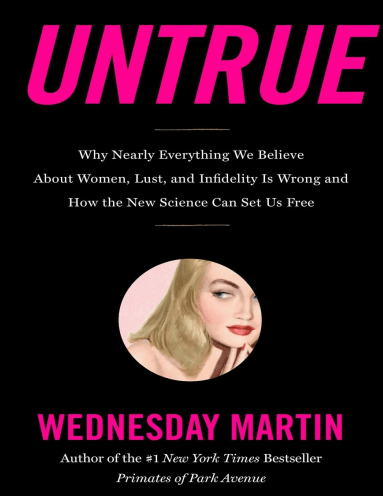
Untrue: Reassessing Female Infidelity
Female infidelity is a complex topic that challenges long-standing societal beliefs and assumptions about women, sex, and relationships. The source “01.pdf” argues that despite the prevailing notion of women being inherently monogamous, driven by the higher “cost” of their eggs and a presumed desire for one “great guy,” female infidelity is far from uncommon and warrants open-minded consideration.
Prevalence of Female Infidelity:
The statistics surrounding female infidelity vary, ranging from 13 percent to as high as 50 percent of women admitting to being unfaithful to a spouse or partner. Some experts even suggest that the numbers might be higher due to the significant social stigma attached to women admitting to infidelity. Notably, data from 2013 showed that women were roughly 40 percent more likely to be cheating on their husbands than they had been in 1990, while men’s rates remained relatively stable. Furthermore, surveys in the 1990s and later have indicated a closing of the “infidelity gap” between men and women, with younger women even reporting more affairs than their male peers in some studies. This trend suggests that with increased autonomy, earning power, and digital connections, women are engaging in infidelity more frequently, though they may not be talking about it openly.
Motivations Behind Female Infidelity:
The source challenges the traditional binary of men seeking sex and women seeking emotional connection in affairs. Interviews with women who have been unfaithful reveal that their motivations are diverse and can include:
Strong libido and not feeling cut out for monogamy.
Desire for sexual gratification and excitement. Alicia Walker’s study of women on Ashley Madison found that they often sought out affairs for the sex they were not getting in their marriages.
Feeling a sense of bold entitlement for connection, understanding, and sex.
Craving variety and novelty of sexual experience.
Experiencing sexual excitement autonomously and disconnected from their partners. Marta Meana’s research highlights “female erotic self-focus,” where women derive arousal from their own sexiness.
Unhappiness or sexual dissatisfaction within the marriage. However, the source emphasizes that women also cheat even when they are not overtly unhappy.
Increased exposure to potential partners, more time apart from spouses, and greater financial independence due to more women being in the workforce.
Technology providing discreet opportunities for extra-pair coupling.
Simply wanting to act on their desires and fulfill a fantasy, as illustrated by the character Issa in the series “Insecure”.
Boredom in a relationship, with Kristen Mark’s research suggesting women might be more prone to boredom early in a relationship.
Social Perceptions and Stigma:
Despite its prevalence, female infidelity remains heavily stigmatized. The source argues that society reacts to women who are “untrue” with condemnation, a desire to control and punish them, and a conviction that something must be “done” about them. This is because women who cheat violate not just a social script but also a cherished gender script that dictates female sexual passivity and monogamy. The reactions can range from being labeled “unusual” to being called “immoral,” “antisocial,” and a “violation of our deepest notions of how women naturally are and ‘should be’”. Even within progressive circles, a woman who has an affair is likely to face harsh judgment. The author notes personal experiences of encountering discomfort and even hostility when discussing the topic, often facing questions about her husband’s opinion, implying her research makes her a “slut by proxy”. This double standard is highlighted by the fact that men’s “ho phase” is often accepted, while women are not afforded the same leniency. The fear of reputational damage and the potential for a financially devastating divorce also heavily influence women’s decisions regarding monogamy.
Historical and Evolutionary Context:
The source delves into historical and anthropological perspectives, suggesting that female monogamy is not necessarily a timeless and essential norm. Primatological research challenges the idea of sexually passive females and highlights a preference for sexual novelty among female non-human primates. The source also points to societies with practices like the Mosuo “walking marriage” in China and informal polyandry in various cultures, where women have multiple partners with little or no social censure, suggesting that female multiple mating has a long history and prehistory. Studies among the Himba people of Namibia even indicate that female infidelity can be widespread, openly acknowledged, and even beneficial for women and their offspring. This challenges the Western notion of female adultery as inherently risky and wrong.
Female Autonomy and Entitlement:
The book posits that female infidelity can be viewed as a metric of female autonomy and a form of seizing privileges historically belonging to men. The logical horizon of movements like #MeToo is seen as potentially opening cultural space for female sexual entitlement, where women feel inherently deserving of sexual exploration and pleasure, just as men do. Women who cheat often do so because they feel a sense of bold entitlement for connection and sex. However, this assertion of autonomy often comes with significant personal costs and societal backlash.
Rethinking Monogamy:
The source suggests that compulsory monogamy can be a feminist issue, as the lack of female sexual autonomy hinders true female autonomy. There is a growing recognition that monogamy can be a difficult practice that requires ongoing commitment. Some experts propose viewing monogamy as a continuum rather than a rigid binary. The source also touches on alternative relationship models like open relationships and the concept of “monogamish”. Psychoanalysts challenge the expectation that partners should fulfill all of each other’s needs, suggesting that affairs might be seen as “private” rather than “pathological” in some contexts.
The “Infidelity Workaround”:
Alicia Walker’s research highlights the concept of the “infidelity workaround,” where women engage in extra-marital affairs not necessarily because they want to leave their marriages, but as a way to fulfill unmet sexual or emotional needs without dismantling their existing lives. These women often report feeling more empowered and experiencing a boost in self-esteem.
Conclusion:
“Untrue” argues that our understanding of female infidelity needs a significant reevaluation. It challenges the traditional narrative of female sexual reticence and passivity, presenting evidence that women are just as capable of desiring and seeking out sexual experiences outside of monogamous relationships as men are. The book suggests that female sexuality is assertive, pleasure-centered, and potentially more autonomous than traditionally believed. Ultimately, the decision to be monogamous or not is deeply personal and context-dependent, influenced by a woman’s environment, desires, risk tolerance, and social support. The source encourages a more empathetic and understanding view of women who reject monogamy, recognizing their bravery in challenging societal norms and the valuable lessons their experiences can offer about female longing, lust, and the future of partnership.
Consensual Non-Monogamy: Forms, Motivations, and Perceptions
Consensual non-monogamy (CNM) is an umbrella term for relationship styles where all involved partners openly agree to the possibility of having romantic or sexual relationships with other people. This is in direct contrast to undisclosed or non-consensual non-monogamy, also known as cheating. The source “01.pdf” discusses CNM in detail, exploring its various forms, motivations, societal perceptions, and its growing presence in contemporary culture.
Forms of Consensual Non-Monogamy:
The source identifies three main types of non-monogamy, which can sometimes overlap:
Open Relationships: In these arrangements, couples agree to see other people, but they might not necessarily want to discuss the details or even be fully aware of their partner’s activities. The approach is often summarized as, “You go play, but I don’t want to hear about it”.
Swinging: This involves committed couples engaging in sexual activities with others, either individually or as a pair. Communication about their activities is typical, and they may participate in events like conventions or sex clubs to meet like-minded individuals. The primary relationship within the dyad remains the central focus.
Polyamory: This is the practice of having multiple romantic, sexual, and/or intimate partners with the full knowledge and consent of all involved. Polyamorous individuals often believe in the capacity to love more than one person simultaneously and tend to prioritize deeper emotional connections, sometimes without establishing a hierarchy among partners. Polyamory can involve various living arrangements, such as “throuples” or larger groups, and often necessitates significant communication, ground rules, and regular check-ins.
Motivations for Consensual Non-Monogamy:
People choose CNM for various reasons. According to the source:
It caters to individuals who don’t inherently desire or find it easy to be monogamous and prefer not to lie about their needs.
CNM can be seen as a way to live more authentically without the secrecy and hypocrisy that can accompany infidelity.
For some, it might be a solution to the inherent difficulties of lifelong sexual exclusivity within a single relationship.
The rise of CNM could also be linked to a growing recognition that monogamy might not be “natural” or easy to sustain over long periods.
Societal Perceptions and Challenges:
Despite its increasing visibility, CNM still faces significant societal challenges and diverse reactions:
Many people hold the view that non-monogamy “does not work” and that therapists working with such couples are merely “rearranging deck chairs on the Titanic”.
Some clinicians may have a skewed and negative view of non-monogamy because they primarily encounter individuals in crisis. However, research suggests that individuals in CNM relationships generally report high levels of relationship satisfaction and happiness, with jealousy levels comparable to those in monogamous relationships.
Talking about CNM can be awkward or even lead to negative judgment. The author even found it easier to describe her book as being about “female autonomy” rather than explicitly about non-monogamy.
Some view polyamory, in particular, as a radical stance that challenges the traditional binary thinking and the primacy of the dyad in Western societies.
The “relentless candor” often advocated in ethical non-monogamy can be perceived by some as a form of social control that infringes on privacy.
Practically, navigating the logistical and emotional complexities of multiple involvements, along with balancing careers and other responsibilities, can be challenging. The lack of institutional support for non-monogamous relationships, such as marriage licenses, also presents hurdles.
Historical and Cultural Context:
The source notes that intentional non-monogamy is not entirely new, with historical examples ranging from Romantic poets and transcendentalists to the “free love” movements of the 1970s. The term “consensual non-monogamy” itself is relatively recent, gaining traction around the year 2000. The current surge in interest in CNM is considered a “third wave,” marked by increased discussion in mainstream media, the appearance of non-monogamous relationships in popular culture, and a rise in online searches for related terms. This suggests a growing awareness and perhaps acceptance of relationship styles beyond traditional monogamy.
Shifting Perspectives:
The increasing visibility of CNM, along with research challenging traditional assumptions about sexuality and relationships, suggests a potential reconsideration of lifelong sexual exclusivity as the sole model for committed partnerships. Some experts propose viewing monogamy as a continuum rather than a strict binary. The rise of terms like “monogamish” reflects the search for alternatives to compulsory monogamy. Ultimately, the source suggests that the decision to be monogamous or not is a deeply personal one, influenced by individual desires, context, and social support.
Female Sexual Autonomy: Beyond Monogamy
Discussing sexual autonomy, as presented in the sources, revolves heavily around the concept of female sexual autonomy and the historical and societal forces that have often constrained or denied it. The sources reveal a persistent tension between prescribed norms of sexual behavior, particularly for women, and the individual’s right to self-determination in their sexual life.
The author’s personal journey into exploring female infidelity and consensual non-monogamy was driven by questions about what is sexually normal for women and why it seemed so difficult for women to be true to their desires. This exploration led to a challenge of the presumption that there was one right or best way to be in a couple or relationship and a new understanding of how and why women refuse sexual exclusivity or simply long to. Attending a workshop on consensual non-monogamy prompted reflection on the surrender of “complete, dizzying sexual autonomy and self-determination” for the security of a dyadic relationship.
The sources highlight how society often reacts negatively to women who refuse sexual exclusivity, whether openly or secretly. The author even found it easier to describe her work as being about “female autonomy” rather than explicitly about infidelity, to avoid judgment. The idea that compulsory monogamy is a feminist issue is raised, suggesting that without female sexual autonomy, true female autonomy is impossible.
The book itself aims to carve out a space where the woman who refuses sexual exclusivity is not automatically stigmatized. It suggests that negotiating how we will be sexual is often a series of false choices rather than real options for women in the US, challenging us to rethink what it means to be female and self-determined. The deeply ingrained social script about female sexual reticence often means that women who exercise self-control regarding desires they are “not even supposed to desire” receive no credit.
The importance of context in understanding a woman’s decision to be monogamous or not is emphasized, including her environment, ecology, sexual self, agreements with partners, support systems, culture, and access to resources. There is no single “best choice” because there is no one context.
Several examples and research findings in the sources underscore the complexity and potential for female sexual autonomy:
The study of the Himba people suggests that sexual and social behaviors are malleable and depend on context, indicating that women’s reproductive success can be tied to circumstances that may involve non-monogamy.
Primatological research challenges the traditional view of “coy, choosy” females, revealing that in many species, females actively initiate copulations. The example of bonobos, a female-dominant species with frequent sexual activity among females, raises questions about whether human female sexuality might be more aligned with pleasure-focused and promiscuous tendencies than traditionally assumed, and if environment plays a key role in shaping behavior.
Research by Meredith Chivers suggests that female desires might be stronger and less category-bound than previously believed, questioning the “sacred cow” of a gender difference in sexual desire. This implies a greater potential for autonomous sexual desires in women.
Marta Meana’s work on “female erotic self-focus” highlights the idea that women’s arousal can significantly emanate from their erotic relationship with themselves, suggesting a wonderful autonomy in female sexuality.
Experiences of women at Skirt Club, a “play party” environment, suggest that having sexual experiences outside of heterosexual relationships can make women feel more entitled to communicate about what they want sexually within their primary relationships, indicating a growth in sexual autonomy.
Conversely, the sources also illustrate the historical lack of recognition and even pathologization of female sexual desire that deviates from the monogamous ideal:
Historical figures like Acton and Krafft-Ebing perpetuated the idea of women as having small sexual desire, suggesting dire social consequences if this were not the case.
The case of “Mrs. B.” in the 19th century, who confided in her doctor about her vivid adulterous fantasies, highlights the extreme worry a woman might have felt about her libido given prevailing beliefs about female asexuality.
The persistence of the double standard, where male infidelity is often viewed differently than female infidelity, demonstrates the ongoing limitations on female sexual autonomy.
Ultimately, the sources advocate for a broader understanding of female sexuality that acknowledges its potential for autonomy, fluidity, and diversity, free from restrictive societal expectations and historical biases. The decision for a woman to be monogamous or not is deeply personal and contingent on a multitude of factors, and the exploration of consensual non-monogamy and female infidelity provides valuable insights into the complexities of sexual autonomy.
Historical Roots of Monogamy and Female Sexuality
The historical context is crucial to understanding the discussions around female sexual autonomy and consensual non-monogamy in the sources. The text highlights several key historical periods and developments that have significantly shaped our current beliefs and attitudes.
One important aspect is the discussion of early human societies. The sources suggest that contrary to the 1950s-inflected notion of a monogamous pair bond, early Homo life history was characterized by social cooperation, including cooperative breeding, which was a successful reproductive strategy. This involved coalitions of cooperating females and of cooperating males and females, suggesting a more fluid and communal approach to relationships and child-rearing. In ecologies favoring hunting and gathering, where women were primary producers, a degree of egalitarianism and generosity with food, child-rearing, and sexuality was often in everyone’s best interest.
The text emphasizes the profound impact of the advent of agriculture, particularly plough agriculture, on gender roles and female self-determination. This agricultural shift, beginning around the sixth millennium BC, led to a gendered division of labor, where men primarily worked in the fields with the plough while women were relegated more to the domestic sphere. This change is linked to the development of anxieties about female infidelity and lower social status for women. Societies with a history of plough agriculture show markedly lower levels of female participation in politics and the labor force and embrace more gender-biased attitudes, a legacy that persists even generations later across different ecologies and despite economic and technological changes. The study authors suggest that norms established during plough agriculture became ingrained in societal policies, laws, and institutions, reinforcing the belief that “A woman’s place is in the home”.
The sources also delve into historical examples of constraints on female sexuality and the punishment of infidelity. In the Plymouth and Massachusetts Bay colonies in the 17th century, adultery, particularly by women, was viewed as a severe crime, a breaking of the marriage bond and a violation of the husband’s property rights. Mary Mendame was whipped and forced to wear an “AD” for having sex with an “Indian”. Interestingly, during this period, men, even if married, could have relations with unmarried women and be accused of the lesser crime of fornication. This exemplifies a clear double standard in the enforcement of sexual morality.
The text touches upon the historical construction of female sexual passivity. Influential figures like Darwin, Acton, and Krafft-Ebing suggested that females are inherently less eager and require to be courted, while men are more ardent and courageous. These ideas became prevalent and served to reinforce rigid gender scripts. Bateman’s research in the mid-20th century, though later challenged, further solidified the notion of biologically based differences in male and female sexual strategies.
The “first wave” of intentional non-monogamy is traced back to the Romantic poets and transcendentalists who experimented with group living and sex in communities like Brook Farm and Oneida Community in the 19th century. The “second wave” in the 1970s involved the free love, communal living, open relationships, and swinging movements, which were seen as a radical break with tradition. Notably, the term “consensual non-monogamy” itself appears to have been first used around the year 2000.
The impact of World War I and World War II on gender roles is also discussed. During these periods, when men went to war, women took on roles traditionally held by men in agriculture and industry. This demonstrated female competence and autonomy. However, after the wars, there was a societal push to return women to the domestic sphere through various means, reinforcing the idea of a woman’s place in the home.
The sources also provide glimpses into historical perspectives from different cultures. For instance, among the pre-contact Wyandot, women had significant agency, including sexual autonomy and the right to choose partners, with trial marriages being a common practice. Similarly, in Tahiti, sex was viewed more communally and openly. These examples contrast sharply with the restrictive norms that became dominant in Western societies, often influenced by religious beliefs and the shift to agriculture.
The narrative also highlights how female power has historically been linked with sexuality and deception. The story of Jezebel in the Old Testament is presented as an example of the vilification of a powerful woman who challenged the established patrilineal order. In ancient Greece, adultery by married women was considered a serious crime with severe social consequences, reflecting anxieties about lineage and citizenship, which were tied to legitimate offspring in a wheat-based agricultural society. The story of Clytemnestra in The Oresteia further illustrates the suppression of female power and autonomy, both sexual and legal, in an emerging masculinist order. Even in ancient Rome, while adultery was initially a private matter, under Augustus, it became a crime punishable by death for both parties, coinciding with the consolidation of his power and the symbolic importance of agriculture (wheat) in Roman life. The exile of Augustus’s daughter Julia for her open affairs demonstrates how even noble women could be subjected to social control regarding their sexuality when it challenged male authority.
The experiences of Virginia, a woman born in the early 20th century, highlight how context, culture, and constraint have shaped experiences of sexuality and sexual autonomy over time. Raised Catholic with strict prohibitions around kissing, birth control, and premarital sex, her life spanned significant societal shifts, underscoring the evolving nature of sexual norms and expectations.
By examining these various historical contexts, the sources aim to challenge the notion that current Western norms around monogamy and female sexuality are natural or timeless. Instead, they reveal these norms to be the product of specific historical, economic, and cultural developments, particularly the impact of agriculture and the enduring legacy of gendered power dynamics.
The Historical Construction and Impact of Gender Roles
The sources provide a comprehensive discussion of gender roles, particularly focusing on their historical construction and the persistent impact they have on female sexual autonomy and broader societal structures.
The Influence of Agriculture: A significant portion of the discussion centers on the impact of plough agriculture on the formation of rigid gender roles. The introduction of the plough led to a gendered division of labor, with men primarily engaged in outdoor farming and women specializing in indoor domestic work and childcare. This division, where men were seen as primary producers and women as engaged in secondary production, gave rise to beliefs about the “natural role of women” as being inside the home and less vital to subsistence.
This agricultural shift is linked to the development of several interconnected beliefs:
That a woman is a man’s property.
That a woman’s place is in the home.
That women ought to be “naturally” monogamous.
The sources argue that these beliefs, originating with the rise of plough agriculture, have had a lasting impact, influencing societal policies, laws, and institutions even in modern, post-agrarian societies. Remarkably, a study found that even the descendants of people from plough-based cultures hold more gender-biased attitudes and exhibit lower levels of female participation in politics and the labor force, regardless of current economic structures or geographical location. This “plough legacy” is described as “sticky” because acting on pre-existing gender beliefs is often more efficient than evaluating each situation based on individual merit.
Historical Construction of Female Passivity: The sources also discuss the historical construction of female sexual passivity in contrast to male sexual eagerness. Influential figures like Darwin, Acton, and Krafft-Ebing contributed to the notion that females are inherently less eager, requiring to be courted, while men are naturally more ardent. Krafft-Ebing even suggested that if women’s sexual desire were not small, the world would become a brothel. These ideas reinforced rigid gender scripts that placed women in the domestic sphere and men in the world of action.
Challenges to Traditional Gender Roles: Despite these deeply ingrained roles, the sources highlight instances where they have been challenged or differed:
Early Human Societies: Early Homo life is suggested to have involved more social cooperation and a less rigid gender division, particularly in hunter-gatherer societies where women were primary producers, leading to greater female agency.
Wyandot Culture: The pre-contact Wyandot society is presented as an example where women had significant sexual autonomy, agency in choosing partners, and equal say in social and political matters, challenging the notion of inherent female passivity.
World Wars: During World War II, with men away at war, women took on traditionally male roles in the workforce, demonstrating female competence and challenging the idea that their place was solely in the home. However, after the wars, there was a societal push to return women to domestic roles.
Persistence of Gender Bias and Double Standards: Despite progress, the sources indicate the persistence of gender bias and double standards. The fact that the author found it easier to discuss her work as being about “female autonomy” rather than “female infidelity” reveals societal discomfort and judgment surrounding women’s sexual behavior outside of monogamy. Furthermore, the common responses to her research, such as “What does your husband think about your work?”, highlight the ingrained assumption that a woman’s activities should be viewed through the lens of her relationship with a man.
The double standard regarding infidelity is also mentioned, where men’s “ho phase” is often normalized as “his life,” while women who exhibit similar behavior are judged more harshly. The story of Cacilda Jethá’s research in Mozambique illustrates how even in a context where extra-pair involvements were common, women were far more reluctant to discuss them than men, indicating a persistent asymmetry in how sexual behavior is perceived and reported based on gender.
Impact on Female Sexual Autonomy: The sources argue that these historically constructed gender roles significantly impact female sexual autonomy. The surrender of “complete, dizzying sexual autonomy and self-determination” is presented as a trade-off for the security of a dyadic relationship, often presumed to be a natural and easier path for women. The negative reactions to women who refuse sexual exclusivity, whether openly or secretly, and the labeling of such women as “damaged,” “selfish,” “whorish,” and “bad mothers,” even by self-described feminists, demonstrate the constraints placed on female sexual self-determination.
The very language we use, such as a woman “getting ploughed” by a man, reflects the agrarian heritage and the idea of women as property, further limiting the conceptualization of female sexual agency.
In conclusion, the sources argue that current gender roles, particularly those concerning women, are not natural but are deeply rooted in historical and economic shifts, most notably the advent of plough agriculture. These roles have led to persistent biases, double standards, and limitations on female autonomy, especially in the realm of sexuality. While there have been challenges and variations across cultures and time periods, the legacy of these historically constructed gender roles continues to shape our beliefs and societal structures today.
Affiliate Disclosure: This blog may contain affiliate links, which means I may earn a small commission if you click on the link and make a purchase. This comes at no additional cost to you. I only recommend products or services that I believe will add value to my readers. Your support helps keep this blog running and allows me to continue providing you with quality content. Thank you for your support!

John Marshall Townsend’s 1998 book, What Women Want—What Men Want: Why the Sexes Still See Love and Commitment So Differently, examines the persistent differences in how men and women approach relationships, sex, and commitment. Drawing on social science research and numerous interviews, Townsend argues against purely social explanations for these differences, suggesting a significant influence of biology and evolutionary psychology. The book explores various aspects of heterosexual relationships, including partner selection criteria, sexual behavior, marital expectations, and infidelity, often highlighting the contrasting desires and vulnerabilities of men and women. Ultimately, it seeks to understand the fundamental reasons behind these differing perspectives on love and commitment.
Sex Differences: Evolutionary Psychology
The sources discuss sex differences in psychology, particularly in the context of sexuality, mate selection, and relationships. The author argues that while social factors influence sexual attitudes and behaviors, there is a biological substratum for our sexuality that differs between men and women. The book emphasizes evolutionary explanations for these differences, noting that they are often neglected in social science.
Here are some key aspects of sex differences in psychology discussed in the sources:
Basic Sex Differences in Sexuality:
Men’s sexual activity tends to be more regular and less discontinuous than women’s. If men are not having intercourse, they often substitute with masturbation, and nocturnal emissions may increase.
Men are more readily aroused by visual stimuli, the sight of attractive strangers, fantasies about them, and the anticipation of new sexual techniques and variations in partners’ physique. These factors have less significance for the average woman.
Studies across different decades, including Kinsey’s, Blumstein and Schwartz’s, and others in the 1980s and 1990s, have consistently found that men tend to have more sexual partners than women and are more oriented toward genital sex and less toward affection and cuddling. Women, in contrast, prefer sex within emotional, stable, monogamous relationships.
Men exhibit a stronger desire for a variety of sex partners and uncommitted sex.
Research suggests that high school and college-age men are aroused more frequently (two to three times daily, often visually stimulated) and masturbate more often (several times a week) than women (aroused once or twice a week, rarely by sight alone, masturbating about once a week).
Sex Differences in Mate Selection:
For over twenty years, research has indicated that men emphasize physical attractiveness and women stress socioeconomic status when choosing partners. This pattern has been observed in college students, married couples, and across thirty-seven cultures.
Women prioritize qualities like earning capacity, social status, and job prestige in potential mates, while men prioritize youth and beauty.
Women’s satisfaction in relationships correlates with their partners’ ambition and success, and the quality of emotional communication, whereas men’s satisfaction correlates with their perception of their partners’ physical attractiveness.
Women’s criteria for sexual attractiveness can change as they move through different life stages and professional environments, with factors like intelligence, education, and career ambition becoming more important in professional settings.
Emotional Reactions and Investment:
Evolutionary psychologists argue that fundamental sexual desires and emotional reactions differ between men and women, even if socialized identically.
Women’s negative emotional reactions to low-investment sexual relations (worry, remorse) are seen as protective, guiding them toward men who will invest more in them. Thoughts of marriage and romance direct women toward higher-investment relationships.
Men’s jealousy tends to focus on the act of intercourse itself, often accompanied by graphic fantasies, while women’s jealousy focuses more on the threat of losing the relationship and their partner investing resources in someone else. This difference is linked to men’s concern about paternity certainty.
Parenting:
Some theories suggest that women have different biological predispositions for parenting compared to men, potentially due to hormonal and neurological differences and the historical sexual division of labor. Women are often more concerned about the quality of childcare and their children’s emotional development.
Cognitive Differences:
Men’s and women’s brains are organized differently, with potential links to differences in language skills (stronger in women) and spatial perception (potentially stronger in men).
The Evolutionary vs. Social Constructionist Debate:
The author acknowledges the strong influence of the idea that early childhood training determines sex differences but argues that no study has definitively shown that differential training produces basic sex differences in sexuality and partner selection.
The book presents evidence that sex differences in sexuality persist even among individuals and groups who have consciously rejected traditional sex roles, such as homosexual men and women, communes, and women in high-status careers. In fact, these differences are often more pronounced in homosexual relationships.
The evolutionary perspective explains these differences in terms of the different risks and opportunities men and women have faced in mating throughout human history, particularly regarding parental investment.
The book critiques the social constructionist view, which posits that sex differences are primarily learned through socialization, arguing that it often lacks empirical support and fails to account for the consistency of these differences across cultures and in groups that defy traditional roles.
Universality of Sex Differences:
The author suggests that these sex differences appear to exist across different cultures, even in societies with varying levels of sexual permissiveness and different social structures, as seen in comparisons of Samoa and China with Western societies. For example, universally, men more often pay for sex, indicating a difference in sexual desire and valuation.
Implications for Relationships:
The fundamental differences in desires and goals between men and women necessitate compromise and negotiation in heterosexual relationships. Recognizing these differences is crucial for building realistic expectations and navigating conflict.
In conclusion, the source material strongly argues for the existence of fundamental psychological differences between the sexes, particularly in the realms of sexuality and mate selection, with a significant emphasis on evolutionary explanations for these persistent and cross-culturally observed patterns. While acknowledging the influence of social factors, the book contends that biological predispositions play a crucial role in shaping these psychological differences, which have important implications for understanding heterosexual relationships.
The sources discuss man-woman relationships extensively, highlighting the fundamental differences in how men and women approach sexuality, mate selection, and commitment. According to the author, these differences are intrinsic and likely to persist despite societal changes. The book argues for an evolutionary psychology perspective, suggesting that differing reproductive strategies have led to distinct sexual psychologies in men and women.
Fundamental Differences in Desires and Goals:
Sexuality: The sources indicate that men and women often have different goals and experiences in sexual relationships. Men, on average, tend to dissociate sex from relationships and feelings more readily than women. They are often more aroused by visual stimuli and express a stronger desire for a variety of sex partners and uncommitted sex. In contrast, women traditionally desire more cuddling, verbal intimacy, expressions of affection, and foreplay and afterplay to enjoy sexual relations. Many women prefer sex within emotional, stable, monogamous relationships. As one woman, Joan, expressed, she seeks a relationship with communication and finds men’s focus on immediate sex incomprehensible. Claire, a professional woman, suggests that sex can be a comfort for men in times of loneliness, while for women, it is often more of a celebration that is enhanced when they are feeling good and connected.
Mate Selection: Significant sex differences exist in mate preferences. Men tend to emphasize physical attractiveness and cues of youth and fertility when choosing partners. Women, on the other hand, often stress socioeconomic status, ambition, earning capacity, and job prestige in potential mates, viewing these as signs of a man’s ability to invest. Women’s satisfaction in relationships correlates with their partners’ ambition and success, as well as the quality of emotional communication, while men’s satisfaction is more linked to their perception of their partners’ physical attractiveness.
Investment and Commitment: A key theme is women’s desire for investment from men, both emotional and material. This desire influences their perceptions of sexual attractiveness, where a man’s status, skills, and resources play a significant role. Women evaluate potential partners based on their perceived willingness and ability to invest in them and their potential offspring. Their emotional reactions to low-investment sexual relations (worry, remorse) are seen as mechanisms guiding them toward higher-investing partners. In contrast, the more casual sexual experience men have, the less likely they are to worry about their partners’ feelings or think about long-term commitment.
Sources of Conflict and Bargaining:
The fundamental differences in sexual desires and goals often lead to conflict in heterosexual relationships. For instance, men may feel that women make too many demands for investment, while women may feel that men prioritize sex without sufficient emotional connection.
Heterosexual relationships involve a continuous bargaining process as men and women attempt to accommodate each other’s basic desires and capacities. For example, women are more likely to seek foreplay and afterplay, and their control over the initiation of intercourse gives them some bargaining power regarding foreplay.
Differences in jealousy are also noted, with men’s jealousy tending to focus on sexual infidelity, driven by concerns about paternity, and women’s jealousy focusing more on the potential loss of the relationship and the diversion of their partner’s resources .
The Role of Status and Dominance:
A man’s status and perceived dominance are important factors in his attractiveness to women. Women often unconsciously play out ancient rituals by being attracted to men who represent a “challenge,” those who are highly sought after and not easily committed. Dominance is seen as signaling a man’s ability to protect and provide.
Conversely, men are generally uninterested in whether a woman is dominant; physical attractiveness is the primary driver of sexual attraction for them.
Testing Behaviors:
Women often engage in subtle and sometimes overt “testing” behaviors to assess a man’s level of investment and commitment. This can include provoking arguments or flirting with other men to gauge their partner’s emotional reactions and boundaries. Men also report testing their partners for jealousy and how much they care, but typically only in relationships they are serious about.
Impact of Societal Changes:
Modernization, urbanization, and industrialization have led to changes in family structures and greater individual freedom in choosing partners. While these changes allow for more personal fulfillment, they have also correlated with higher rates of nonmarital sex and divorce, potentially making both sexes more vulnerable to rejection.
Despite changing social norms and increased female economic independence, the fundamental sex differences in sexuality and mate preferences appear to persist. Even women with high status and income often still desire men of equal or higher status.
Coping with Sex Differences in Relationships:
The author suggests that recognizing and acknowledging these basic sex differences in desires and goals is crucial for navigating man-woman relationships successfully. This doesn’t necessarily mean acting out every fantasy, but rather building rules and expectations that account for these differences.
Successful couples often find shared activities and interests and prioritize spending time together.
Accepting that a certain amount of conflict is inevitable due to these inherent differences is also a step toward negotiation and compromise. Understanding that men’s sexual desire may be more frequent and less dependent on mood than women’s is important for achieving healthy sexual adjustment in a relationship.
In conclusion, the sources emphasize that man-woman relationships are shaped by both shared human needs and fundamental psychological differences rooted in evolutionary history. Recognizing and understanding these differences, particularly in the realms of sexuality, mate selection, and the desire for investment, is presented as essential for building more informed, realistic, and potentially more successful relationships.
Male Sexual Behavior: Tendencies and Desires
Based on the sources, men’s sexual behavior is characterized by several key tendencies and desires that often differ from those of women. These differences are seen as fundamental and potentially rooted in evolutionary psychology.
Arousal and Desire:
Men are generally more frequently aroused sexually than women.
They are also aroused by a greater variety of stimuli, including the mere sight of a potential sexual partner, pictures of nude figures and genitals, memories, and the anticipation of new experiences.
Visual stimuli play a primary role in male sexual arousal. This is exemplified by the young man in the class discussion who stated that seeing a good-looking woman with a great body creates an instantaneous desire for sex without conscious decision.
For many men, particularly younger ones, sexual arousal can be frequent and spontaneous, sometimes occurring involuntarily in embarrassing situations. They may feel uncomfortable if they cannot carry their arousal through to orgasm.
Men’s sexuality tends to be more focused on genital stimulation and orgasm compared to women.
Goals and Motivations:
Men often dissociate sex from relationships and feelings more readily than women. Joan’s incomprehension of men’s focus on immediate sex illustrates this difference.
There is a stronger desire for a variety of sex partners and uncommitted sex among men. Patrick’s frequenting of singles bars exemplifies this tendency. The thought of sex with a new and different partner is intrinsically exciting for many men, even more so than with a familiar partner they love.
Men may engage in casual sex with partners they do not particularly like simply because it is pleasurable. Matt’s numerous one-night stands demonstrate this.
Mate Selection:
Heterosexual men prioritize women who exhibit signs of peak fertility, which often manifest in physical attractiveness. This criterion operates whether a man consciously desires children or not.
Compared to women, men are generally less interested in whether a woman is dominant; physical attractiveness is the primary driver of sexual attraction.
Studies suggest that men show more agreement than women in judging who is sexually attractive.
Investment and Commitment:
Men’s ability to be easily aroused by new partners can urge them to seek sex with women in whom they will invest little or nothing. This can lead to a tendency to limit investments and spread them among several women.
Men with high status tend to have more sex partners because many women find them attractive. The availability of sex “with no strings attached” can overwhelm their loyalty and prudence in committed relationships.
Some authors suggest a rise in “functional polygyny,” where men avoid binding commitments and indulge their desire for partner variety, often telling women they would marry if they found the right person.
Emotional Reactions:
When men engage in casual relations, the mental feedback in terms of feelings and memories is often positive, motivating them to repeat the experience.
However, some men can be distressed by the implications of their desires and feel guilt when their partners are hurt.
Men’s jealousy tends to focus on the act of intercourse itself, often provoking graphic fantasies of their partners with other men and thoughts of retaliation.
Cross-Cultural Consistency:
Across diverse cultures like Samoa and China, similar patterns in men’s sexual desires are observed, including a desire for more frequent intercourse and a greater interest in a variety of partners.
Homosexuality:
Studies of homosexual men provide strong support for basic sex differences. Gay men exhibit male tendencies in an extreme form, having low-investment sexual relations with multiple partners and focusing on genital stimulation, likely because they are not constrained by women’s needs for commitment.
Impact of Societal Changes:
Increased availability of nonmarital sex due to factors like the birth control pill has likely made it easier for men, particularly successful ones, to act on their desires for partner variety.
In summary, the sources depict men’s sexual behavior as being characterized by a higher frequency of arousal, a strong response to visual cues, a desire for variety in partners, and a greater capacity to separate sex from emotional investment. These tendencies are seen as consistent across cultures and are even amplified in homosexual men, suggesting a fundamental aspect of male sexual psychology.
Women’s Sexual Behavior: Key Characteristics and Tendencies
Drawing on the provided source “01.pdf”, a discussion of women’s sexual behavior reveals several key characteristics and tendencies, often contrasted with those of men. The author emphasizes that while societal changes have occurred, certain basic patterns appear persistent.
Arousal and Desire:
Compared to men, women are generally sexually aroused less frequently and by a narrower range of stimuli. Women are not likely to be sexually aroused merely by looking at parts of a stranger’s body, an experience commonplace for men.
The cues for a woman’s arousal are often initially internal; she needs to “put herself in the mood” or allow herself to be put in the mood.
Physical attractiveness alone is often insufficient to trigger sexual desire in women towards a stranger. They typically need more information about the man, such as who he is and how he relates to the world and to her.
While women can be as readily aroused as men when they decide to be with a selected partner or through fantasies and masturbation, the initial triggers differ.
Link Between Sex and Love/Investment:
A central theme is the strong link between sex and love, affection, and commitment for many women. Many women prefer sex within loving, committed relationships and are more likely to orgasm in such contexts.
Women often desire more cuddling, verbal intimacy, expressions of affection, and foreplay and afterplay to enjoy sexual relations. Joan’s desire for affection, caring, verbal intimacy, and sexual fidelity as part of a sexual relationship exemplifies this.
Women’s sexual desire is intimately tied to signs of investment from their partners, which can include attention, affection, time, energy, money, and material resources. These signs communicate that a partner cares about the woman and is willing to invest in her happiness.
Sexual relations without these signs of investment are often less satisfying for women, leading them to feel “used”.
Emotional Reactions to Casual Sex:
Even women who initially express permissive attitudes towards casual sex and voluntarily engage in such relations often experience negative emotions when there is a lack of desired emotional involvement or commitment from their partners. These emotions act as “alarms” guiding them towards higher-investment relationships.
These negative emotions are not necessarily linked to traditional conservative sexual attitudes but rather to a lack of control over the partner’s level of involvement and commitment.
Experiences with casual sex can lead women to a rejection of such encounters after realizing they cannot always control the balance between desired and received investment, and that these experiences can be “scary,” making them feel “slutty” and “used”.
Intercourse itself can produce feelings of bonding and vulnerability in women, even if they initially did not desire emotional involvement.
Mate Selection:
While physical attractiveness plays a role in initial attraction, women’s criteria for sexual attractiveness evolve and are strongly influenced by a man’s status, skills, and material resources, especially in the context of long-term relationships. Even women with high earning power often desire men of equal or higher status.
Women tend to evaluate potential partners based on their perceived willingness and ability to invest in them and their potential offspring.
Women are often attracted to men who represent a “challenge” and exhibit dominance, as these traits can signal an ability to protect and provide. However, this attraction is linked to the potential for the dominant man’s investment.
Women may engage in casual sex for reasons beyond just intercourse, such as testing their attractiveness, competition with other women, or even revenge.
Impact of Societal Changes:
While increased availability of contraception and women’s economic independence have changed sexual behavior, they have not eliminated the basic differences in how men and women express their sexuality. In fact, greater sexual freedom can make these differences more visible.
Despite increased female economic independence, the desire for men of equal or higher status often persists.
Cross-Cultural Perspectives:
Even in cultures with varying levels of sexual permissiveness, such as Samoa and China, differences in male and female sexuality are evident. In China, women were seen as controlling the frequency of intercourse and their desire often dropped after childbirth and menopause.
In conclusion, the sources suggest that women’s sexual behavior is characterized by a stronger integration of sex with emotional connection and a significant emphasis on signs of investment from partners. While physical attraction is a factor, women’s sexual interest and mate selection are deeply intertwined with assessing a man’s potential as a long-term partner and provider. Even with increased societal freedoms, these fundamental tendencies in women’s sexual psychology appear to persist, leading to different motivations and emotional responses compared to men in sexual relationships.
Mate Selection: Gendered Preferences and Evolutionary Bases
Mate selection is a central theme explored throughout the sources, with a significant focus on the differing criteria and priorities of men and women. The text emphasizes that these differences, while potentially influenced by social factors, have a strong biological and evolutionary basis.
Key Differences in Mate Selection Criteria:
Men’s Priorities: Heterosexual men consistently emphasize physical attractiveness and signs of peak fertility in women when choosing partners for dating, sex, and marriage. This preference operates whether a man consciously desires children or not. While other qualities like common backgrounds, compatibility, intelligence, and sociability are considered important for serious relationships and marriage, a certain threshold of physical attractiveness must be met for a woman to even be considered. Men also show more agreement than women in judging who is sexually attractive.
Women’s Priorities: Women, on the other hand, place a greater emphasis on a man’s status, skills, and material resources as indicators of his ability to invest in them and their potential offspring. This preference for men of equal or higher socioeconomic status persists even among women with high earning power. While physical attractiveness plays a role in initial attraction, it is often secondary to signs of investment potential and other factors like a man’s character, intelligence (defined in terms of success and social connections within her milieu), and the respect he enjoys in his social circle. Women’s judgments of men’s attractiveness are also significantly influenced by the opinions of other women.
Trade-offs Between Status and Physical Attractiveness:
When forced to make trade-offs, men and women exhibit dramatic differences. Men are often unwilling to date women whose physical features do not meet their standards, regardless of the women’s ambition and success. Conversely, women are rarely willing to date or have sexual relations with men who have lower socioeconomic status than they do, despite the men’s looks and physiques.
The relative importance of looks and status can also shift depending on the context of the relationship. Men might have more lenient physical criteria for casual sex compared to a serious relationship or marriage.
The Role of Status:
Status as a “Door Opener” for Men: For men, physical traits act as an initial filter, determining the pool of partners with whom they desire sexual relations and opening the door for further exploration of investment potential.
Status as a “Door Opener” for Women: For women, status is a major criterion in their initial filter. High status can even transform a man’s perceived physical and sexual attractiveness in the eyes of women through a largely unconscious perceptual process.
Competition in the Mate Selection Market:
Because men prioritize physical attractiveness, women with higher levels of education and income must compete with women from all socioeconomic levels for the relatively smaller pool of higher-status men. This competition can be heated.
Men’s relative indifference to women’s status and earning power contributes to this dynamic.
Women may engage in behaviors, sometimes unconsciously, to test their attractiveness and compete for desirable men.
Impact of Societal Changes:
Despite increased female economic independence and societal changes, the fundamental differences in mate preferences between men and women appear persistent. The sources suggest that these preferences are deeply rooted in evolutionary psychology, reflecting the different reproductive risks and opportunities faced by men and women throughout human history.
Urbanization and industrialization have led to changes in family structures and greater individual freedom in choosing mates. However, these changes have not eliminated the core sex differences in what men and women seek in partners.
Mate Selection Among Homosexuals:
Studies of homosexual men and women provide further support for the basic sex differences in mate selection. Gay men prioritize youth and physical attractiveness in their partners, similar to heterosexual men. Lesbians, on the other hand, place more emphasis on intellectual and spiritual qualities, personal compatibility, and communication, mirroring the tendencies of heterosexual women. This suggests that these preferences are not solely due to traditional sex roles.
In conclusion, mate selection is a complex process influenced by both biological predispositions and social contexts. However, the sources strongly indicate that men and women, on average, have distinct priorities. Men tend to prioritize physical attractiveness and signs of fertility, while women prioritize status and indicators of investment potential. These differing criteria lead to various dynamics in the “dating-mating market,” including competition and trade-offs between different desirable qualities in a partner.
Affiliate Disclosure: This blog may contain affiliate links, which means I may earn a small commission if you click on the link and make a purchase. This comes at no additional cost to you. I only recommend products or services that I believe will add value to my readers. Your support helps keep this blog running and allows me to continue providing you with quality content. Thank you for your support!

This source, likely a self-help book by Allan and Barbara Pease, explores the often-misunderstood dynamics between men and women in relationships, particularly focusing on sex and love. Drawing upon evolutionary psychology, current research, and the authors’ personal experiences, it examines the differing motivations, desires, and behaviors of each gender. The text dissects common relationship challenges, including communication issues, infidelity, and unrealistic expectations fueled by societal and media influences. Ultimately, the authors aim to provide insights into understanding these fundamental differences to foster healthier and more fulfilling partnerships.
Gender Differences in Sex, Love, and Relationships
The sources highlight numerous gender differences in perspectives on sex, love, relationships, and mate preferences, suggesting that while societal norms might evolve, fundamental biological and evolutionary factors continue to play a significant role.
One key difference lies in how men and women rate attractiveness. Men primarily use visual cues, focusing on signs of a woman’s health, fertility, and youth. Brain scans corroborate this, showing activity in areas related to visual processing when men evaluate female attractiveness. In contrast, women’s brains activate areas associated with memory recall when assessing a man’s attractiveness, indicating an evolutionary strategy to remember details of a man’s behavior to evaluate his potential as a partner for support and protection in raising offspring. Women consider factors like honesty, trustworthiness, resourcefulness, kindness, and how a man treats others.
These different approaches stem from different ancestral agendas. Men were primarily driven by the need to pass on their genes, leading to an attraction to visual indicators of reproductive capability. Women, bearing the responsibility of raising children, evolved to seek partners who could provide resources, status, commitment, and protection for themselves and their offspring. This difference is summarized succinctly: “Men use a woman’s youth, health, and beauty as their base measurement, and women use a man’s resources as theirs”.
These fundamental differences extend to what men and women want in partners. Men often have two mating lists: a short-term list heavily focused on physical attractiveness and a long-term list that includes personality and other factors similar to women’s preferences. Women, however, tend to use similar criteria for both short-term and long-term partners, with commitment and resources being consistently important. Research also indicates that men rate characteristics like loyalty and honesty as dramatically less important in a casual mate than women do.
Furthermore, men and women often have different definitions of a “sexual relationship”: for men, it often centers on physical sexual activity, whereas for women, it includes emotional connection and commitment. This ties into the observation that “men can see sex as sex, whereas women see sex as an expression of love”. Studies confirm that men are generally more enthusiastic about having sex without emotional involvement than women are.
Their motivations and feelings about casual sex also differ significantly. For men, the primary driver is often procreation and physical gratification, and they tend to report higher satisfaction and less guilt after casual encounters. Women, on the other hand, often have more complex motivations for casual sex, such as evaluating long-term potential or seeking emotional validation, and they generally report lower satisfaction and more guilt afterward. “Men are driven to procreate, and so for them, sex can be just sex. This is why men have so many more one-night stands than women. Women, however, are generally unable to separate love from sex”.
The source also touches upon differences in brain structure, noting that the anterior commissure and corpus callosum tend to have different sizes and connectivity in men and women, which may contribute to men’s ability to focus on “one thing at a time” and compartmentalize sex and love. This is linked to the concept of the “Nothing Room” in the male brain, a state of mental inactivity for regeneration that women often don’t understand.
Touch also holds different significance. Women have more touch receptors and value non-sexual physical closeness for emotional connection, while men often interpret physical touch as a precursor to sex.
Perceptions of sexual aggression and harassment also vary. Women consistently rate sexual aggression as a severe negative act, while men are often less concerned. Similarly, women are more likely to perceive and report sexual harassment, while men may even see it as a compliment.
In relationships, men and women can be irritated by different things. While men often feel there isn’t enough sex, women’s frustrations can stem from a lack of emotional connection, feeling uncherished, or a partner’s lack of support.
The pursuit of resources and attractiveness is also driven by gendered motivations. Men are often motivated to acquire resources because they understand women’s preference for providers. Women, in turn, often focus on enhancing their physical appearance because men prioritize youth, health, and fertility.
The source cautions against the notion that “opposites attract” for long-term relationships, suggesting that couples with similar base similarities and values are more likely to have lasting success. Biological differences, such as finger ratios potentially indicative of prenatal hormone exposure, further highlight inherent gender variations.
Despite societal shifts and attempts to promote the idea that men and women want the same things from sex and love, the source argues that fundamental differences rooted in biology and evolution persist. Understanding and acknowledging these differences, rather than denying them, is presented as crucial for fostering better communication, managing expectations, and ultimately achieving happier and more fulfilling relationships.
Human Sexual Behavior: Gender Differences and Influences
Drawing on the sources, sexual behavior in humans is a complex interplay of biological predispositions, evolutionary drives, psychological factors, and societal influences. The primary evolutionary reason for sex is the continuation of one’s genetic line. By mixing genes, sexually reproduced offspring tend to be stronger and better adapted to changing environments compared to asexually reproduced offspring.
Biological and Evolutionary Perspectives:
Different Agendas: Men and women have evolved with different agendas regarding sex and love, deeply rooted in our ancient past. Men are often turned on by visual cues indicating health, fertility, and youth in women, with brain scans showing activity in visual processing areas when they assess attractiveness. This is linked to the ancestral male drive to pass on their genes.
Women, on the other hand, are often attracted to markers of a man’s power, status, commitment, and material resources, with their brains showing activity in areas associated with memory recall when evaluating male attractiveness. This is thought to be an evolutionary adaptation to seek partners who can provide support and protection for offspring.
Sex Drive and Hormones:Testosterone is the main hormone responsible for sex drive, and men have significantly higher levels than women, contributing to a stronger and more urgent male sex drive. However, men have less oxytocin, the “cuddle hormone,” compared to women.
Mate Selection Criteria: Men often have two mating lists: a short-term list primarily focused on physical attractiveness (visual cues) and a long-term list that includes personality and resources. Women tend to use similar criteria for both short-term and long-term partners, with resources and commitment being important. Men also rate loyalty and honesty as less important in a casual mate compared to women.
Physical Attractiveness: For men, attractiveness in women operates on a basic level connected to reproductive potential. The 70% hips-to-waist ratio is often considered universally attractive to men. Both heterosexual and homosexual men show similar preferences for youth and physical appearance in potential mates.
Casual Sex:
Men and women have completely different views on casual sex. Most men are willing to have sex with an attractive stranger, and for them, sex can be just sex, driven by procreation. They generally report higher satisfaction and less guilt after casual encounters.
Women are generally unable to separate love from sex. Their motivations for casual sex are more complex, including self-esteem issues, evaluating men for long-term potential, obtaining benefits, or seeking “better genes”. They often report lower satisfaction and more guilt after casual sex.
Men are significantly more likely than women to be willing to have sex with someone they have known for a very short time, with multiple partners in a short period, or without love or a good relationship. Men also fantasize about sex more often and their fantasies tend to be more visual, involve multiple partners or strangers, and lack emotional connection.
Gay men’s sexual behavior in single relationships often reflects heterosexual men’s desires if unconstrained by women’s expectations for commitment, while gay women’s behavior in relationships tends to mirror straight women’s desire for commitment and fidelity.
Defining a “Sexual Relationship”:
Men define a sexual relationship as any physical sexual activity, including oral sex and full sex.
Women define it more broadly, including any sexual, physical, or emotional activity with a person with whom they have a connection. This can include non-sexual behaviors that establish an emotional link.
Affairs and Cheating:
Men and women also differ in their understanding of affairs. Men often see an affair as ongoing sex with or without emotional connection, similar to their view of casual sex.
Women’s reasons for affairs can be more complex and may involve seeking emotional connection or unmet needs. While overall fewer women than men report having affairs, some research suggests that younger women’s rates of infidelity may be increasing. Men’s primary motivations for affairs often include lust, loss of attraction, or wanting more sex.
Gender Differences in Understanding and Desires Regarding Sex:
Men can compartmentalize sex and love, which is partly attributed to differences in brain structure, such as a smaller anterior commissure and fewer connections in the corpus callosum compared to women. This allows them to have “sex as just sex”.
Men often have a “Nothing Room” in their brain for mental regeneration, which women may not understand.
Men are highly focused on women’s breasts, likely an evolved mimicry of buttocks as a visual signal.
Men may not always be truthful to women about sex to avoid conflict or because women may not like the truth.
Women often prioritize emotional connection, feeling attractive, loved, protected, pampered, and the ability to talk about their feelings before wanting sex. They often describe what they want as “making love” rather than just “sex”.
Men tend to be more motivated by visual signals in sex.
Women generally perceive sexual aggression and harassment more negatively than men do.
Other Influences:
Societal Norms: The Victorian era significantly impacted sexual attitudes in the Western world, leading to repression and discomfort with discussing sex. While times have changed, some of these attitudes may still persist.
Changing Roles of Women: Today’s women often have different expectations and desires in relationships and regarding sex compared to previous generations.
Biological Factors Beyond Hormones: Finger length ratios are suggested to be linked to prenatal testosterone exposure, potentially influencing traits related to masculinity and femininity. Mate selection can also be influenced by the Major Histocompatibility Complex (MHC) and smell, indicating a preference for genetically diverse partners, though this can be affected by oral contraceptives.
In conclusion, the sources strongly suggest that while societal norms evolve, fundamental biological and evolutionary differences contribute significantly to men’s and women’s sexual behavior, motivations, and perceptions. Understanding these differences, rather than denying them, is presented as crucial for better communication and healthier relationships.
The Science and Dynamics of Romantic Relationships
Drawing on the sources, romantic relationships are presented as a complex phenomenon driven by a combination of biological, psychological, and social factors. While they can bring immense joy, they can also be a source of significant pain.
The Nature and Biology of Romantic Love:
Romantic love is described as a universal human experience, found in every culture and with its roots in biology rather than just cultural tradition. Scientists have identified three distinct brain systems for mating and reproduction: lust, romantic love, and long-term attachment, each associated with specific hormone activity.
Early romantic love involves a “chemical cocktail of happy drugs”, with brain scans revealing activity in areas rich in dopamine, the “happiness hormone”. This stage can resemble a psychosis or substance abuse due to the intense elation and craving associated with it. Common physical reactions include sleeplessness, loss of appetite, and euphoria. Low levels of serotonin combined with high levels of oxytocin may explain the obsessive behaviors often seen in this phase.
Brain scans show that men and women process early love differently. Men show more activity in the visual cortex when looking at their beloved, suggesting they initially evaluate women for sexual potential using visual cues. Women, on the other hand, show more activity in brain areas associated with memory, emotion, and attention (caudate nucleus), as well as the “pleasure center” (septum), indicating they may be assessing a man’s characteristics for potential as a long-term partner using memory.
The initial intense hormonal rushes of lust typically disappear within one to two years. Serotonin levels return to normal, even if the couple stays together. However, a study found that about 10% of couples together for 20 years still showed the same brain activation patterns as new lovers, suggesting long-term intense love is possible for some.
Long-term attachment is associated with different areas of the brain, centered in the front and base of the brain in the ventral putamen and the pallidum.
Differing Agendas and Expectations:
The sources emphasize that men and women often have different agendas when it comes to sex and love, rooted in evolutionary history.
Men are often initially turned on by visual cues indicating health, fertility, and youth in women.
Women are often attracted to markers of a man’s power, status, commitment, and material resources. For women, acts of love that signal a commitment of resources are highly valued.
These differing priorities can lead to misunderstandings and conflict in relationships.
Finding and Maintaining a Romantic Relationship:
Mate selection is influenced by both biological hardwiring and “love maps” formed in childhood based on experiences and observations.
While initial attraction might be based on hormones, lasting relationships are built on similar core values and beliefs. The “opposites attract” idea is largely a myth that can lead to long-term tension.
The concept of a “Mating Rating” is introduced, suggesting individuals are generally attracted to partners with a similar level of desirability based on factors like attractiveness, intelligence, status, and overall market value.
The sources advise being proactive in finding a partner by defining what you want and actively meeting people, playing a “numbers game”.
Avoiding common “new-relationship” mistakes such as making purely hormonal choices, denying problems, and choosing needy partners is crucial.
Maintaining a relationship requires effort and understanding each other’s needs. For women, feeling sexy, loved, cherished, and having emotional connection are often priorities. For men, visual signals are important.
Open communication and addressing problems are vital for the longevity of a romantic relationship. Discussing issues in a neutral setting at an agreed time can be more effective.
Challenges in Modern Romantic Relationships:
The sources suggest that relationships are more difficult to start and maintain in the twenty-first century due to unprecedented expectations influenced by the media and changing social norms.
Men and women may have unrealistic expectations of each other, fueled by idealized portrayals in Hollywood and the media.
Understanding the fundamental differences in men’s and women’s motivations and desires is presented as key to navigating these challenges.
Infidelity in Romantic Relationships:
Affairs and cheating are identified as major concerns in long-term relationships. Men and women may have different definitions of what constitutes an affair. The reasons for affairs are varied and can include emotional distance, unmet needs, and the allure of the new. The sources emphasize that affairs do not solve problems and that open communication and addressing issues head-on are better strategies.
In conclusion, romantic relationships are a complex interplay of biology, psychology, and societal influences. Understanding the underlying biological drives, the differing perspectives of men and women, and the importance of shared values and effective communication are presented as crucial for navigating the challenges and fostering successful long-term partnerships.
Evolutionary Psychology of Sex and Love
Drawing on the sources, evolutionary psychology is presented as a crucial framework for understanding human behavior, including aspects related to sex and love. It is described as an approach used by researchers studying humans, similar to how animal behavior is studied, with the shared objective of achieving an evolutionary understanding of why we are the way we are, based on our origins. Other labels for this work include evolutionary biology, human behavioral ecology, and human sociobiology, all of which the source collectively refers to as “human evolutionary psychology” (HEP).
The fundamental principle of evolutionary psychology, as outlined in the sources, is that human behaviors evolved in the same way as the behaviors of all animals. Many researchers in HEP began their careers studying animal behavior, leading to research methodologies that draw parallels between human and animal actions. The text highlights that, like the peacock’s elaborate plumage evolving due to peahens’ preference for bright tails, human sexual strategies for finding a mate operate on an unconscious level. Just as peahens favor peacocks with traits indicating fitness, human mating is always strategic, not indiscriminate, driven by evolutionary pressures. For example, women have historically desired men who could provide resources, while men who failed to do so had fewer opportunities to pass on their genes.
The source emphasizes that understanding HEP allows us to better predict how humans will react or respond. It suggests that many of our preferences and behaviors in the realm of sex and relationships are rooted in the adaptive challenges faced by our ancestors over hundreds of thousands of years. For instance, men’s preference for women displaying youth and health is linked to ancestral men prioritizing mates with higher reproductive value. Similarly, women’s attraction to men with resources is explained by the ancestral need for providers who could support them and their offspring.
The book explicitly states that society may have changed dramatically, but our needs and motivations have remained largely unchanged due to our evolutionary hardwiring. It argues that while cultural and environmental factors play a role, our brains have default positions based on our evolutionary past that influence our preferences, particularly when it comes to sex, love, and romance. Therefore, understanding these “primitive motivations” is presented as key to navigating relationships successfully.
Furthermore, the concept of “Darwin Made Me Do It” is introduced to explain how lust, love at first sight, and the obsessive aspects of early love evolved to speed up mating and increase the chances of successful human reproduction. The biological basis of love and the differing agendas of men and women in relationships are also explained through the lens of evolutionary pressures.
In essence, evolutionary psychology, as presented in the source, provides a framework for understanding the underlying reasons behind many of our mating preferences, sexual behaviors, and relationship dynamics by examining their adaptive functions in our ancestral past. It suggests that our current biology and psychology are the result of millions of years of evolution, shaping our desires and motivations in ways that were historically advantageous for survival and reproduction.
Human Mate Selection: Biology, Psychology, and Strategies
Drawing on the sources, mate selection in humans is a complex process influenced by a combination of biological hardwiring and learned preferences. Unlike most other animals who may mate with many partners, humans tend to focus their attention on just one person when it comes to mate selection. This process is often strategic and operates on an unconscious level, similar to how peahens prefer peacocks with bright plumage.
Evolutionary and Biological Bases of Mate Selection:
Evolutionary psychology suggests that human mating strategies have evolved over hundreds of thousands of years to increase the chances of successful reproduction. This has resulted in differing priorities for men and women when evaluating potential mates.
Men are often initially attracted to visual cues that indicate youth, health, and fertility in women. This is linked to ancestral men prioritizing mates with higher reproductive value. Brain scans show that men exhibit more activity in the visual cortex when looking at their beloved, suggesting an initial evaluation based on visual cues. Men fall in love faster than women because they are more visually motivated. The 70% hips-to-waist ratio is mentioned as one physical attribute that turns men on.
Women, on the other hand, are often attracted to markers of a man’s power, status, commitment, and material resources. For women, acts of love that signal a commitment of resources are highly valued and are the number-one item on their list of “acts of love”. Studies of women’s brain scans reveal activity in areas associated with memory recall when evaluating men, suggesting they assess a man’s characteristics and past behavior to determine his potential as a long-term partner. Women fall in love more slowly than men and also fall deeper due to higher oxytocin levels. The top five things women say they want from men include resources (or potential to gather them), commitment, kindness (as it symbolizes commitment), willingness to listen, and acts of love that signal commitment.
Despite societal changes, the source argues that these fundamental motivations rooted in biology have remained largely unchanged.
“Love Maps” and Learned Preferences:
While biology provides the foundational drives, “love maps”, which are inner scorecards formed in childhood based on experiences and observations, also play a significant role in determining who we find attractive. These maps begin forming around age six and are generally in place by age fourteen, influencing our criteria for suitable mates based on things like parental behaviors, childhood friendships, and early life experiences.
Interestingly, there’s a chemical aversion to familiar people that develops around age seven, pushing romantic interest towards more distant or mysterious individuals. This is an evolved mechanism to prevent breeding with those who are genetically too close.
The “Mating Rating”:
The concept of a “Mating Rating” is introduced as a measure of how desirable an individual is on the mating market at any given time. This rating, typically between zero and ten, is based on the characteristics that men and women generally want in a partner, including attractiveness, body shape, symmetry, resources, and beauty. The source suggests that individuals have the best chance of a successful long-term relationship with someone who has a similar Mating Rating. People may fantasize about highly rated individuals, but they usually end up with a mate who is on a similar level of desirability.
Strategies for Finding a Partner:
The source emphasizes the importance of being proactive and having a clear understanding of what you want in a partner. It recommends:
Defining your ideal partner by creating a detailed list of desired characteristics and attributes. This helps to program your brain to recognize potential matches.
Actively engaging in social activities and “playing the numbers game” to increase the chances of meeting suitable partners. Joining clubs or taking courses related to your interests is suggested as a way to meet people with similar values.
Evaluating potential partners based on their core values, actions, and the opinions of trusted friends.
Avoiding common “new-relationship” mistakes such as making purely hormonal choices, denying problems, and choosing needy partners.
Factors Influencing Attraction:
Attraction is influenced by a range of factors, both physical and non-physical:
Physical attractiveness remains important for both men and women, although men tend to prioritize it more, especially for short-term relationships. What is considered “attractive” can also be influenced by societal factors and resource availability. Women often use cosmetic enhancements to appeal to men’s hardwired preferences for youth and health.
Personality is consistently rated as highly important by both men and women for long-term partners.
Similar core values and beliefs are crucial for lasting relationships. The “opposites attract” idea is largely a myth.
“Sexual chemistry”, which may be related to unconscious selection of mates with dissimilar Major Histocompatibility Complex (MHC) genes detected through smell, also plays a role in initial attraction.
In conclusion, mate selection in humans is a multifaceted process driven by evolved biological preferences, learned “love maps,” and social factors. While initial attraction may be based on hormonal responses and visual cues, the development of lasting relationships relies on shared values, effective communication, and a degree of compatibility in the “Mating Rating” of the individuals involved. The source advocates for a proactive and informed approach to finding a partner, emphasizing the importance of knowing what you want and actively seeking it out rather than relying on chance.
Affiliate Disclosure: This blog may contain affiliate links, which means I may earn a small commission if you click on the link and make a purchase. This comes at no additional cost to you. I only recommend products or services that I believe will add value to my readers. Your support helps keep this blog running and allows me to continue providing you with quality content. Thank you for your support!

This source explores the complexities of human relationships and the pursuit of intimacy, asserting that love is a conscious choice rather than a mere feeling. It emphasizes the significance of shared purpose, effective communication, mutual respect, and the courage to be vulnerable for building strong connections. The text argues against settling for superficial interactions and encourages readers to actively work towards deeper understanding and support within their relationships, ultimately aiming to help individuals become the best versions of themselves. It also addresses common fears and illusions that hinder intimacy and offers practical advice on cultivating more fulfilling and meaningful bonds with others.
Love as a Choice: Action, Growth, and Purpose
Choosing love is a central theme in the sources, emphasizing that love is not merely a feeling but a conscious decision and an active choice. The speaker in the source highlights that “Love is a choice. Love is an act of the will,” and asserts that “You can choose to love”. This idea is further reinforced by the statement that “Love is a verb, not a noun. Love is something we do, not something that happens to us”.
The sources argue that basing relationships solely on feelings is precarious because feelings are inconsistent. Instead, our actions should be driven by our hopes, values, and essential purpose. When the feeling of love is absent, the source advises to “love her. If the feeling isn’t there, that’s a good reason to love her,” explaining that love as a feeling is a result of love as an action, urging to serve, sacrifice, listen, empathize, appreciate, and affirm the other person.
Choosing love is presented as the only truly sensible choice in any situation. This choice may sometimes mean staying together and working through difficulties, while at other times it may involve breaking up, setting boundaries, or telling someone an uncomfortable truth – all in the best interest of the individuals involved.
The consequences of choosing not to love are significant. The source states that “When you choose not to love, you commit a grave crime against yourself”. Withholding love, even to spite another person, ultimately harms the one withholding it, hindering their potential for growth. Conversely, when we choose love, our spirit expands.
Furthermore, the source emphasizes that we become what we love. Loving selfless, kind, and generous people encourages us to develop those same qualities. Our passions and fascinations shape our thoughts, actions, habits, character, and ultimately our destiny. Therefore, consciously choosing who and what we love is crucial for personal growth and the trajectory of our lives. The source suggests that love should inspire and challenge us to become the best version of ourselves.
The ability to choose love is linked to freedom, which in turn requires discipline. Freedom is defined not as the ability to do whatever one wants, but as the strength of character to do what is good, true, noble, and right, enabling us to choose and celebrate the best version of ourselves. Discipline is seen as evidence of freedom and a prerequisite for genuine love, allowing us to give ourselves freely and completely to another.
Choosing love also extends to selecting our friends and partners. The source advises choosing people who will help us become the best version of ourselves. When making decisions about relationships, placing our essential purpose at the center of our lives should guide our choices.
Ultimately, the source posits that life is about love, including how we love and hurt ourselves and others. The highest expression of self-love is celebrating our best self, and the greatest expression of love for others is assisting them in their quest to become the best version of themselves. Therefore, actively and consciously choosing to love – in our actions, decisions, and relationships – is presented as the path to a more fulfilling and meaningful life.
The Purpose-Driven Relationship: Becoming Our Best Selves Together
Discussing common purpose, the sources emphasize its fundamental role in creating and sustaining dynamic relationships. A common purpose keeps people together, while a lack of it, or losing sight of it, or it becoming unimportant, is why relationships break up.
The source argues that superficial connections like common interests are insufficient for long-term relationships; a common purpose is essential. To understand the purpose of our relationships, we must first understand our individual purpose.
According to the sources, our essential purpose as individuals is to become the-best-version-of-ourselves. This essential purpose then provides the common purpose for every relationship: to help each other become the-best-version-of-ourselves. This applies to all types of relationships, whether between husband and wife, parent and child, friend and neighbor, or business executive and customer. The first purpose, obligation, and responsibility of any relationship is to help each other achieve this essential purpose.
Building relationships on the foundation of a common goal to become the-best-version-of-ourselves, driven by growth in virtue, is likely to lead to joyfulness and contentedness. Conversely, basing relationships on unsteady whims and self-centered desires will likely result in an irritable and discontented spirit.
The source highlights that a sense of common purpose keeps relationships together, and when this sense is lost, relationships fall apart. Some relationships are based on temporary common purposes like pleasure or common interests, and they often end when these temporary purposes cease or change. Even couples who shared the common purpose of raising children may find their relationship dissolves once the children are grown, as their primary common purpose has evaporated.
The truth is that all relationships are based on a common purpose, whether articulated or not. However, the most noble and long-lasting goal, and thus the ultimate purpose of a relationship, is to help each other become the-best-version-of-yourselves. This essential purpose is different from temporary purposes because it never changes or fades; the striving to celebrate our best selves is a continuous process that brings us to life. Basing a primary relationship on this unchanging essential purpose increases the likelihood of it lasting and thriving.
Placing the essential purpose at the center of relationships can create a dynamic environment where individuals inspire, encourage, comfort, and celebrate each other’s growth. Relationships should be governed by the simple vision of the quest to help each other become the-best-version-of-ourselves. The journey in relationships is from “yours and mine” to “ours,” a synthesis for one common purpose, with the noblest and longest-lasting goal being helping each other become the best version of themselves.
At the breakdown points of relationships, a lack of a consciously aware common purpose, beyond mutual pleasure or common interests, often leads to a feeling that “nothing makes sense anymore”. The real crisis in relationships is not a crisis of commitment, but a crisis of purpose. Purpose inspires commitment.
In disagreements, a commonly agreed-upon purpose, such as the essential purpose, provides a crucial reference point, allowing disputes to be discussed in relation to that shared goal. This can help avoid arguments escalating into ego battles. Without a common purpose, relationships can become vehicles for selfish goals, leading to conflict and a lack of genuine intimacy.
Therefore, in primary relationships, arriving at an agreement that the purpose is to help each other become the-best-versions-of-yourselves provides a “touchstone of sanity” and a guiding “North Star”. Defining this common purpose is the first step in designing a great relationship.
Ultimately, a significant relationship should be a dynamic collaboration focused on striving to become the-best-version-of-ourselves and helping others do the same.
The Power of Self-Awareness in Relationships and Growth
Discussing self-awareness, the sources highlight its crucial role in personal growth, intimacy, and the overall quality of relationships. Self-awareness is presented as the foundation for understanding oneself, navigating relationships effectively, and pursuing one’s essential purpose of becoming the-best-version-of-oneself.
The sources emphasize that relationships serve as vital mirrors for self-discovery. Being isolated can lead to self-deception, but interactions with others provide honest reflections necessary to see and know ourselves, moving us from illusion to reality. Observing how others react to us – their body language, comfort levels – offers valuable insights into our own behavior and its impact. Furthermore, noticing what annoys or attracts us in others can reveal aspects we recognize or desire in ourselves. People essentially “introduce us to ourselves”.
Intimacy is directly linked to self-awareness and the willingness to reveal oneself. One can only experience intimacy to the extent they are prepared to share who they truly are. However, discomfort with oneself can limit the experience of intimacy. Becoming comfortable with oneself is the first step toward true intimacy. This involves acknowledging the “essential truth of the human condition” – that we are all imperfect, with faults and flaws, which are a part of our shared humanity.
Solitude and silence are essential for developing self-awareness. In moments undisturbed by the external world, we can understand our needs, desires, talents, and abilities. Regularly stepping into “the great classrooms of silence and solitude” helps us reconnect with ourselves.
Self-awareness involves understanding our feelings and recognizing them as reactions conditioned by past experiences and beliefs. By understanding the “why” behind our feelings and the feelings of others, we can navigate relationships with greater empathy.
A key aspect of self-awareness is the ability to recognize and own our faults, fears, and failures. Unwillingness to admit these aspects can hinder personal development, turning us into victims of our past. Acknowledging our shortcomings empowers us to make dynamic choices for a better future. The sources suggest that everyone has a “dark side,” and acknowledging this reality, rather than pretending it doesn’t exist, is crucial for genuine connection.
Self-awareness is also crucial in discussions and disagreements. Learning to be at peace with opposing opinions is a sign of wisdom and self-awareness. The goal of authentic discussion should be to explore the subject, not to be right, requiring individuals to remove their ego and understand different perspectives. Acceptance, rather than mere understanding, is presented as key to thriving in deeper levels of intimacy, and this acceptance begins with oneself.
Furthermore, self-awareness is intrinsically linked to the essential purpose of becoming the-best-version-of-oneself. Our internal compass, guided by this purpose, helps us assess the relevance of information and make choices that align with our growth.
Self-observation is a crucial skill in developing self-awareness, allowing us to understand how people and situations affect us. This awareness helps us to be more mindful of our actions and their impact on others.
In essence, the sources portray self-awareness as a continuous, lifelong journey that is vital for personal fulfillment and the creation of meaningful relationships built on honesty, acceptance, and a shared purpose of growth.
Overcoming Fear: The Path to Intimacy
Overcoming fear is a central theme in the sources, particularly in the context of building intimacy and authentic relationships. The deepest of all human fears is the fear that if people really knew us, they wouldn’t love us. This fear lurks in everyone and often leads to pretense, where individuals hide their brokenness and imperfections, pretending that everything is under control.
However, the sources argue that overcoming this fear of rejection is essential for experiencing true love and intimacy. While we may be afraid to reveal ourselves, thinking our faults will be judged, it is only by doing so that we open the possibility of truly being loved. In most cases, revealing our true selves, “warts and all,” actually leads people to love us more because they recognize their own humanity and fears in us. There is something “glorious about our humanity,” both strong and weak, and celebrating it involves revealing our struggles, which in turn encourages others to do the same.
The truth is that when we reveal our weaknesses, people often feel more at peace with us and are more likely to offer support than rejection. Intimacy itself requires a willingness to reveal our “dark side,” not to shock, but so that others might help us battle our inner demons. This willingness to share our weaknesses is a “tremendous sign of faith” that encourages others to lower their guard. As long as we are sincerely striving to become the-best-version-of-ourselves, we may find that we are more loved because of our weaknesses, in our “raw and imperfect humanity,” rather than when pretending to have it all together.
The sources connect the unwillingness to overcome the fear of rejection with a sense of loneliness. Loneliness can manifest in many ways, even when surrounded by people, and can stem from betraying oneself and missing one’s “lost self”.
In the realm of emotional intimacy, achieving it requires humility and vulnerability, which can be uncomfortable due to the fear of revealing our opinions, feelings, fears, and dreams. However, the fear of revealing ourselves should not become our natural state; life itself is a self-revelation.
The journey through the seven levels of intimacy highlights how overcoming fear is crucial at deeper levels:
At the third level (opinions), the fear of differing opinions can be a major obstacle. Learning to be at peace with opposing views is a sign of wisdom and self-awareness. Acceptance, rather than trying to convince others, is key to mastering this level and opening the gates of intimacy.
At the fourth level (hopes and dreams), we generally reveal our dreams only to people we feel accepted by because dreams are a point of significant vulnerability. Judgmental and critical environments foster fear and hinder true intimacy.
At the fifth level (feelings), we directly confront the fear of rejection. Revealing our feelings, the “raw emotional nerve endings,” makes us extremely vulnerable. Overcoming this fear by letting our guard down and taking our mask off is the price of deeper intimacy. Acceptance, developed in the third level, provides the courage to share our feelings without fear of judgment.
At the sixth level (faults, fears, and failures), we finally develop enough comfort to share our faults and fears. Fear here is more than just a feeling; it significantly influences our decisions. Admitting our fears requires realizing that our partner’s role is to walk with us, not fix them. Taking ownership of our faults, fears, and failures is crucial to avoid becoming their victims and to become “dynamic choice makers”. Bringing our “dark side” into the light within a loving relationship diminishes its power over us.
The sources suggest several ways to overcome fear:
Develop self-esteem: Maturity comes when we cherish ourselves and would rather be rejected for who we truly are than loved for pretending to be someone we are not. Being comfortable with ourselves, acknowledging our imperfections as part of our shared humanity, and understanding that no one is inherently better than another are essential steps.
Practice self-awareness: Observing our own reactions and how others respond to us can provide insights and help us understand our fears.
Embrace vulnerability: Willingness to reveal oneself, even weaknesses, is crucial for intimacy and encourages others to do the same.
Cultivate acceptance: Both accepting ourselves and accepting others, despite differences, creates a safe environment where fear diminishes and self-revelation can occur.
Build trust: A belief that our significant other has our best interests at heart is essential for laying bare our faults and fears.
Recognize the alternative: The fear of loneliness and the desire for genuine connection can motivate us to overcome the fear of rejection.
Make a conscious choice: Overcoming fear and choosing to be oneself is a deliberate act.
Understand the transformative power of intimacy: Intimacy has the power to liberate us from our fears.
In essence, the sources present overcoming fear as a fundamental aspect of personal growth and the development of deep, meaningful relationships. It requires a shift from hiding behind pretense to embracing vulnerability, fostered by self-awareness, self-acceptance, and the acceptance of others within a trusting and loving environment.
The Seven Levels of Intimacy
Developing intimacy is presented in the sources as a gradual process of mutual self-revelation that involves moving through seven distinct levels, ultimately leading to a dynamic collaboration focused on fulfilling legitimate needs. Intimacy is not merely physical; it is multidimensional, encompassing the physical, emotional, intellectual, and spiritual aspects of a person. It is also highlighted as a fundamental human need essential for happiness and thriving, not just surviving.
The sources emphasize that intimacy begins with a willingness to reveal oneself. Relationships themselves are a process of self-revelation, but often people spend time hiding their true selves. True intimacy requires taking off masks, letting down guards, and sharing what shapes and directs one’s life, including strengths, weaknesses, faults, talents, dreams, and fears. This act of sharing one’s story is crucial for feeling uniquely known. You will experience intimacy only to the extent that you are prepared to reveal yourself.
The journey of developing intimacy can be understood through the seven levels of intimacy outlined in the sources:
The first level is clichés, involving superficial exchanges that reveal little about each person. While useful for initial connections, staying at this level prevents true intimacy. Carefree timelessness, spending time together without an agenda, is key to moving beyond this level.
The second level is facts, where impersonal information is shared. Like clichés, this level is important for initial acquaintance but becomes stale if a relationship remains here. Moving to higher-level impersonal facts and then to personal facts acts as a bridge to deeper intimacy. However, remaining at this level can lead to a prison of loneliness.
The third level is opinions, which is identified as the first major obstacle in the quest for intimacy because opinions can differ and lead to controversy. This level requires developing the maturity to be with people whose opinions differ from one’s own. Acceptance, rather than just understanding, is the key to mastering this level and opening the gates of intimacy.
The fourth level is hopes and dreams, where individuals reveal what brings passion and energy to their lives. Revealing dreams requires feeling accepted. Knowing each other’s dreams and helping to fulfill them brings dynamism to a relationship. This level also involves deciding which dreams have priority in relation to the essential purpose of becoming the-best-version-of-ourselves.
The fifth level is feelings, where vulnerability becomes paramount. Sharing feelings, the “raw emotional nerve endings,” makes one extremely vulnerable, confronting the fear of rejection. Overcoming the fear by letting one’s guard down is the price of deeper intimacy. Acceptance developed in the third level provides the courage to share feelings without fear of judgment. Feelings are reactions conditioned by past experiences, and understanding these reactions in oneself and others is crucial.
The sixth level is faults, fears, and failures, where individuals let down their guard to share their vulnerabilities honestly. Admitting the need for help, revealing fears, and owning up to past failures are signs of great maturity. This level is about being set free from victimhood and becoming a dynamic choice maker. Bringing one’s “dark side” into the light within a loving relationship diminishes its power.
The seventh level is legitimate needs, where the quest to know and be known turns into a truly dynamic collaboration. This level involves not only knowing each other’s legitimate needs (physical, emotional, intellectual, and spiritual) but also actively helping each other fulfill them. It represents the pinnacle of intimacy, where the focus shifts from “What’s in it for me?” to mutual fulfillment and the creation of a lifestyle that allows both individuals to thrive and become the-best-versions-of-themselves.
The sources emphasize that intimacy is not a task to be completed but a continuous journey, with individuals moving in and out of different levels daily. Not all relationships are meant to experience all seven levels to the same degree. Furthermore, intimacy cannot be rushed; it requires time and the gentle pressure of effort from both partners.
Developing intimacy is also intrinsically linked to the essential purpose of becoming the-best-version-of-oneself. Intimacy is described as sharing the journey to become the-best-version-of-ourselves with another person. Soulful relationships revolve around helping each other achieve this purpose.
In conclusion, developing intimacy is a multifaceted and ongoing process characterized by increasing self-revelation, vulnerability, acceptance, and a shared commitment to mutual growth and the fulfillment of legitimate needs, as outlined by the seven levels of intimacy. It requires moving beyond superficial interactions and embracing the challenges and rewards of knowing and being truly known by another person.
Affiliate Disclosure: This blog may contain affiliate links, which means I may earn a small commission if you click on the link and make a purchase. This comes at no additional cost to you. I only recommend products or services that I believe will add value to my readers. Your support helps keep this blog running and allows me to continue providing you with quality content. Thank you for your support!
This source presents an in-depth exploration of female infidelity and non-monogamy through various lenses, examining historical, anthropological, sociological, and personal perspectives. The text investigates the motivations behind women’s choices regarding sexual exclusivity, societal reactions to “adulteresses,” and the historical and cultural forces that have shaped perceptions of female sexuality. By incorporating research, interviews, and anecdotes, the author challenges conventional understandings of monogamy and explores the complexities of female desire and autonomy in relationships. Ultimately, the work seeks to understand the woman who steps outside traditional boundaries and the broader lessons her experiences offer about partnership and commitment.
Untrue: Reassessing Female Infidelity
Female infidelity is a complex topic that challenges long-standing societal beliefs and assumptions about women, sex, and relationships. The source “01.pdf” argues that despite the prevailing notion of women being inherently monogamous, driven by the higher “cost” of their eggs and a presumed desire for one “great guy,” female infidelity is far from uncommon and warrants open-minded consideration.
Prevalence of Female Infidelity:
The statistics surrounding female infidelity vary, ranging from 13 percent to as high as 50 percent of women admitting to being unfaithful to a spouse or partner. Some experts even suggest that the numbers might be higher due to the significant social stigma attached to women admitting to infidelity. Notably, data from 2013 showed that women were roughly 40 percent more likely to be cheating on their husbands than they had been in 1990, while men’s rates remained relatively stable. Furthermore, surveys in the 1990s and later have indicated a closing of the “infidelity gap” between men and women, with younger women even reporting more affairs than their male peers in some studies. This trend suggests that with increased autonomy, earning power, and digital connections, women are engaging in infidelity more frequently, though they may not be talking about it openly.
Motivations Behind Female Infidelity:
The source challenges the traditional binary of men seeking sex and women seeking emotional connection in affairs. Interviews with women who have been unfaithful reveal that their motivations are diverse and can include:
Strong libido and not feeling cut out for monogamy.
Desire for sexual gratification and excitement. Alicia Walker’s study of women on Ashley Madison found that they often sought out affairs for the sex they were not getting in their marriages.
Feeling a sense of bold entitlement for connection, understanding, and sex.
Craving variety and novelty of sexual experience.
Experiencing sexual excitement autonomously and disconnected from their partners. Marta Meana’s research highlights “female erotic self-focus,” where women derive arousal from their own sexiness.
Unhappiness or sexual dissatisfaction within the marriage. However, the source emphasizes that women also cheat even when they are not overtly unhappy.
Increased exposure to potential partners, more time apart from spouses, and greater financial independence due to more women being in the workforce.
Technology providing discreet opportunities for extra-pair coupling.
Simply wanting to act on their desires and fulfill a fantasy, as illustrated by the character Issa in the series “Insecure”.
Boredom in a relationship, with Kristen Mark’s research suggesting women might be more prone to boredom early in a relationship.
Social Perceptions and Stigma:
Despite its prevalence, female infidelity remains heavily stigmatized. The source argues that society reacts to women who are “untrue” with condemnation, a desire to control and punish them, and a conviction that something must be “done” about them. This is because women who cheat violate not just a social script but also a cherished gender script that dictates female sexual passivity and monogamy. The reactions can range from being labeled “unusual” to being called “immoral,” “antisocial,” and a “violation of our deepest notions of how women naturally are and ‘should be’”. Even within progressive circles, a woman who has an affair is likely to face harsh judgment. The author notes personal experiences of encountering discomfort and even hostility when discussing the topic, often facing questions about her husband’s opinion, implying her research makes her a “slut by proxy”. This double standard is highlighted by the fact that men’s “ho phase” is often accepted, while women are not afforded the same leniency. The fear of reputational damage and the potential for a financially devastating divorce also heavily influence women’s decisions regarding monogamy.
Historical and Evolutionary Context:
The source delves into historical and anthropological perspectives, suggesting that female monogamy is not necessarily a timeless and essential norm. Primatological research challenges the idea of sexually passive females and highlights a preference for sexual novelty among female non-human primates. The source also points to societies with practices like the Mosuo “walking marriage” in China and informal polyandry in various cultures, where women have multiple partners with little or no social censure, suggesting that female multiple mating has a long history and prehistory. Studies among the Himba people of Namibia even indicate that female infidelity can be widespread, openly acknowledged, and even beneficial for women and their offspring. This challenges the Western notion of female adultery as inherently risky and wrong.
Female Autonomy and Entitlement:
The book posits that female infidelity can be viewed as a metric of female autonomy and a form of seizing privileges historically belonging to men. The logical horizon of movements like #MeToo is seen as potentially opening cultural space for female sexual entitlement, where women feel inherently deserving of sexual exploration and pleasure, just as men do. Women who cheat often do so because they feel a sense of bold entitlement for connection and sex. However, this assertion of autonomy often comes with significant personal costs and societal backlash.
Rethinking Monogamy:
The source suggests that compulsory monogamy can be a feminist issue, as the lack of female sexual autonomy hinders true female autonomy. There is a growing recognition that monogamy can be a difficult practice that requires ongoing commitment. Some experts propose viewing monogamy as a continuum rather than a rigid binary. The source also touches on alternative relationship models like open relationships and the concept of “monogamish”. Psychoanalysts challenge the expectation that partners should fulfill all of each other’s needs, suggesting that affairs might be seen as “private” rather than “pathological” in some contexts.
The “Infidelity Workaround”:
Alicia Walker’s research highlights the concept of the “infidelity workaround,” where women engage in extra-marital affairs not necessarily because they want to leave their marriages, but as a way to fulfill unmet sexual or emotional needs without dismantling their existing lives. These women often report feeling more empowered and experiencing a boost in self-esteem.
Conclusion:
“Untrue” argues that our understanding of female infidelity needs a significant reevaluation. It challenges the traditional narrative of female sexual reticence and passivity, presenting evidence that women are just as capable of desiring and seeking out sexual experiences outside of monogamous relationships as men are. The book suggests that female sexuality is assertive, pleasure-centered, and potentially more autonomous than traditionally believed. Ultimately, the decision to be monogamous or not is deeply personal and context-dependent, influenced by a woman’s environment, desires, risk tolerance, and social support. The source encourages a more empathetic and understanding view of women who reject monogamy, recognizing their bravery in challenging societal norms and the valuable lessons their experiences can offer about female longing, lust, and the future of partnership.
Consensual Non-Monogamy: Forms, Motivations, and Perceptions
Consensual non-monogamy (CNM) is an umbrella term for relationship styles where all involved partners openly agree to the possibility of having romantic or sexual relationships with other people. This is in direct contrast to undisclosed or non-consensual non-monogamy, also known as cheating. The source “01.pdf” discusses CNM in detail, exploring its various forms, motivations, societal perceptions, and its growing presence in contemporary culture.
Forms of Consensual Non-Monogamy:
The source identifies three main types of non-monogamy, which can sometimes overlap:
Open Relationships: In these arrangements, couples agree to see other people, but they might not necessarily want to discuss the details or even be fully aware of their partner’s activities. The approach is often summarized as, “You go play, but I don’t want to hear about it”.
Swinging: This involves committed couples engaging in sexual activities with others, either individually or as a pair. Communication about their activities is typical, and they may participate in events like conventions or sex clubs to meet like-minded individuals. The primary relationship within the dyad remains the central focus.
Polyamory: This is the practice of having multiple romantic, sexual, and/or intimate partners with the full knowledge and consent of all involved. Polyamorous individuals often believe in the capacity to love more than one person simultaneously and tend to prioritize deeper emotional connections, sometimes without establishing a hierarchy among partners. Polyamory can involve various living arrangements, such as “throuples” or larger groups, and often necessitates significant communication, ground rules, and regular check-ins.
Motivations for Consensual Non-Monogamy:
People choose CNM for various reasons. According to the source:
It caters to individuals who don’t inherently desire or find it easy to be monogamous and prefer not to lie about their needs.
CNM can be seen as a way to live more authentically without the secrecy and hypocrisy that can accompany infidelity.
For some, it might be a solution to the inherent difficulties of lifelong sexual exclusivity within a single relationship.
The rise of CNM could also be linked to a growing recognition that monogamy might not be “natural” or easy to sustain over long periods.
Societal Perceptions and Challenges:
Despite its increasing visibility, CNM still faces significant societal challenges and diverse reactions:
Many people hold the view that non-monogamy “does not work” and that therapists working with such couples are merely “rearranging deck chairs on the Titanic”.
Some clinicians may have a skewed and negative view of non-monogamy because they primarily encounter individuals in crisis. However, research suggests that individuals in CNM relationships generally report high levels of relationship satisfaction and happiness, with jealousy levels comparable to those in monogamous relationships.
Talking about CNM can be awkward or even lead to negative judgment. The author even found it easier to describe her book as being about “female autonomy” rather than explicitly about non-monogamy.
Some view polyamory, in particular, as a radical stance that challenges the traditional binary thinking and the primacy of the dyad in Western societies.
The “relentless candor” often advocated in ethical non-monogamy can be perceived by some as a form of social control that infringes on privacy.
Practically, navigating the logistical and emotional complexities of multiple involvements, along with balancing careers and other responsibilities, can be challenging. The lack of institutional support for non-monogamous relationships, such as marriage licenses, also presents hurdles.
Historical and Cultural Context:
The source notes that intentional non-monogamy is not entirely new, with historical examples ranging from Romantic poets and transcendentalists to the “free love” movements of the 1970s. The term “consensual non-monogamy” itself is relatively recent, gaining traction around the year 2000. The current surge in interest in CNM is considered a “third wave,” marked by increased discussion in mainstream media, the appearance of non-monogamous relationships in popular culture, and a rise in online searches for related terms. This suggests a growing awareness and perhaps acceptance of relationship styles beyond traditional monogamy.
Shifting Perspectives:
The increasing visibility of CNM, along with research challenging traditional assumptions about sexuality and relationships, suggests a potential reconsideration of lifelong sexual exclusivity as the sole model for committed partnerships. Some experts propose viewing monogamy as a continuum rather than a strict binary. The rise of terms like “monogamish” reflects the search for alternatives to compulsory monogamy. Ultimately, the source suggests that the decision to be monogamous or not is a deeply personal one, influenced by individual desires, context, and social support.
Female Sexual Autonomy: Beyond Monogamy
Discussing sexual autonomy, as presented in the sources, revolves heavily around the concept of female sexual autonomy and the historical and societal forces that have often constrained or denied it. The sources reveal a persistent tension between prescribed norms of sexual behavior, particularly for women, and the individual’s right to self-determination in their sexual life.
The author’s personal journey into exploring female infidelity and consensual non-monogamy was driven by questions about what is sexually normal for women and why it seemed so difficult for women to be true to their desires. This exploration led to a challenge of the presumption that there was one right or best way to be in a couple or relationship and a new understanding of how and why women refuse sexual exclusivity or simply long to. Attending a workshop on consensual non-monogamy prompted reflection on the surrender of “complete, dizzying sexual autonomy and self-determination” for the security of a dyadic relationship.
The sources highlight how society often reacts negatively to women who refuse sexual exclusivity, whether openly or secretly. The author even found it easier to describe her work as being about “female autonomy” rather than explicitly about infidelity, to avoid judgment. The idea that compulsory monogamy is a feminist issue is raised, suggesting that without female sexual autonomy, true female autonomy is impossible.
The book itself aims to carve out a space where the woman who refuses sexual exclusivity is not automatically stigmatized. It suggests that negotiating how we will be sexual is often a series of false choices rather than real options for women in the US, challenging us to rethink what it means to be female and self-determined. The deeply ingrained social script about female sexual reticence often means that women who exercise self-control regarding desires they are “not even supposed to desire” receive no credit.
The importance of context in understanding a woman’s decision to be monogamous or not is emphasized, including her environment, ecology, sexual self, agreements with partners, support systems, culture, and access to resources. There is no single “best choice” because there is no one context.
Several examples and research findings in the sources underscore the complexity and potential for female sexual autonomy:
The study of the Himba people suggests that sexual and social behaviors are malleable and depend on context, indicating that women’s reproductive success can be tied to circumstances that may involve non-monogamy.
Primatological research challenges the traditional view of “coy, choosy” females, revealing that in many species, females actively initiate copulations. The example of bonobos, a female-dominant species with frequent sexual activity among females, raises questions about whether human female sexuality might be more aligned with pleasure-focused and promiscuous tendencies than traditionally assumed, and if environment plays a key role in shaping behavior.
Research by Meredith Chivers suggests that female desires might be stronger and less category-bound than previously believed, questioning the “sacred cow” of a gender difference in sexual desire. This implies a greater potential for autonomous sexual desires in women.
Marta Meana’s work on “female erotic self-focus” highlights the idea that women’s arousal can significantly emanate from their erotic relationship with themselves, suggesting a wonderful autonomy in female sexuality.
Experiences of women at Skirt Club, a “play party” environment, suggest that having sexual experiences outside of heterosexual relationships can make women feel more entitled to communicate about what they want sexually within their primary relationships, indicating a growth in sexual autonomy.
Conversely, the sources also illustrate the historical lack of recognition and even pathologization of female sexual desire that deviates from the monogamous ideal:
Historical figures like Acton and Krafft-Ebing perpetuated the idea of women as having small sexual desire, suggesting dire social consequences if this were not the case.
The case of “Mrs. B.” in the 19th century, who confided in her doctor about her vivid adulterous fantasies, highlights the extreme worry a woman might have felt about her libido given prevailing beliefs about female asexuality.
The persistence of the double standard, where male infidelity is often viewed differently than female infidelity, demonstrates the ongoing limitations on female sexual autonomy.
Ultimately, the sources advocate for a broader understanding of female sexuality that acknowledges its potential for autonomy, fluidity, and diversity, free from restrictive societal expectations and historical biases. The decision for a woman to be monogamous or not is deeply personal and contingent on a multitude of factors, and the exploration of consensual non-monogamy and female infidelity provides valuable insights into the complexities of sexual autonomy.
Historical Roots of Monogamy and Female Sexuality
The historical context is crucial to understanding the discussions around female sexual autonomy and consensual non-monogamy in the sources. The text highlights several key historical periods and developments that have significantly shaped our current beliefs and attitudes.
One important aspect is the discussion of early human societies. The sources suggest that contrary to the 1950s-inflected notion of a monogamous pair bond, early Homo life history was characterized by social cooperation, including cooperative breeding, which was a successful reproductive strategy. This involved coalitions of cooperating females and of cooperating males and females, suggesting a more fluid and communal approach to relationships and child-rearing. In ecologies favoring hunting and gathering, where women were primary producers, a degree of egalitarianism and generosity with food, child-rearing, and sexuality was often in everyone’s best interest.
The text emphasizes the profound impact of the advent of agriculture, particularly plough agriculture, on gender roles and female self-determination. This agricultural shift, beginning around the sixth millennium BC, led to a gendered division of labor, where men primarily worked in the fields with the plough while women were relegated more to the domestic sphere. This change is linked to the development of anxieties about female infidelity and lower social status for women. Societies with a history of plough agriculture show markedly lower levels of female participation in politics and the labor force and embrace more gender-biased attitudes, a legacy that persists even generations later across different ecologies and despite economic and technological changes. The study authors suggest that norms established during plough agriculture became ingrained in societal policies, laws, and institutions, reinforcing the belief that “A woman’s place is in the home”.
The sources also delve into historical examples of constraints on female sexuality and the punishment of infidelity. In the Plymouth and Massachusetts Bay colonies in the 17th century, adultery, particularly by women, was viewed as a severe crime, a breaking of the marriage bond and a violation of the husband’s property rights. Mary Mendame was whipped and forced to wear an “AD” for having sex with an “Indian”. Interestingly, during this period, men, even if married, could have relations with unmarried women and be accused of the lesser crime of fornication. This exemplifies a clear double standard in the enforcement of sexual morality.
The text touches upon the historical construction of female sexual passivity. Influential figures like Darwin, Acton, and Krafft-Ebing suggested that females are inherently less eager and require to be courted, while men are more ardent and courageous. These ideas became prevalent and served to reinforce rigid gender scripts. Bateman’s research in the mid-20th century, though later challenged, further solidified the notion of biologically based differences in male and female sexual strategies.
The “first wave” of intentional non-monogamy is traced back to the Romantic poets and transcendentalists who experimented with group living and sex in communities like Brook Farm and Oneida Community in the 19th century. The “second wave” in the 1970s involved the free love, communal living, open relationships, and swinging movements, which were seen as a radical break with tradition. Notably, the term “consensual non-monogamy” itself appears to have been first used around the year 2000.
The impact of World War I and World War II on gender roles is also discussed. During these periods, when men went to war, women took on roles traditionally held by men in agriculture and industry. This demonstrated female competence and autonomy. However, after the wars, there was a societal push to return women to the domestic sphere through various means, reinforcing the idea of a woman’s place in the home.
The sources also provide glimpses into historical perspectives from different cultures. For instance, among the pre-contact Wyandot, women had significant agency, including sexual autonomy and the right to choose partners, with trial marriages being a common practice. Similarly, in Tahiti, sex was viewed more communally and openly. These examples contrast sharply with the restrictive norms that became dominant in Western societies, often influenced by religious beliefs and the shift to agriculture.
The narrative also highlights how female power has historically been linked with sexuality and deception. The story of Jezebel in the Old Testament is presented as an example of the vilification of a powerful woman who challenged the established patrilineal order. In ancient Greece, adultery by married women was considered a serious crime with severe social consequences, reflecting anxieties about lineage and citizenship, which were tied to legitimate offspring in a wheat-based agricultural society. The story of Clytemnestra in The Oresteia further illustrates the suppression of female power and autonomy, both sexual and legal, in an emerging masculinist order. Even in ancient Rome, while adultery was initially a private matter, under Augustus, it became a crime punishable by death for both parties, coinciding with the consolidation of his power and the symbolic importance of agriculture (wheat) in Roman life. The exile of Augustus’s daughter Julia for her open affairs demonstrates how even noble women could be subjected to social control regarding their sexuality when it challenged male authority.
The experiences of Virginia, a woman born in the early 20th century, highlight how context, culture, and constraint have shaped experiences of sexuality and sexual autonomy over time. Raised Catholic with strict prohibitions around kissing, birth control, and premarital sex, her life spanned significant societal shifts, underscoring the evolving nature of sexual norms and expectations.
By examining these various historical contexts, the sources aim to challenge the notion that current Western norms around monogamy and female sexuality are natural or timeless. Instead, they reveal these norms to be the product of specific historical, economic, and cultural developments, particularly the impact of agriculture and the enduring legacy of gendered power dynamics.
The Historical Construction and Impact of Gender Roles
The sources provide a comprehensive discussion of gender roles, particularly focusing on their historical construction and the persistent impact they have on female sexual autonomy and broader societal structures.
The Influence of Agriculture: A significant portion of the discussion centers on the impact of plough agriculture on the formation of rigid gender roles. The introduction of the plough led to a gendered division of labor, with men primarily engaged in outdoor farming and women specializing in indoor domestic work and childcare. This division, where men were seen as primary producers and women as engaged in secondary production, gave rise to beliefs about the “natural role of women” as being inside the home and less vital to subsistence.
This agricultural shift is linked to the development of several interconnected beliefs:
That a woman is a man’s property.
That a woman’s place is in the home.
That women ought to be “naturally” monogamous.
The sources argue that these beliefs, originating with the rise of plough agriculture, have had a lasting impact, influencing societal policies, laws, and institutions even in modern, post-agrarian societies. Remarkably, a study found that even the descendants of people from plough-based cultures hold more gender-biased attitudes and exhibit lower levels of female participation in politics and the labor force, regardless of current economic structures or geographical location. This “plough legacy” is described as “sticky” because acting on pre-existing gender beliefs is often more efficient than evaluating each situation based on individual merit.
Historical Construction of Female Passivity: The sources also discuss the historical construction of female sexual passivity in contrast to male sexual eagerness. Influential figures like Darwin, Acton, and Krafft-Ebing contributed to the notion that females are inherently less eager, requiring to be courted, while men are naturally more ardent. Krafft-Ebing even suggested that if women’s sexual desire were not small, the world would become a brothel. These ideas reinforced rigid gender scripts that placed women in the domestic sphere and men in the world of action.
Challenges to Traditional Gender Roles: Despite these deeply ingrained roles, the sources highlight instances where they have been challenged or differed:
Early Human Societies: Early Homo life is suggested to have involved more social cooperation and a less rigid gender division, particularly in hunter-gatherer societies where women were primary producers, leading to greater female agency.
Wyandot Culture: The pre-contact Wyandot society is presented as an example where women had significant sexual autonomy, agency in choosing partners, and equal say in social and political matters, challenging the notion of inherent female passivity.
World Wars: During World War II, with men away at war, women took on traditionally male roles in the workforce, demonstrating female competence and challenging the idea that their place was solely in the home. However, after the wars, there was a societal push to return women to domestic roles.
Persistence of Gender Bias and Double Standards: Despite progress, the sources indicate the persistence of gender bias and double standards. The fact that the author found it easier to discuss her work as being about “female autonomy” rather than “female infidelity” reveals societal discomfort and judgment surrounding women’s sexual behavior outside of monogamy. Furthermore, the common responses to her research, such as “What does your husband think about your work?”, highlight the ingrained assumption that a woman’s activities should be viewed through the lens of her relationship with a man.
The double standard regarding infidelity is also mentioned, where men’s “ho phase” is often normalized as “his life,” while women who exhibit similar behavior are judged more harshly. The story of Cacilda Jethá’s research in Mozambique illustrates how even in a context where extra-pair involvements were common, women were far more reluctant to discuss them than men, indicating a persistent asymmetry in how sexual behavior is perceived and reported based on gender.
Impact on Female Sexual Autonomy: The sources argue that these historically constructed gender roles significantly impact female sexual autonomy. The surrender of “complete, dizzying sexual autonomy and self-determination” is presented as a trade-off for the security of a dyadic relationship, often presumed to be a natural and easier path for women. The negative reactions to women who refuse sexual exclusivity, whether openly or secretly, and the labeling of such women as “damaged,” “selfish,” “whorish,” and “bad mothers,” even by self-described feminists, demonstrate the constraints placed on female sexual self-determination.
The very language we use, such as a woman “getting ploughed” by a man, reflects the agrarian heritage and the idea of women as property, further limiting the conceptualization of female sexual agency.
In conclusion, the sources argue that current gender roles, particularly those concerning women, are not natural but are deeply rooted in historical and economic shifts, most notably the advent of plough agriculture. These roles have led to persistent biases, double standards, and limitations on female autonomy, especially in the realm of sexuality. While there have been challenges and variations across cultures and time periods, the legacy of these historically constructed gender roles continues to shape our beliefs and societal structures today.
Affiliate Disclosure: This blog may contain affiliate links, which means I may earn a small commission if you click on the link and make a purchase. This comes at no additional cost to you. I only recommend products or services that I believe will add value to my readers. Your support helps keep this blog running and allows me to continue providing you with quality content. Thank you for your support!

John Marshall Townsend’s 1998 book, What Women Want—What Men Want: Why the Sexes Still See Love and Commitment So Differently, examines the persistent differences in how men and women approach relationships, sex, and commitment. Drawing on social science research and numerous interviews, Townsend argues against purely social explanations for these differences, suggesting a significant influence of biology and evolutionary psychology. The book explores various aspects of heterosexual relationships, including partner selection criteria, sexual behavior, marital expectations, and infidelity, often highlighting the contrasting desires and vulnerabilities of men and women. Ultimately, it seeks to understand the fundamental reasons behind these differing perspectives on love and commitment.
Sex Differences: Evolutionary Psychology
The sources discuss sex differences in psychology, particularly in the context of sexuality, mate selection, and relationships. The author argues that while social factors influence sexual attitudes and behaviors, there is a biological substratum for our sexuality that differs between men and women. The book emphasizes evolutionary explanations for these differences, noting that they are often neglected in social science.
Here are some key aspects of sex differences in psychology discussed in the sources:
Basic Sex Differences in Sexuality:
Men’s sexual activity tends to be more regular and less discontinuous than women’s. If men are not having intercourse, they often substitute with masturbation, and nocturnal emissions may increase.
Men are more readily aroused by visual stimuli, the sight of attractive strangers, fantasies about them, and the anticipation of new sexual techniques and variations in partners’ physique. These factors have less significance for the average woman.
Studies across different decades, including Kinsey’s, Blumstein and Schwartz’s, and others in the 1980s and 1990s, have consistently found that men tend to have more sexual partners than women and are more oriented toward genital sex and less toward affection and cuddling. Women, in contrast, prefer sex within emotional, stable, monogamous relationships.
Men exhibit a stronger desire for a variety of sex partners and uncommitted sex.
Research suggests that high school and college-age men are aroused more frequently (two to three times daily, often visually stimulated) and masturbate more often (several times a week) than women (aroused once or twice a week, rarely by sight alone, masturbating about once a week).
Sex Differences in Mate Selection:
For over twenty years, research has indicated that men emphasize physical attractiveness and women stress socioeconomic status when choosing partners. This pattern has been observed in college students, married couples, and across thirty-seven cultures.
Women prioritize qualities like earning capacity, social status, and job prestige in potential mates, while men prioritize youth and beauty.
Women’s satisfaction in relationships correlates with their partners’ ambition and success, and the quality of emotional communication, whereas men’s satisfaction correlates with their perception of their partners’ physical attractiveness.
Women’s criteria for sexual attractiveness can change as they move through different life stages and professional environments, with factors like intelligence, education, and career ambition becoming more important in professional settings.
Emotional Reactions and Investment:
Evolutionary psychologists argue that fundamental sexual desires and emotional reactions differ between men and women, even if socialized identically.
Women’s negative emotional reactions to low-investment sexual relations (worry, remorse) are seen as protective, guiding them toward men who will invest more in them. Thoughts of marriage and romance direct women toward higher-investment relationships.
Men’s jealousy tends to focus on the act of intercourse itself, often accompanied by graphic fantasies, while women’s jealousy focuses more on the threat of losing the relationship and their partner investing resources in someone else. This difference is linked to men’s concern about paternity certainty.
Parenting:
Some theories suggest that women have different biological predispositions for parenting compared to men, potentially due to hormonal and neurological differences and the historical sexual division of labor. Women are often more concerned about the quality of childcare and their children’s emotional development.
Cognitive Differences:
Men’s and women’s brains are organized differently, with potential links to differences in language skills (stronger in women) and spatial perception (potentially stronger in men).
The Evolutionary vs. Social Constructionist Debate:
The author acknowledges the strong influence of the idea that early childhood training determines sex differences but argues that no study has definitively shown that differential training produces basic sex differences in sexuality and partner selection.
The book presents evidence that sex differences in sexuality persist even among individuals and groups who have consciously rejected traditional sex roles, such as homosexual men and women, communes, and women in high-status careers. In fact, these differences are often more pronounced in homosexual relationships.
The evolutionary perspective explains these differences in terms of the different risks and opportunities men and women have faced in mating throughout human history, particularly regarding parental investment.
The book critiques the social constructionist view, which posits that sex differences are primarily learned through socialization, arguing that it often lacks empirical support and fails to account for the consistency of these differences across cultures and in groups that defy traditional roles.
Universality of Sex Differences:
The author suggests that these sex differences appear to exist across different cultures, even in societies with varying levels of sexual permissiveness and different social structures, as seen in comparisons of Samoa and China with Western societies. For example, universally, men more often pay for sex, indicating a difference in sexual desire and valuation.
Implications for Relationships:
The fundamental differences in desires and goals between men and women necessitate compromise and negotiation in heterosexual relationships. Recognizing these differences is crucial for building realistic expectations and navigating conflict.
In conclusion, the source material strongly argues for the existence of fundamental psychological differences between the sexes, particularly in the realms of sexuality and mate selection, with a significant emphasis on evolutionary explanations for these persistent and cross-culturally observed patterns. While acknowledging the influence of social factors, the book contends that biological predispositions play a crucial role in shaping these psychological differences, which have important implications for understanding heterosexual relationships.
The sources discuss man-woman relationships extensively, highlighting the fundamental differences in how men and women approach sexuality, mate selection, and commitment. According to the author, these differences are intrinsic and likely to persist despite societal changes. The book argues for an evolutionary psychology perspective, suggesting that differing reproductive strategies have led to distinct sexual psychologies in men and women.
Fundamental Differences in Desires and Goals:
Sexuality: The sources indicate that men and women often have different goals and experiences in sexual relationships. Men, on average, tend to dissociate sex from relationships and feelings more readily than women. They are often more aroused by visual stimuli and express a stronger desire for a variety of sex partners and uncommitted sex. In contrast, women traditionally desire more cuddling, verbal intimacy, expressions of affection, and foreplay and afterplay to enjoy sexual relations. Many women prefer sex within emotional, stable, monogamous relationships. As one woman, Joan, expressed, she seeks a relationship with communication and finds men’s focus on immediate sex incomprehensible. Claire, a professional woman, suggests that sex can be a comfort for men in times of loneliness, while for women, it is often more of a celebration that is enhanced when they are feeling good and connected.
Mate Selection: Significant sex differences exist in mate preferences. Men tend to emphasize physical attractiveness and cues of youth and fertility when choosing partners. Women, on the other hand, often stress socioeconomic status, ambition, earning capacity, and job prestige in potential mates, viewing these as signs of a man’s ability to invest. Women’s satisfaction in relationships correlates with their partners’ ambition and success, as well as the quality of emotional communication, while men’s satisfaction is more linked to their perception of their partners’ physical attractiveness.
Investment and Commitment: A key theme is women’s desire for investment from men, both emotional and material. This desire influences their perceptions of sexual attractiveness, where a man’s status, skills, and resources play a significant role. Women evaluate potential partners based on their perceived willingness and ability to invest in them and their potential offspring. Their emotional reactions to low-investment sexual relations (worry, remorse) are seen as mechanisms guiding them toward higher-investing partners. In contrast, the more casual sexual experience men have, the less likely they are to worry about their partners’ feelings or think about long-term commitment.
Sources of Conflict and Bargaining:
The fundamental differences in sexual desires and goals often lead to conflict in heterosexual relationships. For instance, men may feel that women make too many demands for investment, while women may feel that men prioritize sex without sufficient emotional connection.
Heterosexual relationships involve a continuous bargaining process as men and women attempt to accommodate each other’s basic desires and capacities. For example, women are more likely to seek foreplay and afterplay, and their control over the initiation of intercourse gives them some bargaining power regarding foreplay.
Differences in jealousy are also noted, with men’s jealousy tending to focus on sexual infidelity, driven by concerns about paternity, and women’s jealousy focusing more on the potential loss of the relationship and the diversion of their partner’s resources .
The Role of Status and Dominance:
A man’s status and perceived dominance are important factors in his attractiveness to women. Women often unconsciously play out ancient rituals by being attracted to men who represent a “challenge,” those who are highly sought after and not easily committed. Dominance is seen as signaling a man’s ability to protect and provide.
Conversely, men are generally uninterested in whether a woman is dominant; physical attractiveness is the primary driver of sexual attraction for them.
Testing Behaviors:
Women often engage in subtle and sometimes overt “testing” behaviors to assess a man’s level of investment and commitment. This can include provoking arguments or flirting with other men to gauge their partner’s emotional reactions and boundaries. Men also report testing their partners for jealousy and how much they care, but typically only in relationships they are serious about.
Impact of Societal Changes:
Modernization, urbanization, and industrialization have led to changes in family structures and greater individual freedom in choosing partners. While these changes allow for more personal fulfillment, they have also correlated with higher rates of nonmarital sex and divorce, potentially making both sexes more vulnerable to rejection.
Despite changing social norms and increased female economic independence, the fundamental sex differences in sexuality and mate preferences appear to persist. Even women with high status and income often still desire men of equal or higher status.
Coping with Sex Differences in Relationships:
The author suggests that recognizing and acknowledging these basic sex differences in desires and goals is crucial for navigating man-woman relationships successfully. This doesn’t necessarily mean acting out every fantasy, but rather building rules and expectations that account for these differences.
Successful couples often find shared activities and interests and prioritize spending time together.
Accepting that a certain amount of conflict is inevitable due to these inherent differences is also a step toward negotiation and compromise. Understanding that men’s sexual desire may be more frequent and less dependent on mood than women’s is important for achieving healthy sexual adjustment in a relationship.
In conclusion, the sources emphasize that man-woman relationships are shaped by both shared human needs and fundamental psychological differences rooted in evolutionary history. Recognizing and understanding these differences, particularly in the realms of sexuality, mate selection, and the desire for investment, is presented as essential for building more informed, realistic, and potentially more successful relationships.
Male Sexual Behavior: Tendencies and Desires
Based on the sources, men’s sexual behavior is characterized by several key tendencies and desires that often differ from those of women. These differences are seen as fundamental and potentially rooted in evolutionary psychology.
Arousal and Desire:
Men are generally more frequently aroused sexually than women.
They are also aroused by a greater variety of stimuli, including the mere sight of a potential sexual partner, pictures of nude figures and genitals, memories, and the anticipation of new experiences.
Visual stimuli play a primary role in male sexual arousal. This is exemplified by the young man in the class discussion who stated that seeing a good-looking woman with a great body creates an instantaneous desire for sex without conscious decision.
For many men, particularly younger ones, sexual arousal can be frequent and spontaneous, sometimes occurring involuntarily in embarrassing situations. They may feel uncomfortable if they cannot carry their arousal through to orgasm.
Men’s sexuality tends to be more focused on genital stimulation and orgasm compared to women.
Goals and Motivations:
Men often dissociate sex from relationships and feelings more readily than women. Joan’s incomprehension of men’s focus on immediate sex illustrates this difference.
There is a stronger desire for a variety of sex partners and uncommitted sex among men. Patrick’s frequenting of singles bars exemplifies this tendency. The thought of sex with a new and different partner is intrinsically exciting for many men, even more so than with a familiar partner they love.
Men may engage in casual sex with partners they do not particularly like simply because it is pleasurable. Matt’s numerous one-night stands demonstrate this.
Mate Selection:
Heterosexual men prioritize women who exhibit signs of peak fertility, which often manifest in physical attractiveness. This criterion operates whether a man consciously desires children or not.
Compared to women, men are generally less interested in whether a woman is dominant; physical attractiveness is the primary driver of sexual attraction.
Studies suggest that men show more agreement than women in judging who is sexually attractive.
Investment and Commitment:
Men’s ability to be easily aroused by new partners can urge them to seek sex with women in whom they will invest little or nothing. This can lead to a tendency to limit investments and spread them among several women.
Men with high status tend to have more sex partners because many women find them attractive. The availability of sex “with no strings attached” can overwhelm their loyalty and prudence in committed relationships.
Some authors suggest a rise in “functional polygyny,” where men avoid binding commitments and indulge their desire for partner variety, often telling women they would marry if they found the right person.
Emotional Reactions:
When men engage in casual relations, the mental feedback in terms of feelings and memories is often positive, motivating them to repeat the experience.
However, some men can be distressed by the implications of their desires and feel guilt when their partners are hurt.
Men’s jealousy tends to focus on the act of intercourse itself, often provoking graphic fantasies of their partners with other men and thoughts of retaliation.
Cross-Cultural Consistency:
Across diverse cultures like Samoa and China, similar patterns in men’s sexual desires are observed, including a desire for more frequent intercourse and a greater interest in a variety of partners.
Homosexuality:
Studies of homosexual men provide strong support for basic sex differences. Gay men exhibit male tendencies in an extreme form, having low-investment sexual relations with multiple partners and focusing on genital stimulation, likely because they are not constrained by women’s needs for commitment.
Impact of Societal Changes:
Increased availability of nonmarital sex due to factors like the birth control pill has likely made it easier for men, particularly successful ones, to act on their desires for partner variety.
In summary, the sources depict men’s sexual behavior as being characterized by a higher frequency of arousal, a strong response to visual cues, a desire for variety in partners, and a greater capacity to separate sex from emotional investment. These tendencies are seen as consistent across cultures and are even amplified in homosexual men, suggesting a fundamental aspect of male sexual psychology.
Women’s Sexual Behavior: Key Characteristics and Tendencies
Drawing on the provided source “01.pdf”, a discussion of women’s sexual behavior reveals several key characteristics and tendencies, often contrasted with those of men. The author emphasizes that while societal changes have occurred, certain basic patterns appear persistent.
Arousal and Desire:
Compared to men, women are generally sexually aroused less frequently and by a narrower range of stimuli. Women are not likely to be sexually aroused merely by looking at parts of a stranger’s body, an experience commonplace for men.
The cues for a woman’s arousal are often initially internal; she needs to “put herself in the mood” or allow herself to be put in the mood.
Physical attractiveness alone is often insufficient to trigger sexual desire in women towards a stranger. They typically need more information about the man, such as who he is and how he relates to the world and to her.
While women can be as readily aroused as men when they decide to be with a selected partner or through fantasies and masturbation, the initial triggers differ.
Link Between Sex and Love/Investment:
A central theme is the strong link between sex and love, affection, and commitment for many women. Many women prefer sex within loving, committed relationships and are more likely to orgasm in such contexts.
Women often desire more cuddling, verbal intimacy, expressions of affection, and foreplay and afterplay to enjoy sexual relations. Joan’s desire for affection, caring, verbal intimacy, and sexual fidelity as part of a sexual relationship exemplifies this.
Women’s sexual desire is intimately tied to signs of investment from their partners, which can include attention, affection, time, energy, money, and material resources. These signs communicate that a partner cares about the woman and is willing to invest in her happiness.
Sexual relations without these signs of investment are often less satisfying for women, leading them to feel “used”.
Emotional Reactions to Casual Sex:
Even women who initially express permissive attitudes towards casual sex and voluntarily engage in such relations often experience negative emotions when there is a lack of desired emotional involvement or commitment from their partners. These emotions act as “alarms” guiding them towards higher-investment relationships.
These negative emotions are not necessarily linked to traditional conservative sexual attitudes but rather to a lack of control over the partner’s level of involvement and commitment.
Experiences with casual sex can lead women to a rejection of such encounters after realizing they cannot always control the balance between desired and received investment, and that these experiences can be “scary,” making them feel “slutty” and “used”.
Intercourse itself can produce feelings of bonding and vulnerability in women, even if they initially did not desire emotional involvement.
Mate Selection:
While physical attractiveness plays a role in initial attraction, women’s criteria for sexual attractiveness evolve and are strongly influenced by a man’s status, skills, and material resources, especially in the context of long-term relationships. Even women with high earning power often desire men of equal or higher status.
Women tend to evaluate potential partners based on their perceived willingness and ability to invest in them and their potential offspring.
Women are often attracted to men who represent a “challenge” and exhibit dominance, as these traits can signal an ability to protect and provide. However, this attraction is linked to the potential for the dominant man’s investment.
Women may engage in casual sex for reasons beyond just intercourse, such as testing their attractiveness, competition with other women, or even revenge.
Impact of Societal Changes:
While increased availability of contraception and women’s economic independence have changed sexual behavior, they have not eliminated the basic differences in how men and women express their sexuality. In fact, greater sexual freedom can make these differences more visible.
Despite increased female economic independence, the desire for men of equal or higher status often persists.
Cross-Cultural Perspectives:
Even in cultures with varying levels of sexual permissiveness, such as Samoa and China, differences in male and female sexuality are evident. In China, women were seen as controlling the frequency of intercourse and their desire often dropped after childbirth and menopause.
In conclusion, the sources suggest that women’s sexual behavior is characterized by a stronger integration of sex with emotional connection and a significant emphasis on signs of investment from partners. While physical attraction is a factor, women’s sexual interest and mate selection are deeply intertwined with assessing a man’s potential as a long-term partner and provider. Even with increased societal freedoms, these fundamental tendencies in women’s sexual psychology appear to persist, leading to different motivations and emotional responses compared to men in sexual relationships.
Mate Selection: Gendered Preferences and Evolutionary Bases
Mate selection is a central theme explored throughout the sources, with a significant focus on the differing criteria and priorities of men and women. The text emphasizes that these differences, while potentially influenced by social factors, have a strong biological and evolutionary basis.
Key Differences in Mate Selection Criteria:
Men’s Priorities: Heterosexual men consistently emphasize physical attractiveness and signs of peak fertility in women when choosing partners for dating, sex, and marriage. This preference operates whether a man consciously desires children or not. While other qualities like common backgrounds, compatibility, intelligence, and sociability are considered important for serious relationships and marriage, a certain threshold of physical attractiveness must be met for a woman to even be considered. Men also show more agreement than women in judging who is sexually attractive.
Women’s Priorities: Women, on the other hand, place a greater emphasis on a man’s status, skills, and material resources as indicators of his ability to invest in them and their potential offspring. This preference for men of equal or higher socioeconomic status persists even among women with high earning power. While physical attractiveness plays a role in initial attraction, it is often secondary to signs of investment potential and other factors like a man’s character, intelligence (defined in terms of success and social connections within her milieu), and the respect he enjoys in his social circle. Women’s judgments of men’s attractiveness are also significantly influenced by the opinions of other women.
Trade-offs Between Status and Physical Attractiveness:
When forced to make trade-offs, men and women exhibit dramatic differences. Men are often unwilling to date women whose physical features do not meet their standards, regardless of the women’s ambition and success. Conversely, women are rarely willing to date or have sexual relations with men who have lower socioeconomic status than they do, despite the men’s looks and physiques.
The relative importance of looks and status can also shift depending on the context of the relationship. Men might have more lenient physical criteria for casual sex compared to a serious relationship or marriage.
The Role of Status:
Status as a “Door Opener” for Men: For men, physical traits act as an initial filter, determining the pool of partners with whom they desire sexual relations and opening the door for further exploration of investment potential.
Status as a “Door Opener” for Women: For women, status is a major criterion in their initial filter. High status can even transform a man’s perceived physical and sexual attractiveness in the eyes of women through a largely unconscious perceptual process.
Competition in the Mate Selection Market:
Because men prioritize physical attractiveness, women with higher levels of education and income must compete with women from all socioeconomic levels for the relatively smaller pool of higher-status men. This competition can be heated.
Men’s relative indifference to women’s status and earning power contributes to this dynamic.
Women may engage in behaviors, sometimes unconsciously, to test their attractiveness and compete for desirable men.
Impact of Societal Changes:
Despite increased female economic independence and societal changes, the fundamental differences in mate preferences between men and women appear persistent. The sources suggest that these preferences are deeply rooted in evolutionary psychology, reflecting the different reproductive risks and opportunities faced by men and women throughout human history.
Urbanization and industrialization have led to changes in family structures and greater individual freedom in choosing mates. However, these changes have not eliminated the core sex differences in what men and women seek in partners.
Mate Selection Among Homosexuals:
Studies of homosexual men and women provide further support for the basic sex differences in mate selection. Gay men prioritize youth and physical attractiveness in their partners, similar to heterosexual men. Lesbians, on the other hand, place more emphasis on intellectual and spiritual qualities, personal compatibility, and communication, mirroring the tendencies of heterosexual women. This suggests that these preferences are not solely due to traditional sex roles.
In conclusion, mate selection is a complex process influenced by both biological predispositions and social contexts. However, the sources strongly indicate that men and women, on average, have distinct priorities. Men tend to prioritize physical attractiveness and signs of fertility, while women prioritize status and indicators of investment potential. These differing criteria lead to various dynamics in the “dating-mating market,” including competition and trade-offs between different desirable qualities in a partner.
Affiliate Disclosure: This blog may contain affiliate links, which means I may earn a small commission if you click on the link and make a purchase. This comes at no additional cost to you. I only recommend products or services that I believe will add value to my readers. Your support helps keep this blog running and allows me to continue providing you with quality content. Thank you for your support!