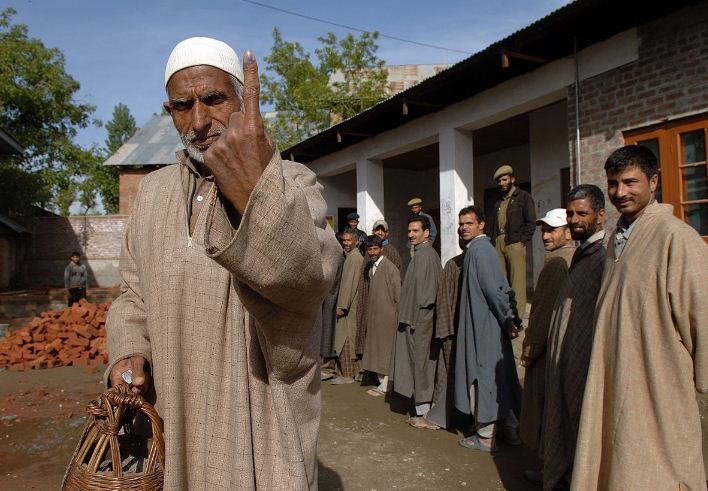
Category: Kashmir Elections

  • Kashmir Elections and BJP’s Setback – Study Notes

    Kashmir Elections and BJP’s Setback – Study Notes

    Recent elections in Indian Kashmir saw the BJP’s defeat, with the National Conference forming a government in coalition with the Congress party. Despite the BJP’s significant victory in Haryana, they failed to secure a majority in the Kashmir assembly elections. The results are analyzed, considering the role of various political parties and the impact on the Kashmiri people. The BJP’s investment in infrastructure and tourism is noted, alongside ongoing debates regarding the revocation of Article 370. The author also discusses the perspectives of various political leaders and the overall atmosphere following the elections.

    FAQ: Recent Elections and Political Landscape in Indian Kashmir

    1. What was the outcome of the recent state assembly elections in Indian Kashmir?

    The National Conference, led by Sheikh Umar Farooq Abdullah, emerged victorious with 42 seats. They formed a government in alliance with the Congress Party, which secured 6 seats. The BJP won 29 seats, primarily in the Jammu region, while the PDP, led by Mehbooba Mufti, suffered a setback with only 4 seats.

    2. What were the key factors influencing the election results?

    Several factors contributed to the election outcomes. The National Conference’s success can be attributed to their alliance with the Congress Party, their focus on regional issues, and Sheikh Umar Farooq Abdullah’s established leadership. The BJP faced challenges due to their association with the revocation of Article 370 and the perceived lack of economic opportunities for Kashmiri youth. The PDP’s decline reflects public dissatisfaction with their previous coalition with the BJP.

    3. What is the significance of the participation of national political figures in the Kashmiri elections?

    The presence of national figures like Rahul Gandhi and Priyanka Gandhi from the Congress Party and Akhilesh Yadav from the Samajwadi Party at Sheikh Umar Abdullah’s swearing-in ceremony highlights the importance of the Kashmiri elections in the broader Indian political landscape. Their participation signifies support for the newly elected government and a commitment to the region’s development.

    4. How has the removal of Article 370 impacted the political dynamics in Kashmir?

    The abrogation of Article 370, which granted special status to Jammu and Kashmir, has significantly altered the political landscape. While the BJP views it as a step towards integration and development, regional parties like the National Conference, PDP, and Congress continue to demand its restoration. The removal of Article 370 has fueled a sense of deprivation among some Kashmiris, particularly regarding employment opportunities.

    5. What are the BJP’s priorities for Kashmir’s development?

    The BJP government aims to promote peace and security in the valley while focusing on infrastructure development, attracting investment, and boosting tourism. They are also actively seeking investments from Arab countries to support these initiatives. The BJP’s vision is to transform Kashmir into a global tourist destination and enhance economic opportunities for its residents.

    6. What are the challenges and opportunities for the new government led by Sheikh Umar Abdullah?

    The new government faces challenges in addressing concerns related to employment, economic development, and the restoration of Article 370. However, they also have opportunities to leverage their alliance with the Congress Party to secure resources from the central government and foster a more inclusive political environment.

    7. How do the Kashmiri people perceive the recent elections and the current political situation?

    While there is a sense of relief among the people due to the decline in violence, concerns remain regarding employment opportunities and the overall economic situation. The youth, in particular, feel a sense of deprivation. Despite these challenges, there is a general desire for peace and stability in the region.

    8. What is the future outlook for politics in Indian Kashmir?

    The political landscape in Kashmir remains dynamic and complex. The BJP’s focus on development and integration will likely continue, while regional parties will persist in their efforts to address regional aspirations and advocate for the restoration of Article 370. The future will depend on the effectiveness of the new government in addressing the needs of the Kashmiri people and fostering an environment of peace, stability, and economic progress.

    Understanding Post-Article 370 Kashmir: An Examination of Political Dynamics

    Source: Excerpts from “Pasted Text”

    I. The BJP’s Limited Electoral Success in Kashmir

    • This section examines the results of the recent Lok Sabah and state assembly elections in Kashmir, highlighting the BJP’s failure to secure a majority despite Prime Minister Modi’s efforts.
    • It outlines the electoral alliances formed by the National Conference and Congress parties, which ultimately led to their victory and the formation of a coalition government.

    II. Mehbooba Mufti and the PDP’s Decline:

    • This section explores the significant electoral setback faced by Mehbooba Mufti and her People’s Democratic Party (PDP), who had previously governed Kashmir in coalition with the BJP.
    • It analyzes Mufti’s campaign strategy, focusing on her attempts to garner support from the Muslim vote through provocative rhetoric, including invoking the issue of Palestine, which ultimately backfired.

    III. The Rise of Sheikh Umar Farooq Abdullah and the Congress Alliance:

    • This section details the electoral success of Sheikh Umar Farooq Abdullah, grandson of Sheikh Abdullah, and his National Conference party, which formed a coalition government with the Congress Party.
    • It describes the swearing-in ceremony of Abdullah as Chief Minister, attended by prominent figures such as Rahul Gandhi and Priyanka Gandhi, and highlights Prime Minister Modi’s commitment to working with the new government for the development of Jammu and Kashmir.

    IV. The Significance of the Oath to the Indian Constitution:

    • This section underscores the shift in the oath taken by the newly elected Chief Minister, Sheikh Umar Farooq Abdullah, from protecting the Kashmiri Constitution to upholding the Indian Constitution.
    • It links this change to the abrogation of Article 370, which effectively dissolved the Kashmiri Constitution and integrated the region more firmly into the Indian Union.

    V. Reflections on Past Encounters with Mir Waiz Umar Farooq:

    • This section offers a personal anecdote about a previous encounter with Mir Waiz Umar Farooq, a prominent Kashmiri leader, during his visit to Lahore.
    • It expresses regret over the missed opportunity to engage in a meaningful dialogue with Mir Waiz and the author’s desire to interview both him and Sheikh Umar Farooq in the future.

    VI. The Common Kashmiri’s Desire for Peace and Development:

    • This section asserts that despite differing political agendas and controversies surrounding the elections, the ordinary people of Kashmir yearn for peace, stability, and economic development.
    • It acknowledges the challenges faced by the youth in terms of employment and opportunities, attributing these issues to the decades of unrest and political instability.

    VII. The BJP’s Challenges and Development Initiatives:

    • This section outlines the significant challenge faced by the BJP in Kashmir – to promote economic growth, create jobs, and attract investment to the region, thereby solidifying peace and security.
    • It highlights the BJP’s focus on developing infrastructure in Jammu and Kashmir, including roads and five-star hotels, with the goal of transforming Kashmir into a global tourist destination.

    VIII. The Fate of Article 370 and the Political Landscape:

    • This section discusses the shared agenda of various political parties, including the Congress, National Conference, and PDP, to restore Article 370, despite the legal and political hurdles in achieving this objective.
    • It acknowledges the Supreme Court’s unanimous decision upholding the abrogation of Article 370, suggesting that the demand for its restoration may eventually fade as the benefits of integration become more apparent.

    IX. Credit to the BJP for Restoring Peace and Security:

    • This section acknowledges the BJP’s success in curbing violence and terrorism in the valley, creating an environment of relative peace and security, leading to a high voter turnout in the recent elections.
    • It emphasizes the importance of transparency in the electoral process and the need for continued efforts to address the needs and aspirations of the Kashmiri people.

    Briefing Doc: Kashmir Assembly Elections and the Future of the Region

    Main Themes:

    • Shift in Kashmiri Politics: The recent assembly elections in Jammu and Kashmir mark a significant shift in the region’s political landscape following the abrogation of Article 370.
    • BJP’s Limited Success: While the BJP made inroads in the Jammu region, they failed to secure a majority, highlighting the complexities of gaining widespread acceptance in the Muslim-majority Kashmir Valley.
    • National Conference’s Victory: The National Conference, led by Sheikh Umar Farooq Abdullah, emerged victorious, forming a government with support from the Congress. This signifies the enduring influence of regional parties and a desire for a distinct Kashmiri identity.
    • Economic Development as a Key Focus: The briefing highlights the importance of economic development and job creation in Kashmir as crucial factors for long-term peace and stability.

    Important Ideas and Facts:

    • Electoral Results: The National Conference secured 42 seats, Congress won 6, while the BJP won 29, primarily from the Jammu region. The PDP, which previously formed a government with the BJP, suffered a major defeat, winning only 4 seats.
    • Rejection of Provocative Rhetoric: Mehbooba Mufti’s attempts to leverage hardcore Muslim sentiment, including raising the issue of Palestine, backfired and resulted in her party’s electoral decline.
    • Public Desire for Peace and Security: The high voter turnout (63%) and the peaceful conduct of the elections suggest a desire among Kashmiris for stability and an end to violence.
    • Focus on Economic Development: The source emphasizes the need for the BJP to prioritize economic development and job creation in Kashmir. This includes attracting investment, promoting IT and industry, and developing infrastructure.
    • Article 370 and its Future: While the opposition parties advocate for the restoration of Article 370, the Supreme Court’s decision and the lack of a two-thirds majority in Parliament make it unlikely. The source suggests that focusing on development will ultimately make this demand less relevant.

    Key Quotes:

    • “The common Kashmiri is happy on the end of violence and restoration of peace and order in the valley…” This quote highlights the perceived shift in public sentiment towards stability and a rejection of violence.
    • “…the biggest challenge for [the BJP] is that she should increase IT and industry as much as she is developing infrastructure in Jammu and Kashmir.” This emphasizes the need for job creation and economic opportunities for the Kashmiri youth.
    • “…it feels that BJP is trying to make Kashmir a global tourist destination or hub.” This observation suggests a potential strategy by the BJP to boost the region’s economy through tourism.
    • “The reverse effect of this independence was that both major Kashmiri parties spent whatever resources they got from the center on themselves instead of spending it on the public.” This criticism highlights the perceived shortcomings of previous governments in effectively utilizing resources for public benefit.

    Overall Analysis:

    The briefing paints a complex picture of post-Article 370 Kashmir. While the elections indicate a desire for peace and a rejection of violent politics, the BJP faces an uphill battle in gaining widespread acceptance in the Valley. Economic development and addressing the aspirations of the Kashmiri youth are crucial for long-term stability and integration. The future of the region hinges on navigating these challenges and finding a way to meet the diverse needs of its people.

    The Bharatiya Janata Party (BJP) had mixed electoral success in recent elections. While the BJP won a clear majority in the Haryana assembly elections, the party did not achieve the same level of success in the Jammu and Kashmir assembly elections. [1] The BJP won 48 seats in the Haryana Assembly, while Congress secured 36 seats. [1] In the Jammu and Kashmir Assembly elections, the BJP faced competition from Sheikh Umar Abdullah’s National Conference, rather than the Congress Party. [1] The National Conference formed an alliance with the Congress Party, with the National Conference contesting on 51 seats and Congress on 32 seats. [2] The National Conference won 42 seats, while the Congress Party only won six. [2] The BJP won a total of 29 seats, primarily in the Jammu area. [2] The BJP’s biggest defeat was the poor performance of the Peoples Democratic Party (PDP), led by Mehbooba Mufti, who had previously formed a government in Kashmir with the BJP. [2] The PDP only won four seats in this election. [2]

    The recent state assembly elections in Jammu and Kashmir resulted in a victory for the National Conference, led by Sheikh Umar Farooq Abdullah, who formed a government with the support of the Congress Party. [1, 2] The National Conference won 42 seats, while Congress won six. [3] The BJP primarily won seats in the Jammu area, securing a total of 29 seats. [3] The Peoples Democratic Party (PDP), led by Mehbooba Mufti, experienced a significant setback, winning only four seats. [3] In the previous election cycle, the PDP had formed a coalition government with the BJP. [3] The elections were considered significant as they were the first to be held after the abrogation of Article 370 of the Indian Constitution, which granted special status to Jammu and Kashmir. [2]

    There is a perception that the common Kashmiri population is satisfied with the decrease in violence and the return of peace and order in the valley. [2] However, there is also a sense of deprivation, particularly among the youth, regarding limited employment and job opportunities. [2] This discontent is attributed to the prolonged period of unrest. [2] The BJP faces a significant challenge in addressing these concerns by promoting IT and industry to generate employment opportunities in the valley. [2] Notably, the BJP has been attracting investment from Arab Muslim countries for infrastructure development, including roads and five-star hotels, with the aim of transforming Kashmir into a global tourist destination. [2]

    The BJP, along with other political parties like the Indian National Congress, National Conference, and the PDP, have expressed their intention to reinstate Article 370 of the Constitution. [2] However, this goal requires a two-third majority in the Indian Parliament, which is currently unlikely. [2] The Indian Supreme Court has also upheld the abrogation of Article 370 through a unanimous decision. [2] The demand for the restoration of Article 370 may gradually diminish as it primarily benefited Kashmiri political parties but did not yield substantial benefits for the general Kashmiri populace. [2]

    The sources suggest that both major Kashmiri parties, the National Conference and the PDP, have been accused of prioritizing their own interests over the welfare of the people by using resources received from the central government for personal gain rather than public spending. [2] The sources acknowledge that the BJP, under Prime Minister Narendra Modi, has successfully curbed violence and terrorism in the valley, establishing an atmosphere of peace and security, evidenced by the high voter turnout of 30% and the lack of concerns regarding electoral transparency. [2]

    The sources primarily focus on the results of recent elections in Jammu and Kashmir and Haryana, highlighting the formation and performance of coalition governments.

    • In the Jammu and Kashmir assembly elections, Sheikh Umar Farooq Abdullah of the National Conference formed a coalition government with the Congress Party. [1] The National Conference secured 42 seats and the Congress Party won 6 seats. [2] This alliance allowed them to form a government, despite the BJP winning 29 seats, mainly in the Jammu area. [2]
    • Prior to these elections, the Peoples Democratic Party (PDP), led by Mehbooba Mufti, had formed a government in Kashmir with the BJP. [2] However, in the recent elections, the PDP only won four seats. [2] This suggests that coalition governments in Jammu and Kashmir can be fluid and change based on electoral outcomes.

    The sources do not discuss the specifics of how these coalition governments function or the agreements made between parties. They also do not provide information about coalition governments in other Indian states.

    The sources discuss Article 370 of the Indian Constitution, which granted special status to Jammu and Kashmir, in the context of the recent state assembly elections. These elections were the first to be held after the abrogation of Article 370. [1]

    • Several political parties, including the BJP, Indian National Congress, National Conference, and the PDP, have expressed their intention to reinstate Article 370. [1] However, this is a difficult goal to achieve as it requires a two-thirds majority in the Indian Parliament. [1]
    • The Indian Supreme Court has also issued a unanimous decision upholding the abrogation of Article 370. [1]
    • The sources suggest that the demand for the restoration of Article 370 may eventually fade because it primarily benefited Kashmiri political parties rather than the general Kashmiri population. [1]
    • The National Conference and the PDP are accused of using resources from the central government for their own gain instead of investing in public spending. [1]

    The abrogation of Article 370 is presented as a significant turning point in the politics of Jammu and Kashmir. While there is some political opposition to its removal, the sources suggest that the change has brought a sense of peace and stability to the region.

    Kashmiri politics has been significantly impacted by the abrogation of Article 370 of the Indian Constitution, which granted special status to Jammu and Kashmir. The recent state assembly elections, the first held after the removal of Article 370, were a key indicator of the shifting political landscape. [1]

    The National Conference, led by Sheikh Umar Farooq Abdullah, emerged victorious and formed a coalition government with the Congress Party. This outcome suggests a preference among the Kashmiri electorate for parties that have traditionally advocated for greater autonomy for the region. [1] The BJP, which spearheaded the abrogation of Article 370, primarily won seats in the Jammu area, indicating a geographical divide in political allegiances within the state. [1, 2]

    The sources present several perspectives on the impact of Article 370 and its removal:

    • While various political parties, including the BJP, Indian National Congress, National Conference, and the PDP, have publicly expressed their commitment to reinstating Article 370, achieving this goal faces significant obstacles. It necessitates a two-thirds majority in the Indian Parliament, which seems unlikely given the current political composition. Additionally, the Indian Supreme Court has unanimously upheld the abrogation, further solidifying the legal challenges to its restoration. [1]
    • The sources argue that the demand for the restoration of Article 370 might gradually diminish as its benefits primarily accrued to Kashmiri political parties rather than the general population. The National Conference and the PDP have been accused of using resources from the central government for their own benefit instead of investing in public spending, further eroding public support for the article. [1]
    • The abrogation of Article 370 is portrayed as a pivotal moment that has ushered in an era of peace and stability in Jammu and Kashmir. The BJP, under Prime Minister Narendra Modi, has been credited with successfully curbing violence and terrorism in the valley, fostering an environment of security that facilitated a high voter turnout of 30% and mitigated concerns regarding electoral transparency. [1]

    Despite the positive developments attributed to the removal of Article 370, the sources acknowledge lingering challenges, particularly concerning youth unemployment and limited job opportunities. This discontent is rooted in the prolonged period of unrest and instability that plagued the region. The BJP faces a critical task in addressing these concerns by promoting IT and industry to generate employment prospects and bolster economic development in the valley. [1]

    Notably, the BJP’s efforts to attract investment from Arab Muslim countries for infrastructure development, including roads and five-star hotels, signal a strategic attempt to transform Kashmir into a global tourist destination. This approach seeks to leverage economic growth and tourism to further stabilize the region and integrate it more closely with the rest of India. [1]

    In conclusion, Kashmiri politics is undergoing a period of transformation following the abrogation of Article 370. While political parties grapple with the implications of this change and its potential reversal, the sources suggest that the focus has shifted towards economic development, security, and integration with the broader Indian economy. The long-term impact of these developments on the political landscape and the lives of ordinary Kashmiris remains to be seen.

    By Amjad Izhar
    Contact: amjad.izhar@gmail.com
    https://amjadizhar.blog

  • Kashmir Elections and BJP’s Setback – Study Notes

    Kashmir Elections and BJP’s Setback – Study Notes

    Recent elections in Indian Kashmir saw the BJP’s defeat, with the National Conference forming a government in coalition with the Congress party. Despite the BJP’s significant victory in Haryana, they failed to secure a majority in the Kashmir assembly elections. The results are analyzed, considering the role of various political parties and the impact on the Kashmiri people. The BJP’s investment in infrastructure and tourism is noted, alongside ongoing debates regarding the revocation of Article 370. The author also discusses the perspectives of various political leaders and the overall atmosphere following the elections.

    FAQ: Recent Elections and Political Landscape in Indian Kashmir

    1. What was the outcome of the recent state assembly elections in Indian Kashmir?

    The National Conference, led by Sheikh Umar Farooq Abdullah, emerged victorious with 42 seats. They formed a government in alliance with the Congress Party, which secured 6 seats. The BJP won 29 seats, primarily in the Jammu region, while the PDP, led by Mehbooba Mufti, suffered a setback with only 4 seats.

    2. What were the key factors influencing the election results?

    Several factors contributed to the election outcomes. The National Conference’s success can be attributed to their alliance with the Congress Party, their focus on regional issues, and Sheikh Umar Farooq Abdullah’s established leadership. The BJP faced challenges due to their association with the revocation of Article 370 and the perceived lack of economic opportunities for Kashmiri youth. The PDP’s decline reflects public dissatisfaction with their previous coalition with the BJP.

    3. What is the significance of the participation of national political figures in the Kashmiri elections?

    The presence of national figures like Rahul Gandhi and Priyanka Gandhi from the Congress Party and Akhilesh Yadav from the Samajwadi Party at Sheikh Umar Abdullah’s swearing-in ceremony highlights the importance of the Kashmiri elections in the broader Indian political landscape. Their participation signifies support for the newly elected government and a commitment to the region’s development.

    4. How has the removal of Article 370 impacted the political dynamics in Kashmir?

    The abrogation of Article 370, which granted special status to Jammu and Kashmir, has significantly altered the political landscape. While the BJP views it as a step towards integration and development, regional parties like the National Conference, PDP, and Congress continue to demand its restoration. The removal of Article 370 has fueled a sense of deprivation among some Kashmiris, particularly regarding employment opportunities.

    5. What are the BJP’s priorities for Kashmir’s development?

    The BJP government aims to promote peace and security in the valley while focusing on infrastructure development, attracting investment, and boosting tourism. They are also actively seeking investments from Arab countries to support these initiatives. The BJP’s vision is to transform Kashmir into a global tourist destination and enhance economic opportunities for its residents.

    6. What are the challenges and opportunities for the new government led by Sheikh Umar Abdullah?

    The new government faces challenges in addressing concerns related to employment, economic development, and the restoration of Article 370. However, they also have opportunities to leverage their alliance with the Congress Party to secure resources from the central government and foster a more inclusive political environment.

    7. How do the Kashmiri people perceive the recent elections and the current political situation?

    While there is a sense of relief among the people due to the decline in violence, concerns remain regarding employment opportunities and the overall economic situation. The youth, in particular, feel a sense of deprivation. Despite these challenges, there is a general desire for peace and stability in the region.

    8. What is the future outlook for politics in Indian Kashmir?

    The political landscape in Kashmir remains dynamic and complex. The BJP’s focus on development and integration will likely continue, while regional parties will persist in their efforts to address regional aspirations and advocate for the restoration of Article 370. The future will depend on the effectiveness of the new government in addressing the needs of the Kashmiri people and fostering an environment of peace, stability, and economic progress.

    Understanding Post-Article 370 Kashmir: An Examination of Political Dynamics

    Source: Excerpts from “Pasted Text”

    I. The BJP’s Limited Electoral Success in Kashmir

    • This section examines the results of the recent Lok Sabah and state assembly elections in Kashmir, highlighting the BJP’s failure to secure a majority despite Prime Minister Modi’s efforts.
    • It outlines the electoral alliances formed by the National Conference and Congress parties, which ultimately led to their victory and the formation of a coalition government.

    II. Mehbooba Mufti and the PDP’s Decline:

    • This section explores the significant electoral setback faced by Mehbooba Mufti and her People’s Democratic Party (PDP), who had previously governed Kashmir in coalition with the BJP.
    • It analyzes Mufti’s campaign strategy, focusing on her attempts to garner support from the Muslim vote through provocative rhetoric, including invoking the issue of Palestine, which ultimately backfired.

    III. The Rise of Sheikh Umar Farooq Abdullah and the Congress Alliance:

    • This section details the electoral success of Sheikh Umar Farooq Abdullah, grandson of Sheikh Abdullah, and his National Conference party, which formed a coalition government with the Congress Party.
    • It describes the swearing-in ceremony of Abdullah as Chief Minister, attended by prominent figures such as Rahul Gandhi and Priyanka Gandhi, and highlights Prime Minister Modi’s commitment to working with the new government for the development of Jammu and Kashmir.

    IV. The Significance of the Oath to the Indian Constitution:

    • This section underscores the shift in the oath taken by the newly elected Chief Minister, Sheikh Umar Farooq Abdullah, from protecting the Kashmiri Constitution to upholding the Indian Constitution.
    • It links this change to the abrogation of Article 370, which effectively dissolved the Kashmiri Constitution and integrated the region more firmly into the Indian Union.

    V. Reflections on Past Encounters with Mir Waiz Umar Farooq:

    • This section offers a personal anecdote about a previous encounter with Mir Waiz Umar Farooq, a prominent Kashmiri leader, during his visit to Lahore.
    • It expresses regret over the missed opportunity to engage in a meaningful dialogue with Mir Waiz and the author’s desire to interview both him and Sheikh Umar Farooq in the future.

    VI. The Common Kashmiri’s Desire for Peace and Development:

    • This section asserts that despite differing political agendas and controversies surrounding the elections, the ordinary people of Kashmir yearn for peace, stability, and economic development.
    • It acknowledges the challenges faced by the youth in terms of employment and opportunities, attributing these issues to the decades of unrest and political instability.

    VII. The BJP’s Challenges and Development Initiatives:

    • This section outlines the significant challenge faced by the BJP in Kashmir – to promote economic growth, create jobs, and attract investment to the region, thereby solidifying peace and security.
    • It highlights the BJP’s focus on developing infrastructure in Jammu and Kashmir, including roads and five-star hotels, with the goal of transforming Kashmir into a global tourist destination.

    VIII. The Fate of Article 370 and the Political Landscape:

    • This section discusses the shared agenda of various political parties, including the Congress, National Conference, and PDP, to restore Article 370, despite the legal and political hurdles in achieving this objective.
    • It acknowledges the Supreme Court’s unanimous decision upholding the abrogation of Article 370, suggesting that the demand for its restoration may eventually fade as the benefits of integration become more apparent.

    IX. Credit to the BJP for Restoring Peace and Security:

    • This section acknowledges the BJP’s success in curbing violence and terrorism in the valley, creating an environment of relative peace and security, leading to a high voter turnout in the recent elections.
    • It emphasizes the importance of transparency in the electoral process and the need for continued efforts to address the needs and aspirations of the Kashmiri people.

    Briefing Doc: Kashmir Assembly Elections and the Future of the Region

    Main Themes:

    • Shift in Kashmiri Politics: The recent assembly elections in Jammu and Kashmir mark a significant shift in the region’s political landscape following the abrogation of Article 370.
    • BJP’s Limited Success: While the BJP made inroads in the Jammu region, they failed to secure a majority, highlighting the complexities of gaining widespread acceptance in the Muslim-majority Kashmir Valley.
    • National Conference’s Victory: The National Conference, led by Sheikh Umar Farooq Abdullah, emerged victorious, forming a government with support from the Congress. This signifies the enduring influence of regional parties and a desire for a distinct Kashmiri identity.
    • Economic Development as a Key Focus: The briefing highlights the importance of economic development and job creation in Kashmir as crucial factors for long-term peace and stability.

    Important Ideas and Facts:

    • Electoral Results: The National Conference secured 42 seats, Congress won 6, while the BJP won 29, primarily from the Jammu region. The PDP, which previously formed a government with the BJP, suffered a major defeat, winning only 4 seats.
    • Rejection of Provocative Rhetoric: Mehbooba Mufti’s attempts to leverage hardcore Muslim sentiment, including raising the issue of Palestine, backfired and resulted in her party’s electoral decline.
    • Public Desire for Peace and Security: The high voter turnout (63%) and the peaceful conduct of the elections suggest a desire among Kashmiris for stability and an end to violence.
    • Focus on Economic Development: The source emphasizes the need for the BJP to prioritize economic development and job creation in Kashmir. This includes attracting investment, promoting IT and industry, and developing infrastructure.
    • Article 370 and its Future: While the opposition parties advocate for the restoration of Article 370, the Supreme Court’s decision and the lack of a two-thirds majority in Parliament make it unlikely. The source suggests that focusing on development will ultimately make this demand less relevant.

    Key Quotes:

    • “The common Kashmiri is happy on the end of violence and restoration of peace and order in the valley…” This quote highlights the perceived shift in public sentiment towards stability and a rejection of violence.
    • “…the biggest challenge for [the BJP] is that she should increase IT and industry as much as she is developing infrastructure in Jammu and Kashmir.” This emphasizes the need for job creation and economic opportunities for the Kashmiri youth.
    • “…it feels that BJP is trying to make Kashmir a global tourist destination or hub.” This observation suggests a potential strategy by the BJP to boost the region’s economy through tourism.
    • “The reverse effect of this independence was that both major Kashmiri parties spent whatever resources they got from the center on themselves instead of spending it on the public.” This criticism highlights the perceived shortcomings of previous governments in effectively utilizing resources for public benefit.

    Overall Analysis:

    The briefing paints a complex picture of post-Article 370 Kashmir. While the elections indicate a desire for peace and a rejection of violent politics, the BJP faces an uphill battle in gaining widespread acceptance in the Valley. Economic development and addressing the aspirations of the Kashmiri youth are crucial for long-term stability and integration. The future of the region hinges on navigating these challenges and finding a way to meet the diverse needs of its people.

    The Bharatiya Janata Party (BJP) had mixed electoral success in recent elections. While the BJP won a clear majority in the Haryana assembly elections, the party did not achieve the same level of success in the Jammu and Kashmir assembly elections. [1] The BJP won 48 seats in the Haryana Assembly, while Congress secured 36 seats. [1] In the Jammu and Kashmir Assembly elections, the BJP faced competition from Sheikh Umar Abdullah’s National Conference, rather than the Congress Party. [1] The National Conference formed an alliance with the Congress Party, with the National Conference contesting on 51 seats and Congress on 32 seats. [2] The National Conference won 42 seats, while the Congress Party only won six. [2] The BJP won a total of 29 seats, primarily in the Jammu area. [2] The BJP’s biggest defeat was the poor performance of the Peoples Democratic Party (PDP), led by Mehbooba Mufti, who had previously formed a government in Kashmir with the BJP. [2] The PDP only won four seats in this election. [2]

    The recent state assembly elections in Jammu and Kashmir resulted in a victory for the National Conference, led by Sheikh Umar Farooq Abdullah, who formed a government with the support of the Congress Party. [1, 2] The National Conference won 42 seats, while Congress won six. [3] The BJP primarily won seats in the Jammu area, securing a total of 29 seats. [3] The Peoples Democratic Party (PDP), led by Mehbooba Mufti, experienced a significant setback, winning only four seats. [3] In the previous election cycle, the PDP had formed a coalition government with the BJP. [3] The elections were considered significant as they were the first to be held after the abrogation of Article 370 of the Indian Constitution, which granted special status to Jammu and Kashmir. [2]

    There is a perception that the common Kashmiri population is satisfied with the decrease in violence and the return of peace and order in the valley. [2] However, there is also a sense of deprivation, particularly among the youth, regarding limited employment and job opportunities. [2] This discontent is attributed to the prolonged period of unrest. [2] The BJP faces a significant challenge in addressing these concerns by promoting IT and industry to generate employment opportunities in the valley. [2] Notably, the BJP has been attracting investment from Arab Muslim countries for infrastructure development, including roads and five-star hotels, with the aim of transforming Kashmir into a global tourist destination. [2]

    The BJP, along with other political parties like the Indian National Congress, National Conference, and the PDP, have expressed their intention to reinstate Article 370 of the Constitution. [2] However, this goal requires a two-third majority in the Indian Parliament, which is currently unlikely. [2] The Indian Supreme Court has also upheld the abrogation of Article 370 through a unanimous decision. [2] The demand for the restoration of Article 370 may gradually diminish as it primarily benefited Kashmiri political parties but did not yield substantial benefits for the general Kashmiri populace. [2]

    The sources suggest that both major Kashmiri parties, the National Conference and the PDP, have been accused of prioritizing their own interests over the welfare of the people by using resources received from the central government for personal gain rather than public spending. [2] The sources acknowledge that the BJP, under Prime Minister Narendra Modi, has successfully curbed violence and terrorism in the valley, establishing an atmosphere of peace and security, evidenced by the high voter turnout of 30% and the lack of concerns regarding electoral transparency. [2]

    The sources primarily focus on the results of recent elections in Jammu and Kashmir and Haryana, highlighting the formation and performance of coalition governments.

    • In the Jammu and Kashmir assembly elections, Sheikh Umar Farooq Abdullah of the National Conference formed a coalition government with the Congress Party. [1] The National Conference secured 42 seats and the Congress Party won 6 seats. [2] This alliance allowed them to form a government, despite the BJP winning 29 seats, mainly in the Jammu area. [2]
    • Prior to these elections, the Peoples Democratic Party (PDP), led by Mehbooba Mufti, had formed a government in Kashmir with the BJP. [2] However, in the recent elections, the PDP only won four seats. [2] This suggests that coalition governments in Jammu and Kashmir can be fluid and change based on electoral outcomes.

    The sources do not discuss the specifics of how these coalition governments function or the agreements made between parties. They also do not provide information about coalition governments in other Indian states.

    The sources discuss Article 370 of the Indian Constitution, which granted special status to Jammu and Kashmir, in the context of the recent state assembly elections. These elections were the first to be held after the abrogation of Article 370. [1]

    • Several political parties, including the BJP, Indian National Congress, National Conference, and the PDP, have expressed their intention to reinstate Article 370. [1] However, this is a difficult goal to achieve as it requires a two-thirds majority in the Indian Parliament. [1]
    • The Indian Supreme Court has also issued a unanimous decision upholding the abrogation of Article 370. [1]
    • The sources suggest that the demand for the restoration of Article 370 may eventually fade because it primarily benefited Kashmiri political parties rather than the general Kashmiri population. [1]
    • The National Conference and the PDP are accused of using resources from the central government for their own gain instead of investing in public spending. [1]

    The abrogation of Article 370 is presented as a significant turning point in the politics of Jammu and Kashmir. While there is some political opposition to its removal, the sources suggest that the change has brought a sense of peace and stability to the region.

    Kashmiri politics has been significantly impacted by the abrogation of Article 370 of the Indian Constitution, which granted special status to Jammu and Kashmir. The recent state assembly elections, the first held after the removal of Article 370, were a key indicator of the shifting political landscape. [1]

    The National Conference, led by Sheikh Umar Farooq Abdullah, emerged victorious and formed a coalition government with the Congress Party. This outcome suggests a preference among the Kashmiri electorate for parties that have traditionally advocated for greater autonomy for the region. [1] The BJP, which spearheaded the abrogation of Article 370, primarily won seats in the Jammu area, indicating a geographical divide in political allegiances within the state. [1, 2]

    The sources present several perspectives on the impact of Article 370 and its removal:

    • While various political parties, including the BJP, Indian National Congress, National Conference, and the PDP, have publicly expressed their commitment to reinstating Article 370, achieving this goal faces significant obstacles. It necessitates a two-thirds majority in the Indian Parliament, which seems unlikely given the current political composition. Additionally, the Indian Supreme Court has unanimously upheld the abrogation, further solidifying the legal challenges to its restoration. [1]
    • The sources argue that the demand for the restoration of Article 370 might gradually diminish as its benefits primarily accrued to Kashmiri political parties rather than the general population. The National Conference and the PDP have been accused of using resources from the central government for their own benefit instead of investing in public spending, further eroding public support for the article. [1]
    • The abrogation of Article 370 is portrayed as a pivotal moment that has ushered in an era of peace and stability in Jammu and Kashmir. The BJP, under Prime Minister Narendra Modi, has been credited with successfully curbing violence and terrorism in the valley, fostering an environment of security that facilitated a high voter turnout of 30% and mitigated concerns regarding electoral transparency. [1]

    Despite the positive developments attributed to the removal of Article 370, the sources acknowledge lingering challenges, particularly concerning youth unemployment and limited job opportunities. This discontent is rooted in the prolonged period of unrest and instability that plagued the region. The BJP faces a critical task in addressing these concerns by promoting IT and industry to generate employment prospects and bolster economic development in the valley. [1]

    Notably, the BJP’s efforts to attract investment from Arab Muslim countries for infrastructure development, including roads and five-star hotels, signal a strategic attempt to transform Kashmir into a global tourist destination. This approach seeks to leverage economic growth and tourism to further stabilize the region and integrate it more closely with the rest of India. [1]

    In conclusion, Kashmiri politics is undergoing a period of transformation following the abrogation of Article 370. While political parties grapple with the implications of this change and its potential reversal, the sources suggest that the focus has shifted towards economic development, security, and integration with the broader Indian economy. The long-term impact of these developments on the political landscape and the lives of ordinary Kashmiris remains to be seen.

    By Amjad Izhar
    Contact: amjad.izhar@gmail.com
    https://amjadizhar.blog