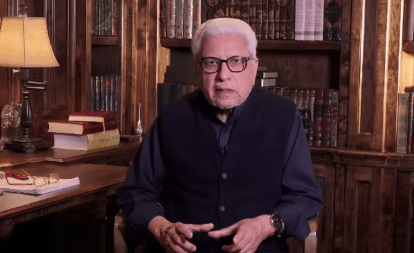
Category: Javed Ghamdi

  • Story of Musa & Khizer by Allama Javed Ghamdi

    Story of Musa & Khizer by Allama Javed Ghamdi

    The text presents interpretations of Surah Kahf, specifically focusing on the story of Musa and Al-Khidr. It explores the divine wisdom behind seemingly inexplicable events, emphasizing the importance of patience and trust in Allah’s plan. The text analyzes the reasons behind these trials, and highlights their context within the Sunnah. It suggests that these trials test faith and understanding and offers insights into Allah’s actions that extend beyond human comprehension. Moreover, the narrative explores how prophets receive and understand divine messages, drawing parallels with worldly events. Ultimately, the passage offers guidance on maintaining faith and trust in divine wisdom even when faced with life’s challenges.

    Wisdom in Surah Kahf: A Study Guide

    Quiz (Short Answer)

    Answer each question in 2-3 sentences.

    1. According to the text, what three types of reasoning are commonly found in the Holy Qur’an?
    2. What is the significance of patience in the context of the challenges faced by prophets?
    3. What are the two aspects that should be kept in mind sometimes when comforting someone or advising someone patience?
    4. What is the significance of the story of Khizr and Musa in Surah Kahf?
    5. How does the Qur’an describe the ways in which Allah conveys His message to the prophets, as summarized in Surah Shura?
    6. What are the two ways “intentions” or “observations” are shown to the prophets?
    7. What does the text suggest about the interpretation of dreams and visions experienced by prophets?
    8. What is the context of the story of Sayyiduna Musa’s journey?
    9. What was the moral of the episode regarding the killing of the boy?
    10. What does the text say about trusting in the sources of knowledge that God gave us?

    Answer Key (Quiz)

    1. The three types of reasoning are arguments from the self, arguments from the horizons (Afaq), and arguments from history. These types of arguments appear throughout the Holy Qur’an, though the level of detail varies in each argument.
    2. Patience is essential because results may not be immediately apparent, and it requires trusting in Allah’s wisdom even when outcomes are unclear. Prophets are advised to act with patience and wisdom, trusting in Allah’s wisdom, even when faced with accusations and criticism.
    3. When comforting or advising someone patience, keeping in mind that there is one age, one period that is fixed. And also that the Lord is the end of my nation, if guidance would have been given by you.
    4. The story of Khizr and Musa is not a historical narration, but rather, an explanation of the importance of patience and the wisdom of Allah. This includes patience in waiting for permission for migration and patience when trying to understand the purpose or reason for waiting.
    5. Allah speaks in their innermost being (thought takes the form of words) or something is heard with regular sounds (a voice felt from behind a hijab). The thought either speaks in sounds or dialogue occurs between them as instructions are told.
    6. Intentions are either shown in a dream (where the truth is shown through parables needing interpretation) or through observation in an awakened state. In the awakened state the ego begins to appear.
    7. Dreams and visions of prophets are true and not influenced by Satan, but they often require interpretation and are presented in the form of parables. For example, in Surah Yusuf, it is written that the dream of the person who misbehaved with the king was also true.
    8. The context of the story is to teach patience and wisdom and is intended to tell that permission for migration is not given until it is received. One must wait patiently and faith is necessary in the wisdom of Allah.
    9. It was feared that the boy might grow up and cause trouble for his parents with his disobedience and disbelief. Allah wanted to save his parents from his disbelief.
    10. If you look back it has been advised to act with patience and wisdom, trust in Allah, and trust in Allah remains only when a person is fully satisfied that the wisdom of my Lord works in everything and there is no covering of His wisdom. This is the lesson that has been given in this incident.

    Essay Questions

    1. Explore the concept of “Sunnah of Allah” as described in the text. How does understanding this concept influence a believer’s perspective on current events and personal challenges?
    2. The text outlines three methods for addressing problems: reasoning from the self, reasoning from the horizons (Afaq), and reasoning from history. Discuss how these methods can be applied to contemporary issues facing the Muslim community.
    3. Analyze the role of prophets as described in the text. How do they balance their human emotions and limitations with their divine calling and responsibilities? Use examples from the story of Musa and Khizr to illustrate your points.
    4. Discuss the importance of trusting in the sources of knowledge that God gave us. What can we do to avoid temptation that comes with greed or creating satanism?
    5. Examine the story of Musa and Khizr in Surah Kahf. In what ways does it contribute to a deeper understanding of divine wisdom, patience, and the limits of human knowledge?

    Glossary of Key Terms

    • Sunnah of Allah: The established and unchanging way or pattern of Allah’s actions and dealings with mankind.
    • Afaq: Horizons, realms, or the external world; arguments from Afaq refer to observing the signs and phenomena in the world around us.
    • Al-Mudat in Al-Qurba: Nearness or relationship; used to describe the prophet’s connection and love for his people.
    • Ijtihad: Independent reasoning or interpretation of Islamic sources to derive rulings on matters not explicitly covered in the Qur’an or Sunnah.
    • Tafsir: Interpretation or explanation, particularly of the Qur’an.
    • Dalal: Evidence or proof; used in the context of presenting historical events as evidence.
    • Hijab: A veil or barrier; in this context, it refers to a veil that separates humans from the direct perception of divine communication.
    • Ara: Observation; refers to divine visions or intentions shown to the prophets.
    • Majma Al-Bahreen: The meeting place of two rivers; a symbolic location in the story of Musa and Khizr.
    • Qada and Qadr: Divine decree and predestination; the belief that everything is predetermined by Allah.

    Stories of Wisdom: Understanding Divine Intentions in Surah Kahf

    Okay, here’s a briefing document summarizing the main themes and ideas from the provided excerpts from “Stories of Wisdom: Understanding Divine Intentions in Surah Kahf”:

    Briefing Document: “Stories of Wisdom: Understanding Divine Intentions in Surah Kahf”

    Overall Theme:

    The excerpts focus on understanding divine wisdom and intentions, particularly within the context of Surah Kahf in the Quran. A central argument is that seemingly random or negative events have underlying, often hidden, wisdom orchestrated by Allah. The excerpts emphasize the importance of patience, faith, and trust in Allah’s plan, even when the reasons behind events are not immediately apparent. The text addresses how prophets receive divine guidance and how believers should react when faced with trials and tribulations.

    Key Ideas and Facts:

    • The Sunnah of Allah is Unchangeable: The speaker emphasizes that what happened to past nations will happen again, serving as a warning. “It is the Sunnah of Allah and this Sunnah is unchangeable. There will never be any change in it, nor has it ever happened before, so be warned.” This establishes a pattern of divine justice and tests throughout history.
    • Prophets’ Role and Consolation: Prophets are human beings, and even they need comfort and reassurance. The text highlights the prophets’ longing for their people to believe. “Prophets are also human beings in the flesh, they are giving invitations, delivering messages, devoting their days and nights to their people… By Allah, the believers, I am still inviting you, still conveying the message, praying for you. My last wish is that you believe before I leave you.” When facing resistance, prophets are advised to be patient, as Allah has a plan and a fixed time for decisions. The surah itself provides consolation to the Prophet.
    • Arguments from Self, Horizons, and History: The Qur’an uses these three types of reasoning to convey its message. These methods of reasoning serve the overall function of giving “warning and observation.”
    • Arguments from self are more detailed sometimes
    • Arguments from Afaq are more detailed sometimes
    • Historical reasoning
    • The Story of Musa (Moses) and Khidr: This story is presented as an example of how divine wisdom operates beyond human understanding. Musa’s journey with Khidr is used to illustrate why one must be patient and trust in Allah’s plan, even when faced with events that seem unjust or incomprehensible.
    • Khidr’s actions (damaging the boat, killing the boy, repairing the wall) are explained as being divinely guided and serving a greater purpose.
    • The journey was not “to create an event or to narrate history,” but to comfort the Messenger of God and explain if results of da’wah do not come as expected, to understand the wisdom of Allah.
    • The story teaches about the importance of wisdom in actions.
    • The Nature of Prophetic Revelation (Intentions): The text delves into how prophets receive messages from Allah. It describes different methods:
    • Thought Speaking: Inner thoughts taking the form of words without actual sounds. “The thought speaks in their innermost being…the thought speaks, that is, as if I am talking or someone else is answering me, then here the thought has taken the form of words and the words have come out as sounds, but this does not happen in a dream or in a dream, in which words are sounds. They don’t come out of being, the thought speaks”
    • Hearing a Voice Behind a Veil: As with Musa and the burning bush.
    • “Intentions” (Ara’at): Showing the prophet a reality or vision, either in waking life or in a dream. These visions can be symbolic and require interpretation. “It means that there is no talk and no message has been given but the reality is being shown i.e. it has been observed…Paradise was shown to me as if it appeared at that time, but it is not clear whether they are asleep or in a state of sleep.”
    • Patience and Wisdom as Essential Virtues: The text emphasizes the necessity of patience and wisdom for human beings. “I think these two things are needed at every step by a human being, he should make a plan of action with wisdom, speak with wisdom, keep wisdom in mind in every action, and all goals and objectives should be discussed from the perspective of wisdom.” Patience is connected to faith in the fact that something is delayed, so if there is wisdom from Allah.
    • Limits of Human Knowledge: The passage acknowledges that human knowledge is limited. “What will be beyond your scope of knowledge, how can you even be patient with it, as if the Holy Qur’an has told me, forgive me. Man has a field of knowledge… the biggest mistake is that people do not know their field of knowledge.” The inability to grasp the full scope of Allah’s wisdom is a central reason for needing patience and trust. Humans must know and accept the limits of what they can know and trust in sources of knowledge Allah has given.
    • Everything Happens by Allah’s Permission: All things, including those that seem random or chaotic, happen under Allah’s permission, intention, and will. This should form the basis of a believer’s faith. “One is that everything that happens in this world is all by God’s permission and His intention. Occurs under will, that is, there is nothing that happens by yourself in this world.”
    • No Intention of Allah’s is Devoid of Goodness: Even if falsehood is allowed to exist, it does not mean that Allah loves falsehood. He nurtures good through the challenges.

    The Importance of Understanding Limits of Knowledge: Because not understanding the limits of knowledge causes many problems.

    Implications:

    • The excerpts provide a framework for understanding difficult or seemingly unjust events in life.
    • They encourage a deeper trust in Allah’s plan and a willingness to accept what is not immediately understandable.
    • They highlight the importance of seeking knowledge while acknowledging its limitations.
    • The surah aims to train patience and willingness.

    This briefing document captures the key themes and ideas presented in the provided text. Remember that it is a summary, and further reading and study of the source material are recommended for a more complete understanding.

    Stories of Wisdom in Surah Kahf

    Stories of Wisdom FAQ:

    1. What is the central message conveyed through the stories in Surah Kahf?

    The central message emphasizes the importance of patience and trusting in Allah’s wisdom, even when events seem perplexing or unjust. The stories illustrate that there is often a divine purpose behind occurrences that we may not immediately understand, urging believers to accept Allah’s plan with contentment. It highlights the immutability of Allah’s Sunnah, warning that patterns of past nations will repeat and to learn from them. The stories also point to the ways a messenger brings a message, by way of arguments from self, the horizons, and history.

    2. What three types of argument are presented in Surah Kahf?

    Three types of arguments are presented: arguments from the self, arguments from the horizons, and arguments from history. These methods are employed to convey warnings, observations, and ultimately, to offer consolation to both the prophets and the believers.

    3. How does Surah Kahf provide comfort and guidance to prophets facing difficulties?

    The Surah offers solace by reminding prophets that they are not alone in facing rejection and adversity. It highlights that prophets are also human. It assures them that Allah has a fixed time for decisions and a wisdom behind events, even when results are not immediately apparent. The stories encourage patience, emphasizing that Allah’s mercy and victory will eventually prevail, but haste and ego must be avoided. The message is one of perseverance and trust in Allah’s ultimate plan.

    4. What is the significance of the story of Musa (Moses) and Khidr (the wise servant) in the context of Surah Kahf?

    The story of Musa and Khidr serves as a practical illustration of the Surah’s core message. It demonstrates that there is divine wisdom behind actions that may seem incomprehensible or even morally wrong from a human perspective. Musa’s inability to understand Khidr’s actions initially underscores the limits of human knowledge and the need to trust in Allah’s greater plan. It illustrates that Allah uses observation, dreams and the unseen to communicate to prophets.

    5. In the story of Musa and Khidr, what do Khidr’s actions represent, and what lessons can be derived from them?

    Khidr’s actions, such as damaging the boat, killing the boy, and repairing the wall, represent Allah’s divine will and wisdom operating beyond human comprehension. The lessons include:

    • Trust in Allah’s wisdom: Even when events seem unjust, there is a greater purpose.
    • Limits of human knowledge: We cannot always understand Allah’s plan.
    • Patience: Understanding the divine plan requires patience.
    • Acceptance: We must accept Allah’s will and strive to learn from it.

    6. What different methods were used to communicate to the prophets?

    Several methods were used to communicate with the prophets including, inspiration or thoughts that speak within, direct sound behind a veil, visions presented in dreams (which require interpretation), and direct observations or “intentions” shown while awake.

    7. How does Surah Kahf address the problem of evil and suffering in the world?

    The Surah does not explicitly solve the problem of evil, but rather offers a perspective that acknowledges its existence while emphasizing the presence of a divine plan. It suggests that suffering and apparent evil may serve a greater purpose, even if we cannot always discern that purpose. It urges believers to trust that Allah’s wisdom and mercy will ultimately prevail.

    8. What practical advice does Surah Kahf offer for navigating life’s challenges and maintaining faith?

    The Surah provides several key pieces of practical advice:

    • Cultivate Patience (Sabr): Be patient during difficult times.
    • Trust in Allah’s Wisdom: Have faith that everything happens for a reason.
    • Act with Wisdom (Hikmah): Strive to understand situations from Allah’s perspective.
    • Avoid Haste and Ego: Do not rush to judgment or act out of pride.
    • Seek Knowledge: Strive to increase your understanding of the world and Allah’s plan.
    • Accept Allah’s Decisions: Be content with Allah’s will and trust in His ultimate plan.

    Understanding Allah’s Intentions and Wisdom in Events

    Allah’s intentions and wisdom are central themes in the sources, particularly in the context of understanding events and adhering to patience and faith. The sources emphasize that everything happens with Allah’s permission, intention, and will. This perspective is presented as a foundation of faith, suggesting that belief should extend beyond philosophical concepts into a practical understanding that Allah’s wisdom underlies all events.

    Key points related to understanding Allah’s intentions:

    • Unchangeable Sunnah The ways of Allah (Sunnah) are unchangeable, indicating a consistent and predictable pattern in how events unfold.
    • Arguments and reasoning Understanding Allah’s intentions involves recognizing arguments from the self, signs from the horizons, and lessons from history.
    • Patience and consolation Prophets are advised to practice patience, especially when outcomes seem unpromising. Consolation and patience are advised, coupled with wisdom, to understand the reasons behind Allah’s decisions, which are made according to a fixed time.
    • Wisdom behind events Believing in Allah’s wisdom is what gives a person patience. This requires trusting that Allah’s wisdom is at work in everything.
    • Limits of human knowledge Humans have limitations in their understanding, and should not try to exceed the scope of their knowledge.
    • Guidance and Knowledge The means by which Allah conveys messages, including thought, sounds, intentions, and dreams, all serve to provide guidance and knowledge.
    • Testing and Trust Allah tests people by presenting situations where they must use their intellect to understand what they can and trust in their Lord for what remains.
    • Goodness in intentions No intention of Allah is devoid of goodness and wisdom. Even when falsehood appears to thrive, it is part of a larger plan that nurtures a greater good.
    • Divine Scheme There is a divine scheme in place that governs the happenings of the world. Understanding this scheme completely is beyond human capability, but glimpses can be caught to provide insights.
    • Mercy and Grace Events that seem evil may still be acts of mercy from Allah, as demonstrated in the story of the boat.
    • Guidance in the Quran The Quran provides guidance, but some facts are beyond human grasp. Analogies are used to explain these concepts, but humans should not try to fully comprehend their reality.
    • Limits of Knowledge Humans should recognize the limits of their knowledge and not overstep them, as the basis of all knowledge comes from observation and experience.
    • Intention and Will Everything in the world occurs with God’s permission, intention and will, and that is the basis of faith.
    • Trust and contentment Humans should be content with Allah’s will and strive for the right results.

    The sources emphasize that while humans may not always understand the reasons behind events, trusting in Allah’s wisdom, mercy, and overarching plan is essential.

    Understanding Human Limitations: Knowledge, Senses, and Faith

    The sources discuss several limitations inherent in human understanding and knowledge, emphasizing the importance of recognizing these boundaries in the context of faith and wisdom.

    Key aspects of human limitations include:

    • Scope of Knowledge Human knowledge is limited, and there are matters beyond its scope. Humans should determine their field of knowledge, recognizing what lies within and beyond their grasp. People make a mistake when they do not know the scope of human knowledge.
    • Senses and Reflexive Knowledge Knowledge is created through a relationship with metaphysical information within, but it is limited by our senses. Senses connect individuals to both their inner selves and the external world, but these connections have limits.
    • Rationality and Moral Principles: Intellect and moral principles cannot fully dictate or govern the world, as the laws and regulations of the world operate differently. Moral questions arise based on external circumstances, but the causes of evil may not be known.
    • Inability to Grasp Divine Intentions Humans cannot fully grasp the wisdom of Allah’s intentions or all the mysteries behind His actions.
    • Limits of Senses Humans can increase the capacity of their senses to a degree; however, there are still limits.
    • Limits of Imagination While humans possess the ability to extract information and create a world of imagination, this world lacks inherent truth or reality.
    • Rational vs. Observational Human intellect does two things: it starts to know the things that are obligatory in the structure of consciousness and it creates possibilities that become the subject of research through observation.

    These limitations suggest a need for humans to trust in Allah’s wisdom and accept that not all events or divine intentions can be fully understood. Humans should be patient and thankful for the knowledge they have, and avoid exceeding the boundaries of their understanding. The source material indicates that this is the greatest blessing.

    Patience and Wisdom: Navigating Life’s Challenges

    Patience and wisdom are critical virtues discussed in the sources, particularly in the context of understanding Allah’s intentions and navigating life’s challenges. The sources emphasize that patience and wisdom are intertwined and necessary for those who seek to understand the world and act in accordance with divine guidance.

    Key aspects of patience and wisdom, as discussed in the sources, include:

    • Interdependence Human beings need both patience and wisdom at every step. A plan of action should be made with wisdom, speaking should be done with wisdom, and wisdom should be kept in mind in every action.
    • Source of Patience Faith in the wisdom of Allah gives a person patience.
    • Need for Patience Patience is advised when matters seem to be getting out of hand.
    • Patience in the face of adversity The sources advise patience and satisfaction, especially when the results of one’s efforts are not immediately apparent. Prophets, in particular, are encouraged to practice patience when faced with criticism and accusations, understanding that the timing and outcomes are determined by Allah.
    • Connection to Allah’s Wisdom Patience is essential for those who want to align themselves with Allah’s wisdom and understand the divine plan. It involves recognizing that Allah’s wisdom underlies everything and trusting in His decisions, even when they are not immediately comprehensible.
    • Wisdom as a guide Wisdom involves planning and acting in accordance with Allah’s law, recognizing that everything has an appointed time. It requires a comprehensive understanding of goals and objectives from a wise perspective.
    • Learning Patience and Wisdom The story of Musa (Moses) is presented as a lesson in patience and wisdom, teaching that one must wait patiently for Allah’s permission and have faith in the wisdom behind delays.
    • Wisdom and Knowledge: It is necessary to tell the wisdom of Allah, especially when one cannot see the real facts.
    • Wisdom as a Test: Prophets are tested on how they make decisions with their existing knowledge.
    • Benefits of Patience and Wisdom: Taking patience and wisdom in terms of results is the greatest blessing in this world.

    The sources suggest that by combining patience and wisdom, individuals can navigate the complexities of life with a deeper understanding of Allah’s intentions and a greater sense of inner peace. Patience allows one to endure challenges, while wisdom provides the insight to discern the divine purpose behind them.

    Understanding the Quran: Context, Reasoning, and Wisdom

    The sources discuss several aspects of interpreting the Quran, emphasizing the importance of understanding its context, recognizing different forms of reasoning, and acknowledging the limits of human knowledge.

    Key points related to Quran interpretation, according to the sources:

    • Arguments and Reasoning Understanding the Quran involves recognizing arguments from the self, signs from the horizons, and lessons from history. These arguments are sometimes detailed and sometimes not.
    • Historical Context Historical reasoning is important in understanding the Quran. Historical events, including the stories of prophets and their nations, are used to illustrate principles and provide guidance.
    • Patience and Wisdom The story of Musa (Moses) and Al-Khidr (mentioned in a tradition and adopted in Tafsir books) is presented as a lesson in patience and wisdom, teaching the importance of waiting for Allah’s permission and recognizing the wisdom behind delays. This story advises acting with patience and wisdom, and trusting in Allah.
    • Context and Circumstance Quranic verses and stories should be understood in the context of the situation in which they were revealed or the purpose they serve. The context of an event is important for understanding the message.
    • Dreams and Visions Dreams and visions mentioned in the Quran, particularly those of prophets, are true but may require interpretation. These visions can be shown in the form of parables and may be interpreted to reveal deeper meanings.
    • Intention and Observation Understanding the Quran involves recognizing the importance of intentions and observations.
    • Limits of Knowledge Humans have limitations in their understanding, and should not try to exceed the scope of their knowledge. There is a need to understand the limits of one’s knowledge when interpreting the Quran.
    • Trust and Contentment Humans should be content with Allah’s will and strive for the right results.
    • Guidance and Mercy: The Quran provides guidance, but some facts are beyond human grasp. Analogies are used to explain these concepts, but humans should not try to fully comprehend their reality.
    • Recognizing Allah’s Wisdom The ultimate goal of Quran interpretation is to recognize Allah’s wisdom and mercy in all matters.

    The sources suggest that interpreting the Quran requires a combination of intellectual reasoning, historical awareness, and spiritual insight, as well as an acknowledgement of the limits of human understanding. It is a process of seeking guidance and understanding Allah’s intentions, while remaining humble and patient in the face of the unknown.

    Prophet Musa: Patience, Wisdom, and Divine Knowledge

    The sources discuss Prophet Musa (Moses) primarily in the context of his journey to learn patience and wisdom, as well as to illustrate key principles of Quranic interpretation.

    Key aspects of the discussion regarding Prophet Musa, according to the sources:

    • The Journey for Knowledge: The story of Musa’s journey with a disciple to meet Al-Khidr (a servant of Allah) is a central theme. Musa seeks to gain knowledge from Al-Khidr, but is warned that he will not be able to be patient.
    • Patience and the Wisdom of Allah: The narrative serves to teach patience and to highlight the wisdom of Allah. Musa is advised to be patient and trust in Allah’s wisdom, even when events seem inexplicable or unjust.
    • Testing of Musa: Musa’s character, particularly his tendency to question events, is evident throughout the story. The journey can be seen as a test for Musa, intended to educate him.
    • Limitations of Human Knowledge: The story emphasizes the limitations of human knowledge. Musa’s inability to understand Al-Khidr’s actions underscores the idea that humans cannot fully grasp the divine wisdom behind all events.
    • Events during the Journey: The journey includes several notable events that test Musa’s patience:
    • The damaged boat: Al-Khidr damages a boat belonging to poor sailors.
    • The slain boy: Al-Khidr kills a young boy.
    • The repaired wall: Al-Khidr repairs a collapsing wall in a village where they were denied hospitality.
    • Explanations and Divine Intentions: Al-Khidr eventually explains the reasons behind these actions, revealing the divine intentions and wisdom that were hidden from Musa. These explanations illustrate that seemingly negative events can have positive purposes and are part of Allah’s plan.
    • Lessons from the Story: The story of Musa is presented as a parable, teaching believers to trust in Allah’s wisdom, accept the limits of human knowledge, and be patient in the face of adversity. It also highlights the importance of acting with wisdom and aligning oneself with Allah’s laws.
    • The Meeting Place of Two Rivers: The location where Musa meets Al-Khidr is described as the meeting place of two rivers. The exact location is debated, with some suggesting it could be near Khartoum, where the Blue Nile and White Nile converge. Others suggest it is not important to know the physical location.
    • Determined Journey: Musa expresses his determination to continue his journey until he reaches the meeting place of the two rivers, even if it takes years.
    📑 SERIES: Story MUSA & KHAZIR | موسی اور خضر کا واقعہ | AL Bayan – Al-KAHF | JAVED AHMAD GHAMIDI

    The Original Text

    کہ یہ کوئی نئی بات نہیں اور نہ ہی یہ نئے رسول ہیں، جس طرح اللہ تعالیٰ پہلی امتوں میں اپنے رسول بھیجتا رہا ہے، وہ بھی وہی ہیں جیسے پہلے رسولوں کی امتیں اس قانون کے تحت آئیں جس کا ذکر یہاں کیا گیا۔ آپ بھی اسی طرح اس سے متاثر ہونے جا رہے ہیں۔ اب وہی باتیں ہونے جا رہی ہیں۔ یہ اللہ کی سنت ہے اور یہ سنت ناقابل تغیر ہے۔ اس میں کبھی کوئی تبدیلی نہیں آئے گی اور نہ ہی اس سے پہلے کبھی ہوئی ہے، لہٰذا خبردار رہیں۔ میں نے سب سے پہلے نفس کے دلائل کو بیان کیا، افق کے آثار کی طرف توجہ دلائی، کچھ واقعات کی طرف اشارہ کیا، اس کے بعد بالآخر تنبیہ اور مشاہدہ کے موضوع پر یہ سلسلہ پایہ تکمیل کو پہنچا۔ انبیاء بھی جسم میں انسان ہوتے ہیں، دعوت دیتے ہیں، پیغام پہنچاتے ہیں، اپنے دن رات اپنی قوم کے لیے وقف کرتے ہیں۔ کیا تم قرآن پاک میں دیکھتے ہو کہ کیسی تمنا اور کیسی محبت کا اظہار کیا گیا ہے کہ میں تم ہوں۔ میں تجھ سے کوئی صلہ نہیں مانگتا، یعنی میں نے کوئی مطالبہ نہیں کیا، مجھے تجھ سے کوئی دلچسپی نہیں، سوائے القرباء میں المدت کے، میں تجھ سے تعلق رکھتا ہوں، اس کی محبت مجھے مجبور کرتی ہے کہ میرا رب کہتا ہے: لاالہ نفسک۔ اللہ کی قسم اے ایمان والو، میں اب بھی تمہیں دعوت دے رہا ہوں، پیغام پہنچا رہا ہوں، تمہارے لیے دعا کر رہا ہوں۔ میری آخری خواہش یہ ہے کہ میں تمہیں چھوڑنے سے پہلے یقین کر لو۔ عمل یا اس رویے کا اثر ہوگا۔ قرآن کریم کا شعر دیکھیں تو کہتا ہے کہ اگر نفس سے دلیلیں ہیں، افق سے دلیلیں ہیں تو تاریخ سے بھی دلیل ہوگی۔ بعض اوقات نفس سے دلائل زیادہ مفصل ہوتے ہیں۔ کبھی آفاق کے دلائل زیادہ مفصل ہوں گے، کبھی تاریخی استدلال، جیسے سورہ اعراف میں، کئی حصوں پر پھیلا ہوا ہو گا، بلکہ پوری سورت، لیکن یہ تین طرح کے استدلال ہیں، نفس سے، آفاق سے، اور تاریخ سے اسی طرح جب مضمون تحدید یا مشاہدہ کا مضمون، مضمون اس مقام تک پہنچتا ہے، جہاں یہ مضمون پہنچتا ہے، تو یہ مضمون بھی انسان کو پہنچتا ہے، وہ بھی سکون ہوتا ہے۔ اسے تسلی ہے. یہ تبدیلی تین یا چار آیات میں ہوتی ہے، یعنی اوپر جو کچھ بیان کیا گیا ہے اس کی وجہ سے وضاحت کی گئی ہے، پھر ایک دو آیات میں ایک تاریخی واقعہ کی طرف اشارہ کیا گیا ہے، اور آخر میں قرآن کریم یا رسول اللہ سے متعلق تسلی دی گئی ہے۔ مضمون آگے بڑھے تو کئی جگہ ایسا ہوتا ہے، جیسے ابواب ترتیب دیتے وقت، اس میں بھی کبھی کبھی یہ حالات یکے بعد دیگرے پیش آتے ہیں اور قوم کی طرف سے یہی رد عمل سامنے آتا ہے، تو مثلاً سورۃ الضحی یا سورۃ الم نشرح میں تسلی کی صورتیں ظاہر ہوتی ہیں، پھر اس باب کا وہ حصہ تکمیل کو پہنچتا ہے، یہاں بھی اللہ تعالیٰ نے نصیحت فرمائی ہے، چنانچہ اللہ تعالیٰ نے فرمایا: صبر صبر کی تلقین اسی وقت کی جاتی ہے جب نتیجہ نکلتا دکھائی دے کہ معاملہ ہاتھ سے نکلتا جا رہا ہے۔ نبی کا معاملہ اپنی امت کے بارے میں یہ نہیں ہے کہ وہ مطمئن ہو کر بیٹھ جائے اور یہ کہے کہ اگر اچھا عذاب آئے تو اسے چھوڑ دو۔ سیدنا نوح نے فرمایا کہ لم یلد الفجرا کفارہ۔ عام طور پر، نبی چاہتا ہے کہ اس کی قوم ایمان لائے اور اللہ تعالی کی رحمت سے سرفراز ہو، لیکن وہ مرحلہ کھو جاتا ہے . ان رسولوں کے باب میں جنہوں نے اللہ کی اجازت کے بغیر ہجرت کی، یہ طے ہے کہ ان کی ہجرت کا فیصلہ اللہ ہی کرتا ہے، وہ یہ فیصلہ خود نہیں کر سکتے، وہ اپنے اجتہاد سے نہیں کر سکتے۔ ان کا تذکرہ کرتے ہوئے فرمایا گیا کہ اگر تم مچھلی کے آدمی کی طرح جلد بازی میں نہ بیٹھو تو صبر کا وہ مرحلہ آئے گا جس میں اللہ کی رحمت نازل ہوگی اور اللہ تمہیں اپنی فتح سے کامیابی عطا کرے گا لیکن اس سے پہلے ایک مشکل وقت آئے گا۔ مرحلہ انا کا ہے، اس میں جلد بازی نہیں کرنی چاہیے، لہٰذا اب صبر و تحمل کے ساتھ سکون اور سکون کا معاملہ ہے۔ ہمارے لحاظ سے ہم انسان ہیں، کبھی ہمیں چند قدم کے فاصلے پر نظر آتا ہے اور کبھی ہم آگے دیکھتے ہیں اگر آپ اصل حقائق کو نہیں دیکھ سکتے تو اللہ کی حکمت بتانا ضروری ہے، تو اکثر موضوع یہ ہوتا ہے کہ جب تسلی دینا چاہتے ہیں تو کبھی نتیجہ بتا دیا جاتا ہے، اور کبھی پردے کے پیچھے حکمت کام کرتی ہے۔ یہ رہا ہے، یعنی مضمون میں اس کی وضاحت ہو چکی ہے، کیا ایسا نہیں، کہ ایک عمر ہے، ایک مدت ہے، وہ مقرر ہے، وہ جو کچھ کرتے ہیں، کبھی کبھی ہو جاتا ہے، جو رہ گیا ہے، رب، اب ان کی کہانی ختم ہو جائے، یہ خیال بھی پیدا ہوتا ہے۔ اور یہ بھی کہ رب میری امت کی انتہا ہے، اگر آپ کی طرف سے ہدایت ہوتی تو ان دونوں پہلوؤں کو سامنے رکھتے ہوئے کبھی سکون، کبھی صبر، کبھی اطمینان اور ایسی باتیں بھی نصیحت کی جاتی ہیں اور پھر کوئی حکمت یہ بھی بتائی جاتی ہے کہ ایسا کیوں ہے کہ ہم نے ہر چیز کا ایک وقت مقرر کر رکھا ہے، ہمارے فیصلے کیسے ہوتے ہیں، اس بات کو یہاں بیان کر دیا گیا ہے، تاریخ کا ایک واقعہ بھی ہے، تاریخ کا ایک واقعہ بھی ہے۔ انبیاء اور ان کی قوموں کی تاریخ۔ ایسا بھی ہوتا ہے اور عموماً قرآن کریم اسے موضوع بناتا ہے لیکن بعض اوقات اس کے علاوہ بھی دلال میں کچھ واقعات اس طرح پیش کیے جاتے ہیں۔ میں صاحب سے ملا ہوں۔ یہاں اس کا کوئی نام نہیں ہے۔ چونکہ یہ نام روایت میں آیا ہے اس لیے اسے ہم نے کتب تفسیر میں اختیار کیا ہے۔ اس کا تلفظ خضر ہے اور اسے ہمارے شاعروں نے باندھا ہے، اس لیے اسے اختیار کیا جاسکتا ہے۔ اس کا کوئی مطلب نہیں ہے۔ واضح رہے کہ اصل تلفظ ایک ہی ہے۔ اب یہ قصہ قرآن کریم نے پیش کیا۔ اور اب اگلا مضمون اس کے پیچھے ہے جس کی پابندی یا نشاندہی کی گئی ہے یا تنبیہ کی گئی ہے اور جس طرح آخر میں اس نے اپنے قانون کا حوالہ دیا ہے اور خاص طور پر بتایا ہے کہ ہر چیز کے پیچھے ایک حکمت ہوتی ہے۔ اور ہر چیز کے لیے ایک وقت مقرر ہے، اس لیے اسے سامنے رکھ کر استدلال کیا گیا ہے، پس واقعہ اور واقعہ کے پس پردہ موضوع کے درمیان تعلق کو اس طرح واضح کیا گیا ہے کہ اے نبیؐ، ان پر صبر کرو، یعنی اگر ایسا ہی ہو۔ وہ اس مقام پر پہنچ چکے ہیں اور کوئی بات سننے کو تیار نہیں ہیں، اس لیے ٹھیک ہے کہ فیصلہ ہو جائے گا، اس کا وقت مقرر ہو چکا ہے، لیکن اس فیصلے کا آپ کو صبر سے انتظار کرنا پڑے گا۔ اے پیغمبر ان پر صبر کرو اور اس کے لیے اس واقعہ کو سامنے رکھو واقعہ کو سامنے رکھو یہ معلوم ہے کہ عام طور پر جب واقعات بیان ہوتے ہیں تو قرآن کریم فعل متعین کرتا ہے، یہاں بھی ایسا ہی ہوا، یعنی فعل ہے لیکن اس کے پیچھے کوئی فعل نہیں ہے، اس لیے فعل لفظ کے لحاظ سے استعمال ہوتا ہے۔ ہم خود سمجھتے ہیں کہ کبھی ایسا ہوتا ہے، یاد رکھنا، کبھی ایسا ہوتا ہے، یاد دلانا، یاد دلانا، اور بعض اوقات صرف نبی ہی ہوتا ہے جو مخاطب ہوتا ہے، اسے اپنے سامنے رکھو، ذہن میں رکھو، وہ اسے الفاظ کے لحاظ سے نکالتے ہیں، ان کے مقابلے میں اپنے دل میں صبر کرو۔ اے نبی صلی اللہ علیہ وسلم اپنے سامنے موسیٰ فتح کا واقعہ رکھو جب موسیٰ نے اپنے شاگرد سے کہا تھا کہ میں نے بیان کر دیا ہے۔ اس سے واضح ہوتا ہے کہ اس کا مقام صرف ایک خادم کا نہیں بلکہ ایک نوجوان ساتھی اور طالب علم کا ہے۔ اس لحاظ سے دیکھا جائے تو لفظ شاگرد کا ترجمہ بہت موضوعی ہو گا، یعنی یہ لفظ بعض اوقات عام ہوتا ہے، لیکن موقع لفظ ہمیں بتاتا ہے کہ یہ لفظ یہاں کس پہلو سے استعمال ہوا ہے، لہٰذا اگر اردو زبان میں لفظ نوجوان کے استعمال کو بھی دیکھیں یا بوڑھے استعمال کر رہے ہوں، تو ان تمام پہلوؤں میں یہ لفظ استعمال ہوتا ہے۔ سے ہم کسی ایسی چیز کا ترجمہ اور اختیار کر سکتے ہیں جو اب منظر عام پر آ رہی ہے۔ اس واقعہ کے بارے میں ایک اہم بحث یہ پیدا ہوتی ہے کہ آیا یہ ایک واقعہ ہے جیسا کہ ہم اس کا تجربہ کرتے ہیں۔ یا خواب میں کچھ حقائق اس لیے دکھائے گئے ہیں کہ ہمارا وقت ختم ہو گیا ہے، اس لیے ہم اس پر اگلی نشست میں بات کریں گے اور پھر دیکھیں گے کہ یہ واقعہ کیا ہے، اس میں کیا پیش کیا گیا ہے اور یہ کس پہلو سے ہے۔ کہی گئی باتوں سے اس کا کیا تعلق ہے ؟ اللہ مجھ پر رحم فرمائے ، الحمدللہ۔ بات اس سے شروع ہوتی ہے کہ میں نے واضح کیا کہ خضر کا نام قرآن میں نہیں ہے، کیا کسی حدیث میں مذکور ہے، اسی وجہ سے وہ ہمارے درمیان مشہور ہوئے۔ ایسا لگتا ہے کہ جس طرح واقعات رونما ہوتے ہیں، اسی طرح ہمیں اپنے ساتھ پیش آنے والے واقعات کا سامنا کرنا پڑتا ہے۔ اسی طرح کی بات یہ بھی ہے۔ ایک بار پھر ہم وضاحت کرتے ہیں کہ ہجرت کا معاملہ اس طرح پیش آیا، نبی صلی اللہ علیہ وسلم کی سیرت کا بیان اور اسی طرح دوسرے انبیاء کی سیرت کا بیان بھی اسی طرح ہوا ہے۔ وہ بھی ان کے ہیں یا دکھائے جاتے ہیں۔ جب ہم کسی نبی کی زندگی کو بیان کریں گے تو اس کو اس طرح بیان کیا جائے گا جس طرح دنیوی زندگی میں پیش آنے والے واقعات، اگر ان پر کوئی بات نازل ہوئی یا ان پر کوئی مشاہدہ کیا گیا تو۔ ہو چکا ہے اور بیان بھی کیا جائے گا۔ یہ نبی کی سیرت ہے اور نبی کا مفہوم یہ ہے کہ اللہ تعالیٰ نے ایک شخص کو خطاب کے لیے چنا ہے، اسے چن کر یہ ذمہ داری دی گئی ہے۔ کہ وہ اللہ کا پیغام دوسروں تک پہنچائے۔ اس لیے اللہ تعالیٰ اپنا پیغام اس تک پہنچاتا ہے۔ اس کے لیے جو طریقے استعمال کیے گئے ہیں ان کا خلاصہ سورہ شوریٰ میں کیا گیا ہے۔ بتایا گیا ہے کہ دو سورتیں ہیں۔ خیال ان کے باطن میں بولتا ہے، جسے ایک شاعر نے کندراں بہارف می روئی کلام کہا ہے۔ بلکہ خیال بولتا ہے، یعنی گویا میں بات کر رہا ہوں یا کوئی اور مجھے جواب دے رہا ہے، تو یہاں خیال نے الفاظ کی شکل اختیار کر لی ہے اور الفاظ آواز بن کر نکلے ہیں، لیکن ایسا خواب یا خواب میں نہیں ہوتا، جس میں الفاظ آواز ہوتے ہیں۔ وہ وجود سے نہیں نکلتے، خیال بولتا ہے، یعنی یہ بولتا ہے، ہم اسے سنتے ہیں، سمجھتے ہیں، اور اسی طرح جب ہم بیدار ہوتے ہیں، اگر ہم نے کوئی بات کہی ہے تو ہم اسے دہرا سکتے ہیں، اگر یاد رہے تو مجھے یہ جواب ملا۔ فلاں نے جواب دیا، “لیکن اگر کبھی سوچو اور پیچھے مڑ کر دیکھو تو اس میں آوازیں اس طرح سنائی نہیں دیتی تھیں جیسی کہ اب سنی جاتی ہیں، اس میں فکر نے ایسی زبان اختیار کی ہے جو سنی اور سمجھی جاتی ہے۔” یہ وہاں ہے، لیکن اس میں کوئی آواز نہیں ہے۔ ایک بات یہ ہے کہ انسان کو اس طرح کچھ سننے کی صلاحیت دی گئی ہے۔ وہ خیال پر اثر انداز ہوتے ہیں اور پھر وہ خیال بولنا شروع کر دیتے ہیں۔ دوسرا طریقہ یہ ہے کہ کوئی چیز باقاعدہ آواز کے ساتھ سنی جاتی ہے۔ ایک حجاب ہے جیسے درخت کو اللہ تعالیٰ نے سیدنا موسیٰ علیہ السلام سے بات کرنے کے لیے پردہ کیا ہے، حجاب کے پیچھے سے آواز آتی ہے۔ یہ آواز اسی طرح کی ہے جس طرح ہم آواز سنتے ہیں۔ اور بندہ اسے سنتا ہے، اس کی حقیقت کو سمجھتا ہے، پھر جب حضرت موسیٰ کو دیا گیا تو کون سا مکالمہ ہوا، قرآن نے پورا مکالمہ نقل کیا ہے، انہیں اس میں کوئی عجب محسوس نہیں ہوا، وہ جواب دے رہے ہیں۔ وہ سوالات سن رہے ہیں، انہیں ہدایات دی جارہی ہیں، انہیں بتایا جارہا ہے کہ انہیں کون سا کام سونپا گیا ہے، جو مسائل انہیں درپیش ہیں، ان کے سامنے رکھے گئے ہیں، ان کا حل بتایا گیا ہے، تو ایک مکالمہ کی طرح۔ جیسا کہ ہوتا ہے مکالمہ ہوا لیکن جیسا کہ میں نے عرض کیا ہے خیال کو لفظوں میں ترجمہ کرنا پڑتا ہے خیال بولتا ہے اس میں حروف اور آواز نہیں ہوتی بلکہ کہنے والا بولتا ہے اور سننے والا سنتا ہے۔ اس کے ساتھ انبیاء کو سکھانے کے لیے ایک اور طریقہ اختیار کیا جاتا ہے، وہ ہے نیت کا طریقہ۔ اس کا مطلب یہ ہے کہ نہ کوئی بات ہوئی ہے اور نہ کوئی پیغام دیا گیا ہے بلکہ حقیقت دکھائی جا رہی ہے یعنی مشاہدہ کر لیا گیا ہے۔ اس کی دو نمایاں مثالیں حدیث میں بیان ہوئی ہیں۔ نبی کریم صلی اللہ علیہ وسلم نے فرمایا کہ جب مجھے اسرائیل کا رویا دکھایا گیا اور میں نے صبح کو کہا کہ مجھے بیت المقدس لے جایا گیا ہے۔ لوگوں نے اس پر طرح طرح کے اعتراضات کرنے شروع کر دیے، چنانچہ جس مجلس میں یہ معاملہ بیان کیا جا رہا تھا، وہاں قریش کے کچھ رہنما بھی موجود تھے۔ جب وہ سوال پوچھنے لگے تو میں گھبرا گیا۔ کسی چیز کو اپنی مرضی سے یا کسی کی توجہ سے دیکھا جاتا ہے، پھر جو کچھ وہاں دکھایا جاتا ہے اور خواب میں ہم عام مشاہدہ کرتے ہیں۔ اگر آپ دکھا دیں کہ یہاں کتنے جال لگے ہوئے ہیں تو انہوں نے اسی طرح کے سوالات کرنا شروع کر دیے، اس حقیقت کے پیش نظر کہ رسول اللہ صلی اللہ علیہ وسلم کی دعا کا انکار کیا جاتا ہے۔ گھبراہٹ یہ پیدا ہوئی کہ مجھ سے یہ ممکن نہ ہو، وہ باتیں گزر گئیں، اگر اس وقت میرے ذہن میں ہوتی تو اب وہ مجھ سے ان تفصیلات کے بارے میں پوچھیں گے، تو میں انہیں کیسے بیان کروں گا، پھر وہ منظر میرے سامنے آنے لگا، یعنی پھر سے گویا ایک قسم کی آرت شروع ہوگئی۔ اب وہ یہاں گم نہیں، خوابوں کا علم نہیں، چیزیں اسی طرح دیکھی جا رہی ہیں، تو اس نے کہا کہ میں اسے دیکھتا تھا، جو سوال کرتا تھا، ویسا ہی منظر سامنے آتا اور میں اسے بیان کرتا چلا جاتا۔ تو یہ ایک مثال ہے۔ دوسری مثال وہ ہے جس میں رسول اللہ صلی اللہ علیہ وسلم نماز پڑھا رہے تھے۔ انہوں نے کہا کہ جب میں نماز کے لیے کھڑا ہوا تو مجھے جنت اس طرح دکھائی گئی جیسے اس وقت دکھائی دی لیکن یہ واضح نہیں کہ وہ سوئے ہوئے ہیں یا نیند کی حالت میں۔ میں نے محسوس کیا کہ میں اسے توڑ سکتا ہوں، اس لیے میں نے اپنا ہاتھ آگے کیا، یعنی یہ شکل بنائی گئی۔ یہ نیتوں کا ایک پہلو ہے۔ ایک پہلو وہ ہے جس میں خواب میں کوئی چیز یا مشاہدہ ہوتا ہے۔ خواب میں کوئی چیز دکھائی جاتی ہے، یعنی نبی صلی اللہ علیہ وسلم سو رہے ہیں، پھر دکھایا جاتا ہے۔ ان میں جو کچھ دکھایا گیا ہے وہ حقیقت ہے، اس میں شیطان کے دخل کا سوال نہیں ہے اور نہ ہی روح کے دخل کا کوئی سوال ہے، بلکہ وہ تمثیلوں کی صورت میں دکھائے گئے ہیں، اس لیے سورہ یوسف میں ان کی تشریح کی گئی ہے۔ قرآن نے واضح کر دیا ہے کہ انبیاء کو دکھائے گئے یا ان سے متعلق لوگوں کو دکھائے گئے خواب اگر ان سے متعلق کوئی نتیجہ نکالیں تو وہ سچے ہیں، چنانچہ بادشاہ کا خواب بھی سچا تھا۔ جس شخص نے اس کے ساتھ بدتمیزی کی اس کا خواب بھی سچ تھا۔ ان کا خواب بھی سچا تھا اور سیدنا یوسف کا خواب بھی، جس سے یہ نکلا کہ باپ نے گیارہ ستاروں اور سورج اور چاند کو اپنے سامنے سجدہ کیا۔ اگر میں دیکھ رہا ہوں تو یہ سب سچے خواب ہیں، لیکن تعبیر کے محتاج ہیں، یعنی تعبیر ہو جائے گی، اس لیے جب نیند میں کوئی چیز اس طرح دکھائی جائے تو اس واقعہ کی تعبیر بھی ہو سکتی ہے۔ عام طور پر، اس کی تشریح کی ضرورت ہے. اس دیباچے میں میں نے یہ ساری باتیں اس لیے بیان کی ہیں کہ پچھلی بار میں نے یہ واقعہ بیان کیا تھا جو آگے بیان کیا جا رہا ہے۔ یہ خواب بھی ہو سکتا ہے اور یہ ایک حقیقی واقعہ ہے، یعنی ایسا ہی واقعہ سیدنا موسیٰ علیہ السلام کے کسی سے ملنے کے وقت ہوا، جس کی مزید تفصیل بیان کی جا رہی ہے، اور یہ خواب کا واقعہ بھی ہو سکتا ہے۔ اسرائیل کا خواب بھی اسی طرح بیان کیا گیا ہے۔ سورہ بنی اسرائیل کے شروع میں ایک لفظ بھی ایسا نہیں ہے جس سے معلوم ہوتا ہو کہ یہ واقعہ خوابیدہ ہے۔ اسی لیے لوگ اب تک اس پر بحث کر رہے ہیں، یعنی اگر واقعہ سبحان الذی یسرہ بابدا لیل من المسجد الحرام المسجد المجید البرکانہ حول پڑھیں تو اس پوری آیت کو عربی زبان میں پڑھیں، ترجمہ میں پڑھیں، مزید پڑھیں۔ بعد میں اسی سورت میں فرمایا کہ یہ جاگنے کا واقعہ نہیں تھا بلکہ ایک خواب تھا، خواب دکھایا گیا تھا۔ کیونکہ یہ اللہ تعالیٰ کی طرف سے واقعات ہیں، یعنی ان کی تاویل کی ضرورت ہے، لیکن وہ واقعات ہیں، ان کو اس وضاحت کی ضرورت نہیں۔ لہٰذا لفظ نیت سے مراد یہ ہے کہ جو معاملات انبیاء علیہم السلام کے ہوتے ہیں وہ وحی کے معاملات ہیں، یعنی کوئی بات سنی جاتی ہے، سنی جاتی ہے، اس کی صورتیں بیان کی جاتی ہیں، اسی طرح کچھ چیزیں دکھائی جاتی ہیں، یہ آراء ہے۔ اور دکھانے کے لیے دونوں طریقے استعمال کیے جاتے ہیں۔ بیداری میں انا ظاہر ہونے لگتی ہے۔ یہ ”عراق” کا ایک پہلو ہے اور دوسرا یہ کہ اسے خواب میں دکھایا جائے۔ یا بیداری میں دکھایا گیا ہے، البتہ اگر اس کی حقیقت کو مزید کسی بحث میں بیان کرنا ہو تو بتایا جاتا ہے۔ میں نے ان چیزوں کو اپنے سامنے رکھ کر سمجھا دیا ہے اور اس میں لکھا ہے۔ ہم واقعہ پڑھنے جا رہے ہیں۔ میں پہلے بھی کہہ چکا ہوں کہ یہ واقعہ یہاں سیاق و سباق کے لحاظ سے آیا ہے، یعنی صبر اور حکمت کی تعلیم دینے کے لیے۔ یہ بتانا مقصود ہے کہ اب ہجرت کی اجازت اس وقت تک نہیں دی جاتی جب تک کہ وہ موصول نہ ہو جائے، صبر سے انتظار کرنا پڑتا ہے اور انتظار کے لیے اس بات پر یقین ہونا ضروری ہے کہ کسی چیز میں تاخیر ہو رہی ہے، اس لیے اگر اس میں اللہ کی طرف سے کوئی حکمت ہے تو اللہ کیا کرتا ہے؟ حکمتیں ہیں اور ان حکمتوں کو سمجھنے کے لیے انسان کو صبر کیوں کرنا چاہیے۔ اس حقیقت کو بیان کرنے کے لیے یہ واقعہ بیان کیا گیا ہے۔ خواب خواب بھی ہو سکتا ہے کیونکہ انبیاء علیہم السلام کے خواب سچے ہوتے ہیں یعنی ان میں غلطی کا سوال ہی پیدا نہیں ہوتا۔ چونکہ انبیاء کے نظارے سچے ہیں، اس لیے قرآن اور بائبل دونوں سے یہ بات واضح ہے کہ بعض اوقات ان کو بالکل اسی طرح بیان کیا جاتا ہے جس طرح دنیا کی بیداری کے واقعات ہوتے ہیں۔ بیانات اس لیے بنائے جاتے ہیں کہ وہ سچے ہیں، اس لیے جب اللہ تعالیٰ ان کو بیان کرتا ہے تو عہد نامہ قدیم میں اور قرآن میں بھی کچھ بیانات ہیں، وہ اسے اسی طرح بیان کرتے ہیں جس طرح کوئی واقعہ بیان کیا جا رہا ہے، یعنی اللہ کا۔ نقطہ نظر سے دیکھیں تو دونوں چیزیں دکھائی دے رہی ہیں۔ یعنی قرآن اور بائبل کی بعض اوقات بالکل اسی طرح تشریح کی جاتی ہے جس طرح روشن خیال علماء نے سورہ بنی اسرائیل میں واقعات کو بیان کیا ہے۔ اسراء کے واقعہ کو دیکھیں تو سورہ بنی اسرائیل کی ابتدا اسی واقعہ کی تفصیل سے ہے اور کہا گیا ہے کہ پاک ہے وہ جو اپنے بندے کو راتوں رات مسجد حرام سے مسجد حرام تک لے جائے۔ اب ان الفاظ میں ایسی کوئی بات نہیں کہ اس کی اصل میں وضاحت کیسے ہوئی؟ آئیے سورت کی تلاوت کرتے ہیں، پھر آگے بڑھیں اور وضاحت کریں کہ یہ خواب تھا۔ یہ اس لیے نہیں تھا کہ بتانا تھا، اس لیے نہیں کہ ایک مسئلہ زیر بحث تھا جس میں حوالہ دینا تھا، اس لیے وہاں یہ بیان کیا گیا ہے کہ وما نے جھوٹا کہا ہے کہ جو رویا ہم نے آپ کو دکھایا وہ اوپر بیان کر دیا ہے۔ ان لوگوں نے اسے فتنے میں بدل دیا ہے اس لیے اس کا اس طرح ذکر کرنا پڑا تو اس کی حقیقت واضح ہو گئی۔ اگر آپ سورہ بنی اسرائیل کو دیکھیں تو اسرائیل کا واقعہ اسی طرح بیان کیا گیا ہے، لیکن اسی سورت میں مزید قرآن نے واضح کیا ہے کہ یہ ایک خواب تھا جو رسول اللہ صلی اللہ علیہ وسلم کو دکھایا گیا تھا۔ واقعہ ہو یا خواب، ہر شخص اس میں اپنی ترجیح قائم کر سکتا ہے۔ میں نے اپنی ترجیح بیان کی ہے، تاہم، میں دوسرے امکان کی نفی نہیں کرتا۔ جگہ ایک ہی ہو سکتی ہے۔ اس میں دو دریاؤں کے ملنے کی جگہ کا ذکر ہے۔ اسے عربی میں مجمع البحرین کہتے ہیں۔ مصر میں اور سوڈان میں اس علاقے میں اسے مجمع البحرین کہا جاتا ہے۔ اسی لفظ کا اوپر ذکر ہوا ہے۔ تاہم اگر اسے عالمی بیداری کا واقعہ سمجھا جائے تو دو دریاؤں کے ملنے کی جگہ ایک ہی ہوسکتی ہے، یعنی اگر یہ واقعہ ہماری دنیا جیسا ہے۔ میں نے دیکھا ہے کہ یہ کوئی خواب نہیں ہے، اس لیے اس میں البحرین کی مجلس کا ذکر ہے، یعنی دو دریاؤں کے ملنے کی جگہ، ظاہر ہے، پھر مسئلہ پیدا ہوتا ہے کہ یہ کون سی جگہ ہے، یعنی سیدنا موسیٰ مصر میں ٹھہرے، بعد میں وہاں سے چلے گئے۔ وہ 40 سال صحرائے سینا میں رہے اور وہ فلسطین نہ پہنچ سکے۔ یہ واقعہ کب ہوا؟ بائبل میں اس کا کوئی ذکر نہیں ہے۔ یہ معاملہ کہاں ہوا؟ اگر آپ خواب کو مان لیں گے تو ان سے کچھ پیدا نہیں ہوگا۔ کسی سوال کی ضرورت نہیں۔ اگر بیداری کے واقعہ پر یقین کیا جائے تو دونوں دریاؤں کے ملنے کی جگہ وہی ہو سکتی ہے جہاں دریائے نیل کی دو بڑی شاخیں بحرالبائز اور بحرال الازرق موجودہ شہر خرطوم کے قریب آپس میں ملتی ہیں۔ یہ شاخوں میں بٹ جاتا ہے اور وہ دونوں شاخیں وہاں مل جاتی ہیں، ایک کا نام البحر البیز، سفید دریا اور دوسرا ازرق یعنی نیلا دریا ہے۔ اور میں نے عرض کیا کہ اگر خواب تھا تو اس سوال پر تحقیق کی ضرورت نہیں۔ قرآن کے صحابی فرحیح نے بالکل صحیح لکھا ہے کہ جن علاقوں میں حضرت موسیٰ نے اپنی پوری زندگی گزاری وہاں اس ایک جگہ کے علاوہ کوئی جماعت نہیں ہے۔ بحرین نہیں ملتا، یعنی جہاں دو دریا آپس میں ملتے ہیں اور کوئی جگہ نہیں ہے، تو ہمیں یہ ماننا پڑے گا کہ واقعہ وہیں پیش آیا، اور اسی طرح بحرین کی اس ایک مجلس کے علاوہ واقعہ میں بیان کردہ تمام چیزوں کا ذکر نہیں ہے، کیونکہ بائبل میں اس کا کوئی ذکر نہیں ہے۔ اگر ایسا ہوا تو سوال باقی ہے کہ یہ واقعہ آخر کیوں پیش آیا، وہ سفر پر نکلے اور ان کے ساتھ ان کا ایک شاگرد بھی تھا، پھر تاریخ میں اس کا ذکر کیوں نہیں کیا گیا؟ یہ سوال ان لوگوں کے لیے بھی اہم ہے جو اسے ایک واقعہ سمجھتے ہیں، اسے بصیرت کی دنیا کا معاملہ سمجھتے ہیں، اس سوال کی کوئی ضرورت نہیں، البتہ یہ معاملہ ہے، اب اس میں کہا گیا ہے کہ اے نبیؐ، ان کے سامنے صبر کرو، یہ واقعہ کا سیاق و سباق ہے۔ اے نبی صلی اللہ علیہ وسلم ان پر صبر کرو اور وہ واقعہ ان کے سامنے رکھ دو۔ یہ شروع ہوتا ہے کہ موسیٰ ( علیہ السلام ) اپنے شاگرد کے ساتھ چل رہے ہیں۔ وہ کہتے ہیں کہ چل رہا ہوں، یہ ایک لمبا سفر ہے، اور کوئی منزل نہیں، تو کہتے ہیں کہ مجھے چلتے رہنا چاہیے، یعنی جب تک میں دو دریاؤں کے ملنے کی جگہ نہ پہنچ جاؤں، مجھے چلتے رہنا ہے، یعنی یہ میری منزل کی طرح ہے۔ جب تک مجمع البحرین دو دریاؤں کا ملاپ ہے، میں اپنا سفر نہیں روکوں گا، میں چلتا رہوں گا۔ جب تک میں دو دریاؤں کے ملنے کی جگہ نہ پہنچ جاؤں یا برسوں یونہی چلتا رہوں، یعنی نہیں رکوں گا، مجھے منزل تک جانا ہے، کیا ایسا نہیں ہے کہ کسی نے کہا ہو کہ جہاں دو دریا ملتے ہیں، تم ایسے ہی چلتے رہو۔ جہاں دو دریا ملتے ہیں وہ منزل ہے تو وہ کہے گا کہ میں چلتا رہوں گا چاہے برسوں چلتے رہوں اس سفر میں نہیں رکوں گا۔ یہ عزم و حوصلے اور جذبے کا اظہار ہے اور یہ لفظ بہ لفظ ٹپک رہا ہے۔ استاد امام لکھتے ہیں کہ وہ کہتے ہیں کہ یا تو میرا مطلب ہے کہ سیدنا موسیٰ علیہ السلام کہتے ہیں کہ میں یا تو مجمع البحرین میں اس جگہ پہنچوں گا جہاں پہنچوں گا۔ کیونکہ مجھے ہدایت دی گئی ہے۔ مجھے کچھ بتانے کے لیے بلایا گیا ہے، اس لیے میں اب نہیں رکوں گا، میں اس مقام تک پہنچنے تک چلتا رہوں گا، اور اگر وہ منزل برسوں نہ آئی تو برسوں چلتا رہوں گا۔ ورنہ یہ شخص بہرحال اس محبوب سفر پر جا رہا ہے اور اس عزم کے ساتھ روانہ ہو رہا ہے کہ یا تو اس کی منزل مقصود ہے یا وہ مرنا چاہتا ہے، یعنی اس سفر کے لیے مجھے اپنا سب کچھ قربان کرنا ہے، تو گویا یہ عزم ہی ہے کہ اس نے خواب میں یا کسی حقیقی واقعہ میں اپنے شاگرد پر ظاہر کر کے کہا کہ میں جاری رکھوں گا، جب وہ مچھلیوں سے ملاقات کے لیے دریائے مچھلی کے پاس پہنچے تو وہاں پہنچ گئے۔ ان کا ناشتہ. وہ چلتے وقت اپنے ساتھ کچھ لے گیا تھا، وہ بھول گیا۔ شاگرد نے اسے اٹھایا ہوگا۔ جب وہ ندیوں کے جلسہ گاہ پر پہنچا تو ناشتے میں تلی ہوئی مچھلی بھول گیا۔ میں نے وضاحت کی ہے کہ اس کے لیے لفظ “فوری گلینڈ” استعمال ہوا ہے۔ یہ لفظ کسی بھی طرح بغیر بھنی ہوئی یا زندہ مچھلی کے لیے موضوع نہیں ہے، اس لیے یہ اس بات کا واضح ثبوت ہے کہ مچھلی بھنی ہوئی ہے۔ زندہ مچھلی لے کر اتنے لمبے سفر پر جانے اور پھر اسے ناشتہ کہنے کی کوئی وجہ نہیں ہے۔ اس سے صاف معلوم ہوتا ہے کہ یہ تلی ہوئی مچھلی تھی، چنانچہ جب وہ دریاؤں کے جلسہ گاہ پر پہنچے تو وہ اپنے ناشتے میں تلی ہوئی مچھلی بھول گئے اور اس نے اسے وہیں رکھ لیا۔ کرےگا نے مڑ کر دیکھا کہ بھنی ہوئی مچھلی درد کے ساتھ باہر نکل کر دریا میں چلی گئی۔ وہ مچھلیاں جاتے ہوئے دریا میں چلی گئیں جب وہ جلسہ گاہ پر پہنچا تو وہ اپنے ناشتے میں تلی ہوئی مچھلی بھول گیا اور اس نے راستہ بنانے کے لیے دریا میں ایک سرنگ کھودی۔ انہیں ایک نشانی بتائی گئی کہ ایسا ہو جائے گا، پھر وہیں رک جاؤ، یعنی جب دو دریاؤں کے ملنے کی جگہ پر پہنچو گے تو ایک واقعہ ہو جائے گا، یہی تمہارا مقدر ہے۔ پھر جب آگے بڑھے تو موسیٰ نے اپنے شاگرد سے کہا، قل فتح، اتنا کھانا بھائی، وہ ہمارا ناشتہ کھاتے ہیں، جو پیک کیا ہوا تھا، وہ کھاتے ہیں۔ ذرا ناشتہ لے آؤ اور جیسے ہی ان کے کہنے پر کھا پی لو۔ حیرت کی بات ہے کہ کوئی اپنی بات بڑی ہچکچاہٹ سے کہتا ہے۔ ہوا تھا کہ وہ دونوں دریا کہاں سے شروع ہوتے ہیں جب ہم اس چٹان کے پاس ٹھہرے ہوئے تھے تو میں نے کچھ دیر تک مچھلی کے بارے میں نہیں سوچا یعنی میں اس منظر میں گم ہو گیا اس وقت میں نے مچھلی کے بارے میں نہیں سوچا اور حضرت کیا کہوں، یہ شیطان ہی تھا جس نے مجھے یاد کرنا بھلا دیا اور اس نے عجیب طریقے سے دریا میں اپنا راستہ تلاش کیا۔ میری سمجھ میں نہیں آیا کہ کیا ہوا۔ لیکن جیسے ہی میں نے دیکھا، مچھلی نے چھلانگ لگائی اور وہ زندہ ہو کر دریا میں چلی گئی۔ تو گویا اس طالب علم نے نہایت واضح الفاظ میں اپنی معذرت کا اظہار کیا ہے کہ یہ واقعہ پیش آیا ہے، اب میں کیا کروں، اگر آپ اس پر غور کریں، اگر آپ عربی زبان اور اس کے ادب سے واقف ہیں۔ ایک ایک لفظ رک کر بولا گیا اور قرآن نے اسے بالکل اسی طرح بیان کیا ہے، یعنی گویا کوئی بات جھجکتے ہوئے کہی جارہی ہے۔ ہم نے اسی رعایت کے ساتھ ترجمہ کیا ہے۔ میرے پاس معاوضے کی کوئی صورت نہیں تھی۔ میں اسے لے گیا اور اب وہ مچھلی دریا میں چلی گئی ہے۔ اس نے معافی مانگ لی ہے۔ یہ کہانی ابھی تک چل رہی ہے۔ ہمارا وقت ختم ہو گیا ہے۔ اللہ کے نام سے جو بڑا مہربان نہایت رحم والا ہے، خواتین و حضرات، ہم سورہ کہف کی آیت نمبر 64 کے سبق میں پناہ لے رہے ہیں۔ سیدنا موسیٰ علیہ السلام کے سفر کا واقعہ زیر بحث ہے۔ نیز، وہ کوئی واقعہ تخلیق کرنے یا تاریخ بیان کرنے کا ارادہ نہیں رکھتے۔ یہاں سورہ کے سیاق و سباق میں رسول اللہ صلی اللہ علیہ وسلم کو تسلی دی گئی ہے اور بتایا گیا ہے کہ اگر دعوت کے نتائج اس کی توقع کے مطابق نہ آئے۔ اس لیے اللہ کی حکمت پر نگاہ رکھیں۔ اللہ دنیا کا نظام چلا رہا ہے۔ اس میں جو کچھ ہوتا ہے وہ بڑی حکمت کے تحت ہوتا ہے۔ اللہ کی حکمت پر ایمان ہی انسان کو صبر عطا کرتا ہے۔ یہ انبیاء کے لیے بہت بڑا امتحان ہے۔ وہ اپنی دعوت کو پوری خوش اسلوبی کے ساتھ پیش کرے، لوگوں کے سامنے اسے ہر لحاظ سے واضح کرے، ان کے اعتراضات کا جواب دے، لیکن لوگ سننے کو تیار نہیں، اس پر الزام لگاتے ہیں، ہزار طرح سے اس پر تنقید کرتے ہیں۔ ایسے موقعوں پر خود کو نشانہ بنایا جاتا ہے، انسان تو انسان ہے، اس کی فطرت بھی رد عمل ظاہر کرتی ہے۔ قرآن کریم نے ایسے تمام مواقع پر یہ نصیحت کی ہے اور کہا ہے کہ جو ذمہ داری تمہیں دی گئی ہے اسے خود ادا کرو۔ ہجرت کا موقع کب آئے گا ؟ قوم کو چھوڑنے کا وقت کب ہے؟ کارروائی کا وقت کب ہے؟ انجام طے ہے، یہ سارے فیصلے آپ کے کرنے کے نہیں، اللہ تعالیٰ کرے گا، اس لیے پیچھے مڑ کر دیکھیں تو صبر سے کام لینے کی تلقین کی گئی ہے۔ میرے خیال میں انسان کو ہر قدم پر ان دو چیزوں کی ضرورت ہوتی ہے، اسے حکمت کے ساتھ لائحہ عمل بنانا چاہیے، حکمت سے بات کرنی چاہیے، ہر عمل میں حکمت کو ذہن میں رکھنا چاہیے، اور تمام اہداف و مقاصد کو حکمت کے نقطہ نظر سے زیر بحث لانا چاہیے۔ اور اللہ کے قانون کے مطابق چونکہ یہ طے ہے کہ ہر چیز کا ایک وقت مقرر ہے جس طرح اللہ نے میرے اور تمہارے لیے ایک وقت مقرر کیا ہے جب ہماری مہلت ختم ہو جائے گی اور ہمیں واپس بلایا جائے گا۔ جس طرح قوموں کے لیے ایک ڈیڈ لائن ہے، اسی طرح اللہ تعالیٰ اگر کسی کو کوئی مشن سونپتا ہے تو اس کے لیے بھی ایک ڈیڈ لائن ہے۔ مجھے صبر اور حکمت کا طریقہ اختیار کرنا چاہیے، اللہ پر بھروسہ رکھنا چاہیے اور اللہ پر بھروسہ اسی وقت باقی رہتا ہے جب انسان کو یہ اطمینان ہو کہ میرے رب کی حکمت ہر چیز میں کام کرتی ہے اور اس کی حکمت کا کوئی پردہ نہیں ہے۔ اس واقعہ میں یہی سبق دیا گیا ہے۔ کہا جاتا ہے کہ سیدنا موسیٰ کو اللہ تعالیٰ نے دیکھا۔ یہ مشاہدہ براہ راست تھا یا خواب میں۔ کہ وہ سفر پر ہیں، ان کا کوئی خادم یا ان کا کوئی شاگرد ان کے ساتھ ہے اور وہ کہہ رہے ہیں کہ میں اس وقت تک چلتا رہوں گا جب تک کہ وہ مجمع البحرین یعنی دو دریاؤں کے ملنے کی جگہ نہ پہنچ جائیں۔ وہ دو دریاؤں کے سنگم تک نہیں پہنچ پاتے، وہ اس عزم کا اظہار کرتے ہیں کہ چاہے مجھے برسوں چلنا پڑے، میں چلتا رہوں گا، جو کچھ مجھے بتایا گیا ہے اس کے حصول کے لیے میں اس سفر کو نہیں روکوں گا۔ وہ بڑے عزم کے ساتھ اس وقت تک اپنے عزم کا اظہار کرتے ہیں جب تک کہ وہ جگہ ختم نہ ہو جائے۔ کافی دیر وہاں رہنے کے بعد معلوم ہوا کہ رسی کے ساتھ کچھ لے جایا جا رہا ہے، وہ بھول گئے اور آگے کا سفر کرنے لگے۔ غالباً یہ سوچ کر کہ میں ایسی عجیب بات کا ذکر کروں گا تو سیدنا موسیٰ کیا مانیں گے اور یہ میری طرف سے غلطی تھی، میں نے انہیں یہ نہیں بتایا۔ کہنے لگا کہ ہم اس سفر سے بہت تھک گئے ہیں اس لیے وہ ناشتہ لے آؤ اور ہمیں کھانے دو۔ اور یہ شیطان ہی تھا جس نے مجھے اس کو یاد کرنا بھلا دیا اور اس نے عجیب طریقے سے دریا میں اپنا راستہ پایا، یعنی میرے لیے یقین کرنا مشکل تھا کہ تلی ہوئی مچھلی بندھے ہوئے تھی، اچانک وہ باہر نکل آئی اور اس نے نکل کر دریا میں سرنگ بنا دی، اس لیے میں ایسا نہ کر سکا۔ مجھے اپنے آپ پر افسوس ہوا کہ مجھ سے غلطی ہو گئی۔ موسیٰ نے کہا کہ ہمارا ارادہ یہی ہے، انہیں بتایا گیا کہ جب وہ دو دریاؤں کے سنگم پر پہنچیں گے تو مچھلی ایک سرنگ بنا کر دریا میں کود جائے گی، یہ اشارہ تھا۔ تو جیسے ہی شاگرد نے اسے یہ خبر سنائی تو اس نے کہا کہ یہ ہماری منزل تھی، اس کا مطلب ہے کہ ہم اپنی منزل پر پہنچ چکے ہیں، ہم جہاں جانا چاہتے تھے وہاں پہنچ گئے، وہ اپنے قدموں کی طرف دیکھتے ہوئے، یعنی فوراً بولا۔ ہم وہیں سے آئے ہیں، مجھے اس جگہ لے چلیں جہاں مچھلی کے ساتھ یہ معاملہ ہوا، ہم وہاں جائیں گے۔ وہ سنگم جسے عربی زبان میں دو دریاؤں کے ملنے کی جگہ کہا جاتا ہے مجمع البحرین میں کہتے ہیں کہ جب تم وہاں پہنچو تو سانس لینے کے لیے کسی چٹان کے پاس رک جاؤ، جیسا کہ مسافر عموماً کچھ دیر آرام کرتے ہیں، کہیں رک جاتے ہیں، پھر اپنا سفر جاری رکھتے ہیں، یعنی کچھ دیر ٹھہرنے کے بعد۔ جب اس نے دوبارہ سفر شروع کیا تو شاگرد مچھلی کو اپنے ساتھ لے جانا بھول گیا، تھوڑا آگے چلنے کے بعد اسے یاد آیا تو وہ اسے لینے کے لیے واپس لوٹ آیا، لیکن جب وہ وہاں پہنچا تو دیکھا کہ ناشتے کے لیے تلی ہوئی مچھلی مر کر پانی میں جا رہی تھی۔ یہ واقعہ اس قدر عجیب تھا کہ شاید اس کے شاگرد نے اس خوف سے حضرت موسیٰ کو نہیں بتایا کہ کہیں وہ اس کی بات پر یقین نہ کریں اور ناراض بھی ہو جائیں۔ یہ بھی ہو سکتا ہے، یعنی ایسا مشاہدہ جو کیا گیا تھا۔ موسیٰ علیہ السلام نے فوراً فیصلہ کر لیا کہ ہم واپس جائیں گے، چنانچہ وہ اپنے قدموں کو دیکھتے ہوئے واپس لوٹے، یعنی جس راستے پر وہ آئے تھے، جب وہ اس چٹان پر پہنچے تو اب کیا دیکھیں گے؟ انہیں وہاں ہمارا ایک نوکر ملا۔ قرآن کریم کہتا ہے کہ ہمارے بندوں میں اس بندے کا معاملہ یہ تھا کہ وہ سب سے زیادہ مہربان علماء تھے جن پر ہم نے خاص طور پر رحم کیا۔ میں نے وضاحت کی ہے کہ یہ شخص کون تھا، اگرچہ روایات میں اس کا نام آیا ہے، لیکن اردو میں اس کا تلفظ خضر کے نام سے جانا جاتا ہے۔ نام موجود ہے اور یہ عربی زبان میں صحیح تلفظ ہے۔ اس کے کچھ کام پہلے بیان کیے جا چکے ہیں۔ اسے بتایا گیا کہ وہ یہاں کسی سے ملے گا۔ یہی ان کی منزل ہے، چنانچہ وہ طالب علم کی بات سن کر پرجوش ہو گیا اور کہا کہ میں اسے ڈھونڈ رہا ہوں، اور وہ شخص مل گیا۔ ان سے معلوم ہوا کہ وہ غالباً کچھ فرشتے تھے یعنی اللہ تعالیٰ نے اپنے ایک فرشتے سے ملاقات کی جو انسانی شکل میں موسیٰ علیہ السلام سے ملے اور اللہ تعالیٰ نے انہیں اسی قسم کا کام سونپا۔ اس دنیا کی مذکورہ بالا ترتیب کے بارے میں جو اللہ تعالیٰ نے قائم کیا ہے، قرآن کریم نے ہمیں بتایا ہے کہ اس ترتیب میں فرشتوں کو مختلف ذمہ داریاں دی گئی ہیں اور وہ اللہ تعالیٰ کے لیے اپنی ذمہ داریاں ادا کرتے ہیں۔ جن باباؤں نے کام کیا ہے، یہ مادی دنیا ہمارے سامنے ہے، جس میں انسان کا سانچہ تیار ہوا ہے، وہ اس دنیا کو اپنے حواس سے سمجھ سکتا ہے، اس کے حواس بیرونی ہوں یا اندرونی، اس کا علم یہیں سے شروع ہوتا ہے۔ لیکن اس سے آگے بھی بہت سی حقیقتیں ہیں۔ اللہ تعالیٰ نے بتایا ہے کہ آپ کے علاوہ دو اور مخلوقات بھی ہیں جن کے پاس فرشتوں اور جنوں جیسی مرضی اور اختیار ہے اور ان میں سے بالخصوص فرشتوں کے بارے میں قرآن کہتا ہے: مجید نے نہ صرف تمام تفصیلات بیان کی ہیں بلکہ انہیں ہمارے ایمان میں شامل کیا ہے، یعنی ان پر ایمان لانا ضروری ہے، ایمان لانا ضروری ہے۔ اگر وہ ان کو انجام دے رہے ہیں تو اللہ نے کچھ دیر کے لیے پردہ اٹھایا ہے اور بتایا ہے کہ وہ کیسے کام کر رہے ہیں۔ اللہ تعالیٰ نے اپنے ایک فرشتے کو سیدنا موسیٰ علیہ السلام کی تربیت کے لیے بھیجا۔ جب وہ ان سے ملے تو موسیٰ علیہ السلام نے ان سے درخواست کی کہ آپ مجھے اس شرط پر اپنے پاس رہنے کی اجازت دیں کہ جو علم آپ کو دیا گیا ہے اس میں سے کچھ آپ مجھے سکھائیں گے۔ اس کا استعمال آپ سے اللہ تعالیٰ کی نسبت میں ہوا ہے۔ ظاہر ہے کہ وہ چلا گیا اس کائنات کے اسرار کا علم فرشتوں کو بھی دیا جاتا ہے جس طرح انبیاء کو بھی کچھ علم دیا جاتا ہے اسی طرح ان کو بھی دیا جاتا ہے اور ان کی ذمہ داریوں کی نوعیت بھی وہی ہے تو موسیٰ نے اس سے درخواست کی۔ کہ آپ مجھے کچھ سکھائیں، میں بھی اس علم کا کچھ حصہ حاصل کرنا چاہتا ہوں، میں بھی اسے سمجھنا چاہتا ہوں، چچا تسیبہ نے کہا، انہوں نے جواب دیا، یہ خواہش اچھی ہے، لیکن آپ مجھ سے صبر نہیں کر پائیں گے، آپ صبر کیوں نہیں کر سکتے؟ کیونکہ ہمارے ارد گرد اس دنیا کے قوانین بالکل مختلف ہیں۔ یہ دنیا آزمائش کے قانون پر قائم ہے۔ اس میں ہمیں اخلاقی شعور دیا گیا ہے۔ اسے برتر رکھیں۔ وہ اخلاقی شعور قدم قدم پر سوالات اٹھاتا ہے۔ انسان کو جو خاص امتیازات حاصل ہیں وہ تین ہیں۔ وہ ایک عقلی وجود ہے۔ اسے ایک غیر معمولی شعور دیا جاتا ہے۔ اس کے ذریعہ وہ غیر معمولی ایجادات کرنے کے قابل ہے اس کے ذریعہ وہ اپنے حواس کی صلاحیتوں کو بڑھانے کے قابل ہے۔ وہ حکم دیتا ہے کہ چیزیں صحیح ہیں، غلط ہیں، اخلاقی طور پر غلط ہیں، اور اسے جمالیات کا ایک حصہ دیا جاتا ہے۔ اگر وہ ناپسندیدگی کا اظہار کرے تو انسان ہر وقت ان تینوں صلاحیتوں کے ساتھ ہوتا ہے، وہ ان خصوصیات کو ترک نہیں کر سکتا۔ کہا جاتا ہے کہ جس میں فرشتے کام کر رہے ہیں، جس میں دنیا کی حکومت ہو رہی ہے، اس کی نوعیت بالکل مختلف ہے، اس کے قوانین مختلف ہیں، اس کے ضابطے مختلف ہیں، نہ یہ عقل اسے اس طرح حکم دے سکتی ہے اور نہ یہ ہمارے اخلاقی اصول۔ وہ تابع رہ سکتا ہے اور ہم اپنی جمالیات کی بنیاد پر اس کے بارے میں کوئی فیصلہ نہیں کر سکتے۔ وہ ہمارے وجود سے باہر کی دنیا ہے۔ اس کے قوانین مختلف ہیں، اس لیے اس کے سامنے رکھ کر آپ نے سیدنا موسیٰ علیہ السلام کو جواب دیا کہ میں آپ پر صبر نہیں کر سکتا اور اس کی وجہ وقوف تسبر مہتہ ہے اور جو آپ کے علم سے باہر ہے، آپ اس پر بھی صبر کیسے کر سکتے ہیں، گویا قرآن کریم نے مجھے بتایا ہے کہ مجھے معاف کر دیں۔ انسان کے پاس علم کا ایک شعبہ ہے۔ پہلی چیز جس کا تعین کیا جانا چاہئے وہ یہ ہے۔ فلسفہ کی ڈھائی سے تین ہزار سال کی تاریخ پر نظر ڈالیں، سائنس کی تاریخ دیکھیں تو سب سے بڑی غلطی یہ ہے کہ لوگوں کو اپنے علمی شعبے کا علم نہیں۔ یہ اس بات کا تعین نہیں کرتا کہ انسان کے علم کا دائرہ کیا ہے، اس کو سب سے بڑھ کر جو چیز عطا کی گئی ہے، جس کے ذریعے اس کا علم سے تعلق پیدا ہوتا ہے، وہ اس کے حواس ہیں، اس کے حواس خارجی بھی ہیں، اس کے حواس اندرونی بھی ہیں۔ اس کو جو حواس عطا کیے گئے ہیں ان کا تعلق ظاہری دنیا سے ہے، وہ کچھ دیکھتے ہیں، کچھ سنتے ہیں، اسی طرح وہ اپنے نفس کے اندر دیکھتے ہیں اور اس کے نفس کے اندر کے حالات سے واقف ہیں۔ میں محسوس کرتا ہوں کہ میں اپنے غم سے واقف ہوں میں اپنے جذبات کو دیکھ سکتا ہوں میں انہیں کسی کو نہیں دکھا سکتا اسی طرح میرے حواس باہر کی دنیا میں چیزوں کو دیکھتے ہیں تو میرے اندر ایک اضطراری علم ہے یعنی میرے اندر حقیقی معنوں میں علم۔ اس کا تعلق بیرونی دنیا سے ہے، اس لیے وہ چیزوں کو نام دیتا ہے، ان کے درمیان تفریق پیدا کرتا ہے، ان کو الگ کرتا ہے اور ان کی درجہ بندی کرتا ہے، اور جب وہ درجہ بندی کرتا ہے تو ان کے ضروری عقلی نتائج بھی نکالتا ہے۔ وہ دیکھتا ہے کہ انسان کا علم اپنا سفر جاری رکھے ہوئے ہے، اس لیے انسان کے علم کا دائرہ یہ ہے کہ وہ اس سے پیچھے نہیں رہ سکتا، وہ مطمئن نہیں ہوسکتا، نہ اس سے آگے بڑھ سکتا ہے، اس کے پیچھے کے معاملات اس کے علم سے باہر ہیں۔ اس سے آگے کے معاملات اس کے علم سے باہر ہیں، اس لیے جو اس کے علم میں نہیں ہے، جس کا احاطہ نہیں کر سکتا، وہ کہتے ہیں کہ صبر کیسے ہو گا، سوال کرے گا، یعنی اسے خاموش نہیں رکھا جا سکتا جب کہ اس کے پاس علم کے دائرے سے باہر کوئی چیز آئے گی تو وہ اسے آسانی سے قبول نہیں کرے گا، وہ تو دوسری دنیا کا آدمی ہے، اس لیے اللہ کے اس فرشتے نے اسے خبر دی کہ اگر تم انسان کے علم میں اتنا صبر نہ کر سکو گے، تو تم اس کے علم میں نہیں رہ سکتے۔ یہ اللہ کے رسولوں کے ساتھ بھی ہوتا ہے کہ وہ اپنے لیے بھی یہی مسئلہ پیدا کرتا ہے کہ یہ آپ کے لیے مشکل ہے۔ اس سے آگے آپ کے علم کا دائرہ۔ یہی ہو گا، تم صبر نہ کرو گے، سوال اٹھاؤ گے، ساتھ چلنا مشکل ہو جائے گا، انشاء اللہ۔ موسیٰ نے کہا انشاء اللہ آپ مجھے صابر پائیں گے۔ مجھے اجازت دیجئے اور میں کسی معاملے میں آپ کی نافرمانی نہیں کروں گا، یعنی آپ جو کہیں گے میں مانوں گا، لیکن ذرا حجاب اٹھا کر مجھے اپنے علم سے روشناس کرائیں۔ میں یہ علم سیکھنا چاہتا ہوں، میں جاننا چاہتا ہوں، میں نے عرض کیا ہے۔ قرآن نے جس تناظر میں یہ واقعہ بیان کیا ہے، اس میں یہ سکھایا جا رہا ہے کہ دنیا میں جو کچھ پیش کیا جاتا ہے اس کے پیچھے کیا حکمت کارفرما ہو سکتی ہے، کیونکہ دنیا کے معاملات میں خواہ وہ دین کی طرف دعوت کا معاملہ ہو، ہمارے سیاسی معاملات ہوں یا معاشی معاملات، صبر لازم ہے، اور صبر کے لیے اللہ تعالیٰ کی رضا پر لازم ہے۔ وہ ہے، یہ ان حواس کی گرفت میں آجاتا ہے اور یہ آپ کا علم ہے، لیکن اس کے پیچھے ایک دنیا ہے، یہ اپنا کام کر رہی ہے، تو انہوں نے وعدہ کیا۔ ایک بات قابل غور ہے کہ میرے ساتھ رہو، اس نے کہا، پھر اگر تم میرے ساتھ رہنا چاہتے ہو تو مجھ سے اس وقت تک کچھ مت پوچھو جب تک میں خود تم سے اس کا ذکر نہ کروں۔ دیکھتے رہیں کہ کیا ہوتا ہے اور اپنے سوالات پوچھتے رہیں۔ میں تمہیں ایک موقع دوں گا۔ میں آپ سے پوچھوں گا کہ آپ کیا جاننا چاہتے ہیں۔ تم یہ وعدے کرو گے، منتیں کی گئیں، آخرکار وہ دونوں چلے گئے، یعنی اللہ کا وہ بندہ اور موسیٰ علیہ السلام، دونوں چلے گئے، دن کے آخر تک، وہ دونوں چلے یہاں تک کہ ایک جگہ ایک کشتی میں سوار ہو گئے، یعنی وہ چلے گئے۔ ایک دریا اوپر آیا اور اسے عبور کرنے کے لیے کشتیاں تھیں۔ انہوں نے ایک کشتی کرایہ پر لی اور اس میں سوار ہو گئے۔ جیسے ہی وہ بیٹھ گئے، اس شخص نے جو ان کے ساتھ اللہ کا بندہ تھا، کشتی میں سوراخ کر دیا۔ انہوں نے اسے توڑ دیا، موسیٰ صبر نہ کر سکے، یعنی ظاہر ہے کشتی میں بیٹھے ہیں۔ کشتی میں سوراخ کرنا بہت خطرناک چیز ہے۔ کھڑکتا موسیٰ نے کہا کہ تم نے اس میں سوراخ کیا تاکہ تمام کشتی والوں کو غرق کردے، تم نے کیا کیا ؟‘‘ اس نے صرف سوال کیا لیکن احتجاج کیا اور جب آپ موسیٰ کا کردار قرآن میں اور بالخصوص بائبل میں دیکھتے ہیں تو یہ بات بالکل واضح ہوجاتی ہے کہ یہ ان کے لیے کوئی آسان کام نہیں تھا اور لگتا ہے کہ اللہ تعالیٰ نے انہیں قبر کی تعلیم کے لیے ان کے ساتھ بھیجا تھا۔ اس نے بیٹھ کر کیا کیا؟ اس نے بیٹھتے ہی کشتی میں سوراخ کیا۔ اب اس نے سوچا کہ لوگ اس طرح کے مسائل پیش کریں گے تو مجھے کیا ضرورت ہے؟ میں ان سے سوال کروں گا۔ پیچھے جو ہو رہا ہے ہم آپ کو دیں گے، اسی طرح سمجھیں۔ ایسی کوئی وجوہات نہیں ہیں جو بنیامین کو روک سکیں۔ جس طرح موسیٰ (علیہ السلام) کو یہاں ایک خاص صورت حال کا سامنا ہے، وہی صورت حال یوسف (علیہ السلام) کو بھی درپیش ہے۔ کوئی صورت حال نہیں ہے۔ اور اس میں کوئی غیر اخلاقی بات نہیں تھی، سب کچھ قاعدے کے مطابق ہوا، لیکن اس کے اسباب تھے جن کے نتیجے میں ان کا روکنا ممکن ہوا، چنانچہ وہاں بھی یہی سبق دیا گیا ہے کہ اللہ تعالیٰ کبھی کبھی مداخلت کرتا ہے، اس لیے ہم اسے اس طرح کہتے ہیں۔ پھر معاہدہ ہوا، پھر وہی ہوا۔ جو شخص کشتی کا مالک ہے وہ سمجھے گا کہ یہ کشتی ہے، اس میں تختیاں ہیں، یہ ٹوٹتی ہے، یہ ٹوٹتی ہے، یعنی اسے یہ معاملہ نظر نہیں آتا، یہ سب اس کے سامنے نہیں ہو رہا، یہ اسی طرح ہو رہا ہے جس طرح دنیا ہے۔ سیدنا موسیٰ علیہ السلام نے سخت احتجاج کیا اور کہا کہ آپ نے اس میں سوراخ کر دیا تاکہ تمام کشتی والے ڈوب جائیں۔ نہیں، اس نے سب کچھ کیا۔ اب اس نے جواب دیا، اس نے کہا، میں نے یہ نہیں کہا تھا کہ تم میرے ساتھ صبر نہیں کرو گے، یہ وہ مشکل ہے، جس کی وجہ سے میں نے تم سے کہا تھا کہ تم صبر نہیں کرو گے۔ اور یہ ہو گا۔ اب سیدنا موسیٰ کو احساس ہوا کہ یہ میری غلطی تھی۔ موسیٰ علیہ السلام نے کہا کہ جو کچھ میں بھول گیا ہوں اس پر مجھ سے مواخذہ نہ کرو اور میرے معاملے میں مجھ پر سختی نہ کرو ۔ اعتراض کیا تھا، اسی طرح عاجزی سے معافی مانگ لی، مجھ سے غلطی ہوئی، میں نے اس پر توجہ نہیں دی، جو بھول گیا، وہ دونوں طرف سے ہوتا ہے، قرآن پاک میں اس کے استعمال کی مثالیں موجود ہیں اور ہم اپنی زبان میں بھی اسی طرح استعمال کرتے ہیں۔ اس کا مطلب یہ ہے کہ کوئی چیز یاداشت سے نکل گئی، اور یہ بھی کہا جاتا ہے کہ وہ چیز حافظے میں تھی، لیکن اس قدر نیچے چلی گئی تھی کہ جب کوئی صورت پیدا ہوئی تو اس کا خیال تک نہ رہا، اس کے لیے وہی فعل استعمال ہوتا ہے۔ کہا جاتا ہے کہ جو میں بھول گیا ہوں اس پر مجھے مت پکڑو، ولا ترحق من امری اسرا اور میرے معاملے میں مجھ پر زیادہ سختی نہ کرو۔ جو بتایا گیا ہے، بتایا گیا ہے کہ تیرے لیے یہ حال ہے کہ ایک کشتی تیرے حواس کی گرفت میں آرہی ہے، وہ ایک دریا ہے، آپ نے اسے عبور کرنا ہے، کشتی کو اپنا بالغ مل گیا، آپ بیٹھ گئے، اب یہ آپ کا ہے۔ خواہش یہ ہونی چاہیے کہ کشتی بحفاظت پار ہو جائے۔ اگر بورڈ اچانک ٹوٹ جائے، چھید جائے تو یہ حادثہ ہے۔ ظاہر ہے کہ آدمی یہی کرے گا، کیا گردن اٹکانے سے نہیں ؟ کیا کر رہے ہو؟ یہ ہماری دنیا ہے، جس میں وہ چیزیں ہو رہی ہیں جو ہمارے حواس کی گرفت میں آتی ہیں یا ہمارے اخلاقی حادثے کی زد میں آتی ہیں۔ حکم دیا گیا ہے اور اس کے پیچھے اللہ تعالیٰ کی حکمتیں ہیں۔ اب اللہ تعالی ان کو واضح کر دے گا۔ یہ سلسلہ ابھی تک جاری ہے۔ ہمارا وقت ختم ہو گیا ہے۔ الحمدللہ الحمدللہ رب العالمین وصلی اللہ علیہ وسلم علی محمد الامین آواز باللہ من الشیطان الارجم بسم اللہ الرحمن الرحیم خواتین و حضرات سورہ کہف کی آیت نمبر 74 سے یہ سبق جنم لے رہا ہے کہ سیدنا معاویؓ کا واقعہ زیر بحث ہے۔ طالہ کیا ہم نے اس واقعے کا کچھ حصہ پڑھا، اس کا تعلق ایک غریب ملاح کی کشتی سے تھا۔ آپ نے ایسا کام کیا ہے کہ اس کے نتیجے میں کشتی کے تمام مسافر پریشان ہو جائیں گے۔ سیدنا موسیٰ علیہ السلام نے فرمایا کہ تم یہ بتانے اور بتانے کے لیے اس سفر پر جارہے ہو کہ اللہ تعالیٰ کی حکمت کیا کام کر رہی ہے، لہٰذا اس پر سوال نہ کرو، اس نے معذرت کی اور دونوں کو ساتھ چلنے کی اجازت دی، اب اس نے کہا کہ فان تلکا تو دونوں آگے بڑھے، یعنی سفر شروع ہوا، کیا وہ یہ ہوتا ہوا دیکھ رہے ہیں یا یہ ان کا براہ راست مشاہدہ ہے جو لڑکا اس کے پاس سے گزرتا ہوا دیکھ رہا تھا۔ اس نے اسے ہلاک کیا ، یہ معاملہ مزید ہلاک ہوگیا ، کسی کی جان کو جان سے مارا جانا چاہئے یہ کہا ہے کہ تم نے ایک آدمی کی کشتی کو چھیدا اب تم نے ایک اور کارنامہ انجام دیا ہے۔ آپ نے ایک معصوم لڑکے کو راستے میں قتل کر دیا ہے۔ اگر ہم اس کے بارے میں سوچیں تو یہی ہو رہا ہے، یعنی جب چیزیں ہمارے سامنے آتی ہیں تو دسیوں سوالات پیدا کر دیتی ہیں۔ اگر یہ چیزیں ہمارے سامنے لائی جائیں تو ہم اسی طرح پوچھیں گے کہ یہ جانور کس چیز سے بنا ہے؟ یہ کر لیں، بچوں کو جتنی تکلیف ہو رہی ہے ایسے کیسز ہوتے ہیں جن میں کوئی چیز بری لگتی ہے، اسے دیکھنے کے بعد انسان کے ذہن میں یہ وہ سوالات اٹھنے چاہئیں۔ اللہ یہ واضح کرتا ہے کہ وہ کہاں سے کام کر رہا ہے، وہ آپ کو بتاتا ہے کہ جس نے اس کائنات کی ترتیب کو پیدا کیا ہے اس کے معاملات اور آپ کے علم کا آپس میں کیا تعلق ہے۔ ایک سوال پیدا ہوتا ہے اور یہ جواب ہے۔ تعلیم ہی نہیں سارے راز کھلے ہیں۔ وہ نہیں کر رہا ہے۔ رشتے طے ہوتے ہیں اور آپ انہیں سمجھ نہیں سکتے لیکن اگر آپ کو اپنی حدود کا علم ہے تو آپ کم از کم اندازہ لگا سکتے ہیں کہ آپ کو رب کے بارے میں نیند نہیں آنی چاہیے۔ یہ ہے تعلیم اور نتائج کے لحاظ سے صبر۔ صبر اور حکمت سے کام لینا چاہیے۔ یہ اس دنیا کی سب سے بڑی نعمت ہے۔ اگر کوئی نعمت ہے تو دن رات اس کے لیے رب کا شکر ادا کرنا چاہیے۔ اس نے کہا کہ تم نے ایک بے گناہ کی جان لے لی حالانکہ اس نے کسی کا خون نہیں بہایا تھا، تم نے بہت برا کام کیا ہے، تمہیں ایسا ہی سوچنا چاہیے تھا، یہی سوال پس منظر میں پوچھنا چاہیے تھا، انہوں نے جس پر اعتراض کیا، وہی اعتراض ہر ذہین آدمی اٹھائے گا۔ جس دنیا میں ہم رہتے ہیں، ہمارا حادثہ ان چیزوں کا حکم دیتا ہے جو اخلاقی ہیں۔ وہ علم کے ساتھ چیزوں کے بارے میں جاننا چاہتا ہے، وہ حکم دینا چاہتا ہے، وہ فیصلہ دینا چاہتا ہے، اگر وہ اپنے علم کی حدود میں چیزوں کے بارے میں سوچتا ہے تو وہ بھی پوری دنیا ہے۔ یہ وہی دنیا ہے جس میں سائنسی ذہن نے بہت سی ایجادات کی ہیں۔ ایسی سہولتیں پیدا کر دی ہیں کہ بجائے خود عجائبات کا کارخانہ بن گئے ہیں اور جس طرح انسان کی بہتری کے آلات ہیں اسی طرح غور و فکر کے بھی بڑے اوزار ہیں۔ اپنے علم اور اپنی ذہانت اور اپنی صلاحیتوں کو استعمال کرتے ہوئے، سمجھنے کی اہم بات یہ ہے کہ جب بھی ہم کسی چیز کے بارے میں سوچتے ہیں، جب ہم کسی چیز کے بارے میں رائے قائم کرتے ہیں۔ اگر آپ کسی معاملے میں فیصلہ دیں تو پہلی بحث علم کی بحث ہے، باقی اس کے بعد۔ میرا علم کہاں سے شروع ہوتا ہے، میرا علم کہاں ختم ہوتا ہے؟ جس پہلو سے آپ اپنے وجود کو تحلیل کرتے ہیں وہ یہ ہے کہ ہمارا علم ہماری مابعد الطبیعاتی معلومات سے شروع ہوتا ہے جو ہمارے اندر ہے، ہمارے حواس بھی ہمارے باطن سے رابطہ پیدا کرتے ہیں اور ان کی کچھ حدود ہوتی ہیں۔ حواس ہمیں بیرونی دنیا یا بیرونی دنیا سے جوڑتے ہیں۔ ان کی بھی کچھ حدود ہیں۔ کچھ چیزیں معلوم ہوئی ہیں اور اگر ہم ان کے اندر جھانکیں تو وہ حواس کی صلاحیت میں اضافے کا نتیجہ ہیں۔ یہ عقلی سوالات بھی پیدا کرتا ہے اور کچھ عقلی نتائج ہمارے سامنے رکھتا ہے، ان میں سے کچھ فرض کے درجے میں ہیں، وہ ناگزیر ہیں، ان سے بچنے کا کوئی راستہ نہیں ہے، اور کچھ نتائج کا امکان ہے۔ یہ بھی ممکن ہے، یہ بھی ممکن ہے، یہ بھی ممکن ہے کہ ہم انہیں جیسے ہیں پیش کریں اور پھر ان کی تحقیق کریں یہاں تک کہ کوئی چیز ہمارے تجربے اور مشاہدے میں اس طرح آجائے کہ ہمیں اس کے بارے میں کچھ معلوم نہ ہو۔ نتیجہ اخذ کرنے کے لیے، یہ ہمارا علم دراصل کام کرنے کا طریقہ ہے، اور یہ ایک ایسی دنیا تخلیق کرتا ہے جس کے نتیجے میں ہم آگے بڑھتے ہیں۔ پھر وہ اپنے تخیلات کو استعمال کرتے ہیں اور انہیں امکانات کے طور پر پیش کرنے کے بجائے انہیں حقائق کے طور پر پیش کرنا شروع کر دیتے ہیں۔ دوسری بات یہ ہے کہ وہ اس کے پیچھے جا کر اپنے ہی حواس کی دنیا کو چیلنج کرنے لگتے ہیں۔ جو کچھ ہم سن رہے ہیں وہ حقیقی ہے، حقیقی ہے یا غیر حقیقی، ہمارا علم وہیں سے شروع ہوتا ہے، ہمارے پاس اس کے پیچھے جانے کا کوئی ذریعہ نہیں ہوتا، اس لیے باری وہاں پہنچ جاتی ہے، اور پھر ہمارا اپنا وجود بھی تحقیق کا ہدف ہوتا ہے۔ ہو جاتا ہے اور بندہ یہاں کھڑا کہتا ہے کہ میرا خیال ہے اس لیے میں ہوں، اس سے آگے جانا ممکن نہیں، اس لیے اللہ تعالیٰ نے ہمیں جو تعلیم دی ہے وہ یہ ہے کہ ہم اپنے علم پر اپنے حواس پر بھروسہ کرنا سیکھیں۔ دنیا اللہ رب العزت نے بنائی ہے، اگر ہم اس علم کے ذرائع پر بھروسہ کریں جو اس نے ہمیں عطا کیے ہیں تو اس سے کچھ نہ کچھ بڑھے گا۔ یہ اعتماد اسی سطح کا ہونا چاہیے جس حد تک ہم ان حواس اور اپنے اندر کے اضطراری علم سے ہم آہنگ ہیں۔ معلومات سے رشتہ پیدا ہوتا ہے اور علم کا عمل شروع ہوتا ہے۔ اعتراض کر رہے ہیں اور ان پر اعتراض ہونا چاہیے، پھر یہاں بھی انہوں نے بالکل بجا طور پر اعتراض کیا ہے کہ جب اخلاقی طور پر یہ طے ہو جائے کہ انسان کی جان کی حرمت ہے تو کسی انسانی جان کو بلا وجہ نہیں لیا جا سکتا۔ اگر اللہ تعالیٰ نے جان لینے کا حق اپنی کتابوں میں دیا ہے یا اپنی شریعت میں جان لینے کا حق دیا ہے تو اس کی حدیں بالکل ٹھیک بیان فرما دی ہیں۔ انہوں نے بتایا کہ کسی کی جان اس وقت تک نہیں لی جاسکتی جب تک کہ وہ کسی اور کی جان نہ لے، یا اگر وہ لوگوں کی جان و مال لے کر مصیبت پیدا کرے، یہ وہ دو صورتیں ہیں جن میں جب کوئی سڑک پر چلتے لڑکے کی جان لے لے تو کوئی وجہ نہیں تھی، نہ اس لڑکے نے کسی کو مارا تھا، نہ اس نے کوئی ہنگامہ کیا تھا، نہ ہی لوگوں کی جان کو خطرہ تھا۔ ہوا تو پھر جان کیوں لی؟ ظاہر ہے، اس سوال کو واپس لے لیں۔ اللہ نے ہمیں کاغذ کا ایک ٹکڑا دیا ہے۔ وہ ہمارے ساتھ کھیل رہا تھا۔ ہمارے درمیان بہت پیار کا رشتہ تھا۔ اگر کوئی قتل کرنے والا ہے تو وہ اعتراض کر رہا ہے، لیکن اس قتل کے بارے میں سوچیں تو یہ روزانہ ہو رہا ہے، پریشانیاں ہیں، ہم ان کے سبب اور اثر کے درمیان تعلق قائم نہیں کر پا رہے، مصیبتیں آسمان سے برس رہی ہیں۔ وہ اپنی وجہ کا تعین نہیں کر سکتے، یعنی اخلاقی سوالات خارجی حالات کی بنیاد پر پیدا ہوتے ہیں، اس کی تعریف برائی کا مسئلہ ہے، یعنی برائی کے اسباب معلوم نہیں ہوتے۔ کہا جا رہا ہے کہ اس کے پیچھے کسی عالم اور عقلمند کی تدبیر ہے، اس سکیم کو پوری طرح سمجھنا کسی کے بس میں نہیں، البتہ کچھ حجاب اٹھا کر یہ کہا جا سکتا ہے کہ کن چیزوں کا اندازہ ہو سکتا ہے، یعنی گویا اس نے سوچا کہ نظر کا ایک دانہ ہے جو ذائقے کے لیے دیا گیا ہے اور پھر کہا کہ اب یہ بات کیوں سمجھے یا اس کے علم پر آدمی کا قیاس کیوں ہے۔ اگر ایسا ہے تو وہ عقلی استدلال کے ذریعے اسے کلی میں بدل دیتا ہے۔ یہ سفر بتانے اور سمجھانے کے لیے کیا جا رہا ہے۔ اس نے کہا میں نے تمہیں نہیں کہا تھا کہ تم مجھ سے صبر نہیں کرو گے میرا مطلب ہے یہ دیکھو وہ بار بار جملہ دہرا رہے ہیں مجھ سے صبر مت کرو۔ آپ سیکھیں گے، کیونکہ جس دنیا میں میں کام کر رہا ہوں، وہ آپ کے علم سے نہیں پکڑ سکتا، اس میں کیا ہو رہا ہے، کیسے ہو رہا ہے، کن اصولوں کے مطابق ہو رہا ہے، یہ آپ کی سمجھ سے باہر ہے، اس لیے آپ صبر نہیں کر رہے۔ آپ اسے کرنے کے قابل ہو جائیں گے. یہ صرف زجر کا جملہ نہیں ہے یعنی کوئی تنبیہ نہیں ہے۔ وہ ایک سچی کہانی کیا سنا رہے ہیں کہ یہ کوئی آسان کام نہیں ہے۔ اسی لیے میں نے تم سے کہا تھا کہ ایمان لاؤ جب اللہ نے تمہیں بتایا کہ میرے گزرنے کے بعد تمہیں کچھ علم ملے گا، اس لیے اس علم کے لیے صبر ضروری ہے۔ اس نے کہا میں نے تم سے یہ نہیں کہا تھا کہ تم میرے ساتھ صبر نہ کرو۔ آپ صبر کریں گے۔ بعد میں صاحب موسیٰ علیہ السلام کو تنبیہ کی گئی۔ اس نے سمجھا کہ یہ میرا معاملہ ہے اور میں صبر نہیں کر پا رہا، اس لیے اسے بھی درد ہے اور اگر وہ یہ کہہ رہے ہیں تو اسے بھی تکلیف ہے۔ اس نے کہا، ٹھیک ہے۔ اس کے بعد موسیٰ علیہ السلام نے فرمایا کہ اگر میں تم سے کچھ پوچھوں تو تم مجھے بھر دو، یعنی جتنا علم مجھے درکار ہے اتنا ہی میں نے حاصل کر لیا ہے۔ تو اس کے بعد یہ صحبت بھی ختم ہو جائے گی، اگر میں تم سے کچھ پوچھوں تو مجھے اپنے ساتھ نہ رکھنا۔ جتنا آپ نے مجھے بتانا تھا، میں نے وہی سیکھا جو مجھے سیکھنا تھا۔ اب اس سفر میں اگر میں مزید صبر نہ کروں تو ٹھیک ہے۔ آپ کا عذر بھی ٹھیک ہے اور مجھے بھی اب جانا چاہیے۔ میں نے کر دیا اور یہ بھی کہا کہ تم میری طرف سے عذر کی حد کو پہنچ گئے ہو، یعنی اب تم سے کوئی شکایت نہیں رہے گی، اب تم سے کوئی شکایت نہیں ہو گی، چیزیں واضح ہو گئی ہیں۔ یہ ہو گیا، چلو بات کرتے ہیں، دونوں آگے بڑھے، کہنے لگے اچھا ہے، اگر تم جانے کے لیے تیار ہو تو چلتے ہیں، لیکن واضح ہوا کہ یہ آخری موقع ہے، اس کے بعد دونوں الگ ہو جائیں گے۔ دونوں آگے بڑھے، اسی پر ایک اور واقعہ پیش آیا، دونوں آگے بڑھے، یہاں تک کہ جب ایک گاؤں پہنچے تو وہاں کے لوگوں سے کہا کہ انہیں کھانا کھلاؤ۔ یہ ایک عام روایت تھی جب لوگ سفر کر رہے تھے۔ کہا گیا کہ وہ یہیں اس ہوٹل میں ٹھہریں گے اور یہاں سے کھانا خریدیں گے۔ اس زمانے کی روایت یہ تھی کہ اگر مسافر ہوتے تو بستی کے لوگ ان کے لیے کھانے کا انتظام کرتے، یعنی ایک جگہ سے دوسری بستی جاتے۔ وہ تیسری بستی میں اسی طرح گئے جس طرح لوگ سفر کرتے تھے۔ انہوں نے اپنے ساتھ تھوڑا سا اور سفر کیا ہے، چلے گا، ورنہ یہ ہے کہ وہ بستی کی مسجد میں گئے جہاں وہ اترے اور سو گئے یا اس دوران کسی اور جگہ پہنچ گئے۔ وہ گاؤں کے باہر حلقے بنا کر بیٹھ جاتے تھے۔ لوگ دیکھتے کہ شام کا وقت ہے، کھانے کا وقت ہے اور کوئی مسافر ہے جو رات گزارنے جا رہا ہے۔ میں نے جا کر وہاں کے لوگوں سے درخواست کی کہ ہم مسافر ہیں اگر وہ ہمیں کھانا دے دیں لیکن انہوں نے ان کی میزبانی کرنے سے انکار کر دیا۔ وہ اتنے اچھے لوگ تھے ورنہ عام طور پر ایسا نہیں ہوتا۔ میں نے گزارش کی ہے کہ اگر واقعہ کے نقطۂ نظر سے دیکھیں تو بھی ایک تاثر پیدا ہوتا ہے اور اگر خواب کی نگاہ سے دیکھیں تو معاملات بس اسی طرح چل رہے ہیں۔ کہنے لگے لیکن انہوں نے میزبانی سے انکار کر دیا، اب یہ سلوک بستی میں ہوا۔ وہ بستی چھوڑ کر جا رہے تھے۔ پھر انہوں نے وہاں ایک دیوار دیکھی۔ گرہ مطلوب تھی، مطلب معلوم تھا کہ دیوار ابھی گری یا کل، یہی حال تھا۔ جو ان کے ساتھ تھے انہوں نے گرتی ہوئی دیوار کو دیکھا تو اسے دوبارہ بنانا شروع کر دیا۔ فقامہ کا مطلب ہے دوبارہ تعمیر کرنا یا اس کی تائید کرنا۔ دیا، وہ دیوار کو گرانا چاہتی تھی، لیکن اب انہوں نے اسے ٹھیک کر دیا۔ موسیٰ نے کہا کہ آپ کو گاؤں والوں سے اس پر بحث کرنی چاہیے تھی، یعنی یہاں صورتحال یہ ہے کہ کھانے کو کچھ نہیں۔ وہ جاری ہیں، انہوں نے آپ کو کھانا بھی نہیں دیا۔ اگر آپ دیوار کو ٹھیک کرنا چاہتے ہیں تو آپ گاؤں والوں سے کہہ دیں کہ آپ ہمیں مہمان بنا کر کھانا نہیں دے رہے ہیں تو ہم آپ کی دیوار کو انعام کے طور پر ٹھیک کر دیں گے۔ اگر آپ ہمیں کھانا دیتے تو یہ معقول بات ہوتی۔ ہمارے یہاں حالات خراب ہوتے جا رہے ہیں۔ موسیٰ نے دیوار بنائی اور کہا اگر تم چاہتے تو اس پر مزدوری رکھ سکتے تھے یعنی اتنا غریب گاؤں تمہاری میزبانی کے لیے تیار نہیں ہے تم نیکی کرنے کا سوچ رہے ہو نیکی کے مواقع موجود ہیں اس وقت ہم بھوکے ہیں۔ ان کے لیے کچھ ہونا چاہیے تھا۔ اگر وہ میزبانی کے لیے تیار نہ ہوتے تو مزدوری لیتے۔ آپ چاہتے تو اس کے لیے مشقت لے سکتے تھے۔ انہوں نے ہماری درخواست پر ہمیں کھانا کھلانے سے انکار کر دیا، لیکن آپ نے اس کے باوجود ان کی دیوار کو ٹھیک کر دیا۔ تم نے ان کمینوں کے لیے یہ محنت کیوں برداشت کی ؟ وہ اس کے مستحق نہیں تھے۔ آپ ان سے کچھ مزدوری لے سکتے تھے، جس سے ہم کھانا خرید لیتے۔ یعنی اگر وہ میزبانی کے لیے تیار نہ ہوتے اور مہمانوں کو مہمان ماننے کے لیے تیار نہ ہوتے تو ہم پیسے دے کر ان سے کھانا لے لیتے، لیکن یہ کام آپ نے کیا۔ اب جب اس نے یہ اعتراض اٹھایا تو فرمایا کہ یہ تمہارے اور میرے درمیان جدائی ہے اور وہ نیکی برابر نہیں ہے، یعنی جیسا کہ ہم نے ماضی میں دیکھا کہ برائی آجاتی ہے، کسی غریب کی کشتی ٹوٹ جاتی ہے، آدمی کا جوان لڑکا چلا جاتا ہے، یہ وہ چیزیں ہیں کہ ایک علم اس طرح زندگی میں سوال اٹھتے ہیں، اسی طرح کبھی کبھی نیکی، نیکی، ثمرات نہیں ہوتے۔ وہ اخلاقی حدود کی پرواہ نہیں کرتے، لیکن احسانات ہوتے رہتے ہیں، یعنی ان کی دیواریں پختہ ہوتی رہتی ہیں، تو یہ وہ تصویر ہے جو اس دنیا میں آئے روز سامنے آتی ہے، اس شکل میں سامنے آئی کہ انہوں نے اس کی دیوار کو ٹھیک کیا۔ اب اس نے کہا کہ یہ جدائی بینک اب ہمارے لیے الگ ہونے کا موقع ہے، اب ہمیں الگ ہونا چاہیے، لیکن صبر سے الگ ہونے سے پہلے اب میں تمہیں ان باتوں کی حقیقت بتاؤں گا جو تم برداشت نہیں کر سکتے۔ جواب نہیں دیا تھا، واقعات ہوتے رہے اور تینوں یکے بعد دیگرے وقوع پذیر ہوتے رہے اور میں نے عرض کیا کہ یہ تینوں نمائندہ واقعات ہیں ان سوالات کے لحاظ سے جو ہماری دنیاوی زندگی میں پیدا ہوتے ہیں، یعنی برائی پیدا ہوتی ہے اور وجہ سمجھ میں نہیں آتی۔ اچھائی آتی ہے اور ان تک پہنچتی ہے جو اس کے مستحق نہیں کیونکہ وہ وجہ نہیں سمجھتے۔ اس نے کوئی جواب نہیں دیا لیکن اب جب وہ الگ ہو رہے ہیں اور اسی لیے انہیں بھیجا تو اس نے کہا کہ اب میں ان باتوں کی حقیقت بتاؤں گا۔ ہوا یہ کہ حضرت موسیٰ کی شہادت تو ختم ہو گئی لیکن جس مقصد کے لیے یہ سفر کیا گیا وہ بھی حاصل ہو گیا۔ اللہ نے جس سکیم کے تحت یہ سفر کیا تھا وہ پورا ہوا۔ یہ بھی معلوم ہوا کہ اس دنیا میں ہم سے جو چیز مطلوب ہے وہ اللہ کی معرفت پر ایمان کا تقاضا ہے، اللہ کی حکمت پر ایمان کا تقاضا، اللہ کے فیصلوں پر بھروسہ کا تقاضا، اللہ تعالیٰ کے پیدا کردہ نتائج پر بھروسہ کا تقاضا ہے۔ اس کا تقاضا یہ ہے کہ وہ تمام تقاضے جو ہم سے بنائے گئے ہیں، جو ہمارے دین نے بنائے ہیں، جن پر اللہ تعالیٰ قائم ہے، ہر ایک کے وہ تمام تقاضے ہیں، جن کا اندازہ اس سطح پر ہو کہ وہ جس سطح پر اٹھتے ہیں، اس کا مطلب یہ ہے کہ ہر چیز پر سوالات ختم نہیں ہوتے۔ جواب نہیں ملے گا۔ اللہ تعالیٰ چند چیزیں ہمارے سامنے رکھ کر ہمیں امتحان میں ڈال رہا ہے۔ امتحان یہ ہے کہ ہم اپنی عقل کو استعمال کریں اور ان چند چیزوں پر قیاس کریں جو ہم نے باقی کے بارے میں سمجھی ہیں۔ اپنے رب پر بھروسہ رکھیں۔ یہ ایک امتحان ہے۔ پھر وہ ہمیں اس کشتی کے بارے میں کیا بتائیں؟ وہ ایک ایک کر کے لے گئے۔ اس کشتی کا مسئلہ یہ ہے کہ یہ کچھ غریب لوگوں کی تھی۔ وہ مزدوری کرتے تھے، یعنی کشتیاں اسی طرح چلاتے تھے اور اپنی محنت سے کچھ حاصل کرتے تھے، اس لیے میں نے اسے عیب دار بنانا چاہا، یعنی میں نے اس کے بارے میں یہ فیصلہ کیا۔ اسے عیب دار بنانے کا مطلب یہ ہے کہ کشتی عام استعمال کے لیے موزوں نہیں ہے۔ میں نے اس میں ایک بورڈ توڑ دیا۔ آخر میں کیا وہ مجھے بتاتے ہیں کہ میں نے اس میں اپنی رضامندی سے کچھ نہیں کیا، میں نے اللہ کے حکم سے کیا، اگلی وضاحت یہ ہے کہ انہوں نے اللہ کے حکم سے کیا، لیکن یہاں اس کے مقابلے میں یہ ان کی طرف ہے۔ قیاس کیا گیا ہے کہ حکم غالباً صرف بادشاہ کے غضب سے کشتی کو بچانے کے لیے تھا، اس لیے اس نے خود فیصلہ کیا کہ اس کے لیے کیا کیا جائے، اس لیے اسے بھی اپنی طرف منسوب کیا، یعنی فرشتوں کو ہدایت دینے والا اللہ۔ اور کہتے ہیں کہ فلاں فلاں کام ہونا چاہیے، پھر پورا پلان پہلے بتانے کی ضرورت نہیں۔ وہ ذہین مخلوق ہیں، وہ اپنے فیصلے خود کرتے ہیں۔ چنانچہ یہاں اوپر سے صرف حکم آیا کہ کشتی کو بادشاہ کے قبضے سے بچایا جائے، یہ کشتی ان غریبوں کے پاس رہے کیونکہ ان کی روزمرہ کی زندگی اسی پر منحصر ہے، یہ بادشاہ کے پاس گئی، اس لیے یہ معلوم نہیں کہ کب واپس آئے گی۔ اس میں یہ غریب لوگ بھوک سے مر جائیں گے، اس لیے آپ اس کشتی کو بچا لیں، تو وہ کہتے ہیں کہ میں نے اس کو توڑنے کا منصوبہ بنایا تھا، اب یہ جائے گی، کشتی پکڑنے والے وہاں آئیں گے، وہ دیکھیں گے کہ ظاہر ہے کہ جو کشتیاں کام کرنے کے قابل ہوں گی اسے لے جائیں گے اور چھوڑ دیں گے، اس لیے یہ منصوبہ ہے جو میں نے اختیار کیا ہے۔ اس کے پیچھے یہی حکمت تھی۔ یہ وہی ہے جو انہوں نے پہلی چیز کے بارے میں بتایا۔ مزید یہ کہ اس میں کچھ اور حقائق بھی بیان کیے ہیں اور پھر ظاہر کیے ہیں جن میں سے ایک چیز کو سمجھنا ہے اور وہ ہے علم کے امتحان میں کامیابی کے لیے ہماری ضرورت جو ہمارے سامنے رکھی گئی ہے۔ وقت ختم ہو گیا اور کلام یہ ہے، اور خدا نے مجھے معاف کر دیا۔ ہم آپ کو خوش آمدید کہتے ہیں۔ الحمدللہ ، الحمدللہ، رب العالمین وعلیکم السلام۔ محمد الامین، فوز باللہ، من من الشیطان ، تمام غضب، بسم اللہ، رحمن الرحیم۔ خواتین و حضرات، ہم سورہ کہف کی آیت 79 سے ایک سبق تخلیق کر رہے ہیں۔ یہ واقعہ قرآن میں کیوں بیان ہوا، اس کا سیاق و سباق کیا ہے ؟ اور انہوں نے تینوں سے سوال کیا، وہ اپنے وعدے کے مطابق صبر نہ کر سکے، وہ بار بار ایک ہی بات کہتے، یہ کیوں ہوا، یہ کیسے ہوا، اگر آپ غور کریں تو انہیں یہی کرنا چاہیے تھا۔ ہم عقلی مخلوق ہیں، ہمارے اندر اخلاقی جز ہے۔ اللہ رب العزت نے ہمیں حسن کا ایک حصہ دیا ہے۔ یہ ممکن نہیں کہ انسان کے سامنے بہت بدصورت چیز کو خوبصورت کہا جائے اور وہ سوال نہ کرے۔ یہ ممکن نہیں کہ جھوٹ اور بے ایمانی ہو۔ یہ ممکن نہیں کہ کسی بے گناہ کو قتل کیا جائے اور وہ اس پر اعتراض نہیں کرتا۔ عقلی ہستی اپنے ظہور سے باز نہیں رہ سکتی۔ وہ وہی کرے گا۔ چنانچہ سیدنا موسیٰ نے بار بار سوال کیا۔ یہاں تک کہ موقع پیدا ہوا کہ ان کے سامنے یہ بات رکھ دی گئی کہ یہ جدائی اب جدائی کا موقع ہے، تو میرے سارے کام ایک جیسے ہوں گے، ان میں ظاہر کچھ ہوگا اور باطن کچھ اور ہوگا۔ اللہ رب العزت نے دنیا کو پیدا کیا ہے اور ہم پر ظاہر کرنے کے لیے اس اسکیم میں کام کیا ہے، قانون ہمارے لیے اخلاقی اصول ہیں جو متعین کیے گئے ہیں اور یہ فتنہ کے لیے لازمی تقاضا ہے۔ اللہ تعالیٰ اپنے احکام اور طریقوں کے مطابق کام کرتا ہے اور اس کے فرشتے اس کے حکم پر چلتے ہیں۔ سوال ہوں گے تو اللہ کے فرشتے نے جس سے ملاقات کی اس نے صاف کہہ دیا کہ مجھے بھی ایسے ہی کام کرنے ہیں، ہر قدم پر وہی سوال ہوں گے۔ مجھے کچھ سمجھانا تھا، میں نے سمجھا دیا، اب اس کے بارے میں اندازہ لگا لو اور باقی تمام معاملات کو خود سمجھ لو، اب تمہارے اور میرے درمیان جدائی کا وقت آگیا ہے، اس لیے بہتر ہے کہ ہم ابھی الگ ہو جائیں، لیکن جدائی سے پہلے میں تمہیں ان سب باتوں کے بارے میں بتاؤں گا۔ میں آپ کو وہ سچ بتاتا ہوں جس پر آپ صبر نہ کر سکے۔ یہ وہ پس منظر ہے جس میں انہوں نے ہر کیس کو لے کر سچ کہا ہے۔ سب سے پہلے انہوں نے کشتی کا معاملہ لیا۔ اس کا اہتمام کیا گیا کہ وہ کہتے ہیں اما سفینہ فقانت مسکین، اس کشتی کا معاملہ یہ ہے کہ یہ کچھ غریبوں کی تھی، یعنی تم نے اللہ کو دیکھا، مسافروں کو دیکھا، لیکن ہمیں معلوم تھا کہ یہ غریبوں کی کشتی ہے، یہ یملون کیا کر رہے ہیں۔ سمندر میں جو لوگ دریا میں محنت مزدوری کرتے تھے، یعنی کشتیاں چلاتے تھے، مسافروں کو لاتے تھے، وہ چار پیسے کما لیتے تھے، یہی ان کا رزق تھا، یہی ان کا روزگار تھا۔ میں نے اس کی وضاحت کی ہے، یعنی میں اپنی ایک جنگی مہم کے لیے زبردستی اس پر قبضہ کر رہا تھا۔ ہمارے زمانے میں ایسے واقعات ہوتے تھے کہ شہر بھر سے اچھی اچھی گاڑیاں اس لیے لی جاتی تھیں کہ ایک بڑی کانفرنس ہو رہی تھی جس میں بادشاہ اور حکمراں موجود تھے۔ حکومت کو لاہور میں اس کی ضرورت تھی۔ مجھے معلوم ہے کہ کچھ گھر اسی طرح خالی کرائے گئے تھے اور بڑے لوگوں کے گھر تھے، انہیں دوسری جگہ جانے کو کہا گیا تھا اور وہ گھر گیسٹ ہاؤسز میں تبدیل ہو گئے تھے۔ مہم کے لیے تمام کشتیاں ضبط کی جائیں۔ ایسی ضرورت کا اندازہ ہی لگایا جا سکتا ہے۔ اس کے پیش نظر کشتیوں کو زبردستی لے جایا جا رہا تھا یعنی جہاں کشتی کو پہنچنا تھا وہاں بادشاہ کے اہلکار کھڑے تھے اور وہ کشتیاں ضبط کر لی گئیں۔ وہ کہہ رہے تھے کہ یہ حالت دیکھ کر اللہ تعالیٰ نے حکم دیا کہ کشتی کو بچایا جائے، چنانچہ وہ کہتے ہیں کہ میں نے جو طریقہ اختیار کیا وہ یہ ہے کہ میں نے کشتی کو ناکارہ بنا دیا۔ مجھے جو منصوبہ کرنا تھا وہ حکم دیا گیا، چنانچہ میں نے اس کو عیب دار بنانے کا ارادہ کیا، اس لیے میں نے چاہا کہ اسے عیب دار کر دوں، کیونکہ ان سے پہلے ایک بادشاہ تھا جو ہر کشتی کو زبردستی چھین لیتا تھا، کہتا تھا کہ یہ چیز اگر آپ کو نظر ہوتی تو آپ نے بظاہر دیکھا کہ کشتی خراب ہو گئی ہے، کشتی کا تختہ ٹوٹ گیا ہے، اس لیے آپ کا یہ اعتراض قطعی طور پر درست ہے کہ اس کشتی کے ٹوٹنے کا اندیشہ بالکل درست ہے۔ اس میں پانی بھر جائے گا اور نتیجتاً اگر کشتی ڈوب جائے تو مسافروں کو بھی یہ حشر بھگتنا پڑے گا اور اگر غریب آدمی کی کشتی خراب ہو جائے تو وہ کام نہیں کر سکے گی، اور اب اسے مرمت کرنا پڑے گا۔ انہیں غصے سے بچانے کے لیے وہ انہیں زبردستی نہیں لے جا سکتے تھے۔ کشتی میں ایک چھوٹی سی خرابی کو ٹھیک کیا جائے گا اور اسے ٹھیک کیا جائے گا۔ تمام باتوں کو مدنظر رکھتے ہوئے ہم نے یہ طریقہ اختیار کیا تو اس نے پہلی بات سمجھائی اور یوں بتایا کہ جس طرح باہر سے چیزیں ہوتی ہیں اللہ تعالیٰ اندر سے کچھ کیوں نہیں ہونے دیتا، حادثہ کیوں ہوتا ہے۔ کوئی کیوں راستے میں آتا ہے؟ یہ کیا چیزیں ہیں ؟ لڑکا مارا گیا اور لڑکا بچ گیا۔ اس کے والدین دونوں مومن تھے یعنی اللہ تعالیٰ نے انسان کو جو مہلت دی ہے اس سے لڑکے کے والدین نے خوب فائدہ اٹھایا۔ صلوٰۃ کی زندگی اہل ایمان نے اختیار کر لی تھی۔ یہاں مومنین کو ایک جامع تشریح کے طور پر استعمال کیا گیا ہے۔ لڑکا لڑکا ہی رہا، اس کے ماں باپ دونوں مومن تھے، اور ہمیں ڈر تھا کہ کہیں وہ بڑا ہو کر ان کو اپنی نافرمانی اور کفر سے تنگ نہ کر دے۔ کرائے کا مطلب یہ ہے کہ وہ اس عمر کو پہنچ گیا تھا کہ اس میں نشانات نظر آنے لگے تھے کہ اس میں بغاوت ہے، اس میں بغاوت ہے، وہ چیزوں کو دائیں طرف سے نہیں دیکھتا، اللہ نے اس کی فطرت میں جو نور رکھا ہے وہ اسے بجھانا ہے۔ جب یہ واضح ہو گیا تو اب اس خوف سے کہ یہ بڑا ہو کر ماں باپ کی نافرمانی اور کفر سے مصیبت بن جائے گا۔ بچوں کے معاملے میں جنہیں قرآن نے فتنہ قرار دیا ہے، وہ بڑی غلطیاں کرتے ہیں۔ ہم جانتے ہیں کہ بچوں کی محبت، بیوی کی محبت، عائزہ کی محبت کچھ فیصلوں پر کیسے اثر انداز ہوتی ہے، اس لیے انسان ہر حال میں یہی چاہتا ہے۔ کہ میرے بچے خیریت سے ہوں خواہ وہ کچھ بھی ہوں لیکن اللہ تعالیٰ نے مستقبل کو دیکھتے ہوئے انہیں نافرمانی اور کفر سے بچانے کا فیصلہ فرمایا۔ یہ لڑکا زندہ نہ رہے، اس لیے وہ لڑکا مر گیا، یعنی اللہ تعالیٰ نے اس کی موت کر دی۔ اس نے کہا کہ وہ میں ہوں اور ہم نے فیصلہ کیا کہ اب اسے زندہ نہیں رہنا چاہیے، اس لیے ان کا کہنا ہے کہ لڑکے کے معاملے میں اصل بات یہ تھی کہ وہ یہ تھا کہ ہم نے یہ معاملہ اس کے سامنے رکھا۔ کیا ہمیں اندیشہ تھا کہ کہیں وہ کافر نہ ہو جائے، میں نے اس پر حاشیہ لکھا ہے۔ یہاں بھی وہی حال ہے جیسا کہ اوپر بیان ہوا کہ انہیں صرف حکم دیا گیا تھا کہ یہ لڑکا کافر ہو گا، اس لیے اسے قتل کرنے کا مطلب یہ ہے کہ ہدایت صرف اتنی تھی، انہوں نے اس سے یہ اندازہ لگایا کہ اللہ تعالیٰ نے اس کے والدین پر احسان کیا ہے، یعنی دنیا میں یہ دستور نہیں کہ جو کافر ہونے والا ہو اسے قتل کر دیا جائے، اس لیے اب وہ سمجھے کہ اس کے ماں باپ بھی اتنے اچھے ہیں کہ اس کے لیے وہ لوگ ماننے والے ہیں اور وہ بھی اپنے لیے اچھے فیصلے کرنے والے ہیں۔ . جو کافر ہونا چاہے قتل کر دے۔ سوال یہ ہے کہ اس کے کفر سے کون متاثر ہوتا ہے اور اس کی نافرمانی سے کون متاثر ہوتا ہے۔ اگر یہ دوسرے لوگوں کو متاثر کر رہا ہے، تو ان دوسرے لوگوں کا حال۔ یہ کیا ہے؟ کیا وہ مومن ہیں؟ کیا ان کا اللہ سے حقیقی تعلق ہے؟ لیکن اللہ تعالیٰ مجموعی صورت حال دیکھتا ہے اور فیصلہ کرتا ہے کہ انہیں اس امتحان میں ڈالنا ہے یا نہیں، چنانچہ انہوں نے یہ قیاس کیا کہ اللہ تعالیٰ نے یہ حکم دیا ہے یہ سوچ کر انہوں نے اس سے یہ اندازہ لگایا کہ اللہ تعالیٰ نے ان کے والدین پر احسان کیا ہے کہ جب وہ بڑے ہو جائیں تو ان کو اپنی نافرمانی اور کفر سے تکلیف نہ پہنچائیں، اس لیے ان کے لیے خوشینہ کا لفظ استعمال کیا گیا۔ اس کے لیے انہوں نے جمع کا استعمال کیا ہے اس کی وجہ یہ ہے کہ مجھے ڈر ہے کہ بجائے اس کے کہ ہم ڈر رہے ہیں کہ یہ الفاظ کیوں استعمال ہوئے ہیں، وجہ یہ ہے کہ وہ یہاں اس پوری جماعت کی نمائندگی کر رہے ہیں۔ جن کارکنوں کو قضا اور قدر کے کاموں پر مامور کیا گیا ہے یعنی وہ یہ کام کر رہے ہیں اور موسیٰ علیہ السلام اللہ کے دس اور فرشتوں کو بھی اسی طرح کا کام کرتے ہوئے دیکھ رہے ہیں۔ انہوں نے وہاں اپنے زمرے یا اپنی جماعت کی طرف اشارہ کیا ہے، جیسا کہ عام طور پر قانون نافذ کرنے والے ادارے ایسے مواقع پر ایسی تشریح کرتے ہیں، اس لیے انہوں نے اپنے زمرے کی رعایت کے ساتھ، یعنی اپنی جماعت کی رعایت کے ساتھ ایسا کیا۔ جمع کا استعمال ہماری زبان میں بھی عام ہے، ہم بھی کرتے ہیں، تو گویا اس نے کہا کہ اللہ تعالیٰ اس کے والدین کو اس کے کفر سے بچانا چاہتا ہے۔ اس میں مصلحت کیا ہے؟ انہوں نے اللہ کے حکم کی تعمیل کی تو ایسا ہی ہوا۔ پھر کہتے ہیں ربا خیر من۔ پس ہم نے چاہا کہ ان کا رب انہیں اپنی جگہ خیر من اور زکوٰۃ جیسی اولاد عطا کرے۔ اس سے بہتر ہے اور اس سے بڑھ کر ہمدردی اور محبت میں، یعنی یہ ختم ہو گیا ہے، لیکن اب ہماری نظر میں یہی چیز ہے کہ رب ان والدین پر رحم کرے اور ان والدین کو اولاد سے محروم نہ کرے، یعنی اب ان کے ہاں اچھا بچہ پیدا ہوگا۔ اللہ عزوجل عطا فرمائے، وہ چاہے گا تو ہو جائے گا۔ اس کا مطلب یہ بھی ہے کہ مہلت دی جائے گی۔ ان تمام پہلوؤں کا تذکرہ کرنے کے بعد فرمایا کہ یہاں بھی آپ کو یہ سبق سیکھنا چاہیے کہ جو کچھ ظاہری طور پر ہو رہا ہے وہ بالکل مختلف پہلوؤں سے اندرونی طور پر ہو رہا ہے، یعنی اللہ اندر ہے۔ عقل کیا کام کرتی ہے، انسان کے سامنے نہیں ہوتا، اس نے بچے دیے، کیا ہوا جب بچہ ماں کے پیٹ سے چلا گیا، اس نے ابھی آنکھ بھی نہیں کھولی تھی، فرشتہ بچپن میں مر گیا، پڑھایا، لکھا، کھیلا ، اس کے سامنے چھلانگ لگاتا رہا۔ ماں باپ کی آنکھوں کی ٹھنڈک ہے۔ اللہ تعالیٰ نے اسے لیا اور فرمایا کہ یہ سب کچھ کسی مصلحت کے تحت ہوتا ہے، یعنی ہم نے موت کا وقت مقرر نہیں کیا۔ کہ انسانوں کو یہ نہیں بتایا گیا کہ وہ فلاں عمر میں اس دنیا سے چلے جائیں گے۔ اس سے پہلے موت نہیں آئے گی۔ موت ہر مرحلے پر آتی ہے اور جب آتی ہے تو اللہ کے سامنے فضیلت ہے کیونکہ جو مرے گا وہ مرے گا۔ کسی کی اولاد ہوگی، کسی کے ہاں بیٹا ہوگا، کسی کی بیٹی ہوگی۔ یہ رشتے رشتے ہیں۔ یہ ظاہر ہے کہ وہ صدمے کا سبب بنتے ہیں۔ بڑی نعمتیں لیتے ہیں اور چھین لیتے ہیں۔ ایسی حالت میں صبر کرنا آسان نہیں اس لیے بتایا گیا کہ عموماً یہ سارے معاملات آپ کے فائدے کے لیے ہیں۔ اللہ تمہیں نافرمانی، کفر، سرکشی سے بچانا چاہتا ہے اور یہی اللہ ہے۔ وہ حکمتیں اور مصلحتیں ہیں جو اس وقت آپ کے سامنے نہیں ہیں۔ اگر ایسا ہوتا تو آپ خود دیکھ لیتے۔ البتہ قیامت کے دن ہم پردہ اٹھا کر وہاں اسی طرح دکھائیں گے جس طرح ہم یہاں دکھا رہے ہیں۔ خدا کی حکمت اور مشیت سے اس نے حجاب اٹھایا اور ان سے کہا کہ یہ صورت حال ہے، معاف کیجئے گا، اور پھر تیسری صورت اور مدینہ منورہ میں دیواروں والے یتیموں کا کام۔ ایک دیوار بھی تھی۔ یہ اصل میں شہر کے دو یتیم لڑکوں کی ملکیت تھی۔ معاف کیجئے گا۔ تاویل مست۔ صابرہ۔ دیوار کا معاملہ یہ ہے کہ یہ شہر کے دو یتیم لڑکوں کی تھی۔ وہ اس کے نیچے دب گئے۔ باپ نیک آدمی تھا یعنی دو یتیم لڑکے تھے۔ باپ دنیا سے رخصت ہو چکا تھا۔ اس کے والد نے اس دیوار کے نیچے اپنے بچوں کی تدفین کی جگہ رکھی تھی۔ جب وہ جا رہا تھا، ہم چاہتے تھے کہ وہ محفوظ رہے اور اس کے لیے یہ انتظام کیا۔ وہ یہ نہیں چاہتے تھے، یعنی آپ کا رب نہیں چاہتا تھا کہ یہ دوسرے لوگوں کے ہاتھ لگ جائے، تاکہ وہ اسے اس طرح چھپا سکیں۔ ایسا کرنا ضروری تھا، دیوار ٹیک ہوئی تھی، وہ کسی بھی لمحے گر سکتی تھی، ہم نے اسے کھڑا کیا، یہ کیسے ہوا، اس کی وضاحت یہاں نہیں ہے، ظاہر ہے، کچھ اینٹیں ہٹا کر واپس رکھ دی گئیں، یا دیوار جیسا کہ فرشتے کر سکتے ہیں۔ انہوں نے اسے بنایا ہے۔ پھر کیا ہوا، آپ کے رب نے چاہا کہ وہ اپنی جوانی کو پہنچ جائیں اور اپنے پیچھے ان کی قبر کھودیں جس کے پیچھے سیدنا موسیٰ علیہ السلام نے فرمایا کہ اگر انہوں نے مشقت لی تو اس سے معلوم ہوتا ہے کہ گویا کچھ بگڑ گیا ہے۔ مثلاً کسی جگہ سڑک ٹوٹی ہوئی دیکھ کر اللہ کا بندہ بغیر کسی اجر کے کھڑا ہو کر اس کی مرمت شروع کر دیتا ہے، یا اس طرح کی کوئی اور چیز ہو تو اسے ٹھیک کر دے تو واضح ہے۔ کہ گاؤں کے لوگ یہ بھی دیکھ رہے تھے کہ یہاں کچھ لوگ ہیں جو ایک دیوار کی مرمت کر رہے ہیں، انہوں نے کہا کہ یہ اچھی بات ہے کہ دیوار گرنے والی تھی اور انہوں نے اس کی مرمت کر دی کیونکہ وہ کہتے ہیں کہ مزدوری اور کم از کم روٹی تو مانگ لیتے۔ اگر ہم اسے نہ کھلاتے تو وہی خرید لیتے، اس سے اندازہ ہوتا ہے کہ کوئی ظاہری عمل بھی ہوا، اس لیے آپ کے رب نے چاہا کہ وہ اپنی جوانی کو پہنچیں اور اپنی تدفین خود کھودیں۔ لیکن ہم چاہتے تھے، ہم ڈرتے تھے۔ یہاں اللہ تعالی کی طرف براہ راست حوالہ ہے۔ میں نے اصل الفاظ لکھے ہیں ربک۔ نیت کا عمل براہِ راست اللہ تعالیٰ کی طرف ہوتا ہے، یعنی جب حکم دیا گیا تو اس نے کس نزاکت کا مشاہدہ کیا اور اپنی طرف سے کوئی اجتہاد کیے بغیر اس پر عمل کیا۔ دیا گیا، وہاں تعلق بھی اللہ تعالیٰ کی طرف سے ہے اور جہاں خلاصہ حکم دیا گیا، یعنی حاصل کیا جائے، یہ نتیجہ نکلے، والدین کو بچے کی سرکشی سے بچایا جائے یا اسے قتل کر دیا جائے، لیکن یہ نہیں بتایا گیا کہ مصلحت کیا ہے، پھر اگر وہ اپنی طرف سے اس مصلحت کو بیان کرتے ہیں، تو وہ جمع کو استعمال کرتے ہیں، اور اگر وہ خود بیان کرتے ہیں، تو اس کو بھی استعمال کرتے ہیں۔ جمع شکل. یہ یہاں واضح ہے۔ کہ سارا معاملہ کچھ یوں تھا، اس نے کہا کہ وہ اپنی جوانی تک پہنچیں اور اپنی تدفین خود کھودیں۔ اعتراض یہ تھا کہ ہمارے ہاں پوری دنیا میں ایک اچھی روایت ہے کہ اگر کوئی مسافر اس طرح اجنبی ہو تو اسے کھانا کھلایا جائے اور ہم نے خود اس کی درخواست کی لیکن وہ اس کے لیے تیار نہ ہوئے۔ فقیروں اور کمینوں کا اعتراض یہ تھا کہ آپ نے دیوار کی مرمت کی کہ یہ احسان ان غریبوں کو نہیں دیا گیا جو ایک مہمان کو کھانا کھلانے کے لیے بھی تیار نہیں تھے، بلکہ دیوار گرنے کی وجہ سے دو یتیموں کو دیا گیا تھا۔ اس کا خزانہ ان بدمعاشوں کے ہاتھ نہ لگ جائے اور ایسا اس لیے کیا گیا کہ اس کے والد نیک آدمی تھے یعنی نیک انسان تھے۔ یہ ان کا کام ہے۔ ہم نے اس کی حفاظت کا فیصلہ کیا۔ اگر دیوار گر جاتی تو تدفین اس بستی کے لوگوں کے ہاتھ میں ہوتی۔ چنانچہ ہم نے دیوار کی مرمت کی۔ اب یہ کھڑا رہے گا۔ اس لحاظ سے وہ اسے ہٹا دیں گے جیسا کہ پرانے زمانے میں ہوا کرتا تھا، چنانچہ انہوں نے اس کی حکمت بیان کی اور پھر کہا، رحمت من ربک، یہ آپ کے رب کے فضل سے ہوا، یعنی ان میں سے کوئی بھی عمل ایسا نہیں ہے۔ میں نے جو کچھ اپنی مرضی سے کیا ہے، جو کچھ میں نے اپنی رائے کے مطابق کیا ہے، میں نے امتیصل کو معاملے کے لیے حکمت عملی کے طور پر اختیار کیا ہے، یا میں نے کسی جگہ اس کی حکمت کو اپنی سمجھ میں لیا ہے۔ یہ اللہ تعالیٰ کا طریقہ ہے۔ ایک چیز ہمیں بتاتی ہے کہ اللہ تعالیٰ معاملات سے کیسے نمٹتا ہے۔ قرآن پاک میں بعض مقامات پر وہ ہمارے سامنے حکم دیتا ہے۔ ہمارا غور فکر کرنا چھوڑ دیا جاتا ہے، لیکن بعض جگہ احکام کو اس طرح دہرایا جاتا ہے یا مختلف چیزوں پر اس طرح لاگو کیا جاتا ہے کہ وہ چیز بہت نمایاں ہو جاتی ہے، چنانچہ ان کے یہاں بھی یہ سب کچھ ہوا ہے۔ دوسرے لفظوں میں اللہ تعالیٰ فرشتوں کے ساتھ اسی طرح پیش آتا ہے۔ بعض جگہ اس نے حکم بھی دیا ہے۔ اس نے حکم بھی دیا ہے۔ بعض جگہ اس نے حکم دیا ہے۔ اس نے مصلحت کو ان کے اندازوں پر چھوڑ دیا ہے۔ اس میں اگر آپ ان جگہوں کو غور سے پڑھیں تو ان کا استعمال کردہ لفظ آپ کو بتاتا ہے کہ یہاں کیا صورتحال ہے، اس لیے میں نے ہر جگہ اسے واضح کرنے کی کوشش کی۔ اگر کچھ ہوا، یعنی لڑکا مارا گیا تو تیرے رب کی رحمت، اگر اس لائم بستی کے لیے یہ دیوار دوبارہ بنائی گئی تو تیرے رب کی رحمت ہو، اور اگر کشتی میں کوئی ظاہری خرابی پیدا ہوگئی جو بظاہر کوئی برائی معلوم ہوتی ہے۔ لیکن تیرے رب کی رحمت، تو انہوں نے اس سے کہا کہ اگر تیرا رب ایسا مہربان رب نہ ہوتا تو اپنی حکمت کے مطابق معاملات کو چھوڑ دیتا۔ کہا جاتا ہے کہ یہ تیرے رب کے فضل سے ہوا، رحمت من ربک وما فلت امری اور کبھی یہ نہ سوچنا کہ میں نے یہ کام اپنی رائے سے کیا ہے یا میں بھی ایک ہستی ہوں۔ میں نے وہی کیا جو مجھے اوپر کہا گیا ہے اس کے سلسلے میں کرنے کا حکم دیا گیا ہے۔ یہ بیان کیا گیا کہ یہ مشاہدہ کیوں کیا گیا، بتانے کا مقصد کیا تھا، سیدنا موسیٰ کی تربیت کیا تھی اور یہاں میں بیان کر چکا ہوں کہ اس سورت کے تناظر میں رسول اللہ صلی اللہ علیہ وسلم اور مسلمانوں کو بتایا گیا کہ اس وقت آپ کو جن حالات کا سامنا ہے، ان میں فکر کرنے کی کوئی بات نہیں، اس کے پیچھے اللہ کی حکمت ہے۔ جبکہ وہ حکمتیں بھی سامنے لائی جاتی ہیں، پھر یہ قصہ یہیں ختم ہوتا ہے، اس کے بعد ایک اور سوال ہے، ذوالقرنین کے بارے میں پوچھا گیا۔ قرآن نے جو سوال مناسب سمجھا اسے موضوع کے طور پر لیا اور پھر تفصیل سے جواب دیا، میں نے اس کہانی کے آخر میں ایک مفصل نوٹ لکھا ہے۔ کہانی کیا ہے، اس میں علم و حکمت کا خزانہ ہے، جو ہمارے سامنے آتا ہے، تو یہ چند آیات، چند سطریں، ایک قصہ، ایک واقعہ، اس میں تین باتیں بیان کی گئی ہیں، لیکن اگر غور کیا جائے تو یہ گنج گرام مایا ایک بھاری خزانہ ہے، ایک غیر معمولی خزانہ ہے، اس کے لیے صبر و استقامت کی تربیت، صبر و استقامت کا واضح ترین اصول ہے۔ اس دنیا میں انسان اپنے اندر جو خوبی پیدا کر سکتا ہے وہ صبر اور آمادگی ہے، یعنی ایک ثابت قدم انسان۔ اسے چلنے دو، اسے اپنی آزادی میں سلب نہ کرنے دو، اسے انعام نہ دینے دو، اسے پیش آنے والے واقعات سے کوئی پریشانی نہ ہونے دو، وہ اللہ کے فیصلوں پر مطمئن ہو کر صحیح نتائج کے لیے جدوجہد کرتا رہے، پھر یہ ساری چیز سب سے بڑی چیز ہے۔ اس دنیا میں انسان جو کچھ حاصل کر سکتا ہے اسے صبر اور اطمینان کی تربیت حاصل کرنی چاہیے۔ معلوم ہوا کہ اس ساری کہانی کا سبق کیا ہے، میں نے اس کے بہت سے پہلوؤں کی نشاندہی کی، اب ان کو ایک ترتیب سے دیکھا جائے، ایک یہ کہ اس دنیا میں جو کچھ ہوتا ہے، وہ سب اللہ کے حکم اور اس کی مشیت سے ہوتا ہے۔ مرضی کے تحت ہوتا ہے، یعنی اس دنیا میں خود سے کچھ نہیں ہوتا، حالانکہ ایک خودکار نظام کام کر رہا ہے، وہ خودکار نظام کچھ اصولوں پر کام کر رہا ہے، لیکن یہ خود کار طریقے سے یا اس میں کام کرتا ہے۔ کسی بھی قسم کی مداخلت خدا کی اجازت اور اس کی مشیت اور اس کی مرضی سے ہو، یعنی چاہے وہ خودکار ہی کیوں نہ ہو، خدا کی مرضی اور اس کی مرضی کے تحت ہے۔ یہ نہیں کیا جا سکتا۔ یہ ہمارے ایمان کی بنیاد ہونی چاہیے۔ اس سے ایمان کی مٹھاس ملتی ہے۔ اگر کسی شخص کو ہر چیز میں اللہ تعالی کی نیت اور مرضی نظر نہیں آتی تو اس کا مطلب یہ ہے کہ ایمان اس کے لیے محض ایک فلسفیانہ تصور ہے۔ اس نے اسے لے کر کہیں چھوڑ دیا ہے۔ ایمان جب حقیقی زندگی سے تعلق رکھتا ہے تو اس چیز کو پیدا کرتا ہے، یعنی انسان کی پوری زندگی اللہ تعالیٰ کی رضامندی اور ہر چیز میں اس کی مرضی اور حکمت و حکمت پر استوار ہے۔ ہمارا دیکھ کر راضی ہونے کا وقت ختم ہوگیا، اب اس کے مختلف نکات زیر بحث آئیں گے۔ اس کے بعد خضر کا واقعہ آیت 82 پر ختم ہوا، اس واقعہ میں علم و حکمت کی کیا دولت پوشیدہ ہے۔ استاد امام امین احسن اصلاحی نے اسے نکات کی صورت میں بیان کیا ہے۔ میں نے اس کا حوالہ دیا ہے۔ انہوں نے لکھا ہے کہ ایک یہ کہ اس دنیا میں جو کچھ بھی ہوتا ہے اس کی حقیقت میں سب سے پہلی بات جو قرآن نے اس کہانی کو بیان کر کے واضح کی ہے وہ یہ ہے کہ اس دنیا میں جو کچھ ہوتا ہے وہ خدا کے حکم اور اس کی مرضی اور مرضی سے ہوتا ہے۔ اور مقصد ایک عارضی دنیا ہے، دنیا کا مادّہ بنایا گیا ہے، لیکن اسے وسیع و عریض جگہوں پر بکھیر دیا گیا ہے اور ایک چھوٹا سا علاقہ چنا گیا ہے، جسے ہم زمین کہتے ہیں، اور اس میں لوگ بستے ہیں، جنہیں اللہ نے بنایا ہے۔ خدا کے قوانین اپنی جگہ پر ہیں، یہ سب خود کار طریقے سے کام کرتے ہیں، اور بعض اوقات ان میں دخل اندازی ہوتی ہے، اور پردے کے پیچھے فرشتے بھی اپنے فرائض انجام دیتے ہیں۔ ایسا نہیں ہے جو اللہ تعالیٰ کی اجازت کے بغیر ہو اور وہ نہیں جانتا کہ اس کائنات میں اس کی مشیت اور رہنمائی کے بغیر کیا ہوا یا ہو سکتا ہے۔ یہ سب چیزیں اسی نے پیدا کی ہیں۔ اس کے سامنے ایک سکیم رکھی گئی ہے اور اس سکیم کے اجزا کا تعین کر دیا گیا ہے اور پھر جس نے اس میں اختیار دیا ہے وہ اس کی اجازت سے اپنا اختیار استعمال کر رہا ہے۔ اس نے کہاں مداخلت کا فیصلہ کیا ہے، اس کی اپنی حکمت کے تحت کیا ہے، پھر ہر چیز میں اللہ تعالی کام کرتا ہے اور اس کی نیت، کوئی چیز اس کی گرفت سے باہر نہیں ہے اگر ہم اپنے اختیار کو استعمال کرتے ہوئے غلطی کر بیٹھیں۔ مجھے اس میں کوئی شک نہیں کہ وہ اپنا اختیار استعمال کرتے ہوئے کرتے ہیں، اس لیے وہ اس کے ذمہ دار اور جوابدہ ہیں، لیکن اگر یہ اختیار ہمارے رب نے نہ دیا ہوتا تو ہمیں کہیں سے بھی حاصل نہ ہوتا۔ سب کچھ ہوچکا ہے، اس لیے ہر چیز کو اس کی اجازت ملتی ہے، پھر عمل ہوتا ہے، اس کی اجازت اور مشیت کے بغیر ایک ذرہ بھی اپنی جگہ سے نہیں ہل سکتا۔ یہ پہلی چیز تھی۔ یعنی اس کی نیت اس کی حکمت کے ساتھ ہوتی ہے، اس سے کوئی برائی وجود میں نہیں آتی، وہ جو کچھ بھی کرتا ہے وہ سراسر اچھا ہوتا ہے، لعنت نیکی ہوتی ہے اور اس کے ہر فیصلے میں حکمت ہوتی ہے۔ اس وجہ سے اس کی کوئی نیت نیکی اور حکمت سے خالی نہیں ہے۔ اگر وہ اہل باطل کو چھوڑ دیتا ہے تو اس کی وجہ یہ نہیں کہ وہ باطل سے محبت کرتا ہے یا اس کے سامنے بے بس اور مجبور ہے۔ وہ بھلائی کی پرورش کرتا تھا یعنی لگتا ہے کہ جھوٹ کو مہلت دی گئی ہے، جھوٹ زمین پر بکھر رہا ہے، جھوٹ لوگوں کے گلے کاٹ رہا ہے، جھوٹ فساد برپا کر رہا ہے۔ اس کا مطلب یہ ہے کہ وہ ابھی تک گرفت میں نہیں آ رہا ہے، کیونکہ دنیا فتنہ کے اصول پر بنی ہے، اس لیے اس نے موقع دیا ہے، لیکن اس موقع کے دینے کا یہ مطلب بھی نہیں کہ اللہ تعالیٰ کو کچھ عرصے کے لیے باطل سے محبت ہو گئی ہے یا وہ اس باطل سے بے نیاز ہے۔ بس اتنا ہے کہ اس کا ہاتھ نہیں پکڑ سکتا، لیکن اس کے اندر بھی وہ ایک عظیم نیکی کو پالتا ہے، یعنی ایک بہت بڑی نیکی ظاہر ہوتی ہے، جو ظاہر ہے برسوں بعد بعض مواقع پر سامنے آتی ہے اور بعض مواقع پر خود قیامت۔ میں ظاہر کروں گا کہ اس میں کیا حکمت پوشیدہ تھی۔ یہ سب اس کی طرف سے اچھا ہے۔ اسی طرح اگر وہ اہل حق کو مصائب و آلام میں مبتلا کرتا ہے تو انبیاء کرام کو مصائب اور انبیاء کو اللہ تعالیٰ کے اعلان میں مصائب کا سامنا کرنا پڑا۔ جن بندوں سے اس نے اپنی کتابوں میں اپنی محبت کا اظہار کیا ہے، ان پر آزمائش اور آزمائش کی گھڑیاں گزر چکی ہیں۔ ایسا کیوں ہوتا ہے؟ وہ حق کے دکھوں میں دلچسپی رکھتا ہے، یعنی انہیں مصیبت میں ڈالنا چاہتا ہے۔ وہ ایسے امتحانوں سے گزرتا ہے، چنانچہ سب سے بڑا گروہ، جسے اللہ تعالیٰ نے خود ایک اچھی قوم کہا، وہ گروہ ہے جو اللہ کے رسول صلی اللہ علیہ وسلم پر ایمان لائے، جسے ہم صحابہ کہتے ہیں۔ میں نے بیان کیا ہے کہ اللہ ان سے راضی ہوا، یعنی انہوں نے اللہ کی بیعت کی، اور ان کے مجموعی طرز عمل کی بنا پر اس پوری جماعت کے بارے میں کہا گیا ہے کہ تم بہترین جماعت ہو۔ پھر کہا گیا کہ یہ وہ بہترین گروہ ہے جس کو میں نے آخری زمانے میں ذمہ داری دی ہے کہ اب جاؤ اور دنیا والوں کو پیغام پہنچا دو۔ ان سب نے کہا اور ان سب کے باس نے ان کے بارے میں کہا کہ من الخفین من الفارہ کہ جس عہدے پر تم فائز ہو اس کے تقاضوں کے مطابق امتحانات اور آزمائشوں کا ایک سلسلہ شروع ہونے والا ہے وہ امتحانات میری طرف سے ہوں گے اور میں تمہیں فلاں فلاں میں آزماؤں گا، اس میں بھوک کا ذکر ہے، اس میں خوف کا ذکر ہے، اس میں دنیا کے خوف کا ذکر موجود ہے۔ گڑیا ، دولت ، یہ دیکھنے کے لئے کہ آپ کو یہ عظیم مقام دیا گیا ہے ، جب تک کہ یہ بات آپ کے پاس نہیں ہے۔ ایمان کا اظہار کریں، وہ اپنے رب کے ساتھ اپنے تعلق کا اظہار کریں گے، اور ان کو امتحان میں نہیں ڈالا جائے گا، ایک اچھی امت ہے اور میں نے انہیں مقام دیا ہے۔ یہ انبیاء ہیں، یہ شہداء ہیں، یہ صالحین ہیں، اب ان کے لیے بخشش ہے۔ کیونکہ عظیم بھلائی کا راستہ کھلنا ہے، اس لیے انہوں نے اس دنیا میں جو مقام حاصل کیا، جس طرح وہ ہمارے لیے نمونہ بن گئے، جیسا کہ اب ہم انہیں دینی رہنمائی کے نمونے کے طور پر دیکھتے ہیں اور جس طرح انہیں اللہ کے رسول صلی اللہ علیہ وسلم نے سکھایا تھا۔ یہ سند ملی کہ اگر کسی چیز کے بارے میں فیصلہ کرنا ہو کہ وہ صحیح ہے یا غلط، تو دیکھو کہ ما انا الیہ والصحابی اور میرے صحابہ کا رویہ کیا تھا، ان کا طریقہ کیا تھا، تو یہ اتنا بڑا وقت ہے کہ اللہ تعالیٰ نے انہیں دنیا میں ایک عظیم سلطنت عطا فرمائی، روم و ایران کی بڑی سلطنتیں آپ کے سامنے پروں کی طرح اڑ گئیں۔ آپ اس کا اندازہ نہیں لگا سکتے، لیکن اس دنیا میں جو آزمائشیں اور فتنوں کا سامنا کرنا پڑتا ہے وہ وہ آزمائشیں اور فتنے ہیں جن کے ذریعے انسان کی تربیت ہوتی ہے، وہ جنت کی ابدی زندگی میں اللہ رب العزت کی اسکیم کا حصہ بننے کے لیے تیار ہوتا ہے۔ علم میں خیر ہے۔ دنیا میں یہ ممکن ہو سکتا ہے۔ یہ میری کائنات میں ممکن ہے۔ اس علم کا ایک بڑا حصہ ہے جو میں نے تم لوگوں کو دیا ہے، من علم القلیلہ، یعنی یہ علم جسے ہم پسند کرتے ہیں، جس کے نتائج دیکھ کر لوگ حیران رہ جاتے ہیں۔ یہاں تک کہ ہمارے شاعر کا کہنا تھا کہ میں سوچتا ہوں کہ دنیا کیا بنے گی، یہ علم جو انسان کو قوی بناتا ہے اس کا موازنہ اللہ کے علم سے کیا جاتا ہے، اللہ کے فرشتوں کے علم سے اور علم کا موازنہ ایک ذرہ سے زیادہ نہیں، اسی لیے اسے اس طرح بیان کیا گیا ہے، ایک جگہ کہا گیا ہے کہ من العلما چھوٹا ہے، یہی وجہ ہے کہ انسان کو علم نہ سمجھنے کی وجہ سے بڑی نعمت ہوتی ہے۔ اور اس کی تربیت کے لیے قرآن میں ہی اللہ تعالیٰ نے فرمایا کہ میں نے اس قرآن کو نازل کیا ہے، پھر میں نے اس میں دین کی وضاحت کی ہے، اس کے حصے یہ ہیں، یعنی ان میں کوئی چیز مخفی نہیں ہے، نہ یہ عام ہے، نہ کوئی راز ہے، ہر چیز جملے سے نکلی ہے، ہر چیز جملے سے نکلی ہے۔ بیان کیا تو فیصلہ کن ہو گیا، اس میں کوئی ابہام نہیں، وہ اپنی رہنمائی کو آخری درجے تک پہنچا دیتا ہے، لیکن اس ہدایت کا ایک حصہ وہ ہے جس میں آپ اپنے علم کی حدود سے باہر کے علم سے بھی واقف ہوں۔ دیا جاتا ہے، یعنی بتایا جاتا ہے کہ اس کائنات کا رب کیسے کام کرتا ہے۔ بتایا جاتا ہے کہ اس دنیا کا کارخانہ بعض مواقع پر کیسے کام کرتا ہے۔ آنے والا جس میں آپ کی پرورش کی جائے گی اس میں نئے نوام اور نئے قوانین ہوں گے۔ اس دنیا میں کیا نعمتیں ہوں گی ؟ کتاب میں کوئی ابہام نہیں ہے، لیکن یہ حقائق ایسے ہیں کہ آپ اس دنیا میں ان کی گرفت نہیں کر سکتے۔ یہ بتانا بھی ضروری ہے کہ جنت کیا ہو گی اور یہ بتانا بھی ضروری ہے کہ جنت کے دوست کیسے وجود میں آئیں گے۔ بتاتے ہوئے زیادہ سے زیادہ علم دینے کے لیے ہم نے تشبیہات کا طریقہ اختیار کیا ہے، یعنی آپ کی دنیا میں موجود چیزوں سے مشابہت۔ اس طرح ہم نے خود شناسی کا ایک راز کھول دیا، یعنی جب کوئی چیز اس دنیا میں ہمارے سامنے ظاہر ہوتی ہے اور اسے ہمارے حواس گرفت میں لے لیتے ہیں، خواہ وہ ظاہری حواس ہوں یا اندرونی حواس، تو عقل کی ایسی سمجھ۔ ہم دولت لائے ہیں کہ اگر اس سے کوئی اصول نکلتا ہے تو فرعون تک پہنچتا ہے، فرعون سامنے ہو تو اصول تک پہنچ جاتا ہے۔ نتائج سامنے آنے لگتے ہیں۔ یہ ہمارے علم کی عظیم نعمت ہے، وہ عظیم دولت جو ہمیں عطا کی گئی ہے، لیکن یہ عظیم دولت اور یہ عظیم نعمت کیا ہے جو لامحدود ہے۔ آپ تصور کر سکتے ہیں کہ یہ ایک غیر معمولی صلاحیت ہے جو آپ کو دی گئی ہے، اس لیے ہم نے اس کا آپ کی دنیا سے موازنہ کیا ہے اور آپ کو کچھ ایسے حقائق بتائے ہیں جو آپ کے حواس کی گرفت یا آپ کی عقل کی گرفت سے باہر ہیں۔ یہ بھی بتایا اور ان کی دوبارہ تلقین کی گئی ہے کہ علم کے وارث، علم میں اثر رکھنے والے کبھی بھی ان تشبیہات کے دروازے پر نہیں آتے، یعنی اب مجھے ان کی حقیقت کا علم ہو جائے گا اور میں اس میں ہوں۔ وہ اسے کبھی بھی اپنے اندازوں کا ہدف نہیں بناتے بلکہ جتنا علم انہیں دیا جاتا ہے۔ ہمیں ان کی طرف سے یہ اطلاع ملی ہے کہ ہم ان کی حقیقت کے سامنے کبھی نہیں ہوں گے اور پھر لوگوں کو متنبہ کیا کہ جو لوگ ان کی حقیقت کے سامنے ہیں یعنی ان کے علم کی حد سے باہر چیزوں کی حقیقت دو ہیں۔ وہ لالچ سے اس دنیا میں اترتے ہیں، اس دلدل میں اترتے ہیں، یا فتنہ فتنہ کیا ہے؟ ان کے خیال میں ایک فتنہ پیدا کرنا ہوگا۔ یہ شیطانیت اور تاویل کی ابتداء کو جنم دیتے ہیں کہ فطری تجسس اس حد سے آگے نکل جاتا ہے کہ ہمیں ان چیزوں کو بھی سمجھنا ہوگا۔ ان کو سمجھے بغیر ہم کیسے مطمئن ہو سکتے ہیں ؟ انہوں نے کہا کہ جو لوگ ان دو چیزوں کو اپناتے ہیں جو ہمارے دلوں میں ہیں انہیں اپنے باطن کو جھانک کر دیکھنا چاہیے کہ دوسری چیز اپنے آپ میں بری نہیں ہے لیکن دل کی کجی کے بغیر نہیں رہ سکتی۔ یہ بتایا گیا ہے کہ آپ کے علم کی حدود کیا ہیں تو استاد امام یہاں اس کی وضاحت کرتے ہیں۔ جہاں تک وہ اپنے حواس کو تیز کر سکتا ہے، وہ بھی محدود ہے کیونکہ اس کے علم کی رسائی محدود ہے، اس لیے وہ اس دنیا میں، یعنی یہاں خدا کے ہر ارادے کی حکمت نہیں جان سکتا۔ باتیں ایک حد تک معلوم ہوتی ہیں، یہی وجہ ہے کہ ان تینوں واقعات میں اٹھنے والے سوالات کو موضوع نہیں بنایا گیا، لیکن تھوڑا سا پردہ اٹھا کر ہم نے بتایا ہے کہ ہم اس دنیا میں کیا کر رہے ہیں، بظاہر وہ برائی آپ کو نظر آتی ہے۔ اس کے پیچھے کیا خوبی ہے؟ آپ اس کے پیچھے اچھائی دیکھ سکتے ہیں۔ اس کے پیچھے کیا حکمت ہے؟ پھر یہ بات بتائی گئی ہے کہ ہم یہ سب اس طرح کر رہے ہیں۔ اس لیے یہ خدا کے ہر ارادے کی حکمت ہے۔ اس کے ارادوں کے سارے اسرار اس دنیا میں نہیں جان سکتے، یعنی اللہ نے یہ کیوں چاہا، یہ کیوں چاہا، اس نے دنیا کو ایسا کیوں بنایا، اس میں یہ اصول کیوں رکھے، اس کے قوانین ایسے کیوں ہیں، اس میں یہ برائی کیوں پیدا ہوئی؟ اس میں خیر ہے۔ ہم کبھی کبھار کیوں مغلوب ہو جاتے ہیں؟ ایسے حالات کیوں پیدا ہوتے ہیں؟ ہماری خواہشات اور تمنائیں ادھوری کیوں رہتی ہیں؟ ہزاروں سوال۔ لیکن خدا اپنے بندوں پر اپنے ارادے ظاہر نہیں کرتا، اس کے ارادوں کے تمام اسرار آخرت میں ہی کھلیں گے۔ تمام فیصلوں پر اپنا فرض ادا کرو، یعنی اگر علم کسی حد تک دیا جائے تو اس پر صبر اور شکر کرو۔ اگر اسے حد کے اندر رکھا جائے تو اس میں بھی صبر اور شکر کرنا، وہی راسخون فی العلماء کمال کا کلمہ ہے، یعنی فرمایا کہ جو لوگ ان چیزوں کی تلاش میں ہیں، وہ اپنے آپ کو عالم سمجھتے ہیں، جب کہ ان کا علم مطلع علم ہے۔ ایسا ہوتا ہے کہ وہ اپنے علم کی حد سے تجاوز کر رہے ہیں۔ وہ ایسی چیزوں کی تلاش میں ہیں جو انسان کی سمجھ سے باہر ہیں۔ ان کے ساتھ پھر یہی ہوتا ہے، پھر فرمایا کہ وہ انہیں صبر اور شکر کرنے کی اجازت نہیں دیتا اور ان جہانوں میں جانے کے بعد یہ سمجھتے ہیں کہ ہم نے علم کے اسرار دریافت کر لیے ہیں، جب کہ راسخون فی علم وہ نہیں جو یہ کہتے ہیں، کل آدمی سے مراد وہ ہے جو اپنے علم کی حدود کو پہچان کر صحیح سرحد پر کھڑا ہو اور اس سے آگے قدم نہ بڑھائے۔ ہماری حدود یہ ہیں۔ ہم اس دور تک جائیں گے۔ واضح طور پر تجزیہ کریں اور سمجھیں کہ انسانی علم کی حدود دراصل کیا ہیں۔ میرے اور آپ کے درمیان علم کی حدیں زیر بحث نہیں آتیں۔ ہو سکتا ہے کہ مجھے کمتر علم ہو۔ ہو سکتا ہے آپ زیادہ علم والے ہوں۔ علم اور علم میں فرق یہ ہے کہ علم کی حدود کا مطلب ہے انسان بحیثیت انسان، علم کی حدود کا تعین ہونا چاہیے۔ عمر وہ ہے جس میں وجود کی حقیقت جاننے کے لیے ایک قدم بھی آگے نہیں بڑھایا جا سکتا۔ جب چیزیں وجود میں آئی ہیں، وہ وجود میں آگئی ہیں، تب ہم ان کا علم حاصل کر سکتے ہیں، کسی حد تک ہم اس سے آگے نہیں بڑھ سکتے، پھر دنیا نے اس سے توبہ کر لی، اس لیے اب علم کا چرچا ہے۔ یہ ایک مفید بحث ہے ، اور اس سے بہت اچھے نتائج برآمد ہوئے ہیں۔ انسان نے علم کی حدیں جان لی ہیں۔ جب دنیا پیدا ہوئی تو گویا علم کی حدود جاننے کا عمل شروع ہو گیا۔ اس میں عرض کر رہا ہوں کہ جیسے ہی آپ اس کی تعریف کریں گے، اس کے بعد آپ کو علم میں اصل اثر ملے گا۔ ان کی تعریف یہ ہے کہ ہمارے تمام علم کی بنیاد دراصل ہمارے حواس کا مشاہدہ اور تجربہ ہے۔ یہاں ہر دلیل کو اپنی بنیاد تلاش کرنی پڑتی ہے۔ اس سے آگے، جب ایک چھلانگ لگائی جائے گی، تو آپ اپنی حدوں سے باہر ہو جائیں گے۔ جو علم ہم اپنے حواس کے ذریعے حاصل کرتے ہیں وہ ہماری بنیاد ہے، پھر اللہ۔ ہمیں عقل دی ہے کہ جو علم ہم اپنے حواس سے حاصل کرتے ہیں، اس علم کو اپنے شعور کی ساخت میں متعین کرنا، اسے ممتاز کرنا، اسے نام دینا، درجہ بندی کرنا، یہ تمام صلاحیتیں موجود ہیں، یعنی یہ کیسا علم ہے؟ ہمارے حواس سے جو کچھ حاصل ہوتا ہے اس کے بعد ہماری عقل دو کام کرتی ہے: یا تو وہ ان چیزوں کو جاننا شروع کر دیتی ہے جو ہمارے شعور کی ساخت میں واجب ہوتی ہیں، مثلاً ہم جانتے ہیں کہ فعل بغیر کسی مضمون کے نہیں۔ ہو سکتا ہے کہ ہم نے فعل کو دیکھا ہو اور اس کا مشاہدہ کیا ہو، ہمارے باطن میں ہمارے شعور کی ساخت اسے عقلی طور پر لازم کر دیتی ہے کہ اب اس کا بھی مضمون ہونا چاہیے یا اثر دیکھا ہے تو سبب بھی ہونا چاہیے۔ اگر ہم اثر کو دیکھیں تو اثر ہونا چاہیے۔ گویا فرض عقلی ہے۔ عقل نے اسے واجب کر دیا۔ دوسری بات کیا ہے؟ وجہ امکانات پیدا کرتی ہے۔ یہ ایک امکان ہے۔ یہ ہے ارباب تصوف نے جسے زوال سے تعبیر کیا ہے یا جسے افلاطون نے عالمگیر مثال قرار دیا ہے۔ یہ دراصل عقلی امکانات کا اظہار ہے۔ اسی طرح جدید سائنس نظریہ ارتقاء کو بیان کرتی ہے۔ یہ عقلی امکانات کا اظہار ہے۔ عقلی امکانات تحقیق کا موضوع ہیں۔ یہ مشاہدے سے بنایا جائے گا یا بنایا جائے گا۔ عمل ایک جیسا ہو گا۔ اسے الگ نہیں کیا جا سکتا۔ یہ ہمارے علم کی آخری حد ہے۔ اس سے بڑھ کر علم کا کوئی دوسرا ذریعہ نہیں ہے۔ اس سے آگے جو کام ہے وہ دراصل وہ کام ہے جسے کرنے کی انسان میں ایک اور صلاحیت ہے۔ یہ دیا جاتا ہے کہ وہ حقائق سے چیزیں نکالتا ہے اور اس کی بنیاد پر وہ تخیل کی دنیا بناتا ہے، پھر تخیل کی دنیا دیکھنے میں اتنی ہی خوبصورت ہوتی ہے جتنی کہ کوئی بے نظیر ناول پکڑتا ہے۔ اس میں کوئی حقیقت نہیں ہے اگر حقیقت نہیں ہے تو یہ علم کی حد ہے، چنانچہ اس کو سمجھایا کہ اس دنیا میں انسان کے لیے صحیح رویہ یہ ہے کہ وہ صبر و تحمل کے ساتھ خدا کے تمام فیصلوں پر شکر ادا کرتے ہوئے اپنا فرض ادا کرے اور اس بات پر مطمئن رہے کہ روح افزا جام کی لکیروں میں جو مٹھاس چھپی ہوئی ہے وہ کل ظاہر ہو جائے گی، انشاء اللہ یہ دعا ایمان اور ایمان کے ساتھ زندہ باد۔ واقعہ اس لیے کیوں بیان کیا گیا ہے تاکہ اللہ کے رسول اور صحابہ کرام جو اس وقت موجود ہیں اللہ کے فیصلوں، اللہ کے ارادوں، اللہ کے اعمال اور اللہ کی سنت کے بارے میں دیے گئے علم کو بھی سمجھ سکیں اور اس سے؟ اگر وہ سمجھ جائیں تو ان کے لیے ذلت کا کوئی امکان نہیں لیکن اگر وہ اس حد سے تجاوز کریں تو اللہ کا فتویٰ وہی ہے۔ فی قلوبیت سے مراد وہ لوگ ہیں جن کے دلوں میں کجی ہے، پھر وہ اسے اپنی دنیا، اپنی عزت، اپنا امتیاز بنا لیتے ہیں اور پھر کہتے ہیں کہ علم ایسا ہے، چیزوں کو اس طرح سمجھا جاتا ہے، اس کی کوئی حقیقت نہیں، بالکل ایک ہے۔ وہ سمجھتے ہیں کہ آپ نے لکڑی کی ٹانگ بنائی ہے اور یہ سوچ رہے ہیں کہ آپ اس پر کھڑے ہیں کسی چیز پر نہیں۔

    By Amjad Izhar
    Contact: amjad.izhar@gmail.com
    https://amjadizhar.blog

  • The Split Moon: A Quranic Miracle Debated by Allama Javed Ghamdi

    The Split Moon: A Quranic Miracle Debated by Allama Javed Ghamdi

    This text presents a discussion about the interpretation of a Quranic verse describing the splitting of the moon. The conversation analyzes different perspectives on whether this event was a miracle performed by the Prophet Muhammad, a sign from God unrelated to any prophetic action, or a future event described in the past tense. Scholarly opinions from various Islamic authorities are compared and contrasted, examining the textual evidence from the Quran and Hadith. The debate also considers the historical context and the possibility of corroborating scientific evidence, ultimately concluding that the event was an extraordinary sign from God, though not a miracle in the traditional sense. The discussion emphasizes careful textual analysis and the importance of considering multiple interpretations.

    Shak-e-Qamar: A Deep Dive Study Guide

    Quiz

    Instructions: Answer the following questions in 2-3 sentences each, based on the provided text.

    1. In the context of the text, what is the significance of the word “ayat” when referring to the moon splitting?
    2. What are the two main categories of extraordinary events or “signs” from Allah, as discussed in the text?
    3. How does the text distinguish between a miracle performed by a prophet and a sign directly from Allah?
    4. According to the text, what is the primary purpose of the extraordinary signs that were revealed during the time of prophets?
    5. What was the specific event known as “Shak-e-Qamar” and when did the text say that it happened?
    6. What are some alternative interpretations of the “Shak-e-Qamar” event mentioned in the text, and why are they ultimately dismissed?
    7. According to the text, how did the Quranic verse about the moon splitting function to convey a warning about the Day of Judgment?
    8. What is the significance of the various narrations and Hadiths regarding the Shak-e-Qamar incident, as mentioned in the text?
    9. Why does the text argue that the Shak-e-Qamar incident was not a miracle shown on demand to the infidels?
    10. What explanation does the text offer for why the Shak-e-Qamar event might not be recorded in historical documents outside of Arabia?

    Answer Key

    1. In the context of the text, “ayat” can refer to more than just a verse of the Quran; it can also refer to a sign or a wonder, either performed by a prophet as a miracle, or sent directly by Allah. The text argues that the splitting of the moon, while extraordinary, is an “ayat” in the sense of a sign, rather than just a routine natural phenomenon.
    2. The two main categories of extraordinary events or “signs” are: first, those that happen through the hands of a prophet (miracles performed by the prophet with Allah’s help) and second, those that are directly initiated by Allah (such as the splitting of the moon or sending down Manno Salwa).
    3. Miracles are performed by prophets as an act of divine power with the prophet’s hands, often involving a direct action by the prophet. Signs directly from Allah are events in which the prophet does not directly participate, which appear as extraordinary events.
    4. The extraordinary signs that were revealed during the time of prophets are primarily to convey a message of warning to the people (Takb), particularly regarding the coming Day of Judgment, to act as proof of the prophets’ message and divine claim, and for the protection of the prophet.
    5. The Shak-e-Qamar, according to the text, refers to the event where the moon split into two pieces and then rejoined. This happened around 5 years before Hijra during the 14th night of a lunar month.
    6. Some people interpreted the Quranic statement about the moon splitting to refer to a future event happening close to Doomsday, but this is dismissed by the text because it does not fit the context of the surrounding verses and the Hadith narrations.
    7. The Quranic verse about the moon splitting functioned as a sign of the coming Doomsday, a warning and reminder from God about the potential destruction of the universe. The message was that if the moon, a seemingly permanent object, could be split, then the entire universe could also be destroyed.
    8. The narrations and Hadiths concerning the Shak-e-Qamar incident provide detailed accounts of when, where, and how the event occurred. The multiple chains of narrators confirm that this event was considered as a factual event by many companions of the Prophet (peace be upon him).
    9. The text argues that the Shak-e-Qamar event was not a miracle shown on demand, because unlike other miracles, it was not requested by the infidels. It was shown as an extraordinary incident to those present, and that it was revealed by Allah, not to satisfy the Mushrikin.
    10. The text suggests the Shak-e-Qamar event may not be recorded outside of Arabia because it happened suddenly and there were no means of universal information dissemination at the time. The incident also would not affect celestial navigation; therefore, there would be no reason to log or record it.

    Essay Questions

    Instructions: Develop an essay response to the following questions, drawing upon the provided source material. Do not answer these questions here.

    1. Analyze the different interpretations of the “Shak-e-Qamar” incident presented in the text and explain why the text favors one over the others. How does this analysis reflect a broader approach to interpreting religious texts?
    2. Explore the relationship between miracles, signs, and prophethood based on the text’s discussion. How does the text explain the purpose and nature of extraordinary events within its religious framework?
    3. Evaluate the role of historical accounts, hadiths, and Quranic verses in understanding the significance of the “Shak-e-Qamar” event. How does the text reconcile different types of sources and resolve potential contradictions?
    4. Discuss the text’s arguments concerning the nature of knowledge dissemination in historical times as it applies to the Shak-e-Qamar incident.
    5. Considering the debates surrounding science and religion, discuss the text’s position on the possibility of scientific verification for the “Shak-e-Qamar” incident. What does the text’s approach suggest about the relationship between scientific and religious knowledge?

    Glossary of Key Terms

    • Ayat (آيات): In this context, “ayat” refers to both verses of the Quran and signs, wonders, or extraordinary events that signify God’s power and will.
    • Shak-e-Qamar (شق القمر): The splitting of the moon, a specific extraordinary incident discussed in the text.
    • Mooza (معجزہ): Miracle, an extraordinary event performed by a prophet with Allah’s help.
    • Takb (تکب): The act of conveying a message of warning, often related to the day of judgment, or for proving a prophet’s claim to prophethood.
    • Hadith (حدیث): Narrations of the sayings and actions of the Prophet Muhammad (peace be upon him), which form part of the Islamic tradition.
    • Tafseer (تفسیر): Interpretation or commentary on the Quran, often providing context and explanation for the verses.
    • Sunnah (سنت): The practices, customs and traditions of the Prophet Muhammad (peace be upon him), which serve as a model for Muslims.
    • Doomsday: The Day of Judgment, the end of the world and the time when all will be judged by God.
    • Hijra (هجرة): The Prophet Muhammad’s migration from Mecca to Medina, marking the start of the Islamic calendar.
    • Mushrikin (مشرکین): Those who associate partners with God, polytheists, or idolaters. In this context, specifically referencing those who opposed the Prophet.

    The Splitting of the Moon: A Theological Analysis

    Okay, here is a detailed briefing document reviewing the main themes and important ideas from the provided text, including quotes.

    Briefing Document: Analysis of “Pasted Text” on the Splitting of the Moon

    Document Overview:

    This document analyzes a lengthy transcribed conversation (likely from a lecture or discussion) centered around the Islamic concept of Shak-e-Qamar (the splitting of the moon). The discussion grapples with the meaning of the relevant Quranic verses, examines historical narrations, and addresses contemporary challenges to this religious concept, mainly by referencing the views of religious scholars. The discussion highlights differences in interpretation, particularly concerning whether the event was a miracle performed by the Prophet Muhammad or a sign from Allah, independent of the Prophet’s direct action.

    Main Themes:

    1. Defining “Ayat” (Verse/Sign) in the Quran: The discussion begins by establishing the different ways the term ayat (verse or sign) is used in the Quran. The initial focus is on distinguishing between a verse as a textual passage and a sign from God in the world. They explore whether events of nature, like eclipses, or special events are ayats.
    • Quote: “In the Holy Quran the word ‘aayat’ is used in which meanings and you yourself had explained that for salvation also the first question comes, the basic question is this incident of today’s destruction has been narrated by Allah in the Quran It has been termed as a verse.”
    • Key Idea: The discussion moves past the idea that a verse refers only to Quranic text. It explores the concept of ayat as a sign of Allah.
    • Quote: “The moon is also a verse and the sun is also a It is a verse, the coming of day and night on earth and in sky is also a verse, my existence is also a verse, all the creatures are verses…”
    • Key Idea: This passage is used to illustrate that there is a difference between the ayats that are part of the natural world and the specific ayat which is the splitting of the moon.
    1. Miracles vs. Signs from Allah: A crucial distinction is made between miracles performed through prophets ( Moza) and extraordinary signs manifested directly by Allah. This is crucial to the analysis of the Shak-e-Qamar event.
    • Quote: “One meaning of this is that on the hand of the Prophet Its origin is that a miracle was demanded from Risalat Maab Salam and Risalat Maab Salam showed this miracle…”
    • Key Idea: This idea of Moza, or miracles done through the prophets, is differentiated from a sign directly from Allah.
    • Quote: “The other aspect which we have seen before is that Allah himself does something extraordinary on his own behalf, that is, it does not happen through the hands of the Prophet, but through Allah.”
    • Key Idea: This explanation makes clear the difference between Allah working through a prophet and Allah doing an act independent of a prophet.
    1. The Nature of the Shak-e-Qamar Event: The central question is whether the splitting of the moon was a miracle performed by the Prophet Muhammad as proof of his prophethood, or an extraordinary sign from Allah marking the coming of the Day of Judgement.
    • Quote: “Similarly, a sign of Rasulullah It was revealed to the Tai of the angel of peace (peace be upon him) in the form of the moon bursting, that is, the sign was revealed; it was an extraordinary event from Allah Ta’ala It happened for the Tai of the Prophet Muhammad (peace be upon him) but it did not happen in the way in which the blessing of salvation is good from any prophet i.e. I did not reveal the intention of the blessing nor was it given to the Prophet, he reveals it as a gift from Allah Ta’ala himself An extraordinary thing becomes apparent.”
    • Key Idea: This makes clear that this sign was given by Allah, not an act done through the Prophet, nor was it a blessing.
    • Quote: “He writes, “Mo Tarjan, there are two types of arguments on this. Firstly, in his opinion, it is not possible that two pieces of a huge object like the moon break apart and the distance between them is hundreds of miles. After moving away from each other for hundreds of miles, they again joined together. That is, we try to explain how this is possible.”
    • Key Idea: This addresses the seemingly impossible nature of the event and addresses the question about why people didn’t see the event globally.
    1. Interpretation of Quranic Text & Narrations: The discussion dives into the specific language of the Quranic verses relating to Shak-e-Qamar, examining whether the past tense implies a historical event or a future occurrence, as well as referencing hadith (narrations about the Prophet’s life) to understand the incident.
    • Quote: “The question I have for you is that you always insist that the words of the Quran regarding the tongue, Jumle ki taali and Siyaq, this is the verse of the Quran in which this has been referred to, is there any denial in it that this The incident did not happen with Rasulallah but with Allah Taala or it happened far from Allah Taala, there is no proof in words for this neither of that nor of this, it has only been said there that this incident happened, i.e. the moon exploded”
    • Key Idea: This passage highlights how people are using the language of the Quran to back up their opinions.
    • Quote: “Many people have taken the meaning of this fable to be that the moon will burst, which means it is not that the moon has burst, rather the statement of the future has been narrated in the context of Islam, most people have taken the meaning of this fable this it is that the moon will burst but in terms of Arabic language it is possible to take this meaning i.e. this happens, it happens in Arabic language as well as in our Urdu that we call any sentence of the future as Uluberia as if it So it has happened as it happened there is good news, it is obviously a statement of the future”
    • Key Idea: This passage shows a difference of opinion about whether the splitting of the moon was a past event or a future event described in the past tense.
    1. Addressing Skepticism & Scientific Claims: The conversation tackles modern skepticism, including lack of scientific evidence for a split moon and counter arguments from religious scholars and some scientists.
    • Quote: “I have before me this from NASA’s Lunar Science Institute. There is a statement by a famous scientist, he says that no current scientific evidence reports that the moon was split into two. Similarly, many who are Muldoonians or who attack on religion say that the date of 6000 years is void of this statement that The moon had once fallen in this world…”
    • Key Idea: This illustrates the conflict between modern scientific thinking and religious explanations, specifically in regard to the splitting of the moon.
    • Quote: “The ground had cracked at many places in Kota, but is there any possibility of it now? If you investigate at this time, you will get to know about many things, it is possible that it may happen, so wait for it for this reason…”
    • Key Idea: This explanation pushes the skeptic to not write it off completely, but instead to see that science is not the be-all end-all, and that future scientific discoveries could prove some religious claims true.
    1. The importance of scholarly discourse and independent thought: The discussion underscores the importance of engaging with different interpretations and coming to an understanding through reason, discourse and investigation.
    • Quote: “…that if you have an elder with a different mindset or someone from your school of thought, then if his ideology appeals to you, then adopt him. We should not feel any hesitation in presenting it and considering it as our independence, this is how it is, this is the scholarly way…”
    • Key Idea: This passage emphasizes the value of intellectual honesty and the willingness to consider different perspectives.
    • Quote: “So what do I do, that is, what is my method, that when an issue comes before me, I will see how the people of knowledge explained it, how they saw it, then I will reveal it that when their If Aara comes forward then I will investigate about his broker.”
    • Key Idea: This passage explains the method of the speaker in understanding theological issues.

    Most Important Ideas/Facts:

    • The Splitting of the Moon as an Extraordinary Event: The central agreement is that Shak-e-Qamar was not an ordinary astronomical event, but a unique sign from Allah.
    • Distinction Between Miracle and Sign: The key point of contention is whether it was a miracle performed by the Prophet or a sign from God that happened during the Prophet’s lifetime. The speaker and referenced scholars emphasize that it was a sign from Allah, not a miracle done through the Prophet.
    • The Purpose of the Sign: The event is primarily interpreted as a sign pointing to the imminence of the Day of Judgement, rather than an affirmation of the Prophet’s prophethood in the moment it happened.
    • Lack of Universal Record: The text addresses why the event wasn’t recorded worldwide, arguing that awareness was localized at the time, and investigation technologies were not as sophisticated.
    • Importance of Context and Narrations: The discussion highlights the importance of analyzing Quranic verses, related narrations (Hadith) and scholarly interpretations.

    Conclusion:

    The “Pasted Text” provides a deep dive into the theological debate surrounding the Shak-e-Qamar event. The discussion emphasizes careful analysis of religious texts, the importance of differentiating between various concepts like miracle and sign, and the need to address modern skepticism with reasoned arguments. Ultimately, the text advocates for independent thinking, informed by both traditional scholarship and scientific advancements. The event is posited as a sign from Allah, not a miracle done through the Prophet, and is an important reminder of the nearness of Doomsday.

    This briefing document should provide a clear understanding of the complex topics covered in the source text.

    Shaq-e-Qamar: The Splitting of the Moon

    Frequently Asked Questions on the Splitting of the Moon (Shaq-e-Qamar)

    1. What is the incident of Shaq-e-Qamar being discussed, and why is it significant?
    2. The incident of Shaq-e-Qamar, or the splitting of the moon, refers to a specific event described in the Quran and Hadith where the moon is said to have split into two pieces and then rejoined. It’s significant because it is presented as a sign from Allah, an extraordinary occurrence that is debated as either a miracle shown through the Prophet or a sign directly from God signaling the approach of the Day of Judgment. It is not considered an ordinary natural event like an eclipse, but an unusual event meant to draw attention to the divine power.
    3. The Quran uses the word “Ayat” (verse) in different contexts. How does it relate to the Shaq-e-Qamar?
    4. The word “Ayat” is used in the Quran to describe various things, including verses of the Quran, natural phenomena (like the sun and moon), and extraordinary events. In the context of Shaq-e-Qamar, the Quran refers to it as a ‘verse’, but this doesn’t mean the incident itself is a verse from the Quran. Rather, it is a sign or a manifestation of God’s power that is different from ordinary signs. It’s neither a verse of the Quran nor an ordinary natural occurrence but rather a unique extraordinary sign from God. The ‘Ayat’ in this case is not meant to be taken as a verse of scripture.
    5. What is the difference between a ‘miracle’ performed by a Prophet and an extraordinary sign directly from Allah, as applied to Shaq-e-Qamar?
    6. A miracle performed by a Prophet (Mu’jiza) is usually an extraordinary act done through the Prophet’s hand or will, with God’s support, like Moses splitting the sea with his staff. These miracles are often done to support the Prophet’s message and are linked to the prophet. On the other hand, an extraordinary sign directly from Allah is an event that occurs by Allah’s will and power without the Prophet’s direct involvement. For example, Allah providing manna and quail to the Israelites. The key difference in this context is that a miracle is generally done through a prophet, while an extraordinary sign is from Allah directly, and this is the understanding of the Shaq-e-Qamar incident being discussed.
    7. How do scholars interpret the Quranic verses about the splitting of the moon? Is it a past event or a future event?
    8. While some scholars interpret the verses as referring to a future event near the Day of Judgment, the prevailing scholarly consensus in the sources given is that the verses narrate a past event that occurred during the time of the Prophet Muhammad. This incident is presented as an extraordinary sign from Allah that served to warn the people of the impending Day of Judgment and a testament to His power. The Quran uses the past tense, and the arguments based on Arabic language and the consistency of other verses indicate that it is indeed a past event.
    9. Why do some scholars insist that this incident of the moon splitting is not a miracle done by the Prophet but is rather a sign from Allah?
    10. The primary reasoning for this distinction is that there is no Quranic text or evidence that states that the prophet had anything to do with causing this to happen. The Quran typically details the miracles of other prophets very differently and this is not the case here. The Quranic text presents the splitting of the moon as a sign from Allah. Some companions who witnessed it and then spoke of it did not say that it was done through the prophet. It is seen as a sign of Allah’s power in order to underscore the nearness of the Day of Judgement. The purpose of these signs is that they are meant to complete Allah’s argument to the people, not as a proof of the Prophet’s Prophethood.
    11. What was the purpose behind the incident of Shaq-e-Qamar, according to the sources?
    12. The primary purpose of the incident, as interpreted from these sources, was to serve as a sign of the approaching Day of Judgment. It was a divine spectacle, not a miracle performed by the Prophet, intended to alert people to the end times. By displaying such an extraordinary event, Allah demonstrated His power over all creation, including celestial bodies like the moon, and to warn those who deny the Day of Judgement.
    13. Was the Shaq-e-Qamar witnessed globally, and what about its absence in other historical records?
    14. The text acknowledges that the event was likely not witnessed globally. It happened suddenly, not like an eclipse where people would anticipate it and be looking at the sky. It is said to have happened at night in Arabia, and there was no real time way of relaying this to others far away in the world. The sources also acknowledge the limitations in communication and astronomical observation at the time. Therefore, it is not surprising that the incident is not widely documented in historical records outside of the regions that could see the moon at that particular time, and it is not a requirement for the sign to have had global impact for it to have been important.
    15. Is the lack of scientific evidence, like geological evidence from the moon, a reason to deny the Shaq-e-Qamar incident?
    16. The absence of current scientific evidence is not seen as a reason to deny the event. The source highlights that this event occurred as a divine sign that was not subject to common scientific laws. Also, it states that scientific knowledge and investigation methods are much more advanced now than in the past. The sign of Allah was meant for the specific people of that time, and any future scientific confirmations are independent. The text emphasizes the importance of accepting the Quranic account and narratives from trustworthy companions, and to remain patient for science to perhaps catch up in the future. It is a matter of belief, rather than of science.

    The Splitting of the Moon: A Historical and Theological Examination

    Okay, here’s the timeline and cast of characters based on the provided text:

    Timeline of Main Events:

    • Pre-Islamic Arabia: The text establishes a context in which people are living and experiencing regular astronomical events like moon and solar eclipses.
    • 5 Years Before Hijra (Approx. 617 AD): The central event of the text, the “Shak-e-Qamar” (splitting of the moon) occurs. This happens on the 14th night of the lunar month. The moon is seen to split into two pieces, with each piece appearing on either side of a mountain. The pieces then quickly rejoin.
    • During the Lifetime of the Prophet Muhammad: The Prophet is present in Mina at the time the moon split and calls the people to witness it.
    • Immediate Aftermath of the Moon Splitting: Some infidels (specifically referred to as the “Mushrikin”) claim the event was a magic trick performed by Prophet Muhammad. Others disagree that this could have been a trick performed on everyone and begin asking outsiders if they had seen it. Those who had seen it confirm the incident.
    • Over Time: Various interpretations of the event emerge. Some consider it a miracle performed by the Prophet, while others consider it a sign from Allah, a precursor to the Day of Judgment. Some interpretations suggest it will happen in the future.
    • Later Islamic Scholarship: Scholars like Ustad Imam and Maulana Syed Abla Sahib discuss the event in their commentaries on the Quran.
    • Modern Times: The debate continues, with some modern, educated minds questioning the event’s historical accuracy due to the lack of scientific evidence. Scientific statements have been made claiming no evidence exists the moon has ever split.

    Cast of Characters:

    • Prophet Muhammad (Risalat Maab Salam): The central figure around whom the Shak-e-Qamar event occurs. He calls people to witness the splitting of the moon. He is not cited as having any hand in the event itself.
    • Syedna Musa (Moses): Referenced as an example of a prophet who performed miracles through Allah’s power, like splitting the sea, which is compared to the Shak-e-Qamar in its status as an extraordinary occurrence.
    • Syedna Masih (Jesus): Referenced as an example of a prophet who performed miracles through Allah’s power, like raising the dead and being born without a father, these events are compared to the Shak-e-Qamar in its status as an extraordinary occurrence.
    • Ustad Imam: A scholar whose commentary on the Quran, “Tadhab Quran” is cited. He interprets the Shak-e-Qamar as a sign of punishment and a warning about the coming Day of Judgment. He is said to believe that Allah reveals signs to warn the people of doomsday and to reveal the true nature of the Prophet’s message.
    • Maulana Syed Abla Sahib: A scholar who has written the commentary “Tafheem ul Quran”, where he interprets the Shak-e-Qamar as a sign of the approaching doomsday, using Quranic text and narrations. He also speaks of the event being a demonstration that the universe is not indestructible.
    • Hazrat Ali: A companion of the Prophet mentioned as one of the people who witnessed and narrated the Shak-e-Qamar event.
    • Hazrat Abdullah bin Masood: A companion of the Prophet mentioned as one of the people who witnessed and narrated the Shak-e-Qamar event.
    • Hazrat Abdullah bin Abbas: A companion of the Prophet mentioned as a narrator of the Shak-e-Qamar event though it is noted he could not have seen it.
    • Hazrat Abdullah bin Umar: A companion of the Prophet mentioned as one of the people who witnessed and narrated the Shak-e-Qamar event.
    • Hazrat Huzaifa: A companion of the Prophet mentioned as one of the people who witnessed and narrated the Shak-e-Qamar event.
    • Hazrat Anas bin Malik: A companion of the Prophet mentioned as a narrator of the Shak-e-Qamar event, though it’s noted he was a child at the time. His version of events is also questioned due to inconsistencies within its retelling.
    • Hazrat Zubair bin Matim: A companion of the Prophet mentioned as one of the people who witnessed and narrated the Shak-e-Qamar event.
    • Sultan Ghaznavi: Mentioned in reference to the claim that it was written in history books at the time of his repeated attacks on India that the moon had split, as a way to show that people all over the world had observed the incident.
    • Allama Alasi: The author cited as a source claiming it was written in history that when Sultan Ghaznavi was repeatedly attacking India, then there also people wrote plaques on the buildings that the moon had split into two pieces.
    • Ibn Hajar: A scholar with an expertise in hadith narration who is cited as examining several versions of the Shak-e-Qamar story and finding no evidence except from Hazrat Anas bin Malik that the incident occurred at the demand of infidels.
    • Abu Nayeem: A scholar cited as an author of a work who referenced a narration of Abdullah bin Abbas that says the moon splitting was a demand made by the infidels, but it is dismissed due to a lack of validity.
    • Maulana Amin Hasan Ilai: Another scholar who discussed the Shak-e-Qamar event, stating that it was an event that was local.

    Key Concepts and Points:

    • Shak-e-Qamar (Splitting of the Moon): The central event being discussed.
    • Ayat (Verse/Sign): The Quran uses the word “ayat” in multiple ways. It can mean a verse of the Quran but also a sign or miracle from Allah.
    • Mu’jiza (Miracle): The text explores whether the Shak-e-Qamar was a miracle performed by the Prophet or a sign from Allah, with scholars leaning toward the latter interpretation.
    • Takdhib: The message of the prophets of Allah are given to those who have disbelief in God and seek to argue against the message.
    • Doomsday: A major theme related to the splitting of the moon, with many viewing it as a sign of the approaching Day of Judgment.
    • Hadith: The text references hadith, which are the recorded sayings and actions of Prophet Muhammad, as a supplementary source to the Quran.
    • Tafsir: The text references the tafsir, which are commentaries on the Quran.

    Let me know if you have any other questions.

    The Splitting of the Moon: A Sign from Allah

    The sources discuss the incident of the moon splitting (Shak-e-Qamar) during the time of Prophet Muhammad, exploring its nature, purpose, and interpretations. Here’s a breakdown of the key points:

    • The Incident: The incident of the moon splitting is described as an extraordinary event, not a routine occurrence like a lunar eclipse [1-3]. It’s presented as a sign from Allah, not a miracle performed by the Prophet in the traditional sense [4-8].
    • The moon is said to have split into two pieces, with each piece visible on opposite sides of a hill [9]. Then the pieces rejoined quickly [9, 10].
    • The Prophet, present in Mina at the time, called people to witness the event [10].
    • Some people, especially disbelievers, claimed it was magic [10, 11]. They also said that the Prophet had cast a spell on them and deceived their eyes [10].
    • Interpretations of the word ‘Ayat’: The word “ayat” (verse) is used in the Quran in several ways [1, 4]:
    • It can refer to common signs of Allah, like the sun, moon, and creation [4].
    • It can refer to events that happen according to the common law of Allah like moon and solar eclipses [2, 4].
    • It can refer to extraordinary events or miracles performed by prophets [4].
    • It can refer to extraordinary events done by Allah [5].
    • The splitting of the moon is considered an “ayat” in the sense of an extraordinary sign from Allah, meant to signify the approaching Day of Judgment [2, 3, 7, 12, 13].
    • Purpose of the Incident: The incident served as a sign of the coming Day of Judgment [3, 7, 10, 12].
    • It was not intended as a miracle to prove the Prophet’s prophethood in the way that miracles are typically understood. It was not a sign performed by the Prophet but rather an event caused by Allah [6-8, 14].
    • It was not a response to a specific demand or challenge by disbelievers [15].
    • Miracle vs. Sign: The sources make a distinction between miracles performed by prophets and signs from Allah [5].
    • Miracles are often done through the Prophet’s actions with the power of Allah [4].
    • Signs from Allah are extraordinary events done directly by Allah and not through the actions of the Prophet [3, 5, 7].
    • Examples of signs include the birth of Prophet Isa (Jesus) without a father, the manna and salwa sent to the Israelites, and the cloud that shaded them [5].
    • The moon splitting is presented as a sign from Allah, not a miracle performed by Prophet Muhammad [3, 5-8].
    • Narrations and their Analysis: The incident is narrated in the Quran and Hadith [9, 13].
    • The Quran only mentions the incident as a sign [7, 10].
    • The Hadith provides details about when and how it happened [9, 13].
    • Some narrations, particularly from Hazrat Anas, suggest the moon split twice, but this is not accepted by most scholars as there is only one incident mentioned in the Quran [10]. The companions of the Prophet, like Hazrat Abdullah bin Masood, Hazrat Huzaifa, and Hazrat Zubair bin Matim witnessed the incident directly [9, 15].
    • Some stories about the Prophet pointing at the moon and it breaking, or a piece entering his sleeve, are considered baseless [14].
    • Rejection of alternative explanations: Some people have interpreted this event as one that will happen near the Day of Judgment and not as a historical event [16]. This interpretation is rejected, as the text makes more sense when the event is interpreted as a sign that occurred during the time of the Prophet [13, 17, 18].
    • Global Witness: The sources address the question of whether this event was witnessed globally [19].
    • It’s argued that such an incident wouldn’t necessarily be witnessed worldwide as there was no prior announcement, and it happened suddenly [20].
    • There was no technology or global communication at the time to make this a widely witnessed event [20, 21].
    • Reports from the Malabar region in India suggest that the event was witnessed [20].
    • Also, there are those who believe it is not possible for two pieces of a huge object like the moon to break apart and then rejoin, however this belief is not well founded [19, 20].
    • Scientific Perspective: Modern scientific evidence does not support the claim that the moon was split [21].
    • The sources argue that scientific verification is not necessary to prove the Quranic accounts [22].
    • The lack of current scientific evidence does not invalidate the event as described in the Quran, rather it is a test of faith [22, 23].

    In conclusion, the sources present the moon-splitting incident as a significant sign from Allah, an extraordinary event that occurred during the time of Prophet Muhammad, meant to signify the nearing of the Day of Judgment, and that this event does not have to be scientifically validated to be true [8].

    Quranic Interpretation of the Moon Splitting

    The sources discuss Quranic interpretation in the context of the moon splitting incident (Shak-e-Qamar), particularly focusing on the word “ayat” (verse) and how different scholars have approached the text [1].

    Here’s a breakdown of the key aspects of Quranic interpretation discussed in the sources:

    • Meanings of “Ayat”: The word “ayat” has multiple meanings in the Quran [1, 2]:
    • Common signs of Allah: This includes natural phenomena like the sun, moon, and the creation of day and night, which are all considered signs of Allah [2].
    • Events according to common law: This includes things like moon and solar eclipses which occur repeatedly according to the laws of nature [2].
    • Miracles performed by prophets: These are extraordinary events done through the prophet by the power of Allah [2].
    • Extraordinary events done by Allah: These are unusual occurrences that are not performed by a prophet [2, 3].
    • In the context of the moon splitting, “ayat” refers to an extraordinary sign from Allah, not a routine occurrence or a miracle performed by the Prophet [1].
    • The Incident as an “Ayat”: The splitting of the moon is considered an “ayat” in the sense of an extraordinary sign from Allah, meant to signify the approaching Day of Judgment [4, 5]. It is not a sign of the Prophet’s power but rather a sign of Allah’s power [3].
    • This interpretation distinguishes it from miracles, which are typically performed by prophets with the power of Allah [2, 3].
    • Contextual Analysis: The sources emphasize the importance of understanding the Quranic text within its context [6].
    • The incident is presented in the Quran as a statement, not as a detailed account of a miracle performed by the Prophet [7, 8].
    • The Quran does not explicitly link the moon splitting to the Prophet in the way it links miracles to other prophets like Moses and Jesus [7].
    • The verses following the mention of the moon splitting refer to the Day of Judgment [9].
    • Rejection of Alternative Interpretations: Some scholars have interpreted the verses about the moon splitting as a future event related to the Day of Judgment, using the past tense to describe a future event. However, this interpretation is rejected by the scholars who are referenced in the text [10, 11].
    • The sources argue that the Quran’s language and the context of the verses support the interpretation that it was a past event that occurred during the Prophet’s time [11].
    • Interpreting it as a future event makes the subsequent verses seem out of place [11, 12].
    • The Role of Hadith: While the Quran mentions the moon splitting, Hadith provides additional details, like when and how it happened [13, 14].
    • The Hadith narratives of the incident are considered to be in agreement with the Quran’s mention of the incident [13].
    • The Hadith provides information regarding the time of the incident, that it was witnessed by the Prophet and other companions, and that the pieces of the moon rejoined [14, 15].
    • Scholarly Differences: The sources highlight the differences in opinion among scholars regarding the nature and purpose of the moon splitting [16, 17].
    • Some scholars believe that the moon splitting was a miracle performed by the Prophet in response to a demand from disbelievers. This view is considered less valid as it is based primarily on the narration of only one companion of the Prophet [16, 17].
    • The dominant opinion, supported by the Quran and multiple narrations, is that it was an extraordinary sign from Allah and not a miracle of the Prophet [17].
    • Importance of Scholarly Analysis: The sources emphasize the importance of relying on the interpretations of learned scholars, while also encouraging independent thought and analysis [18].
    • The approach should be to consider different scholarly viewpoints, analyze their reasoning, and then form an opinion [18].
    • It is important to look at the Quranic text, the context, and the supporting Hadith narratives in making the most accurate interpretation [18, 19].

    In summary, the Quranic interpretation of the moon splitting incident involves understanding the word “ayat” in its various contexts, analyzing the Quranic verses within their context, and considering the relevant Hadith narratives. The sources emphasize that the incident is an extraordinary sign from Allah, not a miracle performed by the Prophet, and that its purpose is to indicate the approaching Day of Judgment.

    Prophetic Miracles vs. Signs from Allah: The Case of the Split Moon

    The sources discuss the concept of prophetic miracles in the context of the moon splitting incident (Shak-e-Qamar), making a clear distinction between miracles performed by prophets and signs from Allah [1-3]. Here’s a breakdown of how the sources address prophetic miracles:

    • Definition of a Prophetic Miracle:A prophetic miracle, often referred to as “Moza,” is an extraordinary event or act that occurs through the hands of a prophet by the power of Allah [2].
    • These miracles are usually given to prophets to protect them, to be used as an argument for their message, or to demonstrate their connection with Allah [2].
    • They serve as a means of confirming the prophet’s claim to prophethood, and they are often performed in response to a challenge or demand from disbelievers [4].
    • Examples of Prophetic Miracles:The sources mention the miracles of Prophet Musa (Moses), such as his staff turning into a snake and the parting of the sea [2].
    • The sources also reference the miracles of Prophet Isa (Jesus), such as bringing the dead back to life [2].
    • These miracles were performed by the prophets with the power of Allah, and they were a clear demonstration of their unique status [2].
    • The Moon Splitting is Not a Prophetic Miracle:The sources emphasize that the moon splitting (Shak-e-Qamar) is not a prophetic miracle in the traditional sense [1, 4].
    • It was not performed by Prophet Muhammad through his actions or as a response to a demand [5].
    • Instead, it was an extraordinary event that was created directly by Allah [3].
    • The moon splitting is presented as a sign from Allah to confirm the truth of the Prophet’s message and the nearness of the Day of Judgment, not as a miracle that establishes his prophethood [6, 7].
    • Distinction between Miracles and Signs:The sources make a clear distinction between miracles (performed by prophets) and signs (done directly by Allah) [2, 3].
    • Miracles are typically associated with a prophet’s actions and are often a direct response to a specific situation or challenge [2, 4]. They are also given for the protection of the prophet [2].
    • Signs, on the other hand, are extraordinary events that occur through the direct will and action of Allah [3, 4]. These signs are not performed by the Prophet [3].
    • The moon splitting is categorized as a sign of Allah, an extraordinary event not caused by the Prophet or through his actions [2, 4, 6].
    • Other Signs from Allah:The sources list other signs from Allah that are not considered miracles, such as the birth of Prophet Isa without a father, the manna and salwa sent to the Israelites, and the clouds that shaded them [3].
    • These signs are extraordinary events that happen directly through Allah and not through the hands of the prophet [3].
    • Rejection of Certain Narratives:The sources reject narratives that claim the Prophet pointed at the moon, causing it to split, or that a piece of the moon entered his sleeve [7, 8]. These accounts are considered baseless and have no reliable evidence [8].
    • These narratives are also rejected because they portray the moon splitting as a miracle performed by the Prophet, which is not how the incident is presented in the Quran [6].
    • Purpose of the Moon Splitting Event:The moon splitting event was intended to be a sign of the nearing Day of Judgment [6, 9].
    • It was not a miracle given to Prophet Muhammad in response to a challenge from the disbelievers to prove his prophethood [5].
    • Quranic PerspectiveThe Quran presents the moon splitting as a sign of the Day of Judgement, and does not describe the event as a miracle of the Prophet [6].
    • The Quran doesn’t mention any action of the prophet in connection with the splitting of the moon [6].
    • It mentions the miracles of other prophets with a specific structure [6].

    In summary, the sources clarify that the moon splitting was not a miracle performed by Prophet Muhammad, but rather a sign from Allah. The distinction between miracles and signs is important, as miracles are performed by prophets through the power of God, while signs are extraordinary events that happen directly from Allah. The moon splitting was meant to be a sign of the nearing Day of Judgment and not a proof of the Prophet’s prophethood [6, 7].

    The Moon Splitting Incident: Science, Faith, and History

    The sources discuss scientific evidence related to the moon splitting incident (Shak-e-Qamar) and address arguments from both those who seek scientific confirmation and those who use the lack of scientific evidence to deny the event [1]. Here’s a breakdown of the scientific evidence and related arguments:

    • Lack of Current Scientific Evidence: The sources acknowledge that there is no current scientific evidence that confirms the moon was split into two pieces and then rejoined [1]. A statement from a scientist at NASA’s Lunar Science Institute is mentioned, stating that there is no scientific report that supports the moon splitting [1].
    • This lack of evidence is used by some to question the validity of the event, claiming it is not possible based on current scientific knowledge [1].
    • Arguments Against Scientific Impossibility: The sources present arguments against dismissing the event purely based on a lack of scientific evidence [1, 2].
    • It is stated that in the past, such an event may have been considered impossible based on the scientific knowledge of the time, but that with modern understanding of celestial bodies, such an event is not impossible [3].
    • The possibility of a celestial body bursting apart and then reforming is discussed. The argument is made that the moon, with its molten core, could have had an internal explosion that caused the split [3].
    • The Nature of the Event: The sources emphasize that the moon splitting was an extraordinary event and a sign from Allah, not a regular, observable phenomenon [1, 4].
    • It was not an event that occurred due to natural laws but by the will of Allah [5].
    • The event was also brief and occurred in a specific area (Arabia and its eastern part) when the moon had risen [3]. Because the event was so brief, it is unlikely that it was witnessed all over the world [3].
    • It was not an explosion that would have drawn the world’s attention, nor was there any prior announcement of the event [3].
    • Limitations of Historical Observation: The sources point out that in the past, astronomical observation and record-keeping were limited [2, 3].
    • There was no expectation for the entire world to observe the event at that moment [3].
    • News and investigations were confined to certain regions in the past, unlike today, when they are immediately global [2].
    • The lack of global historical records of the event is not proof of it not happening, since the methods of investigation and record-keeping were not as advanced as they are now [1, 3].
    • Historical Accounts: Despite the lack of scientific evidence, the sources emphasize that the event was narrated in historical records, specifically in the Quran, and in Hadith by numerous companions of the Prophet [6, 7].
    • The narrations came from reliable and learned people at the time, including companions of the Prophet who were present during the event [2, 7].
    • Analogy to Other Historical Events:
    • The sources provide an analogy to the 1935 earthquake where the ground cracked, stating that even though evidence of the event may not be visible now, that doesn’t negate the fact that it occurred [1].
    • The sources also discuss the theory that land masses were once connected, and that now, through scientific investigation, evidence of those theories can be found [2].
    • The Role of Faith: The sources suggest that the event should be accepted based on faith and that one should not rely solely on scientific proof [2].
    • If science hasn’t confirmed it, it is a temporary limitation of science, which may or may not be resolved later [2].
    • The Quran and Hadith are the primary evidence for the event, and if scientific investigation confirms those accounts, it will further validate the event [2].
    • Future Discoveries: The sources suggest the possibility that future scientific exploration may find evidence related to the moon splitting [2].
    • The sources posit that future scientific investigations of the moon may reveal that the moon was once in two pieces.
    • This future confirmation would strengthen the existing historical evidence of the event from the Quran and Hadith.

    In summary, the sources acknowledge the lack of current scientific evidence for the moon splitting incident, but they argue that the absence of scientific proof is not a reason to deny it. They highlight that the event was extraordinary and that it happened by the will of Allah, that historical observation was limited, and that the event was recorded in religious texts and narratives. The sources emphasize the importance of faith and suggest that future scientific discoveries may eventually align with the historical record of the event.

    The Moon Splitting Incident: A Scholarly Debate

    The sources present a detailed scholarly debate surrounding the moon splitting incident (Shak-e-Qamar), with different interpretations of the event’s nature, purpose, and implications. Here’s an overview of the key points of contention among scholars:

    • Nature of the Event:
    • Miracle vs. Sign: One of the primary points of debate is whether the moon splitting was a miracle performed by the Prophet Muhammad or a sign from Allah [1-3].
    • Some scholars consider it a miracle, citing traditions where the Prophet points at the moon and it splits [4, 5]. They believe it was a demonstration of his prophethood [4].
    • Others argue it was a sign from Allah, an extraordinary event not caused by the Prophet but by the will of Allah, meant as a sign of the approaching Day of Judgment [3, 6].
    • Extraordinary Event: There’s agreement that the moon splitting was not an ordinary event like a lunar eclipse or earthquake [5-7]. It was unique and outside the normal course of nature [3, 5, 6, 8].
    • Purpose of the Event:
    • Sign of the Doomsday: Most scholars agree that the primary purpose was to serve as a sign of the nearing Day of Judgment [5, 6, 9, 10]. This was to warn people of the impending end of the world [6-8, 11].
    • Not a Proof of Prophethood: Many scholars argue that the event was not a miracle given to the Prophet to prove his prophethood, and it was not done in response to a demand from disbelievers [4, 10]. They state that the Quran itself does not present it as a miracle of the Prophet [12].
    • Instead, it was a sign from Allah directly, not through the actions of the Prophet [3].
    • Interpretation of Quranic Verses:
    • Past Tense: Some scholars interpret the Quranic verses describing the event as a past incident that occurred during the time of the Prophet [9, 13, 14]. Others see it as a description of an event that will occur closer to the Day of Judgment, using the past tense to describe the future with certainty [14, 15].
    • Redundant Meaning: Scholars argue that if the moon splitting is interpreted as a future event, then the verses of the Quran that follow become redundant, as they refer to a sign that was shown to the people [16].
    • Hadith and Narrations:
    • Multiple Narrations: The sources acknowledge various narrations of the incident in Hadith, with some variations. Some narrations say the moon split twice, but others dispute that it happened only once [11].
    • Reliability of Narrations: Some scholars reject narrations that claim the Prophet pointed at the moon, causing it to split, or that a piece of the moon entered his sleeve, considering them to be baseless [4]. These narratives have no reliable evidence and are not consistent with how the event is described in the Quran [4, 10].
    • Consensus on the Event: The sources mention that there is consensus (Ijma) among companions of the Prophet about the event of the moon splitting, and this is narrated in the Hadith by multiple sources [17]. There are differences in the details of how it happened, but not that it happened [14, 17].
    • Companions’ Testimony: The sources cite companions of the Prophet, such as Hazrat Abdullah bin Masood, Hazrat Huzaifa, and Hazrat Zubair bin Matim, as those who were present at the time of the event and testified to it [10, 17].
    • Scholarly Opinions:
    • Ustad Imam: Ustad Imam views the moon splitting as a sign of punishment and the arrival of the hour of punishment, a warning to the people [6-8]. He emphasizes that such signs are special and reveal the true nature of the Prophet’s message [18].
    • Maulana Syed Abla Sahib: This scholar considers the moon splitting a sign of the nearing doomsday, and states that the event was real, not a talisman or an incident close to doomsday [6, 9]. He also emphasizes that it is supported by the Quran and Hadith [9]. He also clarifies that the event was not unique to Mecca, and that people in the east also witnessed the event [19].
    • Rejection of Miracle Narrative: Scholars like Maulana Syed Abla Sahib argue against the interpretation of the moon splitting as a miracle given to the Prophet in response to disbelievers. They claim the Quran and other reliable narrations support this view [10, 12]. They also reject the narrative where the Prophet pointed at the moon and it split into two parts, stating it has no basis [4, 5].
    • Modern Scholarly Perspectives:
    • Addressing Modern Minds: Some scholars acknowledge that modern, educated minds struggle with this event as there isn’t scientific evidence [20]. They try to reconcile the religious text with the scientific view, often by explaining the limitations of science in investigating historical events [20].
    • Scientific Possibility: Some modern scholars also argue that with today’s scientific knowledge, the moon splitting is not impossible [19, 21]. They argue that the moon could have broken due to some kind of internal event, and then rejoined because of its gravity [19].
    • Methodological Approach:
    • Emphasis on Quran and Hadith: Scholars emphasize the importance of understanding the Quranic verses and Hadith narratives in their original context to interpret the moon splitting [1, 12, 13]. They rely on the consensus (Ijma) of the companions of the Prophet on the occurrence of the event.
    • Analytical Approach: Scholars analyze the text, language, and context of the verses and narratives, including the syntax, to come to a comprehensive understanding of the event [14, 16].

    In summary, the scholarly debate around the moon splitting incident involves a complex interpretation of religious texts, historical narratives, and scientific understanding. Scholars agree that the event was extraordinary, but they differ on whether it was a miracle performed by the Prophet, or a sign directly from Allah. They all agree it is a sign of the nearing Doomsday. They also disagree on how to interpret the Quran and Hadith, and how to address the lack of scientific evidence. The debate continues, with scholars striving to provide a holistic understanding of the event that is consistent with both religious and intellectual frameworks.

    By Amjad Izhar
    Contact: amjad.izhar@gmail.com
    https://amjadizhar.blog

  • The First Revelation: An Examination of Islamic Tradition by Allama Javed Ghamdi

    The First Revelation: An Examination of Islamic Tradition by Allama Javed Ghamdi

    This text is the transcript of a discussion regarding the traditional Islamic account of the first revelation received by the Prophet Muhammad. The speakers analyze the well-known story, particularly as it is narrated by Ibn Shahab Johri and Imam Bukhari, questioning its basis and internal consistency. They explore alternative perspectives from Islamic scholars and compare the account to the Quran’s description of prophethood. Key areas of scrutiny include the Prophet’s state before revelation, the nature of worship at Gare Hira, and the interpretation of the verses revealed. The discussion aims to reconcile historical narrations with theological principles and explore potential inconsistencies within the traditional understanding.

    First Revelation: A Critical Study Guide

    I. Study Guide Questions

    A. Initial Understanding

    1. What is the primary concern of the speaker regarding the traditional account of the first revelation?
    2. Who is Ibn Shahab Johri, and why is his narration significant to the discussion?
    3. According to the speaker, what are the two ways questions arise when considering a narration?
    4. What is Mursal narration, and how is Ayesha’s narration characterized?
    5. What are the different meanings of ‘tahannus’ (or ‘tahannuth’) that are being discussed?
    6. What is Rizah, and what does it imply regarding the traditional narrative?
    7. How does the Quran, specifically Surah Yunus, verse 16, challenge the traditional narrative of Muhammad’s preparation for prophethood?
    8. What are some reasons the speaker feels the word Iqra (Read) may be misinterpreted in the traditional narrative?
    9. What was the worship performed by Muhammad (pbuh) while in Gare Hira, as interpreted from the original narration?
    10. How does the Holy Quran describe the character and conduct of Prophet Muhammad (pbuh) in Surah Yunus?

    B. Deeper Analysis

    1. Explain the significance of the “sanad” of a narration, particularly in the context of Ibn Shahab Johri and Imam Bukhari.
    2. How does the speaker use Quranic verses to challenge the idea that Muhammad (pbuh) was actively seeking or preparing for prophethood?
    3. What is the speaker’s critique of the idea that Muhammad’s time in the cave of Hira was a form of Sufi-like spiritual practice?
    4. Describe the speaker’s argument that Muhammad’s (pbuh) character and integrity were consistent throughout his life, even before receiving revelation.
    5. How does the speaker utilize the Qur’an to understand the moment of prophethood, including the presentation of its verses for recitation?

    II. Quiz

    Answer the following questions in 2-3 sentences each.

    1. Why does the speaker question the accepted narration of the first revelation in Hira?
    2. What is the role of Ibn Shahab Johri in the traditional account of the first revelation, and what concerns does the speaker raise about him?
    3. According to the speaker, what are the two primary sources against which narrations should be evaluated?
    4. What is a Mursal narration, and why is it important in evaluating the narration of Ayesha about the first revelation?
    5. Explain the concept of “tahannus” or “tahannuth” and what it implies about Muhammad’s (pbuh) activities before prophethood.
    6. How does Surah Qasas, verse 86, challenge the traditional narrative of Muhammad’s (pbuh) preparation for prophethood?
    7. What is the main point the speaker is making when he quotes Surah Yunus, verse 16?
    8. Why does the speaker find the response “I am not educated” problematic in the traditional narration of the first revelation?
    9. How does the speaker imply it can be problematic when one goes to Gare Hira and worships before the revelation?
    10. What conclusion does the speaker make regarding the consistent character of Muhammad, (pbuh), as a prophet?

    III. Quiz Answer Key

    1. The speaker questions the traditional narration because it might contradict the Quranic portrayal of Muhammad (pbuh) and raises concerns about the chain of narration and the historical context. The speaker challenges the way one views the prophet by evaluating the text critically.
    2. Ibn Shahab Johri is the primary narrator of the story, and the speaker is concerned about the reliability and potential interpretations added by Johri to the primary material. The speaker feels that his version should be analyzed.
    3. The speaker asserts that narrations should be evaluated against the knowledge and context of the Muslim mind, the Quran, and the teachings of Prophet Muhammad (pbuh), as the main basis of a strong argument. In other words, the narration must be logical and consistent with foundational principles.
    4. A Mursal narration is when a companion of the Prophet narrates something about him without directly quoting him or being present, raising questions about potential gaps or interpretations in the transmission. The integrity of the narrative is threatened by the absence of a direct quote.
    5. “Tahannus” refers to a form of worship or seclusion practiced by Muhammad (pbuh) before his prophethood, and the speaker questions whether it implies active seeking or preparation, which could contradict Quranic verses. This interpretation is based on Muhammad’s own actions.
    6. The speaker is highlighting that the Holy Quran emphasizes the prophet’s character and conduct was consistent from his birth to his death.
    7. Surah Qasas, verse 86, emphasizes that Muhammad (pbuh) did not desire or expect the revelation, implying that prophethood was a divine blessing rather than the result of personal effort or contemplation. In effect, it is a contrast to the Sufiana traditions.
    8. The speaker finds it problematic because it implies a literal, book-based understanding of reading, whereas the Quranic revelation was about receiving and reciting divine verses directly revealed to the heart. He felt that the revelation did not indicate that he was shown a text, per se.
    9. The speaker thinks it can be problematic to worship before the revelation because it suggests a struggle to achieve nirvana or Muraqqabat with a creation of Ghazini. Any such worship leads to a loss of direction.
    10. The speaker concludes that Muhammad’s character, conduct, and honesty remained consistent throughout his life, even before prophethood, supporting the idea that he was chosen by Allah due to his inherent virtuous qualities. Such qualities were found in him at an early age.

    IV. Essay Questions

    1. Critically analyze the speaker’s arguments against the traditional account of the first revelation, considering both the Quranic evidence and the concerns raised about the narration of Ibn Shahab Johri.
    2. Explore the speaker’s interpretation of Muhammad’s (pbuh) time in the cave of Hira, contrasting it with the Sufi-like spiritual practice perspective and discussing the implications for understanding prophethood.
    3. Discuss the speaker’s use of Quranic verses to challenge the idea that Muhammad (pbuh) was actively seeking or preparing for prophethood, and evaluate the validity of this argument.
    4. How does the speaker’s emphasis on Muhammad’s (pbuh) consistent character and integrity before prophethood contribute to the overall critique of the traditional narrative?
    5. Compare and contrast the speaker’s perspective on the first revelation with the more traditional understanding, and assess the strengths and weaknesses of each viewpoint.

    V. Glossary of Key Terms

    • Ijma: Consensus of opinion among Islamic scholars on a matter of Islamic law.
    • Ummah: The worldwide community of Muslims.
    • Rasa Sallam: An honorific title used after the name of Prophet Muhammad, meaning “Peace be upon him.”
    • Syeda Khadija: The first wife of Prophet Muhammad (pbuh) and a prominent figure in early Islam.
    • Waraq bin Naufal: A relative of Khadija who had knowledge of previous scriptures and recognized Muhammad’s (pbuh) prophethood.
    • Surah Alaq: The 96th chapter of the Quran, believed to contain the first verses revealed to Muhammad (pbuh).
    • Binay Iste Dalal: The basis of evidence or proof upon which an opinion or argument is established.
    • Nisaab: Curriculum or syllabus of study.
    • Rasalat Babu Sallallahu Wasallam: Reference to Prophet Muhammad (pbuh), emphasizing his role as a messenger.
    • Jibreel Amin: The angel Gabriel, who is believed to have delivered divine revelations to Prophet Muhammad (pbuh).
    • Sahih: Authentic or sound, often used to describe collections of Hadith considered highly reliable.
    • Sanad: The chain of narrators for a Hadith, used to assess its authenticity and reliability.
    • Mursal Narration: A narration where the chain of narrators is incomplete, typically when a companion of the Prophet narrates without directly quoting him.
    • Razi Allah aha: An honorific phrase used after the names of companions of the Prophet, meaning “May Allah be pleased with her/him.”
    • Ra: (Ghar-e-Hira) Cave of Hira, a location near Mecca where Prophet Muhammad (pbuh) meditated and received his first revelations.
    • Bidaat: Innovations or deviations from established Islamic practices.
    • Din Hanif: The monotheistic religion of Abraham, which predates Islam.
    • Nazool: Descent; In this context, the descent of divine revelation, a concept contrasting with Sad, or human effort.
    • Taziya: Condolence.
    • Sad: Effort.

    Briefing Document: Analysis of Excerpts on the First Revelation

    This briefing document analyzes excerpts from a text discussing the traditional Islamic account of the first revelation received by Prophet Muhammad (peace be upon him) in the cave of Hira. The text questions the widely accepted narrative, particularly its foundation and the implications it carries regarding the nature of prophethood.

    Main Themes:

    • Critique of the Established Narrative: The central theme revolves around questioning the standard account of the first revelation. The speaker highlights the common belief in this narrative across Muslim communities and challenges its basis.
    • Emphasis on Inquiry and Critical Thinking: The text encourages a critical examination of the source material rather than blind acceptance. It promotes a methodology rooted in intellectual investigation and Quranic understanding.
    • Source Criticism: A significant portion is dedicated to identifying and scrutinizing the source of the commonly accepted story – a narration by Ibn Shahab Johri, transmitted through Urwa bin Zubair.
    • Quranic Perspective on Prophethood: The discussion heavily emphasizes the Quran’s description of prophethood, particularly the concept that prophets are chosen by Allah and are not individuals striving for spiritual attainment through practices or intense contemplation.
    • Challenging Preconceived Notions: The speaker challenges the notion that the Prophet Muhammad (peace be upon him) engaged in specific practices in Hira with the intention of achieving prophethood, suggesting such an idea contradicts the Quranic portrayal of divine selection.

    Most Important Ideas and Facts:

    1. The Traditional Narrative: The excerpts begin by outlining the commonly held belief about the first revelation:
    • Prophet Muhammad (peace be upon him) frequented the cave of Hira in solitude.
    • The angel Jibreel appeared and commanded him to “Read!” (Iqra).
    • The Prophet (peace be upon him) responded that he could not read.
    • The angel squeezed him repeatedly and revealed the first verses of Surah Al-Alaq.
    • The Prophet (peace be upon him), in a state of fear, returned to Khadija, who took him to Waraqah bin Naufal for interpretation.
    1. Ibn Shahab Johri as the Primary Source: The speaker identifies Ibn Shahab Johri as the foundation of this narrative, mentioning that Imam Bukhari and Imam Muslim copied this narration in their Sahihs: “The basis of this reality is based on a narration of Ibn Shahab Johri…Imam Bukhari has copied this narration in his Sahih.”
    2. Doubts about the Narration’s Accuracy: The speaker raises questions about the accuracy of the narration, asking whether it aligns with the knowledge of Muslim minds, the Quran, and the teachings of the Prophet Muhammad: “Either it will happen that that thing appears to be against the knowledge of the Muslim mind… Or it happens that the book of Allah, the Holy Quran, is not accepted. If there is any disturbance in the teachings of the Prophet Muhammad, questions arise.”
    3. Mursal Narration: It’s pointed out that the narration from Ayesha (may Allah be pleased with her) is a “Mursal” narration.
    • “An Ayesha Razi Allah aha Sayyeda Ayesha Razi Allah aha narrates that Anna Kaltantu Vaj has happened that this is a Mursal narration what does Mursal Mursal narration mean that someone from among the Sahaba Karam is narrating the narration the narrati on is about Risalat Maab Sallam but it is not narrated i.e. it is not narrated in such a way that Rasulallah S.A. said this or I heard this from Rasulallah or Rasulallah said this on such and such occasion and I was present at that time there is no such thing in it”
    1. Quranic Argument Against Striving for Prophethood: The most significant critique centers on the Quranic verses that depict prophethood as a divine blessing, not something attainable through personal effort.
    • Quoting Surah Qasas (28:86): “Tar Qari, you were not desirous that this book should be revealed to you, it is just a blessing of your God that He chose you for this responsibility.”
    • The speaker emphasizes that the Quran states the Prophet (peace be upon him) had no prior expectation or desire to receive revelation, directly challenging the idea that his time in Hira was a deliberate pursuit of prophethood.
    • Citing Surah Yunus (10:16): “Say, if Allah wanted, I would not have recited this Quran to you, nor would Allah have informed you about it… I have already spent a lifetime among you, then why don’t you use your brain?” This verse suggests that the Prophet’s entire life before prophethood showed no indication of him seeking or preparing for revelation.
    1. Critique of “Tahs” in Gare Hira: The speaker questions the portrayal of the Prophet (peace be upon him) engaging in specific worship or contemplation (“tahs” or “tawbaat”) in the cave, implying it suggests he was seeking spiritual attainment: “…Some worry, some hope, its picture comes…”
    2. The Question of “Iqra” (Read): The text highlights the apparent contradiction in the narrative of Jibreel commanding the Prophet (peace be upon him) to read, when the Prophet (peace be upon him) is described in both the narration and the Quran as being unlettered: “…I said I am not educated, there is no such mention in the narration that any book was presented before you, the Quran tells about Rasalat maa Salam that you were not educated, so this answer seems appropriate that if a book has been presented before you, then you will say that I am not educated…” The speaker questions how the Prophet (peace be upon him) could be expected to read without the presence of a written text.

    Quotes:

    • “Peace be upon those eyes which are fixed on guidance, on those ears which wait for the mention of good things and on those feet which are on the path of guidance…”
    • “In this matter people want to know that why did you create a difference of opinion, why did you do it, when did you do it, how did you do it…”
    • “So, on what basis has it been based? It has been based on a narration of Ibn Shahab Johri.”
    • “This book Tabeer is in front of me. The title of this chapter is Chapter Awal Ma Bad Rasulallah Sallallahu A. Wasallam minal wahi roy sali means the first time when wahi was revealed to the prophet salam then these were good dreams, from here they have started this thing, now they copy the narration…”
    • “You were not desirous that this book should be revealed to you, it is just a blessing of your God that He chose you for this responsibility.”
    • “Say, if Allah wanted, I would not have recited this Quran to you, nor would Allah have informed you about it… I have already spent a lifetime among you, then why don’t you use your brain?”
    • “I said I am not educated, there is no such mention in the narration that any book was presented before you, the Quran tells about Rasalat maa Salam that you were not educated, so this answer seems appropriate that if a book has been presented before you, then you will say that I am not educated…”

    Conclusion:

    The excerpts present a critical re-evaluation of the traditional narrative of the first revelation, prompting a deeper inquiry into its source, internal consistency, and alignment with the Quranic portrayal of prophethood. The text underscores the importance of critical thinking, rigorous source criticism, and Quranic understanding in approaching religious narratives. The document ends at a cliffhanger, with the discussion poised to delve deeper into the nature of prophethood in the Quran and a further analysis of the verses revealed during the first encounter.

    Critique of the Traditional First Revelation Narrative

    Here is an 8-question FAQ based on the provided text:

    FAQ

    1. What is the central issue being discussed in this text? The text critically examines the widely accepted narrative of the Prophet Muhammad’s (peace be upon him) first revelation in the cave of Hira, particularly focusing on the narration from Ibn Shahab Johri as copied by Imam Bukhari and others. The discussion revolves around questioning the details and implications of this account.

    2. Why is the traditional narrative of the first revelation being questioned? The narrative is being questioned because certain aspects of the traditional account seem to contradict Quranic verses about the Prophet Muhammad’s (peace be upon him) state of knowledge and disposition before prophethood. Specifically, the Quran suggests the Prophet (PBUH) had no prior expectation or desire for prophethood, and that it was purely a divine selection. The traditional story involving seclusion in the cave and worship practices can be interpreted as contradicting this idea.

    3. What is the main source of the traditional narration of the first revelation, and what are the issues with this source? The main source is a narration from Ibn Shahab Johri, transmitted by Urwa bin Zubair. While this narration is included in respected Hadith collections like Sahih Bukhari, the text points out that it is a mursal narration (a narration where a Sahabi narrates a statement in Seega Ghaib), and raises questions about the reliability and interpretation of Ibn Shahab Johri’s accounts. The text also mentions that Ibn Shahab Johri had a habit of Idara which means he would add his own explanations and interpretations into the narration without clearly indicating that they were his own additions.

    4. How does the Quran describe the moment when a Prophet attains prophethood? According to the text, the Quran presents prophethood as a divine gift, a love bestowed by Allah. It emphasizes that a prophet isn’t someone who strives for or earns prophethood through personal efforts or intellectual pursuits, but rather someone chosen and divinely prepared for the role. This contrasts with interpretations of the traditional narration suggesting some form of preparation or seeking by the Prophet (PBUH) in the cave of Hira.

    5. According to the Quran, what is the state of knowledge of a Prophet before the first revelation?

    The Holy Quran tells that Risalat Maab Sallam Sallam before the revelation of the Quran, before the revelation of the Wahi, was not the opinion of anything, well ma kunta tarj alka iqal kitab, i.e. it never even came to your mind that you But this book will be revealed, you will be made a prophet, no such thing was present before you, this is explained in the holy Quran.

    6. What specific aspect of the traditional narration of the first revelation is considered problematic in relation to this understanding? The depiction of the Prophet Muhammad (peace be upon him) engaging in worship in the cave of Hira before the revelation is seen as potentially implying that he was seeking or preparing himself for prophethood, which contradicts the Quranic assertion that prophethood was entirely a divine choice, with no prior inclination on the Prophet’s part.

    7. What questions arise from the angel’s command “Read!” in the traditional narration? The text questions the Prophet’s (PBUH) response, “I am not educated,” when the angel commands him to read. It argues that since the Quran states that the Prophet (PBUH) was unlettered, this answer seems appropriate. Also, the text points out that Jibreel Amin keeps revealing it on the Prophet’s heart and from there you used to read it and recite it to people, so you have read it all your life, after that, what is this answer, I do n’t understand?

    8. What is the significance of examining alternative interpretations of the first revelation? The text underscores the importance of critically examining established narratives in light of the Quran and reason. It suggests that revisiting these narratives allows for a deeper and more accurate understanding of the Prophet Muhammad’s (peace be upon him) life and the nature of divine revelation. Furthermore, the critique encourages a balanced approach, avoiding emotional responses and instead focusing on intellectual exploration and Quranic guidance.

    Gare Hira: The Prophet Muhammad and the First Revelation

    Gare Hira is discussed in the context of the first revelation to the Prophet Muhammad. The source presents different perspectives and questions regarding the events that took place there.

    Key points about Gare Hira from the source:

    • Solitude and Worship: Before the first revelation, the Prophet Muhammad had become fond of solitude and used to live in Gare Hira. He would go there to worship, taking food and drink with him.
    • First Revelation: The traditional narration describes the angel Jibreel appearing to the Prophet in Gare Hira and commanding him to read. This event is said to have been the first revelation, with the verses of Surah Alaq being revealed.
    • Questions and Interpretations: The source raises questions about the nature of the worship performed in Gare Hira and whether it was an effort to achieve prophethood. It questions the common interpretation that the Prophet’s time in Gare Hira was a period of contemplation or striving for spiritual achievement, arguing that this contradicts the Quranic view of prophethood as a divine blessing bestowed without prior effort or desire.
    • Quranic Perspective: According to the source, the Quran states that before the revelation, the Prophet was unaware that he would receive the book or become a prophet. The Quran presents this lack of prior expectation as evidence of the divine nature of prophethood.
    • Unknown Word: The source mentions that the word “Nus” or “Nus” is used in relation to the Prophet’s time in Gare Hira, but its meaning is not clear in the Arabic language. Some scholars suggest it refers to following the traditions of Din Hanif, the religion of Prophet Ibrahim.
    • Distance: Gare Hira is located on a mountain called Jabal al-Noor, about two to three miles away.

    The First Revelation: A Critical Analysis of Traditional Narrations

    The source discusses the first revelation to Prophet Muhammad, focusing on the traditional narration of the event and raising questions about its interpretation.

    Key points regarding the first revelation:

    • Traditional Narration: The common account describes the angel Jibreel appearing to Prophet Muhammad in Gare Hira and commanding him to read. When the Prophet responded that he was not educated, the verses of Surah Alaq were revealed. The Prophet, in a troubled state and with a trembling heart, then went to his wife Syeda Khadija, who took him to Waraq bin Naufal. Waraq bin Naufal told him that he was visited by the same angel who had come to Moses.
    • Source of the Narration: The basis of this account is a narration from Ibn Shahab Johri, which was copied by Imam Bukhari in his Sahih and by Imam Muslim.
    • Questions and Doubts: The source raises questions about this narration, particularly regarding the nature of the worship performed in Gare Hira and the Prophet’s response to the command to read. It suggests that the traditional interpretation may imply the Prophet was striving for spiritual achievement, which contradicts the Quranic view of prophethood.
    • Quranic Perspective: The source emphasizes the Quranic view that before the revelation, the Prophet was unaware that he would receive the book or become a prophet. This lack of prior expectation is presented as evidence of the divine nature of prophethood. The Quran states that it never even occurred to the Prophet that the book would be revealed to him and that he would be made a prophet.
    • The meaning of Iqra: According to the source, when Allah gives prophethood to his prophet, then there must be an example of him in the Quran. The word Iqra, the word Utal has been mentioned in the 10th maqama of the Holy Quran, in fact it has been mentioned in dozens of maqamas, so what is the meaning of the meaning in them, it means that you should read and recite the Quran which has been revealed to you, this Quran was never presented to you in the form of a book, or it was not given to you by printing it on a sheet, it was not given to you by putting it on the shoulder, it was revealed by Jibreel Amin on your heart, this thing has also been stated in the Quran that Jibreel Amin kept revealing it on the Prophet’s heart and from there you used to read it and recite it to people, so you have read it all your life, after that, what is this answer, I do n’t understand.
    • Verses of Surah Alaq: The source questions whether the verses revealed during the first revelation can be considered the first verses of the Quran.
    • Prophet’s Character: The source emphasizes that the Prophet’s character and behavior before prophethood support the idea that he was not seeking or expecting this role. The Holy Quran presented it as an argument for prophethood. The race of Prophets does not pass through all these stages, there is no such will in him, and he does not seem to live with any such thoughts.
    • Ibn Shahab Johri’s Narration: The source notes that Ibn Shahab Johri would explain something in the middle of narrating and add something new based on his knowledge.

    Ibn Shahab Johri: Narration of the First Revelation

    Ibn Shahab Johri is a key figure in the narration of the first revelation to Prophet Muhammad. The source material refers to him and his narration in the following ways:

    • Source of the Narration: The traditional account of the first revelation is based on a narration from Ibn Shahab Johri. This narration was then copied by Imam Bukhari in his Sahih and by Imam Muslim.
    • Sanad of the Narration: The chain of narrators (sanad) includes many disciples of Ibn Shahab Johri. Dr. Shahzad Salim Sahib has done detailed work on the personalities in this chain, including Ibn Shahab Johri himself.
    • Relationship to Urwa bin Zubair: Ibn Shahab Johri narrates this account from Urwa bin Zubair, who is the nephew of Syeda Ayesha.
    • Critical Examination: The validity of the traditional account is questioned in the source, with Ibn Shahab Johri’s narration being the focal point of this critique.
    • Idraj (Explanatory Insertion): It is noted that Ibn Shahab Johri had a habit of “Idraj,” meaning that while narrating, he would explain something in the middle of it, adding something new based on his knowledge without clearly indicating that it was an interpretation or additional information from another source.
    • Explanation of “yatahanas”: Ibn Shahab Johri provides an explanation for “yatahanas”.

    Quranic Verses on the First Revelation and Prophethood

    The sources discuss several Quran verses in relation to the first revelation to Prophet Muhammad and the nature of prophethood.

    Key points:

    • Surah Alaq: The verses of Surah Alaq are said to have been revealed during the first encounter with the angel Jibreel in Gare Hira. The source questions whether these verses can be considered the first verses of the Quran to be revealed.
    • Surah Qas (28:86): This verse is cited to support the idea that the Prophet Muhammad had no prior desire or expectation of receiving the book or becoming a prophet. The verse states: “you were not desirous that this book should be revealed to you, it is just a blessing of your God that He chose you for this responsibility”. Ustad Imam interprets this verse to mean that prophethood is a divine gift, not something attained through personal striving or desire.
    • Surah Yunus (10:16): This verse is presented as an argument for the prophethood of Muhammad. It quotes the Prophet saying, “if Allah wanted, I would not have recited this Quran to you, nor would Allah have informed you about it…I have already spent a lifetime among you, then why don’t you use your brain”. This verse suggests that the Quran was not something the Prophet had been preparing for or wishing for, but rather a divine revelation that came unexpectedly.
    • Quranic Perspective on Prophethood: The source emphasizes the Quranic view that prophethood is a divine blessing bestowed without prior effort or desire. This contrasts with the traditional understanding of the Prophet’s time in Gare Hira as a period of contemplation or striving for spiritual achievement. The Quran presents the lack of prior expectation as evidence of the divine nature of prophethood.
    • The meaning of Iqra: According to the source, when Allah gives prophethood to his prophet, then there must be an example of him in the Quran. The word Iqra, the word Utal has been mentioned in the 10th maqama of the Holy Quran, in fact it has been mentioned in dozens of maqamas, so what is the meaning of the meaning in them, it means that you should read and recite the Quran which has been revealed to you, this Quran was never presented to you in the form of a book, or it was not given to you by printing it on a sheet, it was not given to you by putting it on the shoulder, it was revealed by Jibreel Amin on your heart, this thing has also been stated in the Quran that Jibreel Amin kept revealing it on the Prophet’s heart and from there you used to read it and recite it to people, so you have read it all your life, after that, what is this answer, I do n’t understand.
    • Relevance of Quran: The source suggests that narrations about the first revelation should be reviewed and interpreted in light of the Quran.
    The Reality of Cave Hira | Part 1 | غار حرا کی حقیقت | Javed Ahmed Ghamidi
    The Reality of Cave Hira | Part 2 | غار حرا کی حقیقت | Javed Ahmed Ghamidi

    By Amjad Izhar
    Contact: amjad.izhar@gmail.com
    https://amjadizhar.blog

  • The Prophet’s Inheritance: A Legal and Historical Analysis by Allama Javed Ghamdi

    The Prophet’s Inheritance: A Legal and Historical Analysis by Allama Javed Ghamdi

    The text discusses the Islamic inheritance laws and a specific historical event concerning the Prophet Muhammad’s family’s inheritance. A speaker analyzes the hadith (sayings and traditions of the Prophet) regarding the Prophet’s inheritance, contrasting it with the Quranic verses on inheritance. The speaker examines different interpretations of this hadith, particularly Abu Bakr’s decision regarding the Prophet’s property, and addresses critiques surrounding it. The discussion explores the complexities of reconciling tradition with scripture and advocates for respectful dialogue between different viewpoints on this sensitive topic within Islam. Finally, the speaker emphasizes the importance of maintaining mutual respect and avoiding personal attacks when engaging in theological discussions.

    Inheritance and Prophetic Tradition: A Study Guide

    Quiz

    Instructions: Answer the following questions in 2-3 sentences each.

    1. What is the main point of the narration from Sahih Bukhari regarding prophets and inheritance?
    2. According to the text, what does “Maroof” mean and what is its significance in the context of inheritance?
    3. How did the Quran address the various past traditions of inheritance distribution and what alternatives were provided?
    4. What is the significance of “manfaat” in the Quranic regulations regarding inheritance, and how does it guide the distribution of shares?
    5. What is the general principle regarding making a will according to the text and how does it interact with the Quranic regulations on inheritance?
    6. How does the narration address the apparent contradiction between the Prophet’s (PBUH) advice to others about wills and the fact that he didn’t seem to leave an inheritance?
    7. What is the distinction between national officials and personal property in the context of the discussion, and how was it applied in the Prophet’s (PBUH) and Abu Bakr’s time?
    8. What was Syeda Fatima’s claim in relation to inheritance, and how did the companions respond to it?
    9. According to the text, how should disagreements on religious matters be approached and what attitudes should be avoided?
    10. How did the author suggest that the issue of conflict between family of the Prophet and Sadna Abu Bakr be approached?

    Answer Key

    1. The narration states that prophets do not leave behind inheritance; instead, whatever they leave is considered charity. The needs of the Prophet’s family would be met from this charity, but they have no right to further expenditure.
    2. “Maroof” refers to the customs and traditions of a society. The Quran initially emphasizes following these customs, but later clarifies that some traditions can lead to injustice in inheritance matters.
    3. The Quran critiqued past traditions of inheritance distribution, such as giving all inheritance to the eldest son, and instead established specific shares for family members (parents, children, spouses) based on close relations, rejecting solutions that would benefit any individual over another.
    4. “Manfaat” means benefit or usefulness and is used to determine how family members are connected to one another. This principle establishes that those with closer relationships and greater utility in life to the deceased are to receive an inheritance.
    5. According to the text, individuals can make wills for charitable purposes, but those wills cannot contradict the shares designated by the Quran. The maximum portion of an estate that can be willed away is one-third; the rest must go to the designated heirs.
    6. The text suggests that the Prophet’s (PBUH) statements about not leaving inheritance must be understood within a prophetic context. His wealth was intended for communal use, and his family was cared for from this, similar to national staff, not through inheritance.
    7. National officials, like land and treasures, were to remain separate and used for the benefit of the community. They were not considered personal property to be inherited, ensuring resources are not monopolized by a few individuals or families.
    8. Syeda Fatima claimed her right to inheritance, as is usual for family members. She had a right to claim a share of his estate, but it was decided that the status of prophetic possessions were community property.
    9. The text encourages that disagreements on religious matters be approached with respect for differing opinions. Rather than attacking intentions, disagreements should focus on the validity of the evidence used to support each point of view, and it is best to assume good intentions.
    10. The author suggests approaching the issue with a focus on the different opinions of the situation and understanding the basis for each, and that the conflict of Imamat was what spurred these feelings. It is encouraged to separate the intent behind the actions with the facts of the event.

    Essay Questions

    Instructions: Answer the following essay questions with well-developed arguments, using evidence from the source material.

    1. Analyze the conflict surrounding the concept of prophetic inheritance as presented in the text. How does it reflect broader discussions on authority, tradition, and the application of religious law?
    2. Discuss the Quranic framework for inheritance as outlined in the text. What are its key principles, and how do they address the historical and societal contexts of inheritance practices?
    3. Explore the concept of “Maroof” in the context of inheritance, as defined by the text, and discuss how it interacts with the Quranic regulations on the matter. Is there any conflict?
    4. Examine the arguments surrounding the status of national officials and their distinction from private property. How do these concepts relate to the management of resources and power within the early Muslim community?
    5. Critically analyze the perspectives presented regarding Syeda Fatima’s claims for inheritance. How do these perspectives reflect differing interpretations of religious tradition, legal rights, and community obligations?

    Glossary of Key Terms

    Ambiya – Prophets Aqrab – Nearest Aqaba – Relatives Bagh-e-Fedak – A garden in Medina that was a source of dispute Badri Sahaba – Companions who fought at the Battle of Badr Deen – Religion Hashr – Gathering (Day of Judgment) Huzoor – A term of respect for the Prophet Muhammad (PBUH) Iqtadar – Power Khab Wahid – A single, isolated narration Khalafa – Caliphs Majlis-e-Muqa – A formal assembly Manfaat – Benefit, utility, or usefulness Maroof – Customary practices or traditions of a society Miqat – Appointed time for the performance of pilgrimage or a specific point Nafn – Benefit Rasool/Rasulallah – Messenger of God, Prophet Muhammad (PBUH) Sahaba – Companions of the Prophet Muhammad (PBUH) Sahih Bukhari – A collection of hadith (sayings and actions of the Prophet) Saqf Bani Sayyedah – The location where the companions gathered after the Prophet’s (PBUH) death to decide a successor Shariat – Islamic Law Siddiq (RA) – A title for Abu Bakr, one of the closest companions of Prophet Muhammad (PBUH), meaning “the truthful” Surah Nisa – The fourth chapter of the Quran Syedna/Sadna – A respectful term of address meaning ‘our leader’ Umm-e-Mutlu – Principle of inheritance Wazafs – Stipends or allowances

    Islamic Inheritance Law and the Prophet’s Legacy

    Okay, here is a briefing document summarizing the key themes and ideas from the provided text:

    Briefing Document: Analysis of “Pasted Text”

    Date: October 26, 2023 Subject: Analysis of a Discussion on Islamic Inheritance Laws and the Prophet Muhammad’s Legacy

    Introduction This document analyzes a transcribed discussion focusing on Islamic inheritance law, particularly concerning the Prophet Muhammad’s (peace be upon him) legacy and its implications for his family. The discussion revolves around a hadith (prophetic tradition) about prophets not leaving behind inheritable wealth, and examines how this tradition interacts with Quranic inheritance laws. The speaker primarily engages with arguments concerning the distribution of property after the Prophet’s death, especially the case of Fadak and the treatment of the Prophet’s family by his companions, particularly Abu Bakr. The document also delves into broader themes of interpretation, intention, and disagreement within the Muslim community.

    Key Themes and Ideas:

    1. Prophetic Inheritance and the Hadith:
    • The Central Tradition: The core of the discussion centers on a hadith narrated by Abu Bakr, stating that “we prophets do not have any inheritance; whatever we leave behind is charity.” This tradition dictates that the wealth of prophets is not to be distributed as an inheritance but should be used for charity and the upkeep of their families.
    • Contradiction with Quranic Law? The speaker questions if this tradition creates a provision within the inheritance laws prescribed by the Quran. This suggests a potential conflict between the Quranic laws, which dictate the distribution of assets among family members, and the specific hadith applied to prophets.
    • The speaker’s position: The speaker argues that no “Khab Wahid” (single source narration) can supersede the Quranic laws of inheritance.
    1. Quranic Inheritance Laws (Surah Nisa):
    • Custom vs. Divine Law: The speaker emphasizes that while traditional customs (“Maroof”) regarding inheritance existed, Allah’s (God’s) guidance in Surah Nisa outlines the right to inheritance, initially acknowledging “Maroof,” but then outlining a comprehensive plan of inheritance.
    • Shares of Family Members: The Quran establishes clear shares for parents, children, and spouses based on “manfaat” or benefit (i.e. who benefits most from the relation). The speaker argues this eliminates arbitrary decisions that favor one group of relatives over another. The speaker notes that Quran gave this decision to God rather than leave it to human discretion.
    • Wills: The speaker clarifies that while the Quran establishes these specific shares, individuals are allowed to make wills regarding their property, with one crucial exception: that wills cannot override the set shares in the Quran. Wills must be “for any need or benefit of their own,” and the speaker says there is no restriction on giving one’s property “in the way of Allah.”
    1. The Case of Fadak and the Prophet’s Family:
    • Fadak as Community Property: The discussion turns to the historical case of Fadak (a piece of land) and its handling by Abu Bakr after the Prophet’s death. The speaker argues that Fadak was treated as “national officials” and community property, not personal property of the Prophet. This interpretation justifies its administration by Abu Bakr. This was because “national officials are like land and the treasures of the land,” and that they must be kept in the status of a community.
    • Syeda Fatima’s Claim: The speaker acknowledges Syeda Fatima’s (the Prophet’s daughter) claim to the property. However, they frame her demand as a legal one within the framework of inheritance law. The speaker questions why Syeda Fatima and the children were not informed of the hadith about the inheritance of prophets, and whether that hadith could have been in reference to a specific type of property. The speaker suggests that Syeda Fatima may have been referring to some other property rather than Fadak.
    • Abu Bakr’s Actions and Intentions: The speaker portrays Abu Bakr’s decision to follow the hadith as consistent with the Prophet’s practice, i.e. that the inheritance should be distributed among the community, particularly through the concept of ‘national staff’. The speaker emphasizes that Abu Bakr wanted to uphold the same practices of the Prophet regarding these communal assets. They highlight that Abu Bakr, “liked dealing with the people of your side more than dealing with the people of my side,” emphasizing his respect and desire to do good by the Prophet’s family.
    • Historical Context: The speaker notes that the “whole Kifah kept happening” that is the distribution of assets continued in the same way that was established by the Prophet, including Wazafs (stipends) to many, including the Prophet’s family, and especially the wives of the Prophet.
    1. Misunderstandings and Differing Interpretations:
    • Intention vs. Action: The speaker stresses that disputes over interpretation should not lead to attacks on people’s intentions. They argue that it is important to accept that others may disagree in good faith, even if their interpretations are considered wrong. The speaker notes, “If you stand in the place of Husne Jan and watch, even if you have a strong disagreement, you say that his change will be this opinion.”
    • The Dangers of Accusations: The speaker critiques the tendency to accuse those with differing opinions of malicious intentions, saying there should be no “Ga Sib” or other derogatory terms used for fellow Muslims who are acting sincerely. They insist that disagreements should remain on the level of different interpretations of the evidence (“brokers”) rather than on attacks on intention or character. The speaker believes that this will lessen the enmity between Muslims.
    1. The Importance of Historical Context:
    • Reevaluating Historical Narratives: The speaker urges the audience to consider historical events from the perspective of those involved. By seeing the matter through the eyes of those from the past, he believes that one can avoid speaking ill of companions and come to a more nuanced understanding of history.

    Key Quotes:

    • “we do not have any inheritance, whatever we prophets leave behind is charity.” (This quote highlights the core hadith around which much of the discussion revolves.)
    • “The point is that some traditions were prevalent from the past regarding the division of inheritance, which the Holy Quran has interpreted as Maroof. Maroof means the custom of the society, a tradition, under which matters are happening.” (This explains the relationship between established customs and the new divine law.)
    • “you should look at it from the perspective of the Quran and give them the status of a community.” (This emphasizes the speaker’s key argument about the communal nature of Fadak and its interpretation.)
    • “It is that you should maintain your own ideology. If you have a belief, a point of view, and you consider it to be correct, you should adopt it. Accept the right of the other person that he is disagreeing with you with good intentions, this is the way to live in this world.” (This speaks to the overall call for tolerance and understanding among Muslims who disagree.)

    Conclusion: The provided text reflects a complex discussion about Islamic inheritance, focusing on the interpretation of hadith, Quranic law, and historical events. The speaker emphasizes the importance of respecting differing opinions, refraining from attacking intentions, and seeking understanding through a nuanced reading of history. The speaker argues that Abu Bakr acted in accordance with the Prophet’s practice, particularly regarding the handling of community property and the Prophet’s family.

    This analysis also shows that there is often a divergence in interpretation. The speaker takes care to say that one should maintain one’s opinion while still accepting the differing views of another. The speaker calls for the community to focus on the strength of evidence (the “broker”) rather than the character of those holding differing views. This is presented as a way to strengthen unity and decrease “hatred” within the Muslim community.

    The Prophet’s Inheritance: A Study of Disputed Traditions

    Frequently Asked Questions:

    1. What is the central disagreement regarding the inheritance of Prophet Muhammad (peace be upon him)?
    2. The core disagreement centers around whether Prophet Muhammad’s (PBUH) possessions should be treated as standard inheritance, subject to the Quranic laws of division, or as charity (sadaqa), as claimed by Abu Bakr (RA), the first Caliph. This hinges on a tradition (hadith) attributed to the Prophet (PBUH) stating that prophets do not leave behind inheritance, and that their belongings are meant for charity. This hadith is viewed as possibly contradicting the Quranic verses on inheritance and the rights of family members, including the Prophet’s (PBUH) daughter, Fatima (RA).
    3. Why is there a question of whether the Prophet (PBUH) was bound by inheritance laws as laid down in the Quran? The question arises because, typically, all Muslims are bound by the inheritance laws in the Quran. However, the hadith claiming that prophets do not leave inheritance suggests a possible exception for the Prophet (PBUH). This creates a conflict between the general laws and this specific tradition. Critics question how a single tradition can override the clear Quranic injunctions on inheritance. They also question the origins of this specific tradition, and if it was a widely known teaching of the Prophet or not.
    4. How does the Quran define the rightful recipients of inheritance?
    5. The Quran defines rightful heirs based on close relationships, like parents, children, and spouses. It emphasizes manfaat (benefit/connection) as a key factor. The Quran also outlines specific shares for these relatives, aiming to prevent disputes and ensure a just distribution of the deceased’s property. Further, the Quran allows for a will to be made, but the will cannot override the share for the immediate relatives designated by Allah. The will can specify other gifts, up to a third of the total estate.
    6. What is the significance of “Maroof” (custom/tradition) in the context of inheritance?
    7. Before the revelation of specific inheritance laws in the Quran, existing societal customs (Maroof) regarding inheritance were followed. While early on these traditions were accepted, the Quran then provided specific guidelines, noting that some Maroof practices can be destructive. The Quranic laws on inheritance thus replaced many prior customs.
    8. What is the argument that Prophet Muhammad’s (PBUH) property should be treated as national officials or community property?
    9. Some scholars and figures like Abu Bakr (RA) argued that the property left by Prophet Muhammad (PBUH), particularly the land of Fadak, was not intended for personal inheritance but was rather meant to be used for the benefit of the community. They considered such lands and resources as national assets under the custodianship of the government, and used to fulfill the needs of the Muslim community, including the Prophet’s (PBUH) family.
    10. Why were Prophet Muhammad’s (PBUH) family members, particularly Syeda Fatima (RA), seemingly not aware of the hadith claiming prophets leave behind no inheritance? The lack of awareness among the Prophet’s (PBUH) family about this particular tradition raises questions. It’s argued that if this was a clear teaching of the Prophet (PBUH), his close family members would have known about it and would not have sought inheritance rights. The fact that they, specifically Syeda Fatima (RA), came forward to demand their rights suggests a possible misunderstanding, a lack of clarity at the time, or that the tradition was not universally known at the time of the Prophet’s (PBUH) passing.
    11. How did Abu Bakr (RA) reconcile the tradition that prophets do not leave inheritance with the clear Quranic laws on inheritance?
    12. Abu Bakr (RA) reconciled the conflict by claiming that Prophet Muhammad (PBUH) himself had stated that prophets do not leave behind inheritance, and that whatever they leave is to be given in charity. He thus used this hadith to claim that the property left by the Prophet should be used for the benefit of the community rather than distributed as inheritance. He therefore continued the way the Prophet (PBUH) had managed things: supporting his family through the administration of the national funds and keeping the national funds under community custodianship.
    13. What is the recommended approach to differing opinions on this matter and similar issues?
    14. The sources emphasize the importance of respecting differing opinions, even if one disagrees. It’s recommended that Muslims should view disagreements as arising from different interpretations of evidence and not as a reflection of ill intentions. Rather than attacking the intentions or character of those with differing views, focusing on the strength of evidence and presenting counter-arguments is essential. The aim is to foster respectful discourse and unity within the Muslim community, even with differing views. It also recommends acknowledging the right of other viewpoints to exist, recognizing that differences can be a natural part of intellectual and religious discourse.

    The Prophet’s Inheritance: Community Property and Islamic Law

    The sources discuss the matter of the Prophet’s inheritance, focusing on the tradition that prophets do not leave behind inheritance but rather what they leave is considered charity. This tradition is central to understanding the distribution of the Prophet’s wealth after his death and is closely tied to the concept of national officials and community property.

    Key points regarding the Prophet’s inheritance include:

    • No Inheritance for Prophets: According to a narration from Abu Bakr, the Prophet Muhammad stated that prophets do not have an inheritance; instead, what they leave behind is considered charity. This wealth is to be used to meet the needs of the Prophet’s family, specifically their food expenses.
    • National Officials and Community Property: The wealth left by the Prophet was not treated as personal property to be divided among his family but was considered community property, to be managed by national officials for the benefit of the community. This concept is derived from the idea that national officials, like land and its treasures, should remain separate and not become private property.
    • The Role of Abu Bakr: Abu Bakr continued the system established by the Prophet, maintaining the community nature of the wealth. He stated that he would not change the system established by the Prophet. He also emphasized the importance of following the Quranic principle of inheritance.
    • Quranic Law of Inheritance: The Quran lays down specific laws regarding inheritance, specifying the rightful heirs such as parents, children, and spouses. It also discusses the concept of “Maroof,” which refers to the customs of society, and how those customs should be understood in the context of Islamic law. The Quran explains how to divide inheritance based on the closeness and benefit a person has with the deceased.
    • Wills and Inheritance: While the Quran allows for wills, it places a restriction on them when there are family members who have a right to the inheritance. A will cannot supersede the shares of inheritance that Allah has set for family members. However, one can make a will to give away their property in the way of Allah, without any restrictions.
    • Children and the Prophet’s Will: There is a point of contention regarding whether the Prophet’s children were aware of his will, with some questioning why the information about the Prophet’s will came from an outside source. The tradition about Prophets not having inheritance was used to decide how to distribute the Prophet’s wealth, rather than a will from the Prophet.
    • The Issue of Bagh-e-Fedak: The discussion of the Prophet’s inheritance is linked to the issue of Bagh-e-Fedak, which was kept safe by Allah in the form of national officials and was not to be considered as personal or family property.
    • Distribution of Resources: The Prophet’s family received support from the national treasury, with fixed amounts being allocated to them, as was done for other companions based on their service. The family was given what was decided, not more, even if other companions got more in the form of wages.

    These points highlight that the Prophet’s inheritance was not treated as personal property to be divided among his family, but as a community asset that should be used for the benefit of the people, as it had been in the Prophet’s lifetime. The Quranic principles of inheritance were also considered.

    Islamic Inheritance Law

    Islamic inheritance law is a detailed system derived from the Quran, which specifies how a Muslim’s estate should be divided among their relatives. The Quranic verses on inheritance (Surah Nisa) are central to this system, establishing the rightful heirs and their shares.

    Key aspects of Islamic inheritance law, as discussed in the sources, include:

    • Maroof (Custom): The Quran acknowledges the existence of Maroof, or societal customs, related to inheritance, but it also explains that many of these customs can lead to destruction. In the initial stage, people were encouraged to follow Maroof, but the Quran then provided specific guidance.
    • Rightful Heirs: The Quran specifies that parents, children, and spouses are the primary rightful heirs. It defines the relationships that entitle a person to inherit, stating that these relationships are of close benefit. If a person does not have children, then siblings can take their place.
    • Shares: The Quran determines the shares of the rightful heirs, specifying how the estate is to be divided among them. It indicates that decisions about the share of inheritance should be made by Allah, and that no one should decide that one relative should get more than another.
    • Benefit: The Quran emphasizes that those who have a closer relation of manfaat (benefit) with the deceased are entitled to inherit. The closeness of the relationship and the benefit one receives from their relatives is the basis for determining heirs.
    • Wills: Islamic law allows for wills, but with certain restrictions. A will cannot supersede the shares of inheritance that Allah has already determined for specific relatives. However, one can make a will to give away their property in the way of Allah without any restrictions. It is advised that one does not give away all or a large portion of their wealth via will, leaving their heirs dependent on others.

    The sources also discuss how the principles of Islamic inheritance were applied in the specific case of the Prophet Muhammad, with the understanding that prophets do not have an inheritance to be divided, but rather, what they leave behind is considered charity. This concept is related to the idea of national officials and community property, meaning that resources are to be managed for the benefit of the community, rather than becoming personal property. The Prophet’s family was supported from the community resources, with fixed allocations.

    In addition to the points directly related to inheritance law, the sources emphasize that differences in interpretation and application of these laws should not lead to animosity among Muslims. The sources note that it’s acceptable to disagree, but that it’s important to maintain respect and avoid attacking each other’s intentions.

    In summary, Islamic inheritance law is a system that emphasizes both the societal norms of Maroof and the divine guidance in the Quran. It aims to provide a fair distribution of wealth among the rightful heirs while allowing for personal wishes through wills, while also stressing that community needs should also be considered.

    Quranic Inheritance Law

    The sources discuss Quranic verses related to inheritance, particularly those found in Surah Nisa, emphasizing their role in defining Islamic inheritance law.

    Key points related to Quranic verses on inheritance include:

    • Surah Nisa: Verses 11 and 12 of Surah Nisa are central to Islamic inheritance law. These verses lay down the specific guidelines for determining rightful heirs and their shares in a deceased person’s estate.
    • Maroof (Custom): The Quran acknowledges the existence of Maroof, or societal customs, related to inheritance. Initially, people were encouraged to follow these customs, but the Quran then provided specific guidance in verses 11-12 of Surah Nisa. The Quran explains that some of these customs can be destructive.
    • Rightful Heirs: The Quran specifies that parents, children, and spouses are the primary rightful heirs. The Quran establishes relationships of close benefit as the basis for inheritance and determines who is entitled to inherit. If a person does not have children, then siblings can take their place.
    • Shares: The Quran details how the estate should be divided among the rightful heirs. It establishes that these decisions are made by Allah, and that no one can decide that a particular relative should get more than another.
    • Benefit: The Quran indicates that those who have a closer relation of manfaat (benefit) with the deceased are entitled to inherit. The closeness of the relationship and the benefit one receives from their relatives is the basis for determining heirs.
    • Wills: The Quran allows for wills, but with restrictions. A will cannot supersede the shares of inheritance determined by Allah for specific relatives. However, one can make a will to give away property in the way of Allah without any restrictions. It is advised that one does not give away all or a large portion of their wealth via will, which would leave their heirs dependent on others.

    The sources also highlight that the Quranic law of inheritance was considered in the case of Prophet Muhammad’s estate. The tradition that prophets do not have an inheritance to be divided is based on the understanding that what they leave behind is considered charity and managed as a community asset. This is related to the concept of national officials and community property, rather than individual ownership.

    The Quranic verses also emphasize that differences in the interpretation and application of these laws should not lead to animosity among Muslims. The sources stress that it’s acceptable to disagree, but it’s crucial to maintain respect and avoid attacking the intentions of those who hold different views.

    In summary, the Quranic verses in Surah Nisa provide a detailed legal framework for inheritance, taking into account both societal norms and divine guidance to ensure fair distribution of wealth. These verses address rightful heirs, their shares, the role of manfaat, and the limits on wills, while also emphasizing the importance of community well being and unity.

    Abu Bakr and the Prophet’s Inheritance

    Abu Bakr’s decision regarding the Prophet’s inheritance was based on the tradition that prophets do not have an inheritance; instead, what they leave behind is considered charity. This decision is also connected to the concept of national officials and community property, emphasizing that the wealth left by the Prophet was not personal property but rather a community asset.

    Key points of Abu Bakr’s decision and its context:

    • Continuation of the Prophet’s System: Abu Bakr stated that he would not change the system established by the Prophet. He continued to manage the Prophet’s wealth as community property, using it to support the Prophet’s family and other members of the community.
    • No Personal Inheritance: Abu Bakr, citing the Prophet’s statement, maintained that the Prophet’s family did not have a right to inherit his wealth. Instead, the wealth was to be used for charity and the needs of the Prophet’s family, primarily food.
    • National Officials: The decision was rooted in the idea that the property was not the personal property of the Prophet, but was kept safe by Allah Ta’ala in the form of national officials. This wealth, like land and its treasures, was to be managed as a community asset, not as personal property. Abu Bakr’s actions are consistent with the principle that national officials should remain separate and not become private property.
    • Emphasis on Community: Abu Bakr’s decision emphasized the community nature of the Prophet’s wealth, ensuring that it would benefit the community as a whole, rather than just the Prophet’s family. This action aligns with the principles of the Quranic law of inheritance, which focuses on fair distribution and community well-being.
    • Quranic Basis: Abu Bakr’s decision was in line with his understanding of the Quran and the tradition of the Prophet. He sought to apply the principles of the Quranic law of inheritance and emphasized the importance of following the rules set by Allah.
    • Avoiding Misconceptions: By treating the Prophet’s wealth as community property, Abu Bakr sought to avoid any misconceptions that it was a personal estate to be inherited. He wanted to ensure that the resources were used according to the Prophet’s guidelines.

    It is important to note that there were differing opinions and questions about this decision. For example, some questioned why the Prophet’s children were not aware of this decision and why it came from an outside source. There were also questions about the Prophet’s family’s rights to the wealth. However, the sources clarify that Abu Bakr’s decision was not an act against the family of the Prophet, but that he gave the family what was decided. The sources state that the decision was based on a tradition of prophets not having an inheritance. Abu Bakr maintained that he would give to the Prophet’s family in the way the Prophet had.

    The sources emphasize that while disagreements may exist, such disagreements should not lead to animosity or hatred. They emphasize that it is acceptable to disagree on the interpretation of events and decisions, and to maintain respect for those with differing views.

    In summary, Abu Bakr’s decision regarding the Prophet’s inheritance was rooted in his understanding of Islamic principles, the tradition of prophets not having an inheritance, and the community nature of the Prophet’s wealth. His actions reflected his commitment to following the Prophet’s way and the guidelines of the Quran, ensuring that the resources were used for the benefit of the community.

    Inheritance Disputes in the Prophet’s Family

    Family disputes related to inheritance are discussed in the sources, particularly in the context of the Prophet Muhammad’s family and the distribution of his estate. These disputes highlight the complexities of applying Islamic inheritance law and the potential for disagreements, even within the Prophet’s family.

    Key points related to family disputes include:

    • Syeda Fatima’s Claim: After the Prophet’s death, his daughter, Syeda Fatima, sought her perceived right to inherit from her father. This claim was based on the general Islamic inheritance law that a family has a right to inherit from their deceased relatives. However, Abu Bakr’s decision was based on the tradition that prophets do not leave behind inheritance. This conflict highlights the tension between general inheritance laws and specific traditions related to prophets.
    • Lack of Awareness of the Will: The sources note that the Prophet’s children were not aware of the will which stated that prophets do not leave behind an inheritance. Instead, this information was given by an outside source. This lack of awareness is a key point in the dispute, suggesting that the matter should have been communicated to the family.
    • Children as a Party: In this case, the children, specifically Syeda Fatima, were seen as a party making a demand, highlighting that the family had a legal right to claim their share. The fact that the Prophet’s children made a claim emphasizes the idea that they saw their claim as valid.
    • The Tradition of Prophets Not Inheriting: Abu Bakr’s decision was based on the tradition that prophets do not have an inheritance to be divided, and whatever they leave behind is considered charity. This tradition is a central point of contention, since it directly conflicted with the generally applicable inheritance law.
    • Community vs. Personal Property: The dispute was also related to the idea that the Prophet’s wealth was considered a community asset managed by national officials, not personal property to be inherited. This distinction is important because it meant that the Prophet’s wealth was not subject to the typical rules of inheritance that apply to the general population.
    • Status of the Prophet’s Family: The Prophet’s family’s status as family members and their sacrifices were also factors in the dispute. While they were entitled to support from the community, the decision was that the wealth itself was to be used as charity, not as an inheritance.
    • Misunderstandings and Emotions: The sources suggest that misunderstandings and emotions played a role in these family disputes. The sources emphasize that such misunderstandings should not be the basis for forming negative opinions of others, and that disagreements are permissible. The sources encourage people to interpret actions based on the available evidence rather than making assumptions about intentions.

    The sources emphasize that while the family of the Prophet had a right to support and that the support was provided for, they did not have a right to inherit the wealth as others would, and that their support was to come from community resources. The family disputes, therefore, did not center on them being deprived, but on the application of this distinction. The sources also emphasize that any disagreements about inheritance should not lead to hatred or animosity. The focus should be on understanding different perspectives and respecting the rights of others to hold their beliefs, even if they differ from one’s own. The family disputes regarding inheritance should not become a reason for division, especially when the matter was addressed properly.

    Bagh-e-Fidak: Decision of Hazrat Abu Bakr | باغ فدک: سیدنا ابوبکر کا فیصلہ | Javed Ghamidi

    By Amjad Izhar
    Contact: amjad.izhar@gmail.com
    https://amjadizhar.blog

  • Islamic Jurisprudence on Modesty, Alcohol, and Music by Allama Javed Ghamdi

    Islamic Jurisprudence on Modesty, Alcohol, and Music by Allama Javed Ghamdi

    The text is a religious discourse interpreting a Hadith (a saying of the Prophet Muhammad) concerning the prohibition of certain actions, such as drinking alcohol or wearing silk. The speaker argues against a literal interpretation, emphasizing the Hadith’s context and the need for considering societal changes when applying religious laws. He stresses that the Hadith addresses the misuse of these things, not their inherent prohibition, and advocates for a nuanced understanding guided by Islamic principles. The speaker provides examples of how modern interpretations can address issues mentioned in the Hadith. The overall goal is to explain how to reconcile traditional religious texts with modern challenges.

    Frequently Asked Questions about Interpreting Islamic Texts

    1. How should we approach the interpretation of Hadith (Prophetic traditions), especially those that seem to contradict common understandings?
    2. It is crucial not to take Hadith in isolation or at face value. Instead, we must interpret them within the broader context of the Quran and other established Islamic principles. This involves looking at the original Arabic, considering the historical context, and understanding the intended purpose. For instance, if a Hadith speaks of resolving issues related to private parts, it does not imply legitimizing previously forbidden acts, but rather addressing them within the bounds of Islamic law and ethics. The understanding of the audience, the customs of the time, and the broader Islamic legal framework must always be considered. The intent of the prophet was to address these issues in a way that guides people towards righteousness, not towards breaking the bounds of faith.
    3. The text discusses solving issues related to “shame” (private parts). What does this refer to, and what does it not mean?
    4. The text addresses the idea that some people will come and solve issues related to shame. This does not mean making acts of adultery permissible or creating new laws. Rather it points to the fact that there are rules and limits within Islamic law that are meant to protect and guide behavior, not abolish it entirely. The solution discussed refers to resolving issues within those bounds. For example, marriage is a legitimate way to address the “shame” associated with sexual desires while maintaining fidelity and chastity. It refers to issues that some may be experiencing in their personal lives, but that can be solved within the bounds of Islamic law.
    5. What is the proper way to understand Hadith about items like silk and gold?
    6. Hadith concerning clothing, such as silk and gold, must be understood in their historical and cultural context. In the Prophet’s time, these items were often associated with extravagance and pride. Therefore, a ban on men wearing them was to avoid this and promote humility. However, the text points out that these are now used as general items by many, including women, and their meaning in a modern context is different. The principles behind such prohibitions were to avoid takabbur (arrogance) and excessive indulgence. Therefore, the spirit of the law should be observed and the reasons for the rules should be kept in mind.
    7. How does this text explain the Hadith on solving issues of music and wine?

    The Hadith about resolving issues related to wine and music are not meant to encourage the use of those items, but to recognize the existence of issues that people have with these items. They need to be addressed by the community. The emphasis is on addressing these issues with wisdom and within the bounds of Islamic law. The focus is on avoiding the problems associated with them. Just as with other issues, a blanket ban on all forms of music or a rejection of any alcohol consumption in every context would be incorrect. Rather it is about understanding the problems surrounding these things in their historical and modern context and finding ways to address them in a responsible manner.

    1. What is the meaning behind the text’s repeated emphasis on understanding context when interpreting religious texts?
    2. The text emphasizes that understanding context is essential because it is easy to misinterpret religious texts if they are taken out of their historical, cultural, and linguistic contexts. Actions of the prophet should be understood within his specific situation. The goal should always be to understand the spirit behind the texts and not apply literal interpretations that may not be applicable across different times and cultures. The purpose is to guide behavior towards righteousness and not lead to new forms of sinful behavior.
    3. How does this text view the use of modern technologies and how should they be used, given their ability to spread good and bad?
    4. This text understands that modern technologies can be either beneficial or harmful depending on how they are used. They should be used with caution and an awareness of their ability to create good and bad in society. The emphasis is on maintaining a sense of responsibility and not ignoring religious principles, particularly when using things such as radio, television, or any medium that can spread ideas, morals, or values.
    5. The text mentions the need for discussion and debate. Why is this important in understanding religious issues?
    6. Discussion and debate are crucial for a deeper understanding of religious issues, because it allows different viewpoints to be expressed, considered, and contextualized. Through dialogue, it is possible to identify any misunderstandings and develop an informed interpretation that is aligned with the spirit and intent of the religious text. This is particularly important in addressing modern problems and issues where multiple solutions and approaches might be possible.
    7. What does the text mean by “solving” problems, and how does this approach differ from merely prohibiting things?
    8. The idea of “solving” problems within this context is not about changing or abolishing Islamic law. Rather, it refers to understanding the issues faced by the people within a community, and coming up with strategies that address these issues without going against fundamental religious principles. It is a practical, nuanced approach that recognizes human nature and needs, rather than a rigid, literal approach focused on prohibition. The goal is to uphold faith while providing guidance in how to live in the modern world.

    Analyzing Hadith: A Study Guide

    Quiz

    Instructions: Answer each question in 2-3 complete sentences.

    1. According to the text, what is the common, incorrect interpretation of the hadith about people solving issues of shame, wine, and music?
    2. How does the text argue that the concept of “solving” these issues should be understood in a more nuanced way than simply permitting them?
    3. What role does the concept of Hudood (limits set by God) play in understanding how these issues are to be approached?
    4. How does the text suggest that the use of things like silk or music should be understood in light of their social context and potential for Takambur (arrogance)?
    5. How does the text explain that the permissibility of certain actions can change based on circumstance and broader Islamic principles?
    6. According to the text, how should one address the misuse of something that has both permissible and impermissible applications?
    7. What example does the text provide to illustrate how an incorrect understanding of a Hadith can lead to extreme actions?
    8. How does the author frame the issue of women and silk clothing in relation to the hadith being discussed?
    9. In the context of the discussion, what is Mannu as it is defined in the text?
    10. What does the author mean when stating they do not want anything for those who do Sitabir?

    Answer Key

    1. The common, incorrect interpretation is that the hadith means that these things (shameful acts, wine, and music) are simply made permissible. It’s assumed that “solving” the issues means they are no longer forbidden.
    2. The text argues that “solving” issues should be understood within the context of Hudood, the limits set by God, and that these issues need to be addressed by finding solutions within the boundaries that already exist. It is not about simply permitting actions that were previously forbidden.
    3. Hudood provides the framework for how to understand the permissibility of things. The discussion needs to be within the limits established by Islamic law, even when a matter may seem to be “solved,” meaning finding ways of living that still respect God’s boundaries.
    4. The text indicates that if something like silk is used in a way that promotes arrogance (Takambur), then it becomes impermissible. The social context and the intent behind the usage are important considerations.
    5. The text explains that things can change based on the understanding of a situation and in light of broader Islamic principles. Something that may be permissible in one context or time, may be impermissible in another time or place, because the context matters.
    6. The text suggests that the correct use of weapons that have been used excessively for the wrong purposes should be addressed keeping the situation in mind. These weapons are used to combat an error.
    7. The text gives an example of a person misinterpreting the hadith regarding silk and telling their wife to burn all her silk clothes because it was forbidden. It illustrates how a simple reading of the Hadith can lead to drastic actions without understanding context.
    8. The author argues that the hadith should not be used to restrict women from wearing silk clothing in the present day, as the social context has changed. What is important is not the physical clothing item itself, but the potential for it to cause arrogance in individuals or society.
    9. In the context of the discussion, Mannu is defined as something that goes against a person’s personality, life, honor or property as well as rebelling without a lock. Mannu can be brought about through the speech of others or the status of one’s words.
    10. The author means they do not seek support or recognition for those whose actions in relation to the text, are wrong in their interpretation. That those who do wrong interpretations will not get any benefit from his analysis.

    Essay Questions

    Instructions: These are essay questions for further reflection. Choose one or more to develop into a longer essay.

    1. Analyze the text’s argument regarding the interpretation of hadith, focusing on its call for nuanced understanding and the importance of context. How does this approach challenge literalist interpretations?
    2. Explore the text’s discussion of Takambur (arrogance) and its relevance to material possessions and practices. How can this concept be used to evaluate contemporary social behaviors and choices?
    3. Discuss the text’s approach to the concept of Hudood (divine limits). How does it balance the need for boundaries with the need for flexibility and critical thought?
    4. How does the text use the specific examples of shame, wine, and music to illustrate the broader principles it is trying to convey about the understanding and application of hadith?
    5. Evaluate the text’s methodology for analyzing and understanding religious texts. How can its approach be applied to other religious or ethical questions?

    Glossary of Key Terms

    • Hadith: A record of the sayings and actions of the Prophet Muhammad, considered a crucial source of guidance in Islamic law and practice.
    • Ummah: The global community of Muslims, united by faith.
    • Asar: A narration from companions of the prophet Muhammad.
    • Fatwa: A legal opinion or ruling issued by a qualified religious scholar on a point of Islamic law.
    • Bukhari: A collection of hadith compiled by Imam Bukhari, and is considered by Sunni Muslims to be the most authentic collection of hadith.
    • Quran: The holy book of Islam, believed by Muslims to be the word of God as revealed to Prophet Muhammad.
    • Majeed: A term often used to refer to the Quran with reverence.
    • Hudood: The limits or boundaries set by God in Islamic law, defining what is permissible and forbidden.
    • Takambur: Arrogance or haughtiness; a negative character trait in Islam that can lead to sins and bad behavior.
    • Mutrafin: Those who live luxurious lifestyles.
    • Shohat: A reference to things that are considered to be the dress of urine.
    • Sitabir: One who does or makes the use of something incorrectly.
    • Mannu: Rebelling without a lock and goes against a person’s personality, life, honor or property. Can come about from someone’s speech or status.

    Detailed Table of Contents: Analysis

    I. Introduction: Understanding the Core Arguments

    • A. Addressing Misinterpretations of Tradition: The text opens by emphasizing the importance of proper interpretation of religious traditions (specifically, a hadith from Bukhari). It warns against simplistic readings that lead to flawed conclusions.
    • B. The Core Argument: This text aims to provide a nuanced understanding of religious principles related to sensitive topics (sexual conduct, adornment, music). The goal is to interpret these topics in a way that avoids broad prohibitions and instead applies nuanced, contextual solutions.

    II. Analysis of Specific Issues & Their Solutions

    • A. The Issue of ‘Sharmgahs’ (Private Parts):This section discusses a hadith that mentions people will solve the issues of shame, addressing the notion that it means that sexual relations are always forbidden. The author posits that the hadith does not mean that sexual relations themselves are inherently bad.
    • The author contends that the hadith actually refers to addressing situations of sexual shame or misconduct through proper religious guidelines, specifically looking at the Quran and Hadith to develop and apply these rules in a contextual way.
    • The author claims the hadith is not speaking about marriages or sexual relations with wives (which are permissible), rather, it speaks to solving issues with “private parts” in a way that respects religious boundaries by addressing harmful actions.
    • B. The Issue of Silk and Adornment:The text addresses the use of silk (historically considered a luxurious garment), and the hadith that discusses the prohibition of silk for men. The author challenges a simplistic understanding of this rule, arguing that it was not intended as an absolute, never-changing ban.
    • The author argues that the prohibition during the Prophet’s time was tied to the social context where silk was a symbol of arrogance. They suggest it isn’t the material itself, but the way it is used and what it symbolizes in a given society that matters and is therefore relative.
    • The author claims that this type of approach means that the ban on silk is relative to changing cultural contexts and societal symbols, and should not be a basis for blanket rules.
    • C. The Issue of “Wine” and Music:The text addresses the hadith’s pronouncements about music and alcohol, again challenging interpretations that consider them inherently forbidden.
    • The author discusses how the hadith was speaking about correcting situations and contexts where music and alcohol were used to incite harmful behaviors, not that they are inherently forbidden.
    • The author discusses how the “essence of the day” (ie. religious law) must be followed and that those interpretations are found in the Quran, which allows for their moderate use, but warns against their abuse.
    • The author concludes that the hadith is speaking to using music and similar forms of entertainment responsibly, in accordance with religious principles and proper understanding of context.

    III. The Methodology for Understanding Tradition

    • A. Contextual Reading: The author strongly advocates for understanding the historical and social context of religious texts, avoiding literal interpretations that could lead to misapplication of religious principles.
    • B. Holistic Interpretation: The importance of considering the Quran and other hadiths and religious texts in their broader context is stressed, moving beyond the isolated reading of one text alone, which the author sees as insufficient.
    • C. Intention and Effects: The author emphasizes looking at the intention behind religious rules and their potential effects in society. The intention of these rules is to uphold morality and justice and it must be understood that those intentions cannot be undermined by applying rules broadly and without contextual consideration.

    IV. Applying Principles in Modern Contexts

    • A. Addressing Misuse and Excess: The author notes that while the text calls for careful use of seemingly prohibited things, it is also meant to guide Muslims away from misuse and excess. It is not calling for an abolition of all rules.
    • B. The Need for Discernment: This section calls for the use of religious interpretation as a method of discernment when deciding what actions and behaviors are consistent with religious principles.
    • C. The Importance of ‘Manners’ (Adab): The text concludes by re-emphasizing the importance of maintaining proper religious and cultural conduct as essential to these religious guidelines.

    V. Conclusion: The Ongoing Application of Islamic Principles

    • A. The Importance of Interpretation: The text underscores the importance of the process of religious interpretation and the careful application of rules.
    • B. The Dynamism of Islamic Law: The author posits that Islamic principles are meant to be applied flexibly and responsibly as societies change, rather than imposing strict, unyielding legalism.
    • C. Continuing Discussion: The author concludes by emphasizing how these interpretations are a basis for on-going discussions, meant to engage with real-world challenges.

    Okay, here is a briefing document analyzing the provided text:

    Briefing Document: Analysis of “Pasted Text”

    Date: October 26, 2023

    Subject: In-depth review of a discourse on Islamic tradition, interpretation, and contemporary issues.

    Introduction:

    This document provides an in-depth analysis of a complex discourse concerning Islamic traditions (“hadith”), particularly focusing on interpretations related to issues such as modesty, the permissibility of certain arts and practices (like music and silk), and the broader application of religious texts in modern contexts. The speaker emphasizes the importance of contextual understanding and the dangers of literal interpretations of religious texts.

    Key Themes and Ideas:

    1. The Importance of Contextual Interpretation:
    • The speaker consistently argues against literal, surface-level readings of hadith. He stresses the need to understand the context in which a tradition was narrated and its purpose within the broader Islamic framework.
    • He emphasizes the need to consult other sources, especially the Quran, before deriving a ruling (“fatwa”). “So this means that as soon as we read the words, the first thing we have to see is this. Will have to review and see if it is done in Majid.”
    • He critiques those who “as soon as he reads this, will it be justified for him to start using it, and say that mummy is done, now closeness with the private parts cannot be adopted under any circumstances”.
    • He uses the example of the “private parts” to say that one cannot ban all intimacy simply because the tradition mentioned resolving shame around the topic.
    1. Reinterpreting a Specific Hadith:
    • A central point of discussion revolves around a hadith which mentions that, within the Islamic community, some people will “solve the problems of shame, wine, and music.”
    • The speaker argues that this doesn’t mean all forms of these things will be universally “resolved” (i.e., made permissible). Instead, he states it means that, they would provide guidance for issues, not change the fundamentals.
    • He cautions against automatically interpreting “solving” as meaning that things are made completely permissible by highlighting, “You will express this relation with the woman, you will do something for her, you will tell the master that from today I am keeping this woman under my sight to reduce this relation and the woman will announce that she is taking the man under her sight When you declare this, then a life long happiness will be earned. Now if you are ashamed, there is a solution for you. This is exactly the reason.”
    1. Modesty and Sexual Ethics:
    • The speaker addresses the concept of shame (“sharamgah”) in the context of sexual ethics and intimate relationships.
    • He emphasizes that Islam provides guidelines for appropriate behavior, not an outright prohibition of all forms of intimacy.
    • He makes reference to Islamic principles that provide solutions to relationship issues and shame. “Now if you are ashamed, there is a solution for you.”
    1. The Status of Silk and Fashion:
    • The speaker delves into the issue of silk wearing, traditionally prohibited for men in some Islamic interpretations.
    • He argues that the prohibition should be viewed within the historical context when it was seen as a sign of extravagance and arrogance.
    • He notes that because “many other things have come in its place, whose status in the world is the same”, that rules should be re-evaluated with consideration of the time.
    • He asserts that the intention is not to impose an absolute prohibition on men wearing silk, but to ensure that clothing choices are not contributing to arrogance and societal inequality.
    1. Music, Entertainment, and Moral Guidance:
    • The speaker discusses music and entertainment (“what happens in night clubs here, what happens in films here, what about the arrangements that have been made here at present”), emphasizing the importance of avoiding elements that are sexually suggestive and promote base desires.
    • He emphasizes that the solution was “not the sentence that due to their release, many things are created in the hearts and minds of people, is n’t it a statement that as a result of this, the thought of Jinsitar is created in the people, you and I know all these usages,”.
    • He highlights that when “we will see them in the hall as well, we will see them in the library as well and will get them attention, it means that we will solve it in the situation as well” there is a need for critical evaluation and a measured response.
    1. The Purpose of Religious Texts:
    • The speaker argues that the purpose of religious texts is to guide individuals towards ethical conduct and a proper relationship with God (“Allah Taala”).
    • He cautions against weaponizing the text, noting “These types of weapons are used when you feel that the excessive use of something is wrong or people are making mistakes in that matter.”
    • He asserts they are not merely a set of rules to be followed literally without understanding the underlying moral and spiritual principles. He notes, “the main intention is that we will solve it even in those situations when he will be in a state of near remembrance because he will be in a state of trust when the doubt itself will be blocked from his mind when he Virat must have been given a rock by the issue, we will solve it in time too.”
    1. “Haram” and Contextual Usage:
    • The speaker notes that “apart from the prohibitions of Khuron, He has only Five things They are haram i.e. promiscuous talkies against life and property and honour, farewell to caste and lion”.
    • He highlights that not everything is “haram”, and it’s the context and use that matters.
    • He emphasizes that some things that have been deemed “haram” have been misinterpreted. “shame has gone is not an aslam matter, shame has gone aslam is not haram, rather Allah Taala has prescribed some rules after which it is resolved”.
    1. The Role of the Prophet and Scholars:
    • The speaker references the Prophet Muhammad’s (Sallallahu Alaihi Wasallam) actions and statements as the basis of Islamic practice, but also underscores that the scholars and followers also need to apply critical thinking, to “move ahead immediately… if this soul was used by SM in this way, then here a complaint has been made from the negative side that it would be misused.”

    Quotes of Significance:

    • “in my Ummah, some such people will definitely be born who are modest and can solve the problems of surah, wine and music.” (This is the hadith being interpreted)
    • “So this means that as soon as we read the words, the first thing we have to see is this. Will have to review and see if it is done in Majid.”
    • “Now if you are ashamed, there is a solution for you. This is exactly the reason.”
    • “the private part is never forbidden in the day of God, the car that has been given is not always solved and will remain solved, this thing has to be known first”
    • “These types of weapons are used when you feel that the excessive use of something is wrong or people are making mistakes in that matter.”
    • “the main intention is that we will solve it even in those situations when he will be in a state of near remembrance because he will be in a state of trust when the doubt itself will be blocked from his mind when he Virat must have been given a rock by the issue, we will solve it in time too.”

    Conclusion:

    This discourse offers a sophisticated analysis of Islamic tradition, advocating for nuanced and contextually-aware interpretations. The speaker cautions against a simplistic, legalistic understanding of religious texts, instead urging a focus on their ethical and moral purposes. This perspective is particularly relevant to contemporary discussions on Islam and its application in diverse cultural contexts. The speaker emphasizes that traditions around modesty, music, and fashion should be understood as guidelines to prevent abuse and arrogance, not as outright prohibitions.

    Allama Javed Ghamdi interprets Islamic modesty by focusing on the underlying principles and intentions behind the rules, rather than just the literal interpretations of religious texts [1, 2]. He emphasizes understanding the context and purpose of religious guidelines [2, 3].

    Here’s a breakdown of his approach based on the provided sources:

    • Modesty as a Solution, Not Just a Restriction: Ghamdi views modesty (sharmgah) not just as a set of restrictions but as a solution to potential problems [2]. He suggests that Islamic teachings provide ways to address issues of shame and sexual relations in a responsible manner [2].
    • Contextual Understanding of Texts: Ghamdi argues against a simplistic reading of religious texts. He states that one must consider the broader context, principles, and the intent of Allah when interpreting religious texts [1, 2]. For example, when interpreting a hadith about resolving issues of “shame,” he does not believe it means that anything related to private parts should become permissible [1, 4]. Instead, he states that it refers to resolving issues of shame in a way that Allah has prescribed [1, 4].
    • Focus on the Spirit of the Law: He believes that the core intention behind Islamic rulings should be given importance [3]. He references the idea that some things, such as silk clothing for men, were considered inappropriate due to their association with extravagance and arrogance during the Prophet’s time [3, 5]. These rules were not meant to be permanent or absolute but to address specific societal issues [3].
    • Application of Principles in Modern Times: Ghamdi suggests that the principles of modesty should be applied with an understanding of current social norms and contexts [3, 6]. For example, he explains that while silk clothing for men was not permissible in the past, it is not necessarily so in the present [3, 5]. The underlying principle is to avoid things that promote arrogance or are inappropriate given the context of the society [3].
    • Addressing Misinterpretations: Ghamdi addresses potential misinterpretations of hadith [1]. He emphasizes that understanding the ‘day’ (deen) requires a deeper analysis beyond the literal wording of texts [2]. He uses the example of silk and says people should not go home and burn all their silk because the prophet forbade it; rather one should understand that it was forbidden in the context of the time for specific reasons [5, 7].
    • Modesty in Different Aspects of Life: He states that modesty is not limited to sexual matters; it also applies to clothing, speech, behavior and social interactions [3, 6]. He says that modesty is the foundation of morality [8].
    • Solutions and Discussion: Ghamdi argues that Islamic teachings encourage open discussion and finding solutions to problems, rather than simply imposing rigid restrictions [1, 9]. He states that people will solve issues through discussions [9]. He uses the example of wine, and states that while alcohol has been forbidden, a literal reading would suggest that the blessings of Allah are only accepted when offering namaz [3, 9]. Instead, we know that alcohol is not allowed and that is the meaning that we must follow [9].

    In summary, Allama Javed Ghamdi’s interpretation of Islamic modesty emphasizes understanding the purpose, context, and underlying principles of religious teachings, rather than a purely literal adherence to the texts [1-3]. He encourages a flexible application of these principles in contemporary life [3, 6].

    Ghamdi’s perspective on alcohol consumption, as described in the sources, is nuanced and contextual. Here’s a breakdown:

    • Not inherently forbidden: The sources suggest that the mere mention of alcohol in religious texts does not automatically mean it is forbidden [1]. There is a recognition that the context and purpose behind such mentions need to be understood [1].
    • Context matters: The sources argue that if a religious text mentions alcohol, it’s important to consider the broader context and intent, rather than taking a literal, isolated interpretation [1].
    • Beyond literal interpretation: When the text mentions resolving the issues related to wine, it does not mean that weapons will be forbidden [2].
    • Issue of Normality: If the normality of liquor was reduced, it is considered wrong in every situation [3].
    • Intention is key: It is stated that the intention is not to state the law of honor or courage, but to make people aware of the situation [1]. The focus is on how these things are being used and whether the purpose is aligned with religious principles [1, 4].
    • Modern context: Ghamdi’s view acknowledges that the meaning of things changes over time. What was relevant during the time of the Prophet may not be the same now [1]. He looks at how alcohol is being used now, including in night clubs and films, and considers its impact on society [3].
    • Addressing the “mischief”: The mention of alcohol is made in the context of addressing the “mischief” that may arise from its use [1]. The focus is on preventing these negative consequences.
    • No blanket prohibition: The sources indicate that simply because alcohol is mentioned in a religious text does not mean that it is completely forbidden [1].
    • The intent of a message: A person should not go by the words in the scripture, but rather should see the purpose, reason and methods of use [1].
    • Focus on solutions: The sources suggest a focus on finding solutions to problems, including those related to alcohol consumption, rather than focusing on rigid rules [2, 3].
    • Guidance through discussion: Issues related to alcohol use are intended to be solved through discussions, and not through strict prohibition [3].

    In summary, Ghamdi does not appear to take a simplistic approach to the issue of alcohol consumption, but instead focuses on understanding the context, intent, and practical implications. The emphasis seems to be on a thoughtful approach that considers societal impact and the use of alcohol in modern situations, rather than a rigid, literal interpretation of religious texts.

    The sources discuss the permissibility of music within an Islamic framework, particularly in relation to a hadith that mentions people who will solve the issues of shame, wine, and music [1]. The discussion revolves around how to interpret such religious texts in the context of modern society [1, 2].

    Here’s a breakdown of how the sources suggest Ghamdi reconciles Islamic views on music with modern society:

    • Contextual Interpretation: The sources emphasize that interpreting religious texts requires understanding the context in which they were revealed, rather than taking the words at face value [1, 2]. For example, when the hadith speaks of solving issues related to shame, it doesn’t mean that all forms of intimacy become permissible [3]. It refers to resolving issues within the bounds of what is already permitted by God, such as the relationship between husband and wife [2, 3].
    • Focus on Intent: The intention behind actions is important. The sources suggest that the focus should not be on the mere act of listening to music, but also on the impact it has on the individual and the society. If music leads to immoral behavior or promotes harmful values, then it is not acceptable [4-6]. However, if music does not lead to these negative outcomes, it may be permissible [6].
    • Addressing Modern Issues: The sources recognize that many modern forms of entertainment like movies and music can lead to negative consequences if not used responsibly [4-6]. Instead of simply deeming them as forbidden, the sources suggest that the focus should be on addressing the harmful ways in which these things are used [5, 6].
    • Avoiding Extremism: The sources warn against misinterpreting religious texts to justify extremes. For instance, it would be wrong to conclude that all silk clothing is forbidden for women or that all music is prohibited simply based on one hadith [7]. The sources emphasize the need to consider the overall spirit of Islamic teachings [7, 8].
    • Emphasis on Ethical Conduct: The sources say the real focus should be on ethical conduct, maintaining decency, and avoiding arrogance. Actions such as wearing silk or listening to music are acceptable as long as they don’t lead to negative character traits such as pride, vanity, and immodesty [4, 7]. If those actions contribute to a corruption of values or behavior, then they are not acceptable [4, 5, 7].

    In summary, the sources suggest that Ghamdi’s approach involves interpreting religious texts with an understanding of their context, focusing on the intent and ethical impact, addressing the actual problems caused by certain modern practices, and promoting ethical conduct in accordance with the spirit of Islam [1-8]. It’s about understanding that the goal is not to create a list of forbidden things, but to create a society where everyone behaves responsibly within the boundaries set by God [5, 6].

    The sources discuss several issues considered “haram” (forbidden) in Islam, and how these issues are understood and addressed in a modern context. Here’s a breakdown:

    • Shame (private parts):
    • The sources discuss a hadith about people who will solve the problems of shame, wine, and music [1]. This doesn’t mean that everything related to the private parts becomes permissible [1, 2].
    • Rather, the hadith refers to resolving issues within the bounds of what is already permitted by God [3]. For example, it allows for intimacy within a marriage [2].
    • The sources emphasize that the focus is on addressing the misuse or misunderstanding of these matters rather than imposing blanket prohibitions [2, 3].
    • The sources highlight that the private parts are not always forbidden in the day of God [4].
    • Silk and Gold:
    • The sources discuss how some have misinterpreted religious texts to forbid silk and gold for men [4].
    • The sources say that during the time of the Prophet, wearing silk and gold was considered a sign of arrogance and luxury [5].
    • However, the sources argue against a literal interpretation, suggesting that the focus should be on the underlying principles and intentions [5, 6].
    • It is important to consider whether the wearing of silk is for pride or arrogance, and not just whether silk is worn or not [5].
    • If these things cause corruption of values or behavior, they are not acceptable [5].
    • The sources suggest that the focus should be on ethical conduct, maintaining decency, and avoiding arrogance [5].
    • Alcohol (wine):
    • The sources indicate that the mere mention of alcohol in religious texts does not automatically make it forbidden [6].
    • The context and purpose behind such mentions need to be understood [6].
    • The sources say that the focus should be on how these things are being used, and the problems that arise because of them [7].
    • If the normality of liquor was reduced, it is considered wrong in every situation [7].
    • The intention is not to state a law of honor or courage, but to make people aware of the situation. The focus is on how these things are being used and whether the purpose is aligned with religious principles [7].
    • Music:
    • The sources say that music, like the other issues, can be a source of harm if used incorrectly, and the focus should be on addressing the harmful ways in which music is used [8].
    • The sources say that instead of deeming music forbidden, the focus should be on its impact on the individual and society [8].
    • The sources say that if music leads to immoral behavior or promotes harmful values, then it is not acceptable, but if music does not lead to these negative outcomes, it may be permissible [8].
    • Other Prohibitions:
    • The sources mention that some actions are explicitly forbidden, such as “promiscuous talkies” and acts against life, property, and honor [8].
    • The sources also note that rebellion without a lock and casteism are wrong [4, 8].
    • The sources emphasize that it is not simply about listing prohibitions but also ensuring ethical conduct, and maintaining decency and humility [8, 9].
    • General Principles:
    • Contextual Interpretation: Religious texts should be understood in the context they were revealed, not literally [3, 9].
    • Intention: The intention behind an action is more important than the act itself [3, 5].
    • Ethical Conduct: The emphasis is on ethical conduct, maintaining decency, and avoiding arrogance [5, 8].
    • Addressing Harm: The focus is on identifying and addressing the “mischief” caused by certain practices [6].
    • Solutions over rigid rules: The sources show a preference for finding solutions through discussion and understanding rather than imposing rigid rules [1, 7].
    • Modern Relevance: The sources show an awareness of how cultural practices and technology may change and impact the understanding of what is considered haram [6, 10].

    In summary, the sources show that Ghamdi’s approach to “haram” issues involves a focus on understanding the intent and context of religious texts, addressing the harm caused by certain practices, promoting ethical behavior and emphasizing solutions and discussions rather than simply adhering to a list of prohibitions.

    The sources discuss Islamic traditions, particularly focusing on how they should be interpreted and applied in modern contexts, rather than providing a comprehensive overview of all traditions [1-10]. Here’s a breakdown of key points regarding the discussion of Islamic traditions in the sources:

    • Contextual Interpretation is Key: The sources emphasize that Islamic traditions, such as Hadiths, must be understood within their specific historical and cultural contexts [1, 2, 4-8]. Literal interpretations without considering the context can lead to misinterpretations and incorrect conclusions [1-3, 5, 6].
    • Focus on Intent and Ethical Impact: The sources suggest that the intention behind actions is crucial [2, 4, 6, 8, 10]. The ethical impact of a practice, rather than the action itself, should be the focus [5-7]. For instance, wearing silk might be permissible if it doesn’t lead to arrogance or immodesty, while listening to music might be permissible if it does not promote immoral behavior or harmful values [4-6, 8, 10].
    • Addressing “Mischief”: The sources talk about focusing on the “mischief” that may arise from the use of certain things [2, 3, 6]. This means that the focus should be on identifying and addressing the harmful consequences of certain practices rather than simply deeming them forbidden [2, 3, 6, 7].
    • Emphasis on Solutions Over Rigid Rules: The sources seem to favor solutions through discussion and understanding rather than imposing rigid rules [1-3, 6, 7, 9]. The goal is to resolve issues of misunderstanding or misuse [1-3, 6, 7]. For example, issues related to shame, wine, and music should be addressed in a way that allows for responsible behavior within the bounds of Islamic teachings [1-3, 6, 7].
    • Avoiding Extremism: The sources warn against misinterpreting traditions to justify extreme or narrow views [1-3, 5-8]. For example, it’s wrong to conclude that all silk is forbidden for women or all music is prohibited simply based on a literal interpretation of one hadith [1-3, 5-8].
    • Modern Relevance: The sources show an awareness of how cultural practices and technology may change and impact the understanding of Islamic traditions [6-10]. For example, modern forms of entertainment like movies and music should be addressed in terms of their impact, and not merely be deemed as forbidden [6-8].
    • Examples of Interpreted Traditions: The sources provide examples of how Islamic traditions related to shame, silk, wine, and music should be understood [1-8]. The tradition stating that some will solve the problems of shame, wine, and music, doesn’t mean these things are permissible without boundaries [1-3, 6, 7]. It means that Muslims should seek solutions within the bounds of Islamic teachings, and in a way that promotes ethical conduct [1-3, 6, 7].
    • Traditions about clothing, conduct and speech: The sources discuss traditions related to clothing and modesty, such as the use of silk and gold, in order to highlight the importance of humility and not arrogance [3-6, 8]. These traditions must be understood in their proper context, and not misused to create rigid rules [4-6, 8].
    • The sources also emphasize that the way one speaks and behaves is part of ethical conduct, and not just the rituals and acts of worship [4, 6-8].
    • Application of Traditions in Daily Life: The traditions should not just be about ritual observance, but should inform the way people behave with each other, and the values they embrace [3-6, 8]. The goal is to promote a society that is ethical, just, and moral [3-6, 8].

    In summary, the sources present a view of Islamic traditions that prioritizes contextual understanding, ethical behavior, and addressing harm over rigid adherence to rules or literal interpretations [1-10]. The approach is intended to make Islamic traditions relevant in modern society, by promoting responsible behavior, and by addressing the actual problems that people face in the world today [1-10].

    The sources discuss religious interpretations, particularly within an Islamic context, focusing on how to understand and apply religious texts and traditions in a way that is relevant and ethical in modern times. Here’s a breakdown of the key aspects of religious interpretation, as discussed in the sources:

    • Contextual Interpretation: The sources emphasize that religious texts must be understood within their specific historical, cultural, and social contexts [1-3]. This means that a literal reading of the text is insufficient and can lead to misinterpretations [2]. For instance, when the sources discuss the hadith about people who will solve the issues of shame, wine, and music, they highlight that it does not mean that everything related to those topics becomes permissible without boundaries [1]. Instead, the hadith must be interpreted within the context of Islamic teachings and ethical principles [2].
    • Focus on Intent and Ethical Impact: The intention behind an action and its ethical impact are considered more important than the action itself [2, 3]. For example, the sources explain that wearing silk or listening to music can be acceptable if it does not lead to arrogance or immoral behavior [4, 5]. The focus should be on maintaining decency and avoiding arrogance [5].
    • Addressing “Mischief”: The sources emphasize identifying and addressing the “mischief” or harm caused by certain practices or behaviors [1, 2]. Rather than simply deeming something forbidden, the focus should be on addressing the negative consequences it might produce [6, 7]. For instance, the sources discuss how modern forms of entertainment like movies and music can lead to negative consequences if not used responsibly [6, 8].
    • Solutions Over Rigid Rules: The sources indicate a preference for finding solutions through discussion and understanding, rather than imposing rigid rules [1, 7]. The goal is to resolve issues of misunderstanding or misuse [1, 2]. For example, the sources say that issues related to shame, wine, and music should be addressed in a way that allows for responsible behavior within the bounds of Islamic teachings, and that does not simply create a list of things that are forbidden [1, 7].
    • Avoiding Extremism: The sources warn against misinterpreting religious texts and traditions to justify extreme or narrow views [2, 3, 5]. It is not appropriate to conclude that all silk is forbidden for women, or all music is prohibited based solely on a literal interpretation of one hadith [2, 3, 5]. Such interpretations can lead to the neglect of the true spirit of Islam, and may even make the religion seem out of touch with modern society [5, 8].
    • Modern Relevance: The sources demonstrate an awareness of how cultural practices and technology can change and impact the understanding of religious interpretations [3, 5]. Therefore, modern forms of entertainment, like music, should be addressed in terms of their impact on ethical behavior and morality [5, 6, 8].
    • Application to Daily Life: Religious interpretations are not meant to be confined to ritual observance [4]. They should also inform the way people behave with each other and the values they embrace [5]. The goal is to promote a society that is ethical, just, and moral [5]. The sources also note that speech, conduct and personal appearance are all part of ethical conduct [4-6].
    • Examples of Interpreted Issues: The sources offer specific examples of how Islamic texts should be interpreted, including discussions on:
    • Shame (private parts): The hadith about solving the problems of shame doesn’t mean that all forms of intimacy are permitted, but that issues related to private matters should be resolved within the bounds of what is permitted by God [2, 3].
    • Silk and Gold: The prohibition against men wearing silk and gold should be understood in the context of avoiding arrogance and luxury, rather than a literal prohibition on wearing these items [4, 5].
    • Alcohol (wine): The mere mention of alcohol in religious texts does not automatically make it forbidden, and the focus should be on the context and intent of its use [6, 7].
    • Music: Music, like other issues, can be harmful if used incorrectly, but that the focus should be on addressing the harmful ways in which music is used rather than forbidding music in general [6-8].

    In summary, the sources present a view of religious interpretation that emphasizes contextual understanding, the intent behind actions, the ethical impact of actions, addressing the harm caused by certain practices, and promoting discussion and solutions over rigid adherence to rules. The approach aims to make religious texts and traditions relevant to modern society by promoting responsible behavior and addressing actual problems that people face in the world today.

    The sources discuss social problems, particularly within the context of Islamic teachings, by focusing on how certain behaviors and practices can lead to “mischief” and how these problems should be addressed [1, 2]. The sources do not explicitly define social problems, but they discuss issues that contribute to problems in society and how to resolve them. Here’s a breakdown of the key points:

    • Misinterpretation of Religious Texts: One of the primary sources of social problems, according to the sources, is the misinterpretation of religious texts and traditions [1, 2]. When religious texts are interpreted literally, without considering the historical, cultural, and social context, it can lead to the creation of rigid rules that do not address the actual issues. For example, the sources state that if one reads a Hadith and concludes that silk is forbidden for women, or that all music is forbidden, without considering the intent and context, then that can cause social problems [3, 4].
    • Focus on “Mischief”: The sources emphasize the importance of identifying and addressing the “mischief” (harm) caused by certain practices or behaviors [1, 2]. This means focusing on the negative consequences that may arise from certain actions rather than simply deeming them forbidden. The sources mention that problems related to shame, wine, and music should be resolved by addressing their potential for misuse and not by making rigid rules about them [1, 2].
    • Arrogance and Immodesty: The sources note that certain behaviors and practices, such as wearing silk or gold, can contribute to social problems if they lead to arrogance, immodesty, or extravagance [3-5]. The sources highlight the importance of humility and modesty in all aspects of life, including dress, speech, and conduct. The traditions about clothing and modesty are not meant to be a set of rigid rules, but should be understood in the context of avoiding arrogance and luxury [3].
    • Misuse of Entertainment: The sources identify the misuse of entertainment, such as music and movies, as a social problem if they are used in ways that promote immoral behavior or harmful values [4, 6, 7]. According to the sources, rather than deeming all music as forbidden, they discuss addressing the harmful aspects of music, like when it is used to encourage lustful behavior [4, 7].
    • Lack of Understanding: The sources also highlight that social problems arise when people lack a proper understanding of religious texts and traditions. This can lead to misinterpretations, extremism, and narrow views [1, 2]. The sources suggest that education and open discussion are crucial in addressing these problems. The sources argue that traditions should be understood and conveyed to people in a way that is sensible [8].
    • Importance of Discussion and Solutions: The sources emphasize resolving social problems through discussions, understanding, and finding solutions, rather than simply imposing rigid rules [1, 2, 6]. The goal is to address the root causes of problems and find ways to promote responsible behavior within the bounds of religious teachings [1, 2, 6].
    • Ethical Conduct: According to the sources, ethical conduct is an essential component of a healthy society [2, 5, 9]. This includes the way people speak, behave, and present themselves. The sources emphasize that religious teachings should guide not just ritual observances, but the way people live their daily lives, in a way that is just and moral [5, 9].

    In summary, the sources highlight that social problems can arise from misinterpretations of religious texts, the misuse of certain practices, lack of understanding, and a failure to prioritize ethical conduct. The approach emphasized in the sources is to address these problems by focusing on the context of religious texts, by identifying and addressing the harm caused by certain practices, by promoting discussion, and by finding solutions that encourage responsible behavior within the bounds of religious teachings.

    The sources suggest several approaches to moral solutions, emphasizing understanding, ethical behavior, and addressing the root causes of problems rather than simply imposing rigid rules [1, 2]. Here’s a breakdown of the key moral solutions discussed:

    • Contextual Understanding of Religious Texts: The sources emphasize that a key moral solution is to understand religious texts within their proper historical, cultural, and social context [1, 3]. This means avoiding literal interpretations that do not address the actual issues at hand. For example, the sources discuss how a hadith about people who will solve the issues of shame, wine, and music should not be taken to mean that all related things are permissible, but instead be understood within the broader context of ethical behavior [3].
    • Focus on Intent and Ethical Impact: A major moral solution is to prioritize the intent behind actions and their ethical impact [1, 4]. The sources suggest that actions should not be judged solely by their outward appearance but by whether they promote or undermine ethical principles [1]. For example, wearing silk or listening to music can be acceptable if it does not lead to arrogance or immoral behavior [4]. The focus should be on maintaining decency, avoiding arrogance, and ensuring ethical conduct in all aspects of life [2, 4].
    • Addressing “Mischief”: Rather than simply forbidding things, the sources emphasize the need to identify and address the “mischief” or harm caused by certain practices or behaviors [1, 2]. This involves a careful examination of the negative consequences that may arise from certain actions and finding solutions to mitigate these harms [1, 3]. For example, the sources suggest that issues related to shame, wine, and music should be addressed by discussing and resolving their potential for misuse and not by setting rigid rules about them [1, 5].
    • Promoting Discussion and Solutions: The sources advocate for resolving issues through discussions, understanding, and finding solutions rather than simply imposing rigid rules [1, 6]. This approach encourages open dialogue and aims to address the root causes of problems [1]. The sources highlight the importance of engaging with different perspectives and interpretations to arrive at solutions that are both ethical and practical [6].
    • Education and Awareness: A key moral solution lies in educating individuals about the proper interpretations of religious texts and traditions [1, 4]. This includes fostering awareness of the ethical principles that should guide behavior. By promoting an understanding of the deeper meaning of religious teachings, individuals can make informed decisions that contribute to the well-being of society [4].
    • Ethical Conduct in Daily Life: Moral solutions must extend to all aspects of daily life, including how people speak, behave, and present themselves [2, 7]. The sources suggest that ethical conduct is essential for a healthy society [2]. Therefore, religious teachings should guide not only rituals, but also personal behavior, social interactions, and the values people embrace [2]. The sources indicate that the goal is to promote a society that is ethical, just, and moral, with an emphasis on humility, modesty and respect [2, 4].
    • Balancing Individual Freedom and Social Responsibility: The sources suggest a balance between individual freedom and social responsibility [8]. While personal choices are important, they should not come at the expense of the community or violate religious principles [8]. The sources emphasize that freedom should be exercised within the boundaries of ethical conduct and in a manner that is beneficial to all. They suggest that when considering what is permitted, it should also be considered whether it harms society [6, 8].
    • Avoiding Extremism and Narrow Views: The sources warn against misinterpreting religious texts to justify extreme or narrow views, highlighting that such interpretations can lead to the neglect of the true spirit of Islam [4]. Therefore, a key moral solution involves promoting a balanced understanding of religious texts and traditions, which avoids rigidity and incorporates a range of viewpoints, and that considers the consequences of decisions, promoting a harmonious and compassionate society [4].

    In summary, the moral solutions suggested by the sources emphasize understanding, ethical behavior, addressing harm, promoting discussion, and education. They aim to create a society that is based on justice, compassion, and moral principles [1, 2].

    Summary: The passage discusses a religious tradition (hadith) that mentions people who will “solve” issues related to shame, wine, and music. The speaker argues that this doesn’t mean these things will be made universally permissible. Instead, they suggest it refers to finding solutions within the bounds of Islamic law, focusing on proper understanding rather than a literal interpretation that could lead to misinterpretations about the rules around modesty, intimacy, and what is considered forbidden.

    Explanation: This passage is a complex discussion about how to interpret religious texts, particularly a hadith (a saying or tradition of the Prophet Muhammad). The speaker is concerned that some people may misinterpret the hadith, which speaks of people who will “solve” or resolve certain issues, particularly concerning shame (specifically related to private parts), as meaning these things will become universally permissible, or “halal.” The speaker rejects this literal interpretation, using the example of a car, which was gifted (the car as a metaphor for the body), that doesn’t then make it permissible to misuse it. Rather, the speaker explains that the hadith needs to be understood in the context of established Islamic law and the Quran. They argue that the “solutions” mentioned are about how to manage these issues in a way that aligns with Islamic principles. They cite examples of how even though intimacy is permitted, it must be done within the boundaries set by God. Therefore, “solving” issues around shame doesn’t mean getting rid of all restrictions, but finding legitimate ways to navigate those restrictions within the religious framework. This is similar to their understanding of divorce, where the act of divorce itself was a last resort and must be done within the parameters of the law. Essentially, the speaker is warning against taking a single hadith out of context and advocating for a careful and reasoned understanding of religious texts based on established principles.

    Key terms:

    • Hadith: A collection of traditions containing sayings of the prophet Muhammad that, with accounts of his daily practice (the Sunna), constitute the major source of guidance for Muslims apart from the Quran.
    • Ummah: The whole community of Muslims bound together by ties of religion.
    • Haram: Forbidden or unlawful in Islam.
    • Halal: Permissible or lawful in Islam.
    • Fatwa: A formal ruling or interpretation on a point of Islamic law given by a qualified legal scholar.

    Summary: This passage discusses Islamic teachings related to modesty, marital relations, and the interpretation of religious texts. It argues against overly strict interpretations that might lead to unnecessary prohibitions and emphasizes that the core of Islamic law is about justice, reason, and the protection of individual rights.

    Explanation: The passage is a complex discussion about various aspects of Islamic jurisprudence, particularly focusing on issues of modesty, marriage, and interpreting religious texts. It begins by asserting that there’s no need for overly restrictive interpretations of Islamic rules, especially regarding marital relations and private matters, suggesting that such overzealousness may be rooted in caste-like thinking. The author argues that Islamic law permits intimacy within marriage, excluding anal sex, and emphasizes that Allah’s rules are reasonable, not arbitrary.

    The passage critiques the tendency to focus on minor details, such as dress codes, while neglecting the broader principles of justice and mercy. It suggests that some interpretations of Islamic law are too focused on avoiding “shame” rather than on promoting good behavior and protecting human rights. The author is critical of individuals who enforce strict interpretations of religious texts on their families without proper understanding, causing unnecessary burdens. It is highlighted that the historical context of religious teachings must be considered when interpreting religious texts, and not every prohibition is meant for every person, at every time. The passage concludes by emphasizing that religious texts should be understood with reason and wisdom, not through rigid adherence to minor details. The overall message is a call for a balanced approach to Islamic teachings, emphasizing intention, purpose, and the spirit of the law over rigid literalism.

    Key terms:

    • Ummah: The worldwide community of Muslims.
    • Sallallahu Alaihi Vallam: An honorific phrase used after mentioning the Prophet Muhammad, meaning “peace and blessings of Allah be upon him.”
    • Haram: Forbidden or unlawful in Islam.
    • Hudood: Boundaries or limits set by Islamic law.
    • Risalah Mehfil Aslam: The assembly of the Prophet’s message.

    Summary: This passage discusses how to interpret religious texts, emphasizing that understanding the context and underlying intentions is more important than strictly following the literal words. It uses examples like clothing, alcohol, and other societal issues to show how interpretations of these things have changed over time and how we should address them now.

    Explanation: The passage begins by addressing the idea that some people might blindly follow traditions. The author suggests that instead of just repeating stories, we need to really understand the reason and purpose behind religious teachings. For example, the passage mentions clothing and how what was considered “extravagant” in the past might not be today. The key point here is that what matters is the intention behind things, not the literal act itself.

    The text also brings up the issue of alcohol. The author states that while the Quran mentions it, the way it’s understood and applied in our times must consider new societal issues. The speaker stresses the importance of considering historical context, as well as the intentions of religious text. The speaker uses examples of modern problems to further illustrate the necessity of understanding underlying purposes rather than strict word-by-word interpretations. The overarching message is that interpretation should be based on a deep understanding of scripture and its relation to the modern world, rather than just following old traditions without questioning them. Ultimately, the text argues for a thoughtful and context-aware approach to religious texts, emphasizing the importance of intention and adaptation to our times.

    Key terms:

    • Rasul Allah: Refers to the Prophet Muhammad in Islam.
    • Ummah: The worldwide community of Muslims.
    • Mutrafin: A term referring to people who live extravagantly or luxuriously.
    • Hadiths: Narrations of the Prophet Muhammad’s life, teachings and sayings.
    • Hakeem Talab: A seeker of wisdom or knowledge, in this context, someone seeking deep understanding of religious matters.

    Summary: The passage discusses how to interpret and apply religious teachings (likely Islamic) in modern contexts, particularly regarding potentially controversial topics like music and social interactions. It argues for a balanced approach that prioritizes understanding the core principles of faith over rigid adherence to specific rules, and emphasizes solving issues through discussion and consideration of intent.

    Explanation: This text is essentially about how to navigate complex social and moral issues using religious guidance. The speaker emphasizes that while the Quran and Hadith (prophetic traditions) are foundational, their interpretation must be thoughtful and context-aware. The speaker is focused on the concept of finding solutions through discussion, understanding the intent of actions and not just following rules blindly. The speaker is suggesting that certain things that may be considered problematic or forbidden are not inherently bad but can be used positively if their intent is proper. For example, they discuss music and how it can be used for good or ill, and that the listener must understand the intention and be aware of negative influences. They discuss how certain behaviors like promiscuous talk and ignoring honor, family, and social status are forbidden, and that these prohibitions form the foundation of the faith. The overall message is that interpretations of religious texts should be approached thoughtfully and pragmatically, focusing on the underlying principles and goals of the faith, and not necessarily the specific, literal application of rules. The speaker suggests they are reinterpreting past traditions and making them more relevant and understandable.

    Key terms:

    • Quran: The central religious text of Islam, believed by Muslims to be the word of God as revealed to the Prophet Muhammad.
    • Hadith: The collection of traditions containing sayings and actions of the Prophet Muhammad, which serve as a guide for Muslims.
    • Hudood-o-Sharat: Islamic legal term referring to the prescribed limits or boundaries and conditions within Islamic law.
    • Risalat Mahasabha: Likely a reference to a religious or scholarly assembly or gathering that addresses religious issues.
    • Surah Ab: Likely a reference to a specific chapter in the Quran, though the accurate chapter would be dependent on the original language.

    Summary: The passage discusses the proper use of certain powerful tools or practices, emphasizing that they have inherent protections. However, these tools can be misused or overused. The speaker stresses the importance of using these tools responsibly and in moderation and does not want to be associated with those who abuse them.

    Explanation: The speaker is discussing some powerful tools or practices (referred to as “Makon”), suggesting that these inherently come with protections built in by a higher power, which in the passage is referred to as Allah Ta’ala. However, the speaker notes that despite these built-in protections, these tools can be misused. The speaker notes a concern about the potential for misuse, emphasizing the need to be careful about how they are utilized and that moderation is crucial. The speaker states that they don’t want to be associated with people who misuse these tools, and that they are interested in the tools’ positive applications. The speaker alludes to past discussions, emphasizing that the correct use of these tools should always be emphasized. The speaker uses the example of technologies like radios and televisions, which a sister once called “factories of the devil,” to illustrate their point that when the use of something becomes excessive or harmful, a line needs to be drawn. The speaker also says that the foundation of morality, which is considered a gem, is based on respect. They also describe a particular person who was doing “messengership” while wearing silk, suggesting a contradiction between actions and claims. They also say that the misuse of these tools stems from a feeling of “takambur,” which in this context seems to mean arrogance.

    Key terms:

    • Makon: This term is used to describe powerful tools or practices with inherent protections.
    • Allah Ta’ala: This is a common Arabic name for God in Islam.
    • Hudood: This term refers to the limits or boundaries set by Islamic law. In this context, it seems to refer to the limits of appropriate use of tools.
    • Takambur: In this context, it seems to refer to arrogance or pride.
    • Murtafin: This word refers to those who are respected or elevated in status.

    The sources discuss the interpretation of religious texts, particularly within an Islamic context, emphasizing the importance of understanding the intent and context of teachings rather than strictly following the literal words [1-5]. The texts caution against misinterpretations that could lead to unnecessary prohibitions or the misuse of practices, and advocate for a balanced approach that aligns with core Islamic principles [1-5]. Here’s a breakdown of the key themes:

    • Interpretation of Religious Texts: The sources emphasize the need for a nuanced understanding of religious texts, particularly hadith (sayings and traditions of the Prophet Muhammad) [1-4]. They argue that a literal reading can lead to misinterpretations and the misuse of religious teachings [1, 2]. For example, a hadith that mentions people who will “solve” issues of shame, wine, and music does not imply that these things are to be made universally permissible. Instead, it is about finding solutions within the bounds of Islamic law [1-3].
    • Modesty and Marital Relations: The texts address the topic of modesty and marital relations, arguing that there is no need for overly restrictive interpretations of Islamic rules [2, 3]. Intimacy within marriage is permitted, excluding anal sex, and Allah’s rules are considered reasonable [2, 3]. The sources critique those who focus on minor details while neglecting the broader principles of justice and mercy [2].
    • Context and Intent: The sources repeatedly stress that religious teachings must be understood within their historical and social context [3-5]. The intent behind actions is more important than the literal act itself [3, 4]. What was considered extravagant in the past may not be today, and what is permissible must be assessed based on the current context [3, 5].
    • Social Issues: The texts discuss how to address various social issues, such as alcohol consumption and the use of music [4-7]. The sources suggest that instead of blindly following traditions, we need to understand the purpose behind religious teachings and the context of their application [4, 6]. They explain how even things like music can be used for good or ill, and that understanding the intention behind the music is important [4, 7]. The texts advocate for a balanced approach, considering both the religious guidance and the realities of modern life [6].
    • Responsibility and Moderation: The sources discuss the proper use of certain practices and tools, noting that they have inherent protections, but they can be misused if not used responsibly and with moderation [5, 8]. They highlight that excessive use can be harmful, and one should not be associated with those who abuse these tools or practices [5, 8, 9].
    • Discussion and Understanding: The texts promote the idea that solutions to complex issues should be found through discussion and consideration of intent rather than rigid adherence to specific rules [4, 10]. They believe that understanding the core principles of faith is more important than strict, literal application of the rules [4, 6, 7, 10].

    In summary, the sources advocate for a thoughtful, context-aware, and balanced approach to religious teachings, emphasizing understanding and intent over blind adherence to the literal words.

    The provided sources discuss a specific Hadith excerpt that mentions people who will “solve” issues within the Muslim community [1]. The sources interpret this hadith as referring to the resolution of complex issues related to:

    • Shame (Sharmgah): The sources discuss how this hadith does not mean that all things related to the private parts are permissible, but rather that there is a way to address issues of shame within the bounds of Islamic law [1, 2]. It is suggested that the hadith refers to the resolution of problems related to intimacy, particularly within marriage, while excluding unlawful acts [2]. The sources emphasize the importance of understanding the rules and limits set by Allah Ta’ala in this area [1]. The texts clarify that marital relations are permissible, with the exception of anal sex, and that the rules set by Allah are reasonable [2]. The interpretation of this aspect is that it is not about opening up forbidden practices but clarifying the permissible actions within marital relations [2].
    • Wine (Alcohol): The sources explain that the hadith doesn’t imply that alcohol is now permissible. Instead, it points to a need for a nuanced understanding of the issue in modern times [3, 4]. The texts note that while the Quran mentions alcohol, the way it’s understood and applied in our times must consider new societal issues [3]. The sources emphasize that the intention of the hadith is not to make alcohol permissible but to provide a framework for addressing issues related to its misuse and the wider environment where alcohol is prevalent, such as night clubs and films [3, 4]. It is important to understand that the reduction of alcohol’s normality means it is Mannu (forbidden) in every situation [4].
    • Music: The sources address the issue of music, stating that the hadith does not mean that all music is permissible. Instead, the hadith’s reference to music is about finding ways to address its potential misuse and the negative impacts associated with it [4, 5]. The texts indicate that music can be used positively or negatively, and the key is to understand the intent behind the music [5]. The sources also connect the misuse of music to the creation of negative thoughts and desires and emphasize that understanding how music is used in various contexts is crucial, whether in film songs, qawwalis, or other forms [5].

    The sources emphasize that these issues are not to be resolved by making previously prohibited things permissible, but by understanding their correct usage, purpose, and context [1, 6]. The sources stress the importance of interpreting religious texts, like the Hadith, with a deep understanding of scripture, its historical context, and its relation to the modern world [2, 6]. The overall message is that interpretation should be thoughtful, context-aware, and focused on the underlying principles of faith rather than strict word-by-word applications of traditions [2, 4, 6, 7].

    The sources interpret the Hadith regarding modesty (specifically, issues of “shame” or “Sharmgah”) not as a blanket permission to disregard Islamic rules, but as a call for a balanced and nuanced understanding of these issues within the bounds of Islamic law [1-3]. Here’s a breakdown of the interpretation:

    • Not a Removal of Restrictions: The author argues that the Hadith does not mean that all things related to the private parts or intimacy are now permissible [1-3]. Instead, the Hadith points to the idea that there are solutions to the problems of shame and intimacy that are in line with Islamic principles. The interpretation is not that forbidden acts become permitted but rather that there is a way to properly address issues related to intimacy and modesty within the framework of Islamic law [1, 2].
    • Marital Relations are Permissible: The texts clarify that intimacy within marriage is permissible, but this does not extend to practices that are specifically prohibited, such as anal sex [3]. The sources stress that Allah’s rules are not arbitrary, but rather reasonable [2, 4].
    • Understanding Boundaries (Hudood): The sources emphasize the importance of understanding the boundaries and conditions (Hudood-o-Sharat) set by Allah Ta’ala in matters of modesty [1, 5]. These boundaries are not meant to be overly restrictive but rather to guide behavior [2, 4]. The focus is on maintaining a balance in relationships, not allowing for inappropriate or prohibited acts [3].
    • Contextual Understanding: The author emphasizes that understanding the context of the Hadith is crucial [2, 3]. The discussion about “solving” issues of shame is not about overturning fundamental rules, but about finding appropriate and permissible solutions within specific contexts [1, 2].
    • Critique of Overly Strict Interpretations: The texts critique those who interpret religious teachings too literally or narrowly, especially when it comes to modesty [2]. The author suggests that some interpretations are overly restrictive and miss the broader purpose of Islamic teachings [2, 4]. The sources stress that such restrictive interpretations can lead to unnecessary prohibitions, and it is important to focus on the principles of justice and mercy rather than only the specific details [4, 6].
    • Solution Through Understanding: The author proposes that the hadith calls for a solution to issues of shame through understanding the correct applications and limits in marital relations, and not by making forbidden things permissible [3, 5]. This suggests a move away from strict legalistic interpretations towards a more nuanced approach [3].

    In summary, the author interprets the Hadith regarding modesty as a call for a thoughtful and context-aware understanding of Islamic principles, permitting intimacy within marriage while excluding forbidden acts. It also emphasizes understanding the limits and boundaries set by Allah, avoiding overly strict interpretations, and finding solutions that align with broader principles of justice and mercy, rather than a complete removal of restrictions. The focus is on properly understanding the rules and limits concerning marital intimacy and modesty, and not making forbidden acts permissible [2, 3, 5].

    The sources discuss a specific Hadith that mentions people who will “solve” certain issues within the Muslim community [1]. The sources interpret this hadith as referring to the resolution of complex issues related to:

    • Shame (Sharmgah): The sources explain that the hadith does not mean that all things related to private parts or intimacy are permissible [1-3]. Rather, it points to finding solutions to issues of shame within the boundaries of Islamic law [1-3]. This includes clarifying what is permissible within marital relations, excluding acts such as anal sex, which are specifically prohibited [3, 4]. The focus is on understanding and respecting the rules and limits set by Allah in this area [2, 3]. The interpretation emphasizes that this is about finding solutions to the problems of shame and intimacy that are in line with Islamic principles and not a removal of restrictions [3, 5].
    • Wine (Alcohol): The sources clarify that the hadith does not imply that alcohol is now permissible [1, 6]. Instead, it suggests a need for a nuanced understanding of the issue in modern times [6]. The sources explain that while alcohol is mentioned in the Quran, the way it is understood and applied should take into consideration the current societal issues [6]. The hadith is not about making alcohol lawful but about providing a framework for addressing issues related to its misuse and the broader environment where alcohol is prevalent, such as night clubs and films [5, 6]. The sources state that the reduction of alcohol’s normality means it is forbidden in every situation [5].
    • Music: The sources state that the hadith does not mean that all music is now permissible [1, 7]. Instead, the hadith is about finding ways to address its potential misuse and the negative impacts associated with it [7]. Music can be used positively or negatively, and the key is to understand the intent behind the music [7]. The sources also connect the misuse of music to the creation of negative thoughts and desires and emphasize that understanding how music is used in various contexts, whether in film songs, qawwalis, or other forms, is crucial [7]. They explain that many modern forms of entertainment use music in ways that might incite negative feelings [7, 8].

    The sources emphasize that these issues are not to be resolved by making previously prohibited things permissible, but by understanding their correct usage, purpose, and context [2, 3, 5-7]. The overall message is that interpreting religious texts, like the Hadith, requires a deep understanding of the scripture, its historical context, and its relation to the modern world [2, 3, 5-8]. The focus should be on thoughtful, context-aware, and balanced interpretations based on the underlying principles of faith rather than a strict word-by-word application of traditions [2, 3, 5-8].

    The author’s views on the permissibility of silk, as discussed in the sources, are nuanced and contextual, and they are connected to a larger discussion about interpreting religious texts and practices [1, 2]. Here’s a breakdown of the author’s perspective:

    • Not an Absolute Prohibition: The author argues that the hadith does not suggest that silk is absolutely forbidden for everyone [1]. The interpretation is not about outright prohibition, but rather about understanding the appropriate use and context of wearing silk within a society [2].
    • Contextual Use: The permissibility of silk is dependent on the context and the society in which it is being used [1]. The sources emphasize that during the time of the Prophet (peace be upon him), silk was considered a symbol of extravagance (“Mutrafin”) [1, 2]. It was associated with arrogance and was a status symbol for the wealthy [2]. The author notes that at that time, wearing silk could be a symbol of pride and arrogance (Takambur) [2].
    • Historical Context: The author argues that it is crucial to understand the historical context of the prohibition of silk for men [1, 2]. The author points out that the prohibition of silk for men during the time of the Prophet (peace be upon him) was related to its association with extravagance, arrogance, and social status. The focus was on avoiding these traits rather than the material itself [2].
    • Modern Considerations: The author states that the status of silk has changed in the modern world [2]. The author suggests that silk is no longer as strongly associated with extravagance as it was in the past, and many other things have taken its place as status symbols [2]. Therefore, the ruling on silk should also be understood in the context of its present-day use and significance [2].
    • For Women, Not the Main Issue: The author makes it clear that the discussion about silk is not mainly about women’s clothing [1]. The author argues that today, if women wear silk, it is not considered a sign of extravagance but rather a thing of pride [1]. The author points out that in the context of the hadith, the focus is on addressing the behaviors and attitudes associated with wearing silk rather than making a strict prohibition on wearing it [1].
    • Broader Principles: The author suggests that the hadith should be understood in light of broader principles such as avoiding arrogance and maintaining modesty, and this applies to both men and women. The author stresses that it’s not just about avoiding silk but about cultivating the right attitude and intentions [2]. The focus should be on understanding the underlying principles of faith rather than a strict word-by-word application of traditions [1, 2].

    In summary, the author does not view the use of silk as being absolutely forbidden or permissible in all cases, rather that the permissibility of silk is dependent on the context, intention, and societal norms [1, 2]. The author emphasizes understanding the historical context of the prohibition and the principles behind the rules [2]. The author also explains that while silk was a status symbol of extravagance in the past and associated with arrogance, it’s status in the modern world is different. The interpretation is not about strict prohibition but about addressing the attitudes and negative traits associated with wearing silk, and not merely the material itself [1, 2].

    The author expresses several concerns about the misuse of certain practices, particularly in relation to the interpretation of religious texts and their application in modern society [1-10]. These concerns revolve around the potential for misinterpreting Islamic principles, leading to actions that contradict the spirit of the teachings.

    Here are the key concerns:

    • Misinterpretation of Hadith: The author is concerned that people might misinterpret hadith, particularly one that mentions people who will “solve” certain issues, to justify actions that are forbidden [1]. The author is concerned that people may take this hadith as a license to do as they please rather than an encouragement to engage in a thoughtful interpretation of the religious text [1]. For example, the author is concerned that people might believe that the hadith makes all things related to the private parts or intimacy permissible, or that it makes alcohol or music lawful [2, 3, 6].
    • Literal Interpretations: The author is wary of overly literal interpretations of religious texts, particularly when it comes to issues of modesty, alcohol, and music [1-3]. The author argues that a strict, word-for-word application of traditions without considering the context, purpose, and broader principles can lead to misunderstandings and the misuse of religious teachings [1-5]. The author points out that such interpretations can result in unnecessary restrictions and prohibitions that may not align with the true intent of the faith [2, 3].
    • Misuse of Permissible Things: The author is concerned that things that are permissible within certain boundaries can be misused and taken to extremes [3, 5, 8]. For example, the author notes that intimacy within marriage is permissible, but it does not mean that all sexual acts are permissible [2, 3]. The author emphasizes that permissible things can be misused when they are taken out of context or when the underlying principles are ignored [2-5].
    • Erosion of Modesty: The author is worried about practices that erode modesty, whether in clothing, behavior, or speech [2, 5, 8]. The author is concerned that people may misuse the concept of “solving” issues of shame to justify immodest behavior, and emphasizes the need to understand and respect the limits set by Allah [2, 3]. The author also raises concern about how modern media such as films and music, can be misused to incite negative desires [8].
    • Arrogance and Extravagance: The author is concerned about the potential for arrogance and extravagance when people misinterpret religious rules about things like silk [4, 5, 10]. The author notes that in the past, silk was a symbol of extravagance, but its status has changed over time [5]. The author believes that it’s important to consider the historical context and the reasons behind the prohibition to avoid misuse of the rule [4, 5, 10]. The author states that the underlying principle is to avoid behaviors associated with arrogance, rather than focus only on the material itself [4, 5, 10].
    • Ignoring Underlying Principles: The author emphasizes the importance of understanding the underlying principles of faith, such as justice, mercy, and modesty, rather than just focusing on the specific details or the letter of the law [2, 4, 5, 7, 8]. The author stresses that misinterpretations can occur when people do not understand the principles that guide religious teachings [2, 4, 5, 7, 8]. The author argues that a focus on the principles allows for a more thoughtful and contextual approach, which avoids misuse and misapplication [2, 4, 5, 7, 8].
    • Contemporary Misuses: The author is concerned with how some modern entertainment and media (such as films, songs, and qawwalis) are used to incite negative desires [6, 8]. They are worried that these forms of entertainment are being misused to promote immodest behavior and are causing people to ignore the underlying principles of the faith [8]. The author is concerned that many things which are currently popular among people are being used in a way that is against the purpose of the faith, and thus are misuses [8].

    In summary, the author’s concerns center on the misapplication of religious teachings through literal interpretations, the misuse of permissible actions, the erosion of modesty, and the failure to understand the underlying principles and historical contexts. The author stresses the importance of thoughtful, context-aware, and balanced interpretations that align with the broader principles of faith to avoid misuse [1-10].

    The author proposes solutions focused on understanding, interpretation, and context, rather than on strict prohibitions or permissions, when addressing the social issues mentioned in the hadith [1]. The author suggests that the problems of shame, alcohol, and music are not to be solved by simply making previously forbidden things permissible [1-3]. The solutions involve a deeper, more nuanced approach to Islamic teachings [4].

    Here are the key solutions proposed by the author:

    • Contextual Interpretation: The author emphasizes that religious texts, like the Hadith, must be interpreted in their proper historical and social context [2-5]. This means understanding the circumstances at the time of the Prophet (peace be upon him), including the social norms, the meanings of words, and the underlying principles of faith [2-5]. For example, when interpreting the hadith, one must understand the reasons behind the initial prohibitions and not just the prohibitions themselves [2, 4].
    • Understanding Underlying Principles: The author stresses the importance of understanding the broader principles behind religious teachings, such as modesty, avoiding arrogance, and maintaining justice [4, 5]. These principles should guide the application of religious rules and not just the rules themselves [1-3, 6]. The author suggests that focusing on the principles allows for a more thoughtful and contextual approach to resolving issues [1-3, 6].
    • Nuanced Approach to “Solving” Issues: The author clarifies that the hadith’s mention of people who will “solve” issues does not mean that they will make forbidden things permissible [1-3, 6]. Instead, it means they will address these issues in a way that aligns with the principles of Islam [1-3, 6]. The author is not suggesting that the solutions will be a removal of restrictions, rather a thoughtful understanding of these restrictions and their proper place [1-3, 6].
    • Focus on Proper Usage and Intent: The author suggests that many things can be used positively or negatively, and the key is to understand the intent behind the action and the context in which it is being done [3, 6, 7]. For example, in the case of music, it is not inherently wrong, but it can be misused to incite negative feelings and desires [6-8]. The author argues for being mindful of the intended purpose and potential impact of such practices [6-8].
    • Addressing Misuse and Extremes: The author points out the need to address the misuse of permissible things [3, 4, 6]. For instance, while intimacy within marriage is permissible, the author stresses that this does not mean all sexual acts are allowed [3, 4]. The focus is on maintaining balance and moderation [3, 4].
    • Dialogue and Discussion: The author suggests that resolving complex issues requires discussion and dialogue within the community, and not simply rigid adherence to a literal understanding [1, 6, 8]. The author mentions that the issues should be resolved through discussions [8].
    • Considering Contemporary Context: The author argues that the interpretation of religious teachings should consider the modern context and the present-day use and significance of things [3-6, 8]. The author explains that some things may have different meanings or status than in the past [3-6, 8]. For example, silk may not be the symbol of extravagance it once was, and therefore, the ruling on it may need to be understood in the light of its present-day context [3-5].
    • Avoiding Extremism: The author’s solutions aim to strike a balance between strict adherence to tradition and the flexibility needed to address modern issues [1-3, 6]. The author warns against using the interpretation of the hadith as a justification for extremes, and instead calls for a moderate and reasoned approach [1-3, 6].

    In summary, the author’s solutions are about promoting thoughtful understanding and interpretation of religious texts, considering the context and underlying principles of faith, and addressing issues with moderation and balance [1-6, 8]. The author does not propose simply removing prohibitions, but rather understanding them and applying them in a manner that is consistent with the true spirit of Islam [1-3, 6, 8].

    The author’s perspective on the use of silk and alcohol is nuanced and contextual, emphasizing that these issues should not be viewed through a lens of absolute prohibition or permission. Instead, the author stresses the importance of understanding the historical and social context, the underlying principles of faith, and the intended purpose behind religious rules [1-3].

    Here’s a breakdown of the author’s perspective on each:

    Silk:

    • Not an Absolute Prohibition: The author argues that the hadith does not suggest that silk is absolutely forbidden for everyone, and that the interpretation is not about outright prohibition but rather about understanding the appropriate use and context of wearing silk within a society [4].
    • Contextual Use: The permissibility of silk is dependent on the context and the society in which it is being used [4]. The sources emphasize that during the time of the Prophet (peace be upon him), silk was considered a symbol of extravagance (“Mutrafin”) [4]. It was associated with arrogance and was a status symbol for the wealthy [4]. The author notes that at that time, wearing silk could be a symbol of pride and arrogance (Takambur) [5].
    • Historical Context: The author argues that it is crucial to understand the historical context of the prohibition of silk for men [2]. The author points out that the prohibition of silk for men during the time of the Prophet (peace be upon him) was related to its association with extravagance, arrogance, and social status [5]. The focus was on avoiding these traits rather than the material itself [4].
    • Modern Considerations: The author states that the status of silk has changed in the modern world [4]. The author suggests that silk is no longer as strongly associated with extravagance as it was in the past, and many other things have taken its place as status symbols [5]. Therefore, the ruling on silk should also be understood in the context of its present-day use and significance [4].
    • For Women, Not the Main Issue: The author makes it clear that the discussion about silk is not mainly about women’s clothing [4]. The author argues that today, if women wear silk, it is not considered a sign of extravagance but rather a thing of pride [4]. The author points out that in the context of the hadith, the focus is on addressing the behaviors and attitudes associated with wearing silk rather than making a strict prohibition on wearing it [4].
    • Broader Principles: The author suggests that the hadith should be understood in light of broader principles such as avoiding arrogance and maintaining modesty, and this applies to both men and women [4]. The author stresses that it’s not just about avoiding silk but about cultivating the right attitude and intentions. The focus should be on understanding the underlying principles of faith rather than a strict word-by-word application of traditions [4].

    Alcohol:

    • Not a Simple Issue of Prohibition: The author explains that the hadith’s mention of solving the issue of wine should not be understood as making alcohol permissible [1]. Instead, it should be seen as an encouragement to address the underlying issues related to alcohol consumption in society.
    • Contextual Understanding: The author emphasizes that the mention of alcohol in the hadith must be understood within its specific context. It’s not simply about the law of honor or courage, but about understanding the potential for mischief [5]. The author suggests that the purpose of mentioning alcohol is not to state the law of honor or courage but to draw attention to the ways alcohol can be misused.
    • Modern Misuse: The author draws a parallel between alcohol and other modern issues, such as the misuse of music and media. The author is concerned with how alcohol is often associated with negative environments, like night clubs and films [6]. The author suggests that the issue with alcohol is related to the way it is being used and the negative atmosphere that it creates [6].
    • Focus on Intent and Use: The author emphasizes that the issue is not about the substance itself, but about the intent and use of alcohol [5, 6]. The focus should be on addressing the negative behaviors associated with alcohol consumption, rather than the substance itself [5]. The author uses an analogy that if there had been a mention of waist instead of alcohol, people would not assume that meant it was okay to commit the act of waist, and thus the same thinking should apply to alcohol. The author argues that just because something is mentioned it does not mean that it’s now permissible [6].
    • Underlying Principles: The author stresses that the underlying principle is to avoid actions that lead to harm, misbehavior, and negative outcomes. The author uses the example that when offering prayers, one accepts the blessings of God, and thus alcohol should also be understood in light of what one does in the context of their relationship with God [6].
    • Dialogue and Understanding: The author suggests that the issues related to alcohol must be discussed and addressed through dialogue within the community. The author points out that the tradition is not about making it permissible, but about creating discussions and finding ways to resolve the issues surrounding alcohol in society [6].

    In summary, the author does not view the use of silk and alcohol as being absolutely forbidden or permissible in all cases, rather that their permissibility is dependent on the context, intention, and societal norms. The author emphasizes understanding the historical context of the rules and the principles behind the rules. The author also explains that while silk was a status symbol of extravagance in the past and associated with arrogance, and alcohol is often misused in modern society to create negative atmospheres, their status in the modern world is different. The interpretation is not about strict prohibition but about addressing the attitudes and negative traits associated with use, and not merely the materials or acts themselves.

    The author does not view the permissibility of alcohol as a simple issue of prohibition or permission [1, 2]. Instead, the author emphasizes a contextual understanding of religious texts and principles [3, 4]. The author’s view is that the mention of alcohol in the hadith is not intended to make alcohol permissible [2], but rather to encourage a deeper understanding of the underlying issues associated with its consumption [1, 2].

    Here’s a more detailed breakdown of the author’s perspective:

    • Not a Simple Issue of Prohibition: The author clarifies that the hadith’s mention of “solving” the issue of wine should not be interpreted as making alcohol permissible. Instead, it means that people will address the problems related to alcohol in a way that aligns with the principles of Islam [3]. The author argues that the hadith does not suggest that alcohol is permissible, but rather that its misuse needs to be addressed [1, 2].
    • Contextual Understanding: The author emphasizes that the mention of alcohol in the hadith must be understood within its specific context [4]. It’s not simply about the law of honor or courage, but about understanding the potential for mischief [1]. The purpose of mentioning alcohol is to draw attention to the ways it can be misused and the negative atmosphere associated with it [2].
    • Focus on Intent and Use: The author suggests that the issue is not about the substance itself, but about the intent and use of alcohol [1]. The author stresses the need to address the negative behaviors associated with alcohol consumption, rather than simply focusing on the substance [2]. The author uses an analogy that if there had been a mention of waist instead of alcohol, people would not assume that meant it was okay to commit the act of waist, and thus the same thinking should apply to alcohol [2]. The author argues that just because something is mentioned, it does not mean that it’s now permissible [2].
    • Modern Misuse: The author draws a parallel between alcohol and other modern issues, such as the misuse of music and media [5]. The author expresses concern about how alcohol is often associated with negative environments, like night clubs and films [1, 2]. The author suggests that the problem with alcohol is related to the negative atmosphere that it creates [2].
    • Underlying Principles: The author stresses the importance of understanding the broader principles behind religious teachings [4]. The underlying principle is to avoid actions that lead to harm, misbehavior, and negative outcomes. The author uses the example that when offering prayers, one accepts the blessings of God, and thus alcohol should also be understood in light of what one does in the context of their relationship with God [2].
    • Dialogue and Discussion: The author suggests that the issues related to alcohol must be discussed and addressed through dialogue within the community, rather than rigid adherence to a literal understanding [3]. The author points out that the tradition is not about making it permissible but about creating discussions and finding ways to resolve the issues surrounding alcohol in society [2].

    In summary, the author does not view alcohol as simply forbidden or permissible, but rather stresses the importance of understanding its use, context, and the negative impacts associated with it [1]. The emphasis is on addressing the underlying issues and negative behaviors linked to alcohol, and not simply making it permissible [2].

    The author’s views on the permissibility of silk clothing for women are nuanced and contextual, and are not a primary focus of the text [1]. The author does not offer a simple “yes” or “no” regarding its permissibility, but rather emphasizes understanding the context, intent, and societal norms surrounding its use [1]. The main focus of the discussion about silk is on the attitudes associated with it and not a strict prohibition [1-4].

    Here’s a breakdown of the author’s perspective:

    • Not the Main Focus: The author makes it clear that the discussion about silk is not primarily about women’s clothing [1]. The primary concern in the source material is related to men’s use of silk, and the issue of extravagance, arrogance, and social status [1, 5].
    • Contextual Understanding: The author argues that if women wear silk, it is not considered a sign of extravagance but rather a thing of pride [1]. The author highlights that the social implications of wearing silk have changed over time [1, 6].
    • Shifting Societal Norms: The author notes that while silk was a status symbol and associated with extravagance in the past, it is not viewed the same way in the present day [1, 6]. The author suggests that many other things have taken its place as status symbols, so the ruling on silk should be understood in the context of its present-day use and significance [6].
    • Emphasis on Underlying Principles: The author stresses that the broader principles of modesty and avoiding arrogance are important to consider [1-9]. The focus is not just on the material itself but on the attitudes and behaviors associated with it [1-9]. The author emphasizes that the hadith should be understood in light of these broader principles [1-9].
    • Addressing Attitudes: The author’s concern is about addressing the behaviors and attitudes associated with wearing silk rather than making a strict prohibition on wearing it [1-9]. The author argues that the focus should be on understanding the underlying principles of faith rather than a strict word-by-word application of traditions [1-9].

    In summary, the author’s perspective is that the use of silk by women is not the central issue being addressed in the hadith. Instead, the author is focused on broader principles, the historical context of the rules, and the importance of understanding the intended purpose of religious teachings. The author’s view is that what matters more is the context, intent and the societal implications of wearing silk rather than an absolute prohibition [1-9].

    The author interprets the hadith regarding wine, music, and modesty not as a simple set of prohibitions or permissions, but as a call to understand the underlying principles and address the potential for misuse and negative consequences associated with them [1-5]. The author emphasizes the importance of contextual understanding, intent, and societal norms, rather than strict adherence to literal interpretations of the hadith [1-3].

    Here’s a breakdown of the author’s interpretation:

    • Modesty (Shame):
    • The author states that the hadith mentions “solving the issues of shame” [1]. This does not mean that shameful acts become permissible [2]. Instead, it refers to addressing the root causes and negative consequences associated with actions that are considered shameful [1, 2, 6].
    • The author argues that when the hadith speaks of resolving issues related to private parts, it does not mean that anything related to them is now permissible [6]. Rather, it refers to resolving those issues within the boundaries of what is permissible, such as marriage and avoiding unlawful sexual relations [6, 7].
    • The author stresses the importance of understanding what is considered lawful within the religion and resolving issues of shame within those guidelines. The author points out that the hadith is about addressing problems related to shame, and not about making shameful actions permissible [2, 6].
    • Wine (Alcohol):
    • The hadith mentions that “some people will solve the problems of wine.” The author interprets this to mean that people will address the issues and negative behaviors associated with alcohol use, not that alcohol will be made permissible [1].
    • The author views the mention of wine not as an endorsement of its use, but as a way to highlight the negative atmosphere associated with it and its potential for misuse [3, 4].
    • The author states that the hadith is not about the substance itself, but about the potential harm and negative consequences associated with its consumption [3, 4].
    • The author draws a parallel between alcohol and other modern issues like music and media, highlighting how these can contribute to negative environments [4].
    • Music:
    • The author interprets the hadith as saying that “some people will solve the problems of music” [1]. This does not mean that music becomes permissible in all forms, but that the issues and misuse associated with it will be addressed [1, 8].
    • The author does not view the hadith’s mention of music as a blanket endorsement of its use. The author states that just because the hadith mentions music, it does not make all forms of music permissible [8].
    • The author highlights that music, like wine, is associated with negative environments and can lead to negative thoughts [8]. The author argues that the focus should be on understanding the underlying issues and negative behaviors related to music, rather than only thinking about its permissibility [8].
    • General Principles:
    • The author emphasizes that the hadith should be understood within a broader context, taking into account the intent behind the teachings and the societal norms [2, 7, 9].
    • The author stresses that the focus should be on understanding the underlying principles of faith, such as avoiding harm and negative behaviors, rather than just a literal reading of the text [2, 6, 7].
    • The author’s interpretation is that the hadith is meant to encourage dialogue and discussion within the community to find solutions to these issues, rather than simply making them permissible [4, 5].
    • The author emphasizes that the hadith is about addressing the negative uses of these things, while also not prohibiting their permitted uses [4, 5].

    In summary, the author interprets the hadith about wine, music, and modesty as a guide for addressing the underlying issues associated with them, rather than simply as a set of rules about what is permitted or forbidden. The emphasis is on understanding the context, intent, and societal implications of these things, and encouraging dialogue to resolve issues in alignment with Islamic principles [1, 2, 4]. The author focuses on the negative impacts and misuse of these things and aims to resolve those problems without blanket prohibition of anything that is not strictly forbidden [3, 4, 8].

    By Amjad Izhar
    Contact: amjad.izhar@gmail.com
    https://amjadizhar.blog