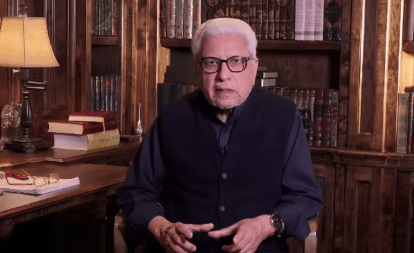
Category: Javed Ghamdi

  • Islamic Jurisprudence on Modesty, Alcohol, and Music by Allama Javed Ghamdi

    Islamic Jurisprudence on Modesty, Alcohol, and Music by Allama Javed Ghamdi

    The text is a religious discourse interpreting a Hadith (a saying of the Prophet Muhammad) concerning the prohibition of certain actions, such as drinking alcohol or wearing silk. The speaker argues against a literal interpretation, emphasizing the Hadith’s context and the need for considering societal changes when applying religious laws. He stresses that the Hadith addresses the misuse of these things, not their inherent prohibition, and advocates for a nuanced understanding guided by Islamic principles. The speaker provides examples of how modern interpretations can address issues mentioned in the Hadith. The overall goal is to explain how to reconcile traditional religious texts with modern challenges.

    Frequently Asked Questions about Interpreting Islamic Texts

    1. How should we approach the interpretation of Hadith (Prophetic traditions), especially those that seem to contradict common understandings?
    2. It is crucial not to take Hadith in isolation or at face value. Instead, we must interpret them within the broader context of the Quran and other established Islamic principles. This involves looking at the original Arabic, considering the historical context, and understanding the intended purpose. For instance, if a Hadith speaks of resolving issues related to private parts, it does not imply legitimizing previously forbidden acts, but rather addressing them within the bounds of Islamic law and ethics. The understanding of the audience, the customs of the time, and the broader Islamic legal framework must always be considered. The intent of the prophet was to address these issues in a way that guides people towards righteousness, not towards breaking the bounds of faith.
    3. The text discusses solving issues related to “shame” (private parts). What does this refer to, and what does it not mean?
    4. The text addresses the idea that some people will come and solve issues related to shame. This does not mean making acts of adultery permissible or creating new laws. Rather it points to the fact that there are rules and limits within Islamic law that are meant to protect and guide behavior, not abolish it entirely. The solution discussed refers to resolving issues within those bounds. For example, marriage is a legitimate way to address the “shame” associated with sexual desires while maintaining fidelity and chastity. It refers to issues that some may be experiencing in their personal lives, but that can be solved within the bounds of Islamic law.
    5. What is the proper way to understand Hadith about items like silk and gold?
    6. Hadith concerning clothing, such as silk and gold, must be understood in their historical and cultural context. In the Prophet’s time, these items were often associated with extravagance and pride. Therefore, a ban on men wearing them was to avoid this and promote humility. However, the text points out that these are now used as general items by many, including women, and their meaning in a modern context is different. The principles behind such prohibitions were to avoid takabbur (arrogance) and excessive indulgence. Therefore, the spirit of the law should be observed and the reasons for the rules should be kept in mind.
    7. How does this text explain the Hadith on solving issues of music and wine?

    The Hadith about resolving issues related to wine and music are not meant to encourage the use of those items, but to recognize the existence of issues that people have with these items. They need to be addressed by the community. The emphasis is on addressing these issues with wisdom and within the bounds of Islamic law. The focus is on avoiding the problems associated with them. Just as with other issues, a blanket ban on all forms of music or a rejection of any alcohol consumption in every context would be incorrect. Rather it is about understanding the problems surrounding these things in their historical and modern context and finding ways to address them in a responsible manner.

    1. What is the meaning behind the text’s repeated emphasis on understanding context when interpreting religious texts?
    2. The text emphasizes that understanding context is essential because it is easy to misinterpret religious texts if they are taken out of their historical, cultural, and linguistic contexts. Actions of the prophet should be understood within his specific situation. The goal should always be to understand the spirit behind the texts and not apply literal interpretations that may not be applicable across different times and cultures. The purpose is to guide behavior towards righteousness and not lead to new forms of sinful behavior.
    3. How does this text view the use of modern technologies and how should they be used, given their ability to spread good and bad?
    4. This text understands that modern technologies can be either beneficial or harmful depending on how they are used. They should be used with caution and an awareness of their ability to create good and bad in society. The emphasis is on maintaining a sense of responsibility and not ignoring religious principles, particularly when using things such as radio, television, or any medium that can spread ideas, morals, or values.
    5. The text mentions the need for discussion and debate. Why is this important in understanding religious issues?
    6. Discussion and debate are crucial for a deeper understanding of religious issues, because it allows different viewpoints to be expressed, considered, and contextualized. Through dialogue, it is possible to identify any misunderstandings and develop an informed interpretation that is aligned with the spirit and intent of the religious text. This is particularly important in addressing modern problems and issues where multiple solutions and approaches might be possible.
    7. What does the text mean by “solving” problems, and how does this approach differ from merely prohibiting things?
    8. The idea of “solving” problems within this context is not about changing or abolishing Islamic law. Rather, it refers to understanding the issues faced by the people within a community, and coming up with strategies that address these issues without going against fundamental religious principles. It is a practical, nuanced approach that recognizes human nature and needs, rather than a rigid, literal approach focused on prohibition. The goal is to uphold faith while providing guidance in how to live in the modern world.

    Analyzing Hadith: A Study Guide

    Quiz

    Instructions: Answer each question in 2-3 complete sentences.

    1. According to the text, what is the common, incorrect interpretation of the hadith about people solving issues of shame, wine, and music?
    2. How does the text argue that the concept of “solving” these issues should be understood in a more nuanced way than simply permitting them?
    3. What role does the concept of Hudood (limits set by God) play in understanding how these issues are to be approached?
    4. How does the text suggest that the use of things like silk or music should be understood in light of their social context and potential for Takambur (arrogance)?
    5. How does the text explain that the permissibility of certain actions can change based on circumstance and broader Islamic principles?
    6. According to the text, how should one address the misuse of something that has both permissible and impermissible applications?
    7. What example does the text provide to illustrate how an incorrect understanding of a Hadith can lead to extreme actions?
    8. How does the author frame the issue of women and silk clothing in relation to the hadith being discussed?
    9. In the context of the discussion, what is Mannu as it is defined in the text?
    10. What does the author mean when stating they do not want anything for those who do Sitabir?

    Answer Key

    1. The common, incorrect interpretation is that the hadith means that these things (shameful acts, wine, and music) are simply made permissible. It’s assumed that “solving” the issues means they are no longer forbidden.
    2. The text argues that “solving” issues should be understood within the context of Hudood, the limits set by God, and that these issues need to be addressed by finding solutions within the boundaries that already exist. It is not about simply permitting actions that were previously forbidden.
    3. Hudood provides the framework for how to understand the permissibility of things. The discussion needs to be within the limits established by Islamic law, even when a matter may seem to be “solved,” meaning finding ways of living that still respect God’s boundaries.
    4. The text indicates that if something like silk is used in a way that promotes arrogance (Takambur), then it becomes impermissible. The social context and the intent behind the usage are important considerations.
    5. The text explains that things can change based on the understanding of a situation and in light of broader Islamic principles. Something that may be permissible in one context or time, may be impermissible in another time or place, because the context matters.
    6. The text suggests that the correct use of weapons that have been used excessively for the wrong purposes should be addressed keeping the situation in mind. These weapons are used to combat an error.
    7. The text gives an example of a person misinterpreting the hadith regarding silk and telling their wife to burn all her silk clothes because it was forbidden. It illustrates how a simple reading of the Hadith can lead to drastic actions without understanding context.
    8. The author argues that the hadith should not be used to restrict women from wearing silk clothing in the present day, as the social context has changed. What is important is not the physical clothing item itself, but the potential for it to cause arrogance in individuals or society.
    9. In the context of the discussion, Mannu is defined as something that goes against a person’s personality, life, honor or property as well as rebelling without a lock. Mannu can be brought about through the speech of others or the status of one’s words.
    10. The author means they do not seek support or recognition for those whose actions in relation to the text, are wrong in their interpretation. That those who do wrong interpretations will not get any benefit from his analysis.

    Essay Questions

    Instructions: These are essay questions for further reflection. Choose one or more to develop into a longer essay.

    1. Analyze the text’s argument regarding the interpretation of hadith, focusing on its call for nuanced understanding and the importance of context. How does this approach challenge literalist interpretations?
    2. Explore the text’s discussion of Takambur (arrogance) and its relevance to material possessions and practices. How can this concept be used to evaluate contemporary social behaviors and choices?
    3. Discuss the text’s approach to the concept of Hudood (divine limits). How does it balance the need for boundaries with the need for flexibility and critical thought?
    4. How does the text use the specific examples of shame, wine, and music to illustrate the broader principles it is trying to convey about the understanding and application of hadith?
    5. Evaluate the text’s methodology for analyzing and understanding religious texts. How can its approach be applied to other religious or ethical questions?

    Glossary of Key Terms

    • Hadith: A record of the sayings and actions of the Prophet Muhammad, considered a crucial source of guidance in Islamic law and practice.
    • Ummah: The global community of Muslims, united by faith.
    • Asar: A narration from companions of the prophet Muhammad.
    • Fatwa: A legal opinion or ruling issued by a qualified religious scholar on a point of Islamic law.
    • Bukhari: A collection of hadith compiled by Imam Bukhari, and is considered by Sunni Muslims to be the most authentic collection of hadith.
    • Quran: The holy book of Islam, believed by Muslims to be the word of God as revealed to Prophet Muhammad.
    • Majeed: A term often used to refer to the Quran with reverence.
    • Hudood: The limits or boundaries set by God in Islamic law, defining what is permissible and forbidden.
    • Takambur: Arrogance or haughtiness; a negative character trait in Islam that can lead to sins and bad behavior.
    • Mutrafin: Those who live luxurious lifestyles.
    • Shohat: A reference to things that are considered to be the dress of urine.
    • Sitabir: One who does or makes the use of something incorrectly.
    • Mannu: Rebelling without a lock and goes against a person’s personality, life, honor or property. Can come about from someone’s speech or status.

    Detailed Table of Contents: Analysis

    I. Introduction: Understanding the Core Arguments

    • A. Addressing Misinterpretations of Tradition: The text opens by emphasizing the importance of proper interpretation of religious traditions (specifically, a hadith from Bukhari). It warns against simplistic readings that lead to flawed conclusions.
    • B. The Core Argument: This text aims to provide a nuanced understanding of religious principles related to sensitive topics (sexual conduct, adornment, music). The goal is to interpret these topics in a way that avoids broad prohibitions and instead applies nuanced, contextual solutions.

    II. Analysis of Specific Issues & Their Solutions

    • A. The Issue of ‘Sharmgahs’ (Private Parts):This section discusses a hadith that mentions people will solve the issues of shame, addressing the notion that it means that sexual relations are always forbidden. The author posits that the hadith does not mean that sexual relations themselves are inherently bad.
    • The author contends that the hadith actually refers to addressing situations of sexual shame or misconduct through proper religious guidelines, specifically looking at the Quran and Hadith to develop and apply these rules in a contextual way.
    • The author claims the hadith is not speaking about marriages or sexual relations with wives (which are permissible), rather, it speaks to solving issues with “private parts” in a way that respects religious boundaries by addressing harmful actions.
    • B. The Issue of Silk and Adornment:The text addresses the use of silk (historically considered a luxurious garment), and the hadith that discusses the prohibition of silk for men. The author challenges a simplistic understanding of this rule, arguing that it was not intended as an absolute, never-changing ban.
    • The author argues that the prohibition during the Prophet’s time was tied to the social context where silk was a symbol of arrogance. They suggest it isn’t the material itself, but the way it is used and what it symbolizes in a given society that matters and is therefore relative.
    • The author claims that this type of approach means that the ban on silk is relative to changing cultural contexts and societal symbols, and should not be a basis for blanket rules.
    • C. The Issue of “Wine” and Music:The text addresses the hadith’s pronouncements about music and alcohol, again challenging interpretations that consider them inherently forbidden.
    • The author discusses how the hadith was speaking about correcting situations and contexts where music and alcohol were used to incite harmful behaviors, not that they are inherently forbidden.
    • The author discusses how the “essence of the day” (ie. religious law) must be followed and that those interpretations are found in the Quran, which allows for their moderate use, but warns against their abuse.
    • The author concludes that the hadith is speaking to using music and similar forms of entertainment responsibly, in accordance with religious principles and proper understanding of context.

    III. The Methodology for Understanding Tradition

    • A. Contextual Reading: The author strongly advocates for understanding the historical and social context of religious texts, avoiding literal interpretations that could lead to misapplication of religious principles.
    • B. Holistic Interpretation: The importance of considering the Quran and other hadiths and religious texts in their broader context is stressed, moving beyond the isolated reading of one text alone, which the author sees as insufficient.
    • C. Intention and Effects: The author emphasizes looking at the intention behind religious rules and their potential effects in society. The intention of these rules is to uphold morality and justice and it must be understood that those intentions cannot be undermined by applying rules broadly and without contextual consideration.

    IV. Applying Principles in Modern Contexts

    • A. Addressing Misuse and Excess: The author notes that while the text calls for careful use of seemingly prohibited things, it is also meant to guide Muslims away from misuse and excess. It is not calling for an abolition of all rules.
    • B. The Need for Discernment: This section calls for the use of religious interpretation as a method of discernment when deciding what actions and behaviors are consistent with religious principles.
    • C. The Importance of ‘Manners’ (Adab): The text concludes by re-emphasizing the importance of maintaining proper religious and cultural conduct as essential to these religious guidelines.

    V. Conclusion: The Ongoing Application of Islamic Principles

    • A. The Importance of Interpretation: The text underscores the importance of the process of religious interpretation and the careful application of rules.
    • B. The Dynamism of Islamic Law: The author posits that Islamic principles are meant to be applied flexibly and responsibly as societies change, rather than imposing strict, unyielding legalism.
    • C. Continuing Discussion: The author concludes by emphasizing how these interpretations are a basis for on-going discussions, meant to engage with real-world challenges.

    Okay, here is a briefing document analyzing the provided text:

    Briefing Document: Analysis of “Pasted Text”

    Date: October 26, 2023

    Subject: In-depth review of a discourse on Islamic tradition, interpretation, and contemporary issues.

    Introduction:

    This document provides an in-depth analysis of a complex discourse concerning Islamic traditions (“hadith”), particularly focusing on interpretations related to issues such as modesty, the permissibility of certain arts and practices (like music and silk), and the broader application of religious texts in modern contexts. The speaker emphasizes the importance of contextual understanding and the dangers of literal interpretations of religious texts.

    Key Themes and Ideas:

    1. The Importance of Contextual Interpretation:
    • The speaker consistently argues against literal, surface-level readings of hadith. He stresses the need to understand the context in which a tradition was narrated and its purpose within the broader Islamic framework.
    • He emphasizes the need to consult other sources, especially the Quran, before deriving a ruling (“fatwa”). “So this means that as soon as we read the words, the first thing we have to see is this. Will have to review and see if it is done in Majid.”
    • He critiques those who “as soon as he reads this, will it be justified for him to start using it, and say that mummy is done, now closeness with the private parts cannot be adopted under any circumstances”.
    • He uses the example of the “private parts” to say that one cannot ban all intimacy simply because the tradition mentioned resolving shame around the topic.
    1. Reinterpreting a Specific Hadith:
    • A central point of discussion revolves around a hadith which mentions that, within the Islamic community, some people will “solve the problems of shame, wine, and music.”
    • The speaker argues that this doesn’t mean all forms of these things will be universally “resolved” (i.e., made permissible). Instead, he states it means that, they would provide guidance for issues, not change the fundamentals.
    • He cautions against automatically interpreting “solving” as meaning that things are made completely permissible by highlighting, “You will express this relation with the woman, you will do something for her, you will tell the master that from today I am keeping this woman under my sight to reduce this relation and the woman will announce that she is taking the man under her sight When you declare this, then a life long happiness will be earned. Now if you are ashamed, there is a solution for you. This is exactly the reason.”
    1. Modesty and Sexual Ethics:
    • The speaker addresses the concept of shame (“sharamgah”) in the context of sexual ethics and intimate relationships.
    • He emphasizes that Islam provides guidelines for appropriate behavior, not an outright prohibition of all forms of intimacy.
    • He makes reference to Islamic principles that provide solutions to relationship issues and shame. “Now if you are ashamed, there is a solution for you.”
    1. The Status of Silk and Fashion:
    • The speaker delves into the issue of silk wearing, traditionally prohibited for men in some Islamic interpretations.
    • He argues that the prohibition should be viewed within the historical context when it was seen as a sign of extravagance and arrogance.
    • He notes that because “many other things have come in its place, whose status in the world is the same”, that rules should be re-evaluated with consideration of the time.
    • He asserts that the intention is not to impose an absolute prohibition on men wearing silk, but to ensure that clothing choices are not contributing to arrogance and societal inequality.
    1. Music, Entertainment, and Moral Guidance:
    • The speaker discusses music and entertainment (“what happens in night clubs here, what happens in films here, what about the arrangements that have been made here at present”), emphasizing the importance of avoiding elements that are sexually suggestive and promote base desires.
    • He emphasizes that the solution was “not the sentence that due to their release, many things are created in the hearts and minds of people, is n’t it a statement that as a result of this, the thought of Jinsitar is created in the people, you and I know all these usages,”.
    • He highlights that when “we will see them in the hall as well, we will see them in the library as well and will get them attention, it means that we will solve it in the situation as well” there is a need for critical evaluation and a measured response.
    1. The Purpose of Religious Texts:
    • The speaker argues that the purpose of religious texts is to guide individuals towards ethical conduct and a proper relationship with God (“Allah Taala”).
    • He cautions against weaponizing the text, noting “These types of weapons are used when you feel that the excessive use of something is wrong or people are making mistakes in that matter.”
    • He asserts they are not merely a set of rules to be followed literally without understanding the underlying moral and spiritual principles. He notes, “the main intention is that we will solve it even in those situations when he will be in a state of near remembrance because he will be in a state of trust when the doubt itself will be blocked from his mind when he Virat must have been given a rock by the issue, we will solve it in time too.”
    1. “Haram” and Contextual Usage:
    • The speaker notes that “apart from the prohibitions of Khuron, He has only Five things They are haram i.e. promiscuous talkies against life and property and honour, farewell to caste and lion”.
    • He highlights that not everything is “haram”, and it’s the context and use that matters.
    • He emphasizes that some things that have been deemed “haram” have been misinterpreted. “shame has gone is not an aslam matter, shame has gone aslam is not haram, rather Allah Taala has prescribed some rules after which it is resolved”.
    1. The Role of the Prophet and Scholars:
    • The speaker references the Prophet Muhammad’s (Sallallahu Alaihi Wasallam) actions and statements as the basis of Islamic practice, but also underscores that the scholars and followers also need to apply critical thinking, to “move ahead immediately… if this soul was used by SM in this way, then here a complaint has been made from the negative side that it would be misused.”

    Quotes of Significance:

    • “in my Ummah, some such people will definitely be born who are modest and can solve the problems of surah, wine and music.” (This is the hadith being interpreted)
    • “So this means that as soon as we read the words, the first thing we have to see is this. Will have to review and see if it is done in Majid.”
    • “Now if you are ashamed, there is a solution for you. This is exactly the reason.”
    • “the private part is never forbidden in the day of God, the car that has been given is not always solved and will remain solved, this thing has to be known first”
    • “These types of weapons are used when you feel that the excessive use of something is wrong or people are making mistakes in that matter.”
    • “the main intention is that we will solve it even in those situations when he will be in a state of near remembrance because he will be in a state of trust when the doubt itself will be blocked from his mind when he Virat must have been given a rock by the issue, we will solve it in time too.”

    Conclusion:

    This discourse offers a sophisticated analysis of Islamic tradition, advocating for nuanced and contextually-aware interpretations. The speaker cautions against a simplistic, legalistic understanding of religious texts, instead urging a focus on their ethical and moral purposes. This perspective is particularly relevant to contemporary discussions on Islam and its application in diverse cultural contexts. The speaker emphasizes that traditions around modesty, music, and fashion should be understood as guidelines to prevent abuse and arrogance, not as outright prohibitions.

    Allama Javed Ghamdi interprets Islamic modesty by focusing on the underlying principles and intentions behind the rules, rather than just the literal interpretations of religious texts [1, 2]. He emphasizes understanding the context and purpose of religious guidelines [2, 3].

    Here’s a breakdown of his approach based on the provided sources:

    • Modesty as a Solution, Not Just a Restriction: Ghamdi views modesty (sharmgah) not just as a set of restrictions but as a solution to potential problems [2]. He suggests that Islamic teachings provide ways to address issues of shame and sexual relations in a responsible manner [2].
    • Contextual Understanding of Texts: Ghamdi argues against a simplistic reading of religious texts. He states that one must consider the broader context, principles, and the intent of Allah when interpreting religious texts [1, 2]. For example, when interpreting a hadith about resolving issues of “shame,” he does not believe it means that anything related to private parts should become permissible [1, 4]. Instead, he states that it refers to resolving issues of shame in a way that Allah has prescribed [1, 4].
    • Focus on the Spirit of the Law: He believes that the core intention behind Islamic rulings should be given importance [3]. He references the idea that some things, such as silk clothing for men, were considered inappropriate due to their association with extravagance and arrogance during the Prophet’s time [3, 5]. These rules were not meant to be permanent or absolute but to address specific societal issues [3].
    • Application of Principles in Modern Times: Ghamdi suggests that the principles of modesty should be applied with an understanding of current social norms and contexts [3, 6]. For example, he explains that while silk clothing for men was not permissible in the past, it is not necessarily so in the present [3, 5]. The underlying principle is to avoid things that promote arrogance or are inappropriate given the context of the society [3].
    • Addressing Misinterpretations: Ghamdi addresses potential misinterpretations of hadith [1]. He emphasizes that understanding the ‘day’ (deen) requires a deeper analysis beyond the literal wording of texts [2]. He uses the example of silk and says people should not go home and burn all their silk because the prophet forbade it; rather one should understand that it was forbidden in the context of the time for specific reasons [5, 7].
    • Modesty in Different Aspects of Life: He states that modesty is not limited to sexual matters; it also applies to clothing, speech, behavior and social interactions [3, 6]. He says that modesty is the foundation of morality [8].
    • Solutions and Discussion: Ghamdi argues that Islamic teachings encourage open discussion and finding solutions to problems, rather than simply imposing rigid restrictions [1, 9]. He states that people will solve issues through discussions [9]. He uses the example of wine, and states that while alcohol has been forbidden, a literal reading would suggest that the blessings of Allah are only accepted when offering namaz [3, 9]. Instead, we know that alcohol is not allowed and that is the meaning that we must follow [9].

    In summary, Allama Javed Ghamdi’s interpretation of Islamic modesty emphasizes understanding the purpose, context, and underlying principles of religious teachings, rather than a purely literal adherence to the texts [1-3]. He encourages a flexible application of these principles in contemporary life [3, 6].

    Ghamdi’s perspective on alcohol consumption, as described in the sources, is nuanced and contextual. Here’s a breakdown:

    • Not inherently forbidden: The sources suggest that the mere mention of alcohol in religious texts does not automatically mean it is forbidden [1]. There is a recognition that the context and purpose behind such mentions need to be understood [1].
    • Context matters: The sources argue that if a religious text mentions alcohol, it’s important to consider the broader context and intent, rather than taking a literal, isolated interpretation [1].
    • Beyond literal interpretation: When the text mentions resolving the issues related to wine, it does not mean that weapons will be forbidden [2].
    • Issue of Normality: If the normality of liquor was reduced, it is considered wrong in every situation [3].
    • Intention is key: It is stated that the intention is not to state the law of honor or courage, but to make people aware of the situation [1]. The focus is on how these things are being used and whether the purpose is aligned with religious principles [1, 4].
    • Modern context: Ghamdi’s view acknowledges that the meaning of things changes over time. What was relevant during the time of the Prophet may not be the same now [1]. He looks at how alcohol is being used now, including in night clubs and films, and considers its impact on society [3].
    • Addressing the “mischief”: The mention of alcohol is made in the context of addressing the “mischief” that may arise from its use [1]. The focus is on preventing these negative consequences.
    • No blanket prohibition: The sources indicate that simply because alcohol is mentioned in a religious text does not mean that it is completely forbidden [1].
    • The intent of a message: A person should not go by the words in the scripture, but rather should see the purpose, reason and methods of use [1].
    • Focus on solutions: The sources suggest a focus on finding solutions to problems, including those related to alcohol consumption, rather than focusing on rigid rules [2, 3].
    • Guidance through discussion: Issues related to alcohol use are intended to be solved through discussions, and not through strict prohibition [3].

    In summary, Ghamdi does not appear to take a simplistic approach to the issue of alcohol consumption, but instead focuses on understanding the context, intent, and practical implications. The emphasis seems to be on a thoughtful approach that considers societal impact and the use of alcohol in modern situations, rather than a rigid, literal interpretation of religious texts.

    The sources discuss the permissibility of music within an Islamic framework, particularly in relation to a hadith that mentions people who will solve the issues of shame, wine, and music [1]. The discussion revolves around how to interpret such religious texts in the context of modern society [1, 2].

    Here’s a breakdown of how the sources suggest Ghamdi reconciles Islamic views on music with modern society:

    • Contextual Interpretation: The sources emphasize that interpreting religious texts requires understanding the context in which they were revealed, rather than taking the words at face value [1, 2]. For example, when the hadith speaks of solving issues related to shame, it doesn’t mean that all forms of intimacy become permissible [3]. It refers to resolving issues within the bounds of what is already permitted by God, such as the relationship between husband and wife [2, 3].
    • Focus on Intent: The intention behind actions is important. The sources suggest that the focus should not be on the mere act of listening to music, but also on the impact it has on the individual and the society. If music leads to immoral behavior or promotes harmful values, then it is not acceptable [4-6]. However, if music does not lead to these negative outcomes, it may be permissible [6].
    • Addressing Modern Issues: The sources recognize that many modern forms of entertainment like movies and music can lead to negative consequences if not used responsibly [4-6]. Instead of simply deeming them as forbidden, the sources suggest that the focus should be on addressing the harmful ways in which these things are used [5, 6].
    • Avoiding Extremism: The sources warn against misinterpreting religious texts to justify extremes. For instance, it would be wrong to conclude that all silk clothing is forbidden for women or that all music is prohibited simply based on one hadith [7]. The sources emphasize the need to consider the overall spirit of Islamic teachings [7, 8].
    • Emphasis on Ethical Conduct: The sources say the real focus should be on ethical conduct, maintaining decency, and avoiding arrogance. Actions such as wearing silk or listening to music are acceptable as long as they don’t lead to negative character traits such as pride, vanity, and immodesty [4, 7]. If those actions contribute to a corruption of values or behavior, then they are not acceptable [4, 5, 7].

    In summary, the sources suggest that Ghamdi’s approach involves interpreting religious texts with an understanding of their context, focusing on the intent and ethical impact, addressing the actual problems caused by certain modern practices, and promoting ethical conduct in accordance with the spirit of Islam [1-8]. It’s about understanding that the goal is not to create a list of forbidden things, but to create a society where everyone behaves responsibly within the boundaries set by God [5, 6].

    The sources discuss several issues considered “haram” (forbidden) in Islam, and how these issues are understood and addressed in a modern context. Here’s a breakdown:

    • Shame (private parts):
    • The sources discuss a hadith about people who will solve the problems of shame, wine, and music [1]. This doesn’t mean that everything related to the private parts becomes permissible [1, 2].
    • Rather, the hadith refers to resolving issues within the bounds of what is already permitted by God [3]. For example, it allows for intimacy within a marriage [2].
    • The sources emphasize that the focus is on addressing the misuse or misunderstanding of these matters rather than imposing blanket prohibitions [2, 3].
    • The sources highlight that the private parts are not always forbidden in the day of God [4].
    • Silk and Gold:
    • The sources discuss how some have misinterpreted religious texts to forbid silk and gold for men [4].
    • The sources say that during the time of the Prophet, wearing silk and gold was considered a sign of arrogance and luxury [5].
    • However, the sources argue against a literal interpretation, suggesting that the focus should be on the underlying principles and intentions [5, 6].
    • It is important to consider whether the wearing of silk is for pride or arrogance, and not just whether silk is worn or not [5].
    • If these things cause corruption of values or behavior, they are not acceptable [5].
    • The sources suggest that the focus should be on ethical conduct, maintaining decency, and avoiding arrogance [5].
    • Alcohol (wine):
    • The sources indicate that the mere mention of alcohol in religious texts does not automatically make it forbidden [6].
    • The context and purpose behind such mentions need to be understood [6].
    • The sources say that the focus should be on how these things are being used, and the problems that arise because of them [7].
    • If the normality of liquor was reduced, it is considered wrong in every situation [7].
    • The intention is not to state a law of honor or courage, but to make people aware of the situation. The focus is on how these things are being used and whether the purpose is aligned with religious principles [7].
    • Music:
    • The sources say that music, like the other issues, can be a source of harm if used incorrectly, and the focus should be on addressing the harmful ways in which music is used [8].
    • The sources say that instead of deeming music forbidden, the focus should be on its impact on the individual and society [8].
    • The sources say that if music leads to immoral behavior or promotes harmful values, then it is not acceptable, but if music does not lead to these negative outcomes, it may be permissible [8].
    • Other Prohibitions:
    • The sources mention that some actions are explicitly forbidden, such as “promiscuous talkies” and acts against life, property, and honor [8].
    • The sources also note that rebellion without a lock and casteism are wrong [4, 8].
    • The sources emphasize that it is not simply about listing prohibitions but also ensuring ethical conduct, and maintaining decency and humility [8, 9].
    • General Principles:
    • Contextual Interpretation: Religious texts should be understood in the context they were revealed, not literally [3, 9].
    • Intention: The intention behind an action is more important than the act itself [3, 5].
    • Ethical Conduct: The emphasis is on ethical conduct, maintaining decency, and avoiding arrogance [5, 8].
    • Addressing Harm: The focus is on identifying and addressing the “mischief” caused by certain practices [6].
    • Solutions over rigid rules: The sources show a preference for finding solutions through discussion and understanding rather than imposing rigid rules [1, 7].
    • Modern Relevance: The sources show an awareness of how cultural practices and technology may change and impact the understanding of what is considered haram [6, 10].

    In summary, the sources show that Ghamdi’s approach to “haram” issues involves a focus on understanding the intent and context of religious texts, addressing the harm caused by certain practices, promoting ethical behavior and emphasizing solutions and discussions rather than simply adhering to a list of prohibitions.

    The sources discuss Islamic traditions, particularly focusing on how they should be interpreted and applied in modern contexts, rather than providing a comprehensive overview of all traditions [1-10]. Here’s a breakdown of key points regarding the discussion of Islamic traditions in the sources:

    • Contextual Interpretation is Key: The sources emphasize that Islamic traditions, such as Hadiths, must be understood within their specific historical and cultural contexts [1, 2, 4-8]. Literal interpretations without considering the context can lead to misinterpretations and incorrect conclusions [1-3, 5, 6].
    • Focus on Intent and Ethical Impact: The sources suggest that the intention behind actions is crucial [2, 4, 6, 8, 10]. The ethical impact of a practice, rather than the action itself, should be the focus [5-7]. For instance, wearing silk might be permissible if it doesn’t lead to arrogance or immodesty, while listening to music might be permissible if it does not promote immoral behavior or harmful values [4-6, 8, 10].
    • Addressing “Mischief”: The sources talk about focusing on the “mischief” that may arise from the use of certain things [2, 3, 6]. This means that the focus should be on identifying and addressing the harmful consequences of certain practices rather than simply deeming them forbidden [2, 3, 6, 7].
    • Emphasis on Solutions Over Rigid Rules: The sources seem to favor solutions through discussion and understanding rather than imposing rigid rules [1-3, 6, 7, 9]. The goal is to resolve issues of misunderstanding or misuse [1-3, 6, 7]. For example, issues related to shame, wine, and music should be addressed in a way that allows for responsible behavior within the bounds of Islamic teachings [1-3, 6, 7].
    • Avoiding Extremism: The sources warn against misinterpreting traditions to justify extreme or narrow views [1-3, 5-8]. For example, it’s wrong to conclude that all silk is forbidden for women or all music is prohibited simply based on a literal interpretation of one hadith [1-3, 5-8].
    • Modern Relevance: The sources show an awareness of how cultural practices and technology may change and impact the understanding of Islamic traditions [6-10]. For example, modern forms of entertainment like movies and music should be addressed in terms of their impact, and not merely be deemed as forbidden [6-8].
    • Examples of Interpreted Traditions: The sources provide examples of how Islamic traditions related to shame, silk, wine, and music should be understood [1-8]. The tradition stating that some will solve the problems of shame, wine, and music, doesn’t mean these things are permissible without boundaries [1-3, 6, 7]. It means that Muslims should seek solutions within the bounds of Islamic teachings, and in a way that promotes ethical conduct [1-3, 6, 7].
    • Traditions about clothing, conduct and speech: The sources discuss traditions related to clothing and modesty, such as the use of silk and gold, in order to highlight the importance of humility and not arrogance [3-6, 8]. These traditions must be understood in their proper context, and not misused to create rigid rules [4-6, 8].
    • The sources also emphasize that the way one speaks and behaves is part of ethical conduct, and not just the rituals and acts of worship [4, 6-8].
    • Application of Traditions in Daily Life: The traditions should not just be about ritual observance, but should inform the way people behave with each other, and the values they embrace [3-6, 8]. The goal is to promote a society that is ethical, just, and moral [3-6, 8].

    In summary, the sources present a view of Islamic traditions that prioritizes contextual understanding, ethical behavior, and addressing harm over rigid adherence to rules or literal interpretations [1-10]. The approach is intended to make Islamic traditions relevant in modern society, by promoting responsible behavior, and by addressing the actual problems that people face in the world today [1-10].

    The sources discuss religious interpretations, particularly within an Islamic context, focusing on how to understand and apply religious texts and traditions in a way that is relevant and ethical in modern times. Here’s a breakdown of the key aspects of religious interpretation, as discussed in the sources:

    • Contextual Interpretation: The sources emphasize that religious texts must be understood within their specific historical, cultural, and social contexts [1-3]. This means that a literal reading of the text is insufficient and can lead to misinterpretations [2]. For instance, when the sources discuss the hadith about people who will solve the issues of shame, wine, and music, they highlight that it does not mean that everything related to those topics becomes permissible without boundaries [1]. Instead, the hadith must be interpreted within the context of Islamic teachings and ethical principles [2].
    • Focus on Intent and Ethical Impact: The intention behind an action and its ethical impact are considered more important than the action itself [2, 3]. For example, the sources explain that wearing silk or listening to music can be acceptable if it does not lead to arrogance or immoral behavior [4, 5]. The focus should be on maintaining decency and avoiding arrogance [5].
    • Addressing “Mischief”: The sources emphasize identifying and addressing the “mischief” or harm caused by certain practices or behaviors [1, 2]. Rather than simply deeming something forbidden, the focus should be on addressing the negative consequences it might produce [6, 7]. For instance, the sources discuss how modern forms of entertainment like movies and music can lead to negative consequences if not used responsibly [6, 8].
    • Solutions Over Rigid Rules: The sources indicate a preference for finding solutions through discussion and understanding, rather than imposing rigid rules [1, 7]. The goal is to resolve issues of misunderstanding or misuse [1, 2]. For example, the sources say that issues related to shame, wine, and music should be addressed in a way that allows for responsible behavior within the bounds of Islamic teachings, and that does not simply create a list of things that are forbidden [1, 7].
    • Avoiding Extremism: The sources warn against misinterpreting religious texts and traditions to justify extreme or narrow views [2, 3, 5]. It is not appropriate to conclude that all silk is forbidden for women, or all music is prohibited based solely on a literal interpretation of one hadith [2, 3, 5]. Such interpretations can lead to the neglect of the true spirit of Islam, and may even make the religion seem out of touch with modern society [5, 8].
    • Modern Relevance: The sources demonstrate an awareness of how cultural practices and technology can change and impact the understanding of religious interpretations [3, 5]. Therefore, modern forms of entertainment, like music, should be addressed in terms of their impact on ethical behavior and morality [5, 6, 8].
    • Application to Daily Life: Religious interpretations are not meant to be confined to ritual observance [4]. They should also inform the way people behave with each other and the values they embrace [5]. The goal is to promote a society that is ethical, just, and moral [5]. The sources also note that speech, conduct and personal appearance are all part of ethical conduct [4-6].
    • Examples of Interpreted Issues: The sources offer specific examples of how Islamic texts should be interpreted, including discussions on:
    • Shame (private parts): The hadith about solving the problems of shame doesn’t mean that all forms of intimacy are permitted, but that issues related to private matters should be resolved within the bounds of what is permitted by God [2, 3].
    • Silk and Gold: The prohibition against men wearing silk and gold should be understood in the context of avoiding arrogance and luxury, rather than a literal prohibition on wearing these items [4, 5].
    • Alcohol (wine): The mere mention of alcohol in religious texts does not automatically make it forbidden, and the focus should be on the context and intent of its use [6, 7].
    • Music: Music, like other issues, can be harmful if used incorrectly, but that the focus should be on addressing the harmful ways in which music is used rather than forbidding music in general [6-8].

    In summary, the sources present a view of religious interpretation that emphasizes contextual understanding, the intent behind actions, the ethical impact of actions, addressing the harm caused by certain practices, and promoting discussion and solutions over rigid adherence to rules. The approach aims to make religious texts and traditions relevant to modern society by promoting responsible behavior and addressing actual problems that people face in the world today.

    The sources discuss social problems, particularly within the context of Islamic teachings, by focusing on how certain behaviors and practices can lead to “mischief” and how these problems should be addressed [1, 2]. The sources do not explicitly define social problems, but they discuss issues that contribute to problems in society and how to resolve them. Here’s a breakdown of the key points:

    • Misinterpretation of Religious Texts: One of the primary sources of social problems, according to the sources, is the misinterpretation of religious texts and traditions [1, 2]. When religious texts are interpreted literally, without considering the historical, cultural, and social context, it can lead to the creation of rigid rules that do not address the actual issues. For example, the sources state that if one reads a Hadith and concludes that silk is forbidden for women, or that all music is forbidden, without considering the intent and context, then that can cause social problems [3, 4].
    • Focus on “Mischief”: The sources emphasize the importance of identifying and addressing the “mischief” (harm) caused by certain practices or behaviors [1, 2]. This means focusing on the negative consequences that may arise from certain actions rather than simply deeming them forbidden. The sources mention that problems related to shame, wine, and music should be resolved by addressing their potential for misuse and not by making rigid rules about them [1, 2].
    • Arrogance and Immodesty: The sources note that certain behaviors and practices, such as wearing silk or gold, can contribute to social problems if they lead to arrogance, immodesty, or extravagance [3-5]. The sources highlight the importance of humility and modesty in all aspects of life, including dress, speech, and conduct. The traditions about clothing and modesty are not meant to be a set of rigid rules, but should be understood in the context of avoiding arrogance and luxury [3].
    • Misuse of Entertainment: The sources identify the misuse of entertainment, such as music and movies, as a social problem if they are used in ways that promote immoral behavior or harmful values [4, 6, 7]. According to the sources, rather than deeming all music as forbidden, they discuss addressing the harmful aspects of music, like when it is used to encourage lustful behavior [4, 7].
    • Lack of Understanding: The sources also highlight that social problems arise when people lack a proper understanding of religious texts and traditions. This can lead to misinterpretations, extremism, and narrow views [1, 2]. The sources suggest that education and open discussion are crucial in addressing these problems. The sources argue that traditions should be understood and conveyed to people in a way that is sensible [8].
    • Importance of Discussion and Solutions: The sources emphasize resolving social problems through discussions, understanding, and finding solutions, rather than simply imposing rigid rules [1, 2, 6]. The goal is to address the root causes of problems and find ways to promote responsible behavior within the bounds of religious teachings [1, 2, 6].
    • Ethical Conduct: According to the sources, ethical conduct is an essential component of a healthy society [2, 5, 9]. This includes the way people speak, behave, and present themselves. The sources emphasize that religious teachings should guide not just ritual observances, but the way people live their daily lives, in a way that is just and moral [5, 9].

    In summary, the sources highlight that social problems can arise from misinterpretations of religious texts, the misuse of certain practices, lack of understanding, and a failure to prioritize ethical conduct. The approach emphasized in the sources is to address these problems by focusing on the context of religious texts, by identifying and addressing the harm caused by certain practices, by promoting discussion, and by finding solutions that encourage responsible behavior within the bounds of religious teachings.

    The sources suggest several approaches to moral solutions, emphasizing understanding, ethical behavior, and addressing the root causes of problems rather than simply imposing rigid rules [1, 2]. Here’s a breakdown of the key moral solutions discussed:

    • Contextual Understanding of Religious Texts: The sources emphasize that a key moral solution is to understand religious texts within their proper historical, cultural, and social context [1, 3]. This means avoiding literal interpretations that do not address the actual issues at hand. For example, the sources discuss how a hadith about people who will solve the issues of shame, wine, and music should not be taken to mean that all related things are permissible, but instead be understood within the broader context of ethical behavior [3].
    • Focus on Intent and Ethical Impact: A major moral solution is to prioritize the intent behind actions and their ethical impact [1, 4]. The sources suggest that actions should not be judged solely by their outward appearance but by whether they promote or undermine ethical principles [1]. For example, wearing silk or listening to music can be acceptable if it does not lead to arrogance or immoral behavior [4]. The focus should be on maintaining decency, avoiding arrogance, and ensuring ethical conduct in all aspects of life [2, 4].
    • Addressing “Mischief”: Rather than simply forbidding things, the sources emphasize the need to identify and address the “mischief” or harm caused by certain practices or behaviors [1, 2]. This involves a careful examination of the negative consequences that may arise from certain actions and finding solutions to mitigate these harms [1, 3]. For example, the sources suggest that issues related to shame, wine, and music should be addressed by discussing and resolving their potential for misuse and not by setting rigid rules about them [1, 5].
    • Promoting Discussion and Solutions: The sources advocate for resolving issues through discussions, understanding, and finding solutions rather than simply imposing rigid rules [1, 6]. This approach encourages open dialogue and aims to address the root causes of problems [1]. The sources highlight the importance of engaging with different perspectives and interpretations to arrive at solutions that are both ethical and practical [6].
    • Education and Awareness: A key moral solution lies in educating individuals about the proper interpretations of religious texts and traditions [1, 4]. This includes fostering awareness of the ethical principles that should guide behavior. By promoting an understanding of the deeper meaning of religious teachings, individuals can make informed decisions that contribute to the well-being of society [4].
    • Ethical Conduct in Daily Life: Moral solutions must extend to all aspects of daily life, including how people speak, behave, and present themselves [2, 7]. The sources suggest that ethical conduct is essential for a healthy society [2]. Therefore, religious teachings should guide not only rituals, but also personal behavior, social interactions, and the values people embrace [2]. The sources indicate that the goal is to promote a society that is ethical, just, and moral, with an emphasis on humility, modesty and respect [2, 4].
    • Balancing Individual Freedom and Social Responsibility: The sources suggest a balance between individual freedom and social responsibility [8]. While personal choices are important, they should not come at the expense of the community or violate religious principles [8]. The sources emphasize that freedom should be exercised within the boundaries of ethical conduct and in a manner that is beneficial to all. They suggest that when considering what is permitted, it should also be considered whether it harms society [6, 8].
    • Avoiding Extremism and Narrow Views: The sources warn against misinterpreting religious texts to justify extreme or narrow views, highlighting that such interpretations can lead to the neglect of the true spirit of Islam [4]. Therefore, a key moral solution involves promoting a balanced understanding of religious texts and traditions, which avoids rigidity and incorporates a range of viewpoints, and that considers the consequences of decisions, promoting a harmonious and compassionate society [4].

    In summary, the moral solutions suggested by the sources emphasize understanding, ethical behavior, addressing harm, promoting discussion, and education. They aim to create a society that is based on justice, compassion, and moral principles [1, 2].

    Summary: The passage discusses a religious tradition (hadith) that mentions people who will “solve” issues related to shame, wine, and music. The speaker argues that this doesn’t mean these things will be made universally permissible. Instead, they suggest it refers to finding solutions within the bounds of Islamic law, focusing on proper understanding rather than a literal interpretation that could lead to misinterpretations about the rules around modesty, intimacy, and what is considered forbidden.

    Explanation: This passage is a complex discussion about how to interpret religious texts, particularly a hadith (a saying or tradition of the Prophet Muhammad). The speaker is concerned that some people may misinterpret the hadith, which speaks of people who will “solve” or resolve certain issues, particularly concerning shame (specifically related to private parts), as meaning these things will become universally permissible, or “halal.” The speaker rejects this literal interpretation, using the example of a car, which was gifted (the car as a metaphor for the body), that doesn’t then make it permissible to misuse it. Rather, the speaker explains that the hadith needs to be understood in the context of established Islamic law and the Quran. They argue that the “solutions” mentioned are about how to manage these issues in a way that aligns with Islamic principles. They cite examples of how even though intimacy is permitted, it must be done within the boundaries set by God. Therefore, “solving” issues around shame doesn’t mean getting rid of all restrictions, but finding legitimate ways to navigate those restrictions within the religious framework. This is similar to their understanding of divorce, where the act of divorce itself was a last resort and must be done within the parameters of the law. Essentially, the speaker is warning against taking a single hadith out of context and advocating for a careful and reasoned understanding of religious texts based on established principles.

    Key terms:

    • Hadith: A collection of traditions containing sayings of the prophet Muhammad that, with accounts of his daily practice (the Sunna), constitute the major source of guidance for Muslims apart from the Quran.
    • Ummah: The whole community of Muslims bound together by ties of religion.
    • Haram: Forbidden or unlawful in Islam.
    • Halal: Permissible or lawful in Islam.
    • Fatwa: A formal ruling or interpretation on a point of Islamic law given by a qualified legal scholar.

    Summary: This passage discusses Islamic teachings related to modesty, marital relations, and the interpretation of religious texts. It argues against overly strict interpretations that might lead to unnecessary prohibitions and emphasizes that the core of Islamic law is about justice, reason, and the protection of individual rights.

    Explanation: The passage is a complex discussion about various aspects of Islamic jurisprudence, particularly focusing on issues of modesty, marriage, and interpreting religious texts. It begins by asserting that there’s no need for overly restrictive interpretations of Islamic rules, especially regarding marital relations and private matters, suggesting that such overzealousness may be rooted in caste-like thinking. The author argues that Islamic law permits intimacy within marriage, excluding anal sex, and emphasizes that Allah’s rules are reasonable, not arbitrary.

    The passage critiques the tendency to focus on minor details, such as dress codes, while neglecting the broader principles of justice and mercy. It suggests that some interpretations of Islamic law are too focused on avoiding “shame” rather than on promoting good behavior and protecting human rights. The author is critical of individuals who enforce strict interpretations of religious texts on their families without proper understanding, causing unnecessary burdens. It is highlighted that the historical context of religious teachings must be considered when interpreting religious texts, and not every prohibition is meant for every person, at every time. The passage concludes by emphasizing that religious texts should be understood with reason and wisdom, not through rigid adherence to minor details. The overall message is a call for a balanced approach to Islamic teachings, emphasizing intention, purpose, and the spirit of the law over rigid literalism.

    Key terms:

    • Ummah: The worldwide community of Muslims.
    • Sallallahu Alaihi Vallam: An honorific phrase used after mentioning the Prophet Muhammad, meaning “peace and blessings of Allah be upon him.”
    • Haram: Forbidden or unlawful in Islam.
    • Hudood: Boundaries or limits set by Islamic law.
    • Risalah Mehfil Aslam: The assembly of the Prophet’s message.

    Summary: This passage discusses how to interpret religious texts, emphasizing that understanding the context and underlying intentions is more important than strictly following the literal words. It uses examples like clothing, alcohol, and other societal issues to show how interpretations of these things have changed over time and how we should address them now.

    Explanation: The passage begins by addressing the idea that some people might blindly follow traditions. The author suggests that instead of just repeating stories, we need to really understand the reason and purpose behind religious teachings. For example, the passage mentions clothing and how what was considered “extravagant” in the past might not be today. The key point here is that what matters is the intention behind things, not the literal act itself.

    The text also brings up the issue of alcohol. The author states that while the Quran mentions it, the way it’s understood and applied in our times must consider new societal issues. The speaker stresses the importance of considering historical context, as well as the intentions of religious text. The speaker uses examples of modern problems to further illustrate the necessity of understanding underlying purposes rather than strict word-by-word interpretations. The overarching message is that interpretation should be based on a deep understanding of scripture and its relation to the modern world, rather than just following old traditions without questioning them. Ultimately, the text argues for a thoughtful and context-aware approach to religious texts, emphasizing the importance of intention and adaptation to our times.

    Key terms:

    • Rasul Allah: Refers to the Prophet Muhammad in Islam.
    • Ummah: The worldwide community of Muslims.
    • Mutrafin: A term referring to people who live extravagantly or luxuriously.
    • Hadiths: Narrations of the Prophet Muhammad’s life, teachings and sayings.
    • Hakeem Talab: A seeker of wisdom or knowledge, in this context, someone seeking deep understanding of religious matters.

    Summary: The passage discusses how to interpret and apply religious teachings (likely Islamic) in modern contexts, particularly regarding potentially controversial topics like music and social interactions. It argues for a balanced approach that prioritizes understanding the core principles of faith over rigid adherence to specific rules, and emphasizes solving issues through discussion and consideration of intent.

    Explanation: This text is essentially about how to navigate complex social and moral issues using religious guidance. The speaker emphasizes that while the Quran and Hadith (prophetic traditions) are foundational, their interpretation must be thoughtful and context-aware. The speaker is focused on the concept of finding solutions through discussion, understanding the intent of actions and not just following rules blindly. The speaker is suggesting that certain things that may be considered problematic or forbidden are not inherently bad but can be used positively if their intent is proper. For example, they discuss music and how it can be used for good or ill, and that the listener must understand the intention and be aware of negative influences. They discuss how certain behaviors like promiscuous talk and ignoring honor, family, and social status are forbidden, and that these prohibitions form the foundation of the faith. The overall message is that interpretations of religious texts should be approached thoughtfully and pragmatically, focusing on the underlying principles and goals of the faith, and not necessarily the specific, literal application of rules. The speaker suggests they are reinterpreting past traditions and making them more relevant and understandable.

    Key terms:

    • Quran: The central religious text of Islam, believed by Muslims to be the word of God as revealed to the Prophet Muhammad.
    • Hadith: The collection of traditions containing sayings and actions of the Prophet Muhammad, which serve as a guide for Muslims.
    • Hudood-o-Sharat: Islamic legal term referring to the prescribed limits or boundaries and conditions within Islamic law.
    • Risalat Mahasabha: Likely a reference to a religious or scholarly assembly or gathering that addresses religious issues.
    • Surah Ab: Likely a reference to a specific chapter in the Quran, though the accurate chapter would be dependent on the original language.

    Summary: The passage discusses the proper use of certain powerful tools or practices, emphasizing that they have inherent protections. However, these tools can be misused or overused. The speaker stresses the importance of using these tools responsibly and in moderation and does not want to be associated with those who abuse them.

    Explanation: The speaker is discussing some powerful tools or practices (referred to as “Makon”), suggesting that these inherently come with protections built in by a higher power, which in the passage is referred to as Allah Ta’ala. However, the speaker notes that despite these built-in protections, these tools can be misused. The speaker notes a concern about the potential for misuse, emphasizing the need to be careful about how they are utilized and that moderation is crucial. The speaker states that they don’t want to be associated with people who misuse these tools, and that they are interested in the tools’ positive applications. The speaker alludes to past discussions, emphasizing that the correct use of these tools should always be emphasized. The speaker uses the example of technologies like radios and televisions, which a sister once called “factories of the devil,” to illustrate their point that when the use of something becomes excessive or harmful, a line needs to be drawn. The speaker also says that the foundation of morality, which is considered a gem, is based on respect. They also describe a particular person who was doing “messengership” while wearing silk, suggesting a contradiction between actions and claims. They also say that the misuse of these tools stems from a feeling of “takambur,” which in this context seems to mean arrogance.

    Key terms:

    • Makon: This term is used to describe powerful tools or practices with inherent protections.
    • Allah Ta’ala: This is a common Arabic name for God in Islam.
    • Hudood: This term refers to the limits or boundaries set by Islamic law. In this context, it seems to refer to the limits of appropriate use of tools.
    • Takambur: In this context, it seems to refer to arrogance or pride.
    • Murtafin: This word refers to those who are respected or elevated in status.

    The sources discuss the interpretation of religious texts, particularly within an Islamic context, emphasizing the importance of understanding the intent and context of teachings rather than strictly following the literal words [1-5]. The texts caution against misinterpretations that could lead to unnecessary prohibitions or the misuse of practices, and advocate for a balanced approach that aligns with core Islamic principles [1-5]. Here’s a breakdown of the key themes:

    • Interpretation of Religious Texts: The sources emphasize the need for a nuanced understanding of religious texts, particularly hadith (sayings and traditions of the Prophet Muhammad) [1-4]. They argue that a literal reading can lead to misinterpretations and the misuse of religious teachings [1, 2]. For example, a hadith that mentions people who will “solve” issues of shame, wine, and music does not imply that these things are to be made universally permissible. Instead, it is about finding solutions within the bounds of Islamic law [1-3].
    • Modesty and Marital Relations: The texts address the topic of modesty and marital relations, arguing that there is no need for overly restrictive interpretations of Islamic rules [2, 3]. Intimacy within marriage is permitted, excluding anal sex, and Allah’s rules are considered reasonable [2, 3]. The sources critique those who focus on minor details while neglecting the broader principles of justice and mercy [2].
    • Context and Intent: The sources repeatedly stress that religious teachings must be understood within their historical and social context [3-5]. The intent behind actions is more important than the literal act itself [3, 4]. What was considered extravagant in the past may not be today, and what is permissible must be assessed based on the current context [3, 5].
    • Social Issues: The texts discuss how to address various social issues, such as alcohol consumption and the use of music [4-7]. The sources suggest that instead of blindly following traditions, we need to understand the purpose behind religious teachings and the context of their application [4, 6]. They explain how even things like music can be used for good or ill, and that understanding the intention behind the music is important [4, 7]. The texts advocate for a balanced approach, considering both the religious guidance and the realities of modern life [6].
    • Responsibility and Moderation: The sources discuss the proper use of certain practices and tools, noting that they have inherent protections, but they can be misused if not used responsibly and with moderation [5, 8]. They highlight that excessive use can be harmful, and one should not be associated with those who abuse these tools or practices [5, 8, 9].
    • Discussion and Understanding: The texts promote the idea that solutions to complex issues should be found through discussion and consideration of intent rather than rigid adherence to specific rules [4, 10]. They believe that understanding the core principles of faith is more important than strict, literal application of the rules [4, 6, 7, 10].

    In summary, the sources advocate for a thoughtful, context-aware, and balanced approach to religious teachings, emphasizing understanding and intent over blind adherence to the literal words.

    The provided sources discuss a specific Hadith excerpt that mentions people who will “solve” issues within the Muslim community [1]. The sources interpret this hadith as referring to the resolution of complex issues related to:

    • Shame (Sharmgah): The sources discuss how this hadith does not mean that all things related to the private parts are permissible, but rather that there is a way to address issues of shame within the bounds of Islamic law [1, 2]. It is suggested that the hadith refers to the resolution of problems related to intimacy, particularly within marriage, while excluding unlawful acts [2]. The sources emphasize the importance of understanding the rules and limits set by Allah Ta’ala in this area [1]. The texts clarify that marital relations are permissible, with the exception of anal sex, and that the rules set by Allah are reasonable [2]. The interpretation of this aspect is that it is not about opening up forbidden practices but clarifying the permissible actions within marital relations [2].
    • Wine (Alcohol): The sources explain that the hadith doesn’t imply that alcohol is now permissible. Instead, it points to a need for a nuanced understanding of the issue in modern times [3, 4]. The texts note that while the Quran mentions alcohol, the way it’s understood and applied in our times must consider new societal issues [3]. The sources emphasize that the intention of the hadith is not to make alcohol permissible but to provide a framework for addressing issues related to its misuse and the wider environment where alcohol is prevalent, such as night clubs and films [3, 4]. It is important to understand that the reduction of alcohol’s normality means it is Mannu (forbidden) in every situation [4].
    • Music: The sources address the issue of music, stating that the hadith does not mean that all music is permissible. Instead, the hadith’s reference to music is about finding ways to address its potential misuse and the negative impacts associated with it [4, 5]. The texts indicate that music can be used positively or negatively, and the key is to understand the intent behind the music [5]. The sources also connect the misuse of music to the creation of negative thoughts and desires and emphasize that understanding how music is used in various contexts is crucial, whether in film songs, qawwalis, or other forms [5].

    The sources emphasize that these issues are not to be resolved by making previously prohibited things permissible, but by understanding their correct usage, purpose, and context [1, 6]. The sources stress the importance of interpreting religious texts, like the Hadith, with a deep understanding of scripture, its historical context, and its relation to the modern world [2, 6]. The overall message is that interpretation should be thoughtful, context-aware, and focused on the underlying principles of faith rather than strict word-by-word applications of traditions [2, 4, 6, 7].

    The sources interpret the Hadith regarding modesty (specifically, issues of “shame” or “Sharmgah”) not as a blanket permission to disregard Islamic rules, but as a call for a balanced and nuanced understanding of these issues within the bounds of Islamic law [1-3]. Here’s a breakdown of the interpretation:

    • Not a Removal of Restrictions: The author argues that the Hadith does not mean that all things related to the private parts or intimacy are now permissible [1-3]. Instead, the Hadith points to the idea that there are solutions to the problems of shame and intimacy that are in line with Islamic principles. The interpretation is not that forbidden acts become permitted but rather that there is a way to properly address issues related to intimacy and modesty within the framework of Islamic law [1, 2].
    • Marital Relations are Permissible: The texts clarify that intimacy within marriage is permissible, but this does not extend to practices that are specifically prohibited, such as anal sex [3]. The sources stress that Allah’s rules are not arbitrary, but rather reasonable [2, 4].
    • Understanding Boundaries (Hudood): The sources emphasize the importance of understanding the boundaries and conditions (Hudood-o-Sharat) set by Allah Ta’ala in matters of modesty [1, 5]. These boundaries are not meant to be overly restrictive but rather to guide behavior [2, 4]. The focus is on maintaining a balance in relationships, not allowing for inappropriate or prohibited acts [3].
    • Contextual Understanding: The author emphasizes that understanding the context of the Hadith is crucial [2, 3]. The discussion about “solving” issues of shame is not about overturning fundamental rules, but about finding appropriate and permissible solutions within specific contexts [1, 2].
    • Critique of Overly Strict Interpretations: The texts critique those who interpret religious teachings too literally or narrowly, especially when it comes to modesty [2]. The author suggests that some interpretations are overly restrictive and miss the broader purpose of Islamic teachings [2, 4]. The sources stress that such restrictive interpretations can lead to unnecessary prohibitions, and it is important to focus on the principles of justice and mercy rather than only the specific details [4, 6].
    • Solution Through Understanding: The author proposes that the hadith calls for a solution to issues of shame through understanding the correct applications and limits in marital relations, and not by making forbidden things permissible [3, 5]. This suggests a move away from strict legalistic interpretations towards a more nuanced approach [3].

    In summary, the author interprets the Hadith regarding modesty as a call for a thoughtful and context-aware understanding of Islamic principles, permitting intimacy within marriage while excluding forbidden acts. It also emphasizes understanding the limits and boundaries set by Allah, avoiding overly strict interpretations, and finding solutions that align with broader principles of justice and mercy, rather than a complete removal of restrictions. The focus is on properly understanding the rules and limits concerning marital intimacy and modesty, and not making forbidden acts permissible [2, 3, 5].

    The sources discuss a specific Hadith that mentions people who will “solve” certain issues within the Muslim community [1]. The sources interpret this hadith as referring to the resolution of complex issues related to:

    • Shame (Sharmgah): The sources explain that the hadith does not mean that all things related to private parts or intimacy are permissible [1-3]. Rather, it points to finding solutions to issues of shame within the boundaries of Islamic law [1-3]. This includes clarifying what is permissible within marital relations, excluding acts such as anal sex, which are specifically prohibited [3, 4]. The focus is on understanding and respecting the rules and limits set by Allah in this area [2, 3]. The interpretation emphasizes that this is about finding solutions to the problems of shame and intimacy that are in line with Islamic principles and not a removal of restrictions [3, 5].
    • Wine (Alcohol): The sources clarify that the hadith does not imply that alcohol is now permissible [1, 6]. Instead, it suggests a need for a nuanced understanding of the issue in modern times [6]. The sources explain that while alcohol is mentioned in the Quran, the way it is understood and applied should take into consideration the current societal issues [6]. The hadith is not about making alcohol lawful but about providing a framework for addressing issues related to its misuse and the broader environment where alcohol is prevalent, such as night clubs and films [5, 6]. The sources state that the reduction of alcohol’s normality means it is forbidden in every situation [5].
    • Music: The sources state that the hadith does not mean that all music is now permissible [1, 7]. Instead, the hadith is about finding ways to address its potential misuse and the negative impacts associated with it [7]. Music can be used positively or negatively, and the key is to understand the intent behind the music [7]. The sources also connect the misuse of music to the creation of negative thoughts and desires and emphasize that understanding how music is used in various contexts, whether in film songs, qawwalis, or other forms, is crucial [7]. They explain that many modern forms of entertainment use music in ways that might incite negative feelings [7, 8].

    The sources emphasize that these issues are not to be resolved by making previously prohibited things permissible, but by understanding their correct usage, purpose, and context [2, 3, 5-7]. The overall message is that interpreting religious texts, like the Hadith, requires a deep understanding of the scripture, its historical context, and its relation to the modern world [2, 3, 5-8]. The focus should be on thoughtful, context-aware, and balanced interpretations based on the underlying principles of faith rather than a strict word-by-word application of traditions [2, 3, 5-8].

    The author’s views on the permissibility of silk, as discussed in the sources, are nuanced and contextual, and they are connected to a larger discussion about interpreting religious texts and practices [1, 2]. Here’s a breakdown of the author’s perspective:

    • Not an Absolute Prohibition: The author argues that the hadith does not suggest that silk is absolutely forbidden for everyone [1]. The interpretation is not about outright prohibition, but rather about understanding the appropriate use and context of wearing silk within a society [2].
    • Contextual Use: The permissibility of silk is dependent on the context and the society in which it is being used [1]. The sources emphasize that during the time of the Prophet (peace be upon him), silk was considered a symbol of extravagance (“Mutrafin”) [1, 2]. It was associated with arrogance and was a status symbol for the wealthy [2]. The author notes that at that time, wearing silk could be a symbol of pride and arrogance (Takambur) [2].
    • Historical Context: The author argues that it is crucial to understand the historical context of the prohibition of silk for men [1, 2]. The author points out that the prohibition of silk for men during the time of the Prophet (peace be upon him) was related to its association with extravagance, arrogance, and social status. The focus was on avoiding these traits rather than the material itself [2].
    • Modern Considerations: The author states that the status of silk has changed in the modern world [2]. The author suggests that silk is no longer as strongly associated with extravagance as it was in the past, and many other things have taken its place as status symbols [2]. Therefore, the ruling on silk should also be understood in the context of its present-day use and significance [2].
    • For Women, Not the Main Issue: The author makes it clear that the discussion about silk is not mainly about women’s clothing [1]. The author argues that today, if women wear silk, it is not considered a sign of extravagance but rather a thing of pride [1]. The author points out that in the context of the hadith, the focus is on addressing the behaviors and attitudes associated with wearing silk rather than making a strict prohibition on wearing it [1].
    • Broader Principles: The author suggests that the hadith should be understood in light of broader principles such as avoiding arrogance and maintaining modesty, and this applies to both men and women. The author stresses that it’s not just about avoiding silk but about cultivating the right attitude and intentions [2]. The focus should be on understanding the underlying principles of faith rather than a strict word-by-word application of traditions [1, 2].

    In summary, the author does not view the use of silk as being absolutely forbidden or permissible in all cases, rather that the permissibility of silk is dependent on the context, intention, and societal norms [1, 2]. The author emphasizes understanding the historical context of the prohibition and the principles behind the rules [2]. The author also explains that while silk was a status symbol of extravagance in the past and associated with arrogance, it’s status in the modern world is different. The interpretation is not about strict prohibition but about addressing the attitudes and negative traits associated with wearing silk, and not merely the material itself [1, 2].

    The author expresses several concerns about the misuse of certain practices, particularly in relation to the interpretation of religious texts and their application in modern society [1-10]. These concerns revolve around the potential for misinterpreting Islamic principles, leading to actions that contradict the spirit of the teachings.

    Here are the key concerns:

    • Misinterpretation of Hadith: The author is concerned that people might misinterpret hadith, particularly one that mentions people who will “solve” certain issues, to justify actions that are forbidden [1]. The author is concerned that people may take this hadith as a license to do as they please rather than an encouragement to engage in a thoughtful interpretation of the religious text [1]. For example, the author is concerned that people might believe that the hadith makes all things related to the private parts or intimacy permissible, or that it makes alcohol or music lawful [2, 3, 6].
    • Literal Interpretations: The author is wary of overly literal interpretations of religious texts, particularly when it comes to issues of modesty, alcohol, and music [1-3]. The author argues that a strict, word-for-word application of traditions without considering the context, purpose, and broader principles can lead to misunderstandings and the misuse of religious teachings [1-5]. The author points out that such interpretations can result in unnecessary restrictions and prohibitions that may not align with the true intent of the faith [2, 3].
    • Misuse of Permissible Things: The author is concerned that things that are permissible within certain boundaries can be misused and taken to extremes [3, 5, 8]. For example, the author notes that intimacy within marriage is permissible, but it does not mean that all sexual acts are permissible [2, 3]. The author emphasizes that permissible things can be misused when they are taken out of context or when the underlying principles are ignored [2-5].
    • Erosion of Modesty: The author is worried about practices that erode modesty, whether in clothing, behavior, or speech [2, 5, 8]. The author is concerned that people may misuse the concept of “solving” issues of shame to justify immodest behavior, and emphasizes the need to understand and respect the limits set by Allah [2, 3]. The author also raises concern about how modern media such as films and music, can be misused to incite negative desires [8].
    • Arrogance and Extravagance: The author is concerned about the potential for arrogance and extravagance when people misinterpret religious rules about things like silk [4, 5, 10]. The author notes that in the past, silk was a symbol of extravagance, but its status has changed over time [5]. The author believes that it’s important to consider the historical context and the reasons behind the prohibition to avoid misuse of the rule [4, 5, 10]. The author states that the underlying principle is to avoid behaviors associated with arrogance, rather than focus only on the material itself [4, 5, 10].
    • Ignoring Underlying Principles: The author emphasizes the importance of understanding the underlying principles of faith, such as justice, mercy, and modesty, rather than just focusing on the specific details or the letter of the law [2, 4, 5, 7, 8]. The author stresses that misinterpretations can occur when people do not understand the principles that guide religious teachings [2, 4, 5, 7, 8]. The author argues that a focus on the principles allows for a more thoughtful and contextual approach, which avoids misuse and misapplication [2, 4, 5, 7, 8].
    • Contemporary Misuses: The author is concerned with how some modern entertainment and media (such as films, songs, and qawwalis) are used to incite negative desires [6, 8]. They are worried that these forms of entertainment are being misused to promote immodest behavior and are causing people to ignore the underlying principles of the faith [8]. The author is concerned that many things which are currently popular among people are being used in a way that is against the purpose of the faith, and thus are misuses [8].

    In summary, the author’s concerns center on the misapplication of religious teachings through literal interpretations, the misuse of permissible actions, the erosion of modesty, and the failure to understand the underlying principles and historical contexts. The author stresses the importance of thoughtful, context-aware, and balanced interpretations that align with the broader principles of faith to avoid misuse [1-10].

    The author proposes solutions focused on understanding, interpretation, and context, rather than on strict prohibitions or permissions, when addressing the social issues mentioned in the hadith [1]. The author suggests that the problems of shame, alcohol, and music are not to be solved by simply making previously forbidden things permissible [1-3]. The solutions involve a deeper, more nuanced approach to Islamic teachings [4].

    Here are the key solutions proposed by the author:

    • Contextual Interpretation: The author emphasizes that religious texts, like the Hadith, must be interpreted in their proper historical and social context [2-5]. This means understanding the circumstances at the time of the Prophet (peace be upon him), including the social norms, the meanings of words, and the underlying principles of faith [2-5]. For example, when interpreting the hadith, one must understand the reasons behind the initial prohibitions and not just the prohibitions themselves [2, 4].
    • Understanding Underlying Principles: The author stresses the importance of understanding the broader principles behind religious teachings, such as modesty, avoiding arrogance, and maintaining justice [4, 5]. These principles should guide the application of religious rules and not just the rules themselves [1-3, 6]. The author suggests that focusing on the principles allows for a more thoughtful and contextual approach to resolving issues [1-3, 6].
    • Nuanced Approach to “Solving” Issues: The author clarifies that the hadith’s mention of people who will “solve” issues does not mean that they will make forbidden things permissible [1-3, 6]. Instead, it means they will address these issues in a way that aligns with the principles of Islam [1-3, 6]. The author is not suggesting that the solutions will be a removal of restrictions, rather a thoughtful understanding of these restrictions and their proper place [1-3, 6].
    • Focus on Proper Usage and Intent: The author suggests that many things can be used positively or negatively, and the key is to understand the intent behind the action and the context in which it is being done [3, 6, 7]. For example, in the case of music, it is not inherently wrong, but it can be misused to incite negative feelings and desires [6-8]. The author argues for being mindful of the intended purpose and potential impact of such practices [6-8].
    • Addressing Misuse and Extremes: The author points out the need to address the misuse of permissible things [3, 4, 6]. For instance, while intimacy within marriage is permissible, the author stresses that this does not mean all sexual acts are allowed [3, 4]. The focus is on maintaining balance and moderation [3, 4].
    • Dialogue and Discussion: The author suggests that resolving complex issues requires discussion and dialogue within the community, and not simply rigid adherence to a literal understanding [1, 6, 8]. The author mentions that the issues should be resolved through discussions [8].
    • Considering Contemporary Context: The author argues that the interpretation of religious teachings should consider the modern context and the present-day use and significance of things [3-6, 8]. The author explains that some things may have different meanings or status than in the past [3-6, 8]. For example, silk may not be the symbol of extravagance it once was, and therefore, the ruling on it may need to be understood in the light of its present-day context [3-5].
    • Avoiding Extremism: The author’s solutions aim to strike a balance between strict adherence to tradition and the flexibility needed to address modern issues [1-3, 6]. The author warns against using the interpretation of the hadith as a justification for extremes, and instead calls for a moderate and reasoned approach [1-3, 6].

    In summary, the author’s solutions are about promoting thoughtful understanding and interpretation of religious texts, considering the context and underlying principles of faith, and addressing issues with moderation and balance [1-6, 8]. The author does not propose simply removing prohibitions, but rather understanding them and applying them in a manner that is consistent with the true spirit of Islam [1-3, 6, 8].

    The author’s perspective on the use of silk and alcohol is nuanced and contextual, emphasizing that these issues should not be viewed through a lens of absolute prohibition or permission. Instead, the author stresses the importance of understanding the historical and social context, the underlying principles of faith, and the intended purpose behind religious rules [1-3].

    Here’s a breakdown of the author’s perspective on each:

    Silk:

    • Not an Absolute Prohibition: The author argues that the hadith does not suggest that silk is absolutely forbidden for everyone, and that the interpretation is not about outright prohibition but rather about understanding the appropriate use and context of wearing silk within a society [4].
    • Contextual Use: The permissibility of silk is dependent on the context and the society in which it is being used [4]. The sources emphasize that during the time of the Prophet (peace be upon him), silk was considered a symbol of extravagance (“Mutrafin”) [4]. It was associated with arrogance and was a status symbol for the wealthy [4]. The author notes that at that time, wearing silk could be a symbol of pride and arrogance (Takambur) [5].
    • Historical Context: The author argues that it is crucial to understand the historical context of the prohibition of silk for men [2]. The author points out that the prohibition of silk for men during the time of the Prophet (peace be upon him) was related to its association with extravagance, arrogance, and social status [5]. The focus was on avoiding these traits rather than the material itself [4].
    • Modern Considerations: The author states that the status of silk has changed in the modern world [4]. The author suggests that silk is no longer as strongly associated with extravagance as it was in the past, and many other things have taken its place as status symbols [5]. Therefore, the ruling on silk should also be understood in the context of its present-day use and significance [4].
    • For Women, Not the Main Issue: The author makes it clear that the discussion about silk is not mainly about women’s clothing [4]. The author argues that today, if women wear silk, it is not considered a sign of extravagance but rather a thing of pride [4]. The author points out that in the context of the hadith, the focus is on addressing the behaviors and attitudes associated with wearing silk rather than making a strict prohibition on wearing it [4].
    • Broader Principles: The author suggests that the hadith should be understood in light of broader principles such as avoiding arrogance and maintaining modesty, and this applies to both men and women [4]. The author stresses that it’s not just about avoiding silk but about cultivating the right attitude and intentions. The focus should be on understanding the underlying principles of faith rather than a strict word-by-word application of traditions [4].

    Alcohol:

    • Not a Simple Issue of Prohibition: The author explains that the hadith’s mention of solving the issue of wine should not be understood as making alcohol permissible [1]. Instead, it should be seen as an encouragement to address the underlying issues related to alcohol consumption in society.
    • Contextual Understanding: The author emphasizes that the mention of alcohol in the hadith must be understood within its specific context. It’s not simply about the law of honor or courage, but about understanding the potential for mischief [5]. The author suggests that the purpose of mentioning alcohol is not to state the law of honor or courage but to draw attention to the ways alcohol can be misused.
    • Modern Misuse: The author draws a parallel between alcohol and other modern issues, such as the misuse of music and media. The author is concerned with how alcohol is often associated with negative environments, like night clubs and films [6]. The author suggests that the issue with alcohol is related to the way it is being used and the negative atmosphere that it creates [6].
    • Focus on Intent and Use: The author emphasizes that the issue is not about the substance itself, but about the intent and use of alcohol [5, 6]. The focus should be on addressing the negative behaviors associated with alcohol consumption, rather than the substance itself [5]. The author uses an analogy that if there had been a mention of waist instead of alcohol, people would not assume that meant it was okay to commit the act of waist, and thus the same thinking should apply to alcohol. The author argues that just because something is mentioned it does not mean that it’s now permissible [6].
    • Underlying Principles: The author stresses that the underlying principle is to avoid actions that lead to harm, misbehavior, and negative outcomes. The author uses the example that when offering prayers, one accepts the blessings of God, and thus alcohol should also be understood in light of what one does in the context of their relationship with God [6].
    • Dialogue and Understanding: The author suggests that the issues related to alcohol must be discussed and addressed through dialogue within the community. The author points out that the tradition is not about making it permissible, but about creating discussions and finding ways to resolve the issues surrounding alcohol in society [6].

    In summary, the author does not view the use of silk and alcohol as being absolutely forbidden or permissible in all cases, rather that their permissibility is dependent on the context, intention, and societal norms. The author emphasizes understanding the historical context of the rules and the principles behind the rules. The author also explains that while silk was a status symbol of extravagance in the past and associated with arrogance, and alcohol is often misused in modern society to create negative atmospheres, their status in the modern world is different. The interpretation is not about strict prohibition but about addressing the attitudes and negative traits associated with use, and not merely the materials or acts themselves.

    The author does not view the permissibility of alcohol as a simple issue of prohibition or permission [1, 2]. Instead, the author emphasizes a contextual understanding of religious texts and principles [3, 4]. The author’s view is that the mention of alcohol in the hadith is not intended to make alcohol permissible [2], but rather to encourage a deeper understanding of the underlying issues associated with its consumption [1, 2].

    Here’s a more detailed breakdown of the author’s perspective:

    • Not a Simple Issue of Prohibition: The author clarifies that the hadith’s mention of “solving” the issue of wine should not be interpreted as making alcohol permissible. Instead, it means that people will address the problems related to alcohol in a way that aligns with the principles of Islam [3]. The author argues that the hadith does not suggest that alcohol is permissible, but rather that its misuse needs to be addressed [1, 2].
    • Contextual Understanding: The author emphasizes that the mention of alcohol in the hadith must be understood within its specific context [4]. It’s not simply about the law of honor or courage, but about understanding the potential for mischief [1]. The purpose of mentioning alcohol is to draw attention to the ways it can be misused and the negative atmosphere associated with it [2].
    • Focus on Intent and Use: The author suggests that the issue is not about the substance itself, but about the intent and use of alcohol [1]. The author stresses the need to address the negative behaviors associated with alcohol consumption, rather than simply focusing on the substance [2]. The author uses an analogy that if there had been a mention of waist instead of alcohol, people would not assume that meant it was okay to commit the act of waist, and thus the same thinking should apply to alcohol [2]. The author argues that just because something is mentioned, it does not mean that it’s now permissible [2].
    • Modern Misuse: The author draws a parallel between alcohol and other modern issues, such as the misuse of music and media [5]. The author expresses concern about how alcohol is often associated with negative environments, like night clubs and films [1, 2]. The author suggests that the problem with alcohol is related to the negative atmosphere that it creates [2].
    • Underlying Principles: The author stresses the importance of understanding the broader principles behind religious teachings [4]. The underlying principle is to avoid actions that lead to harm, misbehavior, and negative outcomes. The author uses the example that when offering prayers, one accepts the blessings of God, and thus alcohol should also be understood in light of what one does in the context of their relationship with God [2].
    • Dialogue and Discussion: The author suggests that the issues related to alcohol must be discussed and addressed through dialogue within the community, rather than rigid adherence to a literal understanding [3]. The author points out that the tradition is not about making it permissible but about creating discussions and finding ways to resolve the issues surrounding alcohol in society [2].

    In summary, the author does not view alcohol as simply forbidden or permissible, but rather stresses the importance of understanding its use, context, and the negative impacts associated with it [1]. The emphasis is on addressing the underlying issues and negative behaviors linked to alcohol, and not simply making it permissible [2].

    The author’s views on the permissibility of silk clothing for women are nuanced and contextual, and are not a primary focus of the text [1]. The author does not offer a simple “yes” or “no” regarding its permissibility, but rather emphasizes understanding the context, intent, and societal norms surrounding its use [1]. The main focus of the discussion about silk is on the attitudes associated with it and not a strict prohibition [1-4].

    Here’s a breakdown of the author’s perspective:

    • Not the Main Focus: The author makes it clear that the discussion about silk is not primarily about women’s clothing [1]. The primary concern in the source material is related to men’s use of silk, and the issue of extravagance, arrogance, and social status [1, 5].
    • Contextual Understanding: The author argues that if women wear silk, it is not considered a sign of extravagance but rather a thing of pride [1]. The author highlights that the social implications of wearing silk have changed over time [1, 6].
    • Shifting Societal Norms: The author notes that while silk was a status symbol and associated with extravagance in the past, it is not viewed the same way in the present day [1, 6]. The author suggests that many other things have taken its place as status symbols, so the ruling on silk should be understood in the context of its present-day use and significance [6].
    • Emphasis on Underlying Principles: The author stresses that the broader principles of modesty and avoiding arrogance are important to consider [1-9]. The focus is not just on the material itself but on the attitudes and behaviors associated with it [1-9]. The author emphasizes that the hadith should be understood in light of these broader principles [1-9].
    • Addressing Attitudes: The author’s concern is about addressing the behaviors and attitudes associated with wearing silk rather than making a strict prohibition on wearing it [1-9]. The author argues that the focus should be on understanding the underlying principles of faith rather than a strict word-by-word application of traditions [1-9].

    In summary, the author’s perspective is that the use of silk by women is not the central issue being addressed in the hadith. Instead, the author is focused on broader principles, the historical context of the rules, and the importance of understanding the intended purpose of religious teachings. The author’s view is that what matters more is the context, intent and the societal implications of wearing silk rather than an absolute prohibition [1-9].

    The author interprets the hadith regarding wine, music, and modesty not as a simple set of prohibitions or permissions, but as a call to understand the underlying principles and address the potential for misuse and negative consequences associated with them [1-5]. The author emphasizes the importance of contextual understanding, intent, and societal norms, rather than strict adherence to literal interpretations of the hadith [1-3].

    Here’s a breakdown of the author’s interpretation:

    • Modesty (Shame):
    • The author states that the hadith mentions “solving the issues of shame” [1]. This does not mean that shameful acts become permissible [2]. Instead, it refers to addressing the root causes and negative consequences associated with actions that are considered shameful [1, 2, 6].
    • The author argues that when the hadith speaks of resolving issues related to private parts, it does not mean that anything related to them is now permissible [6]. Rather, it refers to resolving those issues within the boundaries of what is permissible, such as marriage and avoiding unlawful sexual relations [6, 7].
    • The author stresses the importance of understanding what is considered lawful within the religion and resolving issues of shame within those guidelines. The author points out that the hadith is about addressing problems related to shame, and not about making shameful actions permissible [2, 6].
    • Wine (Alcohol):
    • The hadith mentions that “some people will solve the problems of wine.” The author interprets this to mean that people will address the issues and negative behaviors associated with alcohol use, not that alcohol will be made permissible [1].
    • The author views the mention of wine not as an endorsement of its use, but as a way to highlight the negative atmosphere associated with it and its potential for misuse [3, 4].
    • The author states that the hadith is not about the substance itself, but about the potential harm and negative consequences associated with its consumption [3, 4].
    • The author draws a parallel between alcohol and other modern issues like music and media, highlighting how these can contribute to negative environments [4].
    • Music:
    • The author interprets the hadith as saying that “some people will solve the problems of music” [1]. This does not mean that music becomes permissible in all forms, but that the issues and misuse associated with it will be addressed [1, 8].
    • The author does not view the hadith’s mention of music as a blanket endorsement of its use. The author states that just because the hadith mentions music, it does not make all forms of music permissible [8].
    • The author highlights that music, like wine, is associated with negative environments and can lead to negative thoughts [8]. The author argues that the focus should be on understanding the underlying issues and negative behaviors related to music, rather than only thinking about its permissibility [8].
    • General Principles:
    • The author emphasizes that the hadith should be understood within a broader context, taking into account the intent behind the teachings and the societal norms [2, 7, 9].
    • The author stresses that the focus should be on understanding the underlying principles of faith, such as avoiding harm and negative behaviors, rather than just a literal reading of the text [2, 6, 7].
    • The author’s interpretation is that the hadith is meant to encourage dialogue and discussion within the community to find solutions to these issues, rather than simply making them permissible [4, 5].
    • The author emphasizes that the hadith is about addressing the negative uses of these things, while also not prohibiting their permitted uses [4, 5].

    In summary, the author interprets the hadith about wine, music, and modesty as a guide for addressing the underlying issues associated with them, rather than simply as a set of rules about what is permitted or forbidden. The emphasis is on understanding the context, intent, and societal implications of these things, and encouraging dialogue to resolve issues in alignment with Islamic principles [1, 2, 4]. The author focuses on the negative impacts and misuse of these things and aims to resolve those problems without blanket prohibition of anything that is not strictly forbidden [3, 4, 8].

    By Amjad Izhar
    Contact: amjad.izhar@gmail.com
    https://amjadizhar.blog

  • Islamic Jurisprudence on Modesty, Alcohol, and Music by Allama Javed Ghamdi

    Islamic Jurisprudence on Modesty, Alcohol, and Music by Allama Javed Ghamdi

    The text is a religious discourse interpreting a Hadith (a saying of the Prophet Muhammad) concerning the prohibition of certain actions, such as drinking alcohol or wearing silk. The speaker argues against a literal interpretation, emphasizing the Hadith’s context and the need for considering societal changes when applying religious laws. He stresses that the Hadith addresses the misuse of these things, not their inherent prohibition, and advocates for a nuanced understanding guided by Islamic principles. The speaker provides examples of how modern interpretations can address issues mentioned in the Hadith. The overall goal is to explain how to reconcile traditional religious texts with modern challenges.

    Frequently Asked Questions about Interpreting Islamic Texts

    1. How should we approach the interpretation of Hadith (Prophetic traditions), especially those that seem to contradict common understandings?
    2. It is crucial not to take Hadith in isolation or at face value. Instead, we must interpret them within the broader context of the Quran and other established Islamic principles. This involves looking at the original Arabic, considering the historical context, and understanding the intended purpose. For instance, if a Hadith speaks of resolving issues related to private parts, it does not imply legitimizing previously forbidden acts, but rather addressing them within the bounds of Islamic law and ethics. The understanding of the audience, the customs of the time, and the broader Islamic legal framework must always be considered. The intent of the prophet was to address these issues in a way that guides people towards righteousness, not towards breaking the bounds of faith.
    3. The text discusses solving issues related to “shame” (private parts). What does this refer to, and what does it not mean?
    4. The text addresses the idea that some people will come and solve issues related to shame. This does not mean making acts of adultery permissible or creating new laws. Rather it points to the fact that there are rules and limits within Islamic law that are meant to protect and guide behavior, not abolish it entirely. The solution discussed refers to resolving issues within those bounds. For example, marriage is a legitimate way to address the “shame” associated with sexual desires while maintaining fidelity and chastity. It refers to issues that some may be experiencing in their personal lives, but that can be solved within the bounds of Islamic law.
    5. What is the proper way to understand Hadith about items like silk and gold?
    6. Hadith concerning clothing, such as silk and gold, must be understood in their historical and cultural context. In the Prophet’s time, these items were often associated with extravagance and pride. Therefore, a ban on men wearing them was to avoid this and promote humility. However, the text points out that these are now used as general items by many, including women, and their meaning in a modern context is different. The principles behind such prohibitions were to avoid takabbur (arrogance) and excessive indulgence. Therefore, the spirit of the law should be observed and the reasons for the rules should be kept in mind.
    7. How does this text explain the Hadith on solving issues of music and wine?

    The Hadith about resolving issues related to wine and music are not meant to encourage the use of those items, but to recognize the existence of issues that people have with these items. They need to be addressed by the community. The emphasis is on addressing these issues with wisdom and within the bounds of Islamic law. The focus is on avoiding the problems associated with them. Just as with other issues, a blanket ban on all forms of music or a rejection of any alcohol consumption in every context would be incorrect. Rather it is about understanding the problems surrounding these things in their historical and modern context and finding ways to address them in a responsible manner.

    1. What is the meaning behind the text’s repeated emphasis on understanding context when interpreting religious texts?
    2. The text emphasizes that understanding context is essential because it is easy to misinterpret religious texts if they are taken out of their historical, cultural, and linguistic contexts. Actions of the prophet should be understood within his specific situation. The goal should always be to understand the spirit behind the texts and not apply literal interpretations that may not be applicable across different times and cultures. The purpose is to guide behavior towards righteousness and not lead to new forms of sinful behavior.
    3. How does this text view the use of modern technologies and how should they be used, given their ability to spread good and bad?
    4. This text understands that modern technologies can be either beneficial or harmful depending on how they are used. They should be used with caution and an awareness of their ability to create good and bad in society. The emphasis is on maintaining a sense of responsibility and not ignoring religious principles, particularly when using things such as radio, television, or any medium that can spread ideas, morals, or values.
    5. The text mentions the need for discussion and debate. Why is this important in understanding religious issues?
    6. Discussion and debate are crucial for a deeper understanding of religious issues, because it allows different viewpoints to be expressed, considered, and contextualized. Through dialogue, it is possible to identify any misunderstandings and develop an informed interpretation that is aligned with the spirit and intent of the religious text. This is particularly important in addressing modern problems and issues where multiple solutions and approaches might be possible.
    7. What does the text mean by “solving” problems, and how does this approach differ from merely prohibiting things?
    8. The idea of “solving” problems within this context is not about changing or abolishing Islamic law. Rather, it refers to understanding the issues faced by the people within a community, and coming up with strategies that address these issues without going against fundamental religious principles. It is a practical, nuanced approach that recognizes human nature and needs, rather than a rigid, literal approach focused on prohibition. The goal is to uphold faith while providing guidance in how to live in the modern world.

    Analyzing Hadith: A Study Guide

    Quiz

    Instructions: Answer each question in 2-3 complete sentences.

    1. According to the text, what is the common, incorrect interpretation of the hadith about people solving issues of shame, wine, and music?
    2. How does the text argue that the concept of “solving” these issues should be understood in a more nuanced way than simply permitting them?
    3. What role does the concept of Hudood (limits set by God) play in understanding how these issues are to be approached?
    4. How does the text suggest that the use of things like silk or music should be understood in light of their social context and potential for Takambur (arrogance)?
    5. How does the text explain that the permissibility of certain actions can change based on circumstance and broader Islamic principles?
    6. According to the text, how should one address the misuse of something that has both permissible and impermissible applications?
    7. What example does the text provide to illustrate how an incorrect understanding of a Hadith can lead to extreme actions?
    8. How does the author frame the issue of women and silk clothing in relation to the hadith being discussed?
    9. In the context of the discussion, what is Mannu as it is defined in the text?
    10. What does the author mean when stating they do not want anything for those who do Sitabir?

    Answer Key

    1. The common, incorrect interpretation is that the hadith means that these things (shameful acts, wine, and music) are simply made permissible. It’s assumed that “solving” the issues means they are no longer forbidden.
    2. The text argues that “solving” issues should be understood within the context of Hudood, the limits set by God, and that these issues need to be addressed by finding solutions within the boundaries that already exist. It is not about simply permitting actions that were previously forbidden.
    3. Hudood provides the framework for how to understand the permissibility of things. The discussion needs to be within the limits established by Islamic law, even when a matter may seem to be “solved,” meaning finding ways of living that still respect God’s boundaries.
    4. The text indicates that if something like silk is used in a way that promotes arrogance (Takambur), then it becomes impermissible. The social context and the intent behind the usage are important considerations.
    5. The text explains that things can change based on the understanding of a situation and in light of broader Islamic principles. Something that may be permissible in one context or time, may be impermissible in another time or place, because the context matters.
    6. The text suggests that the correct use of weapons that have been used excessively for the wrong purposes should be addressed keeping the situation in mind. These weapons are used to combat an error.
    7. The text gives an example of a person misinterpreting the hadith regarding silk and telling their wife to burn all her silk clothes because it was forbidden. It illustrates how a simple reading of the Hadith can lead to drastic actions without understanding context.
    8. The author argues that the hadith should not be used to restrict women from wearing silk clothing in the present day, as the social context has changed. What is important is not the physical clothing item itself, but the potential for it to cause arrogance in individuals or society.
    9. In the context of the discussion, Mannu is defined as something that goes against a person’s personality, life, honor or property as well as rebelling without a lock. Mannu can be brought about through the speech of others or the status of one’s words.
    10. The author means they do not seek support or recognition for those whose actions in relation to the text, are wrong in their interpretation. That those who do wrong interpretations will not get any benefit from his analysis.

    Essay Questions

    Instructions: These are essay questions for further reflection. Choose one or more to develop into a longer essay.

    1. Analyze the text’s argument regarding the interpretation of hadith, focusing on its call for nuanced understanding and the importance of context. How does this approach challenge literalist interpretations?
    2. Explore the text’s discussion of Takambur (arrogance) and its relevance to material possessions and practices. How can this concept be used to evaluate contemporary social behaviors and choices?
    3. Discuss the text’s approach to the concept of Hudood (divine limits). How does it balance the need for boundaries with the need for flexibility and critical thought?
    4. How does the text use the specific examples of shame, wine, and music to illustrate the broader principles it is trying to convey about the understanding and application of hadith?
    5. Evaluate the text’s methodology for analyzing and understanding religious texts. How can its approach be applied to other religious or ethical questions?

    Glossary of Key Terms

    • Hadith: A record of the sayings and actions of the Prophet Muhammad, considered a crucial source of guidance in Islamic law and practice.
    • Ummah: The global community of Muslims, united by faith.
    • Asar: A narration from companions of the prophet Muhammad.
    • Fatwa: A legal opinion or ruling issued by a qualified religious scholar on a point of Islamic law.
    • Bukhari: A collection of hadith compiled by Imam Bukhari, and is considered by Sunni Muslims to be the most authentic collection of hadith.
    • Quran: The holy book of Islam, believed by Muslims to be the word of God as revealed to Prophet Muhammad.
    • Majeed: A term often used to refer to the Quran with reverence.
    • Hudood: The limits or boundaries set by God in Islamic law, defining what is permissible and forbidden.
    • Takambur: Arrogance or haughtiness; a negative character trait in Islam that can lead to sins and bad behavior.
    • Mutrafin: Those who live luxurious lifestyles.
    • Shohat: A reference to things that are considered to be the dress of urine.
    • Sitabir: One who does or makes the use of something incorrectly.
    • Mannu: Rebelling without a lock and goes against a person’s personality, life, honor or property. Can come about from someone’s speech or status.

    Detailed Table of Contents: Analysis

    I. Introduction: Understanding the Core Arguments

    • A. Addressing Misinterpretations of Tradition: The text opens by emphasizing the importance of proper interpretation of religious traditions (specifically, a hadith from Bukhari). It warns against simplistic readings that lead to flawed conclusions.
    • B. The Core Argument: This text aims to provide a nuanced understanding of religious principles related to sensitive topics (sexual conduct, adornment, music). The goal is to interpret these topics in a way that avoids broad prohibitions and instead applies nuanced, contextual solutions.

    II. Analysis of Specific Issues & Their Solutions

    • A. The Issue of ‘Sharmgahs’ (Private Parts):This section discusses a hadith that mentions people will solve the issues of shame, addressing the notion that it means that sexual relations are always forbidden. The author posits that the hadith does not mean that sexual relations themselves are inherently bad.
    • The author contends that the hadith actually refers to addressing situations of sexual shame or misconduct through proper religious guidelines, specifically looking at the Quran and Hadith to develop and apply these rules in a contextual way.
    • The author claims the hadith is not speaking about marriages or sexual relations with wives (which are permissible), rather, it speaks to solving issues with “private parts” in a way that respects religious boundaries by addressing harmful actions.
    • B. The Issue of Silk and Adornment:The text addresses the use of silk (historically considered a luxurious garment), and the hadith that discusses the prohibition of silk for men. The author challenges a simplistic understanding of this rule, arguing that it was not intended as an absolute, never-changing ban.
    • The author argues that the prohibition during the Prophet’s time was tied to the social context where silk was a symbol of arrogance. They suggest it isn’t the material itself, but the way it is used and what it symbolizes in a given society that matters and is therefore relative.
    • The author claims that this type of approach means that the ban on silk is relative to changing cultural contexts and societal symbols, and should not be a basis for blanket rules.
    • C. The Issue of “Wine” and Music:The text addresses the hadith’s pronouncements about music and alcohol, again challenging interpretations that consider them inherently forbidden.
    • The author discusses how the hadith was speaking about correcting situations and contexts where music and alcohol were used to incite harmful behaviors, not that they are inherently forbidden.
    • The author discusses how the “essence of the day” (ie. religious law) must be followed and that those interpretations are found in the Quran, which allows for their moderate use, but warns against their abuse.
    • The author concludes that the hadith is speaking to using music and similar forms of entertainment responsibly, in accordance with religious principles and proper understanding of context.

    III. The Methodology for Understanding Tradition

    • A. Contextual Reading: The author strongly advocates for understanding the historical and social context of religious texts, avoiding literal interpretations that could lead to misapplication of religious principles.
    • B. Holistic Interpretation: The importance of considering the Quran and other hadiths and religious texts in their broader context is stressed, moving beyond the isolated reading of one text alone, which the author sees as insufficient.
    • C. Intention and Effects: The author emphasizes looking at the intention behind religious rules and their potential effects in society. The intention of these rules is to uphold morality and justice and it must be understood that those intentions cannot be undermined by applying rules broadly and without contextual consideration.

    IV. Applying Principles in Modern Contexts

    • A. Addressing Misuse and Excess: The author notes that while the text calls for careful use of seemingly prohibited things, it is also meant to guide Muslims away from misuse and excess. It is not calling for an abolition of all rules.
    • B. The Need for Discernment: This section calls for the use of religious interpretation as a method of discernment when deciding what actions and behaviors are consistent with religious principles.
    • C. The Importance of ‘Manners’ (Adab): The text concludes by re-emphasizing the importance of maintaining proper religious and cultural conduct as essential to these religious guidelines.

    V. Conclusion: The Ongoing Application of Islamic Principles

    • A. The Importance of Interpretation: The text underscores the importance of the process of religious interpretation and the careful application of rules.
    • B. The Dynamism of Islamic Law: The author posits that Islamic principles are meant to be applied flexibly and responsibly as societies change, rather than imposing strict, unyielding legalism.
    • C. Continuing Discussion: The author concludes by emphasizing how these interpretations are a basis for on-going discussions, meant to engage with real-world challenges.

    Okay, here is a briefing document analyzing the provided text:

    Briefing Document: Analysis of “Pasted Text”

    Date: October 26, 2023

    Subject: In-depth review of a discourse on Islamic tradition, interpretation, and contemporary issues.

    Introduction:

    This document provides an in-depth analysis of a complex discourse concerning Islamic traditions (“hadith”), particularly focusing on interpretations related to issues such as modesty, the permissibility of certain arts and practices (like music and silk), and the broader application of religious texts in modern contexts. The speaker emphasizes the importance of contextual understanding and the dangers of literal interpretations of religious texts.

    Key Themes and Ideas:

    1. The Importance of Contextual Interpretation:
    • The speaker consistently argues against literal, surface-level readings of hadith. He stresses the need to understand the context in which a tradition was narrated and its purpose within the broader Islamic framework.
    • He emphasizes the need to consult other sources, especially the Quran, before deriving a ruling (“fatwa”). “So this means that as soon as we read the words, the first thing we have to see is this. Will have to review and see if it is done in Majid.”
    • He critiques those who “as soon as he reads this, will it be justified for him to start using it, and say that mummy is done, now closeness with the private parts cannot be adopted under any circumstances”.
    • He uses the example of the “private parts” to say that one cannot ban all intimacy simply because the tradition mentioned resolving shame around the topic.
    1. Reinterpreting a Specific Hadith:
    • A central point of discussion revolves around a hadith which mentions that, within the Islamic community, some people will “solve the problems of shame, wine, and music.”
    • The speaker argues that this doesn’t mean all forms of these things will be universally “resolved” (i.e., made permissible). Instead, he states it means that, they would provide guidance for issues, not change the fundamentals.
    • He cautions against automatically interpreting “solving” as meaning that things are made completely permissible by highlighting, “You will express this relation with the woman, you will do something for her, you will tell the master that from today I am keeping this woman under my sight to reduce this relation and the woman will announce that she is taking the man under her sight When you declare this, then a life long happiness will be earned. Now if you are ashamed, there is a solution for you. This is exactly the reason.”
    1. Modesty and Sexual Ethics:
    • The speaker addresses the concept of shame (“sharamgah”) in the context of sexual ethics and intimate relationships.
    • He emphasizes that Islam provides guidelines for appropriate behavior, not an outright prohibition of all forms of intimacy.
    • He makes reference to Islamic principles that provide solutions to relationship issues and shame. “Now if you are ashamed, there is a solution for you.”
    1. The Status of Silk and Fashion:
    • The speaker delves into the issue of silk wearing, traditionally prohibited for men in some Islamic interpretations.
    • He argues that the prohibition should be viewed within the historical context when it was seen as a sign of extravagance and arrogance.
    • He notes that because “many other things have come in its place, whose status in the world is the same”, that rules should be re-evaluated with consideration of the time.
    • He asserts that the intention is not to impose an absolute prohibition on men wearing silk, but to ensure that clothing choices are not contributing to arrogance and societal inequality.
    1. Music, Entertainment, and Moral Guidance:
    • The speaker discusses music and entertainment (“what happens in night clubs here, what happens in films here, what about the arrangements that have been made here at present”), emphasizing the importance of avoiding elements that are sexually suggestive and promote base desires.
    • He emphasizes that the solution was “not the sentence that due to their release, many things are created in the hearts and minds of people, is n’t it a statement that as a result of this, the thought of Jinsitar is created in the people, you and I know all these usages,”.
    • He highlights that when “we will see them in the hall as well, we will see them in the library as well and will get them attention, it means that we will solve it in the situation as well” there is a need for critical evaluation and a measured response.
    1. The Purpose of Religious Texts:
    • The speaker argues that the purpose of religious texts is to guide individuals towards ethical conduct and a proper relationship with God (“Allah Taala”).
    • He cautions against weaponizing the text, noting “These types of weapons are used when you feel that the excessive use of something is wrong or people are making mistakes in that matter.”
    • He asserts they are not merely a set of rules to be followed literally without understanding the underlying moral and spiritual principles. He notes, “the main intention is that we will solve it even in those situations when he will be in a state of near remembrance because he will be in a state of trust when the doubt itself will be blocked from his mind when he Virat must have been given a rock by the issue, we will solve it in time too.”
    1. “Haram” and Contextual Usage:
    • The speaker notes that “apart from the prohibitions of Khuron, He has only Five things They are haram i.e. promiscuous talkies against life and property and honour, farewell to caste and lion”.
    • He highlights that not everything is “haram”, and it’s the context and use that matters.
    • He emphasizes that some things that have been deemed “haram” have been misinterpreted. “shame has gone is not an aslam matter, shame has gone aslam is not haram, rather Allah Taala has prescribed some rules after which it is resolved”.
    1. The Role of the Prophet and Scholars:
    • The speaker references the Prophet Muhammad’s (Sallallahu Alaihi Wasallam) actions and statements as the basis of Islamic practice, but also underscores that the scholars and followers also need to apply critical thinking, to “move ahead immediately… if this soul was used by SM in this way, then here a complaint has been made from the negative side that it would be misused.”

    Quotes of Significance:

    • “in my Ummah, some such people will definitely be born who are modest and can solve the problems of surah, wine and music.” (This is the hadith being interpreted)
    • “So this means that as soon as we read the words, the first thing we have to see is this. Will have to review and see if it is done in Majid.”
    • “Now if you are ashamed, there is a solution for you. This is exactly the reason.”
    • “the private part is never forbidden in the day of God, the car that has been given is not always solved and will remain solved, this thing has to be known first”
    • “These types of weapons are used when you feel that the excessive use of something is wrong or people are making mistakes in that matter.”
    • “the main intention is that we will solve it even in those situations when he will be in a state of near remembrance because he will be in a state of trust when the doubt itself will be blocked from his mind when he Virat must have been given a rock by the issue, we will solve it in time too.”

    Conclusion:

    This discourse offers a sophisticated analysis of Islamic tradition, advocating for nuanced and contextually-aware interpretations. The speaker cautions against a simplistic, legalistic understanding of religious texts, instead urging a focus on their ethical and moral purposes. This perspective is particularly relevant to contemporary discussions on Islam and its application in diverse cultural contexts. The speaker emphasizes that traditions around modesty, music, and fashion should be understood as guidelines to prevent abuse and arrogance, not as outright prohibitions.

    Allama Javed Ghamdi interprets Islamic modesty by focusing on the underlying principles and intentions behind the rules, rather than just the literal interpretations of religious texts [1, 2]. He emphasizes understanding the context and purpose of religious guidelines [2, 3].

    Here’s a breakdown of his approach based on the provided sources:

    • Modesty as a Solution, Not Just a Restriction: Ghamdi views modesty (sharmgah) not just as a set of restrictions but as a solution to potential problems [2]. He suggests that Islamic teachings provide ways to address issues of shame and sexual relations in a responsible manner [2].
    • Contextual Understanding of Texts: Ghamdi argues against a simplistic reading of religious texts. He states that one must consider the broader context, principles, and the intent of Allah when interpreting religious texts [1, 2]. For example, when interpreting a hadith about resolving issues of “shame,” he does not believe it means that anything related to private parts should become permissible [1, 4]. Instead, he states that it refers to resolving issues of shame in a way that Allah has prescribed [1, 4].
    • Focus on the Spirit of the Law: He believes that the core intention behind Islamic rulings should be given importance [3]. He references the idea that some things, such as silk clothing for men, were considered inappropriate due to their association with extravagance and arrogance during the Prophet’s time [3, 5]. These rules were not meant to be permanent or absolute but to address specific societal issues [3].
    • Application of Principles in Modern Times: Ghamdi suggests that the principles of modesty should be applied with an understanding of current social norms and contexts [3, 6]. For example, he explains that while silk clothing for men was not permissible in the past, it is not necessarily so in the present [3, 5]. The underlying principle is to avoid things that promote arrogance or are inappropriate given the context of the society [3].
    • Addressing Misinterpretations: Ghamdi addresses potential misinterpretations of hadith [1]. He emphasizes that understanding the ‘day’ (deen) requires a deeper analysis beyond the literal wording of texts [2]. He uses the example of silk and says people should not go home and burn all their silk because the prophet forbade it; rather one should understand that it was forbidden in the context of the time for specific reasons [5, 7].
    • Modesty in Different Aspects of Life: He states that modesty is not limited to sexual matters; it also applies to clothing, speech, behavior and social interactions [3, 6]. He says that modesty is the foundation of morality [8].
    • Solutions and Discussion: Ghamdi argues that Islamic teachings encourage open discussion and finding solutions to problems, rather than simply imposing rigid restrictions [1, 9]. He states that people will solve issues through discussions [9]. He uses the example of wine, and states that while alcohol has been forbidden, a literal reading would suggest that the blessings of Allah are only accepted when offering namaz [3, 9]. Instead, we know that alcohol is not allowed and that is the meaning that we must follow [9].

    In summary, Allama Javed Ghamdi’s interpretation of Islamic modesty emphasizes understanding the purpose, context, and underlying principles of religious teachings, rather than a purely literal adherence to the texts [1-3]. He encourages a flexible application of these principles in contemporary life [3, 6].

    Ghamdi’s perspective on alcohol consumption, as described in the sources, is nuanced and contextual. Here’s a breakdown:

    • Not inherently forbidden: The sources suggest that the mere mention of alcohol in religious texts does not automatically mean it is forbidden [1]. There is a recognition that the context and purpose behind such mentions need to be understood [1].
    • Context matters: The sources argue that if a religious text mentions alcohol, it’s important to consider the broader context and intent, rather than taking a literal, isolated interpretation [1].
    • Beyond literal interpretation: When the text mentions resolving the issues related to wine, it does not mean that weapons will be forbidden [2].
    • Issue of Normality: If the normality of liquor was reduced, it is considered wrong in every situation [3].
    • Intention is key: It is stated that the intention is not to state the law of honor or courage, but to make people aware of the situation [1]. The focus is on how these things are being used and whether the purpose is aligned with religious principles [1, 4].
    • Modern context: Ghamdi’s view acknowledges that the meaning of things changes over time. What was relevant during the time of the Prophet may not be the same now [1]. He looks at how alcohol is being used now, including in night clubs and films, and considers its impact on society [3].
    • Addressing the “mischief”: The mention of alcohol is made in the context of addressing the “mischief” that may arise from its use [1]. The focus is on preventing these negative consequences.
    • No blanket prohibition: The sources indicate that simply because alcohol is mentioned in a religious text does not mean that it is completely forbidden [1].
    • The intent of a message: A person should not go by the words in the scripture, but rather should see the purpose, reason and methods of use [1].
    • Focus on solutions: The sources suggest a focus on finding solutions to problems, including those related to alcohol consumption, rather than focusing on rigid rules [2, 3].
    • Guidance through discussion: Issues related to alcohol use are intended to be solved through discussions, and not through strict prohibition [3].

    In summary, Ghamdi does not appear to take a simplistic approach to the issue of alcohol consumption, but instead focuses on understanding the context, intent, and practical implications. The emphasis seems to be on a thoughtful approach that considers societal impact and the use of alcohol in modern situations, rather than a rigid, literal interpretation of religious texts.

    The sources discuss the permissibility of music within an Islamic framework, particularly in relation to a hadith that mentions people who will solve the issues of shame, wine, and music [1]. The discussion revolves around how to interpret such religious texts in the context of modern society [1, 2].

    Here’s a breakdown of how the sources suggest Ghamdi reconciles Islamic views on music with modern society:

    • Contextual Interpretation: The sources emphasize that interpreting religious texts requires understanding the context in which they were revealed, rather than taking the words at face value [1, 2]. For example, when the hadith speaks of solving issues related to shame, it doesn’t mean that all forms of intimacy become permissible [3]. It refers to resolving issues within the bounds of what is already permitted by God, such as the relationship between husband and wife [2, 3].
    • Focus on Intent: The intention behind actions is important. The sources suggest that the focus should not be on the mere act of listening to music, but also on the impact it has on the individual and the society. If music leads to immoral behavior or promotes harmful values, then it is not acceptable [4-6]. However, if music does not lead to these negative outcomes, it may be permissible [6].
    • Addressing Modern Issues: The sources recognize that many modern forms of entertainment like movies and music can lead to negative consequences if not used responsibly [4-6]. Instead of simply deeming them as forbidden, the sources suggest that the focus should be on addressing the harmful ways in which these things are used [5, 6].
    • Avoiding Extremism: The sources warn against misinterpreting religious texts to justify extremes. For instance, it would be wrong to conclude that all silk clothing is forbidden for women or that all music is prohibited simply based on one hadith [7]. The sources emphasize the need to consider the overall spirit of Islamic teachings [7, 8].
    • Emphasis on Ethical Conduct: The sources say the real focus should be on ethical conduct, maintaining decency, and avoiding arrogance. Actions such as wearing silk or listening to music are acceptable as long as they don’t lead to negative character traits such as pride, vanity, and immodesty [4, 7]. If those actions contribute to a corruption of values or behavior, then they are not acceptable [4, 5, 7].

    In summary, the sources suggest that Ghamdi’s approach involves interpreting religious texts with an understanding of their context, focusing on the intent and ethical impact, addressing the actual problems caused by certain modern practices, and promoting ethical conduct in accordance with the spirit of Islam [1-8]. It’s about understanding that the goal is not to create a list of forbidden things, but to create a society where everyone behaves responsibly within the boundaries set by God [5, 6].

    The sources discuss several issues considered “haram” (forbidden) in Islam, and how these issues are understood and addressed in a modern context. Here’s a breakdown:

    • Shame (private parts):
    • The sources discuss a hadith about people who will solve the problems of shame, wine, and music [1]. This doesn’t mean that everything related to the private parts becomes permissible [1, 2].
    • Rather, the hadith refers to resolving issues within the bounds of what is already permitted by God [3]. For example, it allows for intimacy within a marriage [2].
    • The sources emphasize that the focus is on addressing the misuse or misunderstanding of these matters rather than imposing blanket prohibitions [2, 3].
    • The sources highlight that the private parts are not always forbidden in the day of God [4].
    • Silk and Gold:
    • The sources discuss how some have misinterpreted religious texts to forbid silk and gold for men [4].
    • The sources say that during the time of the Prophet, wearing silk and gold was considered a sign of arrogance and luxury [5].
    • However, the sources argue against a literal interpretation, suggesting that the focus should be on the underlying principles and intentions [5, 6].
    • It is important to consider whether the wearing of silk is for pride or arrogance, and not just whether silk is worn or not [5].
    • If these things cause corruption of values or behavior, they are not acceptable [5].
    • The sources suggest that the focus should be on ethical conduct, maintaining decency, and avoiding arrogance [5].
    • Alcohol (wine):
    • The sources indicate that the mere mention of alcohol in religious texts does not automatically make it forbidden [6].
    • The context and purpose behind such mentions need to be understood [6].
    • The sources say that the focus should be on how these things are being used, and the problems that arise because of them [7].
    • If the normality of liquor was reduced, it is considered wrong in every situation [7].
    • The intention is not to state a law of honor or courage, but to make people aware of the situation. The focus is on how these things are being used and whether the purpose is aligned with religious principles [7].
    • Music:
    • The sources say that music, like the other issues, can be a source of harm if used incorrectly, and the focus should be on addressing the harmful ways in which music is used [8].
    • The sources say that instead of deeming music forbidden, the focus should be on its impact on the individual and society [8].
    • The sources say that if music leads to immoral behavior or promotes harmful values, then it is not acceptable, but if music does not lead to these negative outcomes, it may be permissible [8].
    • Other Prohibitions:
    • The sources mention that some actions are explicitly forbidden, such as “promiscuous talkies” and acts against life, property, and honor [8].
    • The sources also note that rebellion without a lock and casteism are wrong [4, 8].
    • The sources emphasize that it is not simply about listing prohibitions but also ensuring ethical conduct, and maintaining decency and humility [8, 9].
    • General Principles:
    • Contextual Interpretation: Religious texts should be understood in the context they were revealed, not literally [3, 9].
    • Intention: The intention behind an action is more important than the act itself [3, 5].
    • Ethical Conduct: The emphasis is on ethical conduct, maintaining decency, and avoiding arrogance [5, 8].
    • Addressing Harm: The focus is on identifying and addressing the “mischief” caused by certain practices [6].
    • Solutions over rigid rules: The sources show a preference for finding solutions through discussion and understanding rather than imposing rigid rules [1, 7].
    • Modern Relevance: The sources show an awareness of how cultural practices and technology may change and impact the understanding of what is considered haram [6, 10].

    In summary, the sources show that Ghamdi’s approach to “haram” issues involves a focus on understanding the intent and context of religious texts, addressing the harm caused by certain practices, promoting ethical behavior and emphasizing solutions and discussions rather than simply adhering to a list of prohibitions.

    The sources discuss Islamic traditions, particularly focusing on how they should be interpreted and applied in modern contexts, rather than providing a comprehensive overview of all traditions [1-10]. Here’s a breakdown of key points regarding the discussion of Islamic traditions in the sources:

    • Contextual Interpretation is Key: The sources emphasize that Islamic traditions, such as Hadiths, must be understood within their specific historical and cultural contexts [1, 2, 4-8]. Literal interpretations without considering the context can lead to misinterpretations and incorrect conclusions [1-3, 5, 6].
    • Focus on Intent and Ethical Impact: The sources suggest that the intention behind actions is crucial [2, 4, 6, 8, 10]. The ethical impact of a practice, rather than the action itself, should be the focus [5-7]. For instance, wearing silk might be permissible if it doesn’t lead to arrogance or immodesty, while listening to music might be permissible if it does not promote immoral behavior or harmful values [4-6, 8, 10].
    • Addressing “Mischief”: The sources talk about focusing on the “mischief” that may arise from the use of certain things [2, 3, 6]. This means that the focus should be on identifying and addressing the harmful consequences of certain practices rather than simply deeming them forbidden [2, 3, 6, 7].
    • Emphasis on Solutions Over Rigid Rules: The sources seem to favor solutions through discussion and understanding rather than imposing rigid rules [1-3, 6, 7, 9]. The goal is to resolve issues of misunderstanding or misuse [1-3, 6, 7]. For example, issues related to shame, wine, and music should be addressed in a way that allows for responsible behavior within the bounds of Islamic teachings [1-3, 6, 7].
    • Avoiding Extremism: The sources warn against misinterpreting traditions to justify extreme or narrow views [1-3, 5-8]. For example, it’s wrong to conclude that all silk is forbidden for women or all music is prohibited simply based on a literal interpretation of one hadith [1-3, 5-8].
    • Modern Relevance: The sources show an awareness of how cultural practices and technology may change and impact the understanding of Islamic traditions [6-10]. For example, modern forms of entertainment like movies and music should be addressed in terms of their impact, and not merely be deemed as forbidden [6-8].
    • Examples of Interpreted Traditions: The sources provide examples of how Islamic traditions related to shame, silk, wine, and music should be understood [1-8]. The tradition stating that some will solve the problems of shame, wine, and music, doesn’t mean these things are permissible without boundaries [1-3, 6, 7]. It means that Muslims should seek solutions within the bounds of Islamic teachings, and in a way that promotes ethical conduct [1-3, 6, 7].
    • Traditions about clothing, conduct and speech: The sources discuss traditions related to clothing and modesty, such as the use of silk and gold, in order to highlight the importance of humility and not arrogance [3-6, 8]. These traditions must be understood in their proper context, and not misused to create rigid rules [4-6, 8].
    • The sources also emphasize that the way one speaks and behaves is part of ethical conduct, and not just the rituals and acts of worship [4, 6-8].
    • Application of Traditions in Daily Life: The traditions should not just be about ritual observance, but should inform the way people behave with each other, and the values they embrace [3-6, 8]. The goal is to promote a society that is ethical, just, and moral [3-6, 8].

    In summary, the sources present a view of Islamic traditions that prioritizes contextual understanding, ethical behavior, and addressing harm over rigid adherence to rules or literal interpretations [1-10]. The approach is intended to make Islamic traditions relevant in modern society, by promoting responsible behavior, and by addressing the actual problems that people face in the world today [1-10].

    The sources discuss religious interpretations, particularly within an Islamic context, focusing on how to understand and apply religious texts and traditions in a way that is relevant and ethical in modern times. Here’s a breakdown of the key aspects of religious interpretation, as discussed in the sources:

    • Contextual Interpretation: The sources emphasize that religious texts must be understood within their specific historical, cultural, and social contexts [1-3]. This means that a literal reading of the text is insufficient and can lead to misinterpretations [2]. For instance, when the sources discuss the hadith about people who will solve the issues of shame, wine, and music, they highlight that it does not mean that everything related to those topics becomes permissible without boundaries [1]. Instead, the hadith must be interpreted within the context of Islamic teachings and ethical principles [2].
    • Focus on Intent and Ethical Impact: The intention behind an action and its ethical impact are considered more important than the action itself [2, 3]. For example, the sources explain that wearing silk or listening to music can be acceptable if it does not lead to arrogance or immoral behavior [4, 5]. The focus should be on maintaining decency and avoiding arrogance [5].
    • Addressing “Mischief”: The sources emphasize identifying and addressing the “mischief” or harm caused by certain practices or behaviors [1, 2]. Rather than simply deeming something forbidden, the focus should be on addressing the negative consequences it might produce [6, 7]. For instance, the sources discuss how modern forms of entertainment like movies and music can lead to negative consequences if not used responsibly [6, 8].
    • Solutions Over Rigid Rules: The sources indicate a preference for finding solutions through discussion and understanding, rather than imposing rigid rules [1, 7]. The goal is to resolve issues of misunderstanding or misuse [1, 2]. For example, the sources say that issues related to shame, wine, and music should be addressed in a way that allows for responsible behavior within the bounds of Islamic teachings, and that does not simply create a list of things that are forbidden [1, 7].
    • Avoiding Extremism: The sources warn against misinterpreting religious texts and traditions to justify extreme or narrow views [2, 3, 5]. It is not appropriate to conclude that all silk is forbidden for women, or all music is prohibited based solely on a literal interpretation of one hadith [2, 3, 5]. Such interpretations can lead to the neglect of the true spirit of Islam, and may even make the religion seem out of touch with modern society [5, 8].
    • Modern Relevance: The sources demonstrate an awareness of how cultural practices and technology can change and impact the understanding of religious interpretations [3, 5]. Therefore, modern forms of entertainment, like music, should be addressed in terms of their impact on ethical behavior and morality [5, 6, 8].
    • Application to Daily Life: Religious interpretations are not meant to be confined to ritual observance [4]. They should also inform the way people behave with each other and the values they embrace [5]. The goal is to promote a society that is ethical, just, and moral [5]. The sources also note that speech, conduct and personal appearance are all part of ethical conduct [4-6].
    • Examples of Interpreted Issues: The sources offer specific examples of how Islamic texts should be interpreted, including discussions on:
    • Shame (private parts): The hadith about solving the problems of shame doesn’t mean that all forms of intimacy are permitted, but that issues related to private matters should be resolved within the bounds of what is permitted by God [2, 3].
    • Silk and Gold: The prohibition against men wearing silk and gold should be understood in the context of avoiding arrogance and luxury, rather than a literal prohibition on wearing these items [4, 5].
    • Alcohol (wine): The mere mention of alcohol in religious texts does not automatically make it forbidden, and the focus should be on the context and intent of its use [6, 7].
    • Music: Music, like other issues, can be harmful if used incorrectly, but that the focus should be on addressing the harmful ways in which music is used rather than forbidding music in general [6-8].

    In summary, the sources present a view of religious interpretation that emphasizes contextual understanding, the intent behind actions, the ethical impact of actions, addressing the harm caused by certain practices, and promoting discussion and solutions over rigid adherence to rules. The approach aims to make religious texts and traditions relevant to modern society by promoting responsible behavior and addressing actual problems that people face in the world today.

    The sources discuss social problems, particularly within the context of Islamic teachings, by focusing on how certain behaviors and practices can lead to “mischief” and how these problems should be addressed [1, 2]. The sources do not explicitly define social problems, but they discuss issues that contribute to problems in society and how to resolve them. Here’s a breakdown of the key points:

    • Misinterpretation of Religious Texts: One of the primary sources of social problems, according to the sources, is the misinterpretation of religious texts and traditions [1, 2]. When religious texts are interpreted literally, without considering the historical, cultural, and social context, it can lead to the creation of rigid rules that do not address the actual issues. For example, the sources state that if one reads a Hadith and concludes that silk is forbidden for women, or that all music is forbidden, without considering the intent and context, then that can cause social problems [3, 4].
    • Focus on “Mischief”: The sources emphasize the importance of identifying and addressing the “mischief” (harm) caused by certain practices or behaviors [1, 2]. This means focusing on the negative consequences that may arise from certain actions rather than simply deeming them forbidden. The sources mention that problems related to shame, wine, and music should be resolved by addressing their potential for misuse and not by making rigid rules about them [1, 2].
    • Arrogance and Immodesty: The sources note that certain behaviors and practices, such as wearing silk or gold, can contribute to social problems if they lead to arrogance, immodesty, or extravagance [3-5]. The sources highlight the importance of humility and modesty in all aspects of life, including dress, speech, and conduct. The traditions about clothing and modesty are not meant to be a set of rigid rules, but should be understood in the context of avoiding arrogance and luxury [3].
    • Misuse of Entertainment: The sources identify the misuse of entertainment, such as music and movies, as a social problem if they are used in ways that promote immoral behavior or harmful values [4, 6, 7]. According to the sources, rather than deeming all music as forbidden, they discuss addressing the harmful aspects of music, like when it is used to encourage lustful behavior [4, 7].
    • Lack of Understanding: The sources also highlight that social problems arise when people lack a proper understanding of religious texts and traditions. This can lead to misinterpretations, extremism, and narrow views [1, 2]. The sources suggest that education and open discussion are crucial in addressing these problems. The sources argue that traditions should be understood and conveyed to people in a way that is sensible [8].
    • Importance of Discussion and Solutions: The sources emphasize resolving social problems through discussions, understanding, and finding solutions, rather than simply imposing rigid rules [1, 2, 6]. The goal is to address the root causes of problems and find ways to promote responsible behavior within the bounds of religious teachings [1, 2, 6].
    • Ethical Conduct: According to the sources, ethical conduct is an essential component of a healthy society [2, 5, 9]. This includes the way people speak, behave, and present themselves. The sources emphasize that religious teachings should guide not just ritual observances, but the way people live their daily lives, in a way that is just and moral [5, 9].

    In summary, the sources highlight that social problems can arise from misinterpretations of religious texts, the misuse of certain practices, lack of understanding, and a failure to prioritize ethical conduct. The approach emphasized in the sources is to address these problems by focusing on the context of religious texts, by identifying and addressing the harm caused by certain practices, by promoting discussion, and by finding solutions that encourage responsible behavior within the bounds of religious teachings.

    The sources suggest several approaches to moral solutions, emphasizing understanding, ethical behavior, and addressing the root causes of problems rather than simply imposing rigid rules [1, 2]. Here’s a breakdown of the key moral solutions discussed:

    • Contextual Understanding of Religious Texts: The sources emphasize that a key moral solution is to understand religious texts within their proper historical, cultural, and social context [1, 3]. This means avoiding literal interpretations that do not address the actual issues at hand. For example, the sources discuss how a hadith about people who will solve the issues of shame, wine, and music should not be taken to mean that all related things are permissible, but instead be understood within the broader context of ethical behavior [3].
    • Focus on Intent and Ethical Impact: A major moral solution is to prioritize the intent behind actions and their ethical impact [1, 4]. The sources suggest that actions should not be judged solely by their outward appearance but by whether they promote or undermine ethical principles [1]. For example, wearing silk or listening to music can be acceptable if it does not lead to arrogance or immoral behavior [4]. The focus should be on maintaining decency, avoiding arrogance, and ensuring ethical conduct in all aspects of life [2, 4].
    • Addressing “Mischief”: Rather than simply forbidding things, the sources emphasize the need to identify and address the “mischief” or harm caused by certain practices or behaviors [1, 2]. This involves a careful examination of the negative consequences that may arise from certain actions and finding solutions to mitigate these harms [1, 3]. For example, the sources suggest that issues related to shame, wine, and music should be addressed by discussing and resolving their potential for misuse and not by setting rigid rules about them [1, 5].
    • Promoting Discussion and Solutions: The sources advocate for resolving issues through discussions, understanding, and finding solutions rather than simply imposing rigid rules [1, 6]. This approach encourages open dialogue and aims to address the root causes of problems [1]. The sources highlight the importance of engaging with different perspectives and interpretations to arrive at solutions that are both ethical and practical [6].
    • Education and Awareness: A key moral solution lies in educating individuals about the proper interpretations of religious texts and traditions [1, 4]. This includes fostering awareness of the ethical principles that should guide behavior. By promoting an understanding of the deeper meaning of religious teachings, individuals can make informed decisions that contribute to the well-being of society [4].
    • Ethical Conduct in Daily Life: Moral solutions must extend to all aspects of daily life, including how people speak, behave, and present themselves [2, 7]. The sources suggest that ethical conduct is essential for a healthy society [2]. Therefore, religious teachings should guide not only rituals, but also personal behavior, social interactions, and the values people embrace [2]. The sources indicate that the goal is to promote a society that is ethical, just, and moral, with an emphasis on humility, modesty and respect [2, 4].
    • Balancing Individual Freedom and Social Responsibility: The sources suggest a balance between individual freedom and social responsibility [8]. While personal choices are important, they should not come at the expense of the community or violate religious principles [8]. The sources emphasize that freedom should be exercised within the boundaries of ethical conduct and in a manner that is beneficial to all. They suggest that when considering what is permitted, it should also be considered whether it harms society [6, 8].
    • Avoiding Extremism and Narrow Views: The sources warn against misinterpreting religious texts to justify extreme or narrow views, highlighting that such interpretations can lead to the neglect of the true spirit of Islam [4]. Therefore, a key moral solution involves promoting a balanced understanding of religious texts and traditions, which avoids rigidity and incorporates a range of viewpoints, and that considers the consequences of decisions, promoting a harmonious and compassionate society [4].

    In summary, the moral solutions suggested by the sources emphasize understanding, ethical behavior, addressing harm, promoting discussion, and education. They aim to create a society that is based on justice, compassion, and moral principles [1, 2].

    Summary: The passage discusses a religious tradition (hadith) that mentions people who will “solve” issues related to shame, wine, and music. The speaker argues that this doesn’t mean these things will be made universally permissible. Instead, they suggest it refers to finding solutions within the bounds of Islamic law, focusing on proper understanding rather than a literal interpretation that could lead to misinterpretations about the rules around modesty, intimacy, and what is considered forbidden.

    Explanation: This passage is a complex discussion about how to interpret religious texts, particularly a hadith (a saying or tradition of the Prophet Muhammad). The speaker is concerned that some people may misinterpret the hadith, which speaks of people who will “solve” or resolve certain issues, particularly concerning shame (specifically related to private parts), as meaning these things will become universally permissible, or “halal.” The speaker rejects this literal interpretation, using the example of a car, which was gifted (the car as a metaphor for the body), that doesn’t then make it permissible to misuse it. Rather, the speaker explains that the hadith needs to be understood in the context of established Islamic law and the Quran. They argue that the “solutions” mentioned are about how to manage these issues in a way that aligns with Islamic principles. They cite examples of how even though intimacy is permitted, it must be done within the boundaries set by God. Therefore, “solving” issues around shame doesn’t mean getting rid of all restrictions, but finding legitimate ways to navigate those restrictions within the religious framework. This is similar to their understanding of divorce, where the act of divorce itself was a last resort and must be done within the parameters of the law. Essentially, the speaker is warning against taking a single hadith out of context and advocating for a careful and reasoned understanding of religious texts based on established principles.

    Key terms:

    • Hadith: A collection of traditions containing sayings of the prophet Muhammad that, with accounts of his daily practice (the Sunna), constitute the major source of guidance for Muslims apart from the Quran.
    • Ummah: The whole community of Muslims bound together by ties of religion.
    • Haram: Forbidden or unlawful in Islam.
    • Halal: Permissible or lawful in Islam.
    • Fatwa: A formal ruling or interpretation on a point of Islamic law given by a qualified legal scholar.

    Summary: This passage discusses Islamic teachings related to modesty, marital relations, and the interpretation of religious texts. It argues against overly strict interpretations that might lead to unnecessary prohibitions and emphasizes that the core of Islamic law is about justice, reason, and the protection of individual rights.

    Explanation: The passage is a complex discussion about various aspects of Islamic jurisprudence, particularly focusing on issues of modesty, marriage, and interpreting religious texts. It begins by asserting that there’s no need for overly restrictive interpretations of Islamic rules, especially regarding marital relations and private matters, suggesting that such overzealousness may be rooted in caste-like thinking. The author argues that Islamic law permits intimacy within marriage, excluding anal sex, and emphasizes that Allah’s rules are reasonable, not arbitrary.

    The passage critiques the tendency to focus on minor details, such as dress codes, while neglecting the broader principles of justice and mercy. It suggests that some interpretations of Islamic law are too focused on avoiding “shame” rather than on promoting good behavior and protecting human rights. The author is critical of individuals who enforce strict interpretations of religious texts on their families without proper understanding, causing unnecessary burdens. It is highlighted that the historical context of religious teachings must be considered when interpreting religious texts, and not every prohibition is meant for every person, at every time. The passage concludes by emphasizing that religious texts should be understood with reason and wisdom, not through rigid adherence to minor details. The overall message is a call for a balanced approach to Islamic teachings, emphasizing intention, purpose, and the spirit of the law over rigid literalism.

    Key terms:

    • Ummah: The worldwide community of Muslims.
    • Sallallahu Alaihi Vallam: An honorific phrase used after mentioning the Prophet Muhammad, meaning “peace and blessings of Allah be upon him.”
    • Haram: Forbidden or unlawful in Islam.
    • Hudood: Boundaries or limits set by Islamic law.
    • Risalah Mehfil Aslam: The assembly of the Prophet’s message.

    Summary: This passage discusses how to interpret religious texts, emphasizing that understanding the context and underlying intentions is more important than strictly following the literal words. It uses examples like clothing, alcohol, and other societal issues to show how interpretations of these things have changed over time and how we should address them now.

    Explanation: The passage begins by addressing the idea that some people might blindly follow traditions. The author suggests that instead of just repeating stories, we need to really understand the reason and purpose behind religious teachings. For example, the passage mentions clothing and how what was considered “extravagant” in the past might not be today. The key point here is that what matters is the intention behind things, not the literal act itself.

    The text also brings up the issue of alcohol. The author states that while the Quran mentions it, the way it’s understood and applied in our times must consider new societal issues. The speaker stresses the importance of considering historical context, as well as the intentions of religious text. The speaker uses examples of modern problems to further illustrate the necessity of understanding underlying purposes rather than strict word-by-word interpretations. The overarching message is that interpretation should be based on a deep understanding of scripture and its relation to the modern world, rather than just following old traditions without questioning them. Ultimately, the text argues for a thoughtful and context-aware approach to religious texts, emphasizing the importance of intention and adaptation to our times.

    Key terms:

    • Rasul Allah: Refers to the Prophet Muhammad in Islam.
    • Ummah: The worldwide community of Muslims.
    • Mutrafin: A term referring to people who live extravagantly or luxuriously.
    • Hadiths: Narrations of the Prophet Muhammad’s life, teachings and sayings.
    • Hakeem Talab: A seeker of wisdom or knowledge, in this context, someone seeking deep understanding of religious matters.

    Summary: The passage discusses how to interpret and apply religious teachings (likely Islamic) in modern contexts, particularly regarding potentially controversial topics like music and social interactions. It argues for a balanced approach that prioritizes understanding the core principles of faith over rigid adherence to specific rules, and emphasizes solving issues through discussion and consideration of intent.

    Explanation: This text is essentially about how to navigate complex social and moral issues using religious guidance. The speaker emphasizes that while the Quran and Hadith (prophetic traditions) are foundational, their interpretation must be thoughtful and context-aware. The speaker is focused on the concept of finding solutions through discussion, understanding the intent of actions and not just following rules blindly. The speaker is suggesting that certain things that may be considered problematic or forbidden are not inherently bad but can be used positively if their intent is proper. For example, they discuss music and how it can be used for good or ill, and that the listener must understand the intention and be aware of negative influences. They discuss how certain behaviors like promiscuous talk and ignoring honor, family, and social status are forbidden, and that these prohibitions form the foundation of the faith. The overall message is that interpretations of religious texts should be approached thoughtfully and pragmatically, focusing on the underlying principles and goals of the faith, and not necessarily the specific, literal application of rules. The speaker suggests they are reinterpreting past traditions and making them more relevant and understandable.

    Key terms:

    • Quran: The central religious text of Islam, believed by Muslims to be the word of God as revealed to the Prophet Muhammad.
    • Hadith: The collection of traditions containing sayings and actions of the Prophet Muhammad, which serve as a guide for Muslims.
    • Hudood-o-Sharat: Islamic legal term referring to the prescribed limits or boundaries and conditions within Islamic law.
    • Risalat Mahasabha: Likely a reference to a religious or scholarly assembly or gathering that addresses religious issues.
    • Surah Ab: Likely a reference to a specific chapter in the Quran, though the accurate chapter would be dependent on the original language.

    Summary: The passage discusses the proper use of certain powerful tools or practices, emphasizing that they have inherent protections. However, these tools can be misused or overused. The speaker stresses the importance of using these tools responsibly and in moderation and does not want to be associated with those who abuse them.

    Explanation: The speaker is discussing some powerful tools or practices (referred to as “Makon”), suggesting that these inherently come with protections built in by a higher power, which in the passage is referred to as Allah Ta’ala. However, the speaker notes that despite these built-in protections, these tools can be misused. The speaker notes a concern about the potential for misuse, emphasizing the need to be careful about how they are utilized and that moderation is crucial. The speaker states that they don’t want to be associated with people who misuse these tools, and that they are interested in the tools’ positive applications. The speaker alludes to past discussions, emphasizing that the correct use of these tools should always be emphasized. The speaker uses the example of technologies like radios and televisions, which a sister once called “factories of the devil,” to illustrate their point that when the use of something becomes excessive or harmful, a line needs to be drawn. The speaker also says that the foundation of morality, which is considered a gem, is based on respect. They also describe a particular person who was doing “messengership” while wearing silk, suggesting a contradiction between actions and claims. They also say that the misuse of these tools stems from a feeling of “takambur,” which in this context seems to mean arrogance.

    Key terms:

    • Makon: This term is used to describe powerful tools or practices with inherent protections.
    • Allah Ta’ala: This is a common Arabic name for God in Islam.
    • Hudood: This term refers to the limits or boundaries set by Islamic law. In this context, it seems to refer to the limits of appropriate use of tools.
    • Takambur: In this context, it seems to refer to arrogance or pride.
    • Murtafin: This word refers to those who are respected or elevated in status.

    The sources discuss the interpretation of religious texts, particularly within an Islamic context, emphasizing the importance of understanding the intent and context of teachings rather than strictly following the literal words [1-5]. The texts caution against misinterpretations that could lead to unnecessary prohibitions or the misuse of practices, and advocate for a balanced approach that aligns with core Islamic principles [1-5]. Here’s a breakdown of the key themes:

    • Interpretation of Religious Texts: The sources emphasize the need for a nuanced understanding of religious texts, particularly hadith (sayings and traditions of the Prophet Muhammad) [1-4]. They argue that a literal reading can lead to misinterpretations and the misuse of religious teachings [1, 2]. For example, a hadith that mentions people who will “solve” issues of shame, wine, and music does not imply that these things are to be made universally permissible. Instead, it is about finding solutions within the bounds of Islamic law [1-3].
    • Modesty and Marital Relations: The texts address the topic of modesty and marital relations, arguing that there is no need for overly restrictive interpretations of Islamic rules [2, 3]. Intimacy within marriage is permitted, excluding anal sex, and Allah’s rules are considered reasonable [2, 3]. The sources critique those who focus on minor details while neglecting the broader principles of justice and mercy [2].
    • Context and Intent: The sources repeatedly stress that religious teachings must be understood within their historical and social context [3-5]. The intent behind actions is more important than the literal act itself [3, 4]. What was considered extravagant in the past may not be today, and what is permissible must be assessed based on the current context [3, 5].
    • Social Issues: The texts discuss how to address various social issues, such as alcohol consumption and the use of music [4-7]. The sources suggest that instead of blindly following traditions, we need to understand the purpose behind religious teachings and the context of their application [4, 6]. They explain how even things like music can be used for good or ill, and that understanding the intention behind the music is important [4, 7]. The texts advocate for a balanced approach, considering both the religious guidance and the realities of modern life [6].
    • Responsibility and Moderation: The sources discuss the proper use of certain practices and tools, noting that they have inherent protections, but they can be misused if not used responsibly and with moderation [5, 8]. They highlight that excessive use can be harmful, and one should not be associated with those who abuse these tools or practices [5, 8, 9].
    • Discussion and Understanding: The texts promote the idea that solutions to complex issues should be found through discussion and consideration of intent rather than rigid adherence to specific rules [4, 10]. They believe that understanding the core principles of faith is more important than strict, literal application of the rules [4, 6, 7, 10].

    In summary, the sources advocate for a thoughtful, context-aware, and balanced approach to religious teachings, emphasizing understanding and intent over blind adherence to the literal words.

    The provided sources discuss a specific Hadith excerpt that mentions people who will “solve” issues within the Muslim community [1]. The sources interpret this hadith as referring to the resolution of complex issues related to:

    • Shame (Sharmgah): The sources discuss how this hadith does not mean that all things related to the private parts are permissible, but rather that there is a way to address issues of shame within the bounds of Islamic law [1, 2]. It is suggested that the hadith refers to the resolution of problems related to intimacy, particularly within marriage, while excluding unlawful acts [2]. The sources emphasize the importance of understanding the rules and limits set by Allah Ta’ala in this area [1]. The texts clarify that marital relations are permissible, with the exception of anal sex, and that the rules set by Allah are reasonable [2]. The interpretation of this aspect is that it is not about opening up forbidden practices but clarifying the permissible actions within marital relations [2].
    • Wine (Alcohol): The sources explain that the hadith doesn’t imply that alcohol is now permissible. Instead, it points to a need for a nuanced understanding of the issue in modern times [3, 4]. The texts note that while the Quran mentions alcohol, the way it’s understood and applied in our times must consider new societal issues [3]. The sources emphasize that the intention of the hadith is not to make alcohol permissible but to provide a framework for addressing issues related to its misuse and the wider environment where alcohol is prevalent, such as night clubs and films [3, 4]. It is important to understand that the reduction of alcohol’s normality means it is Mannu (forbidden) in every situation [4].
    • Music: The sources address the issue of music, stating that the hadith does not mean that all music is permissible. Instead, the hadith’s reference to music is about finding ways to address its potential misuse and the negative impacts associated with it [4, 5]. The texts indicate that music can be used positively or negatively, and the key is to understand the intent behind the music [5]. The sources also connect the misuse of music to the creation of negative thoughts and desires and emphasize that understanding how music is used in various contexts is crucial, whether in film songs, qawwalis, or other forms [5].

    The sources emphasize that these issues are not to be resolved by making previously prohibited things permissible, but by understanding their correct usage, purpose, and context [1, 6]. The sources stress the importance of interpreting religious texts, like the Hadith, with a deep understanding of scripture, its historical context, and its relation to the modern world [2, 6]. The overall message is that interpretation should be thoughtful, context-aware, and focused on the underlying principles of faith rather than strict word-by-word applications of traditions [2, 4, 6, 7].

    The sources interpret the Hadith regarding modesty (specifically, issues of “shame” or “Sharmgah”) not as a blanket permission to disregard Islamic rules, but as a call for a balanced and nuanced understanding of these issues within the bounds of Islamic law [1-3]. Here’s a breakdown of the interpretation:

    • Not a Removal of Restrictions: The author argues that the Hadith does not mean that all things related to the private parts or intimacy are now permissible [1-3]. Instead, the Hadith points to the idea that there are solutions to the problems of shame and intimacy that are in line with Islamic principles. The interpretation is not that forbidden acts become permitted but rather that there is a way to properly address issues related to intimacy and modesty within the framework of Islamic law [1, 2].
    • Marital Relations are Permissible: The texts clarify that intimacy within marriage is permissible, but this does not extend to practices that are specifically prohibited, such as anal sex [3]. The sources stress that Allah’s rules are not arbitrary, but rather reasonable [2, 4].
    • Understanding Boundaries (Hudood): The sources emphasize the importance of understanding the boundaries and conditions (Hudood-o-Sharat) set by Allah Ta’ala in matters of modesty [1, 5]. These boundaries are not meant to be overly restrictive but rather to guide behavior [2, 4]. The focus is on maintaining a balance in relationships, not allowing for inappropriate or prohibited acts [3].
    • Contextual Understanding: The author emphasizes that understanding the context of the Hadith is crucial [2, 3]. The discussion about “solving” issues of shame is not about overturning fundamental rules, but about finding appropriate and permissible solutions within specific contexts [1, 2].
    • Critique of Overly Strict Interpretations: The texts critique those who interpret religious teachings too literally or narrowly, especially when it comes to modesty [2]. The author suggests that some interpretations are overly restrictive and miss the broader purpose of Islamic teachings [2, 4]. The sources stress that such restrictive interpretations can lead to unnecessary prohibitions, and it is important to focus on the principles of justice and mercy rather than only the specific details [4, 6].
    • Solution Through Understanding: The author proposes that the hadith calls for a solution to issues of shame through understanding the correct applications and limits in marital relations, and not by making forbidden things permissible [3, 5]. This suggests a move away from strict legalistic interpretations towards a more nuanced approach [3].

    In summary, the author interprets the Hadith regarding modesty as a call for a thoughtful and context-aware understanding of Islamic principles, permitting intimacy within marriage while excluding forbidden acts. It also emphasizes understanding the limits and boundaries set by Allah, avoiding overly strict interpretations, and finding solutions that align with broader principles of justice and mercy, rather than a complete removal of restrictions. The focus is on properly understanding the rules and limits concerning marital intimacy and modesty, and not making forbidden acts permissible [2, 3, 5].

    The sources discuss a specific Hadith that mentions people who will “solve” certain issues within the Muslim community [1]. The sources interpret this hadith as referring to the resolution of complex issues related to:

    • Shame (Sharmgah): The sources explain that the hadith does not mean that all things related to private parts or intimacy are permissible [1-3]. Rather, it points to finding solutions to issues of shame within the boundaries of Islamic law [1-3]. This includes clarifying what is permissible within marital relations, excluding acts such as anal sex, which are specifically prohibited [3, 4]. The focus is on understanding and respecting the rules and limits set by Allah in this area [2, 3]. The interpretation emphasizes that this is about finding solutions to the problems of shame and intimacy that are in line with Islamic principles and not a removal of restrictions [3, 5].
    • Wine (Alcohol): The sources clarify that the hadith does not imply that alcohol is now permissible [1, 6]. Instead, it suggests a need for a nuanced understanding of the issue in modern times [6]. The sources explain that while alcohol is mentioned in the Quran, the way it is understood and applied should take into consideration the current societal issues [6]. The hadith is not about making alcohol lawful but about providing a framework for addressing issues related to its misuse and the broader environment where alcohol is prevalent, such as night clubs and films [5, 6]. The sources state that the reduction of alcohol’s normality means it is forbidden in every situation [5].
    • Music: The sources state that the hadith does not mean that all music is now permissible [1, 7]. Instead, the hadith is about finding ways to address its potential misuse and the negative impacts associated with it [7]. Music can be used positively or negatively, and the key is to understand the intent behind the music [7]. The sources also connect the misuse of music to the creation of negative thoughts and desires and emphasize that understanding how music is used in various contexts, whether in film songs, qawwalis, or other forms, is crucial [7]. They explain that many modern forms of entertainment use music in ways that might incite negative feelings [7, 8].

    The sources emphasize that these issues are not to be resolved by making previously prohibited things permissible, but by understanding their correct usage, purpose, and context [2, 3, 5-7]. The overall message is that interpreting religious texts, like the Hadith, requires a deep understanding of the scripture, its historical context, and its relation to the modern world [2, 3, 5-8]. The focus should be on thoughtful, context-aware, and balanced interpretations based on the underlying principles of faith rather than a strict word-by-word application of traditions [2, 3, 5-8].

    The author’s views on the permissibility of silk, as discussed in the sources, are nuanced and contextual, and they are connected to a larger discussion about interpreting religious texts and practices [1, 2]. Here’s a breakdown of the author’s perspective:

    • Not an Absolute Prohibition: The author argues that the hadith does not suggest that silk is absolutely forbidden for everyone [1]. The interpretation is not about outright prohibition, but rather about understanding the appropriate use and context of wearing silk within a society [2].
    • Contextual Use: The permissibility of silk is dependent on the context and the society in which it is being used [1]. The sources emphasize that during the time of the Prophet (peace be upon him), silk was considered a symbol of extravagance (“Mutrafin”) [1, 2]. It was associated with arrogance and was a status symbol for the wealthy [2]. The author notes that at that time, wearing silk could be a symbol of pride and arrogance (Takambur) [2].
    • Historical Context: The author argues that it is crucial to understand the historical context of the prohibition of silk for men [1, 2]. The author points out that the prohibition of silk for men during the time of the Prophet (peace be upon him) was related to its association with extravagance, arrogance, and social status. The focus was on avoiding these traits rather than the material itself [2].
    • Modern Considerations: The author states that the status of silk has changed in the modern world [2]. The author suggests that silk is no longer as strongly associated with extravagance as it was in the past, and many other things have taken its place as status symbols [2]. Therefore, the ruling on silk should also be understood in the context of its present-day use and significance [2].
    • For Women, Not the Main Issue: The author makes it clear that the discussion about silk is not mainly about women’s clothing [1]. The author argues that today, if women wear silk, it is not considered a sign of extravagance but rather a thing of pride [1]. The author points out that in the context of the hadith, the focus is on addressing the behaviors and attitudes associated with wearing silk rather than making a strict prohibition on wearing it [1].
    • Broader Principles: The author suggests that the hadith should be understood in light of broader principles such as avoiding arrogance and maintaining modesty, and this applies to both men and women. The author stresses that it’s not just about avoiding silk but about cultivating the right attitude and intentions [2]. The focus should be on understanding the underlying principles of faith rather than a strict word-by-word application of traditions [1, 2].

    In summary, the author does not view the use of silk as being absolutely forbidden or permissible in all cases, rather that the permissibility of silk is dependent on the context, intention, and societal norms [1, 2]. The author emphasizes understanding the historical context of the prohibition and the principles behind the rules [2]. The author also explains that while silk was a status symbol of extravagance in the past and associated with arrogance, it’s status in the modern world is different. The interpretation is not about strict prohibition but about addressing the attitudes and negative traits associated with wearing silk, and not merely the material itself [1, 2].

    The author expresses several concerns about the misuse of certain practices, particularly in relation to the interpretation of religious texts and their application in modern society [1-10]. These concerns revolve around the potential for misinterpreting Islamic principles, leading to actions that contradict the spirit of the teachings.

    Here are the key concerns:

    • Misinterpretation of Hadith: The author is concerned that people might misinterpret hadith, particularly one that mentions people who will “solve” certain issues, to justify actions that are forbidden [1]. The author is concerned that people may take this hadith as a license to do as they please rather than an encouragement to engage in a thoughtful interpretation of the religious text [1]. For example, the author is concerned that people might believe that the hadith makes all things related to the private parts or intimacy permissible, or that it makes alcohol or music lawful [2, 3, 6].
    • Literal Interpretations: The author is wary of overly literal interpretations of religious texts, particularly when it comes to issues of modesty, alcohol, and music [1-3]. The author argues that a strict, word-for-word application of traditions without considering the context, purpose, and broader principles can lead to misunderstandings and the misuse of religious teachings [1-5]. The author points out that such interpretations can result in unnecessary restrictions and prohibitions that may not align with the true intent of the faith [2, 3].
    • Misuse of Permissible Things: The author is concerned that things that are permissible within certain boundaries can be misused and taken to extremes [3, 5, 8]. For example, the author notes that intimacy within marriage is permissible, but it does not mean that all sexual acts are permissible [2, 3]. The author emphasizes that permissible things can be misused when they are taken out of context or when the underlying principles are ignored [2-5].
    • Erosion of Modesty: The author is worried about practices that erode modesty, whether in clothing, behavior, or speech [2, 5, 8]. The author is concerned that people may misuse the concept of “solving” issues of shame to justify immodest behavior, and emphasizes the need to understand and respect the limits set by Allah [2, 3]. The author also raises concern about how modern media such as films and music, can be misused to incite negative desires [8].
    • Arrogance and Extravagance: The author is concerned about the potential for arrogance and extravagance when people misinterpret religious rules about things like silk [4, 5, 10]. The author notes that in the past, silk was a symbol of extravagance, but its status has changed over time [5]. The author believes that it’s important to consider the historical context and the reasons behind the prohibition to avoid misuse of the rule [4, 5, 10]. The author states that the underlying principle is to avoid behaviors associated with arrogance, rather than focus only on the material itself [4, 5, 10].
    • Ignoring Underlying Principles: The author emphasizes the importance of understanding the underlying principles of faith, such as justice, mercy, and modesty, rather than just focusing on the specific details or the letter of the law [2, 4, 5, 7, 8]. The author stresses that misinterpretations can occur when people do not understand the principles that guide religious teachings [2, 4, 5, 7, 8]. The author argues that a focus on the principles allows for a more thoughtful and contextual approach, which avoids misuse and misapplication [2, 4, 5, 7, 8].
    • Contemporary Misuses: The author is concerned with how some modern entertainment and media (such as films, songs, and qawwalis) are used to incite negative desires [6, 8]. They are worried that these forms of entertainment are being misused to promote immodest behavior and are causing people to ignore the underlying principles of the faith [8]. The author is concerned that many things which are currently popular among people are being used in a way that is against the purpose of the faith, and thus are misuses [8].

    In summary, the author’s concerns center on the misapplication of religious teachings through literal interpretations, the misuse of permissible actions, the erosion of modesty, and the failure to understand the underlying principles and historical contexts. The author stresses the importance of thoughtful, context-aware, and balanced interpretations that align with the broader principles of faith to avoid misuse [1-10].

    The author proposes solutions focused on understanding, interpretation, and context, rather than on strict prohibitions or permissions, when addressing the social issues mentioned in the hadith [1]. The author suggests that the problems of shame, alcohol, and music are not to be solved by simply making previously forbidden things permissible [1-3]. The solutions involve a deeper, more nuanced approach to Islamic teachings [4].

    Here are the key solutions proposed by the author:

    • Contextual Interpretation: The author emphasizes that religious texts, like the Hadith, must be interpreted in their proper historical and social context [2-5]. This means understanding the circumstances at the time of the Prophet (peace be upon him), including the social norms, the meanings of words, and the underlying principles of faith [2-5]. For example, when interpreting the hadith, one must understand the reasons behind the initial prohibitions and not just the prohibitions themselves [2, 4].
    • Understanding Underlying Principles: The author stresses the importance of understanding the broader principles behind religious teachings, such as modesty, avoiding arrogance, and maintaining justice [4, 5]. These principles should guide the application of religious rules and not just the rules themselves [1-3, 6]. The author suggests that focusing on the principles allows for a more thoughtful and contextual approach to resolving issues [1-3, 6].
    • Nuanced Approach to “Solving” Issues: The author clarifies that the hadith’s mention of people who will “solve” issues does not mean that they will make forbidden things permissible [1-3, 6]. Instead, it means they will address these issues in a way that aligns with the principles of Islam [1-3, 6]. The author is not suggesting that the solutions will be a removal of restrictions, rather a thoughtful understanding of these restrictions and their proper place [1-3, 6].
    • Focus on Proper Usage and Intent: The author suggests that many things can be used positively or negatively, and the key is to understand the intent behind the action and the context in which it is being done [3, 6, 7]. For example, in the case of music, it is not inherently wrong, but it can be misused to incite negative feelings and desires [6-8]. The author argues for being mindful of the intended purpose and potential impact of such practices [6-8].
    • Addressing Misuse and Extremes: The author points out the need to address the misuse of permissible things [3, 4, 6]. For instance, while intimacy within marriage is permissible, the author stresses that this does not mean all sexual acts are allowed [3, 4]. The focus is on maintaining balance and moderation [3, 4].
    • Dialogue and Discussion: The author suggests that resolving complex issues requires discussion and dialogue within the community, and not simply rigid adherence to a literal understanding [1, 6, 8]. The author mentions that the issues should be resolved through discussions [8].
    • Considering Contemporary Context: The author argues that the interpretation of religious teachings should consider the modern context and the present-day use and significance of things [3-6, 8]. The author explains that some things may have different meanings or status than in the past [3-6, 8]. For example, silk may not be the symbol of extravagance it once was, and therefore, the ruling on it may need to be understood in the light of its present-day context [3-5].
    • Avoiding Extremism: The author’s solutions aim to strike a balance between strict adherence to tradition and the flexibility needed to address modern issues [1-3, 6]. The author warns against using the interpretation of the hadith as a justification for extremes, and instead calls for a moderate and reasoned approach [1-3, 6].

    In summary, the author’s solutions are about promoting thoughtful understanding and interpretation of religious texts, considering the context and underlying principles of faith, and addressing issues with moderation and balance [1-6, 8]. The author does not propose simply removing prohibitions, but rather understanding them and applying them in a manner that is consistent with the true spirit of Islam [1-3, 6, 8].

    The author’s perspective on the use of silk and alcohol is nuanced and contextual, emphasizing that these issues should not be viewed through a lens of absolute prohibition or permission. Instead, the author stresses the importance of understanding the historical and social context, the underlying principles of faith, and the intended purpose behind religious rules [1-3].

    Here’s a breakdown of the author’s perspective on each:

    Silk:

    • Not an Absolute Prohibition: The author argues that the hadith does not suggest that silk is absolutely forbidden for everyone, and that the interpretation is not about outright prohibition but rather about understanding the appropriate use and context of wearing silk within a society [4].
    • Contextual Use: The permissibility of silk is dependent on the context and the society in which it is being used [4]. The sources emphasize that during the time of the Prophet (peace be upon him), silk was considered a symbol of extravagance (“Mutrafin”) [4]. It was associated with arrogance and was a status symbol for the wealthy [4]. The author notes that at that time, wearing silk could be a symbol of pride and arrogance (Takambur) [5].
    • Historical Context: The author argues that it is crucial to understand the historical context of the prohibition of silk for men [2]. The author points out that the prohibition of silk for men during the time of the Prophet (peace be upon him) was related to its association with extravagance, arrogance, and social status [5]. The focus was on avoiding these traits rather than the material itself [4].
    • Modern Considerations: The author states that the status of silk has changed in the modern world [4]. The author suggests that silk is no longer as strongly associated with extravagance as it was in the past, and many other things have taken its place as status symbols [5]. Therefore, the ruling on silk should also be understood in the context of its present-day use and significance [4].
    • For Women, Not the Main Issue: The author makes it clear that the discussion about silk is not mainly about women’s clothing [4]. The author argues that today, if women wear silk, it is not considered a sign of extravagance but rather a thing of pride [4]. The author points out that in the context of the hadith, the focus is on addressing the behaviors and attitudes associated with wearing silk rather than making a strict prohibition on wearing it [4].
    • Broader Principles: The author suggests that the hadith should be understood in light of broader principles such as avoiding arrogance and maintaining modesty, and this applies to both men and women [4]. The author stresses that it’s not just about avoiding silk but about cultivating the right attitude and intentions. The focus should be on understanding the underlying principles of faith rather than a strict word-by-word application of traditions [4].

    Alcohol:

    • Not a Simple Issue of Prohibition: The author explains that the hadith’s mention of solving the issue of wine should not be understood as making alcohol permissible [1]. Instead, it should be seen as an encouragement to address the underlying issues related to alcohol consumption in society.
    • Contextual Understanding: The author emphasizes that the mention of alcohol in the hadith must be understood within its specific context. It’s not simply about the law of honor or courage, but about understanding the potential for mischief [5]. The author suggests that the purpose of mentioning alcohol is not to state the law of honor or courage but to draw attention to the ways alcohol can be misused.
    • Modern Misuse: The author draws a parallel between alcohol and other modern issues, such as the misuse of music and media. The author is concerned with how alcohol is often associated with negative environments, like night clubs and films [6]. The author suggests that the issue with alcohol is related to the way it is being used and the negative atmosphere that it creates [6].
    • Focus on Intent and Use: The author emphasizes that the issue is not about the substance itself, but about the intent and use of alcohol [5, 6]. The focus should be on addressing the negative behaviors associated with alcohol consumption, rather than the substance itself [5]. The author uses an analogy that if there had been a mention of waist instead of alcohol, people would not assume that meant it was okay to commit the act of waist, and thus the same thinking should apply to alcohol. The author argues that just because something is mentioned it does not mean that it’s now permissible [6].
    • Underlying Principles: The author stresses that the underlying principle is to avoid actions that lead to harm, misbehavior, and negative outcomes. The author uses the example that when offering prayers, one accepts the blessings of God, and thus alcohol should also be understood in light of what one does in the context of their relationship with God [6].
    • Dialogue and Understanding: The author suggests that the issues related to alcohol must be discussed and addressed through dialogue within the community. The author points out that the tradition is not about making it permissible, but about creating discussions and finding ways to resolve the issues surrounding alcohol in society [6].

    In summary, the author does not view the use of silk and alcohol as being absolutely forbidden or permissible in all cases, rather that their permissibility is dependent on the context, intention, and societal norms. The author emphasizes understanding the historical context of the rules and the principles behind the rules. The author also explains that while silk was a status symbol of extravagance in the past and associated with arrogance, and alcohol is often misused in modern society to create negative atmospheres, their status in the modern world is different. The interpretation is not about strict prohibition but about addressing the attitudes and negative traits associated with use, and not merely the materials or acts themselves.

    The author does not view the permissibility of alcohol as a simple issue of prohibition or permission [1, 2]. Instead, the author emphasizes a contextual understanding of religious texts and principles [3, 4]. The author’s view is that the mention of alcohol in the hadith is not intended to make alcohol permissible [2], but rather to encourage a deeper understanding of the underlying issues associated with its consumption [1, 2].

    Here’s a more detailed breakdown of the author’s perspective:

    • Not a Simple Issue of Prohibition: The author clarifies that the hadith’s mention of “solving” the issue of wine should not be interpreted as making alcohol permissible. Instead, it means that people will address the problems related to alcohol in a way that aligns with the principles of Islam [3]. The author argues that the hadith does not suggest that alcohol is permissible, but rather that its misuse needs to be addressed [1, 2].
    • Contextual Understanding: The author emphasizes that the mention of alcohol in the hadith must be understood within its specific context [4]. It’s not simply about the law of honor or courage, but about understanding the potential for mischief [1]. The purpose of mentioning alcohol is to draw attention to the ways it can be misused and the negative atmosphere associated with it [2].
    • Focus on Intent and Use: The author suggests that the issue is not about the substance itself, but about the intent and use of alcohol [1]. The author stresses the need to address the negative behaviors associated with alcohol consumption, rather than simply focusing on the substance [2]. The author uses an analogy that if there had been a mention of waist instead of alcohol, people would not assume that meant it was okay to commit the act of waist, and thus the same thinking should apply to alcohol [2]. The author argues that just because something is mentioned, it does not mean that it’s now permissible [2].
    • Modern Misuse: The author draws a parallel between alcohol and other modern issues, such as the misuse of music and media [5]. The author expresses concern about how alcohol is often associated with negative environments, like night clubs and films [1, 2]. The author suggests that the problem with alcohol is related to the negative atmosphere that it creates [2].
    • Underlying Principles: The author stresses the importance of understanding the broader principles behind religious teachings [4]. The underlying principle is to avoid actions that lead to harm, misbehavior, and negative outcomes. The author uses the example that when offering prayers, one accepts the blessings of God, and thus alcohol should also be understood in light of what one does in the context of their relationship with God [2].
    • Dialogue and Discussion: The author suggests that the issues related to alcohol must be discussed and addressed through dialogue within the community, rather than rigid adherence to a literal understanding [3]. The author points out that the tradition is not about making it permissible but about creating discussions and finding ways to resolve the issues surrounding alcohol in society [2].

    In summary, the author does not view alcohol as simply forbidden or permissible, but rather stresses the importance of understanding its use, context, and the negative impacts associated with it [1]. The emphasis is on addressing the underlying issues and negative behaviors linked to alcohol, and not simply making it permissible [2].

    The author’s views on the permissibility of silk clothing for women are nuanced and contextual, and are not a primary focus of the text [1]. The author does not offer a simple “yes” or “no” regarding its permissibility, but rather emphasizes understanding the context, intent, and societal norms surrounding its use [1]. The main focus of the discussion about silk is on the attitudes associated with it and not a strict prohibition [1-4].

    Here’s a breakdown of the author’s perspective:

    • Not the Main Focus: The author makes it clear that the discussion about silk is not primarily about women’s clothing [1]. The primary concern in the source material is related to men’s use of silk, and the issue of extravagance, arrogance, and social status [1, 5].
    • Contextual Understanding: The author argues that if women wear silk, it is not considered a sign of extravagance but rather a thing of pride [1]. The author highlights that the social implications of wearing silk have changed over time [1, 6].
    • Shifting Societal Norms: The author notes that while silk was a status symbol and associated with extravagance in the past, it is not viewed the same way in the present day [1, 6]. The author suggests that many other things have taken its place as status symbols, so the ruling on silk should be understood in the context of its present-day use and significance [6].
    • Emphasis on Underlying Principles: The author stresses that the broader principles of modesty and avoiding arrogance are important to consider [1-9]. The focus is not just on the material itself but on the attitudes and behaviors associated with it [1-9]. The author emphasizes that the hadith should be understood in light of these broader principles [1-9].
    • Addressing Attitudes: The author’s concern is about addressing the behaviors and attitudes associated with wearing silk rather than making a strict prohibition on wearing it [1-9]. The author argues that the focus should be on understanding the underlying principles of faith rather than a strict word-by-word application of traditions [1-9].

    In summary, the author’s perspective is that the use of silk by women is not the central issue being addressed in the hadith. Instead, the author is focused on broader principles, the historical context of the rules, and the importance of understanding the intended purpose of religious teachings. The author’s view is that what matters more is the context, intent and the societal implications of wearing silk rather than an absolute prohibition [1-9].

    The author interprets the hadith regarding wine, music, and modesty not as a simple set of prohibitions or permissions, but as a call to understand the underlying principles and address the potential for misuse and negative consequences associated with them [1-5]. The author emphasizes the importance of contextual understanding, intent, and societal norms, rather than strict adherence to literal interpretations of the hadith [1-3].

    Here’s a breakdown of the author’s interpretation:

    • Modesty (Shame):
    • The author states that the hadith mentions “solving the issues of shame” [1]. This does not mean that shameful acts become permissible [2]. Instead, it refers to addressing the root causes and negative consequences associated with actions that are considered shameful [1, 2, 6].
    • The author argues that when the hadith speaks of resolving issues related to private parts, it does not mean that anything related to them is now permissible [6]. Rather, it refers to resolving those issues within the boundaries of what is permissible, such as marriage and avoiding unlawful sexual relations [6, 7].
    • The author stresses the importance of understanding what is considered lawful within the religion and resolving issues of shame within those guidelines. The author points out that the hadith is about addressing problems related to shame, and not about making shameful actions permissible [2, 6].
    • Wine (Alcohol):
    • The hadith mentions that “some people will solve the problems of wine.” The author interprets this to mean that people will address the issues and negative behaviors associated with alcohol use, not that alcohol will be made permissible [1].
    • The author views the mention of wine not as an endorsement of its use, but as a way to highlight the negative atmosphere associated with it and its potential for misuse [3, 4].
    • The author states that the hadith is not about the substance itself, but about the potential harm and negative consequences associated with its consumption [3, 4].
    • The author draws a parallel between alcohol and other modern issues like music and media, highlighting how these can contribute to negative environments [4].
    • Music:
    • The author interprets the hadith as saying that “some people will solve the problems of music” [1]. This does not mean that music becomes permissible in all forms, but that the issues and misuse associated with it will be addressed [1, 8].
    • The author does not view the hadith’s mention of music as a blanket endorsement of its use. The author states that just because the hadith mentions music, it does not make all forms of music permissible [8].
    • The author highlights that music, like wine, is associated with negative environments and can lead to negative thoughts [8]. The author argues that the focus should be on understanding the underlying issues and negative behaviors related to music, rather than only thinking about its permissibility [8].
    • General Principles:
    • The author emphasizes that the hadith should be understood within a broader context, taking into account the intent behind the teachings and the societal norms [2, 7, 9].
    • The author stresses that the focus should be on understanding the underlying principles of faith, such as avoiding harm and negative behaviors, rather than just a literal reading of the text [2, 6, 7].
    • The author’s interpretation is that the hadith is meant to encourage dialogue and discussion within the community to find solutions to these issues, rather than simply making them permissible [4, 5].
    • The author emphasizes that the hadith is about addressing the negative uses of these things, while also not prohibiting their permitted uses [4, 5].

    In summary, the author interprets the hadith about wine, music, and modesty as a guide for addressing the underlying issues associated with them, rather than simply as a set of rules about what is permitted or forbidden. The emphasis is on understanding the context, intent, and societal implications of these things, and encouraging dialogue to resolve issues in alignment with Islamic principles [1, 2, 4]. The author focuses on the negative impacts and misuse of these things and aims to resolve those problems without blanket prohibition of anything that is not strictly forbidden [3, 4, 8].

    By Amjad Izhar
    Contact: amjad.izhar@gmail.com
    https://amjadizhar.blog

  • Will Hur Be a Different Creature? by Allama Javed Ghamdi

    Will Hur Be a Different Creature? by Allama Javed Ghamdi

    YouTube Ghamdi

    Will Hur Be a Different Creature? | حور الگ مخلوق؟ | Javed Ghamidi
    🔥 EXPLANATION of (3) AUTHENTIC AHADITH Regarding ‘HOOR’ ‼️ JAVED AHMAD GHAMIDI

    By Amjad Izhar
    Contact: amjad.izhar@gmail.com
    https://amjadizhar.blog

  • Response to 23 Questions – Complete Playlist – Arrival of Imam Mahdi – Javed Ahmed Ghamidi Analysis of Hadith Narrations

    Response to 23 Questions – Complete Playlist – Arrival of Imam Mahdi – Javed Ahmed Ghamidi Analysis of Hadith Narrations

    The text comprises a lengthy discussion surrounding the prophesied figure of the Mahdi, specifically examining various narrations and traditions about the Mahdi’s characteristics, arrival, and reign. The speakers debate the authenticity and reliability of different sources, analyzing their chains of transmission and historical context. A significant portion focuses on the methodology of evaluating and verifying these traditions, employing principles of Hadith criticism. The discussion explores differing scholarly interpretations and approaches to determining the validity of these accounts concerning the Mahdi’s imminent arrival. Ultimately, the speakers aim to clarify the authenticity and significance of various traditions relating to the Mahdi.

    A Deep Dive into Faith, Tradition, and the Figure of Mehdi

    Short-Answer Quiz

    1. What is the significance of “iman” according to the text? Iman is described as belief in Allah, His angels, prophets, books, and ultimately acceptance of God’s will. It is a fundamental principle of Islam and a key aspect of a Muslim’s faith, and is a core topic of discussion in the text.
    2. Explain the concept of “Risalat” as it relates to the Quran and Sunnah. “Risalat,” or prophethood, is interpreted as the explanation and teaching of the Quran by the Prophet, and the Sunnah is seen as a continuation of that teaching in practice. They are both central to Islamic faith and serve as guides to religious life and law.
    3. What is “Sharia,” and how does it relate to the concept of “tafsilat”? Sharia is the Islamic law, and tafsilat refers to the details or aspects of that law. Together, they make up the framework for how a Muslim is expected to live according to the rules of Islam.
    4. Describe the role of Jibreel in the context of the text. Jibreel, the angel Gabriel, is mentioned as the one who brought the Quran to Prophet Muhammad. Jibreel also communicated other teachings of the faith, including the duties of daily life, to the Prophet.
    5. What are “hadiths,” and how are they viewed in relation to the Quran? Hadiths are narratives of the Prophet’s sayings, actions, and approvals. They are viewed as a valuable source of Islamic guidance, however, the text also explores varying opinions about their status in relation to the Quran.
    6. Explain the concept of “tawatur” as described in the source. Tawatur is a concept related to the transmission of hadiths, referring to a narration reported by so many people that it is considered virtually certain to be true. It emphasizes a chain of reliable narrators that make claims trustworthy.
    7. What is meant by “mufassar” and “fammaksi” as mentioned in the text? “Mufassar” refers to something that is clear and detailed, while “fammaksi” seems to describe people who offer different or various interpretations, and can be seen as a source of disagreement regarding the understanding of law and tradition.
    8. How does the source present the figure of Imam Mehndi? The text examines the hadiths associated with Imam Mehndi, noting that while his existence and significance is well known, there is little mention of him in the most canonical collections of hadith. It casts doubt on some narratives and explores multiple interpretations.
    9. Describe the debate surrounding the concept of “tanks” in the context of Islamic tradition. “Tanks” is used as a metaphor for the process of scrutinizing or filtering traditions (especially Hadith), particularly the reliability of narrators and the substance of what has been handed down. The process of tanking is presented as central to understanding Islamic tradition.
    10. What is meant by the term “mujaddid”? Mujaddid refers to a person who is seen as a renewer or reviver of faith in Islam, appearing every century to guide the community. The text considers the role of such people and their relationship to tradition and interpretation.

    Answer Key

    1. Iman is described as belief in Allah, His angels, prophets, books, and ultimately acceptance of God’s will. It is a fundamental principle of Islam and a key aspect of a Muslim’s faith, and is a core topic of discussion in the text.
    2. “Risalat,” or prophethood, is interpreted as the explanation and teaching of the Quran by the Prophet, and the Sunnah is seen as a continuation of that teaching in practice. They are both central to Islamic faith and serve as guides to religious life and law.
    3. Sharia is the Islamic law, and tafsilat refers to the details or aspects of that law. Together, they make up the framework for how a Muslim is expected to live according to the rules of Islam.
    4. Jibreel, the angel Gabriel, is mentioned as the one who brought the Quran to Prophet Muhammad. Jibreel also communicated other teachings of the faith, including the duties of daily life, to the Prophet.
    5. Hadiths are narratives of the Prophet’s sayings, actions, and approvals. They are viewed as a valuable source of Islamic guidance, however, the text also explores varying opinions about their status in relation to the Quran.
    6. Tawatur is a concept related to the transmission of hadiths, referring to a narration reported by so many people that it is considered virtually certain to be true. It emphasizes a chain of reliable narrators that make claims trustworthy.
    7. “Mufassar” refers to something that is clear and detailed, while “fammaksi” seems to describe people who offer different or various interpretations, and can be seen as a source of disagreement regarding the understanding of law and tradition.
    8. The text examines the hadiths associated with Imam Mehndi, noting that while his existence and significance is well known, there is little mention of him in the most canonical collections of hadith. It casts doubt on some narratives and explores multiple interpretations.
    9. “Tanks” is used as a metaphor for the process of scrutinizing or filtering traditions (especially Hadith), particularly the reliability of narrators and the substance of what has been handed down. The process of tanking is presented as central to understanding Islamic tradition.
    10. Mujaddid refers to a person who is seen as a renewer or reviver of faith in Islam, appearing every century to guide the community. The text considers the role of such people and their relationship to tradition and interpretation.

    Essay Questions

    1. Analyze the source’s perspective on the relative authority of the Quran and Hadith in Islamic thought and practice. How does the text navigate the complexities of their relationship?
    2. Explore the arguments presented for and against the figure of Imam Mehndi. What are the key sources and interpretations that the text engages with, and what conclusions does it seem to reach?
    3. Discuss the metaphor of “tanks” as a means of filtering and scrutinizing Islamic tradition. How does this concept function as a means of discerning authenticity and reliability, and what does the text have to say about its effectiveness?
    4. Examine the different approaches to the interpretation of hadith presented in the text. How are the concepts of “tawatur,” “sanad,” and “matn” utilized in the analysis of hadiths? What are the main debates and tensions surrounding these approaches?
    5. How does the source engage with the diversity of Islamic interpretations and practices? What does it reveal about the challenges of achieving consensus and unity within Islam?

    Glossary

    • Iman: Faith or belief, particularly in the core tenets of Islam.
    • Risalat: Prophethood, the act of conveying divine messages and teachings.
    • Sharia: Islamic law, derived from the Quran and Sunnah.
    • Tafsilat: The details or aspects of something, often referring to the particulars of Sharia.
    • Jibreel: The angel Gabriel, who conveyed revelations to Prophet Muhammad.
    • Hadith: A narrative of the Prophet’s sayings, actions, and approvals.
    • Tawatur: A concept related to the transmission of hadiths, referring to a narration reported by so many people that it is considered virtually certain to be true.
    • Mufassar: Something that is clear and detailed.
    • Fammaksi: Those who offer different or various interpretations.
    • Imam Mehndi: A future Islamic leader who will establish justice and peace.
    • Tanks: A metaphor for the process of scrutinizing and filtering traditions, especially hadith.
    • Mujaddid: A renewer or reviver of faith in Islam, appearing every century.
    • Sunnah: The practices and traditions of the Prophet Muhammad.
    • Sanad: The chain of narrators of a hadith.
    • Matn: The content or text of a hadith.
    • Ahl-e-Bayt: The family of Prophet Muhammad.
    • Caliph: A political and religious successor to the Prophet Muhammad, leader of the Islamic community.
    • Istala: Terminology, a technical or specialized language or set of terms.
    • Aqeedah: Creed, beliefs
    • Muhaddisin: Scholars of hadith.
    • Tanks: A metaphor for the process of scrutinizing and filtering traditions.
    • Ijma: Scholarly consensus.
    • Tazia: A Shia mourning ritual.

    A Critical Examination of Islamic Eschatology

    Okay, here is a detailed briefing document analyzing the provided text:

    Briefing Document: Analysis of “Pasted Text”

    Date: October 26, 2023

    Subject: Analysis of a Discourse on Islamic Theology, Tradition, and the Figure of the Mahdi

    Sources: Excerpts from “Pasted Text”

    Introduction:

    This document provides a detailed analysis of a lengthy discourse centered around Islamic theology, tradition, and the figure of the Mahdi. The speaker, whose identity is not explicitly revealed, engages with various concepts including iman (faith), Sharia (Islamic law), Risalat (prophethood), tawatur (continuous narration), hadith (prophetic traditions), and interpretations of the Quran. A significant portion of the discussion revolves around the figure of the Mahdi, a messianic figure in Islamic eschatology. The speaker critically examines hadith related to the Mahdi, raising questions about their authenticity and interpretation, particularly in light of traditional scholarship. The discourse is presented as a dialogue with an interlocutor, and sometimes directly addresses a listening audience.

    Main Themes & Key Ideas:

    1. The Importance of the Quran and Sunnah:
    • The speaker emphasizes the foundational role of the Quran and the Sunnah (prophetic traditions) as sources of Islamic law and belief:
    • If you are explaining the Quran in Risalat then the day are teaching the The day is teaching the Sunnah Day teaching is going on
    • There is a clear emphasis that true faith and practice must be rooted in these primary sources.
    • The speaker acknowledges that there are layers of interpretation and tradition that come between the believers and the Quran. This tension between the sources and interpretations is a central theme.
    1. Critical Examination of Hadith and Tawatur:
    • The discourse is highly critical of traditional hadith methodology, especially regarding tawatur (continuous narration):
    • The fierce debate going on here has no bearing not related to istemalon Din Aslam has become possible through this Qabaat i.e. a tradition of an entire era to something to transfer it further is a crime
    • The speaker questions how many narratives constitute tawatur and how the character and reliability of narrators are assessed. They argue that claims of tawatur are often inflated and that the actual number of narrators may be much lower.
    • The speaker stresses the importance of scrutinizing chains of narrators (isnad) and the content (matn) of hadith:
    • Three things are observed in the Hadith game what is the character of the doer, what is his nature which you can prove in court with proof
    • The concept of tawatur is challenged, with the speaker saying “…when we use tabadtur there and here the talks are going on throughout the day It is not like this, if there is advice of knowledge then knowledge that this divorce is a secret in the world…“.
    • They point out inconsistencies and contradictions in traditions attributed to the Prophet.
    1. The Figure of the Mahdi and Its Traditional Narratives:
    • The speaker dedicates a substantial portion of the discussion to the figure of the Mahdi, a messianic figure believed to appear before the Day of Judgment:
    • They analyze numerous hadith related to the Mahdi, pointing out discrepancies and contradictions:
    • The narration is present in and those seven sentences they are reducing the tank but they are doing all this what has happened means I have put it at your service…“.
    • It is said that in different narrations it picture It happened that this medicine is used You had told from the big tehsil that bat and Who is it called and on what basis
    • They argue that many common beliefs about the Mahdi are based on weak or fabricated hadith.
    • I have claimed that it is mehndi Allama Iqbal about Maji Sodani I told you that life is till Mehndi brought the nation alive with his speech He has in fact created a great hatred in the minds of people a wave of minor revival Brought the country alive with Mehndi’s speech
    • They specifically critique narrations concerning the Mahdi’s lineage, name, and physical characteristics.
    • They argue that many of the details about the Mahdi are not found in the most authoritative collections of Hadith, like Bukhari and Muslim:
    • In this case it is clear that it is disclosed on the basis of which the proceedings were filed there should be promises in it such things of things that have no potential for being worthy So their mehndi will come, this or that This will be a matter, it will depend on you
    • That means mother, Bukhari and Muslim are also included in these Whatever has been stated, I will further I will do affairs to know what is it that which has been attributed to totally different so in these books the way people understand or as if they exist…
    • The speaker implies that the Mahdi narratives may have developed over time and been influenced by political and social circumstances.
    1. The Authority of the Ulema and Traditional Scholarship:
    • The discourse is implicitly critical of traditional Ulema and the way they have transmitted and interpreted hadith.
    • The speaker challenges the idea that consensus among scholars is necessarily correct, especially when dealing with hadith about the Mahdi.
    • They emphasize the importance of individual judgment and critical thinking when engaging with religious texts.
    • We are the humiliating witnesses of this entire Ummah at night maukeen’s zaaavier look this is what I have We have already stated before you that our The common narration here is that when a The matter has spread so widely and It might have happened to people here, so Did we find any effect or anything in the Quran I got this kind of thing, which day has brought it here I got this kind of tradition which I read about you
    1. Emphasis on Action and Living a Righteous Life:
    • The speaker implies a focus on individual piety and adherence to core Islamic principles rather than waiting for the Mahdi’s arrival:
    • Because of this why do I remember my faith in everything you say I have to tell and Arif Statement forms have been given there and further action has been taken to get it done
    • They seem to suggest that the emphasis on the Mahdi can sometimes detract from the practical responsibilities of Muslims.
    • They discuss topics such as fasting, belief in Allah, and other requirements of faith.
    1. Interpretation of Religious Texts:
    • Throughout the discourse, the speaker emphasizes the importance of understanding the context in which religious texts were revealed, and the need to avoid literal interpretations that may not be in line with the core principles of Islam.
    • They emphasize the importance of reason and critical thinking when interpreting the Quran and the Sunnah.
    • They criticize some scholars for following traditions blindly instead of understanding the true meaning of religious texts.

    Important Quotes Illustrating Key Ideas:

    • “That means faith is never a part of remembrance” – This suggests that faith should be more than just passive acceptance of doctrines.
    • “Those which are mentioned in hadiths are … expressed my opinion in it so it will be like that did you value it then how can you get involved in it can be done…” – The speaker highlights that the hadith were written as interpretations, and their understanding of it as such is important.
    • “I am telling you about abhadrasin I am sure that when this thing came in front of them then What attitude did he adopt? This is a matter of the first or second century and after that This is your Imam Bukhari coming in the third or fourth Imam Muslim arranges these two books” – This highlights the importance of historical context in understanding the development of hadith.
    • “And millions turned into crores and today one and a half billion Their number is more than the national This is the most important time for churning praise More Mustang sources means that of the date which Sentences are denied in this way or are they true” – Suggests a critical approach to tradition, questioning whether claims of large numbers are accurate.
    • “But the tank has been done which has been decided People will not be able to tolerate it here People could not accept this What is the reason that other Jains accept him?” – Implies that tradition is subject to scrutiny.
    • The first thing that happened was that I picked up a man from my first bat will What does this mean any doubt will arise about him what was told in his name And the father’s name will be my father’s name His name will be Mohammed [music] A person with my name will be a good man” – Highlights what is seen as dubious information about the Mahdi from specific traditional sources.

    Conclusion:

    The discourse presented in “Pasted Text” offers a critical perspective on traditional Islamic thought, particularly concerning the role of hadith and the figure of the Mahdi. The speaker encourages a return to the foundational sources of Islam (the Quran and Sunnah), emphasizes the importance of critical thinking and questioning established narratives. The conversation challenges many conventional views on hadith methodology, the concept of tawatur, and the interpretation of traditions relating to the Mahdi. The central theme that weaves throughout the document is a call for an active and independent faith, based upon understanding and action, instead of blind acceptance of dogma.

    This text appears to be aimed at an audience familiar with Islamic theology and the Mahdi traditions. It could be considered a challenge to traditional religious authorities and a call for religious reform. It suggests that the meaning of texts and traditions should be subject to continuous interpretation and contextualization, and that an understanding of those interpretations should form the core of their use.

    Authenticity of Hadith and the Mehdi

    FAQ: Key Themes from the Provided Text

    • What is the core of Islamic faith (Iman), and how is it defined in the Quran and Hadith?
    • The core of Islamic faith, or Iman, is defined by belief in Allah, His angels, His prophets, His books, and the Day of Judgment, among other things. This understanding is rooted in both the Quran and the Hadith (sayings and actions of Prophet Muhammad). The speaker emphasizes the importance of direct revelation and teaching by the Prophet himself, as conveyed by the Angel Gabriel (Jibreel), that encompasses not only religious teachings but also the “day,” meaning the entire way of life, including laws (Sharia) and traditions (Sunnah).
    • What is the significance of “Tawaatur,” and how is it used to validate Hadith?
    • Tawaatur refers to the widespread and continuous transmission of information, specifically Hadith, by a large number of people across generations. This concept is essential in determining the reliability of a Hadith. For a tradition to be considered Tawaatur, it needs to be narrated by a multitude of individuals, making it highly improbable that they all colluded on a false account. The text explores the criteria for determining Tawaatur and discusses whether it should be applied to all Hadith or if specific conditions must be met, and mentions the discussions in the field of Hadith regarding the number of transmitters for a Hadith to be considered Tawaatur.
    • What is the role of Muhaddithin (Hadith scholars) in preserving and evaluating Hadith?
    • Muhaddithin are scholars who specialize in the study, preservation, and evaluation of Hadith. They examine various aspects of a Hadith, including the chain of narrators (Sanad) and the text itself (Matn). They assess the character of the narrators, their reliability, and their ability to accurately transmit the information. Muhaddithin also analyze the consistency of a Hadith with the Quran and other established teachings. The text highlights the complex and rigorous process that Muhaddithin undertake to ensure the integrity of the Hadith.
    • What are the different levels of Hadith, and why is this categorization important?
    • Hadith are classified into different levels or ranks based on their reliability, including Sahih (authentic), Hasan (good), and other categories. Sahih Hadith are considered the most authentic, while Hasan Hadith are considered to be of acceptable quality but may have a weaker chain of narrators. There are also Hadith that are considered weak due to various reasons. This categorization is crucial in determining the weight that should be given to a particular Hadith in Islamic jurisprudence and theology. The speaker refers to books that describe this categorization.
    • What is the significance of Imam Bukhari and Imam Muslim, and why are their collections considered so authoritative?
    • Imam Bukhari and Imam Muslim are two of the most renowned Hadith scholars. Their collections, Sahih al-Bukhari and Sahih Muslim, are considered to be among the most authoritative and reliable sources of Hadith in Sunni Islam. These collections underwent a rigorous selection process and only include Hadith that meet strict criteria for authenticity. The speaker notes that neither Imam Bukhari nor Imam Muslim mentioned a Mehdi in their collections.
    • What is the concept of “Mehdi” discussed in the text, and why is there debate around its authenticity?
    • The concept of a “Mehdi” (a divinely guided leader) is discussed in the text, focusing on the traditions (revayeten) concerning his arrival before the Day of Judgment. While some traditions describe a just ruler with the same name as the prophet, others do not include specific names. There is no consensus view on the “Mehdi”, even some do not believe it, nor is it mentioned in some of the more authoritative collections of Hadith. The speaker points out that while many Muslims believe in the coming of Mehdi, the narrations about him vary significantly. The text critiques this widely held belief because it lacks validation through the most reliable sources of hadith.
    • What are the criticisms and interpretations of the traditions related to Mehdi in this discussion?
    • The discussion includes critiques of the traditions about the Mehdi, pointing out that these are not mentioned in the two most authoritative sources of hadith (Sahih Bukhari and Sahih Muslim). Some argue that these traditions are late and have been introduced into Islam over time, and others that the descriptions of the Mehdi are too vague and contradictory. The discussion explores the idea that some traditions may have been influenced by political aspirations, and that the belief in the Mehdi has been used to fuel revolutionary movements. The text also highlights how the concept of a ruler that would be just has been historically associated with many figures not just a Mehdi.
    • What is the correct approach to understanding the Quran and Sunnah?
    • The correct approach requires a deep understanding of the Quran and the Sunnah, with the Quran given primacy. This understanding should also involve rigorous analysis of Hadith through established methodologies. The process includes evaluating the chain of narrators and the text of the Hadith itself. It also involves critical thinking and not accepting popular beliefs or narratives blindly, rather one should seek information from original sources and use logic. The text suggests that it is better to understand the historical context of the Hadith. Also, the speaker indicates that both the Quran and the Sunnah should be used in combination to understand the Islamic faith.

    Core Islamic Concepts and Critical Analysis

    Key topics in the provided text include faith (iman), Islam, Sharia, the Quran, Hadith, the Prophet Muhammad, the concept of a Mahdi, and the importance of critical analysis in religious matters.

    Core Islamic Concepts:

    • Iman (Faith): The sources discuss the components of faith, such as belief in Allah, angels, prophets, and holy books [1]. It also notes that faith is not part of remembrance [2, 3].
    • Islam: Islam is presented as a path of salvation, defined partly by the Sunnah [4]. The sources distinguish between faith and the practice of Islam [4].
    • Sharia: Sharia, or Islamic law, is mentioned as a key element of the faith [1, 5]. The sources also discuss the interpretation and application of Sharia [1].
    • The Quran: The Quran is presented as a foundational text, and any interpretation or belief should be based on the Quran [1, 2, 5]. The Quran is described as a guide for humanity [6].
    • Hadith: The Hadith, or traditions of the Prophet Muhammad, are discussed in detail as a source of guidance, with emphasis on their authenticity and the need for careful evaluation [1, 2, 4, 7]. The text explores the methods used by scholars to verify Hadith, including assessing the character of narrators and the chain of transmission [7, 8].

    The Prophet Muhammad:

    • The Prophet Muhammad is central to the discussion, and his teachings (Sunnah) are considered essential [4, 5].
    • The sources reference the Prophet’s interactions with the angel Jibreel, and how that shapes Islamic teachings [5].
    • The Prophet’s role as a teacher and interpreter of the Quran is highlighted [4, 5].

    The Concept of a Mahdi:

    • The sources discuss the concept of a Mahdi, a figure who is believed to appear before the Day of Judgment to establish justice [2, 9, 10].
    • The text analyzes various traditions about the Mahdi, noting that his name will be like the Prophet’s and his father’s will be like the Prophet’s father’s, and that he will be from the Prophet’s family [11-13].
    • There’s a critical examination of the traditions related to the Mahdi and their absence from some of the most authoritative Hadith collections [14-16]. The text also discusses different interpretations of the Mahdi’s role and characteristics [17-19].
    • The sources express skepticism toward widely accepted narratives, and ask the reader to assess the validity of popular beliefs [20, 21].

    Critical Analysis and Interpretation:

    • The text places significant emphasis on the importance of critical analysis of religious texts and traditions [1, 4]. It discusses methods of evaluating the authenticity of Hadith [7, 8].
    • It is noted that multiple interpretations of texts and concepts are possible [1, 4].
    • The sources also delve into the challenges of preserving and transmitting religious knowledge accurately over time [22-25].
    • The text discusses the significance of understanding the context in which a statement is made, as well as the character of the one making the statement [7, 8, 25, 26].
    • The text advocates for a balanced approach, emphasizing that traditions should be evaluated in the light of the Quran and reason [2, 4, 27-30].

    Other Key Themes:

    • The Role of Scholars: The text highlights the responsibility of religious scholars to engage in careful analysis of religious texts and traditions [2, 27-29]. The sources also explore the historical context of Islamic scholarship, such as the contributions of Imam Bukhari and Imam Muslim [15, 31, 32].
    • The Importance of Context: The text highlights the importance of understanding the context in which a statement is made, as well as the character of the one making the statement [7, 8, 25, 26].
    • The Danger of Misinformation: The sources warn against the dangers of accepting information without proper verification [4, 6, 23].
    • The Significance of Remembrance: The text makes a distinction between faith and remembrance, with faith not being a part of remembrance [2, 3].

    This detailed overview should give you a good understanding of the key topics in the text.

    Pillars of Islamic Faith

    The sources discuss Islamic faith (iman) as a central concept with specific components [1, 2]. These include belief in Allah, His angels, His prophets, and His holy books [2].

    Key aspects of Islamic faith according to the sources:

    • Belief in Allah: This is the most fundamental aspect of faith, with all other beliefs stemming from it [2].
    • Belief in Angels: Faith includes the belief in the existence of angels as messengers of Allah [2].
    • Belief in Prophets: Muslims must believe in all the prophets of Allah, including Muhammad, who is considered the last prophet [1, 2].
    • Belief in Holy Books: The Quran is the primary holy book, but Muslims also believe in other holy books revealed by Allah [2].
    • Faith vs. Remembrance: The text notes that faith is not part of remembrance, which means that faith is not merely an act of remembering something, but a more fundamental belief [1, 3].
    • Faith and Action: The sources emphasize that true faith is not just a matter of intellectual assent but also involves actions and practices that reflect that faith, including following the Sharia, or Islamic law, which is considered an expression of faith [1, 2].
    • Faith as a Foundation: Faith is described as foundational to Islam, and it is what makes a person a Muslim [4].
    • Faith and the Unseen: Faith in Islam also extends to belief in the unseen, such as the Day of Judgment [5] and the concept of destiny, also known as qadar, which is discussed in other sections of the sources.
    • Faith and Interpretation: The sources suggest that the understanding of faith should be in accordance with the Quran and the Sunnah, and that people should critically evaluate their beliefs to ensure they align with these sources [6, 7].

    The sources emphasize the importance of understanding the details of faith and not just accepting it blindly [1]. A critical approach to understanding and interpreting faith is recommended. The text also notes that the Prophet Muhammad himself emphasized the importance of understanding the core tenets of faith, as seen in his answers to questions about what constitutes faith [1]. There is a focus on the need to practice Islam, which is described as an outward expression of one’s faith [1].

    The sources differentiate between faith and Islam, noting that faith (iman) is primarily an internal belief, while Islam is a set of actions and practices that outwardly reflect that belief [4]. The sources mention that faith is never a part of remembrance [3].

    The Quran: Foundation of Islamic Belief and Practice

    The sources discuss the Quran as a foundational text in Islam, emphasizing its importance as a guide for Muslims [1-3]. The sources also highlight that any interpretation or belief should be based on the Quran [4].

    Key points about Quranic verses from the sources:

    • The Quran as a Foundation: The sources repeatedly emphasize that the Quran is the ultimate source of guidance in Islam [1-4]. It is considered a complete and comprehensive text that provides guidance on all aspects of life.
    • Basis of Belief: Any belief or practice should be rooted in the Quran. The text suggests that interpretations of faith, Sharia, and other Islamic concepts must be supported by the Quran [1, 2, 4].
    • Interpretation: The sources imply that interpreting the Quran requires careful consideration and should not be done haphazardly [1, 2]. It is mentioned that scholars and individuals have the right to interpret the Quran, but these interpretations should align with the text and its overall message [2].
    • The Quran and Prophethood: The sources refer to the Quran as a message revealed to the Prophet Muhammad [1, 2]. The Prophet’s role in explaining and conveying the Quran is highlighted, emphasizing that his teachings (Sunnah) are based on the Quranic message [1, 3].
    • Guidance and Salvation: The Quran is described as a means of guidance and a path to salvation, and it is said to be a revelation for people to be warned of the auction and the last days [3, 5]. The text indicates that the Quran provides a clear path for believers to follow, and it helps them to distinguish between right and wrong.
    • Challenge to Accepted Beliefs: The sources question widely accepted beliefs that are not explicitly stated in the Quran [4]. It challenges the reader to critically assess their beliefs and to ensure that they are aligned with Quranic principles.
    • The Quran and Hadith: The sources explain that while the Quran is the primary source of guidance, the Hadith, or traditions of the Prophet, provide further context and explanations of the Quranic verses [1-3]. However, the Hadith should be evaluated for authenticity in relation to the Quran.
    • The Quran and Remembrance: The text makes a distinction between faith and remembrance, with faith not being a part of remembrance. However, it is mentioned that remembering the Quran is an important aspect of practicing Islam, and the text also suggests that reflecting on the Quran’s teachings is a way to strengthen one’s faith.
    • The Quran and the Day: The sources indicate that the Quran contains the content of the day, which suggests that the Quran is not just a text for the past but contains guidance for present and future issues. It is also stated that “the day” is taught while explaining the Quran [1].
    • The Quran and Understanding: It is mentioned that if people do not understand the Quran, they should express their questions to seek clarification. The text suggests that understanding the Quran is an important part of being a Muslim [4].
    • The Quran and “Majeed”: The sources refer to the Quran as “Majeed”, which is a term used to express the Quran’s honorable and glorious status [1, 4, 5]. It is also stated that the way things are described in some verse of the Majeed is important, particularly in the context of discussions around the Mahdi [4].

    In summary, the sources consistently portray the Quran as the central reference point for all aspects of Islamic belief and practice. The text emphasizes the need for a thorough and critical understanding of the Quran and advocates for interpretations that are consistent with its teachings. The text challenges widely held assumptions and urges the reader to verify these assumptions against what is stated in the Quran, especially popular beliefs about the Mahdi.

    Authenticating Hadith: A Critical Analysis

    The sources discuss Hadith traditions as a significant source of guidance in Islam, second only to the Quran. However, they also emphasize the importance of critical evaluation and authentication of Hadith.

    Key aspects of Hadith traditions as described in the sources:

    • Definition: Hadith refers to the traditions, sayings, and actions of the Prophet Muhammad [1, 2]. These are considered an essential source of guidance for Muslims, providing context and explanation for Quranic verses.
    • Importance: Hadith are presented as a means to understand and practice Islam, and the Sunnah (the way of the Prophet) is based on the Hadith [2]. The sources note that the day (or way of life), is taught while explaining the Quran and Hadith.
    • Transmission and Narration: The sources explain that Hadith are transmitted through a chain of narrators, with each narrator passing on what they heard or saw [3, 4]. This process of narration is a focus of critical analysis [5, 6].
    • Authenticity: A major focus of the sources is on the authenticity of Hadith. The text explores methods used by scholars to determine which Hadith are reliable [6, 7]. This includes looking at the character of the narrators, and the chain of narrators [5, 7].
    • Methods of Verification: Several methods are mentioned for verifying Hadith:
    • Character of Narrators: Scholars evaluate the trustworthiness and reliability of each narrator in the chain [6-8]. This includes assessing their honesty, memory, and piety.
    • Chain of Narration (Sanad): The chain of narrators is scrutinized to ensure continuity and accuracy [3, 5]. Any breaks or inconsistencies can cast doubt on the authenticity of the Hadith.
    • Comparison with Quran: The text stresses that Hadith should be in accordance with the Quran [9, 10]. Any Hadith that contradicts the Quran is rejected.
    • Textual Analysis: The content of the Hadith is analyzed to determine if it aligns with Islamic principles and teachings [7].
    • Tawatur: The concept of tawatur, which refers to a tradition that has been transmitted by so many people that it is considered definitively true, is discussed in the context of assessing Hadith [5, 11-13]. If a Hadith is mutawatir (transmitted through tawatur) it is considered very reliable.
    • Classification of Hadith: The sources mention that Hadith are classified into different categories based on their level of authenticity [14, 15]. This includes terms like sahih (sound), hasan (good), and da’if (weak) [15, 16]. The sources indicate that the sahih Hadith are the most reliable, and that the books of Imam Bukhari and Imam Muslim contain the most reliable traditions [7, 17].
    • Muhaddithin (Hadith Scholars): The role of muhaddithin, or Hadith scholars, is emphasized. These scholars dedicated their lives to collecting, verifying, and classifying Hadith [6, 7, 18, 19]. The text notes that many scholars have worked to verify and organize Hadith, including Sheikh Albany, Shoaib, and others [20, 21].
    • The Importance of Context: The sources emphasize the importance of understanding the context in which a Hadith was narrated. This includes the circumstances surrounding the Prophet’s statement and the historical context of the Hadith [7, 8].
    • Potential for Misinterpretation: The text suggests that Hadith can be misinterpreted or misused if not understood correctly. The need for proper understanding and context is emphasized to avoid misleading interpretations [4, 7].
    • Hadith and the Day: The sources indicate that the Hadith provides information about “the day” or a way of life, and can provide a basis for how to act in particular situations [2, 22].
    • Hadith and the Mahdi: The sources discuss Hadith related to the Mahdi, and emphasize that there is little reliable material about the Mahdi in the most authoritative collections of Hadith [14, 17].

    In summary, the sources present a nuanced view of Hadith traditions, highlighting their importance while also stressing the need for rigorous critical analysis. The text emphasizes the methods used by scholars to authenticate Hadith, the importance of context, and the potential for misinterpretation. The sources suggest that Muslims should approach Hadith with both respect and a critical eye, always ensuring that they align with the Quran and reason. The need to rely on reliable sources of Hadith is emphasized and readers are warned against accepting unverified reports [10, 16, 23, 24].

    Authenticating Prophetic Sayings in Islam

    The sources discuss Prophetic sayings, also known as Hadith, as a crucial element of Islamic tradition. These sayings are considered a primary source of guidance for Muslims, second only to the Quran [1-3].

    Key aspects of Prophetic sayings, as detailed in the sources, include:

    • Source and Transmission: Prophetic sayings are the recorded words, actions, and approvals of the Prophet Muhammad [3]. They are transmitted through chains of narrators, with each narrator passing on what they heard or witnessed [3, 4].
    • Guidance and Explanation: The sayings of the Prophet provide essential context and practical application of the principles found in the Quran. They are seen as an explanation of Quranic verses and a guide for daily life [1, 3]. The Sunnah, which is the way of the Prophet, is based on these sayings and actions [3]. The sources also indicate that the “day” or way of life, is taught through the explanation of the Quran and Hadith [1].
    • Importance of Verification: The sources strongly emphasize that not all Prophetic sayings are equally reliable. A significant portion of the text is dedicated to the methods of verifying and authenticating these sayings [3, 4].
    • Methods of Authentication:Character of Narrators: The trustworthiness and reliability of each narrator in the chain is evaluated [4]. This includes assessments of their honesty, memory, and piety [4, 5].
    • Chain of Narration (Sanad): The chain of narrators is examined for continuity and accuracy. Breaks or inconsistencies in the chain can cast doubt on the authenticity of a saying [4, 5].
    • Consistency with Quran: The content of the saying must align with the principles of the Quran [2, 4, 5]. Any saying that contradicts the Quran is considered unreliable [4].
    • Textual Analysis: The content of the saying itself is analyzed to determine its consistency with Islamic teachings [3, 5].
    • Tawatur: The concept of tawatur, meaning that a saying is transmitted by so many people that it is definitely true, is used to evaluate reliability [6, 7].
    • Classification of Hadith: Prophetic sayings are classified based on their authenticity. Common classifications are sahih (sound), hasan (good), and da’if (weak) [8]. The sahih sayings, found primarily in collections like those of Imam Bukhari and Imam Muslim, are considered the most reliable [4, 5, 9].
    • Role of Muhaddithin: Scholars of Hadith, known as muhaddithin, play a vital role in collecting, verifying, and classifying Prophetic sayings [4, 10, 11]. These scholars dedicated their lives to this task, and their work is critical to understanding and applying Hadith correctly [10, 12].
    • Context is Key: Understanding the context in which a Prophetic saying was uttered is crucial for its correct interpretation [5, 13]. The circumstances of the Prophet’s statement and its historical context are important considerations [5].
    • Potential for Misinterpretation: The sources warn that Prophetic sayings can be misinterpreted if not approached with proper understanding and context. Misunderstandings can lead to flawed or incorrect beliefs and practices [1, 5, 14-16].
    • Hadith and the Mahdi: The sources discuss sayings related to the Mahdi, noting a lack of reliable material on this figure in the most authoritative Hadith collections [3, 9, 17-23]. The sources challenge common beliefs about the Mahdi that are not supported by strong evidence from the Quran or Hadith [9, 18-21, 24-27].
    • Hadith and “the Day”: The sources indicate that Hadith provide guidance for “the day”, or a way of life, including actions in specific situations [1, 3].

    In conclusion, the sources depict Prophetic sayings as a vital source of guidance in Islam, second only to the Quran. However, they emphasize the need for meticulous verification, careful interpretation, and a critical approach to these sayings. The sources caution against accepting sayings without proper scrutiny, and advocate for reliance on trusted sources and methods of authentication. The most reliable of the Hadith are considered to be in the collections of Imam Bukhari and Imam Muslim [5, 9]. The sources also emphasize that Prophetic sayings must always be in alignment with the teachings of the Quran [2, 3, 5].

    Response to 23 Questions – Complete Playlist – Arrival of Imam Mahdi – Javed Ahmed Ghamidi

    The Original Text

    [music] Greetings [music] We get to hear about Facebook on the internet how long did you wait so far The curtain is done, the suit is done I am placing before you what I am saying It seems that the matter has progressed further now, Ramji Saheb in that circle of the day where Let’s keep talking, someone or the other would be doing it There are three things beyond that, It has been done this way and it is very serious ehraph is the first sound in conversation I would like you to tell me that this We discussed these things in the past, now we what is this akira What is the difference between Akira and the rest of the day’s work Where is this belief expressed and during the day Paris is also there, you have included this in it I did not do it, first thing I will do is apply That is what the most important thing is A lot of talk is allowed This is the picture of Majeed Risalat If you look at my book Mizan After remembering the faith in that, I am the same Dad is teaching me You should go to different places to get Majeed posted Look here people are being scolded in the mosque Where your basic emperor’s at They have invited people where they face objections where people’s love is everywhere You yourself are the interpretation of faith in your prophethood It is also said about the cylinder that a It would have been the time when mahakumbhtari used to read dirty books Tap Integrity That is, what is this law, what is its Sharia what is tafsilat what are the aspects of iman remembrance yes you were not aware of their details After that Lata did her new work I praised the prophethood of Nazil and believed in it He also taught him and also taught him law which is called Sharia These words are used in the Quran the wrong mother sallallahu alaihi wasallam himself It is said that Jibreel came to be one Mukundi Nakum has come to teach you your day If you are explaining the Quran in Risalat then the day are teaching the The day is teaching the Sunnah Day teaching is going on so there are youth other Mukundi What is the meaning of Nakum i.e. this disclosure the sun should be placed before you so that when If you need it, of course Tell me the way in which that thing should come out which Honorable it is necessary to do what is necessary This is the first question asked on the spot what is iman and that the Rasul Allah himself Sallallahu Salam has answered that The answer is exactly the same as in kurare mosque Placed at 10 have been counted in many places Rasulullah sallallahu salam accepted the same I have paid a lot of attention and what is that Belief in Allah and on the angels of Allah Faith in the prophets of Allah Faith in Allah Faith in books, fasting is the measure of your life, if you How to use CAD? can be used for Apart from this, it is said about something that there is a belief And salute me with your picture Our people here did it The book can also be from the mill and newspapers if statements have been made then they it is a matter of salutation I accept that as well, but it is absolutely It’s the same way you spend your day believe in the way you believe in Sharia The way you got the second picture of Majeed All these things actually believe in hands On the book of Allah or on the confluence of the months of Risalah When we accept one thing our faith runs away If we take it then it is obvious that then the message I salute you also madam, my sincere and the book of Allah is the mosque So every difference that has been described in it should be considered It’s an honor to describe it like this [music] I have explained them which the Holy Quran has explained Now till doomsday a person has this right It is not that it adds any value or Reduce yours when you are invited to Islam Then five things will be debated and other matters will also come up Eat these kind of newspapers if you are Shariat follower Which means the newspaper is mine, the newspaper is light yes Akbar Mustaq together with all such There will be scope for debate on these things This might be my point about them The city can be your point of view There can be two opinions regarding their investigation. There are facts which are described in the Holy Quran it is also obvious about them My Fame Your Fan Abu Hanifa’s Fahm Shafi’s fan is a fan of marriage, a big fan mufassar and fammakshi fans are different could or some hadith is understood There is no question about this reason What comes is what is stated in the Quran Those which are mentioned in hadiths are the beliefs The message which was accepted by the beloved Allah Salam Jibril has made statements in response to Amen and he said that he made Mukundi Nakul these wishes On the basis of this we need to talk to Muslims We have to talk to non-Muslims too There is no such thing as a spell in these can go What you told us about this, which is the value These are the basic requirements of the day A person is called a Muslim because of Tell me how faith is achieved And is this mentioned somewhere in those letters? smile I am making himaniyad in majeed statement of allah The Prophet’s invitation as described in the book This is their basic intention, the matter is newspaper How can we leave the newspaper in our hands? are what thing happen Something has been said somewhere, something has been mentioned somewhere He gave a sermon and there was something in it that he said If you give pharma then this is a common thing that people already have I know that it is a statement from their farm it is possible that they may have some talisman There could be some reason for divorce, some order but it is the faith of the day or The way in which the faith of the day will be expressed Passenger As a Fundamental Purchase of Prophethood and if he makes the statement verbally Even then there is access to every single person and As far as the Quran is concerned, it is the real thing why rent a mosque in this That means he has come to tell us that there is a way to get salvation What is important for what to believe What is important to do if you If we look at the incident of Jibril, then the first question is What is faith? The second question is what is Islam? You should also see what Islam is, that it A thing has been described which is a Sunnah Since then it is continuing in the entire Muslim Ummah and This is how Islam and Twitter are helping These words are neither a part of faith nor This Dar Haqiqat of Islam is the Academy It happens and as long as we are in this world Time will keep changing for such things present it in an intelligent manner and the way You and I have discussed many issues before this. we’ve talked about those things what is the instruction like this You will find it in picture books If I have expressed my opinion in it so it will be like that did you value it then how can you get involved in it can be done and if this thing is included If you can go then give it some more time Do it and I told you all this I also copied their faith in living We will have to bring it, but we will have to believe in the proof as well That thing is the statement of Quran A man will have to deal with a girl as a book He who is his fan will understand it According to him he was shocked that he had to make a statement Doing all these things is actually a sign of the world it’s a thing of the realm This thing is considered a part of the faith of a Muslim if he had to make it, then was it necessary that he The way the matter is described in some verse of Majeed Before the doomsday, that is Mehndi Whoever is behind will be the presence of Ali Salam Go in your hand must contain Because all the prophets brought the whole day Everything that is honorable to us Tell that to the prophets from the very first day who Prayer given to the prophets by doing for us The fast has been given, the zakat has been given That means his There have been changes, but this is complete If the thing is not always present, then it It should also be in the guidance of the prophets There should be a statement in the Majeed regarding this too When Majeed came to invite Bani Ismail If given then all the values ​​will be presented not in front of them Your thing cannot be something which cannot be defined by the Quran I did not state that in any case the Quran I will be made on the basis of Majeed and Anyone who wants to talk about it I will use it more to get it done I am requesting that there is a lot of effort in getting it done this thing was stated like this this head together We have faith, but this is such a thing Those who can be so difficult to understand That is why faith is never included in the angel of remembrance neither can they do it nor should they do it He is what is described in the Book of Allah and in the Book of Allah if people If you do not understand then you should express your This was stated in a meeting with Jibril and similar statement has been made When the day came for you to learn, the Prophet Whatever I have eaten since day, it is like this If there is no mention of the fallen thing then the rest What status does Hazrat have that he can to things as faith or as captivity Ask people to express your opinion in an informed manner Describe it, whoever feels at peace is a scum From here you mentioned JBL When alamate is used in the hadith with the poetic greeting about doomsday So the signs that you described are that these Arabs This building is made of bare feet and bare bodied shepherds cut off everything from one another in the making of Then they will go There is no statement in the mosque, people are still asking questions if an alarm is not in Then why this insistence about the other one? That should also be included in the Quran, see this But we will talk separately, why come should come and why shouldn’t What opinion is being expressed is actually what is the newspaper of the head That is, there is some ittalaat that has been given to you So that when it comes out it is easy for people to The benefits of faith are in the blessing of the beloved By daawat you should understand that Allah’s The Prophet has told and in this way every era The effect of the picture of the beloved beloved in the messenger This is their intention to keep coming in front of people It happens, but it is in terms of its reality What is it, meet my head and get the newspaper in the newspaper I requested that in the Quran Statements have been made in Mali’s newspaper Quran It has been stated in the Qur’an-e-Majeed that fulanbad should not be its It has to do with its importance when you say this that there is a belief when they say that this is faith Then there would obviously be statements which both alarm It has been narrated in the Hadith People can talk about him You have been narrating your interpretation Why was it necessary for Majeed to give a statement do There are many old newspapers, if you get them done He meets in the mosque to get it done, it is not famous what is the Quran for i.e. Quran is He has come so that he may be a revelation to the people Nazir beware of the auction and the end and state the day’s māvṛd and principles So that God’s guidance can be presented to the people Majeed got this done absolutely without any reason Some crucifixion words were said and the rest were for the Prophet If it has been left then here also if there is any recovery If we talk to him then I will forgive his mischief nasarham will do it the real question is not that Whether to believe it or not, it has nothing to do with it from the debate of that which means that which has both the signs I agree, I tell it again and again rather it is their shark it is told that we fry He also had this conversation with the Arabs about their charvaye but I never even imagined it It can be said that both are signs of sanctity has become a part and if this sign If the plane was a part of memory then the message Statement in response to the first question to the General Assembly should do So the last question is when will the doomsday come i.e. My belief in the doomsday has been declared, what do I say above, when Risalat Mehboob Sanam will answer this question I have said that I neither know nor ask After that one knows that something tell me the alarm, tell me the alarm If this is proved by the tradition, Aslam will be suffixed to you in the prophethood There is no milk of any kind in relation to them If it happens then I will make a statement and if its an issue If we understand it then we will explain it to people But this is all an illusion The story of Ashab-e-Kaaf is known The story of Zulqarnain is knowledge which is taken from the Quran We get it when we learn from the Qur’an If it happens then there is no belief of knowledge status is given to him but the understanding is not there Making the issue understandable and correct of the verses Knowing what one’s destination is is all knowledge Because of this why do I remember my faith in everything you say I have to tell and Arif Statement forms have been given there and further action has been taken to get it done There were statements everywhere in It is said that when we say that if You are calling it a part of your faith So tell me Rasulallah There is a debate in which the complete truth is present if so then kaitraz would be used in response to this Please tell me who is that reader of Quran-e-Majeed This is the verse which is making you naffi Until there is no argument, every The thing that’s sold in Royton is made of honesty How can I make my faith a part of my faith? yes, only then will you make me a part of the main That faith should be a thing of remembrance That means faith is never a part of remembrance I have requested that everything that How will you imaaniyat it in Quran make it and there is another thing it’s a thing to be told I put the memory aside It will be the entire poem of the day i.e. when the contents of the day are stated So there is lakhs of faith in it, O Rahman and the whole Shariat or is it a book or is it the content of the day which people I have to tell the one whose feast I want to convince You have to give it in which you have to take action against the mistakes also After this there is knowledge which we can get through Majeed It can be achieved through hadiths also it will be looked at from its own perspective, i.e. If any matter of knowledge is to be stated in Majeed It is dated You hold the evidence quantifiable They tell people when they are converted to Islam Have faith in man and sea there are talks about and it has to be done because if statements are made then so Why would we give our people rights in what happened? State your opinion Because of this You should understand the difference between difference and knowledge Alright, let’s move on with this debate You heard this from many tehsils that the thing is called aqeedah and that which is said It is believed that any Muslim should believe in this The condition is to get it done in the mosque itself How, where has this been stated and such It is a matter of knowledge, it is done with faith it doesn’t matter let’s move on that this is the tradition of mehndi, the news about it it is not like this in any one hadith or any two It has been brought to some four edition from Hadi, rather There has been a copy in this I am in front of you I will keep the newspaper then we will know what If anything else happens, then news comes out from this In front of me they say that the hadith of Jar Med The limits have been reached on Twitter and Shruti Then he made it fun and said that here The intention behind Twitter is that humans should stay healthy Like Shah Dulhak sir this heart also writes that there are many traditions of this father who Sukni’s face is very close to the bat They ring in front of me and they also say that The entire mehndi ritual is done till the end of the pan If it reaches there then please tell me that this which is tawaatur how accidents happen We also get more news in this in Wahid what is the difference and if something is different from tabaatur If it is a statement then how would its importance increase firstly i would like to say that this which is usually spoken of akayd in which But I did it before It is when a group exists with its special common man I have come so what things has she learned now? I have declared it to be my decency to believe, that is to say, The verses of Islam are those which are stated Now when some people in the mosque asked for a is there a special point, did you adopt the view or a If he established Madrasa then why did he worry Believing in things to be Ahle Sunnat It was declared necessary that these people should be such as that of the Imamate It is a belief but Ahle Sunnat do not believe in it No, but among the people of tashriyon he is the one having a basic or visible status so are the gangs that came into existence later He narrates these in the capacity of his aqayat if you do it then it doesn’t matter But when you rise above these gangs The day of Allah is celebrated as the day of God The Prophet will present the statement [music] Do you know where you are not present? The old Majeed has stated with ease that for the people of faith, their father Ibrahim He used the word Muslim for Shamma Man Muslimeen for me and you what the day is like To establish it is a Shabakht, is he a Muslim? When I will be asked about my religion I will tell Islam to me when I am having fun If alcohol is asked, then what is he, a Muslim? Then these people are numb, what is the answer? You should know that our Were born born One thing she used to do was that she ready to give the Sunnah the status it deserves no the han which are used in nazms If you do it, he says there is no need for it that is, whoever the people are, they are in their own way If you lead a religious life then nazms Use It is said in the prophethood that you speak of salaam The same interpretation has been used in Hadith 100 as well Today the Sultan of Al Jamal is a Muslim For this, there is a political poem in Arabic language. If the interpretation is of Jama then people listen to the Baal Jama what does it mean He also believes in Sunnah and uses Nazms There is no need to do both the works Introduce yourself as a Muslim Present the day to the whole nation of Islam and Always state what you believe Where is his basic idea in the book of Allah and it’s the foundation of everything you do Where is it in the Sunnah of the Prophet of Allah ok understand this first thing now after that Tawa makes matches happen at a distance but the thing is There is a bat and the one who has the knowledge If it was destroyed in use then it would have been called old. which has been copied It is done as Imam Shafi has said in Tabeer The way we appreciated it after our mirror interpretation kept doing it, that is all the Muslim people, all Since the time of Ikram he has been reminded of the day This Twitter user is putting death ahead of status It is a totally different thing, don’t see Ravi in ​​it Let’s go and see who will tell the story This is the belief of the whole Muslim There is a statement of Aqeedah which goes on When will it be said about building a mosque If it has been possible then this is what will be said that bhaijama and tawa have been damaged due to this by the way when you talk about the Sunnah There also they say the same thing that Bhaijaan and The name of tavajon is kevi i.e. all the Muslims revealed the book of Allah to Majeed Received Risalat Mehfil from Nursery in the capacity of and Start helping your future generations Diya, if this is a matter of Sunnah then this There should not be any misunderstanding from the nafs of tawaatur that The fierce debate going on here has no bearing not related to istemalon Din Aslam has become possible through this Qabaat i.e. a tradition of an entire era to something to transfer it further is a crime There is no debate, I did not see Ravi in ​​this That means more than a lakh Sahab Ikram left took the day and why did he close the next rasro He started doing it and turned lakhs into millions And millions turned into crores and today one and a half billion Their number is more than the national This is the most important time for churning praise More Mustang sources means that of the date which Sentences are denied in this way or are they true What kind of mantras are they that remove every doubt You get tied up in the morning, keep it aside You can take it after that which we have in the newspaper The word tabadtur was used in jail His name goes that many things It is like I have told you many times that Even in the times of messenger of love, and Even after you, people keep narrating what they heard One man started it, two men started it, three Now when many people have said no, stated the matter That means you saw that 10-20 people were making statements There are 50-60 people making statements free space But there is news for this also according to I have started remembering istala i.e. this is now one rabi is dorabi 10 rabi is 20 rabi If the number is large enough then it is generally said I think this thing is helping with bats and more He is the author of this reform according to the Hadith If you look at the books of poetry, that is If there are books of principles of Hadith then in them There is a debate that if it becomes 60 then he would be eager if it becomes 40 then he would be eager if it becomes 26 if it happens it will happen then it If you assume this is the case then here but it doesn’t happen that when do I get along with men I have found one thing because I found it in the middle because I have got it after speaking to 40 people, no newspapers are being forced to So that’s why I saw each and every news. If his Radhika There will also be a view of that thing here as well It will also be tested here, basic from here Your lies about 50 men will be maintained Please tell us with pride here How many books are there in the name of Mauja? Present She is served for 40-50 people if statements are made in relation it is istala i.e. it means apostle Allah Start describing some action that you have seen Diya this rate is recorded in a realistic way and this This also has its importance in the record of praise that if it is known that 40 people have stated this but before counting to 40 We’ll see who is 40. That means people are helpless it is kiram What is their number? This is a matter of discussion. The first spice is one, which is that which we get from this have already started many times that Three things are observed in the Hadith game what is the character of the doer, what is his nature which you can prove in court with proof I tell you from Visakhapatnam then I saw this The secret of praise is That is, this thing is worth paying attention to, if someone else He said that I have heard it from Phalan so their They also have a time of meeting, if it is like this No, that Hazrat has left this world They were born later in that city It was never possible for them to meet If it does not happen then the year is seen and then its After hifzohit the ear is seen this thing The story is still funny even after watching it Now just because it is a salad it doesn’t mean that She has now reached the level of competence The next step is to see whether There is no fault to be found in this is found to start means that someone In comparison to the tradition of excessive education, she has stood up and more people have come Let’s take the biggest lesson, what is that So the old Majeed I am not against the Quran It is not against the Sunnah because In the Qur’an and Sunnah and Prophethood you all have From ima and tawato given to everyone If you are waiting till the end then watch this This is how the Muslim of Il Miracle will go If you are not against it then you will like to see all these things Later you can learn some tradition with the ability I give you the capability, that means you are not there Whose authority is now established over the world? According to my understanding this is Imam Bukhari is popular and can go to Kabul did not coincide with Imam Muslim ready to do Kabul Otherwise, there is a divorce of the world in this Therefore its argument would rest on that person only which is to him It is possible Is that as far as I know this man is absolutely Adil has recovered from hernia The second one is stating that your This is not true in my experience, this is false does he talk or its hafiz If I have come and made this statement in this era then all these things are if this date is in the record then when A treasure trove of traditions passing through these feelings Now this comes before us as an example of mushroom So the rate became 10, it became 20, it became 50 She became a Turk in many ways came now you say to him that this is If it is reaching the level of rapid then this That’s not Twitter, that’s something else entirely and it comes to the newspaper jail like this OK good answer this is what we call tawato On the occasion of Majeed’s statement Quran-e-Majeed which is mutavaad breed breed The fruit of the lake Anil is also the same as that of the Sunnah If this is the case then Twitter is fake knowledge The medium through which this information I am getting transferred further, my question to you is this that is when we use tabadtur there and here the talks are going on throughout the day It is not like this, if there is advice of knowledge then knowledge that this divorce is a secret in the world for the transformation of knowledge that he What is the reason for him becoming Tibetan after Hadith in which our mohaddhin used then Do you think it is correct and in your view The rule of tawato should be imposed on the hadith as well You should not apply it at all anyway it is wrong and It is not entered in the newspapers that there is no scope for denial here So before counting the people who are going Who needs to see them and where can they talk to? I have also heard that they are doing good for everyone Or did you not hear it or understand it or not All those things will be debated here and muhaddishin They do the same thing, that is, this is how they are People do this but when these mohadd scenes are seen When you write on things, you do it like this Now this whole series of objections to Mehndi This continues with reference to we have done in a similar way As a matter of fact, I have asked you something in today’s dishes There are too many questions about that Royton In which revayaten Yamuna is presented It is said that around two and a half hundred came In this This patient very mischievously said that Mehndi Ali Salam’s definitely before the doomsday will be those revayaten which are those If any tradition becomes evident from this and Then we will also tell you about the real Royton Inshallah we will talk in great detail [music] Rahim Assalam But it’s this second feature that we would like to In this case definitely mehndi is from Gandhi saheb who belongs to the one who is from their point of view When objections are raised then dampness becomes their jayjane I am happy meaning Thank you very much for your time First of all I want to make a disclosure to you Put it in front of the listeners Copy of various articles inside the house If you have done it then I would like a few minutes Tell people Dan’s point of view what is it and then we would like that those traditions but he should come and ask Gandhi saheb that he how do you see it is written that many The narration is attributed to Rasool Salam and to the words Jim, this much is meant for Ali, it is said Until that mujaddhid appears By that time the world will end, right? When doomsday comes, he will be among my family It will happen through my itart, it will happen through my ummat Fatima’s child will bear my name The name will be his father’s name, my father’s name He would be a cook, but Hawk means that in appearance it will be different like The table call is told on his forehead n She would have no hair or any other hair and would be tall This world is filled with oppression, tyranny and evil mamu hogi Whoever doubts Allah will make it true Justice and Rowdy in the world People would have punished him by extending his time will remain there as long as he is on the side of Allah i.e. truth Sir, please do not make a Muslim his methods are like this You will be blessed with happiness which no one has experienced before Your best land on land you have never seen or heard of will yield its finest fruits and from the sky There will be a shower of mercy, there will be a lot of money I will be in such a state that I will be trampled under your feet And they became innumerable, one man will stand up and say Give me the wealth of mehndi and that He would say, of course take me and she would be so suppressed by him He will fill you with wealth as if that person takes you away If possible, then this is a revelation which is definitely a must for Mehndi There is rise in the Ummah with reference to and where It is said that in different narrations it picture It happened that this medicine is used You had told from the big tehsil that bat and Who is it called and on what basis Why can’t lakhs be made today’s first My question to you is this These revayaten are present in such large numbers it is said that if all the deposits are revayaten Their certificate should be done and the city should be kept aside it is close to 500 so when you say that These are the news, these are the limits, these are the same news This thing is coming from them, mutawater is present in them If orders cannot be placed then it is so big These reports come to us in large numbers. and yet we say mutawater the news of I have mentioned earlier that one thing There are many who are there in any community to praise someone in a gang or a community honey does it further Then it is said that in such large numbers saheb ikram brought one thing forward To give an example of this, its example is Sunnah Their number is also more than lakhs this thing is written in every book It is available from the earliest times to the present times You can keep listening to this with the pan away There is also an agreement of knowledge on what we are it’s a totally different thing what’s the other thing The second thing is that it is important to convey something People narrated after hearing it from their beloved started and the number of people increased 10 people gave their statements, 15 gave their statements 20 people gave a statement, that means this debate A question arose whether we can send news here too now But you can give the order of tabaatur to the news can’t vote for this he is not tavakur This is what we call tavajpure from that time The newspaper pan is far away, which means we have some divorce I got it but I got it from more people Upon examination it appears that here use of the word taatur I am doing one thing and when we the land of infidels is seen in the mukhtafe areas I see in the Mukhtite era if so we cannot dare to say that this They can gather on lies or make some conspiracy now when this thing is assessment palace then The Goyat Batterer is born and then his What is the natural outcome, it is natural The result is that in every round he The ijma of knowledge is copied from this I have already submitted my request to you Completely free from the need to get it done in the same way when we are entered in the Jafare of Hadith and the Hadith The knowledge of a Muslim before he is wounded If we take stock of the tradition, there also the first The circle looks empty from this Narration further i.e. in the collection of hadith should be refreshed And vote for him further on your own responsibility When you gave the message of Salam in the prophethood, if they make a statement or give it to them then their The method of giving is absolutely free what was the biggest thing of the day kurare majeed The Sahib read it out in the Risalat The writers ex-written her The one who remembers him remembered him as a Muslim that Quran reached every home and then National Promises Racializing Is Getting Harder People should keep fasts, people should get Umrah and Hajj This thing was going on even before as a result of the picture all are in muslim It will be released every year when the month of Ram comes So we keep fasts every year during Hajj When the opportunity comes then the convoy of Ravan for the harem People become Muslims even on normal days You are probably going to do this thing and it is obvious that these The question does not arise, then you have to do this kind of This is achieved by things of knowledge While speaking about the outline of tabadtur, do look at this should take it what is its navyat then Akhbari matwatara this istila by muhaddisin we have risen here and it only means this there were too many people there were too many people A large number is making a statement and a large number If you are narrating then please give evidence of Hadith take out the books and you will know that there is someone who should be with me, someone would say it should be 40, someone says it should be 20 Needed Understand its meaning today; it certainly means this It is not possible that only one person is narrating This means that the munffirat people follow the tradition that is it is not the case that the entire section is One thing is coming from Saheb Ikram’s Puri One thing is coming from the Jamaat that it is not like this Rather people are saying one two three four Rated 9, could be more There can be less when there is only one person everywhere If it stays then you become poor Our advice is knowledgeable for all the hadiths is used as a term and means It happens that the news is of breaking level It could not reach it, it needs a road I want to see and take stock of it, Sonakshi is here That is the thing which when you say salaam in prophethood When the narration started, then it became Medina and they started the work of the tank all this The cucumber that you see at this moment is It is in Bukhari and it is in Muslim This tank is in the books because of its implementation Rules were made to make ends meet Chant was made, we will discuss it in detail have done it i.e. what was seen how How were they tested in this We observed that whenever an affected person mahtyasin gives the right verdict in his ijtalah So there are three things for him in terms of Sharad is the basic We have also talked about TFSI in this That is, what is that thing that ends the character Let’s see if she finds the man to be a liar or not He doesn’t have a story, what is his character He is in love with Allah from the bottom of the heart Even the ruler’s feet trust him In view of this, they have done this in this way This is the form of Rakhi which is made by hands the coin is like this Ravi is telling that I have slept like a full moon It will happen, I will stand up today and say what is done I heard it from the fruit man and he married again If he is a man then someone should try to make him a Babar If he is not ready for this then this year Sanat’s is seen and the third thing is the ear After this, the judge is like a parallel buffalo if she is affected by all these stages then Then he tells his Han as per his advice He justified the pain in his book We do Al Jameel of the book of Imam Bukhari Why was it named correctly? There is the correct word in it, the correct Urdu word I am not being used but in this my friend But the Rao who came down to Puri in which he I have also recited some more Sharahit verses you have collected it in your book so that is why Al Jameel is said to be the book of the Muslim That is why it is called Jaanu correctly i.e. The author has made arrangements for this in it You can disagree with the hiltajam of But he has arranged that these Or the selection of murwayat according to the night Now when something is based on tradition But if the statement is made then first of all this should be seen It will be known who narrated this tradition where did it come from how much is it you just stated He said it is close to 500 After listening to him, I forwarded the matter to you. made a statement You further told this to 10 people 10 people put forward their lighters in the air If you start making statements then now this number will increase The dates will be fixed i.e. the chain will keep on building It will go away, whatever is taken is the same thing The sentence was the same, that is, I heard it I told him my statement after giving it now maybe i am getting it I will say it somewhere in front of 25 people I made the statement in front of 15 people two of them made statements and four of them Lightly in front of his shagirdon him It will generally grow on this foundation You may have heard it is said that the Imam Bukhari passed away due to Addison’s millions This is what lakhs of people want i.e. incident There aren’t lakhs, Aslam the tradition is of lakhs it is not in numbers but in this manner turns into millions First of all it should be that what is this statement Leaving aside the fun, when we do all these kinds of things the things that appear like an amber in front of us If we count the place which is lying there then Turk In terms of that means take each date separately If you take it, it is close to 500 but how many are these Sahab is from 23 years old now Mehndi’s total Narrated 23 August In the Prophethood you were from Salam 23 Saheb as Rao D narrates i.e. I do not know, nor do I recite it how did we get it from 23 saheb describes a peace and a saint When you move up then the B’s from front The name comes last, the narrator tells his Keeping all this tassam sun intact you will In the end it takes you to the end I salute you with my tongue on your face It will come out but there will be no friend to hear it Every listener will who is later describing it to the one who I have heard that from people, he is very proud of his Sanat Where will it end in the name of someone ahead He will say that this matter started from there so on 23rd Now that Aabha is close to those 23 that there are nearly 500 narrations which are contrary They have turned into Turks, you should filter them When we start to wander, at first this is less I.e. the first thing we will do is that The muhaddisin who searched for Royton were trying to get to the gate in the light of their See anything might have happened, people said this He started doing it but Saheb Ikram asked him for some reason is it related to or are they propagating further So What did they do to each and every thing started to check If the matter is being narrated in a relation then you should also We will see your character as well We will also look into our in-laws’ house and look into everything. the execution of seeing this If we are talking about something today then it is new can not talk that we have to know about those people They do not know that those people are present in front of them that is, at most, which people are they when you are looking at then you are looking at these who I am telling this to sir, after that if anything If there are people then now these people are born They start checking every single person. It was decided about Saheb that he We will not follow tradition if we talk about any person I know that he is not compelled to do so If you know how to take names like this then asahaabe So Mohammad but after them those who make statements We will look at them from every angle We will do a post mortem of his personality We will do a post-mortem and then we will tell you From this, he has informed us They are recorded in the books of Rizal I am helping this for a common man Therefore whenever I am on any tradition If there is a conversation, it is not today I can do it, tell me Madhu, only I can’t do it We would have been presenting the same intention, that is In the first century AD, when this sequence of events It started with those shameless people who We have the information that is available in books Their record has been deposited in order I gave it had adopted the method of narrating from For this he made a special hand like this This Munkar was kept, this is the Hadith It is not acceptable to do this, it is beyond our reach That is not the way of the Ulema in our time Whatever information they could gather they At this time, someone has written it in the books He would have been giving you a new excuse in the same zakire whoever is doing that to Zakire One of the results of Raju The obvious thing that comes to the fore is that this thing Ability may or may not be present In this I am feeling relieved now, look at these four men Some people say that it is true and some people say that it is Is it true or not in my experience No, I have no objection to this If we get the information then there are many more of them It happens that the man has to decide seeing him he had to divide his decision into parts they get confused so heard this would be that a middle one says that near it The tradition is acceptable, another says I am not capable of Kabul, I take every single sun There is no other way to make this, see this is big There is a famous debate about Imam Bukhari The Muslim also has a sister and who Imam Muslim has given his sahih regarding this Some observations have also been made in the case that In the case of Imam Bukhari Koi Taal this There was insistence that we have promises to be fulfilled I should have met this thing once It is not enough to say that the world is one or There should also be martyrdom of meeting in a city if you want then it means that things should be arranged in a proper way In the test, divorce happens and their Divorce happens in this matter as well by keeping this in mind you arrive at the conclusion that no, the people who are doing it have no say We are not like this in this, then there are many good things That’s why it’s night time, it’s a little hotter faster That means you just said that this cable It is not Kabul, it is just that I isravayat does not take only this diya Is this Maakaran a Hadith or have you told me this? What is your objection with the tehsil what is the flaw in the character then this kind of They are very gentle like that, that’s why I Praise is the only way to judge a record is that I did a little bit of this in the stars We are talking to the common people of Diya and Jeera. These are very funny things, they are giving the best If it cannot be brought then in this way our about the muhaddisin’s opinions about those accumulation in the tank i.e. this Then the fan’s Mehreen is doing everything which are very big scenes in this ummat He collected a lot of them all put it in front of you and then see if Medina Well a man Well that means they will definitely go through Lux Will we accept this story you told us? This is the revealing statement made by Mehndi, isn’t it? In this case it is clear that it is disclosed on the basis of which the proceedings were filed there should be promises in it such things of things that have no potential for being worthy So their mehndi will come, this or that This will be a matter, it will depend on you By this I mean this is a responsibility, so this is according to the tradition There must be a tradition which must be followed in matters of Mehndi I can be introduced into these Rao’s I have already applied, repeat it again I give you that Imam Malik narrated this in one narration I didn’t even like to take the That is, while sitting in Medina he Mother used to do corn there which hundreds People proceeded further It is not that the Hadith narration started from this It is a proper book As a fan, I found it all in order and People started learning about it by visiting the judge did you take very little after that you puri puri The old book is empty and that too is empty This news is conveyed to him by Imam Malik If it does not reach then this is also a spice [music] A big news is being given so I have requested I am telling you about abhadrasin I am sure that when this thing came in front of them then What attitude did he adopt? This is a matter of the first or second century and after that This is your Imam Bukhari coming in the third or fourth Imam Muslim arranges these two books Now three-four saris have passed by During the entire period this fan was in his lotus position has reached the tank of everything Suppose there is something which a man has knowledge of not me, she too has come a long way are present, their conditions have been tightened and These two books reduce the big house, Babul to just Famines give a solution A true Muslim knows this If this is mentioned then these two books I will mention this many times before The Ummah of Hadith has come to be known, that is, books yes, you can only get three and the second Bukhari or the third with the animal Examination of Muslim that mehndi will come and its name will be this and this it will happen and it will happen there is no mention of it That means, did it actually become empty like this? When these events began to be sifted through if yes then I did not get it completely In his book he has described it like this: Rao the Mod Sanatan’s I am a friend but I am not complete Now this thing has happened After this the hadith of second, third and fourth grade The status of the books is also evident that arranged according to troubles The book tells the story from his heart In that it is more correct narration, if there is any So how big are the numbers from Kabul? Keeping this in front of him, he now goes to the house of books first entry then it was not said so first The grade book is completely empty That means mother, Bukhari and Muslim are also included in these Whatever has been stated, I will further I will do affairs to know what is it that which has been attributed to totally different so in these books the way people understand or as if they exist And Muslims, in these three books you can see this There are pharma I did Mehndi with the words Mehndi Alaihissalam Mehndi will come before the doomsday Their dominance will be established on the train of wealth They will review the patient from the Muslim side Mention this story, this name of Mehdi Ali Salam There is no mention of this in these three books I am telling you how to get close to 500 The Turks who would have reached us by air from the 23rd When we put all the records in front of us, The whole thing is present in front of them too Your book [music] Understand it as second, third and fourth grade Whatever has been written in the books has now been brought to the fore keep it and then look at it on the same principle i.e. what The principle is that the I have loved filtering and breaking down traditions Is Hasan in a better or a lesser rank? There is a tradition that after that what is the level of I descend to Raod Puri He is a Turk, I told you. that is, what comes out completely when you If we do istikha then we come to know that Most of them contain or have such zifs Why aren’t you even mentioning them? People also talked about the clock as a result of This is a story that someone made up and narrated Ismat has been given in the name of marriage madshin has given us complete books The arrangement which has been given by collecting the maujuaat and stating it It is a different matter that people have to inspire people by narrating books Let’s start joking around lightly it happens that this book exists like maujooaate is ever like lavil maslunga So you have collected all these complete books After doing it, it becomes apparent that it is a huge The share is that of the rich or the poor What does it mean, that which is right? We have stated any one of the conditions All three conditions were not met When it is not found then it goes into a tailspin Has gone Now there is no talk during the day on its foundation not be said Nothing was said regarding Shakti she can go because when she is fulfilled on this path If you don’t get down then you too will not accept the scene and when a man accepts any tradition we will not do it, Kabul we will not do it, see they If they accept it then we can debate on it if they don’t do it then it is obvious that they Agents are giving advice to not do Kabul, right? what are those brokers they are the same What has remained in my character after so many years? what has happened in me, some insult so it is not inside after this these second, third, fourth grade The revelations which have been described in the books Which you can classify as Sahi or Hasan Are I don’t want you to decide that There are so many differences on the basis that some There is a statement in them too which has been presented Whoever comes across this jail has gone Without any tank you are the first one of them He will choose keeping Sharad in mind, that means he There are so many problems that to some extent till then either it comes within the range of correct or A comes under the purview of Hasan them as correct but let’s just If we come down and accept them, then we will know It happens that this is a total of seven sentences. Seven sentences means the total number of sentences is seven The sentence which comes from the implementation of the election and thereafter those who are in the hands of Satva we will help them again first of all you will go upstairs sentence is one the second sentence is the third sentence or I The statement of Saheb Aai makes it clear that the sentence what does it mean the fact is that today one thing This statement was made, but only 10 people heard it have talked One thing, then a statement on another occasion the sentence became the same thing When the statements were made from one side, the other one ran away So these are total seven sentences which are its results in front of us the result of the tank These are rare in our times today So it’s continuing in the same way right now he is not saying his point i.e. who is mahtyasim Shoaib is reducing the amount of money And loot sahab is doing a similar thing Our Abdullah Azmi is a very extraordinary person Side has done what jia usually said The net is still called Abdullah Azmi, his status is known to him, his book is like this Akshay has become what was his motive in that He stayed in Madinah all his life The same workers kept on doing Tabrez and the same workers kept on doing Dainik Nabi kept giving and sitting there he said anjamul she used to do kamil that is, what was their motive that whatever is right And Hasan is the one whom Imam Bukhari narrated. Those who were taken by Imam Muslim who was taken into the care of mother Imam Malik and That too which is a second, third or fourth grade movie The thunder that struck Royton is as big as the stock that contains it thing also on this middle sadhna kankeet mayor Puri descends and gives him the right to Islam Or all those stories can be called Hasan He has deposited it somewhere in this book I have Zahoor Mehndi’s father in it at night Is If you keep the whole father in front of you, then he Seventh memory ok those seven sentences and those 7 sentences He stated that in it, a same friend same sentence is describing it in other words at another place I am making a statement, as a result of which this Around 14, Rao becomes the Now that you have reached this place it is obvious that now you will reduce the number of mosques and you will see their Tanki will defend those incidents when We have explained it in the context of our Hadith Those seven Raos go in front, that means now What has been done here is based on something that existed before Wherever there was conflict in it, remove that one It’s the same thing, two people are saying the same thing Two things are being stated by the companion, so you go out and tell them exactly Let me tell you what is this, this is the total The stock in front of you is seven sentences sound of love When they deposit it and after depositing it they When you start reading it becomes clear that There is something else in them that is said But we will get to that later, first this If there is any objection to the whole matter, then it must be Please explain, that’s why I am telling you Tuffil that when a matter comes in front of the people Especially in front of common people, this is ₹ 500 If it comes to ₹200 then he should understand that what does that mean i.e. 500 no it can be 5000 so immediately goes on increasing yes people get to know that a person Sitting in a gathering, he delivered a speech about the first century I saw 500 people there, they heard 500 went ahead and started making a statement This makes millions of things But according to the method of mahadisin he Let’s see what the actual things were So did I request you to prostrate myself? When you collect all the 500 rupees then it will be fun The truck has 23 names of cars which When you go through the tank operation, you will Seven sentences completely fit the mayor of the tank They think the same thing even at this moment, which means they are mine lying nearby and the animal and perfect this Look who is this sharif amir horoscope from ustadul hadi jamia til islamia film madina film Munawara i.e. in Madina Munawwar Jamia Islamia is a university established he is a master at it and this is before Madrasa film Very personable and this [ _ ] is also very hot have done he does new things, this is not his man the method of madyasin We will do it before people start arguing But despite the confusion one man goes to one The way in which mahsushinkh is prepared In the same way al jameel kamil fil hadith sahih It is included in the title of this book The walkyad statements made in this sentence I am never sugar candy, my friend It appears that the rest of you is fine, however that in the words of those sentences there is something If they become alpha then do their tank We disclosed his immortality to me I put it before you now, you have told in detail that A blue is our belief and I have told you a little about his story Tell me your conversation till now Muktsar Reveal it to those who are listening Then we will take the buffalo forward, you will see this It is said that when the imagination of Mehndi appears came forward and people claimed that this Rasool Sassar had said something to the patient To suit the things intended with Rasgulla When you went, the other gentlemen also went to the scene If yes then the name of the mother is Zahoor Medi There is no story in Bukhari nor in Muslim and then what is said is on twitter It is said that their tanks number in hundreds maudensin did it herself, if you didn’t do it then It also becomes the time when bechtar The narration is present in and those seven sentences they are reducing the tank but they are doing all this what has happened means I have put it at your service I requested that this animal that no scholar has arranged this The gang of muhaddisin has always been the same and sitting in Madinah they This has reduced our old Those are the names, all of them are accepting this work These are the results of the tanking they did What has the same Satva’s hands taken out The same two gentlemen of Satva are in excess in this, but It did not make any difference i.e. walkyaat I will put those sentences before you. Then see what he learns from those sentences. The story proves to be one that rises in the hearts of people or do you know anything else Do the four saheb have any objection to his sanat? Look there is no objection left against Shalabh If that is not there then there is no objection left at all If it were so then why would Muslims not take Bukhari’s advice? If you don’t take it, that means you give less importance to your mayor I keep doing it and I forget you For example, there is a person about give tank about a rabi but you Give them good aspects so that they can get Kabul done if you have done it then so I will try to understand it by keeping it in front of me In the light of the Quran, we will see what is yet to come The gossip that is going on is that From today onwards, a fan of salad means a fan of tradition. by which the historical records are checked what are her results so far Natale ilm has taken out some of these for me I won’t reveal them to you I am saying that it contains this sentence which Statements have been made, you will see those statements What am I to them like they say in the statement I will take it but then you tell me that I knew the story that we had The one who was being made a believer was among these It is called found That is, till now it was just that here and there Instead of listening to stories here and there It would be better if you see Daastan first instead of Sarai what do we have, what is death There is no mention in the Quran of this Why this view or this hadith There is no life in Mahate Qutub, second or third Mention started appearing in fourth grade books It is mentioned what happened when you If you implement the tank then there are countless things the fun and the obvious agreement to leave just like that whatever is left is saved as a result of the tank he did this but now we this It is said that if there is any spice left on it If it is not there then let’s see what it is You people are from Kabul and tell me that they have somewhere It is Kabul, that is, I have not yet I did not give my opinion, I presented my knowledge before you I am fully praising what is in this film There was masala, where did the whole thing start? What is the opinion of the people of knowledge regarding this And by people of knowledge I mean Singh now I am not talking about the rest of the people I request you that if you tell the rest of the people If we talk about going from bottom to top then our Here Lamai Iqbal termed it as disappointment Baitullah is cancelling it just by giving it Sindhi sahab raised questions on this Allama’s wish was fulfilled by Maji Sahib wrote a book and told that this It is absolutely dishonesty, it is a worm from the heart Earlier Sharif had raised the issue in his case. Syed Rashid Raza sahab has done countless If you raise your hand then what is the matter in this This is my condition, this is the point of view, I am the request I am doing If you look at any one of these The common man was not made aware of the need to go to Kabul If you look at Syed Rashid Raja Saheb, he is great Mishra says this jokingly The author of Almanar is definitely in the limelight Mohammed Abdul’s disciple made this statement do that this is the rate at which the LB Hazrat was disappointed after doing a lot of juddojah If it happens then watch to show them hope That means all his work was for Kulsi then. From today onwards no one can give them any fun do not accept even this but the method of The people who have reviewed the above This choice has been made, this choice is near me The extent of this election is commendable what do you take it to mean What is the issue regarding this Quran? What will we talk about next in the light of Sunnah what will we talk about in the half light In Surat this has come before us, so on this When we start goo we’ll take one each na first of all we will go and see whom b how is it from, how has it become fake, what are the words So let us read these seven sentences now. is allowed Now, I am going to reveal it to you. The first tradition now is that of Shahid himself from raziyalal I read art in its words Rasool Allah or Urdu if you are making a statement then after making the statement In the future people will recite it, what is in it If there is any dispute, please keep that in front as well, Rao Now I am translating it for you Now he is a true Rabbit according to the will of Allah. I’m translating what I’ve read now he is living properly god gave him rabbit yes they say that Rasulullah sallallahu alaihi wasallam said He will be a ruler in the last days Keep the words in your words Khalifatul Aakhri In this world there will be a ruler who will punish the filth without whom it will be divided Where is Mehndi in the alphabet now? Fayaz has also become a good lawyer There have been some changes, there have been some changes as well, with age Even a shameful personality like Abdul Aziz It has happened, meaning just as it has happened in the Quran also that The one who told Imam Ahmad bin him from Surat Hal A group of good and bad rulers was brought out The whole of Qatar is present, there is pharma in it In the last days the ruler will be the one who is evil among whom it will be divided without Well it’s a date gone the other way I am Abu Shahid Raju Allahu it is a tariq This word has come in, which means the same thing The words are telling, then the days have passed See what happened even then Prophet Sallallahu Salam He said that after me, the last era will come It’s over After me, such a ruler is making a statement The one who will make people [ _ ] a lot will have the same thing won’t count The word is the same but it was the last one there In this world there is a possibility that after me there will be another in date One of the 19 rulers will be the one who He will make people squirt a lot of it will not be selfish Where to apply mehndi in this Where did people mention him at night? If there is a plan like this then I what is the need to deny it That is, if you say this in the messengership, sallallahu Salam has said it and it is towards you If that is right Ajay, such a soul is of Allah Thank God some heavenly personality has come Someone has to come, I have to have faith in someone The bad things keep on coming You will see Shah Jahan inside the Mughals As Uparna also came and as English A Muslim also came like Sher Shah Suri, so did we It’s been very old for a while now so let’s go A ruler came in his last days After Rasulullah this happened for the upliftment of You say about it that Malhar is full then this first narration, first sentence There are three ways to You will understand i.e. Abu Saeed is happy allah noorvaidh are having a date in The alpha is in the second tariq These are alphas, they have been manipulated In this Where is the cold, where is that imagination in it If it is true then such a ruler should be born and maybe I’ll go upstairs If I put 12-13 saris, then I will pass by I have also announced it above, I will only do it if I If I talk only this much then my eyes are on Foreign Umar She goes towards bin Abdul Aziz like this Such was his personality, so he went away Well, it could be another man, someone else Treat it but where is the henna in this Is Before you walk A pond of praises will ask where will be After that in 124 a Muslim government came into power settled in haspane After that Fatima was established The caliphate of the Ottomans was established, well then Meaning sultanate began to be established at this place This is a Mughal of a dream, where is all this will be so he says kunna in d jabir his Sahabi Javed bin Abdullah The one sitting near Razi Allah He said that time is near, that time It is almost certain that someone will go to the people of Iraq No religion, it is the name of a scale and a coin K means in the form of religion, fake etc. Dirhams are made of gold and silver and Dinars are made of gold The religion is made of silver and the coffee is made of coffee The people of Iraq have scales for measuring etc. Neither any coffee nor any religion will come, we asked this Where will it come from, what does it mean that the wealth which is Is it happening or will it come? It will stop Ahl-e-Iraq K honey we asked where can this happen from He said that he would stop him on Azam’s behalf will take That means the poem of a Muslim from Azam’s side If it is fixed, he will stop getting bad where will it come again We asked where this would come from What will be the outcome from Azam’s side? that the han of the Muslims or the centre of their sultanate This thing will stop happening now, see No one is living about the world A machine is running, then it’s silent for a while After staying he said who said Jabir bin Abdullah razeallah the messenger of allah Salam said the last days of my Ummah what was I there what would they say after me in the last days there will be a ruler who people will poop a lot [music] will do it, there will be a great spread among the people and he This kind of person will defecate a lot of people Alphas have also come to be counted in the Baj Triangle i.e. his faiyaazi’s statement is a Fayyaz will be the ruler, I will request before that I have said that there is no such thing in this not the kind of person people usually care about Do Are [music] Taken from the right Muslim Before any Zikar in Bukhari Muslim No mehndi is very good which are described to him in the net what is he saying a ruler giving news of the arrival of The muscles responsible for the birth of an opponent are the same making a statement and stating anything it is taken from muslim and It is 2914, that means this is the way of Muslims, you I have accepted it but there is no role of mehndi in it There is no mention of it from you, which means it has been cancelled What is the reason for doing this brother, why don’t we make one It is a great joy to be born here It is being told that many Fayaz will be born There will be dirt in it, Jin Jin will make it mehndi From where did it enter, there is nothing else We have also taken the custom of mutton from Muslims And those 2913 proved to be true bills i.e. those Abu There were three ways of narrating Khudri including have been taken and this Jabir Abdullah is happy allahu akbar After this now the best Javed bin Abdullah Rajeev Rasool Allah But he will be on a gang and he will be for it He will keep fighting with people till the doomsday, Ghalib will remain You said then Hazrat Is Ibn Maryam sister in the ajaano iqamat of any namaz If He descends, then He will be a group that is on the right path He will be a rich Christian in the gang from Mary I would request you to please come and meet us offer namaaz but they will not reply I will not pray because Allah has bestowed this Ummah this privilege that you In this bus-baaz the rich are the talkers He would like to come and pray, he will say this that you stay ahead and say this to someone People will perform the imamate, there is mention of Amir in this There is mention of Imam here, where is that Mehndi There is not even one word of Mehndi in words there is no speciality left on this side, that is An imagination is described of one of his companions Any name can be Muslim a gang of will be on It will be a good thing We are also studying, they have to study something Muslims will also have an Imam if they have gone So you are an Imam, you should also go ahead and do this I will say, Sir, please teach me the Namaz A prophet of Allah descended from the sky It is said that what will happen to their inheritance It is a matter but we have to talk about it later We are currently in the prison of objection I am placing this tradition before you that this in custom You will request them to do anything less He says in reply no bhaiya You make Nawaz yourself, this is a daily affair We go to some place, the Imam of the mosque Looking at me and looking at you they will say namaaz Read this, we say in reply that no you You are the imam of this mosque Well in that if Syedna Nasir Aslam this They will say that Allah has given you this I have given honor to your name, you are the one If I am among them then I will lead someone else’s leadership There is no need to accept it and whoever If it is in the name of time, he will offer prayers How did Imam Mehndi enter into this? What is the argument for mehndi in this? Tell me what is the mutton of this tradition? It has been taken from Muslim Ahmad and the amount is What is 15177 this is it means you can see it In this Syedna Masih described the origin of Islam There is a mention of these in this tradition, we should discuss them separately We have to do it but what is the use of faith and mehndi in this is watching that the caliph Similarly here the Ameer or Imam of a Muslim will be If any group is on the right track and it is against the Muslims If he is giving a feast for his rights inside, then we are also his Many Imams will be present, how many Muslims There are ways in which Ikwan rise when they come The Islamic world has risen, and all those who are closed down Attendance even in a mosque where Imam is present If Syedna Messiah brings Islam there, The Imam will be the same man plane mehndi kaise It happened, how did he put it inside patience That means if any of these people live then you will not get this place also. will get First myself and then Abdullah Jabir bin Abdullah rasulullah ambakhun It is stated that Rasulullah sallallahu Salam asked him what is your time This will be the situation when Maryam comes from the sky to this side Revealed amongst you as a Ruler will summer here Now that A good thing descended from the sky on that occasion Someone from among you will perform the Imamat It is also used for the Imam of the mosque and is also used for rulers we have a Muslim ruler here Especially in our Fiqh it is called Imam so you can translate it both ways Take it upon yourself to offer your namaz Any person from among you will perform the Imamat or he will be There will be someone inside you to kill time There’s someone inside you This vector of Rasulullah Salam was copied what glory will you have when this time Maryam is by your side and she descends between you and they will lead you Your Imam will be from within you. He will lead you here as well You carry the word of Imamat in both the gems Look at it, that is Syedna Masiha Islam If they become rulers then how can the Messiah be Islam Well, I will lead you in your prayer. I will do it Where did I describe it before I have already said that the Syedna who is in this It is the tradition of Nazul, it is our pleasure to have them We need to talk to someone but this At present Imam Mahdi is debating this tradition Please tell me if there is any mention of him in this in the same category After that food was eaten by Abdullah Ibn Mashhur Art Art Abdullah bin Masood pleased Allah know that this Also listen to the tradition, what does it mean Before this we have talked about Javed bin Abdullah I have seen the ritual, now he is agreeing, isn’t he? Abu Saeed himself had seen the narration by Allah Let’s see Abdullah It is said that Rasul Allah said The world will not end, even Allah Lock one of my family members I will bring the one whose name is similar to mine and whose My father’s name will be like my father’s name Even among my Ahl-e-Bat, the Ummah One of my namesakes will be Shaka Shaka Maran who fills the lands with justice like this It will give you pain as if it were heavier than the earlier cruelty will Rasulullah sallallahu salam said The world will not end in time and others Even among my Ahlul Bayt, my companion I saw that a person’s name would become the king of Arab What happened to you i.e. Abdullah bin Masood May Allah grant you peace, there is a companion who narrates there’s only one sentence for free How did this happen? The first thing that happened was that I picked up a man from my first bat will What does this mean any doubt will arise about him what was told in his name And the father’s name will be my father’s name His name will be Mohammed [music] A person with my name will be a good man There is nothing of Nazil anywhere, Nazil has no I was there, will I get up or will he come or Allah Taala will bring it here What was being said earlier is the same thing here also been talk like the first oppressor Due to cruelty the world and the world will come to an end you won’t be able to do this please bring it somewhere When Dahar Kahi Laat Kumud Shah means this is it before the world ends, one such The ruler will come now, see what happens We had raised the question that this is Sukhmaran’s Talking Now the special video will come in the video This Fatima will be seen in the video He will come among the Mughals, where will he come See, he stated this Abdullah bin Masood is the one who narrates the same sentence My namesake has been among my friends One man will be the tool of Arab’s murder So what did you reveal about Mohammed bin A man named Abdullah in Arabia He will be the ruler, he will be very generous and If the order was made then what happened in this? Mustafabad There is no government in Arabia that is still in power This is a very good recipe, I remember when If the decision is given there then what about the people What do we have to do emotionally in their case? What kind of ruler is he, he has a lot of emotions older than I will give it to you but let’s go very unusual a man named Mohammed bin Abdullah Tomb What is the name of Mohammed Mohammed Salman Some son became the Lokpran of Will this be the name in public as well or not? it will be so, these are not buses well there’s another thing ok i took this also you know that Before Saudi, Hashmi family lived here Upma was the queen, she was considered a gentleman among them From tomorrow someone has become someone else and tomorrow someone else will become but what has been said is Does it mean the messenger of the family of Mehfil Aslam People are present all over the world right now His rule is still there, it will be established someday At this time the Kashmir dynasty is ruling Arab I am born to create tomorrow or it may have happened before or after People will put a divorce cut on the same one there will be a surname The one who will be great Fayyaz will be great Adil Fayyaz Ruler Adil Ruler Syedna Umar Raji Allah knows the Adil, the Tayyar, the Umar bin Fayyaz The then he became Iman Mehndi So this is the concept of mehandiyat Where from I have submitted before you more than this more than what is known is that No good ruler can be born among the Muslims It will happen and that justice will prevail among the Muslims He will do it and it will be born in time When people fly in great oppression You must have read it more and more The results are out, let’s move on Another tradition of its own came into being, i.e. from this The gentleman whom we have seen earlier, now this No new companion was added Abu Saeed I got it done myself but the sentence is a little So, mention it separately on the cover The prophet is performing his duties on the right day Rasulullah sallallahu alaihi wasallam nakum For seven weeks the canal sat in Rajanam with this Ajal apna hellok christian revenge kam jummah mubarak Shahid himself narrates Are What increased before this was that my the name of mohammed bin abdullah from alebait Who knows now that one person will become the Quran It happened that his trouble would be cough and nose would be interested what is this condition that makes a home I quote haven’t you been born yet A new thing was known and here Muhammad bin His name will be Abdullah, be happy with him That is, what we know so far will come to arabia Biryani what standards do you live by He is not my best friend we will come to Arabia Or a ruler will be born Mohammed bin His name will be Abdullah, his forehead will be His nose will be held high, will he become me? who will fill the earth with justice As if the first oppression will be heavier than the flight we already knew that in Arabia What does Arabia want from the land? The land is exactly the same as the way we Zameen Sir Zameen’s words are their origin They speak for Pakistan in Arabic too If this happens then someone from the whole world There is no mention of the whole world In this entire world of imagination, there is no one who is a follower of Islam. Galba will be established, there is no argument with me There will be a brand in Arabia, that is Quran He will be known as Mohammed bin Abdullah In the messengership family, take it seriously what is the point of the whole thing Look at it, that is what you would be doing If this innocent man fills him with justice then Later on, the world will come to know about doomsday no what will happen to him during this phase of the year will be What would you be like for 5 years? make two years in it That is, what kind of a ruler is this for 7 years? The one whose name will go will have this forehead This must be a matter of his nose, one of these This thing is also extraordinary, seven year old alpha Rasool Allah has kept us so strong I will be in The Arabs’ heads will be in the ground will separate There will be a lot of trouble, there will be trouble which of these things will it be It is possible What is the connection between Mehndi and the picture here? But it has also been a 11130 These words of Nabi Salam have been copied in me family or he said that from among my family members There will be a person who will accompany me for 9 years till date and fill the land accordingly Will it only make a difference here, what really happened there 7 years became 9 years 2 years That means at least 2 terms which we have here today You will get this much hukmurani for 1 year In which there will be a lot of fire and a lot of justice here at Is There is no such use, it is very simple Fatima’s reign continues This was the medicine and leave the video alone Dabad says that we are the family of Rasullah You went in the messengership of Salam, mother she is madam’s child I have met you in many places in the world He said that this Saudi regime that has been established Earlier Sir Jameen was called Sharif in Arabia Was I will thank Allah for the great thing The thing is right for faces 7 years 9 years But what change does it make in the world? What statement will be made in the universe what changes in the sky and the earth sentence She will become someone who has lived what you just wrote Someone probably read out his story not me, after this the last one too Shahid has done it himself Our time is too much, this is our last What is the riwayat, what is stated in it is this on we cha okay in the next special I will question you in detail and about Mehndi Whatever remains of this situation is objectionable whatever happens depends on your understanding You have also said this inshallah Thank you very much for your time so far [music] Today, the Blue Moon is being celebrated The debate is fierce and the whole mehndi is present Is thanks a lot from us Whatever we have learnt till now what do we know from them It told will 7 years or maximum of 9 years 673 amount Now who is Pravah and she herself is ready to accept it Allah If you are a little gentle with the tank then this month When does it happen then it is the narration of Abu Saeed Khudri Rasool Allah Rasool Allah In whose time Allah sent down abundant blessings If the land does its best, it will go away His era will give justice to the people There will be many Moshis in me and the Ummah will get glory She will get seven or eight years of Maya it will be ok Khudri has already stated this topic earlier The only new thing in this is that The word Mehndi felt good for the first time I am wrong in this too will be His name will be Mohammed bin Abdullah And he is from the family of Rasulullah Salam yes so much Understand Mehndi i.e. the meaning of Mehndi Is These words were used in Rashidin’s case The messenger has become one with respect to father and salam It is narrated that in many sunnati v sunnatul fire rashidin That means you need do its leg also and in the same way which is mine After my After Rasgulla Salim, Syed Abu Bakra used these words about it is not made of ice in Arabic is used So you can also say Hadi Hiyat in Urdu Are If it is used in the case of Caliphate Even though it has been given there is no such thing now the whole thing He said that in the last days or after me These are the words of later on in the last days At the end of my nation there will be a ruler It must be Adil. There was a 9 year old ritual, now it is an 8 year old ritual He will rule for 9 years and his name will be in my name will be like that i.e. Mohammed will be the son of his father His name will be Abdullah, he is from my family will be When People will be happy when the oppression is strong Let’s finish it for this year right for eight years right for nine years She should apply mehndi, I request you I’ve already known that before in the messengership of aapsemm you have proved right in your statement We are not going to do it this way for the benefit of everyone If you use this word then it is mehndi a special picture for a special person It is not at all necessary to take any intention from this this is the name of these ravayaton, these are seven There is a tradition which you can read in the tavern It is protected to some extent by the tank If 10 people are saying that he is right then Somebody might be ponding over it as well All these things can be said about them too. but you can choose them Whatever you get to know from them, you decide Assume that he has some relation with her which is commonly used in Mehndi in our country. I hereby make an application Chuka this thing is within the Rawats themselves It has been said that the ruler will be in Arabia I have already said this and then finally The way the words of deposit are related to the world The same way they come about the last moment From the era of Rasool Allah in Edison whom should I do favours to This will give us strength to do something in our faith What is missing or added in a day? what happens is the thing that is being killed So I don’t have any problem with that man Take it, but assume that your Your prophethood is for till the doomsday when till the doomsday for every person is considered a prophet If you want to bring man upon you as a Rasool then It would have been evident because of your sincerity There were many things in our time too, which You said it has been completed like the Quran-e-Majeed There is testimony of Gala-e-Room in this and other such things These things are your thing, even if you talk about fishing Or should we keep mentioning the same patient again and again? Whatever we keep doing, Rasulullah sir This was done in response to Jibril Amin’s question Will a time come when I am before you These naked and barefoot Arabs are the ones who roam around Cowboy building changing into each other Will you be competing or Ankur, tell me now I will give the girl to my daughter Tabeer told Kiya that if it ends then This thing has happened in this era, we have I have seen this with my eyes, I salute you in this messenger a mark of his honesty in front of the people It is evident like this It will be a sign of welcome she is said to be sent from the sky As a result, Islam became dominant all over the world It will happen in Royton where did you find this If you have seen it, it means you should understand these promises completely. this is what it needs ok it’s nothing more than that Puri Rao D I have placed it before you now After this, if you allow, a moon would be filled Presenting this last narration in which The word mehndi has come, I have requested Given that it doesn’t make much difference gin can last I have claimed that it is mehndi Allama Iqbal about Maji Sodani I told you that life is till Mehndi brought the nation alive with his speech He has in fact created a great hatred in the minds of people a wave of minor revival Brought the country alive with Mehndi’s speech This is how we are in India Jaunpuri, perhaps you have seen that their Maharana Gulfam is mentioned in Smuggler When Azad took care of Bhaat at his place There are many people who have loved this whose name was also the same Mehndi gained more fame in the times of well this is his own inclination, he said if you did this also then I am requesting this to you I know that this is not a big deal, but Keep it aside for a while And then see what happens to the tradition itself. This is the situation, that is, it is true that badhyasana You should accept isravayat in this way I did this, can it make any significant difference Labs do not matter more than mehndi It doesn’t matter but where is the tradition in the hakim of mustadra That means the entire collection of Hadith has been sung to speak any of them Imam Bukhari and Imam Muslim who left it all to their own decency Descending There is no debate yet on why he left. So he said, I am its Iraq I am doing it this way it means that I have collected here what is left so this is actually al mustadra kala saiyan Is When was he born? In 331 i.e. in the fourth century When did you leave this world in 405 i.e. The fifth century lacks 16 salutes of the world 400 years after departure from If you are born in 321 then understand that born in the fourth century and then after The whole fourth century passed in this They have done all their work in the fifth century He departed from this world in the presence of So this word has no connection with Mehndi imam malik Nor did Bukhari Muslim accept it Well people should answer this very calmly we give In which there are narrations but very few There can be many kisses and there can be less things can happen either way the question is who is this Syed you are giving this thing to him How can it be guessed i.e. the last In this world one finds a famous personality Allah will create such a beloved The personality will emerge through which this happens will go and that will be the whole story How did you read and tell me all this? Can be ignored if left unattended So why did you leave it, this would be the question right? There is a narration of the Hakeem of Mustard and in the Hadith This Mutton is cooked in a very simple way They are doing it, they have other ways too Now let me tell you something interesting. what is the situation, how are the words This Abdullah Azmi saheb is going, I have You searched that this is my point of view that there is no such person or that there is no madrasa It is not the situation but our way of seeing the scene he is one of his attackers and he Big non-trivial [ __ ] tour in spot I have done it in this see this I have heard the same narration from Javed bin Abdullah. Imam Muslim also copied the same tradition we have read this that I told the Prophet (peace be upon him) listen la tajalo type tum bin One of my Ummah will be on zero right and He will be the book for this to Allah this Ummah used about people e.g. Imam o Hanifa Imam Shafi as our Used for the Imam of the Mosque In the same way it is against the Muslim rulers. This tradition is also used for your health Li this is the narration Javed Abdullah Raji Another mohaddesh supports this narration of Allah make a statement and I copied it and it This is not one of the common books, now see this Here was the word Yakul Ameer (we are rich) What will a Muslim say to Christ there? Rich Abdullah The same words of the rich in front of him and the fun the word ka has been Why did Imam Muslim call him Kabul? didn’t It is clear that this word itself There is also a way to enter Royton. before I put him in front of me and put my 55 I request you to describe the city of Nuqta that this report which I read before you These are the seven Raos, these are from the four Sahab from these very Turks The choice made by Abdullah Aadmi Sahib I told you to look at it There is nothing new in them, just the same things The only thing that has happened is that this is the compulsion which you have These two have been placed in front of me and also from sir He has practised The number of Rawaaya has increased to 14 and it is with This is what everyone is forced to do, these are the things that has been placed in front of you, sister, there is no new the thing is not among those where I searched for you how did he come in they also came in I have also explained this tradition to you. I don’t like this I take me in these But I have no objection, that is, I understand that I am sure that if Rasoolullah is not ashamed of the Arab There will be a ruler who will be considered great by the ancient people Faiyaz will be the ruler in whose era In Who has achieved great prosperity in Arabia? If it goes then what is so special about it, it is a machine If there is anyone like Rasgulla Salim then his comparison is If it is correct then the right to deny will be fulfilled No one can read Quran in the light of the day There is no objection in the light of principles in the mouth But whatever is to be stated If his Tazia is being done then it will be done Now if you do its Tazia by turning it around i.e. After all what is the reason that this is the compulsion of the Khalifa There will be excrement, Adil will rob without Jin The Caliph will be the caliph, this is the word Imam Muslim takes and if Imam Bukhari takes it then there is this get like will he be from my family or will he have my name Will it be in my name or his father’s name? There will be something in Bukhari Muslim in the name does not meet any of the I did not take it, that is, as much as I offered I don’t mind, but they They did not even give them what they had taken The only thing is that there will be a Caliph after me After me there will be a great person who will be very brave I have said that there is no time limit in it nor is there a name in it Isn’t it true that So if you make those Roytons your foundation that this was actually the matter, more on that later in second, third and fourth grade books Gradually relief started to come and in the middle After escaping from the Sadhna tank, he roamed to some extent Till now it has become acceptable, I will take this matter I have done the maths so that there is no one to believe them doesn’t it mean that it becomes clear that it is not the real thing If I talk about it then my point of view is that the real The matter was as much as Imam Bukhari said and Imam Muslim has taken All the other things are in the era of talk I kept getting involved in these Roytons Those people took as much as they could Puri used to get down and her mistake was who was he Which Caliph was that after which this Shukran In the times of If you take a look at the date So it seems clear that at the age of On this basis, I It is written that the meaning of mehndi is tradition mohadyasana tank’s corpse is not complete However, they descend in those which are true revelations A Fayyazi Khalifa The arrival of a Fayaz ruler has been reported and its mixture in syednavar rabbul This is the story of Aziz the Atima Rasulullah Salam I have become every Bharatpuri in the same way He declared his loss to the city When Imam Muslim took it, he said all these took out the details So it is understandable that he is the Caliph Rashid is against Rashida’s reality In the last 1200 years, the personality about whom I can’t put my finger on it, it’s not that there is power about them if the patient Someone was diagnosed and that patient is not admitted in India If it is complete then there is no glory in it kabul should be done so if you bukhari And if we take the tradition of Muslims, then their The mixture is in front of us, our praise is already there We have become a part of it but Allah’s We are thankful that you gave Salam in the prophethood that passing is complete if tapsilaat If I go then it is obvious that he will make a mistake again If you don’t become one, then you don’t cry, so what is the situation? that his name would not be Mohammed, this name would it wasn’t theirs It is also true that he will be from among the Ahle Bayt If it is not correct then whatever is the rest of the population If you want to call them Mehndi then I have already told you that there is no henna better than that In the prophethood of this you Salim yourself have spoken Faiyaz has said in the translation that my Opened fire Rashid Rashiduddin will also be Mahdin Rashid and Mahavir will also be there in reality Khalifa e Rashid and Khalifa e Mehndi e ki Mani that there are words in Arabic language so I I take it this way, I will disclose it again Before Dunn continues his argument, he says that Whatever we have in store, that is the way and has done extraordinary reduction and in the whole world Islam has subdivided its work into The ravayaten month which was done when madam it is the same but the number is a bit more There is an increase of two of the saheb but There is no difference in the content, these are the things that It is said in them and I requested you that if we accept all those things as well If we take it then the idea of ​​Mehndi which people I should stay for any of them The picture is not about a ruler Looks like some phishing was done Imran Khan’s wife Ausaf will be on his forehead this must be kushada, this must be naguchi There is nothing but Adil will be the match I have already done many orders etc. If you accept that Rao then no one There is nothing wrong with them, but those who There is a sense of opportunity in it, I saw it I don’t know where these rates are found Let us see, if it is worthy of recognition from the record point of view So what about the rest of Madison? Bukhari and Muslim are forming an opinion There are two strong ones preparing before us so that we may be fully aware of this Why did he leave me and I started crying I have left it but it was not a compulsion It was not an issue that it should be left alone However, if you want to see about Khalifa So this is what comes she has made them and the compelling statements in them Hazrat Umar bin Abdul has made a mistake Aziz, keep the whole thing in front of you After this, if you have any questions then I I will answer them as well and then I would like to that today we should tell people that this which is absolutely dismissed good night what kind of a way is this if this it’s ok if this is the detail this is the situation of events too if this We have presented something, this is the right more than this If something cannot be explained then it what is the reason for being born tasawwraj Whoever comes next, they should be given Lok Kabul we do it, we even narrate them They also present it before the people in their Khutba What is the lesson of this, i.e. these are two different worlds why are babies born one month old najahan this whole thing will run in this manner There is a huge stock lying there, we searched the gate Its gate’s width is less than the entire Mohadd scene it has been done, there is some selection in it He is helpless, we have put him before the people In this article also, further choice was made go and if they are understood, then their There comes a place in front of us where this is it second where whatever comes in front of the people gives them another picture in which many From which many stories are told Those events are also described in which But the tank has been done which has been decided People will not be able to tolerate it here People could not accept this What is the reason that other Jains accept him? What is the reason that books are written on this? What is the reason that we never maulama describes it i want I will answer this question for you but Before this debate gets going, what has been said so far Whatever objections and questions have been raised about what has been said If it happens, tell me this, I will answer it I give you everything, thank you very much The last narration from the picture and its The complete picture that I have after reading these Roytons comes in front of you, you described it as a you talked should I object to the people who ask this question and You often recite bhajans in other matters too About the verse of Bazm in Kharat ki Roytan how can this kind of thing happen It is mentioned in the books, please tell me When we open the Bukhari of Imam Bukhari, he He himself writes that in this book, I In Only the correct narration is mentioned and many are correct It is narrated that out of the fear of tawalat I have If you have left me then the first thing Please answer whether you would like to buy this house believe that a tradition is correct but if it is not in Bukhari then we will give it to him I will take it that I just told you The rest of the books in front of you are Raav the Rakhi and it is said that this is on mohtasana tank Puri comes down, they can be accepted All this is in Bukhari so he is not a Muslim I wouldn’t be there if I didn’t believe it I would have explained it to you but this question inspite of that where is the question that when This fan and its tank reduce the power of the tank is being reduced and the tank is being reduce the tank capacity and filter the radish When are you helping your helpless self by slamming Imam Malik has no ordinary status among them That means she is from this fan’s mother His book would have been among the immortal books. There are other compelling reasons too but a proper book He alone achieved the status and fame of Everywhere people received him Once upon a time the government wanted This book is considered as a Muslim custom Bukhari and Muslim should be made mandatory You call him Sanyaan, he has a special If there is any tradition among them then If people have great trust then these questions is what I have picked up that why is this The tafsilat is not there in them, that means that tafsilat which is not even suitable for the tavern tank It is worthy, I have also presented it before you I have told you all that I am with you, I have presented it to you all It is not Bukhari Muslim’s, it has been presented Even if they are taken into consideration, then they will be so much It is known, but nevertheless, it The question remains whether they speaking tafsilat There is a tradition in me that I do begging from you Are If the verse mentioned above is in Bukhari But you can try another strategy on it again If someone is worth everything there, It’s tanked because I’ve already applied for it Before this, after talking to a big Tuffyl I have told you that this message is from mahfilm Things are being described in relation to these All these fans will always be tanked I am a fan of Tankid, my love, that’s why I was born that he should do this when this kiss is in front of him Rao the came here, someone in relation to you sir When the matter was stated then this type of record was made The principles of the gate were made and their tank was made People care when told Well, this is a hadith, they understand it at this time Rasulullah Salam is narrating the matter while sitting Hey brother, this is not how people regard you A person is talking to me from He has met me and gone out to say something that those who heard him further stated Those who heard it further stated this reduced the size of the gate These are a few gates whatever happens if the saint for doing it with hands her meat is present Even after Bukhari Muslim, people continued doing it Bukhari herself has been becoming a Muslim vessel In our present times, in this era the Sheikh Albany has done this work on all the Siya you see his pocket race is correct Is This is the work of one of the present times Shoaib and No, it’s not less of a festival, just see who’s on the number They have tanked on things, this will continue I will also keep tanking them If we want to talk on principles i.e. on Sanat then this It will be told what Ravi’s character is. We will see whether Sanat is passing away or not It is not happening i.e. what is the date If all this is seen then it will never be less I have to wait, it will happen like this also, that is, in some Somewhere inside the tradition, there is a hidden cat there is some problem somewhere due to objection Alphas have come, these are called mard scene it shows the date I have already done one kalobium of it I will work similarly on the basis of the Quran Tanks will be built on the basis of Sunnah also There will be a tank on the foundation of Muslims too They will do this at some separate time How have I tried to read the Hadith I am doing it in my time and even now I am requesting you that what the scene has done Rao D has given him the title of Zahoor Mehndi I ordered all of those rates from in terms of what they have done in front of you See what compels them and then Majeed has gone ahead and requested that the scene Have done Imam Malik did not take any action, Imam Bukhari and The Muslims accepted only this much that a caliph or a khukhran would be Adil There will be a problem and people will also have a problem with Sayaji will divide We are also told that in the Fan or Hadith that when a narration is brought in which Central government is helpless, if the real content is from whatever is in it should be in some big book and it is tajudurg but in other books it has been Whose mistake has been kicking near me since then If the matter has come in which contact then it is ours So whoever is a fan of Hadith, whatever he ends with Tajuddin Turk and he which is tapsilat if Imam Hari did not copy So what does it mean when it runs away into the books? it makes a difference but that tapsila if you The debate is siled if it changes the whole picture Even if that foundation is absolutely done, if you give then this question will arise then this what is this look you have said a goal given tafsilat The tapsilat is that this thing is in Bukhari As an example it is told that Rasool Salim I got a Khojara made for myself, it’s a good phrase Badal people told about our absconding place But this pus was made for the surgery in this way The collected ones were sacrificed by Rasulullah Salam Someone gave it to me, this is the description, but If even then the imagination of the hut starts to occur If it happens, then will this be the description? I have shared with you that if this much is said You can assume that after me there will be another who If Fayyaz and Adil will also be there then this No one could even do this with their hands It may be so and I have requested this that a personality like Syed or Umar Abdul Aziz as A has also been done but if you want to know the rest If you look at things then look at yourself like his name will be with my name my father’s name along with his father’s name This will be called the kick from the front I am raising this question why not Kabul Was I made a request that I would take it i.e. i don’t have any objection if one such Ruler Adil Ruler Fayyaz Ruler He is going to come to Arabia and will last for seven to eight years He will establish a government and his name will be Mohammed bin If Abdullah is there then is he trustworthy? The family of Rasullah Salim is present in this Time can be any one of them If I get power I will be the last man standing I have already told you that he is from a Saudi family. The first Sharif who is from Mecca is Hashmi. Even time is flying by, don’t let their generations see it If you are doing it then there is no use man Well, but I go further and tell you this I am asking what is this tapsilat The companion is the same and he is narrating the same It is not possible that Wasim is so much In front of Bukhari in front of Imam Muslim why not kabul People should pay attention to this, I have an objection There is no objection to the whole thing No, his name will be Mohammed bin Na His Risalat will be from the family of Mahasabha Full Name Mohammed bin Abdullah Mahdi Or will mehndi be their symbol or will people Mehndi is applied due to guidance or faith I’ll say it doesn’t matter this way what if some ruler comes to our place Come to my country or come to your country He should go to Arab and do his hard work There is no secret of ability in this and it Neither the matter will become any belief nor any man will be made A patient is the one who tries to create sensation in the message In relation to Rao, I came and people made a statement If the patient is cured then its It means that Huzoori had said that if not if it happens then what would it mean It is because people have attributed the tradition to you I have made a mistake in giving in the way these I am looking at the tradition and I said yes This pissing is complete every time near me It has happened, that is, as much as is said if it is in muslim things can be seen but I requested you to give this Whatever I have stated along with Statements made by Abba to Rao the four If you accept it, what will be its consequences I mean that imagination of Mehndi waterfall It has been proven that those who make statements there is nothing from them, this is their tradition It is completely free from all kinds of tasabbhora Answer: It is said that there is a tradition of mine In front of you is the seventh salutation Without saying anything I bring every morning for Sumit In this century, we will strengthen such a person who The religious matters of the Ummah are considered as established and This will strengthen you and your mujaddhid there is an idea of ​​it, only question is asked Efforts are ongoing to fix them So if this system exists if you do, then next time you should accept that The rest of the story is yours That would not be proved in nirvayaton But if a person goes and he if he is a mujaddhid and he wants to do this then On his part, he did not say anything this time Nizam where did this happen i.e. so much talk There is a lot of talk about tanks on this too But let me just get the gist of it What is said in this that in every century such People will keep on being born who will celebrate the day of Allah We will keep the names of all such people alive Whatever number of days we live, we say the right thing Let me tell you so that by doing this I can tell you that what happened wrong everyone is missing this So what is new in this, what is the insult in this mention of and Here is the caliph, the ruler, but this is Arabia It is said there that a completely different thing was said and the second thing is that she is all alone should be believed from today too Now let us look at every period in the last 1200 years in me such people are born that the day that we do the inauguration, these are our days of inauguration An idol has been built here and people have Books have been written about our times Qadar Alam Maulana Syed Mulla Sahib Baududi the title of the book is tajidon or din That is, this is the whole process and it is obvious that this I need you as my messenger, my love, I have given you the Quran I gave you the Sunnah, this treasure of your traditions In relation to this, its results are presented before us in dini tasawrak are born people mistakes are also made in their tajdir to isolate them, to fix them like this N man is less and such shameful people are born I keep on becoming 10 in this era I give you kilos of such people in every era are born that if this whole system is worried about mehndi then trace it and tell me the counter question This is done to go back to the old glory There was no statement from that side, not even in Royton. If it happens then you tell me how to get it done We get some blueprints of this that Allah has said who is this the whole day of uddin kullu la If it will happen for Allah’s sake then it will be by now If it does not happen then Mehdi (peace be upon him) will come That is what they will do if it is not for Allah If it happens then who will do it, me and the others After that, after doing 10 jogur from last 35-40 years I have already told you that these verses have no connection It’s not from our time Rasulallah Salam the last prophet of Allah When Allah Ta’ala granted blessings to the position of prophethood If he sends any messenger then his By becoming God’s court for the mukahatabin comes this is his court statement and its As a result it became necessary that the land Or should the dominance of the heart prevail in Arabia? He is helpless, perhaps I will tell him the day Before leaving this world he completes every or did the bloodshed happen or did some leela happen After that what do you have to wait for i.e. Did you see that a person offered a feast He said that I am Allah’s messenger She did not even have status and respect for the elders It was not objected to by itself that Take the lava and burn it, the Quran wala is present, Rajni This type of person and some big man from corn why not the one that was selected but In spite of all this when it is said that this God This sir has come in the capacity of a prophet of He will go after establishing his supremacy on the earth reduced it now what are you waiting for Yes it has become a great sign, Allah Ta’ala So it has been stated in these verses What does this have to do with you What has been said in it are the difficulties of the Arabs In the combat Sahib was asked to fight Get up for this and this is what will come out of this war It will happen at the end of the day on this earth the matter in which it has been stated in this what is the connection with the times well we’re all moving on to the end Our time is also moving ahead here Is You mentioned Bukhari Muslim among them The word mehndi in the rituals There is no rich home, it is the word of Bukhari As soon as you start seeing the hand coming down, Bukhari will start All the people I see say this that by rich we mean Imams etc You should pick up the books of Ahle Sunnat akhayat pick up the books of the rest of their najriyat See all the Ulema have been muttafik for 1400 years There is a narration in which it is said before the doomsday Salute will be present for these people, Prayers will be offered on the deathbed, this is the only salvation My question to you is this revayaten what you have maybe everything will be ok no, they tell the man that this is capable Kabul I have this gay, he is a worthy person close to me too It can be Kabul i.e. it can be in When is not a question Since you applied it, I am saying that you made something special that completely the next It may be nearby, if it is okay then tell me please answer me this question how It is possible that such a large number of our Ulama Today Muslims are in greater numbers than Ikram’s Urban If you ask anybody, he will say the same thing Mehdi Ali Salam has to come to our Puri It is narrated that these are the things of their captivity It is included inside, the decision will come after this Don’t read Gangoli, read Shah Kashmiri inside Everybody says that they will come and decide Then how did this idea come into being again? I have offered myself to be on this I’ll chit-chat and tell you this but Talk to the patient about a small thing or which book of kaidah is birthday where is this mentioned or somebody else’s There is mention of Christ but no mention of If it is not there then it is not so because of this, that is The first jametarin book of the area is It is a belief, it is there, let’s see it show me somewhere so that these things are not Analysts are not lakhs, the kind of people who make statements We will do it later in the prison books for sure I have lived a long life but both of these big There is no mention in the books so that’s why I thought of the matter closely that it’s not And even if it is there, what will be mentioned from here I will bring another old one In Arabia his name will be Mohammed bin If he is Abdullah, people will call him Hidyaat aftakhenge will say the same way this side fire today is called the day in the same way will say as if Abdul Aziz had aged It is said so, I have requested that this No one is willing to accept the whole thing There is no obstacle, whoever wants can take it There is no debate in this, he has the idea but there is a debate and a conversation that is presented God’s beloved will come, God’s Mahmud will come in this The whole world has achieved glory So now just look at this whole thing The world will fill this court with these things Where was the statement made, the solution can be found from there also How do we solve this issue again? I am saying that if there are any other questions before or about these ravayatons which I have presented before you or the inscriptions on these if some people are doing naat scope Are you offering so much freedom then that Let me know so that I can talk to him again I created this to bring fun to you Now let’s proceed carefully as follows See what happens to us, the common man one must also understand that the real thing is that the traditions which take place have meaning to go away for a while Forget about these things and see that How Rivayat comes into existence That is, Rasoolullah Salam said again and again I repeat, the Quran is given by Sharda Puri Those who wrote it gave it to the group Those who remember him remembered him as a National The issue is in terms of the book of Allah It is done, Rasulullah Salam issued the Sunnah This prayer, this fasting, all these things This Sunnah was issued in all the Sahabahs. Issued in the capacity of Rasulullah Salam that the sir has to give it forward with isiyat love of a mother This breed still reaches us in the same capacity it’s been done I will leave this world with my beloved Even if people meet you after you leave and whatever happens, you get it too Stated those things in front of the people present do the Coming here he narrated what Rasullah Heard from Salim Referring to his mushayarad, he Rasool saw his beloved doing some work it was a great thing That is, Allah’s messenger punished someone for this Mehboob had done it, but never restricted it but stopped it on the spot You must also apply power ice in it I did not like it but people expressed their love They do it well and explain it to the listeners Even if they demand it, I will state it now Brother Have you heard it from someone in the village? and listened to let them do it, they did it too Those Lapatiya type of people who lied People talked about butter bill had to make something out of something had to make something out of something They too have made all this spread now why did it go means if all these things which The statement was being made, a Muslim was making the statement and it is assumed that Muslims If he makes a statement, he will make it correct, won’t he? to believe that the knowledge of Muslims i.e. the first century I am challenging this, why are we I challenged it because it was clearly visible that The matter is very simple GB Dastaan people reach from somewhere for Rawal duly dies and Rasulallah calls him I narrate it with reference to my beloved The first century is a great favor to the elders He was born in 1905 and after that one of his There is complete chain, these people have been doing this for two-three centuries What did they feel about the situation did that in reference to the Prophet of Allah things I have definitely seen what is bigger than this for me It is possible that if I become a Muslim, Masood will be the first What happened in the first century became bigger than what happened in the second century What could be the thing that would make me want you sir? If I tell you the things then what are the words of sir What will be the result sir, these statements will be made and You will be in love with them, you should have heard them too There can be a big ilaam in it i.e. If the Lord has spoken about something or Have you told me anything about getting Majeed done or something If you have pointed towards gamais then it is a big thing If possible, then valuable wealth is also a way It was like this that I would not have picked up the media and completed it. The Ummah only decides that whoever Kabul is making a statement, do it well The second could also have been that we would have been won’t even listen to anything what was the method that was devised and I did not adopt this method, The first person to run and love was the first person to practise K al- ilm took the Brother, what method have you adopted? Is this Rasgulla Salim’s great wealth? the things that are being stated in relation to These people have knowledge and action for us, sir. that there is a desire to laugh in them Your character is in them, your love is in them, we are in this We will not let Zakiro win but what everything we are mixing these, this is happening on mobile In these stories, there is something going on in them If the house is being included then what should do tank That is, the tavern tankid this fruit existence for him I came to you and I praised you for that that now we will see that what is being stated Is she worthy of being accepted? Is she worthy of being accepted? The peace that the muhaddishin made for Kabul In which I got three of them broken again and again Things will start to look like in the street and then they will also see this thing in the treatment We will see if it is against the Quran or not. It is not against the Sunnah to come here completely Make principles, I did not make these but I made Medina On this basis the work of Chhan Phatak started This Bukhari, this Muslim and their Besides, many other people are doing the same thing He is the greatest in this entire Ummah Reduced IMI This is what happened, this was the right attitude What would be the right approach in this? I I will tell you the approach and it is near me This is the approach to the important people of the Ummah We should adopt this, we have done it here what is that approach in calling the opportunity The approach is that when you do day x Or if you say anything about the day then We definitely have the Quran and Sunnah There is some export from Royton in safe condition If you want to do it then first check the result of the gate revayaten will be worthy only to them will consider it worthy of demand i.e. what mahsushin reduced He has said all this If it is present in the books then first look at it The opinion will be formed that this is very widespread There is a stock, I requested you that this We are talking about fun in this 500 rupees Those who have found their way are almost there what has been happening in the whole ummah put it in front first And first of all we will die from among them i.e. on the basis of intkalon and then Will they come down or at the most Hasan’s dead body But we will not accept anything lower than this. We will see what has been said and then We will then present the Sunnah before the Quran We will review it on the whole night It will descend then you will salute him in the prophethood would try to state it in relation to a This is the approach, I think this approach is correct I tell the Muslims that this is what they should do one should approach love if he is following tradition If you want to save yourself from fitness then this is the way means not to deny it, it is obviously a You will have to deprive yourself of a great blessing And neither gems nor any thing which is visible to the snake It is not known whether it will be accepted during the day or not What things can be entered through The right attitude will be given to the one who watches our scenes these are the burnt rolls sir please save the engine Marriage hall says this is disrespectful to sir The official Imam of Engine Malik Imam Bukhari and The Imam is a Muslim, this is the attitude They have adopted the option of searching and doing it Brother He will prepare them and give them his I will keep the point of view in mind if I keep it At this time, I have told you the little I have done that all these Zakira are in such large numbers The use of this vessel should be reduced to its selection It has started, see who has done it and how to Kabul There are seven leaders of Kiaba These people are helpless in this, I have written all this material if I put it in front of you then Sir, she is doing it now, this is an approach According to me this is correct Firoz but one the second man and that I request you Go to that era, i.e. in the messengership After the salam hundreds of thousands of things have spread they made a picture Imam Mehdi will come in the last days If you don’t do Kabul and read them, then all those things will happen The picture will be a beloved from Allah There will be a look from the sky The sky and earth will be filled with justice for Islam Galba will prevail These are the things, how did these things happen? It was a small matter that a Muslim had a I wish I would be the Caliph The spirit of Dastaan ​​Sarai is such that it is political Conditions developed later He became very famous among the people, The first century brought you widespread fame If you see it then look at one approach, this is so It has become very famous, it is such a famous thing all the famous thing is this tank is ok must see ravayaton but in ravayaton also right in royton also There is so much of water in the tank of Madhyasin too It has been said that he will be the caliph, this much has been said Isn’t it their responsibility to create chaos in Nazrul Masih A Muslim emir will be from within them Since so much has been said, this is actually the same thing yes people are making statements now what did you do instead of this When you leave here the thing that is spread You will open your mouth after their tank The gym was a spread out thing, the gym has been izaafe tasawra entered the gym dastan sarai Jim had already come, such was the TFSI lakh that If you look at them, a strange picture emerges. where did he keep all the pictures where after placing it you now say that When all this has happened through the action of the tank, after all this It’s the same thing, what difference does it make That means, let us assume that if Imam Bukhari takes this much I have taken that if one is great then it will be as great as the rest The details are being given and they will also be cancelled what do you need to do then this second one The approach is based on the results of this second approach Water falls on the whole surface The way they tanked all those things that the peace is over It was spread out and I applied for Rs. 500 present in large numbers at the moment At the same time, they got together politically But as you say, there were many debates and The result was that if this spreads then there is a The approach is that you enter from the Quran Sunnah If yes then Rao should first do muhaddissana separate the tank and then whatever raw material is there in it Whatever is expressed in them, it is full upon the friend stand on the foundation of what has happened and The second approach is that the king who lived in the first century It has spread in the world by keeping his fame in front take the idea from there and then look at it here You will notice even the smallest things There is mention of a rich man in old music There was a mention of a Caliph and here was this picture I fill them with colors and they ravayaten this The color is worth it, we will fill it with wire So these are the two approaches to me and did not give the people their rights like You can accept the approach as you deem fit, but Right next to me for the whole day The approach is what I’m joking about that there is no one weaker than the Messenger of Allah The talks will not be held even if we The first approach you described is this approach hamleen and in this point of view khalil You mentioned that muhaddisin netankit has reduced a question in the minds of people will you think that same sansouti will be in the same mohadd scene Masaan is open, please mention the rest of the scenes Those who reduced their presence on Hadith There are hundreds of Ulema, so they If you are reducing the tank from this but That imagination that I have in the society If he is present there then invite him as well are second attitude garba that this theekmumani has mentioned the imam Has a Muslim said this much or has Hakeem At the most, one word was added here yes this is ok but there is a future when this is done then the thing which is spread inside people I want to take the picture that is formed from them What am I to you? This is what I want to take If there was no agreement in this then the scene would have been like this Why was there a need to suffer? To reduce why the need for The meaning was one attitude that we would say that Whatever people are saying about sir In this context, this is a worthy example for us It is not possible for the whole ummah to decide this and What was the second way? The second way was to Whatever statement is made, we should accept it Third method We called it the humiliation of Murad aka Sumit Who among the people of knowledge has created that method of seduction what not we will do pride gate we will do tank We will do it, don’t listen but we will see and then After that if the Rasool mentions anything If she is on Ulla’s side, then she will be just as much as This friend will be completely destroyed from here onwards These people will not accept things from me There are two approaches and the rise we have here This is the approach that people usually prepare The second approach means whatever is spread in it if it happens its effect is accepted He is taken to the ashram. Aslam I am taken here what is done that if there is anything weak in it, then After all it is because after giving something there is something ahead Nothing has been taken from me nor from any rich person There has been talk about a Caliph, right? when these things have happened to them If you add it then you can see it later What is the result of one’s complete belief? I enter the day with emotion Then there is the relation of Mehndi The wait begins again for the world People fight for a great revolution inside And I saw in my time that Baj and He gives sermons every day on Namaz and this They say that he is about to be born, in fact what are the words that have been born and a few After a while many people kiss the same thing listen to the revayaten and while listening it is evident The thing is this full tank is not in front of the people If I had kept the right attitude towards the day This is not the case as this approach What I understand and what Maukeen’s approach is if this is the right approach then when he has to do it with Jain People will come forward and say look at this, This is a matter worth objection This is a matter worth objection The whole world believes in one thing It is said that a Muslim’s ijjama is based on what There is unity, that is, there is agreement on the fact that one Happiness will come from the sky, I have become obsessed with my beloved If you want to talk about Ijma also then that this is it, say that ijjamaiye of saurabh you Those talks have been spread openly When those things are stated on such a large scale It would have been done in the first or second century When the statement was made in the Majlisson, how many people You would have heard the tale with interest if there was an inn How would people have understood this? These are the ones whose work I have placed before you There are people who performed this service you asked if you can type on these as well You give them the responsibility of tankid too muhaddisson keep doing it yourself also, it’s good He taught at the campus Second chances will do some happy songs The third one will stitch him up He did things i.e. famous things what will be the status of useless things What status will it have if Twitter is born? if it happens then how does it arise and what i do for the gate filtering ravayaton We will keep working on the basis of these nights We are the humiliating witnesses of this entire Ummah at night maukeen’s zaaavier look this is what I have We have already stated before you that our The common narration here is that when a The matter has spread so widely and It might have happened to people here, so Did we find any effect or anything in the Quran I got this kind of thing, which day has brought it here I got this kind of tradition which I read about you It is kept in front that it will be the only one so let’s all go should be put together and placed before the people There’s a wrong way near me and I Varman says that as a result of this approach You can spend the day with stories of ravayaton Let’s hand over the gloves right in that The principle is that Quran and Sunnah are less The day stands on the foundation and all this time Zakira is there we will take his life and In this, they will stick to the principles that Sir Sean has established since the first century I have discussed this in my book Keanu, there is no need to make any mistakes in years Is there absolutely no need to add anything It’s a great value, I got them this time everything is in the light okay sir last Question on today’s special Kaur Mehndi As a common man I would like to be where This is from the study of this Puri which you gave Tell me the approaches and then do the tank of each thing By doing this he is giving real insight into the methodology what happened, with which saheb were you talking, she tells him put in order tell me this which is usually It is said that brother I am absolutely sure about you I am the one asking and I am asking in this land I have usually been saying the same thing it is said Ramji sahab said that during the day If you talk about new things then this is your approach This statement is actually something new compared to the first one that you do not accept the thing which is established I am here but this is your approach actually does not go towards the clarification of old things Please feel free towards this. That is, I accept that this is my own Muktanagar, I am stating all Mohan Sin, all maukeen thats it love her its divorce There is also a divorce in me, just look at this that I told you that all these The Rao who did the tank of ravayaton Abdullah Azmi is the author of the poem and Jameel Kamil is the author of the poem. in which she becomes 14 poor people and in which she becomes 6 poor people there is sound We have harassed you more The other person accepts it or accepts it in some other way Competition does not understand this knowledge of history so much The common people should also know that Praise is like looking at a tank in a wise manner Neither can it be made into cadets nor does it have any faith Should we make any addition to our day? It happens that we lack something during the day The whole day is covered in the Quran and Sunnah He is present and our praise is for Rasulullah It is praiseworthy that this great action of the tank was taken it is passing, it will keep passing in this matter We can’t show any weakness in this tank The implementation of this is our daily responsibility Because the matter concerns Allah’s messenger It is not possible for this to affect us Let’s get influenced by fame, one thing It has been spread as a tale To give it to me, please tell me a story After that it is on everybody’s lips But we have We Muslims have faced our punches A narration was spread that it is on our lips things that have spread and gained fame like this Rasul Allah will not accept it like this If the matter is stated in relation to this, then this it will go through the action of the tank and this they I have gone through all this, I have disclosed it I have placed it in front of you, okay, we are all very Thank you so much for your time here Time definitely ends in the hands of Mehndi from many tehsils, we have done three definite I have understood your point of view, Inshallah Next time there is prohibition in the house of Maas All the salutations are due to the Nazul of the Salam which They are objected to in front of you Till then I will keep you thank you very much thank you [music]

    By Amjad Izhar
    Contact: amjad.izhar@gmail.com
    https://amjadizhar.blog

  • Divine Providence and Human Responsibility by Allama Javed Ghamdi

    Divine Providence and Human Responsibility by Allama Javed Ghamdi

    This text is a religious discussion focusing on the relationship between natural disasters, human actions, and divine justice. A religious scholar argues that such events aren’t solely divine punishment, but rather warnings or reminders (nuzur) from God, prompting reflection on both individual piety and collective responsibility. The discussion highlights the importance of fulfilling both personal and societal duties, using examples of human ingenuity in mitigating disasters and the ongoing need for spiritual awareness. Ultimately, the text emphasizes the interconnectedness of human actions and their consequences in both worldly and spiritual realms.

    Understanding Global Calamities: A Study Guide

    Quiz:

    1. According to Ghamidi, why does God allow suffering and disasters to occur in the world?
    2. What is the primary purpose of death, according to Ghamidi’s interpretation of the Quran?
    3. How do earthquakes, famines, and pandemics serve as “nuzur”?
    4. Differentiate between Allah’s “divine punishment” and the calamities discussed in the text.
    5. What are the two main points of view from which Ghamidi suggests we interpret catastrophes?
    6. How does Ghamidi explain the fact that natural disasters still occur despite human advancements in science and technology?
    7. Why, according to Ghamidi, do disasters often disproportionately affect the poor?
    8. What verse from the Quran does Ghamidi cite to illustrate the kind of conduct Allah expects from humans?
    9. Why, in Ghamidi’s view, should Muslims be concerned with global issues like climate change?
    10. What modern developments does Ghamidi highlight as indicative of God’s desire for a more unified and just international order?

    Answer Key:

    1. Ghamidi argues that God allows suffering and disasters to occur as a form of “awakening” or “nuzur,” a reminder of our mortality and a call to fulfill our responsibilities to ourselves, our communities, and humanity.
    2. Ghamidi believes that death serves as the most powerful reminder of our mortality and the ultimate reality of life, prompting introspection and a reassessment of our priorities.
    3. Earthquakes, famines, and pandemics serve as “nuzur” by showcasing the fragility of life and the potential for widespread suffering, prompting reflection and a turn towards righteous action.
    4. Ghamidi distinguishes between “divine punishment,” which follows the arrival of a Messenger and is directed towards the unrepentant, and calamities, which serve as warnings and prompts for all of humanity.
    5. Ghamidi suggests interpreting catastrophes from the perspective of our responsibility to God (judgement day) and our responsibility to one another (fulfilling our collective duties in this world).
    6. Ghamidi explains that human efforts to mitigate disasters are part of our God-given responsibility to care for ourselves and the world, but God will continue to send challenges and reminders to awaken us from complacency.
    7. Ghamidi argues that the disproportionate suffering of the poor is a consequence of human injustice and a failure to fulfill our collective responsibility towards the vulnerable members of society.
    8. Ghamidi cites the verse “innalllaha yaa’muru bil adl wal ihsaan wa iitaa izil qurba wa yanhaa anil fahshaa’i wal munkari wal baghy” to highlight Allah’s expectation that humans act justly, generously, and responsibly towards one another.
    9. Ghamidi believes that Muslims have a religious and moral obligation to address global issues because they impact all of humanity and reflect our interconnectedness as God’s creation.
    10. Ghamidi points to advancements in transport and communication technology as signs that God desires a more interconnected and cooperative world, transcending national borders and promoting a more just and equitable global order.

    Essay Questions:

    1. Analyze Ghamidi’s understanding of the relationship between human responsibility and divine will in the context of natural disasters.
    2. Discuss the concept of “nuzur” and its significance in Islamic thought, drawing on Ghamidi’s interpretation of calamities.
    3. Evaluate Ghamidi’s argument for the need for a global perspective in addressing contemporary challenges, considering both religious and secular viewpoints.
    4. Compare and contrast Ghamidi’s views on divine punishment with his interpretation of the purpose of natural disasters.
    5. Explore the ethical implications of Ghamidi’s claim that the disproportionate suffering of the poor during disasters is a result of human injustice.

    Glossary of Key Terms:

    • Nuzur: Divine warnings or awakenings, often manifested as calamities or hardships, intended to prompt reflection and a turn towards righteousness.
    • Divine Punishment: Retribution from God for transgressions, typically following the arrival of a Messenger and directed towards the unrepentant.
    • Ihsaan: Excellence, going beyond fairness and justice to act with selflessness and generosity towards others.
    • Collective Responsibility: The shared obligation to care for the well-being of the community, extending beyond individual needs and concerns.
    • Global Perspective: An understanding of human interconnectedness and shared responsibility that transcends national borders and prioritizes the well-being of all of humanity.

    Natural Disasters: A Religious and Humanist Perspective

    A Religious and Humanist Perspective on Natural Disasters

    This briefing document analyzes a conversation between Islamic scholar Javed Ahmad Ghamidi and journalist Hassan Ilyas, focusing on the meaning and implications of natural disasters.

    Main Themes:

    • Natural Disasters as Divine Warnings: Ghamidi argues that natural disasters are not divine punishments, but rather warnings or “nuzur” aimed at awakening humanity. He emphasizes that God has established a world of trial where individuals have free will and face consequences for their actions, both individually and collectively.

    “These earthquakes, these lightnings, these famines, these adversities…All these occur in order to turn settlements into a picture of death…It becomes an announcement. It becomes an alarm for the world.”

    • Human Responsibility and Global Challenges: Ghamidi underscores the importance of fulfilling both individual and collective responsibilities. He criticizes humanity’s failure to address global problems like climate change and poverty, highlighting the interconnectedness of these issues.

    “The problems at hand for humankind, even in them carelessness tends to be a great cause of destructiveness. There is on the one hand global warming…this has resulted in ups and downs of the greatest degree, which has made some human beings’ greed for comfort into humiliation and death for others.”

    • The Interplay of Divine Will and Human Agency: While acknowledging God’s ultimate power, Ghamidi stresses the importance of human agency in mitigating the impact of disasters. He cites Japan’s success in earthquake-resistant construction as an example of humanity’s ability to adapt and respond to challenges.

    “Both aspects go hand in hand…He [God] will do his work and keep finding new ways because warning is necessary, And the task of human beings is that all the calamities and troubles which appear in the world, to step up and courageously confront them.”

    Key Ideas and Facts:

    • Distinction between Divine Punishment and Warning: Divine punishments, according to Ghamidi, are specific and targeted, following the arrival of a Messenger and a clear separation between the righteous and the wicked. Natural disasters, however, affect all indiscriminately, serving as a general wake-up call.
    • The Role of Death: Death is presented as the ultimate reminder of our mortality and the need to live a life aligned with God’s will. Natural disasters, by mirroring death on a larger scale, amplify this message.
    • Justice and Ihsaan: Ghamidi emphasizes the importance of justice, fairness, and “ihsaan” (going beyond mere obligation and acting with generosity and selflessness) in individual and collective life. He links these values to both worldly success and divine reward in the afterlife.
    • Global Responsibility and Interconnectedness: Ghamidi calls for a shift towards a global mindset, recognizing the shared humanity that transcends national borders. He sees the advancements in transportation and communication as divine tools for fostering international cooperation and addressing global challenges.

    Conclusion:

    This conversation offers a nuanced perspective on natural disasters, emphasizing their role as divine warnings while highlighting the crucial role of human agency in mitigating their impact. Ghamidi’s message blends religious teachings with a call for global responsibility, urging individuals to act with justice, compassion, and a recognition of our shared humanity.

    FAQ: Understanding Disasters and Our Responsibilities

    1. Why do earthquakes, floods, and other disasters happen? Are they punishments from God?

    Disasters are not divine punishments for specific sins. Rather, they serve as awakenings or reminders from God. Allah created this world as a test, where we face challenges and make choices. Disasters can shake us from complacency and remind us of our mortality and our accountability to God.

    They also highlight the consequences of neglecting our collective responsibilities. For example, inadequate infrastructure, environmental degradation, and social inequalities can exacerbate the impact of natural disasters.

    2. If disasters are meant to awaken us, why do some countries seem less affected despite experiencing similar events?

    While disasters can serve as warnings, humans are also endowed with intellect and the ability to mitigate risks. Countries that invest in preparedness, infrastructure, and scientific advancement can significantly reduce the impact of disasters. This proactive approach demonstrates our God-given capacity to learn, adapt, and protect ourselves.

    However, even the most advanced societies are not immune to the power of nature. Disasters continue to serve as reminders of our limitations and our need for humility before God.

    3. Why do the poor seem to suffer disproportionately during disasters? Is this fair?

    The unfortunate reality is that social inequalities created by human actions leave the poor more vulnerable to disasters. Lack of access to resources, safe housing, and healthcare increases their risk and suffering. This disparity highlights the urgent need for social justice and fulfilling our responsibilities towards the less fortunate.

    Disasters expose the consequences of our collective failures to create a just and equitable society. They are a call to action to address systemic issues that perpetuate poverty and vulnerability.

    4. What are the main things that displease God and lead to such awakenings?

    Two key factors contribute to the need for these “awakenings”:

    • Inattentiveness to our spiritual responsibility: Neglecting our relationship with God, ignoring His guidance, and pursuing worldly desires without regard for His teachings lead to spiritual negligence.
    • Neglecting our collective responsibilities: Failing to fulfill our duties towards our families, communities, and humanity as a whole creates a ripple effect of suffering and injustice. This includes addressing social inequalities, protecting the environment, and promoting peace and cooperation.

    5. What guidance does the Quran offer regarding our responsibilities?

    A key verse often recited in Friday sermons summarizes our core responsibilities:

    “Indeed, Allah orders justice and good conduct and giving to relatives and forbids immorality and bad conduct and oppression.” (Quran 16:90)

    This verse emphasizes:

    • Justice and fairness: Acting equitably in all our dealings, upholding rights, and promoting fairness.
    • Kindness and compassion: Going beyond mere justice to show generosity and care for others.
    • Supporting family: Fulfilling our obligations to our relatives and providing for their well-being.
    • Avoiding immorality: Refraining from actions that harm individuals and society, including dishonesty, oppression, and violence.

    6. Are Muslims neglecting global issues like climate change and are they responsible for addressing them?

    Unfortunately, many Muslims, like others, tend to focus on personal and local concerns, neglecting the interconnectedness of humanity and the global impact of our actions.

    From a religious perspective, caring for the well-being of all humankind is a fundamental Islamic principle. We are all interconnected and responsible for addressing problems that affect humanity as a whole.

    7. How can advancements in technology and communication help us address global challenges?

    Allah has provided us with incredible tools in the form of technology and communication to connect, collaborate, and solve global challenges. These advancements offer opportunities to:

    • Share knowledge and resources: Collaborating on solutions for issues like climate change, poverty, and disease.
    • Promote understanding and empathy: Bridging cultural divides and fostering a sense of shared responsibility for humanity.
    • Create a more just and equitable world: Working towards a global order that prioritizes human well-being and shared prosperity.

    8. What can we learn from recent events like the pandemic and the war in Ukraine?

    These events underscore the fragility of peace and the interconnectedness of global challenges. They highlight the urgent need for:

    • Global cooperation and solidarity: Recognizing our shared humanity and working together to address common threats.
    • Promoting justice and equity: Addressing the root causes of conflict and suffering, including poverty, inequality, and oppression.
    • Investing in peacebuilding and diplomacy: Prioritizing dialogue, understanding, and non-violent conflict resolution.

    Ultimately, these disasters and challenges are opportunities for reflection, growth, and action. By remembering our responsibilities to God, each other, and the world around us, we can strive to create a more just, compassionate, and sustainable future.

    Natural Disasters: A Call to Reflection and Action

    Natural disasters such as earthquakes, floods, famines, and storms are part of Allah’s scheme to awaken people from their heedlessness and remind them of their responsibilities [1, 2]. These events are not divine punishments, but rather warnings to encourage introspection and vigilance [3, 4]. The Quran states that Allah has created the world as a trial, where humans have the freedom to choose their paths and face the consequences of their actions [1, 5]. Allah has also provided humans with intelligence and the ability to mitigate the impact of these disasters through scientific advancements and responsible actions [6].

    Here are some key points about natural disasters as discussed in the sources:

    • Natural disasters serve as a reminder of death, a reality that often gets overshadowed by the hustle and bustle of life [7]. They highlight the fragility of life and the importance of fulfilling our responsibilities in preparation for the afterlife [2].
    • While natural disasters may appear indiscriminate in their impact, affecting both the rich and the poor, they often expose the inequalities and injustices that exist within society [8]. They underscore the need for collective responsibility and action to address social and environmental issues [9, 10].
    • Humanity has a responsibility to both mitigate the impact of natural disasters through scientific advancements and address the underlying social and environmental factors that contribute to their occurrence [6, 9].
    • Global warming, climate change, and water shortages are among the global problems that demand attention and collective action from all of humanity [9, 10]. The Quran emphasizes the importance of viewing humanity as one interconnected family, transcending national borders and sectarian differences [10].

    The sources argue that facing these challenges requires a shift in perspective. Instead of viewing natural disasters solely as a punishment or a test of faith, we should see them as an opportunity to reflect on our actions, fulfill our responsibilities, and work towards a more just and equitable world. They suggest that by embracing our collective responsibility and utilizing our God-given intelligence, we can strive to mitigate the negative impacts of natural disasters and build a better future for all.

    God’s Trial: Humanity’s Test and Redemption

    The sources explain that God created the world as a trial to test humanity and determine who is worthy of eternal life in paradise. [1, 2] This world is not based on equity and justice, but rather on the principle of examination. [2] God has given humans free will to choose their own paths, and He does not intervene to prevent them from making mistakes or committing injustices. [3]

    In this trial, God has provided several means to awaken humans from their heedlessness and remind them of their responsibilities. [3-6] This includes:

    • Death: Death serves as the most powerful reminder of the reality of life and its fleeting nature. It occurs daily, affecting people of all ages and backgrounds. [4, 7]
    • Natural Disasters: Earthquakes, floods, famines, and other calamities act as a large-scale manifestation of death and suffering. They serve to awaken entire communities and nations, highlighting the fragility of life and the importance of fulfilling our responsibilities. [5, 8, 9]

    The purpose of these awakenings is not punishment, but rather to encourage introspection and vigilance. [5, 6, 8, 9] They are a call to:

    • Remember our accountability to God and prepare for the afterlife. [8, 10]
    • Fulfill our collective responsibilities as human beings. [6, 9-11] This includes taking care of our families and communities, working towards social justice, and addressing global issues like climate change and poverty.

    God has also equipped humans with intelligence and the ability to mitigate the effects of natural disasters through scientific advancements and responsible actions. [9, 12, 13] By using our intelligence and fulfilling our responsibilities, both individually and collectively, we can navigate the challenges of this world and strive for success in the hereafter. [10-14]

    Human Responsibility: To God and Each Other

    The sources emphasize that humans have a dual responsibility: to God and to each other. These responsibilities are intertwined, and fulfilling them is crucial for navigating the challenges of this world and achieving success in the afterlife.

    Responsibility to God:

    • Acknowledge God as Creator: Humans must recognize that this universe has a creator to whom they will be held accountable [1].
    • Prepare for the Afterlife: Life on Earth is a temporary trial, and humans should live with an awareness of the Day of Judgement [1, 2]. They must strive to act justly, spend on their loved ones, and avoid infringing upon the rights of others to succeed in the hereafter [3].
    • Heed God’s Warnings: Natural disasters, death, and other calamities serve as awakenings from God to remind humans of their responsibilities and encourage them to turn back to Him [2, 4, 5].

    Responsibility to Each Other:

    This encompasses both individual and collective duties:

    • Individual Responsibilities: This includes taking care of personal needs, fulfilling familial obligations, and acting morally and justly in all personal interactions [3, 6, 7].
    • Collective Responsibilities: Humans must recognize their interconnectedness and work together for the betterment of humanity [7, 8]. This involves:
    • Fulfilling Social Responsibilities: Contributing to the well-being of one’s community, nation, and the world at large [2, 6, 7].
    • Addressing Global Issues: Taking action on challenges such as global warming, climate change, poverty, and inequality [7, 8].
    • Promoting Justice and Equity: Striving to create a fairer world by dismantling oppressive systems and structures that perpetuate injustice and suffering [8-10].
    • Thinking Globally: Embracing a worldview that prioritizes the well-being of all humanity, transcending national borders and sectarian differences [7, 8].
    • Mitigating the Impact of Disasters: Utilizing human intelligence and ingenuity to develop solutions and implement preventative measures to minimize the effects of natural disasters [6, 11].

    Failing to fulfill these responsibilities, both to God and to fellow human beings, leads to negative consequences both in this world and the next. Neglecting social and global responsibilities can result in societal problems, suffering, and increased vulnerability to disasters [2, 3, 6, 9]. Ignoring one’s accountability to God can lead to spiritual and moral decline and jeopardizes one’s standing in the afterlife [2, 3].

    The sources encourage a proactive and responsible approach to life, emphasizing that humans are not passive recipients of God’s will but active agents capable of shaping their own destiny and contributing to the well-being of the world. By using our God-given intelligence, compassion, and ability to cooperate, we can strive to overcome challenges, mitigate suffering, and create a more just and equitable world for all.

    Divine Awakenings and Humanity’s Response

    The sources describe divine awakenings as a key element in God’s plan to guide humanity towards righteousness and prepare them for the afterlife. These awakenings are not meant as punishments, but rather as compassionate nudges to draw people out of their heedlessness and encourage them to reflect on their actions and responsibilities.

    Here are the key aspects of divine awakenings discussed in the sources:

    • Purpose: The primary aim of divine awakenings is to stir individuals and communities from their spiritual slumber and remind them of their accountability to God. They serve to prompt introspection and encourage people to re-evaluate their priorities, turning their attention away from the fleeting pleasures of this world and towards the eternal realities of the hereafter.
    • Methods: God employs various methods to awaken humanity, including:
    • Death: The inevitability of death serves as a constant reminder of life’s fragility and the importance of preparing for the afterlife.
    • Natural Disasters: Large-scale calamities such as earthquakes, floods, and famines act as dramatic demonstrations of the power of nature and the vulnerability of human life. They can shake entire communities and nations, prompting them to re-evaluate their values and priorities.
    • Impact: Divine awakenings are intended to have both individual and collective impacts:
    • Individual Transformation: They can inspire individuals to repent, turn back to God, and strive to live more righteously.
    • Collective Reform: They can spur communities and nations to address social injustices, improve their collective conduct, and work towards a more equitable and compassionate world.

    The sources emphasize that while God initiates these awakenings, human response is crucial. It is up to individuals and societies to heed these warnings, recognize their shortcomings, and take concrete steps to improve their conduct and fulfill their responsibilities. By acknowledging God’s reminders and actively striving to live in accordance with His guidance, humanity can move towards a path of righteousness and earn God’s favor both in this world and the next. [1-4]

    Global Challenges and Humanity’s Response

    The sources highlight several pressing global problems that demand humanity’s attention and collective action:

    • Global Warming and Climate Change: The sources mention global warming as a major concern leading to irregularities in floods, storms, and rainfall patterns [1, 2]. These changes pose a significant threat to human societies and ecosystems worldwide, demanding immediate action to mitigate their impact.
    • Water Shortages and Hygiene: The sources identify water shortages and inadequate hygiene as global problems [2] that can lead to widespread suffering and instability. These issues often disproportionately affect developing countries and vulnerable communities, exacerbating existing inequalities.
    • National Borders and Restricted Movement: The sources critique the rigid national borders and restrictions on human movement imposed by modern nation-states [3, 4]. These policies limit human potential, hinder international cooperation, and contribute to global inequalities by creating artificial barriers between people.
    • Militarization and Warfare: The sources lament the ongoing investment in military expenditures and the persistence of warfare [4]. The conflict in Ukraine is cited as a prime example of humanity’s failure to learn from past mistakes and embrace peaceful solutions [4]. These conflicts not only cause immense human suffering but also divert resources from addressing other pressing global issues.
    • Inequality and Injustice: The sources consistently emphasize the pervasiveness of social and economic inequality both within and between nations [1, 3-5]. They argue that these injustices contribute to human suffering and vulnerability to natural disasters, highlighting the need for a more equitable and compassionate world.

    The sources frame these global problems as both a challenge and an opportunity for humanity. They argue that:

    • Global problems are a consequence of human actions: Humanity’s failure to fulfill its collective responsibilities, prioritize the well-being of all people, and live in harmony with the natural world has contributed to the emergence of these global challenges.
    • Global problems can serve as a divine awakening: These challenges can act as a wake-up call, prompting humanity to re-evaluate its priorities, recognize its interconnectedness, and work together to find solutions.

    The sources advocate for a shift in perspective, urging individuals and societies to:

    • Think globally: Embrace a worldview that transcends national borders and sectarian differences, recognizing the shared humanity of all people and the need for collective action.
    • Utilize human intelligence and ingenuity: Leverage scientific advancements and technological innovation to develop sustainable solutions and mitigate the negative impact of global problems.
    • Promote justice and equity: Work towards dismantling oppressive systems and structures that perpetuate inequalities, striving to create a fairer and more compassionate world for all.

    By embracing these principles and fulfilling their responsibilities to God and each other, the sources suggest that humanity can overcome these global challenges and build a brighter future for generations to come.

    Allah Ke Azab Ka Qanoon | اللہ کے عذاب کا قانون ؟ | Javed Ahmad Ghamidi #LosAngelesFires #California

    The Original Text

    [Hassan Ilyas] Ghamidi thank you very much for time. The first question before you is this; that these earthquakes, floods, storms, why do these happen? When these generally happen among us, those of a religious mindset, they say that this is God’s punishment, it is a consequence of our wrong-doings. In the same way, in our lives, the assemblies of vulgarity, nudity, music, and such obscenities that have become common, so [these natural disasters] are God’s punishment which He wants to effect. On the other hand we see that where these [disasters] occur, are places where the poor reside. If you cursorily observe, all the disobedience to God, takes place in cities, but relatively nothing happens there [in poorer regions]. So the question for you is this, please tells us, having studied religion all your life, in which time you had a close relation with the Qur’an. What does Allah the almighty Himself say? That these cataclysms which take place on Earth, thousands and lakhs of people are turned homeless. Children, mothers and in the same way old people, are completely stripped of shelter. What is that thing which the creator of the universe, wants to show with this in the world? These earthquakes, disasters, storms; are these punishments? Or is there another aspect to them, which we must countenance? [Ghamidi] All praise is due to Allah All praise is due to Allah, the Lord of the worlds. Peace and blessings be upon Muhammad the honourable Prophet [pbuh]. I seek refuge with Allah Almighty from accursed Satan. I begin in the name of Allah the most beneficent the ever merciful. Ladies and Gentlemen. I am grateful to all of you. That on the invitation of Khalid Rana saheb you have, come travelling from various places to participate in a pious activity. if this student of knowledge also has some role in your coming here, then I am also thankful for this elevated honor. Allah almighty has made this world on the principle of a trial. In the Qur’an as well as in the books revealed before the Qur’an, in them as well. Therefore all of the Prophets have been sent with this very purpose, that they may alert human beings about this scheme of Allah. The summation of their preaching is this, that God has decided that, he will make a creature who, on the basis of his own merit shall attain an eternal life. Keep this in mind that regarding Allah the almighty, whatever conception we form, a fundamental thing in that is He has always been and always will be. Therefore the Qur’an itself has stated in this way that, huwal awwal wal aakhir waz zaahir wal baatin He transcends the bounds of time and space. He neither has a provenance, nor a point of termination. He can neither be enclosed in any space, nor is He above or below. He has the knowledge of every little detail of this universe. wa hua bi kulli shay’in aliim He has; that is the Creator has pronounced mercy to so such an utmost degree, that among his creations, He decided to give birth to such a creature, with whom he can share His own eternal kingdom. That is, [this creature] had not been in existence forever, but it will remain forever. The Qur’an states this, that to grant an everlasting life, and whatever a human being desires within his soul, he may present before His Honor; with this motive, Allah the almighty made a decision to create the world. For this purpose, whatever material cause was needed, was all created in toto, and the Qur’an says that those very things are present, not only in the form of this universe, but also that of six more universes. Among those – you may say a particle’s worth of – [matter was proportioned], the terrestrial globe [Earth] was chosen, where first of all Human beings would be passed through a trial. Eternal life, God’s garden, his heaven, that great affluence, great comforts, that everlasting kingdom, Allah almighty has pronounced will be granted only to those people, who will succeed in this trial. All the greatest values present in the world, from the understanding of which a human being has been created, such as equity, justice, love, favour, kindness, generosity, [God has stated] that the manifestation of these things in the final degree will only occur in that very word [in the Hereafter]. This world of a trial has not been created on the principle of equity and justice, It was created on the principle of a trial. After creating this world on the principle of a trial, a law was laid down for the recurrence of life and death. The Qur’an states this in its matchless words in the following way, khalaqal mauta wal hayaata liyabluwakum ayyukum ahsanu amalaa He has, that is to say, that Creator, inventor of the earth and the skies has; a workshop of life and death, where people obtain life for a brief period, and after that, they pass through the doors of death into the afterlife. khalaqal mauta wal hayaata It is stated that the reason for creating this workshop of life and death, liyabluwakum ayyukum ahsanu amalaa So that the creator of the universe might observe, who acts righteously in accordance with his/her intellect. Because this world is made for a trial and an examination, for this reason, Allah almighty has not imposed any coercive means in it. Here people commit cruelties, injustice, transgress boundaries. Allah almighty does not prevent them (from doing these things). [Such people] stand in opposition to God, and they willingly rebel and act with obstinacy, they become afflicted by conceit, He [God] does not reprimand them. They inflict great suffering on their Prophets and even murder them, yet He [the Lord] ignores this. For all this the same answer is given; ‘that I have created this world as a trial.’ Therefore: laa iqraahaa fi l deen ‘I have, even in matters of My religion and in My injunctions, not established any coercion.’ I have granted freedom to people, so that they may, in accordance with their wisdom and their intellect, with thought and judgment choose to take whichever path they deem fit. Although, I have made arrangements such that Since I have made human beings, the, ‘hadayna hus sabiil’ I have showed him the way. That is, He has told him. In fact He has inhered an intuitive knowledge in man’s soul, that if you go in the right direction what needs to be done for that, and should one choose to stray from the right path, what one will end up doing as a result. In the same way I might apply, that with great refinement Allah the almighty, has clarified the basis for His scheme. He has stated that he has given His own intelligence, He has also stated that when He arranged our ‘nafs’, made it and nourished it, so; wa nafsim wa maa sawwaaha fa alhamahaa fujuuraha wa taqwaahaa ‘So when I made you and perfected you, I inspired you with an intuitive awareness of goodness and badness.’ Now after this, the way too is clear. In your disposition I have granted a sense of my guidance, I have also given you the knowledge of virtue and vice, and whichever way you may choose, you have been given the freedom to choose as well. Therefore, what is the law now? It is, man shaa’a fal yuumin wa man shaa’a fal yakfur With complete freedom, in this worldly life [do] whatever your heart desires, whoever, whether he believes the reality and decides to live his life as my slave, and whoever, if he/she so pleases may choose denial, pride, rebellion, obstinacy, and stray away from My path. With this purpose that human beings may be alerted, messengers were sent, so even to them He [God] said it with great severity: innama anta muzakkir lasta alaihim bi musaitir ‘I have not established a coercive rule, so accordingly I have not sent you too, as a policeman. You role is to counsel people about the right thing,’ ‘Beyond this, it is upon them to to decide how they will.’ So this world is made on this scheme. This scheme, examines human beings for sixty, seventy, a hundred years. In this trial, just as I have said, an order has been established of life and death. That means life sprouts up in various forms; those who are entering continue to enter, and those who are departing, continue to depart. It is a workshop of life and death. This death comes everyday in an individual manner. It has no fixed time of coming. It descends upon the child in the mother’s womb. Often it comes at the moment of birth. It may even come at a tender age and grab one by the neck. It gives no consideration to the state of youthfulness either. It gives opportunity up to old age too. Sometimes it takes such a [baneful] form that, That our kith and kin close to us, and who love us, [feel compelled] to say, may Allah ease his/her difficulties. To sum up, it comes in any and every form. And if there is any greatest truth in the world it is this very thing. Qur’an has stated this in a doctrinaire manner that; kullu nafsin zaaikat ul maut Any saint, Prophet, king or pauper, thug or noble scholar, cannot escape its clutches. It will come, whatever the circumstances, it will come. It comes; sometimes gather the statistics about this city of yours, Everyday many people are departing. In the hundreds, among large cities, everyday, they leave this world and depart. But Allah the almighty, in various settlements in different localities, in wards, [makes death] appear in different places. So that for a family, close friends, kith and kin or for a ward, it becomes a cause for attention, but for settlements it does not. For nations it does not. Concerning death Allah the almighty has said, on the one hand it is a part of his scheme, on the other hand, it is a very big means of remembering God. That thing which puts human beings into heedlessness, is life, the hustle-bustle of life, the pleasures of life, the delights of life, the comforts of life, the aims of life, and the successes of life. Suddenly when the angel of death appears, all this ends in a blink of an eye. At that moment, human being introspects, It strikes him that, ‘the things which I would give great importance, run behind them, the things which I made the goal of my life, because of which I refused to think about the vices and virtues, for which I engaged in wrong-doing, lied, embezzled, stole, I betrayed people, all of it has finished. And God’s decision was brought into force and cast before me.’ So the trial for which Allah the almighty has created this world, he has planned a thousand ways to make human beings vigilant, awaken them from a stupor and to caution them. This awakening is done by the Prophets, by the pious, by life, the universe and our inner life. Here, if there is any biggest stirrer, the biggest exhorter, the one who draws attention the best is death itself. There is nothing greater than that [death], which can put reality absolutely before us, and say; ‘now look that which you have seen is the very fact of life.’ The Prophets come, but human beings don’t listen. Family and close relations, as well as important people caution, but human beings don’t care. reformers knock on his doors, he turns his head away. But this preacher, this exhorter, which is called ‘death,’ no one can turn their heads away from it. When it comes, it doesn’t even like to knock on the door. It’s path cannot be blocked. Therefore there is no reminder greater than this, an orator greater than this, a stirrer great than this. So when Allah the almighty has sent human beings to this world, and passed him through a trial, He has taken a responsibility on Himself, to supervise the instruction of human beings. and the most important thing in arranging for guidance is to acquaint one with the reality of life. For this purpose among all the means which have been chosen, the most effective one is death. So I have said that it comes everyday, it occurs in our homes, it comes in our families, it is coming in every city, every day, in dozens and hundreds, people are everyday departing, in every settlement they are departing, But warning, chiding and admonishment are limited in their bounds. Allah almighty sometimes, lifts up this death from homes, families and settlements, and after he lifts them, he turns those settlements desolate. He sends death to whole nations. Because those people, who despite its [death’s] appearance in several places, did not become circumspect, will now become circumspect. They will now be vigilant. So these earthquakes, these lightnings, these famines, these adversities, As Iqbal has said about this; kaisii kaisii dukhtaraan-e maadar-e ayyaam hai All these occur in order to turn settlements into a picture of death. To make death, hardship, suffering etc. appear on a screen, as if to make it stand on a stage before human beings, Faimes do the same, so do the wars, so do tragedies. The Qur’an expresses this in one word, what are this? They are ‘nuzur’, they are Allah’s warning. To awaken human beings. The same death which comes everyday, it comes in various places, is brought together and piled up, and conspicuously presented on a stage and it becomes news. It becomes an announcement. It becomes an alarm for the world. All of humanity sometimes becomes attentive. A big spectacle of this very thing, on an international scale you have seen, for more or less two years, in the guise of a major pandemic, was brought before the entire world. And that human being who was entangled in his conceit of knowledge, was roused from his sleep, that an invisible germ, can render one’s whole life, one’s technical achievements one’s pomp and show, one’s prides and glories ineffective. So death and adversities are Allah’s awakening, Allah’s alarm, it is a means to bring awakening from unconsciousness. But it is a highly unfortunate fact about human beings, that sometimes, despite all these warnings, he does not become wakeful. Allah wants to awaken him. For this reason, these sufferings, this famines, these diseases, these difficulties, these pandemics, these earthquakes and these storms, they do not see who is rich and who is poor, they do not see who is a Muslim, and who a disbeliever, who is pious and who is immoral, these show up in the same way that death shows up. Just as death comes upon the small, comes upon the big, comes upon the pious, comes upon the dutiful, comes upon the Prophets, and also upon those who are rebellious to God. In the same way, in his rousings too, when Allah the almighty turns death into desolation on a very large scale, these storms, these earthquakes, these sufferings, perform a scenography before human beings, make death visible on a human stage, [and shows] how valueless life is, how meaningless all the instruments of comfort are. The helplessness with which man stands before the powers of God, to make this apparent, Allah the almighty brings all this about. That is why, awakening and nuzur is the object behind these, these are not divine punishments of any kind. Please understand this very well, that the law of divine punishments from Allah the almighty are very different. It has been narrated in the Qur’an. It has been said there that for the mistakes and deficiencies of people, should Allah the almighty want to issue divine punishment in the world – in the Hereafter the evaluation of everyone’s deeds is to happen in any case – should he wish to give divine punishment in the world, then he sends a Messenger. And when God’s Messenger comes to the Earth, and having arrived he cautions, so first he separates the pious from the sinful. [Noah’s arc] i.e. a refuge is created for them [the pious], and after this Allah’s divine punishment follows. Therefore there is no question of divine punishment, these are rousings, these are alarms, these are horns for awakening from Allah, which is blown. The right lessons [to be drawn] from them is this very thing, that we ought to listen to these for our awakening, and after that rise up to fulfill our own responsibilities. These rousings occur from the point of view of judgment day too, from the point of view of our responsibilities too, and furthermore it occurs [to inform] that, the comforts in which you are passing your life in ignorance, look and see what kinds of things can come to pass in this universe. And [see] what kinds of catastrophes can befall upon human beings. This was its religious aspect, that is to say, that point of view which relates to our afterlife. The aspect towards which the Prophets come to draw our attention. But along with this, Allah the almighty has, in this worldly life too, made operational some laws of His,. Among those laws, God wishes that his slaves, live concordantly with one another. Meaning, they fulfill their responsibilities. For that end, just as Allah the almighty has inhered, an intuitive awareness of religion in human nature, for that too Allah the almighty has granted intelligence. When a human being does not use his intelligence, and does not fulfill his worldly responsibilities, so then Allah the almighty draws the consequences of that in this world. Those consequences take the form of these kinds of catastrophes. Had we not built up dams on rivers, had we not kept roads safe, had we not harmonized our highways with the laws of Allah the almighty, so then these storms, these earthquakes, these adversities, these also instruct us [and say], ‘wake up you have not fulfilled your responsibilities.’ The individual-centric life one had, even in them one showed deficiencies in fulfilling one’s responsibilities. and in your capacity as a collective and nation, you didn’t fulfill your duties. So keeping both these points of view before oneself, these catastrophes should be interpreted. The first being that it is directing us to the fact that this universe has a creator, and one day each one of us will be answerable in his presence. The second being, whether in this world, the communal responsibilities imposed upon us, have they been fulfilled with vigilance? Have we improved our respective nations? Have we improved the conditions for ourselves, on this God-given Earth? In order to establish a collective order over us, the blanket of wisdom that Allah the almighty had covered us in, did we hide behind it or did we in fact see the world through it? So it is these two points of view, which insist upon assiduousness. The wakefulness of living a worldly life with an understanding of the day of judgement. and the vigilance that, the worldly responsibilities which have been imposed upon you, fulfill those in an individual capacity, its results will come forth. And fulfill them [responsibilities] in a collective capacity as well, its results will come forth as well. And those nations which remain alert in a collective capacity, for them, the opportunities for luxury and comfort are created on Allah’s Earth, ways open up for them for success, they find to a very great extent an escape from suffering, but, the nations who do not do this, they land upon the verge of destruction and desolation in the world, and this very thing then becomes a means of warning about the day of judgement. So it must be understood that, the law of divine punishment is completely different. These calamities, these adversities, these earthquakes, these storms, for these two purposes have been kept in the ways of the world, and both these purposes lie within the view of Allah the almighty. Us human beings should remain conscious of both these points of view. [Hassan Ilyas] With great detail and vividness, in the light of the Qur’an you have answered this question. I want to bring up additionally a few supplementary points, [so that] a clarification of them is set before people. Please narrate how a few years ago we used to hear that Japan, is struck by many earthquakes. it is clear, that. as you said … the purpose behind disasters of this kind is awakening, [nuzur], reminder, it is to draw attention towards death. But they made so much progress, changed the standards of construction. Even now the intense earthquakes continue to hit Japan, but they have no effect in creating disorder. In the same way we see there are so many countries in the world, where year on year a flood or torrential rains would drown them, but they made changes to this, made progress, science assisted them, now these kinds of things do not occur there. The question I wish to put to you is this, those rousings of the Allah the almighty, which would come from Allah, so when human beings with the aid of their knowledge, arranged to have these stopped, so then that aspect concerning God’s awakening, it in one sense it seems to have expired; that Allah almighty with His designs, wanted to awaken us, but by means of our knowledge we reversed [those designs], so now how will the rousing take place? [Ghamidi] Both aspects go hand in hand. The means of awakening that Allah the almighty possesses are not limited. What we must to do is to care for our own safety, this has been embedded in our nature. Fulfill your collective responsibilities. This allows us to have comforts in this world, and the road to tranquility also open up. This also helps us succeed in changing the direction of many adversities. They change the direction of water bodies. This is the manifestation of human beings inner self. The purpose for which human beings have been created, as a result of this, as you know, an extraordinary inventiveness has been kept [within him]. Allah Almighty has given one aspect of his creative ability to human beings. by its use he [man] displays wondrous achievements. Once he is done with his work [of staving off disasters with his inventions], then Allah the almighty for awakening him comes up with ten new devices. Therefore, both the things have to go together. He [God] will do his work and keep finding new ways because warning is necessary, And the task of human beings is that all the calamities and troubles which appear in the world, to step up and courageously confront them. So when human beings take both these things together, so then these very things, not only become the basis of much relief, but if he should live with true consciousness, then this very thing becomes basis in the afterlife, for Allah the Almighty’s reward and graciousness. So the admonishments from Allah are unceasing. So consider, that these last two, two and a half years human beings have borne, what is that thing which can fight this? That is to say, it took a long time before we could block its way. And even in that all of humanity remained engaged to two, two and a half years, only then it became possible. But have we eradicated all viruses? Have we blocked every [to future pandemics]? Allah has no want of anything – let Him do his work you do yours. [Hassan Ilyas] Let us take this discussion ahead. Ghamidi sir please tell us, when these scenes show up before us, that of suffering, earthquakes and storms, so a doubt arises in the mind of an ordinary person, let’s say Allah the almighty wanted to awaken, he has to select people for his highest paradise an arrangement needs to be made for the reminder of death, but in this entire grand scheme of Allah, the one to be crushed is a resident of Layyah, Sukkur, Dadu, Taunsa he is an ordinary villager, an ordinary farmer. Couldn’t the inhabitants of DHA and Gulbarg bungalows be used for this awakening? Why does Allah the almighty always demolish the shanty of the poor, to awaken people? [Ghamidi] That’s because we have kept that person poor. When Allah the almighty began this world, he didn’t do it by filling up one man’s pouch with lots of gold, and emptying the pouch of another man. He gave people an opportunity to run by forming a straight line. However, human beings have committed great injustices, against other human beings. They have blocked others’ ways, they have themselves created obstacles in the way of human progress. Various classes of society for the benefit of their own classes, have been cruel to their own brothers. That is why we must fulfill our responsibilities come what may, should we not fulfill these, then in our countries, as you know, there will be miseries, people will also fall victim to disease, they will become a target of many kinds of adversities. So it is our responsibility which we must fulfill. Otherwise when He [God] deems fit to turn everything upside down, as you have seen, the spread of the virus could neither be stopped by the White House, nor by anyone else. Both keep doing their part. [Hassan] Let’s carry the discussion forward. Ghamidi saheb please tell us, when these situations present themselves before us, so generally a question arises in the minds of people. That being that Allah the almighty has alerted us, a reminder from Allah the almighty has also come forth, but human being always thinks, what kind of thing has he been negligent about that Allah the almighty has arranged to so violently shake a mans conscience. The question I want to ask is, does the Qur’an tell us the motives for Allah’s displeasure, are there some subjects where humankind, at a common level, fails to remember, forgets, only then does God’s admonishment address human beings, because death is occurring anyway, but the awakening and punishment that takes place on a grand scale, what is the reason for this? Meaning, what are the deeds that we do, after the commencement of which these kinds of things happen if we were to come to know them, so we may make an effort to better it as well. [Ghamidi] I have brought attention to both the things. The first thing being that a human being remain conscious in this worldly life, that he has been sent here provisionally. Should he become negligent in the world, then the awakening will take place with a proportionate severity. And it will take place come what may. The means for that with Allah, are not two or four, not ten or twenty, but thousands. And He delivers his awakenings in various ways. Therefore inattentiveness in the presence of the court of Allah, this is that unique thing, which becomes for human beings a means for divine awakening. What is the other thing? The carelessness towards our collective responsibilities. A human being is not only required [to be responsible] for his private needs, solve his personal problems, just as a human being by his very constitution is an individual, he is also social. My nation, my locality, my country, just as there are individual responsibilities on me, in the same way I have collective responsibilities. What am I doing for humankind? What am I doing for my nation? What am I doing for my family? What am I doing for myself? At all these levels we must remain alert. Whenever we treat these matters inattentively, then its consequences spring forth. And those consequences awaken us and show us, that if you do not fulfill your responsibilities as per God’s laws, then you will have to bear consequences of that in this world. In social matters, when we fall short, then its consequences sprout in this world, because, the place for the judgment of nations is this very world. And when we become careless at an individual level, then the consequences of that will be brought out in the Hereafter. Where every individual, by oneself, will be answerable for one’s deeds before ones Lord. What must one do about one’s responsibility there [in the Hereafter]? So Allah almighty says: innalllaha yaa’muru bil adl wal ihsaan wa iitaa izil qurba wa yanhaa anil fahshaa’i wal munkari wal baghy You will have heard this verse in every Friday sermon, Ordinarily Muslim orators choose to cite this verse, this is because what God wants from us, is answered very comprehensively by this one verse. It has been said here that your maker wants this from you – that you must choose the attitude of fairness in your individual and social life, justice. Show a favorable attitude towards others. Not just fairness, not just justice, not just equality of treatment, but to go further and [act with] selflessness and ihsaan. And remember, that in this world, you have been created in the form of families, so recognize the right of your dear ones in your personal wealth; wa iitaa izil qurba and then it is stated that, your Lord, prohibits you from lewd acts. Prohibits you from infringing on the rights of others. And prohibits you from taking any steps against peoples lives, wealth and honour. So this is that trial of Allah the almighty, the results of which will come out in the afterlife. Act justly. Spend on your near and dear ones. Secure yourself against infringing upon the rights of others. Do not step against people’s life, wealth or dignity. You will [thereby] succeed in the afterlife. And if you act carelessly in your social responsibilities, this very world become a a place of reckoning for you. [Hassan Ilyas] You have clearly explained this, Ghamidi sir. Let us take the discussion forward. There are a few more short questions, we still have ten minutes to spare. Please tell us, these days, there are many awareness campaigns about global warming, people are being informed, and we are seeing on a grand scale that, the worldwide changes in climate, are causing the irregularities in floods, storms and rainfall, to become apparent Many Muslims, when we bring attention to these problems of the world, the manner of our plea is that, this is a deprivation of Muslims, an injustice against us, that Muslims have been oppressed in such and such places. However, the global problems, worldwide problems, the issue of water shortages, of hygiene, in the same way there is the issue of global warming. Muslims are not attentive to these things, what do you think is the reason for this? And also tell us, that from a religious point of view, is it a responsibility of Muslims, that they go beyond personal needs and local needs, and think globally, and those things which impact the whole world, they effectively address those problems to make improvements in them? [Ghamidi] Just now I have said that one is mine and your religious responsibilities. I have stated with from the point of view of the [relevant] verse of Qur’an. Another responsibility is one I have in my capacity as a human being – my intelligence imposes upon me. That too is a God-given responsibility. That is to say, what I must do in this world. So my life, your life, the life of every individual, is not merely an individual life. It has an association with the entirety of humankind. On a small scale it has an association with one’s community, family and nation. I, you and every human being must not live only in an individual capacity, we were not born in a forest. We are born into a society. Therefore the problems facing all of humanity, should be viewed as problem of each one of us. The basic relation we have, the mutual relation, is the relation of humanity. It is a greater relation than that [of one’s relation] sect, strata or a nation. And the Prophets have taught about that relation too and said; kullu kum min aadam wa aadama min turaab You have all been created from earth, your father Adam too was created from earth, and you are all the children of Adam and Eve. From this viewpoint the problems of all of humanity, are my problems and your problems as well. We cannot enclose ourselves, qua individuals, within ourselves. Rather, the intelligence and wisdom that Allah the almighty has given us demands, rise above oneself and think for the prosperity and betterment of all humankind. The problems at hand for humankind, even in them carelessness tends to be a great cause of destructiveness. There is on the one hand global warming. In the same way when human beings made national borders permanent, and along with it, have restricted the movement of people, this has resulted in ups and downs of the greatest degree, which has made some human beings’ greed for comfort into humiliation and death for others. All these things ask for our attention. We must think at the scale of humanity, Allah the almighty has, in the present times, has done this extraordinary courtesy, of creating means of transport and communication. In the blink of an eye you can go from one place to another. There has been an explosion of Information technology in modern times. If you look at the history of the world, it is said that agriculture taught man to settle in one place. Human beings populated settlements. The beginning of civilizations happened. On the origins and consequences of the industrial revolution, you know that many great philosophers have spilled their ink. The changes that have come in these modern times, these showed that God wants, that people should free themselves of nations and countries and establish an international order. So that the expenses on militaries to kill one another should end. The restrictions upon people to move from one place to another should perish. So that these countries should not become prisons for people, God’s earth is expansive. People ought to populate it and make use of their resources. But human beings did not hear this message. And instead, the same things we did at a national level, that establishing control by a few classes over all resources, one does not look up or down. In the same way at an international level too countries did not see this. It made me very happy, that when flood struck our country, The Secretary General of the United Nations, made a very just statement. That this country is not responsible for what it is bearing. That is to say, these crimes have been committed by different people, and its consequences are unraveling here. So in fact in every trouble the same thing happens. If in our social live, we become strangers to the troubles of a nation, of our country, of our family, then there unfairness takes birth. And suppose we were to adopt this attitude towards international problems, then even there you see that in one place you have ample ways, and in another place you find yourself standing on a blockaded street. So all these things demand human beings learn to think about the problems of human beings humanely. Bertrand Russell departed the world while dreaming all this life about an international government. This is not a mere dream. Allah has given birth to all the resources to make this a reality, but man is not ready to move in this direction. He has once against instigated a war in Ukraine.

    By Amjad Izhar
    Contact: amjad.izhar@gmail.com
    https://amjadizhar.blog

  • Islamic Jurisprudence on Modesty, Alcohol, and Music by Allama Javed Ghamdi

    Islamic Jurisprudence on Modesty, Alcohol, and Music by Allama Javed Ghamdi

    The text is a religious discourse interpreting a Hadith (a saying of the Prophet Muhammad) concerning the prohibition of certain actions, such as drinking alcohol or wearing silk. The speaker argues against a literal interpretation, emphasizing the Hadith’s context and the need for considering societal changes when applying religious laws. He stresses that the Hadith addresses the misuse of these things, not their inherent prohibition, and advocates for a nuanced understanding guided by Islamic principles. The speaker provides examples of how modern interpretations can address issues mentioned in the Hadith. The overall goal is to explain how to reconcile traditional religious texts with modern challenges.

    Frequently Asked Questions about Interpreting Islamic Texts

    1. How should we approach the interpretation of Hadith (Prophetic traditions), especially those that seem to contradict common understandings?
    2. It is crucial not to take Hadith in isolation or at face value. Instead, we must interpret them within the broader context of the Quran and other established Islamic principles. This involves looking at the original Arabic, considering the historical context, and understanding the intended purpose. For instance, if a Hadith speaks of resolving issues related to private parts, it does not imply legitimizing previously forbidden acts, but rather addressing them within the bounds of Islamic law and ethics. The understanding of the audience, the customs of the time, and the broader Islamic legal framework must always be considered. The intent of the prophet was to address these issues in a way that guides people towards righteousness, not towards breaking the bounds of faith.
    3. The text discusses solving issues related to “shame” (private parts). What does this refer to, and what does it not mean?
    4. The text addresses the idea that some people will come and solve issues related to shame. This does not mean making acts of adultery permissible or creating new laws. Rather it points to the fact that there are rules and limits within Islamic law that are meant to protect and guide behavior, not abolish it entirely. The solution discussed refers to resolving issues within those bounds. For example, marriage is a legitimate way to address the “shame” associated with sexual desires while maintaining fidelity and chastity. It refers to issues that some may be experiencing in their personal lives, but that can be solved within the bounds of Islamic law.
    5. What is the proper way to understand Hadith about items like silk and gold?
    6. Hadith concerning clothing, such as silk and gold, must be understood in their historical and cultural context. In the Prophet’s time, these items were often associated with extravagance and pride. Therefore, a ban on men wearing them was to avoid this and promote humility. However, the text points out that these are now used as general items by many, including women, and their meaning in a modern context is different. The principles behind such prohibitions were to avoid takabbur (arrogance) and excessive indulgence. Therefore, the spirit of the law should be observed and the reasons for the rules should be kept in mind.
    7. How does this text explain the Hadith on solving issues of music and wine?

    The Hadith about resolving issues related to wine and music are not meant to encourage the use of those items, but to recognize the existence of issues that people have with these items. They need to be addressed by the community. The emphasis is on addressing these issues with wisdom and within the bounds of Islamic law. The focus is on avoiding the problems associated with them. Just as with other issues, a blanket ban on all forms of music or a rejection of any alcohol consumption in every context would be incorrect. Rather it is about understanding the problems surrounding these things in their historical and modern context and finding ways to address them in a responsible manner.

    1. What is the meaning behind the text’s repeated emphasis on understanding context when interpreting religious texts?
    2. The text emphasizes that understanding context is essential because it is easy to misinterpret religious texts if they are taken out of their historical, cultural, and linguistic contexts. Actions of the prophet should be understood within his specific situation. The goal should always be to understand the spirit behind the texts and not apply literal interpretations that may not be applicable across different times and cultures. The purpose is to guide behavior towards righteousness and not lead to new forms of sinful behavior.
    3. How does this text view the use of modern technologies and how should they be used, given their ability to spread good and bad?
    4. This text understands that modern technologies can be either beneficial or harmful depending on how they are used. They should be used with caution and an awareness of their ability to create good and bad in society. The emphasis is on maintaining a sense of responsibility and not ignoring religious principles, particularly when using things such as radio, television, or any medium that can spread ideas, morals, or values.
    5. The text mentions the need for discussion and debate. Why is this important in understanding religious issues?
    6. Discussion and debate are crucial for a deeper understanding of religious issues, because it allows different viewpoints to be expressed, considered, and contextualized. Through dialogue, it is possible to identify any misunderstandings and develop an informed interpretation that is aligned with the spirit and intent of the religious text. This is particularly important in addressing modern problems and issues where multiple solutions and approaches might be possible.
    7. What does the text mean by “solving” problems, and how does this approach differ from merely prohibiting things?
    8. The idea of “solving” problems within this context is not about changing or abolishing Islamic law. Rather, it refers to understanding the issues faced by the people within a community, and coming up with strategies that address these issues without going against fundamental religious principles. It is a practical, nuanced approach that recognizes human nature and needs, rather than a rigid, literal approach focused on prohibition. The goal is to uphold faith while providing guidance in how to live in the modern world.

    Analyzing Hadith: A Study Guide

    Quiz

    Instructions: Answer each question in 2-3 complete sentences.

    1. According to the text, what is the common, incorrect interpretation of the hadith about people solving issues of shame, wine, and music?
    2. How does the text argue that the concept of “solving” these issues should be understood in a more nuanced way than simply permitting them?
    3. What role does the concept of Hudood (limits set by God) play in understanding how these issues are to be approached?
    4. How does the text suggest that the use of things like silk or music should be understood in light of their social context and potential for Takambur (arrogance)?
    5. How does the text explain that the permissibility of certain actions can change based on circumstance and broader Islamic principles?
    6. According to the text, how should one address the misuse of something that has both permissible and impermissible applications?
    7. What example does the text provide to illustrate how an incorrect understanding of a Hadith can lead to extreme actions?
    8. How does the author frame the issue of women and silk clothing in relation to the hadith being discussed?
    9. In the context of the discussion, what is Mannu as it is defined in the text?
    10. What does the author mean when stating they do not want anything for those who do Sitabir?

    Answer Key

    1. The common, incorrect interpretation is that the hadith means that these things (shameful acts, wine, and music) are simply made permissible. It’s assumed that “solving” the issues means they are no longer forbidden.
    2. The text argues that “solving” issues should be understood within the context of Hudood, the limits set by God, and that these issues need to be addressed by finding solutions within the boundaries that already exist. It is not about simply permitting actions that were previously forbidden.
    3. Hudood provides the framework for how to understand the permissibility of things. The discussion needs to be within the limits established by Islamic law, even when a matter may seem to be “solved,” meaning finding ways of living that still respect God’s boundaries.
    4. The text indicates that if something like silk is used in a way that promotes arrogance (Takambur), then it becomes impermissible. The social context and the intent behind the usage are important considerations.
    5. The text explains that things can change based on the understanding of a situation and in light of broader Islamic principles. Something that may be permissible in one context or time, may be impermissible in another time or place, because the context matters.
    6. The text suggests that the correct use of weapons that have been used excessively for the wrong purposes should be addressed keeping the situation in mind. These weapons are used to combat an error.
    7. The text gives an example of a person misinterpreting the hadith regarding silk and telling their wife to burn all her silk clothes because it was forbidden. It illustrates how a simple reading of the Hadith can lead to drastic actions without understanding context.
    8. The author argues that the hadith should not be used to restrict women from wearing silk clothing in the present day, as the social context has changed. What is important is not the physical clothing item itself, but the potential for it to cause arrogance in individuals or society.
    9. In the context of the discussion, Mannu is defined as something that goes against a person’s personality, life, honor or property as well as rebelling without a lock. Mannu can be brought about through the speech of others or the status of one’s words.
    10. The author means they do not seek support or recognition for those whose actions in relation to the text, are wrong in their interpretation. That those who do wrong interpretations will not get any benefit from his analysis.

    Essay Questions

    Instructions: These are essay questions for further reflection. Choose one or more to develop into a longer essay.

    1. Analyze the text’s argument regarding the interpretation of hadith, focusing on its call for nuanced understanding and the importance of context. How does this approach challenge literalist interpretations?
    2. Explore the text’s discussion of Takambur (arrogance) and its relevance to material possessions and practices. How can this concept be used to evaluate contemporary social behaviors and choices?
    3. Discuss the text’s approach to the concept of Hudood (divine limits). How does it balance the need for boundaries with the need for flexibility and critical thought?
    4. How does the text use the specific examples of shame, wine, and music to illustrate the broader principles it is trying to convey about the understanding and application of hadith?
    5. Evaluate the text’s methodology for analyzing and understanding religious texts. How can its approach be applied to other religious or ethical questions?

    Glossary of Key Terms

    • Hadith: A record of the sayings and actions of the Prophet Muhammad, considered a crucial source of guidance in Islamic law and practice.
    • Ummah: The global community of Muslims, united by faith.
    • Asar: A narration from companions of the prophet Muhammad.
    • Fatwa: A legal opinion or ruling issued by a qualified religious scholar on a point of Islamic law.
    • Bukhari: A collection of hadith compiled by Imam Bukhari, and is considered by Sunni Muslims to be the most authentic collection of hadith.
    • Quran: The holy book of Islam, believed by Muslims to be the word of God as revealed to Prophet Muhammad.
    • Majeed: A term often used to refer to the Quran with reverence.
    • Hudood: The limits or boundaries set by God in Islamic law, defining what is permissible and forbidden.
    • Takambur: Arrogance or haughtiness; a negative character trait in Islam that can lead to sins and bad behavior.
    • Mutrafin: Those who live luxurious lifestyles.
    • Shohat: A reference to things that are considered to be the dress of urine.
    • Sitabir: One who does or makes the use of something incorrectly.
    • Mannu: Rebelling without a lock and goes against a person’s personality, life, honor or property. Can come about from someone’s speech or status.

    Detailed Table of Contents: Analysis

    I. Introduction: Understanding the Core Arguments

    • A. Addressing Misinterpretations of Tradition: The text opens by emphasizing the importance of proper interpretation of religious traditions (specifically, a hadith from Bukhari). It warns against simplistic readings that lead to flawed conclusions.
    • B. The Core Argument: This text aims to provide a nuanced understanding of religious principles related to sensitive topics (sexual conduct, adornment, music). The goal is to interpret these topics in a way that avoids broad prohibitions and instead applies nuanced, contextual solutions.

    II. Analysis of Specific Issues & Their Solutions

    • A. The Issue of ‘Sharmgahs’ (Private Parts):This section discusses a hadith that mentions people will solve the issues of shame, addressing the notion that it means that sexual relations are always forbidden. The author posits that the hadith does not mean that sexual relations themselves are inherently bad.
    • The author contends that the hadith actually refers to addressing situations of sexual shame or misconduct through proper religious guidelines, specifically looking at the Quran and Hadith to develop and apply these rules in a contextual way.
    • The author claims the hadith is not speaking about marriages or sexual relations with wives (which are permissible), rather, it speaks to solving issues with “private parts” in a way that respects religious boundaries by addressing harmful actions.
    • B. The Issue of Silk and Adornment:The text addresses the use of silk (historically considered a luxurious garment), and the hadith that discusses the prohibition of silk for men. The author challenges a simplistic understanding of this rule, arguing that it was not intended as an absolute, never-changing ban.
    • The author argues that the prohibition during the Prophet’s time was tied to the social context where silk was a symbol of arrogance. They suggest it isn’t the material itself, but the way it is used and what it symbolizes in a given society that matters and is therefore relative.
    • The author claims that this type of approach means that the ban on silk is relative to changing cultural contexts and societal symbols, and should not be a basis for blanket rules.
    • C. The Issue of “Wine” and Music:The text addresses the hadith’s pronouncements about music and alcohol, again challenging interpretations that consider them inherently forbidden.
    • The author discusses how the hadith was speaking about correcting situations and contexts where music and alcohol were used to incite harmful behaviors, not that they are inherently forbidden.
    • The author discusses how the “essence of the day” (ie. religious law) must be followed and that those interpretations are found in the Quran, which allows for their moderate use, but warns against their abuse.
    • The author concludes that the hadith is speaking to using music and similar forms of entertainment responsibly, in accordance with religious principles and proper understanding of context.

    III. The Methodology for Understanding Tradition

    • A. Contextual Reading: The author strongly advocates for understanding the historical and social context of religious texts, avoiding literal interpretations that could lead to misapplication of religious principles.
    • B. Holistic Interpretation: The importance of considering the Quran and other hadiths and religious texts in their broader context is stressed, moving beyond the isolated reading of one text alone, which the author sees as insufficient.
    • C. Intention and Effects: The author emphasizes looking at the intention behind religious rules and their potential effects in society. The intention of these rules is to uphold morality and justice and it must be understood that those intentions cannot be undermined by applying rules broadly and without contextual consideration.

    IV. Applying Principles in Modern Contexts

    • A. Addressing Misuse and Excess: The author notes that while the text calls for careful use of seemingly prohibited things, it is also meant to guide Muslims away from misuse and excess. It is not calling for an abolition of all rules.
    • B. The Need for Discernment: This section calls for the use of religious interpretation as a method of discernment when deciding what actions and behaviors are consistent with religious principles.
    • C. The Importance of ‘Manners’ (Adab): The text concludes by re-emphasizing the importance of maintaining proper religious and cultural conduct as essential to these religious guidelines.

    V. Conclusion: The Ongoing Application of Islamic Principles

    • A. The Importance of Interpretation: The text underscores the importance of the process of religious interpretation and the careful application of rules.
    • B. The Dynamism of Islamic Law: The author posits that Islamic principles are meant to be applied flexibly and responsibly as societies change, rather than imposing strict, unyielding legalism.
    • C. Continuing Discussion: The author concludes by emphasizing how these interpretations are a basis for on-going discussions, meant to engage with real-world challenges.

    Okay, here is a briefing document analyzing the provided text:

    Briefing Document: Analysis of “Pasted Text”

    Date: October 26, 2023

    Subject: In-depth review of a discourse on Islamic tradition, interpretation, and contemporary issues.

    Introduction:

    This document provides an in-depth analysis of a complex discourse concerning Islamic traditions (“hadith”), particularly focusing on interpretations related to issues such as modesty, the permissibility of certain arts and practices (like music and silk), and the broader application of religious texts in modern contexts. The speaker emphasizes the importance of contextual understanding and the dangers of literal interpretations of religious texts.

    Key Themes and Ideas:

    1. The Importance of Contextual Interpretation:
    • The speaker consistently argues against literal, surface-level readings of hadith. He stresses the need to understand the context in which a tradition was narrated and its purpose within the broader Islamic framework.
    • He emphasizes the need to consult other sources, especially the Quran, before deriving a ruling (“fatwa”). “So this means that as soon as we read the words, the first thing we have to see is this. Will have to review and see if it is done in Majid.”
    • He critiques those who “as soon as he reads this, will it be justified for him to start using it, and say that mummy is done, now closeness with the private parts cannot be adopted under any circumstances”.
    • He uses the example of the “private parts” to say that one cannot ban all intimacy simply because the tradition mentioned resolving shame around the topic.
    1. Reinterpreting a Specific Hadith:
    • A central point of discussion revolves around a hadith which mentions that, within the Islamic community, some people will “solve the problems of shame, wine, and music.”
    • The speaker argues that this doesn’t mean all forms of these things will be universally “resolved” (i.e., made permissible). Instead, he states it means that, they would provide guidance for issues, not change the fundamentals.
    • He cautions against automatically interpreting “solving” as meaning that things are made completely permissible by highlighting, “You will express this relation with the woman, you will do something for her, you will tell the master that from today I am keeping this woman under my sight to reduce this relation and the woman will announce that she is taking the man under her sight When you declare this, then a life long happiness will be earned. Now if you are ashamed, there is a solution for you. This is exactly the reason.”
    1. Modesty and Sexual Ethics:
    • The speaker addresses the concept of shame (“sharamgah”) in the context of sexual ethics and intimate relationships.
    • He emphasizes that Islam provides guidelines for appropriate behavior, not an outright prohibition of all forms of intimacy.
    • He makes reference to Islamic principles that provide solutions to relationship issues and shame. “Now if you are ashamed, there is a solution for you.”
    1. The Status of Silk and Fashion:
    • The speaker delves into the issue of silk wearing, traditionally prohibited for men in some Islamic interpretations.
    • He argues that the prohibition should be viewed within the historical context when it was seen as a sign of extravagance and arrogance.
    • He notes that because “many other things have come in its place, whose status in the world is the same”, that rules should be re-evaluated with consideration of the time.
    • He asserts that the intention is not to impose an absolute prohibition on men wearing silk, but to ensure that clothing choices are not contributing to arrogance and societal inequality.
    1. Music, Entertainment, and Moral Guidance:
    • The speaker discusses music and entertainment (“what happens in night clubs here, what happens in films here, what about the arrangements that have been made here at present”), emphasizing the importance of avoiding elements that are sexually suggestive and promote base desires.
    • He emphasizes that the solution was “not the sentence that due to their release, many things are created in the hearts and minds of people, is n’t it a statement that as a result of this, the thought of Jinsitar is created in the people, you and I know all these usages,”.
    • He highlights that when “we will see them in the hall as well, we will see them in the library as well and will get them attention, it means that we will solve it in the situation as well” there is a need for critical evaluation and a measured response.
    1. The Purpose of Religious Texts:
    • The speaker argues that the purpose of religious texts is to guide individuals towards ethical conduct and a proper relationship with God (“Allah Taala”).
    • He cautions against weaponizing the text, noting “These types of weapons are used when you feel that the excessive use of something is wrong or people are making mistakes in that matter.”
    • He asserts they are not merely a set of rules to be followed literally without understanding the underlying moral and spiritual principles. He notes, “the main intention is that we will solve it even in those situations when he will be in a state of near remembrance because he will be in a state of trust when the doubt itself will be blocked from his mind when he Virat must have been given a rock by the issue, we will solve it in time too.”
    1. “Haram” and Contextual Usage:
    • The speaker notes that “apart from the prohibitions of Khuron, He has only Five things They are haram i.e. promiscuous talkies against life and property and honour, farewell to caste and lion”.
    • He highlights that not everything is “haram”, and it’s the context and use that matters.
    • He emphasizes that some things that have been deemed “haram” have been misinterpreted. “shame has gone is not an aslam matter, shame has gone aslam is not haram, rather Allah Taala has prescribed some rules after which it is resolved”.
    1. The Role of the Prophet and Scholars:
    • The speaker references the Prophet Muhammad’s (Sallallahu Alaihi Wasallam) actions and statements as the basis of Islamic practice, but also underscores that the scholars and followers also need to apply critical thinking, to “move ahead immediately… if this soul was used by SM in this way, then here a complaint has been made from the negative side that it would be misused.”

    Quotes of Significance:

    • “in my Ummah, some such people will definitely be born who are modest and can solve the problems of surah, wine and music.” (This is the hadith being interpreted)
    • “So this means that as soon as we read the words, the first thing we have to see is this. Will have to review and see if it is done in Majid.”
    • “Now if you are ashamed, there is a solution for you. This is exactly the reason.”
    • “the private part is never forbidden in the day of God, the car that has been given is not always solved and will remain solved, this thing has to be known first”
    • “These types of weapons are used when you feel that the excessive use of something is wrong or people are making mistakes in that matter.”
    • “the main intention is that we will solve it even in those situations when he will be in a state of near remembrance because he will be in a state of trust when the doubt itself will be blocked from his mind when he Virat must have been given a rock by the issue, we will solve it in time too.”

    Conclusion:

    This discourse offers a sophisticated analysis of Islamic tradition, advocating for nuanced and contextually-aware interpretations. The speaker cautions against a simplistic, legalistic understanding of religious texts, instead urging a focus on their ethical and moral purposes. This perspective is particularly relevant to contemporary discussions on Islam and its application in diverse cultural contexts. The speaker emphasizes that traditions around modesty, music, and fashion should be understood as guidelines to prevent abuse and arrogance, not as outright prohibitions.

    Allama Javed Ghamdi interprets Islamic modesty by focusing on the underlying principles and intentions behind the rules, rather than just the literal interpretations of religious texts [1, 2]. He emphasizes understanding the context and purpose of religious guidelines [2, 3].

    Here’s a breakdown of his approach based on the provided sources:

    • Modesty as a Solution, Not Just a Restriction: Ghamdi views modesty (sharmgah) not just as a set of restrictions but as a solution to potential problems [2]. He suggests that Islamic teachings provide ways to address issues of shame and sexual relations in a responsible manner [2].
    • Contextual Understanding of Texts: Ghamdi argues against a simplistic reading of religious texts. He states that one must consider the broader context, principles, and the intent of Allah when interpreting religious texts [1, 2]. For example, when interpreting a hadith about resolving issues of “shame,” he does not believe it means that anything related to private parts should become permissible [1, 4]. Instead, he states that it refers to resolving issues of shame in a way that Allah has prescribed [1, 4].
    • Focus on the Spirit of the Law: He believes that the core intention behind Islamic rulings should be given importance [3]. He references the idea that some things, such as silk clothing for men, were considered inappropriate due to their association with extravagance and arrogance during the Prophet’s time [3, 5]. These rules were not meant to be permanent or absolute but to address specific societal issues [3].
    • Application of Principles in Modern Times: Ghamdi suggests that the principles of modesty should be applied with an understanding of current social norms and contexts [3, 6]. For example, he explains that while silk clothing for men was not permissible in the past, it is not necessarily so in the present [3, 5]. The underlying principle is to avoid things that promote arrogance or are inappropriate given the context of the society [3].
    • Addressing Misinterpretations: Ghamdi addresses potential misinterpretations of hadith [1]. He emphasizes that understanding the ‘day’ (deen) requires a deeper analysis beyond the literal wording of texts [2]. He uses the example of silk and says people should not go home and burn all their silk because the prophet forbade it; rather one should understand that it was forbidden in the context of the time for specific reasons [5, 7].
    • Modesty in Different Aspects of Life: He states that modesty is not limited to sexual matters; it also applies to clothing, speech, behavior and social interactions [3, 6]. He says that modesty is the foundation of morality [8].
    • Solutions and Discussion: Ghamdi argues that Islamic teachings encourage open discussion and finding solutions to problems, rather than simply imposing rigid restrictions [1, 9]. He states that people will solve issues through discussions [9]. He uses the example of wine, and states that while alcohol has been forbidden, a literal reading would suggest that the blessings of Allah are only accepted when offering namaz [3, 9]. Instead, we know that alcohol is not allowed and that is the meaning that we must follow [9].

    In summary, Allama Javed Ghamdi’s interpretation of Islamic modesty emphasizes understanding the purpose, context, and underlying principles of religious teachings, rather than a purely literal adherence to the texts [1-3]. He encourages a flexible application of these principles in contemporary life [3, 6].

    Ghamdi’s perspective on alcohol consumption, as described in the sources, is nuanced and contextual. Here’s a breakdown:

    • Not inherently forbidden: The sources suggest that the mere mention of alcohol in religious texts does not automatically mean it is forbidden [1]. There is a recognition that the context and purpose behind such mentions need to be understood [1].
    • Context matters: The sources argue that if a religious text mentions alcohol, it’s important to consider the broader context and intent, rather than taking a literal, isolated interpretation [1].
    • Beyond literal interpretation: When the text mentions resolving the issues related to wine, it does not mean that weapons will be forbidden [2].
    • Issue of Normality: If the normality of liquor was reduced, it is considered wrong in every situation [3].
    • Intention is key: It is stated that the intention is not to state the law of honor or courage, but to make people aware of the situation [1]. The focus is on how these things are being used and whether the purpose is aligned with religious principles [1, 4].
    • Modern context: Ghamdi’s view acknowledges that the meaning of things changes over time. What was relevant during the time of the Prophet may not be the same now [1]. He looks at how alcohol is being used now, including in night clubs and films, and considers its impact on society [3].
    • Addressing the “mischief”: The mention of alcohol is made in the context of addressing the “mischief” that may arise from its use [1]. The focus is on preventing these negative consequences.
    • No blanket prohibition: The sources indicate that simply because alcohol is mentioned in a religious text does not mean that it is completely forbidden [1].
    • The intent of a message: A person should not go by the words in the scripture, but rather should see the purpose, reason and methods of use [1].
    • Focus on solutions: The sources suggest a focus on finding solutions to problems, including those related to alcohol consumption, rather than focusing on rigid rules [2, 3].
    • Guidance through discussion: Issues related to alcohol use are intended to be solved through discussions, and not through strict prohibition [3].

    In summary, Ghamdi does not appear to take a simplistic approach to the issue of alcohol consumption, but instead focuses on understanding the context, intent, and practical implications. The emphasis seems to be on a thoughtful approach that considers societal impact and the use of alcohol in modern situations, rather than a rigid, literal interpretation of religious texts.

    The sources discuss the permissibility of music within an Islamic framework, particularly in relation to a hadith that mentions people who will solve the issues of shame, wine, and music [1]. The discussion revolves around how to interpret such religious texts in the context of modern society [1, 2].

    Here’s a breakdown of how the sources suggest Ghamdi reconciles Islamic views on music with modern society:

    • Contextual Interpretation: The sources emphasize that interpreting religious texts requires understanding the context in which they were revealed, rather than taking the words at face value [1, 2]. For example, when the hadith speaks of solving issues related to shame, it doesn’t mean that all forms of intimacy become permissible [3]. It refers to resolving issues within the bounds of what is already permitted by God, such as the relationship between husband and wife [2, 3].
    • Focus on Intent: The intention behind actions is important. The sources suggest that the focus should not be on the mere act of listening to music, but also on the impact it has on the individual and the society. If music leads to immoral behavior or promotes harmful values, then it is not acceptable [4-6]. However, if music does not lead to these negative outcomes, it may be permissible [6].
    • Addressing Modern Issues: The sources recognize that many modern forms of entertainment like movies and music can lead to negative consequences if not used responsibly [4-6]. Instead of simply deeming them as forbidden, the sources suggest that the focus should be on addressing the harmful ways in which these things are used [5, 6].
    • Avoiding Extremism: The sources warn against misinterpreting religious texts to justify extremes. For instance, it would be wrong to conclude that all silk clothing is forbidden for women or that all music is prohibited simply based on one hadith [7]. The sources emphasize the need to consider the overall spirit of Islamic teachings [7, 8].
    • Emphasis on Ethical Conduct: The sources say the real focus should be on ethical conduct, maintaining decency, and avoiding arrogance. Actions such as wearing silk or listening to music are acceptable as long as they don’t lead to negative character traits such as pride, vanity, and immodesty [4, 7]. If those actions contribute to a corruption of values or behavior, then they are not acceptable [4, 5, 7].

    In summary, the sources suggest that Ghamdi’s approach involves interpreting religious texts with an understanding of their context, focusing on the intent and ethical impact, addressing the actual problems caused by certain modern practices, and promoting ethical conduct in accordance with the spirit of Islam [1-8]. It’s about understanding that the goal is not to create a list of forbidden things, but to create a society where everyone behaves responsibly within the boundaries set by God [5, 6].

    The sources discuss several issues considered “haram” (forbidden) in Islam, and how these issues are understood and addressed in a modern context. Here’s a breakdown:

    • Shame (private parts):
    • The sources discuss a hadith about people who will solve the problems of shame, wine, and music [1]. This doesn’t mean that everything related to the private parts becomes permissible [1, 2].
    • Rather, the hadith refers to resolving issues within the bounds of what is already permitted by God [3]. For example, it allows for intimacy within a marriage [2].
    • The sources emphasize that the focus is on addressing the misuse or misunderstanding of these matters rather than imposing blanket prohibitions [2, 3].
    • The sources highlight that the private parts are not always forbidden in the day of God [4].
    • Silk and Gold:
    • The sources discuss how some have misinterpreted religious texts to forbid silk and gold for men [4].
    • The sources say that during the time of the Prophet, wearing silk and gold was considered a sign of arrogance and luxury [5].
    • However, the sources argue against a literal interpretation, suggesting that the focus should be on the underlying principles and intentions [5, 6].
    • It is important to consider whether the wearing of silk is for pride or arrogance, and not just whether silk is worn or not [5].
    • If these things cause corruption of values or behavior, they are not acceptable [5].
    • The sources suggest that the focus should be on ethical conduct, maintaining decency, and avoiding arrogance [5].
    • Alcohol (wine):
    • The sources indicate that the mere mention of alcohol in religious texts does not automatically make it forbidden [6].
    • The context and purpose behind such mentions need to be understood [6].
    • The sources say that the focus should be on how these things are being used, and the problems that arise because of them [7].
    • If the normality of liquor was reduced, it is considered wrong in every situation [7].
    • The intention is not to state a law of honor or courage, but to make people aware of the situation. The focus is on how these things are being used and whether the purpose is aligned with religious principles [7].
    • Music:
    • The sources say that music, like the other issues, can be a source of harm if used incorrectly, and the focus should be on addressing the harmful ways in which music is used [8].
    • The sources say that instead of deeming music forbidden, the focus should be on its impact on the individual and society [8].
    • The sources say that if music leads to immoral behavior or promotes harmful values, then it is not acceptable, but if music does not lead to these negative outcomes, it may be permissible [8].
    • Other Prohibitions:
    • The sources mention that some actions are explicitly forbidden, such as “promiscuous talkies” and acts against life, property, and honor [8].
    • The sources also note that rebellion without a lock and casteism are wrong [4, 8].
    • The sources emphasize that it is not simply about listing prohibitions but also ensuring ethical conduct, and maintaining decency and humility [8, 9].
    • General Principles:
    • Contextual Interpretation: Religious texts should be understood in the context they were revealed, not literally [3, 9].
    • Intention: The intention behind an action is more important than the act itself [3, 5].
    • Ethical Conduct: The emphasis is on ethical conduct, maintaining decency, and avoiding arrogance [5, 8].
    • Addressing Harm: The focus is on identifying and addressing the “mischief” caused by certain practices [6].
    • Solutions over rigid rules: The sources show a preference for finding solutions through discussion and understanding rather than imposing rigid rules [1, 7].
    • Modern Relevance: The sources show an awareness of how cultural practices and technology may change and impact the understanding of what is considered haram [6, 10].

    In summary, the sources show that Ghamdi’s approach to “haram” issues involves a focus on understanding the intent and context of religious texts, addressing the harm caused by certain practices, promoting ethical behavior and emphasizing solutions and discussions rather than simply adhering to a list of prohibitions.

    The sources discuss Islamic traditions, particularly focusing on how they should be interpreted and applied in modern contexts, rather than providing a comprehensive overview of all traditions [1-10]. Here’s a breakdown of key points regarding the discussion of Islamic traditions in the sources:

    • Contextual Interpretation is Key: The sources emphasize that Islamic traditions, such as Hadiths, must be understood within their specific historical and cultural contexts [1, 2, 4-8]. Literal interpretations without considering the context can lead to misinterpretations and incorrect conclusions [1-3, 5, 6].
    • Focus on Intent and Ethical Impact: The sources suggest that the intention behind actions is crucial [2, 4, 6, 8, 10]. The ethical impact of a practice, rather than the action itself, should be the focus [5-7]. For instance, wearing silk might be permissible if it doesn’t lead to arrogance or immodesty, while listening to music might be permissible if it does not promote immoral behavior or harmful values [4-6, 8, 10].
    • Addressing “Mischief”: The sources talk about focusing on the “mischief” that may arise from the use of certain things [2, 3, 6]. This means that the focus should be on identifying and addressing the harmful consequences of certain practices rather than simply deeming them forbidden [2, 3, 6, 7].
    • Emphasis on Solutions Over Rigid Rules: The sources seem to favor solutions through discussion and understanding rather than imposing rigid rules [1-3, 6, 7, 9]. The goal is to resolve issues of misunderstanding or misuse [1-3, 6, 7]. For example, issues related to shame, wine, and music should be addressed in a way that allows for responsible behavior within the bounds of Islamic teachings [1-3, 6, 7].
    • Avoiding Extremism: The sources warn against misinterpreting traditions to justify extreme or narrow views [1-3, 5-8]. For example, it’s wrong to conclude that all silk is forbidden for women or all music is prohibited simply based on a literal interpretation of one hadith [1-3, 5-8].
    • Modern Relevance: The sources show an awareness of how cultural practices and technology may change and impact the understanding of Islamic traditions [6-10]. For example, modern forms of entertainment like movies and music should be addressed in terms of their impact, and not merely be deemed as forbidden [6-8].
    • Examples of Interpreted Traditions: The sources provide examples of how Islamic traditions related to shame, silk, wine, and music should be understood [1-8]. The tradition stating that some will solve the problems of shame, wine, and music, doesn’t mean these things are permissible without boundaries [1-3, 6, 7]. It means that Muslims should seek solutions within the bounds of Islamic teachings, and in a way that promotes ethical conduct [1-3, 6, 7].
    • Traditions about clothing, conduct and speech: The sources discuss traditions related to clothing and modesty, such as the use of silk and gold, in order to highlight the importance of humility and not arrogance [3-6, 8]. These traditions must be understood in their proper context, and not misused to create rigid rules [4-6, 8].
    • The sources also emphasize that the way one speaks and behaves is part of ethical conduct, and not just the rituals and acts of worship [4, 6-8].
    • Application of Traditions in Daily Life: The traditions should not just be about ritual observance, but should inform the way people behave with each other, and the values they embrace [3-6, 8]. The goal is to promote a society that is ethical, just, and moral [3-6, 8].

    In summary, the sources present a view of Islamic traditions that prioritizes contextual understanding, ethical behavior, and addressing harm over rigid adherence to rules or literal interpretations [1-10]. The approach is intended to make Islamic traditions relevant in modern society, by promoting responsible behavior, and by addressing the actual problems that people face in the world today [1-10].

    The sources discuss religious interpretations, particularly within an Islamic context, focusing on how to understand and apply religious texts and traditions in a way that is relevant and ethical in modern times. Here’s a breakdown of the key aspects of religious interpretation, as discussed in the sources:

    • Contextual Interpretation: The sources emphasize that religious texts must be understood within their specific historical, cultural, and social contexts [1-3]. This means that a literal reading of the text is insufficient and can lead to misinterpretations [2]. For instance, when the sources discuss the hadith about people who will solve the issues of shame, wine, and music, they highlight that it does not mean that everything related to those topics becomes permissible without boundaries [1]. Instead, the hadith must be interpreted within the context of Islamic teachings and ethical principles [2].
    • Focus on Intent and Ethical Impact: The intention behind an action and its ethical impact are considered more important than the action itself [2, 3]. For example, the sources explain that wearing silk or listening to music can be acceptable if it does not lead to arrogance or immoral behavior [4, 5]. The focus should be on maintaining decency and avoiding arrogance [5].
    • Addressing “Mischief”: The sources emphasize identifying and addressing the “mischief” or harm caused by certain practices or behaviors [1, 2]. Rather than simply deeming something forbidden, the focus should be on addressing the negative consequences it might produce [6, 7]. For instance, the sources discuss how modern forms of entertainment like movies and music can lead to negative consequences if not used responsibly [6, 8].
    • Solutions Over Rigid Rules: The sources indicate a preference for finding solutions through discussion and understanding, rather than imposing rigid rules [1, 7]. The goal is to resolve issues of misunderstanding or misuse [1, 2]. For example, the sources say that issues related to shame, wine, and music should be addressed in a way that allows for responsible behavior within the bounds of Islamic teachings, and that does not simply create a list of things that are forbidden [1, 7].
    • Avoiding Extremism: The sources warn against misinterpreting religious texts and traditions to justify extreme or narrow views [2, 3, 5]. It is not appropriate to conclude that all silk is forbidden for women, or all music is prohibited based solely on a literal interpretation of one hadith [2, 3, 5]. Such interpretations can lead to the neglect of the true spirit of Islam, and may even make the religion seem out of touch with modern society [5, 8].
    • Modern Relevance: The sources demonstrate an awareness of how cultural practices and technology can change and impact the understanding of religious interpretations [3, 5]. Therefore, modern forms of entertainment, like music, should be addressed in terms of their impact on ethical behavior and morality [5, 6, 8].
    • Application to Daily Life: Religious interpretations are not meant to be confined to ritual observance [4]. They should also inform the way people behave with each other and the values they embrace [5]. The goal is to promote a society that is ethical, just, and moral [5]. The sources also note that speech, conduct and personal appearance are all part of ethical conduct [4-6].
    • Examples of Interpreted Issues: The sources offer specific examples of how Islamic texts should be interpreted, including discussions on:
    • Shame (private parts): The hadith about solving the problems of shame doesn’t mean that all forms of intimacy are permitted, but that issues related to private matters should be resolved within the bounds of what is permitted by God [2, 3].
    • Silk and Gold: The prohibition against men wearing silk and gold should be understood in the context of avoiding arrogance and luxury, rather than a literal prohibition on wearing these items [4, 5].
    • Alcohol (wine): The mere mention of alcohol in religious texts does not automatically make it forbidden, and the focus should be on the context and intent of its use [6, 7].
    • Music: Music, like other issues, can be harmful if used incorrectly, but that the focus should be on addressing the harmful ways in which music is used rather than forbidding music in general [6-8].

    In summary, the sources present a view of religious interpretation that emphasizes contextual understanding, the intent behind actions, the ethical impact of actions, addressing the harm caused by certain practices, and promoting discussion and solutions over rigid adherence to rules. The approach aims to make religious texts and traditions relevant to modern society by promoting responsible behavior and addressing actual problems that people face in the world today.

    The sources discuss social problems, particularly within the context of Islamic teachings, by focusing on how certain behaviors and practices can lead to “mischief” and how these problems should be addressed [1, 2]. The sources do not explicitly define social problems, but they discuss issues that contribute to problems in society and how to resolve them. Here’s a breakdown of the key points:

    • Misinterpretation of Religious Texts: One of the primary sources of social problems, according to the sources, is the misinterpretation of religious texts and traditions [1, 2]. When religious texts are interpreted literally, without considering the historical, cultural, and social context, it can lead to the creation of rigid rules that do not address the actual issues. For example, the sources state that if one reads a Hadith and concludes that silk is forbidden for women, or that all music is forbidden, without considering the intent and context, then that can cause social problems [3, 4].
    • Focus on “Mischief”: The sources emphasize the importance of identifying and addressing the “mischief” (harm) caused by certain practices or behaviors [1, 2]. This means focusing on the negative consequences that may arise from certain actions rather than simply deeming them forbidden. The sources mention that problems related to shame, wine, and music should be resolved by addressing their potential for misuse and not by making rigid rules about them [1, 2].
    • Arrogance and Immodesty: The sources note that certain behaviors and practices, such as wearing silk or gold, can contribute to social problems if they lead to arrogance, immodesty, or extravagance [3-5]. The sources highlight the importance of humility and modesty in all aspects of life, including dress, speech, and conduct. The traditions about clothing and modesty are not meant to be a set of rigid rules, but should be understood in the context of avoiding arrogance and luxury [3].
    • Misuse of Entertainment: The sources identify the misuse of entertainment, such as music and movies, as a social problem if they are used in ways that promote immoral behavior or harmful values [4, 6, 7]. According to the sources, rather than deeming all music as forbidden, they discuss addressing the harmful aspects of music, like when it is used to encourage lustful behavior [4, 7].
    • Lack of Understanding: The sources also highlight that social problems arise when people lack a proper understanding of religious texts and traditions. This can lead to misinterpretations, extremism, and narrow views [1, 2]. The sources suggest that education and open discussion are crucial in addressing these problems. The sources argue that traditions should be understood and conveyed to people in a way that is sensible [8].
    • Importance of Discussion and Solutions: The sources emphasize resolving social problems through discussions, understanding, and finding solutions, rather than simply imposing rigid rules [1, 2, 6]. The goal is to address the root causes of problems and find ways to promote responsible behavior within the bounds of religious teachings [1, 2, 6].
    • Ethical Conduct: According to the sources, ethical conduct is an essential component of a healthy society [2, 5, 9]. This includes the way people speak, behave, and present themselves. The sources emphasize that religious teachings should guide not just ritual observances, but the way people live their daily lives, in a way that is just and moral [5, 9].

    In summary, the sources highlight that social problems can arise from misinterpretations of religious texts, the misuse of certain practices, lack of understanding, and a failure to prioritize ethical conduct. The approach emphasized in the sources is to address these problems by focusing on the context of religious texts, by identifying and addressing the harm caused by certain practices, by promoting discussion, and by finding solutions that encourage responsible behavior within the bounds of religious teachings.

    The sources suggest several approaches to moral solutions, emphasizing understanding, ethical behavior, and addressing the root causes of problems rather than simply imposing rigid rules [1, 2]. Here’s a breakdown of the key moral solutions discussed:

    • Contextual Understanding of Religious Texts: The sources emphasize that a key moral solution is to understand religious texts within their proper historical, cultural, and social context [1, 3]. This means avoiding literal interpretations that do not address the actual issues at hand. For example, the sources discuss how a hadith about people who will solve the issues of shame, wine, and music should not be taken to mean that all related things are permissible, but instead be understood within the broader context of ethical behavior [3].
    • Focus on Intent and Ethical Impact: A major moral solution is to prioritize the intent behind actions and their ethical impact [1, 4]. The sources suggest that actions should not be judged solely by their outward appearance but by whether they promote or undermine ethical principles [1]. For example, wearing silk or listening to music can be acceptable if it does not lead to arrogance or immoral behavior [4]. The focus should be on maintaining decency, avoiding arrogance, and ensuring ethical conduct in all aspects of life [2, 4].
    • Addressing “Mischief”: Rather than simply forbidding things, the sources emphasize the need to identify and address the “mischief” or harm caused by certain practices or behaviors [1, 2]. This involves a careful examination of the negative consequences that may arise from certain actions and finding solutions to mitigate these harms [1, 3]. For example, the sources suggest that issues related to shame, wine, and music should be addressed by discussing and resolving their potential for misuse and not by setting rigid rules about them [1, 5].
    • Promoting Discussion and Solutions: The sources advocate for resolving issues through discussions, understanding, and finding solutions rather than simply imposing rigid rules [1, 6]. This approach encourages open dialogue and aims to address the root causes of problems [1]. The sources highlight the importance of engaging with different perspectives and interpretations to arrive at solutions that are both ethical and practical [6].
    • Education and Awareness: A key moral solution lies in educating individuals about the proper interpretations of religious texts and traditions [1, 4]. This includes fostering awareness of the ethical principles that should guide behavior. By promoting an understanding of the deeper meaning of religious teachings, individuals can make informed decisions that contribute to the well-being of society [4].
    • Ethical Conduct in Daily Life: Moral solutions must extend to all aspects of daily life, including how people speak, behave, and present themselves [2, 7]. The sources suggest that ethical conduct is essential for a healthy society [2]. Therefore, religious teachings should guide not only rituals, but also personal behavior, social interactions, and the values people embrace [2]. The sources indicate that the goal is to promote a society that is ethical, just, and moral, with an emphasis on humility, modesty and respect [2, 4].
    • Balancing Individual Freedom and Social Responsibility: The sources suggest a balance between individual freedom and social responsibility [8]. While personal choices are important, they should not come at the expense of the community or violate religious principles [8]. The sources emphasize that freedom should be exercised within the boundaries of ethical conduct and in a manner that is beneficial to all. They suggest that when considering what is permitted, it should also be considered whether it harms society [6, 8].
    • Avoiding Extremism and Narrow Views: The sources warn against misinterpreting religious texts to justify extreme or narrow views, highlighting that such interpretations can lead to the neglect of the true spirit of Islam [4]. Therefore, a key moral solution involves promoting a balanced understanding of religious texts and traditions, which avoids rigidity and incorporates a range of viewpoints, and that considers the consequences of decisions, promoting a harmonious and compassionate society [4].

    In summary, the moral solutions suggested by the sources emphasize understanding, ethical behavior, addressing harm, promoting discussion, and education. They aim to create a society that is based on justice, compassion, and moral principles [1, 2].

    Summary: The passage discusses a religious tradition (hadith) that mentions people who will “solve” issues related to shame, wine, and music. The speaker argues that this doesn’t mean these things will be made universally permissible. Instead, they suggest it refers to finding solutions within the bounds of Islamic law, focusing on proper understanding rather than a literal interpretation that could lead to misinterpretations about the rules around modesty, intimacy, and what is considered forbidden.

    Explanation: This passage is a complex discussion about how to interpret religious texts, particularly a hadith (a saying or tradition of the Prophet Muhammad). The speaker is concerned that some people may misinterpret the hadith, which speaks of people who will “solve” or resolve certain issues, particularly concerning shame (specifically related to private parts), as meaning these things will become universally permissible, or “halal.” The speaker rejects this literal interpretation, using the example of a car, which was gifted (the car as a metaphor for the body), that doesn’t then make it permissible to misuse it. Rather, the speaker explains that the hadith needs to be understood in the context of established Islamic law and the Quran. They argue that the “solutions” mentioned are about how to manage these issues in a way that aligns with Islamic principles. They cite examples of how even though intimacy is permitted, it must be done within the boundaries set by God. Therefore, “solving” issues around shame doesn’t mean getting rid of all restrictions, but finding legitimate ways to navigate those restrictions within the religious framework. This is similar to their understanding of divorce, where the act of divorce itself was a last resort and must be done within the parameters of the law. Essentially, the speaker is warning against taking a single hadith out of context and advocating for a careful and reasoned understanding of religious texts based on established principles.

    Key terms:

    • Hadith: A collection of traditions containing sayings of the prophet Muhammad that, with accounts of his daily practice (the Sunna), constitute the major source of guidance for Muslims apart from the Quran.
    • Ummah: The whole community of Muslims bound together by ties of religion.
    • Haram: Forbidden or unlawful in Islam.
    • Halal: Permissible or lawful in Islam.
    • Fatwa: A formal ruling or interpretation on a point of Islamic law given by a qualified legal scholar.

    Summary: This passage discusses Islamic teachings related to modesty, marital relations, and the interpretation of religious texts. It argues against overly strict interpretations that might lead to unnecessary prohibitions and emphasizes that the core of Islamic law is about justice, reason, and the protection of individual rights.

    Explanation: The passage is a complex discussion about various aspects of Islamic jurisprudence, particularly focusing on issues of modesty, marriage, and interpreting religious texts. It begins by asserting that there’s no need for overly restrictive interpretations of Islamic rules, especially regarding marital relations and private matters, suggesting that such overzealousness may be rooted in caste-like thinking. The author argues that Islamic law permits intimacy within marriage, excluding anal sex, and emphasizes that Allah’s rules are reasonable, not arbitrary.

    The passage critiques the tendency to focus on minor details, such as dress codes, while neglecting the broader principles of justice and mercy. It suggests that some interpretations of Islamic law are too focused on avoiding “shame” rather than on promoting good behavior and protecting human rights. The author is critical of individuals who enforce strict interpretations of religious texts on their families without proper understanding, causing unnecessary burdens. It is highlighted that the historical context of religious teachings must be considered when interpreting religious texts, and not every prohibition is meant for every person, at every time. The passage concludes by emphasizing that religious texts should be understood with reason and wisdom, not through rigid adherence to minor details. The overall message is a call for a balanced approach to Islamic teachings, emphasizing intention, purpose, and the spirit of the law over rigid literalism.

    Key terms:

    • Ummah: The worldwide community of Muslims.
    • Sallallahu Alaihi Vallam: An honorific phrase used after mentioning the Prophet Muhammad, meaning “peace and blessings of Allah be upon him.”
    • Haram: Forbidden or unlawful in Islam.
    • Hudood: Boundaries or limits set by Islamic law.
    • Risalah Mehfil Aslam: The assembly of the Prophet’s message.

    Summary: This passage discusses how to interpret religious texts, emphasizing that understanding the context and underlying intentions is more important than strictly following the literal words. It uses examples like clothing, alcohol, and other societal issues to show how interpretations of these things have changed over time and how we should address them now.

    Explanation: The passage begins by addressing the idea that some people might blindly follow traditions. The author suggests that instead of just repeating stories, we need to really understand the reason and purpose behind religious teachings. For example, the passage mentions clothing and how what was considered “extravagant” in the past might not be today. The key point here is that what matters is the intention behind things, not the literal act itself.

    The text also brings up the issue of alcohol. The author states that while the Quran mentions it, the way it’s understood and applied in our times must consider new societal issues. The speaker stresses the importance of considering historical context, as well as the intentions of religious text. The speaker uses examples of modern problems to further illustrate the necessity of understanding underlying purposes rather than strict word-by-word interpretations. The overarching message is that interpretation should be based on a deep understanding of scripture and its relation to the modern world, rather than just following old traditions without questioning them. Ultimately, the text argues for a thoughtful and context-aware approach to religious texts, emphasizing the importance of intention and adaptation to our times.

    Key terms:

    • Rasul Allah: Refers to the Prophet Muhammad in Islam.
    • Ummah: The worldwide community of Muslims.
    • Mutrafin: A term referring to people who live extravagantly or luxuriously.
    • Hadiths: Narrations of the Prophet Muhammad’s life, teachings and sayings.
    • Hakeem Talab: A seeker of wisdom or knowledge, in this context, someone seeking deep understanding of religious matters.

    Summary: The passage discusses how to interpret and apply religious teachings (likely Islamic) in modern contexts, particularly regarding potentially controversial topics like music and social interactions. It argues for a balanced approach that prioritizes understanding the core principles of faith over rigid adherence to specific rules, and emphasizes solving issues through discussion and consideration of intent.

    Explanation: This text is essentially about how to navigate complex social and moral issues using religious guidance. The speaker emphasizes that while the Quran and Hadith (prophetic traditions) are foundational, their interpretation must be thoughtful and context-aware. The speaker is focused on the concept of finding solutions through discussion, understanding the intent of actions and not just following rules blindly. The speaker is suggesting that certain things that may be considered problematic or forbidden are not inherently bad but can be used positively if their intent is proper. For example, they discuss music and how it can be used for good or ill, and that the listener must understand the intention and be aware of negative influences. They discuss how certain behaviors like promiscuous talk and ignoring honor, family, and social status are forbidden, and that these prohibitions form the foundation of the faith. The overall message is that interpretations of religious texts should be approached thoughtfully and pragmatically, focusing on the underlying principles and goals of the faith, and not necessarily the specific, literal application of rules. The speaker suggests they are reinterpreting past traditions and making them more relevant and understandable.

    Key terms:

    • Quran: The central religious text of Islam, believed by Muslims to be the word of God as revealed to the Prophet Muhammad.
    • Hadith: The collection of traditions containing sayings and actions of the Prophet Muhammad, which serve as a guide for Muslims.
    • Hudood-o-Sharat: Islamic legal term referring to the prescribed limits or boundaries and conditions within Islamic law.
    • Risalat Mahasabha: Likely a reference to a religious or scholarly assembly or gathering that addresses religious issues.
    • Surah Ab: Likely a reference to a specific chapter in the Quran, though the accurate chapter would be dependent on the original language.

    Summary: The passage discusses the proper use of certain powerful tools or practices, emphasizing that they have inherent protections. However, these tools can be misused or overused. The speaker stresses the importance of using these tools responsibly and in moderation and does not want to be associated with those who abuse them.

    Explanation: The speaker is discussing some powerful tools or practices (referred to as “Makon”), suggesting that these inherently come with protections built in by a higher power, which in the passage is referred to as Allah Ta’ala. However, the speaker notes that despite these built-in protections, these tools can be misused. The speaker notes a concern about the potential for misuse, emphasizing the need to be careful about how they are utilized and that moderation is crucial. The speaker states that they don’t want to be associated with people who misuse these tools, and that they are interested in the tools’ positive applications. The speaker alludes to past discussions, emphasizing that the correct use of these tools should always be emphasized. The speaker uses the example of technologies like radios and televisions, which a sister once called “factories of the devil,” to illustrate their point that when the use of something becomes excessive or harmful, a line needs to be drawn. The speaker also says that the foundation of morality, which is considered a gem, is based on respect. They also describe a particular person who was doing “messengership” while wearing silk, suggesting a contradiction between actions and claims. They also say that the misuse of these tools stems from a feeling of “takambur,” which in this context seems to mean arrogance.

    Key terms:

    • Makon: This term is used to describe powerful tools or practices with inherent protections.
    • Allah Ta’ala: This is a common Arabic name for God in Islam.
    • Hudood: This term refers to the limits or boundaries set by Islamic law. In this context, it seems to refer to the limits of appropriate use of tools.
    • Takambur: In this context, it seems to refer to arrogance or pride.
    • Murtafin: This word refers to those who are respected or elevated in status.

    The sources discuss the interpretation of religious texts, particularly within an Islamic context, emphasizing the importance of understanding the intent and context of teachings rather than strictly following the literal words [1-5]. The texts caution against misinterpretations that could lead to unnecessary prohibitions or the misuse of practices, and advocate for a balanced approach that aligns with core Islamic principles [1-5]. Here’s a breakdown of the key themes:

    • Interpretation of Religious Texts: The sources emphasize the need for a nuanced understanding of religious texts, particularly hadith (sayings and traditions of the Prophet Muhammad) [1-4]. They argue that a literal reading can lead to misinterpretations and the misuse of religious teachings [1, 2]. For example, a hadith that mentions people who will “solve” issues of shame, wine, and music does not imply that these things are to be made universally permissible. Instead, it is about finding solutions within the bounds of Islamic law [1-3].
    • Modesty and Marital Relations: The texts address the topic of modesty and marital relations, arguing that there is no need for overly restrictive interpretations of Islamic rules [2, 3]. Intimacy within marriage is permitted, excluding anal sex, and Allah’s rules are considered reasonable [2, 3]. The sources critique those who focus on minor details while neglecting the broader principles of justice and mercy [2].
    • Context and Intent: The sources repeatedly stress that religious teachings must be understood within their historical and social context [3-5]. The intent behind actions is more important than the literal act itself [3, 4]. What was considered extravagant in the past may not be today, and what is permissible must be assessed based on the current context [3, 5].
    • Social Issues: The texts discuss how to address various social issues, such as alcohol consumption and the use of music [4-7]. The sources suggest that instead of blindly following traditions, we need to understand the purpose behind religious teachings and the context of their application [4, 6]. They explain how even things like music can be used for good or ill, and that understanding the intention behind the music is important [4, 7]. The texts advocate for a balanced approach, considering both the religious guidance and the realities of modern life [6].
    • Responsibility and Moderation: The sources discuss the proper use of certain practices and tools, noting that they have inherent protections, but they can be misused if not used responsibly and with moderation [5, 8]. They highlight that excessive use can be harmful, and one should not be associated with those who abuse these tools or practices [5, 8, 9].
    • Discussion and Understanding: The texts promote the idea that solutions to complex issues should be found through discussion and consideration of intent rather than rigid adherence to specific rules [4, 10]. They believe that understanding the core principles of faith is more important than strict, literal application of the rules [4, 6, 7, 10].

    In summary, the sources advocate for a thoughtful, context-aware, and balanced approach to religious teachings, emphasizing understanding and intent over blind adherence to the literal words.

    The provided sources discuss a specific Hadith excerpt that mentions people who will “solve” issues within the Muslim community [1]. The sources interpret this hadith as referring to the resolution of complex issues related to:

    • Shame (Sharmgah): The sources discuss how this hadith does not mean that all things related to the private parts are permissible, but rather that there is a way to address issues of shame within the bounds of Islamic law [1, 2]. It is suggested that the hadith refers to the resolution of problems related to intimacy, particularly within marriage, while excluding unlawful acts [2]. The sources emphasize the importance of understanding the rules and limits set by Allah Ta’ala in this area [1]. The texts clarify that marital relations are permissible, with the exception of anal sex, and that the rules set by Allah are reasonable [2]. The interpretation of this aspect is that it is not about opening up forbidden practices but clarifying the permissible actions within marital relations [2].
    • Wine (Alcohol): The sources explain that the hadith doesn’t imply that alcohol is now permissible. Instead, it points to a need for a nuanced understanding of the issue in modern times [3, 4]. The texts note that while the Quran mentions alcohol, the way it’s understood and applied in our times must consider new societal issues [3]. The sources emphasize that the intention of the hadith is not to make alcohol permissible but to provide a framework for addressing issues related to its misuse and the wider environment where alcohol is prevalent, such as night clubs and films [3, 4]. It is important to understand that the reduction of alcohol’s normality means it is Mannu (forbidden) in every situation [4].
    • Music: The sources address the issue of music, stating that the hadith does not mean that all music is permissible. Instead, the hadith’s reference to music is about finding ways to address its potential misuse and the negative impacts associated with it [4, 5]. The texts indicate that music can be used positively or negatively, and the key is to understand the intent behind the music [5]. The sources also connect the misuse of music to the creation of negative thoughts and desires and emphasize that understanding how music is used in various contexts is crucial, whether in film songs, qawwalis, or other forms [5].

    The sources emphasize that these issues are not to be resolved by making previously prohibited things permissible, but by understanding their correct usage, purpose, and context [1, 6]. The sources stress the importance of interpreting religious texts, like the Hadith, with a deep understanding of scripture, its historical context, and its relation to the modern world [2, 6]. The overall message is that interpretation should be thoughtful, context-aware, and focused on the underlying principles of faith rather than strict word-by-word applications of traditions [2, 4, 6, 7].

    The sources interpret the Hadith regarding modesty (specifically, issues of “shame” or “Sharmgah”) not as a blanket permission to disregard Islamic rules, but as a call for a balanced and nuanced understanding of these issues within the bounds of Islamic law [1-3]. Here’s a breakdown of the interpretation:

    • Not a Removal of Restrictions: The author argues that the Hadith does not mean that all things related to the private parts or intimacy are now permissible [1-3]. Instead, the Hadith points to the idea that there are solutions to the problems of shame and intimacy that are in line with Islamic principles. The interpretation is not that forbidden acts become permitted but rather that there is a way to properly address issues related to intimacy and modesty within the framework of Islamic law [1, 2].
    • Marital Relations are Permissible: The texts clarify that intimacy within marriage is permissible, but this does not extend to practices that are specifically prohibited, such as anal sex [3]. The sources stress that Allah’s rules are not arbitrary, but rather reasonable [2, 4].
    • Understanding Boundaries (Hudood): The sources emphasize the importance of understanding the boundaries and conditions (Hudood-o-Sharat) set by Allah Ta’ala in matters of modesty [1, 5]. These boundaries are not meant to be overly restrictive but rather to guide behavior [2, 4]. The focus is on maintaining a balance in relationships, not allowing for inappropriate or prohibited acts [3].
    • Contextual Understanding: The author emphasizes that understanding the context of the Hadith is crucial [2, 3]. The discussion about “solving” issues of shame is not about overturning fundamental rules, but about finding appropriate and permissible solutions within specific contexts [1, 2].
    • Critique of Overly Strict Interpretations: The texts critique those who interpret religious teachings too literally or narrowly, especially when it comes to modesty [2]. The author suggests that some interpretations are overly restrictive and miss the broader purpose of Islamic teachings [2, 4]. The sources stress that such restrictive interpretations can lead to unnecessary prohibitions, and it is important to focus on the principles of justice and mercy rather than only the specific details [4, 6].
    • Solution Through Understanding: The author proposes that the hadith calls for a solution to issues of shame through understanding the correct applications and limits in marital relations, and not by making forbidden things permissible [3, 5]. This suggests a move away from strict legalistic interpretations towards a more nuanced approach [3].

    In summary, the author interprets the Hadith regarding modesty as a call for a thoughtful and context-aware understanding of Islamic principles, permitting intimacy within marriage while excluding forbidden acts. It also emphasizes understanding the limits and boundaries set by Allah, avoiding overly strict interpretations, and finding solutions that align with broader principles of justice and mercy, rather than a complete removal of restrictions. The focus is on properly understanding the rules and limits concerning marital intimacy and modesty, and not making forbidden acts permissible [2, 3, 5].

    The sources discuss a specific Hadith that mentions people who will “solve” certain issues within the Muslim community [1]. The sources interpret this hadith as referring to the resolution of complex issues related to:

    • Shame (Sharmgah): The sources explain that the hadith does not mean that all things related to private parts or intimacy are permissible [1-3]. Rather, it points to finding solutions to issues of shame within the boundaries of Islamic law [1-3]. This includes clarifying what is permissible within marital relations, excluding acts such as anal sex, which are specifically prohibited [3, 4]. The focus is on understanding and respecting the rules and limits set by Allah in this area [2, 3]. The interpretation emphasizes that this is about finding solutions to the problems of shame and intimacy that are in line with Islamic principles and not a removal of restrictions [3, 5].
    • Wine (Alcohol): The sources clarify that the hadith does not imply that alcohol is now permissible [1, 6]. Instead, it suggests a need for a nuanced understanding of the issue in modern times [6]. The sources explain that while alcohol is mentioned in the Quran, the way it is understood and applied should take into consideration the current societal issues [6]. The hadith is not about making alcohol lawful but about providing a framework for addressing issues related to its misuse and the broader environment where alcohol is prevalent, such as night clubs and films [5, 6]. The sources state that the reduction of alcohol’s normality means it is forbidden in every situation [5].
    • Music: The sources state that the hadith does not mean that all music is now permissible [1, 7]. Instead, the hadith is about finding ways to address its potential misuse and the negative impacts associated with it [7]. Music can be used positively or negatively, and the key is to understand the intent behind the music [7]. The sources also connect the misuse of music to the creation of negative thoughts and desires and emphasize that understanding how music is used in various contexts, whether in film songs, qawwalis, or other forms, is crucial [7]. They explain that many modern forms of entertainment use music in ways that might incite negative feelings [7, 8].

    The sources emphasize that these issues are not to be resolved by making previously prohibited things permissible, but by understanding their correct usage, purpose, and context [2, 3, 5-7]. The overall message is that interpreting religious texts, like the Hadith, requires a deep understanding of the scripture, its historical context, and its relation to the modern world [2, 3, 5-8]. The focus should be on thoughtful, context-aware, and balanced interpretations based on the underlying principles of faith rather than a strict word-by-word application of traditions [2, 3, 5-8].

    The author’s views on the permissibility of silk, as discussed in the sources, are nuanced and contextual, and they are connected to a larger discussion about interpreting religious texts and practices [1, 2]. Here’s a breakdown of the author’s perspective:

    • Not an Absolute Prohibition: The author argues that the hadith does not suggest that silk is absolutely forbidden for everyone [1]. The interpretation is not about outright prohibition, but rather about understanding the appropriate use and context of wearing silk within a society [2].
    • Contextual Use: The permissibility of silk is dependent on the context and the society in which it is being used [1]. The sources emphasize that during the time of the Prophet (peace be upon him), silk was considered a symbol of extravagance (“Mutrafin”) [1, 2]. It was associated with arrogance and was a status symbol for the wealthy [2]. The author notes that at that time, wearing silk could be a symbol of pride and arrogance (Takambur) [2].
    • Historical Context: The author argues that it is crucial to understand the historical context of the prohibition of silk for men [1, 2]. The author points out that the prohibition of silk for men during the time of the Prophet (peace be upon him) was related to its association with extravagance, arrogance, and social status. The focus was on avoiding these traits rather than the material itself [2].
    • Modern Considerations: The author states that the status of silk has changed in the modern world [2]. The author suggests that silk is no longer as strongly associated with extravagance as it was in the past, and many other things have taken its place as status symbols [2]. Therefore, the ruling on silk should also be understood in the context of its present-day use and significance [2].
    • For Women, Not the Main Issue: The author makes it clear that the discussion about silk is not mainly about women’s clothing [1]. The author argues that today, if women wear silk, it is not considered a sign of extravagance but rather a thing of pride [1]. The author points out that in the context of the hadith, the focus is on addressing the behaviors and attitudes associated with wearing silk rather than making a strict prohibition on wearing it [1].
    • Broader Principles: The author suggests that the hadith should be understood in light of broader principles such as avoiding arrogance and maintaining modesty, and this applies to both men and women. The author stresses that it’s not just about avoiding silk but about cultivating the right attitude and intentions [2]. The focus should be on understanding the underlying principles of faith rather than a strict word-by-word application of traditions [1, 2].

    In summary, the author does not view the use of silk as being absolutely forbidden or permissible in all cases, rather that the permissibility of silk is dependent on the context, intention, and societal norms [1, 2]. The author emphasizes understanding the historical context of the prohibition and the principles behind the rules [2]. The author also explains that while silk was a status symbol of extravagance in the past and associated with arrogance, it’s status in the modern world is different. The interpretation is not about strict prohibition but about addressing the attitudes and negative traits associated with wearing silk, and not merely the material itself [1, 2].

    The author expresses several concerns about the misuse of certain practices, particularly in relation to the interpretation of religious texts and their application in modern society [1-10]. These concerns revolve around the potential for misinterpreting Islamic principles, leading to actions that contradict the spirit of the teachings.

    Here are the key concerns:

    • Misinterpretation of Hadith: The author is concerned that people might misinterpret hadith, particularly one that mentions people who will “solve” certain issues, to justify actions that are forbidden [1]. The author is concerned that people may take this hadith as a license to do as they please rather than an encouragement to engage in a thoughtful interpretation of the religious text [1]. For example, the author is concerned that people might believe that the hadith makes all things related to the private parts or intimacy permissible, or that it makes alcohol or music lawful [2, 3, 6].
    • Literal Interpretations: The author is wary of overly literal interpretations of religious texts, particularly when it comes to issues of modesty, alcohol, and music [1-3]. The author argues that a strict, word-for-word application of traditions without considering the context, purpose, and broader principles can lead to misunderstandings and the misuse of religious teachings [1-5]. The author points out that such interpretations can result in unnecessary restrictions and prohibitions that may not align with the true intent of the faith [2, 3].
    • Misuse of Permissible Things: The author is concerned that things that are permissible within certain boundaries can be misused and taken to extremes [3, 5, 8]. For example, the author notes that intimacy within marriage is permissible, but it does not mean that all sexual acts are permissible [2, 3]. The author emphasizes that permissible things can be misused when they are taken out of context or when the underlying principles are ignored [2-5].
    • Erosion of Modesty: The author is worried about practices that erode modesty, whether in clothing, behavior, or speech [2, 5, 8]. The author is concerned that people may misuse the concept of “solving” issues of shame to justify immodest behavior, and emphasizes the need to understand and respect the limits set by Allah [2, 3]. The author also raises concern about how modern media such as films and music, can be misused to incite negative desires [8].
    • Arrogance and Extravagance: The author is concerned about the potential for arrogance and extravagance when people misinterpret religious rules about things like silk [4, 5, 10]. The author notes that in the past, silk was a symbol of extravagance, but its status has changed over time [5]. The author believes that it’s important to consider the historical context and the reasons behind the prohibition to avoid misuse of the rule [4, 5, 10]. The author states that the underlying principle is to avoid behaviors associated with arrogance, rather than focus only on the material itself [4, 5, 10].
    • Ignoring Underlying Principles: The author emphasizes the importance of understanding the underlying principles of faith, such as justice, mercy, and modesty, rather than just focusing on the specific details or the letter of the law [2, 4, 5, 7, 8]. The author stresses that misinterpretations can occur when people do not understand the principles that guide religious teachings [2, 4, 5, 7, 8]. The author argues that a focus on the principles allows for a more thoughtful and contextual approach, which avoids misuse and misapplication [2, 4, 5, 7, 8].
    • Contemporary Misuses: The author is concerned with how some modern entertainment and media (such as films, songs, and qawwalis) are used to incite negative desires [6, 8]. They are worried that these forms of entertainment are being misused to promote immodest behavior and are causing people to ignore the underlying principles of the faith [8]. The author is concerned that many things which are currently popular among people are being used in a way that is against the purpose of the faith, and thus are misuses [8].

    In summary, the author’s concerns center on the misapplication of religious teachings through literal interpretations, the misuse of permissible actions, the erosion of modesty, and the failure to understand the underlying principles and historical contexts. The author stresses the importance of thoughtful, context-aware, and balanced interpretations that align with the broader principles of faith to avoid misuse [1-10].

    The author proposes solutions focused on understanding, interpretation, and context, rather than on strict prohibitions or permissions, when addressing the social issues mentioned in the hadith [1]. The author suggests that the problems of shame, alcohol, and music are not to be solved by simply making previously forbidden things permissible [1-3]. The solutions involve a deeper, more nuanced approach to Islamic teachings [4].

    Here are the key solutions proposed by the author:

    • Contextual Interpretation: The author emphasizes that religious texts, like the Hadith, must be interpreted in their proper historical and social context [2-5]. This means understanding the circumstances at the time of the Prophet (peace be upon him), including the social norms, the meanings of words, and the underlying principles of faith [2-5]. For example, when interpreting the hadith, one must understand the reasons behind the initial prohibitions and not just the prohibitions themselves [2, 4].
    • Understanding Underlying Principles: The author stresses the importance of understanding the broader principles behind religious teachings, such as modesty, avoiding arrogance, and maintaining justice [4, 5]. These principles should guide the application of religious rules and not just the rules themselves [1-3, 6]. The author suggests that focusing on the principles allows for a more thoughtful and contextual approach to resolving issues [1-3, 6].
    • Nuanced Approach to “Solving” Issues: The author clarifies that the hadith’s mention of people who will “solve” issues does not mean that they will make forbidden things permissible [1-3, 6]. Instead, it means they will address these issues in a way that aligns with the principles of Islam [1-3, 6]. The author is not suggesting that the solutions will be a removal of restrictions, rather a thoughtful understanding of these restrictions and their proper place [1-3, 6].
    • Focus on Proper Usage and Intent: The author suggests that many things can be used positively or negatively, and the key is to understand the intent behind the action and the context in which it is being done [3, 6, 7]. For example, in the case of music, it is not inherently wrong, but it can be misused to incite negative feelings and desires [6-8]. The author argues for being mindful of the intended purpose and potential impact of such practices [6-8].
    • Addressing Misuse and Extremes: The author points out the need to address the misuse of permissible things [3, 4, 6]. For instance, while intimacy within marriage is permissible, the author stresses that this does not mean all sexual acts are allowed [3, 4]. The focus is on maintaining balance and moderation [3, 4].
    • Dialogue and Discussion: The author suggests that resolving complex issues requires discussion and dialogue within the community, and not simply rigid adherence to a literal understanding [1, 6, 8]. The author mentions that the issues should be resolved through discussions [8].
    • Considering Contemporary Context: The author argues that the interpretation of religious teachings should consider the modern context and the present-day use and significance of things [3-6, 8]. The author explains that some things may have different meanings or status than in the past [3-6, 8]. For example, silk may not be the symbol of extravagance it once was, and therefore, the ruling on it may need to be understood in the light of its present-day context [3-5].
    • Avoiding Extremism: The author’s solutions aim to strike a balance between strict adherence to tradition and the flexibility needed to address modern issues [1-3, 6]. The author warns against using the interpretation of the hadith as a justification for extremes, and instead calls for a moderate and reasoned approach [1-3, 6].

    In summary, the author’s solutions are about promoting thoughtful understanding and interpretation of religious texts, considering the context and underlying principles of faith, and addressing issues with moderation and balance [1-6, 8]. The author does not propose simply removing prohibitions, but rather understanding them and applying them in a manner that is consistent with the true spirit of Islam [1-3, 6, 8].

    The author’s perspective on the use of silk and alcohol is nuanced and contextual, emphasizing that these issues should not be viewed through a lens of absolute prohibition or permission. Instead, the author stresses the importance of understanding the historical and social context, the underlying principles of faith, and the intended purpose behind religious rules [1-3].

    Here’s a breakdown of the author’s perspective on each:

    Silk:

    • Not an Absolute Prohibition: The author argues that the hadith does not suggest that silk is absolutely forbidden for everyone, and that the interpretation is not about outright prohibition but rather about understanding the appropriate use and context of wearing silk within a society [4].
    • Contextual Use: The permissibility of silk is dependent on the context and the society in which it is being used [4]. The sources emphasize that during the time of the Prophet (peace be upon him), silk was considered a symbol of extravagance (“Mutrafin”) [4]. It was associated with arrogance and was a status symbol for the wealthy [4]. The author notes that at that time, wearing silk could be a symbol of pride and arrogance (Takambur) [5].
    • Historical Context: The author argues that it is crucial to understand the historical context of the prohibition of silk for men [2]. The author points out that the prohibition of silk for men during the time of the Prophet (peace be upon him) was related to its association with extravagance, arrogance, and social status [5]. The focus was on avoiding these traits rather than the material itself [4].
    • Modern Considerations: The author states that the status of silk has changed in the modern world [4]. The author suggests that silk is no longer as strongly associated with extravagance as it was in the past, and many other things have taken its place as status symbols [5]. Therefore, the ruling on silk should also be understood in the context of its present-day use and significance [4].
    • For Women, Not the Main Issue: The author makes it clear that the discussion about silk is not mainly about women’s clothing [4]. The author argues that today, if women wear silk, it is not considered a sign of extravagance but rather a thing of pride [4]. The author points out that in the context of the hadith, the focus is on addressing the behaviors and attitudes associated with wearing silk rather than making a strict prohibition on wearing it [4].
    • Broader Principles: The author suggests that the hadith should be understood in light of broader principles such as avoiding arrogance and maintaining modesty, and this applies to both men and women [4]. The author stresses that it’s not just about avoiding silk but about cultivating the right attitude and intentions. The focus should be on understanding the underlying principles of faith rather than a strict word-by-word application of traditions [4].

    Alcohol:

    • Not a Simple Issue of Prohibition: The author explains that the hadith’s mention of solving the issue of wine should not be understood as making alcohol permissible [1]. Instead, it should be seen as an encouragement to address the underlying issues related to alcohol consumption in society.
    • Contextual Understanding: The author emphasizes that the mention of alcohol in the hadith must be understood within its specific context. It’s not simply about the law of honor or courage, but about understanding the potential for mischief [5]. The author suggests that the purpose of mentioning alcohol is not to state the law of honor or courage but to draw attention to the ways alcohol can be misused.
    • Modern Misuse: The author draws a parallel between alcohol and other modern issues, such as the misuse of music and media. The author is concerned with how alcohol is often associated with negative environments, like night clubs and films [6]. The author suggests that the issue with alcohol is related to the way it is being used and the negative atmosphere that it creates [6].
    • Focus on Intent and Use: The author emphasizes that the issue is not about the substance itself, but about the intent and use of alcohol [5, 6]. The focus should be on addressing the negative behaviors associated with alcohol consumption, rather than the substance itself [5]. The author uses an analogy that if there had been a mention of waist instead of alcohol, people would not assume that meant it was okay to commit the act of waist, and thus the same thinking should apply to alcohol. The author argues that just because something is mentioned it does not mean that it’s now permissible [6].
    • Underlying Principles: The author stresses that the underlying principle is to avoid actions that lead to harm, misbehavior, and negative outcomes. The author uses the example that when offering prayers, one accepts the blessings of God, and thus alcohol should also be understood in light of what one does in the context of their relationship with God [6].
    • Dialogue and Understanding: The author suggests that the issues related to alcohol must be discussed and addressed through dialogue within the community. The author points out that the tradition is not about making it permissible, but about creating discussions and finding ways to resolve the issues surrounding alcohol in society [6].

    In summary, the author does not view the use of silk and alcohol as being absolutely forbidden or permissible in all cases, rather that their permissibility is dependent on the context, intention, and societal norms. The author emphasizes understanding the historical context of the rules and the principles behind the rules. The author also explains that while silk was a status symbol of extravagance in the past and associated with arrogance, and alcohol is often misused in modern society to create negative atmospheres, their status in the modern world is different. The interpretation is not about strict prohibition but about addressing the attitudes and negative traits associated with use, and not merely the materials or acts themselves.

    The author does not view the permissibility of alcohol as a simple issue of prohibition or permission [1, 2]. Instead, the author emphasizes a contextual understanding of religious texts and principles [3, 4]. The author’s view is that the mention of alcohol in the hadith is not intended to make alcohol permissible [2], but rather to encourage a deeper understanding of the underlying issues associated with its consumption [1, 2].

    Here’s a more detailed breakdown of the author’s perspective:

    • Not a Simple Issue of Prohibition: The author clarifies that the hadith’s mention of “solving” the issue of wine should not be interpreted as making alcohol permissible. Instead, it means that people will address the problems related to alcohol in a way that aligns with the principles of Islam [3]. The author argues that the hadith does not suggest that alcohol is permissible, but rather that its misuse needs to be addressed [1, 2].
    • Contextual Understanding: The author emphasizes that the mention of alcohol in the hadith must be understood within its specific context [4]. It’s not simply about the law of honor or courage, but about understanding the potential for mischief [1]. The purpose of mentioning alcohol is to draw attention to the ways it can be misused and the negative atmosphere associated with it [2].
    • Focus on Intent and Use: The author suggests that the issue is not about the substance itself, but about the intent and use of alcohol [1]. The author stresses the need to address the negative behaviors associated with alcohol consumption, rather than simply focusing on the substance [2]. The author uses an analogy that if there had been a mention of waist instead of alcohol, people would not assume that meant it was okay to commit the act of waist, and thus the same thinking should apply to alcohol [2]. The author argues that just because something is mentioned, it does not mean that it’s now permissible [2].
    • Modern Misuse: The author draws a parallel between alcohol and other modern issues, such as the misuse of music and media [5]. The author expresses concern about how alcohol is often associated with negative environments, like night clubs and films [1, 2]. The author suggests that the problem with alcohol is related to the negative atmosphere that it creates [2].
    • Underlying Principles: The author stresses the importance of understanding the broader principles behind religious teachings [4]. The underlying principle is to avoid actions that lead to harm, misbehavior, and negative outcomes. The author uses the example that when offering prayers, one accepts the blessings of God, and thus alcohol should also be understood in light of what one does in the context of their relationship with God [2].
    • Dialogue and Discussion: The author suggests that the issues related to alcohol must be discussed and addressed through dialogue within the community, rather than rigid adherence to a literal understanding [3]. The author points out that the tradition is not about making it permissible but about creating discussions and finding ways to resolve the issues surrounding alcohol in society [2].

    In summary, the author does not view alcohol as simply forbidden or permissible, but rather stresses the importance of understanding its use, context, and the negative impacts associated with it [1]. The emphasis is on addressing the underlying issues and negative behaviors linked to alcohol, and not simply making it permissible [2].

    The author’s views on the permissibility of silk clothing for women are nuanced and contextual, and are not a primary focus of the text [1]. The author does not offer a simple “yes” or “no” regarding its permissibility, but rather emphasizes understanding the context, intent, and societal norms surrounding its use [1]. The main focus of the discussion about silk is on the attitudes associated with it and not a strict prohibition [1-4].

    Here’s a breakdown of the author’s perspective:

    • Not the Main Focus: The author makes it clear that the discussion about silk is not primarily about women’s clothing [1]. The primary concern in the source material is related to men’s use of silk, and the issue of extravagance, arrogance, and social status [1, 5].
    • Contextual Understanding: The author argues that if women wear silk, it is not considered a sign of extravagance but rather a thing of pride [1]. The author highlights that the social implications of wearing silk have changed over time [1, 6].
    • Shifting Societal Norms: The author notes that while silk was a status symbol and associated with extravagance in the past, it is not viewed the same way in the present day [1, 6]. The author suggests that many other things have taken its place as status symbols, so the ruling on silk should be understood in the context of its present-day use and significance [6].
    • Emphasis on Underlying Principles: The author stresses that the broader principles of modesty and avoiding arrogance are important to consider [1-9]. The focus is not just on the material itself but on the attitudes and behaviors associated with it [1-9]. The author emphasizes that the hadith should be understood in light of these broader principles [1-9].
    • Addressing Attitudes: The author’s concern is about addressing the behaviors and attitudes associated with wearing silk rather than making a strict prohibition on wearing it [1-9]. The author argues that the focus should be on understanding the underlying principles of faith rather than a strict word-by-word application of traditions [1-9].

    In summary, the author’s perspective is that the use of silk by women is not the central issue being addressed in the hadith. Instead, the author is focused on broader principles, the historical context of the rules, and the importance of understanding the intended purpose of religious teachings. The author’s view is that what matters more is the context, intent and the societal implications of wearing silk rather than an absolute prohibition [1-9].

    The author interprets the hadith regarding wine, music, and modesty not as a simple set of prohibitions or permissions, but as a call to understand the underlying principles and address the potential for misuse and negative consequences associated with them [1-5]. The author emphasizes the importance of contextual understanding, intent, and societal norms, rather than strict adherence to literal interpretations of the hadith [1-3].

    Here’s a breakdown of the author’s interpretation:

    • Modesty (Shame):
    • The author states that the hadith mentions “solving the issues of shame” [1]. This does not mean that shameful acts become permissible [2]. Instead, it refers to addressing the root causes and negative consequences associated with actions that are considered shameful [1, 2, 6].
    • The author argues that when the hadith speaks of resolving issues related to private parts, it does not mean that anything related to them is now permissible [6]. Rather, it refers to resolving those issues within the boundaries of what is permissible, such as marriage and avoiding unlawful sexual relations [6, 7].
    • The author stresses the importance of understanding what is considered lawful within the religion and resolving issues of shame within those guidelines. The author points out that the hadith is about addressing problems related to shame, and not about making shameful actions permissible [2, 6].
    • Wine (Alcohol):
    • The hadith mentions that “some people will solve the problems of wine.” The author interprets this to mean that people will address the issues and negative behaviors associated with alcohol use, not that alcohol will be made permissible [1].
    • The author views the mention of wine not as an endorsement of its use, but as a way to highlight the negative atmosphere associated with it and its potential for misuse [3, 4].
    • The author states that the hadith is not about the substance itself, but about the potential harm and negative consequences associated with its consumption [3, 4].
    • The author draws a parallel between alcohol and other modern issues like music and media, highlighting how these can contribute to negative environments [4].
    • Music:
    • The author interprets the hadith as saying that “some people will solve the problems of music” [1]. This does not mean that music becomes permissible in all forms, but that the issues and misuse associated with it will be addressed [1, 8].
    • The author does not view the hadith’s mention of music as a blanket endorsement of its use. The author states that just because the hadith mentions music, it does not make all forms of music permissible [8].
    • The author highlights that music, like wine, is associated with negative environments and can lead to negative thoughts [8]. The author argues that the focus should be on understanding the underlying issues and negative behaviors related to music, rather than only thinking about its permissibility [8].
    • General Principles:
    • The author emphasizes that the hadith should be understood within a broader context, taking into account the intent behind the teachings and the societal norms [2, 7, 9].
    • The author stresses that the focus should be on understanding the underlying principles of faith, such as avoiding harm and negative behaviors, rather than just a literal reading of the text [2, 6, 7].
    • The author’s interpretation is that the hadith is meant to encourage dialogue and discussion within the community to find solutions to these issues, rather than simply making them permissible [4, 5].
    • The author emphasizes that the hadith is about addressing the negative uses of these things, while also not prohibiting their permitted uses [4, 5].

    In summary, the author interprets the hadith about wine, music, and modesty as a guide for addressing the underlying issues associated with them, rather than simply as a set of rules about what is permitted or forbidden. The emphasis is on understanding the context, intent, and societal implications of these things, and encouraging dialogue to resolve issues in alignment with Islamic principles [1, 2, 4]. The author focuses on the negative impacts and misuse of these things and aims to resolve those problems without blanket prohibition of anything that is not strictly forbidden [3, 4, 8].

    By Amjad Izhar
    Contact: amjad.izhar@gmail.com
    https://amjadizhar.blog

  • Unpacking Ghamidi’s Veil and Modesty Interpretation

    Unpacking Ghamidi’s Veil and Modesty Interpretation

    The text provides excerpts from a video transcript featuring Javed Ahmed Ghamidi, who discusses the Islamic concepts of Parda (veiling) and Hijaab (covering), asserting that strict definitions imposed by some scholars are not explicitly mandated in the Quran or Hadith for Muslim women in general. Ghamidi argues that instructions given to the Prophet’s wives were mistakenly generalized, and what is often interpreted as a command for veiling was actually a requirement for establishing a clear identity to avoid harassment. He emphasizes that the guidance in Surah Noor concerns social etiquette and decency for interaction between men and women, rather than obligatory covering beyond basic modesty. The discussion also includes a debate with traditional interpretations of ghaz-e-basr (lowering the gaze), with Ghamidi arguing it implies modesty and respect rather than a complete prohibition on looking, while also addressing the distinction between mandatory actions (fardh) and recommended practices (mustahabbat) in religious observance.

    Veiling, Modesty, and Islamic Etiquette

    The discussion of veiling requirements in the sources centers primarily on distinguishing between obligations that are explicitly commanded in the Quran and practices that have become traditional interpretations or cultural ideals, often drawing on the context of Surah An-Nur and Surah Al-Ahzab.

    The Status of Veiling (Pardah and Hijab)

    The speaker asserts that the terms pardah (veiling) and hijab are terminologies of the Ulema (scholars). He states explicitly that no such instruction has been mentioned in the Quran or any Hadith.

    This confusion over mandatory veiling arose for two main reasons:

    1. Instructions for the Wives of the Prophet: Certain specific instructions were given to the Prophet Muhammad’s wives (azwaj-e-mutahharat). These were definitely hijab instructions, but they were wrongly generalized to all Muslim women. The Prophet’s wives were under heightened restrictions, including instructions not to leave the house and limiting interaction with strangers.
    2. The Command of Jilbab: In a temporary circumstance, Muslim women were asked to establish their identity when going outside. Since the word jilbab (a large outer sheet) was used, it was mistakenly assumed to be a command for veiling (pardah), when in reality, it was a command for identification. The Quran stated this requirement so that they could be recognized and not harassed.

    It is maintained that there is no general command for veiling for ordinary Muslim women in the Quran. The guidelines provided in Surah An-Nur are fundamentally concerned with the etiquettes (adab) of interaction between men and women. These etiquettes are necessary precisely because people (including women) must go out, work, conduct business, and fulfill everyday routines (such as working in offices, medical services, teaching, or historically, farming).

    Modesty Requirements: Etiquettes and Covering

    The guidelines given in Surah An-Nur are intended to establish a civilized and courteous way of mixing socially, without restricting social freedoms or economic affairs. These instructions cover three main areas: lowering the gaze (Ghadd al-Basar), guarding private parts (Hifz al-Furuj), and avoiding the display of ornaments.

    1. Lowering the Gaze (Ghadd al-Basar)

    • Meaning: Ghadd al-Basar applies to both men and women and means that the gaze should not be one that stares or scrutinizes features (khad-o-khaal). The correct interpretation, based on Arabic usage of the word ghadd in the Quran (similar to lowering one’s voice), is that the gaze must maintain respect and decency.
    • Application: It means keeping the eyes guarded and chaste (sharafat). People must look up while working in offices, teaching, or interacting, but the nature of the gaze should be honorable, like how one looks at one’s own daughters or family members.
    • Contrast with Traditional Views: Some traditional scholars (like Mufti Shafi) argue that it is absolutely forbidden (mutlaqan haram) for a woman to look at a non-mahram man, even without lust. This view is criticized as baseless, as the Quranic words do not support total avoidance of looking, and the associated traditions are either weak or apply only to the Prophet’s wives.

    2. Essential Covering (Hifz al-Furuj)

    The term Hifz al-Furuj (guarding the private parts) is interpreted by the speaker to mandate three levels of covering: Necessary (lazim), Better (behtar), and Best (behtareen).

    • The Necessary Requirement (Lazim): The essential requirement is that the private parts and the connected limbs/body parts must be covered. For example, the back/waist area is considered a connected part of the private areas and must be covered. This prevents the covering from being limited merely to the most sensitive areas, fulfilling the implied meaning of Hifz al-Furuj.

    Preferred Covering and Religious Feeling

    Beyond the necessary covering, the sources detail preferred levels of modesty, which fall under mustahabbat (recommended acts).

    • Origin of Head Covering: The tradition of wearing a dupatta (scarf) or scarf over the head developed from the Quranic command to cover the chest and neckline (seena aur girebaan) when opening up ornamentation. This custom is now part of Islamic civilization, stemming from the mandatory commands.
    • The Status of the Dupatta: Wearing a dupatta or scarf over the head is not obligatory (wajib) or mandatory (lazim).
    • The Preferred Conduct (Pasandeeda Baat): The Quran, even while relaxing requirements for elderly women (who may remove their outer covering if not displaying ornamentation), states that it is preferable (pasandeeda baat) for them to exercise caution and not remove the covering from their chest. By analogy, it is established that it is preferable for women to cover their head with a dupatta, even if they have not adorned themselves.
    • Connection to Religious Feeling: Muslim women who live with a strong religious feeling (mazhabi ehsaas) and wish to be closer to God invariably observe this caution. They do not prefer being in the presence of non-mahram men with uncovered heads and hair. This higher standard is attained through spiritual growth and understanding the overall purpose and wisdom of the religion, rather than mere legal enforcement.

    The speaker emphasizes that when discussing religious guidance, priority must be given to correcting wrong interpretations, clarifying what is absolutely lazim (necessary) first, and then encouraging people toward the mustahabbat (recommended acts) once they show spiritual interest. Scholars should avoid acting as religious police and creating new laws regarding halal and haram beyond what God has decreed.

    Quranic Interpretation: Linguistic Rigor and Modesty Etiquette

    The discussion in the sources outlines a specific methodology for Quranic interpretation, emphasizing linguistic rigor, contextual analysis, and distinguishing between legal obligation and preferred conduct.

    1. Differentiating Between General and Specific Commands

    A primary focus of interpretation is clarifying the scope of Quranic mandates:

    • Avoiding Generalization: Interpretation must strictly separate rules given only to the wives of the Prophet (azwaj-e-mutahharat)—which were definite hijab instructions—from instructions intended for all Muslim women. Wrongly generalizing these specific, heightened restrictions to all women has led to misconceptions about veiling requirements.
    • Contextualizing Temporary Instructions: Interpretations must recognize that certain historical commands, such as the request for Muslim women to use the jilbab (large outer sheet) to establish identity during a temporary situation, were for recognition (yu’rafna) and protection. Mistakenly interpreting this as a universal command for veiling (pardah) creates a false understanding of the law.

    2. Linguistic and Contextual Analysis of Key Terms

    To determine the true nature of the command, the speaker insists on relying on the Arabic usage of Quranic words and their context:

    • Interpreting Ghadd al-Basar (Lowering the Gaze): The meaning of Ghadd al-Basar is determined by comparing its use in Surah An-Nur (regarding the gaze) with its identical verb usage in Surah Al-Hujurat and Surah Luqman (regarding lowering the voice, Ghadd al-Saut).
    • Correct Meaning: Just as “lowering the voice” means maintaining respect, decency, and shyness (haya)—not being silent—”lowering the gaze” means the look must be honorable, not one that stares or scrutinizes features (khad-o-khaal).
    • Rejection of Absolute Prohibition: The interpretation rejects the traditional scholarly conclusion that it is absolutely forbidden (mutlaqan haram) for a woman to look at a non-mahram man, even without lust, because the Quranic words themselves do not support total avoidance or closing the eyes.
    • Interpreting Hifz al-Furuj (Guarding Private Parts): The interpretation of this term goes beyond merely covering the most sensitive areas. Since the Quran uses Hifz al-Furuj and not just a term for covering, it implies covering the connected limbs/body parts (such as the back/waist). This principle establishes the necessary (lazim) requirement for covering.

    3. Purpose and Wisdom (Hekmah) in Interpretation

    Quranic interpretation must keep the divine objective in mind:

    • Focus on Etiquette, Not Restriction: The guidance in Surah An-Nur is fundamentally about the etiquettes (adab) of interaction between men and women to foster courteous and civilized social mixing. The rules are provided precisely because women must go out, work in offices, teach, or engage in economic activities.
    • Rejecting Self-Imposed Extremism: The interpreter argues that humans, including scholars, should not determine the ultimate goal of religion and consequently restrict life (e.g., through spiritual isolation or asceticism), as God has provided specific, balanced guidelines (sirat-e-mustaqeem).

    4. Differentiating Between Mandatory and Recommended Acts

    A critical element of this interpretive approach is clearly distinguishing between necessary (lazim) commands and recommended (mustahabbat) acts:

    • Law vs. Preference: The Quran itself makes this distinction. For example, regarding elderly women, it is stated that though they may remove their outer covering under certain conditions, it is preferable (pasandeeda baat) for them to exercise caution.
    • The Status of Head Covering: Wearing a dupatta (scarf) over the head, while not obligatory (wajib) or mandatory (lazim), is seen as preferable. This higher standard is observed by Muslim women who cultivate a strong religious feeling (mazhabi ehsaas) and wish to be closer to God.
    • The Role of Scholars: Scholars should prioritize correcting wrong interpretations and clarifying what is lazim first, and then encourage people toward mustahabbat once they show spiritual interest, rather than acting as religious police or creating new laws.

    5. Avoiding Law-Making (Shariat Saazi)

    The interpreter cautions against overstepping boundaries in the name of precautionary measures (Sadd al-Dhari’ah):

    • Divine Precaution: If Allah has already provided precautionary measures (such as the specific modesty instructions in Surah An-Nur) to stop immorality (“do not go near adultery”), scholars should not impose further laws in the name of Haram or Halal.
    • Defining Authority: The terms Haram (unlawful) and Halal (lawful) should only be used when they are explicitly dictated by God and His Messenger. Creating new prohibitions based on scholarly opinion constitutes law-making (shariat saazi) in competition with divine authority.

    Quranic Etiquette for Interaction: Gaze, Covering, and Modesty

    The Quranic instructions discussed in the sources concerning interactions between men and women are primarily framed as etiquettes (adab). These guidelines are foundational to establishing a civilized, courteous, and refined way of mixing socially.

    The overall purpose of these Islamic etiquettes is to allow people to carry out their daily affairs—such as working in offices, performing medical services, teaching, or historically, farming—without imposing restrictions on social freedoms or creating economic obstacles.

    The speaker emphasizes that the guidance provided in Surah An-Nur concerns the fundamental etiquettes of interaction.

    Core Etiquettes Commanded in Surah An-Nur

    The sources highlight three main areas of instruction concerning etiquette and modesty:

    1. The Etiquette of Lowering the Gaze (Ghadd al-Basar)

    The command to lower the gaze applies equally to men and women.

    • Linguistic Interpretation: Ghadd al-Basar does not mean entirely closing the eyes or constantly looking at the ground. Based on the usage of the same verb (Ghayn-Dhad-Dhal) in the Quran concerning lowering the voice (Ghadd al-Saut) (in Surah Al-Hujurat and Surah Luqman), the correct meaning is that the gaze must maintain respect, decency, and shyness (haya).
    • Application: The gaze should not be one that stares, scrutinizes features (khad-o-khaal), or is “wandering”. While people must look up while interacting in offices, teaching, or conducting business, the nature of the gaze must be honorable, similar to how one looks at one’s own family.
    • Rejection of Absolute Prohibition: This interpretation rejects the view held by some traditional scholars (e.g., Mufti Shafi) that it is absolutely forbidden (mutlaqan haram) for a woman to look at a non-mahram man, arguing that the Quranic words do not support total avoidance of looking.

    2. The Etiquette of Covering (Hifz al-Furuj)

    The instruction concerning modesty is referred to as Hifz al-Furuj (guarding the private parts). This determines the necessary (lazim) level of covering required by etiquette.

    • Necessary Coverage: The required etiquette dictates that the private parts and the connected limbs/body parts must be covered. For instance, the back/waist area is considered a connected part of the private areas and must be covered to fulfill the implicit meaning of Hifz al-Furuj.

    3. Etiquette of Preference (Mustahabbat)

    Beyond the necessary commands (lazim), Islamic etiquette includes standards that are preferred (pasandeeda baat) or recommended (mustahabbat).

    • Head Covering Example: While wearing a dupatta (scarf) over the head is not obligatory (wajib) or mandatory (lazim), it is considered preferable.
    • Basis for Preference: This preferred etiquette is inferred from the Quran’s direction regarding elderly women: although they are permitted to remove their outer covering if not displaying ornamentation, the Quran clarifies that it is preferable for them to exercise caution and not remove the covering from their chest. By analogy, covering the head is also seen as a preferable precaution.
    • Attainment: This higher standard of etiquette is typically observed by Muslim women who cultivate a strong religious feeling (mazhabi ehsaas) and wish to be closer to God, achieving this level through spiritual growth rather than mere legal enforcement.

    Scholarly Approach to Etiquette

    The discussion emphasizes the proper methodology for scholars and teachers when discussing these etiquettes:

    1. Prioritize Clarity: The first phase of instruction must be correcting wrong interpretations and clearly defining what is absolutely necessary (lazim).
    2. Encourage, Not Enforce: Scholars should avoid acting as religious police (darogha) or using terms like haram and halal for practices not explicitly dictated by God or the Prophet.
    3. Timing: The recommended acts (mustahabbat) should be taught later, when individuals show spiritual interest and seek to advance their devotion (similar to teaching optional prayers/Nawafil after the obligatory prayers/Fard). The focus should be on generating the religious feeling (mazhabi ehsaas) that prompts adherence to the preferred etiquettes.

    Mazhabi Ehsaas: Religious Feeling and Mustahabbat

    The concept of “religious feeling” (mazhabi ehsaas) is central to understanding the different levels of religious practice and commitment discussed in the sources, particularly concerningThe concept of “religious feeling” (mazhabi ehsaas) is central to understanding the different levels of religious practice and commitment discussed in the sources, particularly concerning modesty and preferred conduct. It represents a level of devotion that transcends mere fulfillment of legal obligations.

    Definition and Origin of Religious Feeling

    Religious feeling (mazhabi ehsaas) refers to a profound sense of devotion and connection to God that motivates a believer to go beyond the bare minimum required by law.

    • Origin: This feeling is not generated simply by stating religious laws (ahkam). It is attained through a relationship with God, understanding God’s will and goals (mansha and ahdaf) expressed in the Quran, and spiritual growth.

    Religious Feeling and Preferred Conduct (Mustahabbat)

    Religious feeling is the driving force behind adherence to recommended acts (mustahabbat).

    • Distinction from Obligation (Lazim): In Islamic law, certain acts are necessary (lazim), while others are preferable (pasandeeda baat) or recommended. When a believer develops a strong religious feeling, they are motivated to pursue these preferred acts.
    • The Example of Veiling: The preferred practice of wearing a dupatta (scarf) over the head, while not obligatory (wajib) or mandatory (lazim), is observed by Muslim women who possess a strong religious feeling.
    • Such women who “live with a strong religious feeling and are closer to God” invariably observe this caution.
    • They typically do not prefer being in the presence of non-mahram men with uncovered heads and hair.

    The Role of Religious Feeling in Spiritual Growth

    Religious feeling is crucial for progressing beyond the minimum requirements of faith:

    • Moving Past Lazim: Once an individual understands and fulfills the necessary duties (lazim), they might develop the desire to advance. This desire manifests as a religious feeling.
    • The Equivalent of Nawafil: The pursuit of recommended acts (mustahabbat), driven by religious feeling, is likened to performing optional prayers (Nawafil) after fulfilling the obligatory prayers (Fard). These acts of devotion lead to higher ranks (darajat) in Paradise.

    The Scholar’s Approach to Religious Feeling

    Scholars and educators are advised on how to cultivate religious feeling in the community:

    1. Prioritize Fundamentals: When addressing the general public (aam al-nas), scholars must first focus on teaching the necessary (lazim) commands (like the fard prayers), particularly because many people may not even be observing the fundamentals.
    2. Avoid Acting as Police: Scholars should not act as religious police (darogha). Instead, they should explain the divine commands with civility and refinement.
    3. Encourage Private Inquiry: Discussions about mustahabbat (recommended acts) and religious feeling should be taught when the student or individual expresses interest and seeks to move forward (similar to how Nawafil are introduced when curiosity or fervor emerges after mastering Fard).
    4. Emphasize Philosophy and Wisdom: To foster religious feeling, teaching should include the philosophy and wisdom (hikmat) behind the commandments, demonstrating the relationship with God and how devotion is expressed through obedience and commitment. Simply stating laws (e.g., “you must not speak to people”) does not foster this feeling; focusing on respect and decency does.

    Mandatory and Recommended Rulings on Islamic Modesty

    The discussion of legal rulings in the sources focuses heavily on clarifying which practices are explicitly mandatory (lazim) in the Quran versus those that are traditional interpretations, cultural practices, or recommended (mustahabbat) acts, while cautioning against unauthorized law-making by scholars.

    1. Rulings on Veiling and Modesty (Pardah and Hijab)

    A key ruling presented is the rejection of the idea that general veiling is mandatory:

    • Pardah and Hijab are not Divine Commands: The speaker asserts that the terms pardah (veiling) and hijab are “terminologies of the Ulema” (scholars), and no such instruction has been mentioned in the Quran or any Hadith as a general command for all Muslim women.
    • Contextualizing Specific Instructions: Veiling instructions (hijab) were specific to the wives of the Prophet (azwaj-e-mutahharat) and were wrongly generalized to all Muslim women. Similarly, the command to wear the jilbab (large outer sheet) was a temporary measure for identification (yu’rafna—that they be recognized) and protection, not a general command for veiling.
    • The Rulings are Etiquettes (Adab): The instructions in Surah An-Nur are fundamentally etiquettes of interaction between men and women, provided precisely because people must go out, work, and fulfill daily routines, without restricting social or economic freedoms.

    2. Mandatory Rulings (Lazim) in Modesty

    The necessary legal requirements (lazim) center on three instructions given in Surah An-Nur:

    • Guarding Private Parts (Hifz al-Furuj): This command establishes the necessary level of physical covering.
    • The Ruling: The private parts and the connected limbs/body parts must be covered. For example, the back/waist area is considered a connected part of the private areas and must be covered. This goes beyond merely covering the most sensitive areas, which is inferred from the Quran using Hifz al-Furuj instead of a simpler term for covering.
    • Lowering the Gaze (Ghadd al-Basar): This ruling applies equally to men and women.
    • The Ruling: The gaze must be “guarded,” “chaste,” and maintain respect and decency. It must not be one that stares or scrutinizes features (khad-o-khaal).
    • Rejection of Absolute Prohibition: The interpretation rejects the ruling by some traditional scholars that it is absolutely forbidden (mutlaqan haram) for a woman to look at a non-mahram man, even without lust, arguing that the Quranic words do not support this total avoidance.

    3. Recommended Rulings (Mustahabbat)

    Beyond the necessary (lazim) requirements, the sources discuss rulings that are preferred (pasandeeda baat) but not mandatory:

    • Head Covering: The custom of wearing a dupatta (scarf) over the head, while stemming from the mandatory command to cover the chest and neckline when displaying adornments, is not obligatory (wajib) or mandatory (lazim).
    • The Ruling on Preference: It is preferable (pasandeeda baat) for women to cover their heads. This ruling is derived by analogy from the Quran’s guidance regarding elderly women: even though they are permitted to remove their outer covering if not displaying ornamentation, the Quran states it is preferable for them to exercise caution.
    • Motivation: Adherence to these recommended acts is achieved by those who possess a strong religious feeling (mazhabi ehsaas) and wish to be closer to God, seeking to earn higher ranks (darajat).

    4. Rulings on Scholarly Authority (Avoiding Shariat Saazi)

    A critical legal instruction presented is the limit of scholarly authority in issuing legal rulings:

    • Avoiding Unauthorized Law-Making: Scholars must not impose new laws in the name of precautionary measures (Sadd al-Dhari’ah). If God has already provided specific precautionary measures (like the modesty instructions), imposing further laws constitutes law-making (shariat saazi) in competition with divine authority.
    • Defining Haram and Halal: The terms Haram (unlawful) and Halal (lawful) should only be used when they are explicitly dictated by God and His Messenger. Scholars must present their recommendations or cautious suggestions in appropriate language, making it clear that these are not divine prohibitions.
    • The Divine Scope: The ultimate ruling on how the goal of religion is achieved (e.g., prevention of vice) rests with God. Humans must ask the divine law (deen) what level of commitment is required, rather than imposing personal views that lead to unnecessary restriction or spiritual isolation.
    😱Parde Ka Jhootha Tasawur‼️| علماء کا من گھڑت تصور | Javed Ahmed Ghamidi

    میں اس کے جواب میں یہی کہوں گا کہ پردہ حجاب یہ اپ کی اصطلاحات ہیں اس طرح کی کوئی چیز نہ قران میں بیان ہوئی ہے نہ کسی حدیث میں بیان ہوئی ہے سلامتی ہے ان انکھوں پہ جو ہدایت پہ نظر جمائے بیٹھی ہیں ان کانوں پہ جو ذکر خیر کے منتظر رہتے ہیں اور ان قدموں پہ جو ہدایت کی راہ پہ گامزن ہیں ایک سوال اگر اپ سے پوچھا جائے کہ علماء نے یہ اعتراض کیا تھا کہ اپ عورت کے پردے کے قائل نہیں ہیں تو یہ جتنی گفتگو ہم نے کی پچھلے چار پانچ چھ گھنٹوں میں اس میں اپ اپ کا جواب کیا ہوگا علماء کے استدلال پہ اور خود اپ کا جو استدلال تھا کہ اللہ نے اس بارے میں کوئی حکم دیا ہے کہ نہیں دیا میں اس کے جواب میں یہی کہوں گا کہ پردہ حجاب یہ اپ کی اصطلاحات ہیں اس طرح کی کوئی چیز نہ قران میں بیان ہوئی ہے نہ کسی حدیث میں بیان ہوئی ہے یہ غلط فہمی کس وجہ سے ہوئی اس کے وجو میں بیان کر چکا ہوں یعنی رسالت ما اپ صلی اللہ علیہ وسلم کی ازواج مطہرات کو بعض ہدایات کی گئی وہ یقینا حجابی کی ہدایات تھیں ان کو عام سمجھ لیا گیا اس زمانے میں ایک ایسی صورتحال پیش اگئی جس میں مسلمان عورتوں سے بھی یہ تقاضا کیا گیا کہ وہ باہر نکلیں تو اپنی شناخت قائم کر لیں اس میں چونکہ جلباب کا لفظ اگیا تو یہ خیال ہوا کہ یہ کوئی پردے کا حکم ہے دراحال ہے کہ وہ شناخت قائم کرنے ہی کا حکم تھا اس میں صاف الفاظ میں قران مجید میں یہ کہا تھا یورین تاکہ وہ پہچانی جائیں اور ان کو کوئی شخص اذیت نہ پہنچائے جی اس کی ہم بہت وضاحت کر چکے اور یہ بتا چک جہاں تک سورہ نور کا تعلق ہے میں نے یہ عرض کیا تھا کہ اس کے لیے صحیح تعبیر کیا ہے صحیح تعبیر یہ ہے کہ مرد و زن کے اختلاط کے اداب بتائے جائیں ہم یعنی لوگ جب ایک دوسرے سے ملیں گھروں میں جائیں دفتروں میں جائیں کام کی جگہوں پر جائیں تو وہاں کن چیزوں کا لحاظ رکھیں یہ بات یاد رکھیے کہ اگر تو یہ کہنا تھا کہ خواتین پردے میں چلی جائیں نکا بوڑھ لیں برقعہ پہن لیں ان سب چیزوں کی کوئی ضرورت ہی نہیں اس کے بعد ہم یہ جو اداب بتائے جا رہے ہیں یہ اسی لیے بتائے جا رہے ہیں کہ لوگوں کو باہر جانا ہے کام کرنے ہیں معاملات انجام دینے ہیں معمولات باقی رکھنے ہیں خواتین کو کسی جگہ ملازمت کرنی ہے اج کے زمانے میں ہ قدیم زمانے میں کہیں کھیت میں جانا ہے کہیں کھانا لے کے جانا ہے کہیں چارہ اٹھا کے لانا ہے کہیں خود کھیت میں فصل کے بونے یا اس کی برداشت کے موقع پر کام کرنا ہے یہ سب جتنی چیزیں ہیں ان کا لحاظ رکھ کے تاکہ سوشل ازادیوں پر بھی کوئی پابندی نہ لگے معاشی معاملات میں بھی کوئی رکاوٹ نہ پڑے اللہ تعالی نے کچھ اداب کچھ ایٹیکیٹس بتائے ہیں تو اس لیے میں تو اسی پر اصرار کروں گا کہ قران مجید میں عام مسلمان عورتوں کے لیے پردے کا کوئی حکم نہیں ہے کہیں بیان نہیں ہوا سورہ نور میں جو ہدایات دی گئی ہیں وہ بنیادی طور پر اداب کی نوعیت کی ہیں یعنی اس میں ملنے جلنے کے طریقے شائستہ طریقے مہذب طریقے بتائے ائے گئے اور میں اس کو ایٹیکیٹ ہی سے تعبیر کرتا ہوں۔ عام صاحب بہت شکریہ اپ نے بڑی مختصر سے وقت میں جو پوری بحث جس پس منظر میں شروع ہوئی تھی اس کا خلاصہ کیا اور اپ نے اس پوری بحث کو کہاں سے دیکھا ہے؟ پہلے علماء کا وہ استدلال جو اپ کی فکر پہ پیدا ہوتا ہے ان کی بنا استدلال سورہ احزاب اس پر اپ نے اپنا نقطہ نظر پیش کیا اور پھر اپنا مثبت نقطہ نظر سورہ نور کی روشنی میں تفصیل سے بتایا۔ ہم اسی ترتیب کو لے کے چلیں گے کہ سورہ نور کی انڈرسٹینڈنگ جو اپ کی تھی اس پر بھی ہمارے جو روایتی علماء ہیں وہ متفق نہیں ہیں تو ان کا استدلال ایک ایک کر کے میں اپ کے سامنے رکھتا ہوں نور سے اپ نے تین ہدایات بیان کی تھیں کہ غز بصر حفظ فروج اور زینتوں کے بارے میں اللہ کی ہدایت پہلی چیز غز بصر اس پہ اپ کا جو نقطہ نظر تھا وہ یہ تھا کہ نظریں جو ہیں وہ تاڑنے والی نہ ہوں خدو خال کا جائزہ لینے والی نہ ہوں مرد عورت دونوں کو یہ کہا گیا ہے میں ایک مختصر سا اقتاس اپ کے سامنے پڑھتا ہوں یہ معارف القران بڑی معرکت تفسیر ہے مفتی شفیع علیہ رحمہ کی مفتی اعظم بھی رہے ہیں وہ یہ لکھتے ہیں کہ ابتدائی حصے میں تو وہی حکم ہے جو اس سے پہلے ایت میں مردوں کو دیا گیا کہ اپنی نظریں پست رکھیں یعنی نگاہیں پھیر لیں مردوں کے لیے حکم میں عورتیں بھی داخل تھیں مگر ان کا ذکر علیحدہ تاکید کے لیے کیا گیا اس سے معلوم ہوا کہ عورتوں کو اپنے محرم کے سوا کسی مرد کو دیکھنا حرام ہے بہت سے علماء کا قول یہ ہے کہ غیر محرم مرد کو دیکھنا عورت کے لیے مطلقا حرام یہ میں دوبارہ جملہ پڑھ دیتا ہوں۔ وہ لکھتے ہیں کہ بہت سے علماء کا یہ قول ہے کہ غیر محرم کو دیکھنا عورت کے لیے مطلقا حرام ہے۔ خواہ شہوت اور بری نیت سے دیکھے یا بغیر کسی نیت اور شہوت کے دیکھے۔ دونوں صورتوں میں حرام ہے۔ اور پھر مفتی شفیع علیہ رحمہ اپنے اس نتیجہ فکر کا استدلال پیش کرتے ہیں۔ سیدہ ام سلمہ اور ام میمونہ کی روایت سے کہ جب عبداللہ ابن ام مکتوم اگئے۔ تو رسول اللہ صلی اللہ علیہ وسلم نے فرمایا وہ نابینا تھے۔ تو عورتوں کو کہا کہ اندر چلی جاؤ کیونکہ تم تو نابینہ نہیں ہو۔ تو غز بصر سے جو نتیجہ اپ نے نکالا غلام صاحب اس کے مقابل میں یہ روایت بھی موجود ہے اور مفتی شفیع کہتے ہیں کہ علماء کا یہ قول ہے کہ مطلقا حرام ہے۔ کیا کہتے ہیں؟ ہم اپنے علماء کی غائد درجہ عزت کرتے ہیں لیکن جب وہ کوئی بات کہیں گے تو یہ دیکھیں گے نا اس کا استدلال کیا ہے؟ جی یہاں ایک طرف قران مجید کی ایت ہے دوسری ایک حدیث بیان کی گئی ہے۔ جی سب سے پہلے ایت کو دیکھیے۔ ایت میں جو الفاظ استعمال کیے گئے ہیں وہ کیا الفاظ ہیں ان میں یہ کہا گیا کہ یار جی اسی سے غز بصر کی تعبیر اختیار کی گئی ہے غز بصر کا مطلب کیا ہے جی کیا اس کا مطلب یہ ہے کہ اپ انکھیں بند کر لیں اپ بالکل نہیں دیکھیں اپ نگاہیں ہٹا لیں اپ زمین پر دیکھتے رہیں کیا یہ مطلب ہے میں نے اپ سے عرض کیا کہ اس کے یہ معنی نہیں ہیں جی عربیت کی رو سے اس کا مدع کیا ہوتا ہے اس کو خود خود قران مجید سے سمجھ لیجیے اچھا قران مجید میں یہ فعل دوسری جگہوں پر بھی استعمال ہوا ہے اچھا دو مقامات پر بالکل وضاحت سے قران مجید نے اس مدع کو خود واضح کر دیا ہے قران مجید کی سورہ حجرات میں دیکھیے وہاں رسالت ماب صلی اللہ علیہ وسلم کی بارگاہ میں بیٹھنے کے اداب بتائے گئے جی اس میں کیا کہا ہےی رسول اللہی قلوبہ اچھا وہ لوگ جو رسالت ماب صلی اللہ علیہ وسلم کی بارگاہ میں اپنی اوازوں کو پست رکھتے ہیں یہاں کیا کہا ہے سورہ نور میں نگاہوں کو پست رکھتے ہیں وہاں کہا ہے اوازوں کو پست رکھتے ہیں ہ کیا مطلب ہے اس کا یعنی اواز نکلنی نہیں چاہیے نہیں انہیں رسالت م اپ صلی اللہ علیہ وسلم کی بارگاہ میں بولنا نہیں چاہیے نہیں بات نہیں کرنی چاہیے تو جو مدع وہاں ہے وہی مدہ یہاں یعنی ایک ہی فعل ہے جو استعمال ہوا ہے ایک ہی فعل استعمال ہوا ہے وہی غزہ یغس ہے یعنی یہاں اس کا مفعول ابسار ہے وہاں اوات ہیں اچھا اپ اپنی اواز کو پست رکھیں یہاں کہا ہے اپنی نگاہ کو پست رکھیں تو اواز کی پستی کا کیا مطلب ہے یعنی اپ مخاطب کا احترام مرحود رکھیں عزت مرحود رکھیں اواز میں ایسی کرختگی نہ ہو اواز کو بلند کرنے کی کوشش نہ کریں بات کو اگے بڑھانے کا طریقہ اختیار نہ کریں بارگاہ نبوت کے اداب کا لحاظ رکھیں یہی کہیں گے نا جی تو بالکل یہی بات ہم یہاں کہہ رہے ہیں یعنی اپنی نگاہوں کو کھلا نہ چھوڑ دیں نگاہیں بچا کے رکھیں ہ وہ خط و خال کا جائزہ لینے والی نہیں ہونی چاہیے وہ تاڑنے والی نہیں ہونی چاہیے ان میں شرافت ہونی چاہیے تو نگاہ کی پستی سے یہاں یہ مراد ہے اچھا دوسری جگہ دیکھیے قران مجید میں سورہ لقمان میں ہمیں عمومی زندگی سے متعلق بعض چیزوں پر تنبیہ کی ہے ہمم اخلاقی ہدایات یعنی اپنی چال میں میانہ روی پیدا کرو اپنی اواز میں پستی رکھو یعنی کہ چپ ہو جاؤ اس کے بعد دیکھیے کوئی گنجائش ہی نہیں رہ گئی باقی واضح کر دیے سب سے بری اواز گدھے کی اواز ہوتی ہے یعنی بری اوازیں جو ہیں وہ نہیں ہونی چاہیے چیخنے چلانے کا طریقہ نہیں ہونا چاہیے چاہیے یہ کوئی ادمی خطابت میں اختیار کرے گفتگو میں اختیار کرے بات چیت میں اختیار کرے ظاہر ہے کہ یہ محمود نہیں ہوگا مضموم ہوگا تو بالکل وہی بات جو یہاں کہی گئی ہے وہ یہاں کہی گئی ہے تو میرے نزدیک تو عربیت کی رو سے اس کا صحیح مفہوم وہی ہے جو میں نے بیان کر دیا ہے یعنی ہماری نگاہوں میں حیا ہونی چاہیے جس طرح کی ایک شریف ادمی کی نگاہ اٹھتی ہے یہ ویسی نگاہ ہونی چاہیے ہم اپنی بہو بیٹیوں کو جس نگاہ سے دیکھتے ہیں ایسے ہی ہمیں اجنبی خواتین کو دیکھنا چاہیے بات کرنا پڑتی ہے نگاہ اٹھانا بھی پڑتی ہے اپ کہیں کام کر رہے ہیں کسی دفتر میں ہیں اپ کہیں پڑھ پڑھا رہے ہیں اپ متعلم ہیں یا معلم ہیں ہر جگہ نگاہیں اٹھیں گی لیکن وہ نگاہیں کیسی ہونی چاہیے تو غز بصر کا مدع یہ ہے ان دونوں جگہوں کے اوپر ذرا اپ وہ ترجمہ کیجئے جو مولانا نے فرمایا ہے تو یہ علما کہیے کہ اواز نکالنا حرام ہے بات کرنا حرام ہے کہیں گے یہ بات نہیں یہی کہیں گے کہ اواز میں تہذیب ہونی چاہیے اواز میں پستی ہونی چاہیے اس کا تقابل کر کے قران نے بتایا الحمید کدے کسی اوازیں نہ نکالا کرو تو یہاں کیا ہے اواز نکالنے سے نہیں روکا جا رہا اواز کی نوعیت زیر پیسے رسالت ما اپ صلی اللہ علیہ وسلم کی بارگاہ میں بھی یہی صورتحال ہے تو میرے نزدیک تو یہ مدع کسی طرح بھی ان الفاظ سے برامد نہیں کیا جا سکتا ٹھیک جہاں تک روایت کا تعلق ہے اپ جانتے ہیں کہ ہم اس پر پہلے تبصرہ کر چکے ہیں جی یعنی یعنی پہلی چیز کیا ہے؟ پہلی چیز یہ ہے کہ اگر روایت کو اپ مان لیجئے برس سبیل تنزل قبول کر لیجیے تو روایت کا تعلق ازواج مطہرات سے ہے ان کے لیے تو خوبصور ازواج مطہرات کے بارے میں ہم کہہ چکے کہ ان پر یہ پابندی عائد کی گئی تھی ان کو گھر سے باہر بھی نہیں جانا تھا ان کے ہاں اجنبی لوگوں کو بھی نہیں انا تھا ایک خاص دائرے سے باہر کے لوگوں کے ساتھ میل ملاقات ہی کو بند کر دیا گیا تھا جی ہاں یہ ہم دیکھ چکے اس میں اگر رسالت م اپ صلی اللہ علیہ وسلم نے یہ فرمایا تو اس پر کوئی اعتراض وارد نہیں ہوتا نہ نہ کوئی استباد پیدا ہوتا ہے لیکن میں بتا چکا اپ کو اس سے پہلے کی روایت صحیح تھی اس وجہ سے جب روایت میں زوف ہو تو رسالت ما اپ صلی اللہ علیہ وسلم کی نسبت سے اس کو بیان نہیں کرنا چاہیے یعنی ہم یہ تو کہہ سکتے ہیں کہ یہ چیز قران مجید کے احکام سے یا فطرت کے مقتضیات سے واضح ہوتی ہے یہی چونکہ روایت میں بیان ہوئی ہے یا کوئی اجتہادی مسئلہ ہے تو چلیے ضعیف روایت بھی پیش کر دیں لیکن حضور کی نسبت سے اس کو پیش نہیں کرنا چاہیے تو یہ باتیں میں اس سے پہلے پہلے عرض کر چکا ہوں اس لیے میرے نزدیک ان دونوں باتوں میں کوئی وزن نہیں ٹھیک اچھا عام صاحب یہ بتائیے کہ جو لکھا ہے اور یہ ایک نمائندہ رائے ہے یہی ہمارے روایتی علماء پیش کرتے ہیں نور میں غز بصر سے جب وہ مراد دیتے ہیں یہاں ہوا کیا ہے یعنی ہم اس ان کی جگہ پر کھڑے ہو کر ذرا سمجھیں کہ انہوں نے سورہ احزاب پہلے پڑھ لی ہے یہ طے کر لیا ہے اب وہ غزو بصر کو دیکھ رہے ہیں تو یہ نتیجہ نکل رہا ہے کہ مطلب وہ کیوں یہ بات کر رہے ہیں اس میں دیکھیے یہ ہم اگر اس پس منظر میں جائیں ائیں گے تو بہت سی باتیں کہی جا سکتی ہیں لیکن جو چیزیں متعین ہیں بس ان تک ہی بات کو محدود رکھنا چاہیے ٹھیک یعنی علم کی روایت ہمیشہ پیش نظر بھی رہنی چاہیے اور اہل علم کی عزت بھی کرنی چاہیے ٹھیک میرے نزدیک کسی قوم کی بڑی بدقسمتی ہوتی ہے کہ وہ اپنے ہاں علمی اختلافات کی بنیاد پر استغفا یا استہزاء کا طریقہ ہے ہمم غلطی مجھے بھی لگ سکتی ہے غلطی کسی دوسرے صاحب علم کو بھی لگ سکتی ہے جی صرف استدلال کی تردید تک محدود رہنا چاہیے۔ میں نے اپ سے عرض کیا نا کہ جب یہ بات عموم میں مانی جانے لگی کہ ازواج مطہرات کو یہاں نمونے کے طور پر پیش کیا گیا اور یہ رجحان اہستہ اہستہ متاخرین کے ہاں غلبہ پاتا چلا گیا۔ درا حال ہے کہ متقدمین کے ہاں اپ کو اس کے اثار نہیں۔ ہمم ہم دوسرے دوسرے یہ کہ جو سورہ احزاب میں بڑی چادر اوڑھ کر باہر نکلنے کی بات کی گئی تھی اور جو ایک وقتی تدبیر تھی ہم اس پر بہت بحث کر چکے۔ جی اس کا نتیجہ یہ نکال لیا گیا کہ یہ پردہ کرنے کا حکم ہے تو اس سے ایک ذہنی تصویر بھی تو بنتی ہے نا جی وہ ذہنی تصویر پھر بہت سی چیزوں کے بارے میں اس طرح کی شدت پیدا کر دیتی ہے ہ اگر اپ قران مجید کے الفاظ کو پکڑ کر چلیں یعنی اللہ تعالی بات کیا کر رہا ہے پھر قران مجید کے الفاظ سے جو مدع معلوم ہوتا ہے دیکھیں جملے کی تعریف اس کو قبول کر رہی ہے پھر یہ دیکھیں سیاق و سباق میں یہ مدع ٹھیک بیٹھ رہا ہے جب وہ بالکل متعین ہو جائے پھر روایات کو دیکھیں کہ کیا ان میں کوئی بات کہی گئی ہے تو اس سے متعلق ہوتی ہے تو اپ دیکھیے نا یہاں بھی کیا ہوا ہے یعنی پہلے ایک ذہنی تصور کے تحت غز بصر کا مفہوم طے کیا گیا اس کے بعد یہ فرق کیے بغیر کہ روایت کا تعلق ازواج مطہرات سے ہے اس روایت سے بھی استدلال کر لیا گیا تو میں نے توجہ دلائی بہت ادب کے ساتھ اور میں پھر گزارش کروں گا کہ اہل علم کا ادب ان کا احترام ہر حال میں مروض رکھنا چاہیے جی توجہ میں نے دلائی ہے کہ نہ یہ صرف یہ کہ الفاظ اس کو قبول نہیں کرتے روایت ازواج مطہرات سے متعلق ہے اور پھر روایت بھی ضعیف ہے تو اس لیے یہ سارا کا سارا استدلال بے بنیاد استدلال ہے ٹھیک اچھا صاحب اگر نتیجے کے لحاظ سے دیکھیں مثلا ہم یہ کہتے ہیں سارے احکام کا مقصد مذہب کے پیوریفیکیشن ہے تزکیہ ہے تو اگر نتیجے کے اعتبار سے مفتی صاحب کی رائے کو دیکھیں کہ بھئی نگاہیں اپس میں ان کا میل جولی نہ ہو تو وہ جو باقی کی ساری ہدایات ہیں فتنہ پیدا نہ ہو زنا کی طرف میلان نہ ہو خود و خال کا جائزہ نہ لے تو یہ تو مطلب نتیجے کے لحاظ سے تو بڑی زبردست رائے ہے کہ اس سے تو مذہب کا اصل مقصد بہت اسانی سے حاصل ہو سکتا ہے۔ یہ دیکھیے بات یہ ہے کہ مذہب کا مقصد کس طرح حاصل ہوگا یہ میں نہیں بتاؤں گا۔ یہ مفتی صاحب بھی نہیں بتائیں گے۔ یہ اللہ تعالی ہی بتائیں گے۔ ہمم یعنی یہ تو ہو سکتا ہے کہ ہم مقصد طے کرنے کے لیے بیٹھیں اور لوگوں کو ہر کام ہی سے روک دیں۔ ہم اپ جانتے ہیں کہ لوگوں نے جب مذہب کا مقصد خود طے کیا تو اس میں تو روحانیت بھی پیدا ہو گئی۔ لوگوں نے دنیا چھوڑ دی وہ تپسیا کرنے کی جنگلوں میں نکل گئے اللہ تعالی نے یہ جو پیغمبروں کے ذریعے ہدایت دی ہے اس کا مقصد ہی یہ ہے کہ انسان کو ان اختلاقات سے نکال دیا جائے اور اس کو وہ راہ راست دکھائی جائے صراط مستقیم دکھائی جائے جس میں کوئی بے اعتدالی نہ ہو ہ اپ اللہ تعالی کے احکام میں بیان کر چکا ہوں نا سب کے سب پچھلی نشستوں میں ان کو سامنے رکھ کر دیکھیں یعنی ان میں اداب بھی ہیں ان میں بعض احتیاطوں کو بھی محض رکھنے کی ہدایت کی گئی ان میں تہذیب اور ثقافت کے پہلو بھی ملحوظ ہیں اور اس کے ساتھ زندگی کے معاملات پر کوئی پابندی نہیں ہم یعنی خواتین کام کرنا چاہتی ہیں وہ کھیتوں میں جانا چاہتی ہیں وہ دفتروں میں جانا چاہتی ہیں وہ پڑھانا چاہتی ہیں وہ طبی خدمات انجام دینا چاہتی ہیں کسی جگہ پر بھی کوئی رکاوٹ نہیں پیدا ہوتی ہمم وہ اپنی زندگی کے تمام معاملات انجام دے سکتی ہیں اور اپنی شناخت کو قائم رکھ کے انجام دے سکتی ہیں یعنی اس شناخت کو فراموش کر کے نہیں ہمم ہم یہ چیز بھی حاصل ہوتی ہے اور وہ تہذیبی اقدار بھی قائم رہتی ہیں جو اللہ تعالی چاہتے ہیں کہ قائم رکھیں تو اللہ کے دین ہی سے پوچھنا چاہیے کہ وہ اپنے مقصد کو پیش نظر رکھ کر ہمیں کس چیز کا پابند کرتا ہے اور کتنا پابند کرتا ہے اس میں اپنی طرف سے اپ پاؤ کو سیر نہیں بنا سکتے ٹھیک لیکن خان صاحب اگر کوئی کسی معاشرت میں ہمیں دیکھ رہے ہیں کہ نگاہیں اوارہ ہو رہی ہیں اور لوگوں کے اندر اس طریقے سے خدو خال کا جائزہ لینے کی ایک رسم پیدا ہو رہی ہے فیشن کے وہ ٹرینڈز ہیں جن سے جنسی اعضاء نمایاں ہوتے ہیں تو امکان ہے کہ نگاہوں کا میلان ہوگا خد و خال کا جائزہ لینے پر تو کیا کوئی مجتہد کوئی عالم غز بصر کی ہدایت کو سامنے رکھ کر یہ استدلال نہیں کر سکتا کہ اللہ نے تو کہا تھا جب دیکھو تو ایسی نگاہ نہ ہو لیکن اب چونکہ دیکھنے سے چیز ہی پیدا ہو رہی ہے تو ہم سدا لذریہ پریکاشنری میژر کے طور پہ لوگوں کو کہتے ہیں کہ اپ دیکھیں ہی نہیں بس نگاہیں شرمیلی کر کے نیچے جھکا کے رکھیں تو یہ ساری ہدایات سد ذریعہ ہی کی ہدایات ہیں جب اللہ تعالی کسی چیز کے بارے میں سد ذریعے کے احکام دے دیں تو پھر اپ اس پر مزید احکام دیں گے یہ تو شریعت سازی ہو جائے گی یہ اللہ تعالی کے مقابلے میں قانون سازی ہو جائے گا یعنی اگر تو اللہ تعالی نے صرف یہ بات کہی ہوتی کہ تم بدکاری کے قریب نہ جاؤ ہ میں نے عرض کیا تھا نا کہ سورہ نور میں پس منظر یہ ہے جی بدکاری کو سوسائٹی سے ختم کرنا یا روکنا یا اس کی حوصلہ شکنی کرنا پیش نظر ہے اس کو ایک بڑا گناہ قرار دیا گیا اس کی سزا بیان کی گئی اس کے بعد تہمت کی سزا بھی بیان کر دی گئی۔ یہ پس منظر ہے۔ اگر بات اتنی ہوتی اور اللہ تعالی نے خود صد ذریعہ کے طور پر یہ ہدایات نہ دی ہوتی اور علماء یہ کہتے کہ لوگوں کو بدکاری سے روکنے کے لیے کیونکہ اللہ تعالی کہتے ہیں کہ لا تقرب الزنا تم زنا کے قریب بھی نہ جاؤ۔ تو ہم یہ ہدایات ان کو دے رہے ہیں۔ لیکن وہ بھی اس اسلوب میں نہیں دی جا سکتی کہ یہ حرام ہے۔ یہ حلال ہے۔ اس میں یہ اسلوب اختیار کیا جاتا ہے کہ دیکھیے اللہ تعالی نے اپ کو فلاں چیز سے روکا ہے۔ یہ چیز اس تک جانے انے کا ذریعہ بن سکتی ہے اس میں احتیاط کیجیے تو ہم جب اپنی کوئی رائے بیان کرتے ہیں یا اپنی طرف سے کوئی احتیاط تجویز کرتے ہیں سجیسٹ کرتے ہیں تو اس پر لب و لہجہ یہ ہونا چاہیے اس کے لیے یہ الفاظ اختیار ہی نہیں کیے جا سکتے یہ الفاظ تو اسی وقت اختیار کیے جائیں گے جب اللہ تعالی اور اللہ کا پیغمبر کسی بات کے بارے میں ہدایت دے گا ہمارا کام نہیں ہے کہ ہم اپنی طرف سے حلال اور حرام کے فتوے دیں ہمیں بتانا پڑے گا کہ ہم جس چیز کو جائز قرار دے رہے ہیں اس کے لیے دین میں کیا استدلال ہے؟ جس کو ناجائز قرار دے رہے ہیں اس میں دین کے لیے کیا استدلال ہے۔ ہمم ٹھیک عام صاحب اگے بڑھتے ہیں سورہ نور کی جو دوسری ہدایت اپ نے بیان کی تھی وہ حفظ فروج سے متعلق تھی اور اس میں ہم نے بہت تفصیل سے بات کی کہ حفظ فروج قران نے ایک اصطلاح استعمال کی اس کو ہم الفاظ کے کو سامنے رکھ کے اپلائی کریں گے انسانی باڈی پہ۔ اور وہ کیا چیزیں ہیں؟ جن کا چھپانا لازم ہے۔ پھر اپ نے بتایا تھا بہتر اور پھر بہترین۔ سوال یہ پوچھا جاتا اور ہمارے جو روایتی مذہبی علماء کا استدلال ہے وہ یہ کہ ہمارے فقہاء نے اس کے لیے جو اصول سامنے رکھا ہے وہ یہ ہے کہ چیزوں کو استثنی دے دیا ہے اور باقیوں کو ڈھانپنے کا حکم ہے مثلا یہ بتا دیا کہ یہ یہ چیزیں نہیں نظر ائیں گی یہ یہ چیزیں نظر ا سکتی ہیں لیکن باقی ڈھپی ہونی چاہیں اپ نے جو چیز بتائی تھی قاعدہ کہ شرم گاہیں اور متصل اعضاء چھپائے جائیں گے تو سوال یہ پیدا ہوا کہ جو مثلا عورت کی کمر ہے اس نے شرم گاہ بھی چھپا لی اس نے سلیوز بھی پہن لیے لیکن اگر وہ پیچھے سے کمر کو ننگا ا چھوڑ کے چلتی ہے تو یہ لازم حکم میں اس پر کمر شامل نہ ہوئی نہیں دیکھیے بات یہ ہے کہ ہم نے جو پہلا درجہ بیان کیا ہے وہ یہی ہے کہ تمام متصل اعضاء چھپائے گئے تو کمر متصل بالکل اس میں کیا شب ہے اچھا اپ پیچھے سے بھی دیکھتے ہیں اپ اگے سے بھی دیکھتے ہیں اچھا اچھا اچھا اچھا یہ تو نہیں کہا جا سکتا کہ اپ کی شرمگاہیں اگے ہی ہیں شرمگاہیں پیچھے بھی ہیں ہ اور یہ سینے کی شرمگاہ جو ہے اس کا تعلق جس طرح سے بازوں کے ساتھ ہے جس طرح سے گریبان کے ساتھ ہے اسی طرح اپ کی پشت کے ساتھ بھی ہے تو یہ سارے حصے تو چھپائے جائیں گے لازما یہ ہم نے بیان کر دیا اور یہ بات بھی واضح کر دی کہ اس کو چھپانے کے بعد اگے بڑھنا چاہیے جی ہاں ترغیب دینی چاہیے اس کی ترغیب کا مقام بالکل اور ہوتا ہے دین میں میں نے مثالیں دے کے واضح کیا تھا کہ ہر چیز نہ فرض ہوتی ہے نہ ہر چیز حرام ہوتی ہے ہ یعنی ایک چیز فرض کی جاتی ہے اور کچھ مستحبات کی ترغیب دی جاتی ہ نماز فرض ہے اپ نے دو رکعت فجر پڑھنی ہے اس کے بعد کیا ہے اس کے بعد مستحبات ہے نوافل ہے اپ نے روزے رکھنے ہیں رمضان کے اس کے بعد نوافل ہے ہ اپ نے ایک حج کر لیا اس کے بعد نوافل ہے بالکل اسی طریقے سے اپ کو یہ بتایا جاتا ہے کہ یہ یہ کچھ تو اپ کو لازما کرنا ہے اس کا ہم نے اصول کیا بیان کیا تھا کہ چونکہ قران مجید میں حفظ فروج کے الفاظ استعمال کیے ہیں محض یہ نہیں کہا کہ اپ اپنی شرمگاہ کو ڈھانپ لیں اگر بات اتنی ہوتی تو پھر تو اپ شرمگاہ کو اسی طرح ڈھانپ لیتے جس طرح کہ تفقہ یکسفان علیہ برکنہ میں بیان ہوا ہے تو بس مداع پورا ہوتا دو پتے لٹکا لیتے دو پتے لٹکا لیتے لیکن قران مجید نے حفظ فروج کہا تو ہم نے اس کے مزمرات کو کھول کر یہ بتایا کہ اس میں یہ پھر لازم ہوگا کہ شرم گاہوں کے متصل اعضاء کو بھی چھپایا جائے یہ تو لازم ہوگا جی اس کے بعد اپ اگے بڑھیں گے نا یعنی اپ کو معلوم ہو گیا کہ اپ کا پروردگار کیا چاہتا ہے تو جیسے ہی یہ معلوم ہو جائے کہ پروردگار کیا چاہتا نماز میں معلوم ہوا پروردگار عبادت چاہتا ہے پرستش کے تعلق کا اظہار چاہتا ہے تو اب ہم کیا کرتے ہیں نوافل کی طرف جاتے ہیں بالکل اسی طرح لباس پہ مستحبات کی طرف جانا چاہیے تو اس کی دونوں سٹیجز میں نے واضح کر دی کہ اپ کو بتا دیا ٹھیک اب جب یہ کہا جاتا ہے جب اپ یہ بات کرتے ہیں اپ نے بڑی تفصیل سے بتایا بھی اس پر اعتراض یہ کیا جاتا ہے کہ مان لیا چلیں یہ لازم ہے لیکن لازم پر جتنا زور دیا جاتا ہے جتنی تفصیل سے بتایا کہ یہ یہ چیزیں چھپی ہونی چاہیے جو مستحبات یا مطلوب ہیں اس کے اوپر بھی تو غامدی صاحب کو اسی تفصیل سے گفتگو کرنی چاہیے یعنی لوگ یہ پوچھتے ہیں کہ یہ تو بتا دیں گے غامدی صاحب کہ بھئی فقہاء نے اگر اس کو لازم کیا ہے تو میرے نزدیک لازم یہ ہے اس سے زیادہ لازم نہیں ہے لیکن دوپٹہ اوڑھنا چاہیے بہتر کی طرف جانا چاہیے اس میں حیا کے تقاضے پیدا ہوتے ہیں اس کی ترغیب روزمرہ کی گفتگو میں پروگرامز میں ان محافل میں جہاں وہ بیٹھتے ہیں نہ لوگوں میں اس کا اثر نظر اتا ہے دونوں سوالوں کا جواب دیجیے صاحب کہ اپ کے جو ٹی وی پر پروگرام اتے ہیں لوگ یہ پوچھتے ہیں کہ اتنا عرصہ ہو گیا عورتیں غامدی صاحب کے ساتھ بیٹھی ہوئی ہیں تو وہ بیٹھے بیٹھنے کے بعد ان کی گفتگو سننے کے بعد نتیجے کے طور پہ وہ بہترین کیوں نہیں ایا دوپٹوں کے بغیر مخلوط نشستیں ہو رہی ہوتی ہیں تو کیوں نہیں روکتے ان کو غامدی صاحب تو ان کو کہیں بھئی اپ بہتر لباس پہن کے ائے میرے پاس اور دوسرا یہ کہ خود کیوں نہیں ترغیب دیتے کبھی کبھی لکھا بتایا کہ جی دوپٹے بڑی اچھی چیز ہے بس وہ لازم پر بہت تفصیل سے بحث ہوتی ہے باقی بہتر بہترین کہہ کے نکل جایا جاتا ہے۔ دیکھیے اس میں تین چیزیں معلود رکھیے۔ ایک تو یہ چیز ہے کہ جب دین کی کوئی غلط تعبیر ہو جائے ہم تو پہلے مرحلے میں تو اس کی اصلاح کی ضرورت ہوتی ہے۔ اچھا یعنی چونکہ یہ بات طے کر دی گئی کہ خواتین کے لیے کوئی پردہ لازم کیا گیا ہے وہ باہر نکل نہیں سکتی ہیں۔ ان کا دائرہ عمل ان کا گھر ہے۔ وہ اگر باہر نکل کے کسی دفتر میں جاتی ہیں یا کہیں کسی طبی خدمت کو انجام دیتی ہیں یا پڑھانے کی کوئی خدمت انجام دیتی ہیں۔ تو اصلا وہ اپنے دائرہ عمل سے باہر قدم رکھ ہم اور ان کو اپنے پورے جسم کو ڈھانپ کر رکھنا چاہیے بلکہ دستانے بھی پہن لیں تو زیادہ موضوع ہو جائے گا۔ اب ظاہر ہے کہ یہ چیز چونکہ دین میں کوئی بنیاد نہیں رکھتی۔ تو پہلا مرحلہ تو یہ تھا کہ اس کو واضح کیا جائے۔ تو زیادہ تر گفتگو اس پر ہو جاتی ہے۔ اچھا اس کے بعد دوسری چیز کیا ہے؟ دوسری چیز یہ ہے کہ اگر کوئی خاتون دین کی طرف رغبت اختیار کر لیتی ہے اور وہ اپ سے پوچھتی ہے کہ اب مجھے اگے بڑھنا ہے۔ ہ تو نوافل اس وقت زیر بحث ایا کرتے ہیں۔ اچھا پہلے تو اس کو لازم لازم کروانا ہے۔ میں اپ سے عرض عرض کروں کہ اس میں ایک بہت دلچسپ واقعہ ہوا جی اپ جانتے ہیں کہ ایک بڑی شہرت یافتہ کھلاڑی ہیں ثانیہ مرزا جی ان کے لباس کا معاملہ ہندوستان میں زیر بحث ا گیا جی تو ہندوستان کے ایک جلیل القدر عالم مولانا وحی الدین صاحب سے پوچھا گیا اس معاملے میں کہ اپ کیا کہیں گے تو انہوں نے کہا کہ مجھ سے تو یہ ثانیہ مرزا نے سوال نہیں کیا ہم اپ کو کیا تکلیف ہے اس میں ہ تو جب کوئی خاتون اپ سے پوچھتی ہے اور دسیوں خواتین مجھ سے پوچھتی ہیں تو میں ان کو یہ ساری باتیں بتاتا اچھا یہ دین کی دعوت یا دین کا پیغام پہنچانے کا یہ طریقہ نہیں ہوتا کہ اپ ہر جگہ لٹ لے کے کھڑے ہو جائیں ہم یعنی کچھ مواقع وہ ہوتے ہیں جہاں صرف لوگوں کو یہ بتانا مقصود ہوتا ہے کہ دین کے جس حکم سے جیسے کہ وہ بتایا گیا ہے وہ الجھن محسوس کر رہے ہیں تو دین کا حکم اس طرح نہیں ہے وہاں یہ ایجوکیشن ہے اب جب انہیں معلوم ہو گیا کہ دین کچھ اداب بتاتا ہے اور یہ جو اداب میں نے اب بیان کیے ہیں یہ میں نے دسیوں مرتبہ واضح کیے ہیں اب ذرا زیادہ تفصیل کے ساتھ بیان کیا اس وقت بالاجمال بیان کیا ہے جی پھر اس کا نتیجہ کیا ہے اس کا نتیجہ یہ ہے کہ لوگوں میں کیا رغبت پیدا ہوئی وہ جو لوگوں میں رغبت پیدا ہوتی ہے وہ ہمیشہ انفرادی ملاقات یا انفرادی استفسار کی صورت اختیار کرتی ہے یعنی ایک شخص نے اپ سے نماز کے بارے میں کچھ سنا اور نماز کے بعد سننے کے بعد اس نے اپ سے پوچھا کہ اچھا یہ بتائیے اس سے پہلے تو نماز میں کوتاہی ہوتی تھی تو میں فجر کی نماز سے شروع کر لوں اب کیا میں دو نمازیں پڑھ لیا کروں کیا میں تین نمازیں پڑھ لوں اچھا ہر نماز کے لیے وضو کرنا پڑے گا تو اب گویا تعلیم تربیت کا مرحلہ شروع ہو گیا یہ بلکہ میں باقی اہل علم سے بھی کہوں گا کہ انہیں معاشرے میں داروغہ بن کے نہیں رہنا چاہیے وہ دین کی شائستہ اور مہذب طریقے سے وضاحت کریں اپ سے کوئی پوچھنے کے لیے ائے تو پھر اس کو بتائیں ایک پہلو دوسرا یہ ہے کہ مختلف مجالس میں خواتین اتی ہیں جی اپ پہلے مرحلے میں ان سے یہ کہیں گے کہ ائندہ اپ کو انا ہے تو ان حدود کی اپ پابندی کر کے ائیں تو میں یہ عرض کرتا ہوں کہ یہ تو عام اداب ہیں کیا تمام مرد جو اتے ہیں ان سے بھی پہلے یہ سوال کیا جائے کہ اپ نماز کے پابند ہیں یا نہیں ہم وہ تو فرائض میں سے اچھا اگر فرض کر لیجیے کسی کے مزید داڑھی رکھنا ضروری ہے تو اسے پوچھنا چاہیے پہلے کہ اپ نے پورے ناپ کی داڑھی نہیں رکھی تو میری مجلس میں کیوں بیٹھے ہوئے ہیں یا واقعتا ہمارے علماء یہی کرتے ہیں یعنی یہ سارا معاملہ خواتین سے متعلق کیوں ہو جاتا ہے تو میں اس کو دعوت اور تبلیغ کے معاملے میں ایک غلط رویہ سمجھتا ہوں اچھا اپ کو اپنی بات کرنی ہے اپنی بات کہنی یہ اللہ کے احکام ہیں وہ اپ نے بیان کر دیے ان کی حقیقت کیا ہے وہ کہاں بیان ہوئے ہیں ان کا استدلال کیا ہے ان کے پیچھے کیا چیزیں ہیں جن کو اللہ تعالی نے حکمت کے طور پر ملحوظ رکھا ہے وہ سب اپ بیان کر دیں لوگوں نے فیصلہ کرنا ہے کہ وہ کتنا عمل کریں گے ہمارا کام ایک ایک فرد کو متنبہ کرنا یا اس کو براہ راست کسی مجلس میں بیٹھ کے توجہ دلانا نہیں ہے یہ طریقہ خود رسالت ما اپ صلی اللہ علیہ وسلم نے کبھی اختیار نہیں کیا ہم اللہ تعالی نے بھی یہاں یہ دیکھیے کہ جب یہ ہدایات دی ہیں تو ظاہر ہے کہ معاشرہ ہے نا وہاں کچھ صحابیات ہیں صحابہ کرام ہیں انہی کو مخاطب کیا ہے لیکن ہدایات بیان کر دی ہیں کسی فرد کو موضوع نہیں بنایا تو کسی فرد کو کبھی موضوع نہیں بنانا چاہیے اپ نماز پر گفتگو کر رہے ہوں اور اپ یہ کہیں کہ اچھا یہاں تو چار لوگ بیٹھے ہوئے ہیں ہم جانتے ہیں کہ وہ نماز نہیں پڑھتے ہمارا کام یہ ہے کہ ہم اللہ تعالی کا دین بتائیں یہ نہیں ہے کہ ہم داروغے بن کے ان کے پیچھے پڑ جائیں ہاں جب کوئی شخص اپ سے اگے بڑھ کے پوچھتا ہے پہلے مرحلے میں اپ وہی بتائیں گے امت الناس کو فرض نماز ہی کی تعلیم دینی چاہیے ہ مستحبات کی تعلیم دینے کی کوئی ضرورت نہیں ہے وہ اپ نے بیان کر دی ہے کسی موقع کے اوپر اصولی بحث تھی وہاں اس کو واضح کر دیا فرض اپ کے پاس ائے گا یہ کہے گا اب میں نے نماز پڑھنا شروع کر دی ہے میں اب فرض نماز کا پابند ہو گیا ہوں اب اسے اپ بتائیے کہ اگر اللہ توفیق دے تو مستحبات کا بھی نوافل کا بھی اہتمام کروں اس لیے کہ درجات اسی سے بلند ہوتے ہ اسی سے تم بہتر سے بہتر جگہ اللہ کے فردوس میں حاصل کرنے میں کامیاب ہو گے جہاں تک اس چیز کا تعلق ہے کہ خواتین کو یہ بتایا جائے کہ ایک مسلمان خاتون کی حیثیت سے انہیں اس بہترین لباس کی طرف جانا چاہیے دیکھیے میری جو کتاب مقامات ہے اس میں ایک مضمون موجود ہے سر کی اوڑنی کے عنوان سے اچھا اپ اگر پسند فرمائیں تو میں اس کو نکال کے اپ کو سنا دیتا ہوں اپ خود دیکھ لیجیے کہ اس میں میں نے کیا بات کس اسلوب میں کس طریقے سے کہی ہے اس سے اندازہ ہو جائے گا کہ میرا طریقہ اس معاملے میں ہمیشہ سے کیا رہا ہے اور میں اس طرح کی بات اگر کرتا ہوں تو کس اسلوب میں کرتا ہوں یعنی صرف یہ نہیں ہے کہ نفی کر دی جائے کہ بھئی یہ لازم نہیں ہے دین کا لیکن وہ جو بہترین صورت ہے وہ پھر ساتھ بیان ہوتی ہے اس مضمون کا عنوان بہت مختصر ہے یہ کب لکھا غام صاحب میں اپ کو پڑھ کے سنا دیتا ہوں 2008 کا ہے اچھا اس کا عنوان ہے سر کی اوڑنی اچھا اللہ تعالی کی ہدایت ہے کہ مسلمان عورتیں اپنے ہاتھ پاؤں اور چہرے کے سوا جسم کے کسی حصے کی زیبائش زیورات وغیرہ اجنبی مردوں کے سامنے نہیں کھولیں گی۔ اچھا قران نے اسے لازم ٹھہرایا ہے۔ اس پر ہم گفتگو کر چکے ہیں۔ جی سر پر دوپٹہ یا اسکاف اوڑ کر باہر نکلنے کی روایت اسی سے قائم ہوئی۔ اچھا اللہ تعالی نے جب زیب و زینت کیا ہو تو اس میں یہ کہا کہ ہاتھ پاؤں اور چہرے کے سوا یا ظاہر ہری لباس کے سوا باقی جسم کو ڈھانپ کر رکھو تو اسی سے یہ روایت قائم ہو گئی سر پر دوپٹہ یا اسکاف اوڑ کر باہر نکلنے کی روایت اسی سے قائم ہوئی ہے اور اب اسلامی تہذیب کا حصہ بن چکی ہوئی ہے اپ جانتے ہیں کہ میں جب اسلامی تہذیب کا لفظ استعمال کرتا ہوں تو اس سے مراد مسلمانوں کی تہذیب نہیں ہوتی یعنی وہ تہذیب جو دین کے احکام کے لازمی نتیجے کے طور پر پیدا ہونا شروع ہو جاتی عورتوں نے زیورات نہ پہنے ہوں اور بناؤ سنگار نہ بھی کیا ہو تو وہ اس کا اہتمام کرتی رہی ہے۔ اچھا یہ رویہ بھی قران ہی کے اشارات سے پیدا ہوا ہے۔ ہمم اللہ تعالی نے فرمایا ہے کہ دوپٹے سے سینہ اور گریبان ڈھانپ کر رکھنے کا حکم ان بوڑھیوں کے لیے نہیں ہے جو نکاح کی امید نہیں رکھتی ہیں۔ ٹھیک ہے شریعت بیان ہو گئی۔ بشرط کہ وہ زینت کی نمائش کرنے والی نہ ہو۔ یہ قران مجید میں بیان ہوا۔ ہم نے سورہ نور میں جو اگے جا کر مستثنیت بیان ہوئے ہیں یا سوالات کا جواب دیا ہے اس میں اس پہ بحث کی ہے جی قران کا ارشاد ہے کہ وہ اپنا یہ کپڑا مردوں کے سامنے اتار سکتی ہیں یعنی جو گریبان پر دوپٹہ لینے کا حکم تھا اس میں کوئی حرج نہیں ہے مگر ساتھ ہی وضاحت کر دی ہے کہ پسندیدہ بات ان کے لیے بھی یہی ہے کہ احتیاط کریں اور دوپٹہ سینے سے نہ اتاریں پسندیدہ بات یہ دیکھیے اب قران مجید وہی فرق کر رہا ہے جو میں نے اپ کو توجہ دلائی کہ کچھ چیزیں لازم ہوتی ہیں کچھ پسندیدہ ہوتی ہیں مستحبات ہوتے ہیں۔ اس سے واضح ہے کہ سر کے معاملے میں بھی پسندیدہ بات یہی ہونی چاہیے اور بناؤ سنگار نوی کیا ہو تو عورتوں کو دوپٹہ سر پر اوٹ کر رکھنا چاہیے پسندیدہ بات یہی ہے۔ یہ اگرچہ واجب نہیں ہے۔ لازم نہیں ہے۔ جی لیکن مسلمان عورتیں جب مذہبی احساس کے ساتھ جیتی اور خدا سے زیادہ قریب ہوتی ہیں تو وہ یہ احتیاط لازما ملحوظ رکھتی ہیں۔ اچھا دیکھیے دو چیزیں چیزیں یہاں بیان کی گئی ہیں ایک یہ کہ مذہبی احساس پیدا ہو یہ محض احکام بیان کر دینے سے نہیں ہوتا جی جی یہ اصل میں اللہ تعالی کے ساتھ تعلق سے ہوتا ہے اللہ تعالی کے منشا اور اہداف جو قران مجید میں بیان ہوئے ہیں ان کو سمجھ لینے سے ہوتا ہے یہ اپ قانون کے طریقے پر لوگوں کے نہیں بتا سکتے قانون اتنا ہی بتانا چاہیے جتنا قانون ہے ہ یعنی جب میرے سامنے عام لوگ ائیں گے اور مجھے یہ معلوم ہے کہ پانچ فیصد لوگ بھی نماز نماز کا اس طرح اہتمام نہیں کرتے جس طرح کہ اللہ تعالی چاہتے ہیں کہ پانچ وقت نماز کا اہتمام کیا جائے تو میں پہلے فرض نماز ہی کی تلقین کروں گا میری کوشش یہ ہوگی کہ اس کم سے کم کی طرف لوگ ائیں یعنی دین جب بیان کیا جاتا ہے تو وہ عام الناس کو سامنے رکھ کے بیان کیا جاتا ہے خاص طور پر پبلک جگہوں کے اوپر اب لوگوں میں شوق پیدا ہوگا دین کی رغبت پیدا ہوگی وہ دین سے دور کھڑے ہیں اس کے قریب ائیں گے جب وہ ائیں گے تو اب وہ تعلیم حاصل کرنا چاہیں گے اس وقت کیا چیز پیدا ہوتی ہے؟ مذہبی احساس پیدا ہوتا ہے۔ اللہ سے قریب ہونے کا جذبہ پیدا ہوتا ہے۔ جنت میں اعلی ترین درجات حاصل کرنے کی خواہش پیدا ہوتی ہے۔ اب مستحبات بتائے جاتے ہیں۔ اب نوافل کی ترغیب دی جاتی ہے۔ اب یہ کہا جاتا ہے کہ اس چیز کا لحاظ رکھیے۔ لیکن مسلمان عورتیں جب مذہبی احساس کے ساتھ جیتی اور خدا سے زیادہ قریب ہوتی ہیں تو وہ یہ احتیاط لازما ملحوظ رکھتی ہیں۔ اور کبھی پسند نہیں کرتی۔ کہ کھلے سر اور کھلے بالوں والوں کے ساتھ اجنبی مردوں کے سامنے اچھا یہ اپ نے لکھا ہے یہ میں نے لکھا تو اس کا مطلب یہ کیا ہے اس کا مطلب یہ ہے کہ 2008 سے تلقین کر رہا ہوں انکرج کر رہے ہیں دوپٹے پہ یہی تلقین کر رہا ہوں لیکن یہ فرق واضح کر کے تلقین کر رہا ہوں کہ اپ کے لیے لازم کیا ہے میں نے حفظ فروج پر گفتگو کرتے ہوئے بار بار یہ توجہ دلائی تھی کہ اپ کی ساری سوسائٹی کروڑوں کی تعداد میں اس وقت مسلمان ہیں عورتیں بھی کروڑوں کی تعداد میں ہیں ان میں بچیاں بھی ہوں گی۔ ابھی جوانی کی عمر کو پہنچتی ہوئی بچیاں بھی ہوں گی۔ کالجوں میں جانے والی بھی ہوں گی۔ اسکولوں میں خدمات انجام دینے والی بھی ہوں گی۔ دفتروں میں جا کے کوئی کام کرنے والی بھی ہوں گی۔ زندگی کے مختلف شعبوں میں خواتین اگے بڑھ رہی ہیں۔ ان سب خواتین کو اپ پہلے لازم بتائیں گے۔ اگر وہ لازم کا احساس کر لیں گی۔ اور اس کے بعد اپنے رب کی خوشنودی کے لیے اگے بڑھنا چاہیں گی تو مستحبات اس وقت ذکر کیا کرتے ہیں۔ اور یہی طریقہ میں بہت ادب کے ساتھ علماء سے درخواست کروں گا انہیں بھی اختیار کرنا چاہیے وہ مطلق حرام اور واجب اور فرض سے کم سے گفتگو ہی نہیں کرتے ہ پہلے متعین کر کے بتائیں کہ ہم نماز پر گفتگو کر چکے ہیں یعنی اپ اپنے بچے کو بتا رہے ہیں تو 17 رکعتوں سے بات نہیں شروع ہوگی ٹھیک اپ پہلے ان کو یہ بتائیں گے کہ اپ پر چار رکعتیں کے وقت فرض کی گئی ہیں اگر اپ نے وہ پڑھ لی ہیں تو اللہ کے ہاں مواخذے سے اپ نکل گئے اب یہ بتائیں بتائیے کہ اللہ کی عبادت کیا چیز ہے؟ اللہ سے تعلق کیا چیز ہے؟ اللہ تعالی سے تعلق کا اظہار پرستش میں کیسے ہوتا ہے؟ اللہ تعالی کے ساتھ تعلق کا اظہار اطاعت میں کیسے ہوتا ہے؟ اللہ تعالی کے ساتھ تعلق کا اظہار اپنے جان و مال کو اس کو نظر کر دینے کی صورت میں کیسے ہوتا ہے؟ تو اپ اس پورے فلسفے اور حکمت کا جب شعور پیدا کریں گے تو اب یہ جذبہ پیدا ہوگا جس کو میں نے یہاں مذہبی احساس سے تعبیر کیا پھر مستحبات کی تعلیم بھی دیا کرتے ہیں۔ ٹھیک ٹھیک۔

  • The Identity and Meaning of Dajjal. Will Dajjal Be a Person?

    The Identity and Meaning of Dajjal. Will Dajjal Be a Person?

    The source material presents an in-depth analysis from a YouTube transcript by Javed Ghamidi concerning the figure of Dajjal in Islamic eschatology, arguing that Dajjal is not a proper name but an adjective meaning “great deceiver” or “impostor.” Ghamidi asserts that the full title, “Al-Masih Ad-Dajjal,” translates to the “deceitful or false Messiah,” indicating a person who falsely claims to be the awaited Messiah. He explains the historical and religious context of the term “Al-Masih” (the Messiah), noting that the Jews rejected the true Messiah, Jesus, and are still awaiting a political and military leader to restore the Kingdom of David. This expectation, Ghamidi concludes, sets the stage for a false Messiah to emerge from among the Jews, claiming to be the promised leader and deceiving many with their powerful influence and conquests, fulfilling the prophecy of the Dajjal.

    The Linguistics and Identity of Al-Masih Ad-Dajjal

    The term Dajjal is understood in the sources primarily as an adjective (ism-e-sifat), not a proper noun (ism-e-alam) or the name of a specific individual.

    Linguistic Meaning and Definition

    Linguistically, Dajjal carries a strong connotation of deceit and fraud. Key aspects of its meaning include:

    1. Deceiver/Fraudulent: The term Dajjal means “bada dagabaaz” (big deceiver), “farebi” (fraudulent), and “makkar” (cunning or sly).
    2. Exaggeration: The word Dajjal is constructed in the Arabic language as a form of exaggeration (mubalaghe ka seega), similar to how the term Ghaffar is used for Allah.
    3. Lying and Deception: Dajjal refers to one who speaks lies (jhooth bolne wala) or one who involves people in deceit (logon ko daga mein mubtala karne wala). The concept of dajlo fareb (deceit and fraud) is recognized even in the Urdu language.

    Contextual Usage: Al-Masih Ad-Dajjal

    The sources emphasize that Dajjal rarely appears alone in narrations but is usually found within the full compound term Al-Masih Ad-Dajjal.

    This compound term is crucial for understanding the entity it describes:

    1. Meaning of the Compound: The literal meaning of Al-Masih Ad-Dajjal is the “Deceitful and Fraudulent Messiah” (Dagaabaz aur Farebi Maseeh).
    2. Parallel Structure: This structure is similar to phrases like An-Nabiyul Kaazib (The Lying Prophet). Just as An-Nabiyul Kaazib means a person who makes a false claim to prophethood, Al-Masih Ad-Dajjal means the “Lying or Deceiving Messiah” (jhootha ya fareb dene wala Maseeh).
    3. The False Claimant: Al-Masih Ad-Dajjal ultimately refers to the person who will make the false claim of being the Messiah (Maseeh), specifically the Messiah that the Jews have been anticipating for centuries. This false claimant will rise from among the Jews.

    The Role of Al-Masih

    The inclusion of Al-Masih (The Messiah) in the compound term is significant:

    • Established Terminology (Istilah): Like the word Nabi (Prophet), the word Al-Masih is an established technical term (istilah) in religious usage and should not be taken merely in its literal linguistic sense.
    • The Specific Messiah: The use of the definite article alif lam in Al-Masih signifies a known person or concept (an ahad), referring specifically to Jesus Christ (Sayyedna Isa Alayhis Salam). When Al-Masih is mentioned, it refers to the historical figure of Jesus, who was called Al-Masih because He was born without a father and announced his prophethood from the cradle.
    • Jewish Expectation: The Al-Masih in Al-Masih Ad-Dajjal specifically refers to the Messiah whose advent the Jews have awaited for centuries. They anticipate a Masih Mau’ud (Promised Messiah) who will be a political and military leader, retrieve the land from the Nile to the Euphrates, and restore the greatness of the Kingdom of David.
    • The Claim: The Dajjal will capitalize on this expectation, rising from the Jews and claiming, “I am that Messiah you were waiting for”.

    Refutation of Alternative Interpretations

    The source explicitly critiques the common misunderstanding that Dajjal is an individual defined by a physical defect, such as having only one eye.

    • If the intent of the description was to call him “one whose eye was rubbed out” (like one-eyed), the appropriate Arabic phrase would have been Ad-Dajjalul Mamsoos.
    • Using Al-Masih before Dajjal instead of Al-Mamsoos makes the definition of a physically defective person inappropriate according to the rules of Arabic and other languages.

    Al-Masih Ad-Dajjal: The False Messiah and Jewish Expectation

    The term Al-Masih Ad-Dajjal is a composite phrase, crucial for understanding the entity it describes. The phrase is generally considered an established technical expression or terminology (ta’beer or istilah), referring not to a pre-defined individual but to a specific false claimant.

    The literal meaning of the full compound term is the “Deceitful and Fraudulent Messiah” (Dagaabaz aur Farebi Maseeh).

    I. Meaning and Grammatical Structure

    A. Dajjal (Adjective) The word Dajjal is an adjective (ism-e-sifat) and not a proper noun (ism-e-alam) or the name of a specific person.

    • Definition: Dajjal signifies one who is a big deceiver (bada dagabaaz), fraudulent (farebi), or cunning (makkar). It also refers to one who speaks lies (jhooth bolne wala) and involves people in deceit (logon ko daga mein mubtala karne wala).
    • Form: The structure of Dajjal is a form of exaggeration (mubalaghe ka seega), similar to how the term Ghaffar is used for Allah.

    B. Al-Masih (The Messiah) The inclusion of Al-Masih is vital, and the term must be understood contextually:

    • Definite Article: The use of the alif lam (Al) in Al-Masih denotes ahad, indicating a known, specific person or concept, similar to using “the” in English.
    • Established Usage: Al-Masih is an established technical term (istilah) in religious parlance, referring specifically to Jesus Christ (Sayyedna Isa Alayhis Salam). He was called Al-Masih because he was born without a father and announced his prophethood from the cradle.
    • Parallel Construction: The structure Al-Masih Ad-Dajjal is analogous to An-Nabiyul Kaazib (The Lying Prophet). Just as that phrase denotes a false claimant to prophethood, Al-Masih Ad-Dajjal means the “Lying or Deceiving Messiah” (jhootha ya fareb dene wala Maseeh).

    II. The Identity of Al-Masih Ad-Dajjal: The False Claimant

    Al-Masih Ad-Dajjal refers to the person who will make the false claim of being the Messiah. This person will rise from among the Jews.

    This claim is only possible because of the centuries-long expectation the Jews maintain regarding the return or advent of the Messiah.

    III. Historical Context and Jewish Expectation

    The background for the Dajjal’s claim lies in Jewish history and theology:

    1. Decline and Prophecy: Following the death of Prophet Sulayman (A.S.), Bani Israil suffered continuous decline (tanajjul) until they were enslaved and dispersed by the Babylonian and Assyrian empires. Their prophets began giving them good news that a Messiah would come from God to deliver them from their humiliation.
    2. The Political Messiah: Based on these prophecies, the Jews developed a specific expectation (tasawurat): the Masih Mau’ud (Promised Messiah) would be a great military and political leader (badshah).
    3. Restoration of the Kingdom: This Messiah was expected to conquer land, restore the greatness of the Kingdom of David, and re-gather all Bani Israil to Palestine. They believe this restored kingdom would encompass the territory they deem their inheritance, stretching from the River Nile to the River Euphrates, including the Arabian Peninsula and parts of Iraq and Syria.
    4. Rejection of Isa A.S.: When Hazrat Isa ibn Maryam (A.S.) was sent as the true fulfillment (misdaak) of the prophecy, He came without an army. Because He did not meet their expectation of a worldly, conquering king, the Jews refused to accept his Messiahship and sought to kill him.
    5. Ongoing Wait: Consequently, Jews worldwide are still awaiting that political, conquering Masih Mau’ud.

    The Dajjal will rise from the Jews, claiming to be “that Messiah you were waiting for”. It is expected that he will achieve major victories (badi badi fuktoohaat) and emerge as a great conqueror (bada faateh) in the Middle East (including Isfahan, Iraq, and Sham), which would lend credibility to his deceitful claim.

    IV. Critique of Alternative Meanings

    The sources specifically criticize the common interpretation that Dajjal refers to a person with a physical defect (such as being one-eyed).

    If the intention were to describe a physically defective person, the suitable Arabic phrasing, according to the sources, would have been Ad-Dajjalul Mamsoos (the one whose eye was rubbed out). Using Al-Masih before Dajjal makes the interpretation of a physically defective person inappropriate according to the rules of Arabic and other languages.

    The Promised Messiah and Dajjal’s Origins

    The discussion of the Promised Messiah (Masih Mau’ud) is essential for understanding the context surrounding the emergence of Al-Masih Ad-Dajjal. The sources indicate that the concept of the Promised Messiah originated with the Jewish people and represents a highly anticipated figure who would restore their political glory.

    I. Origins and Historical Context of the Expectation

    The Jewish expectation of a Masih Mau’ud arose following a period of great decline:

    1. Decline of Bani Israil: After the death of Prophet Sulayman (A.S.), whose reign marked the zenith of their power, Bani Israil entered a state of continuous decline (tanazzul).
    2. Enslavement and Dispersion: This decline culminated when the Babylonian and Assyrian empires attacked them, enslaving them and scattering them across the world (titar-bitar kar diya).
    3. The Prophecy of Deliverance: During this period of humiliation, the prophets of Bani Israil began conveying good news: a Messiah would come from God to deliver them from the degradation (zillat) in which they were afflicted.

    Consequently, the Jews have been waiting for the advent (besat) of this specific Messiah for centuries.

    II. The Nature of the Promised Messiah

    The Jews developed a specific set of expectations (tasawurat) regarding the Promised Messiah, rooted in the idea of military and political restoration:

    • A Political and Military King: They anticipate the Masih Mau’ud to be a great military and political leader and a king (badshah) who will fight and conquer territory.
    • Restoration of David’s Kingdom: His primary goal is expected to be the restoration of the greatness of the Kingdom of David (Dawood ki Saltanat). This kingdom, according to their historical tradition, was vast and included the Arabian Peninsula and parts of Iraq and Syria.
    • Geographical Conquest: They believe this Messiah will win back the land that Jews consider their inheritance, stretching from the River Nile to the River Euphrates.
    • Gathering the Jews: He is expected to gather all Bani Israil from around the world and re-establish them in Palestine.
    • Sustained Hope: Jewish literature, including the Talmud and rabbinic writings, is described as being full of “charming dreams” (suhaane khwabon) about this coming era, supporting the hope of the Masih Mau’ud.

    III. Rejection of the True Messiah

    The true fulfillment (misdaak) of the prophecy concerning the Messiah occurred with the advent of Hazrat Isa ibn Maryam (A.S.).

    However, His arrival did not match the Jews’ expectation of a conquering political king:

    • Lack of an Army: When Hazrat Isa (A.S.) came as the Messiah from God, He did not bring an army or a conquering force.
    • Refusal to Accept: Because He failed to meet their expectations of a worldly ruler, the Jews refused to accept his Messiahship and sought to have him killed (halaaak karne ke dar par ho gaye), attempting to crucify him.
    • Continued Waiting: Due to this rejection, Jews worldwide continue to wait for the arrival of the Masih Mau’ud, the Messiah of their dreams.

    IV. Connection to Al-Masih Ad-Dajjal

    The concept of the Promised Messiah provides the necessary background for the emergence of Dajjal:

    • The False Claimant: The term Al-Masih Ad-Dajjal refers to the “Deceitful Messiah” (Dagaabaz aur Farebi Maseeh), meaning the person who will make the false claim of being the Messiah.
    • Capitalizing on Expectation: This figure is expected to rise from among the Jews and claim, “I am that Messiah you were waiting for”.
    • The Fitna: Since the Jews have a centuries-old tradition of waiting for this figure, there is a strong possibility (imkaan) that such a claimant will find acceptance. The Dajjal is anticipated to achieve major victories (badi badi fuktoohaat), especially in the Middle East (including Isfahan, Iraq, and Syria), which would lend credibility to his fraudulent claim of being the great conqueror that the Jews await.
    • Terminology: The person who makes this false claim is specifically called the Masih Mau’ud.

    Jewish Expectation of the Promised Messiah and Dajjal

    The expectations of the Jewish people concerning the arrival of the Messiah, known as the Promised Messiah (Masih Mau’ud), form the essential historical and theological context for the emergence of Al-Masih Ad-Dajjal.

    I. The Origin of the Expectation

    The Jewish expectation of the Messiah arose during a period of national catastrophe and decline:

    1. Period of Decline: Following the death of Prophet Sulayman (A.S.), whose time marked the pinnacle of their power (nuqta-e-kamal), Bani Israil began to suffer continuous decline (tanazzul).
    2. Enslavement and Dispersion: This decline culminated when the Babylonian and Assyrian empires attacked them, enslaved them, and scattered them across the earth (titar-bitar kar diya).
    3. Prophecy of Deliverance: During the subsequent period of humiliation (zillat), the prophets of Bani Israil started giving them good news that a Messiah would be sent by God to deliver them from the degradation in which they were afflicted.
    4. Centuries of Waiting: Based on these prophecies, Jews have been anticipating (muntazareen) the advent (besat) of this specific Messiah for centuries.

    II. The Nature of the Anticipated Messiah

    The Jews developed a particular vision (tasawurat) of the Masih Mau’ud that focused heavily on political and military restoration:

    • A Political and Military Leader: They expect the Messiah to be a king (badshah) and a great military and political leader (zabardast jangi aur siyasi leader) who will fight and conquer land (mulk fatah kare).
    • Restoration of the Kingdom: The primary goal of this Messiah is believed to be the restoration of the greatness of the Kingdom of David (Dawood ki Saltanat).
    • Geographical Conquest: They believe the Messiah will conquer the territory they consider their inherited country (meeras ka mulk), which, according to their historical tradition, extends from the River Nile to the River Euphrates. This historical kingdom is understood to have included the Arabian Peninsula and parts of Iraq and Syria.
    • Gathering the Scattered: The Messiah is expected to gather all Bani Israil from every corner of the world (duniya ke goshe goshe se) and re-establish them in Palestine (Fasteen).
    • Sustaining Hope: This coming era is romanticized in Jewish literature (including the Talmud and rabbinic writings) through “charming dreams” (suhaane khwabon), the “imaginary pleasure” (khyali lazzat) of which has sustained Jews for centuries.

    III. The Rejection of the True Messiah

    The Jewish expectation clashed with the reality of the advent of the true Messiah:

    • Arrival of Jesus Christ (A.S.): The coming of Hazrat Isa ibn Maryam (A.S.) as the Messiah from God was in accordance with the prophecy and He was its authentic fulfillment (hakeeki misdaak).
    • Failure to Meet Expectations: However, He came without an army (koi lashkar saath na laye), failing to fulfill their expectations of a worldly conquering king.
    • Refusal and Ongoing Wait: Consequently, the Jews refused to accept His Messiahship and sought to kill Him. From that time until today, Jews worldwide remain awaiting (muntazireen) the Masih Mau’ud who will fulfill their dreams of political conquest and glory.

    IV. Link to Al-Masih Ad-Dajjal

    This profound, centuries-old expectation creates the necessary background (pasmanzar) for a false claimant to arise.

    • The False Claim: The term Al-Masih Ad-Dajjal refers to the individual who will make the false claim of being the Messiah (the Masih Mau’ud). This figure is expected to rise from among the Jews.
    • Gaining Acceptance: Because he will likely achieve major military victories (badi badi fuktoohaat) in the Middle East—specifically in the region of Isfahan, Iraq, and Syria—he will appear as the great conqueror (bada faateh) they have been awaiting, making it highly probable (bada imkaan) that the Jews and others will accept his deceitful claim.

    Prophetic Tradition: Messiah and Dajjal

    The concept of Prophetic tradition is central to understanding the emergence of the Promised Messiah and Al-Masih Ad-Dajjal within the sources,The concept of Prophetic tradition is central to understanding the emergence of the Promised Messiah and Al-Masih Ad-Dajjal within the sources, particularly in the context of Jewish history and the transmission of religious narratives.

    I. The Tradition of Prophecy Among Bani Israil

    The sources highlight a specific tradition (riwayat) related to the continuity of prophethood among Bani Israil:

    • Succession of Prophets: It was customary for prophets to succeed one another immediately; the rule was “a prophet does not depart from the world until the next one arrives”. The Quran acknowledges this continuous succession, stating, Kainaa ba’d rasool (one after another prophet).
    • The Ritual of Masa (Anointing): When a new prophet arrived, the preceding prophet would anoint him by placing a few drops of oil on his head (sir par kuch tel ke katre daal ke masa karke). This act was effectively an announcement (elaan) of his appointment (taqarrur) as a messenger of God (Allah ka paighambar).
    • Origin of the Term Masih: The term Masih derived from this act of anointing (masa). Masih is the passive participle (fe’al-e-mafool) meaning “the one who was anointed”. Consequently, all prophets among Bani Israil were called Masih.

    II. The Prophetic Tradition of the Promised Messiah

    The tradition of prophecy also included specific predictions that fueled the Jewish expectation:

    • Prophecy of Deliverance: During periods of decline, particularly after the enslavement and dispersion of Bani Israil by the Babylonian and Assyrian empires, the prophets of Bani Israil began giving them good news (khushkhabri). They foretold that a Messiah would come from God to deliver them from the degradation (zillat) they were suffering.
    • The Unique Messiah: A specific prophecy foretold the advent of a Messiah who would be God’s Messiah from birth. This person would not require the anointing (tarruf) of a previous prophet; his introduction would be self-evident (apna tarruf aap hoga).
    • Fulfillment in Jesus (A.S.): The sources affirm that the advent of Hazrat Isa ibn Maryam (A.S.) occurred in accordance with this prophecy, and He was the true fulfillment (hakeeki misdaak) of it. He was called Al-Masih because He was born without a father and announced his prophethood from the cradle. His prophethood was announced directly by Allah.

    III. Prophetic Tradition and the Dajjal

    The reliance on prophetic tradition provides the context for the emergence of the false claimant, Al-Masih Ad-Dajjal:

    • Basis for the Claim: The centuries-old prophetic tradition that a Masih Mau’ud (Promised Messiah) was coming to restore the Kingdom of David and conquer territory stretching from the Nile to the Euphrates, created a fundamental expectation among the Jews.
    • The False Claimant (Al-Masih Ad-Dajjal): The Dajjal (meaning the big deceiver or fraudulent one) is the person who will make the false claim of being the Messiah (Masih Mau’ud) that the Jews are awaiting.
    • Credibility of the Deception: When the Dajjal rises from among the Jews, he will likely achieve major military victories (badi badi fuktoohaat), particularly in the Middle East (Isfahan, Iraq, Syria). This success will align with the Jewish expectation of a conquering political king (badshah and zabardast jangi aur siyasi leader), giving credibility to his deceitful claim and making him a great fitna (trial).

    IV. The Transmission of Prophetic Narratives (Riwayat)

    When discussing the Dajjal, the sources emphasize that the narratives (riwayat) attributed to the Prophet Muhammad (S.A.W.) are accounts provided by people (riwayat logon ka bayan hai).

    Therefore, when studying these accounts, one must always verify:

    • Authenticity Check: Whether the statement was correctly attributed (sahi mansoob ki hai) to the Prophet.
    • Possibility of Misattribution: There is a strong possibility (poora imkaan) that the statement itself might not have been correctly attributed to the Prophet.

    Despite this caution, the sources proceed by attempting to understand the tradition, assuming that the core prediction about Al-Masih Ad-Dajjal’s emergence is correct.

    दज्जाल इस पर मैंने लिखा है यह बड़े दगाबाज फरेबी और मक्कार के मानी में इसमें सिफ़त है यानी पहली जो बुनियादी चीज है वो ये है कि दज्जाल किसी शख्स का नाम नहीं है ये इसमें अलम नहीं है यानी कोई प्रॉपर नाउन नहीं है किसी शख्स के नाम के तौर पर यह लफज़ नहीं आया बल्कि ये क्या है यह एक एडजेक्टिव है इसमें सिफ़त है जिस तरह से हूर की बहस में यह मसला पैदा हो गया कि जब लफ्ज़ हूर खुद हमारी जुबान में इस्तेमाल होने लगा तो यह तासुर बन गया कि ये कोई अलग मखलूक होगी द कि वो भी एक सिफत है एक एडजेक्टिव है यानी औरतों के हुस्न को जमाल को उनकी खूबियों को बयान करने के लिए कुरान ने बहुत से अल्फाज़ इस्तेमाल किए हैं उनमें एक लफज़ उर भी है यहां लफज़ दज्जाल है तो अ दज्जाल या दज्जाल इसका अरबी जुबान में मतलब होता है बड़ा दगाबाज यानी यह मुबालगे का सीगा है जिस तरह हम अल्लाह ताला को कहते हैं गफ्फार बिल्कुल उसी तरह से यह लफज़ बना है दज्जाल यह बड़े दगाबाज फरेबी और मक्कार के मानी में इसमें सिफ़त है पहली बुनियादी बात ये समझ लीजिए कि ये किसी शख्स का नाम नहीं है बल्कि एक एडजेक्टिव है एक इसमें सिफ़त है इस बाप की रवायतों में इसका जिक्र मुख्तलिफ नामों से हुआ है यानी इसमें कभी कोई चीज साथ आ जाती है मौसूफ के तौर पर कभी कोई चीज लेकिन अ दज्जाल बाकी रहता है इसका जिक्र मुख्तलिफ नामों से हुआ है जिनमें से एक यानी एक जगह ये पूरी तरकीब इस्तेमाल हुई है और वो फिर मुख्तलिफ रवायतों में आ गई है वो क्या है जिनमें से एक अल मसीह दज्जाल भी है गोया पूरा नाम क्या है अल मसीह दज्जाल रिवायतों में इसी तरह आया है इस रिवायत में जो ज़रे मुताला है ये देखिए यहां पर भी दज्जाल का लफज़ है बहुत सी रिवायतों में इसी तरह आता है लेकिन फिर नबी सल्ला वसल्लम की निस्बत से जो चीजें बयान की गई है उनमें ये पूरी बात भी वाज़ हो गई है कि वो अल मसीह दज्जाल होगा यह उसी तरह की तरकीब है जैसे किसी शख्स को अनल नबी उल काजिब कहा जाए यानी किसी शख्स को आप कहे कि फला शख्स क्या है अन नबी उल काजिब तो क्या मतलब होगा यानी काजिब का मतलब है झूठा तो अनबीउल काजिब झूठा नबी इसी तरीके से यह है अल मसीह दज्जाल तो दज्जाल के क्या मानी है फरेबी दगाबाज तो क्या मतलब हुआ दगाबाज और फरेबी मसीह यानी यह है पूरी तरकीब का मतलब अल मसीह दज्जाल दगाबाज फरेबी मसीह लफ्ज नबी जिस तरह इस्तला बन चुका है यानी अब जब हम लफज़ नबी बोलते हैं कहते हैं कि झूठा नबी तो झूठा नबी में झूठे के लफज़ से मैं भी आप भी सब वाकिफ है कि उसका मतलब क्या है नबी से भी वाकिफ है कि वो एक इस्तलाह है यानी यहां अब नबी के लुगवी मानी की जरूरत नहीं होती देखने की नबी एक इस्तला है अल्लाह ताला की तरफ से जिन लोगों को भेजा जाता है कि वह जाकर कयामत की खबर दें कयामत की मुनादी करें उनको नबी कहा जाता है तो एक इस्तलाह जब इस तरीके से जुबान का हिस्सा बन जाती है तो फिर उसके लुगवी मानी की तरफ नहीं जाते यानी नबी उल काजिब का मतलब यह नहीं होगा अरबी जुबान में या उर्दू में भी बोले कि कोई शख्स यह कहे कि झूठा खबर देने वाला और मुराद है इस वक्त जो आदमी टेलीविजन पर खबरें पढ़ रहा है ये नहीं हो सकता एक इस्तला है नबी काजिब का मतलब होगा झूठा नबी इसी तरह से अल मसीह दज्जाल का मतलब है झूठा या फरेब देने वाला मसीह तो नबी का लफज़ जिस तरह इस्तला है लफज़ अल मसीह का मामला भी यही है यानी जैसे नबी एक इस्तला है वो अब लुगवी मफूम से ऊपर उठकर एक और चीज बन चुका है यही मामला लफज़ मसीह का है इसे किसी तरह भी इसके लुगवी मफूम में नहीं लिया जा सकता यानी जैसे नबी-ए काजिब के अल्फाज़ बोले जाए तो कोई आदमी उसका अगर वो तर्जमा करे जो मैंने आपको बताया है तो वो एक गलत बात करेगा जहालत की बात करेगा इसी तरह लफ्ज़ मसीह का भी एक लुगवी मतलब है लेकिन यह उस मानी में अब नहीं लिया जा सकता ये इस्तला बन चुका है फिर यह बात भी मलहूज़ रहे कि वही बात कहना मकसूद होती तो जो उलमा ने बिलूम इससे समझी है तो इसके लिए मौजू तरकीब अ दज्जालु ममसू की थी यानी अगर वही बात कहनी होती तो पहली चीज तो यह है कि अल मसीह का लफ्ज इस्तेमाल ना किया जाता क्योंकि वो इसला बन चुका है अल मसीह के लुगवी मफूम में जो लफज़ अरबी में बोलेंगे वो क्या है अल ममसू तो अल ममसू का मतलब हमारे यहां यह ले लिया गया कि वो जिसकी आंख पर हाथ फेर कर उसे एक आंख से महरूम कर दिया गया है इसी तरह और बहुत से मानी लोगों ने बयान किए और फिर गोया यह बता दिया कि दज्जाल गोया एक शख्स है और यह वो शख्स होगा जिसकी यह सिफत है कि उसकी एक आंख नहीं होगी यह माने किए ये बिल्कुल गलत बात है ये अरबी जुबान बल्कि दुनिया की किसी जुबान के उसूल पर भी सही नहीं है दज्जाल को सिफत के मुकाम पर रखकर उससे पहले लफ्ज़ अल मसीह का इस्तेमाल उसके लिए किसी तरह मौजू नहीं है तो ये मैंने तनकीद की है उन लोगों की राय पर जो इस तरह इसको समझाने की कोशिश करते हैं चुनांचे लफ्ज़ अल मसीह पर अल लाम हमारे नजदीक अहद का है यानी अल मसीह इस पे अलफ़ लाम है रसूल्लाह ने मसीह दज्जाल नहीं कहा फरमाया अल मसीह दज्जाल ये फरमाया है तो अलिफ लाम अहद का है अहद का क्या मतलब है जैसे मैं अगर रसूल्लाह का नाम ना लूं और ये कहूं कि नबी करीम ने फरमाया तो किसी मुसलमान को इस वक्त ये समझने में दिक्कत नहीं होती कि मैं किसका जिक्र कर रहा हूं अरबी जुबान में जब कोई लफ्ज इस तरह की सूरत इख्तियार कर लेता है तो उस पे एक अलफ लाम लाते हैं उसको अहद का अलिफ लाम कहा जाता है जैसे अंग्रेजी जुबान में आप दी का इस्तेमाल करते हैं तो जब ये कहा जाता है कि नबी करीम नबी सल्ला वसल्लम तो अब जाहिर है कि नबी तो हजरत मूसा भी हैं वो हजरत मसीह भी हैं इब्राहिम भी हैं लेकिन हमारे उर्फ में फिर नबी करीम से या नबी सल्ला वसल्लम से एक ही शख्सियत मुराद होती है तो मसीह का मामला भी बिल्कुल ऐसे ही है यानी मसीह यहूदियों के यहां हर नबी मसीह था उनके यहां ये तरीका था कि जब किसी को नबूवत मिलती थी तो पहले जाने वाला नबी पे दर पे नबी आ रहे थे कैना बाद रसूल कहा है ना कुरान ने एक के बाद दूसरा नबी तो जब दूसरा नबी आ जाता था तो पहला नबी उसके सर पर तेल की चंद बूंदे डालकर मसा करता था उसे उससे यह लफज़ बना मसीह यानी गोया ये उसकी तरफ से ऐलान है कि उसका तक्रुर हो गया है ये अब अल्लाह का पैगंबर है तो सारे नबी मसीह कहलाते थे उसमें यह पेशीनगोई की गई कि एक वो आएगा जो पैदाइश से खुदा का मसीह होगा यानी उसको किसी के तारुफ की जरूरत नहीं होगी वो अपना तारुफ आप होगा तो हजरत मसीह बिन बाप के पैदा हुए और बचपन में उन्होंने अपने पैगंबर होने का ऐलान किया इस वजह से वो अल मसीह कहलाते हैं तो कुरान मजीद में यह अल मसीह का लकब उनके लिए इस्तेमाल हुआ है जिस तरीके से मैंने अ किया कि अब अल नबी हमारे लिए एक शख्सियत है जिसको हम जानते हैं तो अल मसीह का मतलब है हजरत मसीह अल सलाम यानी उन्हीं का जिक्र होगा जब भी होगा तो मतलब क्या हुआ अल मसीह दज्जाल यानी वो मसीह जो फरेबी दगाबाज होगा और यह दावा करेगा कि मैं मसीह हूं और इसमें झूठ बोल रहा होगा तो जैसे नबी उल काजिब एक इस्तला है उसी तरह अल मसीह दज्जाल भी एक ताबीरर बन गई यानी झूठा नबी क्या मतलब यानी वो शख्स जो नबूवत का झूठा दावा करे और अल मसीह दज्जाल वो शख्स जो मसीह होने का झूठा दावा करेगा ये लफज़ के मानी है जिसको मैंने वाज़ किया ये अभी काफी मुफसल बहस है इसको अगली निशस्त में करेंगे तो आखिर दावा दज्जाल की निशानी के बारे में मैं अपना नुक्ता नजर वाज़ कर रहा था उसमें इतनी बात मैंने बता दी थी के लफज़ दज्जाल तन्हा नहीं आया रिवायतों में अल मसीह दज्जाल के अल्फाज़ आए हैं और अल मसीह दज्जाल का जो मतलब लोगों ने आमतौर पर समझा है वह सही नहीं है अरबियत की रूह से उसका सही मफूम यह है कि वो शख्स जो झूठा मसीह होने का दावा करेगा यानी दज्जाल का मतलब है फरेब देने वाला झूठ बोलने वाला लोगों को दगा में मुब्तला करने वाला यह दज्जाल कहते हैं दजलो फरेब उर्दू जुबान में भी बोलते हैं यह वही लफज़ है तो दज्जाल फरेबी मक्कार और अल मसीह यानी वो जो झूठा होगा मक्कार होगा और लोगों से यह कहेगा कि मैं वो मसीह हूं जो आ गया हूं ये दर हकीकत पेशीनगोई है रसूल्लाह सल्ला वसल्लम की अगर आपकी तरफ इसकी निस्बत सही है इसलिए के रवायतें लोगों का बयान है इनमें हमेशा यही देखना चाहिए कि अगर यह बात अल्लाह के पैगंबर की तरफ लोगों ने सही मंसूब की है तो फिर हम इसको समझने की कोशिश कर रहे हैं इसका पूरा इमकान होता है कि बात ही सही मंसूब ना की गई हो तो हम यहां पहुंच गए थे कि चुनांचे लफ्ज अल मसीह पर अलफ लाम हमारे नजदीक अहद का है और इससे मुराद वो मसीह है जिसकी बेसत के यहूद सदियों से मुंतजर थे यानी यह क्यों मुमकिन हो जाएगा कि कोई शख्स ये दावा करे कि मैं मसीह हूं जाहिर है कि जब भी कोई इस तरह की बात होती है तो उसके पसमंजर में कुछ हकायक होते हैं वरना कौन सुनेगा किसी का दावा अगर अल्लाह ताला ने पहले दिन से पैगंबर भेजे ही ना होते तो पहली दफा कोई आदमी आकर कहता कि मैं पैगंबर हूं तो कौन उसकी बात सुनता एक पसमंजर होता है जिसमें कोई बात कहने की गुंजाइश पैदा होती है वो पसमंजर समझ लेना चाहिए लफ्ज़ मसीह के बारे में जो कुछ मैंने अ किया उसका खुलासा कर देता हूं यानी क्या चीज थी बनी इसराइल के यहां ये रिवायत थी कि जब कोई नया पैगंबर आता तो जाने वाला पैगंबर उनके यहां क्योंकि यह मामला पै दरपै था यानी एक पैगंबर दुनिया से उसी वक्त रुखसत होगा जब के दूसरा आ जाएगा तो आने वाले पैगंबर का मसा करके यानी सर पर कुछ तेल के कतरे डाल के मसा करके गोया इस बात का ऐलान किया जाता था कि अब मेरे बाद ये जानशीन है ये तरीका था उनके यहां उससे ये लफज़ मसीह बना मसीह वही मसा है जैसे हम भी बोलते हैं तो मसीह बना यानी ये गोया फेमाना मफूल है वो जिसको मसा किया गया उससे ये मसीह की इस्तला बन गई सैयदना मसीह अल सलाम ईसा अल सलाम यानी इबने मरियम वो अल्लाह की तरफ से ये मसीह होकर आए यानी उनके लिए दुनिया में किसी ऐलान की जरूरत नहीं पड़ी वो ऐलान अल्लाह की तरफ से किया गया बचपन में उन्होंने किया गवारे में किया वो एक गैर मामूली मामला हुआ इसलिए कि बनी इसराइल के खात्मे का वक्त आ गया था अल्लाह की एक मुंतखब कौम अब दुनिया से हमेशा के लिए अपनी मनसबी हैसियत के लिहाज से खत्म की जा रही थी तो अल्लाह ताला ने इस तरह से मसीह भेजा उनको इसलिए अल मसीह कहा जाता है यानी वो सिर्फ मसीह नहीं है मसीह तो सब के सब थे वो अल मसीह है गोया दी के साथ उनको मुतारफ कराया गया इसी वजह से अमाम बोलते हैं मसीह अल सलाम मसीह अल सलाम हर आदमी जानता है कि उससे मुराद क्या होती है सैयदना ईसालाम इसका नतीजा क्या हुआ नतीजा यह है कि पूरी बात वाज़ हो गई कि कोई शख्स आएगा और वह यह कहेगा कि मैं वही मसीह हूं जिसको आना था सवाल यह है कि मसीह तो आ चुके हैं तो इसलिए यह मुमकिन होगा कि यहूद ने उनको नहीं माना यानी वो आज भी इंतजार कर रहे हैं उनके यहां पेशीनगोई मौजूद थी सैयदना मसीह के आने की की वो पेशीन गोई जगह-जगह बयान हुई है वो इंतजार कर रहे थे और उनका तसवुर ये बन गया था कि जिसको अल मसीह कहा गया है वो जब आएगा अल्लाह ताला की तरफ से जब उसकी बेसत होगी तो इस वक्त हम जिस इतबार में पड़े हुए हैं जिस ज़वाल में जैसे मुसलमानों का हाल है तो वो आके हमें इससे निकालेगा और दाऊद की सल्तनत बहाल करेगा यानी ये चीज उनके यहां एक अकीदा बन गई अब भी ऐसे ही है इस वक्त भी वो यही इंतजार कर रहे हैं कि जैसे ही मसीह अल सलाम आएंगे तो उनकी बेसत के बाद उनकी वो पुरानी सल्तनत उनके ख्वाबों की सल्तनत बहाल हो जाएगी दुनिया में उनका एक लिहाज से इ्तेदार कायम होगा और उस इ्तदार के हुदूद अरबा क्या होंगे वो उनके यहां तय है उसको वो दाऊद की सल्तनत कहते हैं यानी उनकी तारीख रिवायत के मुताबिक सैयदना दाऊद के जमाने में जो पूरा इलाका बनी इसराइल की सल्तनत था और यह जेहन में रहे कि उसमें जजीरा नुमा अरब भी शामिल था उसमें यह इराक शाम के बा इलाके भी शामिल थे ये सारी सल्तनत वो कहते हैं कि बहाल हो जाएगी उस मसीह का इस वक्त यहूद इंतजार कर रहे हैं जैसे हमारे यहां भी लोग हजरत मसीह का इंतजार कर रहे हैं तो वह इस तरीके से उनका इंतजार कर रहे हैं मसीही यानी जो नसारा है ईसाई है वो भी इंतजार कर रहे हैं वो इसलिए इंतजार कर रहे हैं कि उनके नजदीक वो सलीप से उतार लिए गए और तीन दिन के बाद जिंदा हो गए तो अब वो कहते हैं कि वो फिर आएंगे तो इस तरह तीनों के तीनों गिरोह इंतजार कर रहे हैं हमारे यहां रिवायतों की बुनियाद पर इंतजार हो रहा है वो दोबारा आएंगे और दमशक के मस्जिद के मनार पर एक दिन अचानक नमूदार हो जाएंगे फरिश्तों के दिलों में उतरेंगे और उनको ये पेशकश की जाएगी कि नमाज पढ़ाइए लेकिन वो कहेंगे कि नहीं तुम्हारा इमाम ही नमाज पढ़ाए तो हम इस तरह इंतजार कर रहे हैं कि हमारे यहां के मुसलमान यहूद इस तरह इंतजार कर रहे हैं कि वो आया ही नहीं भी उनको आना है तो एक लिहाज से देखें तो पूरा मजहब यानी मजहब तो अंबिया का यही है ना इस्लाम जिसका एक फिरका मसीही है एक फिरका यहूद है और एक हम है जो मुसलमान कहते हैं अपने आप को तो सब के सब इंतजार कर रहे हैं ये पसमंजर है जिसमें अगर कोई आने वाला आके वाकई दावा कर डाले कि मैं वही हूं जो आ गया हूं तो एक मसला तो पैदा होता है ना दावे के लिए गुंजाइश बन गई यह है पसमंजर चुनांचे अल मसीह पर अल लाम हमारे नजदीक अहद का है और इससे मुराद वो मसीह है जिसकी बेसत के यहूद सदियों से मुंतजिर थे इस इंतजार की वजह उनके नबियों की यह पेशगोई थी कि उनके परवरदिगार की तरफ से एक मसीह आने वाला है उनके यहां पेशगोई इस सूरत में है एक मसीह आने वाला है जो उस जिल्लत से उन्हें निजात दिलाएगा जिसमें वो सदियों से मु्तला है उनके लिए भी यह एक बड़ी पेशगोई है ईसा अल सलाम की बेसत इसी पेशगोई के मुताबिक हुई यानी पेशगोई दुरुस्त थी हजरत मसीह आ गए जब हजरत मसीह आए और इसके हकीकी मिसदाक की हैसियत से हुई मगर वो उन्हें उस वक्त उन्हें मानने के लिए तैयार नहीं हुए उस वक्त उन्होंने इंकार कर दिया लिहाजा अब भी हम वक्त चश्म बरा है कि उनके इस मसीह मऊद की बेसत किसी वक्त लाजन होगी वो आंखें लगाए हुए इंतजार कर रहे हैं ये इत्मीनान रखिए कि इंतजार करना एक बिल्कुल अलग होती है आने के बाद कोई नहीं मानता तो इंतजार सब कर रहे हैं मुसलमान भी कर रहे हैं यहूद भी कर रहे हैं मसीह भी कर रहे हैं इस पसमंजर में ये शख्स आके दावा करेगा इस पर हमारे अहद के एक बड़े आलिम मौलाना सैयद्ला साहब मौदूदी ने अपनी तफसीर तफीमुल कुरान में एक बहुत उम्दा नोट लिखा है मैं आपको वो आइंदा नशस्त में सुनाऊंगा और यह बताऊंगा कि उन्होंने किस खूबी के साथ उसका इतलाक करके बताया है कि सुरते हाल फिल वाक क्या बन रही है तारीख तौर पर भी और इस वक्त दुनिया जिस जगह खड़ी है उसके लिहाज से भी हमारा वक्त खत्म हो गया दज्जाल के बारे में बहस जारी थी तो मैंने अर्ज किया कि इसमें एक बड़ी गलती यह है कि लोग यह ख्याल करते हैं कि दज्जाल नाम की कोई अलग सी शख्सियत है असलन यह बयान किया गया है कि वो अल मसीह दज्जाल होगा यानी यहूद में से उठेगा और यह दावा करेगा कि मैं वही मसीह हूं जिसका तुम इंतजार कर रहे थे इसी को मसीह मऊद कहा जाता है वो मसीह जिसका वादा किया गया था मैंने पसमंजर के लिहाज से बताया था कि इस तरह के किसी शख्स का उठना यह कोई बदस चीज नहीं है जब कौमों में पहले से एक रिवायत मौजूद हो तो जिस तरह अगर वह कोई पेशीन गोई है उसके तहत कोई पैगंबर आ सकता है जैसे कि आते रहे उसी तरीके से झूठे दावे करने वाले भी उसी पसमंजर में उठ खड़े होते हैं इस वक्त की सुरते हाल क्या है दुनिया में अगर मजहबी लोगों को देखिए तो मसीही भी सैयदना मसीह के दोबारा आने का इंतजार कर रहे हैं मुसलमानों के यहां भी यह रिवायत आम है कि वह आएंगे और कयामत के करीब आके दज्जाल से जंग करेंगे यहूद का मसला यह है कि उन्होंने जब वो आए थे उस वक्त उनको नहीं माना था वो अभी तक उनका इंतजार कर रहे हैं उनके यहां तो पेशीनगोई मौजूद थी कि एक मसीह आएगा मैं यह अर्ज कर चुका कि मसीह का लफज़ कैसे पैदा हुआ और सैयदना मसीह अल सलाम को यानी ईसा अल सलाम को अल मसीह क्यों कहा जाता है यानी वो अल्लाह की तरफ से पैगंबरी के मंसब पर फाय किए गए और ऐलान भी अल्लाह ही की तरफ से हुआ इससे पहले जाने वाला पैगंबर आने वाले को मसा करके उसकी पैगंबरी का ऐलान करता था ये बनी इसराइल की रिवायत थी उनका ऐलान अल्लाह ताला की तरफ से हुआ उन्होंने गहारे में यह ऐलान किया उस मौके पर जो बातें एक बच्चे के मुंह से निकली वो कुरान ने नकल कर दी है बता दिया है कि उन्होंने कहा कि मेरे बारे में अल्लाह का फैसला यह है मैं इन चीजों की गवाही दे रहा हूं और मैं इस मकसद के लिए आया हूं ताम इस सब के बावस उनको नहीं माना गया और यहूद अब भी इसका इंतजार कर रहे हैं मैंने अ किया था कि इस पर हमारे जमाने के एक बड़े आलिम मौलाना सैयद्ला साहब मौदूदी ने अपनी तफसीर तफीमुल कुरान में एक हाशिया लिखा है उसका मुतलका हिस्सा मैं पढ़ रहा हूं उसमें बड़ी बसीरत है वो लिखते हैं इस मामले की हकीकत कोई शख्स नहीं समझ सकता जब तक वो यहूदियों की तारीख और उनके मजहबी तसवुरात से वाकिफ ना हो हजरत सुलेमान अल सलाम की वफात के बाद जब बनी इसराइल पै दर पै तनज्जुल की हालत में मुब्तला होते चले गए हजरत सुलेमान का दौर तो उनके उूज का नुक्त एक कमाल था जिस तरह हम अपनी तारीख पर निगाह डालते हैं तो हारून और मामून का दौर अब्बासियों के उूज का कमाल है इसी तरह से जो हुकूमत बनू उमैया ने हस्पानिया में कायम की उसमें भी अब्दुल रहमान का दौर बड़ा गैर मामूली दौर समझा जाता है उस्मानियों के भी मुख्तलिफ़ हुक्मरान हैं जिनके अतवार को यही हैसियत हासिल है सुलेमान आजम का दौर मुगलों के यहां भी तो दुनिया में जो तारीख है वो बिल्कुल कौमों की भी हुकूमतों की भी और वो खानदान जो हुकूमतें बनाते हैं उनकी भी यही है यानी जिस तरीके से इंसान उठता है एक कोपल की तरह आगे बढ़ता है फिर लड़कपन के बचपन के मराहिल से गुजर कर शबाब को पहुंच जाता है फिर आहिस्ताआहिस्ता उसमें इस्मलाल आता है यहां तक के बूढ़ा हो जाता है इसी तरीके से कौमों पर भी यह सारे मराहिल गुजरते हैं और वो भी इसी तरह इसलाल में मु्तला होके खत्म हो जाती है तो सुलेमान अल सलाम का जमाना बनी इसराइल के लिए दाऊद और सुलेमान का जमाना आखरी दर्जे के उूज का जमाना था जैसे मुगलिया सल्तनत को हम अकबर जहांगीर और शाहजहां के जमाने में देखते हैं हजरत सुलेमान अल सलाम की वफात के बाद जब बनी इसराइल पै दरपै तनज्जुल की हालत में मुब्तला होते चले गए यहां तक के आखिरेकार बाबिल और असीरिया की सल्तनतों ने उनको गुलाम बनाकर जमीन में तितर-बितर कर दिया यानी फिर वो वक्त आया कि जो उनके गिर्दो पेश की सल्तनतें थी वो हमलावर हुई जैसे कि उस जमाने में होता था अगर कोई कौम कमजोर हो गई तो कौन छोड़ता था वो आए उन्होंने इनको गुलाम बनाया और इनको वहां से निकाला जो इनकी अपनी सर जमीन थी जो अल्लाह ने इनके लिए खास की थी और तितर बितर कर दिया तो अंबिया बनी इसराइल ने उनको खुशखबरी देनी शुरू की यानी इस जमाने में भी अंबिया आए असीरी के जमाने में भी पैगंबर आते रहे तो अंबिया बनी इसराइल ने उनको खुशखबरी देनी शुरू की खुदा की तरफ से एक मसीह आने वाला है जो उनको इस जिल्लत से निजात दिलाएगा यानी अल्लाह ताला एक ऐसा पैगंबर भेजने वाला है जिसको वो खुद मसीह करार देगा वो आएगा और इस जिल्लत से तुम्हें निजात दिला देगा इन पेशी शन गोइयों की बिना पर यहूदी एक मसीह की आमद के मुतवक्के थे यानी उन्होंने तो सिर्फ यही कहा था और यह बात बिल्कुल करीने कयास थी कि जब अल्लाह की तरफ से एक पैगंबर आएगा और तुम उसका इस्तकबाल करोगे अल्लाह ताला उसके नतीजे में तुम्हें सरफराजी देगा इसमें यह तो नहीं होना था कि आसमान से लश्कर उतरेंगे और वह आकर तुम्हें जिल्लत से निकाल देंगे पहली चीज तो यही थी कि अल्लाह का पैगंबर आए तो तुम्हारा क्या रवैया उसके बारे में होगा लेकिन इन्होंने जो चीजें उसके साथ वाबस्ता कर ली वो यह थी के अब यह बादशाह होगा लड़कर मुल्क फतह करेगा चुनांचे वो लिखते हैं कि इन पेशगोइयों की बिना पर यहूदी एक मसीह की आमद के मुतवक्के थे जो बादशाह हो लड़कर मुल्क फतह करे बनी इसराइल को मुल्क मुल्क से लाकर फस्तीन में जमा कर दे और उनकी एक जबरदस्त सल्तनत कायम कर दे ये उनका ख्याल बन गया और ये बात बयान की जाती थी हमारे यहां भी लोग यही कहते हैं कि बस वो आएंगे उसके बाद दूध की और शहद की नहरे बह निकलेंगी मुसलमानों की हुकूमत कायम हो जाएगी लेकिन उनकी इन तवकात के खिलाफ यानी वो तो ये तवकको लगाए बैठे थे लेकिन उनकी इन तवकात के खिलाफ जब हजरत ईसा इबने मरियम अल सलाम खुदा की तरफ से मसीह होकर आए और कोई लश्कर साथ ना लाए तो यहूदियों ने उनकी मसीहियत तस्लीम करने से इंकार कर दिया और उन्हें हलाक करने के दर पर हो गए यानी स्लीप देने के दर पर हो गए उस वक्त से आज तक यानी उस जमाने से लेकर जब उन्होंने स्लीप देने की कोशिश की उस वक्त से आज तक दुनिया भर के यहूदी उस मसीह मऊद प्रोमिस्ड मसीहा का इंकार कर रहे हैं के मुंतजिर है जिनके आने की खुशखबरिया उनको दी गई थी वो इंतजार कर रहे हैं कि वो मसीह अब आएगा जिसका हमने ख्वाब देखा था जो आया था वो तो वो मसीह था ही नहीं उनका लिटरेचर इस आने वाले दौर के सुहाने ख्वाबों से भरा पड़ा है अगर आप यहूदियों का लिटरेचर पढ़े तलमूद और रिबियों के अदबियात में उसका जो नक्शा खींचा गया है उसकी ख्याली लज्जत के सहारे सदियों से यहूदी जी रहे हैं और यह उम्मीद लिए बैठे हैं कि यह मसीह मऊद एक जबरदस्त जंगी और सियासी लीडर होगा जो दरिया नील से दरिया फरात तक का इलाका जिसे यहूदी अपनी मिरास का मुल्क समझते हैं उन्हें वापस दिलाएगा और दुनिया के गोशे गोशे से यहूदियों को लाकर इस मुल्क में फिर से जमा कर देगा यह उनकी उम्मीद है इसके वो मुंतज़िर है नबी सल्ला वसल्लम ने ये इसी के बारे में फरमाया है कि कोई दज्जाल यानी फरेबकार दज्जाल का मतलब है कोई मक्कार दगाबाज यहूद के अंदर से उनका मसीह बूद बनकर उठेगा और लोगों के लिए एक अज़म फितना बरपा कर देगा उनके अंदर पैदा होगा और यह कहेगा कि मैं वही मसीह हूं आ गया हूं और यह जाहिर है उसी सूरत में होगा जब के वो कोई बड़ा फातेह बनके उठे तो यह एक तस्वीर है जिसको सामने रखकर इस दज्जाल की पेशीनगोई को समझा जा सकता है कि जो उसकी तफसीलात हमारे सामने आती है उनकी रोशनी में यहूद में यह शख्स उठेगा और यह उनका मसीह होने का दावा करेगा और इसके इसके जरिए से क्योंकि बड़ी-बड़ी फतूहात भी होंगी और खासतौर पर इस इलाके में होंगी ये जो इसहान से लेकर आगे इराक शाम मशके वस्ता का इलाका है यहां तक कि ये मदीने के दरवाजों पर जा पहुंचेगा और जब वो उसके साथ यह कहेगा कि मैं वही मसीह हूं और फतूहात उसके दिलों में होंगी तो बड़ा इमकान है कि यहूद में भी उसको कबूल किया जाए और बहुत से दूसरे लोग भी उसके फरेब में मु्तला हो है

    میں نے دجال کے بارے میں ایک بڑے دھوکے باز، دھوکے باز اور مکار کے معنی میں لکھا ہے۔ اس میں ایک خوبی ہے یعنی پہلی بنیادی بات یہ ہے کہ دجال کسی شخص کا نام نہیں ہے۔ اس میں عالم نہیں ہے، یعنی یہ مناسب اسم نہیں ہے۔ یہ لفظ کسی شخص کے نام کے طور پر نہیں آیا، بلکہ یہ کیا ہے، یہ ایک صفت ہے، اس کی ایک خوبی ہے۔ جس طرح حور کی بحث میں یہ مسئلہ پیدا ہوا کہ جب حور کا لفظ ہماری زبان میں استعمال ہونے لگا تو یہ تاثر پیدا ہوا کہ یہ کوئی الگ مخلوق ہے، یہ بھی ایک صفت ہے، یہ صفت بھی ہے، یعنی قرآن نے عورتوں کے حسن و جمال، ان کی خوبیوں کو بیان کرنے کے لیے بہت سے الفاظ استعمال کیے ہیں۔ ان میں سے ایک لفظ اُر ہے۔ یہاں لفظ دجال ہے تو عربی میں دجال یا دجال کا مطلب بڑا دھوکہ دینے والا ہے، یعنی یہ سربلندی کی صفت ہے۔ جس طرح ہم اللہ کو غفار کہتے ہیں بالکل اسی طرح یہ لفظ بنا ہے۔ دجال ایک بہت بڑے دھوکے باز، دھوکے باز اور مکار کے معنی میں ایک خصلت ہے۔ سب سے پہلے تو بنیادی بات کو سمجھ لیں کہ یہ کسی شخص کا نام نہیں بلکہ ایک صفت ہے، اس کی ایک خاصیت ہے۔ اس باپ کی روایات میں اسے مختلف ناموں سے ذکر کیا گیا ہے، یعنی کبھی اس کے ساتھ کوئی چیز آتی ہے، کبھی اصل چیز کے طور پر، لیکن دجال باقی رہتا ہے۔ اس کا ذکر مختلف ناموں سے ہوا ہے، جن میں سے ایک مطلب یہ ہے کہ یہ سارا طریقہ ایک جگہ استعمال ہوا ہے اور پھر مختلف روایات میں آیا ہے، وہ کیا ہے، جن میں سے ایک المسیح دجال ہے، یعنی پورا نام کیا ہے؟ المسیح دجال روایتوں میں اسی طرح آیا ہے۔ اس روایت میں اگر تھوڑا سا مطالعہ کریں تو دیکھیں یہاں بھی لفظ دجال ہے، بہت سی روایات میں اسی طرح آتا ہے، لیکن پھر جو باتیں رسول اللہ صلی اللہ علیہ وسلم کے حوالے سے بیان ہوئی ہیں، ان میں یہ ساری بات بھی واضح کردی گئی ہے کہ وہ المسیح دجال ہوگا، یہ بھی اسی قسم کا ہے۔ ایک چال ہے جیسے کسی شخص کو انال نبی القاضیب کہا جائے، یعنی اگر آپ کسی سے پوچھیں کہ کون نبی ہے تو اس کا کیا مطلب ہوگا، یعنی قازب کا مطلب جھوٹا ہے، تو عنبی القاضیب جھوٹا نبی ہے، اسی طرح المسیح دجال ہے، تو دجال کا کیا مطلب ہے، دجال کا کیا مطلب ہے؟ دھوکہ باز مسیحا، یعنی پوری چال کا یہی مفہوم ہے، المسیح دجال، دھوکے باز، دھوکے باز مسیحا، جس طرح سے لفظ نبی استلہ بن گیا ہے، یعنی اب جب ہم لفظ نبی کہتے ہیں تو جھوٹا نبی کہتے ہیں، تو جھوٹے نبی میں، میں بھی آپ سب کو معلوم ہے کہ اس لفظ کا لغوی معنی ہے، ہر کوئی اس کے معنی سے واقف ہے۔ یعنی یہاں اب نبی کے لسانی معنی دیکھنے کی ضرورت نہیں، نبی ایک استحباب ہے، جن لوگوں کو اللہ تعالیٰ نے بھیجا ہے کہ وہ جا کر قیامت کی خبر دیں، قیامت کا اعلان کریں اگر ان کو نبی کہا جائے، تو اس طرح جب کوئی استلہ زبان کا حصہ بن جائے، تو وہ اس کی طرف نہیں جاتا، عربی میں بھی اس کے معنی ہیں نابغہ، اردو میں اس کے معنی نہیں، قابضی نہیں ہوں گے۔ کہ کوئی شخص یہ کہے کہ وہ جھوٹی خبریں دینے والا ہے، اور اس کا مطلب ہے وہ شخص جو اس وقت ٹیلی ویژن پر خبریں پڑھ رہا ہے، ایسا نہیں ہو سکتا، ایک استحباب ہے، نبی قازب کا مطلب جھوٹا نبی ہوگا، اسی طرح المسیح دجال کا مطلب جھوٹا یا دھوکہ باز مسیح ہے، اس طرح جس طرح لفظ نبی استحباب ہے، اسی طرح لفظ النبی کا معاملہ بھی وہی ہے، جیسا کہ اللہ تعالیٰ کا لفظ ہے، اسی طرح مسیح دجال کا مطلب جھوٹا یا دھوکہ باز مسیح ہے۔ اب لسانی معنی سے اوپر اٹھ کر کچھ اور ہو گیا ہے، یہی معاملہ لفظ مسیح کا ہے، اسے کسی بھی طرح اس کے لسانی معنی میں نہیں لیا جا سکتا، یعنی اگر لفظ نبی کاذیب بولا جائے تو اگر کوئی شخص اس کی تاویل جیسا کہ میں نے آپ کو بتایا ہے تو وہ غلط کہے گا، جہالت کی بات کہے گا، اسی طرح لفظ مسیح کے معنی بھی نہیں ہو سکتے، لیکن مسیح کے معنی بھی نہیں ہو سکتے۔ اب یہ ایک اسلام بن گیا ہے. یہ بھی واضح رہے کہ اگر اس سے وہی مفہوم نکالنا مقصود ہوتا جو علماء نے اس سے سمجھا ہے تو اس کا موجودہ طریقہ دجال المموسو ہوتا۔ یعنی اگر وہی بات پہنچا دی جاتی تو پہلی بات یہ ہے کہ لفظ المسیح استعمال نہ ہوتا کیونکہ یہ اسلام بن چکا ہے۔ المسیح کے لسانی معنی میں عربی میں کیا استعمال ہوگا؟ المامسو۔ الممسو کے معنی ہمارے لیے لیے گئے ہیں جو آنکھ پر ہاتھ پھیرنے سے ایک آنکھ سے محروم ہو گیا ہو۔ اسی طرح اور بھی بہت سے مفسرین نے اس کی وضاحت کی ہے اور پھر ایسا لگتا ہے جیسے دجال ایک شخص ہے اور یہ شخص وہی ہوگا جس کی ایک آنکھ نہ ہونے کی خوبی ہو۔ یہ سراسر غلط ہے۔ یہ صرف عربی زبان کے اصولوں پر ہی نہیں بلکہ دنیا کی کسی بھی زبان کے اصولوں پر بھی درست ہے۔ دجال کو معیار کے مقام پر رکھنے سے اس سے پہلے المسیح کا لفظ استعمال ہوتا۔ ‘الف’ کا استعمال اس کے لیے کسی طور پر بھی مناسب نہیں، اس لیے میں نے ان لوگوں کی رائے پر تنقید کی ہے جو اسے اس طرح سمجھانے کی کوشش کرتے ہیں۔ اس لیے ہمارے نزدیک لفظ ‘المسیح’ پر ‘الف’ لام احد سے ہے، یعنی اس پر ‘المسیح’ الف لام ہے۔ رسول اللہ صلی اللہ علیہ وسلم نے مسیح دجال نہیں کہا، آپ نے المسیح دجال کہا، تو الف لام احد سے ہے۔ احد کا کیا مطلب ہے؟ مثلاً اگر میں رسول اللہﷺ کا نام نہ لوں اور یہ کہوں کہ نبی کریمﷺ نے فرمایا تو کسی مسلمان کو یہ سمجھنے میں کوئی حرج نہیں کہ میں کس کا ذکر کر رہا ہوں۔ عربی زبان میں جب کوئی لفظ ایسی شکل اختیار کر لیتا ہے تو اس کے ساتھ الف لام کا اضافہ ہو جاتا ہے، اسے احد کا الف لام کہتے ہیں۔ جس طرح انگریزی زبان میں آپ ’دی‘ کا استعمال کرتے ہیں، اسی طرح جب کہا جاتا ہے کہ نبی کریم صلی اللہ علیہ وسلم، تو ظاہر ہے کہ حضرت موسیٰ بھی نبی ہیں، وہ حضرت مسیح بھی ہیں، وہ ابراہیم بھی ہیں، لیکن ہماری زبان میں پھر نبی کریم صلی اللہ علیہ وسلم سے یا صرف ایک ہی شخصیت مراد لی جائے، تو بالکل وہی مسیح موعود ہے، جو ہر ایک کے نبی ہیں۔ یہودی ان کا نظام یہ تھا کہ جب کسی کو نبوت ملی تو سب سے پہلے جانے والا نبی ہوتا تھا اور پھر یکے بعد دیگرے نبی آتے تھے۔ کائنہ کے بعد رسول کہاں ہے؟

    میں نے دجال کے بارے میں ایک بڑے دھوکے باز، دھوکے باز اور مکار کے معنی میں لکھا ہے۔ اس میں ایک خوبی ہے یعنی پہلی بنیادی بات یہ ہے کہ دجال کسی شخص کا نام نہیں ہے۔ اس میں عالم نہیں ہے، یعنی یہ مناسب اسم نہیں ہے۔ یہ لفظ کسی شخص کے نام کے طور پر نہیں آیا، بلکہ یہ کیا ہے، یہ ایک صفت ہے، اس کی ایک خوبی ہے۔ جس طرح حور کی بحث میں یہ مسئلہ پیدا ہوا کہ جب حور کا لفظ ہماری زبان میں استعمال ہونے لگا تو یہ تاثر پیدا ہوا کہ یہ کوئی الگ مخلوق ہے، یہ بھی ایک صفت ہے، یہ صفت بھی ہے، یعنی قرآن نے عورتوں کے حسن و جمال، ان کی خوبیوں کو بیان کرنے کے لیے بہت سے الفاظ استعمال کیے ہیں۔ ان میں سے ایک لفظ اُر ہے۔ یہاں لفظ دجال ہے تو عربی میں دجال یا دجال کا مطلب بڑا دھوکہ دینے والا ہے، یعنی یہ سربلندی کی صفت ہے۔ جس طرح ہم اللہ کو غفار کہتے ہیں بالکل اسی طرح یہ لفظ بنا ہے۔ دجال ایک بہت بڑے دھوکے باز، دھوکے باز اور مکار کے معنی میں ایک خصلت ہے۔ سب سے پہلے تو بنیادی بات کو سمجھ لیں کہ یہ کسی شخص کا نام نہیں بلکہ ایک صفت ہے، اس کی ایک خاصیت ہے۔ اس باپ کی روایات میں اسے مختلف ناموں سے ذکر کیا گیا ہے، یعنی کبھی اس کے ساتھ کوئی چیز آتی ہے، کبھی اصل چیز کے طور پر، لیکن دجال باقی رہتا ہے۔ اس کا ذکر مختلف ناموں سے ہوا ہے، جن میں سے ایک مطلب یہ ہے کہ یہ سارا طریقہ ایک جگہ استعمال ہوا ہے اور پھر مختلف روایات میں آیا ہے، وہ کیا ہے، جن میں سے ایک المسیح دجال ہے، یعنی پورا نام کیا ہے؟ المسیح دجال روایتوں میں اسی طرح آیا ہے۔ اس روایت میں اگر تھوڑا سا مطالعہ کریں تو دیکھیں یہاں بھی لفظ دجال ہے، بہت سی روایات میں اسی طرح آتا ہے، لیکن پھر جو باتیں رسول اللہ صلی اللہ علیہ وسلم کے حوالے سے بیان ہوئی ہیں، ان میں یہ ساری بات بھی واضح کردی گئی ہے کہ وہ المسیح دجال ہوگا، یہ بھی اسی قسم کا ہے۔ ایک چال ہے جیسے کسی شخص کو انال نبی القاضیب کہا جائے، یعنی اگر آپ کسی سے پوچھیں کہ کون نبی ہے تو اس کا کیا مطلب ہوگا، یعنی قازب کا مطلب جھوٹا ہے، تو عنبی القاضیب جھوٹا نبی ہے، اسی طرح المسیح دجال ہے، تو دجال کا کیا مطلب ہے، دجال کا کیا مطلب ہے؟ دھوکہ باز مسیحا، یعنی پوری چال کا یہی مفہوم ہے، المسیح دجال، دھوکے باز، دھوکے باز مسیحا، جس طرح سے لفظ نبی استلہ بن گیا ہے، یعنی اب جب ہم لفظ نبی کہتے ہیں تو جھوٹا نبی کہتے ہیں، تو جھوٹے نبی میں، میں بھی آپ سب کو معلوم ہے کہ اس لفظ کا لغوی معنی ہے، ہر کوئی اس کے معنی سے واقف ہے۔ یعنی یہاں اب نبی کے لسانی معنی دیکھنے کی ضرورت نہیں، نبی ایک استحباب ہے، جن لوگوں کو اللہ تعالیٰ نے بھیجا ہے کہ وہ جا کر قیامت کی خبر دیں، قیامت کا اعلان کریں اگر ان کو نبی کہا جائے، تو اس طرح جب کوئی استلہ زبان کا حصہ بن جائے، تو وہ اس کی طرف نہیں جاتا، عربی میں بھی اس کے معنی ہیں نابغہ، اردو میں اس کے معنی نہیں، قابضی نہیں ہوں گے۔ کہ کوئی شخص یہ کہے کہ وہ جھوٹی خبریں دینے والا ہے، اور اس کا مطلب ہے وہ شخص جو اس وقت ٹیلی ویژن پر خبریں پڑھ رہا ہے، ایسا نہیں ہو سکتا، ایک استحباب ہے، نبی قازب کا مطلب جھوٹا نبی ہوگا، اسی طرح المسیح دجال کا مطلب جھوٹا یا دھوکہ باز مسیح ہے، اس طرح جس طرح لفظ نبی استحباب ہے، اسی طرح لفظ النبی کا معاملہ بھی وہی ہے، جیسا کہ اللہ تعالیٰ کا لفظ ہے، اسی طرح مسیح دجال کا مطلب جھوٹا یا دھوکہ باز مسیح ہے۔ اب لسانی معنی سے اوپر اٹھ کر کچھ اور ہو گیا ہے، یہی معاملہ لفظ مسیح کا ہے، اسے کسی بھی طرح اس کے لسانی معنی میں نہیں لیا جا سکتا، یعنی اگر لفظ نبی کاذیب بولا جائے تو اگر کوئی شخص اس کی تاویل جیسا کہ میں نے آپ کو بتایا ہے تو وہ غلط کہے گا، جہالت کی بات کہے گا، اسی طرح لفظ مسیح کے معنی بھی نہیں ہو سکتے، لیکن مسیح کے معنی بھی نہیں ہو سکتے۔ اب یہ ایک اسلام بن گیا ہے. یہ بھی واضح رہے کہ اگر اس سے وہی مفہوم نکالنا مقصود ہوتا جو علماء نے اس سے سمجھا ہے تو اس کا موجودہ طریقہ دجال المموسو ہوتا۔ یعنی اگر وہی بات پہنچا دی جاتی تو پہلی بات یہ ہے کہ لفظ المسیح استعمال نہ ہوتا کیونکہ یہ اسلام بن چکا ہے۔ المسیح کے لسانی معنی میں عربی میں کیا استعمال ہوگا؟ المامسو۔ الممسو کے معنی ہمارے لیے لیے گئے ہیں جو آنکھ پر ہاتھ پھیرنے سے ایک آنکھ سے محروم ہو گیا ہو۔ اسی طرح اور بھی بہت سے مفسرین نے اس کی وضاحت کی ہے اور پھر ایسا لگتا ہے جیسے دجال ایک شخص ہے اور یہ شخص وہی ہوگا جس کی ایک آنکھ نہ ہونے کی خوبی ہو۔ یہ سراسر غلط ہے۔ یہ صرف عربی زبان کے اصولوں پر ہی نہیں بلکہ دنیا کی کسی بھی زبان کے اصولوں پر بھی درست ہے۔ دجال کو معیار کے مقام پر رکھنے سے اس سے پہلے المسیح کا لفظ استعمال ہوتا۔ ‘الف’ کا استعمال اس کے لیے کسی طور پر بھی مناسب نہیں، اس لیے میں نے ان لوگوں کی رائے پر تنقید کی ہے جو اسے اس طرح سمجھانے کی کوشش کرتے ہیں۔ اس لیے ہمارے نزدیک لفظ ‘المسیح’ پر ‘الف’ لام احد سے ہے، یعنی اس پر ‘المسیح’ الف لام ہے۔ رسول اللہ صلی اللہ علیہ وسلم نے مسیح دجال نہیں کہا، آپ نے المسیح دجال کہا، تو الف لام احد سے ہے۔ احد کا کیا مطلب ہے؟ مثلاً اگر میں رسول اللہﷺ کا نام نہ لوں اور یہ کہوں کہ نبی کریمﷺ نے فرمایا تو کسی مسلمان کو یہ سمجھنے میں کوئی حرج نہیں کہ میں کس کا ذکر کر رہا ہوں۔ عربی زبان میں جب کوئی لفظ ایسی شکل اختیار کر لیتا ہے تو اس کے ساتھ الف لام کا اضافہ ہو جاتا ہے، اسے احد کا الف لام کہتے ہیں۔ جس طرح انگریزی زبان میں آپ ’دی‘ کا استعمال کرتے ہیں، اسی طرح جب کہا جاتا ہے کہ نبی کریم صلی اللہ علیہ وسلم، تو ظاہر ہے کہ حضرت موسیٰ بھی نبی ہیں، وہ حضرت مسیح بھی ہیں، وہ ابراہیم بھی ہیں، لیکن ہماری زبان میں پھر نبی کریم صلی اللہ علیہ وسلم سے یا صرف ایک ہی شخصیت مراد لی جائے، تو بالکل وہی مسیح موعود ہے، جو ہر ایک کے نبی ہیں۔ یہودی ان کا نظام یہ تھا کہ جب کسی کو نبوت ملی تو سب سے پہلے جانے والا نبی ہوتا تھا اور پھر یکے بعد دیگرے نبی آتے تھے۔ کائنہ کے بعد رسول کہاں ہے؟

  • The First Revelation: An Examination of Islamic Tradition by Allama Javed Ghamdi

    The First Revelation: An Examination of Islamic Tradition by Allama Javed Ghamdi

    This text is the transcript of a discussion regarding the traditional Islamic account of the first revelation received by the Prophet Muhammad. The speakers analyze the well-known story, particularly as it is narrated by Ibn Shahab Johri and Imam Bukhari, questioning its basis and internal consistency. They explore alternative perspectives from Islamic scholars and compare the account to the Quran’s description of prophethood. Key areas of scrutiny include the Prophet’s state before revelation, the nature of worship at Gare Hira, and the interpretation of the verses revealed. The discussion aims to reconcile historical narrations with theological principles and explore potential inconsistencies within the traditional understanding.

    First Revelation: A Critical Study Guide

    I. Study Guide Questions

    A. Initial Understanding

    1. What is the primary concern of the speaker regarding the traditional account of the first revelation?
    2. Who is Ibn Shahab Johri, and why is his narration significant to the discussion?
    3. According to the speaker, what are the two ways questions arise when considering a narration?
    4. What is Mursal narration, and how is Ayesha’s narration characterized?
    5. What are the different meanings of ‘tahannus’ (or ‘tahannuth’) that are being discussed?
    6. What is Rizah, and what does it imply regarding the traditional narrative?
    7. How does the Quran, specifically Surah Yunus, verse 16, challenge the traditional narrative of Muhammad’s preparation for prophethood?
    8. What are some reasons the speaker feels the word Iqra (Read) may be misinterpreted in the traditional narrative?
    9. What was the worship performed by Muhammad (pbuh) while in Gare Hira, as interpreted from the original narration?
    10. How does the Holy Quran describe the character and conduct of Prophet Muhammad (pbuh) in Surah Yunus?

    B. Deeper Analysis

    1. Explain the significance of the “sanad” of a narration, particularly in the context of Ibn Shahab Johri and Imam Bukhari.
    2. How does the speaker use Quranic verses to challenge the idea that Muhammad (pbuh) was actively seeking or preparing for prophethood?
    3. What is the speaker’s critique of the idea that Muhammad’s time in the cave of Hira was a form of Sufi-like spiritual practice?
    4. Describe the speaker’s argument that Muhammad’s (pbuh) character and integrity were consistent throughout his life, even before receiving revelation.
    5. How does the speaker utilize the Qur’an to understand the moment of prophethood, including the presentation of its verses for recitation?

    II. Quiz

    Answer the following questions in 2-3 sentences each.

    1. Why does the speaker question the accepted narration of the first revelation in Hira?
    2. What is the role of Ibn Shahab Johri in the traditional account of the first revelation, and what concerns does the speaker raise about him?
    3. According to the speaker, what are the two primary sources against which narrations should be evaluated?
    4. What is a Mursal narration, and why is it important in evaluating the narration of Ayesha about the first revelation?
    5. Explain the concept of “tahannus” or “tahannuth” and what it implies about Muhammad’s (pbuh) activities before prophethood.
    6. How does Surah Qasas, verse 86, challenge the traditional narrative of Muhammad’s (pbuh) preparation for prophethood?
    7. What is the main point the speaker is making when he quotes Surah Yunus, verse 16?
    8. Why does the speaker find the response “I am not educated” problematic in the traditional narration of the first revelation?
    9. How does the speaker imply it can be problematic when one goes to Gare Hira and worships before the revelation?
    10. What conclusion does the speaker make regarding the consistent character of Muhammad, (pbuh), as a prophet?

    III. Quiz Answer Key

    1. The speaker questions the traditional narration because it might contradict the Quranic portrayal of Muhammad (pbuh) and raises concerns about the chain of narration and the historical context. The speaker challenges the way one views the prophet by evaluating the text critically.
    2. Ibn Shahab Johri is the primary narrator of the story, and the speaker is concerned about the reliability and potential interpretations added by Johri to the primary material. The speaker feels that his version should be analyzed.
    3. The speaker asserts that narrations should be evaluated against the knowledge and context of the Muslim mind, the Quran, and the teachings of Prophet Muhammad (pbuh), as the main basis of a strong argument. In other words, the narration must be logical and consistent with foundational principles.
    4. A Mursal narration is when a companion of the Prophet narrates something about him without directly quoting him or being present, raising questions about potential gaps or interpretations in the transmission. The integrity of the narrative is threatened by the absence of a direct quote.
    5. “Tahannus” refers to a form of worship or seclusion practiced by Muhammad (pbuh) before his prophethood, and the speaker questions whether it implies active seeking or preparation, which could contradict Quranic verses. This interpretation is based on Muhammad’s own actions.
    6. The speaker is highlighting that the Holy Quran emphasizes the prophet’s character and conduct was consistent from his birth to his death.
    7. Surah Qasas, verse 86, emphasizes that Muhammad (pbuh) did not desire or expect the revelation, implying that prophethood was a divine blessing rather than the result of personal effort or contemplation. In effect, it is a contrast to the Sufiana traditions.
    8. The speaker finds it problematic because it implies a literal, book-based understanding of reading, whereas the Quranic revelation was about receiving and reciting divine verses directly revealed to the heart. He felt that the revelation did not indicate that he was shown a text, per se.
    9. The speaker thinks it can be problematic to worship before the revelation because it suggests a struggle to achieve nirvana or Muraqqabat with a creation of Ghazini. Any such worship leads to a loss of direction.
    10. The speaker concludes that Muhammad’s character, conduct, and honesty remained consistent throughout his life, even before prophethood, supporting the idea that he was chosen by Allah due to his inherent virtuous qualities. Such qualities were found in him at an early age.

    IV. Essay Questions

    1. Critically analyze the speaker’s arguments against the traditional account of the first revelation, considering both the Quranic evidence and the concerns raised about the narration of Ibn Shahab Johri.
    2. Explore the speaker’s interpretation of Muhammad’s (pbuh) time in the cave of Hira, contrasting it with the Sufi-like spiritual practice perspective and discussing the implications for understanding prophethood.
    3. Discuss the speaker’s use of Quranic verses to challenge the idea that Muhammad (pbuh) was actively seeking or preparing for prophethood, and evaluate the validity of this argument.
    4. How does the speaker’s emphasis on Muhammad’s (pbuh) consistent character and integrity before prophethood contribute to the overall critique of the traditional narrative?
    5. Compare and contrast the speaker’s perspective on the first revelation with the more traditional understanding, and assess the strengths and weaknesses of each viewpoint.

    V. Glossary of Key Terms

    • Ijma: Consensus of opinion among Islamic scholars on a matter of Islamic law.
    • Ummah: The worldwide community of Muslims.
    • Rasa Sallam: An honorific title used after the name of Prophet Muhammad, meaning “Peace be upon him.”
    • Syeda Khadija: The first wife of Prophet Muhammad (pbuh) and a prominent figure in early Islam.
    • Waraq bin Naufal: A relative of Khadija who had knowledge of previous scriptures and recognized Muhammad’s (pbuh) prophethood.
    • Surah Alaq: The 96th chapter of the Quran, believed to contain the first verses revealed to Muhammad (pbuh).
    • Binay Iste Dalal: The basis of evidence or proof upon which an opinion or argument is established.
    • Nisaab: Curriculum or syllabus of study.
    • Rasalat Babu Sallallahu Wasallam: Reference to Prophet Muhammad (pbuh), emphasizing his role as a messenger.
    • Jibreel Amin: The angel Gabriel, who is believed to have delivered divine revelations to Prophet Muhammad (pbuh).
    • Sahih: Authentic or sound, often used to describe collections of Hadith considered highly reliable.
    • Sanad: The chain of narrators for a Hadith, used to assess its authenticity and reliability.
    • Mursal Narration: A narration where the chain of narrators is incomplete, typically when a companion of the Prophet narrates without directly quoting him.
    • Razi Allah aha: An honorific phrase used after the names of companions of the Prophet, meaning “May Allah be pleased with her/him.”
    • Ra: (Ghar-e-Hira) Cave of Hira, a location near Mecca where Prophet Muhammad (pbuh) meditated and received his first revelations.
    • Bidaat: Innovations or deviations from established Islamic practices.
    • Din Hanif: The monotheistic religion of Abraham, which predates Islam.
    • Nazool: Descent; In this context, the descent of divine revelation, a concept contrasting with Sad, or human effort.
    • Taziya: Condolence.
    • Sad: Effort.

    Briefing Document: Analysis of Excerpts on the First Revelation

    This briefing document analyzes excerpts from a text discussing the traditional Islamic account of the first revelation received by Prophet Muhammad (peace be upon him) in the cave of Hira. The text questions the widely accepted narrative, particularly its foundation and the implications it carries regarding the nature of prophethood.

    Main Themes:

    • Critique of the Established Narrative: The central theme revolves around questioning the standard account of the first revelation. The speaker highlights the common belief in this narrative across Muslim communities and challenges its basis.
    • Emphasis on Inquiry and Critical Thinking: The text encourages a critical examination of the source material rather than blind acceptance. It promotes a methodology rooted in intellectual investigation and Quranic understanding.
    • Source Criticism: A significant portion is dedicated to identifying and scrutinizing the source of the commonly accepted story – a narration by Ibn Shahab Johri, transmitted through Urwa bin Zubair.
    • Quranic Perspective on Prophethood: The discussion heavily emphasizes the Quran’s description of prophethood, particularly the concept that prophets are chosen by Allah and are not individuals striving for spiritual attainment through practices or intense contemplation.
    • Challenging Preconceived Notions: The speaker challenges the notion that the Prophet Muhammad (peace be upon him) engaged in specific practices in Hira with the intention of achieving prophethood, suggesting such an idea contradicts the Quranic portrayal of divine selection.

    Most Important Ideas and Facts:

    1. The Traditional Narrative: The excerpts begin by outlining the commonly held belief about the first revelation:
    • Prophet Muhammad (peace be upon him) frequented the cave of Hira in solitude.
    • The angel Jibreel appeared and commanded him to “Read!” (Iqra).
    • The Prophet (peace be upon him) responded that he could not read.
    • The angel squeezed him repeatedly and revealed the first verses of Surah Al-Alaq.
    • The Prophet (peace be upon him), in a state of fear, returned to Khadija, who took him to Waraqah bin Naufal for interpretation.
    1. Ibn Shahab Johri as the Primary Source: The speaker identifies Ibn Shahab Johri as the foundation of this narrative, mentioning that Imam Bukhari and Imam Muslim copied this narration in their Sahihs: “The basis of this reality is based on a narration of Ibn Shahab Johri…Imam Bukhari has copied this narration in his Sahih.”
    2. Doubts about the Narration’s Accuracy: The speaker raises questions about the accuracy of the narration, asking whether it aligns with the knowledge of Muslim minds, the Quran, and the teachings of the Prophet Muhammad: “Either it will happen that that thing appears to be against the knowledge of the Muslim mind… Or it happens that the book of Allah, the Holy Quran, is not accepted. If there is any disturbance in the teachings of the Prophet Muhammad, questions arise.”
    3. Mursal Narration: It’s pointed out that the narration from Ayesha (may Allah be pleased with her) is a “Mursal” narration.
    • “An Ayesha Razi Allah aha Sayyeda Ayesha Razi Allah aha narrates that Anna Kaltantu Vaj has happened that this is a Mursal narration what does Mursal Mursal narration mean that someone from among the Sahaba Karam is narrating the narration the narrati on is about Risalat Maab Sallam but it is not narrated i.e. it is not narrated in such a way that Rasulallah S.A. said this or I heard this from Rasulallah or Rasulallah said this on such and such occasion and I was present at that time there is no such thing in it”
    1. Quranic Argument Against Striving for Prophethood: The most significant critique centers on the Quranic verses that depict prophethood as a divine blessing, not something attainable through personal effort.
    • Quoting Surah Qasas (28:86): “Tar Qari, you were not desirous that this book should be revealed to you, it is just a blessing of your God that He chose you for this responsibility.”
    • The speaker emphasizes that the Quran states the Prophet (peace be upon him) had no prior expectation or desire to receive revelation, directly challenging the idea that his time in Hira was a deliberate pursuit of prophethood.
    • Citing Surah Yunus (10:16): “Say, if Allah wanted, I would not have recited this Quran to you, nor would Allah have informed you about it… I have already spent a lifetime among you, then why don’t you use your brain?” This verse suggests that the Prophet’s entire life before prophethood showed no indication of him seeking or preparing for revelation.
    1. Critique of “Tahs” in Gare Hira: The speaker questions the portrayal of the Prophet (peace be upon him) engaging in specific worship or contemplation (“tahs” or “tawbaat”) in the cave, implying it suggests he was seeking spiritual attainment: “…Some worry, some hope, its picture comes…”
    2. The Question of “Iqra” (Read): The text highlights the apparent contradiction in the narrative of Jibreel commanding the Prophet (peace be upon him) to read, when the Prophet (peace be upon him) is described in both the narration and the Quran as being unlettered: “…I said I am not educated, there is no such mention in the narration that any book was presented before you, the Quran tells about Rasalat maa Salam that you were not educated, so this answer seems appropriate that if a book has been presented before you, then you will say that I am not educated…” The speaker questions how the Prophet (peace be upon him) could be expected to read without the presence of a written text.

    Quotes:

    • “Peace be upon those eyes which are fixed on guidance, on those ears which wait for the mention of good things and on those feet which are on the path of guidance…”
    • “In this matter people want to know that why did you create a difference of opinion, why did you do it, when did you do it, how did you do it…”
    • “So, on what basis has it been based? It has been based on a narration of Ibn Shahab Johri.”
    • “This book Tabeer is in front of me. The title of this chapter is Chapter Awal Ma Bad Rasulallah Sallallahu A. Wasallam minal wahi roy sali means the first time when wahi was revealed to the prophet salam then these were good dreams, from here they have started this thing, now they copy the narration…”
    • “You were not desirous that this book should be revealed to you, it is just a blessing of your God that He chose you for this responsibility.”
    • “Say, if Allah wanted, I would not have recited this Quran to you, nor would Allah have informed you about it… I have already spent a lifetime among you, then why don’t you use your brain?”
    • “I said I am not educated, there is no such mention in the narration that any book was presented before you, the Quran tells about Rasalat maa Salam that you were not educated, so this answer seems appropriate that if a book has been presented before you, then you will say that I am not educated…”

    Conclusion:

    The excerpts present a critical re-evaluation of the traditional narrative of the first revelation, prompting a deeper inquiry into its source, internal consistency, and alignment with the Quranic portrayal of prophethood. The text underscores the importance of critical thinking, rigorous source criticism, and Quranic understanding in approaching religious narratives. The document ends at a cliffhanger, with the discussion poised to delve deeper into the nature of prophethood in the Quran and a further analysis of the verses revealed during the first encounter.

    Critique of the Traditional First Revelation Narrative

    Here is an 8-question FAQ based on the provided text:

    FAQ

    1. What is the central issue being discussed in this text? The text critically examines the widely accepted narrative of the Prophet Muhammad’s (peace be upon him) first revelation in the cave of Hira, particularly focusing on the narration from Ibn Shahab Johri as copied by Imam Bukhari and others. The discussion revolves around questioning the details and implications of this account.

    2. Why is the traditional narrative of the first revelation being questioned? The narrative is being questioned because certain aspects of the traditional account seem to contradict Quranic verses about the Prophet Muhammad’s (peace be upon him) state of knowledge and disposition before prophethood. Specifically, the Quran suggests the Prophet (PBUH) had no prior expectation or desire for prophethood, and that it was purely a divine selection. The traditional story involving seclusion in the cave and worship practices can be interpreted as contradicting this idea.

    3. What is the main source of the traditional narration of the first revelation, and what are the issues with this source? The main source is a narration from Ibn Shahab Johri, transmitted by Urwa bin Zubair. While this narration is included in respected Hadith collections like Sahih Bukhari, the text points out that it is a mursal narration (a narration where a Sahabi narrates a statement in Seega Ghaib), and raises questions about the reliability and interpretation of Ibn Shahab Johri’s accounts. The text also mentions that Ibn Shahab Johri had a habit of Idara which means he would add his own explanations and interpretations into the narration without clearly indicating that they were his own additions.

    4. How does the Quran describe the moment when a Prophet attains prophethood? According to the text, the Quran presents prophethood as a divine gift, a love bestowed by Allah. It emphasizes that a prophet isn’t someone who strives for or earns prophethood through personal efforts or intellectual pursuits, but rather someone chosen and divinely prepared for the role. This contrasts with interpretations of the traditional narration suggesting some form of preparation or seeking by the Prophet (PBUH) in the cave of Hira.

    5. According to the Quran, what is the state of knowledge of a Prophet before the first revelation?

    The Holy Quran tells that Risalat Maab Sallam Sallam before the revelation of the Quran, before the revelation of the Wahi, was not the opinion of anything, well ma kunta tarj alka iqal kitab, i.e. it never even came to your mind that you But this book will be revealed, you will be made a prophet, no such thing was present before you, this is explained in the holy Quran.

    6. What specific aspect of the traditional narration of the first revelation is considered problematic in relation to this understanding? The depiction of the Prophet Muhammad (peace be upon him) engaging in worship in the cave of Hira before the revelation is seen as potentially implying that he was seeking or preparing himself for prophethood, which contradicts the Quranic assertion that prophethood was entirely a divine choice, with no prior inclination on the Prophet’s part.

    7. What questions arise from the angel’s command “Read!” in the traditional narration? The text questions the Prophet’s (PBUH) response, “I am not educated,” when the angel commands him to read. It argues that since the Quran states that the Prophet (PBUH) was unlettered, this answer seems appropriate. Also, the text points out that Jibreel Amin keeps revealing it on the Prophet’s heart and from there you used to read it and recite it to people, so you have read it all your life, after that, what is this answer, I do n’t understand?

    8. What is the significance of examining alternative interpretations of the first revelation? The text underscores the importance of critically examining established narratives in light of the Quran and reason. It suggests that revisiting these narratives allows for a deeper and more accurate understanding of the Prophet Muhammad’s (peace be upon him) life and the nature of divine revelation. Furthermore, the critique encourages a balanced approach, avoiding emotional responses and instead focusing on intellectual exploration and Quranic guidance.

    Gare Hira: The Prophet Muhammad and the First Revelation

    Gare Hira is discussed in the context of the first revelation to the Prophet Muhammad. The source presents different perspectives and questions regarding the events that took place there.

    Key points about Gare Hira from the source:

    • Solitude and Worship: Before the first revelation, the Prophet Muhammad had become fond of solitude and used to live in Gare Hira. He would go there to worship, taking food and drink with him.
    • First Revelation: The traditional narration describes the angel Jibreel appearing to the Prophet in Gare Hira and commanding him to read. This event is said to have been the first revelation, with the verses of Surah Alaq being revealed.
    • Questions and Interpretations: The source raises questions about the nature of the worship performed in Gare Hira and whether it was an effort to achieve prophethood. It questions the common interpretation that the Prophet’s time in Gare Hira was a period of contemplation or striving for spiritual achievement, arguing that this contradicts the Quranic view of prophethood as a divine blessing bestowed without prior effort or desire.
    • Quranic Perspective: According to the source, the Quran states that before the revelation, the Prophet was unaware that he would receive the book or become a prophet. The Quran presents this lack of prior expectation as evidence of the divine nature of prophethood.
    • Unknown Word: The source mentions that the word “Nus” or “Nus” is used in relation to the Prophet’s time in Gare Hira, but its meaning is not clear in the Arabic language. Some scholars suggest it refers to following the traditions of Din Hanif, the religion of Prophet Ibrahim.
    • Distance: Gare Hira is located on a mountain called Jabal al-Noor, about two to three miles away.

    The First Revelation: A Critical Analysis of Traditional Narrations

    The source discusses the first revelation to Prophet Muhammad, focusing on the traditional narration of the event and raising questions about its interpretation.

    Key points regarding the first revelation:

    • Traditional Narration: The common account describes the angel Jibreel appearing to Prophet Muhammad in Gare Hira and commanding him to read. When the Prophet responded that he was not educated, the verses of Surah Alaq were revealed. The Prophet, in a troubled state and with a trembling heart, then went to his wife Syeda Khadija, who took him to Waraq bin Naufal. Waraq bin Naufal told him that he was visited by the same angel who had come to Moses.
    • Source of the Narration: The basis of this account is a narration from Ibn Shahab Johri, which was copied by Imam Bukhari in his Sahih and by Imam Muslim.
    • Questions and Doubts: The source raises questions about this narration, particularly regarding the nature of the worship performed in Gare Hira and the Prophet’s response to the command to read. It suggests that the traditional interpretation may imply the Prophet was striving for spiritual achievement, which contradicts the Quranic view of prophethood.
    • Quranic Perspective: The source emphasizes the Quranic view that before the revelation, the Prophet was unaware that he would receive the book or become a prophet. This lack of prior expectation is presented as evidence of the divine nature of prophethood. The Quran states that it never even occurred to the Prophet that the book would be revealed to him and that he would be made a prophet.
    • The meaning of Iqra: According to the source, when Allah gives prophethood to his prophet, then there must be an example of him in the Quran. The word Iqra, the word Utal has been mentioned in the 10th maqama of the Holy Quran, in fact it has been mentioned in dozens of maqamas, so what is the meaning of the meaning in them, it means that you should read and recite the Quran which has been revealed to you, this Quran was never presented to you in the form of a book, or it was not given to you by printing it on a sheet, it was not given to you by putting it on the shoulder, it was revealed by Jibreel Amin on your heart, this thing has also been stated in the Quran that Jibreel Amin kept revealing it on the Prophet’s heart and from there you used to read it and recite it to people, so you have read it all your life, after that, what is this answer, I do n’t understand.
    • Verses of Surah Alaq: The source questions whether the verses revealed during the first revelation can be considered the first verses of the Quran.
    • Prophet’s Character: The source emphasizes that the Prophet’s character and behavior before prophethood support the idea that he was not seeking or expecting this role. The Holy Quran presented it as an argument for prophethood. The race of Prophets does not pass through all these stages, there is no such will in him, and he does not seem to live with any such thoughts.
    • Ibn Shahab Johri’s Narration: The source notes that Ibn Shahab Johri would explain something in the middle of narrating and add something new based on his knowledge.

    Ibn Shahab Johri: Narration of the First Revelation

    Ibn Shahab Johri is a key figure in the narration of the first revelation to Prophet Muhammad. The source material refers to him and his narration in the following ways:

    • Source of the Narration: The traditional account of the first revelation is based on a narration from Ibn Shahab Johri. This narration was then copied by Imam Bukhari in his Sahih and by Imam Muslim.
    • Sanad of the Narration: The chain of narrators (sanad) includes many disciples of Ibn Shahab Johri. Dr. Shahzad Salim Sahib has done detailed work on the personalities in this chain, including Ibn Shahab Johri himself.
    • Relationship to Urwa bin Zubair: Ibn Shahab Johri narrates this account from Urwa bin Zubair, who is the nephew of Syeda Ayesha.
    • Critical Examination: The validity of the traditional account is questioned in the source, with Ibn Shahab Johri’s narration being the focal point of this critique.
    • Idraj (Explanatory Insertion): It is noted that Ibn Shahab Johri had a habit of “Idraj,” meaning that while narrating, he would explain something in the middle of it, adding something new based on his knowledge without clearly indicating that it was an interpretation or additional information from another source.
    • Explanation of “yatahanas”: Ibn Shahab Johri provides an explanation for “yatahanas”.

    Quranic Verses on the First Revelation and Prophethood

    The sources discuss several Quran verses in relation to the first revelation to Prophet Muhammad and the nature of prophethood.

    Key points:

    • Surah Alaq: The verses of Surah Alaq are said to have been revealed during the first encounter with the angel Jibreel in Gare Hira. The source questions whether these verses can be considered the first verses of the Quran to be revealed.
    • Surah Qas (28:86): This verse is cited to support the idea that the Prophet Muhammad had no prior desire or expectation of receiving the book or becoming a prophet. The verse states: “you were not desirous that this book should be revealed to you, it is just a blessing of your God that He chose you for this responsibility”. Ustad Imam interprets this verse to mean that prophethood is a divine gift, not something attained through personal striving or desire.
    • Surah Yunus (10:16): This verse is presented as an argument for the prophethood of Muhammad. It quotes the Prophet saying, “if Allah wanted, I would not have recited this Quran to you, nor would Allah have informed you about it…I have already spent a lifetime among you, then why don’t you use your brain”. This verse suggests that the Quran was not something the Prophet had been preparing for or wishing for, but rather a divine revelation that came unexpectedly.
    • Quranic Perspective on Prophethood: The source emphasizes the Quranic view that prophethood is a divine blessing bestowed without prior effort or desire. This contrasts with the traditional understanding of the Prophet’s time in Gare Hira as a period of contemplation or striving for spiritual achievement. The Quran presents the lack of prior expectation as evidence of the divine nature of prophethood.
    • The meaning of Iqra: According to the source, when Allah gives prophethood to his prophet, then there must be an example of him in the Quran. The word Iqra, the word Utal has been mentioned in the 10th maqama of the Holy Quran, in fact it has been mentioned in dozens of maqamas, so what is the meaning of the meaning in them, it means that you should read and recite the Quran which has been revealed to you, this Quran was never presented to you in the form of a book, or it was not given to you by printing it on a sheet, it was not given to you by putting it on the shoulder, it was revealed by Jibreel Amin on your heart, this thing has also been stated in the Quran that Jibreel Amin kept revealing it on the Prophet’s heart and from there you used to read it and recite it to people, so you have read it all your life, after that, what is this answer, I do n’t understand.
    • Relevance of Quran: The source suggests that narrations about the first revelation should be reviewed and interpreted in light of the Quran.
    The Reality of Cave Hira | Part 1 | غار حرا کی حقیقت | Javed Ahmed Ghamidi
    The Reality of Cave Hira | Part 2 | غار حرا کی حقیقت | Javed Ahmed Ghamidi

    By Amjad Izhar
    Contact: amjad.izhar@gmail.com
    https://amjadizhar.blog

  • Divine Providence and Human Responsibility by Allama Javed Ghamdi

    Divine Providence and Human Responsibility by Allama Javed Ghamdi

    This text is a religious discussion focusing on the relationship between natural disasters, human actions, and divine justice. A religious scholar argues that such events aren’t solely divine punishment, but rather warnings or reminders (nuzur) from God, prompting reflection on both individual piety and collective responsibility. The discussion highlights the importance of fulfilling both personal and societal duties, using examples of human ingenuity in mitigating disasters and the ongoing need for spiritual awareness. Ultimately, the text emphasizes the interconnectedness of human actions and their consequences in both worldly and spiritual realms.

    Understanding Global Calamities: A Study Guide

    Quiz:

    1. According to Ghamidi, why does God allow suffering and disasters to occur in the world?
    2. What is the primary purpose of death, according to Ghamidi’s interpretation of the Quran?
    3. How do earthquakes, famines, and pandemics serve as “nuzur”?
    4. Differentiate between Allah’s “divine punishment” and the calamities discussed in the text.
    5. What are the two main points of view from which Ghamidi suggests we interpret catastrophes?
    6. How does Ghamidi explain the fact that natural disasters still occur despite human advancements in science and technology?
    7. Why, according to Ghamidi, do disasters often disproportionately affect the poor?
    8. What verse from the Quran does Ghamidi cite to illustrate the kind of conduct Allah expects from humans?
    9. Why, in Ghamidi’s view, should Muslims be concerned with global issues like climate change?
    10. What modern developments does Ghamidi highlight as indicative of God’s desire for a more unified and just international order?

    Answer Key:

    1. Ghamidi argues that God allows suffering and disasters to occur as a form of “awakening” or “nuzur,” a reminder of our mortality and a call to fulfill our responsibilities to ourselves, our communities, and humanity.
    2. Ghamidi believes that death serves as the most powerful reminder of our mortality and the ultimate reality of life, prompting introspection and a reassessment of our priorities.
    3. Earthquakes, famines, and pandemics serve as “nuzur” by showcasing the fragility of life and the potential for widespread suffering, prompting reflection and a turn towards righteous action.
    4. Ghamidi distinguishes between “divine punishment,” which follows the arrival of a Messenger and is directed towards the unrepentant, and calamities, which serve as warnings and prompts for all of humanity.
    5. Ghamidi suggests interpreting catastrophes from the perspective of our responsibility to God (judgement day) and our responsibility to one another (fulfilling our collective duties in this world).
    6. Ghamidi explains that human efforts to mitigate disasters are part of our God-given responsibility to care for ourselves and the world, but God will continue to send challenges and reminders to awaken us from complacency.
    7. Ghamidi argues that the disproportionate suffering of the poor is a consequence of human injustice and a failure to fulfill our collective responsibility towards the vulnerable members of society.
    8. Ghamidi cites the verse “innalllaha yaa’muru bil adl wal ihsaan wa iitaa izil qurba wa yanhaa anil fahshaa’i wal munkari wal baghy” to highlight Allah’s expectation that humans act justly, generously, and responsibly towards one another.
    9. Ghamidi believes that Muslims have a religious and moral obligation to address global issues because they impact all of humanity and reflect our interconnectedness as God’s creation.
    10. Ghamidi points to advancements in transport and communication technology as signs that God desires a more interconnected and cooperative world, transcending national borders and promoting a more just and equitable global order.

    Essay Questions:

    1. Analyze Ghamidi’s understanding of the relationship between human responsibility and divine will in the context of natural disasters.
    2. Discuss the concept of “nuzur” and its significance in Islamic thought, drawing on Ghamidi’s interpretation of calamities.
    3. Evaluate Ghamidi’s argument for the need for a global perspective in addressing contemporary challenges, considering both religious and secular viewpoints.
    4. Compare and contrast Ghamidi’s views on divine punishment with his interpretation of the purpose of natural disasters.
    5. Explore the ethical implications of Ghamidi’s claim that the disproportionate suffering of the poor during disasters is a result of human injustice.

    Glossary of Key Terms:

    • Nuzur: Divine warnings or awakenings, often manifested as calamities or hardships, intended to prompt reflection and a turn towards righteousness.
    • Divine Punishment: Retribution from God for transgressions, typically following the arrival of a Messenger and directed towards the unrepentant.
    • Ihsaan: Excellence, going beyond fairness and justice to act with selflessness and generosity towards others.
    • Collective Responsibility: The shared obligation to care for the well-being of the community, extending beyond individual needs and concerns.
    • Global Perspective: An understanding of human interconnectedness and shared responsibility that transcends national borders and prioritizes the well-being of all of humanity.

    Natural Disasters: A Religious and Humanist Perspective

    A Religious and Humanist Perspective on Natural Disasters

    This briefing document analyzes a conversation between Islamic scholar Javed Ahmad Ghamidi and journalist Hassan Ilyas, focusing on the meaning and implications of natural disasters.

    Main Themes:

    • Natural Disasters as Divine Warnings: Ghamidi argues that natural disasters are not divine punishments, but rather warnings or “nuzur” aimed at awakening humanity. He emphasizes that God has established a world of trial where individuals have free will and face consequences for their actions, both individually and collectively.

    “These earthquakes, these lightnings, these famines, these adversities…All these occur in order to turn settlements into a picture of death…It becomes an announcement. It becomes an alarm for the world.”

    • Human Responsibility and Global Challenges: Ghamidi underscores the importance of fulfilling both individual and collective responsibilities. He criticizes humanity’s failure to address global problems like climate change and poverty, highlighting the interconnectedness of these issues.

    “The problems at hand for humankind, even in them carelessness tends to be a great cause of destructiveness. There is on the one hand global warming…this has resulted in ups and downs of the greatest degree, which has made some human beings’ greed for comfort into humiliation and death for others.”

    • The Interplay of Divine Will and Human Agency: While acknowledging God’s ultimate power, Ghamidi stresses the importance of human agency in mitigating the impact of disasters. He cites Japan’s success in earthquake-resistant construction as an example of humanity’s ability to adapt and respond to challenges.

    “Both aspects go hand in hand…He [God] will do his work and keep finding new ways because warning is necessary, And the task of human beings is that all the calamities and troubles which appear in the world, to step up and courageously confront them.”

    Key Ideas and Facts:

    • Distinction between Divine Punishment and Warning: Divine punishments, according to Ghamidi, are specific and targeted, following the arrival of a Messenger and a clear separation between the righteous and the wicked. Natural disasters, however, affect all indiscriminately, serving as a general wake-up call.
    • The Role of Death: Death is presented as the ultimate reminder of our mortality and the need to live a life aligned with God’s will. Natural disasters, by mirroring death on a larger scale, amplify this message.
    • Justice and Ihsaan: Ghamidi emphasizes the importance of justice, fairness, and “ihsaan” (going beyond mere obligation and acting with generosity and selflessness) in individual and collective life. He links these values to both worldly success and divine reward in the afterlife.
    • Global Responsibility and Interconnectedness: Ghamidi calls for a shift towards a global mindset, recognizing the shared humanity that transcends national borders. He sees the advancements in transportation and communication as divine tools for fostering international cooperation and addressing global challenges.

    Conclusion:

    This conversation offers a nuanced perspective on natural disasters, emphasizing their role as divine warnings while highlighting the crucial role of human agency in mitigating their impact. Ghamidi’s message blends religious teachings with a call for global responsibility, urging individuals to act with justice, compassion, and a recognition of our shared humanity.

    FAQ: Understanding Disasters and Our Responsibilities

    1. Why do earthquakes, floods, and other disasters happen? Are they punishments from God?

    Disasters are not divine punishments for specific sins. Rather, they serve as awakenings or reminders from God. Allah created this world as a test, where we face challenges and make choices. Disasters can shake us from complacency and remind us of our mortality and our accountability to God.

    They also highlight the consequences of neglecting our collective responsibilities. For example, inadequate infrastructure, environmental degradation, and social inequalities can exacerbate the impact of natural disasters.

    2. If disasters are meant to awaken us, why do some countries seem less affected despite experiencing similar events?

    While disasters can serve as warnings, humans are also endowed with intellect and the ability to mitigate risks. Countries that invest in preparedness, infrastructure, and scientific advancement can significantly reduce the impact of disasters. This proactive approach demonstrates our God-given capacity to learn, adapt, and protect ourselves.

    However, even the most advanced societies are not immune to the power of nature. Disasters continue to serve as reminders of our limitations and our need for humility before God.

    3. Why do the poor seem to suffer disproportionately during disasters? Is this fair?

    The unfortunate reality is that social inequalities created by human actions leave the poor more vulnerable to disasters. Lack of access to resources, safe housing, and healthcare increases their risk and suffering. This disparity highlights the urgent need for social justice and fulfilling our responsibilities towards the less fortunate.

    Disasters expose the consequences of our collective failures to create a just and equitable society. They are a call to action to address systemic issues that perpetuate poverty and vulnerability.

    4. What are the main things that displease God and lead to such awakenings?

    Two key factors contribute to the need for these “awakenings”:

    • Inattentiveness to our spiritual responsibility: Neglecting our relationship with God, ignoring His guidance, and pursuing worldly desires without regard for His teachings lead to spiritual negligence.
    • Neglecting our collective responsibilities: Failing to fulfill our duties towards our families, communities, and humanity as a whole creates a ripple effect of suffering and injustice. This includes addressing social inequalities, protecting the environment, and promoting peace and cooperation.

    5. What guidance does the Quran offer regarding our responsibilities?

    A key verse often recited in Friday sermons summarizes our core responsibilities:

    “Indeed, Allah orders justice and good conduct and giving to relatives and forbids immorality and bad conduct and oppression.” (Quran 16:90)

    This verse emphasizes:

    • Justice and fairness: Acting equitably in all our dealings, upholding rights, and promoting fairness.
    • Kindness and compassion: Going beyond mere justice to show generosity and care for others.
    • Supporting family: Fulfilling our obligations to our relatives and providing for their well-being.
    • Avoiding immorality: Refraining from actions that harm individuals and society, including dishonesty, oppression, and violence.

    6. Are Muslims neglecting global issues like climate change and are they responsible for addressing them?

    Unfortunately, many Muslims, like others, tend to focus on personal and local concerns, neglecting the interconnectedness of humanity and the global impact of our actions.

    From a religious perspective, caring for the well-being of all humankind is a fundamental Islamic principle. We are all interconnected and responsible for addressing problems that affect humanity as a whole.

    7. How can advancements in technology and communication help us address global challenges?

    Allah has provided us with incredible tools in the form of technology and communication to connect, collaborate, and solve global challenges. These advancements offer opportunities to:

    • Share knowledge and resources: Collaborating on solutions for issues like climate change, poverty, and disease.
    • Promote understanding and empathy: Bridging cultural divides and fostering a sense of shared responsibility for humanity.
    • Create a more just and equitable world: Working towards a global order that prioritizes human well-being and shared prosperity.

    8. What can we learn from recent events like the pandemic and the war in Ukraine?

    These events underscore the fragility of peace and the interconnectedness of global challenges. They highlight the urgent need for:

    • Global cooperation and solidarity: Recognizing our shared humanity and working together to address common threats.
    • Promoting justice and equity: Addressing the root causes of conflict and suffering, including poverty, inequality, and oppression.
    • Investing in peacebuilding and diplomacy: Prioritizing dialogue, understanding, and non-violent conflict resolution.

    Ultimately, these disasters and challenges are opportunities for reflection, growth, and action. By remembering our responsibilities to God, each other, and the world around us, we can strive to create a more just, compassionate, and sustainable future.

    Natural Disasters: A Call to Reflection and Action

    Natural disasters such as earthquakes, floods, famines, and storms are part of Allah’s scheme to awaken people from their heedlessness and remind them of their responsibilities [1, 2]. These events are not divine punishments, but rather warnings to encourage introspection and vigilance [3, 4]. The Quran states that Allah has created the world as a trial, where humans have the freedom to choose their paths and face the consequences of their actions [1, 5]. Allah has also provided humans with intelligence and the ability to mitigate the impact of these disasters through scientific advancements and responsible actions [6].

    Here are some key points about natural disasters as discussed in the sources:

    • Natural disasters serve as a reminder of death, a reality that often gets overshadowed by the hustle and bustle of life [7]. They highlight the fragility of life and the importance of fulfilling our responsibilities in preparation for the afterlife [2].
    • While natural disasters may appear indiscriminate in their impact, affecting both the rich and the poor, they often expose the inequalities and injustices that exist within society [8]. They underscore the need for collective responsibility and action to address social and environmental issues [9, 10].
    • Humanity has a responsibility to both mitigate the impact of natural disasters through scientific advancements and address the underlying social and environmental factors that contribute to their occurrence [6, 9].
    • Global warming, climate change, and water shortages are among the global problems that demand attention and collective action from all of humanity [9, 10]. The Quran emphasizes the importance of viewing humanity as one interconnected family, transcending national borders and sectarian differences [10].

    The sources argue that facing these challenges requires a shift in perspective. Instead of viewing natural disasters solely as a punishment or a test of faith, we should see them as an opportunity to reflect on our actions, fulfill our responsibilities, and work towards a more just and equitable world. They suggest that by embracing our collective responsibility and utilizing our God-given intelligence, we can strive to mitigate the negative impacts of natural disasters and build a better future for all.

    God’s Trial: Humanity’s Test and Redemption

    The sources explain that God created the world as a trial to test humanity and determine who is worthy of eternal life in paradise. [1, 2] This world is not based on equity and justice, but rather on the principle of examination. [2] God has given humans free will to choose their own paths, and He does not intervene to prevent them from making mistakes or committing injustices. [3]

    In this trial, God has provided several means to awaken humans from their heedlessness and remind them of their responsibilities. [3-6] This includes:

    • Death: Death serves as the most powerful reminder of the reality of life and its fleeting nature. It occurs daily, affecting people of all ages and backgrounds. [4, 7]
    • Natural Disasters: Earthquakes, floods, famines, and other calamities act as a large-scale manifestation of death and suffering. They serve to awaken entire communities and nations, highlighting the fragility of life and the importance of fulfilling our responsibilities. [5, 8, 9]

    The purpose of these awakenings is not punishment, but rather to encourage introspection and vigilance. [5, 6, 8, 9] They are a call to:

    • Remember our accountability to God and prepare for the afterlife. [8, 10]
    • Fulfill our collective responsibilities as human beings. [6, 9-11] This includes taking care of our families and communities, working towards social justice, and addressing global issues like climate change and poverty.

    God has also equipped humans with intelligence and the ability to mitigate the effects of natural disasters through scientific advancements and responsible actions. [9, 12, 13] By using our intelligence and fulfilling our responsibilities, both individually and collectively, we can navigate the challenges of this world and strive for success in the hereafter. [10-14]

    Human Responsibility: To God and Each Other

    The sources emphasize that humans have a dual responsibility: to God and to each other. These responsibilities are intertwined, and fulfilling them is crucial for navigating the challenges of this world and achieving success in the afterlife.

    Responsibility to God:

    • Acknowledge God as Creator: Humans must recognize that this universe has a creator to whom they will be held accountable [1].
    • Prepare for the Afterlife: Life on Earth is a temporary trial, and humans should live with an awareness of the Day of Judgement [1, 2]. They must strive to act justly, spend on their loved ones, and avoid infringing upon the rights of others to succeed in the hereafter [3].
    • Heed God’s Warnings: Natural disasters, death, and other calamities serve as awakenings from God to remind humans of their responsibilities and encourage them to turn back to Him [2, 4, 5].

    Responsibility to Each Other:

    This encompasses both individual and collective duties:

    • Individual Responsibilities: This includes taking care of personal needs, fulfilling familial obligations, and acting morally and justly in all personal interactions [3, 6, 7].
    • Collective Responsibilities: Humans must recognize their interconnectedness and work together for the betterment of humanity [7, 8]. This involves:
    • Fulfilling Social Responsibilities: Contributing to the well-being of one’s community, nation, and the world at large [2, 6, 7].
    • Addressing Global Issues: Taking action on challenges such as global warming, climate change, poverty, and inequality [7, 8].
    • Promoting Justice and Equity: Striving to create a fairer world by dismantling oppressive systems and structures that perpetuate injustice and suffering [8-10].
    • Thinking Globally: Embracing a worldview that prioritizes the well-being of all humanity, transcending national borders and sectarian differences [7, 8].
    • Mitigating the Impact of Disasters: Utilizing human intelligence and ingenuity to develop solutions and implement preventative measures to minimize the effects of natural disasters [6, 11].

    Failing to fulfill these responsibilities, both to God and to fellow human beings, leads to negative consequences both in this world and the next. Neglecting social and global responsibilities can result in societal problems, suffering, and increased vulnerability to disasters [2, 3, 6, 9]. Ignoring one’s accountability to God can lead to spiritual and moral decline and jeopardizes one’s standing in the afterlife [2, 3].

    The sources encourage a proactive and responsible approach to life, emphasizing that humans are not passive recipients of God’s will but active agents capable of shaping their own destiny and contributing to the well-being of the world. By using our God-given intelligence, compassion, and ability to cooperate, we can strive to overcome challenges, mitigate suffering, and create a more just and equitable world for all.

    Divine Awakenings and Humanity’s Response

    The sources describe divine awakenings as a key element in God’s plan to guide humanity towards righteousness and prepare them for the afterlife. These awakenings are not meant as punishments, but rather as compassionate nudges to draw people out of their heedlessness and encourage them to reflect on their actions and responsibilities.

    Here are the key aspects of divine awakenings discussed in the sources:

    • Purpose: The primary aim of divine awakenings is to stir individuals and communities from their spiritual slumber and remind them of their accountability to God. They serve to prompt introspection and encourage people to re-evaluate their priorities, turning their attention away from the fleeting pleasures of this world and towards the eternal realities of the hereafter.
    • Methods: God employs various methods to awaken humanity, including:
    • Death: The inevitability of death serves as a constant reminder of life’s fragility and the importance of preparing for the afterlife.
    • Natural Disasters: Large-scale calamities such as earthquakes, floods, and famines act as dramatic demonstrations of the power of nature and the vulnerability of human life. They can shake entire communities and nations, prompting them to re-evaluate their values and priorities.
    • Impact: Divine awakenings are intended to have both individual and collective impacts:
    • Individual Transformation: They can inspire individuals to repent, turn back to God, and strive to live more righteously.
    • Collective Reform: They can spur communities and nations to address social injustices, improve their collective conduct, and work towards a more equitable and compassionate world.

    The sources emphasize that while God initiates these awakenings, human response is crucial. It is up to individuals and societies to heed these warnings, recognize their shortcomings, and take concrete steps to improve their conduct and fulfill their responsibilities. By acknowledging God’s reminders and actively striving to live in accordance with His guidance, humanity can move towards a path of righteousness and earn God’s favor both in this world and the next. [1-4]

    Global Challenges and Humanity’s Response

    The sources highlight several pressing global problems that demand humanity’s attention and collective action:

    • Global Warming and Climate Change: The sources mention global warming as a major concern leading to irregularities in floods, storms, and rainfall patterns [1, 2]. These changes pose a significant threat to human societies and ecosystems worldwide, demanding immediate action to mitigate their impact.
    • Water Shortages and Hygiene: The sources identify water shortages and inadequate hygiene as global problems [2] that can lead to widespread suffering and instability. These issues often disproportionately affect developing countries and vulnerable communities, exacerbating existing inequalities.
    • National Borders and Restricted Movement: The sources critique the rigid national borders and restrictions on human movement imposed by modern nation-states [3, 4]. These policies limit human potential, hinder international cooperation, and contribute to global inequalities by creating artificial barriers between people.
    • Militarization and Warfare: The sources lament the ongoing investment in military expenditures and the persistence of warfare [4]. The conflict in Ukraine is cited as a prime example of humanity’s failure to learn from past mistakes and embrace peaceful solutions [4]. These conflicts not only cause immense human suffering but also divert resources from addressing other pressing global issues.
    • Inequality and Injustice: The sources consistently emphasize the pervasiveness of social and economic inequality both within and between nations [1, 3-5]. They argue that these injustices contribute to human suffering and vulnerability to natural disasters, highlighting the need for a more equitable and compassionate world.

    The sources frame these global problems as both a challenge and an opportunity for humanity. They argue that:

    • Global problems are a consequence of human actions: Humanity’s failure to fulfill its collective responsibilities, prioritize the well-being of all people, and live in harmony with the natural world has contributed to the emergence of these global challenges.
    • Global problems can serve as a divine awakening: These challenges can act as a wake-up call, prompting humanity to re-evaluate its priorities, recognize its interconnectedness, and work together to find solutions.

    The sources advocate for a shift in perspective, urging individuals and societies to:

    • Think globally: Embrace a worldview that transcends national borders and sectarian differences, recognizing the shared humanity of all people and the need for collective action.
    • Utilize human intelligence and ingenuity: Leverage scientific advancements and technological innovation to develop sustainable solutions and mitigate the negative impact of global problems.
    • Promote justice and equity: Work towards dismantling oppressive systems and structures that perpetuate inequalities, striving to create a fairer and more compassionate world for all.

    By embracing these principles and fulfilling their responsibilities to God and each other, the sources suggest that humanity can overcome these global challenges and build a brighter future for generations to come.

    Allah Ke Azab Ka Qanoon | اللہ کے عذاب کا قانون ؟ | Javed Ahmad Ghamidi #LosAngelesFires #California

    The Original Text

    [Hassan Ilyas] Ghamidi thank you very much for time. The first question before you is this; that these earthquakes, floods, storms, why do these happen? When these generally happen among us, those of a religious mindset, they say that this is God’s punishment, it is a consequence of our wrong-doings. In the same way, in our lives, the assemblies of vulgarity, nudity, music, and such obscenities that have become common, so [these natural disasters] are God’s punishment which He wants to effect. On the other hand we see that where these [disasters] occur, are places where the poor reside. If you cursorily observe, all the disobedience to God, takes place in cities, but relatively nothing happens there [in poorer regions]. So the question for you is this, please tells us, having studied religion all your life, in which time you had a close relation with the Qur’an. What does Allah the almighty Himself say? That these cataclysms which take place on Earth, thousands and lakhs of people are turned homeless. Children, mothers and in the same way old people, are completely stripped of shelter. What is that thing which the creator of the universe, wants to show with this in the world? These earthquakes, disasters, storms; are these punishments? Or is there another aspect to them, which we must countenance? [Ghamidi] All praise is due to Allah All praise is due to Allah, the Lord of the worlds. Peace and blessings be upon Muhammad the honourable Prophet [pbuh]. I seek refuge with Allah Almighty from accursed Satan. I begin in the name of Allah the most beneficent the ever merciful. Ladies and Gentlemen. I am grateful to all of you. That on the invitation of Khalid Rana saheb you have, come travelling from various places to participate in a pious activity. if this student of knowledge also has some role in your coming here, then I am also thankful for this elevated honor. Allah almighty has made this world on the principle of a trial. In the Qur’an as well as in the books revealed before the Qur’an, in them as well. Therefore all of the Prophets have been sent with this very purpose, that they may alert human beings about this scheme of Allah. The summation of their preaching is this, that God has decided that, he will make a creature who, on the basis of his own merit shall attain an eternal life. Keep this in mind that regarding Allah the almighty, whatever conception we form, a fundamental thing in that is He has always been and always will be. Therefore the Qur’an itself has stated in this way that, huwal awwal wal aakhir waz zaahir wal baatin He transcends the bounds of time and space. He neither has a provenance, nor a point of termination. He can neither be enclosed in any space, nor is He above or below. He has the knowledge of every little detail of this universe. wa hua bi kulli shay’in aliim He has; that is the Creator has pronounced mercy to so such an utmost degree, that among his creations, He decided to give birth to such a creature, with whom he can share His own eternal kingdom. That is, [this creature] had not been in existence forever, but it will remain forever. The Qur’an states this, that to grant an everlasting life, and whatever a human being desires within his soul, he may present before His Honor; with this motive, Allah the almighty made a decision to create the world. For this purpose, whatever material cause was needed, was all created in toto, and the Qur’an says that those very things are present, not only in the form of this universe, but also that of six more universes. Among those – you may say a particle’s worth of – [matter was proportioned], the terrestrial globe [Earth] was chosen, where first of all Human beings would be passed through a trial. Eternal life, God’s garden, his heaven, that great affluence, great comforts, that everlasting kingdom, Allah almighty has pronounced will be granted only to those people, who will succeed in this trial. All the greatest values present in the world, from the understanding of which a human being has been created, such as equity, justice, love, favour, kindness, generosity, [God has stated] that the manifestation of these things in the final degree will only occur in that very word [in the Hereafter]. This world of a trial has not been created on the principle of equity and justice, It was created on the principle of a trial. After creating this world on the principle of a trial, a law was laid down for the recurrence of life and death. The Qur’an states this in its matchless words in the following way, khalaqal mauta wal hayaata liyabluwakum ayyukum ahsanu amalaa He has, that is to say, that Creator, inventor of the earth and the skies has; a workshop of life and death, where people obtain life for a brief period, and after that, they pass through the doors of death into the afterlife. khalaqal mauta wal hayaata It is stated that the reason for creating this workshop of life and death, liyabluwakum ayyukum ahsanu amalaa So that the creator of the universe might observe, who acts righteously in accordance with his/her intellect. Because this world is made for a trial and an examination, for this reason, Allah almighty has not imposed any coercive means in it. Here people commit cruelties, injustice, transgress boundaries. Allah almighty does not prevent them (from doing these things). [Such people] stand in opposition to God, and they willingly rebel and act with obstinacy, they become afflicted by conceit, He [God] does not reprimand them. They inflict great suffering on their Prophets and even murder them, yet He [the Lord] ignores this. For all this the same answer is given; ‘that I have created this world as a trial.’ Therefore: laa iqraahaa fi l deen ‘I have, even in matters of My religion and in My injunctions, not established any coercion.’ I have granted freedom to people, so that they may, in accordance with their wisdom and their intellect, with thought and judgment choose to take whichever path they deem fit. Although, I have made arrangements such that Since I have made human beings, the, ‘hadayna hus sabiil’ I have showed him the way. That is, He has told him. In fact He has inhered an intuitive knowledge in man’s soul, that if you go in the right direction what needs to be done for that, and should one choose to stray from the right path, what one will end up doing as a result. In the same way I might apply, that with great refinement Allah the almighty, has clarified the basis for His scheme. He has stated that he has given His own intelligence, He has also stated that when He arranged our ‘nafs’, made it and nourished it, so; wa nafsim wa maa sawwaaha fa alhamahaa fujuuraha wa taqwaahaa ‘So when I made you and perfected you, I inspired you with an intuitive awareness of goodness and badness.’ Now after this, the way too is clear. In your disposition I have granted a sense of my guidance, I have also given you the knowledge of virtue and vice, and whichever way you may choose, you have been given the freedom to choose as well. Therefore, what is the law now? It is, man shaa’a fal yuumin wa man shaa’a fal yakfur With complete freedom, in this worldly life [do] whatever your heart desires, whoever, whether he believes the reality and decides to live his life as my slave, and whoever, if he/she so pleases may choose denial, pride, rebellion, obstinacy, and stray away from My path. With this purpose that human beings may be alerted, messengers were sent, so even to them He [God] said it with great severity: innama anta muzakkir lasta alaihim bi musaitir ‘I have not established a coercive rule, so accordingly I have not sent you too, as a policeman. You role is to counsel people about the right thing,’ ‘Beyond this, it is upon them to to decide how they will.’ So this world is made on this scheme. This scheme, examines human beings for sixty, seventy, a hundred years. In this trial, just as I have said, an order has been established of life and death. That means life sprouts up in various forms; those who are entering continue to enter, and those who are departing, continue to depart. It is a workshop of life and death. This death comes everyday in an individual manner. It has no fixed time of coming. It descends upon the child in the mother’s womb. Often it comes at the moment of birth. It may even come at a tender age and grab one by the neck. It gives no consideration to the state of youthfulness either. It gives opportunity up to old age too. Sometimes it takes such a [baneful] form that, That our kith and kin close to us, and who love us, [feel compelled] to say, may Allah ease his/her difficulties. To sum up, it comes in any and every form. And if there is any greatest truth in the world it is this very thing. Qur’an has stated this in a doctrinaire manner that; kullu nafsin zaaikat ul maut Any saint, Prophet, king or pauper, thug or noble scholar, cannot escape its clutches. It will come, whatever the circumstances, it will come. It comes; sometimes gather the statistics about this city of yours, Everyday many people are departing. In the hundreds, among large cities, everyday, they leave this world and depart. But Allah the almighty, in various settlements in different localities, in wards, [makes death] appear in different places. So that for a family, close friends, kith and kin or for a ward, it becomes a cause for attention, but for settlements it does not. For nations it does not. Concerning death Allah the almighty has said, on the one hand it is a part of his scheme, on the other hand, it is a very big means of remembering God. That thing which puts human beings into heedlessness, is life, the hustle-bustle of life, the pleasures of life, the delights of life, the comforts of life, the aims of life, and the successes of life. Suddenly when the angel of death appears, all this ends in a blink of an eye. At that moment, human being introspects, It strikes him that, ‘the things which I would give great importance, run behind them, the things which I made the goal of my life, because of which I refused to think about the vices and virtues, for which I engaged in wrong-doing, lied, embezzled, stole, I betrayed people, all of it has finished. And God’s decision was brought into force and cast before me.’ So the trial for which Allah the almighty has created this world, he has planned a thousand ways to make human beings vigilant, awaken them from a stupor and to caution them. This awakening is done by the Prophets, by the pious, by life, the universe and our inner life. Here, if there is any biggest stirrer, the biggest exhorter, the one who draws attention the best is death itself. There is nothing greater than that [death], which can put reality absolutely before us, and say; ‘now look that which you have seen is the very fact of life.’ The Prophets come, but human beings don’t listen. Family and close relations, as well as important people caution, but human beings don’t care. reformers knock on his doors, he turns his head away. But this preacher, this exhorter, which is called ‘death,’ no one can turn their heads away from it. When it comes, it doesn’t even like to knock on the door. It’s path cannot be blocked. Therefore there is no reminder greater than this, an orator greater than this, a stirrer great than this. So when Allah the almighty has sent human beings to this world, and passed him through a trial, He has taken a responsibility on Himself, to supervise the instruction of human beings. and the most important thing in arranging for guidance is to acquaint one with the reality of life. For this purpose among all the means which have been chosen, the most effective one is death. So I have said that it comes everyday, it occurs in our homes, it comes in our families, it is coming in every city, every day, in dozens and hundreds, people are everyday departing, in every settlement they are departing, But warning, chiding and admonishment are limited in their bounds. Allah almighty sometimes, lifts up this death from homes, families and settlements, and after he lifts them, he turns those settlements desolate. He sends death to whole nations. Because those people, who despite its [death’s] appearance in several places, did not become circumspect, will now become circumspect. They will now be vigilant. So these earthquakes, these lightnings, these famines, these adversities, As Iqbal has said about this; kaisii kaisii dukhtaraan-e maadar-e ayyaam hai All these occur in order to turn settlements into a picture of death. To make death, hardship, suffering etc. appear on a screen, as if to make it stand on a stage before human beings, Faimes do the same, so do the wars, so do tragedies. The Qur’an expresses this in one word, what are this? They are ‘nuzur’, they are Allah’s warning. To awaken human beings. The same death which comes everyday, it comes in various places, is brought together and piled up, and conspicuously presented on a stage and it becomes news. It becomes an announcement. It becomes an alarm for the world. All of humanity sometimes becomes attentive. A big spectacle of this very thing, on an international scale you have seen, for more or less two years, in the guise of a major pandemic, was brought before the entire world. And that human being who was entangled in his conceit of knowledge, was roused from his sleep, that an invisible germ, can render one’s whole life, one’s technical achievements one’s pomp and show, one’s prides and glories ineffective. So death and adversities are Allah’s awakening, Allah’s alarm, it is a means to bring awakening from unconsciousness. But it is a highly unfortunate fact about human beings, that sometimes, despite all these warnings, he does not become wakeful. Allah wants to awaken him. For this reason, these sufferings, this famines, these diseases, these difficulties, these pandemics, these earthquakes and these storms, they do not see who is rich and who is poor, they do not see who is a Muslim, and who a disbeliever, who is pious and who is immoral, these show up in the same way that death shows up. Just as death comes upon the small, comes upon the big, comes upon the pious, comes upon the dutiful, comes upon the Prophets, and also upon those who are rebellious to God. In the same way, in his rousings too, when Allah the almighty turns death into desolation on a very large scale, these storms, these earthquakes, these sufferings, perform a scenography before human beings, make death visible on a human stage, [and shows] how valueless life is, how meaningless all the instruments of comfort are. The helplessness with which man stands before the powers of God, to make this apparent, Allah the almighty brings all this about. That is why, awakening and nuzur is the object behind these, these are not divine punishments of any kind. Please understand this very well, that the law of divine punishments from Allah the almighty are very different. It has been narrated in the Qur’an. It has been said there that for the mistakes and deficiencies of people, should Allah the almighty want to issue divine punishment in the world – in the Hereafter the evaluation of everyone’s deeds is to happen in any case – should he wish to give divine punishment in the world, then he sends a Messenger. And when God’s Messenger comes to the Earth, and having arrived he cautions, so first he separates the pious from the sinful. [Noah’s arc] i.e. a refuge is created for them [the pious], and after this Allah’s divine punishment follows. Therefore there is no question of divine punishment, these are rousings, these are alarms, these are horns for awakening from Allah, which is blown. The right lessons [to be drawn] from them is this very thing, that we ought to listen to these for our awakening, and after that rise up to fulfill our own responsibilities. These rousings occur from the point of view of judgment day too, from the point of view of our responsibilities too, and furthermore it occurs [to inform] that, the comforts in which you are passing your life in ignorance, look and see what kinds of things can come to pass in this universe. And [see] what kinds of catastrophes can befall upon human beings. This was its religious aspect, that is to say, that point of view which relates to our afterlife. The aspect towards which the Prophets come to draw our attention. But along with this, Allah the almighty has, in this worldly life too, made operational some laws of His,. Among those laws, God wishes that his slaves, live concordantly with one another. Meaning, they fulfill their responsibilities. For that end, just as Allah the almighty has inhered, an intuitive awareness of religion in human nature, for that too Allah the almighty has granted intelligence. When a human being does not use his intelligence, and does not fulfill his worldly responsibilities, so then Allah the almighty draws the consequences of that in this world. Those consequences take the form of these kinds of catastrophes. Had we not built up dams on rivers, had we not kept roads safe, had we not harmonized our highways with the laws of Allah the almighty, so then these storms, these earthquakes, these adversities, these also instruct us [and say], ‘wake up you have not fulfilled your responsibilities.’ The individual-centric life one had, even in them one showed deficiencies in fulfilling one’s responsibilities. and in your capacity as a collective and nation, you didn’t fulfill your duties. So keeping both these points of view before oneself, these catastrophes should be interpreted. The first being that it is directing us to the fact that this universe has a creator, and one day each one of us will be answerable in his presence. The second being, whether in this world, the communal responsibilities imposed upon us, have they been fulfilled with vigilance? Have we improved our respective nations? Have we improved the conditions for ourselves, on this God-given Earth? In order to establish a collective order over us, the blanket of wisdom that Allah the almighty had covered us in, did we hide behind it or did we in fact see the world through it? So it is these two points of view, which insist upon assiduousness. The wakefulness of living a worldly life with an understanding of the day of judgement. and the vigilance that, the worldly responsibilities which have been imposed upon you, fulfill those in an individual capacity, its results will come forth. And fulfill them [responsibilities] in a collective capacity as well, its results will come forth as well. And those nations which remain alert in a collective capacity, for them, the opportunities for luxury and comfort are created on Allah’s Earth, ways open up for them for success, they find to a very great extent an escape from suffering, but, the nations who do not do this, they land upon the verge of destruction and desolation in the world, and this very thing then becomes a means of warning about the day of judgement. So it must be understood that, the law of divine punishment is completely different. These calamities, these adversities, these earthquakes, these storms, for these two purposes have been kept in the ways of the world, and both these purposes lie within the view of Allah the almighty. Us human beings should remain conscious of both these points of view. [Hassan Ilyas] With great detail and vividness, in the light of the Qur’an you have answered this question. I want to bring up additionally a few supplementary points, [so that] a clarification of them is set before people. Please narrate how a few years ago we used to hear that Japan, is struck by many earthquakes. it is clear, that. as you said … the purpose behind disasters of this kind is awakening, [nuzur], reminder, it is to draw attention towards death. But they made so much progress, changed the standards of construction. Even now the intense earthquakes continue to hit Japan, but they have no effect in creating disorder. In the same way we see there are so many countries in the world, where year on year a flood or torrential rains would drown them, but they made changes to this, made progress, science assisted them, now these kinds of things do not occur there. The question I wish to put to you is this, those rousings of the Allah the almighty, which would come from Allah, so when human beings with the aid of their knowledge, arranged to have these stopped, so then that aspect concerning God’s awakening, it in one sense it seems to have expired; that Allah almighty with His designs, wanted to awaken us, but by means of our knowledge we reversed [those designs], so now how will the rousing take place? [Ghamidi] Both aspects go hand in hand. The means of awakening that Allah the almighty possesses are not limited. What we must to do is to care for our own safety, this has been embedded in our nature. Fulfill your collective responsibilities. This allows us to have comforts in this world, and the road to tranquility also open up. This also helps us succeed in changing the direction of many adversities. They change the direction of water bodies. This is the manifestation of human beings inner self. The purpose for which human beings have been created, as a result of this, as you know, an extraordinary inventiveness has been kept [within him]. Allah Almighty has given one aspect of his creative ability to human beings. by its use he [man] displays wondrous achievements. Once he is done with his work [of staving off disasters with his inventions], then Allah the almighty for awakening him comes up with ten new devices. Therefore, both the things have to go together. He [God] will do his work and keep finding new ways because warning is necessary, And the task of human beings is that all the calamities and troubles which appear in the world, to step up and courageously confront them. So when human beings take both these things together, so then these very things, not only become the basis of much relief, but if he should live with true consciousness, then this very thing becomes basis in the afterlife, for Allah the Almighty’s reward and graciousness. So the admonishments from Allah are unceasing. So consider, that these last two, two and a half years human beings have borne, what is that thing which can fight this? That is to say, it took a long time before we could block its way. And even in that all of humanity remained engaged to two, two and a half years, only then it became possible. But have we eradicated all viruses? Have we blocked every [to future pandemics]? Allah has no want of anything – let Him do his work you do yours. [Hassan Ilyas] Let us take this discussion ahead. Ghamidi sir please tell us, when these scenes show up before us, that of suffering, earthquakes and storms, so a doubt arises in the mind of an ordinary person, let’s say Allah the almighty wanted to awaken, he has to select people for his highest paradise an arrangement needs to be made for the reminder of death, but in this entire grand scheme of Allah, the one to be crushed is a resident of Layyah, Sukkur, Dadu, Taunsa he is an ordinary villager, an ordinary farmer. Couldn’t the inhabitants of DHA and Gulbarg bungalows be used for this awakening? Why does Allah the almighty always demolish the shanty of the poor, to awaken people? [Ghamidi] That’s because we have kept that person poor. When Allah the almighty began this world, he didn’t do it by filling up one man’s pouch with lots of gold, and emptying the pouch of another man. He gave people an opportunity to run by forming a straight line. However, human beings have committed great injustices, against other human beings. They have blocked others’ ways, they have themselves created obstacles in the way of human progress. Various classes of society for the benefit of their own classes, have been cruel to their own brothers. That is why we must fulfill our responsibilities come what may, should we not fulfill these, then in our countries, as you know, there will be miseries, people will also fall victim to disease, they will become a target of many kinds of adversities. So it is our responsibility which we must fulfill. Otherwise when He [God] deems fit to turn everything upside down, as you have seen, the spread of the virus could neither be stopped by the White House, nor by anyone else. Both keep doing their part. [Hassan] Let’s carry the discussion forward. Ghamidi saheb please tell us, when these situations present themselves before us, so generally a question arises in the minds of people. That being that Allah the almighty has alerted us, a reminder from Allah the almighty has also come forth, but human being always thinks, what kind of thing has he been negligent about that Allah the almighty has arranged to so violently shake a mans conscience. The question I want to ask is, does the Qur’an tell us the motives for Allah’s displeasure, are there some subjects where humankind, at a common level, fails to remember, forgets, only then does God’s admonishment address human beings, because death is occurring anyway, but the awakening and punishment that takes place on a grand scale, what is the reason for this? Meaning, what are the deeds that we do, after the commencement of which these kinds of things happen if we were to come to know them, so we may make an effort to better it as well. [Ghamidi] I have brought attention to both the things. The first thing being that a human being remain conscious in this worldly life, that he has been sent here provisionally. Should he become negligent in the world, then the awakening will take place with a proportionate severity. And it will take place come what may. The means for that with Allah, are not two or four, not ten or twenty, but thousands. And He delivers his awakenings in various ways. Therefore inattentiveness in the presence of the court of Allah, this is that unique thing, which becomes for human beings a means for divine awakening. What is the other thing? The carelessness towards our collective responsibilities. A human being is not only required [to be responsible] for his private needs, solve his personal problems, just as a human being by his very constitution is an individual, he is also social. My nation, my locality, my country, just as there are individual responsibilities on me, in the same way I have collective responsibilities. What am I doing for humankind? What am I doing for my nation? What am I doing for my family? What am I doing for myself? At all these levels we must remain alert. Whenever we treat these matters inattentively, then its consequences spring forth. And those consequences awaken us and show us, that if you do not fulfill your responsibilities as per God’s laws, then you will have to bear consequences of that in this world. In social matters, when we fall short, then its consequences sprout in this world, because, the place for the judgment of nations is this very world. And when we become careless at an individual level, then the consequences of that will be brought out in the Hereafter. Where every individual, by oneself, will be answerable for one’s deeds before ones Lord. What must one do about one’s responsibility there [in the Hereafter]? So Allah almighty says: innalllaha yaa’muru bil adl wal ihsaan wa iitaa izil qurba wa yanhaa anil fahshaa’i wal munkari wal baghy You will have heard this verse in every Friday sermon, Ordinarily Muslim orators choose to cite this verse, this is because what God wants from us, is answered very comprehensively by this one verse. It has been said here that your maker wants this from you – that you must choose the attitude of fairness in your individual and social life, justice. Show a favorable attitude towards others. Not just fairness, not just justice, not just equality of treatment, but to go further and [act with] selflessness and ihsaan. And remember, that in this world, you have been created in the form of families, so recognize the right of your dear ones in your personal wealth; wa iitaa izil qurba and then it is stated that, your Lord, prohibits you from lewd acts. Prohibits you from infringing on the rights of others. And prohibits you from taking any steps against peoples lives, wealth and honour. So this is that trial of Allah the almighty, the results of which will come out in the afterlife. Act justly. Spend on your near and dear ones. Secure yourself against infringing upon the rights of others. Do not step against people’s life, wealth or dignity. You will [thereby] succeed in the afterlife. And if you act carelessly in your social responsibilities, this very world become a a place of reckoning for you. [Hassan Ilyas] You have clearly explained this, Ghamidi sir. Let us take the discussion forward. There are a few more short questions, we still have ten minutes to spare. Please tell us, these days, there are many awareness campaigns about global warming, people are being informed, and we are seeing on a grand scale that, the worldwide changes in climate, are causing the irregularities in floods, storms and rainfall, to become apparent Many Muslims, when we bring attention to these problems of the world, the manner of our plea is that, this is a deprivation of Muslims, an injustice against us, that Muslims have been oppressed in such and such places. However, the global problems, worldwide problems, the issue of water shortages, of hygiene, in the same way there is the issue of global warming. Muslims are not attentive to these things, what do you think is the reason for this? And also tell us, that from a religious point of view, is it a responsibility of Muslims, that they go beyond personal needs and local needs, and think globally, and those things which impact the whole world, they effectively address those problems to make improvements in them? [Ghamidi] Just now I have said that one is mine and your religious responsibilities. I have stated with from the point of view of the [relevant] verse of Qur’an. Another responsibility is one I have in my capacity as a human being – my intelligence imposes upon me. That too is a God-given responsibility. That is to say, what I must do in this world. So my life, your life, the life of every individual, is not merely an individual life. It has an association with the entirety of humankind. On a small scale it has an association with one’s community, family and nation. I, you and every human being must not live only in an individual capacity, we were not born in a forest. We are born into a society. Therefore the problems facing all of humanity, should be viewed as problem of each one of us. The basic relation we have, the mutual relation, is the relation of humanity. It is a greater relation than that [of one’s relation] sect, strata or a nation. And the Prophets have taught about that relation too and said; kullu kum min aadam wa aadama min turaab You have all been created from earth, your father Adam too was created from earth, and you are all the children of Adam and Eve. From this viewpoint the problems of all of humanity, are my problems and your problems as well. We cannot enclose ourselves, qua individuals, within ourselves. Rather, the intelligence and wisdom that Allah the almighty has given us demands, rise above oneself and think for the prosperity and betterment of all humankind. The problems at hand for humankind, even in them carelessness tends to be a great cause of destructiveness. There is on the one hand global warming. In the same way when human beings made national borders permanent, and along with it, have restricted the movement of people, this has resulted in ups and downs of the greatest degree, which has made some human beings’ greed for comfort into humiliation and death for others. All these things ask for our attention. We must think at the scale of humanity, Allah the almighty has, in the present times, has done this extraordinary courtesy, of creating means of transport and communication. In the blink of an eye you can go from one place to another. There has been an explosion of Information technology in modern times. If you look at the history of the world, it is said that agriculture taught man to settle in one place. Human beings populated settlements. The beginning of civilizations happened. On the origins and consequences of the industrial revolution, you know that many great philosophers have spilled their ink. The changes that have come in these modern times, these showed that God wants, that people should free themselves of nations and countries and establish an international order. So that the expenses on militaries to kill one another should end. The restrictions upon people to move from one place to another should perish. So that these countries should not become prisons for people, God’s earth is expansive. People ought to populate it and make use of their resources. But human beings did not hear this message. And instead, the same things we did at a national level, that establishing control by a few classes over all resources, one does not look up or down. In the same way at an international level too countries did not see this. It made me very happy, that when flood struck our country, The Secretary General of the United Nations, made a very just statement. That this country is not responsible for what it is bearing. That is to say, these crimes have been committed by different people, and its consequences are unraveling here. So in fact in every trouble the same thing happens. If in our social live, we become strangers to the troubles of a nation, of our country, of our family, then there unfairness takes birth. And suppose we were to adopt this attitude towards international problems, then even there you see that in one place you have ample ways, and in another place you find yourself standing on a blockaded street. So all these things demand human beings learn to think about the problems of human beings humanely. Bertrand Russell departed the world while dreaming all this life about an international government. This is not a mere dream. Allah has given birth to all the resources to make this a reality, but man is not ready to move in this direction. He has once against instigated a war in Ukraine.

    By Amjad Izhar
    Contact: amjad.izhar@gmail.com
    https://amjadizhar.blog