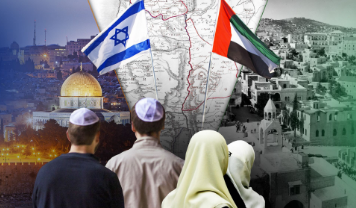
Category: Israel

  • A History of Israel and Palestine by Rohan Khanna India

    A History of Israel and Palestine by Rohan Khanna India

    This text comprises excerpts from a lecture or speech addressing the Israeli-Palestinian conflict. The speaker aims to present a balanced perspective, challenging one-sided media narratives and emphasizing the political nature of the conflict over religious interpretations. He traces historical events, including the formation of the PLO and the roles of key figures like Yasser Arafat, to contextualize the current situation. The speaker encourages critical thinking and questioning, urging the audience to seek diverse information sources to form informed opinions. He also touches upon broader historical and religious themes related to the region, drawing connections between biblical and Quranic accounts.

    The Israel-Palestine Conflict: A Study Guide

    Quiz

    Instructions: Answer the following questions in 2-3 sentences each, based on the provided source material.

    1. According to the speaker, what is the primary nature of the conflict between Israel and Palestine?
    2. What is the speaker’s opinion on the role of media in portraying the Israeli-Palestinian conflict?
    3. Who was Yasser Arafat and what organization did he lead?
    4. What is the significance of the year 1993 in the context of the Israeli-Palestinian conflict?
    5. What is the speaker’s perspective on the common views of Muslims regarding Jews?
    6. According to the speaker, what historical figure does he look to when thinking of how to study religious conflict?
    7. What is the relationship between the figures Abraham (Ibrahim), Isaac, and Jacob (Yakub) according to the speaker?
    8. According to the speaker, what was the “Sultanate of Israel” and who were some of its key rulers?
    9. According to the speaker, what role did the British play in the Middle East in the early 20th Century?
    10. What does the speaker believe is the relationship between the name “Israel” and Bani Iral?

    Answer Key

    1. The speaker believes that the conflict is primarily a political war, not a religious one, and that religion is often used by people for their own ends.
    2. The speaker criticizes the media for presenting a one-sided picture of the conflict, thus perpetuating bias and hatred.
    3. Yasser Arafat was the leader of the Palestinian Liberation Organization (PLO) and a key figure in Palestinian politics who initially used militancy but later pursued a political path.
    4. The year 1993 is significant because it marked a meeting between representatives of the Palestinian Authority, which includes Mahmoud Abbas and Yasser Arafat, and others as part of formalizing the Palestinian Authority.
    5. The speaker claims he used to believe Jews were infidels who were worse than animals, but after reading more about them, he found this information to be lies.
    6. The speaker looked to his teacher Sir Syed Ahmed when trying to understand the religious aspects of the conflict as he studied the Tafsir of the Quran.
    7. Abraham had two sons: Ishmael and Isaac, whose son was Jacob. Jacob had 12 sons that formed 12 tribes.
    8. The Sultanate of Israel was a kingdom ruled by David (Dawood) and later his son Solomon (Suleiman). It was a significant political entity in the history of the region.
    9. The British played a crucial role in supporting and encouraging Arab rebellions against the Ottoman Empire in the early 20th century and in the founding of modern countries in the Middle East.
    10. The speaker explained that the title “Israel” is given to Jacob, which means “Abani Ban” or “Allah who travels by night.” Bani Iral means children of Israel.

    Essay Questions

    Instructions: Develop an essay response for each of the following prompts using the source material as your basis.

    1. Analyze the speaker’s argument that the Israeli-Palestinian conflict is primarily political rather than religious. How does he support this claim, and what are the implications of this perspective?
    2. Evaluate the speaker’s critique of media coverage of the Israeli-Palestinian conflict. What specific examples does he provide, and how does he suggest media bias impacts public understanding of the situation?
    3. Discuss the speaker’s historical narrative of the conflict, focusing on his description of key figures like Abraham (Ibrahim), Jacob (Yakub), Yasser Arafat, and early Palestinian leaders and rulers. How does his account challenge or reinforce common understandings of the conflict?
    4. Explore the speaker’s perspective on the complexities of religious identity and conflict, particularly as they relate to both Muslim and Jewish perspectives. How does he attempt to complicate simplistic or antagonistic views of these religious groups?
    5. Based on the ideas presented in this speech, explain how an individual should respond to conflict. How can they study the problem and what should they be sure to take into account when evaluating both sides of a complicated geopolitical struggle?

    Glossary of Key Terms

    • Arj Muqaddas Ka Tanaza: The title of the book the speaker is working on, which translates to “The Dispute of the Sacred Land” or “The Holy Land Conflict.”
    • PLO (Palestinian Liberation Organization): A political and militant organization representing the Palestinian people, initially led by Yasser Arafat.
    • Palestinian Authority: The governing body of the Palestinian territories established in 1993.
    • Bani Iral: “Children of Israel,” referring to the descendants of Jacob (Yakub).
    • Masjid Aqsa: A mosque located in Jerusalem that is a holy place for Muslims.
    • Haikal Sulemani: The Temple of Solomon, a historical religious site.
    • Yom Kippur: A Jewish holy day, considered a day of atonement.
    • Ottoman Empire: A former Turkish empire that controlled much of the Middle East before and during WWI.
    • Khilafat Movement: A political campaign launched by Muslims in British India to influence the British government not to abolish the Ottoman Caliphate.
    • Holocaust: The genocide of European Jews during WWII.
    • Non-State Actors: Individuals or organizations that are not affiliated with any specific government.
    • State of Israel: The official name of the country of Israel, not “Islamic Republic.”
    • Sharm Sheikh: A city in Egypt where peace negotiations took place, bringing together leaders from America, Palestine, and Saudi Arabia.
    • Baitul Makad: Another name for the city of Jerusalem.
    • Faran: Refers to the “Faraon” or Pharaoh of Egypt, used to invoke a figure who was perceived as cruel and tyrannical.
    • Sunosi: A reference to the Sanusi order, a Sufi religious order that became influential in politics.
    • Toman Umpire: A term for the ruler of the Ottoman Empire.
    • Sharif Mecca: The historical title of the ruler of Mecca.
    • B-For-Kission: Likely a mispronunciation of the British “Balfour Commission”, which established the policy of a Jewish homeland in the Middle East.

    A Critical Analysis of the Israeli-Palestinian Conflict

    Okay, here is a detailed briefing document analyzing the provided text:

    Briefing Document: Analysis of “Pasted Text”

    Document Overview:

    The provided text appears to be a transcript of a lecture or speech, likely delivered to a group of students or young people, by a speaker knowledgeable in history and religion. The primary focus of the speech is the Israeli-Palestinian conflict, but the speaker expands into the historical, religious, and political context that informs it, while also critiquing media bias and encouraging critical thinking. The speaker often expresses personal opinions and insights, and is openly critical of the dominant narratives on the conflict, particularly those prevalent in the speaker’s own community (likely Pakistani).

    Key Themes & Ideas:

    1. Rejection of Simplified Narratives and Media Bias:
    • The speaker strongly criticizes the one-sided portrayal of the conflict often presented in the media. He argues that both sides have valid perspectives and that the conflict is far more complex than a simple good vs. evil narrative.
    • Quote: “And see the news these days. Nowadays you see how many children have been killed by bombs even on hospitals…I see the worst role of those who teach media, that is, they present a picture of one side.”
    • He stresses the importance of considering multiple viewpoints and not blindly accepting what is presented by news outlets. He accuses media of propagating hate and fostering a sense of victimhood.
    • The speaker emphasizes the need for balanced reporting and encourages the audience to analyze information critically.
    • Quote: “There is a basic principle that you have to present both the viewpoints of the picture so that it does not seem biased, does not seem party-oriented, does not seem one-sided, but it is not like this in our place.”
    1. Historical Context of the Israeli-Palestinian Conflict:
    • The speaker provides a historical overview, beginning with the biblical figures of Abraham (Ibrahim), Isaac (Yakub), and Ishmael, and tracing their lineages and connection to the region.
    • He explains the origin of the term “Israel” as a title of Yakub (Jacob), meaning “Abani Ban” or “he who travels at night.” He highlights the historical presence of the Israelites (Children of Israel) in the area.
    • He discusses the establishment of the Kingdom of Israel under Dawood (David) and Suleiman (Solomon), emphasizing its scale and influence. He points out that this historical aspect is often omitted in common narratives.
    • He delves into the events leading up to the modern conflict, including the Ottoman Empire’s rule, the Balfour Declaration, the role of British influence, the actions of figures like Amir Faisal, and the eventual establishment of the State of Israel.
    • The speech connects the historical events to the ongoing conflict and emphasizes the need to understand the long and complicated history in order to make informed opinions.
    • The speaker also touches on the period when Jews were being persecuted by the Nazis, which gave rise to a sentiment for the creation of a separate Jewish state.
    1. Religion vs. Politics:
    • The speaker argues that the Israeli-Palestinian conflict is fundamentally a political war, not a religious one, despite religious language used to frame it.
    • Quote: “the point is that first You children should understand that this is a war, it is not even about yads and beans, Islam is a far away thing, this is not a war of religion, this is a political war, religion has nothing to do with it.”
    • He criticizes the use of religion as a tool for political manipulation and urges the audience to look beyond religious labels.
    • The speaker observes that people often use religion for personal gain and political maneuvering.
    • He questions the current leadership of Palestine and points out that they do not consider Hamas to be their official representative.
    1. Critique of Muslim Stereotypes and Self-Reflection:
    • The speaker is openly critical of his own community (likely Pakistani Muslims), stating they are more passionate than hardworking, and need to avoid biased narratives.
    • Quote: “In Pakistan, you can say that I am not at all a party person, I am absolutely brutal, although I am a Muslim, I am a Muslim, I have to live and die here, but I do not have any respect for them or Hindus, rather I consider them good, who are also very intelligent and Those who work are hard working Hindus, there are less people who are very hard working, we are a few people, we are more fighters and work less, the people are more passionate among us, that is why when I talk, my full wish is to remain balanced and do not lean towards any side.”
    • He expresses his disappointment in the way the Muslim community is interpreting the events and how they fail to acknowledge the atrocities on the other side.
    • He contrasts this with his own efforts to understand all sides of religious conflicts and historical events.
    • He encourages self-reflection and questions why Muslims are not showing sympathy for both sides.
    • He observes that even the Muslim community is divided in its loyalty and that some people support figures who are involved in terrorism.
    1. Emphasis on Critical Inquiry and Questioning:
    • The speaker repeatedly encourages the audience to ask questions, challenge accepted beliefs, and not to shy away from controversial topics.
    • Quote: “We welcome the questions. Don’t suppress it, what will happen if you ask this question?”
    • He shares his own experiences of challenging established narratives and the resistance he faced.
    • He encourages the audience to follow logical arguments and seek the truth rather than following what is being taught.
    • He highlights the importance of not being swayed by emotion and to question everything in order to see the reality.
    1. Call for Justice and Empathy:
    • The speaker calls for compassion for all the victims of the war, regardless of their religion or nationality. He condemns the killing of innocents and advocates for justice.
    • Quote: “the devastation that is taking place, the children who are dying, the dead bodies that are falling, the mothers who saw us, their mothers died for me or the mothers of the Palestinians here, she is their mother, their children are also ours. Children, we should not be inferior to anyone, whoever does caste or religion, whoever commits atrocities is a criminal.”
    • He emphasizes the need to see the humanity in all individuals and avoid dehumanizing language.
    • He advocates for judging all actions by a moral compass.
    1. Analysis of Current Events:
    • The speaker attempts to analyze the events of the October 7th attack, questioning the timing of the attack and the reasoning behind it.
    • He also refers to the recent attacks by Israel and provides information on the ground situation.
    • He shares the perspectives of leaders on both sides of the conflict.

    Important Facts & Points:

    • The speaker identifies the State of Israel as the official name of the country, a detail he finds is often overlooked.
    • He shares that there are a significant number of Arab Muslims within Israel (around 20 Lakhs) who consider themselves Israelis.
    • He explains the political climate before the creation of Israel.
    • He details the roles of various key figures, such as Yasser Arafat, Mahmoud Abbas, Sharif Makkah, and others.
    • He elaborates on the history of the conflict through the perspective of both Muslims and Jews.

    Conclusion:

    The speech is a complex and thought-provoking analysis of the Israeli-Palestinian conflict, urging a departure from simplified and often biased narratives. The speaker emphasizes the need for critical thinking, historical awareness, and a nuanced understanding of the political and religious complexities involved. The document is both an explanation of the historical context of the conflict and a critique of the contemporary handling of the issue. It is a call for a more just and empathetic approach to the conflict, grounded in facts and truth rather than propaganda and blind devotion to a certain ideology.

    Understanding the Israeli-Palestinian Conflict

    FAQ

    • What is the primary conflict discussed, and what is the speaker’s perspective on it?
    • The primary conflict discussed is the Israeli-Palestinian conflict. The speaker emphasizes that this is a political war, not a religious one, and that religion is often used by people for their own ends. They argue against a one-sided view presented by the media, urging the audience to consider multiple perspectives and avoid leaning towards any one side. The speaker aims for balance and stresses that the conflict is not simply about “infidels” vs. “Muslims,” or “good” vs. “bad” people, but a complex political and historical issue. They also note that the Palestinian leadership itself is complex, and the various parties within the conflict aren’t necessarily united.
    • Why does the speaker emphasize the importance of asking questions, especially for children?
    • The speaker believes it’s essential for children to question the information they receive, especially from the media and their immediate community. They believe that much of the societal narrative is one-sided and that questioning helps children develop critical thinking skills. This approach encourages intellectual independence and helps them form their own opinions rather than blindly accepting pre-existing narratives. They emphasize that suppressing questions leads to a lack of understanding and perpetuates biased views.
    • How does the speaker describe the historical context of the conflict and the involvement of various figures and groups?
    • The speaker dives into the historical roots of the conflict, referencing religious texts (Quran, Bible) and figures from Islam, Judaism, and Christianity. They highlight the shared history of these faiths and how different groups have migrated and settled in the region over time. They trace the lineage of key figures such as Ibrahim (Abraham) and his descendants, as well as discussing the roles of groups like the PLO, the Ottoman Empire, and the British, emphasizing that the land itself has always had shifting control and conflicting claims. They also explore the origins and leaders of both Jewish and Arab communities, arguing that the conflict predates the modern era and should not be viewed as a recent or purely religious one. They specifically discuss the Balfour Declaration and how it contributed to later tensions.
    • What role does the speaker see for the media in shaping public opinion about the conflict?

    The speaker is highly critical of the media’s role in presenting a biased, one-sided picture of the conflict. They believe that the media often manipulates the narrative, showing only the suffering of one side while demonizing the other. The speaker contends this approach fuels hatred and division and prevents people from understanding the complexities of the situation. They call on media outlets to present both sides of the story and to encourage critical thinking instead of emotional reactions.

    • What does the speaker mean when they talk about “non-state actors” in the conflict?

    The speaker uses the term “non-state actors” to refer to militant or terrorist groups that operate outside the control of recognized governments. They cite groups such as Hamas, ISIS and Al-Qaeda as examples. The speaker points out that these groups are not representative of entire populations, such as Palestine. They also point out that many of these groups aren’t actually from the areas they are claiming to be fighting for. They stress it’s important to distinguish between these groups and the people they claim to represent. The speaker also uses this to show that people need to look past state and religious actors and view the people themselves as individuals, not just cogs in larger systems.

    • How does the speaker address the issue of historical violence and atrocities committed by both sides?

    The speaker acknowledges that both sides have committed violence and atrocities throughout history. They reference the Holocaust and the violence perpetrated against Palestinians as examples. The speaker does not excuse any violence, and asserts that those who commit atrocities should be condemned, regardless of their religion or ethnicity. They believe that everyone should be treated fairly and without bias. They make sure to note they are willing to make everyone angry if they are speaking the truth. The speaker pushes for justice and the condemnation of violence on all sides.

    • What is the speaker’s message regarding peace and understanding in the context of the Israeli-Palestinian conflict?
    • The speaker’s message is fundamentally one of balance, peace and understanding. They advocate for taking a multi-faceted approach to understanding issues such as the conflict they are talking about. They also discuss many historical aspects, showing how the roots are very old and very nuanced. They suggest that a lasting solution can only be found through dialogue, mutual respect, and recognizing the equal rights of everyone involved. They emphasize that focusing on shared humanity is more productive than focusing on differences and engaging in hatred. They use historical context to show that there are many ways to approach the issue, even those which seem completely contradictory to the present situation.
    • How does the speaker view the relationship between nationality, religion, and identity in this context?
    • The speaker believes that nationality should come before religion when deciding who is on your side, rather than viewing the world through a religious lens. The speaker points out a survey that they referenced found people in the west favored national identity over religious, and vice versa in the East. The speaker laments this difference and argues for a more secular approach, and also uses the example of sports to show that religion shouldn’t play a factor in everything. They see the conflict as being driven partly by religious fanaticism on both sides and argue that people should see each other first as humans, rather than primarily as members of a religious or ethnic group. They also use many examples of their personal experiences to show that people should look at all situations with a nuanced approach rather than viewing the world through a single lens.

    A History of the Israeli-Palestinian Conflict and its Impact

    Okay, here is a detailed timeline and cast of characters based on the provided text:

    Timeline of Main Events:

    • Ancient Times:Prophet Ibrahim (Abraham) in Canaan: The speaker discusses Ibrahim’s life in the area, which was then called Canaan, and his farming activities near Hebron (Habrun), linking it to the origins of Israel. He notes that this area was also called “Ara” and that “Messiah” was located there in those times.
    • Conflict Between Ibrahim and Namrud’s Family: A conflict is mentioned between Ibrahim and the family of his cousin, Namrud, that is described as part of a common history. This conflict resulted in the separation of the two and the relocation of Ibrahim and his family to Canaan.
    • Ibrahim’s Descendants: The lineage is traced through Ibrahim’s two sons: Ishmael (Mecca) and Isaac (Yakub/Jacob).
    • Jacob/Yakub and the 12 Tribes of Israel: Jacob’s 12 sons form the 12 Tribes of Israel. The story of Yusuf (Joseph) is referenced here. Jacob’s title was “Israel.”
    • Early Jewish Kingdom: The speaker discusses the rule of King David and King Solomon (Suleiman), noting their kingdom in Israel. The Temple of Solomon (Haikal Sulemani) is mentioned. The author notes that it is a lie that Prophet Muhammad built the mosque Masjid Aqsa. He notes that it was not a mosque during the time when the Quran was revealed.
    • Overthrow of the Israeli Kingdom: The text mentions that their rule was overthrown and invaders came into the land at various times, though no specifics about them or the timeframe are given.
    • Pre-Modern Period:Rise of the Ottoman Empire: The Ottoman Empire is mentioned, with its rulers described as “Alam” (those with world knowledge).
    • The Khilafat Movement in Pakistan and India: The speaker touches upon the Khilafat Movement in British India in relation to the Ottoman Empire. The Ottoman Umpire (Caliph) sided with Hitler during the second world war.
    • Early 20th Century:Hitler’s Rise and Persecution of Jews: The Holocaust is discussed as a historical event where Hitler killed six million Jews.
    • Weakening of the British Empire: Hitler weakened the British Empire so much that they had to leave their colonies, which then led to independence movements.
    • Allama Iqbal and Ataturk: Allama Iqbal is mentioned to have supported the reforms of Mustafa Kemal Ataturk, including abolishing the Caliphate in Turkey.
    • Balfour Declaration: The events of 1917 are mentioned and the B-For-Kission, though not fully explained, seems to be a reference to the Balfour Declaration which expressed British support for the creation of a Jewish homeland in Palestine.
    • Sherif of Mecca and his Sons’ Involvement: The speaker details the involvement of the Sharif of Mecca and his three sons (Ali, Faisal, and Abdullah) in the Arab Revolt against the Ottomans with the support of the British.
    • T.E. Lawrence (“Lawrence of Arabia”): He is mentioned as a figure who played a large role in the independence of many Middle Eastern countries.
    • Mid-20th Century:Jewish Land Acquisition in Palestine: The text describes how Jewish people began buying land in Palestine, with Arabs selling to them for large sums of money.
    • Establishment of the State of Israel: The text notes that the state was established on 14 May 1948.
    • 1948 Arab-Israeli War: The speaker recounts the war that immediately followed the establishment of Israel where Arab forces from Jordan, Syria, and Iraq attacked the new state of Israel.
    • 1967 Six-Day War: Arab forces attacked again but were badly defeated and lost more land to the state of Israel.
    • 1973 Yom Kippur War: The speaker recalls the Yom Kippur War where Arabs again attacked Israel on a holiday.
    • Peace Process Between Israel and Egypt: It is mentioned that Egypt’s President Anwar Sadat made peace with Israel, which resulted in the return of the Sinai Peninsula to Egypt in exchange for peace. The speaker notes the peace slogan of the time: “Peace in exchange for Land”
    • Late 20th and Early 21st Century:Yasser Arafat and the PLO: The speaker details the role of Yasser Arafat in forming the PLO, his shift from militancy to peace talks, and the creation of the Palestinian Authority (PA) in 1993. The speaker also mentions a conference in Sharm Sheikh for a peace process between Palestine and Israel.
    • Israel’s withdrawal from Gaza: Israel withdraws from the Gaza Strip in 2005.
    • Hamas and Mahmoud Abbas: The current situation involving Hamas and Mahmoud Abbas, the current President of the PA, is detailed. The speaker notes the conflict between the two groups and claims that Mahmoud Abbas stated that Hamas does not represent the Palestinian people.
    • Recent Events:October 7th Attack: The speaker mentions the Hamas attack of October 7th, noting Israel’s response by creating a cage around Gaza. The speaker also says that this attack was on the holiday of Yom Kippur, the most holy holiday for Jews.
    • Media Bias: The speaker criticizes biased media coverage in Pakistan and elsewhere regarding the conflict. The speaker urges the audience to seek out multiple sources of information. The speaker also notes that American president Biden stated that Hamas had made their bases beneath the hospital in Gaza.
    • Ongoing Issue of Non-State Actors: The speaker notes how new organizations often come into being that are not state backed but are still causing problems.

    Cast of Characters:

    • Prophet Ibrahim (Abraham): A key figure in Abrahamic religions, believed to have lived in the Canaan region. The speaker details his life as a farmer near Hebron and his role in the origin of the Jewish people.
    • Namrud: A cousin of Ibrahim, who the speaker says was from a Jayal family who had a conflict with Ibrahim.
    • Ishmael: One of the sons of Ibrahim, according to the Bible and the Quran. His descendants settled in Mecca.
    • Isaac: Another son of Ibrahim. His son was Jacob/Yakub.
    • Yakub/Jacob: Son of Isaac, Grandson of Ibrahim. He is the father of the 12 Tribes of Israel. He was also known as “Israel.”
    • Yusuf (Joseph): A son of Yakub (Jacob). His story is a key part of the Quran and Bible.
    • King David: An ancient Israelite king.
    • King Solomon (Suleiman): Son of King David and a great prophet. He built the Temple in Jerusalem.
    • Hitler: The leader of Nazi Germany, responsible for the Holocaust and the extermination of six million Jews.
    • Sir Syed Ahmed Khan: An influential Indian Muslim reformer and philosopher.
    • Allama Iqbal: A famous poet and philosopher who is highly regarded in Pakistan. The speaker references a poem by Allama Iqbal about Faisal and says that Allama Iqbal supported the Turkish Ataturk.
    • Mustafa Kemal Atatürk: Founder and first president of Turkey, who abolished the Caliphate.
    • Sharif of Mecca (Sharif Hussain): A leader of Mecca during the early 20th century. The speaker notes that it is unknown whether his family is descended from the prophet Muhammad.
    • Ali bin Hussein: One of the sons of the Sharif of Mecca.
    • Amir Faisal: One of the sons of the Sharif of Mecca, who wanted the British to hand over all power. He worked to settle Jews in Palestine.
    • Abdullah I of Jordan: Another son of the Sharif of Mecca, who became the ruler of the British-created Jordan, which was once a part of Palestine.
    • Talal bin Abdullah: The father of the long ruling king of Jordan, King Hussein.
    • King Hussein of Jordan: Long ruling king of Jordan who battled against Iran.
    • T.E. Lawrence (“Lawrence of Arabia”): A British officer who played a major role in the Arab Revolt.
    • Yasser Arafat: The leader of the PLO, the organization which sought to liberate the Palestinian state. He later became the leader of the Palestinian Authority (PA).
    • Mahmoud Abbas: Current President of the Palestinian Authority (PA). The speaker notes his claim that Hamas does not represent the Palestinian people.
    • Anwar Sadat: President of Egypt who made peace with Israel.
    • Gamal Abdel Nasser: The President of Egypt before Sadat.
    • Masood Har/Daesh Thi Ra Mein/Al Qaeda: Examples of Non-state actors involved in conflicts.
    • Osama bin Laden: Founder of Al-Qaeda, known for his role in terrorist attacks. The speaker notes that in spite of these actions, the people of Pakistan may still have sympathy for him.
    • Biden (Joe Biden): The current President of the United States. The speaker cites him as saying that the Hamas military infrastructure was placed below a hospital in Gaza.

    This timeline and cast of characters should provide a good summary of the key points and people discussed in the provided text. The speaker presents a complex and often controversial perspective on the Israeli-Palestinian conflict and its historical roots, including its impact on Pakistan.

    Understanding the Israeli-Palestinian Conflict

    The sources discuss the Israel-Palestine conflict from a historical and political perspective, emphasizing the importance of understanding both sides of the issue. The speaker in the sources aims to provide a balanced view, cautioning against the one-sided narratives often presented in the media.

    Key points about the conflict from the sources include:

    • Not a religious war: The conflict is primarily a political war, not a religious one, despite the use of religion for political ends.
    • Historical context: The conflict has roots in the history of the region, including the establishment of the Palestinian Liberation Organization (PLO) by Yasser Arafat, who initially used militancy but later pursued a path of negotiations.
    • The role of media: The sources criticize the media for often presenting a one-sided view of the conflict, especially focusing on the suffering of Palestinian children while neglecting the perspectives of Israelis.
    • The importance of multiple viewpoints: The speaker emphasizes the need to consider multiple viewpoints and not be biased when trying to understand the situation. It is important to seek out different perspectives and not rely solely on one source of information.
    • The role of outside powers: The sources describe the involvement of the United States and other international actors in the region, including their attempts to mediate peace talks.
    • The significance of historical figures: Historical figures like Prophet Ibrahim (Abraham), his sons and grandsons, and leaders such as Yasser Arafat, are discussed in the context of the conflict and its history.
    • The complexity of the conflict: The conflict involves many actors, including state and non-state actors, which are difficult to clearly distinguish.
    • The importance of truth and justice: The speaker in the sources stresses the importance of seeking truth and justice, not just siding with one group over another.
    • The need for a balanced perspective: The sources encourage the audience to listen to all sides of the story and study the situation deeply instead of only listening to one side of the issue.
    • The ongoing nature of the conflict: The conflict continues to this day, with both sides experiencing suffering, with children and other innocents dying.
    • The importance of critical thinking: The speaker encourages the audience to question the information that they are presented with, and to look at the situation from a logical perspective.

    The speaker also addresses specific events, such as the 1948 Arab-Israeli War, the 1967 Six-Day War and the 1973 Yom Kippur War. It is also important to consider other factors like the role of non-state actors.

    The speaker emphasizes the need for understanding and critical thinking, urging the audience to seek out multiple perspectives and not to fall into the trap of biased reporting or one-sided narratives.

    Media Bias in the Israeli-Palestinian Conflict

    The sources strongly critique media bias, particularly in the context of the Israel-Palestine conflict, and emphasize the importance of seeking multiple perspectives.

    Key points related to media bias from the sources include:

    • One-sided narratives: The media often presents a one-sided view of the conflict, focusing on the suffering of one side while neglecting the other. For example, the sources note that media coverage often highlights the plight of Palestinian children killed by bombs, without showing the Israeli perspective.
    • Misrepresentation of the conflict: The media can misrepresent the conflict as a religious war, when it is primarily a political one.
    • Influence on public perception: The media plays a significant role in shaping public perception and can create biased views by only showing one side of the story. The speaker notes that many children are taught to believe that Muslims are good and Israelis are bad based on media portrayals.
    • Lack of balanced reporting: The sources suggest that media outlets do not present both sides of the picture, leading to a biased understanding of events. The speaker uses the example of a photo, stating that both sides need to be presented to avoid bias.
    • Propaganda: The speaker suggests that media often engages in propaganda by spreading hatred, lies, and one-sided views.
    • The role of media in shaping views on religion: According to the speaker, media has a strong role in shaping religious views, and as a child, the speaker had very negative views of Jews due to media portrayals.
    • Need for critical thinking: The speaker urges the audience to be critical of media reports, seeking out different viewpoints and not relying on a single source of information. The speaker also urges the audience to question why things are happening.
    • Media’s role as a “fourth pillar”: The speaker refers to media as the fourth pillar, which has a strong role in shaping public opinion, and suggests that people should seek other sources of information, like the internet, because they are not limited to the information that the local media provides.
    • Importance of logic: The speaker advises the audience to use logic to understand the situation instead of just being emotional and one sided.
    • Focus on emotional response: Media often attempts to generate an emotional response and sympathy, rather than provide balanced information, and this is why people need to be aware of both sides of the situation.

    The speaker in the sources encourages the audience to think critically about the information they receive and to seek out multiple perspectives to avoid being misled by biased reporting. The speaker suggests that it is crucial to be aware of media biases in order to have a more accurate understanding of complex issues like the Israel-Palestine conflict. The sources also indicate that it is important to understand the official names of countries to understand if religion is involved.

    Religion, Politics, and the Israeli-Palestinian Conflict

    The sources address religious conflict, particularly in the context of the Israeli-Palestinian conflict, and emphasize that, despite common perceptions, the conflict is not primarily a religious war.

    Key points regarding religious conflict from the sources include:

    • Political, not religious: The speaker in the sources asserts that the Israeli-Palestinian conflict is fundamentally a political war, not a religious one. The speaker argues that the name of religion is often used for political ends, but this does not make the conflict itself a religious one.
    • Misconceptions: The sources suggest that many people, especially children, are taught to view the conflict as a religious battle between Muslims and Jews. The speaker admits to having had these views in childhood, which were shaped by media and society.
    • Religious Identity vs. Nationality: The speaker discusses a survey that found people in many Muslim countries prioritize religious identity over nationality, while people in Europe and America prioritize nationality, which suggests differing viewpoints on the intersection of religion and identity.
    • Historical Religious Figures: The sources mention significant figures from religious texts, such as Ibrahim (Abraham), Yakub (Jacob), and Musa (Moses), and how they relate to the history of the region and the conflict. The sources note that the Quran and the Bible have similar accounts and stories. The sources also describe the lineage of prophets and religious figures within Judaism.
    • The use of religious language: The speaker notes that religious language is often used to rally support for one side or the other, but this does not mean that the conflict is actually about religion. For example, the speaker mentions that some people call the conflict a war of “infidels” which is a religious term, but the speaker stresses that it is not about religion.
    • The importance of shared religious heritage: The sources highlight the shared religious heritage of Islam and Judaism, as both trace their lineage back to Abraham. The speaker stresses the importance of understanding that many religious figures are revered in both religions.
    • Critique of religious extremism: The sources critique religious extremism and intolerance, stating that people on both sides of the conflict often view the other group as bad or evil based on religious differences. The speaker argues that judging others based on religion alone is incorrect and leads to hatred.
    • Need for justice and truth: The speaker argues that it is important to seek justice and truth, regardless of religion. The speaker encourages the audience to think critically and not be swayed by religious bias.
    • Misuse of Religion: The sources mention that the name of religion has been used by people for their own gains.

    The speaker in the sources emphasizes that the conflict is more about politics and land than it is about religious differences. The speaker encourages the audience to approach the situation with a balanced perspective, and not be influenced by religious bias.

    A Historical Context of the Israeli-Palestinian Conflict

    The sources provide a rich historical context for understanding the Israeli-Palestinian conflict, emphasizing that it is not just a modern issue but one with deep historical roots.

    Key points regarding the historical context of the conflict, as discussed in the sources, include:

    • Ancient Origins: The sources trace the origins of the conflict back to biblical times, mentioning figures like Prophet Ibrahim (Abraham), his sons Ishmael and Isaac, and his grandson Yakub (Jacob). These figures are significant in both Jewish and Islamic traditions, and their stories are intertwined with the history of the land. The speaker notes that these figures are important to both the Quran and the Bible, and there is significant overlap between the two texts.
    • Tribal and Kingdom Formation: The sources discuss how Yakub’s twelve sons formed twelve tribes, which is a key part of Jewish history. The speaker also mentions the kingdom of Israel and its rulers, including David and Solomon (Dawood and Suleiman), emphasizing that this kingdom was an Israeli state.
    • The concept of “Israel”: The term “Israel” itself is explored, noting it was a title for Jacob, meaning “the one who travels at night”. It is also the name of the children of Jacob. The speaker notes that this historical context is often overlooked when discussing the modern state of Israel.
    • The significance of Canaan: The land that is now known as Israel and Palestine was once called Canaan. The sources discuss the history of the people who lived in that area, emphasizing that they have been migrating to and from that region for centuries.
    • The Exodus: The sources also discuss the story of Musa (Moses) leading the Israelites out of Egypt, a foundational event in Jewish history that is also mentioned in Islam. This historical event is central to the concept of the Israelites as a distinct people with a connection to the land.
    • Ottoman Empire: The sources discuss the role of the Ottoman Empire and how the area was under its control for a long period of time. The decline of the Ottoman Empire and its impact on the region is also discussed. The speaker also notes how the Ottoman Empire sided with Hitler during World War II.
    • British Involvement: The British involvement in the region is highlighted, especially during and after World War I. The sources mention the role of figures like T.E. Lawrence (Lawrence of Arabia) in the Arab revolt against the Ottoman Empire, and how the British influenced the creation of many of the modern states in the region, including Jordan.
    • The rise of Arab nationalism: The sources note the rise of Arab nationalism and the desire for independence from Ottoman rule, with key figures like Amir Faisal playing a role. The speaker emphasizes that figures like Amir Faisal worked alongside the British to settle the Jews, which is often overlooked by many media outlets.
    • Early Zionism: The speaker references early Zionist activities, including the purchase of land by Jewish people and their gradual settlement in the area. This is presented as a key factor leading to the conflict.
    • The 1948 War: The 1948 Arab-Israeli War is discussed as a major turning point, which led to the displacement of many Palestinians and the creation of the state of Israel. The sources note that the surrounding Arab nations attacked Israel at the time of its creation, leading to this conflict.
    • The 1967 and 1973 Wars: The sources discuss the 1967 Six-Day War and the 1973 Yom Kippur War, emphasizing that the results of these wars further exacerbated the conflict. The speaker notes that during the Yom Kippur War, Israel was attacked on a holy day, which demonstrates the complexity of religious and political motivations in the conflict.
    • Key figures in the conflict: The sources refer to figures like Yasser Arafat, who led the PLO, and Mahmoud Abbas, the current leader of the Palestinian Authority, who have shaped the trajectory of the conflict. Anwar Sadat, the leader of Egypt, is also discussed as an important figure who pursued peace with Israel.

    The speaker emphasizes that the historical context is often ignored or simplified, leading to a biased understanding of the conflict. The speaker suggests that understanding the historical roots of the conflict is essential for finding a resolution. The speaker stresses that the history of the region is complex and intertwined with different religious and political forces.

    Questioning Authority in the Israeli-Palestinian Conflict

    The sources emphasize the importance of questioning authority and not blindly accepting information, particularly in the context of the Israeli-Palestinian conflict and the narratives presented by the media.

    Key points regarding questioning authority from the sources include:

    • Challenging Media Narratives: The speaker in the sources encourages the audience to question media narratives, which are often presented as one-sided or biased. The speaker states that media often presents a picture of one side and not the other. The speaker notes that their own views as a child were based on media and societal narratives. The speaker urges the audience to seek other viewpoints.
    • Importance of Independent Thought: The speaker emphasizes the importance of independent thought and not blindly following the beliefs of elders or society. The speaker notes that children are often taught that Muslims are good and Israelis are bad, but this is a simplistic view, and children should learn to think for themselves.
    • Questioning Religious Teachings: The speaker suggests that religious teachings should also be questioned and understood rather than blindly accepted. The speaker shares their personal journey of questioning religious teachings from childhood. They used to believe that Jews were evil, but when they read more, they realized that was not true.
    • The Need for Logical Inquiry: The speaker advocates for logical inquiry and critical thinking when evaluating information, urging the audience to ask “why” questions to understand the underlying reasons for events. The speaker states that asking ‘why’ will help a person understand and try to know.
    • Disagreement with Dogma: The speaker explains that many people don’t like others to question them because they don’t want to be challenged. The speaker recounts personal experiences of facing resistance when asking questions and challenging established views. The speaker explains that they were told to ask questions that were “funny” and “logical”. The speaker states that many people do not like to answer questions and would rather people simply accept what they are told.
    • Speaking Truth to Power: The speaker advocates for speaking truth even when it is difficult or unpopular, and even in the face of potential criticism or opposition. The speaker admits to speaking with hesitation, out of fear that someone might disagree, but says that they are doing so anyway because they want to speak the truth.
    • Criticism of Unquestioning Faith: The speaker critiques the idea of unquestioning faith and emphasizes the importance of personal investigation and understanding. The speaker states that people should not suppress questions.
    • Recognizing Bias: The speaker argues that one must recognize their own bias before they can recognize the bias of another person or organization. The speaker believes that it is important to understand that people often have a one-sided view. The speaker notes that they try to make sure that they are not being one-sided or biased.

    The speaker in the sources uses the example of the Israeli-Palestinian conflict to show that not all people in any one group are good or bad. The speaker argues that people should not accept one side of the story without thinking for themselves and questioning authority, no matter what group or side the authority comes from. The speaker stresses that it is important to understand the truth, and not just the narrative that is being presented. The speaker notes that all people are human, and some are good and some are bad, no matter what their religion or nationality.

    Fact-Checking and Historical Analysis

    1. Formation of the PLO and Yasser Arafat’s Role

    • Factual Accuracy: Correct. The PLO was founded in 1964, and Arafat became chairman in 1969. His shift from militancy to politics (e.g., the 1993 Oslo Accords) is well-documented.
    • Analysis: The speaker accurately contextualizes Arafat’s evolution, though critics argue his later political compromises (e.g., Oslo) failed to secure Palestinian statehood, fueling Hamas’ rise.

    2. Significance of 1993

    • Factual Accuracy: Correct. The Oslo Accords (1993) established the Palestinian Authority (PA) and mutual recognition between Israel and the PLO.
    • Analysis: While Oslo was a milestone, its collapse due to unresolved issues (e.g., settlements, Jerusalem) underscores the speaker’s point about political complexity.

    3. Religious Reinterpretation and Sir Syed Ahmed Khan

    • Factual Accuracy: Sir Syed was a 19th-century Indian reformer. His inclusion here is symbolic, reflecting efforts to reconcile Islam with modernity.
    • Analysis: The speaker’s use of Sir Syed highlights the need for critical religious interpretation but risks oversimplifying Quranic exegesis (Tafsir) as a monolithic tool.

    4. Biblical Lineage and “Israel” Etymology

    • Factual Accuracy: Partially correct. Jacob’s renaming to Israel (Genesis 32:28) is “he who struggles with God” in Hebrew. The speaker’s “Abani Ban” interpretation appears conflated with Islamic traditions (e.g., Prophet Muhammad’s Night Journey).
    • Critique: Misrepresenting “Israel” as an Islamic term risks historical revisionism. The Hebrew etymology is central to Jewish identity, complicating claims of a purely political conflict.

    5. “Sultanate of Israel” Under David and Solomon

    • Factual Inaccuracy: The term “sultanate” is anachronistic. David and Solomon ruled a united monarchy (c. 1000–930 BCE), not a sultanate, which denotes Islamic governance post-7th century CE.
    • Analysis: This error undermines the speaker’s credibility but does not negate the broader point about ancient Jewish ties to the land.

    6. British Role in the Middle East

    • Factual Accuracy: Correct. The 1916 Sykes-Picot Agreement and 1917 Balfour Declaration shaped colonial borders and Zionist aspirations.
    • Analysis: The speaker rightly highlights British imperialism but underplays French and post-WWI geopolitical dynamics (e.g., League of Nations mandates).

    7. Arab Muslims in Israel

    • Factual Accuracy: Correct. Approximately 2 million Arab citizens (20% of Israel’s population) hold Israeli citizenship, though many face systemic discrimination.
    • Analysis: This nuance challenges the “Jewish vs. Arab” binary but omits discussions of Israeli apartheid allegations or Palestinian non-citizens in occupied territories.

    Critical Evaluation of the Speaker’s Arguments

    Strengths

    1. Rejection of Simplistic Narratives:
    • The speaker correctly identifies media bias and the weaponization of religion. For instance, Hamas’ 1988 charter frames the conflict as religious, while Israel’s 2018 Nation-State Law emphasizes Jewish identity, blending politics and religion.
    • Supporting Evidence: Studies (e.g., Pew Research) show media often underreports Israeli settlements’ illegality under international law while amplifying Palestinian violence.
    1. Emphasis on Historical Context:
    • By tracing the conflict to British colonialism and pre-1948 Zionist-Arab tensions, the speaker avoids the common pitfall of starting the narrative in 1948 or 1967.
    • Example: The 1936–1939 Arab Revolt and 1947 UN Partition Plan are critical to understanding mutual grievances.
    1. Call for Empathy and Moral Clarity:
    • The speaker’s condemnation of civilian casualties on both sides aligns with international humanitarian law. For example, over 200 Israelis and 35,000+ Palestinians (per UN estimates) have been killed since October 2023, highlighting asymmetric violence.

    Weaknesses

    1. Overemphasis on Politics, Underplaying Religion:
    • While the conflict’s roots are colonial and nationalistic, religion shapes identity and territorial claims. For instance, Jewish religious attachment to Jerusalem (e.g., Temple Mount) and Muslim reverence for Al-Aqsa are irreducibly spiritual.
    • Counterpoint: Scholar Ian Lustick argues that treating the conflict as solely political ignores how religious narratives harden positions.
    1. Selective Historical Omissions:
    • The speaker neglects key events like the 1948 Nakba (750,000 Palestinians displaced) and 1967 occupation, which are central to Palestinian resistance.
    • Implication: This risks perpetuating the “Israel as victim” narrative, ignoring its military dominance and settlement expansion post-1967.
    1. Generalizations About Muslim Communities:
    • Statements like “we are more passionate than hardworking” stereotype South Asian Muslims, overlooking socioeconomic factors (e.g., colonialism, inequality) that shape labor trends.

    Conclusion

    The speaker’s analysis is a commendable effort to deconstruct media bias and politicized religion, offering a nuanced alternative to polarizing narratives. However, historical inaccuracies (e.g., “sultanate”) and omissions (e.g., Nakba) weaken its rigor. While correctly framing the conflict as rooted in colonialism and nationalism, the dismissal of religion’s role overlooks its impact on identity and mobilization.

    Recommendations for a Balanced Narrative:

    1. Acknowledge both political and religious dimensions without reductionism.
    2. Integrate marginalized perspectives (e.g., Palestinian refugees, Mizrahi Jews).
    3. Address systemic issues: occupation, settlements, and Hamas’ governance.

    Ultimately, the article succeeds in urging critical thinking but falls short of a holistic historiography. Its call for empathy and justice remains vital, demanding engagement beyond partisan rhetoric.

    By Amjad Izhar
    Contact: amjad.izhar@gmail.com
    https://amjadizhar.blog

  • Israel-Palestine Conflict: A Critical Analysis – Study Notes

    Israel-Palestine Conflict: A Critical Analysis – Study Notes

    A Pakistani commentator, discusses the Israeli-Palestinian conflict, criticizing the media’s biased portrayal and the West’s support for Israel. He argues that understanding the historical context, including Hamas’s goals and actions, is crucial to resolving the conflict. Rehman highlights the devastating impact of violence on civilians while advocating for peace and emphasizing the need for truthful reporting. He also criticizes the actions of Hamas and other groups and calls for accountability for their atrocities. Finally, he questions the role of various international actors, including the OIC and Turkey, in the ongoing conflict.

    This discussion centers on the Israel-Palestine conflict, specifically analyzing the viability of a two-state solution. Participants debate the historical and religious arguments surrounding the land’s ownership, citing religious texts and historical events. The conversation also explores the political dynamics, including the roles of various nations (e.g., India, Saudi Arabia, the US) and groups (e.g., Hamas). Concerns regarding the humanitarian crisis and the impact of violence on civilians, especially children, are highlighted. Finally, the speakers discuss the potential for future cooperation between seemingly opposing nations.

    Briefing Document: Analysis of Israel-Palestine Discussion

    Date: October 26, 2023 (Based on context of the discussion) Source: Excerpts from a transcribed discussion between Babar Arif and Rehman Sahib. Subject: Analysis of the Israel-Palestine conflict, focusing on historical context, religious arguments, and geopolitical considerations.

    Executive Summary:

    This document analyzes a detailed discussion about the Israel-Palestine conflict, featuring Rehman Sahib’s perspectives, which challenge conventional narratives. He argues that the two-state solution is not practical, highlights historical ties of Jews to the land, questions the contemporary significance of the Palestinian identity in a religious context, and examines the geopolitical implications of the conflict. The conversation touches upon religious interpretations, the history of Jerusalem, the role of Western powers, and the current global dynamics related to the conflict.

    Key Themes and Ideas:

    • Rejection of the Two-State Solution:Rehman Sahib argues that the two-state solution is not viable due to the small land area involved, stating, “It is such a small area that you cannot become a state there.”
    • He considers the two-state solution a Western imposition, echoing a historical view, “the Quaid-e-Azam had once called it the illegitimate child of the West.”
    • He suggests that the post-October 7th situation has made the previously discussed solutions practically impossible.
    • Historical and Religious Claims:Rehman Sahib emphasizes the deep historical connection of Jews to the land, referencing religious figures: “I had narrated it that day, starting from Syedna Ibrahim and then quoting his children, Syedna Saqqar Sana Yakub”.
    • He cites the Quran and other religious texts (the Bible) to support the Jewish claim to the land, pointing out that there are references to the Jewish people inheriting this specific land.
    • He questions the Quranic or Hadith basis for a distinct Palestinian identity or claim before 1948, “You will not find any book on Palestinians, where has anyone ever mentioned them, or who was a nation of Palestine, or as much as I can tell you, tell me the name of any leader or prime minister of Palestine before 1948.”
    • He asserts, “The entire history of Prophets is made up of Muslims…all of it is from the Bani Israel… the stories of their prophets, they are from their people.” This supports his contention that the Jewish and Islamic faiths share a common heritage linked to this region.
    • He asserts, “We Muslims respect them, we are respecting the Quran… it does not change the reality of possession or property” when referring to the significance of the holy sites and places, including those associated with the Jewish prophets, indicating that respect does not diminish Jewish claim of ownership.
    • Criticism of Muslim Perspectives and Actions:Rehman Sahib criticizes the “sheep mentality” of some Muslims who blindly reject historical context and Islamic teachings by dismissing Jinnah’s views without understanding the broader picture.
    • He points out that many Muslims are ignorant about their own religious texts and history. “These poor people do not even know who Bani Israel is… these Palestinians do not even know what the background of Palestine is”.
    • He also highlights the hypocrisy of those who cite religious texts for political purposes, stating: “when you raise the entire case on the basis of religion, all the efforts are made in the name of religion”.
    • He criticizes the Muslim viewpoint of the land ownership based on ancient possession, “the land once went out of their hands, even though it was thousands of years old, if we start thinking that the one who had the land thousand years ago, we If that land is to be given to him then the whole world probably If it does not remain like this”.
    • Geopolitical Context and the Role of External Actors:Rehman Sahib views the conflict within a broader geopolitical context, highlighting a potential conspiracy behind recent events. He suggests that the events after October 7th are due to a “deep global conspiracy… it is their hooliganism”.
    • He believes the peace corridor between India, Saudi Arabia, and Israel was disrupted by those who sought to benefit from the conflict.
    • He criticizes the role of America, suggesting that its support for Israel and some Arab nations has created an unstable situation in the region, stating “Americans have followed it from 1948 onwards”.
    • He also notes how various countries, especially China and Russia, have benefited from the conflict due to disruption of aid and trade routes, as well as disruption of a “new chapter of peace”.
    • Critique of Hamas:Rehman Sahib is highly critical of Hamas, accusing it of playing a “very bad role in killing Palestinian children” and calling them “Hamas mass murderers”.
    • He condemns their goal of a “Palestine Free from the River to the Sea” as a denial of Israel’s existence, asserting “It is not that we will wipe it out, it is our thinking that we do not believe in its existence”.
    • Israel’s Right to Exist:He clearly states his belief that Israel has a right to exist in the land, “the land that they got in 1948 was correct… it should be given at this place only”.
    • He argues that Israel was formed in the name of religion, similar to Pakistan, and that religious justification for statehood should be recognized, stating “the countries which are formed in the name of religion are also right, Israel also became Pakistan. Both were made in the name of correct religion”.
    • He defends the Jewish people’s right to the land based on racial origins of Bani Israel which is deeply linked with the religious elements of the faith. “the tribe of Bani Israel is a racial community, that means if you forget the religion of the tribe then You cannot become a member of Bani Israel because Bani Israel means the children of Israel, the Israel of Qumat”.
    • Emphasis on Religious Respect and Critical Thinking:He stresses the need to respect all religions, even those with which one disagrees, including giving Hindus and their religious texts status in the Muslim worldview. “I am aware that our political organization OIC has formally declared the Hindus as People of the Book… If we also keep the status of Ahl-e-Kitab, then we have to do Atram of the other Ahl-e-Kitab”.
    • He advocates for critical engagement with religious texts, urging Muslims to understand their history and beliefs rather than relying on biased interpretations. “I say that you make this interview such that you make things fun and elaborate, I will put out all the references with Surah Ayat and even in front of you, it is absolutely share cut alpha, there is no question of interpretation in it sir”.

    Quotes of Particular Significance:

    • “It is such a small area that you cannot become a state there.” – Rehman Sahib, arguing against the practicality of a two-state solution.
    • “You will not find any book on Palestinians, where has anyone ever mentioned them, or who was a nation of Palestine, or as much as I can tell you, tell me the name of any leader or prime minister of Palestine before 1948.” – Questioning the historical basis of the Palestinian state before 1948.
    • “the countries which are formed in the name of religion are also right, Israel also became Pakistan. Both were made in the name of correct religion” – Rehman Sahib, on the validity of religious justification for statehood.
    • “I say that Hamas has played a very bad role in killing Palestinian children because they are Hamas mass murderers.” – Rehman Sahib’s strong condemnation of Hamas.
    • “It is not that we will wipe it out, it is our thinking that we do not believe in its existence.” – Rehman Sahib on Hamas’ stated goal of “Palestine Free from the River to the Sea”

    Conclusion:

    The discussion between Babar Arif and Rehman Sahib offers a complex and challenging perspective on the Israel-Palestine issue. Rehman Sahib’s views are highly critical of mainstream Muslim discourse on the topic and are deeply grounded in religious texts and historical context. He argues for recognizing the historical Jewish connection to the land, criticizes Muslim interpretations that deny this connection, and believes Israel’s right to exist is based on theological, historical, and racial factors. He also suggests that geopolitical considerations and the actions of external actors have exacerbated the conflict. This conversation represents a highly unique viewpoint within mainstream discussions of this conflict and warrants a more thorough examination. His points challenge common perspectives and offer a fresh angle on this age-old issue.

    Israel-Palestine Conflict Study Guide

    Quiz

    Instructions: Answer each question in 2-3 complete sentences.

    1. What was the main point of the caretaker Prime Minister’s statement regarding the two-state solution, according to the speaker?
    2. According to the speaker, what is a major issue regarding the practicality of a two-state solution for the region?
    3. What is the speaker’s perspective on the historical claims to Palestine, particularly concerning the Quran and Hadith?
    4. What specific concerns does the speaker raise regarding the religious beliefs of some present-day Jews?
    5. How does the speaker describe the status of “Ahl-e-Kitab” (People of the Book) within the Quran?
    6. According to the speaker, what are some of the misconceptions about Masjid al-Aqsa?
    7. What is the significance of “Misaq Madinah” (the Constitution of Medina) according to the speaker, and what are the implications for current inter-community relations?
    8. What are the speaker’s views on Hamas’ role in the conflict?
    9. What argument does the speaker use against the concept of “Free Palestine from the river to the sea?”
    10. What does the speaker suggest regarding a potential deeper, global conspiracy behind recent events in Israel and Palestine?

    Quiz – Answer Key

    1. The speaker states that the caretaker Prime Minister opposed the two-state solution, echoing a sentiment that it is not practical and quoting Quaid-e-Azam’s past opinion of it as “the illegitimate child of the West.” He also says that the PM was not accurate in his assertions regarding Jinnah’s (Quaid-e-Azam’s) stances on the matter.
    2. The speaker believes the area is too small for a viable state, referencing past UN discussions that deemed a two-state solution unfeasible. He argues this was established at the time of the UN presentation of the 1947 plan.
    3. The speaker suggests that there’s no mention of Palestinians in the Quran or Hadith, and that the land was historically tied to the Jewish people through stories of Prophets like Ibrahim, Musa, and Sulaiman (Abraham, Moses, and Solomon), and that the Quran states it was assigned to them.
    4. The speaker notes that some Orthodox Jews claim that they do not have a divine right to the land and that what they have now was given to them by “others.” The speaker does not agree with this.
    5. The speaker says that “Ahl-e-Kitab” (People of the Book) are accorded a special status in the Quran, distinct from other groups, and are not to be viewed as enemies. They also should be respected according to the dictates of the Quran.
    6. The speaker says that most people mistakenly think that the current Marwani Masjid is the original Masjid al-Aqsa. He states that the Dome of the Rock is more properly known as a temple from the time of Suleiman. He also states that Umar Bin al-Khattab refused to pray in the holy site of Jerusalem for fear of a Muslim occupation of that site.
    7. The speaker says that “Misaq Madinah” emphasizes unity among Muslims and with others, and that the promises made during that time should still be adhered to. The speaker contrasts these ideas to the current disunity amongst the Islamic people.
    8. The speaker says Hamas is responsible for the deaths of children and that they are terrorists. He argues that they have played a terrible role in the conflict.
    9. The speaker argues that the “Free Palestine from the river to the sea” mantra means the elimination of Israel, and points out that even the most religious and radical Imams are beginning to realize the value of two states.
    10. The speaker suggests that the conflict might be a deep global conspiracy to serve geopolitical interests, citing the new trade routes and their connections to global power dynamics and the Ukraine war.

    Essay Questions

    Instructions: Answer the following questions in essay format, drawing upon the source material.

    1. Analyze the speaker’s arguments against the feasibility of a two-state solution. How does the speaker use historical and religious references to support their claim?
    2. Discuss the speaker’s perspective on the role of religion in the Israel-Palestine conflict. What are some examples used to challenge popular narratives, and how do they contribute to this perspective?
    3. The speaker criticizes both the Muslim and Jewish communities for certain actions and beliefs. Explain the specific examples they provide, and discuss how these criticisms contribute to their overall argument.
    4. Evaluate the speaker’s analysis of the international political dynamics surrounding the conflict. How does the speaker connect seemingly unrelated events to the current situation in the region?
    5. Considering the speaker’s analysis, discuss the potential for future peace and cooperation in the region. What challenges and opportunities are highlighted?

    Glossary of Key Terms

    • Assalam Walekum: A common Arabic greeting meaning “Peace be upon you.”
    • Quaid-e-Azam: A title of respect meaning “Great Leader,” used to refer to Muhammad Ali Jinnah, the founder of Pakistan.
    • Two-State Solution: A proposed framework for resolving the Israeli-Palestinian conflict by creating an independent State of Palestine alongside the State of Israel.
    • Quran: The central religious text of Islam, believed by Muslims to be the word of God as revealed to the Prophet Muhammad.
    • Hadith: A collection of traditions containing sayings of the prophet Muhammad, which, with accounts of his daily practice (the Sunna), constitute the major source of guidance for Muslims apart from the Quran.
    • Ahl-e-Kitab: An Arabic term meaning “People of the Book,” referring in Islam to Jews, Christians, and sometimes other religious groups who are believed to have received earlier revelations from God.
    • Masjid al-Aqsa: One of the holiest sites in Islam, located in Jerusalem.
    • Misaq Madinah: Also known as the Constitution of Medina, an agreement between the various communities of Medina that outlines the principles of governance and cooperation.
    • Hamas: A Palestinian Sunni-Islamist fundamentalist organization considered a terrorist organization by many governments.
    • Torah: The first five books of the Hebrew Bible, sacred to Judaism.
    • Zabur: An Arabic term referring to the Book of Psalms in the Hebrew Bible.
    • OIC: Organization of Islamic Cooperation.
    • Gita: A sacred text in Hinduism.
    • Milad: A celebration of the birthday of the Prophet Muhammad.
    • Kaaba: The most sacred site in Islam, a cuboid building in Mecca towards which Muslims pray.
    • Qibla: The direction that Muslims face when praying, which is towards the Kaaba in Mecca.
    • CPEC: China-Pakistan Economic Corridor, a large-scale infrastructure development project.
    • Zionist: A supporter of the establishment and development of a Jewish state in the land of Israel.

    Briefing Document: Analysis of Israel-Palestine Discussion

    Date: October 26, 2023 (Based on context of the discussion) Source: Excerpts from a transcribed discussion between Babar Arif and Rehman Sahib. Subject: Analysis of the Israel-Palestine conflict, focusing on historical context, religious arguments, and geopolitical considerations.

    Executive Summary:

    This document analyzes a detailed discussion about the Israel-Palestine conflict, featuring Rehman Sahib’s perspectives, which challenge conventional narratives. He argues that the two-state solution is not practical, highlights historical ties of Jews to the land, questions the contemporary significance of the Palestinian identity in a religious context, and examines the geopolitical implications of the conflict. The conversation touches upon religious interpretations, the history of Jerusalem, the role of Western powers, and the current global dynamics related to the conflict.

    Key Themes and Ideas:

    • Rejection of the Two-State Solution:Rehman Sahib argues that the two-state solution is not viable due to the small land area involved, stating, “It is such a small area that you cannot become a state there.”
    • He considers the two-state solution a Western imposition, echoing a historical view, “the Quaid-e-Azam had once called it the illegitimate child of the West.”
    • He suggests that the post-October 7th situation has made the previously discussed solutions practically impossible.
    • Historical and Religious Claims:Rehman Sahib emphasizes the deep historical connection of Jews to the land, referencing religious figures: “I had narrated it that day, starting from Syedna Ibrahim and then quoting his children, Syedna Saqqar Sana Yakub”.
    • He cites the Quran and other religious texts (the Bible) to support the Jewish claim to the land, pointing out that there are references to the Jewish people inheriting this specific land.
    • He questions the Quranic or Hadith basis for a distinct Palestinian identity or claim before 1948, “You will not find any book on Palestinians, where has anyone ever mentioned them, or who was a nation of Palestine, or as much as I can tell you, tell me the name of any leader or prime minister of Palestine before 1948.”
    • He asserts, “The entire history of Prophets is made up of Muslims…all of it is from the Bani Israel… the stories of their prophets, they are from their people.” This supports his contention that the Jewish and Islamic faiths share a common heritage linked to this region.
    • He asserts, “We Muslims respect them, we are respecting the Quran… it does not change the reality of possession or property” when referring to the significance of the holy sites and places, including those associated with the Jewish prophets, indicating that respect does not diminish Jewish claim of ownership.
    • Criticism of Muslim Perspectives and Actions:Rehman Sahib criticizes the “sheep mentality” of some Muslims who blindly reject historical context and Islamic teachings by dismissing Jinnah’s views without understanding the broader picture.
    • He points out that many Muslims are ignorant about their own religious texts and history. “These poor people do not even know who Bani Israel is… these Palestinians do not even know what the background of Palestine is”.
    • He also highlights the hypocrisy of those who cite religious texts for political purposes, stating: “when you raise the entire case on the basis of religion, all the efforts are made in the name of religion”.
    • He criticizes the Muslim viewpoint of the land ownership based on ancient possession, “the land once went out of their hands, even though it was thousands of years old, if we start thinking that the one who had the land thousand years ago, we If that land is to be given to him then the whole world probably If it does not remain like this”.
    • Geopolitical Context and the Role of External Actors:Rehman Sahib views the conflict within a broader geopolitical context, highlighting a potential conspiracy behind recent events. He suggests that the events after October 7th are due to a “deep global conspiracy… it is their hooliganism”.
    • He believes the peace corridor between India, Saudi Arabia, and Israel was disrupted by those who sought to benefit from the conflict.
    • He criticizes the role of America, suggesting that its support for Israel and some Arab nations has created an unstable situation in the region, stating “Americans have followed it from 1948 onwards”.
    • He also notes how various countries, especially China and Russia, have benefited from the conflict due to disruption of aid and trade routes, as well as disruption of a “new chapter of peace”.
    • Critique of Hamas:Rehman Sahib is highly critical of Hamas, accusing it of playing a “very bad role in killing Palestinian children” and calling them “Hamas mass murderers”.
    • He condemns their goal of a “Palestine Free from the River to the Sea” as a denial of Israel’s existence, asserting “It is not that we will wipe it out, it is our thinking that we do not believe in its existence”.
    • Israel’s Right to Exist:He clearly states his belief that Israel has a right to exist in the land, “the land that they got in 1948 was correct… it should be given at this place only”.
    • He argues that Israel was formed in the name of religion, similar to Pakistan, and that religious justification for statehood should be recognized, stating “the countries which are formed in the name of religion are also right, Israel also became Pakistan. Both were made in the name of correct religion”.
    • He defends the Jewish people’s right to the land based on racial origins of Bani Israel which is deeply linked with the religious elements of the faith. “the tribe of Bani Israel is a racial community, that means if you forget the religion of the tribe then You cannot become a member of Bani Israel because Bani Israel means the children of Israel, the Israel of Qumat”.
    • Emphasis on Religious Respect and Critical Thinking:He stresses the need to respect all religions, even those with which one disagrees, including giving Hindus and their religious texts status in the Muslim worldview. “I am aware that our political organization OIC has formally declared the Hindus as People of the Book… If we also keep the status of Ahl-e-Kitab, then we have to do Atram of the other Ahl-e-Kitab”.
    • He advocates for critical engagement with religious texts, urging Muslims to understand their history and beliefs rather than relying on biased interpretations. “I say that you make this interview such that you make things fun and elaborate, I will put out all the references with Surah Ayat and even in front of you, it is absolutely share cut alpha, there is no question of interpretation in it sir”.

    Quotes of Particular Significance:

    • “It is such a small area that you cannot become a state there.” – Rehman Sahib, arguing against the practicality of a two-state solution.
    • “You will not find any book on Palestinians, where has anyone ever mentioned them, or who was a nation of Palestine, or as much as I can tell you, tell me the name of any leader or prime minister of Palestine before 1948.” – Questioning the historical basis of the Palestinian state before 1948.
    • “the countries which are formed in the name of religion are also right, Israel also became Pakistan. Both were made in the name of correct religion” – Rehman Sahib, on the validity of religious justification for statehood.
    • “I say that Hamas has played a very bad role in killing Palestinian children because they are Hamas mass murderers.” – Rehman Sahib’s strong condemnation of Hamas.
    • “It is not that we will wipe it out, it is our thinking that we do not believe in its existence.” – Rehman Sahib on Hamas’ stated goal of “Palestine Free from the River to the Sea”

    Conclusion:

    The discussion between Babar Arif and Rehman Sahib offers a complex and challenging perspective on the Israel-Palestine issue. Rehman Sahib’s views are highly critical of mainstream Muslim discourse on the topic and are deeply grounded in religious texts and historical context. He argues for recognizing the historical Jewish connection to the land, criticizes Muslim interpretations that deny this connection, and believes Israel’s right to exist is based on theological, historical, and racial factors. He also suggests that geopolitical considerations and the actions of external actors have exacerbated the conflict. This conversation represents a highly unique viewpoint within mainstream discussions of this conflict and warrants a more thorough examination. His points challenge common perspectives and offer a fresh angle on this age-old issue.

    Frequently Asked Questions About the Israel-Palestine Conflict

    • What is the significance of the two-state solution in the current discourse, and what are some alternative perspectives?
    • The two-state solution, which proposes an independent Palestinian state alongside Israel, is a focal point in international discussions. However, the speaker in this source argues that it is not a practical or viable solution, due to the small land area. The speaker also mentions historical claims by the Quaid-e-Azam, who called it an “illegitimate child of the West”. These views suggest a move away from the commonly discussed two-state approach, towards a view that the current situation has made a two-state solution practically impossible due to recent events and historical complexities.
    • What is the religious and historical basis for claims to the land by both Israelis and Palestinians, and how does the Quran relate to these claims?

    The discussion touches upon the deep historical roots of the conflict, going back thousands of years and citing figures from Abraham onwards. The speaker notes that the Quran references the Jewish claim to the land, referencing the stories of Moses and the divine mandate for his community to enter the “sacred place”. He also emphasizes that there’s no mention of Palestinians in the Quran or Hadith. This points to a view that religious texts affirm a Jewish connection to the land, and further that the current Palestinian identity and claim is a more recent concept. The speaker also notes that the Quran references the stories of many Jewish prophets such as Zachariah and Solomon.

    • How does the speaker challenge the common understanding of the status of the Al-Aqsa Mosque and its connection to the Quran?
    • The speaker contests the popular belief that the current structure of the Al-Aqsa Mosque is the one described in the Quran. He suggests that the present structure is actually the Marwani Masjid, built much later by Abdul Malik bin Marwan. He also argues that the Quran refers to the original Qibla as Masjid Haram in Mecca, making the Al-Aqsa the “second” Qibla. The argument also makes a point that respecting the historical significance of the location in regards to prior religions does not mean having to cede physical ownership of it. The speaker goes on to state that this area, which housed a rock sacred to Judaism, was also where their Prophets had made sacrifices. He adds that this is all information that can be found in the Islamic holy texts themselves.
    • What is the speaker’s perspective on the actions of Hamas, and how do they contribute to the conflict?
    • The speaker strongly criticizes Hamas for its actions, labeling them as “mass murderers” of Palestinians, not allies. He argues that Hamas’s stated goal of freeing Palestine “from the river to the sea” suggests the intention to eliminate Israel completely, not negotiate for coexistence. He believes Hamas played a negative role in the death of many Palestinians. He also argues that this was all a planned attack intended to derail peace talks.
    • How does the speaker use the concept of “Bani Israel” (Children of Israel) to frame his argument about Jewish rights to the land?
    • The speaker uses “Bani Israel” to assert the Jewish connection to the land on racial, as well as religious grounds. He argues that “Bani Israel” refers to a specific racial community tracing back to the children of Israel, who were a community even before the revelation of religion, and that this is as valid a community as any based on race or origin. This emphasis on the racial aspect alongside the religious angle is intended to create a strong basis for the Jewish claim to the land. He argues that just as many other ethnic groups have specific status, so does Bani Israel. He also goes on to show how the Quran references many other prophets that are a part of Bani Israel.
    • What is the speaker’s criticism of the Muslim community’s approach to the conflict and to other religions?
    • The speaker criticizes Muslims for hypocrisy and selective outrage in the conflict. He points out that they often fail to acknowledge the rights of other religions, including Judaism and Christianity, especially when they are based on the same religious texts that Muslims revere. He argues that their lack of historical knowledge, as well as a failure to recognize injustices faced by others, is what has contributed to much of the current crisis. He also notes that a great many Muslims do not understand basic concepts about Islam itself. He points to their failure to condemn oppression across the world.
    • How does the speaker view the role of external actors, such as the UN and the United States, in the conflict?
    • The speaker presents a critical view of the role of external actors, including the UN and the US. He suggests that the UN’s past proposals have been impractical and that the US has been biased by providing too much aid to Israel while simultaneously financially incentivizing its enemies. He asserts that these actions have perpetuated the conflict and its problems, rather than solving them. He suggests that these groups are motivated by a deep global conspiracy meant to derail peace in favor of profit. The speaker also highlights how various other nations such as Iran, China, and Russia are also gaining from the crisis.
    • What is the speaker’s assessment of India’s support for Israel, and how does it fit into a larger geopolitical picture?
    • The speaker endorses India’s support for Israel as a successful geopolitical strategy and a way to counteract terrorism. He notes India’s growing relations with various Arab nations as well, positioning it to be more influential than the speaker’s nation. He suggests that India is doing the right thing in supporting Israel and also maintaining healthy relationships with the Arab world.

    Timeline of Main Events and Topics Discussed

    • Past Discussion: The discussion references a previous conversation on the Israel-Palestine issue, available on the host’s YouTube channel, which went into detail about the history of Jews and Muslims in the region.
    • Caretaker Prime Minister’s Statement: The current caretaker Prime Minister of Pakistan recently discussed the Israel-Palestine issue, particularly the two-state solution, which is being widely discussed internationally. The PM’s statements seem to echo the past criticism of the two state solution as an “illegitimate child of the West” by Quaid-e-Azam (Muhammad Ali Jinnah).
    • Critique of Caretaker PM: Rehman criticizes the caretaker Prime Minister’s understanding of international affairs and his statements on the issue. Rehman is of the view that the Prime Minister is not knowledgeable or practical.
    • Rejection of Two-State Solution: Rehman states that he does not believe a two-state solution is practical or viable for the region, citing the small size of the potential Palestinian state.
    • Historical Claims: Rehman discusses the historical connections between Jews and the land, referencing figures like Syedna Ibrahim, Syedna Saqqar, Syedna Yakub, and Syedna Musa. He emphasizes the scriptural connections to the land for Jews, as cited in the Quran, Bible, and other holy texts. He argues that the lack of mention of Palestinians in the Quran and Hadith calls into question their claim to the land.
    • Pre-1948 Palestine: Rehman challenges the idea of a Palestinian nation before 1948, questioning the existence of a Palestinian leadership or any prominent figure before that time.
    • Post-October 7th Scenario: Rehman argues that the events of October 7th (presumably referencing the Hamas attack on Israel) have drastically changed the situation, making previous solutions like a two-state solution impossible. The current situation will result in a new outcome that is not a reflection of any previous positions.
    • Masjid Aqsa Discussion: The host raises the issue of Masjid Aqsa, asserting that there is a mention of Masjid Aqsa in the Quran and Hadith, indicating that it should be under the control of Muslims. Rehman challenges this point.
    • Jewish Orthodoxy: Rehman cites Orthodox Jews who do not believe they have any right to the land; they believe that land came to them as a share. He notes this as an important difference in viewpoints.
    • Quran and Torah: Rehman asserts that Islamic texts take many things from Jewish texts, including religious figures.
    • Ahl-e-Kitab (People of the Book): The conversation notes that the OIC has formally declared Hindus as “People of the Book.” This status is mentioned to point out the respect that is due to the Ahl-e-Kitab, and to challenge the idea that only Muslims are right.
    • Land Claims and Displacement: Rehman argues that if land should be given back based on past ownership, then the world would be very different and constantly fighting over land. He argues that Jews should not be denied the right to live on the land now, and that they could have been given land elsewhere.
    • Mosque and Land: Rehman also states that some Islamic clerics are giving the Aqsa mosque Islamic significance despite the fact that this is not the case.
    • 7th October Attack: Rehman states that the 7th of October attack was a turning point, and that Palestinians must now accept that their future will not be the same as before.
    • Religion: Rehman explains that he bases his arguments on religious texts. He does not believe that religion should be used to justify claims.
    • Prophets: Rehman states that all the prophets, including Ibrahim, came from Bani Israel and that is why he believes that there should be harmony between Muslims and Bani Israel.
    • Christmas: Rehman explains that the concept of sons has been misinterpreted, and that Muslims should celebrate Christmas because of the Quranic acknowledgement of prophets as having a special status.
    • Ale Mohammad: The phrase “Ale Mohammad” is cited in order to explain that Islam’s definition of the term is in reference to the descendants of prophets Ibrahim and that it does not only refer to the direct descendants of Mohammad.
    • 1948 Land Division: Rehman states that the land division of 1948 was correct, and that in fact the land should have been given to them earlier.
    • Zionism: Rehman defines a Zionist as someone who supports the land claims and actions of Israel in 1948 and since.
    • Racial Identity: The discussion mentions that the religious identity of Bani Israel is a racial community because it is also about bloodlines and race.
    • Muslims in Israel: Rehman notes that a significant number of Arab Muslims live in Israel with no restrictions on their religious freedoms.
    • Exodus from Muslim Lands: Rehman states that over the years, many Jews have left Muslim countries due to fear, while a few remain today in places like Iran.
    • Hamas: Rehman criticizes Hamas for their actions, saying that they are not in the best interests of the Palestinians and that the terrorist organization was created in 1987. He mentions that Hamas’s goal of “Palestine free from the River to the Sea,” is unrealistic.
    • Illegal Child: Rehman states that some Islamic clerics have called the two-state solution an illegal child.
    • Temple: The discussion states that the kind of language used by some people who deny the right of Israel to exist is the same kind of language used in religious temples where groups are demonized.
    • UN Speech: Rehman states that the UN has a map of the land, including a corridor running from India, through Saudi Arabia, Jordan, and into Israel. He says this plan includes a peace agreement between Saudi Arabia and Israel.
    • G-20: The plan is said to have been formed as a part of the G-20 summit in India, including a peace deal between Israel and Saudi Arabia.
    • Geopolitical Context: The discussion suggests that the conflict is part of a larger geopolitical struggle, referencing how this conflict has benefitted countries like China, Russia, and Iran.
    • Corridor and Israel: The corridor is mentioned as being a major benefit for Israel, and the plan was disrupted by the attack on 7 October.
    • The Plan: Rehman states that the real reason for this conflict was a plan to create peace between Israel and Saudi Arabia, and that all of it was disrupted by Hamas.
    • Netanyahu’s Map: Rehman refers to a map shown by Netanyahu at the UN, which depicts the corridor without any reference to Palestine, seemingly dismissing Palestinian claims to the land.
    • Terrorist Groups: Rehman states that terrorist groups are often used to manipulate people.
    • Arafat’s Departure: Rehman recalls Arafat’s departure from a location due to outside pressure.
    • America and Israel: The discussion references America’s large financial aid to Israel and argues that the U.S. should also be giving aid to the Palestinians, so they will not be a threat.
    • Land Purchases: Rehman describes how Jews bought up land in Palestine before 1948, often paying well above market value to Palestinian owners.
    • West Bank and Bethlehem: Rehman highlights that Bethlehem, which is currently in the West Bank, was once called City of David.
    • India and Israel Relations: Rehman explains that the current Indian government supports Israel for political and strategic reasons. He notes that India has good relations with both Saudi Arabia and Israel.
    • Iran: The discussion notes that Iran is supporting terrorist groups in the Middle East, particularly the Houthi rebels in Yemen.
    • Ayatollahs: The Ayatollahs are mentioned as having opened their doors to the Israelites for some mild Christian reason that is connected to the Bible, and something about shoes.
    • Aid to Egypt and Jordan: Rehman notes that U.S. aid to these countries has helped them to stay stable and peaceful.
    • Palestinian Job Loss: Rehman explains that due to recent events, Palestinians who were working in Israel have lost their jobs, leading to unemployment.
    • Pakistan: Pakistan is mentioned as a country that is suffering and not getting much support or aid.
    • Technical Expertise: Israel is providing technical expertise to the UK.

    Cast of Characters

    • Babar Arif: The host of the discussion.
    • Rehman: The main guest and speaker providing the historical, religious, and political analysis of the Israel-Palestine conflict.
    • Quaid-e-Azam (Muhammad Ali Jinnah): The founder of Pakistan, mentioned for his past criticism of the two-state solution.
    • Caretaker Prime Minister (of Pakistan): Not named specifically, but criticized for his statements on the Israel-Palestine issue, and general lack of knowledge.
    • Wazir Azam Jamali: A former prime minister of Pakistan from Balochistan, used as an example of a poorly informed leader, which is why the speaker calls him a joke and a coward.
    • Syedna Ibrahim: A central figure in Judaism, Christianity, and Islam, also known as Abraham. He is the common ancestor of Jews and Muslims.
    • Syedna Saqqar: A prophet.
    • Syedna Yakub: A prophet also known as Jacob.
    • Syedna Musa: A prophet also known as Moses.
    • Syedna Sulaiman: A prophet also known as Solomon.
    • Syedna Umar Farooq: An early caliph of Islam, used as an example of a leader who respected others’ religious sites.
    • Benjamin Netanyahu: The Prime Minister of Israel, mentioned for his speech at the UN and a map he displayed.
    • Abdul Malik bin Marwan: The fifth Umayyad caliph, who is responsible for building the Dome of the Rock.
    • Waleed bin Abdul Malak: The son of Abdul Malik bin Marwan, who completed the project of building the Dome of the Rock.
    • Salauddin Ayubi: Ayyubid sultan of Egypt.
    • Prophet David (Dawood): An important prophet of Judaism, who was born in Bethlehem, according to the speaker.
    • Prophet Solomon (Suleman): An important prophet of Judaism, whose grave is also in Bethlehem.
    • Modi (Narendra Modi): The current Prime Minister of India, noted for his relationship with both Saudi Arabia and Israel.
    • Mohammed bin Sulman: The Crown Prince of Saudi Arabia, noted for his discussion with Modi.
    • Arafat: A leader of the Palestinian Liberation Organization (PLO) whose previous actions are mentioned in context.
    • Ayatollahs: The religious leaders of Iran.
    • Hamas: The militant Palestinian organization.
    • Al Jazeera and CNN: News organizations cited for their coverage of the conflict.
    • Mohammed bin Salman: The Crown Prince of Saudi Arabia.
    • Doctor Khad: The chairman of the National Council.

    Let me know if you have any other questions or would like more information on a particular topic.

    The sources discuss the Israel-Palestine conflict from a historical and religious perspective, as well as examining current events and potential future outcomes. Here’s a breakdown of key points:

    Historical and Religious Perspectives:

    • The historical connection of the Jewish people to the land is emphasized, referencing figures like Syedna Ibrahim, Syedna Saqqar Sana Yakub, and Sana Musa and how they relate to the Quran [1]. It is mentioned that the Quran speaks of this community entering a sacred place, which Allah has written in their name [1].
    • It’s argued that there is no mention of “Palestinians” as a distinct nation in the Quran or Hadith before 1948, and there’s a challenge to name any Palestinian leader or prime minister before that year [1].
    • The speakers discuss the significance of Jerusalem for Jews, noting that it is considered like Mecca for them, with holy sites like the tomb of Dawood (David) and his son Sadna Suleman [2, 3]. The Dome of the Rock (Sakhra) is mentioned as a significant religious site for Jews [3].
    • There’s a discussion of the status of “Ahl-e-Kitab” (People of the Book) in the Quran, which includes Jews and Christians [4]. It’s noted that the political organization OIC has also given Hindus this status [4].
    • The concept of Bani Israel (Children of Israel) is discussed, highlighting their racial and religious identity [5]. It is argued that the entire history of prophets is made up of Muslims, and that the stories in the Quran are the stories of Bani Israel and their prophets [6].

    The Two-State Solution:

    • The two-state solution is discussed, with one speaker noting that it is a widely discussed idea, including by the caretaker Prime Minister [7]. However, it is also called the “illegitimate child of the West” by Quaid-e-Azam [7]. One speaker does not believe it is practical or viable due to the small size of the area [1].
    • It is argued that the current situation, especially after the events of October 7th, has made the two-state solution practically impossible [8]. It is suggested that a third outcome, different from the two-state solution and the status quo, is likely [8].
    • One of the speakers says that some religious leaders have issued a fatwa against discussing the two-state solution [9].

    Current Conflict and Events:

    • The events of October 7th are mentioned as a turning point that changed the entire scenario [8].
    • The role of Hamas is criticized as having played a bad role in killing Palestinian children. Hamas is described as a mass murderer [9].
    • The speakers criticize the slogan “Palestine Free from the River to the Sea,” because it does not recognize the existence of Israel [9].
    • The conflict is described as a deep global conspiracy with multiple countries and groups involved [10, 11].
    • The speakers note the UN General Assembly session where Benjamin Netanyahu presented a map showing a corridor passing through Arabia and Jordan to reach Europe, seemingly excluding Palestine [11, 12].
    • The impact of the conflict on Palestinians is noted. Many Palestinians lost their jobs after the massacre and there is concern for the potential rise of unemployment in Gaza [13].
    • The speakers discuss the complex relationships between various countries:
    • India’s support for Israel is noted as a positive thing, due to the relationships between India, Saudi Arabia, and Israel [14, 15].
    • The speaker notes that Iran is standing behind terrorists in the area and has been launching rockets and missiles at Saudi Arabia and Israel for centuries [14].
    • The speaker says that despite their trade relations and friendship, China and India are at odds internally [11].
    • The speaker argues that the conflict has benefited Russia, China, and Iran [11].
    • It is stated that the British government will stand with Israel, and Israel is taking advantage of their technical expertise [13].
    • The role of the United States is discussed, particularly the amount of aid it has given to Israel and other countries in the region [16].

    Critiques and Concerns:

    • There is criticism of a “sheep mentality” in how people approach the conflict [1].
    • There is concern about the lack of knowledge and understanding of history and religious texts among Muslims [6, 17, 18].
    • The speakers express concern about the selective outrage and media bias regarding the conflict, noting that the suffering of some groups is highlighted while others are ignored [10, 19].
    • The speaker argues that Muslim leaders are not addressing the real issues [16].

    Other important points:

    • It is stated that there are over three million Arab Muslims living in Israel as citizens [20].
    • One of the speakers believes that the land that the Jews got in 1948 was correct, that they should have gotten it long ago, and that the details have been confirmed by the Quran [5].
    • One of the speakers notes that in the coming years, the relationships between Israel and India will continue to get better [13].

    The two-state solution is a significant point of discussion in the sources, with varying perspectives on its viability and historical context [1-3]. Here’s a breakdown of the key points:

    • Support and Discussion: The two-state solution is a widely discussed idea, and even the caretaker Prime Minister has talked about it [1]. The concept is based on establishing two independent states, one for Israelis and one for Palestinians [1].
    • Historical Opposition: The sources mention that Quaid-e-Azam once called the two-state solution the “illegitimate child of the West,” indicating a historical opposition to the idea [1]. This shows that there has been a debate around this issue from very early on.
    • Practicality and Viability Concerns:
    • One speaker expresses doubt about the practical viability of a two-state solution, arguing that the area is too small to create two separate states [2].
    • It is also mentioned that when the UN presented the plan in 1947, it was said to not be physically viable [2].
    • Current Situation:
    • The events of October 7th are seen as a turning point, making the two-state solution practically impossible [3]. The conflict has significantly altered the landscape and made previous solutions seem unachievable [3].
    • The sources suggest that a third outcome, different from both the two-state solution and the current status quo, is more likely to emerge [3].
    • Religious Opposition: Some religious leaders have issued a fatwa (religious edict) against even discussing the two-state solution, viewing it as a challenge to their religious beliefs [3]. This opposition makes achieving a two-state solution more difficult as it is not just a political issue but also a religious one for some.

    In summary, while the two-state solution is a widely discussed idea, the sources indicate significant challenges to its implementation, including historical opposition, practical concerns, the impact of recent events, and religious objections. The sources also suggest that the current situation may lead to a different outcome altogether.

    The sources mention that Quaid-e-Azam once referred to the two-state solution as the “illegitimate child of the West” [1]. This statement suggests a strong opposition to the concept of dividing the land into two separate states, one for Israelis and one for Palestinians [1]. This view is presented in contrast to the more widely discussed idea of a two-state solution [1].

    The source uses this quote to argue that the views of the Quaid-e-Azam are not binding, as his statements are neither Quran nor Hadith, but rather a “waiver” [1]. The speaker in the source uses this to justify his own view that the two-state solution is not practical or viable [1, 2].

    The sources provide several religious perspectives on the Israel-Palestine conflict, drawing from the Quran, Hadith, and other religious texts. Here’s a breakdown of these perspectives:

    • Historical and Religious Connection:
    • The speakers emphasize the historical connection of the Jewish people to the land, referencing figures like Syedna Ibrahim, Syedna Saqqar Sana Yakub, and Sana Musa [1]. These figures are significant in both Jewish and Islamic traditions, and their stories are seen as evidence of a deep historical connection.
    • It’s mentioned that the Quran speaks of this community entering a sacred place, which Allah has written in their name [1]. This is used to argue that there is a religious basis for the Jewish claim to the land.
    • One speaker argues that the entire history of prophets is made up of Muslims, and that the stories in the Quran are the stories of Bani Israel and their prophets [2]. This suggests that the history of the Jewish people is integral to Islamic history and religious understanding.
    • Absence of “Palestinians” in Religious Texts:
    • One of the speakers argues that there is no mention of “Palestinians” as a distinct nation in the Quran or Hadith before 1948 [1]. This is used to challenge the Palestinian claim to the land, arguing that it lacks religious basis. The speaker challenges anyone to name a Palestinian leader or prime minister before 1948.
    • This argument also attempts to undermine the significance of Palestinian identity by suggesting it does not have historical religious roots, unlike the Jewish connection to the land.
    • Significance of Jerusalem:
    • Jerusalem is presented as a holy city for Jews, comparable to Mecca for Muslims, with significant religious sites like the tomb of Dawood (David) and his son Sadna Suleman [1, 3].
    • The Dome of the Rock (Sakhra) is mentioned as a significant religious site for Jews, and it is stated that it was the place where sacrifices were made by prophets [4].
    • The speakers note that Jerusalem is like Mecca for Jews and that they should remember this fact [4].
    • Status of “Ahl-e-Kitab”:
    • The concept of “Ahl-e-Kitab” (People of the Book) in the Quran, which includes Jews and Christians, is mentioned [5]. This is used to argue that Muslims should respect these groups.
    • It’s also mentioned that the political organization OIC has given Hindus this status, which implies that religious acceptance should extend beyond the Abrahamic faiths [5].
    • One of the speakers notes that “Ahl-e-Kitab” have a special place and status in the Quran [5].
    • Bani Israel (Children of Israel):
    • The concept of Bani Israel is discussed, highlighting their racial and religious identity [2, 6]. One speaker argues that you cannot be a member of Bani Israel without being racially connected to the children of Israel, along with practicing the religion [6].
    • The speakers note that the stories in the Quran are the stories of Bani Israel and their prophets [2].
    • One speaker states that if a Muslim believes in Islam, they have to believe in Ibrahim and Ibrahim’s children [7].
    • The speaker says that Muslims become enemies with the children of the prophets whose stories they name their children after, which is not something a father would be happy about [4].
    • Interpretations and Disputes:
    • There is a discussion of how different people interpret religious texts differently. For example, the interpretation of the word “Mubarak” is discussed, as well as the significance of certain Quranic verses.
    • One speaker argues against literal interpretations of the Quran when they don’t make practical sense and says that people will “keep giving words of interpretation” where they do not work [8].
    • The speaker notes that people do not know the history of the mosque and what the Quran has called the Masjid Aqsa, as well as the status of the current Marwani Masjid [9].
    • Religious Justification for Land Claims:
    • One of the speakers argues that the land that the Jews got in 1948 was correct, and that they should have gotten it long ago [6]. This is based on his interpretation of the Quran.
    • One speaker states that the land was given to the Jews according to the Quran and the Bible [6].
    • Religious Opposition to the Two-State Solution:
    • Some religious leaders have issued a fatwa (religious edict) against even discussing the two-state solution, viewing it as a challenge to their religious beliefs [7].
    • Treatment of other religions:
    • One of the speakers says that there are “so many kicks” which are taken from the Quran [5].
    • One of the speakers argues that the Quran respects all religions and that it doesn’t say anything negative about them [10].
    • One of the speakers says that you should respect the feelings of others, even if you don’t believe in their religion [5].

    These religious perspectives are diverse and often conflicting, highlighting the complex interplay of religious beliefs and political views in the Israel-Palestine conflict.

    The sources discuss global geopolitics in the context of the Israel-Palestine conflict, highlighting various international actors, their interests, and the complex web of relationships that influence the situation. Here’s a breakdown of the key points:

    • The United States:
    • The sources state that the United States has provided significant financial aid to Israel since 1948. It is also noted that the US has given aid to other countries in the region including Egypt and Jordan.
    • One speaker expresses a complaint against the United States that they haven’t had the chance to express, regarding US aid to the region. The speaker suggests that the US gives money to both Israel and the countries that might threaten it.
    • The US is seen as a key player with a long-standing involvement in the region.
    • The US is also mentioned in relation to the Khalistan issue, with the US government disagreeing with India’s treatment of Sikh separatists.
    • China:
    • China is depicted as a country that is troubled by the new corridor that was being developed and that was drawing African countries into the American camp. This corridor is said to be an alternative to China’s CPEC. [1, 2]
    • The sources also suggest that China has a good trade relationship with India but that their relationship may be poor internally.
    • It is also said that China has benefited from the war in Ukraine.
    • Russia:
    • Russia is mentioned as a country that has benefited from the war in Ukraine. [2]
    • One of the speakers notes that India is keeping good relations with Russia despite having closer ties to the US.
    • Saudi Arabia:
    • Saudi Arabia is portrayed as a key player in the region, with increasing ties to Israel. [1, 3]
    • It is mentioned that there have been discussions between Indian Prime Minister Modi and the Saudi Crown Prince about attacks on Indians by Yemeni rebels who are backed by Iran.
    • The sources suggest that Saudi Arabia is moving towards a new peace with Israel and that the Saudi Crown Prince is in favor of this. [1]
    • The sources state that India has a good relationship with Saudi Arabia, and they are described as brothers. [3]
    • It is said that the Arab countries, including Saudi Arabia, were getting closer to Europe before the recent conflicts, but this has now stopped. [2]
    • Iran:
    • Iran is described as a country that is backing terrorists and that is sending rockets and missiles to both Saudi Arabia and Israel. [3]
    • One of the speakers suggests that Iran has benefited from the war in Ukraine. [2]
    • The sources note that India does not have good relations with Iran. [3]
    • India:
    • India is seen as a strong supporter of Israel, with the sources stating that India is supporting Israel and should be supporting them. [3]
    • One speaker notes that India has a good relationship with Saudi Arabia and is creating closer ties with other Arab countries as well. [3]
    • The speaker notes that India is also keeping good relations with Russia and the US, despite having closer ties with the US. [3]
    • India is mentioned as a country that was leading the G-20 initiative that was creating a corridor through Saudi Arabia, Jordan, and Israel that was meant to improve business and relations in the region. [1]
    • The sources note that the relationship between India and Canada has been damaged due to the Khalistan issue and the killing of Sikh separatists. [4]
    • The United Nations (UN):
    • The UN is mentioned in the context of the two-state solution. It’s noted that the UN’s 1947 plan for two states was deemed not physically viable. [5]
    • The UN General Assembly session is mentioned as a place where issues are discussed and where Benjamin Netanyahu made a speech about a new era of peace. [1]
    • The G-20:
    • The G-20 is mentioned as an international organization that was behind a major plan to connect India, Saudi Arabia, Jordan, and Israel with a corridor that would bring peace and business to the region. This plan has been disrupted by recent events. [1, 2]
    • Impact of the Ukraine War:
    • The war in Ukraine is presented as having a significant impact on global geopolitics, with the sources claiming that it has disrupted trade and caused the loss of aid to Ukraine. [2]
    • It has also benefited countries like Russia, China, and Iran and hurt democratic countries.
    • The New Corridor:
    • The new corridor was planned to be a major project connecting India through Saudi Arabia and Jordan to Israel’s port at Haifa and then to Europe. The corridor was intended to bring peace and business to the region, but it has been disrupted by recent events.
    • The corridor is said to have put China in a difficult spot and pushed many African countries into the American camp.
    • Global Conspiracy:
    • One speaker believes that the recent conflicts are a part of a deep global conspiracy meant to disrupt the new peace that was emerging in the region. [2]
    • The sources suggest that the recent conflicts and chaos have been deliberately created by certain actors to gain power, money, and influence.
    • The speaker believes that the Hamas group is also a part of the global conspiracy.
    • The Role of Media:
    • The media is depicted as being biased and often presenting a one-sided view of the conflict. The media is also accused of ignoring the suffering of some groups while highlighting others.
    • The speaker says that the media will show the suffering of Jews but not the suffering of others.
    • The speaker accuses the media of exaggerating numbers to support certain claims.
    • British Government:
    • The British government is said to be supporting Israel and helping them with their technical expertise.

    In summary, the sources paint a picture of a complex geopolitical landscape where various nations are vying for influence and power. The Israel-Palestine conflict is not an isolated issue but is deeply intertwined with broader global dynamics, involving numerous countries, economic interests, and strategic considerations.

    The speaker in the sources does not support the two-state solution, citing several reasons for this view [1, 2].

    • Impracticality: The speaker believes that the area is too small to become a viable state [2].
    • Historical Precedent: The speaker argues that the UN’s initial plan in 1947 for the two-state solution was presented with the understanding that it was not physically viable [2].
    • Rejection of Quaid-e-Azam’s View: The speaker references a historical figure, Quaid-e-Azam, who called the two-state solution the “illegitimate child of the West”. The speaker also states that this view is not based on the Quran or Hadith [1]. The speaker notes that while they agree with some of the opinions of this historical figure, they do not agree with his support of a two-state solution [1, 2].
    • The Current Situation: The speaker believes that the events of October 7th have made the two-state solution practically impossible [3]. They say the situation has changed and that a new solution will emerge that will be different than what has previously been discussed [3].
    • Fatwa Against Two-State Solution: The speaker mentions that a Maulana Sahib issued a fatwa against the two-state solution and the very idea of discussing it [4].
    • Alternative View: The speaker believes that a new solution will emerge that will be different than what has previously been discussed [3].

    In summary, the speaker is strongly opposed to the two-state solution, viewing it as impractical, historically flawed, and no longer viable given the current state of affairs [2, 3]. They believe that a new solution is needed [3].

    The speaker in the sources assigns a very negative role to Hamas in the conflict, viewing them as a major cause of harm and instability. Here’s a breakdown of their perspective:

    • Hamas as Mass Murderers: The speaker explicitly refers to Hamas as “mass murderers” of Palestinian children [1]. They believe that Hamas is responsible for the deaths of many Palestinians.
    • Hamas’s Negative Impact on Palestinians: The speaker argues that Hamas has played a “very bad role” in killing Palestinian children, suggesting that the group’s actions have directly harmed the people they claim to represent [1].
    • Hamas’s Destructive Goals: The speaker references the Hamas goal of a Palestine “Free from the River to the Sea,” interpreting this to mean they want to eliminate Israel [1]. The speaker believes that Hamas does not believe in the existence of Israel.
    • Hamas’s Role in a Global Conspiracy: The speaker implies that Hamas may be part of a larger global conspiracy designed to disrupt peace in the region, suggesting that their actions are not solely about the Palestinian cause but also serve broader, more nefarious purposes [2]. The speaker says that Hamas is a part of the group causing damage in the conflict [3].
    • Hamas as a Cause of Instability: The speaker suggests that the actions of Hamas have caused significant damage to Palestine, beyond just the physical harm and deaths [4]. The speaker believes that Hamas is an organization that has caused devastation in Palestine [4].
    • Hamas’s Actions Leading to Unemployment: The speaker suggests that the Hamas attacks on October 7th caused many Palestinians to lose their jobs in Israel, resulting in increased unemployment and poverty in Palestine [5]. They imply that the actions of Hamas directly led to the job losses for Palestinians [5].

    In summary, the speaker views Hamas as a destructive force that is not only harming Israelis but also causing significant suffering for Palestinians. They believe Hamas is responsible for the deaths of many Palestinian children, that they have destructive goals, and are possibly involved in a larger conspiracy to destabilize the region. They also hold Hamas responsible for the economic hardship that has been caused in Palestine due to the conflict. The speaker does not support the actions of Hamas.

    The speaker in the sources is strongly against the two-state solution, arguing that it is not a viable option [1, 2]. Here are the key reasons for their opposition:

    • Impracticality: The speaker asserts that the region is simply too small to be divided into two separate, functional states [2]. They don’t believe that it is possible to create a viable state in the small area.
    • Historical Context: The speaker refers to the original UN plan of 1947 for a two-state solution, pointing out that it was acknowledged at the time to be not physically feasible [2]. The speaker uses this to support their belief that a two-state solution has always been impractical.
    • Rejection of a Historical Figure’s View: The speaker mentions Quaid-e-Azam, who called the two-state solution an “illegitimate child of the West” [1]. While the speaker agrees with some of Quaid-e-Azam’s views, they disagree with his support of a two-state solution [1].
    • Changed Circumstances: The speaker believes that the events of October 7th have fundamentally changed the situation, making a two-state solution practically impossible [3]. They state that the current circumstances have made it impossible to implement the two-state solution [3].
    • Religious Opposition: The speaker mentions that a Maulana Sahib issued a fatwa against the two-state solution, thus expressing religious opposition to the idea [4]. This implies that religious leaders also disagree with the two-state solution.
    • Emergence of a New Solution: The speaker believes that a new solution will emerge that will be different from the two-state solution and other previously discussed options [3].

    In summary, the speaker views the two-state solution as impractical, historically flawed, and no longer relevant given current events. They firmly believe that a new approach is necessary to address the conflict [3].

    The speaker in the sources has a very low opinion of the caretaker Prime Minister, characterizing him as incompetent and out of touch [1]. Here’s a breakdown of their criticisms:

    • Lack of Knowledge: The speaker asserts that the caretaker Prime Minister doesn’t know anything about world affairs or national issues [1]. They believe the caretaker prime minister is not knowledgeable about important matters.
    • Joker-like Figure: The speaker refers to the caretaker Prime Minister as a “joker” [1]. This suggests the speaker views him as someone who is not serious or fit for his position.
    • Cowardice: The speaker accuses the caretaker Prime Minister of being a coward, saying that he sometimes runs away [1]. They suggest that he avoids difficult situations.
    • Fuss and Inaction: The speaker states that the caretaker Prime Minister “just makes a big fuss” without taking any real action [1]. They believe that he creates noise without accomplishing anything of substance.
    • Illogical Statements: The speaker questions the caretaker Prime Minister’s intelligence by saying, “can any intelligent person say such a thing” in reference to a statement the caretaker prime minister made about fighting wars with India [1]. The speaker believes that he makes illogical statements.
    • Disagreement on Two-State Solution: The speaker mentions that the caretaker Prime Minister discussed the two-state solution, and while the speaker agrees with some of the historical figure Jeena’s points, they don’t agree with the caretaker Prime Minister on the two-state solution [1]. The speaker disagrees with his position on this issue.

    In summary, the speaker views the caretaker Prime Minister as an unintelligent, incompetent, and cowardly figure who is not fit for his position [1]. They disagree with his opinions, and they believe he is ineffective and makes illogical statements [1].

    The speaker in the sources explains India’s support for Israel by highlighting several factors, primarily focusing on strategic and political interests rather than religious or emotional reasons [1, 2]. Here’s a breakdown of their explanation:

    • Strong Relations with Saudi Arabia: The speaker notes that India currently has a very strong relationship with Saudi Arabia [1]. They point out that Saudi Arabia is a significant ally to India, and therefore, it would make sense for India to support Israel, an ally of Saudi Arabia, as well [1, 2]. The speaker also mentions that India and Saudi Arabia have had long discussions regarding the rebels in Yemen and the terrorism that Iran is funding [1].
    • Shared Concerns About Terrorism: The speaker notes that both India and Israel are concerned with terrorism [1]. They mention that the rebels in Yemen, who have tried to attack India, are supported by Iran [1]. They also mention that Iran is a country that is hostile towards both Saudi Arabia and Israel [1]. The speaker notes that India’s Prime Minister Modi has formed alliances with many Arab countries, with the exclusion of Iran [1].
    • Strategic Partnerships: The speaker suggests that India is strategically aligning itself with Israel and other countries to strengthen its position in the region [1]. This is exemplified by India’s good relations with many Arab countries, including those that have ties to Israel [1]. The speaker believes that India is not acting out of a desire to antagonize other nations, but to foster and expand its relationships with other countries [1]. They argue that countries can maintain good relations with multiple nations at the same time [1].
    • Economic Interests: The speaker states that India is pursuing its own national interests in maintaining relationships with multiple nations [1]. They also suggest that India may be positioning itself to potentially benefit from economic opportunities, possibly through trade or labor agreements with Israel [2].
    • Political Advantage: The speaker argues that India’s Prime Minister Modi has been very successful in his policies in this regard and believes that India is currently in a strong position in the region [1]. They believe that India is strengthening its ties with various Arab countries and Israel simultaneously [1]. The speaker says that the relationships between Israel and India will get better and closer in the coming years [2].
    • Counter to China: The speaker suggests that India is aligning with other countries, including the United States, to counter China’s growing influence in the region. The speaker believes that the relationship between India and the United States is going badly, but they note that India is leaning more towards the United States camp [3].

    In summary, the speaker explains that India’s support for Israel stems from a pragmatic assessment of its own interests and is primarily driven by a desire to foster strong diplomatic ties with other countries while also countering threats to its own security. They believe that India is strategically aligning itself in a way that benefits itself, while also managing its relationships with various other countries [1, 2].

    The speaker in the sources addresses several historical inaccuracies regarding Palestine, particularly concerning its history, its people, and its place in religious texts. Here’s a breakdown of the inaccuracies the speaker attempts to correct:

    • Palestine’s Ancient Existence: The speaker challenges the idea that Palestine has always existed as a distinct, well-defined entity, stating that “Perhaps our people emphasize a lot on the fact that Palestine already existed, it flourished, Israel was established later. They don’t even know what the meaning of the word is from the beginning” [1]. The speaker argues that people do not know the history of the region and are mistaken in their belief that Palestine has always been a clearly defined region [1].
    • Palestinians as a Nation: The speaker claims there is no historical mention of a “nation of Palestine” in religious texts or historical records [1]. The speaker says that there is no mention of a “nation of Palestine” in the Quran or Hadith [1]. The speaker asks “tell me the name of any leader or prime minister of Palestine before 1948,” implying there was no such recognized leadership before that time [1].
    • Palestinian Origin: The speaker states that the Palestinians’ background is of “Greek origin,” and not a continuous presence in the area [2]. This suggests that the Palestinians are not indigenous to the region, as is commonly believed [2]. The speaker challenges the notion that Palestinians have a long history in the region [2].
    • Mention of Palestinians in the Quran and Hadith: The speaker asserts that there is no mention of Palestinians in the Quran or Hadith [1]. They say that you will not find any book on Palestinians or any mention of them in the Quran or Hadith [1].
    • The Quran’s View of the Land: The speaker argues that the Quran has references to the land being given to the community of the Prophet Musa, and that the Quran supports this view of the land [1]. The speaker believes that the Quran supports the idea that the community of Musa should enter this sacred place [1]. The speaker also claims that the Quran respects everyone [3].
    • Masjid Aqsa: The speaker states that the Masjid Aqsa mentioned in the Quran is not the same as the structure that exists today, which they say is actually the Marwani Masjid [4]. The speaker notes that the Masjid Aqsa in the Quran is not necessarily the structure that exists today [4]. They also note that the current mosque was not built on the place of any prophet [4]. The speaker mentions that the Dome of the Rock is built on the site of a rock that was sacred for the prophets and used for sacrifices [4].
    • Bani Israel: The speaker points out that many Muslims mistakenly believe that Bani Israel refers to Palestinians [2]. They argue that Palestinians do not have any connection to the line of prophets that are known as Bani Israel [2]. The speaker believes that Bani Israel is a racial community that is not the same as the Palestinians [5].

    In summary, the speaker challenges the conventional understanding of Palestine’s history and its people, as well as the common interpretations of religious texts concerning the region, aiming to correct what they perceive as widespread historical inaccuracies.

    The speaker in the sources explains India’s support for Israel by highlighting several strategic and political interests rather than religious or emotional reasons [1]. Here’s a breakdown of their explanation:

    • Strong Relations with Saudi Arabia: The speaker points out that India has a strong relationship with Saudi Arabia [1]. Because Saudi Arabia and Israel have a relationship, it makes sense for India to also support Israel [1]. The speaker also mentions that India and Saudi Arabia have discussed issues regarding the rebels in Yemen and the terrorism that Iran is funding [1].
    • Shared Concerns About Terrorism: The speaker notes that both India and Israel have concerns about terrorism [1]. They mention that the rebels in Yemen, who have attacked India, are supported by Iran, which is hostile towards both Saudi Arabia and Israel [1]. The speaker also notes that India’s Prime Minister Modi has formed alliances with many Arab countries, with the exception of Iran [1].
    • Strategic Partnerships: The speaker suggests that India is strategically aligning itself with Israel and other countries to strengthen its position in the region [1]. This is evidenced by India’s good relations with many Arab countries that have ties to Israel [1]. The speaker argues that India is acting to foster and expand its relationships with other countries, rather than to antagonize other nations [1].
    • Economic Interests: The speaker states that India is pursuing its own national interests in maintaining relationships with multiple nations [1]. They suggest that India may be positioning itself to potentially benefit from economic opportunities, possibly through trade or labor agreements with Israel [1]. The speaker also notes that Israel may take its labor from India, now that Palestinian workers have lost their jobs [2].
    • Political Advantage: The speaker argues that India’s Prime Minister Modi has been very successful in his policies in this regard, and India is currently in a strong position in the region [1]. They believe that India is strengthening its ties with various Arab countries and Israel simultaneously [1]. The speaker says that the relationships between Israel and India will get better and closer in the coming years [2].
    • Counter to China: The speaker suggests that India is aligning with other countries, including the United States, to counter China’s growing influence in the region [3].

    In summary, the speaker believes that India’s support for Israel is based on a pragmatic assessment of its own interests and a desire to foster strong diplomatic ties with other countries while countering threats to its own security [1]. They think that India is strategically aligning itself in a way that benefits itself while managing its relationships with other countries [1].

    The speaker in the sources mentions several historical grievances related to Palestine, often challenging the conventional narratives. Here’s a breakdown of these grievances:

    • Land Ownership and Displacement: The speaker argues that the land of Palestine has not always been under Palestinian control, stating that the land once went out of their hands thousands of years ago [1, 2]. They suggest that the current struggle is a result of the displacement of people, and that the land was lost long ago. They note that the Jews struggled to regain that land [2]. The speaker also suggests that those who had the land thousands of years ago should not be the only ones who have claim to it today [2].
    • The “Illegitimate Child”: The speaker references a historical figure, Quaid-e-Azam, who called the two-state solution the “illegitimate child of the West” [3]. This reflects a historical grievance related to the imposed nature of the solution and its perceived illegitimacy [3]. However, the speaker notes that this historical position was not based on religious texts [3].
    • Lack of Historical Mention: The speaker contends that there is no mention of Palestinians in the Quran or Hadith, suggesting that the concept of a distinct “Palestinian” identity is not rooted in religious history [1]. They question the historical existence of a “nation of Palestine,” asking for the name of any Palestinian leader before 1948 [1]. The speaker also states that the Palestinians have a Greek origin, implying they are not indigenous to the region [4].
    • The Two-State Solution: The speaker says that the two-state solution is not practical or viable because the area is too small [1]. They point out that the UN recognized the land was not physically viable when they tried to implement the two-state solution in 1947 [1]. The speaker also references that a Maulana Sahib issued a fatwa that people should not talk about a two-state solution, as it implies an acceptance of the existence of Israel [5].
    • Religious and Historical Claims: The speaker argues that religious texts support the idea that the land was given to the community of the Prophet Musa [1]. They point out that the Quran references that Musa’s community should enter the holy land [1]. The speaker also says that many Muslims do not know who Bani Israel is and mistakenly believe that they are the Palestinians [4]. They say that Bani Israel refers to the children of Israel, and that they are a racial community with a strong religious background [6].
    • The Significance of Jerusalem: The speaker highlights that Jerusalem is as holy to Jews as Mecca is to Muslims, with sites like the City of David being of great historical and religious importance to Jews [7]. They note that the tomb of David is in Betul Lam, a city that has historically been known as the City of David [7]. They also state that the tomb of David’s son, Sadna Suleman, is in Baitul Lam [7].
    • The Current Masjid Aqsa: The speaker claims that the current structure known as Masjid Aqsa is not the same as what is mentioned in the Quran and that it is actually the Marwani Masjid [8]. They also note that the Dome of the Rock is built on the site of a rock that was sacred to the prophets and used for sacrifices [8]. The speaker says that the Masjid Aqsa was not built on the site of the prophets [8].
    • Hamas’s Role: The speaker believes that Hamas has played a very bad role in killing Palestinian children [5]. They say that Hamas is a mass murderer and that they have caused devastation to Palestine [5, 9]. The speaker also says that Hamas’s goal is to free all of Palestine, which they say is from the river to the sea, and this means that they do not believe in the existence of Israel [5].

    In summary, the speaker highlights grievances stemming from disputed land claims, perceived impositions of solutions by outside forces, lack of recognition in religious texts, misinterpretations of historical and religious facts, and the impact of actions by groups like Hamas. They aim to correct historical inaccuracies and offer an alternate perspective on the conflict.

    This discussion centers on the Israel-Palestine conflict, specifically analyzing the viability of a two-state solution. Participants debate the historical and religious arguments surrounding the land’s ownership, citing religious texts and historical events. The conversation also explores the political dynamics, including the roles of various nations (e.g., India, Saudi Arabia, the US) and groups (e.g., Hamas). Concerns regarding the humanitarian crisis and the impact of violence on civilians, especially children, are highlighted. Finally, the speakers discuss the potential for future cooperation between seemingly

    By Amjad Izhar
    Contact: amjad.izhar@gmail.com
    https://amjadizhar.blog