Category: Home Decor

  • Avoiding Common Home Organization Mistakes: Expert Tips for a Clutter-Free Space

    Avoiding Common Home Organization Mistakes: Expert Tips for a Clutter-Free Space

    An organized home doesn’t just look tidy; it fosters peace of mind, reduces stress, and maximizes efficiency. However, even with the best intentions, certain organizing mistakes can leave your home feeling chaotic rather than serene. Avoiding these pitfalls can help transform your space into a well-ordered sanctuary.

    Start Small, Stay Consistent

    One common error is attempting to organize an entire home in one go. Without a clear plan, the task can quickly become overwhelming, leading to frustration and burnout. Instead, focus on one small area at a time, such as a single drawer or shelf. Daily consistency, even for as little as 15 minutes, can yield impressive results over time. Patience and methodical effort ensure thorough organization and lasting change.

    Declutter Before You Organize

    A major misstep is purchasing storage solutions before decluttering. Storage boxes and organizers may seem like a quick fix, but without editing your possessions first, they often end up filled with unnecessary items. Decluttering allows you to assess what you truly need, making it easier to choose appropriate storage solutions for the remaining items.

    Regular Reorganization

    Even after decluttering, it’s essential to revisit and adjust your storage systems. Over time, certain areas may stop functioning efficiently. Periodic reorganizing ensures that your space remains practical and easy to maintain. Consider investing in tools like drawer dividers or shelf organizers to keep everything in its designated place.

    Prioritize Hidden Storage

    Open shelves and visible storage can contribute to a sense of disorder if not curated carefully. Items like shoes, toys, and cleaning supplies are best stored in closed cabinets or bins to maintain a streamlined appearance. Use labeled containers or baskets to ensure easy access while keeping items out of sight.

    Make Use of Vertical and Hidden Spaces

    Neglecting high and low storage areas can lead to wasted space. Utilize under-bed storage for infrequently used items, and add shelves above door frames or in corners to maximize vertical space. These areas are perfect for storing seasonal decorations, spare bedding, or other seldom-used items.

    Simplify and Declutter Regularly

    Living simply and letting go of unused items are crucial steps to maintaining an organized home. Adopt practices like seasonal decluttering and the “one in, one out” rule to prevent clutter from accumulating. Regular donations not only clear space but also encourage mindful consumption.

    Label and Categorize

    Organizing like with like is a time-saving strategy that prevents frustration. Group similar items—such as electronics, tools, or cleaning supplies—and store them in labeled bins or drawers. Clear labeling makes it easier for everyone in the household to find and return items, maintaining order over time.

    Tame Cables and Minimize Furniture

    Cables and excessive furniture can make spaces feel chaotic. Use cord organizers to conceal electrical wires and invest in multi-functional furniture to reduce visual clutter. Fewer, well-chosen pieces create a more open and harmonious environment.

    Avoid Overloading Display Areas

    Whether it’s a gallery wall or open shelving, less is more when it comes to display spaces. Stick to a cohesive color palette and prioritize larger, statement pieces over numerous smaller items. Leave breathing room between objects to prevent a cluttered appearance.

    Involve the Whole Family

    An organized home requires collective effort. Encourage every household member to participate in decision-making and tidying routines. Establish clear guidelines for where items belong and make organization a shared responsibility.

    By recognizing and avoiding these common mistakes, you can create a home that is both functional and aesthetically pleasing. Remember, the key to successful organization lies in consistent effort, thoughtful planning, and the willingness to let go of what no longer serves you. With these practices, your home can become a haven of order and tranquility.

    Organizing Your Home: Expert Tips and Common Mistakes

    This text offers expert advice on achieving and maintaining an organized home. It highlights common organizational mistakes, such as neglecting decluttering before organizing and overloading display areas. The article provides practical solutions, including starting small, using vertical space efficiently, and involving the whole family. Strategies for decluttering, labeling, and utilizing storage effectively are emphasized. Ultimately, the text promotes a mindful approach to organization for a more peaceful and functional living space.

    Home Organization: A Comprehensive Study Guide

    Quiz

    Answer the following questions in 2-3 sentences each:

    1. Why is it a mistake to try to organize an entire home all at once?
    2. What is the primary reason you should declutter before purchasing storage solutions?
    3. Why is periodic reorganizing necessary, even after you’ve decluttered?
    4. Why is it recommended to prioritize hidden storage rather than open display?
    5. How can you effectively utilize vertical spaces in your home?
    6. Explain the “one in, one out” rule and its purpose in maintaining an organized home.
    7. Why is it important to label storage bins and containers?
    8. How can using cord organizers contribute to a tidier home environment?
    9. What is the key to creating a balanced and aesthetically pleasing display space?
    10. Why is involving the entire family crucial for maintaining an organized home?

    Answer Key

    1. Attempting to organize an entire home at once can lead to overwhelm and burnout because it is such a large task to tackle all at once. It is better to focus on small areas to ensure a more thorough and lasting change.
    2. Decluttering first allows you to assess what you truly need, ensuring storage solutions are not wasted on unnecessary items. This approach helps in choosing more appropriate storage solutions based on the remaining belongings.
    3. Over time, storage systems may become less efficient, requiring adjustments to ensure spaces remain practical and easy to maintain. Periodic reorganizing helps maintain a functional space and prevents disorder from returning.
    4. Hidden storage, such as closed cabinets and bins, helps maintain a streamlined and clutter-free appearance. Open shelves can easily contribute to visual chaos if not curated meticulously.
    5. Vertical spaces can be utilized by adding shelves above doors or in corners, allowing you to store items like seasonal decorations or spare bedding. Using these often overlooked areas makes good use of space.
    6. The “one in, one out” rule means that when you bring a new item into your home, you remove a similar item, ensuring the total number of possessions remains stable and clutter doesn’t accumulate. This process is a practical approach to preventing buildup.
    7. Clear labeling on bins and containers makes it easier for everyone in the household to quickly find and return items to their designated place. This system helps maintain organization over time and prevents items from getting lost.
    8. Cord organizers help conceal unsightly electrical wires and reduce visual clutter, which can make a space feel more organized and peaceful. Taming the chaos of cords promotes a more harmonious environment.
    9. To create a balanced display space, use fewer, larger statement pieces with a cohesive color palette. Leaving breathing room between objects will avoid a cluttered appearance.
    10. Maintaining an organized home is a collective effort. Involving the whole family ensures everyone is aware of where items belong, making organization a shared responsibility.

    Essay Questions

    Answer each of the following in a well-written essay with a clear introduction, supporting body paragraphs, and conclusion.

    1. Discuss the psychological benefits of an organized home. How does a clutter-free environment affect stress levels, productivity, and overall well-being?
    2. Analyze the role of sustainable practices in home organization. How can principles like minimalism, reuse, and mindful consumption contribute to creating a more organized and environmentally friendly home?
    3. Explore different home organization strategies suitable for varying lifestyles. How might organization methods differ for a single person compared to a family with young children?
    4. Evaluate the effectiveness of various storage solutions in different home environments. How should one choose the right storage solutions, considering factors like space, style, and cost?
    5. Using examples from the provided text and your experience, develop an organizational plan for one room in a home. How would you implement the suggestions and best practices you’ve learned, and what challenges might you anticipate?

    Glossary of Key Terms

    Clutter: A collection of things lying about in an untidy mess.

    Decluttering: The process of removing unnecessary items from a space.

    Hidden Storage: Storage solutions, like closed cabinets and bins, that conceal items from view.

    Open Storage: Storage solutions, like open shelves, that display items openly.

    Vertical Space: The area of a room that extends from the floor to the ceiling.

    Seasonal Decluttering: The practice of regularly decluttering possessions at the start of each season.

    One In, One Out Rule: A practice where when a new item is brought in, a similar item must be removed to maintain a balanced number of possessions.

    Cord Organizer: A device used to manage and conceal electrical wires to reduce visual clutter.

    Multi-functional Furniture: Furniture designed to serve more than one purpose.

    Mindful Consumption: Conscious purchasing decisions, focusing on need rather than desire.

    Organized Home: Avoiding Common Mistakes

    Okay, here’s a briefing document summarizing the key themes and ideas from the provided text, with relevant quotes:

    Briefing Document: “Avoiding Common Home Organization Mistakes: Expert Tips for a Clutter-Free Space”

    Date: October 26, 2023 Subject: Key Strategies for Effective Home Organization Source: Excerpts from “Avoiding Common Home Organization Mistakes: Expert Tips for a Clutter-Free Space”

    Executive Summary:

    This document outlines key strategies for achieving and maintaining a clutter-free and organized home, focusing on avoiding common mistakes that often undermine organization efforts. The core principles revolve around a methodical approach, emphasizing decluttering before organizing, consistency, utilizing all available space effectively, and involving the whole household in the process. The ultimate goal is not just a tidy space, but a home that promotes peace of mind and efficiency.

    Key Themes & Concepts:

    1. The Importance of a Methodical Approach:
    • Avoid Overwhelm: The text explicitly warns against trying to organize everything at once: “One common error is attempting to organize an entire home in one go. Without a clear plan, the task can quickly become overwhelming…”
    • Start Small, Stay Consistent: The recommended approach is to focus on small areas and engage in daily, consistent efforts. “Instead, focus on one small area at a time, such as a single drawer or shelf. Daily consistency, even for as little as 15 minutes, can yield impressive results over time.”
    • Patience and Planning: Success requires a long-term view and a well-thought-out plan: “Patience and methodical effort ensure thorough organization and lasting change.”
    1. Decluttering as the Foundation:
    • Declutter Before Organizing: A major theme is the crucial importance of decluttering before investing in storage solutions. “A major misstep is purchasing storage solutions before decluttering. … without editing your possessions first, they often end up filled with unnecessary items.”
    • Assessing Needs: Decluttering allows homeowners to accurately assess what they truly need, which informs appropriate storage choices. “Decluttering allows you to assess what you truly need, making it easier to choose appropriate storage solutions for the remaining items.”
    1. Effective Storage & Space Utilization:
    • Regular Reorganization: It’s not enough to organize once; systems need to be reviewed and adjusted. “Even after decluttering, it’s essential to revisit and adjust your storage systems. Over time, certain areas may stop functioning efficiently.”
    • Prioritize Hidden Storage: The text emphasizes using closed storage to minimize visual clutter: “Items like shoes, toys, and cleaning supplies are best stored in closed cabinets or bins to maintain a streamlined appearance.”
    • Maximize All Space: Vertical and hidden spaces should not be neglected. “Utilize under-bed storage for infrequently used items, and add shelves above door frames or in corners to maximize vertical space.”
    • Use Tools: Tools like “drawer dividers or shelf organizers” can keep everything in place.
    1. The Importance of Minimalism & Regular Decluttering:
    • Living Simply: A core idea is embracing a simpler lifestyle, and letting go of unused items. “Living simply and letting go of unused items are crucial steps to maintaining an organized home.”
    • Regular Decluttering Practices: Practices like seasonal decluttering and the “one in, one out” rule are highlighted as essential habits to prevent clutter build up.
    • Mindful Consumption: Regular donations “not only clear space but also encourage mindful consumption.”
    1. Organization Techniques for Sustained Order:
    • Label and Categorize: Grouping similar items and storing them with clear labels is key to ongoing maintenance. “Organizing like with like is a time-saving strategy that prevents frustration.”
    • Cable Management: Concealing cables is essential for a tidy space: “Use cord organizers to conceal electrical wires…”
    • Minimize Furniture: Fewer, well-chosen multi-functional pieces prevent clutter: “invest in multi-functional furniture to reduce visual clutter.”
    • Restraint in Displays: A cohesive and edited approach to displaying items is advised, emphasizing a “less is more” mentality to maintain the order.
    1. Shared Responsibility and Collective Effort:
    • Family Involvement: Organization is presented as a shared task, not an individual burden: “Encourage every household member to participate in decision-making and tidying routines.”
    • Clear Guidelines: Establishing consistent rules about where items belong is crucial: “Establish clear guidelines for where items belong and make organization a shared responsibility.”

    Conclusion:

    The document emphasizes that creating and maintaining an organized home is an ongoing process. It’s not a one-time project, but rather a continuous effort that requires a shift in mindset, consistent effort, and strategic planning. It is not only about having a tidy home but creating an environment that “fosters peace of mind, reduces stress, and maximizes efficiency.” By avoiding the common pitfalls outlined, individuals can transform their living spaces into functional, harmonious havens.

    Home Organization Strategies

    What is the best way to approach home organization without getting overwhelmed?

    Instead of trying to organize your entire home at once, focus on one small area at a time, such as a single drawer or shelf. Consistency is key, and even dedicating as little as 15 minutes each day can lead to significant progress over time. This method helps avoid burnout and makes the process more manageable, ensuring a more thorough and lasting organization.

    Why is it important to declutter before buying storage solutions?

    Purchasing storage containers before decluttering often results in simply moving clutter into boxes and organizers, rather than truly organizing. By decluttering first, you can assess what you actually need, making it easier to select appropriate storage solutions only for the items you are keeping. This helps prevent you from storing unnecessary possessions and maximizes the effectiveness of your organization efforts.

    How often should you reorganize your storage systems?

    It’s important to revisit and adjust your storage systems periodically, as areas can become inefficient over time. Regular reorganization ensures your space remains practical and easy to maintain. Investing in tools like drawer dividers or shelf organizers can also help keep everything in its place more consistently.

    What is the benefit of prioritizing hidden storage in the home?

    Items stored in open view can contribute to a feeling of clutter and disorder. Prioritizing hidden storage using closed cabinets, bins, and containers helps maintain a streamlined, tidy appearance. Using labels makes it easy to locate things while keeping visual clutter to a minimum.

    How can I maximize storage space in my home?

    Maximize storage space by utilizing often-overlooked areas, such as under-bed storage, the space above door frames, and corners. These areas are great for storing seasonal items, spare linens, and other infrequently used possessions. Focusing on using both vertical and hidden spaces provides valuable storage options.

    What are some strategies for preventing clutter from accumulating in the long run?

    Adopting practices like seasonal decluttering and the “one in, one out” rule are effective ways to prevent clutter. Make it a habit to regularly donate or discard items you no longer use, not only clearing up space but also promoting mindful consumption habits.

    How can labeling and categorizing items help maintain order?

    Organizing items by category and storing them in labeled bins or drawers helps to save time and reduces frustration. Grouping similar items (electronics, tools, cleaning supplies) and labeling containers makes it easier for everyone in the household to locate and return items to their proper places, helping to maintain order over time.

    Why is involving the whole family important in organizing a home?

    An organized home requires collective effort, and therefore it’s important to involve all household members in decision-making and tidying routines. Establishing clear guidelines about where items belong and making organization a shared responsibility helps ensure that order is maintained and fosters a collaborative living environment.

    Home Organization: Principles and Practices

    Home organization is more than just tidying up; it’s about creating a functional and peaceful living space [1]. Several common mistakes can hinder successful organization, but avoiding these pitfalls can transform a home into an orderly sanctuary [1].

    Key principles of home organization include:

    • Starting small and staying consistent is more effective than attempting to organize an entire home at once [1]. Focus on small areas and maintain a daily routine, even for a short duration, to ensure lasting change [1].
    • Decluttering before organizing is crucial [2]. Avoid buying storage solutions before assessing what you truly need [2]. Decluttering helps to determine appropriate storage for remaining items [2].
    • Reorganizing periodically is necessary to ensure that storage systems remain efficient and practical over time [2]. Tools like drawer dividers and shelf organizers can be helpful [2].
    • Prioritizing hidden storage for items like shoes, toys, and cleaning supplies can help to maintain a streamlined appearance [3]. Labeled containers and baskets can keep items out of sight yet easily accessible [3].
    • Utilizing vertical and hidden spaces such as under-bed storage and shelves above door frames, can maximize space [3].
    • Regularly simplifying and decluttering by letting go of unused items is important [4]. Adopting practices like seasonal decluttering and a “one in, one out” rule can prevent clutter accumulation [4].
    • Labeling and categorizing similar items together in labeled bins or drawers can save time and prevent frustration [4]. Clear labeling makes it easier for everyone to find and return items [4].
    • Taming cables with cord organizers and minimizing furniture with multi-functional pieces can reduce visual clutter [5]. Fewer, well-chosen pieces create a more open and harmonious environment [5].
    • Avoiding overloading display areas by sticking to a cohesive color palette and prioritizing larger statement pieces can prevent a cluttered appearance [5].
    • Involving the whole family in the decision-making and tidying routines can make organization a shared responsibility [6].

    By being mindful of these points and adopting a consistent approach, you can create a home that is both functional and aesthetically pleasing [6].

    Declutter Then Organize

    Before organizing, it is essential to declutter [1]. A major mistake is purchasing storage solutions before getting rid of unnecessary items [1]. Storage containers may seem like a quick fix, but without first editing your possessions, they will likely end up filled with things you don’t need [1].

    Decluttering allows you to assess what you truly need, making it easier to choose appropriate storage solutions for the remaining items [1]. This process ensures that you are not just storing clutter, but are instead organizing the items that are actually useful and meaningful to you [1].

    Here’s why decluttering before organizing is important, according to the sources:

    • It prevents storage solutions from becoming filled with unnecessary items [1].
    • It helps you determine what items you truly need [1].
    • It enables you to choose appropriate storage solutions based on the remaining items [1].
    • It helps in maintaining a functional and clutter-free space [1-3].
    • It creates a more harmonious environment [4].

    By decluttering first, you can make your organization efforts more efficient and effective [1].

    Home Organization: A Continuous Process

    Regular reorganization is a crucial aspect of maintaining an organized home [1]. Even after decluttering, it is essential to revisit and adjust storage systems periodically [1]. Over time, certain areas may become less efficient, necessitating reorganization [1].

    Here’s why regular reorganization is important, according to the sources:

    • Storage systems may become inefficient over time [1]. Regular adjustments are needed to ensure that spaces remain practical and easy to maintain [1].
    • Reorganization ensures that your space remains functional and easy to maintain [1].
    • Investing in tools like drawer dividers or shelf organizers can be helpful to keep everything in its designated place [1].
    • Regularly reorganizing can help prevent the accumulation of clutter and the need for large-scale organization projects in the future.

    In short, regular reorganization is not a one-time event but rather a continuous process that helps maintain a well-ordered home [1].

    Maximizing Storage with Hidden Spaces

    Utilizing hidden spaces is an important strategy for maximizing storage and maintaining a clutter-free home [1]. Neglecting high and low storage areas can lead to wasted space, so it’s important to make use of these often overlooked areas [1].

    Here are some ways to utilize hidden spaces, according to the sources:

    • Under-bed storage can be used for storing infrequently used items such as seasonal decorations or spare bedding [1].
    • Shelves above door frames or in corners can maximize vertical space and are suitable for storing items that are not used regularly [1].
    • Closed cabinets or bins can be used to store items like shoes, toys, and cleaning supplies to maintain a streamlined appearance [1].
    • Labeled containers or baskets help keep stored items out of sight yet easily accessible [1].

    By using these hidden spaces, you can keep your home more organized, reduce visual clutter, and maximize your storage capacity [1].

    Family Organization: A Shared Responsibility

    Family involvement is crucial for maintaining an organized home [1]. An organized home requires collective effort, and it is important to encourage every household member to participate in decision-making and tidying routines [1].

    Here’s why family involvement is important, according to the sources:

    • Shared responsibility is key to maintaining order [1]. When everyone is involved, the burden of organization doesn’t fall on one person.
    • Establishing clear guidelines for where items belong helps everyone in the household know where to find and return things, which helps maintain order over time [1].
    • Decision-making about organization should include all family members [1]. This can help ensure that the organization system works for everyone’s needs and preferences.

    By making organization a shared activity, you can create a more harmonious environment and ensure that the home remains tidy and functional for everyone [1].

    By Amjad Izhar
    Contact: amjad.izhar@gmail.com
    https://amjadizhar.blog

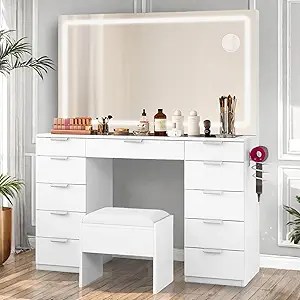
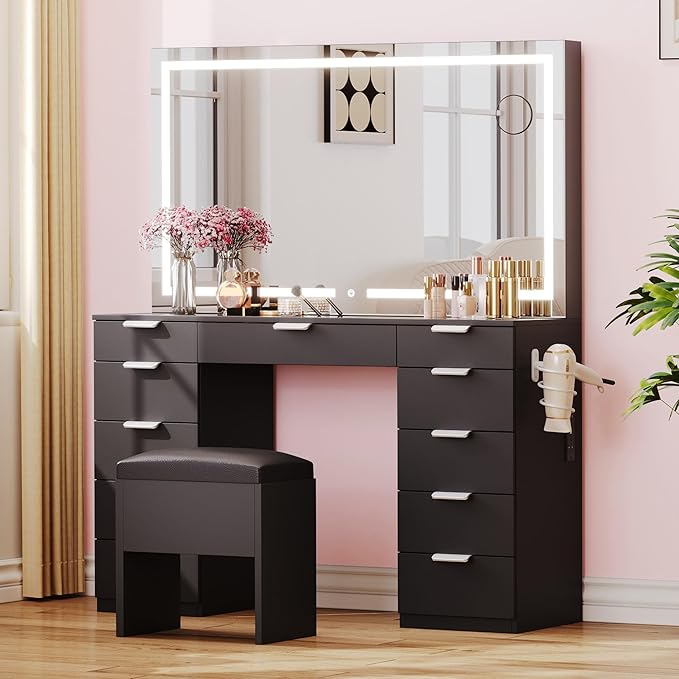
  • DWVO Makeup Vanity Set with LED Mirror and Charging Station, Modern Vanity Desk with 11 Drawers and Storage Stool, 3 Adjustable Lighting Modes

    DWVO Makeup Vanity Set with LED Mirror and Charging Station, Modern Vanity Desk with 11 Drawers and Storage Stool, 3 Adjustable Lighting Modes

    Color: White

    Size: Large

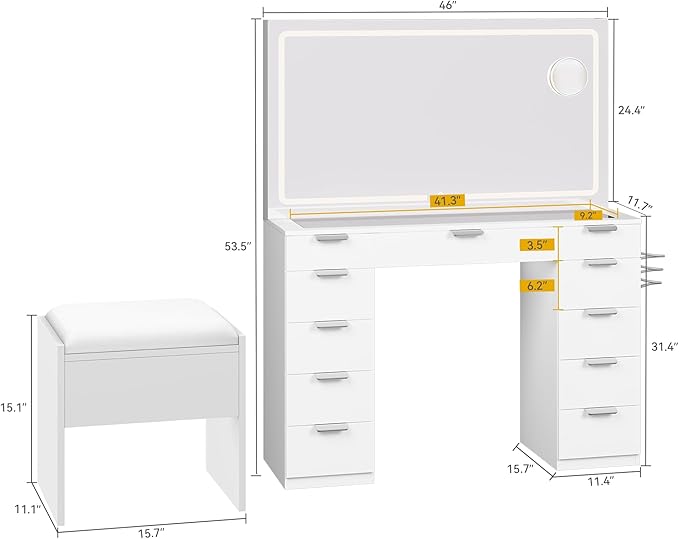
    Product Dimensions: 15.7″D x 46″W x 55.9″H

    Furniture Finish: White

    Brand: DWVO

    Material: Wood

    Style: LED Strip with Glass Top

    Number of Drawers: 11

    Item Weight: 133.16 Pounds

    26-
    DWVO Makeup Vanity Set with LED Mirror and Charging Station, Modern Vanity Desk with 11 Drawers and Storage Stool, 3 Adjustable Lighting Modes

    • Wood
    • Elegant Tempered Glass Tabletop: Enjoy a spacious and sophisticated surface on the vanity that beautifully showcases your items while providing a clear view of drawer contents; The transparent design adds a touch of elegance to any room, making it a versatile addition to your home decor
    • Ample Storage Space: Keep your makeup, perfumes, hair tools, and other essentials neatly organized in 11 spacious drawers; This vanity set also features a storage stool for additional storage, allowing you to easily access your belongings whenever you need them
    • Extra-Large LED Mirror: The 46” x 24.4” LED lighted mirror provides a broad viewing angle, giving you a comprehensive look at your beauty from every angle; With 3 adjustable color modes, you can effortlessly customize the lighting to suit your preferences with a simple touch
    • Convenient Features: Designed for maximum user convenience, this versatile makeup desk includes a built-in charging station (with 2 standard plug sockets and 2 USB ports) and a dedicated hair dryer rack; Keep your hair tools and devices always within reach; Ideal for dressing rooms, bedrooms, salons, or live broadcast settings
    • Dimensions & Assembly: The vanity desk measures 46″ x 15.7″ x 55.9″ (L x W x H), and the stool measures 15.7″ x 11.1″ x 15.1″ (L x W x H); Assembly is straightforward with labeled parts and clear instructions; Any broken mirror or missing parts will be replaced for your peace of mind

    26-
    DWVO Makeup Vanity Set with LED Mirror and Charging Station, Modern Vanity Desk with 11 Drawers and Storage Stool, 3 Adjustable Lighting Modes

    Amazon Product Review: DWVO Makeup Vanity Set with LED Mirror and Charging Station

    If you’re in the market for a stylish and functional makeup vanity, the DWVO Makeup Vanity Set with LED Mirror and Charging Station might just be your perfect match. This modern vanity set combines elegance with practicality, offering a blend of beauty and utility that’s ideal for any makeup enthusiast or those seeking to elevate their vanity setup. Let’s delve into what makes this product a standout choice.

    26-
    DWVO Makeup Vanity Set with LED Mirror and Charging Station, Modern Vanity Desk with 11 Drawers and Storage Stool, 3 Adjustable Lighting Modes

    Design and Build Quality

    The DWVO Makeup Vanity Set is finished in a pristine white color, which adds a touch of sophistication to any room. Its large dimensions, measuring 15.7″D x 46″W x 55.9″H, ensure ample space for all your makeup essentials. The vanity’s wood construction is complemented by an elegant tempered glass tabletop. This clear surface not only showcases your items beautifully but also makes it easy to view the contents of the drawers at a glance. The glass top adds a refined touch to the vanity, making it a versatile piece that fits seamlessly into various home decor styles.

    26-
    DWVO Makeup Vanity Set with LED Mirror and Charging Station, Modern Vanity Desk with 11 Drawers and Storage Stool, 3 Adjustable Lighting Modes

    Storage and Organization

    One of the most appealing features of this vanity set is its exceptional storage capacity. With 11 spacious drawers, you have plenty of room to keep your makeup, perfumes, hair tools, and other essentials neatly organized. The set also includes a storage stool, which not only provides a comfortable seating option but also offers additional storage space. This thoughtful design ensures that everything you need is easily accessible, reducing clutter and keeping your vanity area tidy.

    26-
    DWVO Makeup Vanity Set with LED Mirror and Charging Station, Modern Vanity Desk with 11 Drawers and Storage Stool, 3 Adjustable Lighting Modes

    LED Mirror and Lighting

    The standout feature of the DWVO Makeup Vanity Set is its extra-large LED mirror, measuring 46” x 24.4”. This mirror provides a broad viewing angle, allowing you to see every detail of your beauty routine from any angle. The mirror is equipped with LED lighting that offers three adjustable color modes. Whether you need bright, natural, or warm light, you can effortlessly switch between modes with a simple touch, ensuring you achieve the perfect lighting for any makeup look.

    26-
    DWVO Makeup Vanity Set with LED Mirror and Charging Station, Modern Vanity Desk with 11 Drawers and Storage Stool, 3 Adjustable Lighting Modes

    Convenient Features

    In addition to its aesthetic appeal and functionality, the DWVO vanity set is designed with user convenience in mind. It includes a built-in charging station featuring two standard plug sockets and two USB ports, allowing you to keep your devices charged and ready. The vanity also has a dedicated hair dryer rack, making it easy to store and access your hair tools. These features are particularly useful in dressing rooms, bedrooms, salons, or live broadcast settings where practicality and organization are key.

    26-
    DWVO Makeup Vanity Set with LED Mirror and Charging Station, Modern Vanity Desk with 11 Drawers and Storage Stool, 3 Adjustable Lighting Modes

    Dimensions and Assembly

    The vanity desk’s dimensions are 46″ x 15.7″ x 55.9″ (L x W x H), while the stool measures 15.7″ x 11.1″ x 15.1″ (L x W x H). Assembly is straightforward, with labeled parts and clear instructions provided. Additionally, the manufacturer offers peace of mind with a replacement guarantee for any broken mirror or missing parts.

    26-
    DWVO Makeup Vanity Set with LED Mirror and Charging Station, Modern Vanity Desk with 11 Drawers and Storage Stool, 3 Adjustable Lighting Modes

    Best Buy

    The DWVO Makeup Vanity Set with LED Mirror and Charging Station is a well-designed and functional addition to any makeup lover’s space. Its elegant design, ample storage, and convenient features make it a worthwhile investment for anyone looking to enhance their beauty routine. Whether you’re preparing for a special occasion or simply enjoying your daily routine, this vanity set provides both style and practicality, making it a top choice for modern home decor.

    If you’re ready to upgrade your vanity setup, the DWVO Makeup Vanity Set offers everything you need to look and feel your best.

    By Amjad Izhar
    Contact: amjad.izhar@gmail.com
    https://amjadizhar.blog

  • Vintage Home Decor Trends That Are Making A Comeback

    Vintage Home Decor Trends That Are Making A Comeback

    Nostalgia has always had a place in our hearts—but now, it’s taking center stage in our homes. As modern design continues to dominate, a surprising countertrend is weaving its way into interiors: the revival of vintage home decor. From mid-century furniture to ornate wallpaper, what was once deemed old-fashioned is now celebrated as timeless and sophisticated.

    What’s fueling this return to vintage aesthetics? In part, it’s the growing desire for individuality in a world of mass-produced decor. As people seek more meaningful and expressive ways to shape their living spaces, they’re turning to the past for inspiration that offers both charm and character. This shift isn’t simply about recycling old styles; it’s about integrating history, craftsmanship, and emotional resonance into the contemporary home.

    Design theorist Alain de Botton once said, “Our homes are the museums of our souls.” And indeed, incorporating vintage elements into modern interiors allows for a deeper narrative—a storytelling space where old-world charm meets new-age sensibilities. This post explores the vintage trends making a powerful resurgence and how they speak to our cultural psyche today.


    1- The Rise of Mid-Century Modern

    Mid-century modern furniture, with its clean lines and organic forms, has seen a massive revival in recent years. Originally peaking in popularity during the 1950s and 60s, this style emphasizes functionality with elegance, using materials like teak wood, molded plastic, and leather. Its return signifies a preference for simplicity that doesn’t sacrifice visual impact—perfect for modern minimalists with a taste for history.

    Design historian Cara Greenberg, in her seminal book Mid-Century Modern: Furniture of the 1950s, argues that this aesthetic endures because of its balance between form and purpose. Today, the integration of mid-century pieces into contemporary interiors offers a sense of continuity, blending old-world craftsmanship with modern needs. It’s not just a trend; it’s a testament to enduring design principles.


    2- Wallpaper Renaissance

    The resurgence of wallpaper marks a return to expressive and textured wall treatments. After years of plain white or grey walls, homeowners are re-embracing patterned wallpaper to add depth and personality. Florals, damasks, and even retro geometrics are being used to anchor spaces and tell visual stories.

    British interior designer Abigail Ahern notes, “Wallpaper is the most transformative tool in your decor arsenal.” From moody vintage florals in bedrooms to bold 70s-style prints in powder rooms, wallpaper is becoming a design staple that makes a room feel curated rather than cookie-cutter. Books like The Art of Wallpaper by Phillippa Mapes explore its cultural evolution and contemporary relevance.


    3- Antique Mirrors and Gilded Frames

    Antique mirrors and gilded frames aren’t just decorative—they’re artifacts of elegance and tradition. These reflective surfaces do more than bounce light; they inject a room with drama, depth, and a hint of aristocratic grandeur. Their return speaks to a yearning for opulence in an age of sleek modernity.

    The use of baroque and rococo elements, particularly in statement mirrors, echoes the sentiment found in Edith Wharton’s The Decoration of Houses, where ornamentation is treated not as excess but as essential. A carefully placed antique mirror can serve as both focal point and conversation piece, connecting past craftsmanship with present-day design sensibilities.


    4- Reclaimed Wood and Vintage Furniture

    Sustainability and style come together in the growing use of reclaimed wood and vintage furniture. Rather than purchasing mass-produced items, many homeowners are investing in furniture that tells a story—each scratch or weathered edge a testament to a life once lived.

    This movement reflects what design scholar Victor Margolin describes in The Politics of the Artificial—a pivot from disposable culture toward meaningful materiality. Reclaimed furniture offers aesthetic warmth and ecological mindfulness, turning old materials into heirloom-worthy pieces with fresh purpose.


    5- The Return of Clawfoot Tubs

    Clawfoot tubs, once a hallmark of Victorian luxury, are bubbling back into bathrooms with surprising popularity. Their romantic silhouette and cast-iron durability offer a respite from the angular modern bath designs that have dominated for decades.

    More than a style choice, clawfoot tubs invite slow living—a moment of pause in the chaos of contemporary life. In A History of the Bath, historian Jean-Paul Aron discusses how bathing rituals once signified leisure and luxury. Today, these vintage tubs bring that sense of indulgence back into our routines.


    6- Vintage Rugs with Storytelling Patterns

    Vintage Persian, Turkish, and Moroccan rugs are reclaiming the spotlight in home interiors. These handwoven pieces often carry generational stories, cultural symbolism, and a richness that machine-made rugs simply can’t replicate.

    Interior designer Nate Berkus emphasizes that “your home should tell the story of who you are.” Vintage rugs do just that—layering a space with color, history, and texture. They’re more than floor coverings; they’re art for your feet. For those interested in deeper study, Carpets and Rugs of Europe and America by Sarah B. Sherrill is a foundational text.


    7- Art Deco Glamour

    Art Deco, with its bold geometry and luxurious materials, is having a moment once again. Gold finishes, lacquered surfaces, and streamlined shapes are finding their way back into modern homes, particularly in lighting and furniture design.

    This return to Deco signals a renewed appreciation for drama and decadence in interiors. As design critic Bevis Hillier wrote in Art Deco of the 20s and 30s, this style was born of optimism and technological progress—qualities still resonant today. Art Deco allows for opulence without excess, making it ideal for the discerning modern homeowner.


    8- Retro Kitchen Appliances

    Retro-style appliances in bold hues—think mint-green fridges or cherry-red stoves—are cropping up in kitchens everywhere. While they echo the charm of 50s Americana, today’s versions are equipped with modern efficiency.

    These appliances serve as a nostalgic nod while offering current functionality, marrying form and function in a highly visible space. The trend also aligns with the growing popularity of open-plan kitchens, where visual aesthetics matter as much as usability. The American Kitchen, 1880–1980 by Ellen Lupton provides excellent historical context for this shift.


    9- Macramé and Handmade Textiles

    Macramé wall hangings and other handcrafted textiles are making a strong return, reflecting a broader desire for tactile, artisan-made decor. These pieces bring texture and authenticity into sterile or minimalist spaces.

    Anthropologist Daniel Miller in The Comfort of Things emphasizes how handmade items foster emotional connections. In a digital age, the presence of handcrafted work reconnects us with the human touch—each knot in a macramé wall hanging a reminder of slow, intentional creation.


    10- Vintage Lighting Fixtures

    Vintage lighting, from crystal chandeliers to industrial sconces, is illuminating homes with character and style. These fixtures go beyond function, serving as sculptural elements that anchor and elevate a space.

    Design expert Ilse Crawford notes that lighting is “not just about visibility, but mood, identity, and ritual.” Reintroducing vintage lighting adds narrative depth, turning light into a storytelling medium. For design lovers, Light: A Radiant History from Creation to the Quantum Age by Bruce Watson offers a compelling backdrop.


    11- Patterned Tiles

    Encaustic and patterned tiles, popular in early 20th-century European homes, are now making waves in contemporary kitchens and bathrooms. With motifs ranging from Moorish to Mediterranean, these tiles bring global flair and visual richness.

    Books like The Tile Book by Elizabeth Hilliard delve into the artistry and cultural importance of tilework. These vibrant surfaces allow homeowners to experiment with pattern and color in bold yet controlled ways—merging vintage elegance with modern function.


    12- Rattan and Wicker Resurgence

    Once confined to sunrooms and patios, rattan and wicker furniture are now turning up in bedrooms, living rooms, and even office spaces. Their airy texture and organic appeal offer a soothing counterpoint to synthetic materials.

    Interior historian Judith Miller, in her book Furniture: World Styles from Classical to Contemporary, notes that natural fibers like rattan symbolize leisure and craftsmanship. Their modern reapplication shows how traditional materials can be repurposed for contemporary sophistication.


    13- Oil Paintings and Portraits

    Displaying antique oil paintings or vintage portraits—particularly those of unknown figures—has become a popular design choice, offering a mysterious, museum-like atmosphere. These artworks bring gravitas and historical intrigue to modern interiors.

    Curator Charlotte Gere, in Nineteenth-Century Decoration: The Art of the Interior, highlights how portraiture once reflected societal values. Today, these pieces serve more personal aims—expressing taste, curiosity, and a reverence for the artistic past.


    14- Skirted Tables and Layered Fabrics

    Skirted tables, once seen as outdated, are being reinterpreted with modern fabrics and fresh silhouettes. These pieces bring softness and elegance, especially in spaces dominated by hard lines and bare surfaces.

    Layered fabrics, including tablecloths, throws, and window dressings, also signal a turn toward coziness and complexity. In The Finer Things by Christiane Lemieux, the layering of materials is celebrated as a mark of a well-considered home—one that invites touch, comfort, and reflection.


    15- Cane and Bentwood Chairs

    Chairs with cane seating or bentwood frames, especially those in the Thonet style, are being embraced for their sculptural beauty and lightweight practicality. Their fluid forms and breathable textures make them ideal for small or sunlit spaces.

    These chairs are rooted in 19th-century European design but still resonate with today’s aesthetic values: elegance, simplicity, and sustainability. For readers interested in furniture evolution, 1000 Chairs by Charlotte and Peter Fiell provides valuable insight.


    16- Vintage Glassware and Ceramics

    Vintage glassware, from Depression-era patterns to colored goblets, is gracing dining tables with retro elegance. Similarly, handmade vintage ceramics are being used not just for function but as display-worthy objects.

    These pieces celebrate imperfection and individuality, inviting a return to tactile, non-uniform beauty. As Bernard Leach wrote in A Potter’s Book, “The true artist potter seeks to express his inner vision through form and glaze.” These items echo that vision, blending art and utility.


    17- Brass Accents

    Brass hardware, lighting, and accessories are warming up interiors with a rich, golden patina. Unlike polished chrome or stainless steel, aged brass offers a sense of depth and personality.

    In The Elements of Style, Stephen Calloway describes how metals influence the psychological temperature of a room. Brass adds an inviting, old-world glow that balances both modern and vintage design elements. Its current resurgence signals a preference for materials with soul.


    18- Vintage Clocks and Timepieces

    Classic wall clocks, grandfather clocks, and Art Deco timepieces are regaining popularity as focal decor elements. They evoke tradition, permanence, and the slow passage of time—an antidote to digital haste.

    Architectural historian Witold Rybczynski, in Home: A Short History of an Idea, notes how the objects we live with shape our experience of space and time. Vintage clocks not only mark hours but contribute to an atmosphere of contemplation and heritage.


    19- Old Books as Decor

    Stacks of antique books, leather-bound classics, and even old encyclopedias are once again adorning shelves and side tables. They function as both intellectual statement and design feature.

    Beyond their aesthetic, old books evoke what Umberto Eco called the “eroticism of the library”—a love of knowledge, of mystery, and of things well-made. Design-wise, they create visual rhythm and texture while speaking to the homeowner’s mind and spirit.


    20- Heirloom Textiles and Quilts

    Hand-stitched quilts and embroidered heirloom textiles are making a resurgence as cherished decor pieces. They serve as warm, nostalgic touches and as testaments to craftsmanship and familial history.

    Design scholar Glenn Adamson, in Fewer, Better Things, reminds us that the value of objects often lies in their stories. Vintage textiles carry narratives—of hands that worked, of homes that sheltered, of care passed from one generation to another. Integrating them into decor is both a design choice and a cultural act.


    21- Interior Design Trends That Are Back with a Bang

    The design world is cyclic, and several interior trends once relegated to the past are now front and center. Think velvet upholstery, brass details, and dramatic statement pieces—all re-emerging with newfound appreciation. This revival isn’t mere nostalgia; it reflects a collective pivot towards layered, emotionally resonant spaces.

    According to Ingrid Fetell Lee, author of Joyful, design trends that spark joy often resurface because they fulfill a human need for emotional connection. What once felt dated is now reframed through a lens of intentionality and refinement, blending past allure with modern comfort.


    22- Wall Sconces

    Wall sconces are lighting up interiors once again, offering both function and flair. These versatile fixtures—once common in traditional homes—now feature sleek, modern interpretations, adding ambient lighting without consuming floor or table space.

    Interior stylist Emily Henderson notes that sconces “create dimension and softness in a room’s lighting plan.” Whether framing a mirror or accenting a hallway, vintage-inspired wall sconces elevate interiors with a balanced mix of old-world charm and contemporary utility.


    23- Metal Frame Beds

    Metal frame beds, especially those with iron or brass finishes, are experiencing a renaissance in bedroom decor. Their timeless silhouettes and durability make them ideal for eclectic, rustic, or minimalist aesthetics.

    Design author Terence Conran, in Essential Home, emphasizes how metal beds add structural beauty and allow for airiness in small spaces. Their presence in vintage-inspired rooms speaks to a taste for clean lines and enduring craftsmanship.


    24- Dried Flowers

    Dried floral arrangements are no longer confined to grandmother’s sitting room—they’re a staple in modern rustic and bohemian interiors. With soft hues and sculptural shapes, dried flowers offer longevity and a subtle, poetic presence.

    These arrangements complement vintage decor by adding organic texture and an air of impermanence. As florist Willow Crossley suggests in The Art of Handmade Living, “Dried blooms remind us that beauty doesn’t fade; it changes form.”


    25- Checkerboard Flooring

    Checkerboard flooring is making a bold comeback in kitchens, foyers, and bathrooms. Whether rendered in classic black-and-white or softer neutrals, it injects vintage drama with a graphic punch.

    Design historians point to this pattern’s origins in 15th-century European palaces. Its reappearance today signifies a craving for timeless boldness—structured, symmetrical, and deeply rooted in tradition.


    26- Textured Surfaces

    From plastered walls to grooved wood and tactile wallpapers, textured surfaces are re-entering the scene. These elements add depth, sensory engagement, and a break from the sterile flatness of minimalist trends.

    In The Sensual Home, Ilse Crawford advocates for texture as a way to “bring the human back into the space.” This design philosophy values physical interaction with surfaces—making vintage textures not just aesthetic but experiential.


    27- Pink Bathrooms

    Pink-tiled bathrooms, an icon of 1950s interior style, are blushing their way back into homes. From rose quartz to blush tones, this soft palette is reclaiming space with retro appeal and modern whimsy.

    Interior design expert Jonathan Adler notes that “color is the least expensive way to transform a room.” Pink bathrooms balance nostalgia with playfulness, offering a chic alternative to the starkness of contemporary design.


    28- Art Deco Style

    Art Deco is not only back—it’s thriving, once again embodying elegance and exuberance. From fan motifs and sunbursts to mirrored surfaces and bold symmetry, Deco design delivers visual drama with restraint.

    As historian Michael Windover explains in Art Deco: A Mode of Mobility, the movement reflects progress and optimism. Today, Art Deco’s revival offers a stylistic escape into sophistication and ornamental pride.


    29- 70s Palettes

    Earthy oranges, avocado greens, and mustard yellows—once symbolic of the 1970s—are making a fashionable return. These rich, warm hues lend themselves to cozy, grounded interiors.

    Design publications like Domino have spotlighted this trend’s comeback as a response to sterile, grayscale minimalism. Infusing spaces with vintage hues evokes a comforting familiarity while encouraging bold, expressive color stories.


    30- Sink Skirts

    Once considered old-fashioned, sink skirts are reappearing in stylish kitchens and bathrooms. Replacing cabinet doors with patterned fabrics adds a cottagecore charm and allows for easier customization.

    In At Home with Country Style, Jocasta Innes lauds this element for its blend of practicality and prettiness. Today’s homeowners embrace sink skirts for their softness and flexibility—perfect for vintage-inspired domesticity.


    31- Corner Sofas

    Corner or sectional sofas are reclaiming popularity for their space-maximizing function and communal comfort. Though a staple of 70s living rooms, these furnishings now appear in luxe fabrics and modular formats.

    Interior expert Kelly Wearstler emphasizes the “sculptural power of large seating.” When chosen with vintage detailing or textures, corner sofas become both centerpiece and invitation—to lounge, converse, and linger.


    32- Exposed Brick

    Exposed brick walls are once again being celebrated for their industrial warmth and authenticity. They add history, texture, and an earthy contrast to polished modern interiors.

    Architectural theorist Juhani Pallasmaa, in The Eyes of the Skin, argues that tactile materials like brick evoke memory and emotion. Their resurgence supports a move toward grounded, sensorial architecture that honors a building’s origins.


    33- Fringing

    Fringed lampshades, pillows, and furniture are swinging back into fashion. Once seen as fussy, fringe is now a playful yet elegant embellishment, especially in boho or glam settings.

    In Designing Interiors, Rosemary Kilmer notes that fringe adds “movement and luxury” to textiles. When used judiciously, it becomes a tasteful nod to Art Nouveau or 20s flair—without overwhelming the eye.


    34- Primary Colors

    Red, blue, and yellow—once the bold foundation of Bauhaus and Pop Art design—are making a vivid return in contemporary decor. These colors energize spaces while maintaining an intellectual, design-forward appeal.

    Design expert Leatrice Eiseman, in Color: Messages and Meanings, explains how primary colors communicate strength and clarity. Their revival in interiors is a testament to confident, unapologetic design rooted in modernist principles.


    35- Wicker Furniture

    Wicker has transitioned from patios to parlor rooms, offering airy textures and eco-conscious appeal. Its woven elegance suits both vintage and contemporary tastes.

    Design writer Judith Miller describes wicker in The Style Sourcebook as “the texture of leisure.” Reimagined with modern cushions and sleek lines, it provides timeless relaxation in stylish form.


    36- Dark Kitchens

    Black cabinetry, navy walls, and dark stone counters are shifting kitchens away from all-white monotony. This moody, dramatic look adds sophistication and coziness.

    In The New Kitchen, design strategist Terence Conran notes that darker palettes offer “depth and grounding.” They allow vintage brassware, wooden features, or open shelving to stand out more vividly.


    37- Wood Cladding

    Wood-paneled walls, once a staple of 70s dens, are back in favor—but with a refined twist. Today’s wood cladding embraces natural tones, vertical slats, and minimalist applications.

    This approach adds organic warmth and texture, echoing biophilic design principles. Books like The Nature of Home by Jeffrey Dungan discuss the calming, grounding effects of natural wood in interiors.


    38- Colorful Kitchen Appliances

    From buttercup to baby blue, kitchen appliances are popping with color once again. These cheerful gadgets offer a vintage aesthetic while functioning with modern efficiency.

    This trend merges emotional design with utility—a concept Donald Norman elaborates in Emotional Design. Bright appliances serve as statement pieces that lighten the mood and express personal style.


    39- Succulents and Cacti

    Succulents and cacti have re-established themselves as low-maintenance, high-style decor elements. Popular in mid-century interiors, these plants are back in chic ceramic pots and minimalist displays.

    Their sculptural forms complement vintage furniture while introducing biophilic benefits. According to botanist Stefano Mancuso, in The Revolutionary Genius of Plants, these hardy species can transform indoor atmospheres subtly and effectively.


    40- Square Tiles

    Square ceramic tiles are making a polished return in kitchens and bathrooms. Their geometric simplicity allows for classic or bold designs, especially in retro hues.

    These tiles offer a clean, structured backdrop for vintage-inspired fittings and finishes. Their popularity today reaffirms the idea that basic shapes, when executed with care, never go out of style.


    41- Neon Lights

    Neon signage and lighting—once seen in diners and arcades—are now trendy additions to home offices and lounges. Modern takes feature soft tones and ironic phrases, blending humor with art.

    Design theorist Peter Hall, in Design Literacy, argues that neon captures the spirit of cultural zeitgeist. Its reappearance reflects our desire for nostalgia laced with personality and irony.


    42- Macramé

    Macramé continues its boho resurgence, extending beyond wall hangings to plant holders, curtains, and even room dividers. This tactile craft adds softness, warmth, and handmade appeal to sterile spaces.

    Textile historian Mary Schoeser, in World Textiles, celebrates macramé for its cross-cultural roots and enduring popularity. Its slow, intentional creation aligns with today’s return to slow living and artisanal value.


    43- Decorative Tiles

    From Portuguese azulejos to Spanish encaustics, decorative tiles are making a major impact in modern interiors. These patterned tiles offer a vintage aesthetic with cultural depth.

    They’re often used to create visual interest in small spaces—like backsplashes or fireplace surrounds. Their revival showcases a return to storytelling surfaces, rich with history and handmade detail.


    44- Vinyl Record Players

    Vinyl players and turntables are returning not only as audio devices but as retro-chic decor elements. Paired with vintage speakers and records, they create nostalgic corners rich in atmosphere.

    Music historian Elijah Wald, in How the Beatles Destroyed Rock ‘n’ Roll, suggests that analog sound offers a sensory richness digital formats can’t match. Vinyl decor appeals to both ears and eyes.


    45- Blousy Florals

    Large-scale floral prints on curtains, wallpaper, and upholstery are flourishing once again. These romantic patterns add vintage charm and create soft, storybook-like environments.

    Design expert Cath Kidston emphasizes that florals evoke both nature and comfort. In rooms dominated by neutrals, these bold botanicals add life and layered emotion.


    46- Maximalism

    Maximalism is overtaking minimalism, encouraging a curated abundance of color, pattern, and texture. Unlike clutter, maximalism is about thoughtful layering and bold expression.

    Author and design maven Anna Spiro, in Absolutely Beautiful Things, champions maximalism as “a reflection of collected life.” This style leans heavily on vintage finds and deeply personal choices.


    47- Gingham

    Once associated with farmhouse kitchens and retro dresses, gingham is back as a playful yet polished design element. Whether in linens, upholstery, or wallpaper, it brings a quaint charm into modern homes.

    Its simple grid offers both structure and whimsy. As a pattern, it resonates with the current desire to reconnect with simplicity, warmth, and timeless appeal—qualities explored beautifully in The Pattern Sourcebook by Drusilla Cole.


    Conclusion

    The return of vintage home decor trends reveals more than a change in taste—it speaks to a cultural longing for substance, story, and soul in our surroundings. As our homes become havens of comfort and expression, these resurging styles help us connect with history, artistry, and our own identities. In embracing the beauty of the past, we are designing homes that feel more like reflections of who we truly are.

    Vintage home decor is more than a stylistic revival—it’s a cultural response to a world increasingly dominated by speed, sameness, and disposability. Each returning trend, from mid-century furniture to heirloom quilts, represents a deeper yearning for meaning, history, and connection in the spaces we inhabit. These designs aren’t just making a comeback—they’re redefining what it means to live beautifully, mindfully, and with a sense of legacy.

    Bibliography

    1. Conran, Terence. The New Kitchen. Octopus Publishing Group, 2014.
    2. Crawford, Ilse. The Sensual Home: Liberate Your Senses and Change Your Life. Clarkson Potter, 1997.
    3. Dungan, Jeffrey. The Nature of Home: Creating Timeless Houses. Rizzoli, 2018.
    4. Eiseman, Leatrice. Color: Messages and Meanings. Hand Books Press, 2006.
    5. Fetell Lee, Ingrid. Joyful: The Surprising Power of Ordinary Things to Create Extraordinary Happiness. Little, Brown Spark, 2018.
    6. Hall, Peter. Design Literacy: Understanding Graphic Design. MIT Press, 1997.
    7. Innes, Jocasta. At Home with Country Style. Anova Books, 1991.
    8. Kidston, Cath. Coming Up Roses: The Story of Growing a Business. Quadrille Publishing, 2013.
    9. Kilmer, W. Otie, and Rosemary Kilmer. Designing Interiors. John Wiley & Sons, 2013.
    10. Mancuso, Stefano. The Revolutionary Genius of Plants: A New Understanding of Plant Intelligence and Behavior. Atria Books, 2018.
    11. Miller, Judith. The Style Sourcebook. Mitchell Beazley, 2001.
    12. Norman, Donald A. Emotional Design: Why We Love (or Hate) Everyday Things. Basic Books, 2004.
    13. Pallasmaa, Juhani. The Eyes of the Skin: Architecture and the Senses. Wiley, 2005.
    14. Schoeser, Mary. World Textiles: A Concise History. Thames & Hudson, 2003.
    15. Spiro, Anna. Absolutely Beautiful Things: Decorating Inspiration for a Bright and Colourful Life. Lantern, 2014.
    16. Wald, Elijah. How the Beatles Destroyed Rock ‘n’ Roll: An Alternative History of American Popular Music. Oxford University Press, 2009.
    17. Windover, Michael. Art Deco: A Mode of Mobility. University of Toronto Press, 2012.
    18. Cole, Drusilla. The Pattern Sourcebook: A Century of Surface Design. Laurence King Publishing, 2009.
    19. Crossley, Willow. The Art of Handmade Living: Crafting a Beautiful Home. CICO Books, 2012.

    By Amjad Izhar
    Contact: amjad.izhar@gmail.com
    https://amjadizhar.blog

  • Cleaning Hacks To Save You Time, Effort

    Cleaning Hacks To Save You Time, Effort

    In a world that never stops spinning, who has hours to spare on exhaustive cleaning routines? Time is the most coveted resource today, and when your surroundings are cluttered, your mind often follows suit. Thankfully, modern cleaning strategies have evolved beyond elbow grease and endless scrubbing—what you need are smart, science-backed, and time-saving hacks that make your home sparkle without the burnout.

    As Aristotle once said, “Quality is not an act, it is a habit.” The same philosophy applies to maintaining cleanliness. It’s not about one monumental cleaning day, but about embedding small yet effective habits into your daily life. This blog post explores transformative cleaning hacks that significantly reduce effort while enhancing effectiveness—perfect for busy professionals, intellectuals, and critical thinkers who want order without the overwhelm.

    Drawing insights from productivity experts like Tim Ferriss and organizing geniuses like Marie Kondo, this guide combines practical wisdom with efficiency techniques. Whether you’re dealing with dusty shelves or murky microwaves, you’ll learn how to streamline your approach, harness the power of psychology, and clean smarter—not harder.


    1- Declutter First, Clean Later

    A cluttered environment can be overwhelming and demotivating. Before diving into any deep cleaning, take a few minutes to remove unnecessary items from surfaces. Decluttering enhances the efficiency of your cleaning routine, allowing you to focus on what truly needs your attention. It also helps prevent redistributing dirt from one item to another. Think of it as preparing the canvas before painting—clarity leads to better results.

    In The Life-Changing Magic of Tidying Up, Marie Kondo emphasizes that letting go of items that no longer serve a purpose creates not only a cleaner space but also a clearer mind. Use this principle as a mental reset before any cleaning task. Once decluttered, surfaces become easier to wipe down, vacuuming becomes faster, and overall productivity increases.


    2- Use Microfiber Cloths Over Paper Towels

    Microfiber cloths are a game-changer in modern cleaning. Their unique fibers attract dust, dirt, and even bacteria more effectively than conventional paper towels. Reusable and durable, they can handle everything from window cleaning to appliance polishing without leaving streaks or lint behind. They’re also eco-friendly, helping reduce waste in your home.

    Research in the Journal of Environmental Health has shown that microfiber outperforms traditional materials in removing microbes from surfaces. These cloths are also highly cost-effective in the long run. You can launder them repeatedly without significant degradation, making them ideal for anyone looking to clean efficiently without compromising on hygiene.


    3- Vinegar and Baking Soda Combo

    This age-old combination is a powerhouse for eco-conscious cleaning. When mixed, vinegar and baking soda create a fizzy chemical reaction that breaks down grime and deodorizes surfaces. Ideal for drains, stovetops, and bathroom tiles, this solution is both safe and effective, making it a staple in natural cleaning arsenals.

    The acetic acid in vinegar dissolves mineral deposits and kills bacteria, while baking soda acts as a gentle abrasive. According to cleaning experts like Jolie Kerr, author of My Boyfriend Barfed in My Handbag, this combo can outperform many commercial cleaners—especially when used with a bit of patience and the right technique.


    4- Clean Top to Bottom

    Gravity is not your cleaning friend if you’re working bottom-up. Always clean higher surfaces like shelves and ceiling fans first, letting the dust and debris fall to lower areas, which you can then clean last. This method avoids duplicating efforts and ensures a more comprehensive clean.

    This approach aligns with the principles outlined in Atomic Habits by James Clear, which advocates for small, logical adjustments to daily routines that lead to big gains. By simply changing your cleaning direction, you increase both speed and thoroughness, turning a chore into a thoughtful, efficient process.


    5- The 15-Minute Daily Tidy

    Time-boxing your cleaning into short, daily intervals can prevent mess from escalating. Allocate just 15 minutes each day to tidy up high-use areas such as the kitchen, living room, or bathroom. Over time, this reduces the need for large-scale deep cleans and keeps your home in a constant state of readiness.

    This strategy is rooted in behavioral science. BJ Fogg, in Tiny Habits, argues that incremental changes compound into lasting routines. A daily tidy-up is easier to maintain and less intimidating, especially when paired with music, a timer, or even mindfulness techniques.


    6- Steam Clean Without Chemicals

    Steam cleaners use high-temperature water vapor to sanitize surfaces. They’re especially effective in bathrooms, kitchens, and areas prone to bacteria and mold. Since steam penetrates porous surfaces and lifts dirt without harsh chemicals, it’s ideal for households with children or pets.

    Research in Environmental Science & Technology highlights steam’s ability to kill over 99% of bacteria and viruses. It’s a method that aligns with both health and environmental sustainability. Experts like Nancy Bock from the American Cleaning Institute recommend steam for allergen reduction and long-term surface care.


    7- Invest in a Quality Vacuum Cleaner

    A high-efficiency vacuum cleaner saves both time and effort. Look for models with HEPA filters, which trap microscopic particles and improve indoor air quality. Upright models with attachments make it easier to clean stairs, upholstery, and even ceilings with minimal strain.

    According to Consumer Reports, investing in a powerful, well-designed vacuum can cut cleaning time by nearly half. It also protects your flooring investment and supports a healthier home environment, particularly for allergy sufferers. Choose smart, and your vacuum will work harder—so you don’t have to.


    8- Use the “Two Hands” Rule

    This productivity trick involves always using both hands while cleaning. For example, use one hand to spray while the other wipes, or carry two items when decluttering. It’s about maximizing every motion and eliminating idle time.

    This rule echoes the lean management principles introduced by Taiichi Ohno in Toyota Production System, where efficiency is gained through reducing “muda” (waste). Apply this to household tasks and you’ll find you move faster and cleaner through your to-do list.


    9- Clean as You Go

    Leaving messes to pile up increases the effort needed later. Cleaning as you go—after meals, during cooking, or post-shower—prevents buildup and keeps your environment consistently fresh. It’s a discipline that pays dividends in mental clarity and daily satisfaction.

    This approach is highly endorsed by Charles Duhigg in The Power of Habit, where he explains how small routines create self-reinforcing loops. Clean as you go becomes second nature, turning potential overwhelm into manageable micro-tasks.


    10- Use Dryer Sheets for Dusting

    Dryer sheets are excellent for dusting baseboards, blinds, and electronics. Their anti-static properties not only attract dust but also prevent it from resettling quickly. Plus, they leave a subtle fragrance behind.

    This low-cost hack is backed by homemaking experts like Melissa Maker of Clean My Space, who advocates using unconventional items to streamline chores. Dryer sheets are particularly handy for delicate surfaces where traditional dusters fall short.


    11- Lemons for Shine and Deodorizing

    Lemons are natural degreasers and deodorizers. Use them to clean cutting boards, stainless steel, or even microwaves. Their acidity helps break down stains while leaving a fresh, clean scent.

    In Home Comforts: The Art and Science of Keeping House, Cheryl Mendelson highlights citrus as a natural choice for sustainable cleaning. Lemons combine aroma and efficacy—ideal for anyone seeking to avoid synthetic fragrances.


    12- Multi-Task With Cleaning Products

    Choose multipurpose cleaning products to cut down on both clutter and confusion. Products that can handle glass, counters, and appliances streamline your process and reduce the number of steps required.

    This efficiency principle is akin to Tim Ferriss’ “80/20 Rule” from The 4-Hour Workweek—focusing on tools that provide maximum output with minimal input. A good multipurpose cleaner not only saves time but simplifies decision-making during your cleaning session.


    13- Use Toothbrushes for Tight Spots

    An old toothbrush is perfect for cleaning grout, faucets, and other narrow spaces. It offers precision without scratching and can access crevices that larger tools miss.

    Professional cleaners often rely on toothbrushes for their versatility. According to The Cleaning Encyclopedia by Don Aslett, toothbrushes are one of the most effective tools for detail cleaning. Keep a dedicated one in your toolkit for consistent results.


    14- Freeze Sponge Before Use

    Freezing your sponge overnight can kill lingering bacteria. It also firms up the sponge, making it more effective for scrubbing tough stains without falling apart.

    The USDA supports this method as a safe way to maintain hygiene in kitchen tools. A frozen sponge lasts longer and helps minimize bacterial cross-contamination—an easy hack for cleaner, safer surfaces.


    15- Schedule Monthly Deep Cleans

    While daily tidying is essential, monthly deep cleans ensure your space stays truly sanitized. Focus on one major area—like carpets, appliances, or windows—each month to keep on top of long-term maintenance.

    Laura Dellutri, author of Speed Cleaning 101, stresses the importance of scheduled deep cleans to prevent home degradation over time. These pre-planned sessions make the task manageable and help extend the lifespan of your possessions.


    16- Use Rubber Gloves for Pet Hair

    Put on rubber gloves and rub them over upholstery or fabric surfaces—static electricity will lift pet hair with ease. It’s quicker and more efficient than lint rollers or vacuuming alone.

    Veterinarians and cleaning experts alike recommend this method for its simplicity. It also preserves the texture of delicate materials while thoroughly removing stubborn fur.


    17- Store Supplies Strategically

    Keep cleaning supplies where they’re most used—bathroom sprays in the bathroom, kitchen wipes in the kitchen. This eliminates wasted steps and makes it more likely you’ll clean on the spot.

    This tip reflects the Nudge Theory by Richard Thaler—if you want a behavior to occur, make it easy. Proximity breeds action. Smart placement turns intentions into habits with minimal effort.


    18- Rotate Tasks on a Weekly Schedule

    Don’t try to clean everything in one day. Create a weekly rotation—Monday for dusting, Tuesday for bathrooms, etc. This creates manageable tasks and keeps your environment consistently clean.

    According to productivity consultant David Allen in Getting Things Done, breaking work into “next actions” improves follow-through. A rotating cleaning calendar turns big tasks into simple, recurring habits.


    19- Keep a Donation Bin Handy

    Maintain a small bin for donations near your closet or front door. Regularly assess items you no longer need and drop them in. This prevents clutter and supports charitable causes.

    Minimalist advocates like Joshua Becker argue in The More of Less that constant decluttering improves mental clarity and gives purpose to your possessions. A visible donation bin encourages ongoing mindfulness about what you truly use and value.


    20- Reward Yourself Post-Cleaning

    After a cleaning session, take time to relax or enjoy a treat. Positive reinforcement helps cement the habit, making you more likely to repeat the behavior in the future.

    B.F. Skinner’s behaviorist theories emphasize the role of rewards in building lasting habits. Whether it’s a cup of tea or a quiet read, associating cleaning with a reward shifts the narrative from drudgery to self-care.


    21- Top Tips to Make Housework a Breeze

    Housework doesn’t have to be an exhausting endeavor if approached with the right mindset and tools. One of the most effective strategies is to establish “micro-goals”—small tasks that can be completed in under 10 minutes. This creates momentum and psychological satisfaction, making it easier to tackle more substantial chores. Use timers, music, or even podcasts to transform cleaning into an experience rather than a burden.

    Professional organizer Julie Morgenstern, in her book Organizing from the Inside Out, suggests viewing housework as a form of self-care rather than punishment. When cleaning becomes ritualized rather than reactive, it becomes more fluid, enjoyable, and efficient.


    22- Make Light Work of Big Chores

    Breaking down large chores into smaller steps helps reduce mental resistance. For instance, instead of committing to “clean the garage,” begin with “sort one shelf.” Task segmentation enhances focus and prevents overwhelm. Pairing physical work with uplifting music or audiobooks can also shift the emotional tone of chores.

    Productivity theorist Cal Newport discusses the concept of “deep work,” and even in housework, focusing deeply on one component at a time reduces fatigue and improves results. Celebrate small wins, and the momentum will carry you through.


    23- Declutter Regularly

    Decluttering isn’t a one-time project; it’s a habit that cultivates order. Regularly assessing what you own—and why—creates physical and mental breathing room. It’s easier to clean spaces that aren’t overburdened with excess. The “one-in, one-out” rule is an easy method to maintain equilibrium.

    As Courtney Carver explains in Soulful Simplicity, removing the nonessential opens up space for joy. Keep a weekly declutter ritual to reset your home and mindset, particularly in high-traffic areas like kitchens and closets.


    24- Clean with the Curtains Open

    Natural light doesn’t just improve your mood—it reveals dirt that artificial light often conceals. Dust, smudges, and lint become more visible under daylight, helping you clean more thoroughly. Open windows when possible to ventilate spaces and dispel stale odors.

    According to research from The Journal of Environmental Psychology, natural light enhances motivation and reduces perceived effort during routine tasks. Clean when the sun is shining, and your energy levels will follow suit.


    25- Stick to a Routine

    A consistent cleaning schedule transforms chaos into calm. Decide on specific days for certain tasks—laundry on Wednesdays, floors on Saturdays, etc. Routines reduce decision fatigue and make maintenance automatic rather than reactive.

    James Clear, in Atomic Habits, emphasizes that routines drive consistent behavior. Cleaning shouldn’t depend on motivation alone. Set a schedule, make it visible, and treat it as non-negotiable.


    26- Clean Clockwise

    Using a directional method, such as clockwise cleaning, ensures no area is missed. Begin at the door and work your way around the room in a consistent pattern. This technique provides structure and prevents backtracking, saving both time and effort.

    Professional cleaners often employ this strategy as a standard protocol. By following a physical loop, you also establish a mental one, keeping your mind engaged and focused on completion.


    27- Load Up a Caddy

    Having all your essential cleaning supplies in a portable caddy prevents wasted time looking for products. Organize it by zones—bathroom, kitchen, general surfaces—and refill it weekly to stay ready.

    This is a nod to the Lean 5S workplace methodology, where “Set in Order” plays a crucial role. A well-stocked, mobile cleaning caddy minimizes disruption and makes multitasking between rooms seamless.


    28- Repel Dust with Dryer Sheets

    After dusting, rubbing surfaces with a dryer sheet helps repel dust due to its anti-static properties. Ideal for electronics, baseboards, and blinds, this hack extends the life of your clean.

    Homemaking expert Dana White recommends this trick as a cost-effective dust management strategy. It’s a proactive step that keeps your home fresher for longer between cleaning sessions.


    29- Pick Up Pet Hair with a Lint Roller

    For upholstery and clothing, lint rollers are unmatched in their efficiency. They’re especially helpful for quick touch-ups before guests arrive or while heading out the door. Keep one in key areas for spontaneous clean-ups.

    According to PetMD, using a lint roller can also prevent the spread of allergens by removing fur from surfaces where vacuums may not reach easily. Simple but highly effective.


    30- How to Remove Make-Up Stains

    Make-up stains can be stubborn, especially on fabrics and counters. Use a micellar water-soaked cotton pad or dish soap mixed with hydrogen peroxide, depending on the surface. Always test a small area first to avoid damage.

    Experts like Jolie Kerr recommend addressing stains immediately to prevent setting. A gentle blot rather than rub technique preserves fabric integrity and enhances stain removal.


    31- Deep Clean Your Dishwasher

    Run a cycle with a cup of white vinegar placed on the top rack and baking soda sprinkled in the base. This removes grime, limescale, and lingering odors. Clean the filter separately by hand for best results.

    Consumer cleaning experts advocate for monthly dishwasher deep cleans to maintain energy efficiency and hygiene. Neglecting this task allows bacteria and food debris to accumulate in hidden components.


    32- Wash Throws Regularly

    Blankets and throws harbor dust mites, skin cells, and pet hair. Washing them biweekly keeps your living areas hygienic and fresh. Choose fabric-appropriate settings and dry thoroughly to prevent mildew.

    According to The American Academy of Allergy, Asthma, and Immunology, textiles are breeding grounds for allergens. Regular washing significantly improves indoor air quality and comfort.


    33- Dust Your Ceiling Fan with a Pillowcase

    Slip an old pillowcase over each blade and pull back to trap dust inside. This prevents it from falling onto furniture or into the air. Follow up with a damp microfiber cloth for polish.

    This hack is a favorite among seasoned housekeepers for its cleanliness and simplicity. It’s particularly effective before guests arrive or seasonal use of the fan resumes.


    34- Dust Your Houseplants

    Houseplants accumulate dust just like any other surface. Wipe their leaves gently with a damp cloth to keep them breathing and photosynthesizing properly. Dust also detracts from their aesthetic appeal.

    Botanists stress that clean leaves promote better air filtration, one of the key benefits of indoor plants. Do this monthly as part of your deep-clean routine.


    35- Wash Pillows Regularly

    Pillows collect sweat, skin, and dust mites. Wash them every 3 months using warm water and gentle detergent. Dry thoroughly with tennis balls in the dryer to restore fluff.

    Mayo Clinic advises this practice to reduce allergy triggers. While pillowcases protect the surface, the inner fill also needs sanitization to maintain health and hygiene.


    36- Learn to Damp-Dust

    Dry dusting scatters particles into the air, making them resettle elsewhere. A slightly damp microfiber cloth traps dust instead of pushing it around. This is ideal for bookshelves, electronics, and wood furniture.

    Cleaning authority Don Aslett recommends damp-dusting in his book Clutter’s Last Stand. It’s the professional’s choice for reducing airborne allergens and improving indoor air quality.


    37- Wipe Fabric Conditioner on Doors

    Dilute fabric conditioner and wipe it over doors and skirting boards. It repels dust and leaves a subtle scent. A little goes a long way, and it also helps reduce static on wooden surfaces.

    Anecdotal evidence from cleaning forums supports this as a versatile hack. Test on a small patch first to ensure compatibility with paint or finish.


    38- Invest in a Flat Sheet

    Placing a flat sheet over your bed during the day prevents dust and pet hair from settling on your bedding. Simply remove and shake out before sleep for a fresh, clean surface.

    Interior designers often recommend this trick for preserving luxury linens, especially in households with pets or high pollen exposure.


    39- Clean Your Cabinet Fronts

    Greasy fingerprints and splashes build up on cabinet doors. Use a gentle degreaser or vinegar solution and a soft cloth to maintain the appearance and longevity of cabinetry.

    In Home Comforts, Cheryl Mendelson emphasizes this as a weekly task in kitchen hygiene, especially in homes with frequent cooking activity.


    40- Go Deep Into Rugs

    Vacuuming is essential, but periodic deep cleaning—whether through a professional service or with a rental cleaner—removes embedded dirt, odors, and allergens.

    The Environmental Protection Agency recommends deep cleaning rugs at least twice a year. It preserves fibers and enhances indoor air quality, especially in high-traffic zones.


    41- Pop Spare Bags in the Bottom of Trashcans

    Placing extra garbage bags at the bottom of bins allows for instant replacements when removing full ones. This small organizational tweak speeds up the process and reduces excuses for skipping.

    Professional house managers often adopt this as a time-saving hack. It’s a minimal-effort step with significant returns on routine smoothness.


    42- Stock Up on Microfiber Cloths

    Having a surplus of microfiber cloths ensures you’re always prepared. Color-code by use—bathroom, kitchen, dusting—to prevent cross-contamination. Wash separately to maintain effectiveness.

    In Clean My Space, Melissa Maker stresses the importance of quality tools in achieving a professional finish. Microfiber cloths are inexpensive but irreplaceable in their versatility.


    43- Disinfect Daily

    Target high-touch areas such as doorknobs, light switches, and remote controls. Use an alcohol-based disinfectant or wipes for convenience. This prevents the spread of viruses and bacteria.

    CDC guidelines emphasize the importance of regular disinfection in shared spaces. Make it part of your evening shutdown routine to maintain a consistently clean home.


    44- Use a Squeegee in the Bathroom

    After showers, a quick swipe with a squeegee prevents water spots, mold, and soap scum buildup. Keep it in the shower for easy access and encourage all household members to use it.

    Experts like Becky Rapinchuk, author of Simply Clean, recommend this as one of the highest-ROI habits in bathroom maintenance.


    45- Take in a Different View

    Sit in each room from different angles to spot hidden messes. What you overlook standing might be glaring when seated. This shift in perspective helps identify neglected cleaning zones.

    Professional organizers often use this trick to “see what the guest sees.” A fresh perspective sharpens awareness and inspires action.


    46- Vacuum the Bathroom

    Bathrooms collect hair, dust, and lint—especially around baseboards. A vacuum with a narrow nozzle works better than a broom and minimizes airborne particles.

    It’s a tip borrowed from hotel cleaning practices, where presentation and hygiene are paramount. Vacuum before mopping for best results.


    47- Use a Mop to Clean Bathroom Tiles

    Traditional scrubbing is time-consuming. A quality flat mop with swivel head simplifies tile maintenance. Use steam or a mild vinegar solution for effective, chemical-free cleaning.

    Experts agree: standing to clean tiles is safer and faster than kneeling with a brush. It also ensures consistent pressure and coverage.


    48- Refresh the Mattress

    Sprinkle baking soda, let sit for 30 minutes, then vacuum. This neutralizes odors and absorbs moisture. For extra freshness, add a few drops of essential oil.

    The National Sleep Foundation encourages monthly mattress refreshes to support better sleep and reduce allergens. Combine with pillow care for full bedding hygiene.


    49- Make Stainless Steel Shine

    Use olive oil or specialized stainless steel cleaner and a microfiber cloth. Wipe in the direction of the grain to prevent streaks and enhance shine. Avoid abrasive materials that scratch the surface.

    In The Complete Book of Clean, Toni Hammersley promotes natural oils for a food-safe, streak-free polish that lasts.


    50- Let Steam Do the Hard Work

    Whether it’s from a boiling pot or a steam cleaner, steam loosens grime without harsh chemicals. Use it on microwaves, ovens, and tiles. After steaming, a simple wipe often reveals sparkling surfaces.

    Science supports the use of steam as a powerful, non-toxic disinfectant. It’s efficient, sustainable, and easy on sensitive respiratory systems.


    Conclusion

    Cleaning doesn’t need to be exhausting or endless. With a blend of professional strategies, psychological insights, and everyday wisdom, you can turn housework into a refined and empowering practice. From microfiber cloths to mindset shifts, these 50 hacks prove that cleanliness is more about systems than struggle.

    As Confucius said, “The man who moves a mountain begins by carrying away small stones.” Embrace these tools and tips, and you’ll not only clean more efficiently—you’ll live more intentionally.

    Efficiency in cleaning is not about perfection—it’s about strategy. By adopting these evidence-based hacks, you not only save time and energy but also create a living space that enhances mental clarity and physical well-being. These practical habits, rooted in science and supported by experts, transform cleaning from a burden into a rhythm of life.

    As Marcus Aurelius once wrote, “The impediment to action advances action. What stands in the way becomes the way.” These tips turn cleaning into a path toward simplicity and order. So adopt them, adapt them, and most importantly, make them your own.

    Bibliography

    1. Mendelson, Cheryl. Home Comforts: The Art and Science of Keeping House. Scribner, 2005.

    2. Maker, Melissa. Clean My Space: The Secret to Cleaning Better, Faster—and Loving Your Home Every Day. Avery, 2017.

    3. Morgenstern, Julie. Organizing from the Inside Out. Holt Paperbacks, 2004.

    4. Clear, James. Atomic Habits: An Easy & Proven Way to Build Good Habits & Break Bad Ones. Avery, 2018.

    5. Carver, Courtney. Soulful Simplicity: How Living with Less Can Lead to So Much More. TarcherPerigee, 2017.

    6. Newport, Cal. Deep Work: Rules for Focused Success in a Distracted World. Grand Central Publishing, 2016.

    7. White, Dana K. Decluttering at the Speed of Life: Winning Your Never-Ending Battle with Stuff. Thomas Nelson, 2018.

    8. Rapinchuk, Becky. Simply Clean: The Proven Method for Keeping Your Home Organized, Clean, and Beautiful in Just 10 Minutes a Day. Touchstone, 2017.

    9. Hammersley, Toni. The Complete Book of Clean: Tips & Techniques for Your Home. Weldon Owen, 2017.

    10. Aslett, Don. Clutter’s Last Stand: It’s Time to De-junk Your Life!. Marsh Creek Press, 2005.

    11. Kerr, Jolie. My Boyfriend Barfed in My Handbag… and Other Things You Can’t Ask Martha: A Cleaning Guide for Real People. Plume, 2014.

    12. Berthoud, Richard, and Jonathan Gershuny. Seven Years in the Lives of British Families: Evidence on the Dynamics of Social Change from the British Household Panel Survey. Policy Press, 2000. (for sociological insight into domestic habits)

    13. Tulloch, Carol. The Birth of Cool: Style Narratives of the African Diaspora. Bloomsbury Academic, 2016. (includes discussions on domesticity and aesthetics)

    14. Vance, Erik. “Cleaning for Health: The New Science of Housekeeping.” Scientific American, March 2020.

    15. Environmental Protection Agency (EPA). “Vacuum Cleaners and Indoor Air Quality.” EPA, 2022. https://www.epa.gov

    16. Centers for Disease Control and Prevention (CDC). “Cleaning and Disinfecting Your Home.” CDC.gov, 2023. https://www.cdc.gov

    17. National Sleep Foundation. “Bedroom Poll and Healthy Sleep Tips.” sleepfoundation.org, 2022.

    By Amjad Izhar
    Contact: amjad.izhar@gmail.com
    https://amjadizhar.blog

  • Ways To Turn Your Garage Into A Dream Living Space

    Ways To Turn Your Garage Into A Dream Living Space

    When most people look at their garage, they see a cluttered storage space, not a canvas for transformation. But with imagination and strategy, this overlooked area can evolve into an exquisite and functional extension of your home. In cities where square footage is a luxury, repurposing your garage could be your key to unlocking more value and versatility from your property.

    Transforming your garage isn’t just a creative project—it’s a lifestyle upgrade. Whether you envision a cozy guest suite, a sleek home office, or a high-end fitness studio, the possibilities are bound only by your imagination and the practical potential of the space. This journey blends architecture, interior design, and a deep understanding of your own daily needs.

    As architectural historian Witold Rybczynski writes in Home: A Short History of an Idea, the spaces we live in reflect our values and habits. If we rethink the garage, we’re not just altering four walls—we’re redefining what home can be. Below are 20 actionable ways to turn your garage into a dream living space, designed for those who approach life with intellect and intent.


    1- Clear Out the Clutter

    Before any meaningful transformation can occur, the garage must be liberated from its traditional role as a dumping ground. Start by sorting items methodically—categorize into essentials, donations, and discards. Utilize this stage to identify underused or duplicated possessions. As Marie Kondo advises in The Life-Changing Magic of Tidying Up, “Discard everything that does not spark joy.”

    Decluttering is not merely a physical act—it’s a psychological shift. A garage filled with disarray stifles creativity. Emptying it is akin to priming a canvas: it creates a mental and spatial environment conducive to innovation. You’ll find that clearing clutter offers not only more space but a sense of liberation essential for envisioning its future form.


    2- Insulate the Space

    Insulation is fundamental in converting a garage into a habitable environment. Without proper insulation, temperature regulation becomes a perpetual challenge, making the space inhospitable in extreme seasons. Opt for high-quality insulation materials for walls, ceilings, and even garage doors to maintain a comfortable climate year-round.

    The benefits of insulation stretch beyond comfort. According to the U.S. Department of Energy, proper insulation can significantly reduce energy consumption, thus lowering utility costs and your ecological footprint. This step also sets the foundation for any HVAC system installation, making future work more efficient and cost-effective.


    3- Upgrade the Flooring

    Typical concrete garage floors are cold, porous, and unattractive. Replacing or covering the flooring with options like engineered hardwood, polished concrete, or luxury vinyl planks adds both warmth and elegance to the space. Flooring isn’t just an aesthetic concern—it also impacts acoustics and insulation.

    Beyond surface appeal, consider underfloor heating systems. These can dramatically improve comfort, especially in colder climates. As Frank Lloyd Wright once stated, “Space is the breath of art.” The floor is your first tactile interaction with any room—make it count.


    4- Install Adequate Lighting

    Good lighting transforms a garage from a dim utility room into a vibrant living space. Layered lighting—ambient, task, and accent—is crucial. Natural light sources like skylights or enlarged windows can reduce the need for artificial lighting and elevate the atmosphere.

    Use LED fixtures for efficiency and longevity, and smart lighting systems to tailor ambiance and utility to different uses. As Le Corbusier emphasized, “Architecture is the learned game… of forms assembled in the light.” Without proper lighting, even the most beautifully designed room falls flat.

    5- Consider Plumbing Needs

    Adding plumbing can open the door to uses such as a bathroom, kitchenette, or laundry area. This enhancement requires technical planning, including local code compliance, drainage routes, and access to water lines.

    …critical at this stage to avoid costly modifications later. Planning early ensures seamless integration into your overall layout, whether you’re adding a wet bar, en-suite, or washing station. Plumbing may seem like a backend detail, but it often defines what a space can become.

    Plumbing is also an investment in value. As architect Sarah Susanka notes in The Not So Big House, functionality is key to sustainable, enjoyable living spaces. A garage with functional plumbing elevates its utility and market appeal, converting it from a mere shelter into a fully livable zone.

    6- Create Defined Zones

    A dream living space thrives on smart spatial organization. Defining zones for sleeping, working, lounging, or exercising transforms the garage into a multi-functional masterpiece. Use structural elements like partial walls, screens, or even furniture arrangements to establish purposeful boundaries.

    Zoning also enhances mental clarity. Just as an open-concept layout in a home requires careful planning to avoid chaos, so too does the garage. Interior designer Ilse Crawford argues that “design is not just a visual thing; it’s a thought process.” Your garage should reflect intention in every corner.


    7- Improve Ventilation

    Proper ventilation is essential to maintaining air quality and preventing issues like mold and mildew. Consider exhaust fans, operable windows, or an HVAC upgrade to ensure continuous airflow. Especially if the garage will be used as a bedroom or studio, oxygen flow is non-negotiable.

    Indoor air pollution is a silent saboteur. According to the EPA, poor ventilation can concentrate pollutants at dangerous levels. Incorporating air purifiers or dehumidifiers can further enhance comfort and health, particularly in converted garages with limited natural airflow.


    8- Choose a Cohesive Interior Design Theme

    The aesthetic unity of your new space should mirror the rest of your home or introduce a fresh identity. Whether you’re drawn to minimalist Scandinavian tones, rustic chic, or mid-century modern, consistency in design choices creates harmony.

    A cohesive theme brings psychological satisfaction. The design theorist Christopher Alexander, in A Pattern Language, suggests that spaces with a coherent style “make people feel more whole.” Choose colors, textures, and materials that reflect your personality while encouraging usability.


    9- Add Soundproofing

    Soundproofing is crucial, especially if your garage backs onto a noisy street or will serve as a bedroom or media room. Insulate walls with acoustic panels or dense insulation, and choose solid-core doors. Even rugs and curtains can contribute to noise reduction.

    Sound control isn’t merely about silence; it’s about peace. As Susan Cain notes in Quiet: The Power of Introverts in a World That Can’t Stop Talking, serene environments foster focus and emotional well-being. A well-soundproofed garage supports mental clarity and tranquility.


    10- Replace or Modify the Garage Door

    The garage door can be a weak point in both insulation and aesthetics. Replacing it with French doors, sliding glass panels, or a fixed wall allows for better security, temperature control, and natural light. If you choose to keep the door, insulate and seal it thoroughly.

    The right choice can elevate your garage from utilitarian to luxurious. This single architectural shift can redefine curb appeal and interior ambiance. As famed designer Kelly Hoppen puts it, “Design is a balance between form and function—it must serve both.”


    11- Add Storage Solutions

    Clever storage turns chaos into calm. Incorporate built-in shelves, hidden compartments, and modular furniture to keep the space clean and flexible. Vertical storage maximizes limited square footage without sacrificing floor space.

    Well-integrated storage maintains the minimalist appeal of a modern living area. Referencing The Organized Mind by Daniel J. Levitin, efficient organization reduces cognitive load and enhances productivity. The goal is not to fill the space—but to free the mind.

    12- Introduce Natural Elements

    Biophilic design—a concept popularized by Stephen Kellert and Edward O. Wilson—emphasizes human connection to nature. Introduce plants, wood textures, natural fibers, and ample sunlight to create a serene and health-enhancing environment. Potted indoor plants, hanging gardens, and timber finishes are excellent choices.

    Natural elements don’t just beautify—they heal. Research in Biophilic Design: The Theory, Science, and Practice of Bringing Buildings to Life shows that spaces incorporating nature improve mood, cognition, and overall well-being. In a converted garage, this is especially vital to counteract the box-like origins of the space.


    13- Incorporate Smart Home Features

    Today’s dream living space is also a smart one. Integrate home automation systems for lighting, climate control, security, and entertainment. Devices like smart thermostats, speakers, and voice-activated assistants enhance convenience and modern appeal.

    Smart tech isn’t just futuristic—it’s practical. According to The Smart Home Manual by Marlon Buchanan, smart systems not only increase efficiency but also adapt to user preferences, reducing daily friction. For intellectual homeowners, a thoughtfully automated garage reflects both technological savvy and lifestyle precision.


    14- Make It Multi-Purpose

    Design the garage for flexibility. Use convertible furniture, foldable desks, and pull-out beds to allow for quick transitions between uses. A guest suite by night can become a creative studio by day with just a few simple adjustments.

    This multi-functional design aligns with principles from Sarah Susanka’s The Not So Big Life, which emphasizes meaningful, versatile spaces over grandiose, single-use rooms. The goal is to empower the space to evolve with your needs, making it as dynamic as your lifestyle.


    15- Ensure Proper Electrical Wiring

    Older garages often lack the necessary electrical capacity for modern living. Upgrade the wiring to support multiple appliances, HVAC systems, and lighting setups. Install multiple outlets with GFCI protection, and consider USB-integrated sockets for added convenience.

    This isn’t a corner worth cutting. Faulty or inadequate wiring can be both frustrating and dangerous. According to Wiring a House by Rex Cauldwell, proper planning and professional installation are vital to safety and scalability, especially in a space reimagined for daily living.


    16- Add Windows or Skylights

    Bringing in natural light not only enhances the look but also affects your circadian rhythm, mood, and mental clarity. Install windows where structurally feasible, or add skylights to capture overhead sunlight without compromising privacy.

    Light is transformative. Architect Louis Kahn once remarked, “A room is not a room without natural light.” Well-placed openings make your garage feel expansive and welcoming, counteracting the enclosed feeling often associated with converted utility spaces.


    17- Include Personal Touches

    The best living spaces are those that reflect their owners. Incorporate artwork, photos, heirlooms, or collections that speak to your identity. Even the smallest personal details can elevate the room from generic to genuine.

    These elements ground the space emotionally. As Alain de Botton writes in The Architecture of Happiness, “We don’t merely inhabit buildings—we are inhabited by them.” Your converted garage should tell your story as much as serve your functions.


    18- Optimize for Privacy

    If your garage is close to neighbors or facing the street, privacy becomes crucial. Use frosted glass, window treatments, sound insulation, and landscaping to shield the interior while maintaining natural light and airflow.

    Privacy supports peace of mind. Whether you’re using the space for rest or work, minimizing interruptions and exposure helps maintain focus and comfort. Refer to Privacy and Freedom by Alan Westin, which outlines how environmental control contributes to psychological well-being.


    19- Pay Attention to Exterior Aesthetics

    Curb appeal matters—even if the garage’s primary function has changed. Upgrade siding, repaint the exterior, or add landscaping around the garage to harmonize it with the rest of your home. This reinforces the unity between inside and out.

    A visually cohesive home exterior subtly signals attention to detail. As noted in The Elements of Style: A Practical Encyclopedia of Interior Architectural Details, exterior integrity is not merely visual—it’s a statement of continuity and care.


    20- Check Local Zoning and Permit Regulations

    Before launching your garage makeover, consult local zoning laws and secure necessary permits. Regulations vary widely by region and may govern aspects like plumbing, additional entrances, ceiling height, and fire safety.

    Compliance ensures long-term viability and protects against legal complications. According to The Codes Guidebook for Interiors by Sharon Koomen Harmon, following code is both a technical and ethical responsibility, ensuring safety and resale value in equal measure.

    21- Gorgeous Transformation of an Empty Garage

    An empty garage offers a blank canvas for aesthetic creativity. Begin by installing polished concrete floors and warm wood accents, complemented by dramatic lighting and statement furniture pieces. Add texture and visual interest with gallery-style wall art, textured rugs, and indoor plants. This refined approach elevates the space into a visually stunning extension of your home.

    Functionality is equally important: integrate hidden storage to maintain a clean look, and consider creating one striking focal point—like a fireplace, bar, or chandelier. Choose a cohesive color palette and premium materials to unify the design and evoke a sense of sophistication and harmony with the rest of the house.


    22- Stylish Playroom

    Designing a stylish playroom means marrying practicality with visual appeal. Opt for durable, wipeable surfaces like cork flooring and washable wall paints. Incorporate built-in cubbies and creative organizers to keep toys and art supplies neatly stored. Use playful wallpaper or murals to spark imagination while keeping the overall scheme cohesive with adjacent living areas.

    Elevate the everyday with intentional lighting and quality textiles. Soft LED strip lighting along shelving units enhances functionality, while plush rugs and beanbags create cozy lounging nooks. Infuse artful elements—framed children’s artwork, stylish educational posters—to make the room reflect thoughtful design sensibility as well as joyful play.


    23- Private Studio Space

    For an artist or creator, a private studio demands calm, natural light, and tailored amenities. Install large north-facing windows or skylights, combined with blackout curtains or shades to control light levels. Include a central workbench, adjustable shelving, and task lighting tailored to creative work. Durable flooring—like sealed hardwood or rubber—works well for messy media.

    Consider soundproofing and privacy to ensure focus and serenity. Acoustic panels and rugs help dampen noise, while a partition or solid-core door isolates the space. Create a small lounge corner with comfortable seating and a reading lamp—an oasis within your creative sanctuary for reflection and inspiration.


    24- Luxurious Home Office

    A luxurious home office elevates productivity and presence. Begin with elegant flooring, such as hardwood with an area rug, and walls painted in calming tones. Furnish with a high-end ergonomic desk, leather chair, and built-in shelving. Tailor lighting—use a mix of overhead, task, and accent lighting to support long hours and enhance atmosphere.

    Support smart tech and soundproofing to match the polished look. Incorporate a smart thermostat and voice-activated assistant to automate comfort. Double-pane windows, blinds, and door seals help reduce noise. Add art, sculptural decor, and a curated bookshelf to reflect your professional identity and intellectual goals.


    25- Garage-to-Kitchen Renovation

    Converting a garage into a kitchen involves thoughtful layout and utility planning. Extend plumbing, install exhaust systems, and ensure adequate gas or electric service. Choose sleek finishes—quartz countertops, custom cabinets—to create a cohesive culinary environment. An open-plan layout with bar seating fosters social interaction.

    A kitchen demands both function and flow. Install a high-efficiency range hood, ample storage, and task lighting over work areas. Consider a window or patio door for natural light and ventilation. Integrate a kitchen island or breakfast bar to maximize space and social connectivity.


    26- Multifunctional Annexe

    A multifunctional annexe is a versatile extension of your home—serving as a studio, guest room, office, or workout space. Use modular partitions, sliding walls, and multi-purpose furniture. Design with flexibility in mind: fold-down tables, murphy beds, and movable screens make the layout adaptable.

    To support varied uses, include a small kitchenette, bathroom, and separate climate control. This design encourages independence and long-term utility. Update walls and flooring to high-quality finishes to ensure the space feels cohesive, purposeful, and well-integrated with the main home.


    27- Bespoke Ballet and Barre Studio

    A dedicated ballet studio requires specialized flooring and mirrored walls. Install sprung wood floors for safety and comfort. Full-length mirrors and a sturdy barre along one or two walls are essential. Wall-to-ceiling ballet bars offer proper support for technique training.

    Good acoustics and clean air are non-negotiable. Add sound insulation to reduce external noise, and a high-quality HVAC system with air filtration. Use soft, natural lighting and neutral tones to create a serene, focused atmosphere conducive to discipline and artistry.


    28- Garden Guest Suite

    A garden guest suite combines privacy with connection to nature. Add large windows or French doors facing the garden, bringing light and scenery inside. Outfit with a king-size bed, bedside storage, and cozy seating. Include an ensuite bathroom if possible—a luxury touch for guests.

    To enhance comfort, insulate walls thoroughly and add climate controls. Ensure privacy with interior shutters or shades. Use calming, nature-inspired decor—botanical textiles, green accents—to harmonize with the garden backdrop and deliver a restful experience.


    29- Backyard Play Area

    Extend the indoor space outwards into a covered backyard play area. Add retractable doors for indoor-outdoor flow. Use soft surfaces—rubber tiles or artificial turf—for safe play. Install storage benches for toys and outdoor gear.

    Include protective features—shade sails and water-resistant materials—to allow use year-round. Add warm overhead string lights and built-in benches for comfort. This semi-outdoor zone promotes active living and expands your functional footprint.


    30- Multipurpose Home Theatre

    A home theatre combines tech and comfort for serious audiovisual immersion. Insulate walls and ceiling for sound control. Install tiered seating with plush recliners and LED step lighting. Use wall-mounted acoustical panels and heavy curtains to optimize sound.

    Add blackout shades, a high-definition projector or OLED TV, and surround sound. Include hidden storage for consoles and media. Integrate smart controls for lighting, screen, and climate so the space transforms at the push of a button.


    31- Studio Apartment Rental

    Convert into a self-sufficient studio for rental income. Include a compact kitchenette, separate bathroom, sleeping and living zones. Install durable finishes and weatherproofing for longevity. Fit-out must meet local rental codes—fire safety, ventilation, egress.

    For tenants, smart controls, privacy, and security matter. Provide keyless entry, smart thermostat, and good insulation. Respectful of urban living, include optional washer/dryer hookups and ample storage to maximize appeal.


    32- Spacious Workshop

    A workshop requires robust utility infrastructure: plenty of outlets, plumbing for cleanup, and strong lighting. Install durable flooring resistant to oils or chemicals. Workbenches, pegboards, tool chests, and shelving make the space highly functional.

    Enhance workflow with task lighting and ventilation systems for dust or fumes. Acoustic measures reduce noise, while insulated walls maintain comfortable working conditions year-round.


    33- Modern Dining Room

    Turn the garage into a chic dining area for everyday meals or entertaining. Use formal dining chairs grouped around a sturdy table. Opt for textured walls or paneling and warm accent lighting like a chandelier or sconces.

    Support the setup with built-in storage for tableware and a wine bar. Use sliding doors or large windows to connect to outdoor areas. Comfort and atmosphere are paramount—design the space to feel both intimate and inviting.


    34- Office and Playroom Combo

    This hybrid space combines productivity and play by dividing zones visually. One side features a desk, shelving, and ergonomic seating; the other offers a small play area with soft climbers or a reading nook. Use rugs and shelving partitions to delineate each zone.

    Ensure durability and noise control. Acoustic panels and washable surfaces keep the play side manageable. Smart lighting systems can shift ambiance—bright for work, playful for downtime.


    35- Mid-Century Modern Hideout

    Embrace mid-century modern through sleek lines, muted earthy tones, and iconic furniture pieces. Feature low-profile seating, teak wood finishes, and geometric patterns. Choose vintage-inspired lighting to unify the design.

    Complete the look with minimal decor—focus on statement art and select accessories. A statement rug and potted plants tie everything together, creating a retro yet timeless retreat.


    36- Butler’s Pantry and Laundry Room

    A combined pantry and laundry suite adds convenience and organization. Include hanging rods, folding counters, and designated appliance space. Use wide shelving for dry storage and tucked-away hampers.

    Style matters: choose quality cabinetry, solid countertops, and hidden storage. Add task lighting and a utility sink. Tiles or laminate flooring ensures durability and easy cleaning.


    37- Modern House Extension with Carport

    Instead of a full garage, convert it into a modern sheltering carport that transitions into covered living space. Keep the footprint open with overhead shelter and one side enclosed for storage or an office nook.

    Use exposed steel beams and clean finishes to reflect contemporary architecture. Light the carport with integrated downlights. The result: a flexible, sleek space that serves as parking, storage, and shelter.


    38- Office in the Garden

    Place the garage-turned-office adjacent to a garden for natural inspiration. Large glass doors or windows create indoor-outdoor synergy. Furnish the office with ergonomic yet stylish pieces—a desk, shelves, and lounge chair.

    Enhance with natural flooring, greenery, and soft lighting. Add a coffee station or compact fridge to support long work sessions. The surrounding garden views reduce stress and improve concentration.


    39- Woodcarving Studio

    Specialized woodworking demands ventilation, durable surfaces, and storage. Fit heavy-duty benches, tool walls, and a dust-collection system. Install bright adjustable lighting and durable rubber flooring.

    Safety is vital—include fireproof cabinets for flammable materials, eyewash stations, and proper ventilation. Organize wood species and projects in labeled bins. This is a workshop built for craft, precision, and continuity.


    40- Indoor-Outdoor Terrace

    Convert the garage into a seamless terrace by removing the wall and installing sliding or folding doors. Use identical flooring inside and out to unify spaces. Add overhead shade and integrated seating for seamless living.

    Add planters, lighting, and a BBQ station to anchor the area. This dual-purpose terrace supports dining, lounging, and entertaining—perfect for those who love indoor-outdoor connectivity.


    41- Large Contemporary Lounge

    Design a spacious lounge with sectional sofas, coffee tables, and statement rugs. Use ambient LED lighting, floor lamps, and modern art to create a calm yet stylish living space. Large media wall or fireplace acts as a focal point.

    Floor-to-ceiling windows and smart controls enhance comfort and mood. Bring in greenery and tactile textures to soften the minimalist aesthetic and invite relaxation and conversation.


    42- Micro Apartment

    A micro apartment maximizes small spaces with smart design. Include a Murphy bed, fold-down table, and compact kitchenette. Design storage into furniture—stairs with drawers, wall niches, and under-bed bins.

    Use large windows for light and clever layout planning to ensure privacy and efficiency. Integrated tech—smart lighting, compact AC units—makes daily life comfortable in a compact footprint.


    43- Work-and-Play Space

    Blend productivity and leisure zones—create a desk and study area alongside a mini lounge with gaming chair or pool table. Use rugs and shelves as visual dividers, so each side retains a sense of identity.

    Install separate lighting scenes and smart controls to switch between modes easily. Prioritize acoustics—soundproof one zone to avoid distractions. This dual-purpose space supports balanced living.


    44- Games Room and Bar

    This entertaining hub includes a built-in bar, stools, and maybe a small fridge or sink. Add game tables—pool, foosball, or tabletop games. Cozy seating areas and flexible lighting complete the ambiance.

    Store accessories in concealed cabinets. Use mood lighting and sound systems for immersive experiences. Durable flooring and upholstery ensure the space stays fresh over time.


    45- Open Dining Space

    Modern open-plan dining encourages conviviality. Use a long table, benches, and statement lighting to define the area. Seamlessly connect with an adjacent kitchen or living zone using consistent flooring and trim.

    Decorate with greenery, textured fabrics, and art that reflects your aesthetic. This inclusive design transforms meals into experiences and fosters social bonds in everyday life.


    46- Teenage Hangout Zone

    Design a cool retreat with beanbags, gaming consoles, and modular seating. Add a media wall, mini fridge, and snack station. Create study nooks with desks and task lighting—all in an open, relaxed layout.

    Decorate with bold colors, posters, and easy-to-clean surfaces. Smart lighting and charging stations support both leisure and study, making it teenage-friendly and parent-approved.


    47- Upcycled Art Studio

    Champion sustainability with upcycled materials. Use reclaimed wood tables, metal shelving, and pallet furnishings. Display raw materials creatively—to show process and inspire.

    Install bright lighting, storage bins, and cleanable flooring to handle messy media. The aesthetic supports creativity and environmental ethics, giving every creation context and consciousness.


    48- Cottage Garage

    Reimagine the garage as a cozy cottage retreat. Clad walls with shiplap, use vintage-style furnishings, and adding a small fireplace. Include comfy furniture, patterned textiles, and warm lighting.

    Large windows or French doors with window boxes enhance the charm. The design evokes warmth and nostalgia while delivering comfort and functionality.


    49- Cool Games Den

    A gaming haven needs ambient lighting, cushioned seating, and tech infrastructure. Install floor lighting, surround sound, and a media wall with large-screen display. Add game storage and soundproofing.

    Use textured walls, dark tones, and neon accents for atmosphere. Include a snack station and comfortable zones for multiplayer sessions—or solitary gaming immersion.


    50- Garden Guest Sanctuary

    Similar to guest suite, but focused on garden immersion. Install glass panels overlooking greenery, and use natural materials and soft furnishing. Include a small ensuite and seating.

    Build a private patio just outside with chairs and plants. This sanctuary connects guests to nature and offers retreat-level comfort in a refined, intimate setting.


    51- Large and Luxurious Bathroom

    Transform the garage into a spa-like bathroom. Install a freestanding tub, walk-in shower, and double vanity. Use stone or porcelain tiles and add underfloor heating.

    Ample natural light—via skylight or privacy glass—pairs with ambient, task, and accent lighting. Luxurious touches like heated towel rails and designer faucets make the space feel indulgent and calm.


    52- Custom Kitchen Conversion

    A full kitchen renovation requires structural support for ventilation, plumbing, and utilities. Design a layout with functional workflow—prep, cook, cleanup zones. Include island seating for social interaction.

    Use high-end appliances, cabinetry, and finishes that match your main home’s style. Add walk-in pantry or hidden storage to reduce clutter. It’s a culinary upgrade that honors form and function.


    53- Cosy Holiday Retreat

    Create a short-stay holiday getaway on your property. Include a full kitchenette, bathroom, and sleeping area. Furnish with cozy textiles—plush bedding, cushions, rugs.

    Decorate with a local or seasonal theme. Soft lighting, built-in storage, and outdoor access make it memorable. Market as a rental or enjoy as your own personal escape.


    54- Small Shop

    Convert the garage into a boutique shop or workshop. Design a retail counter, display shelving, cash register—or open an Etsy pickup location. Install signage and inviting lighting.

    Ensure electrical readiness—POS systems, lighting, cabinetry. Use branding colors and materials that reflect your business. It’s entrepreneurship made tangible, rooted right at home.


    55- Godown (Warehouse) for Stocks

    Turn the garage into a storage warehouse for business inventory. Add sturdy shelving units, labeling systems, and security features like locks and cameras. Include climate control to preserve stock.

    Install multiple power outlets and task lighting. Design for accessibility—wide aisles, load-bearing floors. This functional setup supports small-business operations directly from your property.


    Conclusion

    Points 21–55 represent creative and strategic expansions of your home’s capability—from luxurious guest retreats and functional workshops to income-generating spaces and personal sanctuaries. Each conversion blends specific design strategies—like biophilic elements, smart tech, storage solutions, and adaptive layouts—with thoughtful detailing to optimize comfort, value, and visual appeal. By approaching each concept with professional intent and a focus on functionality, you create transformative spaces that reflect personal vision while enhancing property utility and resale potential.

    Transforming your garage into a dream living space is a profound exercise in intentional living—one that blends architectural vision with personal values. Each of the 20 strategies, from foundational upgrades like insulation and plumbing to elevated choices such as biophilic design and smart home integration, speaks to the possibility of redefining what a “room” can be. The garage, once relegated to storage and utility, becomes a canvas for self-expression, functionality, and long-term investment.

    This transformation is not merely physical but philosophical. It asks you to reimagine limits, challenge norms, and see opportunity in forgotten corners. As noted architect Christopher Alexander stated in The Timeless Way of Building, “Each place is given its character by certain patterns of events that keep on happening there.” When approached with intellect and care, the garage can evolve into a space where meaningful events unfold—whether they involve quiet solitude, lively gatherings, or productive work.

    Ultimately, this process is about more than aesthetics or efficiency. It’s about alignment—between space and lifestyle, vision and practicality, comfort and aspiration. The converted garage becomes a testament to thoughtful design, where every square foot reflects not just function, but purpose and potential.

    Bibliography

    1. Brooks, David. The Road to Character. Random House, 2015.
      — Offers insights into character-driven design thinking, useful for understanding the cultural backdrop of transforming home spaces.
    2. Alexander, Christopher, et al. A Pattern Language: Towns, Buildings, Construction. Oxford University Press, 1977.
      — A foundational text on spatial design and user-centric architecture.
    3. Jacobs, Jane. The Death and Life of Great American Cities. Vintage, 1992.
      — Provides an understanding of urban and residential spaces, including how auxiliary buildings like garages can shape community life.
    4. Nelson, Arthur C. Reshaping Metropolitan America: Development Trends and Opportunities to 2030. Island Press, 2013.
      — Discusses demographic and housing trends that influence the increasing appeal of garage conversions.
    5. Brown, Sarah Susanka. The Not So Big House: A Blueprint for the Way We Really Live. Taunton Press, 2001.
      — A seminal work on small-space design and maximizing functionality in compact environments.
    6. Vale, Brenda, and Robert Vale. Green Architecture: Design for a Sustainable Future. Thames & Hudson, 1996.
      — Explores sustainable architecture, relevant for eco-conscious garage transformations.
    7. Hawken, Paul, Amory Lovins, and L. Hunter Lovins. Natural Capitalism: Creating the Next Industrial Revolution. Little, Brown and Company, 1999.
      — Insightful on rethinking spaces and resources, including home and garage adaptation for new uses.
    8. Gordon, Alastair. Spaced Out: Radical Environments of the Psychedelic Sixties. Rizzoli, 2008.
      — A historical look at the creative transformation of ordinary spaces, including garages and basements.
    9. Rybczynski, Witold. Home: A Short History of an Idea. Viking, 1986.
      — An eloquent examination of how domestic spaces evolve over time to suit cultural and personal needs.
    10. Herman, Bernard L. Town House: Architecture and Material Life in the Early American City, 1780–1830. UNC Press, 2005.
      — Explores how auxiliary buildings like garages evolved historically in American domestic architecture.
    11. Lechner, Norbert. Heating, Cooling, Lighting: Sustainable Design Methods for Architects. Wiley, 2015.
      — Technical guide on how to manage HVAC and lighting in converted garage spaces.
    12. Lawson, Bryan. How Designers Think: The Design Process Demystified. Architectural Press, 2005.
      — Essential for understanding how design decisions are structured in adaptive reuse projects.
    13. Gissen, David. Subnature: Architecture’s Other Environments. Princeton Architectural Press, 2009.
      — Discusses unconventional uses of space in modern architecture.
    14. Mazria, Edward. The Passive Solar Energy Book: A Complete Guide to Passive Solar Home, Greenhouse and Building Design. Rodale Press, 1979.
      — Ideal for those considering eco-friendly garage-to-living space conversions.
    15. Brand, Stewart. How Buildings Learn: What Happens After They’re Built. Penguin Books, 1995.
      — A compelling analysis of building adaptability over time, with excellent case studies.

    By Amjad Izhar
    Contact: amjad.izhar@gmail.com
    https://amjadizhar.blog

  • Home Maintenance Jobs That MUST Be Done Once A Year

    Home Maintenance Jobs That MUST Be Done Once A Year

    Neglecting annual home maintenance is like skipping your yearly physical—it might not show immediate consequences, but over time, small issues can snowball into costly disasters. A well-maintained home doesn’t just look good; it functions safely, efficiently, and retains its value far longer than a home left to deteriorate from inattention. While we often focus on daily chores and seasonal tasks, there’s a specific set of home care responsibilities that only demand our attention once a year but deliver year-round peace of mind.

    Homeownership requires more than just paying the mortgage and decorating the living room. It’s a complex ecosystem of systems and structures that quietly support your everyday life. As architect Sarah Susanka explains in The Not So Big House, “A well-loved home is in the details.” Failing to take care of those details annually can compromise your safety, finances, and comfort. From HVAC servicing to chimney inspections, these yearly tasks create a protective layer around your investment, ensuring minor problems are caught before they turn into major issues.

    This post outlines 20 essential home maintenance jobs that must be done once a year. Each task has been carefully chosen for its long-term impact and its contribution to the durability, safety, and efficiency of your home. Whether you’re a new homeowner or a seasoned property investor, these annual check-ins should be non-negotiable. Roll up your sleeves or call in the professionals—but don’t let another year go by without checking off this critical list.


    1 – HVAC System Inspection

    Your heating, ventilation, and air conditioning (HVAC) system is the respiratory system of your home. Once a year, ideally before the change in seasons, it’s essential to schedule a professional inspection and tune-up. This ensures that your system runs efficiently, helps catch any small issues before they turn into costly repairs, and can significantly extend the lifespan of the unit. A well-maintained HVAC system can also reduce your energy bills and improve indoor air quality.

    According to the U.S. Department of Energy, routine HVAC maintenance can improve efficiency by up to 15%. An unchecked unit may circulate dust, allergens, or even mold throughout your home. As environmental scientist Dr. Richard Corsi states, “Indoor air quality has a direct impact on our health—especially in homes where people spend most of their time.” For deeper understanding, consider reading The Healthy Indoor Environment by Philomena M. Bluyssen.


    2 – Roof Inspection and Gutter Cleaning

    The roof is your home’s first defense against the elements, and an annual inspection is vital to prevent leaks, mold, and structural damage. Shingles may loosen, flashing may deteriorate, and seals can degrade over time. A thorough check for damage, wear, or signs of moisture infiltration can prevent expensive repairs down the line.

    Equally important is cleaning your gutters and downspouts. Clogged gutters can cause water to back up under your roof or overflow near your foundation, leading to basement leaks or even structural compromise. In The Complete Guide to Roofing & Siding, John D. Wagner advises that regular gutter maintenance “safeguards both roof and foundation integrity.”


    3 – Chimney and Fireplace Maintenance

    If you use your fireplace, even occasionally, an annual chimney sweep is essential. Creosote buildup not only reduces efficiency but poses a serious fire hazard. According to the National Fire Protection Association, dirty chimneys are a leading cause of home heating fires.

    A certified chimney sweep will inspect for cracks, blockages, or signs of animal nesting. They also ensure proper ventilation. Fire safety expert David Dini from UL Laboratories reminds homeowners, “An unmaintained chimney can turn a cozy winter evening into a deadly incident.” For a comprehensive guide, refer to The Chimney & Hearth Pro’s Handbook by James E. Leland.


    4 – Check and Flush Water Heater

    Sediment builds up in your water heater over time, reducing its efficiency and lifespan. Flushing the tank once a year removes these deposits and helps maintain a consistent hot water supply. It’s a straightforward job that can significantly extend the life of your unit.

    Additionally, inspecting the pressure relief valve and checking for signs of rust or leaks can save you from a messy and expensive emergency. According to Water Heater Workbook by Rex Cauldwell, ignoring water heater maintenance can shave years off your unit’s life and spike your utility bills.


    5 – Test Smoke and Carbon Monoxide Detectors

    Smoke and carbon monoxide detectors are your silent guardians. Testing them annually—and changing the batteries—is a simple task that could save lives. According to the National Institute of Standards and Technology (NIST), properly functioning detectors can reduce the risk of death in a home fire by nearly 50%.

    This is also a good time to vacuum around detectors to remove dust and ensure proper sensitivity. “You don’t get a second chance when it comes to fire or carbon monoxide,” says Lorraine Carli, spokesperson for the National Fire Protection Association. For further reading, consult Protecting Your Home: Safety Systems that Save Lives by Robert S. Cole.


    6 – Deep Clean Carpets and Upholstery

    Annual deep cleaning of carpets and upholstery removes dust mites, allergens, and embedded dirt that regular vacuuming misses. This not only improves the aesthetic and smell of your home but significantly enhances indoor air quality.

    Professional steam cleaning or renting a quality carpet cleaner can rejuvenate fibers and prolong the life of your furnishings. As allergist Dr. James Sublett notes, “Textile surfaces trap pollutants. Regular deep cleaning is key to maintaining a healthy environment.” A good resource here is Clean and Green: The Complete Guide to Non-Toxic and Environmentally Safe Housekeeping by Annie Berthold-Bond.


    7 – Inspect Plumbing for Leaks

    Even small plumbing leaks can lead to mold, mildew, and structural damage if undetected. Once a year, check under sinks, around toilets, and along exposed pipes for any signs of moisture, corrosion, or mineral buildup.

    Water conservation expert Peter Gleick notes, “A dripping faucet or leaking pipe can waste hundreds of gallons of water annually.” You can also read Plumbing 1-2-3 by The Home Depot for practical, DIY-friendly maintenance guidance.


    8 – Clean Dryer Vent

    A clogged dryer vent is not just inefficient—it’s a serious fire hazard. Lint accumulation can ignite due to the high heat from your dryer. The U.S. Fire Administration recommends cleaning dryer vents at least once a year to prevent thousands of house fires annually.

    This task also improves dryer efficiency and prolongs the life of the appliance. As safety expert Marty Ahrens puts it, “Lint may seem harmless, but it’s one of the most combustible materials in your home.” Refer to The Complete Guide to Home Maintenance by David Toht for step-by-step guidance.


    9 – Seal Windows and Doors

    Drafts around windows and doors can lead to higher energy bills and reduced comfort. Each year, inspect caulking and weatherstripping for wear and replace as needed. This minor task can have a major impact on your home’s thermal efficiency.

    Energy expert Amory Lovins points out that “Efficiency is not just about machines—it’s about systems. A tight home envelope is one of the most cost-effective investments.” A useful resource for this is Insulate and Weatherize by Bruce Harley.


    10 – Clean and Inspect Outdoor Drainage

    Blocked or inefficient outdoor drainage can lead to water pooling around your foundation or seeping into basements. Once a year, clear debris from yard drains, French drains, and any stormwater systems on your property.

    You should also regrade areas where water tends to collect or ensure your downspouts are directing water well away from the home. As civil engineer Henry Petroski notes in To Engineer Is Human, “Simple oversights in water management can bring down the best of structures.”


    11 – Service Garage Door Mechanism

    Your garage door is one of the heaviest moving objects in your home. Annually lubricate the moving parts, check the balance, and test the safety reversal mechanism to ensure it functions properly.

    Neglect can lead to mechanical failure or even injury. According to home safety consultant Frank Lesh, “Routine servicing prevents the door from becoming a liability.” The Ultimate Garage Handbook by Eric Smith offers valuable insights into maintenance and safety.


    12 – Pressure Wash Exterior Surfaces

    Over time, grime, mildew, and pollution accumulate on your home’s exterior. An annual pressure wash revitalizes siding, walkways, decks, and driveways—enhancing curb appeal and preventing surface degradation.

    It’s also a chance to inspect for cracks, rot, or damage to paint and siding. Home improvement author Don Vandervort in Home Improvement for Dummies emphasizes the importance of annual cleanings as “aesthetic upkeep with practical perks.”


    13 – Clean Refrigerator Coils

    Dusty refrigerator coils make the unit work harder, increasing energy consumption and reducing lifespan. Unplug your fridge and use a coil brush or vacuum to remove built-up debris.

    This simple task can improve energy efficiency by 30%. Energy expert Maria Vargas, director of DOE’s Better Buildings Initiative, advises that “Appliance maintenance is often the easiest route to savings.”


    14 – Check Foundation for Cracks

    Small cracks in your foundation can widen over time and compromise structural integrity. An annual check for cracks, bulges, or signs of water intrusion is crucial.

    Structural engineer Ronald O. Hamburger notes that “A foundation is only as strong as its weakest point.” Early intervention is key. For in-depth understanding, read The Visual Handbook of Building and Remodeling by Charlie Wing.


    15 – Clean and Re-Seal Decking

    Wooden decks endure a lot of wear from the elements. Annual cleaning and sealing prevent rot, fading, and splintering, thereby extending the deck’s life and keeping it safe.

    As landscape architect Michael Van Valkenburgh writes, “Outdoor spaces deserve the same care as interiors—they’re extensions of your home’s personality.” Deck Ideas You Can Use by Chris Peterson offers great inspiration and practical advice.


    16 – Test Sump Pump

    Your sump pump protects your basement from flooding, but it’s useless if it fails during a storm. Test it annually by pouring water into the pit and ensuring the float activates the pump.

    Maintenance reduces the risk of water damage and mold growth. According to FEMA guidelines, a functional sump pump is a cornerstone of flood resilience in residential buildings.


    17 – Inspect Attic for Mold or Pests

    Your attic can harbor unseen threats—from mold growth due to poor ventilation to infestations of rodents or insects. A yearly inspection can prevent significant damage and health hazards.

    Mold remediation expert Jeff May, author of My House Is Killing Me!, stresses that “The attic often tells the hidden story of a home’s health.”


    18 – Replace or Clean Exhaust Fan Filters

    Kitchen and bathroom exhaust fans collect grease, lint, and dust over time. Cleaning or replacing filters annually keeps them running efficiently and prevents moisture buildup that can lead to mold.

    Ventilation expert Max Sherman notes, “Exhaust systems are critical for indoor air quality—but only if they’re functioning at peak performance.” Check The Home Ventilation Institute’s online resources for brand-specific maintenance tips.


    19 – Lubricate Locks and Hinges

    Over time, locks and door hinges can become stiff or squeaky. Annual lubrication maintains smooth operation and prevents rust and jamming—important both for security and convenience.

    Use graphite powder or silicone-based spray rather than oil-based lubricants. Security consultant Marc Weber Tobias, author of Locks, Safes, and Security, explains that “Lock maintenance is a first line of defense often overlooked.”


    20 – Review Home Safety and Emergency Plans

    An annual review of your family’s emergency plan—fire escape routes, emergency kits, and contact lists—ensures you’re prepared for the unexpected. Update supplies and ensure all household members are familiar with the plan.

    As preparedness expert Amanda Ripley argues in The Unthinkable: Who Survives When Disaster Strikes—and Why, “Preparedness isn’t paranoia—it’s practical resilience.”


    21-Seasonal tasks to tackle through the year
    Breaking down annual home maintenance by season isn’t just efficient—it’s practical. Nature’s cycles impact your property in very real ways, and aligning your upkeep accordingly ensures you stay ahead of wear and tear. From frozen pipes in winter to clogged gutters in autumn, each season brings its own demands. Planning seasonally helps prevent overlooked tasks from snowballing into costly repairs.

    A proactive homeowner uses each season as a checklist. Spring is ideal for cleaning and inspections; summer for repairs and outdoor projects; fall for preparing the home for winter; and winter for indoor deep cleans and safety checks. According to Marie Kondo, “Tidying orders the mind,” and the same principle applies to home maintenance. When your seasonal tasks are in sync with the rhythms of nature, your home functions more smoothly—and your stress levels drop.


    22-Spring: work out a seasonal rota
    Spring is the season of renewal, making it the perfect time to design a strategic rota for annual maintenance. Creating a calendar for home upkeep ensures every major task gets attention, from clearing out air vents to checking for water damage. This organizational step turns overwhelming maintenance into manageable chunks spread throughout the year.

    An effective rota divides chores based on urgency, weather compatibility, and time availability. It also prevents procrastination—an issue often addressed in books like Atomic Habits by James Clear. “You do not rise to the level of your goals. You fall to the level of your systems,” he writes. Implementing a seasonal system is not just wise—it’s transformative.


    23-Spring: freshen up the front garden
    Your front garden is the first impression guests and neighbors receive, and spring is prime time to give it a refresh. Replacing worn mulch, trimming hedges, planting seasonal flowers, and edging the lawn can transform a tired space into a welcoming sanctuary. It’s also a strategic move for homeowners considering future resale—curb appeal often correlates with higher property value.

    Garden maintenance isn’t just about aesthetics—it’s about functionality and health. Overgrown plants can harbor pests and obscure important features like lighting or pathways. Landscape designer Piet Oudolf notes, “Gardens are not static; they are dynamic, living compositions.” That’s a philosophy worth embracing when you step into spring.


    24-Spring: professionally clean hard-to-reach glazing
    Hard-to-reach windows—whether skylights or high second-story panes—gather grime that can dull your home’s appearance. Spring is ideal for hiring professionals who have the equipment and expertise to clean these areas safely. The result is improved natural light, a better view, and longer window lifespan.

    Clean glazing isn’t just cosmetic. Built-up dirt can scratch glass and degrade seals, leading to insulation issues. According to architect Sarah Susanka, author of The Not So Big House, “What’s visible and what’s invisible are equally important.” Clear windows allow your home’s design—and your daily life—to shine.


    25-Spring: refresh tile grout
    Tile grout takes a beating in kitchens and bathrooms. Over time, it discolors, cracks, or harbors mold. Spring is the time to refresh it—either with a thorough cleaning or a regrouting job. This not only revives the look of your space but also prevents water damage and costly tile replacements.

    Don’t overlook this humble task; clean grout contributes to overall hygiene and structural integrity. Interior designer Kelly Wearstler suggests that “detail is everything—it’s what makes design sing.” Renewing your grout is a subtle but powerful way to elevate your home’s cleanliness and aesthetic.


    26-Spring: clean decking and patios
    Winter grime leaves outdoor surfaces looking tired. Come spring, pressure washing your deck and patio removes algae, dirt, and mildew, restoring their original color and texture. Left unchecked, buildup can become slippery and hazardous.

    Clean outdoor surfaces not only enhance your enjoyment but extend the life of the materials. As landscape expert Alan Titchmarsh puts it, “Gardening is a balancing act between nature and nurture.” That ethos applies equally to decking—nurturing your spaces pays off in safety and style.


    27-Spring: cut the grass for the first time
    Your lawn’s first spring cut sets the tone for the entire growing season. It’s not just about aesthetics; the initial mow helps prevent weeds and promotes healthy root systems. Be sure to raise the blade slightly higher for this first trim to avoid shocking the grass.

    Spring mowing also offers a chance to assess your lawn’s condition after winter. Patchy areas, compaction, or moss can then be addressed early. The Royal Horticultural Society advises, “Little and often is the key to a good lawn.” This applies from that first spring mow onwards.


    28-Summer: sweep chimneys
    Though you may not think about your chimney during warm weather, summer is the ideal time for a thorough sweep. Removing soot, creosote, and debris prevents chimney fires and improves air quality. Professionals can also check for structural issues or animal nests.

    The National Fire Protection Association recommends yearly chimney inspections. Regular maintenance not only protects your home but ensures your fireplace is ready when cold weather strikes. As Benjamin Franklin famously warned, “An ounce of prevention is worth a pound of cure.”


    29-Summer: service the boiler
    Many homeowners ignore their boiler until it fails. Summer offers a perfect downtime window for a professional service, ensuring it’s ready to perform during the colder months. Technicians will check pressure levels, clean internal components, and identify wear.

    Regular boiler servicing improves energy efficiency and safety. According to The Homeowner’s Energy Handbook by Paul Scheckel, proactive maintenance can save hundreds annually. Skipping this crucial step is like rolling the dice with your comfort.


    30-Summer: repair and paint window frames
    Window frames take a beating from sun, rain, and temperature swings. Summer provides the optimal dry conditions for repairing and repainting them. Whether you’re fixing rot, caulking gaps, or simply refreshing paint, this task prevents long-term damage.

    Neglected frames invite drafts and water infiltration. Tim Carter, home improvement expert and founder of Ask the Builder, warns, “Rot begins the moment water finds a way in.” Summer is your best chance to close those gaps—literally and figuratively.


    31-Summer: mend walls, steps and fences
    Masonry cracks and shifting structures can worsen with temperature fluctuations. Summer allows materials to dry fully, making it the best time for mending walls, steps, and fences. Small repairs now can avert major restoration later.

    This work contributes not only to safety but to aesthetics. As preservation architect Carl Elefante notes, “The greenest building is the one already built.” Keeping your home’s features in sound condition is a commitment to sustainability and heritage.


    32-Summer: wash through pipes
    Over time, mineral deposits and sediment build up in household plumbing. Flushing your pipes annually—especially in summer when demand is lower—keeps water flowing efficiently. This also helps extend the life of appliances like dishwashers and washing machines.

    The Environmental Protection Agency encourages homeowners to conserve and monitor water use. Clean pipes reduce the risk of corrosion, leaks, and contamination. Think of it as a health check for your home’s circulatory system.


    33-Summer: clean, repair or repaint garden furniture
    Outdoor furniture weathers the elements year-round. Summer is the best time to clean, sand, and repaint or restain wooden pieces. Check for rust, loose screws, or splintering—small fixes now mean longer life for your investment.

    Cared-for furniture enhances the livability of your garden or patio. As author and designer Terence Conran wrote in Outdoor Living, “The garden should be an extension of your home.” That includes comfortable, well-kept seating.


    34-Fall: check your carpets
    Carpets absorb allergens, moisture, and odors during summer. Fall is a good time to inspect for stains, damage, or wear. Professional cleaning or targeted spot treatment can breathe new life into your flooring before winter’s indoor months begin.

    A well-maintained carpet improves both comfort and indoor air quality. According to Healthy House Building by John Bower, dirty carpets can exacerbate respiratory issues. A seasonal check-in promotes a healthier home environment.


    35-Fall: bleed radiators
    If your radiators feel warm at the bottom but cool at the top, they likely need bleeding. This simple fall task releases trapped air, improving heating efficiency and reducing energy costs.

    Bleeding radiators also protects your boiler from unnecessary strain. Energy experts suggest testing them early in fall, before temperatures drop. It’s a small step that ensures your heating system operates at full capacity when you need it most.


    36-Fall: clear the gutters
    Fallen leaves quickly clog gutters, leading to water damage, roof rot, and foundation problems. Clearing them in fall is essential. Use a ladder with stabilizers and gloves, or hire professionals if the task is risky.

    Blocked gutters are one of the most common—and preventable—sources of household water damage. As home improvement expert Bob Vila notes, “Your home is only as strong as its weakest link.” Don’t let that link be your gutters.


    37-Fall: check the roof
    Your roof is the frontline defense against the elements. Fall is the time to inspect it for cracked shingles, flashing gaps, or moss buildup. Addressing issues before winter storms arrive can save thousands in potential repairs.

    Hire a roofer for a full inspection if you suspect deeper issues. As the International Association of Certified Home Inspectors states, proactive roof care can extend its life by 10 to 15 years. Consider it insurance against catastrophe.


    38-Fall: declutter the garage
    As you prepare for winter storage, fall is a natural moment to declutter the garage. Sort through tools, sporting equipment, and unused items. Organize with shelving or pegboards, and dispose of hazardous materials responsibly.

    A decluttered garage makes room for winter gear and ensures safer access during icy months. Organization expert Peter Walsh says, “Clutter isn’t just stuff in your closet—it’s anything that gets between you and the life you want.” Reclaim that space.


    39-Fall: secure the shed
    Check your garden shed’s locks, hinges, and structure before winter. Moisture and wind can wreak havoc on insecure outbuildings. Fall is your window to reinforce, weatherproof, and secure your shed.

    Store summer tools, seal paint cans, and check for pests. A neglected shed can become a liability. Like any part of your property, it deserves annual attention to remain useful and intact.


    40-Winter: lubricate hinges and valves
    Cold weather can stiffen metal fixtures. Lubricating door hinges, radiator valves, and plumbing shut-offs in winter prevents squeaks and seizing. Use silicone spray or graphite lubricant for best results.

    This minor task preserves the smooth function of moving parts in frigid months. As maintenance expert Don Vandervort notes, “Small fixes prevent big problems.” Smooth hinges are one less irritation in your winter routine.


    41-Winter: check the electrics
    Shorter days mean increased electrical usage. Winter is the right time to inspect outlets, breaker panels, and extension cords for wear. Consider hiring an electrician to test your system’s load capacity and identify fire hazards.

    The National Electrical Code recommends yearly checks in older homes. Upgrading faulty wiring can prevent outages or, worse, fires. As energy consultant Holmes Hummel asserts, “Efficiency starts with safety.”


    42-Winter: service large appliances
    Refrigerators, ovens, and dryers work overtime in winter. Annual servicing ensures they run efficiently and safely. Clean coils, replace filters, and check hoses to extend their lifespan.

    Large appliances are major investments. Routine checks can catch issues early—like a worn dryer belt or a leaking dishwasher valve. Think of it as protecting your comfort and your wallet in one fell swoop.


    43-Winter: deep clean carpets
    Indoor air quality suffers in winter as windows stay shut. Deep cleaning carpets removes dust, mites, and allergens, making your home healthier. It also revives worn fibers and extends your carpet’s life.

    Use a professional service or rent a machine with hot water extraction. As Dr. Michael Berry notes in Protecting the Built Environment, regular cleaning reduces contaminants and improves respiratory health.


    44-Winter: touch up wall paint
    Winter’s indoor downtime is perfect for touch-ups. Repairing scuffs and chips improves ambiance and protects walls from moisture and mold. Choose low-VOC paints to avoid strong odors in enclosed spaces.

    Paint refreshes your interior more than most realize. Designer Nate Berkus says, “Your home should tell the story of who you are.” Clean, cared-for walls help narrate that story clearly.


    45-Winter: ready your garden
    Winter prep protects your garden’s foundation. Prune perennials, insulate delicate plants, and clear fallen debris. Mulching and covering beds ensures your spring garden gets a healthy head start.

    This is also the time to service tools and plan future planting. Gardening expert Monty Don writes, “The garden in winter is not dead, it is sleeping.” Treat it accordingly—with care and intention.


    46-Any time: change smoke alarm batteries
    This quick task could save your life. Change smoke and carbon monoxide detector batteries at least once a year, ideally when clocks change. Test them monthly to ensure functionality.

    According to the U.S. Fire Administration, three out of five fire deaths occur in homes without working alarms. It’s the simplest, most powerful protection available—don’t skip it.

    Conclusion

    Staying on top of these once-a-year home maintenance tasks isn’t just about cleanliness or aesthetics—it’s about protecting your investment, preserving your health, and ensuring safety. Like any good relationship, your home needs ongoing attention and care. Skipping these responsibilities may seem harmless in the short term, but their cumulative effect can be devastating.

    Whether you’re performing these tasks yourself or hiring professionals, the key is consistency. A single weekend devoted to annual upkeep can save thousands of dollars, prevent emergencies, and extend the life of your home’s systems. As the old saying goes, “An ounce of prevention is worth a pound of cure”—especially when that prevention is scheduled just once a year.

    Home maintenance isn’t just a seasonal obligation—it’s a stewardship of your greatest asset. When you align your efforts with the rhythms of the year, you create a home that not only lasts but thrives. Ignoring yearly tasks might save you time in the short term, but it almost always leads to bigger headaches later on.

    Think of each job as a brick in the foundation of long-term peace of mind. Whether you’re lubricating hinges in winter or clearing gutters in the fall, you’re investing in comfort, safety, and the value of your home. As Aristotle said, “Quality is not an act, it is a habit.” And in homeownership, those habits matter most.

    Bibliography

    1. Allen, Roy. The Complete Home Maintenance Manual. Reader’s Digest, 2020.
      • A comprehensive manual covering seasonal maintenance tasks for homeowners.
    2. Bailey, Nick. Garden Maintenance Month-by-Month: Planning and Jobs in the Garden Throughout the Year. Kyle Books, 2019.
      • Offers insight into season-specific gardening tasks, from front garden refreshes to lawn care.
    3. Better Homes and Gardens. Home Maintenance Made Easy. HMH Books, 2018.
      • A practical guide for managing annual and seasonal maintenance chores.
    4. Family Handyman Editors. The Family Handyman Whole House Repair Guide: Over 300 Step-by-Step Repairs!. Trusted Media Brands, 2021.
      • Includes seasonal checklists and step-by-step repair instructions for windows, boilers, walls, and more.
    5. Ferris, Steve. “Seasonal Home Maintenance Checklist.” This Old House, 2023.
    6. Lowe’s Editorial Team. “Seasonal Maintenance Guide.” Lowe’s, 2024.
    7. Robinson, Tina. Your Home Year-Round: Maintenance and Repairs for Every Season. DK Publishing, 2022.
      • Detailed seasonal task lists with preventative maintenance tips for longevity.
    8. U.S. Department of Housing and Urban Development (HUD). Seasonal Maintenance Tips for Homeowners. HUD, 2023.
    9. Weatherby, Alan. Homeowner’s DIY Handbook: Annual Tasks to Prevent Costly Repairs. Black Dog & Leventhal, 2021.
      • Focuses on prevention and proactive tasks like clearing gutters and servicing HVAC systems.
    10. Wood, Karen. “Annual Home Maintenance You Shouldn’t Skip.” Consumer Reports, 2023.

    By Amjad Izhar
    Contact: amjad.izhar@gmail.com
    https://amjadizhar.blog

  • 40 Retro Homewares That Will Fill You With Nostalgia

    40 Retro Homewares That Will Fill You With Nostalgia

    Nothing evokes a sense of comfort quite like the familiar textures, shapes, and patterns of the past. As trends in home décor continue to cycle, retro homewares are making a stunning comeback—not just as stylistic choices, but as emotional touchstones that connect us to earlier, simpler times. Whether it’s the shimmer of a lava lamp or the soft hum of a vinyl record player, these iconic items offer more than just aesthetic—they’re memory triggers, transporting us to family gatherings, cozy living rooms, and technicolor kitchens.

    This nostalgia isn’t just a trend—it’s a cultural phenomenon. According to sociologist Fred Davis, author of Yearning for Yesterday: A Sociology of Nostalgia, the pull of retro design reflects a deeper longing for continuity and identity in a fast-changing world. These vintage pieces are not only visually appealing but also serve as anchors to the past, rooting us in personal history. They bring back not only design trends but also values, moods, and the cultural zeitgeist of decades gone by.

    In this curated list of 40 retro homewares, we explore the vintage treasures that once defined homes across the globe. From funky wallpapers to iconic appliances, each item is a window into the past. So dust off your rotary phone and fluff that bean bag chair—this journey through yesteryear promises to delight, inform, and maybe even inspire a redesign.

    1 – The ultimate throwback homewares of yesteryear
    Retro homewares are more than just decorations—they’re time capsules of interior design history. From mid-century modern to ’70s kitsch, these pieces often represented the latest in innovation, utility, or pop culture flair during their time. Items like mushroom lamps, avocado-colored kitchen appliances, and sunburst mirrors were not only popular but symbolic of optimism and domestic pride.

    According to interior design expert Judith Miller in Retro Revival: Living with the Past, these classic items have found new life among vintage lovers and collectors, offering a sustainable and emotionally rich alternative to fast furniture. Their lasting charm lies in the blend of form and function, as well as the stories they continue to tell in modern settings.


    2 – Shaggy carpets
    A staple of 1970s interior décor, shaggy carpets—often referred to as “shag rugs”—were synonymous with cozy luxury. Their long, plush fibers offered an indulgent underfoot feel, often in bold, earthy tones like burnt orange, mustard, or avocado green. These carpets were not just functional; they were tactile centerpieces that encouraged barefoot living and laid-back lounging.

    While modern minimalism sidelined them for a time, shag carpets are making a modest return in retro-themed spaces. Their ability to soften a room’s acoustics and create visual warmth makes them a favored choice in bohemian or eclectic interiors today. As author Emily Henderson notes in Styled: Secrets for Arranging Rooms, from Tabletops to Bookshelves, texture is an underrated but vital element in creating dynamic, livable spaces.


    3 – Rotary telephones
    There’s a distinct charm in the click-click-whirr of dialing a number on a rotary phone. Once the standard of communication, these chunky devices now serve as both design statements and conversation starters. Their tactile experience offered something modern smartphones can’t: intention and patience.

    Design historians see rotary phones as artifacts of a pre-digital world where communication felt more deliberate. Their curvy silhouettes and pastel hues make them ideal for vintage-inspired décor. As historian David Sax points out in The Revenge of Analog, analog objects like rotary phones foster deeper emotional connections than their digital successors—a reminder that slower can sometimes be better.


    4 – Fringeing
    Fringeing, whether on lampshades, curtains, or cushions, brought a touch of elegance and movement to home interiors during the early to mid-20th century. This decorative technique added visual interest and a sense of drama, particularly in art deco and mid-century modern settings.

    Today, fringeing is enjoying a refined comeback in high-end interior design, especially when used in moderation. It adds a sense of playfulness and retro glamour to modern spaces. As highlighted by design writer Charlotte Fiell in Design of the 20th Century, details like fringe demonstrate how ornamentation can elevate everyday items into objets d’art.


    5 – Animal ornaments
    Porcelain poodles, ceramic cats, and glass dolphins once proudly sat on mantels, coffee tables, and window sills across homes worldwide. These animal ornaments weren’t just kitsch—they were treasured collectibles that reflected personal interests and aesthetic tastes.

    While once dismissed as dated, these figurines have found new life among vintage collectors and fans of maximalist décor. When thoughtfully curated, they can serve as charming focal points or as nostalgic nods to childhood homes. As collector Judith Miller notes in Antique Hunter’s Guide, such items often carry sentimental value, representing the emotional richness of domestic life.

    6 – Crochet cushions
    Handmade and heartfelt, crochet cushions were a mainstay in many living rooms during the 1960s and ’70s. These vibrant, textured accents often featured granny square patterns or floral motifs, showcasing the artistry and domestic skill of their makers. In an era when mass production was gaining ground, such handcrafted items offered a personal, tactile contrast to factory-made furnishings.

    Today, crochet cushions are making a spirited comeback, appreciated for their retro charm and sustainability. They embody the slow-living movement, where time, care, and craftsmanship are once again prized. According to The Craft Reader by Glenn Adamson, objects made by hand foster deeper emotional attachment and offer resistance against throwaway culture, making crochet cushions both nostalgic and meaningful.


    7 – Lava lamps
    First introduced in the 1960s, lava lamps were the epitome of psychedelic chic. Their undulating wax blobs floating in neon liquid symbolized freedom, rebellion, and a new wave of interior expression. Placed in bedrooms or dens, they served as ambient lighting that was as much about mood as illumination.

    These iconic lamps remain a pop culture favorite, often associated with teenage bedrooms and ’70s lounge aesthetics. Interior designer Jonathan Adler has frequently emphasized their kitschy appeal, stating that “every room should have a wink.” A lava lamp offers that wink—a playful, hypnotic throwback that doubles as a conversation piece in modern retro-themed homes.


    8 – Toilet seat covers
    Toilet seat covers, particularly those made of plush fabric, were a curious staple in homes from the ’60s through the ’90s. Often part of a matching bathroom set, they were less about practicality and more about adding a cozy, domestic touch to an otherwise utilitarian space.

    Though they’ve largely fallen out of fashion due to hygiene concerns, some homeowners still embrace them as a nostalgic gesture. In vintage-inspired bathrooms, these covers—especially in velour or pastels—serve as decorative nods to an era when every room, including the bathroom, was treated with stylistic consideration. Design historian Penny Sparke, in The Modern Interior, argues that even the smallest domestic spaces reflect larger social and cultural ideals.


    9 – Dried flower arrangements
    Popular in the 1970s and ’80s, dried flower arrangements brought a rustic, countryside charm indoors. Lavender, statice, and baby’s breath were often the stars, arranged in ceramic jugs or wicker baskets. These displays represented timeless beauty—flowers that could be enjoyed indefinitely without the need for watering or sunlight.

    Dried florals are now experiencing a revival, especially among fans of vintage and boho interiors. Their muted tones and fragile textures add a romantic, nostalgic air to any room. As described in Ariella Chezar’s The Flower Workshop, the enduring nature of dried flowers evokes an appreciation for imperfection and transience—a poetic reminder of beauty preserved through time.


    10 – Wallpaper borders
    Wallpaper borders—those decorative strips that ran along the top or middle of a wall—were once considered the height of sophistication in home design. They often featured florals, ivy vines, or country motifs and were used to visually frame or break up wall space.

    Though now largely replaced by minimalist paint jobs or full-wall wallpapers, borders are returning in vintage-inspired homes as a charming, old-school flourish. When used sparingly, they can evoke the cozy warmth of a cottage or the cheerful nostalgia of a childhood bedroom. According to Walls: The Revival of Wall Coverings by Laura May Todd, wallpaper borders are seeing a reappraisal as designers look to the past for inspiration in creating layered, personalized interiors.


    11 – Iconic artwork
    From Andy Warhol’s soup cans to velvet Elvis paintings, iconic artwork in the mid-to-late 20th century was bold, mass-produced, and unmistakably memorable. These pieces weren’t confined to galleries—they adorned suburban walls and brought art into everyday life.

    Such artwork is now collected and displayed not only for its visual impact but also for its cultural significance. The resurgence of pop art and mid-century prints reflects a desire to reconnect with a time when visual culture was undergoing a revolution. As art critic Robert Hughes noted in The Shock of the New, these works challenged traditional notions of taste and helped democratize access to art—an ethos that continues in retro revival décor today.


    12 – Crocheted toilet roll covers
    Crocheted toilet roll covers, especially those fashioned to look like dolls or animals, were once ubiquitous in home bathrooms. These quirky creations blended utility with whimsy, reflecting the era’s embrace of handmade domestic décor.

    Though often the subject of ridicule in modern minimalist circles, these covers are experiencing a niche resurgence among retro collectors and crafters. They symbolize a time when even mundane items were lovingly embellished. As discussed in Crafting the Woman Professional in the Long Nineteenth Century, such handiwork is part of a broader tradition of women asserting creativity and identity through domestic arts.


    13 – Sputnik chandeliers
    Named after the Soviet satellite launched in 1957, Sputnik chandeliers became icons of atomic-age design. With their starburst formations and metallic finishes, they embodied the futuristic optimism of the space race era. These fixtures became staples in mid-century homes, adding flair and drama to dining rooms and foyers.

    Today, Sputnik lighting is a darling of the retro-modern aesthetic. Their sculptural forms and radiant symmetry continue to captivate designers aiming to blend past and present. In Mid-Century Modern: Furniture of the 1950s, author Cara Greenberg explains how such lighting represents not just design innovation, but a bold optimism that illuminated postwar homes.


    14 – Decorative cookware
    Before the era of sleek stainless steel, cookware came in vibrant enamel hues and floral prints. Brands like Pyrex and CorningWare created casserole dishes and baking pans so attractive they doubled as serving ware at dinner parties.

    Decorative cookware has seen a resurgence, not only due to its aesthetic charm but also its durability and collectability. Enthusiasts scour vintage shops for these iconic kitchen staples. As seen in The Vintage Baker by Jessie Sheehan, these pieces often evoke family traditions and shared meals—making them as emotionally nourishing as the food they helped prepare.


    15 – Geometric wallpaper
    Bold, repeating patterns in oranges, browns, and yellows dominated walls during the 1960s and ’70s. Geometric wallpaper reflected the era’s love for symmetry, psychedelia, and optical play. These designs turned walls into visual adventures, often dictating the mood of the entire room.

    While modern interiors often lean toward subtler palettes, geometric wallpaper is making a strong comeback. In the right context, it adds energy, depth, and a retro-chic vibe. As Barbara Stoeltie explains in Living in Style: Retro, embracing such prints is about “capturing a moment in time and letting it breathe life into the now.”

    16 – Starburst clocks
    Nothing says mid-century modern quite like a starburst clock. With their radiating metal or wooden spokes, these timepieces combined functionality with striking, sculptural design. Originally popular in the 1950s and ’60s, they adorned kitchens, living rooms, and hallways, often becoming the focal point of an entire wall.

    Their return to popularity today is a testament to timeless design. Starburst clocks capture an era when space-age optimism influenced everyday objects. As noted in Atomic Ranch: Midcentury Interiors, these clocks symbolize a period where form followed function—but always with flair.


    17 – Flying ducks
    Once perched proudly on the walls of British and Australian homes, ceramic flying ducks—usually in a trio—symbolized harmony and the idyllic countryside. Their presence was comforting, a sign of both tradition and light-hearted charm.

    Today, flying ducks are appreciated not just for their kitschy appeal but for the nostalgic serenity they evoke. In retro-inspired homes, they are used ironically or affectionately to add warmth and a sense of whimsy. As cultural historian Judy Attfield suggests in Wild Things: The Material Culture of Everyday Life, objects like these transcend their function, becoming emotional symbols in the domestic landscape.


    18 – Beaded curtains
    Popularized in the 1960s and ’70s, beaded curtains offered a tactile and visual alternative to traditional doors. Often seen in teenage bedrooms or bohemian apartments, they allowed for privacy without complete separation, creating a sense of freedom and fluidity.

    Though they fell out of mainstream use, beaded curtains have regained favor in boho and eclectic interiors. With their subtle clinking sounds and movement, they bring texture and nostalgia to open-plan spaces. As anthropologist Daniel Miller writes in The Comfort of Things, our attachment to such items lies in the memories they activate and the sensory experiences they evoke.


    19 – Vinyl records
    Once the gold standard for music listening, vinyl records have outlasted many of their successors. The crackle of the needle, the warmth of analog sound, and the large-format album art made playing records a multi-sensory ritual.

    Vinyl’s resurgence is more than a trend—it’s a rebellion against digital ephemerality. Collectors and audiophiles appreciate its authenticity and tangible connection to music history. In How Music Got Free by Stephen Witt, the transition from analog to digital is dissected, showing how the tactile, immersive experience of vinyl continues to resonate in a streaming age.


    20 – Tupperware
    Invented in the 1940s and popularized through the social phenomenon of Tupperware parties in the ’50s and ’60s, these colorful, airtight containers revolutionized food storage. More than just practical, Tupperware symbolized postwar domestic progress and female entrepreneurship.

    Though newer food storage options abound, vintage Tupperware remains collectible and functional. Its retro pastel palette and ingenious design have stood the test of time. Alison J. Clarke’s Tupperware: The Promise of Plastic in 1950s America explores how it became a cultural icon that reshaped kitchen dynamics and gender roles.


    21 – Stand mixers
    Bulky yet beautiful, vintage stand mixers—especially models by KitchenAid—became heirlooms in many households. Their sturdy construction and pastel colors made them a stylish fixture on countertops, reflecting a time when appliances were built to last.

    Modern stand mixers have retained much of their retro look, with many newer models intentionally echoing mid-century aesthetics. In The Design of Everyday Things, Donald Norman emphasizes the emotional satisfaction derived from well-designed, durable tools—something vintage stand mixers deliver in spades.


    22 – Radio alarm clocks
    Before smartphones ruled the bedside table, radio alarm clocks were a morning essential. Whether they had flip-digits, digital red numbers, or woodgrain casings, these devices played the soundtrack of daily life—from morning news to classic rock.

    Their nostalgic value now surpasses their utility. Vintage models evoke memories of slow mornings and simpler routines. As Susan Stewart writes in On Longing: Narratives of the Miniature, the Gigantic, the Souvenir, the Collection, such objects become repositories of personal and collective memory, anchoring us in time.


    23 – SodaStream machines
    These fizz-making marvels let families create their own soda at home—a novelty and a money-saver in the 1970s and ’80s. SodaStream machines captured the DIY spirit of the time and were beloved for their customizable flavors and instant carbonation.

    Recently reintroduced with a sleek design, the SodaStream’s retro charm continues to appeal. Its earlier iterations remain collectibles, cherished for their quirky look and nostalgic fizz. As Carl Honoré discusses in In Praise of Slow, rediscovering such rituals invites a more mindful, connected way of living.


    24 – Hi-Fi music systems
    Bulky and beautiful, Hi-Fi stereo systems once commanded living room space, housed in wood cabinets with turntables, tape decks, and radio tuners. Listening to music was a shared event, often ritualized with care and reverence.

    While technology has evolved, the nostalgia for Hi-Fi systems persists. Many audiophiles restore vintage units to recapture the full-bodied sound and communal listening experience. In Perfecting Sound Forever by Greg Milner, the Hi-Fi era is celebrated for its unmatched audio intimacy—something lost in today’s compressed digital files.


    25 – Corner baths
    A symbol of opulence in 1980s bathrooms, corner baths were the pinnacle of suburban luxury. Their generous size and angled positioning made them ideal for soaking and unwinding, often installed with mirrored walls or pink tiling.

    Though less common in modern designs, corner baths are resurfacing in retro-inspired renovations. Their curves and spaciousness lend a sense of indulgence and romance. As interior theorist Witold Rybczynski explains in Home: A Short History of an Idea, bathroom design reflects evolving notions of comfort, privacy, and domestic bliss.


    26 – CD storage
    During the CD boom of the 1990s, towers, binders, and cabinets were dedicated solely to organizing music collections. These storage units reflected pride in one’s taste and ownership of tangible media.

    Now obsolete in function, CD storage furniture has become a nostalgic artifact. Some repurpose these units creatively, while others keep them as reminders of a tactile relationship with music. As Neil Postman warned in Technopoly, the erosion of physical media may cost us more than we realize in terms of memory and meaning.


    27 – Bean bag chairs
    Laid-back and squishy, bean bag chairs were the ultimate symbol of teenage cool in the 1970s and ’90s. They broke the mold of formal furniture and embraced informality, fun, and comfort.

    Today, bean bags still appeal to the young at heart and are a staple in retro-themed game rooms or dens. Their fluid shape and adaptability resonate with the current craving for flexible, relaxed living spaces. In Designing Interiors, Rosemary Kilmer highlights how comfort-centric pieces like bean bags reflect changing attitudes toward space and posture.


    28 – Inflatable furniture
    Invented in the 1960s and revived in the 1990s, inflatable chairs and couches were cheap, playful, and utterly modern. Often translucent and neon-colored, they offered a youthful, rebellious counterpoint to traditional furnishings.

    Though seen as a passing fad, inflatable furniture is once again being embraced in nostalgic pop culture settings and retro photoshoots. Their light-hearted spirit and portability still hold appeal for certain audiences. As noted in The Pop Art Tradition, even ephemeral design can have lasting impact when it captures the spirit of its time.


    29 – Tiled worktops
    Before the rise of granite and quartz, many kitchens boasted tiled countertops in vivid colors. They were durable, easy to clean, and offered a distinctive, handcrafted aesthetic.

    Though out of favor due to maintenance concerns, tiled worktops are re-emerging in cottagecore and vintage-inspired homes. Their character and color can’t be matched by uniform slabs. In Kitchen Kulture, the authors explore how such surfaces embody the lived-in warmth of traditional kitchens.


    30 – Tissue box covers
    From quilted to crocheted, tissue box covers were a decorative necessity in many mid-century homes. Rather than leaving boxes bare, homeowners opted to dress them up—often to match bathroom or bedroom décor.

    While modern minimalists scoff, these covers are embraced by retro enthusiasts as part of a broader return to domestic detail. As scholar Grant McCracken points out in Culture and Consumption, these small embellishments signify care and personalization in the home.


    31 – Sofa skirts
    Sofa skirts—fabric that extended to the floor—offered a prim and polished look in 1980s and ’90s living rooms. They hid sofa legs and created a tidy silhouette, often coordinated with matching arm covers or cushions.

    Today, designers are reconsidering the elegance of tailored upholstery. Sofa skirts, when styled thoughtfully, lend a traditional and grounded feeling to a room. According to Nina Campbell in Interiors, a well-dressed sofa remains central to the emotional tone of a space.


    32 – Salad spinners
    Manual salad spinners were a marvel of kitchen engineering—simple, satisfying, and efficient. Spinning lettuce became almost a domestic ritual, especially in homes that favored fresh eating.

    While newer versions exist, vintage salad spinners hold appeal for their nostalgic design and satisfying mechanics. As Michael Pollan suggests in Cooked, the tools we use shape our relationship with food—making even a humble salad spinner part of a greater culinary story.


    33 – Bedroom posters
    Teenage bedrooms once served as shrines to pop idols, movie stars, and fantasy worlds—all through posters. From Michael Jackson to Star Wars, these visuals expressed identity and aspiration.

    Though digital fandom now dominates, retro bedroom posters have become nostalgic wall art in adult spaces. As Susan Sontag explores in On Photography, the images we choose to display say much about how we see ourselves—and want to be seen.


    34 – Patchwork quilts
    Hand-sewn from fabric scraps, patchwork quilts are heirlooms of warmth, memory, and resourcefulness. Often made by grandmothers or passed down through generations, each square tells a story.

    Their aesthetic and emotional value have ensured their place in modern vintage interiors. In The Fabric of Civilization, Virginia Postrel writes about how textiles, especially handmade ones, carry the legacy of culture and craftsmanship in every stitch.


    35 – IKEA icons
    Pieces like the POÄNG chair or BILLY bookcase defined affordable design for a generation. Though mass-produced, these IKEA staples became beloved fixtures in dorms, starter apartments, and family homes.

    Now celebrated as design classics, these items evoke shared experience and democratic style. As discussed in The Truth About IKEA by Johan Stenebo, the company’s blend of simplicity, affordability, and innovation helped redefine what a home could look like.


    36 – Novelty phones
    Shaped like lips, hamburgers, or Garfield the cat, novelty phones were playful décor statements as much as they were communication tools. Their quirky charm made them popular gifts and bedroom accessories.

    They now serve as retro collectibles, loved for their whimsy and ability to spark joy. In Made to Play House, Miriam Formanek-Brunell suggests that such items blur the line between function and fantasy—making home life more imaginative.


    37 – Cassette tape players
    Before MP3s, cassette players were the heart of music consumption. Making mixtapes, rewinding with a pencil, and pressing “record” on the radio were rites of passage.

    Collectors now cherish the analog warmth and nostalgic rituals of cassette players. As highlighted in Retromania by Simon Reynolds, the analog revival reflects a hunger for authenticity and emotional connection in a digitized world.


    38 – Flip-up bread bins
    Chrome or enamel, bread bins with flip-up lids kept loaves fresh and counters tidy. They were both practical and stylish, often matching other kitchen appliances.

    These bins are now making a comeback in retro-themed kitchens for their functionality and vintage appeal. In The Kitchen as Laboratory, food historians emphasize how even small items like these contribute to the culture of cooking and domestic rhythm.


    39 – Old box-style TVs
    Bulky and boxy, these televisions with faux wood paneling once dominated living rooms. Families gathered around them for shared viewing experiences that shaped collective memory.

    Though replaced by sleek flat screens, old TVs are treasured by vintage lovers and nostalgic cinephiles. As Marshall McLuhan famously said, “The medium is the message”—and these old boxes were once powerful vessels of entertainment and connection.


    40 – Paisley prints
    Once everywhere—in curtains, bedding, and wallpaper—paisley prints brought swirling color and exotic flair to home interiors. Rooted in Persian design, the print gained Western popularity in the 1960s and ’70s.

    Now re-emerging in retro décor, paisley offers a rich, expressive alternative to sterile minimalism. In Pattern Design, Lewis Day explores how recurring motifs like paisley tap into deeper cultural rhythms and artistic traditions, making them perennially stylish.


    Conclusion
    Retro homewares are more than design relics—they are memory keepers, cultural touchstones, and emotional anchors. Each item on this list carries with it a story: of childhoods, family gatherings, and long-forgotten trends that now feel fresh again. In an era of rapid change and digital overload, these nostalgic objects remind us of the comfort in familiarity and the charm of imperfection.

    Reclaiming these vintage pieces isn’t just about style—it’s about reclaiming a piece of our history. As the philosopher Gaston Bachelard notes in The Poetics of Space, home is where memory lives. And through these retro treasures, we reconnect with a slower, more intentional way of living—one colorful lava lamp and plush toilet seat cover at a time.


    By Amjad Izhar
    Contact: amjad.izhar@gmail.com
    https://amjadizhar.blog

  • Organizing Hacks To Transform Your Home

    Organizing Hacks To Transform Your Home

    An orderly and well-maintained home is not just visually pleasing but can also have a profound impact on your well-being and efficiency. However, keeping every corner of your living space organized can often seem like a herculean task, leaving many homeowners feeling overwhelmed. Fortunately, the key to transforming your home is mastering the art of organization through practical, creative, and effective strategies.

    The secret to an immaculately arranged home lies in adopting habits and hacks that resonate with your lifestyle. Whether it’s revamping the functionality of your kitchen counters or rethinking the arrangement of your storage spaces, small yet deliberate steps can lead to big changes. These hacks are not merely about aesthetics but about creating an environment that fosters productivity, calmness, and a sense of control.

    In this blog post, we’ll unveil 31 game-changing organizing hacks that can revolutionize your home, making it more functional and visually appealing. Drawing insights from top organization experts and timeless principles, you’ll discover actionable tips that cater to every room of the house. Let this be your guide to decluttering your spaces and enriching your life.

    1- Banish the clutter by avoiding these organization blunders

    A clutter-free home isn’t just about aesthetics—it’s about creating a space that feels welcoming and functional. However, without realizing it, many of us fall into organizing pitfalls that exacerbate the mess. From shoving too many items into open shelves to cramming spaces with mismatched storage solutions, small mistakes can snowball into chaos. By addressing these blunders head-on, you can transform your home into a serene haven.

    The beauty of effective organization lies in balancing style and practicality. Experts recommend approaching organization with intention: focusing on solutions that reduce visual noise and maximize efficiency. For instance, decorative baskets or bins can help you conceal items while maintaining a cohesive look. It’s about working smarter, not harder, with thoughtful storage that simplifies your daily routines.

    2- Not allowing enough organizing time

    One of the most overlooked aspects of home organization is the time it demands. Rushing through the process in an attempt to check it off the list often leads to incomplete results and frustration. Instead, break the task into manageable chunks. As the adage goes, “Rome wasn’t built in a day,” and neither will your perfectly organized home.

    Allocating time for consistent tidying rituals can work wonders. A daily 15-minute cleanup session, as suggested by experts, may seem small, but over time it builds momentum and cultivates habits that stick. Rather than viewing organization as a one-time event, see it as an ongoing journey toward creating a space that truly serves your needs.

    3- Failing to reorganize

    Even the best organizing systems can lose their effectiveness over time. As your needs evolve or as new items find their way into your home, it’s essential to periodically reassess your spaces. Neglecting this step can result in clutter creeping back, leaving you to wonder where your organization efforts went wrong.

    Experts emphasize that regular reorganization not only keeps your home functional but also allows you to optimize spaces to suit your current lifestyle. For example, changing seasons may require you to adjust storage solutions for seasonal items or rotate commonly used belongings. This proactive approach ensures your spaces remain efficient and clutter-free year-round.

    Conclusion

    Addressing common organizing blunders, such as neglecting to plan or rushing the process, lays the foundation for a tidier home. By taking a thoughtful approach and giving your organizing efforts the time they deserve, you can create lasting changes that enhance your living space. Remember, small yet intentional steps often lead to remarkable transformations.

    In addition, don’t underestimate the power of reevaluating and adjusting your organization systems regularly. Whether it’s rotating seasonal items or reorganizing frequently used spaces, these consistent efforts are key to maintaining a well-functioning and harmonious home environment.

    4- Buying storage boxes before decluttering

    While storage boxes can seem like the ultimate solution to home organization, they often create more problems when purchased prematurely. Overloading your home with containers before addressing the root issue—decluttering—can lead to an even more congested space. This approach frequently fosters a “hide it and forget it” mentality, which undermines the purpose of effective organization.

    Experts recommend an alternative method: assess and minimize first, then invest in storage solutions tailored to your specific needs. Decluttering allows you to identify what truly deserves a place in your home and prevents unnecessary accumulation. Vanessa Hayes, a professional organizer, emphasizes, “Edit your belongings first, and then choose products that enhance the remaining items.”

    5- Not having enough shoe storage

    Shoes have a unique ability to cause visual clutter, especially when left scattered across floors or stuffed into overflowing racks. To achieve an orderly space, it’s essential to prioritize sufficient shoe storage for everyone in the household. This includes creative solutions for seasonal or infrequently worn footwear.

    Experts suggest incorporating dual-purpose furniture or under-bed storage for less-used shoes, while frequently used ones can be neatly placed by the door in a designated basket. Alejandra Costello, a seasoned organizer, highlights the impact: “A simple basket by the entrance can make a significant difference in keeping floors tidy.”

    6- A full refrigerator door

    While refrigerator doors are often treated as a command center of the home, overloading them with magnets, photos, and notes can create unnecessary clutter. A minimalist approach to organizing this space brings greater efficiency and visual harmony to the kitchen.

    One expert solution includes consolidating notes and reminders onto a single clipboard or magnetized whiteboard. This ensures that your refrigerator doesn’t become an eyesore while maintaining its functional role. Organization expert Jeni Aron advises, “Keep reminders streamlined, and set limits on what you display to avoid chaos.”

    Conclusion

    The success of any home organization effort begins with mindful decluttering. By focusing on intentional decision-making about what stays and goes, followed by investing in practical storage solutions, you can avoid the common pitfalls that hinder progress. This approach not only creates physical order but also fosters mental clarity.

    Moreover, addressing overlooked areas, such as shoe storage and refrigerator doors, emphasizes the importance of optimizing even the smallest spaces in your home. These adjustments, paired with creative strategies, ensure that your home remains both functional and visually appealing.

    7- Not having a home for everything

    Clutter often stems from items without designated spaces, leading to frustration when things are misplaced or left lying around. Adopting the mantra, “A place for everything and everything in its place,” can bring harmony to your home. Start by assigning a specific spot for practical possessions, ensuring that every item has a home where it belongs.

    This practice can also encourage household members to participate in keeping things tidy. Sarah Seguin, a professional organizer, advises involving the entire family in this process to create a collaborative effort. When everyone knows where things go, tidying up becomes a seamless and habitual activity rather than a daunting chore.

    8- Hanging onto seasonal wear

    Holding onto an excess of out-of-season clothing in common areas like the hallway can create unnecessary chaos. Streamlining your wardrobe based on the season not only saves space but also enhances accessibility. Keep only season-appropriate outerwear at hand while storing other items neatly in labeled bins or garment bags.

    By creating a system that accommodates seasonal changes, you can make your daily routines smoother. Switching out coats and jackets as the weather shifts prevents overcrowding and ensures your home always feels organized and spacious, even in high-traffic areas.

    9- Too many cables and cords

    Unruly cables and cords are not only eyesores but can also pose safety hazards. From television cords to extension leads, these often overlooked items can quickly become tangled messes. Taming this chaos involves simple yet effective solutions like cable organizers, stick-on cord keepers, or tidy boxes to conceal clutter.

    Additionally, wall-mounted extension leads or desk-friendly cord clips can keep necessary cables out of sight but within reach. These small changes can drastically enhance the aesthetic appeal of your home while ensuring a safer and more efficient living space.

    Conclusion

    Establishing a designated home for every item in your household is a transformative organizing principle. By giving everything—from shoes to seasonal wear—a dedicated space, you create a system that simplifies tidying and encourages participation from all family members. This proactive approach paves the way for a clutter-free and harmonious environment.

    Moreover, tackling overlooked areas such as cables and cords adds to the overall functionality and safety of your home. Organization isn’t just about appearances; it’s about creating a space that serves your needs while remaining visually appealing. With thoughtful effort, even the most disorderly spaces can be reimagined as efficient and inviting sanctuaries.

    10- Having too much furniture

    A common mistake in home design is overcrowding rooms with excessive or oversized furniture. While furniture can add character to a space, too much of it can make rooms feel cramped, cluttered, and overwhelming. A strategic approach is to prioritize functional and proportionate pieces that suit the dimensions of your home.

    Julianna of The Simplicity Habit suggests removing unused or space-consuming items: “Don’t fill every inch of the room with furniture.” A more minimalist arrangement not only improves flow but also highlights the existing décor, making your home appear more spacious and welcoming.

    11- Cluttering up kitchen surfaces

    The kitchen often becomes a hub of clutter, with counters loaded with appliances, utensils, and random items. Over time, this can create visual chaos, detracting from the kitchen’s functionality and beauty. Marie Kondo recommends clearing counters and storing utensils in designated spots, enhancing both cooking efficiency and overall tidiness.

    Incorporating storage solutions like pull-out pantry shelves or hooks for utensils can also make a significant difference. By keeping surfaces free of unnecessary items, you create a clean and organized space that encourages seamless meal preparation and a visually appealing aesthetic.

    12- Keeping all cleaning products in one place

    Storing all your cleaning supplies in one area, such as under the sink, can lead to congestion and inefficiency. Distributing cleaning products throughout your home—while ensuring they’re stored safely—can help you tackle messes more effectively. For instance, bathroom cleaners can be stored in the bathroom, and laundry essentials near the washing machine.

    This method not only saves time but also ensures that tools are readily available where they’re most needed. It’s a practical strategy to declutter storage spaces and improve the accessibility of cleaning supplies.

    Conclusion

    Thoughtful furniture selection is key to designing a home that feels open and harmonious. By removing unnecessary or ill-suited pieces, you can create a space that enhances functionality and aesthetic appeal. Similarly, organizing kitchen surfaces and reducing counter clutter fosters an environment that is both inviting and efficient.

    Distributed storage of cleaning products is another smart way to optimize your space and simplify daily tasks. These adjustments emphasize the importance of intentionality in every aspect of home organization, helping you craft a home that is functional, stylish, and stress-free.

    13- Overloading display cupboards

    Display cupboards, such as glass-fronted kitchen cabinets, have the potential to elevate the aesthetics of a home—if used wisely. Overloading them with mismatched crockery or a jumble of food items, however, diminishes their appeal and creates visual chaos. The secret lies in treating these spaces as curated showcases rather than mere storage.

    Experts suggest sticking to a consistent color palette and grouping similar items together for a neat, cohesive appearance. Organizing like items—whether it’s dinnerware or decorative pieces—not only makes access easier but also contributes to an overall sense of harmony. Use these cupboards as an opportunity to reflect your personal style while maintaining functionality.

    14- Not using drawer organizers

    Drawers can easily become black holes for miscellaneous items if left unmanaged. Without dividers or organizers, small objects often pile up into an unmanageable mess, making it difficult to find what you need. The solution is simple: invest in drawer organizers or dividers to create designated spaces for your belongings.

    Experts recommend sorting and categorizing items before placing them into the organizer. Whether it’s office supplies, kitchen utensils, or tools, a streamlined drawer system saves time and reduces frustration. Dividing the drawer diagonally or choosing adjustable organizers allows for optimal use of space and enhances the organization of even the trickiest drawers.

    15- Not labeling everything

    In an organized home, labels can be your best friends. While it might seem excessive, labeling storage containers, jars, and even shelves ensures that everyone knows where items belong and prevents misplacement. This habit not only improves efficiency but also helps maintain order over time.

    Creating labels can be a fun and rewarding process. From handwritten tags to professional-looking labels made with a Cricut machine, the options are endless. Aisha Green, a content expert, highlights the productivity benefits of labeling: “Once everything is labeled, finding items becomes second nature, making daily tasks much easier.”

    Conclusion

    Overloaded display cupboards, disorganized drawers, and unlabeled storage may seem like minor issues, but they have a significant impact on the overall tidiness of your home. By adopting simple yet effective strategies, such as using consistent groupings, drawer dividers, and clear labels, you can transform these trouble spots into organized havens.

    These solutions emphasize the importance of attention to detail in maintaining an orderly home. By tackling specific problem areas methodically, you create a more functional, visually pleasing living space that fosters efficiency and calmness. Let me know if you’d like me to continue with the remaining points!

    16- Overloading the refrigerator

    A crowded refrigerator not only impacts the freshness of your food but also makes meal preparation chaotic and stressful. When your fridge is overloaded, it becomes harder to keep track of what you have, leading to wasted food and unnecessary clutter. Regularly decluttering your refrigerator and categorizing items can solve this problem effectively.

    Organizational experts suggest grouping similar items, such as dairy products, condiments, or fresh produce, into designated zones. Investing in stackable bins or clear containers can also help utilize vertical space efficiently. By maintaining a tidy and well-arranged refrigerator, you ensure easy access to ingredients while reducing waste.

    17- Neglecting vertical storage space

    When space is limited, overlooking vertical storage opportunities can lead to missed chances for effective organization. Walls, doors, and even the insides of cupboards offer valuable real estate for storing items without consuming floor or counter space.

    Consider installing floating shelves, wall hooks, or over-the-door organizers to optimize vertical storage. For kitchens, hanging pots, pans, or utensils on wall racks can free up drawers and counters. This approach not only maximizes your storage potential but also creates a more spacious and orderly environment.

    18- Leaving laundry unchecked

    Laundry can easily become one of the most overwhelming sources of clutter in a home. Piles of unwashed clothes or baskets of unfolded laundry not only create chaos but also add to your daily stress. Establishing a laundry routine is key to staying on top of this never-ending task.

    Experts recommend setting a specific schedule for washing and folding laundry to prevent it from accumulating. Additionally, having designated hampers for different types of laundry (such as whites, colors, or delicates) can streamline the sorting process. This simple yet effective system ensures your laundry area remains tidy and organized.

    Conclusion

    Efficiently managing overlooked areas like refrigerators, vertical storage spaces, and laundry routines plays a critical role in maintaining an organized home. A well-arranged fridge ensures food stays fresh and accessible, while creative vertical storage solutions can help you maximize available space without crowding your rooms.

    Meanwhile, adopting a consistent approach to laundry prevents it from becoming an overwhelming burden. These strategies emphasize the importance of tackling specific problem areas to create a harmonious and clutter-free living environment. Let me know if you’d like me to continue with the remaining points!

    19- Overlooking multipurpose furniture

    Multipurpose furniture is a game-changer for homes where space is at a premium. Neglecting to incorporate dual-function pieces can lead to missed opportunities for enhanced organization and functionality. Items such as ottomans with hidden storage, foldable tables, or beds with built-in drawers allow you to combine style and practicality seamlessly.

    Experts recommend focusing on furniture that aligns with your lifestyle needs. For instance, in smaller spaces, a sofa bed or a desk that doubles as a dining table can prevent overcrowding while maximizing efficiency. These versatile options help you make the most of your square footage without compromising aesthetics.

    20- Forgetting to declutter digital spaces

    While we often focus on physical clutter, digital clutter can be just as overwhelming. From a cluttered desktop to overflowing email inboxes, unorganized digital spaces can hinder productivity and create unnecessary stress. Regularly decluttering your digital files, folders, and accounts can help streamline your virtual environment.

    Experts advise establishing a system for organizing digital content, such as categorizing files into folders and deleting outdated or unnecessary items. Set aside time each week for “digital housekeeping” to maintain a tidy and efficient virtual workspace that enhances productivity.

    21- Ignoring lighting solutions

    Lighting plays a pivotal role in the organization and ambiance of a home. Poorly lit spaces can appear cluttered and uninviting, even if they’re well-organized. Incorporating strategic lighting solutions, such as layered lighting with overhead fixtures, floor lamps, and task lights, can elevate the functionality and aesthetic of any room.

    Experts suggest using lighting to define specific areas, such as workspaces or relaxation zones, while also enhancing the visual appeal of organized spaces. Well-thought-out lighting contributes to creating an environment that feels spacious, cohesive, and welcoming.

    Conclusion

    Incorporating multipurpose furniture, decluttering digital spaces, and optimizing lighting solutions highlights the importance of a holistic approach to home organization. These hacks not only address physical clutter but also enhance the efficiency and ambiance of your living environment.

    By thinking creatively and focusing on both practical and aesthetic improvements, you can transform your home into a space that caters to your lifestyle and personal needs. Let me know if you’d like me to continue with the final set of points!

    22- Neglecting personal spaces

    Personal spaces, such as bedrooms or workstations, often get overlooked when focusing on communal areas in the home. However, these areas play a crucial role in maintaining individual productivity and well-being. A clutter-free personal space can serve as a sanctuary of calm and focus, allowing you to recharge or work effectively.

    Experts recommend taking the time to declutter and organize personal areas with care. Incorporate storage solutions like under-bed bins or desktop organizers to ensure everything has its designated place. A clean and thoughtfully arranged personal space promotes a positive mindset and boosts efficiency in daily routines.

    23- Not planning for future storage needs

    While current storage solutions might suffice, failing to account for future needs can lead to organizational challenges down the line. As families grow or hobbies expand, storage requirements often evolve, necessitating forward-thinking strategies to accommodate new items.

    Experts suggest opting for flexible and expandable storage systems. Modular shelving units, adjustable racks, or multi-purpose furniture can adapt to your changing needs without compromising space or aesthetics. Planning ahead prevents future clutter and ensures your home remains functional and organized.

    24- Forgetting outdoor spaces

    Outdoor areas, such as patios, balconies, or gardens, are integral parts of the home but are often left disorganized. Neglected outdoor spaces can detract from the overall ambiance and usability of your property. By extending your organizing efforts to these areas, you create an inviting and cohesive environment.

    Investing in storage solutions like weatherproof containers or wall-mounted racks can help keep tools, furniture, or outdoor accessories in order. A tidy outdoor space not only enhances the aesthetic of your home but also encourages you to make full use of your exterior living areas.

    Conclusion

    Organizing personal spaces, planning for future storage needs, and addressing outdoor areas are essential for creating a truly comprehensive system of home organization. Personal spaces act as individual sanctuaries that deserve careful attention, while forward-thinking storage solutions prevent future clutter and chaos.

    Outdoor spaces, often overlooked, are extensions of your living environment. Thoughtfully arranging these areas ensures that every part of your home is functional, inviting, and reflective of your organizational prowess. Let me know if you’d like me to wrap up the blog post with concluding thoughts or explore additional points!

    25- Overdecorating spaces

    While decor adds personality and charm to a home, overdecorating can have the opposite effect, making spaces feel crowded and chaotic. Too many decorative items on shelves, walls, or surfaces can create visual clutter and detract from the overall aesthetic. A thoughtful, minimalistic approach to decoration can bring harmony and elegance to any room.

    Experts recommend focusing on a few statement pieces that align with the theme of the room. For example, a well-placed vase, a piece of art, or a textured throw can enhance the space without overwhelming it. As William Morris famously said, “Have nothing in your house that you do not know to be useful or believe to be beautiful.”

    26- Not rotating seasonal decor

    Keeping seasonal decor on display year-round can quickly lead to clutter and reduce the special feeling associated with those decorations. Failing to rotate decor based on seasons or holidays can also make your home feel stagnant and unorganized. Create a system where you store off-season items safely until they are needed again.

    Labeling storage bins for each season and designating a specific area for them can help streamline the process. This habit not only maintains order but also allows your home to feel fresh and timely, keeping the ambiance aligned with each season or celebration.

    27- Underutilizing closet space

    Closets are often underutilized, with items haphazardly piled up or awkwardly arranged. Optimizing closet space can help maximize storage while keeping your belongings organized and easily accessible. Small adjustments, such as adding shelves, hooks, or bins, can make a big difference.

    Consider using vertical space within closets by installing adjustable shelving or hanging organizers. Dividers can help separate items, making it easier to locate what you need without rummaging. By transforming your closet into a structured storage haven, you make the most of one of the most valuable spaces in your home.

    Conclusion

    Balancing decor, optimizing closet usage, and rotating seasonal items are all critical components of a well-organized and visually cohesive home. Overdecorating can detract from the charm of your space, while neglecting to store seasonal decor can add unnecessary clutter. By adopting a minimalistic yet intentional approach, you can showcase your personal style without overwhelming your environment.

    Similarly, closets, often neglected in home organization efforts, hold immense potential for efficient storage. With a few strategic changes, these spaces can become highly functional and clutter-free, adding to the overall harmony and organization of your home. Let me know if you’d like me to complete the final steps of your blog post!

    28- Ignoring under-bed storage

    Under-bed storage often goes unutilized, despite being a prime space for organizing lesser-used items. Leaving this area untouched can lead to missed opportunities for keeping your home tidy and clutter-free. With the right storage solutions, the space beneath your bed can be transformed into a highly functional storage zone.

    Experts recommend using rolling bins, vacuum-sealed bags, or under-bed storage boxes to neatly store off-season clothing, shoes, or spare bedding. To prevent a cluttered look, opt for solutions that blend seamlessly with your room’s decor. This hidden storage area can help maximize your space while keeping essential items accessible.

    29- Overfilling shelves

    While shelves are a great way to display books, decor, or everyday items, overloading them can create a chaotic and untidy appearance. When shelves are crammed with too many objects, they lose their functionality and aesthetic appeal. The key is to strike a balance between style and practicality.

    Experts suggest adhering to the “less is more” philosophy. Leave some empty space on shelves to create an airy and organized look. Incorporating baskets, bookends, or storage cubes can help group items together, creating a sense of order. Curating your shelves thoughtfully enhances the overall ambiance of the room.

    30- Neglecting entryway organization

    The entryway is the first space you and your guests encounter, making it essential to keep it organized and inviting. A cluttered entryway with shoes, bags, and miscellaneous items scattered around can leave a negative impression. Setting up a well-thought-out system for this area can greatly improve the flow of your home.

    Invest in a combination of storage solutions, such as wall hooks, shoe racks, or a small bench with hidden storage compartments. Having a designated spot for keys, mail, and daily essentials can also streamline your routine. A tidy entryway sets the tone for a welcoming and organized home.

    Conclusion

    Utilizing overlooked spaces like under the bed, organizing shelves intentionally, and maintaining a neat entryway are vital to creating a harmonious home environment. These strategies not only improve functionality but also enhance the aesthetic appeal of your living space. A few thoughtful adjustments can make a big difference in transforming these areas into organized, efficient spaces.

    By addressing these final elements, you set the stage for a home that is as practical as it is beautiful. Let me know if you’d like me to wrap up your blog post with a final overall conclusion!

    31- Neglecting high and low spaces

    When organizing a room, it’s easy to focus solely on eye-level storage while overlooking high and low spaces that can be equally useful. These hidden areas, such as the space under beds or above cabinets and door frames, can offer valuable storage solutions. Instead of letting these spots go to waste, utilize rollable storage boxes or vacuum-sealed bags to stow items like bedding, seasonal clothing, or rarely used items out of sight.

    Experts highlight that optimizing these underutilized spaces can reduce clutter and make rooms appear more spacious. Whether it’s towels tucked away beneath the bed or decorative baskets on high shelves, using every inch of available storage contributes to a streamlined and functional home.

    32- Not enough closed storage

    Open wardrobes and clothing rails may look chic, but they often lead to visual clutter that disrupts the peaceful ambiance of a bedroom. Without adequate closed storage, small items like accessories and underwear can pile up and detract from the room’s tidiness. Fitted or freestanding wardrobes with doors and drawers provide a more discreet solution for storing essentials.

    These practical options keep your bedroom looking polished and serene by concealing messes behind clean lines. Experts suggest pairing closed storage with organizational tools such as drawer dividers or labeled boxes to ensure that even hidden spaces remain orderly.

    33- Too much wall art

    Gallery walls can be stunning focal points, but overloading them with mismatched frames and inconsistent layouts can overwhelm a room. Avoid clutter by planning your gallery wall carefully and sticking to a theme or color palette. Larger statement pieces create a cohesive look while providing a sense of balance and elegance.

    Renowned interior designers often recommend spacing frames evenly and limiting the number of items to maintain visual harmony. By treating wall art as an extension of your room’s decor rather than a storage solution for photos, you can achieve a sophisticated display that enhances the space.

    Conclusion

    Making use of overlooked spaces, such as those under beds and above cabinets, can significantly enhance the storage capacity and organization of your home. Similarly, prioritizing closed storage options ensures that clutter is concealed, fostering a calm and orderly environment in personal spaces.

    Additionally, thoughtful approaches to wall art design can elevate the aesthetic of your rooms without creating visual chaos. These strategies emphasize the importance of striking a balance between functionality and style in every corner of your home.

    34- Not sticking to the rule of three

    When organizing surfaces like sideboards, shelves, and console tables, one crucial design principle to follow is the rule of three. By grouping items in odd numbers—typically threes—you can create aesthetically pleasing arrangements that look harmonious and uncluttered. Ignoring this rule often results in chaotic displays that lack structure or balance.

    Experts suggest combining items with varying heights, textures, or shapes within these groupings to add visual interest. For example, a tall vase, a medium-sized stack of books, and a small decorative object together can form a balanced and engaging display. Leaving ample breathing space around each cluster also contributes to the polished appearance.

    35- Not picking up after pets

    Pets bring joy and personality to a home, but failing to manage their mess can quickly lead to disorder. From scattered toys to misplaced grooming tools, an unorganized approach to pet supplies can disrupt the harmony of your living space. Creating designated storage for your pet’s belongings helps maintain order while keeping essentials within reach.

    Experts recommend using labeled baskets or bins to store pet items like toys, leashes, and grooming supplies. This ensures that these belongings are easily accessible yet neatly tucked away. By organizing with your pet in mind, you can balance practicality and cleanliness without compromising on comfort for your furry friend.

    36- Piling up paperwork

    Paper clutter is one of the most pervasive challenges in home organization, often gathering in places like dining tables or kitchen counters. Allowing paperwork to pile up creates an overwhelming mess and makes it harder to find important documents when needed. Establishing a system for sorting and filing paperwork is vital to maintaining a tidy home.

    Experts advocate for sorting documents immediately, categorizing them as short-term or long-term papers. Tools such as filing cabinets, accordion folders, or labeled binders can help ensure that documents are stored logically and accessibly. Regularly decluttering and processing paperwork prevents it from becoming an ever-growing source of stress.

    Conclusion

    Applying organizing principles like the rule of three, managing pet supplies efficiently, and addressing paper clutter are essential to maintaining a balanced and harmonious home. These strategies not only enhance the visual appeal of your living environment but also improve functionality and reduce stress in day-to-day life.

    By treating each aspect of organization with thoughtfulness and attention to detail, you create a space that is not just orderly but also nurturing and welcoming.

    37- Working from home

    As remote work has become the norm, many homes now double as office spaces. However, failing to maintain a dedicated or organized workspace can lead to clutter spilling into other areas of the house. Creating a functional work zone that can be tidied up at the end of the day is essential to maintaining balance between professional and personal life.

    Experts recommend investing in compact, multi-purpose furniture like fold-away desks or storage ottomans. For those without a dedicated room, using portable storage bins for office supplies can help ensure work materials are easily accessible but not intrusive. A tidy and organized workspace fosters productivity and helps keep the rest of the home clutter-free.

    38- Not keeping like with like

    Organizing items by category is a game-changing principle in home organization. Failing to keep similar items together often leads to wasted time searching for misplaced objects and an overall sense of disarray. Whether it’s electrical chargers or spare toiletries, grouping “like with like” creates a logical system that is easy to follow.

    Experts suggest assigning specific zones in your home for certain categories. For instance, store all office supplies in one area and group household tools in another. Labeling bins or shelves within these zones ensures that every member of the household knows where items belong, simplifying the organization process.

    39- Not living simply

    An organized home begins with a mindset shift toward simplicity. In a consumer-driven society, it’s easy to accumulate items that add to clutter without serving a functional purpose. Embracing minimalism by letting go of unnecessary belongings can dramatically transform your space and your mindset.

    Experts like Julianna of The Simplicity Habit stress the importance of evaluating what truly adds value to your life. By decluttering and committing to intentional purchases, you create a home that reflects your needs and desires without overwhelming your space. This approach not only enhances organization but also cultivates a sense of peace and clarity.

    Conclusion

    Designating a clean and organized workspace, grouping similar items together, and adopting a minimalist mindset are pivotal steps toward achieving a well-ordered home. These practices not only simplify daily tasks but also create a harmonious living environment that supports productivity and well-being.

    By applying these principles consistently, you can transform your home into a space that’s not only functional but also reflective of a more intentional and fulfilling lifestyle.

    40- Bringing a chair into your bedroom

    While accent chairs can enhance the aesthetic appeal of a bedroom, they often become unintended clutter magnets, serving as makeshift clothes racks or storage piles. This turns a potentially stylish piece into a source of disorganization. Unless you have ample space and discipline to maintain the chair’s intended use, it may be better to forgo this addition altogether.

    Experts suggest focusing on alternative storage solutions that fulfill practical needs without compromising aesthetics. For smaller bedrooms, invest in sleek storage furniture like an ottoman with built-in compartments or a streamlined wardrobe. This approach ensures that your space remains visually clean and functionally optimized.

    Conclusion

    The choice to include certain furniture pieces, such as accent chairs in the bedroom, should be guided by a commitment to maintaining organization and minimizing clutter. By prioritizing practicality over unnecessary additions, you can prevent chaos and preserve the tranquility of your space.

    This final principle underscores the importance of intentionality in every aspect of home organization. Each decision, from storage solutions to furniture placement, contributes to a balanced environment that supports functionality and aesthetic harmony.

    Transforming your home into a haven of organization and tranquility is a process that requires intentionality, creativity, and consistency. Through these 40 organizing hacks, we’ve explored how small, thoughtful changes can have a profound impact on the functionality, aesthetic appeal, and overall harmony of your living space. From tackling cluttered surfaces to rethinking storage strategies, these tips offer practical solutions for common organizational challenges.

    As you embark on your journey to create a more organized home, remember that progress is incremental. Each step you take brings you closer to a space that reflects not only your style but also your priorities and values. By combining these insights with your unique needs, you can design a home that is efficient, welcoming, and deeply personal.

    Bibliography

    Here’s a curated bibliography of books and resources on home decor and organization that you might find insightful:

    1. The Life-Changing Magic of Tidying Up by Marie Kondo This bestseller introduces the KonMari Method, focusing on decluttering by keeping only items that “spark joy.”
    2. The Complete Book of Home Organization by Toni Hammersley A comprehensive guide filled with practical tips and strategies for organizing every room in your home.
    3. Home Edit Life by Clea Shearer and Joanna Teplin This book offers a modern approach to home organization, emphasizing style and functionality.
    4. Decluttering at the Speed of Life by Dana K. White A practical guide for tackling clutter in manageable steps, perfect for busy individuals.
    5. The Simplicity Habit by Julianna Focuses on embracing minimalism and intentional living to create a clutter-free home.
    6. Organized Simplicity by Tsh Oxenreider A step-by-step guide to simplifying your home and life, with a focus on creating a peaceful living environment.
    7. The Home Edit Workbook by Clea Shearer and Joanna Teplin A hands-on companion to their main book, this workbook helps you apply their organizing principles to your own space.
    8. Minimalista by Shira Gill Combines minimalism with personal style, offering tips for creating a home that reflects your personality while staying organized.
    9. Real Life Organizing by Cassandra Aarssen Offers practical solutions for organizing your home in a way that fits your lifestyle.
    10. The Joy of Less by Francine Jay A guide to minimalist living, focusing on decluttering and simplifying your home.

    These books provide a mix of theoretical insights and actionable advice, making them valuable resources for anyone looking to enhance their home decor and organization. Let me know if you’d like further details on any of these!

    By Amjad Izhar
    Contact: amjad.izhar@gmail.com
    https://amjadizhar.blog

  • Stress-Free Home: Simple Changes for a Calmer Life

    Stress-Free Home: Simple Changes for a Calmer Life

    The text offers numerous simple home improvement strategies to reduce stress. It suggests decluttering, organizing, and refreshing various areas, such as the kitchen, bedroom, and wardrobe. Specific actions include using a label maker, optimizing lighting, and incorporating calming scents. The overall goal is to create a more peaceful and organized home environment that promotes mental well-being. This is achieved through both practical tasks and mindful adjustments to one’s surroundings.

    Stress Reduction at Home: A Study Guide

    Quiz

    Instructions: Answer each question in 2-3 sentences.

    1. How can using scents like vanilla and lavender benefit someone trying to reduce stress in their home?
    2. What is the connection between natural light and sleep regulation, according to the article?
    3. Why might decluttering your mug collection reduce stress, even if the mugs are fun and festive?
    4. What is the science behind why the scent of clean linen can trigger a calming effect?
    5. In what ways does completing odd jobs around the house help to lower stress levels?
    6. How can a label maker promote a sense of calm and clarity?
    7. How does clutter or mess trigger the stress hormone cortisol, according to the text?
    8. Why is it beneficial to switch to ambient lighting in living spaces and bedrooms?
    9. Besides getting rid of the clutter, how does organizing a pantry boost your mental state?
    10. How can a simple task like making a to-do list help with stress reduction?

    Quiz Answer Key

    1. Scents like vanilla and lavender have soothing properties that help calm the mind, ease stress, and promote relaxation. Additionally, they may evoke a sense of tranquility, creating a serene atmosphere within the home.
    2. Natural light boosts serotonin production, which is important for regulating the body clock and ensuring better sleep at night. Without natural light, our body’s rhythms can be disrupted, which can lead to sleep issues.
    3. An overabundance of mismatched mugs can cause visual stress and create a sense of disorder. Streamlining the collection simplifies daily decisions, which reduces mental clutter and can create a more organized and peaceful environment.
    4. The scent of clean linen triggers a calming effect by evoking memories of cleanliness and order, which prompts the release of serotonin. This hormone enhances mood and reduces stress by lowering cortisol levels, creating a sense of well-being.
    5. Completing tasks provides a sense of accomplishment, which boosts self-esteem and counters feelings of stress. Engaging in physical work releases endorphins, which are natural mood elevators, and controlling tasks gives a sense of control over one’s environment.
    6. A label maker helps foster a sense of order and clarity by allowing individuals to organize their spaces efficiently and mark where things belong. This reduces daily frustrations caused by misplaced items, which creates a psychological lift.
    7. Clutter and mess can trigger the release of the stress hormone cortisol, which leads to feelings of anxiety and being overwhelmed. Conversely, organized, clean spaces promote calmness and control, which lowers stress levels.
    8. Soft, warm lighting promotes relaxation by creating a more calming atmosphere, while also reducing exposure to bright light that suppresses melatonin production. Creating a calm space can aid in better sleep and de-stressing.
    9. Organizing the pantry not only gets rid of expired or unwanted items but also reduces stress by creating a sense of control and order. This simple act can release feel-good hormones, making the space and user feel more calm and in charge.
    10. Making a to-do list allows you to exorcise stressors from your mind, which helps to manage them. Completing tasks and checking them off triggers a release of dopamine, a feel-good hormone that boosts productivity and motivation.

    Essay Questions

    Instructions: Answer each question in essay format, using information from the text and providing supporting details.

    1. Discuss how multiple elements of home organization, such as decluttering, labeling, and completing odd jobs, contribute to reducing overall stress levels. How do these actions influence both the physical environment and mental well-being?
    2. The article highlights the importance of sensory experiences, such as scent, light, and touch, in creating a relaxing home environment. Analyze how specific sensory elements can be used to actively promote a sense of calm and reduce stress levels.
    3. Explain the psychological impact of maintaining order and organization in one’s home environment, citing specific examples from the text. How does creating a sense of control over one’s space contribute to emotional well-being?
    4. The article emphasizes the value of not just physical decluttering, but also letting go of emotional attachments to objects. Discuss the role of both physical and sentimental decluttering in creating a more relaxed home environment.
    5. Compare and contrast the various ways that changes to one’s home can address different stress triggers. How can implementing changes in areas like lighting, sound, and organization be used to target specific sources of anxiety?

    Glossary of Key Terms

    • Cortisol: A stress hormone released by the body in response to stress, often associated with feelings of anxiety and being overwhelmed.
    • Serotonin: A neurotransmitter that regulates mood, sleep, and appetite; often referred to as the “happy” chemical.
    • Melatonin: A hormone that regulates the sleep-wake cycle and is essential for good sleep; its production is suppressed by bright light exposure.
    • Dopamine: A neurotransmitter that plays a role in pleasure and reward, motivating individuals to pursue activities that bring satisfaction.
    • Endorphins: Natural pain relievers and mood elevators produced by the body, often triggered by physical activity.
    • Ambient Lighting: Soft, warm lighting, typically used to create a relaxing atmosphere in a space; often uses lower lumen outputs.
    • Feng Shui: An ancient Chinese practice that involves arranging your surroundings to balance the natural world’s energies and promote health, happiness, and prosperity in your home.
    • Visual Stress: The mental fatigue or anxiety caused by an environment with too much visual clutter, disorganization, or distraction.
    • Tactile Comfort: The feeling of physical ease and pleasure that is derived from touching soft, cuddly, or comforting items.
    • Chi: According to Feng Shui, the positive energy that can flow through a space if it is organized appropriately.

    Stress-Free Home: A Guide to Tranquility

    Okay, here is a detailed briefing document summarizing the main themes and important ideas from the provided source, “Simple things you can change in your home right now to reduce stress.”

    Briefing Document: Reducing Stress Through Home Transformation

    Introduction:

    This document summarizes key themes and actionable recommendations from the source text, which focuses on transforming a home environment to reduce stress and promote mental well-being. The central idea is that small, purposeful changes within the home can significantly impact mental state, creating a “sanctuary where you can recharge, breathe deeply, and feel at peace.” The article emphasizes that these changes are not just about tidiness, but about actively managing stress through environmental adjustments.

    Main Themes and Key Ideas:

    1. The Home as a Reflection of the Mind:
    • The document repeatedly draws a parallel between the state of one’s home and one’s mental state. Clutter, disorganization, and unfinished tasks are linked to increased stress and anxiety.
    • Quote: “Think of it as not just changing or tidying your home – but also changing and tidying your mind…”
    • The goal is to create a home environment that promotes calm and order, mirroring a more tranquil mental state.
    • The concept emphasizes that actively organizing and improving the home has an active and direct effect on mental health.
    1. Stress Reduction Through Decluttering and Organization:
    • Decluttering is a recurring theme, encompassing various areas like mugs, surfaces, drawers, pantries, and sentimental items.
    • Quote: “Sorting out your mug selection not only declutters your space but also reduces visual stress, creating a more organised and pleasing environment.”
    • The act of sorting and organizing leads to a reduction in visual and mental clutter, thereby lowering stress levels.
    • Specific suggestions include streamlining collections, using label makers, and discarding expired or unwanted items.
    1. The Power of Sensory Experiences:
    • The document highlights the impact of sensory elements on mood and relaxation. These include:
    • Scent: Using candles, incense, and diffusers with calming scents like vanilla and lavender, or invigorating scents like neroli and bergamot.
    • Quote: “…the scent of clean linen is proven to do wonders for the brain, as it instantly triggers a calming effect…”
    • Light: Switching from bright white to softer, warmer lighting to create a more relaxing atmosphere and promote better sleep.
    • Quote: “Swap bright white bulbs and fluorescent strips for softer, warmer lighting options with lower lumen output…”
    • Touch: Utilizing soft materials like plush blankets and pillows to reduce muscle tension and evoke a sense of comfort.
    • Quote: “…tactile comfort dramatically reduces muscle tension, and lowers stress hormones like cortisol…”
    • These elements are not just for aesthetics but are scientifically backed as being triggers for positive mental states.
    1. The Importance of Physical Action and Completion:
    • Engaging in physical tasks, like cleaning, mending, and organizing, can be a stress reliever in several ways:
    • Completing tasks provides a sense of accomplishment.
    • Physical work increases endorphin production, boosting mood.
    • Taking control of household tasks offers a sense of stability.
    • Focusing on physical activities can promote mindfulness.
    • Quote: “…finishing tasks provides a sense of accomplishment which boosts self-esteem and counters feelings of stress.”
    1. Creating Dedicated Spaces for Relaxation:
    • The concept of creating a “cosy corner” as a personal retreat is emphasized, providing a dedicated space for relaxation and unwinding.
    • This space can be tailored with comfortable seating, soft textures, greenery, and other elements that encourage tranquility.
    • It is suggested these spaces are not just physical but also psychological “sanctuaries.”
    1. The Impact of Specific Objects and Areas:
    • The document provides specific recommendations for various areas of the house:
    • Bed Linen: Changing to clean linens can trigger positive responses through scent and associated memories of order.
    • Pantry: Organizing and decluttering the pantry reduces stress through visual order.
    • Entranceway: Streamlining the entranceway removes clutter, making for a welcoming environment, removing trip hazards, and improving mental state.
    • Bedroom: Removing the TV is a crucial step to improve sleep quality.
    • Surfaces & Drawers: Decluttering these areas removes visual and mental stressors.
    • Specific items like old tech and gym equipment are highlighted as potential sources of stress, advocating for their removal or repurposing.
    1. Harnessing the Power of Time Management and Planning:
    • Using tools like clocks, calendars, and to-do lists are essential to reduce the stress caused by rushing and forgetting important tasks.
    • Creating a breakfast station is mentioned as a way of streamlining a stressful morning routine.
    • Quote: “Exorcising all these stresses from your mind by writing down a list of tasks is an effective way to work out what needs to be done.”
    1. The benefits of Nature:
    • The article repeatedly notes the benefits of nature both in colour and the literal presence of plantlife.
    • Quote: “Greenery – literally the colour green – is perfect for calming an anxious mind…”
    • Quote: “Whether it’s reading, meditating, practising yoga, or simply watching the world go by, dial it down and let everything else fade away.” – Here the author is suggesting the presence of green plants are ideal in a space designed for calming activities.

    Actionable Recommendations:

    • Start Small: Begin with small, manageable tasks to avoid feeling overwhelmed.
    • Prioritize: Focus on decluttering and organizing areas that cause the most stress.
    • Sensory Awareness: Be mindful of the impact of scents, lighting, and textures on your mood.
    • Regular Maintenance: Make decluttering and organizing a regular part of your routine.
    • Personalize: Tailor changes to reflect your preferences and create spaces that feel uniquely yours.

    Conclusion:

    The source text provides a comprehensive guide to transforming a home into a stress-reducing sanctuary. By focusing on decluttering, organization, sensory experiences, and physical action, individuals can actively shape their living environment to promote mental well-being. The key message is that small, consistent changes can have a significant positive impact on stress levels and overall quality of life, resulting in a space that promotes and assists relaxation and mindfulness.

    Transforming Your Home into a Stress-Free Sanctuary

    FAQ: Transforming Your Home into a Stress-Free Sanctuary

    1. How can simply changing my home environment impact my stress levels?
    2. Small changes in your home, such as decluttering, organizing, and creating a more aesthetically pleasing space, can significantly reduce stress. These actions create a sense of control and order, counteracting the chaos and overwhelm that often contribute to stress. A well-organized home also reduces visual stress, simplifies decision-making, and provides a sanctuary for relaxation, ultimately improving your mental well-being. By making these changes, you are not just changing your home, but also improving your mental state by creating an environment that is conducive to calmness.
    3. What role do scents and lighting play in creating a calming home atmosphere?
    4. Scents and lighting are powerful tools for influencing mood and reducing stress. Calming scents like vanilla and lavender promote relaxation, while invigorating scents such as neroli and bergamot can energize. The soft glow of candlelight or the gentle stream from a diffuser further enhances the ambiance, soothing the mind and promoting tranquility. Moreover, natural light boosts serotonin, which regulates your sleep cycle. Switching to softer, warmer lighting, especially in the evening, encourages melatonin production, aiding sleep and reducing stress by creating a calming atmosphere.
    5. Why is decluttering and organizing so crucial for stress reduction, and what are some specific areas to focus on?
    6. Clutter and disorganization trigger the release of cortisol, the stress hormone. Decluttering, on the other hand, promotes a sense of control and calmness. Focusing on areas such as mismatched mugs, surfaces, junk drawers, pantries, and even digital spaces can have a significant impact. A tidy environment creates a sense of order, reduces visual overwhelm, and can even simplify daily decisions. Organizing your pantry, for example, not only eliminates expired items but can also give you a feeling of accomplishment and control. The act of decluttering surfaces, like a workspace or desk, frees up mental space and improves productivity.
    7. What are some simple home improvement tasks or ‘odd jobs’ that can reduce stress?
    8. Completing household tasks, even small ones, can have a big impact on stress levels. Firstly, finishing tasks provides a sense of accomplishment and increases self-esteem. Secondly, engaging in physical activities involved in many odd jobs releases endorphins, natural mood elevators. Taking control of your home environment in this way creates a feeling of stability. Moreover, focusing on these tasks promotes present-mindedness and can be a form of mindfulness which can dramatically improve overall mental health. Just completing one task a day will noticeably improve your mood.
    9. How does the use of tools like label makers and to-do lists help in managing stress at home?
    10. Label makers help organize spaces and foster a sense of order and clarity, turning chaos into calmness. The act of labeling helps save time, reduces daily frustrations, and can be a mindful activity, offering a mental reprieve from stressors. Creating and using to-do lists to manage a long list of tasks is also a simple yet powerful way to alleviate stress, by helping to organize your thoughts and prioritize responsibilities. Checking items off a to-do list also releases dopamine, a feel-good hormone that further motivates you.
    11. Beyond organizing and cleaning, what elements of home design can contribute to a more relaxing environment?
    12. Elements like ambient lighting, greenery, soft textures, and cozy corners are vital in creating a more relaxing environment. Switching from harsh bright lights to softer, warmer light, especially in bedrooms, promotes a calmer atmosphere. Adding houseplants not only enhances air quality but the color green is soothing and promotes a sense of calm. Surrounding yourself with soft, plush textures such as pillows and blankets reduces muscle tension and evokes a sense of comfort and security. Creating a designated “cozy corner” provides a quiet retreat, perfect for relaxing, reading, or meditating. Feng Shui can also be applied to maximize your home’s energy flow and improve your sense of calm.
    13. How can I address tech and digital clutter to reduce stress?
    14. Outdated and noisy technology can contribute to stress. Recycling old tech helps reduce clutter, while quieter models promote peace. Managing cables and cords is essential, and doing this helps reduce visual clutter. Additionally, being mindful of where technology is used in the house helps alleviate stress, with bedrooms being spaces free of screens so you can wind down before bed.
    15. How can I manage sentimental items and create a balance between holding onto memories and keeping a clutter-free environment?
    16. It’s important to acknowledge the emotional attachments to items while still ensuring your home environment is free from unnecessary clutter. A good approach is to take photos of sentimental items that you are ready to let go of and then donate or sell them. The memories will remain without the physical clutter. It’s also beneficial to regularly refresh your living space to introduce new and stimulating elements. This helps to avoid having an environment that makes you feel stuck. Similarly, books that you have read, but will likely not return to, can be moved from your home, so they can be enjoyed by other readers.

    Stress-Free Home: Declutter, Clean, and Calm

    To reduce stress in your home, the sources suggest several actions you can take involving organization, cleanliness, and creating a calming atmosphere [1].

    Here are some ways you can reduce stress in your home:

    • Declutter and organize [1]:
    • Donate mismatched mugs [2].
    • Declutter surfaces and clean out drawers [3].
    • Organize your pantry [4].
    • Let go of sentimental nicknacks by taking photos of them and then donating or selling the physical items [5].
    • Mend holey clothes and organize your wardrobe [6].
    • Streamline your entrance [7].
    • Clean your home [8]:
    • Clean your windows with a mixture of white vinegar and lemon [9].
    • Do a deep clean any time of year [8].
    • Discard expired items from your pantry [4].
    • Create a calming atmosphere [1]:
    • Light candles or use a diffuser with calming scents like vanilla and lavender [10].
    • Open windows to allow fresh air and natural light into your home [9].
    • Switch to ambient lighting, using softer, warmer light [11].
    • Create a cozy corner with soft pillows and blankets [12].
    • Surround yourself with soft and cuddly things [13].
    • Bask in the greenery of houseplants [14].
    • Swap loud machines for quieter tech [15].
    • Organize and label [16]:
    • Use a label maker to organize spaces [8, 16].
    • Control cables by using clips, holders, and ties [17].
    • Complete tasks [18]:
    • Finish odd jobs [18].
    • Start a to-do list [19].
    • Make changes to routines and spaces [20, 21]:
    • Create a breakfast station [20].
    • Put up a clock and calendar [21].
    • Move the TV out of the bedroom [22].
    • Feng shui your living spaces [23].
    • Sell unused gym equipment [24].
    • Refresh your wall art [25].
    • Recycle old tech [26].

    These actions can help you transform your home into a more peaceful and stress-free environment by creating a sanctuary where you can recharge [1].

    Decluttering for a Peaceful Home

    To declutter your space, the sources suggest several actions that can help reduce stress and create a more organized and peaceful home environment [1].

    Strategies for Decluttering:

    • Mismatched mugs: Streamline your mug collection by donating those that don’t fit your preferred style [2]. You can choose mugs that have a consistent color or design to add style without clutter [2].
    • Surfaces and drawers: Decluttering surfaces and drawers can improve mental clarity and reduce stress by lowering cortisol levels and triggering the release of dopamine [3].
    • Pantry: Empty your pantry, discard expired items, and donate unwanted but still usable food [4]. Organize the remaining items by shape, size, or use [4].
    • Sentimental items: If you have sentimental items that you no longer need or want, take photos of them and then donate or sell them [5]. This way you can keep the memories without keeping the physical clutter [5].
    • Wardrobe: Mend holey clothes, replace missing buttons, and polish shoes [6, 7]. Sell or donate clothes that no longer fit or make you happy [6]. Upcycle stained or damaged linens into pillowcases or cleaning rags [7].
    • Entrance: Remove everything from your entrance and only return essential items after cleaning. Donate or sell broken or unused items and invest in storage solutions like shoe racks and coat hooks .
    • Old books: Clearing out old books you won’t read again helps release dopamine, creating a serene space. Consider joining a local book swap to refresh your collection [8].
    • Cables: Use cable clips, holders, and ties to organize cords. Store less-used cables on hooks or in repurposed toilet paper rolls [9, 10].
    • Gym equipment: If you have gym equipment you do not use, sell it, rather than letting it take up space and cause stress [11].

    Decluttering not only helps to create a more organized space but also reduces visual stress and simplifies daily decisions [2, 12]. It can provide a sense of accomplishment, which boosts self-esteem and counters feelings of stress [13]. The act of decluttering can also promote mindfulness and reduce the impact of stress [14].

    Creating a Calming Home Ambience

    To improve the ambience of your home, the sources suggest several strategies that focus on sensory experiences, lighting, and creating a comfortable and calming environment. Here are some ways you can enhance your home’s ambience:

    • Use Scents:Light candles, use incense sticks, a wax melt burner, or a scented air diffuser to fill your space with calming or invigorating scents [1].
    • Soothing scents like vanilla and lavender can help calm you, while invigorating scents such as neroli and bergamot can energize [1].
    • The soft flicker of candlelight or the steam from a diffuser can also enhance the atmosphere and promote tranquility [1].
    • Incorporate Fresh Air and Natural Light:Open windows to allow fresh air to rejuvenate you and boost your mood [2].
    • Natural light is important for boosting serotonin, which helps regulate your body clock and improve sleep [2].
    • Clean windows to enhance the effect of natural light [2].
    • Adjust Lighting:Switch from bright white or fluorescent lights to softer, warmer lighting with lower lumen output, especially in living spaces and bedrooms [3].
    • This type of lighting can create a more relaxing atmosphere for unwinding and soothing the mind [3].
    • Using softer light in the evening can help promote melatonin release, aiding in sleep [4].
    • Create a Cozy Corner:Designate a comfortable spot with soft pillows, plush blankets, green plants, and scented flowers to create a peaceful retreat [5].
    • This space can be used for reading, meditating, or simply relaxing [5].
    • Add Soft and Cuddly Items:Surround yourself with soft and cuddly items, as tactile comfort reduces muscle tension and lowers stress hormones [6].
    • These items can create a psychological sense of security and promote relaxation [6].
    • Incorporate Greenery:Add houseplants to your home to help calm an anxious mind, reduce cortisol, and promote serotonin [7].
    • Plants can also boost air quality [7].
    • Choose low-maintenance plants like peace lilies or snake plants [8].
    • Control Noise:Replace noisy appliances with quieter, more energy-efficient models [9].
    • Reducing auditory stress enhances overall well-being, creating a more peaceful living space [9].
    • Use Clean Linen
    • The scent of clean linen can trigger a calming effect and enhance mood [10].
    • This is because the aroma evokes memories of cleanliness and order and it also sets off a release of serotonin [10].

    By incorporating these elements, you can create a home environment that is more relaxing and conducive to reducing stress.

    Home and Mind: Creating a Calming Sanctuary

    To boost your mental well-being, the sources suggest several interconnected strategies that focus on creating a calm, organized, and comfortable home environment, as well as engaging in mindful activities and completing tasks [1]. These strategies can positively affect your mood, reduce stress, and enhance your overall mental health.

    Here’s how you can boost your mental well-being, drawing on the information in the sources and our previous discussion:

    • Create a calming and organized space:
    • Decluttering is essential for reducing stress and promoting mental clarity. This can involve donating mismatched mugs [2], decluttering surfaces and drawers [3], organizing your pantry [4], letting go of sentimental items [5], mending and organizing your wardrobe [6], and streamlining your entrance [7]. Decluttering can reduce visual stress and simplify daily decisions [2, 3, 8].
    • Organizing your space can create a sense of order and clarity. The sources suggest using a label maker to organize various spaces [9, 10] and controlling cables to reduce visual clutter [11, 12].
    • A clean home can promote calmness and control, as clutter and mess can trigger cortisol, the stress hormone [10]. Cleaning windows [13], doing a deep clean [10] and discarding expired items from the pantry are all recommended [4].
    • Enhance your home’s ambience:
    • Incorporate calming scents by lighting candles, using incense, or a diffuser with scents like vanilla and lavender, which can soothe and promote relaxation [14].
    • Maximize natural light by opening windows, which also brings in fresh air that can boost your mood. Cleaning windows will further enhance this effect [13].
    • Adjust lighting by switching to softer, warmer light, particularly in living spaces and bedrooms. This can help promote relaxation and better sleep [3, 15].
    • Create a cozy corner with soft pillows, blankets, plants, and flowers where you can relax [16].
    • Surround yourself with soft and cuddly items, as tactile comfort can reduce muscle tension and lower stress [17].
    • Add plants to your home as greenery has a calming effect, and can reduce cortisol while promoting serotonin [12].
    • Control noise by swapping out loud appliances for quieter models [18].
    • Use clean linen which has a calming effect due to the scent and the association with order [8].
    • Engage in mindful activities:
    • Completing tasks, such as finishing odd jobs, provides a sense of accomplishment and boosts self-esteem [19].
    • Making a to-do list can help you organize your tasks and provides a sense of achievement when you check things off, releasing dopamine [20, 21].
    • Creating labels can be a mindful activity that helps you to divert your attention from stressors [9].
    • Make changes to routines and spaces:Create a breakfast station to streamline your mornings [22].
    • Put up a clock and calendar to help manage time and reduce stress from rushing [23].
    • Move the TV out of the bedroom to improve sleep quality by preventing exposure to blue light and stimulating content [21].
    • Use Feng Shui to arrange your living spaces to optimize energy flow and promote health and happiness [24].
    • Sell unused gym equipment to remove reminders of what you have not done and to reduce clutter [25].
    • Refresh wall art by changing out old or dated pictures to rejuvenate your space [26].
    • Recycle old tech [27].
    • Focus on personal well-beingMend clothes and organize your wardrobe [6].
    • Streamline your entrance so it is more welcoming [7].
    • Swap read books for unread ones [28].

    By incorporating these strategies, you can create a home environment that supports mental well-being, promotes relaxation, and helps you feel more in control of your life and surroundings. These changes work to not only organize your space but also improve your mood and reduce stress levels [1, 3].

    Time Management and Stress Reduction Strategies

    To effectively manage your time and reduce stress, the sources suggest several strategies that focus on organization, planning, and creating a structured environment. Here’s how you can better manage your time, drawing from the sources and our previous discussions:

    • Use a to-do list [1, 2]:
    • Writing down tasks helps to organize what needs to be done [2].
    • Organize your to-do list by priority or into categories like “Today,” “This Week,” “This Month,” and “This Year” to tackle tasks systematically [2].
    • Completing tasks and checking them off releases dopamine, a feel-good hormone, which can boost productivity [3].
    • Establish routines:
    • Creating a breakfast station can streamline your morning routine, making it easier to start the day without added stress [4]. This helps you to be more efficient at the start of the day [4].
    • Streamlining your entrance also ensures that you’re not spending time searching for items as you leave the house [5].
    • Use time-management tools:
    • Put up a clock and a calendar to help you manage your time and avoid being late or forgetting engagements [6].
    • Set alarms for important events and tasks, and sync your calendar with family members’ schedules to streamline coordination [6].
    • Complete tasks:
    • Finishing odd jobs provides a sense of accomplishment, boosting self-esteem and reducing stress [1].
    • Mending clothes and organizing your wardrobe also offers a sense of productivity, and can lead to extra cash if you sell unwanted items [7].
    • Reduce visual clutter:
    • Decluttering your home and work spaces can improve mental clarity and reduce stress [8, 9]. This can involve donating mismatched mugs, decluttering surfaces and drawers, and organizing your pantry [8-10].
    • Using a label maker to organize spaces can also save time and reduce frustration from misplaced items [11].
    • Controlling cables by using clips, holders, and ties helps to organize your space, reducing stress [12].
    • Create a calming environment:
    • A calm and organized space can help you feel more in control of your surroundings, reducing feelings of being overwhelmed [11, 13, 14].
    • Lighting can have a big impact on your mood and sense of well-being, so swap bright lights for warmer, softer options, especially in living and sleeping areas [15].
    • Make a cozy corner for relaxation with soft pillows, plush blankets, and plants, where you can spend some time unwinding [16].
    • Adding greenery to your home can reduce stress and promote calmness [17].
    • Prioritize well-being:
    • Move the TV out of the bedroom to improve sleep, which is essential for managing stress [3].
    • Feng Shui your living spaces to optimize energy flow and create a more harmonious environment [18].
    • Sell unused gym equipment to eliminate reminders of uncompleted goals [19].
    • Swap read books for unread ones [20] and refresh your wall art [21] to avoid feelings of stagnation and stress.
    • Recycle old tech, which is often cumbersome and less energy efficient [22].

    By incorporating these time management strategies, you can create a more structured, efficient, and stress-free daily life that promotes overall well-being.

    By Amjad Izhar
    Contact: amjad.izhar@gmail.com
    https://amjadizhar.blog

  • Avoiding Common Home Organization Mistakes: Expert Tips for a Clutter-Free Space

    Avoiding Common Home Organization Mistakes: Expert Tips for a Clutter-Free Space

    An organized home doesn’t just look tidy; it fosters peace of mind, reduces stress, and maximizes efficiency. However, even with the best intentions, certain organizing mistakes can leave your home feeling chaotic rather than serene. Avoiding these pitfalls can help transform your space into a well-ordered sanctuary.

    Start Small, Stay Consistent

    One common error is attempting to organize an entire home in one go. Without a clear plan, the task can quickly become overwhelming, leading to frustration and burnout. Instead, focus on one small area at a time, such as a single drawer or shelf. Daily consistency, even for as little as 15 minutes, can yield impressive results over time. Patience and methodical effort ensure thorough organization and lasting change.

    Declutter Before You Organize

    A major misstep is purchasing storage solutions before decluttering. Storage boxes and organizers may seem like a quick fix, but without editing your possessions first, they often end up filled with unnecessary items. Decluttering allows you to assess what you truly need, making it easier to choose appropriate storage solutions for the remaining items.

    Regular Reorganization

    Even after decluttering, it’s essential to revisit and adjust your storage systems. Over time, certain areas may stop functioning efficiently. Periodic reorganizing ensures that your space remains practical and easy to maintain. Consider investing in tools like drawer dividers or shelf organizers to keep everything in its designated place.

    Prioritize Hidden Storage

    Open shelves and visible storage can contribute to a sense of disorder if not curated carefully. Items like shoes, toys, and cleaning supplies are best stored in closed cabinets or bins to maintain a streamlined appearance. Use labeled containers or baskets to ensure easy access while keeping items out of sight.

    Make Use of Vertical and Hidden Spaces

    Neglecting high and low storage areas can lead to wasted space. Utilize under-bed storage for infrequently used items, and add shelves above door frames or in corners to maximize vertical space. These areas are perfect for storing seasonal decorations, spare bedding, or other seldom-used items.

    Simplify and Declutter Regularly

    Living simply and letting go of unused items are crucial steps to maintaining an organized home. Adopt practices like seasonal decluttering and the “one in, one out” rule to prevent clutter from accumulating. Regular donations not only clear space but also encourage mindful consumption.

    Label and Categorize

    Organizing like with like is a time-saving strategy that prevents frustration. Group similar items—such as electronics, tools, or cleaning supplies—and store them in labeled bins or drawers. Clear labeling makes it easier for everyone in the household to find and return items, maintaining order over time.

    Tame Cables and Minimize Furniture

    Cables and excessive furniture can make spaces feel chaotic. Use cord organizers to conceal electrical wires and invest in multi-functional furniture to reduce visual clutter. Fewer, well-chosen pieces create a more open and harmonious environment.

    Avoid Overloading Display Areas

    Whether it’s a gallery wall or open shelving, less is more when it comes to display spaces. Stick to a cohesive color palette and prioritize larger, statement pieces over numerous smaller items. Leave breathing room between objects to prevent a cluttered appearance.

    Involve the Whole Family

    An organized home requires collective effort. Encourage every household member to participate in decision-making and tidying routines. Establish clear guidelines for where items belong and make organization a shared responsibility.

    By recognizing and avoiding these common mistakes, you can create a home that is both functional and aesthetically pleasing. Remember, the key to successful organization lies in consistent effort, thoughtful planning, and the willingness to let go of what no longer serves you. With these practices, your home can become a haven of order and tranquility.

    Organizing Your Home: Expert Tips and Common Mistakes

    This text offers expert advice on achieving and maintaining an organized home. It highlights common organizational mistakes, such as neglecting decluttering before organizing and overloading display areas. The article provides practical solutions, including starting small, using vertical space efficiently, and involving the whole family. Strategies for decluttering, labeling, and utilizing storage effectively are emphasized. Ultimately, the text promotes a mindful approach to organization for a more peaceful and functional living space.

    Home Organization: A Comprehensive Study Guide

    Quiz

    Answer the following questions in 2-3 sentences each:

    1. Why is it a mistake to try to organize an entire home all at once?
    2. What is the primary reason you should declutter before purchasing storage solutions?
    3. Why is periodic reorganizing necessary, even after you’ve decluttered?
    4. Why is it recommended to prioritize hidden storage rather than open display?
    5. How can you effectively utilize vertical spaces in your home?
    6. Explain the “one in, one out” rule and its purpose in maintaining an organized home.
    7. Why is it important to label storage bins and containers?
    8. How can using cord organizers contribute to a tidier home environment?
    9. What is the key to creating a balanced and aesthetically pleasing display space?
    10. Why is involving the entire family crucial for maintaining an organized home?

    Answer Key

    1. Attempting to organize an entire home at once can lead to overwhelm and burnout because it is such a large task to tackle all at once. It is better to focus on small areas to ensure a more thorough and lasting change.
    2. Decluttering first allows you to assess what you truly need, ensuring storage solutions are not wasted on unnecessary items. This approach helps in choosing more appropriate storage solutions based on the remaining belongings.
    3. Over time, storage systems may become less efficient, requiring adjustments to ensure spaces remain practical and easy to maintain. Periodic reorganizing helps maintain a functional space and prevents disorder from returning.
    4. Hidden storage, such as closed cabinets and bins, helps maintain a streamlined and clutter-free appearance. Open shelves can easily contribute to visual chaos if not curated meticulously.
    5. Vertical spaces can be utilized by adding shelves above doors or in corners, allowing you to store items like seasonal decorations or spare bedding. Using these often overlooked areas makes good use of space.
    6. The “one in, one out” rule means that when you bring a new item into your home, you remove a similar item, ensuring the total number of possessions remains stable and clutter doesn’t accumulate. This process is a practical approach to preventing buildup.
    7. Clear labeling on bins and containers makes it easier for everyone in the household to quickly find and return items to their designated place. This system helps maintain organization over time and prevents items from getting lost.
    8. Cord organizers help conceal unsightly electrical wires and reduce visual clutter, which can make a space feel more organized and peaceful. Taming the chaos of cords promotes a more harmonious environment.
    9. To create a balanced display space, use fewer, larger statement pieces with a cohesive color palette. Leaving breathing room between objects will avoid a cluttered appearance.
    10. Maintaining an organized home is a collective effort. Involving the whole family ensures everyone is aware of where items belong, making organization a shared responsibility.

    Essay Questions

    Answer each of the following in a well-written essay with a clear introduction, supporting body paragraphs, and conclusion.

    1. Discuss the psychological benefits of an organized home. How does a clutter-free environment affect stress levels, productivity, and overall well-being?
    2. Analyze the role of sustainable practices in home organization. How can principles like minimalism, reuse, and mindful consumption contribute to creating a more organized and environmentally friendly home?
    3. Explore different home organization strategies suitable for varying lifestyles. How might organization methods differ for a single person compared to a family with young children?
    4. Evaluate the effectiveness of various storage solutions in different home environments. How should one choose the right storage solutions, considering factors like space, style, and cost?
    5. Using examples from the provided text and your experience, develop an organizational plan for one room in a home. How would you implement the suggestions and best practices you’ve learned, and what challenges might you anticipate?

    Glossary of Key Terms

    Clutter: A collection of things lying about in an untidy mess.

    Decluttering: The process of removing unnecessary items from a space.

    Hidden Storage: Storage solutions, like closed cabinets and bins, that conceal items from view.

    Open Storage: Storage solutions, like open shelves, that display items openly.

    Vertical Space: The area of a room that extends from the floor to the ceiling.

    Seasonal Decluttering: The practice of regularly decluttering possessions at the start of each season.

    One In, One Out Rule: A practice where when a new item is brought in, a similar item must be removed to maintain a balanced number of possessions.

    Cord Organizer: A device used to manage and conceal electrical wires to reduce visual clutter.

    Multi-functional Furniture: Furniture designed to serve more than one purpose.

    Mindful Consumption: Conscious purchasing decisions, focusing on need rather than desire.

    Organized Home: Avoiding Common Mistakes

    Okay, here’s a briefing document summarizing the key themes and ideas from the provided text, with relevant quotes:

    Briefing Document: “Avoiding Common Home Organization Mistakes: Expert Tips for a Clutter-Free Space”

    Date: October 26, 2023 Subject: Key Strategies for Effective Home Organization Source: Excerpts from “Avoiding Common Home Organization Mistakes: Expert Tips for a Clutter-Free Space”

    Executive Summary:

    This document outlines key strategies for achieving and maintaining a clutter-free and organized home, focusing on avoiding common mistakes that often undermine organization efforts. The core principles revolve around a methodical approach, emphasizing decluttering before organizing, consistency, utilizing all available space effectively, and involving the whole household in the process. The ultimate goal is not just a tidy space, but a home that promotes peace of mind and efficiency.

    Key Themes & Concepts:

    1. The Importance of a Methodical Approach:
    • Avoid Overwhelm: The text explicitly warns against trying to organize everything at once: “One common error is attempting to organize an entire home in one go. Without a clear plan, the task can quickly become overwhelming…”
    • Start Small, Stay Consistent: The recommended approach is to focus on small areas and engage in daily, consistent efforts. “Instead, focus on one small area at a time, such as a single drawer or shelf. Daily consistency, even for as little as 15 minutes, can yield impressive results over time.”
    • Patience and Planning: Success requires a long-term view and a well-thought-out plan: “Patience and methodical effort ensure thorough organization and lasting change.”
    1. Decluttering as the Foundation:
    • Declutter Before Organizing: A major theme is the crucial importance of decluttering before investing in storage solutions. “A major misstep is purchasing storage solutions before decluttering. … without editing your possessions first, they often end up filled with unnecessary items.”
    • Assessing Needs: Decluttering allows homeowners to accurately assess what they truly need, which informs appropriate storage choices. “Decluttering allows you to assess what you truly need, making it easier to choose appropriate storage solutions for the remaining items.”
    1. Effective Storage & Space Utilization:
    • Regular Reorganization: It’s not enough to organize once; systems need to be reviewed and adjusted. “Even after decluttering, it’s essential to revisit and adjust your storage systems. Over time, certain areas may stop functioning efficiently.”
    • Prioritize Hidden Storage: The text emphasizes using closed storage to minimize visual clutter: “Items like shoes, toys, and cleaning supplies are best stored in closed cabinets or bins to maintain a streamlined appearance.”
    • Maximize All Space: Vertical and hidden spaces should not be neglected. “Utilize under-bed storage for infrequently used items, and add shelves above door frames or in corners to maximize vertical space.”
    • Use Tools: Tools like “drawer dividers or shelf organizers” can keep everything in place.
    1. The Importance of Minimalism & Regular Decluttering:
    • Living Simply: A core idea is embracing a simpler lifestyle, and letting go of unused items. “Living simply and letting go of unused items are crucial steps to maintaining an organized home.”
    • Regular Decluttering Practices: Practices like seasonal decluttering and the “one in, one out” rule are highlighted as essential habits to prevent clutter build up.
    • Mindful Consumption: Regular donations “not only clear space but also encourage mindful consumption.”
    1. Organization Techniques for Sustained Order:
    • Label and Categorize: Grouping similar items and storing them with clear labels is key to ongoing maintenance. “Organizing like with like is a time-saving strategy that prevents frustration.”
    • Cable Management: Concealing cables is essential for a tidy space: “Use cord organizers to conceal electrical wires…”
    • Minimize Furniture: Fewer, well-chosen multi-functional pieces prevent clutter: “invest in multi-functional furniture to reduce visual clutter.”
    • Restraint in Displays: A cohesive and edited approach to displaying items is advised, emphasizing a “less is more” mentality to maintain the order.
    1. Shared Responsibility and Collective Effort:
    • Family Involvement: Organization is presented as a shared task, not an individual burden: “Encourage every household member to participate in decision-making and tidying routines.”
    • Clear Guidelines: Establishing consistent rules about where items belong is crucial: “Establish clear guidelines for where items belong and make organization a shared responsibility.”

    Conclusion:

    The document emphasizes that creating and maintaining an organized home is an ongoing process. It’s not a one-time project, but rather a continuous effort that requires a shift in mindset, consistent effort, and strategic planning. It is not only about having a tidy home but creating an environment that “fosters peace of mind, reduces stress, and maximizes efficiency.” By avoiding the common pitfalls outlined, individuals can transform their living spaces into functional, harmonious havens.

    Home Organization Strategies

    What is the best way to approach home organization without getting overwhelmed?

    Instead of trying to organize your entire home at once, focus on one small area at a time, such as a single drawer or shelf. Consistency is key, and even dedicating as little as 15 minutes each day can lead to significant progress over time. This method helps avoid burnout and makes the process more manageable, ensuring a more thorough and lasting organization.

    Why is it important to declutter before buying storage solutions?

    Purchasing storage containers before decluttering often results in simply moving clutter into boxes and organizers, rather than truly organizing. By decluttering first, you can assess what you actually need, making it easier to select appropriate storage solutions only for the items you are keeping. This helps prevent you from storing unnecessary possessions and maximizes the effectiveness of your organization efforts.

    How often should you reorganize your storage systems?

    It’s important to revisit and adjust your storage systems periodically, as areas can become inefficient over time. Regular reorganization ensures your space remains practical and easy to maintain. Investing in tools like drawer dividers or shelf organizers can also help keep everything in its place more consistently.

    What is the benefit of prioritizing hidden storage in the home?

    Items stored in open view can contribute to a feeling of clutter and disorder. Prioritizing hidden storage using closed cabinets, bins, and containers helps maintain a streamlined, tidy appearance. Using labels makes it easy to locate things while keeping visual clutter to a minimum.

    How can I maximize storage space in my home?

    Maximize storage space by utilizing often-overlooked areas, such as under-bed storage, the space above door frames, and corners. These areas are great for storing seasonal items, spare linens, and other infrequently used possessions. Focusing on using both vertical and hidden spaces provides valuable storage options.

    What are some strategies for preventing clutter from accumulating in the long run?

    Adopting practices like seasonal decluttering and the “one in, one out” rule are effective ways to prevent clutter. Make it a habit to regularly donate or discard items you no longer use, not only clearing up space but also promoting mindful consumption habits.

    How can labeling and categorizing items help maintain order?

    Organizing items by category and storing them in labeled bins or drawers helps to save time and reduces frustration. Grouping similar items (electronics, tools, cleaning supplies) and labeling containers makes it easier for everyone in the household to locate and return items to their proper places, helping to maintain order over time.

    Why is involving the whole family important in organizing a home?

    An organized home requires collective effort, and therefore it’s important to involve all household members in decision-making and tidying routines. Establishing clear guidelines about where items belong and making organization a shared responsibility helps ensure that order is maintained and fosters a collaborative living environment.

    Home Organization: Principles and Practices

    Home organization is more than just tidying up; it’s about creating a functional and peaceful living space [1]. Several common mistakes can hinder successful organization, but avoiding these pitfalls can transform a home into an orderly sanctuary [1].

    Key principles of home organization include:

    • Starting small and staying consistent is more effective than attempting to organize an entire home at once [1]. Focus on small areas and maintain a daily routine, even for a short duration, to ensure lasting change [1].
    • Decluttering before organizing is crucial [2]. Avoid buying storage solutions before assessing what you truly need [2]. Decluttering helps to determine appropriate storage for remaining items [2].
    • Reorganizing periodically is necessary to ensure that storage systems remain efficient and practical over time [2]. Tools like drawer dividers and shelf organizers can be helpful [2].
    • Prioritizing hidden storage for items like shoes, toys, and cleaning supplies can help to maintain a streamlined appearance [3]. Labeled containers and baskets can keep items out of sight yet easily accessible [3].
    • Utilizing vertical and hidden spaces such as under-bed storage and shelves above door frames, can maximize space [3].
    • Regularly simplifying and decluttering by letting go of unused items is important [4]. Adopting practices like seasonal decluttering and a “one in, one out” rule can prevent clutter accumulation [4].
    • Labeling and categorizing similar items together in labeled bins or drawers can save time and prevent frustration [4]. Clear labeling makes it easier for everyone to find and return items [4].
    • Taming cables with cord organizers and minimizing furniture with multi-functional pieces can reduce visual clutter [5]. Fewer, well-chosen pieces create a more open and harmonious environment [5].
    • Avoiding overloading display areas by sticking to a cohesive color palette and prioritizing larger statement pieces can prevent a cluttered appearance [5].
    • Involving the whole family in the decision-making and tidying routines can make organization a shared responsibility [6].

    By being mindful of these points and adopting a consistent approach, you can create a home that is both functional and aesthetically pleasing [6].

    Declutter Then Organize

    Before organizing, it is essential to declutter [1]. A major mistake is purchasing storage solutions before getting rid of unnecessary items [1]. Storage containers may seem like a quick fix, but without first editing your possessions, they will likely end up filled with things you don’t need [1].

    Decluttering allows you to assess what you truly need, making it easier to choose appropriate storage solutions for the remaining items [1]. This process ensures that you are not just storing clutter, but are instead organizing the items that are actually useful and meaningful to you [1].

    Here’s why decluttering before organizing is important, according to the sources:

    • It prevents storage solutions from becoming filled with unnecessary items [1].
    • It helps you determine what items you truly need [1].
    • It enables you to choose appropriate storage solutions based on the remaining items [1].
    • It helps in maintaining a functional and clutter-free space [1-3].
    • It creates a more harmonious environment [4].

    By decluttering first, you can make your organization efforts more efficient and effective [1].

    Home Organization: A Continuous Process

    Regular reorganization is a crucial aspect of maintaining an organized home [1]. Even after decluttering, it is essential to revisit and adjust storage systems periodically [1]. Over time, certain areas may become less efficient, necessitating reorganization [1].

    Here’s why regular reorganization is important, according to the sources:

    • Storage systems may become inefficient over time [1]. Regular adjustments are needed to ensure that spaces remain practical and easy to maintain [1].
    • Reorganization ensures that your space remains functional and easy to maintain [1].
    • Investing in tools like drawer dividers or shelf organizers can be helpful to keep everything in its designated place [1].
    • Regularly reorganizing can help prevent the accumulation of clutter and the need for large-scale organization projects in the future.

    In short, regular reorganization is not a one-time event but rather a continuous process that helps maintain a well-ordered home [1].

    Maximizing Storage with Hidden Spaces

    Utilizing hidden spaces is an important strategy for maximizing storage and maintaining a clutter-free home [1]. Neglecting high and low storage areas can lead to wasted space, so it’s important to make use of these often overlooked areas [1].

    Here are some ways to utilize hidden spaces, according to the sources:

    • Under-bed storage can be used for storing infrequently used items such as seasonal decorations or spare bedding [1].
    • Shelves above door frames or in corners can maximize vertical space and are suitable for storing items that are not used regularly [1].
    • Closed cabinets or bins can be used to store items like shoes, toys, and cleaning supplies to maintain a streamlined appearance [1].
    • Labeled containers or baskets help keep stored items out of sight yet easily accessible [1].

    By using these hidden spaces, you can keep your home more organized, reduce visual clutter, and maximize your storage capacity [1].

    Family Organization: A Shared Responsibility

    Family involvement is crucial for maintaining an organized home [1]. An organized home requires collective effort, and it is important to encourage every household member to participate in decision-making and tidying routines [1].

    Here’s why family involvement is important, according to the sources:

    • Shared responsibility is key to maintaining order [1]. When everyone is involved, the burden of organization doesn’t fall on one person.
    • Establishing clear guidelines for where items belong helps everyone in the household know where to find and return things, which helps maintain order over time [1].
    • Decision-making about organization should include all family members [1]. This can help ensure that the organization system works for everyone’s needs and preferences.

    By making organization a shared activity, you can create a more harmonious environment and ensure that the home remains tidy and functional for everyone [1].

    By Amjad Izhar
    Contact: amjad.izhar@gmail.com
    https://amjadizhar.blog