Category: Falling in Love

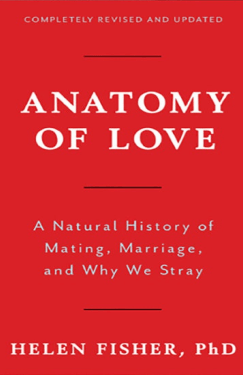
  • Anatomy of Love: Mating, Marriage, and Why We Stray

    Anatomy of Love: Mating, Marriage, and Why We Stray

    “Anatomy of Love” by Helen Fisher explores the biological and evolutionary foundations of human mating, marriage, and infidelity. The book examines courtship rituals across species and cultures, investigating the neurochemical processes underlying romantic love and attachment. Fisher discusses the evolutionary reasons behind monogamy and adultery, analyzing historical and anthropological data to understand these behaviors. The text also considers the impact of societal changes and technology on modern relationships and future trends in human pairing. Ultimately, the book provides a comprehensive overview of the natural history of love, highlighting the complex interplay of biology, evolution, and culture in shaping our romantic lives.

    Human Mating Behavior: Biology, Culture, and Trends

    Mating behavior in humans, like in other species, encompasses a range of activities aimed at reproduction. These behaviors are influenced by evolutionary history, biology, and cultural factors.

    Courtship Rituals: Human courtship often involves a gradual process characterized by specific signals and responses. These interactions can be seen as a “mating dance” with identifiable stages. Body language plays a crucial role, with individuals using gestures to signal interest, dominance, or submissiveness. Some universal courting cues include:

    • The copulatory gaze, a sustained look into another’s eyes, which can be an invitation to interact.
    • Sequential flirts and coy looks are likely part of a standard human repertoire of gestures to attract a mate.
    • The head toss and chest thrust are other examples of body language used in courtship. Men, in particular, might subconsciously announce dominance with postures like leaning back with hands clasped behind the head or thrusting their upper body forward. This “chest thrust” is a basic postural message of “standing tall” seen across the animal kingdom. Conversely, shrinking postures like turning in toes, curling shoulders, and hanging the head can signal submissiveness.
    • People may also engage in displacement gestures, meaningless movements like tugging at an earlobe or adjusting clothing, to alleviate anxiety when deciding how to respond to a potential partner.
    • Human courtship shares similarities with other creatures, such as caution and the use of messages to gauge the other person’s interest. Aggressive behavior early in the process is generally repelled.
    • American singles bars, with their displays of individuals seeking partners, bear a resemblance to the lek in birds, where males establish territories to attract females. Both humans and sage grouse exhibit mannerisms designed to attract the other and move in synchrony before mating.
    • Food and song are also universal features of wooing. Sharing a meal, especially when a man pays, is often understood as a courting gesture in Western cultures. Offering food as a courtship ploy is common worldwide.
    • David Givens and Timothy Perper observed a general pattern to the courting process in American cocktail lounges, suggesting underlying rules to this “mating dance”.

    Mate Choice: Humans exhibit mate choice, meaning they are attracted to some individuals and repelled by others, even when sexually receptive. This choosiness is also observed in many animal species. Several factors influence mate choice:

    • Physical appearance plays a role. For example, men may be drawn to sexy females.
    • Temperament dimensions, such as the Explorer, Builder, Director, and Negotiator styles, influence attraction and partner compatibility.
    • Brain chemistry is also involved. The dopamine system in the brain’s reward system is associated with attraction in various mammals, including prairie voles and sheep. An increase in dopamine activity enables individuals to prefer and focus on specific mating partners.
    • Ancestral women were likely attracted to males who were friendly, attentive, and willing to share food.
    • Sexual selection, through both male-male competition and female choice, has shaped traits considered attractive.

    Pair-Bonding: Humans are largely a pair-bonding species, forming relatively long-term relationships to rear offspring. While many cultures permit polygyny (multiple wives), few men actually establish harems, as maintaining them can be challenging. Humans are “built to rear our babies as a team of two—with a lot of helpers near the nest”.

    • Serial monogamy, forming temporary pair-bonds, is also a significant pattern in human mating.
    • Neurochemical activities in the brain are correlated with pair-bond formation. In prairie voles, copulation triggers the release of oxytocin in females and vasopressin in males, which stimulates dopamine release and drives them to prefer a particular mate and form an enduring attachment.
    • Vasopressin appears to play a key role in male attachment. Studies on prairie voles show that increased vasopressin activity is linked to spousal and parenting zeal, mate guarding, and territorial defense. Genetic variations in the vasopressin system can even contribute to variability in male prairie voles’ pair-bond strength and fidelity. Humans have similar genes in the vasopressin system, and research suggests these genes may affect pair-bonding behavior in men.
    • The long human male penis may have evolved, in part, due to the history of pair-bonding.

    Biological and Chemical Influences: Mating behavior is deeply rooted in biology and neurochemistry.

    • The brain’s reward system, fueled by dopamine, is associated with the drive to court and love, similar to other addictions.
    • Hormones like testosterone and estrogen are linked to certain gender-typical behaviors related to mating and social dynamics. Testosterone, for example, is associated with the drive for rank in many species, including humans.
    • Oxytocin and vasopressin are crucial hormones involved in attachment and pair-bonding.

    Variations in Mating Behavior: While pair-bonding is common, human mating behavior exhibits variations:

    • Monogamy (one partner at a time) is prevalent, but this does not always imply fidelity.
    • Polygamy (multiple partners) exists in various forms, including polygyny (one man, multiple wives) and polyandry (one woman, multiple husbands). The prevalence of polygyny often depends on a man’s resources.
    • Adultery (extramarital affairs) is a common phenomenon across cultures, suggesting underlying biological mechanisms. Genetic and neuroscientific data offer clues to these mechanisms.

    Sexual Selection’s Influence: Sexual selection has played a significant role in shaping human physical and mental traits that enhance mating success.

    • Traits like large penises, beards, fleshy breasts, and continual female sexual receptivity may have evolved as “nature’s decorations” to attract mates.
    • The long human male penis might be a result of sperm competition, designed to deposit sperm closer to the cervix.
    • Female choice has likely driven the evolution of traits that females find attractive. The development of silent ovulation in women, for example, may have given them more choice in their partners.
    • Psychologist Geoffrey Miller proposed that many extravagant human mental talents, such as intelligence, linguistic skills, musical abilities, and creativity, evolved at least in part to impress potential mates.

    Gender Differences: Men and women exhibit some differences in mating behavior and preferences, potentially shaped by evolutionary pressures and hormonal influences.

    • Darwin noted perceived differences in courage, pugnacity, energy, inventiveness, tenderness, and selfishness between men and women.
    • Evolutionary pressures may have selected for different spatial skills, aggressiveness, nurturing abilities, and intuition in men and women.
    • Men generally compete more among themselves for females, while females tend to be more selective. However, women also compete, particularly in social settings.
    • Studies using lie detectors suggest that men and women may have a roughly equal sex drive, even if self-reports differ. Female mammals, including chimpanzees and orangutans, actively solicit males during estrus, demonstrating female proceptivity.

    Social and Cultural Influences: Cultural norms and social structures significantly influence mating behavior.

    • Marriage customs vary widely across cultures.
    • The invention of the plow is suggested to have drastically altered sex and romance, potentially leading to more permanent monogamy and changes in gender roles.
    • Sexual politics and power dynamics also play a significant role in shaping mating behaviors and relationships.

    Future Trends: Future mating behaviors may be influenced by modern technology and evolving social norms.

    • Internet investigations of potential partners are likely to become more common as people seek efficient ways to find suitable mates.
    • New taboos may emerge, such as being secretive about digital communication, reflecting a growing value for transparency in relationships.
    • There is a trend toward the conviction that a deep, loving connection is central to life, which may influence mating expectations and behaviors.

    In conclusion, human mating behavior is a complex interplay of biological drives, evolved strategies, and socio-cultural influences, all geared towards the fundamental goal of reproduction.

    The Ascent of Humanity: Key Evolutionary Transformations

    Human evolution, as discussed in the sources, traces the journey of our ancestors from their primate origins to the emergence of modern humans, marked by significant biological, behavioral, and social transformations.

    Our early ancestors diverged from other primates, including the precursors of today’s great apes like orangutans, gorillas, and chimpanzees, within the group known as hominoids, who existed between fourteen and eight million years ago. These hominoids themselves evolved from earlier tree-dwelling primates. A key step in our evolutionary path was the development of bipedalism, the ability to walk upright. This transition, likely occurring after our ancestors abandoned life primarily in the trees by hanging below smaller branches, led to the loss of the tail, which had served as a balancing aid.

    Bipedalism brought about significant anatomical changes. Our ancestors evolved big toes that rotated to lie parallel to the others, developed an arch from heel to toe and a second arch across the ball of the foot acting like a trampoline, and gained strong new muscles in the buttocks, a broad and flat pelvis, knees aligned below their hips, and sturdy anklebones, allowing for a more efficient stride over long distances and an elevated head for better visibility. The freeing of the hands also potentially facilitated the use of the mouth for more complex sounds, aiding in communication.

    Fossil evidence, such as that from Australopithecus afarensis living in East Africa around 3.2 million years ago, shows early human-like forebears who walked erect but still retained some primitive features like long, curved fingers and toes, short legs, long arms, and small brains. It’s hypothesized that these early humans likely lived in bands and formed temporary pair-bonds shortly after puberty, sharing food with their mates and remaining paired at least during the infancy of a single child (about three to four years).

    The lineage leading to modern humans saw a significant increase in brain size, particularly evident in Homo erectus, who appeared around 1.9 to 1.8 million years ago. With their larger brains, Homo erectus developed sophisticated tools, moving beyond the simple Oldowan tools of earlier hominids to create delicate flakes and bifacial tools like Acheulean hand axes.

    Another crucial development was the bearing of exceedingly immature, helpless babies, likely starting with Homo erectus more than a million years ago. This increased the “reproductive burden” on females and is thought to have further stimulated the evolution of brain circuits of romantic love, attachment, and pair-bonding, making long-term partnerships more critical for the survival of offspring. This period also saw the emergence of teenage years, a prolonged period of dependence on parents for food and shelter, unlike our ape relatives. This extended maturation process provided more time for learning complex skills.

    The increasing demands of raising helpless young with prolonged childhoods are also linked to the evolution of formal human kinship systems, where relatives were categorized with prescribed ties and duties, building the social structure of traditional human life. These systems likely developed alongside the intensified division of labor between the sexes and the challenges of raising children. The development of kinship systems also paved the way for the first prescribed rules and taboos regarding sex, romance, attachment, and marriage.

    The development of language is another hallmark of human evolution. While the exact timing and mechanisms are unknown, archaeological evidence showing a slight bulge in Broca’s area (a brain region associated with speech production) in Homo habilis suggests the beginnings of language development. Furthermore, the discovery of a Neanderthal hyoid bone, similar to that of modern humans and crucial for speech, along with the presence of the FOXP2 gene (linked to language ability) in Neanderthals, suggests that language capabilities were evolving in our hominin relatives as well.

    The ability to control fire, evidenced by burned bones and hearths dating back 1.5 million years, likely with Homo erectus, was another transformative development. Fire provided warmth, protection, and the ability to cook food, potentially impacting digestion and social interactions around hearths.

    Finally, the source touches upon the emergence of a moral sense or conscience, defined by Darwin as that “short but imperious word, ‘ought’”. While many animals exhibit social instincts, the human capacity for moral judgment and behavior likely evolved over time, building upon these earlier social drives.

    In summary, human evolution is a multifaceted process characterized by key adaptations like bipedalism, increased brain size, tool use, prolonged immaturity, complex social structures including kinship, the development of language, the control of fire, and the emergence of a moral conscience. These developments, occurring over millions of years, distinguish us from our primate ancestors and laid the foundation for modern human social life.

    The Science and Experience of Romantic Love

    Drawing on the source “Anatomy of Love,” romantic love, also referred to as obsessive love, passionate love, being in love, or infatuation, is a powerful human experience known for its euphoria and torment. This feeling often involves sleepless nights and restless days, where individuals daydream, become forgetful, and obsessively anticipate the next encounter with their beloved. Even the slightest gesture from the loved one can elicit a strong physical response.

    Scientifically, romantic attraction is associated with a suite of psychological, behavioral, and physiological traits. A key aspect is the moment when another person begins to take on “special meaning,” leading to an intense focus on them, known as “salience”. This is followed by “intrusive thinking,” where thoughts of the “love object” constantly invade one’s mind, and every shared moment is replayed and analyzed.

    Paramount in the daydreams of infatuated individuals are feelings of craving, hope, and uncertainty. Positive responses from the cherished person are savored, while rebuffs can lead to despair. Factors like adversity and social barriers can actually heighten romantic passion, a phenomenon termed “frustration attraction”. Lovers also experience separation anxiety and underlying fear. Intense energy (hypomania) is another central trait, accompanied by physical symptoms like trembling, pallor, flushing, a racing heart, and difficulty eating or sleeping. Other sensations include shyness, anticipation, fear of rejection, longing for reciprocity, and intense motivation to win over the beloved. Importantly, romantic passion is only partially related to sex; the desire for emotional union often trumps sexual desire. These intense feelings can occur at any age, even in young children.

    From a neurobiological perspective, romantic love is associated with elevated activity in the brain’s dopamine networks, which generate energy, euphoria, craving, focus, and motivation. Norepinephrine, a related neurochemical, also contributes to focus, motivation, and bodily responses like butterflies in the stomach. Low activity in the serotonin system may contribute to the obsessive thinking characteristic of romantic passion. Brain scanning studies have shown activity in the ventral tegmental area (VTA), a region near the base of the brain that produces dopamine and is part of the brain’s reward system, in individuals experiencing early-stage intense romantic love. This suggests that romantic love is a basic human drive, located near primitive brain regions associated with thirst and hunger. In fact, romantic love shares neural pathways with addiction, showing activity in the nucleus accumbens, a brain region associated with cravings for substances and activities like heroin, cocaine, nicotine, alcohol, gambling, sex, and food.

    This neural mechanism for attraction is not unique to humans and has likely evolved in many species to enable individuals to prefer and focus on specific mating partners. While attraction in most species is brief, intense early-stage romantic love can last much longer in humans. However, individual differences in baseline neurochemical activity and experiences can affect one’s proclivity to fall and stay in love. Experiences from childhood contribute to building a “love map,” an unconscious list of desired traits in a mate.

    Romantic love is not solely a Western phenomenon. Descriptions of intense romantic feelings exist in various cultures throughout history, as seen in the writings of Andreas Capellanus in twelfth-century France, Vatsayana in ancient India (author of the Kama Sutra), and in traditional Chinese and Japanese tales. Even in cultures that seemingly deny the concept of “love,” behaviors suggest its presence. Anthropological surveys have found evidence for romantic love in a vast majority of cultures. It is also experienced by homosexual individuals just as frequently and intensely as heterosexuals.

    The initial ecstasy and obsession of romantic love often wane over time. Dorothy Tennov found that intense romantic love typically lasts between 18 months and three years. While some data suggests a duration of 12 to 18 months based on serotonin activity, others report the passion lasting longer, with some individuals remaining intensely in love for many years. Brain scanning of long-term lovers has shown that while the initial anxiety may decrease, the VTA and other brain regions associated with intense romantic love can remain active. This transition from intense early romance to calmer feelings of deep union is sometimes referred to as “companionate love,” driven by the brain system of attachment.

    The source also discusses the concept of “love blindness,” where some individuals, due to conditions like hypopituitarism, may never experience romantic love. Furthermore, certain antidepressants that enhance serotonin activity may suppress dopamine pathways, potentially dulling emotions and suppressing romantic passion.

    Interestingly, a good first kiss can potentially trigger feelings of romantic love due to the novelty activating the dopamine system. However, erotic kissing as a whole is not a universal human trait.

    In conclusion, romantic love is a powerful, universal, and biologically driven experience characterized by intense emotions, focused attention, and a strong desire for union with a specific individual. It involves complex neurochemical processes in the brain’s reward system and plays a significant role in human mating and pair-bonding, although its intensity typically evolves over time into feelings of deeper attachment in lasting relationships.

    Sexual Selection: The Evolution of Mating Traits

    Sexual selection, as detailed in the sources, is a concept developed by Darwin as a corollary to natural selection. While natural selection focuses on traits that enhance survival, sexual selection specifically concerns characteristics that increase an individual’s success in attracting and obtaining mates. The result of sexual selection is the evolution of traits useful for sex and reproduction, rather than just general environmental adaptations.

    Darwin identified two main types of sexual selection:

    • Intrasexual selection: This involves competition among members of the same sex for mates of the opposite sex. Traits that enable an individual to outcompete rivals, such as size or strength in male elephant seals or the fighting ability of stags to win harems (resulting in the evolution of antlers), are products of intrasexual selection.
    • Intersexual selection: This involves traits that make an individual more attractive to the opposite sex. The brilliant tail feathers of a peacock, which serve no survival advantage but entice females, are a classic example. Darwin noted that the “power to charm the female has sometimes been more important than the power to conquer other males in battle”.

    The sources provide several examples of human traits that may have evolved through sexual selection:

    • The human penis: Men have a significantly larger penis in terms of thickness and length compared to our close primate relatives. This may have evolved through female choice, with ancestral females finding larger phalluses appealing. Additionally, the length of the human penis may be a result of sperm competition, designed to deposit sperm closer to the cervix, giving it a “head start”. The relatively smaller testicle size and lower sperm quality in men compared to chimpanzees also suggest a history of less intense sperm competition, potentially linked to the evolution of pair-bonding.
    • Permanently enlarged female breasts: Desmond Morris proposed that as our ancestors became bipedal, sexual signals shifted from the rump to the chest, with breasts mimicking buttocks and lips mimicking the vagina. Alternative theories suggest breasts may have evolved to signal “ovulatory potential,” the ability to reproduce and feed young (the “good-mother signal”), or even as a deceptive sign of fertility. Ultimately, ancestral males may have found larger breasts attractive, leading to the selection for this trait through increased mating with “busted women”.
    • Men’s beards and low voices, and women’s smooth complexions and mellifluous tones: Men’s beards and low voices, developed due to testosterone, may have served to intimidate other males and attract females, signaling sexual maturity. Conversely, women’s smooth complexions and higher voices might have been seen as childlike and unthreatening to men. Darwin even suggested that women’s higher voices and “musical powers” evolved to attract the opposite sex.
    • Kissing: While not universal, erotic kissing in some cultures might be a way for nature to assess a mate and create “erotic fireworks” to facilitate mating.
    • Female orgasm: The female’s ability to experience orgasm may have evolved as a “sexual ploy”.
    • Continual female sexual receptivity: Unlike most female mammals with periods of estrus, human females are continually sexually available. This may have evolved in conjunction with serial pair-bonding and clandestine adultery, allowing females to take advantage of mating opportunities outside of a strict ovulatory cycle and to exercise more choice in their partners.

    Female choice is highlighted as a significant driving force in sexual selection. The higher costs of reproduction for females often lead them to be more selective in their mate choices. However, the sources also note that male choice and female-female competition are present in nature and in humans, as observed in social settings.

    Geoffrey Miller proposed an extension of sexual selection, suggesting that many extravagant human mental talents, such as intelligence, linguistic and musical abilities, artistic drives, humor, and moral virtue, evolved at least in part to impress potential mating partners. He argued that these traits are often too elaborate and energetically costly to have evolved solely for survival.

    In summary, sexual selection is a crucial evolutionary force that shapes traits specifically related to mating success. Through both competition within a sex and preferences of the opposite sex, a diverse array of physical and potentially even behavioral and cognitive characteristics in humans may have evolved to enhance our ability to attract mates and reproduce.

    The Anatomy of Pair-Bonding in Humans

    Drawing on the source “Anatomy of Love,” pair-bonding is presented as a fundamental human reproductive strategy. The source asserts that we are primarily a pair-bonding species, noting that while around 85% of cultures permit a man to have multiple wives, few men actually form harems due to the practical difficulties and conflicts that can arise. The text argues that humans are “built to rear our babies as a team of two”.

    The evolution of pair-bonding is linked to the increased “reproductive burden” associated with bearing exceedingly immature and helpless babies, a trait that likely emerged with Homo erectus. This helplessness of offspring would have made a long-term partner more critical for the child’s survival. Anthropologist Owen Lovejoy proposes that the early evolution of monogamy, or pair-bonding, might be indicated by the reduced canine teeth and lack of substantial body size variations between the sexes in the skeletal remains of Ardipithecus ramidis, suggesting that males no longer needed to fight for female favors and instead began to pair to rear their young. This evolution of monogamy is theorized to have occurred alongside the evolution of primitive bipedalism.

    From a neurobiological perspective, the brain circuitry for intense romantic attraction and a sense of attachment to a partner likely evolved as pair-bonding became a necessary or viable option for both males and females. The source highlights the role of vasopressin in male prairie voles, where its increased activity during ejaculation triggers responses associated with spousal and parenting zeal. Injecting vasopressin into virgin male prairie voles led them to defend their mating and parenting territory and become possessive of a female, while blocking vasopressin production turned them into promiscuous individuals. Notably, men with related genes for vasopressin transmission also tend to form more stable partnerships. In females, the oxytocin system is also associated with pro-social traits that likely contribute to pair-bonding. Kissing a long-term partner elevates oxytocin levels, associated with trust, attachment, and emotional union, and reduces the stress hormone cortisol, further contributing to these feelings.

    The source distinguishes romantic love (infatuation) from the longer-term feelings of attachment, also referred to as “companionate love”. Romantic love is characterized by euphoria, obsession, and intense focus. However, the initial intensity of romantic love often wanes, transitioning into companionate love, which is defined as “a feeling of happy togetherness with someone whose life has become deeply entwined with yours”. This companionate love is believed to be generated by a distinct brain system of attachment.

    The source also discusses serial social monogamy as a basic human mixed reproductive strategy, involving temporary pair-bonds in conjunction with infant rearing and serial pair-bonds across the life course. The modern worldwide divorce peak after three to four years of marriage is suggested to conform to the traditional period between human successive births, implying that early pair-bonds might have originally lasted only long enough to raise a single dependent child through infancy. However, various factors could have affected the length of these primitive pair-bonds.

    The formation of pair-bonds is a natural human behavior, with people engaging in flirting, courting, and falling in love. Even in societies with arranged marriages, the views of both individuals are often sought. Furthermore, the failure of Western experiments in group marriage to thrive suggests that the human animal is psychologically built to form a pair-bond with a single mate.

    Decoding Desire: A Study Guide

    Short Answer Quiz

    1. According to Eibl-Eibesfeldt’s research using a hidden camera, what is a notable pattern in women’s flirting behavior observed across various cultures? His frame-by-frame analysis of courting episodes revealed subtle, often unconscious, facial expressions and body language cues that women employed when within courting range, suggesting innate flirting mechanisms. These behaviors were observed across diverse cultural contexts, indicating a degree of universality.
    2. Describe the “copulatory gaze” as it occurs in Western cultures, according to the text. The copulatory gaze involves a direct stare between a man and a woman for about two to three seconds, often accompanied by pupil dilation which signifies interest. This intense eye contact is then typically broken as the starer lowers their eyelids and looks away.
    3. What are two key characteristics of “grooming talk” that make it an effective icebreaker in flirting? Grooming talk often begins with benign, non-threatening statements like compliments or questions, both of which require a response from the other person. Importantly, the manner in which something is said (inflection and intonation) often conveys more about a person’s intentions than the actual words used.
    4. Explain the concept of “courtship feeding” and its potential reproductive function. Courtship feeding is a behavior where males provide food to females, a custom likely predating dinosaurs. This act serves as a demonstration of the male’s abilities as a hunter and provider, signaling his potential as a worthy partner for procreation and the sustenance of offspring.
    5. According to the text, what are some examples of body embellishments across different cultures that are designed to trigger romantic love? Various cultures employ a wide array of body embellishments such as stretched necks, molded heads, filed teeth, pierced noses, scarred breasts, tanned skin, and even impractical high-heeled shoes. These modifications aim to enhance attractiveness according to culturally specific beauty standards.
    6. What is the difference between monogyny and polygyny, and how do these terms relate to monogamy and polygamy? Monogyny refers specifically to one man having multiple wives at the same time, while polygyny is the more general term for the practice of having multiple wives. Both fall under the broader category of polygamy, which means having multiple spouses regardless of gender, in contrast to monogamy, which is having only one spouse.
    7. Describe the unusual marriage custom traditionally practiced by the Tiwi people of Australia, as highlighted in the text. Traditionally, among the Tiwi, all women were expected to be married, even before birth. A symbolic ceremony occurred after a girl’s first menstruation where her father “married” her to his friend, who then became the husband of all her future unborn daughters.
    8. According to the text, what was a notable aspect of the sexual culture among middle-aged men in certain villages along the central and southern Adriatic coast of Italy? In these Italian villages, an elaborate and quasi-institutionalized system of extramarital affairs with local women was prevalent among middle-aged men. Adultery was reported to be the norm rather than the exception, with philanderers following understood rules of discretion.
    9. From a Darwinian perspective, why might men be inherently interested in sexual variety? The Darwinian explanation suggests that ancestral men who engaged in sexual variety and fathered children with multiple women increased their genetic contribution to the next generation. This tendency to seek “fresh features” would have been passed down through generations as those men had more offspring.
    10. How does the text contrast Western society with Islamic culture regarding their historical views on sex and marriage? Western society is sometimes described as “sex-negative” due to historical religious precepts that emphasized celibacy and monasticism. In contrast, Islamic culture, influenced by Muhammad, is portrayed as “sex-positive,” venerating love, sex, and marriage within the bounds of religious and legal frameworks.

    Essay Format Questions

    1. Analyze the various biological and cultural factors discussed in the text that influence human mate selection and the formation of romantic relationships.
    2. Discuss the evolutionary perspectives presented in the text regarding infidelity in both men and women, considering the potential adaptive advantages and social consequences of such behavior.
    3. Compare and contrast the different forms of marriage and pair-bonding described in the text, exploring the social, economic, and cultural contexts in which they arise and persist.
    4. Examine the evidence presented in the text for both biological and cultural influences on gender differences in behavior, cognition, and social dynamics related to courtship and relationships.
    5. Evaluate the role of symbolic thinking and cultural norms in shaping human courtship rituals, marriage practices, and attitudes towards sexuality across different societies and throughout history, drawing on examples from the text.

    Glossary of Key Terms

    • Ethology: The scientific study of animal behavior, usually with a focus on innate behaviors in their natural environments.
    • Courting Range: The physical proximity within which individuals begin to engage in behaviors indicative of romantic or sexual interest.
    • “Copulatory” Gaze: An intense and direct eye contact, often brief, between potential mates that can signal interest and trigger physiological responses.
    • Grooming Talk: Benign and often superficial conversation used as an initial way to connect and assess a potential mate, where the manner of speaking can be as important as the content.
    • Courtship Feeding: A behavior in which a male provides food to a female during courtship, potentially demonstrating his ability to provide resources.
    • Monogyny: A form of polygamy in which one man has multiple wives at the same time.
    • Polygyny: A form of polygamy in which a man has more than one wife at the same time.
    • Monandry: A form of polygamy in which one woman has multiple husbands at the same time.
    • Polyandry: A form of polygamy in which a woman has more than one husband at the same time.
    • Monogamy: A form of marriage or pair-bonding in which an individual has only one spouse or partner at a time.
    • Polygamy: A form of marriage or pair-bonding in which an individual has more than one spouse or partner at the same time (encompassing polygyny and polyandry).
    • Group Marriage (Polygynandry): A reproductive strategy involving two or more males in a socially recognized spousal arrangement with two or more females.
    • Gerontocracy: A form of social organization in which older people hold the most power and authority.
    • Philandering: Engaging in casual sexual relationships outside of a committed partnership; having multiple sexual partners.
    • Adultery: Sexual relations between a married person and someone other than their spouse.
    • Darwinian Perspective: An approach based on Charles Darwin’s theory of evolution by natural selection, emphasizing the survival and reproduction of organisms best adapted to their environment.
    • Sex-Positive Culture: A societal attitude that generally views sex and sexual expression in a favorable or accepting light.
    • Sex-Negative Culture: A societal attitude that generally views sex with discomfort, disapproval, or repression.
    • Talaqus-Sunna: A traditional Islamic form of divorce that follows the dictates of the Prophet Muhammad.
    • Serial Monandry: A mating system in which a female has a series of different male partners over time, but only one at any given time.
    • Estrous: The recurring period of sexual receptivity and fertility in many female mammals, often associated with specific hormonal changes and behavioral signals.
    • Possessive Mating: A mating behavior in which a male attempts to monopolize access to a female, preventing other males from mating with her.
    • Vasopressin: A hormone associated with pair-bonding, territorial defense, and possessiveness, particularly in males of some species.
    • Jealousy: A complex emotion involving feelings of insecurity, anger, and fear over the potential loss of a valued relationship to a rival.
    • Sexual Selection: A mode of natural selection in which members of one biological sex choose mates of the other sex to mate with (intersexual selection) and compete with members of the same sex for access to members of the opposite sex (intrasexual selection).
    • Waist-to-Hip Ratio: The ratio of a person’s waist circumference to their hip circumference, which has been suggested as a physical trait that may influence attractiveness.
    • Shoulder-to-Hip Ratio: The ratio of a man’s shoulder circumference to his hip circumference, also suggested as a physical trait influencing attractiveness.
    • SRY Gene: A gene located on the Y chromosome that plays a key role in determining male sex development.
    • DAX-1 Gene: A gene located on the X chromosome that is believed to play a role in female sex development.
    • Estrogen: A primary female sex hormone involved in the development of female secondary sexual characteristics and the regulation of the menstrual cycle.
    • Testosterone: A primary male sex hormone involved in the development of male secondary sexual characteristics and other physiological processes.
    • Web Thinking: A cognitive style often associated with women, characterized by a more interconnected and contextual approach to processing information.
    • Step Thinking: A cognitive style often associated with men, characterized by a more linear and focused approach to problem-solving.
    • Broca’s Area: A region in the frontal lobe of the dominant hemisphere (usually the left) of the brain, associated with the production of speech.
    • Endocast: A cast of the interior of a skull, especially a fossil skull, used to determine the size and shape of the brain.
    • Matriline: A system of descent in which kinship is traced through the female line.
    • Patriline: A system of descent in which kinship is traced through the male line.
    • Fisher Temperament Inventory (FTI): A questionnaire designed to measure four broad temperament dimensions linked to activity in specific neural systems associated with personality and mate choice.
    • Female-Defense Polygyny: A form of polygyny in which males directly compete to monopolize groups of females.
    • Search Polygyny: A form of polygyny in which males actively seek out receptive females without forming lasting pair bonds.

    Briefing Document: Exploring the Evolution of Human Mating and Love

    Executive Summary

    This briefing document summarizes the main themes and important ideas presented in the provided excerpts. The text delves into the evolutionary roots of human courtship behaviors, the neurobiological underpinnings of love and attachment, diverse mating systems across cultures and species, the prevalence and potential evolutionary reasons for infidelity and divorce, the biological basis of gender differences in the mind, and the role of symbolic thinking and morality in shaping our relationships. The author emphasizes that many of our modern romantic and relational behaviors are deeply rooted in our evolutionary past and are shared, in various forms, with other species.

    Main Themes and Important Ideas

    1. The Initiation of Courtship: Body Language and Early Interactions

    • Flirting is Universal: Courtship begins with subtle signals exchanged during initial interactions. Ethologist Irenäus Eibl-Eibesfeldt’s cross-cultural observations using a hidden camera revealed consistent patterns in women’s flirting behavior across diverse societies.
    • The “Copulatory” Gaze: Eye contact is a powerful initial courting ploy. In Western cultures, a direct gaze of two to three seconds, potentially involving pupil dilation (a sign of interest), followed by looking away, is common. This gaze “triggers primitive parts of the human brain, calling forth one of two basic emotions—”. The text implies these emotions are attraction or a need to withdraw, though the second emotion isn’t detailed in the excerpt.
    • Grooming Talk and Vocal Inflection: Initial verbal exchanges (“How do you like your iPhone?” or “How’s the food?”) serve as icebreakers. However, how something is said is more critical than what is said. “A high-pitched, gentle, mellifluous ‘hello’ is often a sign of sexual or romantic interest, whereas a clipped, low, matter-of-fact, or perfunctory ‘hi’ rarely leads to love.” Laughter beyond what the situation warrants can also indicate flirting.
    • Primeval Courting Lures: Beyond initial interactions, behaviors like “courtship feeding” (males providing food) and musical serenades (“If music be the food of love, play on.”) are deeply rooted, potentially predating dinosaurs and being common practices across cultures.

    2. The Nature of Infatuation and Romantic Love

    • A Powerful and Universal Experience: Romantic love, regardless of its label (infatuation, passionate love), is characterized by euphoria, torment, sleeplessness, and obsessive thoughts about the beloved. Sappho’s ancient poem vividly describes the physical and emotional intensity: “For should I see thee a little moment, / Straight is my voice hushed; / Yea, my tongue is broken, and through and through me, / ’Neath the flesh, impalpable fire runs tingling.”
    • Beyond Intellect: Infatuation can begin with seemingly minor cues like a head tilt, a gaze, a touch, a compliment, or even a provision of food or music. “Then the body rushes forward, leaving the intellect to unravel this feeling of infatuation: ‘Why him?’ ‘Why her?’”
    • Subjectivity of Beauty: What is considered attractive varies greatly across cultures and time periods, from “dangling vulvar lips”massaged in infancy to Western ideals of slimness to the orange gourd penis sheaths of New Guinea tribesmen. “Beauty truly is in the eyes of the beholder.”

    3. Diverse Mating Systems Across Cultures and Species

    • Variations in Pair-Bonding: Humans and animals exhibit a range of mating systems, including monogamy (one spouse), polygyny (one male, multiple females), polyandry (one female, multiple males), and group marriage (polygynandry).
    • Examples of Polygyny: The Tiwi of Australia traditionally practiced a form of polygyny where older men married not only pubescent girls but also their unborn daughters.
    • Extramarital Affairs as a System: In some Italian villages, a quasi-institutionalized system of extramarital affairs existed, with understood rules and discretion. “Adultery was the rule rather than the exception…almost every man had a lover he visited regularly on weekdays…”
    • Philandering as Potentially Ancient: Despite severe punishments, philandering is prevalent worldwide, suggesting a possible evolutionary basis. “Like the stereotypic flirt, the smile, the brain physiology for romantic love, and our drive to form a pair-bond to rear our young, philandering seems to be part of our ancient reproductive game.”

    4. The Evolutionary Basis of Infidelity

    • Darwinian Perspective on Male Infidelity: From an evolutionary standpoint, men may be predisposed to sexual variety as it historically increased their reproductive success. “So those men who sought sexual variety throughout deep history also tended to have more children.”
    • Sex-Positive vs. Sex-Negative Cultures: Islamic culture, influenced by Muhammad, is described as “sex-positive,” venerating love, sex, and marriage, while Western society, with its historical emphasis on celibacy, is sometimes called “sex-negative.”
    • Islamic Marriage and Divorce: Islam introduced social and legal codes to protect women within marriage, allowing for up to four wives with the condition of equal provision. Marriage is a legal contract that can be broken, with the Talaqus-Sunna being a traditional divorce procedure.

    5. Evolutionary Context: Environmental Changes and Early Humans

    • Ancient Geological Events: The formation of the African and Arabian landmass and the Tethys Ocean millions of years ago influenced global climate and, ultimately, the environment in which early humans evolved.
    • Flexibility in Mating Systems: The text suggests that environmental pressures would have pushed early human relatives towards our complex mating behaviors, including flirting, love, marriage, infidelity, and divorce.

    6. Animal Parallels: Adultery, Attachment, and Mate Guarding

    • Infidelity in Gorillas: Gorillas exhibit philandering, with pregnant females often copulating with lower-ranking males even in the presence of their dominant mate. “Gorillas philander and tolerate adultery.”
    • “Possessive Mating” in Baboons: Dominant male baboons may attempt to monopolize estrous females through various behaviors like staring, displaying an erection, and physically preventing other males from mating.
    • “Special Friendships” in Baboon Troops: Male baboons often integrate into new troops by forming a “special friendship” with a specific female.
    • Neurobiological Basis of Male Attachment in Prairie Voles: Studies on prairie voles suggest a crucial role for vasopressin in male attachment and territorial defense. Blocking vasopressin production led to males abandoning females after mating. “Is vasopressin nature’s cocktail for male attachment? Probably.”

    7. The Green-Eyed Monster: Jealousy

    • Jealousy is Not Gender-Specific but Expressed Differently: Psychological tests show that neither men nor women are inherently more jealous, but they tend to handle jealousy in different ways. Women might feign indifference or try to understand the situation, while men might challenge rivals or shower their partners with attention.
    • The Dangers of Jealousy: Jealousy can lead to physical violence. A study across 66 cultures found that a high percentage of both men and women have resorted to violence when feeling betrayed, and male jealousy is a leading cause of spousal homicide in the US.
    • Cross-Cultural Nature of Jealousy: Jealousy is not unique to Western cultures, as illustrated by the vivid expression of a Yolngu man from Australia: “We Yolngu are a jealous people and always have been…The big J is part of our nature.”

    8. Nature’s Lures for Seduction: Physical Traits and Behaviors

    • Ornamentation for Attraction: Like ornamented Christmas trees, sexual beings, including humans, possess a variety of physical “accoutrements” designed to attract mates. These include large penises, beards, fleshy breasts, and red lips in humans.
    • Potential Evolutionary Reasons for Physical Traits: The text suggests that thick penises may have evolved because females preferred them, leading to easier orgasms and potentially higher rates of conception.
    • Sperm Competition and Penis Length: The length of the human penis might be a result of sperm competition, designed to deposit sperm closer to the cervix.
    • Hormonal Influence on Voice: Men’s low voices, influenced by testosterone, signal sexual maturity and can attract females. Darwin suggested that women’s higher voices may have initially evolved to attract the opposite sex.
    • Waist-to-Hip Ratio and Shoulder-to-Hip Ratio as Indicators of Health and Fertility: Men are generally attracted to a specific waist-to-hip ratio in women, thought to signal health and fertility. Conversely, women are often attracted to men with a broad shoulder-to-hip ratio, indicative of higher testosterone and physical strength.

    9. Gender Differences in the Mind: Evolutionary Perspectives

    • Darwin’s Views on Gender Differences: Darwin believed that men were naturally more courageous, pugnacious, and inventive, while women were more tender and less selfish, attributing these qualities to our evolutionary past.
    • Hormonal Influence on Brain Development: Fetal hormones, such as testosterone in males and potentially the influence of the DAX-1 gene without male hormones in females, “sex” the fetal brain, contributing to some gender differences observed later in life.
    • Verbal Superiority in Females: On average, girls develop verbal skills earlier and excel in areas like fluency, grammar, verbal reasoning, and foreign languages. This superiority is linked to estrogen levels.
    • Male Excellence in Math and Spatial Tasks: Men tend to perform better in math and spatial tasks.
    • “Get to the Point!”: Differences in Communication Styles: Men may prefer direct communication, while women may engage in more elaborate, “web thinking.”
    • Evolution of Language: The development of language, possibly indicated by bulges in Broca’s area in early hominids like Handy Man, was a crucial step in human evolution.
    • Economic Power and Gender Roles: In some societies, like the Igbo, women historically held significant economic power through their control of agriculture and markets, leading to greater social influence.

    10. Social Structures and Gender Dynamics

    • Hierarchical vs. Egalitarian Group Formation: Men may naturally tend to form hierarchical groups, while women form more egalitarian cliques. This is potentially linked to testosterone and estrogen levels, respectively.
    • The “Old Girls Network”: Matrilineal Influence: In some primate species, related females form stable hierarchies or “old girls” networks that can influence social dynamics.
    • Varieties of Morality: The text outlines different focuses of morality, including individual, kin-based, and community-oriented morality.
    • Gendered Perspectives on Sex: Men focus on physical sensations and worry about performance, while women tend to embed sex in a broader emotional and contextual experience. Women are also more likely to experience multiple orgasms.
    • Temperament and Neural Systems: The Fisher Temperament Inventory (FTI) suggests four broad temperament dimensions (Curious/Energetic, Cautious/Social Norm Compliant, Analytical/Tough-Minded, Prosocial/Empathetic) linked to specific neural systems (dopamine, serotonin, testosterone, estrogen/oxytocin) that may play a role in attraction and partnership formation.

    11. Forms of Polygamy and Mate Guarding in Other Species

    • Female-Defense Polygyny: Some male animals gather a group of females and prevent other males from courting them. This behavior is mirrored in human societies where husbands might react violently to suspected infidelity.
    • Search Polygyny: In this form, males persistently seek out receptive females, mate, and move on, a strategy likened to that of some human professions involving frequent travel.

    12. Adaptive Reasons for Serial Monogamy in Females

    • Challenging Traditional Views: The text questions the simple argument that a woman’s reproductive value declines after childbirth, making serial monogamy less adaptive.
    • Flexibility and Opportunity: Various factors, such as band size, changes in a first mate’s reproductive value due to injury, the varying experience levels of males at different ages, and a female’s increasing proficiency as a provider, could make “flexible opportunistic serial monogamy” an adaptive strategy for females.

    Potential Implications and Questions Raised

    • Nature vs. Nurture: The excerpts strongly emphasize the biological and evolutionary roots of many human behaviors related to mating and love, raising questions about the extent to which these are fixed versus influenced by cultural and social factors.
    • Understanding Modern Relationships: By understanding the evolutionary history of our mating behaviors, can we gain insights into the challenges and dynamics of modern relationships, including infidelity, divorce, and gender roles?
    • Universality vs. Cultural Variation: While some patterns appear universal (e.g., initial flirting behaviors), the text also highlights significant cultural variations in mating systems, beauty standards, and responses to infidelity. How do we reconcile these differences?
    • The Future of Relationships: As societal norms and technological advancements continue to evolve, how might our ancient drives and predispositions shape the future of human connection and intimate relationships?

    This briefing document provides a foundational overview of the rich and complex topics covered in the provided excerpts, highlighting the intricate interplay between our evolutionary past and our present-day experiences of love, mating, and relationships.

    Questions and Answers about Human Courtship, Love, and Pair-Bonding

    1. How does human flirting behavior manifest across different cultures? Irenäus Eibl-Eibesfeldt’s cross-cultural studies using a hidden camera revealed universal patterns in women’s flirting, such as a sequence involving a smile, eye contact, a head toss, and sometimes a chest thrust. While specific gestures might vary, the underlying structure of initiating contact and signaling interest through body language appears to be consistent across diverse societies like those in Samoa, Papua, France, Japan, Africa, and Amazonia.

    2. What role does eye contact play in human courtship? The “copulatory gaze,” as described in the text, is a significant initial move in Western courtship. It involves a two-to-three-second intense stare at a potential mate, often accompanied by pupil dilation (a sign of interest), followed by a dropping of the eyelids and looking away. This direct eye contact seems to trigger primitive brain regions, evoking basic emotions and initiating a connection.

    3. Beyond physical attraction, what other factors contribute to the beginnings of romantic interest and infatuation? While initial attraction can be sparked by subtle physical cues like a head tilt or a gaze, infatuation can also begin with non-physical elements such as humor, intelligence displayed through jokes or insightful comments, or even acts of generosity like “courtship feeding.” Ultimately, the body often reacts with feelings of infatuation before the intellect fully analyzes the reasons behind the attraction (“Why him? Why her?”).

    4. How do cultural practices and body modifications reflect the human drive to attract a mate? Across cultures and throughout history, humans have engaged in a wide array of body embellishments and practices aimed at enhancing attractiveness. Examples include stretched necks, molded heads, filed teeth, scarification, and even seemingly impractical fashions like high-heeled shoes. These diverse customs highlight the subjective nature of beauty and the lengths to which people go to trigger romantic interest within their specific social contexts.

    5. What are the different forms of marriage and pair-bonding observed in human societies? Human societies exhibit various forms of socially recognized spousal arrangements beyond the Western concept of monogamy. These include monogyny (one wife), polygyny (multiple wives), monandry (one husband), polyandry (multiple husbands), monogamy (one spouse regardless of gender), polygamy (multiple spouses regardless of gender), and group marriage or polygynandry (multiple males with multiple females). Cultural norms dictate which forms are acceptable and how they function within a given society, as illustrated by examples like the Tiwi custom of a man marrying unborn daughters.

    6. Why do infidelity and extramarital affairs occur despite societal disapproval and potential punishments? Despite severe sanctions across cultures, infidelity is a prevalent behavior, suggesting a deep-rooted component to human mating strategies. From a Darwinian perspective, men may have a biological predisposition towards sexual variety, potentially increasing their reproductive success in ancestral environments. However, the motivations for infidelity are complex and influenced by psychological, sociological, economic, and biological factors in both men and women.

    7. How do biological factors, such as hormones and brain activity, influence mate choice and relationship dynamics? Hormones like testosterone and estrogen play a significant role in shaping not only physical characteristics but also brain architecture and associated temperaments. For instance, verbal abilities in women are linked to estrogen levels, while spatial skills in men are associated with testosterone. Brain systems involving dopamine, serotonin, vasopressin, and oxytocin are implicated in attraction, attachment, and even jealousy, suggesting a neurobiological basis for aspects of mate choice and pair-bonding.

    8. How have evolutionary pressures shaped human sexual anatomy and courtship behaviors? Over millions of years, environmental changes and mate selection have influenced the evolution of human sexuality. Features like the thick penis, potentially linked to female preference and sperm competition, and continuously enlarged breasts in women may have evolved due to their attractiveness to potential mates. Similarly, courtship tactics, from subtle body language to elaborate displays, have likely developed as ways to signal genetic fitness and attract partners, ultimately increasing reproductive success.

    By Amjad Izhar
    Contact: amjad.izhar@gmail.com
    https://amjadizhar.blog

  • Inside Her Mind: Relationship Secrets for Men, Attracting Women Guidance

    Inside Her Mind: Relationship Secrets for Men, Attracting Women Guidance

    Patrick King’s “Inside Her (Mind)” offers men guidance on attracting women, maintaining romantic relationships, and achieving long-term commitment. The book explores various facets of the female psyche and relationship dynamics, presenting actionable advice and challenging common misconceptions. It emphasizes the importance of assertiveness, leadership, effective communication, and understanding a woman’s emotional needs. Key topics include navigating relationship phases, avoiding common pitfalls like bringing up the past in arguments or becoming overly comfortable, and fostering mutual respect and attraction. The author provides specific principles to enhance connection, such as matching affection styles and allowing partners to maintain their individual identities. Ultimately, the book aims to equip men with the insights needed to build stronger, more fulfilling, and lasting relationships. A concluding cheat sheet summarizes the core concepts for quick reference.

    Inside Her Mind: Relationship Insights

    The book “Inside Her (Mind): Secrets of the Female Psyche to Attract Women, Keep Them Seduced, and Bulletproof Your Relationship” by Patrick King delves into various aspects of understanding women and fostering strong relationships. It offers numerous insights that could be considered “secrets” of the female psyche in the context of attraction and relationships. Here’s a discussion of some of these points:

    • Assertiveness is attractive, not being an “asshole”. The book argues that women are not attracted to passive men who bend to their every whim. Instead, they prefer a strong man who isn’t a doormat, can take charge, and is their equal. Being assertive, which involves stating your mind logically, is different from being an “asshole” who prods and provokes with emotional outbursts.
    • Women appreciate a man who leads. Drawing a comparison to “Tarzan,” the book suggests that women instinctually desire a man who takes the lead in the relationship, even if they are high-powered in their careers. Men should take charge, plan outings, and fulfill the role of someone who can take care of her, which appeals to a woman’s desire to be taken care of.
    • Arguments should focus on the present. Bringing up past issues during an argument is counterproductive and only creates more problems by uncovering old resentments. Arguments should remain focused on the present issue because people evolve over time.
    • Men can also have “crazy” or unreasonable feelings. While acknowledging that feelings are valid, the book suggests recognizing the difference between subjective and objective reasonableness. It encourages men to consider how their woman might perceive their reactions and to seek objective perspectives from friends.
    • Creating a safe space for vulnerability is crucial. When either partner feels uncomfortable sharing, miscommunications and resentment arise. Men should foster an environment where their woman feels safe to share her insecurities, and these vulnerabilities should be accepted and even celebrated.
    • Matching styles of affection leads to better understanding. People show and receive love in different ways, such as physical touch, quality time, acts of kindness, words of affirmation, and fulfilling duties. Recognizing and aligning your style of affection with your woman’s can prevent feelings of being underappreciated.
    • Compromise is key, not sacrifice of individuality. The book emphasizes that a woman’s passions and separate identity are attractive. Asking her to sacrifice these for the relationship can lead to dependence and resentment. Allowing and even encouraging her to pursue her own interests creates space and maintains attraction.
    • Avoid comparing her to other women. Comparing your woman to other females, especially those you both know or your ex, can deeply damage her self-esteem and create resentment.
    • Examine your “dealbreakers”. Many things people think are dealbreakers are actually just preferences, especially when chemistry is involved. It’s important to distinguish between true dealbreakers (like core values) and preferences.
    • Rationalization can mask underlying issues. Constantly making excuses for your woman’s negative behavior might indicate a lack of respect in the relationship. It’s important to objectively assess behavior without rationalizing it.
    • Your happiness should not solely depend on her. Making your woman the sole source of your happiness can lead to a loss of identity and make you a burden. The book suggests that your life should be vibrant on its own, and she is an addition to it.
    • Be inspiring and motivating. Instead of being dependent, strive to be your woman’s muse by inspiring and motivating her through your own actions and lifestyle.
    • Focus on core qualities for a long-term partner. Instead of superficial traits, the key questions to consider are: Does she challenge you? Do you respect her? Is she potentially your best friend?.
    • Day-to-day chemistry is paramount. While other factors might seem important, genuine daily connection, communication, and chemistry are what truly sustain a fulfilling relationship.
    • “Maybe” often means “no” out of fear. In the context of commitment, a “maybe” answer often indicates an underlying reluctance to say no. It’s important to examine the reasons behind such hesitation.
    • Relationships require active participation from both sides. Don’t be a passive partner who leaves all the decision-making to the woman. Actively participate in planning and interactions.
    • Acknowledge and appreciate her feminine qualities. Avoid undermining her traditionally feminine traits and caretaking qualities, as this can damage her ego and self-worth.
    • Be a partner, not a father. There’s a difference between being protective and being overbearing. Treating her like a daughter can make her feel smothered and want to rebel.
    • Handle the topic of exes with extreme caution. Disclose information about exes only when absolutely necessary, keep it general, and never make comparisons.
    • Understand the societal influences on sexual expression. Men are often socialized to be sexually expressive while women are taught to suppress their sexuality. Understanding this difference is important when addressing desires for increased sexual intimacy.
    • Creating a sense of absence can increase desire. Taking your own space and pursuing your own interests can make your woman yearn for your attention and appreciate your time together more.
    • It’s healthy to prioritize your own needs sometimes. Being “selfish” in the sense of attending to your own priorities is necessary for a balanced relationship and prevents you from being taken for granted.
    • Maintaining the “fire” requires continuous effort. Initial attraction is easy, but sustaining a thriving relationship requires conscious effort, spontaneity, and appreciating the little things.
    • Routines can lead to boredom; embrace new experiences. Breaking the monotony of routine by trying new activities together helps you see each other in new lights and keeps the relationship exciting.

    In conclusion, “Inside Her (Mind)” presents a multifaceted view of the “female psyche” in the context of romantic relationships, emphasizing the importance of understanding women’s desires for assertiveness, leadership, vulnerability, appreciation, and individuality. It also highlights potential pitfalls such as poor communication, comparisons, dependence, and the stagnation of routine.

    Inside Her (Mind): Attraction and Seduction

    The book “Inside Her (Mind)” by Patrick King offers various “secrets of the female psyche” that are relevant to attracting and seducing women. Here’s a discussion drawing from the source:

    Attraction:

    The book emphasizes that several behaviors and attitudes contribute to attracting women. These aren’t about superficial qualities, but rather deeper aspects of a man’s character and how he interacts in a relationship.

    • Being Assertive, Not an “Asshole”: The book argues that women are attracted to assertive men who can state their mind logically. This is different from being an “asshole” who prods, provokes with emotional outbursts, and makes unrelated points. Women appreciate a strong man who isn’t a doormat and can be their equal.
    • Taking the Lead (“Tarzan Usually Leads”): The source suggests that women instinctually desire a man who takes the lead in the relationship. This doesn’t mean being controlling, but rather taking charge, planning outings, and fulfilling the role of someone who can take care of her. Even high-powered women may appreciate taking a backseat in their relationship at times.
    • Having Your Own Vibrant Life: The book stresses that a man’s happiness should not solely depend on his woman. Instead, having a vibrant life of your own makes you more attractive. She should be an addition to your already fulfilling life.
    • Being Inspiring and Motivating: Rather than being dependent, a man should strive to inspire and motivate his woman. This involves setting expectations for yourself and surpassing them, pursuing your own passions, and having a thirst for adventure.
    • Challenging and Respecting Her: For long-term attraction (and evaluating if she’s “the one”), the book highlights the importance of whether she challenges you and whether you respect her.
    • Day-to-Day Chemistry: The book argues that genuine daily connection, communication, and chemistry are paramount for attraction that lasts beyond the honeymoon period. Superficial traits are less important than this daily connection.
    • Creating a Sense of Absence: Taking your own space and pursuing your own interests can make your woman yearn for your attention and appreciate your time together more. This avoids being clingy and makes you more engaging.
    • Being “Selfish” Sometimes: Prioritizing your own needs and happiness isn’t necessarily negative in a relationship. People-pleasers can be taken for granted, so attending to your own priorities is crucial for a balanced relationship.

    Seduction (Keeping Them Seduced):

    The book also provides insights on maintaining attraction and keeping a woman “seduced” throughout the relationship, beyond the initial attraction phase.

    • Making it Safe for Vulnerability: Creating a welcoming and safe environment for open communication is essential. When a woman feels comfortable sharing her insecurities, it strengthens the bond and keeps her connected. Appreciating and even celebrating her vulnerabilities is key.
    • Matching Styles of Affection: Understanding and aligning your style of showing love with how your woman receives it can prevent feelings of being underappreciated. Recognizing different “love languages” is important.
    • Compromise, Not Sacrifice: Allowing your woman to maintain her own priorities, hobbies, and friends is crucial. Forcing her to sacrifice these can lead to dependence and resentment, ultimately making her less attractive.
    • Avoiding Comparisons: Never compare your woman to other women, especially those you both know or your ex, as this deeply damages her self-esteem and creates resentment.
    • Letting Her Feminine Qualities Shine: Don’t undermine her traditionally feminine and caretaking qualities. Allowing her to fulfill what she perceives as her duties in the relationship helps her retain self-esteem and confidence.
    • Being a Partner, Not a Father: Avoid being overbearing, nagging, or constantly directing her activities. Treat her like a partner, not a daughter.
    • Handling Exes Cautiously: Only disclose information about exes when absolutely necessary, keep it general, and never make comparisons.
    • Understanding Societal Influences on Sexual Expression: Recognize that women are often socialized to suppress their sexuality. Creating a safe space for her to be sexually open requires patience and understanding.
    • Stoking the “Fire,” Not Just the “Spark”: Initial chemistry is easy, but sustaining a thriving relationship requires continuous effort. This involves doing little things for her, generating spontaneity, and appreciating the small things she does.
    • Fearing the Routine: Breaking the monotony of routine by trying new activities together helps you see each other in new lights and keeps the relationship exciting.
    • Active Participation: Don’t be a passive participant in the relationship and expect her to make all the decisions. Actively contribute to planning and interactions.

    In essence, the book suggests that attracting and seducing a woman, and maintaining that connection, involves a combination of a man being confident and having his own life, while also being understanding, appreciative, and actively engaged in the relationship. It’s about fostering a dynamic where both partners feel respected, valued, and continue to find excitement and growth together.

    Inside Her (Mind): Building Bulletproof Relationships

    The book “Inside Her (Mind)” aims to provide “secrets of the female psyche to attract women, keep them seduced, and bulletproof your relationship“. While the term “bulletproof” might be an exaggeration, the book offers numerous principles and pieces of advice intended to strengthen a relationship and make it more resilient to challenges. Here’s a discussion of these elements:

    The introduction itself sets the stage by outlining different phases of a relationship: the Chase phase, the Honeymoon phase, the Balance phase, and the Comfort phase. The book suggests that the Comfort phase is where many relationships languish and die. The goal is to learn how to keep a woman captivated and recapture the positive feelings from earlier phases, ultimately building a deeper, stronger, and more fulfilling relationship.

    Several key principles discussed in the book contribute to making a relationship more robust:

    • Effective Communication and Vulnerability: Creating a welcoming and safe environment for all kinds of communication is crucial. When both partners feel comfortable sharing, miscommunications are less likely, and resentment is prevented. Specifically, making it safe for her to be vulnerable by appreciating her insecurities and celebrating them can lead to a stronger connection.
    • Mutual Respect and Equality: Being assertive (stating your mind logically) is encouraged, as opposed to being an “asshole” (prodding, provoking emotionally). Women appreciate a strong man who isn’t a doormat and can be their equal. Furthermore, treating her as a partner, not a daughter, by avoiding nagging and constantly directing her, fosters respect and avoids resentment.
    • Maintaining Individuality: The book emphasizes the importance of having your own vibrant life and not making your happiness solely dependent on your partner. This makes you more attractive and prevents you from becoming a burden. Allowing her to maintain her own priorities, hobbies, and friends (“Compromise, don’t sacrifice”) is crucial for preventing dependence and resentment.
    • Avoiding Negative Behaviors: Several behaviors can significantly weaken a relationship. These include bringing up the past during arguments (“No time machines allowed during arguments”), comparing her to other women, especially exes (“Why can’t you be more like Alison?”), and constantly rationalizing her negative actions.
    • Understanding and Meeting Each Other’s Needs: Matching your styles of affection by recognizing different “love languages” can prevent feelings of being underappreciated. Additionally, inspiring and motivating each other contributes to mutual growth and development.
    • Active Participation and Shared Responsibility: Relationships require effort from both sides. “Relationship pants are meant for two” highlights the importance of not being a passive participant and making your woman make all the decisions. Taking the lead at times (“Tarzan usually leads”) is also important, as many women desire a man who can take charge.
    • Managing Expectations and Focusing on Core Values: The book suggests examining whether your dealbreakers truly matter and avoiding unfounded expectations. Ultimately, day-to-day chemistry and communication are more important than superficial traits. The “only ‘The One’ questions you’ll need” focus on whether she challenges you, whether you respect her, and whether she has the potential to be your best friend.
    • Continuous Effort and Avoiding Routine: Maintaining a strong relationship requires ongoing effort (“A spark is easy, a fire is tough”) beyond the initial infatuation. Fearing the routine and injecting excitement by trying new activities together can prevent boredom and foster new connections.
    • Self-Respect and Prioritization: It’s important to prioritize your own needs and happiness (“Who loves you the most? You!” and “It’s okay to be selfish sometimes”). A vibrant individual life makes you a better partner.

    By adhering to these principles, the book argues that you can cultivate a relationship that is more resilient to the challenges and pitfalls that many couples face, moving beyond the “Comfort phase” towards a more enduring and fulfilling partnership.

    The Flawless Interaction Checklist: 7 Keys to Connection

    The source material you provided, specifically the opening pages of “Inside Her (Mind)” by Patrick King, mentions “The Flawless Interaction Checklist” as a free resource offered to readers.

    According to the source, this checklist describes in-depth the 7 essential components to exceptional interactions and conversations, applicable in various social contexts, ranging from interactions with strangers to established relationships and everything in between.

    The checklist aims to teach you how to:

    • Make people comfortable.
    • Connect easily.
    • Develop killer eye contact.
    • Prepare for any social situation.
    • Look like a mind reader.
    • Never run out of things to say.

    The author promotes this checklist as a way to enhance your social skills and conversational abilities. It is presented as a valuable tool that goes beyond the scope of the book itself, offering practical steps to improve your interactions in various facets of life. To access this checklist, the author directs the reader to click over to download a free copy.

    The placement of this information at the beginning and end of the “Before devouring the cheat sheet” section suggests its importance as a foundational element for successful social interactions, which implicitly underpins the principles discussed later in the book about attracting women, keeping them seduced, and bulletproofing relationships. By mastering the components of exceptional interactions outlined in the checklist, readers are likely to be better equipped to apply the relationship advice provided in the rest of the book.

    Assertive Communication: Inside Her (Mind)

    The concept of “Assertive, not asshole” is a key point emphasized in “Inside Her (Mind)”. The book argues that there is a distinction between being assertive and being an “asshole,” and that women are attracted to assertive men.

    The author clarifies that the term “asshole” carries negative connotations, especially when women use it to describe a man who takes charge and isn’t afraid to express his opinions, sometimes making it seem interchangeable with being assertive. However, the book asserts that there are “zero absolutely differences” between being assertive and being an asshole in the sense that a man should not be afraid to be assertive and have his opinion heard.

    The crucial difference lies in the how of communication:

    • Assertive behavior involves stating one’s mind logically. Women, according to the book, respond well to logic, and if approached assertively on that level, a man will have their attention and respect without being perceived as an asshole. Assertive men are also described as strong, not a doormat, able to take charge when necessary, and can be equals in a relationship.
    • Being an “asshole,” on the other hand, involves prodding and provoking to make a point, often accompanied by emotional outbursts and accusations. Assholes also tend to make unrelated points, seemingly to “twist the knife”.

    The book suggests that women do not prefer a passive, whipped man but rather a strong man who commands respect and can lead when needed. Therefore, men should embrace assertiveness without resorting to the negative behaviors associated with being an “asshole”. Being able to state your preferences and opinions is not being an asshole. The danger lies in becoming “mute” in a relationship by avoiding confrontation or rocking the boat.

    In essence, the book encourages men to be confident and clear in their communication, able to take the lead and express their needs, without being emotionally manipulative or disrespectful. This form of assertiveness is presented as attractive to women.

    Inside Her (Mind): A Study Guide

    Quiz

    1. According to King, what is the crucial difference between being assertive and being an “asshole”?
    2. Briefly describe the “Honeymoon phase” of a relationship as outlined in the introduction.
    3. What is the potential negative consequence of consistently sacrificing your own priorities for your partner, according to the author?
    4. Why does King advise against comparing your current partner to other women, especially those you both know?
    5. What does the author suggest is the key difference between preferences and true dealbreakers in a relationship?
    6. Explain why King believes that constantly rationalizing your partner’s negative behavior can be problematic.
    7. In the context of finding “The One,” what are the three primary questions King suggests focusing on?
    8. What does King mean by the statement, “Day to day chemistry beats the rich yoga instructor”?
    9. Explain King’s perspective on what a partner’s “maybe” often signifies regarding the long-term potential of the relationship.
    10. According to the author, how can creating “absence” in a relationship actually strengthen it?

    Quiz Answer Key

    1. King states that being assertive involves stating your mind logically without fear of confrontation, while being an “asshole” entails prodding and provoking with emotional outbursts and unrelated points. Assertive men aren’t afraid to have their opinions heard, while “assholes” seek to unnecessarily offend and dominate emotionally.
    2. The “Honeymoon phase” is characterized by intense feelings of infatuation and the desire to spend almost every waking moment together. During this phase, partners often prioritize the relationship over other aspects of their lives, like friends and hobbies, and celebrate even minor milestones.
    3. Consistently sacrificing your own priorities can lead to your partner becoming overly dependent on you. This dependence can cause you to lose your own independence as you feel responsible for their happiness and obligated to spend time with them, ultimately potentially making them less attractive to you.
    4. Comparing your current partner to other women can make her feel inadequate, create resentment towards the other woman, and solidify her insecurities by making the comparison to someone tangible and real. It can open “Pandora’s Box” of insecurities and damage her self-esteem.
    5. King suggests that most things people think are dealbreakers are actually preferences that often become less significant once a genuine connection and chemistry are established with someone. True dealbreakers are usually fundamental aspects like religion, desire for children, or substance use.
    6. Constantly rationalizing a partner’s negative behavior might indicate that you are avoiding the truth of the situation and justifying unacceptable treatment. It could also reflect underlying issues of self-esteem and a belief that you deserve the treatment you are receiving.
    7. The three primary questions King suggests focusing on when evaluating a potential long-term partner are: Does she challenge you? Do you respect her? And could she be your best friend? He believes these are more crucial than superficial criteria.
    8. By “Day to day chemistry beats the rich yoga instructor,” King means that genuine conversational and romantic chemistry, and the ability to connect on a daily basis, are far more important for a lasting and fulfilling relationship than superficial qualities like physical attractiveness or financial status.
    9. King posits that when someone responds with “maybe” to questions about commitment or the long-term future of a relationship, it often means they are scared to actually say “no” but deep down know that significant positive change is unlikely. It suggests an underlying reluctance to fully commit.
    10. King argues that consciously taking and owning your own space away from your partner, and allowing them to do the same, can create a sense of longing and make them desire you more. This “absence” can also prevent clinginess and foster respect for each other’s individual lives.

    Essay Format Questions

    1. Discuss the relationship phases outlined by King (Chase, Honeymoon, Balance, Comfort). Analyze the characteristics of each phase and evaluate his argument for actively avoiding the “Comfort” phase.
    2. King emphasizes the importance of assertiveness in men without being an “asshole.” Analyze his distinction between these two concepts and discuss the potential benefits and challenges of practicing assertiveness in a relationship.
    3. Explore King’s perspective on gender roles in relationships, particularly his points about “Tarzan usually leads” and letting “her feminine qualities shine.” Critically evaluate these ideas in the context of modern relationships and gender equality.
    4. Analyze King’s advice on managing conflict in a relationship, focusing on his recommendations against bringing up the past and the importance of matching affection styles. How might these strategies contribute to a healthier and more fulfilling partnership?
    5. Discuss King’s concept of being “selfish sometimes” in a relationship. Explain his reasoning behind this seemingly counterintuitive advice and consider the potential impact of prioritizing one’s own needs on the overall health and longevity of a relationship.

    Glossary of Key Terms

    • Assertiveness: Expressing one’s opinions, needs, and desires clearly and respectfully, without being aggressive or passive.
    • Chase Phase: The initial stage of a relationship characterized by mystery, allure, and active pursuit of a partner.
    • Honeymoon Phase: The early stage of a relationship marked by intense infatuation, frequent togetherness, and prioritizing the partner above other aspects of life.
    • Balance Phase: The stage in a relationship where partners begin to reintegrate their individual lives, hobbies, and friendships while maintaining the relationship.
    • Comfort Phase: A later stage in a relationship characterized by reduced effort, deprioritization of the partner, growing indifference, and routine.
    • Vulnerability: The willingness to openly share one’s insecurities, fears, and emotions with another person.
    • Styles of Affection: The different ways individuals show and prefer to receive love and affection, such as physical touch, quality time, acts of service, gifts, and words of affirmation.
    • Compromise: An agreement reached by adjusting one’s own desires in consideration of the other person’s.
    • Sacrifice: Giving up something essential or important for the sake of another person or the relationship, potentially leading to resentment.
    • Rationalization: Creating seemingly logical reasons or excuses to justify unacceptable behavior or situations.
    • Dealbreaker: A fundamental incompatibility or issue that is considered an absolute reason to end a relationship.
    • Day-to-Day Chemistry: The ease and enjoyment of everyday interactions, conversation, and connection with a partner.
    • Relationship Pants: A metaphor for taking responsibility and being an active decision-maker in the relationship, rather than leaving it solely to the partner.
    • Feminine Qualities: Traditionally associated traits and behaviors in women, such as nurturing, caretaking, and delicateness (as described in the text).
    • Muse: Someone who inspires, motivates, and encourages another person’s growth and development.
    • Routine: A regular and predictable pattern of behavior or activities in a relationship.

    Briefing Document: Inside Her (Mind) – Secrets of the Female Psyche

    Author’s Goal: To provide men with insights into the female psyche and practical advice to attract women, maintain desire, and build strong, lasting relationships. The author, Patrick King, positions himself as a dating and social skills coach.

    Main Themes and Important Ideas:

    The document presents a series of 24 distinct principles or “secrets” aimed at helping men navigate the complexities of romantic relationships with women. These principles cover various stages of a relationship, from initial attraction to long-term commitment, and address common pitfalls and misunderstandings.

    Key Concepts and Stages of Relationships:

    King outlines four primary phases of a relationship:

    • The Chase Phase: Characterized by mystery, allure, and the excitement of initial pursuit. “Palms sweating, butterflies in the stomach… yup, that’s the good stuff.”
    • The Honeymoon Phase: Marked by intense affection, a desire to spend all time together, and prioritizing the partner above other aspects of life.
    • The Balance Phase: The stage where individuals begin to reintegrate their independent lives and hobbies, leading to potential conflicts as expectations are tested.
    • The Comfort Phase: Characterized by a lack of effort, de-prioritization of the partner, indifference, and routine, often leading to the slow decline of the relationship. “The comfort and security that we hold in our relationships causes us to lose the motivation to maintain the person that your partner became attracted to in the first place.”

    The book aims to help men avoid the “Comfort phase” and instead maintain elements of the earlier, more engaging stages by understanding and applying the presented principles.

    Core Principles for Attracting and Maintaining Relationships:

    The 24 “secrets” can be grouped into several overarching themes:

    1. Masculine Presence and Assertiveness:

    • Being Assertive, Not an Asshole: Emphasizes the importance of expressing opinions and taking charge without resorting to negativity or emotional outbursts. “There are zero absolutely differences between being assertive and an asshole, and that you should never be afraid to be assertive and have your opinion heard.” Assholes are defined by provoking and using emotional outbursts, whereas assertive men communicate logically.
    • Taking the Lead (“Tarzan Usually Leads”): Advocates for men to be proactive in planning and leading, fulfilling a perceived desire in women for a man who can take charge. “So more often than not, take hold of the reins and be the one to kill her spiders, open her jars, and be her Prince Charming in all ways possible.”

    2. Effective Communication and Conflict Resolution:

    • No Time Machines in Arguments: Stresses the importance of focusing on the present issue and avoiding bringing up past grievances. “Keep your argument focused on the present, because while the past does inform who you are, you both are different people now and should operate in that context.”
    • Recognizing Unreasonable Reactions (“Men Can Be ‘Crazy’ Too”): Encourages men to be aware of their own potentially irrational feelings and to consider objective perspectives.
    • Creating a Safe Space for Vulnerability: Highlights the need to foster an environment where both partners feel comfortable sharing insecurities. “So when you dig and dig and finally are able to squeeze something out of her, make it known that you are very accepting of those insecurities. Celebrate them and tell her how those very things make her more attractive to you…”

    3. Understanding and Respecting Her Needs and Perspective:

    • Matching Styles of Affection: Introduces the concept of “love languages” and the importance of understanding how a partner shows and receives affection.
    • Avoiding Comparisons: Warns against comparing a partner to other women, especially those known to both, as it breeds insecurity and resentment. “One of the worst that will undoubtedly eat away at your woman is comparing her to another woman.”
    • Valuing Day-to-Day Connection Over Superficial Traits: Emphasizes the significance of daily chemistry and compatibility over a checklist of ideal attributes. “If the day to day chemistry is there, you’ll figure the rest out and make it work, won’t you?”

    4. Maintaining Individuality and Avoiding Dependence:

    • Compromise, Don’t Sacrifice: Advises against asking a partner to give up their passions and priorities, as this can lead to resentment and decreased attraction.
    • Prioritizing Self-Love (“Who Loves You the Most? You!”): Warns against becoming entirely dependent on a partner for happiness and losing one’s own identity. “You are responsible for your own happiness… she’s undoubtedly a part of that, but only a part, and doesn’t act to complete you.”
    • Inspiring and Motivating Your Partner: Encourages men to be a positive influence by pursuing their own goals and passions. “Instead of dragging her down and putting your dependence on her, act as your woman’s muse by seeking to inspire, enlighten, and motivate her.”
    • It’s Okay to Be Selfish Sometimes: Argues that prioritizing one’s own needs is essential for a healthy and balanced relationship and avoids people-pleasing tendencies.

    5. Avoiding Relationship Pitfalls:

    • Questioning “Maybe”: Suggests that a hesitant “maybe” regarding commitment often indicates a deeper reluctance. “‘Maybe’ typically means ‘I’m too scared to actually say no right now…’ when deep inside, you know that things probably won’t change for the better in order for your ‘Maybe’ to turn into a ‘Yes’ or even a ‘Probably.’”
    • Shared Responsibility (“Relationship Pants Are Meant for Two”): Encourages men to be active participants in decision-making and avoid leaving all the mental burden to their partner.
    • Avoiding “Fathering” Behavior: Discourages overly protective or controlling behavior that can make a partner feel suffocated. “You must straddle the line between your protective instincts, and smothering father territory.”
    • Treating Exes with Discretion: Advises against excessive discussion or comparison involving past partners. “Treat them like Seal Team 6 (the Seal Team that killed Osama Bin Laden). Only disclose about them on a need to know basis, and even then, be careful about what gets into the open.”
    • Addressing Differing Sexual Desires: Acknowledges the societal influences on women’s sexual expression and advises patience and creating a safe space.

    6. Keeping the Relationship Alive and Engaging:

    • The Power of Absence: Suggests that creating space and pursuing individual interests can increase desire and appreciation. “Taking and owning your space away from her.”
    • Effort Over Initial Spark: Emphasizes that maintaining a strong relationship requires continuous effort beyond the initial infatuation. “Initial chemistry, the electric spark, and the ensuing honeymoon period is one of the easiest things to accomplish. … But what about the fire – that lasting love that fuels thriving relationships? How can you still capture that with your woman while you’re out of the honeymoon phase? Unsurprisingly, it comes down to effort…”
    • Combating Routine: Warns against the dangers of monotony and encourages injecting novelty and excitement into the relationship. “Fear the routine. … Routine is the bane of many relationships, so step outside your comfort zones and allow you and your woman to see each other in different lights.”

    Conclusion:

    The author concludes by reiterating the importance of consciously working to stay out of the “Comfort phase” by being an engaging partner, addressing relationship issues effectively, and understanding the female psyche. He emphasizes that building strong relationships leads to a more fulfilling life.

    Target Audience:

    Primarily men seeking to improve their understanding of women and build successful romantic relationships.

    Potential Biases:

    The advice is presented from a heterosexual male perspective and relies on generalizations about gender roles and desires. While offering practical tips, the framework may not universally apply to all individuals or relationship dynamics. The frequent references to traditional gender roles (“Tarzan usually leads,” “Let her feminine qualities shine”) could be seen as outdated or reinforcing potentially harmful stereotypes.

    What are the different phases of a relationship according to the author?

    The author outlines four main phases in a relationship: the Chase phase (early excitement and pursuit), the Honeymoon phase (intense infatuation and constant togetherness), the Balance phase (re-establishing individual lives and balancing the relationship within reality), and the Comfort phase (reduced effort and growing indifference). He warns against settling in the Comfort phase, as it can lead to the decline of the relationship.

    What does the author mean by “being assertive isn’t being an asshole”?

    The author distinguishes between assertiveness and being an “asshole.” He argues that assertive men clearly state their opinions and preferences without being confrontational, emotionally volatile, or resorting to unrelated points. In contrast, “assholes” provoke and use emotional outbursts. Women, according to the author, respond to logic and respect assertive communication.

    Why does the author emphasize the importance of “Tarzan usually leads”?

    This principle suggests that men should take the lead in the relationship by initiating plans and taking charge. The author posits that many women desire this, even if they don’t always allow it. By embracing this leadership role, men can fulfill a masculine drive to feel needed and restore a perceived balance of power in the relationship.

    Why should couples avoid bringing up the past during arguments?

    The author advises against using past grievances as “trump cards” in current arguments. Doing so can obscure the present issue, create emotional outbursts, and introduce old resentments, effectively escalating the conflict. He argues that past issues should ideally be resolved and are often irrelevant to the matter at hand, with bringing them up often being a tactic to “win” rather than solve the problem.

    What does it mean to “make it safe for her to be vulnerable”?

    Creating a safe environment for open communication is crucial. Both partners, but particularly women according to the text, need to feel comfortable sharing their insecurities and vulnerabilities without judgment. When a woman opens up, it should be appreciated and reciprocated, fostering a deeper connection and strengthening the relationship. The author cautions against pushing for vulnerability too quickly, respecting the need for trust and security to develop over time.

    How can matching “styles of affection” improve a relationship?

    People express and receive love in different ways (e.g., physical touch, quality time, acts of service, words of affirmation, gifts). Misunderstandings and feelings of being unappreciated can arise when these styles don’t align. Recognizing and understanding each other’s primary “love languages,” as described by Gary Chapman, can lead to more effective and appreciated expressions of affection, ultimately strengthening the bond.

    What is the difference between compromise and sacrifice in a relationship, according to the author?

    The author advises couples to compromise rather than sacrifice. He argues that partners should not be asked to give up their passions, hobbies, or friends for the sake of the relationship, as these are often the very qualities that made them attractive in the first place. Forcing a partner to sacrifice can lead to dependence, resentment, and a loss of attraction. Instead, encouraging individual pursuits and finding a balance fosters a healthier and more fulfilling relationship.

    What are the essential questions to determine if someone could be “The One”?

    Beyond superficial qualities, the author suggests three key questions to consider: Does your partner challenge you to grow and improve? Do you respect her values, morals, and choices? And could she be your best friend – someone you genuinely enjoy spending time with, regardless of the romantic or sexual aspect? Positive answers to these questions indicate a strong foundation for a lasting relationship.

    By Amjad Izhar
    Contact: amjad.izhar@gmail.com
    https://amjadizhar.blog

  • Emotional Design Why We Love or Hate Everyday Things, Our Emotional Responses

    Emotional Design Why We Love or Hate Everyday Things, Our Emotional Responses

    Donald A. Norman’s “Emotional Design: Why We Love (or Hate) Everyday Things” explores how our emotional responses significantly impact our interaction with and perception of designed objects. The book argues that beyond mere usability, the aesthetic appeal and the feelings evoked by a product are crucial for its success and our attachment to it. Norman examines three levels of design—visceral, behavioral, and reflective—to illustrate how each influences our emotional experience. Through examples ranging from teapots to cars and even robots, the text demonstrates that attractive things work better because they foster positive emotions, leading to more creative and effective problem-solving. Furthermore, the book considers the role of culture, memory, and personal identity in shaping our emotional connections with objects. Ultimately, “Emotional Design” advocates for creating products that not only function well but also bring pleasure, joy, and a sense of personal meaning to their users.

    Emotional Design: Visceral, Behavioral, Reflective Processing

    Drawing on the source “01.pdf,” which is an excerpt from Donald A. Norman’s book “Emotional Design: Why We Love (or Hate) Everyday Things,” we can discuss several key principles of emotional design. Norman argues that the emotional side of design is critical and may even be more important than the practical aspects. He emphasizes that emotions are inseparable from and a necessary part of cognition, influencing how we feel, behave, and think.

    One fundamental principle is that attractive things work better. Two Japanese researchers found that attractive interfaces for ATMs were perceived as easier to use. Norman explains this by suggesting that positive emotions broaden our thought processes, making us more creative and better at problem-solving. When we feel good, we are more tolerant of minor difficulties. This highlights the role of aesthetics in product design; attractive things make people feel good, which in turn makes them think more creatively and find solutions more easily.

    Norman introduces a core framework for understanding emotional design based on three levels of processing: visceral, behavioral, and reflective. These levels are interwoven through any design:

    • Visceral Design concerns our initial, immediate reactions to a product’s appearance, touch, and feel. This level is pre-conscious and driven by our senses. Responses at this level are often fast and judge what is good or bad, safe or dangerous. Visceral design relates to the appearance of a product. Examples include the sleek curves of a 1961 Jaguar E-type, which evokes visceral excitement. Effective visceral design relies on the skills of visual and graphic artists and industrial engineers, focusing on shape, form, physical feel, and texture.
    • Behavioral Design is about the experience of using a product, focusing on function, performance, understandability, and usability. Good behavioral design ensures that a product allows users to achieve their goals effectively and enjoyably. Key components include function, understandability (often facilitated by feedback), usability, and physical feel. Poor behavioral design can lead to frustration and negative emotions. This level emphasizes the pleasure and effectiveness of use.
    • Reflective Design involves conscious thought, intellectualization, and the long-term impact of a product on our self-image, personal satisfaction, and memories. It’s about the story we can tell about a product and how it appeals to our self-image and pride. This level is heavily influenced by culture, experience, and individual differences and can override the other levels. Reflective design is about self-image, personal satisfaction, and memories. Souvenirs, for example, derive their emotional value from the memories they evoke, illustrating reflective design.

    Norman also discusses the role of affect, which is the general term for the judgmental system, whether conscious or subconscious, while emotion is the conscious experience of affect. He argues that affect and emotion are crucial for rational decision-making.

    Furthermore, the source touches upon anthropomorphism, the tendency to project human emotions and beliefs onto objects. When products behave in frustrating ways, users often react with anger and blame the object as if it were a causal agent.

    Finally, Norman briefly considers the future of emotional machines, suggesting that robots and AI will need to have something akin to emotions to function effectively in complex environments, enabling survival, social interaction, and learning. He also discusses machines that can sense and respond to human emotions, highlighting the work in “Affective Computing”.

    In summary, the principles of emotional design as outlined in the source emphasize the critical role of emotions alongside cognition in how we interact with and perceive everyday things. Design should consider the visceral appeal, the effectiveness and pleasure of use (behavioral), and the long-term impact on our self-image and memories (reflective) to create products that we not only use but also love.

    Product Usability: Function, Understanding, Ease, and Feel

    Drawing on the information in the sources, several key factors contribute to product usability, primarily discussed within the context of behavioral design. The source emphasizes that while appearance (visceral design) and reflection (reflective design) are important, behavioral design is about the experience of using a product. Good behavioral design ensures that a product allows users to achieve their goals effectively and enjoyably. The four main components of good behavioral design, and thus key usability factors, are:

    • Function: This refers to what a product does and the functions it performs. If a product doesn’t do anything of interest or fails to fulfill its purpose, then its usability in other aspects becomes irrelevant. The very first test of behavioral design is whether the product fulfills needs. However, identifying true needs can be tricky, as people may not always be able to articulate their problems or recognize them as design issues.
    • Understandability: If a user cannot understand a product, they cannot use it well. Memorizing steps is not the same as true understanding, which allows users to know what to do when things go wrong. The key to good understandability is establishing a proper conceptual model. The source explains that there are three mental images involved: the designer’s model, the user’s model, and the system image (the image conveyed by the product itself). For successful use, the user’s model should align with the designer’s model, and this communication happens through the system image. Feedback is also crucial for understandability, informing the user that the product is working and that their actions have been received. Lack of feedback can lead to uneasiness, irritation, and even anger.
    • Usability (Ease of Use): A product can have the right function and be understandable but still not be usable. While some complex instruments like guitars or pianos are understandable in their function (creating music) they are difficult to use, requiring extensive practice. In contrast, for many everyday things, ease of use is paramount. Poor usability can lead to frustration and errors, potentially causing accidents. The source highlights the importance of human-centered design principles in achieving usability. Universal design, which focuses on designing for everyone, including those with disabilities, often results in better usability for all. An iterative design process, involving rapid prototyping and testing with users, is key to ensuring good usability.
    • Physical Feel: The physical touch and feel of a product can significantly impact its usability and the user’s appreciation. Good designers pay attention to the texture, weight, and surface of materials, as well as the feel of controls. The source notes that the shift from physical controls to on-screen interfaces has eliminated some of the pleasure and sense of control associated with tangible objects.

    In summary, product usability is determined by how well a product performs its intended function, how easily users can understand its operation, how effortlessly they can use it to achieve their goals, and the tactile experience it provides. Poor behavioral design and a lack of attention to these usability factors can lead to frustration, anger, and ultimately, the failure of a product. Good behavioral design, on the other hand, focuses on understanding and satisfying the needs of the actual users through observation and iterative testing.

    Emotional Design: The Role of Emotion in Experience

    Drawing on the provided excerpts from “Emotional Design,” the role of emotions is presented as fundamental and inseparable from all aspects of human experience and interaction with the world, including design. The author argues that emotions are not secondary to cognition but are, in fact, deeply intertwined and essential for effective functioning.

    Here are the key roles of emotions as discussed in the source:

    • In Cognition and Decision Making: The source strongly emphasizes that emotions are a necessary part of cognition. Affect, which encompasses both conscious and subconscious judgments, provides rapid assessments of situations as good or bad, safe or dangerous, thus aiding in quick decision making. Without emotions, decision-making abilities are impaired, as demonstrated by studies of individuals with damage to their emotional systems. Even seemingly simple choices can rely on an emotional “feel good” factor.
    • In Shaping Behavior: Emotions are tightly coupled with behavior, preparing the body to respond appropriately to different situations. Pleasant emotions can lead to relaxation and broadened attention, fostering creativity and learning. Conversely, negative emotions can focus attention on potential dangers, prompting appropriate responses.
    • In the Three Levels of Processing: Emotions are integral to all three levels of design:
    • Visceral Design: This level is all about immediate, sensory reactions, and emotions like pleasure or displeasure are the primary responses to a product’s appearance and feel.
    • Behavioral Design: The experience of using a product evokes emotions based on its function, understandability, and usability. Products that are easy and enjoyable to use lead to positive affect, while frustrating ones result in negative emotions.
    • Reflective Design: At this level, emotions are tied to conscious thought, memories, self-image, and the stories we associate with products. Long-lasting emotions like pride or attachment develop through reflection.
    • In Aesthetics and How Attractive Things Work Better: The source posits that attractive things evoke positive emotions, which in turn broaden cognitive processing, making people more creative and better at problem-solving, thus perceiving the attractive things as working better. Positive emotions can also make users more tolerant of minor difficulties.
    • In Learning and Creativity: Positive emotions are crucial for learning, curiosity, and creativity. They broaden our thought-action repertoires, encouraging exploration and the discovery of new ideas. Brainstorming sessions often utilize techniques to induce positive affect, as creativity thrives in a relaxed state.
    • As Physical and Communicative Signals: Emotions manifest in physical ways, such as muscle tension, heart rate changes, and facial expressions. These physical expressions also serve as signals to others, communicating our emotional state.
    • In Social Interaction and Relationships: Emotions play a vital role in social interaction, enabling us to understand and respond to the moods of others. Technologies like cell phones and text messaging are highlighted as fundamental emotional tools that facilitate social connection. Customer relationships at the reflective level can significantly impact overall product experience.
    • In Our Interactions with Inanimate Objects (Anthropomorphism): Humans have a tendency to project human emotions onto objects. When products function well, we feel pleasure and may become attached. When they are frustrating, we experience negative emotions like anger and blame the object as if it were a causal agent.
    • In the Design of Future Machines and Robots: The author argues that for robots to function effectively in complex, ever-changing environments, they will need something akin to emotions for survival, social interaction, cooperation, and learning. Future machines may also be able to sense and respond to human emotions. The display of “real” emotions by robots, reflecting their internal states, is considered more effective than faked expressions.
    • In Complex Emotions: Emotions like hope, anxiety, pride, shame, gratitude, and admiration arise from our expectations and how we attribute causes to events, particularly at the reflective level. These emotions can be directed towards both people and things.
    • In Love-Hate Relationships with Technology: New technologies can often evoke a mix of love for their potential and hate for their imperfections, leading to complex emotional relationships.

    In essence, the source argues that emotions are not just feelings but are integral to how we perceive, understand, and interact with the world around us. Recognizing and designing for these emotional responses is crucial for creating successful and meaningful products.

    Three Levels of Brain Processing: Visceral, Behavioral, Reflective

    The source discusses three levels of processing in the brain: visceral, behavioral, and reflective. These levels reflect the biological origins of the brain, evolving from simple response mechanisms to complex thought processes. Each level plays a distinct role in how humans function and interacts with the world, and each requires a different style of design.

    Here’s a breakdown of each level:

    • Visceral Level: This is the automatic, prewired layer of the brain. It operates quickly and subconsciously, making rapid judgments about what is good or bad, safe or dangerous, based on sensory information. This level is primarily concerned with immediate reactions and survival. It triggers initial feelings of pleasure or displeasure in response to the appearance, touch, and feel of a product – this is the basis of visceral design. Responses at this level are largely genetically determined and similar across people, though individual variations exist. The visceral level initiates “bottom-up” processing, driven by perception, and releases neurotransmitters appropriate to the affective state. It can also be inhibited or enhanced by control signals from higher levels. Examples of visceral reactions include the fear of falling or the immediate pleasure of a pleasing aesthetic. In movies, this corresponds to the immediate impact of sights and sounds.
    • Behavioral Level: This level is the site of most human behavior, controlling everyday actions and well-learned routines. It analyzes situations and adjusts behavior accordingly, operating largely subconsciously. The pleasure derived from using a tool effectively or the feeling of skilled accomplishment originates from this level. Behavioral design focuses on the pleasure and effectiveness of using a product, encompassing function, performance, understandability, usability, and physical feel. Good behavioral design should be human-centered, focusing on the needs of the user. This level can be influenced by the reflective layer and, in turn, can influence the visceral layer. In the context of films, this level corresponds to the “vicarious” experience, where we empathize with and feel the emotions of the characters.
    • Reflective Level: This is the highest level of processing, the home of conscious thought, reflection, learning, and the development of new concepts. It reflects upon experiences, contemplates the past and future, and tries to influence the behavioral level. This level is where long-term emotions like satisfaction, pride, or attachment are formed, and where self-identity and cultural influences play a significant role. Reflective design is concerned with self-image, personal satisfaction, memories, and the meaning of a product or its use. It is the most vulnerable to variability through culture, experience, and education and can override the other levels. “Top-down” behavior originates from this level, influencing lower levels by triggering neurotransmitters. In film, this corresponds to the “voyeuristic” level, where we critically observe and interpret the narrative, detached from immediate emotional involvement. Complex emotions like hope, anxiety, pride, and shame arise at this level through the attribution of causes.

    The three levels interact and modulate one another. For example, a visceral reaction might prompt behavioral responses, which are then evaluated and reflected upon at the highest level. Similarly, reflective thoughts can influence behavioral actions and even visceral responses. Understanding these three levels is crucial for designers because a successful design often needs to appeal to all three. However, the relative importance of each level can vary depending on the product and its intended audience. Designers must consider how the appearance (visceral), ease of use (behavioral), and meaning/long-term impact (reflective) contribute to the overall user experience.

    Emotional Dimensions of Human-Computer Interaction

    Drawing on the provided excerpts from “Emotional Design,” Human-Computer Interaction (HCI) is a central theme, although not always explicitly named. The author emphasizes that effective interaction between humans and technology must consider not only utility and usability but also the crucial role of emotions and affect. The book critiques earlier approaches, such as those in “The Design of Everyday Things,” for their initial focus on logical and dispassionate aspects of design, neglecting the emotional dimension.

    The excerpts highlight several key aspects of HCI:

    • The Importance of Emotion in HCI: The author argues that ignoring emotions in HCI is a significant oversight. Experiences with technology, like “computer rage”, demonstrate the powerful emotional responses users can have. Even seemingly functional choices, such as the adoption of color monitors despite a lack of clear cognitive benefit, are driven by unmet emotional needs. Ultimately, designing for positive emotional responses can lead to the perception that “attractive things work better”.
    • Three Levels of Processing in HCI: The three levels of processing—visceral, behavioral, and reflective—are crucial for understanding user interaction with computers.
    • Visceral design affects the initial, immediate reactions to the look and feel of a computer and its peripherals. Aesthetically pleasing interfaces can create a positive first impression.
    • Behavioral design concerns the experience of using the computer, focusing on function, performance, understandability, usability, and physical feel. Good behavioral design, with clear conceptual models and effective feedback, is essential for a smooth and enjoyable user experience. Frustration arises from poorly conceived behavioral design, leading to devices that seem to have “lives of their own”. The shift from physical controls to screen-based interfaces has also impacted the “physical feel” of interaction.
    • Reflective design involves the user’s conscious thought about the technology, including their self-image, memories, and the meaning they associate with it. For instance, the perceived image of a computer can influence purchasing decisions.
    • Usability as a Key Aspect of HCI: The concept of usability is central to effective HCI. The author, having addressed it in “The Design of Everyday Things”, reiterates its importance in behavioral design. Understandability and providing a good “system image” so that users can form accurate “user models” are critical for usability. Poor feedback leads to negative emotions and a feeling of being out of control.
    • Affect, Anthropomorphism, and User Experience: Users often interact with computers as if they have personalities and intentions, a phenomenon called anthropomorphism. When systems behave unexpectedly or frustrate users, they may blame the inanimate object. Positive affect arises when technology works smoothly, leading to praise and even emotional attachment.
    • Communication Technologies and Social Connection: Many forms of HCI involve communication technologies, which serve as fundamental emotional and social tools. Tools like instant messaging and cell phones are valued not just for information transfer but for maintaining a sense of connection and presence.
    • Interruptions and the Limits of Attention: The pervasive nature of connected technologies can lead to frequent interruptions, impacting user attention, which is a reflective-level function with limited capacity. The emotional impact of interruptions is often asymmetrical, benefiting the initiator more than the recipient.
    • Love-Hate Relationships with Technology: Users frequently develop complex “love-hate” relationships with technology, loving its potential but hating its frustrations. Designers have a role in mitigating the “hate” through better design.
    • Future of HCI with Intelligent Machines and Robots: The excerpts also discuss the future of HCI with more advanced machines and robots. The author posits that for robots to effectively interact with humans in complex environments, they will need something akin to emotions. The display of “real” emotions by robots, reflecting their internal states, is considered more effective for communication and trust than faked expressions. Future machines may also be able to sense and respond to human emotions. The design of the appearance and behavior of robots will be crucial for their acceptance and effective interaction with people.

    In conclusion, these excerpts emphasize that a comprehensive understanding of HCI requires considering the intricate interplay of cognition and emotion at visceral, behavioral, and reflective levels. Effective HCI design aims to create usable, understandable, and even pleasurable experiences that foster trust and positive emotional connections between users and technology. The future of HCI promises even more complex interactions with intelligent machines and robots, where the design of emotional capabilities will be paramount.

    Emotional Design Study Guide

    Quiz

    1. Explain the three levels of processing (visceral, behavioral, and reflective) and provide a brief example of how each level might influence a person’s interaction with a smartphone.
    2. According to the text, how does positive affect differ from negative affect in terms of cognitive processing? Give a specific example of a situation where negative affect might be beneficial.
    3. Describe the concept of “attractive things work better” as presented in the book. Provide an example, different from the MINI Cooper, that illustrates this principle.
    4. What is the difference between fashion, style, and mode, as defined in the provided excerpts? How do these concepts relate to reflective design?
    5. Explain why asking potential customers about entirely new and innovative products might not yield accurate feedback. Provide an example from the text to support your answer.
    6. Describe the characteristics of good behavioral design, focusing on usability and understanding. Provide an example of a poorly designed everyday object and suggest how its behavioral design could be improved.
    7. How does the book explain the emotional connection people develop with durable goods over time? Provide an example from the text.
    8. Explain the concept of “ideo-pleasure” and at which level of processing it primarily operates. Give an example of a product that might evoke ideo-pleasure.
    9. According to the text, how can music engage individuals at the visceral, behavioral, and reflective levels? Provide a brief example for each level.
    10. Briefly describe Asimov’s Laws of Robotics as presented in the excerpts. What is the fundamental purpose of these laws?

    Quiz Answer Key

    1. The visceral level is our automatic, pre-conscious reaction to something, based on its immediate sensory qualities like appearance and feel. For a smartphone, this might be the immediate impression of its sleekness or the pleasant texture of its back. The behavioral level concerns the experience of using the product, focusing on its function, performance, and usability. With a smartphone, this involves the ease of navigating the interface and the responsiveness of the apps. The reflective level involves conscious thought, rationalization, and the emotional impact of the product on our self-image and memories. For a smartphone, this could be feeling proud to own a particular brand or reminiscing about photos taken with it.
    2. Positive affect broadens cognitive processing, making us more creative and open to possibilities, while negative affect narrows focus, enhancing concentration on details to resolve a perceived threat. Negative affect might be beneficial in a situation requiring intense focus and problem-solving, such as debugging code or troubleshooting a mechanical issue, as it helps to concentrate on the specifics of the problem.
    3. The principle of “attractive things work better” suggests that aesthetically pleasing objects tend to be perceived as more usable and effective, even if their functionality is identical to less attractive alternatives. This positive emotional response fostered by beauty can reduce stress and improve focus, leading to better performance and a more forgiving attitude towards minor difficulties. For example, a well-designed and visually appealing interface for a software application might lead users to find it more intuitive and efficient compared to a clunky, unattractive interface with the same features.
    4. Fashion refers to a prevailing manner of dress, adornment, behavior, or way of life adopted by a society or subculture at a given time. Style, often used interchangeably with fashion, emphasizes adherence to standards of elegance. Mode also relates to fashion and style but can stress adherence to specific, often temporary, standards. These concepts are strongly linked to reflective design because they involve conscious choices about how we present ourselves and are tied to our self-image and how we wish to be perceived by others.
    5. Asking potential customers about entirely new innovations requires them to imagine something they have no prior experience with, making their feedback unreliable. People often lack the ability to accurately predict their future preferences or the success of truly novel concepts. The cellular telephone is a good example, as it initially received lukewarm reception, with many people not seeing a need for such a device, yet it became a massive market success.
    6. Good behavioral design ensures that a product is functional, usable, and understandable. This means the product does what the user wants it to do, it is easy to operate, and its operation is logical and intuitive. A poorly designed example is a remote control with numerous small, unlabeled buttons. To improve it, a designer could implement clearer labeling, group related functions together, and perhaps prioritize frequently used buttons with larger sizes and more prominent placement.
    7. Emotional attachment to durable goods, like a favorite chef’s knife, often develops over time through repeated positive experiences of use. Each successful use reinforces the feeling of reliability, effectiveness, and even personal connection with the object. The markings and wear acquired over time can further enhance this attachment, transforming a mass-produced item into a personal one imbued with memories and experiences.
    8. Ideo-pleasure is the pleasure derived from the values and meanings that a product represents and communicates about its owner. It operates primarily at the reflective level of processing, as it involves conscious interpretation and appreciation of the statement a product makes. An example could be purchasing a product from a company known for its sustainable and ethical practices, providing the owner with a sense of satisfaction and alignment with their personal values.
    9. At the visceral level, music can evoke immediate emotional responses through its tempo, pitch, and timbre, creating feelings of excitement or calmness. Behaviorally, individuals can engage with music by humming, tapping along, or anticipating the melody and rhythm. Reflectively, music can trigger memories, associations, and a sense of identity, as people often connect certain songs or genres with specific periods in their lives or social groups.
    10. Asimov’s Laws of Robotics, as mentioned in the text, are a set of rules designed to govern the behavior of robots, primarily aimed at ensuring they do not harm humans. The first law states that a robot may not injure a human being or, through inaction, allow a human being to come to harm. Subsequent laws build upon this, with the fundamental purpose of establishing a framework for the safe and ethical interaction between humans and robots.

    Essay Format Questions

    1. Discuss the interplay between the three levels of design (visceral, behavioral, and reflective) in creating a successful and emotionally resonant product. Use specific examples of products from the excerpts to illustrate your points.
    2. Explore the ways in which design can intentionally evoke emotions, both positive and negative, in users. Analyze the ethical implications of designing for specific emotional responses, drawing upon examples such as seductive packaging or alarm sounds.
    3. Analyze the evolving relationship between humans and technology, particularly focusing on the role of emotion. Consider the “love-hate” dynamic described in the text and the potential for designing more emotionally intelligent machines.
    4. Discuss the significance of personal meaning and self-image in product design and consumption. How do reflective-level considerations influence our choices and the emotional bonds we form with objects?
    5. Based on the concepts presented in the excerpts, how might the principles of emotional design be applied to non-physical designs, such as software interfaces or service experiences? Provide specific examples and discuss the challenges and opportunities in these contexts.

    Glossary of Key Terms

    • Affect: A general term for the feeling response of an individual, often used to describe a basic sense of goodness or badness, pleasantness or unpleasantness.
    • Behavioral Design: The level of design concerned with the functionality, usability, and performance of a product; how it works and how people interact with it.
    • Cognitive Psychology/Science: The study of mental processes such as attention, memory, perception, language, and problem-solving. Usability design takes root in this field.
    • Emotion: A more specific and intense feeling state than affect, often directed at a particular object or situation and associated with physiological changes and action tendencies.
    • Ideo-pleasure: Pleasure derived from the values, beliefs, and cultural meanings associated with a product; it operates at the reflective level.
    • Reflective Design: The level of design concerned with the conscious thought, rationalization, and cultural meaning of a product; how it makes us feel about ourselves and the message it conveys to others.
    • Usability: The ease with which a user can learn and use a product to achieve a specific goal. It is a key aspect of behavioral design.
    • Visceral Design: The level of design concerned with immediate sensory experiences and aesthetic appeal; how a product looks, feels, and sounds, and the initial gut reaction it evokes.
    • Bottom-up Processing: Information processing driven by sensory input and immediate visceral reactions.
    • Top-down Processing: Information processing driven by higher-level cognitive processes, expectations, and reflective thought.

    Briefing Document: Emotional Design

    This briefing document summarizes the main themes and important ideas from the provided excerpts of a book on “Emotional Design.” The central argument revolves around the idea that effective design must consider not only the functional and usable aspects of a product but also its emotional impact on the user. The author posits a three-level model of processing – visceral, behavioral, and reflective – through which emotions influence how we perceive, use, and value products.

    Main Themes:

    • The Importance of Emotion in Design: The book challenges the traditional view of design focused solely on rationality and usability, arguing that emotional responses are integral to the user experience and ultimately influence the success of a product. As stated in the prologue, the author’s personal appreciation for aesthetically pleasing objects alongside the principles of cognitive science led to this exploration.
    • The Three Levels of Processing: The core framework of the book is the division of emotional response and design interaction into three distinct levels:
    • Visceral: This is the most basic, pre-conscious level, driven by immediate sensory input and resulting in quick judgments of good or bad, safe or dangerous. Appearance, feel, and initial impact are key. “Visceral design is about the initial impact of a product, about its appearance, touch, and feel.” (Chapter 2)
    • Behavioral: This level concerns the experience of using a product – its function, performance, usability, and effectiveness. It’s about how the product works and how it makes the user feel during interaction. “The behavioral level is about use, about experience with a product. But experience itself has many facets: function, performance, and usability.” (Chapter 2) Poor behavioral design, such as poorly oriented batteries, can lead to user frustration. “Standard cylindrical batteries are excellent examples of poor behavioral design…” (Chapter 3)
    • Reflective: This is the highest level, involving conscious thought, memory, and cultural associations. It’s about the meaning of the product, the stories we tell about it, our self-image, and how the product makes us feel about ourselves. “The reflective level considers the rationalization and intellectualization of a product. Can I tell a story about it? Does it appeal to my self-image, to my pride?” (Prologue) Choices like buying a specific brand of water solely for its aesthetic on a shelf illustrate reflective decisions. “I remember deciding to buy Apollinaris, a German mineral water, simply because I thought it would look so good on my shelves.” (Epilogue)
    • Attractive Things Work Better (Visceral Influence): The book argues that positive visceral responses can lead to increased tolerance for minor usability issues and even enhance perceived effectiveness. “It is fair to say that almost no new vehicle in recent memory has provoked more smiles.” (referring to the MINI Cooper S, Prologue). This suggests that aesthetic appeal can create a positive initial affect that carries over to the behavioral level.
    • The Interplay of the Three Levels: The three levels are not isolated but interact with and influence one another. Visceral reactions can set the stage for behavioral interactions, and reflective evaluations can override or be influenced by experiences at the other levels. Bottom-up (visceral-driven) and top-down (reflective-driven) processing illustrate this interaction.
    • Emotion Shapes Cognition: Affect, whether positive or negative, significantly impacts how we think, influencing focus, creativity, and problem-solving. “More important, the affective state, whether positive or negative affect, changes how we think.” (Chapter 1) Negative affect can narrow focus, while positive affect can broaden thinking.
    • Design Beyond Functionality: The book emphasizes that people value objects for more than just their practical utility. Emotional connections, aesthetic appreciation, and the statement a product makes about the user are crucial aspects of its value. The author’s collection of teapots serves as an early example, valued for their “sculptural artwork” and chosen based on “the occasion, the context, and above all, my mood.” (Prologue)
    • The Role of Culture and Context: What is considered attractive, usable, or meaningful is often shaped by cultural norms, social contexts, and individual experiences. Appropriateness to setting is a key dimension of product evaluation. “What is appropriate and indeed preferred in one setting may be most inappropriate in another.” (Chapter 2) Fashion and style are presented as examples of culturally influenced preferences.
    • The Limitations of Traditional Usability Testing: The book suggests that simply asking potential customers about new, unfamiliar products is often ineffective because people struggle to imagine experiences they haven’t had. “One cannot evaluate an innovation by asking potential customers for their views. This requires people to imagine something they have no experience with. Their answers, historically, have been notoriously bad.” (Chapter 3)
    • The Power of Sound and Other Sensory Inputs: The excerpts highlight how seemingly subtle sensory details, such as the sounds a product makes (e.g., a graceful kettle chord or the Segway’s “music”), can evoke emotional responses. Even word choices can have affective connotations due to sound symbolism.
    • The Reflective Power of Ownership and Personalization: Over time, users develop emotional attachments to objects through repeated use and the memories associated with them. The marks of wear and tear can even enhance an object’s personal significance. “This is a durable good, meaning I will only need to buy chef knives once or twice in a lifetime. I liked it OK when I purchased it, but my emotional attachment to it has developed over time through literally thousands of uses.” (Chapter 5, referring to a chef’s knife) Furthermore, people actively “design” their lives by choosing and arranging their belongings, imbuing them with personal meaning. “Through our designs, we transform houses into homes, spaces into places, things into belongings.” (Epilogue)
    • Emotional Machines (Emerging Theme): The book touches upon the future of robots and artificial intelligence, raising questions about whether machines can truly have emotions and how they might interact with humans on an emotional level. The example of Kismet, a robot designed for social interactions, illustrates attempts to create machines that can perceive and respond to human emotions. “Kismet has a sophisticated structure for interpreting, evaluating, and responding to the world… that combines perception, emotion, and attention to control behavior.” (Chapter 6)

    Key Ideas and Facts:

    • The ISBN of the book is 0-465-05135-9.
    • The book is dedicated to Julie.
    • The prologue uses the analogy of three different teapots to introduce the concept of emotional design.
    • The field of usability design has roots in cognitive science.
    • Automatic negative affect can be triggered by various stimuli, such as loud sounds, darkness, and certain smells.
    • Sound symbolism suggests that the sounds of words can evoke specific affects.
    • The phenomenon of enjoying a movie and then disliking it upon a second viewing highlights the context-dependent nature of emotional responses.
    • Skydiving is presented as an example of an activity that can elicit both fear and pleasure depending on the individual’s reflective interpretation.
    • The packaging of bottled water has become an art form, appealing to the visceral level.
    • Designers sometimes fail to observe how people actually use their products, leading to the addition of unnecessary features and overlooking basic usability issues.
    • People are often poor at predicting their reactions to truly novel products.
    • Many everyday objects, like batteries and non-symmetrical keys, suffer from poor behavioral design.
    • “Feel matters” in behavioral design, as exemplified by the viscous oil in knobs.
    • The motto of Hewlett Packard during its early years was “Design for the person on the next bench,” emphasizing user-centered design.
    • Swatch transformed the purpose of a watch from mere timekeeping to an emotional statement. “Swatch… was not a watch company; it was an emotions company.” (Chapter 3)
    • Prestige pricing and exclusivity are reflective-level ploys to increase desirability.
    • The overall impact of a product is often determined through reflective evaluation.
    • “Ideo-pleasure” arises from the statement a product makes about its owner’s values.
    • The “Zen View” concept suggests that sometimes a restrained glimpse of beauty can be more powerful than constant exposure.
    • Philippe Starck’s “Juicy Salif” citrus juicer is a prime example of a product with strong visceral and reflective appeal but poor behavioral design. “Entices by diverting attention. It is unlike every other kitchen product by nature of its shape, form, and materials.” (Chapter 4, quoting an analysis of the juicer)
    • Music involves all three levels of processing and has universal affective qualities.
    • The Segway was designed to produce musical sounds rather than noise when it moves.
    • Customizable ringtones allow for emotional associations with specific callers.
    • The co-evolution of humans and technology has shaped both our physical and emotional responses.
    • Emotional attachment to durable goods can develop over time through use.
    • HAL 9000 in “2001: A Space Odyssey” provides a fictional example of an “emotional machine.”
    • Robots are being developed to exhibit and respond to human emotions for social interaction.
    • Kismet is a robot designed with video cameras for eyes and a microphone to listen, and it uses a sophisticated system to interpret and respond to the world emotionally.
    • The author expresses a personal fondness for Global chef’s knives and a unique George Jensen watch.
    • The idea of “emotional branding” emphasizes the trust established with an audience. “Emotional branding is based on that unique trust that is established with an audience.” (Note referencing “Emotional Branding”)
    • The author acknowledges numerous individuals who contributed to the development of the book’s ideas.
    • The book aims to provide a coherent framework for understanding design based on the three-level theory of affect, behavior, and cognition.

    This briefing document provides a foundational understanding of the key concepts presented in the excerpts, highlighting the shift in design thinking towards incorporating emotional considerations alongside functionality and usability. The three-level model offers a valuable framework for analyzing user interactions with products and for creating more engaging and meaningful designs.

    Frequently Asked Questions about Emotional Design

    1. What is “emotional design” and why is it important in product development? Emotional design recognizes that our emotional responses play a crucial role in how we perceive, use, and value products. It goes beyond mere functionality and usability to consider how a design makes us feel at visceral, behavioral, and reflective levels. This is important because positive emotional experiences can lead to greater user satisfaction, increased effectiveness (attractive things work better), stronger brand loyalty, and a deeper connection with the objects in our lives. By understanding and catering to these emotional needs, designers can create products that are not only useful but also delightful and meaningful.

    2. What are the three levels of design and how do they influence our interaction with products? The three levels of design are:

    • Visceral: This is the most immediate and subconscious level, concerned with appearance, feel, and first impressions. It’s about our initial gut reaction to a product – is it attractive, pleasurable to touch, or even repulsive? Visceral design evokes basic emotions and sets the stage for our initial interaction.
    • Behavioral: This level is about the experience of using a product – its function, performance, and usability. It encompasses how the product works, how efficiently we can achieve our goals with it, and whether the interaction is smooth and intuitive. Good behavioral design leads to feelings of competence and control.
    • Reflective: This is the highest and most conscious level, involving contemplation, interpretation, and memory. It’s about the meaning we ascribe to a product, our personal associations with it, and the image it projects to ourselves and others. Reflective design taps into our self-image, cultural values, and long-term satisfaction.

    These three levels interact with each other, influencing our overall experience and judgment of a product. A product might be viscerally appealing but frustrating to use (poor behavioral design), or highly functional but lack any emotional connection (weak visceral and reflective design). The most successful designs often excel at all three levels.

    3. How do our emotions, both positive and negative, affect our cognitive processes and our perception of products? Our affective state profoundly influences how we think. When in a positive emotional state, we tend to be more creative, open to new possibilities, and have a broader focus. This can lead us to be more forgiving of minor flaws in a product and appreciate its aesthetic qualities more. Conversely, negative emotions like anxiety or frustration narrow our focus, making us concentrate on details and potential problems. This can heighten our awareness of usability issues and lead to a more critical evaluation of a product’s functionality. Importantly, affect is always present and colors our perceptions, even when we are trying to be rational.

    4. The text discusses how “attractive things work better.” What is the psychological basis for this phenomenon? The principle that “attractive things work better” suggests that when we find a product aesthetically pleasing at the visceral level, it evokes positive emotions. These positive emotions, in turn, can influence our cognitive processing in ways that enhance our ability to use the product effectively. We might be more motivated to learn how to use it, more tolerant of minor difficulties, and more creative in finding solutions to any problems we encounter. Essentially, the positive affect generated by an attractive design can broaden our thinking and make the user experience more enjoyable and successful.

    5. How does design influence our self-image and how we present ourselves to others? The products we choose to buy and display often act as statements about our values, aspirations, and self-perception. At the reflective level, we consider how a product aligns with our desired identity and how it will be perceived by others. Whether it’s the brand of clothing we wear, the car we drive, or even the design of our household objects, these choices communicate aspects of our personality and social standing. Designers often tap into this by creating products that embody certain lifestyles or values, allowing consumers to express themselves through their possessions.

    6. The text provides examples of poor behavioral design, such as batteries that can be inserted incorrectly. Why do these seemingly simple design flaws persist, and what is the impact on users? Simple design flaws like batteries with incorrect insertion possibilities persist for various reasons, often due to a lack of user-centered design thinking. Manufacturers might prioritize cost-effectiveness or ease of manufacturing over user experience, or they might simply not have considered the potential for error. The impact on users can range from minor inconveniences and frustrations (like a device not working) to more significant problems like damaged equipment or wasted time. These flaws can erode user trust in the product and the company, leading to negative emotional responses like anger and a feeling of incompetence.

    7. How does the reflective level of design relate to the concept of “ideo-pleasure” and the meaning we find in objects? The reflective level of design is deeply connected to “ideo-pleasure,” which refers to the pleasure we derive from the ideas, values, and cultural meanings that a product represents. At this level, we are not just concerned with how a product looks or how it functions, but also with what it symbolizes. A product that aligns with our beliefs or enhances our sense of self can provide a deep sense of satisfaction and pleasure, even if its visceral or behavioral aspects are not perfect. The meaning we find in objects, often through personal history and associations, contributes significantly to our long-term emotional bond with them.

    8. The book touches on the idea of emotional machines and robots. What are some of the key considerations and challenges in designing emotionally intelligent technologies? Designing emotionally intelligent technologies, such as robots, involves numerous complex considerations and challenges. These include:

    • Sensing and Interpreting Human Emotions: Machines need to accurately perceive and interpret a wide range of human emotional cues, including facial expressions, tone of voice, body language, and physiological signals. This requires sophisticated sensors and algorithms.
    • Expressing Emotions Appropriately: Robots should be able to express their own “emotions” in a way that is understandable and appropriate for the social context. This involves designing believable and nuanced behaviors.
    • Understanding the Social and Ethical Implications: As robots become more socially interactive, it’s crucial to consider the ethical implications of their emotional capabilities. Issues of trust, deception, dependence, and the potential for misuse need careful consideration.
    • Creating Believable Interactions: The goal is often to create interactions that feel natural and intuitive, fostering a sense of connection and empathy between humans and machines. This requires a deep understanding of human social behavior and emotional responses.
    • Avoiding the “Uncanny Valley”: Robots that appear almost human but not quite can evoke feelings of unease and revulsion. Designers need to navigate this carefully to create robots that are either clearly non-human or convincingly human-like.

    By Amjad Izhar
    Contact: amjad.izhar@gmail.com
    https://amjadizhar.blog

  • The Psychology of Falling in Love

    The Psychology of Falling in Love

    The provided text extensively explores the complexities of falling in love from various psychological perspectives, integrating personal anecdotes, research studies, and theoretical frameworks. It examines factors influencing attraction, such as physical appearance, proximity, repeated exposure, and arousal, while also considering the impact of personality, similarity, and satisfying needs. The text further investigates deeper unconscious influences rooted in childhood experiences and parental relationships, utilizing psychoanalytic and Jungian theories to understand partner selection. Ultimately, the work aims to provide insights into the dynamics of romantic attraction and offers suggestions for those seeking love and navigating relationship challenges, including the connection between romantic and career choices.

    The Psychology of Romantic Attraction

    Romantic attraction is influenced by a multitude of factors, which can be broadly categorized into observable variables, unconscious choices, and the dynamics of how initial attraction can manifest in later relationship stages.

    Observable Variables Enhancing the Likelihood of Falling in Love (Part 1 of the Book):

    • Proximity: Repeated encounters with someone due to living, working, or socializing in the same place increase liking and attraction. This is partly explained by the “repeated exposure” effect, where familiarity reduces discomfort with the unfamiliar. Even seeing someone’s photograph repeatedly can increase romantic preference.
    • Arousal: Physiological arousal, whether from positive (e.g., thrilling success) or negative (e.g., painful loss) experiences, can intensify attraction to someone met during that time. This can be due to misattribution (attributing the arousal to sexual attraction) or excitation transfer (adding arousal from one source to the attraction towards another). However, arousal alone is not sufficient; an attractive potential partner is also needed for it to enhance romantic attraction. Arousal can even decrease attraction towards someone considered unattractive.
    • Beauty and Character: Both physical appearance and personality traits play a role in romantic attraction. While personality traits such as being nice, friendly, and having a sense of humor are frequently mentioned as important, physical appearance serves as an initial selection screen. Attractive people tend to be evaluated more positively. Evolutionary psychologists suggest gender differences here, with men initially prioritizing appearance more than women. However, studies suggest women may underreport the influence of physical attractiveness when they think they are not being monitored.
    • Similarity: Being similar to someone in various aspects like interests, values, background, attractiveness, intelligence, and even genetic makeup increases attraction. This could be because similarities are generally rewarding and dissimilarities unpleasant. Similarity in appearance, attitudes, personality, psychological maturity, and genetic makeup are highlighted. Similarity in level of attractiveness is particularly important at the beginning of a romantic relationship.
    • Satisfying Needs and Reciprocating Love: We are attracted to people who fulfill our important needs and provide something of value. This aligns with the idea that people may seek partners who possess qualities they feel they lack. Furthermore, knowing that someone is attracted to us is a powerful factor in our attraction to them (reciprocal attraction). This can create a positive feedback loop where mutual liking increases. While satisfying needs plays a role, reciprocal liking appears to be a more frequently cited reason for falling in love.
    • The Course of Romantic Love (Falling in Love as a Process): Falling in love is often a gradual process, though it can sometimes be “love at first sight”. Different factors become important at different stages. Initial attraction might be based on appearance, followed by the importance of personality, and later by similarities in attitudes and values. For a relationship to progress, love needs to be reciprocated and fulfill psychological needs.
    • On Men, Women, and Love (The Role of Status and Beauty): There are some gender differences in romantic choices, particularly regarding the emphasis on status versus beauty. Evolutionary psychologists argue that men are more attracted to youth and beauty (indicators of procreative ability), while women are more attracted to earning potential and status (indicators of resource provision). Social theories, however, suggest that these differences are due to social norms, stereotypes, and power dynamics. Despite these differences, men and women equally value pleasant personality and a sense of humor.

    Unconscious Choices How We Choose the Loves We Choose (Part 2 of the Book):

    • Openness to Love: An individual’s readiness and willingness to engage in intimate relationships significantly impact their ability to fall in love [12, Chapter 8]. Factors like self-esteem and past relationship experiences play a role in this openness.
    • The Son Falls in Love with “Mother,” The Daughter with “Father”: This refers to Freud’s idea that people are often attracted to partners who remind them of their opposite-sex parent [12, Chapter 9]. Childhood experiences of love shape an internal romantic image.
    • The Internal Romantic Image: This is a key factor in determining with whom we fall in love [1, 12, Chapter 10]. This largely unconscious image is shaped by past relationships and possibly by the traits of one’s parents. Identifying the traits of past lovers can help make this image conscious.
    • Four Stories: Chapter 11 illustrates the operation of the romantic image through case studies of individuals with varying relationship experiences.

    Connection Between Initial Attraction and Later Relationship Dynamics (Part 3 of the Book):

    • The qualities that initially attract us to someone can sometimes become the source of stress and problems in the later stages of the relationship, a phenomenon sometimes referred to as “fatal attraction” or viewed as a “wise unconscious choice” reflecting complementarity. Understanding this connection can be crucial for relationship growth.
    • The book also touches upon the interplay between forces for merging and individuation in relationships.

    In summary, romantic attraction is a complex process influenced by a blend of situational factors, characteristics of the individuals involved (both conscious and unconscious), the dynamics between them, and societal influences. Understanding these various factors can provide insights into the “mystery” of why we fall in love.

    The Proximity Effect in Romantic Attraction

    The sources indicate that proximity is a significant factor that increases the likelihood of falling in love. It is described as a “hidden matchmaker”.

    Several points highlight the influence of proximity:

    • Increased Probability of Marriage: Studies have shown that as the geographical distance between potential couples decreases, the probability of them marrying each other increases. For example, a study in Philadelphia in the 1930s found that a significant percentage of couples applying for marriage licenses lived in the same building or within a few blocks of each other. Another study in Columbus, Ohio, in the 1950s yielded similar results.
    • Dormitory Studies: Studies conducted in college dormitories are famous for documenting the relationship between proximity and attraction. These studies found that the distance between apartments was the most important factor in determining who became emotionally close. Next-door neighbors were far more likely to become friends than those living further away. Furthermore, residents living near staircases or mailboxes, who had more frequent encounters with others, tended to form more friendships and were more popular. A study at the University of Michigan also showed that physical proximity, rather than compatibility, most influenced the formation of close ties among students. Even in a police academy, recruits whose last names started with the same letter (and thus were assigned to the same rooms and classroom chairs) were more likely to become best friends, more so than those with similarities in other factors.
    • Repeated Exposure: One of the main explanations for the positive effect of physical proximity is the “repeated exposure” effect. Repeated exposure to someone increases our liking for them. This can lead to the development of liking, attraction, and comfort simply because we know we will be spending time with a certain person. There’s a vested interest in seeing someone we encounter frequently as warm and friendly to avoid daily contact with someone unpleasant. This effect has been observed with various stimuli, not just people.
    • Situational Variable: Proximity is considered a situational variable that encourages falling in love, meaning it is an external factor unrelated to the characteristics of the individuals themselves. Research findings indicate that proximity played a role in the initial attraction for a significant percentage of interviewees in a romantic attraction study. There was no significant gender difference in this effect. Interestingly, Americans were more influenced by propinquity than Israelis in one study.
    • Negative Effects: While proximity generally enhances attraction, it’s also noted that it can increase hostility and dislike as well as attraction.
    • Opportunity for Meeting: Proximity increases the opportunity to meet and get acquainted, which is almost a prerequisite for the development of a romantic relationship for most people. Encounters that offer repeated opportunities for spending time together, rather than one-shot meetings, are more likely to lead to romantic development. Examples include daily encounters at work, near mailboxes, or during regular activities.

    In conclusion, the sources strongly support the idea that proximity is a powerful, often underestimated, factor in the development of romantic attraction. Repeated encounters facilitate familiarity and liking, increasing the chances of forming close relationships and potentially falling in love.

    The Role of Physical Beauty in Romantic Attraction

    The sources provide extensive information on the role of physical beauty in romantic attraction, highlighting its significance at various stages and with different nuances.

    Initial Attraction and Screening:

    • Physical appearance often acts as the initial selection criterion in the getting-acquainted stage of a romantic relationship. A person whose appearance is repulsive is likely to be rejected outright, regardless of other potentially wonderful qualities.
    • This initial screening power of beauty is enormous, potentially causing people to discard individuals who might have made wonderful partners.
    • Decisions about whether someone is attractive can be made very quickly, within 150 milliseconds, even before conscious awareness.
    • Men, in particular, tend to be initially attracted to the physical appearance of a woman.

    Beauty and Character:

    • While personality traits play a greater role in falling in love according to what people say, physical appearance serves as the initial gatekeeper.
    • There is a “what is beautiful is good” stereotype, where attractive people are assumed to possess other positive traits. They are often seen as more exciting, intelligent, kind, and successful.
    • The halo effect contributes to this, making us attribute other positive qualities to people we find attractive, whether those qualities are actually present or not. A warm, sensitive person might even look more attractive, and a highly attractive person might seem warmer and nicer.

    Gender Differences:

    • Evolutionary psychologists propose that men prioritize youth and beauty (indicators of procreative ability), while women prioritize earning potential and status (indicators of resource provision).
    • Studies suggest that physical appeal is generally more important for men than for women. Men are more likely to mention physical attraction as a significant cause of attraction and describe it as playing a more significant role.
    • However, women may underreport the influence of physical attractiveness, especially when they feel they are being monitored.
    • For many men, physical attraction initially drives the relationship, while for many women, physical attraction may develop after friendship and emotional intimacy.

    What Constitutes Beauty:

    • Perceptions of beauty can vary across individuals, historical periods, and cultures.
    • Despite this, some features are consistently rated as attractive across cultures, such as large eyes, small noses, and full lips.
    • Faces resembling baby faces (large eyes, small nose, small chin) and “sexy woman” faces (high cheekbones, high brows, wide pupils, big smile) are often ranked as attractive.
    • Our attraction to beauty might be deeply rooted in our genes, with certain features triggering protective instincts in men. We might also be attracted to “average” features, as digitally averaged faces tend to be rated as more attractive.
    • Body attractiveness is also important. For women, a normal weight and a medium bust size are generally seen as most attractive. The waist-to-hip ratio is a significant factor for men, who find a 30% narrower waist than hips attractive.
    • For men, muscularity, a well-developed chest, wide shoulders, narrow hips, and height contribute to attractiveness. The “male-taller norm” is prevalent in romantic attraction.
    • Body symmetry is another physical feature found attractive in both men and women and is associated with various positive biological indicators.

    Similarity in Attractiveness:

    • Lovers tend to share a similar level of attractiveness. People often compromise and choose partners who are neither much more nor less attractive than themselves.
    • This similarity might result from a screening process where the most attractive are “snapped up” first.
    • Choosing a lover with a similar level of attractiveness can lead to greater relationship satisfaction and less jealousy.

    Costs of Beauty:

    • Despite the positive stereotypes, beauty does not guarantee happiness or success in love.
    • Unusually beautiful women can be perceived negatively as snobbish, materialistic, or unfaithful, and their beauty might even scare men away.
    • Attractive people might worry that they are liked only for their looks and not for who they truly are, potentially impacting their self-esteem.

    Subjectivity of Beauty:

    • While some individuals’ beauty is widely acknowledged, the perception of attractiveness can be subjective. What one person finds beautiful, another might not.

    In conclusion, physical beauty plays a crucial and multifaceted role in romantic attraction. It often initiates interest and acts as a primary filter, influencing perceptions of personality and potential. While its importance might differ slightly between men and women and evolve over the course of a relationship, it remains a significant factor in the complex process of falling in love.

    The Power of Similarity in Romantic Attraction

    Similarity plays a significant role in romantic attraction, often acting as a “matchmaker’s rule of thumb”. The sources indicate that we tend to be attracted to people who share our characteristics, leading many to believe that “we love our reflection in the other”.

    General Influence of Similarity:

    • Hundreds of studies from all over the world suggest that we are attracted to those who are similar to us.
    • Analysis of romantic attraction interviews reveals that in about one-third of the cases, similarity played a role in the initial attraction. This is notable considering the great importance attributed to similarity by matchmakers and numerous studies on the topic.
    • Intimate partners are often similar in a wide range of variables. These include:
    • Age, personality traits, appearance, height, weight, eye color, and other physical characteristics, including physical defects.
    • Behavior patterns, professional success, attitudes, opinions, intelligence, cognitive complexity, verbal ability, education, social and economic class, family background, number and sex of siblings, feelings toward the family of origin, the quality of the parents’ marriage, race and ethnic background, religious background, social and political affiliations, acceptance of sex role stereotypes, physical and emotional health, emotional maturity, level of neuroticism, level of differentiation from the family of origin, moodiness, depressive tendencies, tendency to be a “lone wolf ” or a “social animal,” tendency to lie and be inconsistent, as well as drinking and smoking habits.
    • Evolutionary psychologist David Buss suggests that similarity in more important variables, such as age, education, race, religion, and ethnic background, reflects couples’ compatibility and has the greatest effect on relationships. Next are similarities in attitudes, opinions, mental ability, social and economic status, height, weight, eye color, behavior, personality, siblings, and physical features.
    • People who come from similar cultural and social backgrounds have similar expectations and assumptions, which facilitates communication and prevents conflicts. Similarity in attitudes, interests, and personality also eases communication and is linked to greater happiness and satisfaction in marriage.

    Why Similarity Enhances Attraction:

    • Similarities are generally rewarding, whereas dissimilarities can be unpleasant. Even those who organize their thoughts and perceptions similarly are more attracted to each other.
    • A person who shares our attitudes validates our opinions and gives us the pleasant feeling that we are right. This social validation is rewarding.
    • If someone perceives the world as we do, we feel more confident that spending time with them would be rewarding. Dissimilar attitudes might suggest a type of person we’ve found unpleasant in the past.
    • If we love ourselves, it makes sense that we will love people who are similar to us.
    • When we learn that others are similar to us, we assume they will like us; thus, we like them in return.
    • People who are similar to us seem familiar, and familiarity makes us feel more comfortable and pleasant.
    • We are more likely to meet and get to know others who are similar to us in familiar surroundings.

    Specific Types of Similarity:

    • Similarity in Physical Appearance: Lovers tend to share a similar level of attractiveness. This might be due to a screening process where the most attractive are “snapped up” first, leaving others to choose from those at a similar level of attractiveness. Equity theory also suggests that relationships are perceived as more equitable when partners have similar attractiveness. Furthermore, repeated exposure to family members who look like us might lead to a preference for those who resemble us.
    • Similarity in Attitudes: Greater attitude similarity leads to greater attraction and relationship satisfaction. Studies by Don Byrne and his colleagues consistently showed this effect. Charles Darwin also listed similarity in attitudes and interests as a primary cause of attraction. However, when we like someone, we also tend to assume they share our attitudes, and this assumed similarity can enhance attraction. Balance theory suggests that agreement reinforces a state of balance, whereas disagreement creates imbalance, motivating us to restore balance, sometimes through an illusion of similarity. Similarity in sexual attitudes also directly impacts romantic attraction and marital satisfaction.
    • Similarity in Personality: While the evidence is weaker than for attitudinal similarity, couples with similar personalities report greater happiness and satisfaction in their marriages, particularly as the relationship develops. This similarity can validate our self-perceptions and help maintain personality stability. It’s also possible that attraction is based on a sensed, but not fully conscious, similarity in emotional maturity.
    • Similarity in Emotional Maturity and Mental Health: Family therapist Murray Bowen believed that people tend to fall in love with partners at similar levels of differentiation. Harville Hendrix suggests we are attracted to those stuck in similar developmental stages with similar psychological injuries. There is also evidence that people with similar mental health tendencies, such as happiness or moodiness, tend to be attracted to each other.
    • Genetic Similarity: Evolutionary psychologists propose an innate biological mechanism that influences sexual attraction towards potential mates with optimal genetic similarity. We are not attracted to those too genetically different or too genetically similar (family members).

    Similarity vs. “Opposites Attract”:

    • While folk wisdom suggests “opposites attract”, research indicates that similarity has a far greater influence on attraction. Similarity has been found to exert the major influence on the definition of the ideal mate and accounts for a large percentage of interpersonal attraction.
    • Some therapists view the belief in “opposites attract” as a dangerous myth that can create unrealistic expectations.
    • The idea that “opposites attract” might be better understood as complementarity. We might be attracted to partners who are similar to us in general (background, values, interests, intelligence) but who complement us in a particular, significant personality dimension. For example, one partner might be dominant, and the other submissive.
    • Murray Bowen suggests that general similarity in psychological maturity and complementary contrasting “defense mechanisms” can lead to attraction.
    • Self-acceptance might play a role: individuals with high self-acceptance tend to choose partners they perceive as similar, while those with low self-acceptance might choose partners they view as different.
    • Ultimately, the importance of similarity versus difference depends on the specific similarities and differences, as well as factors like self-acceptance. However, the general rule remains the attraction of the similar. Furthermore, people who are happy with their partners tend to perceive their partners as similar to themselves.

    Similarity at Different Stages:

    • In the first stage of a romantic relationship, similarity in views, values, and interests is especially important. Disagreement on significant values can limit the possibility of a romantic relationship.

    Cultural Differences:

    • Similarity was mentioned significantly less frequently as a factor in initial attraction in the Israeli sample compared to the American sample, possibly due to greater social homogeneity in Israel. Americans were also more influenced by similarity overall.

    In conclusion, while the notion of “opposites attract” might hold some appeal, the overwhelming evidence from the sources suggests that similarity in various aspects, including background, values, attitudes, personality, and even physical attractiveness, plays a crucial and significant role in the initial attraction and the development of romantic relationships. This similarity often leads to feelings of comfort, validation, and understanding, increasing the likelihood of a lasting connection.

    Childhood Relationships: Foundation of Adult Love

    The sources extensively discuss the profound impact of childhood relationships, particularly with parents, on adult romantic relationships.

    Key Impacts of Childhood Relationships:

    • Foundation of Adult Love Relationships: Bowlby believed that early childhood experiences, especially the first stable love relationship (attachment) with the primary caregiver (often the mother), have the most profound impact on adult love relationships. The ability to form attachments is innate, but the form it takes depends on the relationship with this caregiver.
    • Internal Working Models: Experiences with the primary caregiver are internalized into “internalized working models” of the self and others, which determine the infant’s sense of self and others and are later generalized to all relationships, especially romantic ones. These models, though genetically influenced, are also sensitive to environmental changes.
    • Attachment Styles: Attachment patterns formed in infancy tend to persist into adulthood, influencing the patterns of intimate relationships. Research has identified three romantic attachment styles: secure, avoidant, and ambivalent. These styles affect behavior in relationships, including responses to stress.
    • Reenactment of Childhood Dynamics: Many theories suggest that individuals unconsciously seek to reenact aspects of their childhood relationships in their adult romantic partnerships. This reenactment can involve the quality of the relationship, as well as the personality and behavior of the partners, often mirroring those of the parents.
    • Internal Romantic Image: We develop an internal, largely unconscious, romantic image early in life based on powerful emotional experiences with our parents and other significant figures. This image is shaped by how our parents expressed love towards us and towards each other. We tend to fall in love with someone who fits this internal image.
    • Object Relations Theory: This theory emphasizes that people choose partners who fit their internalized “objects” (internal representations of people, relationships, or events) and object relations, allowing them to reenact childhood experiences and attempt to gratify unmet childhood needs.
    • Evolutionary Theory and Imprinting: Evolutionary theory suggests that early experiences of love lead to “imprinting” in the brain, creating neural pathways that influence later romantic attraction. We may be attracted to partners who resemble our parents in appearance, personality, or behavior due to these positive imprints. Negative imprints from difficult childhoods can also lead to attraction towards partners who evoke familiar feelings, even if negative.
    • Unresolved Issues: The negative traits of parents often have a greater influence on our romantic image because they are associated with unresolved childhood issues. We may fall in love with people who share these negative traits in an unconscious attempt to resolve these issues. Sometimes, the choice is a partner who is the opposite of a parent with whom there were unresolved issues.
    • Level of Differentiation: Bowen’s theory suggests that people tend to choose intimate partners who are at a similar level of “differentiation” from their families of origin – their ability to separate emotionally and develop a healthy self-identity. Low levels of differentiation can lead to enmeshment and difficulties with individual growth in the relationship.
    • Repetition and Healing: While we may reenact childhood patterns, this is not necessarily a simple repetition compulsion. It can also be an opportunity to repeat the positive aspects of childhood and to attempt to overcome the negative ones. Intimate romantic relationships can be a powerful context for healing childhood wounds.
    • Connection Between Attraction and Later Problems: Often, the very traits that initially attract us to a partner are linked to the problems that arise later in the relationship, reflecting the underlying influence of unresolved childhood issues.
    • Impact on Relationship Quality: A perceived similarity between the adult romantic relationship and the childhood relationship with parents is correlated with feeling more secure, being oneself, and handling conflicts better in the adult relationship, as well as experiencing fewer conflicts. Conversely, negative childhood experiences can lead to difficulties in forming and maintaining intimate relationships.

    In essence, the sources strongly emphasize that our experiences in childhood, particularly our relationships with our parents, lay a significant blueprint for our expectations, choices, and behaviors in adult romantic relationships. Understanding these connections can be crucial for navigating relationship challenges and fostering personal growth.

    Decoding Attraction: A Study Guide

    Understanding the Two Perspectives

    • Social Psychology & Research: Focuses on large-scale studies with many subjects, employing statistical analysis to identify general patterns in relationships. Often views clinical data as less scientifically rigorous due to smaller sample sizes and the focus on patients.
    • Clinical Psychology & Practice: Draws insights from working directly with individuals and couples facing relationship challenges. May find social psychology’s statistical emphasis tedious and its findings overly abstract or lacking practical significance.

    Key Concepts and Theories

    • Eros vs. Sex: Understand Rollo May’s distinction where sex is a biological need and eros is a deeper desire for connection, cultivation, and procreation, even though sex is often a component of romantic love.
    • Repeated Exposure Effect: Explain how familiarity through repeated exposure to a stimulus (like Omm Kolthum’s music) can lead to increased liking, even if the initial reaction was negative.
    • Closing Time Effect: Describe the phenomenon observed in bar studies where individuals rate the attractiveness of others higher as closing time approaches, likely due to a fear of being alone, and note that this is not solely attributed to alcohol consumption.
    • Beauty Stereotype: Discuss the societal belief that “what is beautiful is good,” referencing the halo effect where attractive individuals are often assumed to possess other positive qualities.
    • Physical Attractiveness: Identify the facial features (baby face and sexy woman for women; cross-cultural agreement on large eyes, small noses, full lips) and body features (waist-to-hip ratio, muscularity, height for men; body symmetry for both) that are generally considered attractive.
    • Formula for Attractiveness: Explain the mathematical model where attraction is proportional to the positive value assigned to a person’s traits, highlighting that these values can be subjective.
    • Self-Fulfilling Prophecy in Relationships: Describe how treating someone in a certain way (e.g., as kind or competent) can actually elicit those behaviors in them.
    • Genetic Similarity and Attraction: Summarize research suggesting that individuals in emotionally connected, sexually active relationships tend to be more genetically similar than randomly paired individuals.
    • Similarity vs. Complementarity: Explain how both similar traits (psychological maturity) and complementary traits (contrasting defense mechanisms) can contribute to attraction, and how self-acceptance plays a role in preferring similar partners.
    • Plato’s Theory of Primeval Humans: Briefly outline Plato’s myth of men, women, and androgynous beings being split, leading to different-sex and same-sex attractions based on the lost halves.
    • Alberoni’s Two-Stage Theory of Love: Differentiate between “falling in love” (an intense, nascent state akin to taking off or a flower) and “love” (a more stable institution akin to landing or a fruit), emphasizing that both are necessary.
    • Gender Differences in Courtship: Describe the typical patterns where women tend to be more cautious initially, while men fall in love faster, but women move towards commitment more quickly. Also, explain the concept of “token resistance” in women.
    • Status and Beauty in Mate Selection: Discuss how men often prioritize physical attractiveness while women may place more emphasis on status and resources, though both factors are influential.
    • Dominance and Attractiveness: Explain that while dominance in men can increase sexual appeal to women, it needs to be coupled with helpfulness and cooperation to be truly attractive.
    • Honesty and Fidelity as Attractive Traits: Highlight the importance of reliability, honesty, and fidelity as attractive qualities for both men and women seeking long-term partners.
    • Gender Differences in Deception: Summarize how men tend to exaggerate sexual conquests to other men and commitment/resources to women, while women focus on enhancing physical appearance.
    • Approaches to Sex Without Love: Describe the significant gender differences, with men having lower criteria for casual sex compared to women, but similar criteria for marriage partners.
    • Sexual Scripts: Explain how societal norms and labels (e.g., “playboy” vs. “slut”) create different expectations and behaviors around casual sex for men and women.
    • Development of Gender Identity (Psychodynamic Perspective): Contrast the development in boys (separation from mother, identification with father, focus on independence) and girls (continuity with mother, focus on relatedness).
    • Ability to Love (Kernberg’s Scale): Outline the five levels, ranging from total inability to love to deep intimate relations with sexuality and sensitivity.
    • Separation-Individuation (Mahler’s Theory): Briefly describe the differentiation stage (6-9 months) where the baby begins to distinguish self from non-self, including the internalization of the mother as the first love object.
    • Critique of Separated-Individuated Model: Note the feminist critique of this model as potentially reflecting a masculine ideal of mental health within a patriarchal society.
    • Schizoid Personality Disorder and Love: Describe the characteristics of this disorder, including avoidance of close relationships, suspicion, and a preference for an inner world over social interaction.
    • Freud’s Theory of Parental Influence on Mate Choice: Explain the idea that we are attracted to individuals who resemble our opposite-sex parent, linking romantic love to the libido and unresolved childhood experiences (Oedipus and Electra complexes, castration anxiety, penis envy).
    • Jung’s Theory of Anima and Animus: Describe the anima (feminine archetype in the male unconscious) and animus (masculine archetype in the female unconscious) and their role in understanding and relating to the opposite sex, including their potential negative manifestations.
    • Pheromones and Sexual Attraction: Explain how these chemical signals transmitted through scent can subconsciously influence sexual attraction.
    • Neurochemistry of Attraction: List key hormones and neurotransmitters (DHEA, estrogen, testosterone, dopamine, oxytocin) involved in sexual desire, arousal, and bonding.
    • Internal Romantic Image: Understand this concept as an unconscious template shaped by early experiences that influences our romantic choices, leading us towards partners similar to or the opposite of our parents, often related to unresolved childhood issues.
    • Attachment Theory: Describe the different attachment styles (secure, anxious-ambivalent/preoccupied, avoidant/dismissive, fearful-avoidant) and how early relationships with caregivers shape adult romantic relationships.
    • Object Relations Theory: Explain how early relationships lead to the internalization of “objects” (significant others) that influence later relationship patterns.
    • Couple Burnout: Define this state of emotional and physical exhaustion in a relationship and note its correlation with career burnout.

    Quiz

    1. Briefly describe the contrasting perspectives of social psychologists and clinical psychologists on studying romantic relationships, mentioning their typical methodologies and criticisms of each other.
    2. According to Rollo May, what is the fundamental difference between “sex” and “eros,” and how does this relate to the broader concept of romantic love?
    3. Explain the “repeated exposure effect” using the example of the author’s friend and the music of Omm Kolthum, and what does this suggest about attraction?
    4. Describe the main findings of the study conducted by Pennebaker and his colleagues regarding the “closing time effect” in bars, and what factor was ruled out as the primary cause?
    5. What facial and body features have cross-cultural studies identified as being generally considered attractive in potential romantic partners?
    6. Explain the basic premise of the mathematical model for calculating an “overall attractiveness score,” and what does this model suggest about why we are attracted to certain people?
    7. Describe how the concept of a “self-fulfilling prophecy” can operate within romantic relationships, providing a brief example.
    8. According to Freud’s theory, how do the Oedipus complex in boys and the Electra complex (as he initially termed it in girls) influence the development of romantic attraction?
    9. In Jungian psychology, what are the anima and animus, and how do they influence a person’s understanding and attraction to the opposite sex?
    10. Briefly explain the concept of the “internal romantic image” and how it is believed to influence our choices of romantic partners, drawing on the idea of unresolved childhood issues.

    Answer Key

    1. Social psychologists favor large, controlled studies and statistical analysis, often dismissing clinical data from smaller patient samples as unscientific. Clinical psychologists find social psychology’s methods overly focused on statistics and their findings often trivial and irrelevant to real-world relationship issues.
    2. May distinguishes sex as a biological need for release, while eros is a desire for deep connection, nurturing, and creating with another person. While sex is often part of romantic love, eros represents a more profound relational drive.
    3. The repeated exposure effect demonstrates that initial negative reactions to a stimulus can change to positive ones with increased familiarity. The friend initially disliked Omm Kolthum’s music but eventually became very fond of it, suggesting that familiarity can breed attraction.
    4. The study found a linear increase in attractiveness ratings of the opposite sex as the bar’s closing time approached. A later study indicated that this effect was not primarily due to alcohol consumption.
    5. Attractive female facial features include a baby face (large eyes, small nose, small chin) and a sexy look (high cheekbones, high brows, wide pupils, big smile). Cross-culturally, attraction is also associated with large eyes, small noses, and full lips. Attractive male body features include muscularity, a well-developed chest, wide shoulders, narrow hips, and height. Body symmetry is attractive for both sexes.
    6. The model proposes that each personal trait can be assigned a numerical value (positive or negative), and the overall attraction score is the sum of these values. It suggests we are attracted to those whose traits we value positively, and the strength of attraction depends on the overall positive score.
    7. A self-fulfilling prophecy in relationships occurs when our beliefs or expectations about our partner influence how we treat them, which in turn causes them to behave in ways that confirm our initial beliefs. For example, if someone is treated as trustworthy, they are more likely to act in a trustworthy manner.
    8. Freud believed that boys in the Oedipus complex develop a sexual attraction to their mother and see their father as a rival, leading to castration anxiety and identification with the father. Girls in the Electra complex (initially) develop attraction to their father and see their mother as a competitor, experiencing penis envy and eventually identifying with the mother. These unresolved desires and identifications influence later mate choices.
    9. The anima is the unconscious feminine aspect of a man’s psyche, influencing his understanding and attraction to women. The animus is the unconscious masculine aspect of a woman’s psyche, influencing her understanding and attraction to men, as well as qualities like assertiveness and ambition. Both can manifest positively or negatively depending on integration.
    10. The internal romantic image is an unconscious blueprint of an ideal partner formed by early experiences, particularly with parents. We are often drawn to partners who either resemble or are the opposite of our parents, reflecting unresolved childhood issues and a desire to work through them in adult relationships.

    Essay Format Questions

    1. Drawing upon the concepts of social psychology and clinical psychology presented in the text, discuss the strengths and limitations of each approach in understanding the complexities of romantic attraction and relationship dynamics.
    2. Analyze the various factors influencing physical attractiveness discussed in the text, considering both universal preferences and potential gender and cultural variations in their impact on romantic attraction.
    3. Explore the role of early childhood experiences and parental relationships in shaping an individual’s “internal romantic image” and influencing their patterns of mate selection in adulthood, referencing relevant psychological theories.
    4. Critically evaluate the significance of gender differences in the development of romantic relationships, considering the perspectives presented on courtship behavior, sexual attitudes, and the influence of societal norms and stereotypes.
    5. Discuss the interplay between conscious and unconscious factors in the process of falling in love and choosing a romantic partner, drawing upon concepts such as the internal romantic image, attachment styles, and evolutionary perspectives.

    Glossary of Key Terms

    • Anima: (Jungian psychology) The unconscious feminine aspect of a man’s psyche, representing intuition, feeling, and relatedness.
    • Animus: (Jungian psychology) The unconscious masculine aspect of a woman’s psyche, representing assertiveness, logic, and power.
    • Attachment Theory: A psychological framework explaining how early childhood relationships with caregivers shape patterns of relating and emotional bonds in adulthood, particularly in romantic relationships.
    • Castration Anxiety: (Freudian psychology) A boy’s unconscious fear of losing his genitals, associated with the Oedipus complex and fear of paternal retaliation for attraction to the mother.
    • Differentiation: (Separation-Individuation theory) A stage in infant development where the baby begins to distinguish itself from the mother and the external world.
    • Electra Complex: (Freudian psychology, though Freud later largely subsumed it under the female Oedipus complex) A girl’s unconscious sexual attraction to her father and rivalry with her mother during the phallic stage.
    • Eros: (as defined by Rollo May) A mode of relating characterized by a deep desire for connection, cultivation, and procreation, distinct from the biological need of sex.
    • Halo Effect: A cognitive bias where positive impressions of one characteristic of a person (e.g., physical attractiveness) lead to positive inferences about other unrelated characteristics.
    • Internal Object: (Object Relations theory) Mental representations of significant others, formed through early interactions, that influence later relationship patterns and expectations.
    • Internal Romantic Image: An unconscious template or blueprint of an ideal romantic partner, shaped by early experiences and influencing mate selection.
    • Libido: (Freudian psychology) The instinctual sexual energy with which individuals are born, driving the pursuit of pleasure and connection.
    • Narcissistic Love: (Freudian psychology) Love directed towards oneself, characterized by self-admiration and a focus on one’s own needs.
    • Object Relations Theory: A psychodynamic theory emphasizing the importance of early relationships and the internalized representations of others (objects) in shaping personality and relationship patterns.
    • Oedipus Complex: (Freudian psychology) A boy’s unconscious sexual desire for his mother and feelings of rivalry towards his father during the phallic stage.
    • Penis Envy: (Freudian psychology) A girl’s unconscious feeling of inadequacy and desire for a penis, believed to arise during the phallic stage upon recognizing anatomical differences.
    • Pheromones: Chemical substances released by animals (and to a lesser extent, humans) that can serve as sexual signals and influence attraction through scent.
    • Proximity: Physical closeness or nearness, a significant factor in the initial stages of relationship formation due to increased opportunities for interaction.
    • Repeated Exposure Effect: The phenomenon where increased familiarity with a stimulus (person, object, etc.) leads to increased liking.
    • Self-Fulfilling Prophecy: A phenomenon where expectations about a person or situation lead to behaviors that cause those expectations to be realized.
    • Separation-Individuation: (Mahler’s theory) A developmental process in infancy involving the child’s psychological separation from the primary caregiver and the development of a distinct sense of self.
    • Sexual Script: Socially learned and culturally influenced patterns of behavior and expectations for sexual interactions.
    • Social Psychology: A branch of psychology that studies how individuals’ thoughts, feelings, and behaviors are influenced by the presence of others.

    Briefing Document: Deciphering Romantic Attraction

    This briefing document summarizes the main themes and important ideas from the provided excerpts of a book exploring the psychology of romantic attraction. The author blends their experiences as both a social psychologist/researcher and a clinical psychologist to examine why we choose the loves we choose.

    I. The Two Hats of the Author and the Divide in Psychology:

    • The author explicitly states their dual perspective: “This book represents the two hats I wear as a psychologist. One is the hat of a so-cial psychologist and researcher… The other is the hat of a clinical psychologist…”
    • A key point is the acknowledged tension between these two branches: “Although I am comfortable wearing both of these hats, my colleagues in these two branches of psychology tend to be rather dismissive of each other.”
    • Social psychologists prioritize “controlled studies involving large numbers of subjects” and view clinical data from “a small number of subjects who are often patients, as nonscientific at best.”
    • Clinical psychologists find social psychology’s focus on “complicated statistical procedures boring and their findings often insignificant and trivial.” This highlights a fundamental methodological and philosophical difference in studying human relationships.

    II. Defining Love and Attraction:

    • The author touches on the distinction between sex and romantic love, citing Rollo May: “Sex is a need,” he writes “but eros is a desire.” Eros is presented as a deeper mode of relating focused on “to cultivate, procreate, and form the world,” rather than just sexual release.
    • Despite this distinction, the importance of sex in romantic love is acknowledged: “For most of us, however, sex is an important feature of ro-mantic love. Studies show that its presence or absence in a dating relationship is believed to have implications for the emotional tenor and interpersonal dynam-ics of that relationship.”
    • The author’s personal enthusiasm for the topic is evident: “Forget everything I said before because deciphering the romantic attraction code and figuring out why we choose the loves we choose are the most exciting topics I have ever explored.”

    III. Factors Influencing Attraction:

    • Repeated Exposure: The “repeated exposure” effect is illustrated through an anecdote about a person initially disliking a type of music but eventually developing a strong appreciation for it through constant exposure. This suggests familiarity can breed attraction.
    • The “Closing Time” Effect: The study on bar patrons rating attractiveness at different times reveals that perceived attractiveness increases as closing time approaches. “Findings showed a linear increase in attractiveness rating of both men and women. As the hour grew later, the opposite sex in the bar ap-peared more attractive.” Importantly, a follow-up study suggested this wasn’t solely due to alcohol.
    • Beauty and Physical Attractiveness:The author introduces the profound initial impact of physical appearance with the story of Barry being instantly captivated: “But, his mind must have wandered because he noticed her the minute she entered the room… Barry was transfixed. Who is this heavenly creature? he wondered.”
    • Quotes from literature and mythology (Byron, Aristotle, Venus) underscore the long-standing association of beauty with love. “Beauty is a better recommendation than any letter of recommendation. —Aristotle”
    • Research on facial attractiveness indicates cross-cultural agreement on certain features for women (baby face and sexy woman features, large eyes, small noses, full lips).
    • For men, an athletic build (waist-to-hip ratio), muscularity, broad shoulders, and height are presented as attractive. “Eight different studies documented “the male-taller norm” in romantic attraction.”
    • Body symmetry is highlighted as a significant factor in attractiveness for both men and women, correlating with earlier sexual activity and more partners.
    • A Formula for Attractiveness: A mathematical model is presented, suggesting attractiveness is proportional to the positive value assigned to a person’s traits. “According to this model, attrac-tion is in direct proportion to the value given to a person’s traits.”
    • Self-Fulfilling Prophecies: Our behavior can shape how others act towards us, as demonstrated by Snyder’s study where men who believed they were talking to an attractive woman elicited more positive and sociable responses from her, even though the photograph was manipulated. “A woman who treats a man like the most kind and generous man on earth is going to help bring out more of his generosity; a man who treats a woman like a strong able person is going to help bring out more of her competence.”
    • Genetic Similarity: Research suggests that partners in relationships (even those in paternity disputes) tend to be more genetically similar than random pairings. “He discovered that partners who were involved in a legal battle around a paternity claim… were closer genetically than were couples, from the same subject pool, who were randomly matched by a com-puter.”
    • Psychological Factors:Psychological maturity and complementary defense mechanisms (Bowen) are mentioned as attracting factors.
    • Self-acceptance (Solomon) is proposed as a key differentiator: individuals with high self-acceptance tend to choose similar partners, while those with low self-acceptance choose different partners.
    • Internal Romantic Image:Plato’s myth of divided humans is presented as an early idea about the origins of different sexual orientations.
    • Jungian theory introduces the concepts of the “anima” (the feminine archetype in a man’s unconscious) and the “animus” (the masculine archetype in a woman’s unconscious) as influencing who we are attracted to. “The animus… is the personification of the masculine archetype, “the masculine principle” in the female unconscious.”
    • Pheromones and sex hormones (DHEA, estrogen, testosterone), along with neurotransmitters (dopamine, oxytocin), are discussed as biological factors influencing sexual attraction and arousal. “A pheromone is a chemical substance that can serve as a sexual signal transmit-ted through scent.”

    IV. Gender Differences in Attraction and Relationships:

    • Men tend to fall in love faster and stronger during courtship, while women are more cautious. However, women tend to move faster towards marriage, with men becoming more cautious at that stage.
    • The concept of “token resistance” in women regarding sex is mentioned as a culturally prescribed part of the mating game.
    • Dominance in men can increase sexual appeal for women, but only when coupled with helpfulness, empathy, and cooperativeness. “Dominant behavior did nothing to enhance wom-en’s attractiveness to men. Interestingly, although dominant behavior increased the sexual appeal of men, it did not increase the degree to which they were liked.”
    • Loyalty is highlighted as an attractive male trait for women, as illustrated by a quote praising a reliable and trustworthy partner.
    • Men and women employ different “patterns of deception” in mating strategies: men exaggerate success and sexual conquests with other men, and commitment/resources with women; women enhance physical appearance.
    • Significant gender differences exist in minimum criteria for casual sex, with men having consistently lower standards than women. However, criteria are similar for marriage partners.
    • Different societal “sexual scripts” exist for men (playboy) and women (slut) regarding casual sex, influencing behavior.
    • Developmental psychology suggests boys and girls face different tasks in forming gender identity, impacting their ability to be independent versus intimate. Men may struggle with intimacy due to early separation from the mother, while women may find self-definition more challenging.
    • Research indicates women have a strong interest in sex and similar sexual functioning to men, expressing their sexuality more freely in modern Western societies. Women’s sexual peak tends to occur later in life than men’s.
    • Research findings presented in tables highlight statistical differences between men and women in factors influencing attraction and relationship dynamics in the US and Israel, with physical attraction being a more significant factor for men.

    V. The Influence of Childhood Experiences and Internalized Objects:

    • Freud’s theory of psychosexual development (oral, anal, phallic, latency, genital stages) and the Oedipus/Electra complex are introduced as frameworks for understanding how childhood shapes adult romantic choices. “Freud believed that the attraction to people who remind us of our opposite sex parent is a universal, biologically based phenomenon, related to the developmental processes of early childhood.”
    • The concept of “internal objects” from object relations theory is mentioned, where internalized images of significant early relationships (especially with parents) influence later relationship patterns.
    • Case studies (Jill and Mary) illustrate how different childhood experiences and parental relationships can impact an individual’s romantic history, comfort with intimacy, and partner choices.
    • The idea of repeating unresolved childhood issues in adult relationships is introduced: individuals may choose partners similar to or the opposite of a parent with whom they had an unresolved issue.

    VI. Stages of Romantic Relationships:

    • Alberoni’s two-stage theory of love (“falling in love” and “love”) is presented, comparing falling in love to taking off/flying and love to landing/fruit. “If falling in love is like taking off or flying, then love is like landing.”

    VII. Openness and Barriers to Love:

    • Kernberg’s five-point scale of the ability to love ranges from total inability (narcissistic/schizophrenic) to deep intimate relations with healthy sexuality and sensitivity.
    • The concept of “differentiation” in early childhood development (understanding self vs. non-self) is linked to the ability to internalize objects (people, relationships).
    • Schizoid personality disorder is described as a significant barrier to close relationships, characterized by avoidance, suspicion, and limited emotional expression.

    VIII. Agency and the Internal Romantic Code:

    • Despite the influence of genetics and childhood experiences, the author emphasizes the element of free will in love choices: “Although our genetic makeup and child-hood experiences are engraved in us… we can still choose whether, or how, to follow these scripts in our love choices.”
    • Investing work in a relationship is presented as crucial for its success.

    This briefing document provides a comprehensive overview of the key themes and ideas presented in the provided excerpts, highlighting the author’s integrated approach to understanding the complex phenomenon of romantic attraction.

    FAQ: Understanding Romantic Attraction and Relationships

    1. The author mentions wearing “two hats” as a psychologist. What are these hats and how do they typically differ in their approach to studying relationships? The author wears the hats of a social psychologist and a clinical psychologist. Social psychologists tend to conduct controlled studies with large numbers of subjects and value quantitative data and statistical analysis. They often view the data collected by clinical psychologists, which comes from working with a smaller number of individuals (often patients), as less scientific. Clinical psychologists, on the other hand, often find the complex statistical procedures of social psychologists tedious and their findings to be trivial or insignificant in practical application to real-world relationship issues.

    2. The book explores the “romantic attraction code.” What does this refer to, and what are some of the key factors that influence who we are attracted to, according to the text? The “romantic attraction code” refers to the underlying reasons and patterns that determine why we are attracted to certain people and choose the partners we do. Key factors influencing attraction discussed in the text include proximity and repeated exposure, physical appearance (including specific facial features, body ratios, and symmetry), personality traits (such as dominance, helpfulness, and loyalty), similarity (in values, background, and potentially even genetics), complementarity (in defense mechanisms), the influence of childhood experiences and our “internal romantic image,” and even physiological factors like pheromones and hormones.

    3. How does the concept of “repeated exposure” influence attraction, as illustrated by the anecdote about the Egyptian singer Omm Kolthum? The anecdote of the soldier initially disliking Omm Kolthum’s music but eventually developing a strong appreciation for it demonstrates the “mere-exposure effect.” Repeated exposure to a stimulus, even if initially disliked, can lead to increased familiarity and, subsequently, increased liking and attraction. This principle applies to people as well; the more we are around someone, the more likely we are to find them attractive.

    4. The text discusses the idea that “all the girls get prettier at closing time.” What social psychology concept explains this phenomenon, and was alcohol found to be the primary cause? The phenomenon of people appearing more attractive as closing time approaches is explained by a decrease in perceived alternatives and an increased motivation to avoid being alone. Studies testing this hypothesis found a linear increase in attractiveness ratings as the night progressed. Notably, further research indicated that this effect was not primarily due to alcohol consumption, suggesting that situational factors and the desire for connection play a significant role.

    5. How do evolutionary perspectives explain some of the gender differences observed in mate preferences, particularly regarding physical attractiveness and traits like dominance? From an evolutionary standpoint, men are often more initially drawn to physical cues that signal youth and fertility (e.g., certain facial features, waist-to-hip ratio), as these were historically associated with reproductive potential. Women, while also valuing physical attractiveness, tend to prioritize traits in men that suggest an ability and willingness to invest resources and provide security (e.g., dominance paired with helpfulness and cooperation, loyalty). These differing preferences are thought to have evolved due to the different biological roles and reproductive costs associated with each sex.

    6. The text delves into Freudian and Jungian theories regarding the formation of our “internal romantic image.” Briefly describe how each theory explains this concept. Freudian theory posits that our romantic attractions are rooted in our early childhood experiences and unresolved psychosexual stages, particularly the Oedipus complex (for boys) and Electra complex (for girls). We are unconsciously drawn to individuals who resemble our opposite-sex parent, representing a socially acceptable outlet for our libido and unresolved childhood desires. Jungian theory, on the other hand, introduces the concepts of the anima (the feminine archetype in the male unconscious) and the animus (the masculine archetype in the female unconscious). These internal representations, shaped by the collective experiences of men and women throughout history, influence our attraction to partners who embody aspects of our own anima or animus.

    7. The book presents a mathematical model for calculating an “overall attractiveness score.” What is the basic principle behind this model, and what are its implications for understanding attraction? The mathematical model suggests that attraction is directly proportional to the value we assign to a person’s individual traits. Each trait can be given a numerical value (positive or negative) based on our personal preferences and priorities. The overall attractiveness score is then calculated by summarizing the values of all the traits we perceive in a person. This model implies that attraction is subjective and depends on the individual doing the evaluation and the specific traits they value. It also suggests that we can gain insight into our own attractions by analyzing the traits of those we find appealing and those we don’t.

    8. The author concludes by discussing the interplay between our ingrained patterns and free will in romantic choices. What is the main message conveyed in this final reflection? The concluding message emphasizes that while our genetic predispositions and early childhood experiences significantly shape our personalities, attitudes, and the “scripts” that influence our romantic choices, we are not entirely bound by these influences. We retain the capacity for free will and can consciously choose how to engage in our love relationships. Cultivating a positive outlook on ourselves and others, coupled with the effort and work we invest in our relationships, ultimately determines their success. We have the power to either follow our ingrained patterns or consciously choose a different path in our pursuit of love.

    By Amjad Izhar
    Contact: amjad.izhar@gmail.com
    https://amjadizhar.blog