Category: Business English

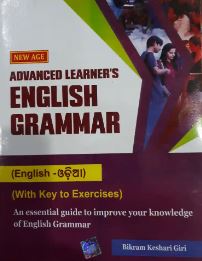
  • Advanced Learner’s English Grammar

    Advanced Learner’s English Grammar

    These images appear to be from a Longman Advanced Learners’ Grammar textbook, authored by Mark Foley and Diane Hall. The book is presented as a self-study reference and practice book with answers, designed for students aiming for a high level of English grammar proficiency. The excerpts showcase the book’s structure, including a detailed table of contents with various grammar topics, diagnostic tests covering specific grammar points, and practice exercises and explanations for advanced grammar concepts like tenses, passives, reported speech, conditionals, subjunctive forms, multi-word verbs, prepositions, modal verbs, and determiners.

    Longman Advanced Learners’ Grammar Overview

    Based on the provided sources, we can discuss what “Advanced grammar” entails according to the book “Longman Advanced Learners’ Grammar”.

    The “Longman Advanced Learners’ Grammar” is described as a comprehensive advanced level grammar of the English language. It is presented as a self-study reference and practice book with answers.

    The book consists of:

    • 36 diagnostic tests and a test key. These tests are used to identify areas of weakness.
    • 36 units of grammar explanation with practice exercises.
    • Double-page Round up of key areas of grammar.
    • An answer key for practice exercises.

    The book is intended for students who are at or above the level of the Cambridge First Certificate Examination (or equivalent). It can be used for preparing for the Cambridge Advanced or Proficiency exams, or by advanced students who are not preparing for exams at all.

    In addition to traditional grammar ‘rules’, the book examines the close relationship between grammar and vocabulary in English. The explanations cover areas such as multi-word verbs, prepositions, and reporting verbs, where grammar and vocabulary are closely linked. The book includes useful word lists, charts, and Round ups. It also explains common errors and areas of potential confusion, and highlights differences between British and American usage. The importance of context and levels of formality are highlighted, and examples are given that reflect up-to-date, idiomatic speech and writing. Many examples are taken from the BNC/Longman corpus. The book also contains units on text structure and discourse, described as areas essential for the advanced student beyond the confines of simple grammar and sentence structure.

    The book generally contains four pages of practice exercises for every four pages of grammar explanation. These exercises include a variety of types such as gap-filling, matching, and transformation tasks, including text manipulation. These tasks are typical of those found in advanced level examinations.

    The table of contents provides a detailed overview of the advanced grammar topics covered:

    • Present tenses (Simple and Continuous, Verbs rarely used in the continuous)
    • Past tenses (Simple, Continuous, Perfect, Perfect continuous, Used to/would)
    • Past to present tenses (Present perfect simple, Present perfect and past simple – differences, Present perfect continuous, Present perfect simple and continuous – differences)
    • The future (1) (Prediction, Decisions and intentions, Arrangements, Other future meanings)
    • The future (2) (Expressions with future meaning, Verbs with future meaning, Future in the past)
    • Negation (Negative statements, Negative questions, Words which carry negative meaning)
    • Questions (Closed and open questions, Tag questions, Indirect questions, Echo questions)
    • Passives, causatives and get (Passive forms, Passive -ing forms and infinitives, Have/get + object + past participle, Uses of the passive)
    • Reported speech (Direct and indirect speech, Indirect statements, Indirect (reported) questions, Indirect commands and requests, Reporting verbs and their patterns)
    • Conditionals (General points on conditionals, Zero conditional, First conditional, Second conditional, Third conditional, Mixed conditionals, Alternatives to if)
    • The subjunctive and ‘unreal’ uses of past forms (The subjunctive, The ‘unreal’ past, Wish/if only)
    • -ing forms and infinitives (-ing forms, Infinitives, Verbs followed by -ing forms and infinitives)
    • Participle and infinitive phrases (Participle phrases – form and use, Types of participle phrase, Infinitive phrases – form and use, Types of infinitive phrase, Uses in discourse)
    • Multi-word verbs (Form and use, Phrasal verbs, Prepositional verbs, Phrasal-prepositional verbs, Word list: common multi-word verbs)
    • Dependent prepositions (General rules, Verb + preposition patterns, Noun + preposition, Adjective/participle + preposition, Word list: dependent preposition patterns)
    • Modal verbs (1): can, could, may, might, be able to (Ability, Possibility, deduction and speculation, Arrangements, suggestions, offers, etc., Asking for and giving/refusing permission)
    • Modal verbs (2): must, should, ought to, have to, need to (Obligation and necessity, Prohibition and criticism, Absence of obligation or necessity, Recommendation and advice, Logical deduction and probability)
    • Modal verbs (3): will, would, shall (Prediction and certainty, Characteristics, habits and routines, Willingness and refusal, Offers and promises, Hypothetical would)
    • Auxiliaries, have (got), do (Auxiliary verbs – uses, Have and do – meanings and uses, Have got for possession)
    • Confusing verbs (False synonyms, Opposite pairs)
    • Word order and verb patterns (Word order in English, Verb patterns, Linking clauses)
    • Relative clauses (Relative clauses, Relative pronouns and adverbs)
    • Contrast (Conjunctions of contrast, Prepositions of contrast, Adverbs of contrast)
    • Introductory there and it (Introductory there, Introductory/impersonal it)
    • Emphatic structures and inversion (Cleft sentences, Fronting, Inversion)
    • Aspects of cohesion (Types of text reference, Substituting nouns, verbs, clauses, Ellipsis)
    • Features of discourse (Ordering information, Discourse devices)

    The diagnostic tests (pages 10-45) allow users to identify specific areas of grammar that require practice. Each item in the diagnostic tests refers to a particular section or sub-section of the book for further explanation and practice. For example, Diagnostic Test 4 focuses on the future tense. An item answered incorrectly in this test would direct the user to the relevant unit for that specific aspect of the future tense. Similarly, Diagnostic Test 6 covers negation, Diagnostic Test 7 covers questions, Diagnostic Test 11 covers the subjunctive and ‘unreal’ past forms, Diagnostic Test 13 covers participle and infinitive phrases, Diagnostic Test 15 covers dependent prepositions, Diagnostic Test 16 and 17 cover modal verbs, Diagnostic Test 21 covers adjectives, Diagnostic Test 23 covers gradable and ungradable adjectives, Diagnostic Test 25 covers nouns and noun phrases, Diagnostic Test 31 covers relative clauses, Diagnostic Test 32 covers contrast, Diagnostic Test 33 covers introductory there and it, and Diagnostic Test 34 covers emphatic structures and inversion.

    Users can use the book in different ways, including using the Contents to find a unit, using the index to find a specific area, or using the diagnostic tests to identify areas needing practice. After reading the explanations, users are encouraged to do the related practice exercises and check their answers in the key.

    Advanced English Grammar Structures and Usage

    Based on the provided excerpts from the “Longman Advanced Learners’ Grammar”, the discussion of the English language focuses on its advanced grammatical structures and usage. This book is designed for students who are already at or above the level of the Cambridge First Certificate Examination (or equivalent), and is intended for self-study, reference, and practice.

    According to this resource, advanced English grammar encompasses a wide range of topics beyond basic sentence structure. Key areas covered include:

    • Verb Tenses and Forms: A detailed look at present tenses (Simple, Continuous, Verbs rarely used in the continuous), past tenses (Simple, Continuous, Perfect, Perfect continuous, Used to/would), and past to present tenses (Present perfect simple, differences with past simple, Present perfect continuous, differences with Present perfect simple). It also covers various ways to express the future, including prediction, decisions, intentions, arrangements, and other expressions with future meaning.
    • Sentence Structure and Manipulation: This includes negation in various forms, different types of questions (Closed and open, Tag questions, Indirect questions, Echo questions), passives and causatives (including passive forms, -ing forms, infinitives, and ‘have/get + object + past participle’), and reported speech (Direct and indirect speech, statements, questions, commands, and the patterns of reporting verbs).
    • Clause Types and Linking: The book delves into conditionals (Zero, First, Second, Third, Mixed, and alternatives to ‘if’), relative clauses (including relative pronouns and adverbs), word order and verb patterns, and linking clauses (coordination, subordination).
    • Non-finite Verbs and Phrases: Coverage extends to -ing forms and infinitives, examining their forms, uses, and the verbs that are followed by them. It also discusses participle and infinitive phrases, their forms, uses, types, and role in discourse.
    • Modal Verbs and Related Concepts: A significant portion is dedicated to modal verbs, analyzing the uses of ‘can, could, may, might, be able to’, ‘must, should, ought to, have to, need to’, and ‘will, would, shall’ for expressing concepts like ability, possibility, obligation, prediction, willingness, etc. The use of auxiliary verbs like ‘have’ and ‘do’ is also covered.
    • Other Complex Structures: The book addresses the subjunctive and ‘unreal’ uses of past forms (including ‘wish/if only’), the use of introductory ‘there’ and ‘it’, and emphatic structures and inversion (Cleft sentences, Fronting, Inversion).
    • Grammar and Vocabulary Interface: The book specifically examines the close relationship between grammar and vocabulary in English. This includes detailed units on multi-word verbs (phrasal, prepositional, phrasal-prepositional verbs) and dependent prepositions (patterns with verbs, nouns, adjectives, and participles).
    • Usage and Discourse: Beyond sentence-level grammar, the book includes units on aspects of cohesion (text reference, substitution, ellipsis) and features of discourse (ordering information, discourse devices), which are described as essential for advanced students. The importance of context and levels of formality is highlighted, with examples reflecting up-to-date, idiomatic speech and writing, often taken from linguistic corpora. The book also points out common errors and areas of potential confusion and differences between British and American usage.

    The structure of the book, with diagnostic tests, detailed explanations, and practice exercises (including gap-filling, matching, and transformation tasks typical of advanced exams), further illustrates the depth and practical focus of studying advanced English grammar. The diagnostic tests, for example, cover areas like future tenses, negation, questions, the subjunctive and ‘unreal’ past forms, participle and infinitive phrases, dependent prepositions, modal verbs, contrast, and emphatic structures and inversion.

    Longman Advanced Learners’ Grammar Practice Exercises

    Based on the provided excerpts from the “Longman Advanced Learners’ Grammar”, the practice exercises are a crucial component of the book, designed to reinforce the understanding and application of the advanced grammar points presented.

    Here’s a discussion of the practice exercises according to the sources:

    • Purpose and Role: The book is presented as a self-study reference and practice book. The practice exercises are intended to be done after the user has read the explanations in the related grammar units. There is a key provided to check answers. The diagnostic tests also play a role in directing users to specific sections for explanation and practice if areas of weakness are identified.
    • Quantity: Generally, the book contains four pages of practice exercises for every four pages of grammar explanation.
    • Variety of Types: The practice exercises are not limited to one format but include a variety of types. These include exercises such as gap-filling, matching, and transformation tasks. The transformation tasks can also involve text manipulation.
    • Advanced Level Focus: The tasks included in the practice exercises are described as being typical of those found in advanced level examinations.

    Looking at the provided pages, we can see specific examples of these types:

    • Gap-filling: Many exercises require filling in blanks with correct verb forms, phrases, or other words based on the grammar point being practiced. This is seen for topics like present tenses, past tenses, future tenses, questions, modal verbs, multi-word verbs, and dependent prepositions.
    • Matching: Several exercises involve matching sentence beginnings with endings, phrases with explanations, or sentences with their meaning. These cover areas such as present tenses, past tenses, present perfect, causatives, conditionals, subjunctive/unreal past, -ing forms/infinitives, dependent prepositions.
    • Transformation Tasks: A frequent task is rewriting sentences to achieve a similar meaning, often using a different grammatical structure or a given word. This is applied to various topics including past tenses, future tenses, negation, questions, passives/causatives, reported speech, conditionals, subjunctive/unreal past, -ing forms/infinitives, multi-word verbs, dependent prepositions, modal verbs, and different future meanings.
    • Text Manipulation: Exercises also involve working with longer texts, such as identifying errors, rewriting parts, or completing gaps within a paragraph or dialogue. This allows practice of grammar in more extended contexts, relevant for advanced proficiency. Examples include correcting errors in texts or dialogues, completing dialogues, or completing descriptive texts.
    • Multiple Choice: Some practice sections present multiple-choice questions where the user selects the grammatically correct option to complete a sentence or text. This is seen for comparing past tenses, future tenses, passives/causatives, reported speech, conditionals, and modal verbs.
    • Error Identification/Correction: Explicitly identifying and correcting errors in sentences or texts is another common type of exercise. Diagnostic tests also serve this purpose, but practice units include focused error correction.

    In summary, the practice exercises are fundamental to the book’s purpose as a learning tool for advanced English grammar. They are varied in type to cover different skills, directly linked to the grammar explanations, and designed to prepare students for the kinds of tasks found in advanced examinations.

    Longman Grammar Diagnostic Tests

    Based on the sources, the diagnostic tests are an integral part of the “Longman Advanced Learners’ Grammar” and serve a specific purpose within the learning process.

    Here’s a discussion of the diagnostic tests:

    • Purpose: The diagnostic tests are designed to help users identify their areas of weakness in advanced English grammar. By completing these tests, learners can pinpoint which grammar points they need to focus on.
    • Quantity: The book contains a full set of 36 diagnostic tests. These tests are located at the beginning of the book.
    • Coverage: The 36 diagnostic tests cover a wide range of advanced grammar areas. According to the table of contents and the tests themselves, they assess knowledge on topics such as:
    • Present tenses (Simple, Continuous, Verbs rarely used in the continuous)
    • Past tenses (Simple, Continuous, Perfect, Perfect continuous, Used to/would)
    • Past to present tenses (Present perfect simple, Present perfect continuous, differences)
    • The future (Prediction, Decisions and intentions, Arrangements, Other future meanings, Expressions with future meaning, Future in the past)
    • Negation
    • Questions (Closed and open, Tag questions, Indirect questions, Echo questions)
    • Passives, causatives, and ‘have/get + object + past participle’
    • Reported speech (Statements, questions, commands, reporting verbs)
    • Conditionals (Zero, First, Second, Third, Mixed, Alternatives to ‘if’)
    • The subjunctive and ‘unreal’ uses of past forms
    • -ing forms and infinitives
    • Participle and infinitive phrases
    • Multi-word verbs
    • Dependent prepositions
    • Modal verbs (Units 1-3, covering can, could, may, might, be able to, must, should, ought to, have to, need to, and will, would, shall)
    • Auxiliary verbs (have, got, do)
    • Confusing verbs
    • Adjectives
    • Comparison with adjectives
    • Gradable and ungradable adjectives
    • Adverbs
    • Nouns and noun phrases
    • Possessives and compound nouns
    • Pronouns
    • Determiners
    • Prepositions
    • Word order and verb patterns
    • Relative clauses
    • Contrast (Conjunctions and adverbs of contrast, prepositions of contrast)
    • Introductory ‘there’ and ‘it’
    • Emphatic structures and inversion
    • Aspects of cohesion (Text reference, substitution, ellipsis)
    • Features of discourse (Ordering information, discourse devices)
    • Format/Types of Questions: The diagnostic tests employ various question formats to assess understanding and application. Examples include:
    • Writing the correct form of verbs.
    • Underlining the correct verb form or phrase.
    • Choosing the best word or phrase (multiple choice).
    • Ticking the correct sentences and finding/correcting mistakes (error identification/correction).
    • Rewriting sentences to make them less direct or similar in meaning, often using a given word or phrase or changing the structure (transformation tasks).
    • Completing sentences.
    • Writing appropriate tag questions.
    • Completing dialogues or longer texts.
    • Matching sentences or phrases with explanations or meanings.
    • Working with auxiliary verbs, confusing verbs, adjectives, adverbs, nouns, pronouns, determiners, prepositions, word order, relative clauses, contrast, introductory ‘there’ and ‘it’, emphatic structures, cohesion, and discourse features through various tasks like filling gaps, choosing correct forms, or identifying/correcting errors.
    • Usage: The recommended way to use the diagnostic tests is to read the sections or sub-sections that are listed next to each diagnostic test (e.g., Diagnostic test 1 relates to Units 1.1-1.3). After reading the explanations, the user should do the related practice exercises. The diagnostic tests provide a reference index which shows which section or sections the test is practicing. When taking the tests, it may be helpful to write answers on separate paper to easily check against the key. Each correct answer in the key contains a reference number to the relevant grammar unit or sub-section.
    • Connection to the rest of the book: The diagnostic tests are explicitly linked to the grammar units (explanations) and practice exercises. They serve as a gateway to the learning content, directing the user to the specific units they need to study and practice based on their performance. This allows for focused learning rather than needing to go through the entire book linearly if certain areas are already strong.

    Advanced English Grammar Explained

    Based on the sources, the core content of the book is its discussion of grammar rules, presented as “grammar explanation” in numerous units. Here’s a discussion of these grammar rules as depicted in the sources:

    • Purpose: The book, titled “Longman Advanced Learners’ Grammar,” is designed as a comprehensive advanced level grammar reference. The grammar explanations are the main subject matter, intended to provide users with a thorough understanding of advanced English grammar.
    • Structure and Quantity: The grammar content is organized into 36 units of grammar explanation. These are further divided into sections and sub-sections, often covering specific forms or uses of a grammatical structure [6, 23, 24, etc.]. Each unit typically spans several pages [see page numbers in 1, 2, 3, 4]. There are generally four pages of practice exercises for every four pages of grammar explanation.
    • Content Focus: The grammar explanations cover a wide range of advanced topics in English, including but not limited to:
    • Various verb tenses (Present, Past, Past to Present, Future).
    • Negation and Questions.
    • Passives, Causatives, and related structures.
    • Reported Speech.
    • Conditionals, the Subjunctive, and ‘unreal’ uses of past forms.
    • -ing forms and Infinitives, including Participle and Infinitive phrases.
    • Multi-word verbs and Dependent Prepositions.
    • Modal verbs (across three units).
    • Auxiliary verbs, Confusing verbs, Adjectives (including comparison and gradable/ungradable), Adverbs.
    • Nouns, Noun phrases, Possessives, Compound nouns, Pronouns, Determiners, and Prepositions.
    • Word order, Verb patterns, and Relative clauses.
    • Contrast (using conjunctions, adverbs, prepositions).
    • Introductory ‘there’ and ‘it’.
    • Emphatic structures and Inversion.
    • Aspects of cohesion (text reference, substitution, ellipsis).
    • Features of discourse (ordering information, discourse devices).
    • Detailed Explanation: The grammar explanations go beyond simple rules. They examine the relationship between grammar and vocabulary. They cover areas where grammar and vocabulary are closely linked, such as multi-word verbs, prepositions, and reporting verbs. The explanations include:
    • Form (how the structure is built) [23, 24, 25, etc.].
    • Use (when and how the structure is applied, often detailing specific contexts like truths/facts, temporary actions, repeated events, completed actions, etc.) [23, 24, 25, etc.].
    • Numerous examples illustrating correct usage [23, 24, 25, etc.].
    • Examples of grammatically incorrect usage, marked with ‘X’ [25, 28, 31, 32, etc.].
    • Identification of common errors and areas of potential confusion [5, 25, 30, 31, 32, 33, 34, etc.].
    • Explanations of differences between British and American usage where relevant.
    • Information on idiomatic speech and writing.
    • Inclusion of useful word lists, charts, and Round ups that summarize key grammar points.
    • Discussion of the importance of context and levels of formality.
    • Advanced Level Characteristics: The grammar explanations reflect an advanced level focus. They include detailed points often tested in advanced examinations. Many examples are taken from the BNC/Longman corpus, reflecting real-world English. The content extends beyond sentence structure to address text structure and discourse features relevant to advanced students.
    • Integration with Diagnostic Tests and Practice: The grammar explanations are central to the book’s learning cycle. The diagnostic tests identify areas where a user needs to study specific grammar units or sub-sections. The user is directed to read the explanations in these relevant sections, and then do the related practice exercises to reinforce understanding and application. The key to the diagnostic tests provides reference numbers back to the specific grammar units/sub-sections.

    In summary, the grammar rules, presented as detailed explanations within structured units, form the knowledge base of the book. They are comprehensive, cover a wide array of advanced topics, provide detailed usage notes, examples, and warnings about common errors, and are designed to be studied in conjunction with the diagnostic tests and practice exercises to facilitate targeted learning for advanced learners.

    By Amjad Izhar
    Contact: amjad.izhar@gmail.com
    https://amjadizhar.blog

  • Phrases You Need To STOP Saying At Work

    Phrases You Need To STOP Saying At Work

    Words shape perception—and in the workplace, perception can make or break careers. Whether you’re climbing the corporate ladder or trying to build credibility as a professional, what you say (and how you say it) leaves a lasting impression. Certain phrases, while common, can signal insecurity, deflect responsibility, or make you seem outdated. In a high-stakes work environment, even casual language can sabotage how you’re viewed by managers, colleagues, or clients.

    What’s even more concerning is that many of these problematic phrases masquerade as harmless or polite. They’re passed around so frequently in meetings, emails, and hallway conversations that we don’t even notice when we’re using them. But just because something is culturally embedded doesn’t mean it’s professionally effective. As George Orwell once wrote, “If thought corrupts language, language can also corrupt thought.” Sloppy communication fosters sloppy thinking—and vice versa.

    If you’re aiming for influence, credibility, and upward mobility, it’s time to fine-tune your workplace vocabulary. This article outlines 32 phrases you need to stop saying at work, not just because they’re overused, but because they can undermine your authority, clarity, and effectiveness. With each phrase, we’ll break down why it’s harmful and what to say instead, drawing on expert opinions and professional insights along the way.


    1- Just
    Using “just” is often a form of minimizing—minimizing your request, your contribution, or your role. For instance, saying “I just wanted to check in” or “I’m just a marketing assistant” subtly undermines your own authority. According to Dr. Lois Frankel, author of Nice Girls Don’t Get the Corner Office, women in particular are socialized to use qualifiers like “just” as a way to avoid seeming demanding, but it ends up diluting their message.

    Removing “just” from your language helps convey confidence and assertiveness. You aren’t “just” doing anything; you’re making a professional statement. Practice replacing “just” with stronger alternatives like “I’d like to follow up” or “I noticed this needs attention.” Your words should reflect your professionalism—not downplay it.


    2- It’s not fair
    Saying “It’s not fair” can come across as immature and emotionally reactive. In a results-driven environment, fairness is often subjective and rarely a compelling argument. Instead of appealing to fairness, which sounds like playground logic, focus on facts, policies, or performance metrics to support your case.

    Leadership expert Dr. Travis Bradberry notes that emotional intelligence is key in modern workplaces. Professionals who voice objections with poise and rationale—not emotional appeals—are taken more seriously. Try reframing your concern with phrases like “This seems inconsistent with our usual practice” or “Can we revisit the criteria used?” These show critical thinking rather than complaint.


    3- Sorry, but
    Apologizing before delivering a statement implies that your position is weak or unjustified. “Sorry, but” is often a way to soften what we perceive as confrontation, but it can end up signaling a lack of conviction. If you believe in what you’re about to say, don’t apologize for it.

    According to Deborah Tannen, linguist and author of Talking from 9 to 5, women are especially prone to over-apologizing, which can make them appear less confident or competent. Instead of leading with “Sorry, but,” try going straight to the point: “I see it differently,” or “Here’s another perspective.” You’ll come across as more assertive and credible.


    4- It’s not my fault
    This phrase reeks of deflection and an unwillingness to take responsibility. In collaborative settings, no one wants to hear finger-pointing. It signals a fixed mindset and can quickly damage your professional relationships.

    Instead, focus on what you can do moving forward. Even if you weren’t responsible, taking initiative to help resolve the problem shows leadership. As Jocko Willink writes in Extreme Ownership, true leaders take responsibility for everything in their world. Try: “Here’s what we can do to fix it,” or “Let’s figure out how this happened and prevent it going forward.”


    5- This is the way it’s always been done
    Clinging to outdated methods stifles innovation and signals resistance to change. In today’s agile and tech-forward workspaces, adaptability is key. This phrase can mark you as rigid or disconnected from progress.

    Clayton Christensen, author of The Innovator’s Dilemma, warns against institutional inertia—the tendency of organizations to resist innovation because they’re anchored in tradition. Replace this phrase with openness: “Is there a reason we continue this method?” or “I’m open to exploring more efficient alternatives.” This shows you’re solutions-oriented and adaptive.


    6- Does that make sense?
    Though meant to be clarifying, this phrase can unintentionally sound condescending or self-doubting. It puts the burden on the listener to validate your clarity, which can subtly undermine your authority.

    Instead, consider alternatives that invite dialogue without casting doubt. Try “Let me know if you have any questions,” or “I’d love to hear your thoughts.” These expressions maintain confidence while encouraging engagement, as recommended by communication expert Dianna Booher in Communicate Like a Leader.


    7- I’ll try
    “I’ll try” lacks commitment and makes you sound uncertain. In high-performance environments, phrases like this can suggest a lack of accountability. As Yoda wisely said, “Do or do not. There is no try.”

    You can express willingness without hedging. Say “I will” or “I’ll do my best by [date].” This communicates reliability and initiative. According to The Confidence Code by Katty Kay and Claire Shipman, bold language is a hallmark of those who are perceived as competent and influential.


    8- That’s not my job
    Refusing responsibility with “That’s not my job” shows a lack of team spirit and adaptability. While it’s fair to have defined roles, rejecting tasks outright reflects poorly on your attitude.

    Instead, aim for constructive collaboration. You could say, “That’s typically handled by [X], but I’m happy to assist where I can,” or “Let me connect you with the right person.” This conveys professionalism and cooperative intent without overstepping boundaries.


    9- I can’t
    Saying “I can’t” is absolute—and not in a good way. It closes the door on problem-solving and paints you as inflexible or unresourceful. High-functioning teams thrive on adaptability and creativity.

    If something isn’t possible, explain why and suggest an alternative. Say, “That won’t work because of [reason], but here’s another approach.” This shows strategic thinking. As Stephen Covey emphasized in The 7 Habits of Highly Effective People, proactive language builds trust and influence.


    10- You’re wrong
    Bluntly telling someone they’re wrong can escalate conflict and damage rapport. It may be accurate, but it’s rarely effective. You’ll gain more by challenging ideas, not people.

    Use language that keeps the conversation constructive: “I see it differently,” or “Let’s look at this from another angle.” Harvard negotiation expert William Ury recommends keeping disagreements focused on interests, not egos, in Getting to Yes.


    11- At the end of the day
    This phrase is overused and often adds nothing of value. It can also feel dismissive, as if to say, “Your point doesn’t matter—this is what’s important.”

    Choose clarity over clichés. Say “Ultimately,” or “The main takeaway is…” to drive home your point. Cleaner, more direct language increases comprehension and respect in communication, as noted in Made to Stick by Chip and Dan Heath.


    12- Think outside the box
    This once-trendy phrase is now a tired cliché. Ironically, asking people to “think outside the box” often results in predictable, uninspired responses.

    If you want creativity, be specific. Try “Let’s explore unconventional solutions,” or “What’s a new angle we haven’t tried?” As Edward de Bono suggests in Lateral Thinking, innovation comes from structured provocation, not vague slogans.


    13- Low-hanging fruit
    This corporate jargon often sounds lazy or dismissive. It implies taking shortcuts or focusing only on easy wins, which can feel demotivating to teams.

    Instead, use clearer terms. Try “quick wins,” “initial opportunities,” or “starting points.” Transparency and clarity in language, as emphasized by Patrick Lencioni in The Five Dysfunctions of a Team, help build credibility and trust.


    14- No problem
    While meant to be polite, “No problem” can imply that your help was inconvenient. It subtly shifts attention to the burden rather than the willingness.

    Replace it with “You’re welcome,” or “Glad to help.” These expressions reinforce a positive tone and reflect professionalism, as recommended in customer service training and business etiquette guides.


    15- It’s a paradigm shift
    This phrase is often used without real substance, making it feel like empty jargon. Unless you’re literally shifting an entire framework of understanding, it sounds exaggerated.

    Instead, describe the change concretely: “We’re implementing a new strategic model,” or “This approach redefines our workflow.” Clarity trumps grandiosity, especially in professional environments.


    16- Take it to the next level
    Vague and overused, this phrase lacks actionable meaning. What is “the next level,” and how will we get there? Without context, it feels like filler.

    Offer specifics instead. Try “Let’s increase our customer retention by 20%,” or “We’re aiming to scale this project regionally.” Specific goals drive accountability, as emphasized in Measure What Matters by John Doerr.


    17- Synergy
    “Synergy” is corporate-speak that has become a punchline. It’s often used to mask a lack of real strategy or collaboration.

    If you mean teamwork, say “collaboration,” “alignment,” or “combined effort.” This shows authenticity. As Brené Brown writes in Dare to Lead, clarity is kindness—even in language.


    18- Motivated
    Describing yourself or a colleague as “motivated” is too generic to be meaningful. It doesn’t distinguish competence, skill, or drive.

    Go deeper. Say “self-starter with a track record of initiating process improvements,” or “high performer with a passion for strategic outcomes.” Richer language adds credibility to resumes and performance reviews.


    19- Driven
    Like “motivated,” “driven” is overused and vague. It may signal ambition, but it lacks precision.

    Try describing the kind of drive you exhibit. For instance, “Results-oriented professional consistently exceeding quarterly goals,” or “Data-driven leader focused on measurable outcomes.” Language should show, not just tell.


    20- Blue sky thinking
    This phrase sounds like you’re brainstorming for the sake of it. It suggests a lack of grounding in feasibility.

    Reframe your call for ideas. Say “Let’s explore imaginative solutions” or “What’s a bold approach we haven’t tested yet?” Keep it inspirational but grounded.


    21- Take it offline
    Though sometimes necessary, this phrase can sound like a brush-off. It may imply the issue isn’t important or disrupts transparency.

    Be clearer about the intent. Try “Let’s schedule a one-on-one to dive deeper,” or “Can we continue this in a focused discussion after the meeting?”


    22- Leverage
    “Leverage” is often used when “use” or “apply” would do. Overuse can make you sound like you’re speaking in corporate riddles.

    Instead of “leverage our assets,” say “use our strengths” or “apply our resources.” Simpler language makes communication more direct and effective.


    23- Reach out
    While polite, “reach out” has become so common it’s lost all weight. It also can sound overly casual or vague.

    Use “contact,” “follow up with,” or “speak with.” As Susan Scott notes in Fierce Conversations, precision in language fosters clarity and action.


    24- Ping me
    “Ping me” feels tech-bro casual in a formal work setting. It also doesn’t communicate urgency or importance.

    Say “send me a quick message,” or “follow up via email.” Match your tone to your environment to maintain credibility.


    25- Growth hacking
    This startup jargon often feels like empty buzz. It’s rarely clear what strategy is being referenced.

    Be specific: “We’re testing rapid marketing experiments to increase acquisition,” or “We’re applying data-driven techniques to boost user engagement.” Clarity beats trendiness.


    26- Deliver
    “Deliver” is often used vaguely: “We need to deliver results.” But what does that mean?

    Spell it out. Say “complete the project by May 15” or “achieve a 10% increase in engagement.” Tangible targets build accountability.


    27- Collaborate
    “Collaborate” is meaningful—but only when you explain how. Simply saying “let’s collaborate” isn’t enough.

    Detail what collaboration looks like: “Let’s schedule a joint session to align goals,” or “I’ll contribute insights from marketing, and you can bring the product team’s input.”


    28- Disruptor
    Everyone wants to be a disruptor now, but the term is overused and often inaccurate.

    Focus on describing innovation. Say “We’re offering an alternative to traditional services,” or “We’re introducing a model that improves efficiency by 40%.”


    29- Going forward
    While common, “going forward” can be vague. It’s better to attach timeframes or actions.

    Instead of “going forward, we’ll monitor metrics,” say “Starting next quarter, we’ll review key metrics weekly.”


    30- Empower
    “Empower” sounds great but often lacks follow-through. It can sound performative if not backed by actual support.

    Clarify the tools or authority you’re providing: “We’re giving team leads autonomy to approve budgets,” or “Staff now have access to training to build skills.”


    31- Touch base
    “Touch base” is another vague phrase that can mean anything from a quick hello to a deep strategy session.

    Be clear: “Let’s check in on progress this Thursday,” or “I’d like to schedule a 15-minute sync-up.”


    32- Give it 110%
    This phrase is mathematically impossible and emotionally exhausting. It implies overwork as a virtue.

    Encourage sustainable excellence instead: “Let’s aim for our best while maintaining balance,” or “Let’s exceed expectations where possible.”


    Conclusion
    Language isn’t just how we communicate—it’s how we shape perception, manage impressions, and cultivate professional influence. Many of the phrases explored here may seem harmless, but over time, they erode clarity, weaken credibility, and obscure accountability. By replacing jargon with precision, cliché with authenticity, and defensiveness with collaboration, you project competence and leadership.

    In the words of management guru Peter Drucker, “The most important thing in communication is hearing what isn’t said.” When you refine what is said, you help others hear the right message loud and clear. For those committed to long-term career growth, upgrading your professional vocabulary isn’t optional—it’s essential.

    By Amjad Izhar
    Contact: amjad.izhar@gmail.com
    https://amjadizhar.blog

  • English Grammar in Use

    English Grammar in Use

    This document is the fourth edition of English Grammar in Use, a self-study grammar textbook. The book’s numerous units cover various grammatical points, such as phrasal verbs and verb tenses, with accompanying exercises and answer keys. Seven appendices offer supplementary information on topics like irregular verbs and American English. A study guide and additional exercises are included to aid in learning. The text emphasizes a flexible approach, encouraging learners to focus on their individual grammatical challenges.

    Instructions: Answer the following questions in 2-3 sentences each.

    1. Explain the difference between the present perfect and past simple tenses.
    2. What are modal verbs and how are they used?
    3. When do we use the -ing form after a verb?
    4. When do we use the infinitive form after a verb?
    5. Explain the difference in meaning between “I remember doing it” and “I remembered to do it.”
    6. What is the difference between “I’m used to driving” and “I used to drive”?
    7. Give an example of a sentence using a preposition followed by an -ing form.
    8. Explain the difference between “I saw him cross the road” and “I saw him crossing the road.”
    9. How can we use an -ing clause to show the reason for something?
    10. Give an example of how we can use “so that” to express purpose.

    Answer Key

    1. The present perfect tense is used for actions completed in a time period up to now, while the past simple is used for completed actions in the past. For example, “I have lived in London for five years” (present perfect) vs. “I lived in Paris for two years” (past simple).
    2. Modal verbs are auxiliary verbs like can, could, may, might, must, should, will, and would. They express possibility, ability, permission, obligation, and other nuances of meaning. They are followed by the base form of the main verb.
    3. We use the -ing form after a verb in several cases: a) as a gerund acting as subject or object, b) after certain verbs like enjoy, stop, mind, etc., c) after prepositions, and d) in certain fixed expressions.
    4. We use the infinitive form after a verb to express purpose, after certain verbs like decide, want, forget, etc., and after adjectives like easy, difficult, etc.
    5. “I remember doing it” implies that I have a memory of performing the action in the past, while “I remembered to do it” means that I successfully recalled and completed the action.
    6. “I’m used to driving” means that I am accustomed to driving and find it comfortable, while “I used to drive” indicates that driving was a habit in the past but is no longer.
    7. Example: “I’m interested in learning English.” Here, the preposition “in” is followed by the -ing form “learning.”
    8. “I saw him cross the road” describes a complete action witnessed by the speaker, while “I saw him crossing the road” indicates an action in progress at the time of observation.
    9. Example: “Feeling tired, I decided to stay home.” The -ing clause “Feeling tired” explains the reason for the speaker’s decision.
    10. Example: “I wear a coat so that I don’t get cold.” This sentence shows that the purpose of wearing a coat is to avoid feeling cold.

    Essay Questions

    1. Discuss the various ways in which the present continuous tense can be used in English, providing examples to illustrate each usage.
    2. Compare and contrast the use of “will” and “going to” when expressing future actions. In what contexts is each form more appropriate?
    3. Explain the concept of modal verbs and their significance in English grammar. Discuss the various modal verbs and their specific meanings, providing examples to illustrate their usage.
    4. Analyze the different grammatical structures used to express purpose in English. Discuss the nuances in meaning and usage of these structures, providing examples to support your explanation.
    5. Compare and contrast the use of -ing forms and infinitive forms after verbs in English. Discuss the different verbs that typically take each form and the situations in which using one form over the other changes the meaning of the sentence.

    Glossary of Key Terms

    TermDefinitionTenseA verb form that indicates the time of an action or state.Modal VerbAn auxiliary verb (can, could, may, might, must, should, will, would, shall) that expresses possibility, ability, permission, obligation, and other nuances of meaning.GerundA verb form ending in -ing that functions as a noun.InfinitiveThe base form of a verb, often preceded by “to” (to walk, to study, etc.).ParticipleA verb form that functions as an adjective (present participle: -ing; past participle: -ed or irregular form).ClauseA group of words that contains a subject and a verb and forms part of a sentence.PrepositionA word that shows the relationship between a noun or pronoun and another word in the sentence (in, on, at, for, to, with, by, etc.).ConjunctionA word that connects words, phrases, or clauses (and, but, or, because, so, although, etc.).AdverbA word that modifies a verb, adjective, or another adverb (quickly, slowly, very, really, etc.).Question TagA short question added to the end of a statement to confirm information or seek agreement (You’re coming, aren’t you?).SubjectThe noun or pronoun that performs the action of a verb in a sentence.ObjectThe noun or pronoun that receives the action of a verb in a sentence.Passive VoiceA grammatical construction in which the subject of a sentence receives the action of the verb (The ball was thrown by John).Active VoiceA grammatical construction in which the subject of a sentence performs the action of the verb (John threw the ball).Reported SpeechThe restatement of what someone has said, often with changes in tense and pronouns (He said that he was tired).Direct SpeechThe exact words that someone has said, enclosed in quotation marks (“I am tired,” he said).Countable NounA noun that can be counted and has both singular and plural forms (book, books).Uncountable NounA noun that cannot be counted and usually does not have a plural form (water, advice, information).Compound NounA noun made up of two or more words (toothbrush, bus stop, washing machine).Phrasal VerbA verb combined with a preposition or adverb to create a new meaning (take off, put on, look up, etc.).IdiomA phrase with a figurative meaning that is different from the literal meaning of the individual words (kick the bucket, raining cats and dogs).

    Briefing Document: English Grammar Review based on “Essential Grammar in Use” by Raymond Murphy

    This briefing document summarizes key themes and important grammatical points covered in excerpts from Raymond Murphy’s “Essential Grammar in Use.” It highlights the book’s approach to explaining various grammatical concepts, using examples and dialogues for clarity.

    Main Themes

    • Emphasis on Practical Usage: The book prioritizes everyday English usage, focusing on clear communication and understanding of common grammatical structures.
    • Gradual Progression: The excerpts demonstrate a structured progression through different grammatical topics, starting with basic tense usage and moving towards more complex structures like modals, verb patterns, and relative clauses.
    • Contextual Learning: Dialogues and situational examples help illustrate the practical application of grammar rules, making it easier to grasp their meaning and usage.
    • Focus on Common Mistakes: The book addresses typical errors made by English learners, offering clear explanations and tips to avoid them.

    Key Grammatical Points and Examples

    1. Present Tenses for Future Actions

    The book explains how present tenses can express future events, particularly when schedules or fixed plans are involved.

    • Example Dialogue:“Are you going out this morning?”
    • “No, I’m going to clean my room.” (Present continuous for a planned action)

    2. Present Perfect Tense

    Emphasis is placed on the present perfect’s use for actions or experiences within a timeframe that continues up to the present.

    • Example Dialogue:“Have you travelled a lot, Jane?”
    • “Yes, I’ve been to lots of places.” (Present perfect for experiences within Jane’s lifetime)

    3. For and Since with Present Perfect

    The distinction between “for” (duration) and “since” (starting point) with the present perfect is clearly explained.

    • Example: “I haven’t been to the cinema for ages.” (Duration of time)
    • Example: “It’s five years since I had a holiday.” (Specific starting point)

    4. Past Simple vs. Present Perfect

    The book contrasts the use of the past simple for completed actions in the past with the present perfect for actions connected to the present.

    • Example:It didn’t rain this week.” (Past simple – week is finished)
    • Example:The weather has been cold recently.” (Present perfect – recent period connects to the present)

    5. Modal Verbs

    A detailed breakdown of modal verbs like “can,” “could,” “must,” “should,” “may,” and “might” is provided, focusing on their various functions (ability, permission, obligation, possibility, etc.).

    • Example:Could I use your phone?” (Requesting permission)
    • Example:You should see a doctor.” (Giving advice)

    6. -ing and Infinitive Verb Patterns

    The book clarifies when to use verbs followed by -ing forms or infinitives, including situations where both are possible.

    • Example: “I enjoy playing tennis.” (Verb + -ing)
    • Example: “I want to learn Spanish.” (Verb + infinitive)

    7. Prepositions

    Usage of prepositions in different contexts is covered, including prepositions of place, time, and those used after specific adjectives and verbs.

    • Example: “Look at those people swimming in the river.” (Preposition of place)
    • Example: “I’m interested in learning more about this.” (Preposition after adjective)

    8. Relative Clauses

    The use of relative pronouns (who, which, that) to connect clauses and provide additional information is explained.

    • Example: “An architect is someone who designs buildings.” (Defining relative clause)

    9. Passive Voice

    The formation and usage of the passive voice are illustrated.

    • Example: “The window was broken.” (Passive voice – focus on action rather than the doer)

    10. Apostrophes

    The book clarifies the rules for using apostrophes to indicate possession and in contractions.

    • Example: “My sister’s room.” (Possession)
    • Example:It’s a nice day.” (Contraction of “it is”)

    Conclusion

    Raymond Murphy’s “Essential Grammar in Use” offers a clear and practical guide to English grammar, focusing on common usage patterns and addressing areas where learners often face difficulties. Its use of examples and dialogues, along with a systematic approach to grammatical concepts, makes it a valuable resource for improving English language skills.

    English Grammar FAQ

    What is the difference between “I am doing” and “I do” when talking about the future?

    “I am doing” (present continuous) is used to talk about fixed plans or arrangements in the future. For example, “I am meeting Sarah for lunch tomorrow.”

    “I do” (simple present) is used with future time expressions to talk about schedules or timetables. For example, “The train leaves at 8:00 AM.”

    How do I use “going to” to talk about the future?

    “Going to” is used to express intentions or predictions based on present evidence. For example:

    • Intention: “I am going to study hard for my exams.”
    • Prediction: “Look at those dark clouds! It’s going to rain.”

    What is the difference between “will” and “shall” when talking about the future?

    In modern English, “will” is generally used for all subjects (I, you, he, she, it, we, they). “Shall” is occasionally used in formal contexts with “I” and “we” to make offers or suggestions.

    For example:

    • Offer: “Shall I open the window for you?”
    • Suggestion: “Shall we go to the cinema this evening?”

    When do I use “will” and when do I use “going to” for the future?

    • Will:Predictions: “I think it will rain tomorrow.”
    • Decisions made at the moment of speaking: “I’m thirsty. I’ll get some water.”
    • Offers and promises: “I will help you with your homework.”
    • Going to:Planned events: “We are going to visit Paris next year.”
    • Predictions based on present evidence: “She is going to have a baby.”

    How do I use the present perfect tense?

    The present perfect (have + past participle) is used to talk about:

    • Unfinished past: Experiences or actions that started in the past and continue to the present. For example, “I have lived in London for five years.” (I still live in London)
    • Finished past with present result: Actions completed in the past that have a present result or relevance. For example, “I have lost my keys.” (I don’t have them now).

    What is the difference between “for” and “since” when used with the present perfect?

    • For: A duration of time. “I have been working here for three months.”
    • Since: A specific point in time. “I have been working here since January.”

    What are some common verbs that can be followed by either -ing or to + infinitive?

    Some common verbs that can be followed by both -ing and to + infinitive, with a change in meaning, are:

    • Remember:“I remember closing the door.” (I did it and I recall it now)
    • “Remember to close the door.” (Don’t forget to do it).
    • Regret:“I regret telling him the truth.” (I wish I hadn’t).
    • “I regret to tell you that you didn’t get the job.” (I’m sorry to inform you).
    • Try:“Try taking a deep breath.” (Experiment with this action).
    • “I tried to open the window, but it was stuck.” (I made an effort).

    How do I use question tags correctly?

    Question tags are short questions added to the end of statements to confirm information or seek agreement. They use the auxiliary verb from the statement and the subject pronoun.

    • Positive statement + negative tag: “It’s cold today, isn’t it?”
    • Negative statement + positive tag: “You don’t like coffee, do you?”

    The intonation of the tag can change the meaning:

    • Rising intonation: Indicates a genuine question.
    • Falling intonation: Expresses certainty or invites agreement.

    Understanding Phrasal Verbs

    Phrasal verbs are verbs that are combined with other words, such as in/out, on/off, up/down, away/back, by, about, through, along, over, forward, round, or around, to create a new meaning. [1] These additional words are sometimes called particles. [2] Phrasal verbs can be used in a variety of ways.

    Phrasal verbs for movement and direction:

    • Some phrasal verbs are used to describe movement and direction. For example, go away and come back. [2]
    • Other examples include: take off (shoes), drive away, and look away. [2, 3]

    Phrasal verbs with a special meaning:

    • Often, phrasal verbs have a special meaning that is different from the meaning of the individual words. [4] For example, get on can mean to have a good relationship, and sort out can mean to solve a problem. [2]
    • Additional examples: break down (engine stopping), look out (be careful), take off (go into the air), get on (how did you do), and get by (manage). [4]

    Phrasal verbs with a preposition:

    • Sometimes, a phrasal verb is followed by a preposition. [5] For example: run away from, keep up with, look up at, and look forward to. [5]

    Phrasal verbs with an object:

    • When a phrasal verb has an object, there are usually two possible positions for the object. [5] For example, you can say: “I turned on the light,” or “I turned the light on.” [5]
    • However, if the object is a pronoun (it/them/me/him/etc.), only one position is possible. [5] For example: “I turned it on.” [5]

    The sources provide a number of examples of phrasal verbs and their meanings. The source also includes exercises to help you practice using phrasal verbs.

    English Verb Tenses

    The sources primarily focus on English verb tenses, categorizing them as simple or continuous, and present or past.

    Simple Tenses:

    • Present Simple (I do): This tense is used for actions happening repeatedly or in general. [1, 2] For example: “What do you usually do at weekends?” [3] and “It doesn’t rain very much in summer.” [3]
    • Past Simple (I did): This tense describes actions completed in the past. [4] For instance: “Tom lost his key yesterday.” [5] and “When did your friends arrive?” [5]

    Continuous Tenses:

    • Present Continuous (I am doing): This tense is for actions happening at or around the time of speaking. The action is not complete. [2] Examples: “The water is boiling. Can you turn it off?” [3] and “What are you doing?” [3]
    • Past Continuous (I was doing): This tense describes actions that were in progress at a particular time in the past. [6] For example: “Katherine was waiting for me when I arrived.” [7]

    Perfect Tenses:

    The sources also discuss perfect tenses, which are formed using “have” and the past participle of the verb:

    • Present Perfect Simple (I have done): This tense is used for actions or states that started in the past and continue up to the present. [8] It is also used for actions that happened at an unspecified time in the past. [8, 9] Examples include: “Jane has been to China twice.” [9] and “My hands are very dirty. I**’ve been repairing** my bike.” [10]
    • Present Perfect Continuous (I have been doing): This tense emphasizes the duration of an action that started in the past and continues up to the present. [11] For example: “It has been raining for two hours.” [12] and “Joe has been eating too much recently.” [10]
    • Past Perfect Simple (I had done): This tense is used for actions that were completed before another action or time in the past. [13] For instance: “They were still working. They hadn’t finished.” [14]
    • Past Perfect Continuous (I had been doing): Similar to the past perfect simple, this tense is used for actions that were in progress before another past action or time. [15]

    Future Tenses:

    English uses various structures to express future time, including:

    • Present Continuous (I am doing) with a future meaning: Used for pre-arranged plans in the future. [10, 16] For example: “Are you going to watch anything on TV this evening?” [17] and “He is playing tennis on Monday afternoon.” [16]
    • (Be) going to (do): Expresses intentions or predictions based on present evidence. [18] For example: “The boat is going to sink.” [19] and “It’s getting a bit dark, isn’t it? It’s difficult to read. Yes. I’ll turn on the light.” [20]
    • Will (‘ll): Used for predictions, spontaneous decisions, and promises. [17, 21-23] Examples: “Do you think Kate will pass the exam?” [17] and “Don’t worry about the exam. I’m sure you**’ll pass**.” [23]
    • Future Continuous (will be doing): Describes an action that will be in progress at a specific time in the future. [5] For instance: “Don’t phone between 7 and 8. We**’ll be having** dinner then.” [24]
    • Future Perfect (will have done): Indicates an action that will be completed before a specific time or another action in the future. [5] For example: “Phone me after 8 o’clock. We**’ll have finished** dinner by then.” [24]

    The sources provide detailed explanations and numerous examples of each tense, including common usage patterns and exceptions.

    English Grammar Essentials

    The sources cover a wide range of English grammar rules, providing explanations and examples for each. Some key areas discussed include:

    Verb Tenses

    • Simple vs. Continuous: Simple tenses (present simple and past simple) are used for actions that happen repeatedly or in general, while continuous tenses (present continuous and past continuous) describe actions that are in progress at a specific time.
    • Present Perfect: The present perfect tenses (simple and continuous) are used to describe actions or states that started in the past and continue up to the present, or for actions that happened at an unspecified time in the past.
    • Past Perfect: The past perfect tenses (simple and continuous) are used for actions that were completed before another action or time in the past.
    • Future Tenses: English expresses future time using various structures, including the present continuous with a future meaning, “going to,” “will,” the future continuous, and the future perfect.

    Modal Verbs

    • Can, Could, (Be) Able to: These verbs express ability, possibility, and permission.
    • May, Might: These verbs express possibility and permission.
    • Must, Have to: These verbs express obligation and necessity.
    • Should, Ought to: These verbs express advice and recommendation.
    • Would: Used for polite requests, hypothetical situations, and past habits.

    Conditional Sentences

    • If Clauses: The sources explain the different types of conditional sentences and the verb tenses used in each type. They cover “if” clauses with present simple, past simple, and past perfect tenses.

    Passive Voice

    • Forming the Passive: The passive voice is formed using “be” and the past participle of the verb. It is used when the focus is on the action rather than the doer of the action.

    Reported Speech

    • Changes in Tenses: When reporting speech, tenses often shift back in time (e.g., present simple becomes past simple).
    • Reporting Verbs: Different reporting verbs (e.g., say, tell, ask) are used depending on the type of speech being reported.

    -ing and to … (Infinitive)

    • Verbs Followed by -ing: Some verbs are followed by the -ing form of the verb (e.g., enjoy, avoid, finish).
    • Verbs Followed by to … : Other verbs are followed by the infinitive form of the verb (e.g., decide, want, hope).
    • Verbs Followed by -ing or to … : Some verbs can be followed by either the -ing form or the infinitive, with a difference in meaning or usage (e.g., remember, forget, try).

    Articles (a/an/the)

    • Countable and Uncountable Nouns: Articles are used with countable nouns (a/an for singular, the for both singular and plural). Uncountable nouns generally do not use articles.
    • Specific vs. General: The article “the” is used to refer to specific things, while “a/an” is used for general or non-specific things.

    Pronouns and Determiners

    • Personal Pronouns: (e.g., I, you, he, she, it, we, they)
    • Possessive Pronouns: (e.g., mine, yours, his, hers, ours, theirs)
    • Reflexive Pronouns: (e.g., myself, yourself, himself, herself, itself, ourselves, yourselves, themselves)
    • Determiners: (e.g., this, that, these, those, some, any, no, all, many, much, few, little)

    Adjectives and Adverbs

    • Adjectives: Describe nouns.
    • Adverbs: Describe verbs, adjectives, or other adverbs.
    • Comparative and Superlative Forms: Adjectives and adverbs have comparative and superlative forms to express degrees of comparison.

    Prepositions

    • Time: (e.g., at, in, on, for, since, during, until)
    • Place: (e.g., at, in, on, to, from, under, over)
    • Other Uses: Prepositions are used in many different contexts to express relationships between words in a sentence.

    Phrasal Verbs

    • Form and Meaning: Phrasal verbs combine a verb with one or more particles (e.g., in, out, on, off, up, down) to create a new meaning.
    • Types of Phrasal Verbs: The sources categorize phrasal verbs based on their structure and whether they take an object.

    The sources provide comprehensive explanations and examples of these grammar rules, along with exercises to practice using them.

    Advanced English Grammar Usage Guide

    The sources focus heavily on proper English usage, aiming to clarify common areas of confusion for intermediate English learners. Here’s a breakdown of key usage points:

    Verb Tense Usage:

    • Present Simple vs. Present Continuous: The present simple is for repeated or general actions, while the present continuous is for actions happening at or around the time of speaking. For example, “I usually go to work by car” (present simple) versus “I**’m going** to the cinema this evening” (present continuous) [1].
    • Present Perfect vs. Past Simple: The present perfect connects the past to the present, often for unfinished duration or unspecified time, whereas the past simple is for completed past actions. For instance, “Have you known each other for a long time?” (present perfect) versus “When did they first meet?” (past simple) [2, 3].
    • Stative Verbs: Certain verbs related to states (like, know, believe) are not typically used in continuous tenses [4, 5]. For example, “Do you believe in God?” (correct) rather than “Are you believing in God?” (incorrect) [5].

    Modal Verb Usage:

    • Can vs. Could: “Can” is for present ability, while “could” is for past ability or more polite requests. For example, “I can hear a strange noise” (present) and “Could you open the door, please?” (polite request) [4, 6].
    • May vs. Might: Both express possibility, but “might” suggests a slightly lower likelihood. For example, “I may go to Ireland” (perhaps will) and “It might rain later” (perhaps will) [7].
    • Must vs. Have to: “Must” emphasizes the speaker’s obligation, while “have to” is more about external obligation. For example, “I must go now” (speaker’s urgency) versus “I have to work tomorrow” (external schedule) [8].
    • Should vs. Ought to: Both give advice, but “ought to” is slightly more formal. For example, “You ought to have come” [9].

    Conditional Sentence Usage:

    • Real vs. Unreal Conditionals: “If I do…” is for real possibilities, while “If I did…” is for hypothetical, unlikely situations. For example, “If it rains, we’ll stay home” (real possibility) versus “If I won the lottery, I’d buy a house” (unlikely) [10, 11].

    Other Usage Points:

    • Countable vs. Uncountable Nouns: Some nouns have different meanings depending on whether they’re countable or uncountable. For instance, “a hair in my soup” (countable, specific) versus “You’ve got very long hair” (uncountable, general) [12].
    • Articles (a/an/the): “The” is used for specific things, while “a/an” is for general things. The sources provide detailed rules for article usage [13-19].
    • Word Order: Adverbs like “always,” “never,” and “often” are usually placed before the main verb [20].
    • Prepositions: The sources emphasize correct preposition use with verbs, adjectives, and nouns, as these can be tricky for learners [21-36].

    By focusing on these specific usage patterns, the sources help learners improve their grammatical accuracy and achieve more natural-sounding English.

    The Passive Voice: A Comprehensive Guide

    The sources explain that the passive voice is used when the focus is on the action itself rather than who or what is performing the action. The passive voice is formed using “be” + past participle. [1-3]

    Here’s a breakdown of the passive voice based on the sources:

    • Active vs. Passive: An active sentence emphasizes the subject performing the action. For example, “My grandfather built this house.” In contrast, a passive sentence puts the focus on what is acted upon: “This house was built by my grandfather.” [2]
    • Unknown or Unimportant Actor: The passive voice is often used when the actor is unknown or unimportant. For example, “A lot of money was stolen in the robbery.” [2]
    • Using “By”: If you want to specify the actor in a passive sentence, you can use “by.” For instance, “Two hundred people are employed by the company.” [2]
    • Tense Forms: The sources provide examples of the passive voice in different tenses:
    • Present simple: “This room is cleaned every day.” [3]
    • Past simple: “This room was cleaned yesterday.” [4]
    • Present perfect: “The room looks nice. It has been cleaned.” [5]
    • Past perfect: “The room looked nice. It had been cleaned.” [5]
    • Present continuous: “The room is being cleaned at the moment.” [6]
    • Past continuous: “The room was being cleaned when I arrived.” [6]
    • Infinitive: “A mystery is something that can’t be explained.” [7]
    • Future: “A new supermarket is going to be built next year.” [7]
    • Two Objects: When a verb has two objects, you can make two different passive sentences. For example, with the verb “give”:
    • “Somebody gave the police the information.” (active) [8]
    • “The police were given the information.” (passive) [8]
    • “The information was given to the police.” (passive) [8]
    • “Being + Past Participle”: This form is used to describe actions that are happening to someone. For instance, “I don’t like being told what to do.” [9]
    • “Get” in Passive: In informal spoken English, “get” can sometimes be used instead of “be” in passive sentences. For example, “Nobody got hurt.” [10]

    The sources offer a thorough examination of the passive voice, including its formation, usage, and various applications in different tenses.

    By Amjad Izhar
    Contact: amjad.izhar@gmail.com
    https://amjadizhar.blog

  • Effective Business English Writing

    Effective Business English Writing

    This book serves as a guide for writing effective business English in a global context. It emphasizes clarity, conciseness, and understanding the audience, which often includes non-native English speakers. The author addresses common writing pitfalls, grammar and punctuation, and provides practical tips for various business communications like emails and letters. The text highlights the evolving nature of business English and the importance of adapting style for different cultural expectations. Ultimately, it aims to equip readers with the confidence and skills to write professional and impactful business communications that achieve their objectives.

    Business English Writing Skills Review

    Study Guide

    This study guide is designed to help you review the key concepts presented in the provided excerpts on business English writing. It covers various aspects, including audience awareness, clarity, common errors, formatting, and specific business communication types.

    I. Understanding Your Audience:

    • Defining Readers and Customers: Recognize the interchangeable use of terms like readers, target readership, customers, and audience. Understand that “customer” encompasses both external buyers and internal colleagues, suppliers, and public sector contacts.
    • Global vs. Specific Audience: Determine whether your writing is intended for a specific group of English users or a worldwide audience. This will influence your word choice and style.
    • Reader Expectations: Emphasize the importance of understanding and meeting the expectations of your target readership, including their potential familiarity with different English variations.

    II. Clarity and Conciseness:

    • Central Philosophy: Reinforce the core principle of effective business English: creating clear, concise messages and avoiding verbosity. Understand that every word counts.
    • Avoiding Misunderstandings: Focus on strategies to minimize confusion, including careful word choice, avoiding idioms, clichés, and unnecessary nuances that may be interpreted differently.
    • Plain Language: Advocate for the use of simple, accessible language over complex or overly formal vocabulary. Understand that intelligent business writing prioritizes understanding.
    • Checking for Understanding: Implement methods to ensure your words are understood by your readers, including asking for feedback and being open to clarification.

    III. Common Writing Challenges:

    • Native vs. Non-Native English Speakers: Recognize that both groups face unique challenges in business English writing.
    • Impact of First Language: Be aware of how first language conventions can influence English writing (e.g., gendered nouns, pluralization, reflexive pronouns).
    • Standard vs. Non-Standard English: Understand the importance of using standard English for global business communication and the potential pitfalls of using localized or informal variations (e.g., Singlish).
    • Homonyms: Be aware of homonyms and their potential for causing confusion.
    • Abbreviations and Acronyms: Use them judiciously, always defining them on first use unless they are universally recognized. Be cautious of culturally specific meanings.
    • Online Dictionaries and Cut-and-Paste: Recognize the potential for errors and inappropriate language when relying solely on online dictionaries and using cut-and-paste without careful context analysis.
    • Tone and Style: Understand the impact of formal, informal, and neutral tones in business writing and the importance of choosing an appropriate style for the audience and context. Avoid barrier words and curtness.

    IV. Grammar and Punctuation:

    • Importance of Accuracy: Emphasize that correct grammar and punctuation are crucial for clear communication and maintaining professional credibility.
    • UK vs. US English: Be aware of key spelling and grammar differences between UK and US English and maintain consistency.
    • Common Errors: Review examples of grammatical mistakes (e.g., verb tense, subject-verb agreement, incorrect word forms) and punctuation errors (e.g., comma usage, apostrophes).
    • Parts of Speech: Understand the basic functions of nouns, pronouns, adjectives, verbs, adverbs, prepositions, conjunctions, and interjections.
    • Verb Tenses: Pay particular attention to the appropriate use of present simple and present continuous tenses.
    • Subject-Verb Agreement (Concord): Ensure that verbs agree in number with their subjects.
    • Question Tags: Understand their function and how to form them correctly.
    • Transitional Words and Phrases: Recognize how these words and phrases create fluidity and logical connections in writing.
    • Punctuation Marks: Understand the correct usage of various punctuation marks, including commas, full stops, quotation marks, apostrophes, hyphens, brackets, colons, and semicolons.

    V. Formatting and Structure:

    • Paragraphing: Understand how paragraphs organize ideas and improve readability.
    • Headings and Bullet Points: Recognize the value of using headings and bullet points to signpost information and break up text.
    • Date and Time Formats: Be aware of different international conventions for writing dates and times and the potential for confusion. Recommend using unambiguous formats when necessary (YYYY-MM-DD).
    • Numbers and Measurements: Understand potential differences in the interpretation of large numbers (billion, trillion) and decimal points. Be aware of metric and imperial measurement systems.
    • Addresses: Note the difference between UK postcodes and US zip codes.

    VI. Specific Business Communication Types:

    • E-mail:Emphasize the need for careful checking before sending.
    • Understand the use of CC and BCC and related privacy concerns.
    • Discourage multi-lingual and overly long, embedded email threads.
    • Advocate for clear subject lines, concise content, and a clear call to action.
    • Stress the importance of appropriate tone and avoiding informal language in professional contexts.
    • Letter Writing:Identify the purpose and desired impact of the letter.
    • Consider the format, font, and readability.
    • Use informative subject headings.
    • Follow appropriate salutations (Dear Sir/Madam, Dear Mr./Ms. [Surname]) and sign-offs (Yours faithfully, Yours sincerely, Best regards) based on whether the recipient’s name is known.
    • Ensure consistency with open or closed punctuation.
    • CVs and Covering Letters:Highlight the importance of clear, concise language and avoiding “over-Englishing.”
    • Use correct terminology (mobile vs. cell).
    • Focus on key strengths and relevant experience.

    VII. Quality Control:

    • Proofreading: Implement effective proofreading techniques, such as reading aloud or reading backwards, to identify errors.
    • Spellcheck and Grammar Check: Use these tools but recognize their limitations and the importance of selecting the correct English variety.
    • Seeking Feedback: Don’t hesitate to ask for help from others when unsure.
    • Learning from Mistakes: Maintain a list of commonly made errors for quick reference.

    Quiz

    Answer the following questions in 2-3 sentences each.

    1. Why is it important to consider your audience when writing business English?
    2. What is the central philosophy of effective business English writing, according to the text?
    3. Give an example of how a common idiom could cause confusion in international business communication.
    4. Why might relying solely on an online dictionary be problematic for business writing?
    5. Explain the difference between the UK and US English conventions for writing dates.
    6. What is the potential misunderstanding that can arise from using the phrase “next Tuesday”?
    7. Why should you define abbreviations and acronyms when using them in business writing?
    8. What are some negative consequences of sending business emails too quickly without checking them?
    9. What are the key elements to consider when writing a formal business letter?
    10. Why is it important to avoid “over-Englishing” in business communication, particularly in CVs and covering letters?

    Answer Key

    1. Considering your audience is crucial because it helps you tailor your language, tone, and style to ensure your message is understood correctly and achieves its intended purpose. Different audiences may have varying levels of English proficiency, cultural backgrounds, and expectations.
    2. The central philosophy of effective business English writing is to create clear and concise messages while avoiding unnecessary words. The fewer words used, the more important it is to ensure those words are accurate and appropriate for the context.
    3. An example of idiom confusion is the phrase “to pull someone’s leg.” A non-native speaker might literally interpret this as a physical action, rather than understanding its intended meaning of joking or teasing. This can lead to misunderstanding and misinterpretation of the message.
    4. Relying solely on online dictionaries can be problematic because they may offer multiple translations with subtle differences in meaning or suggest overly formal or archaic words that are not commonly used in contemporary business English. Additionally, they may not provide sufficient contextual information for appropriate usage.
    5. The UK English convention for writing dates typically follows the Day/Month/Year (DD/MM/YY) format, while the US English convention uses the Month/Day/Year (MM/DD/YY) format. This difference can lead to significant confusion, especially when only numbers are used (e.g., 01/02/03 could be January 2nd or February 1st).
    6. The phrase “next Tuesday” can be ambiguous because it could refer to the immediate upcoming Tuesday or the Tuesday of the following week. This uncertainty can lead to missed appointments or scheduling errors, especially if the day of the week the message was written is not considered.
    7. You should define abbreviations and acronyms on their first use because not all readers may be familiar with them, especially in a global business context. Providing the full form in brackets ensures clarity and avoids potential misunderstandings, promoting effective communication.
    8. Sending business emails too quickly without checking can result in spelling and grammar mistakes that damage your professional image. It can also lead to an abrupt tone, failure to answer questions properly, or emotional overreactions, all of which can negatively impact the recipient’s perception of you and your company.
    9. Key elements to consider when writing a formal business letter include identifying the letter’s purpose and desired impact, using a standard and readable font, including a clear subject heading, using the correct salutation and sign-off based on whether you know the recipient’s name, and ensuring your key messages are presented clearly and concisely.
    10. Avoiding “over-Englishing” is important because using exaggerated or overly complex language that deviates from natural English can sound unnatural, confusing, and even meaningless to native English speakers. In the context of job applications, it can undermine the candidate’s credibility and obscure their actual qualifications.

    Essay Format Questions

    1. Discuss the challenges faced by both native and non-native English speakers when writing for a global business audience. What strategies can be implemented to mitigate these challenges within a company?
    2. Analyze the impact of tone and style in business email communication. How can writers ensure they adopt an appropriate and effective tone for different recipients and situations?
    3. Evaluate the importance of grammatical accuracy and correct punctuation in business writing. How can errors in these areas affect a company’s professional image and its communication effectiveness?
    4. Explore the differences in date, time, and numerical conventions across different English-speaking regions and internationally. What best practices should businesses adopt to avoid misunderstandings related to these conventions in their global communications?
    5. Discuss the evolution of business letter writing in the digital age. While some traditional conventions remain, what are the key adaptations and considerations for writing effective business letters today?

    Glossary of Key Terms

    • Business English: The variety of English used in professional and commercial contexts, focusing on clear, concise, and effective communication for business purposes.
    • Target Audience/Readership: The specific group of people for whom a piece of writing is intended. Understanding their background, knowledge, and expectations is crucial for effective communication.
    • Verbosity: The use of more words than necessary; wordiness. Effective business writing aims to minimize verbosity.
    • Idiom: An expression whose meaning cannot be understood from the literal meanings of the individual words (e.g., “to kick the bucket”).
    • Cliché: An overused phrase or expression that has lost its original impact and can make writing seem tired and unoriginal (e.g., “in this day and age”).
    • Nuance: A subtle difference in or shade of meaning, expression, or sound. While part of language, relying heavily on nuances can lead to misunderstandings in cross-cultural communication.
    • Homonym: A word that is spelled and pronounced the same as another word but has a different meaning (e.g., “principal” and “principle”).
    • Acronym: An abbreviation formed from the initial letters of other words and pronounced as a word (e.g., “NATO”).
    • Abbreviation: A shortened form of a word or phrase (e.g., “Ltd.” for Limited).
    • UK English: The variety of the English language commonly used in the United Kingdom.
    • US English: The variety of the English language commonly used in the United States.
    • Spellcheck: A computer program or feature that checks the spelling of words in a text.
    • Grammar Check: A computer program or feature that checks the grammatical correctness of sentences in a text.
    • Tone: The attitude or feeling conveyed in a piece of writing (e.g., formal, informal, courteous, direct).
    • Salutation: The greeting at the beginning of a letter or email (e.g., “Dear Mr. Smith”).
    • Sign-off: The closing of a letter or email before the sender’s name (e.g., “Yours sincerely”).
    • Proofreading: The process of carefully reading and correcting a written text before it is published or sent.
    • Concord (Subject-Verb Agreement): The grammatical rule that a verb must agree in number and person with its subject.
    • Transitional Words/Phrases: Words or phrases that connect ideas and sentences, creating a smooth flow in writing (e.g., “however,” “furthermore,” “as a result”).
    • Postcode (UK): A group of letters and numbers that identifies a specific area for postal purposes in the UK.
    • Zip Code (US): A numerical code that identifies a specific geographic area for postal purposes in the US.
    • “Over-Englishing”: The act of non-native English speakers using exaggerated or overly complex English that sounds unnatural and can obscure meaning.

    Briefing Document: Effective Business English Writing

    This briefing document summarizes the main themes and important ideas from the provided excerpts of a book focused on improving confidence and competence in writing English for global business. The central philosophy emphasizes creating clear, concise messages and avoiding verbosity, highlighting that precision becomes crucial when using fewer words.

    Main Themes:

    • Importance of Clarity and Conciseness: The overarching theme is the need for business English to be easily understood by a global audience. The author repeatedly stresses the importance of clear and concise communication to avoid misunderstandings and achieve business objectives.
    • “My central philosophy is this: writing business English effectively for international trade is about creating clear, concise messages and avoiding verbosity. But the fewer words you write, the more important it is that you get them right.” (Preface)
    • “Throughout this series you will see that writing business English is about reducing verbosity, avoiding misunderstand-ings and crafting clear, concise messages. But the fewer words you write, the more important it is that you get them right.” (Chapter 3)
    • Understanding Your Audience: A key element of effective business writing is knowing who you are communicating with, including their potential level of English proficiency, cultural background, and expectations.
    • “Throughout this book I use the terms readers, target reader-ship, customers and audience interchangeably. I use ‘cust-omer’ both in its most common usage as a person who buys goods or services from a business, and in the broadest sense of signifying a person that you deal with in the course of your daily work.” (Chapter 1)
    • “The advice I constantly give is: reflect the expectations of your target readership. One size will not fit all.” (Chapter 3)
    • “Naturally, it is essential to be reader-driven when you write.” (Chapter 3)
    • Navigating Differences in English Usage: The document highlights the variations between UK and US English (spelling, grammar, vocabulary) and the challenges posed by anglicized words and expressions used in different parts of the world. Consistency in chosen English variety within a company is emphasized.
    • “unless I indicate otherwise, the spelling and grammar used in the series are the UK English variety requested by my publishers, to follow their house style.” (Chapter 1)
    • “Terms that are understood in Western Europe may not have the same currency in Asian markets and so on. Just because English-sounding words and expressions have crept into your company usage, this does not mean they are internationally recognized.” (Chapter 1)
    • Examples of confusing anglicized terms are given: “‘a parking’ (UK English: a car park; US English: a parking lot) or ‘presentation charts’ used predominantly in Germany (UK English and US English: presentation slides) or ‘handy’ in continental Europe (UK English: mobile phone; US English: cellphone) or ‘beamer’ in France and elsewhere (UK English: projector).” (Chapter 1)
    • Avoiding Common Pitfalls: The excerpts detail numerous common errors and confusions, including the misuse of idioms, clichés, nuances, online dictionaries (leading to overly complex or inappropriate vocabulary), homonyms, incorrect grammar, punctuation, and tone.
    • Examples of idioms and the caution advised: “‘to be the bee’s knees’ means to be really good, to be excellent. ‘Over the moon’ means delighted. ‘To get the drift’ of something means to get the general meaning. ‘To pull the wool over someone’s eyes’ means to deceive them or obscure something from them.” (Chapter 3)
    • “Non-NE writers can wrongly feel they must choose the most complicated ‘intelligent-sounding’ choice – which is often the longest – when they come face to face with a bewildering selection of words to choose from. So out goes ‘outcome’, that almost everyone will understand, and in comes ‘consecution’.” (Chapter 3)
    • Example of homonym confusion: “We can provide the services you outline in principal but we request a supplementation. … The correct word would be ‘principle’.” (Chapter 4)
    • The dangers of terse or overly formal/informal tone in emails are highlighted. “‘Done.’ … is so often seen as discourteous. Just by adding three words and changing the reply to ‘I have done that’ can improve readers’ perception.” (Chapter 4)
    • Importance of Proofreading and Seeking Feedback: The need to thoroughly check written communication for errors in spelling, grammar, and meaning before sending is strongly emphasized. Seeking help when unsure is also encouraged.
    • “One thing is sure: nobody ran a spellcheck or grammar check.” (Chapter 4, discussing a poorly written company entry)
    • “Always check your writing before you issue it. If you are not sure, ask for help from someone who will know.” (Chapter 5)
    • Adapting to Modern Business Communication: The evolving nature of business English, influenced by the rise of email and a trend towards informality (while maintaining professionalism), is discussed.
    • “This is largely because e-mail is today’s predominant business writing and globally people write for it in a style that is halfway between conversation and formal writing. What’s more, it is having a noticeable effect on the way people write other documentation.” (Chapter 3)
    • Specific Writing Conventions: The document provides detailed guidance on various aspects of written communication, including:
    • Dates: Highlighting the differences between UK (DD/MM/YY) and US (MM/DD/YY) formats and recommending the YYYY-MM-DD format for clarity when there is doubt. Confusion around terms like “next Tuesday,” “in a couple of weeks,” and “fortnight” is also addressed.
    • Time: Emphasizing the need for clear time notation to avoid missed appointments and deadlines.
    • Numbers and Measurements: Pointing out the different interpretations of “billion” and “trillion” across countries and explaining the use of commas and decimal points in English. The differences between metric and imperial systems are also noted.
    • Addresses: Mentioning the UK use of “postcodes” versus the US “zip codes.”
    • Common Confusions: Providing explanations and correct usage for frequently mixed-up words like “programme/program,” “receive/recieve,” “stationary/stationery,” “licence/license,” “remember/remind,” “there/their,” “where/were/we’re,” “may/can,” “should/must/have to,” and “borrow/lend.”
    • Abbreviations and Acronyms: Advising to write them in full at the first mention, unless they are universally recognized. The importance of understanding “incoterms” in international trade is highlighted.
    • Email: Offering advice on avoiding sending too quickly, using the draft folder, being mindful of the “cc” field, managing multi-lingual threads, embedding responses cautiously, structuring emails clearly, and maintaining appropriate tone.
    • Letter Writing: Discussing the purpose and impact of letters, formatting considerations (font, subject heading), and providing examples of salutations and sign-offs for different situations. Guidance on addressing individuals with correct titles is also included.
    • CVs and Covering Letters: Providing a template for a UK English CV and cautioning against “over-Englishing” in describing suitability for a role.
    • Punctuation and Grammar: Offering a refresher on basic punctuation marks, nouns and gender in English, parts of speech, comma usage, apostrophes, plural formation, articles, paragraphs, verbs and tenses (with specific attention to the present continuous tense), subject-verb agreement, question tags, comparison of adverbs, and transitional words and phrases.

    Most Important Ideas and Facts:

    • Global Readership: Business English writing should primarily aim for clarity and understanding across diverse international audiences.
    • UK vs. US English Awareness: Be conscious of the differences between these major varieties of English and maintain consistency within your communication.
    • Avoid Jargon and Colloquialisms: Use plain language and avoid idioms, clichés, and overly nuanced expressions that may not translate well or be universally understood.
    • Context Matters: Tailor your language and style to your specific audience and the purpose of your communication.
    • Professionalism: Errors in English, including tone and formality, can negatively impact your and your company’s credibility.
    • Structure for Clarity: Organize your writing logically with clear paragraphs and headings to aid comprehension.
    • Actionable Steps: Clearly state the purpose of your communication and any required actions, including who, what, and when.
    • Leverage Checklists: Utilize the provided checklists for action at the end of each chapter to improve your writing practices.
    • Continuous Learning: Recognize that business English is constantly evolving and commit to ongoing improvement.

    This briefing document provides a foundational understanding of the key principles and practical advice presented in the source material for writing effective business English in a global context. By focusing on clarity, audience awareness, and attention to detail, individuals and organizations can enhance their communication and achieve their business objectives more effectively.

    Effective Business English Writing: A Concise Guide

    FAQ on Effective Business English Writing

    1. Why is clear and concise writing so important in global business English?

    In international trade, effective business English is paramount for creating clear, concise messages and avoiding misunderstandings. Since fewer words are often used, it’s crucial that each word is precise and correctly conveys the intended meaning to a diverse global audience. Ambiguity or the use of jargon and culturally specific expressions can lead to confusion, wasted time, and potentially damaged business relationships. Ensuring clarity and conciseness helps to streamline communication, improve efficiency, and project a professional and quality-conscious corporate image.

    2. Who should you consider your “customers” or target readers to be in business writing?

    The term “customer” in the context of business English writing should be interpreted broadly. It includes not only external individuals or entities that buy goods or services but also internal colleagues, suppliers, and those in the public sector with whom you interact in your daily work. Therefore, when writing, you should consider the perspective and potential understanding of anyone who might read your message, regardless of their direct purchasing role.

    3. What are some key challenges posed by the variations within the English language (e.g., UK vs. US English)?

    One significant challenge is the existence of different correct spellings (e.g., “recognize” vs. “recognise”), grammatical nuances, and vocabulary (e.g., “car park” vs. “parking lot,” “mobile phone” vs. “cellphone”) between different varieties of English, primarily UK and US English. Companies need to make active decisions about which variant to use for consistency and to avoid undermining their corporate image. Furthermore, anglicized words used in specific regions or within companies may not be universally understood, leading to confusion for a global audience.

    4. How should businesses approach the use of idioms, clichés, and nuances in their written communications?

    Idioms, clichés, and nuances should be approached with caution in business writing, especially for a global audience. Idioms, being language-specific expressions, can be misinterpreted by non-native speakers. Clichés are overused expressions that can make writing seem tired and ineffective. Nuances, subtle differences in meaning between words, can also lead to misunderstandings as interpretations can vary between native speakers and across cultures. It is generally advisable to avoid them in favor of clearer, more direct language to minimize the risk of confusion.

    5. What are some pitfalls to be aware of when using online dictionaries and the “cut and paste” function for business writing?

    While online dictionaries can be helpful, they may suggest overly complicated or contextually inappropriate words (e.g., “consecution” for “outcome”). Non-native writers might mistakenly choose these “intelligent-sounding” but less common words, hindering understanding. Similarly, using “cut and paste” without careful consideration of context can lead to grammatically incorrect or nonsensical writing, as phrases may not fit the new context. It’s crucial to prioritize clarity and common usage over overly complex vocabulary or blindly copied text.

    6. How has the style of business English evolved, particularly with the rise of email?

    Business English today often seems more informal than in the past, influenced significantly by the prevalence of email communication. The style of email tends to fall somewhere between conversation and formal writing. This informality is also affecting other forms of business documentation, leading to a more accessible and straightforward style that focuses on expressing facts simply. While this shift promotes reader engagement, it’s still essential to be mindful of audience expectations and maintain professionalism where appropriate.

    7. What are some common grammatical and punctuation areas where both native and non-native English writers can struggle in business writing?

    Both native and non-native English writers can encounter difficulties with various aspects of grammar and punctuation. Some common issues include the correct use of commas, apostrophes (especially the difference between possessive “its” and contraction “it’s”), subject-verb agreement (concord), and question tags. Additionally, understanding and correctly applying the different verb tenses, particularly the present continuous versus the present tense, can be challenging. Even seemingly simple aspects like writing dates and times can lead to confusion due to differing international conventions.

    8. What are some key considerations for writing effective business emails for a global audience?

    When writing business emails for a global audience, it’s crucial to be clear, concise, and culturally sensitive. Avoid overly informal salutations unless you are certain it is appropriate for your recipient. Summarize the main points of message threads to ensure clarity and avoid multi-lingual threads. Be cautious when using the “cc” field due to privacy concerns. Design your emails with readability in mind, using clear fonts, good layout, and sufficient white space. Most importantly, clearly state the purpose of your email, any required actions, and relevant timeframes to ensure a response. Always proofread for spelling and grammar errors using the appropriate variety of English.

    Effective Business English: Principles and Practices

    Business English is the variety of English used for dealing with business communication. It is a major language of commercial communication, the internet, and global access to knowledge. However, it’s important to note that there are many variants of Business English, and this can present challenges if communication is not designed thoughtfully for the target audience.

    Why is Effective Business English Writing Important?

    Effective Business English writing is crucial because it can win business, lose business, and communicate the framework for achieving results. Readers judge writing for what it is, and poor writing can lead to confusion, misunderstanding, customer complaints, and even customers walking away. Clear and concise messages are essential. Writing is a fundamental skill for individuals and businesses, and developing it throughout one’s career is important. English business writing, in its various forms, is a common route to the market.

    Challenges in Business English Writing:

    • Differences between ‘standard’ and ‘variant’ English: UK English is not the same as other variations like US, Australian, or Singapore English. Consistency in the chosen variant within a company is vital for a strong corporate image.
    • Native vs. Non-Native English Speakers: While there are more non-native speakers of English than native speakers, both groups face common problems in business writing. Non-native speakers may struggle with translating from their native language and choosing the right English words. This can lead to over-complicated or incorrect messages. Native speakers can be complacent and assume their writing is clear.
    • Global Business Context: Business English is often directed at a non-native English audience. Mixing English with native language patterns can create sub-varieties that are unintelligible to foreign readers. Anglicized words used in specific regions may not be understood globally.
    • Evolving Nature of English: Business writing and the English language are constantly changing, leading to increasing diversity in style. There’s a move towards more ‘people’ words and informality.
    • Common Confusions: Both native and non-native writers can be confused by idioms, clichés, nuances, homonyms, abbreviations, acronyms, and the active vs. passive voice. Relying solely on online dictionaries and cut-and-paste can also lead to errors.

    Key Principles of Good Business English Writing:

    • Clarity and Conciseness: Aim for clear, concise messages, avoiding verbosity.
    • Understanding the Audience: Consider how readers see themselves and how they might perceive the writer’s message. Adapt writing style to different cultures.
    • Accuracy: Ensure writing is free of mistakes in spelling, punctuation, and grammar. Mistakes can negatively impact a company’s credibility.
    • Appropriate Tone and Style: Choose a style that is appropriate for the audience and the purpose of the communication, often finding a middle ground between overly formal and informal. Avoid jargon where possible.
    • Reader-Focus: Write from the reader’s perspective, empathize with them, and use positive, proactive language. Consider their feedback on writing.
    • Purposeful Writing: Every piece of business writing should have a clear purpose and desired outcome.
    • Quality Matters: Getting writing right the first time is essential. Checking and double-checking work is a worthwhile investment of time.

    Specific Areas in Business English Writing:

    • E-mail: This is the predominant form of business writing. Structure e-mails clearly, use readable fonts, and be mindful of tone and appropriateness. Avoid multi-lingual threads and over-conciseness.
    • Letter Writing: While less frequent than emails, letters still require adherence to certain conventions regarding format, salutations, and closings. Personalizing letters can be beneficial for relationship building.
    • Punctuation and Grammar: These are aids to understanding and clear communication. A good command of these increases confidence.
    • Everyday Business Writing: Pay attention to differing conventions for writing dates, times, and numbers in a global context to avoid misunderstandings.

    The Word Power Skills System:

    The source introduces a four-step system for premier business writing: be correct, be clear, make the right impact, and focus on readers as customers. This system emphasizes the importance of accuracy, clarity, impact, and customer-centricity in business communication.

    In conclusion, effective Business English writing is a vital skill for success in today’s globalized world. It requires attention to detail, an understanding of the audience and cultural context, and a commitment to clarity and accuracy. By focusing on these aspects, individuals and companies can enhance their communication and achieve their business objectives.

    Business English: Native and Non-Native Writers

    The sources discuss native English (NE) and non-native English (non-NE) speakers and writers in the context of business English, highlighting their definitions, common challenges, and potential strengths.

    For ease of reference, the source defines a native English (NE) speaker or writer as a person whose first language is English, and native English (NE) writing as their writing. Conversely, a non-native English (non-NE) speaker or writer is defined as someone whose first language is not English, and non-native English (non-NE) writing refers to their writing. It’s noted that there are more non-native speakers of English than native English speakers. In fact, over 1 billion people speak English, and this number is projected to increase significantly. This underscores that English is no longer exclusive to native English-speaking nations but acts as a bridge across borders and cultures.

    Both native and non-native speakers share common problems when writing English for business. However, non-native English writers face unique challenges:

    • They have an extra step in the writing process: translating their thoughts from their native language into English before writing them down.
    • Simply translating can lead to over-complicated or incorrect messages, a focus on specific words rather than overall meaning, and losing sight of the business need for a call to action.
    • Non-native writers may unintentionally create sub-varieties of English by mixing English with the language patterns of their native country, such as Chinglish, Manglish, and Singlish, which can be unintelligible to foreign readers.
    • They might struggle with anglicized words used in specific regions that are not universally understood.
    • There’s a tendency for some non-native English writers to feel a compelling need to choose the most complicated vocabulary, which the source terms “over-Englishing the English“, based on a mistaken belief that complex words sound more intelligent. However, in business, readers prefer simplicity and clarity.

    Non-native English writing can also pose problems for native English speakers:

    • Native speakers may not fully understand the non-NE writer’s meaning or may understand only some aspects.
    • They might almost understand but fail to ask clarifying questions.
    • Over time, repeated exposure to a non-NE writer’s approximation of an English word can lead native speakers to almost accept it as correct, even if it’s not in a dictionary, though its meaning might not be entirely clear (e.g., ‘automisation’).
    • Native speakers can be unsure whether they should correct non-NE writers’ mistakes.
    • They can be irritated by overly concise or overly complicated non-NE writing.

    Interestingly, the source points out that non-native English writers can have an advantage. Forward-thinking companies often actively encourage and train their non-NE employees to perfect their business English writing skills, emphasizing the customer’s perception of quality and professionalism. This can ironically lead to non-NE staff making more effort than native speakers to avoid confusion and misunderstandings.

    Conversely, native speakers can be complacent, assuming their English proficiency is a given and that everyone understands them. This complacency can lead to mistakes and a loss of competitive edge. The source provides examples of native English writers making errors that had negative consequences.

    Ultimately, the source emphasizes that the goal is not necessarily to achieve the proficiency of a native English speaker but to reach the level of competence needed to succeed in all business writing. Both native and non-native speakers need to focus on clarity, conciseness, accuracy, and understanding their audience to write effectively in business English.

    Effective Business Email Communication Strategies

    The sources highlight that e-mail is by far the predominant form of business writing today, with inestimable billions sent worldwide each day. Conservative estimates suggest that upwards of 75 percent of our business writing is e-mails. Despite this overwhelming prevalence, very few companies offer training or specific advice on how to write effective business e-mails.

    The source poses crucial questions about our approach to business e-mails:

    • How many do you write in a week at work?
    • Do you treat them all as professional, corporate communication?
    • Do you always check if e-mail is the right medium for the message, or would a phone call or face-to-face conversation be more effective?

    The overuse of e-mail can lead to inefficiency in the workplace and a loss of traditional problem-solving skills. When writing e-mails for global business, non-native English writers may write over-concisely to avoid mistakes, which can result in a lack of clarity. Furthermore, formatted messages can become indecipherable on handheld devices if features like font, colours, and bullet points are lost. As e-mails are rapidly replacing letters, it is essential to maintain standards in them, recognizing that they are equally important as other forms of corporate communication.

    Several e-mail scenarios to watch out for are discussed:

    • Sending too quickly without checking for spelling, grammar mistakes, abrupt tone, or unanswered questions can negatively impact how readers judge your e-mails.
    • Using the draft folder can be helpful if you are pressured and cannot complete an e-mail immediately, allowing time for review or assistance.
    • The use of CC (carbon copy) is for copying others on an email. While generally fine internally, including external recipients in the CC field can raise privacy and data protection concerns.
    • BCC (blind carbon copy) sends a copy without revealing the recipient’s address to others, useful for confidentiality.

    Multi-lingual e-mail threads can be frustrating and confusing if recipients cannot understand the language used. It is recommended to summarize main points in English, avoid multi-lingual threads, and start each message afresh to ensure clarity for all recipients.

    Embedding responses within an e-mail thread can become confusing, especially with multiple contributors and variant English. It’s advisable to start a new e-mail rather than letting embedded messages become hidden. Using different colours for embedded comments can also lead to misinterpretations, as colours (like red) can have negative connotations in some cultures. Using all capitals can be perceived as shouting according to e-mail etiquette.

    The structure of e-mails is crucial for readability. Readers generally dislike solid blocks of text. Using an easy-to-read font, good layout, and white space through paragraphs can greatly improve comprehension, especially for those less proficient in English. Every e-mail should have a clear purpose, time frame, and call to action to ensure a response. If an e-mail has no purpose, it should not be written.

    Designing how you write e-mails involves considering:

    • Corporate communication guidelines: Are there specific styles or fonts to use? Is the font readable (e.g., Arial, Tahoma, Verdana) and of an appropriate size (12 point or above)? Is standard English being used? Are spellcheck and grammar check used with the correct English variety?
    • Tone and appropriateness: Introduce the right tone for your audience. Consider the opening salutation (e.g., ‘Hi’, ‘Hello’, ‘Dear’ with first name, title and surname, or just first name) and use mirroring techniques in cross-cultural situations. Always refrain from writing anything you wouldn’t say face-to-face or want others to see.
    • Subject heading: Use a meaningful subject heading and refresh it regularly to reflect the current content of the e-mail thread.
    • Regularly refresh e-mails: Consider stopping e-mail threads after a few messages and starting a new one with a recap of key points.

    Before sending an e-mail, it’s important to:

    • Reread and check for correctness at every level.
    • Ensure it doesn’t include inappropriate previous threads.
    • Check if attachments are included and are in English if necessary.
    • Explain why someone has been copied in.
    • Ensure the subject heading is good and the e-mail is easy to read (font, size, etc.).

    After sending, check if you have achieved the desired outcome and if your English has been effective.

    Finally, before pressing send, ask yourself:

    • Is e-mail the right communication medium? Is your English professional and fit for purpose?
    • Would you be comfortable saying this face to face or having it seen by others?
    • Would it be a problem if the e-mail were forwarded without your knowledge?
    • Did you systematically address all points in the e-mail you are replying to?
    • Have you run a spellcheck and grammar check in the correct English variety?
    • Have you developed the right rapport with your readers and met their business and cultural expectations?
    • Have you checked your meanings?

    In essence, the source emphasizes that while e-mail is a powerful and pervasive tool, it requires careful consideration of clarity, tone, audience, and purpose to be effective in a business context.

    Effective Business Letter Writing in English

    The sources emphasize that while business English letter writing has evolved, certain conventions should still be followed to achieve your objectives. It’s crucial to identify the purpose of your letter (to inform, instigate action, etc.) and consider its potential impact and the desired feeling in the reader.

    Regarding format, the source provides an outline for setting out a business letter in English:

    • Your company name and contact details
    • Addressee’s name and job title
    • Addressee’s company or organization name
    • Number or name of building
    • Name of street or road
    • Post town
    • Postcode (UK addresses)
    • County, district, or state
    • Area code or zip code (US addresses)
    • Country
    • Date
    • Reference number
    • Opening salutation (with or without a comma, depending on house style)
    • Heading
    • Main body of text
    • Closing salutation (with or without a comma, depending on house style)
    • Name of writer
    • Position in organization
    • Enc. (refers to enclosures, if there are any)

    The source notes that even within the UK, there are differing conventions for placing the date and address, as well as for salutations and endings. Other countries will also have their own conventions. Therefore, one size does not fit all, and you need to adapt based on your chosen house style.

    For the opening salutation, if you do not know the name of the person you are writing to, the UK English convention is “Dear Sir or Madam”. In this case, the letter should end with “Yours faithfully”. However, if you know the person’s name, you should use it in the salutation (e.g., “Dear Mr Smith”, or informally “Dear Yusuf”) and end the letter with “Yours sincerely”. It is advisable to try to ascertain the name of the person you are writing to, as personalizing your letter writing can be crucial for business success. In US English, a letter ending with “Dear Sir or Madam” could conclude with “Sincerely”, “Best regards”, or “Yours truly”.

    The source also discusses open punctuation in business letters, where you can choose to either include or omit a comma after the opening and closing salutations. However, consistency in your choice is important.

    When addressing letters, always check the spelling of the recipient’s name and their correct job title, as readers are justifiably offended by incorrect personal details. If you are unsure of a foreign or unfamiliar name’s gender, you could try to make enquiries or use the person’s full name (e.g., “Dear Chris Palmer”) to avoid embarrassment. Standard titles used in English include Mr, Master, Mrs, Ms, and Miss, with common practice today being to write “Mr” and “Mrs” without a full stop. “Dr” is used for both male and female medical doctors and PhD holders.

    For addressing envelopes, maintain a professional approach, as this is often the first point of contact. Incorrect details can lead to the mail being returned unopened.

    The source briefly mentions CVs and covering letters, noting that a good, customized covering letter sent with your CV can improve your chances of getting an interview. Avoid using standard letters and make sure to send them to the correct person with accurate details. “To whom it may concern” is used when the recipient’s name is unknown, such as in open references.

    Overall, while standard formats exist, the source emphasizes the need to adapt your style to the circumstances and your readers. You can be innovative and move away from overly formal language. It’s important to build in rapport and politeness in your letters. Finally, always use spellcheck and grammar check (in the correct variety of English) before sending your letter, and avoid embellishing or over-complicating your writing. Regularly ask yourself if you achieved the desired result from your letter and if the English you used was effective.

    Business Writing: Punctuation and Grammar Essentials

    The sources emphasize that punctuation and grammar are crucial aids for clear communication in business writing. They help readers understand messages and allow writers to feel more confident and in control of their English writing. A good command of these can lead to improved confidence for the writer and satisfaction for the readers because sentences are designed to work effectively.

    Why Punctuation and Grammar Matter:

    • Unpunctuated writing can be difficult to decipher, hindering the understanding of the intended meaning. Unlike poetry, business writing should aim for clarity, and punctuation serves as an aid in achieving this.
    • Punctuation helps readers understand messages and highlights where emphasis needs to go.
    • Grammar helps structure business writing into manageable sections, aiding readers in understanding the meaning.
    • Poor punctuation and grammar can create a negative impression of the writer and their company.
    • Mistakes in grammar can make a writer sound unhelpful and can misdirect the benefit of communication away from the customer.

    Punctuation Marks and Their Usage:

    The source provides a list of common English punctuation terms and symbols:

    • Capital letters (upper case) and lower case.
    • Comma (,): Signifies a brief pause and is used to link lists of items, groups of words, adjectives, actions, and adverbs. It should not be used in place of a full stop to separate complete statements; a conjunction is often better for fluidity.
    • Full stop (UK English) or period (UK and US English) or dot (.): Used to separate complete statements.
    • Speech or double quotation marks or inverted commas (“ ”) and speech or single quotation marks or inverted commas (‘ ’).
    • Question mark (?).
    • Exclamation mark (!).
    • Apostrophe (’): Shows where one or more letters have been left out of a word (contraction, e.g., I’m, it’s, you’ll). It also shows possession or ownership (e.g., student’s rights, students’ rights, men’s, children’s), with specific rules for singular and plural possession, and irregular forms like “its” which is possessive but takes no apostrophe. Be careful not to use an apostrophe followed by ‘s’ to signify a plural meaning (e.g., tomatoes, companies, not tomato’s, company’s).
    • Hyphen or dash (–): Can be used to break up text and make longer sentences more manageable, similar to commas, and can act as a point of emphasis.
    • Slash or stroke (/).
    • Brackets ( ( ) ) and square brackets ( [ ] ): Used to break up text, especially lengthy passages, to avoid overwhelming the reader. Asides can be placed within commas or brackets.
    • Ampersand (&).
    • ‘At’ sign (@).
    • Colon (:).
    • Semicolon (;).
    • Asterisk (*).

    Grammar Elements:

    • Nouns and Gender: English nouns and pronouns have four genders: masculine, feminine, common, or neuter. Unlike many other languages, the definite article (‘the’) and indefinite articles (‘a’, ‘an’) do not change according to gender. Non-native English writers should be mindful of not applying their native language’s gender conventions to English words, such as referring to neuter words as “he” or “she”. Note that there are exceptions where inanimate objects like ships and sometimes cars are referred to as “she”.
    • Parts of Speech: English words are categorized into nouns, pronouns, adjectives, verbs, adverbs, prepositions, conjunctions, and interjections. Understanding these categories is essential for constructing grammatically correct sentences.
    • Verbs and Tenses: Verbs express an action or state of being and have different tenses (present, past, future, and continuous forms). The simple tenses (present, future, past) are the starting point for global business writing. Subject-verb agreement (concord) is important to ensure the verb form matches the subject. Non-native English writers sometimes forget to check this.
    • Comparison of Adjectives and Adverbs: Adjectives and adverbs have positive, comparative, and superlative degrees to show comparison. Short words typically add “-er” for comparative and “-est” for superlative, while longer words use “more” and “most”. There are also irregular forms (e.g., good, better, best; bad, worse, worst).
    • Transitional Words and Phrases: These words and phrases (e.g., and, but, however, for example, therefore) improve the fluidity of writing by creating links between ideas and paragraphs, making it easier for the reader to follow the writer’s train of thought.
    • Active and Passive Voice: Most companies prefer the active voice in business writing, where the subject performs the action. The passive voice, where the subject is acted upon, is generally less direct.
    • Nominalization: This involves using nouns in place of verbs, which can sometimes make writing sound pompous and obscure the message in business contexts. Using the verb form often provides more energy and clarity.
    • Question Tags: Used in conversation and increasingly in emails to encourage a response and check agreement or understanding (e.g., It’s a good outcome, isn’t it?). Non-native speakers can find them tricky to master, requiring a balance of the same verb on both sides and a negative in the questioning part.

    The source advises to identify areas of punctuation and grammar to improve and to use spellcheck and grammar check (set to the correct English variety) as tools, but to be aware that they are not fail-safe, especially with homophones. Ultimately, the goal is to write clearly and correctly so that readers understand the message without extra effort.

    By Amjad Izhar
    Contact: amjad.izhar@gmail.com
    https://amjadizhar.blog