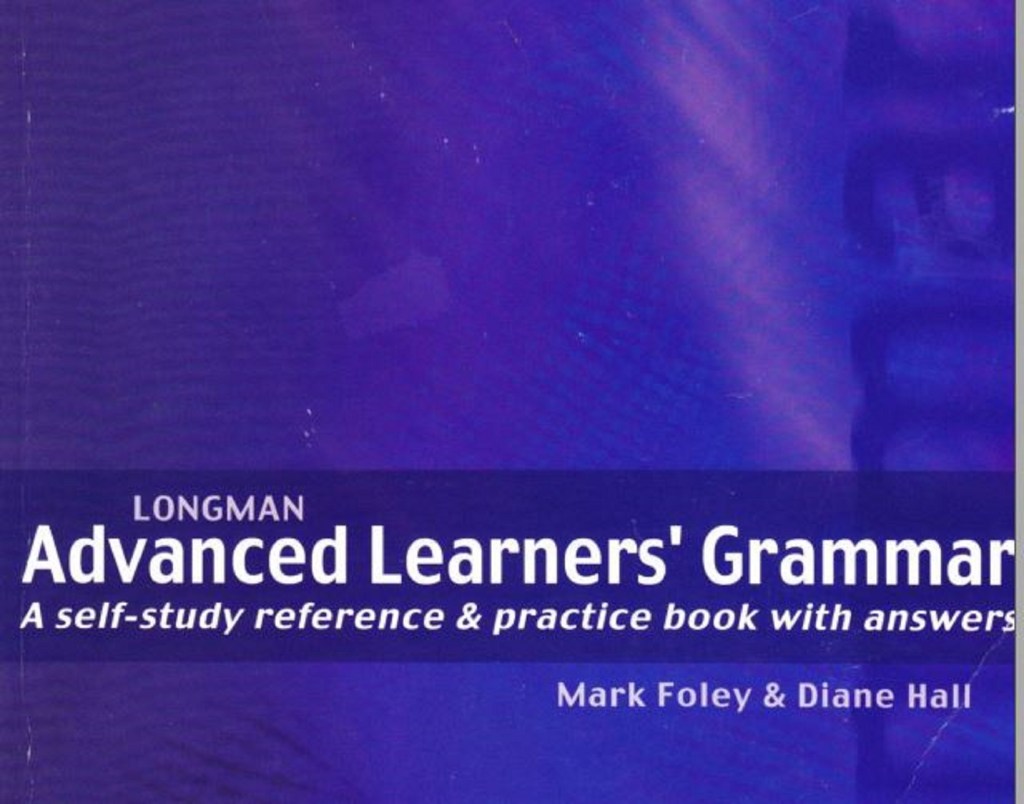
This document is a comprehensive English grammar textbook titled “Longman Advanced Learners’ Grammar: A self-study reference & practice book with answers,” authored by Mark Foley and Diane Hall. The book is structured into 36 units, each focusing on a specific grammar topic such as tenses, conditionals, passives, reported speech, and modal verbs. It includes diagnostic tests to assess understanding and offers a combination of reference material and practice exercises designed for self-study. The resource also provides an answer key and is aimed at advanced learners of English, including those preparing for the Cambridge Advanced or Proficiency examinations.
Advanced Learners’ English Grammar: A Comprehensive Guide
“Advanced Learners’ Grammar” by Mark Foley and Diane Hall is presented as a comprehensive, advanced-level grammar of the English language. It functions as a self-study reference and practice book with answers.
Key aspects and content of “Advanced Grammar” as described in the sources include:
Structure and Content
The book is divided into 36 units of grammar explanation, each accompanied by practice exercises.
It includes 36 diagnostic tests and a test key to help learners identify areas of weakness. These diagnostic tests cover various grammatical topics, such as present tenses, past tenses, future forms, negation, questions, passives, reported speech, conditionals, subjunctive and ‘unreal’ past forms, -ing forms and infinitives, participle and infinitive phrases, multi-word verbs, dependent prepositions, modal verbs, auxiliaries, confusing verbs, adjectives, comparison, gradable and ungradable adjectives, adverbs, nouns and noun phrases, possessives and compound nouns, pronouns, determiners, prepositions, word order and verb patterns, relative clauses, contrast, introductory ‘there’ and ‘it’, emphatic structures and inversion, aspects of cohesion, and features of discourse.
It features double-page ’round up’ sections for key areas of grammar, such as “Round up (Units 1–3): Present and past tenses” and “Round up (Units 4 and 5): The future”.
An answer key for practice exercises is provided.
Target Audience and Purpose
The book is intended for students at or above the level of the Cambridge First Certificate Examination (or equivalent).
It is suitable for those preparing for the Cambridge Advanced or Proficiency examinations, as well as for advanced students who are not preparing for specific exams.
A primary goal is to examine the close relationship between grammar and vocabulary in English.
Approach and Features
Grammar explanations delve into areas like multi-word verbs, prepositions, and reporting verbs.
It emphasizes common errors and areas of potential confusion, differentiating between British and American English usage.
The importance of context and levels of formality is highlighted, with examples drawn from up-to-date, idiomatic speech and writing. Many examples are sourced from the BNC/Longman corpus.
The book includes units on text structure and discourse, which are considered essential for advanced learners to progress beyond basic sentence structure.
Practice exercises are extensive, with four pages of exercises for every four pages of grammar explanation.
A variety of exercise types are included, such as gap-filling, matching, transformation tasks, and complex text manipulation. Each unit contains at least one exercise type commonly found in advanced level examinations.
The book is co-authored by Mark Foley and Diane Hall.
In essence, “Advanced Learners’ Grammar” provides a detailed and practical guide to complex English grammar, specifically tailored for advanced learners and those preparing for high-level language examinations, with a focus on both theoretical understanding and practical application.
Advanced Learners’ Grammar: A Self-Study Guide
“Advanced Learners’ Grammar” by Mark Foley and Diane Hall is specifically designed to function as a self-study reference and practice book with answers. This format provides learners with the tools and structure necessary to learn and improve their English grammar independently.
Here’s a discussion of its features as a self-study guide:
Comprehensive Structure: The book is organized into 36 units of grammar explanation, each of which is paired with corresponding practice exercises. This clear division allows learners to focus on specific grammatical areas.
Diagnostic Assessment: A key feature for self-study is the inclusion of 36 diagnostic tests and a test key. These tests are designed to help learners “identify areas of weakness for a particular area of grammar”. For example, Diagnostic Test 1 covers “Present tenses”, Test 2 covers “Past tenses”, and so on, covering a wide range of topics from tenses and passives to reported speech, conditionals, multi-word verbs, and features of discourse.
Targeted Practice and Review:
After taking a diagnostic test, learners can check their answers in the test key.
Crucially, the test key provides reference numbers to the specific grammar sections and sub-sections for any items answered incorrectly. This direct guidance enables learners to pinpoint exactly where they need to focus their study and practice.
The book contains an answer key for all practice exercises, allowing learners to check their work and reinforce their understanding.
It also includes double-page ’round up’ sections for key areas of grammar, such as “Round up (Units 1–3): Present and past tenses”, which serve as cumulative review points.
Extensive Practice Opportunities: The “Advanced Learners’ Grammar” offers substantial practice, with four pages of exercises for every four pages of grammar explanation. These exercises are varied, including gap-filling, matching, transformation tasks, and complex text manipulation. Each unit contains at least one exercise type commonly found in advanced-level examinations, making it practical for test preparation.
Practical Grammar Explanations: The grammar explanations are not merely theoretical; they delve into areas like multi-word verbs, prepositions, and reporting verbs. They highlight common errors and potential areas of confusion, and differentiate between British and American English usage.
Real-World Examples and Context: To enhance understanding, the book emphasizes the importance of context and levels of formality, with many examples drawn from up-to-date, idiomatic speech and writing, often sourced from the BNC/Longman corpus.
Focus on Discourse and Text Structure: For advanced learners, the book includes units on text structure and discourse, which are considered essential for progressing beyond basic sentence construction.
In summary, the design of “Advanced Learners’ Grammar” as a self-study guide empowers students to identify their grammar weaknesses, access targeted explanations and practice, and monitor their progress, making it a comprehensive resource for independent learning.
Advanced Learners’ Grammar: Practice Exercises Explained
The “Advanced Learners’ Grammar” by Mark Foley and Diane Hall is explicitly structured as a self-study reference and practice book with answers. A core component of its self-study design is its extensive collection of practice exercises, which are integrated throughout the book to reinforce learning and allow for independent skill development.
Here’s a detailed discussion of the practice exercises:
Quantity and Integration
The book is organized into 36 units, and each unit of grammar explanation is accompanied by practice exercises.
There are four pages of practice exercises for every four pages of grammar explanation, indicating a substantial amount of practical application material.
The exercises are directly linked to the grammar explanations, with specific references to sections and sub-sections, allowing learners to pinpoint areas for review.
Variety of Exercise Types
The book incorporates a wide variety of exercise types to cater to different learning styles and to simulate tasks found in advanced English examinations. These include:
Gap-filling: Learners complete dialogues, texts, or sentences by filling in missing words or phrases, often with verbs in the correct form.
Matching: Tasks involve matching phrases to explanations, sentences to their meanings, or different parts of conditional sentences.
Transformation/Rewriting: Students rewrite sentences to convey a similar meaning, convert newspaper articles into headlines, change direct speech to reported speech, or alter sentences into negative or passive forms.
Error Correction: These exercises require learners to identify and correct mistakes within texts, dialogues, or individual sentences, sometimes by underlining errors and providing the correct form.
Multiple Choice: Learners select the best word, phrase, or option to complete sentences or passages.
Other Formats: This also includes tasks like completing a crossword, or responding to picture-based prompts.
Purpose and Target Audience
The practice exercises are designed to help students solidify their understanding of the grammar explanations, particularly in areas like multi-word verbs, prepositions, and reporting verbs, which are often sources of confusion.
They are tailored for students at or above the Cambridge First Certificate Examination level and are suitable for those preparing for advanced examinations like the Cambridge Advanced or Proficiency exams. Each unit includes at least one exercise type commonly found in these advanced-level examinations.
The exercises also emphasize common errors and differentiate between British and American English usage where relevant.
Support for Self-Study
A critical feature for self-study is the provision of an answer key for all practice exercises. This allows learners to check their work independently and immediately receive feedback.
While not practice exercises themselves, the diagnostic tests (36 in total) play a crucial role in directing self-study. After taking a diagnostic test, the test key not only provides answers but also reference numbers to specific grammar sections and sub-sections for any incorrect items. This enables learners to precisely identify their weaknesses and then focus their practice on the most relevant exercises.
Content Sourcing
Many examples used within the exercises and grammar explanations are drawn from up-to-date, idiomatic speech and writing, with a significant portion sourced from the BNC/Longman corpus. This ensures that the language practiced is current and authentic.
In essence, the practice exercises in “Advanced Learners’ Grammar” are a robust and varied set of tasks specifically designed to facilitate independent learning and mastery of complex English grammar, with a strong focus on practical application and examination preparation.
Advanced English Grammar and Usage Guide
The sources indicate that “Advanced Learners’ Grammar” by Mark Foley and Diane Hall is presented as a comprehensive, advanced-level grammar of the English language. The book’s primary purpose is to provide a detailed guide to English grammar for self-study and practice, particularly for students at or above the Cambridge First Certificate Examination level, including those preparing for Cambridge Advanced or Proficiency examinations.
Key insights into the English language, as conveyed by the sources through the nature and content of this grammar book, include:
Complexity and Scope: The English language is presented as a subject with a deep and broad grammatical structure. The book covers a wide array of advanced grammatical topics, including various tenses (present, past, future), negation, questions, passive constructions, reported speech, conditionals, and subjunctive forms. It also delves into more nuanced areas such as -ing forms and infinitives, participle and infinitive phrases, multi-word verbs, dependent prepositions, modal verbs, auxiliaries, and confusing verbs. Furthermore, it addresses adjectives, adverbs, nouns, pronouns, determiners, prepositions, word order, relative clauses, contrast, introductory structures, emphatic structures, inversion, and aspects of cohesion and discourse. This extensive coverage highlights the complexity of English grammar for advanced learners.
Interrelationship of Grammar and Vocabulary: The book “examines the close relationship between grammar and vocabulary in English”. This suggests that proficiency in English requires an understanding of how grammatical structures are intertwined with lexical choices.
Common Challenges and Variations: The grammar explanations specifically “highlight common errors and areas of potential confusion” in English. This acknowledges that certain aspects of the language are particularly challenging for learners. Additionally, the book “differentiates between British and American English usage”, indicating the existence of significant variations within the global English language.
Authenticity and Context: To ensure relevance, examples are drawn from “up-to-date, idiomatic speech and writing”. Many of these examples are sourced from the BNC/Longman corpus, emphasizing that the English presented is contemporary and authentic. The importance of understanding the “context and levels of formality” in English is also highlighted.
Beyond Sentence Structure: For advanced learners, the English language necessitates an understanding beyond basic sentence construction. The book includes dedicated units on “text structure and discourse”, which are considered “essential for the advanced student to develop beyond the confines of simple grammar and sentence structure”. This suggests that mastering English at an advanced level involves comprehending how sentences connect to form coherent texts and how language is used in broader communicative contexts.
Advanced Learners’ Grammar: Diagnostic Tests for Self-Study
Diagnostic tests are a key feature of “Advanced Learners’ Grammar” by Mark Foley and Diane Hall, specifically designed to function as a self-study guide. They are integral to how learners can effectively use the book for independent grammar improvement.
Here’s a detailed discussion of the diagnostic tests:
Quantity and Purpose: The book contains 36 diagnostic tests and a test key. Their primary purpose is to help learners “identify areas of weakness for a particular area of grammar”. This allows students to pinpoint exactly where they need to focus their study and practice.
Structure and Content Linkage:
Each diagnostic test is directly linked to one of the 36 grammar units in the book. For example:
Diagnostic Test 1 covers “Present tenses”.
Diagnostic Test 2 covers “Past tenses”.
Diagnostic Test 3 covers “Past to present tenses”.
Diagnostic Test 4 covers “The future (1)”.
Diagnostic Test 5 covers “The future (2)”.
Diagnostic Test 6 covers “Negation”.
Diagnostic Test 7 covers “Questions”.
Diagnostic Test 8 covers “Passives, causatives and get”.
Diagnostic Test 9 covers “Reported speech”.
Diagnostic Test 10 covers “Conditionals”.
Diagnostic Test 11 covers “The subjunctive and ‘unreal’ uses of past forms”.
Diagnostic Test 12 covers “-ing forms and infinitives”.
Diagnostic Test 13 covers “Participle and infinitive phrases”.
Diagnostic Test 14 covers “Multi-word verbs”.
Diagnostic Test 15 covers “Dependent prepositions”.
Diagnostic Tests 16, 17, and 18 cover “Modal verbs” (Parts 1, 2, and 3 respectively).
Diagnostic Test 19 covers “Auxiliaries, have (got), do”.
Diagnostic Test 20 covers “Confusing verbs”.
Diagnostic Test 21 covers “Adjectives”.
Diagnostic Test 22 covers “Comparison”.
Diagnostic Test 23 covers “Gradable and ungradable adjectives”.
Diagnostic Test 24 covers “Adverbs”.
Diagnostic Test 25 covers “Nouns and noun phrases”.
Diagnostic Test 26 covers “Possessives and compound nouns”.
Diagnostic Test 27 covers “Pronouns”.
Diagnostic Test 28 covers “Determiners”.
Diagnostic Test 29 covers “Prepositions”.
Diagnostic Test 30 covers “Word order and verb patterns”.
Diagnostic Test 31 covers “Relative clauses”.
Diagnostic Test 32 covers “Contrast”.
Diagnostic Test 33 covers “Introductory there and it”.
Diagnostic Test 34 covers “Emphatic structures and inversion”.
Diagnostic Test 35 covers “Aspects of cohesion”.
Diagnostic Test 36 covers “Features of discourse”.
This direct correspondence allows for highly targeted self-assessment and remediation.
Self-Study Process with Diagnostic Tests:
Learners begin by taking a diagnostic test, such as Diagnostic Test 4 for “The future (1)”.
After attempting the test, they can check their answers using the test key.
A critical feature of the test key is that it provides “reference numbers to the specific grammar sections and sub-sections” for any items that were answered incorrectly. This direct guidance enables learners to pinpoint exactly where they need to focus their study and practice within the corresponding grammar unit.
For example, if a learner struggles with “Present tenses” (Diagnostic Test 1), the test key will direct them to specific sections like 1.1A, 1.2B, etc., for targeted review.
This systematic approach ensures that the learning is efficient and focused on actual areas of weakness, making the diagnostic tests a cornerstone of the book’s self-study methodology.
Affiliate Disclosure: This blog may contain affiliate links, which means I may earn a small commission if you click on the link and make a purchase. This comes at no additional cost to you. I only recommend products or services that I believe will add value to my readers. Your support helps keep this blog running and allows me to continue providing you with quality content. Thank you for your support!
This extensive vocabulary guide, published by HarperCollins Publishers in 2011, offers a comprehensive resource for learning English. It includes a pronunciation guide utilizing the International Phonetic Alphabet (IPA) to aid in proper articulation. The text systematically categorizes words by theme, covering diverse topics such as travel (air, car, rail), daily life, education, emotions, food, health, home, industry, crime, mathematics, money, music, nature (gardens, environment), and media. Each entry provides the word, its IPA pronunciation, and a clear definition, often with examples of usage and American English equivalents.
The “Collins Easy Learning English Vocabulary” book is designed to help users broaden their knowledge of English words in key everyday situations, including those related to travel and transportation. It is divided into 50 alphabetically arranged subject areas, such as ‘air travel’, ‘business’, ‘food and drink’, and ‘science’. Within each topic, vocabulary is categorized into nouns, verbs, adjectives, adverbs, phrases, and idioms, with definitions provided in relation to the specific topic. The book also includes authentic example sentences from the Collins corpus to demonstrate real English usage.
Here’s a comprehensive discussion of travel and transportation based on the provided sources:
Modes of Travel and Associated Vocabulary
The sources cover various modes of transport, each with its own specific set of vocabulary:
Air Travel
Nouns: This section includes terms for vehicles like aeroplane (or airplane in American English) and aircraft (which can be a plane or helicopter). Places associated with air travel are airport (where planes come and go, with services for passengers), arrivals (where passengers get off planes), departures (where you wait before getting on a plane), and gate (where you leave the airport to board a plane). Key items include a bag, baggage (same as luggage), boarding card (needed to get on a plane), e-ticket (electronic ticket), fare (money paid for a journey), flight (a trip in an aircraft), hand luggage (bags taken into the cabin), luggage (bags taken when travelling), passport (official document for entering/leaving countries), reservation (a kept seat on a flight), seat, seat belt (for safety), suitcase (for clothes), and ticket. Specific areas and services include baggage reclaim (where you collect baggage), bureau de change (for currency exchange), check-in (desk for arrival confirmation), customs (where goods are checked for tax), customs duty (tax on imported goods), information desk (for flight information), runway (for plane takeoff/landing), security (for protecting the place and checking bags), terminal (where flights begin or end), and timetable (list of arrival/departure times). Aircraft parts mentioned are cabin (where people sit), propeller (makes aircraft move), tray table (small table on a plane), window (space to see through), and wing. Other terms include connection (a plane that leaves after another arrives for continuing a journey), duration (length of time something lasts), jet lag (tiredness from time zone differences), jumbo jet (large plane), landing (plane coming down), plane crash (accident), take-off (beginning of a flight), stopover (or layover in American English), and trolley (for moving luggage).
Verbs: Actions include board (get into a plane), book (arrange and pay for a flight), cancel (say something planned won’t happen), check in (confirm arrival), check something in (give luggage), delay (make something later), depart (leave), fly (travel or make a plane move), hijack (illegally take control), land (come down to ground), search (look carefully), and take off (leave the ground).
Adjectives: Descriptive words include airsick (feeling ill due to plane movement), direct (non-stop flight), domestic (flights within the same country), duty-free (cheaper price due to no tax), international (flights between different countries), and on time (not late or early).
Adverbs:on board (on an aircraft) and on time.
Phrases:nothing to declare (for customs).
Cars and Road Travel
Nouns: Vehicles include ambulance, bus, car, caravan, fire engine (or fire truck in American English), lorry (or truck in American English), motorbike (same as motorcycle), motorcycle, taxi, trailer (pulled by a lorry), van, and general vehicle. Parts of a car are accelerator (or gas pedal), bonnet (or hood), boot (or trunk), brake, bumper, clutch, dashboard, engine, gear, gear stick (or gear shift), handbrake, headlights, horn, indicator (or turn signal), number plate (or license plate), oil, petrol (or gas), rear-view mirror, registration number, roof rack, seat belt, speedometer, tyre, wheel, windscreen (or windshield), and wing mirror (or side-view mirror). Road features include car park (or parking lot), crossroads, lane, motorway (or freeway), one-way street, parking space, pedestrian crossing (or crosswalk), road, road sign, roundabout, service station, street, taxi rank (or taxi stand), traffic, traffic jam, traffic lights, traffic warden, transport, and zebra crossing. Other related nouns include accident and breakdown (when a vehicle stops working). General travel terms are direction and distance.
Verbs: Driving actions include accelerate (go faster), brake, break down (stop working), crash (hit something), drive (control a vehicle), give way (or yield), hitch-hike, overtake (pass another vehicle), park, skid (slide sideways), slow down, speed (drive faster than limit), speed up, start up (engine starts), steer (control direction), stop, and tow (pull another vehicle).
Phrases:no entry (road sign), roadworks (road being fixed).
Bikes
Nouns: Parts of a bike include back light, bell, brake, chain, crossbar, flat tyre, frame, front light, gears, handlebars, helmet, hub, inner tube, mudguard, pedal, pump, puncture (or flat), puncture repair kit, reflector, saddle, spoke, tyre, valve, and wheel. Types of bikes are bicycle, bike (also motorcycle), motorcycle, and mountain bike. Related terms are cycle lane, cycle path, cycling, cyclist, fall (an accident to the ground), padlock, and speed.
Verbs: Actions include brake (slow down/stop), change gear, cycle (ride a bicycle), pedal (push pedals), pump up a tyre, ride (sit on and control a bicycle), and signal (show direction), stop (no longer move).
Adjectives:shiny and rusty.
Boats, Water, and the Coast
Nouns: Boats and ships include anchor (to stop a boat from moving), boat, canoe, cargo (things a ship carries), deck (ship’s floor), ferry (takes people/things across water), kayak, lifeboat, ship, speedboat, submarine, surfboard, and yacht. Water bodies and coastal features are bank (edge of a river), bay (part of coast forming a curve), beach, canal (man-made river), cliff (high land next to sea), coast, current (steady flow of water), dock (where ships go), harbour (where boats stay safely), horizon (line between sky and sea), island (land surrounded by water), jet ski, lake, lighthouse, mouth (where a river enters the sea), ocean (large area of salt water), paddle (for rowing), pebble (small stone), pond (small area of water), port (where ships arrive/leave, larger than harbour), quay (structure next to water for boats), river, sail (cloth on a boat), sand, sea, seaside (area near sea for holidays), seaweed, shell (from sea creature), shore (land along edge of sea/lake), stream (small narrow river), swimming pool, tide (change in sea level), water, and wave. Travel related to water: cruise (holiday on a ship), sailing (activity/sport), swimming (activity/sport), voyage (long trip on a boat), windsurfing.
Verbs: Actions include board (get onto a boat), dive (jump/go under water), drown (die under water), float (stay on surface), launch (put boat into water), navigate (find direction), row (move boat with oars), sail (move over water), sink (go below surface), steer (control boat direction), surf (ride waves), and swim (move through water).
Adjectives:calm (not moving much), coastal (near the coast), marine (relating to/living in sea), rough (with many waves), sandy (covered with sand), and seasick (feeling ill on a boat).
Trains
Nouns: Parts of a train or station include barrier, buffet (or dining car), carriage (section for people), compartment (separate space or luggage area), engine (front part that pulls), fare (money for trip), line (route trains move along), luggage rack (shelf for luggage), platform (where you wait), railway (or railroad), seat, steam engine, ticket, track, train, timetable, underground (or subway), and whistle. Related terms include arrival, connection (train for continuing journey), departure, destination, fast train, freight train (or goods train), intercity train, left-luggage locker/office, level crossing, lost property office, luggage, reservation, return (ticket), season ticket, single (ticket), sleeper (train with beds), slow train, station, suitcase, ticket collector, ticket office, and waiting room.
Verbs: Actions include approach (move closer), arrive, book (arrange to have/use), cancel (say train won’t travel), delay (make late), depart (leave), and miss (arrive too late).
Adjectives:due (expected to arrive), first-class (best/most expensive seats), high-speed, late, non-smoking, overcrowded, and smoking.
Bikes (Specific mention beyond vehicles)
Nouns: Bicycle (a vehicle with two wheels that you ride by sitting on it and using your legs to make the wheels turn), Bike (a bicycle or a motorcycle), Cycling (the activity of riding a bicycle), Cyclist (someone who rides a bicycle), Motorcycle (a large heavy bicycle with an engine), Mountain bike (a type of bicycle with a strong frame and thick tyres).
Verbs: Cycle (to ride a bicycle), Pedal (to push the pedals of a bicycle around with your feet to make it move), Ride (to sit on a bicycle, control it and travel on it).
The Collins Easy Learning English Vocabulary book, as described in the sources, is designed to help individuals broaden their knowledge of English words in key everyday situations. While it does not have a single section explicitly titled “Daily Life,” the concept is comprehensively covered through various interconnected subject areas. These areas, arranged alphabetically, encompass the fundamental aspects of daily existence, from personal routines to societal interactions and economic activities.
Here’s a discussion of “Daily Life” drawing on the information presented in the sources:
Daily life, as presented in the sources, can be understood through several core categories of vocabulary:
1. Personal Routines & Habits
Daily life is largely defined by one’s routine, which includes the usual activities someone does every day.
Waking and Sleeping: This involves activities like getting up early in the morning, and preparing to go to bed and go to sleep at night. Some people may enjoy a lie-in on weekends, staying in bed later than usual.
Personal Care: Daily routines often include actions such as shaving, getting dressed, and having a bath or shower.
Chores and Housework: People perform household chores or housework to keep their homes tidy, which might involve tidying up or cleaning various items.
Work and Leisure: A significant part of daily life revolves around employment or work. Many people commute to their jobs. There are specific periods like lunch break during the working week and free time or time off at weekends for hobbies or other enjoyable activities. These periods can be affected by rush hour traffic.
Food and drink are central to daily life, with specific vocabulary for different types of items and meals.
Food Categories: The sources detail various food items, including meat like beef, chicken, lamb, mince (ground beef), pork, and sausage, along with seafood. Other common foods listed are cereals, chips (fries), chocolate, honey, jam (jelly), noodles, pasta, pizza, snacks, spaghetti, stew, and sugar. People can also choose organic foods, grown without chemicals.
Drinks: Everyday drinks include coffee, tea, milk, mineral water, juice, and soft drinks. Alcoholic options like beer, cider, whisky, and wine are also mentioned.
Meals: The day typically includes breakfast, lunch, and dinner, with options for a main course and dessert (or sweet). People eat and drink these items.
Dining Out: For those who eat out, vocabulary for cafés, restaurants, and pubs is provided, including terms like menu, order, bill (check), tip, waiter, and waitress.
Daily life is also impacted by one’s health, encompassing common ailments, medical care, and general well-being.
Common Ailments: People may experience an ache, bruise, cold, cough, diarrhoea, earache, flu, or headache. Serious conditions like cancer and AIDS are also mentioned.
Medical Care: When ill or injured, individuals might need to visit a doctor or dentist. They might receive medicine, have an operation or surgery. First aid kits and various medical tools are part of this vocabulary.
Feelings and Qualities: Emotional states are a part of daily life, including happiness, anger, fear, sadness, and surprise. People can also be described by their personal qualities such as honesty, kindness, confidence, or being helpful.
The physical environment of the home is a key part of daily life.
Types of Homes: The sources describe various types of residences, such as a house (including detached, semi-detached, and terraced houses) and flats (apartments). Rural living is suggested by cottages.
Parts of a Home: Common areas like the bedroom, bathroom, kitchen, dining room, and living room are listed. Specific features like a garden (yard), garage, roof, walls, and windows are also mentioned.
Household Items: Homes are equipped with various appliances, such as a cooker, dishwasher, fridge, washing machine, and television. Other items include furniture (e.g., sofa, bed, table, chair), carpets, curtains, mirrors, and cleaning tools.
Shopping is a regular activity for acquiring goods and services.
Places to Shop: People shop at a variety of places, from supermarkets and department stores to specialized shops like a baker’s, butcher’s, chemist’s, clothes shop, fishmonger’s, florist’s, fruit shop, gift shop, greengrocer’s, grocer’s, jeweller’s, newsagent’s, and shoe shop. Online stores and mail order are also options.
Shopping Process: Key terms include barcode, price, discount, special offer, receipt, and refund. Shoppers can pay by cash, cheque, or card.
6. Communication
Everyday communication relies on various methods.
Telephone and Mobile: This includes using a phone or mobile phone (cell phone) to dial numbers, send text messages, and leave voice messages.
Post: People send and receive letters and packages through the post (mail) using stamps and envelopes. The post office is where these services are accessed.
Daily movement for work, leisure, and necessities is facilitated by various modes of transportation.
Road Travel: Common vehicles include cars, buses, motorbikes, lorries (trucks), vans, and taxis. Road infrastructure features motorways (freeways), roads, streets, lanes, roundabouts, traffic lights, and pedestrian crossings (crosswalks). People drive, park, and deal with traffic jams.
Air Travel: While less frequent for daily commutes, airports, planes (aircraft/aeroplanes), and associated vocabulary like flights, gates, and terminals are part of how people travel for longer journeys.
Train Travel:Trains, including fast trains and the underground (subway), move along tracks between stations. Daily commuters use tickets and are aware of timetables for arrivals and departures.
Cycling:Bicycles are used for travel, often in designated cycle lanes or on cycle paths.
Water Travel: While perhaps less common for daily commutes for many, boats, ferries, and ships are used for travel across water, rivers, lakes, and seas.
These categories collectively paint a picture of the diverse vocabulary involved in describing and navigating daily life. The book’s structure allows users to learn words within their specific contexts, ensuring they can use the right word in the right context.
“Education and Learning” are central themes within the Collins Easy Learning English Vocabulary book, designed to broaden an individual’s knowledge of English words in key everyday situations. While not a single designated section, these concepts are comprehensively addressed across various subject areas, allowing learners to acquire vocabulary within their specific contexts.
The sources primarily cover education and learning through the following interconnected domains:
1. College and University
This section of the book provides vocabulary for higher education.
Institutions and Degrees: Learners encounter terms for different educational settings like college, university, art school, law school, medical school, and technical college. Vocabulary related to degrees is covered, including bachelor’s degree, honours degree, master’s degree, and PhD, as well as diplomas.
Academic Life: Words describe the structure of academic study, such as course, department, faculty, semester, and term. Daily activities are represented by lecture, seminar, and tutorial.
Assessments and Resources: Students learn about various forms of academic work and evaluation, including assignment, coursework, essay, exam (or examination), finals, thesis, and viva. Financial support like bursary, grant, and scholarship, along with student loans, are also included. Practical resources like prospectus, reading list, and the student union are defined.
Learning Modalities: The concept of distance learning, where people study at home, is also addressed.
People and Verbs: Key individuals in this environment include lecturers, tutors, students, undergraduates, and graduates. Actions associated with university life include to enrol, graduate, invigilate, register, study, and work. Adjectives like academic, full-time, and part-time describe courses and students.
2. School
This section focuses on primary and secondary education.
Types of Schools: The book defines different school types such as pre-school, primary school (or elementary school in American English), and secondary school. It also distinguishes between private school, public school (with its different meanings in Britain and the USA), and state school.
School Environment and Routine: Vocabulary includes class, classroom, canteen, playground, and gym. Aspects of the school day are covered, such as assembly, break (or recess in American English), lesson, period, playtime, holidays, and term. Other practical items like school uniform and timetable are listed.
Curriculum and Assessment: Subjects studied in school fall under the broader concept of education (e.g., primary, secondary, higher, further, sex, health education). Terms related to schoolwork and evaluation include homework, essay, exam, exercise, grade, mark, and test.
People and Verbs: Key roles are pupil (or schoolchildren), teacher, and head teacher. Other staff like the caretaker (or janitor in American English) are included. Verbs such as to ask, answer, bully, cheat, correct, expel, fail, learn, mark, pass, punish, read, revise, study, and teach are presented in the context of school.
3. Core Learning Skills: Reading and Writing
These foundational skills are crucial for all education and are detailed in their own section.
Tools and Materials: Vocabulary includes alphabet, pen, pencil, rubber (or eraser in American English), ink, and correction fluid.
Types of Written Works: Terms range from basic forms like letter and paragraph to more complex ones such as book, article, magazine, newspaper, novel, poem, and script.
Writing Elements: Specific vocabulary covers aspects like capital letters and various punctuation marks (e.g., colon, comma, exclamation mark, hyphen, question mark, quotation marks, semicolon, full stop). The importance of words, sentences, and vocabulary is highlighted.
Verbs: Actions related to reading and writing include to copy, delete, look something up, print, publish, read, rhyme, rub something out, skim, spell, translate, type, and write.
4. Subject-Specific Learning: Science and Maths
The book dedicates sections to specific academic disciplines, emphasizing the vocabulary pertinent to learning in these areas.
Science: This section introduces terms related to scientific study and research. It covers various fields like astronomy, botany, chemistry, evolution, genetics, and physics. Key scientific concepts such as atom, cell, chemical, energy, and gravity are defined. Practical elements include experiments, laboratories, and tools like microscopes and test tubes. Professionals in this field are referred to as scientists and chemists.
Maths: The maths section includes vocabulary for fundamental numerical operations like addition, subtraction, multiplication, and division. It also covers shapes and measurements such as angle, area, circle, length, and volume, along with tools like a calculator and ruler.
5. Education and Careers
The vocabulary related to jobs and careers naturally connects to education, as many professions require specific training and academic qualifications. The book lists a wide array of job titles, including those directly within the education sector like teacher and lecturer, highlighting the outcome and purpose of much of the learning process.
In summary, “Education and Learning” are not confined to a single chapter but are woven throughout the Collins Easy Learning English Vocabulary book through detailed subject areas covering school and college/university life, essential reading and writing skills, and specific academic disciplines such as science and maths, all contributing to a comprehensive vocabulary for navigating educational environments and pursuing careers.
Collins Vocabulary: Science and Technology Explored
The Collins Easy Learning English Vocabulary book, while not containing a single dedicated section for “Science and Technology,” addresses these concepts comprehensively across several subject areas, helping learners expand their vocabulary within these crucial domains. The book is designed for anyone who wants to broaden their knowledge of English words in key everyday situations, including those relevant to work, school, and university.
Here’s a discussion of how Science and Technology are presented in the sources:
Science
The book features a dedicated “Science” section, which focuses on the study of natural things. It introduces a wide array of vocabulary related to scientific disciplines, fundamental concepts, and tools used in scientific inquiry.
Key concepts and disciplines include:
Astronomy is defined as the scientific study of stars, planets, and other natural objects in space.
Botany refers to the scientific study of plants.
Chemistry is presented as the science of the structure of gases, liquids, and solids, and how they change. A chemist is a scientist who studies this field.
Physics is the scientific study of phenomena such as heat, light, and sound.
Genetics is the study of how qualities are passed on from parents to children. This field deals with genes, which are parts of a cell controlling physical characteristics, growth, and development.
The concept of evolution is described as a process in which animals or plants slowly change over many years, and the verb to evolve means to gradually develop over time.
Natural sciences are subjects like physics, biology, and chemistry, concerned with the physical world.
Social sciences, such as sociology and politics, are also mentioned, being concerned with society.
Fundamental scientific elements and forces discussed are:
Atoms, the very smallest parts of a substance, and molecules, the smallest amounts of a chemical substance that can exist by itself.
Chemicals are substances made or used in chemical processes. A compound is a substance made from two or more elements, such as carbon dioxide.
Elements are basic chemical substances like gold, oxygen, or carbon.
Gravity is the force that makes things fall to the ground.
Energy is the power from electricity or the sun that makes machines work or provides heat.
Electricity is energy used for producing heat and light, and to provide power for machines. It’s measured in volts and watts. A charge is the amount or type of electrical force something has, and a circuit is a complete path electricity can flow around. A fuse is a wire that stops electrical equipment from working if too much electricity passes through it.
Hormones are chemical substances in the body that affect how it works.
Cells are the smallest parts of an animal or plant.
Acids are chemicals that can burn skin and cause damage.
Tools and methods in science include:
Experiments are scientific tests conducted to discover what happens to something.
A laboratory is a building or room where scientific work is done.
Tools like microscopes make very small objects appear bigger.
Test tubes are small glass containers used in laboratories.
A lens is a curved piece of glass or plastic used in cameras and glasses to make things look larger, smaller, or clearer.
A magnet is a special metal that attracts iron or steel.
Radar is a way of discovering the position of objects using radio signals.
Scientists often develop theories to explain phenomena.
Actions in science involve to dilute (add water to liquid), dissect (cut open a body), dissolve (mix completely with liquid), evaporate (change from liquid to gas), measure (find out size), and test (find out condition/how it works).
Technology
While not a separate chapter called “Technology,” the book’s structure demonstrates how technology permeates key everyday situations through various subject areas. This is evident in sections dedicated to modern tools, devices, and industrial processes.
Key areas where technology is discussed include:
Computers and the Internet: This is arguably the most direct representation of “Technology” in the sources.
Hardware components include computers, monitors, keyboards, mice, hard disks, memory, and printers.
Software and digital concepts cover browsers, programs, operating systems, data, databases, files, folders, fonts, and spreadsheets.
Internet-related vocabulary includes broadband, connection (between computer and network), email, email addresses, home pages, the internet, social networking, spam, and the web.
Digital storage is represented by CDs, CD-ROMs, disks, and memory sticks.
Actions associated with computers include to boot something up, copy, crash, cut and paste, delete, download, email, format, key something in, log in/off, print, program, save, scroll, and zip.
The term I.T. (information technology) is defined as the study and practice of using computers.
Transportation and Vehicles: The sources illustrate technology through various modes of transport.
Air travel includes terms like aeroplane, airport, air-traffic controller, helicopter, and jumbo jet. A spacecraft is specifically mentioned in the science section as a vehicle that can travel in space.
Cars and road travel list vehicle parts and actions, such as accelerator, brake, engine, gear, and speedometer. The term electric car is specifically noted.
Boats, water and the coast include modern watercraft like jet skis, speedboats, submarines, and yachts.
Trains involve concepts like engines (including steam engines), carriages, and railway tracks.
Industry and Production: This section highlights technological processes in manufacturing.
Factories are places where machines are used to make goods.
The assembly line and production line are methods of manufacturing.
Verbs like to assemble, to invent, to manufacture, and to produce are directly linked to industrial output.
Mass production is the production of something in large quantities, usually using machinery.
Tools: Many tools, from simple to more complex, represent technology.
Items like drills, hammers, and screwdrivers are listed as tools, with electric as an adjective to describe working using electricity.
Environment and Sustainable Technologies: The book also touches on technology’s role in addressing environmental concerns.
It mentions low-energy bulbs, solar panels, solar power, wind power, and nuclear power as forms of energy generation.
Photography and Media:
Digital cameras are specifically mentioned within the “Art and Photography” section, showcasing a blend of art and technology.
Television and radio involve technologies for broadcast and reception, with terms like aerial, cable television, DVD, remote control, and satellite.
In conclusion, “Science and Technology” are explored extensively throughout the Collins Easy Learning English Vocabulary book, offering a robust vocabulary set for discussing foundational scientific principles, cutting-edge computing and internet functionalities, various forms of transportation, industrial manufacturing, and even environmental solutions, demonstrating their pervasive nature in everyday life.
Society and Culture Vocabulary: A Comprehensive Guide
The Collins Easy Learning English Vocabulary book comprehensively addresses concepts related to society and culture across several dedicated and related subject areas. While “Culture” isn’t a standalone chapter, its various facets are explored through sections such as “Art and Photography,” “Celebrations and Ceremonies,” “Music,” and “Theatre and Cinema,” alongside the directly titled “Society and Politics” section.
Society
The book features a dedicated “Society and Politics” section, which outlines key vocabulary for understanding social structures, governance, and communal living.
Key Aspects of Society:
Community is defined as a group of people who are similar in some way or have similar interests.
Social classes are discussed through terms like class, referring to a group of people with the same economic and social position. Specific examples include the middle class, the upper class, and the working class.
Population signifies all the people who live in a country or an area.
Citizenship and Migration are covered with terms like citizen (a person legally belonging to a country or living in a town/city), immigrant (someone who comes to live in a country from another), asylum seeker (someone asking a foreign government for residence due to danger in their home country), and refugee (a person forced to leave home due to danger).
Human rights are identified as the rights that all people in a society should have.
The concept of volunteering is also present, describing working without being paid.
Governance and Politics within Society:
Government is presented as the group of people who control and organize a country.
Politics refers to the activities and ideas concerned with government.
Different political systems and actors are described:
Democracy is a system where people choose their leaders by voting in elections. People elect leaders and vote.
A dictator is a ruler who uses force to maintain power.
Monarchy is a system where a country has a king or queen, or an emperor.
A republic is a country without a king or queen, where people choose their government.
Governmental bodies include parliament and its members, MPs.
Leaders like the prime minister and president are also defined.
Economic systems discussed include capitalism and communism, along with their supporters (capitalist, communist). These systems dictate how property, business, and industry are owned and controlled (privately or by the state). Related economic terms like corporate sector, private sector, public sector, and service sector highlight different segments of a country’s economy.
Conflict and Peace: Vocabulary covers war and civil war, the act of war breaking out, and efforts for peace through a ceasefire. Military roles like soldier and the army, and concepts like invasion and conquering are mentioned. Terrorism and terrorists are also included, referring to violence used for political aims. Assassinate is defined as murdering someone for political reasons.
Culture
While not a singular heading, the sources illustrate various aspects of culture through different vocabulary categories:
Cultural Traditions and Celebrations: The “Celebrations and Ceremonies” section is rich with cultural vocabulary. It includes:
Life events: birth, birthday, engagement, marriage, wedding, wedding anniversary, graduation, death, funeral, wake.
Religious and seasonal festivals: Christmas, Easter, Hanukkah, Passover, Ramadan, New Year’s Day/Eve, Father’s Day, Mother’s Day, Valentine’s Day, Thanksgiving.
General terms: ceremony, festival, festivities, public holiday.
Related actions: celebrate, get married, fast (not eat).
Arts and Media as Cultural Expressions:Visual Arts: The “Art and Photography” section covers art, design, photography, and specific forms like painting, sculpture, and pottery. Terms like art gallery and exhibition define spaces for cultural display.
Music: A dedicated “Music” section delves into various genres such as classical music, country music, folk music, jazz, pop music, and rock and roll. It lists musical instruments (e.g., drum, guitar, piano, violin), musical terms (e.g., note, chord, rhythm, melody), and associated roles (composer, conductor, musician, singer).
Performance Arts (Theatre and Cinema): This section covers plays, films, and various performance types, including ballet, comedy, drama, opera, and musicals. It includes vocabulary for roles like actor, actress, director, and producer, as well as terms for the settings and elements of performances (e.g., stage, screen, costume, soundtrack, subtitles). The influence of major film industries like Hollywood and Bollywood is also noted.
Mass Media:Television and radio are central to modern culture, with terms like channel, programme, news, documentary, chat show, and reality TV. The Internet also serves as a crucial platform for cultural dissemination and interaction through social networking and websites.
In essence, the sources provide a vocabulary for discussing the systems that organize human populations, the governance of nations, and the rich tapestry of human traditions, artistic expressions, and entertainment that define distinct groups and societies.
Affiliate Disclosure: This blog may contain affiliate links, which means I may earn a small commission if you click on the link and make a purchase. This comes at no additional cost to you. I only recommend products or services that I believe will add value to my readers. Your support helps keep this blog running and allows me to continue providing you with quality content. Thank you for your support!
This compilation, edited by Dr. Md Munan Shaik, offers a comprehensive guide and practice resource for the IELTS Writing exam. It provides an overview of both Academic and General Training modules, explaining their structure, assessment criteria, and task requirements. The book includes numerous sample essays and letters for both Task 1 and Task 2 of the General Training module, covering a wide variety of common topics and scenarios. Model answers are provided for most samples, along with some analysis of candidate responses, highlighting strengths and weaknesses in terms of coherence, vocabulary, and grammar. The content emphasizes practical application through examples rather than theoretical explanation.
Mastering the IELTS Writing Module
Based on the sources, here is an overview of the IELTS Writing module:
The IELTS Writing module is part of the multi-level IELTS exam. You receive a score between 1 and 9 for this section, and half scores like 6.5 are possible. Universities often require a minimum IELTS score, frequently 6 or 7, and may also require a minimum score in each of the four sections, including Writing.
The IELTS Academic and General Writing Modules have similarities and differences. In both tests, you have one hour to complete two tasks. The nature of the tasks is what distinguishes the two modules.
Here’s a breakdown of the tasks for each module:
General Writing:Task 1: Write a letter in response to a situation. This letter must be a minimum of 150 words. The style of the letter can be informal, semi-formal, or formal, depending on who you are writing to and how well you know them. You are given a brief description of a problem or situation and bulleted instructions on what to include. You must write about each point mentioned.
Task 2: Write a more personal essay. This essay must be a minimum of 250 words. A possible informal style may be used. The topic is usually one of general interest. You might need to solve a problem, present your opinion, or compare differing viewpoints.
Academic Writing:Task 1: Interpret, describe, or compare information presented in graphic form, such as a diagram, bar chart, line graph, pie chart, or table. This report must be a minimum of 150 words. You may also be asked to describe a process illustrated by a diagram. This task measures your ability to write in clear, formal English, as typically required in an academic context. It involves describing data accurately, pointing out trends and relevant information, and using appropriate vocabulary. Examiners assess your ability to group relevant information, link ideas in complex sentences, and use appropriate vocabulary to describe trends.
Task 2: Write an essay on a general academic topic. This essay must be a minimum of 250 words. A formal style is required. You are given a single topic and have no choices. You may need to offer a solution to a problem, express an opinion, or comment on ideas or arguments.
For both Academic and General Writing, your score is based on three fundamental criteria:
Content: How well your arguments, ideas, and evidence are presented.
Quality: How effectively you communicate your ideas and thoughts.
Technical Aspects: The correctness of your grammar, the richness of your vocabulary, and the variety of your sentences.
More detailed marking criteria are used for both modules, assessed out of 9:
Task Achievement (for General) / Task Response (for Academic): How thoroughly you do what is asked (General) or how accurately you address the task (Academic).
Coherence and Cohesion: How organized your writing or letter is.
Lexical Resource: The range of your vocabulary.
Grammatical Range and Accuracy: The correctness of your grammar.
(Note: Pronunciation is listed as a Speaking criterion, not Writing).
It is recommended to divide your time to complete both tasks within the one hour:
Task 1: Allocate about 20 minutes for the minimum word count of 150 words.
Task 2: Allocate about 40 minutes for the minimum word count of 250 words. Task 2 carries more marks than Task 1 in the General module.
To produce an organized and coherent piece of writing, you should take 2-5 minutes to plan. This planning time can be used to decide your position, how to expand on the topic, and the order of ideas. Skipping planning is only advisable if you have very little time left.
Grammar and vocabulary are assessed. You should check for verb tense agreement, prepositions, word order, sentence patterns, sentence structure, and range of vocabulary. Avoid using the same verbs, nouns, or adjectives repeatedly. Slang should not be used at all. In the Academic section, specifically, avoid contractions as they are a clear symbol of informal writing. For essays (Task 2 in both modules), the usual rules of good essay writing apply: plan, use varied sentence structure, utilize linking words, use dynamic and rich vocabulary, be careful with spelling, capitalization, and punctuation, and organize the essay into about 4-5 paragraphs with an introduction, body, and conclusion. You should state your thesis, provide support, and write a strong conclusion, using topic sentences for main themes in paragraphs. For letters (General Task 1), use appropriate grammar, capitalization, and punctuation. Reading sample tests is helpful to familiarize yourself with task types and learn how to write effectively.
IELTS Academic Writing Guide
Okay, drawing on the sources, here is an overview of the IELTS Academic Writing module.
The IELTS is a multi-level exam, and the Writing section is one of its four components. You receive a score between 1 and 9 for the Writing module, and half scores like 6.5 are possible. Universities frequently require a minimum overall IELTS score, often 6 or 7, and may also specify minimum scores for each of the four sections, including Writing.
The IELTS Academic and General Writing Modules share similarities but also have key differences. In both tests, you are given one hour to complete two tasks. The nature of these tasks is what distinguishes the two modules.
Here is a breakdown of the IELTS Academic Writing module tasks:
Task 1: This task measures your ability to write in clear, formal English, as typically required in an academic setting. You must write a report based on pictorial information. This means you will need to interpret, describe, or compare information presented in a graphic form, such as a diagram, bar chart, line graph, pie chart, or table. You might also be asked to describe a process illustrated by a diagram. The task involves accurately describing data, pointing out trends and relevant information, and using appropriate vocabulary. You must write a minimum of 150 words. Examiners assess your ability to group relevant information, link ideas in complex sentences, and use appropriate vocabulary to describe trends. It is recommended to spend about 20 minutes on this task. Reading sample answers can help you understand how best to approach this task type.
Task 2: In this task, you need to write an academic style essay on a single general topic provided. You are given no choices for the topic. You may need to offer a solution to a problem, express an opinion, or comment on ideas or arguments presented. A formal style is required. Your essay should be a minimum of 250 words. The essay should typically be about four or five paragraphs long, including an introduction, body, and conclusion. It should be written in full sentences, not bullet points. You need to state your thesis, provide evidence or reasons to support your argument, and write a strong conclusion, using topic sentences for the main theme in each paragraph. A sample structure includes an introduction (restate topic, indicate position), two body paragraphs (main idea, supporting idea, examples), and a conclusion (summarize ideas, restate position). It is recommended to spend about 40 minutes on this task. Preparing strategies for writing on various topics is helpful. Practice essays within the time limit can build ease and confidence.
For both tasks in the Academic Writing module, your score is fundamentally based on three criteria:
Content: How well your arguments, ideas, and evidence are presented.
Quality: How effectively you are able to communicate your ideas and thoughts.
Technical Aspects: The correctness of your grammar, the richness of your vocabulary, and the variety of your sentences.
The detailed marking criteria used to score your writing out of 9 are:
Task Response: This assesses how accurately you address the task requirements.
Coherence and Cohesion: This evaluates how organized your writing is.
Lexical Resource: This measures the range of your vocabulary.
Grammatical Range and Accuracy: This assesses the correctness of your grammar.
To ensure your writing is organized and coherent, it is important to take 2-5 minutes to plan. During this planning phase, you can decide your position, how to expand on the topic, and the order of your ideas. Skipping planning is only advised if you have very little time remaining.
Grammar and vocabulary are explicitly assessed. You should review your writing for aspects such as verb tense agreement, prepositions, word order, sentence patterns, and sentence structure. Using a range of vocabulary is important; avoid repeatedly using the same verbs, nouns, or adjectives. In the Academic section specifically, you should avoid contractions, as they signal informal writing. Slang should not be used at all. Be careful with your spelling, capitalization, and punctuation.
Overall, the Academic Writing module tests your ability to produce clear, well-structured, and grammatically accurate responses in a formal style, interpreting data (Task 1) and discussing general academic topics (Task 2) within the given time limit.
Navigating the IELTS General Writing Module
Drawing on the information from the sources and our conversation history, here is a discussion of the IELTS General Writing module.
The IELTS Writing module is one part of the multi-level IELTS exam, for which you receive a score between 1 and 9, with half scores possible. Universities often require a minimum overall score, frequently 6 or 7, and may also require minimum scores in each of the four sections.
The IELTS General and Academic Writing modules are similar in some ways but differ in the nature of the tasks. Regardless of which module you take, you have one hour to complete two tasks.
Here’s a breakdown of the tasks for the IELTS General Writing module:
Task 1: This task requires you to write a letter in response to a situation. The letter must be a minimum of 150 words. The appropriate style of the letter can be informal, semi-formal, or formal, depending on who you are writing to and how well you know them. You are given a brief description of a problem or situation and bulleted instructions on what to include in your letter. You must make sure to write about each and every one of the points mentioned in the bulleted instructions. Examples of situations include writing to a college administration officer about dormitory problems or writing to a landlord to resolve heating issues. You should use appropriate grammar, capitalization, and punctuation. Reading sample tests can help you familiarize yourself with the task types and learn how to write these letters effectively. It is recommended to spend about 20 minutes on this task.
Task 2: For this task, you must write a more personal essay on a topic of general interest. The essay must be a minimum of 250 words. A possible informal style may be used, although the sources also state that the usual rules of good essay writing apply. You might be asked to solve a problem, present your opinion, or compare differing viewpoints on a given topic. Examples include discussing whether it’s possible to take a vacation from problems, whether families are closer today, if smoking in public should be banned, or if elderly people should go to nursing homes. Task 2 carries more marks than Task 1 in the General module. It is recommended to allocate about 40 minutes for this task. Practice essays within the time limit can help you gain ease and confidence for the exam day.
For both tasks in the General Writing module, your score is based on three fundamental criteria:
Content: How well you present your arguments, ideas, and evidence.
Quality: How effectively you communicate your ideas and thoughts.
Technical Aspects: The correctness of your grammar, the richness of your vocabulary, and the variety of your sentences.
The specific marking schemes for General Writing are assessed out of 9:
Task Achievement: This assesses how thoroughly you do what is asked.
Coherence and Cohesion: This evaluates how organized your letter (Task 1) or writing (Task 2) is.
Lexical Resource: This measures the range of vocabulary you use.
Grammatical Range and Accuracy: This assesses how correct your grammar is.
To produce an organized and coherent piece of writing, it is important to take 2-5 minutes to plan. Planning helps you decide your position, how to expand on the topic, and the order of your ideas. Skipping planning is only advisable if you have very little time left.
Grammar and vocabulary are assessed. You should check for aspects like verb tense agreement, prepositions, word order, sentence patterns, and sentence structure. It is important to use a range of vocabulary and avoid using the same verbs, nouns, or adjectives repeatedly. Slang should not be used at all. While the sources specifically mention avoiding contractions in the Academic section as a symbol of informal writing, the emphasis on a more “personal” or “possible informal style” for General Writing Task 2 and the variability of formality in Task 1 letters suggest that the level of formality is context-dependent. However, following the rules of good essay writing for Task 2 generally implies a degree of formality. Be careful with spelling, capitalization, and punctuation.
For the essay (Task 2), the usual rules of good essay writing apply. This involves using varied sentence structure and utilizing linking words to connect ideas. You should organize your essay into about 4-5 paragraphs, typically including an introduction, body paragraphs, and a conclusion. You need to state your thesis, provide evidence or reasons to support your argument, and write a strong conclusion. Using topic sentences helps clearly identify the main theme in each paragraph. A sample structure provided suggests Paragraph 1 for Introduction (restate topic, indicate position), Paragraphs 2 and 3 for Body (Main idea, supporting idea, examples), and a final Paragraph 4 for Conclusion (Summarize ideas, restate position).
IELTS Writing Task 1 Clarification
Okay, to discuss IELTS Writing Task 1, I need to know which module you are interested in, as there are two different types of Task 1 depending on whether you are taking the Academic or the General Training test.
Could you please clarify whether you would like to discuss the Task 1 for IELTS Academic Writing or IELTS General Training Writing?
Once you specify, I can provide a comprehensive discussion drawing on the information in the sources about that specific Task 1.
Guide to IELTS Writing Task 2
Okay, let’s discuss IELTS Writing Task 2, drawing on the information in the sources and our previous conversation.
IELTS Writing Task 2 is a core component of both the Academic and General Training modules of the IELTS exam. You have one hour to complete two writing tasks, and Task 2 is the second of these tasks. Task 2 carries more marks than Task 1 in the General Training module.
Here’s a breakdown of Task 2 for each module:
IELTS Academic Writing – Task 2
Nature of the Task: In this task, you must write an academic style essay on a single, general topic that is provided. You are not given any choices for the topic; you must write about the one topic presented.
Requirements:You must write a minimum of 250 words.
A formal style is required. The sources explicitly state that you should avoid contractions in the academic section, as they are a symbol of informal writing. Slang should not be used at all.
The task may require you to offer a solution to a problem, express an opinion, or comment on ideas or arguments presented.
Structure and Content: Your essay should be a properly organized essay, written in full sentences, not a list of bullet points.
It should typically be about four or five paragraphs long.
This includes an introduction, body paragraphs, and a conclusion.
You need to state your thesis, provide evidence or reasons to support your argument, and write a strong conclusion.
Using topic sentences helps clearly identify the main theme in each paragraph.
A sample structure suggested by the sources includes:
Paragraph 1: Introduction: Restate the topic, indicate your position.
Paragraph 2: Body: Main idea, supporting idea, examples.
Paragraph 3: Body: Main idea, supporting idea, examples.
Time Allocation: It is recommended to spend about 40 minutes on this task.
Preparation: Preparing strategies to write a well-organized essay on a variety of subject areas is helpful. Practice essays within the time limit can build ease and confidence.
IELTS General Training Writing – Task 2
Nature of the Task: This task requires you to write a more personal essay on a topic of general interest.
Requirements:You must write a minimum of 250 words.
A possible informal style may be used, although the sources also state that the usual rules of good essay writing apply.
You might be asked to solve a problem, present your opinion, or compare differing viewpoints on a given topic. Sample topics include discussing vacations from problems, family closeness, public smoking bans, or nursing homes for the elderly.
Structure and Content: The usual rules of good essay writing apply.
Plan before you write.
Use varied sentence structure and utilize linking words to connect ideas.
Organize your essay into about 4-5 paragraphs, typically including an introduction, body paragraphs, and a conclusion.
You need to state your thesis, provide evidence or reasons to support your argument, and write a strong conclusion. Using topic sentences clearly identifies the main theme in each paragraph.
A sample structure provided is the same as for the Academic module:
Paragraph 1: Introduction: Restate the topic, indicate your position.
Paragraph 2: Body: Main idea, supporting idea, examples.
Paragraph 3: Body: Main idea, supporting idea, examples.
Time Allocation: It is recommended to spend about 40 minutes on this task.
Preparation: Practice essays within the time limit are important for ease and confidence.
Common Marking Criteria for Task 2 (and Writing Module)
For both Academic and General Task 2, your score is based on the same fundamental criteria:
Content: How well you present your arguments, ideas, and evidence.
Quality: How effectively you communicate your ideas and thoughts.
Technical Aspects: The correctness of your grammar, the richness of your vocabulary, and the variety of your sentences.
These fundamental criteria are broken down into four specific marking schemes used to score your writing out of 9:
Task Response (Academic) / Task Achievement (General): How accurately and thoroughly you address the task requirements.
Coherence and Cohesion: How organized and logically structured your writing is.
Lexical Resource: The range and appropriate use of your vocabulary.
Grammatical Range and Accuracy: The correctness and variety of your grammar.
Important Considerations for Both Modules:
Planning: To produce an organized, coherent piece of writing, it is important to take 2-5 minutes to plan. This time helps you decide your position, how to expand on the topic, and the order of your ideas. Skipping planning is only advised if you have very little time left.
Grammar and Vocabulary: These are explicitly assessed.
Check your writing for verb tense agreement, prepositions, word order, sentence patterns, and sentence structure.
Use a range of vocabulary. Avoid using the same verbs, nouns, or adjectives repeatedly.
Use varied sentence structure.
Slang should not be used at all. As noted, contractions should be avoided in the Academic module.
Be careful with your spelling, capitalization, and punctuation.
In summary, Writing Task 2 in both the Academic and General modules requires you to write an essay of at least 250 words, using a clear structure, relevant ideas, and appropriate language. The key differences lie in the formality of the style and the general nature of the topic (academic vs. more personal), with the General Task 2 carrying more weight than its Task 1 counterpart. Strong planning, varied vocabulary, and accurate grammar are essential for success in both versions of Task 2.
Affiliate Disclosure: This blog may contain affiliate links, which means I may earn a small commission if you click on the link and make a purchase. This comes at no additional cost to you. I only recommend products or services that I believe will add value to my readers. Your support helps keep this blog running and allows me to continue providing you with quality content. Thank you for your support!
This extensive document is comprised of practice materials for the IELTS exam, covering various sections including reading comprehension, vocabulary, and grammar. The topics within the reading passages are diverse, ranging from travel advice and leisure trends to technological advancements, environmental concerns, and social issues. Each section typically includes a text followed by questions in different formats, such as True/False/Not Given, multiple choice, and sentence completion, along with accompanying answers. The material appears designed to prepare test-takers for the range of subjects and question types they might encounter in the actual exam.
Website Security Disclaimers and Precautions
Based on the sources, information regarding website security precautions is provided primarily within the “Warranties and Disclaimers” sections.
The sources state that precautions are taken to detect computer viruses and ensure security. However, they cannot guarantee that the website is virus-free and secure. Specifically, they give no warranties of any kind concerning the website or the content, and in particular, they do not warrant that the website or any of its contents is virus free.
The owners shall not be liable for any loss or damage which may occur as a result of any virus or breach of security. It is emphasized that you must take your own precautions in this respect, as they accept no responsibility for any infection by virus or other contamination or by anything which has destructive properties.
Regarding personal data, the sources mention making every attempt to secure it. However, they cannot accept responsibility for any unauthorised access or loss of personal information that is beyond their control.
Travel Safety and Transportation Options
Based on the sources provided, there is information regarding airport ground transportation options and related precautions in different contexts.
Specifically, concerning travel to Keystone via Denver International Airport (DEN) and Vail/Eagle County Airport (EGE):
Shuttles and car rentals via Hertz are available at DEN, EGE, and Colorado Springs Municipal Airport.
Keystone is easily accessible from DEN and EGE, with onsite scheduled and private shuttle pick up and rental cars available.
Colorado Mountain Express (CME) provides numerous, daily, door-to-door shuttles from Denver International Airport to Keystone.
CME also offers private chauffeured travel with CME Premier.
The scheduled shuttle service via CME operates throughout the day, but is not available for flights arriving at the airport later than 8:30 pm or departing earlier than 10:00 am.
The private shuttle service via CME has the same timetable restrictions, not being available for flights arriving after 8:30 pm or departing before 10:00 am.
If you are arriving or departing when the CME shuttle is not available, you should consider booking a rental car.
In a different regional context (Turkmenistan), the sources discuss local travel, which includes ground transportation modes:
Rail travel can be unreliable and dangerous due to criminal activity, particularly on overnight rail services.
When traveling overnight by rail, it is advised to store your valuables in a safe place, not leave the compartment unattended, and secure the door from the inside.
You should avoid using public transport after dark.
Travelers have been robbed when using unofficial taxis. You should seek assistance from staff at hotels, restaurants, or places of entertainment to book a licensed taxi.
Arbitrary police checks and security checkpoints on roads are common. You should carry a copy of your passport and visa at all times.
Modern Leisure: Trends in Activity and Quantity
Based on the sources, the concept of “Leisure time trends” can be discussed from two main perspectives: the types of activities people are choosing to do with their free time, and the overall amount of leisure time people have.
Firstly, the sources indicate a trend where learning is becoming a new form of travel and leisure. Instead of focusing on traditional holiday outcomes like a winter tan or memories of restaurant meals, people are now seeking to acquire new skills and come home with their own handcrafted items or abilities like making their own bread or filleting their own fish. This suggests a shift away from purely passive leisure towards activities that feel more worthwhile, industrious, and focused.
Several factors are contributing to this trend:
The recession, tight money, and job insecurity mean that weekends need to feel productive.
There is a huge resurgence of interest in home crafts, cookery, and gardening, as people find pleasure in growing and making their own things.
Concerns about the environment are also a motivation, leading to popularity in courses that help people become “good lifers,” even with limited space. Examples of skills people are learning include keeping hens, bees, or pigs, starting an allotment, building a wood-burning stove, or making their own biodiesel.
This trend extends to travel, with combining hobbies with holidays becoming very popular. Many courses are available throughout the UK catering to a wide variety of ages and interests.
Secondly, concerning the amount of leisure time, a study by economists Mark Aguiar and Erik Hurst looking at Leisure Time in America suggests a different kind of trend. Despite the common perception among working people in the United States that they are as busy as ever and technology has increased demands, the economists’ research indicates that Americans seem to have much more free time than before.
Their findings show that over the past four decades, the amount of time working-age Americans spend on leisure activities has risen by 4-8 hours a week. For someone working 40 hours weekly, this is equivalent to 5-10 weeks of extra holiday a year. This increase is seen across nearly every category of American, including single or married individuals, with or without children, and both men and women. While Americans may work longer hours in the office compared to other wealthy countries, this is because average work hours in those countries have dropped sharply.
Aguiar and Hurst attribute this finding partly to their definition of work and the data they used. Unlike traditional labor studies that focus narrowly on paid work, their research used time-use diaries that capture the entire day, including activities like shopping, cooking, running errands, and keeping house. They found that Americans actually spend much less time doing these chores than they did 40 years ago, due to a “revolution in the household economy” involving appliances, home delivery, the internet, 24-hour shopping, and more affordable domestic services. These advancements have increased flexibility and freed up people’s time. Time-use diaries are considered accurate because they account for every hour of the day.
It is noted that this study deliberately excluded the growing number of retirees (those 65 or older, or who retired early). As these individuals are significant leisure-gainers, the “true leisure boom” in America might be even bigger than estimated by the study. The potential for multitasking (combining work and leisure) is acknowledged as a theoretical problem with time diaries, although the study counted many such combinations, like reading a novel while commuting or using the internet at the office, as work time.
Ultimately, the sources present two perspectives on leisure time trends: one focusing on the increasing interest in skills-based activities and hobbies, often linked to economic and environmental factors, and another suggesting that Americans, despite feeling busy, have experienced a significant increase in the overall quantity of their leisure time over recent decades, largely due to efficiencies in household tasks.
Ecosystem Recovery and Protection Strategies
Based on the sources, a discussion of Ecosystem recovery reveals that ecosystems possess a significant capacity to recover from damage. Contrary to conventional wisdom that human damage is terminal and losses are permanent, the Earth’s ability to shrug off such things is often underestimated, except in cases where a species is driven to extinction. Transient threats caused by humans, such as oil spills and forest fires, can be overcome.
Alan Weisman’s work, referenced in the sources, illustrates nature’s great capacity to recover, suggesting that if humanity disappeared, nature would reclaim its territory with surprising speed. This would involve weeds colonising pavements, rivers flooding subway tunnels, and buildings collapsing. Residential neighbourhoods, for example, would return to forest in 500 years. Only some of the most stubborn human inventions, like certain plastics, might prove permanent.
This view is supported by a study conducted by Holly Jones and Oswald Schmitz. They analyzed 240 peer-reviewed scientific papers on recovery rates in large terrestrial and aquatic ecosystems. The data included studies on various types of damage, such as agriculture, deforestation, the introduction of invasive species, logging, mining, oil spills, overfishing, trawling damage, and even natural disasters like hurricanes. The researchers measured 94 aspects of ecosystem structure, including nutrient cycling, decomposition rates, and population sizes, to classify recovery. They found that 83 of the 240 papers demonstrated complete recovery, while 90 showed a mixed response. Only 67 showed no recovery at all. The authors note that more would likely have shown recovery if the projects had continued long enough to track changes in slower-recovering ecosystems, such as forests.
The recovery time for ecosystems is influenced by factors such as the number of pressures they face. Ecosystems exposed to more than one pressure, like a forest that is logged and then used for agriculture, take longer to recover. Even in such cases, the average recovery time found was 56 years, within a human lifetime. Sites experiencing single threats typically recovered in less than 20 years. Importantly, the researchers found that recovery rates are influenced more by the type of ecosystem than by the magnitude of the damage inflicted. Forests, for instance, take longer to renew (42 years) than ocean floors (typically less than ten years), regardless of the scale of stress.
Despite these positive findings, critics question whether total ecological recovery has been achieved as often as suggested, citing examples like the Grand Banks cod fishery collapse in 1992, which has shown no sign of recovery almost two decades later, possibly due to new predators. There is also a debate about what constitutes a “pristine” or “natural” state. Dartmoor, for example, is considered a wilderness but is a human construction shaped by thousands of years of alterations; yet, it is its current state that people wish to preserve. Most conservation work targets contemporaneous reference systems rather than returning landscapes to their original pre-human states.
Despite the study’s limitations and the difficulty in measuring recovery and choosing targets, the findings are presented as good news for conservationists.
In addition to discussing recovery after damage, the sources also touch upon protecting ecosystems before significant intervention is needed. Protecting wildlife habitats, particularly through parks, reserves, and other protected lands, which are often the only remaining untouched habitats, helps protect entire communities of animals. When communities are kept intact, less conservation intervention is required to ensure species survival.
Housing Benefit Eligibility Guide
Based on the sources, eligibility for Housing Benefit is determined by several factors related to your financial situation, living arrangements, and personal circumstances.
Generally, you may get Housing Benefit if you pay rent and your income and capital (savings and investments) are below a certain level. This applies whether you are out of work or in work and earning a wage.
However, there are specific circumstances where you usually can’t get Housing Benefit:
If you have savings of over £16,000, unless you are getting the ‘guarantee credit’ of Pension Credit.
If you live in the home of a close relative.
If you are a full-time student, unless you are disabled or have children.
If you are an asylum seeker or are sponsored to be in the UK.
There are also other restrictions:
If you live with a partner or civil partner, only one of you can get Housing Benefit.
If you are single and aged under 25, you can only get Housing Benefit for bed-sit accommodation or one room in shared accommodation.
An important change mentioned is that Child Benefit is no longer counted as income when working out Housing Benefit. This means that some low-income families who currently receive Housing Benefit will get more, and some low-income families may now qualify for Housing Benefit as a result of this change.
The amount of Housing Benefit you get is calculated differently depending on whether you rent from a private landlord (using Local Housing Allowance rules) or live in council or other social housing (up to the amount of your ‘eligible’ rent). ‘Eligible’ rent includes the rent for the accommodation and charges for some services like lifts, communal laundry, or play areas. However, it does not include charges for water, heating, hot water, lighting, cooking, or payments for food or fuel in board and lodgings or hostels, even if these are included in your rent.
To check if you may be eligible, you can use an online benefits adviser to get an estimate. If you think you may be eligible, you can also enter details of where you live to be taken to your local authority website for more information.
Affiliate Disclosure: This blog may contain affiliate links, which means I may earn a small commission if you click on the link and make a purchase. This comes at no additional cost to you. I only recommend products or services that I believe will add value to my readers. Your support helps keep this blog running and allows me to continue providing you with quality content. Thank you for your support!
These images appear to be from a Longman Advanced Learners’ Grammar textbook, authored by Mark Foley and Diane Hall. The book is presented as a self-study reference and practice book with answers, designed for students aiming for a high level of English grammar proficiency. The excerpts showcase the book’s structure, including a detailed table of contents with various grammar topics, diagnostic tests covering specific grammar points, and practice exercises and explanations for advanced grammar concepts like tenses, passives, reported speech, conditionals, subjunctive forms, multi-word verbs, prepositions, modal verbs, and determiners.
Longman Advanced Learners’ Grammar Overview
Based on the provided sources, we can discuss what “Advanced grammar” entails according to the book “Longman Advanced Learners’ Grammar”.
The “Longman Advanced Learners’ Grammar” is described as a comprehensive advanced level grammar of the English language. It is presented as a self-study reference and practice book with answers.
The book consists of:
36 diagnostic tests and a test key. These tests are used to identify areas of weakness.
36 units of grammar explanation with practice exercises.
Double-page Round up of key areas of grammar.
An answer key for practice exercises.
The book is intended for students who are at or above the level of the Cambridge First Certificate Examination (or equivalent). It can be used for preparing for the Cambridge Advanced or Proficiency exams, or by advanced students who are not preparing for exams at all.
In addition to traditional grammar ‘rules’, the book examines the close relationship between grammar and vocabulary in English. The explanations cover areas such as multi-word verbs, prepositions, and reporting verbs, where grammar and vocabulary are closely linked. The book includes useful word lists, charts, and Round ups. It also explains common errors and areas of potential confusion, and highlights differences between British and American usage. The importance of context and levels of formality are highlighted, and examples are given that reflect up-to-date, idiomatic speech and writing. Many examples are taken from the BNC/Longman corpus. The book also contains units on text structure and discourse, described as areas essential for the advanced student beyond the confines of simple grammar and sentence structure.
The book generally contains four pages of practice exercises for every four pages of grammar explanation. These exercises include a variety of types such as gap-filling, matching, and transformation tasks, including text manipulation. These tasks are typical of those found in advanced level examinations.
The table of contents provides a detailed overview of the advanced grammar topics covered:
Present tenses (Simple and Continuous, Verbs rarely used in the continuous)
Past tenses (Simple, Continuous, Perfect, Perfect continuous, Used to/would)
Past to present tenses (Present perfect simple, Present perfect and past simple – differences, Present perfect continuous, Present perfect simple and continuous – differences)
The future (1) (Prediction, Decisions and intentions, Arrangements, Other future meanings)
The future (2) (Expressions with future meaning, Verbs with future meaning, Future in the past)
Negation (Negative statements, Negative questions, Words which carry negative meaning)
Questions (Closed and open questions, Tag questions, Indirect questions, Echo questions)
Passives, causatives and get (Passive forms, Passive -ing forms and infinitives, Have/get + object + past participle, Uses of the passive)
Reported speech (Direct and indirect speech, Indirect statements, Indirect (reported) questions, Indirect commands and requests, Reporting verbs and their patterns)
Conditionals (General points on conditionals, Zero conditional, First conditional, Second conditional, Third conditional, Mixed conditionals, Alternatives to if)
The subjunctive and ‘unreal’ uses of past forms (The subjunctive, The ‘unreal’ past, Wish/if only)
-ing forms and infinitives (-ing forms, Infinitives, Verbs followed by -ing forms and infinitives)
Participle and infinitive phrases (Participle phrases – form and use, Types of participle phrase, Infinitive phrases – form and use, Types of infinitive phrase, Uses in discourse)
Multi-word verbs (Form and use, Phrasal verbs, Prepositional verbs, Phrasal-prepositional verbs, Word list: common multi-word verbs)
Modal verbs (1): can, could, may, might, be able to (Ability, Possibility, deduction and speculation, Arrangements, suggestions, offers, etc., Asking for and giving/refusing permission)
Modal verbs (2): must, should, ought to, have to, need to (Obligation and necessity, Prohibition and criticism, Absence of obligation or necessity, Recommendation and advice, Logical deduction and probability)
Modal verbs (3): will, would, shall (Prediction and certainty, Characteristics, habits and routines, Willingness and refusal, Offers and promises, Hypothetical would)
Auxiliaries, have (got), do (Auxiliary verbs – uses, Have and do – meanings and uses, Have got for possession)
Confusing verbs (False synonyms, Opposite pairs)
Word order and verb patterns (Word order in English, Verb patterns, Linking clauses)
Relative clauses (Relative clauses, Relative pronouns and adverbs)
Contrast (Conjunctions of contrast, Prepositions of contrast, Adverbs of contrast)
Introductory there and it (Introductory there, Introductory/impersonal it)
Emphatic structures and inversion (Cleft sentences, Fronting, Inversion)
Aspects of cohesion (Types of text reference, Substituting nouns, verbs, clauses, Ellipsis)
Features of discourse (Ordering information, Discourse devices)
The diagnostic tests (pages 10-45) allow users to identify specific areas of grammar that require practice. Each item in the diagnostic tests refers to a particular section or sub-section of the book for further explanation and practice. For example, Diagnostic Test 4 focuses on the future tense. An item answered incorrectly in this test would direct the user to the relevant unit for that specific aspect of the future tense. Similarly, Diagnostic Test 6 covers negation, Diagnostic Test 7 covers questions, Diagnostic Test 11 covers the subjunctive and ‘unreal’ past forms, Diagnostic Test 13 covers participle and infinitive phrases, Diagnostic Test 15 covers dependent prepositions, Diagnostic Test 16 and 17 cover modal verbs, Diagnostic Test 21 covers adjectives, Diagnostic Test 23 covers gradable and ungradable adjectives, Diagnostic Test 25 covers nouns and noun phrases, Diagnostic Test 31 covers relative clauses, Diagnostic Test 32 covers contrast, Diagnostic Test 33 covers introductory there and it, and Diagnostic Test 34 covers emphatic structures and inversion.
Users can use the book in different ways, including using the Contents to find a unit, using the index to find a specific area, or using the diagnostic tests to identify areas needing practice. After reading the explanations, users are encouraged to do the related practice exercises and check their answers in the key.
Advanced English Grammar Structures and Usage
Based on the provided excerpts from the “Longman Advanced Learners’ Grammar”, the discussion of the English language focuses on its advanced grammatical structures and usage. This book is designed for students who are already at or above the level of the Cambridge First Certificate Examination (or equivalent), and is intended for self-study, reference, and practice.
According to this resource, advanced English grammar encompasses a wide range of topics beyond basic sentence structure. Key areas covered include:
Verb Tenses and Forms: A detailed look at present tenses (Simple, Continuous, Verbs rarely used in the continuous), past tenses (Simple, Continuous, Perfect, Perfect continuous, Used to/would), and past to present tenses (Present perfect simple, differences with past simple, Present perfect continuous, differences with Present perfect simple). It also covers various ways to express the future, including prediction, decisions, intentions, arrangements, and other expressions with future meaning.
Sentence Structure and Manipulation: This includes negation in various forms, different types of questions (Closed and open, Tag questions, Indirect questions, Echo questions), passives and causatives (including passive forms, -ing forms, infinitives, and ‘have/get + object + past participle’), and reported speech (Direct and indirect speech, statements, questions, commands, and the patterns of reporting verbs).
Clause Types and Linking: The book delves into conditionals (Zero, First, Second, Third, Mixed, and alternatives to ‘if’), relative clauses (including relative pronouns and adverbs), word order and verb patterns, and linking clauses (coordination, subordination).
Non-finite Verbs and Phrases: Coverage extends to -ing forms and infinitives, examining their forms, uses, and the verbs that are followed by them. It also discusses participle and infinitive phrases, their forms, uses, types, and role in discourse.
Modal Verbs and Related Concepts: A significant portion is dedicated to modal verbs, analyzing the uses of ‘can, could, may, might, be able to’, ‘must, should, ought to, have to, need to’, and ‘will, would, shall’ for expressing concepts like ability, possibility, obligation, prediction, willingness, etc. The use of auxiliary verbs like ‘have’ and ‘do’ is also covered.
Other Complex Structures: The book addresses the subjunctive and ‘unreal’ uses of past forms (including ‘wish/if only’), the use of introductory ‘there’ and ‘it’, and emphatic structures and inversion (Cleft sentences, Fronting, Inversion).
Grammar and Vocabulary Interface: The book specifically examines the close relationship between grammar and vocabulary in English. This includes detailed units on multi-word verbs (phrasal, prepositional, phrasal-prepositional verbs) and dependent prepositions (patterns with verbs, nouns, adjectives, and participles).
Usage and Discourse: Beyond sentence-level grammar, the book includes units on aspects of cohesion (text reference, substitution, ellipsis) and features of discourse (ordering information, discourse devices), which are described as essential for advanced students. The importance of context and levels of formality is highlighted, with examples reflecting up-to-date, idiomatic speech and writing, often taken from linguistic corpora. The book also points out common errors and areas of potential confusion and differences between British and American usage.
The structure of the book, with diagnostic tests, detailed explanations, and practice exercises (including gap-filling, matching, and transformation tasks typical of advanced exams), further illustrates the depth and practical focus of studying advanced English grammar. The diagnostic tests, for example, cover areas like future tenses, negation, questions, the subjunctive and ‘unreal’ past forms, participle and infinitive phrases, dependent prepositions, modal verbs, contrast, and emphatic structures and inversion.
Longman Advanced Learners’ Grammar Practice Exercises
Based on the provided excerpts from the “Longman Advanced Learners’ Grammar”, the practice exercises are a crucial component of the book, designed to reinforce the understanding and application of the advanced grammar points presented.
Here’s a discussion of the practice exercises according to the sources:
Purpose and Role: The book is presented as a self-study reference and practice book. The practice exercises are intended to be done after the user has read the explanations in the related grammar units. There is a key provided to check answers. The diagnostic tests also play a role in directing users to specific sections for explanation and practice if areas of weakness are identified.
Quantity: Generally, the book contains four pages of practice exercises for every four pages of grammar explanation.
Variety of Types: The practice exercises are not limited to one format but include a variety of types. These include exercises such as gap-filling, matching, and transformation tasks. The transformation tasks can also involve text manipulation.
Advanced Level Focus: The tasks included in the practice exercises are described as being typical of those found in advanced level examinations.
Looking at the provided pages, we can see specific examples of these types:
Gap-filling: Many exercises require filling in blanks with correct verb forms, phrases, or other words based on the grammar point being practiced. This is seen for topics like present tenses, past tenses, future tenses, questions, modal verbs, multi-word verbs, and dependent prepositions.
Matching: Several exercises involve matching sentence beginnings with endings, phrases with explanations, or sentences with their meaning. These cover areas such as present tenses, past tenses, present perfect, causatives, conditionals, subjunctive/unreal past, -ing forms/infinitives, dependent prepositions.
Transformation Tasks: A frequent task is rewriting sentences to achieve a similar meaning, often using a different grammatical structure or a given word. This is applied to various topics including past tenses, future tenses, negation, questions, passives/causatives, reported speech, conditionals, subjunctive/unreal past, -ing forms/infinitives, multi-word verbs, dependent prepositions, modal verbs, and different future meanings.
Text Manipulation: Exercises also involve working with longer texts, such as identifying errors, rewriting parts, or completing gaps within a paragraph or dialogue. This allows practice of grammar in more extended contexts, relevant for advanced proficiency. Examples include correcting errors in texts or dialogues, completing dialogues, or completing descriptive texts.
Multiple Choice: Some practice sections present multiple-choice questions where the user selects the grammatically correct option to complete a sentence or text. This is seen for comparing past tenses, future tenses, passives/causatives, reported speech, conditionals, and modal verbs.
Error Identification/Correction: Explicitly identifying and correcting errors in sentences or texts is another common type of exercise. Diagnostic tests also serve this purpose, but practice units include focused error correction.
In summary, the practice exercises are fundamental to the book’s purpose as a learning tool for advanced English grammar. They are varied in type to cover different skills, directly linked to the grammar explanations, and designed to prepare students for the kinds of tasks found in advanced examinations.
Longman Grammar Diagnostic Tests
Based on the sources, the diagnostic tests are an integral part of the “Longman Advanced Learners’ Grammar” and serve a specific purpose within the learning process.
Here’s a discussion of the diagnostic tests:
Purpose: The diagnostic tests are designed to help users identify their areas of weakness in advanced English grammar. By completing these tests, learners can pinpoint which grammar points they need to focus on.
Quantity: The book contains a full set of 36 diagnostic tests. These tests are located at the beginning of the book.
Coverage: The 36 diagnostic tests cover a wide range of advanced grammar areas. According to the table of contents and the tests themselves, they assess knowledge on topics such as:
Present tenses (Simple, Continuous, Verbs rarely used in the continuous)
Past tenses (Simple, Continuous, Perfect, Perfect continuous, Used to/would)
Past to present tenses (Present perfect simple, Present perfect continuous, differences)
The future (Prediction, Decisions and intentions, Arrangements, Other future meanings, Expressions with future meaning, Future in the past)
Negation
Questions (Closed and open, Tag questions, Indirect questions, Echo questions)
Passives, causatives, and ‘have/get + object + past participle’
Conditionals (Zero, First, Second, Third, Mixed, Alternatives to ‘if’)
The subjunctive and ‘unreal’ uses of past forms
-ing forms and infinitives
Participle and infinitive phrases
Multi-word verbs
Dependent prepositions
Modal verbs (Units 1-3, covering can, could, may, might, be able to, must, should, ought to, have to, need to, and will, would, shall)
Auxiliary verbs (have, got, do)
Confusing verbs
Adjectives
Comparison with adjectives
Gradable and ungradable adjectives
Adverbs
Nouns and noun phrases
Possessives and compound nouns
Pronouns
Determiners
Prepositions
Word order and verb patterns
Relative clauses
Contrast (Conjunctions and adverbs of contrast, prepositions of contrast)
Introductory ‘there’ and ‘it’
Emphatic structures and inversion
Aspects of cohesion (Text reference, substitution, ellipsis)
Features of discourse (Ordering information, discourse devices)
Format/Types of Questions: The diagnostic tests employ various question formats to assess understanding and application. Examples include:
Writing the correct form of verbs.
Underlining the correct verb form or phrase.
Choosing the best word or phrase (multiple choice).
Ticking the correct sentences and finding/correcting mistakes (error identification/correction).
Rewriting sentences to make them less direct or similar in meaning, often using a given word or phrase or changing the structure (transformation tasks).
Completing sentences.
Writing appropriate tag questions.
Completing dialogues or longer texts.
Matching sentences or phrases with explanations or meanings.
Working with auxiliary verbs, confusing verbs, adjectives, adverbs, nouns, pronouns, determiners, prepositions, word order, relative clauses, contrast, introductory ‘there’ and ‘it’, emphatic structures, cohesion, and discourse features through various tasks like filling gaps, choosing correct forms, or identifying/correcting errors.
Usage: The recommended way to use the diagnostic tests is to read the sections or sub-sections that are listed next to each diagnostic test (e.g., Diagnostic test 1 relates to Units 1.1-1.3). After reading the explanations, the user should do the related practice exercises. The diagnostic tests provide a reference index which shows which section or sections the test is practicing. When taking the tests, it may be helpful to write answers on separate paper to easily check against the key. Each correct answer in the key contains a reference number to the relevant grammar unit or sub-section.
Connection to the rest of the book: The diagnostic tests are explicitly linked to the grammar units (explanations) and practice exercises. They serve as a gateway to the learning content, directing the user to the specific units they need to study and practice based on their performance. This allows for focused learning rather than needing to go through the entire book linearly if certain areas are already strong.
Advanced English Grammar Explained
Based on the sources, the core content of the book is its discussion of grammar rules, presented as “grammar explanation” in numerous units. Here’s a discussion of these grammar rules as depicted in the sources:
Purpose: The book, titled “Longman Advanced Learners’ Grammar,” is designed as a comprehensive advanced level grammar reference. The grammar explanations are the main subject matter, intended to provide users with a thorough understanding of advanced English grammar.
Structure and Quantity: The grammar content is organized into 36 units of grammar explanation. These are further divided into sections and sub-sections, often covering specific forms or uses of a grammatical structure [6, 23, 24, etc.]. Each unit typically spans several pages [see page numbers in 1, 2, 3, 4]. There are generally four pages of practice exercises for every four pages of grammar explanation.
Content Focus: The grammar explanations cover a wide range of advanced topics in English, including but not limited to:
Various verb tenses (Present, Past, Past to Present, Future).
Negation and Questions.
Passives, Causatives, and related structures.
Reported Speech.
Conditionals, the Subjunctive, and ‘unreal’ uses of past forms.
-ing forms and Infinitives, including Participle and Infinitive phrases.
Multi-word verbs and Dependent Prepositions.
Modal verbs (across three units).
Auxiliary verbs, Confusing verbs, Adjectives (including comparison and gradable/ungradable), Adverbs.
Nouns, Noun phrases, Possessives, Compound nouns, Pronouns, Determiners, and Prepositions.
Aspects of cohesion (text reference, substitution, ellipsis).
Features of discourse (ordering information, discourse devices).
Detailed Explanation: The grammar explanations go beyond simple rules. They examine the relationship between grammar and vocabulary. They cover areas where grammar and vocabulary are closely linked, such as multi-word verbs, prepositions, and reporting verbs. The explanations include:
Form (how the structure is built) [23, 24, 25, etc.].
Use (when and how the structure is applied, often detailing specific contexts like truths/facts, temporary actions, repeated events, completed actions, etc.) [23, 24, 25, etc.].
Examples of grammatically incorrect usage, marked with ‘X’ [25, 28, 31, 32, etc.].
Identification of common errors and areas of potential confusion [5, 25, 30, 31, 32, 33, 34, etc.].
Explanations of differences between British and American usage where relevant.
Information on idiomatic speech and writing.
Inclusion of useful word lists, charts, and Round ups that summarize key grammar points.
Discussion of the importance of context and levels of formality.
Advanced Level Characteristics: The grammar explanations reflect an advanced level focus. They include detailed points often tested in advanced examinations. Many examples are taken from the BNC/Longman corpus, reflecting real-world English. The content extends beyond sentence structure to address text structure and discourse features relevant to advanced students.
Integration with Diagnostic Tests and Practice: The grammar explanations are central to the book’s learning cycle. The diagnostic tests identify areas where a user needs to study specific grammar units or sub-sections. The user is directed to read the explanations in these relevant sections, and then do the related practice exercises to reinforce understanding and application. The key to the diagnostic tests provides reference numbers back to the specific grammar units/sub-sections.
In summary, the grammar rules, presented as detailed explanations within structured units, form the knowledge base of the book. They are comprehensive, cover a wide array of advanced topics, provide detailed usage notes, examples, and warnings about common errors, and are designed to be studied in conjunction with the diagnostic tests and practice exercises to facilitate targeted learning for advanced learners.
Affiliate Disclosure: This blog may contain affiliate links, which means I may earn a small commission if you click on the link and make a purchase. This comes at no additional cost to you. I only recommend products or services that I believe will add value to my readers. Your support helps keep this blog running and allows me to continue providing you with quality content. Thank you for your support!
This document is the fourth edition of English Grammar in Use, a self-study grammar textbook. The book’s numerous units cover various grammatical points, such as phrasal verbs and verb tenses, with accompanying exercises and answer keys. Seven appendices offer supplementary information on topics like irregular verbs and American English. A study guide and additional exercises are included to aid in learning. The text emphasizes a flexible approach, encouraging learners to focus on their individual grammatical challenges.
Instructions: Answer the following questions in 2-3 sentences each.
Explain the difference between the present perfect and past simple tenses.
What are modal verbs and how are they used?
When do we use the -ing form after a verb?
When do we use the infinitive form after a verb?
Explain the difference in meaning between “I remember doing it” and “I remembered to do it.”
What is the difference between “I’m used to driving” and “I used to drive”?
Give an example of a sentence using a preposition followed by an -ing form.
Explain the difference between “I saw him cross the road” and “I saw him crossing the road.”
How can we use an -ing clause to show the reason for something?
Give an example of how we can use “so that” to express purpose.
Answer Key
The present perfect tense is used for actions completed in a time period up to now, while the past simple is used for completed actions in the past. For example, “I have lived in London for five years” (present perfect) vs. “I lived in Paris for two years” (past simple).
Modal verbs are auxiliary verbs like can, could, may, might, must, should, will, and would. They express possibility, ability, permission, obligation, and other nuances of meaning. They are followed by the base form of the main verb.
We use the -ing form after a verb in several cases: a) as a gerund acting as subject or object, b) after certain verbs like enjoy, stop, mind, etc., c) after prepositions, and d) in certain fixed expressions.
We use the infinitive form after a verb to express purpose, after certain verbs like decide, want, forget, etc., and after adjectives like easy, difficult, etc.
“I remember doing it” implies that I have a memory of performing the action in the past, while “I remembered to do it” means that I successfully recalled and completed the action.
“I’m used to driving” means that I am accustomed to driving and find it comfortable, while “I used to drive” indicates that driving was a habit in the past but is no longer.
Example: “I’m interested in learning English.” Here, the preposition “in” is followed by the -ing form “learning.”
“I saw him cross the road” describes a complete action witnessed by the speaker, while “I saw him crossing the road” indicates an action in progress at the time of observation.
Example: “Feeling tired, I decided to stay home.” The -ing clause “Feeling tired” explains the reason for the speaker’s decision.
Example: “I wear a coat so that I don’t get cold.” This sentence shows that the purpose of wearing a coat is to avoid feeling cold.
Essay Questions
Discuss the various ways in which the present continuous tense can be used in English, providing examples to illustrate each usage.
Compare and contrast the use of “will” and “going to” when expressing future actions. In what contexts is each form more appropriate?
Explain the concept of modal verbs and their significance in English grammar. Discuss the various modal verbs and their specific meanings, providing examples to illustrate their usage.
Analyze the different grammatical structures used to express purpose in English. Discuss the nuances in meaning and usage of these structures, providing examples to support your explanation.
Compare and contrast the use of -ing forms and infinitive forms after verbs in English. Discuss the different verbs that typically take each form and the situations in which using one form over the other changes the meaning of the sentence.
Glossary of Key Terms
TermDefinitionTenseA verb form that indicates the time of an action or state.Modal VerbAn auxiliary verb (can, could, may, might, must, should, will, would, shall) that expresses possibility, ability, permission, obligation, and other nuances of meaning.GerundA verb form ending in -ing that functions as a noun.InfinitiveThe base form of a verb, often preceded by “to” (to walk, to study, etc.).ParticipleA verb form that functions as an adjective (present participle: -ing; past participle: -ed or irregular form).ClauseA group of words that contains a subject and a verb and forms part of a sentence.PrepositionA word that shows the relationship between a noun or pronoun and another word in the sentence (in, on, at, for, to, with, by, etc.).ConjunctionA word that connects words, phrases, or clauses (and, but, or, because, so, although, etc.).AdverbA word that modifies a verb, adjective, or another adverb (quickly, slowly, very, really, etc.).Question TagA short question added to the end of a statement to confirm information or seek agreement (You’re coming, aren’t you?).SubjectThe noun or pronoun that performs the action of a verb in a sentence.ObjectThe noun or pronoun that receives the action of a verb in a sentence.Passive VoiceA grammatical construction in which the subject of a sentence receives the action of the verb (The ball was thrown by John).Active VoiceA grammatical construction in which the subject of a sentence performs the action of the verb (John threw the ball).Reported SpeechThe restatement of what someone has said, often with changes in tense and pronouns (He said that he was tired).Direct SpeechThe exact words that someone has said, enclosed in quotation marks (“I am tired,” he said).Countable NounA noun that can be counted and has both singular and plural forms (book, books).Uncountable NounA noun that cannot be counted and usually does not have a plural form (water, advice, information).Compound NounA noun made up of two or more words (toothbrush, bus stop, washing machine).Phrasal VerbA verb combined with a preposition or adverb to create a new meaning (take off, put on, look up, etc.).IdiomA phrase with a figurative meaning that is different from the literal meaning of the individual words (kick the bucket, raining cats and dogs).
Briefing Document: English Grammar Review based on “Essential Grammar in Use” by Raymond Murphy
This briefing document summarizes key themes and important grammatical points covered in excerpts from Raymond Murphy’s “Essential Grammar in Use.” It highlights the book’s approach to explaining various grammatical concepts, using examples and dialogues for clarity.
Main Themes
Emphasis on Practical Usage: The book prioritizes everyday English usage, focusing on clear communication and understanding of common grammatical structures.
Gradual Progression: The excerpts demonstrate a structured progression through different grammatical topics, starting with basic tense usage and moving towards more complex structures like modals, verb patterns, and relative clauses.
Contextual Learning: Dialogues and situational examples help illustrate the practical application of grammar rules, making it easier to grasp their meaning and usage.
Focus on Common Mistakes: The book addresses typical errors made by English learners, offering clear explanations and tips to avoid them.
Key Grammatical Points and Examples
1. Present Tenses for Future Actions
The book explains how present tenses can express future events, particularly when schedules or fixed plans are involved.
Example Dialogue:“Are you going out this morning?”
“No, I’m going to clean my room.” (Present continuous for a planned action)
2. Present Perfect Tense
Emphasis is placed on the present perfect’s use for actions or experiences within a timeframe that continues up to the present.
Example Dialogue:“Have you travelled a lot, Jane?”
“Yes, I’ve been to lots of places.” (Present perfect for experiences within Jane’s lifetime)
3. For and Since with Present Perfect
The distinction between “for” (duration) and “since” (starting point) with the present perfect is clearly explained.
Example: “I haven’t been to the cinema for ages.” (Duration of time)
Example: “It’s five years since I had a holiday.” (Specific starting point)
4. Past Simple vs. Present Perfect
The book contrasts the use of the past simple for completed actions in the past with the present perfect for actions connected to the present.
Example: “It didn’t rain this week.” (Past simple – week is finished)
Example: “The weather has been cold recently.” (Present perfect – recent period connects to the present)
5. Modal Verbs
A detailed breakdown of modal verbs like “can,” “could,” “must,” “should,” “may,” and “might” is provided, focusing on their various functions (ability, permission, obligation, possibility, etc.).
Example: “Could I use your phone?” (Requesting permission)
Example: “You should see a doctor.” (Giving advice)
6. -ing and Infinitive Verb Patterns
The book clarifies when to use verbs followed by -ing forms or infinitives, including situations where both are possible.
Example: “I enjoy playing tennis.” (Verb + -ing)
Example: “I want to learn Spanish.” (Verb + infinitive)
7. Prepositions
Usage of prepositions in different contexts is covered, including prepositions of place, time, and those used after specific adjectives and verbs.
Example: “Look at those people swimming in the river.” (Preposition of place)
Example: “I’m interested in learning more about this.” (Preposition after adjective)
8. Relative Clauses
The use of relative pronouns (who, which, that) to connect clauses and provide additional information is explained.
Example: “An architect is someone who designs buildings.” (Defining relative clause)
9. Passive Voice
The formation and usage of the passive voice are illustrated.
Example: “The window was broken.” (Passive voice – focus on action rather than the doer)
10. Apostrophes
The book clarifies the rules for using apostrophes to indicate possession and in contractions.
Example: “My sister’s room.” (Possession)
Example: “It’s a nice day.” (Contraction of “it is”)
Conclusion
Raymond Murphy’s “Essential Grammar in Use” offers a clear and practical guide to English grammar, focusing on common usage patterns and addressing areas where learners often face difficulties. Its use of examples and dialogues, along with a systematic approach to grammatical concepts, makes it a valuable resource for improving English language skills.
English Grammar FAQ
What is the difference between “I am doing” and “I do” when talking about the future?
“I am doing” (present continuous) is used to talk about fixed plans or arrangements in the future. For example, “I am meeting Sarah for lunch tomorrow.”
“I do” (simple present) is used with future time expressions to talk about schedules or timetables. For example, “The train leaves at 8:00 AM.”
How do I use “going to” to talk about the future?
“Going to” is used to express intentions or predictions based on present evidence. For example:
Intention: “I am going to study hard for my exams.”
Prediction: “Look at those dark clouds! It’s going to rain.”
What is the difference between “will” and “shall” when talking about the future?
In modern English, “will” is generally used for all subjects (I, you, he, she, it, we, they). “Shall” is occasionally used in formal contexts with “I” and “we” to make offers or suggestions.
For example:
Offer: “Shall I open the window for you?”
Suggestion: “Shall we go to the cinema this evening?”
When do I use “will” and when do I use “going to” for the future?
Will:Predictions: “I think it will rain tomorrow.”
Decisions made at the moment of speaking: “I’m thirsty. I’ll get some water.”
Offers and promises: “I will help you with your homework.”
Going to:Planned events: “We are going to visit Paris next year.”
Predictions based on present evidence: “She is going to have a baby.”
How do I use the present perfect tense?
The present perfect (have + past participle) is used to talk about:
Unfinished past: Experiences or actions that started in the past and continue to the present. For example, “I have lived in London for five years.” (I still live in London)
Finished past with present result: Actions completed in the past that have a present result or relevance. For example, “I have lost my keys.” (I don’t have them now).
What is the difference between “for” and “since” when used with the present perfect?
For: A duration of time. “I have been working here for three months.”
Since: A specific point in time. “I have been working here since January.”
What are some common verbs that can be followed by either -ing or to + infinitive?
Some common verbs that can be followed by both -ing and to + infinitive, with a change in meaning, are:
Remember:“I remember closing the door.” (I did it and I recall it now)
“Remember to close the door.” (Don’t forget to do it).
Regret:“I regret telling him the truth.” (I wish I hadn’t).
“I regret to tell you that you didn’t get the job.” (I’m sorry to inform you).
Try:“Try taking a deep breath.” (Experiment with this action).
“I tried to open the window, but it was stuck.” (I made an effort).
How do I use question tags correctly?
Question tags are short questions added to the end of statements to confirm information or seek agreement. They use the auxiliary verb from the statement and the subject pronoun.
Negative statement + positive tag: “You don’t like coffee, do you?”
The intonation of the tag can change the meaning:
Rising intonation: Indicates a genuine question.
Falling intonation: Expresses certainty or invites agreement.
Understanding Phrasal Verbs
Phrasal verbs are verbs that are combined with other words, such as in/out, on/off, up/down, away/back, by, about, through, along, over, forward, round, or around, to create a new meaning. [1] These additional words are sometimes called particles. [2] Phrasal verbs can be used in a variety of ways.
Phrasal verbs for movement and direction:
Some phrasal verbs are used to describe movement and direction. For example, go away and come back. [2]
Other examples include: take off (shoes), drive away, and look away. [2, 3]
Phrasal verbs with a special meaning:
Often, phrasal verbs have a special meaning that is different from the meaning of the individual words. [4] For example, get on can mean to have a good relationship, and sort out can mean to solve a problem. [2]
Additional examples: break down (engine stopping), look out (be careful), take off (go into the air), get on (how did you do), and get by (manage). [4]
Phrasal verbs with a preposition:
Sometimes, a phrasal verb is followed by a preposition. [5] For example: run away from, keep up with, look up at, and look forward to. [5]
Phrasal verbs with an object:
When a phrasal verb has an object, there are usually two possible positions for the object. [5] For example, you can say: “I turned on the light,” or “I turned the light on.” [5]
However, if the object is a pronoun (it/them/me/him/etc.), only one position is possible. [5] For example: “I turned it on.” [5]
The sources provide a number of examples of phrasal verbs and their meanings. The source also includes exercises to help you practice using phrasal verbs.
English Verb Tenses
The sources primarily focus on English verb tenses, categorizing them as simple or continuous, and present or past.
Simple Tenses:
Present Simple (I do): This tense is used for actions happening repeatedly or in general. [1, 2] For example: “What do you usually do at weekends?” [3] and “It doesn’t rain very much in summer.” [3]
Past Simple (I did): This tense describes actions completed in the past. [4] For instance: “Tom lost his key yesterday.” [5] and “When did your friends arrive?” [5]
Continuous Tenses:
Present Continuous (I am doing): This tense is for actions happening at or around the time of speaking. The action is not complete. [2] Examples: “The water is boiling. Can you turn it off?” [3] and “What are you doing?” [3]
Past Continuous (I was doing): This tense describes actions that were in progress at a particular time in the past. [6] For example: “Katherine was waiting for me when I arrived.” [7]
Perfect Tenses:
The sources also discuss perfect tenses, which are formed using “have” and the past participle of the verb:
Present Perfect Simple (I have done): This tense is used for actions or states that started in the past and continue up to the present. [8] It is also used for actions that happened at an unspecified time in the past. [8, 9] Examples include: “Jane has been to China twice.” [9] and “My hands are very dirty. I**’ve been repairing** my bike.” [10]
Present Perfect Continuous (I have been doing): This tense emphasizes the duration of an action that started in the past and continues up to the present. [11] For example: “It has been raining for two hours.” [12] and “Joe has been eating too much recently.” [10]
Past Perfect Simple (I had done): This tense is used for actions that were completed before another action or time in the past. [13] For instance: “They were still working. They hadn’t finished.” [14]
Past Perfect Continuous (I had been doing): Similar to the past perfect simple, this tense is used for actions that were in progress before another past action or time. [15]
Future Tenses:
English uses various structures to express future time, including:
Present Continuous (I am doing) with a future meaning: Used for pre-arranged plans in the future. [10, 16] For example: “Are you going to watch anything on TV this evening?” [17] and “He is playing tennis on Monday afternoon.” [16]
(Be) going to (do): Expresses intentions or predictions based on present evidence. [18] For example: “The boat is going to sink.” [19] and “It’s getting a bit dark, isn’t it? It’s difficult to read. Yes. I’ll turn on the light.” [20]
Will (‘ll): Used for predictions, spontaneous decisions, and promises. [17, 21-23] Examples: “Do you think Kate will pass the exam?” [17] and “Don’t worry about the exam. I’m sure you**’ll pass**.” [23]
Future Continuous (will be doing): Describes an action that will be in progress at a specific time in the future. [5] For instance: “Don’t phone between 7 and 8. We**’ll be having** dinner then.” [24]
Future Perfect (will have done): Indicates an action that will be completed before a specific time or another action in the future. [5] For example: “Phone me after 8 o’clock. We**’ll have finished** dinner by then.” [24]
The sources provide detailed explanations and numerous examples of each tense, including common usage patterns and exceptions.
English Grammar Essentials
The sources cover a wide range of English grammar rules, providing explanations and examples for each. Some key areas discussed include:
Verb Tenses
Simple vs. Continuous: Simple tenses (present simple and past simple) are used for actions that happen repeatedly or in general, while continuous tenses (present continuous and past continuous) describe actions that are in progress at a specific time.
Present Perfect: The present perfect tenses (simple and continuous) are used to describe actions or states that started in the past and continue up to the present, or for actions that happened at an unspecified time in the past.
Past Perfect: The past perfect tenses (simple and continuous) are used for actions that were completed before another action or time in the past.
Future Tenses: English expresses future time using various structures, including the present continuous with a future meaning, “going to,” “will,” the future continuous, and the future perfect.
Modal Verbs
Can, Could, (Be) Able to: These verbs express ability, possibility, and permission.
May, Might: These verbs express possibility and permission.
Must, Have to: These verbs express obligation and necessity.
Should, Ought to: These verbs express advice and recommendation.
Would: Used for polite requests, hypothetical situations, and past habits.
Conditional Sentences
If Clauses: The sources explain the different types of conditional sentences and the verb tenses used in each type. They cover “if” clauses with present simple, past simple, and past perfect tenses.
Passive Voice
Forming the Passive: The passive voice is formed using “be” and the past participle of the verb. It is used when the focus is on the action rather than the doer of the action.
Reported Speech
Changes in Tenses: When reporting speech, tenses often shift back in time (e.g., present simple becomes past simple).
Reporting Verbs: Different reporting verbs (e.g., say, tell, ask) are used depending on the type of speech being reported.
-ing and to … (Infinitive)
Verbs Followed by -ing: Some verbs are followed by the -ing form of the verb (e.g., enjoy, avoid, finish).
Verbs Followed by to … : Other verbs are followed by the infinitive form of the verb (e.g., decide, want, hope).
Verbs Followed by -ing or to … : Some verbs can be followed by either the -ing form or the infinitive, with a difference in meaning or usage (e.g., remember, forget, try).
Articles (a/an/the)
Countable and Uncountable Nouns: Articles are used with countable nouns (a/an for singular, the for both singular and plural). Uncountable nouns generally do not use articles.
Specific vs. General: The article “the” is used to refer to specific things, while “a/an” is used for general or non-specific things.
Pronouns and Determiners
Personal Pronouns: (e.g., I, you, he, she, it, we, they)
Determiners: (e.g., this, that, these, those, some, any, no, all, many, much, few, little)
Adjectives and Adverbs
Adjectives: Describe nouns.
Adverbs: Describe verbs, adjectives, or other adverbs.
Comparative and Superlative Forms: Adjectives and adverbs have comparative and superlative forms to express degrees of comparison.
Prepositions
Time: (e.g., at, in, on, for, since, during, until)
Place: (e.g., at, in, on, to, from, under, over)
Other Uses: Prepositions are used in many different contexts to express relationships between words in a sentence.
Phrasal Verbs
Form and Meaning: Phrasal verbs combine a verb with one or more particles (e.g., in, out, on, off, up, down) to create a new meaning.
Types of Phrasal Verbs: The sources categorize phrasal verbs based on their structure and whether they take an object.
The sources provide comprehensive explanations and examples of these grammar rules, along with exercises to practice using them.
Advanced English Grammar Usage Guide
The sources focus heavily on proper English usage, aiming to clarify common areas of confusion for intermediate English learners. Here’s a breakdown of key usage points:
Verb Tense Usage:
Present Simple vs. Present Continuous: The present simple is for repeated or general actions, while the present continuous is for actions happening at or around the time of speaking. For example, “I usually go to work by car” (present simple) versus “I**’m going** to the cinema this evening” (present continuous) [1].
Present Perfect vs. Past Simple: The present perfect connects the past to the present, often for unfinished duration or unspecified time, whereas the past simple is for completed past actions. For instance, “Have you known each other for a long time?” (present perfect) versus “When did they first meet?” (past simple) [2, 3].
Stative Verbs: Certain verbs related to states (like, know, believe) are not typically used in continuous tenses [4, 5]. For example, “Do you believe in God?” (correct) rather than “Are you believing in God?” (incorrect) [5].
Modal Verb Usage:
Can vs. Could: “Can” is for present ability, while “could” is for past ability or more polite requests. For example, “I can hear a strange noise” (present) and “Could you open the door, please?” (polite request) [4, 6].
May vs. Might: Both express possibility, but “might” suggests a slightly lower likelihood. For example, “I may go to Ireland” (perhaps will) and “It might rain later” (perhaps will) [7].
Must vs. Have to: “Must” emphasizes the speaker’s obligation, while “have to” is more about external obligation. For example, “I must go now” (speaker’s urgency) versus “I have to work tomorrow” (external schedule) [8].
Should vs. Ought to: Both give advice, but “ought to” is slightly more formal. For example, “You ought to have come” [9].
Conditional Sentence Usage:
Real vs. Unreal Conditionals: “If I do…” is for real possibilities, while “If I did…” is for hypothetical, unlikely situations. For example, “If it rains, we’ll stay home” (real possibility) versus “If I won the lottery, I’d buy a house” (unlikely) [10, 11].
Other Usage Points:
Countable vs. Uncountable Nouns: Some nouns have different meanings depending on whether they’re countable or uncountable. For instance, “a hair in my soup” (countable, specific) versus “You’ve got very long hair” (uncountable, general) [12].
Articles (a/an/the): “The” is used for specific things, while “a/an” is for general things. The sources provide detailed rules for article usage [13-19].
Word Order: Adverbs like “always,” “never,” and “often” are usually placed before the main verb [20].
Prepositions: The sources emphasize correct preposition use with verbs, adjectives, and nouns, as these can be tricky for learners [21-36].
By focusing on these specific usage patterns, the sources help learners improve their grammatical accuracy and achieve more natural-sounding English.
The Passive Voice: A Comprehensive Guide
The sources explain that the passive voice is used when the focus is on the action itself rather than who or what is performing the action. The passive voice is formed using “be” + past participle. [1-3]
Here’s a breakdown of the passive voice based on the sources:
Active vs. Passive: An active sentence emphasizes the subject performing the action. For example, “My grandfather built this house.” In contrast, a passive sentence puts the focus on what is acted upon: “This house was built by my grandfather.” [2]
Unknown or Unimportant Actor: The passive voice is often used when the actor is unknown or unimportant. For example, “A lot of money was stolen in the robbery.” [2]
Using “By”: If you want to specify the actor in a passive sentence, you can use “by.” For instance, “Two hundred people are employed by the company.” [2]
Tense Forms: The sources provide examples of the passive voice in different tenses:
Present simple: “This room is cleaned every day.” [3]
Past simple: “This room was cleaned yesterday.” [4]
Present perfect: “The room looks nice. It has been cleaned.” [5]
Past perfect: “The room looked nice. It had been cleaned.” [5]
Present continuous: “The room is being cleaned at the moment.” [6]
Past continuous: “The room was being cleaned when I arrived.” [6]
Infinitive: “A mystery is something that can’t be explained.” [7]
Future: “A new supermarket is going to be built next year.” [7]
Two Objects: When a verb has two objects, you can make two different passive sentences. For example, with the verb “give”:
“Somebody gave the police the information.” (active) [8]
“The police were given the information.” (passive) [8]
“The information was given to the police.” (passive) [8]
“Being + Past Participle”: This form is used to describe actions that are happening to someone. For instance, “I don’t like being told what to do.” [9]
“Get” in Passive: In informal spoken English, “get” can sometimes be used instead of “be” in passive sentences. For example, “Nobody got hurt.” [10]
The sources offer a thorough examination of the passive voice, including its formation, usage, and various applications in different tenses.
Affiliate Disclosure: This blog may contain affiliate links, which means I may earn a small commission if you click on the link and make a purchase. This comes at no additional cost to you. I only recommend products or services that I believe will add value to my readers. Your support helps keep this blog running and allows me to continue providing you with quality content. Thank you for your support!
This book serves as a guide for writing effective business English in a global context. It emphasizes clarity, conciseness, and understanding the audience, which often includes non-native English speakers. The author addresses common writing pitfalls, grammar and punctuation, and provides practical tips for various business communications like emails and letters. The text highlights the evolving nature of business English and the importance of adapting style for different cultural expectations. Ultimately, it aims to equip readers with the confidence and skills to write professional and impactful business communications that achieve their objectives.
Business English Writing Skills Review
Study Guide
This study guide is designed to help you review the key concepts presented in the provided excerpts on business English writing. It covers various aspects, including audience awareness, clarity, common errors, formatting, and specific business communication types.
I. Understanding Your Audience:
Defining Readers and Customers: Recognize the interchangeable use of terms like readers, target readership, customers, and audience. Understand that “customer” encompasses both external buyers and internal colleagues, suppliers, and public sector contacts.
Global vs. Specific Audience: Determine whether your writing is intended for a specific group of English users or a worldwide audience. This will influence your word choice and style.
Reader Expectations: Emphasize the importance of understanding and meeting the expectations of your target readership, including their potential familiarity with different English variations.
II. Clarity and Conciseness:
Central Philosophy: Reinforce the core principle of effective business English: creating clear, concise messages and avoiding verbosity. Understand that every word counts.
Avoiding Misunderstandings: Focus on strategies to minimize confusion, including careful word choice, avoiding idioms, clichés, and unnecessary nuances that may be interpreted differently.
Plain Language: Advocate for the use of simple, accessible language over complex or overly formal vocabulary. Understand that intelligent business writing prioritizes understanding.
Checking for Understanding: Implement methods to ensure your words are understood by your readers, including asking for feedback and being open to clarification.
III. Common Writing Challenges:
Native vs. Non-Native English Speakers: Recognize that both groups face unique challenges in business English writing.
Impact of First Language: Be aware of how first language conventions can influence English writing (e.g., gendered nouns, pluralization, reflexive pronouns).
Standard vs. Non-Standard English: Understand the importance of using standard English for global business communication and the potential pitfalls of using localized or informal variations (e.g., Singlish).
Homonyms: Be aware of homonyms and their potential for causing confusion.
Abbreviations and Acronyms: Use them judiciously, always defining them on first use unless they are universally recognized. Be cautious of culturally specific meanings.
Online Dictionaries and Cut-and-Paste: Recognize the potential for errors and inappropriate language when relying solely on online dictionaries and using cut-and-paste without careful context analysis.
Tone and Style: Understand the impact of formal, informal, and neutral tones in business writing and the importance of choosing an appropriate style for the audience and context. Avoid barrier words and curtness.
IV. Grammar and Punctuation:
Importance of Accuracy: Emphasize that correct grammar and punctuation are crucial for clear communication and maintaining professional credibility.
UK vs. US English: Be aware of key spelling and grammar differences between UK and US English and maintain consistency.
Common Errors: Review examples of grammatical mistakes (e.g., verb tense, subject-verb agreement, incorrect word forms) and punctuation errors (e.g., comma usage, apostrophes).
Parts of Speech: Understand the basic functions of nouns, pronouns, adjectives, verbs, adverbs, prepositions, conjunctions, and interjections.
Verb Tenses: Pay particular attention to the appropriate use of present simple and present continuous tenses.
Subject-Verb Agreement (Concord): Ensure that verbs agree in number with their subjects.
Question Tags: Understand their function and how to form them correctly.
Transitional Words and Phrases: Recognize how these words and phrases create fluidity and logical connections in writing.
Punctuation Marks: Understand the correct usage of various punctuation marks, including commas, full stops, quotation marks, apostrophes, hyphens, brackets, colons, and semicolons.
V. Formatting and Structure:
Paragraphing: Understand how paragraphs organize ideas and improve readability.
Headings and Bullet Points: Recognize the value of using headings and bullet points to signpost information and break up text.
Date and Time Formats: Be aware of different international conventions for writing dates and times and the potential for confusion. Recommend using unambiguous formats when necessary (YYYY-MM-DD).
Numbers and Measurements: Understand potential differences in the interpretation of large numbers (billion, trillion) and decimal points. Be aware of metric and imperial measurement systems.
Addresses: Note the difference between UK postcodes and US zip codes.
VI. Specific Business Communication Types:
E-mail:Emphasize the need for careful checking before sending.
Understand the use of CC and BCC and related privacy concerns.
Discourage multi-lingual and overly long, embedded email threads.
Advocate for clear subject lines, concise content, and a clear call to action.
Stress the importance of appropriate tone and avoiding informal language in professional contexts.
Letter Writing:Identify the purpose and desired impact of the letter.
Consider the format, font, and readability.
Use informative subject headings.
Follow appropriate salutations (Dear Sir/Madam, Dear Mr./Ms. [Surname]) and sign-offs (Yours faithfully, Yours sincerely, Best regards) based on whether the recipient’s name is known.
Ensure consistency with open or closed punctuation.
CVs and Covering Letters:Highlight the importance of clear, concise language and avoiding “over-Englishing.”
Use correct terminology (mobile vs. cell).
Focus on key strengths and relevant experience.
VII. Quality Control:
Proofreading: Implement effective proofreading techniques, such as reading aloud or reading backwards, to identify errors.
Spellcheck and Grammar Check: Use these tools but recognize their limitations and the importance of selecting the correct English variety.
Seeking Feedback: Don’t hesitate to ask for help from others when unsure.
Learning from Mistakes: Maintain a list of commonly made errors for quick reference.
Quiz
Answer the following questions in 2-3 sentences each.
Why is it important to consider your audience when writing business English?
What is the central philosophy of effective business English writing, according to the text?
Give an example of how a common idiom could cause confusion in international business communication.
Why might relying solely on an online dictionary be problematic for business writing?
Explain the difference between the UK and US English conventions for writing dates.
What is the potential misunderstanding that can arise from using the phrase “next Tuesday”?
Why should you define abbreviations and acronyms when using them in business writing?
What are some negative consequences of sending business emails too quickly without checking them?
What are the key elements to consider when writing a formal business letter?
Why is it important to avoid “over-Englishing” in business communication, particularly in CVs and covering letters?
Answer Key
Considering your audience is crucial because it helps you tailor your language, tone, and style to ensure your message is understood correctly and achieves its intended purpose. Different audiences may have varying levels of English proficiency, cultural backgrounds, and expectations.
The central philosophy of effective business English writing is to create clear and concise messages while avoiding unnecessary words. The fewer words used, the more important it is to ensure those words are accurate and appropriate for the context.
An example of idiom confusion is the phrase “to pull someone’s leg.” A non-native speaker might literally interpret this as a physical action, rather than understanding its intended meaning of joking or teasing. This can lead to misunderstanding and misinterpretation of the message.
Relying solely on online dictionaries can be problematic because they may offer multiple translations with subtle differences in meaning or suggest overly formal or archaic words that are not commonly used in contemporary business English. Additionally, they may not provide sufficient contextual information for appropriate usage.
The UK English convention for writing dates typically follows the Day/Month/Year (DD/MM/YY) format, while the US English convention uses the Month/Day/Year (MM/DD/YY) format. This difference can lead to significant confusion, especially when only numbers are used (e.g., 01/02/03 could be January 2nd or February 1st).
The phrase “next Tuesday” can be ambiguous because it could refer to the immediate upcoming Tuesday or the Tuesday of the following week. This uncertainty can lead to missed appointments or scheduling errors, especially if the day of the week the message was written is not considered.
You should define abbreviations and acronyms on their first use because not all readers may be familiar with them, especially in a global business context. Providing the full form in brackets ensures clarity and avoids potential misunderstandings, promoting effective communication.
Sending business emails too quickly without checking can result in spelling and grammar mistakes that damage your professional image. It can also lead to an abrupt tone, failure to answer questions properly, or emotional overreactions, all of which can negatively impact the recipient’s perception of you and your company.
Key elements to consider when writing a formal business letter include identifying the letter’s purpose and desired impact, using a standard and readable font, including a clear subject heading, using the correct salutation and sign-off based on whether you know the recipient’s name, and ensuring your key messages are presented clearly and concisely.
Avoiding “over-Englishing” is important because using exaggerated or overly complex language that deviates from natural English can sound unnatural, confusing, and even meaningless to native English speakers. In the context of job applications, it can undermine the candidate’s credibility and obscure their actual qualifications.
Essay Format Questions
Discuss the challenges faced by both native and non-native English speakers when writing for a global business audience. What strategies can be implemented to mitigate these challenges within a company?
Analyze the impact of tone and style in business email communication. How can writers ensure they adopt an appropriate and effective tone for different recipients and situations?
Evaluate the importance of grammatical accuracy and correct punctuation in business writing. How can errors in these areas affect a company’s professional image and its communication effectiveness?
Explore the differences in date, time, and numerical conventions across different English-speaking regions and internationally. What best practices should businesses adopt to avoid misunderstandings related to these conventions in their global communications?
Discuss the evolution of business letter writing in the digital age. While some traditional conventions remain, what are the key adaptations and considerations for writing effective business letters today?
Glossary of Key Terms
Business English: The variety of English used in professional and commercial contexts, focusing on clear, concise, and effective communication for business purposes.
Target Audience/Readership: The specific group of people for whom a piece of writing is intended. Understanding their background, knowledge, and expectations is crucial for effective communication.
Verbosity: The use of more words than necessary; wordiness. Effective business writing aims to minimize verbosity.
Idiom: An expression whose meaning cannot be understood from the literal meanings of the individual words (e.g., “to kick the bucket”).
Cliché: An overused phrase or expression that has lost its original impact and can make writing seem tired and unoriginal (e.g., “in this day and age”).
Nuance: A subtle difference in or shade of meaning, expression, or sound. While part of language, relying heavily on nuances can lead to misunderstandings in cross-cultural communication.
Homonym: A word that is spelled and pronounced the same as another word but has a different meaning (e.g., “principal” and “principle”).
Acronym: An abbreviation formed from the initial letters of other words and pronounced as a word (e.g., “NATO”).
Abbreviation: A shortened form of a word or phrase (e.g., “Ltd.” for Limited).
UK English: The variety of the English language commonly used in the United Kingdom.
US English: The variety of the English language commonly used in the United States.
Spellcheck: A computer program or feature that checks the spelling of words in a text.
Grammar Check: A computer program or feature that checks the grammatical correctness of sentences in a text.
Tone: The attitude or feeling conveyed in a piece of writing (e.g., formal, informal, courteous, direct).
Salutation: The greeting at the beginning of a letter or email (e.g., “Dear Mr. Smith”).
Sign-off: The closing of a letter or email before the sender’s name (e.g., “Yours sincerely”).
Proofreading: The process of carefully reading and correcting a written text before it is published or sent.
Concord (Subject-Verb Agreement): The grammatical rule that a verb must agree in number and person with its subject.
Transitional Words/Phrases: Words or phrases that connect ideas and sentences, creating a smooth flow in writing (e.g., “however,” “furthermore,” “as a result”).
Postcode (UK): A group of letters and numbers that identifies a specific area for postal purposes in the UK.
Zip Code (US): A numerical code that identifies a specific geographic area for postal purposes in the US.
“Over-Englishing”: The act of non-native English speakers using exaggerated or overly complex English that sounds unnatural and can obscure meaning.
Briefing Document: Effective Business English Writing
This briefing document summarizes the main themes and important ideas from the provided excerpts of a book focused on improving confidence and competence in writing English for global business. The central philosophy emphasizes creating clear, concise messages and avoiding verbosity, highlighting that precision becomes crucial when using fewer words.
Main Themes:
Importance of Clarity and Conciseness: The overarching theme is the need for business English to be easily understood by a global audience. The author repeatedly stresses the importance of clear and concise communication to avoid misunderstandings and achieve business objectives.
“My central philosophy is this: writing business English effectively for international trade is about creating clear, concise messages and avoiding verbosity. But the fewer words you write, the more important it is that you get them right.” (Preface)
“Throughout this series you will see that writing business English is about reducing verbosity, avoiding misunderstand-ings and crafting clear, concise messages. But the fewer words you write, the more important it is that you get them right.” (Chapter 3)
Understanding Your Audience: A key element of effective business writing is knowing who you are communicating with, including their potential level of English proficiency, cultural background, and expectations.
“Throughout this book I use the terms readers, target reader-ship, customers and audience interchangeably. I use ‘cust-omer’ both in its most common usage as a person who buys goods or services from a business, and in the broadest sense of signifying a person that you deal with in the course of your daily work.” (Chapter 1)
“The advice I constantly give is: reflect the expectations of your target readership. One size will not fit all.” (Chapter 3)
“Naturally, it is essential to be reader-driven when you write.” (Chapter 3)
Navigating Differences in English Usage: The document highlights the variations between UK and US English (spelling, grammar, vocabulary) and the challenges posed by anglicized words and expressions used in different parts of the world. Consistency in chosen English variety within a company is emphasized.
“unless I indicate otherwise, the spelling and grammar used in the series are the UK English variety requested by my publishers, to follow their house style.” (Chapter 1)
“Terms that are understood in Western Europe may not have the same currency in Asian markets and so on. Just because English-sounding words and expressions have crept into your company usage, this does not mean they are internationally recognized.” (Chapter 1)
Examples of confusing anglicized terms are given: “‘a parking’ (UK English: a car park; US English: a parking lot) or ‘presentation charts’ used predominantly in Germany (UK English and US English: presentation slides) or ‘handy’ in continental Europe (UK English: mobile phone; US English: cellphone) or ‘beamer’ in France and elsewhere (UK English: projector).” (Chapter 1)
Avoiding Common Pitfalls: The excerpts detail numerous common errors and confusions, including the misuse of idioms, clichés, nuances, online dictionaries (leading to overly complex or inappropriate vocabulary), homonyms, incorrect grammar, punctuation, and tone.
Examples of idioms and the caution advised: “‘to be the bee’s knees’ means to be really good, to be excellent. ‘Over the moon’ means delighted. ‘To get the drift’ of something means to get the general meaning. ‘To pull the wool over someone’s eyes’ means to deceive them or obscure something from them.” (Chapter 3)
“Non-NE writers can wrongly feel they must choose the most complicated ‘intelligent-sounding’ choice – which is often the longest – when they come face to face with a bewildering selection of words to choose from. So out goes ‘outcome’, that almost everyone will understand, and in comes ‘consecution’.” (Chapter 3)
Example of homonym confusion: “We can provide the services you outline in principal but we request a supplementation. … The correct word would be ‘principle’.” (Chapter 4)
The dangers of terse or overly formal/informal tone in emails are highlighted. “‘Done.’ … is so often seen as discourteous. Just by adding three words and changing the reply to ‘I have done that’ can improve readers’ perception.” (Chapter 4)
Importance of Proofreading and Seeking Feedback: The need to thoroughly check written communication for errors in spelling, grammar, and meaning before sending is strongly emphasized. Seeking help when unsure is also encouraged.
“One thing is sure: nobody ran a spellcheck or grammar check.” (Chapter 4, discussing a poorly written company entry)
“Always check your writing before you issue it. If you are not sure, ask for help from someone who will know.” (Chapter 5)
Adapting to Modern Business Communication: The evolving nature of business English, influenced by the rise of email and a trend towards informality (while maintaining professionalism), is discussed.
“This is largely because e-mail is today’s predominant business writing and globally people write for it in a style that is halfway between conversation and formal writing. What’s more, it is having a noticeable effect on the way people write other documentation.” (Chapter 3)
Specific Writing Conventions: The document provides detailed guidance on various aspects of written communication, including:
Dates: Highlighting the differences between UK (DD/MM/YY) and US (MM/DD/YY) formats and recommending the YYYY-MM-DD format for clarity when there is doubt. Confusion around terms like “next Tuesday,” “in a couple of weeks,” and “fortnight” is also addressed.
Time: Emphasizing the need for clear time notation to avoid missed appointments and deadlines.
Numbers and Measurements: Pointing out the different interpretations of “billion” and “trillion” across countries and explaining the use of commas and decimal points in English. The differences between metric and imperial systems are also noted.
Addresses: Mentioning the UK use of “postcodes” versus the US “zip codes.”
Common Confusions: Providing explanations and correct usage for frequently mixed-up words like “programme/program,” “receive/recieve,” “stationary/stationery,” “licence/license,” “remember/remind,” “there/their,” “where/were/we’re,” “may/can,” “should/must/have to,” and “borrow/lend.”
Abbreviations and Acronyms: Advising to write them in full at the first mention, unless they are universally recognized. The importance of understanding “incoterms” in international trade is highlighted.
Email: Offering advice on avoiding sending too quickly, using the draft folder, being mindful of the “cc” field, managing multi-lingual threads, embedding responses cautiously, structuring emails clearly, and maintaining appropriate tone.
Letter Writing: Discussing the purpose and impact of letters, formatting considerations (font, subject heading), and providing examples of salutations and sign-offs for different situations. Guidance on addressing individuals with correct titles is also included.
CVs and Covering Letters: Providing a template for a UK English CV and cautioning against “over-Englishing” in describing suitability for a role.
Punctuation and Grammar: Offering a refresher on basic punctuation marks, nouns and gender in English, parts of speech, comma usage, apostrophes, plural formation, articles, paragraphs, verbs and tenses (with specific attention to the present continuous tense), subject-verb agreement, question tags, comparison of adverbs, and transitional words and phrases.
Most Important Ideas and Facts:
Global Readership: Business English writing should primarily aim for clarity and understanding across diverse international audiences.
UK vs. US English Awareness: Be conscious of the differences between these major varieties of English and maintain consistency within your communication.
Avoid Jargon and Colloquialisms: Use plain language and avoid idioms, clichés, and overly nuanced expressions that may not translate well or be universally understood.
Context Matters: Tailor your language and style to your specific audience and the purpose of your communication.
Professionalism: Errors in English, including tone and formality, can negatively impact your and your company’s credibility.
Structure for Clarity: Organize your writing logically with clear paragraphs and headings to aid comprehension.
Actionable Steps: Clearly state the purpose of your communication and any required actions, including who, what, and when.
Leverage Checklists: Utilize the provided checklists for action at the end of each chapter to improve your writing practices.
Continuous Learning: Recognize that business English is constantly evolving and commit to ongoing improvement.
This briefing document provides a foundational understanding of the key principles and practical advice presented in the source material for writing effective business English in a global context. By focusing on clarity, audience awareness, and attention to detail, individuals and organizations can enhance their communication and achieve their business objectives more effectively.
Effective Business English Writing: A Concise Guide
FAQ on Effective Business English Writing
1. Why is clear and concise writing so important in global business English?
In international trade, effective business English is paramount for creating clear, concise messages and avoiding misunderstandings. Since fewer words are often used, it’s crucial that each word is precise and correctly conveys the intended meaning to a diverse global audience. Ambiguity or the use of jargon and culturally specific expressions can lead to confusion, wasted time, and potentially damaged business relationships. Ensuring clarity and conciseness helps to streamline communication, improve efficiency, and project a professional and quality-conscious corporate image.
2. Who should you consider your “customers” or target readers to be in business writing?
The term “customer” in the context of business English writing should be interpreted broadly. It includes not only external individuals or entities that buy goods or services but also internal colleagues, suppliers, and those in the public sector with whom you interact in your daily work. Therefore, when writing, you should consider the perspective and potential understanding of anyone who might read your message, regardless of their direct purchasing role.
3. What are some key challenges posed by the variations within the English language (e.g., UK vs. US English)?
One significant challenge is the existence of different correct spellings (e.g., “recognize” vs. “recognise”), grammatical nuances, and vocabulary (e.g., “car park” vs. “parking lot,” “mobile phone” vs. “cellphone”) between different varieties of English, primarily UK and US English. Companies need to make active decisions about which variant to use for consistency and to avoid undermining their corporate image. Furthermore, anglicized words used in specific regions or within companies may not be universally understood, leading to confusion for a global audience.
4. How should businesses approach the use of idioms, clichés, and nuances in their written communications?
Idioms, clichés, and nuances should be approached with caution in business writing, especially for a global audience. Idioms, being language-specific expressions, can be misinterpreted by non-native speakers. Clichés are overused expressions that can make writing seem tired and ineffective. Nuances, subtle differences in meaning between words, can also lead to misunderstandings as interpretations can vary between native speakers and across cultures. It is generally advisable to avoid them in favor of clearer, more direct language to minimize the risk of confusion.
5. What are some pitfalls to be aware of when using online dictionaries and the “cut and paste” function for business writing?
While online dictionaries can be helpful, they may suggest overly complicated or contextually inappropriate words (e.g., “consecution” for “outcome”). Non-native writers might mistakenly choose these “intelligent-sounding” but less common words, hindering understanding. Similarly, using “cut and paste” without careful consideration of context can lead to grammatically incorrect or nonsensical writing, as phrases may not fit the new context. It’s crucial to prioritize clarity and common usage over overly complex vocabulary or blindly copied text.
6. How has the style of business English evolved, particularly with the rise of email?
Business English today often seems more informal than in the past, influenced significantly by the prevalence of email communication. The style of email tends to fall somewhere between conversation and formal writing. This informality is also affecting other forms of business documentation, leading to a more accessible and straightforward style that focuses on expressing facts simply. While this shift promotes reader engagement, it’s still essential to be mindful of audience expectations and maintain professionalism where appropriate.
7. What are some common grammatical and punctuation areas where both native and non-native English writers can struggle in business writing?
Both native and non-native English writers can encounter difficulties with various aspects of grammar and punctuation. Some common issues include the correct use of commas, apostrophes (especially the difference between possessive “its” and contraction “it’s”), subject-verb agreement (concord), and question tags. Additionally, understanding and correctly applying the different verb tenses, particularly the present continuous versus the present tense, can be challenging. Even seemingly simple aspects like writing dates and times can lead to confusion due to differing international conventions.
8. What are some key considerations for writing effective business emails for a global audience?
When writing business emails for a global audience, it’s crucial to be clear, concise, and culturally sensitive. Avoid overly informal salutations unless you are certain it is appropriate for your recipient. Summarize the main points of message threads to ensure clarity and avoid multi-lingual threads. Be cautious when using the “cc” field due to privacy concerns. Design your emails with readability in mind, using clear fonts, good layout, and sufficient white space. Most importantly, clearly state the purpose of your email, any required actions, and relevant timeframes to ensure a response. Always proofread for spelling and grammar errors using the appropriate variety of English.
Effective Business English: Principles and Practices
Business English is the variety of English used for dealing with business communication. It is a major language of commercial communication, the internet, and global access to knowledge. However, it’s important to note that there are many variants of Business English, and this can present challenges if communication is not designed thoughtfully for the target audience.
Why is Effective Business English Writing Important?
Effective Business English writing is crucial because it can win business, lose business, and communicate the framework for achieving results. Readers judge writing for what it is, and poor writing can lead to confusion, misunderstanding, customer complaints, and even customers walking away. Clear and concise messages are essential. Writing is a fundamental skill for individuals and businesses, and developing it throughout one’s career is important. English business writing, in its various forms, is a common route to the market.
Challenges in Business English Writing:
Differences between ‘standard’ and ‘variant’ English: UK English is not the same as other variations like US, Australian, or Singapore English. Consistency in the chosen variant within a company is vital for a strong corporate image.
Native vs. Non-Native English Speakers: While there are more non-native speakers of English than native speakers, both groups face common problems in business writing. Non-native speakers may struggle with translating from their native language and choosing the right English words. This can lead to over-complicated or incorrect messages. Native speakers can be complacent and assume their writing is clear.
Global Business Context: Business English is often directed at a non-native English audience. Mixing English with native language patterns can create sub-varieties that are unintelligible to foreign readers. Anglicized words used in specific regions may not be understood globally.
Evolving Nature of English: Business writing and the English language are constantly changing, leading to increasing diversity in style. There’s a move towards more ‘people’ words and informality.
Common Confusions: Both native and non-native writers can be confused by idioms, clichés, nuances, homonyms, abbreviations, acronyms, and the active vs. passive voice. Relying solely on online dictionaries and cut-and-paste can also lead to errors.
Key Principles of Good Business English Writing:
Clarity and Conciseness: Aim for clear, concise messages, avoiding verbosity.
Understanding the Audience: Consider how readers see themselves and how they might perceive the writer’s message. Adapt writing style to different cultures.
Accuracy: Ensure writing is free of mistakes in spelling, punctuation, and grammar. Mistakes can negatively impact a company’s credibility.
Appropriate Tone and Style: Choose a style that is appropriate for the audience and the purpose of the communication, often finding a middle ground between overly formal and informal. Avoid jargon where possible.
Reader-Focus: Write from the reader’s perspective, empathize with them, and use positive, proactive language. Consider their feedback on writing.
Purposeful Writing: Every piece of business writing should have a clear purpose and desired outcome.
Quality Matters: Getting writing right the first time is essential. Checking and double-checking work is a worthwhile investment of time.
Specific Areas in Business English Writing:
E-mail: This is the predominant form of business writing. Structure e-mails clearly, use readable fonts, and be mindful of tone and appropriateness. Avoid multi-lingual threads and over-conciseness.
Letter Writing: While less frequent than emails, letters still require adherence to certain conventions regarding format, salutations, and closings. Personalizing letters can be beneficial for relationship building.
Punctuation and Grammar: These are aids to understanding and clear communication. A good command of these increases confidence.
Everyday Business Writing: Pay attention to differing conventions for writing dates, times, and numbers in a global context to avoid misunderstandings.
The Word Power Skills System:
The source introduces a four-step system for premier business writing: be correct, be clear, make the right impact, and focus on readers as customers. This system emphasizes the importance of accuracy, clarity, impact, and customer-centricity in business communication.
In conclusion, effective Business English writing is a vital skill for success in today’s globalized world. It requires attention to detail, an understanding of the audience and cultural context, and a commitment to clarity and accuracy. By focusing on these aspects, individuals and companies can enhance their communication and achieve their business objectives.
Business English: Native and Non-Native Writers
The sources discuss native English (NE) and non-native English (non-NE) speakers and writers in the context of business English, highlighting their definitions, common challenges, and potential strengths.
For ease of reference, the source defines a native English (NE) speaker or writer as a person whose first language is English, and native English (NE) writing as their writing. Conversely, a non-native English (non-NE) speaker or writer is defined as someone whose first language is not English, and non-native English (non-NE) writing refers to their writing. It’s noted that there are more non-native speakers of English than native English speakers. In fact, over 1 billion people speak English, and this number is projected to increase significantly. This underscores that English is no longer exclusive to native English-speaking nations but acts as a bridge across borders and cultures.
Both native and non-native speakers share common problems when writing English for business. However, non-native English writers face unique challenges:
They have an extra step in the writing process: translating their thoughts from their native language into English before writing them down.
Simply translating can lead to over-complicated or incorrect messages, a focus on specific words rather than overall meaning, and losing sight of the business need for a call to action.
Non-native writers may unintentionally create sub-varieties of English by mixing English with the language patterns of their native country, such as Chinglish, Manglish, and Singlish, which can be unintelligible to foreign readers.
They might struggle with anglicized words used in specific regions that are not universally understood.
There’s a tendency for some non-native English writers to feel a compelling need to choose the most complicated vocabulary, which the source terms “over-Englishing the English“, based on a mistaken belief that complex words sound more intelligent. However, in business, readers prefer simplicity and clarity.
Non-native English writing can also pose problems for native English speakers:
Native speakers may not fully understand the non-NE writer’s meaning or may understand only some aspects.
They might almost understand but fail to ask clarifying questions.
Over time, repeated exposure to a non-NE writer’s approximation of an English word can lead native speakers to almost accept it as correct, even if it’s not in a dictionary, though its meaning might not be entirely clear (e.g., ‘automisation’).
Native speakers can be unsure whether they should correct non-NE writers’ mistakes.
They can be irritated by overly concise or overly complicated non-NE writing.
Interestingly, the source points out that non-native English writers can have an advantage. Forward-thinking companies often actively encourage and train their non-NE employees to perfect their business English writing skills, emphasizing the customer’s perception of quality and professionalism. This can ironically lead to non-NE staff making more effort than native speakers to avoid confusion and misunderstandings.
Conversely, native speakers can be complacent, assuming their English proficiency is a given and that everyone understands them. This complacency can lead to mistakes and a loss of competitive edge. The source provides examples of native English writers making errors that had negative consequences.
Ultimately, the source emphasizes that the goal is not necessarily to achieve the proficiency of a native English speaker but to reach the level of competence needed to succeed in all business writing. Both native and non-native speakers need to focus on clarity, conciseness, accuracy, and understanding their audience to write effectively in business English.
Effective Business Email Communication Strategies
The sources highlight that e-mail is by far the predominant form of business writing today, with inestimable billions sent worldwide each day. Conservative estimates suggest that upwards of 75 percent of our business writing is e-mails. Despite this overwhelming prevalence, very few companies offer training or specific advice on how to write effective business e-mails.
The source poses crucial questions about our approach to business e-mails:
How many do you write in a week at work?
Do you treat them all as professional, corporate communication?
Do you always check if e-mail is the right medium for the message, or would a phone call or face-to-face conversation be more effective?
The overuse of e-mail can lead to inefficiency in the workplace and a loss of traditional problem-solving skills. When writing e-mails for global business, non-native English writers may write over-concisely to avoid mistakes, which can result in a lack of clarity. Furthermore, formatted messages can become indecipherable on handheld devices if features like font, colours, and bullet points are lost. As e-mails are rapidly replacing letters, it is essential to maintain standards in them, recognizing that they are equally important as other forms of corporate communication.
Several e-mail scenarios to watch out for are discussed:
Sending too quickly without checking for spelling, grammar mistakes, abrupt tone, or unanswered questions can negatively impact how readers judge your e-mails.
Using the draft folder can be helpful if you are pressured and cannot complete an e-mail immediately, allowing time for review or assistance.
The use of CC (carbon copy) is for copying others on an email. While generally fine internally, including external recipients in the CC field can raise privacy and data protection concerns.
BCC (blind carbon copy) sends a copy without revealing the recipient’s address to others, useful for confidentiality.
Multi-lingual e-mail threads can be frustrating and confusing if recipients cannot understand the language used. It is recommended to summarize main points in English, avoid multi-lingual threads, and start each message afresh to ensure clarity for all recipients.
Embedding responses within an e-mail thread can become confusing, especially with multiple contributors and variant English. It’s advisable to start a new e-mail rather than letting embedded messages become hidden. Using different colours for embedded comments can also lead to misinterpretations, as colours (like red) can have negative connotations in some cultures. Using all capitals can be perceived as shouting according to e-mail etiquette.
The structure of e-mails is crucial for readability. Readers generally dislike solid blocks of text. Using an easy-to-read font, good layout, and white space through paragraphs can greatly improve comprehension, especially for those less proficient in English. Every e-mail should have a clear purpose, time frame, and call to action to ensure a response. If an e-mail has no purpose, it should not be written.
Designing how you write e-mails involves considering:
Corporate communication guidelines: Are there specific styles or fonts to use? Is the font readable (e.g., Arial, Tahoma, Verdana) and of an appropriate size (12 point or above)? Is standard English being used? Are spellcheck and grammar check used with the correct English variety?
Tone and appropriateness: Introduce the right tone for your audience. Consider the opening salutation (e.g., ‘Hi’, ‘Hello’, ‘Dear’ with first name, title and surname, or just first name) and use mirroring techniques in cross-cultural situations. Always refrain from writing anything you wouldn’t say face-to-face or want others to see.
Subject heading: Use a meaningful subject heading and refresh it regularly to reflect the current content of the e-mail thread.
Regularly refresh e-mails: Consider stopping e-mail threads after a few messages and starting a new one with a recap of key points.
Before sending an e-mail, it’s important to:
Reread and check for correctness at every level.
Ensure it doesn’t include inappropriate previous threads.
Check if attachments are included and are in English if necessary.
Explain why someone has been copied in.
Ensure the subject heading is good and the e-mail is easy to read (font, size, etc.).
After sending, check if you have achieved the desired outcome and if your English has been effective.
Finally, before pressing send, ask yourself:
Is e-mail the right communication medium? Is your English professional and fit for purpose?
Would you be comfortable saying this face to face or having it seen by others?
Would it be a problem if the e-mail were forwarded without your knowledge?
Did you systematically address all points in the e-mail you are replying to?
Have you run a spellcheck and grammar check in the correct English variety?
Have you developed the right rapport with your readers and met their business and cultural expectations?
Have you checked your meanings?
In essence, the source emphasizes that while e-mail is a powerful and pervasive tool, it requires careful consideration of clarity, tone, audience, and purpose to be effective in a business context.
Effective Business Letter Writing in English
The sources emphasize that while business English letter writing has evolved, certain conventions should still be followed to achieve your objectives. It’s crucial to identify the purpose of your letter (to inform, instigate action, etc.) and consider its potential impact and the desired feeling in the reader.
Regarding format, the source provides an outline for setting out a business letter in English:
Your company name and contact details
Addressee’s name and job title
Addressee’s company or organization name
Number or name of building
Name of street or road
Post town
Postcode (UK addresses)
County, district, or state
Area code or zip code (US addresses)
Country
Date
Reference number
Opening salutation (with or without a comma, depending on house style)
Heading
Main body of text
Closing salutation (with or without a comma, depending on house style)
Name of writer
Position in organization
Enc. (refers to enclosures, if there are any)
The source notes that even within the UK, there are differing conventions for placing the date and address, as well as for salutations and endings. Other countries will also have their own conventions. Therefore, one size does not fit all, and you need to adapt based on your chosen house style.
For the opening salutation, if you do not know the name of the person you are writing to, the UK English convention is “Dear Sir or Madam”. In this case, the letter should end with “Yours faithfully”. However, if you know the person’s name, you should use it in the salutation (e.g., “Dear Mr Smith”, or informally “Dear Yusuf”) and end the letter with “Yours sincerely”. It is advisable to try to ascertain the name of the person you are writing to, as personalizing your letter writing can be crucial for business success. In US English, a letter ending with “Dear Sir or Madam” could conclude with “Sincerely”, “Best regards”, or “Yours truly”.
The source also discusses open punctuation in business letters, where you can choose to either include or omit a comma after the opening and closing salutations. However, consistency in your choice is important.
When addressing letters, always check the spelling of the recipient’s name and their correct job title, as readers are justifiably offended by incorrect personal details. If you are unsure of a foreign or unfamiliar name’s gender, you could try to make enquiries or use the person’s full name (e.g., “Dear Chris Palmer”) to avoid embarrassment. Standard titles used in English include Mr, Master, Mrs, Ms, and Miss, with common practice today being to write “Mr” and “Mrs” without a full stop. “Dr” is used for both male and female medical doctors and PhD holders.
For addressing envelopes, maintain a professional approach, as this is often the first point of contact. Incorrect details can lead to the mail being returned unopened.
The source briefly mentions CVs and covering letters, noting that a good, customized covering letter sent with your CV can improve your chances of getting an interview. Avoid using standard letters and make sure to send them to the correct person with accurate details. “To whom it may concern” is used when the recipient’s name is unknown, such as in open references.
Overall, while standard formats exist, the source emphasizes the need to adapt your style to the circumstances and your readers. You can be innovative and move away from overly formal language. It’s important to build in rapport and politeness in your letters. Finally, always use spellcheck and grammar check (in the correct variety of English) before sending your letter, and avoid embellishing or over-complicating your writing. Regularly ask yourself if you achieved the desired result from your letter and if the English you used was effective.
Business Writing: Punctuation and Grammar Essentials
The sources emphasize that punctuation and grammar are crucial aids for clear communication in business writing. They help readers understand messages and allow writers to feel more confident and in control of their English writing. A good command of these can lead to improved confidence for the writer and satisfaction for the readers because sentences are designed to work effectively.
Why Punctuation and Grammar Matter:
Unpunctuated writing can be difficult to decipher, hindering the understanding of the intended meaning. Unlike poetry, business writing should aim for clarity, and punctuation serves as an aid in achieving this.
Punctuation helps readers understand messages and highlights where emphasis needs to go.
Grammar helps structure business writing into manageable sections, aiding readers in understanding the meaning.
Poor punctuation and grammar can create a negative impression of the writer and their company.
Mistakes in grammar can make a writer sound unhelpful and can misdirect the benefit of communication away from the customer.
Punctuation Marks and Their Usage:
The source provides a list of common English punctuation terms and symbols:
Capital letters (upper case) and lower case.
Comma (,): Signifies a brief pause and is used to link lists of items, groups of words, adjectives, actions, and adverbs. It should not be used in place of a full stop to separate complete statements; a conjunction is often better for fluidity.
Full stop (UK English) or period (UK and US English) or dot (.): Used to separate complete statements.
Speech or double quotation marks or inverted commas (“ ”) and speech or single quotation marks or inverted commas (‘ ’).
Question mark (?).
Exclamation mark (!).
Apostrophe (’): Shows where one or more letters have been left out of a word (contraction, e.g., I’m, it’s, you’ll). It also shows possession or ownership (e.g., student’s rights, students’ rights, men’s, children’s), with specific rules for singular and plural possession, and irregular forms like “its” which is possessive but takes no apostrophe. Be careful not to use an apostrophe followed by ‘s’ to signify a plural meaning (e.g., tomatoes, companies, not tomato’s, company’s).
Hyphen or dash (–): Can be used to break up text and make longer sentences more manageable, similar to commas, and can act as a point of emphasis.
Slash or stroke (/).
Brackets ( ( ) ) and square brackets ( [ ] ): Used to break up text, especially lengthy passages, to avoid overwhelming the reader. Asides can be placed within commas or brackets.
Ampersand (&).
‘At’ sign (@).
Colon (:).
Semicolon (;).
Asterisk (*).
Grammar Elements:
Nouns and Gender: English nouns and pronouns have four genders: masculine, feminine, common, or neuter. Unlike many other languages, the definite article (‘the’) and indefinite articles (‘a’, ‘an’) do not change according to gender. Non-native English writers should be mindful of not applying their native language’s gender conventions to English words, such as referring to neuter words as “he” or “she”. Note that there are exceptions where inanimate objects like ships and sometimes cars are referred to as “she”.
Parts of Speech: English words are categorized into nouns, pronouns, adjectives, verbs, adverbs, prepositions, conjunctions, and interjections. Understanding these categories is essential for constructing grammatically correct sentences.
Verbs and Tenses: Verbs express an action or state of being and have different tenses (present, past, future, and continuous forms). The simple tenses (present, future, past) are the starting point for global business writing. Subject-verb agreement (concord) is important to ensure the verb form matches the subject. Non-native English writers sometimes forget to check this.
Comparison of Adjectives and Adverbs: Adjectives and adverbs have positive, comparative, and superlative degrees to show comparison. Short words typically add “-er” for comparative and “-est” for superlative, while longer words use “more” and “most”. There are also irregular forms (e.g., good, better, best; bad, worse, worst).
Transitional Words and Phrases: These words and phrases (e.g., and, but, however, for example, therefore) improve the fluidity of writing by creating links between ideas and paragraphs, making it easier for the reader to follow the writer’s train of thought.
Active and Passive Voice: Most companies prefer the active voice in business writing, where the subject performs the action. The passive voice, where the subject is acted upon, is generally less direct.
Nominalization: This involves using nouns in place of verbs, which can sometimes make writing sound pompous and obscure the message in business contexts. Using the verb form often provides more energy and clarity.
Question Tags: Used in conversation and increasingly in emails to encourage a response and check agreement or understanding (e.g., It’s a good outcome, isn’t it?). Non-native speakers can find them tricky to master, requiring a balance of the same verb on both sides and a negative in the questioning part.
The source advises to identify areas of punctuation and grammar to improve and to use spellcheck and grammar check (set to the correct English variety) as tools, but to be aware that they are not fail-safe, especially with homophones. Ultimately, the goal is to write clearly and correctly so that readers understand the message without extra effort.
Affiliate Disclosure: This blog may contain affiliate links, which means I may earn a small commission if you click on the link and make a purchase. This comes at no additional cost to you. I only recommend products or services that I believe will add value to my readers. Your support helps keep this blog running and allows me to continue providing you with quality content. Thank you for your support!
This book serves as a guide for writing effective business English in a global context. It emphasizes clarity, conciseness, and understanding the audience, which often includes non-native English speakers. The author addresses common writing pitfalls, grammar and punctuation, and provides practical tips for various business communications like emails and letters. The text highlights the evolving nature of business English and the importance of adapting style for different cultural expectations. Ultimately, it aims to equip readers with the confidence and skills to write professional and impactful business communications that achieve their objectives.
This study guide is designed to help you review the key concepts presented in the provided excerpts on business English writing. It covers various aspects, including audience awareness, clarity, common errors, formatting, and specific business communication types.
I. Understanding Your Audience:
Defining Readers and Customers: Recognize the interchangeable use of terms like readers, target readership, customers, and audience. Understand that “customer” encompasses both external buyers and internal colleagues, suppliers, and public sector contacts.
Global vs. Specific Audience: Determine whether your writing is intended for a specific group of English users or a worldwide audience. This will influence your word choice and style.
Reader Expectations: Emphasize the importance of understanding and meeting the expectations of your target readership, including their potential familiarity with different English variations.
II. Clarity and Conciseness:
Central Philosophy: Reinforce the core principle of effective business English: creating clear, concise messages and avoiding verbosity. Understand that every word counts.
Avoiding Misunderstandings: Focus on strategies to minimize confusion, including careful word choice, avoiding idioms, clichés, and unnecessary nuances that may be interpreted differently.
Plain Language: Advocate for the use of simple, accessible language over complex or overly formal vocabulary. Understand that intelligent business writing prioritizes understanding.
Checking for Understanding: Implement methods to ensure your words are understood by your readers, including asking for feedback and being open to clarification.
III. Common Writing Challenges:
Native vs. Non-Native English Speakers: Recognize that both groups face unique challenges in business English writing.
Impact of First Language: Be aware of how first language conventions can influence English writing (e.g., gendered nouns, pluralization, reflexive pronouns).
Standard vs. Non-Standard English: Understand the importance of using standard English for global business communication and the potential pitfalls of using localized or informal variations (e.g., Singlish).
Homonyms: Be aware of homonyms and their potential for causing confusion.
Abbreviations and Acronyms: Use them judiciously, always defining them on first use unless they are universally recognized. Be cautious of culturally specific meanings.
Online Dictionaries and Cut-and-Paste: Recognize the potential for errors and inappropriate language when relying solely on online dictionaries and using cut-and-paste without careful context analysis.
Tone and Style: Understand the impact of formal, informal, and neutral tones in business writing and the importance of choosing an appropriate style for the audience and context. Avoid barrier words and curtness.
IV. Grammar and Punctuation:
Importance of Accuracy: Emphasize that correct grammar and punctuation are crucial for clear communication and maintaining professional credibility.
UK vs. US English: Be aware of key spelling and grammar differences between UK and US English and maintain consistency.
Common Errors: Review examples of grammatical mistakes (e.g., verb tense, subject-verb agreement, incorrect word forms) and punctuation errors (e.g., comma usage, apostrophes).
Parts of Speech: Understand the basic functions of nouns, pronouns, adjectives, verbs, adverbs, prepositions, conjunctions, and interjections.
Verb Tenses: Pay particular attention to the appropriate use of present simple and present continuous tenses.
Subject-Verb Agreement (Concord): Ensure that verbs agree in number with their subjects.
Question Tags: Understand their function and how to form them correctly.
Transitional Words and Phrases: Recognize how these words and phrases create fluidity and logical connections in writing.
Punctuation Marks: Understand the correct usage of various punctuation marks, including commas, full stops, quotation marks, apostrophes, hyphens, brackets, colons, and semicolons.
V. Formatting and Structure:
Paragraphing: Understand how paragraphs organize ideas and improve readability.
Headings and Bullet Points: Recognize the value of using headings and bullet points to signpost information and break up text.
Date and Time Formats: Be aware of different international conventions for writing dates and times and the potential for confusion. Recommend using unambiguous formats when necessary (YYYY-MM-DD).
Numbers and Measurements: Understand potential differences in the interpretation of large numbers (billion, trillion) and decimal points. Be aware of metric and imperial measurement systems.
Addresses: Note the difference between UK postcodes and US zip codes.
VI. Specific Business Communication Types:
E-mail:Emphasize the need for careful checking before sending.
Understand the use of CC and BCC and related privacy concerns.
Discourage multi-lingual and overly long, embedded email threads.
Advocate for clear subject lines, concise content, and a clear call to action.
Stress the importance of appropriate tone and avoiding informal language in professional contexts.
Letter Writing:Identify the purpose and desired impact of the letter.
Consider the format, font, and readability.
Use informative subject headings.
Follow appropriate salutations (Dear Sir/Madam, Dear Mr./Ms. [Surname]) and sign-offs (Yours faithfully, Yours sincerely, Best regards) based on whether the recipient’s name is known.
Ensure consistency with open or closed punctuation.
CVs and Covering Letters:Highlight the importance of clear, concise language and avoiding “over-Englishing.”
Use correct terminology (mobile vs. cell).
Focus on key strengths and relevant experience.
VII. Quality Control:
Proofreading: Implement effective proofreading techniques, such as reading aloud or reading backwards, to identify errors.
Spellcheck and Grammar Check: Use these tools but recognize their limitations and the importance of selecting the correct English variety.
Seeking Feedback: Don’t hesitate to ask for help from others when unsure.
Learning from Mistakes: Maintain a list of commonly made errors for quick reference.
Quiz
Answer the following questions in 2-3 sentences each.
Why is it important to consider your audience when writing business English?
What is the central philosophy of effective business English writing, according to the text?
Give an example of how a common idiom could cause confusion in international business communication.
Why might relying solely on an online dictionary be problematic for business writing?
Explain the difference between the UK and US English conventions for writing dates.
What is the potential misunderstanding that can arise from using the phrase “next Tuesday”?
Why should you define abbreviations and acronyms when using them in business writing?
What are some negative consequences of sending business emails too quickly without checking them?
What are the key elements to consider when writing a formal business letter?
Why is it important to avoid “over-Englishing” in business communication, particularly in CVs and covering letters?
Answer Key
Considering your audience is crucial because it helps you tailor your language, tone, and style to ensure your message is understood correctly and achieves its intended purpose. Different audiences may have varying levels of English proficiency, cultural backgrounds, and expectations.
The central philosophy of effective business English writing is to create clear and concise messages while avoiding unnecessary words. The fewer words used, the more important it is to ensure those words are accurate and appropriate for the context.
An example of idiom confusion is the phrase “to pull someone’s leg.” A non-native speaker might literally interpret this as a physical action, rather than understanding its intended meaning of joking or teasing. This can lead to misunderstanding and misinterpretation of the message.
Relying solely on online dictionaries can be problematic because they may offer multiple translations with subtle differences in meaning or suggest overly formal or archaic words that are not commonly used in contemporary business English. Additionally, they may not provide sufficient contextual information for appropriate usage.
The UK English convention for writing dates typically follows the Day/Month/Year (DD/MM/YY) format, while the US English convention uses the Month/Day/Year (MM/DD/YY) format. This difference can lead to significant confusion, especially when only numbers are used (e.g., 01/02/03 could be January 2nd or February 1st).
The phrase “next Tuesday” can be ambiguous because it could refer to the immediate upcoming Tuesday or the Tuesday of the following week. This uncertainty can lead to missed appointments or scheduling errors, especially if the day of the week the message was written is not considered.
You should define abbreviations and acronyms on their first use because not all readers may be familiar with them, especially in a global business context. Providing the full form in brackets ensures clarity and avoids potential misunderstandings, promoting effective communication.
Sending business emails too quickly without checking can result in spelling and grammar mistakes that damage your professional image. It can also lead to an abrupt tone, failure to answer questions properly, or emotional overreactions, all of which can negatively impact the recipient’s perception of you and your company.
Key elements to consider when writing a formal business letter include identifying the letter’s purpose and desired impact, using a standard and readable font, including a clear subject heading, using the correct salutation and sign-off based on whether you know the recipient’s name, and ensuring your key messages are presented clearly and concisely.
Avoiding “over-Englishing” is important because using exaggerated or overly complex language that deviates from natural English can sound unnatural, confusing, and even meaningless to native English speakers. In the context of job applications, it can undermine the candidate’s credibility and obscure their actual qualifications.
Essay Format Questions
Discuss the challenges faced by both native and non-native English speakers when writing for a global business audience. What strategies can be implemented to mitigate these challenges within a company?
Analyze the impact of tone and style in business email communication. How can writers ensure they adopt an appropriate and effective tone for different recipients and situations?
Evaluate the importance of grammatical accuracy and correct punctuation in business writing. How can errors in these areas affect a company’s professional image and its communication effectiveness?
Explore the differences in date, time, and numerical conventions across different English-speaking regions and internationally. What best practices should businesses adopt to avoid misunderstandings related to these conventions in their global communications?
Discuss the evolution of business letter writing in the digital age. While some traditional conventions remain, what are the key adaptations and considerations for writing effective business letters today?
Glossary of Key Terms
Business English: The variety of English used in professional and commercial contexts, focusing on clear, concise, and effective communication for business purposes.
Target Audience/Readership: The specific group of people for whom a piece of writing is intended. Understanding their background, knowledge, and expectations is crucial for effective communication.
Verbosity: The use of more words than necessary; wordiness. Effective business writing aims to minimize verbosity.
Idiom: An expression whose meaning cannot be understood from the literal meanings of the individual words (e.g., “to kick the bucket”).
Cliché: An overused phrase or expression that has lost its original impact and can make writing seem tired and unoriginal (e.g., “in this day and age”).
Nuance: A subtle difference in or shade of meaning, expression, or sound. While part of language, relying heavily on nuances can lead to misunderstandings in cross-cultural communication.
Homonym: A word that is spelled and pronounced the same as another word but has a different meaning (e.g., “principal” and “principle”).
Acronym: An abbreviation formed from the initial letters of other words and pronounced as a word (e.g., “NATO”).
Abbreviation: A shortened form of a word or phrase (e.g., “Ltd.” for Limited).
UK English: The variety of the English language commonly used in the United Kingdom.
US English: The variety of the English language commonly used in the United States.
Spellcheck: A computer program or feature that checks the spelling of words in a text.
Grammar Check: A computer program or feature that checks the grammatical correctness of sentences in a text.
Tone: The attitude or feeling conveyed in a piece of writing (e.g., formal, informal, courteous, direct).
Salutation: The greeting at the beginning of a letter or email (e.g., “Dear Mr. Smith”).
Sign-off: The closing of a letter or email before the sender’s name (e.g., “Yours sincerely”).
Proofreading: The process of carefully reading and correcting a written text before it is published or sent.
Concord (Subject-Verb Agreement): The grammatical rule that a verb must agree in number and person with its subject.
Transitional Words/Phrases: Words or phrases that connect ideas and sentences, creating a smooth flow in writing (e.g., “however,” “furthermore,” “as a result”).
Postcode (UK): A group of letters and numbers that identifies a specific area for postal purposes in the UK.
Zip Code (US): A numerical code that identifies a specific geographic area for postal purposes in the US.
“Over-Englishing”: The act of non-native English speakers using exaggerated or overly complex English that sounds unnatural and can obscure meaning.
Briefing Document: Effective Business English Writing
This briefing document summarizes the main themes and important ideas from the provided excerpts of a book focused on improving confidence and competence in writing English for global business. The central philosophy emphasizes creating clear, concise messages and avoiding verbosity, highlighting that precision becomes crucial when using fewer words.
Main Themes:
Importance of Clarity and Conciseness: The overarching theme is the need for business English to be easily understood by a global audience. The author repeatedly stresses the importance of clear and concise communication to avoid misunderstandings and achieve business objectives.
“My central philosophy is this: writing business English effectively for international trade is about creating clear, concise messages and avoiding verbosity. But the fewer words you write, the more important it is that you get them right.” (Preface)
“Throughout this series you will see that writing business English is about reducing verbosity, avoiding misunderstand-ings and crafting clear, concise messages. But the fewer words you write, the more important it is that you get them right.” (Chapter 3)
Understanding Your Audience: A key element of effective business writing is knowing who you are communicating with, including their potential level of English proficiency, cultural background, and expectations.
“Throughout this book I use the terms readers, target reader-ship, customers and audience interchangeably. I use ‘cust-omer’ both in its most common usage as a person who buys goods or services from a business, and in the broadest sense of signifying a person that you deal with in the course of your daily work.” (Chapter 1)
“The advice I constantly give is: reflect the expectations of your target readership. One size will not fit all.” (Chapter 3)
“Naturally, it is essential to be reader-driven when you write.” (Chapter 3)
Navigating Differences in English Usage: The document highlights the variations between UK and US English (spelling, grammar, vocabulary) and the challenges posed by anglicized words and expressions used in different parts of the world. Consistency in chosen English variety within a company is emphasized.
“unless I indicate otherwise, the spelling and grammar used in the series are the UK English variety requested by my publishers, to follow their house style.” (Chapter 1)
“Terms that are understood in Western Europe may not have the same currency in Asian markets and so on. Just because English-sounding words and expressions have crept into your company usage, this does not mean they are internationally recognized.” (Chapter 1)
Examples of confusing anglicized terms are given: “‘a parking’ (UK English: a car park; US English: a parking lot) or ‘presentation charts’ used predominantly in Germany (UK English and US English: presentation slides) or ‘handy’ in continental Europe (UK English: mobile phone; US English: cellphone) or ‘beamer’ in France and elsewhere (UK English: projector).” (Chapter 1)
Avoiding Common Pitfalls: The excerpts detail numerous common errors and confusions, including the misuse of idioms, clichés, nuances, online dictionaries (leading to overly complex or inappropriate vocabulary), homonyms, incorrect grammar, punctuation, and tone.
Examples of idioms and the caution advised: “‘to be the bee’s knees’ means to be really good, to be excellent. ‘Over the moon’ means delighted. ‘To get the drift’ of something means to get the general meaning. ‘To pull the wool over someone’s eyes’ means to deceive them or obscure something from them.” (Chapter 3)
“Non-NE writers can wrongly feel they must choose the most complicated ‘intelligent-sounding’ choice – which is often the longest – when they come face to face with a bewildering selection of words to choose from. So out goes ‘outcome’, that almost everyone will understand, and in comes ‘consecution’.” (Chapter 3)
Example of homonym confusion: “We can provide the services you outline in principal but we request a supplementation. … The correct word would be ‘principle’.” (Chapter 4)
The dangers of terse or overly formal/informal tone in emails are highlighted. “‘Done.’ … is so often seen as discourteous. Just by adding three words and changing the reply to ‘I have done that’ can improve readers’ perception.” (Chapter 4)
Importance of Proofreading and Seeking Feedback: The need to thoroughly check written communication for errors in spelling, grammar, and meaning before sending is strongly emphasized. Seeking help when unsure is also encouraged.
“One thing is sure: nobody ran a spellcheck or grammar check.” (Chapter 4, discussing a poorly written company entry)
“Always check your writing before you issue it. If you are not sure, ask for help from someone who will know.” (Chapter 5)
Adapting to Modern Business Communication: The evolving nature of business English, influenced by the rise of email and a trend towards informality (while maintaining professionalism), is discussed.
“This is largely because e-mail is today’s predominant business writing and globally people write for it in a style that is halfway between conversation and formal writing. What’s more, it is having a noticeable effect on the way people write other documentation.” (Chapter 3)
Specific Writing Conventions: The document provides detailed guidance on various aspects of written communication, including:
Dates: Highlighting the differences between UK (DD/MM/YY) and US (MM/DD/YY) formats and recommending the YYYY-MM-DD format for clarity when there is doubt. Confusion around terms like “next Tuesday,” “in a couple of weeks,” and “fortnight” is also addressed.
Time: Emphasizing the need for clear time notation to avoid missed appointments and deadlines.
Numbers and Measurements: Pointing out the different interpretations of “billion” and “trillion” across countries and explaining the use of commas and decimal points in English. The differences between metric and imperial systems are also noted.
Addresses: Mentioning the UK use of “postcodes” versus the US “zip codes.”
Common Confusions: Providing explanations and correct usage for frequently mixed-up words like “programme/program,” “receive/recieve,” “stationary/stationery,” “licence/license,” “remember/remind,” “there/their,” “where/were/we’re,” “may/can,” “should/must/have to,” and “borrow/lend.”
Abbreviations and Acronyms: Advising to write them in full at the first mention, unless they are universally recognized. The importance of understanding “incoterms” in international trade is highlighted.
Email: Offering advice on avoiding sending too quickly, using the draft folder, being mindful of the “cc” field, managing multi-lingual threads, embedding responses cautiously, structuring emails clearly, and maintaining appropriate tone.
Letter Writing: Discussing the purpose and impact of letters, formatting considerations (font, subject heading), and providing examples of salutations and sign-offs for different situations. Guidance on addressing individuals with correct titles is also included.
CVs and Covering Letters: Providing a template for a UK English CV and cautioning against “over-Englishing” in describing suitability for a role.
Punctuation and Grammar: Offering a refresher on basic punctuation marks, nouns and gender in English, parts of speech, comma usage, apostrophes, plural formation, articles, paragraphs, verbs and tenses (with specific attention to the present continuous tense), subject-verb agreement, question tags, comparison of adverbs, and transitional words and phrases.
Most Important Ideas and Facts:
Global Readership: Business English writing should primarily aim for clarity and understanding across diverse international audiences.
UK vs. US English Awareness: Be conscious of the differences between these major varieties of English and maintain consistency within your communication.
Avoid Jargon and Colloquialisms: Use plain language and avoid idioms, clichés, and overly nuanced expressions that may not translate well or be universally understood.
Context Matters: Tailor your language and style to your specific audience and the purpose of your communication.
Professionalism: Errors in English, including tone and formality, can negatively impact your and your company’s credibility.
Structure for Clarity: Organize your writing logically with clear paragraphs and headings to aid comprehension.
Actionable Steps: Clearly state the purpose of your communication and any required actions, including who, what, and when.
Leverage Checklists: Utilize the provided checklists for action at the end of each chapter to improve your writing practices.
Continuous Learning: Recognize that business English is constantly evolving and commit to ongoing improvement.
This briefing document provides a foundational understanding of the key principles and practical advice presented in the source material for writing effective business English in a global context. By focusing on clarity, audience awareness, and attention to detail, individuals and organizations can enhance their communication and achieve their business objectives more effectively.
Effective Business English Writing: A Concise Guide
FAQ on Effective Business English Writing
1. Why is clear and concise writing so important in global business English?
In international trade, effective business English is paramount for creating clear, concise messages and avoiding misunderstandings. Since fewer words are often used, it’s crucial that each word is precise and correctly conveys the intended meaning to a diverse global audience. Ambiguity or the use of jargon and culturally specific expressions can lead to confusion, wasted time, and potentially damaged business relationships. Ensuring clarity and conciseness helps to streamline communication, improve efficiency, and project a professional and quality-conscious corporate image.
2. Who should you consider your “customers” or target readers to be in business writing?
The term “customer” in the context of business English writing should be interpreted broadly. It includes not only external individuals or entities that buy goods or services but also internal colleagues, suppliers, and those in the public sector with whom you interact in your daily work. Therefore, when writing, you should consider the perspective and potential understanding of anyone who might read your message, regardless of their direct purchasing role.
3. What are some key challenges posed by the variations within the English language (e.g., UK vs. US English)?
One significant challenge is the existence of different correct spellings (e.g., “recognize” vs. “recognise”), grammatical nuances, and vocabulary (e.g., “car park” vs. “parking lot,” “mobile phone” vs. “cellphone”) between different varieties of English, primarily UK and US English. Companies need to make active decisions about which variant to use for consistency and to avoid undermining their corporate image. Furthermore, anglicized words used in specific regions or within companies may not be universally understood, leading to confusion for a global audience.
4. How should businesses approach the use of idioms, clichés, and nuances in their written communications?
Idioms, clichés, and nuances should be approached with caution in business writing, especially for a global audience. Idioms, being language-specific expressions, can be misinterpreted by non-native speakers. Clichés are overused expressions that can make writing seem tired and ineffective. Nuances, subtle differences in meaning between words, can also lead to misunderstandings as interpretations can vary between native speakers and across cultures. It is generally advisable to avoid them in favor of clearer, more direct language to minimize the risk of confusion.
5. What are some pitfalls to be aware of when using online dictionaries and the “cut and paste” function for business writing?
While online dictionaries can be helpful, they may suggest overly complicated or contextually inappropriate words (e.g., “consecution” for “outcome”). Non-native writers might mistakenly choose these “intelligent-sounding” but less common words, hindering understanding. Similarly, using “cut and paste” without careful consideration of context can lead to grammatically incorrect or nonsensical writing, as phrases may not fit the new context. It’s crucial to prioritize clarity and common usage over overly complex vocabulary or blindly copied text.
6. How has the style of business English evolved, particularly with the rise of email?
Business English today often seems more informal than in the past, influenced significantly by the prevalence of email communication. The style of email tends to fall somewhere between conversation and formal writing. This informality is also affecting other forms of business documentation, leading to a more accessible and straightforward style that focuses on expressing facts simply. While this shift promotes reader engagement, it’s still essential to be mindful of audience expectations and maintain professionalism where appropriate.
7. What are some common grammatical and punctuation areas where both native and non-native English writers can struggle in business writing?
Both native and non-native English writers can encounter difficulties with various aspects of grammar and punctuation. Some common issues include the correct use of commas, apostrophes (especially the difference between possessive “its” and contraction “it’s”), subject-verb agreement (concord), and question tags. Additionally, understanding and correctly applying the different verb tenses, particularly the present continuous versus the present tense, can be challenging. Even seemingly simple aspects like writing dates and times can lead to confusion due to differing international conventions.
8. What are some key considerations for writing effective business emails for a global audience?
When writing business emails for a global audience, it’s crucial to be clear, concise, and culturally sensitive. Avoid overly informal salutations unless you are certain it is appropriate for your recipient. Summarize the main points of message threads to ensure clarity and avoid multi-lingual threads. Be cautious when using the “cc” field due to privacy concerns. Design your emails with readability in mind, using clear fonts, good layout, and sufficient white space. Most importantly, clearly state the purpose of your email, any required actions, and relevant timeframes to ensure a response. Always proofread for spelling and grammar errors using the appropriate variety of English.
Effective Business English: Principles and Practices
Business English is the variety of English used for dealing with business communication. It is a major language of commercial communication, the internet, and global access to knowledge. However, it’s important to note that there are many variants of Business English, and this can present challenges if communication is not designed thoughtfully for the target audience.
Why is Effective Business English Writing Important?
Effective Business English writing is crucial because it can win business, lose business, and communicate the framework for achieving results. Readers judge writing for what it is, and poor writing can lead to confusion, misunderstanding, customer complaints, and even customers walking away. Clear and concise messages are essential. Writing is a fundamental skill for individuals and businesses, and developing it throughout one’s career is important. English business writing, in its various forms, is a common route to the market.
Challenges in Business English Writing:
Differences between ‘standard’ and ‘variant’ English: UK English is not the same as other variations like US, Australian, or Singapore English. Consistency in the chosen variant within a company is vital for a strong corporate image.
Native vs. Non-Native English Speakers: While there are more non-native speakers of English than native speakers, both groups face common problems in business writing. Non-native speakers may struggle with translating from their native language and choosing the right English words. This can lead to over-complicated or incorrect messages. Native speakers can be complacent and assume their writing is clear.
Global Business Context: Business English is often directed at a non-native English audience. Mixing English with native language patterns can create sub-varieties that are unintelligible to foreign readers. Anglicized words used in specific regions may not be understood globally.
Evolving Nature of English: Business writing and the English language are constantly changing, leading to increasing diversity in style. There’s a move towards more ‘people’ words and informality.
Common Confusions: Both native and non-native writers can be confused by idioms, clichés, nuances, homonyms, abbreviations, acronyms, and the active vs. passive voice. Relying solely on online dictionaries and cut-and-paste can also lead to errors.
Key Principles of Good Business English Writing:
Clarity and Conciseness: Aim for clear, concise messages, avoiding verbosity.
Understanding the Audience: Consider how readers see themselves and how they might perceive the writer’s message. Adapt writing style to different cultures.
Accuracy: Ensure writing is free of mistakes in spelling, punctuation, and grammar. Mistakes can negatively impact a company’s credibility.
Appropriate Tone and Style: Choose a style that is appropriate for the audience and the purpose of the communication, often finding a middle ground between overly formal and informal. Avoid jargon where possible.
Reader-Focus: Write from the reader’s perspective, empathize with them, and use positive, proactive language. Consider their feedback on writing.
Purposeful Writing: Every piece of business writing should have a clear purpose and desired outcome.
Quality Matters: Getting writing right the first time is essential. Checking and double-checking work is a worthwhile investment of time.
Specific Areas in Business English Writing:
E-mail: This is the predominant form of business writing. Structure e-mails clearly, use readable fonts, and be mindful of tone and appropriateness. Avoid multi-lingual threads and over-conciseness.
Letter Writing: While less frequent than emails, letters still require adherence to certain conventions regarding format, salutations, and closings. Personalizing letters can be beneficial for relationship building.
Punctuation and Grammar: These are aids to understanding and clear communication. A good command of these increases confidence.
Everyday Business Writing: Pay attention to differing conventions for writing dates, times, and numbers in a global context to avoid misunderstandings.
The Word Power Skills System:
The source introduces a four-step system for premier business writing: be correct, be clear, make the right impact, and focus on readers as customers. This system emphasizes the importance of accuracy, clarity, impact, and customer-centricity in business communication.
In conclusion, effective Business English writing is a vital skill for success in today’s globalized world. It requires attention to detail, an understanding of the audience and cultural context, and a commitment to clarity and accuracy. By focusing on these aspects, individuals and companies can enhance their communication and achieve their business objectives.
Business English: Native and Non-Native Writers
The sources discuss native English (NE) and non-native English (non-NE) speakers and writers in the context of business English, highlighting their definitions, common challenges, and potential strengths.
For ease of reference, the source defines a native English (NE) speaker or writer as a person whose first language is English, and native English (NE) writing as their writing. Conversely, a non-native English (non-NE) speaker or writer is defined as someone whose first language is not English, and non-native English (non-NE) writing refers to their writing. It’s noted that there are more non-native speakers of English than native English speakers. In fact, over 1 billion people speak English, and this number is projected to increase significantly. This underscores that English is no longer exclusive to native English-speaking nations but acts as a bridge across borders and cultures.
Both native and non-native speakers share common problems when writing English for business. However, non-native English writers face unique challenges:
They have an extra step in the writing process: translating their thoughts from their native language into English before writing them down.
Simply translating can lead to over-complicated or incorrect messages, a focus on specific words rather than overall meaning, and losing sight of the business need for a call to action.
Non-native writers may unintentionally create sub-varieties of English by mixing English with the language patterns of their native country, such as Chinglish, Manglish, and Singlish, which can be unintelligible to foreign readers.
They might struggle with anglicized words used in specific regions that are not universally understood.
There’s a tendency for some non-native English writers to feel a compelling need to choose the most complicated vocabulary, which the source terms “over-Englishing the English“, based on a mistaken belief that complex words sound more intelligent. However, in business, readers prefer simplicity and clarity.
Non-native English writing can also pose problems for native English speakers:
Native speakers may not fully understand the non-NE writer’s meaning or may understand only some aspects.
They might almost understand but fail to ask clarifying questions.
Over time, repeated exposure to a non-NE writer’s approximation of an English word can lead native speakers to almost accept it as correct, even if it’s not in a dictionary, though its meaning might not be entirely clear (e.g., ‘automisation’).
Native speakers can be unsure whether they should correct non-NE writers’ mistakes.
They can be irritated by overly concise or overly complicated non-NE writing.
Interestingly, the source points out that non-native English writers can have an advantage. Forward-thinking companies often actively encourage and train their non-NE employees to perfect their business English writing skills, emphasizing the customer’s perception of quality and professionalism. This can ironically lead to non-NE staff making more effort than native speakers to avoid confusion and misunderstandings.
Conversely, native speakers can be complacent, assuming their English proficiency is a given and that everyone understands them. This complacency can lead to mistakes and a loss of competitive edge. The source provides examples of native English writers making errors that had negative consequences.
Ultimately, the source emphasizes that the goal is not necessarily to achieve the proficiency of a native English speaker but to reach the level of competence needed to succeed in all business writing. Both native and non-native speakers need to focus on clarity, conciseness, accuracy, and understanding their audience to write effectively in business English.
Effective Business Email Communication Strategies
The sources highlight that e-mail is by far the predominant form of business writing today, with inestimable billions sent worldwide each day. Conservative estimates suggest that upwards of 75 percent of our business writing is e-mails. Despite this overwhelming prevalence, very few companies offer training or specific advice on how to write effective business e-mails.
The source poses crucial questions about our approach to business e-mails:
How many do you write in a week at work?
Do you treat them all as professional, corporate communication?
Do you always check if e-mail is the right medium for the message, or would a phone call or face-to-face conversation be more effective?
The overuse of e-mail can lead to inefficiency in the workplace and a loss of traditional problem-solving skills. When writing e-mails for global business, non-native English writers may write over-concisely to avoid mistakes, which can result in a lack of clarity. Furthermore, formatted messages can become indecipherable on handheld devices if features like font, colours, and bullet points are lost. As e-mails are rapidly replacing letters, it is essential to maintain standards in them, recognizing that they are equally important as other forms of corporate communication.
Several e-mail scenarios to watch out for are discussed:
Sending too quickly without checking for spelling, grammar mistakes, abrupt tone, or unanswered questions can negatively impact how readers judge your e-mails.
Using the draft folder can be helpful if you are pressured and cannot complete an e-mail immediately, allowing time for review or assistance.
The use of CC (carbon copy) is for copying others on an email. While generally fine internally, including external recipients in the CC field can raise privacy and data protection concerns.
BCC (blind carbon copy) sends a copy without revealing the recipient’s address to others, useful for confidentiality.
Multi-lingual e-mail threads can be frustrating and confusing if recipients cannot understand the language used. It is recommended to summarize main points in English, avoid multi-lingual threads, and start each message afresh to ensure clarity for all recipients.
Embedding responses within an e-mail thread can become confusing, especially with multiple contributors and variant English. It’s advisable to start a new e-mail rather than letting embedded messages become hidden. Using different colours for embedded comments can also lead to misinterpretations, as colours (like red) can have negative connotations in some cultures. Using all capitals can be perceived as shouting according to e-mail etiquette.
The structure of e-mails is crucial for readability. Readers generally dislike solid blocks of text. Using an easy-to-read font, good layout, and white space through paragraphs can greatly improve comprehension, especially for those less proficient in English. Every e-mail should have a clear purpose, time frame, and call to action to ensure a response. If an e-mail has no purpose, it should not be written.
Designing how you write e-mails involves considering:
Corporate communication guidelines: Are there specific styles or fonts to use? Is the font readable (e.g., Arial, Tahoma, Verdana) and of an appropriate size (12 point or above)? Is standard English being used? Are spellcheck and grammar check used with the correct English variety?
Tone and appropriateness: Introduce the right tone for your audience. Consider the opening salutation (e.g., ‘Hi’, ‘Hello’, ‘Dear’ with first name, title and surname, or just first name) and use mirroring techniques in cross-cultural situations. Always refrain from writing anything you wouldn’t say face-to-face or want others to see.
Subject heading: Use a meaningful subject heading and refresh it regularly to reflect the current content of the e-mail thread.
Regularly refresh e-mails: Consider stopping e-mail threads after a few messages and starting a new one with a recap of key points.
Before sending an e-mail, it’s important to:
Reread and check for correctness at every level.
Ensure it doesn’t include inappropriate previous threads.
Check if attachments are included and are in English if necessary.
Explain why someone has been copied in.
Ensure the subject heading is good and the e-mail is easy to read (font, size, etc.).
After sending, check if you have achieved the desired outcome and if your English has been effective.
Finally, before pressing send, ask yourself:
Is e-mail the right communication medium? Is your English professional and fit for purpose?
Would you be comfortable saying this face to face or having it seen by others?
Would it be a problem if the e-mail were forwarded without your knowledge?
Did you systematically address all points in the e-mail you are replying to?
Have you run a spellcheck and grammar check in the correct English variety?
Have you developed the right rapport with your readers and met their business and cultural expectations?
Have you checked your meanings?
In essence, the source emphasizes that while e-mail is a powerful and pervasive tool, it requires careful consideration of clarity, tone, audience, and purpose to be effective in a business context.
Effective Business Letter Writing in English
The sources emphasize that while business English letter writing has evolved, certain conventions should still be followed to achieve your objectives. It’s crucial to identify the purpose of your letter (to inform, instigate action, etc.) and consider its potential impact and the desired feeling in the reader.
Regarding format, the source provides an outline for setting out a business letter in English:
Your company name and contact details
Addressee’s name and job title
Addressee’s company or organization name
Number or name of building
Name of street or road
Post town
Postcode (UK addresses)
County, district, or state
Area code or zip code (US addresses)
Country
Date
Reference number
Opening salutation (with or without a comma, depending on house style)
Heading
Main body of text
Closing salutation (with or without a comma, depending on house style)
Name of writer
Position in organization
Enc. (refers to enclosures, if there are any)
The source notes that even within the UK, there are differing conventions for placing the date and address, as well as for salutations and endings. Other countries will also have their own conventions. Therefore, one size does not fit all, and you need to adapt based on your chosen house style.
For the opening salutation, if you do not know the name of the person you are writing to, the UK English convention is “Dear Sir or Madam”. In this case, the letter should end with “Yours faithfully”. However, if you know the person’s name, you should use it in the salutation (e.g., “Dear Mr Smith”, or informally “Dear Yusuf”) and end the letter with “Yours sincerely”. It is advisable to try to ascertain the name of the person you are writing to, as personalizing your letter writing can be crucial for business success. In US English, a letter ending with “Dear Sir or Madam” could conclude with “Sincerely”, “Best regards”, or “Yours truly”.
The source also discusses open punctuation in business letters, where you can choose to either include or omit a comma after the opening and closing salutations. However, consistency in your choice is important.
When addressing letters, always check the spelling of the recipient’s name and their correct job title, as readers are justifiably offended by incorrect personal details. If you are unsure of a foreign or unfamiliar name’s gender, you could try to make enquiries or use the person’s full name (e.g., “Dear Chris Palmer”) to avoid embarrassment. Standard titles used in English include Mr, Master, Mrs, Ms, and Miss, with common practice today being to write “Mr” and “Mrs” without a full stop. “Dr” is used for both male and female medical doctors and PhD holders.
For addressing envelopes, maintain a professional approach, as this is often the first point of contact. Incorrect details can lead to the mail being returned unopened.
The source briefly mentions CVs and covering letters, noting that a good, customized covering letter sent with your CV can improve your chances of getting an interview. Avoid using standard letters and make sure to send them to the correct person with accurate details. “To whom it may concern” is used when the recipient’s name is unknown, such as in open references.
Overall, while standard formats exist, the source emphasizes the need to adapt your style to the circumstances and your readers. You can be innovative and move away from overly formal language. It’s important to build in rapport and politeness in your letters. Finally, always use spellcheck and grammar check (in the correct variety of English) before sending your letter, and avoid embellishing or over-complicating your writing. Regularly ask yourself if you achieved the desired result from your letter and if the English you used was effective.
Business Writing: Punctuation and Grammar Essentials
The sources emphasize that punctuation and grammar are crucial aids for clear communication in business writing. They help readers understand messages and allow writers to feel more confident and in control of their English writing. A good command of these can lead to improved confidence for the writer and satisfaction for the readers because sentences are designed to work effectively.
Why Punctuation and Grammar Matter:
Unpunctuated writing can be difficult to decipher, hindering the understanding of the intended meaning. Unlike poetry, business writing should aim for clarity, and punctuation serves as an aid in achieving this.
Punctuation helps readers understand messages and highlights where emphasis needs to go.
Grammar helps structure business writing into manageable sections, aiding readers in understanding the meaning.
Poor punctuation and grammar can create a negative impression of the writer and their company.
Mistakes in grammar can make a writer sound unhelpful and can misdirect the benefit of communication away from the customer.
Punctuation Marks and Their Usage:
The source provides a list of common English punctuation terms and symbols:
Capital letters (upper case) and lower case.
Comma (,): Signifies a brief pause and is used to link lists of items, groups of words, adjectives, actions, and adverbs. It should not be used in place of a full stop to separate complete statements; a conjunction is often better for fluidity.
Full stop (UK English) or period (UK and US English) or dot (.): Used to separate complete statements.
Speech or double quotation marks or inverted commas (“ ”) and speech or single quotation marks or inverted commas (‘ ’).
Question mark (?).
Exclamation mark (!).
Apostrophe (’): Shows where one or more letters have been left out of a word (contraction, e.g., I’m, it’s, you’ll). It also shows possession or ownership (e.g., student’s rights, students’ rights, men’s, children’s), with specific rules for singular and plural possession, and irregular forms like “its” which is possessive but takes no apostrophe. Be careful not to use an apostrophe followed by ‘s’ to signify a plural meaning (e.g., tomatoes, companies, not tomato’s, company’s).
Hyphen or dash (–): Can be used to break up text and make longer sentences more manageable, similar to commas, and can act as a point of emphasis.
Slash or stroke (/).
Brackets ( ( ) ) and square brackets ( [ ] ): Used to break up text, especially lengthy passages, to avoid overwhelming the reader. Asides can be placed within commas or brackets.
Ampersand (&).
‘At’ sign (@).
Colon (:).
Semicolon (;).
Asterisk (*).
Grammar Elements:
Nouns and Gender: English nouns and pronouns have four genders: masculine, feminine, common, or neuter. Unlike many other languages, the definite article (‘the’) and indefinite articles (‘a’, ‘an’) do not change according to gender. Non-native English writers should be mindful of not applying their native language’s gender conventions to English words, such as referring to neuter words as “he” or “she”. Note that there are exceptions where inanimate objects like ships and sometimes cars are referred to as “she”.
Parts of Speech: English words are categorized into nouns, pronouns, adjectives, verbs, adverbs, prepositions, conjunctions, and interjections. Understanding these categories is essential for constructing grammatically correct sentences.
Verbs and Tenses: Verbs express an action or state of being and have different tenses (present, past, future, and continuous forms). The simple tenses (present, future, past) are the starting point for global business writing. Subject-verb agreement (concord) is important to ensure the verb form matches the subject. Non-native English writers sometimes forget to check this.
Comparison of Adjectives and Adverbs: Adjectives and adverbs have positive, comparative, and superlative degrees to show comparison. Short words typically add “-er” for comparative and “-est” for superlative, while longer words use “more” and “most”. There are also irregular forms (e.g., good, better, best; bad, worse, worst).
Transitional Words and Phrases: These words and phrases (e.g., and, but, however, for example, therefore) improve the fluidity of writing by creating links between ideas and paragraphs, making it easier for the reader to follow the writer’s train of thought.
Active and Passive Voice: Most companies prefer the active voice in business writing, where the subject performs the action. The passive voice, where the subject is acted upon, is generally less direct.
Nominalization: This involves using nouns in place of verbs, which can sometimes make writing sound pompous and obscure the message in business contexts. Using the verb form often provides more energy and clarity.
Question Tags: Used in conversation and increasingly in emails to encourage a response and check agreement or understanding (e.g., It’s a good outcome, isn’t it?). Non-native speakers can find them tricky to master, requiring a balance of the same verb on both sides and a negative in the questioning part.
The source advises to identify areas of punctuation and grammar to improve and to use spellcheck and grammar check (set to the correct English variety) as tools, but to be aware that they are not fail-safe, especially with homophones. Ultimately, the goal is to write clearly and correctly so that readers understand the message without extra effort.
Affiliate Disclosure: This blog may contain affiliate links, which means I may earn a small commission if you click on the link and make a purchase. This comes at no additional cost to you. I only recommend products or services that I believe will add value to my readers. Your support helps keep this blog running and allows me to continue providing you with quality content. Thank you for your support!
The provided text is an excerpt from the “Cambridge Proficiency Masterclass – Student’s Book,” a comprehensive guide designed to prepare candidates for the 2013 Cambridge English: Proficiency (CPE) exam, a C2-level English assessment. It outlines the structure and content of the coursebook, detailing various sections like grammar explanations by George Yule, vocabulary development, and exam practice tasks for all parts of the CPE exam, including reading, writing, listening, and speaking. The material emphasizes high-level language acquisition and offers strategies for effective communication beyond the exam context. Additionally, it highlights the inclusion of online resources such as practice exercises and a digital dictionary to supplement the student’s learning experience.
Proficiency Masterclass: Exam Preparation and Practice
The “Cambridge Proficiency Masterclass” student’s book is specifically designed to provide appropriate preparation and practice for the Cambridge English: Proficiency (CPE) exam, updated for the 2013 format. It also aims to help candidates develop their English skills for success beyond the exam. The book’s units contain practice of exam-type tasks for all parts of each paper, developing high-level vocabulary and grammar, which is supported by a dedicated Grammar notes section. Additionally, a Review section helps consolidate language covered in the main units.
For further practice, the book includes access to Online Skills and Language Practice, offering over 150 exercises, including skills-training, exam practice, vocabulary, and grammar exercises. This online resource also features speak-and-record tasks, an integrated Oxford Advanced Learner’s Dictionary 8th Edition search box, and feedback on answers. A full online practice test is also available via the access code.
Here are general and specific strategies for preparing for the exam papers:
General Exam Preparation Skills
Understand Your Learning Style: Identify if you are a fast or slow reader, if you visualize what you read, or if you need to revisit material to remember it.
Time Management: Learn how long to spend on each part of a paper and practice completing full papers (e.g., Reading & Use of English in 1 hour 30 minutes) within the given time limits.
Vocabulary Development: When learning new vocabulary, try to remember it in context, along with words it collocates with, or as part of word families.
Reading Widely: This enhances vocabulary, grammatical accuracy, and appreciation of different writing styles.
Proofreading: Always leave sufficient time at the end to check for errors and ensure that your writing makes sense.
Stay Calm: Panic can hinder performance. If you miss an item during listening, guess or move on and return to it on the second listen. Examiners want you to do well.
Reading & Use of English Paper (1 hour 30 minutes)
This paper has 53 questions and accounts for 40% of the total marks.
Skimming and Scanning: Practice skim-reading for gist and global meaning without getting bogged down by unknown words. Practice scanning for specific information, underlining it and noting the question number.
Identifying Opinions: Learn to identify instances where the writer expresses an opinion or adopts a particular attitude.
Reading Between the Lines: Strive to understand the writer’s views in more depth.
Text Cohesion: Be aware of text structure, including exemplification and reference, which is particularly helpful for tasks like gapped text.
Strategies for Specific Parts:
Part 1: Multiple-choice cloze:
Read each sentence carefully, considering the meaning of each word.
Try all four options before making your final choice, ensuring the word fits grammatically and semantically with surrounding words.
Part 2: Open cloze:
Read the text ignoring the gaps, then reread sentence by sentence, focusing on words around the gaps.
Think of a single word that fits best, ensuring it is grammatically correct and makes sense in context.
Part 3: Word formation:
Identify the required part of speech for each gap (e.g., adjective, adverb, noun).
Pay attention to affixes (prefixes and suffixes) needed, including negative prefixes like un-, im-, il-, and ir-. Check for necessary form changes and spelling.
Part 4: Key word transformations:
Understand the original sentence’s meaning. Brainstorm idioms, phrases, or collocations with the given word.
The rewritten sentence must have a similar meaning to the original, using 3-8 words, and the key word must not be changed.
Part 5: Multiple choice:
Read the text carefully. Turn question stems into questions and try to answer without looking at the options first.
Multiple-choice questions typically follow the order of information in the text.
Part 6: Gapped text:
Focus on text cohesion and links between paragraphs.
Practice by cutting up photocopied texts into paragraphs and reassembling them.
Pay close attention to words and information immediately before and after each gap.
Part 7: Multiple matching:
Read each section of the text carefully. Identify which section relates to each question, perhaps by underlining relevant information and people’s names.
Match the meaning of the statements to the text, rather than just exact words.
Writing Paper (1 hour 30 minutes)
This paper consists of two parts and carries 20% of the total marks.
Task Analysis: Underline key information in the task: context, target reader, points to include, and word limit.
Planning: Dedicate a few minutes to planning your writing to ensure relevance and good organization.
Style and Organization: Decide on a suitable writing style and how to lay out your information effectively.
Variety: Use a variety of structures and vocabulary to avoid repetition.
Word Count: The word count is a guide; you won’t be penalized for exceeding it, but irrelevant information will cost marks. Estimate your word count per page to stay within limits.
Strategies for Specific Parts:
Part 1: Essay (compulsory):
Carefully read the two input texts, identify their main points, and whether they present contrasting or complementary views.
Integrate and paraphrase the main points from both texts and incorporate your own views and opinions.
Maintain focus, avoid irrelevant information, and use appropriate register and cohesive devices.
Part 2: Choice of task:
Understand the type of text required (article, report, review, letter, or essay for set texts).
Identify the target reader to determine the appropriate style.
Ensure all aspects of the question are covered.
Set Text Task: Only choose this if you have thoroughly read and studied the book. Watch film adaptations as a supplementary tool, but read the book. Keep notes on the plot, key events, themes, narrative perspective, characters, setting, and relevant quotes. Do not simply summarize the plot.
Listening Paper (approx. 40 minutes)
This paper has four parts and carries 20% of the total marks.
Active Listening: Practice concentrating and focusing on what the speaker is saying, rather than thinking about your own contribution.
Pre-listening: Always maximize the time given to read through the questions carefully before the recording starts. This helps you focus on the information to listen for.
Note-Taking: Practice reading questions, listening, and making brief notes simultaneously.
Accents: Try to quickly tune in to different accents and speaking styles at the beginning of each task.
No Prediction: While anticipating the type of answer is helpful, do not decide on the exact answer before listening.
Strategies for Specific Parts:
Part 1: Multiple choice (3-option):
Read all questions and options carefully before the recording begins.
Put a dot next to your potential answer on the first listen, and make your final choice on the second listen.
Part 2: Sentence completion:
Read sentences carefully and try to anticipate the type of missing information (e.g., names, facts, figures), but avoid guessing the specific word.
The answers are usually one or two words and must be spelled correctly.
Part 3: Multiple choice (4-option):
This task requires a longer period of continuous concentration.
Read questions quickly but carefully, dotting potential answers on the first listen and finalizing on the second.
Part 4: Multiple matching (2 tasks):
Read both tasks carefully and underline keywords. You need to consider answers for both tasks simultaneously while listening to each speaker.
Match the meaning, not necessarily the exact words, as speakers may use slightly different phrasing.
Speaking Paper (approx. 16 minutes)
This paper has three parts and carries 20% of the total marks.
Confidence: Keep talking to showcase your speaking skills. Don’t be too nervous, as examiners want you to do well.
Clarity and Projection: Speak clearly and project your voice so both examiners can hear you.
Interaction: Maintain eye contact with the examiner (except in Part 2, where you interact with your partner). In Part 2, ensure you give your partner opportunities to speak and politely interrupt if they dominate.
Flexibility: If unsure about visuals, speculate. Visuals can often be interpreted in multiple ways, and your opinion is valid.
Fillers and Link Words: Use useful fillers, phrases, and link words to give yourself time to think, agree or disagree, and structure your responses.
Justify Opinions: Don’t be afraid to express and justify your views on topics.
Relevance: Listen carefully to instructions and prompts. Irrelevant responses will detract from your score.
Assessment Criteria: Be aware that you are assessed on grammar and vocabulary (range, accuracy, appropriacy), discourse management (organizing ideas, developing topics), pronunciation (prosodic features, intelligibility), and interactive communication.
Strategies for Specific Parts:
Part 1: Conversation:
This part aims to relax you. Expand on your answers rather than giving one-word replies. Start talking as soon as possible.
Part 2: Two-way conversation:
Listen carefully to the task. Avoid rigid or dogmatic views; exploring both sides of an issue can provide more scope for demonstrating language. Keep talking, as the examiner will stop you when the time is up.
Part 3: Individual long turn & discussion:
Start talking quickly, as silence wastes time. You are assessed on your ability to express ideas, not the ideas themselves.
Use the ideas on the prompt card to structure your response.
Use discourse markers as pointers. Correct mistakes if you notice them. Paraphrase if you can’t think of a specific word.
Listen to your partner’s long turn, as you will be asked follow-up questions related to the topic.
Developing the Topic: Answer questions directly without going off-topic. Focus on expressing opinions and ideas rather than personal anecdotes, though sometimes personal examples are appropriate. If the examiner asks both candidates a question, contribute, but also allow your partner to speak.
Cambridge English: Proficiency Exam Skills Guide
Exam preparation for the Cambridge English: Proficiency (CPE) exam, as outlined in the “Cambridge Proficiency Masterclass” student’s book, heavily emphasizes the development of comprehensive language skills. The course is designed to provide practice for exam-type tasks and to help candidates develop their English skills for success beyond the exam itself. This includes focused development of high-level vocabulary and grammar throughout the course, supported by a dedicated Grammar notes section.
Here’s a breakdown of the language skills highlighted in the sources for exam preparation:
General Language Skills Development
The course aims to develop English on a broader level. This involves:
Understanding Learning Style: Identifying if you are a fast or slow reader, visualize what you read, or need to revisit material to remember it.
Time Management: Learning how long to spend on each part of a paper and practicing completing full papers within given time limits.
Vocabulary Development: Remembering new vocabulary in context, along with words it collocates with, or as part of word families.
Reading Widely: This enhances vocabulary, grammatical accuracy, and appreciation of different writing styles.
Proofreading: Leaving sufficient time at the end to check for errors and ensure that writing makes sense.
Staying Calm: Preventing panic, especially during listening tasks; if an item is missed, guessing or moving on and returning on the second listen.
Reading & Use of English Paper (40% of total marks)
This paper assesses a variety of reading skills, with Parts 1-4 largely focusing on language knowledge (vocabulary and grammar), and Parts 5-7 on more extensive reading skills with longer texts.
Vocabulary and Grammar Knowledge (Parts 1-4):
Part 1: Multiple-choice cloze tests accuracy with vocabulary and some grammar, including the meaning of single words, phrases, and phrasal verbs. Strategies include trying all options to ensure grammatical and semantic fit.
Part 2: Open cloze focuses on accuracy with grammar and some vocabulary in context. Candidates must think of a single word that fits best, paying attention to surrounding words.
Part 3: Word formation assesses accuracy with vocabulary, particularly word-building, including compound words and the use of prefixes and suffixes. Identifying the required part of speech and appropriate affixes is key.
Part 4: Key word transformations tests accuracy with a wide range of grammar and vocabulary, including collocation, phrasal verbs, and lexical phrases. The rewritten sentence must have a similar meaning to the original within a 3-8 word limit.
Extensive Reading Skills (Parts 5-7):
Part 5: Multiple choice evaluates understanding of detail, opinion, attitude, tone, purpose, main idea, implication, exemplification, and reference. Questions follow the order of information in the text.
Part 6: Gapped text requires understanding of text structure and links between parts of text. Practice involves focusing on cohesion and connections between paragraphs.
Part 7: Multiple matching tests understanding of detail, opinion, attitude, and specific information across different sections of text. Matching the meaning, not just exact words, is crucial.
Core Reading Skills: Skim-reading for gist/global meaning, scanning for specific information, identifying where the writer expresses an opinion or attitude, and reading between the lines to understand deeper views.
Writing Paper (20% of total marks)
This paper assesses the ability to identify, summarize, and evaluate key information and incorporate personal opinions into a coherent essay (Part 1). For Part 2, it assesses the ability to organize relevant ideas and express them clearly within various text types (articles, reports, reviews, letters). Key skills include:
Task Analysis and Planning: Underlining key information (context, target reader, points to include, word limit) and dedicating time to planning.
Style and Organization: Deciding on a suitable writing style, effective layout, and linking sentences and paragraphs.
Variety: Using a range of structures and vocabulary to avoid repetition.
Paraphrasing: Crucial for Part 1, integrating and rephrasing main points from input texts.
Developing Arguments: Integrating personal views and opinions with key points.
Specific Language Use: Applying evaluative language, descriptive language, persuasive devices, exemplification, and hedging.
Nominalization: Used for conciseness and varied style in reports.
Listening Paper (approx. 40 minutes, 20% of total marks)
This paper tests the understanding of detail, gist, opinion, feeling, attitude, purpose, agreement, course of action, specific information, and inference. Essential skills include:
Active Listening: Concentrating on what the speaker is saying rather than planning your own contribution.
Pre-listening: Maximizing time to read questions before the recording starts to focus on information.
Note-Taking: Practicing reading questions, listening, and making brief notes simultaneously.
Accent Adaptation: Quickly tuning into different accents and speaking styles at the beginning of each task.
Accuracy: In sentence completion, answers are usually one or two words and must be spelled correctly.
Speaking Paper (approx. 16 minutes, 20% of total marks)
This paper assesses grammar, vocabulary (range, accuracy, appropriacy), discourse management (organizing ideas, developing topics), pronunciation (prosodic features, intelligibility), and interactive communication. Key aspects include:
Confidence and Clarity: Keeping talking to showcase skills, speaking clearly and projecting voice.
Interaction: Maintaining eye contact with the examiner (except Part 2), interacting with partner, giving opportunities to speak, and politely interrupting.
Flexibility: Speculating if unsure about visuals.
Strategic Language Use: Employing useful fillers, phrases, and link words to gain time, agree/disagree, and structure responses.
Justification: Expressing and justifying opinions.
Relevance: Listening carefully to instructions and prompts to provide relevant responses.
Discourse Management: Organizing ideas, developing topics, expressing and justifying opinions, using discourse markers.
Pronunciation: Focusing on prosodic features and intelligibility.
Interactive Communication: Demonstrating use of general interactional and social language.
In summary, effective exam preparation for the Cambridge English: Proficiency exam involves not just rote learning, but a holistic development of language skills across all four papers, emphasizing accuracy, range, and appropriate use of vocabulary and grammar in various contexts.
Mastering Grammar for Cambridge English Proficiency
In the context of the provided sources, Grammar Focus refers to the systematic development and comprehensive practice of high-level grammar as a core component of preparation for the Cambridge English: Proficiency (CPE) exam.
Here’s how grammar focus is approached:
Integrated Development The “Cambridge Proficiency Masterclass” student’s book aims to develop “high-level vocabulary and grammar” throughout the course. This suggests that grammar is not treated in isolation but is integrated into various units and tasks.
Dedicated Grammar Notes A significant aspect of the grammar focus is the Grammar notes section (starting on page 149). These notes are written by linguist George Yule and provide detailed explanations and examples of grammatical structures. The “Review section” (page 166) also contains exercises to review and consolidate the language covered.
Online Practice The “Online Skills and Language Practice” component includes over 150 exercises, specifically mentioning “grammar exercises” to build on and extend the language and skills from the Student’s Book.
Assessed in the Exam Grammar is a crucial element assessed in the Cambridge English: Proficiency exam. For example, the Reading and Use of English paper (Parts 1-4) largely focuses on “testing language knowledge – vocabulary and grammar“. Additionally, in the Speaking Paper, candidates are assessed on their “accurate use of grammar”.
Specific grammar topics that are part of the grammar focus across the units include:
Verb Forms and Tenses
Narrative tenses.
Past verb forms with present or future meaning.
Future forms and time clauses, including future phrases.
Perfect aspect (present, past, and future perfect tenses).
Past modals (possibility, speculation, necessity, obligation).
Defining and non-defining relative clauses, including reduced clauses.
Stative verbs and the distinction between simple and continuous aspects.
Gerunds and infinitives, including their different uses and patterns with verbs.
Uses of “have” and “get” (including passive constructions).
Reported speech, including verb patterns and reporting questions.
Counterfactual conditionals, mixed unreal conditionals, and alternative conditional structures.
Sentence Structure and Cohesion
Focus and emphasis, such as cleft sentences and inversion.
The Reading & Use of English paper specifically targets accuracy in grammar through tasks like the Multiple-choice cloze (Part 1), Open cloze (Part 2), and Key word transformations (Part 4).
The “Exam strategies” section advises candidates to ensure their chosen words fit “grammatically correct” and “make sense in its context” in cloze tasks. For Key word transformations, candidates must ensure the rewritten sentence “means the same as the first sentence” within a word limit, demonstrating a wide range of grammar knowledge.
In essence, Grammar Focus within this curriculum is about mastering the intricacies of English grammar not just for theoretical knowledge, but for its accurate, appropriate, and flexible use in real-world communication and high-stakes exam scenarios.
Mastering Vocabulary: The Cambridge Proficiency Approach
Vocabulary building is a central and pervasive element of language skills development within the “Cambridge Proficiency Masterclass” curriculum, essential for both exam success and broader English proficiency. The course emphasizes a holistic and systematic approach to expanding a candidate’s lexical repertoire.
Here’s a detailed discussion of how vocabulary building is focused upon:
Integrated Development: High-level vocabulary is developed throughout the entire course. It’s not treated as a separate, isolated skill but is woven into the fabric of various units and tasks. The “Online Skills and Language Practice” also includes specific “vocabulary exercises” to build and extend language.
Exam-Specific Assessment: Vocabulary is a crucial component assessed across multiple papers in the Cambridge English: Proficiency (CPE) exam:
Reading & Use of English Paper (40% of total marks): This paper extensively tests vocabulary knowledge.
Part 1: Multiple-choice cloze specifically assesses “accuracy with vocabulary” including single words, phrases, and phrasal verbs. Candidates are advised to consider the meaning of each word and how it fits the context.
Part 2: Open cloze also focuses on “accuracy with grammar and some vocabulary in context”.
Part 3: Word formation heavily emphasizes “accuracy with vocabulary,” particularly “word-building, including compound words and the use of prefixes and suffixes”. This involves identifying the correct part of speech and appropriate affixes.
Part 4: Key word transformations requires “accuracy with a wide range of grammar and vocabulary, including collocation, phrasal verbs and lexical phrases”.
Speaking Paper (20% of total marks): Candidates are assessed on their “range and use of vocabulary”. It is important to use a “range of appropriate vocabulary”.
Writing Paper (20% of total marks): Candidates are encouraged to “use a range of vocabulary to demonstrate what you are capable of”.
Strategies for Vocabulary Development: The sources provide several key strategies for effective vocabulary acquisition:
Contextual Learning: When learning new vocabulary, it’s recommended to “remember it in context, together with words it collocates with, or in word families”.
Wide Reading: “Reading widely” is highlighted as a general skill that “will help you learn more vocabulary and increase your grammatical accuracy”. This exposure to different writing styles also enhances vocabulary.
Online Tools: The course includes access to the “Oxford Advanced Learner’s Dictionary 8th Edition search box” within its online practice, facilitating word lookup and understanding.
Review and Consolidation: The “Review section” (page 166) contains exercises specifically designed to “review and consolidate the language covered in the main units,” including vocabulary.
Thematic Vocabulary Expansion: The “Contents” section of the student’s book reveals a structured approach to vocabulary based on thematic units. Each unit introduces and practices vocabulary relevant to its topic, for example:
Unit 1 (People & places): Focuses on “Describing characters and plots,” “Word knowledge: get,” “Collocations: memory,” and “Word knowledge: would”.
Unit 3 (Language & culture): Includes “Describing culture,” “Descriptive adjectives,” “Prefixes,” “Idioms for emphasis,” and “Borrowed words”. The review exercises further exemplify this, with a focus on “Negative prefixes”.
Unit 5 (Safety & danger): Covers “Phobias,” “Ways of looking,” “Word knowledge: weather and storm,” and “Collocations: risk and danger”.
Unit 8 (Law & order): Features “Collocations: crime, punishment, rights, rules,” “Crime vocabulary and dependent prepositions,” and “Word knowledge: law”.
Unit 9 (Psychology & employment): Introduces “Suffixes” and “Expressions: listen, hear and ear”.
Unit 10 (Entertainment & leisure): Covers “Food and drink adjectives,” “Word knowledge: make,” “Money sayings and proverbs,” “Synonyms: rich and poor,” “Collocations with money,” and “Words or expressions connected with trade and money”.
Unit 12 (Travel & tourism): Explores “Word knowledge: if,” “Word knowledge: cut,” and “Word knowledge: road, path, and track”. It also specifically covers “Success and failure”.
This comprehensive grammar focus, coupled with broad language skills development, is designed to prepare candidates thoroughly for the demanding Cambridge English: Proficiency examination.
Cambridge Proficiency Masterclass: Deep Text Analysis
Text Analysis within the “Cambridge Proficiency Masterclass” curriculum refers to a focused and in-depth examination of written and, in some cases, spoken language, extending beyond simple comprehension to a critical understanding of how language is used to convey meaning, style, and writer/speaker intent. It is a recurring activity indicated in the contents and explicitly detailed in various units.
This focus aims to enhance a candidate’s ability to:
Interpret Implied Meaning and Authorial Intent: Text analysis tasks require understanding what the writer is implying, their attitude, tone, and purpose. This goes beyond surface-level comprehension to grasp the deeper nuances of the text.
Identify and Evaluate Stylistic and Literary Devices: Students are asked to pinpoint various techniques writers employ and discuss their effectiveness. Examples include:
Analyzing the effectiveness of similes.
Identifying rhetorical devices used to engage the reader or create interest.
Explaining the meaning and purpose of metaphorical expressions.
Spotting instances of alliteration and considering their impact.
Understanding the use of euphemisms and understatement.
Discussing persuasive devices in articles.
Examine Lexical Choices and Nuances: Text analysis often delves into specific words and phrases, exploring their meaning, connotation, and contribution to the overall text. This includes:
Understanding the meaning of specific words or expressions in context, such as “unprecedented”, “compelling evidence”, “charged with”, “paradigm shift”, “mere blip”, “epithet”, “on a par with”, “humble”, “from this time on”, “unsettling”, “Terra Incognita”, “mindsets”, “travel game”, “rose-tinted glasses”, “flowery language”, and “losing its lustre”.
Identifying synonyms and discussing their differing meanings and uses.
Explaining the meaning of idiomatic phrases and collocations.
Analyze Grammatical and Structural Elements: The focus extends to how grammatical structures contribute to meaning and emphasis:
Underlining and explaining focus and emphasis structures like cleft sentences and inversion.
Analyzing the use of semicolons.
Explaining the use of pronouns and their reference.
Discussing the function of specific verb forms.
Understand Text Cohesion and Organization: Text analysis tasks, particularly those related to gapped texts, train students to understand how different parts of a text link together coherently. This involves identifying connecting words, reference devices, and the logical flow of information.
Critically Evaluate Written Work: In the writing sections, text analysis involves critically reading sample essays, articles, reports, and letters. This includes assessing:
Whether main ideas are adequately addressed.
How ideas are organized within paragraphs.
The clarity of personal opinions and the use of evaluative language.
The effectiveness of paraphrasing.
The appropriateness of the register and style for the target audience.
Specific words or phrases that indicate informal style.
Grammatical and lexical accuracy and range in student work.
In summary, text analysis in the “Cambridge Proficiency Masterclass” is a systematic approach to developing a deep, critical understanding of English texts, preparing candidates to interpret complex meanings, appreciate stylistic choices, and produce their own well-structured and sophisticated written responses for the Cambridge English: Proficiency (CPE) exam.
Affiliate Disclosure: This blog may contain affiliate links, which means I may earn a small commission if you click on the link and make a purchase. This comes at no additional cost to you. I only recommend products or services that I believe will add value to my readers. Your support helps keep this blog running and allows me to continue providing you with quality content. Thank you for your support!
This document, titled “CHECK YOUR ENGLISH VOCABULARY FOR IELTS” by Rawdon Wyatt, is a workbook designed to help students prepare for the IELTS examination, covering both Academic and General Training modules. Published by Bloomsbury Information, it focuses on essential vocabulary across various sections of the exam, including Listening, Reading, Writing, and Speaking. The book is structured into self-contained modules with task-based activities that present vocabulary in context, encompassing general and topic-specific areas like education, architecture, family, and science. Through exercises, it aims to enhance vocabulary acquisition and improve performance for test-takers seeking to maximize their IELTS score.
IELTS preparation, as outlined in the sources, involves building a strong vocabulary across various domains to maximize your score in the examination. The “Check Your English Vocabulary for IELTS” workbook is specifically designed to aid students preparing for either the Academic or General Training modules of the IELTS exam.
Here’s a breakdown of key aspects of IELTS preparation based on the sources:
Vocabulary Focus
The workbook covers main vocabulary areas essential for the Listening, Reading, Writing, and Speaking sections of the exam.
It includes general vocabulary items relevant to specific IELTS tasks, such as describing how something works, discussing changes in graphs or tables, and providing or following directions.
It also features topic-specific vocabulary areas that may appear in the examination, like education, architecture, family matters, science and technology, among others.
Examples of general vocabulary topics include “Addition, equation and conclusion,” “Around the world,” “Changes,” “Confusing words & false friends,” “Context & meaning,” “Contrast and comparison,” “Emphasis & misunderstanding,” “Focusing attention,” “Generalisations & specifics,” “Groups,” “How something works,” “Joining or becoming part of something bigger,” “Likes & dislikes,” “Location & direction,” “Modified words,” “Objects & actions,” and “Obligation & option”.
Further general vocabulary topics covered are “Opinion, attitude & belief,” “Opposites: adjectives,” “Opposites: verbs,” “Ownership, giving, lending & borrowing,” “Phrasal verbs,” “Presenting an argument,” “Reason & result,” “Shape & features,” “Size, quantity & dimension,” “Spelling,” “Stopping something,” “Success & failure,” “Task commands,” “Time,” and “Useful interview expressions”.
Topic-specific vocabulary extends to “The arts,” “Business & industry,” “Children & the family,” “Crime & the law,” “The environment,” “Food & diet,” “Geography,” “Global problems,” “Healthcare,” “The media,” “Men & women,” “Money & finance,” “On the road,” “Sport,” “Town & country,” and “Travel,” and “Work”.
Workbook Structure and Usage
The book is organized into self-contained modules with task-based activities that present vocabulary in context.
Each topic-specific module typically contains three tasks: two presenting vocabulary in context with practice exercises, and a third for review through gap-fill exercises.
For practical application, there are productive practice exercises (pages 105–119) designed as IELTS-style speaking and writing tasks. These tasks are followed by sample answers that offer guidance, emphasizing there are no “right” or “wrong” answers.
A comprehensive key (pages 120–139) allows you to check your answers and provides additional information on specific vocabulary items or general vocabulary areas, as well as other useful words or phrases.
It is advised not to work through the book mechanically from beginning to end. Instead, you should choose areas that you are unfamiliar with or those that are of specific interest or importance to you.
Enhancing Vocabulary and Study Habits
A crucial tip is to keep a record of new words, phrases, and expressions that you acquire.
Regularly review these new entries to ensure they become part of your active vocabulary.
To further acquire new vocabulary, you should read as much as possible from a variety of authentic reading materials, such as books, newspapers, magazines, and web-based articles.
Using a good monolingual English dictionary is highly recommended to develop your vocabulary effectively. Such a dictionary should clearly explain word meanings, pronunciation, various forms (e.g., noun form of an adjective), collocations, and provide sample sentences for usage. The Macmillan English Dictionary for Advanced Learners is specifically suggested, with a free online version available.
The IELTS examination itself is administered by the University of Cambridge Local Examinations Syndicate (UCLES), the British Council, and IDP Education Australia, though the mentioned workbook is not endorsed by these organizations.
Vocabulary building is a crucial component of IELTS preparation, aimed at helping students maximize their score across all four sections of the examination: Listening, Reading, Writing, and Speaking. The “Check Your English Vocabulary for IELTS” workbook is specifically designed to support this process for both the Academic and General Training modules of the exam.
Based on the sources, here’s a comprehensive discussion of vocabulary building for IELTS:
Key Areas of Vocabulary
The preparation focuses on two main categories of vocabulary:
General Vocabulary Items: These are relevant to specific tasks or questions encountered in the IELTS examination. Examples include:
“Addition, equation and conclusion”
“Around the world”
“Changes” (e.g., describing changes in graphs or tables)
“Location & direction” (e.g., providing or following directions)
“Modified words”
“Objects & actions”
“Obligation & option”
“Opinion, attitude & belief”
“Opposites: adjectives” and “Opposites: verbs”
“Ownership, giving, lending & borrowing”
“Phrasal verbs”
“Presenting an argument”
“Reason & result”
“Shape & features”
“Size, quantity & dimension”
“Spelling”
“Stopping something”
“Success & failure”
“Task commands”
“Time”
“Useful interview expressions”
Topic-Specific Vocabulary Areas: These are areas that are likely to appear in the examination. Examples include:
“Architecture”
“The arts”
“Business & industry”
“Children & the family”
“Crime & the law”
“Education”
“The environment”
“Food & diet”
“Geography”
“Global problems”
“Healthcare”
“The media”
“Men & women”
“Money & finance”
“On the road”
“Science & technology”
“Sport”
“Town & country”
“Travel”
“Work”
How to Use the Workbook for Vocabulary Building
The workbook is structured to facilitate effective vocabulary acquisition:
Self-Contained Modules: Each vocabulary area is presented in its own module with task-based activities that place vocabulary items in context.
Contextual Learning and Review: Topic-specific modules typically feature two tasks that introduce vocabulary in context with practice exercises, followed by a third task for review through gap-fill exercises.
Productive Practice: Pages 105–119 contain exercises designed as IELTS-style speaking and writing tasks, giving students opportunities to actively use their acquired vocabulary. These are accompanied by sample answers for guidance.
Comprehensive Key: Pages 120–139 provide an answer key that also offers additional information on specific vocabulary items or general vocabulary areas, along with other useful words or phrases.
Flexible Study Approach: It is recommended not to go through the book linearly but rather to select areas that are unfamiliar or of particular interest or importance.
Strategies for Enhancing and Retaining Vocabulary
Beyond the workbook, several key habits are advised:
Record and Review: It is crucial to keep a record of new words, phrases, and expressions as they are learned. These new entries should be regularly reviewed to ensure they become part of your active vocabulary.
Extensive Reading: To acquire new vocabulary, students should read as much as possible from a variety of authentic reading materials, such as books, newspapers, magazines, and web-based articles.
Monolingual English Dictionary Use: Employing a good monolingual English dictionary is highly recommended for effective vocabulary development. Such a dictionary should:
Clearly explain word meanings.
Show pronunciation.
Provide various forms of words (e.g., noun form of an adjective).
Indicate collocations (words or phrases that commonly go together).
Offer sample sentences to illustrate word usage. The Macmillan English Dictionary for Advanced Learners (ISBN 978-1405026284) is specifically suggested, with a free online version available.
It is important to note that while this workbook is a valuable preparation tool, it is not endorsed by the organizations that administer the IELTS exam (University of Cambridge Local Examinations Syndicate (UCLES), the British Council, and IDP Education Australia).
IELTS Vocabulary Practice Exercises Explained
The “Check Your English Vocabulary for IELTS” workbook incorporates a variety of practice exercises designed to help students enhance their vocabulary for the IELTS examination. These exercises are integral to maximizing a student’s score across all four sections of the exam: Listening, Reading, Writing, and Speaking.
Here’s a detailed discussion of the practice exercises:
Structure and Integration
Each vocabulary area within the workbook is presented as a self-contained module.
Within these modules, vocabulary items are introduced and practiced through task-based activities, which present words and phrases in context.
For the topic-specific vocabulary areas (found on pages 58–104), each module typically comprises three tasks: the first two introduce vocabulary in context with practice or recognition exercises, while the third provides an opportunity to review the learned vocabulary through a gap-fill exercise.
Types of Practice Exercises
General Vocabulary Exercises: Pages 1–57 focus on general vocabulary items, many of which are directly relevant to specific IELTS tasks, such as describing mechanisms, analyzing changes in data, or giving directions. Examples include exercises on:
“Addition, equation and conclusion”
“Changes 1” and “Changes 2”
“Confusing words & false friends”
“Context & meaning” (focusing on inferring meaning from context and word clues)
“How something works”
“Location & direction”
“Presenting an argument”
“Task commands” (explaining what common IELTS instructions like “Analyse” or “Evaluate” mean)
And many more, covering topics like Condition, Contrast and Comparison, Emphasis & Misunderstanding, Focusing Attention, Generalisations & Specifics, Groups, Joining or Becoming Part of Something Bigger, Likes & Dislikes, Modified Words, Objects & Actions, Obligation & Option, Opinion, Attitude & Belief, Opposites (adjectives and verbs), Ownership, Giving, Lending & Borrowing, Phrasal Verbs, Reason & Result, Shape & Features, Size, Quantity & Dimension, Spelling, Stopping Something, Success & Failure, Time, and Useful Interview Expressions.
Productive Practice Exercises (IELTS-style Tasks): A dedicated section (pages 105–119) contains “productive practice exercises” that allow students to practice using their acquired vocabulary in IELTS-style speaking and writing tasks. These are divided into specific “Practice tasks” based on broader topics:
Practice Tasks 1: Architecture includes Speaking Parts 1, 2, and 3, and a Writing task about preserving old buildings vs. building new ones. Sample answers are provided for guidance.
Practice Tasks 2: The Arts features Speaking Parts 1, 2, and 3, and a Writing task discussing government subsidies for the arts versus essential services. Sample answers are available.
Practice Tasks 3: Education covers Speaking Parts 1, 2, and 3, and a Writing task on the usefulness of skills learned in school versus outside school. Sample answers are included.
Practice Tasks 4: The Environment provides Speaking Parts 1, 2, and 3, and a Writing task on shared responsibility for environmental damage. Sample answers are given.
Practice Tasks 5: Food and Diet includes Speaking Parts 1, 2, and 3, and a Writing task on modern kitchen appliances versus eating out. Sample answers are provided.
Guidance on Usage
Students are advised not to work through the book mechanically from beginning to end. Instead, it is recommended to choose areas that are unfamiliar or those of specific interest or importance to the individual student.
A comprehensive key (pages 120–139) is available for checking answers and offers additional information about specific vocabulary items or general areas, including other useful words or phrases.
These practice exercises, ranging from contextual vocabulary building to full IELTS-style tasks, are a fundamental part of the workbook’s approach to IELTS preparation, allowing students to learn, recognize, review, and actively apply the target vocabulary.
IELTS Vocabulary for English Language Skills
The sources indicate that the “Check Your English Vocabulary for IELTS” workbook is designed to help students maximize their scores across all four core language skills assessed in the IELTS examination: Listening, Reading, Writing, and Speaking. Vocabulary building is presented as a crucial foundation for developing and demonstrating proficiency in these areas.
Here’s a discussion of how language skills are addressed within the context of the provided materials:
Comprehensive Skill Coverage The workbook’s primary goal is to equip students with the essential vocabulary needed to perform well in all sections of the IELTS exam. This implies that vocabulary is not an isolated skill but a tool that underpins successful performance in listening, reading, writing, and speaking.
Support for Productive Skills (Writing and Speaking) The workbook includes “productive practice exercises” specifically designed as IELTS-style speaking and writing tasks. These exercises, found on pages 105–119, give students direct opportunities to practise using their acquired vocabulary. For instance:
Writing Tasks: Examples include discussing arguments for and against preserving old buildings versus building new ones (Architecture), or debating government subsidies for the arts versus essential services (The Arts). The “Changes 1” module is highlighted as “particularly useful for Part 1 of the IELTS Writing Test, where you may be asked to write about changes shown in tables or graphs” [Answers, 3]. Similarly, the “Presenting an argument” module is noted for its utility in “Part 2 of the IELTS Writing Test” [Answers, 46].
Speaking Tasks: Integrated within the “Productive practice” section, these tasks mirror IELTS Speaking Parts 1, 2, and 3, allowing students to apply vocabulary in conversational and argumentative contexts [105, 396-398; 108, 408-410; 112, 422-424]. The “Useful interview expressions” module directly supports the Speaking Test [209; Answers, 56].
Vocabulary for Cohesion and Argumentation: Modules like “Addition, equation and conclusion” and “Reason & result” introduce linking words and phrases crucial for building coherent arguments in both speaking and writing.
Support for Receptive Skills (Listening and Reading) While the workbook primarily focuses on vocabulary, it implicitly and explicitly enhances receptive skills:
Reading Comprehension: The “Context & meaning” modules (e.g., “Context & meaning 1,” “Context & meaning 2,” “Context & meaning 3”) directly teach a “useful skill in the IELTS Reading Test” – inferring the meaning of unfamiliar words from their surrounding context.
Listening Comprehension: Vocabulary related to “How something works” and “Location & direction” is presented as “particularly useful for the IELTS Listening Test” [Answers, 24, 27]. This implies that understanding specific vocabulary in these contexts is key to comprehending spoken instructions or descriptions.
General Vocabulary: The “General vocabulary items” (pages 1–57), which include phrases for describing changes in graphs, are relevant to tasks encountered in reading and listening sections.
Fundamental Linguistic Components Effective language skills rely on a solid understanding of vocabulary’s various facets:
Word Forms and Usage: The recommendation to use a monolingual English dictionary emphasizes learning not just definitions but also pronunciation, various forms of words (e.g., noun form of an adjective), collocations (words that commonly go together), and sample sentences to illustrate word usage. These elements are vital for accurate and natural language production and comprehension across all skills.
Accuracy: Exercises like “Confusing words & false friends” directly address common errors, improving the accuracy of word choice in both speaking and writing, and aiding precise comprehension in reading and listening.
Understanding Task Commands: The “Task commands” module is fundamental, as understanding what instructions like “Analyse” or “Evaluate” mean is crucial for responding appropriately in all parts of the exam.
Strategies for Enhancement and Retention Beyond the exercises, the workbook promotes habits that broadly contribute to language skill development:
Active Vocabulary Acquisition: Students are encouraged to “keep a record of new words, phrases and expressions” and “review these on a regular basis so that they become part of your active vocabulary”. This active engagement reinforces learning, making vocabulary readily available for use in productive skills.
Extensive Reading: Reading “as much as possible from a variety of authentic reading materials” is advised for acquiring new vocabulary. This practice directly strengthens reading comprehension and indirectly builds passive vocabulary which can then be activated.
In summary, the provided sources illustrate that vocabulary building is intricately linked to the development of specific language skills required for the IELTS. By focusing on relevant vocabulary in context, and providing opportunities for both receptive understanding and productive application, the workbook aims to holistically improve a student’s overall English language proficiency for the exam.
IELTS Vocabulary: A Comprehensive Guide
The “Check Your English Vocabulary for IELTS” workbook is specifically designed to address all four core exam sections of the International English Language Testing System (IELTS): Listening, Reading, Writing, and Speaking. The workbook aims to provide the main vocabulary areas students will need or encounter in these sections to help them maximize their score.
Here’s how the workbook discusses and supports each exam section:
Overall Coverage: The workbook’s primary purpose is to cover vocabulary relevant to all four sections of the IELTS examination. Vocabulary building is presented as an essential foundation for demonstrating proficiency across these diverse linguistic skills.
General Vocabulary (Pages 1-57): This section focuses on general vocabulary items, many of which are directly relevant to specific tasks within the IELTS exam sections.
For the IELTS Writing Test, Part 1, modules like “Changes 1” are highlighted as “particularly useful” for describing changes shown in tables or graphs [2, Answers, 3].
For the IELTS Listening Test, vocabulary related to “How something works” and “Location & direction” is noted as “particularly useful” for comprehending descriptions or instructions [2, Answers, 24, 27].
For the IELTS Reading Test, the “Context & meaning” modules (e.g., “Context & meaning 1,” “Context & meaning 2,” “Context & meaning 3”) directly teach the “useful skill” of inferring the meaning of unfamiliar words from context [2, Answers, 12].
For both the IELTS Writing Test, Part 2, and Speaking Test, Part 3, the “Presenting an argument” module provides crucial vocabulary for constructing coherent arguments [7, Answers, 46].
The “Useful interview expressions” module directly supports the Speaking Test [7, Answers, 56].
The “Task commands” module is fundamental for understanding instructions in any part of the exam.
Topic-Specific Vocabulary (Pages 58-104): These modules cover specific subject areas that may be encountered across the various exam sections, ensuring a broad vocabulary base for diverse topics.
Productive Practice Exercises (Pages 105-119): This dedicated section provides IELTS-style speaking and writing tasks, allowing students to actively use the acquired vocabulary in contexts directly mirroring the exam. These tasks are divided into specific themes:
Practice Tasks 1: Architecture includes Speaking Parts 1, 2, and 3, and a Writing task on preserving old buildings. Sample answers are provided for guidance.
Practice Tasks 2: The Arts features Speaking Parts 1, 2, and 3, and a Writing task discussing government subsidies for the arts.
Practice Tasks 3: Education covers Speaking Parts 1, 2, and 3, and a Writing task on the usefulness of skills learned in and outside school.
Practice Tasks 4: The Environment provides Speaking Parts 1, 2, and 3, and a Writing task on shared responsibility for environmental damage.
Practice Tasks 5: Food and Diet includes Speaking Parts 1, 2, and 3, and a Writing task on modern kitchen appliances versus eating out.
In essence, the workbook’s structure and content are meticulously aligned with the demands of each IELTS exam section, providing targeted vocabulary and practice opportunities to enhance performance in Listening, Reading, Writing, and Speaking.
Affiliate Disclosure: This blog may contain affiliate links, which means I may earn a small commission if you click on the link and make a purchase. This comes at no additional cost to you. I only recommend products or services that I believe will add value to my readers. Your support helps keep this blog running and allows me to continue providing you with quality content. Thank you for your support!