Category: Bangladesh

  • The Spectral Wounds Bangladesh War 1971

    The Spectral Wounds Bangladesh War 1971

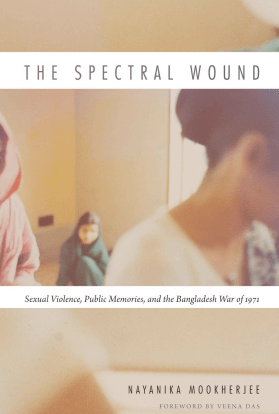
    This academic text, “The Spectral Wound,” explores the complex history and public memory of sexual violence during the 1971 Bangladesh War, focusing particularly on the experiences of women known as birangonas (war heroines). It analyzes how the state and civil society have documented and represented these experiences, highlighting the tension between public recognition and the private struggles and social stigmatization faced by the women. The author, Nayanika Mookherjee, uses ethnographic research, including interviews with birangonas, their families, activists, and officials, to understand the varied ways sexual violence is remembered and articulated. The text also examines the gendered, racialized, and political dynamics that shape these memories and representations, including the controversial term birangona itself. Ultimately, the book reveals how the spectral wound of wartime sexual violence continues to resonate in contemporary Bangladesh, influencing social relationships, national identity, and political discourse.

    Spectral Wound: War Rape and Public Memory

    Based on the provided excerpts from “The Spectral Wound: Sexual Violence, Public Memories, and the Bangladesh War of 1971” by Nayanika Mookherjee, the topic of sexual violence is explored primarily within the context of the Bangladesh War of 1971. The book documents and analyzes the public memory of war time rape perpetrated by the West Pakistani army and local Bengali men during this conflict. It specifically examines the relationship between this public memory and the actual experiences of women who were raped.

    The author challenges the common, often orientalized, understanding that views the raped woman solely as an “abnormal,” horrific, dehumanized victim abandoned by her kin. Instead, the book ethnographically analyzes the social life of testimonies and visual representations to show the varied experiences of war time rape during 1971 through a political and historical lens.

    Key aspects of sexual violence discussed in the sources include:

    • The Figure of the Birangona (War Heroine): Raped women were declared “war heroines” by the Bangladesh government. However, this term carries contradictory meanings, from being honored to being shunned as “soiled women”. The figure is central to public memory and representations. The public memory often focuses on her as a horrific “wound,” using a psychoanalytically loaded term. Identifying women only through suffering creates a homogeneous understanding of victimhood and implies that all victims experience war time rape the same way.
    • Silence vs. Speaking Out: While the dominant understanding is that sexual violence in conflict is consigned to silence, feminists and activists have emphasized the imperative to testify and speak out, viewing it as empowering. The author, however, is wary of the idea of simply “breaking the silence,” seeing it as a complicated task that can potentially use the capacity to “unearth” facts as a weapon. Instead, the book focuses on “testimonial cultures” to examine the dominant narrative, exploring how the birangona is “searched for and then hidden” within public memory. This involves analyzing the circulation, dialectics, and social context of testimonies rather than providing a linear description.
    • Everyday Life and Trauma: The book argues against the idea that wartime rape leads to a lifetime as a pariah. The experiences of 1971 have been folded into the everyday lives of those who were raped. Trauma is characterized not just by repetition or as a solely bodily experience, but as something encoded in social and everyday relations. Daily life and social interactions, particularly “khota” (scorn), keep the memory of rape alive and make the distant violence contiguous with everyday forms of violence.
    • Public Secrecy and Khota: Sexual violence, particularly rape, is often veiled in public secrecy and referred to euphemistically. The term “man ijjot mara” (stealing/beating of honor/status/genitals) was commonly used instead of the direct word for rape, “dhorshon”. Talking about the rape is sometimes considered more shameful than the rape itself. “Khota” (scornful remarks and gossip) from villagers is a significant form of this public secrecy, inflicting judgments and constructing varied subjectivities of the women. Public secrecy based on rumor and judgment blurs public and private boundaries. The process of discussing “what one should not talk about” paradoxically keeps it a public secret.
    • Gendered, Racialized, and Territorial Inscriptions: Sexual violence during the war brought together institutionalized forces like nationalism, religious identity, caste, ethnicity, and politics. It was a way of acting out historically established power relationships and identities grounded in specific frameworks of historical and racialized differences. Colonial discourses that considered Bengali Muslims “Hinduized,” “half Muslims,” and “impure” played a role. Pakistani soldiers checking Bengali men for circumcision (the “absent piece of skin”) to determine their Muslim identity involved humiliation and gendering, linking racial, religious, and masculine identity.
    • Violation of Men: While the rape of women is heavily documented and part of public memory, sexual violence against men also occurred but remains largely silent in historical documents and the national narrative. Liberation fighters mentioned instances of male violation, but often with reluctance. The silence regarding male rapes suggests that this violation is excluded from the national narrative because it challenges dominant ideas of masculinity and heterosexuality.
    • Masculinity: The book examines men’s relationships to sexual violence and the link between sexuality and the nation. Husbands of raped women were often demasculinized by the community’s scorn (“khota”). The violence against Bengali men, such as circumcision checks, was also an act of demasculinization, challenging their identity as men and Muslims.
    • Representation and Eroticization: Literary and visual representations, including films, have depicted war time rape. Some films eroticized the birangona, portraying rape scenes in ways that could be seen as potentially erotic encounters. This highlights an inherent ambiguity towards the transgressed sexuality of the raped women.
    • Language and Semantics: The language used to describe rape often emphasizes the loss of honor and status (e.g., lanchita, sombrhom hani, man ijjot hariyeche), focusing on the supposed metaphysical condition of the woman after the rape, tinged with disgust and repulsion. The women themselves often expressed their traumatic memories through fragmented imagery, bodily sensations, and everyday idioms, highlighting the inexpressibility of the violence.

    Overall, the sources present sexual violence in the Bangladesh War as a deeply complex phenomenon intertwined with public memory, social relations, national identity, gender, race, and masculinity, moving beyond simplistic notions of silence, shame, or victimhood alone. The book argues that understanding these dynamics requires examining how violence is folded into the everyday lives and mediated through social and historical contexts.

    Bangladesh 1971 War and Its Aftermath

    Based on the provided sources, the Bangladesh War of 1971 is explored as a pivotal conflict leading to the creation of the People’s Republic of Bangladesh. It is also known as the Bangladesh Liberation War (Muktijuddho) or the War of Independence (Shadhinotar Juddho), among other names such as the year of chaos (gondogoler bochor), civil war, or the third Indo-Pakistani war, each carrying different ideological and geopolitical connotations. The war, lasting for nine months, involved intense guerrilla activities by Bengali fighters (Muktis) led by General M.A.G. Osmani, later joined by Indian forces, against the West Pakistani army and their local collaborators.

    The war’s origins are linked to the historical trajectory of identity construction, tracing back to the 1947 partition of Bengal. Tensions escalated due to West Pakistan’s attempts to impose Urdu as the sole state language and purge Bengali culture of perceived “Hindu” elements, leading to movements like the Language Movement in 1952. By 1971, contestations over Bengali and Islamic identity, rooted in historical, racial, religious, cultural, and ethnic differences, fueled the conflict.

    The Bangladesh War of 1971 was marked by extreme violence and atrocities. The West Pakistani army and their collaborators, referred to pejoratively as razakars, Al Badr, Al Shams, and Shanti Bahini, are accused of mass killings and widespread sexual violence. Contested numbers estimate the dead between 300,000 and 3 million and women raped between 100,000 and 400,000, with estimates of forced pregnancies ranging from 25,000 to 195,000. Intellectuals, journalists, students, workers, and villagers from all social classes were among those killed. However, the sources also highlight that violence was not one-sided, mentioning that non-Bengali “Bihari” communities were killed, and Bihari women were raped by liberation fighters during and after the war.

    Sexual violence during the war is a central focus in the sources, particularly the rape of women, which became part of public conversation immediately after the war in the 1970s and has remained a topic of discussion since the 1990s. The rapes are described as acts of “nari nirjaton” (torture of women). Reasons cited for the rapes include the military’s mentality of forceful seizure, a distorted version of the religious discourse of “mal-e-gonemat” (booty during the war), soldiers being away from their wives, greed for “beautiful Bengali women,” and rechanneling of sexual energy. Some activists also explained it as an aim by Pakistani soldiers to “improve the genes” of the Bengali Muslim people and populate Bangladesh with “pure” Muslims, thereby destroying Bengali nationalism. Colonial discourses that had racialized Bengali Muslims as “Hinduized,” “half Muslims,” and “impure” also played a role.

    The Bangladeshi government, immediately after the war, declared the raped women as birangonas (war heroines), an almost unparalleled effort to publicly honor them. The state also set up rehabilitation programs and centers for these women, including organizing marriages and helping them enter the labor market to prevent social ostracism. However, the term “birangona” also carried contradictory meanings and led to public debate and ostracism for some women. The representation of the birangona in public memory often focused on her as a horrific “wound”.

    While the rape of women is heavily documented and part of public memory, the sources point out a significant silence regarding sexual violence perpetrated against men by the West Pakistani army. Liberation fighters mentioned instances of male violations, but often with reluctance, stating, “I don’t know whether I should be saying this”. A specific instance of sexual violence against men involved Pakistani soldiers checking Bengali men for circumcision (the “absent piece of skin”) at checkpoints as a way to inscribe religious, territorial, racialized, and gendered boundaries on their bodies. This silence regarding male rapes suggests that this violation is excluded from the dominant national narrative, potentially challenging ideas of masculinity and heterosexuality.

    The history of the war and its atrocities are deeply intertwined with Bangladeshi national identity and politics. Different political factions, particularly the Awami League and the Bangladesh Nationalist Party (BNP), have contested the narrative of the war, emphasizing different aspects and leaders. The legacy of collaborators remains a contentious issue, with some gaining political power after the war.

    In the 2000s, the issue of wartime atrocities gained renewed urgency with the establishment of the War Crimes Tribunal in 2009. This tribunal aimed to try individuals accused of murder, torture, rape, and arson during 1971. The controversial trials and convictions, particularly the death penalty for some individuals linked to Jamaat-e-Islami (JMI) and BNP, sparked significant political tensions, including the Shahbagh movement demanding justice for 1971 atrocities and counter-movements by groups like Hefazat-e-Islam. The Shahbagh movement notably brought the history of rape during the war to public prominence, challenging the notion that it remains unspoken.

    The Bangladesh War of 1971 and its aftermath continue to be a site of contested memories, political struggle, and efforts to grapple with the deep wounds of violence, particularly the varied experiences and public representations of sexual violence against both women and, though often silenced, men.

    Remembering War Time Rape in Bangladesh

    Based on the sources, public memory in the context of the Bangladesh War of 1971 is explored not as an objective record of the past, but as interpretive reconstructions shaped by various social, cultural, political, and historical factors. It is distinguished from the idea of a consensual “collective memory”. The sources emphasize that public memory is influenced by local narrative conventions, cultural assumptions, discursive formations, practices, and the social contexts in which remembering and commemoration take place. “Institutionalized memory”, such as that promoted by a specific government, also plays a significant role in what and how things are recalled and transmitted.

    The primary focus of the discussion on public memory in the sources is the Bangladesh War of 1971, particularly concerning war time rape. The conflict is described as having a “festering, unreconciled” history, with the narrative being a site of contestation between different political parties, such as the Awami League and the BNP.

    A central figure in the public memory of wartime rape is the birangona (war heroine). Public memory often invokes the raped woman, but frequently depicts her as an “abnormal,” horrific, dehumanized victim. This imagery, including the concept of the birangona as a “spectral wound,” stands for the continuous wounded history of Bangladesh. Such a focus on suffering can lead to a homogeneous understanding of gendered victimhood and suggest that war time rape is experienced uniformly by all victims. Visual representations, like the “famous hair photograph,” are central to this public memory, visually identifying the raped woman and contributing to a sedimented image of the birangona. Literary and visual media have depicted the history of rape and the birangona for over forty years, contributing to this public memory.

    The book explores the relationship between this public memory and the actual experiences of the women who were raped in 1971. It suggests that the representation in public memory, which often portrays the women as lifelong pariahs marked by suffering, may not fully capture the varied experiences of war time rape or how the events of 1971 have been “folded into the everyday lives” of those who were raped. The sources analyze how stories and experiences became part of broader national discourses and debates, and how public culture and representations of the raped woman influence processes of testifying and human rights.

    Crucially, the sources argue against the prevalent assumption that war time rape is simply consigned to silence. Instead, they highlight the co-existence of both public memory and public secrecy concerning sexual violence in 1971. Public memory is visible in state declarations designating women as birangonas, in extensive visual and literary archives, and in human rights testimonies since the 1990s. Juxtaposed with this is public secrecy, particularly in rural areas like Enayetpur, where the rapes are known but villagers prefer not to talk about them openly, instead relying on euphemisms or scornful remarks (khota) which paradoxically keep the memory alive as a “public secret”. This public secrecy, often based on rumor and judgment, blurs public and private boundaries and can lead to sanctions against women who speak publicly.

    The state (especially the Awami League government) and civil society (left-liberal groups and activists) are active in shaping public memory. They use commemorations, political rhetoric emphasizing Bengali identity or Sheikh Mujib, visual archives, and oral history projects to construct and uphold a specific version of the war and the birangona’s place within it, often aiming to present an “authentic history” and correct “distortions”. However, public memory is also a contested terrain, with different political factions promoting competing narratives.

    Public memory is linked to the concept of trauma, often invoked to represent past injustice. The “horrifying life history” of the birangonas is seen as metonymic of Bangladesh’s unresolved independence. Affective engagement with the “wound” of the birangona allows citizens to feel for the violent history of rape, potentially mobilizing younger generations against collaborators. However, the book argues against solely configuring the raped woman as a wound or focusing only on the “horrifying genre” of her story.

    The dynamics of public memory regarding the birangona are described using the metaphor of “combing” (searching and hiding) and the concept of “absent presence”. The birangona is “searched for and then hidden” within public memory. The horrific wound is documented by activists, but the intricacies of her long-term life after the rape are often “combed over,” hidden from human rights narratives and prevalent discourse.

    The history of public memory regarding wartime rape has evolved. It was part of public conversation immediately after the war. Literary and visual representations became sites of political contestation later. In the 1990s, driven by feminist and human rights activism seeking justice and war crimes trials, documentation and testimony efforts brought war time rape back into prominent public discourse. The Shahbagh movement in 2013 further highlighted the history of rape and its connection to the war crimes tribunal.

    Notably, while the rape of women is a significant part of public memory, the sources point to a significant silence regarding sexual violence against men perpetrated by the West Pakistani army. This contrast highlights how public memory selectively acknowledges different forms of violence, potentially influenced by dominant ideas of masculinity and their relationship to the national narrative.

    Birangonas: Heroines, Victims, and Memory in 1971 Bangladesh

    Based on the provided sources, the term “War heroines” primarily refers to the women who were raped and subjected to sexual violence by the West Pakistani army and local collaborators during the Bangladesh War of 1971. In Bengali, these women are known as birangonas.

    Here’s a discussion of War heroines based on the sources:

    • Designation and State Recognition: Immediately after the war in 1971, the newly formed Bangladeshi government, possibly led by Sheikh Mujibur Rehman, declared the raped women as birangonas or “war heroines”. This was an effort to publicly honor them, which the sources describe as “almost unparalleled” compared to other conflicts. The designation, combining bir (brave) and ongona (woman), literally means “brave woman”. This naming was also an emotive and public attempt to absorb the large number of raped women into the new nation and facilitate their “mingling in society”. The state also used this designation to distinguish itself from the Pakistani government, presenting Bangladesh as a different kind of “Muslim” nation that valued its women, including those who were raped.
    • Rehabilitation Efforts: The government set up various rehabilitation programs and centers for the birangonas in 1972. These programs aimed to address the logistical challenge of integrating the women back into society and prevent social ostracism. Efforts included organizing marriages and helping women enter the labor market. Rehabilitation centers recorded detailed case histories, including information about capture, torture, pregnancy, and family attitudes. The program followed a “reformist and modernist agenda,” rooted in assumptions of “reproductive heteronormativity”. The state’s documentation process, while intended to “comb, search, and document” the women, also paradoxically “hid” them through a “code of purification”.
    • Public Memory and Representation: War heroines are a central figure in the public memory of the 1971 war, particularly regarding wartime rape. However, this public memory often portrays the raped woman as an “abnormal,” “horrific,” and “dehumanized victim,” functioning as a “spectral wound” that symbolizes Bangladesh’s violent history. Literary and visual media, including photographs, films, and poems, have depicted the birangona for decades, contributing to a “sedimented practice” of viewing her through certain lenses. Examples include depicting her with physical wounds, emotional pain, and lack of social belonging. Human rights narratives and oral history projects in the 1990s also contributed to this public memory, often focusing on the “horrific genre” of their experiences.
    • Public Memory vs. Lived Experience: The public memory, often focused on the birangona solely as a suffering victim, may not reflect the varied and complex experiences of the women or how they integrated the violence into their everyday lives. The sources highlight that their actual life trajectories after the war were diverse, including getting married, having families, or finding jobs, which often get “combed over” or hidden from the dominant narrative.
    • Contradictory Meanings and Stigma: The term birangona itself is described as being infused with “contradictory affects” – from being war heroines to be honored to being considered “soiled women to be shunned”. Despite state efforts, visibility and the public recognition of being raped often led to social ostracism. The term sometimes functioned as a euphemism that ironically underscored their socially unacceptable status. They were often referred to using derogatory terms or metaphors related to their perceived transgressed sexuality. The stigma is presented not as a “natural” state but as a “language of relationship” used to belittle and shame.
    • Subjectivity and Agency: The subjectivity of war heroines is explored as complex, oscillating between being seen as victims, agents, or even traitors. The women themselves contested how they were defined; some believed one becomes a birangona only by speaking out publicly about their rape. Some claimed the identity of muktijoddha (liberation fighter), arguing they fought the war by enduring the violation. Class location significantly influenced how their claims and experiences were perceived; middle-class women’s silence was sometimes seen as authenticity, while poor women who spoke were suspected of seeking compensation.
    • Appropriation and Contestation: The narratives and identities of war heroines have been subject to appropriation by various actors, including the state and left-liberal activists, often for political or nationalistic goals. Women who went public felt their stories were sometimes altered or used in ways they did not control. While activists used their experiences to demand justice for collaborators, they sometimes failed to address the women’s own needs for rehabilitation.
    • Silence on Male Sexual Violence: The dominant public memory and focus on war heroines (raped women) exist alongside a notable silence or covering over regarding sexual violence perpetrated against men by the West Pakistani army, highlighting a gendered selectivity in remembrance.
    • Evolving Recognition: While the term birangona has been seen as potentially shameful, in recent years, some newspapers have referred to all war heroines as valiant freedom fighters. Events like the Shahbagh movement in 2013 brought the history of rape back into public focus. In 2007, birangonas were given a pivotal, agentive role in memorializing the war by inaugurating a program at the Shoheed Minar in Dhaka.

    In summary, the discussion of War heroines (birangonas) in the sources reveals their complex position in Bangladeshi society and public memory. They were officially honored and offered rehabilitation by the state, yet often faced social stigma and ostracism. Their image became a powerful symbol in public memory and political discourse, frequently focusing on their suffering, while their individual experiences and agencies were often overlooked or appropriated.

    Remembering 1971: State, Society, and War Memory

    Drawing on the provided sources and our conversation history, the relationship between the State and society concerning the public memory of the Bangladesh War of 1971, particularly wartime sexual violence, is depicted as complex, dynamic, and often contested. Public memory itself is understood not as a collective consensus, but as interpretive reconstructions shaped by various social, cultural, political, and historical factors. The State and civil society emerge as key actors actively involved in shaping these memories.

    The State’s Role in Shaping Memory and Influencing Society:

    The sources highlight that the State, particularly the ruling political party like the Awami League, actively engages in constructing and promoting a specific national narrative of the 1971 war. This is done through various means:

    • Commemorations and Rhetoric: State-sponsored ceremonies, political speeches, and television programs are used to emphasize Bengali identity, celebrate figures like Sheikh Mujibur Rehman as the “father of the nation,” and solidify a particular version of history.
    • Designation and Rehabilitation: The government’s immediate post-war declaration of raped women as birangonas or “war heroines” was an unprecedented state attempt to honor these women and facilitate their social integration. Rehabilitation programs were established, reflecting a “reformist and modernist agenda” aimed at absorbing the women into the new nation and addressing social ostracism. The state’s documentation process for the birangonas, while seeking to make them “legible” as war heroines, also paradoxically “hid” them through a “code of purification”.
    • Institutional Practices: State-linked institutions and processes, such as rehabilitation centers and the associated social workers and documents, exercised a form of “sovereign power” over the women, shaping their interactions and instilling ideas of “subject and citizen”.
    • Political Contestation: The rivalry between major political parties like the Awami League and the BNP means that the history of the war is a “festering, unreconciled one,” with each party promoting competing narratives and interpretations. This political division at the state level directly impacts how the past is remembered and debated within society.

    Civil Society’s Role and Interaction with the State:

    Civil society, encompassing left-liberal groups, activists, NGOs, and intellectuals, also plays a significant role in memory-making and interacts with the State in complex ways.

    • History Making and Documentation: Civil society actors are involved in documenting the war, including through oral history projects and museums, sometimes with transnational funding. These efforts contribute to the public memory, often focusing on seeking justice and recounting the experiences of war victims, including the birangonas.
    • Alignment and Critique: While civil society sometimes positions itself as separate from and opposed to the state, its activities and projects can also inadvertently strengthen state ideology. Activists utilize the history of wartime rape to demand accountability for collaborators, a goal sometimes aligned with state priorities.
    • Shaping Narratives: Civil society, particularly through human rights frameworks and activism, contributes to the public discourse around wartime rape. However, their focus on suffering and the “horrific genre” of the birangonas’ stories can inadvertently simplify or “mute” the complexities of the women’s lived experiences.

    Tensions, Disjunctions, and Societal Reception:

    Despite the State’s and civil society’s efforts to shape public memory, the sources reveal significant tensions and disjunctions in how these narratives are received and integrated into society, particularly at the local level:

    • Stigma vs. Recognition: The State’s official recognition of women as birangonas, intended to bestow honor, often coexists with social stigma and ostracism in their communities. Visibility, partly a result of documentation efforts by state-linked or civil society actors, could lead to social sanctions. This highlights the gap between state declarations and societal norms and judgments.
    • “Expectation Economy”: The State’s rhetoric of respect and promises of rehabilitation create an “expectation economy” among villagers and the birangonas’ families, leading them to demand that the State fulfill these assurances. When these promises are not fully met, it creates confusion and dissatisfaction.
    • Disjunctions in Narratives: The women themselves sometimes experienced a disconnect between the national narratives promoted by the State and civil society and their own priorities and experiences. They might prioritize material aid or recognition of their long-term struggles over the narrow focus on their rape as a “horrific wound” in 1971.
    • Local Resistance and Power Dynamics: Local communities and leaders may resist or be ambivalent towards national, state-driven narratives, particularly when they conflict with local politics, patronage networks, or concerns about the village’s reputation. The use of “khota” (scornful remarks) in villages is an example of local societal practices that keep the memory of rape alive as a “public secret” while simultaneously shaming the women, demonstrating a form of agency within local social relations that can defy or reinterpret national discourse.

    In conclusion, the relationship between the State and society in the context of the 1971 war memory is not one of simple top-down control or bottom-up resistance. Instead, it is a dynamic interplay where the State and various civil society actors actively construct and circulate narratives, while local social relations, political divisions, and individual experiences filter, interpret, and sometimes contest these dominant accounts. Both state and civil society, in their efforts to remember and address the past, can inadvertently contribute to a “pathological public sphere” that confines the narratives of war heroines within limited tropes of suffering, often overlooking the complexities of their lives and the varied ways they have “folded” their experiences into the everyday.

    Spectral Wound: A Study Guide

    Quiz

    1. What is the “ghotona” (event, incident) referred to in the foreword?
    • The “ghotona” refers to the rapes that occurred during the 1971 Bangladesh Liberation War. Women struggled to understand why they were vulnerable, linking the violence to their husbands’ political allegiances and everyday village conflicts.
    1. How did Mookherjee’s prior knowledge of other instances of wartime rape influence her research in Bangladesh?
    • News of Japanese comfort women, rapes in Bosnia and Rwanda, and the UN declaration of rape as a war crime informed and triggered Mookherjee’s research, prompting her to assume silence surrounding the issue in Bangladesh.
    1. According to the text, how do left-liberal activists typically represent the “razakar”?
    • Left-liberal activists stereotypically represent the “razakar” (collaborator) with a beard and a cap, associating these signifiers with an “Islamic” identity.
    1. What specific linguistic practice did Mookherjee adopt that drew criticism from minority Hindus in Enayetpur?
    • Mookherjee adopted the use of the word “pani” for water, a word commonly used by her Muslim interlocutors. Minority Hindus preferred the word “jol” and saw her adoption of “pani” as a threat to their identity.
    1. How does Mookherjee use Jacques Derrida’s Specters of Marx to analyze the visual and state narratives of the birangona?
    • Mookherjee uses Derrida’s concept of “absent presence” or the “effaced but legible trace” to deconstruct how the birangona is evoked in historical documents and narratives, making her a spectral figure that is called into presence only to be effaced.
    1. What does the defacing of Sheikh Mujib’s image on the ten-taka currency notes signify?
    • The defacing of Sheikh Mujib’s image, turning him into a “goonda” or calling him “Father of Slippers,” signifies popular discontent and mockery of his title “Father of the Nation,” reflecting political dissent.
    1. According to the text, what is the most important thing for a woman, and how does it relate to the idea of “man ijjot”?
    • For a woman, “man ijjot” (status and honor, sometimes linked to sexual relationships) is the most important thing. This concept is linked to the idea of covering and protecting female genitalia as the source of this honor.
    1. How did villagers and others explain the reasons for the soldiers’ rapes during the war?
    • Reasons cited included avenging muktijoddhas’ families, Islamic discourses (a distorted version of “mal-e-gonemat”), greed for “beautiful Bengali women,” and rechanneling of sexual energy due to soldiers being away from their wives.
    1. What does the phrase “man shomman mara” or “man ijjot mara” (literally the stealing/beating of honor and status/genitals) signify in the context of rape narratives?
    • This phrase signifies that the women viewed rape as a violation in terms of a man assaulting, beating, robbing, or stealing their sexuality and their position in the community, linked to the loss of their “jaat” (common characteristics of a group).
    1. How does the character Morjina Khatoon (the “military’s whore”) explain the derogatory names she is called?
    • Morjina explains that she is called derogatory names like “military’s khanki, military’s beshsha” because she lacks male kin (a son or a husband) who could protect her and deter such insults.

    Essay Format Questions (No Answers Supplied)

    1. Discuss the ways in which the everyday politics of the village and the phenomenon of khota make the violence of rape “contiguous to everyday forms of violence.” How does this challenge or complicate a view of war-related sexual violence as solely a dramatic, external event?
    2. Analyze the contrasting perspectives on the term birangona as presented in the text. How does the state’s use of the term, feminist activist interpretations, and local village perceptions differ, and what do these differences reveal about the complex aftermath of wartime sexual violence?
    3. Explore the concept of “public secrecy” as discussed in the text, particularly in relation to sexual violence. How is this secrecy maintained, and what are its effects on both the raped women and the wider community? Consider the role of khota and social knowing in this process.
    4. Examine the ways in which masculinity is articulated and contested in the aftermath of wartime sexual violence, as described in the text. How do the husbands of the raped women negotiate their gendered and moral identities, and how do the women’s actions and narratives influence these negotiations?
    5. Discuss the intersection of gender, ethnicity, and religious identity in the context of wartime sexual violence as explored in the text. How are colonial discourses and historical narratives re-employed in the violence against both men and women, and what does this reveal about the racialized and gendered logics at play?

    Glossary of Key Terms

    • Birangona: (Bengali) War heroine. A term coined by the Bangladeshi government after the 1971 Liberation War to refer to women who were raped during the conflict. The term carries complex and contested meanings.
    • Bnp: Bangladesh National Party. A major political party in Bangladesh.
    • Chakhash: Meeting (with the prime minister).
    • Chinta: (Bengali) Worries or anxieties. Used in the text to describe the lingering emotional effects of rape.
    • Dojok: (Bengali) Hell. Referred to in the context of religious judgments made about the raped women.
    • Dhorshon: (Bengali) Rape. The text notes that this word was rarely used by villagers and the women themselves, who preferred other phrases.
    • Duniyar nishsho: (Bengali) Loser of the world. A term used by the raped women to describe how they felt after the violation.
    • Ghotona: (Bengali) Event, incident. Used in the text to specifically refer to the rapes during the war.
    • Goonda: (Bengali) Gangster or hooligan. Used pejoratively in the text to describe a defaced image of Sheikh Mujib.
    • Hadith: Sayings or traditions of the Prophet Muhammad, often used as a source of Islamic law.
    • Hujoor: (Bengali) Head of the mosque or a religious leader.
    • Iman: (Arabic/Bengali) Principle or faith. Used in contrast to man (honor) by a husband of a raped woman.
    • Ijjot: (Bengali) Chastity or honor. Often used in conjunction with man.
    • Jaat: (Bengali) Drawn from jati, meaning the common characteristics of a group, like caste, nationality, culture, or political affiliation. Used by women to describe the violation of their group identity through rape.
    • Jatir Jonok: (Bengali) Father of the Nation. A title given to Sheikh Mujib.
    • Jena: (Arabic/Bengali) Adultery or fornication. In some interpretations of Sharia law, rape is considered akin to jena.
    • Jmi: Jamaat-e-Islami. A right-wing Islamic political party in Bangladesh, associated with the razakars.
    • Jol: (Bengali) Water. Used by Hindu Bengalis, in contrast to pani used by Muslim Bengalis.
    • Jutar Pita: (Bengali) Father of Slippers. A sarcastic term used to deface Sheikh Mujib’s image, implying humiliation.
    • Khanki: (Bengali) Whore. A derogatory term used against a birangona.
    • Khota: (Bengali) A term encompassing everyday squabbles, bitterness, revenge, or insult. Used in the text to describe the social violence and scorn directed at the birangonas and their families.
    • Kizb: (Arabic) Lying. Discussed by Gilsenan and related to the performance of social selves and the maintenance of secrecy.
    • Kolonkini: (Bengali) Stained person. A term used by a raped woman to describe her feeling of impurity.
    • Kutumb: (Bengali) In-laws.
    • Lojja: (Bengali) Shame.
    • Lungi: (Bengali) A sarong-like garment worn by men.
    • Mal-e-gonemat: (Arabic/Bengali) Booty during the war. A distorted version of this religious discourse was used to explain the rapes.
    • Man: (Bengali) Honor. Often used in conjunction with ijjot or shomman.
    • Man ijjot: (Bengali) Status and honor, sometimes linked to sexual relationships, and potentially referring to the genitals themselves as the source of honor.
    • Man shomman: (Bengali) Honor and status. Often used interchangeably with man ijjot.
    • Mara: (Bengali) To steal or beat. Used in phrases like man shomman mara to describe the act of rape.
    • Mohila muktijoddha: (Bengali) Female liberation fighter.
    • Molla: (Bengali) A derogatory term for someone considered a strict adherent to Islam and prescriptive of it.
    • Muktijoddhas: (Bengali) Liberation fighters. Refers to those who fought in the Bangladesh Liberation War.
    • Muktijuddho: (Bengali) Liberation War. Refers to the 1971 Bangladesh Liberation War.
    • Nari nirjaton: (Bengali) Literally torture of women, commonly used to refer to rape.
    • Pani: (Hindi/Bengali) Water. Used by Muslim Bengalis, in contrast to jol used by Hindu Bengalis.
    • Pathological public sphere: A public sphere mesmerized by stories of suffering and spectacle, as defined by Mark Seltzer and applied to the context of the birangonas.
    • Purush poricharika: (Bengali) Male servants providing sexual services. Refers to male rape.
    • Punorbashon: (Bengali) Rehabilitation. Refers to the government’s program for the birangonas.
    • Razakars: (Urdu/Bengali) Collaborators who supported the Pakistani army during the 1971 war.
    • Ruchi: (Bengali) Taste or discrimination. Used in reference to the preferences of the Pakistani army.
    • Salwar kameez: (Hindi/Urdu/Bengali) A traditional South Asian outfit consisting of loose trousers (salwar) and a long tunic (kameez).
    • Sesh shimana: (Bengali) The last boundary. Used to describe the perceived boundary between birangonas and sex workers.
    • Shanti: (Bengali) Peace.
    • Sharia: Islamic law.
    • Shoheeds: (Arabic/Bengali) Martyrs.
    • Shomman: (Bengali) Honor or respect.
    • Shorom: (Bengali) Shame.
    • Shotitto: (Bengali) Chastity.
    • Spectral: In the context of the birangona, refers to a presence that is evoked but simultaneously effaced, existing as an “absent presence.”
    • Taka: The currency of Bangladesh.
    • Testimonial culture: The societal tendency to produce and circulate testimonies, particularly about experiences of violence and conflict.
    • Uddhar: (Bengali) Recovery or rescue.
    • Virangana: (Sanskrit/Hindi) A female warrior or heroic woman. Used in the text for comparative purposes.
    • West Pakistanis/Westerners: Refers to the Pakistani army and people from West Pakistan.

    Briefing Document: Sexual Violence and the Politics of Memory in Bangladesh

    This briefing document summarizes the main themes, key ideas, and important facts from the provided excerpts, which appear to be from the foreword, acknowledgements, introduction, and various chapters of a book titled “Spectral Wound.” The core focus is on the intersection of sexual violence during the 1971 Bangladesh Liberation War, its impact on the women who experienced it (termed birangonas or war heroines), and the complex social, political, and historical forces that shape the memory and representation of these events in independent Bangladesh.

    Main Themes:

    • The Multi-layered Impact of Sexual Violence: The sources emphasize that the impact of sexual violence during the war extended far beyond the physical act itself. It was deeply intertwined with village politics, family dynamics, and the construction of national identity. The authors highlight the concept of khota (scornful remarks or gossip) as a powerful form of everyday violence that made the distant trauma of rape contiguous with daily life.
    • The Contested Memory of Sexual Violence and the Birangona: The figure of the birangona is central but also highly contested. While initially declared as war heroines by the state and national figures like Sheikh Mujib, their experiences were often met with shame, ostracization, and public secrecy within their communities. The sources demonstrate how the representation and memory of the birangona are shaped by political agendas, social norms, and historical narratives.
    • Public Secrecy and Social Knowing: A significant theme is the concept of “public secrecy” – everyone knows about the rapes, but there is a collective effort to conceal or avoid talking about it directly. This secrecy is maintained through various social mechanisms, including khota and the fear of shame (lojja) and loss of honor (man ijjot).
    • Gendered and Racialized Dimensions of Violence: The excerpts reveal how sexual violence in 1971 was not random but deeply rooted in existing gendered and racialized discourses. The dehumanization and feminization of Bengali Muslim men by the Pakistani army, intertwined with colonial narratives, played a crucial role in shaping the nature of the violence against both men and women.
    • The Politics of Representation and the Archive: The sources critically examine how the war, and specifically sexual violence, are represented in various archives – literary, visual, and testimonial. They caution against simplistic or sentimental readings and highlight how representations can simultaneously invoke and efface the experiences of the birangonas.

    Most Important Ideas or Facts:

    • The term ghotona (the event, incident) is frequently used by women to refer to the rape. This highlights their struggle to understand the factors that made them vulnerable, including their husbands’ political allegiances.
    • Everyday village politics, including khota, made the violence of rape “contiguous to everyday forms of violence.” This challenges the idea that war-time atrocities are isolated incidents, suggesting they can emerge from or be connected to ordinary forms of social conflict and animosity.
    • The birangona is analyzed through the lens of “absent presence” and “spectral logic” (drawing on Derrida). This signifies how the war heroine is evoked in national narratives but often effaced or made safely available through representations that emphasize her “wound” and trauma, making her a horrific alterity.
    • The public sphere in Bangladesh is described as “pathological” due to its “mesmerized by stories of suffering and the spectacle of [wound].” This suggests that while there is an affective engagement with the birangona‘s suffering, it often prevents a deeper understanding or redress for their experiences.
    • The defacement of currency notes featuring Sheikh Mujib in 1998 reveals a public discontent and sarcasm towards the “Father of the Nation” narrative. This demonstrates a disconnect between state-sanctioned memory and popular sentiment.
    • Village references to the exposure of birangonas as “loss of man ijjot” (status and honor, sometimes linked to sexual relationships) and a “shameful thing” are central to the concept of public secrecy. This highlights the deep-seated social stigma attached to sexual violation.
    • The use of khota involving references to the rapes was a common form of everyday squabble and insult, even affecting economic negotiations within the village. This underscores the pervasive nature of the public secret and its material consequences.
    • The notion of man ijjot can refer not only to honor and social status but also literally to the genitals as the source of that honor. This explains why exposing the birangonas‘ faces in testimonies and portraits is seen as bringing a “covered public secret” to light.
    • Villagers cited various reasons for the rapes, including avenging muktijoddhas’ families, Islamic discourses (distorted), greed for “beautiful Bengali women,” and the rechanneling of soldiers’ sexual energy. These explanations often point to a “natural” phenomenon of rape during conflicts, potentially absolving the perpetrators.
    • The public secrecy is maintained through “social knowing what not to know,” where people state that one “should not talk about it as it was a secret” while simultaneously elaborating on khota. This illustrates the complex performance of memory and the fetishization of concealment.
    • Local leaders, particularly supporters of the BNP, expressed concern that the national emphasis on rape in 1971 would defame their communities and make them appear vulnerable. This highlights how national historical narratives are contested at the local level and influenced by political rivalries.
    • War heroines themselves referred to rape with expressions like “those words,” “those stories,” “tales,” and “that work,” and as “secret words,” “the event,” and “loss.” They rarely used the Bengali word for rape, dhorshon.
    • The verb mara (to steal/beat up) was frequently used with jaat and man shomman, indicating that women saw rape as a violation of their sexuality and position within their community (jaat meaning the common characteristics of a group like caste or culture).
    • The birangonas often blamed themselves for being raped, calling themselves “sinners,” “bad,” and “spoiled,” and feeling they had lost their shotitto (chastity). This reflects the internalized social stigma and the devastating impact on their sense of self-worth.
    • Husbands of birangonas were often “demasculinized through the khota of substitution of their sexual act by the violent activities of the rapist.” This illustrates how the trauma of rape also affected the male relatives and challenged their perceived roles as protectors.
    • The state’s declaration of raped women as birangonas aimed to establish its sovereignty and highlight the atrocities of the Pakistani army. This demonstrates the political utility of the term and the state’s attempt to control the narrative.
    • Sheikh Mujib is described as establishing himself as the “paternal, sovereign, foundational authority who needed to protect and recover his mothers and sisters.” This paternalistic framework is further illustrated by a father’s letter to Mujib seeking redress for his birangona daughter.
    • Sexual violence against East Pakistani men by the West Pakistani army is largely “combed/covered” in the history of the war, unlike the public discourse surrounding the rape of women. This points to a gendered silence in the historical narrative.
    • The Pakistani army’s search for “the absent piece of skin” (circumcision) among Bengali Muslims reveals how violence was translated into either a sense of community or an abrogation of what makes them human. This highlights the racialized and ethnic dimensions of the violence, where Bengali Muslims were often seen as effeminate, Hinduized, and less than human.
    • The interpretation of the famous image of a soldier peering into a lungi is shown to be fluid and contested, reflecting different political and territorial readings. This illustrates how visual archives are not neutral but are inscribed with multiple meanings.
    • The figure of the birangona is contrasted with that of the sex worker (barbonita). This highlights how the nation’s “purity” is often defined in opposition to transgressed female sexuality.
    • The stories of women like Morjina Khatoon, who lacked male kin, demonstrate how the absence of a son or husband left them vulnerable to being called the “military’s whore.” This underscores the importance of patriarchal protection within the social structure.

    Key Quotes:

    • “As much as the sexual violence wounded them, the everyday politics of the village and the khota that burst out in everyday squabbles, in petty forms of revenge or insult, made the distant violence of the rape contiguous to everyday forms of violence.” (foreword xiii)
    • “In the nation’s positive conceptual formulation of the raped woman, she can only be exemplified in the absence of her presence, through horrific enactment and repre sen ta tion as a wound, which ensures a greater invocation of her “trauma.”” (introduction 25)
    • “They say we should not put our words in newspapers as we have grown-up children, married daughters, and kutumb [in- laws] who would come to know these things.” (chapter 3, quoting Kajoli)
    • “Do the covered genitalia then stand in for a public secret? Lila Abu- Lughod (1988, 107) shows how in Egypt various Koranic references to modesty and chastity imply that it is necessary to literally protect female genitalia.” (chapter 3, linking man ijjot to genitals)
    • “It is this social knowing what not to know that lies at the heart of perform-ing memory and of fetishizing public secrecy.” (chapter 3, discussing public secrecy)
    • “The Bengali word for rape— dhorshon— was rarely used. The frequent use of the verb mara with jaat and man shomman indicated that the women thought of rape as a violation in terms of a man as-saulting / beating, robbing / stealing their sexuality and their position in their community in terms of their loss of jaat…” (chapter 5, discussing the language used for rape)
    • “When I was being raped I felt my life was over, I would not be able to see my husband and anybody. I thought that I had been married for just a year, so my husband may not keep me at home, may not give me rice and clothes.” (chapter 5, quoting Rashida)
    • “The husbands of raped women were demasculinized through the khota of substitution of their sexual act by the violent activities of the rapist.” (chapter 5, discussing demasculinization)
    • “Here Sheikh Mujib established himself early on as the paternal, sovereign, foundational authority who needed to protect and recover his mothers and sisters— the female citizens—in in de pen dent Bangladesh.” (chapter 6, discussing Sheikh Mujib’s paternal role)
    • “The Pakistani army’s search for the absent piece of skin among Bengali Muslims shows how people can translate experiences of violence into either a sense of community or an abrogation of what makes them human.” (chapter 7, discussing the racialized nature of violence against men)
    • ““The raped woman might be mobilizing the nation only now,” Naibuddin Ahmed mused in the interview. “Earlier they were only referred to as the 200,000 mothers and sisters who have lost their ijjot [chastity]. But they are not barbonita [sex workers] that their ijjot will be gone, lost, sold? They are the illustration of our nation’s purity,” he reflected angrily.” (chapter 8, discussing the contrasting views of birangonas and sex workers)
    • ““They call me the ‘military’s khanki, military’s beshsha’ [the military’s whore, mistress]. If I had a man in my life— a son or a husband—no one would have dared to tell me anything,” said Morjina Khatoon…” (chapter 9, quoting Morjina Khatoon)

    This briefing document provides a concise overview of the central arguments and evidence presented in the provided excerpts, emphasizing the complex interplay of violence, memory, gender, and politics in post-conflict Bangladesh.

    Sexual Violence and Memory in Bangladesh

    What role did village social dynamics play in the vulnerability of women to wartime sexual violence?

    The vulnerability of women to wartime sexual violence was intertwined with the everyday politics of the village. Beyond the direct violence of rape, local conflicts, petty forms of revenge, and insults (referred to as khota) made the distant violence of rape feel continuous with everyday forms of violence. The existing slights, bitterness, betrayal, and perverseness within intimate and enemy relationships in the village provided a context for how dramatic acts of violence could emerge from the ordinary. Examples include men using the opportunity of conflict to rape a neighbor’s daughter or collaborators (razakars) supplying women to soldiers, suggesting that pre-existing social tensions and animosities contributed to creating opportunities for such atrocities.

    How was the term “birangona” for raped women used by the Bangladeshi state and how did this affect perceptions?

    The Bangladeshi state used the term “birangona” (war heroine) to refer to women who were subjected to sexual violence during the war. This was a deliberate effort by the government to rehabilitate these women and establish the sovereignty and language of stateness of the new nation. By calling them birangonas, the state highlighted itself as a victim of the West Pakistani state’s abuses and emphasized the rapes perpetrated by the Pakistani army. This contrasted with a perceived “Pakistani” sharia-driven approach that might view rape as adultery. While the term aimed to disrupt middle-class values about chastity and purity and locate these women within heroic iconographies, it also created a pathological public sphere where the raped woman could only be perceived as a horrific alterity, primarily through the lens of her “wound,” ensuring she could be affectively felt for mobilization against collaborators but also seen as a threatening figure due to her transgressed sexuality.

    What is “khota” and how did it impact the lives of the war heroines and their families?

    Khota refers to scornful remarks, gossip, and everyday squabbles that are used to publicly shame or insult someone, often by bringing up past transgressions or sensitive issues. For the birangonas and their families, khota predominantly took the form of neighbors, extended family, and acquaintances raising the issue of the rapes during arguments or disagreements. This public shaming affected the women’s families economically, as illustrated by examples of husbands losing business or payment due to neighbors’ sarcastic comments referencing their wives’ experiences of sexual violence during the war. Khota also served as a constant reminder and trigger of traumatic memories for the women, preventing them from moving past the event.

    How does the concept of “public secrecy” relate to the experiences of wartime sexual violence in Bangladesh?

    Public secrecy in the context of wartime sexual violence refers to the collective knowledge of an event that is simultaneously acknowledged and actively concealed or avoided in public discourse. Everyone in villages like Enayetpur knew about the “gondogoler bochor” (year of chaos) and included generic accounts of “nari nirjaton” (torture of women, i.e., rape) in their narratives. However, there was also a pervasive sense that “those words” (referring to the rapes) should not be talked about, despite the widespread knowledge of the events. This “social knowing what not to know” lies at the heart of performing memory and fetishizing public secrecy. The act of speaking about the rapes, especially for the birangonas themselves, was often met with scorn and disapproval, reinforcing the public secret and the idea that the subject should remain covered.

    How did gender and racialized identities intersect with sexual violence during the Bangladesh War?

    The sources suggest that sexual violence during the Bangladesh War was intrinsically intertwined with existing historical and colonial discourses that racialized and gendered Bengali Muslims. The Pakistani army’s actions were influenced by stereotypes and derogatory views of Bengali Muslims, who were sometimes seen as effeminate, lazy, Hinduized, and less of a Muslim or man. The search for the “absent piece of skin” (circumcision) among Bengali men by the Pakistani army exemplifies how ethnic and religious differences were used to justify violence and construct the “other.” While rape of women was an explicit political act used to defile the enemy community, the violence against men, including sexual assault, was also a means of humiliation and demasculinization, deeply connected to these racialized and gendered constructions of identity.

    What does the concept of “man ijjot” encompass and how did it influence the understanding of wartime rape?

    Man ijjot translates to status and honor, and it is deeply linked to sexual relationships, particularly for women. In the context of the war, the exposure of birangonas was referred to as “loss of man ijjot” and considered a “shameful thing.” Man ijjot is not just about social standing but can also refer to the genitals themselves as the source of that honor. Therefore, exposing one’s face in testimonies or photographs, like the genitals, was seen as bringing to light a covered “public secret.” The notion of man ijjot being “stolen” or “beaten” (man shomman mara or man ijjot mara) emphasizes the violation as a robbery of one’s sexuality and community standing, rather than simply physical torture. This cultural framework heavily influenced how the raped women and their communities understood and reacted to the violence.

    How did the experiences of the birangonas challenge or reinforce traditional notions of masculinity for their husbands and male relatives?

    The experiences of the birangonas, and the subsequent khota and social interactions, often led to the demasculinization of their husbands and male relatives in the eyes of the community. This was based on the idea that the husbands failed to protect their wives and were unable to prevent the violation of their “man ijjot.” The women themselves sometimes perceived their husbands as “less of a man” due to their inability to provide protection, comfort, and support after the event. However, the husbands also attempted to retrieve and reassert their masculinity in various ways, such as acting as gatekeepers to the women’s narratives or articulating their sense of loss of honor alongside the retention of principle (iman). These negotiations highlight the complex and sometimes contradictory nature of masculinity in the face of wartime sexual violence and its aftermath.

    How has the representation of wartime sexual violence and the “birangonas” evolved in Bangladeshi public discourse and archives?

    The representation of wartime sexual violence and the birangonas has been complex and contested over time. Immediately after the war, the state used the term “birangona” as a symbol of the nation’s suffering and heroism. Visual and literary archives from the early post-war period often aestheticized the rape or used it to mobilize nationalistic sentiment. Over time, there have been shifts in how the birangona is portrayed, from iconic figures in national history to subjects of human rights discourse and feminist activism. However, the birangona remains a spectral figure, often evoked but also effaced or made safely available for national narratives through the emphasis on her wound. The silence surrounding male rapes in the official history of the war, in contrast to the public discourse on female sexual violence, highlights the selective nature of how these experiences are remembered and represented. Recent movements and tribunals have brought some testimonies to the forefront, but the struggle for complete acknowledgment and justice continues.

    By Amjad Izhar
    Contact: amjad.izhar@gmail.com
    https://amjadizhar.blog

  • Bangladesh News: Reforms, Elections, and Unrest

    Bangladesh News: Reforms, Elections, and Unrest

    News reports from ATN Bangla News cover a range of crucial issues in Bangladesh. Political discussions dominate, focusing on upcoming elections, necessary reforms, and the roles of various political parties like the BNP and Awami League. Significant events are also reported, including a fire at the Bangladesh Secretariat, a nationwide cargo boat strike, and the ongoing conflict in neighboring Myanmar impacting border regions. Social and economic concerns are addressed, such as rising food prices and the condition of the education system. Finally, the death of Indian economist Manmohan Singh is briefly noted.

    Description of image
    L’Oreal Paris Makeup Telescopic Original Lengthening Mascara, Blackest Black, 0.27 Fl Oz (1 Count)

    Bangladesh Politics and Society: A Study Guide

    Quiz

    Instructions: Answer the following questions in 2-3 sentences each.

    1. What is the main point of contention regarding upcoming elections in Bangladesh, as expressed by various political figures?
    2. What are the primary concerns surrounding the recent fire at the Bangladesh Secretariat?
    3. What is the basis of Attorney General Advocate Mohammad Asaduzzaman’s claim that individuals involved in the July revolution murders cannot participate in the elections?
    4. What specific reforms does the BNP suggest are necessary before elections can take place?
    5. What are the demands of the Bangladesh Naujan Sramik Federation, and what actions have they taken to pressure the government?
    6. What are the concerns of residents in the border areas due to the ongoing conflict in Myanmar?
    7. What economic challenges are highlighted in the report, particularly concerning food prices and inflation?
    8. What is the significance of Dr. Shafiqur Rahman’s statement about the Jamaat’s role in rebuilding Bangladesh?
    9. What is the stated purpose of the Forum for Bangladesh Studies dialogue, and what key figures participated?
    10. What are the main arguments for and against lowering the voting age to 17 in Bangladesh?
    01
    L’Oreal Paris Makeup Original Telescopic Lengthening Mascara, Waterproof Black

    Answer Key

    1. The main point of contention is whether elections should occur before significant reforms are implemented. The Chief Advisor advocates for reforms as a prerequisite for meaningful elections, while the BNP insists on minimum reforms due to the practical nature of politics.
    2. The concerns are whether the fire was an accident or a planned act of sabotage. The simultaneous outbreaks at multiple locations and the slow response raise suspicions. Experts are investigating the cause and potential motives.
    3. The Attorney General claims that those involved in the July revolution murders are disqualified from participating based on their historical actions and perceived dictatorial tendencies, regardless of legal obstacles or acquittals in specific cases.
    4. The BNP proposes minimum reforms, including a bicameral Parliament and a balanced power structure between the Prime Minister and the President, outlining a 31-point reform plan.
    5. The Bangladesh Naujan Sramik Federation demands justice for the murder of seven workers, including the arrest of those responsible and compensation for affected families. They have initiated an indefinite nationwide strike to pressure the government into meeting their demands.
    6. Residents are concerned about their safety due to stray bullets, potential Rohingya infiltration, smuggling activities, and the risk of abduction. The ongoing conflict in Myanmar has created insecurity and fear in the border regions.
    7. The report highlights rising food prices, particularly for staples like potatoes, rice, and chicken. Consumers are struggling with inflation, and there are calls for government intervention to control prices and address potential syndicate manipulation.
    8. Dr. Shafiqur Rahman emphasizes the Jamaat’s commitment to establishing a just and equitable society in Bangladesh, suggesting that they aim to lead the rebuilding process through education and good governance.
    9. The Forum for Bangladesh Studies dialogue aims to foster a national consensus on reforms and elections. Participants included the Chief Advisor, political party leaders, including the BNP and Jamaat-e-Islami, and civil society representatives.
    10. Proponents argue that lowering the voting age to 17 empowers youth and leverages their technological proficiency. Opponents may express concerns about the maturity and informed decision-making abilities of younger voters.
    01
    L’Oreal Paris Makeup Telescopic Original Lengthening Mascara, Carbon Black, 0.27 Fl Oz (Pack of 1)

    Essay Questions

    1. Analyze the differing viewpoints regarding the necessity and extent of reforms before holding elections in Bangladesh. What are the potential consequences of each approach?
    2. Critically examine the allegations of planned sabotage in the Bangladesh Secretariat fire. What are the implications of such an act, and how should the government respond if evidence supports this claim?
    3. Discuss the role of the Bangladesh Naujan Sramik Federation in advocating for workers’ rights. How effective are their methods, and what challenges do they face in achieving their goals?
    4. Evaluate the impact of the conflict in Myanmar on Bangladesh’s border regions. What measures should the government implement to address security concerns and protect its citizens?
    5. Assess the current economic situation in Bangladesh, focusing on food price inflation and the challenges faced by consumers. What strategies can the government employ to alleviate the burden on the population?
    01
    essence | Lash Princess False Lash Effect Mascara | Volumizing & Lengthening | Cruelty Free & Paraben Free

    Glossary of Key Terms

    • Chief Advisor: The head of the interim government in Bangladesh, responsible for overseeing reforms and facilitating elections.
    • BNP: Bangladesh Nationalist Party, a major political party in Bangladesh.
    • Jamaat-e-Islami: A Bangladeshi Islamist political party.
    • July Revolution: A historical event in Bangladesh, likely referring to a specific uprising or political upheaval.
    • Caretaker Government System: A previous system in Bangladesh where a neutral caretaker government oversaw elections.
    • Secretariat: The administrative headquarters of the Bangladesh government.
    • Bangladesh Naujan Sramik Federation: A labor union representing workers in the shipping and transportation industry.
    • Rohingya: A Muslim minority group from Myanmar facing persecution.
    • Rehab Fair 2024: An event showcasing the housing and construction sector in Bangladesh.
    • Forum for Bangladesh Studies: An organization promoting dialogue and research on issues relevant to Bangladesh.

    This study guide provides a comprehensive overview of the source material, allowing you to deepen your understanding and prepare for potential assessments. Remember to review the quiz answers, engage with the essay questions, and familiarize yourself with the key terms. Good luck with your studies!

    01
    Maybelline Lash Sensational Sky High Washable Mascara Makeup, Volumizing, Lengthening, Defining, Curling, Multiplying, Buildable Formula, Blackest Black, 1 Count

    Bangladesh at a Crossroads: Reforms, Elections, and Justice

    This briefing document analyzes recent developments in Bangladesh, drawing on a news report from ATN Bangla News. The report highlights several key themes: the need for reforms ahead of elections, the pursuit of justice for past crimes, and economic challenges facing the nation.

    1. Reforms and Elections: A Delicate Balance

    The Chief Adviser, Dr. Mohammad Yunus, emphasizes the importance of national unity and meaningful reforms as prerequisites for effective elections. He stresses that “reforms without unity or elections without reforms cannot move Bangladesh forward” and calls for a “society based on justice and unity.” He also proposes lowering the voting age to 17 to empower the youth and harness their technological proficiency.

    However, the BNP Secretary General, Mirza Fakhrul Islam Alamgir, cautions against top-down reforms, arguing that “no reform will succeed without the people.” He advocates for “minimum reforms” before holding elections, suggesting a pragmatic approach. The BNP has already presented 31 reform proposals, including establishing a bicameral parliament and balancing power between the Prime Minister and President.

    2. The Shadow of Past Crimes: Demands for Justice

    The legacy of the July 1971 uprising continues to cast a shadow on Bangladesh’s political landscape. Mirza Fakhrul urges the nation not to forget the events of 1971, while Attorney General Mohammad Asaduzzaman asserts that those involved in the July revolution murders will be barred from participating in elections.

    The Chairman of Debate for Democracy, Hasan Ahmed Chowdhury Kiran, demands accountability for the cancellation of the caretaker government system, calling for the trial of former Chief Justice Khairul Haque. He argues that those responsible for destroying the electoral system should be brought to justice.

    3. Economic Challenges: Strikes and Rising Prices

    The news report highlights economic struggles in Bangladesh, with a nationwide indefinite strike by the Bangladesh Naujan Sramik Federation. They demand justice for the murder of seven workers, increased wages, and measures to combat maritime terrorism and robbery. The strike has crippled cargo transportation, raising concerns about fuel shortages and supply chain disruptions.

    Concurrently, consumers face rising prices for essential commodities like rice, edible oil, and poultry. Sellers attribute the price hikes to market manipulation and the presence of syndicates. The report calls for government intervention to break these syndicates and stabilize prices.

    4. Security Concerns: Tensions on the Border

    The ongoing conflict in Myanmar between the military junta and the Arakan Army spills over into Bangladesh’s border regions, creating fear and insecurity. The report details incidents of Rohingya infiltration attempts, smuggling, drug trafficking, mine detonations, and the abduction of fishermen. The Coast Guard and BGB have heightened security measures, but residents express concern over their safety and livelihoods.

    01
    e.l.f. Power Grip Primer, Gel-Based & Hydrating Face Primer For Smoothing Skin & Gripping Makeup, Moisturizes & Primes, 0.811 Fl Oz (24 ml.)

    5. Additional Developments

    The news report covers other notable events, including:

    • Secretariat Fire: A fire at the Bangladesh Secretariat raises concerns about sabotage. Experts call for a thorough investigation to determine the cause of the fire and ensure accountability.
    • Akiz Basir Glass Industries: This company showcases its innovative products at Rehab Fair 2024, demonstrating its commitment to placing Bangladesh on the international market.
    • Manmohan Singh’s Death: The Congress Party cancels all programs for seven days in honor of the former Prime Minister’s passing.
    • India vs. Australia Test Match: The report provides an update on the ongoing Boxing Day Test, highlighting key performances and scores.
    01
    e.l.f. Monochromatic Multi Stick, Luxuriously Creamy & Blendable Color, For Eyes, Lips & Cheeks, Dazzling Peony, 0.17 Oz

    Conclusion:

    Bangladesh faces a complex and dynamic situation, requiring careful navigation of political, economic, and security challenges. The upcoming elections present an opportunity for the nation to address these issues and move towards a more just, prosperous, and secure future. However, achieving these goals will depend on forging national consensus, implementing meaningful reforms, and upholding the rule of law.

    01
    MagicMinerals AirBrush Foundation by Jerome Alexander – 2pc Set with Airbrush Foundation and Kabuki Brush – Spray Makeup with Anti-aging Ingredients for Smooth Radiant Skin – Light Medium

    Bangladesh News FAQ

    1. What is the Chief Adviser’s stance on the upcoming elections?

    The Chief Adviser, Dr. Mohammad Yunus, emphasizes the need for unity and reforms before holding elections. He believes that elections without reforms will not be effective and will not move Bangladesh forward. He also advocates for lowering the voting age to 17, arguing that the youth’s engagement is crucial for building a just society.

    2. What is the BNP’s position on the proposed reforms and elections?

    The BNP, represented by Secretary General Mirza Fakhrul Islam Alamgir, agrees on the necessity of democratic reforms but insists that they should be driven by the people’s will. The party advocates for holding elections only after implementing minimum reforms and has put forward a 31-point reform proposal. They also emphasize the importance of remembering the events of 1971 and learning from history.

    3. What is the legal standpoint on the participation of individuals involved in the July Revolution murders in the upcoming elections?

    Attorney General Advocate Mohammad Asaduzzaman states that those involved in the murders during the July Revolution will not be allowed to participate in the elections. However, he clarifies that there is no legal obstacle preventing BNP Chairperson Begum Khaleda Zia from participating.

    4. What are the concerns surrounding the recent fire at the Bangladesh Secretariat?

    The fire at the Secretariat has raised suspicions of foul play. Fire safety expert Dr. Maqsood Helali points out the unusual nature of the fire, with multiple simultaneous outbreaks at crucial locations, suggesting a planned arson attack. Investigations are underway to determine the exact cause of the fire.

    5. What is the reason behind the ongoing nationwide strike of seafarers?

    The Bangladesh Naujan Sramik Federation has called for an indefinite strike to demand justice for the murder of seven workers. They are seeking the arrest and trial of the perpetrators, compensation for the affected families, and measures to prevent future acts of violence and robbery at sea.

    6. What is the current situation regarding food prices in the country?

    While the price of potatoes has decreased, the prices of rice, edible oil, and chicken remain high. Consumers are concerned about the rising costs and are calling for government intervention to control prices and break syndicates that might be manipulating the market.

    7. What impact is the ongoing conflict in Myanmar having on Bangladesh?

    The conflict in Myanmar is creating tension and insecurity in the bordering areas of Bangladesh. There have been reports of Rohingya infiltration attempts, smuggling, drug trafficking, landmine explosions, and the abduction of fishermen. The Coast Guard and BGB have heightened security measures to address these concerns.

    8. What significant development has Akiz Basir Glass Industries undertaken?

    Akiz Basir Glass Industries is expanding its presence in the international market by focusing on purification and homogenization plants. They have established a large factory in Habiganj, demonstrating their commitment to growth and innovation.

    01
    LAURA GELLER NEW YORK Award-Winning Baked Balance-n-Brighten Color Correcting Powder Foundation – Porcelain – Buildable Light to Medium Coverage – Demi-Matte Natural Finish

    Bangladesh Election Reform Debate

    The Chief Advisor of Bangladesh, Dr. Mohammad Yunus, has called for national consensus on election reforms to ensure a society based on justice and unity [1]. He believes reforms are necessary for meaningful elections and that the country cannot move forward without them [1].

    Here are some key points regarding election reforms being discussed in Bangladesh:

    • BNP’s Stance: The Bangladesh Nationalist Party (BNP) supports democratic reforms but emphasizes that reforms should be driven by the people [2]. They believe in “minimum reforms” before elections, arguing that practical political experience is essential [2]. The BNP has already proposed 31 reform points, including a bicameral parliament and a balanced power structure between the Prime Minister and the President [2].
    • Voting Age: Dr. Yunus suggests lowering the voting age to 17, arguing that youth possess strength and technological competence that should be incorporated into state formation [2].
    • Election Commission: The Election Commission is simultaneously preparing for the elections and awaiting reports from 15 reform commissions, expected in January [2].
    • Caretaker Government System: The cancellation of the caretaker government system is a point of contention. Debate for Democracy, a Bangladeshi organization, demands that former Chief Justice Khairul Haque be held accountable for abolishing this system, arguing that it destroyed the electoral system [3].
    01
    e.l.f. Cream Glide Lip Liner, Highly-Pigmented Pencil For Shaping & Sculpting Lips, Semi-Matte Finish, Vegan & Cruelty-Free, Mauve Aside

    Concerns around Election Integrity:

    • There are concerns that individuals involved in the “July Revolution” murders will be allowed to participate in the elections [2]. The Attorney General has stated that those involved in these murders will not be eligible to participate [3].
    • Debate for Democracy highlights concerns about election fairness and advocates for investigating the Nurul Huda-led commission due to allegations of misconduct and financial irregularities during the national elections [3]. They believe that relying on external influence, such as from neighboring countries, will hinder fair and acceptable elections in Bangladesh [3].

    Overall, the sources emphasize that election reforms are crucial for a democratic and just Bangladesh. The discussions highlight the need for unity, popular participation, and a focus on ensuring fair and inclusive elections.

    01
    DRMTLGY Anti-Aging Tinted Moisturizer SPF 46 – Sheer Face Sunscreen & Lightweight Makeup with Broad Spectrum UV Protection – Hydrating Skin Care & Face Moisturizer – FSA HSA Eligible (1.7 oz)

    Lowering the Voting Age in Bangladesh

    The potential change to the voting age in Bangladesh is a key point of discussion in the ongoing election reform debate. The current Chief Advisor, Dr. Mohammad Yunus, proposes lowering the voting age from 18 to 17 years old [1, 2]. He believes this would allow the youth, who he sees as strong and technologically competent, to have a greater voice in shaping the state [2].

    Dr. Yunus’s argument emphasizes the importance of incorporating young people’s perspectives and skills into the political process. He sees the youth as a valuable asset with the potential to contribute significantly to the country’s future. However, the sources do not provide any counterarguments or perspectives from those who might oppose lowering the voting age.

    01
    L’Oreal Paris Makeup True Match Lumi Glotion, Natural Glow Enhancer, Illuminator Highlighter, Bronzing Drops For a Sun-Kissed Glow, 903 Medium

    Bangladesh Election & the July Coup Murders

    The sources mention the “July coup murders” in the context of individuals potentially being barred from participating in upcoming elections. The Attorney General of Bangladesh, Advocate Mohammad Asaduzzaman, has stated that those involved in these murders will not be allowed to participate in the elections. [1]

    Mirza Fakhrul Islam Alamgir, Secretary General of the BNP, also referenced the July coup murders. He stated that BNP wants elections only after minimum reforms, and Sheikh Hasina and Awami League leaders will only be able to participate in the elections if the July murders are sentenced. [2] This statement implies that there is a demand for justice and accountability for the July coup murders before certain political figures can participate in elections.

    The sources do not provide further details about the specific events of the July coup or the individuals involved. However, the statements suggest that these events represent a significant point of contention in the lead-up to the elections and raise concerns about fairness and accountability in the political process.

    01
    Neutrogena Makeup Remover Wipes Singles, Individually Wrapped Face Wipes, Daily Facial Cleanser Towelettes, Gently Removes Oil & Makeup, Alcohol-Free Makeup Wipes, 20 ct

    Bangladesh Secretariat Fire: Arson Investigation

    The sources describe a fire that occurred at the Bangladesh Secretariat, a significant government building housing important ministries. The incident has sparked concerns and investigations, with experts pointing to potential arson.

    Here’s what the sources say about the Secretariat fire:

    • Multiple Fires and Potential Arson: Dr. Maqsood Helali, a fire safety expert, suggests that the fire may have been planned. He points out that simultaneous fires at three different locations are unusual and that the probability of short circuits in the Secretariat is low, especially at night when the electrical load is minimal [1]. The fact that the fire started in multiple locations and spread slowly, targeting key areas, raises suspicions of intentional arson [2].
    • Investigation Underway: A high-level committee has been formed to investigate the fire incident [1]. The committee will submit its final report within 10 working days. The investigation will attempt to determine whether the fire was accidental or a result of sabotage. Experts are examining the crime scene, looking into the functionality of fire hydrants, and analyzing other factors to uncover the truth [1, 2].
    • Public Concern and Questions: The fire incident has raised concerns and questions throughout Bangladesh. People are demanding answers and accountability, especially considering the fire occurred during ongoing investigations into various corruptions during the previous government [2].

    The Secretariat fire is a significant event with potential implications for the political landscape. The ongoing investigation is crucial to determining the cause of the fire and addressing public concerns about potential foul play.

    01
    Garnier Micellar Cleansing Water, All-in-1 Makeup Remover and Facial Cleanser, For All Skin Types, 3.4 Fl Oz (100mL), 1 Count (Packaging May Vary)

    Bangladesh Seafarers’ Nationwide Strike

    The sources describe an indefinite nationwide strike organized by the Bangladesh Naujan Sramik Federation, a workers’ union representing seafarers.

    Here are the key details:

    • Reasons for the strike: The strike is in response to several issues, including:
    • The murder of seven workers, demanding justice and accountability for those responsible.
    • A call to uncover the truth behind the worker killings on the Al Bakhera ship in Chandpur.
    • Demands for compensation of Tk 20 lakh to be paid to each affected family.
    • Concerns about low wages for seafarers.
    • A need for effective measures to curb terrorism and robbery at sea.
    • Impact of the strike: The strike has brought cargo boating to a halt across the country. The sources report on the strike’s impact at various locations, including:
    • Chandpur: Workers at Chandpur’s Bara station are refusing to unload new ships, although they continue to process existing cargo.
    • Barisal: Barges are lined up and inactive in Barisal, raising concerns about potential fuel shortages in the region.
    • Baghabari seaport in Shahjadpur, Sirajganj: The strike is also impacting operations at this port.
    01
    e.l.f. Glow Reviver Lip Oil, Nourishing Tinted Lip Oil For A High-shine Finish, Infused With Jojoba Oil, Vegan & Cruelty-free, Rose Envy

    The nationwide strike highlights the grievances of seafarers in Bangladesh and the urgent need to address issues related to safety, fair wages, and justice for victims of violence.

    By Amjad Izhar
    Contact: amjad.izhar@gmail.com
    https://amjadizhar.blog

  • Bangladesh News Roundup – 15-Jan-2025

    Bangladesh News Roundup – 15-Jan-2025

    Multiple news stories from ATN Bangla News cover a range of significant events in Bangladesh. Political developments dominate, including discussions surrounding a July declaration, upcoming national elections, and constitutional reforms. Legal matters are also featured, with updates on corruption investigations involving Sheikh Hasina’s family and the acquittal of several individuals in an arms smuggling case. Finally, the reports include coverage of other news, such as a major wildfire in Los Angeles, a local kite festival, and the Bangladesh Premier League.

    Bangladesh Current Events Study Guide

    Quiz

    1. What is the purpose of the July declaration and who are the key players involved in its development?
    2. Explain the BNP’s stance on the timeline for the National Assembly elections and their reasoning.
    3. What are the primary areas of focus for the Constitutional and Electoral Reform Commissions?
    4. Outline the allegations against Sheikh Hasina and her family related to land allocation in Purbachal.
    5. Summarize the key points of the verdict in the 10-truck arms case, including the outcomes for Lutfozzaman Babar and Paresh Barua.
    6. What actions has Chief Advisor Dr. Mohammad Yunus taken to improve the investment climate in Bangladesh?
    7. What is the current status of the barbed wire fence construction along the border with India?
    8. Describe the demands and criticisms surrounding the handling of the Pillkhana massacre.
    9. What innovative product has Meghna Group of Industries introduced to the construction sector?
    10. Briefly describe the situation surrounding the wildfires in Los Angeles and the response efforts.

    Answer Key

    1. The July declaration aims to address the demands of the mass uprising led by students and citizens. Key players include Chief Advisor Dr. Mohammad Yunus, Advisor Mahfuz Alam, various political parties, and student representatives.
    2. The BNP demands that the National Assembly elections be held by July-August of the current year, citing the increasing political and economic crisis as justification for a swift election.
    3. The Constitutional Reform Commission focuses on balancing power, preventing its consolidation, and strengthening local governance. The Electoral Reform Commission aims to create an independent and efficient electoral system.
    4. Sheikh Hasina and her family are accused of fraudulently obtaining six plots in Purbachal by concealing information and violating allocation regulations. An additional case alleges money laundering and luxury car purchases by her son, Joy.
    5. In the 10-truck arms case, Lutfozzaman Babar and five others were acquitted. Paresh Barua’s sentence was reduced, and four individuals were discharged due to death. The verdict removes obstacles to Babar’s release.
    6. Dr. Yunus has ordered the consolidation of investment agencies to attract foreign investment. He has also committed to resolving the Korean Export Processing Zone’s land acquisition issue.
    7. Construction of the barbed wire fence along the India-Bangladesh border is currently halted. The issue is slated for discussion in an upcoming DG-level meeting between the BGB and BSF.
    8. There are demands for the release of imprisoned BDR members involved in the Pillkhana massacre and criticism of the previous government’s handling of the incident, with allegations of a conspiracy and a flawed trial.
    9. Meghna Group of Industries has launched “Unique Cement Industries Limited,” introducing the country’s first rapid-hardening cement specifically designed for structural components like roof beams and columns.
    10. Los Angeles is battling destructive wildfires, exacerbated by strong winds. Thousands of homes have been destroyed, causing significant damage. Firefighters, aided by resources from neighboring states and countries, are working to contain the blaze.

    Essay Questions

    1. Analyze the potential impact of the July declaration on Bangladesh’s political landscape and future governance.
    2. Evaluate the proposed constitutional and electoral reforms, discussing their potential effectiveness in addressing the country’s political challenges.
    3. Examine the accusations of corruption against prominent political figures, discussing their implications for public trust and accountability in Bangladesh.
    4. Discuss the complexities and challenges surrounding the 10-truck arms case, including its political context and implications for regional security.
    5. Analyze the factors influencing foreign investment in Bangladesh and assess the government’s strategies for promoting economic growth and development.

    Glossary of Key Terms

    • July Declaration: A document drafted in response to a mass uprising, outlining proposed reforms and addressing key demands of the people and students.
    • National Assembly Elections: The upcoming national elections for the parliamentary body of Bangladesh.
    • Constitutional Reform Commission: A body tasked with reviewing and proposing amendments to the Constitution of Bangladesh.
    • Electoral Reform Commission: A body tasked with proposing changes to the electoral system of Bangladesh to ensure fairness and efficiency.
    • Purbachal: A planned township development project in Bangladesh, subject to allegations of land allocation irregularities.
    • 10-Truck Arms Case: A high-profile legal case concerning the seizure of a large cache of weapons in Bangladesh, involving accusations of smuggling and political motivations.
    • ULFA: The United Liberation Front of Asom, an armed separatist organization operating in the Indian state of Assam.
    • Barbed Wire Fence: A physical barrier being constructed along the Bangladesh-India border, a subject of debate and controversy.
    • Pillkhana Massacre: A violent incident in 2009 involving mutiny and killings at the Bangladesh Rifles (BDR) headquarters in Dhaka.
    • Meghna Group of Industries (MGI): A prominent Bangladeshi conglomerate with diverse business interests, including the recent launch of a new cement product.
    • Bangladesh Premier League (BPL): A professional Twenty20 cricket league in Bangladesh.
    • Sakrain Festival: A traditional kite-flying festival celebrated in Bangladesh, particularly in Old Dhaka, marking the end of the Bengali month of Poush.

    Bangladesh Political Landscape in July 2007: A Briefing Based on ATN Bangla News

    This briefing document analyzes the key themes and important facts presented in the provided ATN Bangla news excerpts, focusing on the political landscape of Bangladesh in July 2007.

    Main Themes:

    1. Post-Mass Uprising Transition: The news highlights the ongoing efforts to establish a new government following the mass uprising led by students and citizens. The July declaration, aimed at outlining the framework for this new government, is being finalized through all-party meetings.
    2. State Reform Agenda: Four commissions, focusing on constitutional and electoral reforms, anti-corruption measures, and judicial improvements, are actively preparing recommendations for significant changes in the country’s governance structure.
    3. BNP’s Demands and Election Preparations: The Bangladesh Nationalist Party (BNP) is demanding national parliamentary elections by July-August and actively preparing for them. They oppose holding local government elections before the national elections.
    4. Sheikh Hasina and Family Under Scrutiny: Sheikh Hasina, the former Prime Minister, and her family face ongoing investigations and legal actions related to alleged corruption, including plot allocation fraud and money laundering accusations against her son, Sajeeb Wazed Joy.
    5. 10-Truck Arms Case Verdict: The High Court delivers a significant verdict in the high-profile 10-truck arms case, acquitting several individuals, including former State Minister for Home Affairs Lutfazzaman Babar.

    Key Facts and Quotes:

    1. July Declaration and All-Party Meetings:

    • The Chief Advisor, Dr. Mohammad Yunus, is leading the process of finalizing the July declaration, with an all-party meeting scheduled for Thursday.
    • Advisor Mahfuz Alam emphasizes the need for consensus among political parties: “Since this is such a big uprising, we basically think they can take their time, but the time should not be such that it creates a kind of tension or a kind of doubt among others.”
    • BNP is pushing for a swift timeline: “We think that the election is possible this year in the middle, that is, by July or August.” – Mirza Fakhrul Islam Alamgir, BNP Secretary General

    2. State Reform Commissions:

    • The Constitutional Reform Commission is focused on achieving a balance of power, preventing its consolidation, and strengthening local government. – Professor Dr. Ali Riaz, Head of the Commission
    • The Electoral Reform Commission is prioritizing the creation of an independent and effective Election Commission. – Dr. Badiul Alam Majumder, Head of the Commission

    3. BNP’s Stance:

    • The BNP rejects local government elections before national elections: “Where does the idea of holding elections other than the national elections come from at such a critical moment?” – Mirza Fakhrul Islam Alamgir
    • The BNP asserts that the trial of Sheikh Hasina will continue if they come to power: “We have been affected the most, the most oppressed, we will not judge the fascists, who will judge us, and who will if we come to power, and what has begun is to move away from here. There is no way out. There will definitely be a trial, but again, the trial cannot be rushed. If it is rushed, the trial will be questioned.” – Mirza Fakhrul Islam Alamgir

    4. Sheikh Hasina and Family:

    • The ACC is investigating and taking legal actions against Sheikh Hasina and her family, including the cancellation of six plots in Purbachal allotted to them and a new case filed regarding a 10-katha plot.
    • The ACC is also looking into allegations of money laundering against her son, Sajeeb Wazed Joy, based on FBI reports: “I have seen it in various media outlets and if any decision is taken in this regard, we will definitely inform you.” – ACC Director General

    5. 10-Truck Arms Case:

    • The High Court acquits several individuals, including former State Minister Lutfazzaman Babar, in the 10-truck arms case.
    • Paresh Barua, the ULFA military commander, has his sentence reduced to 14 years from life imprisonment.

    Conclusion:

    The news paints a picture of a Bangladesh in transition, navigating the aftermath of a mass uprising and embarking on a path toward potential reforms. While the push for new elections is strong, particularly from the BNP, the process of establishing a new government and implementing the recommendations of the reform commissions will be crucial in shaping the country’s future. The legal proceedings against Sheikh Hasina and her family, alongside the verdict in the 10-truck arms case, are significant developments that will likely continue to have political ramifications.

    Bangladesh News FAQ

    What is the status of the July declaration?

    An all-party meeting led by Chief Advisor Dr. Mohammad Yunus is scheduled for Thursday to finalize the July declaration. While there are differences of opinion among parties, the aim is to reach a consensus. Advisor Mahfuz Alam has stated that the declaration will reflect the context and expectations of the mass uprising led by students and citizens. BNP has requested more time to review the document and consult with stakeholders.

    What are the key recommendations for state reform?

    The four commissions formed for state reform have finalized their proposals. The Constitutional Reform Commission, headed by Professor Dr. Ali Riaz, focuses on decentralizing power, strengthening local governance, and increasing parliamentary seats to reflect population growth. The Electoral Reform Commission, led by Dr. Badiul Alam Majumder, prioritizes an independent and efficient electoral system, including financial independence for the Election Commission.

    What is BNP’s stance on the upcoming elections?

    BNP Secretary General Mirza Fakhrul Islam Alamgir has demanded that national parliament elections be held by July-August of this year, stating that delaying the process will worsen the political and economic crisis. He opposes holding local government elections before the national elections.

    What is the latest development in the 10-truck arms case?

    The High Court has acquitted former State Minister for Home Affairs Lutfazzaman Babu and five others in the 10-truck arms case. The sentences of five others, including ULFA leader Paresh Barua, were reduced. Four individuals were discharged due to their deaths. Babar’s lawyers assert his innocence and claim the accusations were politically motivated.

    What actions are being taken against alleged corruption?

    The ACC is canceling six plots in Purbachal allocated to former Prime Minister Sheikh Hasina and her family, alleging they were obtained fraudulently by concealing information. Another case has been filed against Hasina and her son, Sajeeb Wazed Joy, based on these allegations. The ACC is also investigating allegations of money laundering and luxury car purchases against Joy based on FBI reports.

    What is being done to attract foreign investment?

    Chief Advisor Dr. Mohammad Yunus has ordered the consolidation of investment agencies under one umbrella to attract foreign investment. He has assured Korean investors that Bangladesh is working towards becoming an investment model and that land acquisition issues for the Korean Export Processing Zone (KEPZ) will be resolved soon.

    What is the current situation on the Bangladesh-India border?

    Home Affairs Advisor Jahangir Alam Chowdhury states that the border situation is stable and there is no tension. The construction of the barbed wire fence has been halted, and discussions on the matter, along with unequal agreements with India, will take place at a DG-level meeting between BGB and BSF next month.

    What is the reaction to the Pillkhana massacre verdict?

    Photojournalist Shahidul Alam and student activist Mahin Sarkar have demanded the release of imprisoned BDR members, claiming they were unfairly punished through a mock trial during Sheikh Hasina’s government. They believe the verdict, which they see as a threat to Bangladesh’s independence and sovereignty, should be overturned and a proper investigation conducted.

    Bangladesh’s July Declaration

    The July declaration is expected to reflect the context and expectations of the mass uprising led by the people and students of Bangladesh. [1] Most political parties have already discussed the declaration, with some differences in opinion on several issues. [2] The declaration will be finalized based on the consensus of all parties in a meeting led by Chief Advisor Dr. Mohammad Yunus on Thursday. [2] Advisor Mahfuz Alam stated that all parties need to move towards moderation. [2] He believes the demands of the BNP, who requested more time, are reasonable. [2] No political party opposing the mass uprising, including the Jatiya Party, will be able to participate in Thursday’s meeting. [1]

    State Reform Recommendations

    The four commissions formed for state reforms have finalized their recommendations and are presenting them to remove the centralization of power and bring balance. [1] The Constitutional and Electoral Reform Commissions have already finalized their recommendations. [2]

    Constitutional Reform Commission:

    • The commission is focusing on bringing a balance of power and harmonizing democracy. [2]
    • To prevent the consolidation of power, they propose: [2]
    • Strengthening local government
    • Increasing the seats in the bicameral parliament
    • Amending Article 70 of the constitution to ensure the independence and strong role of members of parliament
    • Restrictions to prevent the same person from being the head of the government and the party.

    Electoral Reform Commission:

    • The commission is focusing on building an effective and efficient electoral system. [2]
    • They propose the formation of an independent election commission based on political consensus. [2]
    • They also recommend allowing the Election Commission to work independently, strengthening the commission, and ensuring its financial independence. [3]

    Some believe that it is important to implement the reforms of these two commissions before the elections. [3] However, it will ultimately be the government’s decision, based on discussions between political parties, to determine which reforms are implemented and when. [3]

    Bangladesh Elections: BNP Demands & EC Preparations

    BNP Secretary General Mirza Fakhrul Islam Alamgir has demanded that the national parliament elections be held by July-August of this year [1]. He believes that if the election is delayed, conspirators may take advantage of the situation [1]. The BNP opposes holding local government elections before the national elections [2].

    The Election Commission is preparing to hold the next national parliamentary elections at the time announced by the Chief Advisor [2]. They are seeking cooperation from the UNDP in information technology skills development and training [2]. The UNDP has agreed to provide technical assistance in the preparation of the voter list and the election process [3]. They will provide the EC with a list of the types of assistance that can be provided in these areas within the next 10 days [3].

    Allegations of Fraud and Genocide Against Sheikh Hasina

    BNP Secretary General Mirza Fakhrul Islam Alamgir stated that it would not be right to rush the trial of Sheikh Hasina, who is suspected of genocide [1]. He believes that if the BNP comes to power, the trial process will continue [1].

    The ACC is investigating allegations of money laundering against Sheikh Hasina and her family [2]. They are also investigating a case in which six plots in Purbachal were allegedly obtained fraudulently by Sheikh Hasina and her family by concealing information [3]. Although Rajuk’s condition was that those who already owned a house or plot in Dhaka would not be allotted land in Purbachal, this condition was allegedly not applied in their case [3].

    The ACC has also filed another case against Sheikh Hasina and her son, Sajeeb Ahmed Wazed Joy, for fraudulently obtaining a 10-katha plot in the diplomatic area of the Purbachal New City Project [3]. The investigating officer will determine the necessary course of action [3].

    There have been allegations that Sheikh Hasina and her family members were not given the opportunity to defend themselves, as the case was filed within two weeks of the start of the plot fraud investigation [4]. However, the ACC Director-General claims that everything was done in accordance with the law [4].

    Acquittal in 10-Truck Arms Case

    Former State Minister for Home Affairs Lutfazzaman Babu and five others were acquitted in the 10-truck arms case. [1] The sentences of five others, including Paresh Barua, a military commander of the Indian separatist organization ULFA, were reduced. [1] Four other individuals were discharged from the case due to their deaths. [1]

    A huge consignment of weapons was seized from 10 trucks at the Chittagong Urea Fertilizer Limited (CUFL) ghat on April 1, 2004. [1] Two separate cases were filed at Karnaphuli Police Station on charges of smuggling under the Arms Act and the Special Powers Act. [1]

    The High Court acquitted six people, including Babar, in the arms smuggling case filed under the Special Powers Act. [2] The High Court also acquitted five out of 14 people, including Babar, who were sentenced to life imprisonment in the case filed under the Arms Act. [2]

    Babar’s lawyer said that he was made an accused in the second investigation due to political vendetta. [2] The lawyer stated that Babar was acquitted due to errors in the case and a lack of specific signature evidence. [2]

    The court determined that five individuals were arrested and released after being influenced. [2] One charge against Babar was that he had released these five individuals under influence. [2] The second charge was that he obstructed the investigation process. [2] However, the court found that all five individuals were actually in jail and were never released. [2]

    এটিএন বাংলার সন্ধ্যা রাত ১০ সংবাদ | Evening News | Bangla Khobor | Ajker News | ATN Bangla News
    15-Jan-2025

    The Original Text

    Assalamu Alaikum Welcome everyone to ATN Bangla News Tanuja Das I will inform you at the beginning BRB Cables News Headline All-party meeting to finalize July manifesto led by Chief Advisor on Thursday Advisor Mahfuz Alam will not be able to participate Fascist party Four commissions formed to reform state ready proposals A set of recommendations including balance of power will be there tomorrow Dakhil politicians will decide the priority of implementation BNP wants the National Assembly elections by July-August this year BNP has been preparing for the elections since the time announced by the chief advisor Commission is cancelling the allocation of six plots in Purbachal for fraudulently obtaining money laundering allegations against Sheikh Hasina and her family ACC to investigate and 10 trucks in arms case Five accused including Babur acquitted, lawyers say there is no obstacle to the release of ULFA leader Paresh Baruar from prison, BRB Cables news headlines, details this time, July declaration to be finalized in an all-party meeting led by Chief Advisor Dr. Mohammad Yunus next Thursday Advisor Mahfuz Alam said that although there are differences of opinion among various political parties on several issues of the declaration, the declaration will be finalized based on the consensus of all parties in the meeting. Yasin Rana, the press wing of the chief advisor, gave a briefing on the progress of the July declaration at the Foreign Service Academy in the capital. At that time, Advisor Mahfuz Alam said that most of the political parties have already Discussions have been held with the parties and several organizations regarding the declaration. Since this is such a big uprising, we basically think they can take their time, but the time should not be such that it creates a kind of tension or a kind of doubt among others. Basically, everyone should have the same kind of We need to move towards moderation. The students have announced a deadline of tomorrow. We are feeling a kind of pressure from the students that if they can’t give it tomorrow, then we can’t give it tomorrow. Also, from the BNP’s perspective, their demands are also reasonable, that it will take time, they need to understand a little. There is a need to talk to other stakeholders but overall we want the time to be They will review everything and sit with us on Thursday, the day after tomorrow. Dr. Mohammad Yous sir will be present and sit and talk. Since all the reviews they have already made will be shared with everyone, everyone will sit and talk. If we talk, maybe we will be able to become clear about where we want to stand. And how much of a cut or how many additions and subtractions need to be made to mean that it will happen, it will be possible. Fusu, we will hear how it is happening, what is inside it, when it will be announced, the context and expectations of the mass uprising led by the people and students of Bangladesh will be reflected in the declaration, he added. He said, “If we want to recreate the same event that we had on the third and fifth of August, where the people were united under the leadership of the students without any banners, we hope that Dr. Muhammad Yunus Sir and all the other leaders of the political parties will be present, holding the July manifesto.” We also expect that the government will be formed. We will prepare a legal document for our government, taking this document by Mahfuz Alam as a proclamation. The issue of fairness and inclusion in the constitution will definitely depend on everything, starting from the Constituent Assembly and the next Constituent Assembly, because we think that whoever wins the next election will definitely be a force in the popular uprising and they will go to the people holding this proclamation and will be elected by the people. Advisor Mahfuz Alam also said that no political party opposing the mass uprising, including the Jatiya Party, will be able to participate in Thursday’s meeting. ” We think that we are already clear about the role of the Jatiya Party, since we have not already called them to any meeting, we think it is logical for us to consult them or talk to them on this matter.” Yasin Rana ATN Bangla Dhaka session tomorrow The four commissions formed for state reforms have been finalized and their recommendations are being given to remove centralization of power and bring balance, said the head of the Constitutional Reform Commission, Professor Dr. Ali Riaz. On the other hand, Swadhin Dr. Badiul, the head of the Electoral Reform Commission, said that recommendations are being made to build an effective and efficient electoral system. Alam Majumder explains in detail Ekramul Haque Sain When it comes to state reform, most people’s attention is on the Constitutional and Electoral Reform Commission. The two commissions have already finalized their recommendations in light of the opinions and proposals of various parties. Dr. Ali Riyad, head of the Constitutional Reform Commission, said that the commission is being given the task of bringing balance of power and harmonizing democracy. “We have tried to reflect on these areas,” he said, adding that various proposals include preventing the consolidation of power, creating a balance of power, strengthening your local government, and strengthening all the committees within it. “As a result, accountability cannot be created through the sharing of power alone, and balance cannot be created.” In addition to increasing the seats in the bicameral parliament, it is recommended to amend Article 70 of the constitution to ensure the independence and strong role of members of parliament. There are also restrictions on the same person not being the head of the government and the party. The size of the parliament is also considered from this perspective. When Bangladesh became independent in 1971, We were 75 million people, we were citizens, now we are about 180 million, so if we want to incorporate everyone’s age and take it to a smaller scale, then The number of seats in Parliament should be increased so that citizens can interact more directly with their representatives. Changes to Article 70 are inevitable, but what has been done in an attempt to avoid the danger of floor crossing has brought about a greater danger. On the other hand, the proposal prioritizes the formation of an independent election commission based on political consensus. They said that the Election Commission has created an electoral reform commission. I think the most important recommendation regarding the Election Commission is to allow the Election Commission to work independently and to strengthen them at the same time so that they do not, like in the past, destroy our electoral system. These are the priorities that need to be given. At the same time, the financial independence of the Election Commission remains an important reform proposal. There are no specific problems in implementing the limits. However, they also believe that it is important to implement the reforms of these two commissions before the elections. We believe that it is the government’s decision and the government among the political parties. And these will be determined on the basis of discussions between political parties. We believe that for a democratic, accountable governance system and a state, now if it is a unity power among political parties, which can be done in advance, they reform the state in another term system. But reforming the electoral system is an ongoing issue. But moving The issue has to be selected, right? As a result, if they cannot agree on some things, some things may be kept for later. On Wednesday, in addition to the Election and Constitutional Reform Commission, the ACC and the Judicial Reform Commission will submit reports to the Chief Advisor Ikramul Haque Sayem ATN Bangla Dhaka BNP Secretary General Mirza Fakhrul Islam Alamgir has demanded that the national parliament elections be held by July-August this year. He said that there is no opportunity to hold local government elections before the national elections. He said that it would not be right to rush the trial of the genocide suspect Sheikh Hasina. He said that if BNP comes to power, the trial process will continue. Mainul Ahsan gave details of the standing committee. BNP Secretary General Mirza Fakhrul Islam Alamgir appeared at a press conference at the Chairperson’s Gulshan office to announce the decision of the last meeting, once again demanding a speedy national election. He said that if the time is delayed, conspirators may take advantage. We think that the election is possible this year in the middle, that is, by July or August. Election Commission Stability is coming to your governance, the committee on electoral reform within the government has been formed. The report will come within that time, so I do n’t think there is any need to delay it further because the longer it is delayed, the more the political and economic crisis is increasing. The BNP Secretary General opposes holding local government elections before the national elections, claiming that there is no tension within the BNP Jamaat. He asked, “Where does the idea of holding elections other than the national elections come from at such a critical moment? Before the national elections, there is no question of local government elections because now the focus of the entire country and the entire nation is on your national elections and the crisis is right there, right at the grassroots level, the local elections.” The government is the Union Parishad, so if the Union Parishad has not been abolished, how can there be elections there? He dismissed the fear that the trial of the genocide killer Sheikh Hasina might be obstructed if a political government comes to power, saying, “We and Jamaat-e-Islam must be punished for what they have done.” We have been affected the most, the most oppressed, we will not judge the fascists, who will judge us, and who will if we come to power, and what has begun is to move away from here. There is no way out. There will definitely be a trial, but again, the trial cannot be rushed. If it is rushed, the trial will be questioned. Mirza Fakhrul criticized the increase in bat tax on daily goods and services at the press conference. He said that his party supports the interim government’s tough stance on the construction of a barbed wire fence with India on the border. The Election Commission is preparing to hold the next national parliamentary elections at the time announced by the Chief Advisor of ATN Bangla Dhaka. The information was given by Election Commission Secretary Akhter Ahmed after a meeting with a five-member delegation from the National Development Agency UNDP. The AC sought cooperation from the UNDP in the information technology skills development and training sector during the meeting. At this time, UNDP representatives said that they would provide technical assistance in the preparation of the voter list and the election process. They will provide the EC with a list of the types of assistance that can be provided in these areas within the next 10 days. The UNDP delegation met with election officials, including the CSC and four election commissioners. The assistance is your technological And our hardware, software, and training aspects are as good as we are. Exchange of ideas may be for our capacity building, may be for our communication material development, may be they have some SDG goals, in light of that, only they can say how much they can give us. Six plots in Purbachal of former Prime Minister Sheikh Hasina and her family are being cancelled, ACC says, by fraud They took these plots and filed another case against Sheikh Hasina and her son Joy on the charge that they took them. The ACC Director General said that the FBI report on money laundering and luxury cars against Joy will be viewed with disdain. Mahbub is reporting that the Awami League government is coming out after the fall of the government. Dodak says that by concealing information, they took six plots in Purbachal under the guise of a diplomatic enclave. Although Rajuk’s condition was that if someone had a house or plot in Dhaka, no one would be allotted in Purbachal, but this was not accepted in their case. Sheikh Hasina and her son Joy, along with this allegation, ACC files another case against those involved It has been initially proven that the provisions of the allotment of a 10-katha plot in the very important diplomatic area of ​​the Purbachal New City Project were violated by concealing the fact that Mr. Sheikh Hasina had a house or flat or housing facility in the area under the jurisdiction of former Prime Minister Sajeeb Ahmed Wazed Joy Rajuk in the land registry. The investigating officer will conduct the investigation, which is empowered by law to take whatever action he deems necessary. There have been allegations that a case was filed against Sheikh Hasina and her family members within two weeks of the start of the plot fraud investigation, and that they were not given the opportunity to defend themselves. However, the ACC Director General claims that everything was done in accordance with the law. As you know, our investigation team has worked tirelessly to collect all the evidence and complete the process as soon as possible. Their investigation team went to their current and permanent addresses to submit the investigation report and their statements were recorded. Various media outlets have published reports on the corruption of Sheikh Hasina’s son Sajeeb Waze Joy, which states that the US intelligence agency The FBI investigation revealed that Joy’s eight luxury cars were involved in the laundering of 3.5 billion taka and were linked to various organizations. The ACC will take action if it receives FBI documents in this regard, the agency’s director general said. “I have seen it in various media outlets and if any decision is taken in this regard, we will definitely inform you.” I will share with you, but denying the corruption allegations, Sajeeb Ajid Joy wrote on Facebook that it was a slanderous slander by the Yunus government. He also claimed that the report was fake. He said that he separated from his wife Christine three years ago. Mahbub Kovid Chapal ATN Bangla Dhaka sentenced to life imprisonment in the much-discussed 10-truck arms case. Former State Minister for Home Affairs Lutfazzaman Babu and five others were acquitted, while the sentences of five others, including Paresh Barua, a military commander of the Indian separatist organization ULFA, were reduced. In addition, four people were discharged from the case due to their deaths. After hearing the appeal against the verdict in the trial court, Justice Mustafa Zaman Islam and Justice Nasrin Akhtar’s duality The bench gave this verdict after almost 17 years and said that now there is no obstacle to Babar’s release. The lawyers also informed that Humayun Chirdi was arrested on April 1, 2004 from the ghat of Chittagong Urea Fertilizer Limited (CUFL), a state-owned fertilizer factory on the banks of the Karnaphuli River in Chittagong. A huge consignment of 10 trucks of weapons was seized. Two separate cases were filed at Karnaphuli Police Station on charges of smuggling under the Arms Act and the Special Powers Act. The High Court acquitted six people, including former Home Minister Lutfuruzzaman Babar, out of the 14 accused sentenced to death on December 18 in the Special Powers Act arms smuggling case. The High Court on Tuesday, after hearing the appeal of another case filed under the Arms Act, The High Court has acquitted five out of 14 people sentenced to life imprisonment, including Lutfuzzaman Babar. Out of the 14 people sentenced to life imprisonment, five were acquitted today. The sentences of five were reduced and four of them were dismissed due to death. Later, Mr. There is no more obstacle to Lutfuzzaman Babar’s release from jail. The court has said that an advance order will be signed today. I hope that this order will be communicated today and he will be released from jail as soon as possible. Babar’s lawyer said that the second investigation was made an accused due to political vendetta. Babar is not under investigation. The accused were acquitted due to errors and lack of specific signature evidence. According to him, five people were arrested and released after being influenced. One charge was that he had released them under influence. The second charge was that he had obstructed the investigation process of the case. The court found that the five were his They said they were released under influence. We have shown from the records that all five of them were actually in jail. None of them were actually released. In this case, Paresh Barua, the military commander of the Indian ULFA, was sentenced to 14 years in prison, reduced from life imprisonment. The then director of NSI, retired Wing Commander Shahabuddin Ahmed, was sentenced to 10 years in prison. Four people, including Deputy Director Retired Major Liaquat Hossain, Besides, the High Court has acquitted four people, including Jamaat Ameer Matiur Rahman Nizami and former NSI Director General Retired Brigadier General Abdur Rahim, from the case due to their deaths. BNP leaders and activists from four constituencies in Netrokona, Babar’s constituency, rejoiced after the verdict. There were no obstacles, Humayun Chishti ATN Bangla Dhaka said, adding that Bangladesh Bank Former Deputy Governor SK Sur has been arrested by the Anti-Corruption Commission (ACC). He was arrested in an ACC case in the afternoon on charges of acquiring wealth beyond the income known to the ACC and concealing information about his assets. The other accused in the case are SK Sur’s wife Suparna Sur Chowdhury and Men Nandita Sur Chowdhury. It is alleged that SK Sur, who was the deputy governor of Bangladesh Bank, cooperated and took advantage of the loan scam of former managing director of NRB Global Bank PK Halder during his tenure as deputy governor. Chief Advisor Dr. Mohammad Yunus has ordered to bring investment agencies under one umbrella. He said that to attract foreign investment, promotion agencies should be brought under one umbrella. At the same time, the land acquisition issue of the Korean Export Processing Zone (KEPZ) will be resolved by the first week of next month, said the Chief Advisor, speaking at the State Guest House in Yamuna when Yangon Corporation Chairman Kyaksung and leading foreign investors from Korea came to meet the Chief Advisor. Korean businessmen call for improvement of current situation to create investment environment Dr. Mohammad Yunus said his government is working towards making Bangladesh a model for all in terms of investment. There is no tension on the border now and the situation is stable, said Home Affairs Advisor Jahangir Alam Chowdhury. Mymensingh’s armed forces are involved in drug trafficking. He said these things after exchanging views with officials of the Mymensingh region of the Directorate of Control and the Ministry of Agriculture. The work on the barbed wire fence has been stopped. The issue will be discussed in the DG-level meeting between the BGB and BSF next month. The unequal agreements with India will be discussed. The Home Affairs Advisor said there is no tension. Now the situation is fairly normal. Now they are also The fence is not being built, it is in a state of stagnation, plus we are also saying that there is a meeting between the BJP and its DG level next month. These things will be discussed in that meeting. Former Prime Minister Sheikh Hasina and her government have commented on the Pillkhana massacre, saying that there was a conspiracy in the internationally renowned photographer. Shahidul Alam, in a press conference organized at the Press Club on behalf of the imprisoned BDR family, demanded the release of the jailed BDR members, saying that the previous government punished them through a mock trial. At the press conference, Mahin Sarkar, coordinator of the anti-Bose student movement, demanded the release of all the imprisoned BDR jawans and the punishment of the real killers. He said that the verdict on the Peelkhana massacre, which was against the independence and sovereignty of Bangladesh, which we saw during Hasina’s time, should be overturned. In the Bangladesh we see in the dream of a new Bangladesh, such injustice will never happen and all the media people who have been treated unfairly in this way will be released, followed by a proper investigation. This time, Al Arafa Islami Bank will be the financial news for the country’s infrastructural development and new prospects in the construction materials sector. Meghna Group of Industries (MGI) has unveiled its first-ever rapid hardening cement in the country, under the category of “Unique Cement Industries Limited”. On this occasion, speakers at a seminar organized at a restaurant in Dhanpur, Sadar Upazila of Comilla in the evening said that this effective cement is specially designed for roof beams and columns of any structure. Cement is a groundbreaking step in the overall construction sector of the country. Professor Dr. Rakib Alsan of the Civil Engineering Department of BUET read the main article at the seminar. Former Chief Engineer of the Public Works Department Dewan Mohammad Yamin and other prominent figures were the special guests. This time, life insurance is in search of international news. Los Angeles, USA, has been burning in a fire for eight consecutive days. The fire has not yet been brought under control due to increasing wind speeds in some areas. At least 12,500 houses have been burned. Neighboring countries Canada and Mexico have extended their support in this situation. The US Federal Disaster Management Authority has said that the army has been put on standby to control the fire. Meanwhile, various NGOs and social organizations are helping the victims of the fire. Standing by, telling more Ashiqur Rahman The Los Angeles wildfires were starting to come under control, but as the wind speed increased, they are spreading again. Firefighters are struggling to put out the flames. There are still three active fires in the city, including the one in Palisades to the west and the one in Atton to the east. The Los Angeles wildfires are the most destructive in US history. The biggest natural disaster is about to happen. In the meantime, one area after another in Los Angeles has burned down. About 12,500 houses have been burned to the ground. Authorities say the fire has caused between 135 and 150 billion dollars in damage so far. The fire service is trying its best to put out the fire, dropping water from the sky. Firefighters are on the scene with water and chemical equipment. In addition to the damage to property, the fire has also caused human suffering. Firefighters from seven states surrounding California have already rushed to help. Neighboring countries Canada and Mexico have extended their helping hands, and the U.S. Federal Disaster Management Agency has been called in to help. Administrator Danny Criswell said that the army has been kept ready to help in extinguishing the fire. Meanwhile, various NGOs and social organizations have come forward to help the victims of the fire. At least 24 people have died so far in the eight-day-long fire, and the number is expected to rise. Fire Service Authority’s Ashiqur Rahman ATN Bangla This time, Patex game news. After the Dhaka and Sylhet phases, the Bangladesh Premier League BPL’s Chittagong phase will start from next Thursday. The golden trophy of the BPL has already arrived. There is no shortage of interest from the eager crowd to see the trophy in the port city. Chittagong Kings owner Samir Quader Chowdhury also rushed to welcome the golden trophy. The 12 matches of the BPL will be played in Chittagong over six match days in eight days. This phase will end on January 23. So far, after 20 matches, Rangpur Riders have almost secured a playoff spot with 14 points from seven consecutive wins. Chittagong Kings are in second place with six points from four matches. Fortune Barisal is in third place with six points in the match. Khulna Tigers are in fourth place with four points from five matches, but Sylhet Strikers, Durbar Rajshahi and Dhaka Capitals are quite a bit behind in the fight to reach the last four. I will end the news with news of the Sakrain festival in Old Dhaka. Sakhari Bazar weavers bid farewell to Posh Parvan with various types of kites and fireworks. People from different areas including Bazar Bania Nagar had a DJ party on the roof of every house on this day. Khairul Islam is reporting on this grand event. Thousands of kites of all colors, including Chokhdar, Ragdar, Maslenja, Butterfly kites, Pancha kites, and Sakrain, took their place in the blue sky of Old Dhaka on this day. This is mainly to mark the farewell of Poush Parvan. This festival is organized by the residents of Old Dhaka. They celebrate the Pitha festival and whatnot. We also celebrate the kite flying festival. This is our tradition, a tradition that has been going on for hundreds of years. We fly saccharine kites, raise pitha, and we all eat and drink together. We are enjoying the music and dancing. Its atmosphere can be seen on every rooftop of Old Dhaka today. Many people have called on the new generation to conduct this festival in a beautiful and proper manner in the coming days. Let the next generation hold on to it for a while, let them learn from us. We want to spread this event among everyone. What else can we do? They should follow the same modesty and decency that we are doing. In addition to flying around, people of all ages also dance and sing from afternoon to night, creating a wonderful atmosphere by setting off fireworks and setting off laser lights on the roofs of various houses. Khairul Islam Islam ATN Bangla Dhaka End Before doing BRB cable news headlines Bangabandhu finally resigned from the UK cabinet once again on charges of irregularities and corruption Tulip Siddique An all-party meeting led by the chief advisor was called on Thursday to finalize the July declaration Advisor Mahfuz Alam will not be able to participate Fascist party The four commissions formed to reform the state have prepared proposals for the power A set of recommendations will be submitted tomorrow, politicians will decide the priority of implementation, BNP chief advisor wants the National Assembly elections by July-August this year, the commission has been preparing for the elections for the announced period, and 10 trucks, five accused including Babar were acquitted in the arms case, Kumal sentenced ULFA leader Paresh Baruar to be released from prison, there is no obstacle Lawyers said, “This was the news of the day.” Browse to watch our ATN Bangla news on YouTube. YouTube ATN Bangla News

    By Amjad Izhar
    Contact: amjad.izhar@gmail.com
    https://amjadizhar.blog

  • Bangladesh News: Politics, Economy, and International Affairs Analysis 05-Mar-2025

    Bangladesh News: Politics, Economy, and International Affairs Analysis 05-Mar-2025

    This news broadcast covers a range of topics, primarily focusing on Bangladesh. Key issues include the potential trial of Sheikh Hasina for crimes against humanity, challenges in reforming the education system, and discussions surrounding upcoming elections. Additionally, the broadcast addresses corruption allegations, tax policy debates, and the state of the shipbreaking industry. International news features, including the US and Israel’s stance on Gaza reconstruction and President Trump’s address to Congress, are also presented. Finally, there is a section dedicated to sports news, specifically concerning cricket and Steven Smith’s retirement from ODI.

    Current Affairs Review: Bangladesh Interim Government and International News

    Study Guide

    This study guide is designed to help you review and understand the key events, figures, and issues discussed in the provided news excerpts. It includes a quiz, essay questions, and a glossary of terms.

    Key Topics

    • Bangladesh Interim Government (circa 2024): Focus on key figures like Chief Advisor Dr. Mohammad Yunus, Education Advisor CR Abrar, and NBR Chairman Abdur Rahman Khan.
    • Political Situation: Allegations against Sheikh Hasina, election prospects, and the role of the interim government.
    • Economic Issues: Tax policies, market stability, and challenges facing the shipbreaking industry.
    • Social Issues: Education system reforms, labor rights, and environmental concerns.
    • International News: US foreign policy in the Middle East (specifically Gaza), Donald Trump’s domestic agenda, and sports news (cricket).

    Quiz

    Answer the following questions in 2-3 sentences each.

    1. According to the news report, what allegations does Dr. Mohammad Yunus make against Sheikh Hasina?
    2. What is CR Abrar’s primary challenge as the new Education Advisor?
    3. What is Amir Khasur’s opinion on postponing elections?
    4. Why are officials and employees of the Bangladesh Securities and Exchange Commission (BSSC) protesting?
    5. What assurance does NBR Chairman Abdur Rahman Khan give regarding tax policies?
    6. What did the US delegation want to learn about when visiting the International Crimes Tribunal?
    7. What order did Chief Advisor Dr. Mohammad Yunus give regarding labor law?
    8. What demand did Human Rights and Peace for Bangladesh (HRPB) make regarding river polluters?
    9. What actions did the Dhaka North City Corporation take in the Gabtoli Beribandh area?
    10. What are the primary issues facing the Bangladesh Ship Recycling Industry?

    Quiz Answer Key

    1. Dr. Mohammad Yunus alleges that Sheikh Hasina will have to stand trial for crimes against humanity, including genocide. He also claims that her family members and associates will also be tried.
    2. CR Abrar sees restoring discipline in the education system as his biggest challenge. He wants to upgrade the education system to world standards, addressing issues like competition for managing committee positions.
    3. Amir Khasur believes that the judicial process should not be used as an excuse to postpone elections. He asserts that an unelected government cannot solve the country’s current problems and that elections should proceed as scheduled.
    4. BSSC officials and employees are protesting against the “autocratic decisions” of the commission led by Khandaker Rashed Maqsood. They are demanding the chairman’s resignation and have threatened to go on strike if their demands are not met.
    5. NBR Chairman Abdur Rahman Khan assures the public that the government will remove tax disparities in a discrimination-free Bangladesh. He also indicated that tax rates would be increased in some sectors, including the ready-made garment sector.
    6. The US delegation wanted to learn about the July massacre, sleep murders of the last 15 years, and the trial processes of them. They also offered assistance to the Tribunal, showing interest in collecting information and helping to shape public opinion.
    7. Chief Advisor Dr. Mohammad Yunus ordered the reform of the country’s labor law, focusing on ensuring insurance and health care facilities for workers. This order was given in preparation for the upcoming International Labor Reform Organization session.
    8. HRPB demanded that river polluters and encroachers be declared ineligible for elections through the law. They met with the Election Commission to discuss amending the Representation of the People Order.
    9. The Dhaka North City Corporation started an eviction drive against illegal occupants in the Gabtoli Beribandh area. They demolished several shacks built on City Corporation land.
    10. The Bangladesh Ship Recycling Industry faces declining imports of scrub ships, despite leading the sector for nine years. The industry requires government policy support to prevent its collapse, as it contributes significantly to the country’s economy.

    Essay Questions

    1. Analyze the political climate in Bangladesh as depicted in the news excerpts. What are the main sources of tension and conflict?
    2. Discuss the challenges and opportunities facing the interim government in Bangladesh. How is it attempting to address key issues such as education reform, corruption, and economic stability?
    3. Evaluate the role of international actors in the events discussed in the news excerpts. How do countries like India and the United States influence the political and economic landscape of Bangladesh?
    4. Compare and contrast the domestic policies of Donald Trump as described in the news excerpt with those of a previous US presidential administration.
    5. Based on the news excerpts, what are the most significant challenges and opportunities facing Bangladesh in the near future? Consider political, economic, and social factors in your response.

    Glossary of Key Terms

    • Assalamu Alaikum: A greeting in Arabic, meaning “Peace be upon you.”
    • ATN Bangla: A Bangladeshi television channel.
    • Chief Advisor: The head of an interim, non-elected government.
    • Interim Government: A temporary government that holds power until an election can be held.
    • Genocide: The deliberate killing of a large group of people, especially those of a particular ethnic group or nation.
    • Anti-Corruption Commission: An organization responsible for investigating and prosecuting corruption.
    • NBR (National Board of Revenue): The government agency responsible for tax collection in Bangladesh.
    • Pre-budget Discussion: Discussions held before the national budget is finalized, involving various stakeholders to gather input and address concerns.
    • International Crimes Tribunal: A court established to try individuals accused of war crimes, genocide, and crimes against humanity.
    • ILO (International Labor Organization): A United Nations agency dealing with labor issues.
    • Scrub Ships: Ships that are at the end of their operational life and are recycled for their materials.
    • Shipbreaking Industry: The industry involved in dismantling ships for scrap metal and other materials.
    • Representation of the People Order: The law which governs the election process.
    • Eviction Drive: A campaign to remove illegal occupants from land.
    • BSSC (Bangladesh Securities and Exchange Commission): The regulatory body for the securities market in Bangladesh.
    • ODI (One Day International): A form of limited overs cricket, played between two teams with each team batting for a fixed number of overs.

    ATN Bangla News: Bangladesh Political and Economic Developments

    Okay, here’s a briefing document summarizing the main themes and important information from the provided ATN Bangla News transcript:

    Briefing Document: ATN Bangla News Summary

    Date: (Implied: Early March 2024 based on the news content)

    Source: ATN Bangla News Transcript (01.pdf)

    Main Themes:

    • Political Transition and Accountability: The central theme revolves around the interim government, its actions, and the looming elections. A major point of contention is the potential trial of former Prime Minister Sheikh Hasina for “crimes against humanity,” fueled by statements from Chief Advisor Dr. Mohammad Yunus.
    • Education System Reform: A critical area of focus is the state of the education system, with the newly appointed education advisor, Professor CR Abrar, acknowledging the significant challenges in restoring order and quality.
    • Economic Concerns and Stability: Several news segments touch upon economic issues, including tax policies, market regulation, and the stability of industries like shipbreaking.
    • International Relations: The news covers international involvement in the region (India’s response to Sheikh Hasina’s return), and significant international events (US policy on Gaza, Trump’s speeches).
    • Law and Order: Mentions of a deteriorating law and order situation and the apprehension of looters highlight concerns about public safety and security.

    Key Issues and Facts:

    1. Political & Legal Developments:

    • Sheikh Hasina’s Potential Trial: Chief Advisor Dr. Mohammad Yunus is quoted stating, “Sheikh Hasina will have to face trial for genocide. There is evidence against her. Not only Sheikh Hasina, but all those involved with her, starting from her family members to her associates, will also be tried.” He also mentions seeking her return from India.
    • Anti-Corruption Investigations: Allegations of financial corruption against Tulip Siddique (Sheikh Hasina’s niece) and Dr. Yunus Siddique are being investigated by the Anti-Corruption Commission.
    • Election Concerns: Opposition figures, like Amir Khasur of BNP, emphasize that trials should not be used as a pretext to postpone elections. “There is no opportunity to postpone the election system. There is no chance to delay the democratic system.” The BNP also claims that the law and order situation has deteriorated and that the interim government hasn’t achieved meaningful reforms.
    • River Pollution Ineligibility for Elections: Human Rights and Peace for Bangladesh (HRPB) is advocating for river polluters and encroachers to be declared ineligible for elections.

    2. Education Sector:

    • New Education Advisor: Professor CR Abrar has taken the oath as the new Education Advisor, succeeding Wahid Uddin Mahmud. He acknowledges the need to “restore discipline in the education system” as the biggest challenge.
    • Challenges in Education: The outgoing advisor admitted to being unable to prevent chaos in the education sector and bowing to political pressure. He highlights the problem of individuals seeking positions on school management committees for reasons other than the school’s well-being.
    • Goal of Improvement: CR Abrar expresses a vision for “an education system where our students will see their future within the country and will lead the world from Bangladesh.” He aims to upgrade Bangladesh’s education system to world standards.

    3. Economic and Business News:

    • Tax Policy: The NBR (National Board of Revenue) Chairman is in pre-budget discussions with traders, addressing concerns about tax exemptions and disparities. He wants to increase tax collection, aiming for a fairer system.
    • Capital Market Instability: Officers and employees of the Bangladesh Securities and Exchange Commission (BSSC) were protesting and demanding the resignation of the commission chairman, Khandaker Rashed Maqsood, due to alleged autocratic decisions.
    • Shipbreaking Industry Issues: The Bangladesh Shipbreakers and Recycling Association is seeking government support to prevent the collapse of the industry, citing a decline in ship imports despite significant investment and turnover. They advocate for self-regulation.
    • Market Monitoring: Chittagong City Mayor Dr. Shahadat Hossain is monitoring markets to prevent price manipulation and ensure essential goods are sold at fixed prices.

    4. International News:

    • Gaza Reconstruction: The US and Israel are rejecting Arab leaders’ proposals for the reconstruction of Gaza, with the US favoring evacuating Gazans to Jordan and Egypt and rebuilding a “Hamas-free Gaza.”
    • US “Golden Age”: President Trump claims a “golden age has begun in America” and announces a $5 million “gold card” for wealthy foreigners. He also states that “there will be no place for other genders in the United States.”
    • Russia-Ukraine War: Trump claims Russia is sincere in ending the war with Ukraine.

    5. Law and Order:

    • Looting Incident: An incident of looting at the Gulshan residence of former MP Tanvir Imam is reported, highlighting concerns about law and order. Three individuals have been arrested in connection with the incident.
    • Eviction Drive: Dhaka North City Corporation has started an eviction drive against illegal occupants in the Gabtoli Beribandh area.

    Quotes:

    • Dr. Mohammad Yunus (Chief Advisor): “Sheikh Hasina will have to face trial for genocide. There is evidence against her. Not only Sheikh Hasina, but all those involved with her, starting from her family members to her associates, will also be tried.”
    • Amir Khasur (BNP): “There is no opportunity to postpone the election system. There is no chance to delay the democratic system.”
    • Professor CR Abrar (New Education Advisor): “I dream of an education system where our students will see their future within the country and will lead the world from Bangladesh.”
    • Donald Trump (US President): “America is Back” and “there will be no place for other genders in the United States.”

    Overall Assessment:

    The news report paints a picture of a country at a critical juncture, navigating a complex political landscape, striving for economic stability, and grappling with challenges in its education system. The potential trial of Sheikh Hasina casts a long shadow, while the interim government faces pressure to ensure free and fair elections. The news highlights the importance of reform and development across various sectors.

    Bangladesh Current Affairs: Governance, Economy, and Justice

    Frequently Asked Questions:

    1. What are the main allegations against Sheikh Hasina and what is the interim government’s stance on the matter?

    The main allegation against Sheikh Hasina is that she will have to stand trial for crimes against humanity, with her family members and associates also implicated. The interim government, specifically Chief Advisor Dr. Mohammad Yunus, has stated to British media outlets that there is no doubt Sheikh Hasina will face trial for genocide due to available evidence, and a letter has been formally sent to India requesting her return to face these charges. Even if she does not return, the government intends to pursue the trial.

    2. What is the biggest challenge facing the education system in Bangladesh according to the newly appointed Education Advisor, and what steps are being taken to address it?

    The biggest challenge is restoring discipline and order in the education system. The new Education Advisor, Professor CR Abrar, aims to upgrade the education system to world standards and has pledged to fulfill his duties with dedication. Initiatives will be taken to ensure that Bangladesh’s education system becomes a place where students see their future within the country and can lead the world from Bangladesh.

    3. What concerns have been raised about postponing the elections and what is the position of BNP regarding this?

    Amir Khasur commented that the unelected government cannot solve the current problems of the country. There is concern that the genocide trial is being used as a pretext to postpone the elections. BNP leaders, including Amir Khosu Mahmud Chowdhury and Ruhul Quddus Talukder Dulu, have stated that there is no scope for postponing the elections or delaying the democratic process in the name of reforms, and that an elected political party should come to power to complete any remaining reforms.

    4. Why were officers and employees of the Bangladesh Securities and Exchange Commission (BSEC) protesting, and what actions did they take?

    The officers and employees of the BSEC were protesting against the autocratic decisions made by the commission led by Chairman Khandaker Rashed Maqsood. They demanded his resignation and announced a strike if their demand was not met. They had previously blocked the chairman and commissioners in protest of the compulsory retirement of a BSEC Executive Director.

    5. What assurances has the National Board of Revenue (NBR) given regarding tax policies, and what concerns were raised during pre-budget discussions?

    The NBR Chairman, Abdur Rahman Khan, assured that tax disparities would be eliminated in a non-discriminatory Bangladesh. He also mentioned increasing tax rates in other sectors including the ready-made garment sector. During pre-budget discussions, traders demanded more tax exemptions and highlighted issues related to business-friendly tax policies. The NBR Chairman also acknowledged the complaint that the benefit of giving up taxes does not directly reach consumers and the business remains in danger.

    6. What kind of assistance was offered to the International Crimes Tribunal, and what were the key focuses of discussion with the visiting delegation?

    Former US Ambassador William B. Mylam and diplomat John Danilo Fitch visited the International Crimes Tribunal and offered assistance. Discussions focused on the July massacre, sleep murders of the last 15 years, and the trial process of them. The delegation expressed interest in collecting information and helping to shape public opinion, and offered advice on the trial of crimes against humanity.

    7. What measures are being taken to address market instability and high prices of essential goods, particularly in Chittagong City?

    Chittagong City Mayor Dr. Shahadat Hossain visited the city’s Kazeri Deuri market to check the prices of daily necessities and warned shopkeepers against selling products at high prices. He called for selling open soybean oil at a specific price and bottled oil at the fixed price. He stated that strict action would be taken against those who try to destabilize the market by selling products at manipulated prices and that monitoring of markets would be conducted daily.

    8. What is the state of the shipbreaking industry in Bangladesh, and what support are industry leaders seeking from the government?

    The Bangladesh Shipbreakers and Recycling Association reported that the import of scrub ships has reached the lowest level, despite the country leading the ship recycling sector for nine consecutive years. Industry leaders sought government policy support to prevent the collapse of the industry, emphasizing its significant investment, annual turnover, and contribution to the country’s economy. They also asked for self-regulation as opposed to strict government control.

    Sheikh Hasina’s Impending Trial for Crimes Against Humanity

    Sheikh Hasina will have to stand trial for crimes against humanity, according to the chief advisor, Dr. Mohammad Yunus, who spoke to the British media in July.

    Key points regarding the trial include:

    • Family members and associates involved in the crime of genocide will also be tried.
    • The trial will proceed whether or not Sheikh Hasina returns to Bangladesh.
    • India has received a formal request for Sheikh Hasina’s return, but has not yet responded.
    • The Anti-Corruption Commission is seriously investigating allegations of financial corruption against Tulip Siddique, Sheikh Hasina’s younger sister’s daughter.
    • BNP Standing Committee Member Amir Khosu Mahmud Chowdhury commented that Sheikh Hasina and Awami League leaders will be tried for every crime, but there is no scope to postpone the elections.
    • Dr. Mohammad Yunus stated that there is evidence against Sheikh Hasina.
    • Law enforcement forces opened indiscriminate fire on student crowds, killing at least 1,400 people and injuring many others during the July Revolution in 2024.
    • More than 250 murder cases were filed across the country in these incidents.

    Bangladesh Education System Reform: Challenges and Future Plans

    The reform of the education system is a significant topic in the news, with a focus on restoring order and upgrading the system to world standards.

    Key points:

    • Biggest Challenge: The biggest challenge is to restore order in the education system.
    • New Advisor: Professor CR Abrar, the new education advisor, took an oath to upgrade Bangladesh’s education system to world standards and pledged to fulfill his duties with dedication. The total number of advisors, including the chief advisor, in the interim government has reached 23.
    • Book Distribution: Assurance was given that books will be handed over by March 10.
    • Outgoing Advisor’s Remarks: The outgoing education advisor noted the lack of focus on education in educational institutions and the competition to occupy the managing committee. Economist Wahid Uddin Mahmud, who was previously responsible for the Ministry of Education, admitted that he could not prevent the chaos in the education sector and had to bow to political pressure.
    • Future Plans: The new education advisor expressed a dream of an education system where students will see their future within the country and lead the world from Bangladesh.
    • Views on Current State: BNP central leader Ruhul Quddus Talukder Dulu stated that nothing has been reformed, and the law and order situation in the country has deteriorated severely.

    Bangladesh Tax Policy: NBR Pre-Budget Discussions

    The National Board of Revenue (NBR) Chairman addressed demands for more tax exemptions during pre-budget discussions with traders. The chairman assured that tax discrimination will be eliminated in a non-discriminatory Bangladesh.

    Key points from the discussion include:

    • Tax Disparities: The NBR Chairman, Abdur Rahman Khan, assured the removal of tax disparities and mentioned the potential increase of tax rates in sectors like the ready-made garment sector.
    • Digital vs. Cash Transactions: There is a perceived disadvantage in digital transactions due to the application of VAT and taxes compared to cash transactions.
    • Income Tax Umbrella: A proposal was made to bring one crore Bangladeshi traders under the income tax umbrella.
    • New Taxes: The NBR Chairman did not discuss imposing new taxes but indicated that tax collection would be increased in some new areas in the next budget.
    • Tax Benefits: Concerns were raised that a large part of the tax benefits does not directly benefit the consumers and can endanger businesses. The NBR Chairman suggested using the public’s insight to identify those who should contribute to taxes.
    • Taxpayer Equality: Emphasis was placed on ensuring that existing taxpayers are not continuously burdened while others avoid paying taxes. The NBR Chairman noted the registration of 28,000 new taxpayers in February.

    Bangladesh Securities and Exchange Commission Strike

    The officers and employees of the Bangladesh Securities and Exchange Commission (BSSC) announced a strike, demanding the resignation of the commission led by its current chairman, Khandaker Rashed Maqsood.

    Key points regarding the strike:

    • Demands for Resignation: The officers and employees of the agency demanded the resignation of the commission led by Khandaker Rashed Maqsood, and announced that they would go on strike if their demands were not met by today.
    • Autocratic Decisions: The commission led by Rashed Maqsood is accused of taking autocratic decisions.
    • Protest and Blockade: The chairman and commissioner of the agency were blocked from 11 am in protest of the compulsory retirement of BSC Executive Director Saifur Rahman.
    • Escalation: As the situation worsened, the chairman Khandaker Rashed Maqsood and the commissioners left the DSC at around 3:30 pm under the guard of the army.
    • Tax Disparities: In a discrimination- free Bangladesh National Board of Revenue Chairman Abdur Rahman Khan has assured to remove tax disparities.

    Gaza Reconstruction Proposals: US, Israel, and Arab Leaders

    The United States and Israel have rejected proposals from Arab leaders for the reconstruction of war-torn Gaza.

    Key aspects of the situation include:

    • Uninhabitable Conditions: Gaza is currently uninhabitable due to rubble and unexploded ordnance.
    • US Plan: US President Donald Trump is holding to his plan to evacuate Gazans to Jordan and Egypt and rebuild a Hamas-free Gaza.
    • Arab Leaders’ Meeting: Arab world leaders held an emergency meeting in Cairo where Egyptian President Abdel Fattah al-Sisi proposed an interim government until the Palestinian Authority is reorganized and suggested that about 2 million residents need to leave their settlements to rebuild Gaza.
    • Saudi Arabia’s View: The Saudi foreign minister has called for the deployment of international security and peacekeeping forces in the Palestinian territories.
    • “Golden Age” Claim: The Saudi foreign minister is claiming that a golden age has begun in America and has announced the launch of a gold card in the United States for wealthy foreigners.
    এটিএন বাংলার রাত ১০ টার সংবাদ | 05.03.2025 | BD News | Bangla Khobor | Ajker News | ATN Bangla

    The Original Text

    Assalamu Alaikum, I welcome everyone to ATN Bangla News. I am Firoz Toha. At the beginning, BRB only news headlines. Sheikh Hasina will have to stand trial for crimes against humanity. Her family members and associates will also be tried. The chief advisor told the British media. The biggest challenge is to restore order in the education system. The new advisor took the oath and assured everyone that books will be handed over by March 10. The outgoing advisor said that there is no opportunity to postpone the elections on the pretext of the genocide trial. Amir Khasur commented that the unelected government cannot solve the country’s current problems. The chairman of the commission was blocked all day demanding his resignation. After three and a half hours, he announced that he would go on strike from tomorrow if the rescue demand is not met. The officials and employees assured that tax discrimination will be eliminated in a non-discriminatory Bangladesh. The NBR chairman was listening to the demand for more tax exemptions in the pre-budget discussion. The news headlines are now in detail. Former Prime Minister Sheikh Hasina will have to stand trial for crimes against humanity. The chief advisor, Dr. Mohammad Yunus, told the British media in July. Hasina’s family members and associates involved in the crime of genocide will also be tried. India has not yet responded to Bangladesh’s letter seeking Sheikh Hasina’s return, expressing optimism about her return, Dr. Yunus Imdadullah Babu’s report said. During the July Revolution in 2024, law enforcement forces opened indiscriminate fire on student crowds, killing at least 1,400 people and injuring many others. More than 250 murder cases were filed across the country in these incidents. In an interview with UK-based news outlet Sky News, Chief Advisor Dr. Mohammad Yunus said that Sheikh Hasina will have to face trial for genocide. There is no doubt that Sheikh Hasina will face trial for crimes against humanity. There is evidence against her. Not only Sheikh Hasina, but all those involved with her, starting from her family members to her associates, will also be tried. She is not in Bangladesh, so now the question is whether we can bring her back. It depends on India and the directives of international law. A letter has been formally sent to India to return Sheikh Hasina, but there has been no response yet. No matter what, Sheikh Hasina will have to face trial whether she comes to Bangladesh or not. The Anti-Corruption Commission is seriously investigating the allegations of financial corruption against Tulip Siddique, the daughter of Sheikh Hasina’s younger sister, Sheikh Rehana. Dr. Yunus Imdadullah Babu also said that the Anti-Corruption Commission has taken the matter of financial irregularities seriously regarding Dr. Yunus Siddique. He has kept a lot of property here, although he has a British passport. These losses have been seen in the mirror house built by the previous government. Calling the mirror house built by the previous government the ugliest thing, the chief advisor also said that the entire government was involved in that incident, so it takes time to find the culprits. Everyone was involved in the mirror house crime. The entire government was involved in it, so it is difficult to find out who committed these crimes with enthusiasm and who did these things on festive orders, so it takes time to identify them. However, the mirror house is an ugly thing that you can see, feel or observe. Although the mirror houses are in a protected area, they are also planned to be converted into an open museum for the public to see in the future. Dr. Yunus Imdadullah Babu, who is the education advisor to the Bengal Dhaka interim government, said Former Dhaka University professor CR Abrar took oath. President Mohammad Shahabuddin administered the oath to him at Bangabhaban in the morning. At the beginning of the oath-taking ceremony, a minute’s silence was observed in memory of the great freedom fighters and martyrs of July-August. Professor CR Abrar will serve as the advisor to the Ministry of Education. A new advisor has been added. The total number of advisors, including the chief advisor, in the interim government has reached 23. The new education advisor, Professor CR Abrar, believes that restoring discipline in the education system is the biggest challenge. Taking charge of the ministry, he said that all kinds of initiatives will be taken to upgrade Bangladesh’s education system to world standards. He pledged to fulfill his duties with dedication. The outgoing education advisor said that there is no focus on education in educational institutions. There is a competition to occupy the managing committee. He said that it will be possible to provide all the books by March 10. He reported that Mahbub Kovid Chapal was replaced within seven months. One professor left, another professor took over. Chowdhury Rafiqul Abrar or CR Abrar, a retired professor of Dhaka University who works on immigration and international relations, has been given the responsibility of the Ministry of Education, although it is unexpected, but he wants to fulfill it honestly. The Honorable Chief Advisor called me four or five days ago. Many other things were discussed about the Malaysian labor market. After many other things, when he said that sir, he no longer wants to fulfill this responsibility, the first question he asked me was that I accepted this responsibility. I was really surprised. Economist Wahid Uddin Mahmud was given the responsibility of the Ministry of Education. He admitted that he could not prevent the chaos in the education sector and had to bow to political pressure. It is a huge chaotic situation. The political power that has come is again taking over the management. It cannot be managed. Many of those who want to come to the school’s managing committee are not with the school. When the education system is destroyed, it takes a long time to destroy it. It takes a long time to pull it back up. The new education advisor sitting next to him hears these bitter experiences, but he wants to take it as a challenge and tells about his future plans. When the Honorable Chief Advisor gave us this responsibility, I think it is an It’s a challenge. He is also telling me that during the time you are taking the responsibility, we have heard from Sir that he has fulfilled this responsibility with this and this team amidst the turbulent problems. I dream of an education system where our students will see their future within the country and will lead the world from Bangladesh. However, the people of the country are looking at how much change he can make in a short time. It will not happen in a day, it will not happen in a year. 10 Mahbub Kovid Chapal ATN Bangla Dhaka BNP Standing Committee Member Amir Khosu Mahmud Chowdhury has commented that the judicial process has nothing to do with the elections. He said that Sheikh Hasina and Awami League leaders will be tried for every crime, but there is no scope for these words or any excuse to postpone the elections. He said this after a round table meeting organized by the Ship Breaker and Recycling Association at a hotel in the capital. He said that an unelected government will not be able to solve the current crisis and problems of the country. He said that with the law and order forces and government officials It is not possible to run the country properly. We do not see any connection between elections and justice. The judicial process will continue. After this trial, it will stop on the judicial side. Even then, there is justice. There is justice for more people. The government has justice. Today will not be for this. Elections will not be for tomorrow. The day after tomorrow. How many times have we heard this talk? There is no opportunity to postpone the election system. There is no chance to delay the democratic system. BNP central leader Ruhul Quddus Talukder Dulu has once again called on the interim government not to delay the elections in the name of reforms. Stating that nothing has been reformed in the last seven and a half months, Dulu said, on the contrary, the law and order situation in the country has deteriorated severely. There is no security for people’s lives. He said these things while participating in a discussion and iftar mahfil organized by the Natore Local Market Traders’ Association. Stating that a national and international conspiracy has started against Bangladesh, the BNP leader also said, “The verdict of the people is that the elected political party will come to power and complete the remaining reforms.” Assalamu Alaikum. The law and order situation in the country has deteriorated severely. Today, everything has gone out of control. The slightest thing in people’s lives is being affected. There is no security, we want a very fair election. Please do not delay this reform in the name of reform. The capital market regulator Bangladesh Securities and Exchange Commission BSSC has demanded the resignation of the commission led by its current chairman Khandaker Rashed Maqsood. The officers and employees of the agency have also announced that they will go on strike from tomorrow if they do not resign by today. They also announced that they will go on strike on behalf of the officers and employees at a press conference in the afternoon. Executive Director Mahbubul Alam announced the strike on behalf of the officers and employees at this time. At this time, he said that the commission led by Rashed Maqsood is taking autocratic decisions. In view of this, the officers and employees presented several demands, but the commission did not give any specific statement on the matter. In view of this, a decision was taken to demand the resignation of the commission. Earlier, the chairman and commissioner of the agency were blocked from 11 am to protest the compulsory retirement of BSC Executive Director Saifur Rahman. As the situation worsened, the chairman Khandaker Rashed Maqsood and the commissioners left the DSC at around 3:30 pm under the guard of the army. In a discrimination- free Bangladesh National Board of Revenue Chairman Abdur Rahman Khan has assured to remove tax disparities. He also said that tax rates will be increased in other sectors including the ready-made garment sector. He also said that during the pre- budget discussion at the NBR building, traders demanded more tax exemptions. Sharful Alam’s report is coming. There is a lot of speculation about what the first budget of the interim government will be like. Especially the IBE account of this budget and what it contains for traders. However, pre-budget discussions have started with the Chairman of the National Board of Revenue, where traders are highlighting various issues of business-friendly tax policy and have various recommendations from the government. We can buy things cheaply using cash. When we buy something digitally, VAT comes. Tax comes. Everything comes. I will propose to you. I am giving it from Safe Cash. The pressure on them is increasing to some extent, but I still think that it is worth bringing one crore Bangladeshi traders under the income tax umbrella. The NBR Chairman said in the pre-budget discussion, but he did not talk about imposing new taxes. In the next budget, tax collection will be increased in some new places. The NBR Chairman said that the benefit of giving up taxes will be A large part of it does not go directly to the consumers and again the business remains in danger. This is a wide spread complaint. But if it is, we should use your eyes as the eyes of the NBR because everyone who has the ability should contribute something or the other. We will only put continuous pressure on our existing tax payers and those who do not pay will remain in the situation of not paying for the rest of their lives. This inequality cannot be allowed to continue for long and the country is suffering due to this. The NBR Chairman said that 28,000 new vets were registered in February. I am Sharful. ATN Bangla Dhaka met the Chief Prosecutor of the International Crimes Tribunal. Former US Ambassador William B. Mylam and diplomat John Danilo Fitch visited the International Crimes Tribunal during this time. Later, Chief Prosecutor Tajul Islam said that the delegation wanted to know about the July massacre and the sleep murders of the last 15 years and the trial process of them. At the same time, they offered to assist the Tribunal. They are in the interest of justice. They are interested in collecting information and helping to shape public opinion. Today, the tribunal has ordered the submission of the investigation report against former OC Ashraf Uddin and Constable Akram Hossain and five former police officers in the Konabari murder case in Gazipur on June 15. In addition, Constable Akram Hossain has been allowed to be questioned on March 11. They have spoken openly with us about the progress of the trial process and whether there are any problems in the trial process. They said that they want to cooperate as much as possible in the trial of this crime against humanity in Bangladesh and have given all the advice that is needed from their side in that regard. They want that they say that we are not for anyone. We always want people to have their right to justice to be ensured. The financial advisor said that the price of Ramadan is slightly lower this year compared to last year, but the government is trying to reduce it further. After the meeting of the Advisory Committee on Secretariat Procurement, he also said that the interim government is giving importance to creating employment opportunities by increasing the scope of business and trade. If you compare it with last year, you will see it as a little comparative. What we call static analysis is today’s inflation, what was yesterday, what will happen tomorrow, we need to look at it a little bit dynamically. The price of current goods, which you were saying has decreased, look at one side. If it decreases for three or four consecutive months, then it will be in line with global standards. Chief Advisor Dr. Mohammad Yunus has ordered the reform of the country’s labor law. He gave this order in a meeting with officials of the Ministry of Labor and Employment ahead of the upcoming 353rd session of the International Labor Reform Organization. At this time, he ordered to take measures to ensure insurance and health care facilities for the country’s workers. Dr. Yunus will lead the Bangladesh delegation to the Geneva ILO session from March 10 to 20. Labor and Employment Advisor M. Shakhawat Hossain Sirajganj sent three people arrested in the case of looting in the name of search at the Gulshan residence of former MP Tanvir Imam of four constituencies to jail. The court sent the three people arrested in the case to jail after the search at the Gulshan residence of former MP Tanvir Imam of Sirajganj four constituencies. Additional Chief Metropolitan Magistrate Mohammad Ziadur Rahman gave this order after the hearing on Wednesday. The accused are Shakil Khandaker Jewel Khandaker and Shakil Ahmed had earlier forced their way into the house of Gulshan 2, Road 81, on Tuesday midnight in the name of a search. Witnesses said that around 12:00 am, people entered the house ignoring the security personnel and looted it extensively for about half an hour. After a while, police and army members went to the spot and brought the situation under control. Tanvir Imam, son of former Prime Minister Sheikh Hasina’s late political advisor ST Imam, has demanded that river polluters and encroachers be declared ineligible for elections through the law. Human Rights and Peace for Bangladesh HRPB has demanded that river polluters and encroachers be declared ineligible for elections through the law. An eight-member delegation of the organization met with the EC in the capital’s Agargaon Election Commission on the amendment of the Representation of the People Order. After the meeting, the organization’s president, Advocate Manzil Morshed, said that the Election Commission will take a final decision on this matter through the opinion of the Appellate Division. They have given such an opinion, but it is not in the law and you know that since there is an election ahead, the National Assembly election and the election Earlier, if there was no provision in our Public Procedure Act that says who will be disqualified, then the Election Commission cannot disqualify him there. That is why we have come today and appealed to the Election Commission that if they implement the provisions of the law, then those who want to vote in this place will refrain from occupying the river and polluting it. Dhaka North City Corporation has started an eviction drive against illegal occupants in the Gabtoli Beribandh area of ​​the capital. The Dhaka North City Corporation has launched an eviction drive in the presence of DNCC Administrator Mohammad Ejaz. The City Corporation’s Executive Malstrate conducted the eviction drive in the presence of DNCC Administrator Mohammad Ejaz. At this time, several shacks built by occupying the City Corporation’s land were demolished. At one point, in the face of protests from the angry public, the drive was suspended after giving a seven-day deadline. City Corporation Administrator Mohammad Ejaz said that for a long time, the occupants have been occupying the City Corporation’s land and running other commercial activities including brick kilns. If the occupants do not remove their establishments within a week, they will conduct another drive. The City Corporation has about 30 acres of land behind me. There is 90 bighas of land and the road in front is blocked. Then we have about 150 acres of land in total. So, out of the 150 acres, we will rescue those parts that are filled and occupied. This rescue work has started today. The places behind me, the brick kilns and other commercial activities that you have seen, have been going on for a long time and they are not paying a single penny to the city for rent. If they try to destabilize the market by selling products at high prices through manipulation, strict action will be taken, warned Chittagong City Mayor Dr. Shahadat Hossain, who told reporters after visiting the city’s Kazeri Deuri market in the afternoon, he said. Earlier, the mayor visited Kazeri Deuri market to check the prices of daily necessities and warned shopkeepers not to sell products at high prices. At this time, he called for selling open soybean oil at 10 taka and bottled oil at the fixed price. He said that this campaign will not stop. We are monitoring every market every day, but our magistrates are monitoring it at 155 taka. No one will be able to sell more, no matter how expensive they buy, they will have to sell at the rate we have set tomorrow, otherwise the law will run its own course, they will have to be punished. Al Arafa Islami Bank Finance News The leaders of the Bangladesh Shipbreakers and Recycling Association have sought the government’s policy support to prevent the collapse of the country’s shipbreaking industry. They said that despite leading the ship recycling sector for nine consecutive years, currently the import of scrub ships has reached the lowest level. The leaders of the association said these things at a round table meeting titled “Challenges and Prospects of the Bangladesh Ship Recycling Industry” at a hotel in Banani, Bangladesh. The businessmen said that there is an investment of more than 10,000 crore taka in the shipbreaking and recycling industry. The annual turnover in this industry is 30,000 crore taka. They also said that this industry generates 1200 to 1400 crore taka as the basis of the country’s economy. They are a government but not a mere regulator. The main job of a government is to I am telling everyone to be prepared to self-regulate. If we have any opportunity in the future when the government changes, we will give all of them to the trade body wherever possible and they will self-regulate. The more government control is freed, the more India will continue to grow. International News The United States and Israel have rejected Arab leaders’ proposals for the reconstruction of war-torn Gaza. US National Security Council spokesman Brian Hughes said in a statement that Gaza is currently uninhabitable due to the rubble and unexploded ordnance. Therefore, US President Donald Trump is steadfast in his plan to evacuate Gazans to Jordan and Egypt and rebuild a Hamas-free Gaza. He also said that he wants to continue talks to bring peace and prosperity to the region. Earlier on Tuesday, Arab world leaders held an emergency meeting in Cairo, the Egyptian capital, at which Egyptian President Abdel Fattah al-Sisi proposed that an interim government would rule until the Palestinian Authority is reorganized. About 2 million residents need to leave their settlements to rebuild Gaza. Arab leaders also agreed that there is no such thing as a “golden age” in the Palestinian territories. The Saudi foreign minister has called for the deployment of international security and peacekeeping forces in the Palestinian territories. Claiming that a golden age has begun in America, the Saudi foreign minister has announced the launch of a gold card in the United States for wealthy foreigners. President Donald Trump has also given a clear message that there will be no place for other genders in the United States. In his first address to a joint session of Congress after taking office for his second term, he pledged to restore tiger freedom in the United States. President Trump also said that Russia is sincere in ending the war with Ukraine. The Republican leader also said that Shariful Islam began his speech to a joint session of Congress with the slogan “America is Back.” President Donald Trump began his speech to a joint session of Congress with the slogan “America is Back.” Republican members welcomed him with a standing ovation. House Speaker Mike Johnson and Vice President J.D. were present during his speech to the joint session. Democrats in the House and Senate also promised to restore tiger freedom in the United States. Donald Trump announced the launch of a $5 million gold card for the US. Billionaire Trump claims that it will be better than the green card US citizenship it’s like the green card but better In a long speech, he criticized the Democrats, called Biden the worst president in American history, the Republican leader administration anything about it because there was so much money they couldn’t do anything about it the problem with it was that Biden didn’t enforce it he didn’t enforce it 50 billion dollars of purchases He also made it clear that there will be no place for people of the third gender except women and men He claimed that the student protests against the Israeli aggression were illegal Donald Trump The US president outlined his initiative to stop the war in Russia and Ukraine and his plan on marijuana The US president ended his nearly 100-minute speech by announcing that America will return to its golden age President Donald Trump Just Began Shariful Islam ATN Bangla This time Partex game news South Africa is batting against New Zealand in a battle of two chokers, batting for a target of 363 runs to win As of last news, the collection of Proteas is not 283 runs for the wicket. Earlier, New Zealand celebrated their run celebration against South Africa in the Champions Trophy final at the Gaddafi Stadium in Lahore. Rachin Ravindra and Kane Williamson scored centuries. They scored a Champions Trophy record 362 runs for the loss of six wickets with their bat. The Kiwis had previously scored the highest score of the Champions Trophy of 356 after winning the toss and putting in to bat, New Zealand lost the wicket of Will Young for 48 runs. Then, Rachin Ravindra built a partnership of 164 runs off 154 balls with Kane Williamson. In the meantime, Rachin scored his fifth century of his career. Rachin returned to the dressing room after scoring 108 runs off 101 balls. He then scored 212 runs for two wickets and then was dismissed for 102 runs off 94 balls. Kane Williamson finally announced his retirement from ODI cricket after scoring a huge score of 362 runs for the loss of six wickets to New Zealand in the Champions Trophy semi-final against India. Two-time World Cup winner Steven Smith will not be seen in this edition. He has stepped down to prepare Australia for the highest stage of cricket. However, he will continue to play Test and T20 cricket. Stephen Smith also informed Parag Arman Dubai that he had told his teammates about his decision in the dressing room after Tuesday’s defeat. The 35- year-old OG captain Steven Smith said that the Champions Trophy match against India turned out to be Smith’s last match in ODIs. He said that he enjoyed every minute of it. He had a great time. He also has some great memories. The two World Cup victories with great teammates were the most notable. Now is the right time to start preparing for the 2027 World Cup. So it seems like the right time to step down. The right-handed batsman has played 170 matches in ODI cricket and has scored 5800 runs at an average of 4328 at a strike rate of 87. He is 12th in the list of highest runs by an Australian with 12 centuries and 35 fifties. Steve Smith’s journey in ODI cricket began in Melbourne in February. He won the ODI World Cup for Australia in 2015 and 2023. He also became the captain after Michael Clarke, but later lost the captaincy due to the ball tampering scandal. Smith was selected as the captain in the Champions Trophy after regular captain Pat Cummings was unable to play due to Steve Smith’s injury. He led the team in 64 matches, winning 32 and losing 28 matches. Saying goodbye to ODI cricket, Steve Smith now wants to focus on excelling in Test and T20 cricket. Before finishing ATN Bangla, BRB Ball News Headline Sheikh Hasina will have to stand trial for crimes against humanity once again. Family members and associates will also be tried. The chief advisor told the British media that restoring discipline in the education system is the biggest challenge. The new advisor took the oath and assured everyone that books will be handed over by March 10. There is no scope for postponing elections on the pretext of genocide trial in the advisory council, comments Amir Khasur, the unelected government cannot solve the country’s current problems, the chairman of the Security Commission, who is blocked with demands for resignation, has announced that he will go on strike from Thursday if his demand for three and a half hours of relief is not met, and he assures officials and employees that he will eliminate discrimination in a discrimination-free Bangladesh, NBR chairman demands more tax exemptions in the truck budget discussion, inviting traders to watch the next news, I conclude with this. Watch ATN Bangla news on YouTube, browse YouTube ATN Bangla News, thank you all.

    By Amjad Izhar
    Contact: amjad.izhar@gmail.com
    https://amjadizhar.blog

  • The 1971 Bangladesh Crisis – Study Notes

    The 1971 Bangladesh Crisis – Study Notes

    This text excerpts a book examining the creation of Bangladesh in 1971, arguing against the idea of its inevitability. The author analyzes the confluence of internal Pakistani politics, particularly the relationship between the military regime and Bengali political leaders, and external factors such as the Cold War, decolonization, and the burgeoning process of globalization. The role of India, the United States, the Soviet Union, China, and other global actors in the crisis is explored, including their responses to the refugee crisis and the atrocities committed in East Pakistan. The narrative traces the events leading up to the war, the war itself, and the eventual emergence of an independent Bangladesh, highlighting the complex interplay of political decisions and unforeseen circumstances. Finally, the book draws parallels between the 1971 crisis and contemporary international conflicts.

    The Creation of Bangladesh: A Study Guide

    Short Answer Quiz

    1. Describe the geographical and cultural challenges that contributed to the instability of united Pakistan. The two wings of Pakistan were separated by 1,000 miles of Indian territory, creating a logistical and political challenge. Furthermore, the two regions had distinct cultures, languages, and economic conditions, fostering resentment and a lack of unity.
    2. What role did Zulfikar Ali Bhutto play in the political events leading up to the creation of Bangladesh? Bhutto was a key figure in West Pakistani politics, serving in Ayub Khan’s cabinet and later forming the Pakistan People’s Party. His opposition to the Tashkent agreement and his fiery rhetoric against the regime made him popular among West Pakistani students.
    3. Why did Field Marshal Ayub Khan ultimately abdicate his position? Ayub Khan resigned due to widespread protests and a deteriorating political situation in Pakistan. He believed he could no longer preside over the potential destruction of the country and handed power to General Yahya Khan.
    4. How did General Yahya Khan’s personal characteristics affect his ability to govern? Yahya Khan’s “uncluttered” mind and fondness for drink and liaisons made him ill-suited for the demands of political and military power. His style was considered too “unreflective,” hindering his ability to handle complex issues.
    5. Explain the significance of the “Six Points” put forward by Sheikh Mujibur Rahman. The Six Points were a set of demands for greater autonomy for East Pakistan within a federal structure. They included control over taxation, foreign exchange, and their own military forces, which were seen by West Pakistan as a precursor to secession.
    6. Why was India initially hesitant to intervene directly in the East Pakistan crisis? India was wary of international norms regarding intervention in another country’s internal affairs and the risk of broader conflict. They also doubted Mujib’s intentions and the solidity of the Mujibnagar government, adopting a “wait and watch” policy.
    7. What were the primary objectives of the Soviet Union regarding the conflict in South Asia? The Soviet Union primarily sought to ensure a close relationship with India and contain Chinese influence in the region. They opposed the fracturing of Pakistan because they feared that an independent East Pakistan would be vulnerable to Chinese domination.
    8. How did the actions of the United States government under President Nixon influence the conflict in 1971? The Nixon administration favored Pakistan due to its role as an intermediary in the secret talks with China. This led to the US taking a position that was regarded as biased against India, which ultimately influenced other countries’ policies.
    9. Describe the roles of the Mukti Bahini and the Mujib Bahini. The Mukti Bahini consisted of the East Bengal Regiment, East Pakistan Rifles, and civilian freedom fighters who engaged in guerrilla warfare. The Mujib Bahini was a separate militia organized by India, independent of the Mujibnagar government and used for special operations.
    10. What factors led to Pakistan’s eventual defeat and the establishment of Bangladesh? Pakistan’s defeat was due to a combination of factors: India’s direct military intervention in East Pakistan, the Mukti Bahini’s effective guerrilla war against Pakistani forces, and the Pakistani Army’s overstretched resources, and poor strategic planning.

    Answer Key

    1. Describe the geographical and cultural challenges that contributed to the instability of united Pakistan. The two wings of Pakistan were separated by 1,000 miles of Indian territory, creating a logistical and political challenge. Furthermore, the two regions had distinct cultures, languages, and economic conditions, fostering resentment and a lack of unity.
    2. What role did Zulfikar Ali Bhutto play in the political events leading up to the creation of Bangladesh? Bhutto was a key figure in West Pakistani politics, serving in Ayub Khan’s cabinet and later forming the Pakistan People’s Party. His opposition to the Tashkent agreement and his fiery rhetoric against the regime made him popular among West Pakistani students.
    3. Why did Field Marshal Ayub Khan ultimately abdicate his position? Ayub Khan resigned due to widespread protests and a deteriorating political situation in Pakistan. He believed he could no longer preside over the potential destruction of the country and handed power to General Yahya Khan.
    4. How did General Yahya Khan’s personal characteristics affect his ability to govern? Yahya Khan’s “uncluttered” mind and fondness for drink and liaisons made him ill-suited for the demands of political and military power. His style was considered too “unreflective,” hindering his ability to handle complex issues.
    5. Explain the significance of the “Six Points” put forward by Sheikh Mujibur Rahman. The Six Points were a set of demands for greater autonomy for East Pakistan within a federal structure. They included control over taxation, foreign exchange, and their own military forces, which were seen by West Pakistan as a precursor to secession.
    6. Why was India initially hesitant to intervene directly in the East Pakistan crisis? India was wary of international norms regarding intervention in another country’s internal affairs and the risk of broader conflict. They also doubted Mujib’s intentions and the solidity of the Mujibnagar government, adopting a “wait and watch” policy.
    7. What were the primary objectives of the Soviet Union regarding the conflict in South Asia? The Soviet Union primarily sought to ensure a close relationship with India and contain Chinese influence in the region. They opposed the fracturing of Pakistan because they feared that an independent East Pakistan would be vulnerable to Chinese domination.
    8. How did the actions of the United States government under President Nixon influence the conflict in 1971? The Nixon administration favored Pakistan due to its role as an intermediary in the secret talks with China. This led to the US taking a position that was regarded as biased against India, which ultimately influenced other countries’ policies.
    9. Describe the roles of the Mukti Bahini and the Mujib Bahini. The Mukti Bahini consisted of the East Bengal Regiment, East Pakistan Rifles, and civilian freedom fighters who engaged in guerrilla warfare. The Mujib Bahini was a separate militia organized by India, independent of the Mujibnagar government and used for special operations.
    10. What factors led to Pakistan’s eventual defeat and the establishment of Bangladesh? Pakistan’s defeat was due to a combination of factors: India’s direct military intervention in East Pakistan, the Mukti Bahini’s effective guerrilla war against Pakistani forces, and the Pakistani Army’s overstretched resources, and poor strategic planning.

    Essay Questions

    1. Analyze the role of international actors, including the United States, the Soviet Union, and China, in the creation of Bangladesh. How did their strategic interests and political calculations influence the course of events?
    2. Discuss the internal political dynamics within Pakistan that contributed to the secession of East Pakistan. Consider the roles of key individuals, political parties, and regional grievances in shaping the conflict.
    3. Evaluate the effectiveness of India’s strategy in supporting the liberation of Bangladesh. How did its initial reluctance to intervene evolve into a full-scale military engagement, and what factors contributed to its success?
    4. Examine the emergence of Bengali nationalism and its significance in the struggle for independence. How did cultural, linguistic, and economic factors contribute to the growth of a distinct Bengali identity, and how did this identity fuel the movement for liberation?
    5. Assess the long-term consequences of the creation of Bangladesh for the region. How did the conflict reshape the geopolitical landscape of South Asia, and what were its lasting impacts on the relationship between India and Pakistan?

    Glossary of Key Terms

    • Awami League: A political party in East Pakistan, led by Sheikh Mujibur Rahman, advocating for Bengali autonomy.
    • East Pakistan: The eastern wing of Pakistan, largely populated by Bengalis, which later became Bangladesh.
    • Mukti Bahini: The Bengali liberation force, consisting of both regular military personnel and civilian guerrillas.
    • Mujib Bahini: A separate militia force trained and supported by India, independent of the Mukti Bahini, with the intent of protecting against leftists and maintaining control.
    • Six Points: A set of demands for greater autonomy for East Pakistan, put forth by Sheikh Mujibur Rahman and the Awami League.
    • Tashkent Agreement: An agreement signed by India and Pakistan in 1966, ending the Indo-Pakistani War of 1965.
    • Pakistan People’s Party (PPP): A political party in West Pakistan, led by Zulfikar Ali Bhutto, which gained power after the 1971 war.
    • Non-Aligned Movement: A group of states that did not formally align themselves with or against any major power bloc during the Cold War.
    • Indo-Soviet Treaty of Peace, Friendship, and Cooperation: A treaty signed between India and the Soviet Union in 1971, strengthening their political and military alliance.
    • Washington Special Actions Group (WSAG): A U.S. government body that handled crisis situations and policy decisions, particularly during the 1971 conflict.
    • Operation Searchlight: The military operation launched by the Pakistani Army in East Pakistan on March 25, 1971, aimed at suppressing the Bengali independence movement.
    • Brezhnev Doctrine: A Soviet policy that asserted the right of the Soviet Union to intervene in countries where it perceived a threat to socialist rule.
    • Sino-Soviet Split: The deterioration of political and ideological relations between the People’s Republic of China and the Soviet Union during the Cold War.
    • Naxalite Movement: A far-left radical movement in India that has been classified as a terrorist organization.

    The Creation of Bangladesh: A Global History

    Okay, here’s a detailed briefing document based on the provided excerpts from “A Global History of the Creation of Bangladesh”:

    Briefing Document: The Creation of Bangladesh

    Introduction

    This document summarizes the key themes, ideas, and facts presented in the provided excerpts from “A Global History of the Creation of Bangladesh.” The book explores the complex political, social, and international factors that led to the 1971 war and the subsequent birth of Bangladesh. The excerpts highlight the inherent instability of the united Pakistan, the breakdown of negotiations, the role of key international players, and the eventual military conflict.

    I. Inherent Instability of United Pakistan

    • Geographic and Cultural Divide: The book emphasizes the geographical separation and cultural differences between East and West Pakistan as a fundamental flaw. As the author notes, “no freak of history like united Pakistan with its two ethnically and culturally very different wings separated by 1,000 miles of hostile India, could possibly have lasted for long.”
    • Economic and Political Imbalance: The excerpts highlight disparities in economic conditions and the imbalance of power between the two wings as key factors contributing to the disintegration. Historian Badruddin Umar is quoted stating that “from the beginning Pakistan was an unstable state. The physical distance between the two wings of Pakistan . . . and the very consider-able differences in the social, cultural and po liti cal life and traditions . . . differences in the economic conditions of the two parts and the imbalance in the structure of power. All these factors, from the very beginning, de-cided the course of po liti cal developments which logically and inevitably led to the disintegration and partition of Pakistan.”
    • Inevitable Outcome: The narrative leans towards a deterministic view, suggesting the emergence of Bangladesh was practically inevitable. This is captured in the quote “The history of the emergence of Bangladesh, then, is no more than the chronicle of a birth foretold.” Salman Rushdie’s depiction of Pakistan as “that fantastic bird of a place, two Wings without a body, sundered by the land- mass of its greatest foe, joined by nothing but God” further illustrates this idea of a fundamentally flawed state.

    II. Breakdown of Negotiations and Rise of Conflict

    • Ayub Khan’s Abdication: The excerpts detail Field Marshal Ayub Khan’s resignation in 1969, due to his perception that the country was falling apart, marking a turning point in Pakistani politics. His statement that “It is impossible for me to preside over the destruction of our country” underscores the challenges to national unity.
    • Yahya Khan’s Inadequacies: The successor, General Yahya Khan, is portrayed as ill-suited for his position, possessing a “uncluttered— some would say vacant— mind”. His leadership style, focused on military matters rather than political solutions and marred by a “hectic social routine” made him incapable of dealing with the growing crisis.
    • Bhutto’s Ambitions: Zulfikar Ali Bhutto is presented as a key political player with a desire for power and a preference for a military-influenced political system. His aspiration to govern the country “as a strong man within the Turkish model” aligned with the military’s views, thus making him a potential partner.
    • Failed Negotiations with Mujib: The negotiations between Yahya Khan and Sheikh Mujibur Rahman are shown to have failed, partly because Yahya never truly intended a political settlement, using the talks to confirm his view of Mujib’s “obduracy and treacherousness” in preparation for a military crackdown.
    • Military Action as a Foregone Conclusion: Yahya’s actions, and particularly his dramatic statement “Then what do you expect me to do? I am becoming the laughing stock of the world as well as of the Army and there is a limit to any man’s pa-tience”, reveal a military solution was always the favored option despite protestations to the contrary.

    III. India’s Role and Response

    • Early Cautious Approach: India initially adopted a cautious approach, “to wait and watch,” despite pleas from Mujibur Rahman for intervention.
    • Growing Support for Bengali Cause: As the crisis escalated, India provided increasingly overt support for the Bengali cause, providing aid and training for the Mukti Bahini.
    • Recognition of Bangladesh as a Separate Entity Despite caution, India recognized that the situation in East Pakistan was “at the point of no return.”
    • Guerrilla Warfare and Indian Assistance: India, through the Border Security Force (BSF) and other agencies, provided support and training to the Mukti Bahini, and later other groups, and assisted in actions such as targeting key infrastructure in East Pakistan. A quote illustrates the necessity of this: “he [Tajuddin] was quite clear in his mind that those bridges which had to be destroyed for military reasons should be destroyed without hesitation and even if there is some local feeling against their destruction.”
    • Internal Tensions: Internal tensions within the Bangladeshi leadership, including conflicts between the Mujibnagar government and factions like the Mujib Bahini, complicated India’s support efforts.

    IV. The International Context

    • US-Pakistan Relationship: The Nixon administration maintained close ties with Pakistan, with Nixon stating to Indira Gandhi “We will go to Mars together,” and viewed the arms embargo against Pakistan as “iniquitous”. This influenced the US’s approach to the crisis and caused friction with India.
    • Soviet Union’s Hesitation and Shift: The Soviet Union initially hesitated to support the idea of an independent Bangladesh, believing it could destabilize the region. However, over time, their stance shifted towards tacit support for India. A senior member of the CPI would note, the Soviet Union “was against the redrawing of bound-aries and would, if it came to that, have condemned but condoned Paki-stan’s repression of the people of East Pakistan to keep its state identity intact.”
    • Indo-Soviet Treaty: The Indo-Soviet Treaty of Friendship and Cooperation was a significant step in India’s strategy, providing a deterrent against intervention by China or the United States. The text shows that Grechko said that India should “not be worried by Pakistan,” but it should “take into account the unpredictable enemy from the North.” This treaty was key in bolstering India’s strategic position.
    • Other Nations’ Responses: The excerpts highlight the differing approaches of other international powers, such as Britain, Canada, Japan, and France, to the crisis, each influenced by their own geopolitical considerations. The Commonwealth, in particular, struggled to present a united front as countries pursued individual agendas.
    • China’s Position: China was cautious and sought to maintain its alliance with Pakistan, but also aware of the potential threat from the Soviet Union, leading to a complex balancing act. Bhutto’s claims that China would intervene if India launched a war, reveal Pakistan’s attempts to deter India.

    V. Military Escalation and War

    • Mukti Bahini Expansion: The Mukti Bahini was rapidly expanded and armed by India, intensifying attacks on Pakistani forces in East Pakistan. However the Mukti Bahini were hampered, including by the fact that “the bullets supplied for the rifl es created a handicap for them as these bullets did not fi t the Chinese made rifl es used by the Mukti Fauj personnel.”
    • Operational Plans: The Indian army developed a plan focused on securing key ports and preventing the movement of Pakistani troops but didn’t include the capture of Dhaka as an explicit goal.
    • International Pressure: International pressure for a ceasefire was anticipated to be a limiting factor on the length of the conflict.
    • Pakistani Offensive in West Pakistan In the event of Indian intervention in the East, Pakistan had planned to launch a large-scale offensive in the western sector against India. Yahya stated that “if the Indians imagine they will be able to take one morsel of my territory without provoking war, they are making a serious mistake. Let me warn you and warn the world that it would mean war, out and out war.”
    • Bhutto’s Calculations Bhutto seemed to have calculated that an ignominious defeat capped off by the surrender of tens of thousands of troops would deal such a blow to the Pakistan army as to shake its grip on the polity, which then would clear the ground for his own po liti-cal ascendance.

    VI. Post-War Challenges

    • Repatriation and Recognition: The excerpts touch upon the complex issues of repatriating Pakistani prisoners of war and achieving international recognition for Bangladesh.
    • Bhutto’s Role: Bhutto is presented as seeking to solidify his own power in Pakistan through the discrediting of the military. He also worked to prevent international recognition of Bangladesh by enlisting the help of Muslim allies.

    Conclusion

    The excerpts from “A Global History of the Creation of Bangladesh” offer a detailed and multifaceted account of the events leading to the 1971 war. They show the breakdown of the united Pakistan, the complex political maneuvering of key players, and the decisive role of international powers. The narrative leans towards a deterministic view, suggesting the creation of Bangladesh was almost inevitable given the structural weaknesses of the united Pakistan. The sources suggest the emergence of the new country was shaped by internal instability, failed negotiations, India’s strategic calculations, and the geopolitical complexities of the Cold War.

    This briefing document should provide a good overview of the key points raised in the provided source excerpts. Let me know if you need any clarification or have additional questions.

    The Birth of Bangladesh: A Nation Forged in Crisis

    1. What were the key factors that made the creation of Bangladesh seem inevitable?

    Several factors contributed to the perception that the breakup of Pakistan and the emergence of Bangladesh were inevitable. The significant geographical distance between West and East Pakistan, separated by 1,000 miles of India, created logistical and administrative challenges. Furthermore, the stark cultural, social, and political differences between the two wings fostered a sense of alienation. The economic disparities, coupled with an imbalance in political power, further fueled resentment in East Pakistan. These deep-seated structural issues, combined with perceived discrimination and a lack of representation, led many to believe that the union was unsustainable.

    2. How did the political careers and actions of Ayub Khan and Zulfikar Ali Bhutto contribute to the crisis?

    Ayub Khan’s authoritarian rule and eventual abdication created a power vacuum and destabilized the political landscape of Pakistan. His protégé, General Yahya Khan, eventually took over, showing a lack of understanding of political matters, contributing to the crisis. Bhutto, a charismatic and ambitious politician, initially rose to prominence within Ayub’s government before becoming a vocal critic. His fiery opposition to the regime, and his desire to share power with the military in a Turkish model of government, both contributed to and exacerbated the political instability of the time. Bhutto’s actions, particularly his opposition to the results of the 1970 elections, also further accelerated the disintegration of Pakistan.

    3. What role did General Yahya Khan play in the events leading up to the 1971 war?

    General Yahya Khan’s leadership was marked by a lack of political acumen and a preference for military solutions. While he was initially trusted by Ayub Khan, he eventually usurped power instead of aiding the failing regime, demonstrating his own ambitions. He was indecisive and relied on his military subordinates, whose focus was on maintaining their power. Yahya Khan’s ineffectual attempts at negotiation with Sheikh Mujibur Rahman were perceived as insincere, and he also allowed his personal life and habits to undermine his authority. Ultimately, he opted for a military crackdown in East Pakistan that triggered the war.

    4. What were the key sticking points in negotiations between Yahya Khan and Sheikh Mujibur Rahman?

    The negotiations between Yahya Khan and Sheikh Mujibur Rahman were fundamentally hampered by their differing views of power and autonomy. Yahya sought to maintain an active presidency with significant control over key ministries, while Mujib envisioned a largely ceremonial role for the president. The military also feared that a transfer of power without constitutional safeguards would undermine their institutional interests and that the Awami League would become too powerful. These disagreements, coupled with distrust and a lack of good faith, ultimately led to the failure of negotiations.

    5. What was India’s initial approach to the crisis in East Pakistan and what influenced that approach?

    Initially, India’s approach was cautious and marked by a desire to observe how events would unfold. Factors influencing this cautious approach included a desire to avoid direct conflict with Pakistan, concerns about the international implications of intervention, and a fear that supporting a secessionist movement could be seen as a violation of international law. There was also distrust and doubt regarding Mujib’s motives. The government was also influenced by advisors like P.N. Haksar, who advised caution and highlighted the need for legitimacy to be established through territorial control and effective governance.

    6. How did India balance the various competing interests involved in supporting the liberation movement?

    India faced a complex balancing act as it sought to support the liberation movement in East Pakistan. It had to navigate the competing interests of various groups, including the Mujibnagar government, the Mukti Bahini, and the Mujib Bahini, a separate militia organized by R&AW. They had to provide material support to the freedom fighters, training, weapons, and financial aid, all while preventing the movement from becoming captured by ultra-left factions and simultaneously attempting to maintain some control over the situation. They also had to attempt to balance their domestic political situation with the complexities of international relations.

    7. What were the key objectives behind the Indo-Soviet Treaty and how did it impact the conflict?

    The Indo-Soviet Treaty of Peace, Friendship, and Cooperation, signed in August 1971, was driven by mutual strategic interests. For India, the treaty was a means to secure Soviet support in the face of potential aggression, specifically from China. The treaty also aimed to limit Soviet arms sales to Pakistan and to improve India’s military capabilities. For the Soviets, the treaty was a means to solidify their relationship with India and counter China’s influence in the region. It also sought to ensure stability in South Asia and to prevent India from precipitating a war. While the treaty did not explicitly call for military intervention it did help reassure India, and ultimately helped accelerate its assistance to the liberation movement in East Pakistan.

    8. How did the United States and China respond to the Bangladesh crisis?

    The United States, under Nixon and Kissinger, adopted a policy of “tilt” toward Pakistan, viewing it as a key ally, and as a channel for their normalization with China. They also were concerned about the influence of the USSR. The US was cautious about international interference and focused on humanitarian aid, while simultaneously not wanting to upset its relations with Pakistan. China, on the other hand, initially offered verbal support for Pakistan, though this may have been more to deter India than to aid Pakistan directly. China also had no desire to cause further conflicts with either the USSR or the US. Both the US and China were hesitant to directly challenge Pakistan’s sovereignty, but ultimately both also remained wary of the growth of Soviet influence in South Asia.

    The Birth of Bangladesh: 1969-1971

    Okay, here’s the timeline and cast of characters based on the provided text:

    Timeline of Events

    • Pre-1969 (Various Dates):Growing tensions and differences between East and West Pakistan due to geographical separation, cultural differences, economic disparities, and power imbalances.
    • Pakistan is described as an unstable state from its inception, with its two wings separated by India, having little in common and thus predisposed to fragment.
    • 1958: Zulfiqar Ali Bhutto enters politics, handpicked by Ayub Khan to join his cabinet.
    • 1965: Bhutto eggs on Ayub Khan to attack India. The subsequent war proves disastrous.
    • 1966: Bhutto falls out with Ayub Khan over the Tashkent Agreement. General Agha Mohammad Yahya Khan is appointed commander-in-chief.
    • 1968: Protests break out in West Pakistan, fueled by opposition to Ayub Khan’s regime. Bhutto emerges as a hero to the student protesters and is briefly imprisoned.
    • March 2, 1969: Soviet and Chinese forces clash at the Ussuri River. A Soviet military delegation, led by Marshal Andrei A. Grechko, visits New Delhi.
    • March 25, 1969: Field Marshal Ayub Khan resigns as President of Pakistan, handing power to General Yahya Khan.
    • Early 1969: Moscow proposes a treaty of friendship and cooperation with India.
    • May 1969: US Secretary of State William Rogers visits Pakistan, where Yahya Khan requests resumption of military supplies.
    • Summer 1969: Nixon visits India and reiterates his commitment to India’s economic development.
    • Early 1970: Moscow decides to stop military sales to Pakistan.
    • Summer 1970: Bhutto advises Yahya not to worry about the upcoming elections, suggesting that they can run the country together.
    • December 7, 1970: National elections in Pakistan result in a victory for the Awami League in East Pakistan and the Pakistan People’s Party in West Pakistan.
    • January 1971: India’s intelligence agencies begin to report on an impending military crackdown in East Pakistan.
    • Early 1971: The Pakistani military begins planning Operation Searchlight, a military crackdown on Bengali dissenters in East Pakistan.
    • March 1, 1971: Yahya Khan postpones the scheduled session of the National Assembly, triggering unrest in East Pakistan.
    • March 2, 1971: Indira Gandhi gives instructions to R&AW chief Kao regarding the assessment of East Pakistan affairs.
    • March 6, 1971: Yahya Khan broadcasts a speech blaming Mujib for the prevailing political impasse and announces the National Assembly would meet on March 25th.
    • March 14, 1971: Sheikh Mujibur Rahman sends an appeal for help to India through K. C. Sen Gupta.
    • March 21, 1971: Yahya Khan arrives in Dhaka for negotiations with Mujibur Rahman.
    • March 24, 1971: Bhutto and his party leaders conclude that military action is necessary and convey the message to Yahya Khan.
    • March 25, 1971:The Pakistani army launches Operation Searchlight, a brutal military crackdown in East Pakistan.
    • Yahya departs from Dhaka for West Pakistan.
    • The scheduled session of the National Assembly is to take place today.
    • March 26, 1971: Indira Gandhi declares India’s full support for the people of Bangladesh.
    • March 27, 1971: Swaran Singh makes a statement in parliament affirming India’s support for the people of East Pakistan.
    • Early April, 1971: The Border Security Force (BSF) prepares an assessment that identifies the Pakistani army’s Achilles’ heel in East Pakistan as its lines of supply and communication.
    • April 11, 1971: The Swadhin Bangla Betar Kendra (Independent Bengal Broadcasting Centre) broadcasts Tajuddin’s speech, announcing the formation of a “mighty army.”
    • April 13, 1971: The Government of Bangladesh announces its cabinet.
    • April 17, 1971: The government of Bangladesh is formally proclaimed in a ceremony at Baidyanath Tala (renamed Mujibnagar). Syed Nazrul Islam takes guard of honor as acting president.
    • Early April 1971: BSF begin working with the Mukti Fauj to target infrastructure.
    • Mid-1971: Jayaprakash Narayan begins to advocate for international recognition of Bangladesh.
    • May 1971: Nixon writes to Indira Gandhi, proposing a solution to the East Pakistan crisis, which is turned down by Gandhi.
    • May 22, 1971: Yahya sends a message to U Thant requesting a large amount of food aid and edible oil.
    • June 27, 1971: The secretary-general of the Commonwealth, Arnold Smith, receives a message from Prime Minister Sirima Bandaranaike of Ceylon, asking him to consult with all Commonwealth countries regarding a solution to the crisis.
    • July 1971: Henry Kissinger visits India, and meets with Indira Gandhi and several of her cabinet members.
    • July, 1971: D.P. Dhar informs P.N. Haksar that the USSR seems to consider the rupture between the two wings of Pakistan as ‘complete, emotionally and otherwise’.
    • August 9, 1971: Gul Hassan Khan briefs Yahya on the plan for a Pakistani offensive in the western sector. Yahya approves of the plan and orders full mobilization.
    • August 11, 1971: US senior review group meets with President Nixon.
    • August 15, 1971: The Mujib Bahini is activated and begins operations inside East Pakistan.
    • August 1971: India begins to substantially scale up its training of Mukti Bahini guerrillas.
    • September 1971: D.P. Dhar travels to Moscow to discuss the possible signing of the treaty between India and the Soviet Union.
    • September 1971: India increases material support to the Mukti Bahini.
    • Early September, 1971: Pakistan begins mobilizing forces in the western sector in response to increasing Indian support for the Mukti Bahini.
    • September 13, 1971: Kao meets with Mujibnagar’s emissary regarding the conflict between the Mukti Bahini and the Mujib Bahini, but declines to make any observations.
    • Late September, 1971: D.P. Dhar convinces Indira Ghandi to instruct the Mujib Bahini to cooperate with the Mukti Bahini.
    • October 1971: The total strength of the liberation forces stands at nearly 80,000.
    • October 25, 1971: Nixon and Yahya Khan have a discussion regarding the state of affairs.
    • November 1971: Radio Pakistan quotes Yahya as claiming China would intervene if India launched a war.
    • November 30, 1971: The total strength of the liberation forces is a little over 100,000.
    • December 3, 1971: Pakistan launches a preemptive strike on Indian airfields, initiating full-scale war.
    • December 6, 1971: India recognizes the government of Bangladesh.
    • December 11, 1971: D. P. Dhar travels to Moscow with a message from Indira Gandhi to Kosygin.
    • December 16, 1971: Pakistani forces in East Pakistan surrender to the joint Indian and Bangladeshi forces.
    • 1971 Onward:Bhutto delays the repatriation of Pakistani prisoners of war.
    • Bhutto works to prevent international recognition of Bangladesh,
    • Bangladesh struggles with internal political strife and economic instability
    • The Coup of 1975 results in the death of Sheikh Mujibur Rahman

    Cast of Characters

    • Ayub Khan: Field Marshal and President of Pakistan until 1969. He came to power in a military coup and was forced to resign due to civil unrest. He is described as being embittered and insisting that ‘democratic methods are foreign to our people’.
    • Agha Mohammad Yahya Khan: General and successor to Ayub Khan as President of Pakistan. He is described as professionally confident but lacking in political acumen. He enjoyed a hectic social life and was prone to drinking.
    • Zulfiqar Ali Bhutto: A charismatic politician from West Pakistan, initially a protege of Ayub Khan, but later his political rival. Founder of the Pakistan People’s Party (PPP). He advocated for a “strong man” model of government similar to Turkey, and is described as having advised Yahya not to worry about the elections.
    • Sheikh Mujibur Rahman: Leader of the Awami League in East Pakistan, advocating for autonomy and eventually independence for Bangladesh. Referred to as ‘the future Prime Minister of Pakistan’. He had requested aid from India by sending an appeal through K.C. Sen Gupta.
    • Indira Gandhi: Prime Minister of India. She is described as cautious, but ultimately decisive in her support for Bangladesh. She met with and took the advice of D.P. Dhar, P.N. Haksar, and Rameshwar Nath Kao.
    • P. N. Haksar: Principal advisor to Indira Gandhi, an experienced diplomat with a background in left-leaning politics. He is described as thinking in terms of historical parallels. He advised Gandhi on the need to wait and watch.
    • Rameshwar Nath Kao: Head of India’s Research and Analysis Wing (R&AW), the foreign intelligence agency. He wielded considerable influence on the prime minister. He organized a separate militia, the Mujib Bahini.
    • Tajuddin Ahmad: Prime Minister of the provisional government of Bangladesh in exile (Mujibnagar). He was a key figure in the liberation movement but sometimes came into conflict with military leaders and the Mujib Bahini.
    • Syed Nazrul Islam: Acting President of Bangladesh. He took the guard of honor at the ceremony at Baidyanath Tala where the government of Bangladesh was proclaimed.
    • Jayaprakash Narayan: Veteran Gandhian leader who strongly advocated for the recognition of Bangladesh. He sought expert opinions from jurists and argued that recognition was not in violation of international law.
    • K.C. Sen Gupta: Deputy High Commissioner of India in Dhaka, through whom Mujib sent a special appeal for help to India.
    • Rustamji: Chief of the Border Security Force (BSF) who approved of targeting the Pakistani Army’s logistical infrastructure in East Pakistan.
    • M.C. Chagla: Eminent jurist and erstwhile cabinet minister who advised Jayaprakash Narayan that international recognition of Bangladesh would not violate international law.
    • D. P. Dhar: A close advisor to Indira Gandhi, and a key figure in negotiations with the Soviet Union. He had a strong opinion of France and the Soviet Union, and pushed for the Indo-Soviet treaty.
    • Marshal Andrei A. Grechko: Soviet Defense Minister, who led a military delegation to India in 1969. He played a key role in negotiating the Indo-Soviet Treaty.
    • Alexei Kosygin: Soviet Premier who engaged with Indira Gandhi and Yahya Khan on several occasions, and advised caution with regard to the conflict. He was also key in negotiating the Indo-Soviet treaty.
    • Henry Kissinger: National Security Advisor and later Secretary of State under President Richard Nixon. He was a key figure in US policy during the crisis, focused on US relations with Pakistan and China.
    • Richard Nixon: President of the United States. He pursued a policy that favored Pakistan and did not initially support the independence movement.
    • U Thant: Secretary-General of the United Nations, who attempted to mediate the crisis. He made an appeal for humanitarian assistance and made a proposal for stationing UN observers.
    • Prince Sadruddin Aga Khan: UN High Commissioner for Refugees (UNHCR). He was cautious about violating Pakistani sovereignty.
    • William Rogers: US Secretary of State. He made an effort to have Pakistan consider international humanitarian relief assistance.
    • Arnold Smith: Secretary-General of the Commonwealth. He repeatedly attempted to mediate the conflict.
    • Sirima Bandaranaike: Prime Minister of Ceylon, who asked the Commonwealth to intervene in the crisis.
    • Mumtaz Alvie: Pakistan’s additional foreign secretary, who threatened to leave the Commonwealth due to statements made by London and Canberra.
    • Sultan Khan: Additional Pakistani foreign secretary, who refused Ceyon’s offer for intervention and stated that Pakistan would handle the issue on their own.
    • Gul Hassan Khan: Pakistan’s Chief of General Staff who briefed Yahya Khan on the plan for an offensive in the western sector.
    • Major General K.K. Singh: Director of military operations for India. He conceived the initial operational framework for the war.
    • General S. H. F. J. Manekshaw: Indian Army Chief. He did not want to attempt to capture Dhaka at the start of the war.
    • Lieutenant General Sagat Singh: Commander of IV Corps in Tripura, who believed his forces could quickly advance to Dhaka.
    • Major General Sujan Singh Uban: Retired Major General who helped raise the Special Frontier Force of Tibetan recruits and trained the Mujib Bahini.
    • Vladimir Matskevich: Soviet Minister of Agriculture. He had a meeting with Nixon and Kissinger.
    • Yuli Vorontsov: Soviet Ambassador to the US. He had a meeting with Nixon and Kissinger.
    • P.S. Koutakhov: Soviet Air Marshal.

    This detailed breakdown should give you a good overview of the key events and people involved in the creation of Bangladesh as described in your provided source material. Let me know if you need anything else!

    The 1971 Bangladesh Crisis

    The Bangladesh crisis of 1971 was a complex event with roots in the political, economic, and social dynamics of the South Asian subcontinent and involved multiple international actors [1, 2]. The crisis evolved from regional linguistic and economic tensions to a war for national liberation, influenced by the centralized Pakistani state and the actions of its ruling elites [3]. Here’s a breakdown of the key aspects:

    Origins and Causes:

    • Linguistic and Economic Disparities: While the language movement peaked in the 1950s, the push for Bengali nationalism didn’t begin until later, and economic contradictions present from the outset took almost 25 years to come to a head [3]. The tightly centralized character of the Pakistani polity, stemming from the British Raj, exacerbated these issues [3].
    • Political Marginalization: The bureaucratic-military oligarchy that ran Pakistan from the early 1950s felt threatened by the political demands of the Bengalis and sought to derail them [3].
    • Election Results: The Awami League, led by Mujibur Rahman, won a landslide victory in the 1970 general election [4]. However, negotiations for the transfer of power failed, leading to a military crackdown by General Yahya Khan [4].

    Key Players and Perspectives:

    • Pakistan: Viewed the conflict as a war of secession, blaming India for instigating Bengali separatism and using the crisis to divide Pakistan [5]. The Pakistani government portrayed the Bengalis as ungrateful and India as an aggressor [5].
    • Bangladesh: Saw the conflict as a war of national liberation, the culmination of Bengali nationalism [6]. The struggle was to realize an independent state [6].
    • India: Initially cautious, India eventually intervened, viewing the conflict as a continuation of its long-standing military rivalry with Pakistan and a struggle between secular nationalism and the “two-nation theory” [6, 7]. India’s stance was also shaped by the massive influx of refugees [8, 9].
    • International Actors:Soviet Union: Sought to dissuade India from military intervention, while also attempting to nudge Pakistan toward a peaceful, political solution [10].
    • United States: Initially averse to the breakup of Pakistan [2]. The US also tried to establish contact with the Mujibnagar government, and India tried to regulate and monitor those contacts [11].
    • China: Publicly urged political negotiations with the Bengalis [12]. China was concerned about the possibility of Soviet and Indian intervention [13].
    • Other Nations: Countries like Britain, France, and West Germany, were also involved [2]. Japan was sympathetic to the plight of the Bengalis and was understanding of India’s position [14].

    Key Events:

    • Military Crackdown: The Pakistani military’s actions in East Pakistan led to widespread violence and a massive refugee crisis [9].
    • Refugee Crisis: Millions of refugees fled into India, creating a humanitarian crisis and placing immense strain on India’s resources [15, 16]. The majority of these refugees were initially Muslim, but the ratio shifted to primarily Hindu refugees [17].
    • Formation of the Bangladesh Government-in-Exile: Tajuddin Ahmad and other Awami League leaders formed a government in exile, seeking international recognition and support for their liberation struggle [18, 19].
    • Indian Intervention: India, after initially being cautious, intervened militarily in support of the Mukti Bahini, the Bengali liberation forces [20, 21].
    • Indo-Soviet Treaty: The signing of this treaty was not directly a result of the crisis, but rather enabled the two countries to find common ground [22]. It was a move by India to find more support in case of military intervention from China or Pakistan [23].

    International Dimensions:

    • Global Public Opinion: The crisis became a focal point for global attention. The international press played a significant role in highlighting the atrocities [24, 25].
    • Humanitarian Concerns: Humanitarian organizations and activists mobilized to provide relief and exert pressure on the international community [26].
    • United Nations: The UN was involved, but its response was limited, due to a lack of consensus among member states and the principle of state sovereignty [27, 28].

    Consequences:

    • Creation of Bangladesh: The war led to the emergence of an independent Bangladesh [2].
    • Humanitarian Tragedy: The conflict resulted in significant loss of life and displacement [29]. The exact number of casualties remains disputed [29].
    • Geopolitical Shifts: The crisis altered the balance of power in South Asia and highlighted the complexities of the Cold War dynamic [2].
    • Post-Independence Challenges: Independent Bangladesh faced political instability, economic challenges and the need to address past injustices [30, 31].

    Long-term Significance:

    • Precursor to Modern Conflicts: The Bangladesh crisis foreshadowed many aspects of later conflicts, including the tension between sovereignty and human rights, the importance of international media, and the complex interplay of international actors [32].
    • Historical Legacy: The memory of 1971 continues to shape Bangladesh’s politics and society, with ongoing war crimes trials [33].

    The 1971 Bangladesh crisis is a significant historical event that offers valuable insights into the complexities of nationalism, international relations, and the human cost of conflict. It also highlights the challenges of balancing competing interests and norms in the global arena [32].

    The Fall of Pakistan and the Rise of Bangladesh

    The dissolution of Pakistan in 1971 and the emergence of Bangladesh was a complex event with multiple contributing factors, and the sources emphasize that the outcome was not inevitable [1-3].

    Here’s a breakdown of the key aspects:

    Factors Contributing to the Breakup:

    • Geographic and Cultural Divide: The two wings of Pakistan were geographically separated by 1,000 miles of India, and they had vastly different cultures, languages, and traditions [1]. This geographical separation and cultural differences are cited as major factors contributing to the instability of the state [1].
    • Language: The imposition of Urdu as the sole official language of the state was a significant point of contention [4]. This triggered protests by Bengali students in East Pakistan, who feared that their career prospects would be undermined [4]. The language movement is argued to have marked a “sharp psychological rupture,” shattering the dream of a united Pakistan for many in the Bengal delta [5].
    • Economic Disparities: Economic imbalances and the unequal distribution of resources between East and West Pakistan also fueled resentment [1]. The perception that the West Pakistani elites were exploiting East Pakistan’s resources further intensified the conflict [6].
    • Political Marginalization: The centralized nature of the Pakistani state, dominated by West Pakistani elites, marginalized the Bengalis [6]. The bureaucratic-military oligarchy sought to undermine the political power of the Bengalis [6]. The insistence on “parity” between the two wings was an attempt to diminish the political significance of East Pakistan’s demographic majority [7].
    • Suppression of Democracy: The imposition of martial law in 1958 and the abrogation of representative democracy under General Ayub Khan further fueled Bengali resentment and turned them toward independence [7]. The dismissal of the United Front government in 1954, which had campaigned for greater autonomy for East Pakistan, demonstrated the unwillingness of the West Pakistani elites to accommodate Bengali demands [7].

    The Role of Key Individuals and Groups:

    • Sheikh Mujibur Rahman: As the leader of the Awami League, Mujibur Rahman initially sought greater autonomy for East Pakistan within a united Pakistan. However, the military regime’s unwillingness to compromise led him to demand independence [8]. His six-point program for autonomy was seen by some in West Pakistan as a threat to the state’s unity [9, 10].
    • Zulfikar Ali Bhutto: Bhutto played a role in exacerbating the crisis by stoking the regime’s fears about Mujib and his six points, even warning that they “spell the destruction of Pakistan” [10]. He sought to maintain central control on key subjects and worked with the military in derailing the constitutional process [9, 10].
    • West Pakistani Elites: The bureaucratic-military oligarchy that ran Pakistan was unwilling to share power with the Bengalis, viewing their political demands as a threat to their interests [6]. They sought to maintain control and were unwilling to accommodate Bengali demands for greater autonomy [7].

    Turning Points:

    • 1969 Uprising: The 1969 uprising in East Pakistan, led by students, with an eleven-point program, highlighted the growing discontent [11]. This program is said to have exceeded the imagination of ordinary political parties and was widely accepted by the people [11].
    • 1970 Elections: The Awami League’s landslide victory in the 1970 elections demonstrated the overwhelming support for Bengali autonomy in East Pakistan [8]. The failure to transfer power to the Awami League after the elections was a major catalyst for the crisis [12].
    • Military Crackdown (Operation Searchlight): The military crackdown on March 25, 1971, marked a significant turning point, leading to widespread violence, a refugee crisis, and the eventual war for independence [13].

    The International Context:

    • Cold War Dynamics: The Cold War played a role in shaping the responses of various international actors. Both the United States and the Soviet Union initially were averse to the breakup of Pakistan [3]. However, the US’s relationship with China complicated the situation [3, 14].
    • India’s Involvement: India’s intervention was crucial for the success of the liberation movement [15, 16]. Concerns about the refugee crisis and the potential for regional instability led India to support the cause of Bangladesh [17, 18]. India’s initial approach was cautious, but as the situation escalated, it became more proactive [17, 18].
    • International Pressure: While global public opinion was largely sympathetic to the cause of Bangladesh, most countries were unwilling to intervene directly due to concerns about state sovereignty [3, 18, 19].

    The Inevitability Question:

    • Contingency vs. Determinism: The sources argue against the idea that the emergence of Bangladesh was inevitable, emphasizing the role of contingency and choice [2]. The actions and choices of political leaders, as well as the interplay of domestic and international forces, shaped the outcome of the crisis [2, 20].
    • Missed Opportunities: The sources point out that Bengali political elites were willing to work within the framework of a united Pakistan, at least until the late 1960s [21]. The failure to accommodate Bengali demands and the military regime’s crackdown ultimately led to the demand for independence [2].
    • Short-Term Triggers: The sources suggest that the events of the late 1960s were crucial in making regional autonomy a non-negotiable demand [2]. The military regime’s inflexibility in dealing with Bengali political leaders further exacerbated the situation [2].

    Conclusion:

    The dissolution of Pakistan and the creation of Bangladesh resulted from a complex interplay of factors, including geographic, cultural, and economic disparities, political marginalization, and the inflexibility of the ruling elites [1]. While some may have viewed the breakup as inevitable, the sources argue that it was not a foregone conclusion. The choices and actions of key individuals, as well as the broader geopolitical context, played a decisive role in shaping the outcome of the 1971 crisis [2].

    Global Responses to the Bangladesh Crisis

    Global reactions to the Bangladesh crisis were complex and multifaceted, influenced by various factors including the Cold War, decolonization, and the rise of a transnational public sphere [1, 2].

    Initial Hesitation and State Sovereignty:

    • Many nations initially hesitated to intervene, prioritizing the principle of state sovereignty and non-interference in internal affairs [3-6]. The United Nations Charter, while affirming human rights, also included a clause that prevented intervention in matters within the domestic jurisdiction of any state [4].
    • The crisis was often viewed through the lens of India-Pakistan relations, rather than as a struggle for self-determination by the people of East Bengal [7].
    • The international community’s response was also affected by the recent example of Nigeria, where the secessionist movement in Biafra had not been supported [3].

    The Cold War Context:

    • The Cold War dynamic initially led to a perceived alignment of the United States and China with Pakistan, and the Soviet Union with India [1]. However, this was a simplification as both the US and the Soviet Union were initially averse to the breakup of Pakistan [6].
    • The Sino-Soviet split further complicated matters, placing the two communist powers at odds during the crisis [6].
    • The United States, under the Nixon administration, was reluctant to put pressure on Pakistan. The US stance played a role in pushing India toward the Soviet Union [8]. The US was also concerned about the “great collusion between China and Pakistan” [9]. The US was also trying to establish contact with the Mujibnagar government, and India sought to monitor those contacts [10].
    • The Soviet Union initially sought a negotiated settlement, and they were reluctant to rush to the aid of the Bengalis [11]. However, the Soviet Union and India did find common ground as the crisis escalated, culminating in the Indo-Soviet treaty of August 1971 [8, 12].

    The Rise of Transnational Public Opinion:

    • The crisis captured global public imagination, partly due to the rise of transnational humanitarianism and the globalization of conscience [2, 13, 14].
    • Non-governmental organizations (NGOs) played a significant role in providing relief and mobilizing public opinion [14]. The expansion of media, like radio and television, helped spread awareness of the crisis [15].
    • Diaspora communities, particularly the Bengali diaspora in Britain, were crucial in publicizing the cause of Bangladesh and mobilizing political action [16].
    • The global protests of the 1960s, especially the anti-Vietnam war movement, contributed to a growing sense of global solidarity and a demand for freedom and rights [17]. The counterculture of the 1960s also played a role in the “globalization of conscience” [17].
    • The crisis became a focal point for international media, with reports highlighting the atrocities being committed by the Pakistani army [18].

    Differing National Responses:

    • Britain: Faced significant public and parliamentary pressure to take a stronger stance against Pakistan [18]. The British media and humanitarian organizations had closer ties to the Indian subcontinent [16]. Britain was also home to a large community of Pakistani migrants, predominantly Bengalis [16].
    • France: Initially took a more conservative stance, viewing the crisis as an internal matter for Pakistan [19]. However, under the influence of President Pompidou, France shifted its position to favor a political solution that would stop the flow of refugees [19, 20].
    • West Germany: Initially adopted a discreet or neutral position on the conflict [21]. However, they eventually resumed deliveries to India and maintained their embargo on Pakistan [22].
    • Japan: Was sympathetic to the plight of the Bengalis and realized that an independent Bangladesh was bound to emerge [23]. However, they had little influence with Pakistan [23].
    • Canada: Initially sought to focus on the humanitarian aspects of the crisis and proposed integrating the refugees into India [24]. Canada’s approach was met with resistance from India [24].
    • Yugoslavia: While a founding member of the non-aligned movement along with India, Yugoslavia did not support external intervention or the creation of an independent Bangladesh, due to concerns about ethnic secessionism [25, 26].

    The United Nations’ Role:

    • The UN’s response was limited due to the principle of state sovereignty [4, 5].
    • Secretary-General U Thant was reluctant to intervene directly and was primarily concerned about the potential threat to peace and security [5, 27].
    • The UN Security Council and General Assembly were largely ineffective in resolving the crisis. The General Assembly adopted a resolution calling for a ceasefire and troop withdrawal, but this was non-binding [28].
    • India viewed the UN as ineffective and was primarily engaging with it to avoid being outmaneuvered by Pakistan [7, 29].

    Consequences of Global Reactions:

    • The global reactions to the Bangladesh crisis highlight the challenges of balancing competing interests and norms in the international arena.
    • The crisis also demonstrates the increasing influence of transnational actors and public opinion in shaping global events [30].
    • The varied responses of different nations underscore the complex dynamics of international relations, where decisions are often driven by a mix of principle, national interest, and political expediency [31].
    • The crisis revealed the limitations of the international system in addressing humanitarian crises when they are perceived as internal matters of sovereign states.

    The Bangladesh crisis served as a precursor to many of the challenges of the post-Cold War world, including the tensions between state sovereignty and human rights, the competing considerations of interests and norms, and the role of international media and NGOs [32].

    India and the Liberation of Bangladesh

    India’s role in the Bangladesh crisis was multifaceted, evolving from initial caution to active support for the liberation movement, ultimately leading to military intervention [1, 2].

    Initial Cautious Approach:

    • Despite public sympathy for the Bengali cause, the Indian government, led by Prime Minister Indira Gandhi, initially adopted a cautious approach [1, 3].
    • There was concern about the international implications of interfering in Pakistan’s internal affairs, given Pakistan’s UN membership [3]. India was wary of setting a precedent that could be used against it concerning Kashmir [3].
    • India also had to consider the potential reactions from China and the possibility of a Pakistani attack on Kashmir [2].
    • India’s leadership believed that international law and morality only accorded legitimacy to a successful rebellion and that the international community was unlikely to recognize an independent Bangladesh until Mujib and his colleagues established their legitimacy [3].

    Factors Influencing India’s Shift:

    • The massive influx of refugees from East Pakistan into India placed a significant strain on resources and threatened regional stability [4, 5]. This refugee crisis was a major factor in India’s decision to actively intervene in the crisis [6].
    • The brutality of the Pakistani military crackdown and the reports of genocide committed against Bengalis galvanized Indian public opinion, increasing domestic pressure on the government to take action [7, 8].
    • India was concerned about the possibility of the liberation movement being taken over by radical groups if the crisis was prolonged [9].
    • The perception that the US was not pressuring Pakistan to negotiate with Mujib, and that the US was sowing dissent within the Awami League, also prompted India to take a more assertive role [10].
    • India’s strategic interests were also a consideration, as an independent Bangladesh was seen as beneficial to India’s security concerns [1, 3].

    Support for the Liberation Movement:

    • India provided material assistance to the Mukti Bahini, including arms, ammunition, communication equipment, broadcasting facilities, civil supplies, and medicines [11].
    • India established safe passage and transit arrangements for Bengali rebels [11].
    • India helped to organize the Bengali resistance movement and advised them on their channels of command and communication [11].
    • India encouraged the creation of a liberated area near its border which would enable India to have some influence over the turn of events and ensure that its help was properly utilized [11].
    • A liaison group was set up in Delhi with the authority to take decisions, as well as a servicing facility in Calcutta [11].
    • The Research and Analysis Wing (R&AW) played a key role in coordinating assistance and guiding the committee deliberating on the crisis [11].
    • D.P. Dhar was appointed as the point man for managing the relationship with the Bangladesh movement. He worked to strengthen the cabinet of the government in exile and to secure support from leftist groups [12, 13].
    • India publicly affirmed its support for the exile government’s resolution calling for complete independence [13].

    Diplomatic Efforts:

    • India launched a major diplomatic effort to persuade the international community to pressure Pakistan. Ministers and special envoys were dispatched to various capitals in Europe, North Africa, and Asia [14].
    • Indian diplomats were instructed to make energetic efforts to present India’s arguments to their host governments, not being content with receiving assurances of limited aid [14].
    • The Indian government also enlisted Jayaprakash Narayan to tour major capitals to present the moral case of the Bengalis [14].
    • India sought to establish contact with the Mujibnagar government to monitor and regulate them [10].

    Military Intervention:

    • India began to increase operational support for the Mukti Bahini and prepared for the possibility of open conflict with Pakistan [15].
    • The signing of the Indo-Soviet Treaty of Peace, Friendship, and Cooperation in August 1971 provided India with crucial diplomatic backing and a hedge against Chinese intervention [16, 17]. However, even after the treaty, Moscow continued to urge restraint [18].
    • India took measures to avoid giving the US any pretext for intervention on the western front [19].
    • Despite its support for the Mukti Bahini, India continued to emphasize its desire for a peaceful solution, even as it prepared for a final offensive [7, 20].
    • India’s military intervention in December 1971 ultimately led to the surrender of Pakistani forces and the creation of Bangladesh [21].

    Key Considerations and Constraints:

    • India’s actions were driven by a mix of humanitarian concerns, strategic interests, and domestic political pressures [3, 11].
    • India was keen to avoid direct military intervention, fearing the possibility of Chinese involvement [3, 22].
    • India was also aware of the limitations of the international system and the reluctance of major powers to intervene in the crisis [23, 24].
    • Despite the Indo-Soviet treaty, Moscow continued to advocate for a peaceful resolution and was not fully supportive of India’s stance on the crisis [18].

    Conclusion:

    India’s role in the Bangladesh crisis was pivotal in the creation of Bangladesh. The Indian government’s response evolved from initial caution to active support and military intervention, influenced by the refugee crisis, domestic public opinion, and strategic interests. India successfully managed the complexities of international relations, balancing its interests with the humanitarian needs of the Bengali people.

    International Response to the Bangladesh Crisis of 1971

    The international politics surrounding the Bangladesh crisis were complex, involving various global powers with differing interests and agendas, and often constrained by the principles of state sovereignty and non-interference [1].

    Initial reluctance to intervene:

    • Many nations initially hesitated to intervene, prioritizing the principle of state sovereignty and non-interference in internal affairs [1]. The UN Charter, while affirming human rights, also included a clause preventing intervention in matters within the domestic jurisdiction of any state [1].
    • The crisis was often viewed through the lens of India-Pakistan relations, rather than as a struggle for self-determination by the people of East Bengal [1].
    • The international community’s response was also affected by the recent example of Nigeria, where the secessionist movement in Biafra had not been supported [1].
    • India itself initially adopted a cautious approach, concerned about international implications and potential reactions from China [1].

    Cold War dynamics:

    • The Cold War initially led to a perceived alignment of the US and China with Pakistan, and the Soviet Union with India, although this was an oversimplification [2, 3]. Both the US and the Soviet Union were initially averse to the breakup of Pakistan [2, 4].
    • The United States, under Nixon and Kissinger, aimed to avoid complications in the region, and was biased in favor of Pakistan, viewing India’s stance as “liberal soft-headedness” [2]. The US was primarily concerned with limiting Chinese and Soviet influence in the region [2]. The US also sought to use the crisis to improve relations with China [5, 6].
    • The US was also trying to establish contact with the Mujibnagar government, and India sought to monitor those contacts [7].
    • The Soviet Union initially sought a negotiated settlement, and was reluctant to support the Bengali cause [8, 9]. However, the Soviet Union and India found common ground as the crisis escalated, culminating in the Indo-Soviet treaty of August 1971 [10]. Moscow’s main goal was to prevent another war on the subcontinent [4].
    • The Sino-Soviet split further complicated matters, placing the two communist powers at odds [3]. The Soviet Union saw China as an adversary and sought to counter its influence in Asia [11].

    Key Players and their Positions:

    • Britain faced significant public and parliamentary pressure to take a stronger stance against Pakistan, partly due to closer ties to the Indian subcontinent, as well as a large community of Pakistani migrants, predominantly Bengalis, living in Britain [12, 13]. Britain’s core interests in South Asia lay with India rather than Pakistan, however, and it sought to avoid taking sides [13].
    • France initially took a conservative stance, viewing the crisis as an internal matter for Pakistan, but later shifted to favor a political solution that would stop the flow of refugees, due to President Pompidou’s influence [14]. France also believed that Pakistan needed to deal directly with Mujib and the Awami League [15].
    • West Germany initially adopted a discreet or neutral position, but eventually resumed deliveries to India, maintaining their embargo on Pakistan [16, 16]. West Germany was anxious to not intensify the problems between India and Pakistan [16].
    • Japan was sympathetic to the plight of the Bengalis and recognized that an independent Bangladesh was likely, but had little influence with Pakistan [17].
    • Canada initially focused on the humanitarian aspects of the crisis and proposed integrating the refugees into India, but this was met with resistance from India [18, 19].
    • Yugoslavia, despite being a founding member of the non-aligned movement with India, did not support external intervention or the creation of an independent Bangladesh, due to concerns about ethnic secessionism [20, 21]. Tito offered to mediate between Pakistan and India, but was ultimately unsuccessful [22].

    The United Nations’ Limited Role:

    • The UN’s response was limited due to the principle of state sovereignty and the reluctance of major powers to intervene [23].
    • Secretary-General U Thant was reluctant to intervene directly and was primarily concerned about the potential threat to peace and security [24].
    • The UN Security Council and General Assembly were largely ineffective in resolving the crisis. The General Assembly adopted a resolution calling for a ceasefire and troop withdrawal, but this was non-binding [25, 26].
    • India viewed the UN as ineffective, primarily engaging with it to avoid being outmaneuvered by Pakistan [23]. India’s ambassador to France thought that if India sought a solution to the crisis, the UN should be avoided [23].

    India’s Diplomatic Strategy:

    • India launched a major diplomatic effort to persuade the international community to pressure Pakistan, sending ministers and special envoys to various capitals [17].
    • India sought to present its arguments to other governments and to mobilize international public opinion [7].
    • India also sought to establish contact with the Mujibnagar government to monitor and regulate them [7].

    Shifting Alliances and Tensions:

    • India’s relationship with the Soviet Union deepened, leading to the signing of the Indo-Soviet Treaty of Peace, Friendship, and Cooperation in August 1971, which provided crucial diplomatic backing against potential Chinese intervention [4, 10].
    • The US viewed India’s growing closeness with the Soviet Union with concern [27, 28].
    • The US and China were also secretly moving closer together, which further complicated the situation [5, 29]. The Chinese believed that the US had considerable leverage over India due to its economic aid [29].
    • India, despite its non-aligned stance, sought support from Israel, highlighting the complex and shifting alliances of the time [30, 31].

    Consequences and Observations:

    • The crisis highlighted the limitations of the international system in addressing humanitarian crises when they are perceived as internal matters of sovereign states [23].
    • The responses of different nations underscored the complex dynamics of international relations, where decisions are driven by a mix of principle, national interest, and political expediency [1].
    • The crisis also demonstrated the increasing influence of transnational actors and public opinion in shaping global events [1].
    • The global reactions to the Bangladesh crisis revealed the tensions between state sovereignty and human rights, the competing considerations of interests and norms, and the role of international media and NGOs [19, 32].

    International Response to the Bangladesh Crisis of 1971

    The international politics surrounding the Bangladesh crisis were complex, involving various global powers with differing interests and agendas, and often constrained by the principles of state sovereignty and non-interference [1].

    Initial reluctance to intervene:

    • Many nations initially hesitated to intervene, prioritizing the principle of state sovereignty and non-interference in internal affairs [1]. The UN Charter, while affirming human rights, also included a clause preventing intervention in matters within the domestic jurisdiction of any state [1].
    • The crisis was often viewed through the lens of India-Pakistan relations, rather than as a struggle for self-determination by the people of East Bengal [1].
    • The international community’s response was also affected by the recent example of Nigeria, where the secessionist movement in Biafra had not been supported [1].
    • India itself initially adopted a cautious approach, concerned about international implications and potential reactions from China [1].

    Cold War dynamics:

    • The Cold War initially led to a perceived alignment of the US and China with Pakistan, and the Soviet Union with India, although this was an oversimplification [2, 3]. Both the US and the Soviet Union were initially averse to the breakup of Pakistan [2, 4].
    • The United States, under Nixon and Kissinger, aimed to avoid complications in the region, and was biased in favor of Pakistan, viewing India’s stance as “liberal soft-headedness” [2]. The US was primarily concerned with limiting Chinese and Soviet influence in the region [2]. The US also sought to use the crisis to improve relations with China [5, 6].
    • The US was also trying to establish contact with the Mujibnagar government, and India sought to monitor those contacts [7].
    • The Soviet Union initially sought a negotiated settlement, and was reluctant to support the Bengali cause [8, 9]. However, the Soviet Union and India found common ground as the crisis escalated, culminating in the Indo-Soviet treaty of August 1971 [10]. Moscow’s main goal was to prevent another war on the subcontinent [4].
    • The Sino-Soviet split further complicated matters, placing the two communist powers at odds [3]. The Soviet Union saw China as an adversary and sought to counter its influence in Asia [11].

    Key Players and their Positions:

    • Britain faced significant public and parliamentary pressure to take a stronger stance against Pakistan, partly due to closer ties to the Indian subcontinent, as well as a large community of Pakistani migrants, predominantly Bengalis, living in Britain [12, 13]. Britain’s core interests in South Asia lay with India rather than Pakistan, however, and it sought to avoid taking sides [13].
    • France initially took a conservative stance, viewing the crisis as an internal matter for Pakistan, but later shifted to favor a political solution that would stop the flow of refugees, due to President Pompidou’s influence [14]. France also believed that Pakistan needed to deal directly with Mujib and the Awami League [15].
    • West Germany initially adopted a discreet or neutral position, but eventually resumed deliveries to India, maintaining their embargo on Pakistan [16, 16]. West Germany was anxious to not intensify the problems between India and Pakistan [16].
    • Japan was sympathetic to the plight of the Bengalis and recognized that an independent Bangladesh was likely, but had little influence with Pakistan [17].
    • Canada initially focused on the humanitarian aspects of the crisis and proposed integrating the refugees into India, but this was met with resistance from India [18, 19].
    • Yugoslavia, despite being a founding member of the non-aligned movement with India, did not support external intervention or the creation of an independent Bangladesh, due to concerns about ethnic secessionism [20, 21]. Tito offered to mediate between Pakistan and India, but was ultimately unsuccessful [22].

    The United Nations’ Limited Role:

    • The UN’s response was limited due to the principle of state sovereignty and the reluctance of major powers to intervene [23].
    • Secretary-General U Thant was reluctant to intervene directly and was primarily concerned about the potential threat to peace and security [24].
    • The UN Security Council and General Assembly were largely ineffective in resolving the crisis. The General Assembly adopted a resolution calling for a ceasefire and troop withdrawal, but this was non-binding [25, 26].
    • India viewed the UN as ineffective, primarily engaging with it to avoid being outmaneuvered by Pakistan [23]. India’s ambassador to France thought that if India sought a solution to the crisis, the UN should be avoided [23].

    India’s Diplomatic Strategy:

    • India launched a major diplomatic effort to persuade the international community to pressure Pakistan, sending ministers and special envoys to various capitals [17].
    • India sought to present its arguments to other governments and to mobilize international public opinion [7].
    • India also sought to establish contact with the Mujibnagar government to monitor and regulate them [7].

    Shifting Alliances and Tensions:

    • India’s relationship with the Soviet Union deepened, leading to the signing of the Indo-Soviet Treaty of Peace, Friendship, and Cooperation in August 1971, which provided crucial diplomatic backing against potential Chinese intervention [4, 10].
    • The US viewed India’s growing closeness with the Soviet Union with concern [27, 28].
    • The US and China were also secretly moving closer together, which further complicated the situation [5, 29]. The Chinese believed that the US had considerable leverage over India due to its economic aid [29].
    • India, despite its non-aligned stance, sought support from Israel, highlighting the complex and shifting alliances of the time [30, 31].

    Consequences and Observations:

    • The crisis highlighted the limitations of the international system in addressing humanitarian crises when they are perceived as internal matters of sovereign states [23].
    • The responses of different nations underscored the complex dynamics of international relations, where decisions are driven by a mix of principle, national interest, and political expediency [1].
    • The crisis also demonstrated the increasing influence of transnational actors and public opinion in shaping global events [1].
    • The global reactions to the Bangladesh crisis revealed the tensions between state sovereignty and human rights, the competing considerations of interests and norms, and the role of international media and NGOs [19, 32].

    By Amjad Izhar
    Contact: amjad.izhar@gmail.com
    https://amjadizhar.blog

  • Bangladesh’s Liberation War: A Critical Retrospective

    Bangladesh’s Liberation War: A Critical Retrospective

    This interview features Abdul Quader Siddiqui, a Bangladeshi freedom fighter, reflecting on the country’s history since its liberation war. He critiques the dominant narrative surrounding the war, particularly the portrayal of Sheikh Mujibur Rahman, and challenges the current political climate, expressing concerns about corruption and a lack of genuine democracy. Siddiqui also discusses the roles of India and Pakistan in the war and advocates for a more inclusive and accurate historical understanding of Bangladesh’s independence. Finally, he offers his perspective on the political activism of young people and the future of the country.

    Bangladesh Liberation War: A Study Guide

    Short Answer Quiz

    1. According to the speaker, what was the primary goal of the Liberation War, and has it been achieved?
    2. What is the speaker’s view on the claim that only the Awami League represents the pro-liberation forces?
    3. What is the speaker’s opinion of Sheikh Mujibur Rahman and his role in the independence movement?
    4. According to the speaker, what is the significance of the destruction of Bangabandhu’s portrait and house?
    5. How does the speaker view the actions of Jamaat-e-Islami during the Liberation War, and how does he see their role in current Bangladeshi society?
    6. What is the speaker’s perspective on India’s role in the Liberation War?
    7. What does the speaker think about the declaration of independence and the role of Sheikh Mujibur Rahman and Ziaur Rahman?
    8. What is the speaker’s critique of Sheikh Hasina’s leadership of the Awami League?
    9. How does the speaker view the idea of family-based political leadership in Bangladesh?
    10. What does the speaker think of the young generation’s role as a pressure group in politics and their call for reforms?

    Answer Key

    1. The speaker states the primary goal was freedom from the deprivation imposed by Pakistan, but he believes the dreams of a free country have not been fully realized even after more than 50 years.
    2. The speaker disagrees, arguing that it is a false narrative and that the claim that all who are not Awami League are Razakars is incorrect.
    3. The speaker acknowledges Mujibur Rahman’s significant contributions, but also suggests he is not the sole hero and that he was not without faults.
    4. The speaker condemns it as a heinous crime and says that it is a sign of the current political problems, noting it should not have happened if the country was true to the values of the liberation war.
    5. The speaker condemns Jamaat-e-Islami for their direct involvement in atrocities during the war. However, he also says that current members who weren’t involved in the war deserve the same rights as everyone else while he says that the organization will never be able to atone for the past actions of their predecessors.
    6. The speaker acknowledges India’s help but states it was primarily for India’s own strategic reasons. He also points out the important role played by Bangladeshi freedom fighters in the victory.
    7. The speaker values the declaration of independence and acknowledges that both Sheikh Mujibur Rahman and Ziaur Rahman played important roles, noting that even if Ziaur Rahman declared on behalf of Sheikh Mujibur Rahman it was still a valid declaration.
    8. The speaker criticizes Sheikh Hasina for straying from the original ideals of the Awami League, for holding two positions of power, and for her corrupt practices.
    9. The speaker is against family-based political leadership, expressing that it has no place in Bangladesh and should not continue to be the norm.
    10. The speaker is positive about the young generation’s activism and believes that they need to win people’s hearts to run the state successfully instead of using pressure tactics.

    Essay Questions

    1. Analyze the speaker’s critique of the current political landscape in Bangladesh, focusing on how it relates to the legacy of the Liberation War.
    2. Compare and contrast the speaker’s views on Sheikh Mujibur Rahman and Sheikh Hasina, discussing how their leadership has shaped the post-independence trajectory of Bangladesh.
    3. Evaluate the speaker’s stance on the role of India in the Liberation War. Is he appreciative, critical, or both? Provide evidence from the text.
    4. Explore the complex relationship between historical memory and political narratives in the context of the Bangladesh Liberation War. How does the speaker challenge the official narrative?
    5. Discuss the speaker’s vision for the future of Bangladesh, based on his comments regarding democracy, leadership, and the role of the younger generation.

    Glossary of Key Terms

    Assalamu Alaikum: A common greeting in Islam, meaning “peace be upon you.” Bangabandhu: An honorific title, meaning “Friend of Bengal,” referring to Sheikh Mujibur Rahman. Bangbir: A term meaning “Hero of Bengal,” used to address Abdul Quader Siddiqui in the provided text. Bakshal: The Bangladesh Krishak Sramik Awami League, a political party formed by Sheikh Mujibur Rahman in 1975, which restructured the nation into a one-party system. Freedom Fighter: An individual who participated in the Bangladesh Liberation War of 1971. Jamaat-e-Islami: A religious political party in Bangladesh that opposed the Liberation War and is accused of collaboration with Pakistani forces. Liberation War: The war fought in 1971 for the independence of Bangladesh from Pakistan. Razakar: A derogatory term used to refer to collaborators of the Pakistani army during the 1971 Liberation War, particularly those who were against the independence of Bangladesh. Sheikh Hasina: The current Prime Minister of Bangladesh and daughter of Sheikh Mujibur Rahman. Sheikh Mujibur Rahman: The founding leader of Bangladesh, also known as Bangabandhu, who led the country during its Liberation War and early years of independence. Shramik Janata Party: The name of the political party founded by Abdul Quader Siddiqui, as mentioned in the text. Tikka Khan: A Pakistani Army General known for his brutal actions during the 1971 Liberation War in Bangladesh. Yahya Khan: The President of Pakistan during the 1971 Liberation War. Ziaur Rahman: A former President of Bangladesh and a military leader in the Liberation War who declared the independence of Bangladesh on behalf of Sheikh Mujibur Rahman.

    Siddiqui on Bangladesh: A Critical Perspective

    Okay, here’s a detailed briefing document based on the provided text, which appears to be an interview with Abdul Quader Siddiqui, a freedom fighter and political figure in Bangladesh:

    Briefing Document: Analysis of Abdul Quader Siddiqui Interview

    Date: October 26, 2023 (Assumed, as no date given in source)

    Subject: Key themes and critical perspectives from an interview with Abdul Quader Siddiqui regarding Bangladesh’s history, politics, and current state.

    Source: Excerpts from an Interview on RICL TMA Straight Cut, featuring Deepti Chowdhury and Abdul Quader Siddiqui.

    Overview:

    This interview provides a critical and often contentious view of Bangladesh’s history, particularly its liberation war and subsequent political landscape. Siddiqui, a prominent figure in the liberation war, expresses deep disappointment with the country’s trajectory, criticizing the current government, and highlighting what he sees as significant historical inaccuracies and ongoing injustices. He challenges the dominant narrative of the Awami League and its leader, Sheikh Hasina, while also giving nuanced perspectives on other key figures like Sheikh Mujibur Rahman and Ziaur Rahman.

    Key Themes and Ideas:

    1. Disillusionment with Post-Liberation Bangladesh:
    • Siddiqui expresses profound disappointment with the state of Bangladesh since its independence. He states bluntly, “Bangladesh is not good at all.” He suggests the sacrifices made during the liberation war have not yielded the desired outcomes of a truly free and prosperous nation. He criticizes the claim that the country was completely liberated, stating that “it will be a lie if we say that we freed Bangladesh from the hands of Pakistanis with our lives.” He implies that the ideals of the liberation war have not been met, and there’s a lack of the desired progress.
    1. Critique of the Awami League and Sheikh Hasina:
    • Siddiqui is highly critical of the Awami League and its current leader, Sheikh Hasina. He accuses her of not upholding the ideals of the party’s founders and for engaging in corruption and vote-rigging. He argues that “Sheikh Hasina led Awami League I usually call it Hasina League no leadership developed here no personality developed here.” He believes that she has turned the party into an autocracy. He contrasts her actions with the party’s early ideals stating that “Sheikh Hasina was the president of Awami League for 16 years and 15 and a half years, she was the prime minister, then she acted against her father’s ideals.”
    1. Re-evaluation of Sheikh Mujibur Rahman’s Legacy:
    • While acknowledging Sheikh Mujibur Rahman’s significant contributions to the nation’s liberation, Siddiqui contests the notion that he was the sole hero of the liberation war, “It is also not true that Mujib has been singled out as a hero and we have not been able to highlight Sheikh Mujib as much as it should have been.” He criticizes the portrayal of Mujibur Rahman by the Awami League, which he feels has been exaggerated, and believes that Mujib was unable to fulfill the promises of the country’s freedom. He also says that “the way the Awami League has tried to call Sheikh Mujib Bangabandhu is not Bangabandhu.” He also believes that the second revolution of Bangabandhu was tarnished and not fully understood.
    • Siddiqui highlights that Mujib himself recognized some shortcomings in his leadership, “Sheikh Mujibur Rahman has to admit that he could not do it to some extent…
    1. Recognition of Ziaur Rahman’s Role:
    • Siddiqui acknowledges Ziaur Rahman’s importance, stating, “Ziaur Rahman is a great leader and it must be accepted.” He notes Ziaur Rahman’s declaration of independence as valuable and significant to the people during the war. He seems to argue that while Mujibur Rahman made the initial call, it was Ziaur Rahman who actively participated. He also contends that historical narratives have unfairly undermined Zia’s contribution.
    1. The Nature of the Liberation War:
    • Siddiqui points out the complexity of the war and how it was not solely the Awami League that contributed. He suggests that the narrative promoted by the current government is one-sided, where, “only those who make Awami League are the pro-independence forces, the pro-liberation forces, and all the rest are the forces of Razaka, the rest are the opposition forces.
    • He emphasizes that many individuals and groups participated in the liberation, and their contributions should not be ignored.
    • He emphasizes the role of the freedom fighters in the victory, arguing that Indian Army’s victory is not the only contributing factor, noting that “lakhs of freedom fighters have stayed with the Indian forces like the shadow of the Indian forces, they have stayed ahead, they have stayed behind, that is why the Indian forces have won.
    1. Critique of the Anti-Discrimination Movement & Violence:
    • Siddiqui is critical of those who have vandalized Bangabandhu’s portraits and home, calling it a “heinous crime in the judgment of history“, emphasizing that disrespecting Bangabandhu means disrespecting freedom. He suggests that while he disagrees with many of his policies, respect is due to him and to any human being. He hopes those involved will express regret, while also stating that, “I believe in my heart that they did not do this.”
    • He states that those who oppose the government should be thankful to the Jamaat-e-Islam, despite their negative actions during the war.
    1. Rejection of Family Politics:
    • Siddiqui rejects the idea of family-based politics and leadership, noting that “there is no place for the family system in Bangladesh.” He highlights that a system where leadership is passed down through family ties is not sustainable or good for democracy. He also mentions how the present system has continued for years.
    1. The Role of the Young Generation:
    • Siddiqui views the new generation as important to the future, emphasizing that they “will run the state and the country“. He suggests that the current generation should focus on people’s will and should strive to win people’s hearts instead of resorting to pressure.
    1. Relationship with India:
    • Siddiqui stresses the importance of Bangladesh having an equal relationship with India and does not want to be treated as a younger brother. He highlights that the Indian Army did not win any wars except for the 71 liberation war because of the freedom fighters from Bangladesh and their support.

    Key Quotes:

    • “Bangladesh is not good at all.”
    • “It will be a lie if we say that we freed Bangladesh from the hands of Pakistanis with our lives.”
    • “only those who make Awami League are the pro-independence forces, the pro-liberation forces, and all the rest are the forces of Razaka, the rest are the opposition forces.”
    • “Sheikh Hasina led Awami League I usually call it Hasina League no leadership developed here no personality developed here.”
    • “Ziaur Rahman is a great leader and it must be accepted.”
    • “It is also not true that Mujib has been singled out as a hero and we have not been able to highlight Sheikh Mujib as much as it should have been.”
    • “the way the Awami League has tried to call Sheikh Mujib Bangabandhu is not Bangabandhu.”
    • “There is no place for the family system in Bangladesh”
    • “If you abuse Bangabandhu, you also abuse eat your parents will also be abused”

    Analysis & Implications:

    This interview reveals deep-seated dissatisfaction with the current political situation in Bangladesh and a strong desire for change. Siddiqui’s comments challenge the official narrative surrounding the liberation war and its heroes. He believes that the country has strayed from its founding principles and is currently plagued by corruption and authoritarianism. His critical perspectives have the potential to resonate with many in Bangladesh who are similarly disillusioned. His commentary also highlights the deep political divisions that persist in the country. The interview also raises the question of how the country should move forward after a contentious political history. Siddiqui seems to emphasize the need for a new generation of leadership and for a more equitable system of governance.

    Conclusion:

    This interview with Abdul Quader Siddiqui provides valuable insight into the complexities and challenges facing Bangladesh. His perspectives highlight the need for a more inclusive and accurate historical narrative, a reevaluation of leadership, and a commitment to upholding the democratic values for which the country fought. It is imperative to understand these viewpoints in order to properly assess the current state of the country and its future trajectory.

    Bangladesh: Liberation, Legacy, and Future

    Frequently Asked Questions: Bangladesh Liberation War and Politics

    1. What is the speaker’s overall assessment of Bangladesh’s current state since the Liberation War, and what is the basis of this assessment? The speaker expresses deep dissatisfaction with the current state of Bangladesh, stating that it is “not good at all” even 53-54 years after independence. He believes that while the country gained freedom from Pakistan, the initial goals and dreams of the Liberation War have not been realized. He criticizes the lack of progress in the country, stating it would be a “lie” to say that Bangladesh is in a good place since the war and that the war was not about a complete victory over all the opposing ideas and ideals. The speaker also points out that there was the aim for a country free from discrimination which has not been achieved.
    2. How does the speaker view the role of Sheikh Mujibur Rahman in Bangladesh’s history and his legacy? While acknowledging Sheikh Mujibur Rahman’s significant contribution to the liberation struggle, the speaker doesn’t portray him as the sole hero of the independence movement. He argues that while Mujib did a lot, he didn’t do it alone and the idea of a single hero is a distortion of history, and there are many who contributed to the freedom of Bangladesh. The speaker criticizes the attempts to focus only on him and to brand him “Bangabandhu” in the way that he has been. He also admits that there are ways in which Mujibur Rahman’s government failed and suggests that the attempt to tarnish the second revolution is detrimental to a full understanding of history. He also condemns the destruction of Bangabandhu’s portraits and house as heinous acts.
    3. What is the speaker’s opinion of the Awami League and Sheikh Hasina’s leadership? The speaker is critical of the Awami League under Sheikh Hasina’s leadership, stating that the party is not living up to its ideals and has become corrupt. He points out that under Sheikh Hasina’s leadership, no other leader within the party has developed and that her leadership is the final word. He notes that there is a focus on authority rather than ideals. He also accuses the government of stealing votes and not conducting fair elections. Furthermore, the speaker criticizes her for acting against her father’s ideals as she is both the head of the party and the government. The speaker says the party cannot use Sheikh Hasina as a means to facilitate the freedom war and will benefit without her involvement.
    4. What is the speaker’s perspective on the role of Ziaur Rahman and his declaration of independence? The speaker recognizes Ziaur Rahman as a great leader and acknowledges his declaration of independence as extremely valuable, particularly when broadcast on the radio during the war. He acknowledges that there was a lot of radio broadcasting of his message in the BBC. He seems to suggest that the declaration was valid at the time, given that he held the relevant authority, and that all actions taken during a movement are valid as long as people support them. He contrasts the legitimacy of Ziaur Rahman’s declaration to a hypothetical declaration from a professor who has been sacked, and he suggests that to leave Bangabandhu out of the declaration lessens it’s value.
    5. How does the speaker view the current youth movements and their demands for reforms? The speaker supports the youth movements, highlighting their efforts and the need for a complete overhaul of the system. He sees the youth as the future of the country and believes that winning the hearts of the people is the only way to govern effectively. He does not believe that reform should be achieved through a pressure system. He views the youth as having the energy and the ability to move the country forward.
    6. What is the speaker’s view on the role of India in Bangladesh’s liberation war? The speaker acknowledges India’s assistance during the Liberation War and believes that Bangladesh should be grateful. However, he insists that the victory was not solely India’s but a shared effort with the Bangladeshi freedom fighters. He points out that the Indian army did not win many wars and that the liberation of Bangladesh was exceptional because of the sacrifices of Bengalis alongside the Indian forces. The speaker does not believe Bangladesh should be subservient to India but be considered on equal status as a neighboring country.
    7. How does the speaker view the Jamaat-e-Islami and its members today? The speaker is critical of Jamaat-e-Islami’s actions during the Liberation War but believes that the current members who were born in an independent Bangladesh should be considered equal citizens with equal rights. He makes a distinction between the past crimes of the party and the current membership. However, he does say that until the crimes of the party are absolved, those in the party cannot be completely free from being associated with those crimes. He believes that if people are anti-independence, they should not be living in the country.
    8. What are the key issues that the speaker believes need to be addressed in Bangladesh’s political landscape? The speaker identifies several key issues: the distortion of history regarding the Liberation War, the lack of development within political leadership and the corruption of the Awami League, the need for fair elections and political reform, the necessity to address historical injustices committed by groups like Jamaat-e-Islami while acknowledging the rights of present members, and finally the need to move beyond hero-worship towards collective appreciation of all who contributed to independence, and most importantly to build a country that reflects the original aims of the war of liberation.

    Bangladesh: Liberation, Legacy, and the Struggle for Democracy

    Okay, here’s a detailed timeline and cast of characters based on the provided text:

    Timeline of Main Events

    • Pre-1970: The text refers to the discrimination faced by Bengalis in Pakistan, leading to the 1970 election.
    • 1970: Pakistan does not accept the results of the 1970 election where Bengalis had a major victory.
    • 1971 (March 7): Sheikh Mujibur Rahman’s speech where he urges people to resist with whatever they have.
    • 1971 (March 25): The text suggests that if the movement hadn’t continued, they may not have heard of Ziaur Rahman. This is generally considered the start of the Liberation War.
    • 1971: The Liberation War of Bangladesh takes place. The text refers to the Pakistani Army having 300,000 soldiers, and the Bengalis having 16-17,000, and the war as having been against the “deprivation of Pakistan”. The Liberation war is described as a time when “every hour on the hour, it was played Bangladesh was saved from the radio.”
    • 1971 (December 16): Victory Day. The text mentions that the allied forces (Indian and Bangladeshi) enter Niazi Cave. It states that Abdul Quader Siddiqui was the only Bengali and the other three were Indian: two brigadiers and one major general (Major General Nagra.)
    • Post-Liberation War: The text suggests that the country was not run properly after the war.
    • Post-Liberation War: Refers to a period when Sheikh Mujibur Rahman had “vanquished” the Awami League, and it had reemerged from the Bakshal, and that this proved Bakshal’s decision was wrong.
    • Unknown Date (Post-Liberation War): Sheikh Mujibur Rahman is killed by Bengalis. The text notes a “second revolution” was tarnished by this killing.
    • Later: The text mentions that the house and museum of Bangabandhu Sheikh Mujibur Rahman were vandalized and set on fire. The text suggests this is a “heinous crime.”
    • Unknown Date: There was a time when the declaration of independence in Ziaur Rahman’s voice was “broadcasted many times on BBC.”
    • Current (as of the interview): There is an anti-discrimination movement, and students are agitating and calling for an overhaul of the state system followed by elections. There is criticism of the current government under Sheikh Hasina, with claims of corruption, and criticisms that the “Hasina League” lacks proper leadership development. There are questions about election integrity, with the statement that “the previous governments have ruined” it.
    • Recent: There are criticisms of the ruling party, the Awami League for trying to make Sheikh Mujibur Rahman into a single hero of the independence, rather than an important figure in a broader struggle.

    Cast of Characters

    • Abdul Quader Siddiqui: The interviewee. Described as a “hero freedom fighter” and “Bangbir” (Hero of Bengal) who worked as an organizer during the Liberation War. He is also the Founder President of Shramik Janata Party. He seems to have been present at the surrender in “Niazi’s Cave.”
    • Deepti Chowdhury: The interviewer. She is with RICL TMA Straight Cut organization.
    • Sheikh Mujibur Rahman (Bangabandhu): A central figure in the text. Described as a key leader of the liberation movement, and “father” of the Awami League, the text indicates a debate whether he should be elevated as the hero of the war. There is criticism that the government has not “highlighted him as much as it should have been.” His house and museum were vandalized.
    • Sheikh Hasina: Current leader of the Awami League and Prime Minister. Criticized for her leadership style, described as making the Awami League into “Hasina League.” Her leadership is described as “the last word,” with little room for others. She is also criticized for corruption. She is mentioned as having been “the president of Awami League for 16 years and 15 1/2 years the prime minister” which is said to be against her father’s ideals. The text implies she has taken power through vote stealing.
    • Ziaur Rahman: Presented as a significant figure during the Liberation War, who was “in the barracks” on March 7th. His declaration of independence is described as “very valuable,” and was broadcast “many times on BBC.” The text notes that his existence might not have been known “if we could not hold the movement till March 25th.”
    • Maulana Abdul Hamid Khan Bhashani: Described as the “father” who gave birth to the Awami League before Bangabandhu, he is mentioned as having argued against leaders holding two positions at the same time.
    • Hossain Shaheed Sarwardi: Mentioned as having led the Awami League after Maulana Abdul Hamid Khan Bhashani.
    • Obaidul Quader: Described as a “bridge minister.” He is mentioned as not having “carried the ideals of Bangabandhu politically” and as someone who wanted to take “leadership and authority” himself.
    • Tajuddin Ahmed: Mentioned as someone whose daughter has written a book stating that Sheikh Mujibur Rahman did not agree to declare independence at the time.
    • Tikka Khan and Yahya: Their rule was described as “not at all the contribution of Bangabandhu’s daughter incompetent leader Sheikh Hasina.”
    • Murarji Desai, Atal Bihari Vajpayee, Narendra Modi: Leaders from India who are mentioned as examples of political transitions, in contrast with the veneration of Sheikh Mujibur Rahman, they are all meant to show that “no one could destroy anyone’s museum.”
    • Pandit Jawaharlal Nehru: Indian leader mentioned in the context of the 1962 war with China and the war with Pakistan in 1965.
    • Niazi: Pakistani army general who was in command during the surrender at the end of the war.
    • Major General Nagra: Indian army officer who was with Abdul Quader Siddiqui in the surrender at Niazi Cave.
    • Brigadier Sunsin Clear: Indian army officer who was with Abdul Quader Siddiqui in the surrender at Niazi Cave.
    • Prof. Yunus: Mentioned as having been sacked.
    • Students: Described as leading the current agitation and demanding reforms to the state system.

    Key Themes and Conflicts

    • The Legacy of the Liberation War: The text highlights the ongoing debate about who should be credited for the independence of Bangladesh. There is conflict over the role of Sheikh Mujibur Rahman versus others, including freedom fighters and Ziaur Rahman. There are statements that suggest an attempt to rewrite the history by “making Sheikh Mujibur Rahman a single hero.”
    • Criticism of the Current Government: There is strong criticism of Sheikh Hasina’s leadership, with accusations of corruption, authoritarian tendencies, and election rigging. The text implies the current government is not adhering to the ideals of the liberation movement.
    • Political Polarization: The text highlights the deep divisions within the country, with a clear distinction between those who are pro-Awami League and those who are opposed, and that those opposed are labeled as “forces of Razaka.”
    • Ongoing Struggle for Democracy: The interviews makes clear the desire for democratic reform and fair elections, with student agitation being seen as an important movement for change.

    Let me know if you have any other questions or sources you’d like me to analyze!

    Bangladesh Liberation War: Politics and Legacy

    The sources discuss the Liberation War of Bangladesh, its aftermath, and its continuing impact on the country’s politics and identity. Here’s a breakdown of key points:

    • The War and its Goals: The war was fought against the deprivation imposed by Pakistan [1]. The aim was to achieve freedom and independence for Bangladesh [1]. It is stated that the war was not a complete victory for the freedom fighters as the dream of a free country is still not fully realized even 53-54 years later [1].
    • The Role of Different Groups:Bengalis in the Pakistan Army: At the time of the war, there were around 300,000 members in the Pakistan Army, with 16-17,000 of them being Bengalis [1].
    • Freedom Fighters: The freedom fighters played a crucial role in the war and fought alongside Indian forces [2]. They are described as being like “the shadow of the Indian forces” [2].
    • Jamaat-e-Islami: The Jamaat-e-Islami is criticized for not only supporting Pakistan politically but also forming armed groups that committed atrocities [3]. However, it is also mentioned that the current members of Jamaat-e-Islami were mostly born in an independent Bangladesh and have the same rights as other citizens, as long as they atone for the crimes of their predecessors [3].
    • Awami League: The Awami League is viewed as the pro-independence force [4]. The party’s history and the roles of its leaders, including Sheikh Mujibur Rahman and Sheikh Hasina, are discussed in detail [2, 4].
    • Sheikh Mujibur Rahman’s Role: Sheikh Mujibur Rahman is considered a key figure in the liberation movement [4]. While some acknowledge his significant contributions, there is also a view that he was not the sole hero of the war [4, 5]. It is mentioned that he may have not agreed to declare independence at a certain time [6]. The sources note that the Awami League has, at times, presented him as the single hero of the war [4]. It is also stated that Bangabandhu’s house and portrait were vandalized which is considered a “heinous crime” [4, 5].
    • Ziaur Rahman’s Role: Ziaur Rahman’s declaration of independence is deemed very valuable [6]. It is mentioned that while Bangabandhu called for resistance, Ziaur Rahman did not come out to face the enemy but remained in the barracks [5]. However, Ziaur Rahman is also acknowledged as a great leader [5].
    • India’s Involvement: India’s role in the war is acknowledged, but it is clarified that it was not a victory solely for the Indian army [2, 7]. The victory was possible because of the sacrifices of the Bangladeshi people [2]. India’s strategic goals were to squeeze Dhaka and negotiate the Pakistani army’s return, rather than occupying Dhaka [7].
    • Post-War Issues:The country’s inability to be run properly after the war is acknowledged, even by Sheikh Mujibur Rahman [4].
    • The political landscape has been shaped by the war, with the Awami League often claiming to be the sole pro-liberation force, while other parties are considered to be the opposition [4].
    • The need for reforms in the election process is highlighted [3].
    • The current political climate is seen as problematic, with a focus on individuals rather than ideals [2].
    • The Current Political Situation: There are concerns about the current state of democracy and the need for genuine representation of the people [8]. The youth is seen as a pressure group demanding reforms [8]. It is suggested that winning the hearts of the people is crucial for a better future for the country [8]. The interview concludes with hope for a “golden sun” and a beautiful Bangladesh [8].

    The sources emphasize that the Liberation War was a complex event with multiple actors and various interpretations of its history and impact. It continues to influence the political landscape and the identity of Bangladesh [4].

    Bangladesh’s Political Crossroads

    The sources provide a detailed look at the political future of Bangladesh, particularly concerning the Awami League and the role of the younger generation. Here’s a breakdown of key points:

    • Awami League’s Future: The Awami League is described as a party born through struggle, with its leadership evolving from Maulana Abdul Hamid Khan Bhashani and Hossain Shaheed Sarwardi to Bangabandhu Sheikh Mujibur Rahman [1]. However, it is argued that current leaders like Sheikh Hasina and Obaidul Quader have deviated from the ideals of Bangabandhu [1]. The party is seen as facing challenges, with some suggesting it is currently in a weakened state and on the streets [1, 2]. There’s a view that the party’s reliance on Sheikh Hasina’s leadership has stifled the development of new leaders and personalities within the party [3].
    • Sheikh Hasina’s Role: Sheikh Hasina’s leadership is criticized for not adhering to her father’s ideals, particularly concerning holding multiple positions in the government and the party [1]. It’s argued that her leadership has become overly centralized and authoritarian [3]. The sources also mention that she came to power by stealing votes and that her government has failed to implement necessary reforms [3]. The sources suggest that the Awami League’s association with Sheikh Hasina may be a hindrance to its political future [2]. It is stated that Sheikh Hasina might need to struggle for 15 years to regain political strength [2].
    • Need for Reforms: The sources emphasize the need for significant reforms, particularly in the electoral process [3]. The current system is seen as flawed, with allegations of vote-stealing and a lack of genuine voter participation [3]. There’s a call for creating an environment where people can vote freely and the right voter can go to the polling station [3]. It’s suggested that the previous governments have ruined the election process and that reforms are necessary to ensure fair elections [3].
    • Role of the Younger Generation: The younger generation is portrayed as a pressure group that is actively involved in politics and demanding reforms [2]. They are seen as being present in the interim government and on the streets, advocating for change [2]. The sources suggest that they will play a crucial role in shaping the future of the country [2]. It’s emphasized that the future of the state and the country will be determined by the new generation, and not by pressure tactics [2]. The need to win the hearts of the people is highlighted as crucial for the success of any political movement [2].
    • Political Instability and Change: The sources suggest that the political landscape is unstable and that change is inevitable. The idea that “the beggar on the street will be the king tomorrow” indicates a belief in the potential for significant shifts in power [2]. There’s a call for letting “people’s democracy continue” [2]. The sources express hope that the country will overcome its current challenges and move towards a better future [2]. The idea of a “golden sun” rising is used as a symbol of this hopeful future [2].
    • Family System: It is stated that there is no place for the family system in Bangladesh [2].
    • Importance of Ideals: There is a concern that current politics are focused on individuals rather than ideals [1, 3]. There’s a call for sincerity in making reforms and a focus on genuine representation of the people [3].

    In conclusion, the sources suggest that the political future of Bangladesh is uncertain, with potential for significant changes. The Awami League faces challenges due to its leadership and lack of adherence to its founding ideals. The younger generation is expected to play a key role in demanding reforms and shaping a better future for the country.

    The Awami League: History, Leadership, and Future Prospects

    The sources discuss the Awami League extensively, covering its history, leadership, current state, and future prospects. Here’s a breakdown of key points:

    • Historical Roots: The Awami League was not founded by Sheikh Hasina, but rather emerged through struggle, with early leadership from Maulana Abdul Hamid Khan Bhashani and Hossain Shaheed Sarwardi [1]. Later, Bangabandhu Sheikh Mujibur Rahman became a key leader [1]. There were disputes in the party as early as 1957 regarding leaders holding multiple positions in government and party, which led to Sheikh Mujibur Rahman resigning his ministerial position to be only the secretary general of the Awami League [1].
    • Sheikh Mujibur Rahman’s Leadership: Bangabandhu Sheikh Mujibur Rahman is recognized as an important leader in the history of the Awami League [1]. However, it is noted that the Awami League has, at times, presented him as the single hero of the liberation war, which is not entirely accurate [2]. The sources also indicate that the Awami League has not highlighted Sheikh Mujib as much as it should have [2]. His ideals are referenced as a standard against which the current leaders of the Awami League are judged [1]. It is also noted that Bangabandhu’s house and portrait were vandalized, which is considered a “heinous crime” [2].
    • Sheikh Hasina’s Leadership: Sheikh Hasina’s leadership is heavily critiqued in the sources. It is argued that she has deviated from her father’s ideals, particularly regarding holding multiple positions in the government and the party [1]. She has been the president of the Awami League for 16 years and the prime minister for 15 and a half years, which is seen as a violation of the principle that no leader should hold two positions at the same time [1]. It’s argued that her leadership has become overly centralized and authoritarian [1, 3]. The sources also mention that she came to power by stealing votes [3] and that her government has failed to implement necessary reforms [3]. The Awami League’s association with Sheikh Hasina may be a hindrance to its political future [4]. The sources suggest that Sheikh Hasina might need to struggle for 15 years to regain political strength [4]. There is a view that the party’s reliance on Sheikh Hasina’s leadership has stifled the development of new leaders and personalities within the party [3].
    • Current State: The Awami League is described as a party that is currently facing challenges and is on the streets [4]. The sources indicate that the party is in a weakened state [4]. There is a concern that current politics are focused on individuals rather than ideals [1]. It is stated that the Awami League, along with Sheikh Hasina, is “not doing well” [1].
    • Ideological Deviation: The sources argue that current leaders like Sheikh Hasina and Obaidul Quader have deviated from the ideals of Bangabandhu [1]. It’s stated that they are more focused on leadership and authority for themselves rather than the ideals of the party [1]. The party is seen as not having a clear set of ideals after Sheikh Hasina came to power [3].
    • Political Future: The political future of the Awami League is uncertain [4]. There is a suggestion that the party’s reliance on Sheikh Hasina is not helping its future prospects [4]. It is also suggested that the party may be able to recover if it has stamina [4]. It is thought that the Awami League will not be able to facilitate the freedom war by involving Sheikh Hasina [4].
    • Connection to Liberation War: The Awami League is viewed as the pro-independence force in Bangladesh [2, 5]. However, there is a view that the Awami League has tried to monopolize the narrative of the liberation war, and that it has not given due credit to all those who contributed to the independence of Bangladesh [2].

    In conclusion, the sources present a complex and critical view of the Awami League. While acknowledging its historical significance and role in the liberation war, the sources raise significant concerns about its current leadership, ideological direction, and political future. The party’s reliance on Sheikh Hasina’s leadership is seen as a weakness, and there’s a call for a return to its founding ideals.

    Sheikh Hasina’s Leadership: A Critical Analysis

    The sources offer a critical perspective on Sheikh Hasina’s leadership and her role within the Awami League. Here’s a breakdown of key points regarding Sheikh Hasina, drawing from the sources:

    • Deviation from Ideals: The sources argue that Sheikh Hasina has deviated from the ideals of her father, Bangabandhu Sheikh Mujibur Rahman [1]. A key example cited is that she has held multiple positions in the government and the party, whereas her father resigned from his ministerial position to avoid doing so [1]. It’s suggested that current leaders like Sheikh Hasina and Obaidul Quader are more focused on leadership and authority for themselves rather than the ideals of the party [1].
    • Authoritarian Leadership: Sheikh Hasina’s leadership is described as overly centralized and authoritarian [1, 2]. The sources suggest that the party’s reliance on Sheikh Hasina’s leadership has stifled the development of new leaders and personalities within the party [3].
    • Illegitimate Rise to Power: The sources mention that Sheikh Hasina came to power by “stealing votes” [3]. This suggests that her legitimacy as a leader is questioned. It’s stated that she did not have a clear set of ideals when she came to power [3].
    • Failure to Implement Reforms: The sources criticize Sheikh Hasina’s government for failing to implement necessary reforms [3]. The sources indicate that her government has tried to deviate from the fact that no reform is possible [3].
    • Negative Impact on Awami League: The Awami League’s association with Sheikh Hasina is seen as a potential hindrance to its political future [2]. It’s argued that involving Sheikh Hasina will not benefit the party in the context of the liberation war and that this is what they have done for the past 16 years [4].
    • Weakened State of the Party: The sources indicate that the Awami League is currently in a weakened state and is “on the streets” [2, 4]. This is seen as a consequence of the current leadership and policies [4].
    • Need for Struggle: It’s suggested that if Sheikh Hasina wants to regain political strength, she will have to struggle for 15 years [4]. This implies that her current position is precarious and she faces significant challenges.
    • Not the Founder of Awami League: The sources emphasize that Sheikh Hasina did not found the Awami League, but that the party emerged through struggle [1]. The founders of the Awami League were Maulana Abdul Hamid Khan Bhashani, Hossain Shaheed Sarwardi and then Bangabandhu Sheikh Mujibur Rahman became the leader [1].
    • Comparison to her Father: Sheikh Hasina’s actions are often compared to those of her father. It’s noted that she has acted against her father’s ideals [1]. It’s also stated that Sheikh Mujib has not been highlighted as much as he should have been [2].
    • Criticism of Her Government: The sources say that Sheikh Hasina’s government has ruined the election process and failed to make necessary reforms [3].
    • Public Disconnect: It is noted that when Sheikh Hasina called for people to go to the polling station, no one went, including members of the Awami League [3].

    In conclusion, the sources portray Sheikh Hasina as a leader who has deviated from the ideals of her father and has become overly authoritarian. Her leadership is seen as detrimental to the Awami League, and her government is criticized for failing to implement reforms and stealing votes. The sources suggest that her political future is uncertain, and she faces significant challenges in regaining political strength.

    Bangladesh’s Liberation War: Contested Narratives and Unfinished Dreams

    The sources provide several perspectives on the history of Bangladesh’s independence, with a focus on the roles of key figures, the liberation war, and its aftermath. Here’s a detailed discussion:

    • The Liberation War: The sources emphasize that the liberation war was a crucial event in the history of Bangladesh [1-3]. It’s noted that the war was fought against the deprivation imposed by Pakistan [1]. The war resulted in Bangladesh’s freedom, but it is argued that the dream of a free country has not been fully realized [1]. The war was not just a military conflict but also a struggle for the recognition of the Bengali people’s rights [1]. The war is seen as a defining moment in the country’s history, and it is asserted that it only happens once in a country [2].
    • Role of Key Figures:Sheikh Mujibur Rahman: Bangabandhu Sheikh Mujibur Rahman is acknowledged as a key figure in the independence movement. However, it is argued that the Awami League has, at times, presented him as the single hero of the liberation war, which is not entirely accurate [2, 4]. It’s also stated that the Awami League has not highlighted Sheikh Mujib as much as it should have [2]. He gave a speech on March 7, calling people to face the enemy with whatever they have [4].
    • Ziaur Rahman: Ziaur Rahman’s role in the declaration of independence is highlighted. It is mentioned that the declaration of independence in his voice was broadcasted on the radio [5]. It is also noted that while Bangabandhu called on people to face the enemy, Ziaur Rahman was in the barracks at the time [4]. It is further stated that it was valuable that the declaration of independence was made in his voice [5].
    • Declaration of Independence: The declaration of independence is considered a precious moment and was broadcasted during the war [5]. It is mentioned that Tajuddin Ahmed’s daughter wrote that Bangabandhu Sheikh Mujibur Rahman did not agree to declare independence at that time [5]. The declaration of independence in Ziaur Rahman’s voice is also mentioned as being broadcasted multiple times on BBC [5]. The importance of this declaration is emphasized, stating that the country was saved from the radio and airwaves through it [5].
    • The Pakistani Army: It is mentioned that there were about 3 lakh members in the Pakistan Army, and Bengalis were among them [1]. The source indicates that the Pakistanis did not accept the election results of the 70s, which led to Bengalis standing against them [1]. It’s noted that Bengalis got rid of Pakistan because they did not obey the vote verdict [1]. December 16th is referred to as the day of victory of the Pakistani army by some, where the word Bangladesh was not even uttered [6].
    • India’s Role: India’s participation in the liberation war is acknowledged, but the sources also note that it was not in India’s plan to occupy Dhaka [6]. It is mentioned that India’s goal was to squeeze Dhaka from all sides and negotiate the exit of the Pakistani army [6]. It’s emphasized that the Indian army won because of the support of the freedom fighters [7]. One source indicates that there is no history of the Indian army winning any war other than the Liberation War of 71 [7].
    • Post-Independence Challenges: The sources mention that the country could not be run properly after the war of independence [2]. It’s also noted that there has been a lack of progress in the 53-54 years since independence, and the country is not in good condition [1]. There’s a concern that the dreams of the liberation war have not been fully realized [1]. There is also concern that those who lost in the war were not totally defeated [1].
    • Contested Narratives: The sources highlight that there are different narratives about the liberation war. The Awami League is seen as trying to monopolize the narrative, with some arguing that this is not accurate. There are disagreements about who played the most crucial roles and how the events unfolded [2]. For example, it’s questioned whether Sheikh Mujibur Rahman should be considered the single hero of the war and whether Ziaur Rahman’s contribution to the war is acknowledged enough [2, 4].
    • Anti-Discrimination Movement: The sources discuss the anti-discrimination movement in the context of the independence war. It is mentioned that the anti-discrimination movement in 2024 is not a good sign for the country [1]. The anti-discrimination movement is seen as a continuation of the struggle for equal rights, which was also a key goal of the liberation war [1].
    • The Legacy of the War: The sources emphasize that the war is still relevant and the freedom gained from the war needs to be studied, seen, and understood. It’s also said that many people contributed to freedom [2]. The burning of Bangabandhu’s house and museum is considered a “heinous crime in the judgment of history” [4].

    In conclusion, the sources present a multi-faceted view of Bangladesh’s independence history, highlighting the significance of the liberation war, the roles of key figures, the challenges faced after independence, and the contested narratives surrounding these events. The sources suggest that while the country has achieved independence, it is still grappling with many issues and that the ideals of the liberation war have yet to be fully realized.

    By Amjad Izhar
    Contact: amjad.izhar@gmail.com
    https://amjadizhar.blog

  • ATN Bangla News: Bangladesh Developments and Current Affairs 16-Feb-2025

    ATN Bangla News: Bangladesh Developments and Current Affairs 16-Feb-2025

    This news broadcast covers a variety of current events in Bangladesh. Key topics include government directives on law and order from Chief Advisor Dr. Mohammad Yunus, including passport issuance without police verification. BNP Acting Chairman Tarique Rahman spoke about restoring democracy. The broadcast also reports on the arrest of a suspect in a student’s murder case, the conclusion of the Biswa Ijtema with calls for Muslim unity, and medicine shortages at Meherpur General Hospital. Additional segments cover community relations, infrastructure concerns with the Basanda Bailey Bridge, and the suicide of a policeman. Finally, the broadcast includes religious commentary and concludes with an invitation to view more news online.

    ATN Bangla News Review: A Study Guide

    Quiz: Short Answer Questions

    1. What were the main instructions given by the Chief Advisor to the District Commissioners (DCs) during the conference?
    2. Why, according to the Chief Advisor, should police verification not be required for passport issuance?
    3. According to Tarique Rahman, what has the “fallen dictatorship” destroyed, and what does he urge party members to do?
    4. Who was arrested in connection with the Abu Sayeed murder case, and where was he apprehended?
    5. What is Biswa Ijtema, and what issue is causing divisions in its organization?
    6. Why are patients at Meherpur General Hospital having to purchase medicines and vaccines from outside?
    7. According to Sagar Sadhus Thakur, how are minorities faring in Bangladesh, and what is the Matua community working to ensure?
    8. Why is the Paili Bridge in Jhalukathi considered risky, and what are the consequences of its condition?
    9. What is the suspected cause of the Satkhira policeman’s suicide, and how did he commit it?
    10. What does Hazrat Murshede Azam urge Muslims to do, and what qualities are necessary for worship to be accepted?

    Answer Key

    1. The Chief Advisor instructed the DCs to be strict in controlling the law and order situation, prevent harassment, and ensure public services. He wanted them to act as “captains of the administration” and maintain peace and order at any cost.
    2. The Chief Advisor believes a passport is a right of citizenship and that citizens shouldn’t be treated like “thieves.” He argued that since birth certificates and NIDs don’t require police verification, passports shouldn’t either.
    3. Tarique Rahman claims the “fallen dictatorship” has destroyed every institution of the state. He urges party members to restructure the party, establish the right of people to vote, and build the country on the basis of a 31-point plan.
    4. Imran Chowdhury Akash, accused in the murder case of Abu Sayeed, was arrested from his house in Islampur, Jamalpur. He is the Joint General Secretary of Chhatra League’s Begum Rokia University branch and President of Sheikh Russell Shishu Kishore Krira Chakra.
    5. Biswa Ijtema is a large annual Muslim gathering. Disputes between the followers of Maulana Zubair and the Shadabists are causing divisions and leading to multiple, separate Ijtema events.
    6. Meherpur General Hospital faces medicine shortages due to pending tenders and insufficient allocation of funds. As a result, patients are forced to buy their own medicines and rabies vaccines from outside the hospital.
    7. According to Sagar Sadhus Thakur, minorities are doing well in Bangladesh and that some communally-tinged incidents had been exaggerated after August 5. The Matua community is working to ensure peaceful coexistence of people of all religions.
    8. The Paili Bridge in Jhalukathi is risky because of a large hole in its structure and the heavy traffic it carries. Its condition poses a danger to vehicles, with locals fearing a high risk of accidents.
    9. The Satkhira policeman, Anupam Kumar Ghosh, is suspected to have committed suicide due to a family dispute. He hanged himself with a towel around his neck in his rented room.
    10. Hazrat Murshede Azam urges Muslims to perform more voluntary prayers in addition to obligatory ones. He emphasizes that humility, concentration, fear of Allah, and genuine love for the Prophet are necessary for worship to be accepted.

    Essay Format Questions

    1. Analyze the various challenges to governance and public services highlighted in the news report, citing specific examples.
    2. Discuss the political climate and the roles of different political actors in the news, particularly focusing on the statements made by Chief Advisor Dr. Mohammad Yunus and BNP Acting Chairman Tarique Rahman.
    3. Examine the social issues presented in the news, such as communal harmony, healthcare access, and infrastructure safety.
    4. Evaluate the role and impact of religious gatherings like Biswa Ijtema and Shab-e-Barat in Bangladeshi society, based on the information in the news.
    5. To what extent does the ATN Bangla news coverage reflect the concerns, hopes, and daily lives of ordinary Bangladeshis?

    Glossary of Key Terms

    • DC (District Commissioner): A senior government official responsible for the administration of a district in Bangladesh.
    • Biswa Ijtema: A large annual Muslim gathering (congregation) held in Bangladesh, one of the largest in the world.
    • Akheri Munajat: The final prayer offered at the conclusion of Biswa Ijtema.
    • Tablighi Jamaat: A global Islamic missionary movement that organizes events like Biswa Ijtema.
    • Bailey Bridge: A portable, prefabricated truss bridge, often used as a temporary or emergency replacement for a damaged bridge.
    • Matua Mahasangh: A religious association of the Matua community, a Hindu sect prominent in Bangladesh and India.
    • Shab-e-Barat: A Muslim holiday observed on the 15th night of Sha’ban, the eighth month of the Islamic calendar. It is considered a night of forgiveness and prayer.
    • Munazat: A Dua (supplication) or salutation to Allah (God).
    • Harinam Mahayajna: A 24-hour or longer chanting of the Hare Krishna mantra accompanied by drums, cymbals, and other instruments.
    • NID: National Identification Document.
    • Chhatra League: Student League.

    ATN Bangla Gramganj News: Bangladesh Governance and Current Events

    Okay, here’s a briefing document summarizing the main themes and key information from the provided text excerpts, which appear to be from a Bangladeshi news broadcast (ATN Bangla’s Gramganj news):

    Briefing Document: ATN Bangla News Highlights

    Date: Based on the content, likely February 2024 (referencing the District Commissioners’ Conference).

    Source: Excerpts from ATN Bangla Gramganj News Broadcast

    Overview:

    This briefing summarizes key news items covered in a recent ATN Bangla Gramganj news broadcast. The segments touch upon governance, politics, social issues, religious events, infrastructure concerns, crime, and community relations in Bangladesh. The dominant theme is the government’s focus on maintaining law and order and promoting development. The news also covers political activities, religious gatherings, and local issues.

    Key Themes and Issues:

    1. Governance and Law & Order:
    • DC Conference: Chief Advisor Dr. Mohammad Yunus addressed District Commissioners (DCs), emphasizing the importance of maintaining law and order and preventing harassment. He instructed DCs to be strict and act as “captains of the administration,” stressing that the government’s success hinges on controlling law and order.
    • Quote: “Since our situation is law and order, peace and order have become a mess. How much have we progressed in this, what can we do? This is the number one consideration for us.”
    • Incentives: Dr. Yunus announced a ranking system for districts, with rewards for those that perform well, particularly in maintaining peace and order.
    • Passport Policy: A new policy was announced eliminating police verification requirements for passport issuance. “The Chief Advisor also said that police verification will not be required to get a passport. He said that a passport is a right of my citizenship.”
    1. Political Activities:
    • BNP Conference: BNP Acting Chairman Tarique Rahman virtually addressed a Narail district BNP conference, criticizing the Awami League and calling for the restructuring of the party based on a “31-point” program.
    • Quote: “Tarique Rahman commented that the fall of the dictatorship in Dhaka has given an opportunity to choose the right leadership through voting. He said that in addition to restructuring the party, it is time to establish the right of people to vote.”
    • Rahman emphasized the need to establish democratic, political, and economic rights and urged party members to dedicate themselves to building the country.
    1. Social Issues & Crime:
    • Abu Sayeed Murder: The arrest of Imran Chowdhury Akash, accused in the murder case of Abu Sayeed (related to anti-discrimination student movement), was reported.
    • Police Suicide: A policeman in Satkhira committed suicide, possibly due to family issues.
    • Medicine Shortage: Meherpur General Hospital is facing a shortage of medicines, including rabies vaccines. This is due to delays in the tendering process. Patients are forced to buy medicine from outside.
    • Quote: “The hospital authorities admit that there is a shortage of vaccines. The work of the tender process is ongoing…Indent has been given, it will be arranged in a short time.”
    1. Religious Events:
    • Biswa Ijtema: The 58th Biswa Ijtema concluded with a final prayer. There was a call to remove divisions among Muslims.
    • Quote: “Devotees said that Muslims around the world are able to carry out violence in Gaza because they are not united…we urge the Muslims to organize Ijtema with the participation of all.”
    • The report notes that divisions between different factions (Zubair and Shadabists) have led to multiple Ijtema events, and there were calls for unity in future gatherings.
    • Shab-e-Barat: Hazrat Murshede Azam urged Muslims to perform voluntary prayers and emphasized the importance of humility and love for the Prophet in worship.
    1. Infrastructure Concerns:
    • Risky Bridge: The Basunda Bailey Bridge in Jhalukathi is in a dilapidated state, posing a risk to vehicles and commuters. Despite being declared risky seven years ago, only temporary repairs have been conducted.
    • Quote: “When a house or vehicle passes by here, the way the bridge washes, it seems like it will fall right away.”
    • Locals allege embezzlement of funds allocated for repairs. The Roads and Towns Department stated that a concrete bridge is planned, pending ministry approval.
    1. Communal Harmony:
    • Minority Relations: Sagar Sadhus Thakur, General Secretary of the Matua Mahasangh, commented on the peaceful coexistence of people of all religions in Bangladesh. He stated that incidents presented in a communal manner after August 5 are untrue.
    • Quote: “The Hindu and Muslim brothers and sisters of Bangladesh have a soul-to-soul relationship with us.”

    Key Figures Mentioned:

    • Dr. Mohammad Yunus (Chief Advisor)
    • Tarique Rahman (BNP Acting Chairman)
    • Imran Chowdhury Akash (Accused in Abu Sayeed murder)
    • Sagar Sadhus Thakur (Matua Mahasangh General Secretary)
    • Maulana Yusuf Bin Saad (Tablighi Jamaat Cleric)
    • Hazrat Murshede Azam (Religious Leader)

    Concluding Notes:

    The news broadcast paints a picture of a country grappling with issues of law and order, political polarization, and infrastructure challenges, while also highlighting efforts to promote communal harmony and celebrate religious traditions. The focus on government initiatives and the inclusion of statements from key political figures underscore the importance of these issues to the Bangladeshi public. The report from Meherpur General Hospital highlights the difficulties that sometimes face the public health system.

    Bangladesh Affairs: Key Directives, Politics, and Social Issues

    Here is an 8-question FAQ based on the provided news excerpts:

    FAQ

    1. What key directives were given to District Commissioners (DCs) at the District Commissioners’ Conference, and what was the overall goal?

    The Chief Advisor instructed the DCs to be strict in controlling the law and order situation, emphasizing that the success or failure of the government depends on it. He urged them to work as captains of the administration, focusing on preventing harassment and ensuring public services. He also called for a competition for good work among districts, with rewards for the best performing ones, particularly those maintaining peace and order and controlling markets. The overarching goal was to build a “new Bangladesh” through coordinated efforts and a focus on improving the quality of district administration.

    2. What changes were announced regarding passport issuance, and what reasoning was provided?

    The Chief Advisor announced that police verification would no longer be required to obtain a passport. His reasoning was that a passport is a citizen’s right and that citizens should not be treated as potential criminals before being issued one. He argued that birth certificates and national ID cards, which are already issued without police verification, should suffice.

    3. What message did BNP Acting Chairman Tarique Rahman deliver at the Narail district BNP conference, and what were his key points?

    Tarique Rahman commented that the fall of dictatorship has provided an opportunity for the public to vote for the right leaders. He urged BNP members to restructure the party and focus on establishing the right of people to vote. He criticized the Awami League for allegedly destroying institutions, including the election system, and called for the establishment of democratic, political, and economic rights for the people. He emphasized the need for BNP to stand by the people and work towards economic liberation for the marginalized, ultimately building the country on the basis of 31 points.

    4. What is the Biswa Ijtema, and what issues are currently affecting it?

    The Biswa Ijtema is a large annual Islamic gathering. The excerpts highlight divisions between different factions (Zubair and Shadabists) within the Tablighi Jamaat, leading to the Ijtema being organized separately in recent years. There are calls for unity among Muslims to prevent exploitation by “infidels,” and for religious leaders to mediate and resolve the internal disputes so that a united Ijtema can be held in the future.

    5. What issues are Meherpur General Hospital facing, and how are they impacting patients?

    Meherpur General Hospital is facing a shortage of medicines due to delays in the tender process. This is forcing patients to purchase essential medicines and vaccines (like rabies vaccines after animal attacks) from outside, causing them financial distress. Nurses also report inconsistent supplies of pain injections and other necessary medications, further disrupting healthcare services.

    6. What is the Matua community’s perspective on communal harmony in Bangladesh, and how is this being expressed?

    The Matua community, as represented by Sagar Sadhus Thakur, emphasizes the peaceful coexistence of people of all religions in Bangladesh. They believe that incidents presented in a communal manner after August 5 are untrue. This perspective is expressed through participation in events like the Harinam Mahayajna ceremony and Mahamatua conference, where they work towards maintaining harmony and peaceful relations with people of other faiths, including Muslims.

    7. What are the issues surrounding the Paili Bridge in Jhalukathi, and what actions are being taken?

    The Paili Bridge in Jhalukathi is a risky Bailey bridge that has been declared dangerous for seven years. Despite being a crucial part of the Barisal-Khulna highway and experiencing increased traffic, it has not been adequately renovated. There are allegations of corruption and embezzlement related to its maintenance. Although the Roads and Townships Department is planning to build a concrete bridge to replace it, approval and implementation are pending. In the meantime, locals are forced to risk their lives using the dilapidated bridge.

    8. What was reported about the policeman Anupam Kumar Ghosh, and what is the suspected cause of death?

    The policeman, Anupam Kumar Ghosh, was found dead in his rented room in Satkhira, having apparently committed suicide by hanging. He worked in the Satkhira police line. Police suspect the incident may have been caused by a family dispute.

    Law and Order Perspectives: Government and Public Views

    The sources address law and order from the perspectives of government officials and the general population.

    Key points regarding law and order:

    • Maintaining law and order is crucial for the government’s success.
    • Chief Advisor instructed DCs to be strict in controlling the law and order situation. The Chief Advisor wants to work as a captain of the administration and called on everyone to work as a team in building the country and to maintain law and order at any cost.
    • The Chief Advisor acknowledged that the law and order situation is a mess and questioned how much progress has been made and what can be done to improve it.
    • The Chief Advisor called for competition among districts to improve their quality, with rewards for those that perform well in maintaining peace and order.
    • The success or failure of the government depends on controlling the law and order situation.
    • BNP Acting Chairman Tarique Rahman commented that the fall of dictatorship has given an opportunity to choose the right leadership through voting. He also stated it is time to establish the right of people to vote and that the Awami League has destroyed every sector, including the election system.
    • A policeman in Satkhira committed suicide, possibly due to a family dispute.

    District Commissioners’ Conference: Collaboration, Law & Order, and Development

    The sources discuss a District Commissioners’ (DCs) conference, addressing its purpose, key participants, and main discussion points.

    Key aspects of the District Commissioners’ Conference:

    • Inauguration: Yasin Rana inaugurated the three-day District Commissioners’ Conference on February 6 at the Shapla Hall of his office.
    • Address by Chief Advisor: Chief Advisor Dr. Mohammad Yunus gave directions to the field administration officials to build a new Bangladesh. He emphasized that he wanted to speak as a captain, not a guest.
    • Forum for Collaboration: The Chief Advisor referred to the DCs’ conference as a powerful gathering and called on everyone to work as a team in building the country.
    • Focus on Law and Order: The Chief Advisor urged the DCs to maintain the law and order situation at any cost, emphasizing its importance for the government’s success. He acknowledged the existing challenges in maintaining peace and order.
    • Competition and Ranking: The Chief Advisor called for a competition for good work to improve the quality of the district and announced that districts that do well in the ranking will be rewarded.
    • Passport Issuance: The Chief Advisor stated that police verification will not be required to get a passport, as it is a right of citizenship.
    • Discussion and Coordination: The conference served as a platform to discuss how to achieve success and avoid failure through coordination. The goal was to ensure there would be no lack of understanding after the conference.

    Bangladesh Nationalist Party Restructuring: Tarique Rahman’s Directives

    The sources address political restructuring, particularly in relation to the restructuring of the BNP (Bangladesh Nationalist Party) and comments on the state of democracy and institutions in Bangladesh.

    Key points on political restructuring:

    • Tarique Rahman’s Call to Restructure the Party: Tarique Rahman, the BNP Acting Chairman, urged the restructuring of the party and emphasized the need to build the country on the basis of 31 points. He highlighted that the fall of dictatorship has provided an opportunity to choose the right leadership through voting.
    • Establishing Rights: Tarique Rahman stated that it is time to establish the right of people to vote, as well as democratic, political, and economic rights.
    • BNP’s Role: Tarique Rahman said that BNP has always stood by the people during difficult times and will continue to do so in the future. He also expressed that people are looking at BNP to show direction to the country and to take Bangladesh forward. He instructed leaders and activists to dedicate themselves to building the country.
    • Criticism of the Awami League: Tarique Rahman criticized the Awami League for destroying every sector, including the election system, by deceiving people in the name of votes.

    Biswa Ijtema: Unity, Disputes, and Significance

    The sources discuss the Biswa Ijtema, a significant Muslim gathering, and related issues.

    Key aspects of the Biswa Ijtema:

    • Conclusion of the Ijtema: The 58th Biswa Ijtema ended with a final prayer (Akheri Munajat).
    • Prayer Conducted by Maulana: Maulana Yusuf Bin Saad, son of Tablighi Jamaat’s top cleric Maulana Saad, led the Akheri Munajat. The prayer, which lasted for 30 minutes, was filled with calls of “Amen”.
    • Aspirations for Unity: Devotees expressed that violence against Muslims globally was due to a lack of unity. They called for the Tablighi Jamaat to organize Ijtema together in the future.
    • Historical Significance: The World Ijtema has been held on the bank of Turak since 1966, with gatherings occurring even earlier in Kakrail. It is considered the second largest gathering of the Muslim world.
    • Disputes and Division: For several years, disputes between followers of Zubair and Shadabists have led to separate Ijtema. Many have lost interest in organizing Ijtema three times a year because of the disputes.
    • Call for Neutral Mediation: There was a call for religious leaders (Hazrat Ulama) to take a neutral role and mediate between the differing groups of Tablighi. It is believed that their differences could disappear in a short time with proper mediation.
    • Absence of Violence: Despite the divisions, the World Ijtema concluded without any violence between the supporters of Zubair and the supporters of the Shad.

    Basunda Bailey Bridge Repair and Renovation Project

    The sources discuss bridge repairs, specifically focusing on the Basunda Bailey Bridge in Jhalukathi.

    Key points regarding bridge repair:

    • Risky Condition: A significant hole has formed in the field of the Paili Bridge in Basanda, Jhalukathi, on the Barisal-Khulna highway. The bridge is considered extremely risky, yet no alternative measures were taken for seven years.
    • Repair Work: The road department is reportedly carrying out repairs on the bridge. The Jhalukathi’s Basunda Bailey Bridge has been completely repaired, allaying fears of accidents.
    • Risk of Collapse: There is a danger of the bridge collapsing at any time due to the pressure of thousands of vehicles daily. The bridge is located on the Barisal-Khulna inter-divisional road, which carries a lot of traffic. The bridge’s traffic has increased several times since the opening of the new Padma and Bekutia bridges.
    • Allegations of Embezzlement: There are allegations that unscrupulous officials are embezzling government money in the name of repairs.
    • Lack of Alternatives: Since there is no alternative to the Bailey Bridge, locals are forced to risk their lives. Many vehicles travel on the highway every day and the locals believe there is a 90% chance of an accident.
    • Need for Renovation: Locals have observed that the bridge is repaired frequently, but the repairs do not last. They say that the sleeper sinks as the car moves. They suggest that all existing bridges need to be repaired or rebuilt.
    • Plans for a New Bridge: The Roads and Towns Department of Jhalukathi says that a concrete bridge will be built instead of the Bailey bridge if the ministry approves. The design work is already underway for the bridge and the hydrology, morphology, and feasibility study of the Bailey bridge has been completed.
    • Broader Renovation Efforts: Not only the Basnada Bridge but also other risky Bailey bridges and culverts in the district are being renovated.

    The Importance of Law and Order in Governance

    Maintaining law and order is a cornerstone of effective governance, as it ensures the safety and security of citizens while fostering an environment conducive to economic and social development. In recent discussions, the Chief Advisor emphasized the critical role of District Commissioners (DCs) in upholding law and order, urging them to act as “captains of administration.” This directive highlights the need for proactive leadership at the local level to address challenges such as crime, extortion, and public unrest. By holding DCs accountable for maintaining peace and order, the government aims to create a stable environment where citizens can thrive. The Chief Advisor’s call for a competitive ranking system among districts further underscores the importance of accountability and performance evaluation in governance. Districts that excel in maintaining law and order and providing public services are to be rewarded, incentivizing officials to prioritize the well-being of their communities.

    However, the success of such initiatives depends on the coordination and cooperation of all stakeholders, including law enforcement agencies, local administrators, and the public. The Chief Advisor’s announcement that police verification will no longer be required for passport issuance reflects a shift toward streamlining bureaucratic processes and reducing unnecessary hurdles for citizens. This move not only simplifies administrative procedures but also reinforces the idea that citizenship rights should be accessible and hassle-free. By focusing on both law enforcement and administrative efficiency, the government aims to build a society where justice, security, and public trust are paramount.

    The Role of Democracy in Nation-Building

    Democracy serves as the foundation for nation-building, providing citizens with the opportunity to choose their leaders and hold them accountable. Tarique Rahman, the Acting Chairman of the BNP, recently emphasized the importance of democratic rights, urging his party to restructure and focus on rebuilding the country based on a 31-point agenda. His remarks highlight the need for political parties to adapt to changing circumstances and prioritize the aspirations of the people. By advocating for free and fair elections, Rahman underscores the belief that voting is a fundamental right that empowers citizens to shape their future. This call for democratic reform resonates with many who feel disillusioned by the current political landscape and yearn for a system that truly represents their interests.

    The fall of dictatorship, as mentioned by Rahman, presents an opportunity to rebuild democratic institutions and restore public trust in governance. However, this process requires more than just rhetoric; it demands concrete actions to address systemic issues such as corruption, inequality, and political polarization. Rahman’s virtual participation in the Narail district BNP conference symbolizes the party’s efforts to reconnect with its grassroots supporters and rejuvenate its political agenda. By focusing on economic liberation and the rights of marginalized communities, the BNP aims to position itself as a champion of the people. Ultimately, the success of democracy in nation-building hinges on the ability of political leaders to bridge divides, foster inclusivity, and deliver on their promises to the electorate.

    The Significance of Unity in Religious Gatherings

    Religious gatherings, such as the Biswa Ijtema, play a vital role in fostering unity and spiritual reflection among Muslims. The 58th Biswa Ijtema concluded with a powerful call for Muslims to overcome divisions and work together for the greater good. This message is particularly relevant in a world where religious and political conflicts often overshadow the shared values of faith and compassion. The final prayer, led by Maulana Yusuf Bin Saad, emphasized the need for Muslims to unite under one banner and address global challenges, such as the violence in Gaza, with a collective sense of purpose. The Ijtema serves as a reminder that spiritual gatherings can transcend cultural and geographical boundaries, offering a platform for dialogue and mutual understanding.

    However, the event also highlighted the challenges of organizing such large-scale gatherings in a fragmented environment. Disputes among religious leaders have led to the division of the Ijtema into separate events, diluting its impact and diminishing its historical significance. The call for future Ijtemas to be held in a united manner reflects a desire to restore the event’s original spirit of unity and solidarity. By addressing internal divisions and fostering collaboration among different factions, the Muslim community can strengthen its collective identity and amplify its voice on the global stage. The Ijtema’s enduring legacy lies in its ability to inspire millions to reflect on their faith, seek forgiveness, and recommit to the principles of peace and brotherhood.

    Challenges in Public Infrastructure and Healthcare

    Public infrastructure and healthcare systems are critical components of a nation’s development, yet they often face significant challenges that hinder their effectiveness. The deteriorating condition of the Basunda Bailey Bridge in Jhalukathi is a stark reminder of the risks posed by neglected infrastructure. Despite being declared risky seven years ago, the bridge remains in use, endangering the lives of thousands who rely on it daily. The lack of alternative routes and delays in repairs underscore the need for urgent action to address such vulnerabilities. Local authorities have proposed replacing the Bailey bridge with a concrete structure, but bureaucratic delays and funding issues continue to stall progress. This situation highlights the importance of prioritizing public safety and investing in sustainable infrastructure to support economic growth and connectivity.

    Similarly, the healthcare system faces significant challenges, as evidenced by the shortage of medicines and vaccines at Meherpur General Hospital. Patients injured in animal attacks are forced to purchase rabies vaccines from private sources due to the hospital’s inability to meet demand. This not only places a financial burden on patients but also undermines public trust in the healthcare system. The delay in tender processes and the mismanagement of funds further exacerbate the problem, leaving hospitals ill-equipped to provide essential services. Addressing these issues requires a comprehensive approach that includes streamlining administrative processes, increasing funding, and ensuring accountability at all levels. By prioritizing public infrastructure and healthcare, the government can improve the quality of life for its citizens and build a more resilient society.

    In conclusion, the issues discussed above—law and order, democracy, religious unity, and public infrastructure—are interconnected and essential for the progress of any nation. Addressing these challenges requires visionary leadership, collective effort, and a commitment to the well-being of all citizens. By focusing on these areas, societies can create a foundation for sustainable development and a brighter future.

    By Amjad Izhar
    Contact: amjad.izhar@gmail.com
    https://amjadizhar.blog

  • 1971: A Former Mukti Bahini Commander’s Untold Story

    1971: A Former Mukti Bahini Commander’s Untold Story

    This text comprises an interview with Zan Abidin, a former Mujib Bahini commander, recounting his experiences as a freedom fighter during the 1971 Liberation War. He details his military training in India, expresses resentment towards India’s role in the conflict, and advocates for closer relations between Bangladesh and Pakistan. Abidin also discusses his career as a journalist and his efforts to expose what he views as India’s negative influence. The interview reveals his strong belief in the shared cultural and religious bonds between Bangladeshis and Pakistanis and his hope for future unity. His account offers a personal perspective on the historical events and their lasting impact on South Asia.

    South Asian Geopolitics: A Study Guide

    Quiz

    Instructions: Answer the following questions in 2-3 sentences each.

    1. What was Zan Abidin’s role in the 1971 war, and what organization was he affiliated with?
    2. According to Abidin, what motivated the East Pakistanis to fight against West Pakistan, a nation formed for Muslims?
    3. Describe the military training that Abidin received in India.
    4. What specific event during his training in India made Abidin realize that India might not be a true friend to Bangladesh?
    5. What were the key deleted lines in Abidin’s drama, and why did he consider them significant?
    6. What does Abidin claim about Sheikh Mujibur Rahman’s actions leading up to the 1971 conflict?
    7. What is Abidin’s perspective on India’s current stance towards Bangladesh and the possibility of a military conflict?
    8. What reasons does Abidin give for why Pakistan might want to form a nuclear defense agreement with Bangladesh?
    9. According to Abidin, what is the prevailing sentiment of many Bangladeshis toward Pakistani people today?
    10. What is Abidin’s ultimate hope for the future of the relationship between Bangladesh and Pakistan?

    Quiz Answer Key

    1. Zan Abidin was a freedom fighter and a former commander in the Mukti Bahini during the 1971 war. He received training in India and was part of the Mujib Bahini, an organization primarily comprised of students.
    2. Abidin states that East Pakistanis were forced to fight against West Pakistan because, despite the nation being created as a Muslim homeland, West Pakistan was oppressing East Pakistan and creating an internal conflict they never imagined.
    3. Abidin received military training that included instruction on grenade use, bomb-making, demolitions, and the handling of light machine guns (LMGs). He specifically chose military training over leadership training, seeing it as more beneficial for his skill set.
    4. During his training, Abidin wrote a drama for a cultural program, and when he saw lines had been censored by his Indian military trainers, he realized India’s possible agenda was not in the best interest of Bangladesh.
    5. The deleted lines in his drama were a vow to protect Bangladesh’s independence, stating they wouldn’t allow any “Hassina” to take it away and would shed more blood if needed, which Abidin feels is a symbolic indication of Indian interference.
    6. Abidin believes Sheikh Mujibur Rahman surrendered to Pakistan, rather than being arrested, because he never wanted to break Pakistan but wanted to become the prime minister, a point he makes to highlight the influence of external parties on the region.
    7. Abidin views Indian media’s rhetoric as “tall talk,” designed to maintain a strong psyche among Indian people. He does not believe that India is in a position to start a war with Pakistan or Bangladesh due to the size and strength of their respective populations.
    8. Abidin believes Pakistan would form a nuclear defense agreement with Bangladesh for two reasons: to seek revenge for the 1971 break-up and to prevent India from attacking Bangladesh. He believes that most Pakistanis still have resentment about the war.
    9. Abidin states that the sentiment of many Bangladeshis towards Pakistanis today is one of brotherhood, stemming from shared religious and cultural values. They feel a strong bond and do not harbor hatred for Pakistani people.
    10. Abidin hopes that Bangladesh and Pakistan will become closer, minimize their differences, and potentially unite as one nation or two brotherly nations, as he believes that it will contribute to the strength of Muslims in the region.

    Essay Questions

    Instructions: Answer the following questions in well-developed essay format. Do not include answers.

    1. Analyze Zan Abidin’s changing perspective on India and discuss how this shift reflects the complexities of post-colonial relationships in South Asia.
    2. Discuss the role of religious identity in the formation of Pakistan and how it influenced the events leading to the 1971 war, drawing from Zan Abidin’s personal account.
    3. Evaluate the significance of Zan Abidin’s personal experiences as a freedom fighter in understanding the nuanced historical narratives of the 1971 Liberation War.
    4. Compare and contrast the viewpoints of Zan Abidin and other historical actors that have been highlighted in the interview.
    5. Assess the viability of a future alliance or confederation between Bangladesh and Pakistan in light of their shared history, current geopolitical challenges, and Zan Abidin’s proposed vision.

    Glossary of Key Terms

    • Mukti Bahini: The Bengali guerrilla resistance movement during the 1971 Bangladesh Liberation War.
    • Mujib Bahini: A student-led faction of the Mukti Bahini, formed and led by Sheikh Mujibur Rahman; Abidin was a member.
    • 1971 Liberation War: The conflict that resulted in the separation of East Pakistan, now Bangladesh, from West Pakistan.
    • East Pakistan: The former eastern province of Pakistan that became the independent nation of Bangladesh in 1971.
    • West Pakistan: The former western province of Pakistan, now simply Pakistan, which is geographically contiguous with modern-day Pakistan.
    • Hassina: A reference to Sheikh Hasina Wazed, the current Prime Minister of Bangladesh and the daughter of Sheikh Mujibur Rahman.
    • Tana: A term for a police station or administrative subdivision. Used in the source to refer to a local area in Pakistan.
    • LMG: Light Machine Gun, a type of firearm. Abidin mentions training on using this weapon.
    • Bihari: A term for Urdu-speaking Muslims who migrated from India to East Pakistan (now Bangladesh) after the partition of India in 1947.
    • OIC: The Organisation of Islamic Cooperation, an international organization founded in 1969 consisting of 57 member states.
    • Sensor: In this context, it refers to the act of removing or blocking content considered harmful or against the interests of an authority, as was done with Abidin’s drama during training.
    • Confederation: A form of political structure in which separate states or territories unite under a common authority but retain some degree of independence, like that of the U.S., where states retain a high level of autonomy.

    A Mujib Bahini Commander’s Perspective on the 1971 War

    Okay, here’s a detailed briefing document summarizing the key themes and ideas from the provided interview excerpts with Mr. Zan Abidin, a former Mujib Bahini commander:

    Briefing Document: Analysis of Interview with Former Mujib Bahini Commander, Zan Abidin

    Introduction:

    This document analyzes excerpts from an interview with Zan Abidin, a former commander in the Mujib Bahini (MTI bahini), a student-led force that fought in the 1971 Liberation War of Bangladesh. Abidin provides a unique perspective, offering a critique of India’s role in the conflict and advocating for closer ties between Bangladesh and Pakistan. This briefing highlights key themes, claims, and potential implications.

    Main Themes:

    1. The Unforeseen and Tragic Nature of the 1971 War:
    • Abidin emphasizes that the conflict between East and West Pakistan was a devastating surprise, especially given that Pakistan was founded as a Muslim homeland.
    • Quote: “It was our beyond our dream we cannot imagine that one day the country which our for parents created for the mus as a Muslim Homeland we have to fight against the same country people of West Pakistan will fight against the people of East Pakistan…”
    • He believes that a united Pakistan would have been a much stronger nation and that the war resulted in a tragic loss of life among Muslims.
    1. Critique of India’s Role:
    • Abidin asserts that India took advantage of the situation for its own self-interest, manipulating and training young East Pakistanis to fight against their own country.
    • Quote: “It was India who who make us divided it is India made it divided to for his own interest”
    • He describes the training he and others received in India, focusing on the military aspect of it, and his perception that it was for India’s gain.
    • He claims India used figures like Sheikh Mujibur Rahman to achieve its goals.
    • Quote: “…India used her (Hasina) to to capture Bangladesh how India used her to to loot Bangladesh how India used her to kill our people innocent people.”
    • He expresses that his emergence as a writer, spurred during this time in India, has become a tool to “un-naked” or expose what he sees as the true, ugly face of India.
    1. Distrust of Indian Motives and Fears of Re-Occupation
    • He expresses a strong belief that India still harbors ambitions to “capture” or “occupy” Bangladesh, citing perceived threats from Indian media and the current political climate.
    • Quote: “India if makes problem with Bangladesh it will be divided in I can I can give you this guarantee if India Tes us India Beed”
    • Abidin believes that India will never be able to keep Bangladesh occupied.
    1. Advocacy for Bangladesh-Pakistan Reconciliation and Unity:
    • Abidin promotes the idea of closer ties between Bangladesh and Pakistan based on shared religious and cultural identities. He views them as one nation due to religious and cultural commonalities.
    • Quote: “…all the Muslims of Bangladesh or Pakistan have the same feelings have the same feelings their brothers their sisters”
    • He uses examples of personal interactions with Pakistani people to highlight a feeling of brotherhood and to denounce a sense of hatred for the people of Pakistan.
    • He believes that any differences should be set aside in the interest of greater Muslim unity.
    • He sees the possibility of a nuclear defense agreement between the two countries.
    • Quote: “Pakistan must take revenge of breaking Pakistan in 1971”
    • He discusses a potential confederation or union between Pakistan and Bangladesh, highlighting the shared faith and culture of the two countries.
    1. Personal Transformation and Anti-India Sentiment:
    • Abidin describes his experiences in a Pakistani jail as instrumental in his development as a writer.
    • His time in India, particularly his experience with censorship of his play, fueled his anti-India sentiment and strengthened his resolve to expose what he sees as India’s true motives.
    1. Controversial Claims and Historical Revisionism:
    • Abidin makes several controversial claims that contradict widely accepted narratives, such as his assertion that Sheikh Mujibur Rahman surrendered willingly and that Hasina is a puppet of India.
    • He questions widely accepted history to support his narrative.

    Key Facts and Ideas:

    • Mujib Bahini: Abidin was a commander in this student-led force, which was trained in India.
    • Training in India: He details his experience at a training camp in Haflong, Assam, run by Indian personnel. The training included weapons handling, demolition, and leadership instruction.
    • Drama: He wrote a drama while in India that he says revealed to him India’s true agenda; the censoring of this drama solidified his anti-Indian sentiment.
    • Arrest in Pakistan: His imprisonment in Pakistan gave him ample time to read and develop as a writer.
    • Religious Unity: He emphasizes the shared Islamic identity as a basis for unity between Bangladesh and Pakistan, noting cultural commonalities such as celebration of Eid.
    • Geopolitical Analysis: He provides commentary on geopolitical issues of the area, asserting that India will ultimately be divided if they interfere in Bangladesh and that the nuclear powers will prevent open war between South Asian countries.
    • Revenge Narrative: He posits that Pakistan has an interest in ‘taking revenge’ for the events of 1971.
    • Pakistan as a Brother: He says that the people of Bangladesh and Pakistan are the same and that there should be no animosity between them.

    Potential Implications:

    • Historical Revisionism: The interview offers a revisionist perspective on the 1971 war, potentially appealing to groups that are critical of the current relationship between Bangladesh and India.
    • Geopolitical Realignments: Abidin’s advocacy for closer ties between Bangladesh and Pakistan, including a potential defense agreement, could shift regional power dynamics.
    • Fuel for Regional Tensions: His strong anti-India sentiments and claims of Indian manipulation could further fuel existing regional tensions.
    • Impact on Internal Politics: This narrative could find resonance within some segments of the Bangladeshi population, potentially impacting the country’s internal political landscape.

    Conclusion:

    Zan Abidin’s interview offers a highly controversial and unique perspective on the 1971 war and its aftermath. His narrative challenges conventional wisdom, promotes closer ties with Pakistan, and raises questions about the role and influence of India. While his claims should be critically assessed, his views provide insight into the complex and often conflicting interpretations of history and geopolitics in South Asia. This perspective needs to be understood within the context of regional relations and the ongoing debates about national identity and political alignment in Bangladesh.

    Bangladesh, Pakistan, and India: A 1971 Veteran’s Reflections

    FAQ

    • What motivated you to become a freedom fighter in the 1971 war, and what were your initial feelings towards Pakistan?
    • I was a freedom fighter in the 1971 war of liberation, but it was not a path I desired. It was extremely painful because we were fighting against the same people, brothers and sisters from West Pakistan, with whom we were initially united to form a Muslim homeland. The creation of a separate Pakistan was our parents’ dream, and the idea of having to fight them was something I could not imagine.
    • What was the nature of the training you received in India, and what was the organization you trained with?
    • Due to a lack of weapons or military training we were compelled to seek assistance from India. The training was primarily military, focused on weapons training including the LMG, grenade making and demolitions, with another segment focusing on leadership skills. The training was under an organization called “Mujib Bahini,” which was largely composed of college students. I specifically trained in Haflong, Assam, along with many others, and it was a very secure and rigorously designed military camp. The trainers included both Indian military personnel and Bengali speakers who had separated from Pakistan previously.
    • How did your experiences in India lead you to question India’s role and motives in the 1971 conflict?
    • During my time in India, while in training, I wrote a drama about our cause. It was censored by the Indian military officials, which revealed to me India’s desire to control our narrative and their own self-interest. They deleted lines referencing that we will protect our independence at all costs with more rivers of blood if needed. This realization caused me to see India not as a friend, but as a foe manipulating us for their own benefit. The control over the narrative, and the censorship was an eye opener for me to how India was looking at Bangladesh.
    • What are your thoughts on the current relationship between India and Bangladesh, and what do you think about the possibility of India trying to intervene in Bangladesh?
    • Indian media keeps mentioning that India will intervene in Bangladesh but I don’t think India can achieve this. It’s a tall talk, just an attempt to project strength for their own population, as India is not in a position to war against either Pakistan or Bangladesh. They know it and they just say it to make it seem they are powerful. Bangladesh has a large, very well populated nation and India is surrounded by us, and the population of Bangladesh is very motivated to defend itself. If India were to try this, a new revolution would occur in South Asia and lead to many independent nations being created as India is largely comprised of many non-Indian territories.
    • What are your views on the possibility of a future defense agreement between Pakistan and Bangladesh?
    • A nuclear defense agreement between Pakistan and Bangladesh is absolutely a possibility. I welcome it, even the prospect of purchasing a nuclear capability, because it would bring the stability that is needed in this region with so many nuclear powers present. Pakistan would automatically come to Bangladesh’s aid, partly to seek revenge for the separation of 1971. I think such a partnership is inevitable as Pakistan will never allow India to touch Bangladesh.
    • Given your sentiments, could you foresee a future confederation between Bangladesh and Pakistan?
    • While the future is uncertain, there is a strong sentiment among the people of Bangladesh, particularly due to our shared Muslim religion, that we are one nation with Pakistan. We share cultural practices, we celebrate Eid on the same day, and there is no hatred towards Pakistani people. We had family problems before with each other, just like I do with my brothers but this does not affect our brotherly relations and ultimately brings us closer. Despite historical grievances, many see Pakistanis as brothers and sisters, and the unification would make both nations stronger.
    • Looking back, do you believe the separation of East and West Pakistan was ultimately beneficial for Bangladesh?
    • I believe India forced the separation for its own gain, rather than it being beneficial to us. If India wasn’t involved, Pakistan would still be united as one, or divided by now. India created East and West Pakistan division, If Bangladesh and Pakistan become a partner in Nuclear power this would create the strength of the region and keep India at bay. Also I believe if India continues to cause problems for Bangladesh, India itself may be divided.
    • What practical steps can Bangladesh and Pakistan take to rebuild trust and work toward a better future?
    • We need to minimize our problems. Issues like asset divisions are insignificant and should not hinder our future as one. We need to survive, and we need to make sure no enemy has a reason or excuse to divide us. We need to focus on being united. The past cannot be undone but a focus on cooperation and future collaboration is vital for both countries. I also believe, even as we speak, the tragedy of 1971 has been forgotten by people of both countries.

    The 1971 Liberation War: A Commander’s Account

    The 1971 war was a conflict that resulted in the separation of East and West Pakistan, leading to the creation of Bangladesh. A former MTI bahini Commander, Zan Abidin, provides a first-hand account of the events leading up to the war, his experiences as a freedom fighter, and his reflections on the aftermath.

    Here are some key aspects of the 1971 war, based on the provided sources:

    • Background: Pakistan was formed in 1947 as a homeland for the Muslims of the subcontinent. However, within 23 years, the people of East and West Pakistan were fighting against each other.
    • The people of East Pakistan, who were the majority of the population of Pakistan, had to go to India to get training and arms to fight against the Pakistani army.
    • It was “beyond our dream” that the country created for Muslims would become a place where they would fight each other.
    • Reasons for Conflict: According to Zan Abidin, the war was the result of India’s efforts to divide Pakistan for its own interest. He also believes that India wanted to capture and occupy Bangladesh.
    • He claims that if Pakistan remained united, India would have been divided.
    • Role of India: India provided training and arms to the freedom fighters from East Pakistan.
    • Training was conducted in places like Haflong in Assam and was primarily military training.
    • The trainees were mostly students, many from degree colleges and universities.
    • The training included how to use weapons, make grenades, and demolish bridges.
    • Zan Abidin’s experience: Zan Abidin was a student leader and a freedom fighter who received training in India.
    • He was part of Mujib Bahini, an organization primarily made up of students.
    • He wrote a drama during his training that was censored by the Indian trainers, which made him realize that India was not a friend to Bangladesh.
    • He was arrested in 1968 in Pakistan when he was a student, which gave him the opportunity to study books and develop as a writer.
    • Aftermath and Current Views: Zan Abidin believes that the division of Pakistan was a tragedy, and that the two countries should come together again. He also believes that:
    • Pakistan must take revenge for the breaking of Pakistan in 1971.
    • There is a strong sentiment among Bangladeshi people that they are one nation with Pakistan because they are both Muslim.
    • Bangladesh and Pakistan could have a nuclear defense agreement in the future.
    • India is a threat to Bangladesh, and that India will not be able to occupy Bangladesh.
    • If India makes a problem with Bangladesh, it will be divided.
    • He believes that Sheikh Mujibur Rahman, the first president of Bangladesh, surrendered to Pakistan and did not want to break Pakistan.

    Zan Abidin believes that his emergence as a writer started in India and he now uses his talent to expose the “ugly faces” of India. He views India as a “beggar country” and not a superpower. He states that the people of Bangladesh are ready to fight India and that India will never be able to occupy Bangladesh.

    India-Pakistan Relations: Zan Abidin’s Perspective

    Based on the sources, here’s a discussion of India-Pakistan relations, primarily through the lens of the 1971 war and the views of Zan Abidin:

    • Historical Conflict: The 1971 war was a major point of conflict between India and Pakistan. According to Zan Abidin, India played a significant role in the separation of East and West Pakistan by providing training and arms to the freedom fighters in East Pakistan. He believes this was done to divide Pakistan for India’s own interests.
    • Distrust and Enmity: Zan Abidin views India as an enemy rather than a friend to Bangladesh. He believes that India wants to capture and occupy Bangladesh. This distrust stems from his experience during the 1971 war, where he felt manipulated by Indian trainers.
    • He says that during his training in India, he wrote a drama that was censored by Indian trainers, which led him to realize that India was not a friend to Bangladesh.
    • He now uses his writing to “make India un-naked” and expose its “ugly faces”.
    • India as a Threat: Zan Abidin believes that India is a threat to Bangladesh. He claims that India is trying to intimidate Bangladesh. He also believes that India will never be able to occupy Bangladesh, and if it tries to, it will be divided into pieces.
    • He states that if India makes a problem with Bangladesh, it will be divided. He believes that a new revolution will happen in South Asia and many new nations will become independent.
    • Potential for Future Conflict: Zan Abidin suggests that Pakistan would seek revenge for the breaking of Pakistan in 1971. He also states that Pakistan will not allow India to touch Bangladesh.
    • Possible Alliance Between Pakistan and Bangladesh: Zan Abidin suggests the possibility of a nuclear defense agreement between Pakistan and Bangladesh in the future. He thinks that Pakistan and Bangladesh have a strong sentiment of being one nation because they are both Muslim.
    • He says they should minimize their differences and work together.
    • He also thinks that the people of Bangladesh do not have any hatred against the Pakistani people.
    • Regional Instability: According to Zan Abidin, India is surrounded by countries that are not Indian territories. He claims that 48% of India is not Indian territory, and that places like Assam and Manipur were not originally Indian territories. He believes this will be a source of conflict in the future.

    In summary, the sources highlight a relationship marked by deep-seated mistrust, historical grievances, and potential for future conflict. Zan Abidin’s perspective suggests that the 1971 war was not just a conflict between East and West Pakistan, but also a result of India’s interference. He believes that India is a threat to the region and that future alliances between Pakistan and Bangladesh are possible.

    Bangladesh Liberation: Zan Abidin’s Account

    The sources provide a detailed account of the Bangladesh Liberation, primarily through the experiences and perspectives of Zan Abidin, a former MTI bahini Commander and freedom fighter. Here’s a discussion of the key aspects of the Bangladesh Liberation, as described in the sources:

    • Background and Causes:
    • The war was the result of conflict between the people of East and West Pakistan.
    • The formation of Pakistan in 1947 as a homeland for Muslims ultimately led to internal conflict.
    • Zan Abidin states that the war was “beyond our dream,” as the country created for Muslims became a place where they fought each other.
    • According to Zan Abidin, the conflict arose because of India’s efforts to divide Pakistan for its own interests. He believes India wanted to capture and occupy Bangladesh.
    • He feels it was tragic that the Muslims of East and West Pakistan were killing each other.
    • The Role of India:
    • India provided training and arms to the freedom fighters from East Pakistan.
    • Training took place in locations like Haflong in Assam.
    • The training included military tactics, such as how to use weapons, make grenades, and demolish bridges.
    • Most of the trainees were students.
    • Zan Abidin says that he and others were “forced” to go to India for training because they had no other option.
    • Zan Abidin’s Experiences:
    • Zan Abidin was a student leader and a freedom fighter.
    • He was part of the Mujib Bahini, an organization of mostly students.
    • He received military training in Haflong, Assam.
    • While in India, he wrote a drama that was censored by the Indian trainers, which led him to realize that India was not a friend to Bangladesh.
    • The censorship of his drama made him oppose the Indian actions, but he was advised to stay quiet for his own safety.
    • He acknowledges that his emergence as a writer started in India.
    • Key Events and Turning Points:
    • Zan Abidin recounts how he and others did not anticipate that the Pakistani army would attack on March 26.
    • He states that he was arrested in Pakistan in 1968 as a student, which allowed him to study and develop as a writer.
    • He notes that the longest training period they had in 1971 was 45 days.
    • He explains that Sheikh Mujibur Rahman, the first president of Bangladesh, surrendered to Pakistan, rather than being arrested by the Pakistani army. He says that Sheikh Mujib wanted to become prime minister of Pakistan and not break up the country.
    • Aftermath and Reflections:
    • Zan Abidin views the division of Pakistan as a tragedy and believes that the two countries should unite.
    • He says that Pakistan must seek revenge for the breaking of Pakistan in 1971.
    • He thinks there is a strong feeling among the people of Bangladesh that they are one nation with Pakistan because of their shared Muslim faith and culture.
    • He sees India as a threat to Bangladesh and says that India will never be able to occupy the country.
    • He believes that if India makes a problem with Bangladesh, it will be divided.
    • He discusses the possibility of a nuclear defense agreement between Pakistan and Bangladesh in the future.
    • He notes that he is using his writing to “make India un-naked” and expose its “ugly faces”.

    In summary, the sources highlight the complex and tragic nature of the Bangladesh Liberation, emphasizing the role of India, the experiences of the freedom fighters, and the desire for unity between Bangladesh and Pakistan. Zan Abidin’s perspective provides a critical view of India’s role and suggests that the conflict had long-lasting consequences that continue to impact the region today.

    Muslim Unity in Bangladesh and Pakistan

    The concept of Muslim unity is a significant theme in the sources, particularly in the context of the relationship between Bangladesh and Pakistan, and how it relates to the 1971 war and the influence of India. Here’s a breakdown of how Muslim unity is discussed:

    • Shared Identity: There is a strong sentiment among the people of Bangladesh that they are one nation with Pakistan because they are both Muslim. This shared religious identity is seen as a powerful unifying factor that transcends political boundaries and historical conflicts.
    • Zan Abidin notes that Muslims in Bangladesh and Pakistan share the same feelings of brotherhood and sisterhood.
    • He says that culturally, they are very similar, celebrating Eid on the same day, sharing similar religious practices like namaz, salat and Ramadan.
    • Overcoming Division: The sources suggest a desire to minimize differences and overcome the divisions created by the 1971 war, emphasizing the importance of Muslim unity.
    • Zan Abidin believes that Muslims should not allow enemies to create divisions among them.
    • He says that any differences in assets or other issues between Pakistan and Bangladesh should be resolved through dialogue.
    • He says that even though there is a history of conflict, the people of Bangladesh have no hatred toward the Pakistani people.
    • Religious Duty: Zan Abidin describes his Muslim faith as a central part of his identity. He states that he cannot forget his religion, which is why he believes Muslims should be united.
    • He references the Quran, stating that Allah says all Muslims are brothers.
    • Potential for Future Unity: There is a sense that Bangladesh and Pakistan could become closer in the future.
    • Zan Abidin suggests the possibility of a confederation between Bangladesh and Pakistan, where they would share a unified defense while maintaining sovereignty in other areas.
    • He also suggests a nuclear defense agreement between the two countries.
    • He believes that Bangladesh and Pakistan could be “one nation, two brothers”.
    • Response to External Threats: Muslim unity is also presented as a way to counter external threats, particularly from India.
    • Zan Abidin believes that if Muslims are united, they will be stronger.
    • He also suggests that this unity is a necessary part of the survival of Muslim nations.
    • Historical Context:
    • Zan Abidin mentions that many important figures of Islam have visited Bangladesh, and that Islam has been present in the region since the time of the Prophet. He sees this as evidence that Bangladesh will remain Muslim and not be threatened by India.

    In summary, the sources present a vision of Muslim unity that is deeply rooted in shared religious identity and cultural practices, a desire to overcome past divisions, and a need to confront external threats. This unity is seen as a means of strengthening both Bangladesh and Pakistan and creating a more stable and prosperous future for Muslims in the region.

    South Asian Instability: Zan Abidin’s Perspective

    Based on the sources and our conversation history, here’s a discussion of regional stability, primarily focusing on South Asia, with an emphasis on the perspectives of Zan Abidin:

    • Instability from Historical Conflicts: The 1971 war between India and Pakistan, which led to the creation of Bangladesh, is a major source of instability in the region. Zan Abidin views India as the primary cause of this conflict, accusing it of dividing Pakistan for its own interests. This historical grievance fuels distrust and animosity, particularly between India and Bangladesh.
    • India as a Perceived Threat: Zan Abidin believes that India is a threat to Bangladesh. He claims India wants to capture and occupy Bangladesh. This perception of threat contributes to regional instability and the potential for future conflict. He believes that if India makes a problem with Bangladesh, it will be divided.
    • Potential for Future Conflict: There is a belief that Pakistan will seek revenge for the breaking of Pakistan in 1971. Zan Abidin also claims that Pakistan will not allow India to touch Bangladesh. This creates the potential for further conflict and instability in the region.
    • Nuclear Proliferation: The presence of nuclear powers in the region, namely India, Pakistan, and China, is another factor that makes the region unstable. Zan Abidin believes that no country can afford a normal war in South Asia because of the risk of nuclear conflict. He also mentions that Iran has nuclear capabilities.
    • Internal Conflicts Within India: Zan Abidin claims that 48% of India is not Indian territory and that areas like Assam and Manipur were not originally Indian territories. He believes this will be a source of conflict in the future and that many new nations will become independent. He also notes the ongoing conflict in Kashmir, indicating potential for further division of India.
    • Muslim Unity as a Stabilizing Force: Zan Abidin views the unity between Bangladesh and Pakistan as a way to achieve regional stability. He believes that a shared Muslim identity can transcend political and historical differences and unite the two countries.
    • He suggests the possibility of a nuclear defense agreement between Pakistan and Bangladesh.
    • He also proposes the idea of a confederation between the two nations, where they share a unified defense while maintaining their sovereignty.
    • He emphasizes the need to minimize differences and work together, suggesting that this will prevent their enemies from dividing them.
    • Economic and Political Stability: Zan Abidin highlights the importance of minimizing differences related to assets or other political matters to ensure the survival of both Bangladesh and Pakistan as Muslim nations. He suggests that by working together and overcoming historical grievances they can achieve a more stable and unified future.

    In summary, the sources portray a South Asia marked by historical grievances, distrust, and the potential for conflict, particularly between India and its neighbors. However, Zan Abidin suggests that Muslim unity, specifically between Bangladesh and Pakistan, could lead to greater regional stability and counteract the destabilizing influence of India. He also believes that the internal conflicts within India make it a volatile nation that will likely be further divided.

    The historic confession by the ex-Mukti Bahini about the East Pakistan split was a mistake

    By Amjad Izhar
    Contact: amjad.izhar@gmail.com
    https://amjadizhar.blog

  • Bangladesh Politics 2025: A Roundtable Discussion

    Bangladesh Politics 2025: A Roundtable Discussion

    This transcript covers a New Year’s Day discussion on Bangladeshi politics in 2025. Three panelists, representing different political viewpoints, debated the upcoming elections, the ongoing reforms process following a recent popular uprising, and the challenges facing the government. Key concerns included election timing, the implementation of reforms, and the need for political consensus. The panelists expressed skepticism about the government’s commitment to reform and fair elections, predicting continued political instability unless significant changes occur. The discussion highlights deep divisions and anxieties about the country’s future.

    Politics in Bangladesh: A 2025 Study Guide

    Quiz

    Instructions: Answer each question in 2-3 sentences.

    1. What are the three reform commissions mentioned in the text and what were their supposed reporting deadlines?
    2. According to the text, what major shift occurred within student organizations after the mass uprising, and what did this shift imply about the government?
    3. What claim is made about Bangladesh’s human rights situation after Hasina was forced to flee the country?
    4. According to the text, what are the reasons some people want to delay the election?
    5. What is Nurul Haque Noor’s opinion about Dr. Muhammad Yunus and the current interim government, and how does that influence his view on the present political situation?
    6. What is meant by the “July Declaration” and what is its stated significance in the text?
    7. What criticisms does Nurul Haque Noor make about the interim government’s actions related to the mass uprising?
    8. What does Rumin Farhana suggest is the primary need of the Bangladeshi people and what issues does she identify that currently stand in the way of that need being met?
    9. How does Ruhin Hussain Prince describe the current state of the electoral process, specifically regarding the timing of the election?
    10. What does the text say about the role of external forces and conspiracies in Bangladesh’s current political landscape?

    Quiz Answer Key

    1. The three reform commissions mentioned are the Electoral Reform Commission (supposed to report by January 3), the Anti-Corruption Reform Commission (by January 7), and the Constitutional Reform Commission (by January 15). These commissions were expected to provide reports but apparently did not.
    2. After the mass uprising, student organizations shifted to align with political parties, indicating that the government may be more fractional and aligned with certain political factions rather than being a broad representation of the people.
    3. The text claims that Bangladesh’s human rights situation has improved considerably after Hasina was forced to flee, with people feeling safer at home and less fearful of police harassment, but this claim is disputed within the text.
    4. Some people want to delay the election to gain more time to strengthen their parties and their positions for votes, suggesting that the timing of the election is being seen through a strategic, rather than a purely reformist, lens.
    5. Nurul Haque Noor believes that the interim government should be trusted because it is led by Dr. Muhammad Yunus. However, he criticizes its lack of transparency and roadmap, and finds that the government is failing in its basic duties.
    6. The “July Declaration” refers to a set of demands for reform that arose from a popular uprising. The government initially stated it would respond to the declaration’s demands, especially concerning election dates, and those demands have been tied to the current political conflicts.
    7. Nurul Haque Noor criticizes the government for not fulfilling the promises made to the people after the mass uprising, specifically stating that those who participated in the massacres have not been brought to justice and are instead being “rehabilitated”.
    8. Rumin Farhana believes the primary need of the Bangladeshi people is good governance, including a safe society, rule of law, affordable goods, and job stability. She notes the current unstable business environment and government partisanship as obstacles to these needs.
    9. Ruhin Hussain Prince notes confusion surrounding the election timing, asserting that there has been a stated train of election reform set into motion, but that no one knows when the train will arrive. There is an ambiguity that is causing uncertainty and frustration.
    10. The text suggests that external forces and conspiracies, both domestic and international, are at play and that they will not allow the country to be at peace. There is an insinuation of external interference and potential conspiratorial elements impacting the country’s politics.

    Essay Questions

    Instructions: Answer each question in a well-structured essay with a clear thesis, supporting evidence from the text, and logical analysis.

    1. Analyze the different perspectives on the role of the interim government presented in the text. How do these viewpoints reflect the broader political divisions in Bangladesh?
    2. Discuss the significance of “reform” as it is used in the text. How do different political actors define reform, and what are the major areas of reform being debated?
    3. Explore the concept of mass uprisings in the context of the text. How are such uprisings perceived by different actors, and what are the long-term implications of these movements for Bangladesh’s political landscape?
    4. Evaluate the tensions between calls for electoral reforms and immediate elections. How do the different speakers in the text prioritize these issues, and what are their underlying motivations?
    5. Assess the impact of economic factors on the political climate as depicted in the text. How do concerns about the economy intersect with political debates and social unrest?

    Glossary of Key Terms

    Anti-Discrimination Student Movement: A student-led movement advocating for equality and an end to discriminatory practices. Awami League: A major political party in Bangladesh that is often referred to within the text as having engaged in past wrongdoings. BNP (Bangladesh Nationalist Party): A major political party in Bangladesh, often in opposition to the ruling party and other actors in the text. Constitutional Reform Commission: A commission that was tasked to provide recommendations to reform the constitution. CPB (Communist Party of Bangladesh): A communist political party in Bangladesh and a participant in political discourse within the text. Electoral Reform Commission: A commission established to look at and provide recommendations to reform the electoral process. Fascist: A term used to describe what is thought to be an oppressive form of government. Hegemonic power: A dominant power or influence, often used in the context of political or international relations. Interim Government: A temporary government put in place after the ousting of a previous administration in order to oversee the country until new elections. July Declaration: A declaration of demands arising from a popular uprising that happened in July, including calls for reform of the state. Mass Uprising: A large-scale popular revolt against the government. Misrule: Poor or corrupt governance. National Consensus: A general agreement or accord among political actors and the citizens of a nation. Rajkan Studio: The apparent broadcast studio where the discussion is taking place. Reforms: Changes intended to improve a system, institution, or policy. Rohingya Crisis: The situation involving the displacement and persecution of the Rohingya people. Sheikh Hasina: A political leader in Bangladesh who is the subject of some controversy in the source text.

    Bangladesh’s Political Landscape: Early 2025

    Okay, here’s a detailed briefing document summarizing the main themes and important ideas from the provided text, using quotes where appropriate:

    Briefing Document: Analysis of Political Discourse in Bangladesh – Early 2025

    Date: October 26, 2023

    Subject: Analysis of political discussions regarding Bangladesh in early 2025, based on a televised debate.

    Sources: Excerpts from “Pasted Text” – A transcript of a panel discussion on Rajkan Studio featuring Barrister Rumin Farhana (former BNP MP), Ruhin Hussain Prince (CPB General Secretary), and Nurul Haque Noor (President of People’s Rights Council)

    Executive Summary:

    This briefing analyzes a panel discussion that took place at the beginning of 2025, focusing on the political landscape of Bangladesh. The discussion highlights a complex situation marked by a recent “mass uprising” and a new government attempting to implement reforms. The panel grapples with questions about the government’s legitimacy, the speed and scope of reforms, the timing of elections, and the potential for further unrest. Key themes include the need for political consensus, concerns about the government’s actions, the role of the student movement, the ongoing struggle against corruption and the legacy of past misrule, and the influence of both domestic and international forces on Bangladesh’s political stability. There is significant distrust among political parties. The primary concern appears to be the potential for conflict and uncertainty surrounding the upcoming elections.

    Key Themes & Ideas:

    1. The Aftermath of the Uprising:
    • The discussion is framed by a recent “mass uprising” that resulted in a new government. This uprising is positioned as a rejection of past misrule and a movement towards democracy: “The main thing that had to be organized was the reception of the students, a mass reception and massive blood donation.”
    • Participants note the fluidity of the situation since the uprising and the move from a unified front to more complex political maneuvering.
    • There’s an expectation that the government should fulfill the aspirations of the uprising, including anti-discrimination reforms.
    • There are concerns that the spirit of the uprising is being lost, and a feeling that its sacrifices are being politicized: “Even here, if there is an attempt to establish it as the contribution of a certain ideology or a certain group of people to the exclusion of others, then naturally others will not own it.”
    1. Reform and the Electoral System:
    • Reforms are a central topic of debate. The panelists discuss various commissions formed to address electoral, anti-corruption, and constitutional reforms.
    • There is a strong desire for electoral reforms to ensure free and fair elections. The focus is on direct people’s vote and that elections should ensure that “power in the hands of those who win”.
    • A key point of contention is the timing of the elections. Some believe the government is delaying elections to solidify its position: “The more time you build, the more time you will get and the better the party is before the election, the better the party will be.”
    • Some believe that the Election Commission must take control of the election process and ensure a fair process, including an updated voter list and seat adjustments.
    • However, there is disagreement as to whether reforms should precede any election, with some advocating for a clean slate of reforms before any elections.
    1. Government Actions and Legitimacy:
    • The new government is criticized for a lack of transparency and a failure to create a clear roadmap for its agenda: “We just wanted a clear roadmap from day one. What is your short-term, mid-term, and long-term plan?.”
    • Concerns are raised about the government’s perceived bias and the possibility of it functioning as a political party itself: “This government is creating so much division between the political parties and the government is becoming a party which is very dangerous.”
    • There is considerable distrust of the government’s commitment to neutrality, with one panelist stating that there is mistrust between the political parties.
    • The government’s decision to move forward with things at a fast pace is causing confusion and skepticism, with some suggesting that “no one can see the train running”.
    • Some believe the government’s response to the uprising is slow and that it has not arrested enough individuals involved in corruption.
    1. Political Divisions and the “Big War”:
    • The phrase “a big war has to be fought” is mentioned in connection with the BNP’s position, referring to a struggle against forces they perceive as fascist: “Your Acting Chairman Tariq Rahman said that the country has entered a new phase of transformation but also said that another big war has to be fought…”
    • There is a strong sense of political fragmentation, with different political actors taking different stances on the timing of elections, the scope of reform, and support for the government.
    • The government is accused of failing to establish a national consensus and instead creating divisions amongst parties.
    1. The Role of the Student Movement:
    • The anti-discrimination student movement played a key role in the uprising and is now a political factor, with the government itself seen as representing some of the movement’s ideals.
    • However, there are concerns that the movement has been fragmented and taken over by political parties: “After this incident, now the organization has gone to the place of the political party.”
    • There is concern that student leaders are part of a government that is not pursuing the goals of the movement: “During their government, those who were involved in this massacre are not being slowly rehabilitated from bureaucrats to businessmen.”
    1. Corruption and the Legacy of the Past:
    • The discussion includes numerous references to the corruption and misrule of past governments.
    • There is a sense that these issues still plague the current government, highlighting that people are experiencing challenges with the cost of living, law and order and other similar issues.
    • A panelist states that while the government has been in power for five months, it is not enough time to undo 16 years of corruption and maladministration, but it needs a proper plan.
    1. International Influence
    • There is a reference to the Rohingya crisis as a potential challenge in the new year.
    • There is a mention of “hegemonic power” from both international and domestic forces who will not want peace.
    • There is also mention that international states are pressing the government for an election and a political government.

    Quotes highlighting key concerns:

    • On government transparency: “We didn’t say that. We just wanted a clear roadmap from day one.”
    • On the government’s perceived bias: “If this government constantly presents itself as a party then that’s why it said the big war yes if this government constantly presents itself as the voice of a party other political We are the party or Prince brothers or Noor brothers, but we will not feel safe. Elections under this government.”
    • On lack of progress: “Now everyone is saying that Saira Dimak means Kaindaba, who left quickly after the reforms, but he is saying this because now he is saying that without a political government, there will be no new momentum in employment, no new investment will come in the economy, no stability will be created in the country from neighboring countries.”
    • On need for consensus: “But in all cases what we say is that without political consensus without participation of citizens nothing will be successful.”
    • On the uncertainty surrounding elections: “The train has started but the train has started but no one can see the train running. This is a confusion.”

    Conclusion:

    The political landscape of Bangladesh in early 2025 is highly volatile and uncertain. While there is optimism that the new government can address past issues, there’s a lack of trust and a growing sense of division. The tension surrounding the upcoming elections suggests the possibility of further unrest. The need for political consensus, transparency, and substantive reforms remains crucial for Bangladesh to move forward. This analysis suggests that the government needs to address the key concerns in the areas of reforms, election transparency and building trust.

    Recommendations:

    • Monitor the situation closely, paying attention to upcoming announcements from the government
    • Track political maneuvering in the run up to potential election dates.
    • Analyze how the government responds to the concerns that have been raised and whether they can bridge the gaps with political parties.
    • Consider the international influence on the government and be prepared for reactions to different political announcements.

    This briefing document provides an overview of the complex political situation in Bangladesh based on the provided text. Further information may be required for a deeper understanding.

    Bangladesh’s 2025 Political Outlook

    Frequently Asked Questions on the Political Situation in Bangladesh

    1. What are the major political challenges facing Bangladesh in 2025, as highlighted in the discussions?

    The discussions identify several key challenges: Firstly, navigating the complex political landscape after a period of significant upheaval. This includes establishing a stable government, addressing the deep distrust among political parties, and managing the expectations of various groups including students, workers, and the general public. Secondly, ensuring fair and transparent elections, with debates surrounding the timing and necessary electoral reforms. Thirdly, dealing with the deep rooted corruption and maladministration of the previous regime and delivering on the promise of a better future. Finally, addressing economic instability, unemployment, and the rising cost of goods, along with ensuring citizen safety and maintaining law and order.

    2. What is the significance of the “July uprising” and how is it impacting the current political climate?

    The July uprising refers to a period of significant public unrest and protest, driven largely by student movements, seeking to overthrow the previous government. It created a demand for significant reforms and a transition to a better political and social system. While the uprising successfully removed the previous government, the discussions suggest that the new government has failed to live up to expectations in the five months since. It is described as a period of fluid and complex situations where initial unity has fragmented. The spirit and goals of this uprising remain a benchmark against which current progress is measured, but are often seen as being unfulfilled. The anti-discrimination student movement is key.

    3. What are the key demands of the student movement and how are they interacting with the government?

    The student movement played a critical role in the July uprising and continues to advocate for reform and change. They demand significant reforms across various sectors such as the electoral system, the judicial system and anti-corruption measures. They also seek accountability for past wrongs, including human rights abuses and extrajudicial killings. The discussions suggest that the initial unity between student organizations has waned since the uprising, with some now aligning more closely with political parties. Furthermore there is a rising distrust in the new government’s commitment to their demands.

    4. What are the main points of contention regarding the timing and conditions of the upcoming elections?

    There is a significant disagreement over the timing of the elections, with some advocating for immediate elections while others, like the student movement, insist on comprehensive reforms before any election takes place. The discussion also includes concerns that those in power may use delays to consolidate their position. There is a fear that elections held under current conditions may not be truly fair or representative given the legacy of the previous government and that it could further entrench political instability. The government’s mixed messaging on the date, with several varying dates being floated, has not helped to settle the debate.

    5. How does the concept of reform factor into the political dialogue, and what are some specific reforms being discussed?

    The idea of reform is central to the political dialogue. Various reforms are demanded including: electoral system reform to ensure free and fair elections, legal and judicial system reform to ensure accountability, and administrative reforms to tackle corruption. Calls have also been made for specific commissions that were intended to carry out reform work to report on their findings, and there is a call to involve people in discussion of these reforms. The discussions highlight that these reforms are seen as necessary before elections can be held, but there is an ongoing debate as to what should be prioritised. Some believe that these reforms should be a priority and the current government should be working towards implementing these to ensure better governance.

    6. What role do political parties play in the current political landscape, and what are some of their main concerns?

    Political parties are both key players and major sources of conflict in Bangladesh’s political landscape. The discussions highlight a deep mistrust between parties, particularly between those who previously supported the old regime, and those in the new government. The BNP specifically have concerns about the leader of their party’s absence, raising a question about political freedom. There’s an apparent division among political parties regarding the need for consensus and reform as a pre-condition for elections, and there is skepticism about whether the new government can act neutrally due to its formation after the mass uprising. Some worry about the government’s potential bias, leading to potential calls for a caretaker government.

    7. How is the new government being assessed after five months in power, and what are the main criticisms it faces?

    After five months in power, the new government faces several criticisms. They are criticized for a lack of a clear roadmap for their short, mid, and long-term goals. There is a perceived failure to deliver on the promise of reforms and to address major issues like corruption. They are also criticised for not engaging with other political parties and citizens enough and for potentially becoming partisan. Furthermore, there is concern that members of the previous corrupt regime are not being held accountable and are in fact being rehabilitated. There is an overall sense that the new government’s performance has been undesirable, lacking coordination, transparency and effectiveness.

    8. What are some of the international concerns and influences at play in Bangladesh’s political situation?

    International factors play a significant role in the discussions. There are concerns about foreign powers and hegemonic influences that might interfere in the country’s affairs. There are also discussions about media from neighboring countries spreading misinformation, and concerns about international agreements being impacted by the current political instability. The Rohingya refugee crisis is highlighted as a potential challenge in the coming year. Overall, there is a call for stronger national sovereignty and more transparency with both domestic and international relations.

    Bangladesh’s 2024 Uprising and its Aftermath

    Okay, here is a detailed timeline and cast of characters based on the provided text:

    Timeline of Main Events (as discussed in the text)

    • Prior to July/August [2024]:
    • Long period of “misrule” and “mafia rule” in Bangladesh.
    • The political parties gathered in Vajra Atani (a specific place is inferred, but not described)
    • People from extreme right to extreme left, united in a desire to be “freed from this hand,” assumed to mean the government.
    • BNP leader Tariq Rahman states the country has entered a new phase of transformation and says another “big war” is needed after the “dispensation of fascists.”
    • July/August [2024]:
    • A significant “people’s uprising” occurs.
    • Anti-discrimination student movement gains broad support.
    • Many people are killed, and many more injured during the uprising.
    • The government is described as a result of mass participation.
    • This mass uprising is aimed at the downfall of “fascism”.
    • A new government is formed, described as an interim government. Dr. Muhammad Yunus is installed as its head.
    • A declaration is made, seemingly by or on behalf of the government, within a certain timeframe. (The exact nature of the declaration is not fully specified, but it’s related to student demands and potential reforms).
    • There is a suggestion that the student movement is shifting to align with political parties.
    • Post-Uprising (August – December [2024]):
    • The situation is described as fluid and complex, with political parties and student groups possibly shifting allegiances.
    • Reform commissions are established to address electoral, anti-corruption, and constitutional issues, with reporting deadlines.
    • The government is under pressure to deliver on the promises of reform.
    • Political parties become focused on elections, and how they will fare in them.
    • There is a lack of clear direction or roadmap from the interim government on its short-term, mid-term, and long-term plans.
    • Mistrust is said to be growing between political parties, especially regarding the government’s neutrality.
    • A push to hold the election within the year is promoted.
    • January 1st, 2025 (Date of the Discussion):
    • Discussion about the challenges and opportunities of the new year, particularly in relation to politics and reform.
    • The government’s perceived lack of action on promised reforms is highlighted.
    • There is disagreement over whether an election date should be prioritized or focus should be given to reforms first.
    • The issue of “conspiracy” arises as a potential challenge.
    • Concerns are raised about the state of the economy, with garment factories closing, and investment stagnant.
    • There are calls for national consensus and a need for the interim government to engage more effectively with political parties and civil society.
    • January 15th, 2025 (Potential Declaration): *The government is expected to make a declaration, although its contents and timing are unknown. It seems that the date is a benchmark of when to expect something of significance.
    • Mid to Late 2025, or Mid 2026:
    • The potential time frame for when elections may occur. There is no consensus on if the election is a priority.

    Cast of Characters

    • Barrister Rumin Farhana: Former parliament member of the Bangladesh Nationalist Party (BNP) and co-editor of international affairs. She believes Bangladesh has been freed from misrule and corruption and human rights have improved, but the country still faces significant challenges. She focuses on political party’s positions and the need for reforms.
    • Ruhin Hussain Prince: General Secretary of the Communist Party of Bangladesh (CPB). He is interested in seeing meaningful political reforms, is aware that the current situation is becoming increasingly complex, and is involved in pushing for reforms.
    • Nurul Haque Noor: President of the People’s Rights Council. He emphasizes the sacrifices of the people involved in the uprising, criticizes the government for not fulfilling its mandate, and calls for national unity and the inclusion of citizens in political processes.
    • Tariq Rahman: Acting Chairman of the BNP. He believes the country has entered a new phase of transformation, but that another “big war” has to be fought.
    • Sheikh Hasina: While not participating in the discussion, she is mentioned as the leader of the prior regime that was removed after the people’s uprising. She is described as having presided over an era of misrule.
    • Mirza Fakhrul Islam Alamgir: The Secretary General of the BNP, who says “the path of suffering must be followed”.
    • Dr. Muhammad Yunus: Head of the interim government. He is internationally recognized and respected, but the government is perceived as failing to capitalize on his presence. His credibility is expected to bring stability.
    • General M.S. Osmani: The commander in chief of the armed forces during the 1971 Liberation War, who the speakers use as an example of a historically significant person who is not remembered enough, and they see a parallel between his legacy and the people who died in the July/August 2024 uprising.

    Key Themes and Issues

    • Reform: The need for electoral, anti-corruption, and constitutional reforms is a central theme.
    • Elections: The timing and nature of upcoming elections are a major point of contention.
    • Government Legitimacy: Questions arise about the interim government’s neutrality and its ability to gain public trust.
    • National Unity: The call for national consensus and inclusion is present throughout the discussions.
    • Economic Stability: Concerns about the economy and the lack of investment are highlighted.
    • Student Movement: The role of the anti-discrimination student movement and its evolving relationship with political parties is an important thread.
    • Conspiracy: The fear of potential domestic and international actors working to undermine the new government is a concern.

    Let me know if you would like any further clarification or have any more sources to analyze.

    Bangladesh Political Reforms: Challenges and Perspectives

    Political reforms are a central topic of discussion in the provided sources, with various perspectives on their necessity, scope, and implementation. Here’s a breakdown of the key aspects:

    Need for Reforms:

    • The sources indicate a widespread agreement on the need for political reforms in Bangladesh [1-3].
    • There’s a call to move away from a broken electoral system and return to real democracy with direct votes ensuring power for the winners [1].
    • Many feel that reforms are necessary due to past misrule and a desire to establish good governance, ensure safety, and improve the law and order situation [2, 4].
    • Concerns are raised about the current administration’s inability to address corruption and administrative irregularities, which underscores the need for reforms [5].

    Areas of Reform:

    • Electoral System: A key focus is on reforming the electoral process to ensure fair elections [1, 3, 6, 7]. This includes addressing issues like correct voter lists and seat allocation [7].
    • Constitutional Reform: There are discussions about constitutional reforms and the need to address major problems within the constitution [6].
    • Anti-Corruption Measures: Reforms are sought to tackle corruption, which is seen as a major impediment to progress [5, 6].
    • Administrative Reforms: The sources also mention the need for a clean-up campaign in the administration, law and order forces [7].
    • Judicial System: There are calls for the existing laws of Bangladesh to be followed [8].

    Perspectives on Reform:

    • Political Parties: Political parties are seen as key stakeholders in the reform process [3].
    • Some parties want to delay the election as long as possible for their own benefit [3].
    • There are concerns that the government is not engaging with political parties to create a consensus [9-11].
    • Student Movements: Student movements are also calling for reforms [5].
    • They emphasize that reforms should come before elections [5].
    • There’s a sense that the government has not lived up to the expectations of the student movements, particularly regarding the anti-discrimination movement [6, 12].
    • Government: There are conflicting statements from the government regarding the timing of reforms and elections [3, 6].
    • The government states that the process of talking to everyone has started to achieve consensus [6].
    • There is an emphasis that the government will do according to the time limit [6].
    • However, there are concerns that the government is acting like a party rather than a neutral entity [4].
    • Public: The public’s desire is to ensure good governance, safety, and a better economy [4].

    Challenges to Reform:

    • Lack of Trust: A lack of trust between political parties and the government is a major obstacle [5].
    • Disagreement on Timeline: There are disagreements over the timing of elections and reforms, with some wanting elections delayed and others demanding them quickly [3, 7].
    • Complexity of the Situation: The sources indicate a complex and fluid situation, making it difficult to achieve consensus [1, 6].
    • Potential for Division: There is a risk of the reforms causing further division, rather than uniting the nation [9].
    • Government Inaction: A lack of progress from the government in implementing reforms and addressing the needs of the public is creating frustration [5, 10, 11].
    • Conspiracy Theories: The rise of conspiracy theories is seen as a challenge [13].

    Other Considerations:

    • International Pressure: There is a mention of international states pressuring the government to say something and make new agreements [13].
    • Economic Impact: Concerns are raised about economic instability, lack of investment, and the closing of garment factories [4].

    In conclusion, the sources highlight a strong desire for comprehensive political reforms in Bangladesh, but the path forward is fraught with challenges. The need for consensus, clear timelines, and genuine commitment from all stakeholders is emphasized, as is a worry that the government may not be working towards real reforms.

    Bangladesh Elections: Uncertainty and Reform

    Upcoming elections are a significant point of discussion in the sources, with various perspectives on their timing and necessity [1-10]. Here’s a breakdown of the key points:

    Timing and Uncertainty:

    • There is considerable uncertainty surrounding the timing of the elections. The government has mentioned timelines, but these have been inconsistent. The sources note the government has said it could be by the end of this year or the middle of next year [10], while the Chief of the patriotic army said that elections cannot be held within 18 months, and the CA office has stated that it has the exclusive jurisdiction to declare the election date [6].
    • Some political parties are seen to want to delay the election as long as possible, whereas others are demanding elections soon [4].
    • A government advisor has stated that the election will be announced when the students want it, and there was a time limit set until January 15th [4]. This deadline is tied to a July manifesto [4].
    • There is a sense of confusion around the election timeline, with a metaphor that “the train has started but no one can see the train running” [7].

    Relationship between Elections and Reforms:

    • There’s a debate over whether reforms should precede the elections [5]. The anti-discrimination student movement has stated that reforms and trials of the Awami League should happen before the elections [5].
    • Some believe that the election date should be announced as soon as possible to resolve the problems [6, 10].
    • Others emphasize that elections should be held only after necessary reforms are implemented [4].
    • There are calls for a “clean-up campaign” in the administration and law enforcement before the elections to ensure a free and fair process [10].

    Concerns and Challenges:

    • There are concerns that the current government is acting like a political party rather than as a neutral entity, raising fears of unfair elections [3, 4, 11].
    • The sources indicate a lack of trust between political parties and the government, which makes it difficult to have consensus on the election process [5].
    • It is noted that there could be a fight for another caretaker government if the elections are held under the current government [11].
    • The question of the acceptability of the election is raised, especially if the Awami League is involved [6]. The sources note that any candidate associated with a party that committed “genocide” is problematic [6].
    • There is concern that the election might be delayed [4], and that the government will not address real problems, and that public anger will increase [12].

    Perspectives of Various Groups:

    • Political Parties: The BNP has said the country has entered a new phase of transformation but that another big war has to be fought [3]. The BNP also notes that the political parties had gathered before August, and now they see a change [4]. The BNP also questions why the Acting Chairman is unable to return to the country [5].
    • Student Movements: The student movements emphasize that reforms should come before elections [5]. They are concerned that the government has not met their expectations [13].
    • Government: The government’s statements on the election timing are inconsistent [6]. They also stated they would make the declaration within 15 days [2].
    • Public: The public wants good governance, safety, and a better economy, and they expect that the election will solve these issues [11].

    Potential Outcomes:

    • It is suggested that the real debates will begin after the election date is announced and will revolve around whether the Awami League will participate and if the election will be acceptable [6].
    • The sources suggest that there is a potential for the election to cause further division if it is not handled carefully [11].
    • There is a view that without a political government, there will be no new momentum in employment and investment [7].

    In summary, the upcoming elections in Bangladesh are a subject of much debate and uncertainty. There are significant concerns regarding the fairness of the process, the timing of the elections in relation to necessary reforms, and the potential for further political instability. The sources emphasize the need for consensus among political parties, student movements, and the government, to ensure that the elections are conducted in a way that will benefit the country.

    Bangladesh’s Government Stability: Challenges and Uncertainties

    Government stability is a significant concern in the sources, with multiple factors contributing to a sense of unease and uncertainty. Here’s an analysis of government stability based on the provided information:

    Lack of Consensus and Trust:

    • A major issue is the lack of consensus among political parties, the government, and student movements [1-5]. This lack of unity creates an unstable environment where different groups are not aligned in their goals or visions for the country [5].
    • There’s a pervasive mistrust between political parties and the government [4]. This mistrust makes cooperation and agreement on key issues, like elections and reforms, very difficult [4]. The government is perceived by some as acting as a political party, rather than a neutral entity, further eroding trust [6].
    • The government’s perceived failure to engage with political parties and the public in a meaningful way is contributing to instability [7]. The government does not seem to be holding regular dialogues with various political parties, which is seen as a missed opportunity to create consensus [5].

    Internal Divisions and Inaction:

    • There’s a lack of coordination within the administration [8]. The sources note a “gachara gachara feeling” at the root level of the administration [8]. This suggests a disorganized and unstable government that is not working together effectively [8].
    • The government is criticized for not taking decisive action in the five months since taking power [4]. They have not fulfilled the expectations of the public regarding corruption, maladministration, and the implementation of reforms [4].
    • The government’s inability to address the concerns of the public regarding the cost of goods, law and order, and the lack of job opportunities are all contributing to instability [6, 9].
    • The sources point out that the government has not arrested 50 Awami League leaders in the five months since taking charge, raising questions about their commitment to change [5].

    External Factors and Potential Threats:

    • The sources suggest that there are internal and external forces that do not want the current government to succeed [7]. There are concerns about “hegemonic power” and “imperialist power” both at home and abroad creating further instability [7].
    • There is a concern that the Rohingya crisis will be one of the challenges in the new year [7].
    • The rise of conspiracy theories is also seen as a challenge to the stability of the government and country [10].
    • The economic situation in the country, including garment factory closures, stagnant investment, and a lack of new employment opportunities are also undermining stability [6, 10].

    Uncertainty about the Future:

    • The government’s own statements regarding election dates and reform timelines are inconsistent and add to the instability [11, 12].
    • There is a fear that the government’s actions might lead to another fight for a caretaker government [6].

    Positive aspects

    • Despite the many concerns about stability, there is recognition that some progress has been made. The sources state that Bangladesh has been freed from misrule, mafia rule, and the human rights situation has improved [3].
    • There is also recognition that some individuals within the government are respected. For example, Dr. Muhammad Yunus’s position is considered a positive aspect by some [4].

    In conclusion, the sources portray a government facing significant challenges to its stability. The lack of trust, internal divisions, inaction on key issues, and external threats all contribute to an unstable environment. The inconsistent messaging from the government and the uncertainty about the future of the elections, as well as the state of the economy, have contributed to this state of affairs. The government’s ability to address these issues and create a sense of unity and consensus will be critical to the country’s overall stability and progress.

    Student Movements and Political Upheaval

    Student movements are portrayed as a significant force in the sources, with a history of activism and a current role in shaping political discourse. Here’s an analysis of student movements based on the provided information:

    Historical Significance and Recent Uprising:

    • The sources reference a “mass uprising” in July and August, which involved students. The student movements played a key role in this uprising, indicating a capacity for mobilization and collective action [1].
    • The sources mention that the anti-discrimination student movement was supported by all student organizations, except those associated with dictatorship, and political parties [2]. This implies a broad base of support and unity among student groups at that time [2].
    • The sources suggest that this movement was critical in creating a shift in the political landscape.

    Demands and Expectations:

    • The student movements are primarily focused on reforms and trials of the Awami League [3]. They have emphasized that these actions should take place before elections [3]. This indicates a focus on systemic change and accountability.
    • The students do not want the government to act as a political party [4].
    • The student movement feels that the government has not met their expectations [3].
    • There is a concern that the government is not listening to the student movement, and are not acting with confidence.
    • The sources note that the students gave the government a “blank check” but no longer trust the government because of their performance over the last five months [5].
    • The students are concerned about the lack of action regarding corruption, maladministration, and the implementation of reforms [3].

    Current Role and Challenges:

    • The sources indicate that the student movement’s role has evolved [2]. After the mass uprising, the movement has, in some ways, become aligned with political parties [2]. This may indicate a potential shift in focus or priorities.
    • The student movements are seen as an important voice in the political landscape, and may be a key factor in determining the timing of the election [6].
    • There is concern that the spirit of the mass uprising cannot be allowed to be damaged in any way [7].
    • The student movement is critical of the government and their lack of action in the past five months [7].
    • The students are concerned with a lack of coordination within the administration, and believe the government is not acting with any sense of responsibility [5].
    • The student movement is ready to take their concerns to the street if necessary [7].

    Relationship with the Government and Political Parties:

    • The student movements are critical of the government, noting that it is acting like a political party instead of as a neutral entity [4].
    • The student movements initially supported the government, but now feel betrayed [5].
    • The sources suggest a tension between the student movements and the government, particularly over the pace of reform [7].
    • The student movements, which were previously united, are now seen as having gone “to the place of the political party” [2].

    Impact and Potential Future Influence:

    • The student movements’ demands for reform and accountability have a strong influence on the political discourse.
    • The student movements’ ability to mobilize people is a challenge to the government [7].
    • The student movements’ current criticisms are contributing to the perception of an unstable government [7].
    • The sources imply that the student movements will continue to play a significant role in the political landscape and in shaping the future of the country [5].
    • The way the government responds to the student movement will likely have a big impact on its ability to implement its agenda [8].

    In summary, student movements are a critical element in the political landscape, with a history of activism and a strong voice in the current political climate. They have shifted from a position of widespread unity to a more partisan position aligned with different political parties. The student movement’s demands for reform, accountability, and a fair election process, along with their concerns about government stability, highlight their important role in the country’s political future. Their level of influence, and their continued capacity for collective action, is one of the many challenges facing the current government.

    Bangladesh’s July-August Uprising: A Nation’s Struggle

    The sources describe a “mass uprising” that took place in July and August, which is a significant event in the recent political history of the country [1]. Here’s an analysis of the mass uprising based on the provided information:

    Key Characteristics and Participants:

    • The uprising involved a broad range of participants, including students [1, 2].
    • The anti-discrimination student movement played a central role, uniting various student organizations except for those associated with dictatorship [2].
    • Political parties also supported the movement and joined the uprising [2].
    • The uprising included people from all walks of life, such as garment workers, laborers, fishmongers, vegetable sellers, bus helpers, and rickshaw pullers [3, 4].
    • The sources emphasize that many people sacrificed their lives during the uprising [5].

    Motivations and Goals:

    • The uprising was driven by a desire to end “misrule” and “mafia rule” [2].
    • It was aimed at removing the existing government, with a desire for a change in leadership [2].
    • The uprising was also fueled by a desire for reform of the state and an end to the existing political system [5].
    • The participants sought good governance, safety, a good law and order situation, and affordable prices for goods [3].

    Impact and Consequences:

    • The uprising led to a change in government, with a new interim government taking power [6].
    • The sources suggest that the uprising created a new political landscape, where a broad range of people were united against the previous government [7].
    • The uprising resulted in the ousting of Hasina, who was forced to flee the country, according to the sources [2].
    • The uprising is credited with freeing Bangladesh from “misrule,” and improving the human rights situation [2].
    • The uprising is credited with creating an environment where people are no longer afraid of being taken by the police and tortured [2].
    • The uprising has brought about a focus on the need for systemic reform, including electoral reform, anti-corruption measures, and constitutional changes [8].
    • The uprising is associated with the July manifesto, and the government is expected to act on this within a set time limit [7].

    Current Perspectives and Challenges:

    • There is concern that the spirit of the uprising may be damaged or forgotten [9, 10].
    • There are differences of opinion about whether the current government is fulfilling the goals of the uprising. Some believe that the government is not taking the necessary steps for reform, and has not met the expectations of the people [4, 6, 11-13].
    • The families of those who were killed during the uprising are not being properly cared for [4].
    • There is concern that the government is taking credit for the uprising, instead of recognizing the contributions of all participants [4].
    • There are also concerns that the government is not taking into account the demands for reform of the state [4, 5].
    • There are worries that the government may be creating divisions and acting as a political party, which could lead to further instability [3].
    • The government is accused of not acting with enough responsibility and not coordinating properly [11].
    • The sources indicate the possibility that the government will be unable to meet the demands and expectations of the people due to a lack of action on key issues [14].

    In summary, the mass uprising of July and August was a significant event that brought about a change in government and highlighted the need for systemic reform. The uprising was driven by a desire for better governance, justice, and an end to the previous regime’s misrule. However, there are ongoing concerns about whether the current government is fulfilling the goals of the uprising, leading to a complex and fluid political environment. The challenges the government is facing, including its perceived inaction, lack of consensus, and failure to address key issues, all suggest that this mass uprising was a crucial turning point, but also represents an ongoing challenge to the new government’s legitimacy and stability.

    By Amjad Izhar
    Contact: amjad.izhar@gmail.com
    https://amjadizhar.blog

  • Bangladesh-Pakistan Relations: A New Dawn in South Asia?

    Bangladesh-Pakistan Relations: A New Dawn in South Asia?

    Improved relations between Bangladesh and Pakistan, following years of strained relations stemming from the 1971 war of independence, are the central topic. The shift involves increased trade, eased visa restrictions, and even military cooperation, causing concern in India, a long-time ally of Bangladesh. While some view this rapprochement as a positive step towards regional stability, others express reservations, particularly regarding historical grievances and the potential for increased regional tensions. Differing perspectives are presented by experts from Bangladesh, Pakistan, and India, highlighting the complex interplay of historical animosity, political maneuvering, and economic interests. The discussion also touches on the evolving relationships between these nations and China and Afghanistan, revealing the shifting geopolitical dynamics of South Asia.

    South Asia’s Shifting Alliances: A Study Guide

    Quiz

    Instructions: Answer each question in 2-3 sentences.

    1. What historical event is the root cause of the long-standing tensions between Bangladesh and Pakistan?
    2. What significant change in leadership has led to a potential warming of relations between Bangladesh and Pakistan?
    3. How has Bangladesh’s relationship with India been affected by recent political changes and actions?
    4. What are some of the specific ways in which Bangladesh and Pakistan are currently improving their relations?
    5. What concerns does India have regarding the developing relationship between Bangladesh and Pakistan?
    6. What is the significance of the military leaders from Bangladesh and Pakistan meeting and calling each other “brotherly nations?”
    7. According to one of the speakers, what role did India play in the conflict that led to the creation of Bangladesh?
    8. What are some of the reasons why the citizens of the countries in South Asia might be more welcoming of one another than their politicians?
    9. What are the major economic issues and priorities for both Bangladesh and Pakistan currently?
    10. How is China’s role in South Asia evolving, particularly with its relationship to Bangladesh?

    Quiz Answer Key

    1. The 1971 Liberation War, in which Bangladesh fought for independence from Pakistan, resulted in a brutal conflict that caused significant loss of life and created deep animosity between the two nations. This war led to decades of strained relations, with Bangladesh accusing Pakistan of severe human rights abuses.
    2. The interim rule of Nobel laureate Muhammad Eunice in Bangladesh, following the departure of Sheikh Hasina, has led to a shift in the country’s foreign policy and a willingness to engage with Pakistan. This change represents a move away from India and closer to both Pakistan and China.
    3. Bangladesh’s relationship with India has become strained due to issues such as India’s alleged interference in Bangladesh’s internal affairs and Dhaka’s demand for the extradition of Sheikh Hasina from India. Additionally, India’s perceived failure to protect its Hindu minority has also caused friction.
    4. Bangladesh and Pakistan are improving relations by restoring sea trade routes, easing visa rules, planning to restart direct flights, and increasing trade volumes. Furthermore, their military leaders are meeting and discussing cooperation, signaling a new, positive phase in their relationship.
    5. India is concerned about losing its long-time ally, Bangladesh, to its regional rival, Pakistan. There are also concerns that China is gaining influence in Bangladesh, which creates greater geopolitical instability for India.
    6. The meeting between the military leaders and the use of the term “brotherly nations” symbolizes a significant change in tone and a move toward closer cooperation between the two countries, particularly in the area of defense. It represents a clear break from their historically hostile interactions.
    7. One of the speakers claimed that India interfered in the conflict that led to the creation of Bangladesh. This is countered by another speaker, who argued that the atrocities of the war were not the result of interference but the actions of the Pakistan military and paramilitary forces.
    8. Many speakers believe that the underlying issues causing tension in South Asia are largely political, and that historically the peoples are from the same subcontinent. There is not a conflict between the citizens, who are welcoming and accepting, but rather with their political leaders.
    9. Both Bangladesh and Pakistan are dealing with economic difficulties. They hope to improve their financial situations through strengthened trade ties, increased economic cooperation, and joint business councils, specifically in areas like sugar, leather, and surgical goods.
    10. China is expanding its footprint in Bangladesh through trade and investment. Bangladesh’s interim foreign minister made his first foreign trip to Beijing, demonstrating the country’s willingness to strengthen cooperation with China, which is of concern to India.

    Essay Questions

    1. Analyze the complex factors contributing to the shifting alliances in South Asia, focusing on the interplay between historical grievances, political transitions, and economic interests of Bangladesh, Pakistan, and India.
    2. Assess the potential benefits and risks of the emerging rapprochement between Bangladesh and Pakistan for both countries and the broader South Asian region, considering factors such as trade, security, and political stability.
    3. Discuss the roles and influence of external actors like India and China in shaping the dynamics of the new relationship between Bangladesh and Pakistan, and evaluate the potential geopolitical consequences of these interventions.
    4. Explore the internal political dynamics of Bangladesh, and their relationship to the country’s evolving foreign policy, and discuss how public opinion and domestic issues have influenced the recent changes in relations with Pakistan and India.
    5. Evaluate the long-term implications of the changing geopolitical landscape in South Asia, including its impact on regional security, economic development, and the potential for increased cooperation or conflict among the involved nations.

    Glossary of Key Terms

    • Rapprochement: The establishment or resumption of harmonious relations. In this context, it refers to the warming of relations between Bangladesh and Pakistan.
    • Hegemony: Leadership or dominance, especially by one country or social group over others. In the context of the source, India is accused of seeking hegemony in South Asia.
    • Interim Government: A temporary government set up during a transition period. Muhammad Eunice leads the interim government in Bangladesh.
    • Razakars: In this context, a derogatory term used in Bangladesh for individuals perceived as sympathizers of Pakistan.
    • Extradition: The action of deporting a person accused or convicted of a crime to the country where the crime was committed. In this context, Bangladesh wants Sheikh Hasina extradited from India to face charges.
    • Bonhomie: Friendly and warm feelings; camaraderie. In the source, it refers to the friendly relationship that existed between India and Bangladesh for several years.
    • Genocide: The deliberate killing of a large number of people from a particular nation or ethnic group, with the aim of destroying that nation or group. The 1971 Liberation War between Bangladesh and Pakistan involved a genocide.
    • ISI: Pakistan’s Inter-Services Intelligence agency. In the source, a delegation from the ISI visiting Bangladesh was noteworthy, suggesting a shift in relations.
    • SAARC: The South Asian Association for Regional Cooperation, a regional intergovernmental organization.
    • Geopolitics: The study of the influence of factors such as geography and demographics on the politics and foreign policy of states.

    South Asian Geopolitics: Shifting Alliances

    Okay, here is a detailed briefing document summarizing the key themes and ideas from the provided text:

    Briefing Document: Shifting Dynamics in South Asia – Bangladesh, Pakistan, and India

    Date: October 26, 2023

    Subject: Analysis of the evolving relationships between Bangladesh, Pakistan, and India, with consideration of broader regional implications.

    Source: Excerpt from a news program transcript.

    Executive Summary:

    This document analyzes a recent shift in the geopolitical landscape of South Asia, focusing on the warming relations between Bangladesh and Pakistan after decades of animosity. This shift is occurring alongside strained ties between Bangladesh and India, and increased engagement between Bangladesh and China. These developments have the potential to significantly reshape regional dynamics, impacting trade, security, and diplomatic alliances. The core of the discussion is that historical animosity is giving way to new pragmatic relationships influenced by changing domestic politics and regional power dynamics, particularly with a rise in anti-India sentiment in Bangladesh.

    Key Themes and Ideas:

    1. Historical Animosity and its Legacy:
    • 1971 Liberation War: The brutal 1971 war for independence of Bangladesh from Pakistan, with accusations of genocide, mass rape, and displacement, created deep-seated animosity between the two nations. The source mentions “nearly 3 million people were killed” and “hundreds of thousands of women” were raped. The war fueled a lasting negative perception of Pakistan within Bangladesh.
    • Derogatory Terminology: A derogatory term was coined in Bangladesh for those sympathizing with Pakistan, highlighting the depth of national sentiment against Pakistan.
    • India’s Role: While Pakistanis perceive Indian interference as a key cause of issues, it’s crucial to note that most historical accounts attribute the issues to the actions of the Pakistani military itself. This point is clearly driven home by Professor Surad Dat, stating, “You didn’t rape over 200,000 women because of interference of India. There was no genocide over 3 million people because of interference from India”.
    1. The Thaw in Bangladesh-Pakistan Relations:
    • New Leadership: The recent shift is attributed to a change in leadership in Bangladesh, with a focus on pragmatism and reconciliation. The interim government led by Nobel laureate Muhammad Eunice, is actively pursuing better relations with Pakistan.
    • Restoring Ties: Concrete actions are being taken to improve relations, including restoring sea trade routes, easing visa rules, restarting direct flights, and increasing trade volume. The text states, “The two countries have restored their sea trade routes, eased visa rules, and planned to restart direct flights for the first time in over a decade.”
    • Military Cooperation: There are indications of defense cooperation being discussed, although specifics remain somewhat unclear. A significant quote from the Pakistani army media states: “the enduring partnership between two brotherly nations must remain resilient against external influences”.
    • Shared Identity: Some discussants emphasize that the fundamental bond between the peoples of Bangladesh and Pakistan has always been there. Tark Baziz mentions: “the relationship between the peoples of Pakistan and Bangladesh was always there in place, the issue was political”. Usma Kardar also states, “our hearts were together… we were one country”. They blame political motivation for the strained relations.
    1. Strained Bangladesh-India Relations:
    • Extradition Demand: Bangladesh is demanding the extradition of former Prime Minister Sheikh Hasina from India to face charges of crimes against humanity. India, however, is seen as protecting her.
    • Meddling Accusations: Bangladesh accuses India of meddling in its internal affairs, particularly concerning the treatment of its Hindu minority. Bangladesh states the “attacks are political in nature and not criminal” and that “India is propagating these incidents in a big way”.
    • Perception of India: In Bangladesh, India is viewed by some as a domineering neighbor that has tried to impose its agenda on Bangladesh rather than act as a friendly partner, with one participant referring to the Indian position as “just like the India shasa work as a chief minister of one of the Indian Province”.
    • Rise of anti-India sentiment: The participants identify a rise in anti-Indian sentiment with some portraying India as supporting fascist elements in Bangladesh.
    1. China’s Growing Influence:
    • Economic Ties: Bangladesh is actively seeking to strengthen ties with China, particularly in trade and investment. Bangladesh’s Foreign Minister stated, “My first bilateral visit to China is a demonstration of the importance we attach to our relationship with China”. This move is seen as a way to diversify economic partnerships.
    1. Regional Power Dynamics:
    • India’s Concerns: India is concerned about losing its longtime ally, Bangladesh, to its rival, Pakistan, and also about China’s increasing influence in the region.
    • Afghanistan-Pakistan Tensions: India is engaging with the Taliban government in Afghanistan, which is seen by some as an attempt to counter Pakistan’s influence, particularly due to heightened tensions between Afghanistan and Pakistan.
    • Shifting Alliances: These shifts highlight a dynamic region where historical alliances are being challenged by changing geopolitical realities, with Bangladesh and Pakistan’s shift seen by many as a response to India’s current stance with Bangladesh, and also potentially as an economic alternative to India and Western economic partners.
    1. Calls for Accountability and Resolution:
    • Apology Demands: Bangladesh has consistently demanded an apology from Pakistan for the atrocities committed in 1971, not only during Sheikh Hasina’s tenure.
    • Settling 1971 Issues: Bangladesh is pressing Pakistan to settle issues from 1971 to move forward with the relationship.
    • Accountability for Atrocities: The people of Bangladesh are looking for accountability for the actions of the previous regime. They hope India will assist in bringing those responsible to justice.

    Potential Implications:

    • Regional Instability: The changing alliances could lead to regional instability, particularly with growing tensions between India and Pakistan.
    • Economic Realignments: Increased trade and economic cooperation between Bangladesh, Pakistan, and China could alter existing trade patterns.
    • Shifting Power Dynamics: The emergence of new partnerships could shift the balance of power in South Asia.
    • Increased Regional Cooperation: There is a hope that this realignment can be positive, with a revival of the South Asian Association for Regional Cooperation (SAARC) for greater collaboration between countries.

    Conclusion:

    The situation in South Asia is fluid, with long-standing animosities and relationships being challenged by current political realities. The warming ties between Bangladesh and Pakistan, alongside strained Bangladesh-India relations and increased engagement between Bangladesh and China, represent a significant shift that has the potential to reshape regional dynamics. Further analysis and monitoring of these developments are crucial to understanding their implications for regional stability and international relations.

    Shifting Geopolitics in South Asia

    Frequently Asked Questions: Shifting Dynamics in South Asia

    1. What is the historical context of the relationship between Bangladesh and Pakistan, and how is it evolving? Bangladesh won its independence from Pakistan in 1971 after a brutal war, leading to decades of strained relations. The conflict involved significant violence, including a large number of civilian deaths and sexual violence against women, leaving a deep scar in the collective memory of Bangladesh. Recently, under new leadership, there’s been a noticeable shift towards improved relations between the two nations, with increased trade, restored sea routes, eased visa rules, and planned direct flights. This shift is seen by some as a departure from traditional alliances and is driven by a combination of factors, including changes in political leadership in Bangladesh and a desire to overcome past grievances.
    2. What are the key factors driving the rapprochement between Bangladesh and Pakistan? Several factors are at play. Firstly, there’s a new interim leadership in Bangladesh that seeks to normalize relations with Pakistan and move past the acrimony of the 1971 conflict. Secondly, there’s a view that the conflict was primarily between political elites and not the people, fostering a sense of shared heritage and brotherhood. Thirdly, there appears to be a desire to build stronger regional ties and reduce dependency on traditional allies, coupled with economic opportunities being pursued by both nations to cooperate. Finally, the discussion on the issues of 1971 is considered very important. The new leadership in Bangladesh is requesting for these matters to be discussed and resolved diplomatically.
    3. How has Bangladesh’s relationship with India changed, and what are the reasons for this shift? Traditionally, India and Bangladesh have had close ties, particularly since India supported Bangladesh during its liberation war. However, recent political developments have strained the relationship. Bangladesh accuses India of interfering in its internal affairs and of not adequately protecting its Hindu minority. Bangladesh has also asked for India to extradite former prime minister Sheikh Hasina to face charges of crimes against humanity. These issues have created a gap, allowing other powers like Pakistan and China to gain influence in Bangladesh. There also appears to be a sense that India’s position is increasingly viewed as treating Bangladesh more as a client state rather than a neighboring ally by some.
    4. What role is China playing in the changing dynamics of South Asia, and how does it affect Bangladesh? China is expanding its influence in the region, including in Bangladesh. Bangladesh’s interim foreign minister recently made a trip to Beijing to strengthen cooperation in trade, investment, and regional affairs. This reflects Bangladesh’s strategy of diversifying its partnerships and leveraging economic opportunities with various nations. Bangladesh seems to be interested in maintaining friendly relationships with all partners, not seeking to replace one by another. China is emerging as a key economic partner and potentially a political counterweight in a regional dynamic that is seeing historical allegiances and tensions being re-evaluated.
    5. What are India’s main concerns regarding the developing relations between Bangladesh and Pakistan? India is concerned about losing influence with its longtime ally, Bangladesh, to its regional rival, Pakistan. India fears that an alliance between Pakistan and Bangladesh could potentially destabilize the region. There are also concerns expressed about Bangladesh’s alleged use of its soil to attack India. Some Indian analysts view the recent developments as a deliberate attempt to undermine India’s regional power, with Pakistan and China possibly leveraging strained ties to gain an advantage. Some in India feel that these moves do not acknowledge the brutal history that led to the creation of Bangladesh.
    6. What are the key economic and trade agreements being discussed between Bangladesh and Pakistan, and what is their potential impact? Bangladesh and Pakistan are actively working to improve trade relations, with plans to quadruple their trade volume. A joint business council has been established to revive trade partnerships. Cooperation is planned in various sectors, including the sugar industry, leather goods, surgical goods, and chemicals. There are also plans to restore direct flights and ease visa regulations. However, some analysts believe that economic cooperation has limitations due to Pakistan and Bangladesh’s own economic struggles. If successful these developments have the potential to reshape economic interdependence in the region.
    7. How is the issue of the 1971 conflict and the demand for an apology from Pakistan being addressed in the new phase of relations? The 1971 conflict remains a contentious issue. Bangladesh is asking Pakistan to resolve all related issues from 1971 to move forward diplomatically. While there are ongoing discussions at the diplomatic level, it is not clear whether Pakistan will issue a formal apology. Bangladesh sees the settlement of the issues as a key step to moving past the historic animosity and building a more stable relationship with Pakistan. There appears to be a willingness to address this issue diplomatically.
    8. What is the broader significance of these shifts in South Asia’s geopolitical landscape? The developments in South Asia signal a reshaping of the geopolitical landscape. The region is moving from a context of primarily bilateral relationships, often defined by historical animosities and alliances, to one where new alliances, rivalries, and partnerships are emerging. India’s position is being challenged, China’s role is increasing, and even historic relationships are being re-evaluated. The key takeaway seems to be a fluid environment where economic drivers, strategic interests, and the need for regional cooperation are at the forefront, potentially changing the dynamics of power and influence.

    Bangladesh-Pakistan Relations: A New Era?

    Relations between Bangladesh and Pakistan have been strained since Bangladesh’s war for independence from Pakistan in 1971, but there are signs of improving relations between the two countries [1].

    Historical Context

    • Bangladesh won its independence from Pakistan in 1971 after a brutal conflict [1].
    • The war resulted in the deaths of nearly 3 million people and the rape of hundreds of thousands of women [1, 2].
    • There has been a great deal of animosity towards Pakistan in Bangladesh over the decades following the war [1].
    • Bangladesh has consistently asked for an apology from Pakistan for the events of 1971 [3].

    Current Relations

    • There is a sense that historical animosity is turning into warmer relations between Bangladesh and Pakistan [1].
    • Under the interim rule of Nobel laureate Muhammad Eunice, Bangladesh is restoring ties with Pakistan [1].
    • In December, Eunice met with his Pakistani counterpart, Shehbaz Sharif, and urged him to settle the 1971 issues [1].
    • The two leaders have committed to expanding relations and cooperation [1].
    • Bangladesh and Pakistan have restored sea trade routes, eased visa rules, and plan to restart direct flights [1].
    • A delegation from Pakistan’s top trade body traveled to Dhaka to increase trade volume [1].
    • Bangladesh’s Lieutenant General Camaro Hassan met with Pakistani Army Chief Sayed Assam Munir [1].
    • Pakistan’s Army media stated that the partnership between the two nations must remain resilient against external influences [4].
    • A joint Business Council has been established and the countries are planning to prioritize trade partnerships and increase annual trade to three billion [5].
    • Pakistan’s Deputy Prime Minister is planning a trip to Dhaka in February [6].

    Factors Influencing the Relationship

    • Some believe that India has been a negative influence in the relationship between Pakistan and Bangladesh [2].
    • There is a sense that India wants hegemony in the region and has not accepted Pakistan’s independence [2].
    • Bangladesh has asked India not to meddle in its internal affairs [4].
    • Bangladesh is also seeking the extradition of Sheikh Hasina from India to face charges of crimes against humanity [3, 4].
    • China is expanding its footprint in Bangladesh, strengthening cooperation in trade, investment, and regional affairs [4].
    • There is no real tension between the citizens of these countries, and the issues are mostly political [7].
    • The current government of Bangladesh wants to maintain friendly relationships with all its neighbors [8].

    Regional Implications

    • India is worried about losing its longtime ally Bangladesh to Pakistan [4].
    • India’s ties with Bangladesh have been strained since August, with accusations of failing to protect the Hindu minority and meddling in internal affairs [4].
    • India is engaging with Afghanistan’s Taliban government, which some see as an effort to counter Pakistan [4].
    • Some believe that the shift in relations could lead to regional instability [1].
    • There are concerns that Bangladesh might sacrifice some of its economic relationship with India, which could be replaced by China and Pakistan [9].

    Overall The relationship between Bangladesh and Pakistan is complex and has been shaped by historical events and political factors [7]. While there are still some outstanding issues, such as the 1971 conflict, the two countries seem to be moving towards a more cooperative relationship [10]. However, it is unclear what the long-term implications of this shift in relations might be for the region [4].

    Bangladesh-Pakistan Relations and Regional Stability

    The evolving relationship between Bangladesh and Pakistan has sparked concerns about regional stability, particularly in relation to India’s position in South Asia [1, 2].

    Key Points of Instability:

    • Shifting Alliances: The warming relations between Bangladesh and Pakistan are viewed with concern by India, which fears losing a long-time ally to its rival [1, 2]. This shift is occurring alongside Bangladesh’s growing ties with China, further complicating the regional dynamic [1, 2].
    • Historical Animosity: Despite the move towards improved relations, the deep-seated historical animosity between Bangladesh and Pakistan, stemming from the 1971 war, remains a sensitive issue [1, 3, 4]. The demand for an apology from Pakistan for the atrocities of 1971 has not been fully addressed, and could lead to continued tension [1, 4, 5].
    • Strained India-Bangladesh Relations: Relations between India and Bangladesh have become strained, with Bangladesh accusing India of meddling in its internal affairs and failing to protect the Hindu minority [2]. India, on the other hand, is concerned about Bangladesh’s political leadership and its past use of Bangladeshi soil to attack India [2, 6].
    • India’s Response: India has been engaging with the Taliban government in Afghanistan, a move seen by some as an attempt to counter Pakistan in the region [2]. This further complicates the geopolitical landscape and suggests an attempt by India to exert its influence [2, 7].
    • Economic and Political Factors: The shift in alliances is driven by a mix of economic and political factors. Bangladesh is seeking to diversify its economic partnerships and reduce its dependence on India, while Pakistan is attempting to rebuild its regional influence [2, 3, 7].
    • Potential for Conflict: Some observers worry that these shifts in alliances and the rise of new partnerships could lead to regional instability, especially considering the long history of conflict and tension in the region [1, 2].

    Points of Stability

    • People to People Ties: It is important to note that, despite political tensions, there is a sense that citizens of the involved countries want good relationships [3, 4].
    • Regional Cooperation: There is a desire to re-establish the South Asian Association for Regional Cooperation (SAARC) as a platform for regional cooperation and peace [8].
    • Economic Cooperation: There is a push for increased trade and connectivity, which could improve stability through mutual benefit [1, 7, 9].

    In summary, while there is a move towards improved relations between Bangladesh and Pakistan, the potential for regional instability remains a concern due to shifting alliances, strained relations between other key players like India, and long-standing historical animosities [1, 2].

    Bangladesh-Pakistan Relations: A Legacy of War

    Historical animosity between Bangladesh and Pakistan is rooted in the 1971 war for independence, which continues to impact their relationship [1, 2].

    Key points regarding this historical animosity include:

    • Brutal Conflict: Bangladesh’s independence was achieved through a bloody war with Pakistan [1]. The conflict resulted in approximately 3 million deaths and the rape of hundreds of thousands of women [1, 3].
    • Derogatory Terms: The war led to Bangladesh coining a derogatory term for anyone who sympathized with Pakistan [1].
    • Accusations of Atrocities: The Pakistani military and its paramilitary forces were accused of committing atrocities against the Bengali population [1]. There were also 10 million refugees who had to leave the country [3].
    • Demand for Apology: Bangladesh has consistently demanded an apology from Pakistan for the events of 1971 [4]. This demand is not just from the government, but from the Bangladeshi people as well [4].
    • Political vs. People: While there is a history of political conflict, it is important to note that the relationship between the peoples of Pakistan and Bangladesh was always present [5]. The conflict was primarily between political leaders, not the citizens [5].
    • Interference Claims: Some believe that the conflict was exacerbated by external interference, particularly from India, who they claim wanted hegemony in the region [3]. However, this view is challenged by others who highlight the atrocities committed by the Pakistani military against the Bangladeshi people [3].
    • Historical Facts: It’s important to note that the atrocities committed during the 1971 war are considered historical facts, not due to external interference [3]. This includes the deaths, rapes, and the displacement of millions of people [3].
    • Impact on Relations: The historical animosity has led to decades of tense relations between the two countries [1]. Even though there are signs of warming relations, the past is still a significant factor in the present dynamic [2]. The deep roots of the history cannot be ignored [4].
    • Ongoing Dialogue: Despite the historical animosity, there is an ongoing dialogue between Bangladesh and Pakistan to settle the issues of 1971 [6]. Bangladesh is pressing Pakistan to make its position clear to move forward with the relationship [6].

    In summary, the historical animosity between Bangladesh and Pakistan is a significant factor in their relationship, stemming from the brutal 1971 war and the atrocities committed during that time [1, 3]. While there are now attempts to move forward, the past is still a prominent issue [4, 6].

    India’s Shifting South Asian Alliances

    India has several concerns regarding the evolving relationship between Bangladesh and Pakistan, as well as the broader shifts in regional dynamics [1, 2]. These concerns stem from historical, political, and economic factors and are impacting India’s strategic position in South Asia [1, 3].

    Key Concerns:

    • Loss of a Longtime Ally: India is worried about losing Bangladesh, a longtime ally, to its rival Pakistan [1]. This concern is exacerbated by the growing relationship between Bangladesh and China [1, 2].
    • Strained Bilateral Relations: India’s ties with Bangladesh have been strained since August, due to accusations that India is meddling in Bangladesh’s internal affairs [1]. Bangladesh has also accused India of failing to protect the country’s Hindu minority [1]. These issues have led to a breakdown in the previously close relationship between the two countries [4].
    • Historical Issues: India has historical concerns about the use of Bangladeshi soil to attack India [3]. India feels that some in Bangladesh do not acknowledge this issue [3].
    • Regional Hegemony: Some in Pakistan believe that India desires hegemony in the region and has never accepted the independence of Pakistan [3]. This perspective adds another layer of complexity to India’s relations in the region.
    • Countering Pakistan: India’s engagement with the Taliban government in Afghanistan is seen by some as an attempt to counter Pakistan in the region [1]. This move indicates India’s efforts to maintain its influence and leverage its relationships amidst shifting regional dynamics [1, 2].
    • Economic Impact: There is concern in India that Bangladesh might sacrifice some of its economic relationship with India, as Bangladesh seeks to diversify its partnerships and reduce its dependence on India [5, 6]. It is thought that Pakistan and China could easily replace India as trading partners [5].
    • Geopolitical Messaging: The attention given to the ISI delegation in Bangladesh sent a clear message to India regarding the shifts in regional alliances [2]. This shows that India is aware that geopolitical signaling is taking place.
    • Historical Amnesia: Some in India believe that there is a lack of understanding of history in Bangladesh, particularly the atrocities of the 1971 war, and that this lack of understanding drives current policy [3].

    Underlying Factors:

    • Historical Animosity: The historical conflict between India and Pakistan, including the wars, continues to play a significant role in the current dynamics [3]. India has also fought wars with China [2].
    • Political Instability: India is concerned about the political instability in the region, with governments and alliances shifting [1, 2]. The potential for instability can be observed in India’s concern that past regimes in Bangladesh have been hostile to India [3].
    • Economic Competition: Economic competition among the countries is a major factor in the shifting alliances [2, 5]. India is concerned that its economic position might be challenged.
    • Shifting Regional Power: The rise of China as a major player in the region adds to the complexities [1, 2]. China is expanding its economic and political influence in Bangladesh, further challenging India’s regional dominance [1, 2].

    Overall India’s concerns are multifaceted, stemming from historical animosities, political maneuvering, and economic competition. The evolving relationship between Bangladesh and Pakistan, as well as the growing influence of China in the region, is creating unease for India. The country is trying to navigate this shifting landscape by engaging with other nations in the region while keeping a close eye on its strategic interests [1, 2].

    Shifting Alliances in South Asia

    The sources indicate that there are significant shifts in alliances occurring in South Asia, particularly involving Bangladesh, Pakistan, India, and China [1, 2]. These shifts are driven by a combination of historical grievances, political maneuvering, and economic interests [2-4].

    Key Shifts in Alliances:

    • Bangladesh and Pakistan: After decades of strained relations stemming from the 1971 war, Bangladesh and Pakistan are moving towards closer ties [1, 2]. This includes restoring sea trade routes, easing visa rules, planning direct flights, and increasing trade [1]. There have also been meetings between military leaders, signaling a potential for defense cooperation [1, 2, 5]. A joint business council has also been established [6].
    • Bangladesh and China: Bangladesh is also strengthening its ties with China, with the interim foreign minister making Beijing his first foreign trip [2]. This indicates a growing economic and political cooperation between the two countries [2, 7].
    • India and Afghanistan: India has been engaging with the Taliban government in Afghanistan, which is seen as an effort to counter Pakistan’s influence in the region [2, 4]. This engagement is occurring despite India’s non-recognition of the Taliban government [6, 7].
    • Strained India-Bangladesh Relations: Relations between India and Bangladesh have become strained [2, 8]. Bangladesh has accused India of meddling in its internal affairs and failing to protect the Hindu minority [2]. Additionally, Bangladesh has asked India to extradite Sheikh Hasina to face charges in Bangladesh [5, 8]. India, on the other hand, has concerns about the use of Bangladeshi soil to attack India [4].

    Factors Driving These Shifts:

    • Historical Animosity: The 1971 war between Bangladesh and Pakistan continues to impact the relationship, although there is now a push to move forward [1, 3, 4, 8]. The historical animosity between India and Pakistan also plays a role in the shifting alliances [4].
    • Political Interests: Bangladesh seeks to diversify its partnerships and reduce its dependence on India [2, 7, 9]. Pakistan is attempting to rebuild its regional influence [2, 4]. Some also believe India is trying to maintain hegemony in the region [4].
    • Economic Factors: Economic cooperation is a major driver of these shifts. Bangladesh is seeking to expand its trade relationships with both Pakistan and China [1, 2, 7, 9]. There are plans to increase trade between Bangladesh and Pakistan significantly [6]. India, however, is worried about losing its economic position in the region [6, 7].
    • Regional Power Dynamics: The growing influence of China in the region is a major factor driving these shifts [2, 7]. China’s economic and political influence is expanding in Bangladesh, challenging India’s regional dominance [2, 6, 7].
    • Internal Politics: Changes in leadership in Bangladesh have also influenced the shifts in alliances [1]. The new interim government is taking a different approach to regional relations compared to the previous regime [1]. The new government in Bangladesh seems to have different ideas about how to move forward, compared to the previous regime [1, 3].

    Impact of Shifting Alliances:

    • Regional Instability: The shifting alliances have caused concerns about regional instability, especially for India, which sees these new relationships as a threat [1, 2]. India is worried about losing its longtime ally, Bangladesh, to its rival, Pakistan [2, 4].
    • Geopolitical Messaging: The meetings between military leaders and the attention given to the ISI delegation in Bangladesh sends a message to India about the changing regional dynamics [2, 6]. These shifts also signal to India that it is losing some of its regional influence [4, 6].
    • Potential for Cooperation: Despite the concerns, there is a push for regional cooperation, including the revival of the South Asian Association for Regional Cooperation (SAARC) [10]. There are also efforts to increase trade and connectivity in the region [6, 7].

    In summary, the shifting alliances in South Asia are complex and multifaceted. They are driven by historical grievances, political interests, economic factors, and regional power dynamics. These shifts have significant implications for the region, particularly for India, and they underscore the ongoing geopolitical changes taking place [1-4, 8].

    Bangladesh and Pakistan: From enemies to allies?

    The Original Text

    after Decades of acrimony could Pakistan and Bangladesh finally align under new leadership following the aler of sheikina Dhaka appears poised to build better relations with Islamabad some say at India’s expense but would better ties benefit Bangladesh or cause Regional instability for all I’m Andrea sanki and today’s newsmaker is the Bangladesh Pakistan rosmont Bangladesh won its independence from Pakistan through one of the 20th Century’s most brutal conflicts that war laid the groundwork for decades of tense relations with Bangladesh coining a derogatory term for anyone who might sympathize with Pakistan when protesters rose up against former prime minister shik hassina last year she said it was those razak cars backed by Islamabad who were destabilizing the country now if she thought that would rally support in her favor she was wrong and today new leaders in Bangladesh are pulling closer to Pakistan away from India and even toward China here’s a look historical animosity is turning into warmer relations in 1971 Bangladesh fought a bloody war for independence from Pakistan in which nearly 3 million people were killed Pakistani military and its paramilitary forces were accused of raping hundreds of thousands of women the Bengali army with India’s help forced Pakistan to surrender and Bangladesh was born but over the decades to follow animosity towards Pakistan remained until the dramatic AA of shik Hena daughter of independent hero shik mujibur ramman in August last year now under the interim rule of Nobel laurate Muhammad Eunice daaka is restoring ties with Islamabad during a meeting in Cairo in December Eunice urged his counterpart shabaz Sharif to settle the 1971 issues once and for all for future Generations shareif wrote on X that the two leaders are committed to expanding their relations and cooperation and it has already started the two countries have restored their sea trade routes eased visa rules and planned to restart direct flights for the first time in over a decade a delegation of Pakistan’s top trade body traveled to Dhaka this month in an attempt to increase their trade volume fourfold and Bangladesh’s Lieutenant General Camaro Hassan met with Pakistani army Chief Sayed Assam mun after the meeting Pakistan’s Army media said the enduring partnership between two brother LLY Nations must remain resilient against external influences now India is worried about losing its longtime Ally Bangladesh to its AR rival Pakistan New Deli Daka ties have been strained since August as Bangladesh sees hena’s extradition from India to face charges of crimes against humanity India accuses Bangladesh of failing to protect the country’s Hindu minority while Daka has asked New Delhi not to meddle in its Internal Affairs these attacks are political in nature and not criminal and India is propagating these incidents in a big way we have not said that we can’t do anything we have said that we are doing everything at the same time India is engaging with Afghanistan’s Taliban government which some call an effort to counter Pakistan in the region the two sides witnessed their first highlevel meeting in January it came as tensions between the Taliban and Pakistan he sent another low with the exchange of air strikes last month and in another shift in Asia China is expanding its footprint in Bangladesh on his first foreign trip Bangladesh’s interim foreign minister flew to Beijing to strengthen cooperation in trade investment and Regional Affairs my first bilateral visit to China is a demonstration of the importance we attach to our relationship with China and our sincere willingness to take this relation to anywhere height with Bangladesh at the center resolving past adversaries new alliances and rival diplomatic engagements seem to be reshaping South Asia so where might this Bangladesh Pakistan rosmont take both countries and The Wider region while joining me now to debate that and much more are from laor member of the provincial assembly of the Punjab usma cardar from London former chairperson of the Bangladesh nationalist lawyers Forum UK Tark baziz and from New Delhi professor of international Affairs at Jindal University surad dat thanks all so much for being with me Tark I’ll I’ll start with you as a Bangladesh to tell us how attitudes in general toward pakistanis have changed over the last few years I mean Pakistan from what I’m getting is is just not the villain that it used to be thank you very much uh first I would like like to thank including you and other two guest in this discussion the important question you raised actually the relationship between the peoples of Pakistan and Bangladesh was always there in place the issue was political so we all know that the historic issue of 19 1971 Liberation War but we we we we need to remind ourselves that this conflict was not between the peoples of Pakistan and Bangladesh this was between the political leaders and those who are responsible for those things so if we if we go back after the tenure of President Z Rahman the relationship Z rman tried to maintain between the neighboring countries in a friendly manner okay so that continues during the beum Khalia regime as well it was interrupted during the fascist Hass regime in last 15 years okay and and in those 15 years though have have Bangladeshi attitudes toward India changed as well yes in these 15 years Bangladesh attitude was India towards India was it’s just not a neighbor in friendship it was you can say that India’s position was they try to treat and it’s it’s it’s the fascist regimes they want to stay in power so they use that neighboring country in that way so it was just like not like a neighboring friend just like the the the India shasa work as a chief minister of one of the Indian Province what I I would like to say so the position was so simple that the tension between India Bangladesh Pakistan I in my position I believe there is no real tension between the citizens of these countries we all are historically from the same Indian subcontinent so we are brothers we are sisters but you people are united it’s the attitude of the politicians we politicians we need to change okay and the current dilemma after the fascist regime now the fascist is in India so naturally there is a tension that whether India is supporting the facist in an open open air when the peoples of Bangladesh are clearly against this F Stadium okay so whether it is the people or the politicians though the the relationship is changing so umak kardar how fundamentally do you see the relationship changing from here on out I mean we we had the military Chiefs visiting each other and calling Pakistan and Bangladesh two brotherly Nations I mean it was a real symbol uhma of you know a change in tone to say the least uh thank you so much for inviting me to your program it is uh a pleasure uh to talk on this subject you know Bangladesh which of course was East Pakistan we were West Pakistan we started off together uh our hearts were uh together we uh you know we were one country and then the the was this um I think negative uh type of uh interference in the Affairs of Pakistan which came uh predominantly from our neighbor India because um I feel that India wants hegemony in the region and they could never swallow the fact that Pakistan gained independence in 1947 uh they still think that uh pakist will you know collapse it’ll finish and they refuse to accept the reality of Pakistan I think that it’s a it’s a new beginning it’s a new beginning for Pakistan and for Bangladesh we have a lot in common and uh now uh I think uh the 15 years which were forcibly the you know we were made to uh uh at and be apart from each other because of political motivation because of uh political uh I exploitation that era has come to an end so you agree with with t on that point obviously well let me let me move ahead to uh SRI because both of our panelists have uh said something about India and India has expressed definitely some concern with this ront between Pakistan and Bangladesh why historically as you’ve seen that we’ve had an extremely strained relationship with Pakistan and I think you know we don’t need to do a class on that to explain those details and exactly what Pakistan has Unleashed on India they’ve used Terror as a tool of for for their foreign policy and we’ve also seen in a certain uh you know particular regime of Bangladesh where they’ve used Bangladesh soil to also attack India so it’s a I mean these are all historical counted facts and figures that we are discussing I let me just add a little bit here I did hear my co-panelist with full respect for their views but the fact that they’re saying that the problem between East Pakistan and West Pakistan occurred because of interference of India is really very little understanding of History you didn’t uh rape over 200,000 women because of interference of India there was no genocide over 3 million people because of interference from India there were 10 million refugees who had to leave the country and go I mean these are because of interference I think let’s get our historical facts and figures correct here yes of course given the fact that India and Bangladesh right now don’t have the previous Bon homy which existed for the last 16 years there is a gap and naturally every country will leverage that but I I would like to recall here the foreign advisor also has mentioned that you know uh the tension continues to exist and the fact that it’s true that people all over in South Asia and and all of us who travel the world we are very much welcomed by a Pakistani Bangladeshi all citizens across you know between the citizens there is no problem at all and it is true much of the issues are political but at the same time I mean I think I don’t need to overstate the issue of the apology that you know Bangladesh has time and again demanded and this is not only during shik nazra I mean I would want to say that yes she of course ensured that there was real engagement but the historical problems that they have is a reality but yes there has been a kind of Engagement and and why not I think it’s wonderful that South Asian States should get together and find common engagement platform but let’s not forget the you know the deep roots of history and as to what played that out and one particular issue about how in general Bangladeshi have also been very wary of Pakistan is while socially we are welcoming but you know at another level and I do in you know travel all around South Asia very often and outside so uh just wanted to make that point okay uh let me return to toic then because uh as as was just mentioned Pak I mean Bangladesh has asked clearly for an apology from Pakistan and that is from the Pakistan I’m the Bangladeshi people themselves because the history is still fairly recent and it is brutal we have to be we have to be honest but they’re also asking at the same time from India you know to have sheikina extradited so she can face trial um in Bangladesh for the injustices they believe she has perpetrated there do you think you’ll get either of those uh demands delivered on thank you uh the what you said that is a clear position of Bangladesh and the people of Bangladesh and you see that recently uh Professor unus when when when met uh uh Pakistan’s prime minister and the message was clear that Bangladesh asked Pakistan to settle the issues of 1971 to help Daka to move forward with its relationship with Islamabad at the same time professor unus and also this is the position of the national the people of Bangladesh that the the fascist is in India and the regime what atrocities they did the clean ing of the youths the massacre they make during this 15 years tenure the these all need to be accounted for in the ey of law so as a neighboring country naturally Bangladesh is asking that India will assist in that regard as well but the question is that the relationship is a ongoing process it does not mean that the 1971 issues this is ongoing dialogue Bangladesh is pressing to Pakistan and asking Islamabad to make their position clear and okay this matter will be settled in diplomatically okay hope because it’s interesting that it it hopefully will be settled diplomatically diplomatically but usma let’s look at where we’re at now and as I said before we saw Pakistan and Bangladesh’s military Chiefs um we saw them meeting and making decisions face to face rather than more political uh and diplomatic meetings taking place and they’re specifically talking about boosting defense cooperation even signing some kind of nuclear treaty uh is that is that good uh I think this is a little bit of U uh misunderstanding here the first meeting uh between the prime minister of Pakistan and um uh the chief uh advisor of the interim government uh they met in uh United Nations and then SEC the second meeting they had Ino and went to Daka and then their General came to Pakistan so it is not uh just a military we are talking good but I’m asking about the military the military meeting and what was discussed there because those are some of the biggest takeway so military meeting is just one meeting and of course we can have some joint ventures there maybe uh we can have uh you know we can also uh talk about some kind of cooperation as far as the uh nuclear situation is concerned but that is something which has not been discussed right now right now what has uh happening is that the joint Business Council has been established again for 15 long years there was absolute hardly any trade with Bangladesh uh they’re now planning to prioritize the trade Partnerships raise the annual trade to three billion which is more than and there was in meeting of the officials of the Pakistan Chamber of Commerce and the bang they launched this park banglades joint Business Council so we are now talking about uh uh Revival of trade Revival of cultural delegations Sports uh you know cooperation in areas of sugar industry dangi controls you know leather goods surgical Goods chemicals it so we are talking about a lot of things we are not talking about any uh military cooperation talking about countries we want all we want to start connectivity resume the flights to Bangladesh ties also we want to strengthen with Bangladesh right there’s there’s a lot a lot on the table because there is a lot to bring back to this relationship obviously but let me go back to sadna uh because it’s important to address how much Regional Dynamics are really shifting right now I mean we have observers saying India is moving closer to Afghanistan which makes Pakistan nervous Bangladesh and Pakistan are getting closer and also moving toward China especially for greater economic ties which makes India nervous so I mean how fundamental a shift is this really especially on the economic front and if if you’d like to address the military issues as well that I know has a lot has been said about in the Indian press uh yes let me just begin with the military and I come back to the regional and the economic aspect a bit later yes the kind of photo ops that the isi delegation received uh was clearly messaging uh where on Earth have we ever seen seen isi delegation keeps moving around the world has there been so much of noise about it so clearly there’s a you know messaging that’s been conveyed to India but that’s how it is that’s how the geopolitics work but coming back to the regional uh issue yes uh uh I would actually hesitate to say that India has moved closer to Afghanistan but I think over decades one does understand that India has been in which were ways possible to provide for the people of Afghanistan uh so while there is certainly absolutely no official recognition of Taliban we certainly uh don’t we denounce it but at the same time there were several projects which includes water projects uh transport projects and many other which you know which is of great appeal to the people of Afghanistan and we think that we shouldn’t let that down because across the board in Afghanistan everybody has a very strong positive perception about India and I think that’s the way forward we want to take it and we of course understand right now there is a mix of Afghanistan Pakistan tension which is again on the boil and again of course China is a actor that constantly uh we are struggling with because of our uh security concerns that we share with them there has been some kind of a understanding at this point of time on the border but as we know these relationships and these situations are tenuous so yes as I mentioned in the very first sentence that there is a bit of a vacuum because India is not so closely engaging with Bangladesh at this point of time so it is not not surprising that external powers like Pakistan and China would find greater space to leverage that particular situation and the talk about trade as of now Bangladesh has less than 1% trade with Pakistan uh let’s not overbeat it a bit much because Pakistan given its own Financial dire conditions Bangladesh is right now who was a a miracle story till three years ago is going through a very bad economic situation themselves so clearly their limitation but that does not stop from two neighbors to engage together build connectivity together and there is a uh I think visas have been granted uh Grace Visas so these are positive uh developments and I would look at it through that because if the you know if the neighbors Prosper then the whole region prospers okay and I’ve always maintained that I think economic cooperation is certainly something that we all would appreciate I mean the glass should be half full in this case but uh totic I mean should bangladeshis at all worry about perhaps having to sacrifice some economic relationship with India or are they not thinking about that because maybe it can be easily replaced by China and and Pakistan for that matter thank you I don’t think that Bangladesh is in any way worried about anything and I don’t think that the position for Bangladesh is to dorate the relationship with India because India is a neighbor of Bangladesh and we can’t change our neighbor on daily basis so what Bangladesh want that the president Z Rahman started the relationship between India and Bangladesh and Pakistan you remember the starting point of the S South and Central Asian Regional cooperation established by President late president Z Rahman and the the all all the matters was the foreign policy for jaman was that is continuing During the kalas period as well the neighboring country India we will maintain a friendly neighborhood with them so they are our biggest neighbor and also as I mentioned earlier the relationship with Pakistan there are some historic issues that will be diplomatically dealt by the uh responsible person okay I mean we hope the relationship will continue we hope you’re right but when you have outstanding issues like like Bangladesh demanding Sheik hassina be returned and chances being very good that India will not return her and man and continue to protect her uh that doesn’t bode well for improving relations for example but I am hopeful that as a neighbor as a good neighbor India will understand that the peoples of Bangladesh were outed the Hina as a fascist and it’s it’s it’s very wide all over the world knows so India to whether India want Hina or India wants the people of Bangladesh that is their matter but from our side our position is clear we want a beautiful friendly relationship with India at the same time we want a beautiful friendly relationship with Pakistan so it’s not that we will make a relationship with Pakistan and we will go abandon India or it’s not that we will make a relationship with India and we will abandon China the simple thing Bangladesh is a progressive country and the people of Bangladesh they are always very welcoming they want to maintain as I mentioned the foreign policy of President Z that we will make a friendly win-win relationship between our neighbors good to hear usma I I can see you agreeing there but we we just have one minute left so I mean sorry S radna I can see you agreeing there but let me get back to usma quickly because a final note Pakistan’s Deputy Prime Minister is planning a trip to DACA in February what are you hoping to see out of that meeting uh the Deputy Prime Minister isak Dar is definitely visiting Daka in February and we hope for a joint economic commission to be before but in the last 15 years it was a very repressive regime and now the people of Bangladesh have spoken and I think I think all the people all the countries in the region must respect uh uh you know the will of the people and uh it is also important and this uh I think it was expressed by Dr yunas also who’s the chief advisor of the interum government that we must revive the sck uh uh again it was a regional platform where all the countries of South Asia sat together and spoke about Regional cooperation trade Commerce you know and it is vital for the peace in this region so I think now India should not have any kind of belligerent or uh you know uh any sort of hegemonic about being usma we’re gonna we’re going to have to end it there and unfortunately we keep losing uh your connection but uh that that’s going to to be the final word I’d like to thank really all three of you so much for being with us on this edition of the newsmakers and our viewers of course for joining us as well remember you can follow us on social media and do subscribe to our YouTube channel I’m Andrea sanki we’ll see you next time

    By Amjad Izhar
    Contact: amjad.izhar@gmail.com
    https://amjadizhar.blog