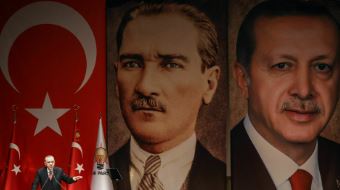
This text is a speech delivered at Istanbul University, recounting the speaker’s presentation on the relationship between Mustafa Kemal Atatürk and Pakistan. The speaker emphasizes Atatürk’s progressive reforms, highlighting his modernization of Turkey and his rejection of traditional religious authority. The speech contrasts Atatürk’s actions with those of other Muslim leaders during the Khilafat movement, arguing for Atatürk’s positive influence and importance. The speaker also discusses Allama Iqbal’s admiration for Atatürk, using Iqbal’s words to further support the speech’s central argument. Finally, the speaker concludes by advocating for continued progress toward a just and equitable society.
The Legacy of Atatürk: A Study Guide
Short Answer Quiz
- What language was the presentation at Istanbul University translated into, and why was this provision made?
- According to the speaker, how did Mustafa Kemal Atatürk change Turkish society?
- What was the speaker’s rationale for referencing the script change implemented by Atatürk?
- According to the text, how did Atatürk handle religious fanaticism?
- How did the establishment of a Muntakhab Parliament impact the authority previously held by the Caliphate?
- How did Allama Iqbal feel about the abolition of the Caliphate?
- According to the text, how did Muhammad Ali Jinnah (Bani Pakistan) view Atatürk?
- What was the speaker’s view on idolizing historical figures like Atatürk?
- According to the text, what is the main goal that should be addressed by communities beyond their own liberation?
- What does the final couplet of Iqbal signify in the context of the Turkish revolution?
Answer Key for Short Answer Quiz
- The presentation was translated into Turkish. This provision was made for those in the audience who preferred to listen to the talk in their own language.
- Atatürk took the Turkish community out of “the underworld of obsession” into “the bright light of Danish wisdom,” laying the foundation for a moderately progressive Turkey.
- The speaker references the script change implemented by Atatürk to highlight the courage and scope of his reforms, arguing that he overturned tradition and cultural norms.
- Atatürk “bottled the gin of raging religious fanaticism with his amazing wisdom,” effectively reforming religious practices through intellect and bravery.
- The establishment of the Muntakhab Parliament ended the Caliphate’s authority, transferring power to an elected body and establishing a secular system of government.
- Allama Iqbal openly supported the abolition of the Caliphate, seeing it as a move towards a more modern and unified system in which authority rested with an elected body, not an individual sect.
- Muhammad Ali Jinnah greatly admired Atatürk, watching his movement closely, and he was notably engrossed in a book about Atatürk, which suggests how significant Atatürk was for him as a leader.
- The speaker suggests that while figures like Atatürk deserve respect, no personality should be above assessment and critique, which means they should not be idolized or seen as infallible.
- The main goal that should be addressed by communities is not just their own liberation but the liberation of the entire world from oppression and injustice.
- The final couplet of Iqbal expresses happiness regarding the end of the Caliphate and the rise of the Muntakhab Parliament as a new hope for the Muslim world, emphasizing a desire for the enlightenment of Muslim communities.
Essay Questions
- Analyze the various perspectives on Atatürk presented in the text, discussing how he is portrayed as a revolutionary, reformer, and symbol of modernity.
- Compare and contrast the views of the speaker and Allama Iqbal on the role of the Caliphate in the Muslim world, and how the end of the Caliphate influenced both.
- Explore the relationship between historical figures and their impact on social change, referencing examples from the text to argue whether such figures should be revered or critically assessed.
- Discuss the significance of the script changes and other cultural reforms enacted by Atatürk as presented in the text. How do these reforms relate to the establishment of a new modern Turkish identity?
- Assess the speaker’s argument on the importance of moving beyond the liberation of one’s own community to strive for the liberation of the entire world. What is the logic of this argument, and how does it relate to the figures mentioned in the text?
Glossary of Key Terms
- Mukala: A formal article or presentation.
- Sadre Majlis: The chairperson of a meeting or gathering.
- Danishwar: A wise or learned person.
- Tehreek Khilafat: The Khilafat Movement, a political campaign in British India in the early 20th century advocating for the preservation of the Ottoman Caliphate.
- Ata Turk: Mustafa Kemal Atatürk, the founder and first president of the Republic of Turkey.
- Bani Pakistan: The founder of Pakistan, often referencing Muhammad Ali Jinnah.
- Rasmul Khat: The script or writing system of a language.
- Ajmat: Greatness or majesty.
- Muntakhab Parliament: An elected parliament or representative assembly.
- Lajko: A sense of propriety or decorum.
- Jadid Turkey: Modern Turkey.
- Jihadi: A person engaged in Jihad (holy struggle), often used in reference to religious extremists.
- Safi Imtiaz: Racial discrimination or segregation.
- Mohsin: Benefactor.
- Akwaaba: A greeting, a welcome.
- Kadimi Nizam: A traditional or old system/order.
- Ehtram and Waqar: Respect and dignity.
- Maqamas: Stations/places of power.
- Amani: The Ottoman Empire.
- Sarb Landi: The rise/advent.
Atatürk, Modern Turkey, and the Iqbal Legacy
Okay, here is a briefing document summarizing the key themes and ideas from the provided text:
Briefing Document: Analysis of “Pasted Text” on Ataturk and Modern Turkey
Introduction:
This document analyzes excerpts from a speech or article (referred to as “Pasted Text”) focusing on Mustafa Kemal Atatürk, modern Turkey, and the perspectives of figures like Allama Iqbal. The speaker, presumably Afzaal Rehan Ata Turk (a name suggesting a strong interest in the subject), presents a nuanced view of Atatürk’s reforms and their impact, drawing parallels with the challenges faced by other Muslim communities, particularly in South Asia.
Key Themes and Ideas:
- Atatürk as a Revolutionary and Modernizer:
- Transformative Leader: The central theme revolves around Atatürk as a revolutionary figure who fundamentally transformed Turkish society. He is depicted as someone who “turned mountains into mustard” and “changed the direction of stormy winds,” signifying his ability to achieve seemingly impossible feats.
- Rejection of Obsolescence: Atatürk is praised for liberating the Turkish people from the “underworld of obsession” and leading them towards “the bright light of Danish wisdom.” This highlights the speaker’s belief in Atatürk’s commitment to reason and modernity.
- Foundation of a Progressive Nation: The speaker emphasizes that Atatürk “revived the Turkish community and laid the foundation of a moderately progressive Turkey” built on a “solid foundation” that has endured for nearly a century. This highlights the enduring positive legacy attributed to Atatürk.
- Cultural Revolution: The speech lauds Atatürk’s bold decision to change the script and rituals of the Turkish community, even suggesting that others might laugh that he did not use a Hindi equivalent. It’s a recognition of his immense courage to challenge the status quo.
- Democratization: Atatürk is also lauded for establishing a “Muntakhab Parliament” and using it to build an iron fist of human courage and faith which removed the old traditions of power and racism.
- Atatürk’s Rejection of Traditional Religious Authority:
- Challenging Religious Fanaticism: Atatürk is portrayed as a reformer who “bottled the gin of raging religious fanaticism with his amazing wisdom.” This suggests his actions challenged entrenched religious authority and interpretations.
- Turkish Language in Religious Practice: The text notes Ataturk’s decision to allow religious practices in Turkish, challenging the tradition of Arabic. The speaker rhetorically asks, “why can’t this payment be done in Turkish language,” suggesting a desire for religious autonomy and cultural identity.
- The Pak-Turk Relationship and the Khilafat Movement:
- Respect for Ataturk in Pakistan: The speaker explicitly states the respect Ataturk held in the hearts of the people of Pakistan, and seeks to further discuss it.
- Critique of the Khilafat Movement: The speaker acknowledges the strong Khilafat movement in South Asia led by Mahatma Gandhi but points out the irony of its support for the restoration of the Caliphate while Turkey itself abolished it. This hints at a more progressive view of nationhood compared to religious traditionalism.
- Iqbal’s Support for the Turks: The speaker notes that Allama Iqbal, a significant leader of the Muslim community in Asia Minor, openly supported the Turkish abolition of the Khilafat, arguing that the authority for unity and law should reside with a selected parliament, not with a single figure. The text argues that Iqbal was aware of the need to move past the outdated system of the Caliphate.
- Iqbal’s Recognition of Ataturk: The text shares an anecdote about the end of Iqbal’s life, where Iqbal encouraged Muslims of Durban to pray for Ataturk, not himself, “that I have done whatever I had to do, today the Muslims need Mustafa Kamal Pasha Ata Turk and not me.”
- The Importance of a Secular and Progressive Approach:
- Secularism: The speaker uses the phrase “secular approach” and notes that Turkish people have established a “Aini Zuri and Liberal Turkey, Alhamdulillah, Modern Turkey is standing firm on its foundation.”
- Human Rights and Awareness: The text notes that, in Turkey, the “feeling of human rights has become stronger” and “the awareness of Majid is also increasing.” These statements underscore the importance of individual rights and awareness.
- Avoiding Personality Cults and Critical Thinking:
- Critique of Idolization: The speaker warns against “idolizing the personality” of Atatürk, emphasizing the need to assess viewpoints critically. This shows a nuanced perspective that values both respect and reasoned assessment.
- Democracy and Inclusion: The speaker emphasizes the importance of not only liberating their own community but the entire world, by opposing the “oppressors, weak and destitute sections of the society”.
Key Quotes:
- “The way the Turks revived the Turkish community and laid the foundation of a moderately progressive Turkey, this feat of theirs is immortal and will remain immortal forever.”
- “Seeing the struggle and achievement of Dervish Ataturk, the world is filled with astonishment as to how wonderful and brilliant he was.”
- “Today we cannot even imagine that Change the tradition and prevailing script or ritual of your community and replace it with another script or ritual… but salute to Ata Tur’s Ajmat, he really failed the bill.”
- “I have done whatever I had to do, today the Muslims need Mustafa Kamal Pasha Ata Turk and not me.”
- “No personality should be above this, but along with Ehtram and Waqar.”
- “The oppressed, weak and destitute sections of the society should be praised by them. There should not be any oppression against any person or class.”
Conclusion:
The “Pasted Text” presents a passionate and insightful analysis of Atatürk’s impact on Turkey, positioning him as a revolutionary reformer who embraced modernity, challenged religious dogma, and laid the foundation for a progressive nation. The speaker also highlights the significance of Ataturk in the eyes of Iqbal and Jinnah. The text also emphasizes the importance of critical thought, democratic values, and human rights. The author argues that Turkey should serve as a model for other Muslim communities as they move into the modern era. It is an appeal for a move away from traditional religious systems towards democratic institutions and secular governance.
Atatürk and Modern Turkey: A Q&A
FAQ on Ata Turk and Modern Turkey
- What was the significance of Mustafa Kemal Atatürk’s actions in the context of Turkish history and identity?
- Atatürk’s actions were transformative for Turkey, shifting from an Ottoman-era theocracy to a modern, secular state. He is credited with revitalizing the Turkish nation by replacing traditional systems with progressive reforms. He challenged the established order by modernizing the language, script, and cultural practices and ultimately fostering a sense of national unity based on shared Turkish identity rather than religious affiliation. He created a moderate and progressive Turkey. His focus on national identity and human rights laid the groundwork for the modern Turkish state.
- How did Atatürk’s reforms address the role of religion in Turkish society?
- Atatürk’s reforms aimed to separate religious and political spheres. He abolished the Caliphate, which had been the traditional seat of religious authority. He also shifted traditional religious practices such as the call to prayer (Azaan) and prayers (Namaz) to be said in Turkish rather than Arabic. This separation of religion from the state was a key part of his move toward a secular society. He intended for laws and governance to be decided by an elected Parliament rather than religious leaders, promoting a society where faith is a personal matter rather than a state matter.
- What was Atatürk’s view on the traditional practices and institutions in the Ottoman Empire?
- Atatürk viewed the traditional practices and institutions of the Ottoman Empire as outdated and hindering progress. He sought to dismantle structures that he saw as oppressive or limiting, such as the Caliphate, which he abolished. He also challenged traditional cultural norms, including the adoption of a new Turkish alphabet and a move away from religious rituals dictated by Arab practices. His objective was to foster a modern and progressive national identity by breaking free from the constraints of the past.
- What was the relationship between Atatürk and the Khilafat Movement?
- The Khilafat Movement, which sought to preserve the Ottoman Caliphate, initially garnered support from Muslims across South Asia. However, when the Turkish people, under Atatürk’s leadership, abolished the Caliphate in 1924, this created a split with the Khilafat Movement as many members felt the cause had been undermined. However, the text also mentions Allama Iqbal openly supported Turkey’s actions in this regard, saying that the authority for all matters related to unity and law would be with a Muntakhab Parliament. This illustrates the differing views amongst the Muslim world towards Atatürk.
- How did Atatürk’s reforms affect Turkish language and culture?
- Atatürk’s reforms significantly impacted Turkish language and culture. He replaced the Arabic script with the Latin alphabet to make reading and writing more accessible. This move, seen as revolutionary, disconnected Turkish identity from Arabic origins. Furthermore, he encouraged the use of the Turkish language in religious practices, replacing Arabic with Turkish. He pushed for a culture rooted in Turkish national identity and modernity rather than traditional religious forms.
- What was Allama Iqbal’s view of Mustafa Kemal Atatürk and his reforms?
- While Allama Iqbal was critical of some of Atatürk’s policies, the text suggests that Iqbal eventually saw the significance of Atatürk’s reforms. The text states that Iqbal told the Muslims of Darban that Muslims needed Mustafa Kamal Pasha Ata Turk and not him when he was seriously ill. The text suggests that Iqbal came to respect the Turkish people’s desire to modernize their country through an elected parliament, and that his view of Atatürk evolved from critique to respect and understanding of the need for such progressive changes.
- How did Atatürk’s leadership help strengthen the Turkish national identity?
- Atatürk’s leadership was instrumental in strengthening Turkish national identity. His efforts were based on emphasizing national pride and unity, fostering a sense of modern Turkish identity rather than religious or regional affiliations. He broke free from traditional systems and cultural practices that hindered progress, creating a unified national culture. By championing human rights, democracy, and secularism, he forged a national identity that was forward-looking and based on shared values.
- What key principles or values did Atatürk emphasize in his efforts to create a modern Turkey?
Atatürk’s efforts to create a modern Turkey were underpinned by several key values including modernization, secularism, national unity, and human rights. He sought to remove traditional institutions and norms, replace them with secular principles, and instill a sense of Turkish national identity. By emphasizing reason, progress, and inclusivity, he wanted a society based on democratic principles, moving away from religious or racial discrimination and instead valuing human dignity. He wanted a country that was forward-looking and progressive.
Atatürk’s Legacy: A South Asian Perspective
Okay, here is a timeline and cast of characters based on the provided text:
Timeline of Main Events
- Early 20th Century (Pre-1924):The Tehreek Khilafat (Khilafat Movement) emerges in South Asia, led by Mahatma Gandhi and supported by some Muslims, advocating for the restoration of the Caliphate in the Ottoman Empire.
- Mustafa Kemal Ataturk is a figure of interest and inspiration to some Muslims in South Asia, despite being isolated from the Khilafat movement.
- Ataturk leads the Turkish War of Independence, establishing the foundations of a modern Turkish state and a new secular/liberal culture.
- 1924: The Turkish government, under Ataturk, abolishes the Caliphate. This decision is met with mixed reactions in South Asia. Some see it as a break from tradition, while others see it as a step towards a more modern, democratic, and independent future.
- Allama Iqbal, a key Muslim leader in South Asia, openly supports the Turkish decision to abolish the caliphate, advocating that power should be with an elected parliament, not a single religious figure.
- The idea of a “Muntakhab Parliament” (elected Parliament) gains prominence as the new center of authority in Turkey.
- Post 1924:The abolition of the Caliphate and the rise of Modern Turkey becomes a point of discussion and debate.
- Ataturk implements various reforms, including changing the script from Arabic to Latin, modernizing the legal system, and emphasizing a secular culture.
- The reforms of Ataturk are generally lauded by the speaker at the conference, who sees them as evidence of Turkish strength and courage in the face of tradition.
- The speaker’s article on the topic has been published in multiple languages in the Istanbul University magazine.
- Despite the speaker’s pro Ataturk perspective, he notes that Ataturk’s actions are sometimes debated as ‘opinion’ and some may take issue with the rapid modernization of Turkish society
- The speaker is able to deliver their presentation at the conference with translation into Turkish by Professor Dr. Rajab.
- Muhammad Ali Jinnah (Bani Pakistan), is shown to have been inspired by Ataturk, and studied his biography (Gray Wolf) closely, even being nicknamed ‘Gray Wolf’ by his daughter.
- Dr. Javed Iqbal (son of Allama Iqbal) reports that on his deathbed, Allama Iqbal believed the Muslim world needed a leader like Mustafa Kamal Pasha Ata Turk, rather than himself.
- Conference Setting (Modern Day):The speaker delivers a presentation at a conference in Istanbul, discussing the legacy of Ataturk and its relevance to modern issues.
- The conference provides simultaneous translation via headphones.
- The speaker uses their time to discuss the Pak-Turk relationship and the historical and current importance of Ataturk’s reforms.
- The conference speaker notes that they hope a similar move toward secularism and democracy will happen in their country as has occurred in Turkey
- The speaker notes that “a civil war on every two maqamas” is an obstacle in their country’s quest toward modernization, and they note the importance of human rights, freedoms, and the removal of societal confusion.
Cast of Characters
- Afzaal Rehan Ata Turk: The author of the text, identified as “Darvesh” at one point, and the presenter at the conference. He is a scholar deeply interested in the history of modern Turkey and the legacy of Mustafa Kemal Ataturk, particularly in its influence on South Asia. He sees Ataturk as a visionary reformer and a model of courage and wisdom for the Islamic world.
- Mustafa Kemal Ataturk: The founder and first president of Turkey. He is portrayed in the text as a revolutionary leader who transformed Turkey into a modern, secular, and progressive state through his bold reforms. The speaker admires him as an innovator, a reformer, and a man of incredible courage. He is viewed as a model for secular governance.
- Allama Iqbal: A prominent poet, philosopher, and politician in British India, considered a key figure in the creation of Pakistan. While he was a supporter of the Khilafat movement, he later openly supported Ataturk’s decision to abolish the caliphate and championed the idea of an elected parliament. The text highlights his respect for Ataturk, even though they were not necessarily aligned in all areas.
- Muhammad Ali Jinnah (Bani Pakistan): The founder of Pakistan. Jinnah is presented as an admirer of Ataturk, his biography (Gray Wolf) having had a lasting influence on Jinnah, and showing his strong interest in Ataturk and his leadership.
- Dr. Javed Iqbal: The son of Allama Iqbal. The text quotes him as reporting his father’s dying words that the Muslim world needed an Ataturk, not him.
- Mahatma Gandhi: A leader of the Khilafat movement, mentioned as part of the context of the era and how it influenced the Muslims of South Asia.
- Professor Dr. Rajab: A translator who translates the speaker’s words into Turkish at the Istanbul University conference.
Let me know if you need anything else!
Atatürk’s Legacy: Modernization and Muslim Thought
Ata Turk’s legacy is multifaceted, encompassing his role in the modernization of Turkey and his influence on Muslim thought and movements in other parts of the world.
- Modernization and Reform: Ata Turk is credited with transforming Turkey into a modern, progressive nation. He achieved this by:
- Establishing a secular state. He is seen as having removed the influence of religious and racial discrimination.
- Replacing the old traditions and the prevailing script of the community. He changed the culture and structure of the country.
- Shifting authority from the Caliph to a Muntakhab Parliament. This change is seen as a move towards a more democratic system, where the authority rests with the elected representatives of the people.
- Influence on Muslim Thought: Ata Turk’s actions had a profound impact on Muslim thinkers and movements outside of Turkey.
- Support for the Abolition of the Caliphate: While the Khilafat movement in South Asia aimed to restore the Caliphate, Ata Turk abolished it in 1924. This move was supported by some Muslim leaders, like Allama Iqbal, who saw it as a step towards progress and a new unity where authority rested with an elected parliament.
- Inspiration for Change: Ata Turk’s courage in changing traditions and scripts inspired some reformers. His actions challenged the notion that religious practices and traditions must remain unchanged.
- Respect and Admiration: Ata Turk was widely admired for his leadership and achievements.
- Recognition of his brilliance: He is described as a wonderful and brilliant person who was able to achieve great things, such as turning mountains into mustard.
- Influence on Pakistani Leaders: Leaders in Pakistan, like Mr. Jinnah, admired Ata Turk and followed his work.
- Iqbal’s changed view: Although Iqbal had initially criticized Ata Turk, he later recognized the importance of Ata Turk’s work for the Muslim community, even suggesting that prayers should be directed to Ata Turk instead of himself.
- Ata Turk’s revolution is described as being built on a solid foundation. It is viewed as a revolution based on intelligence, bravery and a selected Parliament. His legacy is seen as enduring, with a progressive and modern Turkey standing firm on the foundation he laid.
The sources emphasize that Ata Turk’s legacy is not just about his personal achievements but also about the impact of his ideas and actions on the larger Muslim world.
Pakistan, Turkey, and the Legacy of Atatürk
The sources highlight the historical relationship between Pakistan and Turkey, focusing on the influence of Ata Turk’s actions on the leaders and thinkers of Pakistan.
- Respect for Ata Turk: There was a great deal of respect for Ata Turk in the hearts of the people of Pakistan. Bani Pakistan, Mr. Jinnah, admired Ata Turk and followed his work. He even read “Grey Wolf,” a book about Ata Turk, with great interest, using margins to underline key passages.
- Influence on Iqbal: Allama Iqbal, a key figure in the Pakistan movement, initially criticized Ata Turk. However, Iqbal later recognized the importance of Ata Turk’s work for the Muslim community. He went so far as to suggest that Muslims should pray for Ata Turk instead of himself. Iqbal believed that the authority for all matters should lie with a Muntakhab Parliament, not with an individual sect, supporting the changes made by Ata Turk. Iqbal also acknowledged that the new system of governance that emerged in Turkey after the end of the Caliphate was a positive step.
- The Khilafat Movement: The Muslims of South Asia launched a movement for the restoration of the Caliphate, but the Turkish community abolished it in 1924. This difference in opinion did not damage the relationship between the Muslims of Pakistan and the Turkish community. Instead, leaders like Iqbal supported the Turks’ decision, viewing it as a necessary step towards progress.
- Shared Values: The relationship between Pakistan and Turkey was strengthened by shared concerns and viewpoints. Both countries also went through periods of military rule and internal dilemmas.
- Ata Turk’s Reforms as a Model: The way in which the Turks revived their community and laid the foundation of a moderately progressive Turkey is seen as an immortal feat. The establishment of a Muntakhab Parliament and the end of the Caliphate are viewed as crucial steps towards a more democratic and progressive society. It is suggested that other Muslim communities should learn from this example.
- Modern Turkey’s Stability: The sources emphasize that modern Turkey is standing firm on the foundation laid by Ata Turk, and that the feeling of human rights has become stronger, and awareness of Majid is also increasing.
The sources suggest that the relationship between Pakistan and Turkey was not just a political alliance but was also rooted in shared intellectual and reformist ideals. Ata Turk’s reforms served as an inspiration for leaders and thinkers in Pakistan who sought to modernize their own society.
Atatürk’s Revolution: Modernizing Turkey
The Turkish revolution, led by Ata Turk, is portrayed as a transformative period that established a modern and progressive Turkey by fundamentally changing its political, social, and cultural landscape.
- Foundation of Modern Turkey: The revolution is seen as having laid the foundation for a moderately progressive Turkey. The revolution was built on “intelligence, bravery, and a selected Parliament,”, and it is described as having been built on a solid foundation that has endured for a century.
- Rejection of Old Traditions and Religious Fanaticism: Ata Turk is credited with taking the Turkish community out of “the underworld of obsession” and into “the bright light of Danish wisdom”. He is praised for his ability to control religious fanaticism and for changing the traditions, prevailing scripts, and rituals of the community. He is described as a reformer who “destroyed the foundations of tradition”.
- Establishment of a Secular State: The revolution is credited with removing religious and racial discrimination and establishing a secular state. The sources claim that the revolution overturned the old tradition of power and stopped the coin of power, establishing human rights and freedoms.
- Shift in Authority: A key aspect of the revolution was the shift in authority from the Caliph to a Muntakhab Parliament. This is seen as a move towards a more democratic system, where power rests with the elected representatives of the people. The sources mention that the authority of the Khalifa-ul-Muslimeen was replaced by the authority of the Muntakhab Parliament.
- Cultural and Scriptural Changes: The revolution involved changing the entire culture and structure of the country, including the script of the language [2]. It is noted that Ata Turk changed the prevailing script [2], which was previously Arabic, and reformed the culture [2].
- Inspiration for Other Muslim Communities: The revolution served as an example for other Muslim communities [3, 5]. Leaders like Allama Iqbal supported the changes made by Ata Turk, viewing them as necessary for progress [3]. The sources highlight that the new system of governance that emerged in Turkey after the end of the Caliphate was a positive step [3].
- Enduring Legacy: The sources emphasize that the revolution’s legacy is enduring, with modern Turkey standing firm on the foundation laid by Ata Turk [1, 3]. The reforms initiated by Ata Turk are seen as having had a lasting impact on the country [1].
The Turkish Revolution, according to the sources, was a comprehensive transformation that modernized the country, established a secular government, and served as an example for other Muslim communities to pursue reform and progress [1, 3, 5].
The Khilafat Movement and Atatürk’s Revolution
The Khilafat movement is discussed in the sources in the context of its relationship to Ata Turk and the Turkish Revolution, particularly in regard to the movement’s goals versus the actions taken by the Turkish people and government.
- The Khilafat Movement’s Goal: The Muslims of South Asia launched a strong movement in the name of Mahatma Gandhi for the restoration of the Caliphate [1, 2]. This movement aimed to support the Ottoman Caliphate and its authority [3].
- Ata Turk’s Actions: In 1924, the Turkish community itself abolished the Caliphate, adopting “the new mirror of the times and the demands of the people” [2]. This action is in direct opposition to the goals of the Khilafat movement [1, 2].
- Support for the Abolition: Despite the Khilafat movement’s goals, some Muslim leaders, like Allama Iqbal, supported the Turks in abolishing the Caliphate [2]. Iqbal believed that the authority for all matters related to unity and law should not rest with any individual sect but with a Muntakhab Parliament [2]. He also said that the new system of governance that emerged in Turkey after the end of the Caliphate was a positive step [3].
- Impact on Pak-Turk Relations: The sources suggest that this difference in opinion did not damage the relationship between the Muslims of Pakistan and the Turkish community. Instead, leaders like Iqbal supported the Turks’ decision, viewing it as a necessary step towards progress [2, 3].
- Ata Turk’s Influence: The sources emphasize that Ata Turk’s actions and the Turkish revolution had a profound impact on Muslim thinkers and movements outside of Turkey, influencing how they thought about political and religious authority [1, 2]. He was seen as a reformer who had the courage to change the traditions and prevailing scripts of his community [4].
- Iqbal’s Recognition of Ata Turk’s Importance: Although Iqbal had initially criticized Ata Turk, he later recognized the importance of Ata Turk’s work for the Muslim community, even suggesting that prayers should be directed to Ata Turk instead of himself [5].
- Lessons from the Turkish Example: The sources suggest that other Muslim communities should learn from the example of the Turkish revolution, which replaced the authority of the Caliph with a Muntakhab Parliament [2, 5]. This is seen as a move toward a more democratic and progressive system [1, 2].
In summary, the Khilafat movement sought to restore the Caliphate, but the Turkish community’s decision to abolish it, led by Ata Turk, was supported by some Muslim leaders who viewed it as a step towards a more modern and progressive society. This divergence did not hinder the relationship between Pakistan and Turkey.
Ata Turk’s Turkey: Revolution and Legacy
Modern Turkey, according to the sources, is a nation that has been fundamentally shaped by the reforms and revolution led by Ata Turk.
- Foundation of Modern Turkey: The sources emphasize that modern Turkey is standing firm on the foundation laid by Ata Turk [1, 2]. The Turkish revolution is seen as having laid the foundation for a moderately progressive Turkey [1]. This revolution is characterized as being built on “intelligence, bravery, and a selected Parliament” [3].
- Secular State: The establishment of a secular state is a key feature of modern Turkey [1]. The sources claim that the revolution removed religious, racial, and gender discrimination and that human rights and freedoms prevail [2, 3].
- Shift in Authority: A crucial change brought about by the revolution was the shift in authority from the Caliph to a Muntakhab Parliament [1, 3]. This move is seen as a step towards a more democratic system where power resides with the elected representatives of the people [2]. The authority of the Khalifa-ul-Muslimeen was replaced by the authority of the Muntakhab Parliament [2].
- Cultural and Social Transformation: Ata Turk is praised for his ability to control religious fanaticism and for changing the traditions, prevailing scripts, and rituals of the community. He is seen as a reformer who “destroyed the foundations of tradition” [3]. The sources note that Ata Turk changed the prevailing script, which was previously Arabic, and reformed the culture [3].
- Enduring Legacy: The sources emphasize the enduring nature of Ata Turk’s legacy, with modern Turkey standing firm on the foundation he laid [1, 2]. The reforms initiated by Ata Turk are seen as having had a lasting impact on the country [2].
- Progress and Awareness: Modern Turkey is characterized by increased progress, a stronger feeling of human rights, and a growing awareness of Majid [2]. It is a country that is moving forward on new paths of progress [2].
- Influence on Others: The Turkish revolution and its results have served as an example for other Muslim communities to pursue reform and progress [2, 4]. The sources suggest that other Muslim communities should learn from this example [2].
- Relationship with Pakistan: The sources note that there was a strong relationship between Pakistan and Turkey based on shared values and viewpoints [1, 2, 4]. Leaders and thinkers in Pakistan admired Ata Turk and his work, and were inspired by the changes that took place in Turkey [1, 4].
In summary, the sources depict modern Turkey as a progressive and secular nation that has undergone a significant transformation due to the reforms and revolution led by Ata Turk. The country’s democratic structure, emphasis on human rights, and progress are highlighted as key features of its modern identity. The legacy of Ata Turk and the Turkish Revolution continues to influence the country’s development and its role in the broader Muslim world [1, 2].

By Amjad Izhar
Contact: amjad.izhar@gmail.com
https://amjadizhar.blog
Affiliate Disclosure: This blog may contain affiliate links, which means I may earn a small commission if you click on the link and make a purchase. This comes at no additional cost to you. I only recommend products or services that I believe will add value to my readers. Your support helps keep this blog running and allows me to continue providing you with quality content. Thank you for your support!
