Author: Amjad Izhar

  • منو بھائی کی ادبی اور صحافتی جدوجہد(انجم اظہار کی فرمائش پر)

    منو بھائی کی ادبی اور صحافتی جدوجہد(انجم اظہار کی فرمائش پر)

    (انجم اظہار کی فرمائش پر)

    1-
    SOJOS Oversized Round Sunglasses for Women and Men

    منو بھائی

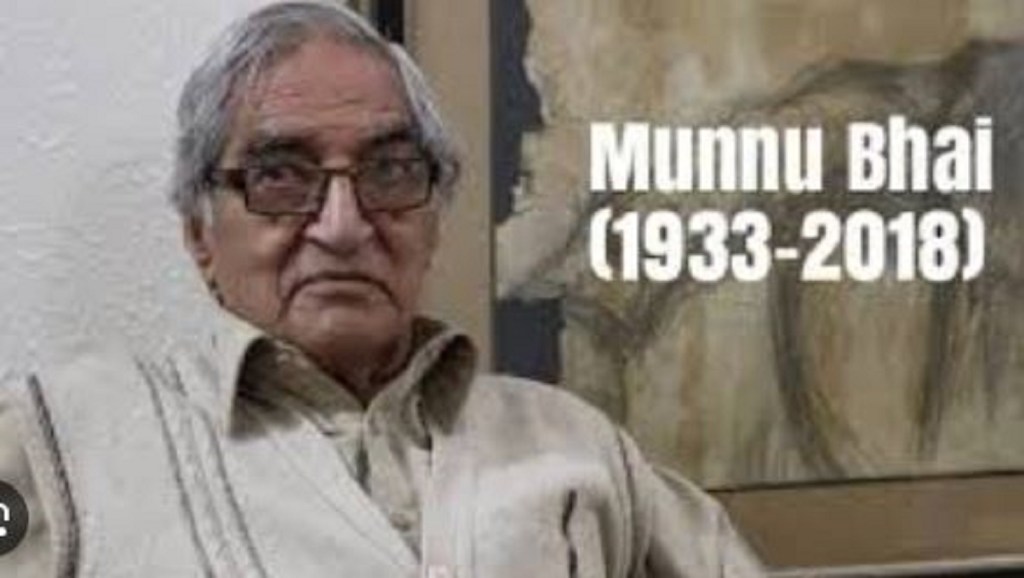
    منو بھائی (اصل نام منیر احمد قریشی) پاکستانی ادب، صحافت اور ڈرامہ نگاری کے معتبر ناموں میں سے ایک تھے۔ وہ 1933 میں وزیر آباد، پنجاب میں پیدا ہوئے اور 2018 میں لاہور میں وفات پا گئے۔ منو بھائی کی شخصیت اور تخلیقی کارنامے پاکستانی ثقافت پر گہرے اثرات چھوڑ گئے ہیں۔

    2-
    Amazon Essentials Women’s Tech Stretch Short-Sleeve V-Neck T-Shirt (Available in Plus Size), Pack of 2

    ابتدائی زندگی

    منو بھائی نے اپنی ابتدائی تعلیم وزیر آباد میں حاصل کی اور پھر لاہور کا رخ کیا جہاں انہوں نے صحافت کا آغاز کیا۔ ان کا ابتدائی دور صحافت سے جڑا ہوا تھا، لیکن ان کی تخلیقی صلاحیتیں جلد ہی سامنے آئیں جب انہوں نے لکھنے کا آغاز کیا۔ ان کے کالم اور تحریریں معاشرتی مسائل اور انصاف کے حوالے سے بے حد گہری تھیں۔

    3-
    LilyAna Naturals Retinol Cream – Made in USA, Anti Aging Moisturizer for Face and Neck,Wrinkle, Retinol Complex – 1.7oz

    صحافت میں کارنامے

    منو بھائی نے صحافت کے میدان میں کئی دہائیوں تک کام کیا۔ ان کا قلم بے باک تھا اور ان کی تحریریں عوامی مسائل، غربت، اور معاشرتی ناانصافیوں کے حوالے سے تھیں۔ ان کے کالم “گریبان” نے خاصی مقبولیت حاصل کی۔ ان کے کالموں میں طنز و مزاح کا ایک مخصوص انداز تھا جسے عوام میں بے حد پذیرائی ملی۔

    4-
    Famiworths Iced Coffee Maker, Hot and Cold Coffee Maker Single Serve for K Cup and Ground, with Descaling Reminder and Self Cleaning, Iced Coffee Machine for Home, Office and RV

    ڈرامہ نگاری

    منو بھائی نے ڈرامہ نگاری کے میدان میں بھی شاندار کارنامے سرانجام دیے۔ ان کے ڈرامے “سونا چاندی” جو کہ پی ٹی وی پر نشر ہوا، عوام میں بے حد مقبول ہوا۔ یہ ڈرامہ پاکستانی معاشرے کی روزمرہ زندگی کی عکاسی کرتا ہے اور اس میں ہلکے پھلکے طنز و مزاح کے ساتھ اہم معاشرتی مسائل کو اجاگر کیا گیا ہے۔ ان کے دیگر مشہور ڈراموں میں “آشیانہ”، “دشت”، اور “گمشدہ” شامل ہیں۔

    5-
    SOJOS Vintage Oversized Square Sunglasses for Women,Retro Womens Luxury Big Sun Glasses UV400 Protection SJ2194

    ادب میں خدمات

    اردو ادب کے حوالے سے بھی منو بھائی کا مقام بلند ہے۔ ان کی شاعری، افسانے، اور ڈرامے عوام کے دلوں میں گھر کر چکے ہیں۔ ان کی تحریروں میں ہمیشہ انسانیت، محبت اور انصاف کا پیغام رہا ہے۔ ان کی زبان سادہ اور عوامی تھی جس کی وجہ سے ان کی تحریریں ہر طبقے میں مقبول ہوئیں۔

    6-
    BISSELL Little Green Multi-Purpose Portable Carpet and Upholstery Cleaner, Car and Auto Detailer, with Exclusive Specialty Tools, Green, 1400B

    انسان دوستی اور سماجی خدمات

    منو بھائی نہ صرف ادیب اور صحافی تھے بلکہ ایک انسان دوست شخصیت بھی تھے۔ انہوں نے شوکت خانم میموریل ہسپتال کے قیام میں اہم کردار ادا کیا اور اس کے علاوہ کئی فلاحی منصوبوں میں بھی حصہ لیا۔ ان کی انسان دوستی کی بنا پر وہ عوام میں بے حد مقبول تھے۔

    7-
    EF ECOFLOW Portable Power Station DELTA 2, 1024Wh LiFePO4 (LFP) Battery, Fast Charging, Solar Generator(Solar Panel Optional) for Home Backup Power, Camping & RVs

    وفات

    منو بھائی کا انتقال 2018 میں ہوا، اور ان کی وفات سے ادب، صحافت اور فن کے میدان میں ایک خلا پیدا ہوا جو شاید کبھی پر نہ ہو سکے۔

    منو بھائی کی زندگی اور ان کے تخلیقی کارنامے ایک روشن مثال ہیں۔ انہوں نے اپنی تحریروں کے ذریعے نہ صرف معاشرتی مسائل کو اجاگر کیا بلکہ لوگوں کو سوچنے پر مجبور کیا کہ وہ کس طرح ایک بہتر معاشرہ تشکیل دے سکتے ہیں۔

    8-
    BAGAIL 4 Set/6 Set Compression Packing Cubes Travel Accessories Expandable Packing Organizers

    منو بھائی کی صحافتی خدمات

    منو بھائی نے صحافت میں ایک نمایاں مقام حاصل کیا اور ان کی تحریریں پاکستانی صحافت کے اہم ستونوں میں شمار کی جاتی ہیں۔ وہ اپنی بیباک تحریروں اور سچ بولنے کی جرات کے لئے مشہور تھے۔ ان کے کالم “گریبان” نے نہ صرف عام لوگوں کو اپنی طرف متوجہ کیا بلکہ حکومتی اور سیاسی حلقوں میں بھی ان کی تحریریں پڑھی جاتی تھیں۔

    9-
    Full Size Mattress, 12 Inch Memory Foam Mattress, Hybrid Mattress in a Box with Independent Spring, Soft and Comfortable Medium Firm Mattress, Pressure Relief, CertiPUR-US Certified

    ان کے کالموں کا مرکزی موضوع معاشرتی ناانصافی، غربت، اور جمہوریت کی کمزوری رہا ہے۔ انہوں نے ہمیشہ مظلوموں اور غریبوں کی آواز اٹھائی، ان کے حقوق کے لیے جدوجہد کی اور حکومتوں کی ناقص پالیسیوں پر کڑی تنقید کی۔ ان کا انداز تحریر طنز و مزاح پر مبنی تھا لیکن اس میں تلخی اور حقیقت پسندی بھی جھلکتی تھی۔

    10-
    Acer Nitro V Gaming Laptop | Intel Core i5-13420H Processor | NVIDIA GeForce RTX 4050 Laptop GPU | 15.6″ FHD IPS 144Hz Display | 8GB DDR5 | 512GB Gen 4 SSD | WiFi 6 | Backlit KB | ANV15-51-51H9

    منو بھائی کی تحریریں اس بات کا عملی ثبوت ہیں کہ وہ نہ صرف ایک صحافی تھے بلکہ وہ ایک سچائی کے علمبردار بھی تھے، جو کہ عوامی مسائل پر کھل کر بات کرنے سے نہیں گھبراتے تھے۔ ان کی بے باک تحریریں اور عوامی زبان میں مسائل کا ذکر کرنے کا انداز انہیں پاکستانی صحافت کے بڑے ناموں میں شامل کرتا ہے۔

    11-
    BlueWood Pikler Triangle Set 7in1 Foldable Baby Climbing Toys Wooden Montessori Climbing Set with Arch&Ramp&Ladder Baby Climber Indoor Jungle Gyms for Toddlers Montessori Toys – Rainbow

    منو بھائی کا ادبی سفر

    منو بھائی کی ادبی خدمات کا دائرہ صرف صحافت تک محدود نہیں تھا، بلکہ وہ ایک بہترین ادیب بھی تھے۔ انہوں نے اردو ادب کی مختلف اصناف میں لکھا، لیکن ان کی پہچان ان کے ڈرامے بنے۔ ان کی تحریروں میں ہمیشہ انسانی جذبات، معاشرتی مسائل اور انسانیت کا پیغام واضح رہا۔

    12-
    LEVOIT Air Purifiers for Home Large Room Up to 1800 Ft² in 1 Hr with Washable Filters, Air Quality Monitor, Smart WiFi, HEPA Sleep Mode for Allergies, Pet Hair, Pollen in Bedroom, Vital 200S-P, White

    ان کی شاعری میں بھی وہی سادگی اور حقیقت پسندی ملتی ہے جو ان کی دیگر تحریروں میں ہے۔ ان کی شاعری عوامی زبان میں ہے، جس میں محبت، انصاف اور معاشرتی مسائل کا ذکر ملتا ہے۔ ان کے افسانے اور ڈرامے پاکستانی معاشرت کی حقیقی عکاسی کرتے ہیں۔

    13-
    Jackery Solar Generator 1000 v2 with 200W Solar Panel(2024 New),1070Wh Portable Power Station LiFePO4 Battery,1500W AC/100W USB-C Output,1Hr Fast Charge for Outdoor,Off-Grid Living,RV,Emergency

    ڈرامہ نگاری میں منو بھائی کی خدمات

    منو بھائی نے پاکستانی ڈرامہ انڈسٹری میں نئے رجحانات متعارف کرائے اور ان کے لکھے ہوئے ڈرامے آج بھی یاد کیے جاتے ہیں۔ ان کا مشہور ڈرامہ “سونا چاندی” ایک کلاسک ہے جو آج بھی اپنی مقبولیت برقرار رکھے ہوئے ہے۔ یہ ڈرامہ ایک دیہاتی جوڑے کی کہانی ہے جو روزمرہ کے مسائل سے نبرد آزما ہوتے ہیں، لیکن ان کے درمیان مزاح کا پہلو بھی نمایاں ہوتا ہے۔

    14-
    TP-Link Deco AX3000 WiFi 6 Mesh System(Deco X55) – Covers up to 6500 Sq.Ft. , Replaces Wireless Router and Extender, 3 Gigabit ports per unit, supports Ethernet Backhaul (3-pack)

    سونا چاندی

    سونا چاندی نے منو بھائی کو عوام میں بے پناہ شہرت دی، اور اس کی کہانی، کردار اور مکالمے آج بھی لوگوں کے ذہنوں میں محفوظ ہیں۔ اس ڈرامے کے علاوہ، ان کے دیگر اہم ڈرامے “آشیانہ”، “دشت”، اور “گمشدہ” بھی پاکستانی ڈرامہ انڈسٹری کے اہم سنگ میل ہیں۔

    15-
    Energizer AA Batteries, Alkaline Power Double A Battery Alkaline, 32 Count

    منو بھائی کے ڈراموں کی خصوصیت یہ تھی کہ وہ معاشرتی مسائل کو انتہائی آسان اور دلچسپ انداز میں پیش کرتے تھے۔ ان کے کردار عام لوگوں کی زندگیوں کی نمائندگی کرتے تھے، اور ان کے مکالمے حقیقی زندگی سے قریب تر ہوتے تھے۔

    16-
    HelloBaby Upgrade Baby Monitor, 5”Sreen with 30-Hour Battery, Pan-Tilt-Zoom Video Baby Monitor with Camera and Audio, Night Vision, VOX, 2-Way Talk, 8 Lullabies and 1000ft Range No WiFi

    منو بھائی کی انسان دوستی اور سماجی کردار

    منو بھائی کی زندگی کا ایک اہم پہلو ان کی انسان دوستی اور فلاحی کاموں سے جڑا ہوا ہے۔ وہ ہمیشہ عوامی مسائل اور غربت کے خلاف آواز اٹھاتے رہے، اور اپنی عملی زندگی میں بھی ان کے لیے کام کیا۔

    17-
    Sceptre Curved 24.5-inch Gaming Monitor up to 240Hz 1080p R1500 1ms DisplayPort x2 HDMI x2 Blue Light Shift Build-in Speakers, Machine Black 2023 (C255B-FWT240)

    شوکت خانم میموریل ہسپتال کے قیام میں کردار

    انہوں نے شوکت خانم میموریل ہسپتال کے قیام میں ایک اہم کردار ادا کیا، جو آج پاکستان کے بڑے فلاحی اداروں میں شمار ہوتا ہے۔ انہوں نے اس ہسپتال کے لیے چندہ اکٹھا کرنے میں بھرپور حصہ لیا اور لوگوں کو اس نیک مقصد میں حصہ ڈالنے کی ترغیب دی۔

    منو بھائی کے نزدیک انسانیت کی خدمت ایک بڑا مقصد تھا، اور انہوں نے اپنی زندگی کے آخری دنوں تک فلاحی کاموں میں حصہ لیا۔

    18-
    Wall Charger, Surge Protector, QINLIANF 5 Outlet Extender with 4 USB Charging Ports (4.8A Total) 3-Sided 1680J Power Strip Multi Plug Adapter Spaced for Home Travel Office (3U1C)

    منو بھائی کی وفات

    منو بھائی کا انتقال 19 جنوری 2018 کو لاہور میں ہوا۔ ان کی وفات پر ادب، صحافت اور ڈرامہ نگاری کے میدان میں ایک ناقابل تلافی خلا پیدا ہوا۔ ان کی موت پر پاکستان بھر میں غم کی لہر دوڑ گئی اور ہر طبقہ فکر کے لوگ ان کی خدمات کو سراہتے ہوئے نظر آئے۔

    19-
    REALINN Under Sink Organizer and Storage, 2 Pack Pull Out Cabinet Organizer Slide Out Sink Shelf Cabinet Storage Shelves, Under Sink Storage for Kitchen Bathroom Cabinet

    منو بھائی کی میراث

    منو بھائی کی تحریریں اور ڈرامے آج بھی زندہ ہیں اور ان کی یادیں عوام کے دلوں میں بس چکی ہیں۔ ان کی انسان دوستی، سماجی خدمات، اور بے باک تحریریں آنے والی نسلوں کے لیے ایک مثال ہیں۔ ان کا پیغام آج بھی لوگوں کو انصاف، محبت اور انسانیت کی طرف بلاتا ہے۔

    20-
    Gold Filigree Earrings for Women | Barzel 18K Gold Plated Link Mesh Braided Filigree Hoop Earrings (Gold)

    منو بھائی کی زندگی اور ان کا ادبی سفر اس بات کا ثبوت ہے کہ ایک فرد کس طرح اپنے قلم کے ذریعے معاشرے میں مثبت تبدیلی لا سکتا ہے۔ ان کی تحریروں میں ہمیشہ سچائی اور انصاف کی بات ہوتی تھی، اور وہ معاشرتی مسائل کو عام لوگوں کی زبان میں بیان کرنے کا ہنر رکھتے تھے۔

    21-
    Gold Love Knot Earrings for Women & Girls | Barzel 18K Gold Plated Woven Love Knot Stud Earrings 10mm For Women – Made In Brazil

    منو بھائی جیسے ادیب صدیوں میں پیدا ہوتے ہیں، اور ان کی خدمات ہمیشہ یاد رکھی جائیں گی۔

    22-
    Barzel 18K Gold Plated Caged Pearl Stud Earrings, 4MM – Made In Brazil

    منو بھائی کی خانگی زندگی

    منو بھائی کا تعلق ایک متوسط طبقے کے خاندان سے تھا۔ ان کی ذاتی زندگی زیادہ تر نجی رہی اور انہوں نے اپنی شہرت کو ہمیشہ اپنے تخلیقی کاموں تک محدود رکھا۔ ان کی شادی شدہ زندگی بھی اس سلسلے میں زیادہ موضوع بحث نہیں رہی، لیکن ان کی اہلیہ اور بچوں کا ذکر ان کی زندگی میں اہم کردار ادا کرتا ہے۔

    23-
    DEARMAY Gold Bracelets for Women, 14K Real Gold Jewelry Sets for Women Cute Tennis Beaded Bracelets for Women Cuban Link Paperclip Chain Dainty Bracelet Pack Gifts for Women

    خاندان اور ذاتی زندگی

    منو بھائی کی اہلیہ اور بچے ان کے زندگی کے اہم حصہ تھے، تاہم انہوں نے ہمیشہ اپنی نجی زندگی کو میڈیا کی چمک دمک سے دور رکھا۔ ان کی اہلیہ اور بچوں نے ان کی زندگی میں سکون اور تعاون کا اہم کردار ادا کیا۔ منو بھائی اپنی تحریروں اور سماجی کاموں میں مصروف رہنے کے باوجود ہمیشہ اپنی فیملی کے ساتھ گہرے تعلقات رکھتے تھے۔

    24-
    DEARMAY Gold Bracelets for Women Waterproof, 14K Real Gold Jewelry Sets for Women Trendy Thin Dainty Stackable Cuban Link Paperclip Chain Bracelet Pack Fashion Accessories Gifts for Womens

    بچوں کا ادبی یا میڈیا کی دنیا میں کردار

    منو بھائی کے بچے عام طور پر میڈیا یا ادبی دنیا میں زیادہ نمایاں نہیں رہے۔ انہوں نے اپنی زندگیوں میں والد کی طرح شہرت کی تلاش نہیں کی اور اپنی پیشہ ورانہ زندگیاں اختیار کیں۔ اس حوالے سے یہ کہا جا سکتا ہے کہ منو بھائی کا ادبی اور سماجی ورثہ ان کی تحریروں اور کاموں میں زندہ ہے، تاہم ان کے بچے عمومی طور پر اس میدان میں فعال نہیں ہوئے۔

    25-
    adoyi Gold Bracelets for Women, 14K Gold Plated Beaded Bracelets Gold Stretch Bead Ball Bracelet stack Set Adjustable Gold Jewelry for Women

    اگرچہ ان کے بچوں نے براہ راست میڈیا یا ادبی میدان میں قدم نہیں رکھا، مگر ان کے والد کی حیثیت سے ان پر منو بھائی کا اثر گہرائی سے محسوس کیا جا سکتا ہے، جو یقیناً زندگی بھر ان کی راہنمائی کرتا رہا ہو گا۔

    26-
    LOUISA SECRET Infinity Heart Birthstone Necklaces for Women, 18k Gold Plated 925 Sterling Silver Forever Love Pendant Jewelry for Her, Ideal Gift for Wife, Girlfriend, Mom on Birthday, Anniversary, Valentine’s Day

    سیاسی وابستگی

    منو بھائی نے اپنی زندگی میں براہ راست سیاسی کردار ادا نہیں کیا، یعنی وہ کسی سیاسی جماعت سے منسلک نہیں ہوئے اور نہ ہی الیکشن میں حصہ لیا۔ تاہم، وہ اپنی تحریروں اور کالموں کے ذریعے سیاسی مسائل پر کھل کر بات کرتے تھے اور معاشرتی ناانصافیوں کے خلاف آواز اٹھاتے تھے۔ ان کے کالموں میں اکثر سیاسی نظام، حکومتی پالیسیوں، اور عوامی مسائل کے حوالے سے تنقید ملتی ہے۔

    27-
    DEARMAY Gold Bracelets for Women, 14K Real Gold Jewelry Sets for Women Cute Tennis Beaded Bracelets for Women Cuban Link Paperclip Chain Dainty Bracelet Pack Gifts for Women

    سیاسی شعور اور نظریات

    منو بھائی کا سیاسی شعور گہرا اور عوام دوست تھا۔ وہ ہمیشہ عوام کے حقوق اور انصاف کے علمبردار رہے۔ ان کی تحریریں اکثر غریبوں اور محروم طبقوں کے مسائل پر مرکوز ہوتی تھیں، اور وہ حکومتی نااہلی اور استحصالی نظام پر تنقید کرنے سے کبھی نہیں گھبراتے تھے۔ ان کی تحریروں میں سچائی، انصاف، اور عوامی بہبود کا پیغام واضح تھا۔

    28-
    PAVOI 14K Gold Plated Cubic Zirconia Cross Necklace for Women | Cross Faith Pendant Necklaces

    سماجی خدمات

    منو بھائی نے زیادہ تر اپنی زندگی سماجی خدمات اور انسانیت کی فلاح میں گزار دی۔ ان کی سرگرمیاں شوکت خانم میموریل ہسپتال کے ساتھ جڑی رہیں، جہاں انہوں نے ہسپتال کے قیام اور اس کے فروغ کے لئے بھرپور کام کیا۔ اس کے علاوہ وہ مختلف سماجی فلاحی منصوبوں میں شامل رہے۔

    29-
    PAVOI 14K Gold Plated Dainty Layering Necklaces for Women | Snake Chain, Curb Link, Paperclip Layered Chains | Trendy Layering Necklace

    ان کی انسان دوستی اور عوامی مسائل سے محبت نے انہیں ایک ایسی شخصیت میں تبدیل کیا جو سیاسی وابستگیوں کے بغیر بھی عوام کے لیے اہم تھی۔ وہ سیاست میں عملی کردار ادا کیے بغیر ہی اپنی تحریروں اور فلاحی کاموں کے ذریعے عوامی دلوں میں جگہ بنانے میں کامیاب ہوئے۔

    30-
    PAVOI 14K Gold Plated Croissant Dome Ring | Twisted Braided Gold Plated Ring | Chunky Signet Ring for Women

    اس طرح، منو بھائی نے اپنے قلم کے ذریعے سیاسی اور سماجی شعور بیدار کیا، لیکن انہوں نے کبھی باقاعدہ سیاست کا حصہ بننے کی کوشش نہیں کی۔

    31-
    LOUISA SECRET Infinity Heart Birthstone Necklaces for Women, 18k Gold Plated 925 Sterling Silver Forever Love Pendant Jewelry for Her, Ideal Gift for Wife, Girlfriend, Mom on Birthday, Anniversary, Valentine’s Day

    منو بھائی کے ہم عصر ادیب، شاعر اور ڈرامہ نگار

    منو بھائی کے ہم عصر ادیب، شاعر، اور ڈرامہ نگار وہ شخصیات تھیں جو اردو ادب، صحافت، اور ڈرامہ نگاری میں نمایاں مقام رکھتی تھیں۔ ان کی تخلیقی زندگی میں ان کے ساتھ ساتھ دیگر بہت سی شخصیات بھی اپنے اپنے شعبوں میں نمایاں رہیں۔ چند اہم ہم عصر شخصیات درج ذیل ہیں:

    32-
    S925 Sterling Silver Necklace for Women, Wife Jewelry Rose Gold, Mom Birthday Valentines Mothers Day Gifts, Girlfriend Necklaces, Daughter Heart Jewel, Anniversary for Her

    احمد ندیم قاسمی

    احمد ندیم قاسمی اردو کے مشہور ادیب، شاعر، اور افسانہ نگار تھے۔ انہوں نے بھی منو بھائی کی طرح معاشرتی مسائل پر لکھا اور اردو ادب میں نمایاں خدمات انجام دیں۔ قاسمی صاحب کی شاعری اور افسانوں میں عوامی مسائل، انسانی جذبات، اور زندگی کی سچائیوں کا ذکر ہوتا تھا۔ وہ بھی منو بھائی کی طرح صحافت سے وابستہ رہے۔

    33-
    Heart Pendant Necklace Gifts for Wife, Engraved ‘I LOVE YOU’ Gift for Wife Girlfriend, 1-3 carat Moissanite D Color (VVS1) , Anniversary Eternity Jewelry Present for Wife, Birthday Gifts for Women Wife Girlfriend Girls Her

    ممتاز مفتی

    ممتاز مفتی ایک اور اہم ادبی شخصیت تھے جو منو بھائی کے دور کے ہم عصر تھے۔ انہوں نے اپنی تحریروں میں انسانی نفسیات اور جذبات کو بیان کیا۔ ان کا انداز لکھنے کا منفرد تھا اور وہ ادب کے فلسفیانہ اور صوفیانہ پہلوؤں پر زور دیتے تھے۔

    34-
    18K Rose Gold Necklaces for Women Birthday Gifts for Women Jewelry for Women Birthday Gifts for Wife Girlfriend Daughter Wife Birthday Gifts for Anniversary Mothers Day Christmas Valentines Gifts

    اشفاق احمد

    اشفاق احمد اردو ادب کے ایک اور نمایاں نام تھے۔ وہ کہانی نویس، افسانہ نگار، اور ڈرامہ نگار تھے۔ ان کے مشہور ڈرامے “اچھے بندے” اور “توتا کہانی” سمیت دیگر تحریریں عوام میں بے حد مقبول تھیں۔ اشفاق احمد بھی منو بھائی کی طرح انسانی رویوں اور سماجی مسائل پر اپنی تحریروں کے ذریعے گہرا اثر ڈالنے والی شخصیت تھے۔

    35-
    IFKM 36 PCS Gold Plated Jewelry Set with 4 PCS Necklace, 11 PCS Bracelet, 7 PCS Ear Cuffs Earring, 14 Pcs Knuckle Rings for Women Girls Valentine Anniversary Birthday Friendship Gift

    بانو قدسیہ

    بانو قدسیہ اردو کی معروف ناول نگار اور افسانہ نویس تھیں۔ ان کا ناول “راجہ گدھ” اردو ادب کا کلاسک شمار ہوتا ہے۔ بانو قدسیہ نے اردو افسانہ اور ناول میں ایک منفرد انداز متعارف کرایا اور اپنی تحریروں میں انسانی جذبات، اخلاقی سوالات، اور صوفیانہ فلسفے کو پیش کیا۔

    1-
    Hisense 58-Inch Class U6HF Series ULED 4K UHD Smart Fire TV (58U6HF) – QLED, 600-Nit Dolby Vision, HDR 10 plus, 240 Motion Rate, Voice Remote, Compatible with Alexa, Black

    فیض احمد فیض

    فیض احمد فیض اردو کے مشہور شاعر، نغمہ نگار، اور انقلابی شخصیت تھے۔ فیض کی شاعری میں سماجی انصاف، انقلاب، اور محبت کا پیغام ملتا ہے۔ وہ اپنے وقت کے نمایاں ترین شاعروں میں سے ایک تھے اور ان کی شاعری نے سیاسی اور سماجی تحریکوں کو متاثر کیا۔

    2-
    iRobot Roomba Combo j5 Robot – 2-in-1 Vacuum with Optional Mopping, Identifies & Avoids Obstacles Like Pet Waste & Cords, Clean by Room with Smart Mapping, Works with Alexa, Ideal for Pet Hair

    انتظار حسین

    انتظار حسین اردو کے ممتاز افسانہ نگار اور ناول نگار تھے۔ ان کے افسانے اور ناول عمومی طور پر ہجرت، ماضی کی یادوں، اور زوال کے موضوعات پر مبنی ہوتے تھے۔ انتظار حسین کی تحریریں اپنے دور کے اہم مسائل کو بیان کرنے کا ایک منفرد انداز رکھتی تھیں۔

    3-
    Amazon Fire TV Stick 4K Max streaming device, supports Wi-Fi 6E, free & live TV without cable or satellite

    انور مقصود

    انور مقصود طنز و مزاح کے حوالے سے منو بھائی کے ہم عصر تھے۔ ان کی تحریریں طنز و مزاح پر مبنی تھیں اور پاکستانی سیاست، معاشرت، اور ثقافت کے مختلف پہلوؤں پر ہلکے پھلکے انداز میں تنقید کرتی تھیں۔ انور مقصود کے ڈرامے اور اسکرپٹس بھی عوام میں بے حد مقبول رہے۔

    4-
    Ring Video Doorbell, Venetian Bronze Bundle with Ring Stick Up Cam Battery, White

    پروین شاکر

    پروین شاکر اردو کی مشہور شاعرہ تھیں اور ان کی شاعری میں محبت، عورتوں کے حقوق، اور جذبات کی گہرائی کا بیان ملتا تھا۔ وہ اردو شاعری میں ایک نئی آواز کے طور پر سامنے آئیں اور اپنے منفرد انداز کی وجہ سے مشہور ہوئیں۔

    5-
    JBL Quantum 300 – Wired Over-Ear Gaming Headphones with JBL Quantum Engine Software – Black, Large

    فاطمہ ثریا بجیا

    فاطمہ ثریا بجیا پاکستان کی معروف ڈرامہ نگار تھیں جنہوں نے اردو ڈرامہ انڈسٹری میں بے شمار کامیابیاں حاصل کیں۔ ان کے مشہور ڈرامے “شمع”، “افشاں”، اور “عروسہ” آج بھی یاد کیے جاتے ہیں۔ وہ بھی منو بھائی کی طرح سماجی مسائل کو اپنے ڈراموں کے ذریعے پیش کرتی تھیں۔

    6-
    Beats Studio Pro x Kim Kardashian – Bluetooth Noise Cancelling Headphones with AppleCare+ (2 Years) – Dune

    مستنصر حسین تارڑ

    مستنصر حسین تارڑ ایک مشہور ناول نگار، سفر نامہ نگار، اور ڈرامہ نگار ہیں۔ ان کے سفر نامے اور ناول پاکستانی ادب میں ایک اہم مقام رکھتے ہیں۔ انہوں نے بھی منو بھائی کی طرح معاشرتی مسائل اور انسانی جذبات کو اپنی تحریروں میں عمدہ طریقے سے پیش کیا۔

    7-
    Ring Video Doorbell – 1080p HD video, improved motion detection, easy installation (2020 release) – Satin Nickel

    یہ تمام شخصیات اپنے دور کے نمایاں ادیب، شاعر، اور ڈرامہ نگار تھیں اور منو بھائی کے ہم عصر تھے۔ ان سب کا اردو ادب، صحافت، اور ڈرامہ نگاری میں ایک منفرد مقام رہا ہے اور ان کی تخلیقات آج بھی زندہ ہیں۔

    8-
    Echo Pop | Lavender Bloom with Sengled Smart Color Bulb

    منو بھائی کے روزنامہ جنگ کے کالم بعنوان ۔ گریبان

    منو بھائی نے روزنامہ جنگ میں کالم لکھنے کا آغاز کیا اور اپنے کالمز کے ذریعے معاشرتی مسائل، سیاسی معاملات، اور انسانی حقوق جیسے اہم موضوعات پر اظہارِ خیال کیا۔ ان کے کالم نہ صرف ادب کے شائقین بلکہ عام قارئین میں بھی بہت مقبول تھے کیونکہ وہ عام زبان اور انداز میں عوامی مسائل کو بیان کرتے تھے۔

    9-
    Apple AirPods Pro (2nd Generation) Wireless Ear Buds with USB-C Charging, Up to 2X More Active Noise Cancelling Bluetooth Headphones, Transparency Mode, Adaptive Audio, Personalized Spatial Audio

    منو بھائی کے کالمز کے اہم موضوعات

    10-
    Bose SoundLink Flex Bluetooth Speaker, Portable Speaker with Microphone, Wireless Waterproof Speaker for Travel, Outdoor and Pool Use, Black

    معاشرتی مسائل اور ناانصافی

    منو بھائی کے کالمز میں زیادہ تر توجہ معاشرتی ناانصافیوں پر مرکوز ہوتی تھی۔ وہ غریب اور متوسط طبقے کے مسائل کو بڑی گہرائی سے بیان کرتے تھے، جیسے غربت، بے روزگاری، اور صحت کے مسائل۔ ان کی تحریریں عوام کی آواز بن کر سامنے آتی تھیں، اور وہ اکثر استحصالی نظام، کرپشن، اور حکومتی نااہلی پر کڑی تنقید کرتے تھے۔

    11-
    JBL Vibe Beam – True Wireless JBL Deep Bass Sound Earbuds, Bluetooth 5.2, Water & Dust Resistant, Hands-free call with VoiceAware, Up to 32 hours of battery life (Black)

    انسانی حقوق اور عوامی فلاح

    انسانی حقوق منو بھائی کا ایک اہم موضوع تھا۔ وہ اپنے کالموں کے ذریعے عوام کے حقوق کی بات کرتے اور ان مسائل کو اجاگر کرتے جو عوام کی زندگی پر براہ راست اثر ڈالتے تھے۔ وہ ہمیشہ اس بات کے حامی رہے کہ حکومت کو عوام کی فلاح و بہبود کے لئے کام کرنا چاہئے، اور ان کی تحریروں میں انسانی وقار اور انصاف کا پیغام نمایاں تھا۔

    12-
    Logitech for Creators StreamCam Premium Webcam for Streaming and Content Creation, Full HD 1080p 60 fps, Glass Lens, Smart Auto-Focus, for PC/Mac – Graphite

    صحت اور فلاحی کام

    منو بھائی شوکت خانم میموریل ہسپتال کے قیام اور اس کے فروغ میں بھی اہم کردار ادا کرتے رہے، اور اپنے کالمز میں صحت کے مسائل پر خصوصی توجہ دیتے تھے۔ وہ صحت کے نظام کی خراب حالت اور عوام کو مفت صحت کی سہولتوں کی ضرورت پر کھل کر لکھتے تھے۔

    13-
    Fitbit Inspire 3 Health &-Fitness-Tracker with Stress Management, Workout Intensity, Sleep Tracking, 24/7 Heart Rate and more, Midnight Zen/Black One Size (S & L Bands Included)

    سیاست اور حکومتی پالیسیوں پر تنقید

    اگرچہ منو بھائی براہ راست سیاست میں شامل نہیں تھے، لیکن وہ ہمیشہ سیاسی صورتحال اور حکومتی پالیسیوں پر گہری نظر رکھتے تھے۔ ان کے کالمز میں سیاسی ناانصافی، حکومتی بے حسی، اور حکمرانوں کی نااہلی پر سخت تنقید ہوتی تھی۔ وہ عوامی مسائل کو نظرانداز کرنے والی حکومتوں کو کٹہرے میں کھڑا کرتے اور انہیں جوابدہ ٹھہراتے تھے۔

    14-
    Google Nest WiFi Pro – Wi-Fi 6E – Reliable Home Wi-Fi System with Fast Speed and Whole Home Coverage – Mesh Router – Snow

    سماجی اقدار اور اخلاقیات

    منو بھائی نے اپنے کالموں کے ذریعے سماجی اقدار اور اخلاقیات کی اہمیت پر بھی زور دیا۔ وہ اکثر پاکستانی معاشرے میں رائج اخلاقی زوال اور بے راہ روی کے خلاف لکھتے تھے اور معاشرتی اصلاح کے پیغام کو عام کرنے کی کوشش کرتے تھے۔

    15-
    TP-Link AC1200 WiFi Extender, 2024 Wirecutter Best WiFi Extender, 1.2Gbps home signal booster, Dual Band 5GHz/2.4GHz, Covers Up to 1500 Sq.ft and 30 Devices ,support Onemesh, One Ethernet Port (RE315)

    فلاحی تنظیموں اور فلاحی کاموں کی حوصلہ افزائی

    منو بھائی نے ہمیشہ فلاحی کاموں کی حوصلہ افزائی کی۔ انہوں نے اپنی تحریروں کے ذریعے شوکت خانم جیسے فلاحی منصوبوں کی حمایت کی اور عام لوگوں کو فلاحی کاموں میں شامل ہونے کی ترغیب دی۔

    16-
    Apple AirPods (2nd Generation) Wireless Ear Buds, Bluetooth Headphones with Lightning Charging Case Included, Over 24 Hours of Battery Life, Effortless Setup for iPhone

    عورتوں کے حقوق اور ان کی فلاح و بہبود

    منو بھائی نے اپنے کالمز میں عورتوں کے حقوق پر بھی بات کی۔ وہ عورتوں کے ساتھ ہونے والی ناانصافیوں، ان کے حقوق کی پامالی، اور ان کے مسائل کو بیان کرتے تھے۔ ان کی تحریریں عورتوں کی معاشرتی حیثیت میں بہتری لانے کی کوشش کرتی تھیں۔

    17-
    Apple 2024 MacBook Air 13-inch Laptop with M3 chip: Built for Apple Intelligence, 13.6-inch Liquid Retina Display, 8GB Unified Memory, 256GB SSD Storage, Backlit Keyboard, Touch ID; Midnigh

    منو بھائی کا اسلوب

    منو بھائی کا اسلوب سادہ، دلکش اور براہ راست تھا۔ وہ مشکل موضوعات کو بھی عام فہم زبان میں بیان کرنے کی صلاحیت رکھتے تھے، جس کی وجہ سے ان کے کالم عوام میں مقبول تھے۔ ان کی تحریریں عوامی جذبات اور مسائل کی سچی عکاسی کرتی تھیں، اور وہ عوامی امنگوں کے مطابق حکومتی اقدامات پر تنقید کرتے تھے۔

    18-
    Kasa Smart Indoor Pan-Tilt Home Security Camera, 1080p HD Dog Camera w/Night Vision, Motion Detection for Baby & Pet Monitor, Cloud & SD Card Storage, Works w/ Alexa & Google Home, 2.4G WiFi (EC71)

    اس طرح منو بھائی کے کالمز میں سیاسی، سماجی، اور عوامی مسائل پر گہری بصیرت ملتی ہے، اور وہ ایک ایسے ادیب اور کالم نگار کے طور پر سامنے آتے ہیں جو ہمیشہ حق اور انصاف کی بات کرتا تھا۔

    19-
    Shark HV322 Rocket Deluxe Pro Corded Stick Vacuum with LED Headlights, XL Dust Cup, Lightweight, Perfect for Pet Hair Pickup, Converts to a Hand Vacuum, with Pet Attachments, Bordeaux/Silver

    منو بھائی کے لیے حکومت کی طرف سے اعزازات اور ایوارڈ

    منو بھائی کو ان کی ادبی اور سماجی خدمات کے اعتراف میں حکومت پاکستان کی طرف سے کئی اعزازات اور ایوارڈز دیے گئے۔ ان کی تحریریں اور سماجی خدمات پاکستان کی ثقافتی اور ادبی تاریخ میں نمایاں مقام رکھتی ہیں، اور حکومت نے ان کی خدمات کی قدردانی کرتے ہوئے انہیں مختلف مواقع پر اعزازات سے نوازا۔

    20-
    LUCID Premium Shredded Memory Foam Pillow – Standard Size – 2 Pack – Soft Cover – Adjustable & Breathable Memory Foam Fill – Hypoallergenic Down Alternative – CertiPUR Certified – Dorm Room Essentials

    اہم اعزازات

    21-
    BISSELL® CrossWave® HydroSteam™ Wet Dry Vac, Multi-Purpose Vacuum, Wash, and Steam, Sanitize Formula Included, 35151, Multicolor, Upright

    ستارۂ امتیاز (2012)

    منو بھائی کو 2012 میں حکومت پاکستان کی جانب سے ستارۂ امتیاز سے نوازا گیا، جو کہ ملک کا تیسرا بڑا شہری اعزاز ہے۔ یہ ایوارڈ انہیں ان کی ادبی خدمات، خصوصاً ڈرامہ نگاری، صحافت، اور عوامی مسائل کو اجاگر کرنے کے اعتراف میں دیا گیا۔

    22-
    LEVOIT Air Purifiers for Bedroom Home, 3-in-1 Filter Cleaner with Fragrance Sponge for Better Sleep, Filters Smoke, Allergies, Pet Dander, Odor, Dust, Office, Desktop, Portable, Core Mini, White

    فخرِ پاکستان ایوارڈ

    منو بھائی کو ان کی ادبی اور فلاحی خدمات کے حوالے سے مختلف فلاحی تنظیموں اور اداروں کی جانب سے بھی کئی اعزازات دیے گئے۔ ان میں فخرِ پاکستان جیسے ایوارڈ شامل ہیں، جو انہیں ملک اور قوم کی خدمت کے اعتراف میں دیا گیا۔

    23-
    Coleman RoadTrip 285 Portable Stand-Up Propane Grill, Gas Grill with 3 Adjustable Burners & Instastart Push-Button Ignition; Great for Camping, Tailgating, BBQ, Parties, Backyard, Patio & More

    ادبی ایوارڈز اور اعزازات

    منو بھائی کو مختلف ادبی حلقوں اور تنظیموں کی جانب سے بھی مختلف ایوارڈز دیے گئے۔ ان کی ڈرامہ نگاری، کالم نگاری، اور شاعری کی بدولت وہ اردو ادب کے اعلیٰ مقام پر فائز رہے اور کئی ادبی تنظیموں نے انہیں اعزازات سے نوازا۔

    24-
    Keurig K-Mini Single Serve Coffee Maker, Black

    فلاحی خدمات کے اعتراف میں پذیرائی

    منو بھائی کی فلاحی خدمات کو بھی بہت سراہا گیا۔ خاص طور پر شوکت خانم میموریل ہسپتال کی ترقی میں ان کے کردار کو نہ صرف عوام نے بلکہ مختلف فلاحی تنظیموں اور حکومت نے بھی تسلیم کیا۔ ان کی انسان دوستی اور عوامی فلاح و بہبود کے کاموں نے انہیں ایک مثالی شخصیت کے طور پر ابھارا، جس کی وجہ سے وہ معاشرتی سطح پر بھی بہت عزت و احترام پاتے تھے۔

    25-
    Nespresso Vertuo Pop+ Deluxe Coffee and Espresso Machine by De’Longhi, Silver

    مجموعی طور پر پذیرائی

    حکومت اور عوام دونوں نے منو بھائی کی زندگی میں اور ان کی وفات کے بعد بھی ان کی خدمات کو بہت سراہا۔ ان کے ادبی اور فلاحی کاموں کی بدولت وہ پاکستان کی ثقافتی اور ادبی تاریخ میں ہمیشہ یاد رکھے جائیں گے۔

    26-
    Contigo Ashland 2.0 Water Bottle with AUTOSPOUT Lid | Tritan Water Bottle, 24oz., 3 Pack, Juniper & Sake & Bubble Tea

    منو بھائی نے اپنی زندگی میں جو کردار ادا کیا، اسے حکومتی سطح پر نہ صرف تسلیم کیا گیا بلکہ انہیں اعلیٰ ترین اعزازات سے نوازا گیا، جو ان کی خدمات کا بڑا اعتراف ہے۔

    27-
    CAROTE 16pcs Pots and Pans Set Non Stick, Nonstick Kitchen Cookware Sets, Induction Cookware Sets with Stay-Cool Handle, Black

    منو بھائی اور عمران خان

    منو بھائی کی شوکت خانم میموریل ہسپتال کے حوالے سے عمران خان سے ملاقاتیں ہوتی تھیں اور ان کا کردار ہسپتال کے قیام اور ترقی میں بہت اہم تھا۔ منو بھائی نے اپنی زندگی کے آخری دور میں خاص طور پر شوکت خانم میموریل ہسپتال کے فلاحی کاموں میں بھرپور حصہ لیا۔

    28-
    Apple iPad (9th Generation): with A13 Bionic chip, 10.2-inch Retina Display, 64GB, Wi-Fi, 12MP front/8MP Back Camera, Touch ID, All-Day Battery Life – Space Gray

    منو بھائی اور عمران خان کا تعلق

    منو بھائی اور عمران خان کے درمیان ایک گہرا اور باہمی احترام پر مبنی تعلق تھا۔ جب عمران خان نے اپنی والدہ کی یاد میں شوکت خانم میموریل ہسپتال قائم کرنے کا ارادہ کیا، تو منو بھائی نے اس منصوبے کی کھل کر حمایت کی۔ منو بھائی نے نہ صرف مالی معاونت کی بلکہ اپنی تحریروں اور کالمز کے ذریعے عوام کو اس منصوبے کی اہمیت سے آگاہ کیا اور انہیں اس میں حصہ لینے کی ترغیب دی۔

    29-
    Select by Calphalon™ Self-Sharpening Knife Set with Block

    ملاقاتیں اور کردار

    فلاحی کاموں میں حمایت: منو بھائی اکثر عمران خان کے ساتھ ملاقاتوں میں شامل ہوتے اور شوکت خانم ہسپتال کے فنڈ ریزنگ پروگرامز اور دیگر فلاحی سرگرمیوں میں بھرپور حصہ لیتے تھے۔ وہ ہسپتال کے مشن اور عمران خان کی صحت کے شعبے میں خدمات کو قدر کی نگاہ سے دیکھتے تھے۔

    30-
    COSORI 11-in-1 Air Fryer Oven , 13Qt Small Footprint Airfryer combo with Rotisserie, Toast, Bake, Roast, Reheat Functions and more, Recipe Book & 6 Accessories Included, Perfect for Small Contertop

    تحریروں کے ذریعے معاونت

    منو بھائی نے اپنے کالموں میں بھی ہسپتال کی اہمیت کو اجاگر کیا اور عوام کو اس کے ساتھ وابستہ کرنے کی کوشش کی۔ ان کی تحریریں نہ صرف عمران خان کے منصوبے کی حمایت میں تھیں، بلکہ انہوں نے عام لوگوں کو بھی اس نیک کام میں شامل ہونے کی دعوت دی۔

    31-
    Goplus 2 in 1 Folding Treadmill, 2.25HP Under Desk Electric Superfit Treadmill, Installation-Free with APP Control, Remote Control, Bluetooth Speaker, LED Display, Walking for Home

    منو بھائی کا کردار

    منو بھائی کو شوکت خانم ہسپتال کے قیام کے ابتدائی دنوں میں ایک انتہائی اہم حمایتی سمجھا جاتا ہے۔ انہوں نے اس ہسپتال کو عوام تک پہنچانے میں اور اس کے پیغام کو پھیلانے میں کلیدی کردار ادا کیا۔ ان کا یہ کردار عمران خان کی فلاحی منصوبوں کی کامیابی میں نمایاں تھا۔

    32-
    LEVOIT Air Purifier for Home Allergies Pets Hair in Bedroom, Covers Up to 1095 ft² by 45W High Torque Motor, 3-in-1 Filter with HEPA sleep mode, Remove Dust Smoke Pollutants Odor, Core300-P, White

    منو بھائی اور عمران خان کے درمیان شوکت خانم میموریل ہسپتال کے حوالے سے ایک مضبوط تعلق تھا، اور منو بھائی نے نہ صرف عمران خان کے اس منصوبے کی حمایت کی بلکہ اپنی تحریروں اور سماجی کردار کے ذریعے اسے عوام میں مقبول بنانے میں اہم کردار ادا کیا۔

    33-
    Oreck Commercial XL Upright Corded Vacuum Cleaner, Bagged Professional Commercial Pro Grade, for Carpet and Hard Floor, Powerful High-Speed Brush Roll, Large Cleaning Path, XL2100RHS, Gray/Blue

    منو بھائی اور شریف خاندان

    منو بھائی کے شریف خاندان سے کوئی خاص ذاتی یا سیاسی مراسم کے حوالے سے واضح شواہد نہیں ملتے۔ ان کا زیادہ تعلق عوامی فلاحی کاموں اور صحافتی خدمات سے تھا، اور وہ اپنے کالموں میں ہر طرح کی سیاسی جماعتوں اور حکومتی پالیسیوں پر تنقید کرتے تھے، چاہے وہ کوئی بھی سیاسی جماعت ہو۔

    34-
    Stokke Clikk High Chair, Cloud Grey – All-in-One High Chair with Tray + Harness – Light, Durable & Travel Friendly – Ergonomic with Adjustable Features – Best for 6-36 Months or Up to 33 lbs

    سیاسی وابستگی اور تنقید

    سیاسی وابستگی

    منو بھائی کا سیاسی طور پر کسی ایک جماعت یا فرد سے مضبوط ذاتی تعلق نہیں تھا۔ وہ ایک آزاد صحافی اور لکھاری کے طور پر جانے جاتے تھے، اور ان کی تحریریں اکثر سیاسی جماعتوں کے خلاف حق گوئی اور تنقید پر مبنی ہوتی تھیں۔ اس میں مسلم لیگ نون کی حکومتیں بھی شامل تھیں۔

    35-
    Philips Avent Premium Fast Bottle Warmer, with Smart Temperature Control, Water Bath Technology, Automatic Shut-off, Model SCF358

    تنقیدی اسلوب

    منو بھائی نے اپنے کالموں میں حکومتی پالیسیوں اور سیاستدانوں پر کھل کر تنقید کی، چاہے وہ حکومت میں شریف خاندان ہو یا کوئی اور۔ ان کا مقصد ہمیشہ عوامی مسائل کو اجاگر کرنا اور حکومتوں کو ان کی ذمہ داریوں کی یاد دہانی کروانا تھا۔

    36-
    Vitamix, Pearl Grey, Series 750 Blender, Professional-Grade, 64 oz. Low-Profile Container

    فلاحی کاموں میں شرکت

    اگرچہ منو بھائی کا عمران خان کے شوکت خانم ہسپتال سے تعلق تھا، لیکن شریف خاندان کے کسی فلاحی منصوبے میں ان کی شمولیت کا کوئی خاص ذکر نہیں ملتا۔ ان کی زندگی زیادہ تر عوامی خدمت، صحافت، اور فلاحی کاموں پر مرکوز رہی، اور وہ اپنے نظریات اور کاموں میں آزاد تھے۔

    37-
    Philips Sonicare 4100 Power Toothbrush, Rechargeable Electric Toothbrush with Pressure Sensor, White HX3681/23

    منو بھائی اور شریف خاندان کے درمیان کوئی واضح ذاتی یا سیاسی مراسم نہیں تھے۔ منو بھائی ایک آزاد خیال لکھاری تھے اور انہوں نے اپنی تحریروں میں ہمیشہ حق اور انصاف کی بات کی، چاہے اس کے نتیجے میں انہیں کسی بھی سیاسی جماعت کی تنقید کا سامنا کرنا پڑا ہو۔

    38-
    iRobot Roomba i7+ (7550) Robot Vacuum with Automatic Dirt Disposal – Empties Itself for up to 60 Days, Wi-Fi Connected, Smart Mapping, Works with Alexa, Ideal for Pet Hair, Carpets, Hard Floors

    منو بھائی کی عوامی مقبولیت

    منو بھائی کی عوامی مقبولیت ان کی سادگی، حق گوئی، اور عوامی مسائل کے لیے آواز اٹھانے کی وجہ سے تھی۔ انہوں نے اپنی زندگی میں جو ادب تخلیق کیا اور جو فلاحی خدمات انجام دیں، اس نے انہیں نہ صرف ادبی حلقوں میں بلکہ عوام میں بھی بے حد مقبول بنا دیا۔ ان کی مقبولیت کے کئی پہلو ہیں جو ان کی شخصیت اور کام کو سمجھنے میں مدد دیتے ہیں۔

    39-
    iRobot Braava Jet M6 (6110) Ultimate Robot Mop- Wi-Fi Connected, Precision Jet Spray, Smart Mapping, Works with Alexa, Ideal for Multiple Rooms, Recharges and Resumes, White

    ڈرامہ نگاری میں مقبولیت

    منو بھائی کی مقبولیت کا سب سے بڑا ذریعہ ان کے لکھے گئے ڈرامے تھے، خصوصاً “سونا چاندی” جیسے ڈرامے نے انہیں ہر گھر میں پہچانے جانے والی شخصیت بنا دیا۔ یہ ڈرامہ اپنے منفرد موضوعات، کرداروں، اور عوامی مسائل کو دلچسپ انداز میں پیش کرنے کی وجہ سے مقبول ہوا۔ ان کے لکھے ہوئے ڈرامے عوام کے دلوں میں ایک خاص مقام رکھتے تھے، کیونکہ وہ لوگوں کی زندگیوں اور مشکلات کی عکاسی کرتے تھے۔

    40-
    Manuka Health UMF 16+/MGO 573+ Manuka Honey (500g/17.6oz), Superfood, Authentic Raw Honey from New Zealand

    صحافت اور کالم نگاری میں عوامی آواز

    منو بھائی نے اپنے کالمز کے ذریعے معاشرتی، سیاسی، اور عوامی مسائل پر بات کی۔ وہ ہمیشہ عوام کی مشکلات، ناانصافیوں، اور غریب طبقے کے مسائل کو اجاگر کرتے تھے۔ ان کی تحریروں میں عوام کی مشکلات اور حقوق کے لیے ایک آواز تھی، جس نے انہیں عام لوگوں کے درمیان مقبول بنا دیا۔ ان کی صحافت میں سچائی، حق گوئی، اور انصاف کے لئے جدوجہد نمایاں تھی۔

    41-
    DuroMax XP12000EH Generator-12000 Watt Gas or Propane Powered Home Back Up & RV Ready, 50 State Approved Dual Fuel Electric Start Portable Generator, Black and Blue

    سادہ زبان اور عام لوگوں کی عکاسی

    منو بھائی کی تحریریں سادہ، فطری اور عام فہم تھیں، جو عام لوگوں کے دلوں میں گھر کر جاتی تھیں۔ وہ مشکل اور پیچیدہ موضوعات کو بھی اس انداز میں پیش کرتے تھے کہ عام آدمی اسے آسانی سے سمجھ سکے۔ ان کا اسلوب ایسا تھا کہ لوگ ان کی تحریروں میں اپنی زندگی اور مسائل کی عکاسی دیکھتے تھے۔

    42-
    COSORI 12-in-1 Air Fryer 5.8QT, Toast, Bake, Nutrition Facts for 100+ In-App Recipes, AdaptIQ Tech Fast Cook, for Main & Side Dishes, Snacks, Leftovers, Detachable Square Basket, Dishwasher Safe

    فلاحی خدمات میں کردار

    منو بھائی نے نہ صرف ادب اور صحافت میں نام کمایا بلکہ اپنی فلاحی خدمات کے ذریعے بھی عوام میں مقبول ہوئے۔ شوکت خانم میموریل ہسپتال کی تعمیر اور ترقی میں ان کا کردار اہم تھا، اور ان کی اس کوشش نے انہیں عوامی فلاح کے حوالے سے بھی مقبول بنایا۔ وہ ہمیشہ انسانیت اور عوامی خدمت کے حامی رہے، اور ان کی یہ خوبیاں عوام کو ان کے قریب لے آئیں۔

    43-
    Instant Pot Duo 7-in-1 Electric Pressure Cooker, Slow Cooker, Rice Cooker, Steamer, Sauté, Yogurt Maker, Warmer & Sterilizer, Includes App With Over 800 Recipes, Stainless Steel, 6 Quart

    ادبی حلقوں میں احترام

    منو بھائی کی ادبی خدمات نے انہیں نہ صرف عام لوگوں بلکہ ادبی حلقوں میں بھی مقبولیت بخشی۔ ان کی شاعری، ڈرامے، اور کالمز نے انہیں اردو ادب کا ایک نمایاں ستون بنایا، اور ان کی مقبولیت کا دائرہ صرف عوامی حلقوں تک محدود نہیں رہا بلکہ وہ ادبی دنیا میں بھی احترام اور مقبولیت کے حامل تھے۔

    44-
    Lavazza Super Crema Whole Bean Coffee Blend, light-Medium Espresso Roast, 2.2 Pound (Pack of 1) ,Premium Quality, Aromatic, Mild and creamy

    حق گوئی اور سچائی کی علامت

    منو بھائی کی شخصیت اور تحریریں ہمیشہ حق گوئی اور سچائی کی علامت رہیں۔ وہ اپنے کالمز میں حکومتی پالیسیوں، سیاسی ناانصافیوں، اور سماجی مسائل پر بے باک انداز میں تنقید کرتے تھے، جس کی وجہ سے عوام انہیں ایک مخلص اور دیانت دار شخصیت کے طور پر دیکھتے تھے۔ ان کی تحریریں عام لوگوں کے جذبات کی عکاس ہوتی تھیں، اور انہوں نے اپنی زندگی میں ہمیشہ انصاف اور حق کی بات کی۔

    45-
    Epson EcoTank ET-3850 Wireless Color All-in-One Cartridge-Free Supertank Printer with Scanner, Copier, ADF and Ethernet – The Perfect Printer Home Office,White

    عوامی مسائل کو اجاگر کرنے میں کردار

    منو بھائی نے ہمیشہ عام لوگوں کے مسائل کو اجاگر کیا اور ان کی بہتری کے لئے آواز بلند کی۔ انہوں نے اپنی تحریروں اور فلاحی سرگرمیوں کے ذریعے عوامی مشکلات کو سمجھنے اور انہیں حل کرنے کی کوشش کی، جس کی وجہ سے وہ عوام میں مقبول اور معتبر سمجھے جاتے تھے۔

    46-
    Jackery Explorer 1000 Portable Power Station, 1002Wh Capacity with 3x1000W AC Outlets, Solar Generator for Home Backup, Emergency, Outdoor Camping (Solar Panel Optional)

    منو بھائی کی عوامی مقبولیت ان کی ادبی اور صحافتی خدمات کے ساتھ ساتھ ان کی انسانیت، سچائی، اور عوامی مسائل کے لیے مخلصانہ جدوجہد پر مبنی تھی۔ انہوں نے اپنی زندگی کو عوام کی فلاح و بہبود کے لئے وقف کیا، اور ان کی سادگی، خلوص، اور بے باک تحریروں نے انہیں ایک عوامی شخصیت بنا دیا جو آج بھی یاد کی جاتی ہے۔

    By Amjad Izhar
    Contact: amjad.izhar@gmail.com
    https://amjadizhar.blog

  • Al Riyadh Newspaper: August 11, 2025: Economic Resilience Amidst Global Challenges

    Al Riyadh Newspaper: August 11, 2025: Economic Resilience Amidst Global Challenges

    These sources comprise a collection of articles from “20843.pdf,” a Saudi Arabian publication dated August 11, 2025. The articles cover a diverse range of topics, including economic developments like the real estate market slowdown and industrial production growth, the financial implications of the Israeli government’s plan to occupy Gaza, and cultural events such as the King Salman Complex’s initiatives to support Arabic language innovation and a dates festival. Additionally, the compilation features news on sports, a detailed piece on artificial intelligence and its ethical considerations, and a focus on social issues like homelessness in the US and Europe, along with discussions on national identity and the role of entertainment in Saudi Arabia.

    Podcast

    01
    Listen or Download Podcast : Al-Riyadh Newspaper, August 11, 2025

    Saudi Arabia Real Estate: Transformation and 2025 Outlook

    The real estate market in Saudi Arabia is currently undergoing a significant transformation, a direct result of the Kingdom’s Vision 2030. This initiative aims to reshape the sector with clear objectives, influencing various aspects from consumer behavior to market dynamics.

    Here’s a breakdown of the key aspects of the real estate market:

    • Market Transformation and Consumer Behavior
    • The Kingdom is actively developing a new framework for its real estate sector.
    • This transformation has led to a decline in demand for real estate loans, prompting some banks to re-evaluate their financing strategies.
    • There is a noticeable shift in citizens’ attitudes towards property ownership, influenced by the state’s strategic development and urban expansion plans.
    • Marketing Strategies
    • In response to a slowdown in marketing, some real estate companies have started waiving commission fees for sales.
    • Buyers consider this a promotional tool, allowing them to complete purchases without additional commission costs, which sometimes inflate property values.
    • This strategy is expected to revitalize the real estate market and boost interest in new projects amidst increasing competition.
    • Price Trends and Growth Rates (Q2 2025)
    • The general real estate price index in Saudi Arabia showed a slowdown in its growth rate during the second quarter of 2025.
    • The annual change rate was 3.2%, a decrease from 4.3% in the first quarter of the same year.
    • Sector-Specific Performance:
    • Residential Sector: This sector, which holds the largest weight in the price index, saw its annual change rate drop significantly from 5.1% in Q1 to just 0.4% in Q2. Within this sector, residential land prices increased by 3.2%, villa prices by 0.2%, floor prices by 1.5%, while apartment prices decreased by 0.7%.
    • Commercial Sector: This sector continued to experience increases in its annual change rates. The annual change rate rose to 11.7% in Q2, up from 2.5% in Q1, primarily driven by a 12.7% increase in commercial land prices. Building prices increased by 2.7%, and exhibition prices by 4.1%.
    • Agricultural Sector: Prices in this sector increased by 1.7% in Q2, with agricultural land prices rising by the same percentage.
    • Regional Price Changes (Annual Change Rate)
    • The overall average annual change rate for real estate prices across the Kingdom was 3.2%.
    • Eastern Province recorded a 4.2% increase.
    • Makkah region saw a 3.9% increase.
    • Riyadh region experienced a 3.6% increase, notable after its Q1 2025 rate of 10.7%.
    • Tabuk, Hail, and Qassim regions recorded annual increases of 4.7%, 2.9%, and 1.1% respectively.
    • Conversely, Asir, Madinah, and Jazan regions registered annual decline rates of 3.9%, 3.2%, and 2.8% respectively.
    • Future Outlook
    • Economic expert Fahad Al-Sharif anticipates a balance in real estate prices and a growth in villa construction in the near future, supported by a new, encouraging regulatory environment.
    • The implementation of the “white lands system” is designed to curb monopolistic practices and has already increased the supply of land available for development.
    • The market is expected to attract more demand as a result of these initiatives, leading to increased sales volumes and overall market growth.

    Saudi Arabia’s Vision, Global Conflicts, and Economic Shifts

    The international relations landscape, as reflected in the sources, is characterized by ongoing conflicts, shifting economic dynamics, and the proactive diplomatic and strategic initiatives of nations like Saudi Arabia, driven by ambitious national visions.

    Saudi Arabia’s Evolving Global Role and Vision 2030

    Saudi Arabia is depicted as a nation undergoing a significant transformation through its Vision 2030, which aims to reshape various sectors and enhance its global standing. The Kingdom is positioning itself as a pivotal player in international relations, capable of bridging divides between the industrial North and the developing South. Its unique geographical and diplomatic position allows it to translate global concerns into actionable plans.

    A key aspect of this transformation is Saudi Arabia’s ambitious investment in Artificial Intelligence (AI). The Kingdom, alongside the UAE, is ranked among the top 20 countries globally for AI talent density, surpassing nations like Italy and Russia. Saudi Arabia aims to attract $20 billion in AI investments and create 200,000 high-tech jobs by 2030, with the goal of becoming one of the top 10 countries worldwide in AI research and applications. This ambition is supported by the Public Investment Fund’s (PIF) $1.5 billion investment fund dedicated to AI growth. Projects like NEOM exemplify this, with AI infrastructure accounting for over 30% of its $500 billion budget, setting a new standard for smart city development. To attract leading AI minds, Saudi Arabia offers the highest job offers for AI talent globally, including tax-exempt annual salaries averaging $420,000 for prominent scientists and signing bonuses up to $5 million for AI leaders in NEOM. Cultural restrictions have also been relaxed in areas like NEOM to foster an environment conducive to international experts.

    Furthermore, Saudi Arabia’s participation in international forums like the G20 summit in Johannesburg highlights its rapid ascent in international economic indicators and its growing influence as a mediator in regional and international issues. Its strategic relationships with both China and the United States enable it to serve as a neutral political environment for global technology companies and talents.

    Major Global Conflicts and Diplomatic Efforts

    The sources highlight several critical global conflicts:

    • Gaza/Israel Conflict: The situation in Gaza is portrayed as a dire humanitarian catastrophe, with over 30 Palestinians, including starving individuals, killed in recent massacres by the Israeli army. There is escalating international rejection of Israeli Prime Minister Benjamin Netanyahu’s announced intention to occupy Gaza City and forcibly displace its residents to camps. The sources indicate that the United States and other mediators are pressuring both Hamas and Israel to return to the negotiation table. Israeli finance ministry officials have warned that a full occupation of Gaza could cost 120 to 180 billion shekels annually, potentially increasing the deficit to 7% this year and leading to further credit rating downgrades for Israel. The decision to occupy Gaza is expected to inflict significant economic damage on Israelis and businesses. The sources draw a parallel between the current situation in Gaza and the Holocaust in Warsaw during WWII, emphasizing the widespread starvation, destruction, and systematic ethnic cleansing. Israeli actions, such as building a colonial road on Palestinian land in Hizma and instigating against a girls’ school, are seen as attempts to change the demographic and geographical reality and prevent the establishment of a Palestinian state. The Israeli plan involves a two-stage process: evacuating approximately one million Palestinians from Gaza City to relief centers in the south, followed by a full military invasion lasting up to five months. This plan is criticized for endangering civilian lives, violating international humanitarian values, and potentially increasing Israel’s international isolation.
    • Ukraine/Russia Conflict: European officials have presented peace proposals for Ukraine to the United States ahead of a scheduled meeting between US President Donald Trump and Russian President Vladimir Putin on August 15 in Alaska. Trump suggested that Ukrainian President Volodymyr Zelenskyy and Putin are close to a deal that could resolve the ongoing conflict, possibly involving an exchange of territories, where Ukraine might cede large parts of its land. However, European negotiators maintain that “no process can start with ceding territories in the midst of fighting”. Zelenskyy has reiterated Ukraine’s refusal to cede any territory and asserted that any peace decision made without Ukraine’s involvement is against peace and will achieve nothing. Despite some US officials indicating progress towards ending the war, European leaders insist that the path to peace “cannot be decided without Ukraine,” stressing that international borders should not be changed by force.
    • Iraq/Armed Factions: The Iraqi government has announced its intention to refer to justice those involved in recent deadly clashes in Baghdad’s outskirts, attributed to “Kata’ib Hezbollah”. The government accused the former director of the Agricultural Department of coordinating with these armed elements and engaging in corruption. Iraqi Prime Minister Mohammed Shia al-Sudani called on Iraqi tribes to support the rule of law and emphasized that there is no justification for the presence of weapons outside state institutions. Sudani also affirmed the Iraqi government’s commitment to ending the presence of the international coalition against ISIS once it is no longer needed, and its desire to maintain strong international relations.

    Global Economic and Trade Dynamics

    The global economic landscape is also experiencing shifts:

    • Oil Market Fluctuations: Oil prices received temporary support following US President Trump’s announcements of increased restrictions on the Russian oil industry and significant tariffs on India. These tariffs, particularly the 100% tariffs threatened on Russian crude oil buyers like India, aim to reduce Russian oil revenues. Despite these threats, India continues to import Russian oil, citing national interests. Analysts, however, doubt that these measures will substantially reduce the flow of Russian oil to global markets. The US has also imposed new tariffs on Indian goods, and Trump has threatened similar tariffs on Chinese imports of Russian oil. These tariff actions are seen as likely to harm the global economy, affecting oil demand and potentially fueling inflation.
    • Global Rice Market: Global rice prices have fallen by 5% to their lowest level since 2017, attributed to record harvests and India lifting its export ban. The UN Food and Agriculture Organization’s global rice price index has decreased by 13% this year, a stark reversal from the price surges seen early last year.
    • International Trade Tensions: Beyond oil, the trade relationship between the US and China shows signs of tension, with Trump hinting at 100% tariffs on semiconductors from China, although exceptions might be made for US-manufactured components.

    In summary, international relations are currently marked by multifaceted challenges, including ongoing conflicts with significant humanitarian consequences, and dynamic economic policies heavily influenced by major global powers. Saudi Arabia, through its Vision 2030, is actively seeking to expand its influence and redefine its role on the world stage, particularly in emerging sectors like AI, and through various cultural and entertainment initiatives that aim to enhance its soft power and global image.

    Saudi Arabia’s Vision 2030: Cultural Transformation Initiatives

    Saudi Arabia is actively pursuing a wide range of cultural initiatives as a key component of its Vision 2030, aiming to enhance its global standing, diversify its economy, and enrich the lives of its citizens. These initiatives span arts, heritage, entertainment, technology, and urban development, reflecting a comprehensive approach to cultural transformation.

    Here are some of the key cultural initiatives highlighted in the provided sources:

    • Promoting the Arabic Language and Innovation:
    • The King Salman Global Complex for the Arabic Language has launched the “Arabic Language Innovations Accelerator” program. This initiative aims to empower startups and entrepreneurs in language technologies, transforming creative ideas into scalable projects.
    • It is described as the first specialized program to support Arabic language innovation, striving to build a generation of inspiring youth and leaders in linguistic innovation.
    • The program supports the development of technical solutions for the Arabic language through practical training, advisory support, and connecting projects with investors and experts. For example, companies like Souq, Arabius, Abjadpulse, Lincol, and Asma’ Biyadi have developed digital educational and technological solutions for the Arabic language. This aligns with Vision 2030’s goals for linguistic innovation and empowering digital Arabic content.
    • Preserving and Documenting Cultural Heritage:
    • The “Worth” (Wurth) Royal Institute for Traditional Arts, in collaboration with the Culture Memory Center (part of the Ministry of Culture), has concluded a program for rehabilitating local cadres in documenting cultural heritage digitally.
    • This initiative aims to develop national competencies, strengthen the professional pathway for heritage, and support national identity, aligning with the “Year of Handcrafts 2025”. The program covered theoretical and practical content over 15 days, enabling participants to acquire essential skills in documenting cultural heritage and managing cultural projects using modern methods.
    • Showcasing Heritage in Modern Contexts:
    • The Heritage Commission is actively participating in the Electronic Sports World Cup held in “Boulevard City” in Riyadh.
    • This participation involves offering diverse interactive experiences that highlight Saudi cultural heritage in a contemporary style, targeting youth and technology enthusiasts.
    • The Heritage Commission’s area combines live events with digital experiences, including workshops by craftsmen from various regions of the Kingdom showcasing traditional crafts like Sadu weaving, palm handicrafts, pottery, and ceramics.
    • It also features a corner for traditional popular games and an immersive “Secrets of Al-Faw” experience, a mental adventure inspired by the history of Al-Faw ancient village, designed to educate visitors engagingly. This initiative aims to showcase Saudi heritage in new and renewed ways, integrating it into creative and technical spaces, and aligning with Vision 2030’s objective to expand interaction with national cultural components.
    • Transforming Entertainment and Tourism:
    • Riyadh Season is described as a “cultural turning point” in the Kingdom, led by Advisor Turki Al-Sheikh. It aims to reshape the map of entertainment production locally and provide Saudi talents with greater global exposure.
    • The initiative focuses on supporting Gulf musicians and Saudi and Syrian plays, aiming to localize cultural production and transform it into an exportable product based on “talent and identity”.
    • The season is seen as redefining entertainment as a component of Saudi soft power and a driver for cultural, social, and economic development. It attracted over 19 million visitors in its previous edition, focusing not just on numbers but on the quality of cultural impact and the export of the Saudi experience.
    • Hada Al-Taif in Taif Governorate is highlighted as a major tourist attraction due to its unique geographical location, natural beauty, mountains, temperate climate, and historical significance. It is known for its Taif roses, fruits, and ancient farms, aiming to stimulate economic growth through tourism and provide a comprehensive tourism experience.
    • Jabal Al-Aswad (Black Mountain) in Jazan is presented as an icon for environmental tourism and relaxation, offering a spiritual and human experience to visitors. Its unique features include a cool climate year-round, dense forests, traditional stone villages, and rich biodiversity. It’s envisioned as a strategic environmental tourism project aligning with Vision 2030’s goals for mountain and ecological tourism.
    • AlUla’s “Manara AlUla” team organizes astronomical events for observing meteor showers and other celestial phenomena in its designated “dark sky” areas. This promotes cultural tourism related to astronomy and nature.
    • Leveraging Technology for Cultural and Religious Initiatives:
    • The Ministry of Islamic Affairs, Dawa, and Guidance has developed an electronic judging system for the King Abdulaziz International Holy Quran Competition. This system introduces technological enhancements to improve the efficiency, accuracy, and transparency of the competition.
    • The competition has also introduced interactive robots in its venues to provide information and assistance to participants and visitors. These robots are equipped with touch screens and support 96 international languages, enhancing the visitor experience.
    • While primarily an AI investment, NEOM’s infrastructure allocates over 30% of its budget to AI, demonstrating a futuristic approach to city development. The relaxation of cultural restrictions in areas like NEOM is also a key cultural initiative aimed at attracting and accommodating top global AI talent, fostering an environment that blends their lifestyles with Saudi culture.
    • Promoting Saudi Arts and Global Presence:
    • The artist Fahd Al-Bariq has represented the Kingdom in numerous international exhibitions, including in Sweden, Denmark, France, England, Italy, Tunisia, and Morocco. His work, which draws inspiration from his Saudi environment, ancient tools, and historical sites like Diriyah, has even been acquired by the White House, making him the first Saudi artist to have a painting there. This highlights the Kingdom’s efforts to project its cultural identity and soft power on the global stage.
    • The Electronic Sports World Cup is also a significant event where Saudi teams, like Twisted Minds, have achieved global victories. This showcases the Kingdom’s commitment to modern entertainment and its ability to host and excel in global events.

    These diverse initiatives collectively demonstrate Saudi Arabia’s strategic vision to develop its cultural and entertainment sectors, attract global talent and tourism, and enhance its international image, all within the overarching framework of Vision 2030.

    Saudi Arabia’s AI and Technology Revolution Under Vision 2030

    Saudi Arabia is making significant strides in the fields of Technology and Artificial Intelligence (AI) as a cornerstone of its Vision 2030, aiming to position itself as a global leader in innovation and diversify its economy.

    Here’s a comprehensive discussion of key initiatives and impacts:

    • Strategic Vision and Investment:
    • Saudi Arabia and the UAE are ranked among the top 20 countries globally in AI talent density, surpassing nations like Italy and Russia, holding 0.4% and 0.7% of global AI talent respectively.
    • The Kingdom aims to attract $20 billion in AI investments and create 200,000 high-tech jobs by 2030, with the goal of becoming one of the top 10 countries in AI research and applications.
    • The Saudi Data and Artificial Intelligence Authority (SDAIA) was established to lead the national AI strategy, facilitating rapid approval processes for major AI projects, with decisions often made within 30 days.
    • The Public Investment Fund (PIF) has launched a $1.5 billion investment fund to support AI growth.
    • AI in Mega-Projects and Talent Attraction:
    • In NEOM, AI infrastructure accounts for over 30% of its $500 billion budget, setting a new standard for smart city development.
    • The Kingdom offers the highest AI job offers globally, with prominent scientists earning an average tax-free annual salary of $420,000. NEOM also provides signing bonuses up to $5 million for AI leaders.
    • To attract top AI talent, Saudi Arabia has eased cultural restrictions, particularly in areas like NEOM, allowing foreign experts to live and work in conditions that blend their lifestyles with the Kingdom’s cultural fabric. This is exemplified by “The Line” city in NEOM, which will be the first city globally controlled entirely by AI, managing services like transport and energy.
    • King Abdullah University of Science and Technology (KAUST) is among the top 150 global universities for training and graduating AI talent, making it the highest-ranked in the Middle East in this category.
    • Technological Advancement Across Sectors:
    • Arabic Language Innovation: The King Salman Global Complex for the Arabic Language launched the “Arabic Language Innovations Accelerator” program. This is the first specialized program to support Arabic language innovation, empowering startups and entrepreneurs in language technologies to transform creative ideas into scalable projects. Examples include companies like Souq, Arabius, Abjadpulse, Lincol, and Asma’ Biyadi developing digital educational and technological solutions for the Arabic language.
    • Cultural Heritage and Digital Transformation: The Wurth Royal Institute for Traditional Arts, in collaboration with the Culture Memory Center, has trained local cadres in digital documentation of cultural heritage, enhancing national competencies and supporting national identity. The Heritage Commission is using technology to showcase Saudi cultural heritage in modern contexts at events like the Electronic Sports World Cup in Riyadh, combining live traditional craft workshops with digital, interactive experiences such as the “Secrets of Al-Faw” mental adventure.
    • Religious and Public Services: The Ministry of Islamic Affairs, Dawa, and Guidance has developed an electronic judging system for the King Abdulaziz International Holy Quran Competition, improving efficiency, accuracy, and transparency. The competition also features interactive robots equipped with touch screens supporting 96 languages to provide information and assistance to visitors.
    • Urban Development: The Ministry of Municipal and Rural Affairs and Housing has implemented the “Riyadh Parking” project, using digital permits and automated monitoring systems with AI-powered cameras to manage parking in residential and commercial areas, aiming to reduce congestion and unauthorized parking.
    • Healthcare and Research: A recent Danish study, published in the Journal of Medical Internet Research, highlighted the use of AI techniques to detect “metabolic footprints” in adolescent blood samples, serving as early biomarkers for future heart disease risk linked to excessive screen time.
    • Voluntary Carbon Credit Market: An initiative by the Receive Investment Foundation in cooperation with Aramco and Arthur D. Little, explored four main ways AI can contribute to enhancing the voluntary carbon credit market: improving the accuracy of carbon emission measurement, enhancing transparency through real-time monitoring, ensuring integrity by detecting misleading practices, and providing accurate price forecasts.
    • Financial Transactions: Saudi Arabia has seen a rapid increase in electronic payment transactions via POS devices, reflecting a growing reliance on digital payments. The “Mada” network processed a significant volume of operations, with electronic payments constituting over 79% of total individual sector transactions in 2024, exceeding national transformation program targets.
    • Education and Standards: Saudi students from the “Mawhiba” program participated in the International Olympiad for Standards (ISO 2025) in South Korea, demonstrating efforts to promote awareness of standards and quality concepts among youth and encourage new ideas in technology.
    • Sports and Entertainment: The Kingdom hosted the Electronic Sports World Cup (NGSC2025), where Saudi teams like Twisted Minds achieved global victories, showcasing the nation’s commitment to modern entertainment and its capabilities in global tech-driven events.
    • Philosophical and Ethical Considerations of AI:
    • The sources highlight a philosophical debate around AI’s role, questioning whether trust should be placed in fallible humans or flawless, but emotionless, machines.
    • AI applications in healthcare and mental health have shown positive impacts, such as reducing feelings of isolation among the elderly and improving accuracy in medical diagnoses and psychological treatment.
    • However, concerns exist about over-reliance on AI potentially dulling human skills and fostering “lazy minds” that outsource critical thinking to algorithms. The discussion extends to whether AI can embody human values like compassion and kindness.

    These initiatives demonstrate Saudi Arabia’s comprehensive and ambitious approach to integrating technology and AI across its society and economy, aligning with its broader Vision 2030 goals for transformation and global leadership.

    Saudi Arabia’s Vision 2030: AI and Public Service Transformation

    Saudi Arabia is actively transforming its public services, integrating advanced technology and Artificial Intelligence (AI) to enhance efficiency, transparency, and overall quality of life for its citizens and residents, as a key component of Vision 2030.

    Here’s a comprehensive overview of key initiatives in public services:

    • Digital Transformation and AI Integration:
    • Strategic AI Leadership: The Saudi Data and Artificial Intelligence Authority (SDAIA) spearheads the national AI strategy, significantly streamlining approval processes for major AI projects, with decisions often rendered within a swift 30-day timeframe.
    • Smart City Development: In NEOM, the planned city of “The Line” is set to be the first city globally controlled entirely by AI, managing critical services like transport and energy. Over 30% of NEOM’s $500 billion budget is allocated to AI infrastructure, establishing a new benchmark for smart urban planning.
    • Enhanced Religious Services: The Ministry of Islamic Affairs, Dawa, and Guidance has developed an electronic judging system for the King Abdulaziz International Holy Quran Competition, ensuring greater efficiency, accuracy, and transparency. The competition also features interactive robots with touch screens supporting 96 languages to assist and inform visitors.
    • Smart Urban Mobility: The Ministry of Municipal and Rural Affairs and Housing implemented the “Riyadh Parking” project, utilizing digital permits and automated monitoring systems with AI-powered cameras. This initiative aims to manage parking in residential and commercial areas, thereby reducing congestion and unauthorized parking.
    • Financial Services Digitization: Saudi Arabia has witnessed a rapid surge in electronic payment transactions via Point-of-Sale (POS) devices, reflecting a growing reliance on digital payments. The “Mada” network processed a substantial volume of operations, with electronic payments accounting for over 79% of total individual sector transactions in 2024, surpassing national transformation program targets.
    • AI in Healthcare Research: A recent Danish study published in the Journal of Medical Internet Research highlighted the application of AI techniques to detect “metabolic footprints” in adolescent blood samples, which serve as early biomarkers for future heart disease risk associated with excessive screen time.
    • Social and Citizen Support Services:
    • Mobile Civil Affairs Units: These units provide essential civil registry services, such as issuing and renewing national identity cards, to both men and women across 18 different locations throughout the Kingdom, including remote areas. This initiative, part of “We Come to You” and “Majideen” programs, significantly reduces the time and effort required from citizens.
    • Citizen Account Program: This program deposited three billion riyals for August beneficiaries, reaching over 9.7 million beneficiaries. Approximately 72% of beneficiaries received support, with the average family receiving 1475 riyals. The program has benefited over 2 million household heads and 7.4 million dependents.
    • Support for Vulnerable Groups: The Ministry of Human Resources and Social Development has shown strong support for beneficiaries from the “Ikhaa” (orphan care) foundation. Their participation in international scout meetings reflects the Kingdom’s commitment to enhancing leadership values and community integration among its youth.
    • Funeral Services: The “Tahjeez” (Funeral Care Society) in Buraidah has launched a project offering free external transport of deceased individuals to and from the city, aiming to alleviate the burden on grieving families. In just three months, the service facilitated 46 funerals, covering approximately 12,900 kilometers.
    • Healthcare and Quality of Life Initiatives:
    • Breastfeeding Promotion: The Ministry of Health conducts comprehensive awareness campaigns for breastfeeding, targeting pregnant women, their families (husbands, grandmothers), doctors, and nurses. These efforts aim to improve maternal health (reducing risks of breast and ovarian cancer, diabetes, and postpartum depression, and promoting faster uterine recovery) and child health (reducing obesity, diabetes, ear infections, respiratory and digestive issues, while boosting immunity and cognitive development).
    • High-Quality Emergency Services: The Saudi Red Crescent Authority in Jazan achieved the top rank in beneficiary experience indicators among all Red Crescent branches nationwide. This reflects the high quality of emergency services provided, with three centers scoring above 98% in performance.
    • Urban Green Spaces: The Medina Development Authority is making significant progress on Sunset Park, which is 59.5% complete and spans over 1 million square meters. This project aims to enhance the quality of life by increasing green spaces and providing comprehensive recreational facilities, including investment areas, pedestrian and cycling paths, and children’s play zones.
    • Cultural and Educational Advancement:
    • Arabic Language Innovation: The King Salman Global Complex for the Arabic Language launched the “Arabic Language Innovations Accelerator” program. This is the first specialized program supporting Arabic language innovation, designed to empower startups and entrepreneurs in language technologies to convert creative ideas into scalable projects.
    • Cultural Heritage Documentation: The Wurth Royal Institute for Traditional Arts, in collaboration with the Culture Memory Center, has trained local cadres in digital documentation of cultural heritage, enhancing national competencies and supporting national identity.
    • Technology in Heritage Promotion: The Heritage Commission leverages technology to present Saudi cultural heritage at modern events, such as the Electronic Sports World Cup in Riyadh. This includes interactive experiences like “Secrets of Al-Faw,” a mental adventure game, alongside traditional craft workshops.
    • Youth Engagement in Standards: Saudi students from the “Mawhiba” program participated in the International Olympiad for Standards (ISO 2025) in South Korea. This initiative promotes awareness of standards and quality concepts among youth and encourages new ideas in technology.
    • Technical and Vocational Education: The Ministry of Human Resources and Social Development in the Riyadh region supports technical and vocational training, with 44 educational facilities, including technical colleges for boys and girls, and industrial secondary institutes.
    • Astronomy Tourism: “Manarat AlUla” (AlUla Lighthouse) organizes astronomical events, such as observing the Perseid meteor shower, in AlUla, designated as a “Dark Sky” area. This initiative promotes astronomical awareness and tourism, offering unique viewing experiences.
    • Public Oversight and Safety:
    • Judicial Oversight: The Public Prosecution asserts its core responsibility for oversight and inspection of prisons and detention centers and any facility where judicial sentences are carried out. This ensures legal compliance, protects the rights of detainees, and mandates release for those held without lawful cause.
    • Maritime Safety: The General Directorate of Border Guards in the Mecca region successfully rescued two residents whose marine vessel broke down at sea, emphasizing adherence to maritime safety guidelines and immediate contact in emergencies.

    These broad-ranging initiatives highlight Saudi Arabia’s commitment to modernizing its public services through strategic investment in technology, AI, human capital, and infrastructure, all geared towards achieving the ambitious goals of Vision 2030.

    Saudi Vision and Cultural Renaissance

    Here are the titles of the columns written in this newspaper along with their first two paragraphs of detail:

    Column Title: A Word The Kingdom of Saudi Arabia and the United Arab Emirates have been classified among the top 20 countries globally in terms of artificial intelligence talent density, surpassing countries like Italy and Russia, according to the Global Artificial Intelligence Competitiveness Index. The UAE and Saudi Arabia respectively possess 0.7% and 0.4% of the total global artificial intelligence talent, reflecting their emergence as major forces in innovation and development in the field of artificial intelligence. Within the framework of the Kingdom’s Vision 2030 and the national economic blueprint, the Kingdom aims to attract investments worth $20 billion and create 200,000 high-tech jobs, with the goal of becoming one of the top 10 countries globally in artificial intelligence research and applications by 2030. The Kingdom has established the Saudi Data and Artificial Intelligence Authority (SDAIA) to lead the national artificial intelligence strategy.

    Column Title: Real Estate Market.. Selling Without Effort The Kingdom of Saudi Arabia is working on a new map for the real estate sector, and this transformation comes as a result of a clear vision within the objectives of “Vision 2030.” Economists state that with the decline in demand for loans, some banks may be forced to re-evaluate their financing strategies because there is a shift in citizens’ behavior towards real estate ownership, driven by strategic factors related to urban development and expansion led by the state. This slowdown also reflected on marketing, where some companies resorted to waiving the commission for effort and selling without effort, especially since this step could contribute to stimulating the real estate market and increasing demand for real estate projects.

    Column Title: Voice of Moderation The Public Prosecution affirmed its primary responsibilities in overseeing and inspecting prisons, detention centers, and any facilities where judicial sentences are carried out. This is part of its oversight role to ensure the implementation of regulations and the protection of the rights of inmates and detainees.

    Column Title: The Article In a scene reflecting the dynamism of the Saudi economy and the sustainability of its momentum, the Saudi Central Bank (SAMA) showed in its weekly report issued for the week ending August 2, 2025, that the value of electronic point-of-sale transactions reached 15.6 billion riyals (approximately $4.16 billion), achieving a weekly increase of 31.5% compared to the previous week. The bank clarified that the number of operations executed through point-of-sale devices increased to 244.03 million operations, with an increase of 18.2%, which reflects a simultaneous growth in spending volume and the number of transactions.

    Column Title: An Economy that Strengthens and Prospers The Kingdom of Saudi Arabia is working on a new map for the real estate sector, and this transformation is a result of a clear vision within the objectives of “Vision 2030.” Economists state that with the decline in demand for loans, some banks may be forced to re-evaluate their financing strategies because there is a shift in citizens’ behavior towards real estate ownership, driven by strategic factors related to urban development and expansion led by the state. This slowdown also reflected on marketing, where some companies resorted to waiving the commission for effort and selling without effort, especially since this step could contribute to stimulating the real estate market and increasing demand for real estate projects.

    Column Title: America and the Fight Against Poverty The executive order signed by the American president late last month, urging cities and states to remove homeless encampments and transfer them to treatment centers, is considered a step towards solving a stubborn problem that has long marred the image of the United States in the eyes of the world. According to statistics from the US Interagency Council on Homelessness, the number of homeless people in the United States on one night in 2024 reached approximately 771,480 individuals, an 18% increase from the previous year (2023), reaching its highest level in the country’s history.

    Column Title: The Article Last month, the American president signed an executive order urging cities and states to remove homeless encampments and transfer them to treatment centers, which is considered a step to solve a persistent problem that has long tarnished the image of the United States in the eyes of the world. According to statistics from the US Interagency Council on Homelessness, the number of homeless people in the United States on one night in 2024 reached approximately 771,480 individuals, an 18% increase from the previous year (2023), reaching its highest level in the country’s history.

    Column Title: The Pianist and the Gaza Holocaust There are scenes that remain etched in human memory because they reveal the cruelty of history and expose the fragility of the human conscience. The film “The Pianist” presented in silence a Polish-Jewish pianist who found himself alone during World War II, wandering through the ruined streets of Warsaw, picking up scraps of bread from garbage piles, searching in alleys, shivering from cold and trembling from hunger and fear, in scenes that brought tears to millions of eyes. Far from the memory of cinema, today in Gaza, millions, not just pianists, are emptying their full sorrow, and there is no actor playing a role, but rather life is being assassinated from their stomachs due to hunger and their streets due to bombing, and the recurring scenes: women digging in the rubble of mills searching for flour, children sharing a meal that is not enough for one of them, and old people drinking polluted water to deceive screaming intestines begging for sustenance.

    Column Title: Between Siege and Image.. Gaza Awaits the Camera! Gaza is experiencing a suffocating media blockade that is no less severe than the military siege in the past weeks. More than 100 international and independent journalists and photographers have signed a petition demanding immediate access to the Gaza Strip, not for a journalistic scoop, but for humanity’s right to see and know. This demand is not a professional luxury, but an extension of the journalistic principle: the right to convey the truth from the heart of the field is part of the peoples’ right to knowledge.

    Column Title: Lavender Under this title, we will review some poetry collections by poets or those interested in popular poetry, which were compiled in the past, and which the poets themselves or their descendants supervised and compiled, by presenting samples of poems from the first generation of popular poets. In this issue, we will review the diwan of the great poet Muhammad Abdullah Al-Qadi, which was compiled by his grandson Abdullah Al-Hamati, and which was published in Kuwait in 1984 (1404 AH) by Al-Salasil Publishing House, with an introduction written by his grandson Sheikh Muhammad bin Hamad bin Muhammad Al-Qadi. In it, it states: “He is Muhammad bin Abdullah bin Muhammad bin Ibrahim bin Abdulrahman bin Muhammad bin Abdulrahman bin Muhammad bin Ahmed bin Muhammad bin Munif bin Bassam bin Munif bin Asaker bin Bassam bin Uqbah bin Ra’is bin Zakher bin Muhammad bin Alawi bin Wahib bin Qasim bin Musa bin Uqbah bin Sini’ bin Nahshal bin Shaddad bin Zuhair bin Shihab bin Rabi’ah bin Abi Aswad bin Malik bin Hanzala bin Malik bin Zaid Manat bin Tamim bin Murr bin Ad bin Tabakhah bin Elias bin Musar bin Nizar bin Ma’ad bin Adnan”.

    Column Title: A Poet’s Publication The verbal skirmishes are considered a truthful expression of the poet’s sentiments, where his feelings overflow with affection and appreciation, and the vastness of imagination. This is through the interactions and responses among poets, where they choose what is beloved and desirable, and this art is characterized by intellectual and poetic harmony among them. Among these are the poems of the falconry and hunting poets, and what took place between the two poets, Faisal bin Sulaiman Al-Jurays and Muhammad bin Khalid Al-Atishan, in a falconry hunt. The poet Faisal Al-Atishan says: “When Suhail drew near, we rejoiced first, but today, Suhail’s arrival has become ordinary for those who love hunting.

    Column Title: The Falcon in the Sky, Its View is Different The falcon in the sky, its view is different. In its view, oh, how beautiful is the spread of its wing. And what the flying machine captures from it proves its success to us. It lands on the runway just as the bird lands, and it needs less time for takeoff and landing.

    Column Title: The Super.. Public Glow and Legal Dimming At a time when the eyes of Saudi football fans are turning towards the anticipated edition of the Saudi Super Cup, the legal and administrative debate returns to the forefront. After the legal debate sparked by the Al-Nassr and Al-Wehda case, which has become a recurring part of the football scene even seasonally, the Al-Hilal club’s apology for participating in the Super Cup came to bring back to the surface the issue of conflicting regulations and varying interpretations, which is even more problematic.

    Column Title: Reasons for Fanaticism If the poor lived with the rich in the same environment, there would be no problem. However, if the rich acted superior to the poor, then there would be a reaction from the poor towards the rich. This reaction would be negative and unnatural, not out of envy or hatred, but out of necessity.

    Column Title: The Golden President Every president who comes to Al-Hilal finds an environment that helps him continue the journey and keep the club at the top, due to the high professionalism that distinguishes this great club from others. The Golden President, Nawaf bin Fahd, left the presidency of Al-Hilal after achieving championships that were difficult to achieve before his arrival.

    Column Title: Najran Industrial City on the Table of Juluwi bin Abdulaziz Prince Juluwi bin Abdulaziz bin Musa’ed, Governor of Najran region, received yesterday in his office in Najran a report on the industrial city in Najran, presented by the Director of the Industrial City in the region, Eng. Ali bin Hassan Al-Bagirah. His Highness reviewed the contents of the industrial city, which is located about 45 kilometers northeast of Najran city, and extends over a total area of 6.5 million square meters, of which more than 3.6 million square meters have been fully developed.

    Column Title: The Consulting Turk Al-Sheikh.. Trust that Made a Difference In a cultural turning point of great significance, the General Entertainment Authority, led by His Excellency Turki Al-Sheikh, announced that the upcoming edition of Riyadh Season will witness a broad Saudi and Gulf presence on the stages of musical concerts and plays. This is a strategic direction that aims to reshape the map of entertainment production locally and give Saudi talents a greater window to global reach. What Al-Sheikh announced about supporting Gulf musicians and focusing on Saudi and Syrian plays represents a link in a chain of escalating developments that Saudi Arabia is witnessing in localizing cultural production and transforming it into an exportable product, and an industry based on “talent and identity” rather than relying on temporary import of stars.

    Column Title: Riyadh Season.. Saudi Talents Lead Soft Power What the Kingdom is witnessing in terms of cultural openness was not born out of the moment, but was preceded by Saudi talents who honed themselves and participated in international opera houses, and merged with European and Arab music groups. Today, the moment of truth has come for these talents to return to the stages of their homeland and lead the Saudi music orchestra in its most mature and integrated season. This direction not only reflects support for talents but is also an extension of a larger vision that seeks to redefine entertainment as part of Saudi soft power and a lever for cultural, social, and economic development.

    Download PDF Newspaper

    01
    Download PDF Newspaper in Arabic Language : Al-Riyadh Newspaper, August 11, 2025

    By Amjad Izhar
    Contact: amjad.izhar@gmail.com
    https://amjadizhar.blog

  • Bollywood Songs

    Bollywood Songs

    YouTube Videos

    By Amjad Izhar
    Contact: amjad.izhar@gmail.com
    https://amjadizhar.blog

  • Karl Marx: A Life of Revolution

    Karl Marx: A Life of Revolution

    This text provides a detailed biography of Karl Marx, tracing his life from his privileged upbringing in Prussia to his years as a political writer and activist in exile. It explores the historical context of Marx’s ideas, particularly the Industrial Revolution and its impact on the working class. The biography also examines Marx’s major works, including The Communist Manifesto and Das Kapital, outlining their central arguments and their lasting influence. Finally, it assesses the legacy of Marxism, acknowledging both its positive intentions and its role in the rise of authoritarian communist regimes. The text concludes by posing questions about Marx’s responsibility for the atrocities committed in the name of his ideology.

    Karl Marx: A Comprehensive Study Guide

    Short Answer Quiz

    1. Describe Karl Marx’s family background and upbringing.
    2. How did the Industrial Revolution shape Marx’s thinking?
    3. What is historical materialism, as described in the text?
    4. Explain the concept of the Marxist dialectic.
    5. What was the Communist Correspondence Committee?
    6. Briefly describe the context in which The Communist Manifesto was written.
    7. What are some of the key ideas presented in The Communist Manifesto?
    8. What was the significance of the Revolutions of 1848 for Marx?
    9. What were the main features of Das Kapital?
    10. Describe Marx’s involvement in the First International.

    Short Answer Quiz Answer Key

    1. Karl Marx was born in Trier, Germany, to a lawyer father of Jewish heritage who converted to Lutheranism and a Dutch-born mother. He was the third of nine children in an upper-middle-class household, educated at home by his father, and later attended universities.
    2. The Industrial Revolution exposed Marx to the harsh realities of industrial labor, including poor working conditions, long hours, and child labor. These experiences fueled his critiques of capitalism and his development of socialist ideas.
    3. Historical materialism is the idea that history is primarily characterized by conflicts between different economic classes rather than conflicts between nation states or religions. Marx believed that changes in the modes of production drive these class conflicts and that such conflict is the fulcrum of historical development.
    4. The Marxist dialectic, also known as dialectical materialism, is based on the idea that economic groups are in tension with one another, leading to changes in the physical world. These changes are often contradictory, forming a pattern that drives society forward.
    5. The Communist Correspondence Committee was an organization of individuals with radical political views who lived in Brussels, London, Paris, and Cologne. The organization’s purpose was to exchange letters and views amongst its members.
    6. The Communist Manifesto was written in the lead-up to the Revolutions of 1848, commissioned by the Communist League as a statement of their political aims. It was intended to outline the party’s aims and views concerning class struggles, capitalism, and revolution.
    7. The Communist Manifesto argued that history is a story of class struggle, the current conflict being between the bourgeoisie and proletariat. It called for the abolition of private property and advocated for a communal state ownership of capital to improve working conditions and achieve equality.
    8. The Revolutions of 1848 inspired Marx, even though they ultimately failed. These events confirmed his analysis of the fragility of existing power structures and led to his retrospective analysis of the French Revolution of 1789.
    9. Das Kapital was Marx’s major work, in which he laid out his theories of historical materialism and dialectical materialism. It provided an in-depth critique of capitalism and its inherent contradictions and the analysis of economic systems that drive class struggle.
    10. Marx was heavily involved in the First International, an organization of socialist and communist groups, but it eventually collapsed due to internal conflict between Marx’s communist wing and an anarchist wing led by Mikhail Bakunin.

    Essay Questions

    1. Analyze the role of the Industrial Revolution in shaping Karl Marx’s ideas, focusing on specific examples mentioned in the text.
    2. Discuss the evolution of Marx’s political and philosophical views, highlighting the key influences and periods of development in his life.
    3. Compare and contrast the arguments and significance of The Communist Manifesto and Das Kapital, outlining their respective contributions to Marx’s overall body of work.
    4. Evaluate Marx’s historical materialism, addressing its strengths, weaknesses, and legacy in the field of historical studies.
    5. Critically assess the role of Marx in the development of communist political movements, examining the extent of his responsibility for their successes and failures.

    Glossary of Key Terms

    • Bourgeoisie: The capitalist class who own the means of production, such as factories and land.
    • Proletariat: The working class, who sell their labor for wages.
    • Industrial Revolution: A period of major technological advancement marked by the mechanization of production, especially in England during the late 18th and early 19th centuries, leading to new industrial methods and labor practices.
    • Historical Materialism: A theory that history is primarily shaped by the conflict between different economic classes and that changes in the modes of production drive this conflict.
    • Dialectical Materialism: A philosophical approach that emphasizes the material world and how economic groups and material forces are in tension, leading to social and historical change.
    • Communist Manifesto: A pamphlet written by Marx and Engels outlining the principles of communism, advocating for the overthrow of capitalism and the establishment of a classless society.
    • Das Kapital: Marx’s major work analyzing capitalism and its inner workings, outlining his theories of historical and dialectical materialism.
    • First International: An international organization of socialist and communist groups in Europe that was formed in 1864 to promote worker’s rights and facilitate international solidarity.
    • Revolutions of 1848: A series of political upheavals and revolutions that swept through Europe in 1848, marked by social and political unrest.
    • Paris Commune: A radical socialist government that took control of Paris for a brief time in 1871.

    Karl Marx: A Comprehensive Overview

    Okay, here is a detailed briefing document summarizing the key themes, ideas, and facts from the provided text about Karl Marx:

    Briefing Document: Karl Marx

    I. Introduction:

    This document summarizes the key aspects of Karl Marx’s life, intellectual development, and political activities, drawing from the provided text. It highlights his personal background, the historical context that shaped his thought, his core philosophical and economic ideas, and his legacy, both positive and controversial.

    II. Early Life and Influences:

    • Birth and Family: Karl Marx was born on May 5, 1818, in Trier, Germany. His father, Heinrich Marx, was a lawyer of Jewish heritage who converted to Lutheranism to avoid growing anti-semitism. The family was affluent, owning vineyards and a large townhouse.
    • Education: He was initially homeschooled, then attended a school run by Hugh Wyttenbach, who promoted radical ideas. He later attended the University of Bonn and the University of Berlin, where he pursued studies in law but was more drawn to philosophy.
    • Influence of the Industrial Revolution: Marx’s life was significantly impacted by the Industrial Revolution. “The Industrial Revolution was a poisoned chalice in many respects” and it transformed society, creating both unprecedented wealth and severe inequality. He was born into an area that became a main center of the Industrial Revolution and witnessed the shift from agrarian to industrial economies, the rise of factories, and the harsh living conditions of the working class. “Adult men were expected to work up to 70 hours a week in some scenarios and women and children as young as 8 or 9 were working 55 or 60 hours a week.”
    • Hegelian Philosophy: Marx was deeply influenced by the philosopher Georg Wilhelm Friedrich Hegel, becoming a member of the Young Hegelians, a group critical of the Prussian government. His doctoral dissertation focused on a comparison between Democritus and Epicurus.

    III. Transition to Political Activism and Writing:

    • Political Writings: After completing his studies and encountering obstacles to an academic career, Marx became a political writer. He faced censorship in Prussia, prompting him to move to Paris in 1843. He eventually lived as a nomadic political writer moving through Paris, Brussels, and Cologne, before finally settling in London.
    • Marriage: He married Jenny von Westphalen, a woman from the lower aristocracy. Their marriage was complicated, including financial hardship and the loss of four children. “The Marx family life was chaotic. They were never wealthy or even comfortable.”
    • Early Works: During his itinerant period, Marx wrote works criticizing Hegel, assessing the ideas of contemporary philosophers like Mill and Proudhon, and addressing the issue of Jewish liberties in his essay, “On the Jewish Question”. In 1847 he delivered the lecture, “Wage Labour and Capital”, which laid out his ideas of class conflict.
    • Collaboration with Friedrich Engels: Marx began a close partnership with Friedrich Engels. Engels was from a wealthy family with factories in Germany and England. Engels’ book “The Condition of the Working Class in England,” highlighted the poverty and squalor that arose from industrialization. Engels would later help publish Marx’s “Das Kapital” after his death.

    IV. The Communist Manifesto and Core Ideas:

    • The Communist League: Marx and Engels joined the Communist League and were commissioned to write a manifesto outlining its goals.
    • Publication of The Communist Manifesto: Published in February 1848, the Communist Manifesto is a short but influential text outlining Marx’s view that “history is a story of struggles between different economic and social classes.” It criticizes the bourgeoisie and argues for the abolishment of private property and communal state-ownership. “The bourgeoisie has torn away from the family its sentimental veil, and has reduced the family relation to a mere money relation.” It ends with the rallying cry: “Workers of the world, unite! You have nothing to lose but your chains.”
    • Historical Materialism: Marx’s view that history is driven by the conflict between economic classes. He believed this theory could explain nearly all historical developments. He believed that changes to the modes of production transformed social relations between economic classes.
    • Dialectical Materialism: Drawing from Hegel’s dialectic, Marx applied a materialist lens. Marx argued that society and nature have a physical existence beyond individual perceptions, and that economic relations are in tension with each other, leading to changes.

    V. Later Life and Das Kapital:

    • Revolutions of 1848: The Manifesto was published amidst the Revolutions of 1848 across Europe. Marx analyzed the failure of the French Revolution to establish a truly new society, and blamed the rise of a new French monarchy on the manipulation of the workers by the Bourgeoisie.
    • Journalism and Financial Struggles: Marx wrote as a correspondent for the New York Daily Tribune, analyzing British politics, but struggled financially. He depended heavily on Engels’ financial support. He would eventually lose his job with the New York Daily Tribune after they took a neutral stance in the American Civil War, as opposed to Marx’s support of the Union and the anti-slavery cause.
    • Writing of Das Kapital: Marx began writing “Das Kapital,” which aimed to be a comprehensive analysis of capitalism. It is a three-volume work. Volume 1 was published in 1867. Volumes 2 and 3 were published posthumously by Engels in 1885 and 1894 respectively, based on his notes and drafts.
    • The First International: Marx was a key figure in the International Workingmen’s Association (the First International), a coalition of socialist and communist groups. It would eventually collapse due to internal conflict between Marxists and Anarchists.

    VI. The Paris Commune and Final Years:

    • The Paris Commune: The radical political groups that seized control of Paris in 1871. Marx wrote about the Commune in ‘The Civil War in France’.
    • Final Years and Death: Marx’s health declined after turning sixty. He struggled to complete Volumes 2 and 3 of Das Kapital. He died in London on March 14, 1883 at age 64. He was penniless at the time of his death and his funeral was a modest affair.
    • Health Problems Marx had a long history of health problems dating back to the late 1830s. It is likely he suffered from pleurisy and potentially other conditions. His health problems were exacerbated by his alcoholism, poor diet, smoking, and poor living conditions.

    VII. Legacy and Controversy:

    • Influence on Labor Reform: While Marx advocated for communism, not socialism or labor reform, the document notes that he influenced improvements in working conditions and labor rights, particularly those achieved through trade unions and labor movements.
    • Rise of Communism: Marx’s ideas influenced the rise of communist movements in Europe and beyond. The Russian Social Democratic Labour Party split into the Bolsheviks and the Mensheviks who would later form the Soviet Union. Communist regimes were briefly established after World War 1 in places like Hungary and Germany.
    • Authoritarianism and Criticism: The document acknowledges the controversial aspect of Marx’s legacy, particularly the connection between his ideas and the rise of authoritarian communist regimes. It acknowledges that his idealistic utopian goals of collective ownership created conditions for socialist countries to descend into authoritarian dystopias. The text questions whether Marx’s writings contain a flaw that, when enacted, makes authoritarianism almost inevitable. “The pathway to hell is paved with good intentions.”

    VIII. Conclusion:

    The text presents a nuanced view of Karl Marx, highlighting the significant impact of his ideas on history, both for better and worse. It emphasizes his role as a critic of capitalism and advocate for social change, while also acknowledging the problematic legacy of his work in the context of 20th-century communist regimes. The text ends with a question asking the viewer if he was a “well-meaning socialist” or the “architect of much of the suffering of the twentieth century”.

    This briefing provides a comprehensive overview of the key points of the text, using direct quotes and highlighting important themes. It can serve as a useful resource for understanding the complexities of Marx’s life and legacy.

    Understanding Karl Marx

    FAQ: Understanding Karl Marx and His Ideas

    1. What were the key factors that shaped Karl Marx’s early life and intellectual development?
    2. Karl Marx was born into a relatively affluent, secular, and liberal upper-middle-class family in Trier, Germany. His father, a lawyer of Jewish heritage, converted to Christianity due to rising antisemitism. Marx was homeschooled initially, later attending a school with a radical curriculum, which further challenged his young mind. The rapid industrialization of the Rhineland region where he grew up, with its severe working-class exploitation and widespread poverty, profoundly influenced his view of society and economics, setting the stage for his later critique of capitalism. His university studies in Berlin introduced him to Hegelian philosophy, which he engaged with critically and subsequently diverged from, shaping his unique perspective on society and history.
    3. How did the Industrial Revolution impact Marx’s thinking?
    4. The Industrial Revolution, with its rapid technological advancements and factory system, was central to Marx’s thinking. He observed the massive economic growth it generated alongside the immense suffering of the working class (the proletariat). He witnessed poor wages, long working hours, and terrible living conditions in the burgeoning industrial cities. This led Marx to believe that capitalism, the economic system driving industrialization, was inherently exploitative and created an unequal class system with the bourgeoisie profiting at the expense of the proletariat. This analysis forms the basis of his materialist view of history and his call for a revolutionary change.
    5. What is the significance of “The Communist Manifesto” and what are its main arguments?
    6. “The Communist Manifesto,” co-authored with Friedrich Engels, is a short but highly influential text that outlines Marx’s fundamental ideas about history, class struggle, and the overthrow of capitalism. It argues that history is driven by conflicts between different economic classes (e.g., the bourgeoisie and the proletariat). It critiques the capitalist system for its inherent exploitative tendencies, its focus on profit over people, and the alienation it causes. The Manifesto calls for the abolition of private property, communal ownership of the means of production, and the eventual establishment of a classless, communist society. It ends with the famous rallying cry: “Workers of the world, unite! You have nothing to lose but your chains.” Despite its revolutionary tone, it was not a wholly unique political statement as many other calls for societal reorganization had been made throughout history.
    7. What is “historical materialism,” and how does it differ from traditional historical perspectives?
    8. “Historical materialism” is Marx’s theory that views history as primarily driven by the development of economic and social systems and the resulting class struggles. Unlike traditional historical accounts that focus on rulers, nations, or religions, Marx argued that the material conditions of production—how societies organize their economic activity, their ways of generating goods, their land tenure systems—shape the structures of society, politics, and culture, as well as the historical events and ideologies. Historical materialism therefore prioritizes economic relations as the driving force of historical change, contrasting with approaches that emphasized political or cultural factors as primary drivers of historical change.
    9. What is the “Marxist dialectic” or “dialectical materialism” and how did it differ from Hegel’s ideas?
    10. The “Marxist dialectic” or “dialectical materialism” is the method Marx used to analyze history and society. It is inspired by Hegelian dialectics, but fundamentally altered by Marx. Hegel’s dialectic emphasized the conflict and resolution of ideas. Marx adapted the dialectic to focus on the material world and its relationship to the economy. Marx argued that material economic relations are in tension, leading to change within the physical world. While Hegel saw ideas as driving history, Marx saw the mode of production and the resulting class relations as the primary source of contradiction, tension and change. Marx saw the material conditions of life and labor as fundamental and primary.
    11. What is “Das Kapital” and what are its key themes?
    12. “Das Kapital” is Marx’s magnum opus, a multi-volume work that is a detailed critique of capitalism and an analysis of its inner workings. It delves into the nature of capital, exploitation, and surplus value. The work presents Marx’s labor theory of value, his insights on the exploitation of labor, and his understanding of the mechanisms that drove cycles of capitalist accumulation and crises. It also offers his vision of historical materialism and the dialectical process in history as the result of material conditions and not merely the actions of influential historical figures.
    13. What was the significance of the First International and what caused its collapse?
    14. The First International was a coalition of socialist, communist, and other left-wing groups formed in 1864 to promote international labor solidarity and advocate for the rights of workers. Marx was heavily involved and played a key role in its development. However, the International faced internal divisions, notably between Marx and his followers who advocated for a revolutionary overthrow of capitalism and Mikhail Bakunin’s anarchist supporters, who favored the immediate abolition of all state power and the destruction of all authority. These tensions came to a head, leading to the organization’s collapse by the late 1870s.
    15. What is the complex legacy of Marx’s ideas, and how do they continue to be relevant today?
    16. Marx’s legacy is highly complex and controversial. While his writings provided valuable critiques of capitalism’s exploitation and inequality and profoundly impacted the study of history, his ideas have been used to justify authoritarian regimes that resulted in immense suffering. Marx himself was not an authoritarian, and his focus was always on liberating humanity through communism. However, his theories, in being implemented, were frequently used as the basis for rigid and oppressive political movements. Despite this, his ideas are still relevant today, especially as they continue to inform our understanding of globalization, inequality, and the inherent contradictions of capitalism and they continue to serve as the basis for many political movements and schools of thought in the modern world.

    Karl Marx: A Life and Legacy

    Okay, here’s the timeline and cast of characters based on the provided text:

    Timeline of Main Events:

    • May 5, 1818: Karl Marx is born in Trier, Germany.
    • 1820s Onward: The Industrial Revolution begins to take hold in parts of continental Europe, including the Rhineland region where Marx is growing up.
    • 1830: The Belgian Revolution.
    • 1830s – 1890s: Cholera epidemics plague Europe’s industrial cities.
    • 1835: Marx begins studying at the University of Bonn.
    • 1836: Marx transfers to the University of Berlin.
    • 1838: Marx’s father, Heinrich Marx, dies.
    • 1841: Marx completes his doctoral dissertation at the University of Jena.
    • 1842: Marx meets Friedrich Engels in Berlin.
    • October 1843: Marx moves to Paris after being unable to pursue an academic or journalistic career in Prussia. He marries Jenny von Westphalen.
    • 1845: Marx is expelled from Paris and moves to Brussels. Engels publishes “The Condition of the Working Class in England.”
    • Early Summer 1847: The Communist Correspondence Committee unites with the League of the Just to form the Communist League in London.
    • Late November/Early December 1847: Marx and Engels are tasked by the Communist League to draft a manifesto.
    • February 1848: “The Communist Manifesto” is published in London. Revolutions begin to break out across Europe.
    • 1848: Marx is expelled from Belgium and briefly returns to Cologne before being asked to leave by the Prussian government. The Marx family relocates to London.
    • 1849-Early 1850s: Marx writes commentaries on the French Revolution of 1789.
    • 1850s – 1860s: Marx works as a journalist, primarily for the New York Daily Tribune, but also other publications and produces articles on the political tensions in the United States leading to the Civil War.
    • 1859: Marx publishes “A Contribution to the Critique of Political Economy”.
    • 1861-1865 American Civil War.
    • 1863: Marx withdraws from writing for The New York Daily Tribune
    • 1864: The International Workingmen’s Association (First International) is founded in London.
    • 1867: The first volume of Marx’s “Das Kapital” is published.
    • 1871: The Paris Commune is established and subsequently suppressed. Marx writes ‘The Civil War in France’.
    • 1872: The First International splits at the Hague Conference between Marx’s communist faction and Bakunin’s anarchist faction.
    • December 1881: Jenny Marx dies.
    • 1881: Marx corresponds with Vera Zasulich.
    • March 14, 1883: Karl Marx dies in London.
    • 1885: Second volume of Das Kapital is published by Engels posthumously.
    • 1889: The Second International is formed following Marx’s death.
    • 1894 Third volume of Das Kapital is published by Engels posthumously.
    • 1917: The Russian Revolution begins with the Bolsheviks, a communist party that adhered to many of Marx’s ideals.
    • 20th Century: Communist regimes come to power and their effects are experienced in many countries around the world.

    Cast of Characters:

    • Karl Marx: (1818-1883) German philosopher, economist, historian, sociologist, political theorist, journalist, and socialist revolutionary. Author of “The Communist Manifesto” and “Das Kapital,” he is best known for his theories on historical materialism and class struggle.
    • Heinrich Marx: Karl Marx’s father, a German lawyer of Jewish heritage who converted to Lutheran Christianity to avoid Anti-Semitism.
    • Henriette Marx: Karl Marx’s mother, a Dutch-born woman.
    • Hugh Wyttenbach: Headmaster of the school in Trier which Marx attended after being homeschooled by his father. He was controversial for his radical teaching curriculum.
    • Georg Wilhelm Friedrich Hegel: (1770-1831) influential German philosopher whose ideas were influential on the Young Hegelians group, which Marx belonged to. Marx was critical of some aspects of Hegel’s philosophy and used the Hegelian Dialectic, while altering it to support his own aims and ideas.
    • Bruno Bauer: German philosopher and former student of Hegel. Marx wrote his doctoral dissertation under his supervision.
    • Jenny von Westphalen: Karl Marx’s wife. She was from a lower aristocratic family in western Germany and they knew each other from childhood.
    • Ferdinand von Westphalen: Jenny von Westphalen’s brother, who served as Minister of the Interior of Prussia, despite holding views which were antithetical to Marx’s.
    • Jenny Marx (daughter): Karl and Jenny Marx’s daughter who grew up to become a political actor, writer, and socialist.
    • Laura Marx (daughter): Karl and Jenny Marx’s daughter who grew up to become a political actor, writer, and socialist.
    • Eleanor Marx (daughter): Karl and Jenny Marx’s daughter who grew up to become a political actor, writer, and socialist.
    • Helene Demuth: The Marx family’s housekeeper, who, according to some unsubstantiated rumors, had an affair with Karl Marx and had his illegitimate son, Frederick.
    • Frederick Demuth: (Potentially) Karl Marx’s illegitimate son born to Helene Demuth.
    • James Mill: Scottish philosopher whose views were analyzed in Marx’s work.
    • Pierre-Joseph Proudhon: French philosopher whose views were analyzed in Marx’s work.
    • Friedrich Engels: (1820-1895) German philosopher, social scientist, journalist, and businessman. Marx’s close collaborator and financial supporter who co-authored “The Communist Manifesto,” and edited and published the second and third volumes of Marx’s “Das Kapital” after his death.
    • Friedrich Engels Snr.: Friedrich Engels’ father, a wealthy textile businessman who owned mills and factories.
    • John Milton: (1608-1674) English political idealist and author of Paradise Lost, who was an influence on Marx.
    • Plato: (c. 428 – c. 348 BCE) Athenian philosopher and political scientist who composed The Republic, an influential text on the ideal state.
    • Sir Thomas More: (1478-1535) English Lord Chancellor and author of Utopia, which laid out some proto-communist ideas.
    • Lord John Russell: British Prime Minister whose government introduced the Factory Act of 1847.
    • Abraham Lincoln: President of the United States during the Civil War.
    • Rene Descartes: (1596-1650) Influential French philosopher whose metaphysical ideas were rejected by Marx.
    • Henry Clay Frick: American industrialist who was involved in the violent Homestead Strike of 1892.
    • Mikhail Bakunin: (1814-1876) Russian revolutionary and key figure in the history of anarchism. He led the anarchist faction which was in conflict with Marx’s communist faction in the First International.
    • Vera Zasulich: (1849-1919) Russian communist who was a formative, but largely forgotten, figure in the history of the communist movement in Russia. She corresponded with Marx in 1881.
    • Joseph Stalin: (1878-1953) Soviet dictator whose paper Dialectical and Historical Materialism, was published in the middle of the Great Purge and who was responsible for the deaths of millions of people through man-made famines and state terror.

    This provides a comprehensive overview of the key events and people mentioned in the text you provided.

    Karl Marx: A Life of Revolution

    Karl Marx was born on May 5, 1818, in Trier, Germany, to Heinrich Marx, a lawyer of Jewish heritage, and Henriette Marx, a Dutch-born woman [1].

    Early life and education:

    • Marx’s father converted to Lutheran Christianity due to rising anti-Semitism [1].
    • The Marx family was relatively affluent [1].
    • Karl was home-schooled until age twelve and then attended school in Trier [1].
    • He studied at the University of Bonn and later at the University of Berlin [2].
    • He was interested in philosophy, and became involved with the Young Hegelians, a group of students and radicals [2, 3].
    • He earned a doctoral degree from the University of Jena in 1841 [3].

    Career and political activities:

    • Marx initially aimed for an academic career, but was unable to pursue it due to the political environment [3].
    • He became a political writer, but faced censorship in Prussia [4].
    • He moved to Paris in 1843 and was later expelled for his political views [4].
    • He moved to Brussels and was again expelled [4].
    • He briefly lived in Cologne before settling in London in 1849 [4].
    • In 1848, he co-authored The Communist Manifesto with Friedrich Engels, which outlined the goals of the Communist League [5, 6].
    • Marx was involved in the First International Workingmen’s Association, which was formed in 1864 [7].

    Family life:

    • He married Jenny von Westphalen in 1843 [4].
    • The couple had seven children, but only three daughters lived to adulthood: Jenny, Laura, and Eleanor [4, 8].
    • The Marx family life was chaotic and they were not wealthy [8].

    Key writings and ideas:

    • Das Kapital was a three-volume work that is a major articulation of Marx’s political ideas [9].
    • He developed the concept of historical materialism, the view that history is characterized by conflict between different economic classes [10].
    • He formulated the Marxist dialectic, which argues that society and nature have a physical existence independent of individual perception and emphasizes the material relations between economic groups [11, 12].

    Later life:

    • Marx’s health declined in his later years, possibly due to a combination of poor health habits and conditions [13].
    • His wife, Jenny, died in 1881 [13].
    • Karl Marx died in London on March 14, 1883, at the age of 64 [14].

    Additional information:

    • Marx’s early life was influenced by the Industrial Revolution, which was rapidly expanding in the Rhineland region where he grew up [15].
    • Marx was a prolific writer and often wrote under financial constraints [8, 16].
    • He was a high-functioning alcoholic, drinking wine and liquor heavily [17].
    • He was supported financially by his collaborator and friend Friedrich Engels [16, 18].
    • Marx’s writings were not widely influential during his lifetime, but they would later become central to socialist and communist movements worldwide [14, 19].
    • There is debate about whether Marx’s ideas directly led to the authoritarian regimes of the 20th century, or if his writings were misinterpreted [19, 20].

    The Industrial Revolution and Marx

    The Industrial Revolution began in England in the 1770s when proto-industrialists began using machines to increase profits in the textile trade, and then created factories to house the machines [1]. The introduction of steam engines increased the demand for coal, further accelerating the production process [1].

    • The Industrial Revolution did not spread quickly to Europe, but from the 1820s onwards many countries on the continent began to industrialize at speed [1]. The Rhineland and Ruhr regions, where Karl Marx grew up, became centers of the Industrial Revolution because of their abundance of coal and mineral wealth [1, 2].
    • The Industrial Revolution led to unprecedented economic growth in European countries and other Western countries [1]. It also brought about material wealth and comfort, but it created strains [1].

    Social and Economic Changes

    • Before industrialization, most people were agricultural workers with periods of intense work followed by periods of less work [3].
    • Industrialization and reforms in agriculture led to a massive migration of people into industrial cities such as Manchester, Sheffield, and Liege, where they worked long hours for low wages in factories and mines [3].
    • Men were expected to work up to 70 hours per week, while women and children worked 55 to 60 hours per week [3].
    • Urban workers, who Marx later termed the proletariat, lived in cramped tenements with poor sanitation, which led to outbreaks of diseases such as cholera [3].

    Marx’s Observations

    • Marx’s life and political philosophy were greatly shaped by the Industrial Revolution [2].
    • He observed the negative social consequences of industrialization, including poor working conditions, low wages, and the exploitation of workers, especially women and children [1, 3, 4].
    • Marx viewed industrialization as a driver of class conflict between the bourgeoisie (factory owners) and the proletariat (urban workers) [4-6].
    • He believed that the bourgeoisie’s monopoly on industrial power and capitalism created misery despite the potential for material progress [4].
    • Marx argued that private property should be abolished and that factories and other economic utilities should be under communal state ownership so that the benefits of industrial growth would be shared equally among the people [4].

    The Industrial Revolution is considered a key social and economic phenomenon that created the modern world [1]. However, the strains and inequalities that it produced also inspired social and political movements such as communism [1, 3, 4].

    Marx’s Theories: A Critical Overview

    Marx’s theories are complex and multifaceted, encompassing historical, economic, and philosophical dimensions. Here’s a breakdown of some of his key ideas:

    Historical Materialism:

    • Marx viewed history as a series of conflicts between different economic classes, rather than a narrative of nation-states or rulers [1]. This perspective, called historical materialism, posits that the mode of production of material goods shapes social, political, and intellectual life [1, 2].
    • In ancient Rome, the conflict was between patricians, plebeians, and slaves; in the medieval era, it was between lords and knights and the serfs [3].
    • Marx argued that the Industrial Revolution led to a new conflict between the bourgeoisie (factory owners) and the proletariat (urban workers) [1, 3].
    • He saw historical change as driven by shifts in the relations between these classes due to changes in technology and the modes of production [1].
    • Marx’s focus on class conflict and economic forces was a significant departure from traditional historical analysis, which often focused on political and religious factors [1].

    Marxist Dialectic (Dialectical Materialism):

    • Marx adapted the dialectical method of Georg Wilhelm Friedrich Hegel, but grounded it in material reality, rather than just the realm of ideas [4].
    • The Marxist dialectic emphasizes that society and nature have a physical existence beyond human perception [4].
    • It asserts that the material relations between economic groups are in tension with one another, driving changes in the physical world [5].
    • Marx argued that society evolves through a process of conflict between opposing economic forces, leading to a synthesis that transforms society, although the transformation can be contradictory [5].
    • This dialectical approach is considered one of the more complex and controversial elements of Marx’s thought [5].
    • It is argued that the emphasis on material relations over individual perceptions can be seen as trivializing the value of individuals [5].

    Critique of Capitalism:

    • Marx was highly critical of capitalism, arguing that it creates misery and inequality despite material progress [3].
    • He believed that the bourgeoisie‘s pursuit of profit leads to the exploitation of the proletariat [3].
    • He criticized the harsh working conditions, low wages, and use of child labor in factories and mines [3].
    • He argued that capitalism reduced family relations to mere “money relations” [3].
    • Marx saw the Industrial Revolution and capitalism as creating class conflict and argued that the system needed a radical overhaul [6].

    Communism and Revolution:

    • Marx advocated for the abolition of private property and the communal ownership of factories, mines, and other economic utilities [3].
    • He believed that the proletariat should make collective decisions to expand access to education, improve working conditions, and share the benefits of industrial growth [3].
    • He argued that the capitalist system would inevitably be overthrown by a proletarian revolution [5].
    • Marx closed The Communist Manifesto with the slogan: “Workers of the world, unite! You have nothing to lose but your chains” [3].
    • His ideas inspired communist movements around the world [6].

    Influence and Legacy:

    • Marx’s writings and ideas had a profound impact on the 20th century and beyond [6, 7].
    • His theories inspired socialist and communist movements globally, leading to the establishment of communist regimes in various countries [6].
    • However, the implementation of his ideas has been controversial, with many historians questioning whether Marx’s theories directly led to the authoritarian regimes and atrocities that occurred in many of these countries [5, 6].
    • Some historians argue that Marx’s utopian ideals for collectivization and the end of private property created the conditions for socialist countries to descend into authoritarian dystopias [6].
    • There is debate about whether the violence and oppression of communist states were an inevitable result of Marx’s theories, or a misapplication of them [6, 8].
    • His critique of capitalism and his analysis of class conflict continue to be influential and relevant in contemporary discussions about inequality and social change [1, 4].

    In summary, Marx’s theories were groundbreaking in their analysis of history, economics, and society, and his ideas continue to spark debate and discussion [8].

    The Communist Manifesto: A Critical Analysis

    The Communist Manifesto is a short but influential text, co-authored by Karl Marx and Friedrich Engels, and published in London in February 1848 [1, 2]. It outlines the goals of the Communist League and presents key concepts of Marxist thought [1].

    Key Aspects of the Communist Manifesto

    • Historical Class Struggle: The Manifesto opens with the assertion that history is a story of struggles between different economic and social classes [2]. In ancient Rome, it was between patricians, plebeians, and slaves. In the medieval era, it was between lords, knights and serfs. In the industrial age, Marx argued that the clash was between the bourgeoisie (factory owners and professional classes) and the growing proletariat (urban workers) [2]. This view is rooted in Marx’s theory of historical materialism, which posits that economic forces drive historical change [3].
    • Critique of the Bourgeoisie: The Manifesto is critical of the bourgeoisie and the changes that industrialization had inflicted on society [2]. It states that “The bourgeoisie has torn away from the family its sentimental veil, and has reduced the family relation to a mere money relation” [2]. Marx argued that the bourgeoisie’s monopoly on industrial power and capitalism was creating misery despite material progress [2]. He was particularly critical of child labor in factories and mines [2].
    • Abolition of Private Property: The Manifesto calls for the abolition of private property [2]. Marx argued that factories, mines, shipyards, farms, and other economic utilities should be held under communal state-ownership [2]. With this in place, the proletariat could make collective decisions to expand access to education, improve working conditions, and allow for an equal share in the benefits of industrial growth and material progress [2].
    • Call to Action: The Manifesto concludes with a famous call to action: “Workers of the world, unite! You have nothing to lose but your chains” [2]. This phrase became the slogan of the Communist League and a rallying cry for communist movements worldwide [2].

    Context and Significance

    • Creation: Marx drafted the Manifesto over about six weeks in the winter of 1847 [1]. Although attributed to both Marx and Engels, it is generally believed that Marx was the primary author [2]. The general ideas expressed had been forged in conversations between the two men over the preceding half decade [2].
    • Length and Style: The Communist Manifesto is relatively short, around 14,000 words, more like a pamphlet than a book [2].
    • Initial Reception: Despite its future impact, the Manifesto was not particularly controversial or influential at the time of its publication. It was essentially a policy document for a new political movement [4].
    • Influences: Although radical for its time, the Manifesto was not entirely novel, drawing on prior political and social theories. For example, the idea of establishing the United States of America was radical when it was proposed [4]. The Manifesto can also be compared to philosophical works that argued in favor of political and social utopias such as Plato’s The Republic [4].
    • Marx’s State of Mind: It has been speculated that Marx was largely drunk while writing the Manifesto. He had been drinking heavily since his student days [4, 5].

    Later Interpretations

    • The Communist Manifesto has become one of the most controversial texts ever written [4].
    • It is the articulation of the policy platform of the Communist League [4].
    • The call to abolish private property has been interpreted differently by various groups [2].
    • The Manifesto is viewed as a foundational text for communist and socialist movements globally [2].

    In summary, the Communist Manifesto is a concise yet powerful statement of Marx’s key ideas, including historical materialism, class struggle, critique of capitalism, and the call for a proletarian revolution. While it was not immediately influential, it has had a significant and controversial impact on the course of modern history [4].

    Marxism’s Global Impact

    Marxism’s impact has been profound and multifaceted, influencing political, social, and intellectual landscapes across the globe [1-3]. Here’s a breakdown of its key areas of influence, drawing on the sources and our conversation history:

    Political Movements and Revolutions:

    • Inspiration for Communism: Marx’s theories, particularly as presented in The Communist Manifesto and Das Kapital, served as the intellectual foundation for communist movements worldwide [2]. These movements sought to implement his vision of a classless society through revolution and the abolition of private property [4].
    • Rise of Communist Regimes: The emergence of the Soviet Union and its satellite states was a direct result of Marxist-inspired revolutions [2]. Communist regimes were established in various countries, particularly after World War I, which led to the rise of the Soviet Union and other communist states. [2] Many of these regimes adopted the ideas of Marx and Engels but were not always called the Communist Party such as the Russian Social Democratic Labour Party, for example, which split into the Bolsheviks and Mensheviks [2].
    • Authoritarianism and Violence: While Marx himself was not an authoritarian [5], many regimes that adopted his ideology became authoritarian, leading to violence, oppression, and the deaths of millions [1-3]. The implementation of communist ideas has been controversial, with historians debating whether Marx’s theories directly led to these outcomes or if they were a result of misapplication [1-3]. Some historians argue that Marx’s utopian ideals for collectivization and the end of private property created the conditions for socialist countries to descend into authoritarian dystopias [3].
    • The First International: Marx was heavily involved in the formation of the First International, which sought to unite socialist, communist, and other left-wing groups from around Europe [5]. However, this organization soon descended into conflict between communist and anarchist factions [5]. The Paris Commune also included communist and radical socialist elements [6].

    Social and Economic Thought:

    • Historical Materialism: Marx’s theory of historical materialism, which posits that economic forces drive historical change, revolutionized the study of history. [7]. He challenged traditional historical analyses by highlighting the importance of class conflict and economic relations, rather than focusing on political or religious factors [7].
    • Critique of Capitalism: Marx’s critique of capitalism, including his analysis of exploitation, inequality, and the commodification of social relations, remains influential in contemporary discussions about inequality, social change and capitalism [1].
    • Class Consciousness: His emphasis on class struggle and the idea that the proletariat must develop a class consciousness in order to overthrow the capitalist system has impacted social and labor movements [4, 7].
    • Labor Reforms: While Marx advocated for revolution, his analysis of industrial capitalism also contributed to labor reforms and the improvement of working conditions in many countries. As early as 1847, the British government introduced reforms that limited the working hours of women and children in factories [8].
    • Dialectical Materialism: Marx’s dialectical method, called dialectical materialism, which emphasizes the material world and the conflicts arising from economic groups, has shaped philosophical thought [1, 9]. It posits that the material relations between economic groups are in tension with one another, driving changes in the physical world [1].

    Intellectual and Academic Influence:

    • Marxist Scholarship: Marx’s work has been a subject of extensive scholarly study and debate in fields such as history, sociology, economics, and philosophy. [1, 7, 9]
    • Reinterpretation of History: Marx’s work led to a re-evaluation of historical methodology, emphasizing the importance of economic developments and class conflict as much as political or religious factors [7].
    • Influence on Social Theory: His ideas continue to shape social theory and critical analysis, prompting ongoing dialogues about power structures, inequality, and social change.

    Controversies and Criticisms:

    • Authoritarianism: One of the major criticisms of Marxism is its association with authoritarian regimes and the violence they perpetrated [1, 2]. It has been argued that the attempt to eliminate private property necessarily involves the use of force [3].
    • Oversimplification: Critics have argued that Marx’s focus on class struggle as the primary driver of historical change is an oversimplification and that he placed too much emphasis on material issues as the driving force in historical events [1].
    • Utopian Idealism: Marx’s vision of a communist utopia has been criticized as unrealistic and ultimately leading to unintended negative consequences [1, 3]. Some historians argue that his ideas inadvertently created conditions for authoritarian states [2, 3].

    Summary

    In summary, Marxism has had a wide-ranging impact on the world. It has inspired political movements and revolutions that sought to create a classless society. Marxism has also had a profound influence on social and economic thought. It has shaped the ways that historians, sociologists, economists, and philosophers understand the world [1, 7, 9]. While Marx’s ideas have been immensely influential, they have also been the subject of substantial controversy and criticism [1, 2].

    By Amjad Izhar
    Contact: amjad.izhar@gmail.com
    https://amjadizhar.blog

  • China Has Launched New Generation Transport SHOCKING The US The Future of Transportation

    China Has Launched New Generation Transport SHOCKING The US The Future of Transportation

    The text describes a global race in transportation innovation, primarily between the United States and China. China is highlighted for its advancements in electric vehicles (EVs), including floating SUVs and drone taxis, as well as unmanned aerial trains. The US is showcased for its progress in next-generation engines, focusing on sustainability and high performance across various sectors, from automobiles to aerospace. Both nations are investing heavily in autonomous vehicles and related infrastructure. The overall focus is on emerging technologies that aim to revolutionize personal and public transportation, emphasizing speed, efficiency, and sustainability.

    The Future of Transportation: A Study Guide

    Short Answer Quiz

    1. Describe the unique floating capability of the BYD YangWang U8 SUV.
    2. What are the key advantages of China’s Sky Train system compared to traditional trains?
    3. Explain how the EHang 266S drone taxi is designed for safe and autonomous urban travel.
    4. What is the standout feature of the NIO ET9 sedan?
    5. How does the Lazareth LMV 496 combine motorcycle and jet technology?
    6. What are the key features of the GAC GOVE flying car, and what makes it unique?
    7. How does the ZUK robo-taxi’s design contribute to its functionality in urban environments?
    8. Explain the unique design of the Raptor mobility platform and its intended uses.
    9. What are the dual functions of the Redroid Kanguro robot, and how does it transition between them?
    10. What makes the Xpeng X3 flying car unique among similar vehicles?

    Answer Key

    1. The BYD YangWang U8 SUV has a hydraulic system that allows it to float in water up to 1 meter deep (1.5 meters for the off-road version). It features an emergency floating mode that seals the cabin, turns on the air conditioning, opens the sunroof and allows for movement of 3kmph for up to 30 minutes to escape flooded areas.
    2. The Sky Train operates on an elevated monorail system, which eliminates ground-level traffic issues, allows for more efficient travel, requires less construction time than traditional tracks, and has a smaller footprint freeing up urban space.
    3. The EHang 266S is an autonomous drone taxi that uses eight pairs of electric rotors and advanced flight control systems to handle takeoff, navigation, and landing without human intervention. It has robust safety features, including the ability to land safely even with rotor failure.
    4. The standout feature of the NIO ET9 sedan is its ability to shake off snow from its roof through a unique chassis and hydraulic suspension system, eliminating the need for manual snow removal.
    5. The Lazareth LMV 496 combines a motorcycle with jet technology by integrating four jet engines in the wheel hubs that tilt to enable vertical takeoff and flight in addition to its normal road operation.
    6. The GAC GOVE is a flying car that consists of a detachable drone module with six folding blades mounted on a four-wheel chassis that can operate autonomously and navigate to recharging stations mid-flight in its drone mode.
    7. The ZUK robo-taxi has a symmetrical design that allows it to travel in either direction without turning around, which makes it more maneuverable in tight city spaces, and provides passengers with 360-degree awareness.
    8. The Raptor mobility platform has two detachable components (the upper unit and lower base block) that are interchangeable to allow for different applications, allowing users to adapt the platform to various transportation needs.
    9. The Redroid Kanguro acts as both a personal assistant, carrying items, and a scooter or Segway-like vehicle with a mode-changing function. It uses mapping and positioning systems for navigation, and can be operated manually.
    10. The Xpeng X3 has a unique eight-rotor system, which allows it to take off and land vertically, and its air module can be recharged by the ground module. It has both manual and autonomous flight controls.

    Essay Questions

    1. Analyze the technological innovations presented in the texts, focusing on the advancements in sustainable energy and their potential impact on future urban environments. Discuss both the potential benefits and challenges.
    2. Compare and contrast the transportation innovations being developed in the United States and China, highlighting the differences in their approaches and their target markets. How might these different focuses shape the global transportation landscape?
    3. Discuss the potential implications of autonomous vehicles and aerial transportation on society, considering the impact on safety, employment, and accessibility. How might the rise of these technologies change daily life?
    4. Evaluate the ethical considerations surrounding the development and implementation of advanced transportation technologies, particularly concerning issues of privacy, safety, and environmental impact.
    5. Based on the transportation technologies described in the texts, what future scenarios do you foresee for personal mobility? How might these developments influence urban planning, community design, and the very nature of human interaction?

    Glossary of Key Terms

    Autonomous Vehicle: A vehicle capable of sensing its environment and navigating without human input. EV (Electric Vehicle): A vehicle that uses an electric motor instead of a combustion engine for propulsion. Hybrid Powertrain: A system that combines two or more sources of power, such as an electric motor and a combustion engine. Monorail: A railway system in which the track consists of a single rail. Lidar: A remote sensing method that uses light in the form of a pulsed laser to measure distances to the Earth. Haptic Feedback: Technology that uses the sense of touch to convey information to the user. VTO/VTOL (Vertical Takeoff and Landing): A type of aircraft or technology capable of taking off and landing vertically. AI (Artificial Intelligence): The simulation of human intelligence processes by computer systems. Augmented Reality: Technology that superimposes a computer-generated image on a user’s view of the real world. Virtual Reality: Technology that creates a simulated environment. Hydrofoil: A wing-like structure used to lift a boat or other watercraft out of the water, reducing drag.

    China vs. US: Transportation Innovation

    Okay, here’s a detailed briefing document summarizing the main themes and important ideas from the provided text, incorporating quotes:

    Briefing Document: Global Transportation Innovation – China vs. US

    Executive Summary:

    This document analyzes a collection of sources detailing recent innovations in transportation technology, with a particular focus on advancements from China and the United States. The document highlights the rapid pace of innovation in both nations, exploring various modes of transport, including electric vehicles (EVs), autonomous systems, flying cars, and other cutting-edge technologies. The document also addresses the economic and strategic rivalry between China and the US in this rapidly evolving sector.

    Main Themes and Key Ideas:

    1. China’s Rapid Advancement in Transportation: The sources strongly emphasize China’s emergence as a global leader in transportation technology, particularly in EVs and innovative vehicle designs.
    • Quote: “China’s byd yangang Wang u8… is making headlines as the world’s first floating SUV.” This highlights a key area of innovation – incorporating unique features in their vehicles.
    • Quote: “…China is rapidly emerging as a global leader in engine Innovation… pushing the boundaries of what’s possible…” This establishes China as a significant force in the field of engine technology.
    • Examples: The BYD Yang Wang U8 (floating SUV), Sky Train (suspended monorail), EHang 266s (drone taxi), and GAC Gove (flying car) all exemplify China’s diverse approach to innovation in both ground and air transport.
    • Focus on Affordability and Scalability: China is aiming to dominate global markets by producing efficient and cost-effective solutions.
    1. US Innovation in High-Performance and Sustainable Tech: While China is excelling at rapid implementation, the US is focusing on high-performance, advanced features, and sustainable technologies, specifically in the EV and aerospace sectors.
    • Quote: “American automakers and aerospace companies are working on a range of Innovations including Next Generation electric motors hydrogen fuel cells…” This demonstrates the US’ focus on advanced propulsion technologies.
    • Examples: US companies like Tesla and General Motors are leading in EV motor technology, focusing on energy density and performance. US aerospace companies such as Boeing and SpaceX are working on sustainable aviation fuels and advanced rocket propulsion systems.
    • Emphasis on Advanced Features and Luxury: The US appears to be aiming for the premium markets, offering cutting-edge technology and luxury in their vehicles, as seen in the development of hydrogen and electric engines.
    1. The Rise of New Forms of Urban Transportation: Both countries are exploring novel solutions to urban transportation challenges, often focusing on efficiency, reduced emissions, and space utilization.
    • Examples: The text features various futuristic transportation methods:
    • Elevated Transit: Sky Train (China’s suspended monorail) aims to circumvent ground traffic and reduce congestion.
    • Personal Air Vehicles: The EHang 266s drone taxi, GAC Gove flying car, and Xpeng X3 showcase a push towards personal flight.
    • Robo-Taxis: Zuk’s robo-taxi focuses on autonomous urban mobility services.
    • Compact Mobility Solutions: Toyota’s Concept i-Walk and Honda’s Moto Compacto offer solutions for short, efficient urban journeys.
    • Multi-functional Devices : Devices such as the Raptor (three wheeled mobility platform), the Redroid Kanguro (Personal assistant/scooter) and the Yamaha Motoroid (AI motorcycle) explore the possibilities of combining multiple functionalities into new forms of transportation.
    1. Safety and Autonomy: A consistent theme is the integration of advanced safety features and autonomous capabilities into new vehicles.
    • Examples:The EHang 266s drone taxi features full autonomy and safety redundancies.
    • The Zuk robo-taxi employs advanced sensors for situational awareness.
    • The Redroid Kanguro includes emergency intervention to prevent collisions.
    • The Honda Uni-One incorporates VR training simulations for novice drivers.
    1. Electric and Sustainable Propulsion: Many of the featured innovations focus on electric or alternative propulsion systems, reflecting a global shift towards sustainability.
    • Quote: “…this electric vertical takeoff and Landing EV aircraft is designed for Speed and efficiency… electric propulsion zero emission”. This exemplifies the move towards environmentally conscious transportation.
    • Examples: Various vehicles use electric power, from the BYD U8 to the Flyway jet ski and most of the personal aerial vehicles. The focus on SAF (sustainable aviation fuels) also illustrates this trend.
    1. The Competitive Landscape: The document highlights an ongoing technological and economic rivalry between China and the US, with each country focusing on different strengths and markets.
    • Quote: “The competition between the two countries… reflects a broader technological and economic rivalry… As both nations compete to outpace each other the advancements they make promise to redefine how the world moves…”. This quote demonstrates how the competition between China and the US is driving technological advancement.
    • Quote: “China’s approach focuses on affordability and scalability… in contrast the US emphasizes Advanced features luxury…”. This highlights the differing strategies both countries are taking in this field.

    Specific Vehicle Highlights:

    • BYD Yang Wang U8 (China): First floating SUV with a hydraulic system and a tank turn feature. “The base model can float in water up to 1 M deep.”
    • EHang 266s (China): Fully autonomous drone taxi for urban environments. “The flight control system handles takeoff navigation and Landing without any human intervention.”
    • Nio ET9 (China): Electric sedan with snow-shaking capability and quick charging. “…its ability to shake off snow from its roof much like a dog would…”
    • Lazareth LMV 496 (France): Electric motorbike that transforms into a flying machine. “The real magic happens when you activate a switch four jet engines nestled in the wheel hubs tilt downward propelling the bike into the skies.”
    • GAC Gove (China): Flying car with a detachable drone module and autonomous capabilities. “It operates autonomously eliminating the need for manual controls inside the cabin.”
    • Jump Aero JA1 (US): Electric VTOL aircraft for emergency response and personal travel. “…This aircraft is set to transform personal Aviation and emergency response…”
    • Shane Electric Concept Car (US): Two wheeled electric vehicle with automatic balancing technology. “Chen’s Vision merges the excitement of a high-speed futuristic experience with Essential Safety and stability features…”
    • Yamaha Motoroid (Japan): An AI driven motorcycle that is able to recognize its rider and respond to them through gesture and verbal commands. “…More than merely a mode of Transportation the Yamaha motoroid functions as an interactive companion…”
    • Flyway Hydrofoil Jet Ski (Slovenia): Electric jet ski with hydrofoils for increased speed and efficiency. “What distinguishes the Flyway is its incorporation of hydrofoils which significantly minimize water resistance.”
    • Rosenbauer RT (Austria): Hybrid fire engine with electric operation at emergency sites. “the RT can operate on electric power even at emergency sites thereby minimizing noise and reducing exhaust emissions…”

    Conclusion:

    The provided sources reveal a rapidly evolving landscape of transportation innovation, driven by competition and a global focus on sustainability. Both China and the US are making significant contributions, with China pushing for rapid implementation and affordability, while the US emphasizes cutting-edge technology and performance. The next few years promise to bring even more significant changes in how people move, impacting both individual transportation and urban infrastructure on a global scale. The development of personal aerial transport is particularly notable, signaling a potential paradigm shift.

    Future Transportation: A Sino-American Perspective

    Frequently Asked Questions About Future Transportation

    1. What are some of the most innovative transportation technologies emerging from China? China is rapidly advancing in various transportation sectors. Key innovations include the BYD YangWang U8, an electric SUV capable of floating in water during emergencies and performing tank turns; the Sky Train, an elevated, unmanned monorail system; the EHang 216s, an autonomous drone taxi for urban travel; and electric vehicles (EVs) like the NIO ET9 sedan, which can shake off snow and offer fast charging. These advancements showcase a focus on practicality, rapid development, and cost-effectiveness in the transportation sector.
    2. How are Chinese companies approaching the electric vehicle (EV) market differently than their American counterparts? Chinese companies like BYD, NIO, and EHang are focusing on affordability, scalability, and rapid production of EVs, aiming to dominate the global market by providing efficient and cost-effective solutions. In contrast, US companies, such as Tesla and Rivian, tend to emphasize high-performance, luxury, and cutting-edge technology for premium markets. This difference is reflected in the types of vehicles produced and their target audiences, with Chinese manufacturers often prioritizing practical, mass-market solutions while American companies target high-end consumers.
    3. What is the significance of flying cars and other aerial vehicles in the future of urban transportation? Flying cars and other aerial vehicles, such as the EHang 216s, GAC Gove, the Flyer, and the Xpeng X3, represent a significant shift toward alleviating urban traffic congestion. These vehicles offer the potential for faster and more efficient travel by bypassing ground-level obstacles. They are designed to operate autonomously or with simplified controls, often using electric power for eco-friendliness and reduced noise. This technology promises to revolutionize personal commuting by adding an aerial dimension to urban mobility, with the potential to significantly reduce travel times.
    4. Besides vehicles, what other innovative transportation solutions are being developed? Beyond flying vehicles and EVs, there’s innovation in a variety of areas. The Lazareth LMV 496 is a flying motorcycle that combines ground and air travel. The Redroid Kanguro is a robot that serves as both a personal assistant and scooter. The Roid Tech Raptor is a modular three-wheeled platform for diverse uses. Additionally, there are advancements in personal mobility devices like the Toyota Concept i-Walk, a self-balancing three-wheeled vehicle, the Honda Moto Compacto scooter and the Inmotion V14 unicycle demonstrating diverse approaches to smaller scale personal transport. The Orgo autonomous pods and Zuk robotaxis are also being developed for commercial transit solutions.
    5. How are advancements in sustainability and eco-friendliness being integrated into new transportation technologies? Sustainability is a central focus, with many of these advancements using electric or hybrid powertrains to minimize environmental impact. Vehicles like the hydrofoil jet ski Flyway and electric aircraft such as the Jump Aero JA1 are designed for zero emissions. Furthermore, advancements in hydrogen fuel cells are also being explored as an alternative. These technologies emphasize that future transportation will rely on eco-friendly power sources and operations with reduced pollution and quieter operation.
    6. What role does artificial intelligence (AI) play in these new transportation systems? AI is integral to many of these innovations. The Yamaha Motoroid utilizes AI for rider recognition and self-balancing, the Honda i-Walk features an autonomous AI navigation system and vehicles like the Redroid Kanguro utilize AI for autonomous navigation and safety control. Additionally, autonomous vehicles like the Robo Taxi Zuk, Orgo pods and the GAC Gove heavily rely on AI-driven sensor systems for safe navigation, route planning, and collision avoidance, making them capable of handling complex driving scenarios independently and with enhanced safety features.
    7. How are emergency services being impacted by these transportation innovations? Innovations in this sector are focused on quicker response times and enhanced technology. The Jump Aero JA1 offers rapid response capabilities for emergency situations with its electric vertical takeoff design and the Rosenbauer RT is a cutting-edge fire engine with hybrid power designed for efficiency and environmental consciousness. Such technologies enable emergency services to reach locations more efficiently, while promoting the use of sustainable and cost-effective technology during critical operations, ensuring rapid access to equipment and faster emergency responses.
    8. What does the competition between the United States and China signify for the future of transportation? The rivalry between the US and China in developing next-generation transportation is a key driver of innovation, this competition is pushing the boundaries of technology across various areas. While the US focuses on high-end performance and advanced technology, China is prioritizing affordability and scalability, leading to distinct advancements in these areas. This rivalry is not only fostering technological progress but also shaping global market trends, infrastructure development, and potentially changing how global mobility will look in the future as both nations strive to lead in these sectors.

    China’s Revolutionary Transportation Innovations

    China is rapidly emerging as a global leader in engine innovation and is pushing the boundaries of what’s possible in transportation [1]. Here are some of the key innovations coming out of China:

    • BYD Yangwang U8: This all-electric super SUV is the world’s first floating SUV [1]. It has a hydraulic system that allows it to rise or lower [1].
    • It can perform a tank turn, executing a 360-degree spin while remaining stationary [1].
    • The base model can float in water up to 1 meter deep, while the off-road version can handle depths of 1.5 meters [1].
    • In an emergency, the U8 automatically activates its floating mode, shutting off the engine, sealing the windows, turning on the air conditioning, and opening the sunroof [1]. It can stay buoyant for up to 30 minutes and move at 3 kmph [1].
    • Sky Train: China has unveiled its first unmanned aerial train [1].
    • It operates on a monorail that spans 10.5 km, traveling at 60 kmph [2].
    • It can accommodate up to 200 passengers [2].
    • The construction of the monorail took only 7 months [2].
    • Its elevated structure avoids ground-level traffic [2].
    • EHang 266S: This unmanned aerial vehicle is designed for passenger transport [2].
    • It has eight pairs of electric rotors and can carry two passengers [2].
    • It is fully autonomous, with the flight control system handling takeoff, navigation, and landing [2].
    • It has safety features that allow it to complete its journey and execute an emergency landing even if one rotor fails [2].
    • It has a maximum speed of 130 kmph and an operational ceiling of 3,000 meters [2].
    • GAC Gove: This flying car is engineered to operate both on the ground and in the sky [3].
    • It has a single passenger capsule mounted on a four-wheel chassis, with a detachable drone equipped with six folding blades [3].
    • It can autonomously navigate to a recharging station mid-flight [3].
    • General Trends: China’s approach to innovation focuses on affordability and scalability, aiming to dominate global markets by producing efficient and cost-effective solutions [4].

    These innovations highlight China’s focus on cutting-edge technology, safety, and adaptability [1-3].

    Innovative Flying Car Concepts

    Several innovative flying car concepts are being developed, with a few examples coming from China [1-3]. These vehicles are designed to operate both on the ground and in the air, merging the practicality of driving with the experience of flight [3].

    Here are some specific flying car innovations discussed in the sources:

    • GAC Gove: This flying car is from a Chinese automotive company [3]. It features a single-passenger capsule mounted on a four-wheel chassis [3]. The upper section is a detachable drone equipped with six folding blades [3]. It transitions between driving and flying modes, and can autonomously navigate to a recharging station mid-flight [3]. The Gove is designed to operate autonomously using a tablet interface, and the chassis functions as an electric vehicle for driving on the road [3].
    • XPeng X3: This flying car has vertical takeoff and landing (VTOL) capabilities and is equipped with an 8-rotor system [4]. In car mode, it operates like a standard vehicle, but it can transition to flight mode, and is controlled by a steering wheel and gear lever [4]. The X3 can reach a top speed of 130 kmph and remain airborne for around 35 minutes [4]. It has an advanced recharging system where the ground module can recharge the air module [4]. The cabin can accommodate two passengers and offers a panoramic view [4].
    • Lazarus LMV 496: This vehicle is a French design that combines an electric motorcycle with a flying machine [5]. On the ground, it operates as an electric motorcycle, but it can transform into a flying machine using four jet engines in the wheel hubs that tilt downward to propel the bike into the air [5]. The jet turbines enable the LMV 496 to achieve short flights lasting up to 10 minutes [5].
    • The Flyer: This is an electric vertical takeoff and landing (EVTOL) aircraft designed for personal travel [3]. It is designed to allow people to fly above traffic [3]. It is equipped with safety features and user-friendly controls [3].

    These flying car concepts represent a shift toward a future of personal mobility, with vehicles that can operate both on the road and in the air, although regulations for personal EVTOLs are still evolving [3]. These vehicles are equipped with autonomous navigation, advanced safety features, and sustainable electric or hybrid propulsion [3].

    Electric Vehicle Innovations

    Electric vehicles (EVs) are a major focus of innovation, with developments coming from various companies and countries, including China and the United States [1, 2]. These vehicles are being designed with a focus on sustainability, efficiency, and performance [2].

    Here are some of the key electric vehicle innovations discussed in the sources:

    • BYD Yangwang U8: This Chinese all-electric super SUV is notable for its ability to float in water in emergencies, as well as for its tank turn capability [1].
    • NIO ET9: This sedan has a unique feature that allows it to shake off snow from its roof, eliminating the need for a snow brush [3]. It has a dual-motor drivetrain delivering 777 horsepower and a 120 kWh battery that can be charged in just 5 minutes [3].
    • ZUK Robo Taxi: This is an autonomous electric vehicle designed for ride-hailing services. It features a symmetrical design enabling it to travel in either direction without turning around [4].
    • Rosenbauer RT: This is a hybrid fire engine with a high-voltage energy storage system that allows it to operate on electric power, reducing noise and emissions at emergency sites [5].
    • Shane Electric Concept Car: This two-wheeled electric car is designed to comfortably accommodate five adults. It features wheels that automatically adjust for balance and stability at high speeds [6].
    • Honda Moto Compacto: This is a modern reinterpretation of a classic gas-powered scooter, designed for short urban journeys, with a top speed of 24 kmph and a range of 19 km [7].
    • The Flyer: This is an electric vertical takeoff and landing (EVTOL) aircraft, although not strictly a car, it is designed for personal travel [8].

    General Trends in EV Technology:

    • China is a global leader in EV production, focusing on affordability and scalability, aiming to dominate global markets with efficient and cost-effective solutions [2].
    • The United States is focusing on high-performance EV technology, autonomous driving systems, and advanced features [2]. Companies like Tesla and General Motors are working on next-generation electric motors with enhanced energy density and performance, while also lowering production costs [9].
    • Charging infrastructure is also a key area of development, with China rapidly expanding its EV charging networks [2].
    • Many of the EVs are designed to be environmentally friendly, with a focus on reducing emissions and noise [5].

    These innovations highlight a broad range of approaches to electric vehicle design, from luxury sedans and SUVs to compact scooters and specialized vehicles like fire engines, demonstrating the versatility and potential of EV technology across multiple sectors.

    Autonomous Vehicle Innovations

    Autonomous vehicles are being developed for various purposes, including personal transport, ride-hailing services, and even specialized applications such as firefighting. These vehicles use a combination of advanced sensors, artificial intelligence, and sophisticated control systems to navigate without human intervention [1-3].

    Here are some specific autonomous vehicle innovations discussed in the sources:

    • ZUK Robo Taxi: This is an autonomous electric vehicle designed for ride-hailing services [1]. Its symmetrical design allows it to travel in either direction without turning around [1]. The vehicle uses an array of sensors, including lidar, cameras, and radar, for situational awareness and safety [1]. It can accommodate up to four passengers in a face-to-face arrangement [1].
    • Orgo Autonomous Pods: These self-driving vehicles are designed for various sectors, including airports and urban centers, and are equipped with sophisticated sensors and artificial intelligence for navigation [4]. They are suitable for passenger transport, cargo delivery, and mobile retail services [4]. The pods can operate in various weather conditions and use electric power to reduce emissions [4].
    • Redroid Kanguro: This is an innovative robot that doubles as a personal assistant and a mode of transportation [5]. It can follow its owner and carry belongings, and also transform into a scooter or Segway-like vehicle [5]. The robot uses advanced mapping and positioning systems for autonomous navigation [5].
    • Toyota Concept i-Walk: This three-wheeled vehicle is designed for short-distance urban travel in pedestrian areas. It is equipped with an electric motor and uses a joystick for navigation [6]. The i-Walk features an AI system that allows it to function autonomously and also dynamically adjusts its wheelbase for enhanced stability [6].
    • GAC Gove: This flying car is designed to operate autonomously [7]. It uses a tablet interface for users to input destinations and can autonomously navigate to a recharging station mid-flight [7].
    • EHang 266S: This unmanned aerial vehicle is fully autonomous, with a flight control system that handles takeoff, navigation, and landing without human intervention [8].
    • Yamaha Motoroid: This concept motorcycle integrates artificial intelligence, self-stabilizing mechanisms, and haptic feedback [2]. It can recognize its rider, respond to gestures, maintain balance, park itself, and engage in non-verbal communication [2]. It uses facial recognition, can track rider movements, and reacts to verbal commands [2].

    General Trends in Autonomous Vehicle Technology:

    • Safety and Efficiency: Autonomous vehicles are designed with safety as a priority, utilizing advanced sensor technology to avoid obstacles [1, 4]. They are also aimed at increasing efficiency through optimized navigation and operation [4].
    • Diverse Applications: Autonomous technology is being applied to a wide range of vehicles, from ride-hailing services to personal robots and specialized transport pods [1, 4, 5].
    • Urban Mobility: Many of the autonomous vehicles, like the ZUK Robo Taxi and the Toyota i-Walk, are specifically designed for use in urban areas, addressing the need for efficient and convenient transportation in crowded city environments [1, 6].

    These innovations showcase a future where autonomous vehicles play a significant role in various aspects of transportation and personal assistance, demonstrating advances in both ground and air mobility [5, 7].

    Future of Transportation: Innovations and Trends

    The sources highlight several innovations that suggest a future of transportation that is more efficient, sustainable, and technologically advanced. Here’s a breakdown of key themes and specific examples of future transport:

    Flying Vehicles:

    • Several sources detail the development of flying cars and personal aircraft, which aim to alleviate traffic congestion and offer new possibilities for personal travel.
    • The GAC Gove [1] is a flying car from a Chinese automotive company with a detachable drone that can transition between driving and flying modes [1].
    • The XPeng X3 is a flying car with vertical takeoff and landing (VTOL) capabilities, using an 8-rotor system [2].
    • The Lazarus LMV 496 is a French design combining an electric motorcycle with a flying machine, using jet engines for flight [3].
    • The Flyer is an electric vertical takeoff and landing (EVTOL) aircraft for personal use, designed to fly above traffic [1].
    • These vehicles showcase a future where personal mobility extends into the skies, although regulations for personal EVTOLs are still evolving [1].

    Electric Vehicles (EVs):

    • Electric vehicles are a major focus, with designs ranging from cars and scooters to specialized vehicles [3-5].
    • The BYD Yangwang U8 is a Chinese all-electric SUV with floating capabilities [6].
    • The NIO ET9 is a sedan with a unique snow-shaking feature [3].
    • The ZUK Robo Taxi is an autonomous electric vehicle for ride-hailing services [7].
    • The Rosenbauer RT is a hybrid fire engine that uses electric power [8].
    • The Shane Electric Concept Car is a two-wheeled electric car designed for stability at high speeds [4, 9].
    • The Honda Moto Compacto is a modern, compact electric scooter [5].
    • General Trends: China focuses on affordability and scalability in EV production, while the US emphasizes high performance and advanced features [10].

    Autonomous Vehicles:

    • Autonomous vehicles are being developed for various purposes, using advanced sensors and AI [2, 7, 8, 11].
    • The ZUK Robo Taxi is designed for ride-hailing services, with a symmetrical design allowing it to move in either direction [7].
    • Orgo autonomous pods are self-driving vehicles for airports and urban centers, suitable for passenger transport and cargo delivery [8, 11].
    • Redroid Kanguro is a robot that serves as a personal assistant and transforms into a scooter [2].
    • The Toyota Concept i-Walk is a three-wheeled vehicle designed for short urban trips that can function autonomously [9].
    • These vehicles highlight a future of efficient and convenient transportation, particularly in urban areas [7-9].

    Other Innovative Transportation Methods:

    • Sky Train: China’s unmanned aerial train operates on an elevated monorail, avoiding ground-level traffic [6].
    • EHang 266S: This unmanned aerial vehicle is designed for passenger transport with full autonomy [12].
    • Yamaha Motoroid: This is an AI-driven concept motorcycle that can recognize its rider and respond to gestures [5, 13].
    • InoMotion V14: A high-speed electric unicycle for personal transport [11].
    • Hydrofoil Jet Ski Flyway: This electric jet ski uses hydrofoils to glide above the water’s surface [11, 13].
    • Raptor: A three-wheeled mobility platform with detachable upper and lower units, designed for urban transportation [2, 7].
    • Honda Uni-One: This system integrates augmented and virtual reality to enhance the driving experience, offering safety features and interactive entertainment [13].

    General Themes in Future Transport:

    • Sustainability: Many of the vehicles, particularly EVs, are designed to reduce emissions and promote environmental responsibility [3, 8, 11-13].
    • Technology: Future transport incorporates cutting-edge technology such as AI, autonomous systems, advanced sensors, and electric propulsion [1-9, 11-13].
    • Urban Mobility: Many of the innovations are focused on solving transportation challenges in urban environments, offering alternatives to traditional vehicles [5, 7-9, 12].
    • Personalization: Vehicles like the Redroid Kanguro and the Yamaha Motoroid offer personalized features, catering to individual needs [2, 13].

    These innovations from various companies, including those in China, suggest a future of transport that is diverse, technologically advanced, and aimed at improving both personal mobility and environmental impact. The race between the US and China is also driving much of this innovation [10, 14].

    https://www.youtube.com/watch?v=g9ch8yHthP4

    By Amjad Izhar
    Contact: amjad.izhar@gmail.com
    https://amjadizhar.blog

  • President Musharraf Address To Nation After Emergency Pakistan’s Turning Point: A Presidential Address

    President Musharraf Address To Nation After Emergency Pakistan’s Turning Point: A Presidential Address

    A Pakistani leader, addressing the nation, explains the rationale behind declaring a state of emergency. He cites escalating terrorism and extremism, a paralyzed governance system hampered by judicial activism, and obstacles to democratic transition as critical threats to Pakistan’s stability and progress. The leader emphasizes his commitment to Pakistan’s well-being above all else and assures the public that the emergency measures are necessary to restore order and advance democratic goals. He appeals for national unity and understanding, while also seeking international support. Ultimately, he frames his actions as a necessary, albeit drastic, measure to safeguard the nation’s future.

    A state of emergency was declared by President of Pakistan Pervez Musharraf on 3 November 2007 which lasted until 15 December 2007, during which the Constitution of Pakistan was suspended. When the state of emergency was declared, Musharraf controversially held both positions of President and Chief of Army Staff.

    He later resigned as Army Chief 25 days into the emergency on 28 November. The state of emergency and its responses are generally attributed to the controversies surrounding the re-election of Musharraf during the presidential election on 6 October 2007, including his holding of both offices of President and Chief of Army Staff at the time.

    Pakistan at a Crossroads: A Study Guide

    Quiz

    Instructions: Answer each question in 2-3 sentences.

    1. According to the speaker, what are the primary internal conflicts plaguing Pakistan?
    2. How does the speaker describe the state of the governance system in Pakistan?
    3. What three-stage transition strategy for democracy did the speaker implement, and at what stage did it stall?
    4. What examples does the speaker provide to demonstrate the growing threat of extremism?
    5. What are the key issues the speaker identifies with the judiciary’s actions?
    6. What specific incident involving the Lal Masjid is discussed and why is it significant?
    7. What action did the speaker take regarding the Presidential elections?
    8. What does the speaker suggest about the role of the media in Pakistan?
    9. What justification does the speaker give for declaring a state of emergency?
    10. According to the speaker, what is his overriding priority and motivation in his decisions?

    Quiz Answer Key

    1. The speaker identifies terrorism and extremism as primary internal conflicts, leading to widespread attacks, emboldened extremists, and the imposition of their extremist religious ideas. These issues have impacted the peace of the country and pose a serious threat to the stability of Pakistan.
    2. The speaker describes the governance system as semi-paralyzed, with officials preoccupied with court cases. This is due to the numerous suo motu cases and their fear of taking action, resulting in a muffled and ineffective administration.
    3. The speaker’s three-stage transition strategy involved: (1) direct control of the government from 1999-2002, (2) oversight of elected governments from 2002-2007, and (3) the final transition to complete democracy in 2007, which was stalled due to internal conflicts.
    4. The speaker notes that extremists are operating openly, even in Islamabad, challenging law enforcement agencies. Additionally, he cites the Lal Masjid incident as an example of extremists taking the law into their own hands and terrorizing the people.
    5. The speaker criticizes the judiciary for what he considers judicial activism, which has led to clashes with the executive and legislative branches. He argues that this interference in government operations and the challenging of laws is destabilizing the country.
    6. The Lal Masjid incident involved extremists who took control of the mosque, martyred and held police personnel hostage, burned property, and attacked Chinese citizens. This event, in the heart of the capital, greatly embarrassed Pakistan on the world stage.
    7. The speaker was reelected as president, receiving 57 votes from the Provincial Assemblies, Senate, and National Assembly. However, the official notification was postponed due to pending legal cases against him in the Supreme Court.
    8. The speaker claims that certain media channels contributed to a negative atmosphere and distrust, adding to Pakistan’s downslide. He regrets this because his government granted independence to the media, and he feels it should act responsibly toward the community.
    9. The speaker declares the emergency as a necessary measure to correct the course of the country. He feels it is essential to restore order, complete the democratic transition, and address the issues of terrorism and failing institutions.
    10. The speaker’s overriding priority is Pakistan, stating that it is in his heart, blood, and soul. He asserts that he will do what is necessary for the nation’s stability, even sacrificing his own life. All his decisions, he says, are made with Pakistan’s interest first.

    Essay Questions

    Instructions: Answer each question thoroughly and thoughtfully, drawing on the provided source material.

    1. Analyze the speaker’s diagnosis of Pakistan’s problems. What are the key issues he identifies, and how does he portray their interrelationship?
    2. Evaluate the speaker’s approach to democracy. How does his three-stage transition plan reflect his understanding of Pakistan’s political landscape, and what are the key challenges that he encounters?
    3. Discuss the role of the judiciary as presented in the source. How does the speaker perceive the judiciary’s influence, and what impact does he believe this has on the country?
    4. How does the speaker justify his decision to declare a state of emergency? Evaluate the arguments he presents in defense of this action.
    5. What is the speaker’s overall vision for Pakistan’s future? Consider both the immediate concerns and his broader ambitions.

    Glossary of Key Terms

    • Bismillah Rahman Rahim: An Arabic phrase meaning “In the name of God, the Most Gracious, the Most Merciful,” commonly used by Muslims to begin a task or speech.
    • Assalam Walekum: An Arabic greeting meaning “Peace be upon you,” commonly used by Muslims.
    • Suo Motu Cases: Cases taken up by a court on its own motion without a formal request from a party.
    • IG (Inspector General): A high-ranking police officer responsible for a particular region or force.
    • Lal Masjid: “Red Mosque,” a mosque and religious school in Islamabad, known for its extremist activities.
    • Provisional Constitution Order (PCO): A temporary order or decree issued by a government, often in times of crisis or to bypass established laws.
    • Judicial Activism: The practice of judges using their power to make legal decisions based on their own interpretation of social and political issues.
    • Executive Branch: The part of government that carries out laws and policies, often headed by a president or prime minister.
    • Legislative Branch: The part of government that makes laws, such as a parliament or congress.
    • Extremism: Holding extreme political or religious views, often involving intolerance or violence.

    Pakistan’s State of Emergency: A Critical Analysis

    Okay, here is a detailed briefing document based on the provided text, analyzing its main themes, important ideas, and key quotes:

    Briefing Document: Analysis of “Pasted Text” Speech

    Date: November 3, 2007 (assuming date of the emergency declaration being discussed)

    Subject: Analysis of a Public Address on the State of Pakistan

    Introduction:

    This document analyzes a public address delivered by a leader in Pakistan, outlining a critical situation within the country and justifying the implementation of a state of emergency. The address details a confluence of issues, including terrorism, a paralyzed government, judicial overreach, and a failing economy, culminating in a drastic decision aimed at stabilizing the nation and ensuring the continuation of a democratic transition.

    Key Themes and Analysis:

    1. Crisis of Instability and Internal Conflict:
    • Main Idea: The speaker emphasizes that Pakistan has reached a “dangerous turning point” due to internal conflict. He argues the nation is in peril and requires “important and painful decisions.”
    • Supporting Quotes:
    • “Pakistan has reached a very dangerous turning point. It is a victim of internal conflict.”
    • “And if I suspect that if this timely action is not taken at this time, then God forbid, the peace of Pakistan is in danger.”
    1. Escalating Terrorism and Extremism:
    • Main Idea: The speaker highlights the unchecked rise of terrorism and extremism, noting a surge in attacks and a feeling of impunity among extremists. He expresses particular concern about the spread of extremism even in the capital, Islamabad.
    • Supporting Quotes:
    • “Terrorism and extremism have reached their extreme in my view.”
    • “Extremist extremists are roaming around the country with their chests puffed out and are not even afraid of the law enforcement agencies.”
    • “But the sad thing is that in Islamabad, the heart of Pakistan, the capital of Pakistan, extremism has spread here too and people are very scared.”
    • “They want to run their own government within the government and the worst thing is that they have their own extremist religious ideas, a fanatical thought about Islam.”
    1. Paralyzed Governance and Judicial Overreach:
    • Main Idea: The speaker describes a “semi-paralyzed” government, with officials preoccupied with legal battles and feeling demoralized due to what he views as excessive judicial intervention, and in turn, making the government ineffective. He specifically points to numerous suo motu cases as evidence. He criticizes the judiciary for clashing with the legislative and executive branches.
    • Supporting Quotes:“In my view it is semi-paralyzed, that is it has become muffled. All the senior officials of the government are running around the courts, especially the Supreme Court.”
    • “Nearly 100 suo motu cases are going on in the Supreme Court…all these suo motu cases are related to the government department.”
    • “In my view, this judicial activism and the judiciary, which is one pillar of the state, clash with the other two pillars, i.e., the legislative, legislative and executive pillars of the government system, interference in it.”
    • “And the government system is failed in every respect, in every way.”
    1. Demoralized Law Enforcement Agencies:
    • Main Idea: Law enforcement agencies, particularly in Islamabad, are described as “de-moralized” and “victims of hopelessness” due to the legal actions taken against their officers. This perceived lack of support from the judicial system has made them hesitant to act.
    • Supporting Quotes:“If we look at the law enforcement agencies, in my view they are de-moralized, especially in Islamabad, they are victims of hopelessness.”
    • “They have lost hope because their officers have been Punishments are being given.”
    1. Interference with Democratic Transition:
    • Main Idea: The speaker expresses frustration with what he sees as deliberate obstacles to Pakistan’s democratic transition, particularly in the lead up to a scheduled election that was supposed to complete the third and final phase of the transition to full democracy. He claims there is unnecessary “uproar” designed to derail progress.
    • Supporting Quotes:“But in my view, I want to say with great regret that some people are interfering in this process, they are creating hurdles in it and they do not want to start it.”
    • “In my view, for the benefit of life, for political benefit and for the loss of Pakistan, this unnecessary uproar is being created and obstacles are being created.”
    1. Economic Downturn:
    • Main Idea: The speaker laments the halt in Pakistan’s economic progress due to the current state of instability, scaring off investors. He contrasts the current decline with the previous seven years of growth in infrastructure and the social sector, citing that the lack of stability and uncertainty is holding back economic growth.
    • Supporting Quotes:“The entire economy of our people is in a bad state…Pakistan has stopped. They are stopping.”
    • “I am very sorry that it is God’s will that all these years of hard work may go waste.”
    1. Lal Masjid Incident:
    • Main Idea: The speaker details the Lal Masjid incident as a major embarrassment, noting the extremists who “took the law into their own hands” and humiliated the nation. He emphasizes the government’s reluctance to use force, while also highlighting the subsequent release of those arrested in the operation despite being identified as confirmed terrorists and that this undermines the government’s efforts to tackle extremism.
    • Supporting Quotes:“The country has been embarrassed by this so much in the whole world that even though we are such a big power, we are not in control of our capital.”
    • “Those madrasas which were involved in extremism have been ordered to be opened…the decision has been taken to open the places where the extremists were sitting.”
    • “Now the situation is that 61 of them, who were declared black by the intelligence agency…have been released, they are roaming around freely.”
    1. Disappointment with the Media:
    • Main Idea: The speaker expresses disappointment with some media channels for what he perceives as adding to the atmosphere of distrust and negativity, instead of helping to stabilize the country.
    • Supporting Quotes:“I would like to say that the media too, I would say that some channels and in some programs of those channels, they also did not help in stopping this down slide negativity, negative thinking, negative projection, rather they only added to this atmosphere of distrust.”
    • “This does not mean that the media should be completely independent, but it should be a responsibility towards the community.”
    1. Presidential Election and Legal Challenges:
    • Main Idea: The speaker describes his re-election as President, where he won a vote at 57, but emphasizes that the case is still pending in the Supreme Court, contributing to uncertainty and hindering the democratic process.
    • Supporting Quotes:“I am thankful that my assembly elected me by voting for me at 57…but the case is still pending.”
    • “No decision is being taken on it and the uncertainty which is in a political environment is going on.”
    1. Justification for Emergency:
    • Main Idea: The speaker justifies declaring an emergency, stating it is necessary to correct the downward trajectory of Pakistan. He claims that it will help put the country “back on track” by bringing new directions to the judiciary, executive, and legislative branches of the government.
    • Supporting Quotes:“I have taken some decisions after discussing with all the military, government, political and private officials, friends from outside Pakistan…and this decision is basically to complete the third stage of democracy.”
    • “In my view, this is the easiest way. Pakistan should be put back on track as soon as possible.”
    1. Reassurance and Appeal to International Community:
    • Main Idea: The speaker reassures that there will be no change in government and appeals to Western nations to understand the dire situation. He asks for time and patience as Pakistan develops democracy, citing Abraham Lincoln’s actions during the US Civil War as an example of a leader taking necessary action for the sake of the nation.
    • Supporting Quotes:“Let me tell you that there will be no change in the government. The Prime Minister, Governors, Chief Ministers will all remain in their respective positions.”
    • “I would ask you to kindly understand the criticality of the environment inside Pakistan and around Pakistan. Pakistan is on the verge of destabilization.”
    • “I would like to say please do not expect and demand your level of democracy which you have learned over number of centuries…please give us time.”
    • “I felt that measures other than the one uncontested through the preservation of the nation’s rights and I assume this ground and now that it is not we are also learning democracy we are going through a difficult stage.”
    1. “Pakistan First” Principle:
    • Main Idea: The speaker repeatedly states that his decisions are driven solely by the interest of Pakistan, and that Pakistan should be prioritized above all other considerations. This is a central justification for all his actions.
    • Supporting Quote:“First of all, Pakistan should go beyond caste-based considerations and Pakistan First.”
    • “For me and every Pakistani Pakistan comes first and anyone else’s considerations come after that.”

    Conclusion:

    The speech paints a picture of a nation facing a multifaceted crisis. The speaker’s justification for the emergency centers on the need to reverse a downward trend in all areas, from security and economy to governance and the democratic transition. He emphasizes a commitment to Pakistan’s stability and progress while highlighting what he views as the destabilizing actions of the judiciary and political opponents. The speech ends with a call for national unity and an assertion that he will continue to fight for Pakistan’s well-being. The speaker emphasizes his personal willingness to sacrifice for the betterment of the country.

    Pakistan’s Crisis: A Turning Point

    FAQ: Key Issues and Actions in Pakistan

    1. What is the primary concern highlighted in the address?

    The primary concern is that Pakistan has reached a dangerous turning point due to internal conflict, with a significant increase in terrorism and extremism, a semi-paralyzed governance system, demoralized law enforcement agencies, and interference with the democratic process. These issues are causing a decline in Pakistan’s progress and creating a sense of despair and disbelief among the community.

    2. How is terrorism and extremism described in the speech?

    Terrorism and extremism are described as having reached an extreme level, with attacks occurring throughout Pakistan, including in the capital, Islamabad. Extremists are seen as challenging the government’s authority and attempting to impose their fanatical religious views on the people, posing a direct challenge to the stability of the state.

    3. What are the key problems within Pakistan’s governance system?

    The governance system is described as semi-paralyzed, primarily due to senior government officials being frequently involved in court cases, particularly the Supreme Court. This has led to an environment of fear, where officials are hesitant to take action, and the system is struggling to function effectively. Furthermore, there is a backlog of numerous cases against the government in the Supreme Court.

    4. What is the state of law enforcement agencies, according to the speaker?

    Law enforcement agencies, particularly in Islamabad, are described as demoralized and hopeless. This is attributed to the punishment and suspension of their officers, which has resulted in a lack of action and a sense of paralysis within these agencies.

    5. What democratic transition plan was in place and what obstacles were encountered?

    A three-stage transition plan towards democracy was in place, initiated in 1999. The first stage involved government control, followed by a second stage of elected governments with oversight. The third and final stage was intended to culminate in a presidential election followed by general elections and a complete return to civilian rule. However, this final stage has been hindered by interference and obstacles, threatening to derail the entire transition process.

    6. How has the judiciary contributed to the issues being described?

    The judiciary is seen as clashing with the executive and legislative pillars of the government, with judicial activism leading to interference. The judiciary is accused of creating obstacles in the implementation of democratic processes and causing government functions to fail by taking up numerous cases against the government, and for not properly handling certain legal issues (like the reference case that was sent to them by the PM). The release of known terrorists by order of the judiciary after the Lal Masjid incident is also a source of great concern.

    7. What action has been taken in response to these issues, and what is its justification?

    In response, an emergency has been declared along with a Provisional Constitutional Order. This decision was made, according to the speaker, after taking stock of the entire situation and consulting various stakeholders. The justification is to remove the obstacles in the democratic process and complete the third stage of democratic transition. The speaker argues that a firm and swift action is needed to stop Pakistan from sliding into further chaos.

    8. What is the speaker’s primary message to both the Pakistani people and the international community?

    The speaker’s primary message to the Pakistani people is that Pakistan comes first, above all other considerations, and he calls for unity and support in moving the country forward. To the international community, especially Western nations, he requests understanding of the critical situation, emphasizes that Pakistan is a country in a difficult transitional period that needs time to develop democracy. He also draws parallels with Abraham Lincoln’s actions during the American Civil War, suggesting that extraordinary measures may be necessary to preserve the nation.

    Pakistan’s Multifaceted Crisis

    Pakistan is facing a multifaceted crisis, according to the speaker, characterized by internal conflict, terrorism, a dysfunctional government, and a struggling economy.

    Key issues contributing to Pakistan’s crisis:

    • Internal Conflict: The nation is described as a victim of internal conflict, requiring painful decisions to ensure peace.
    • Terrorism and Extremism:
    • Terrorist attacks are occurring throughout Pakistan.
    • Extremists are operating openly, even in Islamabad, challenging law enforcement and the government with their fanatical ideas.
    • These extremists seek to impose their own rule and challenge the state.
    • Governance System Paralysis:
    • The government is described as “semi-paralyzed” with senior officials focused on court cases, particularly in the Supreme Court.
    • Numerous cases and applications against government departments are ongoing in the Supreme Court.
    • Demoralized Law Enforcement:
    • Law enforcement agencies, especially in Islamabad, are demoralized due to punishments and the suspension of officers.
    • They have lost hope and are reluctant to take action.
    • Interference with Democracy:
    • Obstacles are being created in the democratic process, hindering a smooth transition.
    • The speaker describes a three-stage transition to democracy, with the third stage, which was intended to complete in 2007, facing interference.
    • This interference includes a reference sent to the Supreme Judicial Council against the Prime Minister’s recommendation, which the speaker views as unconstitutional.
    • Economic Downturn:
    • The country’s economic progress has halted and is in decline.
    • Investors are hesitant due to the instability.
    • Infrastructure development is suffering.
    • Judicial Activism and Conflict:
    • The judiciary is clashing with the legislative and executive branches of government.
    • This conflict is challenging the authority of both the legislative and executive bodies.
    • Lal Masjid Incident:
    • Extremists took the law into their own hands at the Lal Masjid in Islamabad, leading to a crisis.
    • The incident caused international embarrassment, with extremists martyring police personnel, taking hostages, and damaging property.
    • Despite the government’s actions to address this, confirmed terrorists have been released and are at large.
    • Presidential Election Issues:
    • The Presidential elections, although conducted legally, were challenged in the Supreme Court.
    • The case has been repeatedly postponed, leading to political uncertainty.
    • Media Negativity: Some media channels are contributing to a negative atmosphere by promoting distrust, rather than acting responsibly.
    • Public Despair and Disbelief: The community is experiencing despair and disbelief, and is questioning the government’s ability to address the situation.

    Proposed Solutions and Actions:

    • Emergency Declaration: An emergency has been declared to address the crisis and complete the third stage of the democratic transition.
    • New Direction for State Pillars: The speaker believes a new direction is needed for the three pillars of the state: the judiciary, executive, and legislative.
    • No Change in Government: The Prime Minister, Governors, and Chief Ministers will remain in their positions, and the assemblies will continue to function.
    • Priority of Pakistan: All actions are to be taken with Pakistan’s best interests as the priority.
    • Preservation of Democratic Transition: The speaker states that their actions are to preserve the democratic transition and prevent Pakistan from falling into further chaos.

    The speaker emphasizes that these actions are necessary to stop the nation’s downward trend and to restore progress and stability. The speaker requests the international community to understand Pakistan’s critical situation and to support its efforts to stabilize.

    Pakistan’s Extremist Threat

    According to the speaker, terrorism and extremism have reached an extreme level in Pakistan. Here’s a breakdown of the issues:

    • Prevalence of Attacks: Terrorist attacks are occurring throughout Pakistan, with increased intensity after incidents in Rawalpindi and Sargodha.
    • Open Operation of Extremists: Extremists are operating openly and confidently across the country, including in Islamabad, the capital city. They are not afraid of law enforcement agencies.
    • Challenge to the Government: These extremists are challenging the writ of the government and seeking to establish their own rule. They aim to impose their extremist religious ideas on the population.
    • Extremist Ideology: The extremists are described as having a “fanatical thought about Islam,” which they are trying to forcefully impose on others.
    • Lal Masjid Incident:Extremists took the law into their own hands at the Lal Masjid in Islamabad.
    • This incident caused international embarrassment and highlighted the government’s lack of control.
    • Extremists martyred police personnel, took hostages, burned shops, and even attacked Chinese citizens.
    • Despite the government’s response, many confirmed terrorists were later released.
    • Madrasas and Extremism:Some madrasas (religious schools) are involved in extremism.
    • The government had planned to build model madrasas to provide better education and living standards for poor children.
    • However, some madrasas that were involved in extremism have been ordered to be reopened.
    • Ongoing Threat: The released terrorists are now at large, posing a continued threat to the country. These terrorists are a potential threat that can be linked to future bomb blasts.
    • Support for Extremists: Individuals are openly showing support for terrorists and challenging the government.

    The speaker views this situation as a serious challenge to the state and its citizens. The extremists are not only a threat to law and order, but also to the stability and international standing of Pakistan.

    Pakistan’s Governance Crisis

    The speaker describes a significant failure in governance in Pakistan, characterized by a semi-paralyzed system, demoralized law enforcement, and interference with the democratic process.

    Here’s a detailed breakdown of the governance failure:

    • Semi-Paralyzed Governance System:
    • The governance system is described as “muffled” because senior officials are preoccupied with court cases, particularly in the Supreme Court.
    • There are numerous cases and applications against government departments in the Supreme Court.
    • This focus on legal battles has hampered the government’s ability to function effectively.
    • Demoralized Law Enforcement:
    • Law enforcement agencies, especially in Islamabad, are demoralized and feel hopeless due to the punishments and suspensions of their officers.
    • They are hesitant to take action, preferring to remain idle, and some officers are making rounds of the Supreme Court.
    • Interference with Democracy:
    • Obstacles are being created in the democratic process, preventing a smooth transition.
    • The speaker describes a three-stage plan for transitioning to democracy. The third stage is facing interference which includes a reference sent to the Supreme Judicial Council against the Prime Minister’s recommendation, which is viewed as unconstitutional.
    • The speaker believes that some people are interfering with this democratic process and creating hurdles in it.
    • Judicial Overreach and Conflict:
    • The judiciary is clashing with the legislative and executive branches of government.
    • This judicial activism is interfering with the functioning of the legislative and executive bodies, undermining their authority.
    • The judiciary is challenging the laws made by the legislature and has led to a government system that has failed in every respect.
    • The speaker suggests that the series of events that led to the governance failure began on March 9th when a reference was sent to the Supreme Judicial Council against the Prime Minister’s recommendation.
    • Lal Masjid Incident and its Aftermath:
    • The Lal Masjid incident is seen as a significant failure in governance, as extremists took the law into their own hands in the capital city.
    • The government’s inability to maintain control is internationally embarrassing.
    • Despite the government’s actions against the extremists at Lal Masjid, the situation was not resolved.
    • Confirmed terrorists associated with the Lal Masjid incident were released and are now at large, posing a continuing threat.
    • Presidential Election Issues:The Presidential elections, while conducted legally, faced challenges in the Supreme Court that have led to uncertainty and delays.
    • The case has been repeatedly postponed, adding to the political instability and uncertainty.
    • The speaker expresses that the community is in a state of hopelessness due to these postponements.
    • Government Ineffectiveness: The Prime Minister has expressed difficulty in running the government under the current circumstances, indicating a breakdown in governance.

    The speaker emphasizes that these issues have led to a halt in Pakistan’s progress and a decline in its overall condition. The speaker has taken action to declare an emergency, with the stated goal of restoring order and stability, and restarting the democratic process.

    Obstacles to Democracy in Pakistan

    The speaker identifies several significant obstacles to democracy in Pakistan, primarily centered around interference with the democratic process, judicial overreach, and a lack of respect for the rule of law.

    Here’s a breakdown of these obstacles:

    • Interference with the Democratic Transition: The speaker outlines a three-stage transition to democracy, with the third stage facing significant hurdles. This final stage, intended to complete the transition to full democracy, has been deliberately disrupted. The speaker expresses regret that some individuals are creating obstacles, preventing the completion of this third phase.
    • Obstacles in the Implementation of Democracy: The speaker states that obstacles are being created in the democratic system, preventing its smooth implementation. This interference is preventing the country from moving towards full democracy and stability.
    • Judicial Overreach: The judiciary is described as overstepping its bounds and interfering with the functions of the legislative and executive branches. This is causing conflict and undermining the authority of these other branches. The speaker notes that the judiciary is challenging the laws made by the legislature, further destabilizing the government.
    • Constitutional Challenges: A key event in the disruption of the democratic process was a reference sent to the Supreme Judicial Council against the Prime Minister’s recommendation. The speaker deems this action unconstitutional.
    • Presidential Election Issues: The Presidential elections, while conducted legally, were challenged in the Supreme Court. The case has been repeatedly postponed, leading to political uncertainty and delays in the democratic process. These postponements further contribute to a sense of hopelessness and instability.
    • Lack of Respect for the Rule of Law: Extremist groups, such as those involved in the Lal Masjid incident, are challenging the rule of law by taking matters into their own hands. The speaker also notes that even after government action to counter them, confirmed terrorists have been released and are at large.
    • Media Negativity: Certain media channels are contributing to a negative atmosphere by promoting distrust. This media negativity is seen as an obstacle to the positive development of the democratic process.

    The speaker believes that these obstacles are hindering Pakistan’s progress and preventing it from moving forward with its democratic transition. In response to this, the speaker has declared an emergency, in part to remove these obstacles and complete the democratic process.

    Pakistan Emergency Declaration

    The speaker declared an emergency in Pakistan to address the severe issues facing the country and to complete the third stage of the democratic transition. Here’s a breakdown of the reasons for and the details surrounding the declared emergency:

    • Reasons for Declaring Emergency:
    • To stop the down slide of Pakistan: The speaker expresses deep concern over the deteriorating conditions in Pakistan, which include rising terrorism and extremism, a paralyzed governance system, and obstacles to the democratic process. The speaker feels that the country is taking a downward turn, and decisive action is needed to reverse this trend.
    • To bring a new direction to the three pillars of the state: The speaker wants to bring a new direction to the judiciary, executive, and legislative branches to improve governance and combat extremism and terrorism.
    • To complete the third stage of the democratic transition: The speaker emphasizes a commitment to complete the final stage of the three-stage transition to democracy, which they believe is being deliberately obstructed. The speaker states the emergency is intended to remove the obstacles that are in the way of this process.
    • Details of the Emergency Declaration:
    • Provisional Constitution Order: The emergency was declared through a Provisional Constitution Order.
    • No change in government: The speaker states that the Prime Minister, Governors, and Chief Ministers will remain in their positions, and all assemblies will continue to function as they were. This indicates that the emergency is not intended to remove the existing government but to stabilize the situation and restore order.
    • Intended to put Pakistan back on track: The speaker explains the emergency is meant to quickly restore Pakistan to its previous path of progress and development, and to ensure the completion of the democratic process.
    • Seeking International Understanding: The speaker addresses the international community, particularly the United States, the European Union, and the Commonwealth. The speaker asks them to understand the critical situation in Pakistan and the necessity for the actions taken. They emphasize that Pakistan is on the verge of destabilization and that immediate action is essential to prevent further decline.
    • Speaker’s Perspective:
    • Personal conviction: The speaker expresses a personal conviction that the action taken was necessary to preserve the democratic transition and to prevent the country from “committing suicide.”. The speaker states they cannot allow the country to continue on a downward trend.
    • Sacrifice for Pakistan: The speaker states that if a sacrifice of their life is needed for Pakistan, they are ready, and that they will continue to fight for the country and its people.
    • Pakistan First: The speaker emphasizes that Pakistan’s interests come before all other considerations. The speaker also appeals for support and understanding from the community.
    • Comparison to Abraham Lincoln: The speaker references Abraham Lincoln’s actions during the American Civil War as an example of a leader taking necessary steps during a national crisis, even if those steps might seem extreme. The speaker uses this example to justify the actions taken in the interest of preserving the nation.

    In summary, the speaker declared an emergency to address the critical and worsening conditions in Pakistan, with the goal of stabilizing the country, restoring order, and ensuring the completion of the democratic transition. The speaker views this action as a necessary step to prevent further decline and to put Pakistan back on a path toward progress.

    Chief Justice of Pakistan Iftikhar Muhammad Chaudhry reacted promptly to the emergency declaration, convening a seven-member bench which issued an interim order against this action. He also directed the armed forces of Pakistan not to obey any illegal orders. Subsequently, the 111th Brigade of the Pakistan Army entered the Supreme Court of Pakistan Building and removed Chaudhry and several other judges from the premises and arrested them.

    It was announced early that the state of emergency would likely end in late November or early December 2007. After being sworn in for a second presidential term on 29 November 2007, Musharraf immediately declared that the state of emergency would end on 16 December 2007, although the emergency actually ended one day earlier, on 15 December 2007, with an announcement by Musharraf.

    The general election previously scheduled to occur in early January 2008 was postponed. At the beginning of the emergency, Information Minister Tariq Azim Khan said on television that the general election could be delayed many months and perhaps up to a year. Later, the election was rescheduled to take place by 15 February 2008, as announced by Musharraf himself. A few days later he called for the election date to be on or before 9 January 2008, before a final date of 8 January 2008, was decided. However, because of unforeseen events that occurred after the state of emergency ended, primarily the assassination of Benazir Bhutto and its aftermath, the general elections were again postponed by the Election Commission, and were finally held on 18 February 2008

    Background
    Leading up to the 2007 presidential elections, the Election Commissioner approved General Pervez Musharraf as a candidate for re-election. One of his opponents, retired Supreme Court justice Wajihuddin Ahmed, challenged the ruling in the Supreme Court. The dispute was primarily regarding whether a member of the military was constitutionally permitted to run for the office of the president, as Musharraf held both titles of President and Chief of Army Staff.

    Responding to the challenge, on 28 September 2007, Pakistan’s Supreme court cleared the way for President Pervez Musharraf to seek another five-year term when it threw out a major legal challenge to his re-election plans. But barred the Election Commission from officially declaring a winner until it made its final decision. On 6 October, presidential elections were held with Musharraf winning 98% votes in the Senate, Parliament and the four provincial assemblies.

    While the Supreme Court was hearing the case of Musharraf’s eligibility as a candidate, it announced that it would likely need to delay the hearing until 12 November due to a personal engagement of one of the honourable members of the bench. On 2 November, the court reversed its decision to break, stating that it would now reconvene the following Monday on 5 November to attempt to resolve the political situation quickly. This reversal was in part due to criticism that the court’s continuing delay was adding to Pakistan’s general instability. Convening on 12 November would have left a tight schedule of just three days before the end of Musharraf’s previous presidential term on 15 November. Parliamentary elections were due to be held in February 2008, no later than a month after the original target date for elections. The 2008 Pakistani general election was held on 18 February 2008.

    Prior to the emergency declaration, Attorney General Malik Qayyum, representing Musharraf, had assured the court that there was no planned move by the government to impose martial law.

    President Musharraf address to nation after emergency

    By Amjad Izhar
    Contact: amjad.izhar@gmail.com
    https://amjadizhar.blog

  • President Trump Signs Executive Order To Ban Transgender Athletes From Women’s Sports Banning Men From Women’s Sports

    President Trump Signs Executive Order To Ban Transgender Athletes From Women’s Sports Banning Men From Women’s Sports

    This transcript captures a speech announcing an executive order banning transgender women from competing in women’s sports. The speaker cites numerous examples of transgender women winning competitions against cisgender women, framing this as unfair and detrimental to women’s sports. He also boasts about improved military recruitment numbers and connects this to a perceived rejection of “woke” ideology. The speech concludes with the signing of the executive order and thanks to various supporters, showcasing a celebratory atmosphere. Throughout, the speaker uses strong rhetoric against transgender athletes and those perceived as opposing his views.

    Executive Order on Women’s Sports: A Study Guide

    Quiz

    Instructions: Answer the following questions in 2-3 complete sentences each.

    1. What is the main purpose of the executive order discussed in the speech?
    2. According to the speaker, what was the state of US Army recruitment prior to December?
    3. What specific claim does the speaker make regarding the number of victories and competitions “stolen” from women athletes by male athletes?
    4. Describe the speaker’s view on the “woke lunacy” in the military and women’s sports.
    5. How does the speaker describe the situation at the 2023 Paris Olympics concerning male athletes in women’s sports?
    6. What actions are schools threatened with if they violate the terms of the executive order?
    7. How does the speaker describe the current state of US education in the world?
    8. What does the speaker say he did to end “the extremism of the last four years”?
    9. What does the speaker say he offered the Biden Administration?
    10. What specific actions are being taken regarding visa applications of male athletes attempting to enter the US as female athletes?

    Answer Key

    1. The executive order aims to ban men from competing in women’s sports at all schools that receive taxpayer dollars and to end what the speaker refers to as the war on women’s sports. The order also targets schools that let men invade women’s locker rooms, and puts them at risk of losing federal funding.
    2. Prior to December, the US Army was experiencing shrinking force numbers and consistently missing recruiting targets every single month for four years. The speaker attributes the current success in recruitment to a new positive spirit in the country.
    3. The speaker claims that men claiming to be girls have stolen more than 3,500 victories and invaded more than 11,000 competitions designed for women. He cites examples like a male cyclist and a male weightlifter surpassing women’s records by large margins and winning events.
    4. The speaker believes that “woke lunacy” has negatively impacted both the military and women’s sports, implying that the military has suffered and women athletes have been treated unfairly. The speaker believes he is removing this “woke lunacy” from both sectors.
    5. The speaker describes the 2023 Paris Olympics as an example where a male boxer stole a woman’s gold medal after brutalizing his female opponent, noting that she had to forfeit and that two transitioned athletes won gold medals very convincingly, both instances viewed negatively.
    6. Schools that violate the executive order by allowing men to compete on women’s sports teams or invade their locker rooms will be investigated for violations of Title 9 and risk losing their federal funding. The speaker says there will be no federal funding if there is noncompliance.
    7. The speaker claims the US is ranked very poorly in education, stating the nation is 38th, 39th, or 40th out of 40 countries and that he will move it back to the states so the individual states can improve.
    8. According to the speaker, he has made it official policy that there are two genders (male and female), rescinded federal funds for programs promoting transgender ideology, and banned the chemical castration and surgical mutilation of minor children.
    9. The speaker says he offered to build a ballroom for the White House, at his own expense, but that the Biden Administration did not respond to his offer and did not seem to know what to do with it. He says that he plans to make the offer to himself.
    10. The Secretary of Homeland Security is being directed to deny any visa applications from men attempting to fraudulently enter the US while identifying themselves as women athletes. This is being done to prevent men from participating in the games or other events that they are otherwise unable to get into.

    Essay Questions

    Instructions: Develop a well-organized essay for each of the following prompts. Provide examples and draw evidence from the provided source material.

    1. Analyze the rhetorical strategies used by the speaker to persuade the audience about the need for the executive order. Consider the speaker’s use of appeals to emotion, logic, and authority.
    2. Evaluate the speaker’s arguments regarding the fairness and safety of women’s sports in light of transgender athletes’ inclusion. How valid are the presented examples and claims?
    3. Discuss the speaker’s broader political and cultural arguments presented in this speech beyond the issue of transgender athletes. How do these other issues tie into the speaker’s argument?
    4. Explore the significance of the numerous individuals mentioned by name in the speech. What does the speaker seem to be trying to accomplish by naming all of these individuals?
    5. Examine the speaker’s claims about US education and the need for changes, assessing the evidence provided and the speaker’s proposed plan for change.

    Glossary of Key Terms

    • Executive Order: A directive issued by the President of the United States that manages the operations of the federal government and has the force of law.
    • Title 9: A comprehensive federal law that prohibits sex discrimination in any educational program or activity receiving federal financial assistance.
    • Transgender Ideology: A set of beliefs or perspectives regarding gender identity that rejects the concept of binary sexes and embraces the idea that gender identity is separate from biological sex.
    • Woke Lunacy: A derogatory term used by the speaker to describe what he sees as excessive progressivism or activism on social issues.
    • Biological Sex: The classification of humans based on their reproductive organs, chromosomes, and hormones as either male or female.
    • Radical Left: A political label used by the speaker to refer to progressive or liberal ideologies that he perceives as extreme.
    • Chemical Castration: The use of medications to reduce sex drive, often used in the context of discussion around transitioning and gender identity.
    • Surgical Mutilation: A loaded and controversial term used in the speech to describe gender-affirming surgeries.
    • Common Sense: A term used by the speaker to represent his view that issues should be dealt with by a standard or logic that is supposedly obvious.
    • Visa Application: A request to enter a foreign country, subject to the specific rules and restrictions of that nation.
    • International Olympic Committee: The governing body responsible for organizing the Olympic Games.

    Okay, here is a briefing document summarizing the key themes and ideas from the provided text:

    Briefing Document: Executive Order on Women’s Sports

    Date: February 6, 2025

    Subject: Review of Speech Announcing Executive Order Banning Men from Women’s Sports

    Introduction:

    This document analyzes a speech given to announce an executive order banning men from competing in women’s sports. The speaker, presumably a former President, frames the issue as a matter of “common sense” and the restoration of “sanity” to government policy, contrasting it with the “radical left” and “woke lunacy.” The speech is highly political, with a strong emphasis on praising supporters and criticizing opponents. It also serves as a platform for the speaker’s broader political agenda.

    Key Themes & Ideas:

    Protection of Female Athletes:

    1. Core Argument: The central justification for the executive order is the protection of female athletes from being “beaten up, injured, and cheated” by men competing in women’s sports. The speaker asserts, “We will not allow men to beat up, injure, and cheat our women and our girls. From now on women sports will be only for women.”
    2. Examples of Alleged Injustice:The speaker cites examples like a male cyclist “obliterating” a female record, a male powerlifter breaking records by a significant margin, and a male boxer winning a gold medal after “brutalizing” a female opponent.
    3. He mentions that men “claiming to be girls have stolen more than 3,500 victories” and invaded “more than 11,000 competitions designed for women.”
    4. These examples are used to paint a picture of widespread unfairness and physical danger to female athletes.

    “Woke Lunacy” and the Radical Left:

    1. Framing: The speaker frames the issue as a battle against a “radical left” campaign to “erase the very concept of biological sex and replace it with a militant transgender ideology.”
    2. Opposition to Transgender Inclusion: The speaker is openly critical of transgender individuals participating in women’s sports and asserts, “America categorically rejects transgender lunacy.”
    3. Use of Rhetoric: The term “woke lunacy” is used to dismiss arguments for inclusivity and label opponents as irrational.

    The Executive Order and Its Scope:

    1. Banning Men from Women’s Sports: The executive order explicitly prohibits men from competing in women’s sports.
    2. Title IX Enforcement: Schools receiving taxpayer funding will be investigated for Title IX violations and risk losing federal funding if they allow men to compete on women’s teams or “invade” their locker rooms.
    3. National Impact: This order aims to affect virtually all public K-12 schools and U.S. colleges and universities.

    Restoring “Sanity” and Common Sense:

    1. Central Claim: The speaker argues his actions are about restoring “sanity” and “common sense” to government, suggesting the previous administration lacked both. “We are restoring sanity and Common Sense very simply to our government.”
    2. Biological Reality: The speaker asserts that there are only two genders (male and female), using this assertion as the basis for his policies. He declares that “on day one I made it official policy of the United States government that there is you know two genders we have two genders what might they be man and woman right male and female male and female.”

    Political Rally Tone & Self-Praise:

    1. Rally Atmosphere: The speech has a clear political rally feel. The speaker acknowledges and praises numerous politicians and supporters present.
    2. Emphasis on Accomplishments: The speech also highlights other claimed accomplishments, such as a recent increase in military recruitment and actions against the “chemical castration and surgical mutilation of minor children.”
    3. Contrast with Opponents: The speaker paints a picture of his supporters as being reasonable and patriotic while opponents are viewed as “fools” promoting “crazy things.”

    International Implications & Olympic Games:

    1. Rejection of Transgender Inclusion: The speaker directs the Secretary of State to inform the International Olympic Committee that the US categorically rejects transgender inclusion and demands they change all regulations pertaining to this issue.
    2. Los Angeles 2028 Olympics: The speaker vows that during the 2028 Los Angeles Olympics, his administration will not tolerate men “beating and battering” female athletes, suggesting the executive order will have implications for international sports.

    Visa Restrictions:

    • Homeland Security Directive: The speaker instructs the Secretary of Homeland Security to deny visa applications from men attempting to fraudulently enter the United States claiming to be women athletes.

    Specific Individuals Praised and Highlighted

    1. Riley Gaines: Praised as being at “the forefront of this battle” because she had to “share a spot on the podium with a male swimmer.”
    2. Payton McNab: Praised for being a “rockstar athlete” who was “partially paralyzed” after being struck by a ball by a taller, stronger male athlete.

    Notable Quotes:

    1. “We will defend the proud tradition of female athletes and we will not allow men to beat up injure and cheat our women and our girls.”
    2. “We’ve gotten the woke lunacy out of our military and now we’re very importantly getting it out of women’s sports.”
    3. “The war on women’s sports is over.”
    4. “America categorically rejects transgender lunacy.”
    5. “On day one I made it official policy of the United States government that there is you know two genders we have two genders what might they be man and woman right male and female male and female.”
    6. “We are restoring sanity and Common Sense very simply to our government.”

    Conclusion:

    This speech and executive order represent a significant move to exclude transgender individuals from women’s sports. The speaker frames this issue as a battle against a “radical left” agenda and as a defense of female athletes. The rhetoric is strong, divisive, and politically charged. The order carries major implications for schools, colleges, and international sports. The speech was delivered in a very political environment, praising many supporters and taking shots at opponents.

    Protecting Women’s Sports: An Executive Order

    Frequently Asked Questions

    1. What is the main purpose of the executive order being signed?
    2. The primary purpose of the executive order is to ban men from competing in women’s sports. This action is presented as a defense of female athletes, aiming to prevent them from being unfairly outmatched, injured, or cheated by men competing in women’s categories. The order aims to restore fairness and protect the integrity of women’s sports, according to the speech.
    3. What is the justification given for this executive order?
    4. The justification for the order is rooted in the belief that the radical left has waged an “all-out campaign to erase the very concept of biological sex.” It claims a militant transgender ideology has led to men falsely identifying as women in order to win competitions, citing instances of male athletes breaking women’s records and even causing injuries to female opponents. The order is presented as necessary to combat what is described as “woke lunacy” in sports.
    5. How does this executive order impact schools and universities?
    6. The executive order puts every school that receives taxpayer dollars on notice that if they allow men to participate in women’s sports or use their locker rooms, they will be investigated for violations of Title IX and could risk losing federal funding. This effectively aims to end male participation in female athletics at public K-12 schools and virtually all US colleges and universities.
    7. What other actions have been taken to combat the “radical left”?
    8. Beyond the executive order on sports, it’s mentioned that federal funds have been rescinded from programs that promote transgender ideology using taxpayer dollars. Additionally, chemical castration and surgical mutilation of minor children have been banned, and efforts are being made to control the southern border and stop those who are characterized as “criminals” from entering the country.
    9. What does this source say about the military and recruitment?
    10. The source claims that the US Army has experienced its single best recruitment in more than 15 years, attributing this to a renewed spirit in the country after the removal of “woke lunacy” from the military. This improved recruitment is portrayed as a sign of the country’s resurgence and indicates that the country is now recognizing what “heroism” is about and the positive changes within the military.
    11. How are the supporters of the executive order portrayed in the speech?
    12. The supporters of the executive order are presented as patriots who care about fairness and the protection of female athletes. The speech emphasizes the common sense nature of their views and suggests that the public overwhelmingly agrees with them. These individuals, including senators, governors, and attorneys general, are portrayed as courageous people pushing back against radical ideology.
    13. What concerns are expressed regarding the upcoming Olympic Games and other international events?
    14. There’s a strong concern that men may try to compete in women’s events at the upcoming Olympic Games in Los Angeles, and that international committees need to address the issue of transgender athletes competing against women. The speech claims that the U.S. will not allow this and that Marco Rubio will be clarifying this position with the International Olympic Committee. There is also a stated goal of denying visa applications from men fraudulently attempting to enter the U.S. as women athletes.
    15. What is the role of common sense in all of this?
    16. The speech strongly emphasizes that the issue of men competing in women’s sports is a matter of common sense and is something that is so obvious that it shouldn’t require much discussion. The arguments and actions taken are portrayed as obvious conclusions that have been arrived at through simple reasoning and that it’s being unnecessarily complicated by “radical” leftist forces.

    Protecting Women’s Sports

    The sources discuss several aspects of women’s sports, primarily focusing on the issue of men competing in women’s sports and the actions taken to address it. The main points include:

    1. Executive Order: An executive order was signed to ban men from competing in women’s sports. This order aims to defend female athletes and prevent men from “beating up, injuring, and cheating” women and girls.
    2. Biological Sex: The order is based on the idea that there are two genders, male and female, and that this biological reality should be the basis for sports. The sources state that the “radical left” has attempted to erase the concept of biological sex with a “militant transgender ideology”.
    3. Title IX: Schools that allow men to participate in women’s sports or invade their locker rooms will be investigated for violations of Title IX and risk losing federal funding. This applies to public K-12 schools and virtually all US colleges and universities.
    4. Examples of Male Participation: The sources cite several examples of men competing in women’s sports and breaking records, such as:
    • A male cyclist who “obliterated” the women’s course record in the Arizona Trail race by five and a half hours.
    • A man in women’s powerlifting who broke two world records and outlifted his closest female opponent by 440 pounds.
    • A male boxer who won a gold medal at the Paris Olympics after “brutalizing” his female opponent.
    1. Impact on Female Athletes: The sources highlight the negative impact on female athletes, claiming that men “stole more than 3,500 victories” and “invaded more than 11,000 competitions” designed for women. It also mentions that a female volleyball player was partially paralyzed after being hit in the face by a male athlete.
    2. The “War on Women’s Sports”: The executive order is portrayed as ending the “war on women’s sports”. The source states that it is ending the “extremism of the last four years”.
    3. International Olympics: The source indicates that the Secretary of State will make it clear to the International Olympic Committee that America “categorically rejects transgender lunacy” and wants them to change their policies.
    4. Visa Applications: The Secretary of Homeland Security is directed to deny visa applications made by men attempting to fraudulently enter the United States while identifying themselves as women athletes.
    5. Support for the Executive Order: Many political figures are mentioned who support the executive order such as senators, governors, State Attorneys General, and members of congress.
    6. Other related actions: The sources note that other related actions have been taken including the rescinding of federal funds to programs that promote transgender ideology and banning chemical castration and surgical mutilation of minor children.

    Common Sense: The speaker also mentions that this issue is one of “common sense”

    Banning Transgender Women in Sports

    The sources discuss a ban on transgender individuals participating in women’s sports, framed within a broader context of what is described as a rejection of “transgender lunacy”. Key aspects of this ban and its justifications are:

    1.      Executive Order: An executive order was signed to ban men from competing in women’s sports. This action is presented as a way to defend female athletes, preventing them from being “beaten up, injured, and cheated” by men. The order is said to be putting every school receiving taxpayer dollars on notice that they will be investigated for violations of Title 9 if they let men take over women’s sports teams.

    2.      Biological Sex: The ban is grounded in the concept of two biological sexes, male and female. The sources state that the “radical left” has waged an “all-out campaign to erase the very concept of biological sex and replace it with a militant transgender ideology”.

    3.      Impact on Female Athletes: The sources claim that female athletes have been negatively impacted by male participation, with men having “stolen more than 3,500 victories” and “invaded more than 11,000 competitions” designed for women. Specific examples are given, such as a male cyclist breaking a women’s record by a large margin, a male power lifter outlasting his female opponent by 440 lbs, and a male boxer who “brutalized” a female opponent in the Olympics.

    4.      Denial of Visa Applications: The Secretary of Homeland Security is directed to deny visa applications from men attempting to fraudulently enter the United States while identifying themselves as women athletes. This is intended to prevent such athletes from participating in sporting events within the US.

    5.      International Pressure: The Secretary of State is directed to make it clear to the International Olympic Committee that America “categorically rejects transgender lunacy” and wants them to change their policies. This indicates an attempt to influence international sports policies to align with the ban on transgender athletes.

    6.      “Transgender Lunacy”: The term “transgender lunacy” is used in the sources to describe the concept of transgender participation in sports, portraying it as a ridiculous and harmful concept. The speaker suggests that this is an idea that would have been considered impossible to imagine a few years ago. The speaker indicates that Democrats are in favor of transgender everything and “men playing in women’s sports,” which is a problem because they “can’t win the argument,” and they “look like fools”.

    7.      Related Actions: The sources note other related actions such as rescinding federal funds to any program that promotes transgender ideology using taxpayer dollars, and banning chemical castration and surgical mutilation of minor children.

    8.      Common Sense: The speaker also mentions that this issue is one of “common sense”.

    Overall, the sources present the ban as a necessary measure to protect women’s sports, grounded in a belief in binary biological sex and a rejection of transgender identities in sports. The sources portray this ban as a way of “restoring sanity” to the government.

    US Army Recruitment Surge

    The sources discuss military recruitment, noting a recent increase in the US Army. Here are the key points:

    • Recruitment Numbers: It was announced that in December, the US Army had its single best recruitment in more than 15 years.
    • New Enlistees: Nearly 350 new soldiers enlisted every day to defend the nation.
    • Reason for Increase: When asked why the increase was taking place now, the new recruits said that “there’s a spirit about our country that they haven’t seen in many many years”. The speaker agrees with this sentiment.
    • Previous Struggles: The source notes that the military has had years of shrinking force numbers and missed recruiting targets every single month prior to the recent increase.
    • “Woke Lunacy” Removed: The source also states that “woke lunacy” has been removed from the military.
    • Great Military Leaders: The source notes that there are “great leaders” in the military now and that people are “starting to understand what a hero is all about”.

    The sources connect the increase in recruitment to a renewed sense of patriotism and a shift away from what the speaker considers “woke lunacy” in the military. The speaker also notes that the new recruits are “very very happy to have done so”.

    Executive Order on Women’s Sports

    sources discuss an executive order that was signed to ban men from competing in women’s sports. Here are the key aspects of this order:

    1. Purpose: The executive order is intended to defend female athletes and prevent men from “beating up, injuring, and cheating” women and girls. It is presented as a way to end the “war on women’s sports” and to restore “sanity” and “common sense” to the government.
    2. Scope: The order puts every school receiving taxpayer dollars on notice that they will be investigated for violations of Title 9 if they allow men to participate on women’s sports teams or invade their locker rooms. This will effectively end the attack on female athletes at public K-12 schools and virtually all US colleges and universities.
    3. Biological Sex: The order is based on the concept of two biological sexes, male and female, and rejects what the source calls “militant transgender ideology”. The order is also described as a way to reclaim culture and laws from the “radical left crusade against biological reality”.
    4. Immediate Implementation: The executive order goes into effect immediately.
    5. International Impact: The order is part of a larger effort that includes directing the Secretary of State to make it clear to the International Olympic Committee that America “categorically rejects transgender lunacy”. The aim is to influence international sports policies to align with the ban on transgender athletes.
    6. Visa Restrictions: The Secretary of Homeland Security is directed to deny visa applications from men attempting to fraudulently enter the United States while identifying themselves as women athletes, further enforcing the ban.
    7. Support: The source mentions many political figures who support this executive order, including senators, governors, State Attorneys General, and members of congress.
    8. Related Actions: The executive order is described as part of a broader effort to counter what is described as “radical left” ideology, including rescinding federal funds to programs that promote transgender ideology, and banning chemical castration and surgical mutilation of minor children.

    Biological Sex and Women’s Sports

    The sources discuss biological sex as a foundational concept, particularly in the context of sports and gender identity. Here’s a breakdown of how biological sex is presented:

    1.      Two Genders: The sources explicitly state that there are two genders: male and female. This is presented as an official policy of the United States government and is described as a matter of “biological reality”. The source asserts that “male and female” are the only two genders and “can’t think of too many others”.

    2.      Rejection of Transgender Ideology: The sources suggest that the idea of more than two genders is a “militant transgender ideology” pushed by the “radical left” which is attempting to “erase the very concept of biological sex”. The executive order banning men from women’s sports is framed as a way to reclaim culture and laws from this “radical left crusade against biological reality”.

    3.      Basis for Sports Policy: The concept of biological sex is used as the basis for the executive order banning men from competing in women’s sports. The order is designed to defend female athletes by ensuring that they only compete against other females. The rationale is that men have an unfair physical advantage and that allowing them to compete in women’s sports leads to women being “beaten up, injured, and cheated”.

    4.      Title IX Enforcement: Schools that allow men to participate in women’s sports or invade their locker rooms will be investigated for violations of Title IX. This enforcement is based on the idea that sports should be divided along the lines of biological sex.

    5.      International Stance: The US government, according to the sources, also intends to make it clear to the International Olympic Committee that America “categorically rejects transgender lunacy” and wants them to change their policies. This reinforces the idea that sports should be based on the binary concept of biological sex on an international level.

    6.      Related Actions: Other actions, such as rescinding federal funds to programs that promote transgender ideology and banning chemical castration and surgical mutilation of minor children, further emphasize the focus on the binary concept of biological sex.

    In summary, the sources emphasize a binary view of biological sex (male and female), rejecting the concept of transgender identities. This binary understanding of sex is presented as a matter of common sense and is used to justify policies such as the executive order banning men from women’s sports, Title IX enforcement, and other related actions. The source indicates that this binary view is in opposition to a “militant transgender ideology”.

    BREAKING NEWS: President Trump Signs Executive Order To Ban Transgender Athletes From Women’s Sports

    By Amjad Izhar
    Contact: amjad.izhar@gmail.com
    https://amjadizhar.blog

  • The Merman King’s Bride: A Fairytale Romance by Mona Black Chapter 7 – Selina

    The Merman King’s Bride: A Fairytale Romance by Mona Black Chapter 7 – Selina

    The provided text is an excerpt from a fantasy romance novel, “The Merman King’s Bride,” featuring a scene where the protagonist, Selina, uses a card-reading to learn about her future and interactions with a merman. The passage focuses on Selina’s emotional journey as she grapples with the challenges of love, fate, and a magical world. Selina’s interactions with the merman highlight the central conflict and romantic tension of the story.

    The Merman King’s Bride: A Study Guide

    Quiz

    1. Why does Selina question Lily about the ring she is wearing?
    2. What does Lily mean when she says “I’m not careful?” in response to Selina’s warning?
    3. What does Selina suggest about Lily’s role as a princess and how it affects her freedom to choose a husband?
    4. Describe the purpose of the card-reading that Lily performs for herself and Selina.
    5. What are the different meanings associated with the card symbols: a castle and a tree?
    6. What do the cards reveal about Lily’s fate, and what does it have to do with her being a merman’s bride?
    7. What is the meaning of the cards repeating themselves when Lily spreads them out to read?
    8. What does Lily believe is the reason Adar has never told her that he is a Fae?
    9. Describe the sequence of events that lead to Lily entering the water, and what does she experience when she is in the lake?
    10. How does Adar save Lily at the end of the excerpt, and what does she experience?

    Quiz Answer Key

    1. Selina questions Lily about the ring because it does not appear to be an engagement ring and she wants to know why Lily would wear a ring that is not in keeping with her station.
    2. When Lily says “I’m not careful” in response to Selina’s warning, she suggests that she doesn’t adhere to social conventions or traditional expectations of a princess and that she’s willing to take risks to be with the person she loves.
    3. Selina suggests that although Lily is a princess, her freedom to choose a husband is limited by her royal status and that she has responsibilities and obligations as a princess that others do not.
    4. The purpose of the card-reading is to reveal Lily’s fate and to shed light on her relationship with Iason, as well as reveal information about the past, present and future.
    5. The castle symbolizes home and the tree represents the woods. When interpreted together, they mean a home in the woods and can be understood as a place of safety, and also a place where something can be hidden or changed.
    6. The cards reveal that Lily’s fate is intertwined with a merman and that there are significant changes ahead for her. The repeating cards suggest the future is already set.
    7. The cards repeating themselves when Lily spreads them out suggests that the present and the future are connected and that Lily’s fate is predetermined.
    8. Lily believes Adar has not told her that he is Fae because he is cursed. This idea is further reinforced by Lily’s idea that Adar’s life has not been easy.
    9. Lily enters the water because she has the sensation of being drawn to the lake, where she believes Adar is. When she is in the lake she feels fear and an overwhelming sense of pressure as the water pulls her deeper.
    10. Adar saves Lily by pulling her up to the surface. She experiences a strong rush of air that fills her lungs, and she sees that he has a long, blue tail.

    Essay Questions

    1. Analyze the symbolism present in the excerpt, focusing on the cards and the lake, and explain how they contribute to the themes of fate and transformation in the story.
    2. Compare and contrast the characters of Lily and Selina. How do their views on love, duty, and personal freedom impact their actions and interactions?
    3. Examine the depiction of the Fae in the excerpt. How does the story characterize the Fae realm and what is their relationship to humans?
    4. Discuss the elements of a “fairy tale romance” present in the excerpt. How does the story incorporate traditional fairy tale tropes while subverting reader expectations?
    5. Explore the theme of identity within the excerpt. How do Lily’s identity as a princess and her feelings for Adar impact her journey, and how does the concept of Fae identity complicate these personal relationships?

    Glossary of Key Terms

    • Fae: A supernatural race of beings who are often depicted as having magical powers. Fae often have a complex relationship with humans.
    • Merman: A mythological creature, part human and part fish, often depicted as male, with a human torso and head, and the tail of a fish.
    • Fate: The predetermined course of events in a person’s life. Fate is often perceived as unavoidable or beyond an individual’s control.
    • Omens: A sign or warning of a future event. Omens are often understood as supernatural or divinely inspired, and are used to predict or foretell outcomes.
    • Card Reading: A form of divination that utilizes a deck of cards to interpret the present situation, and possibly give insight into the future or other aspects of one’s life.
    • Cursed: To be under the effects of a supernatural spell. Curses are often perceived as bringing bad luck, misfortune, or other undesirable effects on the cursed individual.
    • Tokens: Objects used as a form of social exchange, indicating intent, desire or commitment in relationships, and suggesting status and privilege in this context.
    • Transfomation: The process of changing from one state to another, often through a magical or supernatural process. Transformations are often seen as a metaphor for personal growth, or a change of status.
    • Symbolism: The use of objects, persons, places, or events to represent something else that is of deeper meaning. Symbols provide a means of making an idea or emotion concrete.
    • Subversion: The act of undermining or overturning something established, in this case a narrative expectation. Subversion is the act of altering the expected order of a story to surprise, unsettle, or offer a new perspective on traditional or familiar stories.

    The Merman King’s Bride: A Fairytale Romance

    Okay, here’s a briefing document outlining the key themes and ideas from the provided excerpts of “The Merman King’s Bride: A Fairytale Romance (Cursed Fae Kings)”:

    Briefing Document: “The Merman King’s Bride” Excerpts

    Document Overview:

    This document analyzes selected pages (60, 62, 64, 66) from “The Merman King’s Bride: A Fairytale Romance (Cursed Fae Kings),” focusing on the main themes, character motivations, and key plot points introduced in these excerpts. The protagonist, Selina, is navigating a complex situation involving her lineage, a pre-arranged marriage, and a connection with a mysterious figure named Adar.

    Key Themes and Ideas:

    • Destiny vs. Free Will: A central conflict is introduced around the idea of pre-determined fate versus individual agency.
    • Forced Marriage: Selina, a princess, is expected to marry Prince Iason, a marriage dictated by her social standing and “lot in life”. As she says, “…a princess. Few women have the privileges you will have. Your lot isn’t so bad.” She objects to this lack of choice. “But maybe a peasant woman has more freedom in choosing a husband,” she argues.
    • Seeking Control: Selina craves agency over her own destiny, not wanting to be “given to anyone to catch my fancy” and instead wishing to “choose… who will decide he wants me and nobody else, who will want to know what I like and try to share his interests with me.”
    • Card Reading and Fate: The use of “My Moon Cards” is introduced. While Selina does not initially believe they define fate, she still follows their instructions, and her fear when she keeps drawing the same cards hints at a deeper level of belief. She even notes, “The cards had been the excuse I’d needed, the pretext to return to the haunted woods.”
    • Forbidden Love & Mystical Connection: Selina is clearly drawn to Adar, a “merman,” despite the societal and perhaps supernatural barriers.
    • Intrigue: Adar is intriguing because she’s warned to stay away from him, “you were so angry and that I should talk to you before you go and tell Prince Iason something awful next time he’s here.” He is “not careful” and this adds to her interest in him.
    • Unexpected Connection: She states, “I’m not it’s not that I’ve been thinking about him every day and night since I last saw him. Not at all.” However, her thoughts seem to indicate that she has been thinking about him constantly.
    • Drawn Together by a Bond: Selina says, “I follow my instincts” and goes to find him even after realizing it could mean her death. Her intense reaction to seeing his silhouette in the water implies a deep, perhaps supernatural connection, describing it as “an unfamiliar panic.”
    • Family and Obligation: The excerpts also touch upon the constraints placed on individuals by their families and societal expectations.
    • Pressure to Marry: The pressure to marry Prince Iason is largely due to Selina’s family and societal position and expectations. As Lily notes, “You need to rein yourself in and accept—”. It is implied that her status forces her to marry for power rather than love.
    • Familial Disapproval: There’s a clear indication that her family does not approve of her interest in Adar as evidenced by the warning from her attendant Lily, “Something awful next time he’s here.” She may have even been threatened with physical harm if she keeps seeing Adar.
    • Fae Realm and Curses: The presence of “cursed fae kings” and the nature of the merman indicates a fantastical element.
    • Merman Lore: Adar is described as a “merman,” and Selina questions how this is possible, “It’s a merman. How is this possible?” It raises the possibility of a world where fantastical creatures exist.
    • Danger: There’s a sense of peril linked to the Fae and the nature of Adar is unknown, but his connection to water makes Selina fearful that she might drown. She states, “I think I see shapes swimming underwater, dark shadows. My heart is threatening to give out. “Adar!””
    • Self-Discovery: Selina’s journey involves not only navigating external pressures but also understanding her own feelings and desires.
    • Questioning Her Feelings: Her frustration with having no agency over her love life, alongside her attraction to Adar, forces her to examine what she really wants. She says, “I don’t really want that.” and later “My life is slipping away to be someone’s wife and I can’t have it.”
    • Facing Fear: Selina confronts her fear when she dives into the lake to rescue Adar. Her thoughts are clearly about impending death as she sinks. “I’m going to die here” she thinks as she feels herself drowning.

    Character Motivations:

    • Selina: She is driven by a desire for autonomy and authentic love, as opposed to a politically arranged marriage. Her curiosity about Adar and willingness to defy expectations indicates her strong will.
    • Adar: His motivations are not as clear, however, the book implies that the reader should be wary of him, “He never hurt a hair on my head. He kissed me, true, and tried to hold onto my pendant—but that was to break a curse.”
    • Lily: She acts as a voice of reason and caution, bound by tradition and societal rules. Her concern for Selina’s safety motivates her actions.

    Key Plot Points:

    • Card Reading: The repeated drawing of the same cards “a crown and a gate” emphasizes the themes of destiny and potential change.
    • Discovery of Adar’s Identity: The revelation that Adar is a merman adds a fantastical element to the conflict.
    • Selina’s Descent: Her descent into the lake to find Adar is the most action packed of the provided excerpts and implies a huge turn in the plot. Her desperation indicates how important Adar has become.

    Quotes to Emphasize:

    • Selina’s Desire for Agency: “I want a man, I whisper, ‘who will decide he wants me and nobody else, who will want to know what I like and try to share his interests with me.’”
    • Conflict of Fate: “Is that so bad? You’re a princess. You’ll marry a prince. Few women have the privileges you will have. Your lot isn’t so bad.”
    • Card Reading and Its Meaning: “A passage. A change. A crossing. A secret.”
    • Selina’s Connection with Adar: “The cards had been the excuse I’d needed, the pretext to return to the haunted woods. The cards showed me the merman, so here I am. It’s not that I’ve been thinking about him every day and night since I last saw him. Not at all.”
    • Panic and Desperation “I’m going to die here. More bubbles leave my mouth. My chest burns. My body spasms. I’m going to die.”

    Conclusion:

    These excerpts introduce a world of complex social structures, mythical creatures, and a passionate but forbidden love. Selina’s determination to break free from predetermined fate and pursue her heart sets the stage for a dramatic and engaging narrative. The interplay between free will and destiny, coupled with the mystical elements surrounding the Fae realm, promises an intricate and compelling story.

    Selina and the Merman King

    FAQ: The Merman King’s Bride

    1. Why is Selina not wearing an engagement ring? Selina is not wearing an engagement ring because the ring she has is not an engagement ring but another token. It seems she is not engaged. In addition, there appears to be a focus on her freedom to make her own choices, which may be in conflict with a typical engagement.
    2. What does the practice of “spreading the cards” mean in this context? Spreading the cards, in this context, involves laying out a series of cards with potent symbolic meanings. Selina uses these cards to reveal aspects of her future and destiny, particularly concerning her relationships. Each spread is interpreted for possible meanings and connections.
    3. What is significant about the symbols revealed in the card reading? The cards reveal significant symbols like “a castle and a tree” meaning “home and a forest,” and “a flower, a bed, a fish, and a lake.” These symbols are then linked to the “two facets of her current reality,” suggesting that there are two main paths she will encounter. The cards also reveal a “crown and a gate,” implying a possible marriage or passage, and a connection to royalty. The central card, representing her fate, is a cross which symbolizes the “Tree of Life”.
    4. What do the cards suggest about Selina’s relationship with Iason? The cards suggest that her relationship with Iason is a crucial part of her fate, implying a connection that is not easily avoided. They symbolize a hinge on which her life revolves, indicating that this relationship is not random but deeply tied to her destiny. The card reading hints that the link between them is pre-determined and has a connection to fate.
    5. Who is Adar and what is Selina’s relationship with him? Adar is a merman, or someone who has “cursed Fae” blood, who is in some way connected to Selina’s fate. Selina seems to have a deep connection to him and is drawn to him despite having some hesitations. She expresses a strong emotional bond with him that seems very complicated by her perceived duty to Iason. She has had dreams of him and seems drawn to him. She thinks that “maybe a merman represents a link between two lives.”
    6. Why is Selina compelled to go to the lake? Selina feels compelled to go to the lake because the cards had given her a “pretext to return to the haunted woods,” where Adar is. She feels a deep, almost magnetic pull to the lake despite recognizing the danger and a feeling of dread. This also seems connected to her “fate”.
    7. What happens when Selina encounters Adar in the water? When Selina encounters Adar in the water, she is overcome by a powerful feeling of inevitability and a sense of a deeper bond. She is pulled down into the lake and thinks she is going to drown, but he saves her and is able to breathe underwater. He has also been thinking of her and has been waiting for her.
    8. What central themes or conflicts are explored in these excerpts? Several key themes are explored including destiny vs. free will, duty vs. desire, and the allure of the unknown. Selina’s internal conflict between her societal obligations to marry Prince Iason and her deep, emotional pull toward Adar are central. Also important is the idea of identity, the idea of choosing to be with whom one loves, and the idea that the Fae/merman presence affects the whole of Selina’s life and future. The exploration of fate and how Selina grapples with this while maintaining agency is central.

    Selina and the Merman King

    The story revolves around the idea of a merman king’s bride and the events leading up to it. Here are some key points:

    • Selina is the main character in the story [1].
    • Selina is a princess, and she knows she is expected to marry a prince [1].
    • She is not interested in marrying a prince and having her life decided for her, saying “I don’t want to go to balls and give tokens to anyone fancy and see who bites” [1]. She wants to marry someone of her choosing [1].
    • Selina is upset with her friend William for not informing her that Adar was nearby [1].
    • There are omens in the story, and she is told “The omens are good” [1].
    • Selina uses cards to tell her future, and she spreads the cards several times to try to get answers [2].
    • The cards show her two paths, a gate or a passage. They also show a flower, a bed, a fish, and a lake [2].
    • The cards lead Selina to believe that she is meant to be with Iason. She thinks that “Maybe, yes, it only means that this person is a central part of your fate. A hinge on which your life revolves” [3].
    • Selina and Iason both have tokens around their necks [3].
    • Selina’s relationship with Adar is not clear at first. It is shown when she thinks “Maybe the symbol represents me, torn between a human prince with the promise of a normal life and a Fae King who has nothing to offer me but doubt and fear” [3].
    • The reader learns that Adar is the merman [3].
    • Selina goes to meet Adar at the lake and dives in. She is pulled down and loses consciousness [4].
    • She then has a vision where she is rescued by Adar [4].

    The Cursed Merman King

    The sources mention cursed fae kings in the context of the story “The Merman King’s Bride” [1, 2]. Here are some key points:

    • Adar is a Fae King who is described as cursed [2]. Selina thinks that Adar “has nothing to offer me but doubt and fear,” which suggests a negative perception of his nature or situation [2].
    • Adar is a merman. Selina wonders, “I didn’t say it doesn’t mean he’s a merman. Maybe he is someone caught between two situations in life” [2].
    • There is a suggestion that Adar’s curse is related to a previous love, and his past actions. Selina thinks “He never hurt a hair on my head. He kissed me, true, and tried to hold onto my pendant–but that was to break a curse” [2].
    • The curse seems to affect Adar’s behavior. Selina says that “It’s hard to imagine being him–a Fae, a King, cursed, alone. I’ve never been alone in my life” [2]. She also wonders, “How can I blame him for trying? Wouldn’t I have done the same in his place?” [2].
    • The story implies that Adar may be seeking to break the curse by finding a bride or love. It is suggested that “the pendant was to break a curse” [2].
    • Selina’s fate seems to be intertwined with Adar’s curse. The cards that Selina uses to tell her future suggests that Iason is a “hinge” on which her life revolves [2, 3]. It later becomes clear that “Iason” is another name for Adar [2].
    • There is a suggestion of a connection between the fae and the merman realm. The cards reveal two realms, a castle and the woods, implying a connection between the fae realm and the natural world. Also a merman is described as someone caught “between two situations in life” [2, 3].
    • The symbols around the necks of Iason and Selina might play a role in Adar’s curse or the breaking of it [2].
    • Selina’s experience in the lake reveals the extent of Adar’s suffering. When she drowns, she says “My body spasms. I’m going to die” and then he “pulls me up and until we break the surface of the lake.” This shows that he is able to save her, but that the lake represents death to her [4].

    The Merman King’s Bride: A Fairytale Romance

    The story “The Merman King’s Bride” incorporates several elements of a fairytale romance, including a princess, a cursed king, and a quest for love. Here’s an analysis of how these elements appear in the sources:

    • A Princess and Her Duty: Selina is a princess who is expected to marry a prince, as is typical in fairytales [1]. She says “You’re a princess. You’ll marry a prince. Few women have the privileges you have. Your lot isn’t so bad.” [1] However, she is not content with this predetermined path and wishes to choose her own partner, which is a common theme in modern fairytale adaptations [1]. She states “I want more freedom in choosing a husband,” and “I want a man,” “who will decide he wants me and nobody else, who will want to know what I like and try to share his interests with me.” [1]
    • A Cursed King: Adar is a Fae King who is under a curse [2]. This curse seems to isolate him and cause him suffering, as Selina says “It’s hard to imagine being him–a Fae, a King, cursed, alone. I’ve never been alone in my life.” [2] The curse also seems to be tied to his past, as Selina thinks “he never hurt a hair on my head. He kissed me, true, and tried to hold onto my pendant–but that was to break a curse” [2]. This introduces a central conflict that is common in fairytale romances where the love interest is cursed or in danger.
    • Omens and Fate: The use of omens and fate is another key fairytale element in this story. Selina relies on cards to guide her decisions and her fate [3]. She is told “The omens are good,” which indicates the presence of an external force guiding her towards her destiny [1]. The cards show her different paths, and she believes that Iason is a “hinge” on which her life revolves [2, 3]. These elements suggest a sense of destiny and the importance of fate in finding true love.
    • The Quest for Love and a “Perfect Marriage”: Selina’s desire to choose her own husband and not marry based on duty is another element common in fairytale romance [1]. She is told she will “miss this opportunity of a perfect marriage. The omens are good.” [1] This idea of a perfect marriage is often a central goal in fairytale romances, though in this case, Selina is interested in a love match that she chooses.
    • Symbolism and Transformation: There is use of symbolism with the tokens that both Selina and Iason wear [2]. There is also symbolism in the images of the cards, and Selina believes that these symbols represent a connection between the human and fae realms [3]. The transformation of Adar from a cursed fae king to her savior in the lake is another element of fairytale romance [4].
    • Obstacles and Trials: The journey of Selina to find her true love is not straightforward. She faces trials such as her internal conflict between a human prince and Adar and the danger of drowning in the lake [2, 4]. These trials are a common theme in fairytales and serve to test the strength of the characters and their love.

    Selina’s Card Readings and Fate in The Merman King’s Bride

    The card readings are a significant element in “The Merman King’s Bride,” serving as a tool for Selina to understand her fate and make decisions [1, 2]. Here’s a breakdown of their role in the story:

    • Seeking Answers: Selina uses cards to seek answers about her future and her relationship with both Iason (Adar) and a human prince [1, 3]. She spreads the cards several times, indicating her need to gain clarity about her path [1].
    • Symbolic Images: The cards present various symbolic images, each with potential meanings [1]:
    • A castle and a tree: These represent the two realms, with the castle potentially referring to the fae realm and the tree suggesting the natural world [1].
    • The woods: These are described as “my stomach knot”.
    • A flower, a bed, a fish, and a lake: These images represent the different facets of Selina’s fate, with the fish and lake hinting at her connection to Adar [1].
    • A crown and a gate: The crown could represent royalty or a significant opportunity. The gate and a passage could represent choices or paths in life [1].
    • Two Paths: The cards reveal two potential paths for Selina: a “gate” and a “passage” [1]. This suggests a crossroads in her life and the need to make a significant decision. She must choose between her life as a princess with a human prince, or a connection with Adar, the cursed fae king [2, 3].
    • Iason as a “Hinge”: After reading the cards, Selina believes that Iason is a “hinge” on which her life revolves, and that this person is a central part of her fate [2]. This indicates that her relationship with Iason is not accidental but is a key part of her destiny [2]. Later, it is revealed that Iason is another name for Adar [2].
    • Fate vs. Free Will: While Selina relies on the cards to understand her fate, she also expresses a desire to make her own choices, suggesting a conflict between fate and free will [3]. She believes she should choose her husband, and she is not content with her role as a princess and the predetermined path that has been laid out for her [3].
    • Interpretation: The cards seem to reveal multiple possible meanings, and Selina acknowledges that the same card spread can have different interpretations each time [1]. Selina says “Something has weirded you out. That’s why you spread the cards several times for me. Something’s off, isn’t it?” and the response she receives is “Maybe” [1]. She recognizes that her own feelings and thoughts also play a role in the way that she interprets the cards [1]. This highlights the subjective nature of fate and the role of intuition in understanding omens [1].
    • Future, Present, and Past: When spreading the cards, Selina notices that the future, present and central cards remain the same [1]. This suggests that her fate may be predetermined, but also that she can still change her path [1]. The cards do not just show the future, they also reflect the present and past [1].
    • Connection to the Fae Realm: The imagery of the castle and the woods on the cards could be a representation of both the human and Fae realms [1]. This might suggest that Selina’s fate is intertwined with both worlds [1]. The connection between the merman and the Fae realm also suggests that the cards are not just reflecting her human destiny [2].

    Water Escape in The Merman King’s Bride

    The theme of a water escape is prominent in “The Merman King’s Bride,” particularly in the context of Selina’s encounter with Adar in the lake. Here’s a detailed analysis of this element:

    • Diving into the Unknown: Selina intentionally enters the lake to meet Adar, suggesting a desire to confront the unknown aspects of her fate [1]. This is a significant decision as she is not being forced to meet him there. This action can be seen as both a physical escape and a metaphorical one, where she is leaving behind her life as a princess to enter the world of the Fae.
    • The Lake as a Barrier and a Trap: The lake is initially presented as a barrier or boundary. Selina thinks, “I’m trapped in the watery element, my every step meeting the resistance of the lake that’s slowing me down.” [2]. The lake resists her and pulls her down, suggesting that it is a dangerous and powerful force [2]. It becomes a trap for her, as she sinks and loses consciousness.
    • Drowning and Helplessness: When Selina enters the lake, she quickly finds herself in danger of drowning [2]. She describes the cold, the darkness, and her inability to swim, stating “I can’t swim. Nobody ever taught me.” She feels helpless and is overcome with panic. She is pulled down and thinks, “My body spasms. I’m going to die” [2]. The water becomes a symbol of her own vulnerability.
    • Adar’s Rescue: Adar’s emergence and rescue of Selina is a key part of the water escape [2]. After she loses consciousness, she feels him pulling her up, and his lips press against hers [2]. This scene represents a reversal of her drowning experience, and it shows Adar’s power and ability to save her from the water.
    • Transformation through Water: Selina’s experience in the lake is transformative [2]. She goes from being a princess, who is “free” but trapped by her position, to a vulnerable person facing death. The water acts as a catalyst for her transformation, and it forces her to confront her own mortality. She is then rescued by the Merman, who has an “arrogant, strong body, a long blue tail, then up close a handsome face” [2]. This transformation is a common motif in fairytale romances, and it signifies the shift from the ordinary to the extraordinary, the human realm to the fae realm.
    • Symbolism of the Lake: The lake can be interpreted symbolically as a liminal space, a boundary between the human world and the Fae realm. It is also a place of both danger and rescue. The fact that it is a place of transformation highlights its significance in the story and in Selina’s fate [2]. It is also associated with the merman, Adar, suggesting a connection between the water and the fae realm.
    • Escape from Death: Ultimately, the water escape is an escape from death for Selina [2]. Adar pulls her from the depths, and he brings her back to life [2]. This adds a layer of dramatic tension to the story, and it also solidifies the idea that Adar is her rescuer.

    The water escape in “The Merman King’s Bride” is not just a physical event but a symbolic one as well. It represents a crossing into the unknown, a transformation, and an escape from both literal and metaphorical death.

    By Amjad Izhar
    Contact: amjad.izhar@gmail.com
    https://amjadizhar.blog

  • 12 Indications You Might Be a Bad Husband

    12 Indications You Might Be a Bad Husband

    Marriage requires a deep commitment to continuous effort and growth, but even the best intentions can sometimes go awry. You might not realize it, but certain behaviors could be damaging your relationship, leaving your partner feeling unappreciated or misunderstood. Identifying these patterns and making a conscious effort to change them can turn things around. If you’re willing to improve, you’re already on the right path. The question is, are you exhibiting signs that could indicate you’re not the best husband you can be?

    It’s easy to overlook these warning signs when life gets busy. You may think you’re just being practical, but the impact on your partner can be emotionally draining. The good news is that by acknowledging these behaviors, you can start making changes that will not only strengthen your marriage but also bring more peace and happiness into your relationship. From communication breakdowns to being overly controlling, these issues can seriously erode the bond between you and your spouse.

    If you’re unsure whether you’re falling into these traps, here are some clear signs that you might be a bad husband—and what you can do to fix it.

    1-
    SOJOS Oversized Round Sunglasses for Women and Men

    1. You Don’t Communicate

    Communication is the cornerstone of any healthy relationship, yet many husbands fall short when it comes to sharing their thoughts and feelings. If you’re someone who avoids deep conversations, dismisses your spouse’s questions, or simply doesn’t check in with her regularly, you’re likely causing a disconnect. Your wife may feel left out of important decisions, or worse, unimportant in the relationship. Without regular, open dialogue, resentment can start to build, leaving your marriage in a vulnerable state.

    2-
    Amazon Essentials Women’s Tech Stretch Short-Sleeve V-Neck T-Shirt (Available in Plus Size), Pack of 2

    Improving your communication skills doesn’t require grand gestures. Start by actively listening when she speaks and engaging in meaningful conversations about her day or your shared future. By being attentive and present, you show her that she’s a priority. Even small efforts like sending a thoughtful message during the day can go a long way in bridging any communication gaps. Working on this will not only help your relationship but also strengthen your emotional connection.

    3-
    LilyAna Naturals Retinol Cream – Made in USA, Anti Aging Moisturizer for Face and Neck,Wrinkle, Retinol Complex – 1.7oz

    2. You’re Dismissive of Her Feelings

    Emotional intimacy is key to a lasting marriage, but when you brush aside your wife’s feelings, it can be devastating for her. If you find yourself consistently disregarding her emotions, thinking that she’s overreacting or being overly sensitive, you’re sending the message that her thoughts and emotions don’t matter. Over time, this leads to emotional distance, and she may stop confiding in you altogether, which can be the beginning of a major relationship breakdown.

    4-
    Famiworths Iced Coffee Maker, Hot and Cold Coffee Maker Single Serve for K Cup and Ground, with Descaling Reminder and Self Cleaning, Iced Coffee Machine for Home, Office and RV

    To be a better partner, it’s crucial to be empathetic. When she expresses her emotions, whether she’s upset or happy, take a moment to acknowledge her feelings. Even if you don’t fully understand her perspective, validate her experience by listening without judgment. Offering support and showing you care about her emotional well-being will make her feel secure and valued, two essential components of a thriving relationship.

    5-
    SOJOS Vintage Oversized Square Sunglasses for Women,Retro Womens Luxury Big Sun Glasses UV400 Protection SJ2194

    3. You Are Controlling

    There’s a fine line between looking out for your spouse and trying to control her. If you’re constantly making decisions for her, dictating how she should spend her time, or frequently checking up on her whereabouts, you may be crossing into controlling behavior. What may seem like protection to you can feel like distrust and stifling dominance to her. This kind of behavior can make her feel suffocated, leading to feelings of resentment and a desire for independence from you.

    6-
    BISSELL Little Green Multi-Purpose Portable Carpet and Upholstery Cleaner, Car and Auto Detailer, with Exclusive Specialty Tools, Green, 1400B

    Being a better husband in this area means learning to trust your partner and allowing her to make her own choices. Encourage her to pursue her interests, and give her the space to live her life freely without constant oversight. Trust is the foundation of any strong relationship, and showing her that you believe in her judgment will only bring you closer as a couple.

    7-
    EF ECOFLOW Portable Power Station DELTA 2, 1024Wh LiFePO4 (LFP) Battery, Fast Charging, Solar Generator(Solar Panel Optional) for Home Backup Power, Camping & RVs

    4. You Don’t Trust Her

    Trust forms the bedrock of any successful marriage, and without it, the relationship can quickly deteriorate. If you frequently find yourself questioning her every move, checking her phone, or harboring suspicions about her intentions, you’re likely projecting your insecurities onto your spouse. This constant questioning can breed resentment and drive a wedge between the two of you. Your partner may feel unfairly judged and mistrusted, which can lead to emotional withdrawal. Trust isn’t something you can fake—it has to be built, nurtured, and maintained through openness and understanding.

    8-
    BAGAIL 4 Set/6 Set Compression Packing Cubes Travel Accessories Expandable Packing Organizers

    To rebuild trust, start by addressing the root cause of your insecurities. If past experiences or poor communication are at the heart of the issue, have an honest conversation with your wife about how you’re feeling. Instead of accusing or blaming her, focus on rebuilding the trust by being transparent about your thoughts and allowing her to share hers. Developing trust will help you both feel more secure in the relationship, fostering a deeper emotional connection.

    9-
    Full Size Mattress, 12 Inch Memory Foam Mattress, Hybrid Mattress in a Box with Independent Spring, Soft and Comfortable Medium Firm Mattress, Pressure Relief, CertiPUR-US Certified

    5. You Don’t Celebrate Her Success

    Marriage is about teamwork, and that includes supporting each other’s accomplishments. If you’re not celebrating your wife’s achievements, you’re missing out on a fundamental part of being a good husband. Whether she gets a promotion at work or accomplishes a personal goal, her success is something to be proud of. Feeling threatened or belittling her accomplishments doesn’t just hurt her feelings—it damages the sense of partnership that marriage thrives on. When you downplay her success, you create a divide that makes her feel unsupported and unappreciated.

    10-
    Acer Nitro V Gaming Laptop | Intel Core i5-13420H Processor | NVIDIA GeForce RTX 4050 Laptop GPU | 15.6″ FHD IPS 144Hz Display | 8GB DDR5 | 512GB Gen 4 SSD | WiFi 6 | Backlit KB | ANV15-51-51H9

    To be better, embrace her victories as your own. Celebrate them with the same enthusiasm as if they were your milestones. Recognize that her success adds value to the marriage as a whole. By being her cheerleader, you strengthen your bond and create a deeper sense of teamwork. After all, a thriving marriage is one where both partners lift each other and share in each other’s happiness.

    11-
    BlueWood Pikler Triangle Set 7in1 Foldable Baby Climbing Toys Wooden Montessori Climbing Set with Arch&Ramp&Ladder Baby Climber Indoor Jungle Gyms for Toddlers Montessori Toys – Rainbow

    6. You’re Unwilling to Put in Efforts

    Marriage isn’t just about grand gestures during the honeymoon phase; it’s about consistent effort over the years. If you’ve stopped making time for date nights, no longer take an interest in her day, or avoid small gestures like compliments or surprises, you’re likely making your spouse feel neglected. Relationships require attention and nurturing to thrive. A lack of effort from your side can leave your partner feeling unloved and taken for granted, eventually causing her to lose interest in the relationship as well.

    12-
    LEVOIT Air Purifiers for Home Large Room Up to 1800 Ft² in 1 Hr with Washable Filters, Air Quality Monitor, Smart WiFi, HEPA Sleep Mode for Allergies, Pet Hair, Pollen in Bedroom, Vital 200S-P, White

    Improving here requires you to reignite the efforts you once made. Make time for her, plan thoughtful surprises, and show genuine interest in her feelings and experiences. Even small acts of love, like leaving a sweet note or planning a fun evening together, can go a long way in rekindling the emotional connection. Consistent effort is what keeps the spark alive in a marriage, and showing you care through action will strengthen your bond.

    13-
    Jackery Solar Generator 1000 v2 with 200W Solar Panel(2024 New),1070Wh Portable Power Station LiFePO4 Battery,1500W AC/100W USB-C Output,1Hr Fast Charge for Outdoor,Off-Grid Living,RV,Emergency

    7. You Take Her For Granted

    One of the most common yet harmful behaviors in marriage is taking your spouse for granted. Over time, it can be easy to overlook the small acts of love and care your wife shows daily. Whether it’s her effort in managing the household, caring for the family, or supporting your ambitions, these contributions deserve acknowledgment. When you fail to express gratitude or show appreciation, she may start to feel unimportant or unloved. Taking someone for granted often leads to feelings of resentment, making her question her value in the relationship.

    14-
    TP-Link Deco AX3000 WiFi 6 Mesh System(Deco X55) – Covers up to 6500 Sq.Ft. , Replaces Wireless Router and Extender, 3 Gigabit ports per unit, supports Ethernet Backhaul (3-pack)

    To avoid this, make it a habit to thank her for the little things she does. A simple “thank you” or acknowledging her efforts can go a long way in making her feel seen and appreciated. Small gestures like offering to help with tasks or planning a thoughtful surprise can also make a huge difference. Remember, your wife is not obligated to do things for you or your family—it’s an act of love, and showing gratitude will strengthen your bond and create a more fulfilling relationship for both of you.

    15-
    Energizer AA Batteries, Alkaline Power Double A Battery Alkaline, 32 Count

    8. You Always Criticize Her

    Constant criticism can be incredibly damaging to your wife’s self-esteem and the overall health of your marriage. If you’re always pointing out her flaws, criticizing her choices, or nitpicking small mistakes, you’re sending the message that she’s not good enough. Over time, this can erode her confidence and make her feel unloved. Harsh words and nagging can take a toll on even the strongest of marriages, leading to emotional distance and eventual resentment. Remember, your role as a husband is to uplift and support your spouse, not to tear her down.

    16-
    HelloBaby Upgrade Baby Monitor, 5”Sreen with 30-Hour Battery, Pan-Tilt-Zoom Video Baby Monitor with Camera and Audio, Night Vision, VOX, 2-Way Talk, 8 Lullabies and 1000ft Range No WiFi

    To improve, focus on constructive communication instead of criticism. If something is bothering you, address it in a kind and supportive way. Rather than highlighting her shortcomings, encourage her strengths and offer solutions if needed. A positive, respectful approach will foster a healthier, more loving environment in your marriage, allowing both of you to grow together without feeling torn apart.

    17-
    Sceptre Curved 24.5-inch Gaming Monitor up to 240Hz 1080p R1500 1ms DisplayPort x2 HDMI x2 Blue Light Shift Build-in Speakers, Machine Black 2023 (C255B-FWT240)

    9. You Prioritize Work Over Family

    Work is undoubtedly important, but it should never come at the expense of your family. When you consistently put your career ahead of your partner and children, you’re sending the message that they are not a priority. This imbalance can leave your wife feeling unsupported and overwhelmed, especially if she’s juggling work, family, and household responsibilities. Over time, this lack of presence can create emotional distance, leading to feelings of isolation and frustration in your marriage.

    18-
    Wall Charger, Surge Protector, QINLIANF 5 Outlet Extender with 4 USB Charging Ports (4.8A Total) 3-Sided 1680J Power Strip Multi Plug Adapter Spaced for Home Travel Office (3U1C)

    To strike a better balance, it’s crucial to set boundaries between work and family life. Make time to be fully present with your family, whether it’s through regular family dinners, weekend activities, or simply being there to listen when your wife needs support. Prioritizing your family not only strengthens your relationship but also creates a stable and loving environment for your spouse and children.

    19-
    REALINN Under Sink Organizer and Storage, 2 Pack Pull Out Cabinet Organizer Slide Out Sink Shelf Cabinet Storage Shelves, Under Sink Storage for Kitchen Bathroom Cabinet

    10. You Don’t Help Around the House

    Household chores aren’t solely your wife’s responsibility, regardless of whether you’re the sole breadwinner. Even in a traditional marriage setup, expecting your wife to handle all domestic duties while you contribute nothing can breed resentment. This is especially true if both of you work. When the burden of keeping the household running falls entirely on one person, it leads to frustration, exhaustion, and feelings of unfairness. Sharing these responsibilities not only shows that you value your partner’s time and effort but also strengthens your bond as a team.

    20-
    Gold Filigree Earrings for Women | Barzel 18K Gold Plated Link Mesh Braided Filigree Hoop Earrings (Gold)

    To improve, start by recognizing that housework is a shared duty. Lend a hand where you can—whether it’s cooking, cleaning, or caring for the kids. Even if you’re unsure how to help, asking your wife what she needs from you shows that you’re willing to contribute. Splitting household tasks evenly will not only alleviate her stress but also create a more balanced and harmonious home environment.

    21-
    Gold Love Knot Earrings for Women & Girls | Barzel 18K Gold Plated Woven Love Knot Stud Earrings 10mm For Women – Made In Brazil

    11. You’re Secretive

    Being secretive in a marriage is a surefire way to destroy trust. Whether it’s hiding financial decisions, concealing your feelings, or keeping your activities private, secrecy creates a barrier between you and your spouse. When trust is broken, it’s hard to restore the closeness and intimacy that a healthy relationship requires. Your wife is your partner, and she deserves honesty and transparency in all areas of your life. Keeping secrets can leave her feeling betrayed, leading to emotional distance and a weakened relationship.

    22-
    Barzel 18K Gold Plated Caged Pearl Stud Earrings, 4MM – Made In Brazil

    To rebuild trust, make a conscious effort to be open with your wife. Share your thoughts, emotions, and decisions, no matter how small they may seem. By creating a transparent and honest relationship, you’ll foster a deeper connection. Remember, trust is the foundation of a lasting marriage, and being upfront about everything—big or small—will help maintain that trust over time.

    23-
    DEARMAY Gold Bracelets for Women, 14K Real Gold Jewelry Sets for Women Cute Tennis Beaded Bracelets for Women Cuban Link Paperclip Chain Dainty Bracelet Pack Gifts for Women

    12. You’re Addicted

    Addiction, whether to drugs, alcohol, work, or any other vice, can be incredibly destructive to a marriage. It doesn’t just harm you; it affects your spouse emotionally, mentally, and sometimes physically. Addiction can cause you to act in ways that damage your relationship, from emotional neglect to abusive behavior. Your wife may feel trapped, unsafe, and unloved. Ignoring the issue or refusing to acknowledge it only makes matters worse, pushing her further away and potentially leading to the breakdown of your marriage.

    24-
    DEARMAY Gold Bracelets for Women Waterproof, 14K Real Gold Jewelry Sets for Women Trendy Thin Dainty Stackable Cuban Link Paperclip Chain Bracelet Pack Fashion Accessories Gifts for Womens

    To overcome this, the first step is acknowledging that there’s a problem. Seeking help—whether through therapy, support groups, or medical treatment—shows that you’re serious about making positive changes. Recovery isn’t easy, but by committing to it, you can not only improve your health and well-being but also save your marriage. Let your wife be part of your support system and work together to rebuild trust and stability in your relationship.

    25-
    adoyi Gold Bracelets for Women, 14K Gold Plated Beaded Bracelets Gold Stretch Bead Ball Bracelet stack Set Adjustable Gold Jewelry for Women

    Conclusion

    Communication, empathy, and trust are three pillars of any successful marriage. If you’re falling short in these areas, now is the time to take action. By recognizing these warning signs—poor communication, dismissiveness, and controlling tendencies—you can begin the journey toward improving your relationship. These behaviors, when left unchecked, can cause deep emotional rifts, but with effort and genuine care, they can be reversed.

    26-
    LOUISA SECRET Infinity Heart Birthstone Necklaces for Women, 18k Gold Plated 925 Sterling Silver Forever Love Pendant Jewelry for Her, Ideal Gift for Wife, Girlfriend, Mom on Birthday, Anniversary, Valentine’s Day

    The key takeaway is to remain mindful of how your actions affect your spouse. Simple changes, like actively listening, validating her feelings, and giving her the freedom to make her own decisions, can transform your marriage into a healthier, more loving partnership. Remember, it’s never too late to work on being a better husband and building a stronger, happier relationship.

    27-
    DEARMAY Gold Bracelets for Women, 14K Real Gold Jewelry Sets for Women Cute Tennis Beaded Bracelets for Women Cuban Link Paperclip Chain Dainty Bracelet Pack Gifts for Women

    Trust, support, and effort are the glue that holds a marriage together. Without trust, you and your spouse will constantly be at odds, leading to misunderstandings and emotional distance. Not celebrating her successes shows a lack of partnership, and failing to put in consistent effort will inevitably result in a deteriorating relationship. These three areas are critical to maintaining a strong and healthy marriage, so if you’re falling short, now is the time to make a change.

    28-
    PAVOI 14K Gold Plated Cubic Zirconia Cross Necklace for Women | Cross Faith Pendant Necklaces

    The good news is that these behaviors can be turned around with a conscious effort. Building trust, celebrating each other’s achievements, and consistently nurturing the relationship can reignite the bond you share. It’s never too late to be a better husband, and with dedication, you can transform your marriage into a stronger, happier partnership.

    29-
    PAVOI 14K Gold Plated Dainty Layering Necklaces for Women | Snake Chain, Curb Link, Paperclip Layered Chains | Trendy Layering Necklace

    Taking your wife for granted, criticizing her, and prioritizing work over family are behaviors that can slowly erode the foundation of your marriage. These actions may seem minor on the surface, but they can have long-lasting effects on your spouse’s emotional well-being and your relationship’s overall health. If you want a happy and successful marriage, it’s essential to recognize these issues and actively work toward change.

    30-
    PAVOI 14K Gold Plated Croissant Dome Ring | Twisted Braided Gold Plated Ring | Chunky Signet Ring for Women

    Start by showing appreciation for your wife’s contributions, offering praise rather than criticism, and ensuring that family comes first. These small adjustments will not only make your spouse feel valued and supported but will also create a more harmonious and loving home life. As with any relationship, the effort you put into being a better husband will come back tenfold in the strength and happiness of your marriage.

    31-
    LOUISA SECRET Infinity Heart Birthstone Necklaces for Women, 18k Gold Plated 925 Sterling Silver Forever Love Pendant Jewelry for Her, Ideal Gift for Wife, Girlfriend, Mom on Birthday, Anniversary, Valentine’s Day

    Failing to help around the house, being secretive, and struggling with addiction are issues that can cause serious damage to any marriage. These behaviors not only place unnecessary stress on your partner but also erode the trust, communication, and partnership that are essential to a healthy relationship. Over time, they can lead to feelings of isolation, frustration, and emotional disconnection.

    32-
    S925 Sterling Silver Necklace for Women, Wife Jewelry Rose Gold, Mom Birthday Valentines Mothers Day Gifts, Girlfriend Necklaces, Daughter Heart Jewel, Anniversary for Her

    However, it’s never too late to make a change. By sharing household responsibilities, being open and honest with your spouse, and seeking help for any addictions, you can take steps to repair the damage and create a stronger, more supportive marriage. These changes won’t happen overnight, but with patience, effort, and a willingness to improve, you can rebuild your relationship and foster a more loving and harmonious home.

    33-
    Heart Pendant Necklace Gifts for Wife, Engraved ‘I LOVE YOU’ Gift for Wife Girlfriend, 1-3 carat Moissanite D Color (VVS1) , Anniversary Eternity Jewelry Present for Wife, Birthday Gifts for Women Wife Girlfriend Girls Her

    In conclusion, recognizing and addressing these 12 signs is crucial for building a strong, healthy marriage. Poor communication, being dismissive of your wife’s feelings, controlling behaviors, lack of trust, and failing to celebrate her successes can create emotional distance and weaken your bond. Likewise, neglecting to put in effort, taking her for granted, constant criticism, prioritizing work over family, and avoiding household responsibilities add unnecessary strain to the relationship. Additionally, secrecy and addiction can deeply damage trust and emotional safety. However, by taking proactive steps to improve in these areas—through open communication, shared responsibilities, trust-building, and seeking support when needed—you can foster a deeper connection, strengthen your marriage, and ensure that both you and your wife feel valued and loved in the relationship. Positive change is always possible with effort and self-awareness.

    By Amjad Izhar
    Contact: amjad.izhar@gmail.com
    https://amjadizhar.blog

  • Al Riyadh Newspaper: August 10, 2025: Vision 2030: A Saudi Transformation

    Al Riyadh Newspaper: August 10, 2025: Vision 2030: A Saudi Transformation

    This collection of sources primarily focuses on Saudi Arabia’s Vision 2030, highlighting economic diversification efforts to reduce oil dependency, particularly through non-oil revenue expansion and private sector growth. It also addresses social and cultural initiatives, including the impact of educational reforms and the promotion of arts and traditional crafts. Additionally, the texts cover regional and international affairs, such as Israel’s actions in Gaza and global market responses to geopolitical events, demonstrating the Kingdom’s evolving role on the world stage.

    Podcast

    01
    Listen or Download Podcast : Al-Riyadh Newspaper, August 10, 2025

    Saudi Arabia’s Vision 2030: Economic Diversification and Growth

    Saudi Arabia is actively pursuing economic diversification through ambitious strategies and initiatives, primarily under the umbrella of Vision 2030. This transformation is seen as a tangible reality, not merely a strategy, supported by substantial investments and leading to significant growth in non-oil sectors.

    Key aspects and achievements of Saudi Arabia’s economic diversification efforts include:

    • Strategic Investments:The Public Investment Fund (PIF) plays a crucial role, injecting no less than 150 billion Riyals annually into the local economy. This significantly boosts growth and creates job opportunities, particularly in non-oil sectors.
    • Growth in Non-Oil Sectors:The non-oil GDP grew by 4.5% in 2024, driven by sectors such as construction, retail, and hospitality.
    • The private non-oil sector’s contribution to the total GDP reached 56% in 2024, following a 14% growth in that year, signaling significant transformative shifts.
    • The aim is to increase non-oil exports from 39% to 50% of GDP by 2030, and the private sector’s contribution to 65% of GDP by 2030.
    • Financial Stability and Resilience:The International Monetary Fund (IMF) 2024 report praises Saudi Arabia’s economic performance as a “model of resilience and disciplined transformation”.
    • The Kingdom’s strong financial reserves and sovereign assets enable it to lead regional economic stability. Its net foreign assets are projected to remain robust at 35.3% of GDP by 2027, the highest among its peers.
    • Foreign reserves cover 12.8 months of current external payments, which is high compared to the 1.8-month average for similarly rated countries.
    • The financial sector is strong, with high capital adequacy (19.3%) and low non-performing loans (1.2%), the lowest in years.
    • The Saudi Riyal’s peg to the US Dollar is deemed appropriate for stability and investor confidence.
    • Industry and Manufacturing (“Made in Saudi” Program):The “Made in Saudi” program aims to establish Saudi Arabia as a distinguished global industrial destination and enhance the competitiveness of Saudi products in regional and international markets.
    • Industrial investments have seen a massive 2700% increase between 2020 and 2024.
    • Examples include the local production of car components (e.g., Hyundai, Pirelli), export of paper to over 50 countries, local manufacturing of AC units with over 70% local content, and local ship and boat manufacturing.
    • Tourism Development:The diversification and development of tourism facilities and services have encouraged citizens and residents to spend their holidays domestically, thereby reducing outbound travel and retaining spending within the local economy.
    • The Eastern Province, for example, has seen significant foreign investment exceeding 1.7 billion Riyals due to its developed tourism infrastructure and diverse attractions.
    • The goal is to move beyond seasonal tourism (like summer) to sustainable mountain tourism throughout the year, particularly in regions like Al-Sarawat (including Taif and Abha), by integrating nature, identity, and investment.
    • Emerging Sectors (Data Economy):There is a recognition of genomic and health data as “the new oil,” marking a shift towards a data-driven economy.
    • Saudi Arabia is actively building a national database through the Saudi Genome Program, which contributes to enhancing preventative medicine and the quality of healthcare. This signifies a forward-looking approach to diversification into the knowledge economy.
    • Addressing Challenges:While economic growth is strong, the IMF highlighted challenges such as a financial deficit (4% of GDP in 2024) and rising public debt.
    • Recommendations include expanding non-oil revenues, controlling public sector wages, reforming subsidies, and improving public spending efficiency.
    • Despite these, the ratios are considered within safe limits, and proactive steps are being taken.
    • Education Sector’s Role:The private education sector is contributing to diversification by aiming to increase its service delivery from 18% currently to 25% by 2030. This involves encouraging private sector participation and adapting to new educational models, such as the shift back to two academic semesters.
    • International Events:Hosting major international events like the Asia Cup, Expo, and the World Cup are anticipated to stimulate domestic demand and energize the tourism and construction sectors, further supporting diversification efforts.

    In summary, Saudi Arabia’s economic diversification strategy is comprehensive and multi-faceted, focusing on leveraging its financial strength, fostering private sector growth, developing new industries, enhancing tourism, and investing in advanced sectors like the data economy, all while ensuring stability and long-term sustainability.

    Saudi Education Reforms: Vision 2030 and Sector Changes

    Saudi Arabia is actively implementing significant reforms in its education sector, primarily driven by Vision 2030’s ambitious goals to develop human capabilities and diversify sources of growth. This transformation aims to enhance educational quality and respond to the evolving needs of the Kingdom.

    Key aspects of these reforms include:

    • Shift to a Two-Semester System in General Education:
    • The Council of Ministers approved the adoption of a two-semester system for general education schools starting from the academic year 1447/1448 AH (2025/2026), replacing the previous three-semester system.
    • This decision followed a comprehensive study involving educational specialists, students, and parents, with the aim of improving the quality of education and fostering human capability development. It also seeks to achieve a balance between operational stability and educational quality.
    • While the three-semester system was considered an important developmental step that increased school days to an average of 180 annually (aligning with OECD and G20 countries), the two-semester system is believed to offer sufficient time for content coverage, longer and more effective breaks, and simplified administrative and logistical planning for aspects like exams and holidays. It also aligns with many international educational systems, potentially facilitating academic exchange.
    • The Ministry of Education emphasized that educational quality fundamentally depends on the teacher, the curriculum, and school governance, rather than solely on the number of semesters.
    • To ensure smooth implementation, recommendations include issuing a detailed academic calendar, providing guidance booklets, organizing training courses for teachers, and launching awareness campaigns for parents and students.
    • The reforms also aim for digital transformation, integrating technological solutions to facilitate learning and assessment and to reduce educational loss.
    • Role of the Private Education Sector:
    • The decision to revert to two semesters has led to divided views between parents and private school owners regarding tuition fees. Parents are demanding reduced fees due to perceived lower operational pressures on schools. However, school owners argue against reductions, citing the continuation of a minimum 180-day school year.
    • Currently, private school registration fees range from 10,000 to 50,000 Saudi Riyals, with some international schools charging significantly more.
    • The Ministry of Education maintains strict oversight of private and international school fees, requiring approval for any increases and establishing committees to review regulations, manage a comprehensive fee database, and handle complaints.
    • The private education sector is a key contributor to Vision 2030’s diversification efforts, aiming to increase its share of educational service delivery from the current 18% to 25% by 2030, a target it is reportedly on track to achieve.
    • Recent statistics indicate growth in the private education sector, with the number of private schools reaching 7,337 in 2024 (an increase of 490 from 2023), student enrollment rising to 1.1 million in 2024 (a 10% increase from 2023), and the number of teachers also growing.
    • Training and Development for Religious Figures:
    • The Ministry of Islamic Affairs, Dawah, and Guidance is actively involved in educational development by conducting training programs for imams and preachers.
    • A program titled “Ethics of the Preacher and Traits of an Influential Personality” was held in Taif, focusing on developing personality, enhancing communication skills, and strengthening moral values among participants.
    • The program aims to raise the competence of preachers and elevate religious discourse to promote moderation and enhance public religious awareness.
    • International Educational Discussions (from the sources):
    • Germany: A survey revealed that 80% of parents in Germany support banning mobile phones in schools, believing they hinder concentration and learning, though teachers are wary of such a measure. Some German states have already implemented bans in early primary school. The German Teachers’ Union, however, believes the focus should be on responsible use rather than a complete ban.
    • United States: The University of California system faced a demand from the US President to pay a $1 billion fine due to its handling of pro-Palestinian student protests, which the university viewed as “extortion” and a threat to academic freedom. This highlights tensions between governmental authority and academic institutions regarding freedom of expression and protest management.

    Saudi Arabia’s Vision for Environmental Protection and Sustainability

    Saudi Arabia is demonstrating a strong and comprehensive commitment to environmental protection through various ambitious strategies and initiatives, primarily under the umbrella of Vision 2030. These efforts are designed to enhance the quality of life, diversify the economy, and ensure long-term sustainability.

    Key aspects of Saudi Arabia’s environmental protection efforts include:

    • National Greening and Reforestation Programs:
    • The National Greening Program is a significant initiative that underscores the crucial role of the private sector in supporting its objectives and developing natural resources.
    • This program aims to expand vegetation cover and ensure environmental sustainability. It aligns with the broader Saudi Green Initiative.
    • It actively promotes investment opportunities in tree planting and land rehabilitation, emphasizing combating desertification and enhancing the quality of life.
    • Tangible progress has been made, including the rehabilitation of over 500,000 hectares of degraded land and the planting of more than 151 million trees across various regions.
    • These achievements highlight the importance of partnerships across public, private, and non-profit sectors to foster environmental preservation and sustainable development.
    • Wildlife Conservation:
    • The Special Forces for Environmental Security have issued strict warnings against hunting endangered wild animals, specifically highlighting the Arabian Gazelle (Reem Deer).
    • Hunting an Arabian Gazelle is considered a serious violation, carrying a fine of 25,000 Saudi Riyals per animal.
    • This penalty is part of a comprehensive violations schedule set by the Saudi Wildlife Authority, designed to protect biodiversity and maintain natural ecological balance.
    • Citizens and residents are encouraged to report any instances of hunting or tampering with wildlife through designated emergency numbers (911 in Riyadh, Makkah, Madinah, and the Eastern Province; 999 in other regions).
    • Environmental protection is emphasized as a collective societal responsibility that requires close cooperation with relevant authorities.
    • Sustainable Resource Management (Water and Agriculture):
    • In Tabuk, 48 development projects totaling over 4.4 billion Riyals have been inaugurated for the environment, water, and agriculture system.
    • These projects are designed to meet citizens’ needs, optimize the utilization of human and natural resources, and support sustainable development in the region, in line with Vision 2030 objectives.
    • Specific initiatives within these projects aim to improve the quality of life, boost economic and social development, and localize competencies while stimulating innovation, all contributing to environmental, water, and food sustainability.
    • Energy Transition and Emissions Reduction:
    • Aramco is playing a significant role in clean energy and natural gas expansion as part of its long-term strategy.
    • The company has set an ambitious target to achieve net-zero emissions from its Scope 1 and Scope 2 assets by 2050.
    • Natural gas is recognized as a crucial fuel for energy transition and supports the Kingdom’s commitment to providing low-carbon energy.
    • Aramco is developing unconventional gas resources, such as the Jafurah field, to meet domestic demand, reduce carbon emissions, and minimize the burning of liquid fuels for power generation.
    • A pioneering achievement includes the launch of the world’s first large-scale battery energy storage system based on iron-vanadium flow battery technology in the North Wafra field, designed to efficiently supply electricity for gas production activities, even in challenging hot climates, thereby enhancing energy efficiency and reducing emissions.
    • Nature-Based Tourism and Heritage Preservation:
    • Efforts to diversify and develop tourism facilities, such as those in the Eastern Province, contribute to retaining domestic spending and fostering local engagement.
    • There is a strategic focus on developing sustainable mountain tourism throughout the year in regions like Al-Sarawat (including Taif and Abha). This involves integrating nature, cultural identity, and investment, drawing inspiration from international models like the “Smoky Mountains” in the US.
    • The importance of rehabilitating archaeological and heritage areas is highlighted, as they represent vital historical periods and cultural narratives, linking the past with the present and strengthening local identity.
    • Specific regional examples like Al-Bashaer in Balqarn showcase environmental efforts through the maintenance of green spaces, recreational facilities, productive farms, and historical rural homes, contributing to both natural beauty and cultural heritage.

    In essence, Saudi Arabia’s environmental protection initiatives are multi-faceted and deeply integrated into its national development goals, reflecting a holistic approach towards a sustainable and diversified future.

    Aramco’s Strategic Expansion: Gas, LNG, and Sustainability Initiatives

    Saudi Aramco is actively pursuing a comprehensive expansion strategy that aligns with Saudi Arabia’s broader Vision 2030 goals of economic diversification and human capability development. This strategy emphasizes increasing natural gas production, investing in clean energy technologies, and expanding its global footprint, while maintaining robust financial performance despite geopolitical challenges.

    Key aspects of Saudi Aramco’s expansion include:

    • Financial Strength and Strategic Capital Allocation:
    • Aramco’s financial results for the first half of 2025 demonstrated the company’s resilience and flexibility despite geopolitical challenges.
    • The company reported strong profits and stable dividends to shareholders, alongside disciplined capital allocation.
    • Its financial position is robust, with the lowest debt-to-equity ratio among major global oil companies.
    • Capital investments reached $12.4 billion in the second quarter of 2025, including $0.1 billion in external investments, and $25.5 billion for the first half of 2025. The full-year capital expenditure guidance for 2025 is between $52 billion and $58 billion. This strategic investment choice reflects Aramco’s long-term growth approach, differing from short-term focuses.
    • Natural Gas Production and LNG Market Expansion:
    • Aramco’s long-term strategy includes a significant focus on clean energy and natural gas expansion.
    • The company’s total gas production, including natural gas and ethane, increased to 11,850 million standard cubic feet per day in Q2 2025.
    • A key strategic target is to increase sales gas production capacity by over 60% by 2030.
    • Major gas projects include:
    • Ras Tanura Gas Plant: Construction continues as part of the Marjan field development, expected to be completed in 2025. It will increase crude gas processing capacity by 2.6 billion standard cubic feet per day from the Marjan and Zuluf fields.
    • Jafurah Gas Field Development: Construction and procurement are ongoing for the Jafurah gas plant, aiming for the first phase to be completed in 2025. This unconventional gas resource is expected to reach a sustainable sales gas production rate of 2.0 billion standard cubic feet per day by 2030, alongside significant ethane and natural gas liquids production. This field is crucial for meeting domestic demand, reducing carbon emissions, and minimizing liquid fuel burning for power generation.
    • Fadhili Gas Plant Expansion: Engineering, procurement, and construction have progressed, with an expected increase in crude gas processing capacity by 1.5 billion standard cubic feet per day by 2027.
    • Aramco is actively strengthening its presence in the global liquefied natural gas (LNG) market, recognizing its vital role in energy transition.
    • It has signed memoranda of understanding worth billions of dollars and has a binding agreement with NextDecade (an affiliate of Sempra Infrastructure) to supply 1.2 million tons per annum of LNG for 20 years from the Rio Grande LNG export facility. This signifies Aramco’s ambition to become a global leader in LNG production.
    • Technological Advancement and Sustainability:
    • Aramco has launched the world’s first large-scale battery energy storage system based on iron-vanadium flow battery technology in the North Wafra field. This system is designed to efficiently supply electricity for gas production, even in challenging hot climates, thereby enhancing energy efficiency and reducing emissions.
    • This technological focus aligns with Aramco’s ambitious target to achieve net-zero emissions from its Scope 1 and Scope 2 assets by 2050.
    • The company is continuously exploring local and international opportunities in key LNG markets to enhance synergy and meet the world’s increasing demand for secure, more sustainable, and affordable energy.

    In essence, Aramco’s expansion is characterized by strategic investments in gas infrastructure and LNG capabilities, a commitment to reducing its carbon footprint, and leveraging advanced technologies to secure its position as a leading global energy provider in a diversifying energy landscape.

    Global Geopolitical Conflicts and Humanitarian Crises

    Geopolitical conflicts are highlighted in the sources as significant challenges impacting various regions and global systems, encompassing traditional warfare, humanitarian crises, and economic tensions.

    Here’s a comprehensive discussion based on the provided information:

    • Israeli-Palestinian Conflict (Gaza Strip):
    • The situation in the Gaza Strip involves escalation and a severe humanitarian catastrophe, including crimes of starvation. Gaza’s Ministry of Health reported 39 martyrs and 491 injuries in a 24-hour period due to Israeli aggression. There have been 11 deaths from starvation and malnutrition in Gaza within 24 hours, bringing the total to 212 deaths from these causes, including 98 children, and the crisis has intensified since Gaza crossings were closed five months prior. Since October 7, 2023, the total casualties in Gaza are 61,369 martyrs and 152,850 injuries.
    • The Arab-Islamic Ministerial Committee has strongly condemned Israel’s declaration of full military control over Gaza, viewing it as a dangerous escalation, a violation of international law, and an attempt to entrench illegal occupation by force, which contradicts international resolutions.
    • International discussions, including those involving Saudi Foreign Minister Prince Faisal bin Farhan and other foreign ministers, have focused on ending Israeli escalation, achieving humanitarian calm, ensuring uninterrupted delivery of humanitarian aid, intensifying global efforts to end the war and starvation crimes, and preventing actions that could undermine the two-state solution or prolong the conflict. The committee also emphasizes the need for immediate reconstruction of Gaza and participation in upcoming conferences.
    • There is a strong rejection of any attempts to displace Palestinians from Gaza, the West Bank, and East Jerusalem. The Palestinian Presidency views Israel’s plan to control Gaza as based on killing, starvation, and forced displacement, warning of an unprecedented humanitarian catastrophe.
    • The situation also highlights concerns about accountability for actions amounting to crimes against humanity or genocide.
    • Internally, Israeli security leaders have expressed dissent regarding the Gaza occupation plan, suggesting more “suitable options” and indicating internal disagreements. This conflict is also noted to escalate suffering for families, undermine Israel’s international standing, harm its economy, and deepen trust issues between the government and the army.
    • Furthermore, Palestinian prisoners face systematic torture and dire conditions in Israeli occupation prisons, with 10,800 prisoners reported as of early August 2025, the highest number since 2000. Settler incursions into historical sites like the Bab Al-Rahma cemetery in East Jerusalem are also noted as part of Judaization efforts.
    • Lebanon’s Security and Stability:
    • Lebanon has experienced the tragic consequences of past conflicts, with six Lebanese army members killed due to an explosion of unexploded ordnance from Israeli war remnants in southern Lebanon.
    • The Lebanese government and military are actively working to assert national sovereignty and ensure security and stability across its territory.
    • Humanitarian aid is being provided to 260,000 citizens affected by the Israeli war in southern Lebanon, highlighting the ongoing impact of the conflict.
    • Despite a ceasefire agreement, Israeli airstrikes continue in southern Lebanon and Beirut’s southern suburbs.
    • Ukraine Conflict:
    • There are ongoing diplomatic efforts between the United States and Russia to reach an agreement to end the war in Ukraine.
    • Ukrainian President Zelenskyy has cautioned against any peace decisions or territorial concessions made “without Ukraine’s involvement,” emphasizing that the war cannot end without their participation.
    • A summit between US President Trump and Russian President Putin is planned, with potential discussions about a final agreement to end the war, possibly involving a “territorial exchange” beneficial to both sides.
    • The conflict has led to economic pressures, with the US threatening to increase tariffs on countries purchasing Russian oil, such as India and China. Canada has also lowered its price cap on Russian oil due to the ongoing war. Market volatility is directly linked to the conflict and diplomatic efforts surrounding it.
    • Economic Tensions and Trade Wars:
    • The global economy is impacted by “economic wars” and “fluctuations in international economic policies”.
    • The US has imposed tariffs on gold, which has created uncertainty in the market, affecting gold prices and even leading to a halt in shipments from major refining hubs like Switzerland. These tariffs have contributed to global economic uncertainty.
    • Humanitarian Crises and Aid Efforts:
    • Saudi Arabia, through the King Salman Humanitarian Aid and Relief Centre, provides aid in conflict-affected regions. This includes distributing food baskets to returnees in Herat, Afghanistan, and supporting the reintegration of Yemeni children previously associated with armed conflict in Wadi Hadramout.
    • The Kingdom also distributes food vouchers to Syrian and Palestinian refugees in Jordan and provides aid to displaced persons within Syria.
    • Iraq’s Internal Political Obstruction:
    • Iraqi Prime Minister Mohammed Shia’ al-Sudani has indicated that a promised ministerial reshuffle is stalled due to “political obstruction.” The government is, however, actively pursuing efforts to combat corruption.

    Overall, the sources highlight that geopolitical conflicts, whether military, economic, or political, have widespread consequences, including humanitarian crises, market volatility, and diplomatic engagements aimed at de-escalation and resolution. Saudi Arabia, in particular, is noted for its humanitarian efforts in response to these conflicts and its resilience in navigating their economic impacts, as seen with Aramco’s performance despite geopolitical challenges.

    Arabian Press Review: Society, Sports, and Global Insights

    Here are the titles of the columns and their first two paragraphs of detail from the newspaper, translated into English:

    • Title: Word/Editorial
    • Detail Paragraph 1: Vision 2030, launched nine years ago, aims to transform the Kingdom and reorder its priorities to achieve a vibrant society that provides welfare and prosperity for citizens. The vision enhances and increases the nation’s pride in its deep cultural heritage and strong roots in the history of the Arabian Peninsula. What has been achieved on the ground is unique through many programs brought by the Vision, including the cultural goals, which define three main objectives.
    • Detail Paragraph 2: These objectives state that “culture” should be a lifestyle lived by every citizen, in addition to its role in enhancing economic growth and investing in the Kingdom’s international standing. Under the umbrella of these combined objectives, the second edition of the performance show “Terhal” was launched in Diriyah Governorate as “A Homeland Story”. Through a simple and live musical narrative, it combines elements of nature with modern theatrical techniques.
    • Title: Editor’s Papers
    • Detail Paragraph 1: In our workplaces, in our gatherings, or even in public places, we often meet simple people who offer things to make those around them happy and optimistic. One carries coffee for his colleagues at work, another brings watermelons for his relatives to chat over in the evening, and a third designates a weekly day to host his friends at home. What do you think makes them do that?
    • Detail Paragraph 2: A different kind of happiness seeps into the heart of one who helps others. Perhaps a joy settles deep within him, making him live rosy days, all because he offered a simple kindness that makes him happy to please others. Oh, for the big heart that delights in making others happy!
    • Title: The New Oil from Our Bodies
    • Detail Paragraph 1: Oil has been a strategic resource in the past century, moving economies and redrawing maps of global powers. Today, a new type of resource emerges, no less valuable or important, but even surpassing it in its connection to human life and privacy: genomic and health data. This resource has become a global topic of discussion.
    • Detail Paragraph 2: Large institutions, such as the Organization for Economic Cooperation and Development (OECD) and the Rand Institute, view biological data as a commodity tradable for enrichment. In its July 2024 report, the Rand Institute described genomic data as “the new oil for the Middle East,” referring to Gulf countries – including Saudi Arabia, the UAE, and Qatar – racing to build significant health databases as a strategic alternative wealth to oil. However, while these discussions often focus on economic returns, the human, ethical, and security dimensions remain, and need to be highlighted more deeply, especially in the Arab world.
    • Title: Humanity Across Continents
    • Detail Paragraph 1: The Kingdom’s leadership in charitable and humanitarian work globally stems from numerous humanitarian initiatives and aid efforts, rooted in its belief in the importance of the active humanitarian and developmental role. This establishes the humanitarian dimension as a constant approach in its policy towards needy and affected countries, solidifying its global standing and strong presence through relief programs, financial aid, and national support in disaster and war zones. This is achieved through its humanitarian arm, the King Salman Humanitarian Aid and Relief Centre, which represents a humanitarian and relief value worldwide.
    • Detail Paragraph 2: From this perspective, the King Salman Humanitarian Aid and Relief Centre serves as a leading global humanitarian model to be emulated, providing humanitarian, relief, and charitable services and aid. It also works to develop partnerships with leading humanitarian organizations globally, operating on principles of integration and aiming for the sustainability of the Kingdom’s charitable and relief efforts. These efforts are guided by noble humanitarian goals focused on providing aid to the needy and assisting those afflicted anywhere in the world, through precise monitoring, and advanced and rapid transfer methods, often in cooperation with trusted UN and international non-profit organizations in beneficiary countries.
    • Title: Honoring the Guest: An Authentic Virtue
    • Detail Paragraph 1: One of the oldest virtues known about Arabs, and among the highest values, is honoring the guest. This characteristic, by which they were distinguished, was a mark of chivalry, a sign of nobility, and a title by which the master of the house was known, with his open door and an unextinguished fire. There is no doubt that this authentic virtue has remained present in our Arab culture, generation after generation.
    • Detail Paragraph 2: As Islam came to complete noble morals, it reinforced this noble virtue and linked it to faith itself. Honoring the guest became a branch of faith, as reported by Al-Bayhaqi in his book “Shu’ab al-Iman”: “Whoever believes in God and the Last Day should honor his guest”. I believe that this integration of faith and behavior sends a great message, confirming that values are not just social ethics, but a true reflection of the faith and sincerity of belonging in the heart.
    • Title: When Slogans Rule Us
    • Detail Paragraph 1: Has it ever happened to you that you met someone and formed an instant, perhaps strange, impression of them, only to later discover you were completely wrong? This is not rare, but common, more than our minds, with their amazing processing power, can imagine. They tend to make judgments quickly, without waiting for details or verifying the complete picture.
    • Detail Paragraph 2: In our daily social lives, events quickly follow one another, and amidst this rush, we find ourselves – willingly or unwillingly – part of scenes that demand interaction or a reaction. The result is often a quick judgment, based on appearance or fleeting behavior, not on true knowledge or understanding.
    • Title: The Fifth Shaqra Pepper: Diversity and Harmony
    • Detail Paragraph 1: When I went to Shaqra Governorate, I had a strong desire to attend the Shaqra Pepper Festival, which in its fifth edition, is growing in presence, development, and expansion in all aspects. It combines the display of diverse agricultural products and multiple processing industries for pepper, which has become a distinctive mark for Shaqra. I was surprised by the huge number of attendees in all locations and facilities of the festival, both inside and outside the hall, and I moved with difficulty through its wings, which indicates the large turnout and number of visitors.
    • Detail Paragraph 2: On the second day, I attended, expecting the number to be less than yesterday, but the number was similar, which is pleasing to everyone. This indicates the diversity in the exhibits and products offered for this event, which caters to the needs of attendees of all ages and categories. There are also sales for honey and its processed products, handicrafts, and industries, with participation from some Gulf countries and different regions of the Kingdom, with their diverse cultures.
    • Title: When Slogans Rule Us
    • Detail Paragraph 1: Has it ever happened to you that you met someone and formed an instant, perhaps strange, impression of them, only to later discover you were completely wrong? This is not rare, but common, more than our minds, with their amazing processing power, can imagine. They tend to make judgments quickly, without waiting for details or verifying the complete picture.
    • Detail Paragraph 2: In our daily social lives, events quickly follow one another, and amidst this rush, we find ourselves – willingly or unwillingly – part of scenes that demand interaction or a reaction. The result is often a quick judgment, based on appearance or fleeting behavior, not on true knowledge or understanding.
    • Note: The content for this column is identical to the entry titled “When Slogans Rule Us” found earlier in the source.
    • Title: Nationalism and Loyalty Marketing
    • Detail Paragraph 1: Investors and merchants exert a lot of effort and money to ensure the success of their investments and businesses, using many strategies, and one of the most prominent is the “Loyalty Marketing” strategy. Many companies and merchants rely on building customer loyalty by offering incentives to retain their existing customers, whether immediate or deferred. For the “local” merchant, this is an opportunity presented on a national platter for whoever grasps it and realizes that he is part of a whole, and that he has duties as well as rights.
    • Detail Paragraph 2: The investment opportunities available to him and other merchants, and the logistical support provided to them, are merely the beginning of a national role expected by decision-makers and citizens alike. This role is not limited to increasing distinguished national products or high-quality services, but rather rests on the owners of national companies and merchants generally realizing the importance of employing national competencies, granting them suitable job opportunities, and promoting them to supervisory positions befitting their qualifications. This is because the positive return of employing national youth is not limited to increasing the merchant’s profits or the company’s success, but also achieves the desired direction for the national economy.
    • Title: Al-Hilal’s Transfer Delays… Why?
    • Detail Paragraph 1: With every summer, the same story repeats in the Al-Hilal house. The leader’s fans anticipate and wait, holding their breath until the last moments of the transfer period, hoping that the curtain will be lifted on deals that match the ambition of the blue stands. While Al-Hilal has accustomed everyone to big surprise deals, even if delayed, the delay itself has become a phenomenon that deserves attention.
    • Detail Paragraph 2: There is no dispute that Al-Hilal’s management often excels in choosing foreign players, especially. However, what often causes concern is the timing; deals often come late, or even sometimes the season begins without the completion of foreign players or even local ones. This puts the technical staff in a difficult position, especially during the preparatory camp or the first rounds of the league.
    • Title: Ronaldo: Al-Nassr Icon
    • Detail Paragraph 1: Cristiano Ronaldo, the icon of enjoyment and a story of enchantment, how can I describe him, the creative legend? I begin with stories of enjoyment, performance aesthetics, and spirit that breathe life. Yes, his arrival at Al-Nassr was an addition that created excitement and follow-up in the Saudi League. He provided global channels with more viewing, broadcasting this athletic scene.
    • Detail Paragraph 2: This has given our league renewed enthusiasm, reaching the highest levels of global competition and supporting popular attendance. Indeed, Don’s flame was within the stadium. Yes, an iconic leader who entertains with his presence, his goals, and his dedication for Al-Nassr, even creating joy in the stands. Yes, a rich sports history of global participation.
    • Title: Successful Visit
    • Detail Paragraph 1: The visit of the President of the Saudi Handball Federation, Hassan Nasser Hilal, to Al-Fateh Club and Al-Adalah Club, came to provide clear evidence of the federation’s interest in the two clubs and their participation in the Saudi Premier League. It reflects its interest in giving each team its rights; a visit was made to them, and their statements were listened to before entering the fray of the new football season.
    • Detail Paragraph 2: This visit must be positive and indeed took place at the same time, but the benefit from them is great. The points were put on the table for each team, and their observations after the visit, which were presented with full transparency, were noted. We await active and highly beneficial participation from them after implementing the demands, and we have full confidence that both teams will present outstanding and dazzling performances in the league.
    • Title: Football: A Game of Tactics, Not Just Stars!
    • Detail Paragraph 1: The majority believes that success hinges on possessing huge budgets and shining names, but reality confirms that technical and tactical work is the decisive factor, even with limited resources. For example, Atlético Madrid under Simeone did not possess the financial capabilities or big names comparable to its rivals, yet through a tight defensive organization and amazing tactical work, he managed to lead the team to achieve local and European championships, and Atlético became one of the continent’s strongest teams.
    • Detail Paragraph 2: The same applies to Hansi Flick at Barcelona, whose capabilities did not match those he had at Bayern, as the prominent names were not at their best and the team was going through a transitional phase with young players. Despite their lack of experience, Flick managed to rebuild the team through a modern technical philosophy and tactical organization, focusing on utilizing every strong point in the squad.

    Download PDF Newspaper

    01
    Download PDF Newspaper in Arabic Language : Al-Riyadh Newspaper, August 10, 2025

    By Amjad Izhar
    Contact: amjad.izhar@gmail.com
    https://amjadizhar.blog