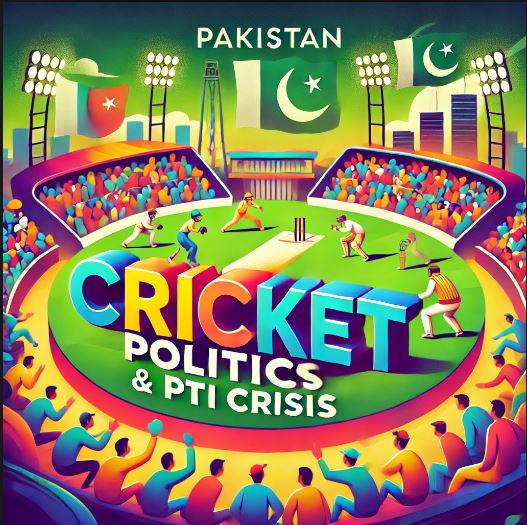
Author: Amjad Izhar

  • Pakistan Cricket Politics & PTI Crisis

    Pakistan Cricket Politics & PTI Crisis

    FAQ: Pakistani Politics and the Future of Cricket

    1. What is the current situation with the upcoming Cricket Champions Trophy and Pakistan’s participation?

    Pakistan is facing challenges regarding its participation in the Champions Trophy due to India’s reluctance to play in Pakistan, citing security concerns. While a hybrid model, with some matches played in Pakistan and others in a neutral venue, was accepted for the Asia Cup, Pakistan is pushing for equal treatment. Pakistan argues that if India is unwilling to play in Pakistan, then future ICC events hosted by India should also adopt a hybrid model with some matches played outside India.

    29-
    Theory Women’s Tee Dress

    2. What is Pakistan’s proposed solution to the Champions Trophy hosting dilemma?

    Pakistan proposes a reciprocal hybrid model. If India insists on a hybrid model for the Champions Trophy in Pakistan, then future ICC events hosted in India should also follow a hybrid model. This would ensure fairness and avoid a two-tiered system within ICC events.

    30-
    Ray-Ban Women’s RB4098 Jackie Ohh Ii Butterfly Sunglasses

    3. What are the financial implications of the Champions Trophy standoff?

    The primary broadcaster for the Champions Trophy, an Indian company, has stated that if India and Pakistan do not play, the financial viability of the tournament will be severely impacted. This puts pressure on the ICC to find a solution that satisfies both India and Pakistan.

    30-
    BUXOM Full-On Plumping Lip Cream, Hydrating Lip Plumper Gloss with Peptides & Hyaluronic Acid, High-Shine Tinted Formula for Fuller, Softer Lips, Cruelty-Free

    4. What is the situation with political unrest in Pakistan and how does it relate to the Pakistan Tehreek-e-Insaf (PTI)?

    Following events on November 24th, there are allegations of excessive force used against PTI supporters, with claims of injuries and deaths. PTI leaders are calling for an investigation into the incidents.

    30-
    DAE Cactus Fruit 3-In-1 Styling Cream & Taming Wand – Tame Flyaways, Smooth Frizz, Style Edges (0.6 oz.)

    5. What is the role of Bushra Bibi (wife of Imran Khan) and Pervez Khattak (senior PTI leader) in the current political climate?

    Both Bushra Bibi and Pervez Khattak are seen as influential figures within the PTI and capable of controlling and directing the party’s supporters. Their potential arrest and isolation are being viewed as a tactic to weaken the PTI’s ability to mobilize protests.

    30-
    m-61 Hydraboost Cream | Hydrating Face Moisturizer with Hyaluronic Acid, Vitamin B5, Vitamin E & Peptides | Nourishes, Plumps & Repairs Skin | For All Skin Types, 1.7 Fl Oz

    6. Is there a possibility of the PTI being banned and what are the implications?

    Resolutions to ban the PTI have been discussed, but many believe a ban would be counterproductive. It could galvanize PTI supporters and further escalate tensions. Additionally, the effectiveness of such a ban is questioned, as previous attempts to restrict political parties through symbols have had little impact.

    30-
    Liquid I.V.® Hydration Multiplier Sugar-Free – White Peach | Electrolyte Powder Drink Mix | 1 Pack (14 Servings)

    7. What are the potential consequences of imposing Governor’s Rule in Khyber Pakhtunkhwa (KP)?

    Imposing Governor’s Rule in KP, a province where PTI holds significant influence, is seen as a risky move. It could backfire by further alienating PTI supporters and triggering larger-scale protests, potentially even targeting the Governor’s House. Furthermore, such a move may face legal challenges and lack of support from other political parties.

    30-
    Patchology On The Fly Travel Skincare Kit, Travel-Friendly Hydrating Skin Essentials, Includes 2 Pairs of Eye Patches, 2 Hydrating Face Mask Sheets & 1 Lip Mask, Christmas Gifts & Stocking Stuffers

    8. What is the significance of Aseefa Bhutto Zardari’s comments on Imran Khan’s safety?

    Aseefa Bhutto Zardari, a prominent figure in the Pakistan Peoples Party (PPP), raising concerns about Imran Khan’s safety on an international platform suggests the PPP is positioning itself as a potential alternative to the current government. It also signals a potential willingness to work with Imran Khan in the future, creating a point of friction within the ruling coalition.

    30-
    EltaMD UV Daily SPF 40 Tinted Face Sunscreen Moisturizer, Tinted Moisturizer for Face with SPF, Great for Dry, Combination, and Normal Skin

    Analysis: A Political and Sporting Landscape

    Quiz

    Short Answer Questions

    1. What is the “hybrid model” being discussed in the context of the cricket Champions Trophy, and why is it causing tension between India and Pakistan?
    2. What are the arguments presented for and against holding the Champions Trophy in Pakistan? What are the potential financial implications for the ICC if India and Pakistan do not play?
    3. According to the speaker, how does the political climate in Pakistan affect the potential hosting of the Champions Trophy? What evidence do they provide to support their claim?
    4. What specific claims are being made by the Pakistan Tehreek Insaaf (PTI) regarding the events of November 24th? What evidence do they present to support their allegations?
    5. How does the speaker analyze the potential impact of Governor’s Rule in KP? What are the potential benefits and disadvantages they highlight?
    6. What is the significance of Bushra Bibi and Gandapur in the current political situation, according to the speaker’s analysis?
    7. Why does the speaker believe that banning PTI would be ineffective? What historical example do they cite to support their viewpoint?
    8. What is the significance of Asifa Bhutto Zardari’s statement about the threat to Imran Khan’s life, and how does the speaker interpret the People’s Party’s motives?
    9. According to the speaker, how has the political dynamic between Imran Khan and the establishment shifted since November 24th?
    10. In the speaker’s view, what is the likely future of the political situation in Pakistan, and what role might the People’s Party play?

    30-
    medicube Mini Booster Pro Pink | Affordable At-Home Facial Skin Care Tool for Beginners – Portable Glow Booster for Glass Skin, Boosting Absorption, Korean Skin Care for Teens

    Answer Key

    1. The “hybrid model” proposes holding some Champions Trophy matches in Pakistan and others in a neutral country, likely due to India’s reluctance to play in Pakistan. This causes tension as Pakistan insists on hosting all games or implementing the hybrid model for future tournaments in India as well, seeking reciprocal treatment.
    2. Arguments for holding the Champions Trophy in Pakistan cite contractual obligations, Pakistan’s right to host, and the potential for generating revenue. Arguments against it focus on security concerns and potential civil unrest. The ICC faces significant financial losses from broadcasting rights if India and Pakistan do not participate.
    3. The speaker argues that the current political climate in Pakistan, characterized by potential civil unrest and the PTI’s challenges against the government, makes hosting the Champions Trophy difficult. They point to the PTI’s claims of violence against their supporters as evidence of instability.
    4. PTI alleges excessive force used against their supporters on November 24th, claiming over 5000 arrests, hundreds injured by bullets, and 12 deaths. They claim to possess evidence, including witness testimonies and medical records, to support these allegations.
    5. The speaker suggests Governor’s Rule in KP would give the administration greater control over potential PTI protests and disrupt their mobilization efforts. However, they also point out potential disadvantages, including public backlash, bureaucratic resistance, and legal challenges, arguing that it might ultimately prove ineffective and unsustainable.
    6. Bushra Bibi and Gandapur are identified as crucial figures for PTI due to their influence over supporters and potential to persuade Imran Khan towards a more moderate approach. Their detention, the speaker argues, aims to limit PTI’s mobilization capacity while maintaining channels for negotiation.
    7. The speaker believes banning PTI would be counterproductive, arguing that it would not diminish popular support and could even bolster their appeal as victims of political oppression. They cite the example of the ban on Jamaat-e-Islami, which failed to significantly impact their electoral performance.
    8. Asifa Bhutto Zardari’s statement is interpreted as a strategic move by the People’s Party to signal their potential willingness to work with Imran Khan if the opportunity arises. By expressing concern for his safety, they subtly distance themselves from the government’s hardline stance and position themselves as potential allies.
    9. The speaker observes that the power dynamic has shifted since November 24th, with the establishment appearing stronger and Imran Khan’s position weakened due to the crackdown on PTI. Despite this shift, the speaker believes Khan might eventually re-emerge and return to the political scene.
    10. The speaker predicts that the political landscape will eventually transition away from street protests and back into the parliamentary arena. They foresee the People’s Party potentially playing a pivotal role in this transition, positioning themselves as a more palatable alternative to the PML-N for accommodating Imran Khan and his supporters.

    30-
    A mysterious young man takes a job with a wealthy family. Will they learn of his true identity before his sinister plans destroy everything they love?

    Essay Questions

    1. Analyze the arguments for and against the “hybrid model” in the context of the Champions Trophy. Consider the perspectives of Pakistan, India, and the ICC, and discuss the potential implications of each proposed solution.
    2. Evaluate the speaker’s claims about the political situation in Pakistan. To what extent do you agree or disagree with their assessment of the events of November 24th and the potential impact of Governor’s Rule in KP?
    3. Explore the significance of the “safe passage” reportedly granted to Bushra Bibi and Gandapur. Analyze the speaker’s interpretation of this event, and consider its potential implications for the ongoing power struggle between PTI and the government.
    4. Discuss the potential motives behind Asifa Bhutto Zardari’s statement about the threat to Imran Khan’s life. Analyze the speaker’s interpretation of the People’s Party’s strategy, and evaluate its potential effectiveness in the current political climate.
    5. Based on the speaker’s analysis, predict the future of Pakistani politics. Consider the potential for Imran Khan’s return, the role of the establishment, and the possible realignment of political forces.

    30-
    Amazon Essentials Disney | Marvel | Star Wars | Frozen | Princess Girls and Toddlers’ Mix-and-Match Outfit Sets, Multipacks

    Glossary

    • Hybrid Model: A proposed format for hosting the Champions Trophy where some matches are held in Pakistan and others in a neutral country.
    • Champions Trophy: A prestigious international cricket tournament organized by the ICC.
    • ICC: The International Cricket Council, the governing body for cricket worldwide.
    • PTI: Pakistan Tehreek-e-Insaf, a political party led by Imran Khan.
    • Governor’s Rule: A constitutional provision in Pakistan that allows the federal government to assume direct control of a province under specific circumstances.
    • KP: Khyber Pakhtunkhwa, a province in Pakistan where PTI holds a majority in the provincial assembly.
    • Establishment: A term often used in Pakistan to refer to the powerful military and intelligence apparatus.
    • Safe Passage: The act of granting someone permission and protection to travel through a dangerous or contested area.
    • People’s Party: Pakistan Peoples Party, a major political party in Pakistan.
    • Noon League: Pakistan Muslim League-Nawaz, a major political party in Pakistan.
    • BCCI: Board of Control for Cricket in India.
    • ACC: Asian Cricket Council.

    Pakistani Politics & the Future of Cricket: A Deep Dive

    Source 1: “Pasted Text” (Transcript of a Pakistani Political Commentary Show)

    I. The Fate of the Champions Trophy: A Hybrid Model Emerges

    This section analyzes the ongoing debate regarding the location of the upcoming Champions Trophy. With India refusing to play in Pakistan due to security concerns, and Pakistan rejecting a full hybrid model that would see them play most of their matches abroad, a potential solution is presented: a reciprocal hybrid model. This model would require India to also play some of its matches in future ICC tournaments at neutral venues if Pakistan is forced to do so for this tournament.

    30-
    Bluey Advent Calendar Pack Toys for Girls and Boys, 24 Days of Surprises, Kids 2025 Advent Calendar w/Accessories, Stickers & Mini Christmas Tree

    II. Political Turmoil: Analyzing Claims of Violence & Repression

    This section delves into allegations by Pakistan Tehreek-e-Insaf (PTI) regarding state-sanctioned violence against their supporters on November 24th. The commentator analyzes the validity of these claims, scrutinizing evidence and urging for thorough investigations using available footage from safe city cameras.

    III. The Potential for Governor’s Rule & a PTI Ban

    This segment examines the potential consequences of imposing Governor’s rule in Khyber Pakhtunkhwa (KP) and a nationwide ban on PTI. The commentator argues that such actions would be ultimately counterproductive, potentially galvanizing public support for PTI and facing legal challenges. He emphasizes the importance of provincial autonomy and predicts a lack of support from the Pakistan People’s Party (PPP) for such measures.

    IV. Shifting Power Dynamics & the Role of Key PTI Figures

    This part explores the changing political landscape following the events of November 24th. The commentator posits a shift in power dynamics, with the establishment gaining strength and Imran Khan experiencing a relative weakening. He discusses the importance of figures like Bushra Bibi and Pervez Khattak for PTI and speculates on the possibility of their detention and isolation as a means to exert control and facilitate negotiations.

    V. Asif Zardari’s Strategic Maneuvering & Potential PPP-PTI Alliance

    This section focuses on Asif Zardari’s political maneuvering and the potential for an alliance between PPP and PTI. The commentator highlights Asif’s deliberate choice of Aseefa Bhutto Zardari to voice concerns regarding threats to Imran Khan’s life, interpreting it as a strategic move to distance PPP from the current government’s policies and position themselves as a potential ally for PTI in future political scenarios.

    30-
    Learning Journey International LLC Play & Learn – Stacking Cubes – STEM Toddler Toys & Gifts for Boys & Girls Ages 12 Months and Up – Mind Building Developmental Learning Toy, Multi (100257)

    Briefing Doc: Pakistani Politics and Cricket Controversy

    Main Themes:

    • Political turmoil in Pakistan: This source focuses heavily on the ongoing conflict between the PTI (Pakistan Tehreek-e-Insaf) and the ruling government. The PTI alleges excessive force and human rights violations during protests, demanding an independent inquiry. The government denies these claims.
    • The future of the Champions Trophy: A significant portion of the discussion centers around the upcoming Champions Trophy and the conflict surrounding India’s participation in Pakistan. Financial and political factors are intertwined with proposed solutions like the ‘hybrid model’ and potential venue changes.

    30-
    The Children’s Place Boys’ 100% Cotton Long Sleeve Top and Pants,2 Piece Pajama Set

    Key Ideas and Facts:

    Political Situation:

    • PTI claims: The PTI alleges that over 5,000 of their supporters were arrested before November 24th, with hundreds suffering bullet injuries and 12 fatalities. They cite evidence from medical professionals and demand an independent inquiry.
    • Government’s response: The government dismisses these claims, stating they used appropriate force to control riots. They challenge the PTI to provide concrete evidence and suggest the Safe City camera footage could be examined.
    • PTI’s future: The discussion explores the possibility of banning the PTI, implementing Governor’s rule in KP (Khyber Pakhtunkhwa), and the potential consequences of such actions.
    • Possible reconciliation: The source hints at potential back-channel negotiations and the possibility of Imran Khan returning to the political scene in the future. Asif Ali Zardari’s daughter, Aseefa Bhutto Zardari, expressing concern over threats to Imran Khan’s life, is interpreted as the PPP (Pakistan People’s Party) potentially positioning itself as a mediator.
    01
    Rainbow Dreams: A Coloring Journey for Kids Paperback – October 11, 2025

    Cricket Controversy:

    • The Champions Trophy dispute: The core issue is India’s reluctance to play in Pakistan due to security concerns.
    • The ‘hybrid model’: This proposes holding some Champions Trophy matches in Pakistan and others in a neutral venue like Dubai or Sri Lanka. The source suggests a counter-proposal: applying the hybrid model reciprocally to future ICC events in India, ensuring fairness.
    • Financial implications: The source highlights the financial pressure on the ICC due to the potential loss of broadcast revenue if India-Pakistan matches don’t take place.
    • Possible outcomes: The source discusses possible scenarios like the Champions Trophy being shifted to another country, Pakistan refusing to play, or a negotiated agreement through the reciprocal hybrid model.
    01
    SpotMyUV UV Detection Stickers for Sunscreen with Patented Dermatrue SPF Sensing Technology, Know When to Reapply Sunscreen to Help Prevent Sunburn, 16 Count

    Important Quotes:

    • Omar Ayub (PTI): “They fired bullets of destruction. They have an agenda to destroy everything, destroy everything. This is not a political party, this is a fad.”
    • Najam Sethi (Analyst): “If India and ICC do not accept my point, then we will not play… then this champion trophy will be shifted.”
    • Najam Sethi (Analyst): “The Indian government gets hurt when India comes and plays with Pakistan… If Pakistan doesn’t play in India then they don’t have any problem.”
    02
    Luxury Gold Plated Elegant Textured Alloy Design with Irregular Pearl Earrings For Women,3D & Movable,Nice Gift Box Included,14k Gold Plated Melting Rock Alloy Stainless steel Stud Earrings for Women

    Analysis:

    The source provides a detailed insight into the current political landscape of Pakistan and the complexities surrounding the Champions Trophy. It offers multiple perspectives, analyzing potential scenarios and their implications. The tone is speculative, relying heavily on insider information and predictions based on the speaker’s experience and understanding of the political players involved.

    Note: The source appears to be a transcript from a talk show or similar format. The informal language and conversational style should be considered when assessing the validity of the information presented.

    Here are the central political and sporting conflicts discussed in the sources:

    03
    Locket Necklace Holds Pictures Alphabet Initial Letter Love Heart Lockets Photo Memory Locket Necklaces Birthday Gifts
    • The central sporting conflict revolves around the upcoming Cricket Champions Trophy and Pakistan’s participation in it. Pakistan is demanding reciprocal treatment from the International Cricket Council (ICC) and India. [1, 2] Pakistan argues that if India is allowed to host some of its matches in the Champions Trophy outside of India in a “hybrid model” due to security concerns about playing in Pakistan, then Pakistan should be granted the same concession for future ICC events held in India. [1, 2]
    • Pakistan believes that the ICC’s acceptance of India’s “hybrid model” sets a dangerous precedent of unequal treatment. They argue that the ICC should either require India to play all its matches in Pakistan or enforce the same “hybrid model” for future ICC events in India. [1, 2] Pakistan believes its stance is strengthened by the fact that they won the Champions Trophy in the past on their own terms and that respecting international relations requires reciprocal treatment. [2]
    • The sources suggest that the financial implications of India and Pakistan not playing each other are significant, putting pressure on the ICC and broadcasters. [3] It’s noted that the broadcaster, an Indian company with global rights, has threatened financial penalties if Pakistan pulls out of the tournament. [3]
    • The central political conflict discussed involves the aftermath of events on November 24th, with Pakistan Tehreek Insaaf (PTI) and the current government clashing over the use of force and the treatment of PTI supporters. PTI claims that their supporters were subjected to excessive force, including the use of snipers and live ammunition, resulting in injuries and deaths. [4] They demand an investigation into the events. [5]
    • The government denies PTI’s claims, stating that no snipers were used and that any force applied was in response to PTI’s actions. [5] They argue that PTI is exaggerating the situation and that their demands for an inquiry are politically motivated. [5]
    • There are discussions about potential actions against PTI, including a ban on the party and the imposition of Governor’s Rule in Khyber Pakhtunkhwa (KP). [6, 7] The sources debate the effectiveness and potential consequences of such actions, with concerns raised about backlash from the public and the judiciary. [7, 8]
    • The role of key figures like Bushra Bibi (Imran Khan’s wife) and Pervez Elahi (former Chief Minister of Punjab) is also discussed, particularly regarding their potential influence on the situation and the possibility of negotiations. [4, 6, 8]
    • The People’s Party’s position is analyzed, noting their potential as a mediating force between PTI and the government. [9, 10] Asifa Bhutto’s statements about threats to Imran Khan’s life are interpreted as a signal of the People’s Party’s willingness to accommodate PTI in future political arrangements. [9, 10]

    04
    Compatible with Aolon Curve Smart Watch Band, 22mm Women, Soft Silicone Glitter Clear Sport Strap Compatible with Aolon Curve 2.01″ Inches Smart Watch

    These conflicts highlight the deep political and sporting divisions within Pakistan and the challenges faced in navigating these complex issues.

    Power dynamics heavily influence decision-making, particularly in the context of international relations and politics, as evidenced by the sources.

    • The sources, which analyze the dynamics between the International Cricket Council (ICC), the Board of Control for Cricket in India (BCCI), and the Pakistan Cricket Board (PCB), illustrate how financial power and political influence can dictate the terms of engagement and shape outcomes. [1, 2]
    • The BCCI, due to its financial strength stemming from lucrative broadcasting deals and strong domestic cricket, holds significant sway within the ICC. [1, 2] This allows them to influence decisions in their favor, such as potentially determining the venue for the Champions Trophy. [1, 2]
    • The sources suggest that the BCCI leverages its position to exert pressure on other boards, many of whom are financially dependent on matches against India. [1] This creates a situation where these boards are more likely to side with India, even if it goes against the interests of other nations like Pakistan. [1, 3]
    • The sources further highlight the political dimension, with the Indian government’s stance on playing against Pakistan impacting the BCCI’s decisions. [4] The Indian government’s reluctance to engage with Pakistan on the cricket field, stemming from political tensions, restricts the BCCI’s freedom of action and ultimately shapes the ICC’s choices regarding tournament venues and formats. [4]
    • The sources propose that Pakistan could utilize a “hybrid model” for hosting the Champions Trophy, with some matches being played in a neutral country like Bangladesh to accommodate India’s concerns, while ensuring Pakistan retains some hosting rights. [5, 6] This model aims to address the power imbalance by advocating for reciprocal treatment: if India benefits from a hybrid model in Pakistan, future ICC events in India should also adopt a similar format. [5, 6]
    • The sources suggest that this strategy could force the ICC to acknowledge and address the unequal treatment of nations, potentially leading to a more equitable decision-making process within the organization. [6] By demanding reciprocity and highlighting the financial implications of India’s potential non-participation, Pakistan could leverage its position and gain an advantage in the negotiations. [4, 6]

    05
    White Gold Plated White & Pink Cubic Zirconia Dangle Earrings for Women Daily Evening Parties Wear Lightweight Jewelry Earring Gift for Her

    In essence, the sources demonstrate how power dynamics, driven by financial clout and political influence, significantly impact decision-making processes, particularly in international sporting events like the Champions Trophy. They highlight how these power imbalances can be challenged through strategic negotiation and a push for greater reciprocity and fairness.

    Here is a breakdown of potential consequences based on the outcomes discussed in the sources:

    Potential Outcomes and Their Consequences

    • Pakistan stands firm on its demand for reciprocal hybrid model treatment: [1-3]
    • Positive Consequences for Pakistan:Levels the playing field with India. Pakistan would gain an advantage by ensuring that future ICC events in India also follow a hybrid model, reducing India’s leverage over Pakistan in cricketing matters. [3]
    • Strengthens Pakistan’s position in the ICC. By forcing a reciprocal arrangement, Pakistan asserts its independence and challenges India’s dominance in the ICC. [3, 4]
    • Potential for Pakistan to win the Champions Trophy on its own terms. This outcome allows Pakistan to maintain its stance and potentially achieve a favorable outcome in the tournament. [4]
    • Negative Consequences:Possible rejection by India and the ICC. India, with its financial clout and influence within the ICC, might resist the proposal. [3, 5]
    • Risk of the Champions Trophy being shifted to another country. This would result in financial losses for the ICC and potentially harm Pakistan’s cricketing reputation. [6]
    • Potential legal challenges from India. India could dispute the decision and initiate legal action against the ICC. [3]
    • Pakistan accepts a limited hybrid model: [1, 2, 7]
    • Consequences:Loss of bargaining power for future ICC events. Pakistan concedes to India’s demands, setting a precedent for future tournaments. [2, 3]
    • Perception of Pakistan surrendering to India’s pressure. Accepting a limited hybrid model without reciprocal terms weakens Pakistan’s position. [2]
    • Pakistan refuses to play in the Champions Trophy: [6]
    • Consequences:Financial losses for the ICC. The absence of India-Pakistan matches significantly reduces the tournament’s appeal and revenue. [5]
    • Damage to Pakistan’s cricketing relationships. This action could strain ties with the ICC and other cricket boards.
    • Potential for the Champions Trophy to be postponed or shifted. The ICC might be forced to reschedule or relocate the tournament. [6]
    06
    Gold Plated White Cubic Zirconia Leaf-Shaped Hoop Earrings for Women Wedding Bridal Daily Evening Parties Wear Lightweight Jewelry Earring Gift for Her

    Additional Points

    • The source highlights the power dynamics within the ICC, emphasizing the financial influence of the BCCI and India’s ability to sway decisions in its favor. [5, 8]
    • The speaker suggests that Pakistan’s successful implementation of the PSL has provided it with greater financial independence and leverage. [1]
    • The analysis emphasizes the need for Pakistan to act strategically, capitalizing on any opportunity to secure reciprocal treatment and avoid being subjected to unequal terms by the ICC. [3, 4]

    The source presents a nuanced view of the situation, emphasizing the complexities of international cricket politics and the financial stakes involved. The potential consequences outlined above provide a framework for understanding the possible outcomes and their implications for Pakistan’s cricketing future.

    07
    White Gold Plated Cubic Zirconia Flower Shape Pearl Stud Earrings for Women Wedding Bridal Daily Evening Parties Wear Lightweight Jewelry Earring Gift for Her

    A Look at Pakistan Cricket: Politics, Finances, and the Champions Trophy

    The sources provide a glimpse into the current state of Pakistan cricket, highlighting the intricate interplay between politics, finance, and international relations. The impending Champions Trophy serves as a focal point, with Pakistan demanding equitable treatment from the ICC and India.

    • At the heart of this discussion lies the “hybrid model,” which allows India to play some of its Champions Trophy matches outside of Pakistan due to security concerns. The sources argue that accepting this model without a reciprocal arrangement for future ICC events held in India would perpetuate an imbalance of power. [1-4]
    • The sources emphasize that this isn’t just about cricket – it’s about national pride and respect on the international stage. Pakistan, having won the Champions Trophy in the past, seeks to maintain its cricketing integrity and avoid being perceived as bowing to pressure. [4]
    • The financial implications of this situation are significant, with broadcasters and the ICC heavily reliant on the viewership and revenue generated by India-Pakistan matches. This reality puts Pakistan in a position to negotiate, as their absence from the tournament could lead to substantial financial losses. [5, 6]

    The sources paint a picture of a complex landscape where Pakistan faces a crucial decision:

    • Option 1: Stand Firm on Reciprocal Hybrid Model: This path, while upholding principles of fairness, carries the risk of India and the ICC rejecting the proposal, potentially resulting in the Champions Trophy being shifted to another country. [4]
    • Option 2: Accept a Limited Hybrid Model: This would involve conceding to India’s demands, risking the perception of Pakistan surrendering to pressure and setting a precedent for future tournaments. [3]
    • Option 3: Refuse to Play in the Champions Trophy: This drastic step, though impactful, could damage Pakistan’s relationships with the ICC and other cricket boards, potentially leading to further isolation and financial consequences. [5]

    The sources suggest that the success of the Pakistan Super League (PSL) has given Pakistan more financial independence and leverage in these negotiations. [2] This development provides them with a stronger platform to advocate for their interests and resist being subjected to unequal treatment.

    08
    Car Charger Adapter, 5 Port QC3.0 Fast Charging Car Cigarette Lighter USB Charger, Compatible with iPhone, Android, Samsung, iPad Pro, and More (Black)

    The conversation history emphasizes the role of power dynamics, underscoring the influence wielded by the BCCI due to its financial strength. This power allows them to influence decisions within the ICC, often to the detriment of other boards, particularly those financially dependent on matches against India. [5, 7, 8]

    The analysis presented in the sources suggests that Pakistan must adopt a strategic approach. This approach involves leveraging its newfound financial independence, highlighting the financial risks associated with India’s potential non-participation, and advocating for reciprocal treatment to ensure a more balanced and equitable cricketing future. [2, 4, 6]

    09
    Womens 2 Piece Swimsuit Suit Highs Waisted Trigonometry Tie Side Bathing Suits for Women XS-L HYB523C

    A Divided PTI: Internal Conflicts and Political Maneuvering

    The sources depict a Pakistan Tehreek-e-Insaf (PTI) grappling with internal discord and facing political challenges. While not explicitly stating “disarray,” the conversations reveal a party navigating complex power dynamics and struggling to maintain a unified front.

    • The sources suggest a rift within the PTI, with some members openly criticizing party leadership, particularly Bushra Bibi, wife of former Prime Minister Imran Khan. [1] These internal conflicts raise questions about the party’s cohesion and its ability to present a united front against its political opponents.
    • Adding to this internal tension, the sources highlight varying accounts regarding the events of November 24th, specifically concerning the number of PTI supporters injured or killed during protests. [2] This discrepancy in information, with PTI officials claiming higher figures than independent sources, indicates possible attempts to manipulate the narrative and exploit the situation for political gain.
    • The sources further depict a PTI caught between a desire to protest and a need to negotiate. [3] They illustrate the dilemma of a party seeking to mobilize its base while also recognizing the potential consequences of escalating confrontations with the government. This delicate balancing act underscores the precarious position the PTI finds itself in.
    • The sources also reveal external pressures impacting the PTI’s stability. [4] They describe how the current government, led by Shahbaz Sharif, is actively seeking to restrict the PTI’s political activities, potentially through bans or limitations on public gatherings. This external pressure further complicates the PTI’s ability to operate effectively and maintain its influence.

    The sources, while focused on cricket politics, indirectly provide insights into the broader political landscape in Pakistan. The PTI’s struggles are contextualized within a broader environment of political tension and power struggles, where maneuvering and strategic alliances are essential for survival.

    10
    2 PCS Universal Adjustable SpannerMulti-functional Double-ended Auto Adjust Quick Tool for Home Repair and Mechanic Work,Silvery

    Champions Trophy: A Stage for Cricket and Politics

    The sources, while primarily focused on the political landscape in Pakistan, provide a compelling look at the upcoming Champions Trophy tournament and the complex dynamics surrounding its potential hosting in Pakistan. The conversation centers on the “hybrid model” proposed to accommodate India’s reluctance to play in Pakistan due to security concerns.

    The sources emphasize the significance of this event, extending beyond mere sport. For Pakistan, hosting the Champions Trophy is a matter of national pride and international recognition. Successfully navigating the challenges and securing hosting rights, potentially through the hybrid model, would represent a significant victory.

    Here’s a closer look at the key elements surrounding the Champions Trophy discussion:

    • Hybrid Model: This concept lies at the heart of the debate. The sources suggest that Pakistan is willing to accept this model, with some matches played in a neutral country like Bangladesh to address India’s concerns. However, Pakistan insists on reciprocity – if India benefits from this model in Pakistan, future ICC events held in India should also adopt a similar format. This demand for equality aims to prevent a situation where Pakistan is subjected to different standards than India.
    • Power Dynamics: The sources repeatedly underscore the uneven power distribution within the ICC. The BCCI, fueled by its financial might derived from lucrative broadcasting deals and strong domestic cricket, holds significant influence. This allows them to exert pressure on other boards, many of whom are financially dependent on matches against India. This power dynamic creates a scenario where decisions often favor India, potentially sidelining the interests of other nations like Pakistan.
    • Financial Stakes: The sources acknowledge the substantial financial implications tied to the Champions Trophy. India-Pakistan matches are highly sought after by broadcasters and contribute significantly to the tournament’s revenue. Pakistan can leverage this reality to negotiate, as their absence could lead to significant financial losses for the ICC.
    • National Pride: The sources highlight that for Pakistan, the Champions Trophy is not just about cricket. It’s about asserting their position on the world stage and resisting perceived pressure from India. Winning the tournament on their own terms would be a symbolic victory, demonstrating their resilience and cricketing prowess.

    1-
    Gear up for Labor Day Weekend with Kyle Richards

    The sources suggest several potential outcomes for Pakistan regarding the Champions Trophy:

    1. Stand firm and demand a reciprocal hybrid model: This approach, though principled, carries risks. India and the ICC, influenced by the BCCI, might reject the proposal, leading to the tournament being moved to another country.
    2. Accept a limited hybrid model without reciprocity: This option would be seen as a concession to India, potentially weakening Pakistan’s position within the ICC and setting a precedent for future events.
    3. Refuse to participate in the Champions Trophy: This extreme step, while making a statement, could lead to financial losses for Pakistan, damage relationships with the ICC and other cricket boards, and potentially lead to further isolation within the cricketing world.

    The sources advocate for Pakistan to adopt a strategic and assertive approach. By highlighting the financial risks associated with India’s potential non-participation and demanding reciprocal treatment, Pakistan can leverage its position and potentially secure a more favorable outcome.

    2-
    Shop the latest deals

    The Champions Trophy, as depicted in the sources, represents more than just a cricket tournament. It’s a platform where political tensions, financial interests, and national pride intersect, making for a complex and fascinating case study in international relations.

    Analyzing Pakistan’s Political Turmoil

    The sources offer a detailed account of the current political climate in Pakistan, highlighting a landscape marked by political tension, internal divisions, and the maneuvering of various political actors. Although the focus is mainly on the impact of these events on the cricketing world, the sources provide valuable insight into the broader political struggles unfolding in the nation.

    • PTI Facing Internal & External Pressures: The sources portray a Pakistan Tehreek-e-Insaf (PTI) party grappling with internal disagreements and facing external pressure from the ruling government. The conversation reveals concerns over the influence of Bushra Bibi, Imran Khan’s wife, within the party, suggesting possible internal rifts and challenges to leadership. This internal discord is compounded by the government’s active efforts to limit PTI’s activities, potentially through bans or restrictions, further hindering their ability to function effectively. [1-5]
    • Controversial Events of November 24th: The sources describe the events of November 24th, a significant turning point in the PTI’s political journey. The conversation highlights conflicting narratives regarding the severity of the protests and the number of PTI supporters injured or killed, suggesting attempts to control the narrative and utilize the situation for political gain. [6, 7] The sources also reveal differing perspectives on the role of key figures like Bushra Bibi and Gandapur, with some arguing for their detention to maintain control and others suggesting their importance in negotiating with Imran Khan. [3, 6] This uncertainty surrounding the events and the roles of key figures further underscores the political turmoil and the challenges the PTI faces. [3]
    • Shift in Power Dynamics: The sources describe a notable shift in the balance of power following the events of November 24th. They suggest a change from a situation where Imran Khan held significant influence to one where the establishment now wields more power. This shift in dynamics has altered the political landscape, impacting the PTI’s ability to operate freely and influencing negotiations with the government. [8]
    • People’s Party Positioning for Future Influence: The sources highlight the People’s Party’s strategic maneuvering within this volatile political climate. They suggest that the People’s Party, by distancing itself from the government’s actions and expressing concern over the treatment of Imran Khan, is positioning itself for potential future alliances. This strategy is evident in Asifa Bhutto’s public statements, which create space for potential collaboration with PTI should the political situation shift. [8, 9] This calculated approach underscores the fluidity of political alliances in Pakistan and the importance of maintaining options in an unpredictable environment.

    The sources, while focused on cricket-related issues, paint a vivid picture of a nation embroiled in political turmoil. The PTI’s internal conflicts, the government’s attempts to restrict their activities, and the People’s Party’s strategic positioning all contribute to an atmosphere of uncertainty and tension. This analysis reveals the complexity of Pakistani politics and highlights the continuous struggle for power and influence among various political actors.

    3-
    Get Ready for My Summer Skincare Routine w Vanessa Simmons

    Analyzing Pakistan’s Political Turmoil

    The sources offer a detailed account of the current political climate in Pakistan, highlighting a landscape marked by political tension, internal divisions, and the maneuvering of various political actors. Although the focus is mainly on the impact of these events on the cricketing world, the sources provide valuable insight into the broader political struggles unfolding in the nation.

    • PTI Facing Internal & External Pressures: The sources portray a Pakistan Tehreek-e-Insaf (PTI) party grappling with internal disagreements and facing external pressure from the ruling government. The conversation reveals concerns over the influence of Bushra Bibi, Imran Khan’s wife, within the party, suggesting possible internal rifts and challenges to leadership. This internal discord is compounded by the government’s active efforts to limit PTI’s activities, potentially through bans or restrictions, further hindering their ability to function effectively. [1-5]
    • Controversial Events of November 24th: The sources describe the events of November 24th, a significant turning point in the PTI’s political journey. The conversation highlights conflicting narratives regarding the severity of the protests and the number of PTI supporters injured or killed, suggesting attempts to control the narrative and utilize the situation for political gain. [6, 7] The sources also reveal differing perspectives on the role of key figures like Bushra Bibi and Gandapur, with some arguing for their detention to maintain control and others suggesting their importance in negotiating with Imran Khan. [3, 6] This uncertainty surrounding the events and the roles of key figures further underscores the political turmoil and the challenges the PTI faces. [3]
    • Shift in Power Dynamics: The sources describe a notable shift in the balance of power following the events of November 24th. They suggest a change from a situation where Imran Khan held significant influence to one where the establishment now wields more power. This shift in dynamics has altered the political landscape, impacting the PTI’s ability to operate freely and influencing negotiations with the government. [8]
    • People’s Party Positioning for Future Influence: The sources highlight the People’s Party’s strategic maneuvering within this volatile political climate. They suggest that the People’s Party, by distancing itself from the government’s actions and expressing concern over the treatment of Imran Khan, is positioning itself for potential future alliances. This strategy is evident in Asifa Bhutto’s public statements, which create space for potential collaboration with PTI should the political situation shift. [8, 9] This calculated approach underscores the fluidity of political alliances in Pakistan and the importance of maintaining options in an unpredictable environment.

    The sources, while focused on cricket-related issues, paint a vivid picture of a nation embroiled in political turmoil. The PTI’s internal conflicts, the government’s attempts to restrict their activities, and the People’s Party’s strategic positioning all contribute to an atmosphere of uncertainty and tension. This analysis reveals the complexity of Pakistani politics and highlights the continuous struggle for power and influence among various political actors.

    4-
    Easy Outfit Tricks and Ideas

    Examining Concerns Around Bushra Bibi’s Safety

    The sources, while discussing Pakistani politics and the PTI’s current challenges, touch upon the issue of a potential threat to Bushra Bibi’s life. This concern, voiced by Asifa Bhutto of the People’s Party, adds another layer of complexity to the already turbulent political situation.

    Here’s a breakdown of the information presented in the sources:

    • Asifa Bhutto’s Statement: The sources emphasize that Asifa Bhutto, daughter of former President Asif Ali Zardari, publicly expressed concerns about a threat to Bushra Bibi’s safety [1]. This statement, made to an international news outlet, Al-Arabiya, holds significance due to its public nature and the potential for international attention.
    • Strategic Messaging: The sources suggest that Asifa Bhutto’s statement may be part of a broader political strategy employed by the People’s Party [1]. They argue that by voicing concern for Bushra Bibi, the People’s Party aims to distance itself from the ruling government’s actions and potentially create an opening for future collaboration with PTI. This calculated approach indicates the fluidity of political alliances in Pakistan.
    • Lack of Specificity: The sources do not provide details about the nature of the threat to Bushra Bibi, its origin, or the evidence supporting it. This lack of concrete information raises questions about the validity of the claim and whether it is based on credible intelligence or is a political maneuver.

    It is important to note that the sources do not offer definitive proof of an actual threat against Bushra Bibi. The information presented is primarily focused on the political implications of Asifa Bhutto’s statement rather than confirming the existence of a threat. Further investigation and independent verification would be necessary to determine the credibility and severity of any potential danger to Bushra Bibi’s safety.

    5-
    Back to School Backpack Essentials

    Detailed Summaries of Each Source Page

    Here are the summaries of each page of the provided source, focusing on the key points and information presented:

    Page 1:

    • The speaker introduces the topic of the conversation, which will focus on current events in Pakistan, including the political situation of Pakistan Tehreek-e-Insaf (PTI), the controversy surrounding the Champions Trophy, and other significant news.
    • The speaker highlights concerns regarding PTI’s internal disarray due to a lack of clarity and direction from party leadership.
    • Allegations made by Omar Ayub, a PTI leader, during a press conference are mentioned as requiring further investigation.
    • The speaker expresses uncertainty about the future of the Champions Trophy, acknowledging both Pakistan and India’s interest in the tournament’s outcome.
    • The speaker also mentions predictions made in a previous conversation, particularly those related to Faisal Vavda and Asifa Bhutto.
    • The speaker acknowledges the importance of cricket in Pakistan, recognizing it as a source of national interest and a respite from political turmoil.

    6-
    Mama’s Still Got It with Lala Kent Featuring Michelle Lally

    Page 2:

    • The conversation shifts focus to cricket and the Champions Trophy, acknowledging the widespread interest in the sport, even amidst political tensions.
    • The speaker expresses confusion regarding the actions of PCB Chairman Mohsin Naqvi, questioning his sudden trip to Dubai and the subsequent adjournment of the ICC meeting.
    • The speaker claims to have insight into the potential outcomes of the Champions Trophy debate based on their past experience and negotiations with Jay Shah, head of the BCCI.
    • The speaker recalls their involvement in negotiating the Asia Cup hosting arrangement, highlighting the challenges faced in securing Pakistan’s right to host matches.

    7-
    Shop the latest deals

    Page 3:

    • The speaker details the challenges of convincing other Asian cricket boards, particularly India, to agree to a hybrid model for the Asia Cup, where some matches would be held in Pakistan.
    • The speaker recounts their efforts in convincing the Indian media and ICC officials to accept a partial hosting arrangement for Pakistan, ultimately leading to a compromise where some matches were played in Pakistan and others in neutral venues.
    • The speaker emphasizes the acceptance of the hybrid model for the Asia Cup and questions whether Pakistan should now accept a similar arrangement for the Champions Trophy.
    • The speaker highlights the contrasting positions of Pakistan and India regarding the hybrid model, with Pakistan demanding a reciprocal arrangement for future ICC events held in India.

    8-
    Work From Home Office Essentials

    Page 4:

    • The speaker continues to outline the arguments surrounding the Champions Trophy hosting debate. They mention Pakistan’s strong stance, rooted in their contractual agreement with the ICC and the government’s position that they will not play under a hybrid model unless it’s reciprocal.
    • The speaker dismisses India’s concerns about security and civil unrest in Pakistan, arguing that similar issues exist in other countries.
    • The speaker discusses the potential for voting within the ICC on the hybrid model, predicting that some Asian countries, influenced by India’s pressure, might not openly support Pakistan.
    • The speaker highlights the potential deadlock in negotiations between India and Pakistan, leaving the ICC in a challenging position.

    9-
    BAGSMART Carry On Luggage 22x14x9 Airline Approved with TSA Lock,20 Inch Lightweight Luggage with Spinner Wheels,100% PC Hard Shell Carry On Suitcases for Men Women,Off White

    Page 5:

    • The speaker emphasizes the financial consequences for the ICC if India and Pakistan do not participate in the Champions Trophy, particularly due to the potential loss of revenue from broadcasting deals.
    • The speaker predicts that the ICC will likely propose a compromise formula, driven by financial interests and the desire to ensure India-Pakistan matches.
    • The speaker acknowledges the BCCI’s significant influence within the ICC, stemming from its financial power and control over broadcasting rights.
    • The speaker suggests that the BCCI uses its influence to secure favorable outcomes for India, often at the expense of other boards who are financially dependent on matches against India.

    10-
    Best Amazon Daily Deals

    Page 6:

    • The speaker recounts a previous meeting with Jay Shah and ICC officials where they proposed a reciprocal hybrid model, emphasizing the benefits for both India and Pakistan in future ICC events.
    • The speaker suggests that a hybrid model, with matches played in Bangladesh, could be a viable solution for Pakistan’s matches in the Champions Trophy, addressing India’s security concerns while ensuring Pakistan’s participation.
    • The speaker criticizes the previous PCB Chairman, Jaka Ashraf, for accepting a limited hybrid model without securing reciprocity for future events in India.
    • The speaker argues that Pakistan should leverage its position and demand a reciprocal arrangement for the hybrid model, ensuring equality and fairness within the ICC.

    11-
    Keurig K-Mini Single Serve Coffee Maker, Black

    Page 7:

    • The speaker reiterates their proposal for a reciprocal hybrid model, where future ICC events in India would also adopt a similar arrangement if Pakistan agrees to it for the Champions Trophy.
    • The speaker emphasizes the importance of securing a written guarantee from the ICC that India would be penalized for not adhering to the agreed-upon hybrid model in future events.
    • The speaker suggests that this approach could potentially force India to reconsider its position and agree to a reciprocal arrangement, preventing a two-tier system within the ICC.
    • The speaker predicts that a vote within the ICC on this proposal could favor Pakistan, forcing India to accept the hybrid model for future events.

    12-
    Coolife Expandable Suitcase Luggage set PC ABS TSA Lock Spinner Carry on 3 Piece Sets (blue)

    Page 8:

    • The speaker highlights the potential benefits for Pakistan if they successfully secure a reciprocal hybrid model, asserting their independence and establishing a precedent for fair treatment within the ICC.
    • The speaker argues that this approach would be beneficial for cricket as a whole, ensuring a level playing field and promoting a sense of respect and equality among member boards.
    • The speaker suggests that the BCCI might be willing to accept this arrangement as a “goodwill gesture,” potentially easing pressure from the Indian government.
    • The speaker highlights the conflicting interests of the Indian government and the BCCI, with the government potentially opposing matches against Pakistan while the BCCI prioritizes financial gains from these high-profile encounters.

    13-
    Amazon Fire HD 10 tablet, built for relaxation, 10.1″ vibrant Full HD screen, octa-core processor, 3 GB RAM, latest model (2023 release), 32 GB, Black

    Page 9:

    • The speaker continues to analyze the potential outcomes of the Champions Trophy debate, suggesting that the Indian government might not object to Pakistan not playing in India as long as the BCCI benefits financially from hosting other matches.
    • The speaker expresses confidence in the viability of the reciprocal hybrid model as a solution, urging the PCB Chairman to adopt a firm stance and negotiate effectively.
    • The speaker also mentions other potential outcomes, including the possibility of the Champions Trophy being postponed or moved to another country, though emphasizing the financial losses associated with these options.

    14-
    Keurig K-Mini Single Serve Coffee Maker, Studio Gray, 6 to 12 oz. Brew Sizes

    Page 10:

    • The conversation shifts back to the political situation in Pakistan, focusing on the events of November 24th and the claims made by PTI regarding the number of supporters injured or killed during protests.
    • The speaker questions the validity of some PTI claims, suggesting that they may be exaggerating figures for political gain and urging for independent verification of the information.
    • The speaker analyzes the government’s response to the protests, highlighting their use of force and attempts to discredit PTI.
    • The speaker also discusses the potential for a judicial inquiry into the events of November 24th, acknowledging the challenges in obtaining accurate information and the possibility of political interference.

    15-
    Waterpik Aquarius Water Flosser Professional For Teeth, Gums, Braces, Dental Care, Electric Power With 10 Settings, 7 Tips For Multiple Users And Needs, ADA Accepted, White WP-660, Packaging May Vary

    Page 11:

    • The speaker continues to discuss the events of November 24th, specifically addressing the claims made by PTI regarding the alleged firing on the car of PTI leaders.
    • The speaker dismisses these claims as “nonsense,” asserting that no firing took place and that the PTI leaders were given safe passage.
    • The speaker calls for an investigation into the use of weapons during the protests, suggesting that footage from safe city cameras could provide evidence.
    • The speaker also criticizes the government’s rhetoric and calls for a more constructive approach to resolving the political standoff.

    16-
    Amazon Brand – Solimo Coffee Pods, Assorted pack (French, Dark, Colombian), Compatible with Keurig 2.0 K-Cup Brewers, 100 Count

    Page 12:

    • The speaker criticizes PTI’s demands for a committee or judicial commission to investigate the events of November 24th, suggesting that these are political tactics rather than genuine attempts to seek justice.
    • The speaker expresses skepticism about the effectiveness of such inquiries, highlighting the challenges in accessing sensitive information and the potential for political bias.
    • The speaker argues that the government should focus on addressing the root causes of the political unrest instead of resorting to bans or restrictions on PTI’s activities.
    • The speaker emphasizes the importance of dialogue and compromise in resolving political differences, urging both sides to find a peaceful solution.

    17-
    CREATMO US Men’s Faux Leather Jacket Motorcycle Jacket Waterproof Windproof PU Moto Vintage Bomber Hoodie with Removable Hood

    Page 13:

    • The speaker analyzes a statement made by Prime Minister Shahbaz Sharif regarding PTI’s actions, highlighting the government’s hardline stance and their attempts to portray PTI as a threat to national security.
    • The speaker suggests that this rhetoric is aimed at further isolating PTI and justifying the government’s crackdown on their activities.
    • The speaker discusses the potential for banning PTI, acknowledging the disadvantages and the likelihood that such a move would backfire by generating sympathy for the party.
    • The speaker also criticizes the government’s focus on Governor’s Rule, arguing that it is an ineffective solution and would likely face legal challenges.

    18-
    Ninja Air Fryer Pro 4-in-1 with 5 QT Capacity, Air Fry, Roast, Reheat, Dehydrate, Air Crisp Technology with 400F for hot, crispy results in just minutes, Nonstick Basket & Crisper Plate, Grey, AF141

    Page 14:

    • The speaker continues to discuss the possibility of Bushra Bibi’s arrest, suggesting that it might be a strategic move by the government to control her influence and potentially use her as a bargaining chip in negotiations with Imran Khan.
    • The speaker argues that Bushra Bibi’s detention could backfire, generating further sympathy for PTI and potentially leading to more unrest.
    • The speaker highlights the importance of Bushra Bibi and Gandapur in controlling PTI’s supporters and potentially influencing Imran Khan’s decisions, suggesting that their detention could escalate the situation.
    • The speaker also discusses the potential for restrictions on PTI’s activities, acknowledging the government’s attempts to limit their freedom of movement and assembly.

    19-
    Oral-B iO Deep Clean Rechargeable Electric Powered Toothbrush, Black with iO Series 3 Limited, 2 Brush Heads and Travel Case – Pressure Sensor to Protect Gums – 3 Cleaning Settings – 2 Minute Timer

    Page 15:

    • The speaker analyzes resolutions passed in various assemblies regarding the potential banning of PTI, dismissing them as political maneuvering and emphasizing the ineffectiveness of such bans.
    • The speaker argues that banning PTI would not address the underlying issues and would likely strengthen the party’s support base.
    • The speaker highlights the negative consequences of Governor’s Rule, arguing that it would face legal challenges, create further unrest in KP province, and alienate the People’s Party, who are strong advocates for provincial autonomy.
    • The speaker predicts that the government’s attempts to suppress PTI will ultimately fail, suggesting that dialogue and compromise are the only viable solutions to the political crisis.

    20-
    Washing Machine Cleaner Descaler 24 Pack – Deep Cleaning Tablets For HE Front Loader & Top Load Washer, Septic Safe Eco-Friendly Deodorizer, Clean Inside Drum and Laundry Tub Seal – 12 Month Supply

    Page 16:

    • The speaker continues to discuss the potential consequences of Governor’s Rule, highlighting the risks of alienating the bureaucracy and provoking further protests and unrest in KP province.
    • The speaker argues that Governor’s Rule would be ineffective in suppressing PTI’s activities and would likely backfire by strengthening their support base.
    • The speaker suggests that the judiciary would likely challenge the legality of Governor’s Rule, further complicating the situation.
    • The speaker emphasizes the importance of addressing the underlying issues fueling the political unrest, arguing that suppression and restrictions will only exacerbate the situation.

    21-
    Roku Streaming Stick 4K | Portable Roku Streaming Device 4K/HDR/Dolby Vision, Roku Voice Remote, Free & Live TV

    Page 17:

    • The speaker summarizes their predictions regarding the political situation, suggesting that Bushra Bibi might be detained but not formally arrested, and that Imran Khan will eventually return to prominence after a period of negotiation and compromise.
    • The speaker highlights the shift in power dynamics following the events of November 24th, suggesting that the establishment now holds more influence than Imran Khan.
    • The speaker analyzes Asifa Bhutto’s statement regarding the threat to Bushra Bibi’s life, suggesting that it could be a strategic move by the People’s Party to position themselves for future collaboration with PTI.
    • The speaker emphasizes the fluidity of political alliances in Pakistan, highlighting the People’s Party’s attempts to distance themselves from the government’s actions and maintain their options for future political maneuvering.

    22-
    SAMSUNG T7 Portable SSD, 4TB External Solid State Drive, Speeds Up to 1,050MB/s, USB 3.2 Gen 2, Reliable Storage for Gaming, Students, Professionals, MU-PC4T0T/AM, Gray

    Page 18:

    • The speaker continues to analyze the motivations behind Asifa Bhutto’s statement, suggesting that it is a deliberate attempt to create space for potential collaboration with PTI.
    • The speaker highlights the People’s Party’s strategic positioning within the political landscape, seeking to capitalize on the current instability and potentially form a new alliance with PTI.
    • The speaker contrasts the People’s Party’s approach with that of the ruling Noon League, suggesting that the People’s Party is more open to negotiation and compromise.
    • The speaker concludes by emphasizing the dynamic nature of Pakistani politics and the constant maneuvering of different actors seeking power and influence.
    • The discussion centers around the upcoming Cricket World Cup and the uncertainty of Pakistan’s participation due to India’s reluctance to play in Pakistan.
    • A “hybrid model” is being considered, where Pakistan’s matches would be held in a neutral venue, while India’s would be held in India. However, Pakistan prefers to host all its matches, as agreed upon in the original contract.
    • The ICC is facing pressure, especially from broadcasters, as matches between India and Pakistan are crucial for revenue.
    • The financial implications are significant, with the broadcaster threatening reduced payments if India-Pakistan matches don’t occur. Many ICC member countries are financially dependent on India’s participation.
    • Najam Sethi proposes a reciprocal hybrid model: If India’s matches involving Pakistan are played in a neutral venue for this World Cup, Pakistan would reciprocate when India hosts future tournaments. This was suggested previously and received positive initial feedback.
    • Hybrid Model Dispute: A disagreement exists regarding a “hybrid model” for cricket matches involving Pakistan and India. Pakistan proposes accepting the hybrid model for upcoming World Cup matches if India reciprocates in future ICC events hosted by India. This means Pakistan would play some matches in India if India also plays some matches at neutral venues when hosting Pakistan.
    • Neutral Venue Options: If India refuses the hybrid model, Pakistan suggests their World Cup matches in India could be moved to Bangladesh. This is presented as a financially beneficial solution for Bangladesh.
    • Pakistan’s Stance: Pakistan’s position is that any rules applied to them for hosting matches should also apply to India when they host. They are willing to play at neutral venues for some matches if India does the same in the future.
    • ICC’s Role: Pakistan wants the ICC to guarantee that any agreement regarding the hybrid model will be enforced and that penalties will be levied against India if they back out of the agreement. They believe this will force India to accept the reciprocal arrangement.
    • Potential Outcomes: Pakistan believes they have leverage due to upcoming tournaments they are hosting and feels confident a vote on this issue within the ICC would favor their position. They see this as a win for Pakistan and for cricket as a whole.
    • Thousands of PTI supporters were allegedly arrested and injured, some fatally, before and during protests around November 24th. PTI claims to have evidence, while the government disputes the figures.
    • There are conflicting accounts regarding an incident involving firing on the car of Bura B and Gandapur. The government claims they were provided safe passage, while PTI alleges they were attacked.
    • PTI demands an inquiry or judicial commission into the government’s actions against protesters, alleging excessive force and use of inappropriate weaponry. The government appears reluctant.
    • There are calls to ban PTI, similar to a resolution passed in the Balochistan Assembly. However, it’s argued that such a ban would be ineffective and potentially counterproductive.
    • Debate surrounds the possibility of Governor’s rule, with differing opinions on its potential benefits and drawbacks. The current governor’s actions are being closely watched.
    • The ban on PTI has not diminished their popular support and has not significantly impacted them politically.
    • Governor’s rule is unlikely to be imposed, as it is believed to have more disadvantages than advantages, including potential internal resistance and bureaucratic pushback.
    • The judiciary is unlikely to support Governor’s rule, viewing it as unconstitutional and a politically motivated maneuver. The People’s Party is also expected to oppose it due to their stance on provincial autonomy.
    • Asifa Bhutto’s statements about threats to Imran Khan’s life are interpreted as a strategic move by the People’s Party to distance themselves from the PML-N and position themselves as a potential political ally for Imran Khan in the future.
    • The People’s Party is attempting to create political space for themselves and exert pressure on the government, similar to how Maulana Fazl-ur-Rehman previously positioned himself.

    23-
    SAMSUNG T5 EVO Portable SSD 4TB, USB 3.2 Gen 1 External Solid State Drive, Seq. Read Speeds Up to 460MB/s for Gaming and Content Creation, MU-PH4T0S/AM, Black

    Here is a comprehensive response to your query regarding the key disagreements regarding the Champions Trophy, based on the information provided in the sources:

    • Disagreement over the Hybrid Model: The sources indicate a disagreement between Pakistan and India regarding the hybrid model for the Champions Trophy. Pakistan initially proposed the hybrid model for the Asia Cup, suggesting that matches involving India be held in a neutral venue due to India’s unwillingness to play in Pakistan [1]. India eventually accepted this model for the Asia Cup, with India’s matches being held in Dubai or Sri Lanka and the remaining matches in Pakistan [2]. However, when it came to the Champions Trophy, Pakistan objected to the hybrid model, arguing that if India wanted a hybrid model, it should be applied equally to both countries [2, 3]. Pakistan proposed that its matches in India during ICC events also be held in a neutral venue, such as Bangladesh [4]. This proposal was met with resistance from India, likely due to concerns about losing hosting rights and potential revenue [4, 5].
    • Financial Implications and Broadcaster Pressure: The sources reveal that the disagreements are heavily influenced by financial considerations. The Indian broadcaster, holding global rights, has reportedly threatened to reduce payments if India-Pakistan matches don’t occur, putting pressure on the ICC to ensure these matches take place [6]. This financial pressure gives India leverage, as many cricket boards rely on revenue generated from matches involving India [6].
    • Governmental Influence and Political Tensions: The sources suggest that governmental influence and political tensions between India and Pakistan are significant factors in the disagreements. India cites security concerns and civil unrest in Pakistan as reasons for not playing there [3]. The sources also highlight that the Indian government is particularly sensitive about India playing in Pakistan, viewing it as a foreign policy issue [5]. This governmental stance adds another layer of complexity to the situation.

    24-
    SAMSUNG T7 Portable SSD, 2TB External Solid State Drive, Speeds Up to 1,050MB/s, USB 3.2 Gen 2, Reliable Storage for Gaming, Students, Professionals, MU-PC2T0T/AM, Gray

    Possible Resolution and Pakistan’s Position: The sources suggest that Pakistan is pushing for a reciprocal hybrid model where matches involving either India in Pakistan or Pakistan in India are held in neutral venues [4, 7]. This approach aims to ensure fairness and equality while addressing security and political concerns. Pakistan believes that this proposal, if accepted by the ICC, could provide a way out of the deadlock and lead to a successful Champions Trophy [5, 7].

    The sources depict the International Cricket Council (ICC) as a key player in the Champions Trophy dispute, stuck mediating between the strong stances of India and Pakistan.

    • The ICC is responsible for making the final decision on the tournament’s format and venue. [1]
    • While the sources suggest that India holds considerable sway within the ICC due to its financial clout, the organization aims to reach a resolution that benefits all stakeholders, including broadcasters and participating nations. [2, 3]
    • The sources highlight the ICC’s role in facilitating dialogue between India and Pakistan, encouraging them to find common ground. [2]
    • It is expected that the ICC will consider Pakistan’s proposal for a reciprocal hybrid model and potentially put it to a vote among member boards. [4, 5]

    The sources indicate that the ICC faces a challenging task. The organization must balance the interests of various stakeholders, including:

    • The financial implications of the tournament, particularly the broadcaster’s demand for India-Pakistan matches. [2]
    • The need to maintain the integrity and fairness of the competition. [5]
    • The importance of upholding the ICC’s own rules and regulations. [5, 6]

    The sources imply that the ICC’s decision will have significant implications for the future of international cricket. A fair and balanced outcome could help ease tensions and pave the way for more consistent engagement between India and Pakistan. However, failure to reach a satisfactory resolution could exacerbate existing conflicts and further fracture the cricketing world. [3, 5]

    While the sources discuss the disagreements and potential resolutions surrounding the Champions Trophy, they do not explicitly state the outcome of the ICC meeting.

    • The sources mention that the ICC meeting was adjourned after a short duration and postponed until the following day. [1, 2]
    • The discussion revolves around the events leading up to the meeting and potential solutions, but there is no information on what transpired in the meeting itself or any decisions made.

    To learn about the meeting’s outcome, you would need to consult additional sources that cover developments after the initial postponement.

    25-
    All-new Amazon Echo Spot (2024 release), Smart alarm clock with vibrant sound + Alexa, Black

    Allegations Against Pakistan Tehreek-e-Insaf (PTI)

    The sources, primarily a conversation between Syed Anaz and Najam Sethi, outline various allegations made against the PTI, particularly in the context of the events surrounding November 24th. These allegations come from PTI members themselves and paint a picture of alleged government suppression and violence against the party.

    • Excessive Arrests: Omar Ayub, a PTI leader, claims over 5,000 party members were arrested before November 24th. [1] This suggests a targeted crackdown on PTI in the lead-up to the events.
    • Violence and Casualties: The sources cite allegations from PTI of shootings, with “hundreds” hit by bullets and 12 confirmed deaths. [1] They claim to have evidence of these casualties. Additionally, they mention interviews on BBC with a doctor who reported an unprecedented number of surgeries performed, further supporting the claim of violence. [1]
    • Use of Military-Grade Weapons: The PTI accuses the government of using weapons meant for combating terrorism against its members, including snipers. [2] They argue that the use of such weaponry against civilians protesting or engaging in political activity is disproportionate and unjustified.
    • Suppression of Evidence: PTI challenges the government to release footage from Safe City cameras to prove or disprove the allegations of violence. [2] This implies that the government may be withholding evidence that could shed light on the events and potentially expose their actions.

    The sources present these allegations as serious concerns raised by PTI, demanding an inquiry or judicial commission to investigate the events of November 24th. [2] They highlight the need for transparency and accountability from the government in addressing these allegations.

    26-
    Dr. Martens Women’s Voss Ii Sandal

    Proposed Solution: Reciprocal Hybrid Model

    The sources point to a proposed solution to the Champions Trophy venue issue centered around a reciprocal hybrid model. This concept, put forth by Najam Sethi, stems from Pakistan’s objection to the one-sided application of the hybrid model for the Asia Cup, where India’s matches were held in neutral venues while Pakistan hosted the rest.

    Here’s the breakdown of the proposed solution:

    • Equal Application of the Hybrid Model: Pakistan argues that the hybrid model, if used, should apply to both countries equally. This means that not only should Pakistan’s matches in India during ICC events be held in a neutral venue, but also India’s matches in Pakistan should follow the same principle. [1-3]
    • Neutral Venues for Both India and Pakistan Matches: The sources suggest Bangladesh as a possible neutral venue for Pakistan’s matches in ICC events held in India. This is due to its geographical proximity, making travel for Pakistan relatively easier. [2]
    • ICC Guarantee and Penalties: Pakistan emphasizes the need for the ICC to provide a guarantee that the reciprocal hybrid model will be enforced for future tournaments. They also call for penalties against India if they refuse to comply at the last minute. This ensures that the agreement is not simply for the upcoming Champions Trophy but sets a precedent for future ICC events. [3]

    This proposed solution aims to achieve several objectives:

    • Fairness and Reciprocity: The reciprocal hybrid model addresses Pakistan’s concerns about the unequal application of the hybrid model, ensuring fairness and equal treatment for both countries. [1, 3]
    • Addressing Security and Political Concerns: By holding matches in neutral venues, the proposal seeks to alleviate India’s security concerns regarding playing in Pakistan, while simultaneously acknowledging Pakistan’s stance on not playing in India under the current political climate. [2, 3]
    • Financial Viability: The proposal attempts to balance the financial interests of the ICC and the broadcaster by ensuring the high-revenue-generating India-Pakistan matches take place, even if not on either country’s soil. [4, 5]
    • Shifting the Burden to the ICC: By making the ICC responsible for enforcing the reciprocal hybrid model and imposing penalties, the proposal aims to reduce the direct conflict between India and Pakistan. [3]

    Sethi expresses confidence that this proposal, if presented strongly by Pakistan, could force India and the ICC to accept it. He believes it could lead to Pakistan gaining a strategic advantage, showcasing their firm stance and commitment to fairness. [3, 5] However, it’s important to note that the sources do not provide information on whether this proposal was formally presented at the ICC meeting or the response it elicited.

    27-
    Double Buckle Cloud Sandals

    Pakistan’s Stance on the Hybrid Model

    The sources, mainly focusing on Najam Sethi’s perspective, indicate a complex and evolving stance of the Pakistani government on the hybrid model. While not explicitly stating the official government position, the conversation reveals the following:

    • Initial Support for the Hybrid Model: During the Asia Cup negotiations, Pakistan, under Sethi’s leadership, proposed the hybrid model as a solution to India’s reluctance to play in Pakistan [1, 2]. This suggests an initial acceptance of the model as a way to ensure the tournament’s viability.
    • Shifting Position and Demand for Reciprocity: Following the Asia Cup, where India’s matches were held in neutral venues while Pakistan hosted others, Pakistan’s stance shifted. They objected to the one-sided application of the hybrid model for the Champions Trophy [3, 4]. The sources highlight Pakistan’s demand for reciprocity – if India wants its matches in Pakistan played at neutral venues, the same should apply to Pakistan’s matches in India during ICC events [4, 5].
    • Leveraging the Hybrid Model for Strategic Advantage: Sethi suggests that Pakistan should use the hybrid model as a bargaining chip, pushing for its reciprocal application to gain an advantage in negotiations with India and the ICC [5]. This indicates a view that the hybrid model, while initially seen as a compromise, could be used to level the playing field and assert Pakistan’s position.
    • Focus on Fairness and Equality: The sources emphasize Pakistan’s focus on fairness and equality in the application of the hybrid model. They argue that a one-sided model undermines the integrity of the competition and creates an imbalance in favor of India [5].
    • Linking the Hybrid Model with Future ICC Events: Pakistan’s proposal is not limited to the Champions Trophy. They advocate for the inclusion of the reciprocal hybrid model in future ICC tournament contracts, ensuring its long-term implementation [5, 6].

    Based on Sethi’s statements, the Pakistani government’s stance appears to have evolved from accepting the hybrid model as a necessary compromise to leveraging it as a tool for achieving fairness and reciprocity in international cricket. The sources suggest a strong belief that the reciprocal hybrid model is crucial for protecting Pakistan’s interests and ensuring a level playing field in future tournaments.

    28-
    Coach Tabby Shoulder Bag 20, Vivid Pink

    Arguments For and Against Governor’s Rule in KP

    The sources, primarily a discussion between Syed Anaz and Najam Sethi, touch upon the potential imposition of Governor’s Rule in Khyber Pakhtunkhwa (KP) and outline arguments both for and against it. The context revolves around the political climate following events on November 24th, involving protests and clashes related to PTI.

    Arguments for Governor’s Rule:

    • Controlling PTI’s Mobilization: Sethi suggests that Governor’s Rule could limit PTI’s ability to mobilize large-scale protests or marches. [1] The administration, under the Governor’s control, might be less supportive of such actions, potentially curbing PTI’s political activities. This argument implies that Governor’s Rule could be used to maintain order and prevent disruptions caused by PTI’s mobilization efforts.

    Arguments against Governor’s Rule:

    • Public Backlash and Resistance: The sources highlight that the mood in KP is largely against PTI, and potentially against other major parties like PMLN and PPP. [2] Imposing Governor’s Rule in this environment could further inflame public sentiment, leading to increased resistance, protests, and potentially violent backlash against the government.
    • Bureaucratic Challenges and Non-Compliance: Sethi notes that the KP bureaucracy is largely sympathetic to PTI and Imran Khan. [2] Governor’s Rule might face significant challenges in enforcing its authority, as the bureaucracy, including the police, might be reluctant to comply with directives that go against PTI’s interests.
    • Legal and Constitutional Challenges: The sources point out that Governor’s Rule is likely to face legal challenges in court. [2] They argue that the judiciary tends to view Governor’s Rule negatively, seeing it as a politically motivated maneuver rather than a legitimate constitutional measure. This suggests that Governor’s Rule might be deemed unconstitutional and ultimately overturned by the courts.
    • Lack of Support for Provincial Autonomy Infringement: The discussion highlights that the People’s Party, with its emphasis on provincial autonomy, is unlikely to support Governor’s Rule. [2] They fear setting a precedent that could be used against them in Sindh. This implies that imposing Governor’s Rule in KP would face opposition not only from PTI but potentially from other political parties concerned about safeguarding provincial autonomy.

    29-
    Theory Women’s Tee Dress

    Overall Assessment:

    Sethi concludes that, based on these factors, Governor’s Rule is likely not a viable option. The potential disadvantages, including public backlash, bureaucratic resistance, legal challenges, and political opposition, outweigh the limited benefits of curbing PTI’s mobilization. The sources suggest that the government should explore alternative strategies to address the political situation in KP without resorting to Governor’s Rule, which is perceived as a heavy-handed and potentially counterproductive measure.

    Proposed Solution for Cricket Match Dispute: Reciprocal Hybrid Model and Venue Options

    The sources, focusing on a conversation between Syed Anaz and Najam Sethi, offer insights into potential solutions for the ongoing dispute surrounding India-Pakistan cricket matches, particularly within the context of the upcoming Champions Trophy. While the specific outcome of the ICC meeting regarding the tournament isn’t stated, the sources highlight proposed solutions and potential strategies.

    Reciprocal Hybrid Model:

    One prominent solution revolves around the concept of a “reciprocal hybrid model” for ICC tournaments [1, 2]. This idea stems from Pakistan’s dissatisfaction with the one-sided hybrid model implemented during the Asia Cup, where India’s matches were held in neutral venues, while Pakistan hosted the remaining games [3, 4].

    • Under this proposal, if India insists on its matches in Pakistan being played at neutral venues, Pakistan demands the same treatment for its matches scheduled in India during ICC events [1, 2, 5]. This ensures equal application of the hybrid model, addressing Pakistan’s concerns about fairness and reciprocity.
    • The sources propose Bangladesh as a potential neutral venue for Pakistan’s matches in ICC tournaments hosted by India [2]. Bangladesh’s proximity is cited as a key advantage, making travel more convenient for the Pakistani team and fans.

    30-
    Ray-Ban Women’s RB4098 Jackie Ohh Ii Butterfly Sunglasses

    Guarantees and Enforcement:

    Pakistan also emphasizes the need for robust guarantees and enforcement mechanisms for the reciprocal hybrid model [5]. This includes:

    • ICC Guarantee: A formal guarantee from the ICC that the reciprocal hybrid model will be applied in future tournaments, ensuring it’s not a one-off arrangement for the Champions Trophy.
    • Penalties for Non-Compliance: Clear penalties for India if they back out of the agreement at the last minute. This safeguards Pakistan’s interests and deters potential breaches of the agreement.

    30-
    BUXOM Full-On Plumping Lip Cream, Hydrating Lip Plumper Gloss with Peptides & Hyaluronic Acid, High-Shine Tinted Formula for Fuller, Softer Lips, Cruelty-Free

    Leveraging the Proposal for Strategic Advantage:

    Sethi suggests that Pakistan can use this proposal as leverage in negotiations with the ICC and India [5]. By taking a firm stance and demanding fairness, Pakistan could gain a strategic advantage and demonstrate its commitment to a level playing field in international cricket.

    Alternative Venues:

    Apart from the reciprocal hybrid model, the sources mention alternative venues as potential solutions, though less extensively:

    • Dubai and Sri Lanka: These locations have been suggested as possible neutral venues for the Champions Trophy if the hybrid model isn’t adopted [6]. Both have hosted ICC tournaments in the past, making them logistically viable options.

    Postponement:

    While not favored, the sources acknowledge the possibility of postponing the Champions Trophy if the venue dispute remains unresolved [6]. This would be a last resort, considering the potential financial losses for the ICC and the disruption to the cricketing calendar.

    Key Considerations:

    The sources present these potential solutions alongside various considerations influencing the decision-making process:

    • Financial Implications: The financial impact on the ICC, broadcasters, and participating nations is a significant factor in venue selection. India-Pakistan matches generate substantial revenue, making their inclusion crucial for the tournament’s commercial success.
    • Political Climate: The strained political relationship between India and Pakistan undoubtedly plays a role in the venue discussions. Security concerns and governmental restrictions on travel and sporting engagements add complexity to the situation.
    • ICC’s Role: The ICC’s ability to enforce agreements and ensure fairness is paramount. The success of any proposed solution hinges on the ICC’s willingness to take a strong stance and ensure equitable treatment for both India and Pakistan.

    The sources provide a glimpse into the complexities of the venue dispute and highlight potential solutions that could address the concerns of both India and Pakistan. However, it’s crucial to remember that the conversation represents one perspective, and further developments and official statements from the ICC and the respective cricket boards are needed to fully understand the situation’s trajectory.

    30-
    DAE Cactus Fruit 3-In-1 Styling Cream & Taming Wand – Tame Flyaways, Smooth Frizz, Style Edges (0.6 oz.)

    Potential Consequences of Resolving the Cricket Dispute

    The resolution of the cricket dispute between India and Pakistan, particularly concerning the venue for their matches in ICC tournaments, carries several potential consequences, as highlighted in the sources and previous conversation. These consequences extend beyond the immediate outcome of the Champions Trophy and have implications for future tournaments, the financial health of international cricket, and the broader relationship between the two nations.

    Impact on Future ICC Tournaments and the Hybrid Model

    • Establishing a Precedent: The chosen resolution for the Champions Trophy will likely set a precedent for future ICC tournaments. If the reciprocal hybrid model is adopted and successfully implemented, it could become the standard approach for handling India-Pakistan matches, ensuring fairness and a level playing field.
    • Strengthening or Weakening the ICC’s Authority: The ICC’s handling of this dispute will significantly impact its perceived authority and effectiveness. A firm stance that upholds fairness and enforces agreements would strengthen the ICC’s position as a governing body. Conversely, a weak or biased resolution could undermine its credibility and embolden nations to disregard its decisions in the future.

    Financial Ramifications for International Cricket

    • Revenue Generation and Broadcast Deals: India-Pakistan matches are among the most lucrative in cricket, attracting massive viewership and generating substantial revenue for the ICC, broadcasters, and participating nations. The dispute’s resolution will directly affect these financial aspects.
    • Positive Outcome: A solution that guarantees India-Pakistan matches, whether through the hybrid model or neutral venues, would safeguard this revenue stream and benefit the financial health of international cricket.
    • Negative Outcome: If the dispute leads to Pakistan’s withdrawal from the Champions Trophy or the cancellation of India-Pakistan matches in future tournaments, the financial losses would be significant. Broadcasters might renegotiate deals, and the overall value of ICC events could diminish.

    Implications for India-Pakistan Relations

    • Potential for Goodwill or Further Strain: While cricket itself cannot resolve deep-rooted political issues, the handling of this dispute could have symbolic implications for the India-Pakistan relationship.
    • Opportunity for Positive Gesture: A mutually agreeable solution that prioritizes fairness and respects both nations’ concerns could be perceived as a positive gesture, fostering goodwill and potentially paving the way for dialogue in other areas.
    • Risk of Heightened Tensions: A contentious or one-sided resolution could further strain relations, fueling animosity and making future cooperation more difficult.

    Additional Considerations

    • Impact on Pakistani Cricket: The outcome will directly affect Pakistan’s ability to host and participate in international tournaments. A favorable resolution, ensuring Pakistan’s participation in ICC events on equal terms, would boost Pakistani cricket and help develop the sport within the country.
    • Public Sentiment in Both Nations: The resolution will likely evoke strong reactions from cricket fans and the general public in both India and Pakistan. This could influence public opinion and potentially impact political discourse in both countries.

    It’s important to acknowledge that these potential consequences are based on analysis of the sources provided and the previous conversation. The actual outcome and its full implications might vary depending on factors not explicitly discussed, such as unforeseen political developments or shifts in the stances of the ICC, BCCI, or the PCB.

    30-
    m-61 Hydraboost Cream | Hydrating Face Moisturizer with Hyaluronic Acid, Vitamin B5, Vitamin E & Peptides | Nourishes, Plumps & Repairs Skin | For All Skin Types, 1.7 Fl Oz

    Jay Shah’s Role in the Champions Trophy Dispute: A Pakistani Perspective

    The sources, recounting a conversation between Syed Anaz and Najam Sethi, offer a Pakistani perspective on the Champions Trophy venue dispute and the perceived role of Jay Shah, the BCCI Secretary and influential figure in the ICC. While the sources don’t reveal specific actions taken by Shah regarding the Champions Trophy, they portray him as a key player whose stance and influence significantly impact the situation.

    • Control over ICC and Asian Cricket: Sethi asserts that Shah effectively controls the ICC due to the BCCI’s financial dominance and influence over other cricket boards, particularly in Asia. He suggests that even without formally becoming the ICC chairman, Shah’s position within the BCCI grants him significant sway over ICC decisions. [1]
    • Resistance to the Hybrid Model for Pakistan: Sethi recalls past negotiations with Shah regarding the hybrid model during his own tenure as PCB chairman. He claims Shah initially rejected the concept for the Asia Cup, preferring to hold all matches in a neutral venue rather than having some in Pakistan. [2, 3] Sethi implies that Shah’s reluctance stemmed from a desire to protect India’s interests and maintain control over hosting rights for major tournaments. [4]
    • Potential for Continued Opposition to Reciprocity: Sethi speculates that Shah might resist the proposed reciprocal hybrid model for the Champions Trophy and future ICC tournaments. He believes Shah would prefer to maintain the status quo, where India’s matches are always played in India or neutral venues, giving them a perceived advantage. [1, 5]
    • Influence on ICC’s Financial Decisions: The sources highlight the ICC’s dependence on revenue generated from India-Pakistan matches, primarily driven by the Indian broadcast market. [1] Sethi suggests that Shah, representing the BCCI, could leverage this financial influence to pressure the ICC into adopting decisions favorable to India, potentially at the expense of Pakistan’s interests.

    Interpreting Sethi’s Perspective:

    It’s important to note that Sethi’s statements about Shah’s role are presented without direct evidence or confirmation from other sources. His perspective might be influenced by his own experiences negotiating with Shah and the broader political context surrounding India-Pakistan cricket relations.

    Additional Insights from Previous Conversation:

    • The previous conversation about potential consequences of the dispute’s resolution further underscores Shah’s potential influence. The discussion highlights the ICC’s need to balance financial considerations with fairness and the risk of its authority being undermined if it’s perceived as favoring one nation over another. Shah’s position within the BCCI and his potential control over the ICC’s financial levers make him a crucial figure in this balancing act.

    Need for Further Information:

    To fully understand Shah’s role in the Champions Trophy dispute, it’s necessary to consider information from additional sources, including official statements from the ICC, the BCCI, and Shah himself. The sources provided offer a valuable but limited Pakistani perspective, and further research is needed to gain a more comprehensive understanding of the situation.

    While the sources do not explicitly state the ICC’s final decision regarding the Champions Trophy, they provide extensive discussion about the factors influencing the decision-making process and the various perspectives involved.

    • Lack of Definitive Outcome: The provided excerpts from “Pasted Text” primarily focus on a conversation between Syed Anaz and Najam Sethi about potential solutions and strategic considerations surrounding the Champions Trophy venue dispute. They do not disclose the actual outcome of the ICC meeting or any official announcements regarding the tournament’s fate. [1-10]
    • Emphasis on Potential Solutions and Strategies: The conversation heavily emphasizes potential solutions, particularly the “reciprocal hybrid model,” and Pakistan’s negotiating strategies. Sethi, drawing from his past experience, outlines how Pakistan could leverage this model to ensure fairness and reciprocity in ICC tournaments. However, the discussion remains speculative and doesn’t confirm whether the ICC ultimately adopted or rejected this proposal. [1-10]
    • Focus on Influencing Factors: The sources highlight various factors that likely influenced the ICC’s decision, including the financial implications of India-Pakistan matches, the political sensitivities surrounding the dispute, and the pressure exerted by powerful figures like Jay Shah. However, they stop short of revealing the ICC’s final judgment based on these considerations. [1-10]

    Conclusion:

    Based on the information provided in the sources, the ICC’s decision regarding the Champions Trophy remains undisclosed. The conversation between Syed Anaz and Najam Sethi provides valuable insights into the factors at play and potential solutions discussed, but it lacks concrete details about the ICC’s final determination. To ascertain the actual outcome, it would be necessary to consult additional sources, such as official statements from the ICC, the BCCI, or the PCB.

    30-
    Liquid I.V.® Hydration Multiplier Sugar-Free – White Peach | Electrolyte Powder Drink Mix | 1 Pack (14 Servings)

    Political Implications of PTI’s Actions: A Pakistani Perspective

    The sources, featuring a discussion between Syed Anaz and Najam Sethi, primarily center on the Champions Trophy venue dispute and offer limited direct insights into the broader political implications of PTI’s actions. However, they provide glimpses into the political landscape in Pakistan and the potential consequences of PTI’s strategies, particularly in the context of their confrontational approach towards the government.

    • Public Sentiment and Potential for Unrest: Sethi notes that public sentiment in Khyber Pakhtunkhwa (KP), a PTI stronghold, is currently against the party. He suggests that this disillusionment stems from PTI’s actions, potentially referring to their protests and calls for street mobilization. This negative sentiment could pose challenges for PTI’s future political prospects and potentially lead to further unrest if the party continues its confrontational tactics.
    • Government Response and Crackdown: The sources describe the government’s response to PTI’s protests, including allegations of excessive force, arrests, and the potential imposition of Governor’s Rule in KP. Sethi analyzes the government’s motives and the potential implications of these actions, suggesting that the government aims to curtail PTI’s influence and prevent further mobilization. He also speculates on the effectiveness and legality of these measures, highlighting the potential for legal challenges and the possibility of further inflaming public anger.
    • Impact on Political Stability and Dialogue: The sources indirectly touch upon the broader political implications of PTI’s actions and the government’s response. The confrontational dynamics between the two sides contribute to political instability and hinder potential dialogue or compromise. Sethi’s analysis of the situation suggests that both PTI and the government are engaged in a power struggle, with potential consequences for the functioning of democratic processes in Pakistan.

    Connecting to Previous Conversation:

    • The previous discussions about the Champions Trophy dispute highlight the broader context of political tension between India and Pakistan. This tension, reflected in the cricket world, likely spills over into other areas, influencing domestic politics and shaping the actions of political parties like PTI.

    Limitations of the Sources:

    It’s crucial to recognize that the sources primarily focus on a specific conversation and offer a limited perspective on the political implications of PTI’s actions. The analysis presented is primarily Sethi’s interpretation of the situation, and other political analysts or stakeholders might hold differing views. To gain a more comprehensive understanding, it would be beneficial to consult additional sources, including statements from PTI leaders, government officials, and independent political commentators.

    Need for Further Context:

    The sources lack specific details about the particular PTI actions being discussed. To fully grasp the political implications, it’s essential to understand the specific events or policies that have sparked controversy and shaped public perception. Further research and analysis are necessary to connect these actions to the broader political landscape in Pakistan and assess their long-term consequences.

    30-
    Patchology On The Fly Travel Skincare Kit, Travel-Friendly Hydrating Skin Essentials, Includes 2 Pairs of Eye Patches, 2 Hydrating Face Mask Sheets & 1 Lip Mask, Christmas Gifts & Stocking Stuffers

    Potential Consequences of a PTI Ban in Pakistan: A Speculative Analysis

    The sources, primarily focused on the Champions Trophy dispute and other political matters, don’t explicitly discuss a potential PTI ban or its consequences. However, Sethi’s analysis of the political landscape in Pakistan, particularly regarding PTI’s confrontational approach and the government’s crackdown, offers some insights that could be extrapolated to speculate on the potential fallout of such a ban.

    • Exacerbated Public Anger and Unrest: Sethi points out that public sentiment in KP, a PTI stronghold, is already turning against the party. Banning PTI could further alienate its supporters and fuel resentment against the government, potentially leading to more intense protests, civil disobedience, and even violence. The sources highlight previous instances of unrest in KP, suggesting a pre-existing potential for escalation.
    • Increased Political Polarization: A PTI ban would likely deepen the existing political polarization in Pakistan. It could be perceived as an undemocratic move to silence opposition, pushing PTI supporters further away from mainstream politics and potentially encouraging more radical or extremist viewpoints. This polarization could make dialogue, compromise, and constructive political engagement even more challenging.
    • Legal Challenges and Questions of Legitimacy: Sethi emphasizes the potential legal ramifications of the government’s actions, particularly regarding the imposition of Governor’s Rule in KP. He suggests that such measures could face legal challenges and be deemed unconstitutional, further undermining the government’s legitimacy and fueling accusations of authoritarianism. A PTI ban would likely face similar legal scrutiny and could be challenged in court, prolonging the political conflict and raising questions about the rule of law in Pakistan.
    • International Criticism and Reputational Damage: Banning a major political party like PTI could attract international criticism and damage Pakistan’s reputation on the global stage. It could be viewed as a suppression of democratic rights and freedom of expression, potentially harming Pakistan’s relationships with other countries and impacting its standing in international organizations.
    • Limited Effectiveness in Curbing PTI’s Influence: While a ban might temporarily restrict PTI’s formal political activities, it’s unlikely to completely eradicate the party’s influence or quell its support base. PTI could potentially operate underground or find alternative ways to mobilize its followers, potentially through social media or other informal channels. The ban could also backfire, turning PTI into a martyr and further strengthening its narrative of victimhood and resistance.

    Important Considerations:

    • Speculative Nature of the Analysis: It’s crucial to emphasize that the sources do not directly address a PTI ban, and this analysis is based on extrapolations from Sethi’s broader commentary on Pakistani politics. The actual consequences of a ban could differ significantly depending on various factors, including the specific circumstances surrounding the ban, the public’s reaction, and the international community’s response.
    • Need for Broader Context: Understanding the potential consequences requires considering the broader political landscape in Pakistan, the specific actions and rhetoric of PTI that might lead to a ban, and the government’s overall approach to dealing with political dissent. A more comprehensive assessment necessitates information beyond the provided sources.
    • Importance of Diverse Perspectives: This analysis primarily reflects Sethi’s perspective, which might be influenced by his own political affiliations or biases. Consulting additional sources, including statements from PTI leaders, government officials, and independent political analysts, would provide a more balanced and nuanced understanding of the potential consequences of a PTI ban.

    30-
    EltaMD UV Daily SPF 40 Tinted Face Sunscreen Moisturizer, Tinted Moisturizer for Face with SPF, Great for Dry, Combination, and Normal Skin

    Arguments For and Against Governor’s Rule in KP:

    The sources offer a nuanced discussion of the potential imposition of Governor’s Rule in Khyber Pakhtunkhwa (KP), analyzing both the perceived benefits and drawbacks from Najam Sethi’s perspective.

    Arguments in Favor of Governor’s Rule:

    • Controlling PTI’s Mobilization: Sethi suggests that Governor’s Rule could effectively limit PTI’s ability to mobilize supporters for protests or other disruptive actions. By transferring administrative control to the Governor, the government could potentially hinder PTI’s logistical capabilities and prevent large-scale gatherings. [1] This is particularly relevant in the context of the government’s concerns about PTI’s calls for street mobilization and potential unrest. [1, 2]
    • Preventing Further Unrest: The government’s rationale for considering Governor’s Rule stems from a desire to maintain order and prevent further escalation of protests or violence. [1] The sources highlight the volatile situation in KP, with allegations of excessive force used against PTI supporters and the potential for continued unrest. [1, 2] Governor’s Rule is presented as a way to stabilize the situation and restore control.

    Arguments Against Governor’s Rule:

    • Ineffectiveness in Curbing PTI’s Influence: Sethi argues that while Governor’s Rule might temporarily disrupt PTI’s organized activities, it won’t eliminate the party’s influence or diminish its support base. He suggests that PTI could operate through informal channels, like social media, or even gain sympathy as a perceived victim of government oppression. [3] This viewpoint aligns with the broader discussion about the potential ineffectiveness of banning political parties.
    • Exacerbating Public Anger and Backlash: Imposing Governor’s Rule could further alienate PTI supporters and intensify anti-government sentiment in KP. [3] Sethi highlights the already existing negative sentiment towards PTI in the region and warns that Governor’s Rule could backfire, leading to more resistance and protests, potentially targeting the Governor’s House itself. [3]
    • Legal Challenges and Constitutional Concerns: Sethi emphasizes the potential legal and constitutional hurdles associated with Governor’s Rule. [3] He cites past instances where the judiciary viewed Governor’s Rule unfavorably, perceiving it as a political maneuver rather than a legitimate administrative measure. [3] This legal uncertainty could lead to prolonged court battles, further destabilizing the political landscape.
    • Lack of Support for Limiting Provincial Autonomy: The sources suggest that imposing Governor’s Rule could be seen as an infringement on provincial autonomy, a principle that the People’s Party, another major political force, strongly advocates for. [3] Sethi speculates that the People’s Party would likely oppose Governor’s Rule based on this principle, further complicating the government’s efforts to implement it. [3]

    Conclusion:

    The sources present a complex picture of the potential consequences of Governor’s Rule in KP. While it’s presented as a tool for controlling PTI and preventing unrest, Sethi argues that its effectiveness is questionable and warns of potential negative consequences like further instability, public backlash, and legal challenges. The discussion highlights the delicate political situation in Pakistan and the government’s difficult choices in navigating dissent and maintaining order.

    30-
    medicube Mini Booster Pro Pink | Affordable At-Home Facial Skin Care Tool for Beginners – Portable Glow Booster for Glass Skin, Boosting Absorption, Korean Skin Care for Teens

    Allegations Against PTI: Unpacking the Claims

    The sources, primarily a conversation between Syed Anaz and Najam Sethi, focus heavily on the Champions Trophy venue dispute and don’t explicitly detail specific allegations against PTI in a broader context. However, within the discussion of the political climate surrounding PTI’s actions, several accusations emerge:

    • Violent Protests and Destruction: The sources mention PTI protests leading up to November 24th and the government’s subsequent response. Shahbaz Sharif, characterized as a “fun player” in politics by Sethi, is quoted accusing PTI of destructive behavior, stating they “fired bullets of destruction” and have an agenda to “destroy everything.” [1] This statement, though lacking specific details, paints PTI as a force of chaos and instability.
    • Exaggerated Claims of Casualties and Arrests: Sethi casts doubt on PTI’s claims regarding the scale of violence and arrests during their protests. He contrasts PTI’s assertions of 5000 arrests and numerous bullet injuries, including 12 martyrs, with his own understanding, suggesting the numbers are inflated for political gain. He encourages media investigation into PTI’s claims, specifically urging them to examine Safe City camera footage for evidence. [2, 3]
    • Staging Incidents for Publicity: Sethi dismisses the alleged firing on the car of “Bura B and Gandapur Saheb,” asserting it was staged for publicity. He claims there was an “understanding” beforehand and points to their safe passage as evidence that no real threat existed. He further suggests Bushra Bibi’s participation was calculated to garner attention and fuel controversy. [2-4]
    • Manipulating Public Sentiment: The sources describe a political landscape where PTI is accused of exploiting public sentiment for political ends. Sethi suggests PTI’s calls for protests and potential unrest are designed to generate sympathy and portray themselves as victims of government oppression. He specifically highlights the potential for unrest in KP, where public sentiment is already turning against PTI, and warns of their ability to mobilize supporters through emotional appeals. [5, 6]

    Important Considerations:

    • Sethi’s Perspective: It’s crucial to recognize that the allegations against PTI are presented from Sethi’s viewpoint. He positions himself as an experienced political analyst who can discern PTI’s strategies and motives. However, his interpretations could be influenced by his own political leanings.
    • Lack of Specific Evidence: The sources offer limited concrete evidence to substantiate the allegations against PTI. Sethi relies heavily on his analysis and understanding of political dynamics, encouraging further investigation but not presenting conclusive proof.
    • Need for Multiple Perspectives: To fully understand the accusations against PTI, it’s essential to consider other viewpoints, including PTI’s own statements and independent assessments of their actions. The provided sources offer a glimpse into one perspective on the political landscape but lack a comprehensive overview.

    30-
    A mysterious young man takes a job with a wealthy family. Will they learn of his true identity before his sinister plans destroy everything they love?

    BCCI’s Influence in the Cricket Dispute: Money, Power, and Control

    The sources, primarily a discussion between Syed Anaz and Najam Sethi about the Champions Trophy venue dispute, highlight the significant role the Board of Control for Cricket in India (BCCI) plays in international cricket, particularly in influencing decisions within the International Cricket Council (ICC).

    Financial Dominance: Sethi repeatedly emphasizes the BCCI’s financial clout as a key factor in its power. He states, “BCCI is inside, whether the Chairman is there or not, ICC is in control, okay, there is money, right” [1]. This financial dominance stems from India’s massive cricket fanbase and lucrative broadcasting rights. The sources note that the broadcaster for the Champions Trophy is Indian, holding global rights, and that the BCCI generates substantial revenue from full-house stadiums during matches held in India [1, 2]. This financial power translates into influence over other cricketing boards, particularly those struggling financially. Sethi explains, “the rest of the boards except for Australia and Pakistan and England, the rest of the boards are poor, their condition is bad…if India does not play with them then they cannot sail their boat because Money comes in on the matches of India” [3]. This creates a situation where the BCCI can pressure other boards to align with its interests.

    Political Influence within the ICC: Sethi asserts that the BCCI effectively controls the ICC, regardless of who holds the chairmanship. He suggests that Jai Shah, the head of the ACC and likely future ICC chairman, already wields significant influence within the ICC [1]. This control, according to Sethi, allows the BCCI to sway decisions in its favor, often using its financial leverage to secure votes from other boards [1].

    Impact on the Hybrid Model Proposal: The sources highlight how the BCCI’s influence affects the proposed hybrid model for the Champions Trophy, where some matches would be held in Pakistan and others in a neutral venue. Sethi recounts his negotiations with Jai Shah, revealing that the BCCI initially rejected the model for the Asia Cup, preferring to hold all matches outside Pakistan [4]. He suggests that Shah was reluctant to accept any model that involved playing matches in Pakistan, potentially due to political pressure from the Indian government. Sethi argues that the BCCI’s stance stems from a desire to protect its revenue streams, as matches held in neutral venues like Dubai would likely generate more revenue than those in Pakistan [2].

    Potential for Exploiting the Hybrid Model: While Sethi advocates for the hybrid model as a compromise, he also expresses concerns that the BCCI could exploit it to its advantage. He proposes that the ICC should impose the same hybrid model on future tournaments held in India if the BCCI refuses to play in Pakistan for the Champions Trophy [5]. This reciprocal arrangement, he believes, would ensure fairness and prevent the BCCI from dictating terms unilaterally.

    The Indian Government’s Role: The sources also touch upon the Indian government’s role in influencing the BCCI’s stance on playing in Pakistan. Sethi notes that the Indian government is hesitant to allow the BCCI to engage in matches with Pakistan due to political sensitivities [2]. This suggests a complex interplay between the BCCI, the Indian government, and the ICC in determining the future of cricket relations between India and Pakistan.

    30-
    Amazon Essentials Disney | Marvel | Star Wars | Frozen | Princess Girls and Toddlers’ Mix-and-Match Outfit Sets, Multipacks

    By Amjad Izhar
    Contact: amjad.izhar@gmail.com
    https://amjadizhar.blog

  • It Wasn’t Easy To Be A Christian In Roman times

    It Wasn’t Easy To Be A Christian In Roman times

    Being a Christian in ancient Rome was like walking a tightrope over a pit of fire—every step required courage, discretion, and unshakable faith. In a world where religious pluralism was tolerated so long as one conformed to Roman civil religion, Christians stood out not for how similar they were to others, but for how deeply different their beliefs and practices were. Their rejection of emperor worship, refusal to participate in pagan festivals, and insistence on a single God made them both fascinating and threatening in the eyes of Roman society.

    The early followers of Jesus didn’t inherit a streamlined religion but rather a radical way of life that constantly collided with cultural norms. They were branded as outliers, subjected to suspicion, and often misunderstood even by their contemporaries. Far from enjoying the institutional strength Christianity would later gain, these first believers functioned on the fringes—scattered, secretive, and at times barely surviving.

    What emerges from this period is not a tale of triumphant evangelism, but one of grit and grace under pressure. As historian Robin Lane Fox writes in Pagans and Christians, “Christianity survived not because it was protected, but because it persisted.” Exploring the lived experience of these early believers gives us a powerful window into their endurance, adaptability, and spiritual resolve in the face of adversity.

    Imagine living in a society where your faith not only isolates you but also marks you as a target for persecution and death. In the Roman Empire, being a Christian was not merely a personal belief—it was a defiance of the social and political order. The early Christians, steadfast in their convictions, faced a world that was often hostile to their very existence.

    The Roman Empire was a complex tapestry of cultures and religions, yet it demanded a certain level of conformity, especially in public religious practices. Christianity, with its monotheistic doctrine and refusal to worship the emperor or Roman gods, stood in stark contrast to the prevailing norms. This divergence was not just theological but was perceived as a challenge to the unity and stability of the empire.

    The persecution of Christians was not uniform across the empire or consistent over time. It varied depending on the reigning emperor, local governors, and the socio-political climate. Despite these variations, the underlying tension between the Christian community and Roman authority remained a constant source of conflict. This blog post delves into the multifaceted challenges faced by early Christians, exploring the reasons behind their persecution and the resilience that defined their faith.


    1- Christians didn’t call themselves Christians
    In the earliest years, followers of Jesus didn’t refer to themselves as “Christians.” The term was initially used by outsiders in Antioch (Acts 11:26), often in a derogatory or dismissive tone. Instead, believers referred to themselves as disciples, followers of the Way, or simply as brethren. Their identity was more aligned with behavior and belief than with a formal religious label. The term “Christian” only gained broader usage later, particularly as distinctions between Jewish and Gentile believers solidified.

    This lack of a formal name underscores how fluid and underground the movement was. According to Larry Hurtado in Destroyer of the Gods, early Christians were distinguished not by name but by their radical monotheism and ethical codes, which clashed with Roman pluralism. The anonymity of their label also offered a strategic advantage—they could blend in while continuing to gather, worship, and share their beliefs discreetly in a hostile environment.


    2- Early Christians relaxed the rules
    Early Christianity was marked by internal debates about which Jewish laws still applied. Should Gentile converts be circumcised? Must they follow dietary restrictions? The Jerusalem Council, as recorded in Acts 15, became a watershed moment. Ultimately, early leaders like Paul argued for a more inclusive approach—one that emphasized faith in Christ over strict adherence to Mosaic Law. This decision was pivotal for the expansion of Christianity beyond Jewish communities.

    This theological flexibility was not without controversy, but it was instrumental in the religion’s survival and growth. As New Testament scholar James D.G. Dunn notes in The Partings of the Ways, this period of theological negotiation allowed Christianity to become a universal faith rather than a sect within Judaism. Relaxing the rules made the faith accessible to a broader audience without compromising its moral foundation.


    3- Persecution came in waves
    Persecution in the Roman Empire wasn’t constant but came in unpredictable waves. While there were stretches of relative peace, these were interrupted by severe crackdowns, especially under emperors like Nero, Decius, and Diocletian. Christians were seen as subversive elements because they refused to honor the emperor as a deity, participate in state rituals, or conform to societal norms.

    What made persecution especially challenging was its sporadic and localized nature. At times, Christians were executed as public spectacles; at others, they were simply marginalized. The unpredictability sowed fear and required believers to live in a perpetual state of caution. As noted by Candida Moss in The Myth of Persecution, while not every Christian was martyred, the constant threat created a shared identity rooted in endurance and faithfulness.


    4- They didn’t go to physical churches
    In Roman times, there were no grand cathedrals or even modest public chapels for Christians. Worship often took place in private homes, catacombs, or secluded outdoor areas. These “house churches” were intimate but risky gatherings where believers could pray, read scripture, and break bread in relative safety.

    The absence of physical structures did not diminish their spiritual fervor. In fact, the decentralized nature of worship fostered strong interpersonal bonds and a sense of communal resilience. According to Graydon Snyder in Ante Pacem: Archaeological Evidence of Church Life Before Constantine, these early spaces were not architectural marvels but spiritual strongholds that nourished a faith rooted in personal sacrifice and quiet courage.


    5- Communities
    Christian communities were tight-knit and often operated like extended families. These communities were built on mutual aid, shared meals, and communal worship. Believers pooled resources, supported the poor, and created networks of care that stood in stark contrast to the often indifferent Roman urban life. Their love for one another became their most radical testimony.

    This communal life was not just practical—it was theological. As Paul emphasizes in his letters, particularly in 1 Corinthians 12, believers were members of one body, each with unique roles and equal value. The early Church’s strong emphasis on unity and mutual responsibility created a moral community that appealed to many disillusioned by the moral decay and inequality of Roman society.


    6- Though some felt like second-class citizens
    Not all Christians felt fully accepted, even within the community. Women, slaves, and Gentiles sometimes felt like second-class members despite the egalitarian ideals preached by early leaders. Although Paul declared that in Christ “there is neither Jew nor Greek, slave nor free, male nor female” (Galatians 3:28), the practical application of this vision was uneven.

    As historian Peter Brown explains in The Body and Society, early Christianity struggled to reconcile its theological commitments with the realities of Roman social hierarchies. While revolutionary in theory, the practice of equality often lagged behind, leaving some believers marginalized. This tension remains one of the paradoxes of the early Church—preaching radical inclusion while wrestling with embedded cultural norms.


    7- Paul’s response to Peter’s actions
    A notable moment of conflict arose when Paul publicly rebuked Peter in Antioch for withdrawing from eating with Gentile Christians (Galatians 2:11–14). Peter’s actions, likely motivated by fear of Jewish criticism, threatened to undermine the message of unity and grace central to the gospel. Paul’s response emphasized that faith, not adherence to Jewish customs, was the true mark of belonging.

    This confrontation reveals the growing pains of an emerging religion trying to define itself across cultural and ethnic lines. As biblical scholar N.T. Wright notes in Paul: A Biography, this moment was less about personal pride and more about preserving the integrity of a message that transcended old divisions. It underscores the internal challenges Christians faced, not just from outside persecution but from within their own ranks.


    8- They might just die sooner than expected
    Death was a constant shadow over early Christians—not just from persecution, but from the harsh realities of Roman life. Life expectancy was low due to disease, poor sanitation, and limited medical knowledge. Martyrdom only added to this already grim picture. Christians were often aware that their faith could hasten their demise.

    Yet, paradoxically, this awareness imbued their lives with urgency and hope. Many believed that to die in faith was to be born into eternal life. As Tertullian famously said, “The blood of the martyrs is the seed of the Church.” This eschatological outlook provided comfort and galvanized their resolve in the face of suffering, allowing them to see death not as defeat but as testimony.


    9- Religious arguments were confusing
    Doctrinal debates were fierce and often bewildering. Questions about the nature of Jesus, the role of the Old Testament, and the meaning of salvation sparked sharp disagreements. Without centralized leadership or a standardized scripture, early Christians found themselves entangled in theological disputes that could fracture communities.

    These arguments weren’t just academic—they were deeply consequential. Disagreements could lead to excommunication or even accusations of heresy. As scholar Bart D. Ehrman discusses in Lost Christianities, the early Church was not a monolithic body but a contested space where multiple interpretations of Jesus’ message competed for dominance. Navigating this theological minefield was daunting, especially for new believers.


    10- The relationship between Jews and Christians
    In the beginning, Christianity was seen as a sect within Judaism. Many early believers were Jews who saw Jesus as the fulfillment of Messianic prophecies. However, as more Gentiles joined the movement and tensions with Jewish leaders increased, the rift deepened. The destruction of the Second Temple in 70 CE and the growing divergence in rituals and theology widened the divide.

    This schism was painful and often contentious. Christians were accused of abandoning Jewish law, while Jews were portrayed by some Christian writers in increasingly hostile terms. As Daniel Boyarin explains in Border Lines, this evolving identity boundary between Jews and Christians involved mutual exclusion and polemics, complicating the early Christian effort to define itself in theological and social terms.


    11- They could be thrown in the gladiatorial arena
    Christians were sometimes condemned to die in the gladiatorial arenas, particularly under emperors like Nero and Decius. Refusal to sacrifice to Roman gods or to swear allegiance to the emperor marked them as enemies of the state. These public executions served both as punishment and as entertainment, with Christians often being mauled by wild animals or killed by trained gladiators.

    Such brutal deaths became a defining feature of early Christian martyrdom. Far from silencing the faith, these spectacles often inspired conversion. Observers were struck by the courage and composure of the martyrs. As Eusebius wrote in Ecclesiastical History, “the steadfastness of the martyrs was more effective than a thousand sermons.” Their suffering was not just endured—it became a proclamation of the power of faith.


    12- The legalization of Christianity brought new problems
    With the Edict of Milan in 313 CE, Christianity became a legal—and soon, favored—religion in the Roman Empire. While this marked the end of state-sponsored persecution, it introduced new challenges. Suddenly, the faith that had thrived underground now had to navigate wealth, power, and institutionalization. Clergy began to hold political sway, and theological disputes took on imperial significance.

    The fusion of church and state altered the fabric of Christian community life. As Rowan Williams discusses in Why Study the Past?, the legalization of Christianity shifted the focus from survival to doctrinal uniformity and political alliance. The Church now had to grapple with corruption, power struggles, and theological rigidity—problems that, ironically, sometimes made the post-Constantinian Church less dynamic than its persecuted predecessor.

    13-Religious Nonconformity as Political Defiance

    The Roman Empire’s expectation of religious conformity was deeply rooted in its desire for social cohesion and political stability. Public worship of the Roman gods and the emperor was seen as a civic duty, a demonstration of loyalty to the state. Christians, by refusing to participate in these rituals, were viewed as subversive and unpatriotic. Their monotheistic beliefs directly contradicted the polytheistic traditions that were integral to Roman identity.

    This refusal to conform was not merely a religious disagreement but was interpreted as a political threat. The Roman authorities feared that the Christians’ exclusive worship could incite social unrest and undermine the established order. As historian W.H.C. Frend notes in “Martyrdom and Persecution in the Early Church,” the Christians’ steadfastness in their faith was seen as a challenge to the authority of the state and its gods.Wikipedia

    14-Legal Ambiguity and the Criminalization of Identity

    The legal status of Christians in the Roman Empire was precarious. Initially, there were no specific laws against Christianity; however, Christians could be prosecuted under existing laws that prohibited unauthorized religious gatherings and the introduction of new superstitions. The ambiguity of these laws allowed for varying interpretations and enforcement by local authorities.

    The correspondence between Pliny the Younger and Emperor Trajan illustrates this legal uncertainty. Pliny sought guidance on how to deal with Christians, and Trajan’s response was cautious, advising not to seek out Christians actively but to punish them if they were accused and refused to recant. This approach set a precedent that made Christianity a punishable offense, not because of specific actions but because of the identity itself.Wikipedia

    15-Rumors, Slander, and the Power of Public Suspicion

    The persecution of Christians was not solely driven by state policy but was often fueled by popular suspicion and local animosity. Christians were accused of various crimes, including atheism (due to their refusal to worship Roman gods), incest, and cannibalism—misinterpretations of their rituals and terminology. These accusations led to social ostracism and violence, even in the absence of official edicts.History Today

    Bruce S. Eastwood, in his article “Why Early Christians Were Persecuted by the Romans,” emphasizes that popular suspicion rather than imperial policy was responsible for much of the persecution. The Christians’ secretive meetings and distinct practices made them targets for rumors and scapegoating, especially during times of crisis.History Today

    16-Provincial Discretion and Uneven Enforcement

    The Roman legal system’s reliance on precedent and the discretion of local governors meant that the treatment of Christians varied widely across the empire. Some governors were lenient, while others were harsh, depending on their personal beliefs and the local context. This inconsistency created an atmosphere of uncertainty and fear among Christian communities.Wikipedia

    The lack of a centralized policy allowed for arbitrary enforcement of laws against Christians. As scholar T.D. Barnes notes in “Legislation Against the Christians,” the absence of clear legal guidelines meant that Christians could be prosecuted simply for bearing the name, leading to widespread persecution based on identity rather than specific actions.Wikipedia

    17-The Neronian Precedent: Scapegoating and Spectacle

    The Neronian persecution marked one of the earliest and most brutal crackdowns on Christians. Following the Great Fire of Rome in 64 AD, Emperor Nero blamed the Christians to divert suspicion from himself. This led to horrific punishments, including crucifixions and being burned alive, as described by the historian Tacitus.Wikipedia

    This event set a precedent for future persecutions, establishing the narrative of Christians as scapegoats for broader societal issues. The brutality of the Neronian persecution left a lasting impression on the Christian community and contributed to the development of the martyrdom tradition.Wikipedia

    18-The Decian Edict and the Test of Loyalty

    Under Emperor Decius, the persecution of Christians became more systematic. In 250 AD, Decius issued an edict requiring all citizens to perform a sacrifice to the Roman gods and obtain a certificate confirming their compliance. Christians who refused faced severe penalties, including execution.Saint Mary’s Press+2Wikipedia+2Saint Mary’s Press+2

    This policy aimed to reinforce traditional Roman religious practices and suppress what was seen as a growing threat to unity. The Decian persecution tested the resolve of Christian communities, leading to internal debates about apostasy and the reintegration of those who had lapsed under pressure.

    19-The Diocletianic Persecution: A Systematic Purge

    The Diocletianic persecution, beginning in 303 AD, was the most extensive and systematic attempt to eradicate Christianity. Emperor Diocletian issued a series of edicts that ordered the destruction of churches, the burning of scriptures, and the imprisonment of clergy. Christians who refused to comply faced torture and execution.Wikipedia

    This period of intense persecution aimed to restore traditional Roman values and religious practices. However, it ultimately failed to suppress Christianity, which continued to grow and gain converts, demonstrating the resilience and commitment of its followers.

    20-Martyrdom and the Power of Testimony

    The martyrdom of Christians became a powerful symbol of faith and resistance. Stories of martyrs who endured torture and death rather than renounce their beliefs inspired others and strengthened the Christian community. These narratives were circulated widely, reinforcing the idea of suffering for a higher cause.

    However, modern scholars like Candida Moss, in her book “The Myth of Persecution,” argue that some martyrdom accounts were exaggerated or fabricated to promote a particular narrative. This perspective invites a critical examination of the sources and motivations behind these stories.Amazon+1Wikipedia+1

    21-Forged in Fire: Community and Identity Under Pressure

    The persecution of Christians had unintended consequences, including the strengthening of communal bonds and the development of a distinct Christian identity. Facing external threats, Christians organized more structured communities, established clear doctrines, and developed leadership hierarchies.

    This period also saw the production of theological writings that addressed the challenges of persecution and articulated the principles of the faith. The adversity faced by early Christians played a crucial role in shaping the religion’s structure and beliefs.

    22-The Edict of Milan: From Outlawed Sect to Legal Faith

    The Edict of Milan in 313 AD, issued by Emperor Constantine and co-emperor Licinius, granted religious tolerance throughout the empire, effectively ending the persecution of Christians. This marked a significant turning point, allowing Christianity to emerge from the shadows and gain official recognition.Wikipedia

    Constantine’s conversion to Christianity and subsequent support for the church facilitated its growth and integration into Roman society. The transition from a persecuted sect to an endorsed religion transformed Christianity’s role in the empire and set the stage for its future dominance.

    23-From Persecuted to Powerful: New Challenges in Legitimacy

    The legalization of Christianity brought new challenges, including debates over orthodoxy and heresy. As the church gained power and influence, internal conflicts emerged over doctrinal interpretations and authority. These disputes led to the convening of councils, such as the Council of Nicaea in 325 AD, to establish unified beliefs.

    The shift from persecution to prominence required the church to navigate the complexities of institutionalization. Balancing spiritual ideals with political realities became an ongoing struggle, influencing the development of Christian doctrine and practice.

    24-The Cultural Legacy of Persecution and Martyrdom

    The memory of persecution remained a central theme in Christian identity, influencing liturgy, art, and literature. Martyrdom narratives continued to inspire believers and were used to reinforce communal values and resilience. These stories served as reminders of the sacrifices made for the faith and the importance of steadfastness.

    However, the emphasis on suffering also had implications for how the church viewed dissent and heresy. The legacy of persecution shaped attitudes toward internal challenges, sometimes leading to intolerance and suppression of alternative viewpoints within Christianity itself.

    25-Christian Apologetics: Defending the Faith in a Hostile World

    The experience of persecution contributed to the development of Christian apologetics, as believers sought to defend their faith intellectually and morally. Apologists like Justin Martyr and Tertullian wrote extensively to explain Christian beliefs and counter accusations. These writings aimed to demonstrate the reasonableness and ethical superiority of Christianity.Wikipedia

    Apologetic literature played a crucial role

    Conclusion
    To be a Christian in Roman times was to walk a path marked by uncertainty, sacrifice, and resilience. From navigating hostile governments to surviving theological rifts, early believers faced a daunting array of challenges. Yet through their tenacity, adaptability, and unwavering belief, they laid the foundation for what would become one of the world’s most influential religions.

    Understanding their struggles helps us appreciate not only the depth of their faith but the complexities of religious identity in a pluralistic world. Their story is a testament to the power of conviction under pressure, a legacy that continues to inspire and inform both historical inquiry and spiritual reflection today.

    By Amjad Izhar
    Contact: amjad.izhar@gmail.com
    https://amjadizhar.blog

  • Why Does Our Social Circle Decrease With Age?

    Why Does Our Social Circle Decrease With Age?

    The older we get, the quieter life seems to become—but not always in a peaceful way. For many, aging brings an unexpected sense of social solitude that feels more like erosion than choice. What was once a buzzing social life in youth becomes a tight-knit or even sparse network in adulthood, often prompting self-reflection and even emotional discomfort.

    This social contraction isn’t just anecdotal; it’s been observed across cultures and supported by psychological research. From shifting priorities and demanding responsibilities to emotional maturity and trust issues, the reasons we lose friends as we age are manifold. According to Dr. Laura Carstensen, a Stanford psychologist known for her socioemotional selectivity theory, people naturally become more selective with their social investments as they grow older, seeking quality over quantity.

    Understanding this phenomenon not only helps us cope with the emotional impact of social thinning but also allows us to reclaim agency over our relationships. With age, comes wisdom—but also the awareness that maintaining meaningful connections requires effort, self-awareness, and, at times, letting go of past relational patterns. Let’s delve into why your social circle might be shrinking and what these changes mean in the broader context of human development.


    1- Priorities Shift Over Time
    As we age, the hierarchy of what matters most inevitably shifts. What once might have been late nights out or constant digital chatter gives way to responsibilities like career goals, family obligations, or even personal health. Time becomes a premium resource, and we begin allocating it more judiciously. The need for personal development or financial stability often overshadows the desire to maintain a wide circle of casual acquaintances.

    According to psychologist Erik Erikson’s stages of psychosocial development, middle adulthood is defined by the conflict between “generativity vs. stagnation,” where the drive to contribute meaningfully to society trumps the impulse for socialization. This naturally prunes our network, leaving only those who align with our core values and goals.


    2- Friendships Require Maintenance
    Friendships, like any relationship, require nurturing—time, effort, and emotional labor. As life gets more demanding, we often lack the bandwidth to tend to these bonds consistently. Missed calls, canceled plans, and prolonged silences can gradually erode even long-standing friendships.

    Social psychologist William Rawlins, in his book The Compass of Friendship, emphasizes that adult friendships are often “the most voluntary and least institutionalized” relationships we have. Unlike family or work ties, there are no obligatory rituals holding friendships together. Without mutual effort, they can wither away silently.


    3- Trust Becomes More Selective
    With experience comes the understanding that not everyone deserves a front-row seat in your life. Aging tends to refine our emotional radar; we become more cautious about whom we trust. This isn’t cynicism—it’s wisdom born from navigating betrayals, misunderstandings, or misaligned values in the past.

    As Brené Brown writes in Daring Greatly, “Trust is built in very small moments.” These micro-moments become more scrutinized with age, meaning fewer people meet the criteria to remain within our emotional sphere. The result? A tighter, but more genuine, social circle.


    4- Life Paths Diverge
    Childhood and early adulthood often keep people on parallel tracks—school, sports, or similar routines create proximity. But adulthood splinters into varied paths: career moves, marriages, parenting, relocation. These divergent life paths naturally create distance, both literal and emotional.

    Sociologist Sherry Turkle notes in Alone Together that “we are increasingly connected but paradoxically isolated.” As life trajectories branch out, it becomes harder to relate or reconnect, even with those we were once inseparable from.


    5- Time Constraints Increase
    Adulthood is often synonymous with multitasking: balancing work, family, finances, and health. This time crunch leaves minimal room for social outings or idle catch-ups. Friendship begins to compete with urgent responsibilities, and inevitably, many ties are deprioritized.

    The American Time Use Survey consistently shows that socializing takes a back seat after age 30, especially for working adults and parents. The “busyness epidemic,” as Brigid Schulte calls it in her book Overwhelmed, is one of the main culprits in the decay of adult friendships.


    6- Emotional Bandwidth Shrinks
    Unlike youth, where emotional resilience is higher, adults often find themselves emotionally drained from life’s demands. Emotional energy is finite, and it’s natural to conserve it for immediate family or crucial obligations.

    According to psychologist Susan Pinker in The Village Effect, human connection has undeniable psychological benefits—but only when it doesn’t add to emotional overload. Adults become more intentional in choosing connections that replenish rather than deplete them.


    7- Digital Communication Replaces In-Person Contact
    While technology has made it easier to “stay in touch,” it often offers an illusion of connection. Likes, comments, and emojis cannot replicate eye contact, shared laughter, or physical presence. Many relationships become superficial through screen-based communication.

    MIT’s Sherry Turkle argues that digital conversations lack the “human moments” that build intimacy. Over time, this leads to a drop in emotionally meaningful interactions, replacing depth with digital noise.


    8- We Become More Self-Aware
    Self-awareness grows with age, helping us recognize which relationships align with our identity and which don’t. We become less tolerant of drama, manipulation, or one-sided friendships, choosing instead to invest in emotionally intelligent relationships.

    Carl Jung once remarked, “The privilege of a lifetime is to become who you truly are.” This individuation process naturally leads to a shedding of connections that no longer reflect our evolved selves.


    9- Fear of Vulnerability
    As we get older, past emotional wounds accumulate. The fear of being hurt again, misunderstood, or judged makes vulnerability a steep hill to climb. Many adults choose emotional safety over opening up to new connections.

    Psychologist Brené Brown underscores that “vulnerability is the birthplace of connection.” However, without deliberate effort, this fear can become a wall, keeping new friendships—and emotional growth—at bay.


    10- Geographic Mobility
    Adulthood often brings geographic shifts—moving for jobs, relationships, or better living conditions. Physical distance can weaken even the strongest bonds. Calls and messages cannot fully replace face-to-face time, especially when both parties lead busy lives.

    In Bowling Alone, Robert Putnam discusses how geographic mobility is a major factor in the decline of community ties, including friendships. The more mobile we are, the harder it is to build and sustain deep connections.


    11- Death and Loss
    As we age, we begin to experience the deaths of friends and loved ones. This emotional toll can deter people from forming new connections. There’s a quiet grief in losing someone who held shared memories and history.

    Joan Didion, in The Year of Magical Thinking, writes about how death alters our perception of time and connection. Each loss subtly rewrites our emotional landscape, often leading to isolation or cautious social re-entry.


    12- Increased Preference for Solitude
    Many adults find solace in solitude. After years of navigating social expectations, solitude can feel like a return to self. This isn’t loneliness—it’s a preference for peace over performance.

    Cal Newport, in Digital Minimalism, argues that solitude is essential for clarity and creativity. The older we get, the more we recognize the value of being alone with our thoughts, and that naturally limits social entanglements.


    13- Cultural Norms Change
    Cultural expectations around friendship evolve. In younger years, socializing is encouraged and even celebrated. With age, people are often expected to focus on their nuclear families or careers, implicitly devaluing friendships.

    Sociologist Arlie Russell Hochschild explores how emotional labor in adulthood is unevenly distributed, especially among women. These changing norms can push friendships to the periphery of adult life.


    14- Mental Health Challenges
    Depression, anxiety, and burnout—common in adulthood—can hinder the motivation to maintain relationships. These challenges create isolation loops: the worse one feels, the less they reach out, and the more isolated they become.

    According to the World Health Organization, social isolation is both a cause and effect of mental health decline. Breaking this loop requires intentional, often therapeutic, intervention.


    15- Children Take Center Stage
    For parents, raising children consumes emotional, physical, and logistical energy. Social life often revolves around children’s activities, leaving little space for adult-focused connections.

    In All Joy and No Fun, Jennifer Senior highlights how parenting changes social dynamics and often leaves parents craving adult conversation and connection—yet lacking the time to pursue it.


    16- Caregiving Responsibilities
    Many adults find themselves in the “sandwich generation,” caring for both their children and aging parents. These dual roles are taxing and often come at the expense of personal relationships.

    Carol Abaya, a pioneer in caregiving studies, noted that this generation faces chronic stress and emotional fatigue. The result is a narrowing of social life out of necessity, not preference.


    17- Career Demands
    Ambitious career goals can monopolize one’s time and energy. Climbing the corporate ladder or running a business often requires sacrificing leisure and, by extension, friendships.

    In The 80/20 Principle, Richard Koch argues that a small fraction of activities bring the most value. Many adults apply this logic to friendships, focusing only on those few that truly matter.


    18- Relationship Conflicts Accumulate
    With age, unresolved conflicts and emotional baggage may deter us from maintaining or rekindling friendships. We remember slights more vividly and are less forgiving of repeated patterns.

    Daniel Goleman, in Emotional Intelligence, asserts that unresolved emotional issues sabotage adult relationships more than any external factor. Learning to forgive and communicate becomes essential, but not everyone takes that path.


    19- Social Circles Become Redundant
    Over time, we may realize that some friendships are built on outdated versions of ourselves. When those foundational identities evolve, the relationship may no longer serve either party.

    As James Hollis writes in The Middle Passage, “What once was a sanctuary can become a prison if we outgrow its walls.” Redundancy in friendship often results in quiet but mutual drifting.


    20- The Rise of Individualism
    Modern culture increasingly glorifies self-reliance and independence. While empowering, this mindset can diminish the perceived value of communal relationships.

    Robert Bellah, in Habits of the Heart, laments how American culture’s focus on individualism erodes social fabric. People are taught to “go it alone,” often at the cost of their social wellbeing.


    21- Difficulty in Making New Friends
    Unlike school or college, adulthood offers fewer organic opportunities to make new friends. Initiating connections can feel awkward or even burdensome.

    In Platonic, psychologist Marisa Franco notes that adults often misinterpret platonic interest as neediness or awkwardness, creating barriers to new friendships. Overcoming this bias requires vulnerability and intentionality.


    22- Introversion Increases
    Many people become more introverted with age, valuing depth over breadth in relationships. Large gatherings or surface-level interactions lose their appeal.

    Author Susan Cain, in Quiet, explains how introversion isn’t social deficiency but a strength that enables deep, meaningful connections. However, this often results in a smaller, more selective social network.


    23- Fear of Rejection
    After experiencing failed friendships or betrayals, adults become more cautious. The fear of being judged or rejected can inhibit efforts to reconnect or initiate.

    Clinical psychologist Harriet Lerner emphasizes in The Dance of Connection that fear-based withdrawal is common in adulthood, but silence doesn’t solve emotional distance—it solidifies it.


    24- Misalignment of Values
    As values evolve, we may find that old friends no longer share our outlooks. Whether it’s political, moral, or spiritual differences, such gaps can create emotional distance.

    Author David Brooks, in The Road to Character, notes that true friendship requires moral alignment. When values no longer sync, even long-standing relationships may quietly dissolve.


    25- Changing Social Interests
    Interests change over time. Someone who once enjoyed parties may now prefer book clubs or quiet dinners. These evolving interests naturally shift social groups.

    Gretchen Rubin, in The Happiness Project, emphasizes aligning activities with your current stage of life. Friendships that resist this evolution often fall by the wayside.


    26- Loss of Common Context
    Much of our early bonding happens in shared contexts—school, work, sports. As we age, these shared spaces disappear, and with them, the friendships rooted in those experiences.

    According to The Social Animal by David Brooks, shared context is the glue of early friendship. Without it, relationships require more conscious effort to sustain.


    27- Aging Parents and Family Duties
    When parents age, adult children often take on caretaker roles. This emotional and logistical responsibility limits availability for social interaction.

    In Being Mortal, Atul Gawande writes movingly about how caring for aging parents reshapes priorities. It often narrows life down to what—and who—matters most.


    28- Energy Conservation
    With age comes a strategic conservation of energy—emotional, mental, and physical. We no longer chase every invite or nurture every acquaintance. Selectivity becomes a self-preservation tactic.

    This is echoed in Essentialism by Greg McKeown, where he posits that “less but better” is the key to meaningful life decisions—including friendships.


    29- Reluctance to Rekindle
    When friendships fade, some adults hesitate to rekindle them out of pride, fear, or the belief that “too much time has passed.” That hesitation can keep doors closed forever.

    In Reclaiming Conversation, Sherry Turkle advocates for revisiting meaningful connections, asserting that “conversation cures the silence that grows between people.” Yet many adults never take that leap.


    30- The Need for Authenticity
    Perhaps the most profound reason our circle shrinks is our increasing need for authentic, soul-nourishing relationships. We simply no longer tolerate pretense or superficiality.

    Psychologist Carl Rogers championed “congruence” or authentic living as a cornerstone of mental health. As we seek authenticity, we trim our social circle to include only those who allow us to be fully ourselves.

    31 – Social promiscuity
    In our younger years, social promiscuity—or the tendency to casually engage with various social groups—is relatively common. People explore different identities and environments, seeking novelty and stimulation. This exploration stage is often marked by diverse interactions and frequent changes in friendships. However, as people age, their willingness or capacity to maintain such a broad and shifting social spectrum diminishes.

    Robin Dunbar, a psychologist and evolutionary biologist, argues that our cognitive limits only allow meaningful engagement with a finite number of individuals—roughly 150, famously known as “Dunbar’s number.” This number becomes even smaller when constrained by time, energy, and emotional investment. Thus, the reduction in social promiscuity is not a failure but an adaptive response to mental and emotional bandwidth.


    32 – Forming social circles
    The ability to form social circles is often tied to institutional frameworks such as school, college, or clubs. As those frameworks fade, forming new groups requires initiative and mutual effort—both of which are hampered by adult responsibilities. Spontaneity is replaced by structure, and this shift makes it difficult to form the same kinds of organic circles we did in earlier decades.

    Moreover, adult life often segments people into specific niches—parenting groups, professional networks, or neighborhood clusters—reducing the opportunity for expansive social mingling. A study in Social Psychological and Personality Science notes that friendships formed in adulthood tend to be more utilitarian, centered around mutual benefit rather than shared exploration.


    33 – The “social brain”
    The “social brain” hypothesis posits that our brains evolved specifically to handle complex social relationships. As we age, the demands on our cognitive resources increase, often leaving less room for active social cognition. Our brain naturally prunes connections to focus on what it deems most emotionally rewarding or useful.

    Professor Matthew Lieberman, in his book Social: Why Our Brains Are Wired to Connect, explains how the prefrontal cortex plays a vital role in managing social networks. Over time, that part of the brain allocates less energy to peripheral connections, favoring deeper but fewer relationships—an evolutionarily sensible strategy to conserve cognitive effort.


    34 – Finding a connection
    As we mature, our standards for meaningful connections rise. While youth may embrace quantity over quality, adulthood demands emotional intelligence and shared values. We become less tolerant of superficiality, and that discernment naturally limits our social reach.

    Moreover, finding a true connection involves vulnerability, which can be increasingly difficult with age. Brené Brown, author of Daring Greatly, emphasizes that “connection is why we’re here,” yet also acknowledges that adults often armor themselves against it due to past experiences and emotional fatigue.


    35 – The growing-up process
    Growing up inherently means growing apart from certain people and environments. The process is as much about shedding outdated social roles as it is about maturing into new ones. Friendships built on convenience or proximity often don’t survive the evolution of identity.

    This natural attrition is not a loss but a transformation. Philosopher Alain de Botton suggests that “maturity is learning to gracefully let go.” As we grow, we begin to prioritize relationships that align with our current values, not just shared history.


    36 – Reaching 25
    The age of 25 often marks a neurological and psychological milestone. Research shows that the brain’s prefrontal cortex—responsible for decision-making and impulse control—fully matures by this age. This cognitive maturity leads to a reevaluation of social priorities.

    The vibrant, messy tapestry of early adulthood gives way to curated relationships. According to a 2016 study published in Royal Society Open Science, the number of social contacts begins to decline after the age of 25, with a stronger focus on maintaining key relationships over exploring new ones.


    37 – Higher education
    Higher education often creates a fertile ground for forming deep, lasting connections. But once that structured environment ends, many of those connections dwindle due to geography, lifestyle differences, and evolving ambitions.

    Despite the rich social life that college offers, it’s frequently unsustainable outside the academic bubble. As author William Deresiewicz points out in Excellent Sheep, the intense friendships formed in college often struggle against the inertia of adulthood once careers and responsibilities take precedence.


    38 – Work commitments
    Work commitments consume a substantial portion of our waking hours, often leaving little room for sustained social engagement outside of professional circles. The demands of career advancement can isolate individuals in high-stress environments where emotional availability is scarce.

    While workplace relationships can be supportive, they rarely replace the depth and authenticity of personal friendships. According to Gallup’s State of the American Workplace report, employees with a best friend at work are more engaged, yet many still report feeling socially disconnected despite spending years with the same colleagues.


    39 – Job responsibilities
    The deeper one climbs the career ladder, the heavier the job responsibilities. Meetings, deadlines, and travel commitments become routine, and social life often takes a backseat. The ambition that once fueled professional growth may ironically lead to personal isolation.

    This imbalance is well-documented in research from the Harvard Business Review, which notes that many executives report a sense of loneliness at the top. As time and energy are increasingly invested in work, maintaining a broad social circle becomes a near-impossible juggling act.


    40 – Dating
    Dating in adulthood often serves as a focal point of emotional and social investment, which naturally shrinks one’s wider circle. As romantic relationships deepen, time once spent with friends is redirected toward nurturing a partnership.

    This shift isn’t necessarily negative, but it does underscore how emotional bandwidth is finite. Esther Perel, in Mating in Captivity, discusses how romantic intimacy often displaces communal engagement, especially when people feel their partner should meet all emotional needs—a modern myth that strains both relationships and friendships.


    41 – Ever decreasing circles
    With every passing year, the scope of our social world narrows. This phenomenon—often described as “ever decreasing circles”—reflects a retreat into safer, more familiar social zones. The desire to explore diminishes, replaced by comfort in routine and predictability.

    As we nest into these smaller circles, there’s often a resistance to expanding them again. Psychologist Susan Pinker, in The Village Effect, argues that while tight-knit circles bring emotional security, they also risk creating echo chambers that limit growth and perspective.


    42 – Analyzing the social structure
    To understand why social circles contract, one must analyze the broader social structure. Factors such as urbanization, digital communication, and nuclear family models all contribute to a more individualistic society with fewer communal bonds.

    In traditional societies, extended families and communal living encouraged lifelong friendships. Today’s social structure often disperses people across cities and time zones, fragmenting relationships. Sociologist Robert Putnam’s Bowling Alone remains a seminal work that dissects the decline of social capital in modern life.


    43 – Identifying social patterns
    Recognizing patterns in our social lives can be illuminating. Many adults go through similar phases: expansion in youth, consolidation in middle age, and selective engagement later. These patterns reflect broader psychological and societal rhythms.

    Awareness of these shifts allows for intentional connection-building. Instead of mourning lost networks, one can focus on quality and relevance. As Carl Jung observed, “The privilege of a lifetime is to become who you truly are”—and authentic relationships align with that journey.


    44 – Up to a point
    Social engagement continues “up to a point” in adulthood, typically until obligations or health concerns override the ability to maintain them. For many, this inflection point marks the beginning of a quieter, more inward-focused life.

    Yet, this doesn’t mean socializing is abandoned altogether. It simply becomes more strategic. As people assess what matters most, they focus their limited time and energy on relationships that offer mutual value and emotional nourishment.


    45 – Losing contact
    Losing contact is often a slow fade rather than a dramatic break. Life events—relocations, job changes, family growth—create natural drift between people. What was once a weekly chat becomes a yearly check-in, then silence.

    This fading is emotionally complex. There’s often guilt, nostalgia, or longing attached. But as sociologist Grace Davie notes, “belonging without believing” is a modern social trend—many people still feel a connection to old friends even without regular interaction.


    46 – Decline
    There is a measurable decline in the number and intensity of friendships as people move into middle and later adulthood. This isn’t merely anecdotal; longitudinal studies confirm that social networks shrink with age.

    Yet, this decline also brings clarity. What’s lost in numbers is gained in emotional intimacy. Instead of managing a wide net of acquaintances, people deepen a select few connections that truly matter, enhancing psychological resilience.


    47 – The difference
    The difference between youthful friendships and adult ones is not just frequency but also depth. While youthful bonds may form quickly over shared experiences, adult friendships are built on trust, shared values, and emotional availability.

    These deeper connections, while fewer, are often more fulfilling. As the philosopher Aristotle once said, “A friend to all is a friend to none.” Adulthood refines who we give our time and heart to—and this discernment fosters more meaningful relationships.


    48 – Decision time!
    At a certain stage, it becomes “decision time” regarding where to invest one’s emotional and social energy. Choices must be made about which relationships to maintain, which to let go, and which to rekindle.

    These decisions are rarely easy but often necessary. According to The Happiness Hypothesis by Jonathan Haidt, our well-being is strongly tied to the strength—not breadth—of our social relationships. Deliberate social pruning can actually improve mental health.


    49 – Family life
    Family life becomes the nucleus of social interaction for many adults. Spouses, children, and parents demand emotional bandwidth that was once more evenly distributed among friends.

    While rewarding, this shift often leads to social tunnel vision. It’s not uncommon for adults to report a loss of personal identity or external friendships after becoming parents, reinforcing the idea that social circles contract not by intention, but by necessity.


    50 – Extended family life
    As adults age, involvement in extended family life—caring for aging parents, helping siblings, or supporting nieces and nephews—can take priority. These obligations, though noble, further limit social expansion.

    The intergenerational demands can be emotionally taxing and leave little time for cultivating friendships. Yet, these family relationships often offer a different kind of fulfillment that compensates for fewer peer-based connections.

    51 – Late thirties
    By the late thirties, most people experience a dramatic shift in their personal and professional lives. Careers are often in full swing, family life is more demanding, and time becomes a luxury. Friendships that once thrived in spontaneous hangouts are now constrained by calendars and childcare. The vibrancy of a social life that was once full of dinners, chats, and meetups dims under the weight of adult responsibility.

    This phase can feel like an emotional crossroads. Many individuals begin reassessing who is still relevant in their social circles and who has simply drifted away. The depth of existing relationships often takes precedence over the breadth. As psychologist Laura Carstensen’s socioemotional selectivity theory suggests, people begin to favor emotionally rewarding relationships over casual acquaintances as they age.


    52 – Middle-age reversal
    Interestingly, some studies suggest a midlife social reversal—a conscious or unconscious attempt to re-expand one’s social network. As children grow more independent and careers stabilize, people in their forties and fifties may find themselves craving more connection again.

    This reversal can take different forms: rekindling old friendships, joining community or hobby groups, or becoming more active in extended family events. However, the effort required to rebuild or maintain these connections often meets the resistance of years of distance, differing life stages, or altered personalities. Yet, for those who push through the discomfort, these renewed relationships can offer fresh meaning and fulfillment.


    53 – Keeping it in the family
    As social circles contract, family often becomes the primary social unit. Parents, siblings, spouses, and children fill much of the emotional and social space once shared with friends. While this closeness can offer comfort, it may also come with expectations, obligations, and less diversity in social experiences.

    The danger here lies in emotional overdependence on family for all social needs. When friends fall by the wayside, the rich tapestry of varied perspectives and support from outside the family shrinks. Social researchers caution that putting all your emotional eggs in the family basket can leave you vulnerable in times of family conflict or loss.


    54 – Different priorities
    Friendships in midlife often falter due to a divergence in priorities. One friend may prioritize parenting, another career, and yet another personal development or travel. When lives start moving in different directions, maintaining alignment requires conscious effort and mutual understanding.

    What once held a friendship together—shared interests, proximity, or free time—may no longer be present. According to a study published in Personal Relationships, friendships that survive are those where both parties are willing to renegotiate the terms of connection and remain flexible with time and emotional investment.


    55 – That shrinking feeling
    A common sentiment in midlife is the subtle but persistent “shrinking” of one’s world. Coffee dates are replaced by quick texts, birthday calls turn into emojis, and annual get-togethers fade altogether. Social psychologist Robin Dunbar notes that, without reinforcement, relationships weaken quickly—even strong ones.

    This shrinking doesn’t happen overnight, but it becomes painfully apparent over time. Emotional support structures that once felt abundant now seem alarmingly thin. As people reflect on their past social richness, they often realize how much they’ve lost without intentionally noticing it happening.


    56 – Fewer close relationships
    Data from numerous studies confirm that midlife brings fewer close relationships, especially for men. The University of Oxford found that people’s number of close friends drops significantly after age 30, and by 40, many adults have just one or two truly close confidants.

    This decline isn’t just about quantity—it affects emotional depth as well. Fewer friends means fewer people to confide in, seek advice from, or lean on during crises. The quality of these few relationships becomes crucial. Those who invest deeply in a small inner circle often fare better emotionally than those spread too thin or left with surface-level connections.


    57 – Men suffering more
    Statistically, men suffer more than women from the loss of friendships. Cultural norms discourage emotional openness and vulnerability among men, which often makes it harder for them to form and maintain close bonds outside romantic partnerships.

    A report from the American Sociological Review revealed that many men rely almost entirely on their spouses for emotional support. When those relationships falter, or during divorce or widowhood, they are disproportionately likely to experience acute loneliness. Encouraging emotional literacy and male friendship at all life stages is essential to counteract this trend.


    58 – No close friendship
    Alarmingly, some adults report having no close friends at all. The General Social Survey found that the number of Americans who say they have no one to discuss important matters with tripled over two decades. This “friendship recession” is a silent epidemic with profound implications.

    A lack of close friendships has been linked to increased stress, decreased resilience, and even higher mortality rates. As Harvard’s 85-year-long Study of Adult Development found, the most important predictor of long-term happiness and health isn’t wealth or career success—it’s the strength of one’s relationships.


    59 – Loneliness and isolation
    When friendships decline, loneliness and isolation creep in. What starts as a busy schedule or a few missed texts becomes months without meaningful conversation. This loneliness isn’t just about being alone—it’s about lacking the kind of connection where you feel seen, heard, and valued.

    Chronic loneliness has been described as “as deadly as smoking 15 cigarettes a day”, according to former U.S. Surgeon General Dr. Vivek Murthy. It increases the risk of heart disease, dementia, and depression. Rebuilding social ties, even slowly and awkwardly, is a crucial act of self-care.


    60 – Maintain a face-to-face friendship
    Despite digital convenience, face-to-face interactions remain the gold standard for emotional closeness. A 2021 study from the University of Kansas showed that in-person communication fosters stronger emotional bonds, better understanding, and higher trust compared to digital alternatives.

    While video calls, texts, and voice notes are helpful, they can’t fully substitute for shared physical presence—like laughing together over coffee or offering a comforting hug. The takeaway? Make space in your schedule, however limited, to maintain even just one friendship in person. It might be the most powerful investment you can make in your long-term mental and emotional health.

    Conclusion

    The shrinking of our social circle with age is not necessarily a loss—it can be a refinement. As we grow older, our emotional filters become more discerning, and we learn that depth often trumps breadth in relationships. While some of this reduction is circumstantial—life demands, distance, and diverging paths—much of it is intentional, driven by a desire for authenticity, alignment, and emotional safety.

    Understanding these reasons helps shift our perspective from grief to gratitude. A smaller circle doesn’t mean less love; it often means more meaningful, grounded connections. And with intentional effort, it’s never too late to reconnect, rebuild, or rekindle what truly matters.

    By Amjad Izhar
    Contact: amjad.izhar@gmail.com
    https://amjadizhar.blog

  • Al Riyadh Newspaper: 15 May 2025: Saudi Progress and International Partnerships

    Al Riyadh Newspaper: 15 May 2025: Saudi Progress and International Partnerships

    These texts appear to be news articles and announcements from a Saudi Arabian publication, covering a range of topics. Several pieces focus on Saudi Arabia’s diplomatic and economic relationships, particularly with the United States, highlighting investment forums and strategic partnerships in various sectors, including energy and technology. Other articles discuss humanitarian efforts and religious events, such as aid deliveries in Yemen and the arrival of Hajj pilgrims. The sources also touch upon cultural activities and sports, detailing local festivals, literary discussions, and sporting events hosted in Saudi Arabia, including a significant focus on developing the esports industry. Finally, there are reports on regional events, including the conflict in Gaza and its impact, as well as broader international discussions on peace initiatives.

    Saudi Arabia-US Strategic Partnership: Past, Present, and Future

    The relationship between the Kingdom of Saudi Arabia and the United States is described in the sources as a historical and strategic partnership that has existed for decades. It is considered a fundamental and pivotal pillar in the map of international, regional, and Arab relations, particularly in the economic, commercial, investment, political, and security spheres. The sources note that this relationship dates back specifically nine decades, since the Kingdom granted the oil exploration concession to Standard Oil of California (Socal) in 1933. The alignment of oil and security interests between the two countries in the mid-20th century led to the formation of a unique partnership that has remained one of the most prominent equations of international balance.

    A recent Gulf-American summit was held in Riyadh upon the invitation of the Custodian of the Two Holy Mosques, King Salman bin Abdulaziz Al Saud. It was jointly chaired by His Royal Highness Prince Mohammed bin Salman bin Abdulaziz Al Saud, Crown Prince and Chairman of the Council of Ministers, and His Excellency President Donald J. Trump, President of the United States of America. This meeting was presented as an extension of the historical relationship and strategic partnership that has grown over decades to become a model for joint cooperation. The summit reflected a commitment to strengthening relations, expanding strategic partnerships, and developing them to meet shared goals. It aimed to shape the future of security and development and was described by some experts as a turning point and a significant transformation in Saudi-American and Gulf-American relations.

    Discussions and areas of cooperation highlighted in the sources include:

    • Security and Stability: The two sides work together for regional stability. They are aware of the challenges facing the region and seek to stop escalation. The partnership is seen as one that makes stability. There is a commitment to supporting the foundations of peace, prosperity, and well-being and the US is committed to defending its allies.
    • Economic and Investment Partnership: Strengthening economic relations and opening new horizons for cooperation in all fields are key objectives. The summit included a Saudi-American Investment Forum aimed at creating investment partnerships. Discussions covered priority investment opportunities in areas like modern technology, digital transformation, Artificial Intelligence, financial technology, clean energy, and the green economy.
    • Clean Energy and Environmental Sustainability: Technical cooperation between the two countries reflects a commitment to achieving net zero goals. It supports investment in clean energy and aligns with global trends in combating climate change and environmental sustainability.
    • Energy Security: Cooperation is viewed as enhancing global energy security by contributing to providing diverse and sustainable energy sources. This strengthens the global capacity to face future energy supply challenges. The relationship, since the mid-20th century, has been driven by factors related to global political stability, market influence, and crisis management, not just production figures.
    • Regional Crises:Palestinian Issue: The sources indicate discussions included ending the war in Gaza and finding a permanent and comprehensive solution to the Palestinian issue in accordance with the Arab Peace Initiative and relevant international resolutions. Palestinian President Mahmoud Abbas welcomed the Crown Prince’s statements on this matter, praising Saudi Arabia’s historical support for the Palestinian people.
    • Yemen: The Kingdom continues to encourage dialogue between Yemeni parties to reach a comprehensive political solution in Yemen.
    • Sudan: Efforts are ongoing to end the crisis in Sudan through the Jeddah platform, which enjoys Saudi-American sponsorship, aiming for a complete ceasefire.
    • Syria: The US President stated that the United States is working on creating relations with Syria. He announced that after a discussion with the Crown Prince, the first steps towards restoring relations with Syria, for the first time in a decade, have already begun. President Trump explicitly stated he would order the lifting of sanctions on Syria, adding that “all of this is for the sake of the Crown Prince”. The sources also note that the Kingdom and the US commend President Trump’s decision to remove sanctions on Syria, as it will alleviate suffering from the Syrian people.
    • Ukraine: The Kingdom is prepared to continue its efforts towards a political solution to the Ukrainian crisis, and the sources welcomed President Trump’s efforts in this regard.
    • Vision 2030 and Transformation: The Kingdom is undergoing huge transformations across various fields, especially economically. The ambitious Vision 2030 seeks to attract foreign investment, with a target of $50 billion by 2030. The transformative Neom project in the northwest, planned to redefine urban life, involves US companies like Cisco (digital infrastructure), Lockheed Martin (smart defense systems), and Tesla (solar energy for transport).
    • Human Investment and Soft Power: The Kingdom’s transformation is seen as rooted in welcoming traditions and cultures. Riyadh is evolving into a global center for technology, innovation, and culture. The sources suggest that soft power is more effective than oil or weapons. A significant effort in human investment is highlighted, such as the Kingdom sending over 5000 students to US universities in 2022 for data science and AI through the “Digital Scholarship” program. The challenge is transforming culture and convincing the world of the Kingdom’s capability to lead a tech revolution.

    The sources indicate a shift in the relationship, suggesting that while oil may not disappear from the equation, it is no longer the sole focus. In the post-oil era, the partnership is viewed as a potential example of how challenges can be turned into opportunities with the necessary political will and a shared vision.

    President Trump expressed significant admiration for the Crown Prince, referring to him as a “stronger partner than anyone” from the past and stating that the United States will “always be by his side”. He praised the positive transformations happening in the Kingdom under the leadership of the King and Crown Prince, calling the scale of change “amazing” and unprecedented. Trump also referred to the Crown Prince as representing the “best country in the world”.

    Saudi Arabia and US: A Strategic Security Partnership

    Drawing on the provided sources and our conversation history, the relationship between Saudi Arabia and the United States is consistently described as a historical and strategic partnership, particularly significant in the security sphere. This partnership, which has evolved over decades, serves as a model for joint cooperation and reflects a commitment to strengthening relations and expanding strategic partnerships to meet shared goals, including shaping the future of security and development.

    At a recent Gulf-American summit in Riyadh, jointly chaired by HRH Prince Mohammed bin Salman bin Abdulaziz Al Saud, Crown Prince and Chairman of the Council of Ministers, and HE President Donald J. Trump, President of the United States of America, the Crown Prince explicitly stated, “We work with America for the stability of the region“. The leaders recognized the scale of the challenges facing the region and expressed a shared desire to stop escalation. The partnership is viewed as one that actively “makes stability”. The future envisioned by both nations requires a stable and secure environment, and the United States affirmed its commitment to supporting the foundations of peace, prosperity, and well-being, as well as its commitment to defending its allies.

    The sources highlight discussions and cooperation efforts addressing several specific regional crises:

    • The Palestinian Issue/Gaza: Discussions at the summit included the necessity of ending the war in Gaza and finding a permanent and comprehensive solution to the Palestinian issue. This solution should be in accordance with the Arab Peace Initiative and relevant international resolutions. Palestinian President Mahmoud Abbas welcomed the statements made by the Crown Prince regarding a solution for the Palestinian issue.
    • Yemen: The Kingdom of Saudi Arabia continues its efforts to encourage dialogue between the Yemeni parties with the aim of reaching a comprehensive political solution in Yemen. Regarding security concerns originating from Yemen, two missiles were launched from the country, one of which was intercepted, leading to strong explosions. The Houthi group claimed responsibility for the launch. The Israeli council called for the evacuation of three ports controlled by the Houthis in Yemen (Ras Issa, Hodeidah, and Salif) after the missile launch, citing the Houthi system’s use of these ports for their terrorist activities. Furthermore, the King Salman Humanitarian Aid and Relief Centre (KSRelief) project “MASAM” successfully extracted 1,273 mines in various areas of Yemen during the second week of May 2025. These included 34 anti-personnel mines and 1,239 items of unexploded ordnance.
    • Sudan: Efforts are ongoing to end the crisis in Sudan through the Jeddah platform, which is sponsored by Saudi Arabia and the United States. The goal of these efforts is to achieve a complete ceasefire in Sudan.
    • Syria: The sources note the importance of respecting the sovereignty of the Syrian Arab Republic. President Trump stated that the United States is working on establishing relations with Syria. He announced that after a discussion with the Crown Prince, the first steps towards restoring relations with Syria have already begun, the first time in a decade. President Trump explicitly stated he would order the lifting of sanctions on Syria, adding that “all of this is for the sake of the Crown Prince”. The sources also indicate that the Kingdom and the US commend President Trump’s decision to remove sanctions on Syria, noting that it will alleviate suffering from the Syrian people. A meeting about the future situation in Syria was held involving the Crown Prince, Trump, and Al-Shar’a. President Erdogan also expressed his thanks for the efforts to support Syria and lift sanctions.
    • Iran: The US Treasury Department imposed sanctions on over 20 companies in a network described as transferring Iranian oil to China. The US stated this network funds Tehran’s development of missiles and drones and Houthi attacks. This action followed a fourth round of nuclear talks between Iranian and American negotiators. The Treasury detailed that the network facilitated billions of dollars worth of oil shipments to China on behalf of Iran’s Armed Forces General Staff and its front company, Sepehr Energy.
    • Ukraine: In relation to the crisis in Ukraine, the Kingdom is prepared to continue its efforts towards finding a political solution. The efforts of President Donald Trump in this regard are welcomed.

    The Gulf-American summit also emphasized the importance of continuing cooperation and coordination regarding regional and international issues, believing that this is crucial for establishing security and stability in both the region and the wider world. Bilateral security discussions were also highlighted, such as the meeting between the Saudi Minister of Defense and the President of the United Arab Emirates to discuss achieving security and stability in the region.

    Saudi Vision 2030 Economic Transformation

    Based on the provided sources and our conversation history, Saudi Arabia is actively engaged in a significant economic transformation, primarily driven by its ambitious Vision 2030 plan. This strategy marks a fundamental shift away from sole reliance on oil, aiming to diversify the Kingdom’s economic base and attract substantial investment.

    The sources indicate that while oil may not disappear from the equation, it is no longer the only focus of the relationship, particularly with partners like the United States. The Saudi economy is explicitly described as no longer being merely a market for oil, but rather an emerging market with huge investment opportunities and a regional and global investment center.

    Key aspects of Saudi Arabia’s economic diversification efforts highlighted in the sources include:

    • Attracting Foreign Investment: A core goal is to attract foreign investment, with a target of $50 billion by 2030. The recent Saudi-American Investment Forum in Riyadh, attended by HRH Crown Prince Mohammed bin Salman and President Trump, served as a platform to showcase investment opportunities and forge partnerships. The scale of potential agreements discussed aimed to reach $1 trillion. US companies are seen as actively involved and US investment is being courted in promising sectors.
    • Focus on Promising Non-Oil Sectors: The diversification strategy involves prioritizing investment opportunities in areas such as:
    • Modern Technology
    • Digital Transformation. Riyadh is evolving into a global center for technology and innovation.
    • Artificial Intelligence (AI). Data is referred to as the “new oil” in the digital economy. The launch of the “Humain” company by the Crown Prince specifically to develop and manage AI solutions and technologies is highlighted, including developing advanced language models and cloud computing infrastructure.
    • Financial Technology
    • Clean Energy and the Green Economy. This is seen as a significant shift in the energy partnership, moving beyond traditional oil discussions. Technical cooperation in clean energy supports achieving carbon neutrality goals and enhances global energy security by providing diverse and sustainable sources.
    • Other sectors mentioned for cooperation with US partners include Mining, Renewable Energy, Storage, Science, and Healthcare.
    • Development of Mega-Projects: Transformative projects like Neom in the northwest are planned to redefine urban life and involve partnerships with US companies, such as Cisco for digital infrastructure, Lockheed Martin for smart defense systems, and Tesla for solar energy in transport.
    • Investment in Human Capital: The transformation is seen as rooted in investing in people. This includes sending students to US universities to study data science and AI, aiming to train a generation capable of managing the new economy. Over 5000 students were sent to US universities for data science and AI in 2022 alone.
    • Growth of Non-Oil Sectors like Entertainment, Culture, and Sports: These sectors are receiving significant investment and development. The PIF allocated $18 billion to develop the culture and entertainment sector, aiming to increase its contribution to GDP. Hosting major global events, investing in Hollywood productions, and Saudi companies investing in US sports leagues (like MLS) are cited examples. Riyadh is becoming a global center for culture.
    • Strengthening the Non-Profit Sector: The new development model relies on the integration of government efforts and community participation. The non-profit sector is highlighted as a vital lever, managed with governance and impact measurement tools. It participates in social infrastructure projects and is seen as a strategic choice rather than just emergency support. There is an aim to increase the non-profit sector’s contribution to GDP to 5%.
    • Progress and Achievements: The sources proudly report significant progress on Vision 2030, with over 93% of targets achieved. Specific achievements mentioned include reducing Saudi unemployment to a historical low of 7%, increasing female participation in the labor market to 36% (surpassing the original target and setting a new one of 40% by 2030), increasing military industry localization to 19.35%, completing 674 initiatives, identifying over 1800 new investment opportunities, and improving Saudi universities’ global rankings.

    The economic transformation is viewed not merely in terms of agreement numbers, but also its deep political dimension of redrawing the relationship map and attracting major partnerships despite fluctuations in oil prices. The US, represented by its President and private sector, is seen as betting on Saudi Arabia as a strategic economic ally, indicating a shift in financial weight. The sources suggest that soft power stemming from cultural and entertainment development is becoming a more effective tool than oil or weapons. In the post-oil era, the Saudi-American partnership is presented as a potential example of how challenges can be turned into opportunities through political will and a shared vision.

    Saudi Digital Transformation: Vision 2030 and AI Advancement

    Based on the provided sources, Saudi Arabia is undergoing a rapid digital transformation. This transformation is a key component of the Kingdom’s Vision 2030 strategy. Saudi Arabia is establishing itself as a prominent global center in the digital field.

    Several indicators highlight this progress:

    • Saudi Arabia has ranked first in electronic services at the Middle East and North Africa level for the third consecutive year.
    • Globally, it ranked second in the Government Digital Skills indicator and twentieth in the Government Development index issued by the UN for 2024.
    • It secured first place in the Government Open Data Index (OGDI).
    • Riyadh was ranked third among 193 cities globally in the Local Electronic Services Index (LOSI).
    • The Kingdom also achieved eighth place globally in the “Wasida” index for measuring governments.

    The sources emphasize that data is viewed as the “new oil” in the modern digital economy. Governments are leveraging big data for planning and monitoring public achievements, while companies use it to formulate future strategies.

    A significant step in this digital transformation journey is the launch of “Humain” company by HRH the Crown Prince. This company is dedicated to developing and managing AI solutions and technologies. “Humain” plans to offer AI applications and the latest large language models (LLM), including developing a new generation center specifically for Arabic language data. It will also provide cloud computing infrastructure. These efforts aim to enable and enhance capabilities in developing and providing AI solutions and applications at the local, regional, and international levels.

    The strategy involves prioritizing investment opportunities in areas like modern technology and digital transformation, alongside other promising sectors such as artificial intelligence, financial technology, clean energy, and the green economy. The Saudi-American Investment Forum in Riyadh discussed these priority areas for cooperation.

    The transformation is also deeply rooted in investing in human capital. This includes sending students to US universities to study data science and AI. Over 5000 students were sent to US universities for data science and AI studies in 2022 alone as part of the “Digital Scholarship” program, aiming to train a generation capable of managing this new economy.

    Mega-projects like Neom are being developed with integrated digital infrastructure, involving partnerships with US companies like Cisco for digital infrastructure.

    Digital transformation is not seen as merely a necessity to keep pace with changes, but as an effective tool to empower institutions, enhance their competitiveness, and stimulate an environment of creativity. It is viewed as a key pillar for achieving Vision 2030 targets and is receiving exceptional attention. This involves rooting a culture of innovation, adopting smart solutions, and enhancing integration between the government and private sectors to accelerate progress and improve institutional performance. The goal is to build an ambitious digital future directed towards progress and leadership. An example of this focus is the agreement signed between the Ministry of Human Resources and Social Development branch and the Emirate of the Eastern Province for cooperation in AI technologies.

    This digital shift has a deep political dimension, aiming to redraw the relationship map and attract major partnerships. The focus on attracting investment in promising sectors like technology and AI reflects a shift in financial weight and the view of the Saudi economy as an emerging market with huge investment opportunities.

    The Digital Transformation Forum 2025 was also mentioned in the sources, indicating ongoing initiatives in this area.

    Saudi Vision 2030: Sports and Culture Development

    Saudi Arabia is actively developing its Sports and Culture sectors as part of its broader economic diversification and Vision 2030 strategy, aiming to attract visitors, invest, and project soft power.

    Sports Development and Investment:

    • The Kingdom is making significant investments in the sports sector. Saudi companies are seeking to invest billions in sports projects, including in the US MLS league.
    • This includes the Public Investment Fund (PIF), which famously acquired the English football club Newcastle United. This acquisition was seen not just as a global talking point but, for Saudis, as a symbol of a strategic transformation. Instead of importing sports from the West, Saudi Arabia has become an investment force capable of changing the rules of the game.
    • Saudi Arabia is also hosting major global sporting events. Riyadh hosted a world boxing match in November 2023 featuring Tyson Fury and Dillian Whyte.
    • There is a focus on developing local sports, including women’s sports. The Saudi Arabian Football Federation is committed to providing a highly competitive environment in women’s football. They have organized the first edition of the Women’s Super Cup, which reflects the federation’s commitment to expanding women’s competitions and increasing competitiveness among clubs. A women’s squash tournament was also held.

    Culture and Entertainment Growth:

    • Culture and entertainment are receiving substantial investment. The PIF has allocated $18 billion to develop the culture and entertainment sector, aiming to increase its contribution to the GDP from 2% to 4% by 2030.
    • Riyadh is evolving into a global center for technology, innovation, and culture.
    • The Kingdom is hosting cultural and entertainment events, such as concerts and major international events like the World Cup and Expo.
    • There is investment in global cultural productions, including Saudi-American joint film productions with Hollywood studios. An example is the film “Mars Fantasy,” which achieved commercial success in US cinemas.
    • Saudi Arabia is actively participating in international cultural events and showcasing its heritage. The Riyadh pavilion participated in the Buenos Aires International Book Fair, aiming to strengthen cultural exchange between nations. This participation presented Saudi Arabia as a dynamic and integrated cultural interface on the international stage.
    • Efforts are being made to promote Saudi literature and facilitate translation into and from Arabic. An initiative called “Translate” is part of the Literature, Publishing, and Translation Authority’s efforts to empower translation and connect Saudi publishers and authors with international ones.
    • Cultural initiatives like “Bridges” (جسور) are being organized abroad, such as in Pristina, Kosovo, showcasing the Saudi identity through experiences like Saudi coffee hospitality, architecture reflecting Najdi heritage, and photography exhibits featuring Saudi landmarks.
    • The visual arts sector is also seeing development, with events like the “Diriyah Arts Week” in Riyadh highlighting the vibrant artistic scene.
    • This focus on culture and entertainment is seen as part of the strategy to use soft power as a more effective tool than oil or weapons.

    Overall, the development of sports and culture represents a strategic effort within Vision 2030 to diversify the economy, attract international attention and investment, develop human capital, and enhance Saudi Arabia’s image and influence on the global stage. The shift in visitors from coming for historical sites or energy conferences to attending concerts or boxing matches highlights this transformation.

    By Amjad Izhar
    Contact: amjad.izhar@gmail.com
    https://amjadizhar.blog

  • Orya Maqbool Jan’s Analysis on Donald Trump’s Oth Taking Speech Trump’s Presidency and Geopolitical Implications

    Orya Maqbool Jan’s Analysis on Donald Trump’s Oth Taking Speech Trump’s Presidency and Geopolitical Implications

    This text is a political commentary focusing on the implications of Donald Trump’s presidency for Pakistan. The speaker discusses his own recent hardships, using his experiences to frame a broader analysis of global power dynamics. He examines Trump’s policies, particularly his focus on American interests and potential consequences for international alliances, such as those involving Pakistan, China, and India. The speaker expresses concern over Pakistan’s reliance on the US and explores alternative alliances with China or Russia. Finally, he speculates on the future of America and its potential decline, comparing it to the fall of the Soviet Union.

    01

    Political Analysis: Donald Trump’s Inaugural Address & Global Implications

    Quiz

    1. According to the speaker, what was the core message of Donald Trump’s inaugural address regarding U.S. foreign policy?
    2. What specific grievances did Trump express regarding the state of the American economy and its people?
    3. How does the speaker characterize Trump’s presidency in comparison to previous American presidents?
    4. What potential challenges does the speaker anticipate in Pakistan’s relationship with the U.S. under Trump’s administration?
    5. What is the significance of the speaker’s analysis of the U.S.-China relationship?
    6. What does the speaker suggest is the reason behind Trump wanting a stable Afghanistan?
    7. What does the speaker predict will be the fate of America if Trump is unsuccessful in his presidency?
    8. Why does the speaker say Trump wants to close the Canadian Border?
    9. What is the speaker’s concern regarding America’s satellite states, given the potential fate of the U.S.?
    10. What are the two potential outcomes for Trump’s presidency, as identified by the speaker?

    Quiz – Answer Key

    1. Trump’s core message, according to the speaker, was that the U.S. would no longer interfere in world affairs, focusing instead on its own interests and not meddling in the affairs of other countries.
    2. Trump claimed that the ruling establishment in Washington had become wealthy while the American people had become poorer, factories were closing down, and many people were homeless.
    3. The speaker argues that Trump was different from all other presidents, except for Abraham Lincoln, because he challenged the establishment and called for a drastic shift in US policy.
    4. The speaker foresees difficulty in Pakistan’s relationship with America because he believes the US may no longer see the country as an important ally.
    5. The speaker believes that Trump’s desire to not contain China will have significant effects on the power dynamics of the region.
    6. The speaker suggests that Trump wants a stable Afghanistan because it aligns with his intention of no longer interfering with foreign affairs, and that by securing the region, the US can justify their departure.
    7. The speaker anticipates that if Trump fails to remove himself from attack from his enemy, the United States will face a collapse of their system, and could potentially mirror the fall of the Soviet Union in the 1990s.
    8. Trump wanted to close the Canadian border because he claimed there was an influx of Indian immigrants crossing the border, and that they were dominating the corporate sector, taking jobs that would be taken by Americans.
    9. The speaker is concerned about the fate of U.S. satellite states because their economies are primarily based on American support.
    10. The speaker believes that Trump will either successfully extract himself from an attack from an unnamed enemy, or that he will become a target and lead the US to its own destruction.

    Essay Questions

    1. Analyze the speaker’s interpretation of Donald Trump’s inaugural address. How does the speaker use this interpretation to frame their analysis of U.S. foreign policy and its potential impact on Pakistan? Consider the speaker’s tone and any biases present in their analysis.
    2. Discuss the speaker’s comparison of Donald Trump to Abraham Lincoln. What aspects of their presidencies does the speaker highlight, and what is the intended effect of drawing this parallel? Consider how this comparison enhances or undermines the speaker’s overall message.
    3. Examine the speaker’s perspective on the relationship between the United States and China. How does the speaker believe Trump’s policies will reshape this relationship? What geopolitical implications does the speaker foresee for Pakistan and other nations in the region?
    4. Explore the speaker’s theory regarding the potential decline of American power, drawing a comparison to the fall of the Soviet Union. What evidence does the speaker provide to support this theory, and how convincing is their argument? Consider how this theory shapes the speaker’s perspective on the future of the global political landscape.
    5. How does the speaker’s personal background and experiences seem to influence his analysis and commentary? Analyze the speaker’s claims from the perspective of their situation in Pakistan and their relationship with political and global power dynamics.

    Glossary of Key Terms

    • Establishment: Refers to the ruling political and social elite in Washington, D.C., often associated with traditional political and financial interests.
    • Containment of China: A foreign policy strategy aimed at limiting the expansion of Chinese influence and power.
    • Coalition Support Fund: A U.S. government program that provided financial assistance to Pakistan for its counter-terrorism efforts.
    • Wakhan Corridor: A narrow strip of territory in northeastern Afghanistan that borders China.
    • Satellite States: Countries that are heavily influenced or controlled by a more powerful nation, typically economically and politically dependent on their sponsor.
    • IMF: The International Monetary Fund, an international financial institution that aims to promote global economic stability.
    • Paris Club Loan: A form of official financial aid provided to developing countries by a group of wealthy nations in an effort to relieve debt.
    • Myopic Level: A myopic view can be described as shortsighted, or lacking foresight. In the given text, this refers to the speaker’s view of the way people in his country are responding to world affairs.
    • Harf Raaz: The name of the show or platform on which the speaker is addressing the audience.
    • Masaya: Refers to the messiah, as identified in religious contexts by the speaker, who he believes will establish a world government.

    Geopolitical Commentary: Trump’s Inaugural Address and Global Shifts

    Okay, here’s a briefing document summarizing the key themes and ideas from the provided text, which appears to be a transcript of a speech or broadcast:

    Briefing Document: Analysis of Excerpted Speech

    Date: October 26, 2023 (assumed date of analysis)

    Subject: Analysis of a Speaker’s Commentary on Recent Events, Including Trump’s Inaugural Speech and Geopolitical Shifts

    Executive Summary:

    The speaker, recently released from a three-month imprisonment, delivers a commentary on the state of global affairs, focusing heavily on Donald Trump’s inaugural address and its implications for the United States and the world. The speech expresses a strong sense of geopolitical uncertainty and emphasizes potential shifts in American foreign policy under Trump. It also touches upon the speaker’s own health struggles, the internal political situation in Pakistan and concerns about shifting alliances and global power dynamics.

    Key Themes & Ideas:

    1. Trump’s “America First” Policy Shift:
    • The speaker characterizes Trump’s approach as a radical departure from previous U.S. foreign policy, which he dates back to the Cold War and the rise of America as a sole superpower. He highlights Trump’s stated desire to “mind our own business and we will not interfere in the affairs of others in any way.”
    • Quote: “The basic reason for this is that the policy that Donald Trump had given in his election campaign in Gujarat was that we will no longer disturb the world. We will not do it. We will mind our own business and we will not interfere in the affairs of others in any way.”
    • The speaker emphasizes Trump’s critique of the Washington establishment, which he describes as enriching itself while neglecting the American people, creating poverty and unemployment.
    • Quote: “He said that what happened during this entire period was that Washington Flourish Washington, that is to say, the people here, who were the rulers, were rich. But my American population kept getting poorer.”
    • He highlights what he sees as Trump’s focus on domestic issues, specifically addressing economic conditions and border security.
    • Quote: “We subsidized the borders of others Defended the US while not defending its borders”
    1. Trump as a Transformative Figure:
    • The speaker positions Trump as a potentially transformative figure akin to Abraham Lincoln, citing his potential to “change the entire politics of America.”
    • Quote: “In the meantime, a man came who changed the entire politics of America. His name was Abraham Lincoln…It is equal that Donald Trump becomes the second president…”
    • This suggests the speaker sees Trump as a force for disruption, for better or worse, and someone who is challenging existing political paradigms.
    1. Geopolitical Uncertainty and Shifting Alliances:
    • The speaker expresses significant concern about how Trump’s isolationist stance will affect various countries and alliances, particularly Pakistan’s relationship with the US.
    • There’s a worry that without American containment of China, nations like India will become less important in American foreign policy, implying a reduction in American influence in the region.
    • Quote: “the discussion going on in India right now is that since Donald Trump does not want containment of China, what will happen to us there because we are not only against China but also against China… so our importance would not be the same”
    • The speaker also notes a fear that Pakistan is hoping for a return to its status as a favored U.S. ally and is overly optimistic and not engaging in serious contemplation of the new world order.
    • Quote: “Perhaps the reason it has not happened till now is that we are still dreaming that America will again make us its beloved child and the same kind of college support fund will start running for us…”
    • The speaker raises questions about the possibility of Pakistan realigning with China and Russia.
    • Quote: “Do we have the courage to somehow get America out of its group and go somewhere else or not? And what? We can move from that group of America or that lobby of America to China via Russia”
    • The speaker highlights Trump’s focus on securing American resources within its own borders and a desire to end reliance on resources from other regions.
    1. Implications for Afghanistan and Pakistan:
    • The speaker notes that both Trump and Biden want a stable Afghanistan, a desire which the speaker interprets as a sign of the end of the US’s interest in the area and therefore the end of Pakistan’s utility.
    • Quote: “The first thing that I had said about Pakistan and Afghanistan that day too, Trump has said that he wants a stable Afghanistan and Joe Biden has said that he wants a stable Afghanistan…then our utility will completely end”
    • The speaker also highlights that Trump previously ended Pakistan’s coalition support funding.
    • Quote: “Earlier also, Trump himself had stopped our Coalition Support Fund of four billion dollars as soon as it came.”
    1. The “End Times” Narrative:
    • The speaker links the current geopolitical shifts to a broader “end times” narrative.
    • He mentions the belief that Israel will become the center of a world government, which could imply a sense of impending global transformation.
    1. Potential U.S. Decline:
    • The speaker draws a parallel between the Soviet Union’s collapse and the possibility of a similar decline for the U.S. if Trump does not navigate the geopolitical environment effectively.
    • Quote: “There are two things, either Trump will get himself out of that attack of the enemy or Trump will become the target of that attack. After becoming a victim of the attack, America will face the same fate that was faced by the Soviet Union in the 1990s.”
    • He also suggests that U.S. satellite states are facing an existential threat if the US were to decline.
    1. Internal Situation of the Speaker and Persecution:
    • The speaker’s personal experiences of imprisonment, health issues and professional difficulties contextualize his commentary.
    • He implies that the pressures he faced are connected to his commentary or views, though he says his team members were removed not for their “views”.

    Analysis:

    The speaker’s commentary is marked by a sense of deep apprehension about the changing world order under Trump. He seems to believe that Trump’s isolationist tendencies, while potentially beneficial for the U.S. in the short term, will lead to significant global instability and a decline of U.S. power in the long term. This briefing should be shared with relevant parties who may be interested in the geopolitical developments discussed.

    Further Research:

    Further research should be conducted to:

    • Verify the speaker’s claims about Trump’s inaugural address.
    • Investigate the specific incidents of persecution mentioned by the speaker.
    • Analyze other perspectives on Trump’s foreign policy and its impact on global alliances.
    • Explore the ongoing relationship between Pakistan, India, China and Afghanistan.

    This document is intended to provide a starting point for understanding the complex issues raised in the provided transcript.

    Post-Prison Perspectives: A Geopolitical Analysis

    Frequently Asked Questions

    • What are the key issues the speaker faced after being released from jail? The speaker describes a challenging period after his release from jail, marked by several difficulties. These include the removal of two key members from his team, pressure that forced him to relocate his office, and a decline in his health. The speaker attributes this health decline to suppressed illnesses surfacing after a stressful period of confinement. He also faced a severe case of bronchitis. Despite these setbacks, he resumed addressing his audience through videos and podcasts when his health allowed.
    • What is the speaker’s interpretation of Donald Trump’s inaugural speech and his political approach? The speaker views Trump’s speech as significant and a departure from previous American presidents. He highlights Trump’s message that the U.S. would no longer interfere in global affairs, focusing on domestic issues instead. Trump’s critique of the Washington establishment, which he argues enriched itself while neglecting the American people, resonated with the speaker. According to the speaker, Trump’s slogan centered on the idea that the establishment and politicians had grown wealthy while the American population was becoming impoverished. Trump also criticized the U.S.’s policy of subsidizing and defending the borders of other countries while neglecting their own. These stances, as interpreted by the speaker, set Trump apart from his predecessors.
    • How does the speaker characterize the state of the U.S. under what he calls the previous “establishment”? The speaker characterizes the state of the U.S. under the previous “establishment” as one of decline for the average American. He points to factory closures, rising unemployment, and a growing homeless population as evidence of this decline. He claims the “establishment” prioritized its own enrichment and the needs of other nations at the expense of American citizens, subsidizing foreign industries and defending foreign borders while neglecting domestic issues and the economic struggles of Americans.
    • What are the speaker’s concerns regarding Pakistan’s relationship with the U.S. under Trump’s presidency? The speaker expresses concern about the future of Pakistan’s relationship with the U.S. under Trump’s presidency. He suggests that Pakistan may be overly hopeful that the U.S. will continue to provide aid, but also seems skeptical about the likelihood of that occurring. He notes that Trump had previously stopped the Coalition Support Fund for Pakistan, indicating a potential shift in U.S. policy towards Pakistan. The speaker also believes Pakistan has a myopic view of the current geo-political situation and may be struggling to reorient itself in light of America’s changing foreign policy.
    • What is the speaker’s analysis of Trump’s stance on international alliances and borders? The speaker highlights Trump’s focus on securing U.S. borders, contrasting it with the perceived previous policy of defending foreign borders. Trump is cited as wanting to stop the inflow of migrants from Gujarat who are perceived to be taking American jobs. He says that Trump’s administration views the North American region as a unified entity, emphasizing resource independence for the U.S., Canada and Greenland. This policy suggests that the U.S. should not rely on resources like oil from other parts of the world and instead use its own. The speaker notes that some view this as isolationist, but that this strategy is in line with what he sees as Trump’s “America First” approach.
    • How does the speaker discuss China’s role and relationships within the current geopolitical landscape? The speaker notes China’s growing influence and suggests that Pakistan may need to consider closer ties with China, potentially through Russia, as an alternative to relying solely on the U.S. He expresses concern that Pakistan’s relationship with China might upset India, especially given the India’s and U.S.’s strategic partnership to limit Chinese influence. He observes that China’s infrastructural development, such as the railway line through Afghanistan, demonstrates its strategic ambitions in the region.
    • What “end times” narrative does the speaker discuss and what is it’s significance? The speaker references a narrative popular among some regarding the end times. He recalls a previous statement he made which suggests that some believe Israel, as the location of the Throne of God, will either greatly expand or the world will shrink, before a world government is formed. He also suggests the collapse of the Soviet Union and the “Russian Revolution” can be viewed as events in the end times process. Ultimately, he speculates that America may be nearing its own similar collapse, similar to the Soviet Union’s in the 1990s, and that America’s satellite states will have to rethink their allegiances.
    • What potential future for the U.S. does the speaker outline? The speaker presents two potential paths for the U.S. under Trump: either Trump can protect America from it’s enemies, or Trump becomes the target, leading to America’s collapse and a state similar to that of the former Soviet Union, a famine-ridden wasteland. He discusses how America’s “satellite states,” or countries reliant on the American-backed IMF and World Bank for economic stability, will also need to consider their allegiances should the U.S. collapse. The speaker suggests that these countries may need to seek a new path through relationships with China via Russia as a result.

    Trump’s Presidency: A Nationalist Turn

    Here’s a discussion of Donald Trump’s presidency, based on the provided sources:

    • Trump’s campaign policy focused on the idea that the U.S. would no longer interfere in global affairs, a shift from the policy of global intervention that began with the Cold War and continued after the fall of the Soviet Union [1].
    • According to the speaker, Trump’s inaugural speech emphasized that the “Washington Establishment” had become wealthy while the American population grew poorer [2]. Trump stated that politicians enriched themselves while the people were left helpless, factories were closing, and homelessness was rampant [2]. He also claimed that the U.S. had been subsidizing other nations’ economies and borders instead of their own [2].
    • The speaker identifies Trump as different from the 47 presidents before him, with the exception of Abraham Lincoln who changed America’s idea of slavery, due to the changes he is introducing [2].
    • Trump’s actions and policies include closing the Canadian border and stopping the flow of people from Gujarat because he claims they are dominating the corporate sector and taking jobs [3]. He also stopped the Coalition Support Fund of four billion dollars [4].
    • Trump desires a stable Afghanistan, which was also a goal of Joe Biden [3]. The speaker suggests this is because an unstable Afghanistan means the U.S. military will stay involved, and the U.S. wants to protect a stable region [3, 4].
    • The speaker recalls that Trump’s focus on America was praised by some, in contrast to those who believed America’s strength lay outside of the country [4].
    • The speaker raises concerns about Trump’s potential impact on relationships with other nations, including China [4]. The speaker suggests that Trump’s policies may impact relationships with China, as well as other nations [3, 4]. The speaker is particularly concerned that the relationship between Pakistan and China might trouble India more than it would America [5].
    • The speaker sees two possibilities regarding Trump’s future: either he will avoid attacks from enemies or he will become a target, leading to a similar situation as the Soviet Union in the 1990s [5]. If this happens, America’s satellite states will have to reevaluate their relationships [6].
    • The speaker suggests that China has already started negotiating with the US through Elon Musk, with the implication that they will not fight [6].

    Pakistan’s Foreign Policy Crossroads

    Here’s a discussion of Pakistan’s foreign policy, based on the provided sources:

    • The speaker suggests that Pakistan is currently in a state of “myopic” thinking regarding its foreign policy in light of Donald Trump’s presidency [1]. The speaker believes that Pakistan is still hoping that the U.S. will once again become its ally and provide financial support, like in the past [2].
    • The speaker indicates that Pakistan may need to reconsider its relationship with the U.S. and consider other options, such as forming a closer alliance with China through Russia [3]. However, the speaker also acknowledges that this may be difficult, as the U.S. may not be as troubled by a Pakistan-China relationship as India would be [4, 5].
    • The speaker suggests that Pakistan’s relationship with China is important and notes that China has established a route to Afghanistan through the Wakhan Corridor [5]. The speaker also mentions that China is already negotiating with the U.S. through Elon Musk, which could indicate a shift in global alliances [3].
    • The speaker also believes that Pakistan’s relationship with Afghanistan will be affected by the fact that both Trump and Joe Biden want a stable Afghanistan [2]. The speaker suggests that a stable Afghanistan would mean that Pakistan’s utility to the U.S. will end and that it will no longer receive the same level of financial support [2, 4].
    • The speaker implies that Pakistan’s current policies may be based on a false hope that the U.S. will continue to support them as it has in the past [2]. The speaker suggests that Pakistan needs to make a major change in its foreign policy by moving away from America towards China, which may be through Russia [3].
    • The speaker also suggests that Pakistan must decide whether it can revive its relationship with China and get out of its strategic alliance with America, and if that is not possible, whether America will help Pakistan with that kind of power [4].

    US-China Relations and Geopolitical Shifts

    Here’s a discussion of US-China relations, based on the provided sources and our conversation history:

    • The speaker suggests that Trump’s policies might impact the relationship between the US and China [1]. It is mentioned that the discussion in India is that since Donald Trump does not want containment of China, there will be a shift in the relationships between these countries [2].
    • The speaker indicates that China has already begun negotiating with the U.S. through Elon Musk [3]. This suggests a potential shift in the relationship between the two countries and that they will not fight [3].
    • The sources suggest a complex dynamic, where China is seen as a potential alternative ally for countries that are traditionally aligned with the U.S. [3]. The speaker implies that some countries might consider moving from the American sphere of influence to a closer relationship with China via Russia [3].
    • The speaker suggests that Pakistan’s relationship with China is important and notes that China has established a route to Afghanistan through the Wakhan Corridor [2]. The speaker also mentions that China is already negotiating with the U.S. through Elon Musk, which could indicate a shift in global alliances [3].
    • The speaker raises the question of whether Pakistan can revive its relationship with China and get out of its strategic alliance with America, and if not, whether America will help Pakistan [4].
    • The speaker notes that one of the reasons why Trump has asked to close the Canadian border is because many Indians from Gujarat have crossed the border and reached America, and China has specifically chosen the route of Afghanistan and the Wakhan Corridor because of Pakistan’s policy towards Gujarat [2, 5].
    • The speaker questions whether a relationship between Pakistan and China would trouble America, as much as it would trouble India [4].

    Global Power Shifts and the Decline of American Hegemony

    Here’s a discussion of global power shifts, based on the provided sources and our conversation history:

    • A potential shift away from U.S. dominance is a key theme discussed in the sources [1]. The speaker suggests that the era of American global dominance, which began after the end of the Soviet Union in 1990, may be coming to an end [1]. This is due to several factors, including Donald Trump’s policies, which focus on prioritizing American interests and reducing foreign intervention [1, 2].
    • Trump’s “America First” policy is presented as a significant change from the previous U.S. foreign policy [1, 2]. Trump’s policy is seen as a move away from the U.S. acting as a global police force, and towards a more isolationist stance [1, 2]. This is exemplified by his desire to stop the flow of immigrants at the Canadian border and his decision to stop funding the Coalition Support Fund [2, 3].
    • The rise of China as a global power is another key aspect of the power shifts discussed in the sources [4-6]. The speaker mentions that China has already begun negotiating with the US through Elon Musk [6]. This suggests a potential shift in the relationship between the two countries, and that China is becoming an increasingly important player on the world stage [6]. The speaker also notes that China has established a route to Afghanistan through the Wakhan Corridor, indicating China’s growing influence in the region [5].
    • The potential for new alliances is also highlighted [3-5]. The speaker suggests that countries traditionally aligned with the U.S. may need to reconsider their relationships and explore alliances with other powers [3-5]. For example, the speaker indicates that Pakistan may need to move away from its strategic alliance with America and consider a closer relationship with China, potentially through Russia [4].
    • The vulnerability of U.S. satellite states is also a point of concern [5, 6]. The speaker suggests that if the U.S. faces a similar fate to that of the Soviet Union in the 1990s, countries that are economically dependent on the U.S. will have to reevaluate their situations [5, 6]. This implies that the current global order, which is heavily influenced by the U.S., could be in danger of collapsing [5, 6].
    • The speaker also indicates that India is concerned about the potential shift in US-China relations, as India is part of a group of countries that are trying to contain China [4]. The speaker suggests that if the US is no longer focused on containing China, India’s importance may diminish [4]. Additionally, the speaker suggests that a closer relationship between Pakistan and China might trouble India more than the U.S. [5].
    • The speaker references an historical parallel to the present global power shifts, in the collapse of the Soviet Union [5, 6]. The speaker suggests that the current global situation could lead to a similar outcome for the U.S. and its satellite states, and the end of the American empire [5, 6].
    • The speaker notes a specific instance of a global shift in relation to the end times when the world believed that “the Throne of God came” from Israel [5]. The speaker also references how the First World War and the Russian revolution led to a shift in global power at that time [5].

    In summary, the sources suggest that the global order is in flux, with the potential for a significant shift in power away from the U.S. and toward China and other emerging powers. The sources also highlight the potential for new alliances and the vulnerability of U.S. allies in this new global landscape.

    Afghanistan’s Stability and Geopolitics

    Here’s a discussion of Afghanistan’s stability, based on the provided sources and our conversation history:

    • Both Donald Trump and Joe Biden desire a stable Afghanistan [1]. The speaker suggests that the reason behind this is that an unstable Afghanistan would require the continued presence of the U.S. military, and the U.S. wants to secure a stable region [1, 2].
    • The speaker indicates that a stable Afghanistan would reduce Pakistan’s utility to the U.S. [2]. The speaker believes that if Afghanistan becomes stable, Pakistan would no longer receive the same level of financial support from the U.S. that it has in the past [2]. This suggests that the U.S. may have been using Pakistan as a strategic partner in the region due to the instability of Afghanistan [2].
    • The speaker also references China’s growing influence in Afghanistan through the Wakhan Corridor [1]. China has built a railway line to connect with Afghanistan [3]. This suggests that China is also playing a role in the region’s stability and that Afghanistan is a key part of the geopolitical strategy of both the US and China [1].
    • The sources indicate that the current instability in Afghanistan is a key factor influencing the foreign policies of multiple countries, including the U.S., Pakistan and China [1, 2]. The speaker also suggests that a stable Afghanistan would not require any interference from Pakistan [2].
    • The speaker also suggests that the US may want to establish stability in Afghanistan as a means of protecting a stable region and to avoid being involved there [2].

    In summary, the sources suggest that the stability of Afghanistan is a key issue that is influencing the foreign policies of multiple countries in the region, including the US, Pakistan, and China. The sources also suggest that the US’s desire for a stable Afghanistan is tied to its own strategic interests, and that a stable Afghanistan could lead to a shift in the geopolitical landscape of the region.

    By Amjad Izhar
    Contact: amjad.izhar@gmail.com
    https://amjadizhar.blog

  • How To Fix A Broken Marriage

    How To Fix A Broken Marriage

    Marriage isn’t always a smooth ride — even the most rock-solid partnerships can hit rough patches, leading to hurt feelings, resentment, and disconnection. When the initial spark seems to dim and everyday life takes its toll, couples often find themselves struggling to navigate the turbulent waters of a fractured relationship. But don’t be disheartened; even the most troubled unions have the potential for renewal. As Dr. John Gottman, a leading marriage researcher, puts it, “The goal in marriage is not to think alike but to think together.” The journey to repairing a broken marriage begins with acknowledging the issues and working together toward a shared resolution.

    Restoring a marriage is akin to breathing new life into a once-thriving garden that’s fallen into disrepair. It requires time, nurturing, and a willingness to address both the visible and hidden issues. This process is not only about fixing what’s broken but also about re-establishing a deep, genuine connection with your partner. As renowned marriage therapist Dr. Linda Carroll wisely notes, “Marriage is a journey, not a destination. It demands ongoing effort, understanding, and commitment to flourish.” Embracing this mindset can transform challenges into opportunities for growth, setting the stage for a renewed and resilient partnership.

    20-
    LYANER Women’s Square Neck Ruffle Wrap Mini Dress Off Shoulder Flounce Short Sleeve A Line Flowy Dress

    1. Acknowledge the Problems

    The first step in mending a troubled marriage is to face the issues head-on. Ignoring problems or hoping they’ll vanish on their own is akin to putting a bandage on a deep wound — it’s not a solution. Recognizing and admitting that there are underlying issues is crucial for healing. As Dr. Susan Johnson, a pioneer in Emotionally Focused Therapy, advises, “The more we avoid the conversation, the more it festers.” Having an honest discussion with your partner about what’s wrong can pave the way for a deeper understanding and foster a sense of shared responsibility.

    Acknowledging the problems isn’t just about listing grievances; it’s about creating a safe space where both partners can express their feelings openly. This requires vulnerability and a willingness to listen without defensiveness. By addressing the root causes of your issues together, you not only confront the problems but also reaffirm your commitment to each other. As relationship expert Esther Perel notes, “The greatest gift you can give your partner is the freedom to be who they are, without judgment.” This approach fosters a collaborative environment where solutions can be crafted with mutual respect and understanding.

    21-
    DREAM PAIRS Women’s Knee-High Boots, Comfortable Chunky Block Heel Pointed Toe Pull On Side Zipper Suede Slouch Riding Boots

    2. Communicate Openly and Honestly

    Effective communication is the bedrock of any successful relationship, and it becomes even more critical when repairing a broken marriage. Regular and transparent dialogue helps to bridge gaps and rebuild trust. Make it a priority to engage in conversations with your partner where you share your thoughts and feelings candidly. Avoid the temptation to place blame or criticize; instead, focus on expressing yourself and understanding your partner’s perspective. According to Dr. Gary Chapman, author of The Five Love Languages, “Communication is not just about speaking; it’s about listening and understanding.”

    Active listening is a fundamental component of open communication. This means giving your full attention to your partner, refraining from interrupting, and genuinely trying to grasp their viewpoint. By fostering an environment where both partners feel heard and valued, you lay the groundwork for problem-solving together. As Dr. John Gottman emphasizes, “Listening is an act of love.” This mutual respect and empathy are essential for addressing misunderstandings and moving forward in a positive direction.

    22-
    Steve Madden Men’s Neekon Loafer

    3. Seek Professional Help

    When self-help efforts aren’t enough, seeking professional assistance can be a game-changer for couples. Therapists and counselors who specialize in relationship issues can offer valuable insights and strategies that might not be apparent to those within the relationship. They provide a neutral ground where both partners can voice their concerns and work through them constructively. As Dr. Harville Hendrix, author of Getting the Love You Want, suggests, “Therapy can provide a roadmap to understanding the patterns that keep us stuck.”

    Professional guidance can help uncover underlying issues and facilitate more effective communication between partners. Therapists often use various techniques to address emotional wounds and teach couples how to rebuild their connection. Investing in couples therapy demonstrates a commitment to working through challenges and fostering growth within the relationship. As relationship expert Sue Johnson points out, “Therapy is about learning how to connect with your partner on a deeper level.”

    23-
    The Drop Women’s Gertie Suede Slouchy Boot

    4. Prioritize Quality Time Together

    In the whirlwind of daily responsibilities and obligations, it’s all too common for couples to drift apart. Reigniting your relationship begins with making a deliberate effort to prioritize quality time with your partner. This means setting aside regular moments to reconnect, free from the distractions of work and technology. Whether it’s a planned date night, a weekend retreat, or simply spending an evening together without interruptions, these shared experiences help to strengthen your bond. As Dr. Gottman emphasizes, “Couples who have a strong relationship don’t just stay in touch; they make time for each other.”

    Investing in quality time not only rekindles the romance but also fosters a deeper emotional connection. During these moments, focus on truly engaging with your partner, and exploring each other’s thoughts and feelings. This intentional time together serves as a reminder of the reasons you fell in love in the first place and helps to rebuild the intimacy that may have been lost. As Dr. Gary Chapman advises, “It’s not about the quantity of time spent together but the quality of the connection you create.”

    24-
    Mens Chelsea Boot Slip On Pointed Toe Stacked Low Heel Faux Suede Casual Dress Boot

    5. Show Appreciation and Affection

    Regular expressions of love and appreciation are essential for healing a fractured marriage. Small, everyday gestures can have a profound impact on how valued your partner feels. Simple acts such as giving compliments, offering a heartfelt thank you, or surprising them with a thoughtful gift can significantly enhance emotional intimacy. According to Dr. Chapman, “Affection is the key to keeping the love alive.” These actions may seem minor, but they play a critical role in reinforcing your bond and reminding each other of your love and commitment.

    Expressing appreciation should be a daily practice, not just reserved for special occasions. This ongoing reinforcement helps to build a positive atmosphere where both partners feel valued and cherished. As Dr. John Gottman puts it, “Love is not a feeling; it’s a series of behaviors.” By consistently showing affection and gratitude, you nurture the relationship and create a supportive environment conducive to growth and healing.

    25-
    AIIWEIS Halloween Sweatshirt for Women Western Ghost Embroidered Crewneck Long Sleeve Shirt Spooky Season Pullover Top

    6. Forgive Past Hurts

    Forgiveness is a crucial yet challenging aspect of repairing a broken marriage. Holding onto past grievances and resentment only serves to further distance you from your partner. While forgiving doesn’t mean excusing hurtful actions, it does involve releasing the grip of negative emotions that impede progress. As Dr. Harville Hendrix states, “Forgiveness is a gift we give ourselves.” It allows you to move beyond old wounds and embrace a future where both partners can grow and heal.

    Embracing forgiveness requires patience and effort, but it is essential for restoring trust and intimacy. By addressing and letting go of past hurts, you create space for a healthier, more supportive relationship. It’s about acknowledging the pain while choosing to focus on the positive aspects of your partnership. As therapist Brene Brown notes, “Forgiveness is not about forgetting; it’s letting go of the hurt.” This process can ultimately lead to a more profound and resilient connection.

    7. Rebuild Trust

    Trust is the bedrock of any successful relationship, and when it’s been compromised, restoring it is essential yet challenging. Rebuilding trust requires a steadfast commitment to honesty and reliability. It’s about demonstrating through consistent actions that you can be counted on, and it often involves making amends and showing genuine remorse. As Dr. John Gottman observes, “Trust is built in very small moments.” This means that every day provides an opportunity to reinforce your reliability and sincerity.

    Rebuilding trust also demands patience from both partners. It’s crucial to be transparent and keep your promises, even in small matters. This gradual process of re-establishing confidence can help mend the fractures in your relationship and foster a renewed sense of security. As Dr. Brene Brown notes, “Trust is earned in the smallest of moments.” By focusing on these incremental steps, couples can repair the trust that forms the foundation of a healthy and enduring partnership.

    27-
    Halloween T Shirts for Women Oversized Spooky Season Shirt Retro Stay Spooky Graphic Casual Short Sleeve Tees

    8. Focus on the Positive

    Shifting your focus from the negatives to the positives in your marriage can have a transformative impact on your relationship. Instead of fixating on past grievances or current conflicts, concentrate on the qualities and experiences that initially drew you to your partner. Embrace and celebrate the strengths of your relationship, and let these positive aspects guide your interactions. Dr. Martin Seligman, a leading positive psychology researcher, suggests that “Focusing on what’s good in a relationship can lead to greater satisfaction and resilience.”

    This positive outlook encourages you to build a future together filled with joy and mutual respect. By actively seeking out and appreciating the good in your partner and your relationship, you create a more nurturing environment. It’s about celebrating your successes and shared moments of happiness, which can help to reignite the spark and strengthen your bond. As relationship expert Dr. Harville Hendrix asserts, “Looking for the positive strengthens the relationship and fosters deeper connections.”

    28-
    Vintage Horror Movie Shirts Poster Terror Old Time Halloween Sweatshirt

    9. Reignite the Intimacy

    Physical intimacy plays a crucial role in maintaining a healthy marriage, and when it fades, it’s important to make a concerted effort to rekindle it. Start by having open conversations about your desires and needs, and be willing to explore new ways to connect physically and emotionally. Intimacy extends beyond just the physical; it involves emotional closeness and vulnerability. According to Verywell Mind, “Intimacy is not solely about physical touch; it encompasses emotional and psychological connection as well.”

    Reigniting intimacy requires intentionality and effort from both partners. Experiment with new activities that bring you closer together, and prioritize time for each other amidst life’s busyness. Building and maintaining intimacy is about creating an environment where both partners feel valued and connected. As Dr. Sue Johnson, an expert in couples therapy, highlights, “Intimacy is a bond that needs to be nurtured continuously through shared experiences and emotional connection.”

    29-
    Stainless Steel Pots and Pans Set, Induction Cookware 4-Piece with Lid, Cookware Sets for Oven & Dishwasher Safe By MOMOSTAR

    10. Break the Negative Patterns

    Identifying and addressing negative patterns is crucial for revitalizing a troubled marriage. Often, couples fall into detrimental habits such as ineffective communication or repeated arguments over the same issues. Breaking these patterns requires a deliberate effort to change how you interact and resolve conflicts. Begin by recognizing these destructive behaviors and implementing new strategies for communication and conflict resolution. As Dr. John Gottman suggests, “Changing the negative cycle between partners is the first step toward improving the relationship.” This may involve learning new ways to communicate, avoiding triggers, or approaching conflicts with a fresh perspective.

    If these patterns are deeply ingrained or difficult to change alone, seeking professional help can be invaluable. Therapists can guide how to break these cycles and introduce healthier interaction methods. By addressing these negative patterns, you pave the way for a more positive and constructive relationship dynamic. As relationship expert Dr. Sue Johnson advises, “Changing old patterns takes courage and effort, but it is essential for rebuilding a healthy relationship.”

    30-
    Espresso Machine 15 Bar with Milk Frother, 1350W Stainless Steel Coffee Maker, 2-Cup Cappuccino Latte Machine with 41oz Removable Water Tank, Coffee Machine for Home, Office

    11. Be Patient and Persistent

    Repairing a broken marriage is a journey that demands patience and persistence. The process of healing and rebuilding takes time, and expecting immediate results can lead to frustration and disappointment. It’s essential to be patient with yourself, your partner, and the progress of your relationship. As Dr. Harville Hendrix notes, “The road to healing is a marathon, not a sprint.” Embrace the journey with a mindset of gradual improvement and understanding that setbacks are part of the process.

    Persistence is key to overcoming the challenges you may face along the way. Maintaining a commitment to your relationship despite difficulties shows dedication and resilience. By persevering through tough times and staying focused on your goals, you can foster a deeper connection and a more robust partnership. Remember, consistent effort and patience are vital to achieving long-term success in mending your marriage.

    31-
    Kitchen Mat [2 PCS] Cushioned Anti-Fatigue Floor Mat, Waterproof Non-Skid Ergonomic Comfort Foam Rugs, Standing Mat for Kitchen, Floor,Office, Sink, Laundry(Grey)

    12. Learn to Compromise

    Compromise is an essential aspect of any successful marriage, and learning to meet your partner halfway can significantly improve your relationship. It’s important to find a balance between your needs and your partner’s and to approach decisions with a willingness to adjust. Compromise doesn’t mean giving up your core values but rather finding mutually acceptable solutions. As Dr. Gary Chapman points out, “Compromise is about finding common ground while respecting each other’s individual needs.”

    Approaching conflicts with a mindset of collaboration rather than competition can lead to more harmonious resolutions. By being open to adjustments and considering your partner’s perspective, you create a more cooperative and supportive relationship environment. This willingness to adapt and negotiate strengthens your bond and fosters a healthier, more balanced partnership.

    32-
    Hamilton Beach Stack & Snap Food Processor and Vegetable Chopper, BPA Free, Stainless Steel Blades, 12 Cup Bowl, 2-Speed 450 Watt Motor, Black

    13. Embrace Change and Growth

    As individuals and relationships evolve, it’s important to embrace change rather than resist it. Over time, people grow and develop, and so do their relationships. Embracing this evolution means being open to new experiences and personal growth, both individually and as a couple. Explore new interests together, support each other’s journeys, and remain flexible in adapting to the changes that come your way. As Dr. Harville Hendrix emphasizes, “Growth is a process of expanding our sense of self and our relationship.” Viewing change as an opportunity rather than a threat can lead to a deeper connection and renewed intimacy.

    Change can indeed be daunting, but it also presents a chance for enrichment and transformation in your relationship. By approaching these changes with a positive attitude and a willingness to learn and grow together, you create a dynamic and evolving partnership. As Dr. Sue Johnson observes, “Embracing change allows couples to grow together, rather than apart, strengthening their bond through shared experiences.”

    33-
    Hamilton Beach Stack & Snap Food Processor and Vegetable Chopper, BPA Free, Stainless Steel Blades, 14 Cup + 4-Cup Mini Bowls, 3-Speed 500 Watt Motor, Black

    14. Celebrate Your Successes

    In the journey of repairing and rejuvenating your marriage, it’s crucial to celebrate your successes, no matter how minor they may seem. Recognizing and appreciating each positive step forward helps to boost morale and reinforce your commitment to the process. Celebrate the small victories and milestones you achieve together, as these moments of acknowledgment can strengthen your bond and motivate you to continue working on your relationship. As Dr. John Gottman suggests, “Celebrating small wins creates a culture of appreciation and positivity.”

    Acknowledging your progress not only fosters a sense of accomplishment but also reinforces the positive changes you’re making in your relationship. By taking the time to celebrate and reflect on your successes, you nurture a supportive and encouraging environment. This practice can enhance your overall connection and provide the momentum needed to tackle future challenges. As Dr. Martin Seligman notes, “Celebrating successes, no matter how small, fuels the motivation to continue striving for more.”

    34-
    Hamilton Beach Food Processor & Vegetable Chopper for Slicing, Shredding, Mincing, and Puree, 10 Cups + Easy Clean Bowl Scraper, Black and Stainless Steel

    15. Never Give Up on Love

    Amidst the trials and tribulations of a troubled marriage, it’s vital to hold onto the belief in the power of love. Love has the potential to heal and transform even the most challenging situations. By committing to work through difficulties with compassion and resilience, you reaffirm your dedication to your relationship and each other. As Dr. Brene Brown profoundly states, “Love is not something we find; love is something we build.” This unwavering belief in the transformative power of love can inspire you to overcome obstacles and create a stronger, more fulfilling partnership.

    No matter how difficult the journey may seem, never lose faith in the love that brought you together. With continued effort, commitment, and a willingness to face challenges together, you can emerge from the struggles with a deeper connection and a more vibrant relationship. As Dr. John Gottman encourages, “Never give up on love; it is the foundation of a strong and enduring marriage.” Embracing this perspective ensures that you remain hopeful and dedicated to nurturing your relationship through all of life’s ups and downs.

    35-
    FOHERE Food Processor, 12 Cup, 2-in-1 Feed Chute Vegetable Chopper & Meat Grinder for Mincing, Dicing, Shredding, Puree & Kneading Dough, Stainless Steel

    Conclusion

    Repairing a broken marriage is not a quick fix but a journey that requires patience, effort, and commitment from both partners. Acknowledging the issues is the first crucial step toward healing, as it lays the foundation for open communication and mutual understanding. By fostering honest dialogues and seeking professional support, couples can navigate the complexities of their relationship and work towards a stronger, more resilient partnership.

    Ultimately, repairing a marriage is about rediscovering the connection that first brought you together. It’s a process of renewal that involves confronting difficulties, enhancing communication, and seeking help when needed. As you embark on this journey, remember that with dedication and mutual effort, even the most troubled relationships can find their way back to a path of harmony and love.

    1-
    Messi Lifestyle Backpack for Boys & Girls, Bookbag with Pockets & Adjustable Straps, Blue Multi, One Size

    Rebuilding a marriage is a multifaceted process that involves acknowledging issues, fostering open communication, and investing in your relationship through deliberate actions. Prioritizing quality time, showing appreciation, and practicing forgiveness are all integral steps in this journey. By making these efforts, couples can reconnect on a deeper level and work toward a more fulfilling partnership.

    Ultimately, the road to healing a broken marriage is paved with commitment, patience, and mutual effort. It’s a process that demands continuous nurturing and understanding but offers the potential for a stronger, more resilient relationship. As you navigate this journey, remember that with dedication and love, even the most strained marriages can rediscover their path to happiness and harmony.

    2-
    Messi Boys’ Lifestyle Backpack Girls, Bookbag with Pockets & Adjustable Straps, Pink/Black, One Size

    Restoring a broken marriage involves a comprehensive approach that includes rebuilding trust, focusing on the positive aspects, and reigniting intimacy. Each of these elements plays a vital role in healing and strengthening your relationship. By committing to these practices, you can foster a more resilient and fulfilling partnership.

    The journey to a healthier marriage is an ongoing process that demands effort and dedication. Embrace the opportunity to reconnect, rebuild, and renew your relationship. As you navigate this path, remember that with patience, understanding, and mutual commitment, even the most challenging marriages can emerge stronger and more vibrant.

    3-
    Messi Boys’ Lifestyle Duffel Bag Girls, Side Pockets & Adjustable Strap, Durable, Argentina Blue, One Size

    Incorporating these strategies—breaking negative patterns, practicing patience and persistence, and learning to compromise—can significantly enhance the process of repairing a broken marriage. Each of these steps addresses critical aspects of relationship healing and contributes to a more resilient and harmonious partnership.

    As you continue to work on your marriage, remember that the journey involves continuous effort and commitment from both partners. By embracing these practices, you lay the foundation for a renewed and thriving relationship. With patience, perseverance, and a willingness to grow together, even the most challenging relationships can find their way back to a place of love and fulfillment.

    4-
    Messi Boys’ Lifestyle Drawstring Bag Girls, Front Water Bottle Pocket, Dark Blue, One Size

    The path to repairing a broken marriage involves a multifaceted approach that includes embracing change, celebrating successes, and never giving up on love. Each of these steps contributes to fostering a resilient and thriving relationship. By adapting to growth, recognizing progress, and maintaining faith in the power of love, you can rebuild and strengthen your marriage.

    As you navigate this journey, remember that a successful marriage requires ongoing effort, commitment, and a willingness to evolve together. By embracing these principles, you can create a relationship that not only withstands challenges but also flourishes and deepens over time. With perseverance and a positive outlook, even the most strained marriages can be transformed into enduring and fulfilling partnerships.

    Navigating the path to repairing a broken marriage is a journey that encompasses various crucial steps, each contributing to the overall process of healing and renewal. By acknowledging and addressing the underlying problems, fostering open communication, and seeking professional help when needed, couples lay the foundation for rebuilding their relationship. Prioritizing quality time together, showing appreciation and affection, and embracing forgiveness further strengthen the bond between partners.

    5-
    Messi Lifestyle Drawstring Bag for Boys & Girls, Side Pocket & Comfortable Straps, Argentina Blue, One Size

    Breaking negative patterns and learning to compromise are essential for overcoming longstanding issues, while patience and persistence are key to enduring the challenges that arise. Embracing change and growth, celebrating successes, and maintaining an unwavering belief in the power of love is vital for sustaining and deepening your connection.

    Ultimately, the journey to a healthier marriage is about dedication, effort, and a shared commitment to evolving together. Each step taken toward understanding, nurturing, and renewing your relationship can lead to a more resilient and fulfilling partnership. As Dr. John Gottman wisely notes, “A successful marriage requires falling in love many times, always with the same person.” By applying these principles, you and your partner can transform your marriage into a stronger, more harmonious, and deeply satisfying union.

    By Amjad Izhar
    Contact: amjad.izhar@gmail.com
    https://amjadizhar.blog

  • Unforgettable Romances: The Greatest Romantic Movies in History

    Unforgettable Romances: The Greatest Romantic Movies in History

    Few genres capture the complexities of the human experience like romantic films. These timeless tales explore the highs and lows of love, revealing truths about relationships, heartbreak, and resilience. From fleeting moments of serendipity to enduring bonds forged in adversity, romantic movies offer a mirror to our own experiences. They remind us that love is universal, transcending culture, language, and time.

    The greatest romantic movies aren’t just about love; they encapsulate the era in which they were made, offering insight into societal values, conflicts, and aspirations. Whether set against the backdrop of war, modern-day cities, or rural landscapes, these films portray love as both fragile and unyielding. Through their characters, we witness the sacrifices, passion, and challenges that define romantic relationships.

    These films linger in the memory long after the credits roll. The unforgettable dialogue, stirring performances, and evocative cinematography combine to create stories that resonate across generations. In this post, we explore some of the most iconic romantic movies, examining how they capture the essence of love while inspiring us to believe in its power.

    Keywords: romantic films, timeless tales, enduring bonds, iconic movies, power of love
    Hashtags: #RomanticMovies #TimelessLove #CinemaClassics

    1- Casablanca

    Casablanca is more than a wartime romance; it is a masterclass in storytelling that explores themes of love, sacrifice, and moral dilemmas. Set against the tumultuous backdrop of World War II, the film’s narrative revolves around Rick Blaine, a jaded café owner, and Ilsa Lund, a woman torn between loyalty to her husband and her love for Rick. Their reunion in French Morocco unfolds as a poignant reminder of love’s capacity for both redemption and heartbreak.

    What makes Casablanca unforgettable is its rich blend of political intrigue and emotional depth. The tension between personal desire and greater good resonates universally, particularly in Rick’s iconic line, “Here’s looking at you, kid.” This classic film is a testament to how love often requires selflessness, a lesson encapsulated in Rick’s ultimate decision to let Ilsa go for the sake of a higher cause.

    Keywords: Casablanca, love and sacrifice, wartime romance, timeless storytelling
    Hashtags: #Casablanca #ClassicRomance #WWIIRomance

    2- Before Sunset

    Richard Linklater’s Before Sunset captures the bittersweet nature of second chances. Set nine years after their first meeting in Before Sunrise, Jesse and Celine cross paths once again, this time in Paris. As they walk and talk through the city, their connection reignites, revealing how time has shaped their lives and perspectives.

    The film’s charm lies in its authenticity, with dialogue that feels as though it’s drawn straight from real conversations. Through Jesse and Celine’s interactions, viewers are reminded that love can be as much about timing as it is about compatibility. Their story underscores the importance of vulnerability in forging meaningful relationships, even when past mistakes cast long shadows.

    Keywords: Before Sunset, second chances, Parisian romance, authentic dialogue
    Hashtags: #BeforeSunset #ModernRomance #SecondChances

    3- Annie Hall

    Woody Allen’s Annie Hall stands as a quintessential exploration of modern love’s quirks and complexities. Told through Alvy Singer’s wry perspective, the film dissects the highs and lows of his relationship with the vibrant and unpredictable Annie Hall. Its humor and honesty make it a touchstone for those navigating the nuances of romance.

    What sets Annie Hall apart is its innovative narrative style, blending direct audience address with nonlinear storytelling. The film’s humor, often self-deprecating, resonates with anyone who has grappled with the disconnect between expectations and reality in relationships. At its core, it is a celebration of love’s imperfections and the lessons we carry from even our most challenging connections.

    Keywords: Annie Hall, modern love, relationship humor, innovative storytelling
    Hashtags: #AnnieHall #RomanticComedy #LoveAndLessons

    Conclusion

    Romantic movies hold a unique power to reflect our innermost desires and fears. From Rick and Ilsa’s heartbreaking farewell in Casablanca to the raw vulnerability of Jesse and Celine in Before Sunset, these stories remind us that love is rarely simple but always transformative. Each film encapsulates universal truths about the human condition, transcending its time and setting to strike a chord with audiences everywhere.

    By exploring these cinematic gems, we gain insight into love’s many forms—its sacrifices, its joys, and its indelible impact on our lives. These films don’t just entertain; they inspire us to cherish the connections we share and embrace the beauty of love in all its complexity.

    Keywords: cinematic gems, universal truths, love’s impact, cherish connections
    Hashtags: #LoveInCinema #TimelessRomances #GreatestMovies

    4- The Apartment

    Billy Wilder’s The Apartment is a nuanced exploration of love, ambition, and morality set amidst the fast-paced corporate world of Manhattan. At the center is C.C. Baxter, a mild-mannered insurance clerk who climbs the corporate ladder by lending his apartment to company executives for their extramarital affairs. His life takes a complicated turn when he falls for Fran Kubelik, an elevator operator entangled in a messy romance with one of his bosses.

    What makes The Apartment a standout romantic film is its balance between humor and poignancy. Wilder masterfully portrays the loneliness and moral compromises often hidden beneath urban success. Baxter and Fran’s unlikely romance serves as a reminder that genuine connections can emerge from life’s most complicated situations. The film’s timeless message—that love thrives on mutual respect and emotional honesty—resonates with audiences to this day.

    Keywords: The Apartment, Manhattan romance, love and ambition, corporate drama
    Hashtags: #TheApartment #BillyWilder #UrbanRomance

    5- La La Land

    La La Land is a modern masterpiece that blends old Hollywood charm with a contemporary love story. Set in the dreamy backdrop of Los Angeles, the film follows Sebastian, a passionate jazz pianist, and Mia, an aspiring actress, as they pursue their creative dreams while falling in love. Their journey is a bittersweet ode to ambition, compromise, and the fleeting nature of romance.

    The film’s visual splendor and unforgettable soundtrack elevate its storytelling, making it an immersive experience. Through Sebastian and Mia’s relationship, La La Land explores the tension between personal aspirations and shared love. Its poignant ending reminds us that while not all love stories culminate in togetherness, they leave an indelible mark, shaping who we are and what we value.

    Keywords: La La Land, Hollywood romance, bittersweet love, personal aspirations
    Hashtags: #LaLaLand #DreamersInLove #ModernClassic

    6- The Philadelphia Story

    A sparkling example of romantic comedy, The Philadelphia Story blends wit, charm, and emotional depth. The plot centers on Tracy Lord, a headstrong socialite whose impending marriage is disrupted by the arrival of her ex-husband, C.K. Dexter Haven, and a prying tabloid reporter, Mike Connor. As tensions rise, Tracy embarks on a journey of self-discovery, learning the importance of humility and true love.

    The film’s enduring appeal lies in its sharp dialogue and stellar performances, particularly by Katharine Hepburn, Cary Grant, and James Stewart. The Philadelphia Story is more than a love triangle—it is a celebration of vulnerability and second chances. Its timeless themes make it a cornerstone of the romantic comedy genre, continuing to captivate audiences decades after its release.

    Keywords: The Philadelphia Story, romantic comedy, second chances, witty dialogue
    Hashtags: #ThePhiladelphiaStory #ClassicRomCom #TimelessLoveStory

    Conclusion

    From the morally complex narrative of The Apartment to the dreamy allure of La La Land and the comedic brilliance of The Philadelphia Story, these films showcase love in its myriad forms. Each story illustrates how romance can challenge, transform, and illuminate our lives, offering a profound commentary on human relationships.

    These cinematic classics demonstrate the timeless appeal of love stories, whether they unfold in bustling Manhattan, sunlit Los Angeles, or the opulent estates of Philadelphia. By weaving together humor, heartbreak, and hope, these films continue to remind us of love’s enduring power and the infinite ways it can shape our journeys.

    Keywords: cinematic classics, timeless love, transformative romance, human relationships
    Hashtags: #RomanticCinema #ClassicLoveStories #EnduringRomance

    7- Gone with the Wind

    Gone with the Wind is an epic romance that intertwines personal passion with the sweeping historical changes of the American South during the Civil War and Reconstruction. At its heart is Scarlett O’Hara, a headstrong and resourceful Southern belle, and her tempestuous relationship with the charismatic Rhett Butler. Their love story is as volatile as the era in which it unfolds, marked by fiery clashes, fleeting moments of tenderness, and inevitable heartbreak.

    The film’s enduring appeal lies in its grand scale and emotional depth, offering a vivid portrait of resilience amidst adversity. Scarlett’s determination to survive, even at the expense of her own happiness, and Rhett’s pragmatic yet romantic nature create a dynamic that captures the complexity of love and ambition. Gone with the Wind remains a cinematic icon, reminding viewers that even the most passionate romances may be shaped—and shattered—by the tides of history.

    Keywords: Gone with the Wind, epic romance, historical changes, complex love
    Hashtags: #GoneWithTheWind #EpicLoveStory #HistoricalRomance

    8- Before Sunrise

    Richard Linklater’s Before Sunrise is a heartfelt meditation on the magic of fleeting connections. The film follows Jesse, an American traveler, and Celine, a French student, who meet on a train and decide to spend a single evening together exploring Vienna. As the night unfolds, their conversations reveal their dreams, fears, and philosophies, creating an intimate bond that transcends time and place.

    What makes Before Sunrise so memorable is its authenticity and emotional resonance. The film eschews grand gestures, focusing instead on the quiet beauty of shared moments and unspoken possibilities. Jesse and Celine’s story is a testament to how love can flourish in unexpected places, reminding us that even brief encounters can leave a lasting imprint on our hearts.

    Keywords: Before Sunrise, fleeting connections, Vienna romance, intimate storytelling
    Hashtags: #BeforeSunrise #FleetingLove #EuropeanRomance

    9- The Graduate

    The Graduate is a sharp, satirical take on post-college disillusionment and forbidden love. The story centers on Benjamin Braddock, a recent graduate who finds himself ensnared in an affair with Mrs. Robinson, a seductive older woman, only to later fall for her daughter, Elaine. The film brilliantly captures the confusion and yearning of a generation caught between societal expectations and personal fulfillment.

    Beyond its scandalous premise, The Graduate explores themes of identity, rebellion, and the search for purpose. Benjamin’s journey reflects the awkward transition from adolescence to adulthood, with his romantic entanglements serving as metaphors for his internal struggle. Mike Nichols’ direction, paired with Simon & Garfunkel’s evocative soundtrack, ensures that this film remains an enduring commentary on love, ambition, and the complexities of human relationships.

    Keywords: The Graduate, forbidden love, generational disillusionment, personal fulfillment
    Hashtags: #TheGraduate #ClassicCinema #ComplexLove

    Conclusion

    From the grand historical sweep of Gone with the Wind to the intimate charm of Before Sunrise and the biting social critique of The Graduate, these films delve into love’s multifaceted nature. Each narrative showcases how relationships can reflect broader societal changes, fleeting moments of connection, or deeply personal struggles.

    These stories remind us that love is never one-size-fits-all. Whether forged in the crucible of historical upheaval, discovered in a single night, or entangled in webs of societal expectation, romance continues to illuminate our shared humanity. Through these cinematic masterpieces, we see how love shapes, challenges, and ultimately transforms us.

    Keywords: multifaceted love, cinematic masterpieces, shared humanity, transformative romance
    Hashtags: #RomanticFilmClassics #TimelessCinema #LoveInAllForms

    10- Call Me by Your Name

    Set against the lush backdrop of 1980s northern Italy, Call Me by Your Name is a poignant exploration of first love and self-discovery. The story revolves around Elio, a precocious 17-year-old, and Oliver, his father’s charismatic research assistant. As their summer relationship deepens, the film captures the raw intensity and vulnerability of falling in love for the first time.

    What sets Call Me by Your Name apart is its quiet, meditative tone, with every glance and touch imbued with unspoken emotions. The film’s universal themes of longing, heartbreak, and personal growth resonate deeply, reminding viewers of the bittersweet beauty of fleeting romances. Luca Guadagnino’s direction and Timothée Chalamet’s breakout performance ensure this film is not only visually stunning but emotionally profound.

    Keywords: Call Me by Your Name, first love, self-discovery, Italian romance
    Hashtags: #CallMeByYourName #FirstLove #TimelessRomance

    11- About Time

    About Time intertwines romance with the fantastical element of time travel to create a story that is both heartwarming and thought-provoking. Tim, a young man who discovers he can travel back in time, uses his newfound ability to win the heart of Mary, the woman he loves. Along the way, he learns that life’s most meaningful moments are often found in the small, everyday experiences.

    The film’s charm lies in its balance of humor, tenderness, and profound life lessons. Rather than focusing solely on love, About Time explores the importance of family, gratitude, and living in the present. Its central message—that love and happiness are best nurtured by appreciating life as it unfolds—makes it a deeply resonant and uplifting romantic tale.

    Keywords: About Time, time travel romance, meaningful moments, love and gratitude
    Hashtags: #AboutTime #RomanticFantasy #CherishLife

    12- When Harry Met Sally

    When Harry Met Sally redefined the romantic comedy genre with its witty dialogue and heartfelt exploration of whether men and women can truly be just friends. The film follows Harry and Sally over the years as their initially platonic relationship evolves into something deeper. Through their conversations and experiences, it examines the nuances of modern relationships with humor and insight.

    The film’s iconic scenes, including the famous diner moment, have become part of pop culture lore. At its core, When Harry Met Sally is a celebration of love built on friendship and understanding. Its enduring appeal lies in its relatable characters and the universal truth that the best romances often blossom from the strongest friendships.

    Keywords: When Harry Met Sally, romantic comedy, friendship to love, modern relationships
    Hashtags: #WhenHarryMetSally #RomComClassic #FriendsToLovers

    Conclusion

    From the tender, fleeting passion of Call Me by Your Name to the magical realism of About Time and the timeless humor of When Harry Met Sally, these films explore love from profoundly different perspectives. Yet, they all share an emotional honesty that speaks to the universal experience of falling in love.

    These cinematic gems remind us that romance is not bound by age, time, or circumstance. Whether it’s a summer in Italy, a journey through time, or years of friendship, love finds its way into our lives in the most unexpected and transformative ways. Together, these stories showcase the beauty and complexity of human connection, inspiring audiences to cherish their own love stories.

    Keywords: cinematic gems, transformative love, emotional honesty, human connection
    Hashtags: #LoveInFilm #RomanticMasterpieces #UnforgettableConnections

    13- An Affair to Remember

    An Affair to Remember is a timeless romantic classic that captures the power of destiny and the fragility of human connections. The story follows Nickie and Terry, who meet aboard a transatlantic cruise and fall deeply in love despite being engaged to others. They make a bold pact to reunite at the Empire State Building in six months, but fate intervenes, threatening their plans and testing the strength of their love.

    This film endures as a symbol of unwavering devotion and emotional resilience. The Empire State Building becomes more than just a meeting place—it symbolizes hope, second chances, and the promise of enduring love. With its heartfelt performances and poignant storytelling, An Affair to Remember remains a quintessential tale of romance that has inspired countless audiences over generations.

    Keywords: An Affair to Remember, timeless romance, emotional resilience, destiny and love
    Hashtags: #AnAffairToRemember #ClassicRomance #EnduringLove

    14- The Big Sick

    Based on a true story, The Big Sick is a refreshing take on modern love that seamlessly blends humor and heartfelt drama. Kumail, a stand-up comedian from a traditional Pakistani family, falls for Emily, a free-spirited graduate student. Their relationship is tested by cultural differences and family expectations, and when Emily falls gravely ill, Kumail must navigate not only his own feelings but also a budding bond with her quirky, opinionated parents.

    What sets The Big Sick apart is its authentic portrayal of the complexities of multicultural relationships. The film beautifully balances its comedic moments with deep emotional truths, exploring themes of identity, sacrifice, and reconciliation. At its core, it’s a story about love’s ability to bridge divides and endure through life’s most challenging moments.

    Keywords: The Big Sick, multicultural relationships, modern love, love and sacrifice
    Hashtags: #TheBigSick #TrueLoveStory #ModernRomance

    15- Manhattan

    Woody Allen’s Manhattan is a sophisticated and bittersweet exploration of love, art, and morality in the fast-paced world of New York City. The film centers on Isaac, a television writer who is romantically involved with a teenager but becomes infatuated with Mary, his best friend’s mistress. As relationships shift and tensions rise, the film delves into the ethical dilemmas and emotional entanglements that define human connections.

    Shot in black-and-white and accompanied by a Gershwin score, Manhattan exudes an air of nostalgic elegance. Beyond its aesthetic appeal, the film offers a nuanced look at flawed characters grappling with their desires and insecurities. At its heart, Manhattan reflects the chaos and contradictions of modern relationships, asking viewers to confront their own notions of love and fidelity.

    Keywords: Manhattan, modern relationships, love and morality, New York romance
    Hashtags: #ManhattanMovie #UrbanRomance #LoveAndEthics

    Conclusion

    From the sweeping romance of An Affair to Remember to the heartfelt authenticity of The Big Sick and the moral complexities of Manhattan, these films showcase the diverse ways love manifests across time, culture, and circumstance. Each narrative brings a unique lens to the universal experience of falling in love, reminding us of its boundless possibilities.

    Whether it’s the longing to overcome destiny, the challenge of reconciling cultural differences, or the introspection that comes with urban sophistication, these films reflect the multifaceted nature of romance. Together, they inspire viewers to embrace love in all its forms, cherishing both its imperfections and its triumphs.

    Keywords: diverse love stories, timeless romance, cultural differences, modern relationships
    Hashtags: #RomanticFilmClassics #DiverseRomance #TimelessLove

    16- It Happened One Night

    Frank Capra’s It Happened One Night is a landmark in romantic comedy, combining humor, charm, and heartfelt storytelling. The film follows Ellie Andrews, a rebellious heiress, and Peter Warne, a brash journalist, as they embark on a cross-country journey filled with unexpected adventures. Initially at odds, the pair gradually develop a deep connection as they face challenges together, from hitchhiking escapades to sharing cramped accommodations.

    What makes It Happened One Night timeless is its balance of witty banter and genuine emotion. The film redefined the screwball comedy genre, demonstrating how opposites can attract when circumstances force them to rely on one another. With its iconic scenes—like the “Walls of Jericho” sequence—and pitch-perfect chemistry between Claudette Colbert and Clark Gable, the film continues to captivate audiences decades after its release.

    Keywords: It Happened One Night, romantic comedy, opposites attract, screwball classic
    Hashtags: #ItHappenedOneNight #RomanticComedyClassic #TimelessRomance

    17- Say Anything

    Say Anything is a quintessential coming-of-age romance that captures the intensity and uncertainty of young love. The story revolves around Lloyd Dobler, a charming underachiever, and Diane Court, an ambitious valedictorian with a bright future. Despite their contrasting personalities, the two fall deeply in love during the summer before Diane heads off to college.

    The film’s enduring appeal lies in its sincerity and relatability, showcasing the vulnerability and passion of first love. Cameron Crowe’s nuanced direction and John Cusack’s iconic performance—especially the unforgettable boombox scene—cement Say Anything as a beloved classic. At its core, the film is a heartfelt reminder that love is about being present, supportive, and willing to take risks, even in the face of uncertainty.

    Keywords: Say Anything, young love, coming of age, first romance
    Hashtags: #SayAnything #YoungLove #ComingOfAgeRomance

    18- Portrait of a Lady on Fire

    Portrait of a Lady on Fire is a visually stunning and deeply moving exploration of forbidden love and artistic passion. Set on a remote island in 18th-century Brittany, the film tells the story of Marianne, a painter commissioned to secretly create the portrait of Héloïse, a young woman set to marry. As Marianne and Héloïse spend time together, their relationship blossoms into an intense, transformative romance.

    Céline Sciamma’s masterful direction imbues every frame with quiet intensity, making each glance and gesture between the two women profoundly meaningful. The film transcends its historical setting, addressing universal themes of love, freedom, and memory. Portrait of a Lady on Fire is a powerful testament to the enduring impact of love, even when it defies societal norms and expectations.

    Keywords: Portrait of a Lady on Fire, forbidden love, artistic passion, transformative romance
    Hashtags: #PortraitOfALadyOnFire #QueerCinema #LoveAndArt

    Conclusion

    From the delightful humor of It Happened One Night to the heartfelt innocence of Say Anything and the profound beauty of Portrait of a Lady on Fire, these films offer unique perspectives on the timeless nature of love. Each story showcases how romance can thrive in diverse contexts, whether it’s a cross-country adventure, the excitement of young love, or the intensity of a forbidden connection.

    Together, these films illustrate the universal truths of love—its ability to challenge, inspire, and transform. They remind us that romance is not bound by age, era, or societal expectations, but rather by the depth of connection between two individuals. These stories continue to resonate, offering audiences a chance to reflect on their own experiences of love and longing.

    Keywords: diverse romance, timeless love, transformative connection, universal truths of love
    Hashtags: #RomanticCinema #TimelessLoveStories #LoveInAllForms

    19- Eternal Sunshine of the Spotless Mind

    Eternal Sunshine of the Spotless Mind redefines the concept of romance by exploring the complexities of memory, love, and heartbreak. Joel and Clementine, a couple whose relationship has deteriorated, decide to erase all memories of each other through a groundbreaking medical procedure. However, as Joel relives their shared moments during the process, he discovers the irreplaceable value of their connection, even amidst the pain.

    Michel Gondry’s inventive direction, coupled with Charlie Kaufman’s thought-provoking screenplay, creates a film that is both visually and emotionally captivating. The movie underscores the idea that true love isn’t about perfection but about embracing the imperfections that make relationships meaningful. Eternal Sunshine of the Spotless Mind is a poignant reminder that even in forgetting, love leaves an indelible mark on the soul.

    Keywords: Eternal Sunshine of the Spotless Mind, memory and love, emotional connections, imperfect relationships
    Hashtags: #EternalSunshine #LoveAndMemory #UnforgettableRomance

    20- Past Lives

    Past Lives is a poignant meditation on love, fate, and the enduring power of childhood connections. The film follows Nora and Hae Sung, who were inseparable as children in South Korea before Nora’s family emigrated. Decades later, they reunite for a brief yet deeply emotional week, reflecting on what might have been and the paths their lives have taken.

    Through its quiet yet profound storytelling, Past Lives examines how cultural identity, distance, and time shape relationships. The film doesn’t offer tidy resolutions but instead embraces the complexity of love and the bittersweet reality of missed opportunities. This beautifully crafted narrative captures the essence of longing, reminding viewers of the “what ifs” that linger in all our lives.

    Keywords: Past Lives, love and destiny, childhood connections, cultural identity
    Hashtags: #PastLives #BittersweetRomance #LoveAndFate

    21- There’s Something About Mary

    Blending laugh-out-loud humor with genuine heart, There’s Something About Mary stands as a unique entry in the romantic comedy genre. The story centers on Ted, a well-meaning but awkward man who reconnects with Mary, his high school crush, years after a disastrous prom date. As Ted competes with a series of quirky suitors, he learns that true love is about more than just appearances.

    What makes the film memorable is its ability to balance outrageous comedy with tender moments. Beneath the slapstick humor lies a sincere exploration of longing and admiration, making it more than just a typical romantic comedy. There’s Something About Mary reminds us that love often requires embracing life’s messiest, most unpredictable moments.

    Keywords: There’s Something About Mary, romantic comedy, unrequited love, humor and heart
    Hashtags: #TheresSomethingAboutMary #ComedyAndRomance #LaughAndLove

    Conclusion

    From the surreal depth of Eternal Sunshine of the Spotless Mind to the quiet introspection of Past Lives and the outrageous hilarity of There’s Something About Mary, these films highlight the boundless variety of romantic storytelling. Each movie delves into different facets of love—its complexities, its enduring nature, and its ability to thrive amidst chaos and absurdity.

    These stories remind us that love is never a one-size-fits-all experience. It can be messy, transformative, or even bittersweet, yet it remains a fundamental aspect of the human condition. Together, these films capture the spectrum of romance, offering audiences stories that resonate, amuse, and inspire.

    Keywords: spectrum of love, romantic storytelling, transformative romance, bittersweet connections
    Hashtags: #RomanticCinema #LoveInAllForms #TimelessConnections

    22- Four Weddings and a Funeral

    Four Weddings and a Funeral is a quintessential British romantic comedy that explores the unpredictable nature of love through humor and heartfelt moments. The story follows Charles, a self-proclaimed bachelor who, over the course of five social gatherings, comes to question his views on commitment after meeting the charming and enigmatic Carrie. Their connection is immediate, but circumstances repeatedly get in the way, leaving Charles to ponder whether fate has a plan for them.

    What sets the film apart is its blend of witty dialogue, relatable characters, and poignant reflections on love and loss. With its ensemble cast and sharp script, Four Weddings and a Funeral captures the highs and lows of romantic relationships, reminding us that love often finds us when we least expect it. The film’s universal themes and heartfelt conclusion continue to resonate with audiences worldwide.

    Keywords: Four Weddings and a Funeral, British romantic comedy, love and fate, unexpected romance
    Hashtags: #FourWeddingsAndAFuneral #RomanticComedy #LoveAndFate

    23- High Fidelity

    In High Fidelity, love, music, and self-discovery collide in a tale that resonates with anyone who’s ever reflected on their past relationships. Rob, a cynical record store owner, embarks on a journey to revisit his top five breakups, hoping to understand why they failed. Along the way, he explores his flaws, reconnects with his passions, and learns valuable lessons about vulnerability and emotional growth.

    Adapted from Nick Hornby’s acclaimed novel, the film is as much a love letter to music as it is to relationships. Rob’s journey showcases the intricate link between our identities and the people we love, proving that heartbreak can be a catalyst for personal transformation. High Fidelity is a humorous and introspective look at the ways love shapes and changes us.

    Keywords: High Fidelity, love and music, self-discovery, heartbreak and growth
    Hashtags: #HighFidelity #LoveAndMusic #RelationshipReflections

    24- Shakespeare in Love

    Shakespeare in Love is a romantic ode to creativity and passion, weaving a fictional love story into the life of one of history’s greatest writers. Young William Shakespeare, struggling with writer’s block and financial troubles, meets Viola de Lesseps, a woman with a love for theater and dreams of performing on stage. Their romance not only inspires Shakespeare to write Romeo and Juliet but also challenges societal norms of gender and class.

    The film’s brilliance lies in its layered storytelling, where love and art are inseparable. Through lush costumes, witty dialogue, and memorable performances, Shakespeare in Love celebrates the transformative power of love as both muse and masterpiece. It reminds us that great art often stems from great passion, leaving an indelible mark on the human experience.

    Keywords: Shakespeare in Love, creativity and passion, forbidden romance, transformative love
    Hashtags: #ShakespeareInLove #RomanceAndArt #TimelessLoveStory

    Conclusion

    From the playful social dynamics of Four Weddings and a Funeral to the introspective journey of High Fidelity and the artistic passion in Shakespeare in Love, these films highlight love’s ability to shape and inspire in ways both humorous and profound. Each narrative captures the unique ways romance can transform lives and illuminate truths about ourselves and the world around us.

    These stories prove that love isn’t just an emotion—it’s a force that drives creativity, challenges conventions, and prompts personal growth. Whether through laughter, tears, or creative triumph, these films resonate because they speak to the universal longing for connection and understanding.

    Keywords: transformative love, romantic journeys, creativity and relationships, universal connection
    Hashtags: #RomanticCinema #LoveAndArt #UniversalRomance

    25- Your Name

    Your Name is a spellbinding tale of love and destiny, blending romance with elements of fantasy. The story follows two teenagers, Taki and Mitsuha, who discover they are mysteriously swapping bodies despite living in different locations. As they navigate each other’s lives, a deep connection forms between them. Their bond transcends the ordinary, and they decide to meet in person—only to uncover a life-altering truth that challenges everything they know.

    Makoto Shinkai’s masterpiece is not only visually stunning but also emotionally resonant, exploring themes of time, fate, and the unbreakable ties that connect us. Your Name captures the bittersweet beauty of love’s impermanence, making it a poignant reminder of how certain connections can leave an everlasting impact.

    Keywords: Your Name, romantic fantasy, love and destiny, emotional connections
    Hashtags: #YourNameMovie #RomanticFantasy #LoveAndFate

    26- Her

    Her offers a deeply introspective look at modern love and human connection in an age of advancing technology. Theodore, a lonely writer, finds solace in Samantha, an artificial intelligence operating system with a captivating personality. As their relationship deepens, Her challenges conventional notions of love, showing how emotional intimacy can transcend physical presence.

    Spike Jonze’s thought-provoking film is a meditation on loneliness, vulnerability, and the complexities of forming connections in an increasingly digital world. Through Theodore’s journey, Her asks profound questions about what it means to love and be loved, offering a poignant reflection on the evolving nature of relationships.

    Keywords: Her, modern love, artificial intelligence, emotional intimacy
    Hashtags: #HerMovie #ModernLove #LoveAndTechnology

    27- Blue is the Warmest Colour

    Blue is the Warmest Colour is a raw and intimate portrayal of self-discovery, desire, and heartbreak. Adèle, a young woman navigating the complexities of adulthood, meets Emma, an artist with striking blue hair, sparking an intense and transformative romance. As Adèle grapples with her identity and the challenges of love, the film delves into the emotional highs and lows of their relationship.

    Renowned for its unflinching realism and powerful performances, the film captures the beauty and pain of first love. Blue is the Warmest Colour is a testament to how love shapes us, allowing us to grow and evolve even when it leaves us vulnerable. It’s a deeply personal yet universal story of love and self-discovery.

    Keywords: Blue is the Warmest Colour, self-discovery, transformative romance, first love
    Hashtags: #BlueIsTheWarmestColour #QueerCinema #LoveAndIdentity

    Conclusion

    From the mystical bond in Your Name to the futuristic introspection of Her and the raw emotional journey in Blue is the Warmest Colour, these films explore the transformative power of love in its many forms. They remind us that love can transcend time, technology, and societal boundaries, leaving lasting imprints on our lives and identities.

    Each story presents a unique lens on human connection, challenging us to reflect on the complexities and nuances of romance. These films stand as poignant reminders that love, in all its variations, is a fundamental force that defines and shapes our existence.

    Keywords: transformative power of love, human connection, nuanced romance, love and identity
    Hashtags: #RomanticCinema #LoveInAllForms #TimelessRomance

    28- Pride and Prejudice

    Pride and Prejudice is an iconic adaptation of Jane Austen’s beloved novel, showcasing the complexities of love, class, and societal expectations. Elizabeth Bennet, a spirited young woman, crosses paths with the aloof and seemingly arrogant Mr. Darcy, a wealthy gentleman. Initially, their mutual disdain is palpable, but as they spend more time together, each begins to recognize the virtues within the other. Can they both overcome their prejudices to embrace a love that defies social conventions?

    Austen’s exploration of pride, self-awareness, and personal growth remains timeless. The film’s sharp dialogue and impeccable performances underscore the deep emotional transformation both Elizabeth and Darcy undergo as they confront their flaws and embrace their feelings. Pride and Prejudice continues to captivate audiences with its blend of wit, romance, and social commentary, reminding us that true love often requires us to look beyond first impressions.

    Keywords: Pride and Prejudice, love and class, societal expectations, personal growth
    Hashtags: #PrideAndPrejudice #LoveAndClass #TimelessRomance

    29- Titanic

    Titanic is a sweeping, tragic romance set against the backdrop of one of history’s most infamous maritime disasters. The film tells the story of Jack, a penniless artist, and Rose, a young aristocrat who is engaged to a wealthy, controlling man. Despite their different social backgrounds, the two fall deeply in love aboard the ill-fated R.M.S. Titanic. As the ship sinks, so too does their fleeting but intense love, marked by sacrifice, loss, and the yearning for a future that can never be.

    James Cameron’s Titanic is more than just a love story; it is a reflection on social divisions, class, and the fragility of life. The iconic film explores how love transcends societal barriers, reminding us that love is sometimes brief yet can leave an indelible mark on our hearts. The powerful performances, breathtaking visuals, and unforgettable music all contribute to the film’s lasting legacy.

    Keywords: Titanic, ill-fated romance, love and class, social divisions, sacrifice and loss
    Hashtags: #Titanic #LoveAndLoss #EpicRomance

    30- West Side Story

    West Side Story is a timeless retelling of Shakespeare’s Romeo and Juliet, set in the turbulent streets of 1950s New York City. The film follows Tony and Maria, two young lovers from rival gangs, the Jets and the Sharks. Their passionate romance is tested by gang violence, prejudice, and societal pressure. As their love story unfolds, it becomes clear that the hate between their communities is too powerful to overcome, leading to a tragic conclusion that leaves both families and the audience forever changed.

    The film’s vibrant choreography, unforgettable music, and poignant themes of love and racial tension make West Side Story a cinematic masterpiece. Its portrayal of forbidden love in the face of violence and prejudice continues to resonate, reflecting the broader challenges of overcoming societal divisions. West Side Story is a heart-wrenching reminder that love, though powerful, is not always enough to overcome hatred and division.

    Keywords: West Side Story, forbidden love, Romeo and Juliet, gang violence, societal divisions
    Hashtags: #WestSideStory #ForbiddenLove #TragicRomance

    Conclusion

    From the class tensions in Pride and Prejudice to the tragic love aboard the Titanic and the gang rivalry in West Side Story, these films highlight the timeless struggles of love against the backdrop of societal expectations, prejudice, and violence. Each narrative explores how love transcends barriers, yet the obstacles posed by society often make these romances heartbreakingly unattainable.

    These stories serve as powerful reminders that love is often complicated by external forces, whether they be social class, race, or hatred. However, they also reflect the resilience of the human spirit and the enduring nature of love that continues to captivate audiences across generations.

    Keywords: timeless love, societal obstacles, forbidden love, tragic romances
    Hashtags: #TimelessLove #RomanticCinema #LoveAndObstacles

    31- The English Patient

    The English Patient is a haunting and passionate tale of love and loss, set against the backdrop of World War II. The film follows a severely burned man, Count Laszlo de Almásy, who is tended to by a young nurse, Hana, in a remote Italian villa. As he recovers, his past is revealed in a series of flashbacks, shedding light on a love affair with a married woman, Katharine, which becomes entangled in the chaos of the war. Their romance, intense and tragic, defines the narrative, with themes of betrayal, longing, and the inescapable scars of the past.

    The film is a visual and emotional masterpiece, with breathtaking cinematography and powerful performances. It explores the profound effects of war on love and human connection, showing how even in the darkest moments, love can emerge, albeit in tragic forms. The English Patient ultimately reveals how the weight of unrequited love can shape and destroy lives.

    Keywords: The English Patient, love and war, tragic romance, flashbacks, human connection
    Hashtags: #TheEnglishPatient #LoveAndWar #TragicRomance

    32- Harold and Maude

    Harold and Maude is an unconventional romantic comedy that defies expectations, exploring themes of life, death, and love in the most unexpected of places. Harold, a young man obsessed with death, finds his worldview turned upside down when he meets Maude, a vibrant septuagenarian who embraces life fully. Despite their age difference, their unique connection flourishes, as Maude teaches Harold to live in the present and love freely. Through their relationship, Harold begins to confront his own fears of mortality, opening his heart to love and life.

    The film’s quirky charm lies in its exploration of the unconventional bond between the two characters, blending dark humor with heartfelt moments. It serves as a reminder that love can be found in the most unlikely of relationships and that embracing life fully often means letting go of societal norms and fears. Harold and Maude is a celebration of individuality, showing how love has the power to transform, regardless of age.

    Keywords: Harold and Maude, unconventional love, life and death, transforming relationships, embracing life
    Hashtags: #HaroldAndMaude #UnconventionalLove #EmbraceLife

    33- Licorice Pizza

    Licorice Pizza is a nostalgic, coming-of-age romance that captures the awkwardness and excitement of first love. Set in the San Fernando Valley in the early 1970s, the film follows Alana Kane and Gary Valentine as they navigate the complexities of youth, desire, and ambition. Alana, an older woman, and Gary, a precocious teen, develop an unconventional and sometimes awkward relationship that oscillates between friendship, romance, and personal growth. As they explore their passions and ambitions, they learn about themselves and each other, making mistakes along the way.

    Directed by Paul Thomas Anderson, Licorice Pizza expertly balances humor with tender moments, offering a fresh take on the coming-of-age genre. The film explores how relationships shape our identity, with love acting as a catalyst for personal transformation. Licorice Pizza is a charming, bittersweet journey through the messiness of youth, love, and self-discovery.

    Keywords: Licorice Pizza, coming-of-age romance, first love, youth and desire, personal growth
    Hashtags: #LicoricePizza #FirstLove #ComingOfAge

    Conclusion

    From the sweeping romance of The English Patient to the quirky, life-affirming bond in Harold and Maude and the nostalgic, awkward love in Licorice Pizza, these films highlight the diverse ways love unfolds and impacts our lives. Each story presents a unique take on romance, showing how love can be transformative, whether through tragedy, personal growth, or the embracing of life’s uncertainties.

    These films remind us that love is not confined to age, time, or societal norms. Whether it’s a doomed affair, an unlikely friendship turned romance, or a youthful exploration of first love, the themes of connection, transformation, and emotional growth remain universal. These timeless tales speak to the heart of what it means to love and be loved.

    Keywords: diverse love stories, transformation through love, timeless romance, personal growth
    Hashtags: #TimelessLove #LoveAndTransformation #RomanticJourney

    34- In the Mood for Love

    In the Mood for Love is a cinematic masterpiece that explores the understated yet profound connection between two neighbors in 1960s Hong Kong. Both Su Li-zhen and Chow Mo-wan suspect their respective spouses of infidelity and find solace in one another’s company. Their bond, steeped in mutual respect and unspoken emotions, remains strictly platonic as they refuse to repeat the mistakes of their partners. The film beautifully portrays the restraint and heartbreak of a love that blooms but is never fully realized.

    Director Wong Kar-wai crafts an atmosphere of melancholy and longing, using exquisite cinematography and a haunting score to emphasize the tension between desire and duty. In the Mood for Love is a poignant meditation on love, loss, and the moral dilemmas that often accompany human relationships. It’s a tale of what might have been, leaving audiences with a bittersweet ache for its characters’ unfulfilled potential.

    Keywords: In the Mood for Love, platonic bond, unspoken emotions, restrained love, Wong Kar-wai
    Hashtags: #InTheMoodForLove #BittersweetLove #WongKarWai

    35- A Star is Born

    A Star is Born is a timeless tale of love, fame, and the sacrifices that come with ambition. Jackson Maine, a seasoned musician battling alcoholism, discovers Ally, a young and talented singer-songwriter, and helps her rise to stardom. As their romance deepens, Jackson’s career declines, creating a poignant juxtaposition of their trajectories. The film explores the complexities of love amidst personal struggles, fame, and the pressures of the entertainment industry.

    The narrative captures both the exhilaration and heartbreak of relationships where one partner’s growth challenges the other’s stability. The performances, coupled with an emotive soundtrack, resonate deeply, making the story unforgettable. A Star is Born highlights the power of love to uplift and destroy, leaving an indelible mark on both the characters and the audience.

    Keywords: A Star is Born, love and fame, personal struggles, sacrifice in relationships, emotional soundtrack
    Hashtags: #AStarIsBorn #LoveAndFame #TimelessRomance

    36- Amélie

    Amélie is a whimsical and heartwarming tale of a young Parisian waitress who finds joy in spreading happiness to those around her. Amélie Poulain, sheltered yet imaginative, embarks on a quest to bring small but meaningful changes to others’ lives, including reuniting lost loves and mending broken spirits. In doing so, she discovers her own capacity for love when she encounters Nino, a quirky young man who captures her heart.

    The film’s vibrant visuals and charming narrative create an enchanting atmosphere that celebrates the magic of human connection. Amélie is not just a love story; it is an ode to the beauty of life’s small moments and the transformative power of kindness. Through Amélie’s journey, the film reminds us that finding love often begins with reaching out to others and embracing vulnerability.

    Keywords: Amélie, Parisian romance, kindness and love, whimsical journey, human connection
    Hashtags: #Amelie #WhimsicalLove #KindnessAndRomance

    Conclusion

    From the restrained emotional depth of In the Mood for Love to the tragic rise and fall in A Star is Born and the whimsical charm of Amélie, these films showcase the multifaceted nature of love. Each story delves into unique dimensions of romance, whether it’s unspoken yearning, the cost of ambition, or the joy of spreading kindness.

    These films remind us that love is not a singular experience but a kaleidoscope of emotions and circumstances. They celebrate love’s ability to inspire, uplift, and challenge, leaving an indelible impact on the lives it touches. Such stories resonate across cultures and time, affirming the universal nature of love.

    Keywords: multifaceted love, emotional depth, romantic dimensions, universal love stories
    Hashtags: #MultifacetedLove #TimelessRomance #LoveInCinema

    37- The Worst Person in the World

    The Worst Person in the World is a raw, heartfelt exploration of modern love and self-discovery. The film follows Julie, a young woman in Oslo, through four transformative years of her life as she navigates the complexities of relationships and career ambitions. Torn between the comforts of a stable partner and the allure of newfound passions, Julie’s journey is one of emotional depth, vulnerability, and self-awareness.

    Renate Reinsve delivers a powerful performance, capturing Julie’s internal struggles with authenticity and grace. The film’s realistic portrayal of love and life’s uncertainties resonates with anyone who has ever questioned their choices or felt lost in the pursuit of happiness. The Worst Person in the World is a poignant reminder that love, like life, is a series of imperfect moments that shape who we are.

    Keywords: The Worst Person in the World, modern love, self-discovery, emotional depth, Renate Reinsve
    Hashtags: #TheWorstPersonInTheWorld #ModernLove #SelfDiscovery

    38- Silver Linings Playbook

    Silver Linings Playbook is a compelling blend of romance and redemption, set against the backdrop of mental health challenges. Pat Solitano, recently released from a mental institution, struggles to rebuild his life and reconnect with his estranged wife. Enter Tiffany, a young widow grappling with her own emotional wounds, who offers Pat a chance at a new beginning. Their shared vulnerabilities form the basis of a relationship that is as unpredictable as it is heartwarming.

    The film excels in balancing humor and drama, portraying flawed characters who find hope and healing in one another. Bradley Cooper and Jennifer Lawrence deliver standout performances, making Pat and Tiffany’s journey relatable and inspiring. Silver Linings Playbook is a testament to the transformative power of love and second chances, reminding us that even amidst life’s chaos, silver linings exist.

    Keywords: Silver Linings Playbook, love and redemption, mental health, flawed characters, second chances
    Hashtags: #SilverLiningsPlaybook #LoveAndHealing #SecondChances

    39- Breakfast at Tiffany’s

    Breakfast at Tiffany’s is a timeless romantic classic that combines sophistication, charm, and a touch of vulnerability. Holly Golightly, a free-spirited socialite in New York City, lives a glamorous yet enigmatic life, masking her insecurities with carefree charm. When she befriends her new neighbor, Paul Varjak, an aspiring writer with his own troubles, a tender and unexpected romance blossoms. However, Holly’s mysterious past and fear of commitment threaten to derail their connection.

    Audrey Hepburn’s iconic portrayal of Holly brings depth to a character who is both elusive and endearing. With its elegant visuals and heartfelt narrative, the film explores themes of identity, independence, and the longing for true connection. Breakfast at Tiffany’s remains a celebrated story of love and self-discovery, capturing the complexities of relationships with wit and style.

    Keywords: Breakfast at Tiffany’s, romantic classic, Holly Golightly, identity and love, Audrey Hepburn
    Hashtags: #BreakfastAtTiffanys #ClassicRomance #AudreyHepburn

    Conclusion

    These three films—The Worst Person in the World, Silver Linings Playbook, and Breakfast at Tiffany’s—each delve into unique aspects of love, from the struggles of self-discovery to the redemptive power of connection. They highlight how love, in its many forms, can be both a challenge and a source of profound growth.

    Through modern realism, emotional vulnerabilities, and timeless charm, these stories remind us that love often emerges amidst life’s imperfections. They encourage us to embrace authenticity and to recognize that meaningful relationships are rarely without obstacles, but they are always worth the journey.

    Keywords: love and growth, relationship challenges, self-discovery, meaningful connections
    Hashtags: #LoveAndLife #RomanticStories #RelationshipJourney

    40- Brokeback Mountain

    Brokeback Mountain is a poignant tale of love, longing, and societal constraints. Ennis Del Mar and Jack Twist, two shepherds, form an intense emotional and physical connection while working together in the Wyoming mountains. Despite their profound bond, they face overwhelming challenges in maintaining their relationship in a conservative society. Their love becomes a story of heartbreak, as societal expectations force them into separate lives with families of their own.

    Directed by Ang Lee, this Academy Award-winning film explores themes of forbidden love, repression, and the sacrifices made in the name of conformity. Through its breathtaking landscapes and raw emotional performances by Heath Ledger and Jake Gyllenhaal, Brokeback Mountain remains an enduring story of love and loss that transcends barriers of time and place.

    Keywords: Brokeback Mountain, forbidden love, societal constraints, emotional connection, Ang Lee
    Hashtags: #BrokebackMountain #ForbiddenLove #HeartbreakingRomance

    41- Punch-Drunk Love

    Punch-Drunk Love is a quirky and unconventional romance that brings together themes of loneliness, vulnerability, and unexpected connection. Barry Egan, a socially awkward entrepreneur with anger issues, stumbles into a phone-sex scam that threatens to derail his life. Amid the chaos, he meets Lena, a warm and enigmatic woman who sees past his eccentricities and offers him a chance at love.

    Director Paul Thomas Anderson masterfully balances dark humor and tender moments, crafting a love story that is as offbeat as its characters. Adam Sandler’s standout performance as Barry showcases a depth rarely seen in his roles, making his journey of redemption and self-discovery compelling. Punch-Drunk Love is a testament to the healing power of love in even the most unusual circumstances.

    Keywords: Punch-Drunk Love, quirky romance, unexpected connection, redemption, Paul Thomas Anderson
    Hashtags: #PunchDrunkLove #UnconventionalRomance #LoveAndHealing

    42- Bridget Jones’s Diary

    Bridget Jones’s Diary is a charming romantic comedy that captures the ups and downs of modern love and self-improvement. Bridget, a witty yet self-deprecating single woman, resolves to better herself while navigating the challenges of her love life. Torn between the seemingly perfect Mark Darcy and the charmingly roguish Daniel Cleaver, she embarks on a humorous journey of personal growth and romantic misadventures.

    Renée Zellweger shines as Bridget, bringing relatable warmth and humor to the character. Based on Helen Fielding’s beloved novel, the film explores themes of self-acceptance, vulnerability, and the unpredictability of love. Bridget Jones’s Diary continues to resonate with audiences as a celebration of imperfect yet authentic romance.

    Keywords: Bridget Jones’s Diary, romantic comedy, self-improvement, modern love, Helen Fielding
    Hashtags: #BridgetJonesDiary #RomComClassic #ModernLove

    Conclusion

    The films Brokeback Mountain, Punch-Drunk Love, and Bridget Jones’s Diary demonstrate the many forms love can take, from forbidden passion to quirky connection and relatable self-discovery. Each story highlights the challenges and triumphs that come with finding love in unique circumstances.

    These movies remind us that love is both universal and deeply personal. Whether it’s the societal hurdles faced by Ennis and Jack, Barry’s journey toward emotional vulnerability, or Bridget’s hilarious quest for self-acceptance, these films inspire audiences to embrace love in all its complexity.

    Keywords: love’s complexity, universal themes, romantic challenges, personal journeys
    Hashtags: #LoveInFilm #RomanticStories #UniversalLove

    43- Groundhog Day

    Groundhog Day is a clever romantic comedy that blends humor with profound philosophical undertones. Phil Connors, a cynical and egotistical weatherman, finds himself reliving the same day over and over in the small town of Punxsutawney. Initially frustrated and self-indulgent, Phil gradually begins to change his ways as he falls for Rita, his kind-hearted producer. Through countless repetitions, Phil learns the value of humility, kindness, and genuine love.

    Bill Murray delivers an unforgettable performance, balancing humor and depth in Phil’s journey of redemption and self-awareness. Directed by Harold Ramis, the film’s unique premise offers not just a love story but also a powerful message about personal growth and seizing life’s opportunities. Groundhog Day remains a cultural touchstone, showing how love can inspire us to become better versions of ourselves.

    Keywords: Groundhog Day, romantic comedy, time loop, personal growth, Bill Murray
    Hashtags: #GroundhogDay #RomanticComedy #SelfDiscovery

    44- Atonement

    Atonement is a sweeping, tragic romance that spans decades, revealing the devastating impact of a single lie. When 13-year-old Briony Tallis falsely accuses Robbie, the lover of her sister Cecilia, of a crime, it shatters their burgeoning romance and changes the course of their lives. As years pass, Briony seeks to atone for her mistake, but the consequences of her actions are irreversible.

    With stunning performances by Keira Knightley, James McAvoy, and Saoirse Ronan, and Joe Wright’s masterful direction, the film captures the intensity of forbidden love, guilt, and the quest for redemption. Based on Ian McEwan’s acclaimed novel, Atonement is a heart-wrenching exploration of love’s fragility and the far-reaching effects of a single moment of misunderstanding.

    Keywords: Atonement, tragic romance, forbidden love, redemption, Ian McEwan
    Hashtags: #AtonementMovie #TragicLoveStory #ForbiddenLove

    45- Top Five

    Top Five is a sharp and introspective romantic dramedy that explores love, fame, and personal identity. Andre Allen, a successful comedian attempting to transition into serious acting, reconnects with Chelsea, a journalist interviewing him. As the two spend time together, their chemistry grows, leading Andre to confront the complexities of his current relationship with his reality TV star fiancée and his own sense of self.

    Written, directed by, and starring Chris Rock, the film is both humorous and heartfelt, offering an authentic look at the challenges of maintaining genuine connections in the entertainment industry. With sharp dialogue and stellar performances, Top Five is a fresh take on modern romance, celebrating honesty, humor, and the courage to find true love amidst life’s chaos.

    Keywords: Top Five, romantic dramedy, love and fame, Chris Rock, personal identity
    Hashtags: #TopFiveMovie #ModernRomance #LoveAndFame

    Conclusion

    From the comedic repetition in Groundhog Day to the sweeping tragedy of Atonement and the modern romance of Top Five, these films demonstrate the multifaceted nature of love. Each story portrays characters navigating personal transformation, enduring loss, or rediscovering themselves in the process of falling in love.

    These films remind us that love can be both redemptive and challenging. Whether it’s breaking free from self-centeredness, seeking forgiveness for past mistakes, or finding authenticity in a world of pretense, these stories inspire audiences to cherish the transformative power of love.

    Keywords: love’s challenges, personal transformation, redemptive love, romantic diversity
    Hashtags: #LoveAndLife #RomanticJourney #TransformativeLove

    46- Much Ado About Nothing

    William Shakespeare’s Much Ado About Nothing is a classic tale of wit, deception, and unexpected romance. Hero and Claudio, young lovers on the verge of marriage, devise a playful scheme to bring together Beatrice and Benedick, two sharp-tongued adversaries who are reluctant to admit their mutual attraction. Amid misunderstandings and cleverly orchestrated moments, their verbal sparring evolves into a heartfelt connection.

    Renowned adaptations, such as Kenneth Branagh’s 1993 film, breathe life into this comedic masterpiece, emphasizing its timeless themes of love, trust, and the power of reconciliation. With its blend of humor and emotion, Much Ado About Nothing remains a cornerstone of romantic storytelling, showcasing how love can bloom in the most unexpected places.

    Keywords: Much Ado About Nothing, Shakespeare romance, witty love story, timeless themes, Kenneth Branagh
    Hashtags: #MuchAdoAboutNothing #ShakespeareRomance #ClassicLoveStory

    47- Notting Hill

    Notting Hill is a heartwarming romantic comedy that captures the magic of love between two seemingly incompatible worlds. William Thacker, a humble London bookshop owner, encounters Anna Scott, the world’s most famous movie star, when she visits his shop. Their love story unfolds against the vibrant backdrop of Notting Hill, as they navigate the challenges of fame, privacy, and personal insecurities.

    Starring Julia Roberts and Hugh Grant, this Richard Curtis film perfectly balances humor, charm, and poignancy. Notting Hill is a celebration of serendipity and the belief that love knows no social boundaries. Its memorable lines, including the iconic “I’m just a girl, standing in front of a boy,” have cemented its place in romantic cinema history.

    Keywords: Notting Hill, romantic comedy, Julia Roberts, Hugh Grant, serendipity in love
    Hashtags: #NottingHill #RomComClassic #UnexpectedLove

    48- 10 Things I Hate About You

    10 Things I Hate About You is a modern, high-school retelling of Shakespeare’s The Taming of the Shrew. Cameron, a lovestruck teenager, cannot date Bianca until her older sister, the headstrong and fiercely independent Kat, finds a suitor. To solve this, Cameron enlists the enigmatic Patrick Verona to woo Kat, leading to unexpected sparks and genuine emotions as their guarded exteriors soften.

    The film’s sharp wit, memorable performances by Julia Stiles and Heath Ledger, and iconic moments, such as Patrick’s serenade in the school stadium, have made it a cult classic. By blending Shakespearean roots with contemporary humor, 10 Things I Hate About You captures the timeless dance between love, defiance, and vulnerability.

    Keywords: 10 Things I Hate About You, Shakespeare adaptation, high-school romance, Heath Ledger, modern love story
    Hashtags: #10ThingsIHateAboutYou #HighSchoolLove #ShakespeareAdapted

    Conclusion

    Much Ado About Nothing, Notting Hill, and 10 Things I Hate About You exemplify how love can flourish under varied circumstances, from playful scheming to unlikely encounters and high-school drama. Each film celebrates the unpredictability of love and the humor that often accompanies it.

    These stories highlight the joy and complexity of romantic connections, whether through Shakespearean banter, the glitz of Hollywood meeting everyday life, or a teenage rebellion softened by genuine emotion. Together, they remind audiences of love’s ability to bridge gaps, break down barriers, and spark change.

    Keywords: romantic connection, unpredictable love, humor in love, Shakespeare-inspired films
    Hashtags: #LoveUnfolded #RomanticConnections #TimelessLoveStories

    49- Crazy Rich Asians

    Crazy Rich Asians is a dazzling romantic comedy that offers a heartfelt exploration of love and cultural identity. Rachel Chu, a Chinese-American economics professor, travels to Singapore with her boyfriend, Nick Young, only to discover he belongs to one of the country’s wealthiest and most influential families. Navigating the opulence of Nick’s world, Rachel faces judgment, rivalry, and the formidable opposition of Nick’s traditional mother, Eleanor.

    Directed by Jon M. Chu and based on Kevin Kwan’s bestselling novel, the film captivates with its blend of humor, romance, and visually stunning depictions of Singapore. At its core, Crazy Rich Asians is about staying true to oneself and fighting for love against societal expectations. The movie’s universal themes and authentic representation of Asian culture have made it a groundbreaking addition to modern romantic cinema.

    Keywords: Crazy Rich Asians, romantic comedy, cultural identity, Singapore, Kevin Kwan
    Hashtags: #CrazyRichAsians #ModernRomance #CulturalIdentity

    50- My Big Fat Greek Wedding

    My Big Fat Greek Wedding is a charming story that celebrates love while addressing the tensions of blending cultural traditions. Toula Portokalos, a young Greek-American woman, falls for Ian Miller, a non-Greek schoolteacher. Their romance sparks a clash of cultures as Toula’s close-knit family struggles to accept Ian, all while she begins to reconcile her heritage with her personal desires.

    Nia Vardalos’s screenplay, inspired by her own experiences, combines humor and heart, creating a universally relatable story about family, identity, and love. With its memorable characters and hilarious moments, the film highlights the beauty of embracing one’s roots while carving out a new path. My Big Fat Greek Wedding remains a timeless favorite for its perfect balance of comedy and sentimentality.

    Keywords: My Big Fat Greek Wedding, cultural traditions, family dynamics, Nia Vardalos, Greek-American
    Hashtags: #GreekWeddingMovie #CulturalRomance #BlendingTraditions

    51- Sleepless in Seattle

    Sleepless in Seattle is a classic romantic drama about fate and second chances. After losing his wife, Sam Baldwin relocates to Seattle with his young son, Jonah. On Christmas Eve, Jonah calls a radio talk show to find a new partner for his father, captivating listeners across the nation. One of those listeners is Annie Reed, a journalist in Baltimore who feels an unexplainable connection to Sam despite having never met him.

    Directed by Nora Ephron and starring Tom Hanks and Meg Ryan, the film artfully weaves humor, poignancy, and the enchanting idea that destiny brings people together. Sleepless in Seattle remains a beloved staple of the romance genre, reminding audiences of the power of hope and the magic of serendipity.

    Keywords: Sleepless in Seattle, romantic drama, destiny, Tom Hanks, Meg Ryan
    Hashtags: #SleeplessInSeattle #ClassicRomance #LoveAndFate

    Conclusion

    From the dazzling affluence of Crazy Rich Asians to the familial humor of My Big Fat Greek Wedding and the serendipitous love story of Sleepless in Seattle, these films showcase the richness and diversity of romantic experiences. They highlight the challenges of blending cultures, the importance of family, and the belief in love’s ability to transcend distance and circumstance.

    These narratives remind audiences of the universal nature of love, resonating across cultural and personal boundaries. Through laughter, tears, and unforgettable connections, these stories inspire hope and faith in the power of love to overcome all odds.

    Keywords: romantic diversity, cultural love stories, universal love, family dynamics, serendipitous romance
    Hashtags: #UniversalLove #RomanticDiversity #LoveStoriesThatInspire

    52- The Notebook

    The Notebook is a poignant tale of enduring love and the power of memory. In a nursing home, an elderly man named Noah reads a love story to a woman suffering from dementia. The story he recounts is their own: a passionate romance between young Noah and Allie, a couple from vastly different social classes whose love is tested by disapproving parents, wartime separation, and life’s uncertainties.

    Adapted from Nicholas Sparks’ bestselling novel and directed by Nick Cassavetes, the film’s heartfelt narrative and powerful performances by Ryan Gosling and Rachel McAdams have made it a defining entry in romantic cinema. The Notebook explores themes of love’s resilience and the ways in which memories can anchor us to our deepest connections, even when time and illness try to sever them.

    Keywords: The Notebook, Nicholas Sparks, enduring love, Ryan Gosling, Rachel McAdams, memory and romance
    Hashtags: #TheNotebook #TimelessLove #NicholasSparks

    53- Something’s Gotta Give

    Nancy Meyers’ Something’s Gotta Give is a witty and heartfelt exploration of love later in life. Harry Sanborn, a lifelong bachelor with a penchant for dating younger women, is forced to reevaluate his life when he falls for Erica Barry, a successful playwright closer to his own age. Their unlikely romance blossoms amidst comedic misunderstandings and personal revelations, proving that it’s never too late for a second chance at love.

    Starring Jack Nicholson and Diane Keaton, the film deftly balances humor with sincerity, offering a fresh take on mature romance. Something’s Gotta Give champions the idea that emotional depth and genuine connection can transcend age, making it a standout among romantic comedies.

    Keywords: Something’s Gotta Give, Nancy Meyers, mature romance, Jack Nicholson, Diane Keaton, second chances
    Hashtags: #SomethingsGottaGive #LoveAtAnyAge #RomanticComedy

    54- 500 Days of Summer

    500 Days of Summer breaks conventional romantic storytelling by presenting an honest and non-linear look at love and heartbreak. Tom Hansen, a greeting card writer and idealistic romantic, reflects on his relationship with Summer Finn, the enigmatic woman who he believed was his soulmate. Through a blend of euphoric highs and devastating lows, Tom learns that love is often unpredictable and doesn’t always follow a neat script.

    Directed by Marc Webb and featuring standout performances by Joseph Gordon-Levitt and Zooey Deschanel, the film’s innovative narrative structure and relatable themes have resonated with audiences. 500 Days of Summer highlights the importance of growth, self-discovery, and acceptance when faced with the complexities of modern relationships.

    Keywords: 500 Days of Summer, unconventional romance, modern love story, Joseph Gordon-Levitt, Zooey Deschanel
    Hashtags: #500DaysOfSummer #LoveAndHeartbreak #ModernRomance

    Conclusion

    From the timeless devotion of The Notebook to the nuanced portrayal of mature love in Something’s Gotta Give and the bittersweet reality of 500 Days of Summer, these films demonstrate the multifaceted nature of romance. They explore love’s resilience, its transformative power, and the lessons it teaches us, regardless of age or circumstance.

    These narratives remind us that love can be tender, challenging, and enlightening all at once. Whether it’s a love that defies memory, flourishes late in life, or forces us to confront our idealistic notions, these stories resonate deeply with audiences and celebrate the complexities of the human heart.

    Keywords: multifaceted romance, love’s resilience, mature relationships, bittersweet love stories, complex romance
    Hashtags: #ComplexLoveStories #RomanticLessons #LoveInAllForms

    55- Sing Street

    Set against the vibrant backdrop of 1980s Dublin, Sing Street is a heartwarming tale of youthful ambition and love. Conor, a teenager navigating a troubled family life and a strict Catholic school, finds solace in music. To win the affection of Raphina, a mysterious and captivating girl, he forms a band, channeling his emotions into catchy tunes inspired by the era’s iconic music scene.

    Directed by John Carney, Sing Street celebrates the transformative power of music and first love. Its coming-of-age narrative, infused with humor and soul, resonates universally, reminding us of the joy and vulnerability of taking bold steps for love and self-expression.

    Keywords: Sing Street, 1980s Dublin, coming-of-age romance, music and love, John Carney
    Hashtags: #SingStreet #MusicAndLove #ComingOfAgeRomance

    56- Palm Springs

    Palm Springs reimagines the romantic comedy genre with a sci-fi twist. Nyles and Sarah, two wedding guests, find themselves inexplicably trapped in a time loop, reliving the same day over and over. As they navigate the surreal experience together, their shared predicament fosters a deep and unexpected connection.

    With its sharp humor and heartfelt moments, this Max Barbakow-directed film delves into themes of existentialism, growth, and the transformative power of love. Palm Springs beautifully illustrates how even in the most bizarre circumstances, love can be a grounding and liberating force.

    Keywords: Palm Springs, time loop romance, existential love story, Max Barbakow, romantic comedy
    Hashtags: #PalmSpringsMovie #TimeLoopRomance #LoveAndGrowth

    57- Jerry Maguire

    In Jerry Maguire, love and professional redemption intertwine in an emotionally charged narrative. Jerry, a sports agent who dares to challenge the cutthroat industry with a bold moral stance, finds himself fired and rebuilding his career from scratch. With only one loyal client, Rod Tidwell, and his determined assistant, Dorothy, by his side, Jerry embarks on a journey of self-discovery and unexpected romance.

    Cameron Crowe’s heartfelt writing and the unforgettable performances of Tom Cruise and Renée Zellweger make Jerry Maguire a standout in romantic drama. The film’s iconic moments, including the line “You complete me,” emphasize the power of vulnerability and authentic connection in both love and life.

    Keywords: Jerry Maguire, romantic drama, moral redemption, Tom Cruise, Renée Zellweger
    Hashtags: #JerryMaguire #RomanticDrama #YouCompleteMe

    Conclusion

    From the musical aspirations of Sing Street to the existential quirks of Palm Springs and the heartfelt redemption arc of Jerry Maguire, these films showcase the boundless creativity in romantic storytelling. They explore how love manifests in different circumstances—through artistic expression, shared oddities, and personal growth.

    Each narrative highlights a core truth: love often finds us in unexpected moments, helping us confront our fears, embrace our passions, and strive for a better version of ourselves. These movies remind us of love’s ability to inspire and transform, no matter the setting or situation.

    Keywords: creative romance stories, transformative love, unexpected love, self-discovery through love
    Hashtags: #UnexpectedLove #RomanticStories #LoveTransforms

    58- My Best Friend’s Wedding

    My Best Friend’s Wedding is a romantic comedy that subverts traditional love story tropes with its unique take on unrequited love and friendship. Julianne (Julia Roberts), a successful food critic, realizes she’s in love with her best friend, Michael, only after he announces his engagement. Determined to win him back, she devises a series of schemes to sabotage the wedding, leading to hilariously chaotic and emotionally charged moments.

    Directed by P.J. Hogan, the film deftly balances humor with poignancy, offering a nuanced exploration of love, self-awareness, and letting go. Julianne’s journey reminds viewers that love isn’t always about possession but sometimes about accepting another’s happiness, even at the expense of one’s own desires.

    Keywords: My Best Friend’s Wedding, Julia Roberts, unrequited love, romantic comedy, friendship and love
    Hashtags: #MyBestFriendsWedding #UnrequitedLove #RomComClassic

    59- Dirty Dancing

    Few films capture the electricity of young love and rebellion like Dirty Dancing. Set in the summer of 1963, the story follows Frances “Baby” Houseman, an idealistic teenager who falls for Johnny Castle, a charismatic dance instructor at a Catskills resort. Their relationship grows as they prepare for a pivotal dance performance, challenging societal expectations and Baby’s sheltered upbringing.

    Directed by Emile Ardolino, Dirty Dancing is more than just a romance—it’s a tale of self-discovery and standing up for love against societal pressures. Its iconic soundtrack, featuring hits like “(I’ve Had) The Time of My Life,” and unforgettable dance sequences ensure its timeless appeal.

    Keywords: Dirty Dancing, young love, forbidden romance, iconic soundtrack, dance and love
    Hashtags: #DirtyDancing #ForbiddenRomance #TheTimeOfMyLife

    60- Forgetting Sarah Marshall

    In Forgetting Sarah Marshall, heartbreak takes a comedic twist. Peter Bretter, a struggling musician, is crushed when his TV-star girlfriend, Sarah, breaks up with him. Seeking solace, he heads to Hawaii, only to discover Sarah is at the same resort with her new boyfriend. The awkward and hilarious encounters lead Peter to an unexpected new connection with the hotel concierge, Rachel, helping him rediscover his self-worth and happiness.

    Nicholas Stoller’s direction and Jason Segel’s heartfelt performance turn this romantic comedy into a story about personal growth and the healing power of new love. The film’s mix of outrageous humor and genuine emotion ensures it resonates with anyone who’s ever nursed a broken heart.

    Keywords: Forgetting Sarah Marshall, heartbreak comedy, personal growth, Jason Segel, new love
    Hashtags: #ForgettingSarahMarshall #HeartbreakComedy #NewBeginnings

    Conclusion

    These three films—My Best Friend’s Wedding, Dirty Dancing, and Forgetting Sarah Marshall—highlight different facets of romance, from unrequited love and youthful passion to the bittersweet journey of healing after heartbreak. Each story demonstrates how love challenges us, shapes our choices, and sometimes surprises us in ways we never anticipated.

    Through humorous schemes, daring dance routines, and heartfelt moments of self-realization, these movies remind us of the complexities and joys of romance. Whether bittersweet or uplifting, their narratives resonate because they reflect the unpredictable and transformative nature of love.

    Keywords: romantic movie themes, transformative love stories, healing after heartbreak, youthful passion, unrequited love
    Hashtags: #RomanceMovies #LoveAndGrowth #HeartfeltStories

    Bibliography

    1. Bordwell, David, and Kristin Thompson. Film Art: An Introduction. McGraw-Hill Education, 2020.
      A foundational text on the principles of film storytelling, including the study of romance narratives in film.
    2. Kaplan, E. Ann. Women and Film: Both Sides of the Camera. Routledge, 1990.
      Examines the role of women in film, including the evolution of romantic female characters and their agency in love stories.
    3. Mulvey, Laura. “Visual Pleasure and Narrative Cinema.” Screen, vol. 16, no. 3, 1975, pp. 6–18.
      Discusses the portrayal of love and gender dynamics in cinema, offering critical insights into romantic films.
    4. McDonald, Tamar Jeffers. Romantic Comedy: Boy Meets Girl Meets Genre. Columbia University Press, 2007.
      Analyzes romantic comedies as a genre, highlighting recurring themes, character archetypes, and their societal implications.
    5. Dyer, Richard. Stars. British Film Institute, 1998.
      Explores how star personas, like those of Julia Roberts or Leonardo DiCaprio, influence audiences’ perceptions of on-screen romance.
    6. Shumway, David R. Modern Love: Romance, Intimacy, and the Marriage Crisis. NYU Press, 2003.
      Examines the cultural and historical evolution of romance, including its depiction in film and popular media.
    7. Radway, Janice A. Reading the Romance: Women, Patriarchy, and Popular Literature. The University of North Carolina Press, 1991.
      Provides insights into how romance narratives shape societal attitudes toward love and relationships, relevant to films’ storytelling.
    8. Monahan, Mark. “The 50 Greatest Romantic Films of All Time.” The Telegraph, February 13, 2023.
      A curated list of the best romantic movies, offering context and analysis of their impact on audiences.
    9. Wood, Robin. Hollywood from Vietnam to Reagan… and Beyond. Columbia University Press, 1986.
      Discusses major Hollywood trends, including the recurring prominence of love stories in cinema.
    10. Hirsch, Foster. Love, Sex, Death, and the Meaning of Life: The Films of Woody Allen. Da Capo Press, 2001.
      A comprehensive study of Woody Allen’s romantic films, including Annie Hall and Manhattan.
    11. Hall, Sheldon. Epics, Spectacles, and Blockbusters: A Hollywood History. Wayne State University Press, 2010.
      Explores grand cinematic love stories like Titanic, emphasizing the intersection of romance and spectacle.
    12. Corrigan, Timothy. A Short Guide to Writing About Film. Pearson, 2015.
      A useful resource for critically analyzing romantic films, providing tools for deeper engagement with their themes.
    13. Cavell, Stanley. Pursuits of Happiness: The Hollywood Comedy of Remarriage. Harvard University Press, 1981.
      Focuses on the subgenre of romantic comedies revolving around remarriage, offering philosophical interpretations.
    14. Keating, Patrick. Hollywood Lighting from the Silent Era to Film Noir. Columbia University Press, 2010.
      Discusses how lighting techniques enhance the emotional depth of romantic scenes in classic Hollywood films.
    15. Kuhn, Annette, and Guy Westwell. A Dictionary of Film Studies. Oxford University Press, 2012.
      A comprehensive reference guide that includes critical terms and concepts related to romance in cinema.

    These resources provide diverse perspectives on romance films, from historical trends and genre analysis to cultural and gender dynamics. They serve as a valuable foundation for anyone interested in exploring the subject in-depth.

    By Amjad Izhar
    Contact: amjad.izhar@gmail.com
    https://amjadizhar.blog

  • Disney’s 30 Most Successful Movies Of All Time, Ranked

    Disney’s 30 Most Successful Movies Of All Time, Ranked

    For over a century, Disney has conjured magic on the silver screen, crafting cinematic masterpieces that have enchanted global audiences and broken box office records. From heartwarming animated tales to swashbuckling adventures, Disney’s legacy is one of timeless storytelling, artistic innovation, and commercial triumph. This list ranks the 30 most successful Disney films ever made, not merely by profit, but by cultural impact, critical acclaim, and audience devotion.

    Disney’s influence on global entertainment is monumental. As noted by media scholar Henry Jenkins, “Disney is not simply a media producer—it is a storyteller that defines childhood itself.” The studio’s ability to weave universal themes with cutting-edge animation and compelling narratives has allowed it to transcend generations and markets. From original classics to billion-dollar franchises, Disney films have not just entertained; they’ve shaped cultural values, inspired academic analysis, and generated entire fan communities.

    In The Magic Kingdom: Walt Disney and the American Way of Life, Steven Watts writes that Disney “packaged fantasy into a uniquely American blend of optimism, moral clarity, and commercial ingenuity.” These 30 films are testaments to that enduring formula. As we count down these cinematic giants, you’ll see more than numbers—you’ll see how Disney has continuously rewritten the rules of what it means to make a successful film in the modern era.


    1 – 100 Years of Disney

    Celebrating its centennial, Disney’s journey from a small animation studio to a media empire is nothing short of legendary. It all began in 1923 when Walt and Roy Disney founded the Disney Brothers Studio. From the creation of Mickey Mouse in 1928 to the introduction of feature-length animation with Snow White and the Seven Dwarfs in 1937, the company redefined the possibilities of visual storytelling. Over the decades, Disney not only mastered hand-drawn animation but also pioneered technologies in CGI, sound design, and immersive world-building.

    This 100-year milestone is a tribute to Disney’s ability to adapt while staying rooted in its core values: imagination, family, and storytelling. According to media theorist Neal Gabler in his acclaimed biography Walt Disney: The Triumph of the American Imagination, “Disney’s genius was in his understanding that fantasy could reflect the deepest truths of human experience.” From humble beginnings to becoming a cornerstone of global culture, Disney’s centennial is a moment to reflect on its past achievements and anticipate its future innovations.


    2 – Monsters University: $1 Billion

    Monsters University was a daring prequel that successfully explored the formative years of beloved characters Mike and Sulley. By flipping the narrative from a monster-scare story to a college buddy film, Disney-Pixar delivered both nostalgia and new character depth. It struck a chord with audiences by balancing slapstick humor with subtle themes of self-discovery, failure, and perseverance—a combination that resonated across age groups.

    Its billion-dollar success underscores the power of world-building and character continuity in Disney franchises. The film’s nuanced message that “not everyone’s path is the same” reflects real-life educational and professional journeys, making it not just entertaining but relatable. According to The Pixar Touch by David A. Price, Pixar’s storytelling thrives on emotional realism—Monsters University proves that even fantastical creatures can embody deeply human lessons.


    3 – Pirates of the Caribbean: Dead Men Tell No Tales: $1 Billion

    Despite being the fifth installment in the Pirates franchise, Dead Men Tell No Tales managed to captivate a global audience, propelled by Johnny Depp’s iconic portrayal of Jack Sparrow and high-stakes nautical drama. With dazzling visual effects, a haunting new villain, and a script laced with callbacks to earlier films, this entry reinforced the franchise’s enduring appeal.

    Its billion-dollar performance reflects Disney’s skill in revitalizing familiar brands while keeping them fresh. As scholar Thomas Schatz points out in Hollywood Genres, “Franchises thrive by blending formula with novelty.” Dead Men Tell No Tales did exactly that, maintaining franchise loyalty while offering a new generation a swashbuckling adventure worth remembering.


    4 – Coco: $1 Billion

    Coco stands as one of Disney-Pixar’s most culturally rich and visually breathtaking offerings. Rooted in the Mexican tradition of Día de los Muertos, the film explores family, legacy, and memory with striking depth. Its authentic portrayal of Mexican culture, combined with vibrant visuals and emotionally resonant storytelling, set a new benchmark for representation in mainstream animation.

    The film’s financial success is a testament to the global appetite for diverse narratives when handled with care and respect. As noted by cultural critic Gloria Anzaldúa, “Culture is made by those in power—but it is also reshaped by the voices of the marginalized.” Coco did both—uplifting a cultural celebration while reinforcing Disney’s global storytelling prowess.


    5 – Maleficent: $1 Billion

    Maleficent redefined the modern fairy tale by giving voice and depth to one of Disney’s most iconic villains. Rather than a one-dimensional antagonist, Maleficent became a complex character shaped by betrayal, trauma, and maternal love. The film invited audiences to reevaluate the binaries of good and evil, a narrative choice that mirrored contemporary discussions on empathy and perspective.

    Its massive box office haul highlights a growing audience interest in character-driven reimaginings. As Marina Warner writes in From the Beast to the Blonde, fairy tales endure by evolving with the times. Maleficent is a brilliant example of this evolution—combining psychological nuance with blockbuster spectacle.


    6 – Peter Pan: $1 Billion

    Disney’s Peter Pan remains a cornerstone of the studio’s golden age of animation, capturing the eternal allure of childhood and adventure. Released in 1953, its timeless tale of flight, fairies, and Neverland continues to resonate with viewers across generations. The film’s vibrant animation, whimsical score, and iconic characters like Tinker Bell have embedded it deeply into popular culture.

    Its enduring financial and cultural value illustrates the potency of universal themes like freedom, innocence, and the refusal to grow up. Literary scholar Maria Tatar notes in The Classic Fairy Tales that stories like Peter Pan thrive because they “tap into our deepest longings and fears.” Disney’s adaptation does just that, offering both escape and introspection.


    7 – Aladdin: $1.1 Billion

    The animated Aladdin was a musical triumph, but the 2019 live-action adaptation soared even higher financially. Directed by Guy Ritchie and featuring a dynamic performance by Will Smith as the Genie, this version combined the magic of the original with updated themes of agency, equality, and cross-cultural respect.

    The film’s commercial success reflects Disney’s knack for reinventing classics without losing their soul. As scholar Susan Aronstein notes in Hollywood Knights: Arthurian Cinema and the Politics of Nostalgia, “Reboots thrive when they evoke sentiment but challenge past assumptions.” Aladdin achieved that balance, enchanting a new generation while offering fresh commentary.


    9 – Up: $1.1 Billion

    Up is widely regarded as one of Pixar’s most emotionally resonant films, anchored by its unforgettable opening montage that wordlessly portrays a lifetime of love and loss. The film then shifts into an adventure story, following a curmudgeonly widower and an eager young scout as they travel to South America in a flying house.

    The movie’s billion-dollar earnings are remarkable considering its meditative tone and mature themes. In The Pixar Theory by Jon Negroni, the interconnected emotional stakes across Pixar films are explored—Up stands out as one that masterfully blends heartache with hope, earning both critical acclaim and audience loyalty.


    10 – Inside Out: $1.1 Billion

    Inside Out marked a new frontier for animated storytelling, taking viewers inside the mind of a young girl navigating life’s emotional complexities. By personifying Joy, Sadness, Anger, Fear, and Disgust, Pixar created an insightful exploration of human psychology that resonated across age groups.

    Its commercial success confirmed that animation doesn’t have to be lighthearted to be profitable. Psychologist Paul Ekman, whose work influenced the film, praised its accuracy in representing emotional development. This film, according to Emotions Revealed, teaches that emotional balance—not constant happiness—is the true key to well-being.


    11 – Lady and the Tramp: $1.1 Billion

    Lady and the Tramp is a tale as old as time, telling a story of love that transcends class boundaries. The film’s iconic spaghetti scene has become one of the most romantic moments in cinematic history, emblematic of Disney’s knack for subtle emotional storytelling.

    Its sustained popularity and financial worth are due to its classic charm and universal themes. As film historian Leonard Maltin notes in The Disney Films, early Disney narratives “succeeded not by spectacle alone, but by sincere storytelling.” Lady and the Tramp embodies that principle beautifully.


    12 – The Jungle Book (2016): $1.2 Billion

    Jon Favreau’s live-action The Jungle Book dazzled audiences with its photorealistic CGI and compelling blend of nostalgia and novelty. By reimagining the beloved 1967 classic with advanced technology and deeper character arcs, the film offered a sensory and emotional feast.

    Its box office triumph demonstrates Disney’s ability to breathe new life into its animated canon. Scholar Henry Giroux notes that Disney films “construct powerful pedagogical narratives”—in this case, one about belonging, courage, and coexistence with nature.

    13 – The Chronicles of Narnia: The Lion, the Witch, and the Wardrobe: $1.2 billion
    Disney’s adaptation of The Chronicles of Narnia: The Lion, the Witch, and the Wardrobe (2005) brought C.S. Lewis’s Christian-allegorical fantasy to the big screen with commercial triumph, garnering $1.2 billion globally. This epic tale of four siblings discovering a magical realm teeming with mythic creatures, talking animals, and moral complexity appealed to audiences seeking high fantasy with spiritual depth. The success of this film marked Disney’s foray into grand-scale fantasy outside its traditional animated stronghold.

    Scholars have long discussed the deeper philosophical and theological themes embedded in Lewis’s Narnia series. Michael Ward’s Planet Narnia explores how Lewis used planetary symbolism and Christian allegory to craft deeper moral landscapes. Disney’s film captured that duality—both a family adventure and a mythic parable—resonating with viewers looking for narratives that bridge the sacred and the heroic.


    14 – Aladdin (2019): $1.3 billion
    The 2019 live-action Aladdin, directed by Guy Ritchie, became a global sensation, earning $1.3 billion worldwide. By blending Middle Eastern aesthetics, a modernized script, and Will Smith’s charismatic turn as the Genie, the film offered a fresh take on the 1992 animated classic. Its vivid choreography and updated musical numbers—especially the empowering “Speechless”—aligned well with contemporary themes of self-agency and equality.

    The reinvention of familiar narratives is a hallmark of Disney’s strategy. Linda Hutcheon’s A Theory of Adaptation argues that successful adaptations provide audiences with both recognition and surprise. Aladdin struck that balance, satisfying fans of the original while introducing new dynamics and cultural nuances. The film’s box office success reflected Disney’s strategic mastery in reviving its legacy catalog for a new generation.


    15 – Zootopia: $1.3 billion
    Zootopia (2016) was a breakout success with a global gross of $1.3 billion, praised for its rich allegorical treatment of prejudice, identity, and systemic bias. Set in a metropolis populated by anthropomorphic animals, it cleverly used its premise to unpack complex social issues in an accessible yet thought-provoking way. The dynamic duo of Judy Hopps and Nick Wilde brought heart, humor, and subtle critique to an animated film rarely matched in depth.

    Sociologist George Gerbner once observed that “media are the cultural environment,” and Zootopia exemplifies how children’s films can shape early perceptions of societal structures. Its timely message and layered storytelling appealed to parents, educators, and critics alike, demonstrating how animation can transcend entertainment to become a vessel for social commentary.


    16 – Finding Dory: $1.3 billion
    Pixar’s Finding Dory (2016), the long-awaited sequel to Finding Nemo, garnered $1.3 billion globally. Centering on the memory-challenged yet endearing Dory, the film explored themes of disability, belonging, and the meaning of family. The emotionally resonant journey struck a chord with both children and adults, affirming Pixar’s reputation for layered storytelling that extends well beyond surface-level charm.

    In The Pixar Touch by David A. Price, the author explains how Pixar’s development process emphasizes emotional truth as much as visual splendor. Finding Dory succeeded not just because of its technical excellence, but because it offered a heartfelt narrative about persistence and identity. The film’s triumph was as much about character as it was about spectacle.


    17 – Cinderella: $1.3 billion
    Disney’s 2015 live-action Cinderella, directed by Kenneth Branagh, turned a classic fairy tale into a visually sumptuous and emotionally layered epic, earning $1.3 billion. Eschewing postmodern irony, the film embraced sincerity and virtue, highlighting themes of kindness and courage through the lens of opulent costume design and grounded performances, particularly from Lily James and Cate Blanchett.

    Bruno Bettelheim’s The Uses of Enchantment argues that traditional fairy tales fulfill deep psychological needs. Cinderella’s modern adaptation preserved that mythic core while subtly revising the tale for a contemporary audience. In an age of cynicism, its message of grace and resilience resonated, proving that sometimes earnest storytelling still wins hearts and wallets.


    18 – Toy Story 4: $1.4 billion
    Toy Story 4 (2019) became a box office juggernaut with $1.4 billion in earnings, delivering a poignant farewell to Woody and the gang. By introducing new characters like Forky and deepening the existential stakes of the story, the film managed to blend humor, nostalgia, and philosophy in a way that elevated animated storytelling. The emotional finale left many fans teary-eyed, emphasizing growth, self-discovery, and letting go.

    The Toy Story franchise has long been lauded for its philosophical underpinnings. As Daniel Shaw writes in Philosophers Explore The Matrix and Other Modern Myths, Pixar films often function as modern allegories. Toy Story 4 served as a meditation on purpose and autonomy, making its commercial success all the more remarkable given its deeply introspective themes.


    19 – Alice in Wonderland: $1.4 billion
    Tim Burton’s Alice in Wonderland (2010) reimagined Lewis Carroll’s literary universe with gothic flair and surreal visuals, capturing $1.4 billion globally. This version emphasized themes of self-actualization, rebellion against oppressive authority, and the hero’s journey, reframing Alice as a warrior rather than a passive dreamer. The film’s unique visual identity and star-studded cast contributed to its global appeal.

    Burton’s adaptation aligned with Umberto Eco’s idea in The Role of the Reader—that meaning in art is generated collaboratively between creator and audience. This Alice was less about narrative fidelity and more about visual and emotional impact. Its success illustrated that audiences were ready for darker, more stylized interpretations of familiar tales.


    20 – Pirates of the Caribbean: On Stranger Tides: $1.4 billion
    Despite mixed critical reception, On Stranger Tides (2011) raked in $1.4 billion, proving the enduring allure of Captain Jack Sparrow. The film introduced new characters and mythologies—mermaids, the Fountain of Youth—while simplifying the plot compared to earlier entries. This allowed global audiences to engage without needing intimate familiarity with the previous storylines.

    As theorist Thomas Schatz suggests in Hollywood Genres, blockbuster franchises often become brands unto themselves. On Stranger Tides exemplifies this, where character and spectacle outweighed narrative innovation. Its commercial success was driven by franchise loyalty, international marketing, and the magnetic unpredictability of its lead character.


    21 – Pirates of the Caribbean: At World’s End: $1.5 billion
    At World’s End (2007) concluded the original Pirates trilogy with epic scale and operatic ambition, earning $1.5 billion. It brought together diverse story arcs and mythologies—resurrections, pirate councils, and naval warfare—in a finale that was visually stunning if narratively dense. The film’s boldness in scope and lore complexity contributed to its massive draw.

    In Film Theory and Contemporary Hollywood Movies, Warren Buckland emphasizes how intricate narratives in blockbusters can engage viewers intellectually while thrilling them visually. At World’s End was emblematic of this style—flawed but audacious. It rewarded loyal viewers with payoff arcs and high-stakes battles that kept the box office ringing.


    22 – The Incredibles 2: $1.5 billion
    Released in 2018, The Incredibles 2 grossed $1.5 billion, building on the beloved characters of the original while shifting the spotlight to Elastigirl. The sequel explored gender roles, family dynamics, and the societal implications of superhero legislation. Its fast-paced plot and retro-futurist aesthetic made it appealing to both nostalgic adults and new audiences.

    Superheroes and Philosophy by Tom Morris and Matt Morris discusses how these figures reflect our cultural anxieties and hopes. The Incredibles 2 tapped into this by mirroring modern debates about work-life balance, surveillance, and identity politics. Its box office domination was a sign that animated films could still engage with urgent social questions without sacrificing fun.


    23 – Inside Out 2: $1.5 billion
    Inside Out 2, the much-anticipated sequel to the original Pixar hit, struck gold with $1.5 billion. Diving even deeper into the emotional terrain of adolescence, the sequel introduced new emotions and complexities as Riley enters her teenage years. The nuanced approach to mental health, identity, and emotional regulation struck a powerful chord with audiences of all ages.

    Daniel Goleman’s seminal book Emotional Intelligence underpins much of the psychology explored in this series. By visualizing the inner workings of the mind, Inside Out 2 serves not only as entertainment but also as a teaching tool for emotional literacy. Its success reflects a cultural hunger for media that treats feelings with depth and care.


    24 – Toy Story 3: $1.6 billion
    Toy Story 3 (2010) earned $1.6 billion and is often hailed as one of the greatest animated films of all time. It offered a powerful meditation on change, nostalgia, and mortality, as Andy’s toys faced an uncertain future. The incinerator scene and bittersweet ending elevated the film into a collective catharsis for audiences who had grown up with the series.

    Philosopher Susan Wolf’s writings on meaningful lives touch on themes echoed in this film—the tension between usefulness, loyalty, and letting go. Toy Story 3 resonated because it wasn’t just a children’s movie; it was a cinematic coming-of-age for an entire generation.


    25 – Finding Nemo: $1.6 billion
    Finding Nemo (2003) remains one of Pixar’s most iconic films, grossing $1.6 billion. Its underwater odyssey blends breathtaking animation with a compelling story about parental anxiety, independence, and courage. Marlin’s journey to rescue his son while learning to let go struck an emotional chord with audiences worldwide.

    In Raising Cain, child psychologists Dan Kindlon and Michael Thompson explore the emotional development of boys—a theme mirrored in Nemo’s struggle for autonomy. Finding Nemo succeeds because it tells a simple story with universal truths, beautifully rendered in an immersive world.


    26 – The Lion King: $1.6 billion
    The 2019 photorealistic remake of The Lion King earned $1.6 billion, demonstrating the enduring power of this Shakespearean animal epic. With an all-star voice cast and cutting-edge visual effects, the film reintroduced Simba’s journey of loss, identity, and redemption to a new generation. Despite mixed reviews, its box office numbers proved the original’s mythic resonance was still alive.

    In Myth and the Movies, Stuart Voytilla outlines how classic story structures persist in modern cinema. The Lion King, echoing Hamlet and ancient hero myths, continues to captivate because it speaks to primal themes of destiny, belonging, and transformation.

    27 – Beauty and the Beast: $1.7 billion
    Disney’s live-action adaptation of Beauty and the Beast (2017) was a resounding triumph, both critically and commercially, earning an impressive $1.7 billion worldwide. The film reimagined the 1991 animated classic with dazzling visuals, a stellar cast including Emma Watson as Belle, and enriched musical arrangements. Its commercial success was driven by its cross-generational appeal, capturing the nostalgia of older audiences while captivating a new generation. The film’s themes of love, sacrifice, and redemption resonated globally, supported by a high-production-value marketing strategy and Disney’s cultural cachet.

    According to scholar Henry Jenkins, the appeal of “transmedia storytelling” helps explain how retellings like Beauty and the Beast maintain cultural dominance across generations (Jenkins, Convergence Culture). By enriching the original narrative and exploring subtext in new ways, Disney not only expanded its cinematic universe but also reasserted its role as a cultural powerhouse in shaping contemporary fairy-tale mythologies.

    28 – Pirates of the Caribbean: Dead Man’s Chest: $1.7 billion
    Released in 2006, Pirates of the Caribbean: Dead Man’s Chest became an unexpected box office giant, grossing $1.7 billion. Its blend of fantasy adventure, supernatural elements, and Johnny Depp’s iconic portrayal of Captain Jack Sparrow made it a cinematic phenomenon. As the second installment of the franchise, it built on the momentum of the original film, introducing memorable characters like Davy Jones and expanding the rich lore of the pirate world.

    The film’s triumph can be attributed to its high-concept storytelling and visual effects, which elevated the action-adventure genre. Film critic David Thomson noted in The New Biographical Dictionary of Film that “Dead Man’s Chest ushered in a golden age for fantasy franchises, where spectacle met myth in exhilarating fashion.” This installment cemented Disney’s ability to balance commercial appeal with narrative complexity, ensuring repeat viewership and international success.

    29 – Frozen: $1.8 billion
    Frozen (2013) took the world by storm, redefining the modern Disney princess narrative and raking in $1.8 billion globally. The film’s emotionally resonant story of sisterhood, paired with its iconic anthem “Let It Go,” captured the hearts of children and adults alike. Its success extended beyond the box office, spawning merchandise, theme park attractions, and a Broadway adaptation—an example of Disney’s prowess in cross-platform integration.

    As psychologist Bruno Bettelheim explored in The Uses of Enchantment, fairy tales serve as mirrors to childhood psychological development. Frozen flipped traditional narratives by sidelining romantic love in favor of familial bonds, resonating with contemporary values of empowerment and identity. The film’s layered emotional landscape and progressive message marked a pivotal shift in Disney’s storytelling approach, resulting in cultural ubiquity.

    30 – Frozen II: $1.8 billion
    The 2019 sequel, Frozen II, continued the legacy of its predecessor, grossing another $1.8 billion worldwide. Rather than retread old ground, the film delved deeper into themes of change, loss, and self-discovery. Elsa and Anna’s journey into the unknown expanded the emotional complexity of the franchise, paired with rich world-building and a more mature tone. This strategic evolution kept audiences invested and reinforced the brand’s cultural impact.

    Scholar Linda Hutcheon, in A Theory of Adaptation, argues that successful sequels “must echo the original while offering innovation.” Frozen II embodied this balance, offering new musical numbers and plot revelations that expanded character arcs without alienating fans. The film’s blockbuster success reaffirmed Disney’s mastery at crafting cinematic universes that age and evolve alongside their audiences.


    Conclusion

    Disney’s century-long cinematic journey is a testament to its unparalleled ability to blend innovation, storytelling, and emotional resonance. From timeless classics like Peter Pan to billion-dollar modern blockbusters such as Frozen II, the studio has not only dominated the box office but also profoundly shaped global culture. Each of these films carries its own legacy, reflecting the zeitgeist of its time while contributing to Disney’s enduring mythos.

    As media scholar Neal Gabler observed in his definitive biography Walt Disney: The Triumph of the American Imagination, “Disney did not merely reflect culture; he shaped it.” The company’s most successful films are more than commercial successes—they are cultural landmarks. By constantly reinventing its narratives while remaining rooted in universal themes, Disney continues to enchant and inspire, proving that magic at the movies is far from extinct.

    By Amjad Izhar
    Contact: amjad.izhar@gmail.com
    https://amjadizhar.blog

  • Al Riyadh Newspaper: Sunday, 5 May 2025: Hajj Pilgrimage, Conflict in Sudan, Municipal Elections in Lebanon

    Al Riyadh Newspaper: Sunday, 5 May 2025: Hajj Pilgrimage, Conflict in Sudan, Municipal Elections in Lebanon

    These articles from the newspaper “Al Riyadh” offer a multifaceted look at significant events and developments across several regions on Monday, May 5, 2025. The text reports on the start of municipal elections in Lebanon following a destructive war, highlights Saudi Arabia’s efforts in facilitating the Hajj pilgrimage as praised by Indonesia’s president, and addresses the ongoing conflict in Sudan, emphasizing the Saudi Foreign Ministry’s rejection of violations and support for a political solution. Additionally, the articles cover various topics within Saudi Arabia, including local government activities in Riyadh and Jazan, a discussion on regulatory adjustments impacting the real estate market, and an overview of recent sports achievements, particularly the victory of the Al Ahli football club in the AFC Champions League. Finally, there are pieces concerning the humanitarian crisis in Gaza due to restricted aid access, an analysis of the global cryptocurrency market with a focus on Dubai’s emergence as a hub, and updates on the conflict in Ukraine, including comments from both the Russian and Ukrainian presidents.

    Palestinian Issues and Israeli Actions

    Drawing on the information in the sources, the Palestinian issue is discussed from several angles, including conditions in Gaza and the West Bank, political developments within the Palestinian leadership, regional and international perspectives, and the Israeli approach.

    Regarding the situation in Gaza, the sources contain strong condemnation of the actions described as being carried out by the “Israeli occupation”. It is stated that the occupation is executing a crime of collective extermination through starvation, particularly targeting children. This is explicitly referred to as a “genocide”. The sources highlight a “shameful international silence” and complicity in the failure to pressure the occupation to end the criminal and immoral siege. This silence is contributing to the death of 1.1 million children in Gaza from hunger and killing. Tribal leaders in Gaza are mentioned as having previously condemned the Israeli occupation army’s use of starvation as a weapon and appealed to international leaders, including former US President Donald Trump, to stop the siege. The severe living conditions of children in Gaza after two months of siege and the prevention of humanitarian aid entry are criticized. Calls are reiterated for the protection of children, the lifting of the siege on Gaza, and allowing the entry of commercial goods.

    Concerns are also raised about a significant increase in “fetal deformities” in the Gaza Strip. Warnings have reportedly been issued over the past months about the risk of fetal damage due to radiation contamination from Israeli missiles and shells. It is noted that what is happening in Gaza is reminiscent of documented cases in Iraq after the invasion, where rates of congenital deformities increased due to radiation contamination from bombing. There is a call for an international investigation into the causes of repeated fetal deformities and the nature of the weapons used.

    While Israeli sources are cited as admitting to allowing humanitarian aid into Gaza, the sufficiency of this aid is disputed. The Israeli army chief of staff claimed that the limited aid Israel would approve would be “sufficient” to prevent genocide and maintain the population’s legality under international law. However, a newspaper source questions this, noting that there has been no such legality from the US for a long time and doubting whether the new policy of allowing small amounts of aid will make a difference. Foreign ministries of Britain, France, and Germany are reported to have demanded that Israel allow more aid.

    In the West Bank, Israeli occupation forces are reported to continue their aggression with widespread incursions, demolition, and destruction of infrastructure. Daily military incursions and permanent patrols are recorded in the governorates, villages, and camps.

    Regarding Palestinian internal politics, the sources report that the PLO Executive Committee has elected Azzam Al-Ahmad as its new Secretary. This move replaces Hussein Al-Sheikh, who was appointed as Vice President to the Palestinian President. The election took place during a meeting in Ramallah and is described as completing a step in the process of redistributing leadership positions within the organization. A member of the Executive Committee confirmed that Al-Ahmad’s election completes the process following Al-Sheikh’s appointment last week. The committee continues its work on political files and internal Palestinian movements, in addition to international efforts. This internal shift is noted as occurring at a time of escalating political and security tensions in the Palestinian arena, amidst increasing calls to rearrange PLO institutions and activate their role due to mounting internal and external challenges.

    On a regional and international level, Saudi Arabia’s efforts regarding the Palestinian issue are praised by the Arab Inter-Parliamentary Union. Palestinian President Mahmoud Abbas reportedly plans a foreign tour, including participation in the Arab summit scheduled to be held in Iraq later this month. One source suggests that when a US President like Donald Trump visits the Middle East, there is an opportunity to define American alliances based on mutual interests, especially concerning Arab issues, with the Palestinian issue being foremost among them.

    The sources also address the stance and actions of the “state of occupation” (Israel) from a critical perspective. It is stated that the state challenges the UN and its organizations, persists in humiliating international bodies, and rejects recognition of the International Court of Justice and the war crimes court for committing genocide and ethnic cleansing against the Palestinian people. The “Talmudic and Torah mindset” is described by one source as rejecting coexistence, permitting killing and enslavement, and giving no value to human life. Violations listed include the rejection of self-determination and the desecration of holy places. A recent decision by the occupation government to ban the Waqf of Al-Aqsa Mosque is viewed as preparation for implementing a plan to demolish Al-Aqsa Mosque and build the alleged Jewish temple in its place. Criticism is directed at Western governments for only issuing weak statements and allegedly fighting free voices that support the Palestinians.

    Saudi Economic Development Under Vision 2030

    Drawing on the information in the provided sources, Saudi economic development is discussed primarily through the lens of Vision 2030 and its impact on various sectors, as well as strategic initiatives aimed at enhancing the economy.

    Key aspects of Saudi economic development highlighted in the sources include:

    • Vision 2030 as a Framework: The sources emphasize Vision 2030 as the guiding strategy for significant transformations in the Kingdom. This vision aims to achieve a better quality of life, develop society, and transform various sectors.
    • Diversification and Sector Development:
    • Sports Sector: The sports sector has emerged as a major pillar of Vision 2030, transforming from mere entertainment into a complete industry attracting investments and uniting talents. Significant support from the ministry and the General Sports Authority has made Saudi sports achievements noteworthy globally. Building modern stadiums for international events like the World Cup is part of a strategic vision positioning the Kingdom as a global leader in sports.
    • Real Estate and Housing: The housing sector is highlighted as a key pillar of Vision 2030. What was once a distant dream for many Saudi families has become an accessible right, with thousands of housing units being built through government support. The National Housing Company (NHC) is described as a strategic tool implementing Vision 2030 goals, acting as an executive arm for the Ministry of Municipal and Rural Affairs and Housing and an investment arm since 2015. NHC has redefined housing as an economic product rather than just shelter. The NHC’s activities go beyond local scope and serve as a model for attracting Foreign Direct Investment (FDI) by creating a transparent regulatory environment, viable financing projects, and Public-Private Partnerships (PPP), thus opening opportunities for international developers. Agreements with global companies, like CSCEC from China to build 20,000 units, are seen as a clear sign of the housing scene’s transformation into a regional economic asset, distinct from merely a social service or urban expansion. The real estate sector has historically received exceptional attention from the state, citizens, and investors, being considered one of the most important semi-guaranteed investment vessels. Recent government decisions, such as imposing fees on white (undeveloped) lands and vacant properties, are described as a significant step towards achieving balance in the real estate market. These fees aim to treat real estate not as a static asset for speculation but as a productive asset to be activated for public benefit and urban sustainability. The decisions utilize economic tools like incentives and penalties, mimicking modern economies to guide market behavior towards the public interest. Freeing the market from a culture of monopoly, which hindered urban development and the provision of affordable housing, is seen as a crucial element of these reforms. Holding real estate without activating it is presented as hindering the development cycle itself. These changes are intended to restructure the relationship between real estate and the economy, creating a more attractive environment for investors.
    • Hajj and Umrah: The Hajj season is mentioned as one of the most prominent religious occasions in the Kingdom and the Islamic world, attracting millions of pilgrims. Government entities, including the Ministry of Interior, undertake significant efforts to organize and secure this event. Facilitating the pilgrims’ journey through cooperation among various ministries and authorities highlights the economic and logistical significance of this religious activity.
    • Media Sector: Efforts within the media sector, such as developing digital media, attracting advertising, and focusing on creating valuable content, also reflect economic considerations. Utilizing the Kingdom’s hosting of international events for media coverage and showcasing economic success stories are noted as important.
    • Public-Private Sector Integration: Enhancing integration between the public and private sectors is a key goal, as seen in initiatives like the Economy and Development Forum, organized by the National Development Fund. The forum aims to create effective communication channels for exchanging expertise and analysis to support national development and keep pace with global economic changes. The sources highlight the need for prior coordination and consultation between the public and private sectors regarding government decisions that affect business activities.
    • Increasing Private Sector Contribution: A specific economic goal mentioned is increasing the private sector’s contribution to the Gross Domestic Product (GDP) from the current 47% to 65% in the next five years, aligning with the targets of Vision 2030’s third phase (2025-2030).
    • Infrastructure and Service Development: Ongoing municipal projects and plans for developing infrastructure and improving the quality of services in regions are seen as contributing to enhancing performance efficiency and accelerating completion, ultimately supporting the urban scene and aligning with Vision 2030 goals.

    Overall, the sources portray Saudi economic development as a multi-faceted effort driven by Vision 2030, focusing on transforming traditional sectors, attracting investment, improving efficiency, and fostering collaboration between government and private entities.

    Saudi Real Estate Transformation and Vision 2030

    Based on the information in the sources, the real estate sector in Saudi Arabia is undergoing a significant transformation, largely driven by Vision 2030.

    Historically, the real estate sector has received exceptional attention from the state, citizens, and investors, and has been considered one of the most important semi-guaranteed investment vessels, offering diverse real estate products. However, owning a home in large cities like Riyadh was once a distant dream for many Saudi families.

    Today, thousands of housing units are being built with government support. The National Housing Company (NHC) stands at the heart of this transformation. It is described as being more than just a government real estate developer; it is a strategic tool of the state that translates the goals of Vision 2030 into tangible urban, social, and economic reality. Since its establishment in late 2015, NHC has acted as an executive arm for the Ministry of Municipal and Rural Affairs and Housing and an investment arm.

    NHC has redefined the concept of housing, viewing it not just as shelter but as an economic product par excellence. Its activities extend beyond the local scope, serving as a model for attracting Foreign Direct Investment (FDI). This is achieved by building a transparent regulatory environment, viable financing projects, and Public-Private Partnerships (PPP), thereby opening opportunities for international developers. The sources cite agreements with global companies, such as CSCEC from China to build 20,000 units, as a clear sign of the housing scene’s transformation into a regional economic asset, distinct from merely a social service or urban expansion.

    The government’s recent decisions, such as imposing fees on white (undeveloped) lands (up to 10%) and vacant properties (up to 5% of the rental value), are described as a significant step towards achieving balance in the real estate market. These measures aim to treat real estate not as a static asset for speculation, but as a productive asset that must be activated for public benefit and urban sustainability. The decisions employ economic tools like incentives and penalties, mimicking modern economies to guide market behavior towards the public interest.

    A key goal of these reforms is to free the market from a “culture of monopoly” which had hindered urban development and the provision of affordable housing. Holding real estate without activating it is seen as hindering the development cycle itself. These changes are intended to restructure the relationship between real estate and the economy, creating a more attractive environment for investors seeking clarity. The decisions’ comprehensiveness, including vacant properties in addition to white lands, is noted.

    The sources also highlight that achieving balance between supply and demand requires strict and fair legislation, not just calls or relying solely on the market. The lack of transparency and precise statistics has historically been one of the major challenges in the real estate sector. New regulations with clear mechanisms for objections are intended to address this issue. Furthermore, real estate ownership is presented as a responsibility; holding property inactive when it could be utilized is seen as disrupting the development cycle, highlighting an ethical dimension to the decisions.

    Overall, the sources portray the Saudi real estate sector as moving towards greater efficiency and investment attractiveness under Vision 2030, with the government actively using regulatory and economic tools to ensure market balance, curb speculation, and promote development for the benefit of society.

    Saudi Vision 2030 Economic Development

    Based on the provided sources and our conversation history, there is no information available regarding the cryptocurrency market.

    The sources discuss various aspects of Saudi economic development, including:

    • The overall framework of Vision 2030 and its impact on society and the economy.
    • Specific sector developments such as sports, real estate and housing, Hajj and Umrah, and media.
    • Government initiatives to enhance the real estate market through regulations and fees on undeveloped and vacant lands.
    • The role of entities like the National Housing Company (NHC) in driving housing projects and attracting investment.
    • Efforts to strengthen the partnership and coordination between the public and private sectors.
    • Goals to increase the private sector’s contribution to GDP.
    • Discussions related to other markets, such as the gold market.
    • Infrastructure projects.
    • Cultural events and initiatives.
    • Security and logistical aspects, particularly related to Hajj.
    • International political and economic relations.

    However, none of these sources mention or provide details about the cryptocurrency market. Our prior conversation also focused on broader economic development themes and specific sectors like real estate and sports, without touching upon cryptocurrencies.

    Saudi Arabia on the Conflict in Sudan

    Based on the provided sources, the conflict in Sudan is discussed in terms of its impact and the stance of Saudi Arabia regarding the situation.

    The sources highlight that attacks have occurred on vital facilities and infrastructure in “Port Sudan and Kassala” in the Republic of Sudan. These attacks are seen as representing a threat to regional and African security and stability.

    Saudi Arabia expresses its condemnation and denunciation of the targeting of vital facilities and infrastructure in Port Sudan and Kassala. The Kingdom reiterates its rejection of these violations.

    In response to the situation, Saudi Arabia calls for an immediate halt to the war. It also stresses the necessity of providing protection for civilians and implementing what was signed in the Jeddah Declaration. This declaration, titled “Commitment to Protect Civilians in Sudan,” was signed on May 11, 2023. The aim is to spare the Sudanese people more suffering and destruction.

    The Kingdom’s position is that the solution to the crisis is a political solution. This solution must be Sudanese-Sudanese and should respect the sovereignty and unity of Sudan. Furthermore, the solution should support Sudanese state institutions.

    The sources do not provide details about the origins of the conflict, the specific actors involved beyond the general reference to a “war,” or the military progress on the ground, focusing instead on the humanitarian impact and the political stance of Saudi Arabia.

    Comprehensive Study Guide: Source Analysis

    This study guide is designed to help you review and deepen your understanding of the provided source material. It covers various topics discussed in the excerpts, from sports development in Saudi Arabia to geopolitical events and cultural initiatives.

    Quiz

    Answer the following questions in 2-3 sentences each, based on the information in the source material.

    1. How has Saudi Vision 2030 impacted the sports sector in the Kingdom?
    2. What is the primary goal of the National Housing Company (NHC) according to the provided article?
    3. What specific technologies does the Saudi Food and Drug Authority (SFDA) utilize in its inspection and regulatory activities during Hajj?
    4. Describe the key focus of the “Makkah Route” initiative.
    5. What was a significant outcome of the recent Arab Parliamentary Union conference mentioned in the text?
    6. What recent actions have been taken by both Pakistan and India regarding their bilateral trade and transportation?
    7. What is the main objective of the “Small Explorer” initiative launched by the Heritage Authority?
    8. According to the source, what is a key factor contributing to the decline in cinema attendance globally and how is Saudi Arabia addressing this challenge?
    9. What is the significance of Al-Ahli Club winning the AFC Champions League Elite title?
    10. What is the maximum fine for housing visitors who do not have Hajj permits in Makkah and the holy sites?

    Essay Questions

    Consider the following questions in an essay format. Do not provide answers.

    1. Analyze the multifaceted impact of Saudi Vision 2030 on various sectors highlighted in the source, including sports, housing, and cultural initiatives.
    2. Discuss the geopolitical tensions and humanitarian concerns presented in the source, focusing on the situations in Gaza and the relationship between Pakistan and India.
    3. Evaluate the role of technology and strategic partnerships in the development and regulation of key sectors in Saudi Arabia, using examples from the source material.
    4. Examine how the source portrays the intersection of culture, heritage, and national identity in Saudi Arabia through initiatives like the “Small Explorer” program and cultural exhibitions.
    5. Compare and contrast the challenges and opportunities facing the global and regional economies as described in the source, specifically concerning oil prices, cryptocurrency, and the real estate market.

    Glossary of Key Terms

    Below are key terms from the source material with their definitions based on the context provided.

    • Saudi Vision 2030: A strategic framework aimed at reducing Saudi Arabia’s dependence on oil, diversifying its economy, and developing public service sectors such as health, education, infrastructure, recreation, and tourism.
    • National Housing Company (NHC): A strategic tool of the Saudi state responsible for translating the goals of Vision 2030 into urban, social, and economic realities, focusing on housing development.
    • Makkah Route Initiative: An initiative facilitating the travel procedures for Hajj pilgrims, particularly those from Indonesia, aimed at easing their journey.
    • Arab Parliamentary Union: A regional organization bringing together parliamentary bodies from Arab nations. The source mentions its recent conference in Algeria.
    • Saudi Food and Drug Authority (SFDA): The regulatory body responsible for overseeing food, drugs, and medical devices in Saudi Arabia. The source highlights its role in ensuring the safety of pilgrims during Hajj.
    • Raman Spectroscopy: A technology utilized by the SFDA for rapid and accurate analysis of the chemical composition of substances, such as pharmaceuticals.
    • Small Explorer Initiative: A program by the Heritage Authority aimed at educating children and youth about archaeology and the importance of preserving national heritage.
    • AFC Champions League Elite: A major club football competition in Asia. The source highlights Al-Ahli Club’s victory in this tournament.
    • Qatar FIFA World Cup 2030: The source refers to the potential of Saudi Arabia hosting matches as part of a multi-nation bid for the 2030 World Cup.
    • White Lands Fees System: A system of fees imposed on undeveloped urban lands in Saudi Arabia, designed to incentivize development and address housing needs.
    • cryptocurrency: Digital or virtual currencies that use cryptography for security, operating independently of a central bank. The source discusses the growing interest and regulatory environment for these in Dubai.
    • Hajj Permits: Official authorizations required for individuals to perform the Hajj pilgrimage in Makkah and the holy sites. The source mentions penalties for those who house individuals without these permits.
    • “Jusoor” Exhibition: A cultural exhibition organized by the Ministry of Islamic Affairs, Dawah and Guidance, mentioned for its focus on Saudi heritage and its role in promoting cultural exchange.
    • National Human Rights Association: A Saudi organization dedicated to supporting and promoting human rights. The source reports on its recent general assembly meeting.
    • Portsudan: A city on the Red Sea coast of Sudan, where the government loyal to the army is based. The source mentions it being targeted by the Rapid Support Forces (RSF).
    • Rapid Support Forces (RSF): A paramilitary force in Sudan involved in conflict. The source mentions them attacking Portsudan.
    • AFC Asian Cup 2027: A continental football championship for men’s national teams in Asia, which Saudi Arabia is planning to host.
    • Asian Winter Games 2029: A multi-sport event held in Asia featuring winter sports, which Saudi Arabia is planning to host.
    • Kashmir: A disputed territory between India and Pakistan. The source mentions the ongoing tensions and recent actions taken by both countries regarding this issue.
    • Public-Private Partnerships (PPP): Collaboration between government agencies and private sector companies to finance, build, and operate projects. The source mentions PPP initiatives in the Saudi housing sector.

    Briefing Document: Review of Al Riyadh Newspaper Excerpts (May 5, 2025)

    Key Themes and Important Ideas:

    This issue of Al Riyadh newspaper provides a snapshot of various developments and events, primarily focusing on:

    • Vision 2030 Implementation and Impact: Several articles highlight the tangible outcomes and ongoing efforts related to Saudi Arabia’s Vision 2030, particularly in the sports, housing, and economic sectors.
    • Regional and International Geopolitical Developments: The newspaper covers significant events in the region, including the ongoing conflict between Israel and Hezbollah in southern Lebanon, the humanitarian crisis in Gaza due to Israeli actions, and the escalating tensions between Pakistan and India.
    • Saudi Arabia’s Role in Regional and Global Affairs: The articles emphasize the Kingdom’s efforts in facilitating the Hajj pilgrimage, its growing influence in international sports, and its stance on regional conflicts.
    • Domestic Initiatives and Progress: The newspaper reports on various domestic initiatives aimed at improving public services, supporting economic growth, and preserving cultural heritage.

    Detailed Review and Important Facts:

    1. Vision 2030 and National Transformation:

    • Sports Sector: The “Keywords” section and “Sports Achievements” highlight the significant growth and transformation of the sports sector under Vision 2030. It is no longer just a recreational activity but a fully integrated industry attracting investments and attention.
    • Quote: “The sports sector has emerged as one of the main pillars of the Kingdom of Saudi Arabia within Vision 2030, amidst the major transformations it is witnessing in developing society and achieving quality of life.”
    • Key Facts: Saudi Arabia is set to host the 2027 Asian Cup and the 2034 Asia Cup. The Kingdom plans to build 15 modern stadiums in preparation for the World Cup (presumably referencing a future bid or hosting). The victory of Al Ahli Club in the Asian Elite Cup is presented as a direct result of the integration of Vision 2030, planning, and support.
    • Housing Sector: The article “The National Housing Company: A Strategic Arm of the State in Realizing Vision 2030 Housing Targets” emphasizes the crucial role of the National Housing Company (NHC) in achieving housing goals.
    • Quote: “The National Housing Company (NHC) stands at the heart of this transformation, not just as a government real estate developer, but as a strategic tool of the state, translating the goals of Saudi Vision 2030 into a tangible urban, social, and economic reality.”
    • Key Facts: The NHC is working on developing over 600,000 housing units by 2030. The company has reduced reliance on direct government funding and attracted over 65 private developers with investments exceeding $53 billion. The “Sakani” platform has over 3.8 million registered families, significantly reducing waiting times for housing support contracts. The “Ejar” platform has helped regulate the rental market. The housing sector now contributes over 14% to the non-oil GDP.
    • Economic Diversification: The article “Concerns about weak global demand and ‘supply’ negatively affect oil prices” and the opinion piece on the “Economy and Development Forum” underscore the ongoing efforts to diversify the Saudi economy away from oil.
    • Quote: “Although the government sector is the main sector for all activities so far, Vision 2030 has placed at the top of its priorities the advancement of business activity, so that the private sector, not the government, becomes the primary driver of the economy.”
    • Key Facts: The first Economy and Development Forum in Riyadh aimed to enhance integration between the public and private sectors to support national development. The goal is to increase the private sector’s contribution to the GDP from 47% to 65% after 5 years (presumably referring to the 2025-2030 phase of Vision 2030).
    • Public Services: The “Local News” section highlights initiatives to improve public services.
    • Key Fact: The “Mobile Civil Status” initiative provides services at 42 locations for men and women across the Kingdom, including remote areas, as part of the “We Come to You” and “Present” initiatives.
    • Key Fact: The Ministry of Islamic Affairs, Dawah and Guidance is providing awareness programs to pilgrims through various means, including a free awareness phone line and visual communication with scholars.

    2. Regional and International Geopolitical Developments:

    • Lebanon: The article “Israel’s aggression continues against southern Lebanon” reports on the ongoing municipal elections in Lebanon, highlighting the challenges posed by the conflict between Israel and Hezbollah.
    • Key Facts: The first phase of municipal elections was held in the Mount Lebanon governorate. The conflict with Israel, which began in October 2023, has caused significant destruction in southern Lebanon. Israeli attacks continue, including drone strikes.
    • Gaza Humanitarian Crisis: The article “Genocide by starvation… Israel uses starvation as a weapon of war against children in Gaza” vehemently condemns Israeli actions in Gaza.
    • Quote: “He stressed that the systematic starvation policy pursued by the ‘Israeli’ occupation against children in the Gaza Strip, and preventing food and medicine; is a crime of genocide with full pillars under international law.”
    • Key Facts: The article accuses Israel of committing genocide through starvation and a choking blockade on Gaza, citing the closure of crossings for 63 consecutive days. It warns of the severe risk of malnutrition for children. Officials in Gaza also report a significant increase (over 25%) in birth defects due to internationally prohibited weapons used by Israel.
    • Pakistan and India Tensions: The article “Pakistan and India exchange bans on ship entry, New Delhi imposes a trade ban and suspends postal services” describes the escalating tensions and retaliatory measures between the two countries, particularly concerning Kashmir.
    • Key Facts: Pakistan’s Ministry of Maritime Affairs announced an immediate ban on Indian-flagged ships entering Pakistani ports. India has imposed a trade ban, suspended postal services, and banned Pakistani-flagged ships from entering Indian ports. India also recently banned over 12 Pakistani YouTube news channels and blocked social media accounts of prominent Pakistanis, including former Prime Minister Imran Khan. Pakistan conducted a test launch of an Ababeel surface-to-surface missile with a range of 450 kilometers.

    3. Saudi Arabia’s Role and Stance:

    • Hajj Pilgrimage: The article “Indonesia’s President praises the Kingdom’s efforts in facilitating the Hajj journey” highlights Saudi Arabia’s commitment to serving pilgrims.
    • Quote: “The President of the Republic of Indonesia, Prabowo Subianto, praised the great efforts made by the Kingdom of Saudi Arabia in facilitating the Hajj journey through the ‘Makkah Route’ initiative in organizing travel procedures, expressing his gratitude to all relevant authorities in the Kingdom for their efforts that contribute to facilitating the journey of Indonesian pilgrims, which reflects the Kingdom’s keenness to serve the guests of the الرحمن (Most Merciful).”
    • Key Fact: The “Makkah Route” initiative aims to facilitate the procedures for pilgrims.
    • Key Fact: Security forces are implementing strict measures at the entrances to Makkah to prevent individuals without Hajj permits from entering.
    • Key Fact: The General Authority for Food and Drug is using advanced technologies like TruScan and FirstDefender (based on Raman Spectroscopy) for inspection and monitoring of food and medicine quality during Hajj.
    • Key Fact: A fine of up to 100,000 riyals will be imposed on anyone providing housing or assistance to visitors with visit visas in Makkah and the Holy Sites during the Hajj season.
    • Stance on Palestinian Issue: An article reports on Saudi Arabia’s firm position on the Palestinian cause.
    • Quote: “This issue is one that we will not compromise on and will not accept negotiation on.”
    • Key Fact: Saudi Arabia reiterates its commitment to the Palestinian people’s right to self-determination and the establishment of an independent state on the 1967 borders with East Jerusalem as its capital. The Saudi Council of Ministers affirmed this stance in accordance with international legitimacy resolutions and the Arab Peace Initiative.
    • Global Sports Influence: The statement by the President of the Asian Football Confederation and First Vice President of FIFA regarding the 2034 World Cup suggests Saudi Arabia’s growing role in global football.
    • Quote: “We will play the 2030 World Cup in six countries and you will be surprised that there is a request to hold it in other countries… It is possible to think about changing the tournament system after the 2034 tournament, because the matter is limited in terms of number and location.” This quote, while slightly ambiguous in its translation and connection to Saudi Arabia specifically, appears in the context of Saudi football achievements and leadership, suggesting a potential future hosting role or influence.

    4. Domestic Initiatives and Progress:

    • Cultural Preservation: The “Culture Today” section highlights efforts to preserve Saudi heritage and promote arts.
    • Key Fact: The Heritage Commission launched the second edition of the “Little Explorer” event in Jeddah to introduce children to archaeology and heritage preservation through interactive activities.
    • Key Fact: The Ministry of Culture launched the “First Line” initiative focusing on Arabic calligraphy, aiming to reinforce Saudi cultural identity and promote Arabic language in contemporary applications.
    • Key Fact: Two cinematic projects (one documentary and one dramatic film) are underway to document the life and work of the late Saudi artist Abdul Halim Radwi, a pioneer in Saudi plastic art.
    • Real Estate Market Regulation: An opinion piece discusses new regulations in the real estate sector.
    • Key Facts: The decision to impose fees (up to 10% on white lands and 5% of rental value on vacant properties) is aimed at balancing the supply and demand in the real estate market and preventing speculation. The goal is to encourage development and provide affordable housing. The author views this as a move to treat real estate as a productive asset rather than a stagnant store of value.
    • Environmental Projects: The article “Implementation of 15 environmental projects in Jeddah worth more than 2.3 billion riyals” details investments in improving environmental infrastructure.
    • Key Fact: The National Water Company is implementing 15 environmental projects in Jeddah, including a sewage transmission line and a sewage lifting station, costing over 2.3 billion riyals to serve over 1.3 million beneficiaries.
    • University and Industry Collaboration: The article “Jazan University signs a memorandum of understanding with the Ministry of Municipalities” highlights collaboration between academic institutions and government ministries.
    • Key Fact: The MoU aims to enhance cooperation in training, research, and consultation, particularly in public health, waste management, environmental protection, and modern technologies.

    5. Sports Achievements:

    • Al Ahli Club’s Asian Title: Several articles celebrate Al Ahli Club’s victory in the Asian Elite Cup.
    • Quote: “Al Ahli club won the Asian Elite Cup… an example of what Saudi sports clubs can achieve when Vision and planning and support are integrated.”
    • Key Facts: Al Ahli won the Asian Elite Cup for the first time in its history, defeating Kawasaki Frontale of Japan. This victory qualifies Al Ahli for the 2029 Club World Cup and the newly established 2025 Intercontinental Cup. Riyad Mahrez and Roberto Firmino achieved a rare intercontinental double, having won European titles previously.

    6. Other Notable Information:

    • Donald Trump’s Visit to Saudi Arabia: An opinion piece notes that Donald Trump is expected to visit Saudi Arabia, highlighting the changes in both the US and Saudi Arabia since his previous visit in 2016.

    Overall Summary:

    The May 5, 2025 issue of Al Riyadh newspaper demonstrates a strong focus on highlighting the progress and impact of Saudi Arabia’s Vision 2030 across various sectors, including sports, housing, and the economy. It also provides coverage of significant regional and international events, emphasizing Saudi Arabia’s role in facilitating the Hajj, its firm stance on the Palestinian issue, and its growing influence in global sports. Domestically, the newspaper reports on initiatives aimed at improving public services, preserving culture, and regulating the real estate market. The victory of Al Ahli in the Asian Elite Cup is presented as a direct outcome of the strategic vision and support for the sports sector. The coverage of international events reflects the complex geopolitical landscape of the region and the world.

    What is Saudi Vision 2030 and how is it impacting various sectors?

    Saudi Vision 2030 is a comprehensive strategic framework aimed at diversifying Saudi Arabia’s economy and developing public service sectors. The source highlights its impact across several areas, including sports, housing, and urban development. The sports sector, for example, has transformed from a mere recreational activity into an integrated industry attracting investments and unifying talent, significantly contributing to quality of life and national transformation goals. The housing sector is no longer viewed solely as a service but as integral to rebuilding the social contract, with the National Housing Company (NHC) acting as a key strategic tool to translate Vision 2030 objectives into tangible reality.

    How is the sports sector in Saudi Arabia evolving under Vision 2030?

    Under Vision 2030, the sports sector in Saudi Arabia is undergoing significant transformations. It has moved beyond being just a recreational activity to become an integrated industry, attracting substantial investments and fostering talent. This is exemplified by the success of Saudi clubs like Al Ahli winning the Asian Elite Cup, showcasing the results of integrated planning and support. The Kingdom is also actively pursuing hosting major international sports events, such as the 2027 Asian Cup and the 2034 FIFA World Cup, with plans to build 15 modern stadiums as part of these preparations.

    What efforts are being made to enhance the housing sector in Saudi Arabia?

    The Saudi government, through the National Housing Company (NHC), is actively working to make housing more accessible to Saudi families. The NHC is tasked with developing over 600,000 housing units by 2030 across several major cities. These projects involve comprehensive urban planning, including the development of extensive infrastructure like roads, schools, and community centers. Furthermore, the NHC has successfully reduced reliance on direct government financing and attracted over 65 private real estate developers with investments exceeding $53 billion, showcasing a move towards a more dynamic and attractive housing market.

    How is Saudi Arabia enhancing the experience for pilgrims performing Hajj and Umrah?

    Saudi Arabia is dedicating significant efforts to facilitate the Hajj and Umrah journeys for pilgrims. Initiatives like the “Makkah Route” streamline travel procedures. Furthermore, government bodies such as the General Authority for Food and Drug are employing advanced technologies, including Raman Spectroscopy devices, to ensure the quality and safety of pharmaceuticals and food products for pilgrims. The Ministry of Islamic Affairs, Call and Guidance is also providing extensive religious guidance and awareness programs through various means, including a toll-free hotline and visual communication with scholars, all aimed at ensuring pilgrims can perform their rituals easily and with peace of mind. Security forces are also heavily involved, implementing strict measures and utilizing technology to prevent unauthorized entry to the holy sites during Hajj.

    What is the current state of relations between Pakistan and India, as highlighted in the source?

    The relationship between Pakistan and India is currently marked by significant tension. The source details reciprocal actions, such as Pakistan banning the entry of Indian-flagged ships into its ports and India imposing a trade ban, halting postal services, and restricting Pakistani artists and athletes on social media platforms. These measures stem from ongoing disputes, particularly concerning Kashmir, and are further exacerbated by military actions like Pakistan’s test of an Ababeel-style surface-to-surface missile. Despite diplomatic tensions hindering economic ties for decades, cultural connections remain relatively strong.

    What is the economic forum in Riyadh aiming to achieve?

    The first “Economy and Development” forum held in Riyadh, organized by the National Development Fund, aimed to enhance integration between the public and private sectors in Saudi Arabia. The forum provided a platform for exchanging expertise, analysis, and communication channels to support national development in line with Vision 2030. A key objective is to shift the role of the economy’s main driver from the public to the private sector. Discussions highlighted the need for a more developed mechanism for coordination between the two sectors to ensure government decisions benefit the business sector and increase its contribution to the GDP.

    What are the key aspects of the US energy budget discussed in the source?

    The source indicates a potential shift in the US energy budget, suggesting a reduction in funding for renewable energy and increased support for the sustainability of fossil fuels. Specifically, the US energy budget is reported to be canceling $15 billion in carbon capture funding. This is linked to concerns about weak global demand and potential increases in oil supply negatively impacting oil prices. While renewable energy like solar power has seen cost reductions, significant investments are still required for widespread adoption, particularly in energy storage solutions.

    How is the Saudi real estate market being regulated and developed?

    The Saudi real estate sector is undergoing significant regulation and development, moving from being viewed primarily as a static asset for speculation to a dynamic driver of economic growth. The decision to apply financial penalties of up to 100,000 Riyals for housing visitors with visit visas in designated areas is a key regulatory measure. Furthermore, amendments to the white land fee system, increasing the fee up to 10% of the assessed value, aim to discourage land hoarding and encourage development. These measures, along with efforts to attract international developers and streamline regulations, are intended to increase the supply of affordable housing, curb inflationary pressures, and boost investor confidence, aligning with the objectives of Vision 2030.

    By Amjad Izhar
    Contact: amjad.izhar@gmail.com
    https://amjadizhar.blog

  • Al Riyadh Newspaper: Sunday, 4 May 2025: Cultural Events, Artistic Exhibitions, Internatioan Relations

    Al Riyadh Newspaper: Sunday, 4 May 2025: Cultural Events, Artistic Exhibitions, Internatioan Relations

    These texts originate from various sections of a single newspaper issue, covering a diverse range of topics. Several articles address economic and business matters within Saudi Arabia, such as banking performance, real estate market dynamics, and the development of defense industries. Other pieces focus on social and cultural events and initiatives, including a report on preparations for Hajj pilgrims, coverage of a crafts festival, and discussion of artistic exhibitions. Additional content includes political news, detailing international relations and government decisions, as well as sports updates and a look at the challenges facing the media landscape.

    Saudi Research and Innovation Under Vision 2030

    Based on the sources provided, research and innovation are central themes in Saudi Arabia’s national development, particularly under the framework of Vision 2030.

    Here’s what the sources indicate about research and innovation in the Kingdom:

    • Strategic Importance: The Kingdom’s interest in scientific research has a long history, dating back to the establishment of national universities decades ago to enrich knowledge in all fields. This interest has significantly intensified and its objectives have become clearer with the launch of Vision 2030, which explicitly emphasizes enhancing scientific research activity.
    • Institutional Support: The Research, Development and Innovation Authority was established early on and is keen to define its basic priorities and needs in scientific research and innovation. These priorities include health, environment and sustainability, energy and industrial leadership, economics of the future, and innovation. The Authority supports researchers and innovators through programs and initiatives designed to foster an attractive and stimulating innovative environment.
    • Goals and Outcomes: The initiatives supporting research and innovation aim to produce pioneering research and innovations that contribute to finding solutions for local and international challenges. A primary goal is to enhance the value of research and innovation in achieving knowledge-based economic growth. The Authority’s efforts have contributed to elevating the Kingdom’s stature and transforming it into a leading international center for research and innovation.
    • Specific Areas of Focus:Economic Diversification: The comprehensive update of the Gross Domestic Product (GDP) methodology includes new economic activities such as financial technology, the creative economy, logistics services, sports, and entertainment, reflecting the focus on diversification and growth.
    • Advanced Technologies: Scientific centers are involved in fields like robotics and artificial intelligence, electronics and communications, information technology, nanotechnology, chemical industries, and medical technology.
    • Defense Industries: There is a strong focus on localizing defense industries, particularly unmanned aerial vehicles (drones), which are considered a key aspect of modern military technology and essential for global security and defense. This localization aligns with Vision 2030’s goal of localizing over 50% of military spending to transform the Kingdom from an importer to a manufacturer and exporter of defense technology. Local factories are increasing production capacity for these aircraft to meet growing domestic demand. Development is underway for advanced local models capable of complex tasks using intelligent capabilities, advanced sensors, navigation technologies, and high communication and control capabilities, forming the basis for an integrated industrial system.
    • STEM Education: Initiatives encourage Saudi scientists, especially young ones, in STEM (Science, Technology, Engineering, and Mathematics) fields to compete globally. Meetings are organized to help them learn from global experiences and identify potential gaps in their ability to compete. There is an effort to diagnose the “Scientific Eco-System” in Saudi universities and research centers and potentially rebuild the educational system to better produce scientists.
    • Cultural and Creative Arts: Initiatives like “Area of Art” aim to connect artists and the public through deep artistic and cultural experiences, foster critical thinking, and open horizons for new concepts of creation and expression. It includes educational journeys and workshops focused on the process of creating art. Arts are recognized as crucial for preserving cultural identity, history, and expressing the community’s spirit. There is a call to support local artistic and literary schools and create an institutional environment that stimulates creativity.
    • Artificial Intelligence Governance: While acknowledging the efficiency benefits of using AI in government services like logistics and social care, the sources highlight the significant risks related to accountability, bias, and potential injustice if clear rules, strong accountability, and public consent are absent. The importance of adopting a strict governance framework for AI systems is emphasized, treating them as powerful political tools, not just neutral ones. This includes defining purposes, setting ethical boundaries, independent oversight, risk classification, and ensuring that high-impact decisions are not fully automated. The abolition of an AI-based fraud detection system due to privacy and discrimination issues is cited as an example of these risks.
    • Cybersecurity Capabilities: Efforts to raise cybersecurity awareness are part of strategic objectives that include developing national technical and human capabilities for cybersecurity and integrated governance.
    • Role of Vision 2030: Vision 2030 is repeatedly mentioned as the driving force behind these advancements, leading to qualitative leaps across various fields and making the Kingdom a preferred destination for global companies. The Vision is based on advanced thought and a long-term perspective, leveraging the Kingdom’s diverse capabilities, including human capital, as the key factor.
    • Cultural Institutions: Libraries and cultural centers, such as King Fahd National Library and the UNESCO Chair for Translation of Cultures, play a role in preserving heritage, promoting cultural exchange, and serving as platforms for enriching knowledge, innovation, and continuous learning by attracting experts and thought leaders.

    In summary, research and innovation are viewed in the sources as critical drivers for achieving the Kingdom’s Vision 2030 goals, encompassing economic diversification, technological advancement, national security, cultural preservation, and human capability development, while also acknowledging the need for careful governance, especially regarding emerging technologies like AI.

    Saudi Arabian Economic Growth and Vision 2030

    Based on the sources provided, economic growth is a central and dynamic aspect of Saudi Arabia’s national transformation, significantly driven by Vision 2030.

    Here’s a discussion of economic growth drawing from the sources:

    • Vision 2030 as the Driving Force: Vision 2030 is highlighted as the primary catalyst behind the Kingdom’s economic advancements. It’s described as leading to qualitative leaps across various fields and is based on advanced thought and a long-term perspective that leverages the Kingdom’s diverse capabilities, particularly its human capital. The sources proudly state that the Kingdom achieved several Vision 2030 targets ahead of their scheduled time. This vision aims for progress, prosperity, sustainable development, and an improved quality of life for both citizens and residents.
    • Unprecedented Development and Global Attraction: The sources emphasize that the Kingdom is witnessing unprecedented development on a global scale. This rapid transformation, fueled by Vision 2030, has made Saudi Arabia a preferred destination for global companies. The economy is described as growing significantly and prospering.
    • Economic Diversification: A key aspect of the current economic strategy is diversification away from reliance on oil. The sources point to the comprehensive update of the Gross Domestic Product (GDP) methodology as a reflection of this focus. This update includes new economic activities that were not previously fully captured, such as financial technology, the creative economy, logistics services, sports, and entertainment. This inclusion helps re-evaluate the size of the GDP with higher accuracy and reflects the momentum of diversification and growth the economy is witnessing. These efforts have opened horizons for many new economic fields.
    • Sectoral Performance and Opportunities:Banking: The Saudi banking sector has shown strong performance, achieving their highest historical profits. These profits saw significant growth rates, with overall listed banks growing by 19.4%, Al Rajhi by 20%, Al Ahli by 34%, and Riyad Bank by 19%. This growth is primarily attributed to a large increase in the volume of financing. However, the sources also note challenges, including a sharp shortage in liquidity despite rising money supply, and a widening gap between financing and deposits, requiring banks to issue debt instruments and rely on foreign liabilities to cover the difference.
    • Consulting Services: The global market for consulting services is described as very profitable. The Middle East is highlighted as a leading and targeted market in recent years. The local Saudi market share is projected to reach around $5 billion by 2025, with expectations for further increase due to structural transformations, continuous growth, and projects associated with Vision 2030.
    • Real Estate: The real estate market has experienced sharp fluctuations, indicating an imbalance between supply and demand. The average price of real estate has significantly increased from around 916k SAR in 2019 to approximately 1.7 million SAR by mid-2024. Specific sector growth rates are provided: residential 3.6%, commercial 6.1%, and agricultural 1.4% according to the general index. Issues like land speculation and delayed development are noted as factors contributing to price hikes and reduced affordability in certain areas. Recent adjustments to the white land tax are seen as an opportunity to break speculation and encourage development or sale.
    • Creative Economy & Arts: Initiatives like “Area of Art” aim to foster creativity and expression. The sources emphasize the importance of supporting local artistic and literary schools and creating an institutional environment that stimulates creativity. The activity in the creative sector is seen as distinct and rooted in authentic Saudi patterns, deserving attention and support.
    • Other New Sectors: The inclusion of sectors like financial technology, logistics services, sports, and entertainment in GDP calculations reflects their growing importance and contribution to the economy.
    • Local Productive Families: Participation of local productive families in events like the handicraft festival enhances their role in economic development by providing opportunities to display and market their products.
    • Knowledge-Based Economy: Efforts in scientific research and innovation are explicitly linked to achieving knowledge-based economic growth. Investing in STEM education and fostering an environment for research and innovation are part of building this type of economy.
    • External Economic Headwinds: The sources touch upon negative external factors influencing global markets, which indirectly affect the Saudi economy. These include fears of slowing economic activity in the United States, trade wars between major global economies like the US and China, and their impact on oil demand and prices. The volatility caused by US trade policies is also noted.
    • Overall Positive Outlook: Despite global challenges, the prevailing sentiment in the sources is one of optimism and achievement. The economy is described as prosperous and offering opportunities for everyone. The growth of small and medium companies is highlighted.

    In summary, the sources present a picture of robust economic growth in Saudi Arabia, propelled by the ambitious Vision 2030. This growth is characterized by significant diversification into new sectors, strong performance in key areas like banking, and the successful achievement of strategic national goals, positioning the Kingdom as a major player on the global economic stage, while navigating the complexities of the international economic environment.

    Kingdom Housing Market Dynamics 2019-2024

    Based on the sources, here is information regarding the housing market:

    The real estate market in the Kingdom has experienced sharp fluctuations over the past years, leading to an imbalance between supply and demand. From the middle of 2019 until the middle of 2024, the average price of real estate saw a significant jump, rising from around 916 thousand Riyals to approximately 1.7 million Riyals.

    Statistics indicate price increases across various sectors in the fourth quarter of the past year (2024). The residential sector recorded a 3.1% increase, the commercial sector saw a 5.2% increase, and the agricultural sector increased by 1.0%, according to the general index from the General Authority for Statistics. However, the annual figure for the residential sector in 2024 was lower (2.3%) compared to the same period in 2023. The increase in the agricultural sector is attributed to agricultural land prices.

    Areas like the Qatif governorate are presented as a typical example of astronomical price levels for land plots. This region suffers from the monopoly of large land plots, which has contributed to raising prices and reducing the ability of citizens to own housing within their governorate. Some neighborhoods in these areas have not seen significant urban development for years, despite growing demand.

    To address this, recent adjustments were made to the white land fees, increasing them to 10% annually. An Eastern Province real estate expert confirmed this represents a significant development aimed at stimulating urban development and limiting monopoly. This increase in the cost of holding undeveloped land is expected to encourage many owners to accelerate decisions regarding development or sale.

    Kingdom’s Security and Citizen Well-being

    Based on the sources provided:

    The sources highlight a significant focus on security and the well-being of citizens, residents, and visitors in all regions of the Kingdom, a priority emphasized by the leadership, including the Custodian of the Two Holy Mosques King Salman bin Abdulaziz Al Saud and the Crown Prince Mohammed bin Salman bin Abdulaziz Al Saud, Chairman of the Council of Ministers.

    The Ministry of Interior and its security sectors play a crucial role in maintaining the security and safety of the homeland. The Minister of Interior is involved in overseeing efforts across different regions, such as visiting the Qassim region to implement leadership directives regarding security and citizen welfare. The Governor of Qassim region also praised the significant role of the Ministry and security sectors in maintaining security and safety. The contributions of security personnel, including retirees, in maintaining the security and safety of the homeland, citizens, and residents are also valued.

    Specific security operations and projects mentioned include:

    • In Qassim, several security projects were inaugurated, including the Public Security Training City. This city contains educational and training facilities equipped with modern technologies aimed at enhancing the capabilities of security personnel and providing security services.
    • Inauguration of administrative buildings for the Traffic Department, such as the one in Qassim Region’s Buraidah and branches in other governorates.
    • Laying the foundation stone for the headquarters of the Special Forces for Environmental Security in Qassim, which are intended to enable the enforcement of environmental systems and protect the environment.
    • Efforts to combat narcotics and track down smugglers and dealers are actively pursued in all regions of the Kingdom. These efforts include proactive strikes and addressing trafficking networks.
    • The Directorate General of Passports issues administrative decisions regarding violations of residency and labor regulations. The sources urge cooperation and reporting of such violations, as well as border security violations. Specific numbers for reporting are provided: 911 in Makkah, Riyadh, and the Eastern Province regions, and 999 (and potentially 996, as mentioned in one source) in the rest of the Kingdom.
    • The National Cybersecurity Authority is working to raise the level of cybersecurity awareness through guides and instructions. These cover topics such as securing social media accounts, installing updates, and cybersecurity awareness in general. A specific guide on parental controls for cybersecurity aims to filter inappropriate content, set usage limits, monitor child activities, and discuss risks with children. These awareness efforts align with strategic objectives like integrated national cybersecurity governance, protecting cyberspace, managing cybersecurity effectively, defending against cyber threats, and building national capabilities.

    Overall, the country is described as a place of safety and security (أمن وأمان), and the blessing of security and stability is acknowledged.

    Saudi Arabia in International Relations

    Based on the sources and our conversation history, here is a discussion on International Relations as reflected in the provided material:

    The sources indicate a significant focus on Saudi Arabia’s role and interactions on the international stage, spanning political, regional, economic, cultural, and security domains.

    • Political and Regional Leadership: The Kingdom’s leadership, including the Custodian of the Two Holy Mosques King Salman bin Abdulaziz Al Saud and Crown Prince Mohammed bin Salman bin Abdulaziz Al Saud, Chairman of the Council of Ministers, emphasizes maintaining security and the well-being of citizens, residents, and visitors . Saudi Arabia is highlighted for its political position and its role as a leader in the Arab and Islamic worlds. Its capacity to unite viewpoints and bring parties together underscores its political weight and esteemed status.
    • Joint Arab Action: There is a strong commitment to supporting joint Arab action and unifying visions and positions among Arab nations. The work of the Arab Parliament is considered a basic pillar in enhancing Arab cooperation and unifying efforts. This regional cooperation contributes to peace and stability in the region and the world.
    • Humanitarian Issues and Conflicts: The sources touch upon the situation in Gaza and Jenin, detailing actions by the Israeli occupation forces. They mention reports of US President Donald Trump pressuring the Israeli Prime Minister Netanyahu to allow aid into Gaza. Discussions between Israeli and US officials resulted in a new mechanism for distributing aid in Gaza, supported by the Trump administration, with stipulations to prevent its diversion by groups like Hamas and Islamic Jihad. This reflects the Kingdom’s engagement with significant regional conflicts and humanitarian concerns, often involving interactions with international actors.
    • Economic International Relations: The sources discuss global economic dynamics, including the US dollar, oil prices, and international trade tensions, specifically mentioning President Trump’s policies, tariffs, and trade relations with China and Japan. These policies are noted to affect global economic forecasts and oil demand. The success of Saudi Vision 2030 is presented as attracting international attention and investment, making the Kingdom a preferred destination for international companies. Hosting international economic conferences is also a way the Kingdom attracts global attention.
    • Cultural and Educational Diplomacy: Saudi Arabia actively participates in international cultural events, such as the UNESCO Chair for Translation of Cultures participating in the Abu Dhabi International Book Fair. This participation aims to showcase and promote the translation of cultures and languages, including topics like AI and cultural heritage. The sources emphasize the importance of cultural diplomacy and the need for Saudi cultural output to have both local and international impact. Initiatives like “Study in Saudi Arabia” invite international students from various countries to study in the Kingdom, promoting educational exchange. Cultural festivals also involve participation from Gulf Cooperation Council (GCC) countries, fostering regional cultural ties. Saudi media is described as reaching global capitals and conveying the Kingdom’s image to the world.
    • Security Cooperation and Global Challenges: While much of the security discussion focuses on national efforts [sources from previous turn], a workshop on cybercrimes and financial fraud at the Arab Parliament meeting indicates regional security cooperation. The National Cybersecurity Authority’s strategic objectives include integrated national cybersecurity governance and defending against cyber threats, areas inherently linked to international collaboration and challenges. Discussion around AI governance mentions international regulations (EU AI Act, Canadian approach) and challenges like bias and accountability in automated decision-making, referencing examples from other countries (US, Netherlands). A media-related issue involving a prank show about the COVID-19 vaccine drew a response from the World Health Organization (WHO), illustrating interactions with international health bodies.
    • International Sports: Saudi football clubs participate in Asian elite club tournaments, competing against teams from countries like Japan and Iraq. This represents a form of international interaction and competition in the sports arena.

    Overall, the sources depict Saudi Arabia as an active participant in international affairs, leveraging its political standing, engaging in regional cooperation, contributing to global economic discussions, promoting its culture and education internationally, addressing security challenges, and navigating complex geopolitical situations.

    Al-Riyadh Newspaper – May 4, 2025 – Study Guide

    This study guide is designed to help you review and understand the key topics and information presented in the provided excerpts from the Al-Riyadh newspaper, issue 20757, dated May 4, 2025.

    Quiz (Short Answer – 2-3 sentences)

    1. What does the comprehensive update to the GDP reflect about the Saudi economy?
    2. According to the Minister of Economy and Planning, what is the primary goal of the comprehensive GDP update?
    3. What role does the non-oil economy play according to the updated economic data?
    4. Which Saudi football club won the Asian Elite Club Cup according to the sports news?
    5. What was the score of the final match in the Asian Elite Club Cup?
    6. What was the key focus of the weekly meeting chaired by the Mayor of the Eastern Province?
    7. What was the highest number of violation registrations recorded by the municipalities in the Eastern Province during April 2025?
    8. What is the primary purpose of raising the fee on undeveloped white lands to 10% annually?
    9. According to the source, what is the main driver of the USD/JPY exchange rate trend?
    10. What does the government media office claim Israel has committed against journalists and media institutions in Gaza?

    Essay Questions (No Answers Provided)

    1. Analyze the relationship between Saudi Vision 2030 and the developments discussed in the articles related to the economy, research, cultural initiatives, and urban development.
    2. Discuss the economic implications of the increase in the fee on undeveloped white lands as outlined in the article, considering both the stated goals and potential unintended consequences.
    3. Compare and contrast the reported situations in Gaza and Jenin, highlighting the key challenges and humanitarian concerns presented in the articles.
    4. Evaluate the significance of the Asian Elite Club Cup victory for the Al-Ahli football club and its broader impact on Saudi Arabian football, based on the provided sports articles.
    5. Examine the concerns raised about consulting firms and media practices in the articles, analyzing the ethical issues and potential consequences highlighted by the authors.

    Glossary of Key Terms

    • الناتج المحلي (Al-Natig Al-Mahalli): Gross Domestic Product (GDP).
    • رؤية المملكة 2030 (Ru’yat Al-Mamlakah 2030): Saudi Vision 2030, the strategic framework to reduce Saudi Arabia’s reliance on oil, diversify its economy, and develop public service sectors.
    • الاقتصاد غير النفطي (Al-Iqtisad Ghair Al-Nafti): Non-oil economy.
    • الهيئة العامة للإحصاء (Al-Hay’ah Al-‘Ammah Lil’ihsa’): General Authority for Statistics.
    • بطولة نخبة أندية آسيا (Butulat Nukhbat Andiyat Asia): Asian Elite Club Cup (a football competition).
    • التشوه البصري (Al-Tashawwuh Al-Basari): Visual distortion (often refers to urban blight or aesthetic issues).
    • الأراضي البيضاء (Al-Aradi Al-Bayda’): White lands (undeveloped lands, often within urban areas).
    • المشهد الحضري (Al-Mashhad Al-Hadari): Urban landscape or scene.
    • منح دولية (Munah Dawliyyah): International scholarships or grants.
    • ادرس في السعودية (Udrus Fi Al-Saudiyah): “Study in Saudi Arabia” (likely a program or platform).
    • مناسك الحج (Manasik Al-Hajj): The rituals of Hajj (the annual Islamic pilgrimage).
    • المديرية العامة للجوازات (Al-Mudīrīyah Al-‘Āmmah Lil Jawāzāt): Directorate General of Passports.
    • مخالفي أنظمة الإقامة والعمل وأمن الحدود (Mukhālifī Anẓimat Al-Iqāmah Wal-‘Amal Wa Amn Al-Ḥudūd): Violators of residency, labor, and border security regulations.
    • القطاع غير النفطي (Al-Qiṭā’ Ghair Al-Naftī): Non-oil sector.
    • أسعار النفط الخام (As’ār Al-Naft Al-Khām): Crude oil prices.
    • برنت (Brent): Brent crude oil (a major trading classification of sweet light crude oil).
    • خام غرب تكساس الوسيط (Khām Gharb Tiksās Al-Wasīṭ): West Texas Intermediate (WTI) crude oil (another major trading classification).
    • أوبك + (OPEC+): The group of oil-producing countries that includes OPEC members and other major oil exporters like Russia.
    • الرسوم الجمركية (Al-Rusūm Al-Jumrukiyyah): Customs duties or tariffs.
    • الناتج المحلي الإجمالي (Al-Natig Al-Mahalli Al-Ijmaali): Gross Domestic Product (GDP).
    • مؤشر مديري المشتريات (Mu’ashir Mudirī Al-Mushtarayāt): Purchasing Managers’ Index (PMI).
    • سوق العمل (Sūq Al-‘Amal): Labor market.
    • أسعار الفائدة (As’ār Al-Fā’idah): Interest rates.
    • الاحتياطي الفيدرالي (Al-Iḥtiyāṭī Al-Fīdīrālī): The Federal Reserve (the central banking system of the United States).
    • سندات الخزانة (Sanadāt Al-Khazānah): Treasury bonds.
    • شركات الاستشارات (Sharikat Al-Istishārāt): Consulting firms.
    • التوطين (Al-Tawṭīn): Localization (often refers to increasing the participation of nationals in the workforce).
    • الاستثمار (Al-Istithmār): Investment.
    • الصناعات الدفاعية (Al-Ṣinā’āt Al-Difā’iyyah): Defense industries.
    • التقنيات المتقدمة (Al-Taqniyyāt Al-Mutaqaddimah): Advanced technologies.
    • التضخم (Al-Taḍakhkhum): Inflation.
    • قطاع غزة (Qiṭā’ Ghazzah): Gaza Strip.
    • سوء التغذية (Sū’ Al-Taghdhiyah): Malnutrition.
    • الأمن الغذائي (Al-Amn Al-Ghidhā’ī): Food security.
    • المكتب الإعلامي الحكومي (Al-Maktab Al-I’lāmī Al-Ḥukūmī): Government Media Office.
    • الاحتلال الإسرائيلي (Al-Iḥtilāl Al-Isrā’īlī): Israeli Occupation.
    • إبادة إعلامية (Ibādat I’lāmiyyah): Media genocide (a term used in the text).
    • يوم الصحفي العالمي لحرية الصحافة (Yawm Al-Ṣuḥufī Al-‘Ālamī Liḥurriyat Al-Ṣiḥāfah): World Press Freedom Day.
    • مخيم جنين (Mukhayyam Jenin): Jenin refugee camp.
    • نزوح قسري (Nuzūḥ Qasrī): Forced displacement.
    • التجريف (Al-Tajrīf): Bulldozing or clearing.
    • التشوهات السعرية (Al-Tashawwuhat Al-Si’riyyah): Price distortions.
    • الاحتكار (Al-Iḥtikār): Monopoly or احتکار (hoarding of land in this context).
    • النطاق العمراني (Al-Niṭāq Al-‘Umrānī): Urban sprawl or development boundary.
    • التنمية العمرانية (Al-Tanmiyah Al-‘Umrāniyyah): Urban development.
    • الملتقى الثقافي (Al-Multaqá Al-Thaqāfī): Cultural forum or gathering.
    • الهوية الوطنية (Al-Hawiyyah Al-Waṭaniyyah): National identity.
    • قيم المواطنة (Qiyam Al-Muwaṭanah): Values of citizenship.
    • الأمسية الثقافية (Al-Umsīyah Al-Thaqāfiyyah): Cultural evening.
    • ديوانية القلم الذهبي (Dīwānīyat Al-Qalam Al-Dhahabī): Golden Pen Diwaniya (likely a literary or cultural group/event).
    • التحول الوطني (Al-Taḥawwul Al-Waṭanī): National Transformation.
    • جائزة اليونسكو/الفوزان (Jā’izat Al-Yūnisku / Al-Fawzān): The UNESCO/Al-Fozan Prize (likely a specific award).
    • المناخ العلمي (Al-Munākh Al-‘Ilmī): Scientific climate or environment.
    • كود الطرق السعودي (Kūd Al-Ṭuruq Al-Sa’ūdī): Saudi Road Code.
    • الدورانات الآمنة (Al-Dawrānāt Al-Āminah): Safe roundabouts or turns.
    • الكائنات الفطرية (Al-Kā’ināt Al-Fiṭriyyah): Wild organisms or wildlife.
    • إعادة التوطين (I’ādat Al-Tawṭīn): Reintroduction or resettlement (of wildlife in this context).
    • المنتزهات الوطنية (Al-Muntazahāt Al-Waṭaniyyah): National parks.
    • المبادرة السعودية الخضراء (Al-Mubādarat Al-Sa’ūdīyah Al-Khadrā’): Saudi Green Initiative.
    • النزاع التجاري (Al-Nizā’ Al-Tijārī): Trade dispute.
    • الأوامر التنفيذية (Al-Awāmir Al-Tanfīdhīyah): Executive orders.
    • الشغب (Al-Shaghab): Riots or unrest.
    • البرامج الحكومية الرئيسية (Al-Barāmij Al-Ḥukūmiyyah Al-Ra’īsīyah): Main government programs.
    • الضمان الاجتماعي (Al-Ḍamān Al-Ijtimā’ī): Social Security.
    • الرعاية الطبية (Al-Ri’āyah Al-Ṭibbīyah): Medical care.
    • الانفاق الفيدرالي (Al-Infāq Al-Fīdīrālī): Federal spending.
    • الإكراميات (Al-Ikrāmiyyāt): Tips or gratuities.
    • المؤسسات الإعلامية (Al-Mu’assasāt Al-I’lāmiyyah): Media institutions.
    • الضغوط البيعية (Al-Ḍughūṭ Al-Bay’īyah): Selling pressure.
    • التباين (Al-Tabāyun): Discrepancy or divergence.
    • السياسة النقدية (Al-Siyāsah Al-Naqdīyah): Monetary policy.
    • بنك الاحتياطي الفيدرالي الأمريكي (Bank Al-Iḥtiyāṭī Al-Fīdīrālī Al-Amrīkī): The US Federal Reserve Bank.
    • بنك اليابان (Bank Al-Yābān): Bank of Japan.
    • التحولات الهيكلية (Al-Taḥawwulāt Al-Haykalīyah): Structural transformations.
    • السيولة (Al-Siyūlah): Liquidity.
    • أدوات الدين (Adawāt Al-Dayn): Debt instruments.
    • محافظ التمويل (Maḥāfiẓ Al-Tamwīl): Financing portfolios.
    • المطلوبات الأجنبية (Al-Maṭlūbāt Al-Ajnabiyyah): Foreign liabilities.
    • الأصول الأجنبية (Al-Uṣūl Al-Ajnabiyyah): Foreign assets.

    Quiz Answer Key

    1. The comprehensive update to the GDP reflects the diversity of the Saudi economy.
    2. The primary goal of the comprehensive GDP update is to enhance the quality of economic data and strengthen transparency in measuring the performance of the national economy.
    3. According to the updated economic data, the non-oil economy is showing a greater role in the overall economy.
    4. The Al-Ahli football club won the Asian Elite Club Cup.
    5. The final match in the Asian Elite Club Cup ended with Al-Ahli winning 2-0.
    6. The weekly meeting chaired by the Mayor of the Eastern Province focused on intensifying efforts in priority areas to raise digital coverage and implementing field plans to improve the urban landscape.
    7. The highest number of violation registrations recorded by the municipalities in the Eastern Province during April 2025 was 7,950 observations.
    8. The primary purpose of raising the fee on undeveloped white lands to 10% annually is to stimulate urban development and limit land hoarding.
    9. According to the source, the main driver of the USD/JPY exchange rate trend is the divergence in monetary policy between the US Federal Reserve and the Bank of Japan.
    10. The government media office claims Israel has committed “systematic media genocide” against journalists and media institutions in Gaza.

    Briefing Document: Review of Source Material (Issue 20757, May 4, 2025)

    Executive Summary:

    This briefing document summarizes the key themes and significant information presented in the provided excerpts from the Al Riyadh newspaper issue 20757. The sources cover a range of topics including the Saudi economy and Vision 2030, sports news (specifically football and Paralympics), municipal efforts to improve urban landscapes, Hajj preparations and related regulations, the banking sector and financial markets, the global oil market, the consulting industry, the situation in Gaza and other parts of Palestine, cultural initiatives, the effectiveness of US presidential executive orders (specifically in relation to Donald Trump), media trends (including reality and prank shows), cyber awareness, and a personal account of an archery journey.

    Key Themes and Important Ideas/Facts:

    1. Saudi Economy and Vision 2030:
    • Comprehensive GDP Update: A strategic step reflecting Saudi Arabia’s commitment to improving economic data quality and enhancing transparency in measuring national economic performance.
    • Non-Oil Sector Growth: Updated results show a larger role for the non-oil economy, aligning with Vision 2030’s goal of building a more diversified and sustainable economy.
    • Positive Economic Outlook: Economic forecasts remain positive, supported by qualitative structural reforms and projects across various state sectors, which are expected to boost non-oil GDP growth and reinforce Saudi Arabia’s position as a regional and international economic hub.
    • Research and Scientific Advancement: Emphasis on scientific research has intensified with the launch of Vision 2030, aiming to enrich knowledge and achieve national aspirations through innovative and creative generations.
    • “Year of Craft 2025”: The Ministry of Culture’s initiative to designate 2025 as the “Year of Craft” underscores the national focus on developing manual crafts and their connection to cultural and tourism development within Vision 2030.
    1. Sports Achievements and Events:
    • Al Ahli Wins AFC Champions League Elite: Al Ahli football club secured the AFC Champions League Elite title by defeating Kawasaki Frontale (Japan) 2-0. This is the club’s first time winning this iteration of the tournament and makes them the third Saudi club to lift an Asian continental title.
    • Quote: “Al Ahli won the title of the AFC Champions League Elite after defeating Kawasaki Frontale of Japan 2-0 in the final match…”
    • Player and Goalkeeper Awards: Al Ahli’s Roberto Firmino was named best player, and Edouard Mendy was named best goalkeeper of the tournament.
    • Saudi Arabia to Host AFC U-17 Asian Cup: Saudi Arabia has been granted the right to host the AFC U-17 Asian Cup for the next three editions (2026, 2027, and 2028).
    • Paralympics Super Goalball Championship: The Saudi Federation for Visual Impairment Sports concluded its 2024-2025 season with the Super Goalball Championship, where Al Riyadh club won first place. The Federation highlights the success of the season due to the support of clubs, players, and coaches.
    1. Municipal Development and Urban Improvement:
    • Improving the Urban Landscape in the Eastern Province: The Secretary of the Eastern Province emphasized the need to intensify efforts in priority areas to increase digital coverage to 100% and implement field plans to improve the urban landscape.
    • Addressing Visual Distortion: Efforts to address visual distortions included recording over 7,950 observations and treating the most prominent elements of distortion.
    • Monitoring White Lands Development: Follow-up on the development of targeted white lands for 2025 is being conducted regularly.
    • Issuance of Excavation Permits: 983 excavation permits were issued in April across various municipalities.
    • Increased Oversight: 2,194 regulatory visits were conducted, and the role of the “monitoring consultant” (requiring qualified engineering offices for supervision of excavation works) was highlighted.
    1. Hajj Preparations and Regulations:
    • Arrival of First Batch of Bangladeshi Pilgrims: The first group of pilgrims from Bangladesh arrived in Saudi Arabia for Hajj, receiving a warm welcome with roses, Zamzam water, and gifts. Saudi authorities are providing maximum comfort and ease for pilgrims.
    • Regulations for Hajj: The General Directorate of Passports issued orders against 14,829 citizens who violated residency, labor, and border security regulations during the month of Shawwal 1446 AH (April/May 2025).
    • Penalties for Violations: Penalties vary between imprisonment, financial fines, and deportation. Individuals and institutions are warned against transporting, employing, sheltering, or assisting violators.
    • Penalties for Transporting Violators to Holy Sites: Transporting violators of residency, labor, and border security regulations to Mecca, the Holy Sites, and the surrounding areas can result in a fine of up to 100,000 Saudi Riyals per violator, deportation, and a ban from entering the Kingdom for 10 years. Vehicles used for illegal transport may also be confiscated.
    • Reporting Violations: The Ministry of Interior urges adherence to Hajj regulations and encourages reporting violations via emergency numbers (911 in Mecca, Riyadh, and the Eastern Province, and 999 in other regions).
    1. Banking Sector and Financial Markets:
    • Saudi Banks’ Q1 2025 Results: Saudi banks achieved significant growth in net profits in the first quarter of 2025, with total profits exceeding 22 billion Riyals, marking a 19.4% growth and the highest historical level.
    • Drivers of Profit Growth: The large increase in financing volume is the primary reason for the significant profit growth.
    • Funding Gaps: Banks have experienced gaps between financing and deposits, leading them to issue debt instruments (Sukuk) and increase borrowings from other banks and financial institutions to cover these gaps.
    • Increased Borrowing Costs: Banks are incurring higher costs to secure liquidity, which has negatively impacted net commission income.
    • Liquidity Shortage Despite Money Supply Increase: Despite a historic increase in the money supply (over 3 trillion Riyals), there is a severe liquidity shortage in the banking sector. The gap between financing and deposits is widening.
    • Impact of Foreign Liabilities: Foreign liabilities on Saudi banks have significantly increased, leading to a net foreign asset deficit for the first time. This suggests a need for the central bank to intervene.
    1. Global Oil Market:
    • Significant Weekly Losses: Oil prices recorded their biggest weekly losses since the end of March, with Brent crude falling over 8% and WTI crude losing around 7.7%.
    • Factors Affecting Prices: The losses are attributed to a combination of declining demand, expanding supply (outside of OPEC+), weak economic data from China and the US, and concerns about slowing demand.
    • Impact of US-China Trade War: Concerns about an economic slowdown caused by the US-China trade war have reduced oil demand growth forecasts.
    • Investor Caution: Traders remain cautious due to the potential for de-escalation in the US-China trade dispute, although indicators are still preliminary.
    • Impact of US Jobs Data: Friday’s oil price decline was contained by rising stock markets, which were boosted by stronger-than-expected US jobs data.
    • Divergent Strategies Among Oil Majors: Major oil companies like Exxon Mobil maintained production rates, while Chevron and BP plan to reduce share buyback operations in the second quarter, indicating different strategies related to market cycles.
    1. Consulting Industry:
    • Criticism of the Consulting Sector: The article highlights the growing criticism and scrutiny faced by consulting firms, despite their crucial role in guiding clients, enhancing performance, and transferring knowledge.
    • Issues of Failed and “Cooked” Consultations: Concerns are raised about failed or fabricated consultations, lack of professionalism, recurring scandals, and legal issues related to corruption, fraud, data manipulation, and fabricated reports.
    • Loss of Trust: The prevalence of these issues raises questions about the value and reality of these firms’ recommendations, even those ranked among the best globally.
    • Consequences of Misconduct: Some firms have faced lawsuits, legal or regulatory violations, criminal charges, contract terminations, and financial penalties. The Public Investment Fund (PIF) has banned dealing with PwC without stating reasons, and the US Department of Defense recently terminated consulting contracts as part of cost-cutting measures.
    • Quote: “…found a number of failed or ‘cooked’ consultations, to use the expression, and a number of consultants who are not skilled in the consulting profession, or the operations of these consulting companies…”
    1. Situation in Gaza and Palestine:
    • Humanitarian Crisis in Gaza: A severe humanitarian crisis is ongoing in Gaza, with increasing cases of malnutrition, especially among children.
    • Lack of Food and Aid: No food, infant formula, or nutritional supplements have entered Gaza for the past two months due to the complete blockade.
    • Economic Collapse and Displacement in Jenin: The city and camp of Jenin are experiencing a deteriorating economic situation due to the aggression, leading to significant losses for businesses, reduced shopping activity, and the destruction of infrastructure. Thousands remain forcibly displaced.
    • Targeting of Journalists and Media Institutions: The Israeli occupation is accused of committing a “systematic media genocide” against journalists and media institutions in Gaza.
    • High Death Toll of Journalists: Since the start of the aggression, 212 journalists have been killed and 409 injured, some with permanent disabilities.
    • Quote: “The Governmental Media Office said that the ‘Israeli’ occupation committed a ‘systematic media genocide’ against journalists and media institutions since the start of its aggression on the Gaza Strip 19 months ago.”
    1. Cultural and Intellectual Initiatives:
    • “Talks at the Library” Initiative: King Fahd National Library has resumed its “Talks at the Library” initiative, promoting communication and cultural exchange.
    • Discussion on the Library of Alexandria: A session featured Dr. Mustafa El Feki, former head of the Library of Alexandria, discussing the library’s role in cultural revitalization and its global impact. He asserted that Arabs were innocent of burning the ancient Library of Alexandria.
    • Culture and National Identity: Dr. Abdulrahman Al-Farih emphasized the role of institutions in reinforcing national identity and promoting citizenship values, aligning with Vision 2030’s goals of a vibrant society, prosperous economy, and ambitious nation.
    • “Schools of Art and Literature” Gathering: An event brought together intellectuals, writers, and artists to discuss the development of the creative movement in Saudi Arabia and its alignment with Vision 2030.
    1. US Politics and Donald Trump:
    • Trump’s Use of Executive Orders: The article highlights Donald Trump’s prolific use of executive orders early in his presidency, exceeding the number issued by previous presidents in comparable periods. This was seen as a way to fulfill campaign promises despite congressional inaction.
    • Pardons for January 6th Rioters: One of Trump’s early actions was granting pardons to individuals charged in connection with the January 6th Capitol attack.
    • Withdrawal from Paris Climate Agreement: Trump’s administration withdrew the US from the Paris Climate Agreement, reversing a previous decision to rejoin.
    • Proposed Tax Cuts and Challenges: The article mentions congressional efforts to make temporary tax cuts permanent and Trump’s campaign promise to eliminate federal income taxes on tips, noting the significant cost and the requirement for congressional legislation.
    • Economic Impact of Trade Policies: Trump’s trade policies and tariffs are seen as having unsettled business and consumer confidence and negatively impacting his economic popularity.
    • Uncertain Future Policies: Trump’s future policies are seen as potentially conflicting, balancing the desires of pro-business supporters for less government intervention and free trade with the demands of working-class supporters who hoped tariffs would bring back manufacturing jobs.
    1. Media Trends and Social Commentary:
    • Shift in Media Focus: The article criticizes the current media landscape, where trivial and sensational content (like “man dancing with a cat” videos) garners millions of views, while educational and quality content is ignored.
    • Quote: “We are in a time when people spend hours watching someone explain ‘how to drink water creatively,’ while ignoring books, educational content, and anything that might raise awareness.”
    • Impact of Clickbait and Celebrities: News selection is driven by clickability rather than value, with sensational headlines and celebrity gossip dominating media coverage, while important issues are marginalized.
    • Problematic Prank and Reality Shows: A significant portion of the article focuses on the rise of exploitative and potentially dangerous prank and reality shows in the Arab world.
    • Lack of Ethical Standards: These programs are criticized for their high budgets and viewership despite lacking ethical standards, often relying on pranking unsuspecting individuals or even using celebrities in potentially harmful situations. Examples of problematic shows are cited, including one that used a fake Angelina Jolie and a potentially dangerous portrayal of a COVID-19 vaccine.
    • Psychological Impact: The article references Sigmund Freud’s ideas on aggression, suggesting that such shows provide a way for audiences to release aggression, but in a harmful and potentially destructive manner. The tragic case of Mona Lisa Perez, who killed her boyfriend in a stunt for a YouTube video, is used as an example of the dangerous consequences.
    1. Cyber Awareness:
    • Importance of Cyber Awareness: The article briefly mentions the importance of cyber awareness.
    1. Personal Account of an Archery Journey:
    • Overcoming Initial Hesitation: A personal narrative describes the author’s initial reluctance to take up archery at age 10, viewing it as a “bad idea.”
    • Parental Encouragement: The author’s parents’ persistent encouragement played a key role in them trying the sport.
    • Early Success and Recognition: The author achieved early success in archery, winning a significant match and later the Riyadh Grand Championship, leading to recognition as a top archer under 18 in Saudi Arabia.
    • Joining Al Hilal Club: Good performance led to the author signing a professional contract with Al Hilal club, one of the most popular and important clubs in Saudi Arabia.
    1. Real Madrid and Carlo Ancelotti’s Future:
    • Ancelotti’s Future Announcement: Real Madrid coach Carlo Ancelotti announced he would reveal his future with the club on May 25th.
    • Rumors of Departure: There is speculation about Ancelotti’s departure following Real Madrid’s loss of the La Liga title and elimination from the Champions League.
    • Links to Brazilian National Team: Spanish media reports suggest Ancelotti has agreed to coach the Brazilian national team after his contract with Real Madrid expires.
    • Ancelotti’s Ambiguous Statement: Ancelotti made an ambiguous statement about his future, suggesting his last day could be May 25, 2025, or potentially much later.
    1. Al Hilal’s Season Performance and Coaching Speculation:
    • Disappointing Season: The article characterizes Al Hilal’s season as “catastrophic” and “bad.”
    • Elimination from Key Competitions: Al Hilal was eliminated from the AFC Champions League Elite semi-finals by Al Ahli and the King’s Cup quarter-finals. Their chances of winning the Roshn League are also considered difficult.
    • Speculation about Managerial Change: Due to the disappointing results, there is speculation that Al Hilal may replace their current manager, Jorge Jesus.
    • Xavi Hernandez as Potential Candidate: Reports suggest that Xavi Hernandez, the former Barcelona player and manager, is a candidate to take over as Al Hilal’s coach. His previous success with Barcelona and Al Sadd (Qatar) are cited as reasons for his potential suitability.
    • Criticism of Planning: The article suggests Al Hilal’s poor performance is due to “bad planning for the season before it started.”

    Additional Notes:

    • The newspaper issue date is clearly indicated as Sunday, May 4, 2025.
    • Multiple articles touch upon the impact and objectives of Saudi Arabia’s Vision 2030, highlighting its pervasive influence across various sectors.
    • Several articles contain reporting based on official statements and data from government ministries and entities (Ministry of Economy and Planning, General Authority for Statistics, General Directorate of Passports, Ministry of Interior, National Center for Wildlife Development, etc.).
    • The article on media trends reflects a broader concern about the quality and ethical implications of popular media content.
    • The sports section provides detailed accounts of recent football matches and tournament outcomes.

    This briefing document provides a comprehensive overview of the major topics and significant information presented in the provided source material.

    Kingdom Updates and Regional Concerns

    • What is the significance of the recent comprehensive update to Saudi Arabia’s GDP calculation? The comprehensive update to the calculation of Saudi Arabia’s Gross Domestic Product (GDP), issued by the General Authority for Statistics, is a strategic step reflecting the Kingdom’s commitment to improving the quality of its economic data and enhancing transparency in measuring national economic performance. This update aligns with best international statistical practices and aims to improve the accuracy of measuring the size and components of the Saudi economy, bolstering the ability of policymakers to make informed decisions. It also highlights the increasing role of the non-oil economy, signaling the Kingdom’s shift towards diversification and openness, in line with Saudi Vision 2030’s goal of building a more diversified and sustainable economy. Economic forecasts for the Kingdom remain positive, supported by structural reforms and development projects, which are expected to boost non-oil GDP growth and solidify Saudi Arabia’s position as a regional and international economic hub.
    • How is Saudi Arabia fostering scientific research and innovation, and what role does Vision 2030 play? Saudi Arabia has long prioritized scientific research, with universities initiating efforts in this field decades ago to enrich knowledge across various domains. This focus has intensified significantly with the launch of Vision 2030, which explicitly aims to enhance scientific research activity and achieve the aspiration of having a generation of inventors and innovators who contribute to their nation’s progress through their discoveries and export base. This commitment to research and innovation is viewed as crucial for national development and aligns with the broader goals of technological advancement and economic diversification outlined in Vision 2030.
    • What are the key challenges facing the Saudi banking sector despite recent profit growth? Despite achieving high profit growth in the first quarter of 2025, largely driven by a significant increase in financing volume, Saudi banks are facing a severe liquidity shortage. This is evidenced by the widening gap between financing and deposits. To cover this gap, banks have resorted to issuing debt instruments and increasing their liabilities to financial institutions and other banks. While loan-to-deposit ratios still fall within the acceptable limits set by the Saudi Central Bank due to specific calculation methodologies that include long-term debt, the figures indicate a clear need for banks to rely heavily on external funding sources and agreements to meet the growing demand for financing. This situation also leads to increased interest costs and affects the net income from commissions, suggesting that the trend of lower commission income and increased expenses may continue.
    • What is the current situation regarding commercial relations between the United States and China, and how has it impacted global markets, particularly oil and currencies? Commercial tensions between the United States and China continue to create uncertainty in global markets. While there has been some recent optimism regarding potential dialogue between the two nations to address tariffs, the situation remains fluid. These tensions have contributed to concerns about a potential economic slowdown, which has negatively impacted oil prices, leading to significant weekly losses for both Brent and WTI crude. The trade war has also shaken confidence in US assets as safe havens and contributed to the weakening of the US dollar, which in turn has supported oil demand. The volatility in US trade policy has left investors cautious and many analysts leaning towards a long-term bearish outlook for the dollar and US government bonds.
    • What are the main criticisms leveled against some consulting firms and their practices? While consulting firms play a vital role in enhancing performance, maximizing efficiency, and driving innovation, recent events have brought them under scrutiny. There are concerns about failed or “cooked” consultations, a lack of professionalism among some consultants, and questionable practices that violate ethical standards. More significantly, recurring serious legal issues and scandals linked to corruption, fraud, manipulation of data, fabricating reports, and falsifying facts have raised serious questions about the true value and integrity of the recommendations provided by some of these firms. Recent instances of government entities prohibiting or terminating contracts with major consulting firms further highlight these concerns.
    • How is Saudi Arabia preparing for the upcoming Hajj season? Makkah and the surrounding holy sites are in a state of readiness for the upcoming Hajj season, anticipating a large influx of pilgrims. Various sectors, particularly those related to pilgrim services, are actively preparing. This includes ensuring the availability of goods and supplies, preparing sales outlets, and finalizing agreements with Hajj companies. There is also a significant focus on attracting and employing thousands of workers to support the pilgrimage operations, highlighting the large-scale logistical efforts involved. Authorities are also conducting joint field campaigns to monitor markets, address violations, and ensure the safety, security, and health of pilgrims.
    • What is the significance of Saudi Arabia hosting the AFC U17 Asian Cup for the next three editions? Saudi Arabia being granted the right to host the AFC U17 Asian Cup for the next three editions (2026, 2027, and 2028) signifies the Kingdom’s growing prominence as a major host for significant Asian football events. This decision, made by the AFC Competitions Committee, follows Saudi Arabia’s successful hosting of the final stages of the AFC Champions League Elite, which culminated in Al Ahli’s victory. Hosting these youth tournaments aligns with Saudi Arabia’s efforts to develop football at all levels and demonstrates its capability to organize major international sporting competitions, contributing to its broader sports development strategy.
    • What is the current human rights and economic situation in Gaza and other parts of Palestine based on the provided sources? The sources paint a grim picture of the human rights and economic situation in Gaza and other areas of Palestine. In Gaza, there are warnings of a potential large-scale humanitarian catastrophe due to a complete siege, leading to severe food shortages, particularly affecting children. There are reports of increasing cases of underweight individuals, physical and psychological changes in children, and recorded deaths due to starvation. Furthermore, there are accusations of a systematic “media genocide” against journalists and media institutions in Gaza, with a high number of journalists reported killed. In Jenin, the economic situation is deteriorating with widespread closures of businesses, significant commercial losses, and damage to infrastructure due to ongoing assaults, leading to a near-complete economic paralysis in some areas and the displacement of thousands of residents.

    By Amjad Izhar
    Contact: amjad.izhar@gmail.com
    https://amjadizhar.blog