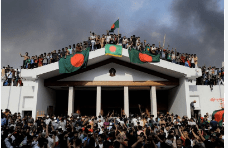
This transcript covers a New Year’s Day discussion on Bangladeshi politics in 2025. Three panelists, representing different political viewpoints, debated the upcoming elections, the ongoing reforms process following a recent popular uprising, and the challenges facing the government. Key concerns included election timing, the implementation of reforms, and the need for political consensus. The panelists expressed skepticism about the government’s commitment to reform and fair elections, predicting continued political instability unless significant changes occur. The discussion highlights deep divisions and anxieties about the country’s future.
Politics in Bangladesh: A 2025 Study Guide
Quiz
Instructions: Answer each question in 2-3 sentences.
What are the three reform commissions mentioned in the text and what were their supposed reporting deadlines?
According to the text, what major shift occurred within student organizations after the mass uprising, and what did this shift imply about the government?
What claim is made about Bangladesh’s human rights situation after Hasina was forced to flee the country?
According to the text, what are the reasons some people want to delay the election?
What is Nurul Haque Noor’s opinion about Dr. Muhammad Yunus and the current interim government, and how does that influence his view on the present political situation?
What is meant by the “July Declaration” and what is its stated significance in the text?
What criticisms does Nurul Haque Noor make about the interim government’s actions related to the mass uprising?
What does Rumin Farhana suggest is the primary need of the Bangladeshi people and what issues does she identify that currently stand in the way of that need being met?
How does Ruhin Hussain Prince describe the current state of the electoral process, specifically regarding the timing of the election?
What does the text say about the role of external forces and conspiracies in Bangladesh’s current political landscape?
Quiz Answer Key
The three reform commissions mentioned are the Electoral Reform Commission (supposed to report by January 3), the Anti-Corruption Reform Commission (by January 7), and the Constitutional Reform Commission (by January 15). These commissions were expected to provide reports but apparently did not.
After the mass uprising, student organizations shifted to align with political parties, indicating that the government may be more fractional and aligned with certain political factions rather than being a broad representation of the people.
The text claims that Bangladesh’s human rights situation has improved considerably after Hasina was forced to flee, with people feeling safer at home and less fearful of police harassment, but this claim is disputed within the text.
Some people want to delay the election to gain more time to strengthen their parties and their positions for votes, suggesting that the timing of the election is being seen through a strategic, rather than a purely reformist, lens.
Nurul Haque Noor believes that the interim government should be trusted because it is led by Dr. Muhammad Yunus. However, he criticizes its lack of transparency and roadmap, and finds that the government is failing in its basic duties.
The “July Declaration” refers to a set of demands for reform that arose from a popular uprising. The government initially stated it would respond to the declaration’s demands, especially concerning election dates, and those demands have been tied to the current political conflicts.
Nurul Haque Noor criticizes the government for not fulfilling the promises made to the people after the mass uprising, specifically stating that those who participated in the massacres have not been brought to justice and are instead being “rehabilitated”.
Rumin Farhana believes the primary need of the Bangladeshi people is good governance, including a safe society, rule of law, affordable goods, and job stability. She notes the current unstable business environment and government partisanship as obstacles to these needs.
Ruhin Hussain Prince notes confusion surrounding the election timing, asserting that there has been a stated train of election reform set into motion, but that no one knows when the train will arrive. There is an ambiguity that is causing uncertainty and frustration.
The text suggests that external forces and conspiracies, both domestic and international, are at play and that they will not allow the country to be at peace. There is an insinuation of external interference and potential conspiratorial elements impacting the country’s politics.
Essay Questions
Instructions: Answer each question in a well-structured essay with a clear thesis, supporting evidence from the text, and logical analysis.
Analyze the different perspectives on the role of the interim government presented in the text. How do these viewpoints reflect the broader political divisions in Bangladesh?
Discuss the significance of “reform” as it is used in the text. How do different political actors define reform, and what are the major areas of reform being debated?
Explore the concept of mass uprisings in the context of the text. How are such uprisings perceived by different actors, and what are the long-term implications of these movements for Bangladesh’s political landscape?
Evaluate the tensions between calls for electoral reforms and immediate elections. How do the different speakers in the text prioritize these issues, and what are their underlying motivations?
Assess the impact of economic factors on the political climate as depicted in the text. How do concerns about the economy intersect with political debates and social unrest?
Glossary of Key Terms
Anti-Discrimination Student Movement: A student-led movement advocating for equality and an end to discriminatory practices. Awami League: A major political party in Bangladesh that is often referred to within the text as having engaged in past wrongdoings. BNP (Bangladesh Nationalist Party): A major political party in Bangladesh, often in opposition to the ruling party and other actors in the text. Constitutional Reform Commission: A commission that was tasked to provide recommendations to reform the constitution. CPB (Communist Party of Bangladesh): A communist political party in Bangladesh and a participant in political discourse within the text. Electoral Reform Commission: A commission established to look at and provide recommendations to reform the electoral process. Fascist: A term used to describe what is thought to be an oppressive form of government. Hegemonic power: A dominant power or influence, often used in the context of political or international relations. Interim Government: A temporary government put in place after the ousting of a previous administration in order to oversee the country until new elections. July Declaration: A declaration of demands arising from a popular uprising that happened in July, including calls for reform of the state. Mass Uprising: A large-scale popular revolt against the government. Misrule: Poor or corrupt governance. National Consensus: A general agreement or accord among political actors and the citizens of a nation. Rajkan Studio: The apparent broadcast studio where the discussion is taking place. Reforms: Changes intended to improve a system, institution, or policy. Rohingya Crisis: The situation involving the displacement and persecution of the Rohingya people. Sheikh Hasina: A political leader in Bangladesh who is the subject of some controversy in the source text.
Bangladesh’s Political Landscape: Early 2025
Okay, here’s a detailed briefing document summarizing the main themes and important ideas from the provided text, using quotes where appropriate:
Briefing Document: Analysis of Political Discourse in Bangladesh – Early 2025
Date: October 26, 2023
Subject: Analysis of political discussions regarding Bangladesh in early 2025, based on a televised debate.
Sources: Excerpts from “Pasted Text” – A transcript of a panel discussion on Rajkan Studio featuring Barrister Rumin Farhana (former BNP MP), Ruhin Hussain Prince (CPB General Secretary), and Nurul Haque Noor (President of People’s Rights Council)
Executive Summary:
This briefing analyzes a panel discussion that took place at the beginning of 2025, focusing on the political landscape of Bangladesh. The discussion highlights a complex situation marked by a recent “mass uprising” and a new government attempting to implement reforms. The panel grapples with questions about the government’s legitimacy, the speed and scope of reforms, the timing of elections, and the potential for further unrest. Key themes include the need for political consensus, concerns about the government’s actions, the role of the student movement, the ongoing struggle against corruption and the legacy of past misrule, and the influence of both domestic and international forces on Bangladesh’s political stability. There is significant distrust among political parties. The primary concern appears to be the potential for conflict and uncertainty surrounding the upcoming elections.
Key Themes & Ideas:
The Aftermath of the Uprising:
The discussion is framed by a recent “mass uprising” that resulted in a new government. This uprising is positioned as a rejection of past misrule and a movement towards democracy: “The main thing that had to be organized was the reception of the students, a mass reception and massive blood donation.”
Participants note the fluidity of the situation since the uprising and the move from a unified front to more complex political maneuvering.
There’s an expectation that the government should fulfill the aspirations of the uprising, including anti-discrimination reforms.
There are concerns that the spirit of the uprising is being lost, and a feeling that its sacrifices are being politicized: “Even here, if there is an attempt to establish it as the contribution of a certain ideology or a certain group of people to the exclusion of others, then naturally others will not own it.”
Reform and the Electoral System:
Reforms are a central topic of debate. The panelists discuss various commissions formed to address electoral, anti-corruption, and constitutional reforms.
There is a strong desire for electoral reforms to ensure free and fair elections. The focus is on direct people’s vote and that elections should ensure that “power in the hands of those who win”.
A key point of contention is the timing of the elections. Some believe the government is delaying elections to solidify its position: “The more time you build, the more time you will get and the better the party is before the election, the better the party will be.”
Some believe that the Election Commission must take control of the election process and ensure a fair process, including an updated voter list and seat adjustments.
However, there is disagreement as to whether reforms should precede any election, with some advocating for a clean slate of reforms before any elections.
Government Actions and Legitimacy:
The new government is criticized for a lack of transparency and a failure to create a clear roadmap for its agenda: “We just wanted a clear roadmap from day one. What is your short-term, mid-term, and long-term plan?.”
Concerns are raised about the government’s perceived bias and the possibility of it functioning as a political party itself: “This government is creating so much division between the political parties and the government is becoming a party which is very dangerous.”
There is considerable distrust of the government’s commitment to neutrality, with one panelist stating that there is mistrust between the political parties.
The government’s decision to move forward with things at a fast pace is causing confusion and skepticism, with some suggesting that “no one can see the train running”.
Some believe the government’s response to the uprising is slow and that it has not arrested enough individuals involved in corruption.
Political Divisions and the “Big War”:
The phrase “a big war has to be fought” is mentioned in connection with the BNP’s position, referring to a struggle against forces they perceive as fascist: “Your Acting Chairman Tariq Rahman said that the country has entered a new phase of transformation but also said that another big war has to be fought…”
There is a strong sense of political fragmentation, with different political actors taking different stances on the timing of elections, the scope of reform, and support for the government.
The government is accused of failing to establish a national consensus and instead creating divisions amongst parties.
The Role of the Student Movement:
The anti-discrimination student movement played a key role in the uprising and is now a political factor, with the government itself seen as representing some of the movement’s ideals.
However, there are concerns that the movement has been fragmented and taken over by political parties: “After this incident, now the organization has gone to the place of the political party.”
There is concern that student leaders are part of a government that is not pursuing the goals of the movement: “During their government, those who were involved in this massacre are not being slowly rehabilitated from bureaucrats to businessmen.”
Corruption and the Legacy of the Past:
The discussion includes numerous references to the corruption and misrule of past governments.
There is a sense that these issues still plague the current government, highlighting that people are experiencing challenges with the cost of living, law and order and other similar issues.
A panelist states that while the government has been in power for five months, it is not enough time to undo 16 years of corruption and maladministration, but it needs a proper plan.
International Influence
There is a reference to the Rohingya crisis as a potential challenge in the new year.
There is a mention of “hegemonic power” from both international and domestic forces who will not want peace.
There is also mention that international states are pressing the government for an election and a political government.
Quotes highlighting key concerns:
On government transparency:“We didn’t say that. We just wanted a clear roadmap from day one.”
On the government’s perceived bias:“If this government constantly presents itself as a party then that’s why it said the big war yes if this government constantly presents itself as the voice of a party other political We are the party or Prince brothers or Noor brothers, but we will not feel safe. Elections under this government.”
On lack of progress:“Now everyone is saying that Saira Dimak means Kaindaba, who left quickly after the reforms, but he is saying this because now he is saying that without a political government, there will be no new momentum in employment, no new investment will come in the economy, no stability will be created in the country from neighboring countries.”
On need for consensus:“But in all cases what we say is that without political consensus without participation of citizens nothing will be successful.”
On the uncertainty surrounding elections:“The train has started but the train has started but no one can see the train running. This is a confusion.”
Conclusion:
The political landscape of Bangladesh in early 2025 is highly volatile and uncertain. While there is optimism that the new government can address past issues, there’s a lack of trust and a growing sense of division. The tension surrounding the upcoming elections suggests the possibility of further unrest. The need for political consensus, transparency, and substantive reforms remains crucial for Bangladesh to move forward. This analysis suggests that the government needs to address the key concerns in the areas of reforms, election transparency and building trust.
Recommendations:
Monitor the situation closely, paying attention to upcoming announcements from the government
Track political maneuvering in the run up to potential election dates.
Analyze how the government responds to the concerns that have been raised and whether they can bridge the gaps with political parties.
Consider the international influence on the government and be prepared for reactions to different political announcements.
This briefing document provides an overview of the complex political situation in Bangladesh based on the provided text. Further information may be required for a deeper understanding.
Bangladesh’s 2025 Political Outlook
Frequently Asked Questions on the Political Situation in Bangladesh
1. What are the major political challenges facing Bangladesh in 2025, as highlighted in the discussions?
The discussions identify several key challenges: Firstly, navigating the complex political landscape after a period of significant upheaval. This includes establishing a stable government, addressing the deep distrust among political parties, and managing the expectations of various groups including students, workers, and the general public. Secondly, ensuring fair and transparent elections, with debates surrounding the timing and necessary electoral reforms. Thirdly, dealing with the deep rooted corruption and maladministration of the previous regime and delivering on the promise of a better future. Finally, addressing economic instability, unemployment, and the rising cost of goods, along with ensuring citizen safety and maintaining law and order.
2. What is the significance of the “July uprising” and how is it impacting the current political climate?
The July uprising refers to a period of significant public unrest and protest, driven largely by student movements, seeking to overthrow the previous government. It created a demand for significant reforms and a transition to a better political and social system. While the uprising successfully removed the previous government, the discussions suggest that the new government has failed to live up to expectations in the five months since. It is described as a period of fluid and complex situations where initial unity has fragmented. The spirit and goals of this uprising remain a benchmark against which current progress is measured, but are often seen as being unfulfilled. The anti-discrimination student movement is key.
3. What are the key demands of the student movement and how are they interacting with the government?
The student movement played a critical role in the July uprising and continues to advocate for reform and change. They demand significant reforms across various sectors such as the electoral system, the judicial system and anti-corruption measures. They also seek accountability for past wrongs, including human rights abuses and extrajudicial killings. The discussions suggest that the initial unity between student organizations has waned since the uprising, with some now aligning more closely with political parties. Furthermore there is a rising distrust in the new government’s commitment to their demands.
4. What are the main points of contention regarding the timing and conditions of the upcoming elections?
There is a significant disagreement over the timing of the elections, with some advocating for immediate elections while others, like the student movement, insist on comprehensive reforms before any election takes place. The discussion also includes concerns that those in power may use delays to consolidate their position. There is a fear that elections held under current conditions may not be truly fair or representative given the legacy of the previous government and that it could further entrench political instability. The government’s mixed messaging on the date, with several varying dates being floated, has not helped to settle the debate.
5. How does the concept of reform factor into the political dialogue, and what are some specific reforms being discussed?
The idea of reform is central to the political dialogue. Various reforms are demanded including: electoral system reform to ensure free and fair elections, legal and judicial system reform to ensure accountability, and administrative reforms to tackle corruption. Calls have also been made for specific commissions that were intended to carry out reform work to report on their findings, and there is a call to involve people in discussion of these reforms. The discussions highlight that these reforms are seen as necessary before elections can be held, but there is an ongoing debate as to what should be prioritised. Some believe that these reforms should be a priority and the current government should be working towards implementing these to ensure better governance.
6. What role do political parties play in the current political landscape, and what are some of their main concerns?
Political parties are both key players and major sources of conflict in Bangladesh’s political landscape. The discussions highlight a deep mistrust between parties, particularly between those who previously supported the old regime, and those in the new government. The BNP specifically have concerns about the leader of their party’s absence, raising a question about political freedom. There’s an apparent division among political parties regarding the need for consensus and reform as a pre-condition for elections, and there is skepticism about whether the new government can act neutrally due to its formation after the mass uprising. Some worry about the government’s potential bias, leading to potential calls for a caretaker government.
7. How is the new government being assessed after five months in power, and what are the main criticisms it faces?
After five months in power, the new government faces several criticisms. They are criticized for a lack of a clear roadmap for their short, mid, and long-term goals. There is a perceived failure to deliver on the promise of reforms and to address major issues like corruption. They are also criticised for not engaging with other political parties and citizens enough and for potentially becoming partisan. Furthermore, there is concern that members of the previous corrupt regime are not being held accountable and are in fact being rehabilitated. There is an overall sense that the new government’s performance has been undesirable, lacking coordination, transparency and effectiveness.
8. What are some of the international concerns and influences at play in Bangladesh’s political situation?
International factors play a significant role in the discussions. There are concerns about foreign powers and hegemonic influences that might interfere in the country’s affairs. There are also discussions about media from neighboring countries spreading misinformation, and concerns about international agreements being impacted by the current political instability. The Rohingya refugee crisis is highlighted as a potential challenge in the coming year. Overall, there is a call for stronger national sovereignty and more transparency with both domestic and international relations.
Bangladesh’s 2024 Uprising and its Aftermath
Okay, here is a detailed timeline and cast of characters based on the provided text:
Timeline of Main Events (as discussed in the text)
Prior to July/August [2024]:
Long period of “misrule” and “mafia rule” in Bangladesh.
The political parties gathered in Vajra Atani (a specific place is inferred, but not described)
People from extreme right to extreme left, united in a desire to be “freed from this hand,” assumed to mean the government.
BNP leader Tariq Rahman states the country has entered a new phase of transformation and says another “big war” is needed after the “dispensation of fascists.”
July/August [2024]:
A significant “people’s uprising” occurs.
Anti-discrimination student movement gains broad support.
Many people are killed, and many more injured during the uprising.
The government is described as a result of mass participation.
This mass uprising is aimed at the downfall of “fascism”.
A new government is formed, described as an interim government. Dr. Muhammad Yunus is installed as its head.
A declaration is made, seemingly by or on behalf of the government, within a certain timeframe. (The exact nature of the declaration is not fully specified, but it’s related to student demands and potential reforms).
There is a suggestion that the student movement is shifting to align with political parties.
Post-Uprising (August – December [2024]):
The situation is described as fluid and complex, with political parties and student groups possibly shifting allegiances.
Reform commissions are established to address electoral, anti-corruption, and constitutional issues, with reporting deadlines.
The government is under pressure to deliver on the promises of reform.
Political parties become focused on elections, and how they will fare in them.
There is a lack of clear direction or roadmap from the interim government on its short-term, mid-term, and long-term plans.
Mistrust is said to be growing between political parties, especially regarding the government’s neutrality.
A push to hold the election within the year is promoted.
January 1st, 2025 (Date of the Discussion):
Discussion about the challenges and opportunities of the new year, particularly in relation to politics and reform.
The government’s perceived lack of action on promised reforms is highlighted.
There is disagreement over whether an election date should be prioritized or focus should be given to reforms first.
The issue of “conspiracy” arises as a potential challenge.
Concerns are raised about the state of the economy, with garment factories closing, and investment stagnant.
There are calls for national consensus and a need for the interim government to engage more effectively with political parties and civil society.
January 15th, 2025 (Potential Declaration): *The government is expected to make a declaration, although its contents and timing are unknown. It seems that the date is a benchmark of when to expect something of significance.
Mid to Late 2025, or Mid 2026:
The potential time frame for when elections may occur. There is no consensus on if the election is a priority.
Cast of Characters
Barrister Rumin Farhana: Former parliament member of the Bangladesh Nationalist Party (BNP) and co-editor of international affairs. She believes Bangladesh has been freed from misrule and corruption and human rights have improved, but the country still faces significant challenges. She focuses on political party’s positions and the need for reforms.
Ruhin Hussain Prince: General Secretary of the Communist Party of Bangladesh (CPB). He is interested in seeing meaningful political reforms, is aware that the current situation is becoming increasingly complex, and is involved in pushing for reforms.
Nurul Haque Noor: President of the People’s Rights Council. He emphasizes the sacrifices of the people involved in the uprising, criticizes the government for not fulfilling its mandate, and calls for national unity and the inclusion of citizens in political processes.
Tariq Rahman: Acting Chairman of the BNP. He believes the country has entered a new phase of transformation, but that another “big war” has to be fought.
Sheikh Hasina: While not participating in the discussion, she is mentioned as the leader of the prior regime that was removed after the people’s uprising. She is described as having presided over an era of misrule.
Mirza Fakhrul Islam Alamgir: The Secretary General of the BNP, who says “the path of suffering must be followed”.
Dr. Muhammad Yunus: Head of the interim government. He is internationally recognized and respected, but the government is perceived as failing to capitalize on his presence. His credibility is expected to bring stability.
General M.S. Osmani: The commander in chief of the armed forces during the 1971 Liberation War, who the speakers use as an example of a historically significant person who is not remembered enough, and they see a parallel between his legacy and the people who died in the July/August 2024 uprising.
Key Themes and Issues
Reform: The need for electoral, anti-corruption, and constitutional reforms is a central theme.
Elections: The timing and nature of upcoming elections are a major point of contention.
Government Legitimacy: Questions arise about the interim government’s neutrality and its ability to gain public trust.
National Unity: The call for national consensus and inclusion is present throughout the discussions.
Economic Stability: Concerns about the economy and the lack of investment are highlighted.
Student Movement: The role of the anti-discrimination student movement and its evolving relationship with political parties is an important thread.
Conspiracy: The fear of potential domestic and international actors working to undermine the new government is a concern.
Let me know if you would like any further clarification or have any more sources to analyze.
Bangladesh Political Reforms: Challenges and Perspectives
Political reforms are a central topic of discussion in the provided sources, with various perspectives on their necessity, scope, and implementation. Here’s a breakdown of the key aspects:
Need for Reforms:
The sources indicate a widespread agreement on the need for political reforms in Bangladesh [1-3].
There’s a call to move away from a broken electoral system and return to real democracy with direct votes ensuring power for the winners [1].
Many feel that reforms are necessary due to past misrule and a desire to establish good governance, ensure safety, and improve the law and order situation [2, 4].
Concerns are raised about the current administration’s inability to address corruption and administrative irregularities, which underscores the need for reforms [5].
Areas of Reform:
Electoral System: A key focus is on reforming the electoral process to ensure fair elections [1, 3, 6, 7]. This includes addressing issues like correct voter lists and seat allocation [7].
Constitutional Reform: There are discussions about constitutional reforms and the need to address major problems within the constitution [6].
Anti-Corruption Measures: Reforms are sought to tackle corruption, which is seen as a major impediment to progress [5, 6].
Administrative Reforms: The sources also mention the need for a clean-up campaign in the administration, law and order forces [7].
Judicial System: There are calls for the existing laws of Bangladesh to be followed [8].
Perspectives on Reform:
Political Parties: Political parties are seen as key stakeholders in the reform process [3].
Some parties want to delay the election as long as possible for their own benefit [3].
There are concerns that the government is not engaging with political parties to create a consensus [9-11].
Student Movements: Student movements are also calling for reforms [5].
They emphasize that reforms should come before elections [5].
There’s a sense that the government has not lived up to the expectations of the student movements, particularly regarding the anti-discrimination movement [6, 12].
Government: There are conflicting statements from the government regarding the timing of reforms and elections [3, 6].
The government states that the process of talking to everyone has started to achieve consensus [6].
There is an emphasis that the government will do according to the time limit [6].
However, there are concerns that the government is acting like a party rather than a neutral entity [4].
Public: The public’s desire is to ensure good governance, safety, and a better economy [4].
Challenges to Reform:
Lack of Trust: A lack of trust between political parties and the government is a major obstacle [5].
Disagreement on Timeline: There are disagreements over the timing of elections and reforms, with some wanting elections delayed and others demanding them quickly [3, 7].
Complexity of the Situation: The sources indicate a complex and fluid situation, making it difficult to achieve consensus [1, 6].
Potential for Division: There is a risk of the reforms causing further division, rather than uniting the nation [9].
Government Inaction: A lack of progress from the government in implementing reforms and addressing the needs of the public is creating frustration [5, 10, 11].
Conspiracy Theories: The rise of conspiracy theories is seen as a challenge [13].
Other Considerations:
International Pressure: There is a mention of international states pressuring the government to say something and make new agreements [13].
Economic Impact: Concerns are raised about economic instability, lack of investment, and the closing of garment factories [4].
In conclusion, the sources highlight a strong desire for comprehensive political reforms in Bangladesh, but the path forward is fraught with challenges. The need for consensus, clear timelines, and genuine commitment from all stakeholders is emphasized, as is a worry that the government may not be working towards real reforms.
Bangladesh Elections: Uncertainty and Reform
Upcoming elections are a significant point of discussion in the sources, with various perspectives on their timing and necessity [1-10]. Here’s a breakdown of the key points:
Timing and Uncertainty:
There is considerable uncertainty surrounding the timing of the elections. The government has mentioned timelines, but these have been inconsistent. The sources note the government has said it could be by the end of this year or the middle of next year [10], while the Chief of the patriotic army said that elections cannot be held within 18 months, and the CA office has stated that it has the exclusive jurisdiction to declare the election date [6].
Some political parties are seen to want to delay the election as long as possible, whereas others are demanding elections soon [4].
A government advisor has stated that the election will be announced when the students want it, and there was a time limit set until January 15th [4]. This deadline is tied to a July manifesto [4].
There is a sense of confusion around the election timeline, with a metaphor that “the train has started but no one can see the train running” [7].
Relationship between Elections and Reforms:
There’s a debate over whether reforms should precede the elections [5]. The anti-discrimination student movement has stated that reforms and trials of the Awami League should happen before the elections [5].
Some believe that the election date should be announced as soon as possible to resolve the problems [6, 10].
Others emphasize that elections should be held only after necessary reforms are implemented [4].
There are calls for a “clean-up campaign” in the administration and law enforcement before the elections to ensure a free and fair process [10].
Concerns and Challenges:
There are concerns that the current government is acting like a political party rather than as a neutral entity, raising fears of unfair elections [3, 4, 11].
The sources indicate a lack of trust between political parties and the government, which makes it difficult to have consensus on the election process [5].
It is noted that there could be a fight for another caretaker government if the elections are held under the current government [11].
The question of the acceptability of the election is raised, especially if the Awami League is involved [6]. The sources note that any candidate associated with a party that committed “genocide” is problematic [6].
There is concern that the election might be delayed [4], and that the government will not address real problems, and that public anger will increase [12].
Perspectives of Various Groups:
Political Parties: The BNP has said the country has entered a new phase of transformation but that another big war has to be fought [3]. The BNP also notes that the political parties had gathered before August, and now they see a change [4]. The BNP also questions why the Acting Chairman is unable to return to the country [5].
Student Movements: The student movements emphasize that reforms should come before elections [5]. They are concerned that the government has not met their expectations [13].
Government: The government’s statements on the election timing are inconsistent [6]. They also stated they would make the declaration within 15 days [2].
Public: The public wants good governance, safety, and a better economy, and they expect that the election will solve these issues [11].
Potential Outcomes:
It is suggested that the real debates will begin after the election date is announced and will revolve around whether the Awami League will participate and if the election will be acceptable [6].
The sources suggest that there is a potential for the election to cause further division if it is not handled carefully [11].
There is a view that without a political government, there will be no new momentum in employment and investment [7].
In summary, the upcoming elections in Bangladesh are a subject of much debate and uncertainty. There are significant concerns regarding the fairness of the process, the timing of the elections in relation to necessary reforms, and the potential for further political instability. The sources emphasize the need for consensus among political parties, student movements, and the government, to ensure that the elections are conducted in a way that will benefit the country.
Bangladesh’s Government Stability: Challenges and Uncertainties
Government stability is a significant concern in the sources, with multiple factors contributing to a sense of unease and uncertainty. Here’s an analysis of government stability based on the provided information:
Lack of Consensus and Trust:
A major issue is the lack of consensus among political parties, the government, and student movements [1-5]. This lack of unity creates an unstable environment where different groups are not aligned in their goals or visions for the country [5].
There’s a pervasive mistrust between political parties and the government [4]. This mistrust makes cooperation and agreement on key issues, like elections and reforms, very difficult [4]. The government is perceived by some as acting as a political party, rather than a neutral entity, further eroding trust [6].
The government’s perceived failure to engage with political parties and the public in a meaningful way is contributing to instability [7]. The government does not seem to be holding regular dialogues with various political parties, which is seen as a missed opportunity to create consensus [5].
Internal Divisions and Inaction:
There’s a lack of coordination within the administration [8]. The sources note a “gachara gachara feeling” at the root level of the administration [8]. This suggests a disorganized and unstable government that is not working together effectively [8].
The government is criticized for not taking decisive action in the five months since taking power [4]. They have not fulfilled the expectations of the public regarding corruption, maladministration, and the implementation of reforms [4].
The government’s inability to address the concerns of the public regarding the cost of goods, law and order, and the lack of job opportunities are all contributing to instability [6, 9].
The sources point out that the government has not arrested 50 Awami League leaders in the five months since taking charge, raising questions about their commitment to change [5].
External Factors and Potential Threats:
The sources suggest that there are internal and external forces that do not want the current government to succeed [7]. There are concerns about “hegemonic power” and “imperialist power” both at home and abroad creating further instability [7].
There is a concern that the Rohingya crisis will be one of the challenges in the new year [7].
The rise of conspiracy theories is also seen as a challenge to the stability of the government and country [10].
The economic situation in the country, including garment factory closures, stagnant investment, and a lack of new employment opportunities are also undermining stability [6, 10].
Uncertainty about the Future:
The government’s own statements regarding election dates and reform timelines are inconsistent and add to the instability [11, 12].
There is a fear that the government’s actions might lead to another fight for a caretaker government [6].
Positive aspects
Despite the many concerns about stability, there is recognition that some progress has been made. The sources state that Bangladesh has been freed from misrule, mafia rule, and the human rights situation has improved [3].
There is also recognition that some individuals within the government are respected. For example, Dr. Muhammad Yunus’s position is considered a positive aspect by some [4].
In conclusion, the sources portray a government facing significant challenges to its stability. The lack of trust, internal divisions, inaction on key issues, and external threats all contribute to an unstable environment. The inconsistent messaging from the government and the uncertainty about the future of the elections, as well as the state of the economy, have contributed to this state of affairs. The government’s ability to address these issues and create a sense of unity and consensus will be critical to the country’s overall stability and progress.
Student Movements and Political Upheaval
Student movements are portrayed as a significant force in the sources, with a history of activism and a current role in shaping political discourse. Here’s an analysis of student movements based on the provided information:
Historical Significance and Recent Uprising:
The sources reference a “mass uprising” in July and August, which involved students. The student movements played a key role in this uprising, indicating a capacity for mobilization and collective action [1].
The sources mention that the anti-discrimination student movement was supported by all student organizations, except those associated with dictatorship, and political parties [2]. This implies a broad base of support and unity among student groups at that time [2].
The sources suggest that this movement was critical in creating a shift in the political landscape.
Demands and Expectations:
The student movements are primarily focused on reforms and trials of the Awami League [3]. They have emphasized that these actions should take place before elections [3]. This indicates a focus on systemic change and accountability.
The students do not want the government to act as a political party [4].
The student movement feels that the government has not met their expectations [3].
There is a concern that the government is not listening to the student movement, and are not acting with confidence.
The sources note that the students gave the government a “blank check” but no longer trust the government because of their performance over the last five months [5].
The students are concerned about the lack of action regarding corruption, maladministration, and the implementation of reforms [3].
Current Role and Challenges:
The sources indicate that the student movement’s role has evolved [2]. After the mass uprising, the movement has, in some ways, become aligned with political parties [2]. This may indicate a potential shift in focus or priorities.
The student movements are seen as an important voice in the political landscape, and may be a key factor in determining the timing of the election [6].
There is concern that the spirit of the mass uprising cannot be allowed to be damaged in any way [7].
The student movement is critical of the government and their lack of action in the past five months [7].
The students are concerned with a lack of coordination within the administration, and believe the government is not acting with any sense of responsibility [5].
The student movement is ready to take their concerns to the street if necessary [7].
Relationship with the Government and Political Parties:
The student movements are critical of the government, noting that it is acting like a political party instead of as a neutral entity [4].
The student movements initially supported the government, but now feel betrayed [5].
The sources suggest a tension between the student movements and the government, particularly over the pace of reform [7].
The student movements, which were previously united, are now seen as having gone “to the place of the political party” [2].
Impact and Potential Future Influence:
The student movements’ demands for reform and accountability have a strong influence on the political discourse.
The student movements’ ability to mobilize people is a challenge to the government [7].
The student movements’ current criticisms are contributing to the perception of an unstable government [7].
The sources imply that the student movements will continue to play a significant role in the political landscape and in shaping the future of the country [5].
The way the government responds to the student movement will likely have a big impact on its ability to implement its agenda [8].
In summary, student movements are a critical element in the political landscape, with a history of activism and a strong voice in the current political climate. They have shifted from a position of widespread unity to a more partisan position aligned with different political parties. The student movement’s demands for reform, accountability, and a fair election process, along with their concerns about government stability, highlight their important role in the country’s political future. Their level of influence, and their continued capacity for collective action, is one of the many challenges facing the current government.
Bangladesh’s July-August Uprising: A Nation’s Struggle
The sources describe a “mass uprising” that took place in July and August, which is a significant event in the recent political history of the country [1]. Here’s an analysis of the mass uprising based on the provided information:
Key Characteristics and Participants:
The uprising involved a broad range of participants, including students [1, 2].
The anti-discrimination student movement played a central role, uniting various student organizations except for those associated with dictatorship [2].
Political parties also supported the movement and joined the uprising [2].
The uprising included people from all walks of life, such as garment workers, laborers, fishmongers, vegetable sellers, bus helpers, and rickshaw pullers [3, 4].
The sources emphasize that many people sacrificed their lives during the uprising [5].
Motivations and Goals:
The uprising was driven by a desire to end “misrule” and “mafia rule” [2].
It was aimed at removing the existing government, with a desire for a change in leadership [2].
The uprising was also fueled by a desire for reform of the state and an end to the existing political system [5].
The participants sought good governance, safety, a good law and order situation, and affordable prices for goods [3].
Impact and Consequences:
The uprising led to a change in government, with a new interim government taking power [6].
The sources suggest that the uprising created a new political landscape, where a broad range of people were united against the previous government [7].
The uprising resulted in the ousting of Hasina, who was forced to flee the country, according to the sources [2].
The uprising is credited with freeing Bangladesh from “misrule,” and improving the human rights situation [2].
The uprising is credited with creating an environment where people are no longer afraid of being taken by the police and tortured [2].
The uprising has brought about a focus on the need for systemic reform, including electoral reform, anti-corruption measures, and constitutional changes [8].
The uprising is associated with the July manifesto, and the government is expected to act on this within a set time limit [7].
Current Perspectives and Challenges:
There is concern that the spirit of the uprising may be damaged or forgotten [9, 10].
There are differences of opinion about whether the current government is fulfilling the goals of the uprising. Some believe that the government is not taking the necessary steps for reform, and has not met the expectations of the people [4, 6, 11-13].
The families of those who were killed during the uprising are not being properly cared for [4].
There is concern that the government is taking credit for the uprising, instead of recognizing the contributions of all participants [4].
There are also concerns that the government is not taking into account the demands for reform of the state [4, 5].
There are worries that the government may be creating divisions and acting as a political party, which could lead to further instability [3].
The government is accused of not acting with enough responsibility and not coordinating properly [11].
The sources indicate the possibility that the government will be unable to meet the demands and expectations of the people due to a lack of action on key issues [14].
In summary, the mass uprising of July and August was a significant event that brought about a change in government and highlighted the need for systemic reform. The uprising was driven by a desire for better governance, justice, and an end to the previous regime’s misrule. However, there are ongoing concerns about whether the current government is fulfilling the goals of the uprising, leading to a complex and fluid political environment. The challenges the government is facing, including its perceived inaction, lack of consensus, and failure to address key issues, all suggest that this mass uprising was a crucial turning point, but also represents an ongoing challenge to the new government’s legitimacy and stability.
Affiliate Disclosure: This blog may contain affiliate links, which means I may earn a small commission if you click on the link and make a purchase. This comes at no additional cost to you. I only recommend products or services that I believe will add value to my readers. Your support helps keep this blog running and allows me to continue providing you with quality content. Thank you for your support!
What truly makes a man universally respected? Is it his success, his strength, or his charm? While these traits might be admired, they do not define the essence of a genuinely good man. Beyond surface-level appeal, certain fundamental qualities set great men apart—ones that earn them respect in any culture, society, or relationship.
These qualities are not about perfection but about character. A genuinely good man is someone who embodies kindness, integrity, and emotional intelligence in all aspects of life. He is someone who uplifts those around him, approaches challenges with optimism, and remains true to his values. Unlike fleeting attributes like wealth or status, these core qualities stand the test of time and make a man truly admirable.
If you are looking for a partner, a friend, or even striving to be the best version of yourself, recognizing these characteristics is essential. They are the hallmarks of not just a good man but a great human being. Let’s explore the eight universally respected qualities that define genuinely good men, starting with one of the most essential: kindness.
1- He’s Kind to Everyone
True kindness is not selective. A genuinely good man treats everyone with respect and compassion—whether it’s his partner, his colleagues, or a stranger in need. His kindness is not contingent on mood, circumstances, or convenience. Even in difficult situations, he maintains a gentle demeanor, offering patience and understanding rather than hostility or indifference. This quality is evident in small, everyday actions—like helping someone struggling with heavy bags, showing gratitude to service workers, or standing up for someone being treated unfairly.
Philosopher and author Alain de Botton emphasizes the power of kindness in relationships: “A good relationship is not one in which we are always happy, but one in which we feel safe in our vulnerability.” A man who is kind to everyone creates an environment of emotional security and trust. Kindness is not just about grand gestures; it’s about consistency in thoughtfulness and genuine concern for others, even when no one is watching.
A truly kind man does not let power or status dictate how he treats people. He is as considerate to a janitor as he is to a CEO. In The Art of Happiness, the Dalai Lama states, “Be kind whenever possible. It is always possible.” This belief is at the heart of a good man’s nature—his ability to treat all people with dignity and warmth, regardless of the situation. When you encounter such a person, you will recognize the quiet strength of his kindness in how he interacts with the world around him.
2- He’s Genuinely Optimistic About Life
Optimism is more than just having a sunny disposition; it reflects resilience, gratitude, and a deep appreciation for life. A good man doesn’t allow setbacks to define him—he views challenges as opportunities to learn and grow. His positivity is not naive but intentional. He chooses to see the best in people and situations, which makes him a source of strength and inspiration for those around him.
Psychologist Martin Seligman, in Learned Optimism, explains that optimism is linked to better health, stronger relationships, and professional success. A genuinely optimistic man doesn’t just uplift himself—his energy is contagious. He encourages his loved ones to dream bigger, to face difficulties with courage, and to believe in the possibility of a better tomorrow. This quality is what makes being around him refreshing and comforting.
Optimism is also tied to emotional intelligence. A good man doesn’t ignore problems or pretend that life is always easy, but he navigates difficulties with hope and determination. He understands that life is unpredictable, but instead of focusing on what could go wrong, he focuses on what could go right. This perspective fosters resilience and helps him build meaningful relationships where mutual support and encouragement thrive.
3- He Loves You for You
True love goes beyond surface-level attraction or convenience. A good man sees and appreciates you for who you truly are—flaws, quirks, and all. He does not try to mold you into someone you are not, nor does he love you only when it is easy or convenient. Instead, he cherishes the unique qualities that make you, you.
Author Gary Chapman, in The Five Love Languages, highlights that feeling truly loved comes from being accepted as we are. A man who genuinely loves you will celebrate your individuality rather than see it as something to change. He finds joy in your peculiar habits, whether it’s your habit of making midnight tea or your tendency to get lost in bookstores for hours. His love is steady, not conditional on whether you meet a certain image or expectation.
Such a man creates a relationship where you feel safe to be vulnerable. He understands that love is not just about shared interests or attraction, but about deep emotional connection and mutual respect. His love is shown in the way he listens attentively, supports your dreams, and values your happiness as much as his own. This kind of love is rare, but when you find it, you know it is real.
Conclusion
At the core of a genuinely good man is his ability to uplift others through his actions, words, and presence. Kindness, optimism, and unconditional love are not just traits but guiding principles in his life. These qualities make him a partner worth cherishing, a friend worth trusting, and a role model worth admiring.
These attributes are not about perfection but about consistency. A good man does not just perform acts of kindness—he lives by them. His optimism is not blind but deeply rooted in resilience. His love is not transactional but unconditional. These qualities shape his character and set him apart as someone universally respected.
4- You Can Be Yourself Around Him
A relationship should feel like home—a place where you can be your most authentic self without fear of judgment or rejection. A genuinely good man creates an environment of psychological safety, where you never feel the need to filter your thoughts, hide your quirks, or suppress your emotions. He values the real you, not just the version of you that is polished for social settings.
Research from Harvard Business School highlights that people thrive in relationships where they experience psychological safety—the confidence that they can be vulnerable without facing criticism. A man who fosters this security allows you to laugh loudly, share your deepest fears, and express your true feelings. He does not make you feel inadequate for your imperfections; instead, he embraces them as part of what makes you unique.
The ability to be yourself around someone is not just comforting; it strengthens the emotional foundation of a relationship. When you can let down your guard, communication flows more naturally, and intimacy deepens. As Brené Brown states in The Gifts of Imperfection, “Authenticity is the daily practice of letting go of who we think we’re supposed to be and embracing who we are.” A man who encourages this authenticity is not just a good partner—he is a rare find.
5- He’s Attractive, Physically and Emotionally
Attraction is about much more than just physical appearance—it’s about energy, confidence, and emotional connection. While physical attraction may initially draw two people together, emotional attractiveness is what sustains and deepens that connection. A genuinely good man understands that true appeal comes from how he carries himself, how he treats others, and how he makes you feel when you’re around him.
In The Science of Attraction, Dr. Jean Smith explains that people are drawn to confidence, humor, and emotional intelligence just as much as traditional good looks. A man who is emotionally attractive listens attentively, engages meaningfully, and supports his partner’s ambitions. He carries himself with self-assurance but without arrogance, making others feel comfortable and valued in his presence.
Physical appeal is subjective, but emotional attractiveness is universal. A man with a great sense of humor, a warm smile, and a kind heart will always outshine fleeting physical beauty. When a man makes you feel seen, heard, and deeply connected, his attractiveness becomes undeniable. As the saying goes, “Looks may fade, but a beautiful soul remains timeless.”
6- He Spends Like You
Money is one of the most common sources of conflict in relationships, and financial compatibility is often underestimated. A good man doesn’t just share your values and dreams—he understands and respects your spending habits. Whether you love indulgent vacations or prefer a more frugal lifestyle, being on the same financial page is crucial for long-term harmony.
In The Psychology of Money, Morgan Housel emphasizes that financial behaviors are shaped by experiences, beliefs, and personal priorities. A man who is financially compatible with you won’t make you feel guilty about your spending choices. Instead, he will communicate openly about finances, plan together for the future, and find a balance that works for both of you. A great relationship is not about who earns more or who spends less; it’s about mutual understanding and shared financial goals.
A genuinely good man is not just responsible with money—he is also considerate about how financial decisions impact the relationship. He doesn’t criticize your choices or impose his own spending habits on you. Instead, he prioritizes teamwork, ensuring that both partners feel valued and financially secure. As financial expert Suze Orman advises, “A big part of financial freedom is having your heart and mind free from worry about the what-ifs of life.” A man who respects and aligns with your spending style is one who contributes to a stress-free, fulfilling partnership.
Conclusion
A strong, lasting relationship is built on more than just chemistry—it requires emotional safety, mutual attraction, and financial harmony. A good man creates a space where you can be yourself, where attraction extends beyond looks, and where financial conversations are handled with mutual respect. These qualities not only strengthen romantic relationships but also foster deep trust and understanding.
While no one is perfect, a genuinely good man continuously works toward building a relationship that is grounded in authenticity, emotional connection, and shared values. His actions reflect his commitment to both love and partnership, ensuring that the relationship flourishes in all aspects. These qualities make him not just a great partner but a truly admirable man.
7- He’s Willing to Work Through Your Issues
No relationship is free of challenges, and a good man understands that growth comes from working through difficulties together. He doesn’t walk away when things get tough, nor does he dismiss your struggles as insignificant. Instead, he takes the time to understand your emotional triggers, listens with patience, and supports you in navigating personal challenges. Whether it’s a bad habit, past trauma, or a communication issue, he approaches it with kindness and a genuine desire to help you grow.
Renowned relationship expert Dr. John Gottman emphasizes in The Seven Principles for Making Marriage Work that couples who address conflicts with understanding and effort are more likely to build lasting connections. A man who is truly invested in the relationship will not just tolerate your flaws—he will help you work through them in a way that fosters trust and emotional security. He recognizes that love is not about perfection but about being present for each other, especially when things get difficult.
A great man doesn’t just offer support in words but also in actions. He actively participates in conversations about personal growth, helps you recognize unhelpful patterns, and reassures you that your struggles don’t define you. As author Elizabeth Gilbert puts it, “A true soul mate is a mirror, the person who shows you everything that is holding you back, the person who brings you to your own attention so you can change your life.” This kind of partnership fosters both individual and collective growth, making the relationship stronger and more resilient.
8- He Puts You First
A man who genuinely loves and respects you prioritizes your happiness and well-being. This doesn’t mean he neglects his own needs, but rather, he ensures that you always feel valued, cherished, and important. When decisions arise—big or small—he considers how they will affect you. His commitment is evident in the way he chooses to spend his time, in the respect he shows for your feelings, and in the sacrifices he makes for the relationship.
However, true prioritization is about balance. A study in the Journal of Social and Personal Relationships found that while putting a partner first is a sign of commitment, consistently prioritizing one person over the other can create imbalance and resentment. A good man understands this and ensures that both partners feel supported and appreciated. He doesn’t just put you first—he creates a relationship where both of you feel equally valued.
His devotion is clear in everyday choices. Whether it’s declining a weekend away with friends to support you, standing by your decisions even when others disagree, or simply checking in to see how your day is going, he demonstrates his commitment through consistent actions. As bestselling author Gary Thomas writes in Sacred Marriage, “A strong marriage rarely has two strong people at the same time. It is a husband and wife who take turns being strong for each other in the moments when the other feels weak.” A man who puts you first ensures that love is not just a word, but a lived experience.
Conclusion
At the heart of a great relationship is a man who is willing to show up—through the ups and downs, through conflicts and celebrations. A good man does not shy away from challenges; instead, he embraces them as opportunities to strengthen the bond you share. His ability to work through difficulties and prioritize your well-being speaks to the depth of his character and the sincerity of his love.
The best relationships are built on mutual effort, respect, and emotional investment. A genuinely good man doesn’t just make promises—he follows through with consistent actions that prove his commitment. His love is not about grand gestures alone but about the daily choices he makes to support, uplift, and prioritize you. These final qualities complete the picture of a truly remarkable partner—one who is not just good but genuinely great.
Bibliography
Here is a list of books and academic sources that provide deeper insights into the qualities of a genuinely good man, relationship dynamics, and emotional intelligence in partnerships.
Books on Relationships & Emotional Intelligence
Gottman, John & Silver, Nan.The Seven Principles for Making Marriage Work. Harmony, 1999.
A research-backed guide on what makes relationships thrive, focusing on emotional connection and conflict resolution.
Brown, Brené.The Gifts of Imperfection. Hazelden Publishing, 2010.
Explores the importance of authenticity, vulnerability, and self-acceptance in fostering strong relationships.
Thomas, Gary.Sacred Marriage: What If God Designed Marriage to Make Us Holy More Than to Make Us Happy? Zondervan, 2000.
Examines the deeper purpose of relationships beyond just romantic love, emphasizing selflessness and mutual growth.
Smith, Jean.The Science of Attraction: Flirting, Sex, and How to Engineer Love. Harlequin, 2018.
Discusses how attraction works beyond physical traits, incorporating emotional intelligence and behavioral science.
Housel, Morgan.The Psychology of Money: Timeless Lessons on Wealth, Greed, and Happiness. Harriman House, 2020.
Explores financial behaviors and how they impact relationships, emphasizing compatibility in spending habits.
Gilbert, Elizabeth.Committed: A Skeptic Makes Peace with Marriage. Viking, 2010.
A personal and historical exploration of marriage and what makes a lasting partnership.
Academic Journals & Studies
Journal of Social and Personal Relationships. Various articles on relationship satisfaction, commitment, and emotional intelligence.
Provides scholarly insights on what makes a relationship successful.
Perspective on Psychological Science. Various studies on happiness, optimism, and their effects on mental health and relationships.
Harvard Business Review. Articles on psychological safety and trust in relationships.
Highlights research on emotional security and its role in personal and professional relationships.
This bibliography will provide your readers with authoritative sources to explore the topic further.
Affiliate Disclosure: This blog may contain affiliate links, which means I may earn a small commission if you click on the link and make a purchase. This comes at no additional cost to you. I only recommend products or services that I believe will add value to my readers. Your support helps keep this blog running and allows me to continue providing you with quality content. Thank you for your support!
The provided text is an excerpt from a fantasy romance novel, “The Merman King’s Bride,” featuring a passionate encounter between the female protagonist, Selina, and a merman. Their interaction is described in vivid detail, highlighting the physicality and emotional intensity of their connection. The narrative unfolds within a fantastical setting, showcasing elements of fairy tale and mythological lore. Selina’s journey involves overcoming obstacles and confronting her feelings in this unusual romance.
The Merman King’s Bride: A Study Guide
Quiz
Describe the first impression Selina has of the Merman King. What specific physical characteristics stand out to her?
What item of Selina’s does the Merman King request, and how does he initially respond when she refuses him?
Explain the Merman King’s claim that women “lied about everything.” What is his stated rationale for that claim, and how does he act based on this belief?
What does Selina say she is thinking when she allows the Merman King to kiss her for the first time?
How does the Merman King react to Selina’s touch, and what does he tell her about the ways that mermen and humans are different?
Describe the physical sensation that Selina experiences when the Merman King kisses her in detail. What are the differences in these sensations compared to those of human kisses she has experienced?
What happens to Selina at the end of the first kiss that is described, and what is her reaction to it?
What does the Merman King suggest to Selina he will do if she does not give him her pendant? Why is this so important to him?
Explain the differences between how the Merman King responds when Selina touches his chest and how she responds when he does. What does that reveal about their physical and emotional differences?
In the last section, how does the Merman King react when Selina tells him to “stop”? Why does she react to his kiss in this way?
Quiz Answer Key
Selina is immediately struck by his beauty, describing him as having wild blue hair, long broad lashes, bright blue eyes, and a wide smile. She also notes the sharp contrast in his pale coloring and the unusual scales on his arms.
The Merman King requests her pendant, and when she refuses, he first becomes mocking and then tries to intimidate her, and he keeps insisting and threatening her until she relents.
The Merman King claims that women lied about everything, and specifically about desire and pleasure, suggesting this is because women have not wanted human men and are being untruthful in their interactions with them.
Selina admits that when the Merman King kisses her, she is no longer thinking rationally, but is thinking only about how his touch makes her feel and her desire for him to touch her.
The Merman King reacts strongly to Selina’s touch. He says that he is cold and that her touch makes his skin feel hot and he says that “it makes me feel sick.” He explains that mermen are different than humans, specifically because his is cold.
Selina experiences a powerful and surprising sensation when the Merman King kisses her, describing it as a jolt of lightning. His kisses send shivers and tremors through her and cause her to feel overwhelmed. His kisses also seem to create a physical need for him that she has never felt before.
After the first kiss, Selina is overcome by the intensity of the experience. Her knees buckle, and she almost faints; she is left breathless and confused by what happened and the way it made her feel.
The Merman King suggests that if Selina does not give him her pendant he will drag her into the sea to be with him always, and that he has no fear of killing her. His pendant is important to him because it allows him to pass as human.
When Selina touches the Merman King’s chest, he feels hot, whereas he is cold. But when he touches her chest, it excites her. This highlights their differences, and especially their physical needs and desires, further emphasizing their contrasting natures.
The Merman King becomes angry when Selina tells him to stop, and his behavior escalates and becomes violent. Selina reacts this way because he is pushing her boundaries and causing her real pain.
Essay Questions
Discuss the power dynamics at play between Selina and the Merman King. How does their initial encounter establish these power imbalances, and how do these dynamics shift throughout the excerpt?
Analyze the theme of desire in this excerpt. How does the author portray Selina’s attraction to the Merman King, and how does this differ from the Merman King’s apparent motivations and desires?
Explore the theme of “otherness” in the text, focusing on the differences between the Merman King and humans. How do these differences impact their interactions and their potential for a relationship?
Consider the use of descriptive language in the excerpt. How does the author use sensory details to create vivid impressions of the characters and the events that take place?
Examine the role of the pendant within the narrative. What does it represent to the Merman King? How does the struggle over this object become a representation of the conflict and power struggle between them?
Glossary of Key Terms
Pendant: In this context, a necklace or charm that seems to allow a nonhuman being to pass as a human, and is an object of desire for the Merman King and an object of power.
Merman King: A non-human character that is depicted with the physical features of a merman and appears as a figure of power, a representative of a specific magical world, and an object of desire.
Otherness: The quality or state of being different or foreign; in this text, referring to the stark distinctions between humans and mermen, especially in terms of their biology, desires, and culture.
Power Dynamics: The complex interactions between people that involve authority and influence; in this case, the imbalance of power between a human woman and a magical merman who is also a king.
Sensory Details: The use of imagery that appeals to the five senses (sight, sound, touch, taste, and smell) to create more vivid and immersive writing.
Desire: The psychological state of wanting something, often with a strong element of longing or sexual attraction; in the text, exploring Selina’s attraction to the Merman King and also the Merman King’s desire for an object he sees as key to his goals.
Fae: A term from folklore for supernatural beings or creatures, often associated with magic and enchantment.
Cursed: In this story’s title, suggesting that something is negatively enchanted or under a spell.
Inhuman: Not human, or not possessing human qualities. In this story, used to highlight the Merman King’s nature.
Intimidation: The act of making someone afraid, often to force them to do something they might not otherwise do, which the Merman King uses to try to get Selina to give him her pendant.
The Merman King’s Bride: A Fairytale Romance
Okay, here is a detailed briefing document reviewing the provided source material:
Briefing Document: “The Merman King’s Bride: A Fairytale Romance (Cursed Fae Kings)”
Date: October 30, 2023
Source: Excerpts from “combinepdf.pdf”, specifically pages 14, 16, 18 and 20.
Overview: This document analyzes a section of the provided text, which appears to be a fantasy romance narrative involving a human woman (Selina) and a merman (referred to as “Fox”). The excerpts detail their first intense encounter, marked by both attraction and a degree of conflict. Key themes involve the nature of the merman, his allure and strangeness, the negotiation of consent and power, and the immediate physical and emotional impact of their interactions.
Key Themes & Ideas:
The Merman’s Unconventional Nature and Allure:
Physical Description: Fox is portrayed as strikingly different from a human, described with “wild blue hair and…long braid, those bright blue eyes and wide smile, that chiseled jaw, the strength in his torso and his muscled arms”. He also has scales on his arms, which contributes to his exotic and otherworldly nature. “His skin appears smooth and like a fish’s.”
Otherworldly Presence: He is “dangerous, but the Creator has seen more in us – rarely see them in the human world”. He’s also described as someone who “lived in a stinky pond in his thrice-damned world!”. He is not human, and his behavior and way of speaking emphasize this.
Magnetic Attraction: Despite this strangeness, Selina is instantly drawn to him, stating, “I’ve never seen a man like him”. Fox’s “blue tail splashes in the water, igniting me.”
Negotiating Consent and Power Dynamics:
Coercion and Consent: Fox displays manipulative behavior, stating “Give me my pendant back” while he is “sinking lower into the water,” then adding, “If I help will you give me my pendant back?”. It seems that he’s trying to make her do something because of his need, rather than her desire. This sets up a pattern of power imbalance. At times, he seems to be pushing boundaries, stating “I will kiss you” when Selina tells him not to.
Challenging Power: Selina demonstrates moments of resistance, asking “Why would I kiss you?” and “Why shouldn’t I?”. She challenges his assumptions and attempts to maintain some control. At one point she states, “I’m not lying, but fine, don’t kiss me, then. Go”. This suggests an ongoing tension between their wills and expectations.
Unclear Motives: Fox’s reasons for his actions are somewhat opaque, with statements such as “I’ve seen men,” and “Look, you can’t do that… I need it”. This adds a layer of intrigue and uncertainty to the dynamic.
Physical and Emotional Impact:
Sensory Overload: The encounter is portrayed with intense sensory details. Selina notes “the sound breaks the spell,” “his deep voice seems to echo in my bones, sending shivers all over my skin,” and “His lips are on mine, soft and insistent, his face so close I can see every detail”. The physical aspects of their interaction are overwhelming, as are the emotional effects.
Conflicting Feelings: Selina experiences a mix of fear, attraction, and confusion. “I may be a sheltered princess, but I know about cocks and that they give men pleasure”. She’s trying to analyze the situation through past experiences and also has the current experience. She experiences pleasure, but recognizes she is also confused and “dazed”.
Unprecedented Experience: Selina acknowledges the uniqueness of her interaction with Fox, stating, “I never thought that having my nipple sucked could feel so good”. “I never thought possible.” Her experiences break her expectations and push her out of her comfort zone.
Mysteries and Conflicts:
The Pendant: The pendant serves as a focal point for their initial interaction, with Fox demanding it back. It hints at a larger plot or reason for Fox seeking contact with Selina. The pendant seems to be central to the plot.
Fox’s Identity: Fox’s identity as a “Fae King” is referenced in the title. His pronouncements, such as “I’m a Fae King, cursed to live in a stinky pond in my thrice-damned world!” suggest there is more to his story than meets the eye, and there is underlying conflict and suffering in his life.
Possible Consequences: Selina is also warned by Fox: “I’ll drag you into the lake and ravish you? Think that’s what I do with human women?”. The threat of harm from the merman is clear and present.
Notable Quotes:
“His gaze moves from my face down to where I’m staring, and his smile shifts, turning into a grin. Dimples appear in his cheeks. His eyes darken, and he lowers my pendant, shifting on the jog. His tail splashes in the water.”
“I am Princess Selina Elizabeth Thornton, I live at the palace of Kyrene.”
“There are moments in life when things spin so badly out of control that it doesn’t feel like they’ll ever straighten out again.”
“His hand is cold, ice seeping into my flesh where he’s holding me, and it makes me feel sick. He’s not human. But his grip is like a steel manacle around my wrist, dragging me meanly toward him.”
“I stumble backward in the water, panting hard, still dazed from the pleasure he made me feel.”
“’Fine!’ Gathering my sodden skirts, I stumble out of the water, away from him. ‘If you think I’ll let you kiss me again, you’re out of your mind.’”
Conclusion: The selected excerpts from “The Merman King’s Bride” depict a captivating and complex dynamic between Selina and Fox. It explores the clash between a human woman and a powerful, otherworldly being, weaving together themes of attraction, power struggle, and the potential for danger. It is clear that this is an initial meeting between the two characters, and the unresolved mysteries, emotional tensions and immediate physical reactions set up a framework for conflict and romance in the story. This section is important for the reader’s understanding of the main characters, their personalities and the central conflict.
Selina and the Merman
Okay, here’s an 8-question FAQ based on the provided text, formatted with markdown:
Frequently Asked Questions
What is unique about the physical appearance of the merman in this story, and how does the main character, Selina, react to it?
The merman has striking physical characteristics: wild blue hair, bright blue eyes with wide, catlike pupils, sharp teeth, and the most noticeable trait – a tail. His skin is covered in scales and his shoulders have “blue patches”. Selina is fascinated, despite her fear, noticing his beauty and his strangeness. She’s drawn to his allure, even while being aware of his dangerous, non-human nature, describing him as a “creature” and feeling both intrigue and apprehension. She also notes the contrast between his features and the “human” features on his body.
What object is of significant importance to the merman, and what does he demand of Selina concerning it?
The merman’s pendant is crucial. He demands that Selina return it, calling it “his” and repeatedly telling her to “give me my pendant”. This object appears to hold some significance to his power or identity, as he seems incapable of leaving until he has it back. He is insistent, even possessive about it. He is willing to bargain with her in order to retrieve it.
How does the merman manipulate and influence Selina, and what tactics does he employ?
The merman uses a combination of physical attraction, intimidation, and veiled promises to influence Selina. He uses his physical proximity, touching her and kissing her, to arouse her and make her want him. He also leverages his status as a mythical being and repeatedly insists he is “not human” to create a sense of otherness and to intimidate her. He uses suggestive statements such as “I will drag you into the lake and ravish you.” as well as bartering techniques such as, “If I help you will you give me my pendant back?”. These methods seem to blur her judgement.
What kind of “bargain” or agreement does the merman attempt to make with Selina in exchange for her assistance?
The merman offers a series of conditional agreements. He promises, or hints at promises, that he will help Selina if she gives him his pendant back. He states, “If it works, I’ll know you’re telling the truth.” He also seems to make another agreement that if she does as he asks, he will kiss her, which he implies is a reward. The terms of these agreements seem to shift to serve his needs.
What kind of power does the merman imply or demonstrate he has in this text?
The merman is implied to possess significant power. He states that Selina can not swim away from him as he will catch her with no problem. He is able to open gates in the water and to travel at great speeds, as demonstrated when he sinks quickly. He also seems to have the power to manipulate or seduce humans using his attractiveness and physical contact, as well as make her physically respond. The text also hints that he is not easily killed, as he states, “You get stuck with me and the first shot and become sick.” He also makes comments about being able to pull Selina into the water to be ravished.
What is the general relationship dynamic between Selina and the merman, and how does it evolve throughout these excerpts?
Initially, the relationship is characterized by Selina’s fear and suspicion of the merman, especially as she sees the way he is not like any other human she has seen. However, it quickly shifts towards intense attraction and confusion. He uses intimidation and manipulation alongside attempts at seductive physical contact, creating a push-pull dynamic. Selina becomes increasingly drawn to him physically, making their interactions more intimate and blurring the boundaries of her judgment. This attraction is coupled with feelings of unease and apprehension, making the relationship complex and potentially dangerous.
How do the descriptions of the merman’s physical touch and actions contribute to the overall mood and tone of the text?
The merman’s touch is described as both enticing and disturbing, heightening the tension. It fluctuates from “soft and insistent” to “hard,” “cold,” and even painful. This juxtaposition emphasizes the duality of his nature: alluring yet dangerous. Descriptions of his kiss as both pleasurable and frightening, his hands as cold and hard, create a sense of unease and intensity, and contribute to a dark and sensual mood. The overall tone becomes more heightened and frantic as the text progresses.
What does the text suggest about the merman’s perspective on humans and human relationships?
The merman views humans with a combination of disdain and intrigue. He refers to them as “little humans” and states that humans lie and make promises that they cannot keep. He views their bodies as “in human,” and states that he “wouldn’t lie.” However, he also seems fascinated and even captivated by them, as shown by his physical interactions with Selina and his desire to kiss and touch her. He implies that he does not comprehend human emotions, such as why they would not kiss him, and that his species does not engage in similar behaviours with each other, implying that they are a different species with different practices. His views highlight the disparity between the two worlds, emphasizing the conflict between their very different natures.
The Merman’s Bride
The sources present a narrative involving a merman and a human woman, which includes elements of their interactions and the development of their relationship. Here’s a breakdown of the key aspects related to the “Merman’s bride”:
Initial Encounter: The merman has a pendant, which is initially the focus of the human, Selina [1]. The merman is described as beautiful and dangerous, with striking features like “wild blue hair and that long broad, those bright blue eyes and wide smile, that chiseled jaw” [1]. Selina’s initial reaction to him is a mix of awe and fear [1]. The merman also seems to be intrigued by her, noting she is “a pretty little human” [2].
Pendant and Power Dynamic: The pendant is significant as it appears to be something the merman needs to function on land, or it is a symbolic part of him. He offers to trade with Selina for it, which shows it has value, but he also tries to intimidate her by claiming, “One only a human princess can break” [2]. He uses his physical strength and also his words to try to get the pendant, indicating a power dynamic between the two characters.
Intrigue and Attraction: Despite the initial power play, there is also a growing attraction and curiosity between the merman and Selina. She is drawn to him and begins to think of him as beautiful [1]. The merman also acknowledges his attraction to her, saying “You are beautiful. You look like what you are” [2].
Negotiations and Exchanges: The interactions between the merman and Selina involve a negotiation of sorts, particularly regarding the pendant [2]. He tries to get the pendant from her [2], but their interactions evolve into flirtatious exchanges and eventually kissing [3, 4].
Physical Intimacy: The narrative includes scenes of physical intimacy between the two, with kissing as a key element [3, 4]. The merman’s touch has a strong effect on Selina. It is described with words such as, “shocking,” “like a jolt of lightning,” and “pleasure” [3, 4]. The merman is described as feeling intensely when they kiss, such as when “his lips move over mine and pleasure courses through me. I feel my arms winding up around his neck as his tongue parts my lips and delves into my mouth” [3].
The Merman’s Nature: The merman is portrayed as a creature both captivating and dangerous. He is described as cold, having “scale” on his arms [1, 3]. He states he is “a Fae King, cursed to live in a stinky pond in your thrice-damned world!” [3]. This hints at a deeper story and suggests that their relationship is complex, particularly if she becomes his bride.
Emotional Impact: Selina’s feelings for the merman are described as intense and confusing, going from fear to attraction quickly [1]. The narrative also details the merman’s feelings, which seem to be as intense as Selina’s, as when he “holds on tight” and “press[es] me even more into his mouth” [4]. The exchange between the two shows an intense emotional and physical connection [3, 4].
Uncertain Future: The interactions end with an uncertain future. He states he will return and then disappears [4]. This sets the stage for further exploration of their relationship and the challenges they might face [4].
In summary, the sources describe the beginning of a complex relationship between a human woman and a merman. The key elements include initial apprehension, growing attraction, physical intimacy, and a power dynamic centered around the merman’s pendant. The narrative indicates a potential bride dynamic which suggests the relationship may become more complex and challenging in the future.
The Merman King’s Bride
The sources present elements of a fairytale romance through the interactions between a human woman, Selina, and a merman [1-4]. Here’s a discussion of those elements:
Initial Encounter: The story begins with a classic fairytale trope of an encounter between a human and a magical being. Selina meets the merman, who is described with striking features that highlight his otherworldly nature, such as his “wild blue hair”, “bright blue eyes,” and “chiseled jaw” [1]. This initial encounter sets the stage for a romance that transcends the ordinary.
Beauty and Danger: The merman is depicted as both beautiful and dangerous [1-4]. This combination is a common theme in fairytale romances where the love interest is not entirely safe or predictable. Selina’s initial fear mixed with attraction towards the merman captures the essence of this trope [1].
Power Imbalance: There is a clear power dynamic between Selina and the merman, typical in many fairytale romances [1, 2]. The merman is physically stronger, and he also holds a position of authority as a “Fae King” [1, 3]. He attempts to dominate the interactions using his words and physical presence, which introduces conflict and creates tension [1, 2]. The pendant he needs adds another layer of complexity to this power struggle.
Intrigue and Attraction: Despite the power imbalance, there’s a growing sense of intrigue and attraction between the two [1, 2]. Selina begins to view the merman as beautiful, and he acknowledges her beauty as well [1, 2]. The mutual attraction builds on the fairytale motif of love blooming in unexpected places.
Magical Elements: The presence of a merman is a core element of fantasy and magic in this story [1-4]. His scales, his ability to breathe underwater, and his ties to the Fae world enhance the fairytale aspect of the romance [1-3]. His need for the pendant and his description as a “Fae King, cursed to live in a stinky pond” further develops the magical world around him [3].
Physical Intimacy: The physical intimacy in the narrative is intense, furthering the idea that this is a passionate and fairytale-like romance. The detailed descriptions of their kissing and touch emphasize the strong connection between them, adding a romantic element that goes beyond simple attraction [1, 3, 4]. The language used, such as “jolt of lightning” and “pleasure courses through me”, underscores the heightened emotions and intimacy involved in their interactions [3, 4].
Emotional Intensity: Selina’s emotions swing rapidly from fear to attraction, and she experiences heightened feelings when the merman touches her. This emotional intensity is common in fairytale romances where love often takes hold with a sense of urgency and all-consuming passion [1, 3, 4]. The merman’s emotions also seem intense, and the narrative focuses on the connection between the two in the moment.
Uncertainty and Promise: The story ends with the merman leaving, but promising to return [4]. This uncertainty creates anticipation for the continuation of their story, which is a common theme in fairytale romances, as the reader or listener is left with a sense of hope for their relationship despite the challenges [4].
Bride Narrative: The title of the text, “The Merman King’s Bride”, suggests a future narrative arc where Selina might become his bride. This alludes to the trope of a chosen or destined bride in fairytales.
In summary, the narrative utilizes several key elements of fairytale romances, such as magical beings, a power imbalance, intense attraction, and a hint of danger and uncertainty [1-4]. These elements work together to create a story that captures the essence of a fairytale romance and sets the stage for future complexities in the relationship.
The Cursed Fae King
The sources introduce a “Cursed Fae King” who is a merman, and they present several key aspects about his nature and situation:
Identity and Status: The merman identifies himself as a “Fae King” [1]. This indicates he is not just a common merman but holds a position of power within his own world. He also reveals that he is “cursed to live in a stinky pond in your thrice-damned world” [1]. This curse explains his presence in the human realm and suggests that his current state is not his natural one, giving rise to the concept of a “cursed fae king.”
Physical Description: The merman is described as having “scales on his arms” [2]. He also has a “cold” body [1], further emphasizing his non-human nature. His striking features, such as his “wild blue hair,” “bright blue eyes,” and “chiseled jaw,” highlight his beauty, which is often a trait associated with fae creatures in folklore [3]. These descriptions paint a picture of a being who is both alluring and potentially dangerous, traits that are common in depictions of fae.
Need for a Pendant: The merman needs his pendant, and it seems crucial to his existence or ability to function on land [3]. The pendant is described as something “only a human princess can break,” indicating that it is tied to his curse or his fae nature. He is intent on getting it back, and his efforts to negotiate and eventually forcefully try to take it from Selina demonstrate its importance to him [1, 2].
Power and Authority: Despite his cursed state, the merman still displays a sense of authority and power. He is not afraid to use his physical strength and his words to try to get what he wants [2]. His status as a “Fae King” suggests he is used to being in control, which is in conflict with his current situation.
Emotional Complexity: The merman is not portrayed as a one-dimensional character. He expresses intense feelings, especially when interacting with Selina. The passionate descriptions of their physical intimacy, such as “His lips move over mine and pleasure courses through me” [1], shows a deep and complex character rather than simply a cold, cursed creature. The intensity of his emotions, however, may also be part of his fae nature, who are known for their strong passions and volatile temperaments.
Connection to the Fae: His statement about being a “Fae King” and his curse firmly place him in the context of the fae realm [1]. Fae creatures are often associated with magic, nature, and a different set of rules than the human world, which explains the otherness of the merman [2, 3].
Potential Narrative Implications: The fact that he is a cursed fae king suggests a more complex storyline. His curse is a challenge, which could be a central part of the narrative. The relationship between his curse and his status as a Fae King, as well as the reason behind the curse, could drive the plot forward. The presence of Selina, who is possibly a human princess based on the merman’s comments, may be the key to breaking his curse, setting the stage for a potential fairytale romance that could restore his status and resolve his curse.
In summary, the “Cursed Fae King” is a merman whose status, curse, and interactions with Selina are all key elements of the narrative. His identity as a king, his curse, his powerful nature, and the magical elements all combine to make him a complex character within the fairytale romance.
Selina and the Cursed Fae King
The sources suggest elements of a forbidden love between the human, Selina, and the merman, who is a cursed Fae King. Here’s a discussion of those elements:
Different Worlds: The most prominent aspect of their forbidden love is that they come from different worlds [1-3]. The merman is a Fae King, a magical being, and Selina is a human [2, 3]. This difference creates an inherent barrier to their relationship because they belong to different realms, with different rules and expectations [3]. This is a classic trope in forbidden love stories.
Power Imbalance: There is a significant power imbalance between Selina and the merman [2, 3]. He is physically stronger and has a higher status in his own world as a king [3]. This imbalance creates a dynamic where their relationship is not equal. The merman is portrayed as dominant and potentially dangerous, while Selina is more vulnerable [2]. The power dynamic and potential danger add another layer to the forbidden nature of their attraction.
The Merman’s Curse: The merman is a “Fae King, cursed to live in a stinky pond” [3]. His cursed state adds to the forbidden aspect of their love because it suggests that he is not supposed to be in the human world, nor is he free to love as others might [3]. The curse acts as a barrier to the relationship, adding a layer of complexity and difficulty that is typical of forbidden romances.
Taboo Nature: The relationship between a human and a Fae being is presented as something unusual and potentially taboo [3]. The merman is not just a merman but also a Fae King, which adds to his status as an otherworldly being, setting their relationship outside the bounds of normal human interactions [3]. The potential of their relationship as taboo adds to its forbidden nature.
Intense Attraction: Despite these barriers, there is an intense attraction between Selina and the merman [1-3]. Their attraction defies the natural order and expectations, making their love forbidden. The descriptions of their physical intimacy, such as the “jolt of lightning” and the “pleasure courses through me,” illustrate the intense, uncontrollable nature of their attraction, which is a common feature of forbidden love [1, 3].
Uncertain Future: The story ends with the merman leaving, promising to return [4]. This uncertainty adds another layer to the forbidden aspect of their relationship because the audience does not know if their love can overcome the obstacles between them. This uncertainty is a key element of forbidden love stories, where the future of the relationship is often in doubt [4].
Bride Narrative: The title “The Merman King’s Bride” also implies that the relationship between Selina and the Merman is a forbidden one that may challenge societal norms and expectations [1-4]. The idea of a human becoming the bride of a Fae King further emphasizes the forbidden nature of their relationship, placing it outside of accepted boundaries [1-4].
In summary, the concept of a forbidden love is conveyed through the different worlds they inhabit, the power imbalance between them, the merman’s curse, the taboo nature of their relationship, their intense attraction, their uncertain future, and the bride narrative that implies a relationship that goes against expectations. The combination of these factors creates a compelling and classic tale of forbidden love.
A Fae King’s Curse
The sources feature a key magical creature, a merman, who is also a Fae King [1-3]. Here’s a discussion of the magical elements associated with this character:
Merman as a Magical Being: The merman’s physical characteristics, such as his “scales on his arms” [2], and his ability to live both on land and in water, classify him as a magical being [1]. The text also mentions his “tail splashes” [3]. These features differentiate him from ordinary humans.
Fae King: The merman identifies himself as a “Fae King” [1, 3]. This indicates that he is part of the Fae realm, a world associated with magic, nature, and different laws than the human world [3]. The Fae are often portrayed as powerful, alluring, and sometimes dangerous beings, and this depiction of the merman fits those characteristics.
Cursed State: The merman is described as “cursed to live in a stinky pond in your thrice-damned world” [3]. This curse adds a layer of complexity to his character, and it also suggests his current form is not his natural state. Curses are a common element in magical narratives, and the merman’s curse situates him within a world where magic is a real and active force. The curse also positions him outside the realm of normalcy, further emphasizing his status as a magical creature.
Pendant: The merman needs a pendant, which is described as something “only a human princess can break” [2]. This object is tied to his curse or his fae nature. The pendant is an enchanted item, indicating the presence of magic. The specific detail that only a human princess can break it further ties the narrative to the magical realm.
Emotional Intensity: The merman’s intense emotions, especially his passionate interactions with Selina, align with the characterization of fae beings, who are often depicted as driven by strong passions and volatile tempers [3]. The intensity of his emotions is described using phrases like “pleasure courses through me” [3] and a “jolt of lightning” [4], further emphasizing his passionate nature, typical of magical creatures.
Otherworldliness: The merman’s description as having “wild blue hair,” “bright blue eyes,” and “chiseled jaw” enhances his otherworldly appearance [1]. These features make him seem not entirely human and highlight his magical nature as a Fae King.
Interactions with Humans: The interactions between the merman and Selina, a human, are charged with magic and suggest the crossing of boundaries between different worlds [2]. The fact that they come from different worlds and yet are drawn to each other underscores the magical forces at work.
In summary, the merman in the sources is a complex magical creature due to his identity as a Fae King, his cursed state, his need for an enchanted pendant, his intense emotions, and the otherwordly aspects of his physical description and his interactions with humans. These features combine to create a compelling figure within the context of a fairytale romance, highlighting the magical elements present in the narrative.
Affiliate Disclosure: This blog may contain affiliate links, which means I may earn a small commission if you click on the link and make a purchase. This comes at no additional cost to you. I only recommend products or services that I believe will add value to my readers. Your support helps keep this blog running and allows me to continue providing you with quality content. Thank you for your support!
The provided text is an excerpt from Ellen Nguyen’s The Art of Letting Go, focusing on self-acceptance and overcoming rejection. It offers advice on dealing with the pain of not being liked by others, emphasizing that such feelings are normal and temporary. The author encourages readers to examine their own perspectives, avoid self-blame, and ultimately find self-worth independent of external validation. The text suggests that true happiness comes from within and that letting go of needing everyone’s approval is crucial for personal growth. Ultimately, the passage promotes self-love and acceptance as paths to overcoming rejection.
Letting Go: Understanding Why Someone Doesn’t Like You
Short Answer Quiz
Instructions: Answer the following questions in 2-3 sentences based on the provided excerpt from “The Art of Letting Go.”
According to the text, what is the initial emotional experience when someone doesn’t like you? Why might this occur?
How does the text describe the way individuals often react to rejection? What impact can this have on their self-perception?
What is the central problem with constantly questioning why someone doesn’t like you?
Explain the idea that the other person’s choice not to be with you is a “gift” according to the text.
Why is it important to acknowledge and accept your flaws and imperfections in the context of rejection?
How can the pain of rejection sometimes distort our view of past interactions with the person who rejected us?
What is the ultimate outcome of understanding and accepting that someone doesn’t like you?
How does the text suggest that letting go of the need for validation from someone who rejects you empower you?
What is the relationship between self-respect and accepting that not everyone will like you?
According to the text, what is the key to finding true and lasting happiness?
Short Answer Quiz Answer Key
The initial emotional experience is often feeling like something is inherently wrong with you. This arises from a natural desire to understand and rationalize the situation.
Individuals often react by overanalyzing their actions and searching for flaws within themselves. This can lead to a negative self-perception and a cycle of self-blame.
The central problem is that it keeps you fixated on the other person’s perspective and prevents you from moving forward. It can also lead to unnecessary self-doubt and a loss of self-esteem.
The other person’s choice is a gift because it frees you from pursuing a connection that wasn’t meant to be. It allows you to redirect your energy toward more fulfilling relationships.
Acknowledging your flaws helps you understand that rejection doesn’t define your worth. It allows you to embrace your authentic self and attract people who appreciate you for who you are.
The pain of rejection can make us idealize the past, remembering only the positive aspects and overlooking any warning signs. This distorted view can prolong the healing process.
The ultimate outcome is personal liberation and growth. You free yourself from the emotional burden of seeking approval and gain the clarity to pursue healthier connections.
Letting go of the need for validation empowers you by placing the power of your self-worth within yourself. You no longer rely on external approval for happiness and confidence.
Self-respect involves recognizing your inherent worth, which allows you to understand that not everyone will like you, and that’s okay. It allows you to set boundaries and choose relationships that value you.
The key to finding true and lasting happiness lies in self-acceptance and honesty. Embracing yourself fully, flaws and all, allows you to attract genuine connections and experience joy without external validation.
Essay Questions
Analyze the psychological impact of rejection and explain how the process of “letting go” can facilitate emotional healing.
Discuss the concept of self-validation and its significance in navigating rejection. How can individuals cultivate a strong sense of self-worth independent of external approval?
Explore the relationship between acceptance, self-love, and the ability to attract healthy and fulfilling relationships.
Evaluate the author’s argument that the person who rejects you is actually doing you a favor. How can this perspective be empowering?
In what ways can the experience of rejection be a catalyst for personal growth and self-discovery?
Glossary of Key Terms
Self-validation: The act of affirming and recognizing one’s own worth and value independently of external feedback or approval.
Rejection: The act of being dismissed, excluded, or unwanted by another person or group.
Self-worth: An individual’s belief in their inherent value and importance as a person, regardless of external factors or achievements.
Letting go: The process of releasing emotional attachment to a person, situation, or outcome that is no longer serving you.
Acceptance: The act of acknowledging the reality of a situation, including both positive and negative aspects, without resistance or judgment.
Briefing Doc: The Art of Letting Go (Excerpts)
Main Themes:
Self-Acceptance: The excerpts emphasize the importance of accepting oneself, including flaws and imperfections, as a crucial step in letting go of situations where someone dislikes you.
Respecting Others’ Choices: The author highlights the need to understand that people have the right to choose who they want to be with and that their decisions are not a reflection of your worth.
Moving Forward: The focus is on the emotional liberation that comes from releasing the need for validation from others and embracing personal happiness.
Important Ideas & Facts:
Don’t Dwell on Rejection: The text argues against overanalyzing why someone dislikes you, as it can lead to self-doubt and unnecessary pain.
“When someone doesn’t want you, in the beginning, it will be hard and sometimes, very hard. You will think there is something wrong with you, something to be undesirable, unfavorable that definitely needs to be changed because maybe if you rectify every detail of your being, maybe if you just believe in the right thing, and maybe if you became a better person, maybe if you learned a new skill or you acted in a way that person wanted – maybe there is something you can do to reverse what has happened to get liked by the person – But likely there isn’t anything because even if you could go back to the giver, it anyway.”
Focus on Your Own Growth: The excerpts suggest that letting go allows for personal development and finding happiness independently.
“With all that being said, if you learn to feel whole by yourself, if you believe in being fulfilled, if you never question who you are and you don’t let yourself be loved into it, you won’t need someone else to solve your solution. It’s not going to magically make you happy, in fact, having external things to fill the void, you have the power to take yourself to a place of peace and acceptance… You have the choice to shape you into a better person.”
Respect Boundaries: Recognizing and respecting others’ choices is presented as a sign of self-respect and maturity.
“Your heart is fine, it is you have been asking all the wrong questions and to the questions you can’t stop asking, the answers have always been right in front of your eyes. That person doesn’t want to be with you, they are not here with you. They have made a conscious choice that they want to be somewhere they are now happier, simple as that. You don’t need to have their own reasons.”
Happiness is a Choice: The author emphasizes that true happiness comes from within and is not dependent on external validation.
“When someone doesn’t want you, you will find happiness and you deserve that. Such decision may be difficult on your end, but in time, one day, you will be thankful for their honesty and you will have discovered yourself and you will have been given the chance to discover exactly why things didn’t work out with anyone before.”
Overall Impression: The excerpts promote a message of self-empowerment and encourage readers to prioritize their own well-being by letting go of situations that do not serve them. The language is direct and conversational, appealing to a broad audience seeking guidance on navigating emotional challenges.
FAQ: Dealing with Dislike
Why does it hurt so much when someone doesn’t like me?
It’s natural to feel hurt when someone doesn’t like you. We all crave connection and acceptance. When someone rejects us, it can trigger feelings of inadequacy and self-doubt. We might start questioning our worth or wondering what’s wrong with us. These negative thoughts can be very painful and lead to a spiral of self-blame.
Is it my fault if someone dislikes me?
Not necessarily. Sometimes, personality differences or circumstances simply mean two people won’t click. It doesn’t mean there’s anything inherently wrong with you. Everyone has their own preferences and it’s impossible to be liked by everyone.
What can I do if I keep obsessing over why someone doesn’t like me?
Recognize that dwelling on it won’t change anything. Focus on understanding and accepting yourself, flaws and all. Validate your own feelings and remember that you don’t need external validation to be worthy.
Do I need to figure out the exact reason why they dislike me?
No, you don’t. It’s easy to get caught up trying to analyze the other person’s motives, but that can be a fruitless and painful exercise. Their reasons are ultimately their own, and trying to decipher them might only lead to more self-doubt.
What if I did something wrong that caused them to dislike me?
We all make mistakes. If you genuinely believe you’ve wronged someone, consider a sincere apology. But if they aren’t receptive, you have to let it go. Learning from the experience and moving on is the healthiest choice.
Why should I let go if someone dislikes me?
Holding onto resentment or hurt feelings only harms you. Letting go allows you to heal and make space for positive relationships. It also empowers you to define your self-worth based on your own values, not someone else’s opinion.
What will happen if I finally let go of this feeling?
You’ll experience a sense of freedom and peace. You’ll be able to focus on building relationships with people who appreciate and value you. Letting go ultimately leads to greater self-acceptance and happiness.
Will I ever be truly happy if someone doesn’t like me?
Absolutely! Your happiness shouldn’t be dependent on the approval of others. Embracing your authentic self and surrounding yourself with people who genuinely care for you will bring you joy and fulfillment, regardless of anyone else’s feelings.
Self-Acceptance and Unrequited Love
When someone doesn’t want you, you have to understand that it’s okay. You may feel like something is wrong with you, but the truth is that you don’t need that person to validate you [1]. It’s okay to not be chosen by everyone. You are still worthy and deserving of love and respect even if you are rejected. [1] You have the choice to shape your life for the better [1]. When you have self-acceptance you will find happiness and make decisions because you want to and not because someone else doesn’t want you. [1]
Self-acceptance means understanding that you are good enough just the way you are. You don’t need anyone else to tell you that you are worthy of love and respect. [1] You have flaws and imperfections, but that’s what makes you unique. Embrace your imperfections and love yourself for who you are. [1] Focus on making yourself happy and do things you enjoy [1].
Letting Go and Self-Acceptance
Letting go can be a difficult process, but it is an important part of self-acceptance. When you can’t let go, you will be faced with insecurities and reminded of all the times you were left behind and not chosen [1]. It’s important to make sense of your own situation and stop blaming yourself for other’s actions. You may feel like something is wrong with you, but that person’s choice doesn’t have to be about you. You have to remind yourself that the right person will want to be with you, no matter what [2].
You have to give yourself enough time to let go of the past and move on to what you want [2]. It takes time, but eventually you will stop thinking about them every waking second [1]. You will come to terms with the fact that they are not thinking about you, and eventually, you will be better for it. It’s important to have self-acceptance and understand you are worthy and deserving of love and respect even if you are rejected [2].
Rejection and Self-Acceptance
Rejection is a difficult experience, but it is important to understand that it is not a reflection of your worth. You may feel like something is wrong with you, but the truth is that you don’t need that person to validate you [1]. Everyone experiences rejection at some point in their lives. It’s important to remember that you are not alone. [2]
You are worthy of love and respect, even if you are rejected [1]. When you have self-acceptance, you will find happiness and make decisions because you want to and not because someone else doesn’t want you. [1] You may feel insecure and be reminded of all the times you were left behind [2]. It takes time to heal from rejection, but eventually you will be better for it [2].
The Journey of Self-Acceptance
Personal growth is an essential part of life, and it can be challenging. When you are going through personal growth you will be faced with insecurities, reminded of past rejections, and feel small [1]. You will experience a range of emotions and question yourself, but you will learn from those experiences and become a better person. You have to give yourself enough time to let go of the past and move on to what you want [2].
Personal growth requires you to understand your worth and practice self-acceptance [2]. You have flaws and imperfections, but that’s what makes you unique. Embrace your imperfections and love yourself for who you are. It is important to remember that you are worthy of love and respect, even if you are rejected [2]. You have the choice to shape your life for the better [2].
Healing from Rejection
The healing process takes time. You will gradually get better and come to terms with the fact that the person who rejected you is not thinking about you. [1] You will be faced with your insecurities and reminded of past rejections. [1] You have to give yourself enough time to let go of the past and move on. [1, 2] It is important to understand your own situation and stop blaming yourself. [2] The right person will want to be with you, no matter what. [2] Eventually, you will be better for it. [1]
Affiliate Disclosure: This blog may contain affiliate links, which means I may earn a small commission if you click on the link and make a purchase. This comes at no additional cost to you. I only recommend products or services that I believe will add value to my readers. Your support helps keep this blog running and allows me to continue providing you with quality content. Thank you for your support!
The provided texts explore Saudi Arabia’s substantial foreign investments, driven by Vision 2030’s diversification goals. These investments span diverse sectors and global markets, including significant contributions to the US, China, and Japan, alongside expanding ventures in Africa. The articles also examine Saudi Arabia’s industrial growth, from its early beginnings to its current status as a major player in global manufacturing and technology. Further, the texts discuss the impact of Vision 2030 on various aspects of Saudi society and the government’s commitment to achieving its ambitious targets. Finally, included are reflections on Saudi culture, including prose poetry and handicrafts, and commentary on the role of art and artistic criticism.
Saudi Arabia’s Global Investments and Cultural Landscape: A Study Guide
Short Answer Quiz
Instructions: Answer each question in 2-3 sentences.
What is Saudi Arabia’s Vision 2030, and how does it relate to the Kingdom’s foreign investments?
Name three of the most prominent destinations for Saudi Arabia’s foreign investments in 2023.
According to the text, how has the relationship between Saudi Arabia and China developed in recent years?
What role does the Public Investment Fund (PIF) play in Saudi Arabia’s economic diversification strategy?
What is meant by “arts of anesthesia,” as described in one of the articles, and in what contexts do they often emerge?
According to the text, what is the main critique of material success if moral and ethical values are not taken into consideration?
How did social media impact the spread and development of prose poetry in Saudi Arabia?
What is the significance of the Riyadh train, according to the text, beyond simply being a means of transportation?
According to the text, how is the Saudi government supporting handicrafts in 2025?
What agreement did Donald Trump claim that he made with Venezuela?
Short Answer Quiz Answer Key
Vision 2030 is Saudi Arabia’s plan to diversify its economy and reduce its dependence on oil. Foreign investments are a crucial component of this plan, aimed at generating new sources of income and establishing the Kingdom as a major player in the global economy.
The United States, the United Kingdom, and European countries are among the most prominent investment destinations for Saudi Arabia in 2023. Saudi Arabia also invests in Asian and emerging markets, such as China and Japan.
The relationship between Saudi Arabia and China has deepened through a Comprehensive Strategic Partnership Agreement, resulting in increased trade, investments, and cooperation in areas like renewable energy and education. China also supports the Kingdom’s “Green Middle East” initiative.
The PIF is a major driver of Saudi Arabia’s economic diversification. It invests in diverse sectors both locally and internationally, such as technology, renewable energy, and infrastructure, to reduce reliance on oil.
“Arts of anesthesia” are forms of art that emerge during times of crises and social unrest, designed to distract the public from real issues. They are intended to numb awareness and often prioritize entertainment over critical reflection.
The text critiques a purely material understanding of success by using the analogy of wine. While wine is more valuable than grape juice, it is not considered permissible, highlighting the need to consider ethical values, in addition to financial gain.
Social media has allowed for the spread of prose poetry among younger generations in Saudi Arabia, giving poets platforms to share their work and interact with audiences, bypassing traditional restrictions and promoting a direct form of literary communication.
The Riyadh train symbolizes a civilized shift in thought, time management, and social perspectives, beyond being just a mode of transit. It represents a cultural scene, prompting a rediscovery of life and the Kingdom’s advancement.
The Saudi government, through the Ministry of Culture, is actively promoting craft awareness, preserving traditional crafts, and documenting their stories. This is done to support local and global recognition of the craft heritage and the Saudi identity.
Donald Trump stated that Venezuela has agreed to take in all illegal Venezuelan migrants found in the United States and pay for their transportation. He also claimed that Venezuela would take in members of the Tren de Aragua cartel.
Essay Questions
Instructions: Answer each of the following essay questions in a well-organized essay format.
Analyze the ways in which Saudi Arabia is attempting to achieve economic diversification, according to the provided texts. What are the major sectors of investment, and what challenges does the Kingdom still face?
Discuss the role of the Public Investment Fund (PIF) in Saudi Arabia’s economic strategy, with specific examples from the texts.
Compare and contrast the concept of “arts of anesthesia” with the traditional role of art as described in the text. Provide specific examples from the text to support your answer.
In what ways does the provided material demonstrate the cultural and social shifts occurring in Saudi Arabia, and how are these shifts reflected in economic activities?
Evaluate the relationship between traditional crafts and modern economic development, as seen in the texts.
Glossary of Key Terms
Vision 2030: Saudi Arabia’s strategic plan to diversify its economy, reduce dependence on oil, and transform the country into a global hub.
Public Investment Fund (PIF): Saudi Arabia’s sovereign wealth fund, playing a major role in economic diversification and global investments.
Sovereign Wealth Fund: A state-owned investment fund composed of money generated by the government, often from a country’s reserves.
Arts of Anesthesia: Art forms that emerge during times of social and political unrest, used to distract the public from real issues by focusing on entertainment.
Prose Poetry: A form of poetry that does not adhere to the traditional structures of meter or rhyme, focusing on poetic image and expressive freedom.
Global Investment: The process of investing money in foreign countries or markets, aimed at diversifying assets and maximizing returns.
Economic Diversification: The process of expanding an economy’s sectors beyond a single area (like oil), in order to reduce risk and increase stability.
Comprehensive Strategic Partnership: A formal agreement between countries that includes commitments to strengthen relations in various fields, such as trade, investment, and technology transfer.
Industrialization: The process of developing industries in a country or region.
Soft Power: The ability to influence others through cultural or ideological means, rather than by military or economic force.
Green Middle East Initiative: A Saudi Arabian initiative focused on addressing environmental challenges and promoting sustainable development in the region.
Cultural Heritage: The legacy of physical artifacts and intangible attributes of a group or society that are inherited from past generations, maintained in the present, and bestowed for the benefit of future generations.
Saudi Arabia: Vision 2030 and Beyond
Okay, here is a detailed briefing document summarizing the main themes, ideas, and facts from the provided sources:
Briefing Document: Saudi Arabia’s Economic Transformation and Cultural Landscape
Executive Summary:
This briefing document consolidates information from various sources to provide an overview of Saudi Arabia’s current economic strategy, cultural developments, and social commentary. The primary focus is on the Kingdom’s ambitious Vision 2030, which seeks to diversify the economy away from oil dependence through substantial foreign investments, infrastructure development, and the fostering of new sectors. Additionally, the document touches upon cultural shifts, including the rise of prose poetry and reflections on societal values.
Key Themes and Ideas:
Vision 2030 and Economic Diversification:
Goal: The overarching aim is to reduce reliance on oil revenues and create a more diversified and sustainable economy. This is being pursued through large-scale foreign investments, domestic industrialization, and the promotion of sectors like tourism, technology, and renewable energy.
Foreign Investments: Saudi Arabia is making massive investments globally, totaling approximately $600 billion in 2023, with major destinations being the USA, UK, Europe, China, Japan and Africa. Investments span various sectors, including real estate, financial markets, technology, renewable energy, and infrastructure.
Public Investment Fund (PIF): The PIF is a critical instrument in the Vision 2030 plan, managing assets worth nearly $1 trillion. It drives much of the foreign investment and focuses on strategic, long-term partnerships in promising sectors.
Quotes:“Saudi Vision 2030, which is the Kingdom’s post-oil plan, has maintained and strengthened the momentum of Saudi investments abroad, in an effort to strengthen the good economic and diplomatic relations that link the Kingdom with various countries of the world…”
“The Public Investment Fund aims to work towards achieving the goals of Vision 2030, as it is the main driver of the economy and investment in the Kingdom.”
“The strategic objectives that the fund seeks to achieve include: Maximizing assets The fund aims to increase the value of its assets through diverse local and international investments, and launching new sectors as the fund seeks to develop promising sectors within the Kingdom, such as tourism, entertainment, technology, and renewable energy…”
Impact: This diversification effort is intended to strengthen Saudi Arabia’s economic presence internationally and to improve internal sustainability and increase non-oil revenues.
Global Investment Partnerships:
United States: Saudi Arabia has substantial investments in the US, estimated at around $200 billion in various sectors.
China: Investments in China are rapidly growing, focused on renewable energy, mineral projects, AI, and advanced technologies, reaching $50 billion. There is also increasing bilateral trade and collaboration, with a Comprehensive Strategic Partnership Agreement.
Japan: The Kingdom is investing heavily (nearly $30 billion) in advanced technologies like cars and robotics.
Africa: $15 billion has been allocated for major projects in agriculture, energy, and minerals to support African economies.
Quote: “On another level, Saudi investments in China are witnessing significant growth, reaching about $50 billion, with a special focus on renewable energy and mineral projects…Relations between Saudi Arabia and China extend back more than eight decades…”
Strategic Alliances: The Kingdom emphasizes building strategic partnerships with major economies to enhance its global investment footprint.
Emerging Markets: Saudi Arabia invests in emerging markets, including Egypt, Pakistan, Bahrain, Ukraine, and Argentina, aiming for financial returns while also supporting these economies.
Industrial Development & Innovation:
Localizing Industries: From historical roots in crafting the Kiswa of the Kaaba to the rise of major companies like SABIC and Maaden, the kingdom has consistently focused on industry localization.
Technological Advancement: Major investments in AI, robotics, and renewable energy, demonstrate a shift towards a future driven by cutting edge tech.
Quotes:“Since its inception, our country has planned to localize industries and focus on spreading factories and contributing to that directly.”
“In Japan, the Kingdom is investing nearly $30 billion in advanced technology industries such as cars and robots…”
Cultural Transformation and Expression:
Rise of Prose Poetry: Prose poetry has gained popularity, challenging traditional Arabic poetic forms and embracing more contemporary themes and expressive freedom. Social media has played a significant role in its proliferation.
Quote: “Prose poetry is one of the most prominent modern poetic forms that has witnessed a remarkable development in the Kingdom of Saudi Arabia…it was able to find its place in the Saudi cultural scene thanks to the ability of its poets to go beyond the traditional molds of Arabic poetry that depend on meters and rhymes…”
Role of Culture: The Ministry of Culture is actively promoting crafts as a vital part of Saudi heritage, highlighting their cultural and economic significance.
Quote: “This article comes from the cultural direction that the Ministry of Culture saw this year (2025 AD) to pay attention to handicrafts, and what they represent in terms of embodying our creative heritage, and our diverse cultural details, and consolidating the status of handicrafts locally and globally, as a cultural heritage, and a pillar of the pillars of the Saudi identity…”
Social Awareness: There is recognition of a need for deeper societal understanding of values and issues beyond material success (as explored in the “Wine and Grape Juice!” piece)
Social Commentary & Reflections:
Personal Growth: The article “From the flash of speech..” presents a series of short observations on commonly used phrases and their deeper meanings, encouraging reflection on personal behavior and the impact of words.
“Arts of Anesthesia”: This article provides critical analysis of art forms that aim to distract or numb society during times of crisis, emphasizing the importance of critical engagement with art.
Impact of Modernization: The article “Four days in Novel Criticism” highlights the positive social and cultural changes, such as time management and rediscovering oneself, brought by modern infrastructure, specifically the Riyadh train.
Real Estate Development:
Real Estate Future Forum 2025: The Kingdom’s real estate sector is highlighted as experiencing a renaissance, with a focus on modern technologies, sustainable practices and opportunities for global collaboration and investment.
Innovation: The forum emphasized innovative methods of financing, real estate investment, and the integration of technology.
Key Facts and Statistics:
$600 Billion: Total Saudi investments abroad in 2023.
$200 Billion: Saudi investments in the United States.
$50 Billion: Saudi investments in China.
$30 Billion: Saudi investments in Japan.
$15 Billion: Planned Saudi investments in Africa.
$1 Trillion: Approximate value of assets managed by the Public Investment Fund.
720 Billion Saudi Riyals: Total foreign investments by Saudi Arabia.
3.47 Trillion Saudi Riyals: Assets under management by the Public Investment Fund (PIF).
Conclusion:
The provided sources paint a picture of a Saudi Arabia undergoing rapid economic and cultural transformation. Vision 2030 is the driving force behind these changes, with massive foreign investments, infrastructure projects, and the promotion of new economic sectors. While the country is pushing for modernization, it remains grounded in cultural values. There is also a focus on individual reflection and personal growth, and the importance of critical thought.
Additional Notes:
The articles are written with a positive tone regarding the Saudi government’s vision and actions.
The sources provide insights into various aspects of life in Saudi Arabia, from economic policy to cultural expression and social commentary.
The references to the World Economic Forum and global figures like Larry Fink highlight the kingdom’s increasing global prominence.
The inclusion of a news article about US/Venezuela relations provides a point of comparison in terms of national priorities.
This briefing document provides a comprehensive overview of Saudi Arabia’s current trajectory, highlighting its economic ambition, cultural shifts, and critical perspectives on its societal fabric. It underscores the kingdom’s global aspirations and its commitment to long-term development and sustainability.
Saudi Arabia’s Vision 2030: Economic and Social Transformation
FAQ on Saudi Arabia’s Economic, Cultural, and Social Transformations
What are the key drivers behind Saudi Arabia’s significant foreign investment strategy?
Saudi Arabia’s foreign investment strategy is primarily driven by the goals of Vision 2030, which aims to diversify the Kingdom’s economy away from oil dependency. This involves securing new sources of income, expanding growth opportunities, accessing diverse resources, ensuring stable supplies of essential goods, and reducing economic risks through investment diversification across global markets. The Public Investment Fund (PIF) plays a pivotal role, seeking to maximize long-term returns and establish the Kingdom as a preferred investment partner globally.
Which countries and sectors are the primary focus of Saudi Arabia’s global investments?
The United States, the United Kingdom, and various European countries are major investment destinations, with significant capital allocated to real estate and financial markets. Saudi Arabia also has a strong and growing presence in Asian markets, including China and Japan, focusing on renewable energy, minerals, artificial intelligence, and advanced technologies. Additionally, investments are being channeled into emerging markets in Africa, targeting agriculture, energy, and mineral sectors. The PIF has invested heavily in sectors such as electric vehicles (e.g., “Seer”), aviation (e.g., “Riyadh Aviation”), and has acquired a stake in Heathrow Airport, reflecting a strategic focus on key industries and infrastructure globally.
How has Saudi Arabia’s relationship with China evolved, and what are the key areas of cooperation?
Saudi-China relations have deepened significantly, evolving into a Comprehensive Strategic Partnership. This includes a substantial increase in Saudi investments in China, particularly in renewable energy, minerals, and technology. China supports Saudi Arabia’s “Green Middle East” initiative, and welcomes Saudi participation in global development initiatives. Cooperation extends to education, with the inclusion of Chinese language in Saudi curricula and the exchange of teachers. Trade and technology collaboration are also growing, reflecting an ambition to enhance both economies.
Beyond economic diversification, what other objectives does Saudi Arabia aim to achieve through its foreign investments?
Saudi Arabia’s foreign investments seek to strengthen its economic and diplomatic ties globally. The Kingdom aims to enhance its soft power in the region and foster positive, mutually beneficial strategic partnerships with various countries, contributing to global stability, combating terrorism, and establishing peace in the Middle East region. Foreign investments are also used to transfer knowledge, expertise, and attract partners in sectors vital for Saudi Arabia’s development, aligning with its Vision 2030 goals for a diversified and resilient economy.
What role do the Public Investment Fund (PIF) and other major Saudi companies play in Saudi Arabia’s economic transformation and foreign investment strategy?
The PIF is a key driver of economic transformation and investment in Saudi Arabia. As one of the largest sovereign funds in the world, it aims to maximize its assets through diverse local and international investments, launch new sectors, localize technologies and knowledge, and build strategic global partnerships. Major Saudi companies, such as Kingdom Holding Company, also play a crucial role in enhancing foreign investments through significant international holdings. The PIF focuses on sustainable growth, and seeks to be a global economic leader by supporting innovative sectors and global infrastructure projects.
How does Saudi Arabia’s focus on local industry and manufacturing contribute to its overall economic strategy?
Saudi Arabia has long aimed to localize industries, starting with historical efforts like the establishment of the house dedicated to manufacturing the Kiswa. The development of industries has evolved from traditional crafts to petroleum and petrochemical sectors after the discovery of oil. The establishment of organizations like Petromin, SABIC, and Maaden, along with the Industrial Cities Authority, show the Kingdom’s dedication to building a robust industrial sector. This commitment aims to meet local demands, enhance industrial integration with other nations, and foster growth in various sectors, such as heavy industries and electronics, which are vital for economic diversity and advancement.
How is Vision 2030 impacting Saudi culture and society, according to the sources?
Vision 2030 is driving significant cultural and social transformations in Saudi Arabia, reflected in an increased focus on preserving national heritage while integrating modern advancements. The Kingdom has experienced a rise in various cultural expressions, including prose poetry, which are now widely shared through social media, indicating a willingness to explore new artistic forms. Socially, a renewed emphasis on tourism has increased interactions and connections, creating a more diverse and inclusive environment. These changes demonstrate a reevaluation of time, space, and traditional roles, fostering a dynamic and evolving society.
What challenges and opportunities are associated with the rapid economic and social changes occurring in Saudi Arabia?
Saudi Arabia faces challenges such as global economic fluctuations, geopolitical changes, and technological advancements. However, the Kingdom’s commitment to Vision 2030 and initiatives like “Green Saudi Arabia” offer significant opportunities. These include investment in clean energy, sustainable development, the growth of innovative industries, and enhanced quality of life. Rapid economic and social transformations require a balance of embracing change and preserving its heritage. The government’s focus on building a more resilient and flexible economy will be critical to navigating these challenges effectively and capitalizing on emerging opportunities.
Saudi Arabia’s Global Investment Strategy
Saudi Arabia is a major player in the global economy, with significant foreign investments aimed at diversifying its income sources and strengthening its economic position [1-3]. These investments are a key part of the Kingdom’s Vision 2030 plan to reduce dependence on oil [2-5].
Key Investment Areas:
Geographic Distribution: Saudi Arabia’s investments span across the globe with a focus on the United States, the United Kingdom, and Europe, as well as Asian and emerging markets like China, Japan, and Africa [4].
United States: Saudi investments in the U.S. are substantial, totaling around $200 billion across various sectors, particularly real estate and financial markets [4]. In 2022, $160 billion was invested in U.S. financial markets, with additional investments in technology, renewable energy, and healthcare [6]. The Public Investment Fund (PIF) increased its ownership of U.S. stocks to $26.7 billion in the third quarter of last year, with $144 billion in U.S. Treasury bonds held by the central bank [6].
China: Saudi investments in China are growing significantly, reaching approximately $50 billion, focusing on renewable energy, mineral projects, artificial intelligence, and advanced technologies [7]. Chinese investments in the Kingdom reached $16.8 billion in 2023, up from $1.5 billion in 2022, while Saudi investments in China amounted to 75 billion riyals [8].
Japan: The Kingdom is investing around $30 billion in Japan, particularly in advanced technology industries like cars and robots. This is projected to increase to $50 billion over the next five years [9].
Africa: Saudi Arabia is allocating $15 billion for major projects in Africa, including agriculture, energy, and minerals [10].
Sector Focus: Saudi investments are diversified across multiple sectors [1-3, 5, 11].
Technology: The Kingdom is heavily investing in technology, including artificial intelligence, cloud computing, and robotics [6, 12].
Renewable Energy: Investments in renewable energy projects are also a key priority [5-7, 13].
Real Estate: Significant investments are made in real estate, both domestically and internationally [4, 12, 14].
Financial Markets: The Public Investment Fund (PIF) is increasing its presence in international financial markets, including stakes in major banks and hedge funds [6, 12].
Manufacturing: Investments are expanding in heavy industries and electronics, enhancing industrial integration between Saudi Arabia and other countries [11].
Other sectors: The investments also include the electric car sector, aviation, and the entertainment industry [15-17].
Investment Strategies and Goals:
Diversification: Saudi Arabia is actively diversifying its investment portfolio to reduce risks and ensure sustainable returns [11, 13].
Strategic Partnerships: The Kingdom aims to build strategic partnerships with major economies to enhance its position in the global investment landscape [13].
Vision 2030: Saudi Vision 2030 is the driving force behind these investments, aiming to diversify the economy, reduce reliance on oil, and achieve sustainable development [2-5, 10, 18].
Economic Growth: Foreign investments are intended to contribute to the Kingdom’s economic strength and increase non-oil revenues [17].
Knowledge Transfer: Investments are targeted at sectors that can benefit Saudi Arabia by transferring expertise and attracting partners [10].
Global Influence: Through its investments, Saudi Arabia seeks to become an influential global economic center [17]. The Public Investment Fund aims to be a driving force for investment and the most influential investment entity in the world, supporting new sectors and opportunities that shape the global economy [19, 20].
Supporting Emerging Markets: The Kingdom has a dedicated investment policy for emerging markets to support their growth and achieve returns, with investments in countries like Egypt, Pakistan, Bahrain, Ukraine, Argentina, and Jordan [10].
Sustainability: The Kingdom is also focused on sustainable development through initiatives such as the “Green Saudi Arabia” initiative, which promotes investments in clean energy [13].
Public Investment Fund (PIF):
The PIF is a major driver of Saudi foreign investments and is one of the largest sovereign funds in the world [2, 18, 20, 21].
It manages assets worth approximately 3.47 trillion Saudi Riyals [20].
The PIF aims to maximize assets, launch new sectors, and localize technologies and knowledge [20].
It is responsible for investments in strategic sectors, including technology, infrastructure, and major projects like NEOM and Qiddiya [22].
The fund has a goal to make long term investments and achieve sustainable returns [19].
Challenges and Opportunities:
Saudi Arabia faces challenges related to global economic fluctuations, geopolitical changes, and rapid technological developments [13].
However, the government’s commitment to Vision 2030 and initiatives like “Green Saudi Arabia” offer opportunities for investment and growth [13].
In summary, Saudi Arabia’s foreign investments are a significant component of its economic strategy, aimed at diversifying the economy, enhancing its global presence, and achieving sustainable growth through strategic investments across various sectors and regions [1-3, 5, 11].
Saudi Vision 2030: Economic Transformation and Global Growth
Vision 2030 is a comprehensive plan that drives Saudi Arabia’s economic and social transformation, aiming to reduce the Kingdom’s dependence on oil and diversify its economy [1-3]. It serves as the primary framework for the Kingdom’s foreign investment strategy [3-5], and is designed to achieve sustainable growth, enhance its global economic position, and create a more prosperous future [5-7].
Key Objectives of Vision 2030:
Economic Diversification: A central goal is to diversify the sources of income and reduce reliance on oil [2-4]. This is being pursued through investments in various sectors, both domestically and internationally [2, 5].
Sustainable Development: Vision 2030 emphasizes sustainable development through initiatives such as the “Green Saudi Arabia” initiative, which promotes investments in clean energy and environmental conservation [6, 8].
Global Economic Presence: The Kingdom aims to strengthen its economic presence on the international scene and become an influential global economic center [3, 6, 7]. This is being achieved by increasing the size and diversity of its foreign investments [3].
Job Creation: The plan aims to launch new and promising sectors, creating both direct and indirect job opportunities for Saudi citizens [9].
Improved Quality of Life: Vision 2030 seeks to enhance the quality of life for Saudi citizens through various social and economic reforms [10].
Role of Foreign Investments:
Diversification of Investments: Saudi Arabia is actively diversifying its investment portfolios across various sectors such as technology, renewable energy, real estate, and financial markets to reduce risks and ensure sustainable returns [5, 6, 11].
Strategic Partnerships: The Kingdom aims to build strategic partnerships with major economies to enhance its position on the global investment map [8, 11].
Global Expansion: The Kingdom seeks to expand its investments in various global markets, including the United States, the United Kingdom, Europe, Asia, and Africa [4, 12].
Knowledge Transfer: Investments are targeted at sectors that can benefit Saudi Arabia through the transfer of expertise and attraction of partners [12].
The Public Investment Fund (PIF):
The PIF is a key instrument for achieving the goals of Vision 2030 [9, 13]. It is one of the largest sovereign funds in the world, with assets under management amounting to approximately 3.47 trillion Saudi riyals [14].
Strategic Objectives: The fund aims to maximize assets, launch new sectors, localize technologies and knowledge, and build strategic economic partnerships [7, 14].
Major Projects: The PIF is involved in major projects within the Kingdom, such as NEOM, Qiddiya, and the Red Sea projects [7].
Global Investments: The PIF contributes to shaping the future of the global economy through its investments in leading technology companies, infrastructure projects, and other vital sectors [7].
Economic Driver: The PIF has become one of the main drivers of the growth of the Saudi economy [9].
Impact and Progress:
Economic Transformation: Vision 2030 has initiated a process to rebuild the Saudi economy, and through it, the Kingdom has realized what kind of economy it wants [15].
Increased Momentum: The vision has maintained its momentum and enthusiasm, which is considered a rare case in transformation processes [16].
International Recognition: The Kingdom’s progress has been recognized by international organizations and global figures, with the World Economic Forum highlighting Saudi Arabia’s prominence [15, 16].
Challenges and Opportunities:
Global Economic Fluctuations: The Kingdom faces challenges related to global economic fluctuations, geopolitical changes, and rapid technological developments [8].
Commitment and Progress: Despite the challenges, the government’s commitment to Vision 2030 and ambitious initiatives provides new investment opportunities in areas like clean energy and sustainable development [6, 8].
In summary, Vision 2030 is a comprehensive, long-term strategy to transform Saudi Arabia’s economy and society. It aims to diversify the economy, enhance global competitiveness, and improve the quality of life for Saudi citizens. Foreign investments, driven by the PIF, play a crucial role in achieving these goals. The plan is recognized for its ambition and momentum, with significant progress made across various sectors [15, 16].
Saudi Arabia’s Global Investments: Vision 2030 and Beyond
Saudi Arabia is actively engaged in global markets through a variety of investments and strategic partnerships, aiming to diversify its economy and strengthen its international presence [1, 2]. The Kingdom’s approach is guided by its Vision 2030 plan, which seeks to reduce dependence on oil and create a more sustainable and diversified economy [2-5].
Key Aspects of Saudi Arabia’s Engagement in Global Markets:
Investment Volume and Reach:In 2023, Saudi investments abroad totaled approximately $600 billion [3].
These investments are spread across various regions, including the United States, the United Kingdom, European countries, Asia, and Africa [3].
Saudi assets invested abroad have reached about 5 trillion Saudi riyals [2].
Net direct Saudi investments abroad reached 2.42 billion riyals in the third quarter of 2023, raising the total cumulative investments to 721.78 billion riyals [2].
Geographic Focus:United States: The U.S. is a primary investment destination, with about $200 billion invested in various sectors, including real estate and financial markets [3]. The Kingdom also holds a significant amount of U.S. Treasury bonds, with the central bank owning $144 billion [6].
China: Investments in China are growing, reaching approximately $50 billion, with a focus on renewable energy, mineral projects, and advanced technologies [7]. Trade exchange between the two countries is expected to increase [7].
Japan: Saudi Arabia is investing around $30 billion in Japan’s advanced technology industries, with plans to increase this to $50 billion [8].
Africa: The Kingdom is allocating $15 billion for major projects in Africa, including agriculture, energy, and minerals [9].
Sectoral Focus:Technology: Significant investments are being made in global technology companies, particularly in artificial intelligence, cloud computing, and robotics [6, 7, 10].
Renewable Energy: There is a strong focus on renewable energy projects, with investments in both domestic and international projects [5-7].
Manufacturing: Saudi Arabia is expanding its investments in the manufacturing sector, particularly in heavy industries and electronics [11].
Real Estate: Investments are made in real estate and tourism projects in the United States and Europe, with a focus on emerging markets in Asia and Africa [3, 10].
Financial Markets: The Public Investment Fund (PIF) is increasing its presence in international financial markets through stakes in major banks and asset management companies [10].
Other Sectors: Investments also include the electric car sector, aviation, and the entertainment industry [12, 13].
Strategic Goals and Initiatives:Diversification: A core goal is to diversify investment portfolios to reduce risks and ensure sustainable returns [9, 11].
Vision 2030: All investments are aligned with Vision 2030, which aims to diversify the economy and reduce dependence on oil [2-4].
Partnerships: The Kingdom is keen on building strategic partnerships with major economies to enhance its global position [11, 14].
Economic Growth: Foreign investments are designed to strengthen the Kingdom’s economic power and increase non-oil revenues [13].
Knowledge Transfer: Saudi Arabia aims to benefit from these investments by transferring knowledge and attracting partners to the Kingdom [9].
Global Influence: The Kingdom aims to become an influential global economic center through its strategic investments and partnerships [13, 15].
Supporting Emerging Markets: The Kingdom has a dedicated investment policy for emerging markets to support their growth and achieve returns [9].
Public Investment Fund (PIF):The PIF is a major driver of Saudi foreign investments and one of the largest sovereign funds globally [2, 16].
It manages assets worth approximately 3.47 trillion Saudi riyals [16].
The PIF aims to maximize assets, launch new sectors, and localize technologies and knowledge [16].
It is responsible for significant investments in strategic sectors, including technology, infrastructure, and major projects [15].
The PIF aims to be the most influential investment entity in the world [17].
Specific Investments:The PIF acquired a stake in Heathrow Airport to support its sustainable growth [18].
The PIF is investing in global entertainment companies and energy companies to expand the Kingdom’s presence in the renewable energy market [13].
The PIF is also promoting investments in the financial technology sector to keep pace with global digital transformations [13].
Challenges and Opportunities in Global Markets
Economic Factors: Saudi Arabia faces challenges related to global economic fluctuations, geopolitical changes, and rapid technological advancements [14].
Sustainability Focus: The government’s commitment to Vision 2030 and initiatives like “Green Saudi Arabia” contribute to new investment opportunities in sustainable development [14].
In summary, Saudi Arabia’s engagement in global markets is extensive and multifaceted, driven by its Vision 2030 goals. The Kingdom seeks to diversify its economy, build strategic partnerships, and become a major player in the global economic landscape through its various investments and strategic initiatives.
Saudi Arabia’s Vision 2030: Economic Diversification
Economic diversification is a central theme in Saudi Arabia’s Vision 2030, aiming to reduce the Kingdom’s reliance on oil and create a more sustainable and robust economy [1-3]. This strategy involves expanding investments across various sectors and global markets, fostering growth, and enhancing the Kingdom’s economic stability [2-4].
Key aspects of Saudi Arabia’s economic diversification strategy include:
Reducing Dependence on Oil: The primary goal is to decrease the economy’s reliance on oil revenues by developing alternative income sources [2-5]. This is crucial for long-term economic stability and resilience.
Investment in Diverse Sectors: Saudi Arabia is actively investing in various sectors, including technology, renewable energy, manufacturing, real estate, and tourism [2, 5-11]. These investments are intended to create new industries and job opportunities, thereby diversifying the economy [3, 12, 13].
Technology: Investments are being made in global tech companies, focusing on areas like artificial intelligence, cloud computing, and robotics [6, 10, 14].
Renewable Energy: The Kingdom is investing in renewable energy projects, both domestically and internationally, as part of its commitment to sustainable development [5, 6, 14, 15].
Manufacturing: There is a significant expansion in investments in the manufacturing sector, particularly in heavy industries and electronics [11].
Real Estate & Tourism: Investments in real estate and tourism projects, both locally and globally, aim to attract international visitors and boost the economy [10, 16].
Other Sectors: Investments also include the electric car sector, and aviation [9].
Global Investments: Saudi Arabia is strategically investing in global markets to diversify its income sources and strengthen its international economic position [1-4].
Major Destinations: Investments are being made in the United States, the United Kingdom, Europe, Asia (including China and Japan), and Africa [2, 5, 7, 8, 10, 14].
Emerging Markets: The Kingdom also has a dedicated investment policy for emerging markets to support their growth and achieve returns [8].
Public Investment Fund (PIF): The PIF plays a crucial role in driving economic diversification, with assets under management of approximately 3.47 trillion Saudi riyals [3, 13]. It acts as a major driver of the Saudi economy through its investments [3, 12, 13, 17].
Strategic Objectives: The fund aims to maximize assets, launch new sectors, localize technologies and knowledge, and build strategic economic partnerships [13, 17].
Global Investments: The PIF is making investments in leading technology companies, infrastructure projects, and other vital sectors globally, and it aims to be the most influential investment entity in the world [17, 18].
Strategic Partnerships: The Kingdom is focused on building strategic partnerships with major economies to enhance its position on the global investment map and facilitate technology and knowledge transfer [19].
Vision 2030 Alignment: All of these efforts are aligned with the goals of Vision 2030, which seeks to create a diversified and sustainable economy [2-5, 19, 20]. The vision has been described as a process to rebuild the Saudi economy, and through it, the Kingdom has realized what kind of economy it wants [21].
Job Creation and Economic Growth: Through the diversification of its economy, Saudi Arabia aims to create both direct and indirect job opportunities for its citizens, boosting economic growth and development [12, 13].
Sustainability: Economic diversification also includes a focus on sustainability through initiatives like the “Green Saudi Arabia” initiative, which is geared towards clean energy [19].
Increasing Non-Oil Revenues: Foreign investments are aimed at increasing non-oil revenues to support financial sustainability [15].
Progress and Impact:
Increased Investment: The volume of Saudi investments abroad has increased significantly, reaching approximately $600 billion in 2023, and total foreign investments have risen to more than 720 billion Saudi riyals [2, 3, 5].
Economic Transformation: Saudi Arabia is undergoing a significant economic transformation, with investments in diverse sectors contributing to a more resilient and balanced economy [3, 21].
Global Recognition: The Kingdom’s efforts have been recognized by international organizations and global figures, and the progress of Vision 2030 has maintained its momentum and enthusiasm [21, 22].
In summary, Saudi Arabia’s economic diversification strategy, driven by Vision 2030, involves a comprehensive approach to reducing dependence on oil, expanding investments across various sectors, and engaging strategically in global markets. The PIF is a key driver of this strategy, aiming to create a more diversified, sustainable, and influential global economy. This strategy is designed to not only enhance the Kingdom’s economic stability but also its position on the global stage.
Saudi Arabia’s Public Investment Fund: Vision 2030 and Beyond
The Public Investment Fund (PIF) is a central component of Saudi Arabia’s economic strategy, playing a vital role in achieving the Kingdom’s Vision 2030 goals [1, 2]. The PIF is one of the largest sovereign wealth funds in the world and is a major driver of the Saudi economy and investment [1, 3, 4]. It is actively involved in both domestic and international investments to diversify the Saudi economy, reduce dependence on oil, and enhance the Kingdom’s global economic presence [1, 5, 6].
Key aspects of the PIF include:
Size and Assets: The PIF manages assets worth approximately 3.47 trillion Saudi riyals [1]. The Fund has doubled in size and continues to grow [3].
Strategic Objectives: The PIF aims to maximize the value of its assets through diverse local and international investments [1]. It seeks to launch new sectors within the Kingdom, such as tourism, entertainment, technology, and renewable energy, to enhance economic diversification [1]. The fund also strives to localize modern technologies and advanced knowledge to enhance local capabilities and create job opportunities [1].
Global Investments: The PIF is actively involved in global markets through strategic investments [2]. Its investments include:
Technology: The PIF invests in leading global technology companies, especially in areas such as artificial intelligence, cloud computing, and robotics [2, 7].
Infrastructure: The fund invests in infrastructure projects [2].
Energy: The PIF has investments in the renewable energy sector [6].
Other Sectors: The PIF has made investments in the electric car sector through the launch of the “Seer” brand, the aviation sector through “Riyadh Aviation,” global entertainment companies, and the financial technology (Fintech) sector [8, 9].
Real Estate: The PIF invests in global real estate and tourism projects [7].
Financial Markets: The PIF has increased its presence in international financial markets by acquiring stakes in major banks, hedge funds, and global asset management companies [7].
Specific Investments: The PIF completed the acquisition of a stake in FGP Topco, the holding company of Heathrow Airport, and aims to support its sustainable growth [10].
Role in Economic Transformation: The PIF leads the economic transformation in the Kingdom and pushes it towards sustainable change by localizing technologies and knowledge, diversifying its investment portfolios, and building strategic partnerships [2, 4]. It also contributes to shaping the future of the global economy [2]. The fund is a key driver of the Saudi economy, working to achieve the goals of Vision 2030 [3, 4].
Vision and Mission: The PIF’s vision is to become the most influential investment entity in the world, supporting the launch of new sectors and opportunities [11]. Its mission is to invest effectively in the long term to maximize sustainable returns and to consolidate its position as the preferred investment partner globally [11].
Domestic Projects: The PIF is also involved in developing major projects within the Kingdom, such as NEOM, Qiddiya, and the Red Sea, which aim to attract global investments and enhance tourism and entertainment [2].
Partnerships: The PIF seeks to establish partnerships with global economic entities to enhance the Kingdom’s role in the global economy [1].
Alignment with Vision 2030: The PIF’s goals are directly aligned with the Kingdom’s Vision 2030, aiming to diversify the economy and reduce dependence on oil [1, 6]. It is also focused on creating both direct and indirect job opportunities, and establishing and founding companies [3].
Investment Strategies: The PIF has adopted an ambitious strategy that contributes to achieving its goals and reaching a set of unique achievements at the level of sovereign funds around the world [4].
In summary, the Public Investment Fund is a major instrument for Saudi Arabia’s economic diversification and growth. It is not only a financial powerhouse, but also a key strategic entity focused on creating a sustainable and influential global economic presence for the Kingdom in line with Vision 2030 [3, 4, 11].
The Original Text
“The Kingdom’s Foreign Investments” .. A Distinctive Global Presence
Riyadh – Mohammed Al-Haider
The Kingdom is one of the largest economies in the Middle East, and one of the most prominent players in the global economy, as it is ranked among the 20 strongest economies in the world, thanks to its huge reserves of oil and natural resources, and the diversity of its international investments in various sectors, which are a major element in strengthening the Kingdom’s economic position and enhancing its effective role in global markets.
The volume of investments abroad
In 2023, the total Saudi investments abroad amounted to about $ 600 billion, as the United States, the United Kingdom and European countries are among the most prominent investment destinations for the Kingdom. The Kingdom also contributes to many Asian and emerging markets, including China, Japan and Africa. These investments represent an important part of the Kingdom’s Vision 2030, which aims to diversify sources of income and reduce dependence on oil. Saudi investments in the United States constitute a large part of this outcome, amounting to about $ 200 billion in various sectors, most notably the real estate sector and financial markets.
Saudi Arabia’s Public Investment Fund data for 2022 showed that the Kingdom invested about $160 billion in US financial markets, in addition to other investments in technology companies, renewable energy, and healthcare. The fund intends to significantly increase these investments in the future, especially in future sectors such as artificial intelligence.
Data from the third quarter of last year showed that the fund, which manages assets worth nearly $1 trillion, increased its ownership of US stocks to $26.7 billion, an increase of about $6 billion from the second quarter of the same year. The Kingdom also increased its holdings of US Treasury bonds last October to the highest level in four years, and Saudi investments in US government bonds increased, as the central bank currently owns $144 billion in Treasury bonds.
Joint cooperation entitlements
Riyadh and Washington are awaiting many entitlements in the important areas of joint cooperation previously agreed upon over the next four years, most notably military industries, space exploration, development of artificial intelligence uses, development of nuclear energy, and others; This is expected to take place in light of joint bilateral investments between the private sectors in both countries worth billions of dollars, achieving the common interests of both sides.
The focus of the call of His Royal Highness Prince Mohammed bin Salman bin Abdulaziz Al Saud, Crown Prince and Prime Minister – may God protect him – with President Trump was to discuss ways of cooperation between the two countries, to establish peace, security and stability in the Middle East region, in addition to enhancing bilateral cooperation to combat terrorism, confirming the importance of work between the two countries in enhancing international security and peace.
Investments in China and Japan
On another level, Saudi investments in China are witnessing significant growth, reaching about $50 billion, with a special focus on renewable energy and mineral projects. This investment includes the artificial intelligence sector and advanced technologies that represent the future of the global economy. Experts believe that this number will increase by about 25% by 2030, which will enhance trade exchange between the two countries and provide great opportunities in the fields of technology and scientific research. Relations between Saudi Arabia and China extend back more than eight decades, during which they witnessed steady and continuous development in cooperation between the two countries, until they were crowned by the Comprehensive Strategic Partnership Agreement, which was signed by the Custodian of the Two Holy Mosques, King Salman bin Abdulaziz – may God support him – and Chinese President Xi Jinping during his official visit to the Kingdom in December 2022, which transferred relations to a distinct path of cooperation in achieving their interests.
The new level of relations between Riyadh and Beijing was reflected in various fields, including the field of investment, as the value of Chinese investments in the Kingdom amounted to $16.8 billion in 2023, compared to investments worth $1.5 billion in 2022, while Saudi investments in China amounted to 75 billion riyals.
The manifestations of rapprochement between the Kingdom and China, stemming from the strategic partnership between them, were evident; In China’s support for the “Green Middle East” initiative launched by His Royal Highness Prince Mohammed bin Salman bin Abdulaziz Al Saud, Crown Prince and Prime Minister – may God protect him – in March 2021, and in China’s welcome of the Kingdom’s joining the global development initiative proposed by Chinese President Xi Jinping; to direct global development towards a new stage of balanced, coordinated and comprehensive growth, accelerate the implementation of the 2030 Agenda, and achieve the desired development goals.
Cooperation in the field of education is one of the most prominent fruits of the comprehensive strategic partnership between Riyadh and Beijing, as Saudi Arabia has included the Chinese language in its educational curricula, and has attracted 171 Chinese teachers to teach the Chinese language during the current academic year 2024, and has sent 100 male and female teachers to China to obtain a master’s degree in teaching the Chinese language.
In Japan, the Kingdom is investing nearly $30 billion in advanced technology industries such as cars and robots, and the volume of investments in Japan is expected to rise to $50 billion over the next five years, to meet the Kingdom’s needs in achieving its industrial aspirations and developing the local technology sector.
Saudi Investments in Africa
The Kingdom seeks to expand its investments in Africa by allocating $15 billion to a number of major projects, including the agriculture, energy and minerals sectors. These strategic investments support the Saudi desire to enhance the growth of African economies and exploit the opportunities available in these promising markets
Seizing Opportunities
Jeddah – Mohammed Hamidan
Saudi Vision 2030, which is the Kingdom’s post-oil plan, has maintained and strengthened the momentum of Saudi investments abroad, in an effort to strengthen the good economic and diplomatic relations that link the Kingdom with various countries of the world, peoples and nations, in addition to exercising its inherent right to aspire to expand the scope of its business and increase growth opportunities and other targets that any investment aims for, such as searching for sources of resources such as energy sources or any of the raw materials that are used in various industries and to secure stable supplies of basic commodities for the Kingdom, and to contribute to food sufficiency and to reduce risks by distributing investments across several markets instead of limiting them to a specific market or economy. The Kingdom did not pay attention to those who did not understand the depth of this trend and the extent of its benefit to the Kingdom and the peoples of the world or were satisfied with it, so they reduced it to hollow, resonant phrases “like buying the world.” Various Saudi foreign investments (for individuals, companies or government funds) improved in various parts of the world on this planet, and regional and global strategic partnerships increased that are consistent with achieving the goals of “Vision 2030.” To carry positivity with it wherever it goes, the joint industries between the Kingdom and many countries have multiplied, whose people and economies have benefited from this partnership, and the agricultural projects capable of exporting crops grown to Saudi Arabia have diversified at reasonable rates. The Minister of Finance, Mohammed Al-Jadaan, recently confirmed that the Kingdom invests all over the world, and that it has an investment policy dedicated to emerging markets to support them and achieve returns. These are not development funds, but rather are dedicated to those markets. There are investments in several emerging markets, including, for example, Egypt, Pakistan, Bahrain, Ukraine, Argentina, Jordan, and others. The emphasis was on the fact that what is more important than that is to focus on sectors that can benefit Saudi Arabia, whether inside or outside Saudi Arabia, by transferring the knowledge expertise related to those industries or attracting partners.
Industrial Power and Global Platform
Prepared by: Hamoud Al-Dhuwaihi
Since its inception, our country has planned to localize industries and focus on spreading factories and contributing to that directly. At the beginning of Muharram 1346 AH, King Abdulaziz – may God have mercy on him – issued his orders to establish a house dedicated to the manufacture of the Kiswa. This house was established in the Ajyad neighborhood in front of the Ministry of Public Finance in Makkah Al-Mukarramah, and its construction was completed in about the first six months of 1346 AH. This house was the first institution dedicated to weaving the Kiswa of the Holy Kaaba in the Hijaz. This factory was the first factory to be established in the country. Then, industry began in the Kingdom with the successive oil discoveries in the 1930s and the establishment of Aramco. Before that, it was limited to traditional crafts and handicrafts. In 1962, the General Petroleum and Minerals Organization – Petromin – was established to take over everything related to industry in the Kingdom except for Aramco’s work. It continued until 1975, when the new Ministry of Industry and Electricity took over the projects. Petrochemical and mineral industries, while Petromin retained the refinery projects. The years 1974, 1975 and 1976 witnessed three important industrial establishments, respectively: the Industrial Development Fund, the Royal Commission for Jubail and Yanbu, and SABIC, which undertook the huge industrial projects, and later became one of the leading companies in the petrochemical industry. In 1997, Maaden Company was established, which undertook the construction of the mining sector. In 2005, the dissolution of Petromin Corporation was announced and it was incorporated into Saudi Aramco, which was nationalized by order of King Faisal – may God have mercy on him – and fully Saudized in 1988. At the beginning of the third millennium, the Kingdom established the Industrial Cities Authority in 2001, which devoted its continuous efforts to contributing to the economic development of the Kingdom.
Exploiting investment opportunities in various global markets
The Kingdom.. A diversified and sustainable economy
Report – Rashid Al-Sakran
Vision 2030.. Diversifying sources of income and reducing dependence on oil
The Kingdom of Saudi Arabia continues to enhance its foreign investments as part of its strategy to diversify sources of income and enhance its global economic position. These efforts are evident through multiple investments in various sectors and international markets.
The volume of Saudi investments abroad has increased, as Saudi assets invested abroad amounted to about 5 trillion Saudi riyals. In the third quarter of 2023, net direct Saudi investments abroad reached 2.42 billion riyals, raising the total cumulative investments to 721.78 billion riyals. The Public Investment Fund, whose leader, Yasser Al-Rumayyan, Governor of the Public Investment Fund, was selected in the Fortune list of the 100 best business figures for the year 2024, has a major role in this and a pivotal role in enhancing Saudi foreign investments thanks to the guidance of His Highness the Crown Prince, Prince Mohammed bin Salman.
“Global Investments”
Among the Fund’s most prominent investments: the electric car sector, through the launch of the first electric car brand in the Kingdom, “Seer” in 2022, and also in the aviation sector, where “Riyadh Aviation” was established as a new national air carrier.
As for regional investments, a plan was previously announced to invest $24 billion in six Arab countries, with the aim of enhancing the Kingdom’s soft power in the region.
Major Saudi companies contribute to enhancing foreign investments. For example, Kingdom Holding Company’s investments outside Saudi Arabia amounted to about 32 billion riyals.
The Public Investment Fund previously announced the completion of the acquisition of a stake of approximately 15% in FGP Topco, the holding company of Heathrow Airport (Heathrow Airport Holdings Limited) from Ferrovial SA, as well as from other shareholders in Topco.
The Public Investment Fund aims to support the sustainable growth of Heathrow Airport, and the investment in Heathrow Airport, which is considered one of the important assets in the United Kingdom and a world-class airport, and a distinguished global gateway, and this step is in line with the Public Investment Fund’s strategy to implement influential investments in strategic sectors within leading international markets.
The Public Investment Fund’s investment in Heathrow Airport is in line with its strategy to enable important sectors and companies through long-term partnerships within the Fund’s portfolio of international investments.
The Kingdom has future directions as it seeks to increase the size of its foreign investments and diversify them across various sectors, including technology, renewable energy, and infrastructure. This comes within the framework of Saudi Vision 2030, which aims to diversify the economy and reduce dependence on oil. Through these ongoing efforts, the Kingdom confirms its commitment to strengthening its economic presence on the international scene and achieving sustainable development.
“Diversification of Investments”
The Kingdom of Saudi Arabia seeks to enhance its foreign investments in line with Vision 2030, and these investments reflect the Kingdom’s orientation towards achieving sustainable growth and exploiting economic opportunities in various global markets.
Reports indicate that the value of Saudi direct investments abroad has reached record levels, as recent years have witnessed a significant increase in investment flows. According to official data, total foreign investments have risen to more than 720 billion Saudi riyals, driven by investments in strategic sectors such as energy, technology, industry, and infrastructure. One of the most important sectors of Saudi foreign investments is the energy sector, as the Kingdom continues to pump large investments in the renewable energy and fossil fuel sector abroad through companies such as “Aramco”, where strategic partnerships have been concluded with international companies to develop petrochemical and oil refining projects in Asia, Europe, and North America.
The Public Investment Fund invests in global technology companies and seeks to acquire stakes in emerging companies in the fields of artificial intelligence, cloud computing, and robotics. Through major Saudi companies, the Kingdom is working on investments in global real estate and tourism projects in the United States and Europe, with a focus on emerging markets in Asia and Africa. The Public Investment Fund is strengthening its presence in international financial markets by acquiring stakes in major banks, hedge funds, and global asset management companies.
“Industry and Manufacturing”
Saudi foreign investments in the manufacturing sector are witnessing a significant expansion, especially in the fields of heavy industries and electronics, which enhances industrial integration between the Kingdom and other countries, Saudi strategies to enhance foreign investments, and the Kingdom adopts a number of strategies to enhance its foreign investments, including: Diversifying investment portfolios, by seeking to invest in several sectors to reduce risks and ensure sustainable returns.
Working to conclude international partnerships to build strategic partnerships with major economies to enhance the Kingdom’s position on the global investment map, in addition to improving the local business environment by enhancing cooperation with international companies to encourage the flow of investments to the Kingdom and benefit from global expertise.
The Kingdom faces challenges and opportunities. Despite the promising opportunities provided by foreign investments, the Kingdom faces challenges related to global economic fluctuations, geopolitical changes, and rapid technological developments. However, the government’s commitment to Vision 2030 and ambitious initiatives such as the “Green Saudi Arabia” initiative contribute to creating new investment opportunities in the fields of clean energy and sustainable development.
The Kingdom is keen on major projects, and recent deals are the best evidence. Among the most prominent Saudi foreign investments recently made are the Public Investment Fund’s investment in global entertainment companies, the purchase of shares in European energy companies to expand the Kingdom’s presence in the renewable energy market, and the promotion of investments in the financial technology (Fintech) sector to keep pace with global digital transformations.
The Kingdom seeks to achieve profitable future returns. As the Kingdom continues to expand its foreign investments, these investments are expected to contribute to strengthening the Kingdom’s economic strength and increasing its non-oil revenues, in addition to consolidating its position as one of the major investment powers in the world. These efforts are demonstrated by the Kingdom’s commitment to achieving financial sustainability and diversifying sources of income, which reflects its ambitions to transform into an influential global economic center in the coming years.
“Achieving Targets”
The Public Investment Fund is working to achieve the goals of the Kingdom’s Vision 2030, and adopts a defined mechanism that contributes to launching new and promising sectors, creating direct and indirect job opportunities, and establishing and founding companies. The Public Investment Fund owns leading investment portfolios, based on investing in promising opportunities locally and globally; Being one of the largest sovereign funds in the world.
The Public Investment Fund has become one of the main drivers of the growth of the Saudi economy, and – thanks to God – it has been able to double its size, and continues with steady steps towards achieving its goals related to the Kingdom’s Vision 2030, as outlined by His Royal Highness Prince Mohammed bin Salman bin Abdulaziz Al Saud – may God protect him – Crown Prince, Prime Minister, Chairman of the Council of Economic and Development Affairs, Chairman of the Board of Directors of the Public Investment Fund.
Through the vision of the Public Investment Fund, it seeks to be a driving force for investment, and to become the most influential investment entity in the world, and to support the launch of new sectors and opportunities that contribute to shaping the future of the global economy, and thus drive the wheel of economic transformation in the Kingdom of Saudi Arabia.
The message from which the Fund was launched is to invest effectively in the long term to maximize sustainable returns, and to consolidate the Fund’s position as the preferred investment partner globally, and to support the efforts of development and economic diversification in the Kingdom of Saudi Arabia.
The Public Investment Fund aims to work towards achieving the goals of Vision 2030, as it is the main driver of the economy and investment in the Kingdom.
The Fund has adopted an ambitious strategy that contributes to achieving its goals and reaching a set of unique achievements at the level of sovereign funds around the world.
The Fund leads the wheel of economic transformation in the Kingdom and pushes it towards sustainable change, through localizing technologies and knowledge, diversifying its investment portfolios, and investing in global sectors and markets by building strategic partnerships and launching a number of initiatives that contribute to achieving the goals of Vision 2030.
«Sovereign Fund»
The Public Investment Fund (PIF) in the Kingdom of Saudi Arabia is one of the largest sovereign funds in the world, with assets under management amounting to approximately 3.47 trillion Saudi riyals. The fund plays a vital role in achieving the Kingdom’s Vision 2030, which aims to diversify the Saudi economy and reduce dependence on oil.
The strategic objectives that the fund seeks to achieve include: Maximizing assets The fund aims to increase the value of its assets through diverse local and international investments, and launching new sectors as the fund seeks to develop promising sectors within the Kingdom, such as tourism, entertainment, technology, and renewable energy, to enhance economic diversification, and strive to localize technologies and knowledge: The fund works to bring and localize modern technologies and advanced knowledge, which contributes to enhancing local capabilities and creating new job opportunities.
And building strategic economic partnerships with the aim of establishing partnerships with global economic entities, which enhances the Kingdom’s role in the global economy, and the global economic role of the fund is achieved through its global investments, as the Public Investment Fund contributes to shaping the future of the global economy. Its investments include leading technology companies, infrastructure projects, and other vital sectors. These investments enhance the Kingdom’s position on the international stage and support the transition towards a diversified and sustainable economy. In addition, the Fund is working to develop major projects within the Kingdom, such as NEOM, Qiddiya, and the Red Sea, which aim to attract global investments and enhance tourism and entertainment. Through these efforts, the Public Investment Fund consolidates its role as a major driver of the global economy, contributing to achieving sustainable development and enhancing the position of the Kingdom of Saudi Arabia on the international stage.
Article
The Vision.. Continuing Momentum and Billionaire Testimony
Habib Al-Shammari
On the eve of the launch of Saudi Vision 2030, its godfather, Crown Prince Mohammed bin Salman, Chairman of the Council of Ministers, said that it (will devour our problems), meaning the problems of unemployment, housing, infrastructure, and others. Now half of the specified period has passed, and most of these problems seem to be in the past. Is that the whole story? Of course not.
The important story is that the vision still has the same momentum and enthusiasm despite the passage of more than eight years, which is a rare case in the transformation and reform processes that fade after a few years, and the government administration is able to proceed with the same speed, ability, and efficiency, and this is confirmed by the numbers of international organizations and classifications.
Last week, we all lived with the World Economic Forum (DFWAS) event, which was Saudi par excellence. Saudi Arabia was the most prominent story, and its ministers were the most present and influential. In fact, the forum was a place for global testimonies such as those discussed by the global billionaire Larry Fink, founder of BlackRock, when he said: I have never seen government ministers more cooperative with each other than the ministers of Saudi Arabia.
The ministers themselves had a remarkable presence, as Minister of Economy and Planning Faisal Al-Ibrahim, in his participation, summarized the definition of the vision by saying: It is a process to rebuild the Saudi economy, and through it we realized what the economy we want is, and we look at the world with two lenses, one of which sees where we are and the other towards the future, and the vision is on the right track with increasing momentum, and our journey is in the middle of it. Al-Ibrahim added: Vision 2030 was launched with bold decisions in the first wave, and the second wave focuses on more complex challenges in partnership with the private sector.. Ministers and their teams work up to 16 hours a day to ensure achieving the goals and responding to the needs of the private sector. ” His speech ended.
Minister of Finance Mohammed Al-Jadaan took us to a very important financial dimension, when he referred to “Vision 2030” as being based on confronting shocks with the most appropriate solutions and creating a more flexible economy. Perhaps this statement by Minister Al-Jadaan is supported by what happened during the pandemic and the Kingdom’s ability to overcome the shock, in addition to its ability to overcome the challenges of global oil prices during the past years, which were less than hoped for.
The ministers did not stop at talking about the vision and explaining it to the world, but they also tried to help the world economy achieve sustainability, by calling for the need to find various indicators to measure economies instead of relying solely on GDP as a standard, through a symposium held by the Ministry of Economy and Planning at the forum entitled “New Methods for Measuring Growth Other than GDP”, where Al-Ibrahim pointed out that the diversity of economic sources is an important basis, and relying solely on GDP may be misleading, while Al-Jadaan stressed that measuring economic growth is not limited to the GDP indicator, but must include additional indicators to ensure that it is comprehensive, strong and sustainable.
One of the most beautiful statements I heard was Al-Jadaan’s statement that the entire Saudi people were behind Vision 2030, and his indication that the Kingdom targeted a return of $100 for every dollar spent when establishing the Spending Efficiency Authority and achieved double that. The statements of the Minister of Tourism, Ahmed Al-Khateeb, were striking, and I was impressed by his statement that “we have tourism assets distributed throughout the Kingdom to avoid over-tourism in one city, and that the number of tourists has reached 30 million tourists annually in the Kingdom, and our goal is to reach 70 million.” Kristalina Georgieva, Managing Director of the International Monetary Fund, said that Saudi Arabia presents an inspiring model for transformation, as it combines proactive thinking and strategic planning that ensures the sustainability of progress in various sectors, most notably tourism, and she expressed her amazement at the transformation in Al-Ula and invited the world to visit it.
Reflection
Prose Poem.. History and Challenges
Ibrahim Al-Wafi
Prose poetry is one of the most prominent modern poetic forms that has witnessed a remarkable development in the Kingdom of Saudi Arabia, as it began to emerge in the literary arena in recent years, after it was a strange form in some conservative literary circles. However, it was able to find its place in the Saudi cultural scene thanks to the ability of its poets to go beyond the traditional molds of Arabic poetry that depend on meters and rhymes, and focus instead on the poetic image and expressive freedom, and liberation from the requirements of the system that has exhausted and shackled the Arabic poem for centuries. It may not be easy to determine the exact starting point for the emergence of prose poetry in the Kingdom of Saudi Arabia, but it can be said that it coincided with the cultural and intellectual transformations that the Arab world witnessed in the second half of the twentieth century. At a time when the traditional Arabic poem dominated the literary arena, Saudi poets began to search for new ways to express their concerns and aspirations, whether in politics or social life. Poets influenced by Western literary movements such as surrealism and abstractionism began to use prose poetry as a means of liberating themselves from the constraints of meter and rhyme. Prose poetry in Saudi Arabia was influenced by a number of international literary movements such as surrealism and symbolism, as well as by Arab cultural waves that promoted a literature that was less constrained in form and more free in content. Prose poetry began to be embodied in modern poetic works characterized by linguistic experimentation, expression of human psychological states, and interaction with contemporary issues such as social modernization and political change. One of the most prominent pioneers of prose poetry in Saudi Arabia is the poet Saud Alsanousi, who is considered one of the first to contribute to enriching prose poetry in Saudi Arabia. His works were characterized by a philosophical and existential character, relying on wordplay and capturing unconventional poetic images, making him one of the poets who opened the way for prose poetry to take a respectable place among other poetic forms. On the other hand, social media played an important role in the spread of prose poetry among new generations in the Kingdom. These platforms have made it easier for Saudi poets to publish their works and interact with their audience, making poetry transcend geographical borders and opening the way for a kind of direct literary communication. These sites have become essential platforms for poets to display their creativity, which has helped spread free verse poetry among Saudi youth, who have found in this poem a means of expressing their thoughts and feelings in a way that is closer to their reality. There is no doubt that its presence today as a poetic track within a major television program such as the Mu’allaqa program confirms its presence and distinction as a prominent poetic form with its supporters and adherents. One of the most important features of the free verse poem in Saudi Arabia that distinguishes it from traditional poetry is its focus on the aesthetics of language and the use of diverse, innovative and unconventional poetic images, and the creation of a new future space for Arabic poetry that is inherently past. The free verse poem is often short and condensed, as the poet is content to convey a specific moment or idea with high concentration, without the need to expand on the description. It also moves away from the traditional topics known and repeated in Arabic poetry, to address more modern topics, such as existence, daily life, and social issues. Despite the success achieved by the free verse poem in Saudi Arabia, there are still challenges facing it, as some still see it as an unconventional literary form that is incapable of conveying the depth of Arab culture. There is no doubt that the continuity in confronting traditional poetry, which still has a strong position in Saudi society, in addition to the critical rejection of it by some literary circles, who see it as a break and distance from the Arab literary heritage, are nothing but serious attempts to hinder and limit it. However, despite these challenges, the free verse poem continues to develop in the Kingdom of Saudi Arabia, and it seems that it has a promising future with the new generations who prefer free and direct methods of expression.
From the flash of speech..
Dr. Abdulaziz Al-Youssef
“Leave it to the days”.. We say it simply, and feel it with difficulty, we repeat it after pain, or waiting for hope, yes, the days will not be a solution, nor will time be able to solve what must be solved, and the days will not achieve anything by themselves.. The days are a vessel for what we do, and time is the threshold of forgetfulness, so we have to help ourselves with God’s help, not wait for the future to help us.
“If only I had”.. Why don’t we notice that we always jump on what we have.. So we are not satisfied and run after what we desire.. So we don’t reach it.
“You deserve better than me”.. Don’t be harsh on someone with that phrase to get rid of him.
“By his own safety”.. You may shout it, but know that some doors do not know the value of the one who knocks until he leaves them without returning.
“Understand, or else”.. You also want them to talk to people as much as they want to hear from you and not as much as you want to tell them.
“Take your time” .. say it when you choose your comfort and know that if you choose to live in the margin .. you will remain without a title.
“What matters” .. do not say it carelessly because you may triumph for yourself and plant your coarse desires in the fields of illusion then you will reap nothing but disappointment.
“Explain to me more” .. sometimes this request may overwhelm you with sadness because you will be a victim of small details ..
“I don’t care about anyone” .. you will fall here because the attention of others will pursue you, and you force your facial features to be a proud escaper and you find that the things around you may defeat you.
“Later” .. do not make it a word that is fluid between your emotions and do not care because if you postpone messages of love and goodness, the titles may change.
“Calm down” .. do not ask someone to calm down .. and you are the one who made his depths noisy .. be with him and he will calm down.
“I want to live without misery” .. the problem is not to live a miserable life .. but the problem is to live a false life.
“Ignore” .. Not everything is suitable for neglect or ignorance, do not pretend to be what you are not, leave the metaphors of false features, interact to save your feelings and save your mind.
“Leave it for the days” .. We say it simply, and feel it with difficulty, we repeat it after pain, or waiting for hope, yes, the days will not be a solution, nor will time be able to solve what must be solved, and the days will not achieve anything by themselves .. The days are a vessel for what we do, and time is the threshold of forgetfulness, so we must help ourselves with God’s will, not wait for the future to help us.
“Take care of yourself” .. A crimson phrase, it is nice to say it to someone like this, but it is more beautiful to say to whomever you love: “I will take care of you”.
“Circumstances” .. An irresponsible saying, meaningless .. Do not make circumstances a trash can for every failure, delay, failure to fulfill a promise or retreat from reality .. If you consume circumstances without feeling or value, they are not a sticker for justification and apology that you put on your back.
“Luck is blind”.. Luck never had any senses.. Luck has no sight to search for you, or for it.. This is the phrase of the helpless who did not see luck around him with his work and diligence.. and of the ignorant who neglected who receives luck.. and of the one who neglects the meanings and loftiness of fate and success from Allah.
“I am so and so”.. repeated by the empty person who does not realize the features of himself or the limits of his self.. and does not appreciate the value of proper behavior.. wants to do, and his justification is “the ego”.
“I am like others”.. no one is like others, be as you are and not a shadow of others, or for others to justify your bad actions.
“Respect yourself”.. we say it when we seek others’ respect for us.. and before we react to others.. self-respect is the starting point for respecting others.
“You are the best”.. do not try to convince someone of it, and put them in a basket of dazzling epithets and then crush them with exaggeration.
“No one is perfect”.. True statement but don’t make it an excuse and a pretext.. When you don’t do your best.
“Paradox”.. When your heart is present and things are absent.. And things are present and your heart is absent.
“Your money serves you”.. Words said by materialists.. Who are ignorant of the value of money, and its reality in front of fate, principles, and values.
“Days revolve”.. And when you revolve with them, don’t force yourself that time revolves around others and not around you.
“If only”.. When your soul is full of it and your devil keeps you in it.. Here you will abandon your certainty in what God has destined for you and you will forget that what God has written for you no one will seize and what He has written for others you will not touch.
“Life is opportunities”.. True but don’t think that they are all yours, your opportunity is to wait for your destiny only and do the reasons that were written for you and against you.
Article
Real Estate Future Forum
Ahmed bin Abdulrahman Al-Jubeir
The (Real Estate Future Forum 2025) was launched in Riyadh last Monday, under the patronage of the Minister of Municipalities and Housing, His Excellency Mr. Majid Al-Hogail, and in the presence of Their Highnesses the Princes, Their Excellencies the Ministers, and a number of local and international figures during the period (27-29) January 2025, under the slogan “A Future for Humanity.” More than 120 countries and 500 from the public and private sectors are participating in the forum.
The (Real Estate Future Forum 2025) is a real estate platform to meet real estate experts from all countries of the world. This year’s edition of the forum comes as the Kingdom is witnessing a real estate and urban renaissance through its major real estate projects. The (Real Estate Future Forum 2025) represents an opportunity to review success stories, discuss best real estate practices, and the latest global real estate technologies.
The Future of Real Estate Forum 2025 is a global platform that brings together real estate experts from around the world. The forum represents a space for creativity and innovation for the future of real estate, and discusses the latest real estate trends and investment opportunities that contribute to achieving the Kingdom’s 2030 goals, and enhancing the Kingdom’s position as a global center among all parts of the world in the use of real estate technologies and the construction of modern buildings.
The Future of Real Estate Forum 2025 focuses on innovations and new opportunities in the local and international real estate industry over 3 days, discussing financing solutions, the impact of natural factors on the real estate industry, and its role in improving the quality of business, and providing advisory and administrative services in valuable sessions and dialogues, which contributed to achieving growth last year, and issuing 192 licenses for projects with a total value of 147 billion riyals.
It also highlights promising opportunities, enhancing the quality of life, optimal use of natural resources and environmental conservation, reducing carbon emissions, discussing innovative methods of financing, real estate investment, contributing to digital transformation, successful practices in the fields of real estate technology, real estate development, and future methods for the real estate sector.
The impact of the real estate sector on the national economy, and other activities that enhance the real estate industry, and providing more than 17 workshops to introduce legislation, requirements for practicing real estate activities, and introducing the uses of artificial intelligence in real estate, real estate marketing, real estate training, attracting national competencies, and global investments.
There is an accompanying real estate exhibition (the Real Estate Future Forum 2025) to enrich the real estate content, with the participation of major local and international companies and institutions, major investors contributing to the real estate sector in all countries of the world, and the latest in real estate technologies, investment in real estate products, financing solutions, and the Saudi real estate market.
We commend the great success of the (Real Estate Future Forum 2025), and the signing of many real estate agreements and memoranda of understanding, which witnessed discussions and dialogues about the present and future of real estate, the challenges it faces, and many global experiences and practices, and extend our thanks to all speakers and attendees, and to the Ministry of Municipal and Rural Affairs and Housing and the General Authority for Real Estate for their active participation in the work of the (Real Estate Future Forum 2025).
Astrolabe
Wine and Grape Juice!
Dr. M. Essam Amanullah Bukhari
If milk spoils, it will turn into yogurt. Yogurt is more expensive than milk. If it gets worse over time, it will turn into cheese, which is more valuable than yogurt and milk. If grape juice turns sour, it turns into wine, which is more expensive than grape juice. You are not a bad person because you made mistakes. Mistakes are experiences that make you more valuable as a person. I have come across these phrases more than once on social media, and many people cite them as an example of the importance of mistakes and failure in the path to success.
However, if you think a little, it is true that when grape juice spoils, it will turn sour and may actually turn into wine. It is true that wine is more expensive than grape juice. But is wine juice halal? Here is the crux of the matter. The evaluation of success in the above example focused only on the material or economic dimension, completely ignoring the moral dimension from the perspective of our values and beliefs in our society. To clarify the picture further, the wealth and luxurious life of a corrupt person or a drug dealer cannot be considered a successful experience that is cited as an example, no matter the difficulties and obstacles they faced and the mistakes they made.
The same applies to milk, which can spoil to the point that it becomes unfit for human consumption, drinking or consumption due to harmful bacteria that will sweep away expired milk or spoiled yogurt. This applies to people who fear failure and do nothing, and organizations when they drown in routine, lack of renewal and distance from development, modernization and improvement, like a stagnant pool of water that becomes a swamp for epidemics and diseases.
Of course, experiences of failure and difficulties are necessary inputs into the equation of life and struggle to reach the outcomes of success and achievement. However, just as chemical reactions differ, the equations of failure and success differ in their cases and circumstances.
There is no doubt that one of the most dangerous scenarios is trying to hide mistakes in illegal ways, which results in bigger mistakes and greater risks at the system level, especially if the culture of fear of error becomes prevalent.
Worse still is the spread of a culture of nitpicking and exchanging accusations between departments or individuals in bearing responsibility for failure, which changes the focus from cooperation and concerted efforts to negligence, wars and internal conflicts that consume time, effort and budgets in matters that have no meaning or value to the organization.
On the other hand, the distinguished leader and distinguished organizations are not afraid of failed experiences and celebrate mistakes as long as they are the result of efforts and striving for achievement and are not deliberate or the result of negligence. Rather, what is more important is spreading the culture of transparency and sharing mistakes to address them as quickly as possible and deal with them and learn from them at the organization level.
In short, just as failure and mistakes should not be feared, but rather learned from and addressed, it is necessary to avoid celebrating imaginary successes and achievements based on violations and falsification of facts. For accomplished and ambitious people, honoring and celebrating deceivers and those who do not deserve praise is more painful and more painful than all the challenges and obstacles that enemies and haters may create in the path of successful people. I conclude with the words of John Rohn: “Failure will not crush me if my determination to succeed is sufficient.”
Anesthesia Arts!
Dr. Malha Abdullah
From here arose what we can call “the arts of courtesy or the arts of anesthesia” that only health barbers who are officially unable to practice artistic medicine can handle. Artistic taste here has declined or relapsed into complications and mysterious, automatic contradictions that are completely difficult to control or the price is high..
It is known and accepted that there is a medical drug that works to anesthetize the consciousness, which is what surgical operations and the like require. There are artistic drugs that must be paid attention to. The matter here is different when we borrow this term and we are not the ones who used it, but the arts of art criticism have been very concerned with this term and how and when is it used? What are its images, fields and circumstances of its spread? They are arts that are more severe than the impact of the drug on Arab art as a whole if art does not wake up and make way for critics specialized in art journalism.
The truth is that art historians and critics have recorded a bitter history of these arts and how they spread? What are the periods of their glory and approval? Anesthesia arts usually spread in times of crises, after wars, revolutions, poor economic conditions, and other political unrest, to work not only on the level of entertainment, but also to drown the community’s awareness in a stagnant lake of these arts in their various forms, whether the arts of singing, music, cinema, or in the art of theater as well.
It is strange and surprising that these arts are very popular, but the history of art will not ignore recording what we throw into the bag of the history of art, which records on its wall everything worthless and valuable, so the pretenders and the cultured fall into the well of history. And here we are reading about the arts of anesthesia, who are its makers, and what was the economic and political reality that led to its spread in the history of theater.
In fact, the audience – with its conscience and its interest in this type of art – is the popular incentive, because it is the first criterion for the popularity of this or that art! The art industry inside its laboratories in the scientific sense (and its backstages) in the common sense constitutes a great burden on the shoulders of its makers from the costs of its production. If this does not achieve public approval and acceptance, the silkworm will die and the spinning mills will stop without a doubt, especially if the official institutions do not assume this role, as the private sector and capital become the sole manufacturer and controller of the industry of shaping the conscience of the street in the end, and thus the private sector and businessmen become the makers of opinion and message, which is a matter of greater danger than its benefits, especially if this industry plays on the sensual and moral instincts of these masses.
The function of art in its lofty meaning is to awaken public awareness in its existing and possible aspects, but in the art of anesthesia, the meaning reflects this function.
We have a lesson in the period of instability in Britain before the era of Queen Elizabeth I and until her appearance – that is, to the theater in England in the period from the middle of the sixteenth century until the beginning of the seventeenth century, as there was the emergence of merchants and owners of capital. They controlled the theatrical movement at that time. In these difficult circumstances at that time, the writers invented stories of love and passion, which is (city theatre), which was classified as a double plot, in contrast to the strict rules of classical theatre. This type of love story was greatly appreciated by the audience who had come out of wars and upheavals, and they also accepted cockfighting and bear fighting; the strict rules of the Mayor of London against gatherings for fear of the spread of the plague did not deter them from crossing the Thames to see those theatres that the merchants had established on the other bank. Among these theatrical groups was the Jewish merchant James Burbage’s group, and Can Burbage Cuthbart established the famous Globe Theatre, which Shakespeare joined at the beginning of his theatrical career, as well as the Red Rose Group, which was established by Philip Henslowe, and many merchants invested their money in the theatre at that time, because these romantic shows tickled the feelings of the audience in a difficult time of plague and political upheavals. However, with the accession of Queen Elizabeth, who hated wars and worked to stabilize the country, these groups ended, and Shakespeare, Bill Johnson and other great writers remained, due to the economic prosperity and political stability that her era brought, in addition to her interest in the theatre, so that this era of theatre was called (Elizabethan theatre). In the book “Artistic Taste” by Dr. Ahmed Al-Maghazi – may God have mercy on him, a historian of art criticism – we find him analyzing theatrical performances during a period of popular pain, wars, colonialism, and other difficult circumstances at that time in Egypt, and he attributed it to what he called the arts of anesthesia, as “if the elite of the people and their intellectuals, from the old men of thought, or from the intellectuals looking forward to renewal, were able to shrink into themselves through these limited cultural and artistic interests in the artistic newspapers, or between the sides of their books and their worlds, then the people or the bourgeoisie who are not concerned with culture and art except for its appearance and luxury, this people continued to search for something to fill their emptiness and loss, and it was natural for them to immerse themselves in anything that would seize their interest and stimulate their thoughts, even through deception and mirage, and convince them that nothing is possible more creative than what was, and that the distant hope is coming soon, but on condition that they do not look down on them, increasing their sense of scientific deficiency and intellectual inability, which they suffer from what is more bitter than it, represented in their daily inability.” Gasping for his daily, unsafe sustenance during that period.
There is no doubt that the decline of artistic criticism and its deterioration to the levels of personal opinions and compliments played a major role in the spread of what was called the arts of anesthesia, which depend on four important factors: 1- The difficulty of economic conditions and political turmoil, 2- The public’s desire to get rid of those conditions, or rather ignore them, 3- And the decline in the level of criticism, 4- Trading in theater.
From here arose what we can call “the arts of compliments or the arts of anesthesia” that only health barbers who are officially unable to practice artistic medicine can do, as artistic taste here has declined or relapsed into complications and mysterious, automatic contradictions that are completely difficult to control.
The Passion of Saying
Craftsmen Authors
Dr. Fahd Ibrahim Al-Bakr
This article comes from the cultural direction that the Ministry of Culture saw this year (2025 AD) to pay attention to handicrafts, and what they represent in terms of embodying our creative heritage, and our diverse cultural details, and consolidating the status of handicrafts locally and globally, as a cultural heritage, and a pillar of the pillars of the Saudi identity; therefore, the Ministry is credited with its efforts to spread craft awareness, preserve it, acquire it, and document its stories, and from here the idea of this article was born; to be a modest contribution to supporting the value of handicrafts, by revealing the titles of some authors who carried this craft character, and were known for it, and became famous through it.
The Arab heritage has known many craftsmen scholars, and we do not mean by that that they excelled in that craft, or practiced it – although some of them did – but here we are trying to reach some of them through those crafts that bore their names. For example, in jurisprudence, we find Abu Muhammad al-Hasan ibn Ali al-Barbahari (329 AH), and al-Barbahari is related to (al-Barbahar), which are medicines that were brought from India in ancient times. The one who brought them was called (al-Barbahari), and perhaps the (spices) known today in preparing food were derived from them. The same applies to Abu Bakr, Muhammad ibn Ahmad, known as Ibn al-Haddad (345 AH), and others. In the hadith, we mention: Khalid bin Mahran Al-Basri Al-Haddaa (d. 142 AH), who was a follower and one of the narrators of the Prophetic hadith, but he was not a craftsman. He stated this when he was asked, saying: “I did not make a shoe, nor did I sell it, but I married a woman from Banu Majasha’, and I stayed with her among the shoemakers there, so I was attributed to them.” Among the linguists – and they are many – we mention Abu Bakr Ibn Al-Sarraj (316 AH), Ahmad Ibn Muhammad Ibn Mansur, known as Abu Bakr Al-Khayyat (320 AH), and among them: Abu Jaafar Al-Nahhas (338 AH), Ibn Al-Dahhan Al-Baghdadi (569 AH), and Abu Mansur Al-Jawaliqi (540 AH), although the name of the linguist may prevail over his title of craftsman, as is the case with (Ibn Yaish the grammarian 643 AH) who was also known as Ibn Al-Sayegh, and some of those scholars may have practiced the same profession, or were attributed to those who practiced it from among their fathers or grandfathers, and their titles of craftsmen may prevail over them without there being a specific profession. As for the writers, critics, and those who followed their path from poets or writers, they are also many. We mention among them: Al-Khubz Arzi, or Al-Khabzrzi, who is Nasr bin Ahmed (317 AH), an Abbasid love poet. It was said that he was illiterate. He baked rice bread in a shop in Marbad Basra, and recited his love poems, and people would crowd around him and marvel at his condition. Perhaps he was like him (Al-Wawaa Al-Dimashqi 613 AH); because he used to trade in fruits. Among them: Abu Al-Hasan Al-Sari bin Ahmed bin Al-Sari Al-Rafa (366 AH), a famous poet. In his youth, he used to sew. Among those we also mention: Al-Khatib Al-Iskafi (420 AH), who was a shoemaker, then a preacher; that is why he was called Al-Khatib Al-Iskafi. Perhaps among the most prominent writers with the title of craftsman is Abu Mansur Al-Tha’alibi (429 AH), the author of many works. It was said that he was given this title; Because his father was a furrier who sewed fox skins.
The craft description may be repeated by more than one person, such as the blacksmith, the shoemaker, the glassmaker, the carpenter, the fox, and others. We may find other notables who carried other craft descriptions, such as Ibn al-Khabbaz, Ibn al-Dabbagh, Ibn al-Tarraz, Ibn al-Dajjaji, Ibn al-Assar, Ibn al-Tahhan, al-Jawhari, al-Dahhan, al-Tarazi, al-Wazzan, and others. These titles did not prevent them from being creative and writing, whether they were described by them or practiced them openly.
Between Culture and Journalism
Four days in Novel Criticism
Dr. Abdullah bin Mohammed Al-Omari
When we say four working days, this does not mean that the remaining three are without work. Work is one of the social roles through which a person performs various functions according to the nature of each role. The employee, through his job role, performs his duty towards his job, and during his vacation, he performs functions related to his role towards the family and society. Roles through which functions are performed towards various institutions directly or indirectly, contributing to social, cultural, economic, and other movements.
The idea of four working days instead of five came to me while I was with my family on my first experience with the Riyadh train. It may seem that this has nothing to do with this, but this is what actually happened to me. The train proved that it is not just a means of transportation, but it was confirmed that it is a tool for a civilized shift in thought, time management, and stopping at our previous social stations and comparing them to the station we are passing through. The train is a cultural scene. Our social and cultural stations collapse when we enter its courtyards and vast, organized spaces that extend over a wide area of our capital, which is blazing with unprecedented movement.
We are in fact rediscovering ourselves and arranging our lives through this cultural entrance and the new path. Throughout the life of humanity, the road has not been just a place to cross and move between one place and another. The road is a carrier of civilization and a developer of thought. In the case of the Riyadh train, it makes us aspire for time to be wider and more spacious to live these details of a movement that has brought forth its fruits, which are easy to harvest, through a conscious and promising vision, the Kingdom’s Vision 2030.
There have become renewed scenes in the life of the Saudi family, and a life that does not rest, worthy of seizing additional time for it, and for our times to be restored according to the vision that came to make our homeland the number that does not rest and does not stop increasing. Even the residents of the rest of our Saudi cities, we have begun to notice their continuous delegations coming to our global capital, and they are in complete amazement and amazement at what they see and live, and every hour means to them a new age and a life in front of which the features of their souls and their children are revealed, and even the elderly, we have begun to see them everywhere, turning and attracting attention with their presence among generations that have begun to stick together and approach the thought of Some of them, and seek to respond as much as possible to the inputs of technology, and we also notice the attachment of today’s generations to their past and heritage and their adherence to their Saudi identity despite their immersion in a technological world whose developments never stop.
This movement and these civilizational leaps need to be stopped by a sociologist, and to draw them in the pages of his speech with all confidence and pride, as the homeland lives in a state of culture and disciplined movement with a level of societal awareness that governs the behavior of its individuals and is linked to its religious and social values and customs that merge with each other to form a facade for our Saudi identity in its roots and authenticity as well as in its growth and development.
Four working days in exchange for three days off that we look forward to to support our life, cultural, social and economic activities makes us more attached to this Saudi leap that has dazzled the world, and dazzled us before the world.
Trump: Venezuela has agreed to take in all illegal Venezuelan migrants caught in the United States and pay for their transportation, US President Donald Trump said Saturday.
“Venezuela has agreed to take in all illegal Venezuelan migrants who have been camped out in the United States, including members of the Tren de Aragua cartel,” Trump said in a post on Truth Social.
He said Venezuela had also agreed to provide transportation.
The Venezuelan government did not immediately respond to a request for comment.
US envoy Richard Grenell met with Venezuelan President Nicolas Maduro in Venezuela on Friday. Hours after the meeting, six American hostages were released and returned to the United States from Venezuela.
Venezuela’s announcement that it would accept the return of its citizens who were in the United States illegally comes a week after Trump threatened to impose tariffs and sanctions after Colombia refused to accept military flights carrying deportees. Colombia reversed its decision and agreed to accept the migrants following the threats.
“We are removing record numbers of illegal immigrants from every country,” said Trump, who campaigned on a campaign promise to crack down on illegal immigration last year. Trump issued a series of executive orders to combat illegal immigration after taking office on Jan. 20, including measures aimed at deporting record numbers of immigrants in the United States illegally.
Affiliate Disclosure: This blog may contain affiliate links, which means I may earn a small commission if you click on the link and make a purchase. This comes at no additional cost to you. I only recommend products or services that I believe will add value to my readers. Your support helps keep this blog running and allows me to continue providing you with quality content. Thank you for your support!
This conversation between an interviewer and Dr. Ittaq Ahmed, a prominent intellectual, focuses on the current political and social climates of Pakistan and India. They discuss the controversies surrounding an Indian minister’s visit to Mecca and Medina, the upcoming Pakistani elections, and the construction of the Ram temple in India. The discussion also explores the historical context of religious tensions between Hindus and Muslims and the role of the Pakistani establishment in shaping its political landscape. Furthermore, the speakers analyze the leadership styles of past and present Pakistani leaders, highlighting their impact on national unity and relations with India. The conversation concludes with a reflection on the need for improved relations between India and Pakistan, emphasizing the importance of prioritizing national interests over political maneuvering.
Pakistan’s Political Landscape: An Analysis
Instructions: Answer the following questions in 2-3 sentences each, based on the provided text.
What is the significance of the upcoming election on February 8th, according to the speaker?
What is the controversy surrounding the Indian female minister’s visit to Saudi Arabia and the holy sites of Mecca and Medina?
How does the speaker describe the “two-nation theory” and its proponents?
According to the text, what are some of the criticisms that are being leveled at Pakistan’s current political leadership?
What historical event does the speaker mention regarding an attempt to occupy Mecca and how is it relevant to the current discussion?
How does the speaker interpret the invitation of the Indian minister to Saudi Arabia and what arguments does he make about it?
How does the speaker view the construction of the Ram temple and the issue of other significant religious sites in India?
What is the speaker’s view on the political situation in Pakistan, particularly with regards to the upcoming elections and the role of the establishment?
How does the speaker describe the different political leaders, Zina, Bhutto and Imran Khan, and their characteristics?
What is the speaker’s concern regarding the media in Pakistan and its approach to political discourse?
Quiz Answer Key
The speaker emphasizes that the elections are imminent, with less than a month remaining, and stresses the need to discuss the current political climate. This highlights the urgency of the situation and its importance to the ongoing conversation.
The controversy arises from the perception that some are making negative interpretations of the minister’s visit for Haj, arguing that it should be seen as a natural occurrence of a guest being invited to a historically important city. There are accusations that this negativity comes from an anti-India mindset.
The speaker dismisses the two-nation theory as a “hetrick philosophy,” suggesting it lacks independent thought and stems from bad intentions, with proponents being “stuck” in a bad production. The speaker is critical of its limited worldview.
The Pakistani political leadership is criticized for having a weak economy, facing internal dissent, and lacking a clear direction for the country. The leaders are described as being willing to beg from other nations, and their actions being inconsistent with claims of national pride.
The speaker mentions the 1979 attempt to occupy Mecca, in which French paratroopers intervened, to illustrate that historical conflicts and tensions are not new to the region. The speaker also recalls the killing of Abdullah bin Zubair in an earlier conflict.
The speaker sees the invitation of the Indian minister as a natural gesture of hospitality from a place of historical importance. He criticizes the negative reactions to this invitation from some groups in Pakistan.
The speaker views the construction of the Ram temple as a matter for Hindus, and he suggests that additional temples be constructed to heal past wounds, and that it is not a matter that should be used for political polarization. He also supports the restoration of the temples of Kansi and Mathura, emphasizing the need for mutual respect among religions.
The speaker views the current situation as a struggle between different parties, with the PTI being sidelined and he believes that the PPP might be trying to represent the deep state, and that the political maneuvering of these groups is chaotic, with no real solutions to Pakistan’s problems.
The speaker says that each leader fit his era, but that Bhutto was superior in intelligence and education. He describes all three as having spread hatred in some way, and that they used opportunities to establish their leadership, even if it meant breaking the country to do it.
The speaker is concerned with the lack of freedom of expression in mainstream media and its approach that is based on lies that have served its own purposes, and how it avoids discussion that is research-based and well-argued. He points out that the media avoids inviting him, even though he is included in discussions globally.
Essay Questions
Instructions: Answer the following questions in essay format. Essays should be well-structured with an introduction, supporting paragraphs, and a conclusion.
Analyze the speaker’s perspective on the relationship between India and Pakistan, identifying the key issues discussed and the speaker’s proposals for moving forward.
Discuss the role of religion and religious sites in the political discourse of both India and Pakistan as presented in the text.
Evaluate the speaker’s critiques of Pakistani political leaders, the establishment, and the media, considering the historical context and current events.
Analyze the speaker’s views on the nature of political leadership using the leaders he names as examples and consider how the speaker’s descriptions of those leaders reflect his own perspective on what leadership should be.
How does the speaker view the concept of the “deep state” in Pakistan and how does he suggest that it is a major impediment to national progress?
Glossary of Key Terms
Ghazwa Hind: A term referring to a purported Islamic prophecy about a final battle in India, often used in extremist rhetoric.
Haj/Hajjis: The annual Islamic pilgrimage to Mecca, a mandatory religious duty for Muslims, and the name for the people that make this pilgrimage.
Masjid Nabawi: The Prophet’s Mosque in Medina, one of the holiest sites in Islam.
Masjid Kaaba: The Kaaba Mosque in Mecca, the most sacred site in Islam.
Harman Sharif: The term used to describe the holy mosque in Mecca.
Two-Nation Theory: An ideology stating that Hindus and Muslims in British India were two separate nations, which led to the creation of Pakistan.
Deep State: A hidden network of power within a government or country, often consisting of unelected officials, military leaders, and business elites, who can wield influence and make decisions with or without consent of the public.
PTI: Pakistan Tehreek-e-Insaf, a political party in Pakistan.
PPP: Pakistan Peoples Party, a political party in Pakistan.
PMLN: Pakistan Muslim League (N), a major political party in Pakistan.
La ilaha illallah: The first part of the Islamic declaration of faith, meaning “There is no god but Allah.”
Chirag Dayat: A term used to reference a great guide or leader, in this case referring to the Hindu deity Ram.
Imam Hind: A term meaning the leader of India, used in this text to describe the Hindu deity Ram.
Muntakhab: A term meaning “the chosen one” referring in this text to a leader who had gained power through election.
Mazbi Nafar: A term referencing people who are religiously motivated or have a religious affiliation.
Establishment: In Pakistani political context, refers to the powerful military and intelligence apparatus that has a significant influence on politics and policies.
Ummah: Refers to the global community of Muslims.
Najashi: The term used by some Muslims as a less respectful way to refer to Xenia, the Christian ruler of Ethiopia.
Pakistan: Politics, Religion, and Regional Relations
Okay, here is a briefing document summarizing the key themes and ideas from the provided text:
Briefing Document: Analysis of “Pasted Text”
Date: October 26, 2023
Subject: Analysis of a Conversation on Pakistani Politics, Religion, and Regional Relations
Introduction:
This document summarizes a lengthy, informal conversation between two individuals (referred to as “Doctor sahab” and an unnamed interviewer/speaker) regarding a complex web of issues affecting Pakistan. The discussion covers topics ranging from domestic politics, upcoming elections, religious sentiments, historical events, and foreign relations, particularly with India and Saudi Arabia. The conversation is characterized by strong opinions, anecdotal evidence, and a critical tone regarding Pakistan’s leadership and state of affairs.
Key Themes and Ideas:
Pakistani Political Landscape & Upcoming Elections:
Disillusionment with Current Politics: The conversation is permeated with a sense of frustration and disappointment with the state of Pakistani politics. There is a strong belief that politicians are self-serving, opportunistic, and lack a genuine vision for the country.
Manipulation & Lack of Integrity: The discussion accuses various political figures and parties of using religion and historical events for political gains, engaging in divisive rhetoric, and lacking personal integrity.
Marginalization of PTI (Imran Khan’s Party): There is a strong suggestion that Imran Khan’s party, PTI, is being deliberately sidelined for the upcoming elections. The discussion hints at the possibility of a fabricated political landscape where the real contest is between PPP (Pakistan Peoples Party) and PMLN (Pakistan Muslim League-Nawaz).
Influence of the Establishment (Deep State): The idea of a “deep state” or “establishment” in Pakistan is consistently raised. This refers to a powerful network of military and bureaucratic figures believed to be the real decision-makers behind the scenes, dictating the direction of the country rather than elected officials.
Historical Parallels: They compare the current political shenanigans with historical figures of the past.
Quotes:
“I think they have sidelined PTI and the fight is going on between PPP and PMLN.”
“All these are activities of the deep state, that is the problem for Pakistan, who actually decided for Pakistan”
Religious Sentiments and Conflicts:
Use of Religion for Political Gain: The conversation highlights how religious issues are manipulated by politicians to generate support.
Critique of Extremism and Intolerance: The speakers express concern about religious extremism and intolerance within Pakistan. They believe certain narratives of religious hate are used to divide people and to achieve political gains.
Positive Portrayal of religious tolerance and cooperation: The discussion presents examples from the early days of Islam and argues for a modern interpretation of religious tolerance and coexistence.
Acceptance of the Indian Ram Temple: There’s a surprising openness toward the construction of the Ram Temple in India. One of the speakers argues that it should be accepted as a fundamental part of Hindu tradition.
**Quotes:**
* *”They want to do Ghazwa Hind…The condition of Pakistan is worse due to hunger and blood.”*
* *”I said, listen friend, there are 300 or so mosques, they are not being attacked. Why can’t three temples be built for Hindus? I understand.”*
Pakistan-India Relations:
Desire for Improved Relations: A desire for better relations between Pakistan and India is expressed, with the acknowledgment that cooperation is beneficial for both countries.
Frustration with Anti-India Rhetoric: There is an understanding that the people and the leadership of Pakistan needs to move away from rhetoric that paint India as an enemy.
Economic Benefit of Cooperation: The speaker is of the opinion that Pakistan needs to accept the fact that India is growing economically and that by cooperating with India, Pakistan can also benefit.
**Quotes:**
* *”When Pakistan’s interest demands it, should we India end the enmity?”*
* *”India is making progress and no one can stop it, we can join it on its bandwagon, if we also join it then it will be beneficial for us.”*
Critique of Leadership:
Lack of Vision and Integrity: The participants are highly critical of the current and past Pakistani leadership. They believe that leaders are primarily concerned with personal power and enrichment rather than the well-being of the nation.
Imran Khan’s Narcissism: Imran Khan is singled out for his alleged narcissism and destructive rhetoric.
Failure of the State: There’s a strong sense that the Pakistani state has failed its people and has been unable to address fundamental issues of governance, economy, and societal harmony.
“Deep State” as an obstacle: The discussion implies that Pakistan’s deep state is an obstacle to progress and responsible leadership
Quotes:
* *”The cruelty they did by removing me would have been better if an atom bomb was dropped on Pakistan.”* (attributed to Imran Khan)
* *”This state is direction less, its bankers are in trouble, its economy is bust, so what should be done, this is happening, so much hatred is being spread…”*
Saudi Arabia and Religious Sites
Contradictory Actions of Saudi Arabia The discussion questions the negative connotations that are placed on Saudi Arabia and questions why a high ranking Indian minister is being criticized for visiting holy sites in Saudi Arabia.
Importance of Historical Perspective The conversation also tries to provide a historical perspective on the current violence and political upheavals and how it’s not a new phenomenon, but part of a historical trend.
Media and Freedom of Expression:
Criticism of Pakistani Media: The Pakistani mainstream media is criticized for lacking independence, promoting propaganda, and ignoring diverse viewpoints.
Importance of Free Debate: The speakers suggest the need for a more open and tolerant media environment where different perspectives can be discussed and debated constructively.
Social media platforms as alternate spaces: In contrast to the mainstream media, social media spaces are recognized for promoting different voices and discussions.
**Quotes:**
* *”I don’t follow our media because all that nonsense is being said there and people like us do something on social media.”*
Conclusion:
The conversation paints a bleak picture of the current state of affairs in Pakistan, marked by political dysfunction, religious extremism, economic instability, and a lack of visionary leadership. The participants express a desire for change, emphasizing the need for greater tolerance, open debate, and a more constructive approach to regional relations. The conversation also highlights the power of the “deep state” and its negative influence on the country’s progress.
Recommendations:
Further analysis is needed to assess the validity of the claims made in the conversation.
It is crucial to monitor the upcoming elections in Pakistan and their impact on regional stability.
Engagement with civil society actors and independent media is essential for promoting dialogue and countering harmful narratives.
The conversations provide insight into the internal contradictions within Pakistan and should be studied further.
This briefing provides a starting point for understanding the complex issues discussed in the provided text. It highlights the need for further investigation and analysis to gain a comprehensive understanding of the political, social, and religious dynamics at play in Pakistan.
Pakistan’s Predicament: Politics, Religion, and Relations
Okay, here’s an 8-question FAQ based on the provided text:
FAQ
What is the significance of the Indian Minister of Minority Affairs’ visit to Mecca and Medina, and why is it causing controversy in Pakistan?
The visit itself is seen as a natural and positive event by some, highlighting religious tolerance and the historical importance of the holy sites. The controversy in Pakistan stems from an “anti-India” ideology, leading to suspicion and negativity, with some questioning why an Indian Minister would be invited as a guest. The critics seem to believe that there is something inherently wrong with an Indian representative being present at these sacred sites, framing it as some sort of betrayal or a sign of India’s intrusion, while others see it as a normal expression of international relations.
How does the text describe the historical context of violence and conflict at Mecca and Medina?
The text points out that the historical narrative of Mecca and Medina isn’t one of perpetual peace. It references events like the 1979 occupation attempt, and the earlier killing of Abdullah bin Zubair by the Umayyad army, highlighting that violence and massacres have occurred at the sites throughout history. The narrative pushes back on the idea that the invitation to the Indian minister is some sort of aberration or deviation from historical precedent.
What does the discussion reveal about Pakistan’s internal political dynamics and its relationship with Saudi Arabia?
The discussion paints a picture of a politically unstable Pakistan struggling with internal divisions and economic hardship. It suggests that Pakistan’s leadership is seen as lacking independent thinking and is often driven by the “two-nation theory”. There’s a critique of Pakistan’s inability to take action against groups seen as threatening Saudi Arabia, implying a subservient relationship driven by a need for financial aid. Pakistan is perceived to be acting out of a sense of desperation, sometimes making contradictory statements and decisions that appear weak or inconsistent to outsiders.
How does the text address the issue of religious extremism and its impact on Pakistani society?
The text criticizes religious extremism in Pakistan, highlighting that those who propagate it are often “worthless” and lack independent thinking. It mentions groups like Tehreek-e-Labbaik as examples, portraying them as being manipulated by the deep state, and highlights how their actions reflect a broader issue of state-sponsored extremism. It also argues that the Pakistani state has created these groups who now pose a problem for the state itself. There is also the suggestion that they quickly fall silent when confronted by the state.
What is the significance of the discussion about the Ram Temple inauguration in Ayodhya?
The discussion acknowledges the political implications of the Ram Temple inauguration, noting the potential for BJP to use it for electoral advantage. The text, however, posits that the temple is significant to Hindus and its restoration helps rectify centuries-old grievances. While it notes some Indian Muslims might feel negatively about the restoration, the text also emphasizes that the construction of three temples is insignificant in comparison to the number of mosques and should not be a cause for division, as long as mutual respect and brotherhood are maintained. It suggests that the focus should be on unity rather than division.
How does the text analyze the political leadership of Pakistan, particularly Imran Khan, Zina, and Bhutto?
The text compares these three leaders, suggesting that while they fit their respective eras, Bhutto was far superior in terms of education and intellect. The analysis paints Imran Khan as narcissistic and prone to extreme statements, with the implication that he is using the same methods as his predecessors in a bid for power. The text also suggests that Bhutto, like Khan, promoted hatred, and ultimately suggests that they are all quite similar in their approaches to power.
What is the analysis of the “deep state” in Pakistan, and what role does it play in the country’s problems?
The text identifies a “deep state” or establishment that controls Pakistan’s key decisions. This deep state includes the Chief of Army Staff, Corps Commanders, bureaucratic figures and media influencers. This is seen as a major impediment to progress, with the argument that true progress can only be achieved when this “deep state” changes its policies and allows for genuine, positive action. The deep state is portrayed as a source of chaos, creating problems and suppressing those who promote constructive ideas.
What solutions does the text suggest for improving Pakistan’s situation and its relations with India?
The text suggests that the only solution is for the Pakistani establishment to change its policies, be honest, and work towards becoming a responsible state. It highlights that good relations with India are in Pakistan’s national interest, and should be a priority. The text also argues that Pakistan needs to rein in the religiously extremist groups they themselves created, and focus on creating an environment conducive to mutual respect and progress. There is also a suggestion that Pakistan could benefit economically by cooperating with India. The text hopes the Pakistani leadership is becoming more mature and aware that their past actions were not beneficial to the country.
Pakistan’s Precarious Present: Politics, History, and the Road Ahead
Okay, here’s the timeline and cast of characters based on the provided text:
Timeline of Main Events and Topics Discussed
Pre-1979: Mention of historical attacks on Mecca, including the killing of Abdullah bin Zubair by the Banu Umayya army. Reference to the destruction of the Kaaba and its later rebuilding by Hajjaj bin Yusuf.
1979: An attempted occupation of Mecca is mentioned. French paratroopers were called in to resolve the situation.
Recent Past:
An Indian female minister of minority affairs visited Saudi Arabia, including Mecca and Medina, for arrangements related to the Indian Hajj. This event was criticized by some in Pakistan.
Rebels in Yemen, allegedly backed by Iran, have been launching rocket attacks on Saudi Arabia. Pakistan declined to participate in any action against them, unlike India who offered.
Discussion of the upcoming Pakistani general elections scheduled for February 8th.
Controversy surrounding PTI (Pakistan Tehreek-e-Insaf) being sidelined from the election process, with allegations of candidates being picked up.
Debate on the political use of the Ram temple inauguration in India, with a discussion on the historical context of temple destruction.
Discussion of a Pakistani politician’s comments about an atom bomb on Pakistan.
Discussion of Pakistani politicians’ past statements being published and potentially damaging to them.
Nawaz Sharif returning to Pakistani politics with the support of the establishment and an analysis of his potential relationship with India.
Discussion of the Pakistani media’s biases and censorship, with the commentator not being invited to mainstream Pakistani shows.
Present (Time of Conversation):
The conversation is taking place in the lead-up to the Pakistani elections.
Analysis of the current state of Pakistani politics, including the strategies of various parties.
Discussion of the economic problems and directionless state in Pakistan,
Speculation on whether the election results will be accepted.
Discussion of Tehreek Labbaik’s past agitations
Discussion on Pakistani military and business interests.
Future:
The speakers express a pessimistic outlook for Pakistan, especially in the short term.
Hopes for improved India-Pakistan relations in the future, but concern about internal politics and establishment interference in Pakistan.
Cast of Characters
Dr. Ittaq Ahmed: Described as a “respected and great intellectual personality” who lives in Sweden but is highly regarded by those in the conversation. He is sought out for guidance and commentary, and doesn’t say much, instead acts as a listener for the most part, responding with short answers.
Unnamed Host: The primary speaker, who initiates and guides the conversation. They have a deep understanding of Pakistani politics and history. They present their own viewpoints and often seek Dr. Ahmed’s perspective.
Harman Shri: Refers to the Masjid al-Haram (Grand Mosque) in Mecca and the surrounding area. This individual is mentioned in the context of the Indian minister’s visit to the holy site and the reactions it provoked in Pakistan.
Crown Prince Mohammed bin Salman: The Crown Prince of Saudi Arabia. Mentioned in relation to Harman Sharif.
Indian Minister of Minority Affairs An unnamed Indian minister who made a visit to Saudi Arabia for Hajj arrangements, whose visit was seen as controversial by some.
Abdullah bin Zubair: A historical figure from early Islamic history who was killed in Mecca by the Banu Umayya army.
Banu Umayya Army: The army responsible for the attack on Mecca and the killing of Abdullah bin Zubair.
Hajjaj bin Yusuf: A historical figure who rebuilt the Kaaba after it was destroyed in an earlier conflict.
Prime Minister Modi: The Prime Minister of India. Mentioned regarding his offer to take action against rebels attacking Saudi Arabia, and the upcoming inauguration of the Ram Temple.
Lord Ram: An important deity in Hinduism, whose temple inauguration is discussed in the context of Indian politics.
Farooq Abdullah: An Indian politician who is cited as having said that Lord Ram is not just for Hindus but also for Muslims.
Allama Iqbal: A poet who is credited with calling Lord Ram “Imam Hind”.
Babar: The first Mughal Emperor, whose conquests are mentioned in the context of the destruction of temples.
Mian Nawaz Sharif: A former Prime Minister of Pakistan, discussed in the context of his return to politics and potential role in improving India-Pakistan relations.
Bilawal: Likely refers to Bilawal Bhutto Zardari, chairman of the Pakistan People’s Party, who is talked about as trying to be the new face of the establishment.
Tal Qadri: A religious figure whose past support is mentioned in reference to Pakistani politics.
Unnamed Zina Third Player: Refers to a Pakistani politician who made past statements about accepting the Supreme Court’s decision that are now proving to be problematic for his image.
Imran Khan: Former Prime Minister of Pakistan, mentioned many times in relation to recent political events, as well as a past statement about wanting to drop an atom bomb on Pakistan.
Zulfiqar Ali Bhutto: Former Prime Minister of Pakistan, compared to the modern leaders.
General Bajwa: A former senior officer in the Pakistani army who made a statement about the importance of business and progress.
Khizr Hayat Tiwana: A former politician, mentioned in the context of historical political slogans and behaviors.
Sheikh Hana: Mentioned as possibly winning, potentially in the context of the Pakistani elections.
Minister Azam An unnamed minister, in the conversation mentioned as having rejected the summary related to trade.
Unnamed Senior Officer in the Army: A senior officer in the Pakistani army, who said that progress should be made through business rather than by country.
Deep State Establishment: Referred to as having power in Pakistan and also mentioned as being comprised of the army chief, core commander, some bureaucrats and members of the media.
This breakdown should provide a detailed overview of the information contained within the provided text.
Pakistan’s Precarious Political Landscape
Pakistan’s political landscape is complex and fraught with various issues, according to the sources. Here’s a breakdown:
Upcoming Elections: Elections are scheduled for February 8th, with very little time left for campaigning [1]. There is a sense that the current political situation is unstable and changing [1].
PTI’s Situation: The Pakistan Tehreek-e-Insaf (PTI) party is facing challenges. It is suggested that they are being sidelined, and their candidates are being picked up [2]. There’s a controversy regarding the party’s election symbol, the bat, which the Supreme Court has disallowed [2].
PPP and PMLN: The main political contest is seen to be between the Pakistan Peoples Party (PPP) and the Pakistan Muslim League-Nawaz (PMLN) [2]. It is suggested that Bilawal Bhutto Zardari of PPP is attempting to become the face of the establishment [2]. There are observations that while the PPP is holding large rallies in Lahore, they don’t have a strong presence in Punjab [2].
Nawaz Sharif’s Return: Nawaz Sharif has returned to Pakistan, with his cases withdrawn, and is seen as a possible figure to initiate a process with India [3]. However, his past behavior and relationship with the establishment mean he will need to act cautiously [3].
The Role of the Establishment: The establishment, also referred to as the “deep state,” plays a significant role in Pakistani politics [4]. This includes the Chief of Army Staff, Corps Commanders, members of the bureaucracy, and the media [4]. It is seen as the entity that makes decisions for Pakistan [4, 5].
Lack of Consistent Political Principles: Pakistani politics is described as lacking in consistent principles, with political actors frequently shifting allegiances [6]. There is a view that politicians use religion and slogans to gain power [3].
Internal Divisions and Hatred: There is significant internal division and hatred in the country [7]. The political climate is characterized by a lack of respect and dignity, with politicians using crude language and tactics [7].
Historical Parallels: There are comparisons made between the current situation and past political eras, with figures like Zulfiqar Ali Bhutto, Zia-ul-Haq, and Imran Khan being categorized together, while noting Bhutto was superior in terms of intelligence and education [8, 9].
The Economy: Pakistan’s economy is in trouble, with bankers in distress and the country’s economy described as “bust” [7].
Relationship with India: There is discussion about the potential for better relations with India. Some politicians are perceived as wanting improved relations with India because it aligns with their own interest. However, this is often presented negatively in the political discourse [10].
Influence of Religious Extremists: The influence of religious extremists is also a factor in Pakistani politics, with groups like Tehreek-e-Labbaik having been involved in violence and protests [4].
Need for Positive Change: There is a sense that Pakistan needs to change its policies and become a responsible state [4]. There is also an argument for ending the cycle of hatred and violence [11].
Media’s Role: The media is not seen as contributing positively to the situation [12]. They are seen as perpetuating the same old narratives and not allowing for research-based, argument-backed positions [12].
Overall, the sources paint a picture of a country grappling with deep-seated political issues, a struggling economy, and a need for reform. The upcoming elections are seen as a crucial moment, but there are concerns about whether they will lead to positive change.
India-Pakistan Relations: Challenges and Potential
The sources discuss the complex and often fraught relationship between India and Pakistan, highlighting several key points:
Desire for Better Relations: Some political figures in Pakistan are seen as potentially wanting improved relations with India [1]. For example, Mian Nawaz Sharif is mentioned as someone who might initiate a process with India [2]. However, it’s noted that whether they view Pakistan’s interests as aligned with their own is an open question [1]. It’s also suggested that better relations with India could be beneficial for Pakistan [1, 3].
Negative Portrayal of Pro-India Stance: There is a tendency to negatively portray anyone who is perceived as being a friend of India or wanting better relations [1, 2]. Those who advocate for improved ties can be labeled as traitors [2]. This suggests that there is a strong undercurrent of anti-India sentiment within some segments of Pakistani society and politics.
Historical Enmity and Mistrust: The sources suggest that deep-seated historical animosity and mistrust hinder the potential for better relations [2]. The current state of affairs is described as one where certain factions in Pakistan use negative rhetoric against India to further their own political goals [2].
Terrorism as a Stumbling Block: The issue of terrorism is presented as a significant obstacle [3]. India has made it clear that it will not engage in talks with Pakistan until terrorism is ended [3]. This underscores how acts of violence and terrorism emanating from Pakistan are a major impediment to progress in the relationship.
The Kashmir Issue: The Kashmir issue is mentioned as a potential obstacle [2]. It’s noted that Nawaz Sharif’s stance on Kashmir will influence whether improved relations with India can be pursued [2].
Potential for Progress: Despite the challenges, there is an argument that the region can only progress through cooperation [3]. The example of India’s progress is cited, suggesting that Pakistan could benefit from joining India’s “bandwagon” [3].
Need to Rein in Extremists: For positive change to occur, it is argued that Pakistan needs to rein in the religious extremists that it has fostered [3]. These elements are described as an impediment to better relations with India [3].
Media’s Role: The media in Pakistan is seen as contributing to a negative atmosphere, with the perpetuation of old narratives and a failure to promote balanced viewpoints [3].
Overall, the sources suggest that while there may be some desire for improved India-Pakistan relations within certain political circles in Pakistan, there are many obstacles such as historical animosity, terrorism, and internal political dynamics that need to be addressed before any significant progress can be made.
The Ram Temple Inauguration: Politics, Religion, and Reconciliation
The sources discuss the upcoming inauguration of the Ram temple in India and its implications, particularly within the context of Indian politics and its potential impact on India-Pakistan relations [1]. Here’s a breakdown of the key points:
Political Ramifications: The inauguration of the Ram temple on January 22nd is viewed by some as having a political agenda, with the ruling Bharatiya Janata Party (BJP) potentially seeking to gain political advantage from the event, especially with elections approaching [1]. However, it is also argued that this is simply part of their politics and it’s up to the Indian people to decide if they agree with this [1].
Significance of the Temple: The Ram temple holds a fundamental place in Hindu religion. It is stated that if it is of basic importance, the government should defend it. There is also a view that the Ram temple, along with other temples in Kashi and Mathura, should be restored to rectify the pain Hindus have felt for centuries [1].
Reactions and Concerns: Some people have raised concerns that the construction of the Ram temple may upset Indian Muslims. However, it’s argued that there are many mosques in India and building three temples for Hindus should not be an issue, particularly if there is compromise and brotherhood [1].
Historical Context: The discussion references historical events, noting that during times of war, it was customary for the victor to demolish the temples of the defeated and build new ones to show their rule [2]. However, it is emphasized that such practices should not happen now, especially after the 1945 UN Charter, and that building a temple is not inherently wrong [2].
Views on Lord Ram: Some notable figures have expressed inclusive views about Lord Ram, saying that he is not just for Hindus but also for Muslims. Allama Iqbal, for example, is noted to have called Lord Ram “Imam Hind” and “Chirag Dayat.” It is further noted that many people in the region had considered Ram to be an important religious figure [2].
Brotherhood and Love: There’s a call for brotherhood, love, and affection, with the idea that building the temple could be a symbol of Hindus being restored. The argument is made that people should be ashamed of past atrocities committed by Mughal emperors and move forward with positive relations and practices [2].
Potential for misuse: There’s recognition that the issue of the Ram temple could be used for political hatred, which would be wrong [2]. It is stated that the principle should be the same for everyone.
Historical Injustices: There is a view that the construction of the temple helps redress historical injustices that have been felt by the Hindu community for a long time [1].
In summary, the sources portray the Ram temple inauguration as a complex issue, with significance in both religious and political spheres. There is a call for it to be seen as an opportunity for brotherhood and healing rather than division and conflict [1, 2].
Pakistan’s 2024 Elections: A Volatile Landscape
The sources provide a detailed look into the upcoming Pakistani elections, scheduled for February 8th, and the surrounding political environment [1]. Here’s a breakdown of key points:
Election Date and Atmosphere: The elections are rapidly approaching, with very little time left for campaigning [1]. There’s a sense of a volatile and changing political landscape [1]. The sources suggest the election is surrounded by an atmosphere of uncertainty and tension.
PTI’s Challenges: The Pakistan Tehreek-e-Insaf (PTI) party is facing significant obstacles. They are described as being sidelined, and there are claims that their candidates are being picked up [2]. Additionally, the party’s election symbol, the bat, has been disallowed by the Supreme Court, adding another layer of complexity for them [2].
Main Political Contestants: The primary political contest is seen as being between the Pakistan Peoples Party (PPP) and the Pakistan Muslim League-Nawaz (PMLN) [2]. It’s suggested that Bilawal Bhutto Zardari of PPP is trying to become the face of the establishment [2].
PPP’s Position: While the PPP is holding large rallies in Lahore, there are doubts about their strength in Punjab [2]. The sources express skepticism that the PPP can make significant inroads in Lahore [3].
Nawaz Sharif’s Role: Nawaz Sharif’s return to Pakistan, with his cases withdrawn, is significant. It is suggested that he may be a figure who could initiate a new process with India [4]. However, his past behavior and relationship with the establishment mean he will need to act cautiously [4].
The “Deep State” and its Influence: The establishment, often referred to as the “deep state,” plays a pivotal role in Pakistani politics [5]. This includes the Chief of Army Staff, Corps Commanders, members of the bureaucracy, and the media [5]. The sources suggest that this entity is ultimately the one that makes the crucial decisions for Pakistan [5].
Lack of Consistent Principles: Pakistani politics is described as lacking consistent principles. Politicians are seen as frequently shifting allegiances and using religion and slogans to gain power [4, 6].
Internal Divisions and Hatred: The political climate is marked by significant internal divisions and hatred, with politicians often using crude language and tactics [6, 7].
Influence of Religious Extremists: The influence of religious extremists is also a factor, with groups like Tehreek-e-Labbaik having been involved in violence and protests [5].
Past Elections and Outcomes: There is a reference to the 2018 elections as problematic and that the current elections are also facing problems [3].
Concerns about the Future: There are doubts that the elections will result in significant positive change [5]. Some sources express concern that the same cycle of problems will continue after the elections, including political turmoil and instability. There are concerns about whether the results of the elections will be accepted, and what will happen if they aren’t [5].
The sources indicate that the upcoming Pakistani elections are taking place in a complex and challenging environment. There is uncertainty about the outcome and concerns that the elections may not bring about the positive change that is needed for Pakistan.
Pakistan’s Media: A Deep State Narrative
The sources discuss the role of media in Pakistan, particularly in the context of politics and its influence on public opinion [1]. Here’s a breakdown of the key points:
Negative Influence: The media is described as contributing to a negative atmosphere [1]. It is portrayed as perpetuating old narratives and not promoting balanced viewpoints [1]. The media seems to be part of the problem in Pakistan, rather than a source of balanced information that would allow for progress [1].
Lack of Freedom of Expression: The sources note that freedom of expression is lacking in the mainstream media [1]. The media is seen as having the same approach and following the same old narratives, which is an obstacle to positive change [1].
Promotion of Hate and Division: It is implied that the media is not helping to improve the situation, and is possibly even promoting hatred and division by perpetuating the same old lies and narratives [1]. The media’s role in creating a negative atmosphere suggests that it’s not acting as a neutral source of information, and is possibly contributing to the volatile political environment [1].
Failure to Include Diverse Voices: There is a complaint that mainstream media outlets do not invite people with diverse opinions or research-based positions [1]. Instead, they focus on those who perpetuate the same old narratives that they rely on [1]. This suggests a lack of intellectual diversity and a preference for maintaining the status quo, which is seen as problematic.
Social Media as an Alternative: In contrast to mainstream media, social media is presented as a place where some people are able to express their views [1]. However, there is a concern that social media may also have a limited positive impact if there is no significant progress in mainstream media practices [1].
Media as part of the “Deep State”: The media is identified as one of the entities that makes up the “deep state” or establishment in Pakistan [2]. This suggests that the media may be influenced by powerful political and military forces, which further explains its lack of independence and diversity [2].
In summary, the sources suggest that the media in Pakistan plays a significant role in maintaining the existing political landscape, with an emphasis on sensationalism, negative narratives, and a lack of diverse viewpoints [1]. The lack of freedom of expression and the media’s connections with the “deep state” limit its ability to contribute to positive change [1, 2]. The media is, instead, seen as perpetuating the problems that plague Pakistan [1].
Dr. Ahmed on Indo-Pak Relations
Based on the provided sources, Dr. Ahmed’s perspective on Indo-Pak relations can be summarized as follows:
Desire for Improved Relations: Dr. Ahmed believes that it is in Pakistan’s interest to have good relations with India [1]. He suggests that if the Pakistani government aligns its interests with those of Pakistan, then improved relations with India would be beneficial. However, he also recognizes that there are people who portray any pro-India stance in a negative light [1].
Potential for Cooperation and Progress: Dr. Ahmed sees the possibility of progress in the region through cooperation, using the example of India’s progress as a potential model [2]. He believes that Pakistan could benefit by joining India’s “bandwagon” [2]. This suggests that he sees a future where the two countries can move forward together, rather than being held back by historical conflicts and animosities.
Criticism of Negative Portrayals: Dr. Ahmed is critical of the tendency to label anyone who is a “friend of Modi” as a traitor, highlighting the negative and simplistic approach that is often taken in Pakistani street politics [3]. This indicates his frustration with the prevailing rhetoric that prevents constructive dialogue and cooperation.
Need to Rein in Extremists: Dr. Ahmed emphasizes the necessity of reining in the religious extremists that Pakistan itself has fostered [2]. He believes that these groups are an impediment to better relations and must be controlled in order to create an atmosphere conducive to cooperation. He notes that India has taken a firm stance that it will not engage in talks with Pakistan until terrorism is ended [2].
Critical of Pakistani Media: Dr. Ahmed does not follow Pakistani media as he feels that it perpetuates “nonsense,” and does not promote balanced viewpoints [2]. This suggests that he believes the media is a significant obstacle to positive change in Pakistan. He notes that the media refuses to invite people with diverse views [2].
Acknowledgement of Historical Issues: Dr. Ahmed is aware of the deep-rooted historical animosity and mistrust that hinder potential for better relations [3]. However, it appears that he does not believe the past should be a barrier to the future [2, 3].
Optimism for the Future: While acknowledging the many problems and challenges, Dr. Ahmed appears to hold a cautiously optimistic view of the future, where a new process with India might start [3]. He suggests that it is essential to move beyond negative narratives and work towards cooperation [3]. He suggests that the region can only progress through working together, and that it is time to end the “yoke of hatred” [2, 4].
In summary, Dr. Ahmed’s perspective is nuanced. He acknowledges the complex history and current challenges but believes that improved relations with India are essential for Pakistan’s progress. He calls for an end to the negative rhetoric, the need to rein in extremists, and the promotion of cooperation as the path to a better future. He is also critical of Pakistani media and its role in perpetuating these issues. He sees potential for positive change in the relationship between India and Pakistan, while also acknowledging the difficulties that must be overcome.
Pakistan’s Political Crisis: An Assessment
Based on the provided sources, Dr. Ahmed’s assessment of the current state of Pakistani politics is quite critical, highlighting several key issues:
Lack of Principles and Direction: Dr. Ahmed views Pakistani politics as being characterized by a lack of consistent principles and a clear direction [1]. He describes it as being driven by a “hetrick philosophy” and “worthless people” [1]. He sees politicians as frequently shifting allegiances and using religion and slogans for personal gain [1, 2]. He notes that the country is directionless [3].
Internal Divisions and Hatred: Dr. Ahmed observes a political climate marked by significant internal divisions and hatred [3, 4]. Politicians are seen using crude language and tactics, and spreading hatred [3, 4]. This is a recurring theme in his assessment of the current political scene [3, 5-7]. He highlights that Pakistan is being run with the help of a “yoke of hatred” [5].
Influence of the “Deep State”: A significant aspect of Dr. Ahmed’s assessment is the powerful influence of the “deep state” [8, 9]. He identifies the Chief of Army Staff, Corps Commanders, members of the bureaucracy, and the media as being part of this establishment that ultimately controls the direction of Pakistan [8]. He believes that real change is dependent on this “deep state” making the right decisions [9, 10]. He emphasizes that no one can stand against the deep state [10].
Problematic Political Figures: Dr. Ahmed is critical of several political figures, including those from the past and present [4, 7]. He discusses how some leaders have exploited the political system for their own benefit, and have broken their countries to establish their leadership [4]. He also criticizes the current political leaders for their lack of training, crudeness, and lack of respect [3, 7, 11].
Dysfunctional System: Dr. Ahmed suggests that the political system is dysfunctional [3]. He observes that the country’s economy is in shambles, its bankers are in trouble, and that the state is directionless [3]. This shows that he views the political system as incapable of addressing the core issues of the country, which include economic instability [3].
Media’s Role in Negative Politics: He is critical of the media, as he sees it perpetuating negative narratives and failing to provide balanced viewpoints [10]. He feels that the media has not been able to promote freedom of expression [10].
Uncertainty about the Future: Dr. Ahmed expresses uncertainty about the future, noting that the upcoming elections might not bring about significant positive change [8]. He is unsure if the election results will be accepted, and fears the same cycle of problems will continue [8]. He indicates that Pakistan’s future is bleak and that the “fun is yet to begin” [8]. He suggests the next year will be “sad” for Pakistan [8].
Need for a Change in Policies: Dr. Ahmed emphasizes the need for a change in Pakistan’s policies to become a responsible state [8]. He suggests that Pakistan’s progress depends on the decisions of the “deep state” to take positive steps [8-10].
In summary, Dr. Ahmed views the current state of Pakistani politics as deeply flawed, characterized by a lack of principles, internal divisions, the undue influence of the “deep state”, and the inability of the political system to address the country’s challenges. He sees the need for fundamental changes in policies and in the approach of the political leaders if the country is to move towards a better future [8].
Pakistan’s State: A Critical Analysis
Based on the provided sources and our conversation history, Dr. Ahmed assigns a significant role to the Pakistani state in the country’s problems, viewing it as a major source of many of the issues it faces. Here’s a breakdown of his perspective:
Creation of Extremist Groups: Dr. Ahmed believes that the state itself has fostered and “prepared” extremist groups [1, 2]. He notes that these groups, which he refers to as “Mazbi Nafar,” are now a liability and a significant problem for Pakistan [1, 3]. This indicates that the state is responsible for creating some of the very issues that are plaguing the country.
Influence of the “Deep State”: Dr. Ahmed emphasizes the control of the “deep state” or “establishment” in Pakistan, which he sees as a major obstacle to progress [4]. This “deep state” is composed of powerful entities including the military leadership, bureaucracy, and the media, and it appears that this group, not the elected government, is making the important decisions for Pakistan [4]. This suggests that the state, as it currently functions, is not truly representative or responsive to the needs of its people.
Lack of Direction: Dr. Ahmed believes the state is directionless, and that this has led to significant issues [5, 6]. This lack of direction is reflected in the country’s poor economy, internal divisions, and negative political discourse [5, 6]. He sees the state’s inability to move forward as a major problem that requires a significant change in direction.
Failure to Uphold Principles: Dr. Ahmed sees the state as failing to adhere to consistent principles and ethics [5, 7, 8]. He highlights the hypocrisy and lack of integrity among political leaders, and suggests that they are motivated by personal gain rather than the well-being of the country. This lack of a moral compass is seen as a fundamental flaw within the state.
Perpetuation of Negative Narratives: Dr. Ahmed is critical of how the state and its institutions, particularly the media, perpetuate negative narratives [3, 9]. He suggests that the media is part of the problem, and not a force for positive change. He believes that it maintains the status quo and does not promote diverse or research-based viewpoints [3].
Responsibility for Economic Problems: Dr. Ahmed believes that the state’s policies are responsible for the country’s economic troubles [5]. He highlights that the country’s bankers are in trouble, and that the economy is bust, suggesting that the state is not doing enough to address these issues.
Need for Change: Dr. Ahmed strongly implies that the Pakistani state needs to change its policies and become a responsible state [4, 10]. He states that Pakistan’s progress depends on the decisions of the “deep state” to take positive steps [4]. He also thinks that the state should rein in the extremist groups it created, and that it needs to foster a better relationship with India [3].
In summary, Dr. Ahmed assigns a central role to the Pakistani state in creating and perpetuating the country’s problems. He views the state as being responsible for fostering extremism, lacking direction, failing to uphold principles, and perpetuating negative narratives. He emphasizes the need for significant change in the state’s policies and actions to ensure the progress and well-being of Pakistan.
Dr. Ahmed’s Assessment of Pakistan’s Pre-Election Crisis
Based on the sources and our conversation history, Dr. Ahmed assesses the Pakistani political landscape before the upcoming elections with a great deal of concern and skepticism [1-7]. He expresses a lack of confidence in the current political climate and the potential for positive change, and he indicates that the country is facing a very serious crisis.
Here’s a breakdown of his assessment:
General Instability and Uncertainty: Dr. Ahmed believes that the upcoming elections are unlikely to resolve Pakistan’s fundamental issues [7]. He suggests that there is a great deal of uncertainty regarding whether the election results will be accepted, and he anticipates that “any amount of breaking can still start in Pakistan” [7].
Sidelining of PTI: Dr. Ahmed observes that the Pakistan Tehreek-e-Insaf (PTI) party has been sidelined, and he believes that the main contest will likely be between the Pakistan Peoples Party (PPP) and the Pakistan Muslim League-Nawaz (PMLN) [4]. He suggests that Bilawal Bhutto is attempting to become the face of the establishment [4].
Superficiality and Lack of Substance: Dr. Ahmed criticizes the political discourse as being superficial, with politicians making promises that they cannot fulfill [5]. He views the political figures as lacking training and depth, and he suggests that they are appealing to voters with empty rhetoric and emotional appeals rather than practical solutions [5, 6].
Manipulation and Deception: He notes that politicians are using tactics such as creating consensus and making exaggerated claims to gain votes [4, 5]. He observes that these tactics are aimed at deceiving the public rather than promoting genuine progress [5].
Role of the “Deep State”: Dr. Ahmed reiterates his concern about the influence of the “deep state,” suggesting that the election outcomes are likely to be determined by this entity rather than the will of the people [7]. This reinforces his view that the real power lies with the military and other unelected bodies, and that the elections are not likely to bring about significant change.
Continuation of Past Problems: Dr. Ahmed expresses concern that, even after the elections, the same problems will continue [7]. He believes that the “hue and cry” that is characteristic of Pakistani politics will continue after the elections, and that the underlying issues will persist [7]. He states that “the fun is yet to begin” [7], which indicates his pessimism about the immediate future.
Lack of Genuine Leadership: Dr. Ahmed emphasizes that there is a lack of genuine leadership, with politicians lacking the necessary qualities to lead the country effectively [6, 8, 9]. He highlights the absence of training and a lack of respect among political figures [5, 6].
Bleak Outlook for Pakistan: Dr. Ahmed implies that the political climate is dire, and he states that “Pak next year is sad, this year itself I am calling it the end” [7]. This statement reflects his view that Pakistan is facing a severe crisis and that the upcoming elections are unlikely to solve its problems [7].
Limited Role of the People: Dr. Ahmed indicates that people’s voices are not likely to matter much in the elections. He says, “no matter how much PTI claims, it is not big” [6] and that the state is directionless, which implies that the people will have little influence on the outcome [6].
In summary, Dr. Ahmed’s assessment of the Pakistani political landscape before the upcoming elections is highly critical and pessimistic. He anticipates continued instability and the likelihood that the same issues will persist. He believes that the elections will not bring meaningful change because of the influence of the “deep state,” the lack of capable leadership, and the prevalence of manipulative political tactics. He expresses a bleak outlook for Pakistan’s future, viewing the elections as unlikely to resolve the country’s profound problems [7].
Pakistan’s Deep State: Power, Problems, and Prospects
Based on the provided sources and our conversation history, Dr. Ahmed assigns a central and highly significant role to the Pakistani “deep state” in the country’s affairs. He views it as a powerful, unelected entity that wields significant control over the direction of Pakistan, often to the detriment of the country and its people.
Here is a detailed breakdown of the role Dr. Ahmed attributes to the “deep state”:
Ultimate Decision-Maker: Dr. Ahmed sees the “deep state” as the ultimate decision-maker in Pakistan, rather than the elected government or its political leaders [1, 2]. He believes that this entity, composed of the military leadership, bureaucracy, and media, is ultimately in charge of Pakistan’s direction [1]. He says that the power lies with them and they have the ability to make everything right [2].
Control Over Politics: He believes that the “deep state” is responsible for the manipulation of political outcomes, including sidelining certain political parties, and choosing who comes into power [1, 3]. He indicates that they are the ones who have “prepared” the way for certain leaders to come into power [4]. He also suggests that they are responsible for creating and supporting extremist groups [5, 6].
Obstacle to Progress: Dr. Ahmed views the “deep state” as a major obstacle to Pakistan’s progress [1]. He implies that the country is unable to move forward due to the actions of the “deep state”, and that real change cannot happen until the “deep state” decides to take positive steps [1]. He believes that the state is directionless and that this is a major problem for Pakistan [7].
Perpetuation of Problems: Dr. Ahmed suggests that the “deep state” perpetuates many of Pakistan’s problems, such as internal divisions, economic instability, and political unrest [1, 7]. He states that the same cycle of problems will continue until the “deep state” changes its approach and becomes responsible [1, 4].
Composition of the “Deep State”: Dr. Ahmed identifies specific entities and figures within the “deep state.” He mentions the Chief of Army Staff and Corps Commanders, members of the bureaucracy, and people from the media as the key players within the “deep state” [1]. While he doesn’t take names, he emphasizes that these are the people who hold the real power in the country [1].
Manipulative Tactics: He implies that the “deep state” uses manipulative tactics to maintain its control, including the creation of narratives through the media and the fostering of political instability [1, 6]. He observes that the media perpetuates negative narratives and prevents diverse and research-based viewpoints [6].
Lack of Accountability: He suggests that the “deep state” operates with a lack of accountability and is not responsive to the needs of the people [1]. He notes that this lack of accountability allows the deep state to continue to cause issues without being held responsible.
Need for Transformation: Dr. Ahmed emphasizes that Pakistan needs a change in policies and a transformation in the role of the “deep state” [1, 8]. He suggests that progress and stability will only be possible if the “deep state” decides to act responsibly and take steps in the right direction [1, 4].
In summary, Dr. Ahmed views the Pakistani “deep state” as a powerful, unelected entity that wields significant control over the country. He believes it is responsible for many of Pakistan’s problems and that it is a major obstacle to progress. He suggests that real change can only happen if the “deep state” changes its policies, and that the country’s progress depends on their decisions. His assessment underscores the limited role of civilian institutions and the heavy influence of the military and other non-elected bodies.
Pakistan’s Political Crisis: An Expert Assessment
Based on the provided sources and our conversation history, Dr. Ahmed assesses Pakistan’s political climate with significant concern and a sense of deep-seated issues that are unlikely to be resolved easily. He portrays a landscape marked by instability, manipulation, and a lack of genuine leadership.
Here is a detailed breakdown of his assessment:
Instability and Uncertainty: Dr. Ahmed believes that the political climate is fundamentally unstable. He anticipates that the upcoming elections may not be accepted by all parties, and he foresees the possibility of continued disruption and conflict after the elections. He uses phrases like “the fun is yet to begin” [1], which suggests that the situation is likely to get worse before it gets better. He also believes there will be “any amount of breaking” [1] after the elections, which indicates his concern about civil unrest.
Superficiality and Lack of Substance: Dr. Ahmed criticizes the political discourse as lacking substance and depth. He suggests that politicians make promises they cannot fulfill [2] and that they lack the necessary training or understanding to lead the country effectively. He sees the political figures as appealing to voters through empty rhetoric and emotional appeals rather than offering practical solutions. He views the politicians as “absolutely crude” [3].
Manipulation and Deception: Dr. Ahmed notes that political actors are using manipulative tactics, such as creating false consensus and making exaggerated claims to gain votes [2]. He believes that these tactics are aimed at deceiving the public, and that they reflect a lack of genuine concern for the well-being of the country. He describes the current political climate as “fake” [4].
Dominance of the “Deep State”: Dr. Ahmed emphasizes the overwhelming influence of the “deep state” [1], which he sees as the real power behind the scenes. He believes that the deep state, made up of the military, bureaucracy, and media, is the primary decision-making entity, which overshadows the elected government and its leaders. He is concerned that the election outcomes will be determined by the deep state and not by the people [1, 4].
Continuation of Past Problems: He expects that the underlying problems of Pakistani politics will persist after the elections. He anticipates that the “hue and cry” [1] and chaos of the current political climate will continue, suggesting a lack of faith in the ability of the electoral process to solve the country’s deep-rooted issues.
Lack of Genuine Leadership: Dr. Ahmed observes a distinct lack of genuine leadership. He believes that many political figures are cult personalities who are not interested in the well-being of the people, and lack the necessary training, knowledge and respect to lead effectively [2].
Bleak Outlook: Dr. Ahmed’s view of Pakistan’s current political climate is pessimistic, and he believes that the coming year is likely to be difficult. He states, “Pak next year is sad, this year itself I am calling it the end” [1] which indicates his belief that Pakistan is in crisis and that the upcoming elections are not likely to solve its problems.
Sidelining of PTI: Dr. Ahmed observes that the Pakistan Tehreek-e-Insaf (PTI) party has been sidelined and that the main political contest will be between the Pakistan Peoples Party (PPP) and the Pakistan Muslim League-Nawaz (PMLN). He notes that Bilawal Bhutto is attempting to become the face of the establishment [5].
Limited Role of the People: Dr. Ahmed believes that the people’s voices are unlikely to matter in the elections. He says that “no matter how much PTI claims, it is not big” [6] and that the state is directionless, which suggests that the people will have little influence on the outcome.
In summary, Dr. Ahmed’s assessment of Pakistan’s political climate is highly critical and pessimistic. He sees it as unstable, manipulated, and lacking in genuine leadership, and he does not believe that the upcoming elections will solve the country’s problems. He places significant emphasis on the role of the “deep state” in controlling the country and its political process. His overall outlook is bleak, with the expectation that Pakistan’s struggles will continue into the foreseeable future.
Dr. Ahmed on the Ram Temple Inauguration
Based on the sources, Dr. Ahmed views the Ram temple inauguration in India with a nuanced perspective, acknowledging its political dimensions while also recognizing its significance to the Hindu community [1]. Here’s a breakdown of his views:
Political Exploitation: Dr. Ahmed recognizes that the Bharatiya Janata Party (BJP) is likely using the Ram temple inauguration for political gain, especially with elections approaching [1]. He acknowledges that it is a political strategy, stating, “it’s obvious that this is also one thing” [2]. However, he doesn’t see this as inherently problematic. He implies that it is the responsibility of the Indian people to take notice of this and decide whether to accept it or take a stand against it. [1].
Significance to Hindus: Dr. Ahmed emphasizes the fundamental importance of Lord Ram in the Hindu religion [1]. He recognizes the historical and religious significance of the temple, and he supports the restoration of the Ram temple, along with the temples of Kansi and Mathura, to address the pain felt by Hindus for centuries [1]. He is in favor of the temples being restored [1].
Rejection of Negative Narratives: Dr. Ahmed rejects the idea that building the Ram temple is inherently problematic, and he questions why such a significant issue is being made out of building three temples for the Hindu community [1]. He argues that if 300 or so mosques are not being attacked, it is not an issue for three temples to be built for Hindus [1]. He implies that it is the misuse of the issue for political and divisive purposes which is the main problem.
Call for Brotherhood: Dr. Ahmed advocates for brotherhood, love, and affection among different religious communities [2]. He believes that it should not be an issue for Hindus to build a temple if it is a symbol of their faith [2]. He is less concerned with whether a temple is built or not, and more concerned with ending the use of hatred, and bringing people together [1]. He notes that “success is achieved only in this, there is no success in being cut,” implying that a more inclusive approach is required [3].
Critique of Historical Atrocities: Dr. Ahmed criticizes the atrocities committed by Mughal emperors, like Babar, against Hindus. He states that people should acknowledge past injustices and not glorify those who committed them [2]. He believes that the destruction of temples during war was a custom at the time and no longer appropriate [2].
Rejection of Double Standards: He calls out the double standards, and that if Indian Muslims have the right to express their views, they should also say “Jai Shri Ram Ji” [4]. He believes that Hindus should be allowed to build temples, as they are in the majority [4]. He questions why there is so much opposition to the building of a few temples given the historical significance they hold for Hindus. [1].
Focus on Unity: Dr. Ahmed’s overall stance is that building the Ram temple should not be a cause for division but rather an opportunity for promoting brotherhood and understanding [2]. He emphasizes the need to move beyond hatred and conflict [1, 2]. He uses the example of how a Christian ruler had aided Muslims when they were in need, to show that those of other faiths can also be supportive, and that faith should not be a barrier to friendship [3].
In summary, Dr. Ahmed’s view on the Ram temple inauguration is balanced. He sees it as a political maneuver but also acknowledges its religious importance to Hindus. He advocates for understanding, inclusivity, and an end to hatred, suggesting that the focus should be on building harmony rather than creating division.
Dr. Ahmed’s Critique of Pakistani Media
Based on the provided sources and our conversation history, Dr. Ahmed holds a highly critical view of the Pakistani media, perceiving it as a significant part of the problem rather than a force for positive change [1]. Here is a detailed breakdown of his assessment:
Lack of Objectivity and Research: Dr. Ahmed believes that the media lacks objectivity and relies on sensationalism and falsehoods rather than well-researched, fact-based reporting [1]. He notes that the media disseminates “nonsense” and does not engage with reasoned, argument-backed positions. He indicates that the media is not interested in exploring different perspectives, and is more interested in maintaining the status quo.
Promotion of False Narratives: Dr. Ahmed asserts that the Pakistani media perpetuates lies and biased narratives, which they have used to create their own platforms and businesses [1]. He implies that they are more interested in sustaining these narratives for their own benefit, rather than informing the public accurately.
Absence of Freedom of Expression: Dr. Ahmed points out that the Pakistani media is not truly free, despite claims to the contrary [1]. He believes that the media is constrained by the same problematic approach, and does not offer diverse opinions or perspectives, which limits their capacity to provide a balanced view of the issues.
Exclusion of Diverse Voices: Dr. Ahmed feels that the media actively excludes diverse voices and perspectives. He mentions that despite being included in discussions globally, he has never been invited to any events by the mainstream media in Pakistan [1]. This suggests that the media is unwilling to engage with those who do not conform to their established narratives.
Influence of the “Deep State”: Dr. Ahmed implies that the media is likely a part of the “deep state,” which is the group of powerful actors who control Pakistan [1, 2]. He suggests that the media is not acting independently, but rather serving the interests of this group.
Role in Promoting a Negative Environment: Dr. Ahmed implies that the media plays a significant role in promoting or weakening an environment of friendship or injustice [1]. He implies that the media is not using their power for good, and is exacerbating divisions and conflicts in Pakistan.
Focus on Sensationalism Over Substance: Dr. Ahmed indicates that the media focuses on sensationalism and empty claims over substance and factual reporting [1]. This is why he prefers to seek out more informed opinions on social media, and implies that he does not find the media to be trustworthy or informative.
Refusal to Engage in Meaningful Debate: Dr. Ahmed believes that the media refuses to engage in meaningful debate, because they do not want to listen to well-researched, argument-backed positions [1]. He believes that they are not interested in different perspectives, but are interested in maintaining their own narratives.
Media as a Shop: Dr. Ahmed says that the media have opened their own “shops,” implying that they are less interested in reporting on the truth, and are more interested in profits [1]. This indicates his belief that their motives are not ethical, and are not serving the interests of the people.
In summary, Dr. Ahmed is highly critical of the Pakistani media, viewing it as biased, sensationalist, and unrepresentative of the population. He believes that it is controlled by the “deep state” and is part of the problem rather than a force for positive change. He perceives it as lacking in both freedom and integrity, and as unwilling to engage with diverse viewpoints or offer balanced coverage of events. He sees them as a major barrier to progress and positive change in Pakistan.
Dr. Ahmed on Pakistan-India Relations
Based on the provided sources, Dr. Ahmed has a nuanced perspective on Pakistan-India relations, advocating for improved ties while acknowledging the deep-seated challenges and political obstacles that hinder progress. Here’s a breakdown of his views:
Support for Better Relations: Dr. Ahmed believes that it is in Pakistan’s national interest to have good relations with India [1]. He indicates that enmity between the two countries should end [1]. He views cooperation with India as a pathway to progress, suggesting that Pakistan can benefit from joining India on its “bandwagon” [2]. He seems to believe that improved relations are necessary for the prosperity of the region.
Recognition of Obstacles: He recognizes that there are significant obstacles to achieving better relations. He notes that some individuals in Pakistan present any attempts at friendship with India in a negative way, labeling those who seek improved relations as “traitors” [1, 3]. He also acknowledges that Pakistan’s establishment, or “deep state,” has historically complicated any attempts at better relations [3, 4].
Criticism of Political Rhetoric: Dr. Ahmed is critical of the political rhetoric that perpetuates animosity between the two nations [3]. He references the use of religious slogans and divisive language by Pakistani politicians to incite hatred and gain political advantage, which has been an ongoing issue in their political landscape [3]. He is critical of the kind of street politics that has historically been used to divide people along religious and national lines [3].
Hope for Nawaz Sharif’s Role: Dr. Ahmed expresses some hope that Nawaz Sharif may play a role in improving relations with India [3]. He notes that Sharif seems to have matured and that his return may be a positive step towards improving relations between the two countries [3]. However, he acknowledges that Sharif’s past actions and the circumstances of his return may limit his ability to act decisively [3]. He cautions that Sharif will have to tread cautiously to avoid being pulled back into political controversy [3].
Economic Benefits of Cooperation: Dr. Ahmed seems to believe that cooperation between India and Pakistan would be beneficial for both countries. He emphasizes that in today’s times, countries do not progress, but businesses do [1]. He seems to believe that both countries should move forward together [1].
Rejection of Extremism: Dr. Ahmed is critical of religious extremism that has historically hindered progress between the two nations. He is also critical of the extremists that Pakistan itself created [2]. He notes that Pakistan has to rein in those elements [2]. He believes that Pakistan cannot expect to do business with and have friendly relations with India if it continues to harbor or support terrorists [2].
Importance of Ending Terrorism: Dr. Ahmed emphasizes the importance of ending terrorism as a prerequisite for any meaningful dialogue between India and Pakistan. He notes that India has made it clear that it will not engage in talks if terrorism continues, which is an indication that he understands the need to address the issue before any kind of improvement in relations is possible [2].
Focus on Shared Progress: He notes that India is making progress and that Pakistan should join in this progress, which implies that the region can only advance if the two countries have better relations [2]. He seems to believe that cooperation and working together is the only pathway to success [2].
Role of Media: Dr. Ahmed notes that the media has a role to play in promoting or weakening the environment for friendship and peace between the countries [2]. He is critical of the Pakistani media and the role it plays in fomenting division and hatred [2].
In summary, Dr. Ahmed is in favor of improved relations between India and Pakistan and is able to see the economic and social benefits of such an alliance. He also recognizes the deep-seated political and historical obstacles that stand in the way of improved relations, and the role that extremism and the media play in exacerbating the situation. He acknowledges that progress will require significant changes and a genuine commitment to peace from both sides.
Affiliate Disclosure: This blog may contain affiliate links, which means I may earn a small commission if you click on the link and make a purchase. This comes at no additional cost to you. I only recommend products or services that I believe will add value to my readers. Your support helps keep this blog running and allows me to continue providing you with quality content. Thank you for your support!
February 2025 is a month of cosmic intensity, bringing a whirlwind of astrological shifts that will impact every zodiac sign. With powerful planetary movements shaping the skies, the celestial energy is anything but stagnant. Whether you’re seeking clarity in relationships, career advancements, or personal growth, this month’s astrological transits will guide your path in unexpected ways.
Mars, the planet of action and drive, remains retrograde for most of the month, finally turning direct on February 25. This retrograde period may bring delays, heightened emotions, and unexpected challenges, particularly in relationships and personal ambitions. Meanwhile, Jupiter, the planet of expansion and luck, also shifts direct, setting the stage for renewed optimism. However, with Venus entering its shadow phase in preparation for its March retrograde, matters of love, beauty, and social dynamics may experience turbulence. The Full Moon in Leo on February 12 infuses the month with passion, spontaneity, and dramatic energy. As this lunation approaches, relationships may feel the heat, and personal desires could clash with external expectations. Since this Full Moon falls just before Valentine’s Day, emotional intensity is bound to run high. As we journey through February, each zodiac sign will experience these astrological changes uniquely—so read on to discover what the stars have in store for you!
1 – Aries (March 21 – April 19)
The first half of February places a spotlight on your professional and social circles, Aries. You’ll find yourself engaging in lively discussions and making important connections that could influence your future endeavors. Your natural charisma is amplified, making you a magnet for attention in both work and social settings. However, with Mars still in retrograde in your fourth house of home and family, expect some tensions on the domestic front. Whether it’s miscommunication with loved ones or home-related setbacks, patience will be essential.
As the month progresses, your focus shifts inward. Around mid-February, you may feel a strong urge for solitude and reflection, preferring quiet moments over social gatherings. This introspective period allows you to process emotions and gain clarity on personal matters. The Full Moon in Leo on February 12 encourages spontaneity, so embrace opportunities for adventure. Single Aries may encounter an unexpected romantic connection, while those in relationships should navigate heightened emotions with care. When the Pisces New Moon arrives on February 28, take a step back to reassess your long-term goals—your next chapter is just around the corner.
2 – Taurus (April 20 – May 20)
Career ambitions take center stage for Taurus in early February. The cosmic energy supports professional advancements, making this a favorable time to set new career goals or explore fresh opportunities. Your dedication and hard work won’t go unnoticed, and networking could lead to promising collaborations. However, with Mars retrograding in your communication sector until February 23, tread carefully in conversations. Misunderstandings may arise, so be mindful of your tone and approach in both personal and professional discussions.
As the month unfolds, the emphasis shifts toward social connections and leisure. After the 18th, you’ll feel a strong desire to reconnect with friends and expand your social circles. Venus, your ruling planet, enhances your charm and makes you a magnetic presence in group settings. The Full Moon in Leo on February 12 highlights romance and creativity, making it an ideal time for heartfelt conversations or rekindling passion. However, with Venus in its shadow phase, unexpected developments in relationships may arise. When the Pisces New Moon arrives on February 28, fresh opportunities to strengthen your support system emerge—embrace them with an open heart.
3 – Gemini (May 21 – June 20)
February starts with an air of curiosity and expansion for you, Gemini. With the Sun illuminating your sector of travel and education, you may feel an urge to embark on new learning experiences or explore unfamiliar territory. Whether it’s through formal education, self-study, or spontaneous adventures, this is a time for broadening your horizons. However, Mars remains retrograde in your financial sector, urging caution with expenditures. Avoid impulsive purchases and reassess your budget before making any major investments.
As the second half of the month unfolds, your focus shifts toward career ambitions. The Sun’s movement into your professional sector after the 18th highlights new opportunities for growth and recognition. The Full Moon in Leo on February 12 activates your communication sector, making it a powerful time for networking and expressing your ideas. Expect engaging discussions, but also be prepared for unexpected news. By the time the Pisces New Moon graces the skies on February 28, your professional aspirations may take a positive turn—use this time to strategize and refine your long-term vision.
Conclusion
February 2025 delivers a mix of challenges and opportunities for Aries, Taurus, and Gemini, as planetary retrogrades and lunations shape their paths. Aries navigates a month of social energy followed by introspection, Taurus balances career ambition with relationship shifts, and Gemini explores new learning experiences while keeping an eye on financial matters. With both Mars and Venus creating significant cosmic waves, patience and adaptability will be crucial for all three signs.
As the month progresses, the Full Moon in Leo and the New Moon in Pisces bring moments of heightened emotions and fresh beginnings. Whether in love, career, or personal growth, these astrological influences encourage bold decisions and self-reflection. By embracing the lessons the cosmos offer, Aries, Taurus, and Gemini can make the most of February’s transformative energy.
4 – Cancer (June 21 – July 22)
February opens with a deep focus on transformation, finances, and intimacy for Cancer. With the Sun illuminating your eighth house, matters related to shared resources, loans, or joint ventures may take center stage. You might find yourself reevaluating your financial situation or dealing with unexpected monetary developments. Emotionally, this period also stirs up powerful connections—whether it’s a deepening of an existing relationship or an unspoken attraction coming to the surface. If you’ve been harboring feelings for someone, the cosmos may push you toward acknowledging them.
As the month progresses, the energy shifts toward expansion and exploration. From February 18 onward, the Sun enters your ninth house, encouraging travel, higher learning, and new perspectives. This is an excellent time to broaden your intellectual horizons, whether through formal education or personal study. Professionally, you may receive well-deserved recognition for your work, boosting your confidence. However, with Mars retrograding in your sign, be mindful of burnout. This planetary influence can make you prone to fatigue or accidents, so listen to your body and prioritize self-care. When the Pisces New Moon arrives on February 28, a fresh opportunity for personal or professional growth may emerge—perhaps through a long-distance connection or an exciting learning venture.
5 – Leo (July 23 – August 22)
This month, relationships take center stage for Leo. Whether it’s romantic, business, or close friendships, your interactions with others will be the main theme of February. With Venus favorably positioned in Aries, your natural charm and magnetic personality are amplified, making you a beacon for new connections. If you’re single, you might find yourself drawn to someone from a different background or even a distant location. For those in relationships, this month offers opportunities to strengthen bonds through open communication and shared experiences.
However, Mars retrograding in your 12th house brings subconscious tensions to the surface. You may find yourself dealing with unresolved emotions, past regrets, or even a sense of restlessness without fully understanding why. Meditation, journaling, or quiet reflection can be invaluable tools for navigating these inner conflicts. The Full Moon on February 12 highlights your first house of self, shining a spotlight on your personal goals and desires. This is a powerful moment for self-assertion and embracing your individuality. By the time the Pisces New Moon arrives on February 28, financial matters may come into focus, prompting you to reassess your budget or make important monetary decisions.
6 – Virgo (August 23 – September 22)
For Virgo, February begins with a strong emphasis on work and health. With the Sun energizing your sixth house, you may feel motivated to refine your daily routines, enhance productivity, or embark on a wellness journey. If you’ve been considering a new exercise regimen or dietary adjustment, this is an ideal time to implement lasting changes. Workwise, your attention to detail and efficiency will be in the spotlight, earning you recognition from colleagues or supervisors. However, balance is key—avoid overcommitting or pushing yourself too hard.
As the month unfolds, relationships take precedence. After February 18, the Sun moves into your seventh house, highlighting partnerships of all kinds. Whether in romance or business, collaboration becomes essential, and you may find yourself investing more time and energy into strengthening bonds. However, Mars retrograding in your social sector could stir up tension among friends or groups. Misunderstandings or disagreements may arise, but with patience and clear communication, you can navigate these challenges smoothly. The Full Moon in Leo on February 12 brings a moment of introspection—if you feel the need to retreat and recharge, honor that instinct. By the Pisces New Moon on February 28, the focus shifts toward partnership and connection, offering opportunities to deepen meaningful relationships.
Conclusion
Cancer, Leo, and Virgo each experience February’s astrological shifts in distinct but transformative ways. Cancer navigates themes of intimacy, finances, and self-awareness, requiring a balance of emotional and financial stability. Leo thrives in the realm of relationships, attracting new connections while also facing inner tensions that demand attention. Meanwhile, Virgo begins the month with a disciplined approach to work and health before transitioning into a period of deeper relationship focus.
With Mars continuing its retrograde and both the Full Moon in Leo and New Moon in Pisces stirring emotions, adaptability is crucial. These astrological events invite each sign to reassess priorities, embrace change, and find harmony in their personal and professional lives. By leaning into these cosmic lessons, Cancer, Leo, and Virgo can make the most of February’s dynamic energy.
7 – Libra (September 23 – October 22)
February opens with a vibrant social energy for Libra, making it the perfect time to nurture connections, meet new people, and strengthen bonds with loved ones. Your natural charm and diplomatic nature shine, drawing others toward you effortlessly. If you’re single, this could be a promising period for romance, particularly around the Full Moon on February 12. This lunation highlights your social sector, making it an ideal time for parties, networking, or spontaneous gatherings. However, as the month progresses, your priorities shift, pulling your focus toward career and personal well-being.
Mars remains retrograde in your professional sector, urging you to reassess career goals, revisit unfinished projects, and correct past missteps. You may feel as though progress is slow, but trust that this period is refining your long-term ambitions. If workplace dynamics have been tense, use this time to diplomatically address lingering issues. After February 23, when Mars moves direct, you’ll gain momentum to make decisive career moves. Meanwhile, the latter part of the month emphasizes health and daily routines—this is your cue to refine habits that support your overall well-being.
8 – Scorpio (October 23 – November 21)
February begins with a strong emphasis on home, family, and emotional grounding for Scorpio. The Sun’s presence in your fourth house encourages reflection on your living space, family relationships, and personal security. Whether you’re considering home improvements, resolving family matters, or simply seeking comfort in familiar surroundings, this is a time to nurture your foundations. However, by mid-month, the cosmic energy shifts significantly. The Sun enters your sector of fun, romance, and creativity, urging you to embrace joy, adventure, and new social experiences.
Luck is on your side in the workplace this month, and unexpected career opportunities may arise. Keep an open mind around February 12, when the Full Moon brings clarity to a professional matter. This lunation could illuminate a path forward in your career, helping you make crucial decisions. Later in the month, the Pisces New Moon on February 28 fosters fresh beginnings in love and friendships. Whether it’s deepening a current connection or meeting someone new, this period encourages heartfelt interactions and emotional openness.
9 – Sagittarius (November 22 – December 21)
Communication takes center stage for Sagittarius in early February, particularly with close family members. You may find yourself engaged in deep conversations, resolving past misunderstandings, or reconnecting with loved ones. With an increased focus on home life, you may prefer intimate gatherings over large social events. If you’ve been meaning to organize your living space, this is a great time to declutter and create a more harmonious environment. The Full Moon on February 12 brings illuminating discussions—pay attention to any insights or messages that surface around this time.
Mars continues its retrograde in your eighth house, making financial restructuring a key theme this month. Debt, shared resources, or tax-related matters may require attention, and it’s a good time to reassess spending habits. Avoid making impulsive financial decisions until after Mars turns direct on February 23. The New Moon on February 28 shifts your focus toward emotional renewal and stability. Whether through self-care, deep conversations, or introspective practices, this lunation offers an opportunity to release past burdens and set new intentions for personal growth.
Conclusion
February presents a dynamic blend of social engagements, career adjustments, and personal introspection for Libra, Scorpio, and Sagittarius. Libra navigates a shift from vibrant socializing to career reassessment, Scorpio transitions from home-centered matters to romantic and professional opportunities, and Sagittarius finds balance between family connections and financial restructuring. Each sign experiences moments of reflection and transformation, encouraging strategic planning and emotional clarity.
With Mars retrograde playing a key role, patience is essential, particularly in career and financial matters. Meanwhile, the Full Moon in Leo on February 12 and the Pisces New Moon on February 28 bring pivotal shifts in relationships and personal development. By embracing these cosmic influences, Libra, Scorpio, and Sagittarius can make the most of February’s evolving energy.
10 – Capricorn (December 22 – January 19)
February begins with a strong emphasis on financial matters for Capricorn. With the Sun illuminating your second house of money and resources for the first 18 days, it’s an excellent time to reassess your budget, plan investments, and seek financial stability. Whether you’re considering a new revenue stream or fine-tuning your savings strategy, this period encourages responsible fiscal management. You may also receive financial recognition for past efforts, reinforcing your disciplined approach to success.
As the month progresses, your focus shifts toward home and family life. The desire for a peaceful, comfortable environment grows stronger, making this a great time to spend quality moments with loved ones or enhance your living space. If tensions have arisen in your relationships, particularly with a partner, patience is key. Mars remains retrograde until February 23, slowing progress in personal connections, but once it turns direct, misunderstandings can be resolved, allowing for greater harmony in your closest bonds.
11 – Aquarius (January 20 – February 18)
Happy Birthday, Aquarius! The first half of February is all about you, as the Sun energizes your sign, bringing confidence, motivation, and a renewed sense of purpose. This is your cosmic green light to prioritize personal goals and embrace opportunities that align with your vision for the future. You may feel an extra boost of charisma, making it easier to connect with others and take the lead in social or professional settings. However, by mid-month, financial matters take center stage, and you may start strategizing ways to increase your income or improve financial security.
The Full Moon on February 12 falls in your house of partnerships, potentially bringing an important relationship matter to light. Whether it’s a romantic or business connection, be prepared for shifts that require adaptability. Since this lunation squares Uranus, your ruling planet, expect unexpected changes, especially around Valentine’s Day. Flexibility will be your greatest asset. Meanwhile, with Mars retrograde for most of the month, travel and communication may be unpredictable, so double-check details before making commitments.
12 – Pisces (February 19 – March 20)
Pisces, the month begins with a focus on introspection, work, and health, but after February 18, the Sun moves into your sign, marking the start of your personal new year. This is a powerful time to set intentions, redefine priorities, and embrace new beginnings. With Venus gracing your financial sector after February 4, you may experience financial gains, whether through professional efforts, unexpected gifts, or a well-deserved reward. If you’ve been considering a luxury purchase, this transit supports treating yourself.
Mars continues its retrograde phase, potentially stirring up issues in friendships or relationships. Misunderstandings or tensions may surface, but clarity returns after February 23 when Mars moves direct, allowing for reconciliation and smoother interactions. The Full Moon in Leo on February 12 highlights work and health matters, urging you to evaluate your daily routines. Whether it’s a shift in career direction or a renewed commitment to wellness, this lunation presents an opportunity to make meaningful adjustments.
Conclusion
For Capricorn, Aquarius, and Pisces, February presents a period of personal growth, financial reassessment, and relationship navigation. Capricorn finds stability in financial planning while strengthening family bonds, Aquarius experiences a surge of self-focus followed by financial considerations, and Pisces embraces personal renewal with career and health matters at the forefront.
With Mars retrograde affecting key aspects of life until February 23, patience is required in financial dealings, relationships, and communication. However, once Mars turns direct, momentum picks up, allowing each sign to move forward with greater clarity. The Full Moon on February 12 and the New Moon on February 28 serve as transformative points, offering opportunities for reflection, resolution, and new beginnings.
Bibliography
Here are some recommended books and scholarly works on astrology, planetary influences, and horoscopes for further reading:
Astrology & Horoscope Studies
Sasportas, Howard.The Twelve Houses: Exploring the Houses of the Horoscope. London: Flare Publications, 1985.
A deep dive into the twelve astrological houses and their influence on personal development.
Greene, Liz & Arroyo, Stephen.The Jupiter/Saturn Conference Lectures. York Beach, ME: Samuel Weiser, 1991.
Covers the psychological and transformative influences of Jupiter and Saturn in astrology.
Hand, Robert.Planets in Transit: Life Cycles for Living. Atglen, PA: Whitford Press, 2001.
An authoritative guide on planetary transits and their impact on everyday life.
Tyl, Noel.Solar Arcs: Astrology’s Most Successful Predictive System. St. Paul, MN: Llewellyn Publications, 2001.
Discusses predictive astrology using solar arc directions.
Mythology & Symbolism in Astrology
Campion, Nicholas.The Dawn of Astrology: A Cultural History of Western Astrology. London: Bloomsbury Academic, 2008.
Explores the historical and cultural roots of astrology from ancient times to the modern era.
Rudhyar, Dane.The Lunation Cycle: A Key to Understanding of Personality. New York: Aurora Press, 1986.
Examines the lunar cycle’s influence on personality and life events.
Forrest, Steven.The Inner Sky: How to Make Wiser Choices for a More Fulfilling Life. San Diego: ACS Publications, 1984.
A modern interpretation of astrology with a focus on personal growth.
Astrology & Psychological Perspectives
Greene, Liz.The Astrology of Fate. York Beach, ME: Weiser Books, 1984.
A psychological and mythological exploration of astrology’s role in shaping fate.
Arroyo, Stephen.Astrology, Karma & Transformation: The Inner Dimensions of the Birth Chart. Sebastopol, CA: CRCS Publications, 1992.
Discusses astrology from a spiritual and transformational perspective.
Oken, Alan.Soul-Centered Astrology: A Key to Your Expanding Self. York Beach, ME: Weiser Books, 1990.
Integrates astrology with spiritual growth and higher consciousness.
Planetary Movements & Retrogrades
Brady, Bernadette.Predictive Astrology: The Eagle and the Lark. York Beach, ME: Weiser Books, 1999.
Explores techniques for forecasting life events using planetary cycles.
Ebertin, Reinhold.The Combination of Stellar Influences. Tempe, AZ: American Federation of Astrologers, 1972.
A classic astrological reference for interpreting planetary combinations.
March, Marion D. & McEvers, Joan.The Only Way to Learn Astrology (Vols. 1-3). San Diego: ACS Publications, 1978-1997.
A step-by-step guide to understanding astrology, including transits, progressions, and retrogrades.
Lunar & Solar Influences
Brady, Bernadette.Brady’s Book of Fixed Stars. York Beach, ME: Weiser Books, 1998.
Discusses fixed stars and their influence on personal astrology.
Lehmann, Ingrid.The Moon and You: A Guide to Lunar Astrology. London: Rider Books, 2003.
Explains how lunar phases impact emotions, decisions, and relationships.
This bibliography provides a well-rounded foundation for anyone looking to deepen their understanding of astrology and its role in forecasting personal and global events. Let me know if you need more specialized sources!
Affiliate Disclosure: This blog may contain affiliate links, which means I may earn a small commission if you click on the link and make a purchase. This comes at no additional cost to you. I only recommend products or services that I believe will add value to my readers. Your support helps keep this blog running and allows me to continue providing you with quality content. Thank you for your support!
Improved relations between Bangladesh and Pakistan, following years of strained relations stemming from the 1971 war of independence, are the central topic. The shift involves increased trade, eased visa restrictions, and even military cooperation, causing concern in India, a long-time ally of Bangladesh. While some view this rapprochement as a positive step towards regional stability, others express reservations, particularly regarding historical grievances and the potential for increased regional tensions. Differing perspectives are presented by experts from Bangladesh, Pakistan, and India, highlighting the complex interplay of historical animosity, political maneuvering, and economic interests. The discussion also touches on the evolving relationships between these nations and China and Afghanistan, revealing the shifting geopolitical dynamics of South Asia.
South Asia’s Shifting Alliances: A Study Guide
Quiz
Instructions: Answer each question in 2-3 sentences.
What historical event is the root cause of the long-standing tensions between Bangladesh and Pakistan?
What significant change in leadership has led to a potential warming of relations between Bangladesh and Pakistan?
How has Bangladesh’s relationship with India been affected by recent political changes and actions?
What are some of the specific ways in which Bangladesh and Pakistan are currently improving their relations?
What concerns does India have regarding the developing relationship between Bangladesh and Pakistan?
What is the significance of the military leaders from Bangladesh and Pakistan meeting and calling each other “brotherly nations?”
According to one of the speakers, what role did India play in the conflict that led to the creation of Bangladesh?
What are some of the reasons why the citizens of the countries in South Asia might be more welcoming of one another than their politicians?
What are the major economic issues and priorities for both Bangladesh and Pakistan currently?
How is China’s role in South Asia evolving, particularly with its relationship to Bangladesh?
Quiz Answer Key
The 1971 Liberation War, in which Bangladesh fought for independence from Pakistan, resulted in a brutal conflict that caused significant loss of life and created deep animosity between the two nations. This war led to decades of strained relations, with Bangladesh accusing Pakistan of severe human rights abuses.
The interim rule of Nobel laureate Muhammad Eunice in Bangladesh, following the departure of Sheikh Hasina, has led to a shift in the country’s foreign policy and a willingness to engage with Pakistan. This change represents a move away from India and closer to both Pakistan and China.
Bangladesh’s relationship with India has become strained due to issues such as India’s alleged interference in Bangladesh’s internal affairs and Dhaka’s demand for the extradition of Sheikh Hasina from India. Additionally, India’s perceived failure to protect its Hindu minority has also caused friction.
Bangladesh and Pakistan are improving relations by restoring sea trade routes, easing visa rules, planning to restart direct flights, and increasing trade volumes. Furthermore, their military leaders are meeting and discussing cooperation, signaling a new, positive phase in their relationship.
India is concerned about losing its long-time ally, Bangladesh, to its regional rival, Pakistan. There are also concerns that China is gaining influence in Bangladesh, which creates greater geopolitical instability for India.
The meeting between the military leaders and the use of the term “brotherly nations” symbolizes a significant change in tone and a move toward closer cooperation between the two countries, particularly in the area of defense. It represents a clear break from their historically hostile interactions.
One of the speakers claimed that India interfered in the conflict that led to the creation of Bangladesh. This is countered by another speaker, who argued that the atrocities of the war were not the result of interference but the actions of the Pakistan military and paramilitary forces.
Many speakers believe that the underlying issues causing tension in South Asia are largely political, and that historically the peoples are from the same subcontinent. There is not a conflict between the citizens, who are welcoming and accepting, but rather with their political leaders.
Both Bangladesh and Pakistan are dealing with economic difficulties. They hope to improve their financial situations through strengthened trade ties, increased economic cooperation, and joint business councils, specifically in areas like sugar, leather, and surgical goods.
China is expanding its footprint in Bangladesh through trade and investment. Bangladesh’s interim foreign minister made his first foreign trip to Beijing, demonstrating the country’s willingness to strengthen cooperation with China, which is of concern to India.
Essay Questions
Analyze the complex factors contributing to the shifting alliances in South Asia, focusing on the interplay between historical grievances, political transitions, and economic interests of Bangladesh, Pakistan, and India.
Assess the potential benefits and risks of the emerging rapprochement between Bangladesh and Pakistan for both countries and the broader South Asian region, considering factors such as trade, security, and political stability.
Discuss the roles and influence of external actors like India and China in shaping the dynamics of the new relationship between Bangladesh and Pakistan, and evaluate the potential geopolitical consequences of these interventions.
Explore the internal political dynamics of Bangladesh, and their relationship to the country’s evolving foreign policy, and discuss how public opinion and domestic issues have influenced the recent changes in relations with Pakistan and India.
Evaluate the long-term implications of the changing geopolitical landscape in South Asia, including its impact on regional security, economic development, and the potential for increased cooperation or conflict among the involved nations.
Glossary of Key Terms
Rapprochement: The establishment or resumption of harmonious relations. In this context, it refers to the warming of relations between Bangladesh and Pakistan.
Hegemony: Leadership or dominance, especially by one country or social group over others. In the context of the source, India is accused of seeking hegemony in South Asia.
Interim Government: A temporary government set up during a transition period. Muhammad Eunice leads the interim government in Bangladesh.
Razakars: In this context, a derogatory term used in Bangladesh for individuals perceived as sympathizers of Pakistan.
Extradition: The action of deporting a person accused or convicted of a crime to the country where the crime was committed. In this context, Bangladesh wants Sheikh Hasina extradited from India to face charges.
Bonhomie: Friendly and warm feelings; camaraderie. In the source, it refers to the friendly relationship that existed between India and Bangladesh for several years.
Genocide: The deliberate killing of a large number of people from a particular nation or ethnic group, with the aim of destroying that nation or group. The 1971 Liberation War between Bangladesh and Pakistan involved a genocide.
ISI: Pakistan’s Inter-Services Intelligence agency. In the source, a delegation from the ISI visiting Bangladesh was noteworthy, suggesting a shift in relations.
SAARC: The South Asian Association for Regional Cooperation, a regional intergovernmental organization.
Geopolitics: The study of the influence of factors such as geography and demographics on the politics and foreign policy of states.
South Asian Geopolitics: Shifting Alliances
Okay, here is a detailed briefing document summarizing the key themes and ideas from the provided text:
Briefing Document: Shifting Dynamics in South Asia – Bangladesh, Pakistan, and India
Date: October 26, 2023
Subject: Analysis of the evolving relationships between Bangladesh, Pakistan, and India, with consideration of broader regional implications.
Source: Excerpt from a news program transcript.
Executive Summary:
This document analyzes a recent shift in the geopolitical landscape of South Asia, focusing on the warming relations between Bangladesh and Pakistan after decades of animosity. This shift is occurring alongside strained ties between Bangladesh and India, and increased engagement between Bangladesh and China. These developments have the potential to significantly reshape regional dynamics, impacting trade, security, and diplomatic alliances. The core of the discussion is that historical animosity is giving way to new pragmatic relationships influenced by changing domestic politics and regional power dynamics, particularly with a rise in anti-India sentiment in Bangladesh.
Key Themes and Ideas:
Historical Animosity and its Legacy:
1971 Liberation War: The brutal 1971 war for independence of Bangladesh from Pakistan, with accusations of genocide, mass rape, and displacement, created deep-seated animosity between the two nations. The source mentions “nearly 3 million people were killed” and “hundreds of thousands of women” were raped. The war fueled a lasting negative perception of Pakistan within Bangladesh.
Derogatory Terminology: A derogatory term was coined in Bangladesh for those sympathizing with Pakistan, highlighting the depth of national sentiment against Pakistan.
India’s Role: While Pakistanis perceive Indian interference as a key cause of issues, it’s crucial to note that most historical accounts attribute the issues to the actions of the Pakistani military itself. This point is clearly driven home by Professor Surad Dat, stating, “You didn’t rape over 200,000 women because of interference of India. There was no genocide over 3 million people because of interference from India”.
The Thaw in Bangladesh-Pakistan Relations:
New Leadership: The recent shift is attributed to a change in leadership in Bangladesh, with a focus on pragmatism and reconciliation. The interim government led by Nobel laureate Muhammad Eunice, is actively pursuing better relations with Pakistan.
Restoring Ties: Concrete actions are being taken to improve relations, including restoring sea trade routes, easing visa rules, restarting direct flights, and increasing trade volume. The text states, “The two countries have restored their sea trade routes, eased visa rules, and planned to restart direct flights for the first time in over a decade.”
Military Cooperation: There are indications of defense cooperation being discussed, although specifics remain somewhat unclear. A significant quote from the Pakistani army media states: “the enduring partnership between two brotherly nations must remain resilient against external influences”.
Shared Identity: Some discussants emphasize that the fundamental bond between the peoples of Bangladesh and Pakistan has always been there. Tark Baziz mentions: “the relationship between the peoples of Pakistan and Bangladesh was always there in place, the issue was political”. Usma Kardar also states, “our hearts were together… we were one country”. They blame political motivation for the strained relations.
Strained Bangladesh-India Relations:
Extradition Demand: Bangladesh is demanding the extradition of former Prime Minister Sheikh Hasina from India to face charges of crimes against humanity. India, however, is seen as protecting her.
Meddling Accusations: Bangladesh accuses India of meddling in its internal affairs, particularly concerning the treatment of its Hindu minority. Bangladesh states the “attacks are political in nature and not criminal” and that “India is propagating these incidents in a big way”.
Perception of India: In Bangladesh, India is viewed by some as a domineering neighbor that has tried to impose its agenda on Bangladesh rather than act as a friendly partner, with one participant referring to the Indian position as “just like the India shasa work as a chief minister of one of the Indian Province”.
Rise of anti-India sentiment: The participants identify a rise in anti-Indian sentiment with some portraying India as supporting fascist elements in Bangladesh.
China’s Growing Influence:
Economic Ties: Bangladesh is actively seeking to strengthen ties with China, particularly in trade and investment. Bangladesh’s Foreign Minister stated, “My first bilateral visit to China is a demonstration of the importance we attach to our relationship with China”. This move is seen as a way to diversify economic partnerships.
Regional Power Dynamics:
India’s Concerns: India is concerned about losing its longtime ally, Bangladesh, to its rival, Pakistan, and also about China’s increasing influence in the region.
Afghanistan-Pakistan Tensions: India is engaging with the Taliban government in Afghanistan, which is seen by some as an attempt to counter Pakistan’s influence, particularly due to heightened tensions between Afghanistan and Pakistan.
Shifting Alliances: These shifts highlight a dynamic region where historical alliances are being challenged by changing geopolitical realities, with Bangladesh and Pakistan’s shift seen by many as a response to India’s current stance with Bangladesh, and also potentially as an economic alternative to India and Western economic partners.
Calls for Accountability and Resolution:
Apology Demands: Bangladesh has consistently demanded an apology from Pakistan for the atrocities committed in 1971, not only during Sheikh Hasina’s tenure.
Settling 1971 Issues: Bangladesh is pressing Pakistan to settle issues from 1971 to move forward with the relationship.
Accountability for Atrocities: The people of Bangladesh are looking for accountability for the actions of the previous regime. They hope India will assist in bringing those responsible to justice.
Potential Implications:
Regional Instability: The changing alliances could lead to regional instability, particularly with growing tensions between India and Pakistan.
Economic Realignments: Increased trade and economic cooperation between Bangladesh, Pakistan, and China could alter existing trade patterns.
Shifting Power Dynamics: The emergence of new partnerships could shift the balance of power in South Asia.
Increased Regional Cooperation: There is a hope that this realignment can be positive, with a revival of the South Asian Association for Regional Cooperation (SAARC) for greater collaboration between countries.
Conclusion:
The situation in South Asia is fluid, with long-standing animosities and relationships being challenged by current political realities. The warming ties between Bangladesh and Pakistan, alongside strained Bangladesh-India relations and increased engagement between Bangladesh and China, represent a significant shift that has the potential to reshape regional dynamics. Further analysis and monitoring of these developments are crucial to understanding their implications for regional stability and international relations.
Shifting Geopolitics in South Asia
Frequently Asked Questions: Shifting Dynamics in South Asia
What is the historical context of the relationship between Bangladesh and Pakistan, and how is it evolving? Bangladesh won its independence from Pakistan in 1971 after a brutal war, leading to decades of strained relations. The conflict involved significant violence, including a large number of civilian deaths and sexual violence against women, leaving a deep scar in the collective memory of Bangladesh. Recently, under new leadership, there’s been a noticeable shift towards improved relations between the two nations, with increased trade, restored sea routes, eased visa rules, and planned direct flights. This shift is seen by some as a departure from traditional alliances and is driven by a combination of factors, including changes in political leadership in Bangladesh and a desire to overcome past grievances.
What are the key factors driving the rapprochement between Bangladesh and Pakistan? Several factors are at play. Firstly, there’s a new interim leadership in Bangladesh that seeks to normalize relations with Pakistan and move past the acrimony of the 1971 conflict. Secondly, there’s a view that the conflict was primarily between political elites and not the people, fostering a sense of shared heritage and brotherhood. Thirdly, there appears to be a desire to build stronger regional ties and reduce dependency on traditional allies, coupled with economic opportunities being pursued by both nations to cooperate. Finally, the discussion on the issues of 1971 is considered very important. The new leadership in Bangladesh is requesting for these matters to be discussed and resolved diplomatically.
How has Bangladesh’s relationship with India changed, and what are the reasons for this shift? Traditionally, India and Bangladesh have had close ties, particularly since India supported Bangladesh during its liberation war. However, recent political developments have strained the relationship. Bangladesh accuses India of interfering in its internal affairs and of not adequately protecting its Hindu minority. Bangladesh has also asked for India to extradite former prime minister Sheikh Hasina to face charges of crimes against humanity. These issues have created a gap, allowing other powers like Pakistan and China to gain influence in Bangladesh. There also appears to be a sense that India’s position is increasingly viewed as treating Bangladesh more as a client state rather than a neighboring ally by some.
What role is China playing in the changing dynamics of South Asia, and how does it affect Bangladesh? China is expanding its influence in the region, including in Bangladesh. Bangladesh’s interim foreign minister recently made a trip to Beijing to strengthen cooperation in trade, investment, and regional affairs. This reflects Bangladesh’s strategy of diversifying its partnerships and leveraging economic opportunities with various nations. Bangladesh seems to be interested in maintaining friendly relationships with all partners, not seeking to replace one by another. China is emerging as a key economic partner and potentially a political counterweight in a regional dynamic that is seeing historical allegiances and tensions being re-evaluated.
What are India’s main concerns regarding the developing relations between Bangladesh and Pakistan? India is concerned about losing influence with its longtime ally, Bangladesh, to its regional rival, Pakistan. India fears that an alliance between Pakistan and Bangladesh could potentially destabilize the region. There are also concerns expressed about Bangladesh’s alleged use of its soil to attack India. Some Indian analysts view the recent developments as a deliberate attempt to undermine India’s regional power, with Pakistan and China possibly leveraging strained ties to gain an advantage. Some in India feel that these moves do not acknowledge the brutal history that led to the creation of Bangladesh.
What are the key economic and trade agreements being discussed between Bangladesh and Pakistan, and what is their potential impact? Bangladesh and Pakistan are actively working to improve trade relations, with plans to quadruple their trade volume. A joint business council has been established to revive trade partnerships. Cooperation is planned in various sectors, including the sugar industry, leather goods, surgical goods, and chemicals. There are also plans to restore direct flights and ease visa regulations. However, some analysts believe that economic cooperation has limitations due to Pakistan and Bangladesh’s own economic struggles. If successful these developments have the potential to reshape economic interdependence in the region.
How is the issue of the 1971 conflict and the demand for an apology from Pakistan being addressed in the new phase of relations? The 1971 conflict remains a contentious issue. Bangladesh is asking Pakistan to resolve all related issues from 1971 to move forward diplomatically. While there are ongoing discussions at the diplomatic level, it is not clear whether Pakistan will issue a formal apology. Bangladesh sees the settlement of the issues as a key step to moving past the historic animosity and building a more stable relationship with Pakistan. There appears to be a willingness to address this issue diplomatically.
What is the broader significance of these shifts in South Asia’s geopolitical landscape? The developments in South Asia signal a reshaping of the geopolitical landscape. The region is moving from a context of primarily bilateral relationships, often defined by historical animosities and alliances, to one where new alliances, rivalries, and partnerships are emerging. India’s position is being challenged, China’s role is increasing, and even historic relationships are being re-evaluated. The key takeaway seems to be a fluid environment where economic drivers, strategic interests, and the need for regional cooperation are at the forefront, potentially changing the dynamics of power and influence.
Bangladesh-Pakistan Relations: A New Era?
Relations between Bangladesh and Pakistan have been strained since Bangladesh’s war for independence from Pakistan in 1971, but there are signs of improving relations between the two countries [1].
Historical Context
Bangladesh won its independence from Pakistan in 1971 after a brutal conflict [1].
The war resulted in the deaths of nearly 3 million people and the rape of hundreds of thousands of women [1, 2].
There has been a great deal of animosity towards Pakistan in Bangladesh over the decades following the war [1].
Bangladesh has consistently asked for an apology from Pakistan for the events of 1971 [3].
Current Relations
There is a sense that historical animosity is turning into warmer relations between Bangladesh and Pakistan [1].
Under the interim rule of Nobel laureate Muhammad Eunice, Bangladesh is restoring ties with Pakistan [1].
In December, Eunice met with his Pakistani counterpart, Shehbaz Sharif, and urged him to settle the 1971 issues [1].
The two leaders have committed to expanding relations and cooperation [1].
Bangladesh and Pakistan have restored sea trade routes, eased visa rules, and plan to restart direct flights [1].
A delegation from Pakistan’s top trade body traveled to Dhaka to increase trade volume [1].
Bangladesh’s Lieutenant General Camaro Hassan met with Pakistani Army Chief Sayed Assam Munir [1].
Pakistan’s Army media stated that the partnership between the two nations must remain resilient against external influences [4].
A joint Business Council has been established and the countries are planning to prioritize trade partnerships and increase annual trade to three billion [5].
Pakistan’s Deputy Prime Minister is planning a trip to Dhaka in February [6].
Factors Influencing the Relationship
Some believe that India has been a negative influence in the relationship between Pakistan and Bangladesh [2].
There is a sense that India wants hegemony in the region and has not accepted Pakistan’s independence [2].
Bangladesh has asked India not to meddle in its internal affairs [4].
Bangladesh is also seeking the extradition of Sheikh Hasina from India to face charges of crimes against humanity [3, 4].
China is expanding its footprint in Bangladesh, strengthening cooperation in trade, investment, and regional affairs [4].
There is no real tension between the citizens of these countries, and the issues are mostly political [7].
The current government of Bangladesh wants to maintain friendly relationships with all its neighbors [8].
Regional Implications
India is worried about losing its longtime ally Bangladesh to Pakistan [4].
India’s ties with Bangladesh have been strained since August, with accusations of failing to protect the Hindu minority and meddling in internal affairs [4].
India is engaging with Afghanistan’s Taliban government, which some see as an effort to counter Pakistan [4].
Some believe that the shift in relations could lead to regional instability [1].
There are concerns that Bangladesh might sacrifice some of its economic relationship with India, which could be replaced by China and Pakistan [9].
Overall The relationship between Bangladesh and Pakistan is complex and has been shaped by historical events and political factors [7]. While there are still some outstanding issues, such as the 1971 conflict, the two countries seem to be moving towards a more cooperative relationship [10]. However, it is unclear what the long-term implications of this shift in relations might be for the region [4].
Bangladesh-Pakistan Relations and Regional Stability
The evolving relationship between Bangladesh and Pakistan has sparked concerns about regional stability, particularly in relation to India’s position in South Asia [1, 2].
Key Points of Instability:
Shifting Alliances: The warming relations between Bangladesh and Pakistan are viewed with concern by India, which fears losing a long-time ally to its rival [1, 2]. This shift is occurring alongside Bangladesh’s growing ties with China, further complicating the regional dynamic [1, 2].
Historical Animosity: Despite the move towards improved relations, the deep-seated historical animosity between Bangladesh and Pakistan, stemming from the 1971 war, remains a sensitive issue [1, 3, 4]. The demand for an apology from Pakistan for the atrocities of 1971 has not been fully addressed, and could lead to continued tension [1, 4, 5].
Strained India-Bangladesh Relations: Relations between India and Bangladesh have become strained, with Bangladesh accusing India of meddling in its internal affairs and failing to protect the Hindu minority [2]. India, on the other hand, is concerned about Bangladesh’s political leadership and its past use of Bangladeshi soil to attack India [2, 6].
India’s Response: India has been engaging with the Taliban government in Afghanistan, a move seen by some as an attempt to counter Pakistan in the region [2]. This further complicates the geopolitical landscape and suggests an attempt by India to exert its influence [2, 7].
Economic and Political Factors: The shift in alliances is driven by a mix of economic and political factors. Bangladesh is seeking to diversify its economic partnerships and reduce its dependence on India, while Pakistan is attempting to rebuild its regional influence [2, 3, 7].
Potential for Conflict: Some observers worry that these shifts in alliances and the rise of new partnerships could lead to regional instability, especially considering the long history of conflict and tension in the region [1, 2].
Points of Stability
People to People Ties: It is important to note that, despite political tensions, there is a sense that citizens of the involved countries want good relationships [3, 4].
Regional Cooperation: There is a desire to re-establish the South Asian Association for Regional Cooperation (SAARC) as a platform for regional cooperation and peace [8].
Economic Cooperation: There is a push for increased trade and connectivity, which could improve stability through mutual benefit [1, 7, 9].
In summary, while there is a move towards improved relations between Bangladesh and Pakistan, the potential for regional instability remains a concern due to shifting alliances, strained relations between other key players like India, and long-standing historical animosities [1, 2].
Bangladesh-Pakistan Relations: A Legacy of War
Historical animosity between Bangladesh and Pakistan is rooted in the 1971 war for independence, which continues to impact their relationship [1, 2].
Key points regarding this historical animosity include:
Brutal Conflict: Bangladesh’s independence was achieved through a bloody war with Pakistan [1]. The conflict resulted in approximately 3 million deaths and the rape of hundreds of thousands of women [1, 3].
Derogatory Terms: The war led to Bangladesh coining a derogatory term for anyone who sympathized with Pakistan [1].
Accusations of Atrocities: The Pakistani military and its paramilitary forces were accused of committing atrocities against the Bengali population [1]. There were also 10 million refugees who had to leave the country [3].
Demand for Apology: Bangladesh has consistently demanded an apology from Pakistan for the events of 1971 [4]. This demand is not just from the government, but from the Bangladeshi people as well [4].
Political vs. People: While there is a history of political conflict, it is important to note that the relationship between the peoples of Pakistan and Bangladesh was always present [5]. The conflict was primarily between political leaders, not the citizens [5].
Interference Claims: Some believe that the conflict was exacerbated by external interference, particularly from India, who they claim wanted hegemony in the region [3]. However, this view is challenged by others who highlight the atrocities committed by the Pakistani military against the Bangladeshi people [3].
Historical Facts: It’s important to note that the atrocities committed during the 1971 war are considered historical facts, not due to external interference [3]. This includes the deaths, rapes, and the displacement of millions of people [3].
Impact on Relations: The historical animosity has led to decades of tense relations between the two countries [1]. Even though there are signs of warming relations, the past is still a significant factor in the present dynamic [2]. The deep roots of the history cannot be ignored [4].
Ongoing Dialogue: Despite the historical animosity, there is an ongoing dialogue between Bangladesh and Pakistan to settle the issues of 1971 [6]. Bangladesh is pressing Pakistan to make its position clear to move forward with the relationship [6].
In summary, the historical animosity between Bangladesh and Pakistan is a significant factor in their relationship, stemming from the brutal 1971 war and the atrocities committed during that time [1, 3]. While there are now attempts to move forward, the past is still a prominent issue [4, 6].
India’s Shifting South Asian Alliances
India has several concerns regarding the evolving relationship between Bangladesh and Pakistan, as well as the broader shifts in regional dynamics [1, 2]. These concerns stem from historical, political, and economic factors and are impacting India’s strategic position in South Asia [1, 3].
Key Concerns:
Loss of a Longtime Ally: India is worried about losing Bangladesh, a longtime ally, to its rival Pakistan [1]. This concern is exacerbated by the growing relationship between Bangladesh and China [1, 2].
Strained Bilateral Relations: India’s ties with Bangladesh have been strained since August, due to accusations that India is meddling in Bangladesh’s internal affairs [1]. Bangladesh has also accused India of failing to protect the country’s Hindu minority [1]. These issues have led to a breakdown in the previously close relationship between the two countries [4].
Historical Issues: India has historical concerns about the use of Bangladeshi soil to attack India [3]. India feels that some in Bangladesh do not acknowledge this issue [3].
Regional Hegemony: Some in Pakistan believe that India desires hegemony in the region and has never accepted the independence of Pakistan [3]. This perspective adds another layer of complexity to India’s relations in the region.
Countering Pakistan: India’s engagement with the Taliban government in Afghanistan is seen by some as an attempt to counter Pakistan in the region [1]. This move indicates India’s efforts to maintain its influence and leverage its relationships amidst shifting regional dynamics [1, 2].
Economic Impact: There is concern in India that Bangladesh might sacrifice some of its economic relationship with India, as Bangladesh seeks to diversify its partnerships and reduce its dependence on India [5, 6]. It is thought that Pakistan and China could easily replace India as trading partners [5].
Geopolitical Messaging: The attention given to the ISI delegation in Bangladesh sent a clear message to India regarding the shifts in regional alliances [2]. This shows that India is aware that geopolitical signaling is taking place.
Historical Amnesia: Some in India believe that there is a lack of understanding of history in Bangladesh, particularly the atrocities of the 1971 war, and that this lack of understanding drives current policy [3].
Underlying Factors:
Historical Animosity: The historical conflict between India and Pakistan, including the wars, continues to play a significant role in the current dynamics [3]. India has also fought wars with China [2].
Political Instability: India is concerned about the political instability in the region, with governments and alliances shifting [1, 2]. The potential for instability can be observed in India’s concern that past regimes in Bangladesh have been hostile to India [3].
Economic Competition: Economic competition among the countries is a major factor in the shifting alliances [2, 5]. India is concerned that its economic position might be challenged.
Shifting Regional Power: The rise of China as a major player in the region adds to the complexities [1, 2]. China is expanding its economic and political influence in Bangladesh, further challenging India’s regional dominance [1, 2].
Overall India’s concerns are multifaceted, stemming from historical animosities, political maneuvering, and economic competition. The evolving relationship between Bangladesh and Pakistan, as well as the growing influence of China in the region, is creating unease for India. The country is trying to navigate this shifting landscape by engaging with other nations in the region while keeping a close eye on its strategic interests [1, 2].
Shifting Alliances in South Asia
The sources indicate that there are significant shifts in alliances occurring in South Asia, particularly involving Bangladesh, Pakistan, India, and China [1, 2]. These shifts are driven by a combination of historical grievances, political maneuvering, and economic interests [2-4].
Key Shifts in Alliances:
Bangladesh and Pakistan: After decades of strained relations stemming from the 1971 war, Bangladesh and Pakistan are moving towards closer ties [1, 2]. This includes restoring sea trade routes, easing visa rules, planning direct flights, and increasing trade [1]. There have also been meetings between military leaders, signaling a potential for defense cooperation [1, 2, 5]. A joint business council has also been established [6].
Bangladesh and China: Bangladesh is also strengthening its ties with China, with the interim foreign minister making Beijing his first foreign trip [2]. This indicates a growing economic and political cooperation between the two countries [2, 7].
India and Afghanistan: India has been engaging with the Taliban government in Afghanistan, which is seen as an effort to counter Pakistan’s influence in the region [2, 4]. This engagement is occurring despite India’s non-recognition of the Taliban government [6, 7].
Strained India-Bangladesh Relations: Relations between India and Bangladesh have become strained [2, 8]. Bangladesh has accused India of meddling in its internal affairs and failing to protect the Hindu minority [2]. Additionally, Bangladesh has asked India to extradite Sheikh Hasina to face charges in Bangladesh [5, 8]. India, on the other hand, has concerns about the use of Bangladeshi soil to attack India [4].
Factors Driving These Shifts:
Historical Animosity: The 1971 war between Bangladesh and Pakistan continues to impact the relationship, although there is now a push to move forward [1, 3, 4, 8]. The historical animosity between India and Pakistan also plays a role in the shifting alliances [4].
Political Interests: Bangladesh seeks to diversify its partnerships and reduce its dependence on India [2, 7, 9]. Pakistan is attempting to rebuild its regional influence [2, 4]. Some also believe India is trying to maintain hegemony in the region [4].
Economic Factors: Economic cooperation is a major driver of these shifts. Bangladesh is seeking to expand its trade relationships with both Pakistan and China [1, 2, 7, 9]. There are plans to increase trade between Bangladesh and Pakistan significantly [6]. India, however, is worried about losing its economic position in the region [6, 7].
Regional Power Dynamics: The growing influence of China in the region is a major factor driving these shifts [2, 7]. China’s economic and political influence is expanding in Bangladesh, challenging India’s regional dominance [2, 6, 7].
Internal Politics: Changes in leadership in Bangladesh have also influenced the shifts in alliances [1]. The new interim government is taking a different approach to regional relations compared to the previous regime [1]. The new government in Bangladesh seems to have different ideas about how to move forward, compared to the previous regime [1, 3].
Impact of Shifting Alliances:
Regional Instability: The shifting alliances have caused concerns about regional instability, especially for India, which sees these new relationships as a threat [1, 2]. India is worried about losing its longtime ally, Bangladesh, to its rival, Pakistan [2, 4].
Geopolitical Messaging: The meetings between military leaders and the attention given to the ISI delegation in Bangladesh sends a message to India about the changing regional dynamics [2, 6]. These shifts also signal to India that it is losing some of its regional influence [4, 6].
Potential for Cooperation: Despite the concerns, there is a push for regional cooperation, including the revival of the South Asian Association for Regional Cooperation (SAARC) [10]. There are also efforts to increase trade and connectivity in the region [6, 7].
In summary, the shifting alliances in South Asia are complex and multifaceted. They are driven by historical grievances, political interests, economic factors, and regional power dynamics. These shifts have significant implications for the region, particularly for India, and they underscore the ongoing geopolitical changes taking place [1-4, 8].
Bangladesh and Pakistan: From enemies to allies?
The Original Text
after Decades of acrimony could Pakistan and Bangladesh finally align under new leadership following the aler of sheikina Dhaka appears poised to build better relations with Islamabad some say at India’s expense but would better ties benefit Bangladesh or cause Regional instability for all I’m Andrea sanki and today’s newsmaker is the Bangladesh Pakistan rosmont Bangladesh won its independence from Pakistan through one of the 20th Century’s most brutal conflicts that war laid the groundwork for decades of tense relations with Bangladesh coining a derogatory term for anyone who might sympathize with Pakistan when protesters rose up against former prime minister shik hassina last year she said it was those razak cars backed by Islamabad who were destabilizing the country now if she thought that would rally support in her favor she was wrong and today new leaders in Bangladesh are pulling closer to Pakistan away from India and even toward China here’s a look historical animosity is turning into warmer relations in 1971 Bangladesh fought a bloody war for independence from Pakistan in which nearly 3 million people were killed Pakistani military and its paramilitary forces were accused of raping hundreds of thousands of women the Bengali army with India’s help forced Pakistan to surrender and Bangladesh was born but over the decades to follow animosity towards Pakistan remained until the dramatic AA of shik Hena daughter of independent hero shik mujibur ramman in August last year now under the interim rule of Nobel laurate Muhammad Eunice daaka is restoring ties with Islamabad during a meeting in Cairo in December Eunice urged his counterpart shabaz Sharif to settle the 1971 issues once and for all for future Generations shareif wrote on X that the two leaders are committed to expanding their relations and cooperation and it has already started the two countries have restored their sea trade routes eased visa rules and planned to restart direct flights for the first time in over a decade a delegation of Pakistan’s top trade body traveled to Dhaka this month in an attempt to increase their trade volume fourfold and Bangladesh’s Lieutenant General Camaro Hassan met with Pakistani army Chief Sayed Assam mun after the meeting Pakistan’s Army media said the enduring partnership between two brother LLY Nations must remain resilient against external influences now India is worried about losing its longtime Ally Bangladesh to its AR rival Pakistan New Deli Daka ties have been strained since August as Bangladesh sees hena’s extradition from India to face charges of crimes against humanity India accuses Bangladesh of failing to protect the country’s Hindu minority while Daka has asked New Delhi not to meddle in its Internal Affairs these attacks are political in nature and not criminal and India is propagating these incidents in a big way we have not said that we can’t do anything we have said that we are doing everything at the same time India is engaging with Afghanistan’s Taliban government which some call an effort to counter Pakistan in the region the two sides witnessed their first highlevel meeting in January it came as tensions between the Taliban and Pakistan he sent another low with the exchange of air strikes last month and in another shift in Asia China is expanding its footprint in Bangladesh on his first foreign trip Bangladesh’s interim foreign minister flew to Beijing to strengthen cooperation in trade investment and Regional Affairs my first bilateral visit to China is a demonstration of the importance we attach to our relationship with China and our sincere willingness to take this relation to anywhere height with Bangladesh at the center resolving past adversaries new alliances and rival diplomatic engagements seem to be reshaping South Asia so where might this Bangladesh Pakistan rosmont take both countries and The Wider region while joining me now to debate that and much more are from laor member of the provincial assembly of the Punjab usma cardar from London former chairperson of the Bangladesh nationalist lawyers Forum UK Tark baziz and from New Delhi professor of international Affairs at Jindal University surad dat thanks all so much for being with me Tark I’ll I’ll start with you as a Bangladesh to tell us how attitudes in general toward pakistanis have changed over the last few years I mean Pakistan from what I’m getting is is just not the villain that it used to be thank you very much uh first I would like like to thank including you and other two guest in this discussion the important question you raised actually the relationship between the peoples of Pakistan and Bangladesh was always there in place the issue was political so we all know that the historic issue of 19 1971 Liberation War but we we we we need to remind ourselves that this conflict was not between the peoples of Pakistan and Bangladesh this was between the political leaders and those who are responsible for those things so if we if we go back after the tenure of President Z Rahman the relationship Z rman tried to maintain between the neighboring countries in a friendly manner okay so that continues during the beum Khalia regime as well it was interrupted during the fascist Hass regime in last 15 years okay and and in those 15 years though have have Bangladeshi attitudes toward India changed as well yes in these 15 years Bangladesh attitude was India towards India was it’s just not a neighbor in friendship it was you can say that India’s position was they try to treat and it’s it’s it’s the fascist regimes they want to stay in power so they use that neighboring country in that way so it was just like not like a neighboring friend just like the the the India shasa work as a chief minister of one of the Indian Province what I I would like to say so the position was so simple that the tension between India Bangladesh Pakistan I in my position I believe there is no real tension between the citizens of these countries we all are historically from the same Indian subcontinent so we are brothers we are sisters but you people are united it’s the attitude of the politicians we politicians we need to change okay and the current dilemma after the fascist regime now the fascist is in India so naturally there is a tension that whether India is supporting the facist in an open open air when the peoples of Bangladesh are clearly against this F Stadium okay so whether it is the people or the politicians though the the relationship is changing so umak kardar how fundamentally do you see the relationship changing from here on out I mean we we had the military Chiefs visiting each other and calling Pakistan and Bangladesh two brotherly Nations I mean it was a real symbol uhma of you know a change in tone to say the least uh thank you so much for inviting me to your program it is uh a pleasure uh to talk on this subject you know Bangladesh which of course was East Pakistan we were West Pakistan we started off together uh our hearts were uh together we uh you know we were one country and then the the was this um I think negative uh type of uh interference in the Affairs of Pakistan which came uh predominantly from our neighbor India because um I feel that India wants hegemony in the region and they could never swallow the fact that Pakistan gained independence in 1947 uh they still think that uh pakist will you know collapse it’ll finish and they refuse to accept the reality of Pakistan I think that it’s a it’s a new beginning it’s a new beginning for Pakistan and for Bangladesh we have a lot in common and uh now uh I think uh the 15 years which were forcibly the you know we were made to uh uh at and be apart from each other because of political motivation because of uh political uh I exploitation that era has come to an end so you agree with with t on that point obviously well let me let me move ahead to uh SRI because both of our panelists have uh said something about India and India has expressed definitely some concern with this ront between Pakistan and Bangladesh why historically as you’ve seen that we’ve had an extremely strained relationship with Pakistan and I think you know we don’t need to do a class on that to explain those details and exactly what Pakistan has Unleashed on India they’ve used Terror as a tool of for for their foreign policy and we’ve also seen in a certain uh you know particular regime of Bangladesh where they’ve used Bangladesh soil to also attack India so it’s a I mean these are all historical counted facts and figures that we are discussing I let me just add a little bit here I did hear my co-panelist with full respect for their views but the fact that they’re saying that the problem between East Pakistan and West Pakistan occurred because of interference of India is really very little understanding of History you didn’t uh rape over 200,000 women because of interference of India there was no genocide over 3 million people because of interference from India there were 10 million refugees who had to leave the country and go I mean these are because of interference I think let’s get our historical facts and figures correct here yes of course given the fact that India and Bangladesh right now don’t have the previous Bon homy which existed for the last 16 years there is a gap and naturally every country will leverage that but I I would like to recall here the foreign advisor also has mentioned that you know uh the tension continues to exist and the fact that it’s true that people all over in South Asia and and all of us who travel the world we are very much welcomed by a Pakistani Bangladeshi all citizens across you know between the citizens there is no problem at all and it is true much of the issues are political but at the same time I mean I think I don’t need to overstate the issue of the apology that you know Bangladesh has time and again demanded and this is not only during shik nazra I mean I would want to say that yes she of course ensured that there was real engagement but the historical problems that they have is a reality but yes there has been a kind of Engagement and and why not I think it’s wonderful that South Asian States should get together and find common engagement platform but let’s not forget the you know the deep roots of history and as to what played that out and one particular issue about how in general Bangladeshi have also been very wary of Pakistan is while socially we are welcoming but you know at another level and I do in you know travel all around South Asia very often and outside so uh just wanted to make that point okay uh let me return to toic then because uh as as was just mentioned Pak I mean Bangladesh has asked clearly for an apology from Pakistan and that is from the Pakistan I’m the Bangladeshi people themselves because the history is still fairly recent and it is brutal we have to be we have to be honest but they’re also asking at the same time from India you know to have sheikina extradited so she can face trial um in Bangladesh for the injustices they believe she has perpetrated there do you think you’ll get either of those uh demands delivered on thank you uh the what you said that is a clear position of Bangladesh and the people of Bangladesh and you see that recently uh Professor unus when when when met uh uh Pakistan’s prime minister and the message was clear that Bangladesh asked Pakistan to settle the issues of 1971 to help Daka to move forward with its relationship with Islamabad at the same time professor unus and also this is the position of the national the people of Bangladesh that the the fascist is in India and the regime what atrocities they did the clean ing of the youths the massacre they make during this 15 years tenure the these all need to be accounted for in the ey of law so as a neighboring country naturally Bangladesh is asking that India will assist in that regard as well but the question is that the relationship is a ongoing process it does not mean that the 1971 issues this is ongoing dialogue Bangladesh is pressing to Pakistan and asking Islamabad to make their position clear and okay this matter will be settled in diplomatically okay hope because it’s interesting that it it hopefully will be settled diplomatically diplomatically but usma let’s look at where we’re at now and as I said before we saw Pakistan and Bangladesh’s military Chiefs um we saw them meeting and making decisions face to face rather than more political uh and diplomatic meetings taking place and they’re specifically talking about boosting defense cooperation even signing some kind of nuclear treaty uh is that is that good uh I think this is a little bit of U uh misunderstanding here the first meeting uh between the prime minister of Pakistan and um uh the chief uh advisor of the interim government uh they met in uh United Nations and then SEC the second meeting they had Ino and went to Daka and then their General came to Pakistan so it is not uh just a military we are talking good but I’m asking about the military the military meeting and what was discussed there because those are some of the biggest takeway so military meeting is just one meeting and of course we can have some joint ventures there maybe uh we can have uh you know we can also uh talk about some kind of cooperation as far as the uh nuclear situation is concerned but that is something which has not been discussed right now right now what has uh happening is that the joint Business Council has been established again for 15 long years there was absolute hardly any trade with Bangladesh uh they’re now planning to prioritize the trade Partnerships raise the annual trade to three billion which is more than and there was in meeting of the officials of the Pakistan Chamber of Commerce and the bang they launched this park banglades joint Business Council so we are now talking about uh uh Revival of trade Revival of cultural delegations Sports uh you know cooperation in areas of sugar industry dangi controls you know leather goods surgical Goods chemicals it so we are talking about a lot of things we are not talking about any uh military cooperation talking about countries we want all we want to start connectivity resume the flights to Bangladesh ties also we want to strengthen with Bangladesh right there’s there’s a lot a lot on the table because there is a lot to bring back to this relationship obviously but let me go back to sadna uh because it’s important to address how much Regional Dynamics are really shifting right now I mean we have observers saying India is moving closer to Afghanistan which makes Pakistan nervous Bangladesh and Pakistan are getting closer and also moving toward China especially for greater economic ties which makes India nervous so I mean how fundamental a shift is this really especially on the economic front and if if you’d like to address the military issues as well that I know has a lot has been said about in the Indian press uh yes let me just begin with the military and I come back to the regional and the economic aspect a bit later yes the kind of photo ops that the isi delegation received uh was clearly messaging uh where on Earth have we ever seen seen isi delegation keeps moving around the world has there been so much of noise about it so clearly there’s a you know messaging that’s been conveyed to India but that’s how it is that’s how the geopolitics work but coming back to the regional uh issue yes uh uh I would actually hesitate to say that India has moved closer to Afghanistan but I think over decades one does understand that India has been in which were ways possible to provide for the people of Afghanistan uh so while there is certainly absolutely no official recognition of Taliban we certainly uh don’t we denounce it but at the same time there were several projects which includes water projects uh transport projects and many other which you know which is of great appeal to the people of Afghanistan and we think that we shouldn’t let that down because across the board in Afghanistan everybody has a very strong positive perception about India and I think that’s the way forward we want to take it and we of course understand right now there is a mix of Afghanistan Pakistan tension which is again on the boil and again of course China is a actor that constantly uh we are struggling with because of our uh security concerns that we share with them there has been some kind of a understanding at this point of time on the border but as we know these relationships and these situations are tenuous so yes as I mentioned in the very first sentence that there is a bit of a vacuum because India is not so closely engaging with Bangladesh at this point of time so it is not not surprising that external powers like Pakistan and China would find greater space to leverage that particular situation and the talk about trade as of now Bangladesh has less than 1% trade with Pakistan uh let’s not overbeat it a bit much because Pakistan given its own Financial dire conditions Bangladesh is right now who was a a miracle story till three years ago is going through a very bad economic situation themselves so clearly their limitation but that does not stop from two neighbors to engage together build connectivity together and there is a uh I think visas have been granted uh Grace Visas so these are positive uh developments and I would look at it through that because if the you know if the neighbors Prosper then the whole region prospers okay and I’ve always maintained that I think economic cooperation is certainly something that we all would appreciate I mean the glass should be half full in this case but uh totic I mean should bangladeshis at all worry about perhaps having to sacrifice some economic relationship with India or are they not thinking about that because maybe it can be easily replaced by China and and Pakistan for that matter thank you I don’t think that Bangladesh is in any way worried about anything and I don’t think that the position for Bangladesh is to dorate the relationship with India because India is a neighbor of Bangladesh and we can’t change our neighbor on daily basis so what Bangladesh want that the president Z Rahman started the relationship between India and Bangladesh and Pakistan you remember the starting point of the S South and Central Asian Regional cooperation established by President late president Z Rahman and the the all all the matters was the foreign policy for jaman was that is continuing During the kalas period as well the neighboring country India we will maintain a friendly neighborhood with them so they are our biggest neighbor and also as I mentioned earlier the relationship with Pakistan there are some historic issues that will be diplomatically dealt by the uh responsible person okay I mean we hope the relationship will continue we hope you’re right but when you have outstanding issues like like Bangladesh demanding Sheik hassina be returned and chances being very good that India will not return her and man and continue to protect her uh that doesn’t bode well for improving relations for example but I am hopeful that as a neighbor as a good neighbor India will understand that the peoples of Bangladesh were outed the Hina as a fascist and it’s it’s it’s very wide all over the world knows so India to whether India want Hina or India wants the people of Bangladesh that is their matter but from our side our position is clear we want a beautiful friendly relationship with India at the same time we want a beautiful friendly relationship with Pakistan so it’s not that we will make a relationship with Pakistan and we will go abandon India or it’s not that we will make a relationship with India and we will abandon China the simple thing Bangladesh is a progressive country and the people of Bangladesh they are always very welcoming they want to maintain as I mentioned the foreign policy of President Z that we will make a friendly win-win relationship between our neighbors good to hear usma I I can see you agreeing there but we we just have one minute left so I mean sorry S radna I can see you agreeing there but let me get back to usma quickly because a final note Pakistan’s Deputy Prime Minister is planning a trip to DACA in February what are you hoping to see out of that meeting uh the Deputy Prime Minister isak Dar is definitely visiting Daka in February and we hope for a joint economic commission to be before but in the last 15 years it was a very repressive regime and now the people of Bangladesh have spoken and I think I think all the people all the countries in the region must respect uh uh you know the will of the people and uh it is also important and this uh I think it was expressed by Dr yunas also who’s the chief advisor of the interum government that we must revive the sck uh uh again it was a regional platform where all the countries of South Asia sat together and spoke about Regional cooperation trade Commerce you know and it is vital for the peace in this region so I think now India should not have any kind of belligerent or uh you know uh any sort of hegemonic about being usma we’re gonna we’re going to have to end it there and unfortunately we keep losing uh your connection but uh that that’s going to to be the final word I’d like to thank really all three of you so much for being with us on this edition of the newsmakers and our viewers of course for joining us as well remember you can follow us on social media and do subscribe to our YouTube channel I’m Andrea sanki we’ll see you next time
Affiliate Disclosure: This blog may contain affiliate links, which means I may earn a small commission if you click on the link and make a purchase. This comes at no additional cost to you. I only recommend products or services that I believe will add value to my readers. Your support helps keep this blog running and allows me to continue providing you with quality content. Thank you for your support!
Multiple Bangladeshi news sources report on political events, including the interim government’s ban on Awami League activities until an apology for the July massacre, and BNP’s planned state reforms. Other news covers economic issues like inflation and the challenges faced by the private sector, social issues such as illegal vehicles in Rangamati and rooftop farming initiatives in Bogra. Finally, the sources also include reports on the Bishwa Ijtema religious gathering, international relations, and sports news.
Comprehensive Study Guide: News Analysis
Quiz
Answer each question in 2-3 sentences.
What is the interim government’s stance regarding the Awami League’s activities, and what conditions must they meet to be allowed to operate?
What are the main points of Tarique Rahman’s call for unity among political parties, and what historical context does he invoke?
What are the key issues to be discussed in the upcoming BJP-BSF meeting between Bangladesh and India, according to the Home Affairs Advisor?
According to the Center for Policy Dialogue (CPD), what is the current state of the economy and what factors are contributing to the challenges?
What actions are being taken to address the issues of document verification for expatriates, as mentioned by Foreign Affairs Advisor Towhid Hossain?
What are the main demands of the student protests at Dhaka University, and what specific organizations are they targeting?
What are the two phases of the Bishwa Ijtema, and what is the rationale behind this two-phase organization?
What is the new economic opportunity being developed by Janardhan Debnath in Pirojpur, and what are the benefits of this industry?
What are the main reasons cited for the traffic problems in Rangamati, and what actions, if any, have been taken to address them?
What is the current state of the BPL and which teams are leading?
Answer Key
The interim government will not allow the Awami League to carry out any activities until they apologize for the July massacre and their leaders are brought to justice. They are seen as lacking remorse for past actions, and the government seeks accountability.
Tarique Rahman calls for unity among parties oppressed by the Awami League, framing it as revenge against injustice. He references the Liberation War, stating that during that crisis, BNP stood by the people.
The BJP-BSF meeting will discuss the Assam Accord, border killings, fair water distribution, and construction of border facilities. The Home Affairs Advisor stated that Bangladesh will not make any concessions.
The CPD states that the interim government has not been able to curb inflation and control the price of goods. They blame this on previous autocratic policies, high levels of extortion, hoarding, and unreasonable pricing.
Foreign Affairs Advisor Towhid Hossain has established an integrated online authentication system to streamline document verification, reducing the need for physical visits to various ministries and saving time and money.
Students are demanding the immediate arrest of Chhatra League leaders and activists for attempting to destabilize the country. They are also demanding that the Awami League be banned for their role in the July massacre.
The Bishwa Ijtema is organized into two phases to manage the large number of participants, dividing the time between supporters of Maulana Zubair and Shad. This approach is meant to reduce pressure and allow for more orderly worship.
Janardhan Debnath has created an industry using banana trees to create yarn for carpets, mats, and sheets. This is creating income for local families and employment opportunities for housewives in the area.
The traffic problems in Rangamati are caused by an excess of vehicles, including a high number of illegal CNG auto-rickshaws, on its narrow roads. The residents have been petitioning the administration to stop illegal vehicles without any visible response.
The round robin league is underway with Fortune Barisal and Rangpur Riders as top teams. Fortune Barisal is in first place after beating the Dhaka Capitals.
Essay Questions
Analyze the power dynamics and political tensions revealed in the news reports, focusing on the conflicts between the interim government, Awami League, and BNP.
Discuss the interplay between economic policies, social concerns, and political stability, referencing the CPD’s criticisms and the impact of inflation.
Evaluate the role of the media in reporting and shaping public opinion, considering the different news outlets and their coverage of political events.
Assess the significance of international relations in the context of the news reports, paying specific attention to the Bangladesh-India border discussions and the Bangladesh-China relationship.
Considering the reports on the Ijtema, the banana yarn industry, and rooftop gardening, discuss the diversity of activity that is going on in Bangladesh right now and whether this variety adds to the political tension.
Glossary of Key Terms
Awami League: A major political party in Bangladesh that is currently facing criticism for its past actions by the current interim government and student groups.
BNP (Bangladesh Nationalist Party): A major opposition political party in Bangladesh, led by acting chairman Tarique Rahman, calling for unity to counter the Awami League.
Chhatra League: A student organization affiliated with the Awami League, currently banned by the interim government for alleged involvement in the July massacre.
Interim Government: A temporary government in power following the departure of the previous administration, currently focused on bringing the perpetrators of the July massacre to justice and planning for national elections.
Bishwa Ijtema: An annual Islamic gathering held in Tongi, Bangladesh, that attracts a large number of participants.
July Massacre: Refers to a significant event of violence, which is currently under scrutiny by the interim government.
31-Point Plan: BNP’s comprehensive plan for state reform in Bangladesh, advocating for various changes and policies.
CPD (Center for Policy Dialogue): A research organization that provides analyses and criticisms of the current economic policies in Bangladesh.
BJP-BSF Meeting: A planned meeting between the Border Security Forces of Bangladesh and India to address issues relating to the border.
Apostille Convention 1961: An international treaty that establishes a simplified system for authenticating documents for use in foreign countries.
Umrah: A pilgrimage to Mecca, Saudi Arabia, which can be undertaken at any time of the year.
Hajj: An annual Islamic pilgrimage to Mecca, Saudi Arabia, considered one of the five pillars of Islam, occurring during a specific time of year.
BPL (Bangladesh Premier League): The professional Twenty20 cricket league in Bangladesh.
Bangladesh Political Transition and Socioeconomic Overview
Okay, here’s a detailed briefing document summarizing the main themes and important information from the provided news sources:
Briefing Document: Bangladesh News Analysis
Date: October 26, 2023 (Approximate, based on context)
Sources: Excerpts from ATN Bangla News and Channel I News Transcripts
Overall Themes:
The news sources highlight a period of significant political tension and transition in Bangladesh. Key themes include:
Interim Government & Accountability: The country is under an interim government following what appears to be the fall of the Awami League government. A major focus is on holding the Awami League accountable for the “July massacre” (details unclear but seems to involve a violent event).
Political Conflict: Deep divisions are evident, with the Awami League facing strong opposition from the interim government and student groups. The BNP is positioning itself as the main opposition and potential future leader.
Electoral Reforms & Elections: The interim government is preparing for national elections, with a reform commission working to finalize electoral processes. The date of elections is dependent on the extent of reforms.
Economic Situation: There are concerns about inflation, high commodity prices, and a struggling business environment. The interim government claims to be improving the economy, while the CPD criticizes its economic policies.
Regional Relations: Discussions are ongoing with India regarding border issues and water sharing, while Bangladesh is also celebrating the 50th anniversary of diplomatic ties with China.
Social Issues: Reports cover a major religious gathering (Bishwa Ijtema), a bus strike, the struggles of the film industry and a success story in a rural region regarding yarn creation from banana trees.
Key Ideas & Facts:
1. Interim Government & Awami League Accountability:
No Programs Allowed: The interim government, through its Chief Advisor’s Press Secretary, Shafiqul Alam, has declared that the Awami League will not be allowed to hold any programs (protests, marches, etc.) until they apologize for the “July massacre” and their leaders are brought to justice.
“Until the Awami League apologizes for the July massacre and its leaders are brought to justice for the July massacre, they will not be allowed to hold any programs in the country.”
“Such a big massacre in the history of Bangladesh, and then there is no remorse among them… until they apologize, until their leadership is brought to trial, until they are held accountable, they will not be allowed to protest in the capital.”
No Remorse: The government representatives are adamant that the Awami League has not shown any remorse or regret for the events, indicating a deep sense of grievance.
“Children were killed in front of your eyes, and many children were blinded, many were crippled for life. It’s done, then there is no remorse, no remotes, no regrets among them.”
Justice is Goal: The interim government’s press secretary stated that “bringing the murderers to justice is one of the goals of the current government.”
2. Political Opposition & BNP:
Tarique Rahman’s Leadership: BNP Acting Chairman Tarique Rahman is actively engaging with party members and the public. He is calling for unity among political parties to “thwart all conspiracies of the anti-nationals.”
“BNP Acting Chairman Tarique Rahman has called on anti-fascist political parties to remain united to thwart all conspiracies of the anti-nationals.”
31-Point Plan: The BNP is promoting a 31-point plan for state reform as a response to past oppression under the Awami League government.
“The 31-point plan will be implemented as BNP’s revenge against undemocratic forces,”
Trust in BNP: Rahman emphasizes that people are placing their trust in the BNP and sees the party as the leader in this time of national crisis.
“A large part of the population believes that if anything good happens in the future, it will be possible to do something good under the leadership of BNP.”
Accusations of Oppression: BNP claims to have endured significant torture and oppression during the past 15 years, highlighting this history to gain support.
“BNP leaders and activists have endured indescribable torture and torture for the past 15 years to establish human rights.”
3. Elections and Electoral Reforms:
Reform Commissions: Six reform commissions are working to submit reports by February 15th. The timing of national elections depends on the reports, with the possibility of elections in June (large-scale reforms) or December (minimal reforms).
“The six reform commissions will submit their reports by February 15.”
“if there are large-scale reforms, then by June 26 and if there are minimal reforms, then the national elections will be held in December this year”
Student Protests: Students at Dhaka University have protested against the Awami League Chhatra League’s announcement of public programs, calling for the arrest and trial of their leaders, as well as a ban on the Awami League.
“They held a short rally there and said that February Chhatra League wants to destabilize the country throughout February.”
4. Economic Concerns:
Inflation and Prices: The CPD (Center for Policy Dialogue) has criticized the interim government for failing to control high prices of goods and inflation, blaming the policies of the previous government.
“The Center for Policy Dialogue (CPD) has said that it has not been able to return the price of goods. The organization blames the wrong policies of the autocratic government led by Sheikh Hasina for this.”
Business Environment: The government claims improvements in the business environment and economic achievements over the last six months, with promises of increased foreign direct investment.
“During the current government, our business environment has expanded in business and commerce, and the achievements of this government in the last six months are unprecedented.”
Tax Collection: The government needs to collect 451% of the revenue to meet its financial goals and that the CPD views this as impossible.
5. Regional Relations:
India Border Meeting: An upcoming meeting between Bangladesh and India’s border security forces (BSF) will focus on border issues such as the Assam Accord, border killings and water distribution. Bangladesh is emphasizing a desire to resolve the issues peacefully.
“The upcoming BJP-BSF meeting will discuss the Assam agreement with India, Home Affairs Advisor Jahangir Alam Chowdhury said… Bangladesh hopes to resolve all issues through talks.”
China Relations: The country is celebrating 50 years of diplomatic relations with China, with expressions of commitment to continued cooperation and prosperity.
“This year, the golden jubilee of the establishment of diplomatic relations between the two brotherly countries will be celebrated on a large scale,”
6. Social Issues:
Bishwa Ijtema: The Muslim religious gathering at Tongi is being held in two phases due to the large number of participants, with significant security measures in place.
“The first phase of the Bishwa Ijtema is starting on the banks of the Turak in Tongi… There is multiple layers of security across the ground.”
Banana Yarn: A businessman from Pirojpur has successfully developed a process to make yarn from banana trees, creating employment opportunities and export markets.
“A businessman from Pirojpur is successful in making yarn from banana trees… Exports are being made to various.”
Film Industry Challenges: The cultural advisor is urging students to protest for film industry reforms, including addressing the issue of cut-piece movies in cinemas.
“Advisor on Cultural Affairs Mustafa Sawar Farooqui has called on students to take to the streets to implement all the proposals related to film development.”
Hajj Preparations: The Saudi government has instructed all preparations for Hajj by mid-February but private agencies in Bangladesh are not prepared.
7. Miscellaneous
Journalist Accreditation: A new policy for journalist accreditation cards is being developed.
CNG auto-rickshaws: Rangamati is experiencing a problem with illegal CNG auto-rickshaws.
Analysis:
The news sources paint a picture of a nation in flux. The interim government appears to be actively consolidating power and seeking to address past grievances. The BNP is mobilizing its support base, while the Awami League is facing significant challenges. The economic situation remains precarious, and regional relations are important for the country’s stability. The focus on accountability and political change is central to this period. The various social and cultural activities described in the sources also provide a broad scope into the day-to-day life in Bangladesh during this time.
Further Questions:
What are the specific details of the “July massacre”?
What exactly are the 31 points of the BNP reform plan?
What are the details of the proposed electoral reforms?
What are the different factors causing high commodity prices and inflation?
What are the specific issues being discussed with India regarding the border and water sharing?
This briefing document should provide a solid overview of the situation depicted in the provided news sources.
Frequently Asked Questions
What is the current interim government’s stance on the Awami League and their activities? The interim government has taken a firm stance against the Awami League, stating they will not be allowed to hold any programs or protests until they apologize for the July massacre and their leaders are brought to justice. The government views the lack of remorse from the Awami League as unacceptable and has made it clear that accountability for the July events is a primary goal. They will not allow any demonstrations until they have been tried and held responsible. This reflects a deep sense of injustice and a focus on legal and moral retribution.
What are the key demands of the student protests at Dhaka University regarding the Awami League and Chhatra League? Student protesters at Dhaka University are demanding the immediate arrest and public trial of leaders and activists of the banned student organization, Chhatra League. They also seek a complete ban on the Awami League, citing their role in the July massacre. The students view the Chhatra League’s activities as attempts to destabilize the country, and they believe these organizations must be held accountable for their actions. They also called the Awami League “fascist” and said they took away the people’s democratic rights and freedom of speech.
What is BNP Acting Chairman Tarique Rahman’s message to political parties and the people of Bangladesh? Tarique Rahman is calling for unity among all political parties that have been oppressed during the Awami League government. He urges them to stand together against any anti-national conspiracies. He also aims to implement a 31-point plan for state reform and views this as a way of avenging the injustices that have occurred. He emphasizes that the BNP stands by the people in times of crisis and that the people have placed their trust in them. His leadership is aimed towards repairing the damage done by previous administrations.
What are the plans for the upcoming national elections, and what are the key factors influencing the timeline? The timeline for the national elections is contingent on the reports of six reform commissions. If extensive reforms are recommended, the elections will likely be held by June 26; if minimal reforms are deemed necessary, the elections will be scheduled for December. The Concession Commission’s findings are crucial to setting a firm date and will influence the extent of changes made before the elections are held. The government is working towards economic reform to facilitate foreign investment.
What is the significance of the Bishwa Ijtema and how is it being organized? The Bishwa Ijtema is a significant gathering of the Muslim Ummah, taking place on the banks of Turak in Tongi. This year, it is being organized in two phases, led by the supporters of Maulana Zubair and Shad respectively. The dual-phase organization is intended to manage the large number of participants and ensure orderly worship and sermon attendance. High levels of security are being implemented due to previous disputes between the two groups. This highlights the need for careful management and safety at large religious events.
What initiatives are being taken to support local industries, specifically in Pirojpur? A businessman in Pirojpur has successfully developed a method to create yarn from banana trees. This has led to the production of carpets, papas, and sheets, which are being exported. The initiative has provided income opportunities for local women and contributed to job creation in the region. The Department of Agriculture is advising farmers to use banana trees in this way after harvesting their fruit in order to promote financial self-sufficiency and reduce waste. This highlights a positive approach to rural development and income generation.
What are some of the economic concerns raised by the Center for Policy Dialogue (CPD)? The CPD has expressed concerns that the interim government has not been able to reduce the high prices of goods and is failing to manage inflation. They attribute this to the previous government’s flawed policies, noting that the market is experiencing extortion, hoarding, and unreasonable pricing. They also criticize the IMF’s pressure to increase taxes without consideration for the financial struggles of ordinary people. The CPD suggests that the government focus on tax evasion and the direct tax system, rather than mandatory debt dependency.
What issues are being addressed in the upcoming BJP-BSF meeting between Bangladesh and India? The upcoming meeting between the Border Security Forces of Bangladesh and India will focus on issues such as the Assam Accord, border killings, fair water distribution, and the construction of facilities. Bangladesh aims to address these issues through dialogue, emphasizing the need to build good relations and resolve border disputes. The government is determined not to make any concessions on these matters and is seeking to address various issues such as the border fence. The meeting is important for bilateral relations between the two countries.
Awami League Ban: Calls for Accountability and Justice
The sources discuss the possibility of a ban on the Awami League due to their actions and the current political climate. Here’s a breakdown of the key points:
Calls for a Ban: Multiple sources indicate a strong push to ban the Awami League [1-4]. These calls are largely due to the party’s alleged involvement in a “July massacre” [1-3, 5, 6]. The sources suggest that until the Awami League leadership is tried and apologizes for this massacre, they should not be allowed to hold any programs [1, 3, 5].
Interim Government’s Stance: The interim government, through its press secretary, has stated clearly that they will not allow the Awami League to carry out activities until the party apologizes for the July massacre and its leaders are held accountable [1, 3, 5]. The government views bringing the “murderers” to justice as one of its goals [1, 5].
Student Protests: Students at Dhaka University protested against the Awami League Chhatra League’s announcement of programs [1, 2, 4, 7]. The students demanded the immediate arrest and trial of Chhatra League members and a ban on the Awami League for the July massacre, which they see as a destabilizing force [2, 4].
Accusations Against Awami League: The Awami League is accused of taking away people’s voting rights, democratic rights, and freedom of speech [4, 8]. They are also labeled as a “genocidal party” [2, 4], and their leaders are accused of having no remorse for the July massacre [1, 3, 5].
BNP’s Position: BNP Acting Chairman Tarique Rahman called for unity among anti-fascist political parties to thwart any conspiracies by “anti-nationals,” and has called for “revenge” for the “oppression” by the Awami League [3, 8, 9]. He stated that the BNP has stood by the people during times of crisis and that the people of the country have placed their trust in the BNP [8, 10, 11]. He also mentioned that those responsible for destroying state institutions will be held accountable [9, 11, 12].
In summary, the potential ban on the Awami League is a significant issue in the sources, stemming from accusations of past atrocities, current political tensions, and calls for accountability and justice from various groups.
Bishwa Ijtema: Organization, Security, and Attendance
The sources provide information on the Bishwa Ijtema, a large Muslim gathering, focusing on its organization, security, and the participation of devotees [1-5].
Here’s a breakdown of the key points:
Two-Phase Event: The Bishwa Ijtema is being held in two phases [3, 4].
The first phase is organized by supporters of Maulana Zubair and is further divided into two parts [3, 4].
The first part of the first phase begins on Friday with the Aam Bayan after Fajr prayers and concludes with the final prayer on Sunday [3, 4].
The second part of the first phase starts on Monday and ends on Wednesday [3, 4].
The second phase of the Ijtema is scheduled from February 14 to 16 and will include the participation of Shad supporters [3].
Location: The event is taking place on the banks of the Turak in Tongi [1, 2, 4, 5].
Purpose of Two Phases: The division into two phases is primarily to manage the large number of participants and avoid congestion [3, 4]. The organizers have divided the time given to them into districts and Dhaka city [3, 4]. This is intended to make it easier for devotees to worship and listen to sermons in an orderly manner [3, 4].
Security Measures:Multiple layers of security are in place across the grounds [1, 5, 6].
A security zone has been created, taking into account the dispute between Zubair and Shad supporters [3, 4].
The police chief mentioned that security arrangements are much stronger than in the past.
Law enforcement agencies are working with the knowledge that many weapons are still outside due to looting from the police station on August 5 [3, 4].
Attendance: Both local and foreign devotees are participating in the gathering [1-4]. Religious devotees from different parts of the country have started gathering at the Ijtema Maidan [3, 4]. Foreign guests have also taken their places in designated tents [3, 4].
Significance: The Bishwa Ijtema is described as the second-largest gathering of the Muslim Ummah [2, 4].
In summary, the Bishwa Ijtema is a major religious event that has been organized into two phases to manage the large number of attendees, with significant security measures in place.
Tarique Rahman: BNP’s Opposition Platform
Tarique Rahman, the acting chairman of the BNP, is a prominent figure in the sources, and is presented as a key voice of opposition against the current government. Here’s a breakdown of his activities and statements, drawing from the sources:
Call for Unity: Tarique Rahman has called on anti-fascist political parties to unite against the “anti-national” conspiracies, which is a frequent theme in the sources [1-4]. He emphasizes that all political parties that were “oppressed” during the Awami League government must remain united [5-7]. He believes that the people of Bangladesh trust the BNP and that “good things will happen in the coming days” under the party’s leadership [2, 3]. He also states that the BNP has stood by the people during times of crisis [5, 6].
Condemnation of the Past Government: Tarique Rahman asserts that the previous government, which he calls a “dictatorship,” has left the country in ruins and destroyed every institution of the state [2, 5, 8]. He also states that “whoever is responsible” for this destruction “must be held accountable” [5, 8]. He also alleges that those in power have engaged in theft, corruption, and looting [5, 9].
He accuses various groups of spreading propaganda against the BNP and states that the party has endured “indescribable torture” for the past 15 years to establish human rights [2]. He considers it the responsibility of BNP leaders and activists to maintain the trust and confidence of the people [2, 9].
31-Point Plan for State Reform: Tarique Rahman is promoting a 31-point plan for state reform and public engagement. He is conducting workshops at the district level to convey the plan to the common people [2, 3, 5]. He describes the 31-point plan as the BNP’s “revenge” against “undemocratic forces” and asserts that it will be an ongoing process [5, 8, 9].
He stresses that all oppression must be responded to by working for the welfare of the state and implementing the 31 points for the people of Bangladesh [6].
Response to Awami League: Tarique Rahman has called for revenge for the “oppression” by the Awami League and to remain united in the face of it [5, 7, 10]. He states that one group “crossed the border” during the Liberation War while another group directly opposed it [5].
Virtual Participation: Tarique Rahman is participating in workshops and addressing party members virtually, including those in the Khulna division [2, 3, 5]. This suggests he may not be in Bangladesh, as some reports state he is in London [5].
In summary, the sources present Tarique Rahman as a key opposition figure who is actively campaigning against the current government, promoting the BNP’s agenda for state reform, calling for unity among opposition parties, and seeking to hold the previous government accountable for its actions [2, 3, 5].
Banana Fiber: A Bangladeshi Success Story
The sources discuss a new and successful venture involving the production of yarn from banana trees in Bangladesh. Here’s a breakdown of the key points:
Innovative Use of Banana Trees: A businessman from Pirojpur, Janardhan Debnath, has found a way to make yarn from banana trees, which were previously discarded after the fruit harvest [1, 2]. This innovation is creating a new source of income and employment [2].
Production Process:
After harvesting the bananas, the banana trees are cut into pieces, peeled, washed, and dried in the sun [2].
The dried material then acquires a golden color [2].
The raw materials are sold to factories to be made into yarn [2].
Products Made: The banana fiber is being used to make carpets, paps, and sheets [1, 2]. These products are being exported to various countries [1, 2].
Economic Impact:This venture is creating additional income for housewives in the area and generating new employment opportunities [2].
Women entrepreneurs in the village sell the raw materials, which is benefiting the local economy [2].
Farmers are being advised by the Department of Agriculture to use the trees instead of discarding them to earn extra income [2].
It is possible to extract two to three kilograms of raw material for making yarn from one banana tree [3].
The work has created employment for nearly two hundred families in Nesarabad and Kalakhali [3].
Demand: There is high demand for the products made from banana fiber both domestically and abroad, leading to increased production [2]. The demand for raw materials is also increasing [2].
Government Support: The Department of Agriculture is encouraging farmers to participate in this practice for extra income and financial self-sufficiency. They are planning to inform other farmers about this on a larger scale through training [2].
In summary, the production of yarn from banana trees is a successful initiative in Pirojpur, Bangladesh, providing economic benefits and employment opportunities while utilizing a previously discarded resource. The process involves turning the banana tree into yarn, which is then used to produce various textile products for domestic and international markets. This innovative venture is also receiving support from the Department of Agriculture to expand its reach and impact [2].
Hajj 2025: Bangladesh Agency Preparedness
The sources discuss the preparations for the Hajj pilgrimage, highlighting the roles of both the Saudi government and private agencies in Bangladesh. Here’s a summary of the key aspects:
Saudi Government Preparations: The Saudi government is actively preparing for the Hajj, with ongoing beautification work in Mecca, Medina, Mina, and Muzdalifah [1, 2]. They have set a deadline of February 14 for all Hajj preparations to be completed [1].
House Rentals: The Saudi government has instructed that the rental of houses for Hajj pilgrims be completed by February 14 [1]. The government of Bangladesh has completed renting houses for government-managed pilgrims in Mecca and has selected six houses [2].
Private Agency Concerns: Most of the private Hajj agencies in Bangladesh have not yet started renting houses in Mecca and Medina, despite the Saudi government’s deadline [1, 2]. Many private agencies have not yet signed the necessary service contracts [2]. There are concerns that these agencies are not adequately prepared [1, 3, 4].
Urgency for Completion: The Religious Affairs Secretary has urged private agencies to complete Hajj activities quickly, emphasizing that all agreements should be finalized by February 14, 2025 [2]. There is also a call for all Hajj arrangements in Medina to be completed [2].
Past Incidents: There is mention of incidents that occurred last year, especially in Mina, Muzdalifah, and Arafat, which are influencing the current preparations [2].
Government Initiatives: The government has completed house rentals for government pilgrims in Mecca and is monitoring the progress of private agencies. A notice is expected from the government by February 14 regarding house rentals [2].
Challenges: The sources note that most private agencies in Bangladesh have not yet made proper arrangements for the Hajj [3, 4]. This has led to doubts about the overall preparations for Hajj activities [1].
In summary, while the Saudi government is actively preparing for the Hajj, many private agencies in Bangladesh are lagging in their preparations, particularly regarding house rentals. The February 14 deadline is a key factor, and there are concerns that private agencies may not be able to meet it. The government is urging them to speed up the process and has completed its own preparations for government-sponsored pilgrims. There is a clear emphasis on the need for all preparations to be completed on time to ensure a smooth and well-managed Hajj experience.
Affiliate Disclosure: This blog may contain affiliate links, which means I may earn a small commission if you click on the link and make a purchase. This comes at no additional cost to you. I only recommend products or services that I believe will add value to my readers. Your support helps keep this blog running and allows me to continue providing you with quality content. Thank you for your support!
Lauren Jarvis-Gibson’sThe Art of Letting Go excerpt offers guidance on processing grief. The text emphasizes that while grief is inevitable, it’s a journey that eventually ends. It encourages readers to allow themselves to feel the pain without judgment. Practical steps are suggested to navigate the emotional challenges involved in grieving, such as acknowledging the pain and allowing oneself time to heal. Ultimately, the passage promotes self-compassion and acceptance throughout the grieving process.
Letting Go: A Guide to Understanding Grief
Short Answer Quiz
Instructions: Answer the following questions in 2-3 sentences.
According to Lauren Jarvis-Gibson, what is the first step in letting go of grief?
Why does the author suggest preparing yourself for the pain of grief?
How does the author describe the feeling of grief in the initial stages?
What is meant by the analogy of grief being like a shadow?
What does Jarvis-Gibson say about trying to forget a lost love?
What imagery does the author use to convey the intensity of grief?
What is the advice given about expectations during the grieving process?
How does Jarvis-Gibson describe the gradual shift in the experience of grief?
What is the ultimate message the author aims to convey about healing from grief?
What specific action does Jarvis-Gibson recommend taking each day to cope with grief?
Answer Key
The first step in letting go of grief is to accept it and allow yourself to feel the pain.
The author suggests preparing yourself because the pain of grief is inevitable and intense, and acknowledging this can help you navigate the process.
The author describes grief as a heavy, overwhelming feeling that can manifest physically and emotionally.
The analogy of grief being like a shadow implies that it constantly follows you, impacting your thoughts and actions.
Jarvis-Gibson acknowledges that you can’t forget a lost love, but emphasizes that you can eventually let go of the grief and live a fulfilling life.
The author uses vivid imagery like a heavy blanket, a shadow, and a constant companion to convey the all-encompassing nature of grief.
The author advises against expecting a quick recovery and encourages patience and self-compassion during the grieving process.
Jarvis-Gibson describes the shift in grief as a gradual lightening of the burden, with moments of joy and normalcy becoming more frequent.
The ultimate message is that healing from grief is possible, and while the pain may never completely disappear, it will become more manageable over time.
Jarvis-Gibson recommends taking a walk each day to physically and metaphorically move forward through the grief.
Essay Questions
Analyze the effectiveness of the author’s use of metaphor and imagery in conveying the experience of grief.
Discuss the author’s perspective on the relationship between time and healing from grief.
Evaluate the practicality and potential benefits of the advice offered by the author for coping with grief.
Compare and contrast the initial stages of grief with the eventual transformation the author describes.
How does the author’s tone and style contribute to the overall impact of the message about letting go of grief?
Glossary of Key Terms
Grief: A natural emotional response to loss, characterized by deep sorrow, sadness, and a range of other intense feelings.
Letting Go: The process of accepting a loss, processing the associated emotions, and gradually moving forward.
Acceptance: Acknowledging the reality of the loss and the associated pain without resistance.
Healing: The gradual process of recovering from emotional pain, finding new meaning, and adapting to life after loss.
Metaphor: A figure of speech that compares two seemingly unlike things to create a deeper understanding or evoke a strong image.
Imagery: Descriptive language that appeals to the senses and creates vivid mental pictures for the reader.
Briefing Doc: The Art of Letting Go of Grief
Source: Excerpt from “001.pdf” – How to Let Go of Grief by Lauren Jarvis-Gibson
Main Themes:
The inevitability of grief: The source emphasizes that grief is a natural and unavoidable part of life, especially after experiencing loss.
The importance of acknowledging and processing grief: While painful, the source encourages leaning into the emotions of grief rather than trying to suppress or avoid them.
The non-linear nature of grief: The source acknowledges that grief doesn’t follow a predictable path and can manifest in unexpected ways.
Hope for healing and moving forward: The source provides reassurance that while the pain of grief may never fully disappear, it will lessen over time, allowing for healing and a return to a fulfilling life.
Key Ideas and Facts:
Grief is persistent and can impact various aspects of life: “You can’t forget a first love, but you can let go of them eventually, you can’t ever forget a loved one who has passed away, but you can eventually live with that and be happy too.” This highlights the lasting impact of grief but emphasizes the possibility of finding happiness again.
The intensity of grief fluctuates: The source describes grief as a wave-like experience, stating, “The more you walk that road instead of running away from it, the more you mourn, the more you heal, the more you realise it’s okay to feel what you are feeling, no matter how unpleasant.” This underscores the importance of allowing oneself to experience the full spectrum of emotions associated with grief.
Healing takes time and patience: The source advises, “Don’t expect to be healed in a week. Don’t expect to be healed in a month…Just keep going with love and respect for yourself as you step into this journey without looking back.” This emphasizes the need for self-compassion and understanding during the grieving process.
Important Quotes:
“You can’t forget a first love, but you can let go of them eventually, you can’t ever forget a loved one who has passed away, but you can eventually live with that and be happy too.”
“The more you walk that road instead of running away from it, the more you mourn, the more you heal, the more you realise it’s okay to feel what you are feeling, no matter how unpleasant.”
“Don’t expect to be healed in a week. Don’t expect to be healed in a month…Just keep going with love and respect for yourself as you step into this journey without looking back.”
Briefing Doc: How To Let Go of Grief
Source: Excerpt from The Art of Letting Go by Lauren Jarvis-Gibson, Page 41 of 78
Main Themes:
The inevitability of grief: Grief is an unavoidable part of the human experience, particularly after the loss of a loved one. The author emphasizes that attempting to avoid or suppress grief is ultimately futile and harmful.
The cyclical nature of grief: The healing process is not linear. The author acknowledges that there will be both good and bad days. Some days will feel unbearable, while others will bring moments of peace and acceptance.
The importance of patience and self-compassion: The author advises readers to be patient with themselves and not expect a quick or easy resolution to their grief. Healing takes time and there is no set timeline for recovery.
Key Ideas and Facts:
Grief is a journey: “The first and final step to let go of someone is to grab grief’s hand and let it take you on a ride. Just be prepared; it is going to be a hell of a ride from the very beginning.” The author uses the metaphor of a journey to describe the grieving process. This journey is described as challenging and unpredictable, but ultimately necessary for healing.
The intensity of grief will fluctuate: “You will have days where the nostalgia just sits in your bed and cries because it misses them so much. You will have days where you can’t wake up, you can’t even breathe because you miss them so much…You will also have days where you want to sit up and clear away the letters and the remains of them. You will have days where you feel like you are headed in the ever-so-slight, more balanced direction.” This passage highlights the fluctuating nature of grief, emphasizing the mixture of intense sadness and moments of progress.
Acceptance is key to moving forward: “The more you run instead of feeling what you need to feel, the more you’ll feel. The more you grasp onto grief in sadness, expecting it to return, the more it will transport you back to that exact moment with open arms. Don’t expect yourself to be healed in a week. Don’t expect to be healed in a month. Just keep loving with grace and respect and you will step into this journey without looking back.” The author emphasizes the importance of facing grief head-on rather than trying to escape it. Acceptance and allowing oneself to experience the full spectrum of emotions are presented as essential for healing.
Quotes:
“You can’t forget a first love, but you can let go of them eventually. You can’t ever forget a loved one who passed away, but it can eventually become easier and you wouldn’t be as half as you were.”
“The more you realize it’s okay to feel what you are feeling, the more you’ll heal.”
“Just keep loving with grace and respect and you will step into this journey without looking back.”
This brief excerpt offers a poignant and realistic glimpse into the process of grieving. The author’s message encourages readers to embrace the challenges of grief while emphasizing the importance of patience, self-compassion, and acceptance on the road to healing.
FAQ: How to Let Go of Grief
1. Can you ever truly forget a loved one after they pass away?
While the pain of loss can feel permanent, it will eventually lessen. You may never completely forget someone you loved, but the intensity of the grief will fade with time. It’s important to remember that holding onto the pain won’t bring them back and can prevent you from living a full life.
2. What is the first step to letting go of grief?
The first step is acknowledging and accepting your grief. It’s natural to feel a range of emotions, including sadness, anger, and guilt. Allow yourself to experience these feelings without judgment. Suppressing your grief will only prolong the process.
3. What can I expect during the grieving process?
Grief is not linear. There will be good days and bad days. You might experience intense sadness, emptiness, and even physical symptoms like fatigue and loss of appetite. There might be moments when you feel like you’re moving forward, only to be hit with a wave of grief unexpectedly. This is normal.
4. Will I ever stop feeling the pain of grief?
The intensity of your grief will lessen over time, but it’s important to realize that healing doesn’t mean forgetting. You will always carry the memory of your loved one with you. The goal is to reach a point where the pain no longer consumes you and you can find joy in life again.
5. How long will it take to let go of grief?
There is no set timeline for grieving. Everyone grieves differently and at their own pace. It’s important to be patient with yourself and allow yourself the time you need to heal.
6. What are some things I can do to cope with grief?
There are many healthy ways to cope with grief, including:
Talking to a therapist or grief counselor
Joining a support group
Journaling your feelings
Engaging in self-care activities like exercise, meditation, or spending time in nature
Reaching out to friends and family for support
7. What should I avoid doing while grieving?
Don’t try to numb your pain with drugs or alcohol. This will only prolong the grieving process.
Don’t isolate yourself from others. Talking about your feelings and connecting with supportive people can help you heal.
Don’t make major life decisions while you are still in the early stages of grief.
8. When should I seek professional help for grief?
If your grief is overwhelming and you feel like you can’t cope, don’t hesitate to seek professional help. A therapist or grief counselor can provide you with support and guidance as you navigate the grieving process.
Healing After Loss
You can’t forget a first love, but you can let go of them eventually. You can’t ever forget a loved one who passed away, but eventually you can continue with your life and be happy. [1] The first and final step to let go of someone is to grab grief’s hand and let it take you on a ride. The more you realize it’s okay to feel what you are feeling, the more you’ll heal. The more you walk this grand and twisting road of sadness, the more you’ll heal. Don’t expect yourself to be healed in a week, month or even a year. Just expect to gain love and respect for yourself as you step into this journey without looking back. [1]
Healing After Loss
The first and final step to let go of someone is to grab grief’s hand and let it take you on a ride [1]. Just be prepared; it will hurt. It is okay to cry, scream, and let the pain run its course [1]. You will have days where you just want to sit in bed and breathe because it all aches so much [1]. You will also have days where you wake up and cry even after missing them for a long time [1]. The more you realize it’s okay to feel what you are feeling, the more you’ll heal [1]. The more you walk this grand and twisting road of sadness, the more you’ll heal [1]. Don’t expect yourself to be healed in a week, month or even a year [1]. Just expect to gain love and respect for yourself as you step into this journey without looking back [1].
Letting Go: A Journey Through Grief
The first and final step to let go of someone is to grab grief’s hand and let it take you on a ride [1]. Just be prepared; it will hurt. It is okay to cry, scream, and let the pain run its course [1]. You will have days where you just want to sit in bed and breathe because it all aches so much [1]. You will also have days where you wake up and cry even after missing them for a long time [1].
Healing After Loss
The sources do not mention stages of grief. However, the sources do suggest that the first and final step to letting go of someone is to accept grief and let it take you on a ride [1]. Be prepared, it will hurt. It is okay to cry, scream, and let the pain run its course [1]. You will have days where you just want to sit in bed and breathe because it all aches so much [1]. You will also have days where you wake up and cry even after missing them for a long time [1]. The more you realize it’s okay to feel what you are feeling, the more you’ll heal [1]. The more you walk this grand and twisting road of sadness, the more you’ll heal [1]. Don’t expect yourself to be healed in a week, month or even a year [1]. Just expect to gain love and respect for yourself as you step into this journey without looking back [1].
Grief’s Journey
The first and final step to letting go of someone is to grab grief’s hand and let it take you on a ride [1]. Just be prepared; it will hurt. It is okay to cry, scream, and let the pain run its course [1]. You will have days where you just want to sit in bed and breathe because it all aches so much [1]. You will also have days where you wake up and cry even after missing them for a long time [1].
Affiliate Disclosure: This blog may contain affiliate links, which means I may earn a small commission if you click on the link and make a purchase. This comes at no additional cost to you. I only recommend products or services that I believe will add value to my readers. Your support helps keep this blog running and allows me to continue providing you with quality content. Thank you for your support!