Month: February 2026

  • 15 Red Flags That Suggest You’re Not the Ideal Boyfriend

    15 Red Flags That Suggest You’re Not the Ideal Boyfriend

    Are you really the partner you think you are? Relationships can often feel like smooth sailing, but underneath the surface, cracks might be forming. Sometimes, without realizing it, you might be slipping into behaviors that harm your relationship. Ignoring these patterns could lead to heartbreak, misunderstandings, and, ultimately, a failed connection.

    No one enters a relationship wanting to be the “bad partner,” yet many unknowingly exhibit signs that suggest they’re falling short. These behaviors might seem harmless or even normal, but over time, they can corrode trust, intimacy, and mutual respect. Self-awareness is key, and recognizing these red flags can be the first step toward positive change.

    If you’re starting to question whether you’re being the best version of yourself in your relationship, that’s a good thing. It shows you’re willing to reflect and improve. So, let’s dive into 12 signs that you might not be the ideal boyfriend and learn how to course-correct before it’s too late.

    Keywords: bad partner behavior, relationship mistakes, red flags in relationships, relationship self-awareness, ideal boyfriend traits

    Hashtags: #Relationships #RedFlags #SelfAwareness #BoyfriendBehavior #HealthyRelationships

    1- You Take Them For Granted

    One of the most subtle yet damaging behaviors in a relationship is taking your partner for granted. It’s easy to fall into a routine where you assume their love and efforts are guaranteed. But relationships need nurturing. If your partner continually supports you, whether emotionally, physically, or in your daily life, and you fail to acknowledge it, resentment can build. Simple acts like expressing gratitude or recognizing their contributions can make a world of difference.

    When you neglect to show appreciation, your partner can feel invisible or undervalued. Over time, this can diminish their affection and commitment. As relationship expert Dr. John Gottman highlights, “Small things often” are the key to lasting relationships. Regular gestures of thankfulness, whether through words, actions, or small surprises, demonstrate that you see and value their efforts.

    Keywords: taking partner for granted, lack of appreciation, relationship gratitude, relationship neglect, relationship expert advice

    Hashtags: #RelationshipAdvice #GratitudeInLove #RelationshipNeglect #ShowAppreciation #LoveTips

    2- You’re Emotionally Distant

    Emotional distance can create an invisible wall between you and your partner. In healthy relationships, emotional vulnerability is essential. If you’re consistently shielding your feelings or avoiding meaningful conversations, you’re withholding a vital part of yourself. This lack of openness can make your partner feel isolated and frustrated, leading to misunderstandings or a sense of rejection.

    Psychologist Dr. Brené Brown, renowned for her work on vulnerability, emphasizes, “Staying vulnerable is a risk we have to take if we want to experience connection.” Your willingness to share your fears, joys, and struggles allows your relationship to grow deeper. By opening up, you’re not only building trust but also showing that you care enough to let your partner into your inner world.

    Keywords: emotional distance in relationships, vulnerability in relationships, emotional intimacy, relationship connection, communication in relationships

    Hashtags: #EmotionalIntimacy #OpenUp #HealthyCommunication #RelationshipGrowth #Vulnerability

    3- You Prioritize Other Company

    Spending time with friends and family is healthy, but constantly prioritizing others over your partner signals a lack of commitment. If your partner feels like they’re always second to your social circle, it can breed insecurity and dissatisfaction. Your relationship should be a priority, and consistent neglect can lead your partner to question their importance in your life.

    Balancing your social life and relationship doesn’t mean abandoning your friendships; it means setting boundaries and ensuring your partner feels valued. Relationship therapist Esther Perel explains, “It’s not about being together all the time, but about making the time you spend together count.” Show your partner that they’re a significant part of your world by dedicating quality time to them.

    Keywords: neglecting partner, prioritizing friends over partner, relationship commitment, balancing social life, relationship satisfaction

    Hashtags: #RelationshipBalance #QualityTime #CommitmentIssues #PartnerPriorities #HealthyRelationships

    Conclusion

    Recognizing these red flags is crucial for maintaining a healthy, thriving relationship. Taking your partner for granted, being emotionally distant, or prioritizing others can seem minor, but these behaviors chip away at the foundation of your bond. Awareness and willingness to change can help you become a more considerate, connected, and committed partner.

    As Dr. Gary Chapman, author of The 5 Love Languages, suggests, “Love is something you do for someone else, not something you do for yourself.” By paying attention to these signs and making conscious efforts to improve, you can nurture a relationship that is fulfilling for both you and your partner.

    Keywords: relationship improvement, healthy relationships, self-awareness in relationships, commitment, nurturing love

    Hashtags: #RelationshipGoals #SelfImprovement #LoveLanguages #HealthyLove #RelationshipAdvice

    4- You Constantly Criticize Them

    Criticism is a double-edged sword. While offering constructive feedback can be helpful, constant and harsh criticism can damage your partner’s self-esteem. If you frequently point out flaws in their appearance, behavior, or habits, you risk making them feel inadequate and unloved. Over time, this pattern of negativity can erode their confidence and create a toxic environment.

    Renowned psychologist Dr. Harriet Lerner warns, “Harsh criticism corrodes the very foundation of a relationship.” Instead of criticizing, focus on open, respectful communication. If there’s something that bothers you, express it as a concern rather than an attack. Remember, support and encouragement foster growth, while constant criticism breeds resentment.

    Keywords: constant criticism, relationship toxicity, damaging self-esteem, constructive feedback, respectful communication

    Hashtags: #HealthyCommunication #RespectInRelationships #ConstructiveFeedback #SupportivePartners #NoCriticism

    5- You Always Blame Them

    Blame can be a relationship killer. If you’re always shifting responsibility onto your partner and refusing to own up to your mistakes, you’re fostering a dynamic of mistrust and frustration. Blaming your partner repeatedly can make them feel like they’re walking on eggshells, fearful of being accused of something they didn’t do.

    Dr. Carol Dweck, author of Mindset: The New Psychology of Success, emphasizes the importance of accountability: “Owning your mistakes is a sign of growth and maturity.” Accepting responsibility shows your partner that you respect them and the relationship. Instead of pointing fingers, approach problems as a team, working together to find solutions rather than assigning blame.

    Keywords: blame in relationships, lack of accountability, relationship trust, mature relationships, teamwork in relationships

    Hashtags: #Accountability #TrustInRelationships #NoBlameGame #MatureLove #RelationshipGrowth

    6- You Don’t Pay Attention

    Inattention might seem harmless, but it can be deeply hurtful. When you fail to listen or notice your partner’s needs and feelings, it signals that they’re not a priority. Small moments of inattention can accumulate, making your partner feel invisible and unloved. Active listening and attentiveness are fundamental to any healthy relationship.

    Author and therapist Dr. Gary Chapman notes, “When we give someone our attention, we are affirming their importance.” By paying attention to your partner’s words and actions, you show that you care. Simple gestures, like remembering their preferences or responding thoughtfully, can reinforce your commitment and deepen your connection.

    Keywords: lack of attention, relationship neglect, active listening, partner’s needs, healthy communication

    Hashtags: #ActiveListening #AttentionToDetail #PartnerNeeds #HealthyCommunication #RelationshipCare

    Conclusion

    Criticizing, blaming, and neglecting your partner’s needs are harmful behaviors that can jeopardize your relationship. These red flags often stem from a lack of self-awareness and emotional maturity. Recognizing these patterns and making an effort to change can lead to healthier, more fulfilling connections.

    As author Stephen Covey writes in The 7 Habits of Highly Effective People, “Seek first to understand, then to be understood.” By fostering respect, accountability, and attentiveness, you create a foundation of trust and love that can withstand challenges and strengthen your bond.

    Keywords: relationship red flags, self-awareness, emotional maturity, building trust, fulfilling relationships

    Hashtags: #RelationshipRedFlags #HealthyLove #SelfAwareness #TrustAndRespect #RelationshipAdvice

    7- You Always Make Excuses

    Excuses are the enemy of accountability. Constantly justifying your mistakes — whether it’s forgetting important dates, failing to follow through on promises, or showing up late — signals to your partner that you’re unwilling to take responsibility. When you’re always blaming exhaustion, stress, or your busy schedule, it shows a lack of effort and sincerity. Over time, this pattern will cause your partner to feel that you don’t value the relationship enough to try.

    Dr. Jordan Peterson, author of 12 Rules for Life, notes, “If you avoid responsibility, you avoid growth.” A healthy relationship requires maturity and a willingness to admit when you’re wrong. Instead of making excuses, own your actions, and make an effort to improve. Showing genuine responsibility and following through with your commitments can rebuild trust and show your partner that they matter to you.

    Keywords: making excuses in relationships, lack of accountability, responsibility in relationships, relationship growth, rebuilding trust

    Hashtags: #Accountability #NoMoreExcuses #RelationshipGrowth #TrustBuilding #OwnYourActions

    8- You Don’t Compromise

    A relationship thrives on balance and mutual give-and-take. If you’re always insisting on your way and refusing to compromise, your partner will feel undervalued and powerless. Constantly pushing your needs above theirs creates resentment and an unhealthy power dynamic. True compromise means sometimes putting your partner’s needs ahead of your own and finding middle ground where both partners feel respected.

    Renowned therapist Dr. John Gottman says, “Compromise is not about losing. It’s about deciding that the relationship is more important than any single argument.” A willingness to meet your partner halfway shows that you’re committed to their happiness and the longevity of the relationship. Compromising doesn’t mean sacrificing your identity; it means building a partnership where both of you thrive.

    Keywords: lack of compromise, relationship balance, mutual respect, healthy partnerships, relationship dynamics

    Hashtags: #RelationshipBalance #MutualRespect #HealthyCompromise #PartnershipGoals #GiveAndTake

    9- You Put Them Down

    Humor and teasing can be fun, but if your jokes consistently target your partner’s insecurities, it crosses a line. Constantly putting down their appearance, ambitions, or choices damages their self-esteem and erodes trust. Even if you don’t intend to hurt them, repeated negative remarks can make your partner feel unworthy and unloved. Respect is the cornerstone of any healthy relationship, and degrading comments undermine that respect.

    Dr. John Amodeo, author of Dancing with Fire, says, “A loving relationship is a safe haven where each person can thrive.” Instead of tearing your partner down, uplift them. Compliment their achievements, support their dreams, and be their cheerleader. Respectful communication and positive reinforcement nurture a relationship where both partners feel valued and loved.

    Keywords: putting partner down, damaging self-esteem, disrespect in relationships, positive reinforcement, supportive relationships

    Hashtags: #RespectYourPartner #HealthyCommunication #SupportiveRelationships #BuildThemUp #PositiveLove

    Conclusion

    Making excuses, refusing to compromise, and putting your partner down are behaviors that can slowly poison a relationship. These actions stem from a lack of accountability, empathy, and respect. Recognizing and addressing these red flags is vital for nurturing a healthy, lasting connection. A strong relationship is built on mutual respect, shared responsibility, and genuine support.

    As Dr. Gary Chapman, author of The 5 Love Languages, advises, “Love is a choice you make every day.” By choosing to be accountable, flexible, and respectful, you demonstrate a commitment to your partner and the relationship. These small yet significant changes can turn a troubled relationship into a thriving, loving partnership.

    Keywords: relationship accountability, mutual respect, healthy love, relationship improvement, lasting connection

    Hashtags: #HealthyLove #MutualRespect #RelationshipAccountability #LoveImprovement #CommitToLove

    10- You Compare Them To Others

    Comparison is a silent relationship destroyer. When you consistently measure your partner against others — whether it’s a friend’s boyfriend, a coworker, or even an ex — you’re communicating that they’re not enough. Such comparisons make your partner feel undervalued and insecure. Even if you think your intentions are harmless, the cumulative effect can diminish their confidence and breed resentment.

    Psychologist Dr. Linda Sapadin explains, “Comparing your partner to others erodes their self-worth and damages the emotional connection.” Instead of focusing on what your partner lacks, celebrate their unique qualities. A healthy relationship thrives on mutual appreciation and respect. Recognize your partner for who they are, and nurture their individuality.

    Keywords: comparing partner to others, relationship insecurity, damaging comparisons, mutual appreciation, emotional connection

    Hashtags: #NoComparisons #CelebrateUniqueness #RelationshipRespect #HealthyLove #MutualAppreciation

    11- You Stonewall Serious Conversations

    Stonewalling — shutting down during important discussions — is one of the most harmful communication patterns in a relationship. Whether you avoid answering questions, dismiss your partner’s concerns, or give them the silent treatment, it creates frustration and emotional distance. Stonewalling communicates that your partner’s feelings are not worth your time or attention.

    Dr. John Gottman identifies stonewalling as one of the “Four Horsemen of the Apocalypse” for relationships. He suggests, “When one partner stonewalls, the other often feels rejected or abandoned.” Instead of shutting down, try active listening and honest engagement. Even if you need a break to collect your thoughts, communicate that respectfully and return to the conversation when you’re ready.

    Keywords: stonewalling in relationships, poor communication, avoiding serious conversations, emotional distance, relationship frustration

    Hashtags: #NoStonewalling #HealthyCommunication #ActiveListening #RelationshipTalks #StayEngaged

    12- You Taunt Their Ambitions

    A supportive partner is essential for personal growth and fulfillment. If you belittle or mock your partner’s ambitions, you undermine their confidence and trust. Even if their goals seem unrealistic to you, dismissing them shows a lack of empathy and respect. Everyone needs encouragement, especially from their significant other.

    As motivational author Napoleon Hill wrote, “Cherish your visions and dreams, as they are the children of your soul.” A thriving relationship encourages each partner to pursue their dreams. Instead of taunting their ambitions, ask how you can support them. Be their biggest cheerleader, and they’ll feel valued and understood, strengthening your bond.

    Keywords: taunting ambitions, lack of support, partner’s goals, encouraging partner, building confidence

    Hashtags: #SupportYourPartner #EncourageDreams #RespectAmbitions #RelationshipGoals #BuildConfidence

    Conclusion

    Comparing your partner to others, stonewalling serious conversations, and mocking their ambitions are toxic behaviors that weaken the foundation of any relationship. These patterns communicate disrespect, insecurity, and emotional detachment. Recognizing these harmful habits is the first step toward positive change.

    As Dr. Brené Brown says, “Connection is why we’re here; it’s what gives purpose and meaning to our lives.” By replacing these negative behaviors with support, open communication, and appreciation, you foster a relationship built on trust, respect, and genuine connection.

    Keywords: toxic relationship behaviors, relationship connection, emotional support, positive communication, healthy relationships

    Hashtags: #HealthyRelationships #EmotionalSupport #TrustAndRespect #PositiveCommunication #RelationshipAdvice

    13- You Disregard Their Feelings

    Disregarding your partner’s feelings can create an emotional void in your relationship. If you frequently dismiss their concerns, minimize their emotions, or mock their reactions, you’re sending the message that their feelings don’t matter. This lack of empathy can lead to feelings of alienation and deep emotional wounds, ultimately weakening the connection between you.

    Renowned relationship expert Dr. Sue Johnson, author of Hold Me Tight, asserts, “Empathy is the key to secure bonds.” A strong relationship thrives on understanding and validating each other’s experiences. Instead of dismissing your partner’s emotions, actively listen and offer support. By acknowledging their feelings, you build trust, intimacy, and a sense of safety in your relationship.

    Keywords: disregard partner’s feelings, lack of empathy, emotional validation, supporting partner, secure relationship bonds

    Hashtags: #EmpathyInRelationships #EmotionalValidation #ListenAndSupport #HealthyBonds #RelationshipAdvice

    14- You Keep Secrets

    Secrecy can erode the foundation of trust in a relationship. When you keep things hidden — whether big or small — you create distance and suspicion. Secrets, even seemingly harmless ones, can lead your partner to question your honesty and intentions. Transparency is essential for maintaining trust and emotional closeness.

    Dr. Shirley Glass, in her book Not Just Friends, explains, “Trust is built through openness and shattered by secrecy.” If you find yourself hiding aspects of your life, reflect on why. Open communication about your thoughts, actions, and feelings helps create a bond where both partners feel secure and valued. Honesty might feel risky, but it’s the bedrock of a healthy relationship.

    Keywords: keeping secrets, relationship trust, transparency in relationships, emotional closeness, honesty in relationships

    Hashtags: #HonestyMatters #OpenCommunication #NoSecrets #TrustInRelationships #Transparency

    15- You Don’t Respect Their Boundaries

    Healthy relationships thrive on mutual respect, and that includes honoring boundaries. If you frequently push your partner’s limits, dismiss their need for personal space, or pressure them into things they’re uncomfortable with, you’re showing a lack of respect. Disregarding boundaries can create resentment and cause your partner to feel trapped or disrespected.

    As Dr. Henry Cloud and Dr. John Townsend explain in their book Boundaries, “Respecting boundaries shows that you value your partner’s autonomy and individuality.” Recognize and honor your partner’s limits, whether emotional, physical, or social. This respect fosters trust, safety, and a healthier dynamic where both partners feel valued and secure.

    Keywords: respecting boundaries, relationship respect, personal space, partner’s autonomy, healthy relationship dynamics

    Hashtags: #RespectBoundaries #PersonalSpace #HealthyLove #MutualRespect #RelationshipAdvice

    Conclusion

    Disregarding feelings, keeping secrets, and disrespecting boundaries are significant red flags that can harm even the strongest relationships. These behaviors signal a lack of empathy, trust, and respect — core elements needed for a thriving partnership. Recognizing these patterns and addressing them is essential for growth and connection.

    As Dr. Sue Johnson wisely says, “We are never so vulnerable as when we trust someone — but paradoxically, if we cannot trust, neither can we find joy.” By fostering empathy, transparency, and respect, you create a relationship where both partners feel seen, heard, and valued. This sets the stage for long-lasting love and mutual happiness.

    Keywords: relationship red flags, trust and respect, emotional connection, healthy partnerships, relationship growth

    Hashtags: #TrustAndRespect #RelationshipRedFlags #Empathy #HealthyLove #RelationshipGrowth

    Bibliography

    1. Chapman, Gary. The 5 Love Languages: The Secret to Love That Lasts. Chicago: Northfield Publishing, 2015.
      A classic resource on understanding and expressing love effectively through different love languages.
    2. Covey, Stephen R. The 7 Habits of Highly Effective People: Powerful Lessons in Personal Change. New York: Free Press, 1989.
      A guide to personal growth that includes principles for fostering healthy communication and understanding in relationships.
    3. Dweck, Carol S. Mindset: The New Psychology of Success. New York: Random House, 2006.
      A book on the power of a growth mindset and how accountability fosters healthy personal and relational growth.
    4. Glass, Shirley. Not Just Friends: Rebuilding Trust and Recovering Your Sanity After Infidelity. New York: Free Press, 2003.
      Offers insights into rebuilding trust and maintaining transparency in relationships.
    5. Gottman, John M., and Nan Silver. The Seven Principles for Making Marriage Work. New York: Harmony Books, 1999.
      Research-based advice on building strong relationships through communication, appreciation, and conflict resolution.
    6. Johnson, Dr. Sue. Hold Me Tight: Seven Conversations for a Lifetime of Love. New York: Little, Brown and Company, 2008.
      A guide to building emotional intimacy through open conversations and vulnerability.
    7. Lerner, Harriet. The Dance of Anger: A Woman’s Guide to Changing the Patterns of Intimate Relationships. New York: Harper Perennial, 1985.
      An exploration of how anger affects relationships and how to foster healthier communication patterns.
    8. Perel, Esther. Mating in Captivity: Unlocking Erotic Intelligence. New York: HarperCollins, 2006.
      Insights on balancing intimacy, independence, and passion in long-term relationships.
    9. Brown, Brené. Daring Greatly: How the Courage to Be Vulnerable Transforms the Way We Live, Love, Parent, and Lead. New York: Gotham Books, 2012.
      Examines the importance of vulnerability and trust in building strong connections.
    10. Cloud, Henry, and John Townsend. Boundaries: When to Say Yes, How to Say No to Take Control of Your Life. Grand Rapids: Zondervan, 1992.
      A foundational work on understanding and setting boundaries in relationships.

    This bibliography covers a range of topics, including trust, communication, vulnerability, emotional intimacy, and boundaries, offering comprehensive resources for further study on building healthy relationships.

    By Amjad Izhar
    Contact: amjad.izhar@gmail.com
    https://amjadizhar.blog

  • Admin Skills That Freelancers Can Cash In On

    Admin Skills That Freelancers Can Cash In On

    In the fast-paced world of freelancing, adaptability and the right skill set are essential for success. As businesses increasingly shift to remote operations, the demand for proficient administrative professionals has soared. Whether you are highly organized, detail-oriented, or an excellent communicator, certain admin skills can transform your freelance career. These skills not only position you as an invaluable asset to your clients but also open doors to consistent, high-paying opportunities.

    01
    SpotMyUV UV Detection Stickers for Sunscreen with Patented Dermatrue SPF Sensing Technology, Know When to Reapply Sunscreen to Help Prevent Sunburn, 16 Count
    PODCAST: Admin Skills That Freelancers Can Cash In On

    As freelancers, understanding which admin skills are most in-demand allows you to market yourself more effectively. Today, businesses are not just looking for employees; they are searching for independent professionals who can seamlessly integrate into their teams, handle critical tasks, and deliver results with minimal supervision. The beauty of administrative skills is their versatility, making them highly sought after across industries, from startups to multinational corporations.

    In this blog post, we will explore some of the most profitable administrative skills that freelancers can monetize. With the rise of digital communication and global business operations, these skills are no longer just a support function but a driving force in operational success. Let’s delve into the top three admin skills that can set you apart in the freelance world.

    01
    Luxury Gold Plated Elegant Textured Alloy Design with Irregular Pearl Earrings For Women,3D & Movable,Nice Gift Box Included,14k Gold Plated Melting Rock Alloy Stainless steel Stud Earrings for Women

    1-Virtual Assistance

    Virtual assistance has become a cornerstone of freelance admin work, allowing businesses to access professional support from anywhere in the world. As a virtual assistant (VA), you manage key tasks such as email correspondence, appointment scheduling, and customer service, relieving business owners of time-consuming duties. The versatility of a VA’s role means that freelancers with experience in office management or executive assistance are perfectly positioned to succeed in this area. This skill not only helps streamline business operations but also offers you the chance to work with a diverse client base across multiple industries.

    01
    Locket Necklace Holds Pictures Alphabet Initial Letter Love Heart Lockets Photo Memory Locket Necklaces Birthday Gifts
    Virtual Assistant Training for Beginners | Free Virtual Assistant Course

    The demand for VAs is growing at an unprecedented rate. According to a study by Upwork, virtual assistant roles have seen a significant increase in job postings over the past few years. Businesses, particularly startups and small enterprises, increasingly rely on VAs for day-to-day operations without the need for in-house staff. As long as you possess strong organizational skills and a keen attention to detail, the role of a virtual assistant can be both financially rewarding and fulfilling.

    Keywords: virtual assistance, freelance admin, remote work, appointment scheduling
    Hashtags: #VirtualAssistant #FreelancerSkills #RemoteWork

    01
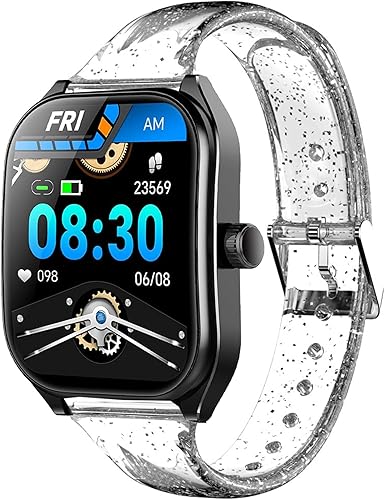
    Compatible with Aolon Curve Smart Watch Band, 22mm Women, Soft Silicone Glitter Clear Sport Strap Compatible with Aolon Curve 2.01″ Inches Smart Watch

    2-Data Entry

    Although data entry may appear basic, it plays a vital role in maintaining the integrity and accuracy of a business’s information. As a freelancer, if you have fast typing skills, an eye for detail, and an ability to stay focused on repetitive tasks, data entry can be an excellent source of income. Many companies seek freelance data entry specialists to organize large volumes of data into systems such as spreadsheets or databases, ensuring the smooth operation of business processes.

    01
    White Gold Plated White & Pink Cubic Zirconia Dangle Earrings for Women Daily Evening Parties Wear Lightweight Jewelry Earring Gift for Her
    5 Legit Data Entry Work From Home Jobs To Make Money Online In 2024

    Data entry may not require highly specialized knowledge, but it is essential for business operations, particularly in sectors like e-commerce, healthcare, and finance, where data accuracy is paramount. Efficient data entry ensures that businesses can analyze trends, make informed decisions, and maintain compliance with regulations. This seemingly simple task offers a stable flow of work for freelancers who are dependable and diligent.

    Keywords: data entry, freelance data, accurate records, typing skills
    Hashtags: #DataEntryJobs #FreelancingOpportunities #AdminTasks

    01
    Gold Plated White Cubic Zirconia Leaf-Shaped Hoop Earrings for Women Wedding Bridal Daily Evening Parties Wear Lightweight Jewelry Earring Gift for Her

    3-Project Management

    Project management is a high-value skill in the freelance world. With more companies managing teams remotely, project managers are essential for coordinating efforts, overseeing task completion, and keeping clients in the loop. As a freelance project manager, your responsibilities include delegating tasks, managing budgets, and ensuring that all project milestones are met within deadlines. Freelancers with experience in industries like marketing, IT, and creative services will find project management to be a lucrative opportunity.

    01
    White Gold Plated Cubic Zirconia Flower Shape Pearl Stud Earrings for Women Wedding Bridal Daily Evening Parties Wear Lightweight Jewelry Earring Gift for Her
    Project Management Basics [QUICK GUIDE]

    Project management tools such as Trello, Asana, and Monday.com have made it easier for freelancers to take on large-scale projects and manage them efficiently from anywhere. The ability to lead teams and meet client expectations is highly prized. According to the Project Management Institute, employers will need nearly 88 million individuals in project management roles by 2027, underscoring the rising demand for skilled professionals in this field.

    Keywords: project management, freelance project manager, team coordination, deadlines
    Hashtags: #ProjectManagement #FreelancerOpportunities #RemoteProjectManagement

    01
    Car Charger Adapter, 5 Port QC3.0 Fast Charging Car Cigarette Lighter USB Charger, Compatible with iPhone, Android, Samsung, iPad Pro, and More (Black)

    4-Social Media Management

    In the digital age, social media has become an essential tool for businesses to engage with their audience and build brand awareness. Freelancers skilled in social media management can capitalize on this by offering services such as creating compelling content, scheduling posts, and analyzing campaign results. With a strong understanding of platforms like Facebook, Instagram, LinkedIn, and Twitter, you can help businesses improve their online presence and attract more customers. Social media managers play a pivotal role in shaping the brand’s voice, responding to customer feedback, and staying updated with the latest trends.

    How To Become A Social Media Manager – Beginners Guide

    Moreover, businesses, especially small and mid-sized ones, often prefer outsourcing their social media needs to freelancers rather than hiring full-time staff. This offers a flexible working arrangement for freelancers and allows businesses to scale their efforts according to their needs. According to HubSpot, companies that engage actively with customers on social media see a significant increase in customer loyalty. This makes social media management a valuable service, enabling you to command competitive rates while helping brands thrive in the digital landscape.

    Keywords: social media management, brand presence, social media marketing, online engagement
    Hashtags: #SocialMediaManagement #FreelanceSocialMedia #DigitalMarketing

    5-Customer Support

    Customer support is the backbone of any successful business. With many companies adopting a remote or hybrid working model, the demand for freelance customer support has grown. As a customer support professional, you will be responsible for addressing client inquiries, troubleshooting issues, and offering solutions that foster customer satisfaction. Freelancers who specialize in this area can work across various communication channels, including email, live chat, and phone support, providing a critical service that businesses depend on for maintaining strong customer relationships.

    Bad vs Great Customer Service | Scenarios with Explanation

    Effective customer support is not just about solving problems; it’s about creating positive experiences that lead to long-term customer loyalty. According to Forrester Research, companies that excel in customer service tend to retain more customers and even attract new ones through word-of-mouth. As a freelancer, mastering the art of empathetic and efficient communication will set you apart from others in the field and position you as a vital part of any business’s operational strategy.

    Keywords: customer support, freelance customer service, customer satisfaction, client communication
    Hashtags: #CustomerSupport #FreelanceCustomerService #ClientRelations

    6-Bookkeeping

    Bookkeeping is an indispensable service that ensures the financial health of a business. Freelancers who are well-versed in accounting principles can offer services such as managing accounts payable and receivable, preparing financial statements, and overseeing payroll processes. Many businesses, especially small enterprises, look to freelance bookkeepers to handle these tasks as a cost-effective alternative to hiring full-time staff. If you have a background in finance or accounting, offering bookkeeping services can be highly profitable, with demand across various industries.

    How to get started as a virtual bookkeeper in 7 steps

    Accurate bookkeeping is essential for businesses to maintain financial transparency and comply with legal requirements. For freelancers, there is an opportunity to establish long-term relationships with clients, as businesses often need consistent financial oversight. The American Institute of Professional Bookkeepers highlights that skilled bookkeepers play a crucial role in ensuring businesses can make informed financial decisions, which further underlines the importance of this freelance service. If you have strong attention to detail and are proficient with financial software, bookkeeping can be an ideal way to cash in on your expertise.

    Keywords: bookkeeping, freelance bookkeeping, financial management, accounts payable/receivable
    Hashtags: #BookkeepingServices #FreelanceFinance #BusinessAccounting

    7-Email Management

    Email management is an often-overlooked yet critical administrative task that can make a world of difference for busy professionals. As a freelancer, offering email management services allows you to take control of your client’s inbox by organizing emails, responding to routine queries, and filtering out unnecessary or spam messages. The ability to streamline communication ensures that important emails are prioritized, and nothing crucial slips through the cracks. By providing this service, you save your clients time and allow them to focus on more significant aspects of their business.

    Virtual Assistant Training: Inbox Management

    Email management is especially vital for entrepreneurs, executives, and small business owners who may receive hundreds of emails a day. According to Harvard Business Review, professionals can spend up to 28% of their workweek dealing with emails, making this a highly valuable service. Freelancers with strong organizational skills and an understanding of email automation tools, such as filters and autoresponders, can turn this skill into a steady stream of income.

    Keywords: email management, inbox organization, freelance services, email automation
    Hashtags: #EmailManagement #InboxZero #FreelancerSkills

    8-Calendar Management

    For professionals juggling multiple projects, meetings, and deadlines, calendar management is indispensable. Freelancers who offer calendar management services help clients stay on track by scheduling appointments, sending reminders, and ensuring that their days are planned efficiently. This requires not only exceptional organizational skills but also a deep understanding of time management and prioritization. Effective calendar management prevents scheduling conflicts and ensures that the client’s time is maximized for productivity.

    Google Calendar for Administrative Assistants

    In today’s fast-paced business environment, missing a meeting or appointment can lead to lost opportunities. Freelance calendar managers are in demand by executives, business owners, and consultants who need help navigating their packed schedules. As a freelancer, your ability to handle multiple calendars, set appointments with various stakeholders, and ensure no detail is overlooked will set you apart from others. David Allen, the productivity expert and author of Getting Things Done, emphasizes that “your mind is for having ideas, not holding them,” making this service invaluable for keeping busy professionals focused on their goals.

    Keywords: calendar management, time management, appointment scheduling, freelance services
    Hashtags: #CalendarManagement #FreelanceOrganization #TimeEfficiency

    9-Travel Planning

    Travel planning is a niche administrative skill that is particularly valuable for business professionals who frequently travel for work. Freelancers who specialize in this service can help their clients by booking flights, hotels, and transportation, as well as creating detailed travel itineraries. Additionally, travel planners often assist in managing travel expenses and ensuring that everything from check-in to transport runs smoothly. With remote work and global business meetings becoming more common, this service offers tremendous value by removing the hassle of planning from the client’s workload.

    Learn essential travel management skills as an Executive Virtual Assistant

    Freelance travel planners must have a keen eye for detail, knowledge of travel logistics, and the ability to troubleshoot any potential issues that may arise during the trip. Offering personalized service that takes into account the client’s preferences and travel policies ensures a smooth, efficient travel experience. According to Business Travel News, corporate travel is on the rise again, making travel planning a lucrative skill for freelancers who can offer reliability and convenience.

    Keywords: travel planning, business travel, itinerary management, freelance travel services
    Hashtags: #TravelPlanning #FreelanceTravel #CorporateTravel

    10-Transcription Services

    Transcription services are highly sought after across industries, particularly in legal, medical, and media fields. As a freelancer, providing transcription services involves listening carefully to audio or video recordings and converting them into accurate written documents. This work requires excellent listening and typing skills, as well as the ability to distinguish different speakers, accents, and technical jargon. Freelancers offering this service often work on transcribing meetings, interviews, podcasts, and presentations, which are essential for keeping detailed records or repurposing content.

    Top 5 Best Transcription Jobs For Beginners 2024 (Best Transcriptionist Jobs)

    In industries like law and medicine, precise transcription is crucial to maintaining accurate records and ensuring compliance with industry regulations. For example, legal transcription ensures that court proceedings or depositions are properly documented, while medical transcription aids healthcare professionals in recording patient histories and treatment plans. According to The Transcription Certification Institute, the demand for transcription services continues to grow as businesses look for cost-effective ways to document important information. Freelancers with a keen eye for detail and proficiency in specialized terminology will find this a rewarding niche.

    Keywords: transcription services, audio-to-text, freelance transcription, accurate records
    Hashtags: #TranscriptionServices #FreelanceTranscription #LegalTranscription

    Conclusion

    The administrative skills of virtual assistance, data entry, and project management offer freelancers substantial opportunities to build thriving careers. These skills are in high demand, as businesses continue to seek out cost-effective, flexible solutions for their operations. By honing these abilities and leveraging them to cater to the diverse needs of clients, freelancers can not only secure steady work but also differentiate themselves in a competitive market.

    For freelancers looking to cash in on these admin skills, continuous improvement and adaptation to industry trends are essential. Whether it’s staying updated with the latest project management software or refining your data entry techniques, excelling in these fields requires a commitment to growth. With persistence and a professional approach, these skills can be a cornerstone for long-term freelance success.

    Keywords: admin skills, freelancing success, remote work, business operations
    Hashtags: #AdminSkills #FreelanceCareer #RemoteWorkSuccess

    Freelancers who offer services in social media management, customer support, and bookkeeping provide businesses with much-needed flexibility and expertise. These roles allow businesses to streamline their operations, focus on core activities, and remain competitive in their respective industries. As a freelancer, the key to success in these fields lies in delivering high-quality, reliable services that address your clients’ specific needs. The ongoing rise of remote work makes these skills increasingly valuable, offering freelancers abundant opportunities to grow their businesses.

    Whether you’re a creative professional managing social media campaigns or a detail-oriented expert handling customer inquiries or financial records, these admin skills provide a solid foundation for a lucrative freelance career. As industries continue to adapt to new working models, the demand for skilled freelancers will only increase, making this the perfect time to refine your skills and position yourself as a top-tier service provider.

    Keywords: admin skills, freelance services, social media management, customer support, bookkeeping
    Hashtags: #FreelanceAdmin #RemoteAdminJobs #DigitalFreelancing

    The skills of email management, calendar management, and travel planning offer freelancers an excellent way to position themselves as indispensable administrative support for busy professionals. These services not only save clients time but also add a layer of organization and efficiency that enhances overall productivity. As businesses continue to operate in an increasingly global and fast-paced environment, the demand for these freelance services will continue to grow.

    For freelancers, the key to excelling in these areas is to stay detail-oriented and adaptable, offering personalized solutions that meet the specific needs of each client. Whether managing an inbox, scheduling meetings, or planning a complex business trip, mastering these skills will ensure that your freelance career thrives in today’s competitive market. Each of these services addresses essential pain points that clients face, positioning you as a valuable partner in their success.

    Keywords: admin skills, email management, calendar management, travel planning, freelance services
    Hashtags: #AdminSupport #FreelanceAdminSkills #OrganizationalExcellence

    The admin skills discussed—email management, calendar management, travel planning, and transcription services—highlight the broad range of freelance opportunities available to those with strong organizational and communication abilities. These skills are crucial for clients who need help staying on top of their day-to-day tasks, organizing their schedules, and ensuring that key information is documented. Each of these services allows freelancers to offer tangible value to clients, saving them time and stress while maintaining efficient workflows.

    Freelancers who excel in these areas have the chance to build long-term relationships with clients, providing ongoing support and ensuring that operations run smoothly. Whether you’re managing an inbox, planning a trip, or transcribing important meetings, your contribution can make a significant difference in the efficiency and success of your clients’ businesses. For those looking to enhance their freelance career, honing these admin skills can unlock a steady stream of income and create a reliable reputation in the industry.

    Keywords: admin skills, freelance services, transcription, email management, travel planning
    Hashtags: #FreelanceAdminSupport #AdminSkillsForSuccess #EfficientAdminServices

    Freelancers with strong administrative skills are in a unique position to offer essential services that help businesses run smoothly, no matter their size or industry. From virtual assistance and data entry to project management, email and calendar management, social media management, and more, these tasks may seem routine, but they are the backbone of efficient operations. Freelancers who can master these skills will always find themselves in demand, offering businesses the flexibility and expertise they need without the overhead of full-time hires.

    In today’s competitive freelance market, the ability to provide specialized administrative support can set you apart from the crowd. Whether it’s ensuring that emails are organized, appointments are kept, finances are managed, or travel plans run smoothly, freelancers who excel in these areas are indispensable. As businesses increasingly shift toward remote work and digital operations, the need for freelancers with these versatile skills will only continue to grow. By honing your expertise, keeping up with industry trends, and delivering top-notch service, you can build a thriving freelance career that stands the test of time.

    Ultimately, the success of freelancing lies in understanding the value you bring to your clients. By offering services that save them time, enhance productivity, and maintain accuracy, you can transform yourself from a freelancer into a trusted business partner. The key is to be adaptable, efficient, and proactive in your approach, always striving for excellence. With the right mix of admin skills and a commitment to professional growth, the possibilities in the freelance world are endless.

    Keywords: admin skills, freelance success, essential services, business operations, remote work
    Hashtags: #FreelanceCareerSuccess #AdminSkillsMastery #FreelanceOpportunities #RemoteAdminSupport

    Bibliography

    1. Allen, David. Getting Things Done: The Art of Stress-Free Productivity. Penguin Books, 2015.
      This book offers valuable insights into effective time management and organizational skills, which are key for freelancers providing services like calendar management and email organization.
    2. American Institute of Professional Bookkeepers. The Professional Bookkeeper’s Guide. AIPB, 2020.
      A comprehensive guide on bookkeeping practices, offering useful information for freelancers interested in providing financial administrative services.
    3. HubSpot. The State of Inbound Marketing 2023. HubSpot, 2023.
      This report provides valuable data on the rising demand for social media management services and highlights trends in digital marketing that can be leveraged by freelancers.
    4. Project Management Institute. A Guide to the Project Management Body of Knowledge (PMBOK® Guide). 7th ed., Project Management Institute, 2021.
      A critical resource for freelance project managers, offering essential frameworks and strategies for successfully managing projects in various industries.
    5. Harvard Business Review. HBR Guide to Being More Productive. Harvard Business Review Press, 2017.
      This guide explores productivity techniques that can benefit freelancers offering services like email and calendar management.
    6. The Transcription Certification Institute. The Ultimate Guide to Transcription Services. TCI, 2021.
      A detailed guide to transcription work, outlining the skills and tools necessary for freelancers looking to provide transcription services across different sectors.
    7. Forrester Research. Customer Service Trends: 2023 Report. Forrester, 2023.
      This report emphasizes the importance of customer service for business success and explores the growing role of freelancers in this area.
    8. Business Travel News. Corporate Travel Report 2024. Business Travel News, 2024.
      Offers valuable insights into business travel trends and how freelancers can tap into the travel planning market to assist business professionals.
    9. Upwork. Freelance Forward 2023 Report. Upwork, 2023.
      A report detailing the growth of the freelance economy, highlighting the increasing demand for virtual assistants, project managers, and other admin-related freelance services.
    10. The Virtual Assistant’s Handbook: Everything You Need to Work from Home as a VA. CreateSpace Independent Publishing Platform, 2019.
      This book is a practical guide for freelancers interested in becoming virtual assistants, covering everything from setting up your business to providing top-notch services.

    These sources provide foundational knowledge and current trends related to freelancing and administrative skills, offering deeper insights for freelancers looking to excel in the admin services industry.

    By Amjad Izhar
    Contact: amjad.izhar@gmail.com
    https://amjadizhar.blog

  • 20 better places to meet quality women after 40

    20 better places to meet quality women after 40

    Modern dating after 40 demands a recalibration of strategy, not a retreat from romance. The venues that once rewarded volume, novelty, and late-night bravado often fail to deliver what emotionally mature adults now seek: depth, stability, and authentic connection. As social priorities evolve with age, so too must the environments in which meaningful relationships are formed.

    Research from Pew Research Center consistently indicates that adults over 40 place greater emphasis on emotional intelligence, dependability, and shared life goals than on surface-level attraction or social flash. This shift reflects not diminished passion, but refined discernment. People with lived experience tend to value contexts that encourage conversation, character revelation, and mutual respect.

    The following twenty environments offer precisely that. These are spaces where intellectually curious, emotionally grounded, and relationship-oriented women naturally spend time. They foster organic interaction, repeated exposure, and value alignment—three conditions social psychologists widely recognize as foundational for lasting partnership.

    1- Continuing Education Classes and Adult Learning Institutes

    Adult education settings attract individuals committed to personal growth and lifelong learning. Women who enroll in literature, psychology, or language courses often value reflection, discipline, and intellectual engagement—qualities strongly associated with relationship satisfaction in midlife. Shared coursework provides a low-pressure structure for repeated interaction and substantive conversation.

    From a social psychology perspective, learning environments activate what psychologist Arthur Aron describes as “mutual self-expansion,” where shared intellectual challenge accelerates bonding. Books such as Mindset by Carol Dweck further underscore how growth-oriented individuals form more resilient partnerships.


    2- Volunteer Organizations and Nonprofit Boards

    Volunteering filters for empathy, civic responsibility, and moral seriousness. Women active in nonprofit work often possess a strong sense of purpose and relational maturity. These settings reward collaboration and reliability rather than performance or appearance.

    Sociologist Robert Putnam, in Bowling Alone, emphasizes that civic engagement correlates with higher social trust and relational stability. Volunteering also signals alignment on values—a critical predictor of long-term compatibility after 40.


    3- Fitness Communities and Specialized Wellness Studios

    Boutique fitness spaces such as Pilates studios, yoga collectives, or hiking groups tend to attract health-conscious women focused on longevity rather than aesthetics. These environments encourage consistency, discipline, and self-regulation.

    Psychologist Kelly McGonigal’s research, outlined in The Joy of Movement, shows that shared physical activity fosters emotional connection through synchronized effort and mutual encouragement. Unlike bars, these spaces support daytime interaction and routine-based familiarity.


    4- Bookstores, Author Talks, and Literary Salons

    Independent bookstores and literary events are natural habitats for reflective, articulate women who value ideas over noise. Conversations emerge organically around shared authors, themes, and worldviews.

    Literary scholar Martha Nussbaum argues in Cultivating Humanity that narrative engagement deepens empathy and moral reasoning—traits essential for healthy adult relationships. These settings reward curiosity and listening skills rather than social dominance.


    5- Faith-Based Discussion Groups (Beyond Worship Services)

    Interfaith dialogues, ethics circles, and spiritual study groups attract women interested in meaning, morality, and community without necessarily emphasizing dogma. These environments allow values to surface naturally through discussion.

    Psychologist Viktor Frankl’s Man’s Search for Meaning highlights how shared purpose anchors enduring relationships. Faith-adjacent spaces also normalize long-term thinking, which aligns with post-40 relational goals.


    6- Cultural Institutions and Museum Membership Events

    Museums, galleries, and cultural centers host lectures and members-only evenings that attract intellectually engaged women. These spaces encourage thoughtful exchange rather than performative interaction.

    Pierre Bourdieu’s work on cultural capital suggests that shared aesthetic appreciation often reflects deeper educational and social alignment. Such environments favor substance, patience, and conversational nuance.


    7- Professional Associations and Industry Conferences

    Women attending professional events are often career-established, self-directed, and pragmatic about time and energy. These environments encourage purposeful networking and clear communication.

    Research in organizational psychology shows that competence-based attraction increases with age. Shared professional fluency reduces ambiguity and fosters mutual respect—an underappreciated component of romantic compatibility.


    8- Cooking Classes and Culinary Workshops

    Culinary education blends creativity, cooperation, and sensory engagement. Women who attend cooking classes often value hospitality, health, and shared ritual.

    Anthropologist Claude Lévi-Strauss famously framed cooking as a cornerstone of culture and bonding. Shared food preparation lowers social barriers and invites natural collaboration.


    9- Travel Groups Designed for Mature Adults

    Curated travel experiences for adults over 40 attract women who value planning, curiosity, and emotional regulation. Travel reveals temperament, adaptability, and interpersonal style quickly.

    Psychologist Esther Perel notes that novelty within structure sustains adult intimacy. Travel groups offer both, without the chaos of party-centric tourism.


    10- Gardening Clubs and Environmental Groups

    Gardening communities attract patient, grounded individuals who value stewardship and delayed gratification. These qualities translate strongly into relationship stability.

    Ecopsychology research suggests that nature-based activities reduce stress and increase pro-social behavior. Gardening also metaphorically reinforces long-term investment—an appealing signal after 40.


    11- Wine Education Courses (Not Nightlife)

    Structured wine education emphasizes craftsmanship, history, and moderation rather than intoxication. Women in these settings often appreciate refinement without excess.

    Sociologist Randall Collins’ interaction ritual theory explains how shared focus and respectful pacing deepen connection. Educational tastings provide both.


    12- Alumni Associations and University Events

    Alumni gatherings leverage shared institutional identity and intellectual baseline. Women attending these events often maintain curiosity and long-term affiliation.

    Shared formative experiences increase conversational ease and perceived similarity—key drivers of attraction according to social identity theory.


    13- Public Lectures and Think Tank Events

    Policy talks, philosophy forums, and science lectures attract analytically minded women who value evidence and debate. These environments reward clarity and critical thinking.

    Daniel Kahneman’s work in Thinking, Fast and Slow reminds us that reflective thinkers prioritize depth over impulse—an asset in mature dating.


    14- Dance Classes Focused on Skill, Not Performance

    Ballroom, tango, or swing classes emphasize cooperation, attunement, and mutual respect. Unlike nightlife dancing, skill-based classes normalize learning curves.

    Neuroscience research shows synchronized movement increases trust and rapport. Dance classes offer embodied communication without superficiality.


    15- Local History Societies and Civic Lectures

    History groups attract women interested in continuity, context, and community memory. These interests correlate with long-term orientation and relational patience.

    Historian Yuval Noah Harari emphasizes that understanding narratives—personal and collective—shapes ethical decision-making. Such awareness matters in partnership.


    16- Outdoor Adventure Groups (Moderate, Not Extreme)

    Hiking, birdwatching, or kayaking groups draw women who enjoy challenge without recklessness. These activities reveal temperament under mild stress.

    Evolutionary psychology suggests shared challenge strengthens bonding when safety and cooperation are present. Moderation is key after 40.


    17- Art and Creative Writing Workshops

    Creative spaces attract emotionally expressive and introspective women. These environments normalize vulnerability and narrative sharing.

    Psychologist James Pennebaker’s research on expressive writing links storytelling with emotional integration—a cornerstone of adult intimacy.


    18- Community Theater and Performing Arts Support Groups

    Supporting roles—production, fundraising, logistics—often attract dependable, collaborative women. These spaces value commitment over spotlight.

    Group creativity fosters what Mihaly Csikszentmihalyi calls “flow,” enhancing positive association and shared accomplishment.


    19- Investment, Finance, and Personal Development Seminars

    Women attending financial literacy or personal growth seminars often prioritize autonomy and foresight. These traits align strongly with post-40 relationship expectations.

    Behavioral economists note that future-oriented thinking predicts stability. Shared financial values reduce one of the leading causes of relational conflict.


    20- Curated Matchmaking and Values-Based Dating Communities

    Unlike swipe-based platforms, curated communities emphasize screening, intentionality, and accountability. Women here are explicitly relationship-focused.

    Sociologist Eva Illouz argues that modern love suffers from choice overload. Structured environments restore seriousness and clarity.


    Conclusion

    Meeting quality women after 40 is less about effort and more about environment. The venues we choose either amplify our values or obscure them. Bars prioritize immediacy and performance; the spaces outlined above reward patience, substance, and mutual discovery.

    For intellectually mature adults, attraction emerges through shared purpose, emotional literacy, and aligned life trajectories. By placing yourself in contexts where these qualities naturally surface, you dramatically improve the odds of forming relationships that endure—not merely ignite.


    Bibliography

    • Aron, Arthur et al. The Experimental Generation of Interpersonal Closeness.
    • Dweck, Carol. Mindset: The New Psychology of Success.
    • Frankl, Viktor. Man’s Search for Meaning.
    • Illouz, Eva. Consuming the Romantic Utopia.
    • Kahneman, Daniel. Thinking, Fast and Slow.
    • McGonigal, Kelly. The Joy of Movement.
    • Nussbaum, Martha. Cultivating Humanity.
    • Pennebaker, James. Opening Up by Writing It Down.
    • Perel, Esther. Mating in Captivity.
    • Putnam, Robert. Bowling Alone.
  • If you’ve already achieved these 20 things, you’re doing better than average

    If you’ve already achieved these 20 things, you’re doing better than average

    Most people spend their lives measuring success against highly visible milestones—titles, salaries, or social media applause—without pausing to ask a more meaningful question: Am I actually doing well by deeper human standards? In an era obsessed with acceleration and comparison, quiet forms of progress are often overlooked, even though they matter far more in the long run.

    True success is rarely a single dramatic achievement. Instead, it is the cumulative result of habits, attitudes, emotional competencies, and ethical choices made consistently over time. Many of the most consequential indicators of a well-lived life are subtle, internal, and resistant to public display, yet they distinguish those who are genuinely flourishing from those merely appearing busy.

    If you recognize yourself in several of the milestones below, you may already be outperforming the statistical average—not in superficial metrics, but in psychological resilience, intellectual maturity, and life satisfaction. These indicators reflect what philosophers, psychologists, and economists increasingly agree constitutes sustainable success in modern life.

    1- Financial Stability Without Chronic Anxiety

    Achieving a basic level of financial stability—where essential needs are met without constant stress—is a significant accomplishment. It reflects not only income but also prudent decision-making, delayed gratification, and financial literacy. Research in behavioral economics consistently shows that freedom from financial panic improves cognitive bandwidth and long-term planning capacity.

    As economist John Maynard Keynes observed, “The difficulty lies not so much in developing new ideas as in escaping from old ones.” Escaping the cycle of debt-driven anxiety allows individuals to invest energy in creativity, learning, and relationships. For further study, see The Psychology of Money by Morgan Housel.


    2- Emotional Self-Regulation Under Pressure

    The ability to manage emotions during stress is a hallmark of psychological maturity. Rather than suppressing feelings, emotionally regulated individuals process them constructively, responding rather than reacting. This skill is closely linked to leadership effectiveness and mental health outcomes.

    Psychologist Daniel Goleman notes, “Self-control is a key element in emotional intelligence.” Emotional regulation enables better decision-making and healthier interpersonal dynamics. A foundational text on this subject is Emotional Intelligence by Daniel Goleman.


    3- Meaningful Relationships Built on Trust

    Maintaining a few deep, reliable relationships is far more predictive of life satisfaction than having a wide social network. Such relationships require empathy, consistency, and the capacity to handle conflict without rupture. They are earned over time, not accumulated quickly.

    Sociologist Robert Putnam emphasizes that social capital is a major determinant of well-being. His book Bowling Alone explores how trust-based relationships underpin both personal fulfillment and societal stability.


    4- Intellectual Curiosity Beyond Formal Education

    Continuing to learn after formal schooling reflects intrinsic motivation and intellectual humility. Lifelong learners remain adaptable in a rapidly changing economy and are better equipped to evaluate complex information critically.

    Albert Einstein famously remarked, “Once you stop learning, you start dying.” Books such as Range by David Epstein demonstrate how broad curiosity enhances creativity and problem-solving.


    5- Comfort With Solitude

    Being at ease alone is not a sign of isolation but of psychological independence. It indicates that one’s self-worth is not entirely contingent on external validation. Solitude often fosters reflection, originality, and emotional clarity.

    Philosopher Arthur Schopenhauer wrote, “A man can be himself only so long as he is alone.” For deeper exploration, see Solitude: A Return to the Self by Anthony Storr.


    6- A Clear Sense of Personal Values

    Living according to clearly articulated values provides coherence across decisions and reduces inner conflict. Values function as an internal compass, particularly when external guidance is absent or contradictory.

    Viktor Frankl argued that meaning—not pleasure or power—is humanity’s primary motivation. His seminal work Man’s Search for Meaning remains essential reading on value-driven life orientation.


    7- Ability to Say No Without Guilt

    Setting boundaries reflects self-respect and time awareness. Those who can decline requests calmly understand that overcommitment erodes both effectiveness and integrity.

    As management thinker Peter Drucker observed, “What gets scheduled gets done.” Protecting one’s time is a strategic act. See Essentialism by Greg McKeown for practical insights.


    8- Financial Planning for the Future

    Thinking beyond immediate consumption toward long-term security demonstrates foresight. Retirement planning, savings, and risk management indicate a realistic engagement with uncertainty.

    Nobel laureate Richard Thaler’s work in Nudge explains how intentional financial structures improve long-term outcomes through behavioral design.


    9- Physical Health Maintenance Through Habits

    Sustaining health through regular habits—rather than extreme interventions—shows discipline and respect for the body. Consistency in sleep, nutrition, and movement compounds over decades.

    Hippocrates’ enduring insight, “Let food be thy medicine,” aligns with modern preventive medicine. Why We Sleep by Matthew Walker offers evidence-based guidance.


    10- Constructive Response to Failure

    Viewing failure as data rather than identity is a critical success differentiator. This mindset supports resilience and innovation, particularly in complex environments.

    Carol Dweck’s research on growth mindset illustrates how adaptive interpretations of failure fuel long-term achievement. Her book Mindset is foundational.


    11- Ethical Integrity Under Convenience Pressure

    Choosing ethical consistency over short-term gain builds credibility and self-trust. Integrity often reveals itself in unobserved decisions where external rewards are absent.

    Philosopher Immanuel Kant emphasized duty-based ethics rooted in principle. For applied ethics, see Justice by Michael Sandel.


    12- Ability to Delay Gratification

    Delaying immediate pleasure for long-term benefit correlates strongly with academic, financial, and relational success. It reflects impulse control and future orientation.

    The famous Stanford marshmallow experiments, discussed in The Marshmallow Test by Walter Mischel, highlight this trait’s predictive power.


    13- Realistic Self-Assessment

    Knowing one’s strengths and limitations enables strategic growth. Overconfidence distorts judgment, while accurate self-appraisal fosters improvement.

    Socrates’ maxim, “Know thyself,” remains psychologically relevant. Thinking, Fast and Slow by Daniel Kahneman explores cognitive biases affecting self-perception.


    14- Financial Independence in Daily Decisions

    Not relying on credit for routine expenses indicates stability and planning. This independence reduces vulnerability to economic shocks.

    Personal finance expert Benjamin Graham stresses margin of safety in The Intelligent Investor, a timeless guide to financial prudence.


    15- Respect for Differing Perspectives

    Engaging respectfully with opposing views reflects cognitive sophistication. It allows learning without identity threat and supports democratic discourse.

    John Stuart Mill argued that contested ideas sharpen truth. His work On Liberty remains highly relevant.


    16- Consistent Personal Accountability

    Taking responsibility for outcomes—without excessive self-blame—supports growth and trustworthiness. Accountability distinguishes agency from victimhood.

    Psychologist Julian Rotter’s locus of control theory explains this dynamic. See Drive by Daniel Pink for modern application.


    17- Ability to Focus Deeply

    Sustained concentration in a distracted world is a competitive advantage. Deep focus enables mastery and high-quality output.

    Cal Newport’s Deep Work provides empirical and practical arguments for cultivating attention.


    18- Emotional Independence From External Approval

    Reducing reliance on praise or validation stabilizes self-esteem. This independence supports authentic decision-making.

    Erich Fromm’s The Art of Loving discusses mature self-relation as the basis of freedom.


    19- Long-Term Goal Orientation

    Setting and pursuing long-term goals reflects patience and strategic thinking. It anchors daily effort in broader purpose.

    James Clear’s Atomic Habits explains how small actions align with long-term trajectories.


    20- A Sense of Meaning Beyond Achievement

    Finding purpose beyond status or accumulation signals existential maturity. Meaning sustains motivation when rewards fade.

    As Viktor Frankl asserted, “He who has a why to live can bear almost any how.” This remains one of the most cited insights in existential psychology.


    Conclusion

    Success, when examined closely, is less about outperforming others and more about developing internal stability, ethical coherence, and sustainable competence. The twenty indicators discussed here reflect dimensions of life that are statistically rare yet deeply human—emotional regulation, long-term thinking, intellectual curiosity, and principled action.

    If you identify with several of these milestones, you are likely doing better than average in ways that endure beyond trends or economic cycles. Such progress may not always be visible, but it compounds quietly, shaping a life marked by resilience, clarity, and meaning.


    Bibliography

    • Frankl, V. (2006). Man’s Search for Meaning. Beacon Press.
    • Goleman, D. (1995). Emotional Intelligence. Bantam Books.
    • Kahneman, D. (2011). Thinking, Fast and Slow. Farrar, Straus and Giroux.
    • Newport, C. (2016). Deep Work. Grand Central Publishing.
    • Dweck, C. (2006). Mindset. Random House.
    • Housel, M. (2020). The Psychology of Money. Harriman House.
    • Sandel, M. (2009). Justice. Farrar, Straus and Giroux.
    • Epstein, D. (2019). Range. Riverhead Books.
  • People who are both highly intelligent & low maintenance usually have these 20 rare traits

    People who are both highly intelligent & low maintenance usually have these 20 rare traits

    Brilliance does not always announce itself with noise, complexity, or constant demands. In fact, some of the most intellectually formidable individuals move through life with a surprising lightness, requiring little validation, drama, or external scaffolding. Their intelligence is not performative; it is quietly structural, shaping how they think, decide, and relate to the world.

    Highly intelligent yet low-maintenance people tend to optimize for clarity over chaos and substance over spectacle. They are often misunderstood as aloof or minimalist, but this interpretation misses a deeper truth: their inner lives are rich, disciplined, and self-regulating. What looks like simplicity from the outside is usually the product of refined cognition and emotional economy.

    This article explores twenty rare traits that consistently appear in people who combine high intelligence with low maintenance behavior. Drawing from psychology, philosophy, and cognitive science, these traits illuminate how intellect, autonomy, and restraint often travel together—and why such individuals are indispensable in complex, modern societies.

    1- Cognitive Self-Sufficiency

    Highly intelligent, low-maintenance individuals are mentally self-reliant. They do not outsource their thinking to trends, authorities, or social pressure, preferring to reason from first principles. This independence reduces their need for constant reassurance or guidance.

    Psychologist Albert Bandura emphasized that self-efficacy is central to human agency. When people trust their cognitive processes, they conserve emotional and social energy, making them less demanding on others and more resilient in uncertainty.


    2- Emotional Regulation Over Emotional Expression

    Rather than broadcasting every feeling, these individuals regulate emotions with precision. This does not imply emotional suppression but emotional discernment—knowing what deserves attention and what does not.

    Daniel Goleman, in Emotional Intelligence, notes that mastery over impulse and affect is a hallmark of advanced cognition. Low-maintenance behavior often reflects this mastery: fewer emotional emergencies, fewer unnecessary conflicts.


    3- Preference for Simplicity

    They actively simplify their environments, schedules, and commitments. Complexity is approached intellectually, not operationally. Their lives are streamlined to preserve cognitive bandwidth.

    Philosopher William James famously wrote, “The art of being wise is the art of knowing what to overlook.” This selective focus is a defining trait of intelligent minimalists.


    4- Intrinsic Motivation

    These individuals are driven from within. External rewards—praise, status, or validation—carry little motivational weight. Their satisfaction comes from competence, mastery, and meaning.

    Self-Determination Theory, developed by Deci and Ryan, shows that intrinsic motivation correlates strongly with well-being and persistence, reducing dependence on external reinforcement.


    5- Low Tolerance for Drama

    They disengage quickly from unnecessary conflict. Not out of avoidance, but out of valuation—drama is cognitively inefficient and emotionally expensive.

    As Nassim Nicholas Taleb argues in Antifragile, energy should be invested where returns compound. Drama rarely does.


    6- High Signal-to-Noise Communication

    Their communication is concise, precise, and intentional. They avoid verbal excess, preferring clarity over verbosity.

    Ludwig Wittgenstein’s insight—“What can be said at all can be said clearly”—captures this trait perfectly. Low-maintenance people respect language as a tool, not a performance.


    7- Comfort With Solitude

    Solitude is not loneliness for them; it is a cognitive workspace. They recharge alone and think deeply without external stimulation.

    Psychiatrist Anthony Storr, in Solitude, highlights that many of humanity’s greatest thinkers relied on solitude as an intellectual incubator.


    8- Strong Internal Locus of Control

    They believe outcomes are largely shaped by their own actions. This belief reduces helplessness and the need to blame others.

    Julian Rotter’s research on locus of control shows that internalizers are more proactive and less dependent—key features of low-maintenance personalities.


    9- Delayed Gratification

    They routinely trade short-term pleasure for long-term gain. This strategic patience minimizes impulsive decisions that create downstream complications.

    The famous Stanford Marshmallow Experiment illustrates how delayed gratification predicts life success, cognitive control, and emotional stability.


    10- Intellectual Humility

    Despite high intelligence, they remain open to being wrong. This humility prevents ego-driven conflicts and defensive behaviors.

    Philosopher Karl Popper argued that intellectual progress depends on falsifiability—the willingness to revise beliefs. Low-maintenance individuals embody this principle.


    11- Boundary Mastery

    They set clear boundaries without theatrics. No excessive explanations, no guilt, no resentment.

    As Brené Brown notes, “Clear is kind.” Boundary clarity reduces relational friction and emotional labor.


    12- Minimal Need for External Validation

    They do not measure self-worth by applause. Their standards are internal, stable, and self-authored.

    Psychologist Carl Rogers emphasized unconditional self-regard as foundational to psychological maturity—an attribute strongly present here.


    13- Strategic Energy Allocation

    They know where their effort matters and where it doesn’t. This selective investment keeps them from burnout and overcommitment.

    Greg McKeown’s Essentialism articulates this philosophy: disciplined pursuit of less, but better.


    14- High Tolerance for Ambiguity

    Uncertainty does not unsettle them. They can hold unanswered questions without rushing to premature conclusions.

    This trait, often linked with high intelligence, is crucial in complex systems thinking and advanced problem-solving.


    15- Ethical Consistency

    Their values are stable across contexts. This consistency reduces cognitive dissonance and interpersonal conflict.

    Moral philosopher Alasdair MacIntyre argued that coherent virtues simplify moral life—less rationalization, fewer crises.


    16- Selective Social Circles

    They choose depth over breadth in relationships. Fewer connections, higher quality.

    Sociological research shows that strong ties provide more emotional and cognitive support than numerous weak ones.


    17- Self-Directed Learning

    They learn autonomously, without needing structured incentives. Curiosity is their engine.

    Peter Drucker described such individuals as “knowledge workers” who take ownership of their intellectual capital.


    18- Calm Under Pressure

    Stress does not hijack their cognition. They respond rather than react.

    Neuroscience links this calmness to strong prefrontal cortex regulation—critical for executive function.


    19- Realistic Optimism

    They are hopeful, not naive. Their optimism is evidence-based and adaptable.

    Martin Seligman’s work on learned optimism shows how realism combined with hope enhances resilience.


    20- Acceptance of Imperfection

    They accept flaws—in themselves, others, and systems. This acceptance eliminates chronic dissatisfaction.

    As philosopher Epictetus taught, peace comes from aligning expectations with reality, not forcing reality to comply.


    Conclusion

    Highly intelligent, low-maintenance individuals are not accidental anomalies; they are the product of disciplined cognition, emotional regulation, and philosophical restraint. Their lives may appear simple, but this simplicity is earned through continuous refinement of thought and behavior.

    In a culture that often rewards noise and excess, these traits offer a compelling alternative: intelligence that conserves energy, autonomy that reduces friction, and depth that does not demand attention. Understanding these qualities is not merely descriptive—it is aspirational.

    Bibliography (Further Reading – 20 Books)

    1. Goleman, D. – Emotional Intelligence
    2. Kahneman, D. – Thinking, Fast and Slow
    3. Taleb, N. N. – Antifragile
    4. McKeown, G. – Essentialism
    5. Storr, A. – Solitude
    6. Rogers, C. – On Becoming a Person
    7. Seligman, M. – Learned Optimism
    8. Bandura, A. – Self-Efficacy
    9. Deci, E. & Ryan, R. – Intrinsic Motivation and Self-Determination
    10. Drucker, P. – Managing Oneself
    11. Popper, K. – Conjectures and Refutations
    12. Brown, B. – Daring Greatly
    13. James, W. – The Principles of Psychology
    14. Wittgenstein, L. – Tractatus Logico-Philosophicus
    15. MacIntyre, A. – After Virtue
    16. Epictetus – Enchiridion
    17. Duckworth, A. – Grit
    18. Haidt, J. – The Righteous Mind
    19. Csikszentmihalyi, M. – Flow
    20. Pink, D. H. – Drive
  • 20 personality traits that show you’re more emotionally intelligent than you think, backed by science

    20 personality traits that show you’re more emotionally intelligent than you think, backed by science

    Emotional intelligence is often misunderstood as something dramatic or visibly expressive, yet research consistently shows that its most powerful indicators are subtle, everyday behaviors. Many highly emotionally intelligent people underestimate themselves precisely because their strengths don’t look like charisma or confidence in the conventional sense. Instead, emotional intelligence often operates quietly, shaping how people think, relate, and respond under pressure.

    Modern psychology frames emotional intelligence as a set of learnable, measurable competencies rather than a fixed personality trait. Studies in neuroscience and behavioral science suggest that emotional intelligence influences decision-making, leadership effectiveness, mental health, and even long-term success more reliably than raw cognitive ability. As Daniel Goleman famously argued, “IQ gets you hired, but EQ gets you promoted.”

    This article explores twenty scientifically supported personality traits that signal higher emotional intelligence than you might realize. Each trait reflects research-backed emotional skills such as self-awareness, emotional regulation, empathy, and social attunement. If you recognize yourself in several of these traits, chances are your emotional intelligence is already working in your favor.

    1- Self-Awareness

    Emotionally intelligent individuals possess a refined ability to recognize their own emotional states in real time. They can name what they feel without being overwhelmed by it, which allows for intentional rather than reactive behavior. Neuroscientific studies link this capacity to stronger activity in the prefrontal cortex, the brain region responsible for executive control.

    Psychologist Daniel Goleman identifies self-awareness as the cornerstone of emotional intelligence because it governs all other competencies. As he writes in Emotional Intelligence, “If you are tuned out of your emotions, you will be poor at reading them in other people.” For further reading, see Insight by Tasha Eurich.


    2- Emotional Regulation

    Rather than suppressing emotions, emotionally intelligent people manage them skillfully. They experience frustration, sadness, or anger like anyone else, but they do not allow these emotions to dictate impulsive actions. Research published in Frontiers in Psychology shows that emotional regulation correlates strongly with resilience and mental well-being.

    This trait reflects an internal locus of control, enabling thoughtful responses even under stress. Viktor Frankl’s words capture this perfectly: “Between stimulus and response, there is a space.” For deeper exploration, consult The Emotional Life of Your Brain by Richard Davidson.


    3- Empathy

    Empathy involves accurately perceiving and understanding others’ emotional experiences without absorbing them as one’s own. High emotional intelligence is consistently associated with cognitive empathy rather than emotional contagion, allowing for compassion paired with clear judgment.

    Neuroscience research highlights mirror neuron systems as a biological basis for empathy. Philosopher Martha Nussbaum emphasizes its ethical importance, noting that empathy is essential for moral reasoning. A recommended text is Against Empathy by Paul Bloom for a nuanced scientific perspective.


    4- Active Listening

    Emotionally intelligent people listen to understand, not to reply. They give full attention, pick up on emotional cues, and ask clarifying questions, creating psychological safety in conversations. Studies in organizational psychology show that active listening improves trust and conflict resolution.

    Carl Rogers, a pioneer of humanistic psychology, argued that being deeply heard is transformative. His book On Becoming a Person remains foundational for understanding emotionally intelligent communication.


    5- Comfort With Silence

    Rather than rushing to fill conversational gaps, emotionally intelligent individuals tolerate silence with ease. This reflects internal emotional security and confidence. Research indicates that silence can enhance cognitive processing and emotional insight.

    Susan Cain, in Quiet, notes that reflective individuals often excel at emotional intelligence because they allow space for thought. Silence, in this context, becomes a strategic emotional tool rather than social discomfort.


    6- Adaptability

    High emotional intelligence is marked by psychological flexibility. Emotionally intelligent people adjust their behavior based on context without losing their core values. Studies link adaptability to reduced stress and higher leadership effectiveness.

    Psychologist Carol Dweck’s work on growth mindset complements this trait. Her book Mindset demonstrates how emotional adaptability fuels learning and emotional maturity.


    7- Healthy Boundaries

    Emotionally intelligent individuals know when to say no without guilt or hostility. They respect their emotional limits and recognize that boundaries preserve relationships rather than damage them.

    Clinical psychologist Brené Brown emphasizes that “clear is kind.” Her book Daring Greatly offers valuable insights into boundaries and emotional courage.


    8- Accountability

    Rather than deflecting blame, emotionally intelligent people take responsibility for their actions. This trait fosters trust and signals emotional maturity. Research in social psychology shows accountability strengthens interpersonal bonds.

    Stephen Covey highlights this principle in The 7 Habits of Highly Effective People, linking accountability directly to emotional self-mastery.


    9- Emotional Vocabulary

    People with high emotional intelligence can articulate nuanced feelings instead of defaulting to vague terms. Studies show that emotional granularity improves regulation and reduces anxiety.

    Psychologist Lisa Feldman Barrett explains this concept in How Emotions Are Made, arguing that language shapes emotional experience itself.


    10- Patience

    Emotional intelligence often manifests as the ability to tolerate delay, ambiguity, and frustration. Longitudinal studies associate patience with better mental health and decision-making.

    Aristotle’s idea of virtue as moderation aligns closely with this trait. For modern analysis, see The Marshmallow Test by Walter Mischel.


    11- Conflict Navigation

    Rather than avoiding or escalating conflict, emotionally intelligent individuals approach it constructively. Research shows they focus on mutual understanding rather than winning arguments.

    Harvard’s Getting to Yes by Fisher and Ury offers practical frameworks rooted in emotional intelligence principles.


    12- Humility

    Emotionally intelligent people recognize their limitations without diminishing their worth. Studies link humility to stronger leadership and interpersonal effectiveness.

    Philosopher Bertrand Russell noted that intellectual humility is a sign of wisdom. See Humility by Edward Slingerland for empirical insights.


    13- Emotional Independence

    They do not rely excessively on external validation. Emotional self-sufficiency allows stable self-esteem even in uncertain environments.

    Self-Determination Theory, explored in Drive by Daniel Pink, supports this trait as central to psychological health.


    14- Sensitivity to Context

    Emotionally intelligent individuals read social dynamics accurately. They adjust tone, timing, and delivery based on emotional context.

    Erving Goffman’s The Presentation of Self in Everyday Life provides a sociological lens on this skill.


    15- Reflective Thinking

    Rather than reacting instantly, they reflect before responding. Reflection enhances emotional insight and ethical judgment.

    John Dewey championed reflective thought as the basis of intelligence. His work remains highly relevant.


    16- Compassion Without Overextension

    They care deeply but avoid emotional burnout. Research shows emotionally intelligent compassion is sustainable and regulated.

    Kristin Neff’s Self-Compassion bridges empathy with emotional balance.


    17- Emotional Honesty

    They express emotions authentically without dramatization. This builds trust and psychological safety.

    Psychotherapist Irvin Yalom stresses authenticity as central to emotional health. See The Gift of Therapy.


    18- Perspective-Taking

    Emotionally intelligent people see situations from multiple viewpoints. Cognitive flexibility supports empathy and sound judgment.

    Adam Grant discusses this in Think Again, highlighting the emotional intelligence behind intellectual humility.


    19- Stress Awareness

    They notice early signs of emotional overload and intervene proactively. Stress literacy correlates with long-term health outcomes.

    Robert Sapolsky’s Why Zebras Don’t Get Ulcers offers scientific grounding for this trait.


    20- Consistency Under Pressure

    Perhaps the strongest signal of emotional intelligence is behavioral consistency during stress. Emotional steadiness fosters trust and leadership credibility.

    As psychologist Albert Bandura observed, self-regulation under pressure defines emotional competence. See Self-Efficacy for deeper study.


    Conclusion

    Emotional intelligence is rarely loud, flashy, or immediately recognizable. Instead, it reveals itself through consistent patterns of awareness, regulation, empathy, and thoughtful action. Science increasingly confirms that these traits are not merely personality quirks but measurable competencies that shape success, relationships, and psychological well-being.

    If you see yourself reflected in many of these traits, you may be far more emotionally intelligent than you think. More importantly, emotional intelligence is not static — it can be cultivated through reflection, learning, and practice. In a complex world, emotional intelligence remains one of the most enduring markers of human wisdom.

    1. Goleman, DanielEmotional Intelligence: Why It Can Matter More Than IQ (Bantam Books)
      — A seminal work that popularized the concept of emotional intelligence in psychology and business.
    2. Eurich, TashaInsight: Why We’re Not as Self-Aware as We Think, and How Seeing Ourselves Clearly Helps Us Succeed at Work and in Life (Crown Business)
      — Research-based exploration of self-awareness as a foundational emotional skill.
    3. Barrett, Lisa FeldmanHow Emotions Are Made: The Secret Life of the Brain (Houghton Mifflin Harcourt)
      — A neuroscientific perspective on how emotions are constructed and experienced.
    4. Cain, SusanQuiet: The Power of Introverts in a World That Can’t Stop Talking (Broadway Books)
      — Insight into how reflective, less expressive personalities often demonstrate deep emotional intelligence.
    5. Dweck, Carol S.Mindset: The New Psychology of Success (Random House)
      — Explores growth mindset, adaptability, and emotional learning in context.
    6. Rogers, Carl R.On Becoming a Person: A Therapist’s View of Psychotherapy (Houghton Mifflin)
      — Classic humanistic psychology text on empathy and authentic relational presence.
    7. Davidson, Richard J., & Begley, SharonThe Emotional Life of Your Brain (Hudson Street Press)
      — Blends affective neuroscience and emotional style research.
    8. Brown, BrenéDaring Greatly: How the Courage to Be Vulnerable Transforms the Way We Live, Love, Parent, and Lead (Gotham Books)
      — On vulnerability, boundaries, and emotional courage.
    9. Grant, AdamThink Again: The Power of Knowing What You Don’t Know (Viking)
      — Cognitive flexibility, perspective-taking, and reflective thinking.
    10. Sapolsky, Robert M.Why Zebras Don’t Get Ulcers (W.H. Freeman)
      — Stress science connected to emotional regulation and health.
    11. Mischel, WalterThe Marshmallow Test: Understanding Self-Control and How To Master It (Little, Brown and Company)
      — Research on self-control, patience, and emotional regulation.
    12. Neff, KristinSelf-Compassion: The Proven Power of Being Kind to Yourself (William Morrow)
      — Focuses on sustainable empathy and emotional resilience.
    13. Covey, Stephen R.The 7 Habits of Highly Effective People (Free Press)
      — Includes principles of accountability and emotional leadership.

    📄 Key Academic Sources & Articles

    1. Salovey, Peter & Mayer, John D. (1990). Emotional Intelligence.
      — Foundational academic article defining the concept; originally published in Imagination, Cognition and Personality.
    2. Mayer, John D., Salovey, Peter & Caruso, David R.Emotional Intelligence: New Ability or Eclectic Traits?
      — A thorough academic discussion of EI measurement and theory.
    3. Cherniss, Cary & Adler, Maurice (Eds.) — Promoting Emotional Intelligence in Organizations: Make Training in Emotional Intelligence Effective (American Psychological Association).
      — Practical and research-based perspectives for workplace application.
    4. Brackett, Marc A., Rivers, Susan E., & Salovey, PeterEmotional Intelligence: Implications for Personal, Social, Academic, and Workplace Success.
      — Review article synthesizing EI research across domains.

    📖 Related Foundational Works (Supplemental Reading)

    1. Damasio, AntonioDescartes’ Error: Emotion, Reason, and the Human Brain (Penguin Books)
      — Classic neuropsychology linking emotion and rational decision-making.
    2. Goffman, ErvingThe Presentation of Self in Everyday Life (Anchor Books)
      — Sociological lens on emotional cues and social context.
    3. Yalom, Irvin D.The Gift of Therapy: An Open Letter to a New Generation of Therapists and Their Patients (Harper Perennial)
      — Applied emotional insight from psychotherapy practice.
  • 15 Simple Ways to Earn Extra Money

    15 Simple Ways to Earn Extra Money

    01
    SpotMyUV UV Detection Stickers for Sunscreen with Patented Dermatrue SPF Sensing Technology, Know When to Reapply Sunscreen to Help Prevent Sunburn, 16 Count

    1-Freelancing


    01

    Luxury Gold Plated Elegant Textured Alloy Design with Irregular Pearl Earrings For Women,3D & Movable,Nice Gift Box Included,14k Gold Plated Melting Rock Alloy Stainless steel Stud Earrings for Women

    2-Online Surveys

    Swagbucks
    Survey Junkie
    Vindale Research


    01

    Locket Necklace Holds Pictures Alphabet Initial Letter Love Heart Lockets Photo Memory Locket Necklaces Birthday Gifts


    3-Selling Unwanted Items

    Ebay
    Facebook Marketplace
    Decluttr
    Craigslist


    01

    Compatible with Aolon Curve Smart Watch Band, 22mm Women, Soft Silicone Glitter Clear Sport Strap Compatible with Aolon Curve 2.01″ Inches Smart Watch


    4-Ridesharing and Food Delivery

    Uber
    Lyft
    Doordash


    01

    White Gold Plated White & Pink Cubic Zirconia Dangle Earrings for Women Daily Evening Parties Wear Lightweight Jewelry Earring Gift for Her


    5-Renting Out Space

    Airbnb
    Vrbo
    Neighbor


    01

    Gold Plated White Cubic Zirconia Leaf-Shaped Hoop Earrings for Women Wedding Bridal Daily Evening Parties Wear Lightweight Jewelry Earring Gift for Her


    6-Tutoring and Teaching

    Chegg Tutors
    VipKid
    Wyzant


    01

    White Gold Plated Cubic Zirconia Flower Shape Pearl Stud Earrings for Women Wedding Bridal Daily Evening Parties Wear Lightweight Jewelry Earring Gift for Her


    7-Pet Sitting and Dog Walking

    Rover
    Wag Walking
    Care


    01

    Car Charger Adapter, 5 Port QC3.0 Fast Charging Car Cigarette Lighter USB Charger, Compatible with iPhone, Android, Samsung, iPad Pro, and More (Black)


    8-Part-Time Retail Work

    Snagajob
    Indeed
    Simply Hired

    9-Blogging and Content Creation

    WordPress
    Medium
    YouTube

    10-Affiliate Marketing

    Amazon Affiliate Program
    Share A Sale
    CJ

    11-House Cleaning

    Task Rabbit
    Handy

    12-Babysitting and Childcare

    Sitter City
    Urban Sitter
    Care

    13-Gardening and Yard Work

    Thumb Tack
    Task Easy
    Your Green Pal

    14-Renting Out Tools and Equipment

    Fat Llama
    Loanables

    15-Social Media Management

    HootSuite
    Buffer
    Sprout Social

  • 10 passive-aggressive phrases you shouldn’t use with your friends

    10 passive-aggressive phrases you shouldn’t use with your friends

    Friendships often survive on trust, emotional intelligence, and the ability to communicate honestly—even when conversations get uncomfortable. Yet many well-educated, thoughtful people unintentionally undermine these bonds through subtle verbal jabs that appear polite on the surface but sting underneath. These expressions rarely sound hostile, but they quietly erode goodwill.

    Passive-aggressive language thrives in ambiguity. It allows a speaker to express resentment without taking responsibility for it, creating confusion and emotional distance in relationships. Over time, these phrases can make friends feel dismissed, patronized, or quietly judged—often without knowing exactly why the interaction feels off.

    In an era where emotional literacy and psychological insight are increasingly valued, recognizing and eliminating passive-aggressive communication is not merely courteous—it is essential. Below are common phrases that sabotage friendships, why they matter, and what research-backed thinkers say about healthier alternatives.

    1- “Fine, whatever.”

    This phrase signals disengagement rather than agreement. While it may appear neutral, it often communicates suppressed frustration or contempt, leaving the listener uncertain about unresolved tension. In friendships, ambiguity can be more damaging than open disagreement.

    Psychologist Dr. Harriet Lerner notes, “Silence and withdrawal are among the most aggressive acts in relationships.” When conflict is avoided through dismissive language, emotional distance quietly replaces connection.
    Further reading: The Dance of Anger by Harriet Lerner.


    2- “I was just joking.”

    Often used as a retreat after a hurtful remark, this phrase invalidates the other person’s emotional response. It subtly shifts responsibility away from the speaker and onto the listener for being “too sensitive.”

    Communication scholar Deborah Tannen explains that humor becomes harmful when it masks power or criticism. Intellectual friendships, in particular, demand accountability in language.
    Further reading: You Just Don’t Understand by Deborah Tannen.


    3- “Do what you want.”

    This expression implies resignation rather than respect for autonomy. It may sound permissive, but it often carries a tone of moral superiority or silent disapproval.

    According to interpersonal theorist John Gottman, contempt and stonewalling are among the strongest predictors of relational breakdown. Passive permission is rarely genuine consent.
    Further reading: The Seven Principles for Making Marriage Work by John Gottman.


    4- “Must be nice.”

    This phrase subtly diminishes another person’s achievements or circumstances. Instead of curiosity or celebration, it injects comparison and envy into the conversation.

    Social psychologist Leon Festinger’s work on social comparison shows that veiled resentment damages mutual regard. Friends thrive on shared success, not silent competition.
    Further reading: A Theory of Social Comparison Processes by Leon Festinger.


    5- “I don’t care.”

    Few phrases communicate indifference more efficiently. Even when said casually, it signals emotional withdrawal and can make friends feel insignificant.

    Philosopher Martin Buber emphasized that relationships are sustained by presence and acknowledgment. Indifference, even implied, fractures the “I–Thou” connection.
    Further reading: I and Thou by Martin Buber.


    6- “Wow, okay…”

    This phrase often acts as a conversational eye-roll. It halts dialogue while quietly expressing judgment, leaving no room for clarification or repair.

    Linguist Paul Grice’s cooperative principle suggests that meaningful dialogue requires good faith participation. Sarcastic ambiguity violates that contract.
    Further reading: Studies in the Way of Words by Paul Grice.


    7- “If you say so.”

    Though grammatically mild, this phrase conveys disbelief and intellectual dismissal. It subtly undermines the speaker’s credibility without engaging their argument.

    Philosopher Jürgen Habermas argued that respectful discourse depends on mutual recognition of rational agency. Dismissive phrases corrode that foundation.
    Further reading: The Theory of Communicative Action by Jürgen Habermas.


    8- “I thought you’d know better.”

    This phrase cloaks criticism in moral superiority. It positions the speaker as intellectually or ethically above the listener, breeding resentment rather than growth.

    Educational psychologist Carol Dweck emphasizes that judgment-based feedback discourages learning and openness.
    Further reading: Mindset by Carol Dweck.


    9- “I’m not mad.”

    Often contradicted by tone or behavior, this phrase creates emotional confusion. It asks the listener to ignore evident signals, eroding trust.

    Clinical psychologist Carl Rogers stressed congruence between feelings and expression as a cornerstone of healthy relationships.
    Further reading: On Becoming a Person by Carl Rogers.


    10- “It’s not a big deal.”

    Minimizing a friend’s concern—intentionally or not—invalidates their emotional experience. What seems trivial to one person may be deeply significant to another.

    Trauma researcher Dr. Bessel van der Kolk highlights that emotional dismissal can be as damaging as overt criticism.
    Further reading: The Body Keeps the Score by Bessel van der Kolk.


    11- “You always do this.”

    This phrase generalizes behavior and frames conflict as a character flaw rather than a situational issue. Absolutes escalate defensiveness.

    Cognitive-behavioral research warns against overgeneralization as a thinking distortion that impairs relationships.
    Further reading: Feeling Good by David D. Burns.


    12- “I guess I’m the bad guy.”

    This statement manipulates guilt while avoiding accountability. It reframes the discussion around the speaker’s victimhood instead of the actual issue.

    Psychotherapist Susan Forward identifies this as emotional blackmail—subtle but powerful.
    Further reading: Emotional Blackmail by Susan Forward.


    13- “Sorry you feel that way.”

    This pseudo-apology avoids responsibility and implies that the problem lies in the listener’s perception, not the speaker’s actions.

    Philosopher Aaron Lazare argues that genuine apologies require acknowledgment of harm, not deflection.
    Further reading: On Apology by Aaron Lazare.


    14- “I didn’t mean it like that.”

    While intent matters, impact matters more. This phrase often halts reflection rather than encouraging understanding.

    Moral philosopher Thomas Scanlon emphasizes accountability beyond intention in ethical interactions.
    Further reading: What We Owe to Each Other by T.M. Scanlon.


    15- “That’s just how I am.”

    This phrase weaponizes personality as an excuse to avoid growth. It suggests immutability where reflection is needed.

    Existentialist thinkers like Jean-Paul Sartre rejected fixed identities, emphasizing responsibility for choice and change.
    Further reading: Existentialism Is a Humanism by Jean-Paul Sartre.


    16- “I don’t have time for this.”

    This phrase ranks the relationship below convenience. Even when time is limited, dismissal harms relational equity.

    Sociologist Zygmunt Bauman warned that modern relationships suffer when efficiency replaces care.
    Further reading: Liquid Love by Zygmunt Bauman.


    17- “You’re overreacting.”

    This phrase invalidates emotional reality and places the speaker in a position of authority over feelings.

    Emotion researcher Lisa Feldman Barrett argues that emotions are context-dependent, not errors to be corrected.
    Further reading: How Emotions Are Made by Lisa Feldman Barrett.


    18- “Whatever makes you happy.”

    Often said with irony, this phrase can conceal resentment rather than goodwill. Tone determines meaning more than words.

    Pragmatic linguistics highlights that implied meaning (implicature) often outweighs literal phrasing.
    Further reading: Pragmatics by Stephen Levinson.


    19- “I guess you’re right.”

    Reluctant agreement without sincerity fosters unresolved tension. It ends conversation without resolution.

    Conflict theorist Morton Deutsch emphasized that resolution requires genuine mutual understanding, not surface compliance.
    Further reading: The Resolution of Conflict by Morton Deutsch.


    20- “Let’s just drop it.”

    Premature closure often signals avoidance rather than peace. Unresolved issues resurface, often with greater intensity.

    Psychodynamic theory suggests that repressed conflict does not disappear—it transforms.
    Further reading: The Interpretation of Dreams by Sigmund Freud.


    Conclusion

    Passive-aggressive language thrives in educated circles precisely because it sounds controlled, clever, and socially acceptable. Yet its long-term cost is significant: eroded trust, emotional fatigue, and fractured friendships. Intellectual maturity is reflected not in rhetorical finesse, but in emotional honesty.

    By replacing veiled hostility with clarity, empathy, and accountability, friendships become spaces for growth rather than quiet resentment. As philosopher Hannah Arendt observed, “Speech is what makes man a political being.” The same holds true for friendship—how we speak determines whether our relationships merely survive or genuinely flourish.

  • I’m a 25-year-old founder who loves robots but too many humanoids are militant and creepy-looking. Things need to change—just look at Elon Musk

    I’m a 25-year-old founder who loves robots but too many humanoids are militant and creepy-looking. Things need to change—just look at Elon Musk

    Robots were supposed to be our collaborators, not our nightmares. Yet somewhere between science fiction fantasies and venture-capital bravado, humanoid robots have taken a sharp turn toward the uncanny—rigid, militant, and unsettling rather than helpful or humane. For someone like me, a 25-year-old founder who genuinely loves robotics, this shift is not just disappointing; it is strategically dangerous.

    The robotics industry stands at an inflection point where design philosophy matters as much as technical capability. While innovation accelerates, public trust lags behind, weighed down by humanoid machines that look more like authoritarian enforcers than intelligent assistants. This tension between form, function, and fear is shaping how society receives automation at scale.

    Even prominent figures such as Elon Musk inadvertently illustrate the problem. When industry leaders frame humanoid robots as dominant, hyper-capable entities rather than socially embedded tools, they reinforce anxieties instead of alleviating them. If robotics is to fulfill its promise, the industry must rethink not only what robots can do—but how they look, move, and exist among us.

    1- The Psychological Cost of Creepy Design

    Humanoid robots often fail not because of weak engineering but because of poor psychological alignment. Designs that emphasize rigid posture, expressionless faces, and militaristic proportions trigger what cognitive scientists call the “uncanny valley,” a phenomenon first described by Masahiro Mori. When robots appear almost human but not quite, discomfort replaces curiosity.

    As Mori warned, “The closer a robot comes to resembling a human, the more unsettling it becomes when imperfections remain.” This insight remains profoundly relevant today. Robotics firms must integrate behavioral psychology into early-stage design, not as an afterthought but as a core engineering constraint.


    2- Militarization as a Branding Failure

    Many humanoid robots are implicitly branded as enforcers—tall, angular, fast-moving, and emotionally unreadable. This aesthetic borrows heavily from military hardware, whether intentional or not, and sends the wrong signal to civilian audiences.

    Hannah Arendt’s work on authority reminds us that power without legitimacy breeds resistance. Robots designed to look dominant rather than cooperative risk rejection, regulation, and public backlash. Civilian technology must look civilian.


    3- Elon Musk as a Cultural Signal

    Elon Musk’s humanoid robot projects capture global attention, not just for their ambition but for their framing. When robots are presented as hyper-efficient replacements for human labor, the narrative quickly shifts from innovation to dispossession.

    As Shoshana Zuboff argues in The Age of Surveillance Capitalism, technological narratives shape social consent. When leaders emphasize control and scale over empathy and integration, they inadvertently fuel societal anxiety about automation.


    4- The Misunderstanding of Human-Centered Design

    Human-centered design is often misunderstood as cosmetic friendliness. In reality, it is about aligning technology with human values, limitations, and social norms. A humanoid robot does not need to look powerful; it needs to look trustworthy.

    Don Norman, in The Design of Everyday Things, emphasizes that good design “communicates its purpose clearly.” Robots that look threatening communicate the wrong purpose, regardless of their actual intent.


    5- Robots as Social Actors, Not Tools

    Once robots enter public and private spaces, they cease to be mere tools and become social actors. Their appearance influences how humans assign intent, morality, and responsibility.

    Sociologist Erving Goffman’s theories on social interaction suggest that appearance governs expectation. If a robot looks like a soldier, people will treat it like one—regardless of its programming.


    6- The Failure to Learn from Healthcare Robotics

    Healthcare robotics offers a counterexample worth studying. Assistive robots in hospitals often use soft materials, rounded edges, and calm movement patterns—and are far more widely accepted.

    Books such as Robot Ethics by Patrick Lin demonstrate that ethical design is inseparable from visual and behavioral cues. The industry already knows how to do better; it simply hasn’t scaled those lessons.


    7- Movement Matters More Than Strength

    Jerky, rapid, hyper-efficient motion reads as aggression to the human brain. Smooth, predictable movement signals safety. Yet many humanoid robots prioritize speed and torque over grace.

    Neuroscientist Antonio Damasio reminds us that emotion and cognition are inseparable. A robot that moves aggressively will be perceived as emotionally aggressive, no matter its task.


    8- Facial Expression and Emotional Bandwidth

    Blank faces are not neutral—they are threatening. Humans are evolutionarily wired to seek emotional feedback in faces, and its absence creates unease.

    Cynthia Breazeal’s work at MIT Media Lab shows that even minimal expressive cues dramatically improve human-robot interaction. Emotional bandwidth is not a luxury; it is infrastructure.


    9- Overengineering the Wrong Problems

    The robotics industry often optimizes for technical feats that impress investors rather than features that reassure users. Lifting capacity, speed, and autonomy dominate demos, while social acceptance is sidelined.

    Clayton Christensen’s theory of disruptive innovation warns that technologies fail when they overserve metrics that users do not value. Trust is a feature—and a critical one.


    10- Labor Anxiety and Visual Threat

    Humanoid robots already symbolize job displacement. When they also look physically imposing, they become embodiments of economic fear.

    Karl Polanyi’s The Great Transformation illustrates how societies resist technologies that disrupt labor without social buffering. Design can either inflame or ease that resistance.


    11- Cultural Context Is Ignored

    Robots are global products but are often designed with narrow cultural assumptions. What seems futuristic in Silicon Valley may seem authoritarian elsewhere.

    Anthropologist Edward T. Hall emphasized that culture shapes perception. Robotics companies must localize aesthetics just as carefully as software interfaces.


    12- The Myth of Neutral Technology

    There is no such thing as a neutral robot. Every design choice encodes values—about power, hierarchy, and control.

    Langdon Winner famously argued that artifacts have politics. A humanoid robot that looks militant carries political meaning whether intended or not.


    13- Soft Power Beats Hard Power

    The most successful technologies exert soft power: influence through attraction rather than force. Smartphones did not conquer by intimidation; they seduced through usability.

    Joseph Nye’s concept of soft power applies equally to robotics. Robots should invite cooperation, not compliance.


    14- Learning from Animation and Film

    Ironically, animated robots often feel more humane than real ones. Pixar’s WALL-E is more emotionally compelling than many billion-dollar prototypes.

    This aligns with Scott McCloud’s theory in Understanding Comics: abstraction allows empathy. Hyper-realism, by contrast, amplifies flaws.


    15- Ethics Must Precede Scale

    Scaling humanoid robots without ethical clarity is reckless. Once deployed en masse, design mistakes become societal problems.

    Nick Bostrom’s work on existential risk reminds us that early design decisions compound over time. Caution is not anti-innovation; it is pro-survival.


    16- Trust Is Built Visually First

    Before a robot speaks or acts, it is judged by how it looks. Visual trust precedes functional trust.

    As marketing scholar Philip Kotler notes, perception often outweighs performance. Robotics is no exception.


    17- Founders Must Resist Tech Machismo

    There is a strain of machismo in robotics that equates dominance with progress. Bigger, faster, stronger becomes the default ambition.

    But as E.F. Schumacher argued in Small Is Beautiful, technology should be “as simple as possible, but no simpler.” Power without purpose is waste.


    18- Regulation Will Follow Fear

    If robots continue to alarm the public, regulation will be swift and severe. History shows that fear invites control.

    Lawrence Lessig’s work on code and regulation suggests that design choices today shape legal environments tomorrow. Friendly robots face fewer laws.


    19- The Economic Case for Friendly Robots

    From an SEO and business perspective, “human-friendly robotics” is not just ethical—it is profitable. Adoption rates, brand loyalty, and public trust directly impact ROI.

    Harvard Business Review repeatedly emphasizes that trust is a measurable economic asset. Design that alienates users destroys value.


    20- A Call for a New Robotics Aesthetic

    The industry needs a new aesthetic philosophy—one grounded in humility, collaboration, and emotional intelligence. Robots should look like partners, not overseers.

    As philosopher Martin Heidegger warned, technology should reveal possibilities, not dominate existence. Robotics must return to that principle.


    Conclusion

    The future of humanoid robotics does not hinge on stronger motors or faster processors—it hinges on trust. Militant, creepy designs undermine public confidence and invite resistance, no matter how advanced the underlying technology may be. For founders, engineers, and leaders—especially those with cultural influence like Elon Musk—the responsibility is not merely to build what is possible, but to build what is acceptable.

    If robotics is to integrate meaningfully into society, it must evolve beyond intimidation and spectacle. The next generation of humanoid robots should reflect emotional intelligence, cultural awareness, and ethical restraint. Only then will robots stop looking like threats—and start feeling like progress.

  • Human brains have 5 distinct ‘epochs’ in a lifetime, study finds

    Human brains have 5 distinct ‘epochs’ in a lifetime, study finds

    The human brain is not a static organ quietly aging in the background—it is a dynamic system that reinvents itself multiple times across a lifetime. Recent neuroscientific research suggests that our cognitive lives unfold in clearly defined phases, each marked by distinct structural and functional changes. This perspective challenges the simplistic notion of linear brain decline.

    Understanding the brain through the lens of “epochs” offers a more nuanced framework for interpreting learning capacity, emotional regulation, creativity, and vulnerability to disease. Rather than viewing childhood, adulthood, and old age as blunt categories, neuroscience now points to finely tuned transitions that shape how we think, adapt, and behave.

    By examining these five brain epochs, researchers are reframing human development as a sequence of recalibrations rather than a rise-and-fall narrative. This approach has profound implications for education, mental health, productivity, and lifelong learning—domains where timing, plasticity, and cognitive context matter deeply.

    1- The Concept of Brain Epochs

    The idea of brain epochs refers to biologically distinct phases of neural organization across the lifespan. Each epoch is characterized by specific patterns of connectivity, metabolic demand, and cognitive priorities. This framework borrows from developmental neuroscience and longitudinal brain imaging studies.

    As neuroscientist Michael Gazzaniga notes, “The brain is less a general-purpose machine and more a collection of evolving systems.” Viewing development in epochs helps explain why certain skills flourish at particular life stages while others recede.


    2- Epoch One: Early Childhood Neural Explosion

    The first epoch is marked by rapid synapse formation and extraordinary plasticity. During early childhood, the brain creates far more neural connections than it will eventually retain, allowing for robust learning and adaptation.

    This overproduction supports language acquisition, sensory integration, and social learning. According to Patricia Kuhl, a leading expert in language development, “Children’s brains are learning machines, exquisitely sensitive to their environments.”


    3- Pruning as a Feature, Not a Flaw

    Neural pruning, often misunderstood, is a defining process of early brain development. Connections that are frequently used are strengthened, while unused ones are eliminated.

    This biological efficiency sharpens cognitive function and reflects the brain’s responsiveness to experience. As Donald Hebb famously put it, “Neurons that fire together wire together.”


    4- Epoch Two: Adolescence and Network Reorganization

    The adolescent brain undergoes large-scale reorganization, particularly in the prefrontal cortex. This affects decision-making, impulse control, and risk assessment.

    While often associated with volatility, this epoch is crucial for developing abstract thinking and identity formation. Laurence Steinberg emphasizes that adolescent behavior reflects “a mismatch between a highly reactive emotional system and a still-maturing control system.”


    5- Emotional Intensity and Social Sensitivity

    During adolescence, emotional circuits mature faster than regulatory ones. This explains heightened sensitivity to peer influence and social feedback.

    Rather than pathology, this sensitivity fosters social learning and independence. It is evolution’s way of preparing individuals for complex group dynamics.


    6- Epoch Three: Early Adulthood Optimization

    In early adulthood, brain networks reach peak efficiency. Processing speed, working memory, and problem-solving abilities are often at their strongest.

    This epoch supports career building and complex decision-making. Cognitive neuroscientist Arthur Kramer notes that this phase reflects “maximum neural economy with minimal redundancy.”


    7- Stability Over Plasticity

    Compared to earlier epochs, the adult brain prioritizes stability. While plasticity remains, it is more targeted and experience-dependent.

    This balance allows for expertise and mastery but makes unlearning harder. Hence, habits—good or bad—become more entrenched.


    8- Epoch Four: Midlife Neural Rebalancing

    Midlife is not merely a plateau; it is a recalibration. While processing speed may slow, integrative thinking and emotional regulation often improve.

    Research shows that crystallized intelligence—knowledge accumulated over time—continues to grow. Psychologist Laura Carstensen highlights that “emotional well-being often peaks in midlife.”


    9- Wisdom as a Cognitive Asset

    This epoch favors synthesis over speed. Individuals become better at contextual reasoning and long-term planning.

    Such strengths explain why leadership and mentorship often flourish during this stage, even as raw cognitive speed declines.


    10- Epoch Five: Later Life Brain Adaptation

    The final epoch involves structural decline alongside functional adaptation. The brain compensates for losses by recruiting alternative networks.

    Contrary to popular belief, learning remains possible. As neuroscientist Yaakov Stern explains, “Cognitive reserve allows the brain to cope with damage more effectively.”


    11- Memory Changes Are Selective

    Episodic memory may weaken, but semantic memory often remains robust. Older adults frequently excel in vocabulary and conceptual understanding.

    This selectivity underscores the importance of lifelong intellectual engagement for healthy brain aging.


    12- The Role of Neuroplasticity Across Epochs

    Plasticity does not disappear—it changes form. In later epochs, it becomes slower but more strategic.

    Activities such as learning new skills, physical exercise, and social interaction continue to reshape neural pathways.


    13- Implications for Education Systems

    Recognizing brain epochs calls for age-sensitive learning models. What works in childhood may fail in adulthood, and vice versa.

    Educational theorist John Dewey argued that “education is not preparation for life; education is life itself”—a claim supported by epoch-based neuroscience.


    14- Mental Health Across the Lifespan

    Different epochs carry different psychological vulnerabilities. Adolescence may bring anxiety, while later life may involve depression linked to isolation.

    Targeted interventions aligned with brain epochs can significantly improve outcomes.


    15- Productivity and Work Design

    Workplaces often ignore cognitive rhythms tied to age. Early adults may thrive in fast-paced roles, while midlife workers excel in strategic oversight.

    Aligning roles with brain strengths is both humane and efficient.


    16- Technology’s Interaction With Brain Epochs

    Digital environments interact differently with brains at different stages. Young brains may adapt quickly, while older brains may experience cognitive overload.

    Understanding this interaction is critical for ethical technology design.


    17- Lifestyle Factors That Shape Each Epoch

    Sleep, nutrition, and physical activity influence brain health throughout all epochs. Their effects, however, are age-dependent.

    As neuroscientist Matthew Walker emphasizes, “Sleep is the single most effective thing we can do to reset our brain.”


    18- Preventive Neuroscience and Aging

    Early interventions can alter trajectories in later epochs. Cognitive reserve built earlier acts as a buffer against neurodegeneration.

    This underscores the value of lifelong learning and mental stimulation.


    19- Rethinking Aging Narratives

    The epoch model dismantles the myth of inevitable decline. Each phase offers unique cognitive advantages.

    Aging, then, becomes transformation rather than deterioration.


    20- Future Directions in Brain Research

    Ongoing longitudinal studies and AI-driven brain mapping will refine epoch boundaries. Personalized neuroscience is likely the next frontier.

    As Eric Kandel wrote, “The future of brain science lies in understanding change over time.”


    Conclusion

    The discovery that the human brain progresses through five distinct epochs reshapes how we understand development, intelligence, and aging. Rather than a single arc of rise and decline, the brain follows a pattern of reinvention, adaptation, and recalibration.

    This framework has far-reaching implications for education, mental health, workplace design, and public policy. By aligning societal expectations with neuroscientific reality, we can foster environments that respect cognitive diversity across the lifespan.

    Ultimately, recognizing brain epochs invites a more compassionate and evidence-based view of human potential—one that honors not just youth and speed, but depth, wisdom, and adaptability at every stage of life.


    Recommended Books for Further Study

    • The Brain That Changes Itself – Norman Doidge
    • Principles of Neural Science – Eric R. Kandel et al.
    • The Age of Insight – Eric Kandel
    • Successful Aging – Daniel J. Levitin
    • Mind in Motion – Barbara Tversky