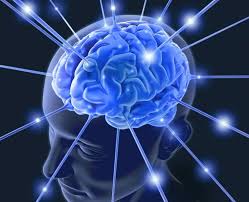
The human brain is not a static organ quietly aging in the background—it is a dynamic system that reinvents itself multiple times across a lifetime. Recent neuroscientific research suggests that our cognitive lives unfold in clearly defined phases, each marked by distinct structural and functional changes. This perspective challenges the simplistic notion of linear brain decline.
Understanding the brain through the lens of “epochs” offers a more nuanced framework for interpreting learning capacity, emotional regulation, creativity, and vulnerability to disease. Rather than viewing childhood, adulthood, and old age as blunt categories, neuroscience now points to finely tuned transitions that shape how we think, adapt, and behave.
By examining these five brain epochs, researchers are reframing human development as a sequence of recalibrations rather than a rise-and-fall narrative. This approach has profound implications for education, mental health, productivity, and lifelong learning—domains where timing, plasticity, and cognitive context matter deeply.
1- The Concept of Brain Epochs
The idea of brain epochs refers to biologically distinct phases of neural organization across the lifespan. Each epoch is characterized by specific patterns of connectivity, metabolic demand, and cognitive priorities. This framework borrows from developmental neuroscience and longitudinal brain imaging studies.
As neuroscientist Michael Gazzaniga notes, “The brain is less a general-purpose machine and more a collection of evolving systems.” Viewing development in epochs helps explain why certain skills flourish at particular life stages while others recede.
2- Epoch One: Early Childhood Neural Explosion
The first epoch is marked by rapid synapse formation and extraordinary plasticity. During early childhood, the brain creates far more neural connections than it will eventually retain, allowing for robust learning and adaptation.
This overproduction supports language acquisition, sensory integration, and social learning. According to Patricia Kuhl, a leading expert in language development, “Children’s brains are learning machines, exquisitely sensitive to their environments.”
3- Pruning as a Feature, Not a Flaw
Neural pruning, often misunderstood, is a defining process of early brain development. Connections that are frequently used are strengthened, while unused ones are eliminated.
This biological efficiency sharpens cognitive function and reflects the brain’s responsiveness to experience. As Donald Hebb famously put it, “Neurons that fire together wire together.”
4- Epoch Two: Adolescence and Network Reorganization
The adolescent brain undergoes large-scale reorganization, particularly in the prefrontal cortex. This affects decision-making, impulse control, and risk assessment.
While often associated with volatility, this epoch is crucial for developing abstract thinking and identity formation. Laurence Steinberg emphasizes that adolescent behavior reflects “a mismatch between a highly reactive emotional system and a still-maturing control system.”
5- Emotional Intensity and Social Sensitivity
During adolescence, emotional circuits mature faster than regulatory ones. This explains heightened sensitivity to peer influence and social feedback.
Rather than pathology, this sensitivity fosters social learning and independence. It is evolution’s way of preparing individuals for complex group dynamics.
6- Epoch Three: Early Adulthood Optimization
In early adulthood, brain networks reach peak efficiency. Processing speed, working memory, and problem-solving abilities are often at their strongest.
This epoch supports career building and complex decision-making. Cognitive neuroscientist Arthur Kramer notes that this phase reflects “maximum neural economy with minimal redundancy.”
7- Stability Over Plasticity
Compared to earlier epochs, the adult brain prioritizes stability. While plasticity remains, it is more targeted and experience-dependent.
This balance allows for expertise and mastery but makes unlearning harder. Hence, habits—good or bad—become more entrenched.
8- Epoch Four: Midlife Neural Rebalancing
Midlife is not merely a plateau; it is a recalibration. While processing speed may slow, integrative thinking and emotional regulation often improve.
Research shows that crystallized intelligence—knowledge accumulated over time—continues to grow. Psychologist Laura Carstensen highlights that “emotional well-being often peaks in midlife.”
9- Wisdom as a Cognitive Asset
This epoch favors synthesis over speed. Individuals become better at contextual reasoning and long-term planning.
Such strengths explain why leadership and mentorship often flourish during this stage, even as raw cognitive speed declines.
10- Epoch Five: Later Life Brain Adaptation
The final epoch involves structural decline alongside functional adaptation. The brain compensates for losses by recruiting alternative networks.
Contrary to popular belief, learning remains possible. As neuroscientist Yaakov Stern explains, “Cognitive reserve allows the brain to cope with damage more effectively.”
11- Memory Changes Are Selective
Episodic memory may weaken, but semantic memory often remains robust. Older adults frequently excel in vocabulary and conceptual understanding.
This selectivity underscores the importance of lifelong intellectual engagement for healthy brain aging.
12- The Role of Neuroplasticity Across Epochs
Plasticity does not disappear—it changes form. In later epochs, it becomes slower but more strategic.
Activities such as learning new skills, physical exercise, and social interaction continue to reshape neural pathways.
13- Implications for Education Systems
Recognizing brain epochs calls for age-sensitive learning models. What works in childhood may fail in adulthood, and vice versa.
Educational theorist John Dewey argued that “education is not preparation for life; education is life itself”—a claim supported by epoch-based neuroscience.
14- Mental Health Across the Lifespan
Different epochs carry different psychological vulnerabilities. Adolescence may bring anxiety, while later life may involve depression linked to isolation.
Targeted interventions aligned with brain epochs can significantly improve outcomes.
15- Productivity and Work Design
Workplaces often ignore cognitive rhythms tied to age. Early adults may thrive in fast-paced roles, while midlife workers excel in strategic oversight.
Aligning roles with brain strengths is both humane and efficient.
16- Technology’s Interaction With Brain Epochs
Digital environments interact differently with brains at different stages. Young brains may adapt quickly, while older brains may experience cognitive overload.
Understanding this interaction is critical for ethical technology design.
17- Lifestyle Factors That Shape Each Epoch
Sleep, nutrition, and physical activity influence brain health throughout all epochs. Their effects, however, are age-dependent.
As neuroscientist Matthew Walker emphasizes, “Sleep is the single most effective thing we can do to reset our brain.”
18- Preventive Neuroscience and Aging
Early interventions can alter trajectories in later epochs. Cognitive reserve built earlier acts as a buffer against neurodegeneration.
This underscores the value of lifelong learning and mental stimulation.
19- Rethinking Aging Narratives
The epoch model dismantles the myth of inevitable decline. Each phase offers unique cognitive advantages.
Aging, then, becomes transformation rather than deterioration.
20- Future Directions in Brain Research
Ongoing longitudinal studies and AI-driven brain mapping will refine epoch boundaries. Personalized neuroscience is likely the next frontier.
As Eric Kandel wrote, “The future of brain science lies in understanding change over time.”
Conclusion
The discovery that the human brain progresses through five distinct epochs reshapes how we understand development, intelligence, and aging. Rather than a single arc of rise and decline, the brain follows a pattern of reinvention, adaptation, and recalibration.
This framework has far-reaching implications for education, mental health, workplace design, and public policy. By aligning societal expectations with neuroscientific reality, we can foster environments that respect cognitive diversity across the lifespan.
Ultimately, recognizing brain epochs invites a more compassionate and evidence-based view of human potential—one that honors not just youth and speed, but depth, wisdom, and adaptability at every stage of life.
Recommended Books for Further Study
- The Brain That Changes Itself – Norman Doidge
- Principles of Neural Science – Eric R. Kandel et al.
- The Age of Insight – Eric Kandel
- Successful Aging – Daniel J. Levitin
- Mind in Motion – Barbara Tversky

Leave a comment