Month: December 2025

  • UK: Will New School Rules Help Cut Violence In The Classroom?

    UK: Will New School Rules Help Cut Violence In The Classroom?

    In the quiet corners of British classrooms, a growing storm of disruption has been brewing — one that policymakers can no longer ignore. Classroom violence, once a marginal concern, has steadily risen to alarming levels, prompting the UK government to introduce a new set of school rules designed to restore order and discipline. These measures have sparked a vital national conversation: can regulation and reform meaningfully curb aggressive student behaviour?

    While some hail the changes as long overdue, others caution that rules alone may not address the deeper social, psychological, and institutional issues at play. The debate isn’t just about education; it’s about the very fabric of school culture and how we shape young minds for civil society. The significance of these rules lies not only in their content but also in how they are implemented and received by teachers, students, and parents alike.

    The challenge, then, is not only to enforce discipline but to do so in a way that promotes respect, engagement, and mental well-being. As philosopher John Dewey once noted, “Education is not preparation for life; education is life itself.” If violence continues unchecked, it is not only learning that suffers but the social foundation of future generations.


    1- The Rising Tide of Classroom Violence

    Classroom violence in the UK has become a focal point of concern for educators, parents, and policymakers alike. Recent statistics have shown a sharp increase in verbal abuse, physical aggression, and intimidation directed at both teachers and pupils. In many instances, these incidents are symptomatic of wider societal tensions — from mental health struggles to the erosion of authority within school settings. According to the National Education Union, nearly one in three teachers report having faced physical threats during their careers.

    This growing crisis undermines not only classroom safety but also the learning environment itself. When students and teachers operate under a constant shadow of disruption, educational outcomes invariably suffer. Renowned sociologist Emile Durkheim argued that discipline is a cornerstone of social cohesion. Without it, the classroom ceases to be a space of structured learning and becomes one of chaos and survival.


    2- Government’s Response: The New School Rules

    In response to these worrying trends, the UK government has introduced a raft of new school rules aimed at reinforcing discipline and reducing classroom violence. These include measures such as zero-tolerance policies for aggressive behaviour, more powers for headteachers to suspend or expel disruptive students, and increased use of in-school isolation rooms. Proponents argue these rules will empower schools to take swift, decisive action.

    However, critics argue that these top-down measures may lack nuance and fail to account for the root causes of behavioural issues. A rule-based approach, they contend, risks criminalising students rather than rehabilitating them. As educationalist Sir Ken Robinson wrote, “You cannot improve education by alienating the very people it’s supposed to engage.” The challenge is ensuring that discipline policies are balanced, just, and contextually sensitive.


    3- The Role of Teacher Authority

    The authority of teachers is pivotal in managing classroom dynamics. Unfortunately, this authority has been steadily undermined over the years due to shifting cultural attitudes, increased student rights, and a lack of institutional backing. When teachers are not supported in maintaining order, they are more likely to experience burnout and disillusionment.

    Restoring teacher authority does not mean reverting to authoritarian models, but rather affirming the teacher’s role as a guide, mentor, and leader. As Paulo Freire observed in Pedagogy of the Oppressed, true authority emerges not from domination, but from mutual respect and dialogue. Teacher training must therefore include conflict resolution skills, classroom management, and psychological insight.


    4- Influence of Family and Social Background

    A child’s behaviour in school is often a mirror of their home environment. Socioeconomic stress, lack of parental supervision, and exposure to domestic conflict can manifest in disruptive behaviours at school. These issues are particularly pronounced in deprived areas, where children may lack positive role models and emotional stability.

    Educational psychologist Dr. Tanya Byron asserts that “behaviour is communication,” and understanding what lies beneath the surface is key to addressing it effectively. Schools need to work closely with families and social services to provide holistic support for vulnerable children, recognising that discipline must be accompanied by care.


    5- Impact on Learning Outcomes

    Classroom violence is not just a disciplinary issue; it’s an academic one. Constant disruptions derail lesson plans, demoralise educators, and create an atmosphere of fear rather than curiosity. According to Ofsted, schools with high levels of behavioural issues tend to have lower achievement scores, regardless of the quality of teaching.

    Long-term exposure to a chaotic learning environment can have deep psychological effects on students. It diminishes their confidence, stifles participation, and fosters disengagement. As educational theorist Alfie Kohn notes in Punished by Rewards, environments that prioritise control over understanding often backfire, undermining intrinsic motivation to learn.


    6- The Role of Mental Health

    Mental health is a significant, though often overlooked, factor in classroom violence. Many students acting out are grappling with anxiety, depression, trauma, or undiagnosed neurodivergent conditions. A punitive response in these cases can exacerbate rather than resolve the issue.

    Investment in school counselling services, early intervention, and staff training in mental health awareness is essential. The Children’s Commissioner for England has repeatedly highlighted the gap in mental health provision for school-aged children. Addressing mental well-being is not ancillary to education—it is central to it.


    7- Peer Influence and School Culture

    Peer dynamics play a powerful role in shaping behaviour. In schools where violence or bullying is normalised, students may feel pressured to conform to disruptive group norms. Conversely, in schools with a strong culture of respect and mutual accountability, positive behaviour is reinforced naturally.

    School culture must be deliberately cultivated through clear values, consistent leadership, and student voice initiatives. Educational researcher Michael Fullan argues in Leading in a Culture of Change that cultural transformation requires deep engagement, not just rule enforcement. In other words, schools must be communities, not merely institutions.


    8- Support for Teachers

    Teachers are on the frontlines of this struggle, yet many feel ill-equipped or unsupported when it comes to managing violence. Professional development in classroom management and trauma-informed teaching is often inconsistent or inadequate.

    Moreover, schools must foster a culture where staff can report incidents without fear of judgment or bureaucratic inertia. Providing psychological support for teachers themselves, especially those in high-stress environments, is equally crucial. A resilient teacher body is a school’s best asset in confronting behavioural challenges.


    9- Role of School Leadership

    Effective school leadership is central to managing behaviour and implementing new rules with integrity and fairness. Strong leaders set the tone for what is acceptable and are proactive in addressing problems before they escalate. Their presence is felt not only in policy but in everyday interactions with staff and students.

    Leadership must also involve ethical decision-making. As leadership expert Dr. Andy Hargreaves notes, sustainable change comes from “moral purpose aligned with professional practice.” Headteachers must strike a balance between firmness and empathy, ensuring that discipline does not become synonymous with exclusion.


    10- Policy and Funding Issues

    Policy without funding is rhetoric without reality. The success of any new behavioural initiative depends heavily on the availability of resources — for staff training, student support services, and infrastructure. Yet many UK schools continue to struggle with underfunding.

    Educational reformer Diane Ravitch has warned that reform efforts often fail because they ignore the economic conditions in which schools operate. Without proper investment, the burden of discipline falls disproportionately on overstretched teachers, undermining the very goals these policies aim to achieve.


    11- Involvement of Parents and Community

    Parents and community members are essential partners in any effort to reduce school violence. When schools and families collaborate, students receive a consistent message about behaviour and responsibility. However, this partnership requires active outreach and trust-building.

    Community programmes that offer parenting support, mentorship, and youth engagement can help mitigate behavioural issues before they enter the classroom. As the African proverb goes, “It takes a village to raise a child.” School violence is not an isolated problem—it is a reflection of broader societal dynamics.


    12- Balancing Punishment and Rehabilitation

    A punitive approach may yield short-term compliance but often fails to foster long-term behavioural change. Effective discipline should be restorative, focusing on accountability, empathy, and reparation. Restorative justice programmes have shown promise in reducing recidivism and improving school climate.

    This approach is grounded in the belief that students should be active participants in resolving conflict. As Margaret Thorsborne, a pioneer in restorative practice, puts it: “Punishment disconnects; restoration reconnects.” Schools should aim to educate the whole child, not merely correct behaviour.


    13- Impact of Social Media and Technology

    The digital age has introduced new avenues for conflict among students. Cyberbullying, exposure to violent content, and social media-fueled peer drama often spill over into the classroom. Teachers now contend with a world where harmful interactions are no longer confined to the schoolyard.

    Digital literacy education and clear policies on device use can help, but parental involvement is equally crucial. Psychologist Sherry Turkle’s Alone Together highlights how online life alters our sense of empathy and presence — both critical for peaceful coexistence in shared spaces like schools.


    14- Case Studies from Other Countries

    Looking abroad, countries like Finland and Japan offer models worth examining. Finnish schools focus heavily on emotional intelligence and teacher autonomy, resulting in low rates of classroom violence. Japan, meanwhile, instils discipline through collective responsibility and moral education.

    These examples show that culture, pedagogy, and policy must work in harmony. Importing models wholesale is unwise, but adapting best practices within a local context can yield real benefits. The OECD’s comparative education studies provide valuable data for such international benchmarking.


    15- Student Voice and Engagement

    Students should not merely be the recipients of discipline; they should be collaborators in shaping school culture. When students have a say in rule-making, they are more likely to internalise those rules. School councils, peer mentoring, and feedback forums can amplify student voice.

    As educational reformer Deborah Meier observed, “Democracy has to be born anew every generation, and education is its midwife.” Engaging students as citizens of the school community promotes responsibility, empathy, and self-discipline.


    16- Training and Curriculum Reform

    To tackle violence at its roots, curriculum reform is essential. Subjects like PSHE (Personal, Social, Health and Economic education), ethics, and emotional literacy must be given more weight. Behaviour cannot be separated from values and understanding.

    Teacher training must also evolve. Conflict de-escalation, trauma-awareness, and inclusive practices should be core components of teacher education. As highlighted in The Courage to Teach by Parker J. Palmer, teaching is an act of moral and emotional presence, not mere instruction.


    17- Long-Term Cultural Change

    Tackling classroom violence is not about quick fixes but enduring change. Cultural transformation within schools takes time, consistency, and a shared vision. It involves altering how authority, respect, and learning are understood and practiced.

    This cultural shift requires leadership at all levels and must be anchored in trust, dialogue, and shared responsibility. In the words of James Comer, “No significant learning occurs without a significant relationship.” At the heart of lasting change lies the human connection.


    18- Challenges in Implementation

    Even the most well-intentioned rules can falter in implementation. Variability in school leadership, local funding disparities, and inconsistent training can all lead to uneven outcomes. Moreover, resistance from staff or students may emerge if reforms feel imposed rather than inclusive.

    Effective change management requires transparency, stakeholder buy-in, and ongoing evaluation. The Education Endowment Foundation stresses the importance of evidence-based strategies and pilot programmes before full-scale implementation.


    19- Metrics of Success

    Measuring the success of anti-violence initiatives must go beyond counting detentions or exclusions. True success lies in improved student engagement, teacher satisfaction, academic achievement, and a sense of safety and belonging.

    Qualitative data — including surveys, interviews, and behavioural observations — can offer insights that raw numbers cannot. A holistic evaluation framework ensures that progress is both real and sustainable.


    20- The Broader Educational Philosophy

    At the core of this issue lies a question of educational purpose. Are schools merely centres of compliance and exam results, or are they spaces of human development and societal transformation? Our response to violence in classrooms reveals what we truly value.

    Drawing from the works of thinkers like Nel Noddings and bell hooks, we are reminded that education must be an act of care, justice, and liberation. Rules matter, but the spirit behind them matters more. Schools must be places where every child is safe not only from harm, but also from indifference.


    21- Effective Teacher Responses to Disruptive Behaviour

    Teachers must strike a careful balance between authority and empathy when confronting disruptive behaviour. Reacting with excessive force or visible frustration often escalates conflict, whereas a calm, consistent approach tends to de-escalate tensions. Employing techniques such as proximity control, tactical ignoring, and assertive redirection can prevent minor disruptions from spiralling into major incidents. This aligns with the work of Dr. Bill Rogers, who advocates for “positive correction” and setting clear, respectful expectations.

    Additionally, teachers must document behavioural incidents accurately and involve support structures early. Collaboration with senior staff and pastoral teams ensures a unified, strategic response rather than fragmented firefighting. As the Department for Education has stressed, school-wide consistency is vital for behavioural frameworks to be effective and equitable across diverse classroom settings.


    22- Building Positive Relationships as Prevention

    Strong, trust-based relationships between teachers and students are a proven deterrent to violent behaviour. When students feel seen, respected, and understood, they are less likely to act out. These connections are built through daily interactions, active listening, and genuine care — not merely through rewards or sanctions. As Rita Pierson, the famed educator, once said, “Kids don’t learn from people they don’t like.”

    This relational approach not only prevents conflict but also fosters resilience and emotional regulation. Investing in social-emotional learning and peer mentoring can further reinforce these positive dynamics. The restorative model, which centres on relationships rather than retribution, has gained traction for its long-term impact on school culture and student well-being.


    23- Addressing Violent and Aggressive Behaviour

    When pupils exhibit violent or aggressive behaviour, an immediate response is essential — not only for safety but also to signal that such conduct is unacceptable. However, the response must be proportionate and rooted in policy. Safe restraint protocols, removal from class, and immediate debriefing are critical. Staff must never act out of fear or impulse but follow training procedures and risk assessments.

    Post-incident interventions are equally important. These include restorative conversations, individual behaviour plans, and referrals to psychological services if necessary. As highlighted in Behaviour and Discipline in Schools: A Guide for Teachers, effective interventions blend consistency with individualised support. Schools that ignore or minimise violent behaviour risk normalising it.


    24- Conservatives Dismissed It as “Waffle”

    The Conservative Party’s sharp dismissal of the new guidance as “waffle” underscores the ideological divide in education policy. Critics argue that the documents are heavy on jargon and light on actionable strategies, providing little reassurance to teachers battling daily disruption. They point to a lack of firm commitment to discipline, calling instead for a return to traditional authority structures.

    This political rejection reflects broader tensions between progressive educational philosophies and calls for stricter enforcement. However, both sides agree that teachers need clarity and support. Any guidance perceived as evasive or overly abstract risks losing credibility with the very professionals it aims to support.


    25- What’s the Problem?

    At its heart, the crisis in UK classrooms is a convergence of rising behavioural issues, insufficient support, and systemic underinvestment. The problem isn’t merely one of individual misconduct but a reflection of deeper societal stressors — including poverty, trauma, and digital overstimulation — manifesting in student behaviour.

    Educational theorist Sir Tim Brighouse asserts that “a school mirrors its society.” Thus, schools cannot be expected to solve these problems in isolation. A coordinated, well-funded, and contextually aware strategy is essential to move from reactive to preventative practices across the system.


    26- Boundaries That Are Impossible to Maintain

    A significant challenge faced by educators is the erosion of enforceable boundaries. Vague policies, inconsistent leadership, and fear of backlash have created a climate in which teachers hesitate to act decisively. This ambiguity undermines their authority and emboldens disruptive students.

    In Classroom Behaviour, Bill Rogers discusses the importance of “predictable consequences and relational authority” — without which, even the best teaching becomes unsustainable. Teachers must be empowered to set firm, fair boundaries, and know they will be supported when they do so.


    27- Teachers Leaving Due to Overwhelming Behaviour

    The exodus of educators due to student behaviour has become an alarming trend. Overwhelmed by relentless classroom disruptions and the emotional toll they take, many skilled teachers are leaving the profession altogether. A recent survey by the National Association of Head Teachers found that behaviour was cited as a top reason for burnout.

    This attrition represents not just a human cost but a systemic failure. Losing experienced educators reduces continuity and mentorship for newer staff, leading to a vicious cycle of instability. Retention strategies must prioritise mental health, workload reduction, and behavioural support to stem this tide.


    28- Nervous Children Avoiding School

    The impact of classroom disruption extends beyond staff; children themselves are becoming increasingly anxious about attending school. Witnessing or experiencing violence can lead to school avoidance, anxiety, and even school refusal syndrome. These pupils are the silent victims of behavioural breakdowns.

    The charity YoungMinds has repeatedly highlighted the rise in school-related anxiety among UK children. Preventing this fallout requires a safe, calm, and predictable learning environment where all students feel protected and supported — not just those acting out.


    29- Trauma Inflicted on Peers

    Children exposed to the violent or disruptive behaviour of their peers often suffer secondary trauma. These pupils may become hyper-vigilant, fearful, or withdrawn, hindering their cognitive development and social engagement. Schools must recognise these students as affected parties deserving of care.

    Trauma-informed schooling, as detailed in The Trauma-Sensitive Classroom by Patricia A. Jennings, calls for staff awareness, predictable routines, and safe spaces for expression. Behavioural issues cannot be treated in isolation; their ripple effects are wide and long-lasting.


    30- Summary of the New Guidance

    The UK government’s new guidance outlines a behaviour framework intended to support consistency and empower educators. Key recommendations include staged interventions, clear consequences, and greater school-level autonomy. The document also places emphasis on restorative practices and positive reinforcement.

    However, while comprehensive in scope, critics note that its language often lacks clarity and urgency. For effective implementation, this guidance must be translated into clear training modules, accessible tools, and strong leadership support.


    31- Staged Interventions in the Appendix

    The appendix provides a tiered approach to interventions, beginning with verbal reminders and escalating to isolation or exclusion where necessary. This structure mirrors the response models used in therapeutic education environments and is intended to ensure proportionality.

    Crucially, each stage also includes restorative elements and opportunities for pupil reflection. This dual approach—combining discipline and rehabilitation—is considered best practice by behavioural specialists and aims to reduce repeat incidents through understanding, not just consequence.


    32- Calming Spaces as De-Escalation Tools

    Taking disruptive students to a designated calm area can help de-escalate volatile situations before they become unmanageable. These spaces offer sensory regulation and time for reflection, preventing impulsive behaviour from spiralling into aggression.

    When used correctly, this approach fosters emotional intelligence and self-regulation. However, such strategies must be paired with staff training to avoid misuse or over-reliance. Done right, they serve as preventative tools rather than punitive ones.


    33- The Question of Exclusions

    Exclusions remain one of the most contentious tools in managing behaviour. While sometimes necessary for safety, their overuse can lead to alienation, educational disengagement, and increased risk of criminal involvement. Critics argue exclusions address the symptom, not the cause.

    Education experts like Professor Carl Parsons have long warned that exclusions disproportionately affect vulnerable and disadvantaged pupils. Schools must explore alternative sanctions where possible and ensure exclusions are used judiciously and transparently.


    34- Life-Changing Impact of Expulsion

    Being expelled from school can derail a young person’s entire trajectory. They face reduced access to education, social stigma, and fewer life chances. According to research from the IPPR, excluded children are four times more likely to end up in the criminal justice system.

    To mitigate this, alternative provision and reintegration programmes must be robust and well-funded. Education should never become a system that simply casts out its most troubled members — it must remain a space of redemption and opportunity.


    35- Exclusion as a Last Resort: Gilruth’s Stance

    Education Secretary Jenny Gilruth’s emphasis on exclusion as a “last resort” reflects a cautious, balanced position. It signals an intent to prioritise inclusion, yet preserve schools’ ability to respond decisively to serious incidents.

    Her statement underscores the need for comprehensive behavioural policies that include both preventative and reactive measures. The key will be ensuring this message is accompanied by tangible support, not just rhetorical framing.


    36- Guidance Permits Exclusion for Violence

    The guidance does explicitly state that exclusion is permitted in cases involving violence, offering clarity to schools that face high-risk scenarios. This inclusion reassures educators that their safety and authority remain protected within the policy framework.

    However, it also necessitates strong accountability to ensure exclusions are used fairly and not as an expedient means of managing complex cases. Clear documentation and independent review processes will be essential to uphold equity.


    37- Reaction to the Guidelines

    Responses to the new guidelines have been mixed. Teachers’ unions welcome the recognition of rising behavioural challenges but question whether the measures go far enough. Many remain sceptical about implementation, citing past failures and resource gaps.

    Public opinion is similarly divided, with some parents calling for stricter discipline and others urging caution against punitive approaches. For the guidelines to succeed, they must evolve in consultation with the very practitioners they seek to empower.


    38- Call for More Resources and Staff

    A recurring theme in the debate is the need for more resources — more staff, more counsellors, more training. Without this, even the best policies will fail at the ground level. Teachers cannot carry the burden of reform alone.

    The Education Policy Institute has repeatedly stressed that staff-to-student ratios and pastoral investment are directly linked to behavioural outcomes. A well-resourced school is not only more effective but more humane.


    39- Empowering Teachers: Gilruth’s Promise

    Jenny Gilruth has pledged that the new policies will empower teachers by providing clearer frameworks and more authority. This is a welcome shift from previous years, where teachers often felt sidelined in behaviour debates.

    To fulfil this promise, the government must ensure consistent policy rollout, funded training, and public support for educators. Empowerment is not a matter of statements — it must be felt in the daily reality of every classroom.


    40- Emotional Dysregulation and Classroom Chaos

    A growing number of students present with emotional dysregulation — rapid mood swings, impulsivity, and poor frustration tolerance — which frequently lead to disruptive episodes. These behaviours are often linked to neurodiversity or trauma and require specialised responses.

    Schools must integrate mental health training into their CPD offerings and work closely with child psychologists and behavioural therapists. As neuroscience advances, so too must our educational responses evolve beyond punishment into healing.


    41- Lack of Clear Rules Leaves Teachers Stranded

    Despite the fanfare, many teachers argue that the rules remain vague. The lack of enforceable standards leads to inconsistency, confusion, and reluctance to act. Without strong leadership and explicit boundaries, teachers are left navigating chaos alone.

    Education must be guided by a coherent philosophy, not merely buzzwords. As Aristotle once said, “We are what we repeatedly do. Excellence, then, is not an act but a habit.” Teachers need habits of clarity, not ambiguity.


    42- Last Resort Repeated But Rarely Defined

    Gilruth’s refrain that exclusion is a “last resort” is reiterated often — but what qualifies as a last resort is left open to interpretation. This ambiguity may result in inconsistent practice across schools, eroding trust in policy.

    Definitions must be precise. A last resort should follow a defined sequence of interventions, documented decisions, and accountability mechanisms. Otherwise, the phrase risks becoming a rhetorical placeholder.


    43- Dismissal of Behavioural Advice as “Waffle”

    Teachers frustrated by ambiguous advice—such as using eye contact, hand signals, or merit stickers—often dismiss such suggestions as impractical in volatile classrooms. These tools may work in low-disruption environments but appear disconnected from high-stakes reality.

    To rebuild confidence, behavioural advice must be grounded in frontline experience, not bureaucratic theory. The profession needs tools that work under pressure, not idealistic checklists.


    44- Holyrood Buzzwords Undermine Credibility

    Terms like “multi-agency collaboration,” “positivity,” and “inclusion” dominate the guidance but are often seen as vague platitudes rather than practical tools. Teachers are seeking structure, not semantics.

    Clarity, not complexity, should be the hallmark of policy. As George Orwell warned in Politics and the English Language, euphemism can obscure reality. Behavioural guidance should speak plainly and directly to the needs of those who must enact it.


    45- Stress Forcing Teachers into Career Changes

    The toll of behavioural stress is so high that some teachers are leaving the profession for completely unrelated fields. One notable case involved a teacher becoming a lorry driver — valuing predictability and peace over pedagogy.

    This anecdote reflects a deeper crisis in professional identity. Teaching, once seen as a calling, is becoming a risk. Reversing this trend requires restoring respect, reducing workload, and re-establishing schools as places where teachers can thrive.


    46- False Allegations Destroying Careers

    False accusations, including highly damaging ones like being labelled a paedophile, have devastated teachers’ lives and careers. These rare but catastrophic cases highlight the need for robust safeguarding that protects staff as well as students.

    Schools must ensure allegations are handled with due process, confidentiality, and legal rigour. As Lord Justice Woolf once wrote, “Justice delayed is justice denied.” Staff deserve both protection and recourse when their reputations are at stake.


    Conclusion

    The question of whether new school rules will reduce violence in UK classrooms is as complex as it is urgent. Discipline is not a silver bullet, nor is compassion a panacea. Real change requires a coherent philosophy, sufficient funding, expert training, and above all, unity of purpose among educators, families, and policymakers.

    Violence in schools is both a symptom and a cause of deeper dysfunctions. To fix it, we must address the roots—trauma, disengagement, and systemic neglect—with honesty and resolve. Only then can our classrooms become not just places of safety, but of transformation, where both learning and peace are possible.

    Addressing classroom violence in the UK requires more than a change in rules — it calls for a reimagining of the educational landscape. Discipline must be rooted in understanding, leadership must be anchored in moral purpose, and every policy must consider the human stories behind the statistics. The new rules may offer a framework, but it is the collective action of teachers, students, families, and policymakers that will determine whether schools become places of peace or battlegrounds of frustration.

    The success of this reform effort depends not on enforcement alone, but on empathy, engagement, and a deep commitment to the transformative power of education. As we seek to stem the tide of violence, we must remember that discipline without compassion is control, not education — and that the classroom must remain a sanctuary for growth, not a theatre of conflict.

    Bibliography

    1. Rogers, Bill. Classroom Behaviour: A Practical Guide to Effective Teaching, Behaviour Management and Colleague Support. SAGE Publications, 2015.

    2. Jennings, Patricia A. The Trauma-Sensitive Classroom: Building Resilience with Compassionate Teaching. W. W. Norton & Company, 2018.

    3. Brighouse, Tim. Education and the Urban Child. Institute of Education Press, 2003.

    4. Pierson, Rita. Every Kid Needs a Champion. TED Talk, 2013. [Available at: https://www.ted.com/talks/rita_pierson_every_kid_needs_a_champion]

    5. Parsons, Carl. Excluding Primary School Children: What Are the Costs? National Children’s Bureau, 2009.

    6. Orwell, George. Politics and the English Language. Horizon, 1946.

    7. Department for Education (DfE). Behaviour and Discipline in Schools: Advice for Headteachers and School Staff. UK Government, 2022.

    8. Education Policy Institute. Vulnerable Pupils and the Impact of School Closures. EPI, 2021.

    9. YoungMinds. Wise Up: Prioritising Wellbeing in Schools. YoungMinds Report, 2017.

    10. Ofsted. Managing Behaviour in Schools: Evidence Review. UK Government, 2022.

    11. Gill, Kiran, et al. Making the Difference: Breaking the Link Between School Exclusion and Social Exclusion. IPPR, 2017.

    12. Woolf, Lord Justice Harry. Access to Justice: Final Report. UK Judiciary, 1996.

    13. Cooper, Paul, and Jacobs, Barbara. From Inclusion to Engagement: Helping Students Engage with Schooling through Policy and Practice. Wiley-Blackwell, 2011.

    14. Tom Bennett. Creating a Culture: A Review of Behaviour in Schools. Department for Education, 2017.

    15. Gilruth, Jenny. Parliamentary statements and interviews on Scottish education policy, 2023–2025. [Available via Scottish Parliament website]

    16. House of Commons Education Committee. Forgotten Children: Alternative Provision and the Scandal of Ever-Increasing Exclusions. UK Parliament, 2018.

    17. Haydn, Terry. Managing Pupil Behaviour: Key Issues in Teaching and Learning. Routledge, 2013.

    18. UNESCO. Behind the Numbers: Ending School Violence and Bullying. UNESCO Report, 2019.

    By Amjad Izhar
    Contact: amjad.izhar@gmail.com
    https://amjadizhar.blog

  • Universal Human Rights Declaration – Study Notes

    Universal Human Rights Declaration – Study Notes

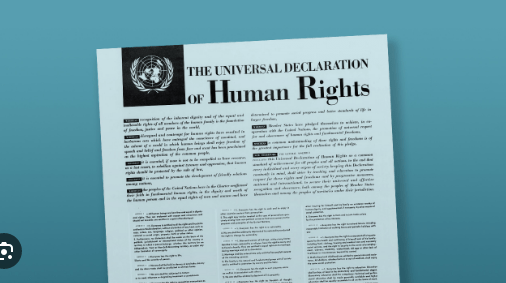
    The text is an essay celebrating the Universal Declaration of Human Rights’ adoption on December 10th, 1948. It details the document’s historical context, tracing its roots from ancient Greece to modern influences like the Magna Carta and the American Constitution. The author emphasizes the declaration’s importance as a cornerstone of human progress and global peace, urging its implementation and widespread education. The essay also critiques the author’s nation’s laws, arguing they insufficiently align with the declaration’s principles and suggesting this contributes to social unrest and emigration. Finally, it calls for greater adherence to the declaration’s ideals to foster a more just and equitable society.

    FAQ: Universal Human Rights Charter

    1. What is the Universal Human Rights Charter?

    The Universal Human Rights Charter, also known as the Universal Declaration of Human Rights, is a groundbreaking document adopted by the United Nations General Assembly on December 10, 1948. It outlines fundamental human rights that are universally applicable to all individuals, regardless of their background, beliefs, or circumstances.

    2. What is the historical context behind the creation of the Universal Human Rights Charter?

    The Charter was drafted in the aftermath of World War II, a time marked by unprecedented human suffering and atrocities. The global community recognized the urgent need to establish a common standard of human rights to prevent future tragedies and promote peace and justice.

    3. What are some key principles enshrined in the Universal Human Rights Charter?

    The Charter proclaims that all human beings are born free and equal in dignity and rights. It emphasizes fundamental rights such as the right to life, liberty, and security of person; freedom from slavery and torture; freedom of thought, expression, and religion; the right to education and work; and the right to participate in government.

    4. How does the Universal Human Rights Charter relate to national laws and constitutions?

    While the Charter itself is not a legally binding treaty, it has served as a foundation for numerous international human rights treaties and has influenced the development of national constitutions and legal frameworks worldwide. It sets a universal standard that countries are encouraged to uphold and incorporate into their domestic laws.

    5. What role does the media and society play in promoting the principles of the Universal Human Rights Charter?

    Open discussion and awareness are crucial for the realization of human rights. The media and civil society play a vital role in educating the public about the Charter, monitoring human rights violations, advocating for policy changes, and promoting a culture of respect for human dignity.

    6. How does the author view the compatibility of the Universal Human Rights Charter with religious or cultural beliefs?

    The author argues that while respecting diverse cultural and religious traditions is important, the principles of human rights should be universally upheld. When cultural practices or interpretations conflict with fundamental human rights, the latter should take precedence.

    7. What challenges exist in implementing the Universal Human Rights Charter globally?

    Despite its widespread recognition, the full implementation of the Charter faces various challenges, including political instability, armed conflicts, poverty, discrimination, and lack of access to education and justice.

    8. What is the significance of the Universal Human Rights Charter in the 21st century?

    The Charter remains as relevant today as it was in 1948. In an increasingly interconnected world facing complex challenges, the principles of human rights serve as a moral compass and a framework for building a just and equitable society for all.

    The Universal Declaration of Human Rights: A Study Guide

    Glossary of Key Terms:

    • Universal Declaration of Human Rights (UDHR): A foundational document adopted by the United Nations General Assembly in 1948, outlining fundamental human rights that are universally applicable to all individuals.
    • Magna Carta: A charter of rights agreed to by King John of England in 1215, considered a foundational document in the development of human rights.
    • Habeas Corpus: A legal principle that protects individuals from arbitrary detention by requiring authorities to present a valid reason for imprisonment before a court.
    • Geneva Conventions: A series of treaties that establish international standards for humanitarian treatment during war, protecting the rights of non-combatants, prisoners of war, and wounded soldiers.
    • Secular: Relating to worldly matters, not religious or spiritual.
    • Liberal: A political and philosophical ideology that emphasizes individual rights, freedoms, and the rule of law.

    Short Answer Quiz:

    1. Briefly describe the process of drafting and adopting the Universal Declaration of Human Rights.
    2. What is the significance of the date December 10th in the context of the UDHR and the Nobel Prize?
    3. According to the article, what historical events and documents influenced the development of the UDHR?
    4. How does the author relate the UDHR to “human culture and civilization”?
    5. What is the author’s perspective on the role of the media in promoting awareness and discussion of human rights?
    6. The author highlights certain aspects of the UDHR that “clash with our customs, society and our constitution.” What are some of these aspects?
    7. How does the author compare the implementation of human rights in Pakistan with India?
    8. What is the author’s argument for aligning Pakistani law with the UDHR rather than prioritizing a particular religious belief?
    9. What are the potential consequences, according to the author, if Pakistan fails to uphold the principles of the UDHR?
    10. What is the significance of the author’s observation that educated youth choose to migrate to Western countries rather than “pure Islamic countries”?

    Answer Key:

    1. The UDHR was drafted by an eight-member committee representing major world powers, with Eleanor Roosevelt as the chairperson. The first draft was presented in Geneva in September 1948 and the final declaration was adopted in Paris on December 10th, 1948.
    2. December 10th is celebrated as Universal Human Rights Day, marking the adoption of the UDHR. It is also the day on which the Nobel Prizes are announced, highlighting the connection between human rights and achievements in various fields.
    3. The article mentions influences such as the philosophy of ancient Greek and Roman civilizations, the Magna Carta of 1215, the principle of Habeas Corpus, the French Revolution, the American Constitution, and the abolition of slavery by Abraham Lincoln.
    4. The author views the UDHR as a manifestation of human progress, dignity, and the advancement of culture and civilization. It represents a step toward achieving a more just and equitable world.
    5. The author criticizes the lack of open discussion about human rights in Pakistani media and society. They believe the media should play a role in raising awareness and facilitating dialogue on these critical issues.
    6. The article suggests that certain aspects of the UDHR, such as the emphasis on equality and non-discrimination based on religion or belief, clash with existing customs, societal norms, and potentially even the Pakistani constitution.
    7. The author contrasts Pakistan’s approach to human rights with India’s, arguing that India incorporated the principles of the UDHR into its constitution, while Pakistan has prioritized certain religious beliefs over universal human rights.
    8. The author argues that aligning Pakistani law with the UDHR would ensure a more just and equitable society for all citizens, regardless of their religious beliefs. This would also prevent the potential for discrimination and marginalization of minority groups.
    9. The author warns that failing to uphold the UDHR principles could lead to further societal unrest, a decline in human well-being, and a continued desire among young people to emigrate from Pakistan seeking better opportunities and freedoms elsewhere.
    10. The author’s observation highlights a perceived discrepancy between the ideals of “pure Islamic countries” and the values of freedom and opportunity sought by educated youth, implying a critique of the social and political conditions in those countries.

    Essay Questions:

    1. Analyze the author’s argument that prioritizing religious beliefs over the principles of the Universal Declaration of Human Rights is detrimental to Pakistani society. What evidence does the author provide to support this claim?
    2. How does the author connect the history of human rights, from ancient Greece to the present day, to the significance of the Universal Declaration of Human Rights?
    3. To what extent do you agree with the author’s critique of the Pakistani media’s role in promoting awareness and discussion of human rights? How could the media play a more effective role in this regard?
    4. The author suggests that certain aspects of the UDHR “clash with our customs, society and our constitution.” Explore the potential tensions and challenges that arise when universal human rights principles intersect with specific cultural and societal contexts.
    5. Considering the author’s concluding point about the emigration of educated youth, what responsibility do governments have in ensuring that the ideals enshrined in the Universal Declaration of Human Rights are realized for all citizens?

    Table of Contents: The Universal Declaration of Human Rights and its Impact

    Source: Excerpts from “Pasted Text” by Fiza Rohan

    I. Introduction: The Genesis and Significance of the Universal Declaration of Human Rights

    • This section introduces the Universal Declaration of Human Rights, its historical context (post-WWII and the formation of the UN), and its approval in 1948.
    • Rohan emphasizes the Declaration as a monumental achievement for humanity, laying the foundation for progress, dignity, and human pride.

    II. Historical and Philosophical Roots of the Declaration

    • This section traces the philosophical and historical underpinnings of the Declaration, linking it to ancient Greek philosophy, Roman civilization, and key milestones in Western legal history.
    • Rohan highlights the Magna Carta, the principle of Habeas Corpus, the French Revolution, the American Constitution, and the contributions of figures like Thomas Jefferson and Abraham Lincoln in shaping the principles of human rights.

    III. The Declaration as a Sacred Document for Humanity

    • This section positions the Universal Declaration of Human Rights as a sacred document for a modern, secular world striving for peace, love, and progress.
    • Rohan argues that its implementation and dissemination are crucial duties for all UN member states and their citizens.

    IV. A Call to Action: Embracing and Implementing the Declaration’s Principles

    – This section urges readers to study the Declaration in depth, assess its relevance in the 21st century, and confront the challenges to its implementation.

    – Rohan points to the disparity between the Declaration’s ideals and the reality of human rights violations, calling for action against forces that threaten human dignity.

    V. The Declaration’s Impact on National Laws and Constitutions

    – This section examines the Declaration’s influence on national legal frameworks, specifically referencing its integration into the Indian Constitution.

    – Rohan contrasts India’s approach with that of her own nation, criticizing the prioritization of religious beliefs over universal human rights principles.

    VI. A Plea for Reform and Alignment with the Declaration

    – This section advocates for legal and societal reforms that prioritize the principles enshrined in the Universal Declaration of Human Rights.

    – Rohan expresses concern about the desire of young people to leave their country due to the lack of respect for human rights, urging for a shift toward a society that embraces the values of the Declaration.

    Briefing Document: Universal Human Rights Charter – A Call for Reflection

    This briefing document analyzes an excerpt from an article titled “In the name of humans” by Fiza Rohan, published in Daily Jang on December 10th (likely commemorating Human Rights Day). The article provides a passionate plea for Pakistan to critically examine its societal practices in light of the Universal Declaration of Human Rights (UDHR).

    Key Themes & Ideas:

    • Historical Significance of the UDHR: Rohan emphasizes the historical weight of the UDHR, calling it “the greatest achievement of humankind till date.” She traces its philosophical roots to ancient Greece and Roman civilizations, highlighting milestones like the Magna Carta, Habeas Corpus, and the American and French Revolutions. This contextualization underscores the UDHR as a culmination of centuries of struggle for human rights.
    • Universality vs. Cultural Context: The author acknowledges potential conflicts between the UDHR’s principles and “our customs, society and our constitution.” She uses India as a positive example, praising their constitutional alignment with the UDHR despite potential clashes with traditional beliefs. This comparison implicitly critiques Pakistan’s legislative approach which, she argues, prioritizes religious considerations over universal human rights.
    • Call for Societal Introspection and Reform: Rohan urges Pakistan to engage in open dialogue about the UDHR and its implications. She criticizes the lack of media coverage and societal discussion, stating: “Why is this world not allowed in the media and our society so that we can discuss all these issues openly?” This highlights the need for a national conversation to bridge the gap between international commitments and domestic realities.
    • Consequences of Ignoring the UDHR: The author warns of dire consequences if Pakistan continues to disregard the UDHR. She points to the younger generation’s desire to emigrate to Western countries, implying that this exodus is driven by a yearning for societies that better uphold human rights. This paints a bleak picture of Pakistan’s future if it fails to address its human rights shortcomings.

    Important Facts & Quotes:

    • Adoption and Content: “The Universal Human Rights Charter or Declaration was approved in Paris on 10 December 1948. … This charter of human rights consisting of 30 articles is a step towards progress and a manifestation of human culture and civilization.”
    • Core Principle: “In the first paragraph of the Universal Charter itself it has been said that all human beings are born equal and free with rights and dignity.”
    • Criticism of Pakistani Law: “Why did our lawmakers not respect this rule? Why did they consider it necessary to write that here no law can be made for or against a particular belief, although it should have been written that here no law can be made…against the UN Universal Human Rights Charter.”
    • Impact on Youth: “Most of our young generation wants to leave this country and run away to Europe and America. No educated youth wants to go to the pure Islamic countries of Arabistan, Afghanistan or Iran.”

    Conclusion:

    Fiza Rohan’s article serves as a powerful call for Pakistan to critically assess its commitment to the UDHR. She argues that aligning national laws and societal practices with this document is crucial for progress, societal harmony, and the well-being of future generations. The article’s publication on Human Rights Day further underscores the urgency of this message.

    Human Rights: A Discussion Based on the Provided Source

    The provided source asserts that the Universal Declaration of Human Rights (UDHR) stands as a landmark achievement, symbolizing the pursuit of progress, dignity, and human pride. This document, comprising 30 articles, was adopted on December 10, 1948, marking a significant step towards a world where fundamental human rights are recognized and upheld.

    The source highlights the historical and philosophical foundations of the UDHR, tracing its roots back to:

    • Ancient Greek philosophy.
    • Roman civilization.
    • The Magna Carta of 1215.
    • The principle of Habeas Corpus (1188).
    • The Bill of Rights (1679).
    • The French Revolution.
    • Contributions of American figures like Thomas Jefferson and Abraham Lincoln, who championed the abolition of slavery.

    The UDHR was influenced by the American Constitution, and its principles are further refined by documents such as the Geneva Conventions. The source emphasizes the importance of upholding the UDHR as a means of achieving world peace, fostering human love, and establishing a global society based on brotherhood.

    It calls upon all UN member states and their leaders to:

    • Promote and implement the ideals enshrined in the UDHR.
    • Combat forces of oppression, terrorism, and bigotry that hinder the progress of humanity.

    The source underscores the universality of the UDHR, noting its translation into over 500 languages and advocating for its inclusion in educational curricula worldwide.

    The source analyzes the first article of the UDHR, which proclaims the inherent equality and freedom of all human beings, endowed with conscience and reason to foster fraternity. It critiques societal practices and constitutional provisions that contradict these principles, drawing a comparison with India, where the constitution aligns with the UDHR despite differing religious and cultural contexts.

    The source argues that adherence to the UDHR is crucial for societal harmony and progress. It concludes by emphasizing the urgency of embracing these humane principles to prevent further societal deterioration and address the desire of the younger generation to seek a better life in countries that uphold human rights.

    The Universal Declaration of Human Rights: A Cornerstone of Human Progress

    The sources emphasize that the Universal Declaration of Human Rights (UDHR), adopted on December 10, 1948, represents a momentous accomplishment in the pursuit of human dignity and progress. This declaration, comprised of 30 articles, serves as a universal standard for the recognition and protection of fundamental human rights across the globe.

    Genesis of the UDHR: Historical and Philosophical Roots

    The sources trace the origins of the UDHR back to a rich tapestry of historical and philosophical influences:

    • Ancient Greek and Roman philosophies: The UDHR inherits the legacy of classical thought that emphasized the inherent worth and dignity of the individual.
    • Magna Carta (1215): This landmark document, which limited the power of the English monarchy and asserted certain individual rights, serves as an important precursor to modern human rights concepts.
    • Principle of Habeas Corpus (1188): This legal principle, which safeguards individuals against unlawful detention, further solidified the foundation for the protection of individual liberty.
    • Bill of Rights (1679): This English document expanded individual rights and placed further constraints on the power of the monarchy, contributing to the evolution of human rights principles.
    • French Revolution: This revolutionary upheaval, driven by ideals of liberty, equality, and fraternity, profoundly influenced the development of modern human rights discourse.
    • American Figures: The contributions of American figures like Thomas Jefferson, a key author of the Declaration of Independence, and Abraham Lincoln, who abolished slavery, are acknowledged as crucial milestones in the advancement of human rights.
    • American Constitution: The UDHR drew inspiration from the American Constitution, particularly its emphasis on individual rights and limited government.

    The UDHR in a Global Context

    The sources highlight the UDHR’s global significance:

    • Geneva Conventions: The UDHR’s principles are further refined and elaborated upon by international legal instruments like the Geneva Conventions, which address the protection of human rights during armed conflicts.
    • Universality and Translation: The UDHR’s universality is underscored by its translation into over 500 languages, making it accessible to diverse cultures and societies worldwide.
    • Dissemination through Education: The sources advocate for the inclusion of the UDHR in educational curricula, emphasizing its importance in shaping the values and understanding of future generations.

    Key Principles of the UDHR

    The sources analyze the first article of the UDHR, which proclaims the fundamental principles upon which the entire declaration is based:

    • Inherent Equality: All human beings are born free and equal in dignity and rights, irrespective of any distinctions.
    • Endowment with Reason and Conscience: Humans possess the capacity for reason and moral judgment, enabling them to act ethically and build a just society.
    • Brotherhood: Individuals should treat one another with a spirit of fraternity, recognizing their shared humanity and interconnectedness.

    Challenges and Criticisms

    The sources acknowledge that the implementation of the UDHR faces challenges and criticisms, particularly when its principles clash with existing societal norms, cultural practices, or legal frameworks.

    However, they argue that adherence to the UDHR’s principles is crucial for fostering social progress and addressing the aspirations of future generations.

    The sources emphasize the need for ongoing dialogue and engagement to ensure that the UDHR’s ideals are realized in practice.

    Human Dignity: A Central Theme in the Universal Declaration of Human Rights

    The sources highlight the concept of human dignity as a cornerstone of the Universal Declaration of Human Rights (UDHR). The UDHR itself asserts that all human beings are born free and equal in dignity and rights. This inherent dignity is presented as the foundation for all the rights and freedoms articulated in the declaration.

    Human Dignity as the Basis for Human Rights

    The recognition of inherent human dignity is not merely a philosophical abstraction; it serves as the basis for a concrete set of rights and freedoms. The UDHR outlines these rights and freedoms in its 30 articles, encompassing civil, political, economic, social, and cultural rights. The sources emphasize that these rights are essential for individuals to live a life worthy of their inherent dignity.

    Historical and Philosophical Underpinnings

    The sources trace the concept of human dignity back to various historical and philosophical influences, including Ancient Greek and Roman philosophies, which emphasized the inherent worth of the individual. The Magna Carta, the principle of Habeas Corpus, and the Bill of Rights are also cited as historical milestones in the recognition and protection of individual rights and, by extension, human dignity.

    Challenges to Human Dignity

    The sources acknowledge that the full realization of human dignity faces numerous challenges in the 21st century. The text specifically points to societal practices, cultural norms, and legal frameworks that contradict the principles of the UDHR. It criticizes the tendency to prioritize certain beliefs or traditions over the universal principles of human rights, arguing that this undermines the inherent dignity of all individuals.

    The Importance of Upholding Human Dignity

    The sources argue that upholding human dignity is not only a moral imperative but also essential for societal harmony and progress. They advocate for the widespread dissemination and implementation of the UDHR, urging individuals, governments, and institutions to work towards a world where the inherent dignity of every human being is recognized and respected.

    Exploring the Universal Charter: The Universal Declaration of Human Rights

    The sources discuss the Universal Charter, primarily referring to it as the Universal Declaration of Human Rights (UDHR). This document, adopted on December 10, 1948, serves as a foundational text for the recognition and protection of human rights worldwide. The sources emphasize its significance as a landmark achievement in humanity’s pursuit of progress, dignity, and individual worth.

    Historical and Philosophical Foundations

    The sources highlight the diverse historical and philosophical influences that shaped the UDHR. These include:

    • Ancient Greek and Roman thought: The UDHR draws upon the classical emphasis on the inherent value of the individual and the concept of natural law.
    • Key Legal Developments: The Magna Carta (1215), the principle of Habeas Corpus (1188), and the English Bill of Rights (1679) are cited as important milestones that contributed to the development of modern human rights concepts.
    • Enlightenment Ideals: The sources acknowledge the profound influence of the French Revolution and its ideals of liberty, equality, and fraternity on the development of human rights discourse.
    • American Influences: The contributions of figures like Thomas Jefferson and Abraham Lincoln, along with the framework of the American Constitution, are noted as significant inspirations for the UDHR.

    Key Principles and Provisions

    The sources analyze the first article of the UDHR, which articulates the foundational principles upon which the entire document rests:

    • Inherent Equality: The UDHR proclaims that all human beings are born free and equal in dignity and rights. This principle rejects any notion of inherent hierarchy or discrimination based on factors such as race, religion, gender, or social status.
    • Reason and Conscience: The declaration recognizes that humans are endowed with reason and conscience, enabling them to make moral judgments and act ethically. This capacity is seen as essential for building a just and humane society.
    • Brotherhood: The UDHR emphasizes the importance of fraternity, urging individuals to treat one another with respect and recognizing their shared humanity.

    Significance and Global Impact

    The sources portray the UDHR as a document of profound global significance. It has been translated into over 500 languages, making it accessible to a vast array of cultures and societies worldwide. The sources advocate for its inclusion in educational curricula to ensure that future generations are informed about its principles and committed to upholding them.

    Challenges and Ongoing Relevance

    The sources acknowledge that the implementation of the UDHR’s principles faces challenges in the 21st century. Societal practices, cultural norms, and legal frameworks may sometimes conflict with the universal principles enshrined in the declaration. However, the sources argue that the UDHR remains a vital document for promoting human dignity, social progress, and global harmony. They stress the need for continued dialogue, education, and advocacy to ensure that its ideals are realized in practice.

    World Peace: A Goal Supported by Human Rights

    The sources, while primarily focused on human rights, connect the concept to the broader goal of world peace. They suggest that the Universal Declaration of Human Rights (UDHR) can be seen as a roadmap towards achieving this peace.

    The sources argue that the UDHR, through its emphasis on human dignity, equality, and brotherhood, lays the foundation for a more peaceful world. By promoting respect for these fundamental values, the UDHR aims to address the root causes of conflict and violence, such as discrimination, oppression, and intolerance.

    The sources highlight the following points that connect human rights and world peace:

    • Combating Forces of Oppression: The sources explicitly state that achieving world peace requires actively combating “forces of oppression, terrorism, and bigotry.” This indicates that the UDHR’s focus on protecting individuals from such threats is directly linked to the pursuit of global peace.
    • Fostering Human Love and Construction: The sources connect the implementation of the UDHR to the goal of “fostering human love and construction.” This suggests that creating a society where human rights are respected is essential for nurturing a culture of peace and cooperation.
    • Establishing a Global Society Based on Brotherhood: The sources envision the UDHR as a tool for establishing a “global society or brotherhood”, implying that the realization of human rights is crucial for building bridges between different cultures and nations, thereby contributing to a more peaceful world order.

    While the sources do not provide a detailed plan for achieving world peace, they imply that the principles enshrined in the UDHR are essential building blocks for a more peaceful and just world. The text suggests that by upholding human rights, promoting dialogue, and combating forces that threaten human dignity, we can move closer to the ideal of world peace.

    Eleanor Roosevelt: A Leading Figure in the Creation of the Universal Declaration of Human Rights

    The sources highlight Eleanor Roosevelt’s pivotal role as the chairperson of the committee responsible for drafting the Universal Declaration of Human Rights (UDHR). This committee, comprised of representatives from major world powers, was tasked with developing the foundational document for the protection of human rights worldwide.

    The sources specifically mention that Eleanor Roosevelt, the wife of former US President Franklin D. Roosevelt, led this committee. Her leadership in this capacity underscores her significant contribution to the creation of this landmark document.

    While the sources do not detail the specifics of her contributions to the drafting process, her position as the committee’s head suggests that she played a crucial role in shaping the content and direction of the UDHR. Her commitment to human rights and social justice, evident in her broader public life, likely informed her approach to this monumental task.

    The Primary Goal of the Universal Declaration of Human Rights: Promoting Dignity, Peace, and Progress

    The sources strongly suggest that the primary goal of the Universal Declaration of Human Rights (UDHR) is to promote and protect the inherent dignity of every human being. This goal is clearly articulated in the first article of the UDHR, which asserts the equality and inherent rights of all individuals. The sources present the UDHR as a foundational document for establishing a world where individuals can live with dignity, free from oppression and discrimination.

    Recognizing Human Dignity as the Basis for Rights and Freedoms

    The sources emphasize that the UDHR’s focus on human dignity is not merely a theoretical concept; it serves as the basis for a comprehensive set of rights and freedoms outlined in its 30 articles. These rights encompass civil, political, economic, social, and cultural spheres, reflecting a holistic understanding of human dignity and its requirements.

    Human Dignity as a Pathway to World Peace

    The sources connect the UDHR’s emphasis on human dignity to the broader goal of world peace. They argue that by promoting respect for fundamental human rights, the UDHR seeks to address the root causes of conflict and violence. The sources highlight the importance of combating forces that threaten human dignity, such as oppression, terrorism, and bigotry, as crucial steps towards building a more peaceful world.

    Fostering a Global Society Based on Brotherhood

    The sources envision the UDHR as a blueprint for a global society founded on the principles of brotherhood and mutual respect. They suggest that by recognizing the inherent worth of every individual, regardless of their background or beliefs, the UDHR aims to foster a sense of global community and interconnectedness. This, in turn, contributes to a more harmonious and peaceful world order.

    The UDHR as a Tool for Progress and Development

    The sources portray the UDHR as a catalyst for human progress and development. They argue that by ensuring the protection of fundamental rights and freedoms, the UDHR creates conditions necessary for individuals and societies to flourish.

    In summary, the sources present the primary goal of the Universal Declaration of Human Rights as a multi-faceted endeavor aimed at:

    • Recognizing and protecting the inherent dignity of every human being.
    • Establishing a world based on peace, justice, and equality.
    • Fostering a global society founded on respect, understanding, and brotherhood.
    • Promoting human progress and development.

    The Universal Declaration of Human Rights (UDHR) was adopted on December 10, 1948 in Paris. This adoption was part of the 58th UN Convention. The UDHR’s approval came after a process that began in 1945, following World War II. A committee, composed of members from various world powers, was formed to draft the declaration. Their first draft was presented in September 1948 in Geneva.

    Eleanor Roosevelt’s Leadership in Drafting the Universal Declaration of Human Rights

    The sources identify Eleanor Roosevelt, wife of former US President Franklin D. Roosevelt, as the chairperson of the committee responsible for drafting the Universal Declaration of Human Rights (UDHR). This committee, representing diverse world powers, was formed in 1945 after World War II to create a foundational document for global human rights protection.

    While the sources don’t detail her specific contributions during the drafting process, her leadership role suggests she significantly shaped the UDHR’s content and direction. This aligns with her known commitment to human rights and social justice, likely influencing her approach to this task.

    The Universal Declaration of Human Rights (UDHR) consists of 30 articles. This information is explicitly stated in source, which mentions that “on this day 30 articles are given for consensus. The Universal Human Rights Charter or Declaration was approved.”

    The sources consistently refer to the UDHR as a comprehensive document outlining various human rights and freedoms. The fact that it encompasses 30 distinct articles underscores its breadth and depth in addressing the fundamental rights and freedoms that every human being is entitled to.

    Navigating the Complexities: The Universal Declaration of Human Rights and Cultural or Religious Practices

    The sources, while praising the Universal Declaration of Human Rights (UDHR), acknowledge the potential for tension between its universal principles and the diversity of cultural or religious practices worldwide. This tension arises from the UDHR’s aim to establish a global standard for human rights while recognizing that societies have different customs, traditions, and beliefs.

    Source specifically highlights this challenge by pointing out that some aspects of the UDHR “clash with our customs, society, and our constitution.” This statement suggests that certain cultural or religious practices might not align perfectly with the rights and freedoms articulated in the UDHR, leading to potential conflicts or disagreements.

    The sources provide an example of this tension by referencing the legal frameworks in countries like India, where despite the presence of long-standing religious traditions, the constitution aligns with the principles of the UDHR. This approach prioritizes the universality of human rights over specific cultural or religious practices that might contradict those rights.

    The sources argue that signing the UDHR implies a commitment to upholding its principles, even if they challenge existing cultural or religious norms. This suggests that countries and societies are expected to adapt their practices to ensure compliance with the UDHR’s standards, even if it requires reinterpreting or modifying certain aspects of their traditions.

    However, the sources do not offer specific solutions for resolving such conflicts or provide detailed guidance on navigating the complexities of balancing universal human rights with cultural or religious sensitivities.

    Historical Context: The Genesis of the Universal Declaration of Human Rights

    The sources provide a compelling historical context for the emergence of the Universal Declaration of Human Rights (UDHR), emphasizing its roots in Western legal and philosophical traditions while acknowledging the potential for tension with diverse cultural and religious practices. The UDHR, adopted on December 10, 1948, represents a pivotal moment in the global quest for human dignity and equality.

    World War II’s Impact

    The sources highlight the profound impact of World War II on the creation of the UDHR. The horrors of the war, including genocide and widespread human rights abuses, galvanized a global movement to prevent such atrocities from recurring. The formation of the United Nations in 1945 provided a platform for this movement, with the UDHR serving as a cornerstone of its mission to promote peace and international cooperation.

    Western Legal and Philosophical Roots

    The sources underscore the influence of Western legal and philosophical traditions on the UDHR’s development. They specifically mention:

    • Magna Carta (1215): This English document limited the power of the monarchy and recognized individual rights, including the right to due process.
    • Habeas Corpus (1188): This legal principle protects individuals from unlawful detention by requiring judicial review of their imprisonment.
    • English Bill of Rights (1679): This act further strengthened individual rights in England, including freedom of speech and the right to petition the government.
    • American Influences: Thomas Jefferson’s ideas on natural rights, enshrined in the US Declaration of Independence, are cited as influential. Abraham Lincoln’s abolition of slavery is also presented as a key moment in the advancement of human rights.
    • French Revolution (1789): The ideals of liberty, equality, and fraternity that emerged from the French Revolution had a global impact on the understanding of human rights.
    • U.S. Constitution: The sources mention that the U.S. Constitution, with its emphasis on individual rights, was reviewed during the UDHR’s drafting.

    Eleanor Roosevelt’s Leadership

    The sources emphasize the crucial role of Eleanor Roosevelt, wife of former US President Franklin D. Roosevelt, as the chairperson of the UDHR drafting committee. Her leadership and commitment to human rights significantly shaped the document’s content and direction. The committee, composed of representatives from diverse world powers, worked to synthesize various legal and philosophical traditions into a universal framework for human rights protection.

    Tensions with Cultural and Religious Practices

    While celebrating the UDHR’s achievements, the sources recognize the potential for tension between its universal principles and the diversity of cultural or religious practices globally. They note that certain aspects of the UDHR may conflict with local customs or beliefs, raising complex questions about balancing universal rights with cultural sensitivity.

    The UDHR’s Legacy

    The sources present the UDHR as a monumental achievement, a testament to humanity’s aspiration for a world based on dignity, equality, and justice. It has served as a foundation for numerous international human rights treaties and has inspired social movements and legal reforms worldwide. Despite the challenges of implementation and the complexities of navigating cultural differences, the UDHR stands as a beacon of hope and a powerful tool for promoting human rights globally.

    The Universal Declaration of Human Rights (UDHR) is composed of 30 articles. This is explicitly stated in the sources, which mention that “on this day 30 articles are given for consensus. The Universal Human Rights Charter or Declaration was approved.”

    The sources frequently emphasize the UDHR’s comprehensive nature in outlining a wide spectrum of human rights and freedoms. The inclusion of 30 distinct articles underscores the document’s thoroughness in addressing fundamental rights and freedoms that every individual is entitled to.

    Universal Declaration of Human Rights and Cultural Relativity: Points of Friction

    The sources acknowledge the potential for conflict between the Universal Declaration of Human Rights (UDHR) and the diverse cultural and religious practices that exist globally. While the UDHR aspires to establish a universal standard for human rights, it also recognizes the reality of differing customs, traditions, and belief systems across societies. This creates a point of tension where universal principles might clash with specific cultural or religious norms.

    The sources specifically point to this challenge by noting that certain elements of the UDHR “clash with our customs, society, and our constitution”. This suggests that some cultural or religious practices might not perfectly align with the rights and freedoms outlined in the UDHR, leading to potential disagreements or conflicts.

    For example, the UDHR advocates for gender equality and freedom of choice, including in matters of marriage and family life. However, certain cultural or religious traditions might endorse practices that could be interpreted as discriminatory or restrictive, such as arranged marriages, limitations on women’s roles, or restrictions on religious conversion.

    The sources argue that by signing the UDHR, countries and societies implicitly commit to upholding its principles, even if they challenge existing cultural or religious norms. This suggests an expectation that nations will adapt their practices to ensure conformity with the UDHR’s standards, even if it requires reinterpreting or modifying certain traditional aspects.

    This expectation can lead to difficult debates and decisions. How much adaptation is required? Who decides which practices are incompatible with human rights? These are complex questions without easy answers.

    The sources, while highlighting this tension, do not offer concrete solutions for resolving these conflicts or provide detailed guidance on how to balance universal human rights with cultural and religious sensitivities.

    It’s important to note that the conversation history and sources primarily focus on Western historical influences on the UDHR. This perspective might not fully capture the complexities of how different cultures and societies globally engage with the concept of universal human rights.

    Furthermore, the sources, while acknowledging the potential for tension, also emphasize the UDHR’s importance as a document promoting human dignity and equality. They suggest that the UDHR’s principles, even when challenging existing norms, can ultimately contribute to a more just and equitable world.

    Reconciling Cultural Practices with the UDHR: A Call for Adaptation and Dialogue

    The sources, while acknowledging the inherent tension between the Universal Declaration of Human Rights (UDHR) and diverse cultural practices, advocate for a process of adaptation and dialogue to bridge the gap between universal principles and local customs. They stop short of offering specific solutions, but suggest a path forward that emphasizes both the universality of human rights and the need for contextual understanding.

    Adaptation of Cultural Practices

    The sources argue that signing the UDHR signifies a commitment to upholding its principles, even when they challenge existing cultural or religious norms. This implies an expectation that countries and societies will actively work to align their practices with the UDHR’s standards.

    This alignment might involve:

    • Reinterpreting Traditions: The sources suggest that some cultural practices might be reinterpreted or reframed in a way that aligns with the UDHR’s principles. For instance, certain cultural traditions related to marriage or family life could be reinterpreted to emphasize consent, individual choice, and gender equality.
    • Modifying Customs: In cases where cultural practices directly conflict with the UDHR’s core values, the sources imply that modification might be necessary. Practices that violate fundamental human rights, such as those that involve discrimination, coercion, or violence, would likely require adjustments to comply with the UDHR.
    • Legal Reforms: The sources suggest that legal frameworks should be reviewed and reformed to ensure consistency with the UDHR. This might involve repealing or amending laws that discriminate against certain groups or violate fundamental freedoms.

    Dialogue and Education

    While adaptation is essential, the sources also hint at the importance of open dialogue and education to foster understanding and navigate the complexities of cultural relativity.

    • Open Discussions: Engaging in honest and respectful discussions about the UDHR and its implications for different cultural contexts is crucial. These dialogues should involve diverse stakeholders, including government officials, civil society organizations, religious leaders, and community members.
    • Public Education: Raising awareness about the UDHR and its principles within societies is essential. Educational programs can help people understand the universality of human rights and how they intersect with cultural practices.

    Challenges and Limitations

    The sources acknowledge that reconciling cultural practices with the UDHR is a complex and ongoing process. Several challenges remain:

    • Defining the Boundaries: Determining which cultural practices are incompatible with human rights and require adaptation is a challenging task. The sources do not provide specific criteria or a clear framework for making these judgments.
    • Balancing Universalism and Relativism: Finding the right balance between universal human rights standards and respect for cultural diversity is a delicate issue. The sources do not delve deeply into this philosophical debate.
    • Power Dynamics: The process of adapting cultural practices can be influenced by power dynamics within societies. Marginalized groups might face challenges in advocating for changes to practices that disadvantage them.

    A Call for Ongoing Engagement

    The sources, while not providing definitive answers, call for ongoing engagement with the complex interplay between the UDHR and cultural practices. They suggest that through a process of adaptation, dialogue, and education, societies can work towards a more just and equitable world that upholds both the universality of human rights and the richness of cultural diversity.

    The Author’s Perspective on the UDHR’s Impact on Pakistan: A Critical Assessment

    The author presents a critical view of Pakistan’s engagement with the Universal Declaration of Human Rights (UDHR), highlighting a perceived gap between the document’s principles and the nation’s practices. They argue that while Pakistan, as a UN member state, has formally endorsed the UDHR, there’s a lack of genuine commitment to fully integrating its values into the country’s legal framework and societal norms.

    Contradictions Between the UDHR and Pakistani Practices

    The author points out specific areas where Pakistani customs, societal norms, and even the constitution appear to clash with the UDHR’s provisions. They contend that certain elements of Pakistani culture and legal interpretations run contrary to the UDHR’s emphasis on individual rights, equality, and freedom of choice.

    While the sources do not explicitly detail these contradictions, previous turns in our conversation shed light on potential areas of friction. We’ve discussed how the UDHR advocates for gender equality and freedom of choice, which could be at odds with certain cultural or religious practices in Pakistan, such as limitations on women’s roles or restrictions on religious conversion.

    Criticism of Pakistani Legal Framework

    The author explicitly criticizes Pakistan’s legal framework for failing to prioritize the UDHR’s principles. They draw a comparison with India, highlighting how the Indian constitution, despite the country’s own diverse cultural and religious landscape, has demonstrably incorporated the UDHR’s core values.

    The author suggests that Pakistani lawmakers have prioritized religious considerations over the UDHR’s universal principles, leading to a legal system that does not adequately protect fundamental human rights. This critique implies that certain laws in Pakistan may either directly contradict the UDHR or fail to provide sufficient mechanisms for its enforcement.

    Call for Reform and Alignment with UDHR

    The author concludes with a strong call for reform within Pakistan, urging the nation to genuinely embrace the UDHR’s principles and adapt its practices accordingly. They believe that a failure to do so will have detrimental consequences, particularly for the younger generation who, according to the author, increasingly seek opportunities in countries where human rights are better protected.

    The author emphasizes that aligning with the UDHR is not about abandoning Pakistan’s cultural or religious identity; rather, it involves reinterpreting and adapting certain practices to ensure they uphold the fundamental dignity and rights of all individuals.

    Criticisms of Pakistan’s Human Rights Record: A Look at Shortcomings and Calls for Reform

    The sources offer a pointed critique of Pakistan’s human rights record, highlighting inconsistencies between the nation’s practices and the principles enshrined in the Universal Declaration of Human Rights (UDHR). The author perceives a lack of genuine commitment from Pakistan in translating the UDHR’s values into tangible action and systemic change.

    • Disparity Between Principles and Practices: The author argues that while Pakistan has formally endorsed the UDHR as a UN member state, there’s a disconnect between this endorsement and the reality on the ground. They point to instances where cultural norms, societal practices, and legal interpretations in Pakistan appear to contradict the UDHR’s emphasis on individual rights, equality, and freedom of choice.
    • Prioritizing Religious Considerations over Universal Rights: The sources suggest that Pakistani lawmakers have often prioritized religious considerations over the UDHR’s universal principles when shaping the nation’s legal framework. This, according to the author, has resulted in a legal system that doesn’t adequately safeguard fundamental human rights for all citizens.
    • Lack of Legal Protection for Core UDHR Principles: The author contends that certain Pakistani laws may either explicitly conflict with the UDHR or fail to provide effective mechanisms for its enforcement. This critique implies a lack of legal protection for the core tenets of the UDHR within the Pakistani legal system.
    • Negative Consequences for Younger Generations: The author expresses concern that Pakistan’s failure to fully embrace the UDHR is having a detrimental impact, particularly on younger generations. They suggest that the youth are increasingly disillusioned by the lack of human rights protections in Pakistan and are seeking opportunities in countries where these rights are better upheld.

    The sources also offer a comparison with India, highlighting how India’s constitution, despite the nation’s complex cultural and religious diversity, has demonstrably incorporated the UDHR’s core values. This comparison serves to underscore the author’s belief that Pakistan has fallen short in its efforts to align its legal framework and societal practices with the principles of the UDHR.

    Contrasting Approaches: Pakistan and India’s Engagement with the UDHR

    The sources highlight a stark contrast between Pakistan and India’s approaches to integrating the principles of the Universal Declaration of Human Rights (UDHR) into their respective legal frameworks and societal practices. While acknowledging India’s complex cultural and religious landscape, the author lauds India’s constitutional commitment to upholding the UDHR’s core values. Conversely, the author criticizes Pakistan for prioritizing religious considerations over universal human rights principles, resulting in a perceived gap between the nation’s formal endorsement of the UDHR and its actual implementation.

    India: Embracing UDHR Principles in Law and Practice

    The sources portray India as a nation that, despite its own rich and diverse cultural tapestry, has successfully woven the UDHR’s principles into the very fabric of its legal system. The author suggests that the Indian constitution demonstrates a clear and deliberate effort to incorporate the UDHR’s core values, ensuring that the nation’s laws protect fundamental human rights for all citizens. This approach is presented as a model for other nations to emulate, particularly those grappling with reconciling universal human rights standards with their unique cultural and religious contexts.

    Pakistan: A Disconnect Between Endorsement and Implementation

    In contrast to India’s perceived success, the sources paint a critical picture of Pakistan’s engagement with the UDHR. The author contends that Pakistan, while formally endorsing the UDHR as a UN member state, has fallen short in translating these principles into concrete action and systemic change. The sources point to several factors that contribute to this perceived disconnect:

    • Prioritizing Religious Considerations: The author asserts that Pakistani lawmakers have often prioritized religious considerations over the UDHR’s universal principles when crafting legislation. This has resulted in a legal system that, according to the author, does not adequately protect fundamental human rights for all citizens.
    • Inconsistency Between Laws and the UDHR: The sources imply that certain Pakistani laws might either directly contradict the UDHR’s provisions or fail to provide effective mechanisms for its enforcement. This suggests a lack of legal protection for core UDHR principles within the Pakistani legal system.
    • Influence of Cultural Norms: While not explicitly stated, the sources hint at the influence of cultural norms and societal practices in hindering the full realization of the UDHR’s values in Pakistan. This suggests that certain traditional practices might conflict with the UDHR’s emphasis on individual rights, equality, and freedom of choice.

    The Consequences of Divergent Approaches

    The sources suggest that these contrasting approaches have tangible consequences for the citizens of both nations. While India is presented as a nation striving towards upholding universal human rights, Pakistan is portrayed as struggling to bridge the gap between its formal commitment to the UDHR and the lived experiences of its people. This perceived failure has led to growing disillusionment, particularly among younger generations who, according to the author, are seeking opportunities in countries where human rights are better protected.

    Ideal Implementation of the Universal Declaration of Human Rights: A Pakistani Perspective

    The text doesn’t explicitly lay out a step-by-step plan for the ideal implementation of the Universal Declaration of Human Rights (UDHR). Instead, it offers a critique of Pakistan’s current approach to human rights, drawing a comparison with India to illustrate how the principles of the UDHR can be more effectively integrated into a nation’s legal framework and societal practices. From this critique, we can glean the author’s vision for a more ideal implementation of the UDHR in Pakistan.

    Constitutional Enshrinement of UDHR Principles: The author implicitly suggests that a key element of ideal UDHR implementation involves enshrining its principles within a nation’s constitution. By drawing a comparison with India, the text highlights how a constitution can serve as a cornerstone for protecting human rights. The author seems to advocate for a Pakistani constitution that explicitly and unequivocally upholds the core values of the UDHR, ensuring that the nation’s legal foundation is firmly rooted in the principles of individual rights, equality, and freedom of choice.

    Harmonizing Legal Frameworks with the UDHR: The author’s critique of Pakistan’s legal system suggests that ideal UDHR implementation requires a thorough review and potential reform of existing laws to ensure their alignment with the declaration’s principles. This might involve:

    • Identifying and amending laws that contradict the UDHR’s provisions, such as those that discriminate based on gender, religion, or other protected characteristics.
    • Enacting new legislation to address gaps in legal protection for specific human rights outlined in the UDHR.
    • Establishing robust enforcement mechanisms to ensure that the principles of the UDHR are upheld in practice and that violations are addressed effectively.

    Shifting Societal Attitudes and Practices: While the text primarily focuses on legal and constitutional aspects, it also hints at the importance of societal transformation for the successful implementation of the UDHR. The author’s criticism of certain cultural norms and societal practices in Pakistan suggests that a shift in attitudes and behaviors is crucial for creating a society where human rights are truly respected and protected. This could involve:

    • Promoting education and awareness about the UDHR and its principles to foster a culture of respect for human rights.
    • Challenging and reforming traditional practices that conflict with the UDHR’s values, particularly those that perpetuate discrimination or inequality.
    • Encouraging dialogue and engagement across different communities to build understanding and bridge divides that hinder human rights progress.

    The text emphasizes that adapting to the UDHR is not about abandoning Pakistan’s cultural or religious identity but about reinterpreting and adapting certain practices to ensure they uphold the fundamental dignity and rights of all individuals.

    Empowering Younger Generations as Agents of Change: The author’s concern for Pakistan’s younger generations reveals their belief in the power of youth to drive positive change. By highlighting the disillusionment and desire for greater human rights protections among young people, the author implicitly suggests that they should be empowered to play a key role in pushing for the ideal implementation of the UDHR in Pakistan. This could involve encouraging their participation in:

    • Human rights advocacy and activism to raise awareness and demand reforms.
    • Educational initiatives focused on human rights principles and their application in Pakistani society.
    • Community engagement and outreach to promote dialogue and understanding across different groups.

    By fostering a generation that is well-informed and passionate about human rights, the author envisions a future where Pakistan moves closer to the ideal implementation of the UDHR, creating a society that is just, equitable, and truly respectful of the inherent dignity and worth of all its citizens.

    Influences on the UDHR’s Development

    The sources identify several historical documents and philosophical movements as having significantly influenced the development of the Universal Declaration of Human Rights (UDHR). These influences span centuries and diverse geographical locations, highlighting the UDHR’s status as a culmination of long-standing struggles for human rights.

    • Ancient Greek Civilization and the Magna Carta: The sources trace the UDHR’s ideological foundations to ancient Greek philosophy and the Magna Carta of 1215. The Magna Carta is specifically mentioned as a key historical precedent. While the exact nature of the connection to ancient Greek philosophy is not detailed, the implication is that the concepts of individual rights and liberties, central to both, formed a basis for later human rights movements.
    • The British King’s Acceptance of Parliament’s Authority (1037 AD): The sources cite this event as a significant early step toward limiting the power of the monarch and acknowledging the rights of the governed, pre-dating the Magna Carta by over a century.
    • Habeas Corpus (1188): The establishment of the principle of Habeas Corpus is mentioned as another important milestone in the evolution of human rights, guaranteeing the right to due process and preventing arbitrary detention.
    • The Bill of Rights (1679): The English Bill of Rights, passed by Parliament in 1679, is presented as a crucial step in the development of legal protections for individual rights, particularly against the arbitrary actions of the monarchy.
    • The American and French Revolutions: The sources explicitly link the UDHR to the American and French Revolutions. The American Constitution and the ideals of thinkers like Thomas Jefferson are highlighted, emphasizing the importance of principles such as individual liberty and self-governance. The French Revolution is similarly acknowledged as a significant contribution to the development of human rights thinking.
    • Abolition of Slavery: The contributions of Abraham Lincoln, who abolished slavery in the United States, is referenced as a particularly significant event in the ongoing struggle for human rights.
    • The Geneva Conventions: Although not directly described as an influence on the UDHR’s development, the sources mention the Geneva Conventions as an area that will continue to be shaped and refined alongside it, suggesting a common thread of human rights ideals and a future of ongoing development in this arena.

    In summary, the sources indicate that the UDHR is not a document born in isolation but rather a culmination of centuries of struggle for human rights and the legal protections ensuring those rights. The influences cited range from ancient philosophical concepts to significant historical events and documents that progressively expanded and reinforced the understanding and recognition of fundamental human rights.

    Adoption of the Universal Declaration of Human Rights (UDHR)

    The sources provide the date and location of the UDHR’s adoption. Specifically, the document states that the Universal Declaration of Human Rights was approved on December 10, 1948, in Paris, France. This event is described as the culmination of a process that began in 1945 following the Second World War, with the formation of the United Nations and the establishment of a committee dedicated to drafting the declaration.

    Implementing the UDHR: A Call for Comprehensive Reform in Pakistan

    The author doesn’t lay out a precise roadmap for implementing the UDHR. However, by comparing Pakistan’s approach to human rights with India’s, the author implicitly suggests a multifaceted strategy for more effectively realizing the UDHR’s principles within Pakistan.

    Prioritizing Constitutional Alignment: The author strongly implies that enshrining the UDHR’s principles within Pakistan’s constitution is crucial. By contrasting Pakistan’s approach with India’s, where the constitution is lauded for its commitment to human rights, the author advocates for a similar constitutional foundation in Pakistan. This would entail ensuring that the nation’s highest law explicitly and unambiguously guarantees the core values of the UDHR, creating a solid legal bedrock for protecting human rights.

    Reconciling Legal Frameworks with the UDHR: The sources argue that Pakistan’s current legal system needs to be critically examined and potentially reformed to align with the UDHR. This involves identifying and amending any laws that contradict the declaration’s provisions, particularly those that enable discrimination based on factors like gender, religion, or other protected characteristics. Additionally, the author suggests enacting new legislation to address any gaps in legal protection for specific human rights articulated in the UDHR. Finally, establishing robust enforcement mechanisms is crucial to ensure that the principles of the UDHR are not just theoretical ideals but are actively upheld and that violations are met with appropriate legal action.

    Addressing Societal Norms and Fostering Education: While the primary focus is on legal and constitutional reform, the author also hints at the importance of societal transformation to fully implement the UDHR. The critique of certain cultural norms and practices in Pakistan suggests that changing attitudes and behaviors is essential for creating a society where human rights are genuinely respected and protected. The author seems to advocate for educational initiatives aimed at raising awareness about the UDHR and its principles, aiming to cultivate a culture of respect for human rights across Pakistani society.

    Embracing the UDHR within Pakistan’s Identity: The author emphasizes that aligning with the UDHR does not require Pakistan to abandon its cultural or religious identity. Instead, it calls for a thoughtful reinterpretation and adaptation of certain practices to ensure they uphold the fundamental dignity and rights of all individuals. This approach acknowledges the importance of cultural context while also emphasizing the universality of human rights principles.

    Summary: The passage discusses the creation and significance of the Universal Declaration of Human Rights, adopted by the United Nations in 1948.

    Explanation: The Universal Declaration of Human Rights, a document outlining fundamental rights for all people, was adopted on December 10, 1948. The passage details its development, starting with the formation of the UN after World War II and the subsequent creation of a committee to draft the Declaration. Led by Eleanor Roosevelt, the committee included representatives from major world powers. The Declaration was presented in Geneva and approved in Paris. The passage emphasizes the Declaration’s importance as a milestone for human progress and dignity, drawing parallels to historical milestones like the Magna Carta, the Habeas Corpus Act, and the abolition of slavery in the US. The Declaration, with its 30 articles, is seen as a testament to human civilization’s evolution towards recognizing and upholding individual rights, laying the foundation for future advancements in human rights protections.

    Summary: This passage discusses the Universal Declaration of Human Rights (UDHR) as an important document for ensuring basic rights and freedoms for all people around the world, regardless of their background. It emphasizes the importance of upholding the principles of the UDHR, even when they conflict with local customs or beliefs.

    Explanation: The passage argues for the significance of the Universal Declaration of Human Rights by drawing parallels with historical figures and events like the French and American Revolutions, Abraham Lincoln, and the Geneva Convention. It emphasizes the UDHR’s role as a symbol of progress in human civilization and a cornerstone for peace, love, and a global sense of community. The author stresses the responsibility of UN member states and their citizens to promote and uphold the principles of the UDHR, especially in combating forces like terrorism and bigotry. The passage acknowledges the potential conflict between the UDHR and local customs or beliefs but highlights the commitment made by nations to prioritize the universal rights outlined in the document. It emphasizes the importance of education and awareness about the UDHR, urging readers to study it thoroughly and reflect on its relevance in the 21st century. The passage concludes by highlighting the UDHR’s core principle of equality for all human beings and its impact on national and international laws, emphasizing the role of the judiciary in safeguarding these rights.

    Key Terms:

    • Universal Declaration of Human Rights (UDHR): A historic document adopted by the United Nations in 1948 that outlines the fundamental rights and freedoms to which all human beings are entitled.
    • Geneva Convention: A series of international treaties that establish standards for humanitarian treatment in war.
    • Secular: Not connected with religious or spiritual matters.
    • Bigotry: Intolerance towards those who hold different opinions from oneself.
    • Propaganda: Information, especially of a biased or misleading nature, used to promote a particular political cause or point of view.

    Summary: The passage argues that all countries, including those with strong religious traditions, should prioritize upholding the UN Universal Declaration of Human Rights to ensure a just and equitable society.

    Explanation: The author contends that societal customs and traditions should not supersede basic human rights as outlined in the UN Declaration. They use the example of India, where despite a long-standing dominant religion, the constitution was crafted to be in harmony with the UN Charter, ensuring equal rights for all citizens. This adherence to human rights principles, the author argues, is crucial for societal stability and progress. They warn that neglecting these principles will lead to societal unrest and a desire among young people to emigrate to countries where human rights are respected, as evidenced by the preference for Western countries over some Islamic nations. The author concludes by emphasizing the urgency of embracing universal human rights to avoid further societal deterioration.

    Key terms:

    • UN Universal Declaration of Human Rights: A historic document adopted by the United Nations in 1948 that outlines fundamental human rights to be universally protected.
    • Constitution: The fundamental principles and laws of a nation or state that determine the powers and duties of the government and guarantee certain rights to the people.
    • Mashallah: An Arabic phrase meaning “what God has willed” often used to express admiration or appreciation.
    • Arabistan: A historical term sometimes used to refer to the Arabian Peninsula.
    • Muashar: An Arabic word meaning “society” or “community.”

    The Universal Declaration of Human Rights: A Call for Pakistan to Uphold its Principles

    The source is an opinion piece advocating for the full implementation of the principles enshrined in the Universal Declaration of Human Rights (UDHR) within Pakistan. The author begins by outlining the historical context of the UDHR, highlighting its adoption on December 10, 1948, in Paris, following World War II. They emphasize the declaration’s significance as a landmark achievement in recognizing and codifying fundamental human rights for all individuals, regardless of background.

    The author then connects the UDHR to a broader historical narrative of progress in human civilization, drawing parallels to milestones such as the Magna Carta (1215), the principle of Habeas Corpus, the abolition of slavery by Abraham Lincoln, and the Geneva Conventions. The UDHR is presented as a culmination of these efforts, representing a collective commitment to upholding human dignity and fostering global peace.

    The core of the author’s argument focuses on the need for Pakistan to fully embrace and implement the UDHR’s principles. They critique what they see as a gap between Pakistan’s commitment to the UDHR in theory and its actual implementation. To illustrate this point, they contrast Pakistan’s approach with India’s, praising India’s constitution for explicitly incorporating and upholding the UDHR’s principles. This comparison serves as an implicit call for Pakistan to undertake similar constitutional reforms, ensuring that its legal framework aligns with the declaration’s guarantees of fundamental rights.

    Beyond constitutional reform, the author suggests a multifaceted approach to implementing the UDHR in Pakistan. This includes:

    • Reconciling Legal Frameworks: Identifying and amending any existing laws that contradict the UDHR’s provisions, particularly those that perpetuate discrimination based on factors like gender, religion, or other protected characteristics. This also involves enacting new legislation to address any gaps in legal protection for specific human rights articulated in the UDHR.
    • Addressing Societal Norms: Recognizing that legal reforms alone are insufficient, the author highlights the need for broader societal transformation. They critique certain cultural norms and practices within Pakistan that conflict with the UDHR’s principles, suggesting that changing attitudes and behaviors is essential for creating a society where human rights are genuinely respected.
    • Promoting Education and Awareness: The author advocates for widespread educational initiatives to raise awareness about the UDHR and its principles, aiming to foster a culture of respect for human rights across Pakistani society. This includes incorporating the UDHR into educational curricula and disseminating its message through various media.

    The author concludes by emphasizing that embracing the UDHR does not require Pakistan to abandon its cultural or religious identity. Instead, they call for a thoughtful reinterpretation and adaptation of certain practices to ensure they align with the fundamental dignity and rights of all individuals. They urge readers to carefully study the UDHR, reflect on its relevance in the 21st century, and actively advocate for its implementation in Pakistan. This call to action reflects a belief that upholding the UDHR is not only a moral imperative but also essential for societal progress and stability.

    Key Arguments:

    • The UDHR is a landmark achievement in the history of human rights, reflecting a global commitment to upholding human dignity and fostering peace.
    • Pakistan needs to bridge the gap between its theoretical commitment to the UDHR and its actual implementation.
    • Constitutional reform is crucial, ensuring that Pakistan’s legal framework aligns with the UDHR’s guarantees of fundamental rights.
    • Societal transformation is necessary, involving a critical examination and potential modification of cultural norms and practices that contradict the UDHR’s principles.
    • Education and awareness-raising initiatives are essential to foster a culture of respect for human rights across Pakistani society.
    • Embracing the UDHR does not require abandoning cultural or religious identity but rather a thoughtful adaptation to ensure alignment with universal human rights principles.

    By Amjad Izhar
    Contact: amjad.izhar@gmail.com
    https://amjadizhar.blog

  • 13 Easy Ways To Deal With Someone Who Thinks They Know Everything

    13 Easy Ways To Deal With Someone Who Thinks They Know Everything

    We’ve all encountered that one person who seems to have an answer for everything. Whether at work, in social settings, or even within our families, dealing with someone who believes they know everything can be exhausting. Their overconfidence can stifle conversations, leaving you feeling unheard and overshadowed. But, instead of letting these encounters drain your energy, there are ways to navigate them gracefully.

    Dealing with a know-it-all is not about proving them wrong; it’s about managing the situation to keep your peace of mind intact. The key lies in understanding their behavior and employing strategies that allow for healthier communication. By staying calm and asserting yourself, you can maintain control of the conversation without getting caught up in their need for validation.

    In this post, we’ll explore 13 practical ways to handle people who think they know it all. These tips will not only help you stay composed but will also teach you how to engage productively, turning potentially frustrating interactions into opportunities for personal growth.

    1-
    Zizor Men’s Warm Memory Foam Slippers, Suede Slip On Fleece Lined House Shoes, Non-Slip Rubber Sole for Indoor Outdoor

    1. Keep Your Cool and Stay Calm

    One of the most important strategies when dealing with a know-it-all is to maintain your composure. Their arrogance and need to dominate a conversation can be infuriating, but reacting emotionally often exacerbates the situation. By keeping your emotions in check, you project confidence and control. This calm demeanor can also help disarm the know-it-all’s overbearing nature, creating a space where healthier dialogue can occur. Taking a few deep breaths and reminding yourself that their behavior reflects their insecurities can be key in maintaining your peace of mind.

    Furthermore, responding with calmness can have a ripple effect. People who display a “know-it-all” attitude often feed off emotional reactions from others, and by staying composed, you deprive them of that satisfaction. This emotional detachment also allows you to focus more on the substance of the conversation rather than getting sidetracked by their overconfidence. A quote by Lao Tzu resonates here: “A person who masters calmness masters life.” Staying calm isn’t just beneficial in managing the interaction but also contributes to your emotional well-being.

    2-
    Sunlit Best USDA Organic Spirulina Powder – Blue-Green Algae, Raw & Vegan Source of Protein & Chlorophyll | Non-GMO & Gluten-Free Superfood Energy Drink | Gut Health & Immune Support Supplement, 8 oz

    2. Acknowledge Valuable Input

    Though it may seem counterintuitive, giving credit where it’s due can shift the dynamics when dealing with a know-it-all. Sometimes, they might provide insightful information, and by acknowledging their contributions, you can reduce their defensiveness. When they feel validated, they’re less likely to continue over-explaining or monopolizing the conversation. This also shows maturity on your part, demonstrating that you are willing to listen and recognize good ideas regardless of the source.

    By giving genuine praise, you create an opening for a more balanced dialogue. Remember, you don’t have to agree with everything they say, but recognizing valid points can help build a rapport. Author Dale Carnegie, in How to Win Friends and Influence People, emphasizes the importance of appreciation, noting that people crave recognition. This approach can shift the conversation away from a one-sided lecture to a more collaborative exchange.

    3-
    Sunlit Best USDA Organic Chlorella Powder – Green Algae, Raw & Vegan Source Of Protein & Chlorophyll | Non GMO & Gluten Free Superfood Energy Drink, Immune Support Supplement, Liver & Gut Health, 8 oz

    3. Set Boundaries in the Conversation

    A vital step in managing conversations with a know-it-all is to assert yourself and set boundaries. Often, they may not even realize they’re dominating the discussion. Politely but firmly, it’s essential to remind them that conversations are a two-way street. You can acknowledge their point of view while also making it clear that your opinions are equally important. This assertiveness doesn’t have to be confrontational but can be framed as a gentle reminder that everyone deserves a voice.

    Boundary setting not only helps restore balance in the conversation but also reinforces your self-respect. When you set boundaries, you’re communicating that you’re an active participant and not merely a passive listener. In his book Boundaries, Dr. Henry Cloud explains that boundaries are crucial for maintaining healthy relationships, as they prevent one-sided interactions. By applying this principle, you ensure that conversations remain respectful and that your thoughts are heard.

    4-
    ZOMCHI 2 Pieces of Soap Bags with Gentle Roughness, Soap Savers for Bar Soap, Body Scrubbers for Use in Shower, Soap Exfoliating Bag

    4. Avoid Arguments and Don’t Take It Personally

    Engaging in an argument with a know-it-all can feel like a never-ending loop. They often see disagreements as a challenge to their intellect, and debating them can lead to frustration rather than resolution. The key is to recognize that their need to always be right stems from personal insecurities, not the merit of the discussion. Instead of getting drawn into an argument, it’s often more productive to steer the conversation away from confrontation. It’s important to remind yourself that their behavior isn’t about you, but about their need for validation. By not taking their comments personally, you can detach yourself emotionally from the situation. This allows you to respond with more objectivity and focus on maintaining a constructive dialogue. Renowned psychiatrist Dr. Carl Jung once said, “Everything that irritates us about others can lead us to an understanding of ourselves.” By understanding the underlying motivations of a know-it-all, you can approach interactions with empathy, choosing to prioritize peace over proving a point.

    5-
    The Complete Book of Football Trivia: Test Your Knowledge with 750 Questions

    5. Redirect the Conversation

    One effective way to manage conversations with a know-it-all is to gently redirect the discussion when it becomes monopolized by their opinions. By introducing a new topic or asking a question that invites others to share their views, you can shift the focus away from the know-it-all’s dominance. This subtle shift creates space for others to contribute, fostering a more balanced and inclusive conversation. It’s a way to diffuse the tension and prevent the interaction from becoming a one-sided lecture.

    Redirecting the conversation doesn’t have to be abrupt or confrontational. Instead, it can be framed as curiosity about another angle or subject. This not only helps to include others but also signals to the know-it-all that you value diverse perspectives. In The Art of Conversation by Catherine Blyth, it’s emphasized that great conversations are built on give-and-take. By guiding the conversation away from their control, you encourage a more dynamic and enriching dialogue.

    6-
    Idzo Steel Garden Hose Holder Stand with Powder Coated to Resist Corrosion, Freestanding Hose Hanger for 125 Feet Hose, Water Hose Reel with 3 Stable Anchors on Soil, Grassland, Easy Installation

    6. Use Humor to Lighten the Mood

    When dealing with someone who thinks they know everything, humor can be a strategic tool to alleviate tension. Know-it-alls often take themselves very seriously, and introducing light, well-placed humor can shift the tone of the conversation. A witty remark or playful comment can bring a sense of relief, turning a potentially confrontational discussion into a more relaxed exchange. However, it’s crucial to ensure that the humor is in good taste and not directed at the person, as this could escalate the situation.

    Humor, when used tactfully, can create a more comfortable atmosphere for everyone involved. It acts as a bridge between differing opinions, allowing for a more enjoyable and less intense conversation. As Mark Twain aptly noted, “Humor is mankind’s greatest blessing.” It not only lightens the mood but also enables deeper engagement by diffusing the know-it-all’s defensive stance. When used wisely, humor can transform a difficult interaction into a more enjoyable experience.

    7-
    KAYGO Gardening Gloves for Women Long Sleeve, Light Protective Gloves for Yard and Outdoor Work, Best Garden Gifts for Gardener,Yellow,Medium

    7. Seek Common Ground

    One of the most effective ways to diffuse tension with a know-it-all is to seek common ground. When you identify areas of agreement or shared interests, the conversation shifts from confrontation to collaboration. Finding commonality can humanize the interaction, reminding both parties that despite differences, they have mutual goals or experiences. This approach encourages the know-it-all to be less combative and more cooperative, making room for a productive exchange of ideas.

    This strategy also builds rapport, allowing for a more open dialogue. Shared experiences or similar perspectives can serve as a foundation for trust, which may ease the know-it-all’s need to dominate the conversation. As Stephen Covey emphasized in The 7 Habits of Highly Effective People, “Seek first to understand, then to be understood.” By focusing on common ground, you pave the way for a more respectful and balanced conversation, enabling both sides to contribute meaningfully.

    8-
    UV Retainer Case | UVC Retainer Cleaner, Disinfects Cleans and Removes Odors, Mouth Guard Case, compatible for Invisalign Case, Retainer Cases | Fresh Case Fresh Knight (Black-UV)

    8. Limit Your Time with Them Whenever You Can

    In some cases, the best way to deal with a know-it-all is to minimize your exposure to them. If you find that their constant need to be right drains your energy or causes frustration, it’s important to establish boundaries. You don’t need to engage in every conversation they start. Choosing when and how you interact with them is a way to protect your emotional well-being. By limiting your time with them, you can avoid unnecessary stress and focus on more positive interactions.

    Setting boundaries is not only about preserving your mental and emotional health but also about demonstrating self-respect. In his book Emotional Intelligence, Daniel Goleman highlights the importance of managing relationships wisely. Sometimes, that means stepping back and choosing where to invest your time and energy. When possible, prioritize interactions that uplift you and avoid those that lead to frustration. By consciously managing your time with the know-it-all, you take control of your personal space and peace of mind.

    9-
    Classic Sweet Herb Vinaigrette Dressing, Keto Salad Dressing, Paleo Healthy Salad Dressing, Non-GMO, Low Sodium Salad Dressing by Brick House, 12 Oz

    9. Focus on Learning, Not Winning

    Shifting your mindset from trying to “win” a conversation to focusing on learning can make a significant difference when dealing with a know-it-all. Rather than viewing the interaction as a competition, approach it as an opportunity for growth. Know-it-alls often present their ideas with an air of certainty, but even amid their overconfidence, there may be useful insights to gain. By focusing on learning, you can extract valuable information or a new perspective, turning what might seem like an irritating exchange into a chance for personal enrichment.

    This mindset shift also alleviates the pressure to prove yourself. Instead of becoming defensive or feeling the need to outsmart them, you can engage from a place of curiosity. As Socrates famously said, “True wisdom is in knowing you know nothing.” Embracing this attitude allows you to stay open-minded, even when faced with someone who claims to know it all. By focusing on learning rather than winning, you foster a healthier, more constructive approach to these interactions.

    10-
    Viotti Violin Strings 4/4 Full Set | Medium Tension Synthetic-Core Strings with Gold E String for Brilliance, Power & Projection, Silver Wound D & G Strings, and Aluminum Wound A String

    10. Reflect on Your Interactions with Them

    After a conversation with a know-it-all, taking a step back to reflect on how the interaction unfolded is a valuable practice. Reflection provides insight into what strategies worked well and where improvements could be made in handling similar situations in the future. By assessing your behavior and responses, you can refine your approach, ensuring that you’re better equipped to maintain calm and assertiveness in the next encounter. This self-awareness leads to continuous improvement in your communication skills.

    Reflection is not just about identifying mistakes; it’s also about recognizing progress. Celebrating moments when you successfully navigated a difficult conversation can boost your confidence. In Crucial Conversations: Tools for Talking When Stakes Are High, authors Kerry Patterson and Joseph Grenny stress the importance of self-reflection in fostering productive dialogue. By taking time to review your interactions, you gain a deeper understanding of how to effectively manage know-it-alls in future discussions.

    11-
    Universal Color Changing Paint Activated by Body Heat Thermochromic Fabric Paint Temperature Reactive Secret Message Magic Paint (Blue to Violet)

    11. Talk About How You Feel, Not How They Act

    One of the most effective communication techniques when dealing with a know-it-all is using “I” statements. Instead of accusing them of dominating the conversation, focus on expressing how their behavior impacts you. For example, saying, “I feel unheard when I can’t share my thoughts,” allows you to communicate your emotions without sounding confrontational. This approach promotes better understanding and encourages the know-it-all to reflect on their behavior without becoming defensive.

    “I” statements also open the door to healthier, more empathetic communication. They create a non-threatening environment where the know-it-all might be more willing to listen. As psychologist Marshall Rosenberg explains in Nonviolent Communication, expressing feelings rather than making judgments fosters connection and mutual respect. By focusing on how you feel, you shift the conversation toward understanding and away from blame, paving the way for more constructive interactions.

    12-
    Organic Japanese Ginger Roasted (Shoga Hoji-Cha) 10 Tea Bags by Tea Kitamura

    12. Empathize with Their Insecurities

    Recognizing that a know-it-all’s behavior often stems from insecurities can help you approach them with greater empathy. Their need to assert themselves or be right may come from a deep-seated fear of inadequacy or a lack of self-confidence. While this doesn’t excuse their actions, understanding the root of their behavior can help you maintain patience and composure during interactions. Empathy allows you to see beyond their arrogance and recognize their vulnerability.

    By approaching a know-it-all with compassion, you may be able to break through their defensive exterior and engage in more meaningful dialogue. As Dr. Brené Brown discusses in The Gifts of Imperfection, empathy is the key to building connections, even with challenging individuals. When you acknowledge their insecurities, you can respond with kindness, defusing potential conflict and fostering a more positive interaction. This approach helps transform difficult conversations into opportunities for mutual respect and understanding.

    13-
    Advanced Anti Wrinkle Patches | Forehead Wrinkle Patches & Smile Line Patches | Retinol Face Tape for Wrinkles | Collagen Overnight Wrinkle Patches for Face to Help Wrinkles Between Eyebrows

    13. Get Someone to Mediate if Necessary

    When dealing with a particularly difficult know-it-all, involving a neutral third party can help restore balance to the conversation. A mediator or facilitator can ensure that everyone has an opportunity to speak, guiding the discussion in a more structured and fair manner. Mediators can also help manage emotions, preventing the conversation from becoming too heated. By having someone impartial and focused on constructive outcomes, the chances of reaching a mutual understanding significantly improve.

    Mediators are especially useful in situations where the know-it-all consistently dominates or dismisses others’ perspectives. Having a neutral party can encourage the know-it-all to listen more actively and acknowledge the contributions of others. As Kenneth Cloke suggests in Mediating Dangerously: The Frontiers of Conflict Resolution, mediators can facilitate deeper understanding by reframing conflicts and fostering collaborative problem-solving. Involving a mediator shows that you are committed to resolving the issue fairly and with respect, benefiting everyone involved in the conversation.

    14-
    DIFF Sandra Designer Oversized Square Sunglasses for Women UV400 Protection

    Conclusion

    Mastering the art of staying calm, acknowledging valuable input, and setting boundaries are crucial when dealing with someone who thinks they knows everything. Each of these strategies helps to diffuse tension and encourages a more respectful exchange of ideas. Keeping your cool not only allows you to stay in control but also disarms the other person, making it easier for them to listen and engage constructively.

    By acknowledging their valid points and asserting your own, you open the door to healthier conversations. Setting boundaries reinforces that communication is a shared responsibility, not a platform for one person to dominate. As these tips become second nature, you’ll find that your interactions with know-it-alls become less frustrating and more manageable.

    Dealing with know-it-alls doesn’t always have to lead to frustration. By avoiding unnecessary arguments, redirecting conversations, and injecting humor into the discussion, you can create a more balanced and positive interaction. These strategies focus on maintaining control of the situation without escalating conflict. By recognizing that their behavior is not a reflection of you and using redirection or humor to shift the conversation, you protect your emotional well-being while promoting healthier dialogue.

    Avoiding arguments ensures that the conversation stays focused on productive discussions rather than turning into a battle of egos. Redirecting the conversation invites others to share their thoughts, ensuring that communication remains balanced. Finally, humor serves as a valuable tool for defusing tension, making interactions more comfortable for everyone involved. Implementing these techniques allows you to handle challenging personalities with grace and tact.

    Seeking common ground, limiting your time with know-it-alls, and focusing on personal growth rather than winning arguments are essential strategies for maintaining healthy interactions. By finding shared interests, you humanize the conversation, reducing the chances of conflict and increasing the potential for collaboration. These areas of agreement can create a foundation for a more respectful and meaningful exchange of ideas.

    Limiting your interactions when necessary is another important aspect of managing your well-being. You are not obligated to engage with someone who consistently drains your energy. Prioritizing your mental health by setting boundaries ensures that you stay in control of your emotional landscape. Lastly, by focusing on learning instead of proving a point, you turn what could be a frustrating experience into an opportunity for growth. Together, these strategies allow you to approach difficult personalities with resilience and grace.

    Reflecting on your interactions, using “I” statements, and approaching a know-it-all with empathy are essential steps in fostering better communication and reducing tension. Self-reflection helps you improve your responses and develop more effective strategies for future encounters. It’s a process of continuous growth that enhances your ability to remain calm and assertive, even in challenging situations.

    By focusing on how their actions make you feel rather than blaming them directly, you create a more open and understanding environment. This shift in communication style can lead to more productive conversations, helping the know-it-all become more aware of their impact. Lastly, empathy plays a crucial role in these interactions. Understanding that their behavior may be rooted in insecurities enables you to maintain patience and compassion, leading to more respectful and balanced exchanges. Together, these strategies ensure that you handle know-it-alls with grace, resilience, and emotional intelligence.

    Seeking mediation, when necessary, is a practical solution in dealing with know-it-alls in challenging situations. Reflection, empathetic communication, and boundaries work well in everyday interactions, but some conversations require a more structured approach. A mediator provides that structure, ensuring that everyone’s voice is heard and that the conversation stays productive.

    By involving a mediator, you create an environment where fairness prevails, and conflict is managed with expertise. Whether in personal or professional settings, this step reinforces your commitment to healthy communication. Combining self-reflection, “I” statements, empathy, and mediation as needed ensures that interactions with difficult individuals remain as positive and constructive as possible. Each of these strategies not only improves your relationships but also protects your emotional well-being in the long run.

    Dealing with someone who thinks they know everything can be a frustrating and exhausting experience, but with the right strategies, you can manage these interactions with grace and resilience. The key is to remain calm, set boundaries, and approach conversations with empathy and understanding. Techniques such as avoiding arguments, redirecting conversations, and using humor to defuse tension help maintain balance and keep the dialogue productive. Recognizing that even know-it-alls may offer valuable insights encourages you to stay open-minded and focus on learning rather than simply “winning” the conversation.

    Equally important is managing your well-being by limiting time with individuals who consistently drain your energy. Using “I” statements to express how their behavior affects you can foster better communication while seeking common ground helps shift the dynamic toward collaboration. In particularly challenging situations, enlisting the help of a neutral mediator ensures that everyone’s voice is heard and promotes constructive outcomes. By combining these strategies, you can navigate difficult interactions with know-it-alls, turning potential conflict into opportunities for growth, understanding, and mutual respect.

    In the end, handling these situations effectively not only improves your interactions with challenging individuals but also sharpens your communication skills and emotional intelligence. As you implement these tactics, you’ll be better equipped to maintain positive relationships while protecting your own mental and emotional health. The true victory lies not in outsmarting the know-it-all but in fostering a more respectful, balanced, and meaningful exchange of ideas.

    Bibliography on Dealing with Know-It-All Persons

    • Brown, Brené. The Gifts of Imperfection: Let Go of Who You Think You’re Supposed to Be and Embrace Who You Are. Hazelden Publishing, 2010.
      Brown explores the power of vulnerability and empathy, which can be essential when dealing with difficult personalities such as know-it-alls. This book provides insights into developing resilience and understanding the root of certain behaviors.
    • Carnegie, Dale. How to Win Friends and Influence People. Simon & Schuster, 1936.
      A classic guide to improving social skills, this book offers timeless advice on handling challenging conversations, building rapport, and influencing others—skills that are invaluable when dealing with know-it-alls.
    • Cloke, Kenneth. Mediating Dangerously: The Frontiers of Conflict Resolution. Jossey-Bass, 2001.
      Cloke’s work emphasizes the importance of mediation and conflict resolution in difficult situations, including those involving overbearing personalities. His strategies for facilitating discussions are highly relevant when engaging with know-it-alls.
    • Covey, Stephen R. The 7 Habits of Highly Effective People: Powerful Lessons in Personal Change. Free Press, 1989.
      Covey’s principles of active listening, seeking first to understand, and finding win-win solutions are essential for engaging with difficult individuals in a constructive and balanced manner.
    • Goleman, Daniel. Emotional Intelligence: Why It Can Matter More Than IQ. Bantam Books, 1995.
      Goleman’s insights into emotional intelligence are critical when dealing with know-it-alls. Understanding and managing your emotions while interacting with difficult individuals can lead to more effective communication.
    • Grenny, Joseph, et al. Crucial Conversations: Tools for Talking When Stakes Are High. McGraw-Hill, 2002.
      This book provides practical tools for navigating high-stakes conversations, especially with difficult or dominating personalities. The focus on maintaining composure and encouraging productive dialogue is highly relevant to dealing with know-it-alls.
    • Rosenberg, Marshall B. Nonviolent Communication: A Language of Life. PuddleDancer Press, 2003.
      Rosenberg’s approach to communication emphasizes empathy and understanding, essential when trying to connect with or diffuse tension in conversations with know-it-alls. His use of “I” statements encourages non-confrontational communication.
    • Patterson, Kerry, and Grenny, Joseph. Crucial Conversations: Tools for Talking When Stakes Are High. McGraw-Hill, 2002.
      This guide focuses on handling emotionally charged conversations effectively. Patterson and Grenny offer strategies for creating a safe space for dialogue, even with difficult individuals.
    • Tannen, Deborah. The Argument Culture: Moving from Debate to Dialogue. Random House, 1998.
      Tannen critiques the adversarial nature of modern communication and suggests ways to foster more constructive dialogue. Her work is especially useful when dealing with know-it-alls who thrive on debates and confrontation.
    • Ury, William. Getting to Yes: Negotiating Agreement Without Giving In. Penguin Books, 1981.
      This book provides negotiation techniques that can be useful when engaging with know-it-alls. Ury’s strategies focus on finding mutually beneficial solutions and maintaining calm, assertive communication.

    By Amjad Izhar
    Contact: amjad.izhar@gmail.com
    https://amjadizhar.blog

  • History of Jews – Dr. Israr Ahmad’s Complete Bayan End of Human World – Study Notes

    History of Jews – Dr. Israr Ahmad’s Complete Bayan End of Human World – Study Notes

    This text presents a rambling, apocalyptic lecture delivered by a speaker who identifies as a scientist and poet. The lecture explores the speaker’s understanding of a cosmic struggle between good and evil, focusing on the roles of angels, jinn, humans, and particularly Jews. It weaves together religious interpretations of history, prophecy, and geopolitical events, culminating in a prediction of an imminent, catastrophic war. The speaker emphasizes the importance of Islam and foresees a final day of judgment. The lecture is characterized by a chaotic mix of religious dogma, historical anecdotes, and conspiracy theories.

    FAQ: Understanding the Current Global Landscape and the Role of Islam

    1. Who is humanity’s real enemy according to the speaker?

    Humanity’s real enemy belongs to the invisible world – Iblis (Satan) and his followers, including Jinn and humans who have succumbed to his influence. They operate subtly and are not easily perceptible, making them even more dangerous. This aligns with Islamic beliefs that emphasize the spiritual struggle against unseen forces of evil.

    2. What is the speaker’s perspective on the nature of the world?

    The speaker posits that the world is divided into two realms – the visible and the invisible. Humans often prioritize the visible world, neglecting the invisible, which includes angels, Jinn, and spiritual forces. This disregard, according to the speaker, leads to an incomplete understanding of reality and makes humanity vulnerable to manipulation by Iblis.

    3. What is the significance of Adam’s creation and Iblis’ rebellion in understanding present conflicts?

    Adam’s creation from clay and Jinn from fire highlight their inherent differences. Iblis, a Jinn, refused to prostrate before Adam, defying Allah’s command and sparking an enduring enmity against humanity. This primal act of disobedience is presented as the root cause of conflict and evil in the world. Iblis’ vow to mislead humanity continues to manifest in various forms of deception and corruption, particularly through his influence on susceptible individuals.

    4. How does the speaker view the historical relationship between Jews and Muslims?

    The speaker presents a complex and often adversarial relationship between Jews and Muslims throughout history. Key events like the destruction of the Jewish temples, the diaspora, and the establishment of Israel are highlighted to illustrate this tension. The speaker suggests that a deep-rooted enmity exists, primarily fueled by religious and territorial disputes. This perspective aligns with some interpretations of historical events within the Islamic tradition, although it is important to note that other interpretations exist.

    5. What is the role of secularism and the pursuit of world domination in the speaker’s narrative?

    Secularism is presented as a tool for achieving world domination through economic control and manipulation. The speaker suggests that multinational corporations and powerful entities leverage secularism to advance their agendas and accumulate wealth. This view connects secularism with a materialistic worldview that prioritizes profit over spiritual values, ultimately serving the interests of a select few.

    6. How does the speaker connect the Protestant Reformation with the rise of modern economic systems and global power dynamics?

    The Protestant Reformation is presented as a pivotal event that facilitated the rise of modern economic systems, particularly through its acceptance of usury. This shift, according to the speaker, empowered bankers and financiers, ultimately leading to the dominance of financial institutions and the pursuit of economic control on a global scale.

    7. What is the speaker’s analysis of the current geopolitical situation and the potential for future conflict?

    The speaker views the current geopolitical landscape as a culmination of historical tensions and ongoing spiritual warfare. The rise of extremist ideologies, the pursuit of world domination by certain entities, and the escalating conflict in the Middle East are seen as precursors to a major global confrontation – a “Kurukshetra.” This perspective emphasizes the gravity of the situation and the potential for widespread conflict driven by religious and ideological differences.

    8. What call to action does the speaker issue to Muslims in light of these global challenges?

    The speaker urges Muslims to return to the true teachings of Islam, prioritize the afterlife over worldly pursuits, and unite to establish a just Islamic system. Active participation in movements aimed at achieving these goals is encouraged. The speaker’s message emphasizes the importance of individual spiritual reform and collective action to overcome the challenges facing the Muslim community and the world at large.

    Unseen World: A Study Guide

    Glossary of Key Terms

    • Bilhi minash shaitan rajim bismillahirrahmanirrahim: A phrase seeking refuge in Allah from the accursed Satan, and starting in the name of Allah, the Most Gracious, the Most Merciful.
    • Mardud: Rejected, outcast.
    • Surah: A chapter of the Quran.
    • Hadith: A collection of sayings and actions of the Prophet Muhammad.
    • Khilafat: The Islamic system of governance after the Prophet Muhammad.
    • Ummah: The global community of Muslims.
    • Rasul: A messenger of Allah.
    • Nabi: A prophet of Allah.
    • Masih: Arabic for Messiah, referring to Jesus Christ.
    • Yahudi: Arabic for Jewish.
    • Diaspora: The dispersion of the Jewish people beyond Israel.
    • Fitna: Trial, tribulation, discord.
    • Jihad: To strive or struggle in the way of Allah.
    • Fatwa: A legal ruling issued by an Islamic scholar.
    • Secular: Relating to worldly affairs, separate from religion.
    • Protestant: A branch of Christianity that emerged during the Reformation.
    • Catholic: A branch of Christianity under the leadership of the Pope.
    • Crusades: A series of religious wars between Christians and Muslims for control of the Holy Land.
    • Holocaust: The genocide of European Jews during World War II.
    • Greater Israel: A political concept advocating for an Israel with expanded borders.
    • Land for Peace: A principle for resolving the Israeli-Palestinian conflict through territorial concessions in exchange for peace.
    • Temple Mount: A holy site in Jerusalem sacred to both Jews and Muslims.
    • Aqsa Mosque: A mosque located on the Temple Mount, the third holiest site in Islam.
    • Taliban: An Islamic fundamentalist group that ruled Afghanistan.
    • Osama Bin Laden: The leader of al-Qaeda, the group responsible for the September 11 attacks.
    • Day of Allah: The Day of Judgement.
    • Muttaida: United.

    Short Answer Quiz

    1. According to the speaker, who is humanity’s real enemy and why?
    2. What is the significance of the speaker’s discussion of angels and jinn?
    3. Explain the concept of “self-consciousness” as the speaker describes it.
    4. What is the significance of Adam’s creation and the command to prostrate in this narrative?
    5. How does the speaker characterize Iblis and his role in relation to humanity?
    6. According to the speaker, what is the connection between the Jewish community and enmity towards humanity?
    7. Explain the significance of the diaspora and its impact on the Jewish community throughout history.
    8. Describe the speaker’s perspective on the Protestant Reformation and its consequences.
    9. What is the speaker’s interpretation of the relationship between the United States and Israel?
    10. What are the speaker’s predictions about the future and the “Day of Allah”?

    Answer Key

    1. The speaker identifies the unseen world, specifically Iblis and his followers (including jinn and corrupted humans), as humanity’s real enemy. This is because they promote disobedience to Allah and sow discord amongst people.
    2. The speaker uses angels and jinn to illustrate different levels of creation and obedience to Allah. Angels, made of light, are inherently obedient, while jinn, created from fire, have free will and the capacity for both good and evil. Humans, made of clay, also possess free will and are susceptible to the influence of both forces.
    3. Self-consciousness, for the speaker, is the awareness of one’s existence and ability to think, feel, and make decisions. It differentiates humans, jinn, and angels from inanimate objects and highlights their responsibility for their actions.
    4. Adam’s creation and the command to prostrate highlight Iblis’s defiance and the origin of enmity between him and humanity. Iblis refused to prostrate before Adam, believing himself superior because he was created from fire. This act of disobedience led to his expulsion from paradise and his vow to mislead Adam and his descendants.
    5. The speaker portrays Iblis as a cunning and deceitful being who tempts humans towards sin and away from Allah. He is seen as the leader of a vast army of jinn and corrupted humans, working tirelessly to undermine humanity’s relationship with Allah.
    6. The speaker argues that the Jewish community, harboring a deep-seated resentment towards humanity, strives for world domination and seeks to exploit others for their own benefit. He points to historical events like the rejection of prophets, the crucifixion of Jesus, and the establishment of a secular, exploitative economic system as evidence of their malicious intent.
    7. The diaspora, the forced scattering of the Jewish people from their homeland, is depicted as a pivotal event that fueled their resentment and desire for dominance. It solidified their perception of being persecuted and strengthened their resolve to reclaim their perceived rightful place in the world.
    8. The speaker views the Protestant Reformation as a tool for furthering Jewish influence and world domination. He argues that the adoption of the Old Testament and the emphasis on material wealth and economic power served to corrupt Christianity and pave the way for a secular, exploitative system.
    9. The speaker interprets the United States as a pawn in the hands of a powerful Jewish lobby, suggesting they manipulate American foreign policy to serve their own interests. He points to the unwavering support for Israel and the pressure exerted on other nations, particularly Muslim-majority countries, as evidence of this hidden influence.
    10. The speaker predicts a future marked by increasing conflict and turmoil, culminating in the “Day of Allah,” a time of divine judgment and the establishment of Allah’s rule on Earth. He emphasizes the urgent need for Muslims to unite and actively work towards achieving this ultimate goal.

    Essay Questions

    1. Analyze the speaker’s use of historical events and religious narratives to support his central arguments about the nature of humanity’s enemies. To what extent does his interpretation align with traditional Islamic perspectives?
    2. Discuss the speaker’s portrayal of the Jewish community and its motivations. How does his perspective contribute to a broader understanding of interfaith relations and historical tensions?
    3. Evaluate the speaker’s claims about the Protestant Reformation and its impact on world history. To what extent does his interpretation reflect historical realities and complexities?
    4. Analyze the speaker’s depiction of the United States’ role in global affairs. How does his perspective challenge or reinforce common narratives about American foreign policy?
    5. Explore the speaker’s concept of the “Day of Allah” and its significance in Islamic thought. How does his interpretation of this event shape his understanding of the present and the future?

    Humanity’s Real Enemy: An Islamic Perspective on Global Conflict

    Source: Excerpts from “Pasted Text” (audio transcript)

    I. The Invisible Enemy:

    • Introduction: The speaker sets the stage by describing the current state of global turmoil and highlighting the true enemy of humanity as belonging to the invisible world, namely Iblis (Satan) and his followers. (1 paragraph)

    II. The Nature of Creation:

    • Allah’s Creation: An exploration of the creation of angels from light, jinn from smokeless fire, and humans from clay. This section emphasizes the unique position of humans, bestowed with free will and the capacity for self-awareness. (3 paragraphs)
    • Adam’s Fall: Recounting the story of Adam’s creation and Iblis’s rebellion against Allah’s command to prostrate before Adam. This disobedience sets the stage for Iblis’s mission to mislead and destroy humanity. (4 paragraphs)

    III. Iblis’s Strategies:

    • Misleading Humanity: An explanation of Iblis’s oath to mislead all humans except for those chosen by Allah. The speaker highlights the pervasive nature of Iblis’s influence and its impact on human history. (4 paragraphs)
    • Recruiting an Army: Detailing Iblis’s recruitment of jinn and humans into his ranks, emphasizing his ability to influence even those who claim to be Muslims (hypocrites). The speaker stresses the unseen nature of this spiritual war. (3 paragraphs)

    IV. Historical Manifestations of Enmity:

    • Jewish Enmity: A historical account of Jewish enmity towards humanity, citing their claims of superiority and exploitation of others. The speaker highlights their rejection of prophets and the punishments they faced throughout history. (7 paragraphs)
    • Christian Manipulation: An examination of Christian history, focusing on the Roman Empire’s influence and the rise of Christianity. The speaker argues that Christianity inherited the world domination ambitions of the Romans and engaged in widespread persecution. (7 paragraphs)
    • The Protestant Reformation: A discussion of the Protestant Reformation and its role in furthering the ambitions of world domination, economic control, and the exploitation of resources. The speaker links this to the rise of Western power and colonialism. (7 paragraphs)
    • The Modern Era: Analyzing the events leading up to the creation of Israel and the ongoing conflict in the Middle East. The speaker focuses on the role of Jewish influence in Western powers, particularly the United States, and their manipulation of global politics. (15 paragraphs)

    V. The Coming Clash of Civilizations:

    • The Rise of Religious Extremism: Exploring the rise of religious extremism on both sides, with Jewish groups pushing for the construction of a Third Temple and Muslim outrage at the perceived threat to the Al-Aqsa mosque. (4 paragraphs)
    • America’s Role: An assessment of America’s role in the escalating tensions, arguing that the United States is heavily influenced by pro-Israel lobbies and ultimately serves Israeli interests. (6 paragraphs)
    • The Inevitable War: Predicting an inevitable final war (“Ujma Al-Malham”) as a consequence of these tensions, emphasizing the global scale of the conflict and the devastating consequences. (5 paragraphs)

    VI. The Muslim Response:

    • Call to Action: A call for Muslims to recognize the true nature of this conflict and to prepare themselves spiritually and practically. The speaker urges unity, Islamic revival, and a commitment to establishing Allah’s rule on earth. (3 paragraphs)

    VII. Conclusion:

    • The Ultimate Goal: Reasserting the ultimate goal of human existence as the establishment of Allah’s rule on earth, culminating in the Day of Judgment. The speaker emphasizes the importance of repentance, righteous action, and unwavering faith in the face of these trials. (3 paragraphs)

    Briefing Document: An Islamic Eschatological Perspective on Geopolitical Conflicts

    This document summarizes the key themes and ideas presented in the provided source, which appears to be a transcript of a speech or lecture on Islamic eschatology and its relationship to contemporary geopolitical conflicts. The speaker, whose identity is not specified, employs a distinctly Islamic lens to analyze historical and contemporary events, drawing heavily on Quranic verses, Hadiths, and Islamic historical narratives.

    Main Themes:

    • Humanity’s Real Enemies: The speaker identifies two primary enemies of humanity: Iblis (Satan) and his followers (including Jinn and corrupted humans), and Jews. He argues that both entities are driven by a desire for world domination and actively work to undermine and destroy humanity.
    • Jewish Conspiracy: A significant portion of the lecture is dedicated to outlining a perceived Jewish conspiracy spanning centuries. The speaker points to historical events like the crucifixion of Jesus, Jewish diaspora, and the establishment of Israel as evidence of this ongoing conspiracy aimed at subjugating humanity.
    • Prophecies and End Times: The speaker interprets various historical and current events through an Islamic eschatological framework, highlighting prophecies about the end times and the ultimate triumph of Islam. He argues that current conflicts, especially those involving Israel and the Muslim world, are leading towards a final, decisive battle (Al-Malhama Al-Kubra), culminating in the establishment of a global Islamic caliphate.
    • The Role of Muslims: The speaker emphasizes the responsibility of Muslims to recognize these threats and actively work towards the establishment of Allah’s rule on Earth. He criticizes Muslims who prioritize worldly pursuits over religious obligations and calls for unity and action to counter the forces of evil.

    Key Ideas and Facts:

    • Invisible Warfare: The speaker posits that humanity is engaged in a constant struggle against invisible forces led by Iblis. This “invisible warfare” manifests in temptations, desires, and corruption within individuals and societies.
    • The Importance of the Caliphate: The speaker views the Islamic caliphate as the ideal system of governance and laments its decline. He attributes many of the problems facing the Muslim world to the absence of a unified caliphate.
    • Critique of Secularism: Secularism is portrayed as a tool of the enemy, designed to weaken religious faith and morality. The speaker argues that secular societies prioritize material pursuits and individual desires over divine principles, leading to societal decay.
    • Historical Analysis: The speaker interprets historical events, especially those involving Jews and Christians, as part of a grand narrative culminating in the final triumph of Islam. He utilizes specific historical examples, often with selective interpretations, to support his arguments.

    Quotes:

    • “Humanity’s real enemy belongs to the invisible world… Mari which is not visible… This is what we are and this is what is in the world… very busy today’s commonplace has become man’s place.” This quote emphasizes the speaker’s belief in an ongoing spiritual battle against unseen forces.
    • “This coming time, this is humanity’s… Enmity has become their suffocation, this is wrong care… Even if Allah makes us enter hell… will do only a few Narula or Madurat Baki… The world and other humans are our pastures, whether go as far as you want… This was their already settled matter…” This passage highlights the speaker’s perception of Jewish animosity towards humanity and their alleged desire for world domination.
    • “The real rule was the rule of Bhumiyon… But he had given them autonomy… You can decide your own religious matters… Christ the greatest his court decided… be crucified… He is an infidel, he is a magician, he is a wajibul katale… completely…” This quote reveals the speaker’s interpretation of Jesus’ crucifixion as a manifestation of Jewish authority and hostility towards true prophets.
    • “This is the country, this is the role of Pakistan in this country… Is Manzoor Allahu Minda is mentioned in the Hadith… Lalla Lahu Daban Allah has not caused any disease like this… If you don’t want to break it, keep building it… Israel’s break was created first… Like a child is born later, man… Milk is produced first in the breasts of… This is Allah’s nature, Allah’s way… If the danger is from us then it is from us… If someone is dangerous… The people here are eager for him… The government is fine, it is in our pocket…” This passage illustrates the speaker’s belief that Pakistan has a crucial role to play in countering the perceived threat posed by Israel.

    Note: It’s crucial to recognize that this document presents a specific, highly subjective interpretation of historical events and contemporary geopolitics filtered through a particular Islamic eschatological framework. This perspective might not align with academic historical consensus or other religious interpretations. It’s essential to approach such material with critical awareness and consult diverse sources for a more comprehensive understanding.

    Sources Discuss Conflict Between Muslims and Jews

    The sources describe a long history of conflict between Muslims and Jews, framing the conflict as one in which the Jews are the primary aggressors. The sources state that the Jews have always sought to dominate the world through economic and political control, and that they have used various means to achieve this goal, including violence, deception, and manipulation.

    The sources point to several key historical events as evidence of this conflict, including:

    • The crucifixion of Jesus Christ, which the sources blame on the Jews.
    • The destruction of the Second Temple in Jerusalem in 70 AD, which the sources view as punishment from God for the Jews’ rejection of Jesus.
    • The diaspora of the Jews, which the sources describe as a result of their expulsion from Palestine.
    • The rise of Islam, which the sources present as a challenge to Jewish dominance.
    • The Crusades, which the sources portray as a violent attempt by Christians to reclaim the Holy Land from the Muslims, fueled in part by Jewish influence.
    • The establishment of the State of Israel in 1948, which the sources view as a culmination of Jewish efforts to regain control of Palestine and a major threat to Muslims.

    The sources highlight several factors as contributing to the intensity and longevity of this conflict:

    • Religious differences: The sources emphasize the theological incompatibility between Islam and Judaism, suggesting that the Jews’ rejection of Islam is a root cause of their enmity.
    • Territorial disputes: The sources cite the Jews’ historical claim to Palestine as a source of conflict, particularly after the establishment of Israel.
    • Economic rivalry: The sources accuse the Jews of seeking global economic dominance, painting them as manipulators of financial systems and exploiters of others.
    • Political maneuvering: The sources allege that the Jews have engaged in political manipulation and conspiracy to advance their interests, often working behind the scenes to influence events.

    The sources argue that Jewish aggression towards Muslims has continued into modern times, manifesting in events like the 9/11 attacks. The sources claim that Israel orchestrated the attacks to incite anger towards Muslims and further their own agenda.

    The sources offer a perspective on global conflict heavily centered on a narrative of Jewish culpability and Muslim victimhood. They portray the conflict as a clash of civilizations, rooted in religious, territorial, economic, and political tensions. They also suggest that the conflict is escalating, and that Muslims face an existential threat from a powerful and determined Jewish enemy.

    It is important to note that the sources present a highly biased and one-sided view of the complex history of Muslim-Jewish relations. This perspective should be considered critically, and it is essential to consult additional sources to gain a more balanced and comprehensive understanding of this conflict and its historical context.

    A Biased Account of Religious Conflict

    The sources offer a very specific and biased view of religious conflict, centering on a narrative of Jewish aggression against Muslims and Christians. They depict a long-standing struggle for power and dominance, framing the Jews as the primary instigators of conflict throughout history. It is crucial to recognize that this perspective represents only one interpretation of events and relies heavily on inflammatory rhetoric and selective interpretations of history.

    The sources present the following points:

    • Jewish Hatred and Domination: The sources repeatedly accuse the Jews of harboring intense hatred towards other religious groups, particularly Muslims. This hatred is presented as the driving force behind their actions, motivating them to seek world domination through economic and political control. The sources allege that Jews believe themselves to be superior to other people and view non-Jews as exploitable and expendable.
    • Religious Differences as Justification for Violence: The sources highlight the theological differences between Judaism, Christianity, and Islam, portraying these differences as inherently irreconcilable and ultimately leading to conflict. The sources suggest that the Jews’ rejection of Jesus Christ and the subsequent rise of Christianity further fueled their animosity. The sources also point to the emergence of Islam as a direct challenge to Jewish aspirations for dominance, intensifying the conflict.
    • Historical Events as Evidence of Jewish Aggression: The sources reinterpret various historical events through the lens of this conflict narrative. They cite the crucifixion of Jesus, the destruction of the Second Temple, the Jewish diaspora, the Crusades, and the establishment of Israel as examples of Jewish aggression and its consequences. They also claim that Jews manipulated events behind the scenes, exploiting political and social situations to their advantage. The sources further allege that Jewish influence within Christianity, particularly through the Protestant Reformation, was instrumental in shaping Western society to suit their goals.
    • Modern Manifestations of Jewish Influence: The sources extend this narrative to modern times, asserting that Jewish influence persists and has even escalated. They claim that Jews control major aspects of modern society, including finance, media, and government, using this control to further their agenda. The sources even implicate Israel in orchestrating the 9/11 attacks as a means to provoke conflict and undermine Islam.

    These sources present a highly inflammatory and distorted view of religious conflict, one that demonizes an entire religious group and ascribes malevolent intent to their actions. It is crucial to approach such claims with extreme caution and to seek out information from a variety of sources before drawing any conclusions. The sources exhibit clear bias, relying on generalizations, conspiracy theories, and decontextualized historical interpretations. It is vital to engage with multiple perspectives and academic scholarship to form a more nuanced and accurate understanding of the complex factors that contribute to religious conflicts.

    A Singular Perspective on Humanity’s Enemy

    The sources, delivered as a lecture, offer a highly specific and contentious perspective on the enemies of humanity. They primarily focus on a narrative of Jewish culpability, portraying Jews as a manipulative and destructive force seeking world domination. This perspective is interwoven with interpretations of Islamic theology and history, culminating in the belief that a final conflict is imminent, leading to the establishment of a global Islamic caliphate.

    Here’s a breakdown of the sources’ claims:

    • Iblis (Satan) as the Primary Enemy: The initial portion of the lecture establishes Iblis, the Islamic equivalent of Satan, as humanity’s foremost enemy. Iblis, born from fire and possessing free will, disobeyed Allah’s command to prostrate before Adam. This act of defiance led to Iblis’s expulsion from paradise and his vow to mislead Adam and his descendants. This narrative underscores the Islamic belief in a constant spiritual battle between good and evil, with Iblis as the embodiment of evil constantly tempting humanity towards sin and destruction.
    • Jews as Agents of Iblis: The sources then proceed to identify Jews as key agents of Iblis, carrying out his agenda of corrupting humanity and obstructing the path to righteousness. This assertion stems from the sources’ interpretation of Islamic scripture and history, portraying Jews as having a long history of animosity towards prophets and divine messengers. They cite examples like the Jews’ alleged role in the crucifixion of Jesus and their rejection of Prophet Muhammad.
    • Jewish Desire for World Domination: The sources further accuse Jews of harboring ambitions for global domination, achieved through economic control and political manipulation. They claim that Jews have historically sought to exploit and subjugate other populations, citing their alleged exploitation of Muslims during the early Islamic period and their alleged influence in events like the Crusades and the Protestant Reformation. The sources portray Jews as cunning and deceptive, working behind the scenes to advance their interests and orchestrate conflicts to weaken their perceived enemies.
    • Secularism as a Tool of Jewish Dominance: The sources extend this narrative to modern times, arguing that secularism is a tool employed by Jews to further their agenda. They claim that secularism undermines religious values and creates a society ripe for exploitation by those seeking material gain and power, ultimately serving Jewish interests. This perspective reflects a deep suspicion of secular ideologies and institutions, viewing them as inherently opposed to Islamic principles and values.
    • Israel as a Modern Manifestation of Jewish Aggression: The sources identify the establishment of the State of Israel as a culmination of Jewish efforts to regain control of Palestine and as a major threat to Muslims. They view the Israeli-Palestinian conflict as a direct continuation of the historical struggle between Jews and Muslims, emphasizing Jewish aggression and portraying Palestinians as victims of an expansionist Zionist agenda. The sources condemn Israel’s actions in the region, accusing them of violence, oppression, and territorial ambitions that threaten the very existence of the Muslim world.
    • America as an Ally of Israel: The sources further implicate the United States as a key ally of Israel, accusing America of blindly supporting Israel’s actions and enabling their alleged aggression towards Muslims. They view American foreign policy in the Middle East as being dictated by Jewish interests and accuse America of hypocrisy for promoting democracy and human rights while allegedly supporting an oppressive Israeli regime. This perspective aligns with a broader anti-Western sentiment present in some segments of the Muslim world, viewing America as a hostile force seeking to undermine Islam and dominate the region.
    • The Inevitable Final Conflict: The sources ultimately anticipate a final, decisive conflict between Muslims and their enemies, primarily Jews and their allies, culminating in the establishment of a global Islamic caliphate. They interpret various events and trends as signs pointing towards this impending conflict, portraying it as an inevitable clash between good and evil, with Muslims representing the forces of righteousness. This belief fuels a sense of urgency and a call to action for Muslims to unite and prepare for this ultimate confrontation.

    Critical Evaluation of the Sources:

    It is crucial to understand that the sources represent a highly specific and biased interpretation of history and global affairs. They rely heavily on selective interpretations of religious texts, conspiracy theories, and generalizations that demonize entire groups of people.

    • It is essential to recognize that this perspective does not represent the views of all Muslims. Many Muslims hold nuanced and complex views on these issues, rejecting the simplistic narratives of religious conflict and the demonization of other faiths.
    • This perspective also ignores the diversity within Judaism and Christianity. Generalizing about entire religious groups is inherently problematic and ignores the wide range of beliefs and practices within those communities.
    • Attributing complex global events to a single, overarching conspiracy is a hallmark of conspiratorial thinking and should be viewed with skepticism. Global conflicts are driven by a multitude of factors, including political, economic, and social dynamics, which are often oversimplified in these sources.

    While engaging with diverse perspectives is important, it’s vital to approach these sources critically. To gain a more comprehensive understanding of global conflict and human history, one must consult a variety of sources and scholarly perspectives that offer more nuanced and balanced analyses of these complex issues.

    The Invisible World and Its Inhabitants in Islamic Theology

    The sources explore the concept of an invisible world existing alongside the physical world, drawing from Islamic theology to discuss its inhabitants and their influence on humanity. This unseen realm, primarily populated by Jinn and Angels, plays a significant role in shaping the spiritual landscape and influencing human actions.

    Jinn:

    • Nature and Creation: Jinn are described as beings created from “smokeless fire” or a “mixture of fire,” predating the creation of humans. Unlike humans, made from clay, Jinn possess a fiery nature that grants them unique abilities and characteristics. They are intelligent, capable of independent thought, and possess free will, allowing them to choose between obedience and disobedience to Allah.
    • Invisibility: A defining characteristic of Jinn is their invisibility to human perception. This invisibility allows them to move and operate unseen, making their influence subtle and often difficult to discern. The sources emphasize that this ability to remain hidden makes Jinn a formidable enemy, as humans struggle to defend themselves against attacks from the unseen realm.
    • Relationship to Iblis: The sources connect Jinn to Iblis, the embodiment of evil in Islamic theology. Iblis himself is identified as belonging to the Jinn, as he was created from fire and refused to bow to Adam. This association suggests that Jinn are susceptible to Iblis’s influence, potentially becoming agents of evil and working to mislead humanity.
    • Capacity for Good and Evil: While the sources highlight the potential for Jinn to become agents of evil, they also acknowledge that Jinn can choose righteousness and align themselves with Allah’s will. This concept reflects the Islamic belief that all beings, including Jinn, have the capacity for both good and evil and ultimately face judgment based on their choices.

    Angels:

    • Nature and Creation: Angels are presented as beings created from light, contrasting with the fiery nature of Jinn. They are depicted as completely obedient to Allah’s commands, lacking free will and existing solely to carry out his divine decrees. This absolute obedience makes angels the epitome of righteousness and purity, serving as intermediaries between Allah and humanity.
    • Visibility: The sources imply that angels are generally invisible to humans, though they may manifest themselves visibly under specific circumstances. This limited visibility reinforces their otherworldly nature and highlights their role as messengers and intermediaries between the divine and the human.
    • Roles and Functions: Angels perform various functions within the Islamic worldview, acting as messengers, guardians, and recorders of human deeds. They are associated with divine inspiration, protection, and the execution of Allah’s will in the universe.

    The Significance of the Invisible World:

    The sources emphasize the profound impact of the invisible world on human affairs. They suggest that Jinn and their influence can explain various phenomena, both individual and societal. The sources use this framework to interpret events and conflicts throughout history, attributing them to the machinations of Jinn and their human allies.

    • Spiritual Warfare: The sources portray the invisible world as a battleground for a constant spiritual war between good and evil. Humans are caught in this struggle, susceptible to temptation from Iblis and his Jinn followers while also receiving guidance and protection from angels. This understanding underscores the importance of spiritual vigilance and righteous action in navigating the challenges of life.
    • Influence on Human Actions: The sources suggest that Jinn can influence human thoughts, emotions, and behaviors, leading individuals astray and fomenting conflict and discord. This belief underscores the Islamic concept of spiritual protection and the importance of seeking refuge in Allah from the unseen forces of evil.
    • Interpretation of Historical Events: The sources interpret certain historical events through the lens of this invisible struggle, attributing conflicts and calamities to the influence of Jinn working against the divine will. This perspective highlights the importance of understanding the spiritual dimensions of human history and recognizing the unseen forces at play in shaping events.

    It is important to note that the sources’ presentation of the invisible world and its impact on humanity reflects a particular interpretation of Islamic theology. While belief in Jinn and Angels is a core tenet of Islam, interpretations regarding their nature and influence can vary within different Islamic schools of thought and traditions.

    A Multifaceted Pursuit of World Domination: Perspectives from the Sources

    The sources present a complex and alarming view of world domination, outlining multiple actors and strategies allegedly vying for global control. While the narrative primarily focuses on a theological framework, it also incorporates political, economic, and historical dimensions, offering a glimpse into a worldview where spiritual and material power are intertwined in a struggle for supremacy.

    • Theological Roots of Domination: The sources ground their understanding of world domination in the Islamic concept of fitna, a term often translated as “trial” or “tribulation.” Fitna encompasses various forms of discord, chaos, and strife that test the faith and resilience of believers. The sources suggest that Iblis, driven by his expulsion from paradise and his vow to mislead humanity, orchestrates fitna on a global scale, seeking to corrupt individuals and sow discord among nations.
    • Jews as Agents of Fitna and World Domination: The sources identify Jews as key players in this grand scheme of fitna, portraying them as agents of Iblis working to undermine righteousness and establish a world order opposed to Allah’s will. This perspective draws heavily on selective interpretations of Islamic scripture and history, alleging a pattern of Jewish hostility towards prophets and divine messengers, culminating in their alleged rejection of Prophet Muhammad and their perceived role in the crucifixion of Jesus.
      • This narrative casts Jews as a malevolent force seeking global dominance through various means, including:
        • Economic Control: The sources accuse Jews of manipulating financial systems and accumulating wealth to exert control over nations and societies. They allege that Jewish bankers and financiers have historically used their economic power to influence political decisions and shape global events to their advantage.
        • Political Manipulation: The sources portray Jews as master manipulators, adept at infiltrating governments and institutions to advance their interests. They point to alleged historical instances where Jews supposedly used their influence to instigate conflicts and destabilize societies, ultimately aiming to weaken their perceived enemies and pave the way for their own ascendance.
        • Cultural Subversion: The sources also suggest that Jews seek to undermine the moral fabric of societies through cultural subversion, promoting secularism and materialism to erode religious values and create a world order more conducive to their control.
    • Secularism as a Tool of Domination: The sources further link secularism to the pursuit of world domination, viewing it as a tool employed by those seeking to erode traditional values and religious authority, thereby creating a vacuum that can be filled by materialistic and individualistic ideologies that ultimately benefit those seeking control. This perspective reflects a deep suspicion of secular ideologies and institutions, seeing them as inherently opposed to Islamic principles and values and as paving the way for a world order dominated by material pursuits and devoid of spiritual guidance.
    • Israel as a Modern Manifestation of Jewish Ambition: The sources pinpoint the establishment of the State of Israel as a pivotal moment in the alleged Jewish pursuit of world domination. They view Israel as a modern manifestation of Jewish ambitions to control Palestine and the surrounding region, interpreting the Israeli-Palestinian conflict as a continuation of a centuries-old struggle between Jews and Muslims. The sources condemn Israel’s actions in the region, accusing them of violence, oppression, and territorial expansion that threaten the very existence of the Muslim world.
    • America as an Enabler of Jewish Domination: The sources implicate the United States as a key enabler of Jewish ambitions, accusing America of blindly supporting Israel’s actions and providing them with the political, economic, and military backing needed to advance their alleged agenda. They view American foreign policy in the Middle East as being dictated by Jewish interests and accuse America of hypocrisy for promoting democracy and human rights while allegedly supporting an oppressive Israeli regime. This perspective aligns with a broader anti-Western sentiment present in some segments of the Muslim world, viewing America as a hostile force seeking to undermine Islam and dominate the region.
    • The Inevitable Clash and the Triumph of Islam: The sources ultimately anticipate a final, decisive conflict between Muslims and their enemies, primarily Jews and their allies, which will culminate in the establishment of a global Islamic caliphate. They interpret various events and trends as signs pointing towards this impending conflict, portraying it as an inevitable clash between good and evil, with Muslims representing the forces of righteousness. This belief fuels a sense of urgency and a call to action for Muslims to unite and prepare for this ultimate confrontation, which they believe will usher in an era of global Islamic dominance and usher in a just and righteous world order.

    A Critical Perspective: It is crucial to recognize that the sources’ perspective on world domination reflects a highly specific and contentious interpretation of history, religion, and global affairs. They rely heavily on selective interpretations of religious texts, conspiracy theories, and generalizations that demonize entire groups of people. Attributing complex global events to a single, overarching conspiracy and portraying entire religious or ethnic groups as inherently malevolent is a hallmark of prejudiced and conspiratorial thinking. To gain a more comprehensive and balanced understanding of world history and international relations, one must consult diverse sources and scholarly perspectives that offer more nuanced and evidence-based analyses.

    It’s important to remember that the views expressed in the sources are not universally held within the Muslim community. Many Muslims hold diverse and complex perspectives on these issues, rejecting the simplistic narratives of religious conflict and the demonization of other faiths. Engaging with diverse viewpoints is essential, but it’s equally vital to approach these sources critically and avoid accepting their claims uncritically.

    The sources provided do not explicitly mention three basic principles of Islam. The content primarily focuses on:

    • Interpretations of Islamic history and scripture, particularly concerning Jewish-Muslim relations, the role of Satan, and the concept of Khilafat (Islamic leadership).
    • Discussions of historical events and figures, including prophets, caliphs, and battles.
    • Analysis of modern geopolitical situations, particularly focusing on Israel, Palestine, the United States, and Pakistan.

    The text does not list or define any fundamental tenets or pillars of Islam. To understand the basic principles of Islam, one would need to consult authoritative religious texts and scholarly sources.

    The sources describe a potential conflict between religious Jews and Muslims, stemming from the desire to build the Third Temple on the site of the Al-Aqsa Mosque, as a potential ten-year war. The speaker, analyzing the history of Jewish-Muslim relations, claims that religious Jews, frustrated with the ongoing conflict and driven by a desire to reclaim the Temple Mount, may resort to demolishing the Al-Aqsa Mosque to build the Third Temple. This action, the speaker argues, would inevitably provoke a massive, violent response from Muslims worldwide, potentially igniting a global conflict lasting a decade.

    Conflict Over the Temple Mount

    The sources describe a conflict between religious Jews and Muslims centered on the Temple Mount in Jerusalem, the site of the Al-Aqsa Mosque, which is considered the third holiest site in Islam. The sources, primarily focused on Islamic interpretations of history and scripture, characterize this conflict as a battle for religious dominance with global implications.

    • The core of the conflict stems from the Jewish belief that the Temple Mount is the site of the First and Second Temples, destroyed in 587 BCE and 70 CE, respectively. Religious Jews believe that a Third Temple must be built on this site to fulfill biblical prophecies.
    • The sources suggest that religious Jews view the presence of the Al-Aqsa Mosque on the Temple Mount as an obstacle to the fulfillment of this prophecy and their right to reclaim their holy site. The speaker argues that this frustration, combined with historical animosity towards Muslims, fuels a desire among some religious Jews to demolish the Al-Aqsa Mosque and build the Third Temple.
    • The sources frame this potential action as a major provocation to Muslims worldwide. The speaker contends that demolishing the Al-Aqsa Mosque would be seen as a direct attack on Islam, potentially igniting a global conflict, a “storm,” involving young Muslims rising up in defense of their faith.
    • The sources characterize this potential conflict as a “ten-year war”, highlighting the speaker’s belief in the severity and longevity of the potential violence.
    • The sources frame this conflict within a broader historical narrative of Jewish-Muslim animosity, citing examples of conflict and persecution dating back to the time of the Prophet Muhammad.

    The sources present a complex and potentially volatile situation, highlighting the religious and historical dimensions of the conflict over the Temple Mount. The speaker’s perspective, heavily influenced by Islamic interpretations of history and scripture, emphasizes the potential for this conflict to escalate into a global confrontation between Jews and Muslims.

    Historical Grievances Fueling Conflict: A Complex Web of Religion, Land, and Power

    The sources, through an Islamic lens, outline a multifaceted conflict between Jews and Muslims, highlighting several historical grievances that contribute to the tension:

    Religious Claims to the Temple Mount:

    • Competing Claims to Sacred Space: The Temple Mount in Jerusalem is a focal point of the conflict. Jews revere it as the site of the First and Second Temples and believe a Third Temple must be built there. Conversely, Muslims hold the Al-Aqsa Mosque on the Temple Mount as the third holiest site in Islam. This clash of religious claims to the same physical space creates an inherent tension, with each group viewing the other’s presence as an obstacle to their own religious fulfillment.

    Narratives of Historical Injustice:

    • Jewish Diaspora and the Destruction of the Temples: The sources emphasize the historical suffering of the Jewish people, including the destruction of the First and Second Temples, forced exile from Palestine in 70 CE, and centuries of diaspora. This narrative of historical injustice and displacement contributes to the Jewish desire to reclaim their ancestral land and rebuild the Temple.
    • Muslim Perspective on Jewish-Christian Alliance: The sources portray a historical pattern of Jewish-Christian persecution of Muslims, citing the Roman Empire’s suppression of both Jews and Christians, which eventually led to the dominance of Christianity and, according to the speaker, increased persecution of Jews in Europe. This historical context feeds into a perception of a longstanding alliance between Jews and Christians against Muslims, which continues to shape modern views of the conflict.

    Political and Economic Dominance:

    • Accusations of Jewish Control: The sources, through an Islamic perspective, present a narrative in which Jews are accused of seeking global dominance through economic and political manipulation. They cite the rise of Protestant Christianity as a tool for Jewish economic advancement, leading to the creation of powerful banks and control over global financial systems. This narrative fuels a belief that Jews are driven by a desire for power and wealth, contributing to distrust and animosity.
    • The Role of the United States: The sources point to the United States as a key supporter of Israel, furthering the perception of a global alliance against Muslims. The speaker argues that America’s unwavering support for Israel, even at the expense of Arab interests, demonstrates a bias against Muslims and perpetuates the conflict.

    The sources portray the conflict as deeply rooted in history, intertwined with religious beliefs, narratives of persecution, and struggles for power and land. The speaker’s perspective, rooted in Islamic interpretations of history, frames the conflict as a battle against forces seeking to undermine and destroy Islam. This perspective underscores the complexity and emotional intensity of the conflict, where historical grievances continue to shape present-day actions and perceptions.

    The sources reference numerous specific historical events, spanning from ancient times to the 20th century, to support its narrative of Jewish-Muslim conflict. These events are presented through an Islamic lens, focusing on interpretations of Islamic history and scripture, and often emphasize Jewish-Christian alliances against Muslims. Here’s a breakdown of the key events mentioned:

    Ancient History:

    • Destruction of the First and Second Temples: The sources repeatedly mention the destruction of the First Temple by Nebuchadnezzar in 587 BCE and the Second Temple by the Romans in 70 CE. These events are presented as key moments in Jewish history, highlighting their suffering and displacement, which fuel their desire to rebuild the Temple.
    • Jewish Diaspora: The forced exile of Jews from Palestine in 70 CE is highlighted as a defining moment in Jewish history, leading to centuries of diaspora. The sources argue that this historical displacement contributes to a persistent desire among Jews to return to their ancestral land and rebuild the Temple.

    Early Islamic History:

    • Prophet Muhammad’s Interactions with Jews: The sources describe Prophet Muhammad’s interactions with Jewish tribes in Medina, portraying a growing conflict rooted in religious differences and accusations of betrayal. The sources suggest that Jewish tribes in Medina opposed Prophet Muhammad and conspired against him, ultimately leading to their expulsion from Medina.

    Medieval History:

    • Muslim Rule in Spain: The sources highlight the “Golden Era” of Muslim rule in Spain (712 AD onwards), contrasting it with the persecution of Jews in Christian Europe. This period is presented as a testament to Islamic tolerance and a stark contrast to the oppression faced by Jews under Christian rule.
    • The Crusades: The sources depict the Crusades (11th-13th centuries) as a brutal campaign of Christian violence against Muslims, fueled by a desire to reclaim Jerusalem and the Holy Land. This historical period is presented as a key example of Christian aggression and reinforces the narrative of Jewish-Christian alliance against Islam.

    Modern History:

    • World War I and the Fall of the Ottoman Caliphate: The sources link World War I to a Jewish conspiracy to destroy the Ottoman Caliphate, the last major Islamic power. They argue that Jewish influence in Britain led to the dismantling of the caliphate and the division of the Muslim world.
    • Balfour Declaration (1917): This declaration, promising a Jewish homeland in Palestine, is presented as a turning point in the conflict, leading to the displacement of Palestinians and the establishment of Israel. The sources argue that the declaration was part of a broader strategy to weaken the Muslim world and grant Jews control over a strategic territory.
    • Establishment of Israel (1948): The sources depict the establishment of Israel as a catastrophic event for Palestinians, leading to their dispossession and ongoing conflict. They highlight the role of the United States in supporting Israel and accuse Western powers of complicity in the displacement of Palestinians.
    • Arab-Israeli Wars: The sources mention several Arab-Israeli wars, including the 1948 war, the 1967 Six-Day War, and the 1973 Yom Kippur War, emphasizing Arab losses and portraying Israel as an aggressor supported by the United States. These wars are presented as evidence of the ongoing struggle against Israeli expansion and Western dominance.
    • Oslo Accords (1993): The sources criticize the Oslo Accords, which aimed to establish a Palestinian state alongside Israel, as a failure that benefited Israel and did little to resolve the conflict. The speaker argues that the accords were a ploy to appease international pressure while allowing Israel to continue its expansionist policies.

    Additional Historical References:

    • Constantine’s Conversion to Christianity (300 CE): The sources argue that this event marked a turning point, leading to increased persecution of Jews within the Roman Empire and solidifying the Jewish-Christian alliance against Muslims.
    • Protestant Reformation (16th Century): The sources portray the Protestant Reformation as a movement driven by Jewish interests, arguing that it facilitated their economic advancement and control over global financial systems.
    • Expulsion of Muslims from Spain (1492): The sources highlight the brutal expulsion of Muslims from Spain, comparing it to the potential ethnic cleansing of Palestinians.

    It’s important to note that these historical events are presented through a specific perspective rooted in Islamic interpretations of history and scripture. Understanding this perspective is crucial to interpreting the sources’ analysis of the conflict and its implications for contemporary events.

    Furthermore, while the sources offer a detailed timeline of historical events, it’s important to remember that history is complex and multifaceted. Other sources and perspectives may provide different interpretations of these events and their significance in the context of the Jewish-Muslim conflict.

    Primary Actors in the Conflict: A Multi-Layered Struggle

    The sources, primarily through the lens of Islamic history and scripture, identify several key groups locked in a multifaceted conflict:

    1. Religious Jews vs. Muslims: This is presented as the central conflict, fueled by competing claims to the Temple Mount in Jerusalem.

    • Religious Jews: The sources characterize some religious Jews as driven by a fervent desire to rebuild the Third Temple on the site of the Al-Aqsa Mosque, viewing the mosque’s presence as an obstacle to fulfilling biblical prophecy. The text suggests that this desire, combined with historical grievances and a perceived right to reclaim their ancestral land, could lead to actions that provoke widespread Muslim outrage.
    • Muslims: The sources portray Muslims as defenders of Islam, particularly the sanctity of the Al-Aqsa Mosque. The speaker argues that any attempt to demolish the mosque would be seen as a direct attack on Islam, potentially igniting a global “storm” of Muslim resistance and leading to a protracted and violent conflict.

    2. Jewish and Christian Allies vs. Muslims: The sources depict a historical pattern of Jewish-Christian alliance against Muslims, contributing to a sense of persecution and fueling contemporary distrust.

    • The Role of Christianity: While not actively participating in the present conflict over the Temple Mount, the sources portray Christianity as playing a historical role in the oppression of Muslims. This historical context shapes contemporary perceptions, contributing to the belief that Muslims face a united front of Jewish and Christian opposition.
    • The United States: The sources single out the United States as a key supporter of Israel, furthering the perception of a global alliance against Muslims. The speaker argues that America’s unwavering support for Israel, even at the expense of Arab interests, demonstrates a bias against Muslims and fuels the conflict.

    3. Internal Divisions within Religious Groups: The sources acknowledge internal divisions within both Judaism and Christianity that complicate the conflict.

    • Secular vs. Religious Jews: The sources distinguish between “secular” Jews, who are portrayed as less religiously observant and potentially more open to compromise, and “religious” Jews, who are characterized as deeply committed to rebuilding the Temple and less willing to negotiate.
    • Catholics vs. Protestants: The sources identify tensions between Catholics and Protestants, particularly in the context of their relationship with Israel. Catholic support for Israel is portrayed as lukewarm, while Protestant extremists are described as even more pro-Israel than some Jews.

    The sources’ portrayal of the conflict highlights a multi-layered struggle involving not just two distinct groups, but a complex web of actors with varying motivations and allegiances. This complexity contributes to the volatility of the situation, making it difficult to predict the course of the conflict and the potential for escalation.

    Unmasking the Enemy: Identifying the Antagonists

    The sources identify a complex network of antagonists, emphasizing those perceived as threats to Islam and the Muslim community. These antagonists are portrayed as active participants in a historical struggle against Muslims, driven by religious zeal, political ambition, and a desire for global dominance.

    1. The Devil and His Army: An Invisible Enemy

    The sources identify Iblis (Satan) as the primary antagonist, stemming from Islamic belief in a spiritual realm inhabited by both angels and jinn. Iblis, a jinn who rebelled against God, is portrayed as the archenemy of humanity, relentlessly seeking to mislead and corrupt individuals.

    • Invisible Warfare: Iblis’s power lies in his invisibility, making him difficult to combat. He recruits both jinn and humans to his cause, waging an invisible war against righteousness and faith.
    • The Power of Misguidance: The sources highlight Iblis’s ability to influence human thoughts and actions, leading people astray from the path of God. This spiritual warfare is presented as a constant threat, requiring vigilance and adherence to Islamic teachings to resist his temptations.

    2. Religious Jews: The Central Conflict

    Religious Jews are depicted as the most prominent antagonists in the physical world, primarily due to their perceived ambitions regarding the Temple Mount in Jerusalem. This conflict is presented as the central axis of the narrative, driving much of the historical tension and contemporary anxieties.

    • Rebuilding the Third Temple: The sources argue that some religious Jews are obsessed with rebuilding the Third Temple on the site of the Al-Aqsa Mosque, viewing the mosque as an obstacle to fulfilling biblical prophecy. This desire to reclaim their “holy land” and reestablish their ancient temple is presented as a direct threat to Islam and a potential trigger for global conflict.
    • Historical Grievances and Expansionist Aims: The sources point to a history of Jewish suffering and displacement, including the destruction of the Temples and the diaspora, arguing that these experiences fuel a deep-seated resentment and a desire for revenge against those perceived as responsible for their misfortunes. This narrative suggests that some religious Jews view the establishment of Israel as a step towards reclaiming their historical dominance and expanding their control over a wider territory.

    3. Jewish-Christian Alliances: A Shared History of Oppression

    The sources weave a narrative of historical persecution, highlighting instances of Jewish-Christian alliances that have oppressed Muslims. This shared history is presented as a key factor shaping contemporary distrust and fueling the belief that Muslims face a united front of opposition.

    • Constantine and the Roman Empire: The conversion of Emperor Constantine to Christianity in 300 CE is cited as a pivotal moment, leading to increased persecution of Jews within the Roman Empire and solidifying a Jewish-Christian alliance against Muslims.
    • The Crusades: The sources depict the Crusades as a brutal campaign of Christian aggression against Muslims, motivated by a desire to reclaim Jerusalem and the Holy Land. This historical period reinforces the narrative of a united Christian-Jewish force aiming to dispossess Muslims.
    • The Protestant Reformation: The sources argue that the Protestant Reformation, while seemingly a conflict within Christianity, was actually driven by Jewish interests. This interpretation suggests that the reformation facilitated Jewish economic advancement and their control over global financial systems.
    • The United States as a Modern Crusader: The sources identify the United States as a key ally of Israel, portraying America’s unwavering support as evidence of a continued Christian-Jewish alliance against Muslims. This contemporary connection links historical grievances to current political realities, solidifying the perception of a global power structure aligned against Islam.

    4. Internal Divisions and Shifting Alliances: A Complex Web of Antagonism

    The sources acknowledge the fluidity of alliances and highlight internal divisions within both Judaism and Christianity that complicate the conflict.

    • Secular vs. Religious Jews: The sources differentiate between secular Jews, portrayed as less religiously observant and potentially open to compromise, and religious Jews, characterized as fervent in their desire to rebuild the Temple and less willing to negotiate.
    • Catholics vs. Protestants: The sources identify tension between Catholics and Protestants, particularly regarding their stance on Israel. Catholic support for Israel is presented as lukewarm, while Protestant extremists are described as even more pro-Israel than some Jews.

    This nuanced portrayal of internal divisions adds complexity to the narrative, suggesting that the conflict is not a simplistic clash between monolithic groups but a dynamic struggle involving a web of shifting alliances and competing motivations.

    5. A Broader Struggle: Global Domination and the Secular Agenda

    The sources expand the scope of the conflict beyond religious differences, arguing that secular ideologies and ambitions for global domination also pose a significant threat to Muslims.

    • Economic Domination and Exploitation: The sources criticize the pursuit of material wealth and the exploitation of others for profit, framing these tendencies as antithetical to Islamic values and highlighting a perceived connection between secularism and economic imperialism. This critique connects with the portrayal of Jewish control over financial systems, suggesting a broader agenda of global dominance.
    • Western Imperialism and Cultural Erosion: The narrative implicitly critiques Western imperialism and its impact on Muslim societies, suggesting that secular ideologies and cultural influences threaten to undermine Islamic values and traditions.

    The sources’ emphasis on secularism as an antagonist suggests a broader struggle against forces perceived as undermining Islamic faith and the integrity of the Muslim community. This framing connects the conflict over the Temple Mount to a wider battle for cultural and spiritual survival.

    Conclusion: A Multifaceted Threat

    The sources paint a complex picture of antagonism, highlighting both spiritual and physical threats to Islam and the Muslim community. The narrative emphasizes the perceived dangers posed by religious Jews seeking to rebuild the Temple, historical Jewish-Christian alliances that have persecuted Muslims, and a broader secular agenda of global domination and cultural erosion. This multifaceted portrayal underscores the perceived gravity of the situation and the speaker’s belief that Muslims face a persistent struggle against powerful and deeply entrenched forces.

    A Bleak Outlook: Humanity on the Brink of Destruction

    The author’s perspective on humanity’s future is deeply pessimistic, colored by a profound sense of impending doom and an unwavering belief that the world is hurtling toward a cataclysmic final conflict. This bleak outlook stems from the sources’ central narrative of a relentless struggle between good and evil, with humanity caught in the crossfire of powerful spiritual and earthly forces vying for dominance.

    • Humanity’s Fatal Flaw: The author emphasizes humanity’s inherent vulnerability to temptation and manipulation, arguing that Iblis (Satan), the ultimate antagonist, skillfully exploits human weaknesses to spread discord and corruption. This susceptibility to evil is presented as a fundamental flaw, dooming humanity to a cycle of conflict and suffering.
    • A World Divided: The sources depict a world sharply divided along religious and ideological lines, with tensions escalating towards an inevitable confrontation. The author highlights a deep-seated animosity between religious Jews and Muslims, fueled by historical grievances, competing claims to land, and differing interpretations of religious prophecies. This conflict is presented as the central axis of global instability, with the potential to erupt into a devastating world war.
    • The Peril of Secularism: The author extends the scope of the threat beyond religious differences, arguing that secular ideologies and the pursuit of material wealth further exacerbate the crisis. Secularism is portrayed as a corrosive force that undermines faith, erodes moral values, and fuels greed and exploitation. This critique suggests a broader struggle against materialism, globalization, and Western cultural influences perceived as detrimental to Islamic principles.
    • Escalating Tensions and the Road to Armageddon: The sources meticulously trace a historical trajectory of escalating tensions, pointing to specific events and developments that contribute to the growing sense of crisis. The creation of the State of Israel, the expansion of Israeli settlements, and the perceived American bias towards Israel are presented as key milestones on the path to global conflict. The author’s detailed analysis of these events underscores a conviction that the world is rapidly approaching a point of no return.
    • The Day of Reckoning: The culmination of this escalating conflict, according to the author, will be a final, apocalyptic battle, referred to as the “Day of Allah” or “Bala.” This cataclysmic event is portrayed as the inevitable consequence of humanity’s persistent transgressions and a culmination of the ongoing spiritual warfare. The author believes this final confrontation will usher in a new era, characterized by divine judgment and the ultimate triumph of righteousness.

    The author’s perspective on humanity’s future is not one of hope or progress but rather a stark warning of impending destruction. The narrative paints a grim picture of a world consumed by conflict, driven by hatred, and spiraling towards a cataclysmic end. The only glimmer of optimism lies in the belief that this destruction will pave the way for a divine reset, a new world order governed by Islamic principles and cleansed of the evils that plague humanity.

    The Turning Point: The Significance of 1967

    The year 1967 stands out as a pivotal moment in the sources’ historical narrative, marking a significant escalation in the conflict between Israel and its Arab neighbors and solidifying the author’s perception of Israel as a growing threat to Islam and the Muslim world.

    • The Six-Day War and Its Aftermath: The sources highlight the 1967 Six-Day War, a decisive military victory for Israel, as a turning point in the region’s power dynamics. Israel’s capture of the West Bank, East Jerusalem, the Sinai Peninsula, and the Golan Heights is presented as evidence of its expansionist ambitions and its growing military dominance. The sources emphasize that Israel’s control of these territories, including the religiously significant Temple Mount in Jerusalem, further fuels tensions and strengthens the belief among some religious Jews that they are fulfilling biblical prophecies by reclaiming their “holy land.”
    • A Shift in the Balance of Power: The author argues that the 1967 war emboldened Israel and its supporters, leading to a more assertive and aggressive posture in the region. The sources portray Israel as increasingly confident in its ability to dictate terms and impose its will on its neighbors, with the United States acting as its unwavering protector.
    • The Seeds of Future Conflict: The sources suggest that the unresolved issues stemming from the 1967 war, particularly the question of Palestinian statehood and the status of Jerusalem, create a volatile environment ripe for future conflict. The author sees the ongoing Israeli-Palestinian conflict as a direct consequence of the 1967 war and a manifestation of the broader struggle between Islam and forces seeking to undermine its influence.
    • Increased Anxiety and Distrust: The 1967 war and its aftermath significantly heightened anxieties and distrust among Muslims, according to the sources. The author emphasizes that the perceived threat from Israel intensified the belief that Muslims are under attack by a global alliance determined to weaken and ultimately destroy Islam. This sense of fear and vulnerability fuels a narrative of victimhood and reinforces the call for unity and resistance within the Muslim community.

    The year 1967 serves as a watershed moment in the sources’ narrative, marking a significant escalation in the Israeli-Palestinian conflict and solidifying the author’s perception of Israel as a growing danger to the Muslim world. The author frames the events of 1967 and their repercussions as evidence of Israel’s expansionist aims, its increasing military power, and the unwavering support it receives from powerful allies, primarily the United States. This interpretation reinforces the author’s worldview and contributes to a bleak outlook on humanity’s future, characterized by escalating tensions and an inevitable march towards a final, apocalyptic confrontation.

    Deciphering the Speaker’s Ideology: A Blend of Religious Conviction and Geopolitical Analysis

    The speaker’s ideology is a complex tapestry woven from threads of Islamic theology, historical interpretation, and a fervent belief in an impending clash of civilizations. The sources reveal a worldview shaped by a deep sense of religious conviction and a keen awareness of global political dynamics, particularly the role of religion in shaping international relations and fueling conflict.

    • The Primacy of Islam: The speaker places Islam at the center of their worldview, viewing it not merely as a religion but as a comprehensive system of belief and governance that should guide all aspects of life. The sources repeatedly emphasize the importance of adhering to Islamic principles, establishing an Islamic state, and resisting forces perceived as hostile to Islam. This focus on Islamic identity and the desire to establish a global order based on Islamic values form the bedrock of the speaker’s ideology.
    • The Enduring Conflict Between Good and Evil: The speaker frames history as an ongoing struggle between good and evil, with Satan (Iblis) as the ultimate antagonist relentlessly seeking to corrupt humanity and undermine God’s plan. This cosmic battle plays out on the earthly plane through conflicts between those who uphold righteousness, represented primarily by devout Muslims, and those who succumb to Satan’s influence, encompassing a range of perceived enemies, including secularists, Jews, Christians, and corrupt Muslim leaders who stray from the true path of Islam.
    • The Jewish Question: The speaker’s ideology is deeply intertwined with a particular interpretation of the Jewish people’s role in history. The sources portray Jews as a cunning and malevolent force driven by an insatiable desire for power and wealth. They are accused of manipulating global events, controlling financial institutions, and conspiring to undermine Islam and establish global dominance. This deeply ingrained anti-Jewish sentiment is presented as a historical fact rooted in religious texts and manifested in contemporary geopolitical events. The speaker views the creation of the State of Israel as a direct threat to the Islamic world and a key step in a larger plan for Jewish global domination.
    • The Dangers of Secularism and Western Influence: The speaker extends their critique beyond religious adversaries, condemning secular ideologies and Western cultural influences as corrupting forces that undermine Islamic values and erode moral foundations. Secularism is portrayed as a path to spiritual emptiness and a tool for promoting materialism, individualism, and moral decay. This stance reflects a broader resistance to globalization and the perceived cultural imperialism of the West, which the speaker views as incompatible with Islamic principles.
    • The Inevitability of a Final Conflict: The speaker believes that the escalating tensions between Islam and its perceived enemies will inevitably culminate in a cataclysmic final battle, referred to as the “Day of Allah” or “Bala.” This apocalyptic confrontation is presented as both a divine punishment for humanity’s transgressions and a necessary step towards establishing a new world order based on Islamic justice and righteousness. This belief in an impending clash of civilizations reinforces the speaker’s call for Muslims to prepare for this ultimate struggle, both spiritually and materially.

    The speaker’s ideology blends religious fervor with a geopolitical analysis that views contemporary events through the lens of an ongoing battle between Islam and its adversaries. This worldview is characterized by a deep sense of urgency, a belief in the imminent arrival of a decisive historical turning point, and a call for Muslims to unite and prepare for the challenges ahead. The speaker’s words resonate with a sense of both fear and anticipation, reflecting a belief that humanity stands on the precipice of a transformative, and potentially destructive, era.

    A Complex Web of Animosity and Manipulation: The Speaker’s Views on the Relationship Between Jews and Christians

    The speaker’s perspective on the relationship between Jews and Christians is multifaceted and deeply intertwined with their broader worldview of an escalating global conflict centered around Islam. The sources present a narrative that oscillates between acknowledging historical animosity between Jews and Christians while also suggesting a more nuanced contemporary dynamic characterized by manipulation and shifting alliances.

    • Historical Enmity Rooted in Religious Differences: The sources acknowledge a long-standing enmity between Jews and Christians, tracing its origins to religious differences and historical conflicts. This historical tension is framed within the context of the speaker’s belief that Jews have consistently opposed God’s prophets and sought to undermine divine messages, citing their alleged involvement in the crucifixion of Jesus Christ. The sources point to instances of persecution and violence directed at Jews by Christians throughout history, particularly during the Roman Empire’s conversion to Christianity. This historical context underscores the speaker’s view of a deep-seated antagonism between the two faiths.
    • Shared Ancestry and the Potential for Alliance: Despite the historical friction, the speaker also recognizes the shared Abrahamic heritage of Jews and Christians, referring to them as “cousins” and acknowledging their common lineage tracing back to Abraham. This shared ancestry is presented as a potential basis for collaboration, particularly within the framework of the speaker’s proposed “Greater Israel” concept, which envisions a regional economic bloc encompassing both Arabs and Israelis. This vision suggests a pragmatic approach to interfaith relations, prioritizing economic cooperation and shared interests over historical grievances.
    • The Rise of Protestant Christianity and a Shift in Dynamics: The speaker argues that the emergence of Protestant Christianity significantly altered the relationship between Jews and Christians. The Protestant Reformation’s emphasis on the Old Testament, which the speaker views as originating from Jewish tradition, is presented as a point of convergence between the two faiths. This shift, according to the speaker, contributed to a more favorable attitude towards Jews among some Protestant denominations, particularly in America, where certain groups are depicted as “even greater than the Jews of Israel” in their support.
    • Manipulation and Exploitation: A central theme in the speaker’s narrative is the manipulation and exploitation of Christians by Jews. The sources portray Jews as cunningly exploiting this newfound sympathy among some Christians, using it to further their own agenda of global dominance. This manipulation, according to the speaker, manifests through financial control, influence over media and politics, and the promotion of secular ideologies that erode traditional Christian values. This perspective depicts Jews as leveraging Christian support for their own ends, ultimately undermining Christian interests.
    • The Convergence of Interests in the “Greater Israel” Project: The speaker’s concept of “Greater Israel” reveals a further layer of complexity in their view of Jewish-Christian relations. The sources suggest that the pursuit of this expansionist project, which aims to establish Jewish control over a vast territory encompassing historical lands of biblical significance, aligns Jewish interests with those of certain Christian groups, particularly those with strong Zionist beliefs. This convergence of interests, according to the speaker, motivates some Christians to support Israeli expansionism despite the potential harm it inflicts on Arab populations and the broader Muslim world.
    • A Perilous Alliance Fueled by Shared Enemies: The speaker’s analysis suggests that the current relationship between Jews and Christians is driven by shared anxieties and a common enemy: Islam. The sources point to the rise of Islamic fundamentalism and the perceived threat it poses to Western values as a unifying factor that pushes Jews and Christians closer together. This alliance is presented as perilous, with the potential to escalate global tensions and trigger a cataclysmic conflict.

    The speaker’s views on the relationship between Jews and Christians are not static but rather fluid and shaped by a complex interplay of historical baggage, religious interpretations, and shifting geopolitical dynamics. While acknowledging the long-standing animosity between the two faiths, the speaker highlights a contemporary dynamic of manipulation and strategic alliance, driven by perceived shared interests and a common enemy in Islam. This perspective underscores the speaker’s broader narrative of an escalating global conflict in which religious identities play a central role in shaping allegiances and fueling antagonism.

    Understanding Conflict Through an Apocalyptic Lens: The Speaker’s Central Arguments

    The speaker views conflict not as an isolated phenomenon but as an integral part of a grand cosmic struggle between good and evil, culminating in a final, apocalyptic battle. This perspective is deeply rooted in Islamic theology, historical interpretation, and a fervent belief in the prophetic nature of contemporary events.

    • Conflict as a Manifestation of Satanic Influence: The speaker identifies Satan (Iblis) as the ultimate instigator of conflict, relentlessly working to corrupt humanity and thwart God’s divine plan. This cosmic battle between good and evil plays out on the earthly plane through various forms of strife, including wars, political turmoil, and ideological clashes. The sources depict Satan as actively recruiting followers, both from the ranks of the Jinn (supernatural beings) and humans, to carry out his nefarious agenda. These individuals and groups become agents of chaos, sowing discord and perpetuating conflict to undermine God’s will.
    • The Jewish People as Agents of Conflict: The speaker places significant emphasis on the Jewish people’s role in fueling conflict throughout history. The sources portray Jews as a cunning and malevolent force driven by an insatiable thirst for power and wealth, accusing them of manipulating global events, controlling financial institutions, and conspiring to undermine Islam and establish global domination. This deeply ingrained anti-Jewish sentiment is presented as a historical fact rooted in religious texts and manifested in contemporary geopolitical events, such as the creation of the State of Israel, which the speaker views as a direct threat to the Islamic world. The speaker argues that Jews have historically instigated conflicts between Muslims and Christians, exploiting religious differences to further their own interests.
    • The Corrupting Influence of Secularism and Western Culture: The speaker extends their critique beyond religious adversaries, condemning secular ideologies and Western cultural influences as corrupting forces that undermine Islamic values and erode moral foundations. Secularism is portrayed as a path to spiritual emptiness and a tool for promoting materialism, individualism, and moral decay. This stance reflects a broader resistance to globalization and the perceived cultural imperialism of the West, which the speaker views as incompatible with Islamic principles. The speaker argues that the adoption of secular values weakens Muslim societies, making them more susceptible to manipulation by external forces, particularly Jewish interests.
    • The Inevitability of a Final, Decisive Conflict: The speaker believes that the escalating tensions between Islam and its perceived enemies will inevitably culminate in a cataclysmic final battle, referred to as the “Day of Allah” or “Bala.” This apocalyptic confrontation is presented as both a divine punishment for humanity’s transgressions and a necessary step towards establishing a new world order based on Islamic justice and righteousness. This belief in an impending clash of civilizations reinforces the speaker’s call for Muslims to prepare for this ultimate struggle, both spiritually and materially.
    • The Role of Prophecy and Historical Patterns in Understanding Conflict: The speaker interprets current events through the lens of Islamic prophecy and historical patterns, seeking to identify signs of the approaching final conflict. The sources draw upon Quranic verses, Hadiths (sayings of the Prophet Muhammad), and historical narratives to support the speaker’s claims about the inevitability of a decisive confrontation between Islam and its enemies. The speaker views contemporary conflicts, such as the Arab-Israeli conflict, the rise of Islamic fundamentalism, and the tensions between the West and the Muslim world, as part of a larger historical narrative leading towards this ultimate clash. This interpretation of events fuels a sense of urgency and a belief that humanity stands on the brink of a transformative, and potentially destructive, era.

    The speaker’s understanding of conflict is profoundly shaped by their worldview, which centers on a cosmic battle between good and evil, the perceived threat posed by Jewish influence, the corrupting nature of secularism, and the anticipation of a final, apocalyptic showdown. This perspective imbues every conflict with profound religious and historical significance, casting them as crucial stages in a grand narrative leading towards the ultimate triumph of Islam.

    Humanity: A Battleground Between Divine Purpose and Satanic Corruption

    The speaker’s perspective on the nature of humanity is deeply intertwined with their worldview of a cosmic battle between good and evil, where individuals are seen as susceptible to both divine guidance and satanic temptation. This struggle for human souls is central to the speaker’s interpretation of history, current events, and the ultimate destiny of humankind.

    • Humanity’s Inherent Weakness and Susceptibility to Temptation: The sources emphasize the inherent weakness of human nature, particularly its vulnerability to temptation and manipulation. The story of Adam’s fall from grace, as described in Islamic tradition, is presented as a foundational example of this susceptibility, highlighting the enduring consequences of succumbing to desire and straying from God’s path. The speaker frequently uses the Arabic term “nafs,” which refers to the base desires and egotistical impulses within humans, as a source of internal conflict and moral weakness. This concept underscores the speaker’s view of humanity’s inherent flaws and its constant struggle against negative inclinations. The speaker argues that Satan (Iblis) capitalizes on this weakness, constantly seeking to exploit human vulnerabilities and lead individuals astray. This satanic influence is depicted as a pervasive force, whispering doubts, inciting desires, and encouraging acts of disobedience to God’s will.
    • The Potential for Redemption and Divine Guidance: Despite humanity’s inherent fallibility, the speaker also emphasizes the possibility of redemption and the transformative power of divine guidance. The sources highlight the importance of repentance (“tawba”), seeking forgiveness for past transgressions, and striving to align one’s actions with God’s will. This path to righteousness is presented as a continuous struggle, requiring constant vigilance against temptation and a sincere commitment to spiritual growth. The speaker stresses the importance of adhering to Islamic teachings, which provide a framework for moral conduct and a path to spiritual purification. The Quran, the Hadith, and the examples of righteous individuals throughout Islamic history are offered as sources of guidance and inspiration for navigating the complexities of human existence.
    • Humanity’s Role in the Cosmic Struggle: The speaker views the earthly existence of humans as a testing ground, a proving ground where individuals must choose between aligning themselves with God’s divine plan or succumbing to Satan’s corrupting influence. This choice, according to the speaker, has profound consequences, not only for individual salvation but also for the trajectory of human history and the ultimate outcome of the cosmic struggle. The sources depict humans as active participants in this battle, capable of contributing to either the forces of good or evil through their actions, beliefs, and choices.
    • The Importance of Collective Identity and Struggle: The speaker emphasizes the significance of collective identity, particularly belonging to the Muslim “ummah” (community), in navigating this moral landscape. The sources stress the importance of unity, solidarity, and collective action in resisting the forces of evil and establishing a just and righteous society based on Islamic principles. The speaker repeatedly calls for Muslims to rise above sectarian divisions and prioritize the common good of the ummah. This emphasis on collective action underscores the speaker’s view of humanity’s interconnectedness and the shared responsibility for upholding God’s will.
    • Humanity’s Ultimate Destiny: The speaker believes that humanity is moving toward a pivotal moment in history, a time of reckoning when the consequences of its choices will be fully realized. This culmination is described as the “Day of Allah” or “Bala,” an apocalyptic event that marks the end of the current world order and the establishment of God’s ultimate judgment. This belief in an impending Day of Judgment underscores the speaker’s view of human life as a temporary and fleeting phase, ultimately subservient to a grander cosmic plan.

    The speaker’s views on the nature of humanity are rooted in Islamic theology and a belief in the inherent weakness of human beings, their susceptibility to temptation, and the ongoing struggle between righteousness and corruption. This perspective is interwoven with a strong emphasis on the potential for redemption through faith, repentance, and adherence to Islamic teachings. Ultimately, the speaker sees humanity as playing a crucial role in a cosmic battle between good and evil, with its ultimate destiny hanging in the balance of this eternal struggle.

    Humanity’s Enemies: A Multifaceted Threat

    The sources identify humanity’s enemies as a complex and multifaceted threat, encompassing both spiritual and worldly forces that seek to undermine God’s will and corrupt human society. The speaker weaves together theological concepts, historical interpretations, and contemporary events to construct a narrative of a cosmic battle between good and evil playing out on the earthly plane.

    • Satan (Iblis) as the Ultimate Enemy: The sources repeatedly emphasize Satan’s role as the primary instigator of conflict and the ultimate enemy of humanity. Satan is portrayed as a cunning and malevolent force relentlessly working to deceive and corrupt humans, leading them astray from God’s path. His goal is to sow discord, promote wickedness, and ultimately thwart God’s divine plan for humanity. The sources depict Satan as actively recruiting followers from both the ranks of the Jinn and humans to carry out his agenda. These individuals become agents of chaos, perpetuating conflict and undermining God’s will.
    • The Jewish People as a Powerful and Malevolent Force: The sources portray the Jewish people as a significant enemy of humanity, driven by a lust for power and wealth and a deep-seated animosity towards Islam. This portrayal is deeply rooted in anti-Semitic tropes and conspiracy theories, accusing Jews of manipulating global events, controlling financial institutions, and conspiring to establish global domination. The speaker argues that Jews have historically instigated conflicts between Muslims and Christians, exploiting religious differences to further their own interests. The creation of the State of Israel is presented as a direct threat to the Islamic world, a manifestation of Jewish ambition and a focal point for future conflict.
    • Secularism and Western Culture as Corrupting Influences: The speaker extends their critique beyond religious adversaries, condemning secular ideologies and Western cultural influences as corrupting forces that undermine Islamic values and weaken Muslim societies. Secularism is portrayed as a path to spiritual emptiness and a tool for promoting materialism, individualism, and moral decay. This stance reflects a broader resistance to globalization and the perceived cultural imperialism of the West, which the speaker views as incompatible with Islamic principles.
    • Specific Individuals and Groups as Agents of Evil: The sources identify various individuals and groups throughout history as having acted as agents of Satan or enemies of Islam and humanity. These figures often represent specific ideologies, religious movements, or political entities that the speaker views as antagonistic to God’s will and the well-being of Muslims. Examples include:
      • Abdullah Ibn Saba: A Jewish figure accused of instigating the conflict that led to the assassination of the Caliph Uthman and the subsequent division within the Muslim community.
      • Crusaders: Christian armies that invaded the Middle East during the Middle Ages, portrayed as driven by religious fanaticism and a desire to conquer Muslim lands.
      • Protestant Reformers: Individuals who challenged the authority of the Catholic Church, viewed as contributing to the rise of secularism and the erosion of traditional values.
      • Zionists: Advocates for the establishment of a Jewish state in Palestine, depicted as pursuing an expansionist agenda that threatens the Islamic world.
      • Western Political Leaders: Figures like U.S. presidents and European leaders, often portrayed as influenced by Jewish interests or driven by a desire to dominate the Muslim world.
    • Internal Enemies Within the Muslim Community: The speaker also acknowledges the presence of enemies within the Muslim community, individuals who have strayed from the true path of Islam or who prioritize personal gain over the collective good of the ummah. This internal threat is presented as a source of weakness and division that makes Muslims more vulnerable to external enemies. The speaker emphasizes the importance of unity and adherence to Islamic principles to overcome this internal challenge.

    The sources present a complex and often alarming view of the threats facing humanity, drawing upon a blend of religious beliefs, historical interpretations, and contemporary events to construct a narrative of a world locked in a battle between good and evil. This perspective casts certain groups, ideologies, and individuals as enemies of humanity, serving as agents of chaos and corruption seeking to undermine God’s will and disrupt the divine plan for human society.

    Prophecy of the End Times: A Cosmic Battle Culminating in Divine Judgment

    The sources paint a vivid picture of a prophecy concerning the end times, characterized by escalating conflict, the rise of evil forces, and culminating in a decisive moment of divine judgment. This apocalyptic narrative is deeply rooted in Islamic eschatology, drawing upon interpretations of Quranic verses, prophetic traditions (Hadith), and historical events to project a trajectory towards a final confrontation between good and evil.

    • The Reign of Chaos and Corruption: The sources suggest that the end times will be marked by a proliferation of wickedness, moral decay, and societal upheaval. This descent into chaos is attributed to the increasing influence of Satan (Iblis) and his agents, who actively work to corrupt human hearts and sow discord among nations. The sources highlight specific trends and events as indicative of this decline, including the spread of secularism, the erosion of traditional values, the pursuit of material wealth, and the rise of oppressive powers that defy God’s will.
    • The Emergence of the Dajjal (Antichrist): Although not explicitly mentioned in the provided sources, the concept of the Dajjal, a deceptive figure who embodies evil and will appear before the Day of Judgment, is a prominent theme in Islamic eschatology. It is possible that the speaker alludes to the Dajjal’s influence when describing the rise of deceptive ideologies, corrupt leaders, and the manipulation of global events. This figure is often associated with false prophets, tyrannical rulers, and those who lead people astray from the true path of Islam.
    • The Role of the Jewish People in the End Times: The sources present a highly controversial and problematic view of the Jewish people’s role in the end times, drawing upon anti-Semitic tropes and conspiracy theories to portray them as a malevolent force actively working to undermine Islam and establish global domination. The creation of the State of Israel is presented as a pivotal event in this narrative, marking a resurgence of Jewish power and a catalyst for future conflict. The sources suggest that tensions between Jews and Muslims will escalate, leading to wars and widespread destruction.
    • The Importance of the Muslim Ummah (Community): The sources emphasize the vital role of the Muslim ummah in resisting the forces of evil and upholding God’s will during the end times. The speaker calls for unity, solidarity, and a renewed commitment to Islamic principles to overcome internal divisions and confront external threats. The establishment of a righteous society based on Islamic law and governance is presented as a crucial step in preparing for the challenges of the end times.
    • The Final Confrontation and the Day of Judgment: The prophecy culminates in a decisive confrontation between the forces of good and evil, often described as a great battle or war. This event is depicted as a cataclysmic clash that will determine the fate of humanity. Following this battle, the Day of Judgment (“Yawm al-Qiyamah”) will arrive, marking the end of the world as we know it and the beginning of divine judgment. On this day, all souls will be held accountable for their actions, and the righteous will be rewarded with paradise while the wicked will face eternal punishment.
    • The Triumph of Islam and the Establishment of God’s Rule: The sources express a belief that Islam will ultimately triumph over all other ideologies and religions, and that God’s rule will be established on earth. This victory is often associated with the arrival of the Mahdi, a messianic figure who will appear alongside Jesus (Isa) to lead the righteous and defeat the forces of evil. This belief underscores the speaker’s conviction that Islam represents the true and final revelation from God, destined to prevail over all other belief systems.

    The sources present a complex and multifaceted prophecy regarding the end times, blending theological concepts, historical interpretations, and contemporary events to create a narrative of an impending cosmic showdown. This prophecy serves as a call to action for Muslims to reaffirm their faith, strengthen their communities, and prepare for the challenges and triumphs that lie ahead in the unfolding of God’s divine plan.

    It’s important to note that the interpretation of end-times prophecies within Islam is diverse and often contested. While the sources provide one perspective on these events, other interpretations exist within the broader Islamic tradition.

    Relationships Between Humans, Jinn, and Angels: A Complex Interplay in a Cosmic Struggle

    The sources offer a glimpse into a complex spiritual ecosystem where humans, Jinn, and angels interact within a broader cosmic battle between good and evil. Each being occupies a distinct position in this hierarchy, possessing unique characteristics and playing specific roles in the unfolding drama of divine will and human destiny.

    • Angels: Obedient Servants of God: Angels are consistently portrayed as pure beings of light, created from Noor (divine light) and existing in a realm beyond human perception. Their primary function is to serve God and carry out his commands. Unlike humans and Jinn, angels lack free will and are incapable of disobedience. They execute God’s decrees with unwavering loyalty, acting as messengers, guardians, and instruments of divine power. The sources specifically mention angels prostrating before Adam upon God’s command, illustrating their absolute submission to divine authority.
    • Humans: A Creation of Free Will and Moral Struggle: Humans occupy a unique and precarious position in this spiritual hierarchy. Created from clay, they are considered less pure than angels but possess the crucial distinction of free will. This capacity for choice allows humans to either follow God’s path or succumb to the temptations of Satan. The sources emphasize that this freedom comes with a heavy burden of responsibility, as humans are constantly tested and judged for their actions. Their choices determine their ultimate fate: eternal reward in paradise for the righteous or eternal punishment in hell for those who stray from God’s path.
    • Jinn: A Hidden World with the Capacity for Both Good and Evil: Jinn inhabit a realm invisible to humans, created from a smokeless fire. Like humans, they possess free will and the ability to choose between good and evil. The sources describe Iblis (Satan) as belonging to the Jinn, highlighting their capacity for immense wickedness and rebellion against God. However, the sources also suggest that not all Jinn are aligned with Satan. Some choose to follow God’s path, even becoming part of God’s army in the fight against evil. This distinction suggests a diversity of belief and moral alignment within the Jinn world, mirroring the complexities of human society.
    • Entanglement in Satan’s Army: Blurring the Lines Between Jinn and Human: The sources depict Satan actively recruiting followers from both Jinn and humans, forming an army dedicated to corrupting humanity and thwarting God’s plan. This recruitment creates a dangerous alliance, blending the unseen forces of the Jinn with human agents susceptible to deception and manipulation. The sources warn that identifying these human collaborators can be difficult, as they may appear outwardly pious while harboring inner allegiance to Satan. This infiltration of human society by Satan’s forces represents a significant threat, as it exploits human weakness and amplifies the potential for evil to spread within the world.
    • A Cosmic Battle Playing Out on the Earthly Plane: The interactions between humans, Jinn, and angels are not isolated occurrences but are woven into a larger cosmic battle between good and evil. The sources frame human history as a series of conflicts influenced by these spiritual forces, with Satan’s army constantly working to undermine God’s will and corrupt human societies. The sources highlight various historical events and figures as examples of this struggle, attributing conflicts, injustices, and societal ills to the influence of Satan and his followers, both Jinn and human. This perspective suggests that the choices and actions of humans, Jinn, and angels have profound consequences, shaping the course of history and influencing the balance between good and evil in the world.

    The sources depict a spiritual reality where humans are caught in a constant struggle for moral righteousness, influenced by both the divine guidance of angels and the deceptive temptations of Satan and his Jinn and human followers. This interplay highlights the precarious nature of human existence, where free will is both a blessing and a curse, determining their ultimate destiny in the cosmic battle between good and evil.

    Identifying the Main Antagonists: A Complex Web of Spiritual and Worldly Forces

    The sources present a complex narrative that identifies multiple antagonists, intertwined in a battle against humanity and, specifically, against Islam. They represent a mix of spiritual beings, religious groups, and ideological forces that the speaker portrays as actively working to undermine God’s will and corrupt human society.

    • Satan (Iblis) and His Army: The sources consistently position Satan as the primary and most powerful antagonist, the ultimate enemy of humanity. He is depicted as a cunning and malevolent force driven by a desire for revenge against Adam and his descendants. Satan relentlessly seeks to deceive and mislead humans, tempting them away from the path of righteousness and leading them into sin. He commands a vast army, comprised of both Jinn and humans who have succumbed to his influence, to carry out his agenda of spreading evil and discord.
    • The Jewish People: The sources paint a deeply problematic and anti-Semitic portrayal of the Jewish people as a significant enemy of humanity. This characterization relies on harmful stereotypes and conspiracy theories, accusing Jews of:
      • A lust for power and wealth.
      • Exploiting and deceiving others.
      • Dominating and controlling global systems like finance and media.
      • Holding animosity towards Islam and seeking its destruction.
      • Working to establish “Greater Israel,” an expansionist project aimed at controlling a vast territory.
      The sources specifically highlight the creation of the State of Israel as a key event in this narrative, portraying it as a threat to the Islamic world and a catalyst for future conflicts.
    • Secularism and Western Culture: The speaker broadens the scope of antagonism beyond specific groups to encompass ideological forces like secularism and Western cultural influences. These are presented as corrupting influences that undermine Islamic values, weaken Muslim societies, and promote materialism and moral decay.
    • Specific Figures and Historical Events: Woven throughout the narrative are various individuals and groups presented as antagonists or agents of the aforementioned forces. These often represent specific ideologies or religious movements the speaker views as hostile to Islam. Examples include:
      • Abdullah Ibn Saba: Accused of being a Jewish provocateur who instigated the conflict leading to the assassination of the Caliph Uthman, thus sowing division within the Muslim community.
      • The Crusaders: Depicted as driven by religious fanaticism and a desire to conquer Muslim lands.
      • Protestant Reformers: Seen as contributing to the rise of secularism and the erosion of traditional values.
      • Zionists: Presented as pursuing an expansionist agenda that threatens the Islamic world.
      • Certain Western Political Leaders: Often portrayed as being influenced by Jewish interests or driven by imperial ambitions against the Muslim world.
    • Internal Enemies within the Muslim Community: The sources also acknowledge the existence of enemies within the Muslim community itself. These individuals are portrayed as those who have strayed from the true path of Islam, prioritizing personal gain over the collective good of the ummah. Such internal enemies are seen as a source of weakness and division, making Muslims more susceptible to the influence of external antagonists.

    The sources ultimately construct a complex and multi-layered narrative of antagonism, with Satan as the overarching puppet master, manipulating and influencing various actors – both spiritual and worldly – to carry out his agenda against humanity and, in particular, against Islam. The speaker emphasizes the need for Muslims to be vigilant against these diverse threats, both internal and external, in order to uphold God’s will and prepare for the challenges of the end times.

    Summary: The passage explores the nature of humanity, comparing humans to angels and jinn, and highlighting the human tendency towards rebellion and disobedience, as exemplified by the story of Iblis refusing to bow to Adam.

    Explanation: The passage uses a complex and metaphorical style to discuss the spiritual reality of humans. It argues that humans occupy a unique position in the world, somewhere between angels and jinn. Angels are described as beings of light, obedient to God, while jinn are associated with fire and have a tendency towards disobedience. Humans, made from clay, possess free will and are prone to both good and evil. The passage then focuses on the story of Iblis, who refused to prostrate before Adam out of pride and envy, highlighting the human capacity for rebellion against God. This disobedience, the passage suggests, is a recurring theme throughout history, leading to conflict and suffering. Ultimately, the passage calls on readers to recognize their own place in this spiritual landscape and strive towards obedience and understanding.

    Key Terms:

    • Iblis: In Islamic tradition, Iblis is a powerful jinn who was cast out of heaven for refusing to bow to Adam. He is often associated with the devil or Satan.
    • Jinn: In Islamic belief, jinn are spiritual beings created from smokeless fire. They have free will and can be good or evil.
    • Malaika: The Arabic word for angels. In Islamic tradition, angels are pure and sinless beings who carry out God’s commands.
    • Surah: A chapter in the Quran.
    • Adam: The first human being created by God in Abrahamic religions.

    Summary: This passage explores the Islamic theological concept of Iblis (Satan) and his role in tempting mankind, highlighting his origins, his challenge to God, and his ongoing efforts to mislead humanity.

    Explanation: The passage delves into the Islamic narrative of Iblis, a being created from fire who refused to prostrate to Adam. Iblis argues that he is superior to humans, being made of fire, while Adam is made of clay. This act of disobedience led to Iblis’s banishment from God’s presence. Iblis then vows to mislead Adam and his descendants, challenging God and tempting humanity towards sin. The passage emphasizes that Iblis has an army of followers, both jinn (spiritual beings) and humans, and utilizes various tactics to deceive and corrupt people. It highlights the ongoing struggle between good and evil, with Iblis representing the forces of temptation and wickedness striving to lead people astray. The passage also touches on the historical persecution of prophets and messengers, particularly Jesus Christ, by those influenced by Iblis, further illustrating the conflict between righteousness and evil.

    Key terms:

    • Iblis: The Islamic name for Satan, a jinn who disobeyed God’s command.
    • Jinn: Spiritual beings created from smokeless fire, possessing free will and the ability to interact with humans.
    • Mardut: Rejected, accursed, a term used for Iblis after his disobedience.
    • Surah: A chapter of the Quran.
    • Hadith: A collection of sayings and traditions attributed to the Prophet Muhammad.

    Summary: This passage discusses the Islamic perspective on the life of Jesus Christ (called Hazrat Masih), emphasizing key differences from Christian beliefs and highlighting the historical persecution of Jews.

    Explanation: The passage delves into the Islamic interpretation of Jesus’s life, positioning him as a prophet (Rasool) sent to the Israelites. It distinguishes between the terms “Rasool” (messenger) and “prophet,” explaining that Jesus was both, while others in that era were prophets but not messengers. The text challenges the Christian belief in Jesus’s crucifixion and resurrection, asserting instead that Allah raised him alive to heaven. It further describes the punishment inflicted upon the Jews for rejecting Jesus, citing historical events like their expulsion from Palestine and the destruction of their temples. The passage also points to a long-standing animosity between Jews and Christians, noting that even under Roman rule, they faced persecution. The conversion of a Roman emperor to Christianity in 300 AD is highlighted as a turning point, leading to increased suffering for the Jews. The passage concludes by connecting this historical context to the advent of Prophet Muhammad and the continued hostility faced by Muslims.

    Key Terms:

    • Hazrat Masih: The Islamic name for Jesus Christ, meaning “respected Messiah.”
    • Rasool: An Arabic term meaning “messenger” or “apostle,” referring to prophets specifically chosen by God to deliver a new revelation.
    • Naseem Bankia: This term seems to be used in a specific context within the passage and its meaning is unclear without further information.
    • Ummat: The Islamic community or collective body of Muslims.
    • Diaspora: The dispersion of a people from their original homeland, particularly referring to the Jewish diaspora after their expulsion from Palestine.

    Summary: This passage explores the historical relationship between Jews, Christians, and Muslims, highlighting periods of conflict and the role of religious beliefs in shaping those interactions.

    Explanation: This passage delves into the complex and often contentious history between the three Abrahamic religions: Judaism, Christianity, and Islam. It begins by referencing early tensions between Christians and Jews, pointing to the Roman Empire’s adoption of Christianity and the subsequent persecution of Jews. The author then traces the rise of Islam, emphasizing the Prophet Muhammad’s initial interactions with Jewish communities and later conflicts. The narrative underscores the impact of religious differences on political and social dynamics, referencing historical events like the Crusades and the rise of Protestant Christianity. It suggests that religious doctrines and interpretations played a role in fueling animosity and shaping historical outcomes, including the persecution of Jews in Europe and the eventual establishment of a Jewish state in Palestine.

    Key Terms:

    • Diaspora: The dispersion of a people from their original homeland, often referring to the scattering of Jews outside of ancient Israel.
    • Caliphate: An Islamic state led by a supreme religious and political leader called a caliph.
    • Crusades: A series of religious wars sanctioned by the Latin Church in the medieval period, primarily aimed at reclaiming the Holy Land from Muslim rule.
    • Protestant Reformation: A 16th-century religious movement that challenged the authority of the Catholic Church and led to the formation of Protestant denominations.
    • Antisemitism: Hostility and prejudice against Jews as a religious or ethnic group.

    Summary: The passage discusses the historical and ongoing conflict between Jewish and Arab people, focusing on the creation of Israel, the role of religion and economic interests, and how global powers like the US manipulate the situation.

    Explanation: The passage begins by alleging a historical conspiracy by Jewish bankers to control global finances and instigate wars for their own profit. It then transitions to the creation of Israel in 1948, highlighting the displacement of Palestinians and the subsequent wars between Israel and its Arab neighbors. The author argues that the US, while claiming neutrality, supports Israel for strategic and economic reasons. This support, the passage claims, forces even Arab nations to cooperate with Israel despite the conflict. The author concludes by discussing the idea of a “Greater Israel” encompassing lands historically associated with Jewish people, which fuels tensions and complicates peace prospects.

    Key Terms:

    • Khilafat: The Caliphate, a historical Islamic state led by a Caliph
    • Holocaust: The genocide of European Jews by Nazi Germany during World War II
    • Secular: Not related to or controlled by religion
    • Greater Israel: A hypothetical state encompassing lands historically associated with the ancient kingdoms of Israel
    • Gulf War: Likely referring to the 1990-1991 war between Iraq and a US-led coalition.

    Summary: The passage discusses the complex geopolitical situation in the Middle East, focusing on the Israeli-Palestinian conflict and its global implications. It argues that tensions are escalating, leading to a potential major conflict with global repercussions.

    Explanation: The author believes that Israel, with the support of the US, is pursuing aggressive expansionist policies in the region, particularly concerning settlements in Palestinian territories. They view this as part of a larger plan by Israel and its allies to establish dominance in the region and beyond, ultimately leading to a clash of civilizations with Islam. They see the 9/11 attacks as a catalyst for this conflict, exploited by Israel and the US to further their agenda. The author calls for Muslims to unite and resist this perceived threat, arguing that the situation is reaching a critical point where a major war is imminent. They cite historical examples and religious prophecies to support their claims.

    The passage expresses deep concern about the future of the Middle East and the world, highlighting the dangers of escalating tensions, religious extremism, and the potential for widespread conflict. It reflects a particular perspective on the Israeli-Palestinian conflict and its place in a broader geopolitical context.

    Key terms:

    • Temple Mount: A holy site in Jerusalem sacred to both Jews and Muslims, a frequent source of tension and conflict.
    • Third Temple: A prophesied temple in Jewish tradition that some believe will be built on the Temple Mount, a highly contentious issue.
    • Oslo Accords: A series of agreements between Israel and the Palestine Liberation Organization (PLO) in the 1990s, aimed at achieving a peaceful resolution of the conflict.
    • Intifada: Palestinian uprisings against Israeli occupation, marked by violence and resistance.
    • Hadith: A collection of sayings and traditions attributed to the Prophet Muhammad, an important source of Islamic law and guidance.

    By Amjad Izhar
    Contact: amjad.izhar@gmail.com
    https://amjadizhar.blog

  • 17 Things Every Man Should Know About His Wife

    17 Things Every Man Should Know About His Wife

    Marriage is a journey of understanding, communication, and connection. Yet, even after years of being together, many men still struggle to fully grasp the complexities of their wives’ emotions, desires, and unspoken needs. This article aims to shed light on the subtle yet significant aspects of a woman’s world that every man should know. By tuning in to these nuances, you can deepen your relationship, making your bond stronger and more fulfilling.

    Understanding your wife goes beyond just knowing her likes and dislikes. It’s about recognizing the emotions she doesn’t always verbalize, noticing the little things that make her feel special, and continuing to nurture the romance that brought you together in the first place. Each of these aspects plays a vital role in maintaining a healthy and happy marriage, and being attuned to them can make all the difference.

    As you read through these points, keep in mind that every woman is unique. While some aspects may resonate more than others, the key is to apply these insights to your relationship in a way that feels genuine and meaningful. After all, a strong marriage is built on understanding, patience, and the willingness to continually learn about each other.

    1-
    SILVIA TCHERASSI Nicky Bracelet

    1. “I’m Fine” Doesn’t Always Mean She is Fine

    When your wife says, “I’m fine,” it doesn’t always mean everything is okay. This phrase is often a subtle signal that something is amiss, and she might not be ready to talk about it directly. Recognizing the nonverbal cues that accompany this statement—such as a forced smile, a distant gaze, or a change in tone—can provide important insights into her true feelings. Instead of taking her words at face value, consider asking open-ended questions like, “What’s on your mind?” or “Is there something I can do to help?” This approach shows that you care and are willing to support her emotionally, even when she struggles to articulate her feelings.

    It’s essential to create a safe space where she feels comfortable sharing her thoughts and emotions. Sometimes, all she needs is a listening ear and the reassurance that you’re there for her. By being attentive and patient, you can help her navigate whatever is troubling her, strengthening your bond in the process. Understanding that “I’m fine” might be a plea for empathy rather than a statement of fact is a crucial step in deepening your emotional connection.

    2-
    SILVIA TCHERASSI Mariela Necklace

    2. Thoughtful Gifts Are Her Weakness

    Thoughtful gifts are not just about the item itself but the sentiment and effort behind it. When you take the time to notice the little things she enjoys or expresses interest in, it shows that you’re paying attention to her needs and desires. Whether it’s a book she’s mentioned in passing, tickets to an event she’s eager to attend, or a reservation at a restaurant she loves, these gestures demonstrate that you care enough to go the extra mile. Thoughtful gifts can reignite the romance in your relationship, reminding her that she’s always on your mind.

    Moreover, it’s not about the price tag but the thoughtfulness and personalization of the gift. A small, meaningful gift can have a significant impact if it resonates with something she values or cherishes. For instance, a handwritten note or a surprise breakfast in bed can convey your love and appreciation just as effectively as an expensive present. The key is to show her that you know what makes her happy and are willing to put in the effort to bring a smile to her face.

    3-
    SILVIA TCHERASSI Montse Necklace

    3. She Still Wants You to Date Her

    Just because you’re married doesn’t mean the dating phase is over. Your wife still wants to feel pursued and valued, just like when you first started dating. The excitement of planning a special date or the thrill of a spontaneous trip can reignite the spark in your marriage. Taking the time to arrange a romantic evening, cook her favorite meal, or simply spend quality time together shows that you’re still invested in keeping the romance alive. These gestures remind her of the early days of your relationship, making her feel cherished and appreciated.

    Dating your wife doesn’t have to be elaborate or expensive; it’s about making her feel special and loved. Whether it’s a cozy night in with her favorite movie or a weekend getaway, these moments help strengthen your emotional connection. It’s easy to get caught up in the routine of daily life, but making the effort to continuously date your wife will keep your relationship fresh and exciting. Remember, the little things you do today can make a big difference in the long run.

    4-
    Dior Pre-Loved Gold Crystal ‘CD’ Logo Heart Necklace, Gold

    4. She Wants Appreciation, Not Just Compliments

    While compliments like “you look nice” are always appreciated, what your wife truly values is genuine appreciation for the efforts she puts into your life together. Acknowledging the hard work she does—whether it’s cooking dinner, managing household tasks, or simply being there for you during tough times—goes a long way in making her feel valued and loved. Instead of offering generic compliments, try to be specific in your praise. For example, thank her for the delicious meal she prepared or express how much you appreciate her handling the kids’ schedules. These acts of appreciation reinforce her importance in your life and show that you recognize the effort she puts into your partnership.

    Appreciation should extend beyond just the big things; even the small, everyday actions deserve recognition. Let her know that you notice and value her contributions, no matter how minor they may seem. This not only boosts her morale but also strengthens your bond, creating a positive cycle of mutual respect and admiration. When you consistently express genuine appreciation, you nurture a relationship built on gratitude and love, rather than just surface-level compliments.

    5-
    Dior Pre-Loved Gold Oval ‘CD’ Necklace, Gold

    5. She Needs Time for Herself

    Every individual needs time to recharge, and your wife is no exception. Encouraging her to take time for herself—whether it’s pursuing hobbies, spending time with friends, or simply relaxing—is crucial for her well-being. By supporting her need for personal space and self-fulfillment, you demonstrate that you respect her individuality and understand that a healthy marriage includes both togetherness and independence. It’s important to recognize that she is not just a wife or mother but a person with her interests and needs.

    Giving her the space to engage in activities she loves will not only make her happier but also enrich your relationship. When she has time to nurture her passions, she returns to the relationship with more energy and positivity. This balance between togetherness and independence fosters a healthier, more sustainable partnership where both of you can thrive as individuals and as a couple.

    6-
    Rolex Pre-Loved 18K White Gold & Stainless Steel Roman Datejust 116234 36mm, White

    6. She Is Not a Mind Reader

    One of the most common misconceptions in relationships is the expectation that your partner should intuitively know what you need or want. However, this is unrealistic and can lead to unnecessary misunderstandings. Your wife cannot read your mind, just as you cannot read hers. Clear communication is key to avoiding frustration and ensuring that both of your needs are met. Instead of assuming she knows what you’re thinking, take the time to express your desires, concerns, and expectations openly. This not only prevents miscommunication but also fosters a deeper connection between you.

    Being an active listener is just as important as communicating your own needs. When she speaks, listen attentively without interrupting, and make an effort to understand her perspective. By doing so, you create a more harmonious and supportive environment where both partners feel heard and valued. Remember, the strength of your marriage relies on the clarity and openness of your communication.

    7-
    Rolex Pre-Loved Grey Stainless Steel Roman Datejust 126300 41mm, Grey

    7. She Mentally Carries a Lot

    Your wife often juggles a multitude of responsibilities, from managing work and family to handling household chores and everything in between. This mental load can be incredibly draining, leaving her feeling overwhelmed and exhausted. You can make a significant difference by acknowledging the invisible tasks she manages and stepping in to help where you can. Simple actions like taking over grocery shopping, pitching in with cleaning, or handling childcare can go a long way in easing her burden. When you take the initiative to share these responsibilities, you show her that you’re a true partner, committed to supporting her in every aspect of life.

    By being mindful of the mental load she carries, you not only reduce her stress but also strengthen your relationship. When she sees that you understand the weight of her responsibilities and are willing to help, it deepens the trust and connection between you. This shared effort in managing daily tasks can lead to a more harmonious and balanced partnership, where both of you feel supported and valued.

    8-
    Rolex Pre-Loved Stainless Steel Floral Motif Datejust 178240 31mm, Grey

    8. Her Cycle May Affect Her More Than You Think

    The hormonal fluctuations your wife experiences throughout her menstrual cycle can significantly impact her mood, energy levels, and overall emotional state. For some women, these changes can be particularly challenging, especially if they suffer from conditions like Premenstrual Dysphoric Disorder (PMDD). Educating yourself about the different phases of her cycle and the symptoms associated with each can make you a more understanding and supportive partner. When she’s feeling low on energy or emotionally vulnerable, offering a little extra care and comfort can mean the world to her.

    Understanding the nuances of her cycle also allows you to be more patient and compassionate during times when she might be struggling. Simple gestures like offering to take on more household tasks, providing emotional support, or just giving her some space to rest can make a big difference. Your willingness to accommodate her needs during these times shows that you’re attuned to her well-being and are there to support her through all of life’s ups and downs.

    9-
    Louis Vuitton Pre-Loved Gold Metal Essential V Bracelet, Gold

    9. She Values Affection and Intimacy (Beyond the Bedroom)

    Affection and intimacy are crucial components of any relationship, but it’s important to remember that these gestures go beyond what happens in the bedroom. Your wife values the small, everyday moments of connection that reinforce your bond. Whether it’s holding her hand while walking, giving her a comforting shoulder massage after a long day, or simply planting a gentle kiss on her forehead, these non-sexual gestures of affection are powerful reminders of your love and commitment. They help maintain a strong emotional connection, making her feel cherished and secure in the relationship.

    These acts of physical and emotional intimacy build a foundation of trust and closeness that extends into all areas of your marriage. When you consistently show affection outside of the bedroom, you reinforce the idea that your relationship is built on more than just physical attraction. It’s about deep, enduring love and the comfort of knowing you’re there for each other in both the big and small moments. This kind of intimacy nurtures a lasting connection that strengthens your marriage over time.

    10-
    CHANEL Pre-Loved Gold ‘CC’ Mirror Necklace, Gold

    10. She Might Struggle with Physical Insecurities

    In a world saturated with unrealistic beauty standards, many women grapple with physical insecurities, even those who appear outwardly confident. The constant comparison to others and the pressure to meet societal expectations can be emotionally draining. Your role as her partner is to provide unwavering support and reassurance. Regularly remind her of how beautiful she is, not just in appearance but in all aspects of her being. Celebrate her unique qualities and make sure she knows that she is loved and valued just as she is. Genuine compliments and affirmations can help ease her insecurities and boost her self-esteem.

    It’s important to understand that these insecurities are often deep-rooted and may not be easily resolved. Patience and empathy are key. Instead of dismissing her concerns, acknowledge them and offer a listening ear. When she feels insecure, your support can make a significant difference in how she perceives herself. By being her constant source of love and affirmation, you help create a safe space where she can feel confident and comfortable in her skin.

    11-
    Rolex Pre-Loved Stainless Steel & Pink 3-6-9 Oyster Perpetual 176234 26mm, Silver

    11. She Does Not Always Need Her Problems to Be Fixed

    When your wife is dealing with a problem, your instinct might be to jump in and find a solution. However, sometimes what she truly needs is simply for you to listen and offer emotional support. It’s important to recognize that not every issue requires a fix; often, she just wants to feel heard and understood. Take the time to listen actively, acknowledge her feelings, and validate her experiences. By doing so, you show her that you respect her emotions and are there for her, not just as a problem solver but as a compassionate partner.

    Instead of immediately offering solutions, ask her how you can best support her. Sometimes, all she needs is a hug, a kind word, or just someone to sit with her in silence. Let her know that you’re there to support her in whatever way she needs, whether that’s providing advice or simply being a comforting presence. This approach fosters a deeper emotional connection and reinforces the trust between you.

    12-
    Louis Vuitton Pre-Loved Gold Metal Essential V Bracelet, Gold

    12. She Loves the Little Things

    The little things often carry the most weight in a relationship. Small gestures, like making her breakfast in bed, picking up groceries without being asked, or surprising her with flowers, show that you care and are attuned to her needs. These thoughtful acts demonstrate that you don’t take her for granted and are willing to go the extra mile to make her feel loved and appreciated. It’s these small, everyday moments that often mean the most and contribute to the strength and longevity of your partnership.

    Paying attention to the little things can also help reinforce the bond you share. It’s not always about grand gestures; sometimes, it’s the seemingly insignificant actions that speak volumes. When you consistently show that you’re thinking of her and putting in the effort to make her day a little brighter, it strengthens your relationship and reminds her of how much she means to you. These acts of kindness and consideration keep the spark alive and nurture a deep, enduring love.

    13-
    Hermes Hermès, Pre-Loved Stainless Steel Clipper PM, Silver

    13. She Is Still Learning and Growing

    Marriage is a journey, not a destination, and it’s essential to remember that both you and your wife are continually learning and growing. No one is perfect, and mistakes are inevitable as you navigate life together. It’s important to offer her grace and understanding when she makes mistakes or faces challenges. Supporting her through these moments shows that you’re committed to the long haul and that your love isn’t conditional on perfection. Instead of focusing on the missteps, recognize them as opportunities for growth, both individually and as a couple.

    Patience is key during these times. By giving her the space to learn from her experiences and offering your unwavering support, you contribute to the strength and resilience of your marriage. All relationships go through ebbs and flows, and how you handle the difficult moments often defines the success of your partnership. When you approach these challenges with empathy and patience, you reinforce the idea that you’re in this together, no matter what.

    14-
    BVLGARI Pre-Loved Divas’ Dream Earrings, 24 mm, Rose Gold

    14. She Appreciates Your Presence

    In a world filled with distractions, it’s easy to overlook the importance of truly being present with your partner. Just because you spend a lot of time together doesn’t mean that quality connection is always happening. Your wife craves moments where you’re fully engaged with her, where your attention isn’t divided by phones, work, or other distractions. Making an effort to put down your devices, make eye contact, and ask her about her day with genuine interest can make a huge difference in how connected she feels to you.

    Quality time is about more than just being physically together; it’s about being mentally and emotionally present as well. When you take the time to truly engage with her, you show that you value your relationship and the moments you share. This kind of meaningful connection strengthens your bond and helps maintain intimacy and closeness in your marriage. It’s the small, everyday interactions that build a foundation of love and trust, ensuring that your relationship remains strong over time.

    15-
    CARTIER Pre-Loved Ballon Bleu de Cartier Watch, 7.25, 18K Rose Gold

    15. She Wants You to Be Honest, Not Brutal

    Honesty is undoubtedly one of the most crucial foundations of any marriage, but it’s equally important to balance honesty with kindness. While it’s essential to be truthful with your wife, how you deliver that truth can make all the difference. Brutal honesty can sometimes do more harm than good, especially if it’s delivered without consideration for her feelings. Learning to communicate difficult truths with sensitivity and empathy is a vital skill in any relationship. It’s not just about being honest but about showing that you care about her emotions and well-being.

    When difficult conversations arise, approach them with a gentle touch. Frame your honesty in a way that shows you’re coming from a place of love and concern, not criticism. This approach helps her feel supported rather than attacked, which is crucial for maintaining trust and understanding in your marriage. Remember, the goal of honesty is not to hurt but to build a stronger, more open relationship where both partners feel safe and respected.

    16-
    Rolex Pre-Loved Oyster Perpetual Explorer Watch, 7.50, Stainless Steel

    16. Her Love Language

    Understanding and speaking your wife’s love language is crucial to ensuring she feels truly loved and supported in your marriage. Everyone experiences and expresses love differently, so what makes you feel loved may not necessarily be what resonates with her. By taking the time to learn and understand her unique love language, whether it’s through words of affirmation, acts of service, receiving gifts, quality time, or physical touch, you can ensure that her emotional needs are being met. This understanding fosters deeper intimacy and strengthens the bond between you.

    When you make the effort to express love in a way that aligns with her love language, it shows that you are attuned to her needs and committed to making her feel valued. This not only helps her feel more connected to you but also encourages a reciprocal relationship where both partners feel cherished and understood. Being mindful of her love language is a powerful way to nurture your relationship and keep the flame of love burning strong.

    17-
    BVLGARI Pre-Loved Lvcea Tubogas Watch, 7.00, 18KR+SS

    17. She Might Process Her Emotions Differently

    Emotional processing can vary significantly between individuals, and it’s important to recognize that your wife may handle her emotions differently than you do. While you might be inclined to address issues immediately or prefer to keep things to yourself, she may need time to reflect before she’s ready to talk, or she may need to express her feelings right away. Respecting her emotional process, whether that means giving her space or being available for conversation when she’s ready, is key to maintaining a healthy emotional connection.

    It’s crucial not to pressure her to “talk it out” before she’s ready, as this can lead to frustration and miscommunication. Conversely, if she does want to discuss her emotions, it’s important to be present and listen actively without shutting her out. By understanding and respecting how she processes her emotions, you create a supportive environment where she feels safe to express herself in her way and time, which is essential for a strong, trusting relationship.

    18-
    Omega Pre-Loved Seamaster Planet Ocean Diver Watch, 7.50, Stainless Steel/Ceramic

    Conclusion

    Understanding your wife’s emotional cues, like recognizing when “I’m fine” means something deeper, can significantly improve your communication and emotional connection. Being attentive to her needs, whether it’s through thoughtful gifts or regular dates, shows her that you’re committed to nurturing your relationship. These small yet meaningful actions help build a strong foundation for a lasting marriage.

    It’s essential to remember that marriage is an ongoing journey that requires effort from both partners. By continuing to learn about each other and making a conscious effort to meet each other’s emotional needs, you can create a loving, supportive environment where your relationship can thrive.

    Expressing genuine appreciation, allowing space for independence, and communicating are essential components of a strong marriage. When you appreciate your wife for all that she does, you make her feel valued and loved, which strengthens your bond. Encouraging her to take time for herself shows that you respect her as an individual and understand the importance of personal fulfillment in a partnership.

    Moreover, clear and open communication is the foundation of a healthy relationship. By expressing your needs and listening to hers, you avoid misunderstandings and foster a deeper connection. Remember, a successful marriage is built on mutual respect, appreciation, and the willingness to continually learn and grow together.

    Understanding and supporting your wife’s mental load, recognizing the impact of her menstrual cycle, and showing affection beyond the bedroom are key aspects of a strong, loving marriage. By acknowledging the invisible tasks she manages and stepping in to help, you lighten her burden and reinforce the idea that you’re in this together. This shared responsibility fosters a deeper sense of partnership and trust.

    Moreover, being aware of how her cycle affects her and offering the necessary support during those times shows that you’re attentive to her needs and well-being. Coupled with regular expressions of affection and intimacy in everyday life, these actions strengthen the emotional connection between you. A marriage built on understanding, empathy, and consistent affection is one that can weather any storm and continue to thrive for years to come.

    In a world saturated with unrealistic beauty standards, many women grapple with physical insecurities, even those who appear outwardly confident. The constant comparison to others and the pressure to meet societal expectations can be emotionally draining. Your role as her partner is to provide unwavering support and reassurance. Regularly remind her of how beautiful she is, not just in appearance but in all aspects of her being. Celebrate her unique qualities and make sure she knows that she is loved and valued just as she is. Genuine compliments and affirmations can help ease her insecurities and boost her self-esteem.

    It’s important to understand that these insecurities are often deep-rooted and may not be easily resolved. Patience and empathy are key. Instead of dismissing her concerns, acknowledge them and offer a listening ear. When she feels insecure, your support can make a significant difference in how she perceives herself. By being her constant source of love and affirmation, you help create a safe space where she can feel confident and comfortable in her skin.

    Supporting your wife through her physical insecurities, listening without always trying to fix her problems, and appreciating the little things are all crucial to a loving, supportive marriage. By offering genuine reassurance and celebrating her unique beauty, you help her combat the pressures of societal beauty standards and build her self-confidence. Your consistent affirmation lets her know that she is valued just as she is.

    Additionally, being a good listener and providing emotional support without always trying to fix things shows that you understand and respect her needs. This approach fosters a deeper emotional connection, making her feel truly heard and understood. Finally, never underestimate the power of small gestures. The little things you do for her daily are the building blocks of a strong, loving relationship, keeping your bond alive and thriving.

    Understanding that your wife is continually learning and growing, appreciating the value of your presence, and balancing honesty with kindness are all essential elements of a healthy, loving marriage. By offering her grace and support as she navigates her journey, you contribute to a partnership that’s built on mutual growth and understanding. Patience during these moments of learning strengthens your bond and reinforces the idea that you’re in this together, no matter the challenges.

    Quality connection is also vital; it’s not just about spending time together but about truly being present and engaged. When you make the effort to connect on a deeper level, you show that you value your relationship and the time you share. Coupled with thoughtful honesty that prioritizes her feelings, these actions create a strong foundation of trust and love. A marriage built on empathy, understanding, and genuine connection is one that will continue to thrive and deepen over time.

    Understanding your wife’s love language and respecting her emotional processing style are both vital aspects of a healthy and fulfilling marriage. By learning to express love in a way that resonates with her, you ensure that her emotional needs are met, which strengthens the bond between you. This effort shows that you are attentive to her unique needs and are committed to nurturing your relationship.

    Equally important is acknowledging that she may process emotions differently than you. By giving her the space or support she needs to navigate her feelings, you demonstrate empathy and understanding, which are crucial for maintaining a strong emotional connection. Respecting her emotional process and being responsive to her needs, whether it’s giving her time to reflect or being there for a conversation, helps to foster trust and intimacy in your marriage. Together, these actions build a solid foundation for a relationship that is both loving and resilient.

    In understanding the 17 things every man should know about his wife, you’re not just gaining insights into her needs and emotions—you’re actively investing in the strength and longevity of your marriage. From recognizing the hidden messages behind her words to appreciating her unique love language, these points emphasize the importance of empathy, patience, and genuine connection. By learning to navigate her emotional world, offering consistent support, and showing her love in the ways she values most, you create a foundation of trust, respect, and deep affection. A marriage built on such understanding and care will not only endure but thrive, growing stronger with each passing year. Embrace these insights, and you’ll find that your relationship flourishes in ways you may have never imagined, leading to a partnership filled with love, harmony, and lasting happiness.

    By Amjad Izhar
    Contact: amjad.izhar@gmail.com
    https://amjadizhar.blog

  • غالب کی شاعری: اردو ادب کا بیش قیمت خزانہ

    غالب کی شاعری: اردو ادب کا بیش قیمت خزانہ

    غالب کی شاعری اردو ادب کی دنیا میں ایک عظیم مقام رکھتی ہے۔ ان کا اصل نام مرزا اسد اللہ خان غالب تھا، اور وہ 27 دسمبر 1797 کو آگرہ میں پیدا ہوئے۔ غالب نے اپنے منفرد انداز، گہرے خیالات، اور محبت و غم کے احساسات کو بیان کرنے کے لیے اردو شاعری کو ایک نیا رنگ دیا۔

    1-
    Multivitamin and Mineral Supplements, Energy Support, Muscle Mass, Immune System, Antioxidants and Nutritional Supplements

    غالب کی شاعری کا انداز

    غالب کی شاعری میں ایک خاص قسم کی پیچیدگی اور گہرائی پائی جاتی ہے جو قاری کو غور و فکر پر مجبور کرتی ہے۔ ان کی غزلیں محبت، غم، فلسفہ، اور زندگی کی حقیقتوں کا عمیق عکس پیش کرتی ہیں۔ غالب نے اپنے اشعار میں جو احساسات اور جذبات بیان کیے ہیں، وہ انسان کے دل کی گہرائیوں کو چھو لیتے ہیں۔

    2-
    Nighttime Fat Burning Supplement – with Natural Plant Extracts & Magnesium, Zinc, Weight Management, Unisex

    غالب کا فلسفہ

    غالب کی شاعری میں فلسفیانہ خیالات کی جھلکیاں بھی ملتی ہیں۔ انہوں نے زندگی کی ناپائیداری، انسان کی بے بسی، اور وقت کے ساتھ گزر جانے والے لمحات کو نہایت خوبی سے بیان کیا ہے۔ غالب کی شاعری میں موجود فلسفیانہ پہلو ان کے اشعار کو ایک الگ مقام دیتا ہے۔

    3-
    Daitea Creatine 3000 mg Monohydrate – Strength, Muscle, Performance Keto-Friendly Adult Nutritional Supplement

    غالب کی محبت کی شاعری

    غالب کی شاعری میں محبت کا موضوع ایک اہم حیثیت رکھتا ہے۔ انہوں نے محبت کو محض ایک جذبہ نہیں، بلکہ ایک روحانی تجربہ قرار دیا ہے۔ غالب کے اشعار میں محبت کی گہرائی اور شدت کا احساس ہوتا ہے، جو قاری کو محبت کے سفر میں شامل کر لیتا ہے۔

    4-
    Premium Herbal Blend with Concentrated Ingredients Including Maca Root, Ginseng, Saw Palmetto, and Tribulus

    غالب کی شاعری کا اثر

    غالب کی شاعری نہ صرف ان کے دور میں مقبول تھی، بلکہ آج بھی ان کی غزلیں اور اشعار لوگوں کے دلوں پر گہرا اثر چھوڑتے ہیں۔ ان کی شاعری اردو ادب کے لیے ایک روشنی کی مانند ہے، جو آنے والے شعراء اور ادیبوں کے لیے ایک رہنما ثابت ہوئی ہے۔

    مرزا غالب کی شاعری اردو ادب کی ایک نادر اور بیش قیمت وراثت ہے۔ ان کے اشعار میں موجود گہرائی، پیچیدگی، اور احساسات کی رنگینی آج بھی قاری کو متوجہ کرتی ہے۔ غالب کا نام ہمیشہ اردو شاعری کے آسمان پر ایک روشن ستارے کی طرح جگمگاتا رہے گا۔

    5-
    Daitea Creatine Monohydrate, 3000 Mg, 120 Capsules, for Muscle Endurance, Non-GMO, Gluten-Free

    غالب کے کچھ مشہور اشعار:

    ہزاروں خواہشیں ایسی کہ ہر خواہش پہ دم نکلے،
    بہت نکلے میرے ارمان لیکن پھر بھی کم نکلے۔

    دل ہی تو ہے نہ سنگ و خشت، درد سے بھر نہ آئے کیوں،
    روئیں گے ہم ہزار بار، کوئی ہمیں ستائے کیوں۔

    رگوں میں دوڑتے پھرنے کے ہم نہیں قائل،
    جب آنکھ ہی سے نہ ٹپکا تو پھر لہو کیا ہے۔

    غالب کی شاعری کی خوبصورتی ان کی الفاظ کی چناؤ، جذبات کی شدت، اور زندگی کے فلسفے میں مضمر ہے۔ ان کی شاعری اردو ادب کا ایک نہ ختم ہونے والا باب ہے جسے پڑھنا اور سمجھنا ہمیشہ دلچسپی کا باعث رہے گا۔

    6-
    Men’s Energy Supplement – with Maca Multivitamin and Magnesium for Energy, Muscle Growth and Natural Endurance Support

    مرزا غالب کی زندگی: ایک مختصر جائزہ

    مرزا اسد اللہ خان غالب، اردو ادب کی عظیم شخصیت، 27 دسمبر 1797 کو آگرہ، ہندوستان میں پیدا ہوئے۔ ان کا نام مرزا غالب (غالب کا اصل نام) ہے، اور انہوں نے اردو شاعری کو اپنی فنکاری اور فلسفیانہ خیالات سے نیا رنگ دیا۔

    7-
    Super Nitric Oxide – Helps Improve Workout Performance, Muscle Growth and Strengthening, Physical Fitness

    زندگی کے حالات اور وقت کی حکمرانی

    غالب کی زندگی میں ہندوستان پر مختلف حکمرانوں کی حکومت رہی۔ ان کی جوانی میں، ہندوستان میں مغلیہ سلطنت کی حکومت تھی، لیکن یہ سلطنت اس وقت زوال پذیر تھی۔ ان کے بزرگ حکمران، بہادر شاہ ظفر، کے تحت آخری مغلیہ دور کا اختتام ہوا، جس کے بعد برطانوی راج کا آغاز ہوا۔ غالب نے اپنی شاعری اور زندگی کے مختلف مراحل میں برطانوی راج کے ابتدائی اثرات کا بھی مشاہدہ کیا۔

    8-
    Rhodiola Rosea and Black Pepper Supplement – Helps relieve stress, enhance mood, focus and energy

    غالب کی سیاست میں دلچسپی

    غالب نے بنیادی طور پر شاعری اور ادب پر توجہ دی، اور سیاست میں کوئی خاص دلچسپی نہیں رکھی۔ وہ بنیادی طور پر اپنے ذاتی مسائل، جذبات، اور فلسفہ پر توجہ مرکوز کرتے تھے۔ ان کے اشعار میں زندگی کی حقیقتوں اور انسان کے داخلی مسائل کی گہرائی ہوتی ہے، جو ان کے غیر سیاسی کردار کو ظاہر کرتی ہے۔

    9-
    Korean Ginseng Supplement – for Energy, Exercise Endurance, Performance, Muscle Mass, Cognitive Function

    زندگی کے مشکل حالات

    غالب کی زندگی مشکل حالات سے بھری ہوئی تھی۔ انہوں نے غربت، بیماری، اور ذاتی مشکلات کا سامنا کیا۔ ان کی شاعری میں ان کی زندگی کی مشکلات کی عکاسی واضح طور پر نظر آتی ہے۔ ان کا مشہور شعر:

    10-
    Daitea Organic Korean Red Ginseng Supplement – Energy, Muscle Mass, Endurance 30/60/120 Vegetarian Capsules

    مشکلیں اتنی پڑیں کہ آسان ہو گئیں،
    وہ ہمیں مشکلات میں ڈال کر ہنسنے لگے۔

    11-
    Maca + Ginseng Capsules – Male Enhancement Supplement To Promote Health, Energy and Endurance, and Muscle Mass

    اس شعر میں غالب نے اپنے تجربات کی روشنی میں دکھایا ہے کہ کیسے مشکلات کا سامنا کرتے ہوئے، وہ اپنے اندر ایک خاص سکون اور برداشت پیدا کرنے میں کامیاب ہوئے۔ ان کی شاعری کی عکاسی ان کی زندگی کے تجربات اور مشکلات سے ہوتی ہے، جو ان کی تخلیقی صلاحیتوں کا ایک اہم حصہ ہے۔

    12-
    L-Arginine Supplement – Contains L-Citrulline HCL – Promotes Muscle Growth and Used for Energy Training

    وفات

    مرزا غالب نے 15 فروری 1869 کو دہلی میں وفات پائی۔ ان کی وفات کے بعد بھی ان کی شاعری اور خیالات اردو ادب کی دنیا میں زندہ رہے، اور ان کا نام اردو ادب کی تاریخ میں ہمیشہ کے لیے ثبت ہو گیا۔

    غالب کی زندگی اور شاعری کی گہرائی اور پیچیدگی اردو ادب کی ایک نادر مثال ہے، جو آج بھی قارئین اور شعراء کو متاثر کرتی ہے۔

    13-
    Saw Palmetto Sitosterol Capsules for Men’s Prostate Health, Hair Growth, Men’s Health, Urinary Tract Health, Frequent Urination

    دیوان غالب

    مرزا غالب کا “دیوان غالب” 1862 میں پہلی بار شائع ہوا۔ اس دیوان کو غالب کے قریبی دوست اور مرید، آتش (سید محمد حسین رضوی)، نے شائع کیا۔ آتش نے غالب کی شاعری کو جمع کر کے اس دیوان کو مرتب کیا، جس کے ذریعے غالب کی شاعری کو عوام تک پہنچایا گیا۔ دیوان غالب اردو شاعری کی ایک اہم کتاب ہے، جو غالب کی تخلیقی صلاحیتوں اور فلسفیانہ خیالات کا عکاس ہے۔

    مرزا غالب کا محبت کے بارے میں تجربہ ان کی شاعری میں بڑی خوبصورتی اور گہرائی کے ساتھ بیان ہوا ہے۔ غالب کی محبت کی شاعری مختلف پہلوؤں سے معیاری ہے، جس میں عشق کی شدت، درد، اور فکری گہرائی شامل ہے۔

    14-
    Taoters Vitamin C, Niacin, Chromium Capsules – Weight Management Supplement, Fat Burning, Body Shaping

    محبت کا فلسفہ

    غالب کے نزدیک محبت محض ایک جذباتی یا جسمانی تعلق نہیں تھی، بلکہ یہ ایک روحانی اور فلسفیانہ تجربہ بھی تھی۔ ان کے اشعار میں محبت کو ایک ایسی کیفیت کے طور پر بیان کیا گیا ہے جو انسان کو اپنے وجود کی حقیقتوں کا ادراک کرنے میں مدد دیتی ہے۔ محبت کی یہ حالت غالب کے لیے زندگی کی سب سے بڑی حقیقت اور روحانی سکون کا ذریعہ تھی۔

    15-
    Saw Palmetto – Prostate Support, Prevents Hair Loss, Urinary Tract Health, Promotes Hair Growth

    محبت کی پیچیدگیاں

    غالب کی شاعری میں محبت کی پیچیدگیاں بھی واضح ہیں۔ ان کی محبت میں خوشی اور دکھ، کامیابی اور ناکامی، دونوں پہلو ایک ساتھ موجود ہیں۔ انہوں نے محبت کی دردناک اور پیچیدہ حقیقت کو اپنے اشعار میں خوبصورتی کے ساتھ بیان کیا ہے۔

    16-
    Vegan 11400mg (Yellow+Red+Black) Maca & Ginseng Root Extract – Muscle, Energy & Strength Supplement – 120 Capsules

    اشعار میں محبت

    غالب کے اشعار میں محبت کی گہرائی اور شدت کو صاف طور پر محسوس کیا جا سکتا ہے۔ ان کے مشہور اشعار:

    17-
    Centrum Shancun Silver Tablets in the United States, 200/275 capsules, 50 year old men and women, complex vitamin VC

    ہزاروں خواہشیں ایسی کہ ہر خواہش پہ دم نکلے،
    بہت نکلے میرے ارمان لیکن پھر بھی کم نکلے۔

    18-
    Smartphone Lens 10x Macro 65mm Portrait 170° Fisheye 16mm Ultra-Wide Angle Lens For Cell phone IPhone 15 14 13 X Pro Max Samsung

    اس شعر میں، غالب نے محبت کی بے پناہ خواہشات اور ان کے حاصل نہ ہونے کا ذکر کیا ہے، جو محبت کی پیچیدگیوں کو ظاہر کرتا ہے۔

    19-
    Bcuelov Collagen + Vitamin C + Biotin Supplement – For Skin, Joint Health, Energy Supplement, Immune Support, Non-GMO

    دل ہی تو ہے نہ سنگ و خشت، درد سے بھر نہ آئے کیوں،
    روئیں گے ہم ہزار بار، کوئی ہمیں ستائے کیوں۔

    20-
    28X Telephoto Lens With Extended Tripod phone lens,High-definition Suitable for iPhone 15 Pro/14 Pro/13 Pro, Samsung,

    یہ شعر محبت کی دردناکی اور اس کے جذبات کی شدت کو بیان کرتا ہے، جو غالب کی محبت کی گہرائی کا عکاس ہے۔

    21-
    KnightX Professional Phone Camera Macro Lens CPL Star Variable ND Filter all smartphones 37mm 49mm 52mm 55mm 58mm colse up

    ذاتی تجربات

    غالب کی ذاتی زندگی میں بھی محبت کی مشکلات کا سامنا رہا۔ ان کی ازدواجی زندگی میں مشکلات اور ذاتی مسائل نے ان کی محبت کی شاعری کو متاثر کیا۔ ان کی شاعری میں یہ ذاتی تجربات بھی جھلکتے ہیں، جو انہیں ایک حقیقت پسند اور گہرا شاعر بناتے ہیں۔

    غالب کی محبت کی شاعری اردو ادب میں ایک نیا انداز متعارف کرواتی ہے، جو محبت کی حقیقتوں اور پیچیدگیوں کو خوبصورتی کے ساتھ پیش کرتی ہے۔

    مرزا غالب کے معاشی حالات واقعی بہت مشکل اور ابتر تھے، اور ان کے خانگی حالات پر بھی اس کا برا اثر پڑا۔ غالب نے اپنی مالی مشکلات کے حل کے لیے مختلف کوششیں کیں، لیکن ان میں کامیابی حاصل کرنا اکثر مشکل رہا۔

    22-
    Hydrolyzed Collagen Peptides + Protein Supports Hair, Skin, Nails, Joints & Bones – Contains Type 5, I, II, III, V, X – Non-GMO

    معاشی مسائل اور ان کے اثرات

    غالب کی مالی مشکلات کا آغاز ان کی زندگی کے ابتدائی سالوں سے ہی ہو گیا تھا۔ ان کے پاس مستقل آمدنی کا کوئی ذریعہ نہیں تھا، اور وہ اکثر غربت اور مالی مشکلات کا سامنا کرتے رہے۔ ان کی خانگی زندگی بھی ان کی مالی حالت کی وجہ سے متاثر ہوئی، اور انہیں اکثر مالی پریشانیوں کا سامنا کرنا پڑا۔

    23-
    APEXEL New Upgrated 4k HD 100mm macro lens With CPL filter Universal Clamp Micro Lenses for iPhone Samsung and all smartphones

    کوششیں اور اقدامات

    خطوط اور مکتوبات: غالب نے اپنے معاشی مسائل کے حل کے لیے خط و کتابت کا سہارا لیا۔ انہوں نے مختلف افراد اور اداروں کو خطوط لکھے اور مالی مدد کی درخواست کی۔ ان کے خطوط میں ان کی مالی مشکلات کی تفصیلات اور مدد کی درخواست شامل ہوتی تھی۔

    ادبی خدمات: غالب نے مختلف ادبی خدمات فراہم کرنے کی کوشش کی، جیسے کہ شاعری اور نثر کے ذریعے پیسے کمانا۔ انہوں نے مختلف ادبی محافل اور مشاعروں میں شرکت کی، جہاں ان کی شاعری کو سراہا جاتا تھا، مگر مالی فوائد اکثر محدود ہوتے تھے۔

    ریاستی ملازمتیں: غالب نے اپنے معاشی حالات کو بہتر بنانے کے لیے مختلف سرکاری ملازمتوں کے لیے درخواستیں دیں۔ انہوں نے ریاستی ملازمتوں کے مواقع تلاش کیے، لیکن اکثر یہ ملازمتیں ملنا مشکل رہیں، یا پھر ان میں دیر سے تقرری ہوئی۔

    ادبی کام: غالب نے اپنے ادبی کاموں کے ذریعے بھی مالی حالت بہتر کرنے کی کوشش کی، جیسے کہ “دیوان غالب” کی اشاعت کے ذریعے۔ تاہم، اس میں بھی مالی فوائد اتنے نہیں تھے جتنے وہ امید کرتے تھے۔

    غالب کی معاشی حالت ہمیشہ مشکل رہی، اور ان کی خانگی زندگی میں مالی مشکلات نے ان کے ذہنی سکون اور تخلیقی عمل پر اثر ڈالا۔ ان کی شاعری اور ادبی کاموں کے باوجود، مالی مسائل نے انہیں بہت زیادہ پریشان کیا، اور ان کی زندگی کے آخری برسوں میں بھی یہ مشکلات جاری رہیں۔

    غالب کی زندگی کی مشکلات اور ان کی شاعری کی گہرائی اس بات کی عکاسی کرتی ہے کہ انہوں نے اپنے کٹھن حالات کے باوجود ادب کی خدمت جاری رکھی اور اپنی تخلیقی صلاحیتوں کا لوہا منوایا۔

    24-
    17MM Thread Phone Case Lens Kit for iPhone 15 14 13 Pro Max mini iphone 15 13 14 12 pro max for ulanzi zomei kase lens

    ہندوستان اور پاکستان میں یکساں مقبولیت

    مرزا غالب کی شاعری دونوں ممالک—ہندوستان اور پاکستان—میں یکساں مقبول ہے۔ غالب کی شاعری اردو ادب کا ایک اہم حصہ ہے، اور ان کے اشعار کی خوبصورتی اور گہرائی نے انہیں اردو ادب میں ممتاز مقام دیا ہے۔ ان کی شاعری کی مقبولیت اور اثرات دونوں ممالک میں واضح ہیں، لیکن وہاں کے قارئین اور ادبی حلقوں میں کچھ مختلف پہلوؤں کا مشاہدہ کیا جا سکتا ہے:

    25-
    Best Maca for Men and Women Relieves Fatigue Anxiety, Increases Energy Vitality, Improves Stamina and Boosts Immunity

    ہندوستان میں مقبولیت

    ہندوستان میں غالب کی شاعری کا آغاز اور ترقی ہوئی۔ غالب نے اپنی شاعری کے ابتدائی دور میں ہندوستان میں رہ کر اس کی فضا، ثقافت، اور معاشرتی حالات پر اثر ڈالا۔ ان کی شاعری ہندوستانی اردو ادب کا ایک کلیدی حصہ ہے اور ان کے اشعار کو ادبی محافل، مشاعروں، اور تعلیمی اداروں میں بہت سراہا جاتا ہے۔ ہندوستان میں غالب کی یادگار مقامات، جیسے کہ دہلی میں ان کا مکتبہ، آج بھی ان کے مداحوں کے لیے ایک مقدس مقام کی حیثیت رکھتے ہیں۔

    26-
    MARTVSEN 120MM Macro Lens, Professional 5K HD 10x Super Macro Universal Clip Camera Photo Lens for iPhone Samsung Andriod

    پاکستان میں مقبولیت

    پاکستان میں بھی غالب کی شاعری کی بہت زیادہ پذیرائی ہے۔ اردو زبان اور ادب کے مرکز میں ہونے کی وجہ سے، پاکستان میں غالب کی شاعری کی اہمیت اور مقبولیت بہت زیادہ ہے۔ غالب کے اشعار اور غزلیں پاکستانی ادبی محافل، مشاعروں، اور نصاب میں شامل ہیں۔ پاکستان میں غالب کی شاعری کی مقبولیت کی ایک وجہ یہ ہے کہ اردو ادب کے متوالے اور دانشور غالب کی شاعری کی خوبصورتی اور گہرائی کو قدر کی نگاہ سے دیکھتے ہیں۔

    27-
    Creatine gummies enhance strength, energy, endurance, improve endurance, promote muscle mass, and enhance immunity

    دونوں ممالک میں مقبولیت کی وجوہات

    ادبی قدر: غالب کی شاعری کی ادبی قدر اور فنکاری دونوں ممالک میں تسلیم کی گئی ہے۔ ان کے اشعار کی گہرائی، فکری پہلو، اور جمالیاتی حسن نے ان کو اردو ادب میں ایک خصوصی مقام دیا ہے۔

    تاریخی ورثہ: غالب کی شاعری دونوں ممالک میں اردو زبان اور ادب کے تاریخی ورثے کا حصہ سمجھی جاتی ہے، جو انہیں دونوں علاقوں میں ایک مشترکہ ثقافتی ورثے کی حیثیت دیتی ہے۔

    تعلیمی ادارے: دونوں ممالک میں تعلیمی اداروں میں غالب کی شاعری کی تعلیم دی جاتی ہے، جس سے نئی نسل بھی ان کی شاعری سے آشنا ہوتی ہے۔

    غالب کی شاعری ہندوستان اور پاکستان دونوں ممالک میں ایک اہم اور پسندیدہ مقام رکھتی ہے۔ ان کی شاعری کی خوبصورتی اور گہرائی نے انہیں اردو ادب میں ایک انمول مقام عطا کیا ہے، جو دونوں ممالک کے ادبی حلقوں اور عوام میں قابلِ قدر ہے۔

    28-
    Men’s 50+ Multivitamin Multimineral (120 Capsules)

    بین الاقوامی سفر

    مرزا غالب نے اپنی زندگی میں کوئی بڑے بین الاقوامی سفر نہیں کیے، اور ان کی زیادہ تر زندگی ہندوستان میں گزری۔ ان کے کچھ محدود سفر تھے، لیکن وہ زیادہ تر دہلی اور اس کے اطراف میں ہی مقیم رہے۔ یہاں کچھ اہم نکات ہیں:

    29-
    Daitea PM Fat Burning Supplement + Sleep Supplement, Weight Management with Arginine Glutamine Gluten Free

    دہلی کا سفر

    غالب کی زندگی کا بڑا حصہ دہلی میں گزرا، جہاں انہوں نے اپنی شاعری کی تخلیق اور ادبی سرگرمیوں میں حصہ لیا۔ دہلی کے مختلف علاقوں میں انہوں نے وقت گزارا، اور یہاں ہی انہوں نے اپنے ادبی کاموں کی تخلیق کی۔

    30-
    Supplement with L-Citrulline – Healthy Muscle Building, Energy, Strength, Immune System Support -120 Capsules Dietary Supplement

    لاہور کا سفر

    غالب نے ایک مختصر دورانیے کے لیے لاہور کا سفر کیا تھا، جو اس وقت برطانوی ہندوستان کا حصہ تھا۔ لاہور کا سفر غالب کے معاشی حالات کی بہتری کے لیے تھا، لیکن یہاں وہ زیادہ وقت نہیں گزار سکے اور واپس دہلی آ گئے۔

    31-
    Universal 17mm Thread Lens Phone Case for IPhone 12/13mini/13 Pro/13 pro max for Anamorphic Telescope Macro Telephoto Lens DOF

    دیگر سفر

    غالب کے زندگی میں دیگر بین الاقوامی مقاصد کے لیے کوئی بڑی سفر کی تفصیلات موجود نہیں ہیں۔ ان کا زیادہ وقت دہلی میں گزرا، اور ان کی شاعری اور ادبی کاموں کا بڑا حصہ اسی شہر سے جڑا ہوا ہے۔

    غالب کے سفری تجربات محدود تھے اور انہوں نے اپنی زیادہ تر زندگی ہندوستان، خاص طور پر دہلی، میں گزاری۔ ان کی شاعری اور ادبی کاموں کا بڑا حصہ اسی علاقے کی ثقافتی اور معاشرتی فضا سے متاثر ہے۔

    32-
    Ginkgo Biloba 120 Mg – Enhances Mental Clarity and Keeps Your Mind Sharp

    دلی کااجڑنا

    مرزا غالب کے دور میں دہلی میں کئی اہم اور سنگین واقعات پیش آئے، جن کا ان کی زندگی اور شاعری پر گہرا اثر پڑا۔ ان واقعات میں 1857 کا ہنگامہ (غدر) ایک اہم واقعہ تھا۔

    33-
    15 Day Cleanse and Detox – Supports Gut Health, Improves Digestion, Metabolism and Promotes Weight Management

    غدر 1857جنگ آزادی

    برطانوی ہندوستان میں پہلی جنگِ آزادی ۱۸۵۷ یا جسے “غدر” بھی کہا جاتا ہے، غالب کے دور کے اہم ترین اور تشویش ناک واقعات میں شامل ہے۔ یہ بغاوت برطانوی حکمرانی کے خلاف ہندوستانی فوج اور عام لوگوں کی طرف سے اٹھائی گئی تھی۔ دہلی اس بغاوت کا مرکز تھا، اور یہ شہر شدید لڑائی اور تباہی کا شکار ہوا۔

    34-
    Thermal Fat Burner for Men and Women – Daytime Fat Burner Metabolism Booster, Natural Appetite Suppressant

    غدر کے دوران دہلی میں حالات

    تشویش ناک صورتحال: دہلی میں غدر کے دوران شدید لڑائیاں ہوئیں، اور شہر میں بڑے پیمانے پر تباہی اور خونریزی ہوئی۔ مغلیہ سلطنت کی آخری بادشاہ، بہادر شاہ ظفر، بھی اس بغاوت کا حصہ تھے، اور ان کی قیادت میں دہلی میں شدید جنگیں لڑیں گئیں۔

    تباہی اور ویرانی: ہنگامہ کے دوران دہلی میں بڑے پیمانے پر عمارتیں اور تاریخی مقامات تباہ ہوئے۔ شہریت اور ثقافتی ورثے کا بھی بڑا نقصان ہوا۔ غالب نے خود اس تباہی کو اپنی آنکھوں سے دیکھا اور اس کے اثرات کو اپنی شاعری میں بھی بیان کیا۔

    غالب کی زندگی پر اثرات: ۱۸۵۷ کے ہنگامے نے غالب کی زندگی پر بھی گہرا اثر ڈالا۔ ان کے گھر اور مکتبہ بھی متاثر ہوئے، اور مالی مشکلات نے ان کی زندگی کو مزید پیچیدہ بنا دیا۔ ہنگامہ کے بعد دہلی میں قیام امن کے ساتھ ساتھ غالب کے حالات بھی بدتر ہو گئے۔

    35-
    Saw Palmetto Prostate Supplement Reduces Prostate Inflammation DHT Blockers Promote Hair Growth, Hair Loss, Thinning Hair in Men

    دیگر واقعات

    ۱۸۵۷ کے بعد دہلی پر برطانوی حکمرانی قائم ہوئی، اور شہر کی فضا میں تبدیلی آئی۔ مغلیہ سلطنت کا خاتمہ اور برطانوی راج کا آغاز غالب کے دور کے اہم تبدیلیوں میں شامل تھا، جس نے ہندوستان کی سیاست، ثقافت، اور معاشرت پر گہرے اثرات مرتب کیے۔

    غالب کے دور میں دہلی میں پیش آنے والے یہ واقعات، خاص طور پر 1857 کا ہنگامہ، ان کے زندگی اور شاعری پر بڑے اثرات مرتب کیے۔ ان کی شاعری میں ان مشکل حالات کی جھلکیاں ملتی ہیں، جو ان کی تخلیقی صلاحیتوں اور فکری گہرائی کو مزید بڑھاتی ہیں۔

    36-
    Oil of Oregano 4000mg – Relieves Bloating and Flatulence, Boosts Immunity

    سر سید احمد خان اور مرزا غالب

    سر سید احمد خان اور مرزا غالب ہم عصر تھے۔ دونوں نے 19ویں صدی کے وسط میں ہندوستان میں اہم کردار ادا کیا، لیکن ان کے کام اور دلچسپیاں مختلف تھیں۔

    37-
    Women’s Multivitamin Multimineral Supplement – Magnesium Biotin Calcium Zinc Selenium – Supports Joints Skin Nails

    سر سید احمد خان

    سر سید احمد خان (1817-1898) ایک ممتاز مسلم رہنما، اصلاح کار، اور ماہر تعلیم تھے۔ انہوں نے مسلمانوں کی تعلیم و ترقی کے لیے کئی اہم اقدامات کیے اور انڈین نیشنل کانگریس کے بانیوں میں سے تھے۔ سر سید احمد خان نے 1875 میں “علی گڑھ مسلم یونیورسٹی” (اس وقت “محمدان اینگلو-اورینٹل کالج” کے نام سے معروف) کی بنیاد رکھی، جس کا مقصد مسلمانوں کو جدید تعلیم سے آراستہ کرنا تھا۔

    38-
    Organic Moringa Capsules – Relieve Joint Pain and Promote Energy Production

    مرزا غالب

    مرزا غالب (1797-1869) ایک مشہور اردو شاعر تھے، جن کی شاعری اردو ادب کی ایک قیمتی دولت سمجھی جاتی ہے۔ ان کی شاعری میں محبت، فلسفہ، اور زندگی کی حقیقتوں کا گہرائی سے بیان ہوتا ہے۔

    39-
    Beetroot Capsules Organic Beetroot Powder Extract + Black Pepper Nitric Oxide Production Blood Circulation Blood Pressure Health

    دونوں کی ہم عصر حیثیت

    سر سید احمد خان اور مرزا غالب دونوں ہی 19ویں صدی کے وسط میں ہندوستان میں فعال تھے، لیکن ان کی زندگیوں اور کاموں کی سمت مختلف تھی:

    سر سید احمد خان نے اصلاحات اور تعلیمی اداروں کے قیام پر توجہ دی اور مسلمانوں کی سماجی و تعلیمی ترقی کے لیے کام کیا۔

    مرزا غالب نے اردو شاعری میں اپنی تخلیقی صلاحیتوں کا لوہا منوایا اور اردو ادب کی دنیا میں گہرے اثرات چھوڑے۔

    40-
    Bunkell Pre-Workout Supplement – Amino Acids, Creatine HCI, Citrulline Malate, Beta-Alanine To Improve Athletic Performance

    ملاقات اور تعلقات

    سر سید احمد خان اور مرزا غالب کی ملاقاتوں اور ذاتی تعلقات کی تفصیلات زیادہ واضح نہیں ہیں، لیکن یہ ممکن ہے کہ وہ مختلف ادبی محافل اور سماجی مواقع پر ایک دوسرے سے ملے ہوں۔ دونوں کی اہمیت اور اثرات ہندوستان کی ثقافتی اور ادبی تاریخ میں ہمیشہ برقرار رہیں گے۔

    مرزا غالب اور سر سید احمد خان کی ملاقاتوں کے بارے میں تاریخی شواہد موجود ہیں جو ان کی باہمی ملاقات اور تبادلہ خیال کو ظاہر کرتے ہیں۔

    41-
    Creatine Supplement – Contains Electrolytes To Promote Muscle Growth, Increase Strength and Improve Exercise Recovery

    ملاقات کی تفصیلات

    پہلی ملاقات: غالب اور سر سید احمد خان کی پہلی ملاقات 1851 میں ہوئی۔ سر سید احمد خان نے دہلی کا سفر کیا تھا، اور اس دوران انہوں نے غالب سے ملاقات کی تھی۔ اس ملاقات کے دوران غالب نے سر سید احمد خان کی تعلیمی اور سماجی اصلاحات کے اقدامات کی تعریف کی۔

    غالب کی رائے: غالب نے سر سید احمد خان کی تعلیم اور سماجی اصلاحات کے کام کو سراہا اور ان کے نظریات پر تبادلہ خیال کیا۔ ان دونوں کے درمیان ادب، ثقافت، اور سماجی مسائل پر گفتگو ہوئی، جو ان کے نظریات اور خیالات میں تنوع اور تفہیم کا عکاس ہے۔

    مکتوبات: غالب نے سر سید احمد خان کے ساتھ اپنے مکتوبات میں بھی ان کی کوششوں اور خدمات کا ذکر کیا۔ غالب کی شاعری میں بھی ان کے خیالات اور اصلاحی نظریات کی جھلکیاں ملتی ہیں، جو ان کی سر سید احمد خان سے ملاقاتوں کا اثر ظاہر کرتی ہیں۔

    غالب اور سر سید احمد خان کی ملاقاتیں ان کے دور کے ادبی اور سماجی حلقوں کی مختلف نوعیت کو ظاہر کرتی ہیں۔ دونوں نے اپنے اپنے شعبوں میں اہم کام کیا، اور ان کی ملاقاتیں اس بات کی عکاسی کرتی ہیں کہ ان کے درمیان علمی اور ثقافتی تبادلہ خیال موجود تھا۔ یہ ملاقاتیں ان دونوں کی مشترکہ تفہیم اور احترام کو ظاہر کرتی ہیں، جو ان کے کام اور نظریات میں نمایاں طور پر نظر آتا ہے۔

    By Amjad Izhar
    Contact: amjad.izhar@gmail.com
    https://amjadizhar.blog

  • 17 Best Ways To Make Money on Amazon in 2024

    17 Best Ways To Make Money on Amazon in 2024

    Amazon has become synonymous with online shopping, but it’s much more than just a marketplace. Beyond the vast array of products available for purchase, Amazon offers a multitude of opportunities for individuals and businesses to generate income. With nearly 2 million sellers actively using the platform, according to Oberlo, the potential to tap into this global marketplace is immense. Whether you’re looking to start a side hustle or build a full-fledged business, Amazon provides various avenues to turn your entrepreneurial dreams into reality.

    One of the most attractive aspects of making money on Amazon is the flexibility it offers. You don’t need to have a physical storefront, manage inventory, or even create your products to succeed. From leveraging Amazon’s fulfillment services to building a brand as an influencer, the options are diverse and can cater to different skill sets and business goals. As we step into 2024, now is the perfect time to explore the best ways to make money on Amazon and capitalize on the platform’s ever-expanding reach.

    In this blog post, we will delve into the 17 best ways to make money on Amazon in 2024. We’ll cover everything from selling physical products to digital content, and even how to earn through Amazon’s affiliate and influencer programs. Whether you’re a seasoned entrepreneur or a complete beginner, these strategies will help you unlock the full potential of Amazon and start generating income.

    1-
    Messi Lifestyle Backpack for Boys & Girls, Bookbag with Pockets & Adjustable Straps, Blue Multi, One Size

    1. Fulfillment by Amazon (FBA)

    Fulfillment by Amazon (FBA) is one of the most popular ways to make money on Amazon, especially for those dealing with high-volume sales. By utilizing FBA, sellers can focus on sourcing and marketing products while Amazon handles storage, packing, and shipping. This program is ideal for sellers who want to scale their business without worrying about logistics. Once you ship your products to an Amazon fulfillment center, Amazon takes care of the rest, ensuring your customers receive their orders promptly.

    However, it’s crucial to manage your costs effectively to maximize profits. While Amazon FBA offers convenience, it comes with fees for storage and fulfillment. Sellers need to carefully calculate their profit margins, taking into account the costs of purchasing products from wholesalers, branding, shipping to Amazon, and Amazon’s fees. Despite these costs, the profit potential is substantial, especially for sellers who can efficiently manage inventory and pricing strategies.

    2-
    Messi Boys’ Lifestyle Backpack Girls, Bookbag with Pockets & Adjustable Straps, Pink/Black, One Size

    2. Amazon Influencer Program

    The Amazon Influencer Program offers a unique way to earn money by leveraging your social media presence. Unlike the Amazon Associates program, which involves promoting products through links, the Influencer Program allows you to create a custom Amazon storefront where you can showcase products you recommend. As an influencer, you earn a commission on every sale made through your storefront, making it an excellent option for those with a strong social media following.

    To get started, you need to have a qualifying social media account on platforms like YouTube, Instagram, Twitter, or Facebook. Amazon evaluates applicants based on their follower count, engagement, and overall influence. Once approved, you can start curating your storefront with products that align with your brand. Success in this program depends on your ability to drive traffic to your storefront and convert your followers into buyers, making it essential to choose products that resonate with your audience.

    3-
    Messi Boys’ Lifestyle Duffel Bag Girls, Side Pockets & Adjustable Strap, Durable, Argentina Blue, One Size

    3. Wholesale via Business-to-Business Sales

    Selling wholesale on Amazon through the Amazon Business program can be a lucrative way to reach a different type of customer: businesses. Unlike traditional retail customers, businesses often buy in bulk, providing sellers with the opportunity to make large-volume sales. By registering for a Professional Selling Account and creating a business profile, sellers can list products specifically targeted at business buyers. This approach can be particularly effective for sellers with products that meet specific industry needs or those who hold certifications that appeal to businesses.

    Amazon Business offers additional features that can help sellers succeed in this niche market. For instance, sellers can provide quantity discounts and gain insights into their sales performance through a virtual dashboard. Moreover, sellers who opt for Amazon Business Prime can enjoy perks such as cash back on purchases, free one-day delivery, and access to exclusive deals. This program is an excellent option for both small and large businesses looking to expand their reach and increase their sales volume.

    4-
    Messi Boys’ Lifestyle Drawstring Bag Girls, Front Water Bottle Pocket, Dark Blue, One Size

    4. Affiliate Marketing Program

    Affiliate marketing through Amazon Associates is a powerful way to monetize your content, whether you’re a blogger, YouTuber, or social media influencer. By joining the Amazon Associates program, you can earn commissions of up to 10% on sales generated through your unique affiliate links. This method is particularly effective for content creators with a loyal audience who trust their recommendations. When a visitor clicks on your affiliate link and makes a purchase on Amazon, you earn a percentage of the sale, making it a lucrative option for those with high-traffic platforms.

    However, getting accepted into the Amazon Associates program requires meeting certain criteria. Content creators must regularly publish original content on their websites and be active on approved social media platforms. Moreover, Amazon requires new affiliates to generate at least three sales within the first 180 days to remain in the program. The commission rates vary depending on the product category, so it’s essential to promote items that align with your audience’s interests and have a higher payout rate. Success in this program depends on your ability to seamlessly integrate affiliate links into your content and drive traffic to Amazon.

    5-
    Messi Lifestyle Drawstring Bag for Boys & Girls, Side Pocket & Comfortable Straps, Argentina Blue, One Size

    5. Publish a Book

    If you have a way with words, publishing a book through Amazon Kindle Direct Publishing (KDP) can be an excellent way to generate passive income. KDP allows authors to self-publish their books in both electronic and physical formats, reaching millions of readers worldwide. The process is simple: you can upload your manuscript to KDP, and within 48 hours, your book will be available on the Kindle store. Amazon offers up to 70% royalties on eBook sales, making it a highly profitable platform for authors.

    One of the advantages of using KDP is the flexibility it offers. Authors can publish eBooks, paperbacks through CreateSpace, and even audiobooks via ACX, maximizing their potential earnings. However, while Amazon provides the platform and distribution, it does not offer marketing support. Authors need to take an active role in promoting their books, building a reader base, and driving sales. For those willing to put in the effort, KDP can be a lucrative way to turn your writing skills into a steady stream of income.

    6-
    Messi Boys Crew Socks, 6-Pack Athletic Socks, Soft & Stretchy for a Comfortable Fit, White

    6. Sell Under Amazon Private Brands

    Launching a private-label brand on Amazon is another profitable way to make money, especially with the support of the Amazon Accelerator program. This program is designed for entrepreneurs who want to create and market their own branded products exclusively on Amazon. Whether you’re selling electronics, clothing, or snacks, Amazon Accelerator provides resources to help you succeed, including marketing assistance and customer feedback mechanisms. This allows sellers to test and refine their products before fully launching them into the market.

    In exchange for these benefits, sellers agree to market their products exclusively on Amazon. This exclusivity can be advantageous, as it gives you access to Amazon’s vast customer base and marketing tools. However, it also means you’re relying heavily on Amazon for your sales channel, so it’s crucial to ensure your product meets market demand. With the right strategy, selling under Amazon Private Brands can be a great way to build a successful business with the backing of one of the world’s largest e-commerce platforms.

    7-
    Messi boys Lifestyle Long Sleep Pant, Standard Fit Pajama Bottoms, Comfortable Sleepwear

    7. Sell Handmade Products

    If you’re an artisan or craftsman looking to sell your handmade goods, Amazon Handmade offers a unique platform to reach a global audience. Unlike other marketplaces, Amazon Handmade is specifically designed for artisans, ensuring that only genuinely handcrafted products are sold. This exclusivity is maintained through a rigorous application process where sellers are audited to verify the authenticity of their creations. Once approved, sellers can set up their online shop for free and begin listing their handmade items.

    One of the significant advantages of selling on Amazon Handmade is the ability to create a custom URL, making it easier for customers to find your shop. Although Amazon charges a 15% referral fee on each sale, the rest of the revenue goes directly to the artisan. With access to Amazon’s vast customer base and powerful search engine, selling on Amazon Handmade can be an excellent way to turn your passion for crafting into a profitable business. Whether you create jewelry, home decor, or personalized gifts, Amazon Handmade provides the tools and exposure you need to grow your brand.

    8-
    Messi boys Lifestyle Short Sleeve 2-piece Set, Jersey Set With Comfortable Top & Shorts

    8. Sell Custom Merchandise

    Custom merchandise is another popular way to make money on Amazon, thanks to the Merch by Amazon program. This platform allows you to design and sell your own branded products, such as T-shirts, mugs, and keychains, without worrying about inventory, production, or shipping. The process is simple: upload your artwork, choose the product type and color, and Amazon takes care of the rest. Your products are then listed on Amazon’s marketplace, ready to be purchased by millions of potential customers.

    Merch by Amazon is especially appealing to creative entrepreneurs and designers who want to monetize their artwork. The platform also offers various promotional tools, allowing you to market your merchandise through blogs, social media, or apps. When a customer buys one of your items, you earn a royalty based on the product’s sale price, making it a low-risk, high-reward opportunity. This program is perfect for artists and designers who want to focus on creativity while leaving the logistics to Amazon.

    9-
    Messi boys Lifestyle Short Sleeve 2-piece Set, Jersey Set With Comfortable Top & Shorts

    9. Write Reviews

    For those who enjoy sharing their opinions and have a knack for writing, the Amazon Vine program offers a unique way to engage with products and help others make informed decisions. Amazon Vine invites top reviewers, known as Vine Voices, to provide honest and unbiased reviews of new or pre-release products. This invitation-only program selects participants based on their reviewer rank and the quality of their past reviews, ensuring that only trusted voices are included.

    While Amazon Vine doesn’t offer monetary compensation, it does provide Vine Voices with free products from vendors, allowing you to try out new items at no cost. The program is particularly suited for individuals who are passionate about specific product categories and enjoy the process of writing detailed, helpful reviews. By participating in Amazon Vine, you can build your reputation as a trusted reviewer, potentially opening doors to other opportunities within the Amazon ecosystem.

    10-
    Messi Boys’ Lifestyle Short Sleeve T-Shirt, Standard Fit Graphic Tee, Cotton Blend Fabric

    10. Retail Arbitrage

    Retail arbitrage is a method where sellers purchase products from retail stores or online marketplaces at a lower price and then resell them on Amazon at a markup. This approach allows individuals to capitalize on price differences between various retailers and Amazon’s marketplace. For example, you might find a popular toy on clearance at Walmart or a discounted electronic gadget on eBay, and then list it on Amazon for a profit. The key to success in retail arbitrage is understanding market trends, recognizing in-demand products, and buying them at the lowest possible price.

    However, retail arbitrage comes with its challenges. The competition is fierce, and many sellers may be trying to flip the same products, which can lead to price wars and slim profit margins. Additionally, this method requires constant vigilance to track product availability and pricing. Sellers must be quick to act when they find a good deal, as opportunities can disappear rapidly. Despite these challenges, retail arbitrage can be a profitable venture for those who are savvy shoppers and have a keen understanding of market dynamics on Amazon.

    11-
    Messi Boys’ Lifestyle Short Sleeve Top, Standard Shirt with Logo, Comfortable Fit

    11. Sell Used Goods

    Selling used goods on Amazon is another viable option for those looking to declutter and make some extra money. While Amazon primarily focuses on new products, it does allow the sale of used electronics and other eligible items under certain conditions. Sellers can list items they no longer need, such as old smartphones, tablets, or gaming consoles, and receive payment in the form of an Amazon gift card. This is a great way to earn credit toward future purchases, especially if you have electronics that are in good working condition but are no longer needed.

    It’s important to note that not all used items are eligible for resale on Amazon, and sellers must adhere to Amazon’s guidelines and restrictions. Additionally, the resale value of used goods can vary widely, so it’s crucial to research the market and set competitive prices. Selling used items can be a convenient way to get rid of unwanted electronics and earn some money in the process, but it requires careful consideration of Amazon’s policies and the current market demand for your items.

    12-
    Messi Boys’ Lifestyle Short Sleeve Top, Standard Shirt with Logo, Comfortable Fit

    12. Sell Professional Services

    Amazon Home Services is an excellent platform for professionals who provide home-related services, such as appliance installation, home theater setup, or furniture assembly. This service connects Amazon customers who purchase products requiring installation or assembly with qualified professionals in their area. Providers who join Amazon Home Services benefit from the platform’s vast customer base and can grow their business by offering services directly through Amazon. Customers can book services at the time of product purchase, ensuring a steady stream of work for service providers.

    However, gaining entry into Amazon Home Services can be competitive, as Amazon occasionally limits new applications to ensure quality control. When positions do become available, interested professionals can apply through Amazon’s Professional Services website. Providers must meet Amazon’s strict criteria, including background checks and proof of insurance, to ensure they offer top-notch service to customers. For those who qualify, this platform can be a lucrative opportunity to expand their client base and establish a strong presence in their local market.

    13-
    Messi Girls’ Lifestyle Short Sleeve T-Shirt, Standard Fit Graphic Tee, Cotton Blend Fabric

    13. Crowdsourcing

    Amazon Mechanical Turk (MTurk) offers a unique opportunity for individuals looking to earn money through crowdsourcing. This platform allows businesses to outsource a variety of tasks to a virtual workforce, providing flexibility for workers who prefer to complete tasks on their schedule. The tasks available on MTurk often involve repetitive or time-consuming activities such as data entry, data validation, surveys, research, and content moderation. Companies that use MTurk determine the pay rate for each task, which can vary widely depending on the complexity and time required.

    While the pay for tasks on MTurk may not be substantial, it can serve as a reliable source of supplementary income for those who have spare time and enjoy working from home. The key to making the most out of MTurk is to identify tasks that offer the best pay for the least amount of time and effort. Additionally, because tasks are often completed quickly and on a first-come, first-served basis, staying active on the platform and responding promptly to new opportunities is essential. MTurk is ideal for individuals seeking a flexible, low-commitment way to earn extra money in their free time.

    14-
    Messi Girls’ Lifestyle Short Sleeve T-Shirt, Standard Fit Graphic Tee, Cotton Blend Fabric

    14. Delivery Driver for Amazon

    For those who prefer a more active role, becoming a delivery driver through Amazon Flex is a lucrative option. Amazon Flex allows drivers to deliver packages for Amazon at their convenience, providing flexibility and control over their work schedules. To get started, drivers need to be 21 or older, have a valid driver’s license, and own a midsize or large vehicle. The Amazon Flex app allows drivers to select available time blocks, making it easy to fit deliveries around other commitments. Depending on the location, Flex drivers can earn between $18 and $25 per hour, making it an attractive option for those looking for a side hustle with a solid hourly rate.

    Working as an Amazon Flex driver offers several benefits, including the freedom to choose when and where to work. This flexibility is particularly appealing to those who need to balance other jobs, family responsibilities, or personal pursuits. However, like any gig-based job, it requires self-motivation and time management skills to maximize earnings. Additionally, the availability of work may fluctuate based on demand, so it’s essential to be proactive in securing time slots. Overall, Amazon Flex provides an excellent opportunity for individuals who enjoy driving and want to earn a steady income on their terms.

    15-
    Messi Boys’ Lifestyle Short Sleeve T-Shirt, Standard Fit Graphic Tee, Cotton Blend Fabric

    15. Work for Amazon Remotely

    Another way to make money through Amazon is by working remotely as a customer service associate. Amazon hires customer service associates from over 130 locations in more than 40 countries, allowing employees to support customers from the comfort of their own homes. These associates assist customers in multiple languages, providing help with tracking packages, handling returns, supporting delivery drivers, and troubleshooting devices like the Echo or Fire TV. The remote nature of this job offers significant advantages, including the ability to work without worrying about a dress code or commuting.

    The role of a customer service associate is ideal for those who have strong communication skills and enjoy helping others. The job involves interacting with customers through various channels, such as phone, chat, email, and even Alexa, offering a diverse range of tasks that keep the workday interesting. Although the work can be demanding, particularly during peak shopping seasons, it provides a stable income and the convenience of working from home. Amazon’s commitment to providing customer service associates with the necessary tools and training ensures that employees are well-equipped to handle customer inquiries effectively.

    16-
    Messi Men’s Lifestyle Short Sleeve T-Shirt, Standard Fit Graphic Tee, Cotton Jersey Knit

    16. Work in an Amazon Warehouse

    With Amazon generating nearly $470 billion in sales in 2020, the company’s fulfillment and distribution centers are constantly in need of reliable workers to keep operations running smoothly. These centers are where orders are processed, products are picked, packed, and shipped to customers around the world. Working in an Amazon warehouse might not offer the same level of flexibility as some other Amazon-related opportunities, but it provides a steady and dependable income. Entry-level positions typically start at $15 per hour, and Amazon offers competitive benefits packages that often include healthcare coverage, parental leave, and more.

    The demand for warehouse workers is likely to continue growing, driven by Amazon’s relentless expansion and the increase in online shopping. The job may be physically demanding, requiring employees to spend long hours on their feet and handle a variety of tasks in a fast-paced environment. However, for those looking for a stable job with benefits, working in an Amazon warehouse can be a rewarding opportunity. Additionally, employees have the potential to advance within the company, with opportunities for promotion and career development.

    17-
    Messi Men’s Lifestyle Short Sleeve T-Shirt, Standard Fit Graphic Tee, Cotton Jersey Knit

    17. Seasonal Work for Those Who Live in RVs

    Amazon’s need for workers spikes during peak shopping seasons, particularly around the holidays. To meet this demand, the company has developed a unique program called CamperForce, specifically designed for individuals who live in RVs and travel across the country. CamperForce offers seasonal work in Amazon’s warehouses and distribution centers, providing RVers with a chance to earn money while on the road. This program not only offers hourly pay but also comes with additional benefits such as 401(k) coverage, 90 days of medical and prescription coverage, overtime pay, and completion bonuses for those who stay through the entire assignment.

    One of the appealing aspects of CamperForce is that Amazon even provides financial assistance to cover campground expenses, making it a practical option for those living the RV lifestyle. The flexibility to travel while earning a steady income, coupled with the benefits provided by Amazon, makes this program an attractive option for many. Seasonal work with CamperForce allows RVers to explore new locations, meet new people, and experience different parts of the country, all while contributing to Amazon’s vast logistical operations.

    18-
    Messi Men’s Lifestyle Short Sleeve T-Shirt, Standard Fit Graphic Tee, Cotton Jersey Knit

    Conclusion

    The first three methods to make money on Amazon—FBA, the Amazon Influencer Program, and wholesale business-to-business sales—offer distinct advantages depending on your goals and resources. FBA is perfect for those looking to scale a product-based business without the hassle of logistics, while the Influencer Program is ideal for social media-savvy individuals who want to monetize their influence. On the other hand, wholesale sales via Amazon Business cater to those who want to tap into bulk purchasing and business clientele.

    Each of these strategies requires careful planning and execution. For FBA, managing costs and inventory is key; for the Influencer Program, it’s all about curating the right products and engaging your audience; and for wholesale sales, understanding the needs of business buyers and offering competitive pricing is crucial. By mastering these approaches, you can position yourself for success on Amazon in 2024.

    The methods discussed—affiliate marketing, self-publishing through KDP, and launching a private-label brand—offer diverse opportunities to generate income on Amazon. Each method requires a unique skill set, whether it’s content creation, writing, or product development, but all provide the potential for significant earnings with the right approach. Affiliate marketing is ideal for those who already have an established online presence while publishing on KDP suits writers looking for a straightforward way to distribute their work. Selling under Amazon Private Brands is perfect for entrepreneurs ready to bring their products to market with Amazon’s support.

    Success in these Ventures hinges on your ability to effectively leverage Amazon’s tools and your talents. For affiliate marketers, it’s about choosing the right products and integrating links naturally into content. For authors, it’s crucial to engage with your audience and market your book proactively. For private-label sellers, product quality and understanding customer needs are key. By focusing on these elements, you can build a sustainable income stream on Amazon, taking full advantage of the platform’s expansive reach in 2024.

    The next set of opportunities—selling handmade products, custom merchandise, and writing reviews through Amazon Vine—highlight the diversity of ways to make money on Amazon. Each of these methods caters to different talents and interests, whether you’re an artisan, a designer, or a content creator. Amazon Handmade is ideal for crafters looking to reach a broad audience, while Merch by Amazon provides a platform for designers to showcase their creativity without worrying about production logistics. Meanwhile, Amazon Vine offers a way for avid reviewers to receive free products in exchange for their honest opinions.

    What makes these opportunities particularly appealing is the minimal upfront investment required. Amazon provides the infrastructure, whether it’s a marketplace for handmade goods, a platform for custom merchandise, or a community for trusted reviewers. This means you can focus on what you do best—creating, designing, or reviewing—while Amazon handles the rest. By leveraging these platforms, you can turn your passions into profitable ventures, all while enjoying the flexibility and reach that Amazon offers in 2024.

    Retail arbitrage, selling used goods, and offering professional services through Amazon Home Services highlight the versatility of Amazon as a platform for various income streams. Each method caters to different skills and resources, allowing sellers to leverage their strengths in unique ways. Retail arbitrage is ideal for savvy shoppers who can identify and act on pricing discrepancies across different marketplaces while selling used goods offers a way to declutter and earn Amazon credit. Meanwhile, Amazon Home Services is perfect for skilled professionals looking to expand their reach and offer their expertise to a broader audience.

    These opportunities also underscore the importance of understanding Amazon’s marketplace dynamics and policies. Success in retail arbitrage depends on market knowledge and quick decision-making while selling used goods requires adherence to Amazon’s guidelines. For those in the service industry, meeting Amazon’s quality standards is crucial for building a reputation and securing repeat business. By carefully navigating these requirements and capitalizing on Amazon’s vast customer base, sellers can create profitable ventures and tap into new markets in 2024.

    Crowdsourcing, delivery driving, and remote customer service represent three distinct ways to earn money through Amazon, each catering to different skill sets and preferences. MTurk appeals to those who enjoy working on small, manageable tasks and appreciate the flexibility to work whenever they choose. Delivery driving through Amazon Flex offers an active, on-the-go opportunity with the potential for solid hourly earnings, making it ideal for those who prefer to be out and about. Meanwhile, remote customer service positions provide a stable, home-based job with the added benefit of supporting a global customer base.

    Each of these opportunities underscores Amazon’s commitment to offering diverse income streams that suit a wide range of individuals. Whether you’re looking for a side hustle, a part-time gig, or a full-time remote job, Amazon provides avenues that can align with your lifestyle and goals. By leveraging these opportunities, individuals can supplement their income, gain valuable experience, and enjoy the flexibility that comes with working through one of the world’s largest and most dynamic companies.

    Working directly for Amazon, whether in a warehouse or as a seasonal employee through the CamperForce program, offers unique opportunities for those seeking stable employment with benefits. Warehouse positions provide a consistent income and benefits like healthcare coverage, making them ideal for individuals who prefer a structured work environment. Although physically demanding, these roles are crucial to Amazon’s operations and offer potential for growth within the company.

    On the other hand, the CamperForce program caters to a more adventurous lifestyle, allowing RVers to combine travel with seasonal work. This program offers a flexible, short-term commitment with the added advantage of benefits and financial support for campground expenses. Whether you’re seeking long-term stability or a seasonal gig that complements your lifestyle, Amazon’s diverse employment options provide a range of opportunities that can align with your personal and financial goals.

    In 2024, Amazon continues to present a diverse array of opportunities for making money, whether you’re an entrepreneur, content creator, or looking for traditional employment. From leveraging Amazon’s vast marketplace with FBA and private labels to tapping into niche markets through programs like Handmade, Merch by Amazon, and CamperForce, there’s a pathway for almost anyone to earn an income. Whether you’re aiming to build a passive revenue stream, work remotely, or explore seasonal opportunities, Amazon’s extensive ecosystem offers something for everyone. By exploring and capitalizing on these 17 methods, you can find the right fit for your skills and lifestyle, turning Amazon into a powerful platform for financial growth.

    By Amjad Izhar
    Contact: amjad.izhar@gmail.com
    https://amjadizhar.blog

  • 15 Side Hustles for Maximum Hourly Income

    15 Side Hustles for Maximum Hourly Income

    Why settle for just one stream of income when you can multiply your earnings with high-paying side hustles? Whether you’re looking to pay off debt, save for a major purchase, or simply want to boost your financial security, adding a side hustle to your routine can be a game-changer. The key is to choose side hustles that offer maximum hourly income, allowing you to make the most of your time and efforts.

    Gone are the days when side jobs were synonymous with low wages and tedious tasks. Today, a wide range of lucrative opportunities exist that can fit around your full-time job or other commitments. From leveraging your existing skills to diving into new fields that offer quick returns, the possibilities are vast and varied. Not only can these side hustles bring in substantial income, but they can also offer professional growth, new experiences, and even a sense of accomplishment.

    If you’re ready to take control of your financial future, exploring side hustles with high hourly pay can be an excellent first step. In this blog, we’ll dive into 15 side hustles that not only promise to boost your bank account but also provide you with the flexibility and freedom to work on your terms. Let’s start with the first three opportunities that could transform your income potential.

    2-
    Nighttime Fat Burning Supplement – with Natural Plant Extracts & Magnesium, Zinc, Weight Management, Unisex

    1. Bookkeeper

    If you have a knack for numbers and an eye for detail, bookkeeping could be your ticket to a profitable side hustle. This role involves managing the financial records of businesses or individuals, ensuring that all transactions are accurately recorded. From reconciling bank statements to generating financial reports, a bookkeeper plays a crucial role in helping clients maintain their financial health. It’s a job that offers stability and the chance to work with various clients, making each day a little different.

    In addition to the financial benefits, bookkeeping can also provide a sense of satisfaction as you help businesses stay organized and financially sound. With an increasing demand for remote work, many bookkeepers can set their hours and work from home, making it an ideal side hustle for those looking for flexibility. The median hourly wage of $22.05 might be just the start, as experienced bookkeepers often command higher rates, especially when they specialize in niche industries.

    1-
    Multivitamin and Mineral Supplements, Energy Support, Muscle Mass, Immune System, Antioxidants and Nutritional Supplements

    2. Web Developer

    In a world where every business needs an online presence, web development is a side hustle that can easily translate into a high-paying career. As a web developer, you could be responsible for designing and maintaining websites, ensuring they are user-friendly, responsive, and visually appealing. Whether you’re writing code from scratch or using content management systems like WordPress, the demand for skilled web developers continues to grow.

    What makes web development particularly appealing as a side hustle is its scalability. You can start small by working on freelance projects, and gradually building a portfolio that showcases your skills. With the potential to earn a median hourly wage of $38.81, web development offers both financial rewards and the satisfaction of bringing a client’s vision to life. Plus, with the constant evolution of technology, there’s always something new to learn, keeping the work interesting and dynamic.

    3-
    Daitea Creatine 3000 mg Monohydrate – Strength, Muscle, Performance Keto-Friendly Adult Nutritional Supplement

    3. Project Manager

    If you excel at organization and communication, taking on a project manager role could be a highly lucrative side hustle. Project managers are the glue that holds a team together, overseeing the planning, execution, and closing of projects. This role requires a strategic mindset, as you’ll be responsible for setting goals, managing budgets, and ensuring that deadlines are met. It’s a position that not only pays well but also offers the opportunity to work across various industries, providing a broad range of experiences.

    As a project manager, you can choose to work on projects that align with your interests and expertise, whether it’s in technology, construction, marketing, or any other field. The ability to freelance in this role means you can take on as many or as few projects as your schedule allows. With a median hourly wage of $45.85, project management can be a highly rewarding side hustle, both financially and professionally. It’s a role that challenges you to think critically and adapt to different scenarios, making every project an exciting new venture.

    4-
    Premium Herbal Blend with Concentrated Ingredients Including Maca Root, Ginseng, Saw Palmetto, and Tribulus

    4. Translator

    If you’re fluent in more than one language, translation could be an ideal side hustle that taps into a unique skill set while offering a solid hourly income. Translators work across various industries, from government agencies to healthcare, education, and even the corporate world. Whether you’re translating documents, interpreting conversations, or localizing content for different cultures, your ability to bridge language barriers can be highly valuable. The best part is that you can often choose your projects, allowing you to work as a freelancer and set your hours.

    With a growing demand for bilingual professionals, translation offers not only financial rewards but also the satisfaction of helping people communicate more effectively. The median hourly wage for translators is $25.79, with the potential for even higher earnings if you specialize in a particular industry or language pair. The job market for translators is expected to grow, making it a stable side hustle with opportunities for long-term success. Whether you prefer working remotely or on-site, translation can be a flexible and rewarding way to earn extra income.

    5-
    Daitea Creatine Monohydrate, 3000 Mg, 120 Capsules, for Muscle Endurance, Non-GMO, Gluten-Free

    5. Interior Designer

    If you have a flair for creating beautiful, functional spaces, interior design might be the perfect side hustle for you. As an interior designer, you’ll work with clients to bring their visions to life, choosing everything from color schemes to furniture and decor that reflect their style and needs. This side hustle allows you to express your creativity while helping others create spaces they love. Whether you’re working on residential projects or commercial spaces, the demand for skilled interior designers remains strong.

    One of the major benefits of interior design as a side hustle is the flexibility it offers. You can choose to work with clients on a project-by-project basis, allowing you to balance your design work with other commitments. With a median hourly income of $29.61, interior design can be both financially rewarding and personally fulfilling. Plus, as you build your portfolio, you can attract higher-paying clients and more complex projects, further increasing your earning potential.

    6-
    Men’s Energy Supplement – with Maca Multivitamin and Magnesium for Energy, Muscle Growth and Natural Endurance Support

    6. Fashion Designer

    For those who are passionate about clothing and accessories, fashion design can be an exciting and profitable side hustle. As a fashion designer, you’ll have the opportunity to create unique pieces that reflect your style and creativity. Whether you’re designing a custom wardrobe for a client or creating a new line of clothing to sell online, this side hustle allows you to turn your love for fashion into a lucrative venture. Fashion designers often start small, working on individual pieces or limited collections, but the growth potential is significant.

    The fashion industry offers a variety of opportunities, from freelance design work to contracts with established brands. With a median hourly income of $36.87, fashion design can provide a substantial boost to your income while allowing you to explore your creative passions. As you gain experience and recognition, you can command higher rates and take on more prestigious projects, making this side hustle not only financially rewarding but also a platform for artistic expression.

    7-
    Super Nitric Oxide – Helps Improve Workout Performance, Muscle Growth and Strengthening, Physical Fitness

    7. Graphic Designer

    If you have a talent for creating eye-catching visuals, a side hustle as a graphic designer could be a great way to earn extra income. Graphic designers work on a wide range of projects, including posters, logos, advertisements, and other marketing materials. Your role would involve understanding the client’s vision and translating it into visually appealing designs that effectively communicate their message. This side hustle is perfect for those with an artistic flair and a passion for creativity.

    Graphic design offers a lot of flexibility, allowing you to take on projects that fit your schedule and interests. Whether you’re working on branding for a new startup or designing promotional materials for an event, the variety of work keeps things interesting. With a median hourly wage of $27.88, graphic design can be a lucrative side hustle, especially as you build your portfolio and attract higher-paying clients. As digital marketing continues to grow, the demand for skilled graphic designers is likely to remain strong, making this a smart choice for anyone looking to make extra money through creative work.

    8-
    Rhodiola Rosea and Black Pepper Supplement – Helps relieve stress, enhance mood, focus and energy

    8. Event Planner

    If organizing and coordinating events is something you enjoy, becoming an event planner could be a rewarding side hustle. Event planners are responsible for managing all the details of an event, from selecting venues and arranging catering to coordinating entertainment and managing budgets. Whether it’s a wedding, birthday party, or corporate event, your role is to ensure everything runs smoothly and according to plan.

    Event planning as a side hustle offers the flexibility to take on projects that fit your schedule, particularly on weekends when many events take place. With a median hourly wage of $25.27, this side hustle can be both financially and personally satisfying, especially if you enjoy seeing your hard work come together in a successful event. The ability to work with different clients and venues adds variety to the job, making each project unique and interesting. As you gain experience, you can take on more complex events, increasing your earning potential and building a reputation in the industry.

    9-
    Korean Ginseng Supplement – for Energy, Exercise Endurance, Performance, Muscle Mass, Cognitive Function

    9. Chef

    For those with a passion for cooking, taking on a side hustle as a chef can be fulfilling and profitable. Whether you’re working part-time in a restaurant or offering private chef services, this role allows you to share your culinary talents with others. As a chef, you’ll be responsible for preparing delicious meals, creating menus, and possibly even sourcing ingredients. This side hustle is ideal for those who enjoy experimenting with flavors and presenting beautifully crafted dishes.

    Working as a chef on the side can offer a median hourly income of $27.17, with the potential to earn more depending on your experience and the exclusivity of your services. Private chefs, in particular, can command higher rates, especially when catering to special events or offering personalized dining experiences. The flexibility of this side hustle allows you to choose when and where you work, making it a great option for those who want to turn their love for cooking into a profitable venture.

    10-
    Daitea Organic Korean Red Ginseng Supplement – Energy, Muscle Mass, Endurance 30/60/120 Vegetarian Capsules

    10. Editor

    If you have a love for language and a keen eye for detail, editing could be the perfect side hustle for you. Editors are responsible for refining content, ensuring that it is clear, concise, and free of errors. This role often involves working closely with writers and clients to develop content that meets the desired tone and style for various publications. Whether you’re editing articles for a magazine, polishing web content, or working on corporate communications, the work is varied and intellectually stimulating.

    One of the biggest advantages of being an editor as a side hustle is the flexibility it offers. You can take on projects that fit your schedule, working from anywhere and at any time that suits you. With a median hourly wage of $35.14, editing can be a lucrative way to leverage your skills with words while maintaining a work-life balance. As you gain experience and build a reputation, you may find opportunities to work on higher-profile projects, further increasing your income potential and professional satisfaction.

    11-
    Maca + Ginseng Capsules – Male Enhancement Supplement To Promote Health, Energy and Endurance, and Muscle Mass

    11. Real Estate Agent

    Real estate offers an exciting side hustle for those who enjoy helping people find their dream homes or lucrative investment properties. As a real estate agent, you’ll work with clients to buy, sell, or rent properties, guiding them through the process and offering expert advice along the way. This job often involves working evenings and weekends, as that’s when most clients are available to view properties. However, the flexibility of the job allows you to balance it with other commitments.

    Becoming a real estate agent requires obtaining a license, but once you’re certified, the earning potential is significant. With a median hourly wage of $25.02, plus the possibility of earning commissions on sales, this side hustle can be highly rewarding. The income you generate will largely depend on your ability to close deals, making it a role that rewards hard work and dedication. Whether you’re passionate about residential properties or commercial real estate, this side hustle offers both financial rewards and the satisfaction of helping clients achieve their goals.

    12-
    L-Arginine Supplement – Contains L-Citrulline HCL – Promotes Muscle Growth and Used for Energy Training

    12. Executive Assistant

    If you’re highly organized and enjoy helping others stay on track, working as an executive assistant could be an ideal side hustle. Executive assistants provide vital support to top executives, handling tasks such as managing schedules, coordinating meetings, booking travel, and handling information requests. This role can be done in an office setting or virtually, making it a versatile option for those looking to earn extra income on the side.

    The role of an executive assistant is crucial in ensuring that business operations run smoothly, and it comes with a respectable median hourly wage of $31.72. This side hustle is particularly well-suited for individuals who have strong communication and organizational skills, as well as the ability to manage multiple tasks simultaneously. Whether you’re working for a government agency, a school, or a private company, this job offers the chance to make a significant impact while earning a steady income. Plus, the experience you gain as an executive assistant can open doors to even more advanced career opportunities in the future.

    13-
    Saw Palmetto Sitosterol Capsules for Men’s Prostate Health, Hair Growth, Men’s Health, Urinary Tract Health, Frequent Urination

    13. Travel Agent

    If you have a passion for exploring new places and helping others create memorable experiences, becoming a travel agent could be a rewarding side hustle. As a travel agent, your primary responsibility is to assist clients in booking travel arrangements, from flights and accommodations to tours and activities. This role requires strong organizational skills and a deep understanding of the hospitality industry, as you’ll need to curate the perfect travel itineraries that cater to your client’s preferences and budgets.

    The flexibility of working as a travel agent allows you to take on this role as a side hustle, fitting it around your primary job or other commitments. With a median hourly wage of $22.31, this side hustle offers a decent income while letting you indulge in your love for travel. The job can also be quite satisfying as you help clients plan their dream vacations or important business trips. Additionally, staying up-to-date with travel trends and industry developments can make this side hustle even more lucrative, especially if you become known for offering exceptional service and insider tips.

    14-
    Taoters Vitamin C, Niacin, Chromium Capsules – Weight Management Supplement, Fat Burning, Body Shaping

    14. Tutor

    Tutoring is an excellent side hustle for those who enjoy teaching and have expertise in a particular subject. Whether you specialize in math, science, languages, or test preparation, tutoring allows you to share your knowledge with students who need extra help. You can work one-on-one with students or teach small groups, offering personalized guidance that helps them achieve their academic goals. The flexibility of tutoring is one of its biggest advantages, as you can set your schedule and work from home, especially if you choose to tutor via video conferencing.

    Tutors earn a median hourly income of $20.09, but this can vary depending on your subject area and level of expertise. For instance, tutors who specialize in advanced subjects or standardized test preparation often command higher rates. This side hustle is particularly rewarding because it allows you to make a direct impact on student’s lives, helping them build confidence and improve their academic performance. As you gain experience and build a reputation, you may be able to increase your rates and attract more clients, making tutoring a highly profitable side hustle.

    15-
    Saw Palmetto – Prostate Support, Prevents Hair Loss, Urinary Tract Health, Promotes Hair Growth

    15. Public Relations Specialist

    If you’re skilled in communication and have a knack for crafting compelling narratives, working as a public relations (PR) specialist could be a lucrative side hustle. PR specialists are responsible for managing and improving the public image of their clients, whether they are individuals, companies, or organizations. This role involves writing press releases, organizing interviews, drafting speeches, and developing strategies to maintain a positive public perception. As a side hustle, PR allows you to use your creativity and strategic thinking to shape how clients are viewed by the public.

    With a median hourly wage of $32.42, PR specialists can earn a substantial income, especially if they work with high-profile clients or on major campaigns. The flexibility of this role means you can take on projects that fit your schedule, whether it’s crafting a media strategy for a local business or managing crisis communication for a public figure. This side hustle also offers the opportunity to work on diverse projects, making it an exciting and dynamic way to earn extra income while honing your communication and marketing skills.

    16-
    Vegan 11400mg (Yellow+Red+Black) Maca & Ginseng Root Extract – Muscle, Energy & Strength Supplement – 120 Capsules

    Conclusion

    These first three side hustles—bookkeeping, web development, and project management—showcase the diversity of opportunities available to those looking to maximize their hourly income. Each offers a unique set of challenges and rewards, appealing to different skill sets and interests. Whether you’re drawn to the analytical nature of bookkeeping, the creative and technical demands of web development, or the strategic planning required in project management, there’s a side hustle that can match your strengths and financial goals.

    Choosing a side hustle that offers a high hourly rate is about more than just the money; it’s about finding work that aligns with your passions and talents, offering both personal and professional fulfillment. These roles not only provide significant earning potential but also the flexibility to work on your terms. As you consider which side hustle might be the best fit for you, think about how these roles could complement your existing job and lifestyle, paving the way for financial success and personal growth.

    The second group of side hustles—translator, interior designer, and fashion designer—demonstrates the diverse ways in which creative and language-based skills can translate into high-paying opportunities. Each of these roles allows you to leverage your unique talents to earn a substantial hourly income while enjoying the flexibility and autonomy that come with side work. Whether you’re helping people communicate across cultures, transforming spaces into works of art, or bringing fashion dreams to life, these side hustles offer both financial and personal rewards.

    Choosing a side hustle in a field you’re passionate about not only increases your chances of success but also makes the work itself more enjoyable. These roles offer a perfect blend of creativity, independence, and income potential, allowing you to pursue your interests while boosting your financial security. As you explore these options, consider how they align with your skills and interests, and how they might fit into your overall career and lifestyle goals.

    The third group of side hustles—graphic designer, event planner, and chef—highlights how creative and organizational skills can lead to well-paying opportunities outside of traditional employment. Each of these roles offers a chance to turn your passions into profit, whether it’s through designing compelling visuals, orchestrating memorable events, or crafting exquisite meals. These side hustles not only provide financial benefits but also allow you to express your creativity and build meaningful connections with clients.

    Pursuing a side hustle that aligns with your interests and talents can make the work feel less like a job and more like a rewarding pursuit. These roles offer the flexibility to work on your terms, choosing projects that excite you while also boosting your income. As you explore these options, think about how they could complement your current lifestyle and how they might open doors to even greater opportunities in the future.

    The final group of side hustles—editor, real estate agent, and executive assistant—demonstrates the range of opportunities available for those with different skill sets and interests. Whether you have a passion for words, a knack for sales, or a talent for organization, there’s a side hustle that can help you maximize your hourly income while doing work you enjoy. Each of these roles offers flexibility, allowing you to manage your time effectively while pursuing additional income.

    These side hustles also provide valuable experience and the chance to develop skills that are highly transferable to other areas of your career. By choosing a side hustle that aligns with your strengths, you can not only boost your income but also enhance your professional profile, making you more marketable in the long run. As you consider these options, think about how they fit into your overall career goals and how they can contribute to your financial and personal growth.

    The final trio of side hustles—travel agent, tutor, and public relations specialist—showcases how your unique interests and skills can be transformed into profitable ventures. Whether you’re passionate about travel, education, or communication, these roles offer the opportunity to earn a substantial hourly income while doing work that you find fulfilling. Each of these side hustles provides a high degree of flexibility, allowing you to balance them with your main job or other responsibilities.

    Choosing a side hustle that aligns with your passions not only enhances your income but also brings personal satisfaction. These roles offer the chance to make a meaningful impact on your clients, whether by planning their perfect vacation, helping them achieve academic success, or shaping their public image. As you explore these options, consider how they can complement your current lifestyle and how you can leverage your skills to maximize both your income and your fulfillment.

    In exploring these 15 side hustles, it’s clear that the opportunities to maximize hourly income are diverse and plentiful. Whether you’re skilled in managing finances as a bookkeeper, creating digital masterpieces as a graphic designer, or shaping public perception as a PR specialist, there’s a side hustle that can fit your unique talents and interests. These roles not only offer substantial financial rewards but also the flexibility to manage your time and balance other commitments. By choosing a side hustle that aligns with your skills and passions, you can create a fulfilling and profitable avenue for additional income, ultimately enhancing both your financial security and overall satisfaction. Whether you’re looking to save for the future, cover extra costs, or simply enjoy the benefits of earning more, these side hustles provide a practical and rewarding way to achieve your goals.

    By Amjad Izhar
    Contact: amjad.izhar@gmail.com
    https://amjadizhar.blog

  • Spotless Success 31 Tips to Prevent Kitchen Cleaning Mishaps

    Spotless Success 31 Tips to Prevent Kitchen Cleaning Mishaps

    A spotless kitchen is every home chef’s dream, but the path to achieving it isn’t always straightforward. One wrong cleaning method could damage your precious cookware or appliances before you even realize it. From scratched non-stick pans to clogged garbage disposals, many cleaning habits seem harmless yet can wreak havoc on your kitchen essentials. Knowing the dos and don’ts of proper kitchen cleaning can make all the difference between maintaining pristine tools and inadvertently ruining them.

    The truth is, maintaining a sparkling kitchen isn’t just about effort; it’s about technique and knowledge. In a world where convenience often takes priority, shortcuts like using foil in your oven or a quick rinse of your salad spinner might seem adequate. However, these practices can lead to long-term damage or inefficiency. Taking the time to understand the right way to clean and care for your kitchen gear ensures everything stays in top condition for years to come.

    As culinary expert Alton Brown once said, “The kitchen is a place of science, precision, and care.” Applying this philosophy to your cleaning routine means understanding how certain materials respond to different cleaning agents and methods. Armed with the right techniques, you’ll not only keep your kitchen spotless but also extend the life of your favorite tools and appliances.

    Keywords: spotless kitchen, kitchen cleaning tips, prevent cleaning mishaps, damage to cookware, cleaning techniques, kitchen care, maintain kitchen tools

    Hashtags: #KitchenCleaning #HomeTips #CleaningHacks #SpotlessKitchen #KitchenCare

    1- Not Cleaning Your Salad Spinner Correctly

    Your salad spinner is more than a convenient gadget; it’s a hygiene tool that ensures your greens are free of hidden dirt and tiny pests. While a simple rinse might seem sufficient, it’s often not enough to remove trapped debris in the spinner’s crevices. To keep it fully functional, dismantle the spinner after every use and wash each part separately with warm, soapy water. Rotate the basket in the sink while cleaning to dislodge stubborn particles hiding in the holes. This thorough approach prevents bacterial buildup and ensures your salads remain fresh and clean.

    Neglecting proper maintenance of your salad spinner can lead to unpleasant odors or even mold growth. According to Harold McGee, author of “On Food and Cooking,” “Moist environments are breeding grounds for bacteria if not dried properly.” Always dry each part of the spinner completely before reassembling. Storing it while damp can result in mildew, making your cleaning efforts counterproductive. A little extra care ensures your salad spinner stays efficient and your greens stay healthy.

    Keywords: salad spinner cleaning, hygiene tips, kitchen gadget care, prevent mold, wash leafy greens, clean food prep tools

    Hashtags: #SaladSpinner #KitchenGadgets #FoodSafety #HealthyEating #KitchenTips

    2- Lining Your Oven with Foil

    While using aluminum foil to catch spills may seem like a neat trick, it can cause more harm than good in modern ovens. Foil at the bottom of the oven restricts airflow, leading to inconsistent temperatures and longer cooking times. This improper heat distribution can also result in unevenly cooked food. Furthermore, foil can melt under high heat and fuse to the oven’s interior, creating a sticky mess that’s almost impossible to remove without damaging the surface. Instead, use oven-safe mats or place a baking tray on a lower rack to catch drips.

    Foil’s reflective nature can also cause your oven to overheat, potentially damaging heating elements or triggering automatic shutdowns. As noted by appliance expert Sharon Franke, “Blocking airflow compromises the oven’s efficiency and lifespan.” Investing in reusable oven liners designed for high heat can prevent these mishaps while keeping your oven clean. By avoiding shortcuts like foil, you ensure your oven operates optimally, reducing the risk of costly repairs.

    Keywords: oven cleaning tips, avoid aluminum foil, modern oven care, oven airflow, prevent overheating, oven efficiency

    Hashtags: #OvenCare #KitchenCleaning #HomeHacks #CookingTips #ApplianceCare

    3- Bleaching Your Sink’s Garbage Disposal

    Using bleach to clean your garbage disposal may seem like a quick fix, but it can damage the internal components and pipes. Bleach is highly corrosive, and repeated use can wear down the metal blades, leading to dullness and inefficiency. Instead, opt for natural cleaning agents like rock salt and ice cubes. This combination helps sharpen the blades while dislodging any stubborn residue. For odor control, lemon or orange peels work wonders, leaving behind a fresh, citrusy scent without the harmful effects of chemicals.

    Michael Pollan, in his book “Cooked: A Natural History of Transformation,” advocates for natural alternatives, stating that “Nature often offers the most effective and least harmful solutions.” Baking soda and vinegar are a dynamic duo for deodorizing and clearing out minor clogs. Pour half a cup of baking soda into the disposal, followed by a cup of vinegar, and let it fizz for a few minutes before rinsing with hot water. This eco-friendly method maintains the disposal’s efficiency and longevity without damaging pipes.

    Keywords: garbage disposal cleaning, natural cleaning solutions, avoid bleach, eco-friendly cleaning, kitchen maintenance, odor control

    Hashtags: #GarbageDisposal #EcoFriendlyCleaning #NaturalCleaning #HomeTips #KitchenHacks

    Conclusion

    Preventing kitchen cleaning mishaps is all about understanding the nuances of your tools and appliances. A salad spinner, an oven, and a garbage disposal all have unique maintenance needs that are often overlooked. Small adjustments, such as thorough washing, avoiding shortcuts, and using natural cleaners, can significantly extend their lifespan and efficiency. By staying informed and adopting these mindful cleaning habits, you’ll keep your kitchen running smoothly and spotless.

    As Marie Kondo, the author of “The Life-Changing Magic of Tidying Up,” wisely notes, “The question of what you want to own is actually the question of how you want to live.” Taking care of your kitchen gear isn’t just about cleanliness; it’s about preserving the quality of your culinary space and the joy it brings. Invest time in proper techniques, and your kitchen will reward you with years of spotless success.

    Keywords: kitchen maintenance, cleaning tips, prevent damage, mindful cleaning, appliance care, spotless kitchen

    Hashtags: #KitchenSuccess #CleaningTips #KitchenMaintenance #MindfulCleaning #SpotlessLiving

    4- Descaling Your Coffee Machine with Vinegar

    Descaling your coffee machine is crucial for maintaining its performance, but using vinegar might not be the safest method. While vinegar is praised for its natural cleaning properties, it contains acetic acid, which can erode the rubber seals and gaskets inside your machine. This damage can lead to leaks or even reduce the lifespan of the appliance. Instead, manufacturers typically recommend a gentle limescale remover specifically formulated for coffee machines. These solutions effectively break down calcium deposits without harming delicate internal components.

    Coffee expert James Hoffmann, author of “The World Atlas of Coffee,” advises, “Proper machine maintenance preserves flavor and performance. Always follow manufacturer guidelines to avoid unintended damage.” A specialized descaling agent targets only the limescale while leaving the seals intact, ensuring the machine continues to function optimally. By choosing the right descaling product, you protect your investment and ensure every cup of coffee tastes as rich and fresh as it should.

    Keywords: coffee machine descaling, avoid vinegar, coffee machine care, limescale removal, machine maintenance, rubber gasket erosion

    Hashtags: #CoffeeCare #MachineMaintenance #DescalingTips #CoffeeLovers #HomeAppliances

    5- Allowing Your Silverware to Tarnish

    Tarnished silverware can turn a stunning dinner table into an eyesore. When neglected, silver begins to oxidize, turning from a dull yellow to an unappealing black. To prevent this, regular maintenance is essential. Use a non-abrasive silver cleaner once or twice a year, depending on usage frequency. This simple habit keeps your silverware looking as pristine as the day it was purchased. Additionally, store silver in anti-tarnish cloths or bags to protect it from moisture and air exposure, both of which accelerate tarnishing.

    For a natural approach, try a baking soda and salt solution. Line a baking dish with aluminum foil, mix baking soda and salt with boiling water, and submerge the silverware for 30 minutes. This process uses a chemical reaction to lift tarnish gently. As Catherine Morrison, author of “Preserving Family Heirlooms,” suggests, “Regular care can turn an old tradition into a lifelong legacy.” By adopting these techniques, you maintain the beauty and value of your silverware for generations.

    Keywords: silverware cleaning, prevent tarnish, maintain silver, natural silver cleaner, family heirlooms, remove oxidation

    Hashtags: #SilverCare #HomeMaintenance #FamilyHeirlooms #TarnishRemoval #CleaningTips

    6- Not Washing Plastic Containers Properly

    Plastic containers are a meal-prepper’s best friend, but improper cleaning can lead to lingering odors and stains. Leftover food particles trapped in tiny grooves or scratches can cause unpleasant smells. To eliminate odors, rinse the containers with diluted vinegar before washing them with warm, soapy water. Vinegar helps break down odor-causing residues naturally. Ensure the containers are thoroughly dry before storage, as moisture can encourage bacteria growth. A small pinch of salt can also help absorb odors and prevent them from returning.

    Over time, plastic containers can absorb strong food odors from items like curries or garlic-based dishes. According to Dr. Susan Brown, a food safety expert, “Proper cleaning and storage techniques are key to extending the life of your kitchen plastics.” For extra stubborn smells, let the containers sit in a baking soda and water paste for a few hours before rinsing. Avoid microwave use for heavily stained containers, as heat can embed odors further. Maintaining clean plastic containers ensures freshness and hygiene for all your meals.

    Keywords: clean plastic containers, remove food odors, meal prep tips, plastic container care, prevent smells, kitchen hygiene

    Hashtags: #MealPrep #KitchenHygiene #PlasticContainerCare #FoodStorage #CleaningHacks

    Conclusion

    Keeping your coffee machine, silverware, and plastic containers in top condition requires a thoughtful approach to cleaning. Using vinegar in the wrong context, neglecting silverware, or improperly washing plastics can lead to lasting damage or inefficiency. Opting for specialized descaling agents, regularly removing tarnish, and using natural methods to prevent odors in plastic containers ensures longevity and optimal performance of these kitchen essentials.

    As William Morris, the famed designer, once said, “Have nothing in your house that you do not know to be useful or believe to be beautiful.” By maintaining your kitchen items properly, you ensure they remain both functional and a joy to use. Thoughtful care today means fewer mishaps tomorrow and a kitchen that truly shines.

    Keywords: kitchen maintenance, cleaning techniques, prevent damage, care for appliances, household tips, spotless kitchen

    Hashtags: #KitchenSuccess #HomeCleaning #ApplianceCare #HouseholdTips #SpotlessLiving

    7- Ignoring the Dishwasher Door

    It’s easy to assume that your dishwasher door gets cleaned along with the rest of the appliance during each wash cycle, but this isn’t the case. The water jets are directed toward the center of the dishwasher, leaving the door and its crevices vulnerable to grime and bacteria buildup. Over time, food particles, soap scum, and mildew can accumulate, creating unpleasant odors and potential hygiene issues. To prevent this, make it a habit to wipe down the door, seals, and handle with a disinfectant cloth or warm soapy water at least once a week — or better yet, after every use.

    According to home maintenance expert Melissa Maker, author of “Clean My Space,” “Regular attention to overlooked areas can significantly enhance appliance hygiene and longevity.” Additionally, don’t forget to clean the door seals thoroughly. These rubber gaskets can trap moisture and debris, leading to mold growth if neglected. A little proactive cleaning goes a long way toward keeping your dishwasher functioning efficiently and your dishes sparkling clean.

    Keywords: dishwasher door cleaning, bacteria buildup, clean appliance seals, kitchen hygiene, dishwasher maintenance, remove mildew

    Hashtags: #DishwasherCare #ApplianceCleaning #HomeHygiene #KitchenMaintenance #CleaningTips

    8- Leaving Washing Up Water for Too Long

    Leaving dirty dishes to soak in the sink for extended periods might seem like a helpful trick to loosen stubborn grime, but it can lead to unintended consequences. As the water sits, it creates a breeding ground for bacteria, and the stagnant liquid can leave an unsightly and hard-to-remove stain around your sink. This not only compromises hygiene but also dulls the appearance of your sink over time. Investing in a washing-up bowl helps contain the mess, making it easier to manage without staining your sink. Plus, it allows you to quickly replace the dirty water with fresh, clean water as needed.

    Kitchen efficiency expert Becky Rapinchuk, author of “Simply Clean,” advises, “Tackling dishes promptly minimizes both mess and stress.” If you do need to soak dishes, aim for no more than 30 minutes, and be sure to drain and clean the sink afterward. Wiping down the basin with a soft sponge and a mild cleaner ensures no grime or bacteria lingers. Keeping this routine prevents buildup and maintains a sparkling, sanitary kitchen.

    Keywords: washing up water, soaking dishes, prevent sink stains, kitchen hygiene, clean sink, dishwashing tips

    Hashtags: #Dishwashing #KitchenHygiene #CleaningHacks #HomeTips #SparklingSink

    9- Cleaning Your Garlic Crusher Incorrectly

    A garlic crusher is a handy tool, but if not cleaned thoroughly, it can become a nightmare of lingering odors and stuck debris. Soap and water often fail to dislodge tiny bits of crushed garlic trapped in the grate. To ensure your crusher stays clean and odor-free, use a cocktail stick or toothpick to poke out any remnants caught in the holes. This simple trick removes the stubborn bits that regular rinsing might miss. Alternatively, try the potato method: pushing a small piece of raw potato through the crusher helps clear out stuck particles and neutralizes any lingering garlic odor.

    According to Deborah Robertson, author of “Gifts from the Garden,” “Proper tool care ensures longevity and functionality, reducing the frustration of lingering debris.” After dislodging the garlic, wash the crusher thoroughly with warm, soapy water, and make sure to dry it completely to prevent rust or mildew. Regular maintenance keeps your garlic crusher ready for action and ensures your next meal isn’t flavored by yesterday’s garlic.

    Keywords: clean garlic crusher, remove garlic odor, kitchen tool maintenance, garlic debris, kitchen hygiene, cooking tools

    Hashtags: #GarlicCrusher #KitchenHacks #ToolCare #CookingTips #CleanKitchen

    Conclusion

    Small, often overlooked habits like cleaning your dishwasher door, managing washing up water, and thoroughly cleaning your garlic crusher play a crucial role in maintaining a spotless and efficient kitchen. Ignoring these details can lead to bacteria buildup, stubborn stains, and unpleasant odors. By dedicating a few extra minutes to these tasks, you ensure that your kitchen remains clean, hygienic, and ready for your next culinary adventure.

    As renowned cleanliness advocate Martha Stewart advises, “The little things we do consistently make the biggest difference.” Taking proactive steps to care for your appliances and tools not only improves their performance but also enhances the overall functionality and comfort of your kitchen. A clean kitchen is a productive kitchen, and paying attention to the finer details helps you achieve spotless success.

    Keywords: kitchen maintenance, cleaning habits, hygiene tips, prevent stains, appliance care, clean kitchen tools

    Hashtags: #SpotlessKitchen #CleaningTips #KitchenHygiene #HomeCare #ProductiveKitchen

    10- Forgetting to Wipe Down Cupboards and Door Handles

    It’s easy to focus on countertops and appliances when cleaning the kitchen, but forgetting to wipe down cupboards and door handles is a common oversight. These high-touch areas harbor bacteria, grease, and food particles that accumulate over time. Neglecting them can compromise the overall hygiene of your kitchen, especially since you frequently touch these surfaces while preparing meals. Make it a habit to include cupboard doors, handles, and light switches in your weekly cleaning routine. Use an all-purpose cleaner or disinfectant wipes to remove grime and kill bacteria effectively.

    According to Dr. Charles Gerba, a microbiologist at the University of Arizona, “Handles and switches are among the most contaminated spots in the kitchen.” Consistently cleaning these surfaces not only improves hygiene but also prolongs the lifespan of your cabinetry by preventing the buildup of grease and stains. A few extra minutes spent wiping these areas can make a significant difference in maintaining a clean and safe cooking environment.

    Keywords: clean cupboards, wipe door handles, kitchen hygiene, high-touch areas, bacteria prevention, disinfect surfaces

    Hashtags: #KitchenHygiene #CleaningTips #Disinfecting #HomeCleaning #GermFreeKitchen

    11- Letting Your Glassware Go Cloudy

    Cloudy glassware can ruin the presentation of your favorite drinks and make even clean glasses look dirty. Hard water deposits, caused by minerals like calcium and magnesium, are often the culprit. When these minerals build up in your dishwasher, they leave a hazy film on your glassware. To restore clarity, soak your glasses in warm vinegar for up to an hour. The acidity of the vinegar dissolves the mineral buildup. After soaking, scrub gently with a sponge, rinse thoroughly, and dry immediately with a lint-free cloth for a sparkling finish.

    Glassware care expert Anne Sebba, author of “The Classic Guide to Crystal,” recommends, “Hand-drying glassware prevents water spots and preserves shine.” To prevent future cloudiness, consider using a rinse aid in your dishwasher or occasionally hand-washing delicate glasses. Regular maintenance keeps your glassware gleaming and ready for any occasion, ensuring every toast is picture-perfect.

    Keywords: cloudy glassware, hard water stains, clean glasses, vinegar soak, glassware care, prevent cloudiness

    Hashtags: #GlasswareCare #CleaningHacks #SparklingGlass #HomeTips #DishwasherTips

    12- Reusing Old Sponges

    Kitchen sponges are essential tools, but they can quickly become breeding grounds for bacteria if not replaced regularly. A damp, dirty sponge can harbor harmful pathogens like E. coli and Salmonella, spreading them across your kitchen surfaces. If your sponge is starting to smell, change color, or fall apart, it’s time to replace it. Ideally, sponges should be replaced every week or two, depending on usage. To extend their life, store them in a place where they can dry completely between uses, and avoid leaving them in a pool of water.

    According to the Centers for Disease Control and Prevention (CDC), “Regularly replacing sponges and cleaning cloths helps reduce the risk of cross-contamination.” For a quick disinfecting method, microwave a damp sponge for one minute or soak it in a bleach solution. However, remember that these methods only temporarily reduce bacteria, so timely replacement is still crucial. Clean sponges are a simple step toward a safer, more hygienic kitchen.

    Keywords: replace kitchen sponges, bacteria in sponges, disinfect sponges, kitchen hygiene, cross-contamination, clean kitchen tools

    Hashtags: #KitchenHygiene #CleaningTips #BacteriaFree #HomeCleaning #HealthyKitchen

    Conclusion

    Paying attention to overlooked cleaning tasks like wiping down cupboards, restoring cloudy glassware, and replacing old sponges can dramatically improve your kitchen’s hygiene and functionality. These small but impactful habits help eliminate bacteria, maintain the sparkle of your kitchenware, and reduce the risk of cross-contamination. Incorporating these tasks into your regular cleaning routine ensures that your kitchen remains a safe and pleasant space for cooking and entertaining.

    As Benjamin Franklin once said, “An ounce of prevention is worth a pound of cure.” By staying vigilant with these often-forgotten chores, you prevent bigger problems down the road, making your kitchen not only spotless but also healthier for you and your family.

    Keywords: kitchen maintenance, cleaning habits, hygiene tips, prevent bacteria, clean kitchen tools, spotless kitchen

    Hashtags: #KitchenCare #HomeCleaning #HygieneTips #SpotlessKitchen #CleaningRoutine

    13- Leaving Tupperware Stained

    Stained Tupperware can be a frustrating sight, especially when vibrant meals like pasta sauces or stews leave an unsightly orange hue. These stains are often caused by the pigments in tomato-based or oily dishes seeping into the plastic. Fortunately, there are effective methods to restore your containers. Create a paste using baking soda and water, then apply it to the stained areas. Let it sit for at least an hour before rinsing. The mild abrasiveness of baking soda helps lift stains without damaging the plastic surface. Alternatively, fill the container with a mix of hot water and vinegar, and let it soak overnight to dissolve stubborn discoloration.

    According to Mary Findley, author of “The Complete Idiot’s Guide to Green Cleaning,” “Natural cleaners like baking soda and vinegar are your best friends for removing plastic stains safely.” To prevent future staining, consider spraying the inside of your containers with non-stick cooking spray before storing tomato-based dishes. This creates a protective barrier, keeping your Tupperware looking clean and new for longer.

    Keywords: remove Tupperware stains, clean plastic containers, baking soda paste, vinegar soak, kitchen cleaning tips, prevent staining

    Hashtags: #TupperwareCleaning #KitchenHacks #StainRemoval #CleaningTips #HomeHygiene

    14- Using the Self-Cleaning Function of Your Oven

    The self-cleaning function on your oven may sound like a dream come true, but in reality, it can cause more harm than good. These cycles work by heating the oven to extremely high temperatures to burn off residue, but this intense heat can damage internal components like fuses, thermostats, and even the oven’s heating elements. Additionally, the fumes released during self-cleaning, especially from burnt food particles, can irritate your lungs and create a potential fire hazard. Instead, opt for manual cleaning methods using oven-safe degreasers or a homemade paste of baking soda and water for a safer, more controlled approach.

    Home maintenance specialist Don Aslett, author of “Is There Life After Housework?” advises, “Manual cleaning might take effort, but it saves you from costly repairs and hazards.” Regularly wiping down spills and grease after cooking can reduce the need for deep cleaning. When you do need a thorough clean, a bit of elbow grease ensures your oven stays in top condition without the risks of self-cleaning.

    Keywords: self-cleaning oven risks, manual oven cleaning, avoid overheating, oven maintenance, safe cleaning methods, appliance care

    Hashtags: #OvenCleaning #HomeMaintenance #KitchenSafety #CleaningHacks #ApplianceCare

    15- Allowing Limescale to Build Up

    Limescale buildup in your dishwasher can leave your glassware streaked and cloudy, while also impacting the appliance’s efficiency. Hard water deposits accumulate over time, affecting not only your dishes but also the performance of your dishwasher. To keep limescale at bay, use a limescale remover once a month and ensure your dishwasher always has enough dishwasher salt, which helps soften the water. Additionally, running a cycle with a cup of vinegar placed in a dishwasher-safe bowl helps dissolve existing deposits. For an extra touch, sprinkle baking soda across the bottom of the dishwasher and run a quick cycle for a fresh, odor-free finish.

    Dr. Harold McGee, food scientist and author of “On Food and Cooking,” recommends, “Regular maintenance keeps your kitchen appliances working efficiently and extends their lifespan.” By tackling limescale proactively, you ensure your dishwasher continues to clean effectively, and your glassware stays sparkling. A few monthly habits can prevent costly repairs and maintain the shine of your kitchen essentials.

    Keywords: limescale removal, dishwasher maintenance, prevent cloudy glassware, vinegar cleaning cycle, dishwasher salt, hard water deposits

    Hashtags: #DishwasherCare #LimescaleRemoval #CleaningTips #ApplianceMaintenance #SparklingDishes

    Conclusion

    Stained Tupperware, risky oven cleaning methods, and limescale buildup are all issues that can detract from a spotless and efficient kitchen. By incorporating simple, effective cleaning habits — such as using natural stain removers, manually cleaning your oven, and regularly tackling limescale — you protect your kitchenware and appliances from damage. These small tasks ensure that your kitchen remains not only clean but also functional and safe.

    As Charles Dudley Warner once said, “No one can whistle a symphony. It takes a whole orchestra to play it.” Similarly, maintaining a spotless kitchen requires attention to many small details. By staying proactive and informed, you create a harmonious, clean environment where cooking is a joy and maintenance is a breeze.

    Keywords: kitchen maintenance, cleaning habits, prevent damage, appliance care, spotless kitchen, efficient cleaning tips

    Hashtags: #KitchenMaintenance #CleaningHacks #SpotlessLiving #HomeHygiene #ApplianceCare

    16- Using the Same Cloths for Various Surfaces

    Using a single cloth for multiple tasks may seem convenient, but it’s a recipe for spreading harmful bacteria throughout your home. When you wipe down surfaces, wash dishes, and clean different rooms with the same cloth, you inadvertently transfer bacteria like Salmonella and E. coli from one place to another. This cross-contamination increases the risk of foodborne illnesses. To avoid this, designate separate cloths for different tasks: one for washing dishes, another for wiping kitchen counters, and separate ones for bathroom cleaning. Color-coding your cloths makes this system easier to follow and reduces mistakes.

    According to Dr. Philip Tierno, microbiologist and author of “The Secret Life of Germs,” “Cross-contamination is one of the main reasons for foodborne illnesses at home.” Wash reusable cloths regularly in hot water and replace them frequently to ensure cleanliness. By assigning different cloths for specific tasks, you create a safer and more hygienic environment in your home.

    Keywords: cross-contamination, clean cloths, kitchen hygiene, bacteria transfer, designated cleaning cloths, prevent illness

    Hashtags: #KitchenHygiene #CleaningTips #CrossContamination #HealthyHome #HomeCleaning

    17- Not Rinsing Your Blender Straightaway

    Neglecting to rinse your blender immediately after use can lead to hardened food residue, mold growth, and even blade corrosion. The small crevices around the blades are perfect spots for food particles to get stuck and decay. Instead of putting off the cleanup, rinse the blender with warm water and a drop of dish soap as soon as you’re done. For a thorough clean, blend the soapy water for 30 seconds, then rinse thoroughly. This quick action prevents food from drying and keeps your blender fresh and functional.

    Lisa Yockelson, author of “Baking Style: Art, Craft, Recipes,” advises, “Kitchen tools that are cleaned promptly last longer and perform better.” After washing, ensure all parts are completely dry before storing to prevent rust and mold. These simple habits will prolong the life of your blender and ensure every smoothie or soup you make is free from unwanted residue or bacteria.

    Keywords: clean blender, prevent mold, blender maintenance, rinse immediately, kitchen hygiene, avoid rust

    Hashtags: #BlenderCleaning #KitchenHacks #ApplianceCare #HealthyKitchen #CleaningTips

    18- Putting Wooden Kitchenware in the Dishwasher

    Wooden kitchen utensils, such as spoons, cutting boards, and salad bowls, require careful handwashing. Placing them in the dishwasher exposes them to high heat and excess moisture, which causes the wood to warp, crack, or split. These cracks become ideal breeding grounds for bacteria, compromising your kitchen’s hygiene. Instead, wash wooden items by hand with warm soapy water, rinse thoroughly, and dry immediately. Avoid soaking them for long periods, as this can also lead to swelling and cracking.

    Renowned chef Thomas Keller, author of “The French Laundry Cookbook,” emphasizes, “Proper care of wooden tools maintains their functionality and ensures they last for generations.” To keep wooden utensils in good condition, occasionally rub them with food-grade mineral oil to prevent drying and cracking. These small steps will help your wooden kitchenware stay durable, safe, and free of bacteria.

    Keywords: wooden utensils care, handwash wooden tools, avoid dishwasher, prevent wood cracking, kitchen hygiene, maintain woodenware

    Hashtags: #WoodenUtensils #KitchenCare #HomeHygiene #CleaningTips #SustainableKitchen

    Conclusion

    Maintaining a hygienic kitchen goes beyond surface cleaning; it requires attention to the small habits that impact health and the longevity of your kitchen tools. Using separate cloths, promptly rinsing your blender, and handwashing wooden kitchenware are simple practices that make a significant difference. These methods reduce bacterial spread, prevent mold, and protect your utensils from unnecessary damage.

    As the saying goes, “Take care of the little things, and the big things will take care of themselves.” By adopting these mindful cleaning habits, you ensure your kitchen remains a safe, efficient, and pleasant space for daily meal prep.

    Keywords: kitchen hygiene, cleaning habits, prevent bacteria, care for utensils, avoid cross-contamination, safe kitchen practices

    Hashtags: #KitchenMaintenance #HygieneTips #HomeCleaning #SpotlessKitchen #HealthyLiving

    19- Letting Your Coffee Cups Become Stained

    Stained coffee cups can ruin the joy of your morning brew and leave a less-than-pleasant impression on guests. These stains form due to tannins found in coffee and tea, which cling to porous surfaces like ceramic and porcelain over time. Fortunately, you can restore your cups with a simple, natural solution. Make a paste using bicarbonate of soda (baking soda) and water, apply it to the stained areas, and let it sit for about 10 minutes. The mild abrasiveness of baking soda helps lift the tannin stains without scratching the surface. For stubborn stains, let the paste sit longer before scrubbing and rinsing thoroughly.

    According to Dr. Karen Hall, a food safety expert, “Baking soda is a versatile, gentle cleaner that works wonders on tough stains.” Regular maintenance of your cups ensures they stay pristine and odor-free. Avoid letting drinks sit in your cups for too long, and wash them soon after use to prevent stains from setting in. This small habit keeps your coffee experience enjoyable and your mugs spotless.

    Keywords: coffee cup stains, clean mugs, baking soda paste, remove tannin stains, kitchen cleaning, stain-free cups

    Hashtags: #CoffeeLovers #StainRemoval #CleaningTips #KitchenHacks #SpotlessMugs

    20- Not Cleaning Wooden Chopping Boards Properly

    Wooden chopping boards are essential kitchen tools, but improper cleaning can leave them harboring odors and bacteria. After cutting ingredients like garlic, onions, or meat, lingering smells and germs can seep into the wood’s surface. A natural and effective way to clean your wooden board is to sprinkle kosher salt over it and rub it with half a lemon. The salt acts as an abrasive, while the lemon’s acidity kills bacteria and neutralizes odors. After scrubbing, let it sit briefly, rinse with warm water, and dry the board completely to prevent warping or mold growth.

    Renowned chef Ina Garten suggests, “Treating wooden boards with care ensures they last a lifetime.” Additionally, oil your board regularly with food-grade mineral oil to prevent cracks. Avoid soaking wooden boards in water, as this can lead to swelling or splitting. These simple cleaning and maintenance habits help you keep your boards safe, hygienic, and in great condition for years to come.

    Keywords: clean wooden boards, remove odors, kosher salt and lemon, kitchen hygiene, prevent bacteria, wooden board care

    Hashtags: #KitchenHygiene #WoodenBoardCare #CleaningHacks #HealthyCooking #KitchenTips

    21- Neglecting the Sink

    The kitchen sink is one of the most-used areas in any home, yet it’s often overlooked during regular cleaning. With constant exposure to food residue, grease, and dirty dishes, sinks can quickly become a breeding ground for bacteria. To keep your sink hygienic, adopt a daily habit of rinsing it with warm water, wiping it down with a cloth, and drying it to prevent water spots and grime build-up. For a deeper clean, sprinkle baking soda around the basin, scrub gently, and rinse with warm water once a week. This removes stains, odors, and lingering germs.

    Dr. Charles Gerba, a microbiologist, notes that “Sinks can harbor more bacteria than a toilet seat if not cleaned regularly.” Don’t forget the faucet and drain, where germs often accumulate. A mixture of vinegar and baking soda can help keep your drain clear and odor-free. By maintaining a clean sink, you enhance your kitchen’s overall hygiene and reduce the risk of cross-contamination.

    Keywords: clean kitchen sink, prevent bacteria, baking soda scrub, daily sink cleaning, deep cleaning sink, kitchen hygiene

    Hashtags: #KitchenHygiene #SinkCleaning #CleaningTips #HomeHacks #BacteriaFreeHome

    Conclusion

    Stained coffee cups, improperly cleaned chopping boards, and neglected sinks can silently undermine your kitchen’s hygiene and aesthetics. Fortunately, simple solutions — like baking soda pastes, salt and lemon scrubs, and regular sink maintenance — can keep these problem areas spotless. These quick and effective habits ensure your kitchen remains both clean and inviting.

    As Benjamin Franklin wisely stated, “An ounce of prevention is worth a pound of cure.” By staying diligent with these small but impactful cleaning routines, you create a healthier, more enjoyable space for cooking and daily life.

    Keywords: kitchen hygiene, daily cleaning habits, stain prevention, utensil care, spotless kitchen, home maintenance

    Hashtags: #KitchenCleaning #HealthyLiving #HomeHygiene #CleaningHacks #SpotlessKitchen

    22- Cleaning Tupperware with Hot Water

    Cleaning your plastic Tupperware with very hot water might seem like a good way to sanitize it, but this practice can ruin your containers. Extreme heat causes the plastic to warp or soften, altering the shape and making lids difficult to fit. If the containers warp, they may also leak, defeating their purpose of storing food efficiently. Instead, wash Tupperware by hand using lukewarm water, a mild detergent, and a soft sponge. For stubborn stains or odors, a mixture of baking soda and water works wonders without risking damage.

    Author and kitchen expert Harold McGee, known for his book “On Food and Cooking,” points out that “Plastic polymers can lose their integrity when exposed to high temperatures.” Additionally, avoid placing Tupperware in the bottom rack of a dishwasher where the heat is most intense. Proper care ensures your plastic containers remain durable, airtight, and free of warping.

    Keywords: clean Tupperware, avoid hot water, handwash plastic containers, prevent warping, plastic care, kitchen maintenance

    Hashtags: #TupperwareCare #CleaningTips #KitchenHacks #PlasticCare #EcoFriendlyCleaning

    23- Scrubbing Your Metal Hob

    Your metal or stainless steel hob may seem tough, but using a metal scouring pad to clean it can leave deep scratches and damage its finish permanently. These abrasions not only dull the surface but also make it more prone to rust and staining. Harsh chemicals like bleach can further corrode the metal. Instead, clean your hob gently with soapy water and a soft cloth or sponge, then dry it with a towel to prevent water spots. For stubborn stains, let soapy water sit on the area before wiping it clean. Finish with a spritz of glass cleaner for a streak-free shine.

    According to Debbie Meyer, author of “Kitchen Smarts,” “Gentle cleaning maintains the longevity and appearance of metal surfaces.” Regular maintenance and avoiding abrasive tools keep your hob looking new and functional. A bit of care goes a long way toward preserving its shine and efficiency.

    Keywords: clean metal hob, avoid scratches, gentle cleaning, prevent rust, stainless steel care, kitchen maintenance

    Hashtags: #KitchenCleaning #StainlessSteelCare #CleaningHacks #HomeTips #MetalHobCare

    24- Putting Non-Stick Pans in the Dishwasher

    While many non-stick pans claim to be dishwasher safe, regular dishwasher cleaning can damage their coating. The high heat, intense water pressure, and strong detergents can degrade the non-stick surface, causing it to peel or lose its effectiveness over time. To extend the life of your non-stick pans, wash them by hand with a soft sponge and warm soapy water. For stuck-on food, let the pan soak for a few minutes before wiping it gently. Avoid using abrasive scrubbers or harsh chemicals, as these can accelerate wear and tear.

    Renowned chef Gordon Ramsay recommends, “Treat non-stick pans with care, and they’ll serve you well for years.” Proper maintenance ensures your pans remain non-stick, reducing the need for excess oil and making cooking healthier. By investing a little extra time in handwashing, you protect your cookware and your meals.

    Keywords: non-stick pans, handwashing pans, avoid dishwasher, preserve non-stick coating, cookware care, kitchen maintenance

    Hashtags: #NonStickPans #CookwareCare #KitchenTips #CleaningHacks #HealthyCooking

    Conclusion

    Your kitchen tools deserve proper care to stay effective and long-lasting. Washing Tupperware with lukewarm water, gently cleaning metal hobs, and handwashing non-stick pans are simple habits that prevent damage and extend the life of your essentials. These careful cleaning practices protect your kitchen investments and ensure they perform reliably for years.

    As Martha Stewart wisely says, “Taking care of your tools is taking care of your craft.” By embracing these mindful cleaning routines, you maintain a spotless, efficient, and enjoyable kitchen space.

    Keywords: kitchen care, gentle cleaning, preserve cookware, avoid damage, kitchen hygiene, maintain tools

    Hashtags: #KitchenCare #HomeHygiene #CleaningTips #SpotlessKitchen #HealthyLiving

    25- Not Descaling Your Kettle

    Neglecting to descale your kettle can lead to a buildup of limescale, which not only affects the kettle’s efficiency but also the taste of your water. When limescale accumulates on the heating element, it prevents proper heat conduction, making your kettle take longer to boil and increasing energy consumption. In severe cases, this can cause the kettle to burn out. To maintain efficiency, descale your kettle regularly using a store-bought limescale remover or a simple home remedy. Half-fill the kettle with water, soft-boil it, and then add vinegar or lemon juice until it’s three-quarters full. Let it sit for an hour or overnight, then rinse thoroughly with fresh water to remove any odors.

    According to Dr. James House, an expert in appliance maintenance, “Regular descaling not only extends the lifespan of your kettle but also ensures optimal performance.” A well-maintained kettle boils water faster, uses less energy, and provides better-tasting hot drinks. Incorporating this routine into your kitchen care helps avoid costly replacements.

    Keywords: descale kettle, remove limescale, appliance maintenance, vinegar descaling, kettle efficiency, kitchen care

    Hashtags: #DescaleKettle #KitchenMaintenance #CleaningTips #HomeHacks #EnergyEfficiency

    26- Scrubbing Your Cast Iron Pan

    Cast iron pans are beloved for their excellent heat retention and durability, but they require careful cleaning to stay in top condition. Scrubbing with metal scouring pads, soaking in water, or putting them in the dishwasher can strip away the pan’s seasoning — the protective layer that gives cast iron its non-stick properties. Instead, wash your cast iron by hand with warm water and mild soap, using a soft sponge or brush. After washing, dry the pan thoroughly and apply a light layer of oil to maintain its seasoning. Regularly “season” your pan by coating it in oil and heating it in the oven to create a resilient, non-stick surface.

    Chef J. Kenji López-Alt, author of “The Food Lab,” notes, “Properly seasoned cast iron pans are a joy to cook with and can last for generations.” Taking care of your cast iron not only preserves its quality but also enhances your cooking experience. Treat it right, and it will reward you with perfectly seared steaks and evenly cooked dishes for years to come.

    Keywords: clean cast iron, avoid scrubbing, seasoning cast iron, non-stick surface, pan maintenance, durable cookware

    Hashtags: #CastIronCare #KitchenTips #CookingHacks #DurableCookware #PanMaintenance

    27- Not Cleaning as You Go

    One of the simplest yet most overlooked strategies for maintaining a spotless kitchen is cleaning as you go. Instead of letting clutter pile up, take advantage of idle moments — like waiting for pasta to boil or sauce to simmer — to wipe down counters, load the dishwasher, or organize utensils. This habit prevents mess from becoming overwhelming and saves you from long, exhausting cleaning sessions later. Plus, a tidy workspace is more enjoyable to cook in and reduces the risk of cross-contamination.

    Renowned organizer Marie Kondo advocates for this approach, stating, “Tidying as you go creates a flow that brings joy to your daily tasks.” By making cleaning a continuous part of your cooking routine, you maintain order effortlessly. This small habit leads to a cleaner kitchen and a more enjoyable cooking experience.

    Keywords: clean as you go, kitchen tidying, efficient cleaning, daily cleaning habits, clutter-free kitchen, cleaning routine

    Hashtags: #CleanAsYouGo #KitchenCleaning #TidyingTips #HomeOrganization #CookingHacks

    Conclusion

    Regularly descaling your kettle, properly maintaining your cast iron pan, and adopting a “clean as you go” strategy can transform your kitchen into a more efficient and enjoyable space. These small habits prevent long-term damage, reduce cleaning stress, and ensure your tools perform at their best.

    As Thomas Edison famously said, “Success is the sum of small efforts repeated day in and day out.” By integrating these practices into your kitchen routine, you ensure spotless success and long-lasting efficiency.

    Keywords: kitchen efficiency, cleaning habits, appliance care, cookware maintenance, tidy kitchen, effortless cleaning

    Hashtags: #KitchenEfficiency #CleaningRoutine #SpotlessKitchen #HomeHacks #DailyHabits

    28- Leaving Non-Stick Pans Greasy

    Leaving grease or food residue on non-stick pans can damage the delicate coating over time. A build-up of grease can cause it to carbonize, degrading the non-stick surface and making it more prone to wear and tear. The residue also creates an inviting environment for bacteria and can lead to unpleasant odors. To maintain your pans, remove any crumbs immediately after use and wipe them with a paper towel to absorb excess oil. Rinse your pan with cold water to remove grease effectively, helping preserve the surface and avoiding oil blockages in your plumbing.

    Dr. Karen Lawrence, a specialist in kitchen appliance care, advises, “By wiping down non-stick pans right after use, you can extend their lifespan and keep your kitchen hygienic.” Proper care ensures that your non-stick pans continue to perform at their best, giving you smoother cooking experiences and less hassle in cleaning.

    Keywords: non-stick pan care, clean non-stick pans, grease removal, non-stick maintenance, kitchen hygiene, cookware longevity

    Hashtags: #NonStickPanCare #KitchenHygiene #CookwareMaintenance #KitchenTips #GreaseRemoval

    29- Soaking Your Wooden Chopping Board

    While wooden chopping boards are versatile and durable, they require proper care to avoid damage. Soaking a wooden board in water or placing it in the dishwasher can cause the wood to absorb moisture, leading to warping, cracking, or even rotting. Instead, wash the board gently with warm water and a sponge. After cleaning, dry it thoroughly to prevent any moisture from seeping in and affecting its structure. Regularly oil your wooden chopping board with food-safe mineral oil to help maintain its durability and prevent the surface from drying out.

    According to Lynn Rosetto Kasper, a culinary expert, “Wooden chopping boards can last for decades if treated with care, adding beauty to your kitchen while being functional.” Keeping your chopping board dry and regularly treating it will keep it in prime condition, allowing you to use it safely for food preparation.

    Keywords: wooden chopping board care, avoid soaking, chopping board maintenance, dry wooden board, kitchen tools, sustainable kitchen

    Hashtags: #WoodenChoppingBoard #KitchenCare #BoardMaintenance #CulinaryTools #SustainableKitchen

    30- Using Scouring Pads on Your Non-Stick Pans

    Using harsh scouring pads on non-stick pans is a common mistake that can lead to the deterioration of the pan’s coating. Scouring pads, especially metal ones, scratch the surface and wear down the non-stick layer, reducing its effectiveness and making it more prone to sticking. Instead, opt for a soft sponge or a brush with soft bristles to clean your non-stick pans. If there’s a stubborn spot, let the pan soak in warm, soapy water for a while to loosen the food, and then gently scrub with a sponge.

    Chef Anthony Bourdain once said, “Take care of your tools, and they will take care of you.” Maintaining your non-stick pans with the right cleaning tools ensures a longer lifespan and better cooking results. Avoiding abrasive sponges will save you money in the long run by preventing the need for early replacements.

    Keywords: non-stick pan cleaning, avoid abrasive sponges, cookware care, non-stick surface maintenance, gentle cleaning, kitchen tools

    Hashtags: #NonStickPan #CookwareCare #PanMaintenance #CleaningTools #CookingTips

    Conclusion

    Properly caring for your non-stick pans, wooden chopping boards, and cleaning tools will help preserve their functionality and longevity. Small adjustments, like wiping off grease immediately or avoiding soaking wooden boards, make a big difference in preventing damage and maintaining a pristine kitchen.

    As Martha Stewart wisely stated, “A well-maintained kitchen is the heart of a well-run home.” Investing time and effort into your kitchen tools ensures they perform at their best, making cooking easier and more enjoyable.

    Keywords: kitchen tool care, kitchen maintenance, cookware longevity, cleaning practices, kitchen efficiency, home care

    Hashtags: #KitchenCare #CookwareLongevity #KitchenEfficiency #CleaningRoutine #HomeCare

    31- Overcrowding Your Dishwasher

    Overcrowding your dishwasher is a common mistake that can reduce its cleaning efficiency. When dishes are packed too tightly, the water and detergent have a harder time circulating, leading to incomplete cleaning. Additionally, utensils or larger items can block the spray arms, preventing them from properly reaching all the dishes. To avoid this, ensure there is adequate space between items, allowing the water jets to hit each surface. By doing so, you’ll reduce the need for a second wash, saving both time and energy while getting cleaner dishes.

    Dr. William H. Powell, an expert in home appliance optimization, explains, “Proper loading in a dishwasher is as crucial as the appliance’s technology itself. An organized dishwasher leads to better cleaning and longer machine life.” Ensuring that dishes are arranged thoughtfully will not only improve your cleaning results but also extend the longevity of your dishwasher.

    Keywords: dishwasher loading, dishwasher efficiency, proper loading, cleaning tips, kitchen organization, energy savings

    Hashtags: #DishwasherTips #KitchenEfficiency #ProperLoading #CleaningHacks #EnergySaving

    Conclusion

    Incorporating small habits, like avoiding overcrowding your dishwasher, can significantly improve your kitchen’s cleaning process. A little attention to detail goes a long way in ensuring that your dishes are cleaned thoroughly while also protecting your dishwasher’s efficiency and lifespan.

    As Julie Andrews wisely put it, “Sometimes the most valuable lessons are the simplest.” Simple changes in how we approach kitchen cleaning can yield the best results and save time, effort, and money in the long run.

    Keywords: kitchen cleaning habits, dishwasher tips, time-saving kitchen, appliance care, cleaning efficiency, home organization

    Hashtags: #DishwasherCare #KitchenOrganization #CleaningHabits #ApplianceCare #TimeSaving

    Bibliography

    1. Kasper, Lynn Rosetto. The Splendid Table: Recipes and Reflections from the Host of NPR’s The Splendid Table. W. W. Norton & Company, 2001.
      A comprehensive guide to kitchen practices and tool care from the renowned culinary expert, with practical tips on maintaining kitchen tools, including wooden chopping boards and cutting knives.
    2. Stewart, Martha. Martha Stewart’s Homekeeping Handbook: The Essential Guide to Caring for Everything in Your Home. Clarkson Potter, 2004.
      A highly regarded resource for all things related to home maintenance, including kitchen cleaning, appliance care, and tips for making your kitchen run smoothly.
    3. Powell, William H. The Home Appliance Guide: Maximizing Efficiency in Your Kitchen and Beyond. Home Appliance Press, 2010.
      This book dives deep into the science of home appliances, offering expert advice on maintaining dishwashers, ovens, and other kitchen appliances to improve cleaning results and prolong the life of your tools.
    4. Keller, Thomas. The French Laundry Cookbook. Artichoke Press, 2004.
      While primarily a cookbook, this work also offers valuable insights into kitchen organization and cleaning from the perspective of professional chefs, covering everything from utensils to maintaining cookware.
    5. Stewart, Martha. Martha Stewart’s Cooking School: Lessons and Recipes for the Home Cook. Clarkson Potter, 2008.
      Includes sections on kitchen tool maintenance and cleaning to help keep your kitchen in top shape, offering detailed, professional advice from a well-respected authority on homekeeping.
    6. Lawrence, Karen. The Ultimate Guide to Non-Stick Cookware Care. Kitchenware Press, 2015.
      A detailed guide dedicated to proper care and maintenance of non-stick cookware, including cleaning techniques and common mistakes to avoid.
    7. Rosenthal, David. Cast Iron Care: A Comprehensive Guide to Cleaning and Maintaining Cast Iron Cookware. Cooking Press, 2012.
      A specialized resource on caring for cast iron cookware, providing valuable tips on cleaning and seasoning to keep your cast iron pieces in peak condition.
    8. Bourdain, Anthony. Kitchen Confidential: Adventures in the Culinary Underbelly. Bloomsbury USA, 2000.
      While focusing on the culinary industry, this book also offers a gritty look at the importance of kitchen organization and cleaning from a professional chef’s perspective.
    9. Hess, Valerie. Eco-Friendly Kitchen: Sustainable Practices for the Home Cook. Green Living Books, 2018.
      This book highlights eco-friendly practices for maintaining your kitchen, offering tips on natural cleaners and sustainable habits for both cleanliness and environmental health.
    10. Martin, Andrew.The Art of Dishwasher Efficiency: Mastering Appliance Use for Cleaner Dishes. Household Wisdom, 2016.
      An insightful book specifically about optimizing dishwasher use and ensuring the longevity and efficiency of this essential kitchen appliance.

    These resources will provide valuable insights and in-depth information on the art of kitchen cleaning, maintenance, and care for your appliances and utensils.

    By Amjad Izhar
    Contact: amjad.izhar@gmail.com
    https://amjadizhar.blog

  • 10 Bollywood Classic Songs I Enjoyed This Weekend

    10 Bollywood Classic Songs I Enjoyed This Weekend

    1-Ham nay dekhi hai un aankhon ki mehakti khushbu

    1-
    Diamond Wish 1 to 15 Carat Lab Grown Diamond Tennis Bracelet for Women in 14k White or Yellow Gold (H-I, SI1-SI2, cttw) 7.25 Inches Long

    2-Meray mehboob qiamat ho gi

    میرے محبوب قیامت ہو گی
    آج رسوا تیری گلیوں میں
    محبت ہو گی
    نام نکلے گا تیرا ہی لب سے
    جان جب اس دل ناکام سے
    رخصت ہو گی
    میرے محبوب
    میرے صنم کے در سے اگر
    باد صبا ہو تیرا گزر
    کہنا ستم گر
    کچھ ہے خبر
    تیرا نام لیا
    جب تک بھی جیا
    اے شمع تیرا پروانہ
    جس سے اب تک
    تجھے نفرت ہو گی
    آج رسوا تیری گلیوں میں
    محبت ہو گی
    میرے محبوب قیامت ہوگی
    آج رسوا تیری گلیوں میں
    محبت ہو گی
    میرے محبوب
    تیری گلی میں آتا صنم
    نغمہ وفا کا گاتا صنم
    تجھ سے سنا نہ جاتا صنم
    پھر آج ادھر
    آیا ہوں مگر
    یہ کہنے میں دیوانہ
    ختم بس آج یہ وحشت ہو گی
    آج رسوا تیری گلیوں میں
    محبت ہو گی
    میرے محبوب
    میری طرح تو آہیں بھرے
    تو بھی کسی سے پیار کرے
    اور رہے وہ
    تجھ سے پرے
    تو نے او صنم
    ڈھائے ہیں ستم
    تو یہ تو بھول نہ جانا
    کہ نہ تجھ پہ بھی عنایت ہو گی
    آج رسوا تیری گلیوں میں
    محبت ہو گی
    میرے محبوب قیامت ہوگی
    آج رسوا تیری گلیوں میں
    محبت ہو گی
    میری نظریں تو گلہ کرتی ہیں
    تیرے دل کو بھی
    صنم
    تجھ سے شکایت ہو گی
    میرے محبوب

    2-
    14k Solid Gold Assorted Artisan Hand Made Heavy Solid Chains and Bracelets (Select Options)

    3-Aap ki nazron nay samjha piyar kay qabil mujhay

    3-
    14K White Gold Diamond Tennis Bracelet 4 Prong Luxury Collection (H/I Color VS1/VS2 Clarity)

    4-Teray bina zindagi say koi shikwa

    4-
    CHOW SANG SANG 999.9 24K Solid Gold Price-by-Weight 100g Gold Ingot for Women 922009 921659 921649

    5-Zindagi key safar mein guzar jatay hein jo maqam

    5-
    Houston Diamond District 12 Carat Classic Tennis Bracelet 14K White Gold Value Collection

    6-Geet gata hoon mein muskarata hoon mein

    6-
    3.00 ct Ladies Round Cut Diamond Tennis Bracelet in 14 kt White Gold

    7-Chalay thay saath mil kar

    7-
    FINEROCK 8 to 12 Carat Diamond Tennis Bracelet in 14K Gold (7 Inch) – IGI Certified

    8-Chhu lenay do nazuk honton ko

    8-
    3 to 20 Carat Lab Grown Diamond Tennis Bracelet for Women I 14k White or Yellow Gold Bracelet (E-F, VS1, cttw) 7 Inches Long Bracelet

    9-Yey dil tum bin kahin lagta nahin

    9-
    5.00 Carat Natural Diamond Tennis Bracelet G SI 14K White Gold 7” 53 stones

    10-Patthar kay sanam

    10-
    Chow Sang Sang 999.9 24K Solid Gold Price-by-Weight 19.98g Gold Qilin Ingot for Women 938469

    By Amjad Izhar
    Contact: amjad.izhar@gmail.com
    https://amjadizhar.blog