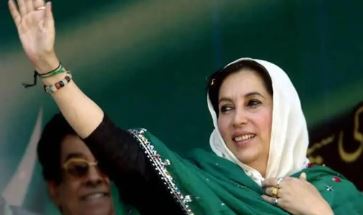
Who Assassinated Benazir Bhutto presents a detailed account of the assassination of the former Pakistani Prime Minister, exploring various theories and controversies surrounding the event. The author examines the investigations conducted by Pakistani authorities and Scotland Yard, highlighting inconsistencies and unanswered questions. The book also discusses the political climate leading up to the assassination, including Bhutto’s return from exile and her relationship with President Musharraf. Allegations of conspiracy and the roles of various individuals and groups are examined, along with the international media’s response. Ultimately, the text questions the official conclusions and suggests a broader conspiracy may have been at play.
The Assassination of Benazir Bhutto: A Study Guide
Short-Answer Questions
- What significant event occurred on December 27, 2007, and what immediate impact did it have on Pakistan?
- Describe Benazir Bhutto’s educational background and how it shaped her perspective on global affairs.
- According to the SIG’s technical report, what evidence supports the conclusion that the blasts targeting Benazir Bhutto were suicide attacks?
- Explain the controversy surrounding the “lever-hit” theory and why it was met with skepticism.
- What is the significance of the intercepted phone call involving Baitullah Mehsud, and how did his group respond to the accusations of involvement in Bhutto’s assassination?
- What was the initial role of Scotland Yard in the investigation, and why was their involvement met with resistance from the PPP?
- Outline the parameters set for Scotland Yard’s investigation, and explain how these limitations may have affected their findings.
- What key points of disagreement arose between the JIT and FIA expert, Maj (Retd) Shafqat Mehmood, regarding the cause of Bhutto’s death?
- How did intelligence agencies ultimately characterize the assassination of Benazir Bhutto, and what evidence led them to this conclusion?
- Why did suspicions arise regarding the UN Commission’s probe into Bhutto’s assassination, and what specific limitations hindered their investigation?
Short-Answer Key
- On December 27, 2007, Benazir Bhutto was assassinated in a suicide bombing attack. This tragic event plunged the nation into chaos and sparked violent protests, significantly impacting Pakistan’s political landscape.
- Benazir Bhutto received her undergraduate degree from Harvard’s Radcliffe College and later studied at Oxford University, earning a second degree in 1977. This international educational experience fostered her understanding of global politics, democracy, and human rights, shaping her progressive political agenda.
- The SIG’s report highlights the inward effect on the human skulls found at the scene, including blown-out brains and pellet holes entering through the face and exiting from the skull. This evidence suggests suicide bombers wearing vests were responsible for the blasts.
- The lever-hit theory suggests Bhutto’s fatal head injury was caused by hitting the sunroof lever during the blast. However, many disputed this, citing the lack of tissue, fiber, or bloodstains on the lever and the medical report indicating a skull fracture inconsistent with such an impact.
- The intercepted call allegedly features Baitullah Mehsud congratulating his people for the attack. While Mehsud’s group denied involvement, intelligence agencies claim the recording implicates him in the assassination plot.
- Scotland Yard was initially invited by President Musharraf to assist in determining the cause of Bhutto’s death. However, the PPP rejected their involvement, suspecting a potential cover-up and manipulation of the investigation.
- Scotland Yard was limited to working within the parameters set by Pakistani authorities, primarily focusing on verifying the JIT’s findings and unable to independently investigate leads or interview key individuals. This restricted scope likely influenced their report, which ultimately supported the JIT’s conclusions.
- Maj (Retd) Shafqat disagreed with the JIT’s reliance on radiological reports and external wound examination, arguing they neglected crucial forensic evidence like firearm footprints. He also contested the lever-hit theory, suggesting a high-velocity object, likely a bullet, caused the fatal skull fracture.
- Intelligence agencies dubbed Bhutto’s assassination a “joint venture” between terrorist outfits, citing evidence of coordinated efforts involving Baitullah Mehsud and Jaish-e-Muhammad, pooling resources and expertise to ensure her elimination.
- Suspicions arose regarding the UN Commission’s probe due to their restricted access to key figures like Pervez Musharraf, Pervez Ellahi, and Ejaz Shah. This lack of cooperation hindered a comprehensive investigation and raised doubts about the transparency and thoroughness of the inquiry.
Essay Questions
- Analyze the competing theories surrounding the cause of Benazir Bhutto’s death. Critically evaluate the evidence presented by various parties, including the JIT, Scotland Yard, and FIA expert Maj (Retd) Shafqat Mehmood.
- Explore the complex political landscape of Pakistan in the years leading up to Bhutto’s assassination. How did factors like terrorism, political rivalries, and the role of the military contribute to the climate of instability?
- Assess the effectiveness of the investigations conducted into Bhutto’s assassination. Consider the limitations faced by the JIT, Scotland Yard, and the UN Commission, and discuss the impact of these constraints on the pursuit of justice.
- Evaluate Benazir Bhutto’s legacy as a political leader. Consider her achievements, challenges, and the impact of her assassination on Pakistan’s trajectory toward democracy and stability.
- Examine the international response to Benazir Bhutto’s assassination. Analyze the reactions of various countries and international organizations, and discuss the implications of her death on global perceptions of Pakistan and the fight against terrorism.
Glossary of Key Terms
- JIT (Joint Investigation Team): A high-level team formed by the Pakistani government to investigate the assassination of Benazir Bhutto.
- Scotland Yard: The Metropolitan Police Service, based in London, England. A team of Scotland Yard detectives was invited to assist with the investigation.
- FIA (Federal Investigation Agency): Pakistan’s primary federal law enforcement, counter-intelligence, and counter-terrorism agency.
- SIG (Special Investigation Group): A specialized unit within the FIA responsible for handling sensitive investigations.
- Baitullah Mehsud: A leader of the Tehrik-i-Taliban Pakistan (TTP), accused by the Pakistani government of masterminding Bhutto’s assassination.
- Lever-Hit Theory: The initial explanation put forward by the Pakistani government, suggesting Bhutto died due to hitting her head on the sunroof lever during the blast. This theory was widely contested.
- Norinco: The name of the Chinese-manufactured pistol allegedly found at the crime scene and linked to the assassination.
- UN Commission: A three-member commission appointed by the United Nations to conduct an independent investigation into Benazir Bhutto’s assassination.
- Liaquat Bagh: The public park in Rawalpindi, Pakistan, where Benazir Bhutto was assassinated after addressing a political rally.
- PPP (Pakistan People’s Party): The political party founded by Zulfikar Ali Bhutto and led by Benazir Bhutto at the time of her assassination.
Who Assassinated Benazir Bhutto? A Detailed Briefing
This briefing document analyzes excerpts from the book, Who Assassinated Benazir Bhutto by Shakeel Anjum, examining the events surrounding Bhutto’s assassination, the ensuing investigations, and the lingering questions surrounding her death.
Benazir Bhutto: A Life Dedicated to Pakistan
Benazir Bhutto was a prominent figure in Pakistani politics, serving as the first female Prime Minister of a Muslim-majority country. The book highlights her commitment to democracy, social justice, and poverty alleviation, exemplified by her quote: “My father was always championing the cause of the poor… he would tell me, ‘Look at the way these people sweat… It is because of their sweat that you will have the opportunity to be educated, and you have a debt to these people.’” This upbringing shaped her political agenda, which focused on empowering ordinary Pakistanis.
The Return, The Threats, and The Tragedy
Bhutto’s return to Pakistan in 2007 was met with immense public support but also a heightened security threat. The book details multiple threats she received, including a letter she wrote to General Musharraf: “I informed him that if anything happens to me… I will neither nominate the Afghan Taliban, nor Al Qaeda, not even Pakistani Taliban… I will nominate those people who, I believe, mislead the people.” This chilling premonition underlines the dangerous political climate she navigated.
The book vividly describes the assassination itself: “She was killed while cheerfully responding to the jubilant and excited crowd of supporters from the ‘sun roof’ of her bomb-proof vehicle after addressing a successful rally in Liaquat Bagh, Rawalpindi.” This scene underscores the brutality of the attack and the calculated exploitation of Bhutto’s connection with the public.
Conflicting Narratives and Investigations Marred by Controversy
The official investigation, led by a Joint Investigation Team (JIT), initially attributed the death to a head injury caused by the force of the blast. This conclusion, however, was met with widespread disbelief and allegations of a cover-up. The author raises critical questions about the handling of the investigation, particularly the refusal to conduct a proper autopsy, which hindered the determination of the exact cause of death.
Further complicating the situation was the involvement of Scotland Yard. Their report, based on restricted access and evidence, ultimately endorsed the JIT’s findings. This raised serious concerns about the influence exerted on the investigation, as the author states: “It was abundantly clear that the Scotland Yard team was engaged only to verify or challenge the facts already presented in the report submitted by the JIT.”
Baitullah Mehsud: A Key Figure in the Conspiracy
While initially denying involvement, Baitullah Mehsud, leader of the Tehrik-e-Taliban Pakistan (TTP), emerged as a key figure in the investigation. An intercepted phone conversation, detailed in the book, allegedly confirms his involvement: “Congratulations. Were they our people?… It was done by Ikramullah and Bilal… They were brave boys who killed her.” This evidence, along with other intelligence reports, pointed towards a complex conspiracy involving multiple actors.
Lingering Questions and Unresolved Threads
Despite official reports concluding that Bhutto’s death was caused by the force of the blast, the book presents compelling counter-arguments, particularly from an FIA explosives expert: “He has proven in his report that Bhutto never suffered the impact of the blast and she had already dropped inside the vehicle when the suicide bomber blew himself up.” This expert’s findings, however, were excluded from the final report, further fueling suspicions of a deliberate cover-up.
The book concludes by highlighting the elimination of key witnesses and suspects, like Khalid Shahanshah, making it difficult to uncover the truth. It leaves the reader with a sense of unease about the official narrative and the powerful forces that may have been involved in silencing the truth.
Key Takeaways
- Benazir Bhutto’s assassination was a tragic loss for Pakistan and a blow to democratic aspirations in the country.
- The investigations into her death have been shrouded in controversy, with allegations of manipulation and suppression of evidence.
- Multiple actors, including Baitullah Mehsud and potentially other militant groups, appear to have been involved in the conspiracy.
- The lack of a transparent and thorough investigation, coupled with the elimination of key witnesses, has left many crucial questions unanswered and fuelled a lingering sense of injustice.
This briefing document provides a summary of the key themes and facts presented in the excerpts. It emphasizes the complexity of the case and the need for a renewed effort to uncover the truth and bring those responsible for Benazir Bhutto’s assassination to justice.
Benazir Bhutto Assassination FAQ
What happened to Benazir Bhutto?
Benazir Bhutto, the former Prime Minister of Pakistan, was assassinated on December 27, 2007, in Rawalpindi, Pakistan. She was killed after addressing a political rally at Liaquat Bagh.
What is the official cause of death?
According to official investigations, including a report by Scotland Yard, Bhutto died from a fatal head injury sustained when her head hit the sunroof lever of her vehicle due to the force of a suicide bomb blast. However, this conclusion is heavily disputed.
Why is the official cause of death disputed?
Many people, particularly Bhutto’s supporters, contest the official explanation. They cite evidence like eyewitness accounts of multiple gunshots, the lack of blood or tissue on the sunroof lever, and the suspicious circumstances surrounding the investigation, including the prevention of an autopsy. They believe Bhutto was shot before the bomb detonated.
Who was blamed for the assassination?
The Pakistani government initially blamed Baitullah Mehsud, the leader of the Tehrik-e-Taliban Pakistan (TTP). Although the group denied involvement, an intercepted phone call allegedly revealed Mehsud congratulating his people for the attack. Later investigations suggested a “joint venture” involving multiple extremist groups.
Was the investigation into Bhutto’s assassination thorough?
Many believe the investigation was flawed and potentially manipulated to cover up the truth. Critics point to the rapid washing of the crime scene, the refusal to conduct a full autopsy, and the limited scope permitted to Scotland Yard investigators as evidence of a compromised investigation.
What role did Scotland Yard play in the investigation?
The Scotland Yard team was invited by the Pakistani government to assist in the investigation. However, their involvement was restricted to verifying the findings of the Pakistani Joint Investigation Team (JIT), rather than conducting an independent inquiry. They ultimately endorsed the JIT’s conclusion, which was based on limited evidence and disputed by some forensic experts.
What were some of Benazir Bhutto’s political goals?
Benazir Bhutto advocated for democracy, poverty alleviation, women’s rights, and social reforms. She worked to improve education, health services, and economic opportunities for the people of Pakistan. Her progressive agenda faced significant resistance from conservative forces within the country.
What was Benazir Bhutto’s legacy?
Benazir Bhutto remains a prominent and controversial figure in Pakistani history. She was a symbol of democracy and a champion of women’s rights in the Muslim world. Her assassination was a major blow to the democratic process in Pakistan and continues to spark debate and controversy to this day.
The Assassination of Benazir Bhutto
The assassination of Benazir Bhutto, the former Prime Minister of Pakistan, on December 27, 2007, remains shrouded in mystery and controversy. The circumstances surrounding her death, the subsequent investigations, and the various theories put forward have left many questions unanswered.
Events Leading to the Assassination
- Benazir Bhutto returned to Pakistan on October 18, 2007, after eight years of self-imposed exile. Her return was met with immense enthusiasm from her supporters, who saw her as a symbol of hope for democracy in the country [1].
- Her homecoming was marred by a double suicide bombing that targeted her convoy, killing over 150 people. Bhutto narrowly escaped the attack, but the incident highlighted the serious security threats she faced [2].
- Despite the attack and repeated warnings, Bhutto continued her election campaign. She was aware of the risks, but she remained determined to bring democracy back to Pakistan [3].
The Assassination
- On December 27, 2007, Bhutto was assassinated after addressing a rally in Rawalpindi. As she was leaving the venue, a gunman fired shots at her, followed by a suicide bombing near her vehicle [4].
- Bhutto was rushed to the hospital, but she died from her injuries. The exact cause of death became a point of contention, with conflicting reports about bullet wounds and head injuries [5-7].
Investigations and Controversies
- The Pakistani government initiated investigations into the assassination, but the process was marred by inconsistencies and controversies. The crime scene was quickly washed down, raising suspicions about a possible cover-up [8].
- Initial reports suggested that Bhutto died from a bullet wound, but later the government claimed that she had hit her head on the sunroof lever of her vehicle. This claim was widely disputed by Bhutto’s family and party members [7, 9].
- A team from Scotland Yard was called in to assist the investigation, but their mandate was limited to determining the cause of death. Their conclusion that Bhutto died from head injuries sustained during the blast did little to quell the doubts and conspiracy theories [10, 11].
- A UN commission was also formed to investigate the assassination, but its role was confined to fact-finding. The commission faced criticism for its limited scope and the perception that it was being used to legitimize the government’s narrative [12, 13].
Theories and Suspicions
- The Pakistani government initially blamed Baitullah Mehsud, a militant commander, for the assassination. Mehsud denied involvement, and the focus shifted to other potential suspects, including extremist groups, political rivals, and even elements within the security establishment [14-16].
- Some have pointed fingers at Asif Ali Zardari, Bhutto’s husband and the future President of Pakistan. Zardari’s alleged role in altering Bhutto’s security arrangements, his silence about knowing the culprits, and his lack of interest in pursuing a thorough investigation fueled suspicions [17].
- The assassination led to widespread unrest and instability in Pakistan. Bhutto’s death left a void in the country’s political landscape and raised concerns about the future of democracy [18, 19].
Benazir Bhutto’s assassination remains a deeply traumatic event for Pakistan. The lack of a conclusive investigation and the persistence of unanswered questions have contributed to a sense of injustice and a belief that the truth has been suppressed. The assassination serves as a stark reminder of the challenges facing Pakistan in its pursuit of democracy and stability.
Timeline of Benazir Bhutto’s Assassination
Early Life and Education
- 1953: Benazir Bhutto is born in Karachi, Pakistan.
- 1969: Attends the Convent of Jesus and Mary school in Karachi.
- 1973: Leaves Pakistan at the age of 16 to study at Harvard’s Radcliffe College.
- 1977: Graduates from Radcliffe and studies at Oxford University, earning a second degree. Returns to Pakistan, where her father, Zulfikar Ali Bhutto, is Prime Minister. Shortly after her arrival, General Zia-ul-Haq seizes power and imprisons her father.
- 1979: Zulfikar Ali Bhutto is hanged on April 4th in Rawalpindi.
Political Career
- 1988: At 35, becomes the first woman elected Prime Minister of a Muslim nation.
- 1990: Bhutto’s first government is dismissed by the military-backed president. Her party loses the subsequent election.
- 1993: Bhutto is re-elected as Prime Minister.
- 1996: Bhutto’s second government is dismissed on grounds of mismanagement and corruption.
- 1999: Exiled to Dubai.
Return to Pakistan and Assassination
- October 18, 2007: Bhutto returns to Pakistan after striking a deal with President Pervez Musharraf to drop corruption charges against her. Her homecoming rally in Karachi is targeted by a suicide bomb attack, killing over 130 people.
- December 27, 2007: After addressing a rally in Liaquat Bagh, Rawalpindi, Bhutto is assassinated. A suicide bomber detonates explosives near her vehicle, and she suffers a fatal head injury.
Investigation
- December 28, 2007: A Joint Investigation Team (JIT) is constituted to investigate the assassination.
- January 2008: The Scotland Yard is invited by Musharraf to assist in the investigation.
- February 8, 2008: Scotland Yard releases its report, confirming the JIT’s findings that Bhutto’s death was caused by a head injury sustained during the blast.
- July 22, 2008: Khalid Shahanshah, a key suspect in the assassination, is killed in Karachi.
- 2009: The UN establishes a commission to investigate the assassination.
Unresolved Issues
- Controversy surrounding the cause of death: While official reports concluded Bhutto died from a head injury caused by the blast’s impact, doubts persist about a potential gunshot wound.
- Lack of access for international investigators: Both the Scotland Yard and UN commission faced restrictions in accessing key individuals and information, fueling speculation about a cover-up.
- Unanswered questions about security failures: Concerns remain about the adequacy of security provided to Bhutto, the change in her exit route, and the absence of a backup vehicle.
- Limited accountability: Despite the identification of individuals involved in the attack, questions remain about the mastermind and potential involvement of powerful figures.
Cast of Characters
Benazir Bhutto:
- Former Prime Minister of Pakistan, assassinated on December 27, 2007.
- Daughter of Zulfikar Ali Bhutto, Pakistan’s first democratically elected Prime Minister.
- Advocated for democracy, women’s rights, and social reforms.
Zulfikar Ali Bhutto:
- Benazir Bhutto’s father and Pakistan’s first democratically elected Prime Minister.
- Executed by General Zia-ul-Haq’s military dictatorship in 1979.
Asif Ali Zardari:
- Benazir Bhutto’s husband and co-chairman of the Pakistan Peoples Party.
- Became President of Pakistan after Bhutto’s death.
Pervez Musharraf:
- President of Pakistan at the time of Bhutto’s assassination.
- A military general who seized power in a coup in 1999.
Baitullah Mehsud:
- Leader of the Tehrik-e-Taliban Pakistan (TTP) who was initially accused by the Pakistani government of orchestrating Bhutto’s assassination.
- Denied involvement, but intelligence intercepts suggested his complicity.
Chaudhry Abdul Majid:
- Additional Inspector General of Police, Punjab, who headed the Joint Investigation Team (JIT) investigating the assassination.
John MacBrayne:
- Detective Superintendent of the Scotland Yard team that assisted in the investigation.
Naheed Khan:
- Close friend and political aide to Benazir Bhutto.
- Provided firsthand accounts of Bhutto’s final days and concerns about her security.
Khalid Shahanshah:
- A member of Bhutto’s security detail who later became a key suspect in the assassination.
- Killed in Karachi before facing trial.
Rehman Malik:
- Close associate of Benazir Bhutto who served as Interior Minister after her death.
- Faced accusations of involvement in the assassination, which he vehemently denied.
Mumtaz Bhutto:
- Cousin of Benazir Bhutto and a political rival.
- Openly accused Asif Ali Zardari of orchestrating Bhutto’s assassination.
Shafqat Mehmood:
- Forensic expert and member of the JIT representing the Federal Investigation Agency (FIA).
- Disagreed with the JIT’s findings and presented a dissenting report highlighting potential bullet wounds.
This timeline and cast of characters provide a framework for understanding the key events and individuals involved in the assassination of Benazir Bhutto. However, numerous questions remain unanswered, and the search for truth and accountability continues.
The Bhutto Assassination: A Cover-Up?
The investigation into Benazir Bhutto’s assassination was marked by numerous inconsistencies and questionable actions, raising suspicions of a cover-up and hindering efforts to uncover the truth.
Crime Scene Tampering
- The crime scene was hosed down within 79 minutes of the attack [1], destroying crucial evidence before any thorough examination could be conducted [2, 3]. This act, condemned as a “blatant violation” of standard procedures [4], immediately fueled doubts about the government’s commitment to a transparent investigation [3, 5].
- Key witnesses were “eliminated” [6], further obstructing the investigation. Notably, Nahid Bhutto, believed to possess sensitive information, died in a suspicious car accident [7, 8], and Khalid Shahanshah, Bhutto’s personal bodyguard, was assassinated [7, 9].
Conflicting Medical Reports and the “Lever-Hit” Controversy
- Initial reports indicated Bhutto died from bullet wounds [4, 10, 11], but the government abruptly shifted its stance, claiming she died from a skull fracture caused by hitting the sunroof lever [11, 12]. This theory was widely disputed, with evidence suggesting Bhutto was already injured before the blast’s impact [13, 14].
- The lack of an autopsy further fueled suspicion [4, 15, 16]. Although the government claimed the PPP refused an autopsy [15], a lawyer on the hospital board stated the police chief prohibited it [15]. This crucial omission prevented a definitive determination of the cause of death and added to the perception of a cover-up [4].
- A senior surgeon at the hospital confirmed Bhutto had two bullet wounds but later refused to comment on the record, suggesting pressure from political elements [17].
Limited Scope of External Investigations
- The Scotland Yard team’s mandate was restricted to determining the cause of death, prohibiting them from investigating the wider conspiracy [18-20]. They were given a specific list of 39 points to focus on, excluding critical areas such as the motives and potential suspects behind the assassination [21-23].
- Despite claims of full cooperation, the Scotland Yard team lodged a complaint with the President, revealing that Pakistani intelligence agencies were withholding information [23]. The British High Commission later denied the existence of this complaint [1, 12].
- An FIA explosive expert, part of the Joint Investigation Team (JIT), rejected the JIT and Scotland Yard findings [20, 24, 25]. He argued they failed to properly consider forensic evidence and expressed skepticism about the Scotland Yard team’s reconstruction of the crime scene [26, 27]. However, the JIT excluded his dissenting report [25, 27].
Political Interference and Lack of Accountability
- The UN commission’s role was limited to “fact-finding,” without the authority to identify and hold perpetrators accountable [28]. Concerns were raised about the government’s influence over the commission’s scope and findings [29, 30].
- The commission was denied access to key individuals nominated by Bhutto as potential suspects, including former President Pervez Musharraf, former Punjab Chief Minister Pervez Elahi, and former IB Chief Ejaz Shah [30, 31]. The lack of access to these figures, coupled with the government’s reluctance to pursue their testimonies, suggests a deliberate effort to shield them from scrutiny.
- The government’s delay in lodging an FIR and the selective pursuit of evidence contributed to the perception that the investigation was being manipulated to protect powerful individuals [32, 33].
These inconsistencies and questionable actions cast a dark shadow over the investigation and reinforced public skepticism about the official narrative of Benazir Bhutto’s assassination. The lack of a comprehensive and impartial investigation has left a deep sense of injustice and a lingering suspicion that the truth remains hidden.
The investigation into Benazir Bhutto’s assassination was riddled with inconsistencies, leading to widespread disbelief and suspicion of a cover-up.
- The crime scene was washed down within 79 minutes of the attack, destroying crucial evidence. This action, reminiscent of the Karachi attack where the scene was also scrubbed clean, raised questions about who ordered the washout and why. The lack of a proper crime scene investigation hampered both the JIT and the Scotland Yard’s ability to draw reliable conclusions.
- The lack of autopsies on the 21 victims, including Bhutto, was another significant inconsistency. The absence of a post-mortem report, a standard procedure in murder cases, deprived investigators of crucial evidence. The pressure exerted on doctors to forgo autopsies fueled perceptions of a cover-up.
- Conflicting reports regarding the cause of Bhutto’s death added to the confusion. Initially, the Interior Ministry attributed her death to a bullet or shrapnel wound, but later changed their stance, claiming she died from a skull fracture caused by hitting her head on the sunroof latch. Bhutto’s family and party members disputed this claim, insisting she died from gunshot wounds.
- The Scotland Yard’s investigation was limited in scope, confined to verifying the JIT’s findings rather than conducting an independent investigation. The parameters set by the Pakistani authorities restricted the Yard’s access to information and witnesses, raising concerns about the independence and thoroughness of their probe.
- A key member of the JIT, Major (Retd) Shafqat, an explosives expert, rejected the findings of both the JIT and Scotland Yard, arguing that they failed to properly consider forensic evidence. His concerns about the handling of the investigation and the dismissal of his findings further fueled suspicions of manipulation and a deliberate attempt to obscure the truth.
These inconsistencies and questionable actions surrounding the investigation have left many unconvinced about the official narrative and continue to raise doubts about whether the truth behind Bhutto’s assassination will ever be fully revealed.
The Scotland Yard’s involvement in the investigation of Benazir Bhutto’s assassination was controversial from the outset. While the Musharraf government was keen on inviting Scotland Yard detectives, PPP leaders vehemently opposed this move, demanding a UN commission instead. They believed the government-formed inquiry committee had destroyed evidence and intended to shield the real culprits. Despite opposition, Scotland Yard investigators arrived in Pakistan on January 4, 2008.
The government imposed strict limitations on the scope of their investigation, barring Pakistani intelligence agencies from sharing information with them. The Yard’s purview was restricted to 39 specific points, primarily focusing on the cause of Bhutto’s death and the mechanics of the attack, while excluding broader questions about potential conspiracies or suspects. This limited scope prevented them from investigating individuals Bhutto had explicitly named as potential threats in a letter to Musharraf.
Frustrated by the lack of cooperation, the Scotland Yard team reportedly submitted a written complaint to President Musharraf, highlighting the difficulties they faced in obtaining crucial information from Pakistani authorities. The British High Commission denied these claims, asserting that the Yard was satisfied with the assistance provided. Despite this denial, it is evident that the Yard’s access to information and witnesses was significantly curtailed, raising doubts about the independence and thoroughness of their investigation.
Ultimately, the Scotland Yard report, released on February 8, 2008, confirmed the JIT findings that Bhutto died from a fatal head injury caused by hitting her head against the vehicle’s sunroof latch due to the force of the blast. This conclusion was met with widespread disbelief, particularly from Bhutto’s supporters who maintained that she had been shot. The lack of an autopsy and the compromised crime scene made it difficult for the Yard to conclusively determine the cause of death.
The Scotland Yard’s investigation, hampered by government restrictions and the destruction of evidence, ultimately served to reinforce the official narrative rather than provide a comprehensive and independent account of the events. Their findings were seen by many as a means to legitimize the government’s version of events and to quell demands for a more thorough international investigation.
The assassination of Benazir Bhutto, a prominent Pakistani political figure, ignited numerous conspiracy theories due to the chaotic events surrounding her death and the inconsistencies in the official investigations. The lack of a comprehensive and transparent investigation, coupled with the government’s efforts to control the narrative, fueled public distrust and gave rise to speculation about who was truly behind the assassination and their motives.
The “Lever Hit” Controversy: The Pakistani government initially claimed that Bhutto died from a skull fracture sustained when she hit her head on the sunroof lever of her vehicle during the attack. This claim, widely disputed by Bhutto’s family, party members, and medical experts, was seen as an attempt to downplay the possibility of a targeted killing and to shift blame onto Bhutto herself. This theory was further undermined when an explosive expert, Major (Retd) Shafqat, challenged the official findings, asserting that the force of the blast wouldn’t have caused such an injury and that there was no evidence of blood or tissue on the lever.
The Role of Pervez Musharraf: Many suspected the involvement of then-President Pervez Musharraf in Bhutto’s assassination, pointing to his strained relationship with Bhutto and his perceived motive to eliminate a powerful political rival. Bhutto herself had expressed concerns about her safety in a letter to Musharraf, naming specific individuals, including the former Intelligence Bureau Chief Ijaz Shah, as potential threats. Despite these concerns, the government failed to provide adequate security for Bhutto, further fueling suspicions of a deliberate act or, at the very least, gross negligence.
The “Hidden Hands” Theory: The notion of powerful “hidden hands” manipulating the investigation and protecting the real culprits is prevalent throughout the discourse surrounding Bhutto’s assassination. This theory suggests that elements within the Pakistani establishment, possibly the military or intelligence agencies, had a vested interest in silencing Bhutto and ensuring that the truth remained concealed.
This theory gains traction from the various actions taken to obstruct the investigation, including:
- The rapid wash-down of the crime scene
- The refusal to conduct autopsies on the victims
- The restricted access granted to the Scotland Yard team and the UN Commission
- The silencing of key witnesses, such as Khalid Shahenshah, Bhutto’s personal bodyguard who was later assassinated
The Asif Ali Zardari Factor: Bhutto’s widower, Asif Ali Zardari, who later became the President of Pakistan, has been a subject of intense scrutiny and suspicion. Public distrust stemmed from various factors, including his appointment of Khalid Shahenshah, a figure with alleged underworld connections, as Bhutto’s bodyguard, and his resistance to an autopsy. His later silence on the identities of the assassins, despite claiming to know them, and his perceived reluctance to pursue a robust investigation, further fueled these suspicions.
These conspiracy theories, fueled by the lack of a credible and transparent investigation, continue to cloud the narrative surrounding Benazir Bhutto’s assassination. The absence of definitive answers and the persistent questions about the role of powerful individuals and institutions have left a deep sense of mistrust and a lingering belief that the true story behind Bhutto’s death remains hidden.
It is important to note that these are theories, and their validity hasn’t been definitively established through conclusive evidence.
The assassination of Benazir Bhutto remains shrouded in mystery, with numerous unanswered questions lingering even after multiple investigations. The lack of a thorough and transparent investigation, coupled with inconsistencies and potential cover-ups, has fueled public distrust and allowed speculation to thrive. Key questions that remain unanswered include:
Who Ordered the Crime Scene Washout? Within 79 minutes of the attack, the crime scene at Liaquat Bagh was washed down, destroying crucial evidence. This hasty action, reminiscent of the Karachi attack where the scene was similarly scrubbed clean, raises questions about who authorized such a drastic measure and why. Was it a genuine attempt to maintain order, or a deliberate effort to eliminate evidence that could lead to the perpetrators? The identity of the individual who gave this order, and their motives, remain unknown.
Why Were Autopsies Not Conducted? The decision to forgo autopsies on the 21 victims, including Bhutto, is a significant anomaly. Autopsies are standard procedure in murder investigations, particularly in cases as high-profile as this one. The absence of post-mortem reports deprived investigators of critical medical evidence that could have helped determine the cause of death and potentially identify the assailants. This omission raises concerns about whether there was a deliberate attempt to conceal information. While the emotional atmosphere at the hospital may have contributed to the decision regarding Bhutto’s body, the lack of autopsies on the other victims remains unexplained.
Who Benefited from Bhutto’s Death? Determining the motive behind Bhutto’s assassination is crucial to understanding the events that led to her death. While various theories implicate individuals like Pervez Musharraf or point to elements within the Pakistani establishment, no definitive evidence has emerged to conclusively identify the mastermind behind the attack. The lack of clarity regarding the motive further complicates the investigation and allows conspiracy theories to flourish.
Why Did the Investigation Focus on the “Lever Hit” Theory? The initial claim that Bhutto died from hitting her head on the sunroof lever, despite contradictory evidence, suggests an attempt to misdirect the investigation. The JIT’s focus on this theory, later endorsed by Scotland Yard, raised concerns about their objectivity and the potential influence of external forces seeking to control the narrative. The question remains: why did the investigators prioritize a theory that lacked substantial evidence, and who benefited from this narrative?
What Was the Role of Intelligence Agencies? Bhutto herself had named individuals within the Pakistani intelligence community as potential threats in a letter to Musharraf. The subsequent investigations, however, failed to thoroughly examine their potential involvement. The UN Commission’s limited access to key intelligence officials, particularly those in charge during the events, prevented a comprehensive assessment of their role. The extent to which intelligence agencies may have been involved in either orchestrating the attack or obstructing the investigation remains unknown.
Why Did Key Witnesses Remain Silent or Disappear? The lack of cooperation from key witnesses, or their sudden deaths, has hampered the investigation. Khalid Shahenshah, Bhutto’s personal bodyguard, who reportedly behaved unusually at Liaquat Bagh, was assassinated weeks after the attack. Nahid Bhutto, a cousin who allegedly overheard sensitive information, died in a car accident shortly after the assassination. The silencing or disappearance of these potential sources of information has left crucial gaps in the understanding of the events leading up to and following the attack.
What Is Asif Ali Zardari’s Role in the Investigation? Zardari’s actions and statements have raised questions about his commitment to uncovering the truth. His resistance to an autopsy, his appointment of Khalid Shahenshah as a bodyguard, and his subsequent silence on the identities of the assassins, despite claiming to know them, have fueled speculation about his motives. His reluctance to pressure for a more comprehensive investigation, even after assuming the presidency, has contributed to the perception that he may be protecting certain individuals or interests.
These are just some of the many unanswered questions surrounding Benazir Bhutto’s assassination. The lack of closure and accountability has left a deep wound on Pakistani society, fueling distrust in institutions and raising concerns about the country’s ability to address political violence. Until these questions are answered through a truly independent and transparent investigation, the true story behind Bhutto’s assassination will likely remain elusive.
The Scotland Yard’s involvement in the investigation of Benazir Bhutto’s assassination was highly controversial and ultimately viewed by many as a means to legitimize the Pakistani government’s narrative rather than provide a comprehensive and independent account of the events.
Several factors contributed to this perception:
- Limited Scope of Investigation: The Scotland Yard team’s purview was restricted by the Pakistani government to 39 specific points, primarily focusing on the cause of death and the mechanics of the attack. They were explicitly barred from investigating broader questions about potential conspiracies or delving into the possible involvement of individuals Bhutto had named as threats in a letter to Musharraf. This limited scope created a situation where the Yard was essentially asked to confirm or refute the findings of the Pakistani JIT, rather than conduct an independent inquiry.
- Lack of Cooperation from Pakistani Authorities: Despite the British High Commission’s denial, there is evidence suggesting that the Scotland Yard team faced significant obstacles in accessing crucial information and witnesses. The Yard reportedly filed a formal complaint with President Musharraf, highlighting their difficulties in obtaining cooperation from Pakistani intelligence agencies. This lack of transparency and potential obstruction further eroded public trust in the investigation’s integrity.
- Compromised Crime Scene and Absence of an Autopsy: The rapid wash-down of the crime scene within 79 minutes of the attack and the refusal to conduct an autopsy severely hampered the Scotland Yard’s ability to gather reliable evidence. These actions, widely criticized as deliberate attempts to destroy or conceal crucial information, left the investigators relying on incomplete and potentially compromised data. The Yard themselves acknowledged that the “task of establishing exactly what happened was complicated by the lack of an extended and detailed search of the crime scene, the absence of an autopsy, and the absence of recognized body recovery and victim identification processes”.
- Confirmation of the “Lever-Hit” Theory: Despite the lack of conclusive evidence, the Scotland Yard report ultimately endorsed the JIT’s finding that Bhutto died from hitting her head on the sunroof lever. This conclusion, met with widespread disbelief and rejected by medical experts, reinforced the perception that the Yard’s investigation was influenced by the Pakistani government’s desire to downplay the possibility of a targeted assassination.
The Scotland Yard’s investigation, hampered by restrictions, lack of access to information, and the compromised state of evidence, ultimately failed to provide definitive answers about the assassination. Instead, their findings, seen by many as aligning with the government’s narrative, contributed to the ongoing controversy and fueled conspiracy theories about a possible cover-up.
The immediate aftermath of Benazir Bhutto’s assassination was marked by a flurry of conflicting reports regarding her cause of death, adding to the confusion and fueling suspicions of a cover-up. These discrepancies, primarily stemming from government statements and the absence of a proper autopsy, further complicated the already murky circumstances surrounding her death.
Initially, Rehman Malik, Bhutto’s security advisor, told the media that the assassin shot her in the neck and chest before detonating the explosives. This account, suggesting a clear case of assassination by gunfire, was echoed by other party officials who claimed to have seen bullet wounds on Bhutto’s body.
However, the government soon shifted its narrative, attributing Bhutto’s death to a skull fracture sustained when she hit her head on the sunroof lever of her vehicle while ducking during the attack. This explanation, promoted by Interior Ministry spokesman Javed Cheema, diverged significantly from the initial reports and was met with immediate skepticism from Bhutto’s family and party members.
This “lever-hit” theory was further challenged by medical experts, who pointed out that the location and design of the lever made such an injury highly improbable. Adding to the controversy, the government admitted that no autopsy was conducted, denying investigators crucial medical evidence to determine the true cause of death. The lack of a post-mortem examination, despite requests from doctors at Rawalpindi General Hospital, raised concerns about a potential cover-up and fueled public distrust in the government’s account.
The Interior Ministry later retracted its initial claim about the sunroof lever, acknowledging the inconsistencies in their narrative. However, the damage was already done. The conflicting reports and the government’s shifting stance created a perception of deliberate misinformation and cast a shadow of doubt over the entire investigation.
The assassination of Benazir Bhutto sparked a maelstrom of conflicting viewpoints regarding the cause and circumstances of her death. These differing perspectives, fueled by a lack of transparency, inconsistencies in official statements, and the absence of a proper autopsy, created a breeding ground for suspicion and conspiracy theories.
Conflicting Accounts of the Attack:
- Gunshot vs. Head Injury: The most significant point of contention was whether Bhutto was killed by gunfire or a head injury. Initial reports from Bhutto’s security advisor, Rehman Malik, and other party officials maintained that she was shot in the neck and chest before the bomb detonated. However, the Pakistani government, through Interior Ministry spokesman Javed Cheema, countered this narrative by asserting that Bhutto died from a skull fracture caused by hitting her head on the sunroof lever of her vehicle while ducking during the attack. This claim, though later retracted by the Interior Ministry, ignited a wave of disbelief and accusations of a cover-up.
- Presence of Gunshot Wounds: Witnesses who accompanied Bhutto in the vehicle, including her political secretary and a faithful guard, insisted that she was shot in the neck. Medical professionals who treated her at Rawalpindi General Hospital also disclosed that she sustained bullet injuries to her neck and temporal parietal region. These accounts were corroborated by video footage showing a gunman firing a pistol towards her seconds before the explosion. However, the government, particularly through Cheema, vehemently denied the presence of any gunshot or shrapnel injuries, further muddying the waters.
Controversy Surrounding the “Lever-Hit” Theory:
- Implausibility of the Injury: The government’s claim that Bhutto’s fatal skull fracture was caused by hitting the sunroof lever faced strong criticism from medical experts and automotive specialists. They argued that the lever’s location and design made such an injury highly unlikely. The size and shape of the head wound, as described in the medical report, were also inconsistent with the dimensions of the lever. This discrepancy further undermined the credibility of the government’s narrative.
- JIT’s Focus on a Flawed Theory: The Joint Investigation Team (JIT), tasked with investigating the assassination, inexplicably fixated on the “lever-hit” theory despite its implausibility. Their report, based on a controversial medical report from Rawalpindi General Hospital, concluded that Bhutto’s death was accidental, caused by the impact with the lever. This conclusion, widely perceived as a deliberate attempt to absolve the government of any responsibility, fueled public outrage and reinforced suspicions of a cover-up.
- Scotland Yard’s Endorsement: The Scotland Yard team, invited by the Pakistani government to lend credibility to the investigation, ultimately endorsed the JIT’s findings regarding the “lever-hit” theory. This decision, despite the lack of conclusive evidence and widespread skepticism, further eroded trust in the investigation’s integrity and raised questions about the Yard’s independence.
Suspicions of a Cover-Up:
- Crime Scene Washout: The hasty washing down of the crime scene at Liaquat Bagh within 79 minutes of the attack destroyed crucial evidence and hampered forensic investigations. This action, reminiscent of the similar scrubbing of the scene after the Karachi attack, raised serious concerns about a potential cover-up.
- Denial of Autopsy: The refusal to conduct a proper autopsy on Bhutto’s body, despite requests from doctors at Rawalpindi General Hospital and the willingness of the government to exhume the body, deprived investigators of vital medical evidence that could have definitively determined the cause of death. This decision, attributed to Asif Ali Zardari’s refusal, further fueled suspicions of a deliberate effort to conceal information.
- Silencing of Witnesses: The deaths of key witnesses, such as Khalid Shahenshah (Bhutto’s bodyguard) and Nahid Bhutto (a cousin who allegedly possessed sensitive information), under mysterious circumstances added another layer of suspicion to the narrative. These incidents, along with the lack of cooperation from other potential witnesses, hindered the investigation and raised questions about whether there was a concerted effort to silence those who could shed light on the truth.
The conflicting viewpoints surrounding Benazir Bhutto’s death highlight the profound lack of transparency and accountability that plagued the investigation. The absence of a thorough and impartial inquiry, coupled with the government’s shifting narratives and the suppression of crucial evidence, have left many questions unanswered and fueled a climate of distrust and suspicion. The true circumstances surrounding Bhutto’s assassination, shrouded in controversy and unanswered questions, remain a haunting reminder of the fragility of justice and truth in Pakistan.
Benazir Bhutto’s return to Pakistan on October 18, 2007, after nearly eight years of self-imposed exile, was a momentous occasion marked by both exhilaration and trepidation. Her arrival in Karachi, intended to spearhead her Pakistan People’s Party (PPP) into the upcoming January 2008 parliamentary elections, was met with a massive outpouring of support, reflecting her enduring popularity and the public’s yearning for democratic change.
The atmosphere was electric with anticipation as Bhutto’s plane touched down. Supporters on board erupted in cheers, chanting slogans and delaying the flight for almost an hour. Bhutto herself, visibly emotional, greeted the throngs of media personnel and well-wishers, radiating a sense of pride and responsibility.
The scenes at Karachi International Airport were reminiscent of a grand spectacle. A crowd estimated at 200,000 or more, representing a cross-section of Pakistani society, had gathered to welcome their leader back home. The sheer scale of the gathering, described as “probably the biggest ever public rally that the people of this cosmopolitan city had ever seen,” was a testament to Bhutto’s enduring influence and the hope she embodied for many.
People danced, waved tri-color party flags, and held aloft posters proclaiming their desire for “change.” Many had traveled from distant parts of Pakistan, even from Azad Kashmir, to witness this historic event. The jubilant atmosphere marked a significant political moment for the nation, signaling the potential for a shift from military rule to democracy.
Bhutto’s return was facilitated by a controversial power-sharing agreement with President General Pervez Musharraf. The deal, widely criticized as a compromise by some political factions, involved Musharraf issuing an amnesty for Bhutto and others accused of corruption, and agreeing to step down as Army Chief to serve as a civilian president. This arrangement, however, did not quell the underlying political tensions and dangers that permeated Pakistan.
This precarious balance was shattered just hours after Bhutto’s arrival. As her heavily guarded convoy made its way through the throngs of supporters, two suicide bombers struck, narrowly missing Bhutto but killing an estimated 150 people and wounding 400 others. The attack, caught on camera and broadcast globally, served as a stark reminder of the volatile political landscape and the threats that loomed over Bhutto’s return.
Despite the deadly attack, Bhutto remained defiant, vowing to continue her political campaign and fight for democracy. This resilience in the face of danger, a hallmark of her political career, would tragically be tested again in the weeks to come.
The immediate consequences of the twin suicide attacks on Benazir Bhutto’s convoy in Karachi on October 18, 2007, were multifaceted, impacting the political landscape, security measures, and public sentiment. The devastating attack, which occurred just hours after her triumphant return from exile, immediately cast a shadow over her political ambitions and highlighted the precarious security situation in Pakistan.
Here’s a breakdown of the immediate consequences:
- Significant Casualties and Heightened Fear: The attacks resulted in a heavy death toll, with an estimated 150 people killed and 400 wounded. This tragic loss of life, primarily among Bhutto’s supporters, sent shockwaves throughout Pakistan and underscored the very real dangers she faced. The incident also instilled fear and apprehension in the minds of the public, particularly those who supported Bhutto and her political aspirations.
- Strained Relations with the Government: The bombings soured relations between Bhutto’s PPP and the Musharraf government, despite the power-sharing agreement that paved the way for her return. Asif Ali Zardari, Bhutto’s husband, who remained in Dubai during the attack, openly blamed the government and accused intelligence agencies of complicity in the bombings. This accusation, rooted in the belief that certain elements within the government felt threatened by Bhutto’s political power, further strained the fragile political alliance.
- Increased Security Concerns: The attacks brought security concerns to the forefront of the political discourse. While the government had pledged to provide adequate security for Bhutto, the bombings exposed glaring vulnerabilities in their arrangements. The incident revealed the extent to which extremist groups were capable of penetrating security cordons, even in a heavily guarded setting. This realization prompted calls for increased security measures to protect Bhutto and other political figures from similar attacks.
- Bhutto’s Defiance and Determination: Despite the trauma of the attacks and the palpable fear surrounding her, Bhutto displayed remarkable courage and determination in the face of adversity. She refused to be intimidated and vowed to continue her political campaign, emphasizing that such acts of terrorism would not deter her from fighting for democracy in Pakistan. This unwavering stance further solidified her image as a fearless leader and resonated with her supporters, who saw her resilience as a beacon of hope.
- Intensified Focus on Terrorism and Extremism: The attacks shifted the national conversation towards the growing threat of terrorism and extremism in Pakistan. Bhutto, in a news conference following the attack, blamed “enemies of democracy” and hinted at the involvement of a “fourth group” besides Al-Qaeda, Taliban, and Pakistani Taliban. Her repeated warnings about terrorists attempting to take over the country, coupled with the brazen nature of the attacks, forced the government to acknowledge the severity of the situation.
- Triggering of Investigations: The attacks prompted the launch of investigations to uncover the perpetrators and their motives. The government formed a Special Investigation Group (SIG) within the Federal Investigation Agency (FIA) to conduct a thorough probe. The SIG’s technical report, while identifying the type of explosives and modus operandi used, failed to conclusively pinpoint the responsible group, leaving lingering questions about the attack’s origins. The absence of definitive answers and the lack of progress in holding those responsible accountable further fueled public distrust and suspicion.
The Karachi attack served as a grim foreshadowing of the dangers that would continue to plague Bhutto’s political journey. It exposed the vulnerability of even the most protected individuals in a nation grappling with rising extremism and a complex web of political intrigue.
Benazir Bhutto’s decision to return to Pakistan in 2007 was influenced by a complex interplay of personal ambition, political calculations, and a deep-seated belief in her destiny to lead Pakistan. Despite facing serious security threats and navigating a treacherous political landscape, she remained resolute in her conviction that her return was essential for the nation’s democratic progress.
Here are some of the key factors that contributed to her decision:
- Desire to Restore Democracy: Bhutto had long been a vocal critic of military rule in Pakistan, viewing it as an impediment to the country’s development and progress. She believed that her return was crucial for ushering in a new era of democratic governance and restoring the supremacy of civilian rule. After years of exile, she sensed an opportunity to capitalize on the growing public discontent with President Musharraf’s authoritarian regime and rally the people behind her vision of a democratic Pakistan.
- Upcoming Parliamentary Elections: The scheduled parliamentary elections in January 2008 provided a strategic context for Bhutto’s return. She saw the elections as a chance for the PPP to regain its political prominence and for herself to potentially reclaim the office of Prime Minister. Bhutto had consistently maintained that she was returning to lead her party to victory in these elections, aiming to bring about a change in the law that would allow her to run for a third term as Prime Minister.
- Power-Sharing Agreement with Musharraf: The controversial power-sharing agreement brokered with President Musharraf paved the way for Bhutto’s return by granting her amnesty from corruption charges and allowing her to re-enter the political arena. While widely criticized, this deal provided her with a degree of legal protection and a platform to re-engage with the Pakistani electorate. It is important to note that this agreement was heavily influenced by the Bush administration, which viewed Bhutto as a potential stabilizing force in Pakistan and a key ally in the “war on terror”.
- Deep-Seated Belief in Her Destiny: Bhutto carried a profound sense of destiny, shaped by her family’s political legacy and her own experiences. As the daughter of Zulfikar Ali Bhutto, Pakistan’s first democratically elected Prime Minister who was executed by the military dictatorship, she felt a responsibility to carry on his legacy and fight for the ideals he represented. This conviction, combined with her personal ambition and charisma, fueled her determination to return and lead Pakistan despite the risks.
- Popular Support and Public Yearning for Change: Despite her years in exile and the controversies surrounding her, Bhutto remained a popular figure in Pakistan, particularly among the rural and working-class populations. Her return was met with massive public rallies and demonstrations, indicating the enduring support for her and the PPP. This groundswell of support, coupled with the widespread yearning for change and a departure from military rule, undoubtedly emboldened Bhutto and reinforced her belief that her return was timely and necessary.
- Underestimation of Security Threats: While aware of the risks involved, Bhutto may have underestimated the severity of the threats against her life. She acknowledged receiving threats from extremist groups and had even communicated her concerns to President Musharraf. However, her determination to reconnect with her supporters and engage in public rallies, even in the face of warnings, suggests a degree of underestimation of the capacity and reach of these extremist elements. This miscalculation, coupled with security lapses, tragically proved fatal.
Bhutto’s return to Pakistan was a calculated gamble driven by a confluence of factors, both personal and political. She was driven by a powerful ambition to lead her nation, a firm belief in her ability to bring about positive change, and a deep-seated sense of responsibility to the legacy of her father and the aspirations of the Pakistani people. However, her decision was also clouded by an underestimation of the threats she faced, which ultimately led to her tragic assassination.
Before her assassination, Benazir Bhutto received numerous threats from various sources, highlighting the dangerous political climate and the specific risks she faced. These threats, often communicated directly to her or through intermediaries, underscored the volatile situation in Pakistan and the determination of certain groups to eliminate her.
Here are some specific threats Bhutto received:
- Threat from “Zia Remnants”: After the Karachi bombing on October 19, 2007, Bhutto blamed “Zia remnants,” referring to individuals associated with the former military dictator General Zia ul-Haq, for orchestrating the attack. She claimed to have written to President Musharraf beforehand, identifying three officials planning suicide attacks against her. While she did not publicly disclose their names at the time, she asserted that she had provided these names to the government.
- Letter Identifying Specific Individuals: Bhutto named four individuals, including Punjab Chief Minister Chaudhry Parvez Elahi and former ISI chief Hamid Gul, as threats to her life in a letter to President Musharraf. She specifically highlighted concerns about individuals within the police department and security forces being sympathetic to militants and potentially involved in facilitating attacks against her. Intriguingly, none of these individuals were questioned or investigated in connection with the assassination.
- Warning from the ISI Chief: On the eve of her assassination, Lt-Gen Nadeem Taj, the then-ISI chief, met with Bhutto and warned her of a specific threat to her life, advising her not to attend the rally at Liaquat Bagh. While Rehman Malik, Bhutto’s security advisor, confirmed the meeting, he downplayed the threat, stating that the discussion focused primarily on political matters.
- Email to CNN’s Wolf Blitzer: Bhutto sent an email to CNN journalist Wolf Blitzer through an intermediary, Mark Siegel, outlining her security concerns and stating that if anything happened to her, she would hold President Musharraf responsible. She expressed feeling insecure due to Musharraf’s “minions” and the lack of improvement in her security arrangements. This email, sent on October 26th, was only to be revealed if Bhutto was killed.
- Threatening Letter from Alleged Al-Qaeda Associate: Bhutto revealed that she had received a letter signed by someone claiming to be an associate of Osama bin Laden, threatening to kill her. This threat, coupled with the previous Karachi bombing, amplified fears that she was a prime target for extremist groups, particularly those opposed to her stance against terrorism and her close ties to the West.
These threats paint a chilling picture of the dangers Bhutto faced upon her return to Pakistan. They reveal a complex web of potential enemies, ranging from extremist groups to elements within the Pakistani establishment, who perceived her as a threat to their interests. The failure to adequately address these threats and provide comprehensive security ultimately contributed to her tragic assassination.
The Pakistani government played a complex and controversial role in Benazir Bhutto’s security upon her return from exile in 2007. While the government pledged to provide robust security measures for the former Prime Minister, the adequacy and effectiveness of these measures were widely questioned, particularly following the deadly attack on her convoy in Karachi. The government’s actions and inactions contributed to a climate of insecurity, raising serious concerns about its commitment to protecting Bhutto.
Here’s an examination of the government’s role in Bhutto’s security, drawing on the provided sources:
- Promise of Security and Subsequent Failures: Before Bhutto’s arrival, the government assured her of adequate security, deploying significant resources to safeguard her. These included 2,000 PPP workers forming security cordons, police presence, and a general security alert. However, the Karachi attack exposed glaring vulnerabilities in the government’s security apparatus. The fact that two suicide bombers could penetrate the security cordon and detonate explosives near Bhutto’s truck raised serious questions about the effectiveness of the measures in place.
- Bhutto’s Concerns and Government Response: Bhutto repeatedly expressed concerns about her safety and pointed to specific threats from individuals within the government and security forces. She communicated these concerns to President Musharraf through letters and emails, highlighting the need for enhanced security measures. However, the government’s response was inadequate and dismissive. They downplayed her concerns, resisted her requests for specific security arrangements, and failed to thoroughly investigate the individuals she identified as threats.
- Failure to Address Security Lapses: Following the Karachi bombing, Bhutto requested specific security enhancements, including four police vehicles for her escort, jammers to prevent bomb detonations, and vehicles with tinted windows. However, these requests were either denied or not fully implemented. This lack of responsiveness to Bhutto’s concerns and the failure to address the security lapses exposed in Karachi created an environment of heightened vulnerability in the lead-up to her assassination.
- Contradictory Statements and Obfuscation: The government’s handling of the aftermath of Bhutto’s assassination was marked by contradictory statements, attempts to control the narrative, and a lack of transparency. The initial claim that Bhutto died from hitting her head on the sunroof lever was widely disputed and later retracted. The government’s reluctance to allow an autopsy further fueled suspicions about a cover-up. The crime scene was washed down within hours of the attack, destroying potential evidence and hindering a thorough investigation. These actions, combined with the government’s resistance to a UN investigation, contributed to widespread distrust and the perception that the government was more interested in protecting itself than in uncovering the truth.
- Involvement of Intelligence Agencies: The potential involvement of elements within Pakistan’s intelligence agencies, particularly the ISI, in Bhutto’s assassination has been a subject of intense speculation and scrutiny. Bhutto herself expressed concerns about rogue elements within the ISI and their potential role in destabilizing the country. The alleged meeting between the ISI chief and Bhutto on the eve of her assassination, during which he warned her of a specific threat, raises further questions about the agency’s knowledge of the plot and their actions to prevent it.
The Pakistani government’s role in Bhutto’s security was characterized by a failure to adequately address the known threats against her, a lack of transparency in the aftermath of her assassination, and a reluctance to pursue a comprehensive and independent investigation. These failings contributed to a climate of insecurity and raise serious questions about whether the government did everything in its power to protect Benazir Bhutto.
Benazir Bhutto expressed numerous concerns about her security upon returning to Pakistan in 2007. Despite assurances from the government, she felt vulnerable and believed specific individuals posed a direct threat to her life. Bhutto’s anxieties stemmed from her awareness of the volatile political landscape, the history of violence against her family, and the perceived lack of commitment from certain elements within the government to safeguard her.
Here are some of Bhutto’s key security concerns, explicitly articulated through various channels:
- Lack of Trust in Government Security: Bhutto felt the security provided by the government was inadequate and doubted the sincerity of their commitment to protect her. While the government deployed security personnel, she believed their efforts were “sporadic and erratic”. This lack of trust led her to request specific security arrangements, including private guards, jammers, tinted windows, and a consistent escort of four police vehicles, but these were denied or not fully implemented.
- Suspicions About “Zia Remnants”: Bhutto believed individuals associated with the regime of former military dictator General Zia ul-Haq, whom she referred to as “Zia remnants,” were actively working against her and posed a threat to her life. She felt these individuals within the government and security apparatus were sympathetic to extremist elements and might hinder efforts to protect her.
- Identification of Specific Threats: Bhutto directly named individuals she believed were plotting to kill her. In a letter to President Musharraf, she identified individuals like Punjab Chief Minister Chaudhry Pervez Elahi and former ISI chief Hamid Gul as threats. She also wrote to CNN journalist Wolf Blitzer, naming President Musharraf as someone who would be responsible if she were assassinated.
- Fear of Rogue Elements Within Intelligence Agencies: Bhutto harbored deep concerns about elements within Pakistan’s intelligence agencies, particularly the ISI. She suspected that some within the ISI were opposed to her return and might be involved in attempts to destabilize the country and eliminate her. She even suspected phone tapping and surveillance by these agencies.
- Security Lapses and the Karachi Bombing: The October 18th Karachi bombing reinforced Bhutto’s concerns about her vulnerability. She believed the attack exposed serious flaws in the government’s security protocols and the ability of extremist groups to penetrate security cordons. She questioned the government’s commitment to investigating the attack thoroughly and was frustrated by their resistance to involving international agencies like Scotland Yard or the FBI.
Bhutto’s repeated expressions of concern about her safety underscore the precarious situation she faced upon her return to Pakistan. The government’s inadequate response to these anxieties, coupled with the prevailing political climate and the constant threat from extremist groups, tragically culminated in her assassination.
Benazir Bhutto’s return to Pakistan in 2007 was preceded by a series of significant political events and negotiations, marking a pivotal moment in Pakistan’s political landscape. These events set the stage for her return after years of self-imposed exile and highlighted the complex power dynamics at play:
- Musharraf’s Rise and the Erosion of Democracy: General Pervez Musharraf’s seizure of power in 1999 through a military coup had ushered in an era of military rule in Pakistan. Musharraf’s subsequent actions, including the dismissal of the Chief Justice of the Supreme Court in March 2007, triggered widespread protests and a growing movement for the restoration of democracy.
- Bhutto’s Exile and Corruption Charges: Bhutto had been living in self-imposed exile since 1999, facing corruption charges stemming from her two previous terms as Prime Minister. These charges, which she maintained were politically motivated, had prevented her from returning to Pakistan and participating in politics.
- US Pressure for Democratic Transition: The United States, a key ally of Pakistan, exerted pressure on Musharraf to transition towards a more democratic system. The US saw Bhutto’s return and participation in elections as a potential pathway toward stability and a counter to the rising influence of extremist groups in the region.
- Back-Channel Negotiations and the “Deal”: Months of back-channel negotiations between Bhutto and Musharraf, facilitated by the US, resulted in a power-sharing agreement. This “deal” involved Musharraf granting Bhutto amnesty from corruption charges and agreeing to step down as Army Chief, paving the way for her return and participation in the upcoming elections.
- Musharraf’s Re-election and Legal Challenges: Despite opposition from other political parties, Bhutto’s PPP did not join the boycott of the presidential elections. This allowed Musharraf to secure another term as President, although his eligibility remained contested in the Supreme Court.
- Growing Threat of Extremism: While the political maneuvering was underway, the threat of extremism and terrorism in Pakistan was escalating. Groups linked to Al-Qaeda and the Taliban were gaining influence, particularly in the tribal areas bordering Afghanistan. The attack on the Red Mosque in Islamabad in July 2007 highlighted the growing challenge posed by these groups.
These events culminated in Bhutto’s return to Pakistan on October 18, 2007, amidst a wave of hope and anticipation from her supporters. However, the deal with Musharraf was controversial, and the looming threat of extremism cast a long shadow over her return. The events that preceded her arrival set the stage for a tumultuous period in Pakistani politics, leading up to her tragic assassination just a few months later.
Asif Ali Zardari, Benazir Bhutto’s husband, played a complex and controversial role in her security upon her return to Pakistan in 2007. While he wasn’t directly responsible for the security arrangements provided by the government, his actions and decisions related to her personal security detail raised suspicions and fueled public speculation after her assassination. Here’s an analysis of Zardari’s role:
Appointment of Khalid Shahenshah: Zardari appointed Khalid Shahenshah, a figure known for underworld connections, as Bhutto’s personal bodyguard. Shahenshah’s presence in Bhutto’s immediate security detail raised concerns, and his suspicious activities during the Liaquat Bagh rally where she was assassinated fueled speculation about his involvement in the attack.
Opposition to Autopsy: Zardari’s alleged resistance to an autopsy of Bhutto after her death sparked controversy and fueled accusations of a cover-up. The lack of a comprehensive autopsy hindered investigators’ ability to determine the exact cause of death and contributed to lingering questions about the circumstances surrounding the assassination.
Public Statements about Knowing the Killers: Despite claiming to know the individuals responsible for Bhutto’s assassination, Zardari has not publicly revealed their identities or taken decisive action to bring them to justice. This has led to frustration and accusations of inaction from Bhutto’s supporters and the general public.
Involvement in Security Inductions: Some accounts suggest that Zardari made specific inductions in Bhutto’s security detail before her return from Dubai. The nature and implications of these inductions remain unclear, but they contribute to the perception that he exerted influence over her personal security arrangements, raising questions about his judgment and motives.
Silence and Inaction as President: Despite assuming the presidency after Bhutto’s death, Zardari has not prioritized investigating her assassination or holding those responsible accountable. His focus on political maneuvering and consolidating power has led to accusations that he is exploiting Bhutto’s legacy for personal gain while neglecting the pursuit of justice for her murder.
Zardari’s actions and inactions concerning Bhutto’s security have fueled speculation and cast a long shadow over his legacy. His role remains a subject of intense debate and public scrutiny, adding to the complexity and mystery surrounding Bhutto’s assassination.
Benazir Bhutto faced a multitude of threats in the lead-up to her assassination, ranging from direct warnings from intelligence officials to a pervasive atmosphere of political violence and the growing presence of extremist groups in Pakistan. Her return to Pakistan was marked by both hope and danger, as she sought to lead her country toward democracy while navigating a complex landscape of political rivalries and security risks.
The sources provide specific examples of the threats Bhutto faced:
- Intelligence Warnings: On the eve of her assassination, the then-ISI chief, Lt-Gen Nadeem Taj, met with Bhutto and warned her of a specific threat to her life if she attended the rally at Liaquat Bagh. This warning came after months of security alerts from the government, highlighting the gravity of the risks she faced.
- Previous Assassination Attempt: Bhutto had already survived an assassination attempt upon her arrival in Karachi on October 18, 2007, when twin suicide bombers attacked her convoy. This attack demonstrated the very real danger she was in and the determination of those who sought to eliminate her.
- Named Suspects and a “Fourth Group”: Bhutto repeatedly voiced her concerns about threats to her life, even naming individuals she suspected were plotting against her. She named Pervaiz Elahi, Gul Hameed, Hassan Waseem Afzal, and Intelligence Bureau chief Brig (Retd) Ijaz Shah in a letter to President Musharraf. She also alluded to a “fourth group” involved in the Karachi attack, suggesting a network of actors beyond the usual suspects.
- Letter Threatening to “Slaughter Her Like a Goat”: Bhutto revealed that she received a threatening letter signed by someone claiming to be associated with al-Qaeda and Osama bin Laden. This threat, along with her accusation that the government wasn’t providing adequate security, underscored the danger she faced from extremist groups.
- The “Zia Remnants”: Bhutto accused remnants of the Zia ul-Haq regime of being involved in the Karachi attack, suggesting a deep-seated animosity from within the power structures of Pakistan. These remnants were seen as being sympathetic to militants and potentially capable of facilitating attacks against her.
- Extremist Groups: The rising influence of extremist groups like al-Qaeda and the Taliban in Pakistan posed a significant threat to Bhutto. These groups viewed her as a Westernized heretic and an American agent, making her a prime target for their violence.
- Rogue Elements Within Intelligence Services: Accusations were leveled at elements within the ISI, alleging they were sympathetic to Islamists and opposed to Bhutto’s return to power. The ISI’s historical links to militant groups and its role in political manipulation made it a suspect in the eyes of many.
Bhutto’s assassination took place amidst a volatile political climate and a growing wave of extremism in Pakistan. The sources highlight a combination of specific threats and a general environment of danger that she faced. Her decision to return and participate in the political process despite these threats demonstrates her courage and commitment to her country’s future.
Asif Ali Zardari’s role in Benazir Bhutto’s security remains a subject of intense debate and scrutiny. While the Pakistani government was officially responsible for Bhutto’s security upon her return from exile in 2007, Zardari, as her husband, made decisions and took actions that raised suspicions after her assassination.
The sources highlight several key aspects of Zardari’s involvement:
- Appointment of Khalid Shahenshah: Zardari personally appointed Khalid Shahenshah, a man with alleged underworld ties, as Bhutto’s personal bodyguard. Shahenshah’s behavior during the Liaquat Bagh rally, where he seemed to be indicating that Bhutto was wearing a bulletproof vest, further fueled suspicions about his potential role in facilitating the assassination.
- Opposition to an Autopsy: After Bhutto’s death, Zardari allegedly resisted calls for a full autopsy. This refusal hindered a thorough investigation into the cause of death and raised questions about potential attempts to conceal information about the assassination.
- Lack of Action Despite Claiming to Know the Killers: Zardari has repeatedly stated publicly that he knows who was behind his wife’s assassination. However, he has not revealed any names or taken any concrete steps to bring the perpetrators to justice. This inaction has fueled speculation about his potential involvement or complicity and angered Bhutto’s supporters who demand accountability.
- Silencing of Witnesses: Several key figures connected to the assassination, including Bhutto’s cousin Nahid Bhutto and bodyguard Khalid Shahenshah, died under suspicious circumstances. These deaths, coupled with the lack of progress in the investigation, raise concerns about potential efforts to silence those who might have had crucial information about the attack.
- Political Maneuvering and Lack of Interest in the Investigation: Since becoming President, Zardari has been criticized for prioritizing political maneuvering and consolidating his power instead of pursuing justice for Bhutto’s murder. His famous quote, “Democracy is the best revenge,” has been seen as a way to deflect calls for a thorough investigation and accountability.
The sources depict Zardari’s role in Bhutto’s security as complex and shrouded in suspicion. His actions and inactions before and after the assassination raise serious questions that remain unanswered.
Benazir Bhutto’s political career was marked by a unique blend of triumph, tragedy, and controversy. Born into a prominent political family in Pakistan, she rose to become the first female prime minister of a Muslim-majority country, shattering glass ceilings and inspiring millions. However, her journey was also plagued by accusations of corruption, political turmoil, exile, and ultimately, assassination.
Here is a chronological look at the key milestones of Bhutto’s political career:
- Early Influences and Activism: Bhutto’s early life was shaped by her father, Zulfikar Ali Bhutto, the founder of the Pakistan People’s Party (PPP) and Pakistan’s first democratically elected Prime Minister. His execution in 1979 by the military regime of General Zia-ul-Haq had a profound impact on her, fueling her commitment to democracy and justice.
- Return from Exile and Rise to Power: After years of exile and imprisonment following her father’s death, Bhutto returned to Pakistan in 1986 to a tumultuous welcome, signaling the enduring appeal of the Bhutto name and the PPP. She became the co-chairwoman of the PPP, leading the party to victory in the 1988 elections and becoming, at the age of 35, the world’s youngest chief executive and the first woman to lead an Islamic nation.
- First Term as Prime Minister (1988-1990): Bhutto’s first term was marked by challenges, including conflicts with religious fundamentalists and accusations of corruption. Her government was dismissed in 1990 by the then-President Ghulam Ishaq Khan amidst allegations of mismanagement and corruption.
- Second Term as Prime Minister (1993-1996): Bhutto returned to power in 1993, winning the general elections. However, her second term was also marred by controversy and accusations of corruption, leading to her dismissal in 1996 by President Farooq Leghari.
- Exile and Corruption Charges: After losing the 1996 elections to Nawaz Sharif and facing mounting corruption charges, Bhutto went into self-imposed exile in 1999. Her husband, Asif Ali Zardari, was imprisoned on corruption charges during this period, adding to the political and personal turmoil surrounding her.
- Negotiations and Return to Pakistan (2007): In 2007, after years of back-channel negotiations with President Pervez Musharraf, Bhutto returned to Pakistan. A controversial amnesty deal was struck, dropping corruption charges against her and paving the way for her participation in the upcoming elections. Her return was met with huge crowds and immense hope for a democratic future for Pakistan.
- Assassination and Legacy: Tragically, Bhutto’s return was short-lived. She was assassinated on December 27, 2007, during an election rally in Rawalpindi, just weeks before the scheduled elections. The assassination, which remains shrouded in mystery and controversy, sent shockwaves through Pakistan and the world.
Despite her flaws and the controversies surrounding her, Benazir Bhutto remained a powerful symbol of democracy, resilience, and women’s empowerment. Her assassination marked a turning point in Pakistani politics, leaving a void that has been difficult to fill. The circumstances surrounding her death continue to be debated, and her legacy remains complex and multifaceted.
The immediate reactions to Benazir Bhutto’s assassination were a mix of shock, grief, anger, and accusations. The sources describe scenes of chaos and despair across Pakistan and a wave of international condemnation.
Here’s a breakdown of the immediate responses:
Public Reactions in Pakistan:
- Grief and Outpouring of Emotion: Thousands of PPP workers and supporters rushed to the Rawalpindi General Hospital where Bhutto was taken, expressing disbelief and grief. Her death triggered nationwide mourning, with people taking to the streets in displays of sorrow and anger.
- Violent Protests and Unrest: Grief quickly turned into rage, particularly in Bhutto’s home province of Sindh, where arson, rioting, and vandalism erupted. Protesters targeted government buildings, banks, and vehicles, reflecting their anger and frustration at the government’s perceived failure to protect Bhutto.
- Conspiracy Theories and Accusations: The immediate aftermath of the assassination was rife with conspiracy theories, with many people suspecting foul play from within the Pakistani establishment. Bhutto’s supporters openly accused the government and the military of being complicit in her death, fueling the public’s distrust and anger.
- Political Uncertainty and Fear: The assassination plunged Pakistan into political turmoil and uncertainty. With the scheduled elections just weeks away, Bhutto’s death left a void in the political landscape and raised fears of further instability and violence.
International Reactions:
- Global Condemnation: World leaders, including UN Secretary-General Ban Ki-moon and US President George W. Bush, strongly condemned the assassination, expressing shock and outrage. The UN Security Council held an emergency session, denouncing the attack as a serious blow to regional stability.
- Calls for Justice and Investigation: International leaders called for a thorough investigation to bring the perpetrators to justice, emphasizing the need to protect Pakistan’s democratic process.
- Concerns about Pakistan’s Stability: The assassination raised concerns about Pakistan’s future, its fragile democracy, and its role in the fight against terrorism. World leaders recognized the crucial need for stability in the nuclear-armed nation.
- Tributes to Bhutto’s Courage and Legacy: Leaders from around the world acknowledged Bhutto’s courage and commitment to democracy, recognizing her as a symbol of hope and a powerful voice for women’s empowerment.
The assassination of Benazir Bhutto had a profound and immediate impact, both domestically and internationally. The outpouring of grief and anger in Pakistan, coupled with the global condemnation and concerns about the country’s stability, underscored the significance of her death. The assassination left a void in Pakistani politics and a legacy of unanswered questions that continue to resonate today.
The UN’s involvement in the investigation of Benazir Bhutto’s assassination was a direct result of intense pressure from the PPP and widespread public distrust of the Pakistani government’s ability to conduct an impartial inquiry. However, the UN’s role was limited and ultimately failed to satisfy those seeking a thorough and independent investigation.
Here is an overview of the UN’s involvement:
- Formation of the UN Commission: In response to the PPP’s demands and growing international pressure, the Pakistani government, led by President Asif Ali Zardari, requested the UN to form a commission to investigate Bhutto’s assassination. The UN agreed, and a three-member commission arrived in Pakistan in July 2009.
- Limited Mandate: Fact-Finding, Not Criminal Investigation: The UN commission was explicitly tasked with fact-finding, not with conducting a criminal investigation or identifying the culprits. This limited mandate drew criticism from the outset, with many questioning its effectiveness and ability to uncover the truth.
- Challenges and Obstacles: The UN commission faced numerous challenges during its investigation:
- Lack of Access to Key Individuals: The commission was denied access to several key figures implicated in the assassination, including former President Pervez Musharraf, former Punjab Chief Minister Pervez Elahi, and former IB Chief Ejaz Shah. This lack of cooperation hampered the commission’s ability to gather crucial information and assess the roles of these individuals.
- Compromised Crime Scene: The immediate washing of the crime scene after the assassination, a decision widely criticized, had already destroyed vital evidence, making it difficult for the commission to conduct a thorough forensic analysis.
- Missing Evidence: Key pieces of evidence, including Bhutto’s headscarf, which could have provided valuable insights into the cause of death, were never recovered.
- Outcome and Criticism: The UN commission submitted its report in April 2010. The report highlighted security lapses and failures that contributed to Bhutto’s assassination but stopped short of identifying any individuals or groups responsible for the attack. This inconclusive outcome further fueled public dissatisfaction and criticism, with many viewing the UN investigation as a missed opportunity to uncover the truth and hold those responsible accountable.
The UN’s involvement in the investigation of Benazir Bhutto’s assassination was a significant event, marking the first time the UN had been asked to probe the killing of a political leader in Pakistan. However, the limited mandate, lack of cooperation, and compromised evidence severely hampered the commission’s work. The investigation’s inconclusive outcome left many questions unanswered and reinforced the perception that those responsible for Bhutto’s death would likely never be held accountable.
The immediate aftermath of Benazir Bhutto’s assassination was marked by confusion and conflicting accounts about her cause of death. The sources describe a series of theories, some fueled by official pronouncements, others by eyewitness accounts and suspicions of a cover-up.
Here are the key theories that emerged regarding Bhutto’s cause of death:
- Initial Reports: Gunshot or Shrapnel Wounds: Interior Ministry officials initially reported that Bhutto was killed by a bullet to the neck or by shrapnel from the bomb blast. Rehman Malik, her security advisor, stated that she was hit in the neck and chest by the assassin before the bomb detonated.
- Government’s Shifting Narrative: Skull Fracture from Sunroof Lever: The Pakistani government, through its spokesperson Javed Cheema, then abruptly changed its stance, claiming that Bhutto died from a skull fracture caused by hitting her head on a lever attached to her vehicle’s sunroof as she ducked back into the car during the attack. This explanation was met with widespread disbelief and accusations of a cover-up, particularly as the crime scene had been quickly washed down, eliminating potential forensic evidence.
- Eyewitness Accounts and PPP’s Insistence on Gunshot Wounds: Bhutto’s family and party members vehemently rejected the government’s sunroof lever theory. Sherry Rehman, a close aide who washed Bhutto’s body before burial, stated that she saw clear bullet wounds on Bhutto’s head, indicating that she had been shot.
- Scotland Yard’s Conclusion: Head Injury from Blast, No Gunshot: A Scotland Yard team, invited by the Pakistani government to assist in the investigation, concluded that Bhutto’s death was caused by a severe head injury sustained from the impact of the blast, not a gunshot. However, the lack of a full autopsy and the compromised crime scene made it impossible for them to definitively rule out a gunshot wound to the upper trunk or neck. The Scotland Yard findings were also met with skepticism by many in Pakistan, who questioned how the team could reach such a conclusion without crucial evidence.
- PPP’s Allegation: Death from a Laser Beam Shot: The PPP released a report signed by seven doctors and Senator Babar Awan, claiming that Bhutto’s injuries were consistent with a laser beam shot. The report cited “tiny radio densities” under the skull fractures as evidence of “invisible electromagnetic radiations”. This theory added to the swirl of speculation but was not widely accepted.
The various theories about Benazir Bhutto’s cause of death highlight the controversy and lack of clarity that have plagued the investigation into her assassination. The Pakistani government’s shifting narrative, the absence of a full autopsy, the compromised crime scene, and the limited scope of the Scotland Yard inquiry fueled public distrust and prevented a definitive determination of how Bhutto died. This lack of closure has contributed to the persistent speculation and conspiracy theories that continue to surround her assassination.
The assassination of Benazir Bhutto remains shrouded in mystery, with suspicions and accusations swirling around various individuals and groups. While no definitive conclusions have been reached, the sources point to several key suspects and highlight the complex web of motives and interests that may have contributed to her death.
Here are some of the individuals suspected of involvement in Bhutto’s assassination:
Baitullah Mehsud: Government officials quickly pointed to Baitullah Mehsud, a prominent Taliban commander in South Waziristan, as the mastermind behind the attack. They cited intercepted phone conversations as evidence, claiming Mehsud boasted about the assassination. However, Mehsud denied any involvement through his spokesperson, claiming it was against Islamic teachings to harm a woman. Despite his denials, the sources suggest Mehsud was likely involved, possibly in collaboration with other groups. Mehsud was killed in a US drone strike in 2009, eliminating the possibility of further investigation into his role.
Individuals within the Pakistani Establishment: Benazir Bhutto herself expressed fears for her safety, pointing to potential threats from individuals within the Pakistani establishment.
- Bhutto’s Letter to Musharraf: Before her return to Pakistan, Bhutto wrote a letter to then-President Pervez Musharraf, naming specific individuals she believed posed a threat to her life, including Ijaz Shah, the director-general of the Intelligence Bureau. She expressed concern that some officials were sympathetic to militants and might be obstructing her security.
- Other Suspects Named by Bhutto: Bhutto also named Punjab Chief Minister Chaudhry Pervez Elahi and former ISI chief Hamid Gul as potential threats in a separate communication.
- Suspicions of ISI Involvement: Bhutto had publicly accused rogue elements within the ISI of orchestrating the October 2007 bombing that targeted her upon her return from exile. Sources also note that some analysts believe factions within the ISI, potentially those with Islamist sympathies, may have been involved in her assassination, fearing a loss of power if Bhutto became Prime Minister. The Scotland Yard investigation, while concluding that Bhutto died from the blast impact, acknowledged that the possibility of involvement from elements within the Pakistani intelligence services could not be ruled out.
Asif Ali Zardari (Bhutto’s Husband): While not explicitly named in the sources, Asif Ali Zardari, Bhutto’s husband, has been the subject of widespread public suspicion and accusations, particularly from within the PPP.
- Motive and Opportunity: Some speculate that Zardari, who became co-chairperson of the PPP and later President of Pakistan after Bhutto’s death, benefited politically from her assassination.
- Khalid Shahanshah’s Role: Suspicions were further fueled by Zardari’s appointment of Khalid Shahanshah, a man with alleged underworld connections, as Bhutto’s personal bodyguard. Shahanshah’s actions on the day of the assassination, particularly his decision to immediately enter the vehicle instead of remaining on the footboard as he usually did, raised concerns about his possible involvement. Shahanshah was later killed in what was believed to be a targeted attack, silencing a potential witness and deepening the mystery surrounding Bhutto’s assassination.
- Lack of Action and Criticism: Zardari’s perceived lack of interest in pursuing a thorough investigation into his wife’s assassination has drawn significant criticism. PPP supporters have expressed frustration at his inaction, believing he has failed to utilize his position of power to bring the perpetrators to justice.
The assassination of Benazir Bhutto remains one of Pakistan’s most controversial and unresolved events. The individuals mentioned above represent a range of potential suspects, reflecting the complex political landscape and deep-seated rivalries that existed at the time. The lack of a definitive investigation, the compromised evidence, and the deaths of key witnesses have contributed to the enduring uncertainty and fueled public distrust, leaving the truth about Bhutto’s assassination elusive.
The assassination of Benazir Bhutto on December 27, 2007, remains one of Pakistan’s most controversial and unresolved events. The sources provided offer insight into the context surrounding her assassination, the initial response, the various investigations, and the lingering questions that continue to fuel speculation and distrust.
Bhutto’s Return and Premonition of Danger: After years in self-imposed exile, Bhutto returned to Pakistan in October 2007, amidst a wave of hope and anticipation from her supporters. However, her return was marked by immediate danger. A twin suicide bombing targeted her convoy in Karachi, killing 150 people and highlighting the very real threats to her life. Despite these dangers, she persevered, driven by a commitment to democracy and the belief that her presence could bring about positive change in Pakistan.
The Rawalpindi Attack and Conflicting Accounts: On December 27th, after addressing a rally in Rawalpindi, tragedy struck. A gunman opened fire on Bhutto before detonating a bomb, killing her and numerous bystanders. The immediate aftermath was characterized by chaos and confusion, with conflicting accounts emerging about the precise sequence of events and Bhutto’s cause of death.
Shifting Narratives and Suspicions of a Cover-up:
- Initial reports suggested she died from gunshot wounds or shrapnel. Her security advisor at the time, Rehman Malik, claimed she was shot in the neck and chest.
- However, the Pakistani government, under President Pervez Musharraf, quickly shifted its narrative, claiming Bhutto died from a skull fracture caused by hitting her head on her vehicle’s sunroof lever as she ducked during the attack.
- This sunroof lever theory was met with widespread skepticism and accusations of a cover-up. The crime scene was hastily washed down, eliminating crucial forensic evidence, further fueling suspicions.
Eyewitness Accounts and Contesting Theories:
- Eyewitness accounts, including those from Bhutto’s close aide Sherry Rehman, contradicted the government’s version. Rehman stated she saw clear bullet wounds on Bhutto’s head, indicating she had been shot [our conversation history].
- Adding to the confusion, the PPP later released a report alleging Bhutto’s death was caused by a laser beam shot [our conversation history].
Investigations and Limited Findings:
- Scotland Yard: The Pakistani government invited a team from Scotland Yard to assist in the investigation. Their conclusion was that Bhutto died from a head injury caused by the blast impact, but they could not definitively rule out a gunshot wound to the upper trunk or neck due to the lack of a full autopsy and the compromised crime scene [our conversation history, 4].
- UN Commission: Following intense pressure from the PPP and public distrust in the Pakistani government’s handling of the investigation, a UN commission was formed to conduct a fact-finding mission. The commission’s mandate was limited, and it faced challenges in accessing key individuals and gathering evidence. Ultimately, the UN report highlighted security lapses but stopped short of identifying those responsible, leaving many questions unanswered and contributing to public frustration [6, our conversation history].
Lingering Suspicions and Key Suspects:
- Baitullah Mehsud: The Pakistani government identified Mehsud, a Taliban commander, as the mastermind. While he denied involvement, his group’s modus operandi matched the attack style, suggesting his potential involvement [38, 39, our conversation history]. However, Mehsud’s death in a drone strike in 2009 eliminated the possibility of further investigation into his role [our conversation history].
- Individuals Within the Pakistani Establishment: Bhutto herself had expressed fears about threats from within the establishment. In a letter to Musharraf, she named specific individuals she believed posed a threat, including Ijaz Shah, the director-general of the Intelligence Bureau [our conversation history]. The Scotland Yard report acknowledged that involvement from elements within Pakistani intelligence services could not be ruled out [our conversation history, 4].
- Asif Ali Zardari: While Zardari, Bhutto’s husband, is not directly implicated in the sources, public suspicions and accusations have been directed toward him, particularly from within the PPP. Some speculate that he politically benefited from her death and question his lack of action in pursuing a thorough investigation [5, 10, 12, our conversation history]. The suspicious death of Khalid Shahanshah, Bhutto’s personal bodyguard with alleged underworld connections, further fueled these suspicions [5, 9, our conversation history].
Unanswered Questions and Legacy of Distrust: The assassination of Benazir Bhutto remains shrouded in mystery. The sources highlight the conflicting narratives, the botched investigation, the limited findings, and the enduring suspicions surrounding various individuals. The failure to uncover the truth and hold those responsible accountable has left a lasting legacy of distrust and has fueled conspiracy theories that continue to circulate in Pakistan. The circumstances of Bhutto’s death serve as a tragic reminder of the fragility of democracy and the persistent challenges facing those who strive for political change in Pakistan.
The assassination of Benazir Bhutto triggered multiple investigations, each plagued by inconsistencies, limitations, and a perceived lack of transparency, ultimately failing to provide definitive answers and contributing to widespread public distrust.
Initial Response and the “Sunroof Lever” Theory:
- Immediately following the attack, the crime scene was hastily washed down, eliminating crucial forensic evidence. This action raised immediate concerns about a potential cover-up, hindering a thorough and impartial investigation [our conversation history].
- The Pakistani government, under President Pervez Musharraf, quickly put forth the theory that Bhutto died from a skull fracture caused by hitting her head on the sunroof lever of her vehicle as she ducked during the attack. This theory was based on a limited autopsy and lacked substantial evidence [our conversation history].
- Widespread skepticism met the sunroof lever theory, with many, including eyewitnesses, disputing this explanation and alleging a deliberate attempt to mislead the public and protect those responsible [our conversation history].
Joint Investigation Team (JIT) and Scotland Yard:
- A Joint Investigation Team (JIT) was formed by the Pakistani government to investigate the assassination. However, the JIT’s findings were widely criticized for their lack of depth and their reliance on the government’s narrative [4, our conversation history].
- Scotland Yard was invited by the Pakistani government to assist in the investigation. Their report concluded that Bhutto died from a head injury caused by the blast impact, but they could not definitively rule out a gunshot wound due to the lack of a full autopsy and the compromised crime scene [4, our conversation history].
- The Scotland Yard investigation also acknowledged that the possibility of involvement from elements within the Pakistani intelligence services could not be ruled out [4, our conversation history].
UN Commission and Limited Mandate:
- Following intense pressure from the PPP and public distrust in the Pakistani government’s handling of the investigation, a UN commission was formed to conduct a fact-finding mission [6, our conversation history].
- However, the UN commission’s mandate was limited to reviewing existing evidence and interviewing key individuals. It did not have the authority to conduct a full-fledged criminal investigation [6, our conversation history].
- The UN report highlighted security lapses that contributed to the attack but stopped short of identifying those responsible for Bhutto’s death, leaving many questions unanswered [6, our conversation history].
Key Deficiencies and Obstructions to Justice:
- Lack of a Full Autopsy: The absence of a complete and comprehensive autopsy severely hampered all investigations, making it difficult to determine Bhutto’s precise cause of death and hindering the identification of potential perpetrators [4, our conversation history].
- Compromised Crime Scene: The immediate washing down of the crime scene eliminated crucial forensic evidence, compromising the integrity of the investigations and raising suspicions of a deliberate cover-up [our conversation history].
- Limited Access to Key Individuals: The UN commission and other investigators faced challenges in gaining access to certain individuals suspected of involvement or possessing critical information, further hindering the pursuit of justice [6, our conversation history].
- Silencing of Potential Witnesses: The killing of Khalid Shahanshah, Bhutto’s personal bodyguard, and other individuals linked to the case fueled suspicions of a deliberate effort to eliminate those who could provide valuable insights into the events surrounding Bhutto’s assassination [5, 9, our conversation history].
Enduring Mystery and Public Distrust:
The investigations into Benazir Bhutto’s assassination were marred by inconsistencies, limitations, and a perceived lack of transparency. The failure to conduct a thorough and impartial investigation, coupled with the suspicious deaths of potential witnesses, has left a lasting legacy of distrust in the official narratives and has fueled conspiracy theories that continue to circulate in Pakistan. The circumstances surrounding Bhutto’s death highlight the challenges of achieving justice and accountability in a complex and often volatile political environment.
The assassination of Benazir Bhutto remains shrouded in mystery, with various theories pointing towards a potential political conspiracy orchestrated by elements within the Pakistani establishment seeking to eliminate her from the political landscape. Here’s a discussion of those theories based on the provided sources and our conversation history:
Bhutto’s Premonition and Accusations Against Specific Individuals:
- Bhutto herself was acutely aware of the threats to her life, particularly from within the establishment. In a letter to President Musharraf, she explicitly named individuals she believed posed a danger, including Ijaz Shah, the then director-general of the Intelligence Bureau [our conversation history]. This letter, along with her public statements expressing concerns about rogue elements within the intelligence agencies, suggests she believed there were powerful figures within the government who sought to prevent her return to power.
- The sources do not explicitly confirm if these individuals were ever investigated or questioned in connection with her assassination. This lack of accountability further fuels suspicions that individuals in positions of authority might have been involved in or complicit with the plot.
Motive: Fear of Bhutto’s Political Influence and Potential for Change:
- Bhutto’s return to Pakistan was a momentous event, drawing massive crowds and demonstrating her enduring popularity and influence. She represented a significant threat to the existing power structure, particularly to those within the military establishment who had long held sway over Pakistani politics.
- Her calls for democracy, her criticism of military rule, and her commitment to addressing social and economic issues resonated with the Pakistani people, making her a formidable political force that some within the establishment may have found intolerable.
Circumstantial Evidence and Actions That Point to a Cover-Up:
- The immediate and hasty washing down of the crime scene following the assassination is a key factor contributing to the perception of a cover-up [our conversation history]. This action destroyed crucial forensic evidence, making it more difficult to determine the exact sequence of events and identify those responsible.
- The government’s swift and forceful promotion of the “sunroof lever” theory as the cause of Bhutto’s death, despite conflicting eyewitness accounts and expert opinions, further strengthens suspicions of a deliberate attempt to mislead the public and obscure the truth [our conversation history].
- The limited scope of the initial autopsy and the lack of a comprehensive investigation into the individuals Bhutto named in her letter are additional factors that raise questions about the authorities’ commitment to uncovering the truth [our conversation history].
The Role of Intelligence Agencies and Possible Rogue Elements:
- The Scotland Yard report itself acknowledged that the involvement of elements within Pakistani intelligence services could not be ruled out [4, our conversation history]. This lends credibility to the possibility that rogue elements within these agencies might have acted independently or as part of a larger orchestrated conspiracy.
- The sources suggest that certain groups, such as the Baitullah Mehsud faction, may have been involved in the attack, potentially as pawns manipulated by more powerful forces within the establishment. The modus operandi of the attack matched Mehsud’s group’s style, suggesting their potential involvement.
Asif Ali Zardari and the Lingering Speculations:
- While not directly implicated in the provided sources, Asif Ali Zardari, Bhutto’s husband and later President of Pakistan, has been subject to public accusations, particularly from within the PPP itself. The sources cite Mumtaz Bhutto, a prominent PPP leader, accusing Zardari of involvement.
- Some speculate that Zardari politically benefited from Bhutto’s death, ascending to the presidency and assuming control of the PPP [our conversation history]. The suspicious death of Khalid Shahanshah, Bhutto’s personal bodyguard with alleged underworld connections, further fueled suspicions surrounding Zardari [5, 9, our conversation history].
The assassination of Benazir Bhutto remains an open wound in Pakistani politics. The combination of Bhutto’s own premonitions, the actions of the authorities in the immediate aftermath, the limitations and inconsistencies of the various investigations, and the persistent suspicions surrounding key figures create a compelling narrative that suggests a political conspiracy aimed at eliminating a powerful and popular leader who threatened the existing power structure.
The sources detail the suicide attacks targeting Benazir Bhutto, highlighting their devastating impact and the chilling reality of extremist violence in Pakistani politics.
The Karachi Attack (October 18, 2007):
- This attack occurred during Bhutto’s triumphant return to Pakistan after eight years of exile. Two suicide bombers detonated explosives near her convoy, killing around 150 people and wounding 400.
- Although Bhutto survived, the attack exposed the serious security threats she faced despite government assurances of protection. Her husband, Asif Ali Zardari, blamed the government and intelligence agencies, alleging their involvement or complicity.
- A technical report by the Special Investigation Group (SIG) of the FIA concluded that both blasts were suicide attacks using a “Manual Trigger Mechanism”. The report ruled out the possibility of remote-controlled bombs, indicating the attackers were in close proximity to Bhutto’s vehicle.
- The report also noted similarities between the attack’s modus operandi and that of the Baitullah Mehsud group, suggesting their potential involvement or inspiration. This attack set a chilling precedent, demonstrating the lengths extremists were willing to go to eliminate Bhutto.
The Rawalpindi Assassination (December 27, 2007):
- This attack, just weeks before the scheduled elections, proved fatal. A gunman opened fire on Bhutto after a rally in Rawalpindi before detonating a bomb, killing himself and over 40 bystanders. Bhutto succumbed to her injuries shortly after.
- While the sources provide less technical detail about this attack compared to the Karachi incident, it’s widely understood to have involved a suicide bomber.
Impact and Significance:
- These suicide attacks showcase the extreme dangers Bhutto faced upon her return to Pakistan. They underscore the violent nature of Pakistani politics and the threats posed by extremist groups.
- The attacks also raise questions about the effectiveness of security measures and whether more could have been done to protect Bhutto. The Karachi attack, in particular, led to accusations of negligence and potential complicity within the government and security agencies.
- The assassinations created a climate of fear and instability, impacting the political landscape and contributing to public distrust in the government’s ability to ensure safety and security.
The sources primarily focus on the Karachi attack’s investigation and its political implications. However, both attacks serve as grim reminders of the dangers Bhutto faced and the complex security challenges Pakistan continues to grapple with.
The sources portray the UN commission’s role in investigating Benazir Bhutto’s assassination as limited and ultimately inadequate, failing to provide a conclusive resolution to the case.
- Establishment and Mandate: Following Bhutto’s assassination, the UN established a commission to investigate the circumstances surrounding her death. The commission was intended to act as a fact-finding mission, tasked with determining the facts and circumstances of the assassination and offering recommendations to prevent similar incidents in the future.
- Limited Investigative Scope: The UN commission did not conduct independent investigations. Instead, they relied heavily on the information and evidence gathered by the Pakistani Joint Investigation Team (JIT) and the Scotland Yard team. This dependence on pre-existing investigations, which themselves were subject to criticism and allegations of manipulation, hampered the commission’s ability to uncover the full truth.
- Access to Key Individuals: The commission interviewed high-ranking officials, including the then-army and ISI chiefs. However, the sources do not mention whether the commission questioned the individuals Bhutto had specifically named in her letter to President Musharraf as potential threats to her life. The failure to thoroughly investigate those individuals, if true, represents a significant missed opportunity.
- Findings and Impact: The sources do not explicitly mention the UN commission’s final report or its specific findings. However, the author’s skepticism towards the commission’s effectiveness suggests that the report likely failed to provide definitive answers or hold those responsible accountable.
- Perceived Inadequacies: The book highlights several reasons for the commission’s perceived shortcomings:
- Reliance on potentially compromised investigations: The JIT and Scotland Yard reports were both subject to questions regarding their thoroughness and impartiality.
- Lack of fresh investigations: The commission’s dependence on pre-existing data limited its scope and ability to uncover new information.
- Political Pressure: The author suggests that the UN commission might have faced political pressure to avoid implicating powerful figures within the Pakistani establishment, leading to a less-than-conclusive investigation.
The UN commission’s involvement in the Bhutto assassination investigation was intended to provide an impartial and authoritative assessment of the events. However, its limited scope, reliance on potentially flawed previous investigations, and potential susceptibility to political influence ultimately resulted in an investigation that failed to satisfy those seeking justice and a full accounting of the truth. The author’s perspective underscores the deep mistrust surrounding the official investigations and the persistent belief that powerful forces worked to obscure the truth behind Bhutto’s assassination.
Benazir Bhutto, the former Prime Minister of Pakistan, was assassinated on December 27, 2007, at Liaquat Bagh, Rawalpindi, minutes after addressing a public rally. A suicide bomber detonated explosives near her bomb-proof jeep, and she was also shot in the neck, which proved fatal.
Controversy Surrounding the Cause of Death:
- Conflicting accounts: The Pakistani government claimed Bhutto died from a head injury sustained when she hit her head on the sunroof lever due to the blast’s force. However, Bhutto’s supporters, including eyewitnesses and her close aides, maintained she was fatally shot, citing video footage showing a gunman firing at her vehicle.
- Disputed medical report: The official medical report attributed the death to “open head injury with a depressed skull fracture, leading to cardiopulmonary arrest”. However, doctors involved in her treatment were reportedly pressured to conceal the true cause of death.
- No autopsy: The decision not to conduct an autopsy, a standard procedure in such cases, further fueled suspicion and hindered efforts to determine the exact cause of death.
- Bullet wound evidence: Sherry Rehman, a confidante of Bhutto, claimed to have seen a bullet wound on Bhutto’s head while bathing her body before the funeral, contradicting the government’s version of events.
- Radio-densities in X-ray: The medical report mentioned “two to three tiny radio-densities” observed in the X-ray of Bhutto’s skull. While Allier Minallah, a board member at Rawalpindi General Hospital, suggested these could be bullet fragments, U.S. medical experts were uncertain.
Bhutto’s Warnings and Accusations:
- Bhutto had repeatedly expressed concerns about threats to her life, particularly after a suicide attack targeted her convoy upon her return from exile in October 2007.
- Letter to Musharraf: She wrote a letter to then-President Pervez Musharraf, naming specific individuals she believed posed a threat to her life, including Pervaiz Elahi, Gul Hameed, Hassan Waseem Afzal, Ijaz Shah, and Hamid Gul.
- Email to Wolf Blitzer: Bhutto sent an email to CNN journalist Wolf Blitzer, stating that if anything happened to her, she would hold Musharraf responsible for her security.
Negligence and Lack of Thorough Investigation:
- Compromised crime scene: The crime scene was immediately washed down, hindering the collection of vital forensic evidence, echoing the negligence observed in the Daniel Pearl case.
- Pressure on medical personnel: Doctors who treated Bhutto reported facing intense pressure to remain silent about the nature of her injuries, and medical records were allegedly confiscated by authorities.
- Unquestioned suspects: The individuals Bhutto named in her letter as potential threats were never thoroughly investigated or questioned.
Inadequate UN Commission:
As previously discussed, the UN commission, established to investigate the assassination, was limited in its scope and effectiveness. Its reliance on potentially compromised previous investigations, lack of fresh investigations, and possible susceptibility to political influence resulted in an inconclusive outcome, failing to provide definitive answers or hold those responsible accountable.
The circumstances surrounding Benazir Bhutto’s assassination remain shrouded in controversy. The conflicting narratives, disputed medical evidence, and alleged cover-ups have fueled persistent doubts and suspicions about the true sequence of events and those responsible for her death. The lack of a thorough and impartial investigation has left many questions unanswered and contributed to a sense of injustice and unresolved grief.
Benazir Bhutto faced significant threats and fears in the lead-up to her assassination, which she openly expressed and documented.
Sources of Threats:
- Extremist elements: Bhutto acknowledged the threat from extremists, vowing to “grip the extremists” and fight against terror to save Pakistan. This threat stemmed from her stance against radicalism and her commitment to combating terrorism, which made her a target for extremist groups.
- Political rivals and elements within the government: Bhutto suspected that certain individuals within the government were sympathetic to militants and posed a direct threat to her life. She communicated these concerns to President Musharraf in a letter, naming specific individuals she believed were plotting against her.
Bhutto’s Fears and Premonitions:
- Targeted attacks: Bhutto was acutely aware of the potential for targeted attacks, particularly after surviving a suicide bombing on her convoy upon returning from exile in October 2007. This experience heightened her fears and reinforced the seriousness of the threats against her.
- Compromised security: Bhutto expressed concerns about the adequacy of her security arrangements, suspecting that individuals within the police and security forces could be compromised or even involved in plots against her.
- Lack of government protection: Bhutto felt that the government, specifically President Musharraf, was not doing enough to ensure her safety despite her repeated warnings and requests for enhanced security measures. She believed that certain elements within the government were actively working against her and potentially facilitating the threats against her.
Documentation and Communication of Threats:
- Letter to President Musharraf: Bhutto documented her fears and suspicions in a letter to President Musharraf, explicitly naming individuals she believed were plotting to harm her. This letter served as a formal record of her concerns and a direct appeal for government protection.
- Email to Wolf Blitzer: Bhutto sent an email to CNN journalist Wolf Blitzer, outlining her security concerns and stating that if anything happened to her, she would hold President Musharraf responsible. This email served as further evidence of her awareness of the threats and her distrust of the government’s ability or willingness to protect her.
**Bhutto’s fears were tragically realized with her assassination on December 27, 2007. The lack of a thorough and impartial investigation into her death, coupled with the alleged cover-up and pressure on witnesses, has only deepened the mystery surrounding her assassination and fueled suspicions about the involvement of powerful individuals within Pakistan. **
The decision not to perform an autopsy on Benazir Bhutto after her assassination is a point of significant controversy and raises suspicions about potential attempts to conceal the true cause of her death. The sources highlight the following key aspects related to the lack of an autopsy:
- Legality and Standard Procedure: Ather Minallah, a member of the Board of Management of Rawalpindi Medical College and Allied Hospitals, stated that avoiding the mandatory autopsy of Bhutto was a violation of the Criminal Procedure Code (CrPC). Autopsy is typically a standard procedure in cases of unnatural death, especially in high-profile assassinations, to definitively determine the cause of death.
- Pressure on Doctors and Conflicting Statements: The sources suggest that the doctors involved in Bhutto’s treatment faced pressure from authorities regarding the cause of death. They were allegedly told not to disclose details about the nature of her injuries, and medical records were reportedly confiscated.
- Initial Medical Report Inaccuracies and Vague Findings: The initial medical report issued by the team of surgeons was considered controversial and vague. It stated the cause of death as “open head injury with a depressed skull fracture, leading to cardiopulmonary arrest.” However, it failed to specify what caused the head injury, leaving open the possibility of a bullet, shrapnel, or impact with the car lever.
- Contradictory Eyewitness Account: Sherry Rehman, Bhutto’s spokeswoman and a confidante, who was present during the attack and helped prepare the body for burial, claimed to have seen a bullet wound on Bhutto’s head. This contradicted the government’s narrative and the initial medical report.
- Concealment of Evidence and Hindered Investigation: The lack of an autopsy hindered efforts to conclusively determine the cause of death and fueled suspicions about a potential cover-up. It prevented forensic experts from examining the body for evidence such as bullet fragments, entry and exit wounds, and other crucial details that could have shed light on the sequence of events and the nature of the attack.
The refusal to allow an autopsy in Bhutto’s case raises serious questions about transparency and accountability in the investigation of her assassination. It reinforces the concerns about potential political interference and attempts to obscure the truth surrounding her death, leaving a critical gap in understanding the precise circumstances of the tragedy.
The sources provide substantial evidence pointing towards a potential government cover-up in the assassination of Benazir Bhutto. The following points suggest deliberate efforts to obscure the truth and hinder a transparent investigation:
- Pressure on Medical Personnel: Doctors who treated Bhutto at Rawalpindi General Hospital admitted to facing intense pressure from “invisible quarters” of the government to conceal the true nature of her injuries. They were explicitly told to stop talking about what happened in Bhutto’s final hours, and medical records were confiscated. This pressure created a climate of fear and prevented medical professionals from freely sharing their knowledge and expertise, potentially obscuring crucial medical evidence.
- Conflicting Narratives and Disputed Medical Report: The government’s initial claim that Bhutto died from hitting her head on the sunroof lever due to the blast contradicted eyewitness accounts and video footage suggesting she was shot. The medical report itself was considered vague and inconclusive, failing to specify what caused the “open head injury”. This discrepancy between the official narrative, the medical report, and eyewitness testimonies fueled suspicion of a deliberate attempt to manipulate information and present a distorted account of events.
- No Autopsy: The decision not to conduct an autopsy, despite it being standard procedure in such cases and a legal requirement according to the Criminal Procedure Code (CrPC), is perhaps the most glaring indication of a possible cover-up. An autopsy could have provided definitive answers about the cause of death, including the presence of bullet fragments and the trajectory of any bullets fired. By denying an autopsy, the authorities effectively prevented a thorough forensic examination that could have challenged the official narrative and revealed inconvenient truths.
- Control and Manipulation of Information: The sources describe a pattern of behavior from authorities suggestive of a concerted effort to control the flow of information and shape the public perception of the assassination. This includes:
- Confiscating medical records.
- Monitoring the activities and communication of doctors involved in Bhutto’s treatment.
- Issuing contradictory statements and changing stories.
- Delaying and obstructing investigations.
- Pressuring witnesses to remain silent.
- Failure to Investigate Bhutto’s Allegations: Bhutto had formally communicated threats to her life to President Musharraf in a letter and an email to CNN journalist Wolf Blitzer. In these communications, she explicitly named individuals she believed were plotting against her. However, none of these individuals were ever seriously investigated or questioned, suggesting a deliberate attempt to protect those potentially involved in the assassination.
- Compromised Crime Scene: Immediately after the attack, the crime scene was washed down before a thorough forensic examination could take place. This action, reminiscent of the negligence observed in the Daniel Pearl case, further hampered the investigation and potentially destroyed crucial evidence. It raises concerns about a deliberate attempt to sanitize the crime scene and eliminate evidence that might contradict the official narrative.
The combination of these factors paints a disturbing picture of potential government complicity in the cover-up of Benazir Bhutto’s assassination. The lack of transparency, the suppression of evidence, the pressure on witnesses, and the failure to pursue credible leads all point towards a deliberate effort to obstruct justice and shield those responsible for her death.
The sources describe a highly controversial medical report issued by the team of surgeons who attended to Benazir Bhutto at Rawalpindi General Hospital. This report was ultimately rejected by those close to Bhutto and scrutinized by the international media due to its vagueness, inconsistencies, and the surrounding context of potential government pressure. Here’s a detailed look at the reasons why the medical report was met with skepticism and ultimately deemed unreliable:
- Vague and Inconclusive Findings: The report stated “open head injury with depressed skull fracture, leading to cardiopulmonary arrest” as the cause of death. However, it crucially failed to pinpoint what caused the head injury. This ambiguity left open the possibilities of a bullet, shrapnel from the blast, or impact with the car lever, as claimed by the government. This lack of clarity raised immediate concerns about the thoroughness and accuracy of the report, particularly given the high stakes of the case.
- Contradictions with Eyewitness Accounts: Sherry Rehman, Bhutto’s close confidante and spokesperson, directly contradicted the medical report’s findings. Rehman, who was present at the attack and helped prepare Bhutto’s body for burial, stated she observed a clear bullet wound on Bhutto’s head. This stark discrepancy between the official medical report and the firsthand account of a trusted witness cast serious doubt on the report’s validity and fueled suspicions of tampering or manipulation.
- Pressure on Doctors and Alleged Manipulation: The sources reveal a disturbing pattern of pressure exerted on the medical personnel involved in Bhutto’s treatment. Doctors admitted “off the record” that they faced immense pressure from “invisible quarters” of the government to conceal the true nature of Bhutto’s injuries. They were explicitly warned to stop talking about the case, and medical records were allegedly confiscated. This interference created a climate of fear and prevented a transparent assessment of Bhutto’s injuries, further undermining the credibility of the official medical report.
- International Media Scrutiny and Doubts: The international media, including prominent outlets like the Washington Post, picked up on the inconsistencies surrounding the medical report and the suspicious circumstances of its creation. Investigative reports highlighted the pressure on doctors, the lack of transparency, and the conflicting information circulating about Bhutto’s cause of death. This international attention brought the controversy into sharp focus, raising significant questions about the official Pakistani narrative and the reliability of the medical report.
- “Radio-Densities” and Speculation: The medical report mentioned the presence of “two to three tiny radio-densities” observed in Bhutto’s skull X-ray. While some experts suggested these could be bullet fragments, others, including U.S. medical professionals, argued they might not be. The report itself did not conclusively identify the nature of these radio-densities, adding to the uncertainty and speculation surrounding the cause of death. The lack of an autopsy prevented further analysis that could have definitively determined the nature of these densities.
In summary, the medical report was widely rejected due to its vague and inconclusive language, direct contradictions with eyewitness accounts, credible allegations of government pressure on medical staff, intense scrutiny from international media, and the presence of unexplained “radio-densities” that could have been bullet fragments. The controversy surrounding the report highlights the lack of transparency and the potential for manipulation that plagued the investigation into Benazir Bhutto’s assassination.
The assassination of Benazir Bhutto on December 27, 2007, at Liaquat Bagh in Rawalpindi, Pakistan, remains a controversial event shrouded in mystery and allegations of a government cover-up. The sources provide a detailed account of the events leading up to the assassination, the immediate aftermath, and the subsequent investigation, highlighting key factors that point towards potential foul play and a deliberate effort to obstruct justice.
The circumstances surrounding Bhutto’s death are highly suspicious. After delivering her speech at the rally, as Bhutto stood up through the sunroof of her vehicle to wave to the crowd, an assailant fired at least three shots, two of which hit her in the head. Immediately afterward, a suicide bomber detonated explosives near the vehicle, causing further chaos and casualties.
The official government narrative presented a confusing and contradictory account of the events. Initial reports claimed that Bhutto died from hitting her head on the sunroof lever due to the force of the blast. However, eyewitness accounts, including those from individuals who were in the vehicle with Bhutto, contradicted this claim, suggesting that she was shot before the explosion.
The medical report issued by the team of surgeons at Rawalpindi General Hospital was widely criticized for its vagueness and inconsistencies. It failed to specify the cause of Bhutto’s head injury, merely stating “open head injury with depressed skull fracture, leading to cardiopulmonary arrest”. This ambiguity left room for speculation and allowed the government to maintain its narrative that the head injury was caused by the blast rather than a bullet.
Adding to the controversy, the medical report mentioned the presence of “two to three tiny radio-densities” in Bhutto’s skull X-ray. While some experts suggested these could be bullet fragments, others argued they might not be, and the report itself offered no definitive conclusion. The lack of an autopsy prevented a more thorough analysis that could have determined the nature of these densities and provided crucial evidence.
The decision not to perform an autopsy on Bhutto’s body, despite it being standard procedure in cases of unnatural death and a legal requirement according to Pakistani law, is perhaps the most significant indication of a potential cover-up. By denying an autopsy, the authorities effectively prevented a comprehensive forensic examination that could have definitively determined the cause of death, including the presence of bullet fragments, the trajectory of bullets, and other crucial details that could have shed light on the sequence of events and the nature of the attack.
Further fueling suspicions of a cover-up, the sources describe a disturbing pattern of government interference and pressure on those involved in the investigation:
- Doctors who treated Bhutto admitted to facing intense pressure from “invisible quarters” of the government to conceal the true nature of her injuries. They were explicitly warned to stop talking about what happened in Bhutto’s final hours, and medical records were confiscated. This pressure created a climate of fear and prevented medical professionals from freely sharing their knowledge and expertise, potentially obscuring crucial medical evidence.
- The crime scene was hastily washed down within minutes of the assassination, potentially destroying crucial evidence. This action, similar to the negligence observed in the Daniel Pearl case, raised serious concerns about a deliberate attempt to sanitize the crime scene and eliminate evidence that might contradict the official narrative.
- The initial police report (FIR) filed in the case was also riddled with errors and omissions, suggesting a lack of seriousness and a potential attempt to obfuscate the truth. For example, the FIR did not name any suspects, even though Bhutto had previously identified individuals she believed were plotting against her.
- The sources also highlight the suspicious deaths of two individuals who could have provided valuable information to the investigation. Nahid Bhutto, Benazir Bhutto’s cousin, died in a car accident shortly after the assassination, reportedly after discussing sensitive information on the phone. Khalid Shahanshah, Bhutto’s personal bodyguard and a key eyewitness, was also murdered, further hindering the investigation’s progress.
The cumulative effect of these actions and omissions points towards a concerted effort by the government to control the narrative, suppress evidence, and prevent a thorough and transparent investigation into Bhutto’s assassination. The sources suggest that powerful individuals, potentially within the government or security establishment, had a vested interest in silencing Bhutto and covering up their involvement in her death.
While the sources do not definitively identify the perpetrators of the assassination or the extent of the government’s involvement, they provide compelling evidence that the investigation was compromised from the outset and that the truth remains elusive. The lack of accountability and transparency surrounding Bhutto’s assassination continues to cast a long shadow over Pakistan’s political landscape and raises serious questions about the rule of law and the pursuit of justice in the country.
The sources describe the formation and activities of a Joint Investigation Team (JIT) tasked with investigating the assassination of Benazir Bhutto. However, the sources also highlight significant limitations and potential biases within the JIT, raising concerns about its ability to conduct a truly independent and impartial investigation.
Here’s a breakdown of the key points about the JIT:
- Formation and Composition: The JIT was formed on the same day as the assassination, December 28, 2007, headed by Additional Inspector General of Police, Punjab, Chaudhry Abdul Majid. The team included other high-ranking police officials.
- Initial Actions: The JIT visited the crime scene, reviewed the available evidence, and initiated a probe into the suicide bombing. The team’s spokesperson, Brigadier Javed Iqbal Cheema, made public statements about the investigation’s progress, including the government’s willingness to exhume Bhutto’s body for an autopsy.
- Challenges and Obstacles: The sources reveal numerous challenges and potential biases that hampered the JIT’s investigation.
- Elimination of Key Witnesses: The deaths of Nahid Bhutto and Khalid Shahanshah, both potentially possessing crucial information about the assassination, raised serious questions about the safety of witnesses and the integrity of the investigation. The sources suggest that these deaths were not accidental and that powerful individuals sought to silence those who could provide incriminating evidence.
- Political Pressure and Interference: The sources strongly imply that the JIT faced pressure from powerful individuals, potentially within the government or security establishment, to steer the investigation in a particular direction and protect certain individuals from scrutiny. This pressure likely limited the JIT’s independence and its ability to pursue all leads, regardless of where they might lead.
- Lack of Transparency: Despite occasional press conferences, the JIT’s overall investigation lacked transparency. Details about the evidence collected, the leads pursued, and the conclusions drawn were not fully shared with the public, fueling speculation and distrust.
- Controversial Findings: The JIT’s findings, particularly its initial conclusion that Bhutto died from hitting her head on the sunroof lever, were widely disputed and contradicted by eyewitness accounts, including those from individuals who were in the vehicle with Bhutto at the time of the attack. This discrepancy further eroded public confidence in the JIT’s objectivity and thoroughness.
- Conflicting Accounts: The sources highlight conflicting statements from key individuals involved in the investigation, including Rehman Malik, Bhutto’s security advisor at the time, who offered different accounts of the events leading up to the assassination and his own actions in the aftermath. These conflicting narratives raise further questions about the reliability of official accounts and the motives of those involved.
- Limited Scope: The sources suggest that the JIT’s scope was inherently limited by its composition and its dependence on government cooperation. Composed entirely of Pakistani officials, the JIT lacked the international participation and independent oversight that might have ensured a more impartial and comprehensive investigation.
The sources depict a JIT operating under immense pressure and facing significant obstacles, both in terms of evidence tampering and potential political interference. While the JIT might have uncovered some valuable information, its overall effectiveness and ability to deliver a definitive and unbiased account of the assassination remain questionable. The lack of transparency, the elimination of key witnesses, the controversial findings, and the conflicting statements surrounding the JIT’s investigation cast a long shadow over its credibility and contribute to the ongoing mystery surrounding Benazir Bhutto’s assassination.
The sources highlight a number of mysterious circumstances surrounding the assassination of Benazir Bhutto, raising serious questions about the official narrative and the thoroughness of the investigation.
Key Witnesses Eliminated:
- The deaths of Nahid Bhutto and Khalid Shahanshah, both individuals who potentially possessed crucial information about the assassination, are shrouded in suspicion.
- Nahid Bhutto, Benazir Bhutto’s cousin, died in a car accident shortly after the assassination, reportedly after discussing sensitive information on the phone related to the attack.
- Khalid Shahanshah, Bhutto’s personal bodyguard and a key eyewitness, was also murdered, further hindering the investigation’s progress.
- These deaths, occurring so close to the assassination, raise concerns about a deliberate effort to silence those who could provide incriminating evidence and obstruct the investigation. The sources suggest that powerful figures may have been involved in silencing these witnesses.
Conflicting Accounts and Unexplained Actions:
- Rehman Malik, Bhutto’s security advisor, provided conflicting accounts of events leading up to the assassination and his actions afterward. While he confirmed a meeting with the ISI chief, who warned Bhutto of a threat, he denied that security concerns were discussed. Malik’s early departure from the rally, leaving Bhutto’s vehicle without its usual security escort, remains unexplained.
- The behavior of Bhutto’s bodyguard, Khalid Shahanshah, on the stage during her last speech was also considered unusual, but the issue was never fully investigated.
Missing Evidence and Tampering:
- The crime scene was washed down within minutes of the assassination, potentially destroying crucial evidence. This hasty action, reminiscent of the mishandling of evidence in other high-profile cases in Pakistan, raised suspicions about a deliberate attempt to sanitize the scene and eliminate evidence that could contradict the official narrative.
- The lack of an autopsy on Bhutto’s body, despite it being standard procedure in such cases, prevented a comprehensive forensic examination that could have definitively determined the cause of death and provided crucial evidence. The government claimed that the PPP leadership did not allow an autopsy, while the PPP claimed the police prohibited doctors from performing one.
Suspicious Circumstances Surrounding the Investigation:
- The initial police report (FIR) was riddled with errors and omissions, suggesting a lack of seriousness and a potential attempt to obfuscate the truth. For instance, the FIR did not name any suspects despite Bhutto having previously identified individuals she believed were plotting against her. It also incorrectly identified Sherry Rehman as Bhutto’s personal secretary.
- The JIT, despite some efforts, faced significant limitations. The deaths of key witnesses, potential political pressure, and the lack of transparency surrounding its investigation all raised concerns about its ability to deliver a definitive and unbiased account of the assassination.
The confluence of these mysterious circumstances points toward a concerted effort to obscure the truth and protect those potentially involved in Bhutto’s assassination. The elimination of key witnesses, the conflicting accounts, the missing evidence, and the flawed investigation all contribute to the enduring mystery surrounding her death.
The sources describe the deaths of two key witnesses, Nahid Bhutto and Khalid Shahanshah, whose deaths shortly after Benazir Bhutto’s assassination raised suspicions of foul play and a possible attempt to obstruct the investigation.
Nahid Bhutto
- Nahid Bhutto, Benazir Bhutto’s cousin, died in a car accident while traveling from Naudero to Karachi, less than a week after the assassination.
- Sources indicate that Nahid had a phone conversation from Naudero House in which she may have discussed sensitive information related to the assassination. She ended the call abruptly when she realized someone else was present in the room.
- The identity of the person who overheard the conversation remains unknown, and the sources suggest that those potentially involved may have been too powerful to be investigated.
Khalid Shahanshah
- Khalid Shahanshah, Benazir Bhutto’s personal bodyguard, was shot and killed in Karachi, approximately two months after the assassination.
- Shahanshah had been specially assigned to Bhutto’s security detail upon her return to Pakistan and was constantly by her side during her election campaign.
- He was present in the vehicle with Bhutto at the time of the attack and was considered a key eyewitness.
- The sources suggest that Shahanshah’s behavior on stage during Bhutto’s last speech was unusual, but this was never fully investigated.
- His murder is believed to have been part of a larger scheme to silence anyone who could provide information that might help solve the assassination.
The timing and circumstances of these deaths, combined with their potential knowledge of the events surrounding the assassination, strongly suggest that they were not mere coincidences. The sources imply that powerful individuals may have been involved in eliminating these witnesses to prevent them from revealing incriminating information.
The sources suggest a deliberate effort to shield potential suspects in the assassination of Benazir Bhutto, pointing to actions taken by authorities and powerful individuals that hindered a thorough and impartial investigation.
Elimination of Key Witnesses: As discussed previously, the deaths of Nahid Bhutto and Khalid Shahanshah, both potentially possessing crucial information, effectively silenced them and prevented them from providing testimony. This removal of key witnesses points to a possible effort to protect those who might have been implicated by their statements.
Mishandling of Evidence: The immediate washing down of the crime scene, just minutes after the assassination, raises strong suspicions of a deliberate attempt to destroy evidence. This action prevented a comprehensive forensic examination and potentially removed traces of explosives, weapons, or other clues that could have identified the perpetrators or those involved in planning the attack.
Flawed Police Report (FIR): The initial police report was filled with errors, omissions, and inconsistencies, suggesting a lack of diligence in documenting the crime scene and gathering evidence. Most notably, the FIR failed to name any suspects, despite Bhutto having previously communicated threats to her life and identified potential assassins. This omission, along with other inaccuracies, suggests an effort to obfuscate the truth and protect those involved in the plot.
Obstruction of Autopsy: The lack of an autopsy on Bhutto’s body further hindered the investigation. While the government and the PPP offered conflicting accounts of who prevented the autopsy, the result was the same: a critical opportunity to gather forensic evidence and definitively determine the cause of death was lost.
Political Interference and Pressure: The sources strongly imply that the JIT faced pressure from powerful individuals, potentially within the government or security establishment, to steer the investigation in a particular direction. The application filed by Chaudhary Muhammad Aslam, a former Protocol Officer to Bhutto, accuses specific high-ranking officials, including Pervez Musharraf, Rehman Malik, and Babar Awan, of involvement in the assassination plot. This alleged interference likely limited the JIT’s independence and its ability to pursue all leads, regardless of where they might lead.
Lack of Transparency: The limited transparency surrounding the investigation further fueled suspicions of a cover-up. The JIT’s reluctance to disclose details about the evidence, the leads pursued, and the conclusions drawn created an environment of distrust and speculation. This lack of transparency made it difficult to assess the thoroughness and impartiality of the investigation and contributed to the perception that powerful individuals were being shielded from scrutiny.
The combination of these factors suggests a concerted effort to protect those potentially involved in Bhutto’s assassination. By eliminating key witnesses, mishandling evidence, obstructing an autopsy, interfering with the investigation, and maintaining a lack of transparency, those in power created an environment where a full and impartial accounting of the events surrounding Bhutto’s death became nearly impossible.
The circumstances surrounding Benazir Bhutto’s death on December 27, 2007, are shrouded in mystery and controversy. While the official narrative attributed her death to a skull fracture caused by hitting her head on the sunroof lever of her vehicle during the attack, conflicting accounts, missing evidence, and suspicious actions by authorities point towards a possible cover-up and a deliberate effort to shield potential suspects.
Conflicting Accounts of the Cause of Death:
- Initial reports from the Interior Ministry indicated that Bhutto died from a bullet or shrapnel wound.
- However, a day later, the government changed its stance, claiming that Bhutto’s death resulted from a skull fracture sustained when she hit her head on the sunroof lever while ducking back into the vehicle after the blast.
- Bhutto’s family and party members disputed this claim, insisting that she died from gunshot wounds and pointing to footage showing a gunman firing at her moments before the explosion.
- A surgeon who treated Bhutto claimed that she had sustained two bullet injuries, one in the head and one in the neck, and that she was alive when brought to the hospital but died during medical procedures.
- This surgeon, however, later refused to comment on the record about the controversy, suggesting potential pressure to align with the official narrative.
The “Lever Hit” Controversy:
- The government’s insistence on the “lever hit” theory, despite conflicting evidence and witness testimonies, raised suspicions about a deliberate attempt to obfuscate the truth.
- The intelligence agencies investigated the controversy, finding inconsistencies between the size and shape of the head wound and the sunroof lever.
- Their report suggested the involvement of political figures in manipulating the narrative, possibly to protect those responsible for the assassination.
- The government’s efforts to promote the “lever hit” theory included inviting a team from Scotland Yard to review the investigation, but their scope was limited to authenticating existing findings, potentially reinforcing the official narrative.
Suspect Shielding and Obstruction of Justice:
- The sources strongly imply a concerted effort to protect those potentially involved in Bhutto’s assassination.
- Key witnesses like Nahid Bhutto and Khalid Shahanshah, who potentially possessed crucial information, were eliminated shortly after the attack, likely to silence them and prevent them from testifying.
- The immediate washing down of the crime scene, minutes after the attack, suggests a deliberate attempt to destroy evidence that could have implicated the perpetrators.
- The lack of an autopsy, despite conflicting accounts of who prevented it, further hampered the investigation and prevented a definitive determination of the cause of death.
The JIT Investigation and Its Limitations:
- The Joint Investigation Team (JIT), tasked with investigating the assassination, faced significant limitations and potential political pressure.
- The deaths of key witnesses, the mishandling of evidence, and the lack of transparency surrounding the investigation raised concerns about its ability to conduct a thorough and impartial inquiry.
- The JIT’s findings ultimately attributed the assassination to Baitullah Mehsud, an al-Qaeda operative, based on intercepted phone conversations.
- However, the sources suggest that this conclusion may have been influenced by political motivations, potentially to deflect blame from individuals within the government or security establishment.
The confluence of conflicting accounts, missing evidence, suspicious actions by authorities, and the deaths of key witnesses casts a long shadow over the official narrative of Benazir Bhutto’s death. The lack of a transparent and thorough investigation has left many questions unanswered, fueling speculation and contributing to the enduring mystery surrounding her assassination.
The “lever hit” controversy revolves around the Pakistani government’s assertion that Benazir Bhutto died from a skull fracture caused by hitting her head on the sunroof lever of her vehicle during the attack, a claim that has been widely disputed and scrutinized.
- Initial reports from the Interior Ministry suggested Bhutto’s death resulted from a bullet or shrapnel wound. However, a day later, the government shifted its stance, claiming the fatal injury was caused by the sunroof lever impact.
- This sudden change in the official narrative, contradicting earlier statements, immediately raised suspicions about a potential cover-up and attempts to mislead the public and investigators.
- Bhutto’s family and party figures strongly contested the “lever hit” theory, insisting that she was killed by gunshots and citing footage showing a gunman firing at her moments before the explosion.
- Intelligence agencies launched an investigation into the controversy surrounding the cause of death. Their report highlighted discrepancies between the size and shape of Bhutto’s head wound and the sunroof lever, further casting doubt on the government’s claim.
- The report stated, “There is a significant difference between the diameter of the lever of the sunroof and the head wound,” adding that the surgeon described the head wound as “irregularly oval, measuring 5×4 cm showing irregular edges,” while the lever’s size and shape did not match the wound.
- This investigation also suggested the involvement of political figures in promoting the “lever hit” theory, potentially to protect those responsible for the assassination.
- Brig. (R) Javed Iqbal Cheema, the Interior Ministry spokesman, publicly presented the government’s narrative, detailing how the attack unfolded and emphasizing that no bullet, pellet, or splinter was found in Bhutto’s skull or throat, based on medical findings.
- He asserted that the force of the explosion caused Bhutto to fall while trying to duck into the vehicle, resulting in her head striking the sunroof lever.
- Cheema’s statements directly contradicted the accounts of a surgeon who treated Bhutto, who claimed she had sustained two bullet injuries, one in the head and one in the neck. This surgeon, however, later declined to comment publicly, hinting at potential pressure to conform to the official narrative.
- The government’s efforts to bolster the “lever hit” theory included inviting a team from Scotland Yard to review the investigation. However, their scope was limited to authenticating existing findings, which may have inadvertently reinforced the official narrative despite its inconsistencies.
The “lever hit” controversy exemplifies the broader issues of suspect shielding and lack of transparency that plagued the investigation into Benazir Bhutto’s assassination. The government’s dubious claims, the conflicting evidence, and the silencing of dissenting voices raise serious concerns about a potential cover-up and the obstruction of justice. This controversy continues to fuel speculation and distrust, contributing to the enduring mystery surrounding Bhutto’s death.
The sources present a narrative that heavily implicates al-Qaeda, specifically Baitullah Mehsud’s faction, in the assassination of Benazir Bhutto. This attribution of responsibility relies heavily on intercepted communications and statements from Pakistani authorities, but the context of the investigation, marked by controversy and allegations of suspect shielding, raises questions about the definitive nature of this conclusion.
- Brig. (R) Javed Iqbal Cheema, the Interior Ministry spokesman, publicly declared that Baitullah Mehsud, an al-Qaeda leader, was behind the attack.
- Cheema cited “intelligence intercepts” as evidence, claiming that Mehsud had congratulated his people for carrying out the assassination.
- The sources include a transcript of an intercepted phone conversation purportedly between Mehsud and an individual identified as “Maulvi Sahab.”
- In this conversation, Mehsud appears to take credit for the attack, inquiring whether “our people” were responsible and congratulating those involved.
- He identifies individuals named Saeed, Bilal, and Ikramullah, with the latter two allegedly carrying out the attack.
- Mehsud also instructs “Maulvi Sahab” not to inform the families of the attackers “for the time being,” suggesting a level of operational secrecy.
However, several factors contribute to the uncertainty surrounding al-Qaeda’s involvement:
- The “lever hit” controversy and the government’s shifting narrative regarding the cause of Bhutto’s death raise concerns about the reliability and transparency of the investigation.
- The sources highlight deliberate attempts to manipulate the narrative, potentially to protect individuals within the government or security establishment.
- The elimination of key witnesses, the mishandling of evidence at the crime scene, and the lack of a proper autopsy further cast doubt on the integrity of the investigation.
- The sources suggest that the JIT, tasked with investigating the assassination, faced political pressure and limitations that may have influenced their findings.
While the intercepted communication presented in the sources appears to directly link Baitullah Mehsud and his faction to the attack, the broader context of the investigation, riddled with inconsistencies, manipulation, and a lack of transparency, leaves room for doubt and alternative explanations. The potential for a cover-up and the possibility of other actors being involved cannot be definitively ruled out based solely on the information presented in these sources.
The sources strongly suggest a political conspiracy surrounding Benazir Bhutto’s assassination, pointing towards a deliberate effort to manipulate the narrative, shield potential suspects, and potentially influence the outcome of upcoming elections.
- The government’s sudden shift from attributing Bhutto’s death to a bullet or shrapnel wound to the “lever hit” theory raises immediate suspicion. This change, contradicting initial reports and eyewitness accounts, suggests an attempt to obfuscate the truth and deflect blame from those potentially responsible.
- The intelligence agencies’ investigation into the “lever hit” controversy revealed inconsistencies between the size and shape of Bhutto’s head wound and the sunroof lever. Their report indicated the involvement of political figures in promoting this narrative, potentially to protect those involved in the assassination.
- The sources explicitly state that the “lever hit” controversy was created to “defuse the politically charged atmosphere” and to “deprive the PPP of the sympathy vote in the upcoming elections.” This clearly indicates a political motivation behind manipulating the narrative surrounding Bhutto’s death.
- The government’s decision to invite a team from Scotland Yard to review the investigation, while limiting their scope to authenticating existing findings, appears to be a calculated move to lend credibility to the “lever hit” theory and the official narrative. This tactic could have been used to discourage further scrutiny and solidify the government’s version of events.
- The sources highlight the involvement of a political figure, through an administrative officer of the Pakistan Institute of Medical Sciences (PIMS), in influencing the medical report and the surgeon’s statements. This suggests a concerted effort to control the information surrounding Bhutto’s death and to suppress evidence that might contradict the official narrative.
- The transcript of the intercepted phone conversation between Baitullah Mehsud and “Maulvi Sahab,” while seemingly implicating al-Qaeda, should be viewed within the context of the broader political conspiracy. The sources acknowledge that attributing the assassination to al-Qaeda serves to “give a tilt to the entire case” and to shift responsibility away from potentially more powerful actors.
The speed at which the crime scene was washed down, the lack of a proper autopsy, and the elimination of key witnesses like Nahid Bhutto and Khalid Shahanshah further support the notion of a cover-up orchestrated to protect those involved in the conspiracy.
The sources paint a picture of a political landscape where powerful individuals or groups, potentially within the government or security establishment, had a vested interest in eliminating Benazir Bhutto and manipulating the subsequent investigation to their advantage. The “lever hit” controversy serves as a central element in this alleged conspiracy, aiming to deflect blame, control the narrative, and ultimately influence the political landscape of Pakistan.
The investigation into Benazir Bhutto’s murder was deeply flawed and marked by controversy, manipulation, and a lack of transparency, suggesting a deliberate effort to obscure the truth and protect those potentially responsible.
Key aspects of the investigation that point to a potential cover-up include:
- The Crime Scene: The crime scene was hastily washed down shortly after the attack, destroying crucial evidence and hindering forensic analysis. This unusual and highly suspect action immediately raised concerns about the integrity of the investigation and the motives behind such a rushed cleanup.
- The Autopsy: No proper autopsy was conducted, which is highly irregular for a case of this magnitude and political significance. The lack of a thorough medical examination prevented a definitive determination of the cause of death and fueled suspicions about a possible cover-up.
- Elimination of Key Witnesses: Crucial witnesses, such as Nahid Bhutto, who was in the car with Benazir, and Khalid Shahanshah, the head of security for the rally, were either unavailable or eliminated. Their absence or silence prevented valuable eyewitness accounts and insights from being included in the investigation, further raising doubts about the pursuit of justice.
The “lever-hit” controversy lies at the heart of the manipulation and inconsistencies that plagued the investigation.
- The government’s abrupt shift from initially attributing Bhutto’s death to a bullet or shrapnel wound to the claim that she died from hitting her head on the sunroof lever of her vehicle, directly contradicts eyewitness accounts and footage showing a gunman firing at her moments before the explosion.
- This sudden change in the official narrative, along with the intelligence agencies’ findings of discrepancies between the size and shape of Bhutto’s head wound and the sunroof lever, points to a deliberate attempt to mislead the public and investigators.
The investigation also failed to adequately address the role of potential suspects, particularly within the government and security establishment.
- The sources suggest that the Joint Investigation Team (JIT) tasked with investigating the assassination faced political pressure and limitations, potentially influencing their findings and preventing a thorough examination of all possible leads.
- The involvement of a political figure, through an administrative officer of the Pakistan Institute of Medical Sciences (PIMS), in influencing the medical report and the surgeon’s statements further suggests a deliberate effort to control the narrative and protect those involved in the conspiracy.
While the sources present evidence implicating Baitullah Mehsud and his faction of al-Qaeda in the assassination, the context of the investigation, riddled with inconsistencies, manipulation, and a lack of transparency, raises doubts about the definitive nature of this conclusion. The possibility of other actors being involved, particularly those with the power and motive to influence the investigation, cannot be ruled out.
In conclusion, the murder investigation was marred by a series of suspicious actions, contradictory statements, and a lack of transparency, all pointing towards a potential cover-up. The “lever-hit” controversy stands as a prime example of the manipulation employed to obscure the truth and protect those involved. The failure to conduct a proper autopsy, the elimination of key witnesses, and the limited scope of the Scotland Yard review all contribute to the perception that the investigation was not a genuine pursuit of justice but rather a carefully orchestrated attempt to control the narrative and shield those responsible for Benazir Bhutto’s assassination.
The assassination of Benazir Bhutto, former Prime Minister of Pakistan, on December 27, 2007, remains shrouded in controversy and suspicion, with the available evidence pointing to a complex interplay of political motives, a flawed investigation, and possible involvement of extremist groups.
Blame was initially directed towards Baitullah Mehsud, leader of Tehreek-e-Taliban Pakistan, an al-Qaeda affiliate. The Pakistani government, through Interior Ministry spokesman Brig (retd.) Javed Iqbal Cheema, accused Mehsud of orchestrating the attack. This claim was supported by intercepted communications where Mehsud purportedly congratulated his followers for the assassination. However, Mehsud vehemently denied involvement, claiming it was against Islamic teachings and tribal tradition to harm a woman. He accused the government of scapegoating him to secure financial aid from the West.
Doubts surrounding the official narrative arose quickly due to the “lever hit” controversy. The government initially stated Bhutto died from a bullet or shrapnel wound but later changed their stance, claiming she fatally struck her head on the sunroof lever of her car. This abrupt shift contradicted eyewitness accounts and footage showing a gunman firing at Bhutto moments before the explosion. Intelligence agencies later confirmed inconsistencies between Bhutto’s head wound and the sunroof lever, suggesting deliberate manipulation of the narrative.
This manipulation, the sources suggest, was motivated by political expediency. Attributing the assassination to al-Qaeda conveniently shifted blame away from potentially powerful actors within the government or security establishment. Additionally, the “lever hit” theory aimed to defuse public anger and deprive Bhutto’s Pakistan People’s Party (PPP) of the sympathy vote in upcoming elections.
Further highlighting the possibility of a cover-up, the crime scene was hastily washed down, destroying vital evidence. No proper autopsy was conducted, preventing a definitive cause of death determination. Key witnesses, like Nahid Bhutto who accompanied Benazir, disappeared or were eliminated. The Scotland Yard team invited to review the investigation had their scope limited to authenticating existing findings, potentially legitimizing the flawed narrative.
While the sources offer insights into possible motives and manipulations, they don’t definitively answer who orchestrated the assassination. The lack of a transparent and thorough investigation, coupled with the deliberate obfuscation of facts, leaves the truth open to speculation.
The assassination of Benazir Bhutto remains a tragic event that profoundly impacted Pakistani politics. It serves as a stark reminder of the fragility of democracy and the dangers of political violence, particularly when truth and justice are compromised.
Baitullah Mehsud’s role in the assassination of Benazir Bhutto remains a point of contention, with evidence from the sources suggesting a complex and potentially ambiguous involvement.
- The Pakistani government, shortly after the attack, publicly accused Mehsud of being the mastermind behind the assassination. Interior Ministry spokesman Brig (retd.) Javed Iqbal Cheema specifically named Mehsud as the individual responsible for sending the suicide bomber. This accusation was seemingly corroborated by intercepted communications where Mehsud appeared to take credit for the attack.
- Mehsud, through his spokesperson Maulvi Omar, vehemently denied any involvement in the assassination. Omar claimed that killing Bhutto would have been against Islamic teachings and violated Pashtun tribal traditions that forbade harming women. He accused the government of using Mehsud as a scapegoat to secure financial aid from Western countries by portraying the tribal areas as terrorist hotbeds.
- Adding to the complexity, the sources reveal that even within his own Tehreek-e-Taliban Pakistan (TTP) organization, Mehsud’s position on the assassination was not universally accepted. While he claimed in a TTP Shura (council) meeting that he was not involved and that attacking women was against their principles, intelligence agencies investigating the case asserted that they had evidence proving Mehsud’s personal involvement. This suggests that even if the TTP as an organization was not involved, Mehsud might have acted independently to orchestrate the attack.
- The sources also highlight that the government’s reliance on blaming Mehsud and al-Qaeda served a political purpose. It shifted the focus away from potential suspects within the government or security establishment who might have had motives to eliminate Bhutto. By pinning the blame on an external enemy, the government could deflect scrutiny and control the narrative surrounding the assassination.
In conclusion, while the Pakistani government and intelligence agencies presented evidence linking Baitullah Mehsud to the assassination of Benazir Bhutto, his persistent denials and the potential political motivations behind focusing on him as the primary suspect create a cloud of uncertainty over his true role in the event. The lack of a transparent and thorough investigation, compounded by the deliberate manipulation of facts like the “lever-hit” controversy, makes it difficult to definitively ascertain Mehsud’s level of involvement.
The Pakistani government, under the leadership of President Pervez Musharraf, swiftly pointed the finger of blame at Baitullah Mehsud and his Tehreek-e-Taliban Pakistan (TTP) group for the assassination of Benazir Bhutto. This accusation, however, was met with skepticism and controversy, as it seemed politically expedient and lacked definitive proof.
Here’s a breakdown of the government’s accusations and the surrounding context:
- Direct Accusation: Interior Ministry spokesman Brig (retd.) Javed Iqbal Cheema publicly named Mehsud as the mastermind behind the attack, claiming he sent the suicide bomber to target Bhutto. This direct accusation was seemingly based on intercepted communications where Mehsud appeared to congratulate his followers for the assassination.
- Motive: The government portrayed Mehsud and the TTP as having a clear motive to assassinate Bhutto due to her perceived pro-Western stance and support for military action against militants in the tribal areas. They painted a picture of Mehsud and his group as being inherently opposed to Bhutto’s political ideology and her potential return to power.
- Political Convenience: Accusing Mehsud and al-Qaeda allowed the government to deflect blame from potentially more sensitive actors within the Pakistani establishment, such as elements within the intelligence services (ISI). Some analysts suggested that certain factions within the ISI, who had historically used Islamist militants for their own purposes, may have viewed Bhutto’s return as a threat to their power and influence.
- International Pressure: By portraying the assassination as an act of terrorism by a known extremist group, the government could garner sympathy and support from the international community, particularly from Western allies who were engaged in the “War on Terror”. This narrative also helped justify continued military operations in the tribal areas and potentially secure additional financial aid.
- “Lever-Hit” Controversy: The government’s initial claim that Bhutto died from hitting her head on the sunroof lever of her car, rather than a bullet or shrapnel, further fueled suspicions of a cover-up. This abrupt shift in the official narrative, contradicted by eyewitness accounts and later debunked by intelligence agencies, suggested a deliberate attempt to manipulate the investigation and downplay the role of potential state actors.
- Lack of Transparency: The government’s refusal to conduct a proper autopsy, the hasty cleanup of the crime scene, and the limited scope of the Scotland Yard review all contributed to the perception that they were more interested in controlling the narrative than uncovering the truth.
In conclusion, the government’s accusations against Baitullah Mehsud, while presented with seemingly strong conviction, were deeply intertwined with political considerations and a lack of transparency in the investigation. This raised serious doubts about their commitment to a genuine pursuit of justice for Bhutto’s assassination and left many questions unanswered about the true motives and identities of those responsible.
While the Pakistani government publicly accused Baitullah Mehsud and his Tehreek-e-Taliban Pakistan (TTP) group, intelligence agencies presented a more nuanced view of Mehsud’s potential involvement in Benazir Bhutto’s assassination.
- Contradicting Mehsud’s claims of innocence and his pronouncements that attacking women was against TTP principles, intelligence agencies investigating the assassination asserted that they possessed “credible evidence” that implicated Mehsud in the plot. This suggests that while the TTP as an organization might not have been directly involved, Mehsud may have acted independently, possibly utilizing his network and resources to carry out the attack.
- The sources, however, do not provide specific details about the nature of this “credible evidence,” leaving its validity and strength open to interpretation.
- The intelligence agencies’ claims create an ambiguous picture of Mehsud’s role. It’s plausible that he was involved in some capacity, but the lack of transparency surrounding the evidence makes it difficult to determine the extent and nature of his involvement.
It is important to note that the sources do not elaborate on which specific intelligence agencies made these claims. The lack of clarity surrounding the sources and the missing details about the evidence they possessed further contribute to the uncertainty surrounding Mehsud’s role in the assassination.
While the sources focus on Baitullah Mehsud and the Pakistani government’s accusations, they do not directly delve into specific conspiracy theories surrounding Benazir Bhutto’s assassination. However, our previous conversation highlighted several points that hint at the existence of alternative narratives and suspicions that extend beyond the official explanation.
- The “Lever-Hit” Controversy: The government’s initial claim that Bhutto died from hitting her head on the sunroof lever, later contradicted by evidence, strongly suggests an attempt to manipulate the narrative and potentially cover up the true cause of death. This fueled speculation that powerful actors within the government or security establishment might have been involved and sought to conceal their role.
- Lack of Transparency and a Thorough Investigation: The hasty cleanup of the crime scene, the absence of a proper autopsy, and the restricted scope of the Scotland Yard review all point towards a lack of commitment to uncovering the truth. This has created fertile ground for conspiracy theories, as the absence of a credible and comprehensive investigation allows alternative explanations to flourish.
- Potential Motives within the Pakistani Establishment: Our conversation touched upon the possibility that elements within the intelligence services (ISI), who had a history of using Islamist militants for their own ends, might have perceived Bhutto as a threat to their power and influence. This potential motive, combined with the lack of transparency and inconsistencies in the official narrative, lends credence to theories that implicate elements within the state apparatus in the assassination.
- External Actors: Although not explicitly mentioned in the sources, it is worth noting that Bhutto was a prominent figure on the international stage and had made enemies both within Pakistan and abroad. Her vocal criticism of extremist groups and her close ties to Western powers could have made her a target for those opposed to her political ideology or foreign policy stance.
While the available information does not provide concrete evidence to support any specific conspiracy theory, the circumstances surrounding Bhutto’s assassination, the government’s actions, and the lack of a conclusive investigation have inevitably led to speculation and alternative explanations. The truth behind her death remains elusive, and the absence of a transparent and thorough pursuit of justice has only served to deepen the mystery and fuel the various conspiracy theories that continue to circulate.

By Amjad Izhar
Contact: amjad.izhar@gmail.com
https://amjadizhar.blog
Affiliate Disclosure: This blog may contain affiliate links, which means I may earn a small commission if you click on the link and make a purchase. This comes at no additional cost to you. I only recommend products or services that I believe will add value to my readers. Your support helps keep this blog running and allows me to continue providing you with quality content. Thank you for your support!

Leave a comment