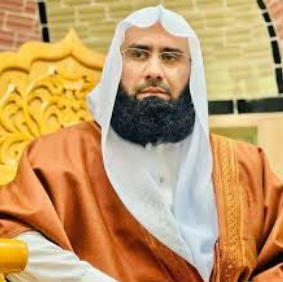
The text appears to be a rambling, disjointed collection of anecdotes and reflections, possibly from a speech or religious sermon. It centers around the figures of several significant Islamic personalities, such as Abu Bakr Siddiq and Umar, weaving together seemingly unrelated stories and historical references. The narrative frequently shifts focus, jumping between personal experiences, religious teachings, and political commentary. Much of the content is unclear and lacks coherent structure, making it difficult to discern a central argument or theme. The overall tone is emotional and passionate, filled with exclamations and religious invocations.
Farooq Azam: A Study Guide
Key Terms Glossary
- Amirul Momineen: Commander of the Faithful, a title given to the Caliph.
- Khilafat: The Islamic system of governance after the death of the Prophet Muhammad.
- Sahaba: The companions of the Prophet Muhammad.
- Siddiq-e-Akbar: A title of Abu Bakr, the first Caliph of Islam, meaning “the Truthful.”
- Farooq Azam: A title of Umar, the second Caliph of Islam, meaning “the Distinguisher.”
- Harjeet: Likely a person’s name, possibly misspelling of Harjit
- Munafik: Hypocrite, someone who pretends to be Muslim but does not believe.
- Abdullah bin Ubayy bin Sallool: A prominent leader of the hypocrites in Medina during the Prophet Muhammad’s time.
- Havan of Mustafa: This seems to be a metaphor, possibly meaning being close to the Prophet Muhammad. Mustafa is another name for Prophet Muhammad.
- Janata Party: Likely a reference to a political party, but the context is unclear.
- Sahih Bukhari: One of the most authentic collections of hadiths (sayings and actions of the Prophet Muhammad).
- Salim Atul Muslim: Likely a reference to a hadith collection, possibly a misspelling.
Short Answer Questions
- Who is Jhaal and what happened to him according to the text?
- Explain the story about the kurta and what it reveals about the relationship between the Prophet and his companions.
- What does the text say about the importance of faith in Farooq Azam?
- Describe the dream the Prophet had about heaven and the significance of Umar’s house in it.
- Explain the metaphor of the mountain and the six people, and what it symbolizes.
- What event led to Abu Bakr becoming the first Caliph, and what qualities did he possess that made him suitable for the role?
- Describe the incident with the bull and what it illustrates about the relationship between Abu Bakr and the Prophet.
- How did Farooq Azam address the people after becoming Caliph, and what did he promise them?
- What example is given to illustrate Farooq Azam’s commitment to justice and equality?
- What message does the author want to convey to Muslims about studying the lives of Islamic figures like Farooq Azam?
Short Answer Key
- Jhaal is someone who died and is described negatively. He is associated with hypocrites and his death is met with indifference, even relief.
- The story about the kurta highlights the closeness and love between the Prophet and his companions. The willingness to give and receive even a simple garment symbolizes their deep bond and mutual respect.
- The text emphasizes the importance of having faith in Farooq Azam’s leadership and his role in upholding Islamic principles. This faith is presented as essential for Muslims.
- The Prophet dreams of being shown a palace in heaven, which belongs to Umar. This signifies Umar’s high status in the afterlife and emphasizes his righteousness and closeness to God.
- The mountain represents the strength of the early Muslim community. The six people are likely Prophet Muhammad, Abu Bakr, Umar, Usman, Ali, and possibly Fatima. It signifies the unity and resilience of the early Muslims.
- Abu Bakr became the Caliph after the Prophet’s death. His steadfast faith, wisdom, and close relationship with the Prophet made him the natural choice for leadership.
- The story of the talking bull is a miracle that supports Abu Bakr’s claim of believing in the Prophet’s message. It emphasizes the importance of faith and highlights Abu Bakr’s unquestioning loyalty to the Prophet.
- Farooq Azam addressed the people with humility and honesty. He pledged to rule justly, uphold the law, and correct any wrongdoing.
- The story about the cloth distribution shows Farooq Azam’s commitment to fairness. Despite his high position, he took only his allotted share, demonstrating his integrity and rejection of special treatment.
- The author urges Muslims to study the lives of figures like Farooq Azam to learn from their actions, emulate their virtues, and understand the true spirit of Islamic leadership and governance.
Essay Questions
- Analyze the author’s portrayal of Farooq Azam. What specific qualities and actions are highlighted, and what message is conveyed about his leadership?
- Discuss the significance of the dream sequence in the text. How does it contribute to the overall message and purpose of the excerpt?
- Examine the use of storytelling and anecdotes in the text. How do these narratives serve to illustrate the author’s points and engage the audience?
- Analyze the role of faith in the excerpt. How is faith presented as essential for individuals and for the community as a whole?
- Compare and contrast the leadership styles of Abu Bakr and Farooq Azam as depicted in the text. What similarities and differences are evident, and how do they reflect the challenges of early Islamic leadership?
Islamic Leadership and Faith
The provided text appears to be a transcription of a spoken message, likely a sermon or lecture, discussing Islamic history and figures. It is challenging to decipher due to grammatical inconsistencies and unclear references. However, some key themes and individuals emerge:
Key Themes:
- Importance of Faith and Righteousness: The speaker emphasizes the importance of believing in Allah and following the Prophet’s teachings.
- Leadership and Governance in Islam: The text focuses on the qualities of righteous leaders like Abu Bakr and Umar, highlighting their justice, fairness, and dedication to the people.
- Following the Example of Pious Figures: The speaker urges Muslims to study the lives of prominent Islamic figures and emulate their virtues.
Key Figures:
- Prophet Muhammad: The central figure of Islam, whose actions and teachings serve as guidance.
- Abu Bakr Siddiq: The first Caliph after the Prophet, known for his wisdom and piety.
- “When I came, I prayed before Allah that the best among the advanced should be made the Caliph. I have silenced the best person in my speech.” This quote, attributed to Abu Bakr, suggests his humility and desire to appoint the most worthy leader.
- Umar ibn al-Khattab: The second Caliph, known for his strong leadership and justice.
- The speaker describes Umar’s tough stance against corruption and his commitment to fairness in distributing resources.
- “If you see any crookedness in me from you, if you see then straighten me if you see a mistake, straighten me and if I am straight then my Sadhu is a rural sword in the mosque…” This quote, attributed to Umar, reflects his openness to criticism and his commitment to righteousness.
Challenges in Interpretation:
The text’s fragmented nature, grammatical errors, and unclear references make it difficult to fully comprehend. For example, the speaker mentions “Harjeet” and “Hanuman-e-Farooq Azam” without sufficient context, making it difficult to understand their relevance.
Overall, the text appears to be a religious message emphasizing the importance of faith, righteous leadership, and learning from the lives of Islamic figures. However, further context and clarification are needed to fully understand its meaning and implications.
FAQ About Omar (RA)
Who was Omar (RA)?
Omar ibn Al-Khattab (RA) was one of the most prominent companions of Prophet Muhammad (PBUH). He was known for his strong faith, justice, and leadership. He served as the second Caliph of Islam after Abu Bakr Siddiq (RA).
What are some of Omar (RA)’s notable qualities?
Omar (RA) was renowned for his just and righteous character. He was fearless in upholding the truth and enforcing Islamic law. His leadership was marked by simplicity, humility, and a deep concern for the welfare of the people. He was also known for his wisdom, decisiveness, and strong military skills.
How did Omar (RA) become a Muslim?
Omar (RA) was initially a staunch opponent of Islam. However, after witnessing his sister reciting verses from the Quran, he was deeply moved by the beauty and truth of the message. He subsequently embraced Islam and became one of its most ardent supporters.
What was Omar (RA)’s relationship with Prophet Muhammad (PBUH)?
Omar (RA) was one of Prophet Muhammad (PBUH)’s closest companions and advisors. The Prophet (PBUH) held him in high esteem and entrusted him with important responsibilities. Omar (RA)’s conversion to Islam was a significant turning point for the early Muslim community.
How did Omar (RA) become the Caliph?
Before his death, Abu Bakr Siddiq (RA) appointed Omar (RA) as his successor. This decision was widely accepted by the Muslim community due to Omar (RA)’s reputation for piety, justice, and leadership qualities.
What were some of Omar (RA)’s accomplishments as Caliph?
During his caliphate, Omar (RA) oversaw a period of rapid expansion and consolidation of the Islamic empire. He instituted important administrative and legal reforms, established a system of social welfare, and led successful military campaigns. He is credited with laying the foundations for a strong and just Islamic state.
What is the significance of the story about Omar (RA)’s patched cloak?
The story of Omar (RA)’s patched cloak highlights his simple lifestyle and his commitment to serving the people. Despite being the Caliph, he lived modestly and refused to indulge in luxury. This story serves as a reminder for leaders to prioritize the needs of their people over personal gain.
What can we learn from Omar (RA)’s life?
Omar (RA)’s life is an inspiring example of faith, justice, leadership, and service. His unwavering commitment to Islam, his just and equitable rule, and his simple lifestyle serve as a model for Muslims and leaders everywhere. His story teaches us the importance of upholding truth, standing up for justice, and serving others with humility and compassion.
The First Two Caliphs
The sources discuss the Islamic concept of Khilafat, or Islamic leadership, following the death of the Prophet Muhammad.
- After the Prophet Muhammad’s death, the first Caliph, or leader of the Muslim community was Abu Bakr Siddiq. [1, 2] Abu Bakr was chosen because he was considered to have great faith in Allah and was a close companion of the Prophet Muhammad. [1] When Abu Bakr was dying, he was asked by his companions who he would appoint as the next Caliph. [3] He said that he prayed to Allah that the best person should be made the Caliph and that he had appointed the best person, Omar. [3] Omar was known for his strict temperament. [1]
- Omar became the next Caliph, and he was the first person in the history of Islam to be given the title of Amirul Momineen (Commander of the Faithful). [2] Omar was a strong and decisive leader and he oversaw a period of great expansion for the Islamic empire. [2] Omar established a fair and just system of government based on the principles of Islam. [4] One example of Omar’s leadership is when he distributed cloth to all of the Muslims, including himself, and took only his fair share even though he was the Caliph. [4]
- The sources emphasize the importance of Islamic leadership being based on piety, justice, and service to the community. [1, 2, 4] They also stress the need for Muslims to study the lives of these great leaders and to emulate their example. [4]
The sources also mention the importance of faith in Allah and the Prophet Muhammad. [1] They also mention the importance of living a life that is pleasing to Allah and following the teachings of Islam. [1, 4]
Succession of the First Two Caliphs
The sources describe how the first two Caliphs were chosen.
- When Abu Bakr, the first Caliph, was dying, his companions asked him who he would appoint as the next Caliph. He replied that he had prayed to Allah to appoint the best person, and that he had chosen Omar [1].
- Some people questioned Omar’s temperament for the role because of his strictness, but Abu Bakr said that he feared Allah, not the people [1]. Abu Bakr believed Omar was the best person for the job, and that when Abu Bakr believed, the other companions should also believe [1].
- Omar was the first person in the history of Islam to be called “Amirul Momineen,” which means “Commander of the Faithful” [2]. Omar was worried that people would be angry with him, and he asked that if anyone saw him doing anything wrong, that they should correct him [2].
The sources describe the concept of Caliphate succession, in which the leader of the Muslim community is chosen after the death of the previous leader. The sources do not contain information on how any Caliphs after Omar were chosen.
Abu Bakr and Omar: The First Two Caliphs
The sources focus on two of the Prophet Muhammad’s companions, Abu Bakr and Omar, who became the first two Caliphs.
- Abu Bakr was a close companion of the Prophet. When he was dying, the other companions asked him who he would appoint as the next Caliph. He said he prayed that Allah would appoint the best person, and he chose Omar. [1]
- Some people were worried about Omar because he was strict, but Abu Bakr said that he feared Allah, not the people. [1] Abu Bakr believed that because he believed Omar was the right choice, all the companions should believe as well. [2]
- Omar became the next Caliph and was the first person in the history of Islam to be called “Amirul Momineen,” which means “Commander of the Faithful.” [3] Omar asked the people to correct him if he did anything wrong. [3]
- The sources provide an anecdote about Omar to illustrate his piety. The Prophet Muhammad had a dream in which an angel took him to heaven to see Omar’s mansion. [1] The angel took the Prophet Muhammad to a canal where he saw a young girl playing with flour. The Prophet Muhammad asked about the palace near the canal, and the angel told him it belonged to Omar. [1] This story is meant to show that Omar was a righteous person who would be rewarded in heaven.
The sources do not discuss other companions of the Prophet Muhammad.
Omar’s Piety and the Afterlife
The sources highlight Omar’s piety and devotion through several anecdotes.
- The sources describe Omar’s humble response to becoming Caliph. He was worried that people would be angry with him and asked that if anyone saw him doing anything wrong to correct him. [1]
- He also demonstrated his commitment to fairness by ensuring that when cloth was distributed, everyone received an equal amount, including himself, even though he was the leader. [2]
- The sources recount a story about the Prophet Muhammad having a dream where an angel showed him Omar’s mansion in heaven. [3] The Prophet Muhammad saw a girl playing by a canal and asked who the nearby palace belonged to. The angel replied that it was Omar’s. This story illustrates Omar’s righteousness and the rewards awaiting him in the afterlife.
The sources use these stories about Omar to illustrate the qualities of a true believer and how religious devotion leads to rewards in the afterlife.
Early Islamic Leadership
The sources discuss several prominent figures in early Islamic history, focusing on their roles and significance within the Muslim community.
- The Prophet Muhammad: While not directly discussed in detail, the Prophet Muhammad is the central figure in Islam and serves as the foundation for the discussion of leadership and succession. The sources reference his companions and recount his dream as a way to emphasize Omar’s piety. [1]
- Abu Bakr Siddiq: As the first Caliph after the Prophet Muhammad, Abu Bakr is lauded for his close relationship with the Prophet and his deep faith in Allah. His appointment of Omar as his successor highlights his wisdom and discernment in choosing a leader for the Muslim community. [1-3]
- Omar ibn al-Khattab: The sources extensively portray Omar, the second Caliph, emphasizing his piety, justice, and strong leadership. He is the first to hold the title “Amirul Momineen” (Commander of the Faithful) and is depicted as a model of Islamic leadership. Several anecdotes illustrate his humility, fairness, and commitment to Islamic principles. [1, 3, 4]
The sources use these figures to highlight specific qualities valued in Islamic leadership, such as faith, justice, humility, and adherence to Islamic principles. They provide glimpses into the historical development of the early Muslim community and the challenges of leadership succession.

By Amjad Izhar
Contact: amjad.izhar@gmail.com
https://amjadizhar.blog
Affiliate Disclosure: This blog may contain affiliate links, which means I may earn a small commission if you click on the link and make a purchase. This comes at no additional cost to you. I only recommend products or services that I believe will add value to my readers. Your support helps keep this blog running and allows me to continue providing you with quality content. Thank you for your support!

Leave a comment