Month: October 2025

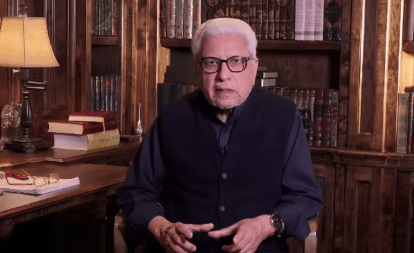
  • Islamic Jurisprudence on Modesty, Alcohol, and Music by Allama Javed Ghamdi

    Islamic Jurisprudence on Modesty, Alcohol, and Music by Allama Javed Ghamdi

    The text is a religious discourse interpreting a Hadith (a saying of the Prophet Muhammad) concerning the prohibition of certain actions, such as drinking alcohol or wearing silk. The speaker argues against a literal interpretation, emphasizing the Hadith’s context and the need for considering societal changes when applying religious laws. He stresses that the Hadith addresses the misuse of these things, not their inherent prohibition, and advocates for a nuanced understanding guided by Islamic principles. The speaker provides examples of how modern interpretations can address issues mentioned in the Hadith. The overall goal is to explain how to reconcile traditional religious texts with modern challenges.

    Frequently Asked Questions about Interpreting Islamic Texts

    1. How should we approach the interpretation of Hadith (Prophetic traditions), especially those that seem to contradict common understandings?
    2. It is crucial not to take Hadith in isolation or at face value. Instead, we must interpret them within the broader context of the Quran and other established Islamic principles. This involves looking at the original Arabic, considering the historical context, and understanding the intended purpose. For instance, if a Hadith speaks of resolving issues related to private parts, it does not imply legitimizing previously forbidden acts, but rather addressing them within the bounds of Islamic law and ethics. The understanding of the audience, the customs of the time, and the broader Islamic legal framework must always be considered. The intent of the prophet was to address these issues in a way that guides people towards righteousness, not towards breaking the bounds of faith.
    3. The text discusses solving issues related to “shame” (private parts). What does this refer to, and what does it not mean?
    4. The text addresses the idea that some people will come and solve issues related to shame. This does not mean making acts of adultery permissible or creating new laws. Rather it points to the fact that there are rules and limits within Islamic law that are meant to protect and guide behavior, not abolish it entirely. The solution discussed refers to resolving issues within those bounds. For example, marriage is a legitimate way to address the “shame” associated with sexual desires while maintaining fidelity and chastity. It refers to issues that some may be experiencing in their personal lives, but that can be solved within the bounds of Islamic law.
    5. What is the proper way to understand Hadith about items like silk and gold?
    6. Hadith concerning clothing, such as silk and gold, must be understood in their historical and cultural context. In the Prophet’s time, these items were often associated with extravagance and pride. Therefore, a ban on men wearing them was to avoid this and promote humility. However, the text points out that these are now used as general items by many, including women, and their meaning in a modern context is different. The principles behind such prohibitions were to avoid takabbur (arrogance) and excessive indulgence. Therefore, the spirit of the law should be observed and the reasons for the rules should be kept in mind.
    7. How does this text explain the Hadith on solving issues of music and wine?

    The Hadith about resolving issues related to wine and music are not meant to encourage the use of those items, but to recognize the existence of issues that people have with these items. They need to be addressed by the community. The emphasis is on addressing these issues with wisdom and within the bounds of Islamic law. The focus is on avoiding the problems associated with them. Just as with other issues, a blanket ban on all forms of music or a rejection of any alcohol consumption in every context would be incorrect. Rather it is about understanding the problems surrounding these things in their historical and modern context and finding ways to address them in a responsible manner.

    1. What is the meaning behind the text’s repeated emphasis on understanding context when interpreting religious texts?
    2. The text emphasizes that understanding context is essential because it is easy to misinterpret religious texts if they are taken out of their historical, cultural, and linguistic contexts. Actions of the prophet should be understood within his specific situation. The goal should always be to understand the spirit behind the texts and not apply literal interpretations that may not be applicable across different times and cultures. The purpose is to guide behavior towards righteousness and not lead to new forms of sinful behavior.
    3. How does this text view the use of modern technologies and how should they be used, given their ability to spread good and bad?
    4. This text understands that modern technologies can be either beneficial or harmful depending on how they are used. They should be used with caution and an awareness of their ability to create good and bad in society. The emphasis is on maintaining a sense of responsibility and not ignoring religious principles, particularly when using things such as radio, television, or any medium that can spread ideas, morals, or values.
    5. The text mentions the need for discussion and debate. Why is this important in understanding religious issues?
    6. Discussion and debate are crucial for a deeper understanding of religious issues, because it allows different viewpoints to be expressed, considered, and contextualized. Through dialogue, it is possible to identify any misunderstandings and develop an informed interpretation that is aligned with the spirit and intent of the religious text. This is particularly important in addressing modern problems and issues where multiple solutions and approaches might be possible.
    7. What does the text mean by “solving” problems, and how does this approach differ from merely prohibiting things?
    8. The idea of “solving” problems within this context is not about changing or abolishing Islamic law. Rather, it refers to understanding the issues faced by the people within a community, and coming up with strategies that address these issues without going against fundamental religious principles. It is a practical, nuanced approach that recognizes human nature and needs, rather than a rigid, literal approach focused on prohibition. The goal is to uphold faith while providing guidance in how to live in the modern world.

    Analyzing Hadith: A Study Guide

    Quiz

    Instructions: Answer each question in 2-3 complete sentences.

    1. According to the text, what is the common, incorrect interpretation of the hadith about people solving issues of shame, wine, and music?
    2. How does the text argue that the concept of “solving” these issues should be understood in a more nuanced way than simply permitting them?
    3. What role does the concept of Hudood (limits set by God) play in understanding how these issues are to be approached?
    4. How does the text suggest that the use of things like silk or music should be understood in light of their social context and potential for Takambur (arrogance)?
    5. How does the text explain that the permissibility of certain actions can change based on circumstance and broader Islamic principles?
    6. According to the text, how should one address the misuse of something that has both permissible and impermissible applications?
    7. What example does the text provide to illustrate how an incorrect understanding of a Hadith can lead to extreme actions?
    8. How does the author frame the issue of women and silk clothing in relation to the hadith being discussed?
    9. In the context of the discussion, what is Mannu as it is defined in the text?
    10. What does the author mean when stating they do not want anything for those who do Sitabir?

    Answer Key

    1. The common, incorrect interpretation is that the hadith means that these things (shameful acts, wine, and music) are simply made permissible. It’s assumed that “solving” the issues means they are no longer forbidden.
    2. The text argues that “solving” issues should be understood within the context of Hudood, the limits set by God, and that these issues need to be addressed by finding solutions within the boundaries that already exist. It is not about simply permitting actions that were previously forbidden.
    3. Hudood provides the framework for how to understand the permissibility of things. The discussion needs to be within the limits established by Islamic law, even when a matter may seem to be “solved,” meaning finding ways of living that still respect God’s boundaries.
    4. The text indicates that if something like silk is used in a way that promotes arrogance (Takambur), then it becomes impermissible. The social context and the intent behind the usage are important considerations.
    5. The text explains that things can change based on the understanding of a situation and in light of broader Islamic principles. Something that may be permissible in one context or time, may be impermissible in another time or place, because the context matters.
    6. The text suggests that the correct use of weapons that have been used excessively for the wrong purposes should be addressed keeping the situation in mind. These weapons are used to combat an error.
    7. The text gives an example of a person misinterpreting the hadith regarding silk and telling their wife to burn all her silk clothes because it was forbidden. It illustrates how a simple reading of the Hadith can lead to drastic actions without understanding context.
    8. The author argues that the hadith should not be used to restrict women from wearing silk clothing in the present day, as the social context has changed. What is important is not the physical clothing item itself, but the potential for it to cause arrogance in individuals or society.
    9. In the context of the discussion, Mannu is defined as something that goes against a person’s personality, life, honor or property as well as rebelling without a lock. Mannu can be brought about through the speech of others or the status of one’s words.
    10. The author means they do not seek support or recognition for those whose actions in relation to the text, are wrong in their interpretation. That those who do wrong interpretations will not get any benefit from his analysis.

    Essay Questions

    Instructions: These are essay questions for further reflection. Choose one or more to develop into a longer essay.

    1. Analyze the text’s argument regarding the interpretation of hadith, focusing on its call for nuanced understanding and the importance of context. How does this approach challenge literalist interpretations?
    2. Explore the text’s discussion of Takambur (arrogance) and its relevance to material possessions and practices. How can this concept be used to evaluate contemporary social behaviors and choices?
    3. Discuss the text’s approach to the concept of Hudood (divine limits). How does it balance the need for boundaries with the need for flexibility and critical thought?
    4. How does the text use the specific examples of shame, wine, and music to illustrate the broader principles it is trying to convey about the understanding and application of hadith?
    5. Evaluate the text’s methodology for analyzing and understanding religious texts. How can its approach be applied to other religious or ethical questions?

    Glossary of Key Terms

    • Hadith: A record of the sayings and actions of the Prophet Muhammad, considered a crucial source of guidance in Islamic law and practice.
    • Ummah: The global community of Muslims, united by faith.
    • Asar: A narration from companions of the prophet Muhammad.
    • Fatwa: A legal opinion or ruling issued by a qualified religious scholar on a point of Islamic law.
    • Bukhari: A collection of hadith compiled by Imam Bukhari, and is considered by Sunni Muslims to be the most authentic collection of hadith.
    • Quran: The holy book of Islam, believed by Muslims to be the word of God as revealed to Prophet Muhammad.
    • Majeed: A term often used to refer to the Quran with reverence.
    • Hudood: The limits or boundaries set by God in Islamic law, defining what is permissible and forbidden.
    • Takambur: Arrogance or haughtiness; a negative character trait in Islam that can lead to sins and bad behavior.
    • Mutrafin: Those who live luxurious lifestyles.
    • Shohat: A reference to things that are considered to be the dress of urine.
    • Sitabir: One who does or makes the use of something incorrectly.
    • Mannu: Rebelling without a lock and goes against a person’s personality, life, honor or property. Can come about from someone’s speech or status.

    Detailed Table of Contents: Analysis

    I. Introduction: Understanding the Core Arguments

    • A. Addressing Misinterpretations of Tradition: The text opens by emphasizing the importance of proper interpretation of religious traditions (specifically, a hadith from Bukhari). It warns against simplistic readings that lead to flawed conclusions.
    • B. The Core Argument: This text aims to provide a nuanced understanding of religious principles related to sensitive topics (sexual conduct, adornment, music). The goal is to interpret these topics in a way that avoids broad prohibitions and instead applies nuanced, contextual solutions.

    II. Analysis of Specific Issues & Their Solutions

    • A. The Issue of ‘Sharmgahs’ (Private Parts):This section discusses a hadith that mentions people will solve the issues of shame, addressing the notion that it means that sexual relations are always forbidden. The author posits that the hadith does not mean that sexual relations themselves are inherently bad.
    • The author contends that the hadith actually refers to addressing situations of sexual shame or misconduct through proper religious guidelines, specifically looking at the Quran and Hadith to develop and apply these rules in a contextual way.
    • The author claims the hadith is not speaking about marriages or sexual relations with wives (which are permissible), rather, it speaks to solving issues with “private parts” in a way that respects religious boundaries by addressing harmful actions.
    • B. The Issue of Silk and Adornment:The text addresses the use of silk (historically considered a luxurious garment), and the hadith that discusses the prohibition of silk for men. The author challenges a simplistic understanding of this rule, arguing that it was not intended as an absolute, never-changing ban.
    • The author argues that the prohibition during the Prophet’s time was tied to the social context where silk was a symbol of arrogance. They suggest it isn’t the material itself, but the way it is used and what it symbolizes in a given society that matters and is therefore relative.
    • The author claims that this type of approach means that the ban on silk is relative to changing cultural contexts and societal symbols, and should not be a basis for blanket rules.
    • C. The Issue of “Wine” and Music:The text addresses the hadith’s pronouncements about music and alcohol, again challenging interpretations that consider them inherently forbidden.
    • The author discusses how the hadith was speaking about correcting situations and contexts where music and alcohol were used to incite harmful behaviors, not that they are inherently forbidden.
    • The author discusses how the “essence of the day” (ie. religious law) must be followed and that those interpretations are found in the Quran, which allows for their moderate use, but warns against their abuse.
    • The author concludes that the hadith is speaking to using music and similar forms of entertainment responsibly, in accordance with religious principles and proper understanding of context.

    III. The Methodology for Understanding Tradition

    • A. Contextual Reading: The author strongly advocates for understanding the historical and social context of religious texts, avoiding literal interpretations that could lead to misapplication of religious principles.
    • B. Holistic Interpretation: The importance of considering the Quran and other hadiths and religious texts in their broader context is stressed, moving beyond the isolated reading of one text alone, which the author sees as insufficient.
    • C. Intention and Effects: The author emphasizes looking at the intention behind religious rules and their potential effects in society. The intention of these rules is to uphold morality and justice and it must be understood that those intentions cannot be undermined by applying rules broadly and without contextual consideration.

    IV. Applying Principles in Modern Contexts

    • A. Addressing Misuse and Excess: The author notes that while the text calls for careful use of seemingly prohibited things, it is also meant to guide Muslims away from misuse and excess. It is not calling for an abolition of all rules.
    • B. The Need for Discernment: This section calls for the use of religious interpretation as a method of discernment when deciding what actions and behaviors are consistent with religious principles.
    • C. The Importance of ‘Manners’ (Adab): The text concludes by re-emphasizing the importance of maintaining proper religious and cultural conduct as essential to these religious guidelines.

    V. Conclusion: The Ongoing Application of Islamic Principles

    • A. The Importance of Interpretation: The text underscores the importance of the process of religious interpretation and the careful application of rules.
    • B. The Dynamism of Islamic Law: The author posits that Islamic principles are meant to be applied flexibly and responsibly as societies change, rather than imposing strict, unyielding legalism.
    • C. Continuing Discussion: The author concludes by emphasizing how these interpretations are a basis for on-going discussions, meant to engage with real-world challenges.

    Okay, here is a briefing document analyzing the provided text:

    Briefing Document: Analysis of “Pasted Text”

    Date: October 26, 2023

    Subject: In-depth review of a discourse on Islamic tradition, interpretation, and contemporary issues.

    Introduction:

    This document provides an in-depth analysis of a complex discourse concerning Islamic traditions (“hadith”), particularly focusing on interpretations related to issues such as modesty, the permissibility of certain arts and practices (like music and silk), and the broader application of religious texts in modern contexts. The speaker emphasizes the importance of contextual understanding and the dangers of literal interpretations of religious texts.

    Key Themes and Ideas:

    1. The Importance of Contextual Interpretation:
    • The speaker consistently argues against literal, surface-level readings of hadith. He stresses the need to understand the context in which a tradition was narrated and its purpose within the broader Islamic framework.
    • He emphasizes the need to consult other sources, especially the Quran, before deriving a ruling (“fatwa”). “So this means that as soon as we read the words, the first thing we have to see is this. Will have to review and see if it is done in Majid.”
    • He critiques those who “as soon as he reads this, will it be justified for him to start using it, and say that mummy is done, now closeness with the private parts cannot be adopted under any circumstances”.
    • He uses the example of the “private parts” to say that one cannot ban all intimacy simply because the tradition mentioned resolving shame around the topic.
    1. Reinterpreting a Specific Hadith:
    • A central point of discussion revolves around a hadith which mentions that, within the Islamic community, some people will “solve the problems of shame, wine, and music.”
    • The speaker argues that this doesn’t mean all forms of these things will be universally “resolved” (i.e., made permissible). Instead, he states it means that, they would provide guidance for issues, not change the fundamentals.
    • He cautions against automatically interpreting “solving” as meaning that things are made completely permissible by highlighting, “You will express this relation with the woman, you will do something for her, you will tell the master that from today I am keeping this woman under my sight to reduce this relation and the woman will announce that she is taking the man under her sight When you declare this, then a life long happiness will be earned. Now if you are ashamed, there is a solution for you. This is exactly the reason.”
    1. Modesty and Sexual Ethics:
    • The speaker addresses the concept of shame (“sharamgah”) in the context of sexual ethics and intimate relationships.
    • He emphasizes that Islam provides guidelines for appropriate behavior, not an outright prohibition of all forms of intimacy.
    • He makes reference to Islamic principles that provide solutions to relationship issues and shame. “Now if you are ashamed, there is a solution for you.”
    1. The Status of Silk and Fashion:
    • The speaker delves into the issue of silk wearing, traditionally prohibited for men in some Islamic interpretations.
    • He argues that the prohibition should be viewed within the historical context when it was seen as a sign of extravagance and arrogance.
    • He notes that because “many other things have come in its place, whose status in the world is the same”, that rules should be re-evaluated with consideration of the time.
    • He asserts that the intention is not to impose an absolute prohibition on men wearing silk, but to ensure that clothing choices are not contributing to arrogance and societal inequality.
    1. Music, Entertainment, and Moral Guidance:
    • The speaker discusses music and entertainment (“what happens in night clubs here, what happens in films here, what about the arrangements that have been made here at present”), emphasizing the importance of avoiding elements that are sexually suggestive and promote base desires.
    • He emphasizes that the solution was “not the sentence that due to their release, many things are created in the hearts and minds of people, is n’t it a statement that as a result of this, the thought of Jinsitar is created in the people, you and I know all these usages,”.
    • He highlights that when “we will see them in the hall as well, we will see them in the library as well and will get them attention, it means that we will solve it in the situation as well” there is a need for critical evaluation and a measured response.
    1. The Purpose of Religious Texts:
    • The speaker argues that the purpose of religious texts is to guide individuals towards ethical conduct and a proper relationship with God (“Allah Taala”).
    • He cautions against weaponizing the text, noting “These types of weapons are used when you feel that the excessive use of something is wrong or people are making mistakes in that matter.”
    • He asserts they are not merely a set of rules to be followed literally without understanding the underlying moral and spiritual principles. He notes, “the main intention is that we will solve it even in those situations when he will be in a state of near remembrance because he will be in a state of trust when the doubt itself will be blocked from his mind when he Virat must have been given a rock by the issue, we will solve it in time too.”
    1. “Haram” and Contextual Usage:
    • The speaker notes that “apart from the prohibitions of Khuron, He has only Five things They are haram i.e. promiscuous talkies against life and property and honour, farewell to caste and lion”.
    • He highlights that not everything is “haram”, and it’s the context and use that matters.
    • He emphasizes that some things that have been deemed “haram” have been misinterpreted. “shame has gone is not an aslam matter, shame has gone aslam is not haram, rather Allah Taala has prescribed some rules after which it is resolved”.
    1. The Role of the Prophet and Scholars:
    • The speaker references the Prophet Muhammad’s (Sallallahu Alaihi Wasallam) actions and statements as the basis of Islamic practice, but also underscores that the scholars and followers also need to apply critical thinking, to “move ahead immediately… if this soul was used by SM in this way, then here a complaint has been made from the negative side that it would be misused.”

    Quotes of Significance:

    • “in my Ummah, some such people will definitely be born who are modest and can solve the problems of surah, wine and music.” (This is the hadith being interpreted)
    • “So this means that as soon as we read the words, the first thing we have to see is this. Will have to review and see if it is done in Majid.”
    • “Now if you are ashamed, there is a solution for you. This is exactly the reason.”
    • “the private part is never forbidden in the day of God, the car that has been given is not always solved and will remain solved, this thing has to be known first”
    • “These types of weapons are used when you feel that the excessive use of something is wrong or people are making mistakes in that matter.”
    • “the main intention is that we will solve it even in those situations when he will be in a state of near remembrance because he will be in a state of trust when the doubt itself will be blocked from his mind when he Virat must have been given a rock by the issue, we will solve it in time too.”

    Conclusion:

    This discourse offers a sophisticated analysis of Islamic tradition, advocating for nuanced and contextually-aware interpretations. The speaker cautions against a simplistic, legalistic understanding of religious texts, instead urging a focus on their ethical and moral purposes. This perspective is particularly relevant to contemporary discussions on Islam and its application in diverse cultural contexts. The speaker emphasizes that traditions around modesty, music, and fashion should be understood as guidelines to prevent abuse and arrogance, not as outright prohibitions.

    Allama Javed Ghamdi interprets Islamic modesty by focusing on the underlying principles and intentions behind the rules, rather than just the literal interpretations of religious texts [1, 2]. He emphasizes understanding the context and purpose of religious guidelines [2, 3].

    Here’s a breakdown of his approach based on the provided sources:

    • Modesty as a Solution, Not Just a Restriction: Ghamdi views modesty (sharmgah) not just as a set of restrictions but as a solution to potential problems [2]. He suggests that Islamic teachings provide ways to address issues of shame and sexual relations in a responsible manner [2].
    • Contextual Understanding of Texts: Ghamdi argues against a simplistic reading of religious texts. He states that one must consider the broader context, principles, and the intent of Allah when interpreting religious texts [1, 2]. For example, when interpreting a hadith about resolving issues of “shame,” he does not believe it means that anything related to private parts should become permissible [1, 4]. Instead, he states that it refers to resolving issues of shame in a way that Allah has prescribed [1, 4].
    • Focus on the Spirit of the Law: He believes that the core intention behind Islamic rulings should be given importance [3]. He references the idea that some things, such as silk clothing for men, were considered inappropriate due to their association with extravagance and arrogance during the Prophet’s time [3, 5]. These rules were not meant to be permanent or absolute but to address specific societal issues [3].
    • Application of Principles in Modern Times: Ghamdi suggests that the principles of modesty should be applied with an understanding of current social norms and contexts [3, 6]. For example, he explains that while silk clothing for men was not permissible in the past, it is not necessarily so in the present [3, 5]. The underlying principle is to avoid things that promote arrogance or are inappropriate given the context of the society [3].
    • Addressing Misinterpretations: Ghamdi addresses potential misinterpretations of hadith [1]. He emphasizes that understanding the ‘day’ (deen) requires a deeper analysis beyond the literal wording of texts [2]. He uses the example of silk and says people should not go home and burn all their silk because the prophet forbade it; rather one should understand that it was forbidden in the context of the time for specific reasons [5, 7].
    • Modesty in Different Aspects of Life: He states that modesty is not limited to sexual matters; it also applies to clothing, speech, behavior and social interactions [3, 6]. He says that modesty is the foundation of morality [8].
    • Solutions and Discussion: Ghamdi argues that Islamic teachings encourage open discussion and finding solutions to problems, rather than simply imposing rigid restrictions [1, 9]. He states that people will solve issues through discussions [9]. He uses the example of wine, and states that while alcohol has been forbidden, a literal reading would suggest that the blessings of Allah are only accepted when offering namaz [3, 9]. Instead, we know that alcohol is not allowed and that is the meaning that we must follow [9].

    In summary, Allama Javed Ghamdi’s interpretation of Islamic modesty emphasizes understanding the purpose, context, and underlying principles of religious teachings, rather than a purely literal adherence to the texts [1-3]. He encourages a flexible application of these principles in contemporary life [3, 6].

    Ghamdi’s perspective on alcohol consumption, as described in the sources, is nuanced and contextual. Here’s a breakdown:

    • Not inherently forbidden: The sources suggest that the mere mention of alcohol in religious texts does not automatically mean it is forbidden [1]. There is a recognition that the context and purpose behind such mentions need to be understood [1].
    • Context matters: The sources argue that if a religious text mentions alcohol, it’s important to consider the broader context and intent, rather than taking a literal, isolated interpretation [1].
    • Beyond literal interpretation: When the text mentions resolving the issues related to wine, it does not mean that weapons will be forbidden [2].
    • Issue of Normality: If the normality of liquor was reduced, it is considered wrong in every situation [3].
    • Intention is key: It is stated that the intention is not to state the law of honor or courage, but to make people aware of the situation [1]. The focus is on how these things are being used and whether the purpose is aligned with religious principles [1, 4].
    • Modern context: Ghamdi’s view acknowledges that the meaning of things changes over time. What was relevant during the time of the Prophet may not be the same now [1]. He looks at how alcohol is being used now, including in night clubs and films, and considers its impact on society [3].
    • Addressing the “mischief”: The mention of alcohol is made in the context of addressing the “mischief” that may arise from its use [1]. The focus is on preventing these negative consequences.
    • No blanket prohibition: The sources indicate that simply because alcohol is mentioned in a religious text does not mean that it is completely forbidden [1].
    • The intent of a message: A person should not go by the words in the scripture, but rather should see the purpose, reason and methods of use [1].
    • Focus on solutions: The sources suggest a focus on finding solutions to problems, including those related to alcohol consumption, rather than focusing on rigid rules [2, 3].
    • Guidance through discussion: Issues related to alcohol use are intended to be solved through discussions, and not through strict prohibition [3].

    In summary, Ghamdi does not appear to take a simplistic approach to the issue of alcohol consumption, but instead focuses on understanding the context, intent, and practical implications. The emphasis seems to be on a thoughtful approach that considers societal impact and the use of alcohol in modern situations, rather than a rigid, literal interpretation of religious texts.

    The sources discuss the permissibility of music within an Islamic framework, particularly in relation to a hadith that mentions people who will solve the issues of shame, wine, and music [1]. The discussion revolves around how to interpret such religious texts in the context of modern society [1, 2].

    Here’s a breakdown of how the sources suggest Ghamdi reconciles Islamic views on music with modern society:

    • Contextual Interpretation: The sources emphasize that interpreting religious texts requires understanding the context in which they were revealed, rather than taking the words at face value [1, 2]. For example, when the hadith speaks of solving issues related to shame, it doesn’t mean that all forms of intimacy become permissible [3]. It refers to resolving issues within the bounds of what is already permitted by God, such as the relationship between husband and wife [2, 3].
    • Focus on Intent: The intention behind actions is important. The sources suggest that the focus should not be on the mere act of listening to music, but also on the impact it has on the individual and the society. If music leads to immoral behavior or promotes harmful values, then it is not acceptable [4-6]. However, if music does not lead to these negative outcomes, it may be permissible [6].
    • Addressing Modern Issues: The sources recognize that many modern forms of entertainment like movies and music can lead to negative consequences if not used responsibly [4-6]. Instead of simply deeming them as forbidden, the sources suggest that the focus should be on addressing the harmful ways in which these things are used [5, 6].
    • Avoiding Extremism: The sources warn against misinterpreting religious texts to justify extremes. For instance, it would be wrong to conclude that all silk clothing is forbidden for women or that all music is prohibited simply based on one hadith [7]. The sources emphasize the need to consider the overall spirit of Islamic teachings [7, 8].
    • Emphasis on Ethical Conduct: The sources say the real focus should be on ethical conduct, maintaining decency, and avoiding arrogance. Actions such as wearing silk or listening to music are acceptable as long as they don’t lead to negative character traits such as pride, vanity, and immodesty [4, 7]. If those actions contribute to a corruption of values or behavior, then they are not acceptable [4, 5, 7].

    In summary, the sources suggest that Ghamdi’s approach involves interpreting religious texts with an understanding of their context, focusing on the intent and ethical impact, addressing the actual problems caused by certain modern practices, and promoting ethical conduct in accordance with the spirit of Islam [1-8]. It’s about understanding that the goal is not to create a list of forbidden things, but to create a society where everyone behaves responsibly within the boundaries set by God [5, 6].

    The sources discuss several issues considered “haram” (forbidden) in Islam, and how these issues are understood and addressed in a modern context. Here’s a breakdown:

    • Shame (private parts):
    • The sources discuss a hadith about people who will solve the problems of shame, wine, and music [1]. This doesn’t mean that everything related to the private parts becomes permissible [1, 2].
    • Rather, the hadith refers to resolving issues within the bounds of what is already permitted by God [3]. For example, it allows for intimacy within a marriage [2].
    • The sources emphasize that the focus is on addressing the misuse or misunderstanding of these matters rather than imposing blanket prohibitions [2, 3].
    • The sources highlight that the private parts are not always forbidden in the day of God [4].
    • Silk and Gold:
    • The sources discuss how some have misinterpreted religious texts to forbid silk and gold for men [4].
    • The sources say that during the time of the Prophet, wearing silk and gold was considered a sign of arrogance and luxury [5].
    • However, the sources argue against a literal interpretation, suggesting that the focus should be on the underlying principles and intentions [5, 6].
    • It is important to consider whether the wearing of silk is for pride or arrogance, and not just whether silk is worn or not [5].
    • If these things cause corruption of values or behavior, they are not acceptable [5].
    • The sources suggest that the focus should be on ethical conduct, maintaining decency, and avoiding arrogance [5].
    • Alcohol (wine):
    • The sources indicate that the mere mention of alcohol in religious texts does not automatically make it forbidden [6].
    • The context and purpose behind such mentions need to be understood [6].
    • The sources say that the focus should be on how these things are being used, and the problems that arise because of them [7].
    • If the normality of liquor was reduced, it is considered wrong in every situation [7].
    • The intention is not to state a law of honor or courage, but to make people aware of the situation. The focus is on how these things are being used and whether the purpose is aligned with religious principles [7].
    • Music:
    • The sources say that music, like the other issues, can be a source of harm if used incorrectly, and the focus should be on addressing the harmful ways in which music is used [8].
    • The sources say that instead of deeming music forbidden, the focus should be on its impact on the individual and society [8].
    • The sources say that if music leads to immoral behavior or promotes harmful values, then it is not acceptable, but if music does not lead to these negative outcomes, it may be permissible [8].
    • Other Prohibitions:
    • The sources mention that some actions are explicitly forbidden, such as “promiscuous talkies” and acts against life, property, and honor [8].
    • The sources also note that rebellion without a lock and casteism are wrong [4, 8].
    • The sources emphasize that it is not simply about listing prohibitions but also ensuring ethical conduct, and maintaining decency and humility [8, 9].
    • General Principles:
    • Contextual Interpretation: Religious texts should be understood in the context they were revealed, not literally [3, 9].
    • Intention: The intention behind an action is more important than the act itself [3, 5].
    • Ethical Conduct: The emphasis is on ethical conduct, maintaining decency, and avoiding arrogance [5, 8].
    • Addressing Harm: The focus is on identifying and addressing the “mischief” caused by certain practices [6].
    • Solutions over rigid rules: The sources show a preference for finding solutions through discussion and understanding rather than imposing rigid rules [1, 7].
    • Modern Relevance: The sources show an awareness of how cultural practices and technology may change and impact the understanding of what is considered haram [6, 10].

    In summary, the sources show that Ghamdi’s approach to “haram” issues involves a focus on understanding the intent and context of religious texts, addressing the harm caused by certain practices, promoting ethical behavior and emphasizing solutions and discussions rather than simply adhering to a list of prohibitions.

    The sources discuss Islamic traditions, particularly focusing on how they should be interpreted and applied in modern contexts, rather than providing a comprehensive overview of all traditions [1-10]. Here’s a breakdown of key points regarding the discussion of Islamic traditions in the sources:

    • Contextual Interpretation is Key: The sources emphasize that Islamic traditions, such as Hadiths, must be understood within their specific historical and cultural contexts [1, 2, 4-8]. Literal interpretations without considering the context can lead to misinterpretations and incorrect conclusions [1-3, 5, 6].
    • Focus on Intent and Ethical Impact: The sources suggest that the intention behind actions is crucial [2, 4, 6, 8, 10]. The ethical impact of a practice, rather than the action itself, should be the focus [5-7]. For instance, wearing silk might be permissible if it doesn’t lead to arrogance or immodesty, while listening to music might be permissible if it does not promote immoral behavior or harmful values [4-6, 8, 10].
    • Addressing “Mischief”: The sources talk about focusing on the “mischief” that may arise from the use of certain things [2, 3, 6]. This means that the focus should be on identifying and addressing the harmful consequences of certain practices rather than simply deeming them forbidden [2, 3, 6, 7].
    • Emphasis on Solutions Over Rigid Rules: The sources seem to favor solutions through discussion and understanding rather than imposing rigid rules [1-3, 6, 7, 9]. The goal is to resolve issues of misunderstanding or misuse [1-3, 6, 7]. For example, issues related to shame, wine, and music should be addressed in a way that allows for responsible behavior within the bounds of Islamic teachings [1-3, 6, 7].
    • Avoiding Extremism: The sources warn against misinterpreting traditions to justify extreme or narrow views [1-3, 5-8]. For example, it’s wrong to conclude that all silk is forbidden for women or all music is prohibited simply based on a literal interpretation of one hadith [1-3, 5-8].
    • Modern Relevance: The sources show an awareness of how cultural practices and technology may change and impact the understanding of Islamic traditions [6-10]. For example, modern forms of entertainment like movies and music should be addressed in terms of their impact, and not merely be deemed as forbidden [6-8].
    • Examples of Interpreted Traditions: The sources provide examples of how Islamic traditions related to shame, silk, wine, and music should be understood [1-8]. The tradition stating that some will solve the problems of shame, wine, and music, doesn’t mean these things are permissible without boundaries [1-3, 6, 7]. It means that Muslims should seek solutions within the bounds of Islamic teachings, and in a way that promotes ethical conduct [1-3, 6, 7].
    • Traditions about clothing, conduct and speech: The sources discuss traditions related to clothing and modesty, such as the use of silk and gold, in order to highlight the importance of humility and not arrogance [3-6, 8]. These traditions must be understood in their proper context, and not misused to create rigid rules [4-6, 8].
    • The sources also emphasize that the way one speaks and behaves is part of ethical conduct, and not just the rituals and acts of worship [4, 6-8].
    • Application of Traditions in Daily Life: The traditions should not just be about ritual observance, but should inform the way people behave with each other, and the values they embrace [3-6, 8]. The goal is to promote a society that is ethical, just, and moral [3-6, 8].

    In summary, the sources present a view of Islamic traditions that prioritizes contextual understanding, ethical behavior, and addressing harm over rigid adherence to rules or literal interpretations [1-10]. The approach is intended to make Islamic traditions relevant in modern society, by promoting responsible behavior, and by addressing the actual problems that people face in the world today [1-10].

    The sources discuss religious interpretations, particularly within an Islamic context, focusing on how to understand and apply religious texts and traditions in a way that is relevant and ethical in modern times. Here’s a breakdown of the key aspects of religious interpretation, as discussed in the sources:

    • Contextual Interpretation: The sources emphasize that religious texts must be understood within their specific historical, cultural, and social contexts [1-3]. This means that a literal reading of the text is insufficient and can lead to misinterpretations [2]. For instance, when the sources discuss the hadith about people who will solve the issues of shame, wine, and music, they highlight that it does not mean that everything related to those topics becomes permissible without boundaries [1]. Instead, the hadith must be interpreted within the context of Islamic teachings and ethical principles [2].
    • Focus on Intent and Ethical Impact: The intention behind an action and its ethical impact are considered more important than the action itself [2, 3]. For example, the sources explain that wearing silk or listening to music can be acceptable if it does not lead to arrogance or immoral behavior [4, 5]. The focus should be on maintaining decency and avoiding arrogance [5].
    • Addressing “Mischief”: The sources emphasize identifying and addressing the “mischief” or harm caused by certain practices or behaviors [1, 2]. Rather than simply deeming something forbidden, the focus should be on addressing the negative consequences it might produce [6, 7]. For instance, the sources discuss how modern forms of entertainment like movies and music can lead to negative consequences if not used responsibly [6, 8].
    • Solutions Over Rigid Rules: The sources indicate a preference for finding solutions through discussion and understanding, rather than imposing rigid rules [1, 7]. The goal is to resolve issues of misunderstanding or misuse [1, 2]. For example, the sources say that issues related to shame, wine, and music should be addressed in a way that allows for responsible behavior within the bounds of Islamic teachings, and that does not simply create a list of things that are forbidden [1, 7].
    • Avoiding Extremism: The sources warn against misinterpreting religious texts and traditions to justify extreme or narrow views [2, 3, 5]. It is not appropriate to conclude that all silk is forbidden for women, or all music is prohibited based solely on a literal interpretation of one hadith [2, 3, 5]. Such interpretations can lead to the neglect of the true spirit of Islam, and may even make the religion seem out of touch with modern society [5, 8].
    • Modern Relevance: The sources demonstrate an awareness of how cultural practices and technology can change and impact the understanding of religious interpretations [3, 5]. Therefore, modern forms of entertainment, like music, should be addressed in terms of their impact on ethical behavior and morality [5, 6, 8].
    • Application to Daily Life: Religious interpretations are not meant to be confined to ritual observance [4]. They should also inform the way people behave with each other and the values they embrace [5]. The goal is to promote a society that is ethical, just, and moral [5]. The sources also note that speech, conduct and personal appearance are all part of ethical conduct [4-6].
    • Examples of Interpreted Issues: The sources offer specific examples of how Islamic texts should be interpreted, including discussions on:
    • Shame (private parts): The hadith about solving the problems of shame doesn’t mean that all forms of intimacy are permitted, but that issues related to private matters should be resolved within the bounds of what is permitted by God [2, 3].
    • Silk and Gold: The prohibition against men wearing silk and gold should be understood in the context of avoiding arrogance and luxury, rather than a literal prohibition on wearing these items [4, 5].
    • Alcohol (wine): The mere mention of alcohol in religious texts does not automatically make it forbidden, and the focus should be on the context and intent of its use [6, 7].
    • Music: Music, like other issues, can be harmful if used incorrectly, but that the focus should be on addressing the harmful ways in which music is used rather than forbidding music in general [6-8].

    In summary, the sources present a view of religious interpretation that emphasizes contextual understanding, the intent behind actions, the ethical impact of actions, addressing the harm caused by certain practices, and promoting discussion and solutions over rigid adherence to rules. The approach aims to make religious texts and traditions relevant to modern society by promoting responsible behavior and addressing actual problems that people face in the world today.

    The sources discuss social problems, particularly within the context of Islamic teachings, by focusing on how certain behaviors and practices can lead to “mischief” and how these problems should be addressed [1, 2]. The sources do not explicitly define social problems, but they discuss issues that contribute to problems in society and how to resolve them. Here’s a breakdown of the key points:

    • Misinterpretation of Religious Texts: One of the primary sources of social problems, according to the sources, is the misinterpretation of religious texts and traditions [1, 2]. When religious texts are interpreted literally, without considering the historical, cultural, and social context, it can lead to the creation of rigid rules that do not address the actual issues. For example, the sources state that if one reads a Hadith and concludes that silk is forbidden for women, or that all music is forbidden, without considering the intent and context, then that can cause social problems [3, 4].
    • Focus on “Mischief”: The sources emphasize the importance of identifying and addressing the “mischief” (harm) caused by certain practices or behaviors [1, 2]. This means focusing on the negative consequences that may arise from certain actions rather than simply deeming them forbidden. The sources mention that problems related to shame, wine, and music should be resolved by addressing their potential for misuse and not by making rigid rules about them [1, 2].
    • Arrogance and Immodesty: The sources note that certain behaviors and practices, such as wearing silk or gold, can contribute to social problems if they lead to arrogance, immodesty, or extravagance [3-5]. The sources highlight the importance of humility and modesty in all aspects of life, including dress, speech, and conduct. The traditions about clothing and modesty are not meant to be a set of rigid rules, but should be understood in the context of avoiding arrogance and luxury [3].
    • Misuse of Entertainment: The sources identify the misuse of entertainment, such as music and movies, as a social problem if they are used in ways that promote immoral behavior or harmful values [4, 6, 7]. According to the sources, rather than deeming all music as forbidden, they discuss addressing the harmful aspects of music, like when it is used to encourage lustful behavior [4, 7].
    • Lack of Understanding: The sources also highlight that social problems arise when people lack a proper understanding of religious texts and traditions. This can lead to misinterpretations, extremism, and narrow views [1, 2]. The sources suggest that education and open discussion are crucial in addressing these problems. The sources argue that traditions should be understood and conveyed to people in a way that is sensible [8].
    • Importance of Discussion and Solutions: The sources emphasize resolving social problems through discussions, understanding, and finding solutions, rather than simply imposing rigid rules [1, 2, 6]. The goal is to address the root causes of problems and find ways to promote responsible behavior within the bounds of religious teachings [1, 2, 6].
    • Ethical Conduct: According to the sources, ethical conduct is an essential component of a healthy society [2, 5, 9]. This includes the way people speak, behave, and present themselves. The sources emphasize that religious teachings should guide not just ritual observances, but the way people live their daily lives, in a way that is just and moral [5, 9].

    In summary, the sources highlight that social problems can arise from misinterpretations of religious texts, the misuse of certain practices, lack of understanding, and a failure to prioritize ethical conduct. The approach emphasized in the sources is to address these problems by focusing on the context of religious texts, by identifying and addressing the harm caused by certain practices, by promoting discussion, and by finding solutions that encourage responsible behavior within the bounds of religious teachings.

    The sources suggest several approaches to moral solutions, emphasizing understanding, ethical behavior, and addressing the root causes of problems rather than simply imposing rigid rules [1, 2]. Here’s a breakdown of the key moral solutions discussed:

    • Contextual Understanding of Religious Texts: The sources emphasize that a key moral solution is to understand religious texts within their proper historical, cultural, and social context [1, 3]. This means avoiding literal interpretations that do not address the actual issues at hand. For example, the sources discuss how a hadith about people who will solve the issues of shame, wine, and music should not be taken to mean that all related things are permissible, but instead be understood within the broader context of ethical behavior [3].
    • Focus on Intent and Ethical Impact: A major moral solution is to prioritize the intent behind actions and their ethical impact [1, 4]. The sources suggest that actions should not be judged solely by their outward appearance but by whether they promote or undermine ethical principles [1]. For example, wearing silk or listening to music can be acceptable if it does not lead to arrogance or immoral behavior [4]. The focus should be on maintaining decency, avoiding arrogance, and ensuring ethical conduct in all aspects of life [2, 4].
    • Addressing “Mischief”: Rather than simply forbidding things, the sources emphasize the need to identify and address the “mischief” or harm caused by certain practices or behaviors [1, 2]. This involves a careful examination of the negative consequences that may arise from certain actions and finding solutions to mitigate these harms [1, 3]. For example, the sources suggest that issues related to shame, wine, and music should be addressed by discussing and resolving their potential for misuse and not by setting rigid rules about them [1, 5].
    • Promoting Discussion and Solutions: The sources advocate for resolving issues through discussions, understanding, and finding solutions rather than simply imposing rigid rules [1, 6]. This approach encourages open dialogue and aims to address the root causes of problems [1]. The sources highlight the importance of engaging with different perspectives and interpretations to arrive at solutions that are both ethical and practical [6].
    • Education and Awareness: A key moral solution lies in educating individuals about the proper interpretations of religious texts and traditions [1, 4]. This includes fostering awareness of the ethical principles that should guide behavior. By promoting an understanding of the deeper meaning of religious teachings, individuals can make informed decisions that contribute to the well-being of society [4].
    • Ethical Conduct in Daily Life: Moral solutions must extend to all aspects of daily life, including how people speak, behave, and present themselves [2, 7]. The sources suggest that ethical conduct is essential for a healthy society [2]. Therefore, religious teachings should guide not only rituals, but also personal behavior, social interactions, and the values people embrace [2]. The sources indicate that the goal is to promote a society that is ethical, just, and moral, with an emphasis on humility, modesty and respect [2, 4].
    • Balancing Individual Freedom and Social Responsibility: The sources suggest a balance between individual freedom and social responsibility [8]. While personal choices are important, they should not come at the expense of the community or violate religious principles [8]. The sources emphasize that freedom should be exercised within the boundaries of ethical conduct and in a manner that is beneficial to all. They suggest that when considering what is permitted, it should also be considered whether it harms society [6, 8].
    • Avoiding Extremism and Narrow Views: The sources warn against misinterpreting religious texts to justify extreme or narrow views, highlighting that such interpretations can lead to the neglect of the true spirit of Islam [4]. Therefore, a key moral solution involves promoting a balanced understanding of religious texts and traditions, which avoids rigidity and incorporates a range of viewpoints, and that considers the consequences of decisions, promoting a harmonious and compassionate society [4].

    In summary, the moral solutions suggested by the sources emphasize understanding, ethical behavior, addressing harm, promoting discussion, and education. They aim to create a society that is based on justice, compassion, and moral principles [1, 2].

    Summary: The passage discusses a religious tradition (hadith) that mentions people who will “solve” issues related to shame, wine, and music. The speaker argues that this doesn’t mean these things will be made universally permissible. Instead, they suggest it refers to finding solutions within the bounds of Islamic law, focusing on proper understanding rather than a literal interpretation that could lead to misinterpretations about the rules around modesty, intimacy, and what is considered forbidden.

    Explanation: This passage is a complex discussion about how to interpret religious texts, particularly a hadith (a saying or tradition of the Prophet Muhammad). The speaker is concerned that some people may misinterpret the hadith, which speaks of people who will “solve” or resolve certain issues, particularly concerning shame (specifically related to private parts), as meaning these things will become universally permissible, or “halal.” The speaker rejects this literal interpretation, using the example of a car, which was gifted (the car as a metaphor for the body), that doesn’t then make it permissible to misuse it. Rather, the speaker explains that the hadith needs to be understood in the context of established Islamic law and the Quran. They argue that the “solutions” mentioned are about how to manage these issues in a way that aligns with Islamic principles. They cite examples of how even though intimacy is permitted, it must be done within the boundaries set by God. Therefore, “solving” issues around shame doesn’t mean getting rid of all restrictions, but finding legitimate ways to navigate those restrictions within the religious framework. This is similar to their understanding of divorce, where the act of divorce itself was a last resort and must be done within the parameters of the law. Essentially, the speaker is warning against taking a single hadith out of context and advocating for a careful and reasoned understanding of religious texts based on established principles.

    Key terms:

    • Hadith: A collection of traditions containing sayings of the prophet Muhammad that, with accounts of his daily practice (the Sunna), constitute the major source of guidance for Muslims apart from the Quran.
    • Ummah: The whole community of Muslims bound together by ties of religion.
    • Haram: Forbidden or unlawful in Islam.
    • Halal: Permissible or lawful in Islam.
    • Fatwa: A formal ruling or interpretation on a point of Islamic law given by a qualified legal scholar.

    Summary: This passage discusses Islamic teachings related to modesty, marital relations, and the interpretation of religious texts. It argues against overly strict interpretations that might lead to unnecessary prohibitions and emphasizes that the core of Islamic law is about justice, reason, and the protection of individual rights.

    Explanation: The passage is a complex discussion about various aspects of Islamic jurisprudence, particularly focusing on issues of modesty, marriage, and interpreting religious texts. It begins by asserting that there’s no need for overly restrictive interpretations of Islamic rules, especially regarding marital relations and private matters, suggesting that such overzealousness may be rooted in caste-like thinking. The author argues that Islamic law permits intimacy within marriage, excluding anal sex, and emphasizes that Allah’s rules are reasonable, not arbitrary.

    The passage critiques the tendency to focus on minor details, such as dress codes, while neglecting the broader principles of justice and mercy. It suggests that some interpretations of Islamic law are too focused on avoiding “shame” rather than on promoting good behavior and protecting human rights. The author is critical of individuals who enforce strict interpretations of religious texts on their families without proper understanding, causing unnecessary burdens. It is highlighted that the historical context of religious teachings must be considered when interpreting religious texts, and not every prohibition is meant for every person, at every time. The passage concludes by emphasizing that religious texts should be understood with reason and wisdom, not through rigid adherence to minor details. The overall message is a call for a balanced approach to Islamic teachings, emphasizing intention, purpose, and the spirit of the law over rigid literalism.

    Key terms:

    • Ummah: The worldwide community of Muslims.
    • Sallallahu Alaihi Vallam: An honorific phrase used after mentioning the Prophet Muhammad, meaning “peace and blessings of Allah be upon him.”
    • Haram: Forbidden or unlawful in Islam.
    • Hudood: Boundaries or limits set by Islamic law.
    • Risalah Mehfil Aslam: The assembly of the Prophet’s message.

    Summary: This passage discusses how to interpret religious texts, emphasizing that understanding the context and underlying intentions is more important than strictly following the literal words. It uses examples like clothing, alcohol, and other societal issues to show how interpretations of these things have changed over time and how we should address them now.

    Explanation: The passage begins by addressing the idea that some people might blindly follow traditions. The author suggests that instead of just repeating stories, we need to really understand the reason and purpose behind religious teachings. For example, the passage mentions clothing and how what was considered “extravagant” in the past might not be today. The key point here is that what matters is the intention behind things, not the literal act itself.

    The text also brings up the issue of alcohol. The author states that while the Quran mentions it, the way it’s understood and applied in our times must consider new societal issues. The speaker stresses the importance of considering historical context, as well as the intentions of religious text. The speaker uses examples of modern problems to further illustrate the necessity of understanding underlying purposes rather than strict word-by-word interpretations. The overarching message is that interpretation should be based on a deep understanding of scripture and its relation to the modern world, rather than just following old traditions without questioning them. Ultimately, the text argues for a thoughtful and context-aware approach to religious texts, emphasizing the importance of intention and adaptation to our times.

    Key terms:

    • Rasul Allah: Refers to the Prophet Muhammad in Islam.
    • Ummah: The worldwide community of Muslims.
    • Mutrafin: A term referring to people who live extravagantly or luxuriously.
    • Hadiths: Narrations of the Prophet Muhammad’s life, teachings and sayings.
    • Hakeem Talab: A seeker of wisdom or knowledge, in this context, someone seeking deep understanding of religious matters.

    Summary: The passage discusses how to interpret and apply religious teachings (likely Islamic) in modern contexts, particularly regarding potentially controversial topics like music and social interactions. It argues for a balanced approach that prioritizes understanding the core principles of faith over rigid adherence to specific rules, and emphasizes solving issues through discussion and consideration of intent.

    Explanation: This text is essentially about how to navigate complex social and moral issues using religious guidance. The speaker emphasizes that while the Quran and Hadith (prophetic traditions) are foundational, their interpretation must be thoughtful and context-aware. The speaker is focused on the concept of finding solutions through discussion, understanding the intent of actions and not just following rules blindly. The speaker is suggesting that certain things that may be considered problematic or forbidden are not inherently bad but can be used positively if their intent is proper. For example, they discuss music and how it can be used for good or ill, and that the listener must understand the intention and be aware of negative influences. They discuss how certain behaviors like promiscuous talk and ignoring honor, family, and social status are forbidden, and that these prohibitions form the foundation of the faith. The overall message is that interpretations of religious texts should be approached thoughtfully and pragmatically, focusing on the underlying principles and goals of the faith, and not necessarily the specific, literal application of rules. The speaker suggests they are reinterpreting past traditions and making them more relevant and understandable.

    Key terms:

    • Quran: The central religious text of Islam, believed by Muslims to be the word of God as revealed to the Prophet Muhammad.
    • Hadith: The collection of traditions containing sayings and actions of the Prophet Muhammad, which serve as a guide for Muslims.
    • Hudood-o-Sharat: Islamic legal term referring to the prescribed limits or boundaries and conditions within Islamic law.
    • Risalat Mahasabha: Likely a reference to a religious or scholarly assembly or gathering that addresses religious issues.
    • Surah Ab: Likely a reference to a specific chapter in the Quran, though the accurate chapter would be dependent on the original language.

    Summary: The passage discusses the proper use of certain powerful tools or practices, emphasizing that they have inherent protections. However, these tools can be misused or overused. The speaker stresses the importance of using these tools responsibly and in moderation and does not want to be associated with those who abuse them.

    Explanation: The speaker is discussing some powerful tools or practices (referred to as “Makon”), suggesting that these inherently come with protections built in by a higher power, which in the passage is referred to as Allah Ta’ala. However, the speaker notes that despite these built-in protections, these tools can be misused. The speaker notes a concern about the potential for misuse, emphasizing the need to be careful about how they are utilized and that moderation is crucial. The speaker states that they don’t want to be associated with people who misuse these tools, and that they are interested in the tools’ positive applications. The speaker alludes to past discussions, emphasizing that the correct use of these tools should always be emphasized. The speaker uses the example of technologies like radios and televisions, which a sister once called “factories of the devil,” to illustrate their point that when the use of something becomes excessive or harmful, a line needs to be drawn. The speaker also says that the foundation of morality, which is considered a gem, is based on respect. They also describe a particular person who was doing “messengership” while wearing silk, suggesting a contradiction between actions and claims. They also say that the misuse of these tools stems from a feeling of “takambur,” which in this context seems to mean arrogance.

    Key terms:

    • Makon: This term is used to describe powerful tools or practices with inherent protections.
    • Allah Ta’ala: This is a common Arabic name for God in Islam.
    • Hudood: This term refers to the limits or boundaries set by Islamic law. In this context, it seems to refer to the limits of appropriate use of tools.
    • Takambur: In this context, it seems to refer to arrogance or pride.
    • Murtafin: This word refers to those who are respected or elevated in status.

    The sources discuss the interpretation of religious texts, particularly within an Islamic context, emphasizing the importance of understanding the intent and context of teachings rather than strictly following the literal words [1-5]. The texts caution against misinterpretations that could lead to unnecessary prohibitions or the misuse of practices, and advocate for a balanced approach that aligns with core Islamic principles [1-5]. Here’s a breakdown of the key themes:

    • Interpretation of Religious Texts: The sources emphasize the need for a nuanced understanding of religious texts, particularly hadith (sayings and traditions of the Prophet Muhammad) [1-4]. They argue that a literal reading can lead to misinterpretations and the misuse of religious teachings [1, 2]. For example, a hadith that mentions people who will “solve” issues of shame, wine, and music does not imply that these things are to be made universally permissible. Instead, it is about finding solutions within the bounds of Islamic law [1-3].
    • Modesty and Marital Relations: The texts address the topic of modesty and marital relations, arguing that there is no need for overly restrictive interpretations of Islamic rules [2, 3]. Intimacy within marriage is permitted, excluding anal sex, and Allah’s rules are considered reasonable [2, 3]. The sources critique those who focus on minor details while neglecting the broader principles of justice and mercy [2].
    • Context and Intent: The sources repeatedly stress that religious teachings must be understood within their historical and social context [3-5]. The intent behind actions is more important than the literal act itself [3, 4]. What was considered extravagant in the past may not be today, and what is permissible must be assessed based on the current context [3, 5].
    • Social Issues: The texts discuss how to address various social issues, such as alcohol consumption and the use of music [4-7]. The sources suggest that instead of blindly following traditions, we need to understand the purpose behind religious teachings and the context of their application [4, 6]. They explain how even things like music can be used for good or ill, and that understanding the intention behind the music is important [4, 7]. The texts advocate for a balanced approach, considering both the religious guidance and the realities of modern life [6].
    • Responsibility and Moderation: The sources discuss the proper use of certain practices and tools, noting that they have inherent protections, but they can be misused if not used responsibly and with moderation [5, 8]. They highlight that excessive use can be harmful, and one should not be associated with those who abuse these tools or practices [5, 8, 9].
    • Discussion and Understanding: The texts promote the idea that solutions to complex issues should be found through discussion and consideration of intent rather than rigid adherence to specific rules [4, 10]. They believe that understanding the core principles of faith is more important than strict, literal application of the rules [4, 6, 7, 10].

    In summary, the sources advocate for a thoughtful, context-aware, and balanced approach to religious teachings, emphasizing understanding and intent over blind adherence to the literal words.

    The provided sources discuss a specific Hadith excerpt that mentions people who will “solve” issues within the Muslim community [1]. The sources interpret this hadith as referring to the resolution of complex issues related to:

    • Shame (Sharmgah): The sources discuss how this hadith does not mean that all things related to the private parts are permissible, but rather that there is a way to address issues of shame within the bounds of Islamic law [1, 2]. It is suggested that the hadith refers to the resolution of problems related to intimacy, particularly within marriage, while excluding unlawful acts [2]. The sources emphasize the importance of understanding the rules and limits set by Allah Ta’ala in this area [1]. The texts clarify that marital relations are permissible, with the exception of anal sex, and that the rules set by Allah are reasonable [2]. The interpretation of this aspect is that it is not about opening up forbidden practices but clarifying the permissible actions within marital relations [2].
    • Wine (Alcohol): The sources explain that the hadith doesn’t imply that alcohol is now permissible. Instead, it points to a need for a nuanced understanding of the issue in modern times [3, 4]. The texts note that while the Quran mentions alcohol, the way it’s understood and applied in our times must consider new societal issues [3]. The sources emphasize that the intention of the hadith is not to make alcohol permissible but to provide a framework for addressing issues related to its misuse and the wider environment where alcohol is prevalent, such as night clubs and films [3, 4]. It is important to understand that the reduction of alcohol’s normality means it is Mannu (forbidden) in every situation [4].
    • Music: The sources address the issue of music, stating that the hadith does not mean that all music is permissible. Instead, the hadith’s reference to music is about finding ways to address its potential misuse and the negative impacts associated with it [4, 5]. The texts indicate that music can be used positively or negatively, and the key is to understand the intent behind the music [5]. The sources also connect the misuse of music to the creation of negative thoughts and desires and emphasize that understanding how music is used in various contexts is crucial, whether in film songs, qawwalis, or other forms [5].

    The sources emphasize that these issues are not to be resolved by making previously prohibited things permissible, but by understanding their correct usage, purpose, and context [1, 6]. The sources stress the importance of interpreting religious texts, like the Hadith, with a deep understanding of scripture, its historical context, and its relation to the modern world [2, 6]. The overall message is that interpretation should be thoughtful, context-aware, and focused on the underlying principles of faith rather than strict word-by-word applications of traditions [2, 4, 6, 7].

    The sources interpret the Hadith regarding modesty (specifically, issues of “shame” or “Sharmgah”) not as a blanket permission to disregard Islamic rules, but as a call for a balanced and nuanced understanding of these issues within the bounds of Islamic law [1-3]. Here’s a breakdown of the interpretation:

    • Not a Removal of Restrictions: The author argues that the Hadith does not mean that all things related to the private parts or intimacy are now permissible [1-3]. Instead, the Hadith points to the idea that there are solutions to the problems of shame and intimacy that are in line with Islamic principles. The interpretation is not that forbidden acts become permitted but rather that there is a way to properly address issues related to intimacy and modesty within the framework of Islamic law [1, 2].
    • Marital Relations are Permissible: The texts clarify that intimacy within marriage is permissible, but this does not extend to practices that are specifically prohibited, such as anal sex [3]. The sources stress that Allah’s rules are not arbitrary, but rather reasonable [2, 4].
    • Understanding Boundaries (Hudood): The sources emphasize the importance of understanding the boundaries and conditions (Hudood-o-Sharat) set by Allah Ta’ala in matters of modesty [1, 5]. These boundaries are not meant to be overly restrictive but rather to guide behavior [2, 4]. The focus is on maintaining a balance in relationships, not allowing for inappropriate or prohibited acts [3].
    • Contextual Understanding: The author emphasizes that understanding the context of the Hadith is crucial [2, 3]. The discussion about “solving” issues of shame is not about overturning fundamental rules, but about finding appropriate and permissible solutions within specific contexts [1, 2].
    • Critique of Overly Strict Interpretations: The texts critique those who interpret religious teachings too literally or narrowly, especially when it comes to modesty [2]. The author suggests that some interpretations are overly restrictive and miss the broader purpose of Islamic teachings [2, 4]. The sources stress that such restrictive interpretations can lead to unnecessary prohibitions, and it is important to focus on the principles of justice and mercy rather than only the specific details [4, 6].
    • Solution Through Understanding: The author proposes that the hadith calls for a solution to issues of shame through understanding the correct applications and limits in marital relations, and not by making forbidden things permissible [3, 5]. This suggests a move away from strict legalistic interpretations towards a more nuanced approach [3].

    In summary, the author interprets the Hadith regarding modesty as a call for a thoughtful and context-aware understanding of Islamic principles, permitting intimacy within marriage while excluding forbidden acts. It also emphasizes understanding the limits and boundaries set by Allah, avoiding overly strict interpretations, and finding solutions that align with broader principles of justice and mercy, rather than a complete removal of restrictions. The focus is on properly understanding the rules and limits concerning marital intimacy and modesty, and not making forbidden acts permissible [2, 3, 5].

    The sources discuss a specific Hadith that mentions people who will “solve” certain issues within the Muslim community [1]. The sources interpret this hadith as referring to the resolution of complex issues related to:

    • Shame (Sharmgah): The sources explain that the hadith does not mean that all things related to private parts or intimacy are permissible [1-3]. Rather, it points to finding solutions to issues of shame within the boundaries of Islamic law [1-3]. This includes clarifying what is permissible within marital relations, excluding acts such as anal sex, which are specifically prohibited [3, 4]. The focus is on understanding and respecting the rules and limits set by Allah in this area [2, 3]. The interpretation emphasizes that this is about finding solutions to the problems of shame and intimacy that are in line with Islamic principles and not a removal of restrictions [3, 5].
    • Wine (Alcohol): The sources clarify that the hadith does not imply that alcohol is now permissible [1, 6]. Instead, it suggests a need for a nuanced understanding of the issue in modern times [6]. The sources explain that while alcohol is mentioned in the Quran, the way it is understood and applied should take into consideration the current societal issues [6]. The hadith is not about making alcohol lawful but about providing a framework for addressing issues related to its misuse and the broader environment where alcohol is prevalent, such as night clubs and films [5, 6]. The sources state that the reduction of alcohol’s normality means it is forbidden in every situation [5].
    • Music: The sources state that the hadith does not mean that all music is now permissible [1, 7]. Instead, the hadith is about finding ways to address its potential misuse and the negative impacts associated with it [7]. Music can be used positively or negatively, and the key is to understand the intent behind the music [7]. The sources also connect the misuse of music to the creation of negative thoughts and desires and emphasize that understanding how music is used in various contexts, whether in film songs, qawwalis, or other forms, is crucial [7]. They explain that many modern forms of entertainment use music in ways that might incite negative feelings [7, 8].

    The sources emphasize that these issues are not to be resolved by making previously prohibited things permissible, but by understanding their correct usage, purpose, and context [2, 3, 5-7]. The overall message is that interpreting religious texts, like the Hadith, requires a deep understanding of the scripture, its historical context, and its relation to the modern world [2, 3, 5-8]. The focus should be on thoughtful, context-aware, and balanced interpretations based on the underlying principles of faith rather than a strict word-by-word application of traditions [2, 3, 5-8].

    The author’s views on the permissibility of silk, as discussed in the sources, are nuanced and contextual, and they are connected to a larger discussion about interpreting religious texts and practices [1, 2]. Here’s a breakdown of the author’s perspective:

    • Not an Absolute Prohibition: The author argues that the hadith does not suggest that silk is absolutely forbidden for everyone [1]. The interpretation is not about outright prohibition, but rather about understanding the appropriate use and context of wearing silk within a society [2].
    • Contextual Use: The permissibility of silk is dependent on the context and the society in which it is being used [1]. The sources emphasize that during the time of the Prophet (peace be upon him), silk was considered a symbol of extravagance (“Mutrafin”) [1, 2]. It was associated with arrogance and was a status symbol for the wealthy [2]. The author notes that at that time, wearing silk could be a symbol of pride and arrogance (Takambur) [2].
    • Historical Context: The author argues that it is crucial to understand the historical context of the prohibition of silk for men [1, 2]. The author points out that the prohibition of silk for men during the time of the Prophet (peace be upon him) was related to its association with extravagance, arrogance, and social status. The focus was on avoiding these traits rather than the material itself [2].
    • Modern Considerations: The author states that the status of silk has changed in the modern world [2]. The author suggests that silk is no longer as strongly associated with extravagance as it was in the past, and many other things have taken its place as status symbols [2]. Therefore, the ruling on silk should also be understood in the context of its present-day use and significance [2].
    • For Women, Not the Main Issue: The author makes it clear that the discussion about silk is not mainly about women’s clothing [1]. The author argues that today, if women wear silk, it is not considered a sign of extravagance but rather a thing of pride [1]. The author points out that in the context of the hadith, the focus is on addressing the behaviors and attitudes associated with wearing silk rather than making a strict prohibition on wearing it [1].
    • Broader Principles: The author suggests that the hadith should be understood in light of broader principles such as avoiding arrogance and maintaining modesty, and this applies to both men and women. The author stresses that it’s not just about avoiding silk but about cultivating the right attitude and intentions [2]. The focus should be on understanding the underlying principles of faith rather than a strict word-by-word application of traditions [1, 2].

    In summary, the author does not view the use of silk as being absolutely forbidden or permissible in all cases, rather that the permissibility of silk is dependent on the context, intention, and societal norms [1, 2]. The author emphasizes understanding the historical context of the prohibition and the principles behind the rules [2]. The author also explains that while silk was a status symbol of extravagance in the past and associated with arrogance, it’s status in the modern world is different. The interpretation is not about strict prohibition but about addressing the attitudes and negative traits associated with wearing silk, and not merely the material itself [1, 2].

    The author expresses several concerns about the misuse of certain practices, particularly in relation to the interpretation of religious texts and their application in modern society [1-10]. These concerns revolve around the potential for misinterpreting Islamic principles, leading to actions that contradict the spirit of the teachings.

    Here are the key concerns:

    • Misinterpretation of Hadith: The author is concerned that people might misinterpret hadith, particularly one that mentions people who will “solve” certain issues, to justify actions that are forbidden [1]. The author is concerned that people may take this hadith as a license to do as they please rather than an encouragement to engage in a thoughtful interpretation of the religious text [1]. For example, the author is concerned that people might believe that the hadith makes all things related to the private parts or intimacy permissible, or that it makes alcohol or music lawful [2, 3, 6].
    • Literal Interpretations: The author is wary of overly literal interpretations of religious texts, particularly when it comes to issues of modesty, alcohol, and music [1-3]. The author argues that a strict, word-for-word application of traditions without considering the context, purpose, and broader principles can lead to misunderstandings and the misuse of religious teachings [1-5]. The author points out that such interpretations can result in unnecessary restrictions and prohibitions that may not align with the true intent of the faith [2, 3].
    • Misuse of Permissible Things: The author is concerned that things that are permissible within certain boundaries can be misused and taken to extremes [3, 5, 8]. For example, the author notes that intimacy within marriage is permissible, but it does not mean that all sexual acts are permissible [2, 3]. The author emphasizes that permissible things can be misused when they are taken out of context or when the underlying principles are ignored [2-5].
    • Erosion of Modesty: The author is worried about practices that erode modesty, whether in clothing, behavior, or speech [2, 5, 8]. The author is concerned that people may misuse the concept of “solving” issues of shame to justify immodest behavior, and emphasizes the need to understand and respect the limits set by Allah [2, 3]. The author also raises concern about how modern media such as films and music, can be misused to incite negative desires [8].
    • Arrogance and Extravagance: The author is concerned about the potential for arrogance and extravagance when people misinterpret religious rules about things like silk [4, 5, 10]. The author notes that in the past, silk was a symbol of extravagance, but its status has changed over time [5]. The author believes that it’s important to consider the historical context and the reasons behind the prohibition to avoid misuse of the rule [4, 5, 10]. The author states that the underlying principle is to avoid behaviors associated with arrogance, rather than focus only on the material itself [4, 5, 10].
    • Ignoring Underlying Principles: The author emphasizes the importance of understanding the underlying principles of faith, such as justice, mercy, and modesty, rather than just focusing on the specific details or the letter of the law [2, 4, 5, 7, 8]. The author stresses that misinterpretations can occur when people do not understand the principles that guide religious teachings [2, 4, 5, 7, 8]. The author argues that a focus on the principles allows for a more thoughtful and contextual approach, which avoids misuse and misapplication [2, 4, 5, 7, 8].
    • Contemporary Misuses: The author is concerned with how some modern entertainment and media (such as films, songs, and qawwalis) are used to incite negative desires [6, 8]. They are worried that these forms of entertainment are being misused to promote immodest behavior and are causing people to ignore the underlying principles of the faith [8]. The author is concerned that many things which are currently popular among people are being used in a way that is against the purpose of the faith, and thus are misuses [8].

    In summary, the author’s concerns center on the misapplication of religious teachings through literal interpretations, the misuse of permissible actions, the erosion of modesty, and the failure to understand the underlying principles and historical contexts. The author stresses the importance of thoughtful, context-aware, and balanced interpretations that align with the broader principles of faith to avoid misuse [1-10].

    The author proposes solutions focused on understanding, interpretation, and context, rather than on strict prohibitions or permissions, when addressing the social issues mentioned in the hadith [1]. The author suggests that the problems of shame, alcohol, and music are not to be solved by simply making previously forbidden things permissible [1-3]. The solutions involve a deeper, more nuanced approach to Islamic teachings [4].

    Here are the key solutions proposed by the author:

    • Contextual Interpretation: The author emphasizes that religious texts, like the Hadith, must be interpreted in their proper historical and social context [2-5]. This means understanding the circumstances at the time of the Prophet (peace be upon him), including the social norms, the meanings of words, and the underlying principles of faith [2-5]. For example, when interpreting the hadith, one must understand the reasons behind the initial prohibitions and not just the prohibitions themselves [2, 4].
    • Understanding Underlying Principles: The author stresses the importance of understanding the broader principles behind religious teachings, such as modesty, avoiding arrogance, and maintaining justice [4, 5]. These principles should guide the application of religious rules and not just the rules themselves [1-3, 6]. The author suggests that focusing on the principles allows for a more thoughtful and contextual approach to resolving issues [1-3, 6].
    • Nuanced Approach to “Solving” Issues: The author clarifies that the hadith’s mention of people who will “solve” issues does not mean that they will make forbidden things permissible [1-3, 6]. Instead, it means they will address these issues in a way that aligns with the principles of Islam [1-3, 6]. The author is not suggesting that the solutions will be a removal of restrictions, rather a thoughtful understanding of these restrictions and their proper place [1-3, 6].
    • Focus on Proper Usage and Intent: The author suggests that many things can be used positively or negatively, and the key is to understand the intent behind the action and the context in which it is being done [3, 6, 7]. For example, in the case of music, it is not inherently wrong, but it can be misused to incite negative feelings and desires [6-8]. The author argues for being mindful of the intended purpose and potential impact of such practices [6-8].
    • Addressing Misuse and Extremes: The author points out the need to address the misuse of permissible things [3, 4, 6]. For instance, while intimacy within marriage is permissible, the author stresses that this does not mean all sexual acts are allowed [3, 4]. The focus is on maintaining balance and moderation [3, 4].
    • Dialogue and Discussion: The author suggests that resolving complex issues requires discussion and dialogue within the community, and not simply rigid adherence to a literal understanding [1, 6, 8]. The author mentions that the issues should be resolved through discussions [8].
    • Considering Contemporary Context: The author argues that the interpretation of religious teachings should consider the modern context and the present-day use and significance of things [3-6, 8]. The author explains that some things may have different meanings or status than in the past [3-6, 8]. For example, silk may not be the symbol of extravagance it once was, and therefore, the ruling on it may need to be understood in the light of its present-day context [3-5].
    • Avoiding Extremism: The author’s solutions aim to strike a balance between strict adherence to tradition and the flexibility needed to address modern issues [1-3, 6]. The author warns against using the interpretation of the hadith as a justification for extremes, and instead calls for a moderate and reasoned approach [1-3, 6].

    In summary, the author’s solutions are about promoting thoughtful understanding and interpretation of religious texts, considering the context and underlying principles of faith, and addressing issues with moderation and balance [1-6, 8]. The author does not propose simply removing prohibitions, but rather understanding them and applying them in a manner that is consistent with the true spirit of Islam [1-3, 6, 8].

    The author’s perspective on the use of silk and alcohol is nuanced and contextual, emphasizing that these issues should not be viewed through a lens of absolute prohibition or permission. Instead, the author stresses the importance of understanding the historical and social context, the underlying principles of faith, and the intended purpose behind religious rules [1-3].

    Here’s a breakdown of the author’s perspective on each:

    Silk:

    • Not an Absolute Prohibition: The author argues that the hadith does not suggest that silk is absolutely forbidden for everyone, and that the interpretation is not about outright prohibition but rather about understanding the appropriate use and context of wearing silk within a society [4].
    • Contextual Use: The permissibility of silk is dependent on the context and the society in which it is being used [4]. The sources emphasize that during the time of the Prophet (peace be upon him), silk was considered a symbol of extravagance (“Mutrafin”) [4]. It was associated with arrogance and was a status symbol for the wealthy [4]. The author notes that at that time, wearing silk could be a symbol of pride and arrogance (Takambur) [5].
    • Historical Context: The author argues that it is crucial to understand the historical context of the prohibition of silk for men [2]. The author points out that the prohibition of silk for men during the time of the Prophet (peace be upon him) was related to its association with extravagance, arrogance, and social status [5]. The focus was on avoiding these traits rather than the material itself [4].
    • Modern Considerations: The author states that the status of silk has changed in the modern world [4]. The author suggests that silk is no longer as strongly associated with extravagance as it was in the past, and many other things have taken its place as status symbols [5]. Therefore, the ruling on silk should also be understood in the context of its present-day use and significance [4].
    • For Women, Not the Main Issue: The author makes it clear that the discussion about silk is not mainly about women’s clothing [4]. The author argues that today, if women wear silk, it is not considered a sign of extravagance but rather a thing of pride [4]. The author points out that in the context of the hadith, the focus is on addressing the behaviors and attitudes associated with wearing silk rather than making a strict prohibition on wearing it [4].
    • Broader Principles: The author suggests that the hadith should be understood in light of broader principles such as avoiding arrogance and maintaining modesty, and this applies to both men and women [4]. The author stresses that it’s not just about avoiding silk but about cultivating the right attitude and intentions. The focus should be on understanding the underlying principles of faith rather than a strict word-by-word application of traditions [4].

    Alcohol:

    • Not a Simple Issue of Prohibition: The author explains that the hadith’s mention of solving the issue of wine should not be understood as making alcohol permissible [1]. Instead, it should be seen as an encouragement to address the underlying issues related to alcohol consumption in society.
    • Contextual Understanding: The author emphasizes that the mention of alcohol in the hadith must be understood within its specific context. It’s not simply about the law of honor or courage, but about understanding the potential for mischief [5]. The author suggests that the purpose of mentioning alcohol is not to state the law of honor or courage but to draw attention to the ways alcohol can be misused.
    • Modern Misuse: The author draws a parallel between alcohol and other modern issues, such as the misuse of music and media. The author is concerned with how alcohol is often associated with negative environments, like night clubs and films [6]. The author suggests that the issue with alcohol is related to the way it is being used and the negative atmosphere that it creates [6].
    • Focus on Intent and Use: The author emphasizes that the issue is not about the substance itself, but about the intent and use of alcohol [5, 6]. The focus should be on addressing the negative behaviors associated with alcohol consumption, rather than the substance itself [5]. The author uses an analogy that if there had been a mention of waist instead of alcohol, people would not assume that meant it was okay to commit the act of waist, and thus the same thinking should apply to alcohol. The author argues that just because something is mentioned it does not mean that it’s now permissible [6].
    • Underlying Principles: The author stresses that the underlying principle is to avoid actions that lead to harm, misbehavior, and negative outcomes. The author uses the example that when offering prayers, one accepts the blessings of God, and thus alcohol should also be understood in light of what one does in the context of their relationship with God [6].
    • Dialogue and Understanding: The author suggests that the issues related to alcohol must be discussed and addressed through dialogue within the community. The author points out that the tradition is not about making it permissible, but about creating discussions and finding ways to resolve the issues surrounding alcohol in society [6].

    In summary, the author does not view the use of silk and alcohol as being absolutely forbidden or permissible in all cases, rather that their permissibility is dependent on the context, intention, and societal norms. The author emphasizes understanding the historical context of the rules and the principles behind the rules. The author also explains that while silk was a status symbol of extravagance in the past and associated with arrogance, and alcohol is often misused in modern society to create negative atmospheres, their status in the modern world is different. The interpretation is not about strict prohibition but about addressing the attitudes and negative traits associated with use, and not merely the materials or acts themselves.

    The author does not view the permissibility of alcohol as a simple issue of prohibition or permission [1, 2]. Instead, the author emphasizes a contextual understanding of religious texts and principles [3, 4]. The author’s view is that the mention of alcohol in the hadith is not intended to make alcohol permissible [2], but rather to encourage a deeper understanding of the underlying issues associated with its consumption [1, 2].

    Here’s a more detailed breakdown of the author’s perspective:

    • Not a Simple Issue of Prohibition: The author clarifies that the hadith’s mention of “solving” the issue of wine should not be interpreted as making alcohol permissible. Instead, it means that people will address the problems related to alcohol in a way that aligns with the principles of Islam [3]. The author argues that the hadith does not suggest that alcohol is permissible, but rather that its misuse needs to be addressed [1, 2].
    • Contextual Understanding: The author emphasizes that the mention of alcohol in the hadith must be understood within its specific context [4]. It’s not simply about the law of honor or courage, but about understanding the potential for mischief [1]. The purpose of mentioning alcohol is to draw attention to the ways it can be misused and the negative atmosphere associated with it [2].
    • Focus on Intent and Use: The author suggests that the issue is not about the substance itself, but about the intent and use of alcohol [1]. The author stresses the need to address the negative behaviors associated with alcohol consumption, rather than simply focusing on the substance [2]. The author uses an analogy that if there had been a mention of waist instead of alcohol, people would not assume that meant it was okay to commit the act of waist, and thus the same thinking should apply to alcohol [2]. The author argues that just because something is mentioned, it does not mean that it’s now permissible [2].
    • Modern Misuse: The author draws a parallel between alcohol and other modern issues, such as the misuse of music and media [5]. The author expresses concern about how alcohol is often associated with negative environments, like night clubs and films [1, 2]. The author suggests that the problem with alcohol is related to the negative atmosphere that it creates [2].
    • Underlying Principles: The author stresses the importance of understanding the broader principles behind religious teachings [4]. The underlying principle is to avoid actions that lead to harm, misbehavior, and negative outcomes. The author uses the example that when offering prayers, one accepts the blessings of God, and thus alcohol should also be understood in light of what one does in the context of their relationship with God [2].
    • Dialogue and Discussion: The author suggests that the issues related to alcohol must be discussed and addressed through dialogue within the community, rather than rigid adherence to a literal understanding [3]. The author points out that the tradition is not about making it permissible but about creating discussions and finding ways to resolve the issues surrounding alcohol in society [2].

    In summary, the author does not view alcohol as simply forbidden or permissible, but rather stresses the importance of understanding its use, context, and the negative impacts associated with it [1]. The emphasis is on addressing the underlying issues and negative behaviors linked to alcohol, and not simply making it permissible [2].

    The author’s views on the permissibility of silk clothing for women are nuanced and contextual, and are not a primary focus of the text [1]. The author does not offer a simple “yes” or “no” regarding its permissibility, but rather emphasizes understanding the context, intent, and societal norms surrounding its use [1]. The main focus of the discussion about silk is on the attitudes associated with it and not a strict prohibition [1-4].

    Here’s a breakdown of the author’s perspective:

    • Not the Main Focus: The author makes it clear that the discussion about silk is not primarily about women’s clothing [1]. The primary concern in the source material is related to men’s use of silk, and the issue of extravagance, arrogance, and social status [1, 5].
    • Contextual Understanding: The author argues that if women wear silk, it is not considered a sign of extravagance but rather a thing of pride [1]. The author highlights that the social implications of wearing silk have changed over time [1, 6].
    • Shifting Societal Norms: The author notes that while silk was a status symbol and associated with extravagance in the past, it is not viewed the same way in the present day [1, 6]. The author suggests that many other things have taken its place as status symbols, so the ruling on silk should be understood in the context of its present-day use and significance [6].
    • Emphasis on Underlying Principles: The author stresses that the broader principles of modesty and avoiding arrogance are important to consider [1-9]. The focus is not just on the material itself but on the attitudes and behaviors associated with it [1-9]. The author emphasizes that the hadith should be understood in light of these broader principles [1-9].
    • Addressing Attitudes: The author’s concern is about addressing the behaviors and attitudes associated with wearing silk rather than making a strict prohibition on wearing it [1-9]. The author argues that the focus should be on understanding the underlying principles of faith rather than a strict word-by-word application of traditions [1-9].

    In summary, the author’s perspective is that the use of silk by women is not the central issue being addressed in the hadith. Instead, the author is focused on broader principles, the historical context of the rules, and the importance of understanding the intended purpose of religious teachings. The author’s view is that what matters more is the context, intent and the societal implications of wearing silk rather than an absolute prohibition [1-9].

    The author interprets the hadith regarding wine, music, and modesty not as a simple set of prohibitions or permissions, but as a call to understand the underlying principles and address the potential for misuse and negative consequences associated with them [1-5]. The author emphasizes the importance of contextual understanding, intent, and societal norms, rather than strict adherence to literal interpretations of the hadith [1-3].

    Here’s a breakdown of the author’s interpretation:

    • Modesty (Shame):
    • The author states that the hadith mentions “solving the issues of shame” [1]. This does not mean that shameful acts become permissible [2]. Instead, it refers to addressing the root causes and negative consequences associated with actions that are considered shameful [1, 2, 6].
    • The author argues that when the hadith speaks of resolving issues related to private parts, it does not mean that anything related to them is now permissible [6]. Rather, it refers to resolving those issues within the boundaries of what is permissible, such as marriage and avoiding unlawful sexual relations [6, 7].
    • The author stresses the importance of understanding what is considered lawful within the religion and resolving issues of shame within those guidelines. The author points out that the hadith is about addressing problems related to shame, and not about making shameful actions permissible [2, 6].
    • Wine (Alcohol):
    • The hadith mentions that “some people will solve the problems of wine.” The author interprets this to mean that people will address the issues and negative behaviors associated with alcohol use, not that alcohol will be made permissible [1].
    • The author views the mention of wine not as an endorsement of its use, but as a way to highlight the negative atmosphere associated with it and its potential for misuse [3, 4].
    • The author states that the hadith is not about the substance itself, but about the potential harm and negative consequences associated with its consumption [3, 4].
    • The author draws a parallel between alcohol and other modern issues like music and media, highlighting how these can contribute to negative environments [4].
    • Music:
    • The author interprets the hadith as saying that “some people will solve the problems of music” [1]. This does not mean that music becomes permissible in all forms, but that the issues and misuse associated with it will be addressed [1, 8].
    • The author does not view the hadith’s mention of music as a blanket endorsement of its use. The author states that just because the hadith mentions music, it does not make all forms of music permissible [8].
    • The author highlights that music, like wine, is associated with negative environments and can lead to negative thoughts [8]. The author argues that the focus should be on understanding the underlying issues and negative behaviors related to music, rather than only thinking about its permissibility [8].
    • General Principles:
    • The author emphasizes that the hadith should be understood within a broader context, taking into account the intent behind the teachings and the societal norms [2, 7, 9].
    • The author stresses that the focus should be on understanding the underlying principles of faith, such as avoiding harm and negative behaviors, rather than just a literal reading of the text [2, 6, 7].
    • The author’s interpretation is that the hadith is meant to encourage dialogue and discussion within the community to find solutions to these issues, rather than simply making them permissible [4, 5].
    • The author emphasizes that the hadith is about addressing the negative uses of these things, while also not prohibiting their permitted uses [4, 5].

    In summary, the author interprets the hadith about wine, music, and modesty as a guide for addressing the underlying issues associated with them, rather than simply as a set of rules about what is permitted or forbidden. The emphasis is on understanding the context, intent, and societal implications of these things, and encouraging dialogue to resolve issues in alignment with Islamic principles [1, 2, 4]. The author focuses on the negative impacts and misuse of these things and aims to resolve those problems without blanket prohibition of anything that is not strictly forbidden [3, 4, 8].

    By Amjad Izhar
    Contact: amjad.izhar@gmail.com
    https://amjadizhar.blog

  • 21 Things Difficult People Say That Push Others Away

    21 Things Difficult People Say That Push Others Away

    Words can heal, connect, and inspire—or they can alienate, offend, and destroy relationships. The way we speak in difficult moments often holds the power to strengthen bonds or drive a wedge between people. Miscommunication isn’t just about misunderstandings; sometimes, it’s the choice of words that pushes others away. When we rely on dismissive or defensive phrases, we risk damaging relationships without even realizing it.

    The truth is, phrases that seem harmless can signal deeper issues: a lack of empathy, resistance to change, or an unwillingness to collaborate. When people feel unheard or undervalued, trust erodes, and frustration builds. Communication is a two-way street, and it’s essential to remain aware of how your words land on others.

    Fortunately, improving communication is a skill that anyone can develop. By recognizing and avoiding phrases that shut down dialogue, we can foster healthier and more productive relationships—whether at work, home, or within our social circles. The first step is awareness. Let’s explore some common phrases difficult people say and the damage they can cause.

    Keywords: Difficult people, damaging phrases, effective communication, trust, empathy, communication skills 

    Hashtags: #CommunicationTips #ToxicBehavior #Empathy #WorkplaceCulture #RelationshipAdvice

    1- “It’s Not My Job”

    This phrase signals disinterest and detachment faster than any action can. When you say, “It’s not my job,” you immediately send a message that you’re unwilling to be part of the team’s success. Team dynamics thrive on cooperation and adaptability, not rigid adherence to predefined roles. Even if the request is outside your direct duties, a refusal to engage comes across as apathetic, eroding team morale and productivity.

    Collaboration often means stepping up when challenges arise. Studies by Gallup reveal that organizations with highly engaged employees achieve 21% greater profitability compared to those with disengaged teams. Instead of shutting down with “It’s not my job,” a better approach would be to say, “I’d like to help within my capabilities. What do you need?” This shows you are willing to contribute while setting healthy boundaries.

    Keywords: Teamwork, employee engagement, collaboration, workplace productivity, communication boundaries 

    Hashtags: #Teamwork #EmployeeEngagement #Collaboration #WorkplaceSuccess #Professionalism

    2- “That’s Not How We Do It Here”

    Few phrases are more effective at stifling innovation than “That’s not how we do it here.” This statement signals a fear of change and a preference for the status quo. When people hear this, they feel discouraged from sharing new ideas or exploring creative solutions. In a world where progress depends on adaptability, clinging to old ways can leave an organization stagnant and uncompetitive.

    John P. Kotter, a leading authority on change management, notes that leaders must create an environment where people feel encouraged to challenge existing processes. Instead of dismissing new ideas, try saying, “We’ve always done it this way, but I’d love to hear your thoughts on how we can improve.” This approach fosters innovation while respecting past methods and encouraging dialogue.

    Keywords: Innovation, change management, adaptability, workplace culture, leadership skills 

    Hashtags: #Innovation #ChangeManagement #Leadership #Adaptability #WorkplaceCulture

    3- “I Can’t Believe You Don’t Remember”

    Memory lapses are normal, yet this phrase turns forgetfulness into a weapon of guilt. When you express disbelief at someone’s inability to remember something, it comes across as accusatory and demeaning. Instead of solving the issue, it creates unnecessary tension and resentment. The reality is that forgetting is part of being human—studies show that people forget 50% of new information within an hour and up to 90% within a week.

    Rather than blame someone for not remembering, a more effective and compassionate approach is to repeat the information calmly or provide a reminder. Empathy and understanding go a long way in maintaining healthy communication. As Brené Brown advises, “Empathy is a choice, and it’s a vulnerable choice.” Choose patience over frustration, and you’ll build stronger relationships.

    Keywords: Memory lapses, empathy, communication breakdown, patience, understanding 

    Hashtags: #Empathy #CommunicationSkills #Patience #Understanding #HealthyRelationships

    Conclusion

    The phrases we choose during challenging interactions can either build bridges or burn them. Dismissive statements like “It’s not my job,” “That’s not how we do it here,” and “I can’t believe you don’t remember” might seem trivial, but they convey deeper issues of apathy, resistance, and judgment. By shifting these responses to more empathetic and open-minded alternatives, we can foster a culture of collaboration, innovation, and understanding.

    Words have power—and with that power comes responsibility. Mindful communication can transform not only your personal relationships but also your professional environment. The next time you find yourself tempted to use a phrase that shuts someone down, pause and choose words that open the door to connection. In doing so, you create space for growth, trust, and mutual respect.

    Keywords: Mindful communication, collaboration, empathy, professional growth, mutual respect 

    Hashtags: #MindfulCommunication #EmpathyInAction #Collaboration #TrustBuilding #ProfessionalGrowth

    4- “I Told You So”

    Few phrases are more grating than “I told you so.” When you use this phrase, it immediately creates a sense of superiority, making the other person feel belittled. While it might feel momentarily satisfying to assert that you were right, this phrase damages relationships and discourages open communication. No one likes to be reminded of their mistakes in a way that diminishes their self-worth.

    Instead of claiming victory, take a more gracious approach. Phrases like, “I’m glad we figured that out,” maintain dignity on both sides and emphasize teamwork over ego. This small shift in language helps preserve trust and encourages continued collaboration. Remember, true leadership is about lifting others up, not putting them down.

    Keywords: Superiority complex, humility, gracious communication, teamwork, trust 

    Hashtags: #GraciousCommunication #Teamwork #Trust #Humility #PositiveRelationships

    5- “I’ll Do It Myself”

    The phrase “I’ll do it myself” often stems from a desire for control and efficiency. While it may seem productive in the short term, this approach can undermine trust in others’ abilities and damage team morale. When you take on everything yourself, you deny others the opportunity to contribute and grow, creating a culture of dependence rather than collaboration.

    A more balanced approach is to invite collaboration. Instead of dismissing others, say, “I’d like to work on this together—I trust your input.” This fosters a sense of mutual respect and shared responsibility. Effective teamwork relies on trust, and showing faith in your colleagues helps build a more cohesive and empowered team.

    Keywords: Control, teamwork, trust, collaboration, leadership 

    Hashtags: #Collaboration #TeamTrust #Leadership #SharedResponsibility #WorkplaceSuccess

    6- “I Don’t Care”

    Saying “I don’t care” is a quick way to alienate others. This phrase signals disinterest and dismissiveness, making people feel that their concerns are unimportant. While you may feel disengaged for personal reasons, outright apathy shuts down emotional connection and fosters resentment. This behavior can stem from insecurity, a need for control, or emotional self-protection.

    A better approach is to communicate your feelings honestly. Instead of saying “I don’t care,” try explaining why you feel disengaged. For example, “I’m feeling overwhelmed right now—can we revisit this later?” shows vulnerability and invites understanding. This approach maintains empathy and keeps lines of communication open.

    Keywords: Apathy, disengagement, emotional connection, empathy, vulnerability 

    Hashtags: #Empathy #EmotionalConnection #Vulnerability #HealthyCommunication #Understanding

    Conclusion

    Phrases like “I told you so,” “I’ll do it myself,” and “I don’t care” can seem harmless but often reflect deeper issues of control, superiority, and apathy. These expressions damage relationships, erode trust, and hinder collaboration. By replacing them with more constructive language, you create an atmosphere of respect, teamwork, and empathy.

    Mindful communication is essential for building healthy interactions. Choosing words that uplift rather than diminish others can transform both personal and professional relationships. The next time you face a challenging interaction, pause and choose words that foster connection and understanding. In doing so, you build a foundation of trust and mutual respect.

    Keywords: Mindful communication, respect, empathy, collaboration, trust 

    Hashtags: #MindfulCommunication #Respect #Empathy #Collaboration #Trust

    7- “Why Can’t You Be More Like…”

    Comparing someone to another person is a surefire way to damage their confidence and self-worth. When you say, “Why can’t you be more like…,” you’re signaling that the individual isn’t good enough as they are. This not only fosters resentment but also creates a culture of insecurity. People need to feel valued for their unique strengths, not measured against someone else’s achievements.

    Instead of comparisons, highlight the person’s abilities and potential for growth. A more supportive approach would be, “I appreciate the way you handle things, and I believe you can achieve even more.” This builds confidence and encourages personal development. As Theodore Roosevelt famously said, “Comparison is the thief of joy.” Recognize individual progress and celebrate it.

    Keywords: Comparisons, insecurity, self-worth, individuality, personal growth

    Hashtags: #SelfWorth #Individuality #PersonalGrowth #PositiveFeedback #RespectfulCommunication

    8- “You’re Too Sensitive”

    Telling someone, “You’re too sensitive,” is a form of emotional invalidation. It implies their feelings are excessive or unjustified, which can lead to self-doubt and suppressed emotions. This phrase is often used to deflect responsibility and shift blame, making the person feel guilty for expressing their feelings. It’s a tactic frequently used in toxic communication patterns.

    Instead, practice empathy and acknowledge the other person’s emotions. Phrases like, “I’m sorry if that hurt you—can you help me understand how you feel?” invite constructive dialogue and show that you care. Emotional sensitivity is not a flaw; it’s a sign of humanity. Recognizing and respecting others’ emotions can deepen trust and connection.

    Keywords: Emotional invalidation, empathy, emotional sensitivity, constructive dialogue, trust

    Hashtags: #Empathy #EmotionalSensitivity #ConstructiveDialogue #Trust #RespectfulCommunication

    9- “That’s Just the Way I Am”

    When someone says, “That’s just the way I am,” they’re resisting accountability and self-improvement. This phrase signals an unwillingness to change, effectively telling others to tolerate bad behavior. Clinical psychologist Dr. Ramani Durvasula explains that this statement is a defense mechanism to avoid growth. It creates frustration and resentment in relationships.

    A better approach is to show openness to change. Instead of dismissing concerns, say, “I’m working on improving that—thank you for your patience.” Growth is a lifelong process, and showing a willingness to adapt fosters healthier interactions. As the Greek philosopher Heraclitus said, “The only constant in life is change.” Embrace it.

    Keywords: Self-improvement, accountability, growth mindset, adaptability, resistance to change

    Hashtags: #SelfImprovement #Accountability #GrowthMindset #Adaptability #PersonalGrowth

    Conclusion

    Phrases like “Why can’t you be more like…,” “You’re too sensitive,” and “That’s just the way I am” may seem harmless but carry damaging implications. These statements undermine self-worth, invalidate emotions, and resist growth. Over time, they erode trust and create a hostile environment, whether in personal relationships or professional settings.

    Replacing these phrases with empathetic and growth-oriented language can transform interactions. By recognizing individuality, validating emotions, and embracing self-improvement, you foster healthier, more respectful relationships. Remember, mindful communication is not about perfection but about progress. Every time you choose words that build up rather than tear down, you strengthen connections and create a culture of respect and understanding.

    Keywords: Mindful communication, self-worth, empathy, growth, respect

    Hashtags: #MindfulCommunication #Empathy #SelfWorth #Respect #PersonalGrowth

    10- “You’re So Dramatic”

    Dismissing someone’s feelings as “dramatic” is a quick way to undermine their emotional experience. This phrase invalidates the person’s perspective and implies that their reaction is exaggerated or unreasonable. When people hear this, they often feel embarrassed, misunderstood, or frustrated. Instead of resolving conflict, this statement intensifies it and shuts down productive communication.

    Furthermore, labeling someone as “dramatic” can be a subtle form of gaslighting, making them doubt their own reality. Recognizing that everyone processes emotions differently is key to maintaining healthy communication. A better approach is to say, “I want to understand why this is affecting you so much—can you explain?” This fosters empathy and helps bridge the emotional gap.

    Keywords: Emotional invalidation, gaslighting, empathy, communication breakdown, conflict resolution

    Hashtags: #Empathy #EmotionalValidation #CommunicationSkills #ConflictResolution #RespectfulCommunication

    11- “It’s Fine”

    At face value, “It’s fine” might seem like a harmless response, but it often masks deeper dissatisfaction or passive-aggressiveness. When people use this phrase to avoid discussing their real feelings, it creates confusion and tension. Instead of addressing issues head-on, the phrase leaves the other person guessing what went wrong, which can lead to misunderstandings and frustration.

    Open communication is crucial for resolving conflicts. Rather than saying “It’s fine,” try expressing your feelings directly: “I feel upset about this, but I want to talk it through.” This approach avoids ambiguity and promotes honesty. Clear communication not only resolves issues faster but also strengthens trust and mutual understanding.

    Keywords: Passive-aggressiveness, open communication, conflict resolution, honesty, trust

    Hashtags: #OpenCommunication #Honesty #TrustBuilding #ConflictResolution #HealthyRelationships

    12- “I’m Not Racist, But…”

    Prefacing a statement with “I’m not racist, but…” almost guarantees that what follows will be offensive or discriminatory. This phrase attempts to shield the speaker from accountability while expressing a biased or prejudiced view. It’s a form of microaggression that perpetuates negative stereotypes and can damage relationships or workplace culture.

    Instead of justifying a potentially harmful statement, consider whether it needs to be said at all. Reflect on your intentions and how your words might affect others. As diversity expert Dr. Beverly Daniel Tatum advises, “Recognizing bias is the first step toward change.” Choosing words that promote understanding and inclusivity is essential for fostering respectful relationships.

    Keywords: Microaggressions, bias, accountability, diversity, inclusivity

    Hashtags: #Diversity #InclusiveLanguage #Microaggressions #Respect #Accountability

    Conclusion

    Phrases like “You’re so dramatic,” “It’s fine,” and “I’m not racist, but…” may seem small, but their impact is profound. These statements invalidate feelings, mask true intentions, and perpetuate harmful biases. Over time, they erode trust and sow the seeds of resentment, both personally and professionally. Mindful communication involves being aware of how your words affect others and choosing language that fosters respect and empathy.

    By replacing dismissive phrases with honest, empathetic, and inclusive communication, you create healthier and more productive interactions. As Maya Angelou wisely said, “Do the best you can until you know better. Then when you know better, do better.” Every word you choose has the power to build or break relationships—so choose wisely.

    Keywords: Mindful communication, empathy, trust, inclusivity, respect

    Hashtags: #MindfulCommunication #Empathy #Trust #Inclusivity #RespectfulInteractions

    13- “That’s Not My Problem”

    Saying, “That’s not my problem” or the snarkier, “That sounds like a you problem,” immediately signals indifference and lack of empathy. In both personal and professional settings, relationships thrive on mutual care and shared accountability. This phrase not only damages trust but also undermines cooperation and teamwork.

    Even if a problem isn’t directly yours to solve, showing empathy goes a long way. A better approach is to say, “I understand that’s difficult—how can I help support you?” or “I may not have the solution, but let’s figure out who can help.” Offering understanding or guidance maintains a spirit of collaboration and keeps lines of communication open.

    Keywords: Empathy, teamwork, accountability, collaboration, support

    Hashtags: #Empathy #Teamwork #Support #Collaboration #ProblemSolving

    14- “I’m Just Being Honest”

    While honesty is important, saying “I’m just being honest” can often mask unkindness or unnecessary criticism. As author Bruce Kasanoff explains, “The truth can be used in many ways: to help others, to solve a problem, or… to intentionally hurt someone.” This phrase often deflects responsibility for being hurtful by framing cruelty as honesty.

    Constructive feedback is about expressing truth with kindness. Instead of using this phrase, ask, “May I offer some feedback?” or “I want to be honest, but I also want to be helpful.” This approach softens the message and shows respect for the other person’s feelings. Honesty, when delivered with empathy, strengthens relationships rather than tearing them down.

    Keywords: Honesty, constructive feedback, kindness, empathy, communication

    Hashtags: #HonestFeedback #ConstructiveCriticism #Kindness #Empathy #CommunicationSkills

    15- “You Always/Never”

    Using absolute phrases like “You always” or “You never” exaggerates situations and often escalates arguments. This language makes the other person feel attacked and defensive, which hinders resolution. According to Dr. John Gottman, a renowned relationship expert, these kinds of blanket statements are a form of criticism that erodes trust and intimacy.

    Instead of making sweeping generalizations, be specific and express your feelings. Try saying, “Sometimes, it feels like…” or “I’ve noticed this happening occasionally.” This approach addresses the issue without assigning blame. It keeps communication open, encourages dialogue, and paves the way for constructive solutions.

    Keywords: Criticism, defensiveness, communication, conflict resolution, relationship skills

    Hashtags: #HealthyCommunication #ConflictResolution #RelationshipSkills #ConstructiveDialogue #TrustBuilding

    Conclusion

    Phrases like “That’s not my problem,” “I’m just being honest,” and “You always/never” may seem minor, but they can have lasting negative effects on relationships. These expressions can foster indifference, defensiveness, and resentment. By choosing more considerate and empathetic language, you can nurture trust, encourage collaboration, and promote healthy interactions.

    Mindful communication is key to maintaining strong personal and professional relationships. Taking the time to choose words that uplift and respect others helps build a foundation of mutual understanding. Remember, every interaction is an opportunity to connect and grow—so choose your words wisely.

    Keywords: Mindful communication, empathy, trust, collaboration, respect

    Hashtags: #MindfulCommunication #Empathy #Trust #Collaboration #RespectfulInteractions

    16- “It’s Not That Deep”

    This phrase initially served as a way to calm others down or defuse tense situations. However, it’s increasingly used to invalidate someone’s feelings or concerns, trivializing emotions that may genuinely matter to the other person. By dismissing a topic with “It’s not that deep,” you’re signaling that their perspective isn’t worth engaging with, which can lead to frustration and disconnection.

    Instead of shutting someone down, try showing empathy. Say, “I see this is important to you—what’s on your mind?” This approach invites open dialogue and demonstrates that you care about their viewpoint. A little understanding goes a long way in maintaining trust and healthy communication.

    Keywords: Emotional invalidation, empathy, emotional connection, active listening, understanding

    Hashtags: #Empathy #ActiveListening #EmotionalConnection #Understanding #MindfulCommunication

    17- “I’m Just Trying to Help”

    While the intention behind “I’m just trying to help” may be positive, unsolicited advice can feel controlling or patronizing, especially when it’s given without permission. As Dr. Brené Brown highlights, genuine support involves respecting others’ autonomy and distinguishing between helping and controlling.

    Before offering help, ask first. A simple “Would you like my input?” or “Is there any way I can support you?” shows respect for their boundaries and invites consent. This approach fosters trust and ensures your help is genuinely welcomed.

    Keywords: Unsolicited advice, consent, boundaries, empathy, genuine support

    Hashtags: #RespectBoundaries #GenuineSupport #Empathy #Consent #MindfulCommunication

    18- “If You Don’t Like It, Leave”

    Ultimatums like “If you don’t like it, leave” create a hostile atmosphere and shut down productive discussions. Marriage and family therapist Megan Harrison, LMFT, explains that ultimatums sow insecurity, leaving people unsure if they’re accepted because of genuine care or out of fear of consequences. This phrase damages trust and makes relationships feel conditional.

    A healthier approach is to address issues collaboratively. Try saying, “I’d like us to work through this together—what can we do to make this better?” This keeps the conversation open, promotes understanding, and allows for mutual problem-solving rather than driving people away.

    Keywords: Ultimatums, trust, collaboration, problem-solving, relationship security

    Hashtags: #Collaboration #TrustBuilding #ProblemSolving #HealthyRelationships #OpenCommunication

    Conclusion

    Dismissive phrases like “It’s not that deep,” “I’m just trying to help,” and “If you don’t like it, leave” might seem minor, but they often carry deeper implications of invalidation, control, and hostility. These expressions can erode trust and damage relationships over time. By replacing them with empathetic and collaborative alternatives, you create space for genuine understanding and connection.

    Words have the power to build bridges or burn them. Mindful communication, rooted in empathy and respect, can transform interactions and foster healthier relationships. The next time you’re tempted to use a dismissive phrase, pause and choose words that open doors rather than close them. In doing so, you nurture trust, understanding, and collaboration.

    Keywords: Empathy, mindful communication, trust, respect, collaboration

    Hashtags: #MindfulCommunication #Empathy #Trust #Respect #Collaboration

    19- “You Just Don’t Get It”

    This phrase signals frustration and a breakdown in communication. It can come across as dismissive and condescending, suggesting that the other person is incapable of understanding. More often than not, it’s used to assert intellectual superiority rather than resolve the misunderstanding. Instead of fostering clarity, it creates defensiveness and shuts down the conversation.

    A better approach is to show a willingness to clarify. Instead of saying, “You just don’t get it,” try asking, “How can I explain this better?” This invites dialogue, acknowledges the potential for misunderstanding on both sides, and keeps the conversation open. Effective communication is about clarity, not blame.

    Keywords: Communication breakdown, frustration, intellectual superiority, clarity, dialogue

    Hashtags: #ClearCommunication #RespectfulDialogue #Clarity #OpenCommunication #MindfulCommunication

    20- “I’m Too Busy For This”

    Time is a precious commodity, but saying, “I’m too busy for this” dismisses the importance of the other person’s needs or concerns. It conveys that your time is more valuable than theirs, leaving them feeling unimportant or brushed aside. Even more frustrating is when it’s clear you’re not genuinely busy but simply avoiding the issue.

    Rather than dismissing someone outright, set boundaries with mutual respect. Try, “Can we reschedule when I can give this my full attention?” This communicates that their concerns matter and you want to address them properly, without making them feel insignificant. Respectful time management strengthens relationships and builds trust.

    Keywords: Time management, boundaries, mutual respect, communication, prioritization

    Hashtags: #TimeManagement #RespectBoundaries #Communication #TrustBuilding #MutualRespect

    Conclusion

    Phrases like “You just don’t get it” and “I’m too busy for this” might seem like minor expressions of frustration, but they signal deeper issues of condescension and dismissiveness. These statements erode trust, shut down dialogue, and create emotional distance. Replacing them with more thoughtful alternatives like “How can I explain this better?” or “Can we reschedule when I can give this my full attention?” fosters mutual understanding and respect.

    Effective communication is about clarity, empathy, and respect. When you choose words that invite dialogue instead of shutting it down, you nurture healthier, more collaborative relationships—whether at work, home, or beyond.

    Keywords: Clarity, mutual respect, empathy, communication skills, relationship-building

    Hashtags: #EffectiveCommunication #Empathy #RespectfulDialogue #Trust #MindfulCommunication

    Bibliography

    1. Brown, Brené. Dare to Lead: Brave Work. Tough Conversations. Whole Hearts. Random House, 2018.
      A book exploring vulnerability, leadership, and empathy in communication.
    2. Gottman, John, and Nan Silver. The Seven Principles for Making Marriage Work. Harmony, 2015.
      Offers insights into communication patterns, such as criticism and defensiveness, and their effects on relationships.
    3. Kasanoff, Bruce. “The Truth About Being Brutally Honest.” Forbes, 2016.
      Discusses the distinction between honesty and cruelty in communication.
    4. Kotter, John P. Leading Change. Harvard Business Review Press, 2012.
      A seminal work on managing change in organizations and encouraging innovative thinking.
    5. Durvasula, Ramani. Don’t You Know Who I Am? How to Stay Sane in an Era of Narcissism, Entitlement, and Incivility. Post Hill Press, 2019.
      Explores defensive communication, gaslighting, and toxic interpersonal behaviors.
    6. Harrison, Megan. “Why Ultimatums Can Harm Relationships.” Marriage Counseling Blog, 2020.
      Analyzes how ultimatums create insecurity and hinder healthy dialogue.
    7. Heraclitus. Fragments. Translated by Brooks Haxton, Penguin Classics, 2001.
      Contains the quote: “The only constant in life is change,” a key philosophical insight on adaptability.
    8. Gallup. State of the Global Workplace Report. Gallup, 2022.
      Offers statistics on employee engagement and its impact on workplace productivity.
    9. Brown, Brené. The Gifts of Imperfection. Hazelden Publishing, 2010.
      Focuses on the importance of empathy, patience, and vulnerability in communication.
    10. Mehrabian, Albert. Silent Messages: Implicit Communication of Emotions and Attitudes. Wadsworth, 1971.
      Examines the role of non-verbal communication and how messages are interpreted.
    11. Nagoski, Emily, and Amelia Nagoski. Burnout: The Secret to Unlocking the Stress Cycle. Ballantine Books, 2019.
      Offers guidance on managing emotional exhaustion and communication stressors.
    12. Chapman, Gary. The 5 Love Languages: The Secret to Love That Lasts. Northfield Publishing, 2015.
      Explains how communication styles can enhance or damage emotional connections.

    This bibliography includes both psychological insights and practical communication strategies to support your writing. Let me know if you’d like additional resources!

    By Amjad Izhar
    Contact: amjad.izhar@gmail.com
    https://amjadizhar.blog

  • 15 Red Flags That Suggest You’re Not the Ideal Boyfriend

    15 Red Flags That Suggest You’re Not the Ideal Boyfriend

    Are you really the partner you think you are? Relationships can often feel like smooth sailing, but underneath the surface, cracks might be forming. Sometimes, without realizing it, you might be slipping into behaviors that harm your relationship. Ignoring these patterns could lead to heartbreak, misunderstandings, and, ultimately, a failed connection.

    No one enters a relationship wanting to be the “bad partner,” yet many unknowingly exhibit signs that suggest they’re falling short. These behaviors might seem harmless or even normal, but over time, they can corrode trust, intimacy, and mutual respect. Self-awareness is key, and recognizing these red flags can be the first step toward positive change.

    If you’re starting to question whether you’re being the best version of yourself in your relationship, that’s a good thing. It shows you’re willing to reflect and improve. So, let’s dive into 12 signs that you might not be the ideal boyfriend and learn how to course-correct before it’s too late.

    Keywords: bad partner behavior, relationship mistakes, red flags in relationships, relationship self-awareness, ideal boyfriend traits

    Hashtags: #Relationships #RedFlags #SelfAwareness #BoyfriendBehavior #HealthyRelationships

    1- You Take Them For Granted

    One of the most subtle yet damaging behaviors in a relationship is taking your partner for granted. It’s easy to fall into a routine where you assume their love and efforts are guaranteed. But relationships need nurturing. If your partner continually supports you, whether emotionally, physically, or in your daily life, and you fail to acknowledge it, resentment can build. Simple acts like expressing gratitude or recognizing their contributions can make a world of difference.

    When you neglect to show appreciation, your partner can feel invisible or undervalued. Over time, this can diminish their affection and commitment. As relationship expert Dr. John Gottman highlights, “Small things often” are the key to lasting relationships. Regular gestures of thankfulness, whether through words, actions, or small surprises, demonstrate that you see and value their efforts.

    Keywords: taking partner for granted, lack of appreciation, relationship gratitude, relationship neglect, relationship expert advice

    Hashtags: #RelationshipAdvice #GratitudeInLove #RelationshipNeglect #ShowAppreciation #LoveTips

    2- You’re Emotionally Distant

    Emotional distance can create an invisible wall between you and your partner. In healthy relationships, emotional vulnerability is essential. If you’re consistently shielding your feelings or avoiding meaningful conversations, you’re withholding a vital part of yourself. This lack of openness can make your partner feel isolated and frustrated, leading to misunderstandings or a sense of rejection.

    Psychologist Dr. Brené Brown, renowned for her work on vulnerability, emphasizes, “Staying vulnerable is a risk we have to take if we want to experience connection.” Your willingness to share your fears, joys, and struggles allows your relationship to grow deeper. By opening up, you’re not only building trust but also showing that you care enough to let your partner into your inner world.

    Keywords: emotional distance in relationships, vulnerability in relationships, emotional intimacy, relationship connection, communication in relationships

    Hashtags: #EmotionalIntimacy #OpenUp #HealthyCommunication #RelationshipGrowth #Vulnerability

    3- You Prioritize Other Company

    Spending time with friends and family is healthy, but constantly prioritizing others over your partner signals a lack of commitment. If your partner feels like they’re always second to your social circle, it can breed insecurity and dissatisfaction. Your relationship should be a priority, and consistent neglect can lead your partner to question their importance in your life.

    Balancing your social life and relationship doesn’t mean abandoning your friendships; it means setting boundaries and ensuring your partner feels valued. Relationship therapist Esther Perel explains, “It’s not about being together all the time, but about making the time you spend together count.” Show your partner that they’re a significant part of your world by dedicating quality time to them.

    Keywords: neglecting partner, prioritizing friends over partner, relationship commitment, balancing social life, relationship satisfaction

    Hashtags: #RelationshipBalance #QualityTime #CommitmentIssues #PartnerPriorities #HealthyRelationships

    Conclusion

    Recognizing these red flags is crucial for maintaining a healthy, thriving relationship. Taking your partner for granted, being emotionally distant, or prioritizing others can seem minor, but these behaviors chip away at the foundation of your bond. Awareness and willingness to change can help you become a more considerate, connected, and committed partner.

    As Dr. Gary Chapman, author of The 5 Love Languages, suggests, “Love is something you do for someone else, not something you do for yourself.” By paying attention to these signs and making conscious efforts to improve, you can nurture a relationship that is fulfilling for both you and your partner.

    Keywords: relationship improvement, healthy relationships, self-awareness in relationships, commitment, nurturing love

    Hashtags: #RelationshipGoals #SelfImprovement #LoveLanguages #HealthyLove #RelationshipAdvice

    4- You Constantly Criticize Them

    Criticism is a double-edged sword. While offering constructive feedback can be helpful, constant and harsh criticism can damage your partner’s self-esteem. If you frequently point out flaws in their appearance, behavior, or habits, you risk making them feel inadequate and unloved. Over time, this pattern of negativity can erode their confidence and create a toxic environment.

    Renowned psychologist Dr. Harriet Lerner warns, “Harsh criticism corrodes the very foundation of a relationship.” Instead of criticizing, focus on open, respectful communication. If there’s something that bothers you, express it as a concern rather than an attack. Remember, support and encouragement foster growth, while constant criticism breeds resentment.

    Keywords: constant criticism, relationship toxicity, damaging self-esteem, constructive feedback, respectful communication

    Hashtags: #HealthyCommunication #RespectInRelationships #ConstructiveFeedback #SupportivePartners #NoCriticism

    5- You Always Blame Them

    Blame can be a relationship killer. If you’re always shifting responsibility onto your partner and refusing to own up to your mistakes, you’re fostering a dynamic of mistrust and frustration. Blaming your partner repeatedly can make them feel like they’re walking on eggshells, fearful of being accused of something they didn’t do.

    Dr. Carol Dweck, author of Mindset: The New Psychology of Success, emphasizes the importance of accountability: “Owning your mistakes is a sign of growth and maturity.” Accepting responsibility shows your partner that you respect them and the relationship. Instead of pointing fingers, approach problems as a team, working together to find solutions rather than assigning blame.

    Keywords: blame in relationships, lack of accountability, relationship trust, mature relationships, teamwork in relationships

    Hashtags: #Accountability #TrustInRelationships #NoBlameGame #MatureLove #RelationshipGrowth

    6- You Don’t Pay Attention

    Inattention might seem harmless, but it can be deeply hurtful. When you fail to listen or notice your partner’s needs and feelings, it signals that they’re not a priority. Small moments of inattention can accumulate, making your partner feel invisible and unloved. Active listening and attentiveness are fundamental to any healthy relationship.

    Author and therapist Dr. Gary Chapman notes, “When we give someone our attention, we are affirming their importance.” By paying attention to your partner’s words and actions, you show that you care. Simple gestures, like remembering their preferences or responding thoughtfully, can reinforce your commitment and deepen your connection.

    Keywords: lack of attention, relationship neglect, active listening, partner’s needs, healthy communication

    Hashtags: #ActiveListening #AttentionToDetail #PartnerNeeds #HealthyCommunication #RelationshipCare

    Conclusion

    Criticizing, blaming, and neglecting your partner’s needs are harmful behaviors that can jeopardize your relationship. These red flags often stem from a lack of self-awareness and emotional maturity. Recognizing these patterns and making an effort to change can lead to healthier, more fulfilling connections.

    As author Stephen Covey writes in The 7 Habits of Highly Effective People, “Seek first to understand, then to be understood.” By fostering respect, accountability, and attentiveness, you create a foundation of trust and love that can withstand challenges and strengthen your bond.

    Keywords: relationship red flags, self-awareness, emotional maturity, building trust, fulfilling relationships

    Hashtags: #RelationshipRedFlags #HealthyLove #SelfAwareness #TrustAndRespect #RelationshipAdvice

    7- You Always Make Excuses

    Excuses are the enemy of accountability. Constantly justifying your mistakes — whether it’s forgetting important dates, failing to follow through on promises, or showing up late — signals to your partner that you’re unwilling to take responsibility. When you’re always blaming exhaustion, stress, or your busy schedule, it shows a lack of effort and sincerity. Over time, this pattern will cause your partner to feel that you don’t value the relationship enough to try.

    Dr. Jordan Peterson, author of 12 Rules for Life, notes, “If you avoid responsibility, you avoid growth.” A healthy relationship requires maturity and a willingness to admit when you’re wrong. Instead of making excuses, own your actions, and make an effort to improve. Showing genuine responsibility and following through with your commitments can rebuild trust and show your partner that they matter to you.

    Keywords: making excuses in relationships, lack of accountability, responsibility in relationships, relationship growth, rebuilding trust

    Hashtags: #Accountability #NoMoreExcuses #RelationshipGrowth #TrustBuilding #OwnYourActions

    8- You Don’t Compromise

    A relationship thrives on balance and mutual give-and-take. If you’re always insisting on your way and refusing to compromise, your partner will feel undervalued and powerless. Constantly pushing your needs above theirs creates resentment and an unhealthy power dynamic. True compromise means sometimes putting your partner’s needs ahead of your own and finding middle ground where both partners feel respected.

    Renowned therapist Dr. John Gottman says, “Compromise is not about losing. It’s about deciding that the relationship is more important than any single argument.” A willingness to meet your partner halfway shows that you’re committed to their happiness and the longevity of the relationship. Compromising doesn’t mean sacrificing your identity; it means building a partnership where both of you thrive.

    Keywords: lack of compromise, relationship balance, mutual respect, healthy partnerships, relationship dynamics

    Hashtags: #RelationshipBalance #MutualRespect #HealthyCompromise #PartnershipGoals #GiveAndTake

    9- You Put Them Down

    Humor and teasing can be fun, but if your jokes consistently target your partner’s insecurities, it crosses a line. Constantly putting down their appearance, ambitions, or choices damages their self-esteem and erodes trust. Even if you don’t intend to hurt them, repeated negative remarks can make your partner feel unworthy and unloved. Respect is the cornerstone of any healthy relationship, and degrading comments undermine that respect.

    Dr. John Amodeo, author of Dancing with Fire, says, “A loving relationship is a safe haven where each person can thrive.” Instead of tearing your partner down, uplift them. Compliment their achievements, support their dreams, and be their cheerleader. Respectful communication and positive reinforcement nurture a relationship where both partners feel valued and loved.

    Keywords: putting partner down, damaging self-esteem, disrespect in relationships, positive reinforcement, supportive relationships

    Hashtags: #RespectYourPartner #HealthyCommunication #SupportiveRelationships #BuildThemUp #PositiveLove

    Conclusion

    Making excuses, refusing to compromise, and putting your partner down are behaviors that can slowly poison a relationship. These actions stem from a lack of accountability, empathy, and respect. Recognizing and addressing these red flags is vital for nurturing a healthy, lasting connection. A strong relationship is built on mutual respect, shared responsibility, and genuine support.

    As Dr. Gary Chapman, author of The 5 Love Languages, advises, “Love is a choice you make every day.” By choosing to be accountable, flexible, and respectful, you demonstrate a commitment to your partner and the relationship. These small yet significant changes can turn a troubled relationship into a thriving, loving partnership.

    Keywords: relationship accountability, mutual respect, healthy love, relationship improvement, lasting connection

    Hashtags: #HealthyLove #MutualRespect #RelationshipAccountability #LoveImprovement #CommitToLove

    10- You Compare Them To Others

    Comparison is a silent relationship destroyer. When you consistently measure your partner against others — whether it’s a friend’s boyfriend, a coworker, or even an ex — you’re communicating that they’re not enough. Such comparisons make your partner feel undervalued and insecure. Even if you think your intentions are harmless, the cumulative effect can diminish their confidence and breed resentment.

    Psychologist Dr. Linda Sapadin explains, “Comparing your partner to others erodes their self-worth and damages the emotional connection.” Instead of focusing on what your partner lacks, celebrate their unique qualities. A healthy relationship thrives on mutual appreciation and respect. Recognize your partner for who they are, and nurture their individuality.

    Keywords: comparing partner to others, relationship insecurity, damaging comparisons, mutual appreciation, emotional connection

    Hashtags: #NoComparisons #CelebrateUniqueness #RelationshipRespect #HealthyLove #MutualAppreciation

    11- You Stonewall Serious Conversations

    Stonewalling — shutting down during important discussions — is one of the most harmful communication patterns in a relationship. Whether you avoid answering questions, dismiss your partner’s concerns, or give them the silent treatment, it creates frustration and emotional distance. Stonewalling communicates that your partner’s feelings are not worth your time or attention.

    Dr. John Gottman identifies stonewalling as one of the “Four Horsemen of the Apocalypse” for relationships. He suggests, “When one partner stonewalls, the other often feels rejected or abandoned.” Instead of shutting down, try active listening and honest engagement. Even if you need a break to collect your thoughts, communicate that respectfully and return to the conversation when you’re ready.

    Keywords: stonewalling in relationships, poor communication, avoiding serious conversations, emotional distance, relationship frustration

    Hashtags: #NoStonewalling #HealthyCommunication #ActiveListening #RelationshipTalks #StayEngaged

    12- You Taunt Their Ambitions

    A supportive partner is essential for personal growth and fulfillment. If you belittle or mock your partner’s ambitions, you undermine their confidence and trust. Even if their goals seem unrealistic to you, dismissing them shows a lack of empathy and respect. Everyone needs encouragement, especially from their significant other.

    As motivational author Napoleon Hill wrote, “Cherish your visions and dreams, as they are the children of your soul.” A thriving relationship encourages each partner to pursue their dreams. Instead of taunting their ambitions, ask how you can support them. Be their biggest cheerleader, and they’ll feel valued and understood, strengthening your bond.

    Keywords: taunting ambitions, lack of support, partner’s goals, encouraging partner, building confidence

    Hashtags: #SupportYourPartner #EncourageDreams #RespectAmbitions #RelationshipGoals #BuildConfidence

    Conclusion

    Comparing your partner to others, stonewalling serious conversations, and mocking their ambitions are toxic behaviors that weaken the foundation of any relationship. These patterns communicate disrespect, insecurity, and emotional detachment. Recognizing these harmful habits is the first step toward positive change.

    As Dr. Brené Brown says, “Connection is why we’re here; it’s what gives purpose and meaning to our lives.” By replacing these negative behaviors with support, open communication, and appreciation, you foster a relationship built on trust, respect, and genuine connection.

    Keywords: toxic relationship behaviors, relationship connection, emotional support, positive communication, healthy relationships

    Hashtags: #HealthyRelationships #EmotionalSupport #TrustAndRespect #PositiveCommunication #RelationshipAdvice

    13- You Disregard Their Feelings

    Disregarding your partner’s feelings can create an emotional void in your relationship. If you frequently dismiss their concerns, minimize their emotions, or mock their reactions, you’re sending the message that their feelings don’t matter. This lack of empathy can lead to feelings of alienation and deep emotional wounds, ultimately weakening the connection between you.

    Renowned relationship expert Dr. Sue Johnson, author of Hold Me Tight, asserts, “Empathy is the key to secure bonds.” A strong relationship thrives on understanding and validating each other’s experiences. Instead of dismissing your partner’s emotions, actively listen and offer support. By acknowledging their feelings, you build trust, intimacy, and a sense of safety in your relationship.

    Keywords: disregard partner’s feelings, lack of empathy, emotional validation, supporting partner, secure relationship bonds

    Hashtags: #EmpathyInRelationships #EmotionalValidation #ListenAndSupport #HealthyBonds #RelationshipAdvice

    14- You Keep Secrets

    Secrecy can erode the foundation of trust in a relationship. When you keep things hidden — whether big or small — you create distance and suspicion. Secrets, even seemingly harmless ones, can lead your partner to question your honesty and intentions. Transparency is essential for maintaining trust and emotional closeness.

    Dr. Shirley Glass, in her book Not Just Friends, explains, “Trust is built through openness and shattered by secrecy.” If you find yourself hiding aspects of your life, reflect on why. Open communication about your thoughts, actions, and feelings helps create a bond where both partners feel secure and valued. Honesty might feel risky, but it’s the bedrock of a healthy relationship.

    Keywords: keeping secrets, relationship trust, transparency in relationships, emotional closeness, honesty in relationships

    Hashtags: #HonestyMatters #OpenCommunication #NoSecrets #TrustInRelationships #Transparency

    15- You Don’t Respect Their Boundaries

    Healthy relationships thrive on mutual respect, and that includes honoring boundaries. If you frequently push your partner’s limits, dismiss their need for personal space, or pressure them into things they’re uncomfortable with, you’re showing a lack of respect. Disregarding boundaries can create resentment and cause your partner to feel trapped or disrespected.

    As Dr. Henry Cloud and Dr. John Townsend explain in their book Boundaries, “Respecting boundaries shows that you value your partner’s autonomy and individuality.” Recognize and honor your partner’s limits, whether emotional, physical, or social. This respect fosters trust, safety, and a healthier dynamic where both partners feel valued and secure.

    Keywords: respecting boundaries, relationship respect, personal space, partner’s autonomy, healthy relationship dynamics

    Hashtags: #RespectBoundaries #PersonalSpace #HealthyLove #MutualRespect #RelationshipAdvice

    Conclusion

    Disregarding feelings, keeping secrets, and disrespecting boundaries are significant red flags that can harm even the strongest relationships. These behaviors signal a lack of empathy, trust, and respect — core elements needed for a thriving partnership. Recognizing these patterns and addressing them is essential for growth and connection.

    As Dr. Sue Johnson wisely says, “We are never so vulnerable as when we trust someone — but paradoxically, if we cannot trust, neither can we find joy.” By fostering empathy, transparency, and respect, you create a relationship where both partners feel seen, heard, and valued. This sets the stage for long-lasting love and mutual happiness.

    Keywords: relationship red flags, trust and respect, emotional connection, healthy partnerships, relationship growth

    Hashtags: #TrustAndRespect #RelationshipRedFlags #Empathy #HealthyLove #RelationshipGrowth

    Bibliography

    1. Chapman, Gary. The 5 Love Languages: The Secret to Love That Lasts. Chicago: Northfield Publishing, 2015.
      A classic resource on understanding and expressing love effectively through different love languages.
    2. Covey, Stephen R. The 7 Habits of Highly Effective People: Powerful Lessons in Personal Change. New York: Free Press, 1989.
      A guide to personal growth that includes principles for fostering healthy communication and understanding in relationships.
    3. Dweck, Carol S. Mindset: The New Psychology of Success. New York: Random House, 2006.
      A book on the power of a growth mindset and how accountability fosters healthy personal and relational growth.
    4. Glass, Shirley. Not Just Friends: Rebuilding Trust and Recovering Your Sanity After Infidelity. New York: Free Press, 2003.
      Offers insights into rebuilding trust and maintaining transparency in relationships.
    5. Gottman, John M., and Nan Silver. The Seven Principles for Making Marriage Work. New York: Harmony Books, 1999.
      Research-based advice on building strong relationships through communication, appreciation, and conflict resolution.
    6. Johnson, Dr. Sue. Hold Me Tight: Seven Conversations for a Lifetime of Love. New York: Little, Brown and Company, 2008.
      A guide to building emotional intimacy through open conversations and vulnerability.
    7. Lerner, Harriet. The Dance of Anger: A Woman’s Guide to Changing the Patterns of Intimate Relationships. New York: Harper Perennial, 1985.
      An exploration of how anger affects relationships and how to foster healthier communication patterns.
    8. Perel, Esther. Mating in Captivity: Unlocking Erotic Intelligence. New York: HarperCollins, 2006.
      Insights on balancing intimacy, independence, and passion in long-term relationships.
    9. Brown, Brené. Daring Greatly: How the Courage to Be Vulnerable Transforms the Way We Live, Love, Parent, and Lead. New York: Gotham Books, 2012.
      Examines the importance of vulnerability and trust in building strong connections.
    10. Cloud, Henry, and John Townsend. Boundaries: When to Say Yes, How to Say No to Take Control of Your Life. Grand Rapids: Zondervan, 1992.
      A foundational work on understanding and setting boundaries in relationships.

    This bibliography covers a range of topics, including trust, communication, vulnerability, emotional intimacy, and boundaries, offering comprehensive resources for further study on building healthy relationships.

    By Amjad Izhar
    Contact: amjad.izhar@gmail.com
    https://amjadizhar.blog

  • 20 Overnight Beauty Secrets for Your Best Skin Yet

    20 Overnight Beauty Secrets for Your Best Skin Yet

    When it comes to achieving flawless skin, beauty sleep isn’t just a catchy phrase—it’s a science-backed truth. The magic happens while we rest, as our skin enters repair mode, rebuilding collagen and rejuvenating cells. But what if you could amplify these natural processes and wake up to even more radiant skin? By incorporating a few simple beauty secrets into your nightly routine, you can supercharge the benefits of sleep, making sure your skin stays hydrated, firm, and glowing.

    From silk pillowcases to nourishing night creams, there are plenty of easy-to-implement practices that will have you waking up to visibly healthier skin. These habits are designed to help your skin recover from the day’s stress, leaving it well-hydrated, rejuvenated, and youthful-looking. In this post, we’ll dive into 20 overnight beauty secrets that can transform your nighttime skincare regimen, helping you achieve your best skin yet.

    The key to enhancing your nighttime skincare routine lies in understanding how your skin works overnight. While you sleep, your skin goes into repair mode, actively replenishing moisture and creating new cells. By adopting the right habits, you can maximize these natural processes, ensuring that your skin is always in tip-top shape by morning. So, let’s explore the beauty secrets that will bring out your skin’s natural glow and keep it looking fresh day after day.

    Keywords: beauty sleep, skin repair, rejuvenate, nightly skincare, overnight beauty secrets, glowing skin, healthy skin, beauty habits

    Hashtags: #BeautySleep #GlowingSkin #OvernightBeauty #SkinCareTips #HealthySkin

    1- Use a Silk Pillowcase

    Switching to a silk pillowcase is one of the easiest yet most effective ways to improve your skin’s appearance overnight. Unlike cotton, which can cause friction and tug at the skin, silk is much gentler, reducing irritation and preventing the formation of sleep lines that can eventually lead to wrinkles. This smooth surface creates less drag, allowing your skin to glide naturally while you sleep, which can result in fewer creases and less redness upon waking.

    In addition to reducing skin irritation, silk pillowcases have moisture-retaining properties that can help keep your skin hydrated. Unlike cotton, which can absorb moisture from your skin, silk helps retain the natural oils produced during the night. As a result, your skin remains nourished and hydrated, helping to combat dryness and maintain a youthful glow. For the best results, opt for high-quality mulberry silk, which is known for its superior smoothness and hypoallergenic benefits.

    Keywords: silk pillowcase, reduce wrinkles, skin irritation, smooth surface, skin hydration, moisture retention, youthfulness

    Hashtags: #SilkPillowcase #AntiWrinkle #SkinCare #HydratedSkin #BeautyRoutine

    2- Apply a Hydrating Night Cream

    Night creams are a cornerstone of any effective overnight skincare routine. These rich, thicker formulations are designed to provide intense hydration while you sleep, ensuring that your skin wakes up refreshed and glowing. Unlike day moisturizers, which are typically lighter and formulated to protect against environmental stressors, night creams work with your skin’s natural repair cycle. Ingredients such as hyaluronic acid, ceramides, and peptides are particularly beneficial, as they help to lock in moisture and stimulate collagen production while you rest.

    Using a hydrating night cream can also help restore your skin’s natural barrier function, which is crucial for maintaining a healthy complexion. Over time, exposure to harsh elements like sun, wind, and pollution can dehydrate the skin, causing it to appear dull and tired. A good night cream replenishes moisture, reduces fine lines, and ensures your skin stays plump and nourished. If you’re unsure which product is best for your skin type, opt for one that’s suitable for your specific concerns—whether that’s dryness, aging, or sensitivity.

    Keywords: night cream, hydrating cream, skin hydration, hyaluronic acid, ceramides, peptides, skin repair, collagen production

    Hashtags: #NightCream #HydratedSkin #AntiAging #SkinCare #HealthySkin

    3- Sleep on Your Back

    One of the simplest ways to prevent wrinkles and promote better skin health is to sleep on your back. When you sleep on your side or stomach, your face is pressed against the pillow, causing unnecessary pressure on your skin. This can lead to the formation of sleep lines, which over time can turn into permanent wrinkles. Sleeping on your back keeps your skin free from this pressure, allowing it to maintain its natural shape and reducing the risk of premature aging.

    In addition to helping with wrinkle prevention, sleeping on your back promotes better circulation and reduces the likelihood of puffiness or dark circles under the eyes. By keeping your head elevated, you allow fluids to drain more effectively, which can alleviate morning swelling. If you find it challenging to sleep on your back, try using a pillow that supports your neck and head, helping to maintain the right posture throughout the night.

    Keywords: sleep position, sleeping on your back, wrinkle prevention, facial pressure, puffiness, dark circles, skin circulation

    Hashtags: #BackSleeping #WrinklePrevention #BeautyTips #SkinCareRoutine #FreshSkin

    Conclusion

    These three simple but effective tips can have a lasting impact on the health and appearance of your skin. By incorporating a silk pillowcase, using a hydrating night cream, and sleeping on your back, you’re setting yourself up for smoother, healthier, and more youthful skin every morning. It’s the small, consistent changes that can lead to the biggest results, so make these habits a part of your nightly routine for maximum beauty sleep benefits.

    Keywords: skincare habits, wrinkle prevention, skin hydration, beauty sleep, youthful skin, smoother skin, skincare routine

    Hashtags: #BeautyRoutine #YouthfulSkin #HealthyGlow #SkincareHabits #OvernightBeauty

    4- Use a Sleep Mask for Extra Hydration

    Adding a nourishing sleep mask to your nightly routine is an excellent way to boost your skin’s hydration and enhance its overall texture. Sleep masks are designed to deliver intense moisture while you rest, providing a deep layer of nourishment that can help rejuvenate the skin. Many sleep masks contain beneficial ingredients like antioxidants, peptides, and vitamins that work throughout the night to repair and restore your skin’s natural balance. For optimal results, look for a mask that aligns with your skin type and addresses your specific concerns, such as dryness, uneven tone, or dullness.

    The best time to apply a sleep mask is right before bed after finishing your other skincare steps. This allows the mask to lock in moisture and all the beneficial ingredients, ensuring your skin stays hydrated and revitalized until morning. Over time, incorporating a sleep mask into your routine can result in smoother, more radiant skin with improved elasticity. If you’re looking to brighten your complexion, choose a mask with vitamin C, or for a soothing effect, try one that contains calming ingredients like aloe vera or chamomile.

    Keywords: sleep mask, overnight hydration, skincare mask, antioxidants, peptides, vitamins, skin texture, moisturize

    Hashtags: #SleepMask #SkinHydration #OvernightCare #SkincareRoutine #GlowingSkin

    5- Incorporate Facial Oils

    Facial oils are an essential addition to any skincare routine, especially when used overnight. These oils, rich in nourishing ingredients like argan, rosehip, and jojoba, provide deep hydration and help seal in moisture. Unlike heavier creams, facial oils are lightweight yet effective, ensuring your skin absorbs them fully without clogging pores. They are rich in essential fatty acids and antioxidants, which not only hydrate the skin but also help repair damage caused by environmental stressors. Regular use of facial oils can lead to a more radiant, plump complexion with a healthy glow.

    In addition to hydration, facial oils also help restore the skin’s natural barrier, keeping it protected from harmful external factors. As you sleep, the oil works to reduce inflammation and redness, promoting a balanced complexion. Over time, the oils help minimize the appearance of fine lines and improve skin elasticity, leaving your skin looking fresher and more youthful. For best results, apply facial oil as the last step in your evening routine to lock in moisture and provide an extra layer of nourishment while you rest.

    Keywords: facial oils, skin hydration, argan oil, rosehip oil, essential fatty acids, antioxidants, skin barrier, youthful skin

    Hashtags: #FacialOils #SkinCare #HydratedSkin #YouthfulGlow #NourishingOils

    6- Start With a Gentle Nighttime Cleanse

    A proper evening cleanse is essential for maintaining healthy skin, especially before applying any hydrating products. Gently removing makeup, dirt, and environmental pollutants is the first step in your nighttime skincare routine. Using a gentle cleanser ensures that your skin isn’t stripped of its natural oils, which can lead to dryness and irritation. A thorough cleanse helps your skin absorb the beneficial ingredients from your subsequent skincare products, such as serums, oils, or moisturizers, ensuring they work at their best.

    When choosing a cleanser, look for one that suits your skin type and concerns. For sensitive skin, opt for a mild, fragrance-free formula that won’t cause irritation. For oily or acne-prone skin, a foaming cleanser with salicylic acid can help keep pores clear. Regardless of your skin type, always double cleanse if you’ve worn makeup during the day to ensure every trace of impurities is removed. By starting with a clean base, your skin will be better prepared to take full advantage of the overnight healing and moisturizing products you apply next.

    Keywords: nighttime cleanse, gentle cleanser, makeup removal, skin type, double cleanse, skincare routine, natural oils

    Hashtags: #NighttimeCleanse #HealthySkin #GentleSkincare #MakeupRemoval #ClearSkin

    Conclusion

    By incorporating a sleep mask, facial oils, and a gentle nighttime cleanse into your skincare regimen, you are setting yourself up for optimal hydration and skin rejuvenation. These steps not only help your skin retain moisture but also work to repair and renew it while you sleep. The right combination of products can enhance your skin’s texture, tone, and overall appearance, leaving you with smooth, glowing skin every morning. When you prioritize your skin’s health overnight, you’re ensuring it looks and feels its best for the long term.

    Keywords: skincare regimen, overnight hydration, facial oils, gentle cleanse, skin rejuvenation, glowing skin, skincare steps

    Hashtags: #SkinCareRoutine #NighttimeBeauty #GlowingSkin #HealthyGlow #SkincareTips

    7- Don’t Skip the Eye Cream

    The delicate skin around your eyes is particularly vulnerable to signs of aging, puffiness, and dark circles, which is why it requires special attention. Using a targeted eye cream at night ensures that this area receives the extra hydration and care it needs. Eye creams often contain powerful ingredients like retinol, peptides, and hyaluronic acid, which work to smooth fine lines, reduce puffiness, and brighten dark circles. Retinol, for instance, stimulates collagen production, which can help thicken the skin around the eyes and reduce the appearance of crow’s feet.

    By adding an eye cream to your evening routine, you can also improve the overall texture and tone of the under-eye area, making it appear fresher and more youthful. As the skin around your eyes is thinner than the rest of your face, it is more susceptible to environmental damage and dehydration, so applying a nourishing cream helps restore its moisture balance. For best results, gently tap the product into your skin using your ring finger, which applies the least pressure, to avoid tugging or irritating this sensitive area.

    Keywords: eye cream, dark circles, puffiness, retinol, peptides, fine lines, hydration, under-eye care

    Hashtags: #EyeCream #DarkCircles #Puffiness #SkincareRoutine #YouthfulEyes

    8- Apply Lip Balm Before Bed

    Chapped, dry lips can ruin your morning routine, leaving you with uncomfortable or cracked skin. To avoid this, make lip care an essential part of your nighttime routine by applying a nourishing lip balm before bed. Choose one with hydrating ingredients like shea butter, beeswax, or vitamin E to provide long-lasting moisture while you sleep. These ingredients not only keep your lips soft but also help repair any damage caused by dryness or environmental stressors, ensuring you wake up with smooth, plump lips.

    Lip balm acts as a barrier to lock in moisture overnight, preventing your lips from becoming dry and cracked. Regularly moisturizing your lips while you sleep will also help to maintain their natural softness and elasticity. You can even use a lip mask occasionally to treat your lips to a more intensive hydrating treatment. By making lip care a nightly habit, you’ll wake up with hydrated, kissable lips, ready for your day ahead.

    Keywords: lip balm, chapped lips, hydration, shea butter, beeswax, vitamin E, lip care, smooth lips

    Hashtags: #LipBalm #HydratedLips #LipCare #SmoothLips #HealthySkin

    9- Use a Humidifier

    The dry indoor air, particularly during colder months, can strip your skin of moisture, leaving it feeling tight and dehydrated by morning. Using a humidifier while you sleep helps maintain the moisture levels in the air, preventing your skin from becoming dry overnight. By adding moisture to the air, a humidifier supports your skin’s natural ability to retain hydration, ensuring it stays smooth and soft. This is especially helpful for individuals living in dry climates or those who use heating systems that tend to dry out the air during winter.

    In addition to benefiting your skin, a humidifier can also help with other skin-related issues like dryness in the nose and throat, which can occur in arid conditions. The added moisture ensures that your skin can absorb and retain more hydration from your nighttime skincare routine, leading to healthier, more radiant skin. For best results, keep the humidifier close to your bed but not directly near your face to prevent any irritation. A well-maintained humidifier can be a game-changer for skin health, particularly for those with dry or sensitive skin.

    Keywords: humidifier, dry skin, moisture, skin hydration, winter skincare, dry climates, nighttime skincare

    Hashtags: #Humidifier #SkinHydration #HealthySkin #WinterSkinCare #SkincareTips

    Conclusion

    Incorporating an eye cream, lip balm, and humidifier into your skincare routine can significantly enhance the quality of your skin’s hydration and overall appearance. These small but impactful additions provide your skin with the nourishment it needs to stay smooth, soft, and youthful-looking. As your skin works to repair itself overnight, these products ensure that it has the hydration and support it needs to stay balanced and rejuvenated. By prioritizing these key steps in your nighttime routine, you’ll wake up with healthier, more radiant skin, ready to face the day with confidence.

    Keywords: skin hydration, nighttime routine, youthful skin, eye care, lip care, humidifier benefits, skin rejuvenation

    Hashtags: #NighttimeRoutine #SkinCareEssentials #HydratedSkin #HealthyGlow #SkinRejuvenation

    10- Sleep in a Cool Room

    Maintaining a cool room temperature while you sleep can significantly benefit your skin and overall well-being. When you sleep in a cooler environment, your body’s temperature regulation improves, which helps you rest more deeply and wake up feeling refreshed. A good night’s sleep is essential for skin regeneration, and by keeping your room cool, you ensure that your body isn’t overheating, which could lead to dehydration or skin imbalances. Excess heat can cause your skin to lose moisture, potentially leading to dryness, irritation, and breakouts.

    A cooler sleep environment can also help balance oil production, reducing the risk of acne flare-ups that are often triggered by excessive heat. The optimal sleeping temperature is usually between 60 and 67°F (15-19°C), which promotes restorative sleep cycles and keeps your skin hydrated. For added comfort, try using breathable sheets or pajamas to help maintain the ideal temperature while you sleep. By making this simple adjustment, you not only improve your skin’s health but also your overall quality of sleep.

    Keywords: cool room, skin hydration, body temperature regulation, deep sleep, breakouts, oil production, acne prevention

    Hashtags: #CoolRoom #BeautySleep #HealthySkin #DeepSleep #SkincareRoutine

    11- Apply Retinol at Night

    Retinol, a form of Vitamin A, is one of the most effective ingredients for promoting skin renewal and reducing signs of aging. When used at night, retinol accelerates cell turnover, meaning that it helps to shed dead skin cells and stimulate the production of new, healthy skin cells. This process not only helps to reduce fine lines and wrinkles but also promotes a more even skin tone by addressing hyperpigmentation and dark spots. Retinol works best in the evening because it can make the skin more sensitive to sunlight, so using it at night allows the ingredient to work its magic while you sleep.

    Incorporating retinol into your nightly skincare routine can also boost collagen production, which is key to maintaining skin elasticity and preventing sagging. While retinol can be potent, starting with a lower concentration and gradually increasing the dose allows your skin to adjust without irritation. It’s important to pair retinol with a good moisturizer to avoid dryness and peeling. Over time, retinol can transform your skin, leaving it smoother, brighter, and more youthful.

    Keywords: retinol, skin renewal, cell turnover, wrinkles, fine lines, hyperpigmentation, collagen production

    Hashtags: #Retinol #AntiAging #SkinCare #CellTurnover #YouthfulSkin

    12- Hydrate Well Before Bed

    One of the simplest ways to ensure your skin stays plump and hydrated overnight is by drinking water before bed. Hydrating before sleep replenishes the moisture your skin needs for repair and rejuvenation during the night. When you’re well-hydrated, your skin retains moisture more effectively, helping to maintain its elasticity and overall health. Drinking a glass or two of water in the evening allows your body to process and distribute the hydration it needs to keep your skin looking fresh and radiant by morning.

    In addition to supporting skin hydration, staying hydrated helps flush out toxins from your body, contributing to a clearer complexion. While it’s essential to stay hydrated throughout the day, drinking water before bed ensures your skin has the resources it needs to repair itself overnight. However, be mindful not to drink too much too close to bedtime, as it might disrupt your sleep with frequent trips to the bathroom. A balanced amount of water before bed will help your skin stay glowing without interrupting your rest.

    Keywords: hydration, water before bed, skin repair, skin elasticity, clear complexion, overnight hydration

    Hashtags: #Hydration #HealthySkin #WaterIntake #GlowingSkin #SkinCareTips

    Conclusion

    Incorporating a cool room, retinol, and proper hydration into your nighttime routine can greatly enhance your skin’s health and appearance. A cooler environment promotes better sleep, while retinol accelerates cell turnover and combats aging, and proper hydration helps replenish your skin’s moisture levels. These simple yet powerful habits work together to give your skin the tools it needs for overnight repair and rejuvenation. By making these steps a consistent part of your routine, you can wake up with smoother, healthier skin and enjoy long-term skincare benefits.

    Keywords: nighttime skincare, skin rejuvenation, retinol, hydration, better sleep, cell turnover, skincare routine

    Hashtags: #NighttimeSkincare #SkinCareRoutine #HealthySkin #BeautySleep #SkinRejuvenation

    13- Use a Nourishing Hair Serum

    Taking care of your scalp is just as important as looking after your skin, as it plays a crucial role in hair health. A nourishing hair serum can be a game-changer in your nighttime routine, especially when it contains ingredients like biotin, vitamin E, and other essential nutrients. These ingredients promote healthy hair growth by strengthening hair follicles and improving circulation to the scalp. Vitamin E, in particular, is known for its antioxidant properties that protect the scalp from damage while keeping it moisturized throughout the night.

    Applying a hair serum before bed also helps combat dryness, flakiness, and irritation that can occur on your scalp. Many serums also contain hydrating elements that prevent scalp dehydration, ensuring that your hair remains soft, shiny, and healthy-looking. For optimal results, massage the serum gently into your scalp and hair ends, and allow it to work overnight. Over time, using a nourishing hair serum can lead to stronger, thicker hair and a balanced scalp, both of which contribute to an overall healthier appearance.

    Keywords: nourishing hair serum, biotin, vitamin E, hair growth, scalp care, healthy hair, scalp hydration

    Hashtags: #HairCare #HealthyHair #HairSerum #ScalpCare #HairGrowth

    14- Sleep with a Clean Face

    One of the most important steps in maintaining clear, healthy skin is to sleep with a clean face. Leaving makeup, dirt, or oils on your skin overnight can clog pores, prevent regeneration, and lead to breakouts or irritation. Cleansing your skin thoroughly before bed removes any buildup from the day, allowing your skin to breathe and regenerate without obstruction. By washing away impurities, your skin is better able to absorb the nourishing ingredients from your serums and moisturizers, maximizing their effectiveness.

    A proper nighttime cleanse also helps maintain balanced skin, preventing excess oil production and minimizing the risk of acne or dullness. Opt for a gentle cleanser that suits your skin type—whether you have dry, oily, or sensitive skin. Double cleansing, especially after wearing makeup, is highly effective in ensuring all traces of makeup and impurities are removed. With a clean face, your skin can repair itself more efficiently overnight, leading to a brighter, clearer complexion by morning.

    Keywords: clean face, nighttime cleanse, skincare routine, pore clogging, acne prevention, gentle cleanser, clear skin

    Hashtags: #NighttimeCleanse #HealthySkin #SkincareRoutine #ClearSkin #BeautySleep

    15- Try a Collagen-Boosting Night Cream

    As we age, our skin’s natural collagen production decreases, which can lead to sagging and fine lines. A collagen-boosting night cream can help counteract these effects by supporting your skin’s firmness and elasticity. Look for night creams that contain collagen, peptides, or other skin-strengthening ingredients, as these help enhance the structure of your skin while you sleep. Peptides are particularly effective in stimulating collagen production, which is key to maintaining youthful, plump skin.

    When applied before bed, these creams provide your skin with the necessary ingredients to support its natural repair processes. Collagen-boosting formulas also work to improve the skin’s texture, making it smoother and more resilient. With consistent use, you can see a noticeable improvement in skin firmness, reduced fine lines, and a more youthful complexion. The best results come when these creams are paired with other nighttime skincare steps, such as proper hydration and sun protection during the day, to maintain a balanced skincare routine.

    Keywords: collagen-boosting cream, peptides, skin elasticity, firm skin, youthful complexion, anti-aging, night cream

    Hashtags: #CollagenBoost #AntiAging #FirmSkin #YouthfulSkin #SkincareRoutine

    Conclusion

    Incorporating a nourishing hair serum, cleansing your face thoroughly, and using a collagen-boosting night cream into your evening skincare routine can significantly enhance your skin and hair health. These simple yet effective steps work together to promote smoother, firmer skin, healthier hair, and a well-maintained scalp. By taking the time to care for your skin and hair overnight, you allow them to regenerate and repair, ensuring that you wake up looking refreshed and rejuvenated. These habits are crucial in achieving long-term skin and hair health, leaving you with a radiant, youthful glow each morning.

    Keywords: nourishing serum, clean face, collagen-boosting cream, hair health, skin regeneration, nighttime routine, youthful glow

    Hashtags: #SkinCareRoutine #HealthyHair #CollagenBoost #BeautySleep #SkincareTips

    16- Use a Scalp Scrub

    Exfoliating your scalp is a crucial step in promoting healthy hair growth and maintaining a clean, balanced scalp. Just as your skin benefits from regular exfoliation to remove dead cells and unclog pores, your scalp can also benefit from a gentle scrub to clear away buildup, excess oils, and dead skin cells. Using a scalp scrub once a week helps ensure that your hair follicles remain unclogged, which is essential for healthy hair growth. A clean, exfoliated scalp allows your hair to grow more freely and thrive, preventing common scalp issues like dandruff or product buildup.

    The right scalp scrub should contain exfoliating ingredients such as sea salt or sugar, which slough off dead skin without causing irritation. Massaging the scrub into your scalp also increases blood circulation, which can further support hair growth. After use, follow with a nourishing hair mask or conditioner to keep your scalp hydrated and promote hair strength. By incorporating a scalp scrub into your weekly routine, you’ll maintain a healthier scalp environment, which can lead to stronger, shinier hair over time.

    Keywords: scalp scrub, healthy hair growth, exfoliation, hair follicles, scalp care, exfoliating ingredients, hair strength

    Hashtags: #ScalpCare #HealthyHair #Exfoliation #HairGrowth #ScalpScrub

    17- Take a Warm Bath Before Bed

    Taking a warm bath before bed is a time-honored way to prepare both your mind and body for a restful night of sleep. The warmth of the water helps to relax your muscles, calm your nervous system, and release tension accumulated throughout the day. This relaxation encourages the production of serotonin, a hormone that promotes feelings of calm and well-being. By the time you step out of the bath, your body will be ready to enter a deep, rejuvenating sleep, which is essential for healthy, glowing skin.

    Incorporating essential oils into your bath, such as lavender or chamomile, can enhance the benefits of this soothing ritual. Lavender, in particular, is known for its calming and skin-soothing properties, making it a perfect addition to your nighttime routine. A warm bath can also benefit your skin by opening your pores, allowing for better absorption of your moisturizers or body oils afterward. Whether it’s a quick soak or a long, relaxing bath, this self-care practice can improve both your sleep quality and skin health.

    Keywords: warm bath, relaxation, sleep quality, essential oils, lavender, chamomile, skin care, soothing bath

    Hashtags: #WarmBath #Relaxation #SelfCare #SkinHealth #BeautySleep

    18- Sleep with a Hydrating Face Mist Nearby

    If you often wake up with dry or dehydrated skin, keeping a hydrating face mist by your bedside can be a simple yet effective solution. Spritzing your face with a moisturizing mist before bed helps to lock in hydration, ensuring your skin stays soft and refreshed while you sleep. Choose a mist that contains ingredients like hyaluronic acid, aloe vera, or rose water, as these are known for their hydrating and soothing properties. These ingredients work overnight to help your skin retain moisture, which is essential for maintaining a youthful, plump appearance.

    In addition to its hydrating benefits, a face mist can also provide a calming sensation that promotes relaxation, especially if it contains soothing fragrances like lavender or chamomile. When you wake up, your skin will feel refreshed and nourished, with a dewy glow. A quick spritz of a hydrating mist before bed and first thing in the morning can also help revitalize your skin throughout the day, providing that extra boost of moisture it needs. This simple addition to your routine can make a noticeable difference in how hydrated and refreshed your skin looks.

    Keywords: hydrating face mist, moisture retention, hyaluronic acid, aloe vera, rose water, skin hydration, dewy skin

    Hashtags: #FaceMist #SkinHydration #MoistureLock #HydratedSkin #SkincareRoutine

    Conclusion

    By integrating a scalp scrub, warm bath, and hydrating face mist into your nightly routine, you enhance both your skin and hair health. A gentle exfoliation of the scalp promotes better hair growth, while a warm bath provides relaxation and prepares your body for a deep, rejuvenating sleep. Additionally, keeping a face mist nearby helps to maintain hydration throughout the night, ensuring that your skin stays nourished and refreshed. These practices are not only beneficial for your beauty routine but also contribute to your overall well-being, leaving you feeling and looking your best each morning.

    Keywords: nighttime routine, healthy hair, skin hydration, scalp care, beauty sleep, skin rejuvenation, self-care

    Hashtags: #NighttimeRoutine #HealthySkin #HairCare #SelfCare #BeautySleep #SkinRejuvenation

    19- Don’t Forget to Remove Your Makeup

    Properly removing your makeup at the end of the day is one of the most essential steps for maintaining clear and healthy skin. Sleeping with makeup on can cause pores to become clogged with dirt, oil, and product residue, leading to acne, irritation, and dull skin. The skin needs time to breathe and repair overnight, and makeup acts as a barrier that prevents this from happening. A thorough cleanse before bed ensures your skin is free from makeup, dirt, and pollutants, which allows your skin to regenerate and absorb nourishing ingredients more effectively.

    To make sure you’re removing every trace of makeup, consider double cleansing. Start with an oil-based cleanser to break down makeup and sunscreen, followed by a gentle water-based cleanser to remove any remaining impurities. This two-step process helps to prevent clogged pores and leaves your skin feeling fresh, clean, and ready for the next step in your skincare routine. Removing makeup is not just about preventing breakouts—it’s about allowing your skin to rejuvenate and maintain its natural glow overnight.

    Keywords: remove makeup, cleanse skin, clogged pores, acne prevention, double cleansing, skin rejuvenation, fresh skin

    Hashtags: #CleanSkin #DoubleCleansing #MakeupRemoval #ClearSkin #BeautySleep

    20- Use a Neck Cream

    The skin on your neck and décolletage is often overlooked in skincare routines, but it is just as delicate as the skin on your face. Over time, the neck area can show signs of aging, such as sagging and wrinkles, due to its thinner skin and constant movement. To address this, incorporating a neck cream into your nighttime routine can help to firm and tighten the skin in this area. Look for neck creams that contain peptides, collagen-boosting ingredients, and antioxidants, as they help to restore elasticity and reduce the appearance of fine lines.

    Applying a neck cream at night helps to nourish and hydrate the skin while you sleep, which is the perfect time for skin repair. Gently massage the cream into your neck and décolletage in upward motions to promote circulation and support skin firmness. Just as you care for the skin on your face, it’s important to extend this attention to your neck, which can also show the first signs of aging. By adding a neck cream to your nighttime routine, you can help prevent sagging and maintain a youthful appearance for years to come.

    Keywords: neck cream, firm skin, sagging prevention, anti-aging, skincare routine, neck care, youthful appearance

    Hashtags: #NeckCare #AntiAging #FirmSkin #YouthfulNeck #SkincareRoutine

    Conclusion

    Incorporating the removal of makeup and the use of a neck cream into your nighttime skincare routine completes the essential steps for maintaining healthy, youthful skin. Properly cleansing your skin ensures that it can rejuvenate and repair itself without the hindrance of makeup, while a dedicated neck cream targets the delicate skin on your neck and décolletage, preventing sagging and wrinkles. Together, these simple but effective habits support your skin’s health and vitality, leaving you with a glowing complexion and youthful appearance every morning.

    Keywords: skincare routine, makeup removal, neck cream, anti-aging, skin rejuvenation, youthful skin, healthy complexion

    Hashtags: #BeautySleep #NeckCare #HealthySkin #SkincareRoutine #YouthfulSkin #ClearSkin

    Bibliography on Overnight Beauty Secrets

    1. Neiman, D. (2019). The Skin Type Solution: A Revolutionary Guide to Your Best Skin Ever. Hachette Books.
      This book offers insights into how skin responds to various conditions, including sleep, and the importance of nighttime skincare routines for optimal skin health.
    2. Cohen, P. R. (2016). Cosmetic Dermatology: Principles and Practice. McGraw-Hill Education.
      This textbook is a comprehensive guide to dermatological practices, covering the latest treatments and ingredients that can help improve skin health during sleep.
    3. Green, D. M., & O’Rourke, L. (2017). The Beauty of Dirty Skin: The Surprising Science of Healthy, Glowing Skin. HarperOne.
      Green and O’Rourke discuss the importance of skin care at night and how our bodies repair and regenerate skin while we sleep.
    4. Farris, P. K. (2017). The Anti-Aging Skin Care Kit. HarperCollins Publishers.
      This guide provides an in-depth look at how to create an effective skincare routine, including nighttime habits like using creams and serums to combat signs of aging.
    5. Kobren, L. (2021). Skin Rules: Trade Secrets from a Top NYC Dermatologist. Penguin Books.
      In this book, the author explores the science behind common skincare myths and provides actionable tips for maximizing skin health, especially overnight.
    6. Lodén, M. (2018). Dermatology and Dermatologic Surgery: Principles and Practice. Springer.
      This book discusses the skin’s natural repair processes during sleep and how skincare products like night creams and hydrating treatments can enhance these processes.
    7. Sperling, L. (2019). Essential Oils in Skin Care. Chelsea Green Publishing.
      Sperling offers a deep dive into how essential oils, including lavender and chamomile, can benefit the skin when used in nighttime skincare routines.
    8. Kerr, D. (2020). The Beauty Sleep Bible: How to Wake Up with Radiant Skin. Ten Speed Press.
      A dedicated exploration of beauty sleep and how incorporating specific nighttime habits, such as using sleep masks and hydrating face mists, can rejuvenate skin overnight.
    9. Dr. David Bank (2020). The Beauty Diet: Unlock the Power of Food to Look and Feel Your Best. HarperOne.
      While focused on diet, this book also provides insights into how internal health, such as hydration, can improve the effectiveness of your nighttime skincare routine.
    10. Wolf, R. (2020). Skin Aging Handbook: How to Prevent and Treat Premature Aging and Wrinkles. Wiley.
      Wolf provides scientific insights into how various skincare treatments and nighttime regimens can address aging skin, including the use of retinol and collagen-boosting products.

    These resources offer a thorough understanding of skin health, specifically the processes that occur during sleep and how to optimize them with proper skincare practices.

    By Amjad Izhar
    Contact: amjad.izhar@gmail.com
    https://amjadizhar.blog

  • 30 Toxic Behaviors That Could Be Ruining Your Relationship

    30 Toxic Behaviors That Could Be Ruining Your Relationship

    Have you ever felt inexplicably drained or on edge after spending time with someone? Toxic behaviors can have this effect, subtly corroding our relationships and leaving us feeling depleted or insecure. Toxicity in relationships isn’t always overt; it can seep in quietly, altering the way we feel about ourselves and those we care about. According to research, nearly half of both men and women report experiencing some form of psychological aggression from a partner, highlighting how widespread these behaviors can be. Recognizing these damaging traits is the first step in protecting our well-being and nurturing healthier, more fulfilling relationships.

    Toxicity manifests in countless ways, from subtle undermining to more obvious disregard for others’ emotions. Some traits might seem harmless initially, but their cumulative impact can wear down the healthiest of bonds. Toxic people often operate in ways that manipulate, invalidate, or drain others, whether consciously or not. Becoming aware of these behaviors, and the toll they can take, enables us to address them and make more informed choices about who we allow into our lives and how we respond. This article explores 30 toxic behaviors that might be compromising your relationships—some of which might be uncomfortably familiar.

    As you explore this guide, take a moment to reflect on any patterns that resonate. Some behaviors may have been part of your relationships for years, while others may be new revelations. In identifying them, you gain the tools to address these behaviors, whether through self-reflection or open communication with those around you. After all, knowledge is empowerment, and understanding the effects of toxic traits is the first step in fostering authentic, positive relationships.

    1 – Lack of Empathy

    Lack of empathy can erode a relationship’s foundation. When someone struggles to understand or acknowledge others’ feelings, it often leads to disconnect and frustration. Empathy is essential for mutual understanding, allowing partners to relate to one another’s experiences and validate each other’s emotions. Without it, misunderstandings become routine, and conflicts escalate, leaving both parties feeling unseen and undervalued. According to Brené Brown, empathy is about “connecting with the emotion that someone is experiencing, not the event or circumstance.” When empathy is absent, it can leave one partner feeling unsupported or disregarded.

    In the absence of empathy, relationships can become one-sided and emotionally draining. Partners who lack empathy may fail to recognize the consequences of their actions, which can make others feel isolated or dismissed. Reading books such as The Empathy Effect by Helen Riess provides insight into how empathy functions within human relationships and why it’s so crucial. Ultimately, when empathy is lacking, small grievances go unresolved and can build into deeper resentments, creating a toxic cycle that undermines trust and closeness.

    Keywords: empathy, lack of empathy, emotional disconnect, mutual understanding, emotional validation

    Hashtags: #LackOfEmpathy #EmotionalDisconnect #RelationshipIssues #EmpathyMatters

    2 – Recklessness

    Recklessness in a relationship often means disregarding potential consequences, whether they impact a partner or oneself. This trait can manifest in different ways, from making impulsive financial decisions to neglecting responsibilities. Reckless behaviors convey a lack of consideration, and they often stem from impulsiveness rather than malicious intent. According to psychologists, recklessness can indicate a disregard for stability, which is foundational in healthy partnerships. By acting without thought, a reckless person can unknowingly place their partner in stressful or even harmful situations.

    This behavior frequently erodes trust, as reckless decisions often create a sense of unpredictability. Imagine living with a partner who frequently makes big decisions without consulting you—it can lead to constant tension and anxiety, knowing that your partner’s choices could impact your shared future. Books like Boundaries by Dr. Henry Cloud and Dr. John Townsend discuss the importance of responsible decision-making and setting limits with those who exhibit reckless tendencies. Recognizing and addressing recklessness early on can help restore balance and create a healthier dynamic in any relationship.

    Keywords: recklessness, impulsiveness, unpredictability, lack of consideration, healthy partnerships

    Hashtags: #Recklessness #HealthyBoundaries #RelationshipStability #DecisionMaking

    3 – Conflict Avoidance

    Conflict avoidance might appear benign or even considerate at first, as it often stems from a desire to keep the peace. However, avoiding conflict can lead to unspoken grievances and suppressed emotions, creating distance over time. When one partner is unwilling to engage in constructive conflict, the other may feel unheard or invalidated. Psychologists agree that healthy conflict resolution is critical for lasting relationships, as it allows individuals to voice concerns and work through differences. According to Susan Heitler, author of The Power of Two, avoiding conflict can stunt a relationship’s growth, leaving important issues unresolved.

    Unaddressed conflicts don’t disappear; they accumulate, creating a wall of tension that’s hard to dismantle. Partners may feel forced to “walk on eggshells,” unable to express their true feelings or needs. In the long term, this can lead to emotional withdrawal and diminished intimacy. By addressing conflict constructively and with respect, couples can build resilience and trust, fostering a space where both partners feel safe to communicate openly.

    Conclusion of Points 1-3

    Recognizing toxic traits like a lack of empathy, recklessness, and conflict avoidance is vital for fostering healthy relationships. Each of these behaviors can erode trust and emotional intimacy if left unchecked. By understanding the negative impact they can have, individuals are better equipped to address these issues constructively, fostering a relationship environment where both partners feel heard and valued.

    Understanding these toxic behaviors is the foundation for creating healthier relationships. Whether through self-awareness or professional guidance, addressing these traits can pave the way for open communication, emotional safety, and mutual respect. Cultivating these positive dynamics not only strengthens relationships but also fosters personal growth, enabling both partners to experience a richer, more supportive connection.

    Keywords: toxic traits, healthy relationships, trust, emotional intimacy, open communication

    Hashtags: #RelationshipGrowth #HealthyPartnership #ToxicBehaviorAwareness #EmotionalSafety

    Keywords: conflict avoidance, constructive conflict, emotional distance, suppressed emotions, open communication

    Hashtags: #ConflictAvoidance #HealthyCommunication #OpenDialog #RelationshipGrowth

    4 – Negativity

    Negativity can be a silent yet powerful force that drains the joy from relationships. People who constantly complain or view the world through a pessimistic lens often cast a shadow on the positive moments shared with others. This constant negativity can lead to frustration and feelings of hopelessness in a relationship, where one partner feels the need to “lift up” the other constantly. Research suggests that prolonged exposure to negativity can reduce happiness and increase stress, making it essential for individuals in relationships to be mindful of how they affect each other’s outlook on life.

    Moreover, negativity can create a toxic atmosphere where hopeful, uplifting conversations are overshadowed by cynicism and complaints. This can prevent couples from appreciating the small joys and celebrating each other’s successes, instead fostering a climate where grievances dominate interactions. Addressing negativity is often key to restoring a relationship’s balance. Reading books like Positivity by Barbara Fredrickson can provide valuable insights into the benefits of fostering a positive mindset in relationships. By making a conscious effort to focus on optimism, couples can break the cycle of negativity and create a more supportive, joyful environment together.

    Keywords: negativity, constant complaining, pessimistic outlook, relationship stress, positive mindset

    Hashtags: #Negativity #RelationshipStress #PositiveMindset #OptimismInRelationships

    5 – Arrogance

    Arrogance in relationships often manifests as an unwillingness to listen or consider the perspectives of others, as one person places themselves on a perceived higher pedestal. Arrogant individuals often believe their opinions and ideas are superior, which can stifle open communication and create a one-sided dynamic. This dismissive attitude leaves the other partner feeling undervalued and unheard. Psychologist Roy Baumeister, an expert in self-esteem and interpersonal dynamics, notes that arrogance often masks deeper insecurities, making it harder for individuals to embrace the vulnerability required in healthy relationships.

    When arrogance takes over, mutual respect erodes, and resentment builds. Relationships thrive on equality and shared understanding, so when one partner believes they “know best,” it undermines the foundation of trust and teamwork. For those grappling with arrogance in relationships, books like The Road to Character by David Brooks offer a thought-provoking look at the importance of humility and how it can foster stronger bonds. Recognizing the importance of humility and openness can help individuals replace arrogance with a more compassionate, cooperative approach, allowing relationships to flourish.

    Keywords: arrogance, superiority complex, open communication, mutual respect, humility

    Hashtags: #Arrogance #MutualRespect #HumilityInRelationships #ListenAndLearn

    6 – Dishonesty

    Dishonesty is one of the most corrosive behaviors in any relationship. A person who frequently lies or withholds the truth erodes trust, which is foundational to emotional security. Dishonesty can range from small “white lies” to major deceptions, but even minor mistruths can leave a lasting impact on the partner’s sense of trust. According to Dr. Brad Blanton, author of Radical Honesty, deceit limits the capacity for genuine connection, as authenticity is essential for developing a deep bond with others. The presence of dishonesty in a relationship can lead to a constant state of suspicion and unease, leaving one partner feeling betrayed and guarded.

    When dishonesty becomes habitual, it damages the communication and transparency that relationships need to thrive. Partners may feel compelled to hide their thoughts or actions, fearing confrontation or judgment. Rebuilding trust after dishonesty is difficult and requires both commitment and patience. Books like The Truth About Trust by David DeSteno provide valuable insights into why honesty is crucial and how it impacts our connections. Embracing honesty allows couples to experience a more open, authentic relationship, paving the way for long-term stability and emotional safety.

    Keywords: dishonesty, lack of trust, deceit, emotional security, open communication

    Hashtags: #Dishonesty #TrustIssues #EmotionalSecurity #HonestyInRelationships

    Conclusion of Points 4-6

    The toxic behaviors of negativity, arrogance, and dishonesty each have unique ways of undermining relationship harmony. While negativity drains positivity, arrogance stifles mutual respect, and dishonesty erodes trust, all three create a disconnection that affects emotional intimacy. Recognizing these behaviors allows partners to take proactive steps toward a more constructive, compassionate dynamic, enabling them to build a healthier, more fulfilling relationship.

    Understanding how these traits can impact a relationship is vital for those seeking meaningful connections. By addressing these behaviors, partners can foster an environment where empathy, humility, and honesty prevail. Taking inspiration from relationship experts and resources, couples can learn to replace harmful traits with constructive habits, ultimately creating a relationship that is both resilient and nurturing.

    Keywords: toxic behaviors, relationship harmony, emotional intimacy, constructive dynamic, meaningful connections

    Hashtags: #RelationshipHarmony #ConstructiveHabits #ResilientRelationships #EmotionalIntimacy

    7 – Selfishness

    Selfishness in relationships creates an imbalance where one person consistently prioritizes their own needs, often to the detriment of their partner. Selfish individuals tend to focus on their desires and goals, neglecting the well-being of those around them. This can lead to resentment, as the partner feels sidelined and unsupported. Dr. Harriet Lerner, author of The Dance of Connection, notes that mutual care and selflessness are foundational for a healthy relationship, as they enable both partners to feel valued and respected. When one partner is habitually self-centered, the emotional distance between them can grow, undermining the bond they share.

    Beyond emotional impact, selfishness can lead to practical issues, such as one partner taking on an unfair share of responsibilities. This behavior often leaves the other feeling burdened, unappreciated, and eventually detached. Books like The Art of Loving by Erich Fromm explore the concept of selflessness in relationships, highlighting that true love involves a balance between caring for oneself and caring for others. By encouraging self-reflection and prioritizing each other’s needs, couples can shift from a selfish dynamic to one grounded in mutual support and understanding.

    Keywords: selfishness, emotional imbalance, mutual care, self-centered, healthy relationship

    Hashtags: #Selfishness #MutualSupport #RelationshipBalance #Selflessness

    8 – Quick to Anger

    Being quick to anger often creates a volatile environment, where small issues can escalate into significant confrontations. When one partner frequently lashes out over minor frustrations, it can make the other feel constantly on edge, unsure of what might trigger the next outburst. According to Dr. John Gottman, a renowned relationship expert, unmanaged anger can have lasting effects on relational trust, as partners may feel insecure or anxious about expressing their opinions or needs. Over time, this erodes open communication, causing issues to remain unresolved and emotional walls to build up.

    Quick-tempered behavior also makes it challenging to address problems constructively, as discussions can quickly turn into heated arguments. Partners may feel emotionally unsafe, withdrawing instead of engaging openly, which can widen the gap in the relationship. Reading Anger: Wisdom for Cooling the Flames by Thich Nhat Hanh offers valuable insights into anger management and mindfulness, encouraging a more composed approach to handling frustration. By learning to recognize and address anger healthily, couples can work through conflicts in a way that strengthens rather than damages their bond.

    Keywords: quick to anger, volatile environment, emotional safety, unmanaged anger, conflict resolution

    Hashtags: #QuickToAnger #AngerManagement #HealthyConflict #EmotionalSafety

    9 – Greediness

    Greediness can be particularly damaging in relationships, as it often leads one partner to prioritize their own needs and desires above all else. A greedy person may focus excessively on accumulating material possessions or achieving personal gains, with little regard for how this affects their partner. This self-centered approach fosters resentment, as the partner may feel overlooked or even used. Psychologists note that greed can stem from an underlying sense of inadequacy, where people seek external rewards to fill emotional voids, leaving their relationships neglected in the process.

    Greedy behavior also creates a sense of inequality in the relationship, as one person’s desires take precedence over shared goals or needs. Over time, this can lead to an atmosphere of competition rather than collaboration, undermining the teamwork essential to a healthy partnership. The Psychology of Money by Morgan Housel explores how attitudes toward wealth and resources impact personal and relational well-being, emphasizing the importance of generosity and shared purpose. Shifting away from greediness toward a more giving mindset can promote a deeper connection, as both partners feel equally invested in each other’s happiness and well-being.

    Keywords: greediness, self-centered, material possessions, relational inequality, teamwork

    Hashtags: #GreedInRelationships #SharedGoals #Generosity #RelationshipEquality

    Conclusion of Points 7-9

    Addressing toxic traits like selfishness, quick temper, and greediness is essential for creating a balanced, supportive relationship. Selfishness can leave one partner feeling undervalued, quick temper can create an atmosphere of tension, and greediness can foster inequality. Each of these behaviors, if unchecked, threatens to weaken the foundation of trust and mutual respect within a relationship. Recognizing their impact is the first step in transforming these toxic habits into constructive behaviors that benefit both partners.

    By working on these traits, individuals can foster an environment where empathy, patience, and generosity replace selfishness, anger, and greed. Resources such as relationship workshops, therapy, or self-help literature can offer guidance on how to overcome these challenges. Couples who actively address these issues often find they can cultivate a deeper sense of connection and fulfillment, allowing their relationship to thrive in a more harmonious and equitable way.

    Keywords: relationship balance, mutual respect, emotional support, toxic behaviors, constructive transformation

    Hashtags: #RelationshipBalance #MutualRespect #OvercomingToxicity #ConstructiveChange

    10 – Laziness

    Laziness in relationships can create frustration, as one partner often ends up bearing the burden of tasks and responsibilities. When one person lacks motivation or drive, the other might feel they’re constantly compensating, which can lead to burnout and resentment. Lazy behavior can manifest in both practical ways, like avoiding household chores, and emotional ways, such as failing to put effort into the relationship. This one-sided dynamic can prevent the relationship from flourishing, as it limits opportunities for shared growth and mutual support. According to research in psychology, active participation and shared responsibility are essential for creating a balanced, healthy partnership.

    In addition, laziness can signal a lack of commitment to the relationship’s success. When a partner seems unwilling to contribute, it may leave the other feeling undervalued and unimportant. To address this, couples might find inspiration in books like Atomic Habits by James Clear, which explores the power of small changes to break free from unproductive routines. By encouraging each other to take on responsibilities and set personal goals, couples can cultivate a stronger, more fulfilling connection, founded on mutual effort and respect.

    Keywords: laziness, shared responsibility, lack of motivation, relationship effort, mutual support

    Hashtags: #LazinessInRelationships #SharedResponsibilities #MutualEffort #RelationshipGoals

    11 – Stinginess

    Stinginess can severely affect a relationship by creating a sense of scarcity rather than generosity. When one partner is unwilling to share time, resources, or emotional energy, it can make the other feel undervalued and even resentful. Stinginess often stems from a fear of loss or an excessive desire to protect one’s resources, but this behavior can damage relational harmony by conveying that personal possessions or time are more important than the relationship itself. Studies on interpersonal dynamics reveal that generosity and openness are key factors in relationship satisfaction, as they foster trust and build a sense of unity.

    Furthermore, stinginess can make moments of bonding and celebration feel transactional. When one partner is reluctant to spend or share, even simple gestures of love and affection may become rare, leaving the other feeling deprived of emotional warmth. Books like The Five Love Languages by Gary Chapman emphasize the value of generosity, both material and emotional, as a way to strengthen bonds. By embracing a more giving mindset, partners can shift the focus from scarcity to abundance, fostering an atmosphere of trust and connection.

    Keywords: stinginess, lack of generosity, relationship satisfaction, emotional warmth, relational harmony

    Hashtags: #Stinginess #GenerosityInRelationships #EmotionalWarmth #BuildingTrust

    12 – Hostility

    Hostility introduces an atmosphere of tension and unease in relationships, as hostile individuals often struggle to regulate their emotions and may frequently react with anger or aggression. This consistent negativity can make the other partner feel constantly on edge, anticipating conflict rather than peace. Hostile behavior disrupts healthy communication, often replacing calm discussions with insults or hurtful language. Dr. John Gottman, a renowned psychologist, suggests that repeated hostility can be a predictor of relationship breakdown, as it undermines the emotional safety essential for lasting connections.

    In a hostile environment, trust and intimacy gradually erode, as partners feel unsafe expressing themselves openly. Rather than fostering a supportive space, hostility creates barriers, making it hard for both individuals to feel heard and understood. Resources like Nonviolent Communication by Marshall Rosenberg provide techniques for transforming hostile communication patterns, helping individuals develop empathy and engage more constructively. By focusing on healthier communication practices, couples can replace hostility with a more compassionate and supportive approach, allowing their relationship to thrive.

    Keywords: hostility, emotional regulation, relationship tension, communication breakdown, emotional safety

    Hashtags: #HostilityInRelationships #HealthyCommunication #EmotionalSafety #ConstructiveConflict

    Conclusion of Points 10-12

    Laziness, stinginess, and hostility are traits that can destabilize relationships, each one chipping away at different aspects of connection. Laziness can create imbalance, stinginess fosters scarcity, and hostility replaces emotional warmth with fear. Recognizing the negative impacts of these behaviors can empower couples to address them openly, fostering an environment where mutual effort, generosity, and understanding can flourish.

    By actively working to overcome these traits, partners can cultivate a healthier and more supportive relationship. Engaging in open conversations, setting mutual goals, and embracing generosity are steps that can strengthen the relationship’s foundation. With the right tools and willingness to grow, couples can transform these destructive patterns into constructive habits, creating a resilient and fulfilling bond.

    Keywords: relationship imbalance, supportive environment, mutual effort, open conversations, constructive habits

    Hashtags: #SupportiveRelationship #MutualEffort #OvercomingNegativity #ConstructiveHabits

    13 – Impulsiveness

    Impulsiveness can wreak havoc on relationships by fostering instability and unpredictability. Individuals who make quick decisions based on emotion rather than careful consideration often find themselves creating unnecessary conflict. These spur-of-the-moment choices can lead to rash actions, such as impulsively spending money, making significant life changes, or even saying hurtful things during arguments. According to Dr. Daniel Kahneman, a psychologist and Nobel laureate, impulsive behaviors often arise from cognitive biases that prioritize immediate rewards over long-term satisfaction. This pattern can disrupt the flow of a relationship, making it challenging to build trust and security.

    Moreover, impulsiveness can lead to repeated cycles of regret and apology, as partners may find themselves navigating the aftermath of ill-conceived decisions. A consistent lack of foresight can cause one partner to feel emotionally exhausted, as they must constantly deal with the consequences of impulsive actions. Books like The Power of Habit by Charles Duhigg emphasize the importance of understanding decision-making processes and how habitual responses can be adjusted for better outcomes. By cultivating mindfulness and thoughtful decision-making, couples can foster a more stable and harmonious relationship, grounded in trust and mutual respect.

    Keywords: impulsiveness, emotional decision-making, relationship stability, trust, decision-making processes

    Hashtags: #Impulsiveness #EmotionalDecisionMaking #StableRelationships #MindfulChoices

    14 – Cynicism

    Cynicism can create a toxic environment in relationships, where one partner’s distrust colors every interaction. Cynics often view the world through a lens of skepticism, believing that others’ motives are always self-serving. This perspective can lead to a pervasive sense of suspicion, where genuine gestures of kindness are misinterpreted as manipulative or insincere. Renowned psychologist Barbara Fredrickson argues that such negative outlooks can significantly decrease relationship satisfaction, as partners may feel they cannot be open and honest without being doubted or criticized.

    Cynicism not only affects how partners perceive each other but can also hinder their ability to support one another effectively. When someone approaches situations with a cynical mindset, they may fail to offer encouragement or understanding, leading to feelings of isolation. For couples wishing to combat cynicism, resources like The Happiness Project by Gretchen Rubin encourage cultivating gratitude and focusing on the positive aspects of relationships. By consciously challenging cynical thoughts and fostering a more optimistic perspective, partners can create a nurturing environment where trust and appreciation flourish.

    Keywords: cynicism, skepticism, relationship satisfaction, trust, positive mindset

    Hashtags: #Cynicism #TrustInRelationships #PositiveMindset #OvercomingNegativity

    15 – Thoughtlessness

    Thoughtlessness can manifest in various ways, leading to feelings of neglect and hurt in relationships. A thoughtless person often fails to consider how their actions or words affect others, resulting in behavior that can be careless or inconsiderate. For instance, revealing a friend’s secret or neglecting to acknowledge a partner’s feelings can create deep rifts in trust and intimacy. Experts in psychology emphasize that empathy and awareness of others’ perspectives are critical for building strong relational bonds. When one partner is consistently thoughtless, it can make the other feel unimportant and undervalued.

    Moreover, thoughtlessness can lead to repeated misunderstandings and unresolved conflicts. When one partner is unaware of how their actions impact the other, it can create a cycle of frustration and resentment. Engaging in self-reflection and developing emotional intelligence can help mitigate thoughtless behaviors. Books like Emotional Intelligence by Daniel Goleman provide valuable insights into understanding emotions and improving interpersonal relationships. By actively cultivating mindfulness and considering the feelings of others, partners can create a more thoughtful and supportive connection.

    Keywords: thoughtlessness, empathy, relational bonds, emotional intelligence, mindfulness

    Hashtags: #Thoughtlessness #EmpathyInRelationships #EmotionalIntelligence #MindfulConnection

    Conclusion of Points 13-15

    Impulsiveness, cynicism, and thoughtlessness are toxic behaviors that can disrupt the balance in relationships, leading to misunderstandings and emotional distance. Impulsiveness introduces chaos, cynicism breeds mistrust, and thoughtlessness creates feelings of neglect. Recognizing these behaviors is crucial for partners who wish to cultivate a more supportive and loving dynamic.

    By committing to personal growth and fostering open communication, couples can transform these detrimental patterns into opportunities for growth and connection. Seeking resources that promote self-awareness and empathy can significantly enhance relationship quality. With dedication and effort, couples can shift their interactions towards a more positive and thoughtful approach, creating a resilient partnership that thrives on mutual respect and understanding.

    Keywords: relationship balance, emotional distance, open communication, personal growth, mutual respect

    Hashtags: #RelationshipBalance #EmotionalGrowth #OpenCommunication #ResilientPartnership

    16 – Manipulation

    Manipulation is a toxic behavior that can create significant strain in relationships. Individuals who manipulate often employ various tactics to control or influence their partner’s thoughts, feelings, and actions to achieve their own needs. This might include guilt-tripping, gaslighting, or using emotional blackmail to bend others to their will. Such behaviors not only undermine trust but can also lead to long-term psychological effects, as the victim may begin to doubt their own perceptions and feelings. Renowned psychologist Dr. Susan Forward, in her book Emotional Blackmail, emphasizes that recognizing manipulative tactics is the first step in breaking free from these harmful dynamics.

    Moreover, manipulation can foster a toxic environment where genuine communication is stifled. When one partner constantly feels pressured or coerced, it can lead to feelings of isolation and helplessness. Relationships thrive on transparency and mutual respect, and manipulation erodes these foundations. To combat manipulation, couples can benefit from resources like The Gifts of Imperfection by Brené Brown, which promotes authentic living and self-awareness. By fostering open dialogue and encouraging healthy boundaries, partners can create a more equitable relationship where both individuals feel empowered and respected.

    Keywords: manipulation, emotional blackmail, psychological effects, trust, healthy boundaries

    Hashtags: #Manipulation #EmotionalHealth #TrustInRelationships #HealthyBoundaries

    17 – Bossiness

    Bossiness can create significant friction in relationships, as one partner’s need to control often leads to feelings of resentment and frustration in the other. Bossy individuals tend to dominate conversations and decisions, disregarding the contributions or opinions of their partner. This behavior can stifle collaboration, making the other person feel undervalued and powerless. Dr. John Gottman’s research highlights that relationships thrive on mutual respect and equality, and bossiness undermines these crucial elements by fostering a hierarchy rather than a partnership.

    Additionally, a bossy partner may inadvertently create an environment where the other person feels they must seek permission for even small decisions. This dynamic can lead to a lack of self-confidence and self-worth, eroding the overall health of the relationship. Resources like Dare to Lead by Brené Brown encourage vulnerability and open dialogue, helping partners express their feelings and needs without fear of being dismissed. By promoting a culture of collaboration rather than control, couples can build stronger, more equitable relationships that celebrate each partner’s strengths.

    Keywords: bossiness, relationship friction, mutual respect, collaboration, self-confidence

    Hashtags: #Bossiness #MutualRespect #CollaborativeRelationships #SelfConfidence

    18 – Sneakiness

    Sneakiness is a behavior that can deeply undermine trust in a relationship. Individuals who are sneaky often conceal their actions or intentions, prioritizing personal gain over transparency. This might involve lying, hiding information, or making decisions without consulting their partner, leading to feelings of betrayal and confusion. Trust is a cornerstone of any healthy relationship, and sneakiness can create a pervasive sense of doubt. According to relationship expert Dr. Margaret Paul, dishonesty, even in seemingly small matters, can accumulate and lead to a significant breakdown in trust.

    Furthermore, sneakiness can foster a culture of suspicion where one partner feels the need to constantly question the other’s motives or actions. This dynamic can result in an emotionally charged atmosphere, making it difficult for both individuals to feel secure and connected. Resources such as The Seven Principles for Making Marriage Work by John Gottman highlight the importance of honesty and transparency in maintaining relationship satisfaction. By committing to open communication and accountability, couples can dismantle sneakiness and build a foundation of trust and integrity.

    Keywords: sneakiness, betrayal, trust, emotional connection, transparency

    Hashtags: #Sneakiness #TrustInRelationships #EmotionalConnection #OpenCommunication

    Conclusion of Points 16-18

    Manipulation, bossiness, and sneakiness represent significant obstacles to healthy relationships. Manipulation disrupts trust, bossiness undermines equality, and sneakiness fosters suspicion. Recognizing these behaviors is essential for couples wishing to create a more supportive and nurturing environment.

    To cultivate a thriving partnership, individuals must prioritize transparency, collaboration, and mutual respect. By addressing these toxic behaviors, partners can enhance their emotional connection and build a more resilient relationship. Engaging with educational resources and maintaining open dialogue can empower couples to overcome these challenges, paving the way for a healthier, more balanced relationship.

    Keywords: relationship obstacles, emotional connection, transparency, mutual respect, resilient partnership

    Hashtags: #HealthyRelationships #EmotionalConnection #OvercomingObstacles #ResilientPartnership

    19 – Pickiness

    Pickiness can create significant challenges in relationships, as individuals who exhibit this behavior often resist trying new experiences or stepping outside their comfort zones. Picky people may cling to familiar routines and preferences, leading to missed opportunities for connection and growth. For example, they may refuse to try new foods or engage in activities their partner enjoys, which can create feelings of frustration and disappointment. According to psychologist Dr. Judith Rich Harris, a lack of openness to new experiences can stifle personal growth and diminish relational satisfaction.

    Moreover, pickiness can hinder the development of shared memories and experiences, which are essential for building intimacy in a relationship. When one partner is overly selective, it can lead to feelings of rejection in the other, who may perceive their interests and preferences as unvalued. Engaging with literature like The Art of Happiness by the Dalai Lama can help individuals embrace new experiences and cultivate a more adaptable mindset. By fostering a willingness to explore new avenues together, couples can strengthen their bond and create a richer, more fulfilling relationship.

    Keywords: pickiness, resistance to change, personal growth, relational satisfaction, shared experiences

    Hashtags: #Pickiness #RelationshipGrowth #SharedExperiences #Adaptability

    20 – Aggression

    Aggression is a toxic behavior that can significantly undermine the safety and trust within a relationship. Individuals who resort to intimidation or hostility often create an environment fraught with fear and anxiety, where their partner may feel threatened or powerless. This aggression can manifest in various forms, including physical, verbal, or emotional abuse. According to Dr. John Gottman, relationships characterized by aggression are unlikely to thrive, as they foster an atmosphere of defensiveness rather than cooperation.

    Moreover, aggressive behavior can lead to a cycle of conflict that is difficult to escape. Partners may find themselves trapped in a pattern of retaliation and blame, ultimately damaging the emotional foundation of their relationship. Resources like The Verbally Abusive Relationship by Patricia Evans provide insights into recognizing and addressing aggressive behaviors. By prioritizing communication that fosters safety and respect, couples can break the cycle of aggression and rebuild trust, allowing for a healthier dynamic to emerge.

    Keywords: aggression, intimidation, relationship safety, emotional abuse, communication

    Hashtags: #Aggression #HealthyRelationships #EmotionalAbuse #BreakingTheCycle

    21 – Apathy

    Apathy can severely impede the development of meaningful connections within a relationship. Individuals who exhibit apathy often struggle to invest emotionally in their partner or the relationship itself, leading to feelings of neglect and frustration. This emotional detachment can manifest as a lack of interest in shared activities, goals, or even everyday conversations, creating a rift that can be hard to bridge. Dr. Helen Fisher, a biological anthropologist, emphasizes that emotional engagement is crucial for maintaining a thriving partnership, as it fosters intimacy and understanding.

    Furthermore, apathy can result in a one-sided relationship dynamic, where one partner feels compelled to carry the emotional weight alone. This imbalance can lead to feelings of loneliness and resentment, as the invested partner may feel unappreciated and unsupported. Engaging with books like The 5 Love Languages by Gary Chapman can provide valuable insights into fostering connection and understanding one another’s emotional needs. By actively addressing apathy and nurturing a shared commitment to the relationship, partners can cultivate a deeper emotional connection and build a more fulfilling partnership.

    Keywords: apathy, emotional detachment, meaningful connections, relationship dynamics, emotional engagement

    Hashtags: #ApathyInRelationships #EmotionalDetachment #BuildingConnections #RelationshipCommitment

    Conclusion of Points 19-21

    Pickiness, aggression, and apathy can pose serious threats to the health and stability of a relationship. Pickiness restricts shared experiences, aggression instills fear and mistrust, and apathy leads to emotional disconnection. Identifying these behaviors is essential for couples who seek to foster a more vibrant and supportive partnership.

    To cultivate a thriving relationship, it is crucial for both partners to remain open to new experiences, communicate respectfully, and invest emotionally in each other. Utilizing resources and strategies that promote understanding and engagement can significantly enhance the quality of the relationship. With effort and commitment, couples can transform these toxic behaviors into opportunities for growth and connection, creating a resilient bond that stands the test of time.

    Keywords: relationship threats, emotional connection, communication, shared experiences, resilient partnership

    Hashtags: #HealthyRelationships #EmotionalInvestment #RelationshipGrowth #ResilientBond

    22 – Disruptiveness

    Disruptiveness in a relationship often stems from a self-centered mindset that prioritizes individual desires over collective harmony. Individuals who exhibit disruptive behavior tend to interrupt conversations, speak over others, or dismiss the feelings and opinions of those around them. This behavior can create a chaotic environment where meaningful dialogue is stifled, leading to frustration and resentment from partners who feel unheard. According to Dr. Marshall Goldsmith, an executive coach, the inability to listen and engage thoughtfully can severely limit one’s personal and professional relationships.

    Moreover, disruptive behavior can erode the foundation of mutual respect that is essential for a healthy partnership. When one partner consistently prioritizes their voice and needs, it can lead to a sense of isolation for the other. This imbalance fosters a toxic cycle where the disregarded partner may withdraw emotionally or respond with defensiveness. Engaging with resources such as Crucial Conversations by Kerry Patterson and Joseph Grenny can help couples learn effective communication strategies that promote active listening and mutual respect. By fostering an atmosphere of collaboration rather than disruption, partners can create a more supportive and harmonious relationship.

    Keywords: disruptiveness, self-centered behavior, meaningful dialogue, mutual respect, communication strategies

    Hashtags: #Disruptiveness #HealthyCommunication #MutualRespect #ActiveListening

    23 – Rudeness

    Rudeness can deeply impact the dynamics of a relationship, as it often reflects a lack of respect for social norms and the feelings of others. Individuals who exhibit rude behavior may interrupt conversations, use dismissive language, or display unkind actions that create discomfort in social interactions. This disregard for culturally-appropriate manners can lead to a hostile atmosphere, making it difficult for partners to communicate openly and effectively. Dr. Judith Orloff, a psychiatrist and author, notes that rudeness not only hurts others but also diminishes one’s own self-respect and dignity.

    Furthermore, rudeness can trigger defensive reactions, escalating conflicts rather than resolving them. When one partner consistently behaves rudely, it can create a sense of emotional withdrawal in the other, leading to a breakdown in trust and intimacy. Engaging with literature such as The Art of Communicating by Thich Nhat Hanh can provide valuable insights into fostering compassionate and respectful interactions. By committing to kindness and empathy, couples can counteract rudeness, creating a nurturing environment where both partners feel valued and understood.

    Keywords: rudeness, social norms, effective communication, emotional withdrawal, kindness

    Hashtags: #Rudeness #RespectInRelationships #EffectiveCommunication #CompassionateInteractions

    24 – Judgment

    Judgment can be a pervasive toxic behavior that creates barriers to genuine connection in relationships. Individuals who are quick to judge often prejudge others based on superficial characteristics or past experiences without giving them the opportunity to prove themselves. This behavior can foster an atmosphere of insecurity, as the judged partner may feel misunderstood and undervalued. According to Dr. Brené Brown, a researcher on vulnerability, judgment inhibits connection and undermines trust, preventing individuals from opening up authentically to one another.

    Moreover, a judgmental attitude can stifle personal growth and self-expression, as partners may feel pressured to conform to certain expectations rather than being their authentic selves. This dynamic can lead to resentment and emotional distance, as individuals may retreat rather than engage. Exploring resources such as Nonviolent Communication by Marshall Rosenberg can help partners cultivate understanding and compassion in their interactions. By challenging judgmental thoughts and embracing acceptance, couples can foster a more supportive and open relationship, allowing for deeper connections and greater emotional intimacy.

    Keywords: judgment, connection barriers, self-expression, emotional distance, acceptance

    Hashtags: #Judgment #EmotionalIntimacy #SupportiveRelationships #Acceptance

    Conclusion of Points 22-24

    Disruptiveness, rudeness, and judgment can significantly undermine the quality of a relationship, creating barriers to communication and emotional connection. Disruptiveness disrupts dialogue, rudeness creates discomfort, and judgment fosters insecurity. Identifying and addressing these toxic behaviors is essential for couples who wish to cultivate a more respectful and harmonious partnership.

    To create a thriving relationship, both partners must prioritize empathy, active listening, and respectful communication. Engaging with literature that promotes understanding and compassion can empower couples to challenge negative behaviors and foster a supportive environment. With commitment and effort, couples can transform their interactions, paving the way for a resilient and fulfilling relationship built on trust and mutual respect.

    Keywords: relationship quality, communication barriers, emotional connection, respectful communication, supportive environment

    Hashtags: #HealthyRelationships #Communication #EmotionalConnection #MutualRespect

    25 – Self-Centeredness

    Self-centeredness is a toxic behavior that can profoundly affect the dynamics of a relationship. Individuals who prioritize their wants and needs over their partner’s often create an imbalanced and unsustainable partnership. This self-absorption can manifest in various ways, such as consistently dominating conversations, neglecting the emotional needs of their partner, or making decisions that serve their interests without considering the impact on others. According to relationship expert Dr. Laura Berman, self-centered individuals often struggle with empathy, leading to a lack of connection and understanding in their relationships.

    Moreover, self-centered behavior can result in feelings of resentment and frustration in the partner who feels overlooked and unappreciated. When one person continuously places their needs above those of their partner, it can lead to emotional withdrawal and a breakdown of trust. Engaging with books like The Four Agreements by Don Miguel Ruiz can help individuals cultivate greater awareness of their behavior and encourage more equitable interactions. By fostering a mindset of consideration and empathy, couples can work toward a healthier relationship that honors the needs of both partners.

    Keywords: self-centeredness, relationship dynamics, emotional needs, empathy, equitable interactions

    Hashtags: #SelfCenteredness #RelationshipBalance #EmpathyInRelationships #HealthyInteractions

    26 – Perfectionism

    Perfectionism can be a particularly damaging toxic behavior within relationships, as individuals obsessed with flawlessness often set unrealistic expectations for themselves and their partners. This fixation on perfection can lead to chronic dissatisfaction, as nothing ever seems good enough. According to Dr. Brené Brown, perfectionism is often a defense mechanism that stems from fear of judgment and feelings of unworthiness, which can create a vicious cycle of anxiety and self-criticism in relationships.

    Furthermore, a perfectionist’s incessant need for control can stifle spontaneity and joy, creating an environment where both partners feel pressured to meet unattainable standards. This pressure can lead to resentment, as one partner may feel they are constantly falling short. Engaging with resources such as The Gifts of Imperfection by Brené Brown can help individuals embrace authenticity and accept imperfection as a natural part of life. By fostering a culture of acceptance and compassion, couples can create a more nurturing environment where both partners feel valued for who they are, not just what they achieve.

    Keywords: perfectionism, unrealistic expectations, chronic dissatisfaction, authenticity, acceptance

    Hashtags: #Perfectionism #HealthyRelationships #EmbraceImperfection #Authenticity

    27 – Absolutism

    Absolutism is a rigid mindset that can create significant challenges in relationships, as individuals with this perspective see the world in black-and-white terms. They often struggle to acknowledge the nuances and complexities of life, categorizing people and situations as either wholly good or completely bad. This binary thinking can lead to conflict, as partners may find it difficult to engage in constructive discussions or compromise. Dr. Albert Ellis, the founder of Rational Emotive Behavior Therapy, emphasizes that such extreme thinking can lead to unnecessary emotional distress and hinder relationship satisfaction.

    Moreover, absolutism can stifle personal growth and understanding, as it prevents individuals from appreciating different viewpoints and experiences. This rigidity can result in frustration and alienation, as partners may feel judged or invalidated for their beliefs and feelings. Exploring resources like Crucial Conversations by Kerry Patterson and Joseph Grenny can provide couples with tools to engage in more flexible and compassionate communication. By embracing a more open-minded approach and recognizing the gray areas in life, partners can cultivate deeper empathy and understanding, fostering a healthier, more collaborative relationship.

    Keywords: absolutism, rigid mindset, black-and-white thinking, emotional distress, flexible communication

    Hashtags: #Absolutism #HealthyCommunication #Empathy #OpenMindedness

    Conclusion of Points 25-27

    Self-centeredness, perfectionism, and absolutism represent significant barriers to healthy relationships. Self-centeredness creates imbalances, perfectionism fosters dissatisfaction, and absolutism limits understanding and flexibility. Recognizing these toxic behaviors is vital for couples who desire to build a more supportive and fulfilling partnership.

    To cultivate a thriving relationship, both partners must work towards empathy, authenticity, and open-minded communication. Engaging with literature and resources that promote understanding can help couples challenge these negative behaviors and enhance their emotional connection. With commitment and a willingness to grow, couples can transform their interactions, creating a harmonious and resilient relationship grounded in mutual respect and appreciation.

    Keywords: relationship barriers, emotional connection, empathy, authenticity, mutual respect

    Hashtags: #HealthyRelationships #EmotionalGrowth #MutualRespect #ResilientPartnership

    28 – Rigidness

    Rigidness can be a significant obstacle in any relationship, as individuals who exhibit this behavior often struggle to adapt to new situations or perspectives. This inflexibility can manifest in stubbornness, where one partner clings tightly to their opinions and beliefs, making it challenging to navigate conflicts or make joint decisions. Dr. John Gottman, a leading relationship researcher, emphasizes that flexibility is essential for healthy communication, as it allows partners to compromise and find common ground. When one partner is unwilling to bend, it can lead to frustration and emotional distance.

    Moreover, a rigid personality can create a sense of tension and dissatisfaction within the relationship, as the more adaptable partner may feel constrained by the other’s unwillingness to change. This dynamic can stifle growth and exploration, preventing the couple from enjoying new experiences together. Resources like The Dance of Anger by Harriet Lerner can help individuals develop greater emotional intelligence and flexibility. By embracing change and being open to new ideas, couples can foster a more dynamic and resilient relationship that thrives on cooperation and mutual understanding.

    Keywords: rigidness, inflexibility, stubbornness, emotional distance, adaptability

    Hashtags: #Rigidness #HealthyCommunication #EmotionalIntelligence #RelationshipGrowth

    29 – Argumentativeness

    Argumentativeness can create a toxic atmosphere in relationships, as individuals who thrive on conflict often enjoy bickering or starting fights for their own amusement. This behavior can lead to constant tension and hostility, making it difficult for partners to feel safe and secure in their interactions. According to Dr. Albert Ellis, a psychologist known for developing Rational Emotive Behavior Therapy, a tendency toward argumentativeness can stem from underlying insecurities or a need for validation, ultimately leading to unhealthy communication patterns.

    Furthermore, partners who frequently engage in arguments may find that their relationship becomes more about winning battles than nurturing connection. This adversarial dynamic can erode trust and intimacy, as one partner may begin to feel as if they are walking on eggshells, fearful of triggering another conflict. Engaging with resources like Nonviolent Communication by Marshall Rosenberg can provide valuable insights into fostering more constructive interactions. By learning to approach disagreements with empathy and understanding, couples can create a healthier dialogue that emphasizes collaboration rather than conflict.

    Keywords: argumentativeness, conflict, unhealthy communication, trust, constructive interactions

    Hashtags: #Argumentativeness #HealthyDialogue #ConflictResolution #NonviolentCommunication

    30 – Lack of Self-Awareness

    A lack of self-awareness can severely impact relationships, as individuals who are unaware of their own behavior may not recognize how their words or actions affect others. This lack of insight can lead to misunderstandings and hurt feelings, as partners struggle to communicate their needs and experiences. According to psychologist Dr. Daniel Goleman, emotional intelligence, which encompasses self-awareness, is crucial for effective interpersonal relationships. Without it, partners may inadvertently perpetuate cycles of hurt and resentment.

    Moreover, a lack of self-awareness can prevent personal growth and hinder the development of deeper connections. When one partner fails to acknowledge their impact on the relationship, it can lead to feelings of frustration and isolation for the other. Resources such as Emotional Intelligence by Daniel Goleman can provide tools for increasing self-awareness and fostering more meaningful interactions. By engaging in self-reflection and being open to feedback, partners can cultivate a healthier relationship dynamic that values mutual understanding and personal growth.

    Keywords: lack of self-awareness, emotional intelligence, interpersonal relationships, personal growth, self-reflection

    Hashtags: #SelfAwareness #EmotionalIntelligence #PersonalGrowth #MutualUnderstanding

    Conclusion of Points 28-30

    Rigidness, argumentativeness, and lack of self-awareness represent significant challenges that can undermine the quality of a relationship. Rigidness stifles adaptability, argumentativeness breeds conflict, and a lack of self-awareness prevents meaningful connection. Identifying these toxic behaviors is crucial for couples seeking to create a supportive and fulfilling partnership.

    To nurture a thriving relationship, both partners must prioritize adaptability, constructive communication, and self-reflection. Engaging with literature and resources that promote personal growth and emotional intelligence can empower couples to challenge these negative behaviors. With commitment and a willingness to grow, partners can transform their interactions, fostering a resilient and harmonious relationship grounded in empathy and understanding.

    Keywords: relationship quality, personal growth, emotional intelligence, constructive communication, supportive partnership

    Hashtags: #HealthyRelationships #Empathy #PersonalGrowth #SupportivePartnership

    Final Conclusion

    In any relationship, recognizing and addressing toxic behaviors is essential for fostering a healthy and thriving partnership. Throughout this exploration of 30 toxic behaviors, we have identified how traits such as self-centeredness, perfectionism, and rigidness can create barriers to emotional connection, communication, and trust. These detrimental patterns not only affect individual well-being but can also erode the foundation of a relationship, leading to feelings of frustration, resentment, and isolation.

    The journey toward a healthier relationship requires commitment, self-awareness, and the willingness to change. Engaging with resources that promote empathy, effective communication, and emotional intelligence can empower partners to challenge these negative behaviors and cultivate a supportive environment. By prioritizing understanding and compassion, couples can create a relationship that not only endures challenges but flourishes through them. Ultimately, the ability to recognize and transform toxic behaviors is key to building a strong, resilient partnership that stands the test of time.

    Keywords: toxic behaviors, healthy partnership, emotional connection, communication, resilience

    Hashtags: #HealthyRelationships #EmotionalIntelligence #ResilientPartnership #SupportiveEnvironment

    Bibliography

    1. Brown, Brené. The Gifts of Imperfection: Let Go of Who You Think You’re Supposed to Be and Embrace Who You Are. Hazelden Publishing, 2010.
    2. Brown, Brené. Daring Greatly: How the Courage to Be Vulnerable Transforms the Way We Live, Love, Parent, and Lead. Gotham Books, 2012.
    3. Ellis, Albert. A Guide to Rational Living. Wilshire Book Company, 1961.
    4. Goleman, Daniel. Emotional Intelligence: Why It Can Matter More Than IQ. Bantam Books, 1995.
    5. Gottman, John. The Seven Principles for Making Marriage Work: A Practical Guide from the Country’s Foremost Relationship Expert. Three Rivers Press, 1999.
    6. Lerner, Harriet. The Dance of Anger: A Woman’s Guide to Changing the Patterns of Intimate Relationships. HarperCollins, 2005.
    7. Patterson, Kerry, and Joseph Grenny. Crucial Conversations: Tools for Talking When Stakes Are High. McGraw-Hill, 2011.
    8. Rosenberg, Marshall. Nonviolent Communication: A Language of Life. PuddleDancer Press, 2003.
    9. Ruiz, Don Miguel. The Four Agreements: A Practical Guide to Personal Freedom. Amber-Allen Publishing, 1997.
    10. Whitfield, Charles L. Healing the Child Within: Discovery and Recovery for Adult Children of Dysfunctional Families. Health Communications, 1987.

    This bibliography provides a range of resources that cover various aspects of toxic behaviors in relationships, including emotional intelligence, effective communication, and personal growth. Each work offers valuable insights that can help individuals and couples understand and address toxic patterns in their interactions.

    By Amjad Izhar
    Contact: amjad.izhar@gmail.com
    https://amjadizhar.blog

  • From Page to Heart 10 American Classics Everyone Should Read

    From Page to Heart 10 American Classics Everyone Should Read

    Some books don’t just tell stories—they shape our understanding of who we are. The timeless power of American literature lies in its ability to capture the essence of the nation’s vast landscapes, cultural crossroads, and complex histories. Every classic has a story that goes beyond words, inviting readers to see America through different lenses: from the raw realism of rural life to the dazzling dreams of the roaring twenties. These novels don’t just reflect the United States; they invite readers into the hearts and minds of its people, making us confront universal questions of justice, morality, and ambition.

    American literature holds a mirror up to society, reflecting not only the specific moments in time when these stories were crafted but also larger truths that resonate globally. While these classics are set in various eras and regions of America, their messages cross borders, making them accessible and compelling to readers around the world. As you delve into these American classics, expect to journey not just across physical landscapes but also through the values, struggles, and dreams that have shaped the country’s identity.

    Whether it’s through the adventures of a young boy on the Mississippi River or the societal critiques of the Roaring Twenties, these stories are uniquely American yet profoundly universal. Through each chapter, readers will find themes that continue to resonate today, proving that the truths in these books are as enduring as they are impactful. Join us as we explore ten American classics everyone should read—a collection that promises to open new doors of understanding and reflection.

    1. Adventures of Huckleberry Finn, Mark Twain (1884)

    Mark Twain’s Adventures of Huckleberry Finn isn’t just a story of a young boy’s adventures—it’s an exploration of American society in the 19th century, painted with wit, humor, and unflinching honesty. Through Huck’s perspective, Twain brings readers face-to-face with the moral contradictions of the time, particularly those surrounding race and freedom. Huck’s friendship with Jim, a runaway slave, challenges societal norms and forces readers to confront the uncomfortable truths about prejudice. Their journey down the Mississippi River serves as both a literal and metaphorical path to understanding the complexities of identity, freedom, and morality in America.

    Often lauded as a cornerstone of American literature, Adventures of Huckleberry Finn goes beyond entertainment to function as a powerful social commentary. Twain’s prose, sharp and satirical, delivers critiques that remain relevant, challenging readers to question not just the society in the story but also their own beliefs. This novel has earned its place as a classic because it doesn’t shy away from depicting America’s difficult history. Instead, it offers a story that encourages self-reflection while showcasing Twain’s mastery in storytelling.

    Keywords: Huckleberry Finn, Mississippi River, American society, race, morality

    Hashtags: #MarkTwain #HuckleberryFinn #AmericanClassics #Literature #AmericanHistory

    2. The Great Gatsby, F. Scott Fitzgerald (1925)

    F. Scott Fitzgerald’s The Great Gatsby remains a poignant exploration of wealth, ambition, and the elusive American Dream. Set during the Roaring Twenties, the novel paints a glittering yet hollow picture of a society obsessed with status and excess. At its core is Jay Gatsby, a mysterious millionaire who throws lavish parties in a desperate attempt to win back his lost love, Daisy Buchanan. Through Gatsby’s tragic story, Fitzgerald exposes the darker side of the American Dream, highlighting the emptiness that often accompanies the pursuit of material wealth.

    This iconic novel captures the highs and lows of an era defined by both prosperity and moral decay. Fitzgerald’s evocative prose transports readers to a world where glamour masks loneliness and where ambition often leads to self-destruction. His exploration of class divisions and the superficiality of wealth remains hauntingly relevant, resonating with readers who question the true meaning of success and happiness. The Great Gatsby endures as a cautionary tale, urging readers to look beyond the allure of materialism to find deeper values.

    Keywords: The Great Gatsby, Roaring Twenties, American Dream, wealth, ambition

    Hashtags: #FScottFitzgerald #TheGreatGatsby #AmericanDream #Literature #RoaringTwenties

    3. To Kill a Mockingbird, Harper Lee (1960)

    Harper Lee’s To Kill a Mockingbird is more than a novel; it is a call to conscience. Through the eyes of Scout Finch, a young girl in the segregated South, readers experience the harrowing realities of racism, injustice, and moral courage. Scout’s father, Atticus Finch, a lawyer, becomes a moral beacon as he defends a Black man wrongly accused of a crime he did not commit. Lee’s narrative uncovers the deep-seated prejudices in her community, challenging readers to examine the destructive nature of bigotry and the importance of standing up for what’s right.

    To Kill a Mockingbird is as compelling as it is challenging, inviting readers to look at society through a child’s innocence. Lee’s prose, marked by warmth and depth, illustrates the complexities of human nature, highlighting themes of empathy, integrity, and justice. This novel remains one of the most influential works in American literature, encouraging readers to reflect on the principles that shape our actions and society.

    Keywords: To Kill a Mockingbird, racism, injustice, moral courage, Southern literature

    Hashtags: #HarperLee #ToKillAMockingbird #CivilRights #Literature #AmericanClassics

    Group Conclusion

    These three American classics offer not only captivating narratives but also profound insights into the human condition. Each novel, though rooted in a particular time and place, resonates with universal themes, whether it’s the search for freedom, the seduction of wealth, or the fight for justice. Through their richly drawn characters and evocative settings, these books invite readers to confront difficult truths and explore the intricate tapestry of American society.

    By delving into Adventures of Huckleberry Finn, The Great Gatsby, and To Kill a Mockingbird, readers gain a deeper appreciation for the cultural and social dynamics that shape America’s past and present. These stories are timeless in their exploration of morality, ambition, and courage, reflecting both the flaws and the enduring spirit of the American identity.

    Keywords: American classics, freedom, ambition, justice, cultural identity

    Hashtags: #AmericanLiterature #Classics #SocialCommentary #HumanCondition #AmericanHistory

    4. On the Road, Jack Kerouac (1957)

    Jack Kerouac’s On the Road is a timeless anthem of freedom, embodying the restless spirit of the Beat Generation. Written in a whirlwind of creative energy over a few short weeks, this novel captures the impulsive and rebellious journey of Sal Paradise and his free-spirited friend Dean Moriarty as they travel across America. Through their road trips, Kerouac explores themes of self-discovery, identity, and the allure of the open road, portraying the longing for freedom and connection that defined an entire generation. Their quest isn’t just for physical destinations; it’s a deeper, existential search for meaning in a society they feel alienated from.

    Kerouac’s writing style, often described as “spontaneous prose,” gives the novel an unfiltered, raw energy that mirrors the highs and lows of their journey. His prose brings readers along for the ride, making them feel the exhilaration of the vast American landscape and the characters’ deep, unrelenting hunger for new experiences. On the Road is more than a travel novel; it’s a manifesto of youth and rebellion, forever capturing the Beat Generation’s pursuit of authenticity in an increasingly conformist world.

    Keywords: On the Road, Jack Kerouac, Beat Generation, freedom, identity

    Hashtags: #JackKerouac #OnTheRoad #BeatGeneration #Freedom #ExistentialJourney

    5. The Catcher in the Rye, J.D. Salinger (1951)

    J.D. Salinger’s The Catcher in the Rye remains a cornerstone of American literature, known for its piercing exploration of adolescent angst and alienation. Through the voice of Holden Caulfield, a disenchanted teenager navigating the complexities of adulthood, Salinger examines the struggles of identity, loneliness, and rebellion. Holden’s candid reflections reveal a deep-seated disillusionment with the “phoniness” of society, capturing the inner turmoil of a young person who feels trapped between innocence and experience. His observations resonate with readers from all walks of life, making Holden an enduring symbol of youthful rebellion and vulnerability.

    The novel’s intimate, confessional tone gives readers a window into Holden’s mind, making his journey feel personal and relatable. Salinger’s vivid characterizations and narrative style bring to life the profound emotions of adolescence—the search for truth, the fear of growing up, and the longing to protect innocence. As one of the most frequently challenged yet celebrated books in American literature, The Catcher in the Rye continues to engage and provoke readers, standing as a testament to the universal search for meaning in a world that often feels indifferent.

    Keywords: The Catcher in the Rye, Holden Caulfield, adolescence, identity, alienation

    Hashtags: #JDSalinger #CatcherInTheRye #Adolescence #Alienation #AmericanLiterature

    6. Beloved, Toni Morrison (1987)

    Toni Morrison’s Beloved is an unforgettable narrative that confronts the haunting legacy of slavery in America with profound empathy and grace. The story of Sethe, an escaped slave haunted by her tragic past and the memory of her deceased daughter, serves as a poignant reminder of the trauma endured by those who lived through slavery. Morrison masterfully weaves elements of magical realism into her storytelling, blurring the lines between the physical and the spiritual, to explore themes of memory, trauma, and the struggle for identity and autonomy. Her prose is both lyrical and devastating, transforming this historical tragedy into a story that remains as relevant today as it was upon its publication.

    Awarded the Nobel Prize for Literature in 1993, Morrison crafted Beloved not only as a historical novel but as a deeply personal story that examines the costs of survival and the enduring power of love. The novel’s raw emotional impact challenges readers to confront the brutal realities of slavery while honoring the resilience of those who survived it. Beloved stands as a testament to Morrison’s unparalleled storytelling, bringing to light the voices and stories that history has often silenced.

    Keywords: Beloved, Toni Morrison, slavery, trauma, identity

    Hashtags: #ToniMorrison #Beloved #Slavery #Memory #NobelPrize

    Group Conclusion

    On the Road, The Catcher in the Rye, and Beloved each confront unique aspects of the American experience, from the restless pursuit of freedom to the painful introspection of adolescence and the haunting legacy of a tragic past. These novels, though vastly different in style and theme, each bring readers into the depths of personal and societal struggles, inviting reflection on the challenges of identity, the impact of trauma, and the search for meaning. Through the eyes of their unforgettable characters, these works illuminate the complexities of human experience, reminding us of the timeless quest for self-discovery and belonging.

    Together, these classics offer a sweeping look at the breadth of American literature, each contributing to a larger narrative about resilience, transformation, and hope. Whether it’s through the adventures of Sal and Dean, the introspection of Holden Caulfield, or the painful history of Sethe, these novels encourage readers to consider the larger forces that shape lives and legacies. These stories remain essential, inviting readers to reflect on the power of literature to inspire understanding and empathy across generations.

    Keywords: American experience, self-discovery, resilience, transformation, empathy

    Hashtags: #AmericanLiterature #Classics #SelfDiscovery #HumanExperience #Resilience

    7. The Grapes of Wrath, John Steinbeck (1939)

    John Steinbeck’s The Grapes of Wrath is a powerful portrayal of resilience in the face of adversity, capturing the journey of the Joad family as they migrate westward to escape the economic devastation of the Dust Bowl during the Great Depression. As they travel from Oklahoma to California in search of work and stability, the Joads confront the harsh realities of poverty, injustice, and exploitation. Steinbeck’s vivid storytelling not only depicts the struggles of one family but also sheds light on the plight of thousands of American farmers who were displaced during this era. Through his keen social criticism, Steinbeck emphasizes the inequalities faced by working-class families, crafting a narrative that speaks to the universal human struggle for dignity.

    Steinbeck’s novel is known for its raw and compassionate prose, which gives voice to the marginalized and highlights the importance of solidarity and community in times of hardship. The themes of perseverance and human dignity resonate through every page, making The Grapes of Wrath a timeless exploration of resilience and empathy. The book’s unflinching depiction of economic hardship serves as a reminder of the strength that can emerge in the face of overwhelming challenges. Steinbeck’s work remains an essential read, illustrating the transformative power of literature to inspire social awareness and change.

    Keywords: The Grapes of Wrath, John Steinbeck, Dust Bowl, resilience, social criticism

    Hashtags: #JohnSteinbeck #GrapesOfWrath #GreatDepression #HumanResilience #SocialCritique

    8. The Sound and the Fury, William Faulkner (1929)

    William Faulkner’s The Sound and the Fury is a hallmark of modernist literature, known for its innovative narrative style and psychological depth. The novel tells the tragic story of the Compson family, a once-aristocratic Southern family unraveling under the weight of its own dysfunction. Faulkner employs multiple perspectives and a nonlinear timeline, challenging readers to piece together the family’s history and the complex dynamics that have led to its decline. Through the perspectives of three Compson brothers—Benjy, Quentin, and Jason—Faulkner delves into themes of time, memory, and identity, examining how personal and collective pasts shape present realities.

    Faulkner’s masterful use of stream-of-consciousness and shifting viewpoints makes The Sound and the Fury an immersive, though challenging, read. His portrayal of the Compson family serves as a microcosm of the changing American South, capturing a region grappling with its own identity amid modern transformations. This novel’s depth and complexity have made it an enduring piece of American literature, celebrated for its stylistic innovation and profound exploration of human fragility and the impermanence of time.

    Keywords: The Sound and the Fury, William Faulkner, modernism, memory, identity

    Hashtags: #WilliamFaulkner #SoundAndFury #Modernism #SouthernLiterature #TimeAndMemory

    9. The Scarlet Letter, Nathaniel Hawthorne (1850)

    Nathaniel Hawthorne’s The Scarlet Letter remains one of the most enduring works of American literature, exploring themes of sin, guilt, and redemption within a rigid Puritan society. Set in colonial New England, the story follows Hester Prynne, a woman condemned to wear a scarlet “A” on her chest after committing adultery. Hawthorne’s portrayal of Hester as a resilient figure who refuses to be crushed by public shame is a powerful commentary on individuality, resilience, and the harsh moral judgments of the time. Through Hester’s struggles, Hawthorne examines the consequences of personal and societal sins, questioning the nature of justice and the human capacity for forgiveness.

    Hawthorne’s vivid descriptions and deep psychological insights create a haunting portrait of a society controlled by rigid dogma. The Scarlet Letter not only delves into the complexities of human emotion but also exposes the double standards and hypocrisy inherent in moral judgment. The novel’s themes remain relevant, resonating with readers who grapple with societal expectations and the journey toward self-forgiveness. This literary classic serves as both a cautionary tale and a celebration of human resilience, making it a timeless exploration of the human spirit.

    Keywords: The Scarlet Letter, Nathaniel Hawthorne, sin, guilt, redemption, Puritan society

    Hashtags: #NathanielHawthorne #ScarletLetter #Puritanism #Redemption #AmericanClassics

    Group Conclusion

    The Grapes of Wrath, The Sound and the Fury, and The Scarlet Letter each delve into deeply human experiences, revealing the complexities of resilience, memory, and moral judgment. Steinbeck, Faulkner, and Hawthorne use their narratives to examine societal structures and personal struggles, highlighting the tension between individual aspirations and communal pressures. Whether it’s the economic hardships of the Great Depression, the psychological scars of a Southern family, or the oppressive moral codes of a Puritan society, each novel invites readers to consider the challenges of overcoming adversity and reconciling with one’s past.

    These classics transcend their historical settings, resonating with modern readers who confront similar struggles with resilience, identity, and moral integrity. Through these works, American literature demonstrates its power to question societal norms, advocate for empathy, and celebrate the enduring strength of the human spirit. Each novel stands as a testament to the role of literature in exploring the deeper aspects of the human condition, offering valuable lessons for readers of every generation.

    Keywords: resilience, memory, moral judgment, human condition, societal norms

    Hashtags: #AmericanLiterature #HumanSpirit #ClassicNovels #Resilience #MoralIntegrity

    10. In Cold Blood, Truman Capote (1966)

    Truman Capote’s In Cold Blood is a groundbreaking work that straddles the line between literature and journalism, giving birth to what is now known as the true crime genre. By meticulously researching the brutal murder of the Clutter family in Kansas and the subsequent capture and trial of the killers, Capote created a narrative that reads like a novel yet maintains the rigor of investigative reporting. His prose immerses readers in the small Kansas town of Holcomb, capturing the shock and fear that ripple through the community after the tragedy. The book explores the psychological complexity of both the killers and the broader societal response, challenging readers to reflect on the nature of violence and the human cost of crime.

    Capote’s storytelling is noted for its deep empathy, portraying even the murderers as multi-dimensional individuals rather than caricatures of evil. His blending of factual detail with literary elements, such as vivid descriptions and shifting perspectives, makes In Cold Blood a masterclass in narrative form. The book’s exploration of guilt, justice, and morality goes beyond the details of the crime itself, questioning the limits of understanding and empathy. Capote’s work has left an indelible mark on literature and journalism, forever changing how crime stories are told and setting a high standard for future works in the genre.

    Keywords: In Cold Blood, Truman Capote, true crime, journalism, justice

    Hashtags: #TrumanCapote #InColdBlood #TrueCrime #Justice #NarrativeJournalism

    Group Conclusion

    From the resilient journey of the Joad family in The Grapes of Wrath to the psychological intricacies of the Compson family in The Sound and the Fury, and finally the chilling reality of crime in In Cold Blood, these novels delve into the depths of human experience, each uncovering distinct facets of American life and identity. Each author uses their unique voice and narrative style to address universal themes such as resilience, moral complexity, and the pursuit of justice, creating stories that resonate across generations. Steinbeck, Faulkner, Hawthorne, and Capote offer readers glimpses into different eras and settings, yet the themes they explore remain timeless, speaking to enduring human questions.

    Together, these novels illustrate the profound impact literature can have on society, shaping public perceptions and encouraging readers to confront challenging moral and ethical questions. Through vivid characters and gripping narratives, these works capture the American spirit in its many forms, revealing the enduring power of storytelling to illuminate the human condition. By reading and reflecting on these classics, readers are invited to explore both the light and dark corners of society, gaining a deeper understanding of themselves and the world around them.

    Keywords: resilience, moral complexity, justice, American identity, human condition

    Hashtags: #AmericanClassics #MoralQuestions #LiteraryImpact #TimelessThemes #HumanCondition

    Final Conclusion

    The journey through these ten American classics—from Adventures of Huckleberry Finn to In Cold Blood—offers a profound exploration of the American experience, shedding light on the complexities of society, identity, morality, and resilience. Each novel, in its own distinct way, invites readers to reflect on both the beauty and the challenges of life in America, addressing timeless themes that resonate across borders and generations. Whether examining freedom and friendship along the Mississippi River, critiquing the illusory nature of the American Dream, or delving into the darkest depths of human crime, these works capture the full spectrum of human emotions and experiences.

    These classics not only shape our understanding of American history and culture but also challenge us to think more deeply about the human condition itself. They reveal the power of literature to bridge gaps in understanding, promote empathy, and foster a lasting dialogue about societal values and personal choices. Reading these works is an invitation to look beyond the page, to question, to learn, and to grow. By immersing ourselves in these stories, we gain insights into universal struggles and triumphs, making these books essential not only for understanding America but also for gaining a richer perspective on life as a whole.

    Keywords: American experience, empathy, human condition, timeless themes, societal values

    Hashtags: #AmericanLiterature #Classics #HumanExperience #UniversalThemes #LiteraryJourney

    Bibliography

    1. Twain, Mark. Adventures of Huckleberry Finn. New York: Charles L. Webster and Company, 1885.
      This classic novel explores themes of freedom, friendship, and social criticism in 19th-century America, highlighting the journey of Huck and Jim along the Mississippi River.
    2. Fitzgerald, F. Scott. The Great Gatsby. New York: Charles Scribner’s Sons, 1925.
      Fitzgerald’s novel examines the glamour and disillusionment of the American Dream during the Roaring Twenties through the tragic story of Jay Gatsby and his unfulfilled desire for love and acceptance.
    3. Lee, Harper. To Kill a Mockingbird. Philadelphia: J.B. Lippincott & Co., 1960.
      Set in the American South, this Pulitzer Prize-winning novel addresses issues of racism, justice, and innocence through the eyes of young Scout Finch, whose father defends a wrongfully accused Black man.
    4. Kerouac, Jack. On the Road. New York: Viking Press, 1957.
      This quintessential novel of the Beat Generation captures the restless search for freedom and identity in post-war America, following the travels of Sal Paradise and Dean Moriarty.
    5. Salinger, J.D. The Catcher in the Rye. Boston: Little, Brown and Company, 1951.
      Salinger’s novel remains a classic exploration of teenage alienation and the search for authenticity, as Holden Caulfield navigates his complex feelings toward society and growing up.
    6. Morrison, Toni. Beloved. New York: Alfred A. Knopf, 1987.
      A haunting exploration of the trauma of slavery, Morrison’s novel tells the story of Sethe, a former slave haunted by her past. Beloved won the Pulitzer Prize for Fiction and was instrumental in Morrison’s Nobel Prize in Literature.
    7. Steinbeck, John. The Grapes of Wrath. New York: Viking Press, 1939.
      This socially conscious novel follows the struggles of the Joad family as they migrate to California during the Dust Bowl and Great Depression, shedding light on issues of economic inequality and human resilience.
    8. Faulkner, William. The Sound and the Fury. New York: Jonathan Cape & Harrison Smith, 1929.
      A hallmark of modernist literature, Faulkner’s novel uses innovative narrative techniques to explore time, memory, and the decline of a Southern family.
    9. Hawthorne, Nathaniel. The Scarlet Letter. Boston: Ticknor, Reed & Fields, 1850.
      Set in Puritan New England, this classic novel examines themes of sin, guilt, and redemption through the story of Hester Prynne, condemned to wear a scarlet letter “A” as punishment for adultery.
    10. Capote, Truman.In Cold Blood. New York: Random House, 1966.
      A pioneer of the true crime genre, Capote’s book chronicles the 1959 murder of the Clutter family in Kansas, blending journalistic research with literary techniques to examine crime, guilt, and justice.

    Additional References on American Literature

    1. Gray, Richard. A History of American Literature. Chichester: Wiley-Blackwell, 2012.
      This comprehensive overview covers major American authors and movements, providing context for the works and themes in American literature from colonial times to the present.
    2. Baym, Nina, ed. The Norton Anthology of American Literature. New York: W.W. Norton & Company, multiple editions.
      A widely respected anthology featuring essential readings in American literature, including historical context and literary analysis.
    3. Bercovitch, Sacvan, ed. The Cambridge History of American Literature. Cambridge: Cambridge University Press, 1994–2005.
      This multi-volume work explores the development of American literature and includes critical essays by scholars on various periods, authors, and themes.
    4. Fiedler, Leslie A. Love and Death in the American Novel. New York: Criterion Books, 1960.
      A classic work of literary criticism, Fiedler’s book examines recurring themes in American novels, particularly those dealing with frontier myths and the conflict between civilization and wilderness.
    5. Cowan, Michael H., ed.Twentieth-Century American Literature. New York: Macmillan, 1981.
      This resource provides critical essays on major American authors and literary movements of the 20th century, offering valuable insights into the influence and legacy of works like The Great Gatsby, Beloved, and On the Road.

    By Amjad Izhar
    Contact: amjad.izhar@gmail.com
    https://amjadizhar.blog

  • Laugh Out Loud 60 Greatest Comedies You Can’t Miss

    Laugh Out Loud 60 Greatest Comedies You Can’t Miss

    Laughter, they say, is the best medicine—and in a world where we can all use a little more joy, comedy stands out as a universal cure. In this guide, we’re diving into the most unforgettable comedies across the decades, from legendary classics that shaped humor to contemporary hits redefining laughter on screen. Each of these films has left an indelible mark, proving that comedy can be as poignant as it is hilarious, touching on everything from satire and slapstick to quirky romance and dark humor. Here, we celebrate the stories, characters, and clever scripts that make these films truly timeless.

    Some comedies are more than just funny—they’re cultural touchstones, capturing the mood of the time and pushing boundaries in storytelling. From satire to spoof, the best comedic films don’t just entertain; they challenge, enlighten, and often even inspire us. With everything from cult favorites to box-office hits, these comedies are bound to spark laughter and maybe even bring out a nostalgic tear or two. Comedy legends like Mel Brooks, Nora Ephron, and Judd Apatow have shown us the magic of laughter through their unique perspectives, making us appreciate life’s absurdities and our shared human experiences.

    So, whether you’re here to rediscover old favorites or find something new to enjoy, get ready for a tour through some of the funniest films ever made. This list celebrates humor in all its forms and brings together a collection of movies that are guaranteed to leave you laughing out loud. From chaotic high school antics to the outlandish escapades of time-traveling teens, each entry offers a chance to unwind, laugh, and revel in the lighter side of life.

    1. Austin Powers: International Man of Mystery (1997)

    The quirky genius of Austin Powers introduced the world to a character unlike any other. Rooted in 1960s British spy tropes but brilliantly exaggerated, Austin Powers is a flamboyant, groovy playboy with a love for flashy costumes and baffling humor. This film combines nostalgia with cutting satire, poking fun at everything from spy thrillers to societal norms of the ‘60s and ‘90s alike. With Mike Myers in dual roles as both the hero and the hilarious villain Dr. Evil, the film is a whirlwind of one-liners and outrageous scenes, proving that comedy doesn’t have to play by the rules.

    Beyond its humor, Austin Powers achieved cult status for the way it transcended generations, making the film relatable to younger audiences while indulging the nostalgia of older viewers. Its success also speaks to the skillful blending of classic comedy styles with contemporary humor. Scholar James Chapman, author of Licence to Thrill: A Cultural History of the James Bond Films, noted how Austin Powers “reinterpreted the Cold War genre through a comedic lens,” adding a layer of cultural critique to the hilarity. #AustinPowers #ClassicComedy #MikeMyers #SpySpoof

    2. Booksmart (2019)

    Booksmart is a coming-of-age gem that showcases the complexities and absurdities of teenage friendship in a way few films have achieved. Directed by Olivia Wilde, it follows two driven, high-achieving young women who realize on the last day of high school that they’ve missed out on the quintessential teenage experiences. Determined to make up for lost time, they embark on a whirlwind night of misadventures that’s both hilarious and surprisingly touching. The film’s witty dialogue and relatable characters make it a standout in contemporary comedy.

    The film resonates with its ability to balance comedy and heart. Booksmart tackles the anxieties and insecurities of youth without resorting to clichés, which is why it has become a favorite among viewers and critics alike. Scholar Dr. Sarah Banet-Weiser, an expert on youth culture, praises Booksmart for “upending expectations of teenage girls in film” and capturing the intensity of female friendships. This film is a reminder that sometimes, laughter comes from the most unexpected places. #Booksmart #ComingOfAge #FemaleFriendship #YouthComedy

    3. Bill and Ted’s Excellent Adventure (1989)

    Bill and Ted’s Excellent Adventure is the quintessential ‘80s comedy about friendship, music, and the wild possibilities of time travel. At the center are two lovable slackers, played by Keanu Reeves and Alex Winter, who are about to fail their history class. Their adventure kicks off when they’re handed a time machine, setting them on a journey through different historical eras in an attempt to gather figures like Socrates and Napoleon for their final report. The resulting mix of historical humor and teenage antics has made this film an enduring favorite.

    What sets Bill and Ted apart is its unpretentious charm and celebration of friendship. The duo’s positive, carefree attitude makes them endearing to audiences of all ages, proving that not every hero needs to be polished or serious. As film critic Leonard Maltin suggests in Leonard Maltin’s Movie Guide, “the film’s genius is its simplicity and unabashed silliness.” It’s a reminder that sometimes, the best laughs come from a spirit of innocence and wonder. #BillAndTed #TimeTravelComedy #80sNostalgia #FriendshipComedy

    Conclusion

    From the groovy Austin Powers to the ambitious teens in Booksmart and the timeless charm of Bill and Ted, these comedies represent the diverse ways humor can capture the spirit of an era and the quirks of human nature. Whether it’s through satirical twists on familiar genres or honest reflections on youth, each film provides laughter with a side of insight. Comedy, as seen through these iconic movies, isn’t just about the punchlines—it’s about the stories that reveal something universal about the human experience.

    These films are a testament to the staying power of great comedy. Each brings out a different flavor of humor, showing that comedy can entertain, provoke, and, ultimately, connect us. For those interested in diving deeper into the world of comedy, books like Comedy Writing Secrets by Mel Helitzer and The Comic Toolbox by John Vorhaus offer valuable insights into what makes comedy resonate across generations. These films and resources together reveal that while the world changes, our need to laugh—and connect through laughter—remains as strong as ever. #ComedyGems #TimelessHumor #LaughOutLoud

    4. Planes, Trains and Automobiles (1987)

    Planes, Trains and Automobiles is a classic road trip comedy that takes viewers on a hilariously disastrous journey from New York to Chicago. Starring Steve Martin and John Candy, the film follows two unlikely companions—a high-strung ad executive and a talkative, endearing shower-curtain-ring salesman—as they attempt to make it home for Thanksgiving. With travel mishaps, mistaken identities, and countless absurd situations, the film explores both humor and heart, capturing the trials and tribulations of holiday travel with timeless charm.

    What sets this movie apart is its combination of slapstick humor and heartfelt moments. As the two protagonists find themselves in one calamity after another, they slowly develop a bond, illustrating the power of human connection in the most chaotic circumstances. Film critic Roger Ebert called it “a bittersweet look at the lonely lives of people on the road,” highlighting how this comedy manages to be both funny and deeply touching. This unforgettable journey reminds us that sometimes, the most exasperating experiences are also the most meaningful. #PlanesTrainsAutomobiles #ClassicComedy #JohnCandy #ThanksgivingMovie

    5. School of Rock (2003)

    School of Rock brings together music, humor, and heart in a way that few films manage. Jack Black stars as Dewey Finn, a failed rocker who stumbles into a substitute teaching job at a strict private school. With a rebellious spark and a love for rock music, he transforms his class of young students into a band, defying expectations and unleashing the kids’ hidden talents. This film is more than just a story about music; it’s a celebration of self-expression, creativity, and finding one’s voice in unexpected places.

    Through its memorable performances and inspiring message, School of Rock shows that success doesn’t always mean fitting in. Dewey’s unconventional teaching style pushes the students to break free from rigid expectations and embrace their individuality. As Black’s character famously says, “You’re not hardcore unless you live hardcore,” reminding us that passion and authenticity are at the heart of any great pursuit. As author and musicologist Christopher Small explains in Musicking: The Meanings of Performing and Listening, “music is a process, not a product,” which this film embodies perfectly. #SchoolOfRock #JackBlack #MusicComedy #RockAndRoll

    6. The Blues Brothers (1980)

    The Blues Brothers is an unforgettable comedy that mixes musical passion with a chaotic mission to save an orphanage, all while evading the law. John Belushi and Dan Aykroyd star as Jake and Elwood Blues, two brothers who reunite to put their old R&B band back together in order to raise funds for their childhood Catholic home. With wild car chases, unforgettable musical performances, and a range of characters as colorful as the Chicago streets they tear through, the film combines humor with action, creating a unique blend of comedy and musical reverence.

    What makes The Blues Brothers stand out is its respect for the music at its core. With cameos from music legends like Aretha Franklin and Ray Charles, the film is a love letter to R&B and soul, capturing the spirit of Chicago’s music scene. According to music historian Robert Gordon in Respect Yourself: Stax Records and the Soul Explosion, The Blues Brothers captures “the energy of live performance and the spirit of true soul.” The film celebrates the cultural roots of the genre, showing that comedy and music can come together to create an explosive, entertaining experience. #TheBluesBrothers #ClassicMusicComedy #SoulAndRBLegends #ChicagoComedy

    Conclusion

    From a chaotic Thanksgiving road trip in Planes, Trains and Automobiles to the rock-filled classrooms of School of Rock and the high-speed musical mission of The Blues Brothers, these comedies show us that humor often finds its way into the most unusual settings. Each film offers a unique mix of laughs and life lessons, whether it’s about unexpected friendship, self-discovery, or the power of music and community. Together, they highlight the ways that comedy can both entertain and inspire, touching on universal themes that resonate long after the credits roll.

    These movies prove that comedy can bring together diverse elements—whether it’s travel misadventures, rebellious music, or a heartfelt mission—to create stories that are as uplifting as they are funny. For those interested in the intersection of humor and storytelling, books like Comedy at the Edge by Richard Zoglin and Born Standing Up by Steve Martin provide deeper insights into what makes comedy such a powerful form of expression. In these films, as in life, laughter is not just an escape but a path to finding connection and meaning. #ComedyAndConnection #MustWatchComedies #HumorWithHeart

    7. Bridesmaids (2011)

    Bridesmaids is a modern comedy that explores friendship, rivalry, and the chaos of wedding preparations. Kristen Wiig stars as Annie, an out-of-work pastry chef whose role as maid of honor turns increasingly stressful when a competitive bridesmaid, Helen, tries to one-up her at every turn. The film dives into the hilariously awkward and often messy dynamics of friendship, especially when insecurities and life struggles get in the way. With its relatable humor and emotional depth, Bridesmaids challenges the stereotypes surrounding female friendships in comedy, showing that women can be just as outrageously funny—and flawed—as their male counterparts.

    The movie’s appeal lies in its balance of laugh-out-loud moments and genuine emotional resonance. Annie’s journey of self-discovery amidst the absurdity of bridal parties and friendship drama makes her a character audiences can root for. Comedy writer Tina Fey praised the film, noting that it “redefined female-led comedy” by bringing authenticity and humor to themes traditionally underrepresented in the genre. With its unapologetic take on female friendships, Bridesmaids is both a celebration and a satire of the complex bonds that women share. #Bridesmaids #FemaleFriendshipComedy #KristenWiig #WeddingComedy

    8. Talladega Nights: The Ballad of Ricky Bobby (2006)

    Talladega Nights: The Ballad of Ricky Bobby is a wild, satirical take on the high-octane world of NASCAR. Will Ferrell stars as Ricky Bobby, a confident, brash racecar driver who, alongside his best friend Cal Naughton Jr., rules the track. When a French Formula One driver, Jean Girard, arrives to challenge his supremacy, Ricky’s world is thrown into chaos, forcing him to reevaluate his priorities and rediscover his love for racing. Through its exaggerated characters and fast-paced humor, the film brilliantly pokes fun at fame, patriotism, and the competitive spirit that drives American culture.

    At its core, Talladega Nights is about finding balance between ambition and friendship, even as it parodies the extravagance of the NASCAR lifestyle. The movie’s absurdity is grounded by Ricky Bobby’s journey toward humility, making it as insightful as it is funny. Scholar Jeffrey Melnik, in his analysis American Cinema in the 21st Century, notes that Talladega Nights “captures the comedic tension between self-perception and cultural expectation in American sports.” This film shows that laughter often comes from embracing the quirks and contradictions of our own identities. #TalladegaNights #WillFerrell #NASCARComedy #AmericanHumor

    9. Office Space (1999)

    Office Space is a cult classic that speaks to anyone who has ever felt trapped in a soul-crushing corporate job. Directed by Mike Judge, the film follows three disgruntled office workers—Peter, Samir, and Michael—who decide to take revenge on their greedy boss and soul-sucking company. From endless cubicles and mindless tasks to bizarre office politics, the film taps into the monotony and frustration of corporate life, delivering a cathartic and hilarious critique of work culture. Its satirical edge and deadpan humor have resonated with audiences, making it a timeless comedy for anyone who has ever fantasized about quitting their job.

    The movie’s humor comes from its brutally honest portrayal of workplace disillusionment, combined with unforgettable characters like Milton, whose obsessive attachment to his red stapler adds to the film’s iconic status. According to comedy critic Christopher Hitchens, Office Space “transforms the everyday tedium of office work into a sharp critique of capitalism’s mindless routines.” For anyone who has ever dreamed of breaking free from the daily grind, this film provides both humor and a sense of solidarity. #OfficeSpace #CorporateSatire #MikeJudge #WorkplaceComedy

    Conclusion

    From the chaotic friendships of Bridesmaids to the exaggerated patriotism of Talladega Nights and the biting satire of Office Space, these comedies reveal the diverse ways humor can reflect and critique society. Each film uniquely highlights the absurdities of everyday life—whether it’s navigating friendships, competing for fame, or simply surviving the 9-to-5 grind. Through laughter, these movies offer a mirror to our own experiences, giving audiences both entertainment and a fresh perspective on familiar challenges.

    These films remind us that comedy is often rooted in truth, exaggerating everyday struggles to reveal the humor hidden within. For those wanting to explore the impact of comedy on modern life, books like And Here’s the Kicker by Mike Sacks and Comedy Rules by Jonathan Lynn provide a deeper understanding of what makes comedic storytelling resonate. Together, these movies and resources remind us that laughter is both a form of relief and a tool for introspection. #ComedyInsights #ModernHumor #LaughAtLife

    10. Billy Madison (1995)

    Billy Madison is a comedy that takes the concept of “back to school” to hilarious extremes. Adam Sandler stars as Billy, a spoiled, immature man-child who, to prove his worth to his father and inherit the family hotel empire, must re-enroll in school and complete all twelve grades. Billy’s antics and misadventures, as he navigates elementary and high school with his adult perspective, create a film filled with slapstick humor and absurdity. Sandler’s unique style shines through in the character’s exaggerated quirks, making Billy Madison a memorable entry in the ‘90s comedy scene.

    Beyond the laughs, Billy Madison subtly tackles the theme of self-growth, showing that even the most unlikely people can change when motivated. Billy’s journey through school becomes a journey toward maturity, underscoring that success isn’t just inherited—it’s earned. Comedy scholar Gerald Nachman, in his book Seriously Funny: The Rebel Comedians of the 1950s and 1960s, notes that Sandler’s humor “taps into the unapologetic rebellion against the expected,” a concept that resonates in this comedy of redemption. #BillyMadison #AdamSandler #BackToSchoolComedy #Classic90s

    11. Tommy Boy (1995)

    Tommy Boy is a beloved buddy comedy starring Chris Farley as Tommy, a clumsy, good-natured underachiever who inherits his family’s auto-parts business after his father’s sudden death. Paired with David Spade’s sarcastic, no-nonsense accountant character, the duo embarks on a road trip to save the company from bankruptcy. Farley’s physical comedy and Spade’s dry wit create a perfect balance, making Tommy Boy a masterclass in comedic chemistry. With mishaps and misunderstandings at every turn, the film is a celebration of friendship, perseverance, and the lengths we go to in order to honor family legacy.

    At its heart, Tommy Boy is a story of self-discovery and resilience. As Tommy fumbles his way through sales pitches and setbacks, he transforms from a reluctant heir to a dedicated leader, winning both his co-workers’ respect and the audience’s admiration. Film critic Richard Zoglin describes Tommy Boy as “a comedy with heart that succeeds through Farley’s raw, unpolished honesty.” This film reminds us that even in the face of failure, humor and determination can carry us forward. #TommyBoy #ChrisFarley #ComedyOfErrors #FamilyBusiness

    12. The 40-Year-Old Virgin (2005)

    The 40-Year-Old Virgin is a comedy that tackles the awkwardness of dating and societal expectations around relationships. Steve Carell stars as Andy, a shy, geeky man who has managed to avoid romantic relationships for four decades. When his well-meaning but immature friends discover his inexperience, they push him into the dating scene, leading to a series of hilarious, cringeworthy encounters. The film’s blend of humor and heartfelt moments makes it both entertaining and unexpectedly endearing, resonating with audiences for its honest look at romance and self-confidence.

    What makes The 40-Year-Old Virgin stand out is its compassion for its main character. Rather than mocking Andy, the film celebrates his journey toward self-acceptance, allowing him to find love on his own terms. Screenwriter Michael Hauge, author of Writing Screenplays That Sell, praises the film for “infusing humor with genuine emotion,” highlighting how empathy enhances comedy. In a genre often dominated by exaggerated characters, this film reminds us that laughter can be found in vulnerability and that sometimes, love is worth the wait. #40YearOldVirgin #SteveCarell #RomanticComedy #SelfAcceptance

    Conclusion

    From Billy Madison’s hilarious return to school to Tommy Boy’s heartwarming road trip and The 40-Year-Old Virgin’s unique take on dating, these comedies showcase the resilience of unlikely heroes. Each story, while wildly different in plot, emphasizes the power of growth, friendship, and self-discovery in overcoming life’s challenges. With memorable characters and heartfelt humor, these films remind us that laughter and personal transformation often go hand in hand.

    These comedies illustrate that success and happiness often come from unexpected journeys of self-realization. For readers interested in exploring how comedy and character development intersect, books like Story by Robert McKee and Comedy Writing for Late-Night TV by Joe Toplyn delve into what makes characters relatable and funny. Together, these films and resources underscore that humor can be both a source of joy and a path to understanding ourselves. #ComedyJourney #GrowthThroughHumor #ClassicComedies

    13. Tootsie (1982)

    Tootsie is a witty, insightful comedy that explores the boundaries of gender roles and the lengths an actor will go to for a role. Dustin Hoffman stars as Michael Dorsey, a struggling actor whose career takes an unexpected turn when he disguises himself as a woman, “Dorothy Michaels,” to land a role on a popular hospital soap opera. Through his dual identity, Michael gains a new perspective on the challenges faced by women in the industry, learning lessons about empathy, respect, and his own biases along the way. The film’s sharp humor and clever social commentary made it a standout hit in the 1980s, resonating with audiences for its relevance and humor.

    What sets Tootsie apart is its ability to balance comedy with thought-provoking themes about identity and equality. The film’s exploration of gender expectations and personal transformation continues to feel relevant today. Screenwriter Linda Seger, in Making a Good Script Great, highlights Tootsie as an example of how “character-driven comedies allow for meaningful messages within entertaining plots.” As Michael navigates the complexities of life as “Dorothy,” the film prompts viewers to consider the social constructs we live by and laugh along the way. #Tootsie #GenderRoles #ClassicComedy #DustinHoffman

    14. What We Do in the Shadows (2014)

    What We Do in the Shadows is a mockumentary-style comedy that brings a fresh, hilarious perspective to vampire lore. Directed by and starring Taika Waititi and Jemaine Clement, the film follows a group of ancient vampires sharing a house in modern-day New Zealand. From squabbles over chore duties to struggles with outdated fashion, the film humorously portrays the challenges of immortal life in the mundane world. Its deadpan humor and unique characters—each with distinct, eccentric personalities—have made it a cult favorite, cleverly combining horror elements with relatable humor.

    The brilliance of What We Do in the Shadows lies in its ability to turn the supernatural into the mundane, using the vampire genre as a lens for parodying modern life. This approach brings new life to the vampire trope, making the film as original as it is funny. Comedy critic Jason Zinoman, author of Shock Value, notes that the film’s “subversion of horror clichés breathes new life into both comedy and horror.” With its blend of the fantastical and the familiar, What We Do in the Shadows proves that even the undead can have problems that mirror our own. #WhatWeDoInTheShadows #VampireComedy #TaikaWaititi #Mockumentary

    15. Wayne’s World (1992)

    Wayne’s World is a comedy that celebrates friendship, ambition, and the carefree spirit of youth. Mike Myers and Dana Carvey star as Wayne and Garth, two rock-loving slackers with their own public-access cable show, which gains unexpected popularity. The film follows the duo as they try to navigate the challenges of fame while staying true to themselves. With its memorable catchphrases, irreverent humor, and iconic scenes—like the head-banging “Bohemian Rhapsody” car sequence—Wayne’s World became a cultural touchstone for a generation and remains beloved by fans of all ages.

    At its heart, Wayne’s World is a lighthearted story about pursuing one’s passion while resisting the pressures of commercialization. Wayne and Garth’s loyalty to their show and each other captures the spirit of independent creativity. Film scholar Noël Carroll, in his book A Philosophy of Mass Art, notes that comedies like Wayne’s World “speak to the joy of unfiltered expression.” With its unique blend of absurdity and authenticity, Wayne’s World is a reminder that humor can be a powerful form of self-expression. #WaynesWorld #MikeMyers #ClassicRockComedy #90sNostalgia

    Conclusion

    Tootsie, What We Do in the Shadows, and Wayne’s World each offer a unique take on comedy by exploring themes of identity, self-expression, and the absurdities of modern life. From an actor’s journey through gender norms in Tootsie to vampires navigating the mundane in What We Do in the Shadows and two friends refusing to sell out in Wayne’s World, these films show that humor often stems from the unexpected and the unconventional. Through laughter, they offer insights into society, friendships, and the quirks that make us human.

    These comedies highlight the value of individuality and resilience, showcasing how humor can turn even the strangest situations into relatable experiences. For further reading on the art of character and comedy, books like Understanding Humor Through Communication by John C. Meyer and The Comic Mind by Gerald Mast provide insights into the psychological and cultural roles of humor. Together, these films and resources underscore how comedy continues to challenge norms and celebrate uniqueness. #ComedyAndIdentity #UniqueHumor #LaughAtLife

    16. Deadpool (2016)

    Deadpool brings a fresh, irreverent twist to the superhero genre, breaking conventions with a protagonist who is anything but the typical hero. Ryan Reynolds stars as Wade Wilson, a wisecracking mercenary turned antihero after a rogue experiment leaves him with superhuman abilities and a disfigured appearance. Fueled by a desire for revenge against the man who scarred him, Deadpool’s journey is marked by outrageous humor, fourth-wall-breaking antics, and relentless action. The film’s unconventional approach, coupled with Deadpool’s comedic cynicism, has made it a standout in a genre dominated by traditional hero arcs.

    One of the most distinctive aspects of Deadpool is its balance of dark comedy with moments of vulnerability, creating a character who, despite his flaws, is deeply relatable. Deadpool’s willingness to mock his own genre while embracing his unconventional identity brings a fresh perspective to the superhero narrative. Comic book author Mark Millar has noted that Deadpool “shatters genre expectations with a mix of wit, satire, and unabashed chaos.” By pushing the boundaries of what audiences expect from a superhero, Deadpool has paved the way for future genre-defying comedies. #Deadpool #RyanReynolds #AntiheroComedy #SuperheroSatire

    17. Tropic Thunder (2008)

    Tropic Thunder is a satire that takes a no-holds-barred approach to Hollywood and the world of big-budget filmmaking. Directed by Ben Stiller, who also stars, the film follows a group of actors shooting a Vietnam War epic who, through a series of misfortunes, find themselves in a real combat scenario. The ensemble cast—including Robert Downey Jr., Jack Black, and Tom Cruise—delivers a high-octane performance that blurs the lines between fiction and reality, poking fun at the eccentricities and absurdities of the film industry. The movie’s biting satire covers everything from method acting to studio politics, creating a unique blend of action and comedy.

    By exposing the vanity and self-absorption often found in Hollywood, Tropic Thunder provides an insider’s critique of the movie industry, making it a hit among audiences and critics alike. Author and film critic Peter Biskind, in his book Down and Dirty Pictures, describes Tropic Thunder as a “satirical powerhouse that holds a mirror to Hollywood’s excess.” With its bold humor and memorable characters, the film challenges the conventions of war movies and Hollywood portrayals, ultimately revealing that sometimes, the most laughable performances come from behind the camera. #TropicThunder #HollywoodSatire #BenStiller #ActionComedy

    18. Animal House (1978)

    Animal House is a groundbreaking college comedy that set the standard for the genre, introducing audiences to the chaotic lives of Delta Tau Chi fraternity members. Set in 1962, the film follows a group of rebellious college students whose antics put them at odds with the strict Dean Wormer, who is determined to shut them down. Featuring John Belushi in his iconic role as Bluto, Animal House is a whirlwind of pranks, parties, and hilariously exaggerated college life. The film’s anarchic humor and ensemble cast created a blueprint that influenced college comedies for decades to come.

    Beyond the laughs, Animal House is a satire of conformity and authority, depicting how a group of misfits challenge institutional expectations with humor and defiance. Cultural critic Joseph Epstein wrote that the film “captures the essence of youth’s rebellion and the universal drive to break free from the norms of adult society.” By combining slapstick comedy with a rebellious spirit, Animal House celebrates the freedom and unpredictability of college life in a way that has remained timeless. #AnimalHouse #CollegeComedy #JohnBelushi #ClassicComedies

    Conclusion

    From the unconventional antihero antics in Deadpool to the Hollywood satire of Tropic Thunder and the timeless college chaos in Animal House, these comedies showcase the limitless boundaries of humor. Each film subverts traditional narratives, whether by mocking the superhero genre, critiquing the film industry, or celebrating youthful rebellion. Together, they highlight comedy’s ability to break molds and challenge expectations, showing that humor often thrives when the unexpected is embraced.

    These films demonstrate that great comedy often emerges from pushing the limits and finding laughter in the unexpected. For those interested in exploring the art of satire and irreverent humor, Comedy Rules by Jonathan Lynn and The Comic Toolbox by John Vorhaus offer insights into what makes boundary-pushing comedies resonate with audiences. #BoundaryBreakingComedy #UnconventionalHumor #Satire

    19. The Hangover (2009)

    The Hangover redefined the modern comedy genre with its outrageous premise and unpredictable storyline. The film follows Phil, Stu, and Alan, three friends who wake up in Las Vegas with no recollection of the previous night’s events and a missing groom, Doug. As they retrace their steps in a desperate attempt to find their friend before his wedding, they uncover a series of increasingly bizarre and hilarious misadventures. With its blend of wild humor and unexpected twists, The Hangover became a cultural phenomenon, demonstrating the comedic potential of mystery and suspense within the genre.

    The film’s success lies in its unconventional structure and clever approach to storytelling. Rather than a straightforward narrative, The Hangover uses the protagonists’ piecing together of events to keep audiences engaged and laughing throughout. Film critic Roger Ebert praised The Hangover for its “ingenious way of peeling back layers of absurdity to build its humor.” This film has not only inspired numerous sequels but also solidified its place in comedy by taking an unforgettable approach to friendship, risk, and the unforeseen consequences of one wild night. #TheHangover #VegasComedy #ModernClassic #LostNightAdventure

    20. Hot Shots! (1991)

    Hot Shots! is a hilarious parody that takes aim at classic action films, especially Top Gun. Starring Charlie Sheen as the over-the-top fighter pilot Topper Harley, the film is filled with slapstick humor, sight gags, and clever references to popular movie tropes. Topper, dealing with both personal and professional struggles, must overcome his insecurities and save a critical mission from the interference of greedy weapons manufacturers. The film’s quick wit and absurd humor make it a standout example of the parody genre, mixing high-stakes action with playful satire.

    What makes Hot Shots! memorable is its commitment to poking fun at the excesses of action films, with each scene packed with visual and verbal gags. By exaggerating and undermining typical heroic and dramatic elements, the film draws laughs from its viewers while also providing sharp commentary on Hollywood’s penchant for larger-than-life action spectacles. Film scholar Danny Peary, author of Cult Movies, describes Hot Shots! as a film that “masters the art of affectionate satire,” showing that comedy can be both a celebration and a critique. #HotShots #ActionParody #CharlieSheen #TopGunSpoof

    21. Ferris Bueller’s Day Off (1986)

    Ferris Bueller’s Day Off is a quintessential teen comedy that captures the spirit of rebellion and the joy of taking risks. Starring Matthew Broderick as Ferris, a high school student determined to skip school and make the most of his day, the film follows Ferris, his best friend Cameron, and his girlfriend Sloane as they experience the sights and sounds of Chicago. Meanwhile, Ferris’s nemesis, Principal Rooney, obsessively tries to catch him in the act. Through its iconic scenes and memorable quotes, Ferris Bueller’s Day Off has remained a beloved classic that resonates with audiences of all ages.

    The film’s charm lies in Ferris’s carefree attitude and his belief in seizing the moment, which provides a refreshing take on the pressures of adolescence. Director John Hughes, known for his focus on youth culture, captures the essence of teenage rebellion with a humorous and heartwarming touch. Critic and author David Denby describes Hughes’s work as “sensitive to the dreams and fears of the young,” a sentiment that shines in this comedy. Ferris Bueller’s Day Off is a reminder to embrace life’s spontaneity and find joy in breaking free from routine. #FerrisBueller #TeenComedy #80sClassic #SeizeTheDay

    Conclusion

    From The Hangover’s chaotic quest to find a missing friend, to Hot Shots!’s parody of action film excess, and Ferris Bueller’s Day Off’s celebration of youthful rebellion, these films reveal the versatility and depth of comedic storytelling. Each movie, while vastly different in setting and tone, shares a common theme of pushing boundaries and challenging conventions. Through humor, they remind audiences that sometimes the most memorable experiences come from embracing spontaneity, individuality, and a touch of absurdity.

    In exploring the comedic genius of these films, we see how humor can highlight life’s unpredictability and the resilience of friendship. For those interested in understanding comedy’s role in reflecting and shaping culture, books like Comedy at the Edge by Richard Zoglin and Born Standing Up by Steve Martin offer insights into the unique impact of humor. Together, these films and resources underscore the importance of laughter and the universal appeal of daring to live life a little more freely. #ComedyClassics #LaughterAndLife #PushTheLimits

    22. Zoolander (2001)

    Zoolander is a satirical comedy that dives into the absurd world of high fashion, starring Ben Stiller as Derek Zoolander, a dim-witted male model nearing the end of his career. When a shadowy conspiracy led by fashion moguls brainwashes him to assassinate the Prime Minister of Malaysia, Derek must team up with a rival model, Hansel, to stop the plot. The film’s over-the-top humor and exaggerated portrayal of the fashion industry highlight the vanity and eccentricities often associated with it, making Zoolander a hilarious critique of celebrity culture and industry superficiality.

    Through its ridiculous yet endearing protagonist, Zoolander draws laughs by satirizing the fashion world while exploring themes of identity and self-worth. Derek’s iconic “Blue Steel” look and oblivious personality have made him a pop culture icon. Film critic Anthony Lane observed that Zoolander “transforms the absurdity of fashion into an art form,” demonstrating how comedy can both celebrate and mock its subject. Zoolander remains a testament to the comedic potential in poking fun at society’s obsessions with fame and image. #Zoolander #FashionParody #BenStiller #BlueSteel

    23. High Fidelity (2000)

    High Fidelity is a romantic comedy-drama that centers on Rob Gordon, a record store owner and music enthusiast who copes with his recent breakup by revisiting his past failed relationships. Played by John Cusack, Rob navigates his romantic missteps and self-discovery through his love of music and obsessive “top five” lists. Set against the backdrop of a record shop, the film offers a thoughtful exploration of relationships, heartbreak, and self-reflection, all with a soundtrack that resonates with Rob’s emotional journey.

    The film’s wit and introspection make it relatable, especially for those who have used music as a way to process their emotions. High Fidelity delves into the complexities of love and loss, illustrating how our past relationships shape who we are. Critic Nick Hornby, whose novel inspired the film, said that “music is a way to express what words can’t,” a sentiment that High Fidelity captures beautifully. Rob’s journey reminds viewers that even amidst life’s challenges, self-awareness and growth are possible. #HighFidelity #RomanticComedy #MusicAndRelationships #TopFive

    24. Clerks (1994)

    Clerks is a low-budget, indie comedy that captures a day in the lives of two convenience store employees, Dante and Randal, as they navigate mundane routines and absurd encounters. Directed by Kevin Smith, the film is set almost entirely within the confines of the store, showcasing a slice-of-life perspective on retail work, friendship, and disillusionment. With witty dialogue, pop culture debates, and relatable frustrations, Clerks resonated with audiences for its humor and authenticity, becoming a cult classic that brought indie filmmaking into the spotlight.

    The film’s raw and unfiltered look at everyday life provides a humorous commentary on the struggles of young adulthood, responsibility, and societal expectations. Smith’s use of sharp, humorous dialogue gives Clerks its distinctive charm, highlighting the importance of finding humor in the mundane. Film critic Robert Kolker, in A Cinema of Loneliness, discusses how Clerks captures “the angst and wit of a generation.” The film remains a reminder of the humor that can be found in ordinary, often overlooked moments of life. #Clerks #IndieFilm #KevinSmith #SliceOfLifeComedy

    Conclusion

    Zoolander, High Fidelity, and Clerks showcase the range of comedy through vastly different settings—fashion, music, and retail. From Derek Zoolander’s exaggerated world of style to Rob Gordon’s self-discovery through music, and the unfiltered reality of convenience store clerks, each film finds humor in unique aspects of modern life. Through satire, introspection, and witty dialogue, these films reflect on society’s obsessions, struggles, and the quirky personalities that make us human.

    These comedies also illustrate how humor can reveal truths about identity, relationships, and societal expectations. For further exploration of comedy’s role in social reflection, books like Laughing Matters by John Morreall and The Comic Vision by Ivan Soll offer insights into the power of humor to entertain and enlighten. Together, these films and resources underscore the richness of comedy in addressing life’s varied experiences. #ComedyAndIdentity #LifeAndLaughs #CulturalSatire

    25. Superbad (2007)

    Superbad is a coming-of-age comedy that follows best friends Seth and Evan, two high school seniors facing separation anxiety as they prepare for college. Hoping to make the most of their last days together, the duo concocts a plan to supply alcohol for a party, in an effort to impress their crushes. However, the night quickly descends into a chaotic adventure filled with mishaps, misunderstandings, and unforgettable characters. With its relatable themes of friendship and the pressures of adolescence, Superbad combines raunchy humor with heartfelt moments, making it a modern classic.

    The film stands out for its honest portrayal of teenage awkwardness and the emotional rollercoaster that comes with impending life changes. Written by Seth Rogen and Evan Goldberg, the story is semi-autobiographical, lending authenticity to the characters and their experiences. Film critic David Edelstein noted that Superbad “captures the raw, hilarious desperation of teenage years with genuine affection.” The film’s enduring popularity is a testament to its balance of outrageous comedy and relatable insights into friendship and self-discovery. #Superbad #TeenComedy #ComingOfAge #FriendshipGoals

    26. Shaun of the Dead (2004)

    Shaun of the Dead is a genre-blending comedy that combines horror and humor, following the aimless Shaun and his slacker best friend Ed as they navigate the sudden outbreak of a zombie apocalypse. Instead of fleeing in terror, Shaun decides to gather his loved ones and “hole up” in the local pub. Directed by Edgar Wright, this film is celebrated for its clever writing, fast-paced editing, and blend of satirical humor with classic horror tropes. Shaun’s journey from underachiever to unlikely hero makes the film both a hilarious and heartfelt exploration of friendship, responsibility, and personal growth.

    What sets Shaun of the Dead apart is its ability to deliver laughs while simultaneously paying homage to classic zombie films. The film’s humor arises from the absurdity of everyday people facing apocalyptic scenarios, highlighting the comedic potential within dire situations. Renowned horror author Stephen King praised the film as “a rare example of comedy and horror done right.” With its sharp wit and relatable characters, Shaun of the Dead has earned its place as a cult classic that resonates with audiences far beyond the horror genre. #ShaunoftheDead #Zomedy #EdgarWright #CultClassic

    27. Happy Gilmore (1996)

    Happy Gilmore stars Adam Sandler as an aggressive, failed hockey player who unexpectedly discovers a talent for golf. Driven by his goal to save his grandmother’s house from foreclosure, Happy channels his hockey skills into golfing, quickly rising through the ranks with his unconventional approach. Known for his fiery temper and hilarious antics, Happy becomes an unlikely hero in the world of golf, facing off against more refined, traditional players. The film’s humor stems from Happy’s outlandish personality, as well as the clash between his blue-collar background and the elitist sport of golf.

    The charm of Happy Gilmore lies in its underdog story, where a rough-around-the-edges character takes on a refined world and disrupts its norms. With a mix of physical comedy and memorable one-liners, the film showcases Sandler’s unique style and has become one of his most beloved works. Sportswriter Rick Reilly commented that “Happy Gilmore reminds us that sports, at its best, doesn’t take itself too seriously.” The film continues to entertain audiences by celebrating the unexpected hero and finding humor in unlikely places. #HappyGilmore #AdamSandler #UnderdogStory #GolfComedy

    Conclusion

    Superbad, Shaun of the Dead, and Happy Gilmore highlight the wide-ranging appeal of comedy, from teenage misadventures to genre satire and sports. These films capture universal themes of friendship, resilience, and the unexpected hero, each in its own unique style. Superbad brings laughter and relatability through its portrayal of high school friendships, Shaun of the Dead shows how humor can coexist with horror, and Happy Gilmore proves that comedy can bring life to even the most unlikely of settings.

    In celebrating the diversity of comedy, these films remind audiences of the genre’s power to entertain, uplift, and sometimes even challenge expectations. For those interested in the art of blending humor with other genres, books like Comedy Writing Secrets by Mel Helitzer and How to Write Funny by Scott Dikkers offer further insights into what makes these comedies resonate. #ComedyClassics #GenreBlending #UnexpectedHeroes #LaughterInLife

    28. Knocked Up (2007)

    Knocked Up explores the unexpected twists of love and responsibility, centering on Ben Stone, a carefree slacker played by Seth Rogen. After a wild one-night stand with the ambitious and career-driven Alison Scott, portrayed by Katherine Heigl, Ben’s life takes a dramatic turn when Alison reveals she is pregnant. The film navigates their unlikely relationship as they grapple with the realities of impending parenthood, showcasing the comedic misadventures that arise from their differences in lifestyle and priorities. Knocked Up effectively balances humor and heartfelt moments, making it a standout in the romantic comedy genre.

    What sets Knocked Up apart is its authentic portrayal of modern relationships and the challenges they face. Director Judd Apatow masterfully blends sharp wit with genuine emotional depth, allowing audiences to empathize with both Ben and Alison as they navigate the complexities of their situation. Film critic Roger Ebert remarked that the film “captures the chaos and awkwardness of life,” which resonates with viewers facing similar transitions. Knocked Up ultimately highlights the importance of personal growth, acceptance, and the unpredictable journey of love and family. #KnockedUp #RomanticComedy #ParenthoodJourney #LifeChanges

    29. Meet the Parents (2000)

    Meet the Parents follows the hilariously awkward encounter between male nurse Greg Focker and his girlfriend Pam’s intimidating father, Jack. As Greg prepares to propose, he must endure a weekend filled with misunderstandings, mishaps, and Jack’s incessant scrutiny. Starring Ben Stiller and Robert De Niro, the film thrives on the comedic tension between the two characters, showcasing the extreme lengths Greg goes to win Jack’s approval. The humor lies in the relatable fears and anxieties surrounding meeting the parents of a significant other, amplified by Jack’s paranoia and overprotectiveness.

    The film’s success stems from its clever writing and strong performances, with Stiller and De Niro delivering memorable comedic moments that resonate with audiences. The escalating series of unfortunate events creates a rollercoaster of laughter, as Greg navigates through a series of increasingly ridiculous situations. As writer and humorist Dave Barry notes, “the idea of meeting the parents is enough to send most people into a panic.” Meet the Parents not only entertains but also taps into the universal fear of judgment in relationships, making it a relatable comedy classic. #MeetTheParents #FamilyComedy #AwkwardEncounters #RelationshipHumor

    30. Anchorman: The Legend of Ron Burgundy (2004)

    Anchorman: The Legend of Ron Burgundy takes viewers into the outrageous world of 1970s news broadcasting, led by the bumbling yet charismatic anchorman Ron Burgundy, portrayed by Will Ferrell. Set in San Diego, the film satirizes the male-dominated media landscape of the era, particularly when Ron faces off against an ambitious female co-anchor, Veronica Corningstone. The film’s absurd humor and memorable one-liners make it a quintessential comedy, capturing the ridiculousness of both the characters and their environment.

    The film’s success lies in its brilliant ensemble cast, including Christina Applegate, Steve Carell, and Paul Rudd, who contribute to the film’s iconic comedic moments. Anchorman cleverly critiques gender roles and workplace dynamics while providing a wealth of quotable lines and memorable scenes. Critic James Berardinelli praised the film for its “slapstick humor combined with sharp social commentary,” highlighting how it humorously addresses serious topics through a comedic lens. With its unique blend of absurdity and satire, Anchorman has secured its place in the pantheon of comedy classics. #Anchorman #WillFerrell #ComedySatire #70sNostalgia

    Conclusion

    Knocked Up, Meet the Parents, and Anchorman: The Legend of Ron Burgundy each offer distinct comedic experiences that explore themes of relationships, acceptance, and societal norms. From the hilarity of unexpected parenthood to the anxiety of meeting the in-laws and the absurdity of news broadcasting, these films highlight the multifaceted nature of comedy. Their enduring popularity speaks to the ability of humor to address real-life situations with a lighthearted touch.

    In examining the humor found in everyday challenges, these films remind audiences of the importance of laughter in navigating life’s unpredictable moments. For those interested in the intricacies of comedic storytelling, resources like The Comedy Bible by Judy Carter and The Comic Toolbox by John Vorhaus provide valuable insights into the mechanics of humor. Together, these films and literature reveal the power of comedy to entertain while providing reflections on life’s most significant challenges. #ComedyClassics #RelationshipsAndHumor #LifeLessons #LaughterMatters

    31. The Grand Budapest Hotel (2014)

    The Grand Budapest Hotel is a visually stunning comedy directed by Wes Anderson that blends whimsy with a dash of nostalgia. The film follows the adventures of Gustave H, a meticulous concierge played by Ralph Fiennes, and his young protégé Zero, a lobby boy who becomes embroiled in a theft and a family feud over a priceless painting. Set in a fictional Eastern European country, the narrative unfolds through a series of delightful anecdotes, capturing the eccentricities of the hotel and its colorful cast of characters. The film’s unique visual style, characterized by meticulous symmetry and vibrant color palettes, enhances its storytelling and humor.

    Anderson’s signature storytelling approach combines quirky characters, dry humor, and poignant moments, creating a captivating experience that reflects on themes of friendship, loyalty, and the passage of time. The film’s rich tapestry of storytelling is complemented by an outstanding ensemble cast, including Fiennes, Tony Revolori, and Tilda Swinton. As critic Peter Travers aptly stated, “The Grand Budapest Hotel is a lavish concoction of whimsy and nostalgia,” illustrating how Anderson crafts a world that is both fantastical and heartbreakingly real. This film not only entertains but also invites viewers to reflect on the beauty and impermanence of life. #TheGrandBudapestHotel #WesAnderson #VisualStorytelling #WhimsyAndNostalgia

    32. Hot Fuzz (2007)

    Hot Fuzz, directed by Edgar Wright, is a brilliant action-comedy that follows top London police officer Nicholas Angel, played by Simon Pegg, as he is transferred to a seemingly idyllic village. Upon arrival, he quickly discovers that beneath the surface charm lies a sinister plot involving a series of gruesome deaths disguised as accidents. The film cleverly parodies action movie tropes while delivering sharp social commentary on small-town life and the nature of policing. Pegg’s performance, alongside Nick Frost as his well-meaning but bumbling partner, creates a dynamic that balances humor with thrilling action.

    The film’s comedic brilliance is enhanced by its fast-paced editing and clever dialogue, as well as an impressive supporting cast that includes Jim Broadbent and Timothy Dalton. Hot Fuzz showcases Wright’s ability to blend genres, transforming the familiar structure of a buddy cop film into an engaging and humorous experience. Critic David Edelstein noted that the film “delivers laugh-out-loud moments while simultaneously pulling off an action-packed plot.” Ultimately, Hot Fuzz is a testament to the power of comedy to explore darker themes while keeping audiences entertained. #HotFuzz #EdgarWright #ActionComedy #SmallTownMysteries

    33. Airplane! (1980)

    Airplane! is a landmark in the comedy genre, known for its rapid-fire jokes and parodies of disaster films. Directed by Jim Abrahams, David Zucker, and Jerry Zucker, the film follows an ex-fighter pilot, Ted Striker, portrayed by Robert Hays, who must overcome his fear of flying to land a commercial airplane after the crew falls ill from food poisoning. The film’s absurd humor, filled with visual gags and clever wordplay, sets a high bar for spoof comedies. Its iconic scenes, such as the “I am serious… and don’t call me Shirley” line, have cemented it as a cultural touchstone in comedic cinema.

    The film’s success lies in its relentless pace and commitment to humor, refusing to let any moment go without a laugh. With a talented ensemble cast, including Leslie Nielsen and Julie Hagerty, Airplane! effectively utilizes deadpan delivery and slapstick humor to create an unforgettable viewing experience. Scholar and critic Roger Ebert praised the film for its “unwavering commitment to humor, making every scene an opportunity for laughter.” As a pioneering work in parody and satire, Airplane! remains a definitive example of how comedy can subvert genre conventions while delivering pure entertainment. #Airplane #ComedyClassic #SpoofFilm #LaughOutLoud

    Conclusion

    The Grand Budapest Hotel, Hot Fuzz, and Airplane! each showcase the diverse ways comedy can be crafted, from visually stunning narratives to sharp social commentaries and classic parodies. Each film stands out not only for its humor but also for its unique storytelling approach that engages and entertains audiences. Whether through the whimsical charm of Anderson’s hotel, the action-packed antics of a small village, or the relentless gags of a disaster spoof, these films illustrate the power of comedy to address various themes while leaving a lasting impact.

    In exploring the intricate craft of comedy, these films invite viewers to appreciate the art of storytelling and the joy of laughter. For those seeking to delve deeper into the mechanics of humor, resources such as Comedy Writing for Late-Night TV by Joe Toplyn and The Art of Comedy Writing by James C. Humes provide valuable insights into crafting successful comedic narratives. Together, these films and resources emphasize the timeless nature of comedy and its role in reflecting and reshaping cultural narratives. #ComedyCraft #FilmAnalysis #CulturalNarratives #HumorInStorytelling

    34. This Is Spinal Tap (1984)

    This Is Spinal Tap is a groundbreaking mockumentary that satirizes the rock-and-roll lifestyle through the fictional band Spinal Tap. Directed by Rob Reiner, the film follows the misadventures of the band as they embark on a disastrous American tour. With its sharp wit and clever dialogue, This Is Spinal Tap not only entertains but also offers a humorous critique of the music industry, capturing the absurdity and pretentiousness often associated with rock stardom. The film’s improvised performances by the cast, including Christopher Guest, Michael McKean, and Harry Shearer, add an authentic touch that enhances the comedic experience.

    What sets This Is Spinal Tap apart is its ability to blend humor with poignant commentary on the fleeting nature of fame and success in the music industry. The film’s iconic moments, such as the infamous “turn it up to eleven” quote, have become cultural touchstones, demonstrating the enduring impact of its humor. Film scholar David J. Leonard highlights that the film “masterfully reflects the absurdity of rock culture while showcasing the dedication and passion behind it.” With its innovative approach to comedy, This Is Spinal Tap remains a seminal work that continues to influence filmmakers and comedians alike. #ThisIsSpinalTap #Mockumentary #RockAndRoll #CulturalCritique

    35. Borat: Cultural Learnings of America for Make Benefit Glorious Nation of Kazakhstan (2006)

    Borat, starring Sacha Baron Cohen, follows the outrageous adventures of Kazakh journalist Borat Sagdiyev as he travels across America to document its culture for his homeland. The film is a daring social commentary that uses humor to expose cultural stereotypes, prejudices, and the absurdities of American life. Borat’s naive demeanor and outrageous behavior lead to a series of shocking and often hilarious encounters with unsuspecting Americans, raising questions about societal norms and cultural misunderstandings.

    Cohen’s fearless performance, combined with the film’s documentary style, blurs the lines between reality and fiction, challenging audiences to reflect on their own beliefs and biases. Critics praised Borat for its audacity and willingness to confront uncomfortable truths, with scholar Michael C. Munger stating that the film “pushes the boundaries of comedy while inviting audiences to laugh at their own complicity in societal issues.” While Borat garnered both acclaim and controversy, it undeniably sparked conversations about culture and identity in a globalized world, cementing its place as a provocative comedy classic. #Borat #SocialSatire #CulturalCommentary #SachaBaronCohen

    36. The General (1926)

    The General, directed by Buster Keaton and Clyde Bruckman, is a silent film that masterfully combines action, comedy, and romance set against the backdrop of the American Civil War. Keaton stars as Johnnie Gray, a train engineer who must rescue his beloved locomotive, “The General,” after it is stolen by Union spies. The film showcases Keaton’s remarkable physical comedy and innovative stunts, utilizing the locomotive as both a character and a central element of the narrative.

    The film’s craftsmanship is evident in its meticulous attention to detail and the impressive set pieces that Keaton orchestrates, including thrilling train chases and daring escapes. The General has often been hailed as one of the greatest silent films in cinema history, with critics noting its blend of humor and heart. Film historian Leonard Maltin remarked that the film is “a masterclass in visual storytelling,” demonstrating how comedy can transcend dialogue and resonate through physicality and timing. The General stands as a testament to Keaton’s genius and remains a timeless classic that continues to inspire filmmakers today. #TheGeneral #SilentFilm #BusterKeaton #VisualComedy

    Conclusion

    This Is Spinal Tap, Borat, and The General each represent distinct comedic styles that have left an indelible mark on the genre. Through clever satire, daring social commentary, and innovative visual storytelling, these films explore various aspects of culture and human behavior. Whether it’s the over-the-top antics of a fictional rock band, the outrageous journey of a naïve journalist, or the thrilling escapades of a train engineer, each film showcases the power of comedy to entertain while provoking thought.

    As we celebrate these comedic masterpieces, it’s clear that humor remains an essential lens through which we can examine our world. For those interested in exploring the evolution of comedy in film, works such as The Comedy Film Nerds Guide to Movies by Graham Elwood and Chris Mancini and The Art of Comedy by Mel Helitzer provide valuable insights into the craft of humor. These films and resources highlight the enduring relevance of comedy in addressing societal issues and connecting with audiences on a profound level. #ComedyEvolution #FilmMasterpieces #HumorAndSociety #TimelessClassics

    37. There’s Something About Mary (1998)

    There’s Something About Mary, directed by the Farrelly Brothers, is a romantic comedy that follows Ted, played by Ben Stiller, who has long harbored a crush on his high school sweetheart, Mary, portrayed by Cameron Diaz. After an embarrassing incident during their teenage years, Ted’s quest to reconnect with Mary leads to a series of outrageous misadventures filled with comedic misunderstandings and eccentric characters. The film’s blend of slapstick humor and heartfelt moments offers a fresh take on the romantic comedy genre, exploring themes of love, obsession, and the quest for acceptance.

    The film stands out for its bold humor and memorable scenes, including the iconic “hair gel” moment that has since become a cultural reference point. With its mix of outrageous comedy and genuine emotion, There’s Something About Mary resonates with audiences and has solidified its place in pop culture. As noted by film critic Richard Roeper, the film “manages to balance raunchiness with a sweet love story,” showcasing the Farrelly Brothers’ knack for combining humor with relatable themes. Ultimately, the film reminds viewers that love can be messy, complicated, and unexpectedly delightful. #TheresSomethingAboutMary #RomanticComedy #FarrellyBrothers #LoveAndHumor

    38. The Apartment (1960)

    The Apartment, directed by Billy Wilder, is a classic romantic comedy-drama that delves into the complexities of love, ambition, and loneliness in the corporate world. Starring Jack Lemmon as C.C. Baxter, a lonely insurance clerk, the film follows his attempts to climb the corporate ladder by allowing executives to use his apartment for their extramarital affairs. As Baxter navigates the moral dilemmas of his choices, he develops feelings for Fran Kubelik, played by Shirley MacLaine, an elevator operator caught in a complicated relationship with one of Baxter’s bosses.

    Wilder’s deft storytelling and sharp dialogue highlight the film’s exploration of the human condition, using humor to address serious themes of isolation and sacrifice. The film’s iconic ending, which blends romance with poignant social commentary, resonates with viewers, showcasing the emotional depth behind the humor. Film scholar Thomas Schatz notes that The Apartment is “a brilliant blend of romantic comedy and biting social critique,” underscoring Wilder’s ability to infuse levity into serious topics. With its timeless themes and compelling performances, The Apartment remains a seminal work in American cinema. #TheApartment #BillyWilder #ClassicCinema #LoveAndAmbition

    39. Top Secret! (1984)

    Top Secret!, directed by Jim Abrahams and the Zucker brothers, is a zany parody that blends the genres of espionage and musical comedy. The film stars Val Kilmer as Nick Rivers, a famous American rock star who becomes embroiled in a covert operation to rescue a scientist in East Germany. The film employs a rapid-fire barrage of visual gags, absurd humor, and clever wordplay, making it a unique and entertaining experience that keeps audiences laughing from start to finish.

    The film’s outrageous scenarios, such as the use of espionage clichés and absurd plot twists, make it a delightful tribute to spy films of the 1960s and 70s. Kilmer’s performance, coupled with the film’s catchy musical numbers, showcases the brilliant absurdity that defines Top Secret!. Critic Roger Ebert remarked that the film is “a wild, irreverent comedy that has no boundaries.” With its clever satire and relentless humor, Top Secret! stands as a testament to the Zucker-Abrahams filmmaking style and remains a beloved classic for fans of parody comedies. #TopSecret #ParodyComedy #ZuckerAbrahams #EspionageHumor

    Conclusion

    There’s Something About Mary, The Apartment, and Top Secret! highlight the diverse landscape of comedy, demonstrating how humor can emerge from love, ambition, and absurdity. Each film offers a unique perspective on the human experience, whether through the lens of romantic entanglements, corporate ethics, or outrageous parodies. These comedies not only entertain but also provoke thought about the complexities of relationships and the ridiculousness of life’s situations.

    As these films illustrate, comedy serves as a powerful tool for exploring and reflecting on societal norms and personal aspirations. For those interested in understanding the evolution of comedic storytelling, resources like The Comic Toolbox: How to Be Funny Even If You’re Not by John Vorhaus and Comedy Writing Secrets by Mel Helitzer provide invaluable insights into crafting engaging narratives. Collectively, these films and resources underscore the enduring relevance of comedy in connecting with audiences and offering a lens through which we can examine our world. #ComedyReflections #FilmAnalysis #HumanExperience #ComedyResources

    40. The Great Dictator (1940)

    Charlie Chaplin’s The Great Dictator stands as a seminal work in cinema, blending satire and social commentary to critique totalitarianism during a tumultuous period in history. The film features Chaplin in dual roles: that of a Jewish barber and the tyrannical dictator Adenoid Hynkel. Set against the backdrop of World War II, the film delivers a powerful message about humanity and the dangers of hatred, using humor to illuminate the stark contrasts between oppression and liberation.

    Chaplin’s iconic performance not only showcases his unparalleled comedic talent but also reveals his deep empathy for the oppressed. The film culminates in a stirring speech that resonates with audiences, calling for compassion and unity. As film historian Jeffrey Vance asserts, The Great Dictator “is not just a comedy, but a powerful plea for peace and understanding.” Chaplin’s daring decision to address political themes through humor has cemented the film’s legacy as a timeless classic that continues to inspire audiences to challenge tyranny and advocate for justice. #TheGreatDictator #CharlieChaplin #Satire #SocialCommentary

    41. Coming to America (1988)

    Coming to America, directed by John Landis, stars Eddie Murphy as Prince Akeem, an incredibly wealthy heir to the throne of the fictional African nation of Zamunda. Disillusioned by his pampered lifestyle, Akeem travels to Queens, New York, to find a bride who loves him for who he is rather than for his wealth. This charming romantic comedy explores themes of identity, love, and cultural differences as Akeem navigates the bustling streets of New York while disguised as a commoner.

    Murphy’s dynamic performance, coupled with his ability to portray multiple characters, showcases his comedic range and ability to infuse heart into the story. The film not only entertains but also challenges stereotypes, presenting a nuanced portrayal of African culture in contrast to the American experience. As noted by film scholar Janice R. Welsch, Coming to America “highlights the complexity of identity and the universal desire for connection beyond social status.” The film’s enduring popularity speaks to its ability to resonate with audiences, making it a beloved classic in the realm of comedy. #ComingToAmerica #EddieMurphy #CulturalExploration #RomanticComedy

    42. The Producers (1967)

    The Producers, directed by Mel Brooks, is a groundbreaking comedy that tells the story of a down-on-his-luck Broadway producer, Max Bialystock, played by Zero Mostel, who teams up with timid accountant Leo Bloom, portrayed by Gene Wilder, to create the biggest theatrical flop in history. Their plan to raise funds by producing a sure-fire disaster—an offensive musical about Hitler titled Springtime for Hitler—leads to an unexpected turn of events that showcases the chaotic nature of theatrical productions.

    The film is a masterclass in farce, filled with sharp wit, outrageous situations, and unforgettable musical numbers. Brooks’s irreverent approach to taboo subjects challenges conventional comedic boundaries and has sparked discussions about the role of humor in addressing difficult topics. As film critic Leonard Maltin observes, The Producers is “a hilarious testament to the absurdity of life and the power of laughter.” The film’s success not only led to a Broadway adaptation and a successful remake but also established it as a timeless comedy that continues to influence filmmakers and comedians. #TheProducers #MelBrooks #FilmFarce #TheatricalComedy

    Conclusion

    The Great Dictator, Coming to America, and The Producers exemplify the diverse ways comedy can be harnessed to address serious themes while entertaining audiences. From the biting satire of dictatorship and totalitarianism to explorations of cultural identity and the absurdities of the theater world, these films each offer unique insights into the human experience. They remind us of the power of laughter in confronting societal issues, transcending cultural barriers, and ultimately bringing people together.

    As we celebrate these cinematic masterpieces, it’s evident that comedy serves as both a reflection of and a commentary on society. For those intrigued by the interplay of humor and social issues in film, resources like Comedy: A Very Short Introduction by Andrew Stott and The Language of Humor by Don Nilsen provide valuable perspectives. Collectively, these films and texts highlight the enduring impact of comedy as a vital medium for connection, reflection, and social critique. #ComedyAndSociety #CinematicMasterpieces #HumorInFilm #SocialCritique

    43. Manhattan (1979)

    Woody Allen’s Manhattan is a sophisticated romantic comedy that weaves a tale of love, loss, and the complexities of relationships set against the iconic backdrop of New York City. The film follows Isaac, portrayed by Allen, a divorced television writer who finds himself in a tumultuous relationship with a much younger woman, while simultaneously grappling with feelings for his best friend’s mistress. This intricate web of romantic entanglements provides a candid look at the intricacies of love and the moral dilemmas that often accompany it.

    The film is renowned for its stunning black-and-white cinematography, which captures the essence of Manhattan, making the city itself a character in the story. Allen’s sharp dialogue and keen observations about modern romance resonate throughout the film, allowing viewers to reflect on their own relationships and the choices they make. As noted by film critic Roger Ebert, Manhattan “presents a world where the characters are often as conflicted as the city they inhabit.” Through its exploration of love and regret, Manhattan remains a poignant commentary on the human experience, solidifying its place as a classic in American cinema. #Manhattan #WoodyAllen #RomanticComedy #NewYorkCity

    44. Juno (2007)

    Juno, directed by Jason Reitman and written by Diablo Cody, is a heartfelt coming-of-age comedy that tackles the complexities of teenage pregnancy with wit and warmth. The film follows Juno, a quirky and unapologetic high school student played by Ellen Page, as she navigates an unplanned pregnancy after a brief encounter with her classmate. Faced with societal pressures and personal dilemmas, Juno makes the brave decision to give her baby up for adoption, embarking on a journey that challenges her understanding of family, love, and responsibility.

    The film’s unique blend of humor and sincerity is further enhanced by a memorable soundtrack and a supporting cast that includes Michael Cera, Jennifer Garner, and Jason Bateman. Juno captures the essence of adolescence, portraying a young woman’s struggle for autonomy amidst the expectations of those around her. As critic Peter Travers aptly puts it, Juno is “a smart, funny, and achingly tender film that celebrates the courage of a young woman who dares to be herself.” With its fresh perspective on teenage life and relationships, Juno continues to resonate with audiences, making it a modern classic. #Juno #TeenagePregnancy #ComingOfAge #DiabloCody

    45. Young Frankenstein (1974)

    Young Frankenstein, directed by Mel Brooks, is a hilarious homage to classic horror films, particularly the iconic Frankenstein series. Starring Gene Wilder as Dr. Frederick Frankenstein, the grandson of the infamous Victor Frankenstein, the film combines slapstick humor with clever wordplay and memorable visual gags. Dr. Frankenstein inherits his grandfather’s estate in Transylvania and decides to continue the family legacy by reanimating a corpse, leading to a series of comedic misadventures filled with eccentric characters and outlandish situations.

    The film is celebrated for its masterful parody and meticulous attention to detail, as Brooks expertly captures the tone and style of the original horror films. Wilder’s comedic performance, alongside a talented ensemble cast, delivers quotable lines and unforgettable scenes, such as the iconic “It’s pronounced ‘Fronkensteen’.” As film historian Richard S. Kraus observes, Young Frankenstein is “a brilliant blend of horror and comedy, showcasing Mel Brooks’ genius for satire.” Its clever nods to cinematic history, combined with sharp humor, have made Young Frankenstein a beloved classic that endures in the hearts of comedy fans. #YoungFrankenstein #MelBrooks #FilmParody #ClassicComedy

    Conclusion

    Manhattan, Juno, and Young Frankenstein exemplify the diverse landscape of comedic storytelling, each exploring unique themes ranging from love and relationships to the challenges of growing up and facing one’s heritage. Through their distinctive narratives and character-driven plots, these films not only entertain but also provoke thought and reflection on the complexities of life, love, and the human experience.

    The enduring appeal of these comedies lies in their ability to address serious topics with humor and grace, reminding us of the multifaceted nature of human relationships. For those looking to delve deeper into the artistry of comedy, resources like The Comic Spirit in 20th-Century Fiction by M. H. Abrams and Writing Comedy by Paul Ryan provide valuable insights into the craft of humor. Collectively, these films and texts illuminate the vital role of comedy in understanding and navigating the intricacies of life, love, and the pursuit of happiness. #ComedyInCinema #FilmAnalysis #ExploringHumanity #HumorResources

    46. In Bruges (2008)

    In Bruges, directed by Martin McDonagh, is a dark comedy that intertwines humor and existential angst within a story about hitmen grappling with the consequences of their actions. The film follows Ray, portrayed by Colin Farrell, who finds himself in the picturesque yet haunting city of Bruges, Belgium, after a botched job. As he and his partner, Ken (Brendan Gleeson), await instructions from their menacing boss, Harry (Ralph Fiennes), they navigate the surreal landscape of the city while confronting their own guilt and moral dilemmas.

    The film deftly balances comedy and tragedy, exploring themes of redemption and the weight of one’s choices. Bruges serves as a stark contrast to the characters’ grim profession, with its medieval architecture and charming canals accentuating Ray’s internal struggle. Critics have praised In Bruges for its sharp dialogue and the chemistry between the leads, with Roger Ebert describing it as “a film that makes you laugh while it makes you think.” The film’s unique blend of humor and pathos, coupled with its stunning visuals, solidifies its status as a modern classic in the realm of dark comedy. #InBruges #DarkComedy #MartinMcDonagh #ExistentialFilm

    47. Some Like It Hot (1959)

    Some Like It Hot, directed by Billy Wilder, is a quintessential screwball comedy that remains a cornerstone of American film. The story follows two jazz musicians, Joe (Tony Curtis) and Jerry (Jack Lemmon), who witness a mob hit and must go on the run. Disguised as women, they join an all-female band, leading to a series of hilarious and complicated situations. The film is celebrated for its sharp wit, memorable performances, and the chemistry between its leads, particularly Lemmon’s uproarious portrayal of “Josephine.”

    The film pushes the boundaries of gender roles and sexuality, providing a humorous yet insightful commentary on identity and societal expectations. Marilyn Monroe shines as the charming and oblivious Sugar Kane, embodying both innocence and allure. As scholar Thomas Hischak notes, Some Like It Hot “remains one of the funniest and most significant comedies in film history,” showcasing Wilder’s genius in blending comedy with deeper themes. Its innovative storytelling and timeless humor have ensured its place in the pantheon of great comedies, making it a must-see for fans of the genre. #SomeLikeItHot #BillyWilder #ScrewballComedy #GenderRoles

    48. Trading Places (1983)

    Trading Places, directed by John Landis, is a sharp social satire that examines class disparity through a humorous lens. The film stars Eddie Murphy as Billy Ray Valentine, a streetwise con artist, and Dan Aykroyd as Louis Winthorpe III, a wealthy commodities broker. When two wealthy old men make a bet to switch the lives of these two men, chaos ensues as they grapple with their new circumstances. This clever premise allows the film to explore themes of privilege, economic disparity, and the arbitrary nature of social status.

    The performances of Murphy and Aykroyd are both entertaining and thought-provoking, as they navigate their respective roles in a world that suddenly turns upside down. Trading Places is filled with sharp commentary on the socio-economic divide and the absurdity of wealth and privilege, making it not just a comedy, but a reflective piece on society. As critic Matt Zoller Seitz states, “the film is a classic that uses comedy to critique the values of its era.” Its enduring relevance and humor ensure that it remains a staple of the comedy genre, inviting audiences to laugh while reflecting on serious societal issues. #TradingPlaces #EddieMurphy #SocialSatire #ClassDisparity

    Conclusion

    In Bruges, Some Like It Hot, and Trading Places illustrate the power of comedy to tackle serious themes while providing entertainment. From exploring guilt and redemption in a darkly comedic setting to challenging societal norms around gender and class, these films exemplify the versatility of comedy as a storytelling medium. Each film invites audiences to engage with deeper societal issues while enjoying a good laugh, highlighting the unique ability of humor to both entertain and provoke thought.

    For those looking to further explore the nuances of comedic storytelling, resources such as Comedy Is a Foreign Language by Steven D. Stark and The Comic Tradition in America by William A. Henry III offer valuable insights into the art of humor and its cultural significance. Together, these films and texts remind us that laughter can be a powerful tool for reflection, understanding, and connection in a complex world. #ComedyAnalysis #FilmAndSociety #HumorInFilm #CinematicExploration

    49. Modern Times (1936)

    Charlie Chaplin’s Modern Times is a timeless classic that poignantly addresses the challenges of the modern industrial age through the lens of comedy. The film follows the Tramp, played by Chaplin himself, as he navigates the dehumanizing effects of mechanization in a factory setting. Struggling to adapt to the relentless pace of modernity, the Tramp encounters various absurdities that highlight the absurdities of contemporary life. His journey intertwines with a young homeless woman, portraying the struggles of those marginalized in an increasingly mechanized world.

    Chaplin masterfully combines slapstick humor with social commentary, addressing themes of economic hardship, alienation, and the quest for happiness amidst chaos. The iconic scene of the Tramp working on the assembly line, where he becomes increasingly entangled in the machinery, serves as a powerful metaphor for the struggle of the individual against the mechanization of society. As film historian David Robinson asserts, Modern Times is “both a comedy and a poignant commentary on the human condition.” This duality allows the film to remain relevant today, as it resonates with audiences grappling with the complexities of modern life. #ModernTimes #CharlieChaplin #SocialCommentary #Industrialization

    50. Blazing Saddles (1974)

    Blazing Saddles, directed by Mel Brooks, is a bold and irreverent comedy that satirizes the Western genre and addresses issues of racism in America. The film centers on a corrupt politician who, in an effort to sabotage a western town, appoints a black sheriff, Bart (played by Cleavon Little), as a means to incite chaos. However, Bart quickly proves to be a capable leader, turning the tables on those who underestimate him. The film’s outrageous humor and sharp wit challenge societal norms and expose the absurdity of prejudice.

    Brooks’s fearless approach to comedy employs satire to address serious themes, using humor as a means to provoke thought and dialogue. The film’s famous line, “What in the wide, wide world of sports is going on here?” exemplifies its blend of absurdity and social critique. As critic Richard Roeper notes, Blazing Saddles “remains one of the funniest and most controversial films ever made,” highlighting its lasting impact on the landscape of American comedy. By confronting racism head-on through laughter, Blazing Saddles continues to resonate as an important cultural commentary. #BlazingSaddles #MelBrooks #Satire #RacialHumor

    51. Dumb and Dumber (1994)

    Dumb and Dumber, directed by Peter Farrelly, is a slapstick comedy that follows two dim-witted friends, Lloyd (Jim Carrey) and Harry (Jeff Daniels), on a cross-country road trip to return a briefcase filled with money to its owner. The film is renowned for its over-the-top humor and the duo’s outrageous antics as they bumble their way through a series of misadventures. Despite their lack of intelligence, Lloyd and Harry’s friendship and loyalty shine through, endearing them to audiences.

    The film’s comedic success lies in its ability to find humor in the mundane and the absurd. From memorable one-liners to iconic scenes, such as the infamous “most annoying sound in the world,” Dumb and Dumber has solidified its place in comedy history. As scholar Eric B. Shira points out, “the film’s humor thrives on the juxtaposition of the characters’ ignorance with their unwittingly profound moments.” Its blend of silliness and heart makes it a beloved classic, appealing to audiences who appreciate the charm of friendship amidst sheer stupidity. #DumbAndDumber #JimCarrey #SlapstickComedy #FriendshipGoals

    Conclusion

    Modern Times, Blazing Saddles, and Dumb and Dumber showcase the vast spectrum of comedic storytelling, each tackling unique themes while delivering laughs. From the poignant reflections on industrial society to bold critiques of racism and the celebration of friendship through absurdity, these films highlight comedy’s ability to engage with social issues while entertaining audiences.

    As the world continues to evolve, these comedies remain relevant, reminding us of the importance of humor in navigating life’s challenges. For those interested in further exploring the art of comedy, resources like Comedy Writing for Late-Night TV by Mike Sacks and The Comedy Bible by Judy Carter offer insights into the techniques and nuances of crafting humor. Collectively, these films and texts emphasize that comedy is not just about laughter; it serves as a vital tool for reflection, critique, and connection in our shared human experience. #ComedyThemes #SocialCritique #ExploringFriendship #FilmResources

    52. Midnight Run (1988)

    Midnight Run, directed by Martin Brest, is a classic action-comedy that deftly blends humor with high-stakes adventure. The film follows Jack Walsh (Robert De Niro), a bounty hunter tasked with capturing a former Mafia accountant, Jonathan “The Duke” Mardukas (Charles Grodin), who has jumped bail. As Walsh pursues Mardukas across the country, they find themselves in a series of hilarious and dangerous predicaments, evading not only rival bounty hunters but also the FBI and the mob.

    The chemistry between De Niro and Grodin elevates the film, as their contrasting personalities create both comedic tension and heartfelt moments. The film skillfully explores themes of friendship and loyalty, as the unlikely duo navigates a world filled with chaos and danger. As critic James Berardinelli notes, Midnight Run combines “brilliantly timed humor with thrilling action,” making it a standout in both the comedy and action genres. Its clever writing and engaging performances ensure that it remains a beloved classic that resonates with audiences seeking both laughs and excitement. #MidnightRun #RobertDeNiro #ActionComedy #BuddyFilm

    53. The Naked Gun: From the Files of Police Squad! (1988)

    The Naked Gun, directed by David Zucker, is a quintessential spoof that parodies the cop genre with razor-sharp wit and an abundance of slapstick humor. Leslie Nielsen stars as the bumbling Detective Frank Drebin, who must foil an assassination attempt against Queen Elizabeth II while dealing with his ineptitude and a host of ridiculous circumstances. The film is a masterclass in comedic timing, filled with visual gags, wordplay, and absurd scenarios that keep audiences in stitches.

    The film’s humor is relentless, relying on a mix of puns, physical comedy, and cultural references that elevate it to cult status. Nielsen’s performance as Drebin is iconic, capturing the essence of a clueless yet endearing protagonist. As film scholar David J. Fine states, “The Naked Gun redefined the boundaries of comedy, blending parody with genuine character-driven humor.” Its influence on the genre is undeniable, inspiring countless comedies that followed. With its blend of clever writing and unforgettable moments, The Naked Gun remains a staple of comedic cinema that continues to entertain new generations. #TheNakedGun #LeslieNielsen #ComedyParody #CultClassic

    54. Dr. Strangelove or: How I Learned to Stop Worrying and Love the Bomb (1964)

    Stanley Kubrick’s Dr. Strangelove is a dark political satire that delves into the absurdity of nuclear warfare and Cold War anxieties. The film centers around an insane U.S. general who triggers a bombing attack on the Soviet Union, prompting a frantic scramble among military leaders and politicians to avert disaster. With its brilliant ensemble cast, including Peter Sellers in multiple roles, the film masterfully balances humor and horror, highlighting the ridiculousness of the situation as characters navigate their own absurdities.

    Kubrick’s sharp direction and biting social commentary reveal the absurdities of military bureaucracy and the precarious nature of power. The film is replete with memorable lines and iconic moments, such as the famous “You can’t fight in here! This is the War Room!” This blend of humor with serious themes invites audiences to reflect on the implications of nuclear warfare. As film critic Andrew Sarris notes, Dr. Strangelove “is a film that will endure as long as mankind is on the verge of self-destruction.” Its provocative humor and enduring relevance make it a pivotal work in the realm of political satire and comedy. #DrStrangelove #StanleyKubrick #PoliticalSatire #NuclearComedy

    Conclusion

    Midnight Run, The Naked Gun, and Dr. Strangelove exemplify the diverse landscape of comedy, each using humor to address various themes and societal issues. From the chaotic journey of a bounty hunter to the satirical examination of nuclear politics, these films highlight how comedy can both entertain and provoke thought.

    Their lasting impact on the genre underscores the importance of humor in exploring complex themes, reminding audiences that laughter can serve as a powerful lens through which to view the world. For those interested in further studying the intricacies of comedic storytelling, texts such as The Art of Comedy Writing by James W. Bennett and Funny People by Judd Apatow provide valuable insights into the craft of humor in film and television. Together, these films and resources illustrate the vital role of comedy in our cultural landscape, offering laughter and reflection in equal measure. #ComedyAndSociety #FilmStudy #ExploringHumor #CinematicJourney

    55. Annie Hall (1977)

    Woody Allen’s Annie Hall is a groundbreaking romantic comedy that offers a poignant exploration of love and relationships through the eyes of Alvy Singer (played by Allen himself). The film captures the complexities of Alvy’s relationship with Annie Hall (Diane Keaton), an aspiring singer whose quirky personality both captivates and frustrates him. Through a series of flashbacks and narrative devices, Alvy reflects on their relationship, filled with witty dialogues and introspective moments that resonate with audiences on a personal level.

    Annie Hall is celebrated not only for its humor but also for its innovative storytelling techniques, such as breaking the fourth wall and blending fantasy with reality. The film tackles themes of identity, insecurity, and the challenges of modern romance, making it a timeless classic. Film scholar Jonathan Rosenbaum notes, “Allen’s film is both a romantic comedy and a meditation on the nature of love,” showcasing how humor can navigate deeper emotional truths. Its influence on the genre is profound, paving the way for more introspective and character-driven comedies that prioritize genuine emotional connections. #AnnieHall #WoodyAllen #RomanticComedy #LoveAndRelationships

    56. Life of Brian (1979)

    Life of Brian, a cult classic from the Monty Python comedy troupe, offers a satirical take on religious and historical themes through the life of Brian Cohen, a man born on the same day as Jesus Christ. Throughout his life, Brian finds himself unwittingly mistaken for the Messiah, leading to a series of absurd and hilarious misadventures as he tries to escape the expectations and zealotry of those around him. The film is both a clever parody of biblical epics and a sharp commentary on the nature of belief and the absurdity of organized religion.

    The humor in Life of Brian is characterized by its biting wit and satirical edge, poking fun at the socio-political climate of the time while remaining relevant today. Memorable lines such as “He’s not the Messiah; he’s a very naughty boy!” encapsulate the film’s irreverent spirit. As scholar Kim Newman observes, “the film remains one of the sharpest critiques of religion and its followers,” highlighting its enduring impact on the genre. By blending satire with character-driven comedy, Life of Brian invites audiences to question the nature of faith and the absurdity of human behavior. #LifeOfBrian #MontyPython #Satire #ReligiousHumor

    57. Groundhog Day (1993)

    Groundhog Day, directed by Harold Ramis, is a unique romantic comedy that delves into themes of self-improvement and existentialism through the story of Phil Connors (Bill Murray), a cynical weatherman who finds himself trapped in a time loop, reliving Groundhog Day over and over. As he experiences the same day repeatedly, Phil initially indulges in selfish and reckless behavior, but he eventually begins to reflect on his life and the impact of his actions on others. This transformation leads to a profound exploration of redemption and personal growth.

    The film’s clever premise allows for both comedic and philosophical moments, making it a beloved classic that resonates with audiences across generations. Phil’s journey from self-centeredness to selflessness emphasizes the importance of empathy and connection in our lives. As film critic Roger Ebert noted, Groundhog Day “is more than just a comedy; it’s a fable about the meaning of life.” Its blend of humor and heartfelt moments ensures that it remains a staple of comedic cinema, prompting viewers to consider the value of each day and the power of change. #GroundhogDay #BillMurray #TimeLoop #PhilosophicalComedy

    Conclusion

    Annie Hall, Life of Brian, and Groundhog Day exemplify the depth and diversity of comedic storytelling, each tackling unique themes while delivering laughter and reflection. From the intricacies of modern relationships to the absurdities of religious zeal and the journey toward self-discovery, these films highlight how comedy can serve as a lens through which to explore complex ideas.

    Their lasting influence on the genre underscores the significance of humor in addressing societal issues and personal growth. For those interested in delving deeper into the art of comedy, texts such as The Comedy of Errors: A Study in Contemporary Comedy by David E. Cooper and The Oxford Handbook of Comic Literature edited by Geoffrey H. Hartman provide valuable insights into the craft of humor. Collectively, these films and resources remind us that comedy not only entertains but also serves as a powerful medium for reflection and understanding in our ever-evolving world. #ComedyInsights #ExploringThemes #CinematicReflections #FilmStudy

    58. Ghostbusters (1984)

    Ghostbusters is a comedic masterpiece that combines supernatural elements with sharp humor, making it a staple in the genre. The film follows three parapsychologists—Peter Venkman (Bill Murray), Ray Stantz (Dan Aykroyd), and Egon Spengler (Harold Ramis)—who, after losing their university funding, decide to start their own ghost removal service in New York City. Their quirky approach to dealing with the paranormal not only attracts a mix of frightened and skeptical clients but also leads them to confront some truly iconic ghostly adversaries, including the infamous Stay Puft Marshmallow Man.

    The film’s clever blend of comedy and horror, along with its memorable catchphrases like “Who you gonna call?” and the iconic theme song, has solidified Ghostbusters as a cultural phenomenon. Scholar David J. Skal states, “Ghostbusters captures the essence of 1980s pop culture, seamlessly merging humor with elements of science fiction.” Its ability to tackle serious themes, such as friendship and entrepreneurship, while providing laughs ensures that it remains relevant and beloved by audiences of all ages. #Ghostbusters #BillMurray #ComedyHorror #CulturalPhenomenon

    59. The Big Lebowski (1998)

    The Big Lebowski, directed by the Coen brothers, is a cult classic that immerses viewers in the bizarre adventures of Jeff “The Dude” Lebowski (Jeff Bridges). Mistaken for a millionaire who shares his name, The Dude is thrust into a convoluted plot involving stolen rugs, nihilists, and bowling. The film’s offbeat humor and eccentric characters have made it a significant part of American pop culture, often celebrated for its distinctive dialogue and memorable performances.

    The film’s unique narrative style and its exploration of themes such as identity and the absurdity of life resonate deeply with audiences. The Dude’s laid-back philosophy and commitment to a nonchalant lifestyle serve as a counterpoint to the chaos surrounding him. Film critic Roger Ebert remarked that The Big Lebowski is “a shaggy dog story that manages to say something profound about the meaning of life.” Its intricate plot and richly drawn characters have sparked a devoted fanbase, making it a quintessential example of how comedy can cleverly reflect the complexities of modern existence. #TheBigLebowski #CultClassic #CoenBrothers #AbsurdComedy

    60. Monty Python and the Holy Grail (1975)

    Monty Python and the Holy Grail is a quintessential example of British absurdist humor, showcasing the iconic Monty Python troupe’s signature style. This parody of Arthurian legend follows King Arthur and his Knights of the Round Table as they embark on a ludicrous quest to find the Holy Grail. The film is renowned for its unique blend of satire, surrealism, and unforgettable one-liners, from the Knights Who Say Ni to the killer rabbit, creating a comedic experience that defies conventional storytelling.

    The film’s innovative approach to comedy is characterized by its use of low-budget special effects and clever anachronisms, subverting the expectations of traditional historical epics. Scholar Andrew W. W. Sutherland notes that Monty Python and the Holy Grail “transcends its genre, presenting a commentary on the nature of heroism and the absurdity of quests.” Its lasting impact on both comedy and film has established it as a beloved classic, inspiring countless filmmakers and comedians to embrace the absurd in their work. #MontyPython #HolyGrail #BritishComedy #AbsurdistHumor

    Conclusion

    As we round out our exploration of these final three comedies—Ghostbusters, The Big Lebowski, and Monty Python and the Holy Grail—it becomes clear that each film embodies a unique approach to humor that transcends time and cultural boundaries. From the supernatural antics of ghostbusters to the absurd quests of King Arthur, these films invite audiences to laugh while reflecting on the absurdities of life and the human experience.

    The cultural significance of these films underscores the enduring power of comedy as a means of storytelling. For those looking to further explore the nuances of comedic filmmaking, Comedy Writing Secrets by Mel Helitzer and The Comic Toolbox: How to Be Funny Even If You’re Not by John Vorhaus offer valuable insights into the craft of humor. Together, these films and resources affirm that laughter not only entertains but also serves as a vital means of navigating the complexities of our world. #ComedyCinema #CulturalSignificance #HumorExploration #FilmResources

    Final Conclusion

    In our exploration of the 60 greatest comedies that you simply can’t miss, we’ve traversed a vibrant landscape of humor, showcasing films that have defined the genre across different eras and styles. From the outrageous antics of characters in Ghostbusters to the absurdity of King Arthur’s quest in Monty Python and the Holy Grail, each movie embodies a unique form of comedic expression, leaving a lasting impact on audiences and pop culture alike. These films not only elicit laughter but also provoke thought, often reflecting the social and cultural issues of their time with sharp wit and humor.

    Comedy is a powerful medium that has the ability to unite people through shared laughter while providing insights into the human condition. Each film on this list serves as a reminder of how humor can help us navigate life’s challenges, offering solace in difficult times and encouraging us to find joy in the everyday absurdities we face. Whether you are revisiting these classics or discovering them for the first time, they promise to entertain and inspire. For those looking to delve deeper into the world of comedy, resources such as The Comedy Bible by Judy Carter and The History of Comedy: A Very Short Introduction by John Morreall provide rich perspectives on the art and evolution of humor. Ultimately, the legacy of these comedies is a testament to the timeless nature of laughter, proving that in a world often filled with chaos, it is laughter that unites us all. #ComedyLegacy #TimelessHumor #LaughterUnites #FilmInsights

    Bibliography

    1. Carter, Judy. The Comedy Bible: From Stand-up to Sitcom—The Comedy Writer’s Ultimate Guide to Writing and Performing Stand-up Comedy. Touchstone, 2001.
      This comprehensive guide offers aspiring comedians and writers practical advice on crafting jokes and performing effectively, highlighting the essential elements of comedic writing.
    2. Ebert, Roger. Roger Ebert’s Movie Yearbook 2007. Andrews McMeel Publishing, 2006.
      This collection of reviews and essays by the esteemed film critic provides insights into various genres, including comedy, and discusses the cultural significance of notable films.
    3. Helitzer, Mel. Comedy Writing Secrets: The Best-Selling Book on How to Think Funny, Write Funny, Act Funny, and Get Paid for It. Write Ideas Press, 2005.
      Helitzer’s book offers valuable techniques for crafting humor and developing a comedic voice, making it an essential resource for anyone interested in comedy writing.
    4. Morreall, John. The History of Comedy: A Very Short Introduction. Oxford University Press, 2020.
      This concise overview traces the development of comedy through the ages, exploring its various forms and societal roles.
    5. Skal, David J. The Monster Show: A Cultural History of Horror. Faber and Faber, 2001.
      While focused on the horror genre, this book touches upon the intersection of comedy and horror, particularly in films like Ghostbusters, exploring how humor can complement and critique fear.
    6. Sutherland, Andrew W. W. “The Cultural Significance of Monty Python and the Holy Grail.” Journal of British Cinema and Television, vol. 8, no. 4, 2011, pp. 545-560.
      This scholarly article examines the enduring impact of Monty Python and the Holy Grail on comedy and its reflection on British culture.
    7. Vorhaus, John. The Comic Toolbox: How to Be Funny Even If You’re Not. Penguin Books, 1994.
      Vorhaus’ book provides techniques and insights into the mechanics of humor, offering aspiring comedians and writers the tools they need to succeed.
    8. Zukor, William. The Movie Business Book. Simon & Schuster, 1996.
      This resource includes industry insights and commentary from various filmmakers and producers, including perspectives on successful comedic filmmaking.

    These resources provide a wealth of information on the art of comedy, its history, and the techniques behind successful comedic writing and performance. They are ideal for anyone looking to deepen their understanding of this vibrant genre.

    By Amjad Izhar
    Contact: amjad.izhar@gmail.com
    https://amjadizhar.blog

  • Trump Strategies For Real Estate – Study Notes

    Trump Strategies For Real Estate – Study Notes

    Trump Real Estate Strategies FAQ

    What are the five key personal qualities needed to succeed in real estate?

    • Enthusiasm: Your passion for a project can inspire others, from lenders and investors to contractors and buyers.
    • Relationship Building: Strong relationships with everyone involved in a deal, even perceived adversaries, can lead to smoother transactions and better outcomes.
    • Showmanship: Presentation matters. Create excitement and a compelling vision to make your property stand out.
    • Preparation: Thorough research and anticipation of potential problems give you an edge in negotiations and decision-making.
    • Tenacity: Don’t give up easily. Roadblocks and obstacles are opportunities for creative problem solving.

    What does “Think Big” mean in the context of real estate investing?

    “Thinking Big” is about challenging conventional thinking and looking for opportunities to add significant value to a property that others may miss. It’s about having a vision that transforms a property and maximizes its potential.

    How can I “Improve the Location” of a property I’m considering buying?

    “Improving the Location” goes beyond the physical address. It involves identifying hidden potential and taking steps to:

    • Highlight Great Views: Emphasize or enhance existing views, or create new ones through landscaping or structural changes.
    • Increase Convenience: Improve access to amenities, transportation, and other desirable features.
    • Create Exclusivity: Develop unique features and amenities that set your property apart and increase its perceived value.

    What are the most important things to consider when raising money for a real estate project?

    • Build a Strong Credit History: Establish trust with lenders by consistently borrowing and repaying loans responsibly.
    • Maximize Leverage: Borrow as much as you can for as long as you can, but within your capacity to manage the debt.
    • Cultivate Relationships with Lenders: Strong relationships make it easier to secure financing and negotiate favorable terms.
    • Don’t Get Bogged Down in Minor Details: Focus on key terms like interest rates, payment schedules, and prepayment rights.
    • Explore Mortgage Alternatives: Research programs like FHA loans, VA mortgages, and owner-financing options.

    How do I attract investors to my real estate ventures?

    • Present a Clear Business Plan: Outline your vision, projected costs, financing, income, and exit strategy.
    • Offer Incentives: Provide a compelling combination of fixed returns, profit sharing, and tax advantages.
    • Highlight Bank Financing: Securing a bank loan adds credibility and demonstrates confidence in your project.
    • Communicate Transparently: Keep investors informed and build trust through open and honest communication.

    What are the key principles of “The Trump Touch” in real estate?

    • Create Sizzle: Add distinctive features and luxurious touches that generate excitement and appeal to buyers’ emotions.
    • Perceived Quality is Paramount: Use high-end materials and craftsmanship to create an impression of exceptional value.
    • Understand Your Target Market: Tailor amenities and marketing to the lifestyle and aspirations of your ideal buyers or tenants.

    What are Trump’s top marketing strategies?

    • Sell the Sizzle: Highlight the most appealing features and benefits of your property, focusing on the emotional appeal.
    • Presentation is Key: Stage the property meticulously to create a visually stunning and inviting experience for potential buyers.
    • Utilize Dazzling Presentations: Use high-quality photography, renderings, and models to showcase the property’s potential.
    • Strategic Advertising: Target your advertising to reach your ideal customer profile in relevant publications and media.

    How do I manage property “like Trump?”

    • Develop an Eye for Detail: Pay attention to the small things that enhance the appearance and functionality of the property.
    • Prioritize Customer Service: Treat tenants as valued customers, promptly addressing their needs and concerns.
    • Maintain Impeccable Upkeep: Regular maintenance and repairs ensure a positive living or working environment.

    Trump Strategies For Real Estate: A Study Guide

    Short-Answer Quiz

    Instructions: Answer the following questions in 2-3 sentences each.

    1. How did George Ross’s early experience as a cryptanalyst in the U.S. Army contribute to his success in real estate?
    2. Describe the title impediment Ross faced in the Goldman and DiLorenzo railroad property acquisition and how he eventually resolved it.
    3. Explain the concept of “selling yourself” in real estate, as exemplified by Donald Trump.
    4. What is “showmanship” in real estate, and how can small investors utilize it effectively?
    5. Why does Trump emphasize the importance of being better prepared than anyone else in real estate dealings?
    6. What is “land banking,” and what are its potential risks and rewards?
    7. Describe how Trump utilizes “exclusivity” to increase the value and desirability of his properties.
    8. Explain the “aura of legitimacy” and how it can mislead real estate investors.
    9. How does Trump leverage the “invested time philosophy” to his advantage in negotiations?
    10. Describe the “Trump Touch” and its impact on the value of his properties.

    Short-Answer Quiz: Answer Key

    1. Ross’s training as a cryptanalyst instilled in him analytical skills, patience, and tenacity, qualities crucial for navigating the complexities of real estate deals and finding solutions to seemingly insurmountable obstacles.
    2. The property’s title was clouded by uncertainty regarding the ownership of filled-in land under water. Ross negotiated a price reduction and seller financing due to the defect. He later discovered a legal procedure allowing the state to relinquish its potential claim, resolving the title issue and significantly increasing the property’s value.
    3. “Selling yourself” involves projecting enthusiasm, building relationships, and inspiring confidence in others about your abilities and the potential of your projects. Trump excels at this, using charisma and personal branding to secure deals and attract investors.
    4. Showmanship in real estate utilizes creative presentations, such as renderings, scale models, and impactful visuals, to capture the imagination of potential buyers and create excitement around a project, allowing small investors to showcase the potential of their properties in a captivating manner.
    5. Thorough preparation, including meticulous research, financial analysis, and anticipating potential challenges, allows Trump to confidently navigate negotiations, make informed decisions, and gain a strategic advantage over less-prepared counterparts.
    6. Land banking involves purchasing land with the expectation of future appreciation in value, often due to its strategic location. While it offers potential for significant long-term returns, it requires substantial capital, patience, and the ability to absorb carrying costs without immediate income generation.
    7. Trump cultivates an aura of exclusivity by incorporating unique features, luxury amenities, and a sense of prestige into his properties. This appeals to buyers and tenants seeking a premium experience, allowing him to command higher prices and create a desirable brand image.
    8. The “aura of legitimacy” refers to the persuasive power of seemingly credible information presented by brokers, sellers, or experts. Investors can be misled by accepting this information at face value without independent verification, potentially leading to flawed investment decisions.
    9. Trump recognizes that time is a powerful negotiating tool. By strategically investing time in building relationships, gathering information, and patiently pursuing favorable terms, he increases the other party’s perceived investment in reaching an agreement, ultimately tilting the negotiation in his favor.
    10. The “Trump Touch” signifies an unwavering commitment to quality, luxury, and meticulous attention to detail in all aspects of his developments. This translates into distinctive properties with high perceived value, allowing Trump to attract discerning buyers and command premium prices in the market.

    Essay Questions

    1. Analyze the importance of “thinking big” in real estate investing, drawing upon examples from Trump’s strategies and the Trump World Tower case study. How can small investors apply this principle to their own ventures?
    2. Discuss the various sources of power in real estate negotiations. How does Trump effectively leverage these sources to achieve favorable outcomes in his deals? Provide specific examples.
    3. Evaluate the role of creativity and problem-solving in real estate investing. How does Trump demonstrate these skills in navigating complex deals and overcoming obstacles? Illustrate with examples.
    4. Compare and contrast the “buy and hold” versus “fix and flip” strategies in real estate investing. What are the advantages and disadvantages of each approach, and how do market conditions influence the choice between them?
    5. Explain the importance of building and maintaining strong relationships in real estate investing. How do Trump and Ross demonstrate this principle in their respective careers, and how can this lesson be applied to the experiences of small investors?

    Glossary of Key Terms

    • Air Rights: The legal right to utilize the unused development potential above a property, often transferable to adjacent properties.
    • Aura of Exclusivity: A perception of rarity, desirability, and prestige associated with a property, enhancing its appeal and value.
    • Aura of Legitimacy: The persuasive power of seemingly credible information, which may or may not be accurate, used to influence decisions.
    • Business Plan: A comprehensive document outlining the financial projections, strategies, and operational details of a real estate project.
    • Fix and Flip: A real estate investment strategy involving purchasing a property, renovating it, and quickly reselling it for a profit.
    • Land Banking: Acquiring land and holding it for future appreciation in value, often with the intention of eventual development or sale.
    • Leverage: Using borrowed funds to amplify returns on a real estate investment, increasing both potential profits and risks.
    • Mortgage: A loan secured by real estate, used to finance the purchase of a property.
    • Negotiation: A process of discussion and compromise between parties with differing interests, aiming to reach a mutually acceptable agreement.
    • Showmanship: The use of creative presentations, visuals, and marketing techniques to enhance the perceived value and excitement surrounding a property.
    • “Sizzle”: The enticing and captivating elements of a property, including its design, amenities, and marketing, that create excitement and appeal to potential buyers or tenants.
    • “The Trump Touch”: A distinctive combination of quality, luxury, and meticulous attention to detail, characteristic of Donald Trump’s real estate developments.
    • Watchdog: An individual entrusted with overseeing and protecting the interests of a property owner, often in complex situations or partnerships.

    Decoding Trump: Real Estate Strategies for the Small Investor

    Source: Excerpts from “024-Trump Strategies For Real Estate.pdf” by George H. Ross with Andrew James McLean

    I. Preface

    • How My Career Started: The author, George Ross, details his unexpected journey into real estate law, starting with a chance encounter with a law school friend leading to a position at a prominent real estate firm. (pp. xiv-xv)
    • A Challenging Assignment: Ross shares an anecdote of his early career, demonstrating his problem-solving skills in resolving a complex title issue for a property purchased by his clients. (pp. xvii-xviii)
    • Radio Days: Ross recounts his foray into radio broadcasting, highlighting his partnership with his brother-in-law and their successful acquisition and management of radio stations. This section emphasizes identifying investment opportunities that generate long-term income. (pp. xviii-xix)
    • Meeting Donald Trump: Ross describes his initial meeting with Donald Trump, where he offered pro bono legal services, showcasing his belief in supporting clients in times of need and emphasizing the importance of loyalty. (pp. xx-xxii)
    • A Lasting Partnership: Ross reflects on his enduring professional relationship with Trump, highlighting the trust and respect they share and emphasizing the invaluable lessons he learned from this real estate magnate. (pp. xxii-xxiii)
    • Acknowledgments: Ross expresses his gratitude to Donald Trump for his friendship and the opportunity to contribute to his real estate ventures. (p. xxiii)

    II. Chapter 1: Sell Yourself Like Trump: Five Personal Qualities You Need to Succeed in Real Estate

    • Introduction: This chapter focuses on the essential personal qualities needed for success in real estate, drawing parallels between Trump’s approach and the strategies applicable to small investors. (pp. 3-4)
    • Enthusiasm: This section emphasizes the importance of genuine passion for your projects, using Trump’s contagious enthusiasm as an example to inspire and motivate others. (pp. 4-5)
    • Relationships: This section underscores the significance of building strong relationships with everyone involved in a deal, emphasizing the value of finding common ground and learning about individuals you interact with. (pp. 5-8)
    • Showmanship: This section explores the strategic use of showmanship in real estate, showcasing Trump’s mastery of presentations and highlighting the impact of appearance and visual aids on influencing potential partners and buyers. (pp. 8-14)
    • Preparation: This section stresses the importance of being thoroughly prepared, using Trump’s meticulous research and anticipation of potential problems as an example for small investors to emulate. (pp. 14-18)
    • Tenacity: This section highlights the value of persistence and determination in overcoming obstacles, emphasizing Trump’s unwavering pursuit of goals and his ability to turn roadblocks into advantages. (pp. 18-20)
    • Deal Case Study: Trump World Tower at the United Nations: This case study delves into the acquisition and development of Trump World Tower, exemplifying Trump’s “Think Big” philosophy, strategic utilization of air rights, and creative problem-solving in navigating complex legal and zoning regulations. (pp. 24-31)

    III. Chapter 2: Think Big: The Trump Philosophy of Real Estate Investing

    • Introduction: This chapter delves into Trump’s “Think Big” investment philosophy, emphasizing the importance of vision, strategic overpayment, and seeking opportunities with significant potential for value addition. (pp. 31-33)
    • Principle 1: Location, Location, Location: This section reinforces the paramount importance of location in real estate investment, showcasing Trump’s emphasis on prime locations and highlighting the potential for transforming seemingly ordinary properties into extraordinary ventures. (pp. 33-34)
    • Principle 2: Don’t Be Afraid to Overpay for the Right Property: This section challenges the conventional wisdom of seeking average market prices, advocating for strategic overpayment for properties with exceptional potential and highlighting the long-term benefits of securing prime locations. (pp. 34-37)
    • Principle 3: Four Things Trump Looks For in a Location: This section outlines the four key factors Trump prioritizes when evaluating location: great views, improving the location, convenience, and zoning potential. (pp. 34-38)
    • Principle 4: Find Hidden Value to Create a Win-Win Situation: This section emphasizes identifying hidden value in properties, using the example of the Nike building development to illustrate the potential for creative problem-solving and collaboration to unlock hidden value and achieve mutually beneficial outcomes. (pp. 38-43)
    • Principle 5: Write a Business Plan Before You Buy: This section advocates for developing a comprehensive business plan before making a purchase, detailing the key elements to include and highlighting the importance of aligning investment goals with the chosen property and strategy. (pp. 43-44)

    IV. Chapter 3: Location: It’s More Than Just Where the Property Sits

    • Introduction: This chapter focuses on refining the concept of location, emphasizing its multifaceted nature beyond mere geographical positioning. (pp. 47-48)
    • Investing Case Study: Trump Building at 40 Wall Street: This case study analyzes the acquisition and transformation of the troubled 40 Wall Street building, showcasing Trump’s ability to identify hidden value, leverage historical significance, and capitalize on a prime location’s potential for revitalization. (pp. 48-53)
    • Principle 1: Create a Brand That Evokes Quality and Exclusivity: This section highlights the importance of brand building in real estate, emphasizing the value of associating your properties with quality, exclusivity, and desirability to command premium prices. (pp. 53-54)
    • Principle 2: Create an Aura of Exclusivity: This section delves into the strategic creation of an aura of exclusivity around your properties, showcasing Trump’s masterful techniques for making properties appear highly sought-after and demonstrating how to leverage scarcity and desirability to drive up value. (pp. 54-56)
    • Principle 3: Don’t Be Misled by the Aura of Legitimacy: This section cautions against blindly accepting information from various sources, urging investors to conduct thorough due diligence and highlighting the importance of independent verification to avoid costly investment mistakes. (pp. 56-61)
    • Principle 4: Don’t Make a Quick Deal: This section advocates against rushing into real estate transactions, stressing the importance of patience, strategic negotiation, and understanding the psychological dynamics of deal-making to secure favorable terms. (pp. 62-66)
    • Principle 5: Use the “Invested Time” Philosophy: This section introduces the concept of the “invested time” philosophy, emphasizing the strategic use of time in negotiations to gain leverage, exploit weaknesses, and ultimately secure a more advantageous outcome. (pp. 66-68)

    V. Chapter 4: High-Powered Real Estate Techniques: How to Get What You Want in a Deal

    • Introduction: This chapter dives into advanced negotiation techniques, offering insights into leveraging psychology, power dynamics, and strategic tactics to secure favorable outcomes in real estate transactions. (pp. 69-72)
    • Negotiations: What They Are and What They Are Not: This section provides a clear definition of negotiation, differentiating it from other forms of communication and highlighting the importance of understanding its core principles. (pp. 72-73)
    • What You Should Do at the Start of Any Negotiation: This section outlines crucial preparatory steps for effective negotiation, emphasizing the need to clearly define goals, assess the other party’s position, and understand potential constraints. (pp. 73-74)
    • The Value of Instinct: This section stresses the importance of trusting your intuition during negotiations, recognizing red flags, and understanding the subtle cues that can guide decision-making. (pp. 74-76)
    • The Five Sources of Power: This section identifies and explains the five primary sources of power in negotiation: knowledge, time, risks, company policy, and record keeping, highlighting their strategic use in influencing outcomes. (pp. 76-77)
    • Five Characteristics of a Skilled Negotiator: This section outlines the key qualities of a successful negotiator, emphasizing the ability to organize information, identify and exploit weaknesses, exhibit good judgment, remain flexible, and establish a reputation for trustworthiness. (pp. 77-79)
    • Ten Techniques to Get You What You Want: This section provides a comprehensive toolkit of negotiation techniques, including leveraging human nature, creating exclusivity, exploiting weaknesses, using indirect questions, timing your moves, and maintaining a calm demeanor. (pp. 81-88)
    • Dos and Don’ts of Negotiations: This section offers concise guidelines for effective negotiation, highlighting important practices to avoid and emphasizing strategic approaches to maximize outcomes. (pp. 88-89)
    • Reviewing the Deal After the Negotiation: This section encourages post-negotiation analysis, reflecting on lessons learned, assessing the effectiveness of strategies employed, and identifying areas for improvement in future negotiations. (pp. 90-91)
    • Using Deadlocks, Deadlines, and Delays to Your Advantage: This section explores the strategic use of deadlocks, deadlines, and delays as tactical tools in negotiation, highlighting their potential to create leverage and influence the other party’s decision-making. (pp. 93-97)

    VI. Chapter 5: The Trump Touch: Create “Sizzle,” Glamour, and Prestige to Get Higher-Than-Market Prices for Your Properties

    • Introduction: This chapter delves into the concept of the “Trump Touch,” highlighting the power of creating “sizzle” through exceptional quality, prestige, and unique features to command premium prices in real estate. (pp. 101-102)
    • Investing Case Study: Trump Tower on 5th Avenue: This case study analyzes the development of the iconic Trump Tower, showcasing the strategic use of luxury amenities, architectural distinction, and meticulous attention to detail to create a highly desirable and valuable property. (pp. 102-111)
    • Principle 1: Give Your Customers the Ultimate in Perceived Quality: This section emphasizes the importance of exceeding customer expectations by delivering superior quality, even in seemingly minor details, to create a perception of exceptional value and justify higher prices. (pp. 112-120)
    • Principle 2: Understand Your Buyers’ and Tenants’ Lifestyles: This section underscores the importance of understanding your target market’s lifestyle preferences, tailoring amenities and features to their needs, and creating a living or working environment that resonates with their aspirations. (pp. 120-124)

    VII. Chapter 6: Raising Money: Tactics for Attracting Lenders and Investors

    • Introduction: This chapter focuses on the crucial aspect of financing real estate ventures, offering insights into attracting lenders, securing favorable loan terms, and strategically leveraging borrowed capital. (pp. 127-128)
    • Make Lenders Want to Do Business with You: This section provides strategies for building strong relationships with lenders, establishing a solid credit history, and positioning yourself as a reliable and desirable borrower. (pp. 134-140)
    • Borrow as Much as You Can for as Long as You Can: This section advocates for maximizing loan amounts and securing favorable terms, explaining the benefits of leveraging borrowed capital and highlighting the importance of negotiating for flexibility in repayment. (pp. 140-141)
    • Don’t Sweat the Details: This section advises against getting bogged down in minor details of loan agreements, focusing on negotiating key terms like interest rates, repayment schedules, and prepayment options while accepting standard lender clauses. (pp. 144-145)
    • How to Get Investors: This section outlines strategies for attracting investors, emphasizing clear communication, transparency in deal structures, and offering appealing incentives aligned with investor goals. (pp. 145-149)
    • Mortgage Alternatives for Small Investors: This section explores various mortgage options available to small investors, including FHA loans, VA loans, and other programs offering low down payment requirements or flexible financing options. (pp. 150-153)

    VIII. Chapter 7: Get Help from the Best Real Estate Specialists: Don’t Be Afraid to Ask for Expert Advice

    • Introduction: This chapter emphasizes the importance of leveraging expert advice in real estate, highlighting the benefits of assembling a team of skilled professionals to navigate complexities and maximize investment outcomes. (pp. 155-157)
    • The Power of Good Referrals: This section emphasizes the value of referrals in finding reputable and reliable real estate specialists, highlighting the importance of networking and seeking recommendations from trusted sources. (pp. 157-159)
    • Hiring a Real Estate Broker: This section outlines the key considerations when hiring a real estate broker, emphasizing the importance of experience, local market knowledge, and a proven track record of success. (pp. 162-163)
    • Hiring an Attorney: This section highlights the crucial role of a real estate attorney, emphasizing their expertise in navigating legal complexities, reviewing contracts, and ensuring compliance with regulations. (pp. 163-164)

    IX. Chapter 9: Trump Marketing Strategies: Selling the “Sizzle” Sells the Product

    • Introduction: This chapter focuses on effective marketing strategies for real estate, drawing inspiration from Trump’s mastery of selling the “sizzle” and highlighting the importance of creating an appealing narrative around your properties. (pp. 181-182)
    • Showing the Property: The Aesthetics Must Draw People In: This section emphasizes the significance of creating an inviting and visually appealing presentation when showcasing properties, highlighting the impact of interior design, cleanliness, and attention to detail in creating a positive first impression. (pp. 184-185)
    • Use Dazzling Presentations: This section explores the art of crafting compelling presentations, emphasizing the use of visuals, storytelling, and highlighting unique selling points to capture attention and generate interest. (pp. 185-188)
    • Advertising Strategies: This section delves into effective advertising strategies, highlighting the importance of targeting the right audience, choosing appropriate publications, and crafting compelling messages that resonate with potential buyers or renters. (pp. 189-190)
    • Marketing to Home Buyers and Renters: This section provides specific insights into tailoring marketing efforts to different target audiences, highlighting the unique considerations for appealing to home buyers versus renters and emphasizing the importance of understanding their motivations and preferences. (pp. 191-192)

    X. Chapter 10: How to Manage Property Like Trump: Treat It as a Customer Service Business

    • Introduction: This chapter focuses on effective property management strategies, emphasizing Trump’s customer-centric approach and highlighting the importance of treating tenants as valued customers to maximize satisfaction and profitability. (pp. 195-196)
    • Develop an Eye for Detail: This section stresses the importance of meticulous attention to detail in property management, highlighting the need for regular inspections, proactive maintenance, and addressing tenant concerns promptly to ensure a positive living experience. (pp. 200-202)
    • Treat Tenants as Treasured Customers, Not as Problems: This section advocates for a customer-centric approach to property management, emphasizing the importance of respectful communication, responsiveness to tenant needs, and fostering a sense of community within the property. (pp. 202-204)
    • Be Vigilant About Repairs and Upkeep: This section highlights the significance of proactive maintenance and prompt repairs, stressing the need for a well-structured system for handling tenant requests, addressing issues efficiently, and ensuring a safe and comfortable living environment. (pp. 204-205)

    XI. Chapter 11: Holding Strategies and Exit Strategies

    • Introduction: This chapter addresses the crucial aspects of planning for the long-term ownership and eventual exit from real estate investments, outlining strategies for maximizing returns and navigating different ownership scenarios. (pp. 207-209)
    • Planning Your Timeline: This section emphasizes the importance of developing a clear timeline for your real estate investments, outlining various holding strategies and exit options to align with your financial goals and risk tolerance. (pp. 209-213)
    • Holding Strategies: This section delves into different approaches to holding real estate assets, including buy-and-hold, land banking, renting with a buy option, and bringing in a watchdog to protect your interests, highlighting the pros and cons of each strategy. (pp. 213-218)
    • Exit Strategies: This section explores various methods for exiting real estate investments, including selling outright, refinancing, structuring partnership interests with exit mechanisms, and highlighting the importance of planning for potential challenges and contingencies. (pp. 218-221)

    Timeline of Events

    This timeline focuses on the career of George H. Ross, as detailed in the provided excerpts from his book “Trump Strategies for Real Estate”.

    Early Life and Career:

    • 1940s: George H. Ross is born and raised in Brooklyn, New York.
    • 1946: Ross’s father passes away when he is 16.
    • 1947: Ross enlists in the U.S. Army at 17 and is trained as a cryptanalyst.
    • Early 1950s: Ross uses the G.I. Bill to earn his BA from Brooklyn College and attends Brooklyn Law School while working three jobs.
    • 1953: Ross is admitted to the New York Bar and takes a low-paying law clerk job at Dreyer and Traub, a real estate law firm.

    Early Real Estate Career:

    • 1950s – Early 1960s: Ross works at Dreyer and Traub, gaining experience in various real estate transactions. He works with clients like Sol Goldman and Alex DiLorenzo.
    • Early 1960s: Ross successfully negotiates a deal involving a title defect for Goldman and DiLorenzo, showcasing his problem-solving abilities.
    • 1966: Ross forms Beck-Ross Communications Corporation with his brother-in-law, Martin Beck, and buys their first radio station, WGLI, in Long Island.

    Meeting and Working with Donald Trump:

    • 1970s: Ross meets Donald Trump through a mutual acquaintance, lawyer Roy Cohn.
    • Mid-1970s: Ross offers Trump pro-bono legal advice during a challenging time, cementing their relationship based on loyalty.
    • Late 1970s: Trump begins his first major Manhattan project, the Commodore-Hyatt Hotel renovation, and retains Ross as his legal counsel.
    • 1980s-2000s: Ross works closely with Trump on numerous high-profile projects, including Trump Tower, Trump World Tower, and 40 Wall Street.
    • 1997: Ross negotiates the assemblage of air rights for Trump World Tower, a key element in the project’s success.
    • 2005: Ross publishes “Trump Strategies for Real Estate,” sharing his experiences and insights gleaned from his career, especially his collaborations with Trump.

    Cast of Characters

    George H. Ross: The author of the book and the central figure in the timeline. Ross is a seasoned real estate lawyer and investor with a keen understanding of the market and a talent for deal-making. His career spans decades, from humble beginnings as a law clerk to becoming a trusted advisor to Donald Trump.

    Donald Trump: A prominent real estate developer and entrepreneur. Trump is known for his ambitious projects, marketing flair, and focus on building luxury properties. Ross’s book emphasizes learning from Trump’s strategies, particularly in branding, negotiation, and property management.

    Sol Goldman: A highly successful real estate investor who partnered with Alex DiLorenzo. Known for his shrewd negotiating tactics, Goldman served as an early mentor to Ross, providing him with valuable experience and lessons in real estate.

    Alex DiLorenzo: Goldman’s business partner. Together, they engaged Ross in numerous real estate transactions, offering him the opportunity to learn the complexities of the industry and develop his own skills.

    Martin Beck: Ross’s brother-in-law and partner in Beck-Ross Communications Corporation. Beck brought his expertise in radio broadcasting to the partnership, while Ross focused on financing and legal aspects, demonstrating the power of collaboration.

    Roy Cohn: A controversial lawyer who introduced Ross and Trump. This connection highlights the importance of networking and the role of personal relationships in the real estate world.

    Leonard S. Kandell: A seasoned real estate developer and investor who owned land crucial to the Trump Tower project. His negotiations with Trump, facilitated by Ross, exemplify the complexities and importance of securing property rights and building lasting relationships.

    Ed Minskoff: A real estate developer who represented IBM in lease negotiations related to the Trump Tower project. Minskoff’s tough negotiating style highlights the challenges and need for creative solutions in real estate deals.

    Briefing Doc: Trump Strategies for Real Estate – Billionaire Lessons for the Small Investor

    Source: Trump Strategies for Real Estate: Billionaire Lessons for the Small Investor by George H. Ross with Andrew James McLean (John Wiley & Sons, Inc., 2005).

    Author: George H. Ross, a seasoned real estate attorney and Donald Trump’s long-time advisor, shares insights gleaned from decades of experience working alongside the real estate mogul.

    Target Audience: Small investors seeking to learn and apply Donald Trump’s successful real estate strategies to their own ventures.

    Main Themes:

    • Personal Qualities for Success: Ross highlights the importance of enthusiasm, relationship building, showmanship, preparedness, and tenacity in real estate investing.
    • Thinking Big: The book emphasizes the need for investors to have a vision, focusing on adding significant value to properties beyond their current perceived worth.
    • Location, Location, Location: Ross delves into the factors that make a location desirable, including views, potential for improvement, convenience, and strategic positioning.
    • High-Powered Real Estate Techniques: The book explores negotiation tactics like creating exclusivity, leveraging human nature, and using deadlocks and deadlines to your advantage.
    • The Trump Touch: Ross explains how adding “sizzle” through distinctive features, perceived quality, and lifestyle considerations can command higher prices for properties.
    • Raising Money: The book provides tactics for attracting lenders and investors, emphasizing the importance of building relationships, borrowing strategically, and offering attractive incentives.
    • Marketing Strategies: Ross outlines marketing tactics that sell the “sizzle,” including property presentation, dazzling presentations, and targeted advertising.
    • Property Management: The book underscores the importance of treating property management as a customer service business, emphasizing tenant satisfaction and meticulous upkeep.
    • Holding Strategies and Exit Strategies: Ross discusses various approaches to holding and exiting real estate investments, including flipping, land banking, and renting with a buy option.

    Key Ideas and Facts:

    • Sell Yourself Like Trump: Ross outlines five personal qualities essential for success in real estate:
    • Enthusiasm: “Use your enthusiasm for the project to inspire others.”
    • Relationships: “Build relationships with everyone involved in a deal.”
    • Showmanship: “Showmanship is a real estate strategy.”
    • Preparedness: “Be better prepared than anyone else.”
    • Tenacity: “Once again his tenacity helped him turn a roadblock into an additional benefit for this investment.”
    • Think Big:Improve the Location: “Though you may be a small investor, if you want to be extremely successful make sure that you too have a vision for adding significant value to any property you buy.”
    • Four Things Trump Looks for in a Location: Great views, potential for improvement, convenience, and strategic positioning.
    • Business Plan: “Creating a preliminary business plan is an important discipline for you to adopt because it forces you to think through the most important elements of owning a particular piece of property.”
    • High-Powered Real Estate Techniques:Exclusivity: “People become overwhelmed when they are faced with too many decisions…If someone announces: ‘That’s not for sale at any price,’ everyone thinks that there must be some price at which it can be bought.”
    • Invested Time Philosophy: “Because unless the other party has satisfied his ego, he is not going to make the deal, or he is going to find a reason not to close on the deal.”
    • Negotiation Skills: Ross outlines the importance of instinct, organizing information, and finding and exploiting weaknesses during negotiations.
    • The Trump Touch:Sizzle: “If you want willing buyers to pay higher prices for your real estate, you must include unusual, dazzling features that will appeal to buyers or tenants on several emotional levels.”
    • Perceived Quality: “The creation of perfection is why, in 2003, nine out of the top ten highest selling condominium residences in New York City were in buildings built by Trump.”
    • Lifestyle: “Before proceeding with any real estate venture, you have to determine what’s appropriate for your particular project. You must familiarize yourself with the surrounding neighborhood and the lifestyle and income of the people you are planning to sell or rent to.”
    • Raising Money:Building Relationships: “Make lenders want to do business with you.”
    • Borrowing Strategically: “Borrow as much as you can for as long as you can… Borrow from a lender with whom you already have a relationship.”
    • Attracting Investors: “Include incentives. Give investors something to peak their interest.”
    • Marketing Strategies:Selling the Sizzle: “If you have adopted some of Trump’s strategies… then you have designed into your property some features that have ‘sizzle,’ ‘glamour,’ and prestige. Your marketing efforts should emphasize those features.”
    • Presentation: “Showing the property: The aesthetics must draw people in.”
    • Targeted Advertising: “Advertising strategies… Use intelligent promotions.”
    • Property Management:Customer Service: “The Trump approach to property management involves treating it as a ‘customer service business’ and seeing tenants as valued customers.”
    • Meticulous Upkeep: “Be vigilant about repairs and upkeep.”
    • Holding Strategies and Exit Strategies:Types of Holdings: Ross discusses flipping, land banking, and renting with a buy option.
    • Planning Timelines: “The first thing you have to do is to take into account the nature of the investment.”
    • Divorce Mechanisms: The importance of planning for the eventual separation of partnership interests.

    Quotes:

    • “Donald Trump became a billionaire in real estate by making a series of incredibly creative and successful investments in New York City and around the world. But you don’t have to be a billionaire to make a fortune in real estate.”
    • “Small investors tend to think that they have no basis for building a personal relationship, and therefore no negotiating power. Negative thoughts create their own problems.”
    • “Think about the people whose help you need to make your investment successful.”
    • “If you are going to make money in real estate, you have to be tenacious.”
    • “The lesson for small investors (to reiterate a point made in Chapter 1) is that you should never underestimate the value of good relationships if you are going to be a long-term real estate investor.”
    • “Don’t take everything you read or hear from brokers, sellers, buyers, tenants, experts, or see on television as if it were etched in stone.”
    • “People become overwhelmed when they are faced with too many decisions.”
    • “The key to borrowing money or attracting investors is establishment of trustworthiness.”
    • “The aesthetics of showing a property are that important, and it’s true in almost any kind of real estate.”

    Overall Impression:

    This book provides practical advice and actionable insights into Donald Trump’s real estate investment strategies. It emphasizes the importance of personality traits, vision, preparation, negotiation, and marketing in achieving success in the real estate market. While some concepts may require adaptation for smaller-scale investors, the book offers valuable lessons applicable to any level of real estate investment.

    Insights from Trump’s Real Estate Strategies

    The sources provide insights into real estate investing, using Donald Trump’s strategies as a model. They emphasize that successful real estate investing is not solely about finances but also about personal qualities, smart decision-making, and effective management.

    Personal Qualities are Key

    The sources highlight five crucial personal qualities for success in real estate:

    • Enthusiasm: Investors need to be passionate about their projects to inspire others and overcome initial skepticism [1].
    • Relationship Building: Strong relationships with all parties involved in a deal foster trust and facilitate smoother negotiations [2, 3].
    • Showmanship: Presenting a compelling vision and showcasing the potential of a property are vital for attracting partners and buyers [4].
    • Preparation: Thorough research, due diligence, and planning are crucial for making informed decisions and gaining an advantage in negotiations [5].
    • Tenacity: Persistence and determination are essential for overcoming obstacles and seeing projects through to completion [6].

    Making Smart Investment Decisions

    The sources outline several key principles for choosing promising properties:

    • Location is Paramount: While “location, location, location” is a well-known adage, the sources emphasize that investors should be willing to pay a premium for a prime location [7, 8].
    • Vision for Adding Value: Investors should look for properties where they can implement creative solutions to enhance value, such as renovations, additions, or changes in use [9].
    • Growth Potential: Investing in areas with strong potential for future growth can lead to significant returns [10].
    • Problem-Solving Mindset: Viewing problem properties as opportunities to acquire assets at a discount and implementing solutions can unlock substantial profits [11].
    • Developing a Business Plan: A well-structured business plan helps investors think through the financial aspects, goals, and strategies for a property before committing funds [12, 13].

    Mastering the Art of Negotiation

    Negotiation is a crucial aspect of real estate investing, and the sources provide insights into effective techniques:

    • Negotiate with Decision-Makers: Directly engaging with those who have the authority to make decisions can streamline the process and prevent miscommunication [3].
    • Avoid the Aura of Legitimacy: Investors should conduct independent research and not blindly accept information presented by others, even if it seems credible [14, 15].
    • Preparation is Key: Understanding the other party’s position, constraints, and motivations is crucial for successful negotiations [16].
    • Using Time to Your Advantage: Spending time to build rapport, gather information, and allow the other party to invest time in the negotiation process can create a more favorable outcome [17, 18].
    • Employing Effective Tactics: The sources discuss various negotiation tactics, including the “dumb-is-smart” principle, playing up fear of superiority, the “bogey” theory, and the change of pace [19-21].

    The Trump Touch: Creating Sizzle and Prestige

    The sources detail how Trump creates value and commands premium prices by focusing on prestige, quality, and attention to detail:

    • Creating “Sizzle”: Adding unique and desirable features that appeal to buyers and tenants emotionally can significantly increase a property’s value [22, 23].
    • Understanding Lifestyle and Needs: Tailoring amenities and features to the target market’s lifestyle and preferences is crucial for attracting buyers and tenants [24].
    • Knowing What Customers Value: Identifying features and upgrades that customers are willing to pay extra for is essential for maximizing returns [25, 26].

    Effective Property Management

    The sources advocate for a customer-service-oriented approach to property management:

    • Attention to Detail: Maintaining a property meticulously and addressing even minor issues promptly can enhance its appeal and value [27].
    • Treating Tenants as Customers: Providing excellent service and responding to tenant needs fosters positive relationships and tenant retention [28, 29].

    Raising Money and Financing

    The sources provide guidance on securing financing and attracting investors:

    • Building Relationships with Lenders: Establishing strong relationships with banks and other lenders is crucial for obtaining favorable financing terms [30, 31].
    • Leveraging Borrowed Money: Utilizing borrowed funds maximizes investment potential and reduces risk [32, 33].
    • Attracting Investors: Highlighting successful past projects and offering attractive returns can entice investors to participate [34, 35].
    • Exploring Mortgage Alternatives: The sources list various mortgage options for small investors, including FHA and VA programs, and purchasing real estate owned (REO) properties [36, 37].

    Holding and Exit Strategies

    The sources emphasize the importance of developing a clear strategy for holding or selling a property:

    • Creating Ownership Timelines: Investors should consider factors such as market conditions, financial goals, and potential future developments when deciding how long to hold a property [38].
    • Exploring Holding Strategies: The sources discuss various holding strategies, including land banking, renting with a buy option, and conversions [39-41].
    • Developing Exit Strategies: Planning for potential sale scenarios and understanding market dynamics are essential for maximizing returns when exiting an investment [42, 43].

    By implementing these strategies, small investors can potentially achieve success in the world of real estate, just like Donald Trump.

    A Comprehensive Look at Trump’s Real Estate Strategies

    The sources offer a detailed examination of Donald Trump’s real estate strategies, emphasizing that his success stems from a combination of personal qualities, insightful decision-making, and efficient management practices. These strategies, while often applied on a grand scale, offer valuable lessons for real estate investors of all levels.

    Personal Qualities that Drive Success

    The sources repeatedly underscore the importance of specific personal qualities that contribute to Trump’s achievements in real estate:

    • Enthusiasm: Trump’s genuine passion for his projects is contagious, inspiring confidence in others and helping him secure crucial support from stakeholders. This enthusiasm is evident in his first major project, the transformation of the Commodore Hotel into the Grand Hyatt. [1, 2]
    • Relationship Building: Trump understands that real estate success relies heavily on strong relationships. He invests time in getting to know the individuals involved in a deal, fostering trust and rapport. This approach proved invaluable in securing the cooperation of Penn Central Railroad executive Victor Palmieri for the Commodore-Hyatt deal. [3, 4]
    • Showmanship: Trump excels at presenting his vision in a captivating manner. He utilizes striking architecture and employs strategic tactics, such as the well-timed announcements regarding the Commodore Hotel’s potential closure, to generate attention and sway decisions in his favor. [5-8]
    • Preparation: Trump is meticulous in his preparation for negotiations. He anticipates potential questions and concerns, gathers relevant information, and develops well-thought-out responses. This preparedness gives him a significant advantage in negotiations. [8-10]
    • Tenacity: Trump’s relentless determination allows him to overcome obstacles and setbacks that would deter others. His persistence in securing a tax abatement for the Commodore-Hyatt project and his successful negotiation of a ground lease for 40 Wall Street exemplify his unwavering commitment to achieving his goals. [11-14]

    Strategic Property Selection: Thinking Big

    The sources identify key principles that guide Trump’s property selection, showcasing his focus on long-term value and potential:

    • Prioritizing Prime Locations: While acknowledging the importance of location, Trump emphasizes that a great location is merely a starting point. He is willing to pay a premium for properties in prime locations, recognizing their inherent value and potential for appreciation. [6, 15, 16]
    • Vision for Value Enhancement: Trump seeks out properties where he can apply his creativity and expertise to significantly enhance their value. His acquisition of Trump World Tower at the United Nations Plaza demonstrates his ability to identify undervalued properties and transform them into high-profit ventures. [16, 17]
    • Recognizing Growth Potential: Trump focuses on investments in areas with strong growth potential. He assesses factors like economic trends, development plans, and neighborhood dynamics to ensure his investments align with future growth trajectories. [18]
    • Embracing Creative Problem Solving: Trump views challenges as opportunities to unlock hidden value. He demonstrated this approach by securing the Nike building on 5th Avenue by navigating complex lease agreements and finding a creative solution through a co-ownership agreement. [19-21]
    • Developing a Comprehensive Business Plan: Before making a purchase, Trump creates a detailed business plan that outlines projected costs, financing options, income estimates, and a timeline for execution. This disciplined approach ensures he thoroughly evaluates the financial viability and potential risks associated with an investment. [22, 23]

    Mastering the Art of Negotiation

    The sources provide insights into Trump’s negotiation style, revealing his strategic use of techniques that give him an edge:

    • Direct Engagement with Decision Makers: Trump prioritizes face-to-face negotiations with those who hold decision-making authority. This direct approach avoids delays and misinterpretations, as seen in his negotiations for the Commodore-Hyatt project and 40 Wall Street. [14, 24]
    • Circumventing the “Aura of Legitimacy”: Trump conducts thorough due diligence and doesn’t blindly accept information presented to him, even if it appears credible. This skeptical approach allows him to uncover hidden opportunities and negotiate more effectively. [25]
    • Thorough Preparation: Trump emphasizes the importance of pre-planning and preparation. He carefully considers the other party’s perspective, anticipates their needs, and prepares responses to potential questions. This preparedness gives him a distinct advantage in navigating complex negotiations. [26-28]
    • Leveraging the “Invested Time” Philosophy: Trump understands that the more time and effort invested by all parties, the more committed they become to reaching an agreement. He strategically utilizes this principle to create a favorable negotiating environment and secure better outcomes. [29, 30]

    The “Trump Touch”: Creating Sizzle and Prestige

    The sources highlight how Trump differentiates his properties and commands premium prices by focusing on luxury, exclusivity, and meticulous attention to detail:

    • Adding “Sizzle”: Trump consistently incorporates distinctive and visually impressive features into his properties. These elements, from grand waterfalls to luxurious lobbies, create a sense of awe and desirability, elevating his properties above the competition. [31, 32]
    • Catering to Lifestyle and Needs: Trump understands the importance of tailoring amenities and features to the specific lifestyle and preferences of his target market. This customer-centric approach enhances the appeal and value of his properties. [33]
    • Understanding What Customers Value: Trump carefully analyzes what features and upgrades resonate with his target market and are willing to pay extra for. This strategic approach allows him to maximize returns by investing in elements that truly enhance perceived value. [33]

    Effective Property Management: A Customer-Centric Approach

    The sources emphasize the importance of effective property management as a key element of Trump’s real estate success:

    • Unwavering Attention to Detail: Trump maintains his properties meticulously, ensuring every detail is addressed promptly and efficiently. This commitment to excellence creates a positive impression on tenants and enhances the overall value of his properties. [34, 35]
    • Treating Tenants as Valued Customers: Trump views tenants as customers, understanding that their satisfaction is crucial for long-term success. He prioritizes excellent service, responsiveness to tenant needs, and a positive landlord-tenant relationship. [36]

    Raising Capital and Financing: Strategic Partnerships

    The sources offer insights into Trump’s approach to raising capital and securing financing for his projects:

    • Cultivating Strong Lender Relationships: Trump emphasizes the importance of building strong relationships with banks and other lenders. These relationships enable him to secure favorable financing terms and access capital more readily. [37]
    • Leveraging Borrowed Money: Trump strategically utilizes borrowed funds to maximize his investment potential and reduce his personal financial risk. He structures deals that allow him to participate in multiple projects without overextending his own capital. [37]
    • Attracting Strategic Investors: Trump entices investors by showcasing his track record of successful projects and offering attractive returns. He effectively communicates the value proposition of his investments, drawing in partners who contribute capital and share in the profits. [38]

    Holding and Exit Strategies: Maximizing Returns

    The sources outline key principles that guide Trump’s decisions regarding holding or selling properties:

    • Planning Ownership Timelines: Trump carefully considers market conditions, financial goals, and future development plans when determining how long to hold a property. He develops flexible timelines that allow him to adapt to changing circumstances. [39]
    • Implementing Holding Strategies: Trump utilizes various holding strategies to maximize returns and capitalize on market fluctuations. These strategies include land banking, renting with a buy option, and property conversions. [40, 41]
    • Developing Effective Exit Strategies: Trump plans for potential sale scenarios, carefully analyzing market dynamics and identifying optimal times to exit an investment. He structures deals that protect his interests and ensure he maximizes profits. [41]

    By applying these comprehensive strategies, real estate investors can potentially achieve significant success, following in the footsteps of one of the most prominent figures in the industry.

    Trump’s Negotiation Prowess: Skills and Strategies

    The sources portray Donald Trump as a highly skilled negotiator who utilizes a range of techniques to secure favorable outcomes in his real estate dealings. His approach emphasizes thorough preparation, understanding human nature, and strategically leveraging various tactics. These negotiation skills, coupled with his personal qualities and business acumen, have played a significant role in his real estate successes.

    Preparation: The Foundation of Successful Negotiation

    The sources consistently stress that Trump’s meticulous preparation is a key factor in his negotiation successes. He understands that knowledge is power and invests considerable time and effort in gathering information and anticipating potential challenges before entering any negotiation. This approach is evident in his dealings for the 40 Wall Street Building and the Trump Tower project.

    • Knowing the Players: Trump prioritizes understanding the motivations and goals of all parties involved. For example, before meeting with Walter Hinneberg, the owner of 40 Wall Street, Trump conducted extensive research to understand Hinneberg’s background, business interests, and previous experiences with the property. This background knowledge allowed Trump to tailor his approach and establish a rapport with Hinneberg, ultimately leading to a successful negotiation of a new ground lease.
    • Anticipating Obstacles: Trump carefully considers potential roadblocks and develops strategies to address them. In the case of the Commodore-Hyatt project, Trump anticipated that the New York City Board of Estimate would question his experience in running a first-class hotel. He proactively addressed this concern by securing Hyatt as a partner, strengthening his position and ultimately securing the deal.
    • Preparing Responses: Trump meticulously plans his responses to potential questions and concerns. He understands that providing prompt and well-conceived answers creates a sense of confidence and competence, giving him an advantage in the negotiation process. For instance, when anticipating a potential buyer’s concern about securing a mortgage for a property, Trump might preemptively contact a bank to secure a mortgage commitment, demonstrating his preparedness and offering a solution that benefits both parties.

    Understanding Human Nature: Leveraging Psychology

    The sources highlight Trump’s astute understanding of human psychology and his strategic use of this knowledge in negotiations. He recognizes that emotions, perceptions, and motivations play a significant role in decision-making and utilizes various techniques to influence the other party’s thinking and actions.

    • Creating the “Aura of Exclusivity”: Trump skillfully leverages the principle of scarcity to increase the perceived value of his properties and drive up prices. He might subtly suggest that a property is not for sale, sparking interest and prompting potential buyers to pursue it more aggressively. He understands that people naturally desire what is in high demand or difficult to obtain.
    • Circumventing the “Aura of Legitimacy”: Trump approaches negotiations with a healthy dose of skepticism, refusing to be swayed by information presented as factual or authoritative without conducting his own due diligence. He recognizes that documents presented as “standard” or “non-negotiable” are often open to negotiation and challenges assumptions to uncover hidden opportunities.
    • Exploiting Weaknesses: Trump skillfully identifies and leverages the other party’s weaknesses to gain an advantage in negotiations. He might indirectly probe for information that reveals their constraints or motivations, allowing him to tailor his approach and secure more favorable terms. For example, he might ask questions about a seller’s desired timeline for closing a deal, potentially uncovering a need for a quick sale that he can leverage to negotiate a lower price.
    • Playing on the Need for Satisfaction: Trump recognizes that individuals involved in negotiations often seek a sense of satisfaction and accomplishment. He strategically “holds back” on concessions, even minor ones, to create a perception that the other party has “won” something through their negotiating prowess. This tactic can foster a sense of goodwill and make them more amenable to future agreements.
    • Using Time Strategically: Trump understands the power of time in negotiations. He employs the “invested time” principle, recognizing that the more time and effort invested by all parties, the more reluctant they become to walk away from a deal. He might intentionally draw out negotiations, requesting additional information or revisiting previously agreed upon points, to increase the other party’s commitment to reaching an agreement.

    Negotiating Techniques and Tactics

    The sources provide examples of specific techniques and tactics employed by Trump in his negotiations. While these tactics can be effective, it’s essential to adapt them to the specific context of the negotiation and the personalities involved.

    • Direct Engagement with Decision Makers: Trump avoids dealing with intermediaries and prioritizes face-to-face negotiations with individuals who have the authority to make decisions. This direct approach streamlines the process, minimizes miscommunications, and allows him to build rapport with key players.
    • Avoiding Quick Deals: Trump recognizes that rushed negotiations often lead to one party overlooking important details or feeling dissatisfied with the outcome. He prefers to engage in extended negotiations, allowing time for thorough consideration, relationship building, and strategic maneuvering. However, he might also strategically employ a quick deal tactic if he senses an advantage or perceives the other party as unprepared.
    • Using Deadlocks and Delays: Trump understands that deadlocks and delays are not necessarily failures but can be strategic tools in negotiations. He might intentionally create a deadlock to test the other party’s resolve or use delays to gather more information or shift the power dynamic in his favor.
    • Telephone Negotiations: Trump recognizes both the advantages and disadvantages of conducting negotiations over the phone. He might utilize phone calls to save time or bring together geographically dispersed parties. However, he’s also aware of the limitations of phone conversations, such as the inability to read body language and the increased potential for distractions and misinterpretations.

    By developing a deep understanding of these negotiation skills and tactics, real estate investors can enhance their ability to navigate complex deals, secure favorable terms, and ultimately achieve greater success in their ventures.

    Prioritizing Service and Attention to Detail: Trump’s Approach to Property Management

    The sources emphasize that Donald Trump views property management as a crucial element of his overall real estate investing strategy, rather than simply a necessary task. He applies the same level of attention to detail and commitment to excellence in managing his properties as he does in acquiring and developing them. This approach, characterized by a customer-service mindset and a focus on providing premium experiences, allows him to maximize the value of his holdings and generate significant profits.

    Treating Tenants as Valued Customers

    Trump recognizes that satisfied tenants are essential for long-term profitability. He prioritizes their needs and strives to create a positive and enjoyable living or working environment. This customer-centric approach contrasts sharply with the practices of many landlords who view tenants as sources of problems and expenses.

    • Prompt and Efficient Service: Trump emphasizes responsiveness to tenant requests and concerns. He understands that promptly addressing maintenance issues and other problems fosters goodwill and encourages tenant retention. The sources describe his implementation of the “Workspeed” website in his office buildings, which allows tenants to report problems directly and track their resolution, demonstrating a commitment to efficient and transparent communication.
    • Focus on Cleanliness and Upkeep: Trump understands that maintaining a clean and well-maintained property is crucial for attracting and retaining tenants, particularly in the luxury market. The sources highlight the meticulous upkeep of Mar-a-Lago, with its manicured grounds, opulent interiors, and constant attention to detail, as an example of his commitment to providing a premium experience.
    • Providing Premium Amenities and Services: Trump differentiates his properties by offering a range of amenities and services that cater to the lifestyles of his target clientele. The sources note that he provides services such as concierge assistance, fitness facilities, and 24-hour security in his residential buildings, creating a sense of exclusivity and luxury that justifies premium rental rates.

    Attention to Detail: The Key to Maximizing Value

    The sources consistently emphasize the importance of meticulous attention to detail in property management, particularly in creating a perception of quality and luxury. Trump believes that even seemingly small details can significantly impact tenant satisfaction and the overall value of a property.

    • Investing in High-Quality Materials: Trump uses top-of-the-line materials and finishes in his properties, even in areas that might not be immediately visible to tenants. He understands that this commitment to quality creates a lasting impression and contributes to the overall sense of luxury and exclusivity.
    • Maintaining a Consistent Aesthetic: Trump strives to create a cohesive and aesthetically pleasing environment throughout his properties. He pays close attention to details such as landscaping, lighting, and signage, ensuring that they align with the overall design and branding of the property.
    • Regular Inspections and Preventative Maintenance: Trump proactively addresses potential problems through regular inspections and preventative maintenance. This approach helps to minimize costly repairs, ensures tenant safety and satisfaction, and preserves the long-term value of the property.

    Leveraging Technology and Expertise

    The sources suggest that Trump utilizes technology and expert advice to enhance the efficiency and effectiveness of his property management practices. He understands that leveraging these resources can improve tenant satisfaction, streamline operations, and ultimately increase profitability.

    • Implementing Technology for Communication and Service: The “Workspeed” website, as mentioned earlier, demonstrates Trump’s willingness to adopt technology that improves communication with tenants and facilitates timely resolution of maintenance issues.
    • Seeking Expert Advice: Trump consults with experts in various fields, such as design, construction, and property management, to ensure that his properties are well-maintained and meet the needs of his target clientele. He understands that leveraging specialized knowledge can lead to better decision-making and ultimately enhance the value of his properties.

    By adopting a customer-centric approach, paying close attention to detail, and utilizing technology and expertise, real estate investors can transform property management from a burden into a strategic advantage. This approach can lead to increased tenant satisfaction, reduced operating costs, and ultimately, greater long-term profitability.

    Attracting Capital: Trump’s Strategies for Raising Money

    The sources offer insights into Donald Trump’s approach to raising money for his real estate ventures, highlighting key principles and tactics that have contributed to his success. Trump emphasizes establishing strong relationships with lenders, maximizing leverage, and diversifying his funding sources through partnerships and syndications.

    Building Strong Relationships with Lenders

    The sources stress the importance of cultivating enduring relationships with banks and other lending institutions, positioning these connections as invaluable assets in real estate investing. Trump believes in nurturing these relationships over time, going beyond transactional interactions to build trust and demonstrate reliability.

    • Establishing a Track Record of Success: Trump recognizes that demonstrating consistent success in previous ventures instills confidence in lenders, making them more receptive to future financing requests. He meticulously fulfills his financial obligations, making timely payments and maintaining a strong credit history, establishing a reputation for dependability and trustworthiness. [1]
    • Cultivating Personal Connections: Trump actively fosters personal relationships with key individuals within lending institutions. He understands that forging these connections can expedite loan approvals and secure favorable terms, particularly when seeking financing for complex or unconventional projects. [2]
    • Leveraging Existing Relationships: Trump prioritizes borrowing from lenders with whom he has an established relationship. He understands that these lenders are more likely to understand his investment philosophy, trust his judgment, and offer financing with less scrutiny and red tape. [1]

    Maximizing Leverage: Borrowing Strategically

    The sources emphasize Trump’s belief in maximizing leverage through strategic borrowing. He understands that using borrowed money amplifies his purchasing power, allows him to participate in more projects simultaneously, and reduces his personal financial risk.

    • Borrowing as Much as Possible for as Long as Possible: Trump advocates for securing the largest loan possible with the longest repayment terms available. This approach allows him to stretch his capital further and take advantage of favorable interest rates, maximizing his returns on investment. [3]
    • Understanding Loan Structures and Alternatives: Trump possesses a deep understanding of various loan structures and financing options. He strategically utilizes bridge loans to secure short-term financing for construction or renovation projects, while simultaneously securing commitments for long-term takeout loans that replace the bridge financing upon completion. This approach helps mitigate the risks associated with financing long-term projects with short-term funds. [4]
    • Negotiating Favorable Terms: While acknowledging that most lenders have standardized loan documents and procedures, Trump emphasizes the importance of negotiating key terms such as interest rates, repayment schedules, and prepayment rights. He understands that securing favorable terms can significantly impact the overall profitability of a project. [5]

    Diversifying Funding Sources: Partnerships and Syndications

    Trump recognizes the value of diversifying his funding sources through partnerships and syndications. This approach allows him to access additional capital, mitigate risk, and leverage the expertise and connections of his partners.

    • Attracting Equity Investors: Trump seeks equity investors who are willing to provide capital in exchange for a share of the profits. He understands that attracting outside investors reduces his personal financial exposure and often makes projects more appealing to lenders, as it demonstrates greater financial stability. [6]
    • Forming Strategic Partnerships: Trump collaborates with partners who possess complementary skills and expertise, allowing him to tackle projects that might otherwise be beyond his reach. He might partner with individuals who have expertise in construction, property management, or other areas essential for successful project execution. [7]
    • Structuring Partnerships Effectively: Trump emphasizes the importance of clearly defining roles and responsibilities within partnerships, establishing communication protocols, and outlining profit-sharing arrangements. He understands that crafting well-structured partnership agreements helps mitigate potential conflicts and ensures alignment among all parties. [8-11]

    Additional Insights: Beyond the Basics

    • Minimizing Personal Risk: Trump strategically structures deals to minimize his personal financial exposure, often leveraging other people’s money to fund his projects. [3] He understands that this approach allows him to participate in more ventures without putting his entire fortune at risk.
    • Don’t Sweat the Small Stuff: Trump recognizes that focusing on negotiating every minor detail of a loan agreement can be time-consuming and counterproductive. He prioritizes negotiating key terms such as interest rates and repayment schedules, accepting the standard language for less crucial aspects of the agreement. [5]
    • Understanding Investor Motivations: Trump tailors his approach to potential investors based on their individual goals and risk tolerance. He might offer different investment options, such as fixed returns, profit sharing, or a combination of both, depending on the investor’s preferences. [10]

    By adhering to these principles and employing these tactics, real estate investors can enhance their ability to raise capital, secure financing on favorable terms, and ultimately, achieve greater success in their real estate ventures.

    Strategies for Maximizing Real Estate Profits

    The book outlines several strategies for maximizing real estate profits, many of which can be adapted for both large and small real estate projects.

    Think Big

    • Be willing to pay a premium for a prime location. Location is a crucial factor in real estate, and properties in prime locations will always be in demand. Even if the initial investment is higher, the potential for returns is greater due to the desirability and limited availability of prime locations [1, 2].
    • Don’t buy without a creative vision for adding significant value. Look for properties with unrealized potential that can be enhanced through creative renovations, zoning changes, or unique amenities [3-5]. This can make the property more desirable and increase its market value.
    • Creative problem-solving leads to big profits. View problems with a property as opportunities to acquire it at a lower price. By finding solutions to complex issues that others may have overlooked, you can unlock significant profit potential [6, 7].
    • Write a preliminary business plan before you buy. A business plan helps to define your goals for the property, project costs, income potential, financing options, and exit strategies [8, 9]. This will guide your decision-making and help you secure financing.

    Negotiation

    • Create an aura of exclusivity. Highlight the unique features of your property and emphasize its limited availability. This creates a sense of desire and urgency, potentially leading to higher offers [10].
    • Understand the power of legitimacy. Be aware that seemingly reliable sources, like market reports or reputable brokers, can sometimes present information that doesn’t accurately reflect the specific value of your property. Always conduct your own thorough research and be prepared to challenge assumptions [11].
    • Every negotiation requires pre-planning. Anticipate questions, prepare responses, and develop a clear understanding of the other party’s needs and constraints. This will give you a significant advantage in negotiations [12].

    The Trump Touch: Creating Sizzle and Prestige

    • Be distinctive; add “sizzle” to your property. Invest in unique and eye-catching features that make your property stand out from the competition. This can involve landscaping, architectural details, or premium amenities [13]. This doesn’t always require a large investment, but it should create a perception of value and desirability [14].
    • Understand your buyers’ and tenants’ lifestyles. Research the demographics and preferences of your target market to determine the most appealing features and amenities. Cater to their specific needs and desires to enhance the desirability of your property [15].
    • Know what your customers will pay extra for and what they won’t. Identify cost-effective upgrades that add significant value and appeal to your target market. Don’t overspend on features that won’t generate a return on investment [16, 17].

    Property Management

    • Develop an eye for detail. Impeccable maintenance and attention to detail create a sense of quality and enhance the tenant experience. This can lead to tenant satisfaction, lower vacancy rates, and the ability to command premium rents [18].
    • Treat tenants as treasured customers, not as problems. Cultivate positive relationships with tenants, address their concerns promptly, and provide exceptional service. This fosters tenant loyalty and contributes to a positive reputation for your property [19].

    Financing and Holding Strategies

    • Borrow as much as you can for as long as you can. Leverage allows you to control more assets with less capital, magnifying potential returns. Secure long-term financing to minimize the risk of rising interest rates and maintain financial flexibility [20].
    • Plan several possible ownership timelines. Consider various holding periods and exit strategies based on market conditions, financial goals, and personal circumstances. Determine whether a short-term “fix and flip” strategy or a long-term holding strategy is more suitable for your objectives [21, 22].

    The sources emphasize that while Trump operates on a large scale, the underlying principles of his success can be applied to real estate investments of any size. The key is to adapt these strategies to the specific type of property, target market, and financial resources available.

    Trump’s Personal Qualities and Negotiation Tactics for Small Investors

    The book “Trump Strategies for Real Estate” emphasizes that personal skills are just as crucial as financial and technical skills for successful real estate investing, for both large and small investors. [1]

    Personal Qualities

    The book details five key personal qualities exhibited by Donald Trump that contribute to his success:

    • Enthusiasm: Trump’s enthusiasm inspires others to support his projects. Small investors can apply this by telling a compelling story about their vision for a property and its unique features to potential lenders, sellers, and investors. [2, 3]
    • Relationship-building Skills: Trump establishes strong relationships with everyone involved in a deal, including adversaries. Small investors should learn about the people they deal with, find common ground, and leave a positive impression to build trust and lay the groundwork for future deals. [4-6]
    • Showmanship: Trump uses visual tools, like architectural renderings and scale models, and his personal appearance to create excitement and communicate his vision. Small investors can do the same by using visual aids to help buyers visualize the potential of a property and by dressing to inspire confidence. [7-10]
    • Preparation: Trump meticulously prepares for meetings by anticipating questions and having answers ready. He fills the gap left by those who are less prepared, giving him greater control. Small investors should research potential issues, have solutions ready, and gather information to gain an advantage. [11-14]
    • Tenacity: Trump doesn’t give up on challenging projects and turns obstacles into opportunities. Small investors can overcome roadblocks by addressing concerns and demonstrating their commitment. [15-17]

    Negotiation Principles

    The book outlines five key negotiation principles from Trump’s acquisition of 40 Wall Street:

    • Create the Aura of Exclusivity: By emphasizing unique features, Trump makes his properties more desirable and commands higher prices. Small investors can highlight the distinct aspects of their properties to increase their appeal. [18, 19]
    • Avoid the Aura of Legitimacy: Trump challenges accepted norms and investigates claims thoroughly. Small investors should scrutinize information and avoid being swayed by perceived authority. [20, 21]
    • Every Negotiation Requires Preplanning: Trump anticipates questions and prepares persuasive responses, exploiting the fact that most people put in minimal effort. Small investors should plan for each communication, anticipate questions, and prepare responses to gain control. [22-24]
    • Insist on Negotiating Directly with the Decision Maker: Trump negotiates face-to-face with key decision-makers, bypassing intermediaries. Small investors should seek direct communication with decision-makers to build relationships and ensure clear communication. [25-27]
    • Understand the Value of Invested Time: By encouraging others to invest time and effort in a project, Trump increases their commitment. Small investors can involve others in tasks to build buy-in, while minimizing their own effort and maximizing control. [28, 29]

    Negotiation Techniques

    Beyond principles, the book highlights specific techniques Trump employs:

    • Understanding Human Nature: Trump uses knowledge of human psychology to his advantage, understanding fears, desires, and tendencies. Small investors can benefit by studying human behavior and applying psychological principles to their negotiations. [30-32]
    • Finding and Exploiting Weaknesses: Trump gathers information to identify vulnerabilities and uses them to gain an advantage. Small investors can ask probing questions and observe reactions to uncover and exploit weaknesses. [33, 34]
    • Adopting an Effective Negotiating Style: Trump tailors his approach to the individual and situation. Small investors should develop a personal style that leverages their strengths and adapts to the other party’s personality. [34, 35]

    The book stresses that no one technique works in every situation, and negotiation is an art that requires developing personal style and adapting to the specific context. [35] By understanding and applying Trump’s principles and techniques, small investors can increase their negotiating power, improve their deals, and ultimately achieve greater success in real estate investing.

    Building Trust to Raise Money for Real Estate Investments

    The sources highlight that building strong relationships with lenders and investors is crucial for securing financing for real estate projects. This involves understanding their needs and building trust through consistent actions and open communication.

    Effective Ways to Raise Money for Real Estate Investments

    Here are some of the most effective ways to raise money for real estate investments, as suggested by the sources:

    • Borrowing from Commercial Lenders
    • Maximize Borrowing: Borrow as much as possible for as long as possible, especially when interest rates are low. This provides leverage and potentially allows for refinancing at a lower rate if the market improves. [1]
    • Build Credit History: Establish a track record of responsible borrowing by taking out small loans, investing wisely, and repaying promptly or ahead of schedule. This demonstrates creditworthiness and makes it easier to secure larger loans in the future. [2, 3]
    • Nurture Lender Relationships: Cultivate relationships with lenders by understanding their needs and perspectives. This involves clear communication, meeting obligations promptly, and demonstrating trustworthiness. [4-6]
    • Attracting Equity Investors
    • Syndications: Form partnerships with investors who provide capital in exchange for a share of the profits. [7] This allows the investor to participate in multiple projects concurrently with reduced risk.
    • Demonstrate Expertise: Create a business plan that outlines the project, showcases expertise, and includes potential returns for investors. [8] A solid business plan increases investor confidence and transparency.
    • Offer Incentives: Provide investors with attractive returns, such as fixed interest payments or a percentage of the profits. [8] Tailor the incentives to the investor’s risk appetite and financial goals.
    • Lead by Example: Show confidence in the project by investing personal funds. This demonstrates commitment and encourages investor participation. [9, 10]
    • Exploring Mortgage Alternatives for Small Investors
    • FHA/VA Loan Programs: Utilize government-backed loan programs like FHA and VA loans, which offer favorable terms and lower down payment requirements. [11]
    • Assumptions: Consider assuming existing mortgages, especially when interest rates are high. This can save on origination fees and provide a lower interest rate. [11]
    • Real Estate Owned (REO): Explore purchasing foreclosed properties from banks and lending institutions, often available at discounted prices. [11]

    Building Relationships with Lenders and Investors: Key Concepts

    The book emphasizes these key concepts for building trust and lasting relationships with lenders and investors:

    • Transparency: Be open and honest in all dealings and communication. This builds credibility and trust, which are essential for successful partnerships.
    • Reliability: Meet commitments, repay loans on time, and fulfill obligations as promised. This establishes a track record of reliability and strengthens relationships.
    • Communication: Maintain regular communication with lenders and investors, keeping them informed about project progress and addressing concerns promptly. Open and frequent communication fosters trust and demonstrates commitment.
    • Shared Goals: Understand the needs and objectives of lenders and investors, and structure deals that align with their interests. When both parties benefit from a project, it creates a foundation for a strong and mutually beneficial relationship.

    By adhering to these principles, real estate investors can establish strong relationships that facilitate access to capital and pave the way for long-term success.

    Five Essential Personal Qualities for Real Estate Investing Success

    The book “Trump Strategies for Real Estate” by George H. Ross, Donald Trump’s long-time advisor, highlights five key personal qualities that are crucial for success in real estate investing, regardless of the scale of the project. These qualities are illustrated through various examples of Trump’s real estate ventures, showcasing how these traits contribute to his success and how they can be applied by any investor.

    • Enthusiasm: Enthusiasm is contagious and can inspire confidence in others. Trump’s passion for his projects is evident in his interactions with potential partners, lenders, and investors. The book emphasizes the importance of being genuinely excited about your real estate investment idea and sharing that enthusiasm with others to secure their support. [1] Small investors can leverage this by articulating their vision for a property in a compelling and engaging way, highlighting its unique features and potential. [2] This is especially crucial when dealing with lenders, as their willingness to provide financing often hinges on their perception of the investor’s commitment and confidence in the project.
    • Relationship-building Skills: Building strong relationships with everyone involved in a deal is paramount for long-term success. Trump prioritizes establishing personal connections and understanding the motivations and perspectives of his counterparts. [3] This approach fosters trust and makes negotiations smoother and more amicable. [4] Small investors can apply this by taking the time to learn about the people they are dealing with, finding common ground, and leaving a positive impression to pave the way for future collaborations. [5, 6]
    • Showmanship: Effectively communicating your vision and the value of your project requires a certain level of showmanship. Trump masterfully employs visual aids, his personal appearance, and compelling storytelling to create excitement and convey the “sizzle” of his properties. [7] The book encourages small investors to adopt similar techniques. Instead of simply presenting a vacant lot, for instance, use renderings or scale models to help buyers visualize the finished project. [8] Additionally, paying attention to personal appearance and presenting oneself in a way that inspires confidence can significantly influence perceptions and outcomes.
    • Preparation: Meticulous preparation is a hallmark of Trump’s approach to real estate investing and negotiations. He meticulously researches every aspect of a deal, anticipates questions, and prepares persuasive responses. [9] This level of preparation gives him an advantage, especially when dealing with those who are less prepared. [9] The book encourages small investors to adopt a similar mindset by thoroughly researching potential issues, having solutions ready, and gathering comprehensive information to support their position in negotiations. [10]
    • Tenacity: Real estate investing inevitably involves challenges and obstacles. Trump’s tenacity, his refusal to give up on promising projects even in the face of setbacks, is a key factor in his success. [10] He sees problems as opportunities and tenaciously pursues solutions. The book emphasizes the importance of this quality for small investors as well. When faced with roadblocks, such as securing financing or navigating bureaucratic hurdles, persistence and a problem-solving mindset are essential to overcome them. [11, 12]

    These five personal qualities, as exemplified by Donald Trump and described by George H. Ross, are not simply abstract concepts. They are practical tools that can be cultivated and applied by any real estate investor, regardless of the size of their project. By embracing these qualities, investors can navigate the complexities of the real estate market with greater confidence, build strong relationships, and ultimately achieve their investment goals.

    Dealing with a Stubborn Seller: Understanding their Motivation

    When encountering a seemingly stubborn property owner, the sources recommend understanding their underlying motivations and finding ways to address their concerns rather than simply engaging in a battle of wills. The example of Trump’s acquisition of the land for Trump Tower highlights this approach.

    The Kandell Negotiations: A Case Study in Persistence and Creative Problem Solving

    To assemble the land for Trump Tower, Trump needed to acquire a small but strategically important parcel owned by Leonard Kandell [1]. Kandell, known for his tough negotiating style, was initially reluctant to sell [1]. Instead of engaging in a protracted legal battle, Trump opted for a more strategic approach:

    • Building a Relationship of Mutual Respect: Recognizing Kandell’s reputation for fairness, Trump initiated a direct conversation, acknowledging their shared interest in finding a mutually beneficial solution [1].
    • Understanding Kandell’s Objectives: Trump learned that Kandell was more interested in securing a long-term income stream for his family than simply maximizing the immediate sale price [1].
    • Crafting a Creative Solution: Trump proposed a long-term ground lease that would provide Kandell with ongoing income while allowing Trump to develop the property [1].

    This approach, based on empathy and creative problem solving, proved successful. By understanding Kandell’s motivations and crafting a solution that addressed his concerns, Trump was able to acquire the necessary land and move forward with the Trump Tower project [1].

    Applying the Principles to Small Investors

    While small investors may not be dealing with figures like Leonard Kandell, the principles illustrated in this example can be applied to any negotiation with a seemingly stubborn seller:

    • Direct Communication: Establish direct communication with the owner to understand their perspective and build rapport. This can involve bypassing intermediaries or gatekeepers, as Trump did when he flew to Germany to meet with the owner of 40 Wall Street [2].
    • Uncovering Underlying Motivations: Go beyond the stated asking price to uncover the seller’s underlying motivations. Are they facing financial pressures? Do they have emotional attachments to the property? Understanding their true objectives can lead to more creative and effective solutions.
    • Crafting Mutually Beneficial Solutions: Explore options that address the seller’s needs while achieving your investment goals. This may involve creative financing arrangements, flexible closing timelines, or even partnerships that allow the seller to participate in the property’s future success.

    By adopting this problem-solving approach, small investors can increase their chances of acquiring desirable properties even when dealing with seemingly intractable sellers.

    Four Key Location Aspects to Consider When Purchasing Property

    When choosing a property to invest in, location is crucial, but simply having a great location isn’t enough to guarantee success [1, 2]. The sources highlight four key aspects of a location that real estate investors should consider to increase their chances of making a profitable investment:

    • Great Views: Properties with appealing views are generally more desirable and command higher prices. While stunning cityscapes or oceanfront vistas may come to mind, the concept of “great views” extends to any feature that enhances the visual appeal of a property [3]. For a smaller residential building, this could mean a peaceful view of a park or a well-maintained green space [3]. Even something as simple as ensuring a property doesn’t face an unsightly view can significantly impact its value. The sources emphasize that identifying and capitalizing on the view potential of a location, even through enhancements like larger windows, is a key strategy for maximizing returns [3].
    • Prestige: The prestige of a location is another significant factor to consider [4]. This relates to the perceived status or desirability associated with a particular area or address. A prestigious address can attract a higher caliber of tenants or buyers, leading to increased rental income or sales prices. Trump’s properties often command premium prices because they are located in highly sought-after areas known for their exclusivity and luxury [4]. While small investors may not be developing properties on the scale of Trump Tower, understanding the dynamics of prestige in their target market is essential. Investing in an up-and-coming neighborhood or an area undergoing revitalization can offer significant appreciation potential.
    • Growth Potential: The sources stress the importance of investing in locations with future growth potential [5]. This involves assessing factors like population growth, economic development, and infrastructure improvements that are likely to drive demand for real estate in the area. Properties in stagnant or declining areas, even if initially attractive due to lower prices, may not yield the desired returns in the long run. The sources recommend looking for properties in areas with positive growth indicators, as these locations are more likely to experience appreciation and attract desirable tenants or buyers.
    • Convenience: The convenience of a location plays a significant role in its attractiveness to potential tenants or buyers [6]. This encompasses easy access to amenities like shopping centers, public transportation, schools, and recreational facilities. For residential properties, proximity to good schools and safe neighborhoods is often a top priority for families. In commercial real estate, access to transportation hubs and a skilled workforce can be crucial. The sources suggest evaluating a location from the perspective of the target market to determine if it offers the convenience and amenities they desire.

    By carefully considering these four aspects of location—views, prestige, growth potential, and convenience—real estate investors can make more informed decisions about property purchases and increase their chances of achieving long-term success.

    Projecting Confidence: Five Key Personal Qualities for Real Estate Investors

    The sources emphasize that successful real estate investors need more than financial acumen and market knowledge; they must also project personal qualities that instill confidence in those they interact with, whether it’s lenders, investors, or potential buyers. “Trump Strategies for Real Estate” outlines five crucial qualities:

    • Enthusiasm: Enthusiasm is contagious. When an investor genuinely believes in a project and conveys that excitement to others, it builds trust and encourages participation. The sources highlight that Trump’s infectious enthusiasm is a hallmark of his success, capturing the imagination of those he works with and making them more receptive to his ideas. The book suggests that even small investors can leverage this principle by “selling” their vision for a property with passion and conviction, inspiring confidence in their plans and attracting the support they need. [1]
    • Relationship Building: Building strong, mutually beneficial relationships is vital for success in real estate, as in any business. The sources emphasize that Trump’s investment in understanding the people he works with, their motivations, and even personal details contributes significantly to his negotiating prowess and ability to forge lasting collaborations. This approach, according to the book, lays the foundation for trust, making it easier to navigate challenges and reach agreements. Small investors, the sources suggest, can apply this principle by treating every interaction as an opportunity to build rapport, fostering connections that may benefit them in future ventures. [2, 3]
    • Showmanship: Effectively communicating your vision and captivating your audience is crucial for securing buy-in and generating excitement for a project. The sources point to Trump’s mastery of showmanship, using visual aids, striking presentations, and his own carefully cultivated image to create “sizzle” and convey the value of his properties. The book suggests that even small investors can incorporate elements of showmanship, even on a smaller scale, to enhance the appeal of their properties. For instance, using renderings to showcase the potential of a vacant lot or investing in small but impactful upgrades can significantly elevate a property’s perceived value and draw in potential buyers or tenants. [4]
    • Preparation: Meticulous preparation is the foundation for success in real estate. Trump’s thoroughness in researching every facet of a deal, anticipating potential questions or challenges, and preparing persuasive responses is highlighted as a major factor in his negotiating successes. The book emphasizes that this level of preparation gives Trump an edge, particularly when dealing with individuals who haven’t invested the same level of effort. This principle, according to the sources, applies to investors at every level. Thorough preparation, whether it’s researching potential problems with a property or anticipating the needs of investors, is crucial for minimizing risks and maximizing opportunities for success. [5, 6]
    • Tenacity: Real estate ventures are inherently challenging, requiring persistence and the determination to overcome obstacles. Trump’s unwavering commitment to pursuing promising projects, even when confronted with setbacks or naysayers, is cited as a key factor in his ability to turn challenging situations into profitable ventures. He sees problems as opportunities to be solved, a perspective that, according to the book, is crucial for navigating the complexities of the real estate world. For small investors, the sources suggest, this tenacious spirit can make all the difference, enabling them to persevere through challenges that might discourage others and ultimately achieve their goals. [7]

    By cultivating and projecting these five personal qualities—enthusiasm, relationship building, showmanship, preparation, and tenacity—real estate investors can inspire confidence in others, enhance their negotiating power, and significantly increase their chances of success in a competitive market.

    Inspiring Confidence Through Enthusiasm

    The sources, specifically the book “Trump Strategies for Real Estate,” highlight enthusiasm as a key strategy for real estate investors to inspire confidence in others.

    • The book’s author, George H. Ross, who served as Donald Trump’s long-time advisor, emphasizes that genuine excitement for a project can be contagious, influencing potential partners, lenders, and investors.
    • Trump’s own success, according to Ross, is partly attributed to his ability to project unwavering enthusiasm for his ventures, capturing the imagination of those he works with and making them more receptive to his ideas.

    This principle, the book suggests, is applicable even for small investors.

    • By presenting their vision for a property with passion and conviction, investors can create a sense of belief and trust, encouraging others to share their confidence in the project’s potential.

    The book emphasizes that enthusiasm is not merely about putting on a show but stems from a genuine belief in the value and potential of a real estate venture. This authenticity is what resonates with others and inspires them to place their confidence in the investor and the project.

    Finding Reputable Real Estate Professionals

    The sources, specifically “Trump Strategies for Real Estate,” offer several recommendations for finding reputable professionals to assist with real estate projects, even for small investors:

    • Leverage the Local Realtor: The sources highlight the value of experienced local real estate agents as invaluable resources for identifying qualified professionals. Realtors, by virtue of their profession, have extensive networks and often work closely with various specialists, including architects, contractors, designers, and attorneys. They can offer recommendations based on their firsthand experience and knowledge of the local market. The book suggests that investors can approach realtors, expressing their interest in purchasing property and inquiring about professionals they’ve worked with on similar projects. By demonstrating a genuine interest in buying, investors are more likely to gain the realtor’s cooperation and access their valuable network of contacts.
    • Seek Referrals from Other Investors: Networking with other investors who have completed similar projects is another valuable avenue for finding reputable professionals. The sources suggest reaching out to individuals who have successfully renovated properties or developed projects akin to yours. While some investors may be reluctant to share information if they perceive you as competition, the book suggests that their lawyers, brokers, or realtors might be more willing to offer recommendations, especially if they see you as a potential client.
    • Look for Proven Track Records: When evaluating potential professionals, prioritize those with a demonstrable history of success in projects similar to yours. The sources emphasize the importance of focusing on experience and expertise relevant to your specific needs. For instance, if your project involves complex zoning issues, seeking a lawyer specializing in zoning law with a successful track record in your area would be crucial. The book suggests that investors should inquire about past projects, client references, and the professional’s approach to handling challenges and staying within budget.
    • Prioritize Full-Time Specialists: The sources strongly advise against hiring individuals who only dabble in real estate or handle projects as a side venture. The emphasis is on finding professionals who are fully dedicated to their respective fields and possess up-to-date knowledge of industry trends and best practices. While part-timers may offer lower fees, the book suggests that their lack of in-depth expertise and commitment could ultimately cost investors more in the long run.

    The underlying message from the sources is that investing in quality professional help is essential for real estate success, regardless of the scale of the project. Finding the right people can not only save investors time and money but also significantly enhance the value and profitability of their ventures.

    Challenges in Converting the Commodore Hotel into the Grand Hyatt

    The sources outline several major hurdles that Donald Trump had to clear in order to successfully convert the dilapidated Commodore Hotel into the Grand Hyatt:

    • The Complex Web of Stakeholders: Trump’s vision required the cooperation of multiple parties, each with their own interests and agendas, making the negotiations exceptionally intricate.
    • Penn Central Railroad, the owner of the land beneath the Commodore Hotel, was bankrupt and owed New York City millions in back taxes. [1, 2]
    • New York City itself was facing financial difficulties, making tax concessions a politically sensitive issue. [1, 2]
    • The State of New York, through the Urban Development Corporation, had to be persuaded to accept the property’s title and grant Trump a long-term lease, further complicating the process. [3]
    • Securing a Major Hotel Operator was essential for the project’s credibility and to reassure the city about the potential for profit sharing. [3]
    • Financing the project required finding a lender willing to provide a substantial loan for a risky venture in a city facing financial turmoil. [3]
    • Existing Tenants had to be convinced to vacate, potentially leading to legal battles and further delays. [1, 3]
    • Financial Hurdles: The project’s scale and complexity meant that substantial financing was required, presenting a significant challenge.
    • Trump needed to secure an $80 million loan to cover the various costs associated with acquiring and developing the property. [3]
    • Convincing lenders to invest in a risky venture in a city grappling with bankruptcy, especially with a young and relatively untested developer like Trump at the helm, was a daunting task.
    • **The Commodore Hotel itself was in dire condition, ** requiring extensive renovations and modernization to meet the standards of a luxury hotel, adding to the financial burden.
    • Political and Bureaucratic Roadblocks: Navigating the political landscape and bureaucratic hurdles of New York City presented its own set of challenges.
    • Securing a 40-year tax abatement from New York City was critical for the project’s financial feasibility, but required persuading skeptical politicians and officials to support a significant concession. [4]
    • Trump’s youth and relative lack of experience in major real estate developments may have initially made it difficult for him to gain the trust and confidence of seasoned city officials and decision-makers.
    • Public perception of the declining Grand Central Station neighborhood may have added to the challenge, requiring Trump to convince stakeholders that his project could revitalize the area and contribute to the city’s overall economic recovery. [5]
    • The Commodore Hotel’s Physical Condition: Transforming a large, rundown, and nearly vacant hotel into a modern, luxury facility was a monumental undertaking.
    • Extensive renovations were necessary, involving upgrading the building’s infrastructure, including electrical, plumbing, heating, and air conditioning systems, which was likely a costly and time-consuming process. [6]
    • The design needed to be both eye-catching and functional, requiring a skilled architect who could transform the Commodore’s dated appearance into a structure befitting a Grand Hyatt.
    • The project had to be completed on time and within budget, a challenge given the scope of the renovations and the potential for unforeseen issues to arise during construction.

    These challenges highlight the complexities of large-scale real estate development, demanding not only financial resources but also a combination of strategic negotiation, political maneuvering, and effective project management skills.

    Trump’s Personal Qualities and the Commodore-Hyatt Success

    The sources, particularly the book “Trump Strategies for Real Estate,” highlight how Donald Trump’s distinct personal qualities played a pivotal role in overcoming the numerous challenges he faced in converting the Commodore Hotel into the Grand Hyatt.

    • Enthusiasm: Trump’s unwavering belief in the project’s potential and his ability to articulate a compelling vision for the revitalization of the Grand Central Station area proved instrumental in securing buy-in from various stakeholders. His enthusiasm, as recounted by his advisor George H. Ross, was contagious, inspiring confidence in those he needed to persuade, from city officials to potential investors.
    • The sources note that Trump repeatedly emphasized the project’s potential to benefit New York City, focusing on the economic revitalization it would bring through job creation, increased tax revenue from room taxes and employee salaries, and the positive impact on the city’s image.
    • This strategic approach, fueled by genuine passion, helped to counter skepticism and garner support for a project that many initially deemed impossible.
    • Relationship Building: Trump’s success in navigating the complex web of stakeholders involved in the Commodore-Hyatt project is attributed in part to his knack for building rapport and fostering trust.
    • The sources recount how Trump, despite his youth and relative inexperience at the time, managed to connect with key decision-makers like Victor Palmieri of Penn Central Railroad.
    • By securing Palmieri’s cooperation, Trump gained a valuable ally who helped to pressure the city for its support, a pivotal factor in the project’s advancement.
    • Showmanship: Trump’s flair for the dramatic, his understanding of visual persuasion, and his ability to present his vision in a compelling manner contributed significantly to swaying opinions and garnering support.
    • He understood the power of presenting a tangible representation of his vision to city officials, enlisting architect Der Scutt to create impressive sketches and renderings that helped to solidify the project’s image in the minds of decision-makers.
    • This strategic use of showmanship, coupled with his carefully cultivated image, played a role in turning a seemingly far-fetched concept into a tangible and believable reality.
    • Preparation: The sources underscore Trump’s meticulous approach to preparing for crucial meetings and negotiations.
    • His understanding of the political landscape and the sensitivities surrounding the Commodore Hotel’s fate allowed him to strategically orchestrate events leading up to key decisions.
    • For instance, he leveraged his relationship with Palmieri to time announcements about the Commodore’s impending closure to coincide with the New York City Board of Estimate’s deliberations, creating a sense of urgency and highlighting the potential negative consequences of inaction. This careful orchestration played a role in swaying the Board’s vote in his favor, securing the crucial tax abatement that made the project financially viable.
    • Tenacity: The Commodore-Hyatt project was fraught with setbacks and required unwavering determination to see it through.
    • The sources describe Trump’s relentless pursuit of solutions, his refusal to accept defeat, and his ability to turn challenges into opportunities as key factors in the project’s ultimate success.
    • When faced with the city’s concern about his lack of experience in running a luxury hotel, he didn’t back down; he secured Hyatt as a partner, further bolstering the project’s credibility and solidifying his position.

    By skillfully leveraging these personal qualities, Trump successfully navigated a complex landscape of financial, political, and logistical challenges. His story, as recounted in the sources, illustrates how personal attributes, combined with business acumen, can be powerful tools for achieving success in real estate, even for a relatively young and untested developer.

    The Power of Presentation: How Trump Uses Showmanship to Drive Real Estate Success

    The sources, particularly “Trump Strategies for Real Estate,” emphasize that showmanship is a deliberate and effective strategy that Trump employs throughout his real estate ventures, contributing significantly to his ability to secure deals, command premium prices, and shape public perception. This tactic extends beyond mere aesthetics; it’s about crafting an aura of exclusivity, desirability, and success that resonates with his target audience.

    Here are some key ways Trump uses showmanship to his advantage:

    • Visual Persuasion: Trump understands that appearances matter, especially when trying to convince others to buy into his vision. He uses eye-catching visuals, such as architectural renderings and scale models, to present a tangible representation of his ideas.
    • During the Commodore-Hyatt project, he recognized that the New York City Board of Estimate needed more than just words to believe in his ambitious plan. He enlisted architect Der Scutt to create impressive sketches and renderings that effectively showcased the transformation he envisioned [1].
    • This strategic use of visual aids helped to bridge the gap between concept and reality, making it easier for stakeholders to grasp the potential of the project and ultimately influencing their decision in Trump’s favor.
    • Creating an Aura of Exclusivity: Trump masterfully leverages the principle of scarcity and desirability, creating an aura of exclusivity around his properties that drives up demand and justifies higher prices.
    • The sources note that Trump intentionally cultivates an image of luxury and prestige, associating his name with high-end design, premium materials, and impeccable service. This carefully crafted image, in turn, becomes a selling point for his properties.
    • For instance, in developing Trump Tower, he deliberately targeted an elite, underserved market of celebrities, multimillionaires, and dignitaries, creating a residential experience that exuded exclusivity and commanded premium prices [2].
    • Strategic Use of Professionals: Trump surrounds himself with top-tier professionals, from architects and designers to lawyers and marketing experts, not just for their expertise, but also for the prestige their names bring to his projects.
    • He leverages the reputation of these individuals to enhance the perceived value of his properties, further contributing to the “Trump Touch” that sets his projects apart.
    • The sources highlight how Trump’s choice of architect Costas Kondylis for the Trump World Tower, known for designing high-priced condominiums, added to the project’s allure and contributed to its success [3].
    • Attention to Detail: Trump’s showmanship extends beyond grand gestures; he pays meticulous attention to detail, ensuring that every aspect of his properties, from lobbies and landscaping to signage and marketing materials, reinforces the image of luxury and exclusivity he’s cultivated.
    • The sources describe how Trump personally inspects his properties, ensuring that everything, from the polish on the brass fixtures to the cleanliness of the elevators, meets his exacting standards. This unwavering focus on detail contributes to a consistent, high-quality experience that reinforces the perception of value.
    • Selling the ‘Sizzle’: Trump understands that selling real estate is about selling a lifestyle, an aspiration. He focuses on highlighting the unique, exciting, and desirable aspects of his properties, crafting a compelling narrative that goes beyond mere bricks and mortar.
    • His marketing materials, often lavish and visually stunning, emphasize these intangible aspects, appealing to emotions and aspirations, further enhancing the perceived value of his properties.
    • The sources point out how Trump’s successful transformation of Mar-a-Lago into a luxurious country club, complete with amenities like a world-class spa, championship tennis courts, and a grand ballroom, exemplifies his ability to “sell the sizzle” and create an experience that justifies the high price tag [4].

    By masterfully blending visual persuasion, strategic partnerships, and a meticulous attention to detail, Trump elevates his real estate ventures beyond the ordinary, creating an aura of success and desirability that commands premium prices and solidifies his position as a master of the real estate game.

    From Goldman’s Mentorship to Trump’s Side: How Ross’s Early Experiences Shaped His Negotiation Approach

    George Ross’s tenure with Sol Goldman provided him with an immersive, real-world education in real estate negotiation, shaping his approach and equipping him with valuable insights that he later brought to his work with Donald Trump. The sources, particularly Ross’s own account in the preface of “Trump Strategies for Real Estate,” highlight several key takeaways from his experience with Goldman that influenced his negotiation style:

    • Shifting from a Legalistic to a Business Mindset: Ross, initially a lawyer specializing in real estate transactions, admits that his early approach was more focused on the legal intricacies of deals rather than the business implications. Goldman, a shrewd and highly successful real estate investor, challenged this perspective, pushing Ross to see problems as opportunities for negotiation.
    • Ross recounts Goldman’s frequent question, “Is it serious enough to blow the deal?” followed by, “How much can I get off the price for the problem?” This pragmatic approach forced Ross to move beyond a purely legalistic framework and to consider the financial implications of potential issues, translating legal risks into quantifiable terms for informed decision-making. [1]
    • This shift in mindset, as emphasized by Ross, was crucial in developing his ability to see the bigger picture, to weigh potential risks against potential rewards, and to use challenges to his advantage in negotiations. [1]
    • Embracing Aggressive Deal-Making: Ross describes Goldman and DiLorenzo’s approach to real estate acquisition as “voracious,” highlighting their willingness to pursue deals aggressively and their ability to close transactions swiftly. [2] Ross, as their sole legal and business representative, was given significant autonomy in negotiating these acquisitions, developing a hands-on understanding of the dynamics of high-stakes deal-making. [3]
    • The sources describe how Goldman and DiLorenzo’s clear investment criteria and Ross’s authority to “kill” deals that didn’t meet their terms enabled them to acquire a vast portfolio of properties in a relatively short period. This experience instilled in Ross the importance of establishing clear objectives, setting boundaries, and walking away from deals that don’t align with those parameters. [3]
    • Learning from Seasoned Negotiators: Working for Goldman exposed Ross to a network of prominent real estate figures in New York City, including individuals like Harry Helmsley, Bill Zeckendorf, and Morris Karp. [2] Observing these seasoned negotiators in action, Ross gleaned insights into their tactics, strategies, and approaches to deal-making, rapidly expanding his understanding of the nuances of real estate negotiation.
    • Ross compares himself to a “sponge,” absorbing knowledge from these experienced individuals, learning to discern good deals from bad ones, and developing the confidence to offer well-reasoned opinions to his clients. [4] This exposure to diverse negotiation styles and strategies broadened Ross’s perspective and equipped him with a versatile toolkit for navigating complex real estate transactions.
    • Understanding the Value of Information: The sources suggest that Goldman’s approach emphasized the importance of gathering information as a leverage point in negotiations. Ross recounts a story that exemplifies this principle. [5, 6]
    • A broker presented Goldman with a listing for an apartment building in Brooklyn Heights, a property Goldman had been trying to acquire for years. Rather than jumping at the seemingly reasonable asking price, Goldman instructed Ross to determine how widely the property had been marketed. Upon learning that he was the first potential buyer to receive the listing, Goldman directed Ross to offer a price significantly higher than the asking price. [5]
    • This tactic, seemingly counterintuitive, stemmed from Goldman’s understanding of the dynamics of scarcity and the potential for a bidding war. By preemptively offering a premium price before other buyers could enter the fray, Goldman secured the property on his terms, avoiding the risk of escalating prices and potentially protracted negotiations. [6]
    • The ‘Dumb is Smart’ Principle: Ross describes how Goldman, despite his sharp intellect and deep understanding of the real estate market, often feigned ignorance as a negotiation tactic. By downplaying his expertise and appearing less sophisticated than he truly was, Goldman could disarm opponents, extract valuable information, and gain a strategic advantage. [7, 8]
    • Ross recounts how Goldman, when presented with complex proposals, would request simplified explanations, giving the impression that he needed help grasping the concepts. This tactic allowed him to buy time, assess the situation, and potentially uncover weaknesses in the other side’s arguments. [7]

    These experiences with Goldman, as detailed in the sources, laid the foundation for Ross’s negotiation philosophy. By combining a keen business sense with a willingness to learn from seasoned professionals and a strategic understanding of information as a tool for leverage, Ross honed his skills, equipping him to effectively navigate the complex world of high-stakes real estate deals alongside Donald Trump.

    Essential Qualities for Real Estate Success: Ross’s Perspective

    George Ross, in the preface and first chapter of Trump Strategies for Real Estate, outlines five key personal qualities that he considers crucial for achieving success in the real estate industry. He emphasizes that these qualities, evident in Donald Trump’s approach, are applicable not just for high-profile developers but also for small investors. Ross underscores that cultivating these personal attributes can enhance your ability to secure deals, navigate complex transactions, and maximize profitability in the competitive world of real estate.

    Here are the five qualities Ross highlights, drawing on examples from the sources:

    • Enthusiasm: Ross emphasizes the power of enthusiasm in capturing the imagination of potential partners and stakeholders. He posits that genuine excitement about your real estate venture is contagious and can inspire others to share your vision, ultimately increasing your chances of securing support and achieving your goals. [1, 2]
    • Ross describes how Trump’s unwavering enthusiasm for the Commodore-Hyatt project played a significant role in overcoming initial skepticism and securing the necessary approvals. Trump’s ability to articulate his vision with passion and conviction helped to sway key decision-makers like Victor Palmieri of Penn Central, paving the way for a successful outcome. [1, 2]
    • Ross suggests that this principle applies even to smaller real estate investments. He encourages investors to share their vision for a property with sellers, lenders, contractors, and other stakeholders, using their enthusiasm to build excitement and foster collaboration. [3]
    • Relationship Building: Ross stresses the importance of forging strong, cooperative relationships with all parties involved in a real estate transaction. He suggests that personal connections and trust can significantly smooth the negotiation process, facilitate problem-solving, and lead to more favorable outcomes for all involved. [4]
    • Ross cites Trump’s successful approach to building a relationship with Victor Palmieri as a pivotal factor in the Commodore-Hyatt deal. Trump’s willingness to understand Palmieri’s perspective and to present his plan in a way that addressed Penn Central’s interests fostered a sense of mutual trust and collaboration. [5]
    • Ross encourages small investors to adopt a similar approach, building rapport with sellers, lenders, contractors, and even potential competitors, recognizing that fostering positive relationships can create opportunities for future deals and recommendations. [5, 6]
    • Showmanship: Ross highlights showmanship as a deliberate strategy in real estate, emphasizing that effectively communicating your vision and showcasing the unique aspects of your property can significantly influence perceptions and drive up value. [7]
    • Ross discusses how Trump’s use of architectural renderings and visually compelling presentations during the Commodore-Hyatt project helped to showcase the transformation he envisioned, ultimately persuading stakeholders to support his ambitious plan. [8]
    • Ross suggests that small investors can apply similar principles, utilizing tools like artistic renderings, scale models, and carefully curated presentations to highlight the potential of their properties and create a lasting impression on buyers or tenants. [9]
    • Preparation: Ross emphasizes that thorough preparation is crucial in all aspects of real estate investing, from developing a sound business plan to anticipating potential challenges and crafting effective negotiation strategies. [1, 10]
    • Ross attributes Trump’s negotiation success in part to his meticulous preparation and willingness to invest the time and effort that others often shy away from. He recounts Trump’s approach to the 40 Wall Street deal, noting that Trump’s comprehensive due diligence and thorough analysis of the property’s financials enabled him to identify potential risks and opportunities, ultimately giving him a strategic advantage in negotiations. [10]
    • Ross encourages small investors to embrace this principle, emphasizing that researching properties thoroughly, developing detailed business plans, and anticipating potential roadblocks can lead to more informed decisions and a greater likelihood of success. [10, 11]
    • Tenacity: Ross stresses that tenacity, the ability to persevere through challenges and setbacks, is essential in the often unpredictable world of real estate. He suggests that maintaining a determined mindset and refusing to give up easily, even when faced with obstacles, can make the difference between a successful outcome and a missed opportunity. [1, 12]
    • Ross highlights Trump’s unwavering tenacity in pursuing the Commodore-Hyatt deal, navigating through a complex web of negotiations and overcoming numerous hurdles to achieve his goal. [1, 12, 13]
    • Ross encourages small investors to cultivate a similar level of determination, emphasizing that overcoming challenges like securing financing, obtaining permits, or dealing with difficult tenants requires resilience and a willingness to keep pushing forward. [14]

    By cultivating these five personal qualities, as exemplified by Trump and emphasized by Ross, real estate investors can enhance their ability to connect with stakeholders, navigate complex negotiations, overcome obstacles, and ultimately achieve success in this demanding and potentially rewarding field.

    The Power of “WHAT?”: Sol Goldman’s Disarming Tactic

    The sources, specifically George Ross’s account of his experience working with Sol Goldman, reveal a unique and surprisingly effective negotiation tactic that Goldman frequently employed: feigning indignation and confusion by repeatedly exclaiming “WHAT!?” in a high-pitched voice. While seemingly simplistic, this tactic, as described by Ross, consistently yielded favorable results for Goldman, allowing him to secure properties at lower prices and on more advantageous terms.

    Here’s how Goldman’s “WHAT!?” tactic worked in practice:

    • Creating an Illusion of Insult and Disbelief: Goldman would react to the initial offer or proposal with an exaggerated and indignant “WHAT!?” conveying a sense of shock and offense. This performance suggested that the other party’s proposition was utterly unreasonable and deeply insulting to him.
    • Disarming the Opposition: Goldman’s exaggerated reaction would often catch the other party off guard, disrupting their composure and potentially leading them to second-guess their own position. The seller, in an attempt to appease Goldman and salvage the deal, would often backpedal, revising their initial offer in a more favorable direction.
    • Extracting Concessions Without Making Counteroffers: Ross emphasizes that Goldman, throughout this performance, would rarely, if ever, articulate his own desired price or terms. Instead, he would rely solely on the “WHAT!?” tactic to chip away at the other side’s position, prompting them to make concessions without him having to reveal his hand.
    • Maintaining an Aura of Ignorance: This tactic played into Goldman’s broader strategy of downplaying his expertise and appearing less sophisticated than he truly was. This “dumb is smart” approach, as Ross describes it, further disarmed opponents, making them more likely to underestimate Goldman’s shrewdness and to offer more favorable terms.

    Examples from Ross’s Account:

    • Purchasing a Building for $12 Million Instead of $15 Million: Ross recounts a negotiation in which Goldman wanted to buy a building for $15 million, all cash. The seller, unaware of Goldman’s true intention, opened the negotiation by asking for that exact price. Goldman responded with his trademark “WHAT!?” The seller, seemingly thrown off balance by Goldman’s reaction, immediately lowered the price to $14 million. Goldman, maintaining his feigned indignation, continued to exclaim “WHAT!?” ultimately securing the property for $12 million with terms.
    • Selling a Building for $22 Million Instead of $20 Million: Ross describes another instance where Goldman was selling a building. A buyer offered his desired price of $20 million. Instead of accepting, Goldman simply replied, “You’ve got to do better than that.” The buyer, again seemingly compelled to appease Goldman, raised their offer to $22 million.

    Key Takeaways:

    • The Element of Surprise: Goldman’s “WHAT!?” tactic relied heavily on the element of surprise, catching the other party off guard and disrupting their planned negotiation strategy.
    • Psychological Manipulation: This tactic played on the other party’s desire to maintain a positive negotiation atmosphere and to avoid confrontation. The seller, faced with Goldman’s exaggerated indignation, would often feel compelled to make concessions to appease him and to salvage the deal.
    • The Power of Nonverbal Communication: While the specific words (“WHAT?”) were simple, the effectiveness of this tactic stemmed largely from Goldman’s delivery: the high-pitched voice, the exaggerated expression of offense, and the overall performance of disbelief.

    Ross, through his firsthand account of Goldman’s negotiation style, highlights the effectiveness of unconventional tactics that leverage psychology and carefully crafted performances to gain an advantage in negotiations. This experience undoubtedly contributed to Ross’s own understanding of the importance of understanding human nature, of thinking creatively, and of utilizing unexpected approaches to achieve favorable outcomes in real estate transactions.

    The Power of Friendship: Securing an Easement in Trump Tower

    The sources provide a detailed account of the negotiations between Donald Trump and Leonard Kandell during the development of Trump Tower. The story highlights how Trump leveraged an existing positive relationship with Kandell to secure a crucial easement for the project, ultimately saving himself a significant sum of money.

    The Challenge:

    Trump needed to obtain an easement from Kandell, who owned a crucial parcel of land adjacent to the Trump Tower site, to allow for the placement of a structural support beam. This easement was essential for the building’s stability and to comply with the city’s requirements for the public walkway that Trump had agreed to incorporate into the project.

    Trump’s Strategy:

    Instead of approaching the negotiation with a purely transactional mindset, Trump relied heavily on the strong relationship he had cultivated with Kandell during earlier dealings. This approach proved highly effective, allowing Trump to secure the easement without any financial outlay.

    Here’s a breakdown of the key elements of Trump’s strategy:

    • Building on Past Trust and Fairness: The sources emphasize that Trump had previously demonstrated fairness and respect in his dealings with Kandell, particularly during the negotiations for the ground lease that enabled Trump Tower’s development. Kandell, recognizing Trump’s integrity and valuing their established rapport, was inclined to reciprocate this goodwill.
    • Appealing to Kandell’s Sense of Friendship: When approached about the easement, Kandell, through his lawyer George Ross, inquired about the potential impact on his property value. Ross, acknowledging that the easement might slightly diminish the value, suggested that Trump might be willing to pay a substantial sum for the rights. Kandell, however, decided to grant the easement without any financial compensation, stating, “He’s [Trump] always been fair and square with me, so give it to him for nothing.” This decision underscores Kandell’s willingness to prioritize their friendship over maximizing his own financial gain.
    • Highlighting Mutual Benefit: Trump, though initially prepared to pay a considerable sum for the easement, likely understood the value of maintaining a positive relationship with Kandell. Securing the easement without a financial transaction reinforced their bond, paving the way for potential future collaborations and demonstrating Trump’s understanding of the long-term benefits of reciprocal goodwill in real estate.

    The Outcome:

    Kandell’s decision to grant the easement saved Trump an estimated $3 million, a substantial concession that significantly benefited the Trump Tower project.

    Key Takeaways:

    • Relationships Matter: The story of the Trump Tower easement underscores the significant role that strong, positive relationships can play in real estate negotiations. Building trust, demonstrating fairness, and fostering a sense of mutual respect can create a foundation for win-win outcomes.
    • Long-Term Perspective: Trump’s willingness to nurture a positive relationship with Kandell, even when it didn’t yield immediate financial gains, demonstrates the importance of a long-term perspective in real estate investing.
    • The Value of Reciprocity: Kandell’s decision to grant the easement without compensation highlights the power of reciprocity in business dealings. When one party demonstrates goodwill and fairness, the other party is often inclined to respond in kind.

    This example from the sources provides valuable insights into the dynamics of negotiation, emphasizing that fostering strong relationships, based on trust and mutual respect, can often yield greater benefits than a purely transactional approach, particularly in the long run.

    Characterizing Trump’s Real Estate Investment Approach: Insights from the Preface

    The preface of “Trump Strategies For Real Estate” by George Ross provides valuable insights into how Trump approaches real estate investment, emphasizing his unique strategies and personal qualities that have contributed to his success.

    Key Characteristics of Trump’s Approach:

    • Focus on “Sizzle” and Perceived Value: The preface highlights Trump’s unwavering commitment to creating properties that embody luxury, exclusivity, and meticulous attention to detail. This emphasis on “sizzle” and perceived quality allows him to command premium prices for his properties, exceeding market averages. [1] The author suggests that Trump’s properties “earn far more money, square foot for square foot, than his competitors” due to these strategies. [1]
    • Strategic Use of Showmanship and Marketing: The preface reveals Trump’s mastery of showmanship, using flashy architecture and strategic marketing to generate excitement and attract high-end buyers and tenants. [1] This approach is exemplified in the case of Trump Tower, where he created a previously non-existent market for ultra-luxury residences in Manhattan, successfully attracting celebrities, multimillionaires, and global dignitaries. [2-4]
    • Target Market: Elite and Luxury Customers: The preface explicitly states that Trump’s target market consists of “an elite, luxury customer.” [5] He focuses on developing properties that cater to the desires and lifestyles of affluent individuals and corporations, offering premium amenities and services that command top dollar. [2, 3, 5]
    • Creative Vision and Problem-Solving: The preface underscores Trump’s ability to identify opportunities in undervalued or problematic properties, using his creative vision and problem-solving skills to transform them into highly profitable ventures. This is exemplified in his acquisition of the Commodore Hotel, a dilapidated property that he converted into the Grand Hyatt, and 40 Wall Street, a nearly vacant structure that he revitalized into a thriving office building. [1, 6, 7]
    • Thinking Big and Maximizing Potential: The preface emphasizes Trump’s inclination to “think big,” consistently seeking ways to maximize a property’s potential through innovative design and development strategies. This approach is evident in the case of Trump World Tower, where he utilized air rights from adjacent properties to construct the tallest residential building in New York City, capitalizing on the magnificent views and creating a unique selling point. [8, 9]
    • Importance of Personal Relationships: The preface highlights the significant role that strong relationships play in Trump’s real estate ventures. He cultivates connections with key players, including lenders, investors, and even adversaries, understanding that building trust and rapport can facilitate negotiations and lead to long-term success. [10, 11] This emphasis on relationships is also evident in our conversation history, where we discussed how Trump leveraged his friendship with Leonard Kandell to secure a valuable easement for Trump Tower, saving himself millions of dollars.

    The Small Investor Perspective:

    While acknowledging that Trump operates on a grand scale, the preface emphasizes that many of his core principles can be adapted and applied by smaller investors. [5, 12] It encourages readers to think creatively, seek opportunities to add value, and focus on developing properties that cater to the desires of their target market, even on a smaller scale. [5, 12, 13]

    Overall Impression:

    The preface portrays Trump as a bold and visionary real estate investor who combines a keen understanding of market trends, a talent for creating “sizzle,” and strong negotiation skills to achieve remarkable success. While his projects are often large and complex, the preface suggests that the underlying principles and strategies he employs can be adapted and utilized by investors of all levels to achieve greater profitability.

    Attracting Lenders and Investors: Strategies from George Ross

    George Ross, in “Trump Strategies for Real Estate,” outlines several key strategies for attracting lenders and investors to real estate projects, drawing from his experience working alongside Donald Trump:

    1. Establish a Strong Credit History and Banking Relationships:

    • Build Trust Through a Gradual Approach: Ross advises investors to establish a track record of responsible borrowing by starting with small loans and consistently repaying them on time or ahead of schedule [1]. This demonstrates financial trustworthiness and encourages banks to grant larger loans in the future.
    • Cultivate Relationships with Loan Officers: Nurturing relationships with loan officers can be crucial. A good loan officer who understands your financial history and investment goals can advocate for you within the bank and facilitate loan approvals [1, 2].
    • Leverage Existing Relationships: Ross emphasizes that personal connections can be beneficial when seeking loans. If you have a friend or business associate who has a good relationship with a bank officer, their recommendation can carry significant weight [3].

    2. Borrow Strategically for Maximum Leverage and Tax Benefits:

    • Borrow as Much as You Can for as Long as You Can: Ross recommends maximizing leverage by borrowing the largest amount possible over the longest term available, especially when interest rates are favorable [4]. This allows for greater investment capacity and provides tax deductions on interest payments.
    • Seek Long-Term Financing: Ross cautions against using short-term financing for long-term projects, as this can lead to financial instability and limit growth potential [5].
    • Secure Prepayment Rights: Negotiate loan agreements that allow for prepayment without significant penalties [1]. This provides flexibility to refinance at lower interest rates if the market improves.

    3. Seek Equity Investors to Reduce Risk and Enhance Financing:

    • Partner with Silent Investors: Ross suggests partnering with investors who are primarily interested in passive financial returns [6]. This allows you to leverage their capital while retaining control over the management and operation of the property.
    • Craft a Compelling Business Plan: Develop a detailed business plan that outlines the investment opportunity, projected returns, and your expertise in managing the project [7]. This builds confidence among potential investors and demonstrates a clear path to profitability.
    • Highlight Bank Loan Approvals: If you have already secured a bank loan for a portion of the project, showcasing this to potential investors can significantly increase their comfort level and willingness to participate [8].
    • Offer Incentives: Ross suggests providing investors with incentives that align with their financial goals [8]. This could include guaranteed minimum returns, a share of the profits upon sale, or other arrangements that create a win-win scenario.

    4. Tap into the Expertise of Real Estate Professionals:

    • Engage Brokers with Lender Connections: Real estate brokers often have established relationships with mortgage lenders and can be valuable resources for identifying potential financing sources [9].
    • Seek Legal and Financial Counsel: Attorneys and financial advisors can provide expert guidance on structuring deals, negotiating loan agreements, and complying with relevant regulations [10].

    Additional Insights from Our Conversation History:

    • Emphasize “Sizzle” and Perceived Value: The conversation history highlights Trump’s strategy of creating properties with a strong “sizzle” factor, focusing on luxury, exclusivity, and perceived value. This approach can be appealing to both lenders and investors as it suggests a higher potential for strong returns.
    • Showcase Your Expertise and Track Record: Demonstrating your knowledge and past successes in real estate can build confidence among potential lenders and investors. Highlighting your ability to identify undervalued properties, manage projects effectively, and generate profits can make you a more attractive partner.

    By implementing these strategies and building strong relationships, real estate investors can increase their chances of attracting the necessary capital to fund their projects and achieve their investment goals.

    Ziff’s Principle of Least Effort in Real Estate Negotiation

    George Ross, in “Trump Strategies for Real Estate,” highlights Ziff’s Principle of Least Effort as a powerful negotiating tool. This principle, derived from research on negotiation, states that people will generally put forth the least amount of effort necessary to complete a transaction [1]. Ross argues that this human tendency presents a strategic advantage for those willing to invest more time and effort into the process [1].

    Here’s how Ross explains the application of this principle in real estate:

    • Exploiting the Effort Gap: Because most individuals are reluctant to invest substantial time in preparation and negotiation, the investor who willingly takes on this extra effort can gain a significant advantage [1]. This is particularly relevant in complex deals where a thorough understanding of the details and potential challenges is crucial.
    • Controlling the Narrative: By taking the initiative to handle tasks that others shy away from, such as preparing financial projections, drafting contracts, and researching relevant information, the diligent investor can shape the direction of the negotiation and present information in a way that favors their position [1].
    • Creating the Illusion of Simplicity: Ross points to Donald Trump’s strategy of presenting investment plans with a clear, concise summary of potential returns, knowing that most people won’t take the time to examine the underlying details [2]. This approach allows the savvy investor to capture attention and generate enthusiasm while minimizing the other party’s perceived need to scrutinize the finer points.
    • Shifting the Burden of Effort: Ross advocates for making the other party’s involvement as effortless as possible, offering to handle tasks and provide information that they would otherwise need to undertake [3]. This creates a sense of obligation and can make the other party more inclined to accept the proposed terms, as they have invested less time and effort into the process.

    Ross emphasizes that awareness of Ziff’s Principle can be a game-changer in real estate negotiations, allowing investors to capitalize on the common human tendency to seek the path of least resistance. By proactively investing effort and streamlining the experience for the other party, the prepared investor can gain a significant advantage and increase the likelihood of achieving their desired outcomes [1].

    The True “Profit” of Negotiation: Mutual Satisfaction

    George Ross, in “Trump Strategies for Real Estate,” argues that the most significant outcome of any negotiation, particularly in real estate, extends beyond mere financial gain. While securing a favorable price, advantageous terms, or a profitable investment is undoubtedly important, Ross emphasizes that achieving a sense of mutual satisfaction among all parties involved is crucial for long-term success.

    Here’s why Ross prioritizes mutual satisfaction as the most valuable outcome:

    • Fostering Positive Relationships: Ross repeatedly stresses the importance of building strong, collaborative relationships in real estate. He contends that a negotiation that leaves one party feeling cheated or resentful damages the potential for future partnerships and can lead to difficulties down the line. In contrast, when all parties walk away from the negotiating table feeling like they achieved a fair and reasonable outcome, it lays the foundation for trust and ongoing collaboration.
    • Ensuring Deal Fulfillment: Ross argues that a negotiated agreement is only as good as the willingness of both sides to uphold their end of the bargain. If one party feels coerced or taken advantage of, they may be less motivated to fulfill their commitments, potentially leading to disputes, delays, or even legal battles. A sense of mutual satisfaction, however, incentivizes all parties to honor the agreement and work together to ensure its successful execution.
    • Building a Reputation for Fairness: Ross suggests that a negotiator who consistently prioritizes fairness and strives for mutually beneficial outcomes cultivates a positive reputation within the industry. This reputation can attract partners, facilitate smoother negotiations in the future, and open doors to new opportunities. In contrast, a reputation for ruthlessness or a win-at-all-costs mentality can lead to distrust and damage one’s long-term prospects.

    Ross’s perspective challenges the common notion of negotiation as a zero-sum game where one side wins and the other loses. Instead, he advocates for a more collaborative approach that seeks to create value for all participants, fostering lasting relationships and maximizing long-term success in the real estate world. [1-12]

    Securing the Commodore: A Strategy of Collaboration and Persistence

    Trump’s acquisition of the Commodore Hotel relied heavily on a multifaceted strategy that combined relationship building, enthusiasm, and creative negotiation to overcome the numerous obstacles inherent in such a complex deal.

    The sources highlight several key elements of Trump’s approach:

    • Building a Foundation of Trust: Trump recognized the crucial role that relationships would play in acquiring and redeveloping the Commodore, which was owned by the bankrupt Penn Central Railroad. He prioritized establishing a strong connection with Victor Palmieri, a key executive at Penn Central, understanding that Palmieri’s support and cooperation were essential for the deal to move forward [1, 2]. Trump secured a meeting with Palmieri, presenting his vision with confidence and enthusiasm, ultimately forging a solid working relationship that proved instrumental in navigating the complex web of stakeholders involved [2].
    • Leveraging Enthusiasm to Inspire Action: Trump’s unwavering belief in the project’s potential was evident in his interactions with all parties involved. He repeatedly communicated his vision for transforming the dilapidated Commodore into a world-class hotel, emphasizing how the project would revitalize the Grand Central Station neighborhood and benefit New York City as a whole [1, 3]. This contagious enthusiasm helped to sway skeptical city officials and convince them that he was the right person to lead such an ambitious undertaking [3].
    • Crafting a Mutually Beneficial Deal: Trump understood that securing the Commodore required more than just offering a purchase price. He needed to structure a deal that addressed the interests of all involved, including Penn Central, New York City, and the state of New York [4]. Recognizing the city’s dire financial situation, Trump creatively proposed a plan that would alleviate Penn Central’s $15 million tax debt to the city while simultaneously providing the city with a share of the future hotel profits in lieu of traditional property taxes [5]. This innovative approach helped to align the interests of multiple parties, ultimately paving the way for a successful acquisition.
    • Persistence in the Face of Challenges: The Commodore deal involved navigating a complex network of interconnected transactions, with the failure of any single element potentially jeopardizing the entire project [4]. Trump exhibited unwavering tenacity throughout the two-year negotiation process, remaining committed to his vision and persistently working to overcome each obstacle that arose. He skillfully employed his relationship-building skills, showmanship, and meticulous preparation to address concerns, negotiate favorable terms, and ultimately secure the necessary approvals and financing [1, 6].

    In essence, Trump’s successful acquisition of the Commodore Hotel was not a simple matter of financial maneuvering. It was a testament to his understanding of the power of relationships, his ability to inspire others with his vision, and his persistent determination to overcome formidable challenges. This strategy ultimately allowed him to transform a seemingly impossible dream into a landmark achievement that helped to revitalize a struggling section of New York City.

    Showmanship and Securing Financing for the Commodore-Hyatt Project

    While the sources provide a detailed account of Trump’s approach to securing the Commodore Hotel, including his use of enthusiasm, relationship building, and negotiation tactics, they don’t specifically illustrate how showmanship helped him secure financing for the project.

    The sources primarily emphasize how Trump’s showmanship contributed to:

    • Inspiring Confidence in City Officials: Trump’s use of flashy architectural renderings, particularly those created by architect Der Scutt, played a crucial role in convincing skeptical New York City officials of the project’s potential. These visually striking presentations helped to make Trump’s vision for a revitalized Grand Central Station area more tangible and compelling, ultimately securing the city’s support and a critical 40-year tax abatement. [1-5]
    • Attracting a Major Hotel Partner: Trump recognized that securing financing would be significantly easier with a reputable hotel operator on board. He employed showmanship by initially focusing on the grand vision of the project and the potential benefits for Hyatt rather than immediately discussing financial details. This approach, combined with his ability to paint a compelling picture of the future success of the hotel, helped him secure Hyatt as a partner, lending credibility to the project and making it more attractive to lenders. [6]

    The sources do note that Trump hired a well-respected banker, Henry Pearce, to assist him in securing financing for the project. This move could be considered a form of showmanship, as Pearce’s presence likely projected an image of stability and financial expertise to potential lenders. However, the sources don’t explicitly state that this tactic directly led to the securing of financing. [7]

    Overall, while the sources clearly demonstrate the importance of showmanship in various aspects of the Commodore-Hyatt project, they don’t provide specific examples of how this quality directly helped Trump secure the necessary financing.

    Negotiation Tactics: Winning City Support for the Commodore-Hyatt Project

    The sources detail how Donald Trump secured the Commodore Hotel and transformed it into the Grand Hyatt, but they focus on the personal qualities that contributed to his success rather than explicitly outlining specific negotiation tactics. However, by analyzing his actions, we can glean insights into the strategies he likely employed to gain the crucial support of the City of New York for the project.

    Based on the information provided, here are some key negotiation tactics that likely played a role:

    • Emphasizing Mutual Benefits: Trump understood that to win the city’s support, he needed to demonstrate how the project would benefit not only himself but also the city as a whole. He skillfully framed the project as a solution to several of the city’s pressing problems:
    • He presented the renovation of the dilapidated Commodore as a means of revitalizing the blighted Grand Central Station area. [1, 2]
    • He highlighted the economic benefits of the project, including job creation and increased tax revenue from the hotel’s operations. [2]
    • He creatively addressed Penn Central’s outstanding tax debt by incorporating it into the deal structure, offering the city a share of future hotel profits in lieu of traditional property taxes. [3]
    • By positioning the project as a win-win for all parties involved, Trump effectively neutralized potential opposition and created a compelling case for the city’s support.
    • Building Relationships and Cultivating Allies: Trump recognized the importance of establishing personal connections with key decision-makers within the city government. His strong relationship with Victor Palmieri, a Penn Central executive, proved crucial in securing the initial acquisition of the Commodore. [4, 5] Additionally, Trump’s unwavering enthusiasm for the project and his ability to articulate a compelling vision likely helped him garner support from city officials who were eager to find solutions for the struggling Grand Central area.
    • Strategic Timing and the Power of Leverage: Trump leveraged the city’s desperation to revitalize the Grand Central Station area and its desire to avoid the negative publicity of a shuttered Commodore Hotel. He strategically timed announcements about the hotel’s impending closure to coincide with key meetings with the Board of Estimate, creating a sense of urgency and highlighting the potential consequences of inaction. [6] This tactic effectively increased the city’s willingness to negotiate and grant concessions, such as the 40-year tax abatement. [7]
    • Employing Visual Aids to Enhance Persuasion: Trump understood the power of visual communication in conveying his vision and securing buy-in. He utilized architect Der Scutt’s impressive sketches and renderings to showcase the transformative potential of the project. [8, 9] These visual aids likely made a significant impact on the Board of Estimate, providing a tangible representation of the project’s potential and helping to solidify support for the tax abatement.

    While the sources don’t explicitly label these actions as “negotiation tactics,” they clearly demonstrate Trump’s strategic approach to securing the city’s support. He effectively combined his understanding of the city’s needs and motivations with his ability to build relationships, leverage timing, and create persuasive presentations to achieve a favorable outcome.

    Strategic Preparation Secures a Tax Abatement

    Donald Trump’s meticulous preparation for negotiations with the New York City Board of Estimate was instrumental in securing the crucial 40-year tax abatement that made the Commodore-Hyatt project financially viable. Trump recognized the importance of understanding the perspectives and motivations of the Board members and strategically tailored his presentations and actions to address their concerns and create a compelling case for his proposal.

    • Anticipating Concerns and Crafting Solutions: Trump anticipated that the Board would be hesitant to grant a significant tax abatement, especially given the city’s own financial struggles at the time. To address these concerns, he meticulously researched the city’s financial situation and crafted arguments that highlighted the long-term economic benefits of the project [1]. He emphasized that the renovation of the dilapidated Commodore would revitalize the Grand Central Station area, generate new jobs, and ultimately increase tax revenue from the hotel’s operations [1]. He also creatively addressed Penn Central’s outstanding tax debt by proposing that the city receive a share of future hotel profits in lieu of traditional property taxes [1, 2], effectively turning a liability into a potential source of revenue for the city.
    • Visualizing the Transformation: As discussed in our previous conversations, Trump understood the power of visual communication in conveying his vision and swaying opinions. He enlisted architect Der Scutt to create detailed sketches and renderings that depicted the Commodore’s transformation into a gleaming, modern hotel [3, 4]. These visuals, presented to the Board, served as powerful tools to showcase the project’s potential and to make the idea of a revitalized Grand Central Station area more tangible and believable [4]. By providing the Board with a concrete representation of his vision, Trump effectively countered skepticism and reinforced his arguments for the tax abatement.
    • Leveraging Timing and Public Pressure: Trump masterfully employed strategic timing to influence the Board’s decision-making process. As we discussed earlier, he timed announcements about the Commodore’s impending closure to coincide with key meetings with the Board of Estimate [5]. These announcements, orchestrated through his relationship with Penn Central executive Victor Palmieri, highlighted the urgency of the situation and the potential consequences of inaction [5]. The looming threat of a shuttered Commodore, an eyesore in a prime location, likely increased the Board’s willingness to negotiate and grant concessions to prevent such an outcome [5]. This tactic, coupled with the potential for negative publicity surrounding the city’s failure to address the issue, created additional pressure on the Board to approve the tax abatement.
    • Building Relationships and Fostering Trust: Trump’s success in securing the tax abatement was not solely due to strategic maneuvering but also a result of his ability to build relationships and foster trust. As we discussed in our previous conversations, his strong relationship with Victor Palmieri proved crucial in navigating the complexities of the deal and in securing Penn Central’s cooperation [6]. Additionally, Trump’s infectious enthusiasm for the project and his genuine belief in its potential likely resonated with members of the Board, fostering a sense of shared purpose and facilitating a more collaborative negotiation process [1, 7].

    In conclusion, Donald Trump’s strategic preparations for negotiations with the New York City Board of Estimate played a crucial role in securing the favorable 40-year tax abatement for the Commodore-Hyatt project. By anticipating concerns, crafting solutions, utilizing persuasive visuals, strategically timing announcements, and cultivating relationships, he effectively presented a compelling case for his proposal and ultimately secured the financial foundation for the project’s success.

    Creating the Trump “Sizzle”

    Donald Trump uses the concept of “sizzle” to elevate his real estate projects beyond mere functionality and into the realm of aspiration and exclusivity. This “sizzle,” as the sources explain, encompasses a range of strategic techniques designed to create a perception of heightened value, desirability, and prestige, ultimately translating into higher rents, sales prices, and overall profitability.

    • The Art of Showmanship: Trump understands that perception plays a significant role in determining value. He uses showmanship to craft a narrative of luxury and exclusivity around his projects, capturing the imaginations of potential buyers and tenants. This approach is evident in his use of visually striking architecture, as demonstrated in the Commodore-Hyatt project, where architect Der Scutt’s renderings were instrumental in conveying the transformative potential of the project [1-4]. This emphasis on visual appeal is further reinforced in the sources’ discussion of Trump’s preference for spending money on elements that are immediately visible and create a strong first impression [5].
    • Signature Design Elements: Trump strategically incorporates “signature design elements” into his projects, creating unique features that instantly impress and become talking points. These elements are carefully chosen to evoke a sense of grandeur, sophistication, and exclusivity, contributing to the overall “sizzle” and perceived value. The sources highlight the seven-story marble waterfall in Trump Tower as a prime example of this strategy [6, 7]. This visually stunning feature serves as a focal point, creating a lasting impression on visitors and reinforcing the building’s image of luxury and opulence. The sources also mention the $7 million, 120-foot waterfall at Trump’s Westchester golf course as another example of a signature design element that elevates the property’s perceived value and attracts attention [8].
    • Targeting a Specific Lifestyle: Trump’s understanding of his target audience and their desired lifestyles is crucial to creating the “sizzle” that resonates with them. He meticulously tailors his projects to appeal to the aspirations and sensibilities of his intended buyers and tenants, incorporating features and amenities that align with their values and preferences. This approach is exemplified in the sources’ discussion of Trump’s inclusion of feng shui principles in the design of Trump International Tower, a strategic decision aimed at appealing to the cultural preferences of potential Asian buyers [9].
    • Creating an Aura of Exclusivity: The concept of “sizzle” is closely tied to the perception of exclusivity. Trump masterfully cultivates this aura by emphasizing the unique features of his properties, highlighting their limited availability, and associating them with prestigious brands and individuals. This strategy is evident in his marketing materials, which often feature high-quality photography, elegant designs, and language that conveys a sense of luxury and refinement [10]. As discussed in our previous conversations, his use of showmanship and strategic timing of announcements further reinforces this perception of exclusivity, generating buzz and creating a sense of urgency among potential buyers and tenants.
    • Perception of Quality: Trump understands that the perception of quality extends beyond surface-level aesthetics. He emphasizes the use of high-quality materials and meticulous attention to detail in all aspects of his projects, ensuring that the “sizzle” is backed by a tangible sense of craftsmanship and durability [11-13]. This commitment to quality is evident in his selection of top-tier architects, designers, and contractors, whose expertise and reputation contribute to the overall perception of excellence [14].

    In conclusion, Donald Trump’s strategic use of “sizzle” is a key factor in his ability to elevate the perceived value of his real estate projects. By employing a combination of showmanship, signature design elements, targeted lifestyle appeal, exclusivity tactics, and a commitment to quality, he transforms his properties from mere buildings into desirable and aspirational destinations, commanding premium prices and solidifying his reputation as a developer of luxury and distinction.

    Leveraging Personal Qualities for Success

    The sources highlight several key personal qualities that Donald Trump uses to build relationships and secure favorable real estate deals. These qualities, combined with his sharp business acumen, have enabled him to cultivate trust, influence decisions, and navigate the complex world of real estate development.

    • Enthusiasm as a Catalyst: Trump’s genuine enthusiasm for his projects is infectious, creating a sense of excitement and shared purpose among potential partners, investors, and stakeholders. [1, 2] As the sources emphasize, his passion is evident in his presentations, his interactions with key players, and his unwavering belief in the potential of his endeavors. [1, 2] This infectious enthusiasm not only draws people in but also helps to overcome initial skepticism and inspire confidence in his vision. [2] The Commodore-Hyatt project, for example, exemplifies how Trump’s enthusiasm was instrumental in garnering support from various parties, including Penn Central, New York City officials, and Hyatt executives. [1]
    • The Power of Relationship Building: Trump recognizes the crucial role of personal relationships in facilitating successful deals. He invests time and effort in getting to know the individuals he works with, understanding their motivations, and cultivating a sense of trust and rapport. [3] This approach is exemplified in his interaction with Victor Palmieri of Penn Central. [4] Trump initiated contact with Palmieri, securing a meeting by emphasizing the potential benefits of the Commodore-Hyatt project for both Penn Central and New York City. [4] This strategic move laid the foundation for a strong working relationship that proved invaluable in navigating the complexities of the deal. [4]
    • Showmanship as a Strategic Tool: Trump strategically employs showmanship to create buzz, attract attention, and enhance the perceived value of his projects. [5] He understands the power of visual communication in conveying his vision and capturing the imaginations of potential partners and investors. [5, 6] The sources note that Trump often uses flashy architecture, extravagant events, and strategic media appearances to create a sense of excitement and exclusivity around his projects. [5] This approach is evident in his decision to enlist architect Der Scutt for the Commodore-Hyatt project. [7] Scutt’s designs for the hotel were intended to embody “showmanship”—creating a visually striking and distinctive structure that would symbolize the revitalization of the Grand Central Station area. [7]
    • Meticulous Preparation as a Foundation: Trump’s success in negotiations stems from his meticulous preparation and attention to detail. [8] He thoroughly researches the parties involved, anticipates potential questions and objections, and develops compelling arguments to support his proposals. [8] The sources describe Trump’s use of “Ziff’s Principle of Least Effort,” highlighting his understanding that most people are unwilling to invest significant time in preparation, giving him a strategic advantage in negotiations. [9] As our previous conversations demonstrated, Trump’s preparation for the Commodore-Hyatt project involved researching the city’s financial situation, crafting arguments that emphasized the economic benefits of the project, and developing creative solutions to address concerns about the city’s tax revenue. [1] He also anticipated potential pushback regarding his experience in the hotel industry and secured a partnership with Hyatt to bolster his credibility. [10]
    • Tenacity in Overcoming Obstacles: Trump’s unwavering tenacity is a defining characteristic that fuels his success in overcoming obstacles and achieving his goals. [11] He is persistent in pursuing his objectives, refusing to be deterred by setbacks or challenges. [11] The sources emphasize that Trump views seemingly “impossible” situations as simply taking longer to resolve. [12] This determination is evident in his approach to the Commodore-Hyatt project, where he faced numerous hurdles, including navigating complex negotiations, securing financing, and obtaining approvals from various government agencies. [13, 14]

    In conclusion, Donald Trump’s personal qualities play a crucial role in his ability to build relationships, secure deals, and achieve success in the competitive world of real estate development. His infectious enthusiasm, commitment to relationship building, strategic use of showmanship, meticulous preparation, and unwavering tenacity have enabled him to cultivate trust, influence decisions, and navigate the complexities of major real estate projects.

    Using Showmanship to Enhance Value

    The sources, particularly the book “Trump Strategies For Real Estate,” clearly illustrate how Donald Trump employs showmanship as a strategic tool to enhance the value of his real estate projects. His approach leverages visual elements, exclusivity, and strategic marketing to create a sense of excitement and aspiration around his properties, ultimately justifying higher prices and attracting a discerning clientele.

    • The Allure of Striking Architecture: Trump recognizes that distinctive, eye-catching architecture can significantly elevate a property’s perceived value. He often collaborates with architects known for their bold and innovative designs, creating buildings that stand out from the competition and generate buzz. This approach is evident in his choice of Der Scutt for the Commodore-Hyatt project. Scutt’s designs aimed to transform the aging Commodore Hotel into a visually striking and modern structure that would symbolize the revitalization of the area. Similarly, his selection of Costas Kondylis, an architect renowned for designing luxury condominiums, for the Trump World Tower project further illustrates this strategy [1, 2].
    • Creating an Aura of Exclusivity: Trump masterfully cultivates an aura of exclusivity around his projects, making them appear highly desirable and sought-after. He achieves this through various means, including limiting access to certain properties, hosting exclusive events, and emphasizing luxury features and amenities. The sources highlight his use of this strategy with 40 Wall Street. By marketing the building as if it were three separate structures, each offering varying floor sizes and amenities, he created a sense of tailored exclusivity that appealed to a range of tenants, justifying higher rents [3].
    • Harnessing the Power of Presentations: Trump understands the importance of visually engaging presentations in conveying his vision and showcasing the value of his projects. He employs high-quality renderings, scale models, and carefully curated visuals to create a lasting impression on potential investors and buyers. This approach was evident in his efforts to secure approval for the Commodore-Hyatt project from the New York City Board of Estimate. Trump presented detailed sketches and renderings that depicted the transformative potential of the project, successfully conveying his vision and generating support for his plan [4].
    • The Art of Strategic Marketing: Trump is a master of strategic marketing, employing various techniques to promote his projects and enhance their perceived value. He strategically places advertisements in publications targeting his desired clientele, uses compelling catchphrases, and hosts lavish launch parties to generate excitement and attract media attention. The sources note his preference for publications like The New York Times and The Wall Street Journal over those with a broader, less affluent readership, indicating his focus on reaching a specific, high-end market [5, 6].

    In conclusion, Donald Trump’s strategic use of showmanship is integral to his success in the real estate market. By incorporating striking architectural elements, creating an aura of exclusivity, crafting compelling presentations, and employing strategic marketing techniques, he elevates the perceived value of his projects, attracting a discerning clientele willing to pay a premium for the Trump brand and lifestyle.

    Location Considerations

    The sources, primarily excerpts from “Trump Strategies For Real Estate,” outline four key things that Donald Trump prioritizes when evaluating the location of a potential property investment:

    1. Great Views: Trump places significant importance on a location offering stunning views. He recognizes that impressive views add to the desirability and value of a property. The sources cite multiple examples of Trump properties where views played a crucial role in his decision to invest. These include Trump World Tower with its views over the East River, 40 Wall Street overlooking New York Harbor, and various Trump Towers with views of Central Park and the Hudson River. While the scale and nature of desirable views may vary depending on the property type, Trump emphasizes the importance of views aligning with the desired lifestyle of the target occupants.
    2. Prestige: Trump seeks locations that carry inherent prestige, recognizing that an address associated with exclusivity and high status can elevate a property’s appeal and command premium prices. This is evident in his attraction to locations like the United Nations Plaza for Trump World Tower, 5th Avenue for Trump Tower, and Wall Street for his building at 40 Wall Street. For smaller investors, the sources suggest identifying locations considered desirable within their target demographic, whether it be high-income families, middle-income families, or other specific groups.
    3. Growth Potential: Trump prioritizes locations that offer potential for future growth and appreciation. He seeks areas that are stable or on an upward trajectory, ensuring that his investments keep pace with changing times and market trends. He encourages investors to consider factors like rent increases in line with inflation and the overall development trajectory of the area. As an example, the sources highlight the concept of investing in marginal areas near successful locations, recognizing the potential for these areas to experience growth and value appreciation due to their proximity to prime areas.
    4. Convenience: Trump prioritizes locations that offer convenience and accessibility for his target market. This encompasses proximity to amenities like shopping facilities, transportation hubs, schools, and other desirable features. The sources emphasize the importance of considering the needs of potential occupants, such as access to transportation and everyday necessities. This focus on convenience aligns with Trump’s strategy of creating a desirable and hassle-free living or working experience for his clientele.

    The Author’s Role in Trump’s Real Estate Success

    The sources, specifically the preface of “Trump Strategies For Real Estate,” provide valuable insights into the role author George H. Ross played in Donald Trump’s real estate ventures. The book positions Ross as a close advisor and legal counsel to Trump, particularly during a pivotal period of Trump’s career.

    • Early Advisor and Negotiator: Ross recounts his initial encounter with Trump in 1974, highlighting his early involvement in the Commodore-Hyatt project, which he describes as Trump’s “first big real estate deal” [1]. He emphasizes the complexity of the project, noting the numerous stakeholders and the challenging negotiations required [2]. He credits his own experience in complex real estate transactions, coupled with his role as Trump’s “right-hand man,” for contributing to the project’s ultimate success [3, 4].
    • Legal Expertise and Problem-Solving: Ross underscores his expertise as a lawyer and deal negotiator, highlighting his role in navigating complex legal and financial aspects of Trump’s projects [3, 5, 6]. He emphasizes his ability to solve complex problems, citing instances where he helped Trump secure favorable terms and overcome seemingly insurmountable obstacles [6, 7]. He specifically points to the 40 Wall Street project as an example of his problem-solving acumen, noting his role in settling mechanic liens and restructuring the ground lease to make the project financially viable [8, 9].
    • Drafting Key Agreements: Ross played a significant role in drafting legal documents that were crucial to the success of Trump’s projects. He recounts his experience in creating a “co-ownership agreement” for the Nike deal involving the Bonwit Teller and IBM properties [10]. He also highlights his innovative approach to structuring the ownership agreement for the Olympic Tower, which influenced the later development of Trump Tower [11, 12].
    • Trusted Advisor and Friend: Ross portrays himself as a trusted advisor to Trump, emphasizing their long-standing relationship built on mutual respect and understanding [6, 13, 14]. He suggests that his insights and counsel have been instrumental in guiding Trump’s decisions and contributing to his successes, particularly during challenging times [6, 15]. He recounts an instance where Trump readily approved his request for a bonus for his work on the 40 Wall Street project, illustrating the level of trust and appreciation between them [6].

    In essence, the sources position George H. Ross as a key figure in Donald Trump’s real estate journey. They highlight his contributions as a skilled negotiator, legal expert, problem-solver, and trusted advisor, all of which played a significant role in shaping Trump’s successes.

    Acquiring the Commodore Hotel: Knowledge, Tenacity, and Vision

    The sources, specifically the preface of “Trump Strategies for Real Estate,” provide insights into how Donald Trump used his understanding of the real estate market to acquire the Commodore Hotel, later transformed into the Grand Hyatt. While the sources don’t explicitly detail Trump’s specific knowledge applied in this deal, they highlight key aspects of his approach and qualities that enabled him to see potential in a seemingly problematic property:

    • Identifying Undervalued Opportunities: Like many successful real estate investors, Trump possesses a knack for recognizing opportunities in properties often overlooked by others. In 1974, the Commodore Hotel, a “huge, dumpy, rundown” building, presented such an opportunity [1]. New York City was facing economic struggles, and the hotel, located next to Grand Central Station, was in a state of decline. While many saw only its problems, Trump saw potential for revitalization.
    • Vision for Transformation: Trump’s vision extended beyond the hotel’s current state. He envisioned transforming it into a “first-class, state-of-the-art business hotel” [1], a concept that would later become a hallmark of his real estate endeavors. This ability to see beyond the present and envision a property’s highest and best use is a key aspect of his success.
    • Understanding Market Trends: Although the sources don’t explicitly mention this for the Commodore Hotel deal, Trump’s success in real estate hinges on his ability to understand market trends and anticipate future demand. It’s likely that he recognized the potential for a revitalized business hotel in a prime location, anticipating the eventual economic recovery of New York City.
    • Recognizing the Value of Location: Trump consistently emphasizes the importance of location in real estate, and the Commodore Hotel deal underscores this principle. Despite the hotel’s dilapidated condition, its proximity to Grand Central Station made it a prime location for a business hotel [1]. Trump recognized that a strategic location could outweigh a property’s current shortcomings, especially with a vision for transformation.
    • Tenacity in Negotiations: The sources highlight Trump’s relentless tenacity in pursuing his goals [1]. The Commodore Hotel deal involved navigating complex negotiations with multiple stakeholders, including the bankrupt Penn Central Railroad, the financially strapped New York City government, lenders, and Hyatt executives. Trump’s persistence and determination, coupled with his vision and understanding of the market, allowed him to secure the necessary concessions and approvals to make the deal happen.

    The sources, while focusing on the personal qualities and strategies that contributed to Trump’s success, don’t explicitly detail the specific market knowledge he applied to acquire the Commodore Hotel. They do, however, illustrate his ability to identify undervalued opportunities, envision a property’s potential, and leverage a strategic location to overcome obstacles and achieve a remarkable transformation.

    Here are summaries of each of the chapters from the book “Trump Strategies for Real Estate: Billionaire Lessons for the Small Investor”:

    Chapter 1: Sell Yourself Like Trump: Five Personal Qualities You Need to Succeed in Real Estate

    This chapter focuses on the personal qualities that contribute to Donald Trump’s success in real estate, using the Commodore-Hyatt project as a case study. These qualities are:

    • Enthusiasm: Trump’s passion for his projects and their potential benefits is contagious, inspiring others and building support for his ventures. He used this effectively in securing the Commodore Hotel deal, convincing stakeholders of the positive impact the revitalized hotel would have on New York City. [1, 2]
    • Relationship Building: Trump recognizes that real estate success depends on strong relationships. He cultivates connections and builds trust with everyone involved, from partners and lenders to city officials and contractors. This emphasis on personal connections helped him navigate the intricate web of negotiations required for the Commodore-Hyatt project. [1, 3]
    • Showmanship: Trump is a master of presentation and perception, creating an aura of excitement and exclusivity around his projects. He understands that “selling the sizzle” enhances value and attracts investors and buyers. [1, 4]
    • Preparation: Trump meticulously prepares for every important interaction, anticipating questions and crafting effective responses. This was evident in his handling of the New York City Board of Estimate meetings, where he skillfully orchestrated a series of events to pressure the board into approving the tax abatement for the Commodore-Hyatt project. [1, 5]
    • Tenacity: Trump’s unwavering determination and persistence are crucial to his success. He doesn’t give up easily and tackles obstacles head-on. In the Commodore-Hyatt project, he faced numerous challenges, from securing financing to overcoming bureaucratic hurdles, but his tenacity ultimately prevailed. [1, 6]

    Chapter 2: Think Big: How Trump Chooses Properties to Invest In

    This chapter explores Trump’s approach to selecting real estate investments, highlighting his focus on prime locations, the potential for transformation, and the creation of unique and desirable properties.

    • Location, Location, Location: Trump emphasizes the paramount importance of location, recognizing that a prime location can significantly impact a property’s value and desirability. He seeks out properties with high visibility, accessibility, and proximity to amenities and transportation hubs. [7]
    • Identifying Under-Performing Assets: Trump often targets properties that are underperforming or have been overlooked by others. He sees potential where others see problems, recognizing that with the right vision and execution, these properties can be transformed into profitable ventures. [7]
    • Creating a Sense of Exclusivity: Trump strives to create properties that offer a sense of exclusivity and cater to a discerning clientele. He incorporates luxurious amenities, high-end design, and prestigious branding to set his projects apart and command premium prices. [7]
    • Understanding Market Dynamics: Trump has a keen understanding of market dynamics and anticipates future trends. He assesses the supply and demand factors that influence property values and identifies emerging opportunities. [7]

    Chapter 3: Principles of Negotiation: How Trump Uses Them

    This chapter focuses on the key negotiation principles that contribute to Trump’s success in real estate deals. It uses the acquisition of 40 Wall Street as a case study to illustrate these principles.

    • Create an Aura of Exclusivity: Trump understands that people desire what is scarce or sought after by others. He strategically positions his properties as exclusive and desirable, creating a sense of urgency and competition among potential buyers or tenants. [8]
    • Don’t Be Misled by the Aura of Legitimacy: Trump is wary of accepting information or claims at face value, particularly when presented as “standard” or “official.” He encourages critical thinking and independent verification, recognizing that what appears authoritative may not always be accurate or beneficial. [9]
    • Every Negotiation Requires Preplanning: Trump emphasizes the importance of thorough preparation before entering any negotiation. He anticipates the other party’s positions, gathers relevant data, and develops a strategic approach to achieve his objectives. [10]
    • Avoid a Quick Deal: Trump believes that hasty negotiations often lead to oversights and regrets. He advocates for a deliberate and thorough approach, ensuring that all details are carefully considered and potential pitfalls are addressed. [11]
    • The Invested Time Philosophy: Trump recognizes that the time and effort invested by the other party in a negotiation can work to his advantage. By strategically prolonging negotiations and involving the other party in various aspects of the deal, he increases their psychological commitment and makes them more likely to concede on key points. [12]

    Chapter 4: High-Powered Real Estate Negotiation Techniques and Tactics

    This chapter expands on the negotiation principles discussed in Chapter 3, providing specific techniques and tactics that can be employed in real estate deals.

    • The Basics of Negotiation: The chapter outlines the fundamental nature of negotiation, highlighting the importance of understanding goals, constraints, and the dynamics of power. [13]
    • Sources of Negotiating Power: The chapter explores various sources of power in negotiations, such as access to information, control over timing, and the willingness to take risks. [14]
    • Characteristics of a Skilled Negotiator: The chapter identifies five key characteristics of effective negotiators: a strong personality, knowledge of the subject matter, an understanding of human nature, the ability to organize information, and the willingness to walk away from a deal if it doesn’t meet their requirements. [15]
    • Critical Dos and Don’ts of Successful Negotiation: The chapter provides a series of practical do’s and don’ts to guide negotiators, emphasizing the importance of preparation, patience, flexibility, and the ability to read and respond to the other party’s cues. [16, 17]
    • P.O.S.T. Time for Negotiators: The chapter introduces the P.O.S.T. acronym as a framework for preparing for negotiations: Persons (identifying the key players), Objective (defining your desired outcome), Strategy (developing a plan to achieve your objective), and Tactics (implementing specific techniques). [17, 18]
    • Telephone Negotiations: The chapter discusses the advantages and disadvantages of negotiating over the phone, offering tips for effectively managing these interactions. [19, 20]
    • Deadlocks, Deadlines, and Delays: The chapter explains how negotiators can strategically utilize deadlocks, deadlines, and delays to their advantage in negotiations. [21, 22]
    • More Tactics and Countermeasures: The chapter concludes with additional tactics and countermeasures that can be employed in negotiations, such as using silence to your advantage, making concessions strategically, and recognizing when to walk away. [23]

    Chapter 5: The Trump Touch: Create “Sizzle,” Glamour, and Prestige to Get Higher-Than-Market Prices for Your Properties

    This chapter focuses on Trump’s approach to creating properties that command premium prices, emphasizing the importance of design, amenities, and the creation of a luxurious and exclusive image. It uses Trump Tower on 5th Avenue as a case study.

    • Be Distinctive: Trump aims to create properties that stand out from the competition. He incorporates unique architectural elements, luxurious finishes, and eye-catching amenities that create a “wow” factor. [24]
    • Give Your Customers the Ultimate in Perceived Quality: Trump understands that perception plays a significant role in determining value. He focuses on creating an impression of quality and exclusivity, using high-end materials, craftsmanship, and design. [24]
    • Understand Your Buyers’ and Tenants’ Lifestyles: Trump caters to the aspirations and desires of his target market. He anticipates their needs and preferences, incorporating features and amenities that align with their lifestyles. [24]
    • Know What Your Customers Will Pay Extra For and What They Won’t: Trump is astute at identifying the features and amenities that buyers and tenants are willing to pay a premium for. He focuses on creating value propositions that justify higher prices. [24]

    Chapter 6: Raising Money: Tactics for Attracting Lenders and Investors

    This chapter explores Trump’s strategies for securing financing for his real estate projects, emphasizing the importance of building strong relationships with lenders and investors, structuring deals effectively, and establishing a track record of success.

    • Build Trust and Credibility: Trump recognizes that lenders and investors are more likely to support projects led by individuals with a proven track record of success and integrity. He emphasizes the importance of fulfilling promises and delivering on commitments. [25]
    • Borrow as Much as You Can for as Long as You Can: Trump advocates for leveraging borrowed funds to maximize returns, securing loans with favorable terms and extending repayment periods to reduce financial pressure. [26]
    • Borrow From a Lender With Whom You Already Have a Relationship: Trump cultivates strong relationships with lenders, recognizing that existing connections can facilitate smoother financing processes and potentially lead to more favorable terms. [27]
    • Don’t Sweat the Details: While Trump is meticulous in his overall approach to real estate, he understands that getting bogged down in minor details of loan agreements can be counterproductive. He focuses on negotiating key terms, such as interest rates and repayment schedules, while accepting standard language in other areas. [28]
    • Investor Tips: The chapter provides specific advice for attracting and managing investors in real estate projects, emphasizing the importance of clear communication, transparency, and establishing a mutually beneficial deal structure. [29, 30]

    Chapter 7: Get Help From the Best Real Estate Specialists You Can Find

    This chapter emphasizes the importance of assembling a team of skilled and experienced professionals to support real estate ventures. Trump recognizes that leveraging the expertise of specialists can significantly enhance the success of his projects.

    • Hire People Based on Their Reputation and Track Record: Trump seeks out professionals with a proven track record of success in their respective fields. He values experience, expertise, and a reputation for delivering quality results. [31]
    • Be Willing to Pay a Premium: Trump understands that quality comes at a price. He is willing to invest in hiring top-tier professionals, recognizing that their expertise can ultimately save money and enhance the value of his projects. [31]
    • Play Up the Prestige of Your Professionals: Trump strategically leverages the reputation and prestige of the professionals he hires, associating his projects with well-respected names in the industry. [32]
    • Hiring Tips for Key Specialties: The chapter provides specific guidance on hiring architects, contractors, real estate agents, attorneys, and accountants, offering practical tips for selecting and managing these professionals effectively. [32-36]

    Chapter 8: Why Trump Building Projects are Always on Time and Under Budget

    This chapter explores Trump’s approach to managing construction projects, highlighting his focus on controlling costs, motivating contractors, and maintaining a meticulous attention to detail.

    • Manage Contractors and Control Costs: Trump actively engages in the construction process, closely monitoring progress and holding contractors accountable for staying on schedule and within budget. [36]
    • Be Your Own General Contractor When Possible: Trump advocates for taking on the role of general contractor whenever feasible, allowing for greater control over the project and potentially reducing costs. [37]
    • Create Incentives for Being Early Rather Than Having Penalties for Being Late: Trump believes that rewarding contractors for early completion is more effective than penalizing them for delays. He structures contracts to incentivize efficiency and timely delivery. [38]
    • Be Fanatical About Details: Trump maintains a meticulous attention to detail throughout the construction process, ensuring that all aspects of the project align with his vision and quality standards. [39]
    • Motivate People: Trump recognizes the importance of motivating and inspiring his team, using praise and recognition to encourage high performance and create a positive work environment. [40]

    Chapter 9: Trump Marketing Strategies: Selling the “Sizzle” Sells the Product

    This chapter focuses on Trump’s marketing strategies, emphasizing his ability to create excitement, generate buzz, and effectively communicate the value and desirability of his properties.

    • How Selling the “Sizzle” Sells the Product: Trump understands that creating an emotional connection with potential buyers or tenants is crucial to marketing success. He focuses on highlighting the unique features, amenities, and lifestyle offered by his properties. [41]
    • Showing the Property: The Aesthetics Must Draw People In: Trump recognizes the importance of presentation. He ensures that his properties are visually appealing and well-maintained, creating a positive first impression that entices potential buyers or tenants. [42]
    • Use Dazzling Presentations: Trump utilizes creative and engaging presentations to showcase the features and benefits of his properties. He employs visual aids, multimedia, and storytelling to captivate his audience and convey a sense of exclusivity. [43]
    • Advertising Strategies: Trump employs targeted advertising campaigns to reach his desired audience. He selects publications and media outlets that align with his target market’s demographics and interests. [44]
    • Use Intelligent Promotions: Trump strategically utilizes promotions and incentives to generate interest and create a sense of urgency. He offers limited-time offers or exclusive perks to entice buyers or tenants. [45]
    • Marketing to Home Buyers and Renters: The chapter provides specific tips for marketing to both home buyers and renters, emphasizing the importance of tailoring strategies to the needs and preferences of each target market. [46-48]

    Chapter 10: How to Manage Property Like Trump: Treat It as a Customer Service Business

    This chapter explores Trump’s approach to property management, emphasizing the importance of treating tenants like valued customers and providing exceptional service to enhance tenant satisfaction and retention. It uses Mar-a-Lago, Trump’s private club in Palm Beach, Florida, as a case study.

    • Treat Tenants Like Royalty: Trump emphasizes the importance of providing tenants with a luxurious and pampered experience. He goes above and beyond to meet their needs and exceed their expectations. [49]
    • Provide Excellent Service: Trump prioritizes responsiveness and efficiency in addressing tenant requests and concerns. He ensures that maintenance issues are resolved promptly and effectively. [50]
    • Be Vigilant About Repairs and Upkeep: Trump maintains his properties in impeccable condition, recognizing that a well-maintained property enhances tenant satisfaction and preserves its value. [51]
    • Create a Sense of Community: Trump fosters a sense of community among tenants, providing opportunities for social interaction and engagement. [49]

    Chapter 11: Holding Strategies and Exit Strategies

    This chapter discusses Trump’s approach to managing real estate holdings, considering both long-term ownership and strategic exit strategies.

    • Plan Several Possible Ownership Timelines: Trump develops multiple scenarios for his real estate investments, considering various holding periods and potential exit strategies to maximize returns. [52]
    • Holding Strategies: The chapter discusses various strategies for holding real estate investments, such as land banking (acquiring and holding land for future development), renting with a buy option, and bringing in a watchdog (hiring an experienced professional to monitor the property and identify potential issues). [53]
    • Exit Strategies: The chapter explores various exit strategies for real estate investments, including selling in a hot market, selling when the market is down, and structuring partnership interests to facilitate smooth transitions. [53-55]

    These summaries provide a brief overview of the key concepts and strategies presented in each chapter of “Trump Strategies for Real Estate.” The book offers valuable insights into Trump’s approach to real estate investing, providing lessons that can be adapted and applied by individuals at different scales and in various markets.

    Insights from the Preface: A Look at What the Book Offers

    The preface of Trump Strategies for Real Estate is written by George H. Ross, Donald Trump’s long-time lawyer and advisor. The preface begins by highlighting the book’s goal of sharing Trump’s insights and strategies for real estate investing with readers, emphasizing that it’s intended to benefit both small investors and seasoned professionals [1].

    The preface acknowledges that while the book offers numerous principles and practical guidance, it’s not a guaranteed path to becoming a successful investor. Ross compares it to his own negotiation course at New York University, where he aims to “open your mind to the possibilities and the power of negotiating” and provide fundamental techniques [1].

    Ross stresses that the book is built upon his extensive experience working with Trump and over 50 years in the real estate business. He aims to impart knowledge that can help readers negotiate more favorable deals, secure better financing, make smarter investments, and ultimately earn more money in real estate [1].

    The preface then illustrates the value of the book’s insights through an anecdote involving a challenging real estate transaction. Ross describes a situation where his clients, Sol Goldman and Alex DiLorenzo Jr., were considering a property purchase that seemed reasonable at first glance [2]. However, upon closer examination of the title report, Ross uncovered a potential issue: a possible claim by the State of New Jersey to a portion of the land [2]. This example demonstrates the importance of in-depth analysis and awareness of potential pitfalls, which are skills the book aims to develop in readers.

    End Result Recommendations in Trump Strategies for Real Estate

    The sources provided do not explicitly state the end result recommendations of the book. However, based on the excerpts from the preface, table of contents, and chapter 1, it is possible to extrapolate the key takeaways that the book aims to convey.

    • Develop the Essential Personal Qualities for Real Estate Success: The book strongly emphasizes that success in real estate investing goes beyond financial strategies and requires cultivating certain personal qualities [1, 2]. The very first chapter focuses on these qualities, including enthusiasm, the ability to build relationships, showmanship, preparation, and tenacity [1, 2]. The authors believe these traits are foundational to achieving favorable outcomes in real estate transactions [1, 2].
    • Embrace a Bold Mindset and Creative Problem-Solving: The book encourages readers to adopt Donald Trump’s approach of thinking big and taking calculated risks [3, 4]. It highlights the importance of having a clear vision for maximizing the value of properties and using creative solutions to overcome challenges [3, 4].
    • Master the Art of Negotiation: Negotiation plays a central role in the book. Readers are encouraged to develop a deep understanding of Trump’s negotiation strategies [3, 5]. This includes grasping key principles such as creating an aura of exclusivity to increase desirability [6], not being deceived by the aura of legitimacy that often surrounds deals [7], and avoiding rushing into agreements [8]. The book also provides tactical advice for negotiations, such as leveraging deadlines and using delays strategically [9].
    • Create the “Sizzle” that Commands Premium Prices: The book advocates for emulating Trump’s signature “Trump Touch,” which involves using showmanship and a focus on quality to generate excitement and perceived value [10, 11]. By understanding the lifestyles and desires of target buyers and tenants, investors can create properties that command higher prices [12]. The book also highlights how leveraging the reputation of top professionals can contribute to a property’s prestige and desirability [13, 14].
    • Secure Funding Strategically: The book provides guidance on effectively raising money from banks and investors. This includes building relationships with lenders, maximizing borrowing capacity, and exploring alternative financing options [15-17]. The book also offers insights into attracting investors by crafting compelling business plans, offering incentives, and structuring deals fairly [18, 19].
    • Manage Projects Efficiently: The book stresses the importance of meticulous planning and execution in managing building projects [13]. Readers are advised to adopt practices such as focusing on details, effectively managing contractors, and establishing incentives for timely completion [20-22].
    • Employ Effective Marketing Strategies: The book emphasizes the importance of showcasing the unique features and benefits of a property [11]. This includes using visually appealing presentations, creating high-quality marketing materials, and strategically showcasing the property’s strengths [23-25].
    • Prioritize Excellent Property Management: The book underscores the importance of providing exceptional customer service to tenants [26]. This involves responding promptly to tenant needs, ensuring well-maintained properties, and fostering a sense of community [27].
    • Develop Clear Holding and Exit Strategies: The book recommends that investors plan different scenarios for holding and exiting their real estate investments, considering factors such as market conditions, financial goals, and personal circumstances [28, 29]. It also explores strategies like selling properties, refinancing, or passing them on to heirs [30].

    In essence, the book aims to equip readers with the knowledge, strategies, and mindset to succeed in real estate investing, using the insights gleaned from Donald Trump’s successful career. While the sources don’t explicitly state the end result recommendations, these extrapolated takeaways provide a comprehensive understanding of what the book seeks to achieve for its readers.

    By Amjad Izhar
    Contact: amjad.izhar@gmail.com
    https://amjadizhar.blog

  • Emma by Jane Austen – Study Notes

    Emma by Jane Austen – Study Notes

    Love, Marriage, and Matchmaking in Jane Austen’s Emma

    • In Jane Austen’s Emma, the themes of love and marriage are explored through the lens of Emma Woodhouse’s matchmaking endeavors.
    • While Emma believes she is acting in the best interests of her friends, her meddling often creates misunderstandings and complications.
    • For instance, Emma encourages Harriet Smith to reject a marriage proposal from Robert Martin, a respectable farmer whom Emma deems socially beneath her friend.
    • Emma believes Harriet can marry someone of a higher social standing [1, 2].
    • However, Mr. Knightley criticizes Emma’s interference, arguing that Robert Martin is Harriet’s superior in terms of sense and situation [2].
    • Mr. Knightley believes that Emma’s matchmaking efforts do more harm than good [3].

    Emma’s Views on Love and Marriage

    • Emma initially believes she is immune to romantic love, declaring that she will never marry [4, 5].
    • She sees herself as content with her position in her father’s household, where she enjoys autonomy and importance [5].
    • Emma even expresses a preference for a single life, arguing that a woman of good fortune can be as respectable and enjoyable as anyone else [6].
    • However, as the story progresses, Emma’s perspective on love and marriage evolves.
    • Her initial disinterest in Mr. Elton transforms into annoyance when she realizes he has feelings for her instead of Harriet [7-9].
    • This experience, coupled with Frank Churchill’s charming demeanor and attention, leads Emma to question her immunity to love [10-13].

    Societal Expectations and Influences

    • The novel highlights the societal expectations and pressures surrounding marriage during the Regency era.
    • Marriage is often seen as a means of social advancement and financial security, particularly for women [14, 15].
    • Emma’s matchmaking attempts are partly driven by her desire to see her friends, particularly Harriet, marry well [3, 16, 17].
    • However, the novel also presents characters who prioritize love and compatibility over social and financial considerations.
    • Mr. Weston, for example, marries Miss Taylor for love and companionship, despite their differing social backgrounds [18].
    • Similarly, Mr. Knightley’s eventual marriage to Emma is based on mutual affection and respect, rather than social or financial motivations [19, 20].

    True Love and Compatibility

    • The novel ultimately suggests that true love and compatibility are essential for a successful marriage.
    • Emma’s initial matchmaking efforts are misguided because they prioritize social standing and appearances over genuine affection [2, 21, 22].
    • Mr. Knightley’s criticism of Emma’s matchmaking highlights the importance of considering character and compatibility in relationships [2, 21, 23].
    • The novel’s resolution, with several couples finding happiness in love matches, underscores the importance of choosing partners based on genuine affection and mutual understanding [24-28].

    The Role of Self-Awareness

    • Emma also emphasizes the importance of self-awareness and personal growth in navigating love and marriage.
    • Emma’s journey involves recognizing her capacity for love and acknowledging her matchmaking mistakes [13, 29-33].
    • Her development as a character is intertwined with her evolving understanding of love, marriage, and her role in influencing the lives of others.
    • Through Emma’s experiences, the novel suggests that recognizing one’s limitations and biases is crucial for making wise choices in love and life.

    This discussion is based entirely on the information provided in the excerpts from Emma. Please note that analyzing a complete novel would provide a richer and more nuanced understanding of these themes.

    A Comprehensive Look at Emma Woodhouse

    Emma Woodhouse is the protagonist of Jane Austen’s novel Emma, and the story revolves around her experiences and growth. She is depicted as a complex and multifaceted character with both endearing qualities and significant flaws.

    • Emma is introduced as “handsome, clever, and rich, with a comfortable home and happy disposition” [1].
    • She possesses a high social standing in Highbury and enjoys the privileges that come with it.
    • She is also described as intelligent and capable, able to manage her father’s household with efficiency. [2]

    Emma’s Flaws: Vanity, Blindness, and Meddling

    • Despite her positive attributes, Emma has some significant flaws that drive the novel’s conflict.
    • She is vain and self-assured, believing herself to be a good judge of character and possessing a tendency to overestimate her understanding. [2, 3]
    • This leads her to meddle in the lives of others, particularly in matters of love and marriage.
    • As discussed in our previous conversation, Emma’s matchmaking attempts often stem from her misguided belief that she knows what is best for her friends.
    • However, her actions frequently lead to misunderstandings and complications.
    • Mr. Knightley, a close family friend, often serves as a voice of reason, challenging Emma’s interventions and pointing out the flaws in her judgment. [4-6]
    • He criticizes her for prioritizing social status over genuine compatibility and for failing to recognize the true feelings and desires of those she tries to manipulate. [7]
    • For example, Emma’s interference in Harriet Smith’s relationship with Robert Martin demonstrates her blindness to the genuine affection between them and her prejudice against those she considers socially inferior. [6, 7]

    Emma’s Growth and Transformation

    • Throughout the novel, Emma undergoes a process of self-discovery and personal growth.
    • As she encounters the consequences of her actions and receives criticism from Mr. Knightley, she begins to question her assumptions and recognize the limitations of her perspective.
    • Her initial confidence and self-satisfaction are gradually replaced by humility and a greater awareness of her fallibility. [8, 9]
    • Emma’s evolving understanding of love and marriage also contributes to her character development.
    • Her initial belief that she is immune to romantic love is challenged by her encounters with Mr. Elton and Frank Churchill. [10, 11]
    • These experiences force her to confront her capacity for deep emotion and to reconsider her previously held convictions about marriage. [11]
    • Emma’s realization of her feelings for Mr. Knightley marks a turning point in her journey.
    • It is through this experience that she comes to appreciate the importance of genuine affection, mutual respect, and shared values in a relationship. [12, 13]
    • Her newfound understanding of love transforms her perspective on marriage, leading her to abandon her previous disdain for the institution and embrace the possibility of a future with Mr. Knightley. [14, 15]

    Emma’s Relationships and Interactions

    • Emma’s relationships with other characters play a crucial role in shaping her personality and driving her growth.
    • Her close bond with her father, while loving and devoted, also contributes to her sense of self-importance and her tendency to have her way. [3]
    • Mr. Woodhouse’s hypochondria and constant need for attention require Emma to take on a caregiving role, which reinforces her sense of responsibility and control within the household. [3, 16-18]
    • Her friendship with Harriet Smith, while initially based on Emma’s desire to have a malleable companion, becomes a source of both joy and frustration.
    • Emma’s attempts to mold Harriet into a more refined and socially acceptable young woman reveal her insecurities and prejudices. [19, 20]
    • However, Harriet’s genuine affection for Emma, despite the misunderstandings and manipulations, highlights the positive aspects of Emma’s character, such as her capacity for warmth and loyalty. [21, 22]
    • Her interactions with Mr. Knightley are particularly significant in her development.
    • Their frequent disagreements and debates force Emma to confront her flaws and to consider alternative perspectives. [23, 24]
    • While she initially resents his criticism, she gradually comes to respect his judgment and appreciate his honesty. [25-27]
    • Their relationship evolves from one of familiarity and playful antagonism to one of deep affection and mutual understanding. [12, 28-30]

    By the end of the novel, Emma has undergone a significant transformation.

    • She has learned from her mistakes, acknowledged her flaws, and developed a greater capacity for empathy and self-awareness. [31, 32]
    • She has abandoned her misguided matchmaking ambitions and has come to appreciate the importance of genuine affection and compatibility in relationships. [31]
    • Her marriage to Mr. Knightley symbolizes not only her romantic fulfillment but also her growth into a more mature and insightful individual. [14, 15]

    Through Emma’s journey, Jane Austen explores the complexities of human nature, the challenges of social navigation, and the transformative power of self-reflection and genuine love.

    Highbury Society in Jane Austen’s Emma

    The sources paint a picture of Highbury society as a close-knit, hierarchical community where social standing and reputation are of paramount importance.

    • Highbury is described as a “large and populous village, almost amounting to a town” [1] and the residents are acutely aware of their place within the social hierarchy.
    • The Woodhouses, due to their wealth and long-standing residence, are at the apex of this society, with everyone “looking up to them” [1].

    Social Circles and Interactions

    • Social interactions in Highbury are largely confined to specific circles.
    • Emma Woodhouse, as a member of the highest-ranking family, has “many acquaintances in the place” but considers few to be her equals [1].
    • She finds the company of those outside her social circle, such as the “illiterate and vulgar” residents of Abbey-Mill Farm, to be undesirable [2].

    Importance of Reputation and Propriety

    • Reputation and propriety are highly valued in Highbury.
    • News and gossip spread quickly, as seen in the “strange rumor” about the Perry children and Mrs. Weston’s wedding cake [3].
    • Emma is concerned about the potential damage to Harriet Smith’s reputation if she were to associate with Robert Martin, a farmer, believing it would be a “degradation” [4].

    Social Mobility and Aspiration

    • While Highbury society is largely static, the sources hint at instances of social mobility and aspiration.
    • Mr. Weston, born into a respectable family, rises in status through education and financial success [5].
    • The Coles, originally of “low origin, in trade”, gradually elevate their social standing through increased wealth and a more lavish lifestyle [6].
    • Their attempts to host dinner parties for the “regular and best families” demonstrate their ambition to be accepted by the upper echelons of Highbury society [7].

    Key Figures and Their Influence

    Certain individuals exert a significant influence on the dynamics of Highbury society:

    • Mr. Woodhouse, despite his nervous disposition and dislike of change, commands respect due to his age, wealth, and long-standing residence [1, 3].
    • His preference for small, intimate gatherings shapes the social calendar of Hartfield [3].
    • Emma Woodhouse plays a central role in Highbury society.
    • Her matchmaking attempts, while often misguided, reflect her desire to shape the social landscape according to her perceptions of suitability [8].
    • Her opinions and judgments carry weight within the community.
    • Mr. Knightley, a respected landowner and close friend of the Woodhouses, acts as a counterbalance to Emma’s influence.
    • He is critical of her meddling and provides a more grounded perspective on social matters [9].
    • His opinions are valued for their wisdom and fairness.
    • Mrs. Elton, the newly arrived wife of the vicar, attempts to assert her influence on Highbury society [10, 11].
    • Her pretentiousness and social climbing are met with disdain by Emma and amusement by Mr. Knightley [12].
    • Her efforts to befriend Jane Fairfax, while likely motivated by a desire to appear magnanimous, are perceived as patronizing and insincere [13, 14].

    The Role of Gossip and Observation

    • Gossip and observation are integral elements of Highbury society.
    • News travels swiftly, and the inhabitants are keenly interested in the affairs of their neighbors.
    • Emma’s fascination with the potential romance between Harriet Smith and Frank Churchill exemplifies this preoccupation with social dynamics [15, 16].

    Limited Opportunities for Young People

    • The sources also suggest a limited scope of opportunities for young people in Highbury, particularly for women.
    • Marriage is often seen as the primary path to social and financial security.
    • Jane Fairfax’s need to seek employment as a governess, despite her accomplishments and refined upbringing, highlights the constraints faced by women of limited means [17, 18].

    Conclusion

    Highbury society, as depicted in the sources, is a microcosm of the larger social world of Regency England.

    • It is a community defined by strict social hierarchies, a preoccupation with reputation, and limited opportunities for those outside the privileged few.
    • Within this setting, characters like Emma Woodhouse, Mr. Knightley, and Mrs. Elton navigate the complexities of social interactions, ambition, and the pursuit of love and happiness.

    Examining Jane Fairfax in Emma

    Jane Fairfax is a significant character in Jane Austen’s Emma, often presented in contrast to Emma Woodhouse. While Emma enjoys wealth and social freedom, Jane faces a more challenging reality. She is an orphan raised by her aunt and grandmother, Miss Bates and Mrs. Bates, in modest circumstances [1]. Despite her challenging situation, Jane is admired for her beauty, elegance, accomplishments, and reserved nature, making her a fascinating and complex figure in the narrative [2, 3].

    Jane’s Accomplishments and Social Standing

    Jane’s upbringing played a crucial role in shaping her character. Colonel Campbell, a compassionate friend of her late father, took her under his wing and provided her with an excellent education [4]. This opportunity allowed her to develop superior talents, particularly in music, drawing praise for her piano playing and singing [5, 6]. Despite these accomplishments, Jane’s social standing is precarious due to her lack of wealth and dependence on others. She is destined to become a governess, a profession viewed as respectable but not on par with the leisure and social freedom enjoyed by women of independent means [5]. This reality adds a layer of complexity to her character and creates a sense of vulnerability and underlying sadness, despite her outward grace and composure.

    Jane’s Relationship with the Highbury Community

    Jane’s relationship with Highbury society is marked by a mixture of admiration and subtle tension. She is generally well-liked and respected, particularly by those who appreciate her talents and good manners. Mrs. John Knightley, for example, praises Jane as a “sweet, amiable” young woman and wishes that she could be more present in Highbury [7]. However, her reserve and quiet nature make it difficult for others to truly connect with her. Emma, initially prejudiced against Jane due to her perceived perfection, struggles to develop a genuine friendship with her and often misinterprets her behavior [8].

    Jane’s Relationship with Frank Churchill and its Societal Impact

    Jane’s secret engagement to Frank Churchill adds further complexity to her character and has a significant impact on Highbury society. The revelation of their clandestine relationship shocks and disrupts the community, challenging pre-conceived notions and revealing hidden depths beneath the surface of social interactions [9]. Jane’s decision to enter into a secret engagement, while seemingly out of character, can be understood in the context of her vulnerable position and desire for a secure future. As Mrs. Weston observes, “much may be said in her situation for even that error” [10].

    Jane’s Challenges and Emma’s Shift in Perspective

    Throughout the novel, Jane faces a number of challenges, including:

    • Social pressure: Jane’s lack of wealth and dependence on others make her subject to scrutiny and judgment within Highbury’s hierarchical society.
    • Emotional turmoil: The secrecy of her engagement with Frank Churchill weighs heavily on her, contributing to her apparent coldness and reserve.
    • Health issues: Jane’s struggles with her health, including “severe headaches, and a nervous fever,” further complicate her situation and highlight her vulnerability [11].

    Emma’s initial perception of Jane is colored by her own insecurities and prejudices. She sees Jane as a rival and misinterprets her reserve as coldness and arrogance [8]. However, as Emma matures and gains a deeper understanding of those around her, she begins to recognize the depth of Jane’s character and the challenges she faces. Emma’s guilt over her past misjudgments and her desire to make amends are evident in her efforts to offer Jane support and kindness, even when these gestures are rebuffed [12, 13].

    Jane’s Role in Emma’s Growth

    Jane’s quiet strength and resilience serve as a foil to Emma’s more impulsive and self-assured nature. By observing Jane navigate the complexities of Highbury society with grace and dignity, Emma learns valuable lessons about empathy, humility, and the importance of looking beyond superficial appearances. Jane’s story arc, intertwined with Emma’s, contributes to the novel’s exploration of social dynamics, personal growth, and the challenges faced by women in a society defined by rigid expectations and limited opportunities.

    Frank Churchill: A Complex Figure in Jane Austen’s Emma

    Frank Churchill is introduced as a much-anticipated figure in Highbury society, generating a great deal of curiosity and speculation before his arrival. As the son of Mr. Weston and stepson of Miss Taylor, he is seen as a link between different social circles in Highbury. However, his character is far from simple, and his actions throughout the novel reveal a complex mix of charm, deception, and selfishness.

    Initial Impressions and Expectations

    Before his first appearance, Frank is presented as a figure of idealized masculinity. He is described as handsome, charming, and well-educated, with a reputation for social grace and wit. His absence from Highbury for much of his life, spent with wealthy relatives, adds an air of mystery and allure to his persona. The anticipation surrounding his visits is palpable, particularly among the younger female residents of Highbury. Emma Woodhouse, for instance, imagines him as a potential romantic interest, both for herself and for her friend Harriet Smith [1].

    Contradictions and Hidden Motives

    Frank’s actual behavior often contradicts these idealized expectations. His initial visit is repeatedly delayed, causing disappointment and raising questions about his sincerity [2]. His subsequent actions reveal a pattern of inconsistency and impulsiveness. He abruptly travels to London for a trivial reason, displaying a lack of consideration for his family and friends [3]. He also engages in flirtatious behavior with Emma, despite her belief that he is interested in Harriet [4]. These actions paint a less flattering picture of Frank, suggesting vanity, extravagance, and a lack of genuine concern for others.

    The Secret Engagement: Deception and Justification

    The revelation of Frank’s secret engagement to Jane Fairfax throws his previous actions into a new light. It becomes clear that his flirtation with Emma and his seeming interest in Harriet were merely a facade to conceal his true commitment. While his deception is undeniably hurtful, the sources offer some insight into his motivations. Frank explains that he entered into the engagement out of genuine love for Jane, but was forced to keep it secret due to the tyrannical nature of his aunt, Mrs. Churchill [5]. He claims that revealing the engagement would have jeopardized his inheritance and caused significant distress to Jane.

    Moral Ambiguity and Capacity for Change

    Frank’s actions raise questions about his moral character. His duplicity and willingness to engage in superficial relationships cast doubt on his sincerity. Mr. Knightley, for example, remains consistently skeptical of Frank’s motives and critical of his behavior [6, 7]. However, Frank’s eventual confession and his remorse for his past actions suggest a capacity for growth and change [5]. His marriage to Jane, a woman known for her strong moral compass, provides hope for his future development [8].

    Societal Expectations and Personal Freedom

    Frank’s story also highlights the tension between societal expectations and personal freedom. His upbringing in a wealthy, aristocratic environment instilled in him a strong awareness of social hierarchy and the importance of appearances. His secret engagement with Jane, a woman of limited means, represents a defiance of these conventions. His struggle to balance his personal desires with societal pressures adds a layer of complexity to his character and underscores the challenges faced by individuals navigating a society defined by rigid social norms.

    Conclusion

    Frank Churchill is a multi-faceted character who defies easy categorization. While his charm and superficiality initially captivate those around him, his actions reveal a deeper struggle with honesty, commitment, and societal expectations. His journey throughout the novel, from a figure of idealized masculinity to a more flawed and complex individual, reflects the novel’s broader exploration of personal growth, moral ambiguity, and the complexities of love and relationships in a society defined by social constraints.

    Emma’s “Lucky Guess” and Mr. Knightley

    Emma makes many guesses or predictions about the romantic interests of those around her, and one that she calls a “lucky guess” concerns Mr. Weston and Miss Taylor. Mr. Knightley challenges Emma’s notion that it was a lucky guess, instead seeing it as a self-fulfilling prophecy that came about because of the role she played in encouraging the match [1, 2]. This disagreement is indicative of the broader dynamic between Emma and Mr. Knightley.

    • Mr. Knightley frequently critiques Emma’s matchmaking efforts, seeing them as meddling and potentially harmful to others [3-5].
    • He is one of the few people willing to point out Emma’s flaws [3].
    • Emma, though sometimes annoyed by his criticism, recognizes his good intentions and values his opinion [6-8].

    The “lucky guess” conversation foreshadows future conflicts in their relationship, particularly around the subject of Harriet Smith. Like the “lucky guess” incident, Emma’s attempts to match Harriet with first Mr. Elton and then Frank Churchill are met with disapproval from Mr. Knightley.

    • He believes Harriet is not suited for either man, stating that she is “the very worst sort of companion” for Emma and predicting that Emma’s influence will lead Harriet to have unrealistic expectations [5, 9].
    • Mr. Knightley’s concerns prove to be prescient. Emma’s matchmaking efforts backfire, leading to embarrassment and unhappiness for both herself and Harriet [10-13].

    However, just as the “lucky guess” situation demonstrated an underlying fondness in their dynamic, the conflict over Harriet ultimately leads to a deeper understanding between Emma and Mr. Knightley.

    • By the end of the novel, Emma recognizes the wisdom in Mr. Knightley’s criticisms, realizing that her interference has caused more harm than good [14-16].
    • She also comes to see that her true affections lie with Mr. Knightley, not with the men she has tried to pair with Harriet [17, 18].
    • Mr. Knightley, for his part, continues to care for Emma despite her flaws, recognizing her good qualities and ultimately proposing marriage to her [6, 19, 20].

    In conclusion, the seemingly insignificant “lucky guess” incident early in the novel serves as a microcosm of Emma and Mr. Knightley’s relationship, foreshadowing their future conflicts and highlighting the importance of their contrasting perspectives in Emma’s journey of self-discovery.

    Mr. Woodhouse and Mrs. Weston’s Visits

    Mr. Woodhouse greatly enjoys Mrs. Weston’s frequent visits to Hartfield, both before and after her marriage to Mr. Weston [1, 2]. He appreciates having company and dislikes change, so Mrs. Weston’s continued presence in his life, even after leaving his employ, is a source of comfort. However, his enjoyment of her visits is always tinged with a sense of loss and regret over Miss Taylor’s absence.

    • He frequently expresses pity for “poor Miss Taylor” and laments that she is no longer living at Hartfield, even when witnessing her happiness in her marriage [3, 4].
    • He often comments on how much he wishes Miss Taylor were still with them, remarking things like “What a pity it is that Mr. Weston ever thought of her!” [3].
    • He even goes as far as suggesting to Isabella that Miss Taylor would prefer to have remained at Hartfield: “‘Ah, poor Miss Taylor! She would be very glad to stay” [4].

    While Mr. Woodhouse is clearly fond of Mrs. Weston, he seems unable to fully separate her from her previous role as Miss Taylor, his daughter’s governess and companion [2]. He struggles to view her as an independent woman with her own life and priorities.

    • He often seems to forget about Mr. Weston entirely, prompting others to remind him of his son-in-law’s existence [5].
    • His “gentle selfishness” [6] prevents him from understanding that Mrs. Weston’s marriage and new life at Randalls are a positive development for her.
    • He focuses solely on his loss, failing to recognize or appreciate her happiness.

    Although he enjoys the company of others in his own way, as evidenced by his preference for evening parties and card games [7, 8], Mr. Woodhouse’s primary concern is maintaining his own comfort and routine. He values familiar faces and predictable patterns, and he finds any disruption to this order unsettling. This is evident in his dislike of change and his strong aversion to his daughter’s marriage [6].

    Mrs. Weston, to her credit, is aware of and respectful of Mr. Woodhouse’s personality and preferences [9]. Despite his clinging to the past and inability to fully embrace her new role, she continues to visit him frequently, both alone and with Mr. Weston [1]. Her visits provide a sense of continuity and comfort for Mr. Woodhouse, even as he mourns the loss of Miss Taylor and struggles to adjust to the changes in their lives.

    Mr. Woodhouse’s Disdain for Late Hours and Large Dinner Parties

    Mr. Woodhouse strongly dislikes both late hours and large dinner parties, finding them disruptive to his routine and potentially harmful to his health. This aversion stems from his nervous disposition, his focus on health and comfort, and his preference for small, intimate gatherings in the familiar setting of his own home.

    • Mr. Woodhouse has a “horror of late hours” and considers large dinner parties unsuitable for his social circle. [1]
    • His preference is for evening parties with a limited number of guests, which allow for “comfortable talk” without the stress of a formal dinner. [1, 2]
    • He prefers to invite people “on his own terms” to ensure the evening’s activities adhere to his strict schedule and sensibilities. [1]

    Mr. Woodhouse’s dislike of change and unfamiliarity contribute to his aversion to dining out and attending large social events.

    • He is “a nervous man, easily depressed” and finds any change unsettling. [3]
    • He avoids activities outside his established routine, preferring the comfort and predictability of his own home. [3-5]
    • He worries about potential dangers and inconveniences, such as bad weather, unfamiliar roads, and inadequate accommodations, which can make even a short trip seem daunting. [6-11]

    Mr. Woodhouse’s obsession with health also plays a role in his social preferences.

    • He is a lifelong valetudinarian with a strict diet and an overabundance of caution regarding his well-being. [12, 13]
    • He projects his health concerns onto others, often cautioning guests against eating rich foods or exposing themselves to drafts. [13-16]
    • He believes that late hours and large gatherings are detrimental to one’s health, further discouraging participation in such events. [1, 4]

    While Mr. Woodhouse enjoys the company of friends in small doses, he finds large, boisterous gatherings overwhelming.

    • He expresses a preference for quiet conversation and dislikes the noise and confusion of crowded events. [17]
    • His ideal social gathering involves a small, carefully curated group of familiar faces in the comfortable and controlled environment of his own home. [1-3]

    In summary, Mr. Woodhouse’s aversion to late hours and large dinner parties is a defining characteristic of his personality, rooted in his anxieties, his focus on health, and his preference for familiar routines and controlled environments. This aversion is frequently mentioned in the sources, highlighting its significance in shaping his social interactions and influencing the events of the novel.

    Mr. Woodhouse’s Disapproval of Wedding Cake

    Mr. Woodhouse considers wedding cake to be unhealthy and therefore inappropriate. While he acknowledges its traditional role in wedding celebrations, he actively discourages its consumption and finds it a source of personal distress. [1] His anxiety over the wedding cake stems from his preoccupation with health and his tendency to project his dietary restrictions onto others.

    • Mr. Woodhouse believes that rich foods are inherently unwholesome and likely to cause digestive upset.
    • He applies this belief to everyone, assuming that what is unhealthy for him must be unhealthy for all.
    • This leads him to “earnestly” attempt to dissuade the newly married Westons from having any wedding cake at all, demonstrating his strong conviction. [1]

    When his efforts to prevent the cake from being served prove unsuccessful, Mr. Woodhouse shifts his focus to minimizing its consumption.

    • He consults Mr. Perry, the apothecary, seeking validation for his concerns. [1]
    • Mr. Perry, though initially hesitant, admits that wedding cake could potentially cause digestive problems for some people, particularly if eaten in excess. [1]
    • Armed with this professional opinion, Mr. Woodhouse attempts to “influence every visitor” to avoid the cake or eat it only in moderation. [1]

    Despite his best efforts, Mr. Woodhouse finds himself deeply troubled by the presence of the wedding cake.

    • He experiences “great distress” over the cake and is unable to find peace until it is completely gone. [1]
    • This anxiety highlights his neurotic tendencies and the extent to which he fixates on potential health threats, even those that are relatively minor and largely based on his idiosyncrasies.

    Mr. Woodhouse’s concern over the wedding cake mirrors his general dislike of rich foods and his tendency to impose his dietary restrictions on others. As we discussed in our previous conversation, he regularly cautions guests against consuming foods he considers unhealthy, often recommending a “thin gruel” instead of more flavorful and elaborate dishes. [2] This behavior reflects his self-centered nature and his inability to fully understand or respect the preferences of others. He prioritizes his comfort and anxieties over the enjoyment and social conventions of those around him.

    Mr. Woodhouse’s “Horror” of Late Hours

    Mr. Woodhouse has a strong aversion to late hours, viewing them as disruptive, unhealthy, and incompatible with his preferred social life. This “horror of late hours” limits his social interactions and shapes his interactions with others. [1]

    • His dislike of late hours restricts his social circle to those who are willing to accommodate his preferences. He avoids acquaintances who favor “large dinner parties” or engage in social activities that extend beyond his comfort zone. [1]
    • This preference for early evenings leads him to favor smaller, more intimate gatherings. He particularly enjoys evening parties with card games, which provide a structured and predictable form of entertainment within a controlled environment. [1]

    Mr. Woodhouse’s aversion to late hours stems from a combination of factors, including his nervous disposition, his anxieties about health, and his rigid adherence to routine.

    • As a “valetudinarian all his life,” Mr. Woodhouse is preoccupied with health and meticulously avoids anything he perceives as potentially detrimental to his well-being. [2]
    • He projects his health concerns onto others, believing that late nights are universally unhealthy and should be avoided by everyone. [1]
    • He frequently expresses concern for his daughter’s health when she attends social events that run late, worrying about her catching a cold or becoming overtired. [3, 4]
    • He is “a nervous man, easily depressed,” and finds any disruption to his routine unsettling. [5]
    • Late hours represent a significant departure from his established schedule, causing him anxiety and discomfort. [5]

    Mr. Woodhouse’s preference for early evenings is repeatedly mentioned in the sources, highlighting its impact on his social life and his relationships with others. It underscores his inflexibility, his self-centered nature, and his struggle to adapt to changes in his environment and the lives of those around him.

    Mr. Woodhouse’s Aversion to Wedding Cake

    Mr. Woodhouse finds wedding cake to be distressing due to his belief that it is inherently unhealthy. Although he accepts its traditional presence at weddings, he actively tries to prevent its consumption, experiencing significant anxiety until it is all gone. [1] This distress over the wedding cake exemplifies Mr. Woodhouse’s broader anxieties about food and health, which we have discussed in our previous conversations about his dislike of rich foods and late hours.

    Mr. Woodhouse’s disapproval of wedding cake stems from his firmly held belief that rich foods are unwholesome. [1] He extends this belief to everyone, assuming that what he considers unhealthy must be equally detrimental to others. [1] His attempts to dissuade the Westons from serving wedding cake, and his subsequent efforts to discourage guests from eating it, demonstrate the strength of his conviction. [1]

    Mr. Woodhouse’s anxiety about the wedding cake is so intense that it affects his well-being. He is described as being in “great distress” over the cake and is unable to relax until it is completely consumed. [1] This reaction reveals his tendency to fixate on potential health threats, even those that are relatively minor or largely based on his idiosyncrasies. [1]

    When his efforts to prevent the cake from being served fail, Mr. Woodhouse seeks external validation for his concerns. He consults Mr. Perry, the apothecary, whom he considers to be “intelligent” and “gentlemanlike”. [1] Mr. Perry, while somewhat reluctant to agree, concedes that wedding cake might disagree with some individuals, especially if eaten immoderately. [1] This confirmation emboldens Mr. Woodhouse to try and “influence every visitor” to abstain from or limit their consumption of the cake. [1]

    Mr. Woodhouse’s concern over the wedding cake is just one example of his tendency to project his dietary restrictions onto others. As we discussed in our previous conversations, he routinely cautions guests against consuming rich foods and large quantities of food in general, often recommending “thin gruel” as a healthier alternative. [2] He consistently prioritizes his anxieties over the enjoyment and social expectations of others. [1, 2]

    The episode with the wedding cake provides further insight into Mr. Woodhouse’s personality. It underscores his neurotic tendencies, his self-centeredness, and his inability to fully understand or respect the preferences of those around him. [1]

    A Complex Father-Son Relationship

    The relationship between Frank Churchill and Mr. Weston is marked by affection and pride on Mr. Weston’s side, but a more complex dynamic on Frank’s part. While Frank expresses fondness for his father, his actions often reveal a lack of consideration and prioritize his desires over his father’s feelings.

    • Mr. Weston adores his son and frequently speaks of him with pride and affection. [1-3] He boasts about Frank to the Highbury community and eagerly anticipates his visits. [1, 2, 4]
    • Mr. Weston is quick to excuse Frank’s flaws, attributing them to youthful whims. [5] He dismisses Frank’s impulsive trip to London for a haircut as a mere “coxcomb” act and a “good story.” [5]
    • Mr. Weston’s optimism leads him to downplay any potential obstacles to Frank’s visits, consistently believing that “something favorable would turn up.” [6] He is significantly more disappointed by Frank’s canceled visits than his wife, who has a more realistic understanding of the situation. [7, 8]

    However, Frank’s behavior suggests a more complicated relationship dynamic.

    • Frank frequently postpones visits to his father, citing obligations to his aunt and uncle, the Churchills, who raised him. [7, 9] While Mr. Weston accepts these excuses, others, like Emma and Mr. Knightley, view them as evidence of Frank’s lack of genuine concern for his father’s feelings. [9-11]
    • Frank’s letters to his father are filled with “professions and falsehoods,” aiming to appease rather than express genuine affection. [12]
    • His actions often prioritize his pleasure and convenience over his father’s wishes. He cancels visits at the last minute, extends his stay in London for frivolous reasons, and generally acts without considering the impact on his father’s plans and expectations. [5, 7, 13]
    • Frank’s secrecy regarding his engagement to Jane Fairfax further demonstrates his lack of openness and honesty with his father. [14]

    This complex dynamic creates tension in the novel and raises questions about Frank’s true character. While Mr. Weston’s unwavering love and pride are evident, Frank’s actions suggest that his feelings for his father may be less straightforward.

    Reasons for Moving the Dance to the Crown Inn

    Mr. Weston’s decision to move the dance from Randalls to the Crown Inn is motivated by several factors, primarily concerning the comfort and enjoyment of his guests. The sources highlight his desire to accommodate a larger party, provide better space for dancing, and ensure the well-being of his guests, particularly Mr. Woodhouse. This decision reveals his hospitable nature and his dedication to creating a successful social event.

    Space Constraints at Randalls

    • The initial plan to host the dance at Randalls proved inadequate due to space limitations. As the guest list expanded beyond the initial five couples, it became clear that the rooms at Randalls were too small to comfortably accommodate everyone. [1-3]
    • Frank Churchill, initially optimistic about the space at Randalls, eventually concedes, “Ten couple, in either of the Randalls rooms, would have been insufferable!—Dreadful!—I felt how right you were the whole time, but was too anxious for securing anything to like to yield.” [4]

    The Appeal of the Crown Inn Ballroom

    • The Crown Inn, while an “inconsiderable house,” boasts a spacious ballroom, built for dances in the past when the neighborhood was more “populous” and inclined towards social gatherings. [5]
    • Frank Churchill, upon seeing the ballroom, becomes enthusiastic about its potential, declaring, “He saw no fault in the room, he would acknowledge none which they suggested. No, it was long enough, broad enough, handsome enough. It would hold the very number for comfort.” [5]
    • The ballroom offers a solution to the space constraints at Randalls, allowing for a larger guest list and more comfortable dancing.

    Considering Mr. Woodhouse’s Well-being

    • As discussed in our previous conversations, Mr. Woodhouse is highly sensitive to changes in his routine and environment, with a particular aversion to drafts and cold air.
    • The prospect of dancing at Randalls, with the potential need to open windows for ventilation, causes Mr. Woodhouse significant anxiety. [6]
    • Frank Churchill astutely uses this concern to advocate for the Crown Inn, arguing, “One of the great recommendations of this change would be the very little danger of anybody’s catching cold—so much less danger at the Crown than at Randalls!” [7]
    • The larger ballroom would require less need for ventilation, alleviating Mr. Woodhouse’s worries and ensuring his comfort.

    Mr. Weston’s Hospitality

    • Mr. Weston is known for his generosity and eagerness to please his guests. Throughout the sources, he demonstrates a desire to make everyone feel comfortable and welcome.
    • He readily embraces Frank Churchill’s suggestion to move the dance to the Crown Inn, recognizing its potential benefits for his guests.
    • Mr. Weston’s decision reflects his desire to host a truly enjoyable and successful event, free from the constraints and potential discomforts of his own home.

    In summary, Mr. Weston’s decision to move the dance to the Crown Inn stems from a confluence of practical and social considerations. He aims to provide a more spacious and comfortable venue for dancing, accommodate a larger number of guests, and alleviate Mr. Woodhouse’s health concerns. Ultimately, his choice reflects his hospitable nature and desire to create a memorable and enjoyable experience for everyone.

    Mr. Weston’s Difficult Decision: A Complex Blend of Factors

    Mr. Weston’s decision to give up his son, Frank, to the care of the Churchills after his wife’s death is presented as a multifaceted decision driven by a combination of financial hardship, emotional strain, and the compelling offer from the wealthy and childless Churchills. The sources suggest that while Mr. Weston undoubtedly experienced “scruples and some reluctance,” these were ultimately “overcome by other considerations.” [1] These considerations, when examined in the context of Mr. Weston’s character, paint a picture of a man trying to make the best of a difficult situation.

    Financial Concerns:

    The sources establish that Mr. Weston, despite marrying into a wealthy family, was left “rather a poorer man than at first” after his wife’s death, with the added responsibility of raising a young child. [1]

    This financial strain likely played a significant role in his decision, as the Churchills’ offer provided immediate relief from the burden of supporting Frank.

    The text notes that he was “relieved” from “the expense of the child,” suggesting that financial concerns were a significant factor in his decision-making. [1]

    Emotional Strain:

    The death of his wife, coupled with the responsibility of raising a child alone, likely placed immense emotional strain on Mr. Weston.

    Frank is described as having a “lingering illness of his mother’s,” which likely added to the burden of care and the emotional weight of the situation. [1]

    Mr. Weston’s character is portrayed as generally cheerful and optimistic, suggesting he may have struggled to cope with the grief and responsibilities thrust upon him.

    The Churchills’ Offer:

    The Churchills, having “no children of their own,” presented a compelling offer to take “the whole charge” of young Frank. [1]

    Their wealth and status likely promised a secure and privileged upbringing for Frank, something Mr. Weston may have felt unable to provide in his circumstances.

    The offer also served as “a means of a sort of reconciliation” between Mr. Weston and his wife’s family, who had initially disapproved of their marriage. [1]

    Mr. Weston’s Character:

    Throughout the sources, Mr. Weston is portrayed as a kind, cheerful, and sociable man who prioritizes the happiness and well-being of those around him.

    He is described as “a straightforward, open-hearted man,” suggesting that he may have approached the situation with practicality and a desire to secure the best possible future for his son. [2]

    His close relationships with his friends and neighbors, particularly Emma and the Knightleys, suggest a strong capacity for affection and a need for social connection, which may have influenced his decision to seek a solution that fostered reconciliation with the Churchills.

    The Long-Term Outcome:

    Although Mr. Weston experiences initial “scruples,” he ultimately rationalizes his decision by focusing on the benefits for Frank, who becomes the “avowed” heir to the Churchills’ wealth. [3]

    This outcome allows Mr. Weston to focus on rebuilding his own life, finding love again with Miss Taylor, and enjoying a comfortable existence in Highbury, secure in the knowledge that his son is well cared for.

    However, the sources also hint at a potential cost to this arrangement, as Frank grows up with the “pride and reserve of Enscombe” and exhibits a somewhat more complex and less attentive relationship with his father. [3, 4]

    In conclusion, Mr. Weston’s decision to give up his son to the Churchills emerges as a difficult choice driven by a confluence of factors. Financial hardship, emotional strain, and the allure of a privileged upbringing for his son all played a part in his decision. While the sources do not explicitly state the “main” reason, they present a nuanced portrait of a man grappling with challenging circumstances and ultimately choosing a path he believed would ensure the well-being of both himself and his son.

    A Proud and Indulgent Father: Mr. Weston’s View of Frank Churchill

    The sources portray Mr. Weston as a doting father who holds an unwavering, perhaps even overly indulgent, affection for his son, Frank Churchill. He consistently expresses pride in Frank’s accomplishments and readily excuses his shortcomings, often attributing them to the understandable whims of youth. While others in Highbury, particularly Emma and Mr. Knightley, perceive flaws in Frank’s character and question his motivations, Mr. Weston remains steadfast in his belief in his son’s inherent goodness. This unwavering paternal love colors his perception of Frank, leading him to overlook or downplay any evidence that contradicts his idealized image of his son.

    Expressions of Pride and Affection:

    • Mr. Weston frequently boasts about Frank to his friends and neighbors in Highbury, painting a glowing picture of his accomplishments and character. [1, 2]
    • He eagerly anticipates Frank’s visits and is noticeably more disappointed than his wife when these visits are postponed or canceled. [3, 4] This suggests that his hopes for Frank’s visits are deeply intertwined with his emotional well-being.
    • He emphasizes Frank’s physical attractiveness, describing him as a “very fine young man” to the Highbury community. [1, 5] This pride in Frank’s appearance further underscores his paternal admiration.

    Excuses and Rationalizations:

    • Mr. Weston consistently downplays Frank’s flaws and readily accepts his excuses for neglecting his filial duties. [3, 6] For instance, he dismisses Frank’s impulsive trip to London for a haircut as a mere “coxcomb” act and a “good story,” while others see it as evidence of vanity and inconsideration. [6, 7]
    • He maintains an optimistic outlook on Frank’s future visits, constantly believing that “something favorable would turn up,” even when evidence suggests otherwise. [8] This tendency to rationalize Frank’s behavior suggests a desire to maintain a positive view of his son, even in the face of contradictory evidence.
    • When discussing Frank’s prolonged absence with Mrs. Elton, he attributes it to Mrs. Churchill’s controlling nature, stating that “she is very fond of Frank, and therefore I would not speak ill of her.” [9] This protective stance further reveals his desire to shield Frank from criticism.

    Blindness to Frank’s Flaws:

    • While Emma and Mr. Knightley recognize Frank’s tendency towards “maneuvering and finessing,” Mr. Weston seems oblivious to these less admirable qualities. [10] He focuses instead on Frank’s “open temper,” “cheerful and lively” disposition, and “warm regard” for his uncle. [11]
    • His unwavering faith in Frank is evident even when confronted with evidence of his son’s deception, as in the case of the fabricated story about Mr. Perry’s carriage. [12] He simply dismisses this incident with a lighthearted “Well, well, never mind.” [13]
    • He chooses to believe Frank’s declarations of affection and good intentions, seemingly accepting his letters at face value, despite their apparent lack of sincerity. [14]

    Acceptance of the Engagement:

    • Mr. Weston readily approves of Frank’s engagement to Jane Fairfax, despite its unconventional nature and the potential for social disapproval. [15] His immediate acceptance suggests a deep trust in his son’s judgment and a willingness to prioritize Frank’s happiness above all else.
    • He expresses relief that Mr. Churchill, freed from his wife’s influence, consents to the match, highlighting his belief that the union will ultimately benefit Frank. [15, 16]

    Mr. Weston’s unwavering love for Frank creates a blind spot in his perception, allowing him to overlook or minimize his son’s flaws and maintain an idealized image of him. While this paternal love is admirable, it also raises questions about Mr. Weston’s ability to objectively assess his son’s character and motivations. The sources suggest that Mr. Weston’s love for Frank may, at times, cloud his judgment, leading him to accept excuses and overlook behaviors that others find troubling.

    Frank Churchill and Mrs. Churchill: A Complex Dynamic

    The sources paint a complex and somewhat ambiguous picture of the relationship between Frank Churchill and his aunt, Mrs. Churchill. While she is consistently portrayed as a controlling and capricious figure, her relationship with Frank is marked by a mixture of genuine affection, strategic indulgence, and an undercurrent of manipulation. Frank, in turn, navigates this dynamic with a blend of deference, subtle resistance, and a calculated understanding of how to leverage his position within the family.

    Mrs. Churchill’s Influence and Control:

    • Throughout the sources, Mrs. Churchill is depicted as the dominant force in the Churchill household, exercising significant control over her husband and, by extension, Frank’s life. She is repeatedly described as “a capricious woman,” prone to “ill-humour” and wielding “incessant caprice” over her husband [1-3].
    • Her control over Frank’s movements is a recurring theme. His visits to his father are consistently subject to her approval, often leading to delays and cancellations. This reinforces the idea that Frank’s freedom is contingent upon his aunt’s whims.
    • Even when Frank is physically present in Highbury, Mrs. Churchill’s presence looms large, as his actions are often interpreted through the lens of her potential reactions and expectations. This suggests that her influence extends beyond their immediate interactions.

    Affection and Indulgence:

    • Despite her controlling nature, the sources suggest that Mrs. Churchill is genuinely fond of her nephew. This affection is presented as a key factor in her decision to raise him after his mother’s death [4].
    • She often indulges Frank’s desires, particularly when it comes to social engagements and personal freedoms. This suggests a strategic element to her affection, using it to maintain his loyalty and compliance.
    • Mr. Weston, though critical of Mrs. Churchill’s character, acknowledges her fondness for Frank, stating, “She is very fond of Frank, and therefore I would not speak ill of her” [5]. This suggests that even those who find her disagreeable recognize the depth of her attachment to Frank.

    Manipulation and Control:

    • The sources hint at a manipulative aspect of Mrs. Churchill’s relationship with Frank, using her affection and indulgences as a means of control.
    • Her sudden illnesses and demands for his return often coincide with moments when Frank seeks greater independence or pursues relationships that she might disapprove of, as seen in his abrupt departure after the Box Hill incident.
    • Emma speculates that Mrs. Churchill might be “jealous even of his regard for his father” [6]. This suggests that she views Frank’s affections as a limited resource, which she must actively guard and control.

    Frank’s Navigation of the Relationship:

    • Frank displays a careful awareness of his aunt’s temperament and power, often employing tact and diplomacy in his interactions with her.
    • He uses subtle forms of resistance to assert his independence, such as his impulsive haircut, which can be interpreted as a symbolic act of rebellion against her controlling influence.
    • He strategically leverages his position as a favored nephew to secure certain freedoms and indulge in activities that she might otherwise disapprove of.

    In summary, the relationship between Frank Churchill and Mrs. Churchill is presented as a complex and multifaceted dynamic marked by a combination of affection, control, and manipulation. While Mrs. Churchill demonstrates genuine fondness for her nephew, she also exerts considerable control over his life, using her affection and indulgences as tools to maintain her influence. Frank, in turn, navigates this intricate relationship with a blend of deference, calculated resistance, and an understanding of how to leverage his position within the family to secure a degree of autonomy.

    The Piano’s Many Melodies: Symbolism and Significance

    The arrival of the pianoforte at Mrs. Bates’s home, intended for Jane Fairfax’s use, becomes a pivotal event in Emma, sparking much speculation and revealing hidden truths about the characters and their relationships. This seemingly simple act carries significant symbolic weight, touching upon themes of social class, romantic intrigue, and the intricate web of relationships within Highbury.

    A Symbol of Social Disparity and Jane’s Uncertain Future:

    • The pianoforte represents a stark contrast between Jane Fairfax’s current circumstances and the life she is accustomed to. As a skilled musician who has lived with the wealthy Campbells, Jane is used to having access to such instruments. Its absence in her grandmother’s modest home highlights her reduced social standing and the limitations she now faces. [1, 2]
    • The gift, regardless of its origin, underscores the precariousness of Jane’s future. As an orphan with limited means, she is reliant on the generosity of others for basic comforts and opportunities. The pianoforte serves as a reminder of her dependence and the challenges she faces in securing a stable and fulfilling life. [1, 3]

    Fueling Romantic Speculation and Misinterpretations:

    • The piano’s arrival ignites a flurry of speculation about its origins and the motives behind it. Emma, ever the matchmaker, initially suspects Mr. Elton, then shifts her focus to Mr. and Mrs. Dixon, believing it to be a token of affection from either Mr. Dixon or his wife. [4, 5]
    • Emma’s misinterpretations highlight her own biases and projections. She sees the pianoforte through the lens of her romantic schemes, failing to consider other possibilities or to accurately assess the true nature of the relationships involved. [6, 7]

    Mr. Knightley’s Gesture of Kindness and Concern:

    • While the sources do not definitively confirm the identity of the giver, Mr. Knightley’s concern for Jane’s well-being and his admiration for her musical talent make him a likely candidate. His character, known for his generosity and thoughtfulness, aligns with the act of providing Jane with a much-needed source of comfort and creative expression. [8]
    • Mrs. Weston, who is often more perceptive than Emma, also suspects Mr. Knightley’s involvement, suggesting that his actions are motivated by a deeper concern for Jane that goes beyond mere politeness. [8]

    Unveiling Frank Churchill’s Deception and True Affections:

    • The mystery surrounding the pianoforte ultimately ties into the revelation of Frank Churchill’s secret engagement to Jane. His elaborate efforts to conceal their relationship and his fabricated stories about the instrument’s origin further emphasize the piano’s role as a symbol of hidden truths and deceptive appearances. [9, 10]
    • Frank’s admission that he orchestrated the piano’s delivery, despite Jane’s disapproval, reveals a complex interplay of affection and disregard for her wishes. His actions, while seemingly generous, highlight his tendency to prioritize his desires and his willingness to manipulate situations to achieve his aims. [11]

    The pianoforte catalyzes both misunderstanding and revelation, highlighting the complexities of social dynamics and the challenges of discerning true motives and affections. Its presence in the narrative adds layers of meaning and foreshadows significant developments in the plot, contributing to the novel’s exploration of romantic deception, social hierarchies, and the intricate dance of relationships in a seemingly idyllic community.

    Mrs. Elton: A Patronizing Presence in Jane Fairfax’s Life

    Mrs. Elton inserts herself into Jane Fairfax’s life, assuming a role that fluctuates between intrusive, presumptuous, and, ultimately, harmful. While her outward demeanor suggests a desire to befriend and assist Jane, her actions are often driven by self-serving motives and a need to assert her social superiority.

    • Condescending “Friendship”: Mrs. Elton develops a keen interest in Jane Fairfax from their first encounter. However, her attempts at friendship are laced with condescension and a lack of genuine understanding of Jane’s situation [1, 2]. She consistently positions herself as Jane’s savior, lamenting Jane’s “retirement” and “obscurity” [2]. This patronizing attitude underscores Mrs. Elton’s belief in her elevated social standing and her need to be seen as a benefactor.
    • Imposing Help and Ignoring Boundaries: Mrs. Elton’s efforts to “assist” Jane are often unwelcome and intrusive. She disregards Jane’s repeated attempts to set boundaries, insisting on finding her a “situation” despite Jane’s clear preference to wait [3-5]. This behavior reveals Mrs. Elton’s disregard for Jane’s autonomy and her desire to control the narrative of Jane’s life, shaping it according to her perceptions of what is best.
    • Public Displays of “Generosity”: Mrs. Elton relishes public displays of her “generosity” towards Jane, often boasting about her efforts to her friends and acquaintances. She constantly reminds Jane, and anyone within earshot, of her social connections and the advantages she can offer [1, 4, 6]. This performative kindness reveals Mrs. Elton’s desire to be perceived as a charitable and influential figure within Highbury society.
    • Exploiting Jane’s Situation: Mrs. Elton seems to capitalize on Jane’s vulnerability and dependence, using her as a means to elevate her social standing. She frequently references Jane’s reduced circumstances, emphasizing the contrast between Jane’s current life and the “elegancies” she believes Jane deserves [4]. This highlights Mrs. Elton’s opportunistic nature and her willingness to use Jane’s situation to her advantage.
    • Undermining Jane’s Confidence: Mrs. Elton’s constant praise and “encouragement,” while seemingly well-intentioned, likely contribute to Jane’s feelings of insecurity and social inadequacy. By emphasizing Jane’s need for her help and guidance, Mrs. Elton inadvertently reinforces Jane’s sense of inferiority [2, 4]. This ultimately undermines Jane’s confidence and agency.

    While Mrs. Elton may believe herself to be a benevolent force in Jane’s life, her actions ultimately reveal a self-serving agenda and a lack of genuine respect for Jane’s wishes and autonomy. Her constant interference and patronizing behavior likely add to Jane’s burdens rather than alleviating them, creating a dynamic that is more exploitative than supportive.

    Jane Fairfax’s Financial Situation: A Precarious Dependence

    The sources portray Jane Fairfax as a young woman facing a precarious financial situation, marked by limited resources and a dependence on the goodwill of others. While she is described as “elegant” and accomplished, her lack of independent wealth significantly shapes her life choices and social standing within Highbury.

    • “Bread to Earn”: Jane is explicitly described as having “her bread to earn” [1]. This phrase directly signifies that she lacks the financial security to live independently and must rely on employment for her livelihood. This is further emphasized by the statement that the “very few hundred pounds” she inherited from her father make “independence impossible” [2].
    • Intended Career Path: Colonel Campbell, Jane’s benefactor, planned for her to become a governess, a common profession for educated but financially disadvantaged women in that era [2]. The expectation that she would “be brought up for educating others” [2] highlights the necessity of her finding a position that would provide both income and a respectable place in society.
    • Limited Personal Resources: The sources provide glimpses into Jane’s modest lifestyle, further suggesting her limited financial resources. Her aunt, Miss Bates, is described as living “in a very small way” [3], implying that their combined income is insufficient to afford luxuries. Emma observes Jane’s “looking very poorly” [4], attributing this to her “trying to make a small income go as far as possible” [3].
    • Generosity of Others: Jane benefits from the generosity of others, particularly Colonel and Mrs. Campbell, who provide her with a home and an excellent education [2, 5]. Their financial support allowed Jane to enjoy a lifestyle beyond her means. However, this dependence also creates a sense of obligation and limits her autonomy, as her decisions must consider the expectations and potential disapproval of her benefactors. This is evident in her hesitation to accept a teaching position before Colonel Campbell’s return [6].
    • Impact on Romantic Prospects: Jane’s financial vulnerability is a significant factor in her secret engagement to Frank Churchill. As he is the heir to a considerable fortune, their marriage would provide Jane with the financial security she lacks. This context sheds light on the complexities of their relationship and the societal pressures surrounding marriage and financial stability during that era.

    The arrival of the pianoforte at Mrs. Bates’s home further emphasizes Jane’s financial constraints. As discussed in our previous conversation, the piano symbolizes the disparity between her former life with the Campbells and her current reduced circumstances. The gift, while intended as a kindness, serves as a constant reminder of her dependence on the goodwill of others and the limitations imposed by her lack of wealth.

    In conclusion, Jane Fairfax’s financial situation is a key element in understanding her character and the challenges she faces. Her lack of independent means shapes her choices, influences her relationships, and adds a layer of complexity to her romantic entanglement with Frank Churchill.

    A Debt of Gratitude: Colonel Campbell’s Motivation

    Colonel Campbell’s decision to take on the responsibility of Jane Fairfax’s upbringing stemmed from a deep sense of gratitude and obligation towards her late father, Lieutenant Fairfax.

    • Life-Saving Actions: Colonel Campbell “had been indebted to [Lieutenant Fairfax] for such attentions, during a severe camp fever, as he believed had saved his life” [1]. This experience created a profound sense of indebtedness that motivated the Colonel to find a way to repay the kindness shown to him.
    • Respect for Lieutenant Fairfax: The sources describe Colonel Campbell’s high regard for Jane’s father, both as “an excellent officer” and a “most deserving young man” [1]. This respect likely amplified his desire to honor Lieutenant Fairfax’s memory by ensuring the well-being of his daughter.
    • A Promise to Fulfill: Colonel Campbell felt a responsibility to act upon the claims of Lieutenant Fairfax’s sacrifice, viewing it as a debt he could not ignore [1]. This suggests a strong sense of personal honor and a commitment to fulfilling a promise, even years after Lieutenant Fairfax’s death.
    • Limited Means but Abundant Generosity: Despite his “moderate” fortune, which had to be reserved for his daughter, Colonel Campbell chose to provide for Jane by giving her “an excellent education,” hoping this would equip her for a respectable and self-sufficient future [2]. This act demonstrates his compassionate nature and willingness to extend his resources to help those in need, even when facing financial constraints.

    It is important to note that while the sources highlight Colonel Campbell’s initial motivation, they offer limited insight into the evolution of his feelings towards Jane as she grew up. It is likely that over time, genuine affection for Jane developed, transforming his sense of duty into deeper paternal care. This is supported by the fact that Colonel Campbell and his wife offered Jane a permanent home within their family, even after their own daughter’s marriage [3].

    Frank’s Confession: A Culmination of Pressures and Motivations

    Frank Churchill’s decision to confess his secret engagement to Jane Fairfax was not a singular, spontaneous act, but rather a culmination of mounting pressures and evolving motivations that ultimately forced his hand.

    • Jane’s Impending Departure and Desperate Plan: The most immediate catalyst for Frank’s confession was Jane’s acceptance of a governess position with Mrs. Smallridge. This decision, a desperate measure driven by her financial instability and the social limitations imposed by her situation, presented a stark reality for Frank. He understood that if Jane left Highbury, the distance and the demands of her new role would make their clandestine relationship impossible to sustain [1].
    • Exposure of the Secret: Frank’s anxiety intensified when he learned, likely through a letter or message, the details of Jane’s impending departure. This revelation exposed the precariousness of their secret and the possibility of losing Jane entirely. The fear of this outcome, coupled with his guilt over placing Jane in such a difficult position, ultimately propelled him to act [1].
    • Desire to End the “Miserable State of Concealment”: Frank, in his letter to Mrs. Weston, describes the burden of secrecy as “miserable” and acknowledges the hypocrisy and deceit that characterized their behavior in Highbury [2, 3]. He expresses a longing for openness and honesty, suggesting that the weight of their hidden relationship had become increasingly difficult to bear.
    • Self-Preservation and a Calculated Risk: Frank’s confession, while seemingly driven by love and remorse, also served as a strategic move to secure his happiness and ensure his future with Jane. He understood that continuing the charade would risk losing Jane, while confessing to his uncle offered a chance, however slim, for acceptance and reconciliation. His understanding of Mr. Weston’s kind and forgiving nature likely factored into his decision [2, 4].
    • Genuine Affection and a Desire to Protect Jane: Despite his manipulative tendencies and self-serving motivations, Frank’s letter to Mrs. Weston does express genuine affection for Jane. He praises her “upright female mind,” her “delicacy of mind,” and admits to his shortcomings and “shameful” behavior [2, 3]. His desire to shield Jane from further hardship and to publicly acknowledge their love also contributed to his decision to come forward.

    It’s worth noting that the sources do not provide explicit confirmation of Frank’s internal struggles or the precise moment he decided to confess. His letter to Mrs. Weston, written after the fact, offers a carefully constructed narrative that may downplay his initial reluctance or emphasize certain motivations to garner sympathy. However, the convergence of these external pressures and internal desires provides a compelling explanation for his ultimately decisive action.

    Mr. Weston’s Perspective on Mrs. Churchill’s Health: Skepticism Tempered by Diplomacy

    Mr. Weston expresses significant skepticism regarding the severity and genuineness of Mrs. Churchill’s illnesses. While acknowledging her health problems, he suggests that her complaints are often exaggerated or used for personal convenience. However, due to his close relationship with Frank, he generally refrains from openly criticizing her.

    • Doubts About Mrs. Churchill’s “Weakness”: When informed that Mrs. Churchill is too weak to even enter her conservatory without assistance, Mr. Weston remarks, “Certainly, delicate ladies have very extraordinary constitutions” [1]. This statement, delivered with a hint of sarcasm, reveals his underlying disbelief in the extent of her frailty.
    • “Taken It Into Her Head”: Mr. Weston attributes Mrs. Churchill’s desire to leave Enscombe for London to boredom rather than genuine health concerns. He states, “The fact is, I suppose, that she is tired of Enscombe. She has now been a longer time stationary there than she ever was before, and she begins to want a change” [2]. This suggests he views her illness as a convenient excuse to pursue her desires.
    • Lack of “Faith” in Her Illness: Mr. Weston openly admits to Mrs. Elton, “I have not much faith in Mrs. Churchill’s illness” [2]. This confession, made in confidence, underscores his long-held skepticism and suggests a pattern of Mrs. Churchill using illness to manipulate situations or control those around her.
    • Frank’s Confirmation of Deterioration: Despite his doubts, Mr. Weston is forced to acknowledge a potential decline in Mrs. Churchill’s health when Frank, upon returning from a visit, confirms that his aunt is indeed in a weaker state than six months prior [3]. This suggests that while Mr. Weston may question the severity of her complaints, he does recognize that her health is not entirely robust.
    • Balancing Skepticism with Diplomacy: It’s important to note that Mr. Weston’s skepticism is often tempered by a desire to maintain a cordial relationship with Frank and avoid causing him distress. He states, “She is very fond of Frank, and therefore I would not speak ill of her” [2]. This highlights his awareness of Frank’s affection for his aunt and his willingness to exercise restraint in his criticisms, even in private conversations.

    Mr. Weston’s perspective on Mrs. Churchill’s health reflects a complex mix of personal observations, familial loyalties, and a shrewd understanding of her personality. While he doubts the authenticity of many of her complaints, he navigates these sensitive waters with a blend of skepticism and diplomacy.

    Judging Character: Home is Where the Truth Lies

    According to Frank Churchill, public settings and brief encounters do not provide sufficient insight into a person’s true character. He emphasizes that only by observing individuals within their homes, surrounded by their familiar social circle, can one form a reliable understanding of their disposition.

    • Limited Knowledge in Public: Frank asserts that “any public place can give—it is all nothing; there can be no knowledge” when it comes to understanding someone’s true nature [1]. He believes that people’s behavior in such environments is often superficial and does not reflect their authentic selves.
    • Home as a Revealer of Character: To support his claim, Frank argues that only “by seeing women in their own homes, among their own set, just as they always are,” can one make “any just judgment” about their character [1]. He suggests that the private sphere allows individuals to let down their guard and act genuinely, revealing their true disposition.
    • Short Acquaintances and Regret: He cautions against forming hasty judgments based on limited interactions, warning that “many a man has committed himself on a short acquaintance, and rued it all the rest of his life” [1]. This highlights the potential for misjudgments and the lasting consequences of basing decisions on incomplete information.

    It is important to note the context of Frank’s statement. He makes this observation while discussing Mr. and Mrs. Elton’s marriage, which, in his opinion, seemed surprisingly successful despite their brief courtship in Bath [1]. This perspective may be influenced by his secret engagement to Jane Fairfax, a relationship hidden from public view and conducted largely within the confines of their respective homes.

    This perspective is particularly interesting when considering his deceptive behavior in Highbury. While Frank advocates for observing individuals in their homes to discern their true nature, he presents a carefully crafted persona to the community, masking his true feelings and intentions. This discrepancy raises questions about the sincerity of his statement and whether he genuinely believes in the importance of domestic observation or simply uses it as a justification for his secrecy.

    A Captive of Circumstance: Frank Churchill’s Delayed Visit

    Frank Churchill’s inability to visit his father sooner stems primarily from the controlling influence of his aunt, Mrs. Churchill, who dictates his schedule and limits his freedom. While other factors contribute to the delay, Mrs. Churchill’s dominance emerges as the most significant obstacle, shaping Frank’s actions and frustrating his desire to spend time with his father.

    Mrs. Churchill’s Power and Caprice: The sources repeatedly emphasize Mrs. Churchill’s controlling nature and her influence over her husband and Frank. Mr. Weston acknowledges that Frank “has those to please who must be pleased, and who (between ourselves) are sometimes to be pleased only by a good many sacrifices” [1]. This suggests that Frank’s visits are contingent on his aunt’s approval, which is often difficult to secure.

    Social Obligations and “Whims”: Mrs. Churchill prioritizes her social calendar and personal preferences, often at the expense of Frank’s wishes. The planned visit to Enscombe by the Braithwaites, a family Mrs. Churchill dislikes, poses a direct conflict with Frank’s intended visit to Randalls [1]. Mr. Weston, familiar with Mrs. Churchill’s capricious nature, confidently predicts that the visit will be postponed, as she typically avoids those she dislikes [1]. This underscores how her personal “whims” dictate Frank’s availability.

    Frank’s Dependence and Difficulty Asserting Himself: As Mrs. Churchill’s nephew and beneficiary, Frank is in a position of dependence, making it challenging to openly defy her. Mr. Knightley criticizes Frank’s lack of “vigor and resolution” in asserting his desire to visit his father [2]. He believes that Frank could overcome his aunt’s objections if he expressed his intentions “simply and resolutely” [2]. However, Frank’s hesitant and deferential nature, shaped by years of accommodating Mrs. Churchill’s demands, prevents him from taking such a direct approach.

    Emma’s Insights: Emma, while initially critical of Frank’s apparent lack of effort, gains a deeper understanding of his circumstances through her conversations with Mrs. Weston. She realizes that judging Frank’s actions without considering the complexities of his situation at Enscombe would be unfair. Mrs. Weston explains, “One ought to be at Enscombe and know the ways of the family before one decides upon what he can do” [3]. This suggests that Frank’s behavior is constrained by the unique dynamics of his household, particularly Mrs. Churchill’s unreasonable demands.

    While Frank’s commitment to visiting his father wavers at times, and other factors like his London trip for a haircut [4] contribute to the delay, the sources consistently point to Mrs. Churchill’s controlling nature as the primary obstacle. Her power over Frank’s schedule, coupled with his dependent position and difficulty in asserting his wishes, ultimately prevents him from visiting his father sooner.

    Emma’s Reasoning on Frank Churchill’s Obligations

    Emma believes that Frank Churchill is not obligated to visit his father at Randalls because she understands the controlling influence of Mrs. Churchill over Frank’s life. Through conversations with Mrs. Weston, Emma learns about the complexities of Frank’s situation at Enscombe and the challenges he faces in asserting his desires against his aunt’s wishes.

    • Mrs. Churchill’s Tyrannical Rule: Emma learns from Mrs. Weston that Mrs. Churchill “rules at Enscombe” and is known for her “odd-tempered” and “unreasonable” nature [1, 2]. Mrs. Weston emphasizes that “everything gives way to her,” indicating that Frank has little autonomy in making decisions, particularly regarding his personal life [2]. This understanding leads Emma to conclude that Frank’s ability to visit his father is entirely dependent on Mrs. Churchill’s approval, which is often difficult to obtain.
    • The Power of Caprice: Emma recognizes the unpredictable nature of Mrs. Churchill’s temperament and the challenges it presents for Frank [1]. As our previous conversation explored, Mrs. Churchill’s “whims” often take precedence over Frank’s desires, dictating his schedule and limiting his freedom. This capriciousness makes it difficult for Frank to make concrete plans, as his availability is subject to his aunt’s ever-changing moods and preferences.
    • Understanding Frank’s Constraints: Initially, Emma expresses frustration with Frank’s seemingly half-hearted attempts to visit his father. She believes that if he truly wishes to come, he will find a way to overcome any obstacles [2]. However, after gaining a deeper understanding of his situation, Emma adopts a more empathetic stance. She acknowledges that “one ought to be at Enscombe and know the ways of the family, before one decides upon what he can do,” recognizing that Frank’s actions are constrained by the unique and challenging dynamics of his household [2].

    Emma’s evolving perspective on Frank’s obligations highlights her growing awareness of the power imbalances within his family and the difficulties he faces in navigating his aunt’s controlling influence. She ultimately concludes that, due to Mrs. Churchill’s dominance, Frank cannot be held fully accountable for his delayed visit and acknowledges the external pressures that limit his freedom of action.

    Mr. Knightley’s Disapproving Assessment of Frank Churchill

    Mr. Knightley consistently views Frank Churchill with suspicion and disapproval, finding fault with his character and behavior. While acknowledging Frank’s superficial charm and social graces, Mr. Knightley doubts his sincerity and criticizes his lack of integrity and consideration for others.

    • Early Skepticism: From the outset, Mr. Knightley expresses reservations about Frank Churchill, even before meeting him. He believes that a young man raised in a wealthy, self-indulgent environment is likely to inherit those same negative qualities. He states, “It is a great deal more natural than one could wish, that a young man, brought up by those who are proud, luxurious, and selfish, should be proud, luxurious, and selfish too” [1]. This initial prejudice shapes Mr. Knightley’s subsequent interactions with Frank.
    • Disappointment with Frank’s Demeanor: When Frank finally arrives in Highbury, Mr. Knightley finds his behavior disappointing. He observes Frank’s excessive focus on pleasing others, particularly Emma, and interprets it as insincere flattery rather than genuine affection. He describes Frank as “the trifling, silly fellow I took him for” [2] after witnessing Frank’s overly charming demeanor and frivolous actions.
    • Condemnation of Frank’s Treatment of Jane Fairfax: Mr. Knightley is particularly critical of Frank’s secret engagement to Jane Fairfax, viewing it as a cowardly and disrespectful way to treat a woman he claims to love. He finds Frank’s elaborate schemes to conceal their relationship deceitful and believes that Frank prioritizes his own comfort and social standing over Jane’s well-being. He states that Frank’s letters, filled with excuses and justifications for his absence, “disgust” him [3]. He criticizes Frank’s lack of “English delicacy towards the feelings of other people” and believes that he is “amiable only in French, not in English” [3].
    • Suspicions of Duplicity and Flirtation: Mr. Knightley’s distrust of Frank extends to his interactions with Emma. He observes what he perceives as flirtatious behavior between them, further fueling his dislike. He suspects Frank of using Emma’s admiration to bolster his ego and questions the sincerity of his intentions. As our previous conversation explored, Mr. Knightley believes that Frank’s “pursuit” of Emma is “double-dealing,” driven by a desire to appear desirable rather than genuine affection [4]. He also suspects that Frank might be “trifling” with Jane Fairfax while simultaneously seeking Emma’s attention [4].
    • Criticism of Frank’s Character: Throughout their interactions, Mr. Knightley repeatedly criticizes Frank’s character, highlighting his flaws and questioning his motives. He views Frank as immature, self-absorbed, and lacking in genuine feeling. He condemns Frank’s tendency to prioritize pleasure and amusement over responsibility and criticizes his lack of consideration for those around him. In a conversation with Emma, Mr. Knightley describes Frank as a “puppy” who seeks to “be the king of his company” and “make all appear like fools compared with himself” [5].
    • Conditional Acceptance: Despite his strong disapproval, Mr. Knightley eventually softens his stance on Frank after learning about his genuine love for Jane Fairfax and his efforts to secure their future together. He acknowledges that Frank “has had great faults” but expresses hope that his character will improve under Jane’s influence [6]. However, this acceptance remains conditional, and Mr. Knightley’s overall assessment of Frank remains critical, marked by a lingering sense of disappointment and distrust.

    Mr. Knightley’s judgment of Frank Churchill is harsh, reflecting his strong moral compass and his unwavering belief in sincerity, integrity, and respect in personal relationships. While he eventually recognizes Frank’s capacity for love and growth, his initial skepticism and disapproval reveal a deep-seated dislike for what he perceives as Frank’s superficial charm, manipulative tendencies, and lack of genuine depth.

    Frank Churchill’s Absence from Highbury

    Frank Churchill’s absence from Highbury is primarily due to the controlling influence of his aunt, Mrs. Churchill. As discussed in our previous conversations, Mrs. Churchill exerts significant control over Frank’s life, dictating his schedule and limiting his freedom. The sources provide various details illustrating how her dominance prevents Frank from visiting his father in Highbury.

    • Mrs. Churchill’s Ill Health and Demands: While Frank desires to visit his father, his aunt’s frequent illnesses and need for his presence at Enscombe create a constant obstacle. Mr. Weston explains to Emma that “Frank’s coming two or three months later would be a much better plan” due to the possibility of a longer visit if he arrives later [1]. However, even when a tentative date is set for Frank’s arrival, his aunt’s health deteriorates, leading to a postponement. Mrs. Weston shares her concerns with Emma, stating, “Even if this family, the Braithwaites, are put off, I am still afraid that some excuse may be found for disappointing us. I cannot bear to imagine any reluctance on his side, but I am sure there is a great wish on the Churchills to keep him to themselves. There is jealousy. They are jealous even of his regard for his father” [2]. This highlights Mrs. Churchill’s possessiveness over Frank and her efforts to restrict his time with his father.
    • Frank’s Dependence and Difficulty Asserting Himself: Frank’s position as Mrs. Churchill’s nephew and dependent makes it difficult for him to openly defy her wishes. Mr. Knightley criticizes Frank’s lack of “vigor and resolution” in asserting his desire to visit his father, believing that a man of his age should be capable of making his own decisions [3, 4]. He argues that “a man can always do if he chooses, and that is his duty; not by maneuvering and finessing, but by vigor and resolution. Frank Churchill has to pay this attention to his father” [5]. However, Frank’s upbringing and his reliance on his aunt’s goodwill prevent him from taking such a direct approach. He seems resigned to navigating her whims and appeasing her demands, even if it means sacrificing his desires.
    • The Allure of Social Life and Travel: The sources suggest that Frank enjoys the freedom and excitement of London society and travel, potentially contributing to his delayed visits to Highbury. He is frequently mentioned as being at various “watering places” [4], indicating a preference for a more stimulating social scene than Highbury offers. Mr. Knightley criticizes Frank’s tendency to prioritize “a life of mere idle pleasure” over family obligations [6]. While not explicitly stated, Frank’s enjoyment of a more fashionable lifestyle may make the prospect of extended stays at his father’s less appealing.

    While Frank’s absence is a source of disappointment for his father and speculation among the Highbury community, the sources ultimately emphasize the powerful role of Mrs. Churchill in dictating his movements. Her controlling nature, combined with Frank’s dependent position and his enjoyment of more vibrant social life, create a complex web of factors that delay his visits to Highbury.

    The Complexities of Frank Churchill’s Upbringing

    Frank Churchill’s upbringing is shaped by a unique set of circumstances that significantly impact his character and actions. While the sources offer limited direct insight into his childhood experiences, they paint a picture of an upbringing marked by privilege, indulgence, and the strong, often overwhelming influence of his aunt, Mrs. Churchill.

    • Early Loss and Separation from His Father: The sources reveal that Frank lost his mother when he was only two years old. Following her death, his father, Captain Weston, faced financial difficulties and struggled to provide for his young son. This led to a pivotal decision: Mr. and Mrs. Churchill, Frank’s aunt and uncle, offered to take full responsibility for Frank’s upbringing, offering him a life of comfort and wealth [1]. This separation from his father at such a tender age likely had a profound impact on Frank’s development, shaping his relationships and his understanding of family dynamics. The sources highlight that Captain Weston, despite giving up his son, maintained a strong affection for Frank, visiting him annually in London and expressing pride in his accomplishments [2]. However, the physical and emotional distance created by this arrangement likely influenced Frank’s personality and contributed to his longing for connection and belonging.
    • The Dominant Influence of Mrs. Churchill: Frank’s life at Enscombe is primarily defined by the presence and personality of his aunt, Mrs. Churchill. The sources consistently describe her as a capricious, controlling, and often ill-tempered woman who exerts a significant influence over her household and, particularly, over Frank [3-5]. This dynamic created an environment where Frank’s autonomy was limited, and his actions were often dictated by his aunt’s whims. As our previous conversation noted, Emma learns from Mrs. Weston about Mrs. Churchill’s “tyrannical rule” and the power of her “caprice,” making it difficult for Frank to assert his desires or make independent decisions. While Mrs. Churchill is described as being “fond” of her nephew [5], her affection is intertwined with a possessive control that limits his freedom and dictates his choices.
    • Exposure to Wealth and Indulgence: Growing up at Enscombe exposed Frank to a lifestyle of wealth and indulgence, potentially shaping his values and priorities. Mr. Knightley, as we previously discussed, expresses skepticism about Frank’s character based on his upbringing, believing that he is likely to inherit the “proud, luxurious, and selfish” qualities of his aunt and uncle [6]. While the sources do not explicitly detail Frank’s experiences at Enscombe, they allude to an environment focused on social status, material comforts, and the pursuit of pleasure. This upbringing likely contributed to some of the traits Mr. Knightley finds fault with, such as Frank’s vanity, love of change, and focus on superficial charm.
    • The Adoption and Assumption of the Churchill Name: The sources mention that Frank’s position within the Churchill family solidified over time, transitioning from being “tacitly brought up as his uncle’s heir” to an “avowed adoption” [2]. This formalization of his role within the family led him to assume the Churchill name upon coming of age [2]. This suggests that Frank was fully integrated into the Churchill family, further distancing him from his father and his Weston heritage. This adoption and name change highlight the extent to which Frank’s identity became entwined with the Churchill family, potentially shaping his sense of self and his loyalties.

    Frank Churchill’s upbringing is a complex tapestry woven with both privilege and constraint. The early loss of his mother, the separation from his father, the domineering influence of Mrs. Churchill, and his immersion in a world of wealth and social status all contribute to shaping his character and influencing his actions. While the sources provide a glimpse into these formative experiences, they also leave room for speculation about the psychological and emotional impact of such an upbringing on Frank’s development and his complex relationships with both his family and the Highbury community.

    Unpacking the Weston-Churchill Family Ties:

    • Frank Churchill is Mr. Weston’s son. After the death of Frank’s mother, he was raised by his wealthy aunt and uncle, the Churchills, and adopted their name. [1, 2]
    • Mrs. Weston is Frank’s stepmother. Mr. Weston married Miss Taylor, who became Mrs. Weston, after Frank was already an adult. [3-6]
    • The sources describe a generally positive and affectionate relationship between Frank and his father. Mr. Weston frequently expresses pride in his son, and Frank appears to enjoy spending time with his father. [2, 7]
    • There is less information about Frank’s relationship with Mrs. Weston. However, Frank makes an effort to be kind and complimentary to his stepmother, and she seems to be genuinely fond of him. [8, 9]
    • Frank’s extended absences from Highbury put a strain on his relationship with his father. Mr. Weston feels disappointed by Frank’s inability to visit more frequently. [10, 11]
    • The sources, and our earlier discussions, highlight that Frank’s aunt, Mrs. Churchill, exerts a controlling influence over his life. She restricts his freedom to travel and dictates much of his time. This creates challenges for Frank in maintaining a close relationship with his father. [12, 13]
    • Despite these challenges, Frank ultimately shows a genuine desire to connect with his father and build a relationship with his stepmother. His efforts to please them and his expressions of affection suggest that he values their presence in his life. [9, 14]

    Mr. Woodhouse’s Perspective on Marriage

    Mr. Woodhouse harbors a complex and ambivalent view of marriage. While he upholds the social conventions of politeness towards brides and acknowledges the general societal expectation of marriage, he primarily sees matrimony as a disruptive force, a source of potential unhappiness, and a threat to his comfortable routine.

    • Marriage Disrupts Established Family Circles: Mr. Woodhouse’s central objection to marriage stems from his fear of change and his attachment to the familiar comforts of his home and family. When Emma marries Mr. Knightley, Mr. Woodhouse initially reacts with dismay, lamenting the potential disruption to their daily lives. He expresses a desire for things to “go on as they had done,” emphasizing his preference for the status quo. This aversion to change is particularly evident when he witnesses Miss Taylor’s marriage to Mr. Weston, expressing sorrow over her departure and longing for her presence at Hartfield. He tells Emma, “A house of her own! But where is the advantage of a house of her own? This is three times as large. And you have never any odd humours, my dear” [1], highlighting his belief that remaining within the family circle is preferable to establishing a separate household.
    • Concern for the Well-being of Young People: Despite his general aversion to marriage, Mr. Woodhouse expresses concern for the well-being of young people considering the institution. He often suggests that they should not rush into marriage, advocating for a cautious and deliberate approach to finding a suitable partner. For example, he advises Harriet Smith to wait before accepting a proposal, stating, “Six years hence, if he could meet with a good sort of young woman in the same rank as his own, with a little money, it might be very desirable” [2], implying his belief that maturity and financial stability are essential for a successful marriage.
    • Prioritizing Familiarity and Comfort: Mr. Woodhouse’s anxieties and hypochondria color his perception of marriage, leading him to associate it with potential discomfort and inconvenience. He focuses on the logistical challenges of matrimony, worrying about travel, potential illnesses, and the disruption of established routines. This focus on the practical aspects of marriage underscores his desire to maintain a predictable and comfortable life, free from the potential stresses and uncertainties that marriage might bring.
    • Emphasis on Politeness and Social Propriety: While Mr. Woodhouse holds reservations about marriage, he recognizes its significance within societal norms and maintains a sense of decorum when interacting with brides. He emphasizes the importance of showing proper respect to newly married couples, stating, “A bride, you know, my dear, is always the first in company, let the others be who they may” [3]. This adherence to social conventions highlights Mr. Woodhouse’s awareness of the expectations surrounding marriage, even as he personally views it with a degree of trepidation.
    • Acceptance of Inevitability: Despite his initial resistance to Emma’s marriage to Mr. Knightley, Mr. Woodhouse eventually comes to terms with the situation. He gradually accepts the idea that their marriage is inevitable and allows himself to be persuaded by those he trusts, particularly his daughters and Mr. Knightley. This suggests that, while resistant to change, Mr. Woodhouse is not entirely inflexible and can be swayed by the opinions and reassurances of those he holds dear.

    In summary, Mr. Woodhouse sees marriage as a disruptive force that can potentially lead to unhappiness and upend cherished routines. However, he tempers this perspective with a concern for the well-being of young people and an adherence to social conventions. His anxieties and hypochondria shape his view of marriage, leading him to prioritize familiarity and comfort above all else. Despite his initial resistance, he eventually accepts the inevitability of Emma’s marriage and acknowledges its potential benefits.

    The name of the town where the story takes place is Highbury. [1-14]

    • Highbury is described as a “large and populous village, almost amounting to a town”. [1] This suggests that it is a sizable community with a significant number of residents and a well-established social structure.
    • Highbury is home to a variety of families, including the Woodhouses, the Knightleys, the Westons, the Eltons, the Coles, the Perrys, and the Bateses, among others. [1, 3, 4, 6, 10, 12, 15] These families form the core of the social circle in Highbury and their interactions drive much of the story’s plot.
    • Highbury is located within a reasonable distance of other towns and cities, such as London and Richmond. [1, 16] Characters in the story travel to and from these locations, indicating that Highbury is connected to a wider network of communities.
    • The sources frequently mention specific locations within Highbury, including Hartfield, Randalls, Donwell Abbey, Vicarage Lane, and the Crown Inn. [1, 3, 6, 13, 17] These places provide a sense of the town’s geography and the social spaces where characters interact.
    • The narrative frequently refers to events and activities that take place in Highbury, such as balls, dinner parties, card games, and visits to neighbors. [3, 5, 18-21] These social gatherings highlight the importance of community and social interaction in Highbury.
    • The sources describe Highbury as a place where gossip and news spread quickly. [5, 22] This characteristic underscores the close-knit nature of the community and the importance of reputation within Highbury’s social circles.

    Highbury’s Social Hierarchy: A Close-Knit Community with Clear Lines of Distinction

    The social structure of Highbury is characterized by a clear hierarchy based on wealth, family history, and social standing. While the village fosters a close-knit community with frequent social interactions, the sources reveal that certain families hold a more prominent position, dictating social norms and shaping the dynamics of the community.

    • The Woodhouses at the Apex: The sources consistently position the Woodhouses as the most esteemed family in Highbury. Their long-standing residency at Hartfield, coupled with their wealth and “other sources” of income beyond their limited landed property, elevate them to a position of social dominance [1, 2]. Emma’s declaration that Mr. Martin, despite his wealth, is “undoubtedly her inferior as to rank in society” underscores the importance placed on lineage and social standing within Highbury’s hierarchy [3]. Their influence is further evident in their ability to “command the visits of [their] own little circle”, shaping the social calendar and dictating the terms of engagement within their sphere [4].
    • The Knightleys: Respected Gentry with Moral Authority: The Knightleys, particularly Mr. Knightley, occupy a position of significant respect within Highbury’s social structure. Residing at Donwell Abbey, they represent landed gentry, holding a status derived from their ownership of property and their long-standing ties to the community [4-6]. Mr. Knightley’s role as a magistrate further enhances his authority, granting him a voice in local matters and reinforcing his position as a figure of moral guidance [6]. His opinions carry weight within the community, often challenging Emma’s social judgments and offering a counterpoint to her perspective on social matters.
    • The Westons: A Blend of Social Mobility and Affability: The Westons embody a blend of social mobility and affability, navigating Highbury’s social landscape with a combination of warmth and social awareness. Mr. Weston’s background reveals a family “rising into gentility and property” through trade [7]. His marriage to Miss Taylor, a former governess, and his genuine kindness integrate him into Highbury’s social fabric, but he remains conscious of the nuances of social hierarchy, recognizing that certain families, like the Woodhouses, are “beyond” his social reach [7]. His son, Frank Churchill, adds a layer of complexity to their social standing, as his connection to the wealthy Churchills grants him a degree of prestige that surpasses his father’s position.
    • The Eltons: Aspiring to Climb the Social Ladder: The Eltons represent a striving social class, eager to ascend Highbury’s social ladder through a combination of material wealth and strategic social maneuvering. Mr. Elton, the vicar, benefits from his profession, granting him a degree of social standing within the community [8]. His marriage to Miss Hawkins, a woman with a “rich brother-in-law near Bristol,” further fuels their ambition to elevate their position within Highbury’s hierarchy [9, 10]. Their constant name-dropping, emphasis on material possessions, and attempts to emulate the lifestyles of the higher classes, such as hosting dinner parties and aspiring to establish a musical club, highlight their desire for social recognition and acceptance.
    • The Bateses, Mrs. Goddard, and Others: Occupying the Lower Rungs: Families like the Bateses, Mrs. Goddard (the schoolmistress), and the Coles represent a lower social stratum within Highbury. Their limited financial resources, lack of distinguished lineage, and occupations considered less prestigious place them on the periphery of Highbury’s social elite [8, 11-14]. While they are treated with politeness and included in some social gatherings, their interactions with the upper classes are often characterized by a sense of deference and an awareness of their subordinate position. Emma’s initial judgment of the Martins as “coarse and unpolished” because they are tenant farmers further illustrates the social distinctions that shape relationships within Highbury [15].
    • Outsiders: Viewed with Curiosity and Skepticism: Individuals from outside Highbury, such as Frank Churchill and Jane Fairfax, are met with a mixture of curiosity and skepticism. Their backgrounds, connections, and intentions are subject to scrutiny and speculation, particularly by Emma, who attempts to decipher their place within Highbury’s social fabric. This focus on newcomers highlights the importance of established social connections and the close observation of social dynamics within the community.

    The social fabric of Highbury is woven with a complex interplay of class distinctions, social aspirations, and the dynamics of a close-knit community. While the sources offer glimpses into the lives and interactions of its inhabitants, they also reveal the unspoken rules and subtle cues that shape relationships and social standing within this seemingly idyllic English village.

    The Intertwined Circles of Highbury Society

    The sources depict Highbury as a community where social circles, though distinct, frequently intersect and influence one another. The social life of this “large and populous village” revolves around shared activities like dinner parties, balls, and visits, creating a network of relationships shaped by factors like wealth, family background, and social standing.

    • The Elite Circle: At the pinnacle of Highbury’s social structure stands the Woodhouse family. Their wealth, long-standing residency at Hartfield, and “other sources” of income beyond their property grant them a position of undeniable social dominance [1]. They are the “first in consequence” with everyone looking up to them [2]. This elite circle also includes the Knightleys of Donwell Abbey, whose status as landed gentry and Mr. Knightley’s role as a magistrate afford them considerable respect and influence [1, 3, 4]. Their close ties to the Woodhouses are evident in their frequent visits and shared perspectives on social matters [4-6]. The Westons, through Mr. Weston’s affable nature and successful trade background, enjoy a comfortable position within this circle, participating in dinners and events hosted by both the Woodhouses and the Knightleys [3, 4, 7].
    • The Aspiring Circle: Eager to climb the social ladder, the Eltons represent a class striving for recognition and acceptance by the elite [8]. Mr. Elton’s position as vicar provides him with some social standing, which he further bolsters through his marriage to Miss Hawkins, whose family boasts a “rich brother-in-law” [9]. Their lavish lifestyle, including attempts to host impressive gatherings and establish a musical club, reflects their desire to emulate and integrate with the upper echelons of Highbury society [8, 10]. The Coles, having experienced a recent increase in wealth, also exhibit aspirations to join this circle, expanding their social activities and hosting dinner parties in their newly enlarged dining room [11, 12].
    • The Lower Circle: Occupying a less prominent position within Highbury’s social hierarchy are families like the Bateses and Mrs. Goddard, the schoolmistress [8]. Their limited financial means and less prestigious occupations place them on the periphery of the elite circles [8]. While treated with courtesy and included in some social gatherings, they often exhibit a sense of deference when interacting with those of higher standing [8]. The Martins, as tenant farmers on Mr. Knightley’s estate, also fall into this category, initially judged by Emma as “coarse and unpolished” [13, 14].
    • The Periphery: Individuals arriving from outside Highbury, such as Frank Churchill and Jane Fairfax, occupy a somewhat ambiguous position within the social structure [15, 16]. They are subject to scrutiny and speculation, particularly by Emma, who keenly observes their interactions and attempts to decipher their social standing [17]. Frank, as Mr. Weston’s son and nephew to the wealthy Mrs. Churchill, commands a certain level of attention and curiosity [15, 18]. Jane, despite her genteel upbringing and connection to the Campbells, faces a more challenging social position due to her orphaned status and uncertain future prospects [16, 19].

    These social circles, while distinct, are not rigidly defined. Emma’s matchmaking attempts highlight the fluidity of these boundaries, as she endeavors to elevate Harriet Smith, a young woman of unknown parentage, into the higher ranks of Highbury society [20, 21]. Events like Mr. Weston’s ball serve as social crossroads, bringing together individuals from different circles and creating opportunities for interactions that might not otherwise occur [22-24]. The sources emphasize that gossip and news travel swiftly in Highbury, further blurring the lines between these circles as information about engagements, relationships, and social events quickly spreads throughout the community [19, 25, 26].

    Emma’s Perception of the Martins’ Social Standing: A Case of Snobbery and Misguided Judgment

    Emma Woodhouse views the Martins as socially inferior, a judgment rooted in her own preconceived notions about class and her limited understanding of true worth. Despite acknowledging their respectability, she deems them unfit for her friend Harriet Smith, believing their social sphere to be beneath that of a gentleman’s daughter.

    • “Coarse and Unpolished”: Prejudiced Assumptions: Emma’s initial assessment of the Martins stems from her prejudiced assumptions about their social standing. Upon learning of Harriet’s acquaintance with them, she immediately categorizes them as “coarse and unpolished,” solely based on their status as tenant farmers on Mr. Knightley’s estate [1]. This judgment reflects Emma’s ingrained snobbery and her belief in the inherent superiority of those belonging to the upper echelons of Highbury society.
    • “A Degradation”: Fixated on Social Hierarchy: Emma’s disapproval of a potential match between Harriet and Robert Martin reveals her unwavering belief in the importance of social hierarchy. She argues that such a union would be “a degradation” for Harriet, emphasizing the perceived gap in their social circles [2]. Emma’s fixation on social standing blinds her to Robert Martin’s genuine merits and his potential as a suitable partner for Harriet.
    • “Support Your Claim to that Station”: The Burden of Obscure Birth: Emma’s concern for Harriet’s social standing stems from the mystery surrounding the young woman’s parentage. She repeatedly emphasizes the importance of Harriet “supporting [ing] her claim” to being a gentleman’s daughter through careful association [3]. This belief underscores the precarious nature of Harriet’s social position and the vulnerability she faces due to her obscure birth. Emma believes that associating with those of lower standing, like the Martins, could jeopardize Harriet’s already tenuous claim to gentility.
    • “Not Harriet’s Equal”: Dismissing Robert Martin’s Worth: Emma’s dismissal of Robert Martin’s suitability as a husband for Harriet is rooted in her unwavering conviction that he is “not her equal” [4]. She consistently downplays his merits, focusing instead on his lack of polished manners and his occupation as a farmer. Her blindness to his good character, kindness, and genuine affection for Harriet underscores the distorting influence of her social prejudices.
    • A Contrast with Mr. Elton: Emma’s preference for Mr. Elton over Robert Martin further highlights her flawed judgment and misplaced priorities. She sees Mr. Elton, the vicar, as a more socially desirable match for Harriet, overlooking his vanity, ambition, and shallowness [5, 6]. This preference reflects Emma’s fascination with appearances and her tendency to prioritize social standing over genuine character and compatibility.
    • Ultimately Acknowledging Robert’s Worth (But Only After He’s Married to Harriet): While Emma eventually acknowledges Robert Martin’s “sense and worth” after he marries Harriet, this belated recognition comes only after she has relinquished her misguided matchmaking schemes [7]. This delayed acceptance emphasizes the extent to which her social prejudices initially clouded her judgment, preventing her from recognizing a truly suitable partner for her friend.

    Emma’s perception of the Martins as socially inferior reveals her deep-seated biases and her limited understanding of true worth. Her initial judgment of them as “coarse and unpolished” reflects her limited worldview, shaped by the rigid social hierarchy of Highbury. Her persistent attempts to dissuade Harriet from any association with the Martins demonstrate the extent to which she prioritizes social standing over genuine character, kindness, and compatibility.

    A Complex Mix: Mrs. Elton’s Opinion of Jane Fairfax

    Mrs. Elton’s opinion of Jane Fairfax is a curious blend of admiration, condescension, and self-serving motives, reflecting her social aspirations, vanity, and limited understanding of genuine character. While outwardly expressing fondness and appreciation for Jane’s accomplishments, Mrs. Elton’s actions reveal a patronizing attitude and a desire to assert her social superiority.

    • Initial Attraction and Patronage: Mrs. Elton takes a liking to Jane Fairfax “from the very first” [1], drawn to her elegance and accomplishments. However, her admiration quickly morphs into a desire to “assist and befriend” Jane, taking on a patronizing role that reflects her own need to feel socially superior. This eagerness to “knight-errantry” [1] on Jane’s behalf reveals Mrs. Elton’s tendency to view and treat Jane as someone in need of her guidance and support, rather than an equal.
    • “Jane Fairfax and Jane Fairfax”: The Limits of Mrs. Elton’s Praise: While praising Jane to others, Mrs. Elton’s constant repetition of her name suggests a superficial understanding of her character and a tendency to use Jane’s accomplishments as a tool for self-promotion. Emma observes this tendency with annoyance, noting how Mrs. Elton seems to “go about, Emma Woodhouse-ing me” by endlessly talking about Jane [2]. This suggests that Mrs. Elton’s praise, while seemingly effusive, lacks genuine depth and may be motivated by a desire to impress others with her social connections.
    • A Means to Social Climbing: Mrs. Elton’s interest in Jane may also stem from her desire to solidify her position within Highbury’s social hierarchy. By associating herself with Jane, a young woman admired for her elegance and talent, Mrs. Elton seeks to elevate her social standing. This motivation is evident in her attempts to involve Jane in social gatherings and outings with her acquaintances, using Jane’s presence as a way to showcase her own social circle and connections.
    • Blind to Jane’s Discomfort: Mrs. Elton remains oblivious to Jane’s discomfort with her overbearing attentions and persistent offers of assistance. Emma observes that Jane “endure[s]” Mrs. Elton’s “penury of conversation” [3] and finds it astonishing that Jane would tolerate such company. This highlights the stark contrast between Mrs. Elton’s perception of their relationship and Jane’s actual feelings, further revealing Mrs. Elton’s self-centeredness and lack of social awareness.
    • Imposing Her Will: Mrs. Elton’s determination to secure a governess position for Jane, despite Jane’s repeated refusals, underscores her tendency to impose her will on others. This incident reveals Mrs. Elton’s disregard for Jane’s desires and her belief that she knows what is best for Jane, regardless of Jane’s clearly expressed opinions. Mrs. Elton’s insistence on controlling this situation further exposes her patronizing attitude and her limited understanding of true respect for another person’s agency.

    Mrs. Elton’s opinion of Jane Fairfax is a complicated mix of admiration, condescension, and self-interest. While initially drawn to Jane’s accomplishments, Mrs. Elton’s actions reveal a patronizing attitude and a desire to use their association for her social gain. Her constant pronouncements about Jane, while ostensibly praising her, often serve as a platform for Mrs. Elton’s self-promotion. Mrs. Elton’s blindness to Jane’s discomfort with her overbearing attention further highlights her self-centeredness and limited capacity for genuine empathy.

    Emma’s Remorse: The Weight of Misguided Matchmaking

    Throughout the story, Emma experiences several instances of remorse stemming from her misguided attempts to orchestrate a match between Harriet Smith and men she deems socially suitable, only to realize the depth of her errors and the pain she inflicts on her friend. The sources depict her grappling with guilt, shame, and a growing understanding of her flawed judgment.

    • Initial Doubts and Self-Justification: Even in the early stages of her matchmaking endeavors, Emma experiences fleeting moments of doubt. After persuading Harriet to reject Mr. Martin’s proposal, she observes Harriet’s subdued demeanor and acknowledges, “Emma could allow for her amiable regrets” [1]. However, she quickly rationalizes her actions, choosing to believe that she has guided Harriet toward a more advantageous match with Mr. Elton. This initial self-justification reveals Emma’s tendency to prioritize her perception of events over Harriet’s genuine feelings and well-being.
    • “Grossly Mistaken and Mis-judging”: The Painful Revelation of Mr. Elton’s Intentions: Emma’s remorse intensifies dramatically when she discovers Mr. Elton’s true intentions, realizing that he has no romantic interest in Harriet and has become engaged to another woman. This revelation forces her to confront the extent of her misjudgment and the harm she has caused her friend. The sources describe her emotional turmoil as she prepares to break the news to Harriet, acknowledging that she has been “grossly mistaken and misjudging in all her ideas on one subject, all her observations, all her convictions, all her prophecies for the last six weeks” [2]. This realization leads to “the confession completely renew[ing] her first shame” and deepens her empathy for Harriet, whose tears “made her think that she should never be in charity with herself again” [3].
    • “A Painful Reflection Forever”: Recognizing the Depth of Her Misdeeds: As Emma processes the fallout of her failed matchmaking scheme with Mr. Elton, her remorse takes on a profound and lasting quality. She berates herself for her interference, acknowledging the lasting impact of her actions on Harriet’s happiness. Emma reflects on her meddling with a sense of profound regret, confessing, “Here have I, … talked poor Harriet into being very much attached to this man. … I have been but half a friend to her” [4]. This introspection marks a crucial shift in Emma’s understanding of her behavior and the potential consequences of her actions. She acknowledges the depth of her betrayal of Harriet’s trust and vows to “repress[ing] imagination all the rest of her life” [5].
    • “The Mistake I Fell Into”: Taking Responsibility for Harriet’s Unhappiness: Despite her initial attempts to downplay the significance of Mr. Elton’s marriage, Emma eventually confronts the full weight of her responsibility for Harriet’s continued unhappiness. When Harriet learns of Mr. Elton’s encounter with the Martins, Emma witnesses her distress and experiences a renewed wave of guilt. She recognizes the lasting impact of her interference, admitting that Harriet’s ongoing preoccupation with Mr. Elton “is the strongest reproach you can make me. … It was all my doing, I know” [6]. This admission signifies Emma’s willingness to accept the consequences of her actions and her genuine desire to see Harriet free from the pain she has caused.
    • “A Most Unfortunate – Most Deplorable Mistake”: The Culmination of Misguided Matchmaking with Mr. Knightley: Emma’s most profound experience of remorse arises from her final and most egregious matchmaking blunder – inadvertently encouraging Harriet’s romantic interest in Mr. Knightley. This situation, as you noted in our conversation, becomes especially distressing because Emma herself harbors a deep affection for Mr. Knightley. The revelation of Harriet’s feelings for Mr. Knightley and the realization that she has unknowingly fostered these feelings sends Emma into a spiral of self-recrimination. She recognizes the “blunders, the blindness of her head and heart”, acknowledging that she has “acted most weakly” and “been imposing on herself in a degree yet more mortifying” [7]. The weight of her actions leaves her feeling “wretched, and should probably find this day but the beginning of wretchedness” [7]. The intensity of her remorse underscores the depth of her feelings for Mr. Knightley and the realization that her actions have jeopardized both Harriet’s happiness and her potential for a future with the man she loves.
    • Beyond Atonement: Seeking to Repair the Damage: Emma’s remorse extends beyond mere self-reproach; she actively seeks to mitigate the harm she has caused Harriet. She offers unwavering support and kindness, striving to distract Harriet from her heartbreak and encourage her to focus on her well-being. Emma resolves to “promote Harriet’s comfort, and endeavor to prove her affection in some better method than by match-making” [8]. This commitment to Harriet’s welfare highlights a genuine desire to make amends for her past mistakes and prioritize her friend’s needs above her misguided ambitions.
    • A Path to Self-Awareness and Growth: Emma’s experiences of remorse, while painful, ultimately contribute to her personal growth and the development of her character. Through confronting the consequences of her actions, she gains a deeper understanding of her flaws and the importance of genuine humility and respect for others. This newfound self-awareness lays the foundation for her eventual transformation, allowing her to relinquish her role as a self-proclaimed matchmaker and embrace a more authentic and compassionate approach to her relationships.

    Emma’s journey through remorse highlights the complexities of her character and the transformative power of self-reflection. While initially prone to self-justification and a reluctance to fully acknowledge the harm she inflicts on Harriet, she eventually confronts the weight of her actions and experiences genuine regret for her misguided interference. This process of acknowledging her mistakes and actively seeking to repair the damage paves the way for her personal growth and the development of a more mature and empathetic understanding of herself and those around her.

    Mr. Knightley’s Perception of Harriet Smith: A Disparity of Sense and Situation

    Mr. Knightley views Harriet Smith with a critical eye, recognizing her as a pleasant but unremarkable young woman whose limited education and social standing make her an unsuitable match for those of higher rank. He consistently emphasizes the disparity between Harriet’s actual qualities and the inflated perception Emma fosters in her.

    • “Nothing herself, and looks upon Emma as knowing everything”: Mr. Knightley believes Harriet lacks genuine knowledge and discernment, relying heavily on Emma’s opinions and guidance [1]. He sees Harriet as naive and easily influenced, observing that her “ignorance is hourly flattery” to Emma, hindering Emma’s own growth and self-awareness.
    • “The very worst sort of companion”: Concerned for Emma’s well-being, Mr. Knightley deems Harriet a detrimental influence [1, 2]. He fears Emma’s association with Harriet will lead to social isolation and discontent, as Harriet’s limited understanding of social dynamics may make her ill-suited for navigating the complexities of their community.
    • “A flatterer in all her ways”: Mr. Knightley perceives Harriet’s admiration for Emma as excessive and insincere, even if unintentional [1]. He believes this constant flattery reinforces Emma’s vanity and prevents her from recognizing her own flaws.
    • “No strength of mind”: He criticizes Emma’s attempts to refine Harriet, arguing that her teachings offer superficial polish without fostering genuine strength of character or adaptability [1]. He suggests that Emma’s efforts may ultimately harm Harriet by creating unrealistic expectations and a sense of dissatisfaction with her own social sphere.
    • “Claims, either of birth, nature or education”: Mr. Knightley repeatedly emphasizes Harriet’s lack of social standing and educational foundation [3, 4]. He highlights her uncertain parentage and modest upbringing as significant factors that limit her prospects for a successful marriage within a higher social circle.
    • Harriet’s Rejection of Robert Martin: Mr. Knightley disapproves of Harriet’s refusal of Robert Martin’s proposal, recognizing Martin as a man of strong character and genuine worth who surpasses Harriet in both sense and social standing [3, 4]. He believes Harriet’s rejection stems from Emma’s misguided influence and a misplaced sense of social ambition.
    • “Pretty and good tempered, and that is all”: While acknowledging Harriet’s beauty and pleasant disposition, Mr. Knightley downplays these qualities as insufficient for a lasting and fulfilling marriage, particularly with someone of a higher social rank [3]. He believes that character, intellect, and compatibility are far more important factors in a successful union.
    • “Puff her up with such ideas of her own beauty”: Mr. Knightley expresses concern that Emma’s encouragement will inflate Harriet’s sense of self-importance and lead her to make poor choices based on vanity rather than genuine affection [5]. He foresees Harriet becoming discontented with potential suitors who are well-suited to her actual social standing.
    • Eventually Acknowledging Harriet’s Worth: While initially critical of Harriet, Mr. Knightley eventually softens his stance, particularly after witnessing her genuine distress over Mr. Elton’s marriage [6]. He begins to appreciate her good nature and resilience, recognizing that she possesses certain admirable qualities despite her limitations.
    • Respectful Distance: Although never fully embracing Harriet as an equal, Mr. Knightley maintains a respectful distance, interacting with her politely but without the warmth or familiarity he extends to those he truly admires. His interactions with Harriet remain largely focused on Emma, using Harriet’s experiences as a means to offer guidance and challenge Emma’s flawed judgments.

    Mr. Knightley’s perception of Harriet Smith evolves throughout the narrative, shifting from initial disapproval to a grudging acceptance of her positive attributes. However, he consistently maintains a pragmatic and discerning view of her character and social position, advocating for a match with Robert Martin as the most suitable and advantageous path for her long-term happiness. He recognizes the disparity between Emma’s idealized vision of Harriet and the reality of her limited education and social standing, cautioning against the dangers of misplaced ambition and encouraging Emma to acknowledge and appreciate Harriet’s true worth.

    Mr. Elton’s Opinion of Harriet Smith’s Appearance: An Evolving Assessment

    While the sources do not explicitly detail Mr. Elton’s initial opinion of Harriet Smith’s appearance, they provide clues to suggest he initially found her attractive, but his perception likely shifted after meeting Emma.

    • Harriet’s Belief in Mr. Elton’s Approval: Harriet believes Mr. Elton admires her, stating that she “had always thought Mr. Elton very agreeable” [1]. This suggests Mr. Elton, at the very least, treated Harriet with courtesy and perhaps even flirted with her.
    • Emma’s Confirmation of His Initial Attraction: Emma believes Mr. Elton finds Harriet attractive, stating that she “had already satisfied herself that he thought Harriet a beautiful girl” [2]. Emma bases this belief on his interactions with Harriet, likely observing his behavior and interpreting it as admiration.
    • “Those Sweet Verses”: The Charade as Evidence of Possible Early Interest: Mr. Elton’s charade, interpreted by Emma as a declaration of love for Harriet [3], could indicate an initial attraction to Harriet. He refers to “soft eyes” in the poem, which Emma directly links to Harriet. However, Emma’s interpretation of the charade proves entirely misguided.
    • A Shift in Focus: The Introduction of Emma: The sources suggest that Mr. Elton’s attention shifts decisively away from Harriet after meeting Emma. Emma, believing she is facilitating a match between Harriet and Mr. Elton, frequently brings them together, but his focus quickly turns towards Emma. He showers Emma with compliments, while his behavior towards Harriet becomes increasingly indifferent.
    • Denying Any Interest in Harriet: When Emma confronts Mr. Elton about his declaration of love, he vehemently denies any romantic interest in Harriet, claiming that he “never thought of Miss Smith in the whole course of [his] existence” and “never paid her any attentions, but as [Emma’s] friend” [4]. This forceful denial suggests he is either embarrassed by his earlier behavior toward Harriet or actively trying to distance himself from her now that he is pursuing Emma.
    • Condescending Remarks and “Everybody Has Their Level”: After his rejection by Emma, Mr. Elton’s true opinion of Harriet becomes evident in his condescending remarks. He dismisses her as “a very good sort of girl” who deserves to be “respectably settled” but makes it clear that he considers her far beneath him socially [5]. His statement that “everybody has their level” underscores his belief in rigid social hierarchies and his assessment of Harriet as unsuitable for a man of his status.

    While the sources do not explicitly state Mr. Elton’s initial opinion of Harriet’s appearance, they offer enough evidence to suggest that he may have found her attractive at first. However, his interest quickly wanes when he meets Emma. Mr. Elton’s subsequent behavior and remarks reveal a condescending and dismissive attitude towards Harriet, driven by his social ambitions and his desire to secure a advantageous marriage.

    Suspense and Secrets in Jane Austen’s Emma: A Complex Web of Misunderstandings and Concealment

    The provided excerpts from Emma offer a glimpse into a world brimming with secrets and veiled intentions, generating suspense through a combination of:

    • Misinterpreted Romantic Signals: Throughout the novel, characters misread each other’s intentions and actions, leading to a cascade of misunderstandings that fuel suspense.
    • Emma’s Misguided Matchmaking: Emma’s persistent belief in Mr. Elton’s admiration for Harriet, despite clear evidence to the contrary, creates a prolonged period of suspense as the reader anticipates the inevitable revelation of his true feelings. Emma interprets Mr. Elton’s charade, with its reference to “soft eyes,” as a clear declaration of love for Harriet [1-3]. However, this interpretation is completely wrong [4]. Mr. Elton is actually infatuated with Emma, a fact that becomes increasingly evident through his attentive behavior toward her and his dismissive treatment of Harriet [4-7]. The suspense builds as the reader waits for Emma to recognize the truth and the fallout that will undoubtedly ensue.
    • Hidden Relationships and Agendas: The presence of concealed relationships and ulterior motives adds another layer of suspense, keeping the reader guessing about the true nature of character connections.
    • The Mystery of Frank Churchill’s Absence: Frank Churchill’s repeated delays in visiting his father, Mr. Weston, create a sense of anticipation and mystery. Mr. Weston assures Emma that Frank will arrive soon, offering various explanations for his absence, but the reader is left to wonder if there is more to the story [8-10]. This sustained uncertainty keeps the reader engaged, questioning Frank Churchill’s character and wondering when and why he will finally appear in Highbury.
    • The Secret Engagement of Frank Churchill and Jane Fairfax: The revelation of Frank Churchill and Jane Fairfax’s secret engagement comes as a shock to Emma and the entire Highbury community [11-13]. The clandestine nature of their relationship, maintained through a “system of hypocrisy and deceit” [13], generates significant suspense as the reader tries to piece together the timeline of their courtship and the reasons for their concealment. This revelation also casts a shadow over previous events, prompting the reader to re-evaluate past interactions and discern hidden meanings.
    • Social Propriety and Reputations: The importance placed on social decorum and reputation adds a layer of suspense, as characters navigate complex social situations with potentially damaging consequences.
    • Mr. Woodhouse’s Anxieties and Emma’s Role: Mr. Woodhouse’s persistent anxieties, particularly his aversion to change and social gatherings, contribute to the overall atmosphere of suspense [14]. Emma’s constant efforts to manage his concerns and maintain a semblance of order in his life create a sense of tension, as the reader witnesses her skillful maneuvering to navigate social events while shielding him from potential distress [15-20].
    • Conversations with Subtext and Unreliable Narration: The narrative style of Emma relies heavily on subtext and indirect communication, leaving much unsaid and allowing the reader to infer meaning from subtle cues.
    • Subtleties of Language and Nonverbal Communication: Characters often communicate through subtle gestures, glances, and carefully chosen words, leaving much open to interpretation [21-30]. This reliance on indirectness creates an atmosphere of intrigue and suspense, prompting the reader to pay close attention to seemingly innocuous details and decipher the unspoken dynamics between characters.
    • Shifting Perspectives: The narrative primarily follows Emma’s point of view, offering insights into her thoughts and perceptions. However, Emma is often mistaken in her judgments, leading the reader to question her interpretations and anticipate moments where her assumptions will be challenged [1, 4, 5, 7, 31, 32]. This contrast between Emma’s understanding of events and the reader’s developing awareness contributes to the novel’s suspense.

    Through a clever interplay of mistaken assumptions, hidden truths, and subtle social dynamics, Jane Austen masterfully crafts a world where suspense arises not from dramatic external events but from the intricacies of human relationships and the anxieties of social navigation. The reader is drawn into a complex web of secrets and evolving perceptions, eagerly awaiting the unraveling of mysteries and the ultimate resolution of romantic entanglements.

    Mr. Woodhouse and Highbury’s Social Life: A Preference for Intimate Gatherings and Familiarity

    Mr. Woodhouse, as depicted in the sources, views the social life of Highbury with a mix of appreciation and apprehension. He enjoys the company of familiar faces in a controlled environment, but avoids larger gatherings and unfamiliar settings, expressing a preference for intimate gatherings and well-established routines.

    • Fondness for “His Own Little Circle”: While Mr. Woodhouse relishes the company of friends, his social circle remains limited to a select group of individuals within the immediate vicinity. He values long-standing relationships with families like the Westons and Mr. Knightley, enjoying their visits and engaging in comfortable conversation [1, 2].
    • Aversion to “Large Dinner-Parties” and Late Hours: Mr. Woodhouse avoids “large dinner-parties” and expresses a “horror of late hours,” significantly restricting his social interactions [1]. This aversion limits his participation in the broader social events of Highbury, and influences his opinion of those who partake in them, such as Mr. John Knightley.
    • Preference for Evening Parties and Card Games: Mr. Woodhouse favors the predictability and controlled environment of smaller evening gatherings, particularly enjoying card games with a select group of acquaintances [1]. This preference reflects his desire for a calm and familiar social setting, where he can dictate the pace and avoid potential overstimulation.
    • Highbury as a Source of “Comfort” and “Felicity”: Mr. Woodhouse finds contentment in the familiar routines and relationships of Highbury. He appreciates individuals like Miss Bates, whose “simplicity and cheerfulness” and penchant for “harmless gossip” align with his preference for undemanding social interaction [3].
    • Contented Dependence on Emma for Social Arrangements: Mr. Woodhouse relies heavily on Emma to manage his social calendar and ensure his comfort. He rarely initiates social engagements himself, demonstrating a passive approach to social life. This reliance underscores his dependence on Emma’s social acumen and his overall satisfaction with the established patterns of social interaction in his life.
    • Susceptibility to “Melancholy” and a Need for Reassurance: Despite enjoying the company of his select circle, Mr. Woodhouse often expresses a sense of melancholy and requires frequent reassurance. Emma actively manages her father’s moods and anxieties, particularly in the wake of Miss Taylor’s marriage [4, 5]. This underlying vulnerability contributes to his cautious approach to social life and his preference for familiar routines and trusted companions.

    Overall, Mr. Woodhouse’s perspective on Highbury’s social life reflects his personality and anxieties. He appreciates a limited social circle, carefully chosen gatherings, and the comfort of established routines. He thrives within the confines of this familiar social world, content to leave the management of his social interactions to Emma. His perspective reveals the nuances of social dynamics within a small community, where individuals with varying temperaments and preferences navigate a shared social landscape.

    The Complexities of Social Mobility: Examining Emma’s Efforts to Elevate Harriet Smith

    While Emma endeavors to introduce Harriet Smith into the upper echelons of Highbury society, her efforts ultimately prove unsuccessful. The reasons for this failure are multifaceted, highlighting the rigid social structures of 19th-century England and the limitations of Emma’s own perspective.

    • The Significance of Birth and Lineage: In the society depicted in Emma, social standing is largely determined by birth and family connections. Harriet’s uncertain parentage immediately places her at a disadvantage. Emma acknowledges that Harriet “had no visible friends but what had been acquired at Highbury” and is “the natural daughter of somebody” [1]. This lack of a clear lineage and established family connections makes it challenging for Harriet to gain acceptance among the elite families of Highbury.
    • Emma’s Idealization of Harriet: Emma’s perception of Harriet is heavily influenced by her own biases and desires. She idealizes Harriet’s beauty and sweet disposition, overlooking her lack of education and social experience. As Mr. Knightley astutely observes, “Emma, your infatuation about that girl blinds you” [2]. Emma’s romanticized view of Harriet prevents her from fully recognizing the challenges of integrating her into a social circle that prioritizes lineage and accomplishments.
    • The Importance of Education and Accomplishments: Education and cultivated accomplishments play a crucial role in determining social acceptability among Highbury’s elite. Emma herself acknowledges that Harriet “certainly was not clever” [3] and lacks refinement. Mr. Knightley is even more critical, stating that Harriet “knows nothing herself, and looks upon Emma as knowing everything” and that her “ignorance is hourly flattery” [4]. Harriet’s lack of formal education and demonstrable skills hinders her ability to engage in intellectual conversations and navigate the social complexities of Highbury’s upper class.
    • The Limited Social Mobility in Highbury: Highbury’s social structure, with its emphasis on established families and traditional values, offers limited opportunities for social mobility. Emma’s attempts to elevate Harriet are met with skepticism and resistance from those who uphold these social norms. Mr. Knightley warns Emma that Harriet “will grow just refined enough to be uncomfortable with those among whom birth and circumstances have placed her home” [4]. This prediction underscores the challenges of transcending social boundaries in a community that values conformity and tradition.
    • Mr. Elton’s Rejection as a Turning Point: Mr. Elton’s rejection of Harriet underscores the limits of social mobility. Despite Emma’s efforts to portray Harriet as a desirable match, Mr. Elton prioritizes social advancement and financial security, choosing to marry a woman with a substantial fortune and connections. His dismissive attitude towards Harriet exposes the harsh reality of social stratification and the challenges faced by those attempting to ascend the social ladder.
    • The Ultimate Irony of Harriet’s Marriage: The irony of Harriet’s eventual marriage to Robert Martin, a farmer, emphasizes the futility of Emma’s social ambitions for her friend. While Emma initially deems Robert Martin unworthy of Harriet, she ultimately recognizes his genuine character and the potential for a happy, stable life. Harriet’s marriage, while fulfilling, represents a departure from Emma’s aspirations of placing her within Highbury’s elite.

    In conclusion, Emma’s inability to integrate Harriet into Highbury’s upper society reflects the rigid social hierarchies of the time and the limitations of Emma’s own perspective. Harriet’s lack of advantageous birth, education, and social connections presents significant obstacles, ultimately leading Emma to realize that true happiness lies in recognizing and valuing individual worth, rather than striving for unattainable social positions.

    Navigating Highbury’s Social Landscape: An Examination of Miss Bates’s Garrulous Nature

    Miss Bates, a ubiquitous presence in Highbury’s social scene, is characterized by her talkative and often rambling conversational style. While her good-natured disposition and genuine kindness endear her to some, her incessant chatter and tendency to overshare can be overwhelming, even to those who appreciate her inherent warmth.

    • “A Great Talker Upon Little Matters”: Miss Bates is consistently depicted as a “great talker upon little matters” [1], revealing a personality that thrives on sharing even the most trivial details of daily life. Her conversations are often circuitous, touching upon a multitude of topics with little regard for linear progression or thematic coherence. For example, when discussing Mr. Elton’s marriage, she rapidly jumps from Miss Hawkins to the size of her salting-pan to Jane Fairfax’s handwriting [2]. This tendency to meander through conversations can be both endearing and exhausting, depending on the listener’s patience and disposition.
    • Prolific Detail and a Lack of Conciseness: Miss Bates’s conversations are brimming with detail, often to the point of excess. She rarely summarizes or condenses information, preferring instead to provide a comprehensive account of even the most mundane occurrences. As Mr. Knightley observes, “every letter from [Jane Fairfax] is read forty times over; her compliments to all friends go round and round again; and if she does but send her aunt the pattern of a stomacher, or knit a pair of garters for her grandmother, one hears of nothing else for a month.” [3] This proclivity for exhaustive detail can test the limits of even the most attentive listener.
    • “So Satisfied—So Smiling—So Prosing”: Miss Bates’s unwavering optimism and cheerful demeanor contribute to her talkative nature. She finds joy in even the smallest occurrences and is eager to share her happiness with those around her. Emma describes her as “so satisfied—so smiling—so prosing” [4], highlighting her unwavering contentment and her tendency to express it at length. While her positive outlook is admirable, her constant pronouncements of satisfaction can border on the saccharine, particularly for those with a more cynical worldview.
    • “So Undistinguishing and Unfastidious”: Miss Bates’s indiscriminate friendliness and lack of social discernment further fuel her talkative tendencies. She readily engages with individuals of varying social standing, treating everyone with the same level of enthusiastic attention. This lack of selectivity can lead to awkward social interactions, particularly when she divulges personal information or opinions that might be better left unsaid. Her willingness to “tell every thing relative to every body about me” [4] can create discomfort for those who value discretion and social boundaries.
    • Mr. Woodhouse’s Appreciation for Her Company: Despite Miss Bates’s loquacious nature, she holds a place of affection in Mr. Woodhouse’s limited social circle. Her “simplicity and cheerfulness of her nature” [1] align with his preference for undemanding and predictable companionship. He appreciates her “trivial communications and harmless gossip” [1], finding comfort in her predictable conversation style and her adherence to well-established social routines.
    • Emma’s Tolerance and Occasional Frustration: Emma, while generally tolerant of Miss Bates’s talkativeness, occasionally expresses frustration with her excessive detail and lack of conciseness. She recognizes that “poverty certainly has not contracted her mind” [5] and acknowledges her inherent kindness. However, Emma’s patience wears thin at times, particularly when Miss Bates interrupts more engaging conversations or monopolizes the attention of those around her.

    In conclusion, Miss Bates’s talkative disposition is a defining characteristic, shaping her interactions and influencing the social dynamics of Highbury. While her cheerful demeanor and genuine kindness earn her respect and affection, her rambling conversational style and tendency to overshare can be overwhelming for some. Her character highlights the complexities of social interaction within a small community, where individuals with diverse conversational styles and social preferences must navigate a shared social landscape.

    A Gentleman Defined: Examining the Character of Mr. Knightley

    Mr. Knightley embodies the qualities of a true gentleman, as defined by the social standards and moral principles of the time. The sources portray him as a figure of integrity, kindness, and unwavering moral compass, commanding respect and admiration from those around him.

    • Upright Conduct and Moral Authority: Mr. Knightley consistently demonstrates a strong sense of right and wrong, acting as a moral compass for Emma and others in Highbury. He is unafraid to voice his opinions, even when they challenge prevailing social norms or risk causing offense. For instance, he openly criticizes Emma’s attempts to elevate Harriet Smith, warning her of the potential consequences of her actions. This willingness to speak his mind, even when unpopular, establishes him as a figure of authority and integrity.
    • Genuine Kindness and Consideration: Mr. Knightley’s actions reveal a genuine concern for the well-being of others. He extends kindness and support to those in need, often without seeking recognition or praise. Examples of this include his willingness to chauffeur Miss Bates and Jane Fairfax, his concern for Jane’s health and future prospects, and his attentiveness to Mr. Woodhouse’s anxieties. These actions demonstrate a compassionate nature that extends beyond mere social obligation.
    • Respectful Treatment of Others: Mr. Knightley consistently treats those around him with respect, regardless of their social standing. He engages in thoughtful conversations with individuals like Robert Martin, recognizing his worth despite his lower social position. His interactions with Miss Bates, while sometimes strained by her talkativeness, are marked by patience and civility. This respectful demeanor, even towards those who might be considered socially inferior, underscores his gentlemanly character.
    • Discernment and Intelligence: Mr. Knightley possesses a sharp mind and keen powers of observation. He readily perceives the flaws in others, including Emma’s matchmaking schemes and Frank Churchill’s superficial charm. His insights often prove accurate, as evidenced by his early assessment of Mr. Elton’s true character and his predictions about the potential consequences of Emma’s influence on Harriet. This intellectual depth and ability to see beyond surface appearances contribute to his respected position within the community.
    • Reserved Manner and Genuine Affection: While Mr. Knightley’s demeanor is generally reserved, he exhibits genuine affection for those close to him. His fondness for Emma is evident throughout the sources, though often veiled by his critical observations of her behavior. His brotherly love for John and Isabella is similarly understated yet deeply felt. This reserved expression of emotion, characteristic of gentlemen of the era, does not diminish the sincerity of his feelings.
    • A Gentleman’s Accomplishments: Mr. Knightley possesses the skills and interests befitting a gentleman of his time. He is an avid reader, knowledgeable about agriculture, and a responsible manager of his estate. His active involvement in parish business demonstrates his commitment to community affairs and his sense of civic duty. These pursuits, along with his gentlemanly demeanor, solidify his position as a respected member of Highbury society.

    In conclusion, Mr. Knightley’s character embodies the ideal of a true gentleman, as understood within the context of 19th-century English society. His integrity, kindness, intelligence, and respectful treatment of others earn him the admiration of those around him, setting him apart as a figure of moral authority and social distinction within the community of Highbury.

    Riddles and Charades in Jane Austen’s Emma: Unraveling Layers of Meaning

    The inclusion of riddles and charades in Jane Austen’s Emma adds a playful dimension to the novel, while also serving as a vehicle for revealing hidden feelings and social dynamics. These seemingly lighthearted activities offer glimpses into the characters’ personalities and their evolving relationships.

    • Riddles as a Window into Mr. Woodhouse’s Past: Mr. Woodhouse’s fondness for riddles, particularly the one about “Kitty, a fair but frozen maid,” hints at a romantic past that has been overshadowed by his present anxieties and preoccupations. His inability to recall the complete riddle, despite its significance to him, underscores the passage of time and the fading of youthful memories. This glimpse into his past adds depth to his character, suggesting a time when he possessed a more carefree and sentimental disposition. [1, 2]
    • Charades and Mr. Elton’s Clumsy Courtship: Mr. Elton’s use of charades to convey his feelings for Harriet Smith reveals his lack of subtlety and genuine understanding of her character. His “courtship” charade, with its focus on “man’s boasted power” and “woman, lovely woman, reigns alone,” demonstrates a superficial understanding of romance and a tendency towards performative gallantry. [3] Emma’s astute observation that the charade “suited neither” Harriet nor Mr. Elton highlights the mismatch between his intentions and Harriet’s true nature. [4]
    • The “Dixon” Charade: A Catalyst for Revelation: The word puzzle featuring “Dixon,” presented by Frank Churchill to Jane Fairfax, exposes the hidden connection between them and triggers a range of reactions. Jane’s evident distress and Mr. Knightley’s suspicion underscore the charged nature of the word, hinting at a secret relationship that has been carefully concealed. [5, 6] This seemingly innocent game becomes a pivotal moment, revealing the depth of Jane’s feelings and prompting Mr. Knightley to confront Emma about her assumptions about Frank Churchill.
    • Social Dynamics and Performance: The use of riddles and charades in social gatherings reflects the importance of wit and entertainment in 19th-century English society. These activities provide opportunities for individuals to showcase their intelligence and social graces, as well as to engage in playful flirtation. However, the sources also reveal the potential for these games to mask ulterior motives, as in Mr. Elton’s case, or to inadvertently expose sensitive information, as with the “Dixon” charade.
    • Emma’s Role as Facilitator and Observer: Emma’s involvement in the riddle and charade activities ranges from active participation, as when she helps Harriet collect and transcribe riddles, to an observant spectator, as during the word game at Donwell Abbey. [1, 7, 8] Her engagement with these activities allows her to exercise her wit and creativity, while also providing her with valuable insights into the characters and their motivations.

    In conclusion, the riddles and charades in Emma are more than mere diversions. They function as narrative devices that reveal aspects of the characters’ personalities, their relationships, and the social dynamics of Highbury. These seemingly lighthearted activities contribute to the novel’s richness and complexity, offering glimpses into the characters’ inner lives and the unspoken tensions simmering beneath the surface of their social interactions.

    Exploring the Outdoors: Picnic Gatherings in Emma

    Picnics, as depicted in the sources, offer opportunities for social interaction and amusement within a natural setting. However, they also reveal the complexities of social dynamics and highlight the potential for miscommunication and misunderstanding.

    • The Anticipated Excursion to Box Hill: The planned picnic to Box Hill, orchestrated by Mr. Weston, generates excitement and anticipation among the residents of Highbury. The event is envisioned as a relaxed gathering, allowing the participants to enjoy the scenic beauty of the location while indulging in a “cold collation.” [1] The excursion is initially conceived as a smaller, more intimate affair, contrasting with the elaborate and somewhat ostentatious gatherings organized by couples like the Eltons and the Sucklings. [2] However, Mr. Weston’s desire to include a larger group, including the less-than-desirable Mrs. Elton, leads to some apprehension on Emma’s part. [1, 2]
    • Conflicting Visions of “Simple and Natural”: Mr. Knightley’s and Mr. Weston’s differing perspectives on the picnic arrangements highlight contrasting views on social decorum and enjoyment. While Mr. Weston embraces a more casual approach, envisioning a “gipsy party” with a “table spread in the shade,” Mr. Knightley prefers a more structured setting, advocating for the comfort and formality of dining indoors. [3, 4] This clash of opinions reveals a tension between a desire for relaxed informality and a preference for traditional etiquette.
    • Mr. Woodhouse’s Reluctance and Accommodation: Mr. Woodhouse’s anxieties about venturing outdoors and his aversion to large gatherings present challenges for the picnic plans. Emma and Mr. Knightley carefully navigate his concerns, ensuring his comfort by arranging for him to remain indoors at Donwell Abbey during the outdoor festivities. [5, 6] This effort to accommodate his needs underscores the importance of respecting individual preferences and sensitivities within social settings.
    • The Reality of the Box Hill Excursion: Disappointment and Disunity: The much-anticipated picnic at Box Hill ultimately falls short of expectations. The sources describe a “deficiency” in the day’s enjoyment, characterized by “a languor, a want of spirits, a want of union.” [1] The group fragments into separate parties, with the Eltons isolating themselves, Mr. Knightley attending to Miss Bates and Jane Fairfax, and Emma and Harriet finding themselves tethered to a rather subdued Frank Churchill. [1] Emma’s disappointment with Frank Churchill’s initial silence and her subsequent “flirtation” with him to alleviate the general dullness contribute to the day’s underwhelming atmosphere. [7]
    • Unintentional Offense and Social Faux Pas: Frank Churchill’s attempt to enliven the Box Hill gathering with a playful, albeit ill-conceived, question leads to discomfort and awkwardness. His challenge for each person to share “one thing very clever,” “two things moderately clever,” or “three things very dull indeed” is met with mixed reactions, ranging from amusement to offense. [8, 9] Miss Bates’s unintentional jab at Emma’s tendency to speak “too much” further complicates the social dynamics, highlighting the potential for unintended offense and the precarious nature of navigating social expectations. [10]
    • Emma’s Reflection and Regret: In the aftermath of the Box Hill excursion, Emma reflects on the day’s events with a sense of disappointment and regret. She finds the experience “totally bare of rational satisfaction” and “more to be abhorred in recollection” than any other she has endured. [11] Her sense of responsibility for the group’s lack of enjoyment and her discomfort with her behavior contribute to her feelings of dejection.

    In summary, the picnic events in Emma serve as more than just leisurely outings. They provide a backdrop against which social dynamics unfold, exposing the characters’ personalities, their relationships, and the often-unspoken rules that govern their interactions. The sources reveal the potential for both enjoyment and disappointment in such gatherings, highlighting the complexities of navigating social expectations and the delicate balance between individual preferences and group harmony.

    Dancing and Music in Emma: Social Rituals and Personal Expression

    In Jane Austen’s Emma, dance, and music function as integral elements of social life, reflecting the customs and hierarchies of 19th-century English society. These activities provide opportunities for courtship, amusement, and the display of social graces, while also revealing the complexities of individual characters and their relationships.

    Dance as Social Currency

    • Balls as Markers of Social Standing: The frequency and scale of balls in Highbury are indicative of the importance placed on social gatherings and the nuances of social hierarchy. Mr. Weston’s decision to host a ball at the Crown Inn is a significant event, requiring careful planning and consideration of the guest list. The meticulous arrangements underscore the importance of this social ritual within the community. [1, 2]
    • The Etiquette of Dance: The sources reveal the strict etiquette surrounding dance, particularly in terms of initiating dances and selecting partners. The opening dance of a ball carries particular significance, as it is typically reserved for individuals of high social standing or those being specially honored. The anxiety surrounding who will open Mr. Weston’s ball, and the eventual selection of Mrs. Elton for this honor, highlights the social implications associated with this tradition. [3, 4]
    • Dance as a Gauge of Character: Emma’s observations of individuals’ dancing styles offer insights into their personalities and social graces. She notes Mr. Knightley’s “natural grace” and contrasts it with Frank Churchill’s more exuberant, attention-seeking style. These assessments reflect Emma’s values and her evolving understanding of the men in her life. [4, 5]

    Music: Amusement and Courtship

    • The Piano as a Symbol of Refinement and Accomplishment: The presence of a pianoforte in a household signifies a certain level of social standing and cultural refinement. The unexpected arrival of a pianoforte at Miss Bates’s residence, and the ensuing speculation about its origins, underscores the social significance attached to musical instruments. [6]
    • Musical Performance as a Social Currency: The ability to play and sing well is highly valued in Highbury society. Emma’s musical talents are frequently acknowledged and admired, while Jane Fairfax’s superior skills are a source of both admiration and envy. Mrs. Elton’s pronouncements about her musical tastes and her plans to establish a musical club reflect her desire to assert her social and cultural dominance within the community. [7-9]
    • Music as a Vehicle for Flirtation and Courtship: The sources suggest that music can be used to express romantic interest or to create a more intimate atmosphere. Frank Churchill’s requests for Jane Fairfax to play specific pieces, particularly those associated with their time together at Weymouth, hint at a deeper connection between them. Similarly, Emma and Frank Churchill’s duets and his effusive praise of her musical talents create a sense of intimacy that fuels speculation about their relationship. [10, 11]

    Beyond Entertainment: Music and Dance as Tools for Narrative Development

    • Unmasking Hidden Emotions and Relationships: Instances of music and dance often serve to expose the characters’ true feelings or to advance the plot. The charade featuring “Dixon” unveils the hidden connection between Frank Churchill and Jane Fairfax, triggering a range of reactions that expose their carefully concealed relationship. Mr. Elton’s refusal to dance with Harriet, followed by Mr. Knightley’s unexpected invitation to her, marks a turning point in both their relationships with Harriet, revealing Mr. Elton’s true nature and Mr. Knightley’s growing admiration for Harriet. [12-15]
    • Highlighting Social Tensions and Power Dynamics: The dynamics surrounding music and dance often reflect the underlying social tensions and power struggles within Highbury. Mrs. Elton’s attempts to dominate musical conversations and her insistence on taking the lead in organizing musical events reveal her desire to assert her social superiority. Similarly, the anxieties surrounding the opening dance at Mr. Weston’s ball underscore the importance of social hierarchy and the delicate balance of etiquette within these gatherings. [3, 9, 16, 17]
    • Creating Moments of Joy and Connection: Despite the social complexities associated with music and dance, these activities also provide opportunities for genuine enjoyment and connection. Emma’s evident pleasure in dancing with Mr. Knightley at the ball, and her delight in observing Harriet’s happiness while dancing with him, suggest that these activities can transcend social posturing and create moments of genuine shared experience. [18, 19]

    In conclusion, dance and music are not merely decorative elements in Emma. They are woven into the fabric of the narrative, serving to illuminate the social dynamics, expose hidden emotions, and advance the plot. By examining how characters engage with these activities, we gain a deeper understanding of their motivations, their relationships, and the intricate social world they inhabit.

    Chapter Summaries

    Chapter Summaries for Volume I of Emma

    • Chapter I: Introduces Emma Woodhouse, the protagonist, as a “handsome, clever, and rich” young woman living a comfortable and happy life. The chapter establishes her privileged position in Highbury society and her close relationship with her hypochondriac father, Mr. Woodhouse. [1]
    • Chapter II: This chapter is not included in the provided sources.
    • Chapter III: Explores Mr. Woodhouse’s social life and his preference for small, intimate gatherings due to his “horror of late hours, and large dinner parties.” The chapter introduces Mrs. Goddard, a respected schoolmistress who runs an “old-fashioned boarding school” in Highbury. [2] It is during one of these small gatherings that Emma meets Harriet Smith, a young woman of uncertain parentage who becomes Emma’s new protegée.
    • Chapter IV: This chapter focuses on a tea party hosted by Mr. Woodhouse, where he fusses over his guests’ food choices, displaying his anxieties about health and well-being. [3]
    • Chapter V: This chapter presents Emma’s initial efforts to “improve” Harriet Smith, including her matchmaking schemes and attempts to elevate Harriet’s social circle. It also introduces Mr. Elton, the newly arrived vicar, who captures Harriet’s attention. [4]
    • Chapter VI: Introduces Mr. Knightley, a close friend of the family and Emma’s brother-in-law, who voices his disapproval of Emma’s influence over Harriet. He expresses concerns about the suitability of their friendship and criticizes Emma’s tendency to overestimate her judgment. [5]
    • Chapter VII: Continues the conversation between Mr. Knightley and Mrs. Weston (formerly Miss Taylor), highlighting their contrasting perspectives on Emma’s character. Mr. Knightley criticizes Emma’s “spoiled” nature and lack of discipline, while Mrs. Weston defends her former pupil. [6]
    • Chapter VIII: Features Mrs. Weston offering advice to Mr. Knightley about his interactions with Emma, suggesting that he temper his criticisms and respect Emma’s autonomy. The chapter concludes with Mr. Knightley expressing concern about Emma’s future. [7, 8]
    • Chapter IX: This chapter is not included in the provided sources.
    • Chapter X: This chapter is not included in the provided sources.
    • Chapter XI: Showcases Emma’s artistic endeavors, including her collection of portrait sketches. She displays and discusses these sketches with Mr. Knightley, revealing her perceptions of those around her. [9]
    • Chapter XII: This chapter centers on Mr. Martin’s proposal to Harriet, and Emma’s efforts to persuade Harriet to reject him. It also includes a discussion of Mr. Elton’s growing interest in Emma, much to her annoyance. [10, 11]
    • Chapter XIII: Depicts Harriet’s emotional turmoil after receiving Mr. Martin’s letter. Emma encourages Harriet to follow her feelings, while secretly hoping for a rejection. [12]
    • Chapter XIV: This chapter is not included in the provided sources.
    • Chapter XV: Highlights the close relationship between Emma and Mrs. Weston. Emma eagerly awaits the arrival of Mr. Frank Churchill, Mrs. Weston’s stepson, while also attending to a distressed Harriet, whose feelings for Mr. Elton remain unresolved. [13]
    • Chapter XVI: This chapter focuses on Emma and Harriet’s leisurely activities, including their attempts at reading and their shared interest in collecting riddles. It reveals Emma’s preference for lighthearted pursuits over intellectual endeavors. [14]
    • Chapter XVII: This chapter describes Emma and Harriet’s visit to Mrs. Goddard’s school, where they encounter a group of girls, including Miss Nash, who is noted for her extensive collection of riddles. [15]
    • Chapter XVIII: Features a social gathering where Mr. Elton attempts to compose a riddle for Emma and Harriet. The scene underscores the growing romantic tension between Emma and Mr. Elton, much to Harriet’s dismay. [16]
    • Chapter XIX: This chapter centers on Mr. Elton’s charade, which is intended for Harriet. Emma recognizes its romantic implications but encourages Harriet to believe it is merely a playful exercise. [17]
    • Chapter XX: Depicts Harriet’s attempts to decipher Mr. Elton’s charade, with Emma offering guidance and interpretations that reinforce the romantic message. [18, 19]
    • Chapter XXI: Reveals Harriet’s preference for Mr. Elton’s poetic expressions over Mr. Martin’s straightforward prose, further solidifying Emma’s belief that she is successfully guiding Harriet’s affections towards Mr. Elton. [20]
    • Chapter XXII: Presents Emma’s attempts to temper Harriet’s enthusiasm for Mr. Elton’s charade, urging her to exercise restraint and avoid appearing “too conscious” of its romantic intentions. [21]
    • Chapter XXIII: This chapter is not included in the provided sources.
    • Chapter XXIV: Describes Mr. Woodhouse’s amusement with Mr. Elton’s charade, particularly its complimentary conclusion, unaware of the romantic undertones that are evident to Emma and Harriet. [22]
    • Chapter XXV: Features a walk taken by Emma and Harriet, during which they discuss the local landscape and the social dynamics of Highbury. [23]
    • Chapter XXVI: This chapter centers on a conversation between Emma and Mrs. Weston about Jane Fairfax, Mrs. Bates’s niece. Mrs. Weston speaks favorably of Jane, while Emma expresses disinterest and even annoyance, revealing her preconceived notions and a hint of jealousy. [24]
    • Chapter XXVII: This chapter focuses on a charitable visit by Emma and Harriet to a poor family. [25]
    • Chapter XXVIII: Describes an encounter between Emma, Harriet, and Mr. Elton during their walk. Emma observes Mr. Elton’s attentiveness to Harriet, reinforcing her belief that their matchmaking scheme is progressing as planned. [26]
    • Chapter XXIX: This chapter centers on the arrival of Mr. and Mrs. John Knightley (Emma’s sister, Isabella) and their five children at Hartfield. It describes the lively atmosphere of the large family gathering and the challenges it presents to Mr. Woodhouse’s anxieties. [27]
    • Chapter XXX: This chapter continues to depict the bustling family life at Hartfield, highlighting Mrs. John Knightley’s efforts to accommodate her father’s needs while also attending to her children. [28]
    • Chapter XXXI: This chapter describes the interactions between the two Knightley brothers, John and George, revealing their contrasting personalities and the underlying affection beneath their seemingly reserved demeanor. [29, 30]
    • Chapter XXXIII: This chapter centers on Mr. Woodhouse’s anxieties about Emma’s recent trip to the seaside and his preference for her to remain at home. [31]
    • Chapter XXXIV: Depicts the aftermath of a conversation that has agitated Mr. Woodhouse. [32]
    • Chapter XXXV: This chapter highlights the contented domesticity of Mrs. John Knightley during her visit to Hartfield. [32]
    • Chapter XXXVII: This chapter focuses on a conversation between John Knightley and Emma about Mr. Elton’s efforts to please, with John offering a less favorable assessment than Emma. [33]
    • Chapter XIX: Depicts the departure of Mr. and Mrs. John Knightley from Hartfield and their return to their own home. [34]
    • Chapter XLII: This chapter focuses on Emma’s reaction to the news of Mr. Elton’s engagement to a woman she considers unsuitable. [35]
    • Chapter XLIII: Describes Mr. Weston’s efforts to comfort his wife, who is concerned about her stepson, Frank Churchill’s, delayed arrival. [36]
    • Chapter XLIV: Presents a conversation between Emma and Mr. Knightley about Frank Churchill, with Emma expressing anticipation and Mr. Knightley offering a more cautious and skeptical perspective. [37, 38]

    This summary provides a detailed overview of the main events and character introductions in the first volume of Emma.

    Here is a character-by-character discussion based on the provided excerpts from Emma:

    • Emma Woodhouse: Emma is the central character of the novel. She is described as “handsome, clever, and rich” [Source 1, Chapter 1 summary from our conversation history], living a comfortable life with her father in Hartfield. Emma is also portrayed as strong-willed and opinionated, often interfering in the lives of others, particularly in matters of matchmaking. In Source 10, she describes her artistic talents, mentioning her collection of portrait sketches, which she shares with Mr. Knightley. This suggests that Emma is confident in her abilities and enjoys creative pursuits. However, Mr. Knightley often criticizes Emma’s judgment, particularly her influence over Harriet Smith, whom he believes is not a suitable friend for Emma [Source 7]. Emma, however, defends her relationship with Harriet and believes she can help improve her friend’s social standing [Source 8].
    • Mr. Woodhouse: Emma’s father, Mr. Woodhouse, is a hypochondriac and anxious man who prefers quiet, intimate gatherings due to his fear of “late hours and large dinner parties” [Source 2]. He is highly attentive to the details of food and health, often expressing concern over what others eat and the potential risks to their well-being [Source 1, 24, 25]. Mr. Woodhouse is deeply attached to his daughter and relies heavily on her for companionship and care.
    • Harriet Smith: Harriet is a young woman of uncertain parentage who becomes Emma’s protegée. She is described as “a civil, pretty-spoken girl” [Source 1], suggesting a pleasant and agreeable nature. Harriet is impressionable and easily influenced by Emma, who sees her as a project to improve. She develops romantic feelings for Mr. Elton, encouraged by Emma’s matchmaking efforts, but is later heartbroken by his engagement to another woman.
    • Mr. Knightley: Mr. Knightley is a close friend of the Woodhouse family and Emma’s brother-in-law. He is a respected figure in Highbury, known for his good judgment and strong moral character. He frequently challenges Emma’s opinions and actions, particularly her interference in Harriet’s life. He is perceptive and often sees through Emma’s self-deceptions, offering her honest, though sometimes blunt, criticism. In the provided sources, his comments about Frank Churchill are particularly revealing of his discerning nature [Sources 5, 11, 29, 48].
    • Mrs. Weston: Formerly Miss Taylor, Mrs. Weston is a kind and sensible woman who served as Emma’s governess and remains a close friend. She offers a more balanced perspective on Emma’s character, acknowledging her flaws while also defending her good intentions [Source 8]. Mrs. Weston is happily married to Mr. Weston and eagerly anticipates the arrival of her stepson, Frank Churchill.
    • Mr. Elton: The newly arrived vicar of Highbury, Mr. Elton initially appears charming and agreeable, capturing Harriet’s attention. However, he later reveals a calculating and ambitious nature, pursuing Emma’s affections once he realizes her wealth and social standing. His behavior at social gatherings, particularly his interactions with Harriet and Emma, reveal his attempts to ingratiate himself with the women of Highbury [Sources 6, 16, 18, 33].
    • Mr. and Mrs. John Knightley: John Knightley is Emma’s brother-in-law, married to her sister Isabella. He is portrayed as a practical and down-to-earth man, offering a contrast to Emma’s more fanciful and romantic nature [Sources 20, 22, 23, 30]. Isabella is a devoted wife and mother, skilled at managing her household and catering to her father’s needs. The sources provide glimpses into their family life and their interactions with the Woodhouses during their visit to Hartfield [Sources 19, 26].
    • Jane Fairfax: Jane Fairfax is Mrs. Bates’s niece, a young woman of intelligence and refinement who lives a more modest life than Emma. She is admired by those who know her, but also evokes a sense of mystery and reserve. Emma initially views her with a mixture of disinterest and jealousy, but later comes to respect and even admire her [Sources 17, 40, 42, 51]. The sources hint at a secret surrounding Jane, particularly in relation to Frank Churchill and the arrival of a pianoforte [Sources 49, 50].
    • Frank Churchill: Frank Churchill is Mrs. Weston’s stepson, a young man who generates much anticipation in Highbury due to his absence and the mystery surrounding him. He is initially portrayed as charming and agreeable, but his true character remains somewhat elusive in the provided excerpts. Mr. Knightley is particularly skeptical of Frank, observing his behavior with a critical eye [Sources 35, 36, 48]. His interactions with Emma at social gatherings suggest a playful and flirtatious dynamic [Sources 52, 53, 100].
    • Miss Bates: Miss Bates is a talkative and well-meaning resident of Highbury, known for her endless stream of anecdotes and her tendency to ramble [Sources 42, 56, 80, 81]. She is Jane Fairfax’s aunt and a frequent visitor to Hartfield. While her constant chatter can be tiresome to some, she is generally regarded with affection by the community.
    • Mrs. Elton: Augusta Hawkins, who becomes Mrs. Elton after marrying Mr. Elton, is a self-important and status-conscious woman who quickly attempts to assert her social dominance in Highbury. She is vain and preoccupied with appearances, constantly seeking attention and admiration [Sources 66, 67, 72, 82, 96, 124]. Her behavior towards Jane Fairfax is particularly revealing of her condescending and insecure nature [Sources 71, 76, 82].

    The other characters mentioned in the excerpts play smaller roles in the narrative, often serving to highlight the social dynamics of Highbury and the relationships between the main characters.

    Insightful and Engaging Prose

    Jane Austen’s writing style is characterized by wit, irony, and social commentary. She employs a third-person omniscient narrator, allowing her to reveal the thoughts and perspectives of multiple characters, often contrasting them to create humor and dramatic tension. This is evident in her descriptions of characters like Emma and Mr. Knightley, where their contrasting opinions about Harriet and Frank Churchill create both conflict and amusement for the reader [Source 4, from the character discussion].

    Austen’s prose is also notable for its precision and detail. She carefully constructs her sentences, using vivid imagery and evocative language to bring her characters and settings to life. For example, she describes Emma’s artistic talents in detail, mentioning her collection of portrait sketches, which allows the reader to visualize her creative pursuits [Source 10].

    • The sources also offer glimpses into Austen’s skillful use of dialogue. Her characters’ conversations are realistic and revealing, often conveying subtext and underlying tensions. This is particularly apparent in the exchanges between Emma and Mr. Knightley, where their witty banter often masks deeper feelings and disagreements [Sources 4, 36, 68, 90, from the character discussion].
    • Austen’s writing is also marked by its social commentary. She uses her characters and their interactions to satirize the conventions and preoccupations of her time, particularly the complexities of social class, marriage, and the roles of women in society. The character of Mrs. Elton, with her constant focus on status and appearances, serves as a prime example of Austen’s satirical wit [Sources 62, 63, 66, 67, 76, 82, 91, 128, 130, from the character discussion].
    • Furthermore, Austen excels at creating a sense of intimacy and immediacy in her storytelling. While her novels focus on the lives of a relatively small group of people, she manages to make their world feel both vibrant and engaging. Through her detailed descriptions of daily routines, social gatherings, and the nuances of human relationships, she draws the reader into the world of her characters, allowing for a sense of connection and empathy. This is especially evident in her portrayal of the dynamics between Emma, Harriet, and Mr. Knightley, where the reader is privy to their inner thoughts and feelings, as well as their outward interactions [Sources 11, 12, 13, 44, 54, 57, 87, 88, 89].

    Austen’s Portrayal of Country and City Life

    Jane Austen’s novels, including Emma, offer a nuanced portrayal of both country and city life in England during the late 18th and early 19th centuries. While she primarily focuses on the lives of the gentry in rural settings, her works also provide glimpses into the allure and complexities of London society.

    The Allure of the Country

    Austen’s novels often celebrate the pleasures and values of country life. She depicts the countryside as a place of beauty, tranquility, and close-knit communities.

    • Social Harmony and Interconnectedness: In Emma, the village of Highbury is portrayed as a world where everyone knows each other, and social interactions are governed by established customs and hierarchies. Characters are deeply invested in the lives of their neighbors, attending social gatherings, sharing news and gossip, and engaging in acts of charity [Sources 2, 6, 18, 22].
    • Tranquility and Domesticity: Austen emphasizes the comforts and pleasures of domestic life in the country. Characters enjoy leisurely pursuits such as walking, reading, playing music, and engaging in conversation [Sources 2, 18, 25, 32]. The homes of the gentry, like Hartfield, are depicted as havens of peace and refinement, with their spacious rooms, well-tended gardens, and attentive servants [Sources 2, 6, 21, 25, 85].
    • Importance of Land and Property: Land ownership plays a significant role in Austen’s novels, shaping social standing and influencing relationships. Characters like Mr. Knightley, who owns the Donwell estate, are respected for their role as landowners and their contributions to the local community [Sources 7, 25, 90]. The description of Abbey Mill Farm, with its “rich pastures, spreading flocks, orchard in blossom, and light column of smoke ascending,” highlights the beauty and prosperity associated with rural life [Source 90].

    The City as a Site of Opportunity and Complexity

    While Austen’s novels primarily focus on country life, London is often presented as a place of both opportunity and potential danger.

    • Social Mobility and Advancement: London represents a world of greater social fluidity, where individuals can rise in status through wealth, connections, or talent. Characters like Mr. Elton and Mrs. Elton aspire to elevate their social standing by associating with those of higher rank and adopting the fashions and manners of London society [Sources 11, 27, 46, 74].
    • Wider Social Circle: London offers a more diverse and cosmopolitan social scene compared to the close-knit communities of the countryside. Characters visiting London, such as Mr. Knightley, encounter a wider range of individuals and perspectives [Source 114]. The mention of “large parties of London” [Source 31] further suggests a more vibrant and bustling social life in the city.
    • Anxieties and Dangers: Austen also hints at the potential pitfalls of city life. The sources suggest anxieties about the anonymity and fast-paced nature of London, as well as concerns about the moral temptations and superficiality of fashionable society. Mr. Woodhouse, for instance, expresses a strong aversion to London, preferring the familiar comforts and predictable routines of Highbury [Source 23].

    Austen’s depiction of city versus country life adds depth and complexity to her social commentary. While she clearly celebrates the virtues of rural life, she also acknowledges the allure and opportunities that the city holds for her characters.

    Limited Social Circles in Highbury

    The sources highlight the limited circle of acquaintance experienced by the characters in Emma, particularly Emma Woodhouse herself. This limited social sphere is a defining characteristic of the novel’s setting and plays a significant role in shaping the characters’ experiences and relationships.

    • Highbury’s Social Hierarchy and Isolation: The sources emphasize the insularity of Highbury, a village where social interactions are largely confined to a small, interconnected group of families. Emma, as a member of the wealthy and respected Woodhouse family, occupies a privileged position within this limited circle. The sources state that she “had many acquaintance in the place” but lacked true equals [Source 1]. This sense of social isolation is further reinforced by the description of Highbury as “including Randalls in the same parish, and Donwell Abbey in the parish adjoining” [Source 4], suggesting that social life revolves around these few neighboring estates.
    • Limited Opportunities for New Acquaintances: The sources show how geographic distance and social conventions restrict the introduction of new individuals into Highbury’s social circle. Emma’s sister, Isabella, lives “only sixteen miles off” in London, but this distance makes her “much beyond” Emma’s daily reach [Source 1]. This geographic isolation limits Emma’s exposure to new people and ideas. Additionally, Mr. Woodhouse’s “horror of late hours and large dinner-parties” further restricts their social interactions to those who conform to his preferences [Source 4]. These limitations contribute to the static and somewhat predictable nature of social life in Highbury.
    • Impact on Emma’s Matchmaking: The limited circle of acquaintance significantly influences Emma’s matchmaking endeavors. Confined to a small pool of potential partners, she often makes misjudgments based on limited information and her own preconceived notions. For instance, her attempt to match Harriet Smith with Mr. Elton stems from the lack of other eligible bachelors within their immediate social sphere [Source 6]. This limited perspective contributes to the novel’s central conflicts and humorous misunderstandings.
    • Contrast with London: The sources offer a glimpse into the contrasting social landscape of London, a place where social circles are wider and more diverse. The mention of “large parties of London” [Source 31] suggests a more vibrant and dynamic social scene. Frank Churchill, who divides his time between Enscombe and London, represents this broader social world. His arrival in Highbury introduces an element of novelty and disruption to the established social order [Sources 28, 93].
    • Consequences of Limited Perspective: The limited circle of acquaintance in Emma has both positive and negative consequences. It fosters a strong sense of community and shared values but can also lead to narrow-mindedness, gossip, and social stagnation. Emma’s journey throughout the novel involves confronting her own prejudices and developing a more mature understanding of human relationships within the constraints of her social world.

    Mr. Knightley’s Complex Relationship with Miss Bates

    While the sources don’t explicitly label Mr. Knightley’s actions towards Miss Bates as “kindness,” they do reveal a nuanced and complex dynamic between the two characters. Mr. Knightley exhibits a mixture of tolerance, occasional impatience, and a sense of duty in his interactions with Miss Bates, reflecting the social complexities and expectations of their community.

    • Social Obligation and Propriety: The sources suggest that Mr. Knightley feels a sense of social obligation to be polite and attentive to Miss Bates, who is a respected, albeit somewhat overwhelming, member of Highbury society. He understands the importance of upholding social conventions and treating others with courtesy, regardless of their social standing or personality quirks. This is particularly evident in his willingness to listen patiently to Miss Bates’ long-winded stories and to engage in polite conversation with her, even when her topics may seem trivial [Sources 61, 68]. He consistently interacts with her at social gatherings, including the ball at the Crown Inn, where he is seen “talking to Mrs. Cole” while Jane Fairfax dances with another partner [Source 67].
    • Impatience and Frustration: While Mr. Knightley generally demonstrates a courteous demeanor towards Miss Bates, the sources also hint at moments of impatience and frustration. His inner thoughts, revealed to the reader through the third-person omniscient narrator, betray a less charitable view of her constant chatter. For example, he privately describes her as “tiresome” and finds her tendency to “fly off, through half a sentence” to be annoying [Source 64]. This suggests that his outward politeness is sometimes a mask for his true feelings of exasperation.
    • Underlying Respect and Consideration: Despite these occasional flashes of annoyance, the sources also suggest that Mr. Knightley respects Miss Bates’ good intentions and recognizes her vulnerability. He understands that her constant chatter stems from a desire to be included and to contribute to the social atmosphere. This understanding is evident in his willingness to offer her practical assistance, such as providing transportation for her and Jane Fairfax [Source 61]. He also defends her against Emma’s criticism, pointing out that Miss Bates deserves consideration due to her age and social standing [Source 95]. He even goes so far as to publicly praise her piano playing at the ball, even though it was likely not exceptional, demonstrating his desire to make her feel valued and included [Source 70].
    • Pragmatism and Social Dynamics: Mr. Knightley’s interactions with Miss Bates reflect a pragmatic understanding of Highbury’s social dynamics. He knows that openly criticizing or excluding her would be considered rude and could damage his reputation. This awareness shapes his behavior, leading him to prioritize social harmony over expressing his frustrations.

    Though not always effusive, Mr. Knightley’s treatment of Miss Bates reveals a complex interplay of social obligation, personal feelings, and strategic awareness. He navigates their interactions with a mixture of patience and subtle frustration, ultimately demonstrating a commitment to upholding social decorum and recognizing the humanity of those around him, even when they try his patience.

    Mr. Woodhouse’s Feelings on Miss Taylor’s Marriage

    Mr. Woodhouse strongly dislikes Miss Taylor’s marriage. He views it as a personal loss and struggles to see it as a positive event for Miss Taylor herself. His feelings are rooted in his general aversion to change, his strong attachment to routine and familiarity, and his tendency to prioritize his comfort and emotions.

    • Deep Regret and a Sense of Loss: The sources repeatedly emphasize Mr. Woodhouse’s sadness and regret over Miss Taylor’s marriage. He expresses his feelings through sighs, melancholy remarks, and expressions of pity. Even weeks after the wedding, he continues to lament Miss Taylor’s absence, stating, “Poor Miss Taylor!—I wish she were here again” and “Ah, poor Miss Taylor! She would be very glad to stay” [Sources 4, 15]. He seems unable to move past the loss of her companionship and the disruption to his daily routine.
    • Inability to See the Benefits for Miss Taylor: Mr. Woodhouse’s “gentle selfishness” [Source 3] prevents him from fully recognizing the advantages of the marriage for Miss Taylor. He struggles to understand why she would prefer to have her own home and independence over remaining at Hartfield. His comments reflect his limited perspective and inability to empathize with her desire for a life beyond her role as his companion. He believes she “would have been a great deal happier if she had spent all the rest of her life at Hartfield” [Source 3].
    • Focus on His Discomfort: Mr. Woodhouse’s reactions to the marriage center primarily on his sense of loss and inconvenience. He fixates on the disruption to his household routines and the absence of Miss Taylor’s familiar presence. He worries about who will provide him with the same level of care and attention, asking his daughter, “Who will take poor Miss Taylor’s place?” [Source 5]. His focus on his own needs overshadows any consideration of Miss Taylor’s happiness or well-being.
    • Aversion to Change and Matrimony: Mr. Woodhouse’s dislike of Miss Taylor’s marriage is also part of his broader resistance to change, particularly the change brought about by marriage. He sees marriage as “the origin of change” and something to be “disagreeable” [Source 3]. He even expresses regret over his own daughter’s marriage, speaking of her “with compassion” [Source 3]. This suggests that his negative reaction to Miss Taylor’s marriage is not personal but reflects a deeply ingrained resistance to any alteration of his familiar world.
    • Attempts to Cope with the Change: Despite his initial distress, Mr. Woodhouse eventually finds some ways to cope with the loss of Miss Taylor. He takes comfort in the frequent visits of Mr. and Mrs. Weston [Source 15] and finds solace in focusing on other familiar routines, such as discussing the merits of gruel and the proper etiquette for visiting a bride [Sources 51, 100]. However, his acceptance of the marriage remains superficial, and he continues to view it as a negative event throughout the novel.

    Mr. Woodhouse’s persistent sadness over Miss Taylor’s marriage highlights his character as a man deeply attached to routine and comfort. His inability to fully embrace the positive aspects of the situation for Miss Taylor reinforces his self-centeredness and limited perspective. While he eventually adjusts to the change, his initial resistance underscores the novel’s themes of social change, individual desires, and the challenges of navigating relationships within a tightly-knit community.

    Mr. Knightley’s Disapproval of Emma’s Relationship with Harriet

    Mr. Knightley holds a decidedly negative opinion of Emma’s relationship with Harriet Smith. He believes the connection is detrimental to both young women and expresses his disapproval frankly, albeit with a degree of underlying concern for their well-being.

    • Harriet as an Unworthy Companion: Mr. Knightley views Harriet as an unsuitable companion for Emma, believing her to be of inferior intellect and social standing. He states that Harriet “knows nothing herself, and looks upon Emma as knowing everything” [Source 11]. He worries that Harriet’s “ignorance is hourly flattery” and will prevent Emma from recognizing her flaws and striving for self-improvement. He also finds Harriet’s character to be lacking in substance, describing her as “not a sensible girl, nor a girl of any information” and suggesting that she is “only pretty and good-tempered, and that is all” [Source 29]. He emphasizes the disparity in their social positions, arguing that Harriet’s “sphere” is “much above” Robert Martin’s but “inferior” to Emma’s [Source 30].
    • Emma’s Negative Influence on Harriet: Mr. Knightley is critical of Emma’s influence on Harriet, believing that she encourages Harriet’s vanity and inflates her expectations. He fears that Emma will “puff her up with such ideas of her beauty, and of what she has a claim to” that she will become dissatisfied with potential matches within her social sphere [Source 33]. He argues that Emma’s “doctrines” do not provide Harriet with “strength of mind” or encourage her to adapt to her social circumstances but merely provide a “little polish” [Source 11].
    • Emma’s Blindness to Harriet’s True Nature: Mr. Knightley contends that Emma’s infatuation with Harriet blinds her to her true nature and limitations. He believes that Emma romanticizes Harriet’s simplicity and fails to see her lack of depth. He attributes Emma’s fondness for Harriet to her “vanity,” suggesting that Emma enjoys being looked up to and admired by someone she perceives as less intelligent and sophisticated [Source 12]. He implies that Emma is projecting her fantasies and desires onto Harriet, shaping her into an idealized version of what she wants her to be rather than accepting her for who she is.
    • Concern for Robert Martin’s Welfare: Mr. Knightley’s disapproval of the relationship also stems from his concern for Robert Martin, whom he sees as a worthy young man deserving of a better match. He believes that Harriet is “beneath” Robert Martin’s “deserts” and would be a “bad connection” for him [Source 29]. He argues that Robert Martin “could not do worse” in terms of finding a “rational companion or useful helpmate” [Source 29]. He feels that Emma has interfered with a potentially happy and suitable match by encouraging Harriet to reject Robert Martin’s proposal.
    • Frustration with Emma’s Meddling: Mr. Knightley’s frustration with Emma’s meddling in Harriet’s life fuels his negative view of the relationship. He sees Emma’s matchmaking attempts as misguided and harmful, leading to unnecessary drama and heartache. He believes that Emma is interfering in matters that are not her concern and that her actions are motivated by a desire for control and amusement rather than a genuine concern for Harriet’s well-being.

    Mr. Knightley’s disapproval of Emma’s relationship with Harriet is a recurring source of tension between them. He expresses his concerns openly and directly, often leading to disagreements and arguments. His criticism stems from a combination of his affection for Emma, his protectiveness towards Harriet, and his strong sense of social propriety. Ultimately, his disapproval highlights his perceptive nature, his commitment to honesty, and his deep understanding of the complexities of human relationships within the confines of their social world.

    Mr. Knightley’s Unfavorable Assessment of Mr. Elton

    Mr. Knightley holds a low opinion of Mr. Elton, viewing him as primarily driven by self-interest and lacking in genuine depth of character. His initial assessment is colored by a sense of social superiority, but as events unfold, his judgment is confirmed by Mr. Elton’s actions and behavior.

    • Initial Social Snobbery: Mr. Knightley’s early appraisal of Mr. Elton seems rooted in a perception of social inequality. As a member of the landed gentry, Mr. Knightley initially sees Mr. Elton, a clergyman who has recently entered Highbury society, as an outsider trying to climb the social ladder. This is evident in his remark, “Elton may talk sentimentally, but he will act rationally,” implying a belief that Mr. Elton’s pursuit of Harriet is motivated by social ambition rather than genuine affection [Source 22]. Mr. Knightley views Robert Martin, a farmer with a genuine affection for Harriet, as a more suitable match for her because he sees authenticity in Robert Martin’s feelings. Mr. Knightley’s preference for Robert Martin over Mr. Elton mirrors his disapproval of Emma’s friendship with Harriet, where social standing plays a role in his assessment.
    • Disapproval of Mr. Elton’s Pursuit of Harriet: Mr. Knightley is highly critical of Mr. Elton’s behavior towards Harriet, seeing it as manipulative and insincere. He correctly predicts that Mr. Elton will not marry Harriet because he “knows the value of a good income” and is likely to seek a more advantageous match [Source 22]. He believes that Mr. Elton is stringing Harriet along with false hopes and encourages Emma to open her eyes to his true character, warning her, “Depend upon it, Elton will not do” [Source 22].
    • Confirmation of Mr. Elton’s Shallowness: Mr. Elton’s subsequent marriage to Miss Hawkins confirms Mr. Knightley’s suspicions about his character. Mr. Knightley observes that Mr. Elton seems more focused on the social benefits of the match than on genuine love for his bride. He dismisses Mr. Elton as a “trifling, silly fellow” upon learning of his theatrical display of grief over the supposed loss of a charade [Source 76]. He finds Mr. Elton’s behavior at his wedding reception to be awkward and affected, noting that he “look[s] as little wise, and [is] as much affectedly, and as little easy as could be” [Source 91].
    • Distaste for Mr. Elton’s Vanity and Presumption: Mr. Knightley is particularly disgusted by Mr. Elton’s vanity and inflated sense of self-importance. He finds Mr. Elton’s efforts to be the center of attention at social gatherings to be tiresome and distasteful. He comments, “Everything that I have said or done, for many weeks past, has been with the sole view of marking my adoration of yourself,” sarcastically highlighting the absurdity of Mr. Elton’s self-aggrandizing claims [Source 55].
    • Condemnation of Mr. Elton’s Treatment of Emma: Mr. Knightley is outraged by Mr. Elton’s inappropriate advances towards Emma, which he sees as a betrayal of her friendship and a sign of his complete lack of respect for her. He expresses his anger and disgust in no uncertain terms, calling Mr. Elton’s behavior “extraordinary conduct” and “unsteadiness of character” [Source 52]. He is further appalled by Mr. Elton’s attempts to downplay his pursuit of Harriet, viewing his claims of indifference towards her as disingenuous and insulting [Source 55].

    Mr. Knightley’s negative assessment of Mr. Elton deepens throughout the novel, evolving from initial social prejudice to a firm conviction based on observed behavior. He sees Mr. Elton as a superficial, self-serving individual motivated by ambition and vanity rather than genuine affection or integrity. His disapproval is rooted in his strong moral compass, his perceptive understanding of human nature, and his genuine concern for the well-being of those around him, particularly Emma and Harriet.

    Jane Fairfax’s Lack of Openness

    According to Mr. Knightley, Jane Fairfax’s primary flaw is her lack of openness. He admires her for her many positive qualities, such as her accomplishments, kindness, and self-control, but he finds her reserved nature to be a significant drawback.

    • Acknowledging Her Strengths: Mr. Knightley repeatedly praises Jane Fairfax throughout the sources. He acknowledges her beauty, calling her a “very pretty sort of young lady” [Source 51]. He admires her musical talents, stating that he could “listen to her forever” [Source 64]. He recognizes her intelligence and good judgment, believing that she is capable of forming her own opinions and not easily swayed by others [Source 77]. He also appreciates her patience and forbearance, particularly in her interactions with Mrs. Elton [Source 84].
    • Identifying Her Reserve as a Fault: Despite his admiration for Jane, Mr. Knightley believes that her reserved nature is a detriment to her character. He states that “she has a fault. She has not the open temper which a man would wish for in a wife” [Source 82]. He expands on this point later, describing her as “reserved, more reserved, I think, than she used to be” and emphasizing his preference for “an open temper” [Source 84]. He suggests that her reserve creates a distance between her and others, hindering the development of genuine intimacy and connection. This is evident in his earlier statement that “one cannot love a reserved person” [Source 54].
    • Speculating on the Reasons for Her Reserve: Mr. Knightley does not explicitly state the reasons for Jane’s reserve, but he hints at possible contributing factors. He suggests that her challenging circumstances, particularly her lack of financial independence and her dependence on her aunt and grandmother, may have led her to develop a cautious and guarded demeanor [Source 77]. He also acknowledges the possibility that her secret engagement to Frank Churchill might be weighing on her mind and contributing to her withdrawn nature, noting that “there might be scruples of delicacy” preventing her from being more open about her feelings [Source 65].
    • Contrasting Jane’s Reserve with Emma’s Openness: While Mr. Knightley criticizes Emma for her meddling and her misjudgments, he appreciates her open and expressive nature. In our previous conversation, we discussed Mr. Knightley’s disapproval of Emma’s relationship with Harriet. Despite his disapproval, he values Emma’s honesty and her willingness to share her thoughts and feelings, even when they differ from his own. This contrast highlights his belief that openness is essential for genuine connection and understanding in relationships.

    Mr. Knightley’s identification of Jane Fairfax’s reserve as a flaw underscores his belief in the importance of transparency and authenticity in relationships. While he admires Jane for her many virtues, he ultimately views her reserved nature as a barrier to true intimacy and happiness.

    Emma Woodhouse: A Well-Intentioned but Misguided Matchmaker

    Emma considers herself a skilled matchmaker, boasting about her success in orchestrating the marriage of Mr. Weston and Miss Taylor. She takes credit for “making the match” four years prior, much to Mr. Knightley’s amusement and her father’s dismay [Source 1]. However, a closer examination of her matchmaking efforts reveals a pattern of misjudgments, interference, and ultimately, unintended consequences.

    • Overconfidence and Self-Deception: Emma’s belief in her matchmaking abilities stems from a combination of her privileged position in Highbury society and her tendency to overestimate her understanding of human nature. As previously discussed, Mr. Knightley believes that Emma is blinded by “vanity” in her relationship with Harriet [Source 12], and this vanity extends to her matchmaking endeavors as well. She relishes the role of orchestrating relationships, often acting impulsively and with little regard for the genuine feelings and desires of those involved. Emma views matchmaking as a game, telling her father, “Only one more, papa; only for Mr. Elton,” as if arranging marriages is a lighthearted pastime [Source 3]. This flippant attitude underscores her lack of awareness of the gravity of her actions and the potential to cause harm.
    • Misreading Social Cues and Ignoring Practicalities: Emma consistently misinterprets social cues and fails to consider the practical implications of her matchmaking schemes. She misconstrues Mr. Elton’s polite attentions towards herself as evidence of his interest in Harriet, completely overlooking his clear social ambitions and his desire for a more advantageous match [Source 45]. She also disregards the significant social and economic disparities between Harriet and Mr. Elton, stubbornly insisting that “Harriet’s claims to marry well are not so contemptible as you represent them” [Source 26]. This blindness to reality leads her to push a match that is ultimately doomed to fail, causing considerable distress for both Harriet and Mr. Elton.
    • Prioritizing Fantasy over Reality: Emma’s matchmaking is often driven by her idealized visions of romance and her desire to shape the world around her according to her fantasies. As previously discussed, Mr. Knightley criticizes Emma for encouraging Harriet’s vanity and inflating her expectations beyond what is realistic [Source 33]. This tendency to prioritize fantasy over reality is also evident in her matchmaking efforts. She constructs narratives around the people in her life, imposing her interpretations of their characters and motivations. For example, she imagines a romantic connection between Harriet and Frank Churchill based on superficial observations and her preconceived notions of what would be a suitable match [Source 100]. Her matchmaking attempts are, therefore, more about fulfilling her desires for control and amusement than about genuinely promoting the happiness of those she claims to be helping.
    • Failure to Learn from Mistakes: Despite the negative consequences of her matchmaking attempts, Emma is slow to learn from her mistakes. Even after the disastrous outcome of her efforts to pair Harriet with Mr. Elton, she continues to meddle in her friend’s romantic life, encouraging her to set her sights on Mr. Knightley [Source 102]. She again disregards the social dynamics at play, failing to recognize that Harriet’s lack of social standing and education makes her an unsuitable match for a man of Mr. Knightley’s position. It is only through the revelation of Mr. Knightley’s love for her and Harriet’s confession of her feelings for him that Emma finally begins to confront the full extent of her misguided actions [Source 118].

    Emma’s matchmaking efforts are well-intentioned, but ultimately misguided and often harmful. Her actions stem from a combination of overconfidence, naiveté, and a desire to exert control over her social circle. Her failures as a matchmaker highlight the importance of recognizing individual agency, respecting social boundaries, and prioritizing genuine connection over superficial fantasies. It is only through her mistakes and the resulting emotional turmoil that Emma begins to develop a more mature and nuanced understanding of human relationships and her role within the complexities of her social world.

    Emma Study Guide

    Instructions: Answer the following questions in 2-3 sentences each.

    1. What are Mr. Woodhouse’s main concerns and personality traits as depicted in the early chapters?
    2. How does Emma’s perception of Harriet Smith’s social standing differ from Knightley’s, and what are the consequences of this disparity?
    3. Explain Emma’s initial reaction to Mr. Elton’s charade and how it reveals her misinterpretation of his intentions.
    4. How does Mr. Knightley’s view of Frank Churchill contrast with Mrs. Weston’s, and what does this reveal about their respective personalities?
    5. What event causes Emma to feel “extreme shame” regarding Mr. Dixon, and why does she feel this way?
    6. Describe Miss Bates’s personality and communication style, and how other characters react to her.
    7. What leads Emma to believe that Mr. Knightley might have feelings for Jane Fairfax, and how does she respond to this suspicion?
    8. How does Mrs. Elton’s behavior at the ball contrast with Jane Fairfax’s, and what does this reveal about their social awareness and character?
    9. What prompts Harriet to confess her true feelings for Mr. Knightley, and how does Emma respond to this revelation?
    10. How does the ending of the novel demonstrate a change in Emma’s character and her understanding of herself and others?

    Answer Key

    1. Mr. Woodhouse is portrayed as a hypochondriac, overly concerned with health and comfort. He is also highly dependent on his daughter, Emma, and resistant to change, preferring the familiar and routine.
    2. Emma believes Harriet to be of higher social standing than she is, encouraging her to aspire beyond her realistic prospects. Knightley sees Harriet’s true position and recognizes the potential harm Emma’s encouragement could cause.
    3. Emma initially believes Mr. Elton’s charade is a subtle declaration of his affection for Harriet, highlighting her tendency to misinterpret social cues and project her desires onto others.
    4. Mr. Knightley views Frank Churchill as frivolous and insincere, criticizing his charming facade and lack of genuine consideration for others. Mrs. Weston, more forgiving and optimistic, sees Frank’s flaws as youthful indiscretions, highlighting her maternal warmth and tendency to overlook faults.
    5. Emma feels “extreme shame” when she learns that Mr. Dixon is engaged to Jane Fairfax because she had mistakenly matchmaking Jane with Mr. Knightley, revealing her embarrassment at her misjudgment and interference.
    6. Miss Bates is portrayed as talkative, often rambling, and fixated on trivial details. While good-natured, her incessant chatter can be overwhelming for others. Emma finds her tiresome, while Mr. Knightley tolerates her with patient amusement.
    7. Emma observes Mr. Knightley’s concern and admiration for Jane Fairfax, particularly her musical talents. This, coupled with his disapproval of her friendship with Harriet, leads Emma to suspect he may have romantic feelings for Jane, causing her to feel a mix of jealousy and confusion.
    8. Mrs. Elton dominates conversations at the ball, seeking compliments and boasting about her social connections, demonstrating her vanity and lack of social grace. Jane, in contrast, is modest and reserved, highlighting her elegance and genuine character.
    9. A conversation about a past incident involving court plaster triggers Harriet’s confession of her feelings for Mr. Knightley. Emma is initially surprised and somewhat disappointed but ultimately supportive of her friend’s genuine affection.
    10. Emma acknowledges her past mistakes and demonstrates growth by accepting her flaws and acknowledging the value of genuine character over superficial charm. The ending signifies her newfound maturity and a deeper understanding of love and relationships.

    Essay Questions

    1. Analyze the role of social class and societal expectations in Emma. How do these factors shape the characters’ choices and relationships?
    2. Discuss the theme of perception versus reality in Emma. How do Emma’s misinterpretations and projections affect the course of the novel?
    3. Explore the complex relationship between Emma and Mr. Knightley. How does their dynamic evolve throughout the story, and what ultimately brings them together?
    4. Examine the significance of female friendship in Emma, particularly the relationships between Emma, Harriet Smith, and Jane Fairfax. How do these friendships influence their individual growth and self-discovery?
    5. Analyze the use of humor and satire in Emma. How does Austen employ these techniques to critique societal norms and human foibles?

    Glossary of Key Terms

    • Matchmaking: The act of attempting to arrange romantic relationships between others.
    • Gentility: The quality of being refined, polite, and belonging to the upper class.
    • Propriety: Conforming to accepted standards of behavior and morality.
    • Blunder: A careless mistake or error in judgment.
    • Spleen: A feeling of ill humor or irritability.
    • Vagary: An unpredictable or erratic action or idea.
    • Patronage: Support or encouragement given by a person in a position of power or influence.
    • Suitor: A man who pursues a woman romantically with the intention of marriage.
    • Fortnight: Two weeks.
    • Candour: The quality of being honest and straightforward in attitude and speech.
    • Solicitude: Care or concern for someone’s well-being.
    • Dilatory: Slow to act; intending to delay.
    • Amity: A state of friendly and peaceful relations.
    • Mediocre: Of only moderate quality; not very good.
    • Indispensable: Necessary.
    • Presumption: Audacious or arrogant behavior that goes beyond what is considered acceptable.
    • Caviller: Someone who raises trivial and unnecessary objections.
    • Submissive: Willing to obey or yield to the authority of another.
    • Sanguine: Optimistic, especially in a bad or difficult situation.
    • Disparity: A great difference.
    • Foible: A minor weakness or eccentricity in someone’s character.

    Briefing Doc: Emma by Jane Austen

    Main Themes:

    • Marriage and Social Status: The novel revolves around the intricacies of marriage and its implications for social standing in 19th-century England. Emma, despite declaring her disinterest in marriage, actively involves herself in matchmaking, often overlooking the importance of social compatibility and personal happiness in her schemes.
    • Social Perception vs. Reality: Emma’s cleverness and privileged position often lead her to misinterpret situations and misjudge people based on superficial observations and preconceived notions. This theme is highlighted in her misreading of Mr. Elton’s intentions, her underestimation of Harriet Smith’s worth, and her misjudgment of Jane Fairfax and Mr. Knightley’s relationship.
    • Growth and Self-Awareness: Throughout the novel, Emma undergoes a process of maturation, gradually recognizing her flaws and learning from her mistakes. Her journey involves confronting her vanity, acknowledging her misjudgments, and developing a deeper understanding of herself and those around her.

    Important Ideas and Facts:

    • Emma Woodhouse: The protagonist, a well-intentioned but flawed young woman, is handsome, clever, and wealthy, but also prone to meddling, vanity, and misjudgment. Her journey of self-discovery forms the core of the narrative.

    *”Emma is spoiled by being the cleverest of her family. At ten years old, she had the misfortune of being able to answer questions which puzzled her sister at seventeen.” * – Mr. Knightley

    • Mr. Knightley: Emma’s older neighbor and brother-in-law, acts as a voice of reason and a foil to Emma’s impulsiveness. He is perceptive, principled, and genuinely cares for Emma’s well-being. He is often critical of Emma’s actions but ultimately loves and respects her.

    “I have not a fault to find with her person… I love to look at her; and I will add this praise, that I do not think her personally vain. Considering how very handsome she is, she appears to be little occupied with it; her vanity lies another way.” – Mr. Knightley.

    • Harriet Smith: A young, pretty, but somewhat naive girl of uncertain parentage becomes Emma’s protegée. Emma attempts to elevate Harriet’s social standing by discouraging her relationship with Robert Martin and encouraging her to aspire to higher matches.

    “She is not the superior young woman which Emma’s friend ought to be. But on the other hand, as Emma wants to see her better informed, it will be an inducement to her to read more herself.” – Mrs. Weston.

    • Mr. Elton: The handsome and ambitious vicar of Highbury becomes the object of Emma’s matchmaking attempts for Harriet. However, he aspires to marry Emma herself, leading to a humiliating rejection and subsequent animosity.

    “I think seriously of Miss Smith!—Miss Smith is a very good sort of girl; and I should be happy to see her respectably settled…No, madam, my visits to Hartfield have been for yourself only; and the encouragement I received—” – Mr. Elton.

    • Jane Fairfax: A beautiful, accomplished, and reserved young woman, harbors a secret engagement with Frank Churchill. Her situation highlights the constraints faced by women of limited means in securing a desirable future.

    “I am very indifferent; it would be no object to me to be with the rich; my mortifications, I think, would only be the greater.” – Jane Fairfax.

    • Frank Churchill: Mr. Weston’s charming and sociable son from a previous marriage, keeps his engagement to Jane Fairfax secret due to his aunt’s controlling nature. His secrecy leads to misunderstandings and complications in the social dynamics of Highbury.

    Key Events:

    • Mr. Elton’s proposal to Emma, reveals his true intentions and causes a significant shift in their relationship.
    • The arrival of Frank Churchill and the gradual unfolding of his secret engagement with Jane Fairfax.
    • Emma’s realization of her feelings for Mr. Knightley and her final understanding of Harriet’s true affections.
    • The multiple weddings that conclude the novel, represent resolutions and a sense of order restored within the community.

    Analysis:

    “Emma” is a richly layered novel that explores the complexities of social interactions, the pitfalls of misjudgment, and the journey of self-discovery. Through witty dialogue and astute observations, Austen presents a nuanced portrayal of human nature, prompting readers to reflect on themes of social mobility, personal growth, and the enduring power of love and understanding.

    Timeline of Events in Emma

    Before the Novel Begins:

    • Many Years Ago: Mr. Weston marries Miss Churchill, but she dies young, leaving him with a son, Frank.
    • Ten Years Ago: Emma’s mother dies, leaving her in charge of the household.
    • Some Years Ago: Mr. Weston moves to a house in Highbury, leaving Frank to be raised by his wealthy aunt and uncle, the Churchills.
    • About a Year Ago: Jane Fairfax comes to live with her grandmother, Miss Bates, in Highbury.
    • Six Months Ago: Harriet Smith arrives as a student at Mrs. Goddard’s boarding school.

    Events of the Novel:

    • Chapter 1: Mr. Weston marries Miss Taylor, Emma’s former governess, and Emma takes Harriet Smith under her wing.
    • Chapter 2-12: Emma encourages Harriet to reject a marriage proposal from Robert Martin, believing she can find someone of higher social standing. She mistakenly believes Mr. Elton is interested in Harriet.
    • Chapter 13-18: Mr. Elton proposes to Emma, who is shocked and rejects him. He leaves Highbury and quickly marries Miss Hawkins.
    • Chapter 19-26: Frank Churchill arrives in Highbury and quickly charms everyone, including Emma. Mr. Knightley is suspicious of him.
    • Chapter 27-34: Emma begins to consider Mr. Frank Churchill as a potential match for Harriet. Mr. Knightley continues to disapprove of Harriet and encourages Emma to reconcile with Robert Martin.
    • Chapter 35-40: The mystery of the pianoforte’s arrival deepens, with speculations about the anonymous giver. Jane Fairfax departs for a governess position, raising concerns for her well-being.
    • Chapter 41-48: A ball at the Crown Inn brings the characters together. Mr. Elton and his new wife, Augusta, behave arrogantly, while Frank Churchill flirts with Emma. Mr. Knightley shows concern for Jane Fairfax.
    • Chapter 49-56: Emma discovers that Frank Churchill is secretly engaged to Jane Fairfax. She feels guilty for her matchmaking attempts and her misjudgment of Frank’s character.
    • Chapter 57-63: Mr. Knightley confesses his love for Emma, and she realizes she loves him in return. They get engaged.
    • Epilogue: Frank Churchill and Jane Fairfax marry, as do Harriet Smith and Robert Martin. Emma and Mr. Knightley look forward to their happy future together.

    The cast of Characters in Emma

    Main Characters:

    • Emma Woodhouse: A witty, intelligent, and handsome young woman, but also spoiled, privileged, and prone to meddling in the lives of others. She learns from her mistakes and ultimately finds happiness with Mr. Knightley.
    • Mr. George Knightley: A sensible, principled, and kind-hearted gentleman who is Emma’s closest friend and neighbor. He sees through her faults but loves her deeply and guides her towards self-improvement.
    • Harriet Smith: A sweet, pretty, and good-natured but somewhat naive young woman who becomes Emma’s protégée. She is easily influenced and looks to Emma for guidance.
    • Mr. Frank Churchill: Mr. Weston’s son, raised by his wealthy aunt and uncle. He is charming and sociable but also secretive and somewhat irresponsible due to his upbringing.

    Supporting Characters:

    • Mr. Henry Woodhouse: Emma’s elderly and hypochondriacal father. He is loving but overprotective and easily worried.
    • Mrs. Anna Weston (formerly Miss Taylor): A kind and sensible woman who was Emma’s governess and is now happily married to Mr. Weston. She acts as a voice of reason and offers Emma good advice.
    • Mr. Weston: A cheerful and good-natured man who is a respected member of the Highbury community. He is a devoted husband and father.
    • Jane Fairfax: A beautiful, accomplished, and intelligent young woman who is reserved and quiet due to her difficult circumstances. She is secretly engaged to Frank Churchill.
    • Miss Bates: Jane Fairfax’s talkative and well-meaning but somewhat tiresome grandmother. She is a constant source of gossip and amusement in Highbury.
    • Mr. Elton: The handsome and ambitious vicar of Highbury. He is initially attracted to Emma for her social standing and wealth but is rejected and quickly marries another woman.
    • Mrs. Augusta Elton (formerly Miss Hawkins): Mr. Elton’s wife. She is vain, pretentious, and socially ambitious, constantly trying to impress others with her wealth and connections.
    • Robert Martin: A respectable and hardworking young farmer who proposes to Harriet but is rejected due to Emma’s interference. He is a worthy and good-hearted man.
    • John Knightley: Mr. Knightley’s younger brother. He is a practical and somewhat grumpy lawyer who is devoted to his wife and children.
    • Isabella Knightley (formerly Woodhouse): Emma’s older sister. She is happily married to John and lives in London.
    • Mrs. and Mr. Cole: Socially ambitious members of the Highbury community who are constantly trying to improve their social standing.
    • Colonel and Mrs. Campbell: Jane Fairfax’s well-connected guardians who offer her financial and emotional support.
    • Mr. Dixon: A young man who saves Jane Fairfax from an accident and becomes a subject of Emma’s misguided matchmaking attempts.

    This detailed timeline and cast of characters should help you better understand the main events and key players in Jane Austen’s Emma.

    Jane Austen’s Emma: A Table of Contents for Deeper Understanding

    Volume I

    Chapter I

    • Introduction of Emma Woodhouse: This section sets the stage by introducing the charming, clever, and perhaps slightly spoiled protagonist, Emma Woodhouse. Readers get a glimpse into her comfortable life at Hartfield with her hypochondriac father, and her recent loss – the departure of her governess and close friend, Miss Taylor, who has married Mr. Weston.
    • Emma’s Matchmaking Schemes: Emma’s self-proclaimed talent for matchmaking emerges as she takes credit for Miss Taylor’s marriage and immediately begins to envision a new romantic pairing for Mr. Weston. This sets the tone for her interference in the love lives of others.
    • Mr. Knightley’s Disapproval: The arrival of Mr. Knightley, a close family friend and voice of reason, introduces conflict as he disapproves of Emma’s matchmaking attempts, particularly her focus on Mr. Elton and the unsuitable Harriet Smith.
    • Initial Portraits of Harriet Smith and Mr. Elton: The chapter paints contrasting pictures of Harriet Smith – an amiable but somewhat simple young woman – and Mr. Elton – the charming but potentially ambitious vicar, showcasing Emma’s flawed judgment in their suitability.

    Chapter II

    • History of Mr. Weston: This section provides backstory on Mr. Weston, highlighting his respectable origins, his active nature, and his transition from a comfortable inheritance to a successful business life. His character represents stability and societal acceptance, key themes in Emma’s world.
    • Emma’s Influence over Harriet Smith: Mr. Knightley and Mrs. Weston discuss Emma’s influence on Harriet Smith, revealing concerns about Emma instilling unrealistic expectations and potentially harming Harriet’s prospects.
    • Debates on Beauty and Intellect in Marriage: The chapter explores societal expectations surrounding marriage, contrasting Emma’s belief in the power of beauty with Mr. Knightley’s emphasis on sense and compatibility.
    • Mr. Knightley’s Prediction about Robert Martin: The chapter ends with a pivotal prediction by Mr. Knightley: Robert Martin, a respectable farmer, will propose to Harriet Smith. This sets up a key plot point and further emphasizes the difference in perspectives between Mr. Knightley and Emma.

    Chapter III – Chapter XVI

    • Harriet Smith and Robert Martin’s Relationship: These chapters chronicle the development of Harriet’s feelings for Robert Martin, Emma’s attempts to dissuade her, and Robert’s eventual proposal. The conflicting opinions and internal struggles of the characters highlight the complexities of social expectations and individual desires.
    • Arrival of Frank Churchill and Emma’s Infatuation: The long-awaited arrival of Frank Churchill, Mr. Weston’s son, stirs anticipation and marks a turning point. Emma quickly develops a fascination with Frank, captivated by his charm and the mystery surrounding him.
    • Mr. Elton’s Charade and Revelation of His True Intentions: Mr. Elton’s charade, seemingly dedicated to Harriet, reveals his actual romantic interest in Emma. This shocking revelation exposes his manipulative nature and catalyzes future complications.
    • Emma’s Rejection of Mr. Elton and Declaration of Singleness: Emma firmly rejects Mr. Elton’s advances, emphasizing her lack of interest in marriage. This establishes her independent spirit but also reveals her potential blindness to genuine affection.
    • Family Dynamics and Introduction of the John Knightleys: The arrival of Mr. Knightley’s brother, John, and his wife, Isabella, showcases the contrasts between the Knightley brothers and the bustling family life at Donwell Abbey.
    • Jane Fairfax’s Introduction and Initial Impressions: The arrival of Jane Fairfax, a beautiful and accomplished orphan, adds a new layer to the social dynamics. Emma’s initial assessment of Jane as a potential rival for Frank Churchill foreshadows future tensions.
    • The Mystery of the Pianoforte and Jane Fairfax’s Secret: The anonymous arrival of a pianoforte for Jane Fairfax fuels speculation and mystery. This event becomes a focal point for Emma’s matchmaking theories and her growing suspicion of a romantic connection between Jane and Mr. Knightley.

    Volume II

    Chapter I – Chapter XVII

    • Growing Tension and Misunderstandings: Volume II focuses on the escalating misunderstandings surrounding Frank Churchill’s behavior, Emma’s continued matchmaking attempts, and the increasingly complex relationship between Emma and Mr. Knightley.
    • Frank Churchill’s Flirtations and the Box Hill Incident: Frank Churchill’s seemingly flirtatious behavior towards Emma creates confusion and tension. The infamous Box Hill picnic exposes the vulnerabilities and flaws of several characters, leading to a painful confrontation between Emma and Mr. Knightley.
    • Jane Fairfax’s Secret Engagement and Mrs. Elton’s Arrival: The revelation of Jane Fairfax’s secret engagement to Frank Churchill throws the community into turmoil, forcing Emma to confront her misjudgments and their consequences. The arrival of the newly married Mrs. Elton, a self-important and socially ambitious woman, adds further complication to the social landscape.
    • Emma’s Growing Awareness and Mr. Knightley’s Constant Support: Throughout these chapters, Emma experiences a gradual shift in perspective, acknowledging her flaws and beginning to recognize the true nature of her feelings for Mr. Knightley. Despite their disagreements, Mr. Knightley remains a constant presence, offering guidance and unwavering support.

    Chapter XVIII – Chapter XXIII

    • Revelations, Resolutions, and True Love Realized: The final chapters bring a cascade of truths and transformations. The mystery of Harriet Smith’s parentage is resolved, revealing her to be of gentlemanly birth. Emma’s realization of her true feelings for Mr. Knightley coincides with his declaration of love, culminating in a satisfying and heartwarming resolution.
    • Harriet Smith and Robert Martin’s Reconciliation: Harriet Smith and Robert Martin, reunited after the misunderstandings caused by Emma’s interference, find happiness together, demonstrating the power of genuine affection over superficial societal expectations.
    • Frank Churchill and Jane Fairfax’s Fate and the Price of Deception: Frank Churchill and Jane Fairfax, while united, face the consequences of their secret engagement, highlighting the importance of honesty and integrity in relationships.
    • Emma and Mr. Knightley’s Engagement and the Promise of Happiness: The novel concludes with the joyful union of Emma and Mr. Knightley, solidifying the central theme of self-discovery and the triumph of true love over vanity and social maneuvering. Their marriage promises a future filled with understanding, respect, and shared values.

    This detailed table of contents provides a roadmap for navigating the intricacies of Emma, offering a deeper understanding of the characters’ motivations, the social complexities of Austen’s world, and the timeless themes of love, self-awareness, and the importance of genuine connection.

    Emma FAQ

    1. What is the nature of Emma Woodhouse’s relationship with Harriet Smith?

    Emma Woodhouse takes Harriet Smith, a young woman of unknown parentage, under her wing as a friend and project. Emma, convinced of her matchmaking abilities, attempts to elevate Harriet’s social standing and guide her towards what she perceives as a suitable marriage. However, Emma’s judgment is often clouded by her own biases and social prejudices.

    2. How does Mr. Knightley view Emma’s relationship with Harriet?

    Mr. Knightley disapproves of the relationship between Emma and Harriet. He believes that the difference in their social standing and intellect will ultimately harm both of them. He criticizes Emma for inflating Harriet’s expectations and steering her away from a sensible match with Robert Martin.

    3. What are Mr. Knightley’s main criticisms of Emma?

    Mr. Knightley often criticizes Emma for her meddling, her tendency to be self-deceived, and her vanity. He believes she misuses her intelligence and can be blind to the true feelings and motivations of others. He frequently tries to guide her towards greater self-awareness and consideration for those around her.

    4. How does Frank Churchill navigate his secret engagement?

    Frank Churchill, engaged to Jane Fairfax but bound by secrecy, uses charm and strategic flirtation to divert attention from his true relationship. He feigns interest in Emma, leading to misunderstandings and heartache. His playful demeanor hides a manipulative streak as he prioritizes his happiness and freedom.

    5. What is the significance of the piano in the story?

    The piano, initially believed to be a gift from the Campbells, becomes a symbol of hidden intentions and unspoken feelings. The reveal that Frank Churchill orchestrated the gift while secretly engaged to Jane exposes his manipulative nature. It also highlights Jane’s difficult position, unable to openly refuse a gift that reveals her secret.

    6. What is Miss Bates known for?

    Miss Bates is known for her incessant, rambling chatter, often focusing on trivial details and flitting from one subject to another. Though well-intentioned and kind, her lack of social awareness and tedious conversations can be tiresome for those around her.

    7. How does Emma misjudge Mr. Elton?

    Emma, blinded by her matchmaking ambitions, misinterprets Mr. Elton’s attentions towards her as genuine romantic interest. She fails to see that his true interest lies in social advancement and financial security, which he ultimately finds in his marriage to the wealthy Miss Augusta Hawkins.

    8. What leads to the eventual resolution between Emma and Mr. Knightley?

    Emma’s growing self-awareness and her recognition of Mr. Knightley’s true worth, combined with the revelation of Frank Churchill’s deception, pave the way for their reconciliation. The shared experience of navigating social complexities and offering each other honest criticism strengthens their bond, leading to a declaration of love and their eventual union.

    Bibliography

    1. Bloom, Harold, editor. Jane Austen: Bloom’s Modern Critical Views. Chelsea House, 2009.
      A collection of critical essays that provide various interpretations of Austen’s novels, including Emma, from prominent literary scholars.
    2. Booth, Wayne C. The Rhetoric of Fiction. University of Chicago Press, 1961.
      Booth’s foundational work on narrative theory, which explores Austen’s narrative techniques, with Emma as a key example of her use of free indirect discourse.
    3. Brown, Julia Prewitt. Jane Austen’s Novels: Social Change and Literary Form. Harvard University Press, 1979.
      Analyzes how Austen’s novels, particularly Emma, reflect social changes of her time, focusing on themes of class, gender, and economic pressures.
    4. Butler, Marilyn. Jane Austen and the War of Ideas. Oxford University Press, 1987.
      Butler examines Austen’s work as a response to the political and philosophical debates of the 18th and early 19th centuries, with particular attention to Emma’s moral messages.
    5. Copeland, Edward, and Juliet McMaster, editors. The Cambridge Companion to Jane Austen. Cambridge University Press, 1997.
      An anthology of essays covering Austen’s work from various critical perspectives, offering chapters on Emma, her narrative style, and her social critique.
    6. Fergus, Jan. Jane Austen and the Didactic Novel: Northanger Abbey, Sense and Sensibility, and Emma. Barnes & Noble Books, 1983.
      Fergus explores Austen’s use of moral education in her novels, with Emma seen as a prime example of didactic storytelling.
    7. Gill, Richard. Mastering Emma: Narrative Techniques and Social Control. Palgrave Macmillan, 2000.
      Focuses on the complexity of Austen’s narrative strategies in Emma, including her use of irony and perspective to shape readers’ understanding of Emma Woodhouse.
    8. Le Faye, Deirdre. Jane Austen: A Family Record. Cambridge University Press, 2004.
      A biography drawing on family letters, journals, and other primary sources, which provides insights into Austen’s life and the influences behind novels like Emma.
    9. McMaster, Juliet. Jane Austen the Novelist: Essays Past and Present. Palgrave Macmillan, 1996.
      A collection of essays on Austen’s techniques and themes, with detailed discussions on character development in Emma.
    10. Wiltshire, John. Recreating Jane Austen. Cambridge University Press, 2001.
      Explores the legacy of Austen’s novels, including Emma, and how her work continues to be reinterpreted and adapted in various forms of media.
    1. Austen, Jane. Emma. Edited by James Kinsley and Adela Pinch, Oxford University Press, 2008.
      This edition of Emma includes an introduction and notes that provide context on the Regency era, societal norms, and Austen’s unique style.
    2. Byrne, Paula. The Genius of Jane Austen: Her Love of Theatre and Why She Is a Hit in Hollywood. HarperCollins, 2017.
      Explores Austen’s connection to the theater and the qualities that make her novels, including Emma, resonate with audiences across generations.
    3. Johnson, Claudia L. Jane Austen: Women, Politics, and the Novel. University of Chicago Press, 1988.
      Analyzes Austen’s novels, including Emma, in terms of the complex roles of women and political undertones in the Regency era.
    4. Kirkham, Margaret. Jane Austen: Feminism and Fiction. Athlone Press, 1997.
      A classic work on Austen’s proto-feminist themes, examining how novels like Emma subtly challenged traditional gender roles.
    5. Southam, B.C. Jane Austen: The Critical Heritage. Routledge, 2002.
      A collection of historical reviews and critiques of Austen’s works, providing insight into how Emma and other novels were received during her time.

    Journal Articles

    1. Duckworth, Alistair M. “Money and Merit: Emma.” Nineteenth-Century Fiction, vol. 17, no. 2, 1962, pp. 145-154.
      This article examines the complex interplay between social class, wealth, and morality in Emma.
    2. Galperin, William H. “The Radicalism of Emma.” Studies in Romanticism, vol. 20, no. 3, 1981, pp. 365-388.
      Discusses Austen’s use of irony in Emma, suggesting a radical critique of the constraints faced by women in her time.
    3. Lynch, Deidre Shauna. “Personal Effects and Sentimental Fictions.” Jane Austen’s Emma and the Contingency of Character.” PMLA, vol. 102, no. 2, 1987, pp. 212-224.
      Explores character development and sentimentality in Emma, focusing on Austen’s nuanced portrayal of Emma Woodhouse.
    4. Tave, Stuart M. “The Education of Emma Woodhouse.” ELH, vol. 33, no. 3, 1966, pp. 399-422.
      Examines how Emma functions as a Bildungsroman, or coming-of-age story, highlighting Emma’s personal growth.

    Additional Resources

    1. The Jane Austen Society of North America (JASNA): Offers a wealth of articles, discussion guides, and annotated bibliographies related to Austen and her novels, including Emma. https://jasna.org/
    2. British Library Online Collection: Includes original manuscripts, letters, and other documents by Austen, offering deeper insight into her writing process and influences for Emma. https://www.bl.uk/

    By Amjad Izhar
    Contact: amjad.izhar@gmail.com
    https://amjadizhar.blog