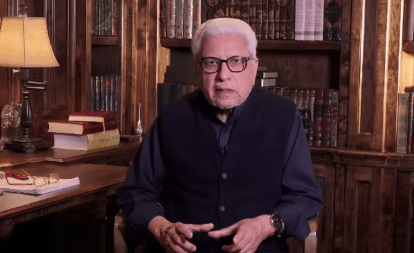
This text is a religious discussion focusing on the relationship between natural disasters, human actions, and divine justice. A religious scholar argues that such events aren’t solely divine punishment, but rather warnings or reminders (nuzur) from God, prompting reflection on both individual piety and collective responsibility. The discussion highlights the importance of fulfilling both personal and societal duties, using examples of human ingenuity in mitigating disasters and the ongoing need for spiritual awareness. Ultimately, the text emphasizes the interconnectedness of human actions and their consequences in both worldly and spiritual realms.
Understanding Global Calamities: A Study Guide
Quiz:
- According to Ghamidi, why does God allow suffering and disasters to occur in the world?
- What is the primary purpose of death, according to Ghamidi’s interpretation of the Quran?
- How do earthquakes, famines, and pandemics serve as “nuzur”?
- Differentiate between Allah’s “divine punishment” and the calamities discussed in the text.
- What are the two main points of view from which Ghamidi suggests we interpret catastrophes?
- How does Ghamidi explain the fact that natural disasters still occur despite human advancements in science and technology?
- Why, according to Ghamidi, do disasters often disproportionately affect the poor?
- What verse from the Quran does Ghamidi cite to illustrate the kind of conduct Allah expects from humans?
- Why, in Ghamidi’s view, should Muslims be concerned with global issues like climate change?
- What modern developments does Ghamidi highlight as indicative of God’s desire for a more unified and just international order?
Answer Key:
- Ghamidi argues that God allows suffering and disasters to occur as a form of “awakening” or “nuzur,” a reminder of our mortality and a call to fulfill our responsibilities to ourselves, our communities, and humanity.
- Ghamidi believes that death serves as the most powerful reminder of our mortality and the ultimate reality of life, prompting introspection and a reassessment of our priorities.
- Earthquakes, famines, and pandemics serve as “nuzur” by showcasing the fragility of life and the potential for widespread suffering, prompting reflection and a turn towards righteous action.
- Ghamidi distinguishes between “divine punishment,” which follows the arrival of a Messenger and is directed towards the unrepentant, and calamities, which serve as warnings and prompts for all of humanity.
- Ghamidi suggests interpreting catastrophes from the perspective of our responsibility to God (judgement day) and our responsibility to one another (fulfilling our collective duties in this world).
- Ghamidi explains that human efforts to mitigate disasters are part of our God-given responsibility to care for ourselves and the world, but God will continue to send challenges and reminders to awaken us from complacency.
- Ghamidi argues that the disproportionate suffering of the poor is a consequence of human injustice and a failure to fulfill our collective responsibility towards the vulnerable members of society.
- Ghamidi cites the verse “innalllaha yaa’muru bil adl wal ihsaan wa iitaa izil qurba wa yanhaa anil fahshaa’i wal munkari wal baghy” to highlight Allah’s expectation that humans act justly, generously, and responsibly towards one another.
- Ghamidi believes that Muslims have a religious and moral obligation to address global issues because they impact all of humanity and reflect our interconnectedness as God’s creation.
- Ghamidi points to advancements in transport and communication technology as signs that God desires a more interconnected and cooperative world, transcending national borders and promoting a more just and equitable global order.
Essay Questions:
- Analyze Ghamidi’s understanding of the relationship between human responsibility and divine will in the context of natural disasters.
- Discuss the concept of “nuzur” and its significance in Islamic thought, drawing on Ghamidi’s interpretation of calamities.
- Evaluate Ghamidi’s argument for the need for a global perspective in addressing contemporary challenges, considering both religious and secular viewpoints.
- Compare and contrast Ghamidi’s views on divine punishment with his interpretation of the purpose of natural disasters.
- Explore the ethical implications of Ghamidi’s claim that the disproportionate suffering of the poor during disasters is a result of human injustice.
Glossary of Key Terms:
- Nuzur: Divine warnings or awakenings, often manifested as calamities or hardships, intended to prompt reflection and a turn towards righteousness.
- Divine Punishment: Retribution from God for transgressions, typically following the arrival of a Messenger and directed towards the unrepentant.
- Ihsaan: Excellence, going beyond fairness and justice to act with selflessness and generosity towards others.
- Collective Responsibility: The shared obligation to care for the well-being of the community, extending beyond individual needs and concerns.
- Global Perspective: An understanding of human interconnectedness and shared responsibility that transcends national borders and prioritizes the well-being of all of humanity.
Natural Disasters: A Religious and Humanist Perspective
A Religious and Humanist Perspective on Natural Disasters
This briefing document analyzes a conversation between Islamic scholar Javed Ahmad Ghamidi and journalist Hassan Ilyas, focusing on the meaning and implications of natural disasters.
Main Themes:
- Natural Disasters as Divine Warnings: Ghamidi argues that natural disasters are not divine punishments, but rather warnings or “nuzur” aimed at awakening humanity. He emphasizes that God has established a world of trial where individuals have free will and face consequences for their actions, both individually and collectively.
“These earthquakes, these lightnings, these famines, these adversities…All these occur in order to turn settlements into a picture of death…It becomes an announcement. It becomes an alarm for the world.”
- Human Responsibility and Global Challenges: Ghamidi underscores the importance of fulfilling both individual and collective responsibilities. He criticizes humanity’s failure to address global problems like climate change and poverty, highlighting the interconnectedness of these issues.
“The problems at hand for humankind, even in them carelessness tends to be a great cause of destructiveness. There is on the one hand global warming…this has resulted in ups and downs of the greatest degree, which has made some human beings’ greed for comfort into humiliation and death for others.”
- The Interplay of Divine Will and Human Agency: While acknowledging God’s ultimate power, Ghamidi stresses the importance of human agency in mitigating the impact of disasters. He cites Japan’s success in earthquake-resistant construction as an example of humanity’s ability to adapt and respond to challenges.
“Both aspects go hand in hand…He [God] will do his work and keep finding new ways because warning is necessary, And the task of human beings is that all the calamities and troubles which appear in the world, to step up and courageously confront them.”
Key Ideas and Facts:
- Distinction between Divine Punishment and Warning: Divine punishments, according to Ghamidi, are specific and targeted, following the arrival of a Messenger and a clear separation between the righteous and the wicked. Natural disasters, however, affect all indiscriminately, serving as a general wake-up call.
- The Role of Death: Death is presented as the ultimate reminder of our mortality and the need to live a life aligned with God’s will. Natural disasters, by mirroring death on a larger scale, amplify this message.
- Justice and Ihsaan: Ghamidi emphasizes the importance of justice, fairness, and “ihsaan” (going beyond mere obligation and acting with generosity and selflessness) in individual and collective life. He links these values to both worldly success and divine reward in the afterlife.
- Global Responsibility and Interconnectedness: Ghamidi calls for a shift towards a global mindset, recognizing the shared humanity that transcends national borders. He sees the advancements in transportation and communication as divine tools for fostering international cooperation and addressing global challenges.
Conclusion:
This conversation offers a nuanced perspective on natural disasters, emphasizing their role as divine warnings while highlighting the crucial role of human agency in mitigating their impact. Ghamidi’s message blends religious teachings with a call for global responsibility, urging individuals to act with justice, compassion, and a recognition of our shared humanity.
FAQ: Understanding Disasters and Our Responsibilities
1. Why do earthquakes, floods, and other disasters happen? Are they punishments from God?
Disasters are not divine punishments for specific sins. Rather, they serve as awakenings or reminders from God. Allah created this world as a test, where we face challenges and make choices. Disasters can shake us from complacency and remind us of our mortality and our accountability to God.
They also highlight the consequences of neglecting our collective responsibilities. For example, inadequate infrastructure, environmental degradation, and social inequalities can exacerbate the impact of natural disasters.
2. If disasters are meant to awaken us, why do some countries seem less affected despite experiencing similar events?
While disasters can serve as warnings, humans are also endowed with intellect and the ability to mitigate risks. Countries that invest in preparedness, infrastructure, and scientific advancement can significantly reduce the impact of disasters. This proactive approach demonstrates our God-given capacity to learn, adapt, and protect ourselves.
However, even the most advanced societies are not immune to the power of nature. Disasters continue to serve as reminders of our limitations and our need for humility before God.
3. Why do the poor seem to suffer disproportionately during disasters? Is this fair?
The unfortunate reality is that social inequalities created by human actions leave the poor more vulnerable to disasters. Lack of access to resources, safe housing, and healthcare increases their risk and suffering. This disparity highlights the urgent need for social justice and fulfilling our responsibilities towards the less fortunate.
Disasters expose the consequences of our collective failures to create a just and equitable society. They are a call to action to address systemic issues that perpetuate poverty and vulnerability.
4. What are the main things that displease God and lead to such awakenings?
Two key factors contribute to the need for these “awakenings”:
- Inattentiveness to our spiritual responsibility: Neglecting our relationship with God, ignoring His guidance, and pursuing worldly desires without regard for His teachings lead to spiritual negligence.
- Neglecting our collective responsibilities: Failing to fulfill our duties towards our families, communities, and humanity as a whole creates a ripple effect of suffering and injustice. This includes addressing social inequalities, protecting the environment, and promoting peace and cooperation.
5. What guidance does the Quran offer regarding our responsibilities?
A key verse often recited in Friday sermons summarizes our core responsibilities:
“Indeed, Allah orders justice and good conduct and giving to relatives and forbids immorality and bad conduct and oppression.” (Quran 16:90)
This verse emphasizes:
- Justice and fairness: Acting equitably in all our dealings, upholding rights, and promoting fairness.
- Kindness and compassion: Going beyond mere justice to show generosity and care for others.
- Supporting family: Fulfilling our obligations to our relatives and providing for their well-being.
- Avoiding immorality: Refraining from actions that harm individuals and society, including dishonesty, oppression, and violence.
6. Are Muslims neglecting global issues like climate change and are they responsible for addressing them?
Unfortunately, many Muslims, like others, tend to focus on personal and local concerns, neglecting the interconnectedness of humanity and the global impact of our actions.
From a religious perspective, caring for the well-being of all humankind is a fundamental Islamic principle. We are all interconnected and responsible for addressing problems that affect humanity as a whole.
7. How can advancements in technology and communication help us address global challenges?
Allah has provided us with incredible tools in the form of technology and communication to connect, collaborate, and solve global challenges. These advancements offer opportunities to:
- Share knowledge and resources: Collaborating on solutions for issues like climate change, poverty, and disease.
- Promote understanding and empathy: Bridging cultural divides and fostering a sense of shared responsibility for humanity.
- Create a more just and equitable world: Working towards a global order that prioritizes human well-being and shared prosperity.
8. What can we learn from recent events like the pandemic and the war in Ukraine?
These events underscore the fragility of peace and the interconnectedness of global challenges. They highlight the urgent need for:
- Global cooperation and solidarity: Recognizing our shared humanity and working together to address common threats.
- Promoting justice and equity: Addressing the root causes of conflict and suffering, including poverty, inequality, and oppression.
- Investing in peacebuilding and diplomacy: Prioritizing dialogue, understanding, and non-violent conflict resolution.
Ultimately, these disasters and challenges are opportunities for reflection, growth, and action. By remembering our responsibilities to God, each other, and the world around us, we can strive to create a more just, compassionate, and sustainable future.
Natural Disasters: A Call to Reflection and Action
Natural disasters such as earthquakes, floods, famines, and storms are part of Allah’s scheme to awaken people from their heedlessness and remind them of their responsibilities [1, 2]. These events are not divine punishments, but rather warnings to encourage introspection and vigilance [3, 4]. The Quran states that Allah has created the world as a trial, where humans have the freedom to choose their paths and face the consequences of their actions [1, 5]. Allah has also provided humans with intelligence and the ability to mitigate the impact of these disasters through scientific advancements and responsible actions [6].
Here are some key points about natural disasters as discussed in the sources:
- Natural disasters serve as a reminder of death, a reality that often gets overshadowed by the hustle and bustle of life [7]. They highlight the fragility of life and the importance of fulfilling our responsibilities in preparation for the afterlife [2].
- While natural disasters may appear indiscriminate in their impact, affecting both the rich and the poor, they often expose the inequalities and injustices that exist within society [8]. They underscore the need for collective responsibility and action to address social and environmental issues [9, 10].
- Humanity has a responsibility to both mitigate the impact of natural disasters through scientific advancements and address the underlying social and environmental factors that contribute to their occurrence [6, 9].
- Global warming, climate change, and water shortages are among the global problems that demand attention and collective action from all of humanity [9, 10]. The Quran emphasizes the importance of viewing humanity as one interconnected family, transcending national borders and sectarian differences [10].
The sources argue that facing these challenges requires a shift in perspective. Instead of viewing natural disasters solely as a punishment or a test of faith, we should see them as an opportunity to reflect on our actions, fulfill our responsibilities, and work towards a more just and equitable world. They suggest that by embracing our collective responsibility and utilizing our God-given intelligence, we can strive to mitigate the negative impacts of natural disasters and build a better future for all.
God’s Trial: Humanity’s Test and Redemption
The sources explain that God created the world as a trial to test humanity and determine who is worthy of eternal life in paradise. [1, 2] This world is not based on equity and justice, but rather on the principle of examination. [2] God has given humans free will to choose their own paths, and He does not intervene to prevent them from making mistakes or committing injustices. [3]
In this trial, God has provided several means to awaken humans from their heedlessness and remind them of their responsibilities. [3-6] This includes:
- Death: Death serves as the most powerful reminder of the reality of life and its fleeting nature. It occurs daily, affecting people of all ages and backgrounds. [4, 7]
- Natural Disasters: Earthquakes, floods, famines, and other calamities act as a large-scale manifestation of death and suffering. They serve to awaken entire communities and nations, highlighting the fragility of life and the importance of fulfilling our responsibilities. [5, 8, 9]
The purpose of these awakenings is not punishment, but rather to encourage introspection and vigilance. [5, 6, 8, 9] They are a call to:
- Remember our accountability to God and prepare for the afterlife. [8, 10]
- Fulfill our collective responsibilities as human beings. [6, 9-11] This includes taking care of our families and communities, working towards social justice, and addressing global issues like climate change and poverty.
God has also equipped humans with intelligence and the ability to mitigate the effects of natural disasters through scientific advancements and responsible actions. [9, 12, 13] By using our intelligence and fulfilling our responsibilities, both individually and collectively, we can navigate the challenges of this world and strive for success in the hereafter. [10-14]
Human Responsibility: To God and Each Other
The sources emphasize that humans have a dual responsibility: to God and to each other. These responsibilities are intertwined, and fulfilling them is crucial for navigating the challenges of this world and achieving success in the afterlife.
Responsibility to God:
- Acknowledge God as Creator: Humans must recognize that this universe has a creator to whom they will be held accountable [1].
- Prepare for the Afterlife: Life on Earth is a temporary trial, and humans should live with an awareness of the Day of Judgement [1, 2]. They must strive to act justly, spend on their loved ones, and avoid infringing upon the rights of others to succeed in the hereafter [3].
- Heed God’s Warnings: Natural disasters, death, and other calamities serve as awakenings from God to remind humans of their responsibilities and encourage them to turn back to Him [2, 4, 5].
Responsibility to Each Other:
This encompasses both individual and collective duties:
- Individual Responsibilities: This includes taking care of personal needs, fulfilling familial obligations, and acting morally and justly in all personal interactions [3, 6, 7].
- Collective Responsibilities: Humans must recognize their interconnectedness and work together for the betterment of humanity [7, 8]. This involves:
- Fulfilling Social Responsibilities: Contributing to the well-being of one’s community, nation, and the world at large [2, 6, 7].
- Addressing Global Issues: Taking action on challenges such as global warming, climate change, poverty, and inequality [7, 8].
- Promoting Justice and Equity: Striving to create a fairer world by dismantling oppressive systems and structures that perpetuate injustice and suffering [8-10].
- Thinking Globally: Embracing a worldview that prioritizes the well-being of all humanity, transcending national borders and sectarian differences [7, 8].
- Mitigating the Impact of Disasters: Utilizing human intelligence and ingenuity to develop solutions and implement preventative measures to minimize the effects of natural disasters [6, 11].
Failing to fulfill these responsibilities, both to God and to fellow human beings, leads to negative consequences both in this world and the next. Neglecting social and global responsibilities can result in societal problems, suffering, and increased vulnerability to disasters [2, 3, 6, 9]. Ignoring one’s accountability to God can lead to spiritual and moral decline and jeopardizes one’s standing in the afterlife [2, 3].
The sources encourage a proactive and responsible approach to life, emphasizing that humans are not passive recipients of God’s will but active agents capable of shaping their own destiny and contributing to the well-being of the world. By using our God-given intelligence, compassion, and ability to cooperate, we can strive to overcome challenges, mitigate suffering, and create a more just and equitable world for all.
Divine Awakenings and Humanity’s Response
The sources describe divine awakenings as a key element in God’s plan to guide humanity towards righteousness and prepare them for the afterlife. These awakenings are not meant as punishments, but rather as compassionate nudges to draw people out of their heedlessness and encourage them to reflect on their actions and responsibilities.
Here are the key aspects of divine awakenings discussed in the sources:
- Purpose: The primary aim of divine awakenings is to stir individuals and communities from their spiritual slumber and remind them of their accountability to God. They serve to prompt introspection and encourage people to re-evaluate their priorities, turning their attention away from the fleeting pleasures of this world and towards the eternal realities of the hereafter.
- Methods: God employs various methods to awaken humanity, including:
- Death: The inevitability of death serves as a constant reminder of life’s fragility and the importance of preparing for the afterlife.
- Natural Disasters: Large-scale calamities such as earthquakes, floods, and famines act as dramatic demonstrations of the power of nature and the vulnerability of human life. They can shake entire communities and nations, prompting them to re-evaluate their values and priorities.
- Impact: Divine awakenings are intended to have both individual and collective impacts:
- Individual Transformation: They can inspire individuals to repent, turn back to God, and strive to live more righteously.
- Collective Reform: They can spur communities and nations to address social injustices, improve their collective conduct, and work towards a more equitable and compassionate world.
The sources emphasize that while God initiates these awakenings, human response is crucial. It is up to individuals and societies to heed these warnings, recognize their shortcomings, and take concrete steps to improve their conduct and fulfill their responsibilities. By acknowledging God’s reminders and actively striving to live in accordance with His guidance, humanity can move towards a path of righteousness and earn God’s favor both in this world and the next. [1-4]
Global Challenges and Humanity’s Response
The sources highlight several pressing global problems that demand humanity’s attention and collective action:
- Global Warming and Climate Change: The sources mention global warming as a major concern leading to irregularities in floods, storms, and rainfall patterns [1, 2]. These changes pose a significant threat to human societies and ecosystems worldwide, demanding immediate action to mitigate their impact.
- Water Shortages and Hygiene: The sources identify water shortages and inadequate hygiene as global problems [2] that can lead to widespread suffering and instability. These issues often disproportionately affect developing countries and vulnerable communities, exacerbating existing inequalities.
- National Borders and Restricted Movement: The sources critique the rigid national borders and restrictions on human movement imposed by modern nation-states [3, 4]. These policies limit human potential, hinder international cooperation, and contribute to global inequalities by creating artificial barriers between people.
- Militarization and Warfare: The sources lament the ongoing investment in military expenditures and the persistence of warfare [4]. The conflict in Ukraine is cited as a prime example of humanity’s failure to learn from past mistakes and embrace peaceful solutions [4]. These conflicts not only cause immense human suffering but also divert resources from addressing other pressing global issues.
- Inequality and Injustice: The sources consistently emphasize the pervasiveness of social and economic inequality both within and between nations [1, 3-5]. They argue that these injustices contribute to human suffering and vulnerability to natural disasters, highlighting the need for a more equitable and compassionate world.
The sources frame these global problems as both a challenge and an opportunity for humanity. They argue that:
- Global problems are a consequence of human actions: Humanity’s failure to fulfill its collective responsibilities, prioritize the well-being of all people, and live in harmony with the natural world has contributed to the emergence of these global challenges.
- Global problems can serve as a divine awakening: These challenges can act as a wake-up call, prompting humanity to re-evaluate its priorities, recognize its interconnectedness, and work together to find solutions.
The sources advocate for a shift in perspective, urging individuals and societies to:
- Think globally: Embrace a worldview that transcends national borders and sectarian differences, recognizing the shared humanity of all people and the need for collective action.
- Utilize human intelligence and ingenuity: Leverage scientific advancements and technological innovation to develop sustainable solutions and mitigate the negative impact of global problems.
- Promote justice and equity: Work towards dismantling oppressive systems and structures that perpetuate inequalities, striving to create a fairer and more compassionate world for all.
By embracing these principles and fulfilling their responsibilities to God and each other, the sources suggest that humanity can overcome these global challenges and build a brighter future for generations to come.
The Original Text
[Hassan Ilyas] Ghamidi thank you very much for time. The first question before you is this; that these earthquakes, floods, storms, why do these happen? When these generally happen among us, those of a religious mindset, they say that this is God’s punishment, it is a consequence of our wrong-doings. In the same way, in our lives, the assemblies of vulgarity, nudity, music, and such obscenities that have become common, so [these natural disasters] are God’s punishment which He wants to effect. On the other hand we see that where these [disasters] occur, are places where the poor reside. If you cursorily observe, all the disobedience to God, takes place in cities, but relatively nothing happens there [in poorer regions]. So the question for you is this, please tells us, having studied religion all your life, in which time you had a close relation with the Qur’an. What does Allah the almighty Himself say? That these cataclysms which take place on Earth, thousands and lakhs of people are turned homeless. Children, mothers and in the same way old people, are completely stripped of shelter. What is that thing which the creator of the universe, wants to show with this in the world? These earthquakes, disasters, storms; are these punishments? Or is there another aspect to them, which we must countenance? [Ghamidi] All praise is due to Allah All praise is due to Allah, the Lord of the worlds. Peace and blessings be upon Muhammad the honourable Prophet [pbuh]. I seek refuge with Allah Almighty from accursed Satan. I begin in the name of Allah the most beneficent the ever merciful. Ladies and Gentlemen. I am grateful to all of you. That on the invitation of Khalid Rana saheb you have, come travelling from various places to participate in a pious activity. if this student of knowledge also has some role in your coming here, then I am also thankful for this elevated honor. Allah almighty has made this world on the principle of a trial. In the Qur’an as well as in the books revealed before the Qur’an, in them as well. Therefore all of the Prophets have been sent with this very purpose, that they may alert human beings about this scheme of Allah. The summation of their preaching is this, that God has decided that, he will make a creature who, on the basis of his own merit shall attain an eternal life. Keep this in mind that regarding Allah the almighty, whatever conception we form, a fundamental thing in that is He has always been and always will be. Therefore the Qur’an itself has stated in this way that, huwal awwal wal aakhir waz zaahir wal baatin He transcends the bounds of time and space. He neither has a provenance, nor a point of termination. He can neither be enclosed in any space, nor is He above or below. He has the knowledge of every little detail of this universe. wa hua bi kulli shay’in aliim He has; that is the Creator has pronounced mercy to so such an utmost degree, that among his creations, He decided to give birth to such a creature, with whom he can share His own eternal kingdom. That is, [this creature] had not been in existence forever, but it will remain forever. The Qur’an states this, that to grant an everlasting life, and whatever a human being desires within his soul, he may present before His Honor; with this motive, Allah the almighty made a decision to create the world. For this purpose, whatever material cause was needed, was all created in toto, and the Qur’an says that those very things are present, not only in the form of this universe, but also that of six more universes. Among those – you may say a particle’s worth of – [matter was proportioned], the terrestrial globe [Earth] was chosen, where first of all Human beings would be passed through a trial. Eternal life, God’s garden, his heaven, that great affluence, great comforts, that everlasting kingdom, Allah almighty has pronounced will be granted only to those people, who will succeed in this trial. All the greatest values present in the world, from the understanding of which a human being has been created, such as equity, justice, love, favour, kindness, generosity, [God has stated] that the manifestation of these things in the final degree will only occur in that very word [in the Hereafter]. This world of a trial has not been created on the principle of equity and justice, It was created on the principle of a trial. After creating this world on the principle of a trial, a law was laid down for the recurrence of life and death. The Qur’an states this in its matchless words in the following way, khalaqal mauta wal hayaata liyabluwakum ayyukum ahsanu amalaa He has, that is to say, that Creator, inventor of the earth and the skies has; a workshop of life and death, where people obtain life for a brief period, and after that, they pass through the doors of death into the afterlife. khalaqal mauta wal hayaata It is stated that the reason for creating this workshop of life and death, liyabluwakum ayyukum ahsanu amalaa So that the creator of the universe might observe, who acts righteously in accordance with his/her intellect. Because this world is made for a trial and an examination, for this reason, Allah almighty has not imposed any coercive means in it. Here people commit cruelties, injustice, transgress boundaries. Allah almighty does not prevent them (from doing these things). [Such people] stand in opposition to God, and they willingly rebel and act with obstinacy, they become afflicted by conceit, He [God] does not reprimand them. They inflict great suffering on their Prophets and even murder them, yet He [the Lord] ignores this. For all this the same answer is given; ‘that I have created this world as a trial.’ Therefore: laa iqraahaa fi l deen ‘I have, even in matters of My religion and in My injunctions, not established any coercion.’ I have granted freedom to people, so that they may, in accordance with their wisdom and their intellect, with thought and judgment choose to take whichever path they deem fit. Although, I have made arrangements such that Since I have made human beings, the, ‘hadayna hus sabiil’ I have showed him the way. That is, He has told him. In fact He has inhered an intuitive knowledge in man’s soul, that if you go in the right direction what needs to be done for that, and should one choose to stray from the right path, what one will end up doing as a result. In the same way I might apply, that with great refinement Allah the almighty, has clarified the basis for His scheme. He has stated that he has given His own intelligence, He has also stated that when He arranged our ‘nafs’, made it and nourished it, so; wa nafsim wa maa sawwaaha fa alhamahaa fujuuraha wa taqwaahaa ‘So when I made you and perfected you, I inspired you with an intuitive awareness of goodness and badness.’ Now after this, the way too is clear. In your disposition I have granted a sense of my guidance, I have also given you the knowledge of virtue and vice, and whichever way you may choose, you have been given the freedom to choose as well. Therefore, what is the law now? It is, man shaa’a fal yuumin wa man shaa’a fal yakfur With complete freedom, in this worldly life [do] whatever your heart desires, whoever, whether he believes the reality and decides to live his life as my slave, and whoever, if he/she so pleases may choose denial, pride, rebellion, obstinacy, and stray away from My path. With this purpose that human beings may be alerted, messengers were sent, so even to them He [God] said it with great severity: innama anta muzakkir lasta alaihim bi musaitir ‘I have not established a coercive rule, so accordingly I have not sent you too, as a policeman. You role is to counsel people about the right thing,’ ‘Beyond this, it is upon them to to decide how they will.’ So this world is made on this scheme. This scheme, examines human beings for sixty, seventy, a hundred years. In this trial, just as I have said, an order has been established of life and death. That means life sprouts up in various forms; those who are entering continue to enter, and those who are departing, continue to depart. It is a workshop of life and death. This death comes everyday in an individual manner. It has no fixed time of coming. It descends upon the child in the mother’s womb. Often it comes at the moment of birth. It may even come at a tender age and grab one by the neck. It gives no consideration to the state of youthfulness either. It gives opportunity up to old age too. Sometimes it takes such a [baneful] form that, That our kith and kin close to us, and who love us, [feel compelled] to say, may Allah ease his/her difficulties. To sum up, it comes in any and every form. And if there is any greatest truth in the world it is this very thing. Qur’an has stated this in a doctrinaire manner that; kullu nafsin zaaikat ul maut Any saint, Prophet, king or pauper, thug or noble scholar, cannot escape its clutches. It will come, whatever the circumstances, it will come. It comes; sometimes gather the statistics about this city of yours, Everyday many people are departing. In the hundreds, among large cities, everyday, they leave this world and depart. But Allah the almighty, in various settlements in different localities, in wards, [makes death] appear in different places. So that for a family, close friends, kith and kin or for a ward, it becomes a cause for attention, but for settlements it does not. For nations it does not. Concerning death Allah the almighty has said, on the one hand it is a part of his scheme, on the other hand, it is a very big means of remembering God. That thing which puts human beings into heedlessness, is life, the hustle-bustle of life, the pleasures of life, the delights of life, the comforts of life, the aims of life, and the successes of life. Suddenly when the angel of death appears, all this ends in a blink of an eye. At that moment, human being introspects, It strikes him that, ‘the things which I would give great importance, run behind them, the things which I made the goal of my life, because of which I refused to think about the vices and virtues, for which I engaged in wrong-doing, lied, embezzled, stole, I betrayed people, all of it has finished. And God’s decision was brought into force and cast before me.’ So the trial for which Allah the almighty has created this world, he has planned a thousand ways to make human beings vigilant, awaken them from a stupor and to caution them. This awakening is done by the Prophets, by the pious, by life, the universe and our inner life. Here, if there is any biggest stirrer, the biggest exhorter, the one who draws attention the best is death itself. There is nothing greater than that [death], which can put reality absolutely before us, and say; ‘now look that which you have seen is the very fact of life.’ The Prophets come, but human beings don’t listen. Family and close relations, as well as important people caution, but human beings don’t care. reformers knock on his doors, he turns his head away. But this preacher, this exhorter, which is called ‘death,’ no one can turn their heads away from it. When it comes, it doesn’t even like to knock on the door. It’s path cannot be blocked. Therefore there is no reminder greater than this, an orator greater than this, a stirrer great than this. So when Allah the almighty has sent human beings to this world, and passed him through a trial, He has taken a responsibility on Himself, to supervise the instruction of human beings. and the most important thing in arranging for guidance is to acquaint one with the reality of life. For this purpose among all the means which have been chosen, the most effective one is death. So I have said that it comes everyday, it occurs in our homes, it comes in our families, it is coming in every city, every day, in dozens and hundreds, people are everyday departing, in every settlement they are departing, But warning, chiding and admonishment are limited in their bounds. Allah almighty sometimes, lifts up this death from homes, families and settlements, and after he lifts them, he turns those settlements desolate. He sends death to whole nations. Because those people, who despite its [death’s] appearance in several places, did not become circumspect, will now become circumspect. They will now be vigilant. So these earthquakes, these lightnings, these famines, these adversities, As Iqbal has said about this; kaisii kaisii dukhtaraan-e maadar-e ayyaam hai All these occur in order to turn settlements into a picture of death. To make death, hardship, suffering etc. appear on a screen, as if to make it stand on a stage before human beings, Faimes do the same, so do the wars, so do tragedies. The Qur’an expresses this in one word, what are this? They are ‘nuzur’, they are Allah’s warning. To awaken human beings. The same death which comes everyday, it comes in various places, is brought together and piled up, and conspicuously presented on a stage and it becomes news. It becomes an announcement. It becomes an alarm for the world. All of humanity sometimes becomes attentive. A big spectacle of this very thing, on an international scale you have seen, for more or less two years, in the guise of a major pandemic, was brought before the entire world. And that human being who was entangled in his conceit of knowledge, was roused from his sleep, that an invisible germ, can render one’s whole life, one’s technical achievements one’s pomp and show, one’s prides and glories ineffective. So death and adversities are Allah’s awakening, Allah’s alarm, it is a means to bring awakening from unconsciousness. But it is a highly unfortunate fact about human beings, that sometimes, despite all these warnings, he does not become wakeful. Allah wants to awaken him. For this reason, these sufferings, this famines, these diseases, these difficulties, these pandemics, these earthquakes and these storms, they do not see who is rich and who is poor, they do not see who is a Muslim, and who a disbeliever, who is pious and who is immoral, these show up in the same way that death shows up. Just as death comes upon the small, comes upon the big, comes upon the pious, comes upon the dutiful, comes upon the Prophets, and also upon those who are rebellious to God. In the same way, in his rousings too, when Allah the almighty turns death into desolation on a very large scale, these storms, these earthquakes, these sufferings, perform a scenography before human beings, make death visible on a human stage, [and shows] how valueless life is, how meaningless all the instruments of comfort are. The helplessness with which man stands before the powers of God, to make this apparent, Allah the almighty brings all this about. That is why, awakening and nuzur is the object behind these, these are not divine punishments of any kind. Please understand this very well, that the law of divine punishments from Allah the almighty are very different. It has been narrated in the Qur’an. It has been said there that for the mistakes and deficiencies of people, should Allah the almighty want to issue divine punishment in the world – in the Hereafter the evaluation of everyone’s deeds is to happen in any case – should he wish to give divine punishment in the world, then he sends a Messenger. And when God’s Messenger comes to the Earth, and having arrived he cautions, so first he separates the pious from the sinful. [Noah’s arc] i.e. a refuge is created for them [the pious], and after this Allah’s divine punishment follows. Therefore there is no question of divine punishment, these are rousings, these are alarms, these are horns for awakening from Allah, which is blown. The right lessons [to be drawn] from them is this very thing, that we ought to listen to these for our awakening, and after that rise up to fulfill our own responsibilities. These rousings occur from the point of view of judgment day too, from the point of view of our responsibilities too, and furthermore it occurs [to inform] that, the comforts in which you are passing your life in ignorance, look and see what kinds of things can come to pass in this universe. And [see] what kinds of catastrophes can befall upon human beings. This was its religious aspect, that is to say, that point of view which relates to our afterlife. The aspect towards which the Prophets come to draw our attention. But along with this, Allah the almighty has, in this worldly life too, made operational some laws of His,. Among those laws, God wishes that his slaves, live concordantly with one another. Meaning, they fulfill their responsibilities. For that end, just as Allah the almighty has inhered, an intuitive awareness of religion in human nature, for that too Allah the almighty has granted intelligence. When a human being does not use his intelligence, and does not fulfill his worldly responsibilities, so then Allah the almighty draws the consequences of that in this world. Those consequences take the form of these kinds of catastrophes. Had we not built up dams on rivers, had we not kept roads safe, had we not harmonized our highways with the laws of Allah the almighty, so then these storms, these earthquakes, these adversities, these also instruct us [and say], ‘wake up you have not fulfilled your responsibilities.’ The individual-centric life one had, even in them one showed deficiencies in fulfilling one’s responsibilities. and in your capacity as a collective and nation, you didn’t fulfill your duties. So keeping both these points of view before oneself, these catastrophes should be interpreted. The first being that it is directing us to the fact that this universe has a creator, and one day each one of us will be answerable in his presence. The second being, whether in this world, the communal responsibilities imposed upon us, have they been fulfilled with vigilance? Have we improved our respective nations? Have we improved the conditions for ourselves, on this God-given Earth? In order to establish a collective order over us, the blanket of wisdom that Allah the almighty had covered us in, did we hide behind it or did we in fact see the world through it? So it is these two points of view, which insist upon assiduousness. The wakefulness of living a worldly life with an understanding of the day of judgement. and the vigilance that, the worldly responsibilities which have been imposed upon you, fulfill those in an individual capacity, its results will come forth. And fulfill them [responsibilities] in a collective capacity as well, its results will come forth as well. And those nations which remain alert in a collective capacity, for them, the opportunities for luxury and comfort are created on Allah’s Earth, ways open up for them for success, they find to a very great extent an escape from suffering, but, the nations who do not do this, they land upon the verge of destruction and desolation in the world, and this very thing then becomes a means of warning about the day of judgement. So it must be understood that, the law of divine punishment is completely different. These calamities, these adversities, these earthquakes, these storms, for these two purposes have been kept in the ways of the world, and both these purposes lie within the view of Allah the almighty. Us human beings should remain conscious of both these points of view. [Hassan Ilyas] With great detail and vividness, in the light of the Qur’an you have answered this question. I want to bring up additionally a few supplementary points, [so that] a clarification of them is set before people. Please narrate how a few years ago we used to hear that Japan, is struck by many earthquakes. it is clear, that. as you said … the purpose behind disasters of this kind is awakening, [nuzur], reminder, it is to draw attention towards death. But they made so much progress, changed the standards of construction. Even now the intense earthquakes continue to hit Japan, but they have no effect in creating disorder. In the same way we see there are so many countries in the world, where year on year a flood or torrential rains would drown them, but they made changes to this, made progress, science assisted them, now these kinds of things do not occur there. The question I wish to put to you is this, those rousings of the Allah the almighty, which would come from Allah, so when human beings with the aid of their knowledge, arranged to have these stopped, so then that aspect concerning God’s awakening, it in one sense it seems to have expired; that Allah almighty with His designs, wanted to awaken us, but by means of our knowledge we reversed [those designs], so now how will the rousing take place? [Ghamidi] Both aspects go hand in hand. The means of awakening that Allah the almighty possesses are not limited. What we must to do is to care for our own safety, this has been embedded in our nature. Fulfill your collective responsibilities. This allows us to have comforts in this world, and the road to tranquility also open up. This also helps us succeed in changing the direction of many adversities. They change the direction of water bodies. This is the manifestation of human beings inner self. The purpose for which human beings have been created, as a result of this, as you know, an extraordinary inventiveness has been kept [within him]. Allah Almighty has given one aspect of his creative ability to human beings. by its use he [man] displays wondrous achievements. Once he is done with his work [of staving off disasters with his inventions], then Allah the almighty for awakening him comes up with ten new devices. Therefore, both the things have to go together. He [God] will do his work and keep finding new ways because warning is necessary, And the task of human beings is that all the calamities and troubles which appear in the world, to step up and courageously confront them. So when human beings take both these things together, so then these very things, not only become the basis of much relief, but if he should live with true consciousness, then this very thing becomes basis in the afterlife, for Allah the Almighty’s reward and graciousness. So the admonishments from Allah are unceasing. So consider, that these last two, two and a half years human beings have borne, what is that thing which can fight this? That is to say, it took a long time before we could block its way. And even in that all of humanity remained engaged to two, two and a half years, only then it became possible. But have we eradicated all viruses? Have we blocked every [to future pandemics]? Allah has no want of anything – let Him do his work you do yours. [Hassan Ilyas] Let us take this discussion ahead. Ghamidi sir please tell us, when these scenes show up before us, that of suffering, earthquakes and storms, so a doubt arises in the mind of an ordinary person, let’s say Allah the almighty wanted to awaken, he has to select people for his highest paradise an arrangement needs to be made for the reminder of death, but in this entire grand scheme of Allah, the one to be crushed is a resident of Layyah, Sukkur, Dadu, Taunsa he is an ordinary villager, an ordinary farmer. Couldn’t the inhabitants of DHA and Gulbarg bungalows be used for this awakening? Why does Allah the almighty always demolish the shanty of the poor, to awaken people? [Ghamidi] That’s because we have kept that person poor. When Allah the almighty began this world, he didn’t do it by filling up one man’s pouch with lots of gold, and emptying the pouch of another man. He gave people an opportunity to run by forming a straight line. However, human beings have committed great injustices, against other human beings. They have blocked others’ ways, they have themselves created obstacles in the way of human progress. Various classes of society for the benefit of their own classes, have been cruel to their own brothers. That is why we must fulfill our responsibilities come what may, should we not fulfill these, then in our countries, as you know, there will be miseries, people will also fall victim to disease, they will become a target of many kinds of adversities. So it is our responsibility which we must fulfill. Otherwise when He [God] deems fit to turn everything upside down, as you have seen, the spread of the virus could neither be stopped by the White House, nor by anyone else. Both keep doing their part. [Hassan] Let’s carry the discussion forward. Ghamidi saheb please tell us, when these situations present themselves before us, so generally a question arises in the minds of people. That being that Allah the almighty has alerted us, a reminder from Allah the almighty has also come forth, but human being always thinks, what kind of thing has he been negligent about that Allah the almighty has arranged to so violently shake a mans conscience. The question I want to ask is, does the Qur’an tell us the motives for Allah’s displeasure, are there some subjects where humankind, at a common level, fails to remember, forgets, only then does God’s admonishment address human beings, because death is occurring anyway, but the awakening and punishment that takes place on a grand scale, what is the reason for this? Meaning, what are the deeds that we do, after the commencement of which these kinds of things happen if we were to come to know them, so we may make an effort to better it as well. [Ghamidi] I have brought attention to both the things. The first thing being that a human being remain conscious in this worldly life, that he has been sent here provisionally. Should he become negligent in the world, then the awakening will take place with a proportionate severity. And it will take place come what may. The means for that with Allah, are not two or four, not ten or twenty, but thousands. And He delivers his awakenings in various ways. Therefore inattentiveness in the presence of the court of Allah, this is that unique thing, which becomes for human beings a means for divine awakening. What is the other thing? The carelessness towards our collective responsibilities. A human being is not only required [to be responsible] for his private needs, solve his personal problems, just as a human being by his very constitution is an individual, he is also social. My nation, my locality, my country, just as there are individual responsibilities on me, in the same way I have collective responsibilities. What am I doing for humankind? What am I doing for my nation? What am I doing for my family? What am I doing for myself? At all these levels we must remain alert. Whenever we treat these matters inattentively, then its consequences spring forth. And those consequences awaken us and show us, that if you do not fulfill your responsibilities as per God’s laws, then you will have to bear consequences of that in this world. In social matters, when we fall short, then its consequences sprout in this world, because, the place for the judgment of nations is this very world. And when we become careless at an individual level, then the consequences of that will be brought out in the Hereafter. Where every individual, by oneself, will be answerable for one’s deeds before ones Lord. What must one do about one’s responsibility there [in the Hereafter]? So Allah almighty says: innalllaha yaa’muru bil adl wal ihsaan wa iitaa izil qurba wa yanhaa anil fahshaa’i wal munkari wal baghy You will have heard this verse in every Friday sermon, Ordinarily Muslim orators choose to cite this verse, this is because what God wants from us, is answered very comprehensively by this one verse. It has been said here that your maker wants this from you – that you must choose the attitude of fairness in your individual and social life, justice. Show a favorable attitude towards others. Not just fairness, not just justice, not just equality of treatment, but to go further and [act with] selflessness and ihsaan. And remember, that in this world, you have been created in the form of families, so recognize the right of your dear ones in your personal wealth; wa iitaa izil qurba and then it is stated that, your Lord, prohibits you from lewd acts. Prohibits you from infringing on the rights of others. And prohibits you from taking any steps against peoples lives, wealth and honour. So this is that trial of Allah the almighty, the results of which will come out in the afterlife. Act justly. Spend on your near and dear ones. Secure yourself against infringing upon the rights of others. Do not step against people’s life, wealth or dignity. You will [thereby] succeed in the afterlife. And if you act carelessly in your social responsibilities, this very world become a a place of reckoning for you. [Hassan Ilyas] You have clearly explained this, Ghamidi sir. Let us take the discussion forward. There are a few more short questions, we still have ten minutes to spare. Please tell us, these days, there are many awareness campaigns about global warming, people are being informed, and we are seeing on a grand scale that, the worldwide changes in climate, are causing the irregularities in floods, storms and rainfall, to become apparent Many Muslims, when we bring attention to these problems of the world, the manner of our plea is that, this is a deprivation of Muslims, an injustice against us, that Muslims have been oppressed in such and such places. However, the global problems, worldwide problems, the issue of water shortages, of hygiene, in the same way there is the issue of global warming. Muslims are not attentive to these things, what do you think is the reason for this? And also tell us, that from a religious point of view, is it a responsibility of Muslims, that they go beyond personal needs and local needs, and think globally, and those things which impact the whole world, they effectively address those problems to make improvements in them? [Ghamidi] Just now I have said that one is mine and your religious responsibilities. I have stated with from the point of view of the [relevant] verse of Qur’an. Another responsibility is one I have in my capacity as a human being – my intelligence imposes upon me. That too is a God-given responsibility. That is to say, what I must do in this world. So my life, your life, the life of every individual, is not merely an individual life. It has an association with the entirety of humankind. On a small scale it has an association with one’s community, family and nation. I, you and every human being must not live only in an individual capacity, we were not born in a forest. We are born into a society. Therefore the problems facing all of humanity, should be viewed as problem of each one of us. The basic relation we have, the mutual relation, is the relation of humanity. It is a greater relation than that [of one’s relation] sect, strata or a nation. And the Prophets have taught about that relation too and said; kullu kum min aadam wa aadama min turaab You have all been created from earth, your father Adam too was created from earth, and you are all the children of Adam and Eve. From this viewpoint the problems of all of humanity, are my problems and your problems as well. We cannot enclose ourselves, qua individuals, within ourselves. Rather, the intelligence and wisdom that Allah the almighty has given us demands, rise above oneself and think for the prosperity and betterment of all humankind. The problems at hand for humankind, even in them carelessness tends to be a great cause of destructiveness. There is on the one hand global warming. In the same way when human beings made national borders permanent, and along with it, have restricted the movement of people, this has resulted in ups and downs of the greatest degree, which has made some human beings’ greed for comfort into humiliation and death for others. All these things ask for our attention. We must think at the scale of humanity, Allah the almighty has, in the present times, has done this extraordinary courtesy, of creating means of transport and communication. In the blink of an eye you can go from one place to another. There has been an explosion of Information technology in modern times. If you look at the history of the world, it is said that agriculture taught man to settle in one place. Human beings populated settlements. The beginning of civilizations happened. On the origins and consequences of the industrial revolution, you know that many great philosophers have spilled their ink. The changes that have come in these modern times, these showed that God wants, that people should free themselves of nations and countries and establish an international order. So that the expenses on militaries to kill one another should end. The restrictions upon people to move from one place to another should perish. So that these countries should not become prisons for people, God’s earth is expansive. People ought to populate it and make use of their resources. But human beings did not hear this message. And instead, the same things we did at a national level, that establishing control by a few classes over all resources, one does not look up or down. In the same way at an international level too countries did not see this. It made me very happy, that when flood struck our country, The Secretary General of the United Nations, made a very just statement. That this country is not responsible for what it is bearing. That is to say, these crimes have been committed by different people, and its consequences are unraveling here. So in fact in every trouble the same thing happens. If in our social live, we become strangers to the troubles of a nation, of our country, of our family, then there unfairness takes birth. And suppose we were to adopt this attitude towards international problems, then even there you see that in one place you have ample ways, and in another place you find yourself standing on a blockaded street. So all these things demand human beings learn to think about the problems of human beings humanely. Bertrand Russell departed the world while dreaming all this life about an international government. This is not a mere dream. Allah has given birth to all the resources to make this a reality, but man is not ready to move in this direction. He has once against instigated a war in Ukraine.

By Amjad Izhar
Contact: amjad.izhar@gmail.com
https://amjadizhar.blog
Affiliate Disclosure: This blog may contain affiliate links, which means I may earn a small commission if you click on the link and make a purchase. This comes at no additional cost to you. I only recommend products or services that I believe will add value to my readers. Your support helps keep this blog running and allows me to continue providing you with quality content. Thank you for your support!

Leave a comment