Month: August 2025

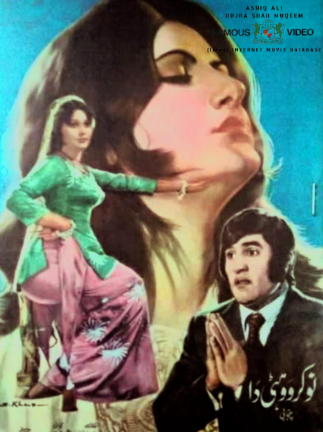
  • Nokar Wohti Da (1974) Super Hit Punjabi Classic Pakistani Old Film Manawar Zarif Mumtaz

    Nokar Wohti Da (1974) Super Hit Punjabi Classic Pakistani Old Film Manawar Zarif Mumtaz

    The provided text offers biographical information on Pakistani actress Mumtaz, detailing her career spanning Urdu and Punjabi films from 1971 to 1997, including a filmography and awards received. It also includes excerpts from the Punjabi-language film Naukar Wohti Da (1974), which features Mumtaz, providing a synopsis of the plot and a list of cast and crew. The text further presents dialogue from Naukar Wohti Da, offering a glimpse into its narrative and themes of family, love, and societal expectations. Finally, there’s a brief discussion on the political and cultural factors leading to the Bangladesh Liberation War, highlighting the parallels between that conflict and current tensions in Balochistan.

    Film & Culture Study Guide: Naukar Wohti Da and Mumtaz

    Short Answer Quiz

    1. What is the basic plot of the film Naukar Wohti Da? Naukar Wohti Da revolves around a young man who was betrothed as a child to a girl who, as they grew older, became wealthy and educated. She then refuses the marriage, leading the young man to find a way to win her back.
    2. When was Naukar Wohti Da released, and what was its reception in Pakistan? Naukar Wohti Da was released on July 26, 1974, and it celebrated a Platinum Jubilee at Pakistani cinemas. It was a box office hit and featured popular music.
    3. What are some of the key characteristics of Mumtaz’s acting career in the 1970s? Mumtaz was known for her lead roles in both Urdu and Punjabi films during the 1970s. She was often recognized for her dancing skills and played a range of characters, from modern women to dramatic roles.
    4. How did Mumtaz become famous in Pakistani cinema? Mumtaz gained overnight fame through her dance performance in the Punjabi film Banarsi Thug (1973) to a song sung by Noor Jehan, specifically the song “Ankh Lari Badu Badi.” This hit song established her as a prominent figure.
    5. What role did dance play in Mumtaz’s on-screen performances? Dance was a central element of Mumtaz’s performances, with many of her songs being very well known for her dancing. She would often have musical numbers highlighting her skills, further adding to her popularity.
    6. What are some of the languages in which Mumtaz acted in films? Mumtaz acted primarily in Urdu and Punjabi films during her career. She also appeared in some Pashto films.
    7. Describe Mumtaz’s early life before acting in Lollywood films. Before appearing in films, Mumtaz was known for dancing at social events in Karachi. Her father had moved to Pakistan from Agra following the partition of India.
    8. What are some of the notable awards that Mumtaz has received? Mumtaz has won 5 Nigar Awards during her cinema career, including a special award for her role in Haidar Ali.
    9. What was Mumtaz’s relationship to film producer Chaudhry Ajmal, and when was she married to Bari Malik? Mumtaz was reportedly in a relationship with film producer Chaudhry Ajmal in the late 1970s, although they were never married. She was married to film studio owner Bari Malik for a short period and had a son before they separated in the early 1980s.
    10. What are some of the social issues that are evident in the provided film script? Social issues such as class differences, the roles of men and women in Pakistani society, and forced marriage are all apparent in the film script. There also appears to be a critique of social norms and tradition.

    Answer Key

    1. Naukar Wohti Da revolves around a young man who was betrothed as a child to a girl who, as they grew older, became wealthy and educated. She then refuses the marriage, leading the young man to find a way to win her back.
    2. Naukar Wohti Da was released on July 26, 1974, and it celebrated a Platinum Jubilee at Pakistani cinemas. It was a box office hit and featured popular music.
    3. Mumtaz was known for her lead roles in both Urdu and Punjabi films during the 1970s. She was often recognized for her dancing skills and played a range of characters, from modern women to dramatic roles.
    4. Mumtaz gained overnight fame through her dance performance in the Punjabi film Banarsi Thug (1973) to a song sung by Noor Jehan, specifically the song “Ankh Lari Badu Badi.” This hit song established her as a prominent figure.
    5. Dance was a central element of Mumtaz’s performances, with many of her songs being very well known for her dancing. She would often have musical numbers highlighting her skills, further adding to her popularity.
    6. Mumtaz acted primarily in Urdu and Punjabi films during her career. She also appeared in some Pashto films.
    7. Before appearing in films, Mumtaz was known for dancing at social events in Karachi. Her father had moved to Pakistan from Agra following the partition of India.
    8. Mumtaz has won 5 Nigar Awards during her cinema career, including a special award for her role in Haidar Ali.
    9. Mumtaz was reportedly in a relationship with film producer Chaudhry Ajmal in the late 1970s, although they were never married. She was married to film studio owner Bari Malik for a short period and had a son before they separated in the early 1980s.
    10. Social issues such as class differences, the roles of men and women in Pakistani society, and forced marriage are all apparent in the film script. There also appears to be a critique of social norms and tradition.

    Essay Questions

    1. Analyze the character of Mumtaz as portrayed in the film excerpts and the provided biographical information, discussing her agency, social position, and challenges she faced as a woman in Pakistani society in that era.
    2. Discuss the role of music and dance in Naukar Wohti Da and how they contribute to both the entertainment and the cultural commentary within the film.
    3. How does the film’s narrative address themes of social class, education, and tradition, and what might this reveal about the values and conflicts of Pakistani society in the 1970s?
    4. Using both the provided film script and Mumtaz’s biography, discuss how Naukar Wohti Da and its star reflect the cultural and societal tensions within Pakistan during the 1970s.
    5. Compare and contrast the social and cultural issues highlighted in Naukar Wohti Da with the socio-political factors discussed in the provided text related to the formation of Bangladesh, identifying any relevant parallels.

    Glossary of Key Terms

    • Platinum Jubilee: A special celebration marking the 75th anniversary, often used in the context of film successes to denote a long run in cinemas.
    • Lollywood: The name given to the Pakistani film industry based in Lahore.
    • Nigar Awards: A prestigious film award ceremony in Pakistan, recognizing excellence in various aspects of filmmaking.
    • Urdu/Punjabi/Pashto Cinema: Regional film industries in Pakistan, each with its own language and cultural influences.
    • Social Film: A film genre that focuses on social issues, often highlighting conflicts and norms within society.
    • Diamond Jubilee: A celebration marking a 60th anniversary. In film, it would denote a film’s 60 week run in cinemas.
    • Silver Jubilee: A celebration marking a 25th anniversary. In film, it would denote a film’s 25 week run in cinemas.
    • Mujra: A traditional dance performance, often characterized by elaborate costumes and music.
    • Qaumi Zabaan: A national language. This term is used within the text to discuss the political context surrounding the formation of Bangladesh.
    • Doli: A palanquin or covered litter used in South Asia to carry a bride during wedding processions.

    Pakistani Cinema: “Naukar Wohti Da,” Mumtaz, and a Film Script

    Okay, here’s a detailed briefing document based on the provided text, which includes a synopsis of the movie “Naukar Wohti Da,” information about the actress Mumtaz, and a detailed transcript of a film:

    Briefing Document: Pakistani Cinema, “Naukar Wohti Da,” and Mumtaz

    I. Introduction

    This document provides an overview of three interconnected subjects within the context of Pakistani cinema: the 1974 Punjabi film Naukar Wohti Da, the career of actress Mumtaz, and a detailed script excerpt that appears to be from a separate film production (which may or may not include Mumtaz). The sources provide insight into the themes, social issues, and entertainment landscape of Pakistan during the 1970s and beyond.

    II. “Naukar Wohti Da” (1974) Film Analysis

    • Plot Synopsis: The core premise of Naukar Wohti Da revolves around a pre-arranged marriage between a boy and a girl. However, as they grow up, their paths diverge significantly. The boy becomes poor and uneducated, while the girl becomes wealthy and educated. Consequently, she refuses to marry him, leading the young man to find a way to win her back. This plot explores themes of social class, education, and the challenges to traditional marriage practices.
    • Production Details:Director: Haider Chaudhry
    • Language: Punjabi
    • Release Date: July 26, 1974 (Pakistan)
    • Production Company: Shadman Productions
    • Success: The film was a major success, achieving “Platinum Jubilee” status in Pakistani cinemas, a testament to its popularity. It is noted to have had “many hit film songs and superb music of Wajahat Attre.”
    • Themes:Social Mobility and Class Conflict: The film highlights the stark contrast between the lives of the initially betrothed couple, emphasizing the impact of social class and access to education. The girl’s rise in status challenges the traditional hierarchical order.
    • Traditional vs. Modern Values: The arranged marriage, a traditional practice, clashes with the girl’s modern outlook and independence gained through education. This reflects a changing societal landscape.
    • Perseverance and Resourcefulness: The boy’s need to “find a way” showcases the theme of perseverance and resourcefulness in the face of adversity, likely leading to a humorous and engaging narrative.

    III. Mumtaz (Pakistani Actress) Biography and Career

    • Early Life and Background:Born as Riffat Qazalbash in Karachi on October 7, 1952.
    • Her father migrated from India after partition.
    • Before entering the film industry, she was known for her dancing performances at social events in Karachi.
    • Film Career:Early Roles: Her film debut was in Dil Aur Dunya (1971). She had small roles in Ehsaas and Umrao Jaan Aada.
    • Breakthrough: Her dance performance in the song “Ankh Lari Badu Badi” in Banarsi Thug (1973) made her famous overnight. The song was a “huge super hit.”
    • Lead Roles: Intezaar (1974) was her first lead role. Shikaar released soon after, solidified her position. She went on to dominate the Pakistani film industry.
    • Dancing: “Dancing was the central attraction in Mumtaz’s screen performances” . She was known for her dance in “Tut Turu Tara Tara” from Mohabbat Zindagi Hai.
    • Filmography: She acted in over 200 Urdu and Punjabi films from the 1970s to the 1990s. Notable films include Pyaar Ka Mausam (1975), Mohabbat Zindagi Hai (1975), Jab Jab Phool Khile (1975), and Amber (1978). Her last film was Ghail (1997).
    • Awards and Recognition: She won 5 Nigar Awards during her career. She won Nigar Awards for her roles in Jaadu (1975), Haidar Ali (1978), Nizam Daku (1979), Sohra Te Jawai (1980), and Dhee Rani (1985).
    • Personal Life:Was in a relationship with producer Chaudhry Ajmal.
    • Married and divorced film studio owner Bari Malik with whom she had a son.
    • Later remarried a businessman and moved to Canada.
    • Return to Acting: After a long hiatus, she returned to acting in films and television. In 2023, she appeared on television in Star & Style Season 4.

    IV. Script Excerpt Analysis

    This lengthy script excerpt provides significant insight into the complexities of relationships, societal expectations, and the challenges of love, power and class in what appears to be another Pakistani film:

    • Characters & Relationships:
    • Jagirdar Hashmat Khan: A patriarchal figure, head of a household with strong views on tradition and honor.
    • Anwar: Hashmat’s son
    • Razia: A young, educated woman who is initially engaged to marry Anwar but who refuses to honor the engagement.
    • Munawar: A man from a poorer background who seems to take on an almost servant role in the household but later marries Razia.
    • Baba Peeru: An elder advisor, respected by the family.
    • Various other characters including mothers, a film director (Sahab Ji), and a police inspector.
    • Themes and Plot Points:
    • Conflict Between Tradition and Modernity: The central conflict stems from the clash between the traditional arranged marriage system and the independent thinking of Razia, who refuses to marry Anwar, the man initially chosen for her. Razia’s education and modern outlook empowers her to question these traditions. She later marries a man of her own choosing.
    • Social Hierarchy and Class: The script explores the power dynamics of a hierarchical society. The Jagirdar’s influence, the respect demanded from elders, and the status differences between characters are central to the narrative. The film explores the experiences of those lower in social status and their struggles for recognition and agency. Munawar’s journey is particularly poignant in this regard.
    • Love and Choice: The characters grapple with love, duty, and personal choice. Razia’s determination to choose her own partner and the film’s depiction of Munawar’s love for her highlights the importance of personal autonomy in relationships.
    • Honor and Respect: Issues of family honor and respect are consistently at the forefront. The Jagirdar’s strong views on preserving family honor and tradition contribute significantly to the plot’s conflict.
    • Film Industry Metanarrative: A significant portion of the script follows Munawar’s journey as an aspiring actor, providing an insight into the film industry itself. This reveals both the glamour and challenges of the industry.
    • Musical Numbers: The script contains lyrics of multiple songs. The lyrics often directly related to the themes and tensions of the narrative and express the characters’ emotional states.
    • Notable Plot Developments
    • Razia initially refuses the arranged marriage with Anwar, declaring that she will not marry anyone against her will.
    • Munawar enters into a near servitude situation in the house, but is gradually revealed to be an intelligent, determined, and resourceful man who is in love with Razia.
    • Munawar becomes an actor and has a “makeover” from “servant” to “hero”.
    • Razia’s eventual marriage to Munawar.
    • The script culminates in a musical sequence and a confrontation of a love triangle and a showdown where Munawar stands up for Razia and confronts those who would disrespect her.
    • The film also has a side story about Razia’s friend and fellow actress Mumtaz and the film world.
    • Quotes:
    • Jagirdar on Tradition: “Every new person coming in this family will be chosen by the elders. Anwar’s son too will come as per his wish… The elder is giving the orders.” – This highlights the patriarchal control and emphasis on tradition.
    • Razia’s Independence: “I am not in need of your favor… I am not a habitual master, I don’t suit Bahadur… I am an educated girl, I do n’t have money, I will die under a beggar but I will not get married.” – This reveals her strong will and rejection of pre-determined paths.
    • Munawar on Love: “I want to find you in my temple if you become the shore, listen my heart is your lover only.” – A heartfelt expression of his devotion.
    • Munawar’s determination: “For a crazy person, nothing is difficult, for a crazy person, everything is easy, every difficulty is easy…” – Highlighting his persistent and optimistic approach to life and the challenges in front of him.
    • Munawar’s pride despite his hardships: “If you are insulted then I will lay my head down at your feet. I have not given up my demands, look at your pride, you have the status of a city of your own…” – Despite being in a subordinate position he does not compromise his self-respect or dignity.
    • Razia in response to disrespect: “I am not a servant!” – Refusal to comply with demands that treat her as less than the powerful people around her.

    V. Analysis of the Script’s Ending

    The script ends with a musical performance that is meant to be an act within the movie that Munawar is shooting, as well as a scene where Razia is dressed in what she calls a shroud as she leaves the house of the Jagirdar. These final moments indicate a turn away from the expected ending as Razia’s independence and her choice of husband is put front and center.

    • The final dramatic scene involves a showdown between several characters, a demonstration of Razia’s power in her agency and her choices and the ability to overcome some of the traditions that have oppressed her.

    VI. Conclusion

    These sources offer a glimpse into the Pakistani film industry during a pivotal period. Naukar Wohti Da, Mumtaz’s career, and the script excerpt all reveal a society grappling with the tensions between tradition and modernity, class distinctions, and the quest for personal freedom and love. They provide valuable insight into the cultural, social, and artistic landscape of Pakistan during this era. The use of music and dance as integral storytelling elements in the films also showcases their significance in engaging the audience and delivering complex emotions.

    Naukar Wohti Da: Pakistani Cinema, Society, and Mumtaz

    FAQ: Naukar Wohti Da and the Context of Pakistani Cinema and Society

    • What is the basic plot of the film Naukar Wohti Da?
    • Naukar Wohti Da centers around a couple whose marriage was arranged in their childhood. However, as they grow, their circumstances change drastically; the boy becomes poor and uneducated, while the girl becomes wealthy and educated. This leads to the girl refusing the marriage, and the boy has to find a way to win her back. The story explores themes of class difference, societal expectations, and the struggle for love against these odds.
    • When was Naukar Wohti Da released, and what was its reception? The movie was released in Pakistan on July 26, 1974. It was a major success, celebrating a Platinum Jubilee run in Pakistani cinemas, which indicates a very high level of popularity. It also featured many hit songs, contributing to its widespread appeal and cultural impact. The film’s success highlighted the public’s interest in Punjabi cinema and music at the time.
    • Who is Mumtaz, and what is her significance to Pakistani cinema? Mumtaz, born Riffat Qazalbash in 1952, is a prominent Pakistani actress who worked primarily in Urdu and Punjabi films from the 1970s through the 1990s. She is known for her lead roles in popular movies such as Pyaar Ka Mausam and Mohabbat Zindagi Hai. Mumtaz was celebrated for her dancing skills, and her performances were a major draw for audiences. She won five Nigar Awards, underscoring her talent and impact on the film industry. Mumtaz started her career with dancing at various social events, before transitioning to films. Her dance performance in Banarsi Thug became a huge hit and propelled her to stardom. Her characters were diverse, portraying both modern and traditional roles.
    • What are some of the other films Mumtaz has acted in and when did she return to acting? Mumtaz starred in over 200 Urdu and Punjabi films. Some of her notable films include Intezaar (1974), where she played a modern girl, Shikaar (1974), where she played a mute girl, and Dushman (1974), a golden jubilee hit. After a break of almost 25 years following her marriage, Mumtaz returned to acting, first in films and later in television, showcasing her continued relevance and versatility.
    • How did Mumtaz’s personal life intersect with her career? Mumtaz was reportedly in a relationship with a film producer in the late 1970s, and was married briefly to a film studio owner with whom she had a son. She later remarried and moved to Canada for many years before returning to Pakistan. Her personal life, including her marriages and relationships, has been a part of the public discourse surrounding her career. Her decision to take a 25-year break from the film industry due to her marriage highlights the challenges and choices faced by female actors.
    • What themes are explored in the film besides the central romance?
    • Beyond the central romantic plot, the film touches on issues of class disparity and the strict traditions and social hierarchies present in Pakistani society, such as arranged marriages, family expectations and the role of elders in decision-making. The film also shows the cultural norms regarding honor, respect, and familial obligations. The narrative highlights the conflicts that arise when traditional values clash with individual desires and aspirations, particularly when a woman achieves greater independence and education.
    • How does the movie use the cultural setting to explore the tensions between tradition and modernity? The film uses a mansion and its occupants as a representation of tradition where the old ways are rigidly followed. This is contrasted with characters like the educated female lead, who is portrayed as modern and independent. The tensions arise when the traditional elders force a marriage, the female character refuses it, and the male lead needs to win her over. This shows the societal tension at the time with old traditions clashing with new ones, particularly surrounding women’s rights and agency.
    • What broader socio-political issues were happening in Pakistan at the time the movie was released, and how do these connect to the content of the film? The film was released in 1974, which was a few years after the separation of Bangladesh from Pakistan. The source text briefly discusses issues that contributed to this split, such as language differences and perceived economic and political marginalization of East Pakistan (now Bangladesh). Although not a direct focus of Naukar Wohti Da, the socio-political climate of the time, which included debates about national identity, linguistic diversity, and power imbalances, provides a backdrop against which the film’s focus on societal hierarchies and resistance can be understood. Specifically, the issues of language and identity are highlighted as being central to the political tension within Pakistan. The movie may reflect these tensions in a smaller, microcosm kind of way.

    Forced Marriage in “Naukar Wohti Da”

    The sources provide several examples and perspectives on forced marriage, particularly within the context of the film “Naukar Wohti Da” and its themes. Here’s a breakdown of the key points:

    • Initial Arrangement vs. Changed Circumstances: The movie’s plot centers around a couple who were betrothed as children, but the girl becomes wealthy and educated while the boy becomes poor and uneducated, leading her to refuse the marriage. This highlights how arranged marriages can clash with individual aspirations and changing social status.
    • Refusal and Resistance: The woman’s refusal to marry the man underscores her agency and resistance against a pre-determined path. This is a central conflict of the movie. This resistance is shown again by Razia, who states that she will die a beggar but will not get married to the man her grandfather has chosen for her.
    • Family Pressure: Despite the woman’s refusal, the family elders, particularly the grandfather, attempt to enforce the marriage. This demonstrates the powerful influence of family and tradition in forcing marriages. The grandfather asserts his authority and views the marriage as a matter of family honor and tradition, rather than the individual’s happiness.
    • The Role of Elders: The film depicts the older generation as being insistent on upholding the traditional ways of arranged marriage, often disregarding the wishes of the younger generation. The grandfather’s character is presented as someone who wants to finalize the marriage to uphold family principles.
    • Economic and Social Disparity: The difference in wealth and education between the betrothed couple is a key factor in the woman’s refusal, suggesting that forced marriages may overlook compatibility and individual growth. This also underscores how social mobility and education can empower women to challenge traditional norms.
    • The Woman’s Perspective: The film showcases the woman’s desire for choice and agency in marriage, highlighting the emotional distress and conflict caused by forced unions. Razia voices her desire to not marry the man chosen for her and that she would rather die a beggar than marry him. She also expresses that she wants to marry someone that she chooses herself.
    • Manipulation and Control There are several instances where men are attempting to manipulate and control women. One example is when a man tells a woman that her screaming cannot be heard and that he is the one in control. The grandfather in the movie is also shown to have an authoritative and controlling manner.
    • Consequences of Forced Marriages: The movie portrays the distress and unhappiness caused by the attempt to force a marriage, where the woman feels trapped and unheard. Additionally, the unhappiness caused by an unwanted marriage is illustrated in several scenes of the film. For instance, Razia is shown saying that the marriage is her compulsion and that she does not want to listen to her grandfather.

    In summary, the sources showcase forced marriage as a conflict between tradition and personal autonomy. It depicts the power of family pressure and the resistance of the younger generation, with a focus on women’s agency and the need for choice in marriage.

    Poverty, Illiteracy, and “Naukar Wohti Da”

    The sources highlight the themes of poverty and illiteracy, particularly in the context of the film “Naukar Wohti Da,” and how these factors contribute to the central conflicts of the plot. Here’s a breakdown of how poverty and illiteracy are portrayed and their implications:

    • Poverty as a plot device: In “Naukar Wohti Da,” the male character is described as having become poor and illiterate, while the female character becomes wealthy and educated. This contrast is the catalyst for the central conflict of the movie, which revolves around the female character’s refusal to marry the male character because of this disparity.
    • Social Disparity: The movie highlights the social gap created by poverty and illiteracy. The woman’s education and wealth empower her, giving her agency to reject the marriage, while the man’s lack of these things puts him at a disadvantage. This disparity challenges traditional norms of arranged marriage where such factors were often overlooked.
    • Illiteracy as a disadvantage: The male character’s illiteracy is presented as a drawback that makes him unsuitable in the eyes of the woman. This underscores how lack of education can be seen as a barrier to social mobility and acceptance. Illiteracy is presented as a weakness that makes a person less desirable in marriage. The movie demonstrates how education and literacy empower women to make choices that were not traditionally available to them.
    • Poverty and loss of status: The male character’s poverty has led to a loss of social standing, as he is not considered an equal match to the woman who has become wealthy. This challenges the notion that childhood betrothals are always binding, especially when circumstances change drastically.
    • Challenging Traditional roles: The plot of “Naukar Wohti Da” and the characters’ changing fortunes showcase how economic and educational status can challenge traditional roles. The woman’s rejection of the marriage is a direct result of her social mobility and education, which contrasts with her betrothed’s lack of these. This implies that traditional arranged marriages do not always consider important social and economic factors.
    • Class Consciousness: The text illustrates the complex dynamics of class and education as barriers that are difficult for some to overcome. The woman in “Naukar Wohti Da” rejects the man due to his poverty and lack of education. Razia similarly states she would rather be a beggar than marry the man her family has chosen, because he does not have the same status as her.
    • Motivation for Change: The man’s impoverished and illiterate state motivates him to seek ways to win the woman back, though it is not explicitly detailed how he plans to do so. This situation could potentially show how poverty and illiteracy can be motivating factors for personal change.

    In summary, the sources use the themes of poverty and illiteracy to highlight social inequalities and to serve as key plot drivers. The movie shows how these factors can dramatically affect relationships and individual choices, particularly in the context of traditional marriage arrangements.

    Pakistani Cinema: Mumtaz and the Golden Age

    The sources offer several insights into Pakistani cinema, particularly through the lens of the film “Naukar Wohti Da” and the career of actress Mumtaz. Here’s a comprehensive look at Pakistani cinema based on the provided material:

    • Film Industry Activity: The sources indicate a thriving film industry in Pakistan during the 1970s, 1980s and 1990s. The actress Mumtaz was actively working in films during this time, with a large filmography that includes 202 Urdu and Punjabi movies.
    • Genres and Languages: Pakistani cinema includes both Urdu and Punjabi language films. Mumtaz is noted for her work in both Urdu and Punjabi movies, demonstrating the linguistic diversity of the industry. Some Pashto films are also mentioned in her filmography, demonstrating the range of languages in Pakistani cinema.
    • Popularity and Success: “Naukar Wohti Da” (1974) is cited as having celebrated its Platinum Jubilee in Pakistani cinemas, highlighting the film’s popularity. Several of Mumtaz’s films are mentioned as having been “jubilee hits” (e.g., “Sidha Raasta,” “Intezaar,” “Dushman”), which demonstrates their commercial success.
    • Music and Dance: Music and dance are presented as essential components of Pakistani films. “Naukar Wohti Da” is noted for its hit songs and music by Wajahat Attre. Mumtaz’s dance performances are described as a central attraction in her screen performances. A song from the movie “Banarsi Thug” is mentioned as making Mumtaz famous overnight due to its popularity.
    • Themes and Storylines: The sources indicate that Pakistani films explore a range of social issues and personal dramas. “Naukar Wohti Da” addresses the issue of forced marriage and changing social dynamics. Other films are noted to feature themes of love, family, and social change.
    • Key Figures: The director of “Naukar Wohti Da” is mentioned as Haider Chaudhry. Several actors are also mentioned in the cast lists, such as Aasia, Afzaal, Abdul Karim Baloch, and Mumtaz herself. The actress Mumtaz is a key figure, with a long and successful career spanning multiple decades. Her filmography highlights the volume of films produced during her active years.
    • Awards: Mumtaz is noted as having won 5 Nigar Awards for her work in Pakistani cinema, indicating a formal system of recognition and achievement within the industry. The awards she received include Best Actress for several of her films, and a special award for “Haidar Ali”.
    • Film Production and Distribution: The source mentions Shadman Productions as the production company behind “Naukar Wohti Da”, which gives some insight into how films were produced. The mention of films being “diamond jubilee” and “silver jubilee” hits implies a system of film distribution and box office success measurement.
    • Evolution of Career: Mumtaz’s career demonstrates a transition from dance performances to supporting roles and eventually leading roles. Her return to acting after a 25-year break indicates a continued interest in the industry. She also transitioned to television later in her career, reflecting changing media landscapes.
    • Social Commentary: The plot of “Naukar Wohti Da” seems to offer some social commentary on the changing dynamics of society, particularly with regard to women’s education and their social status. The movie addresses traditional arranged marriages and their relevance in changing social circumstances, and challenges the authority of elders over marriage decisions.

    In summary, the sources reveal a vibrant Pakistani film industry with a diverse range of films, actors, and themes, that explores issues of forced marriage, social status and the changing roles of women in society. The industry has a rich history of music, dance, and dramatic storytelling.

    Mumtaz: A Pakistani Cinema Icon

    The sources provide a detailed overview of Mumtaz’s extensive filmography, highlighting her career in Pakistani cinema during the 1970s, 1980s, and 1990s. Here’s a breakdown of her work:

    • Active Years: Mumtaz worked in films from 1971 to 1997, with a return to acting later in her career. After a break of 25 years, she resumed her acting career in films, and then later transitioned to television.
    • Languages: She acted in both Urdu and Punjabi films, demonstrating her versatility and popularity in different regional markets. Her filmography also includes some Pashto films, showcasing the linguistic diversity of Pakistani cinema.
    • Total Films: Mumtaz acted in a total of 202 Urdu and Punjabi films.
    • Early Career:
    • Her first film was Dil Aur Dunya (1971).
    • She had a small role in Ehsaas (1972) and Umrao Jaan Ada (1972).
    • Her dance performance in the Punjabi film Banarsi Thug (1973) to the song “Ankh Lari Badu Badi” made her famous overnight.
    • Breakthrough: After Banarsi Thug, her social film Sidha Raasta (1974) became a diamond jubilee hit, establishing her as a popular actress.
    • Lead Roles:
    • Her first lead role was in Intezaar (1974), where she played a modern girl. The film became a silver jubilee in Karachi.
    • Shortly after, she appeared as the main heroine in Shikaar (1974), playing a dumb girl.
    • Dushman (1974), also became a golden jubilee hit at the end of 1974.
    • Popular Films: Some of her notable films include:
    • Pyaar Ka Mausam (1975)
    • Mohabbat Zindagi Hai (1975)
    • Jab Jab Phool Khile (1975)
    • Amber (1978)
    • Sheeshay Ka Ghar (1978)
    • Dancing Roles: Dancing was a major part of her screen presence, with the song “Tut Turu Tara Tara” from Mohabbat Zindagi Hai being a particularly praised performance.
    • Later Career: Her last film was Ghail (1997).
    • Awards: Mumtaz won 5 Nigar Awards during her career:
    • 1975: Best Actress for Jaadu
    • 1978: Special Award for Haidar Ali
    • 1979: Best Actress for Nizam Daku
    • 1980: Best Actress for Sohra Te Jawai
    • 1985: Best Actress for Dhee Rani
    • Variety of Roles: Her filmography includes films across genres, showcasing her versatility as an actress. She played a variety of roles, from modern women to characters with disabilities. She also did numerous dance performances in her films.
    • Television: She also transitioned to television, appearing in Star & Style Season 4 (2023).

    In summary, Mumtaz had a very successful career in Pakistani cinema, and her filmography showcases her talent and versatility. Her work includes a wide array of roles in both Urdu and Punjabi films, and she is remembered for her dancing and dramatic performances, along with the many awards that she received during her career.

    The Genesis of Bangladesh

    The sources discuss the topic of Bengali separatism in the context of the separation of East Pakistan and the creation of Bangladesh. Here’s a breakdown of the key points regarding Bengali separatism, as presented in the provided text:

    • Cultural and Linguistic Differences: The text highlights that while both East and West Pakistan shared Islam as a unifying force, significant cultural and language differences existed between the two regions from the beginning. These differences were consistently ignored, which led to feelings of marginalization among Bengalis.
    • Language Crisis: A major issue that fueled Bengali separatism was the language crisis. Bengalis demanded that their language, Bengali, receive the status of a national language, but this was not agreed upon by the powerful figures in Pakistan. The imposition of Urdu as the sole national language was seen as a disregard for the cultural identity of East Pakistan.
    • Economic Disparity: Bengalis felt that they were not getting their due economic share and that their issues were not being addressed by the government. They felt that the economic benefits and foreign exchange from resources in East Pakistan were primarily benefiting West Pakistan. This economic disparity contributed to their sense of being treated unfairly.
    • Political Marginalization: The text mentions that Bengalis felt cornered. They believed that they were being politically marginalized, with the bureaucracy largely being run by people from West Pakistan. Bengalis felt that they were being treated as if they were inferior and incapable of running their own province or Pakistan itself. This resulted in a desire to assert their superiority.
    • Shifting of Capital: The decision to shift the capital from Karachi to Islamabad, without considering the aspirations of the people in East Pakistan, served as a further source of grievance. The Bengalis had wished for the capital to be in Dhaka, but this did not happen.
    • Six-Point Formula: A six-point formula was presented, which was similar to the demands of Sheikh Mujibur Rahman, that called for the bureaucracy of West Pakistan to be immediately called back from East Pakistan, and East Pakistan’s officers should be posted in East Pakistan. However, the people in West Pakistan and Khan did not accept the proposal.
    • Discrimination: The text specifically mentions discrimination against Bengalis with the statement that a “four feet tall Bengali” could not join the army. This discrimination led to further feelings of alienation and the desire for separation.
    • Desire for Superiority: The text indicates that when a group of people are made to feel inferior, they have a desire to feel superior. The Bengalis, feeling inferior to people in West Pakistan, wanted to prove their superiority, which further contributed to the separatist movement.

    In summary, Bengali separatism was fueled by a combination of cultural, linguistic, economic, and political factors. The consistent disregard for the identity and grievances of the Bengali people in East Pakistan ultimately led to their desire for separation and the formation of Bangladesh. The text emphasizes that the failure to recognize and address the unique needs and desires of the Bengali population was a major contributing factor to the conflict.

    Comparative Film Review: Naukar Wohti Da

    This text is a film review by Zaheer Ahmad Nazrin of the Pakistani film Naukar Voti Da, comparing it scene-by-scene to an Indian film. Nazrin analyzes the acting, particularly Dharmendra’s performance, and discusses the film’s surprising success. He highlights the cinematic techniques and differences in the way the scenes are presented, arguing that the Pakistani film’s success surpasses expectations. The review also touches on the historical context of the film’s release and its long run at the Imperial Cinema in Rawalpindi. Finally, Nazrin contrasts the critical reception of the Pakistani and Indian films, noting a double standard in how they were perceived.

    Film Analysis: A Deep Dive into Naukar Wohti Da and its Indian Counterpart

    Quiz

    Answer the following questions in 2-3 sentences each.

    1. What is the primary film being discussed in the source material, and what is its significance in the context of the speaker’s analysis?
    2. What is the name of the cinema in Rawalpindi where Naukar Wohti Da initially ran, and why is it significant to the discussion?
    3. Who directed Naukar Wohti Da, and who wrote its dialogues and story?
    4. According to the source, how does the success of Naukar Wohti Da compare to other films that ran at the Imperial Cinema?
    5. What are the names of the actors mentioned in the review who played roles in the Indian remake or comparison film?
    6. What specific scenes from both the original and the remake are compared and contrasted in the source material, and what aspect of the acting is the speaker focused on?
    7. What is the specific scene where the character played by Dharmendra had to “read at his mother’s feet,” according to the speaker, and why is this scene significant to the analysis?
    8. How does the speaker use the example of Om Prakash in his analysis of acting in the two versions of the scene?
    9. What does the speaker say about how people in Pakistan and India view each other’s film industries and the practice of making similar movies?
    10. What does the speaker say about Dharmendra’s own assessment of his work in the movie he made that was similar to Naukar Wohti Da?

    Answer Key

    1. The primary film being discussed is Naukar Wohti Da, which is being analyzed in comparison to an Indian film with a similar story. The speaker emphasizes its significance as a major hit and a point of comparison in Pakistani and Indian cinema.
    2. The cinema was called Imperial, and it is significant because the film ran there for a long time (almost six months) which is the benchmark for a hit film, highlighting the film’s popularity in Rawalpindi and proving its success.
    3. Naukar Wohti Da was directed by Haider Chaudhary sahab; its dialogues were not written by Sheikh Abhishek Nyas and its story was written by Sheikh Iqbal.
    4. The source indicates that Naukar Wohti Da ran for 20 weeks at Imperial cinema, a rare feat. Usually, if a film ran for more than 10 weeks it was considered a superhit, so 20 weeks was highly unusual and signifies great success.
    5. The actors mentioned in the Indian remake are Dharmendra, who played the lead role of a Bajri; Anita Raj played Asia’s role; and Vinod Mehra played Habib. Om Prakash also appeared as Sakhi.
    6. The source primarily compares scenes where a dacoit character (first played by Kim, then by Dharmendra) visits his mother, focusing specifically on how each actor portrays the scene (fear vs. confidence) and the emotional depth, or lack of depth, in their performance.
    7. The scene where the character, played by Dharmendra, has to “read at his mother’s feet” is the one where he apologizes after removing his mask. This scene is crucial to the speaker’s comparison as he feels the actor does not do as well as the performer in the Pakistani version of the movie.
    8. The speaker uses Om Prakash’s portrayal in the Pakistani film as an example of a natural, authentic performance. He says that in the Indian version, the actor was trying too hard to be the character.
    9. The speaker believes that there is a double standard where India’s films are taken more seriously than Pakistan’s, even when they do the same thing. He finds the Pakistani film industry is made fun of unnecessarily.
    10. The speaker says that Dharmendra had acknowledged that he did not live up to the character the way he should have, and regretted that he didn’t perform the scene well.

    Essay Questions

    1. Analyze the speaker’s methodology in comparing Naukar Wohti Da and the Indian film. What are the strengths and weaknesses of his comparative approach?
    2. Discuss the significance of the Imperial Cinema in the context of the film’s reception. How does the historical context of the cinema affect the analysis of Naukar Wohti Da‘s success?
    3. Explore the themes of cultural appropriation or adaptation presented in the speaker’s comparison of the Pakistani and Indian film industries. How does the speaker view the relationship between these industries?
    4. How does the speaker’s evaluation of the actors in Naukar Wohti Da and the Indian version reflect his views on the art of acting itself?
    5. To what extent does the speaker’s analysis rely on nostalgia and cultural pride? How does this influence his judgment of the films?

    Glossary

    Assalam waaleikum: A common Islamic greeting that means “Peace be upon you.”

    Bajri: A character’s name, as well as a social class from some regions of India and Pakistan.

    Dacoit: A member of a gang of robbers, in this context a bandit character type.

    Aafat ki pudiya: A colloquial term (in Urdu) referring to a “pack of trouble” or someone who causes a lot of problems.

    Maula Jat: A famous Pakistani Punjabi film that the speaker references because the actor, Dharmendra, was asked about it during an interview.

    Pindi: A colloquial name for Rawalpindi, a city in Pakistan.

    Simpu Simp: A nickname that is used for the character of the dacoit in the film.

    Satyanashi: A derogatory term (in Urdu) that means to ruin or destroy something.

    Zaheer: The name of the speaker in the source text.

    Comparative Analysis: “Naukar Wohti Da” and its Indian Remake

    Okay, here’s a briefing document analyzing the provided text, focusing on the main themes and key points:

    Briefing Document: Analysis of Zee Entertainment Review

    Source: Excerpt from a Zee Entertainment review (transcribed text)

    Date: Not specified in source, but mentions the film’s release date as 26th July 1974.

    Subject: Comparative film analysis of Pakistani film “Naukar Wohti Da” and an alleged Indian remake/copy.

    Presenter: Zaheer Ahmad Nazrin

    Main Themes and Key Ideas

    1. Plagiarism and Copycat Accusations: The central theme is the accusation that the Indian film industry copied the Pakistani movie “Naukar Wohti Da.” Zaheer Ahmad Nazrin repeatedly states that India “completely destroyed” the original film by creating a scene-by-scene copy. This accusation drives the entire review and comparison.
    • Quote: “we had given a review of a movie 3 years ago with that scene by scene copy of that movie by India and we had told you how it was completely destroyed.”
    1. Detailed Scene-by-Scene Comparison: The reviewer doesn’t just make broad accusations; he meticulously breaks down specific scenes, comparing the acting, camera angles, and overall execution. He shows scenes side-by-side to illustrate his points. The focus is particularly on the scene where the “dacoit” (a robber) comes to his mother, and later how Dharmendra handles the scene in the Indian adaptation.
    • Quote: “you can see both the scenes parallel and the purpose of showing this science is only that there are at least 15 angles of the camera, some dialogue, some little placement that He has grated some scenes of some characters from his side”
    1. Critique of Indian Adaptation: Zaheer is highly critical of the Indian version of the scene, especially Dharmendra’s acting. He contrasts it with the performance in “Naukar Wohti Da,” highlighting what he sees as a lack of authenticity and naturalness in the Indian film. He argues that Dharmendra’s portrayal was unconvincing and “over-acted” and that he didn’t do justice to the role. He emphasizes that the character was not a good fit for him.
    • Quote: “there forgive me maa, it is clearly evident that it is not his personality, he just liked the film because he could make it, he made the film but you will see the difference in the way he ruled 17”
    1. Emphasis on the Success of the Original Pakistani Film: The presenter emphasizes the massive popularity of “Naukar Wohti Da” in its time, particularly its long run (20 weeks) at the Imperial Cinema in Rawalpindi. This highlights how well it was received in its region. He uses its success as a way of showing the level of talent that was present in Pakistani cinema at the time, and also to emphasize that the Indian remake was, in his eyes, inferior.
    • Quote: “there is no such movie which ran in Imperial for 20 weeks, some 16 and side means If we see, a lot of films used to run in Lahore, Karachi, and in Pindi, if a film used to run for 10 weeks, I know about old films, then any film which ran for more than 10 weeks was considered a superhit”
    1. Nationalism and Cultural Pride: There’s a strong current of national pride throughout the review. Zaheer Ahmad Nazrin seems to take offense at the perceived plagiarism, viewing it as an insult to Pakistani cinema. He expresses the need to recognize the quality of Pakistani films, and not treat it as inferior to Indian productions.
    • Quote: “we consider our chicken to be equal to dal and see that the Indian industry is very big, if he is doing the same scene, then we take it seriously that India is doing it, and if Pakistan had done the same scene before, then we try to make fun of it”
    1. Analysis of Acting Styles: The reviewer differentiates between the acting styles of Om Prakash (Indian) and the actor in the Pakistani version of the same role, and states that Om Prakash’s acting could not hold up to the acting in “Naukar Wohti Da.” He analyzes both the delivery, and the physical performance, concluding that it wasn’t just the words themselves, but the performance behind it that made the Pakistani performance better.
    2. Personal Anecdote and the Actor’s Regret: The reviewer mentions meeting Dharmendra and that Dharmendra expressed regret about the way he played the character in the Indian remake. This is used to further bolster the argument that the Indian remake was not as good as the original and that even the actor himself was aware of this.
    • Quote: “I mean you are very grateful to me, but I could not do that character which I should have done, I also realized it later”

    Key Facts & Information

    • Film Title (Pakistan): “Naukar Wohti Da” (1974)
    • Director: Haider Chaudhary
    • Story: Sheikh Iqbal
    • Release Date: July 26, 1974 (Imperial Cinema, Rawalpindi)
    • Actors: Asia Mumtaz Shahid, Sheikh Iqbal
    • Film Title (India – implied): Not explicitly named, but inferred to be a copy/remake starring Dharmendra, Anita Raj, and Vinod Mehra (likely also called “Naukar” or related name)
    • Indian Actors: Dharmendra, Anita Raj, Vinod Mehra, Om Prakash, Pran
    • Cinema: Imperial (Rawalpindi)

    Conclusion

    This review is not just a simple film critique; it is a passionate defense of Pakistani cinema and a harsh criticism of what the presenter views as an unacknowledged and inferior copy by the Indian film industry. The review uses the detailed comparisons and the alleged self-admitted failures of the Indian actors to bolster the argument that Pakistani films and actors of the time were of a very high caliber, and shouldn’t be overlooked simply because they come from a smaller industry. The reviewer’s nationalistic tone is evident, as is his clear disappointment in what he perceives as a lack of originality and an affront to Pakistan’s filmmaking efforts.

    Naukar Wohti Da: A Pakistani Film’s Enduring Legacy

    Okay, here’s an 8-question FAQ based on the provided text, formatted using markdown:

    FAQ

    1. What is the main focus of the film review being discussed?
    2. The film review primarily focuses on a comparison between the Pakistani film Naukar Wohti Da (released in 1974, also sometimes referred to as Naukar Vote Da) and how the Indian film industry allegedly copied specific scenes and elements of the film, particularly with Dharmendra’s films. The reviewer also provides some plot elements from Naukar Wohti Da.
    3. Who directed Naukar Wohti Da and who wrote the story and dialogue?
    4. The movie Naukar Wohti Da was directed by Haider Chaudhary. The dialogues were written by Sheikh Abhishek Nyas, and the story was written by Sheikh Iqbal, who also acted in the movie.
    5. Why is the film Naukar Wohti Da considered significant?
    6. Naukar Wohti Da is considered significant because of its long run in the Imperial Cinema of Rawalpindi, running for 20 weeks. This is described as an exceptionally long run for any film at that time, even surpassing many hits in Lahore and Karachi. The reviewer suggests it was a massive hit and a benchmark for success in the local film industry.
    7. What are the key scenes and character comparisons made in the review?
    8. The review draws comparisons between how Pakistani actor Sharif played a dacoit being confronted by his mother and then apologising and how Indian actor Dharmendra played a similar scene. The reviewer believes that the Indian version lacks the natural emotion of the Pakistani version, calling Dharmendra’s acting unnatural. Other comparison points include Om Prakash’s performance vs. Dharmendra’s in a scene of being dismissed from a house by a grandfather and scenes of a servant interacting with his wife.
    9. How does the reviewer perceive the Indian film industry’s alleged copying of Naukar Wohti Da?
    10. The reviewer is critical of the Indian film industry’s alleged copying of Naukar Wohti Da. He views it as a sign of the Indian industry’s lack of originality and claims it proves the quality of the Pakistani film. He also criticizes how Pakistanis might readily acknowledge the quality of an Indian film while devaluing a Pakistani film that does the same.
    11. What is the reviewer’s take on Dharmendra’s performance in the supposedly copied scene?
    12. The reviewer believes Dharmendra’s performance lacks the authenticity and naturalness seen in the Pakistani version. He argues that Dharmendra’s acting in the scene appears forced and doesn’t fit his usual persona, implying he might have taken on the role only to make the film rather than because of the character. He states that Dharmendra himself acknowledged the limitations of the role in a later encounter.
    13. What other movie of Dharmendra is mentioned and how does it relate to the discussion?
    14. The reviewer mentions Dharmendra’s movie, “Naukar Bibi” where Dharmendra plays the role of Bajri, the role of Asia was played by Anita Raj and Vinod Mehra played Habib. Om Prakash plays Saki in this movie, a role also played by Pran. The reviewer suggests there is a relationship between the characters in this movie and the discussion around Naukar Wohti Da. He mentions Dharmendra doing the “Maula Jat” song, as being part of a similar trend.
    15. What is the reviewer’s overall message to the audience regarding Pakistani films?
    16. The reviewer urges viewers to be more appreciative of Pakistani films and not to dismiss them simply because they are from Pakistan. He emphasizes that Naukar Wohti Da‘s success demonstrates the potential of the local film industry and should be recognized. He advocates for a more balanced perspective when comparing Pakistani and Indian films, rather than automatically considering Indian films superior.

    Naukar Wohti Da: A Comparative Film Review

    This movie review focuses on a comparison between the Pakistani film Naukar Wohti Da and an Indian film, with a particular emphasis on how similar scenes were handled.

    Here are the key points of the review:

    • The Pakistani film Naukar Wohti Da was directed by Haider Chaudhary, with dialogues not by Sheikh Abhishek Nyas and a story by Sheikh Iqbal.
    • The movie Naukar Wohti Da was released on July 26, 1974, and ran for an extended period of 20 weeks at the Imperial Cinema in Rawalpindi.
    • The reviewer notes that in the past, a movie running for 10 weeks was considered a superhit, thus highlighting the success of Naukar Wohti Da.
    • The review compares a scene from Naukar Wohti Da with a scene from a Bollywood movie, noting similar plot points. The reviewer does not mention the name of the Indian film.
    • The reviewer discusses how the actors, in particular Dharmendra in the Indian version and an actor in the Pakistani version, played the scenes.
    • In the Pakistani film, the character is a dacoit who initially appears threatening to his mother, but the reviewer notes that he displays a natural performance.
    • In the Bollywood film, the reviewer suggests that Dharmendra’s portrayal in the corresponding scene felt forced and was not as natural as the Pakistani actor’s.
    • The reviewer points out that Dharmendra himself admitted that he did not do the character as well as he should have.
    • The review also touches on how some people tend to criticize Pakistani films even without seeing them, while praising similar content from the Indian film industry.
    • The review suggests that the success of Naukar Wohti Da proves how good the film was despite some people making fun of it.
    • The reviewer presents a side-by-side comparison of the scenes, analyzing camera angles, dialogue, and character placement.
    • The reviewer implies that the way Dharmendra played the scene did not match his level of skill, and he just made the film because he could make it.
    • The reviewer believes the Pakistani film’s acting was more polished and nuanced.

    The reviewer emphasizes that the comparison is meant to highlight the quality of the Pakistani film and challenges the notion that Indian films are automatically superior.

    Naukar Wohti Da: A Comparative Film Analysis

    The film comparison focuses on the Pakistani film Naukar Wohti Da and an unnamed Indian film, drawing attention to the differences in how similar scenes were portrayed. The reviewer uses a scene-by-scene comparison of the two films to illustrate the strengths of the Pakistani film, Naukar Wohti Da.

    Key aspects of the film comparison include:

    • Scene Analysis: The reviewer highlights a specific scene where a character, disguised as a dacoit, interacts with his mother. In the Pakistani film, the reviewer suggests that the character’s portrayal was natural and convincing. In contrast, Dharmendra’s performance in the Indian film felt forced, lacking the naturalism seen in the Pakistani version.
    • Acting Styles: The review emphasizes the difference in acting styles between the two films. The Pakistani actor’s performance was considered more polished and nuanced. Dharmendra, who played a similar role in the Indian version, admitted that his portrayal was not up to par. The reviewer believes that Dharmendra’s performance did not suit his standard and that he only made the film because he was able to.
    • Camera Angles and Dialogue: The reviewer mentions the use of camera angles, dialogue, and character placement as part of the analysis, suggesting a detailed comparison.
    • Nationalistic undertones: The review emphasizes that despite the success of Naukar Wohti Da, some people dismiss Pakistani films without viewing them, while celebrating similar content from the Indian film industry. The reviewer implies that this comparison is meant to highlight the quality of the Pakistani film and challenge the notion that Indian films are always superior.
    • Historical Context: The review notes that Naukar Wohti Da was a major success in its time, running for 20 weeks at the Imperial Cinema in Rawalpindi, which was a very long run at the time. This context underscores the film’s popularity and quality, despite the negative views of some critics.
    • The reviewer also compares the performances of Om Prakash and another actor in the same scene, stating that Om Prakash’s acting was better and more polished.
    • The comparison also notes that the Pakistani film was made earlier, but the Indian film took the same scene and did not execute it as well.

    Ultimately, the film comparison aims to showcase the quality of Naukar Wohti Da by comparing it with a similar film from the Indian film industry, highlighting the nuances in acting, directing and character development.

    Bollywood’s Inferior Copy of Naukar Wohti Da

    The review discusses how a Bollywood film copied a scene from the Pakistani film Naukar Wohti Da, and then did not execute it as well as the original.

    Here’s a breakdown of the “Bollywood copy” aspect:

    • Scene Replication: The reviewer explicitly states that the Indian film copied a scene from Naukar Wohti Da. This scene involves a character, disguised as a dacoit, interacting with his mother. The review presents a side-by-side comparison of the two scenes.
    • Inferior Execution: The reviewer argues that the Bollywood version of the scene was inferior to the original Pakistani version. Specifically, the acting in the Bollywood copy, particularly by Dharmendra, was considered less natural and more forced compared to the Pakistani performance.
    • Dharmendra’s Admission: The review mentions that Dharmendra himself acknowledged that he did not perform the character as well as he could have. This admission supports the reviewer’s assessment of the Indian film’s execution of the scene.
    • Acting Style: The reviewer emphasizes that the acting style in the Pakistani film was more polished and nuanced, whereas the Bollywood version seemed less refined.
    • Camera Angles and Dialogue: The reviewer uses the analysis of camera angles, dialogue and character placement to further support the argument that the Bollywood version of the scene was poorly executed.
    • Nationalistic undertones: The review uses this example of a Bollywood copy to highlight a tendency to unfairly criticize Pakistani films while praising similar content in Indian films. The reviewer also notes that there is a tendency to take Indian films more seriously even when the content is copied from Pakistani films.

    In summary, the review suggests that the Bollywood film not only copied a scene from Naukar Wohti Da but also failed to match the quality of the original in terms of acting, direction, and overall execution.

    Pakistani Cinema: A Comparative Review

    The provided source material focuses on a review of the Pakistani film Naukar Wohti Da, using it as a basis to discuss several aspects of Pakistani cinema, particularly in comparison to Bollywood.

    Here’s a breakdown of the key points about Pakistani cinema that can be gleaned from the review:

    • Quality of Filmmaking: The review suggests that Pakistani cinema is capable of producing high-quality films, using Naukar Wohti Da as a prime example. The reviewer highlights the film’s success, noting it ran for 20 weeks in Rawalpindi, a feat that was considered exceptional at the time. The reviewer also praises the acting in Naukar Wohti Da as more natural, nuanced, and polished than the acting in the Bollywood copy.
    • Originality: The review implies that Pakistani cinema can produce original content, as the scene in Naukar Wohti Da was copied by an unnamed Bollywood film. This suggests that Pakistani filmmakers had innovative ideas that were later adopted by the Indian film industry.
    • Underrated: The review suggests that Pakistani cinema is often unfairly criticized and dismissed, even when it produces quality content. The reviewer points out a tendency to praise similar work in Indian films, while disparaging Pakistani films without even watching them.
    • National Identity: The reviewer uses this comparison as a way of promoting Pakistani cinema and its contributions, and as a way of challenging the assumption that Indian cinema is always superior.
    • Audience Reception: The review notes that Naukar Wohti Da was very well received by the audience, which indicates that Pakistani films can be successful and popular within their own country. The success of Naukar Wohti Da is presented as proof of its quality, despite some people making fun of it.

    In summary, the review of Naukar Wohti Da provides insight into Pakistani cinema, highlighting its potential for quality, originality, and success, while also noting the challenges it faces in terms of unfair criticism. The comparison with a Bollywood copy underscores the reviewer’s argument that Pakistani cinema is worthy of recognition and respect.

    Dharmendra’s Performance in Bollywood’s “Naukar Biwi Ka” Copy

    The review of Naukar Wohti Da includes a critique of Dharmendra’s acting in a Bollywood film that copied a scene from the Pakistani movie. Here’s a breakdown of the reviewer’s comments on Dharmendra’s performance:

    • Forced and Unnatural: The reviewer suggests that Dharmendra’s portrayal of a dacoit in the copied scene felt forced and was not as natural as the Pakistani actor’s performance in Naukar Wohti Da.
    • Lack of Nuance: The reviewer notes that Dharmendra’s acting lacked the nuance and polish that was present in the Pakistani film’s acting.
    • Self-Admitted Shortcoming: Dharmendra himself admitted that he did not perform the character as well as he could have, which supports the reviewer’s assessment of his performance.
    • Mismatched Standard: The reviewer believes that Dharmendra’s performance did not suit his standard and that he only made the film because he was able to. The reviewer implies that Dharmendra should have realized that the role was not a good fit, given his acting abilities.
    • Comparison with Pakistani Actor: The reviewer makes a direct comparison between Dharmendra’s acting in the Bollywood film and the performance of the actor in the Pakistani film Naukar Wohti Da, highlighting the difference in quality and naturalism. The reviewer repeatedly emphasizes that the Pakistani actor gave a more nuanced and natural performance.
    • Scene Analysis: The reviewer contrasts Dharmendra’s acting with the acting in the Pakistani version through a scene analysis, citing specific actions and expressions. The reviewer also notes that the way Dharmendra performed the scene did not match his level of skill.

    In summary, the review portrays Dharmendra’s acting in the Bollywood copy as a failure compared to the original performance in Naukar Wohti Da, noting that his performance was forced, unnatural, and lacked the nuance of the Pakistani actor.

    Nokar Wohti Da (1974) | Super Hit Punjabi Classic | Full HD Pakistani Old Film | Manawar Zafar
    New punjabi nukar wohti da comedy
    Naukar Wohti Da – 1974 | MOVIE REVIEW | Blockbuster Pakistani Movie Punjabi
    AFSHAN ZINDAGI TAMASHA BANI | NOUKAR WOHTI DA
    CHUP KAR DAR WAAT JA MALE MASOOD RANA FILM NAUKAR WOHTI DA
    Noukar Wohti Da Vs Naukar Biwi Ka | Munawar Zarif Vs Dharmendra | Indian Copied Movies | Om Parkash
    Naukar Vahuti Da (Title Song) | Gippy Grewal | Binnu Dhillon | Rohit Kumar| Kulraj Randhawa
    Naukar Biwi Ka (1983) Full Hindi Movie | Dharmendra, Anita Raj, Reena Roy, Vinod Mehra

    By Amjad Izhar
    Contact: amjad.izhar@gmail.com
    https://amjadizhar.blog

  • President Musharraf interview with Talat Pakistan: Crisis, Politics, and the Path Forward

    President Musharraf interview with Talat Pakistan: Crisis, Politics, and the Path Forward

    This text comprises excerpts from an interview featuring a high-ranking Pakistani official. The interview covers a wide range of topics, including political instability in Karachi, the role of political parties in inciting violence, and the challenges of counterterrorism efforts. The official discusses the complexities of governing Pakistan, navigating ethnic tensions, and addressing extremism, while also offering insights into foreign policy challenges concerning Afghanistan and Kashmir. The interview reveals internal political struggles and anxieties regarding national security, highlighting the difficulties in finding consensus on crucial issues. Significant portions of the interview are highly critical of the current government’s handling of critical issues.

    Comprehensive Study Guide: Analysis of “Pasted Text”

    Quiz

    Instructions: Answer each question in 2-3 sentences.

    1. According to the speaker, what is the media focusing on instead of reporting more serious issues?
    2. What does the speaker mean when he says the city was “mafed?”
    3. What is the speaker implying when they discuss helicopters being offered?
    4. What does the speaker mean when discussing “political answers” in various cities?
    5. What is the speaker’s critique of political rallies and public opinion?
    6. What is the main point of the speaker’s discussion about his role and that of the Prime Minister?
    7. According to the speaker, what is the root cause of increasing extremism?
    8. What are the speaker’s views on how to deal with Al-Qaeda and the Taliban?
    9. What does the speaker mean when he says “We are Pakistan versus Pakistan?”
    10. What does the speaker say is the biggest concern of America?

    Quiz Answer Key

    1. The speaker claims that the media is focusing on minor incidents, such as someone being hit with a stick during a cricket match, instead of covering the more critical violence and casualties occurring in the city. This is framed as a distraction from the real issues at hand.
    2. When the speaker states that the city was “mafed,” they are implying that the city was in a state of chaos, likely due to violence. This is connected to the idea that the media is downplaying the extent of the issues.
    3. The speaker is implying that the government is trying to bribe or persuade individuals, likely leaders or influential figures, by offering them helicopters instead of addressing the issues they are raising in a genuine way. This shows a lack of seriousness in resolving the actual issues.
    4. By “political answers,” the speaker means that actions and events in various cities like Islamabad and Karachi are being driven by political agendas rather than genuine attempts to solve existing issues. This suggests a pattern of politicization that avoids real solutions.
    5. The speaker is critical of political rallies, suggesting they are primarily for political parties to showcase strength and manipulate public opinion. The speaker implies that this use of political rallies distracts from the real issues and is used to show they are not weak and rally support.
    6. The speaker emphasizes that their role is to facilitate the government, contributing views and strategies, but not to run it. They make it very clear that they are not trying to take over, and that the Prime Minister and the cabinet is running the government.
    7. The speaker identifies the root cause of increasing extremism as the war in Afghanistan starting in 1979. They claim the training and support of the Mujahideen led to the current state of affairs with the rise of radical groups.
    8. The speaker advocates for a strategic approach to dealing with Al-Qaeda and the Taliban. This includes intelligence gathering, political instrument development, and engaging with local leaders rather than simply using military force. They emphasize learning from the ground truth rather than from outside sources.
    9. By “we are Pakistan versus Pakistan,” the speaker refers to the internal conflict and divides within the country and the fact that Pakistan is fighting against itself with a lack of unity. He claims that it is not a matter of outsiders, but of the Pakistani people.
    10. The speaker says that America is most concerned about the Taliban’s growing influence in the region. The speaker is implying that their main concern is the possibility of them using this to create instability in the region and attack the U.S.

    Essay Questions

    Instructions: Develop a well-structured essay for each question, incorporating evidence and analysis from the source material.

    1. Analyze the speaker’s perspective on the role of the media, using specific examples from the text to support your argument. How does the speaker view the media’s portrayal of events and its impact on society?
    2. Discuss the various political forces and power dynamics described by the speaker. How do these dynamics affect the speaker’s analysis of current events, and what solutions are proposed in the text?
    3. Explore the speaker’s stance on the causes and implications of extremism, paying particular attention to the historical context given. How do these arguments connect to their critique of political leadership and governance?
    4. Compare and contrast the speaker’s role as he states it, and what can be implied from his overall comments. How does this understanding shape their critique of the government and political system?
    5. Evaluate the speaker’s analysis of the relationship between Pakistan, America, and the Taliban, focusing on the speaker’s suggested solutions. How does this analysis fit into a broader understanding of the region?

    Glossary of Key Terms

    • MKM: Likely refers to the Muttahida Qaumi Movement, a political party in Pakistan.
    • PML: Likely refers to the Pakistan Muslim League, a political party in Pakistan.
    • Gairfal: This term means “illegal” or “not following procedure” in Urdu, implying actions were done outside the legal framework.
    • Langar: A community kitchen in South Asia that serves free food to all, regardless of background or status.
    • Madrasas: Religious schools that can vary significantly in curriculum and viewpoint.
    • Al-Qaeda: A militant Sunni Islamist organization founded by Osama bin Laden.
    • Taliban: A fundamentalist Islamic movement that governed Afghanistan from 1996-2001 and has been in conflict with U.S. and Afghan forces.
    • Sharia: Islamic law based on the Quran and the teachings of the Prophet Muhammad.
    • Mujahideen: Muslim fighters or those who engage in jihad; often used to refer to those involved in the Afghanistan-Soviet War.
    • Biometric System: Automated systems used to identify individuals based on unique biological traits.
    • Consensual Building: A process in which people work together to achieve agreement with the various viewpoints.
    • Micromanagement/Micromax: This term is used to mean focusing on the details of things rather than the overall big picture.
    • CBC: In this context it is a reference to a broadcasting corporation.

    Pakistan’s Political and Social Crisis

    Okay, here’s a detailed briefing document summarizing the main themes and important ideas from the provided text:

    Briefing Document: Analysis of Excerpts

    Date: October 26, 2023 Subject: Analysis of Political and Social Issues in Pakistan Sources: Excerpts from “Pasted Text”

    Executive Summary:

    This document analyzes a complex and often rambling discourse on the political, social, and security landscape of Pakistan. The speaker, likely a person of significant influence and experience, discusses a wide array of interconnected issues, including: political polarization, ethnic tensions, media bias, government dysfunction, the rise of extremism, the challenges of counter-terrorism, and the complexities of the Kashmir dispute. The discourse is marked by a sense of frustration with the current system and a desire for a more effective and unified approach to governance and nation-building. The speaker often emphasizes the need for consensus building and a departure from political gamesmanship.

    Key Themes and Ideas:

    1. Political Polarization and Dysfunction:
    • Cricket Match Analogy: The speaker uses the analogy of a “fruitless cricket match” between India and Pakistan to describe the unproductive and often repetitive nature of political conflict and media coverage.
    • Quote: “Right and truth are being sidelined and there is a fruitless game of cricket match going on between India and Pakistan”
    • Political Gamesmanship: The speaker criticizes political parties for prioritizing their own agendas and vote banks over national interest. There is a sense that political actions are often performative, designed to sway public opinion and demonstrate power, rather than address real issues.
    • Quote: “this political action was done by a political party and now this question is asked in us”
    • Dominant Parties and Opposition: The text highlights the tension between dominant parties and opposition, with accusations that both sides are engaging in political maneuvering.
    • Quote: “now here that political party is doing this with them, that opposition political party dominates the opposition, for they should also do this, they are doing politics”
    • Challenging the Government: The speaker questions the legitimacy of the existing system, implying the current government is not effective, which seems connected to the idea that the current government is being challenged politically for their power.
    • Quote: “now why are you converting this bangle into politics and why is this opposition expecting the major political, why are you challenging PML and the coalition party which is in the government, why are they being challenged in this way”
    • Lack of Consensus: A recurring theme is the lack of consensus in political decision-making, which the speaker believes is detrimental to progress.
    • Quote: “if you have to get it, you should be consensual and finally whatever happens, everyone should pay for it, but consensus building is something that I am not kind of open minded”
    1. Media Bias and Misinformation:
    • Sensationalism: The speaker criticizes media for sensationalizing events, particularly focusing on violence in certain areas, thereby creating a distorted picture of reality and exacerbating tensions.
    • Quote: “if someone from the north has been hit by a stick or something has happened or he has fallen, they are showing it again and again, from morning till night”
    • Lack of Nuance: There’s an undercurrent in the text that suggests media is failing to convey the complexity of events and the multiple viewpoints involved.
    • Quote: “the people who had caused disturbance to an event, it got hidden, the effect of which was hid”
    1. Ethnic and Sectarian Tensions:
    • Ethnic Coloring of Issues: The speaker expresses concern that political issues are often given an “ethnic color,” potentially leading to further divisions within society.
    • Quote: “the politician who is doing it, number two, who is giving it an ethnic color”
    • Sectarian extremism: The text talks about the impact of the rise of extremist forces in Pakistan, and how their rise goes back to 1979 with the war in Afghanistan, which could be a reason why it is so difficult to combat today.
    • Quote: “In 1979, when we started the war in Afghanistan, we took the Mujahideen for 10 years.”
    1. Government Ineffectiveness and Corruption:
    • Government Offers vs. Reality: There is a critique of government offers of aid that are perceived as empty gestures.
    • Quote: “they are being offered helicopters, do you want to take the helicopter, we will give you the helicopter, but they don’t want it”
    • Lack of Action: The speaker implies that the government struggles to implement effective policies, and can’t seem to keep track of who is in power, as demonstrated by the speaker pointing out that those they caught were released later by ministers.
    • Quote: “then in front of me the media person, we caught hold of them to release them, so the ministers and governors, those Taliban, they have released them, so this is our country”
    • Systemic Issues: The speaker is concerned that a systemic crisis is unfolding, not just an issue of individual leadership.
    • Quote: “the system which you have been building and running for the last 8 years, its crisis has started and you see all these same things”
    1. Rise of Extremism and Counter-Terrorism Challenges:
    • Roots of Extremism: The speaker identifies the war in Afghanistan in the 1970s as a starting point for the current issues with extremism, which lead to the rise of the Taliban and Al-Qaeda. The madrasas are criticized for spreading extremist teachings.
    • Quote: “From there all the Al-Kayda came over us, they all shifted here, its impact on Afghanistan is full now after 911”
    • Failed Counter-Terrorism Efforts: The speaker implies that current counter-terrorism efforts are not effective, despite significant investments from international partners.
    • Quote: “the byanaat that comes from Pentagon is quite soft that despite the investment of 6 billion in Pakistan, as per the report of Congress and so much help, it is still taking root and they are saying that maybe Pakistan is not combining it in the right way and you use this, I’m frankly I would like to share that thing this is not working”
    • Border Control Issues: The porous borders with Afghanistan are seen as a major challenge in controlling the movement of extremists.
    • Quote: “there are 50 crossing places, we don’t have that much resources, so they come and go”
    1. Kashmir Dispute and International Relations:
    • Need for Compromise: The speaker acknowledges the need for compromise on both sides to resolve the Kashmir dispute, but points out the difficulty in achieving consensus on this issue.
    • Quote: “The fact is that if we have to arrive at a solution, both have to give up something, and when both give up, then in the opposition of both of them in their countries, then again the same consensus issue has come up”
    • Backroad Diplomacy: The speaker talks about backroad diplomacy being used to prepare the basic contract for Kashmir, which suggests there is a quiet dialogue and diplomacy happening on this issue.
    • Quote: “the basic contract for Kashmir has been prepared through backroad diplomacy”
    1. Personal Authority and Influence
    • Acknowledging Authority: The speaker makes a point about his personal influence in Pakistani society, implying that he has influence beyond his title or position. He also criticizes people who only acknowledge his authority when he is in uniform.
    • Quote: “You are coming to me because of uniform I think I have crossed this stage maybe in one, two, three years that was the uniform time pack when and I will be in the country and the people were coming to me because of my coming to me because of my father’s but they nine they recognize me today as a person talking about myself”

    Conclusion:

    The excerpts reveal a deeply troubled picture of Pakistan, characterized by political infighting, social divisions, the threat of extremism, and ineffective governance. The speaker’s tone is often critical, but it is also infused with a desire for change. There is a strong emphasis on the need for unity, consensus-building, and a more strategic approach to addressing the complex challenges facing the nation. This text should be read as a call for introspection, critical analysis, and a genuine commitment to improving the lives of all Pakistanis.

    Further Research:

    • Investigate the specific political parties and personalities referenced in the text (e.g., PML, MKM).
    • Examine the history of the conflict in Afghanistan and its impact on Pakistan.
    • Analyze the role of the media in shaping public opinion and political discourse in Pakistan.
    • Research the complexities of the Kashmir dispute and potential solutions.
    • Research the specific counter-terrorism policies that the speaker is discussing.
    • Examine the relationship between Pakistan and the United States.
    • Consider the historical context of the conversation, including potential time periods.

    This briefing document provides a starting point for understanding the complex issues raised in the text, and hopefully provides a useful lens for future research on these topics.

    Pakistan’s Unrest: A Critical Analysis

    Frequently Asked Questions

    1. What are some of the major issues highlighted regarding the media’s coverage of events in Pakistan? The media is criticized for prioritizing sensationalism and focusing on specific incidents (e.g., a person being hit by a stick) over more serious issues like violence and casualties. It’s accused of repetitive coverage, potentially exacerbating tensions. Additionally, there are implications that the media might be influenced by political and ethnic narratives rather than presenting a balanced view of events. There are also suggestions that the media isn’t giving proper attention to the underlying causes of the violence happening.
    2. How are political parties and political activity contributing to the unrest and violence? Political parties are frequently mentioned as a major source of the issues, manipulating events and public perception to gain support. They are accused of using rallies and public demonstrations to showcase their strength, playing political games, and focusing on vote bank politics. The sources point to the use of ethnic and political division to create tension. There is a feeling that political leaders use their power for personal gain and are not focused on the good of the country.
    3. What is the role of the military and security forces in these conflicts? There is a complex relationship between the military, security forces, and the political landscape. The military leadership is acknowledged to hold significant power, with some believing that people are attracted to them due to their uniform. The role of the military is described as facilitating the government, not actually running it. Additionally, the source references intelligence agencies being involved in violence, implying a lack of transparency and a potential abuse of power. The involvement of security forces in the release of captured Taliban members further complicates the situation.
    4. What are some of the concerns raised about extremism and its growth in Pakistan? Extremism is presented as a significant challenge, with its roots traced back to the Afghan war in 1979. The sources cite the growth of Madrassas and their role in fostering extremism. The proliferation of extremist literature and support networks is also highlighted. The sources also imply that previous attempts to counter extremism haven’t been effective. Some people point to the fact that the extremists are being supported by people within the country as well as across the border.
    5. How does the speaker describe the relationship between Pakistan and the United States, particularly in the context of the War on Terror? The United States’ perspective is described as concerned, noting that despite significant investment and assistance to Pakistan, extremism continues to take root. The speaker implies that the US sees Pakistan as not effectively utilizing the aid they receive and possibly even inadvertently contributing to the problem. The speaker also notes that the US is particularly concerned about the Taliban and its potential to pose a threat.
    6. What are the key arguments about the importance of consensus building and open discussion? The speaker repeatedly emphasizes the importance of open-mindedness, open discussion, and consensual building as essential for effective leadership. They criticize the tendency for leaders to impose their views and highlights the need for collaboration and consensus in decision making, arguing that everyone should pay attention and contribute to the resolution of these issues.
    7. What is the speaker’s stance on transparency and accountability? The speaker strongly advocates for transparency and against cover-ups. They emphasize the importance of acknowledging reality and using it to inform decision-making. They believe they understand the reality of the situation, and do not want to be told about the situation by outside forces. The speaker is critical of those who do not engage with the reality of the situation. There is a belief that when you are in the right, there is nothing to be afraid of.
    8. What are the ideas suggested for resolving complex issues like Kashmir? The speaker acknowledges the difficulty in resolving long-standing issues like Kashmir and emphasizes the need for both sides to make concessions. They highlight the limitations of solely relying on solutions from other parts of the world. Self-governance and joint management are mentioned as potential solutions, but the need for finding solutions unique to the dynamics of the region is stressed. They argue that people offer criticism, but not solutions.

    Political Turmoil and Instability

    Political turmoil is discussed extensively throughout the sources, with various factors contributing to the instability. Here’s a breakdown of the key points:

    • Political Parties and Power Struggles: The sources highlight a constant struggle for power between political parties. Parties are accused of using rallies and public displays of strength to demonstrate dominance and gain support. The sources mention that political actions are often taken by parties to challenge the ruling government, and this is seen as a normal part of politics. There’s a sense that political parties are more interested in maintaining their power than in resolving issues. One source mentions that the opposition challenges the ruling party and coalition, which contributes to the turmoil.
    • Ethnic Tensions: The sources suggest that some political actors are giving an “ethnic color” to situations, which exacerbates the turmoil. There’s a mention of different ethnic backgrounds and how these differences can be used to create division.
    • Government Instability and Lack of Legitimacy: One source notes that there was no proper government in Karachi at a certain time, which contributed to violence. A crisis of legitimacy within the democratic system is mentioned. There is concern that the existing system, which has been in place for eight years, is failing.
    • Role of Media: The media is described as focusing on less important issues, such as a cricket match, rather than the real issues, such as violence and casualties. The media is also mentioned as reporting that guns were coming out from all sides.
    • Violence and Unrest: The sources make multiple references to violence, including shootings, killings, and general unrest. A specific event is mentioned where Karachi was blocked, followed by widespread violence. Rallies are mentioned as sites of violence and firing.
    • Systemic Issues: The sources suggest that the political turmoil is not just about individual leaders or events, but also about systemic issues within the country. There’s a discussion about the need for a national consensus on a broad agenda. There are also references to a crisis in the existing democratic system and the need for reforms.

    Overall, the sources paint a picture of a politically volatile environment characterized by power struggles, ethnic tensions, government instability, and violence. There is a sense that the political system itself is in crisis, with a lack of consensus and trust between different political actors. The sources also point to the influence of media in shaping public opinion and the impact of external factors, like the war in Afghanistan, on the internal political landscape.

    Media Bias and Violence Reporting

    The sources discuss media bias, particularly in relation to how certain events are covered and the focus given to different issues. Here’s a breakdown of the key points:

    • Focus on Less Important Issues: One source indicates that the media is focusing on less important issues, such as a cricket match between India and Pakistan, instead of focusing on more serious issues, such as violence and casualties. This suggests a bias towards sensationalism or perhaps a lack of interest in covering more complex and challenging topics. The source states that while people in the north are being hurt by sticks, the media is showing it repeatedly instead of focusing on more serious violence.
    • Ignoring the Scale of Violence: The media is criticized for not accurately portraying the scale of violence and casualties. The source claims that the media is understating the number of casualties, which are said to be “very high,” and that the city is in a “mafed” (likely meaning “paralyzed” or “chaotic”) state. This suggests a bias towards downplaying the severity of the situation, possibly due to government pressure or a desire to avoid panic.
    • One-Sided View of Events: There is mention of the media presenting a “one side view” of events. This indicates a lack of objectivity, where the media may be favoring a particular narrative or perspective. The source also mentions how the media hid the actions of those who caused a disturbance.
    • Role in Shaping Public Opinion: The media’s role in shaping public opinion is implied, although not explicitly stated. By focusing on certain stories and downplaying others, the media can influence how the public perceives events and issues. The sources suggest that the media’s role is not objective and could serve to maintain power and promote certain political actions.
    • Media as a Source of Information About Violence: Despite the bias, the media is also mentioned as a source of information about violence. One source mentions that “guns were coming out from all sides and all these reports were present in the media”. This suggests that while the media may not be unbiased, it still plays a role in reporting what is happening.
    • Lack of Coverage of Critical Information: One source states that “this media does not give any information” about Pakistani hand grenades and intelligence agencies firing. This suggests that the media is not reporting on all aspects of the violence and political unrest in the country.

    Overall, the sources portray the media as biased and not fully reporting on the truth. The media is criticized for prioritizing less important issues, understating the scale of violence, and presenting a one-sided view of events. This bias is seen as contributing to the political turmoil by not fully informing the public.

    Ethnic Tensions and Political Turmoil

    The sources discuss ethnic tensions as a contributing factor to political turmoil. Here’s a breakdown of how the sources address this issue:

    • “Ethnic Color” of Situations: One source mentions that some political actors are giving an “ethnic color” to situations. This suggests that political actors are using ethnic differences to further their own agendas or to create division and tension. By framing events along ethnic lines, they may be trying to mobilize support from specific ethnic groups, or to create conflict with other groups.
    • Ethnic Backgrounds and Division: The source indicates that there are different ethnic backgrounds present, implying that this diversity is a factor in the tensions. The text suggests that these ethnic differences can be manipulated to create division and further political instability. This also indicates that ethnic identity is an important factor in the political landscape.
    • Rallies and Ethnic Identity: One source mentions that in 2019, a political party, the MKM, took out a very large rally, and they mention that “we are of whatever ethnic background”. This shows that the rallies are organized in part along ethnic lines, and the use of the phrase “whatever ethnic background” may suggest an attempt to unite people across ethnic groups, but it also highlights the importance of ethnic identity.
    • Impact on Political Landscape: The sources do not explicitly detail specific instances of ethnic clashes or violence, but the implication is that the manipulation of ethnic differences is a dangerous thing and is contributing to political instability. The sources suggest that the ethnic tensions are being used to gain political advantage.

    Overall, the sources suggest that ethnic tensions are a significant factor in the political turmoil. Political actors are accused of using ethnic differences to create divisions and mobilize support. The sources indicate that this manipulation of ethnic identity contributes to the instability and is a dangerous factor that should be addressed.

    Government Response to Political Turmoil

    The sources discuss the government’s response to the political turmoil and other issues, highlighting several key aspects:

    • Offers of Assistance: The government is described as offering assistance, such as helicopters, to people in certain situations. However, these offers are sometimes rejected, indicating a lack of trust or a perception that the government is not genuinely trying to help.
    • Lack of Proper Governance: One source notes that there was a period when there was no proper government in Karachi, which contributed to violence. This suggests a failure of the government to maintain order and stability in the region. This lack of governance also implies a lack of proper response to the turmoil.
    • Political Actions and Instability: The government’s actions are often seen as political moves rather than genuine attempts to address issues. The sources suggest that the government’s response to rallies and political actions is often politically motivated. This approach is seen as contributing to the instability rather than resolving it.
    • Systemic Issues and Lack of Legitimacy: There’s a concern that the government is facing a crisis of legitimacy within the democratic system. The sources suggest the government has been building a system for 8 years and the crisis has now started. This points to a deeper problem with the way the government is structured and the way it functions, which affects its ability to respond effectively to crises.
    • Focus on Power and Control: The sources indicate that the government’s focus is often on maintaining power rather than addressing the root causes of the problems. One source states that the government is trying to show its political strength by gathering people for rallies. There is a perceived lack of genuine concern for the issues themselves.
    • Response to Extremism: The government is noted as having made short and long term plans for army meetings in response to extremism. However, there is also a discussion of how extremism has increased despite efforts by the government and international banks. This suggests that the government’s response to extremism may not be effective or may be facing deep seated challenges.
    • Media Control: Although not explicitly stated as a government action, the lack of media coverage of critical information may be a result of government influence or pressure. One source mentions that the media doesn’t report on all aspects of violence, which could suggest that the government is controlling the narrative by limiting information available to the public.

    Overall, the sources portray the government’s response as inadequate, politically motivated, and ineffective in addressing the political turmoil and other issues. The government is criticized for its lack of proper governance, its focus on maintaining power, and its failure to address the root causes of the problems. There is a lack of trust between the government and the people and an ineffective response to crises and violence.

    Kashmir Conflict: Compromise and Solutions

    The sources discuss the Kashmir conflict, highlighting some key aspects of the issue and potential solutions:

    • Need for Compromise: The sources state that if a solution to the Kashmir conflict is to be reached, both sides must be willing to give up something. This implies that a peaceful resolution requires a willingness to compromise and make concessions, which is often difficult due to opposition in both countries. The sources highlight that consensus is difficult to achieve on this point.
    • Backroad Diplomacy: The sources mention that a basic contract for Kashmir has been prepared through “backroad diplomacy”. This suggests that there are ongoing, informal negotiations and discussions aimed at resolving the conflict. This indicates that despite public tensions, there are efforts to find common ground through discreet channels.
    • Self-Governance and Joint Management: The sources mention ideas for potential solutions, such as “self-governance” and “joint management”. These ideas suggest a possible framework where Kashmir would have a degree of autonomy while being jointly managed by both sides.
    • Lack of Public Solutions: The sources note that many people have criticized the proposed solutions, but few have offered their own ideas. When asked, very few people provide solutions to this conflict. This highlights the complexity of the issue and the challenge of finding a resolution that is acceptable to all parties. This also implies that despite many ideas being offered, a consensus has not been reached.
    • Unique Environment and Dynamics: The sources point out that the environment of every place is different, and that the dynamics of the Kashmir conflict are also unique. This suggests that solutions must be tailored to the specific context of Kashmir, and that lessons from other conflicts may not be directly applicable. A completely different generation with different dynamics requires a different approach.
    • Ongoing Study and Research: The sources indicate that the issue is being studied from all angles, with documents from various places being examined. This suggests a thorough approach to understanding the complexities of the conflict.
    • Rejection of Solutions: The sources imply that if the leaders do not like the offered solutions, they will reject them. It is also stated that the people who are already in favor of solutions must also let others leave out of the electoral process. These factors further complicate the search for an acceptable solution.

    Overall, the sources portray the Kashmir conflict as a complex issue requiring compromise and a tailored solution. The sources highlight the ongoing efforts to find a solution, including backroad diplomacy, and the need for innovative approaches like self-governance and joint management. However, they also acknowledge the difficulties in achieving a consensus, the unique dynamics of the conflict, and the lack of public solutions.

    President Musharraf interview with Talat

    By Amjad Izhar
    Contact: amjad.izhar@gmail.com
    https://amjadizhar.blog

  • Petticoat Junction Season 1 Episode 3 – The President Who Came to Dinner The Hooterville Cannonball

    Petticoat Junction Season 1 Episode 3 – The President Who Came to Dinner The Hooterville Cannonball

    The text is a transcript from a television show, likely a sitcom, centered around the threat of a railroad line’s closure in the fictional town of Hooterville. The story follows the townspeople’s efforts to save their beloved “Hooterville Cannonball” train, encountering obstacles and humorous situations with railroad officials. A recurring theme is the contrast between the small-town charm and the corporate machinations attempting to modernize the railroad. The narrative also includes a subplot featuring a down-on-his-luck hobo who finds temporary refuge and kindness with the townsfolk. Ultimately, the episode showcases themes of community, resilience, and the clash between tradition and progress.

    Hooterville Cannonball Study Guide

    Quiz

    Answer each question in 2-3 sentences.

    1. Why is the family initially worried about their mother?
    2. What is the Hooterville Cannonball, and why is it important to the community?
    3. What is Mr. Bedlow’s plan for the Hooterville branch line and what are his justifications for it?
    4. Why does the man known as “Norman Curtis” come to Hooterville?
    5. What does Kate Bradley offer Norman upon meeting him?
    6. What do Kate and the family learn about Mr. Curtis while he is staying at the hotel?
    7. What job does Mr. Curtis seek upon leaving Hooterville?
    8. How does the railroad president react to Mr. Bedlow’s plan?
    9. What do the Hooterville residents think about Mr. Bedlow and the CNFW railroad?
    10. What surprise do the Hooterville residents have for Mr. Curtis after he returns to town?

    Quiz Answer Key

    1. The family is initially worried because their mother was walking the floor all night, didn’t eat breakfast, and left for town without telling them, which is out of character. They also suspect she is worried about the train.
    2. The Hooterville Cannonball is a local train that runs through the area, and it is important to the community because it seems to be the main mode of transportation and is an integral part of their daily lives.
    3. Mr. Bedlow plans to modernize the Hooterville branch line by connecting it to the main line, straightening curves, leveling hills, and building new trestles, believing it will save the CNFW time and money.
    4. Norman Curtis arrives in Hooterville as a hitchhiker on the Cannonball. He claims his secretary forgot to put money in his clothes, making him seem like a penniless traveler.
    5. Kate offers Norman food and a place to stay at the Shady Rest Hotel after noticing that he looked like he was in need. She also shows him kindness because she thinks he is down on his luck.
    6. They learn that Mr. Curtis is a very good eater, an eloquent and gracious guest, and a hard worker. They come to like him and are fond of his company.
    7. Mr. Curtis plans to go to the CNFW main office and seek any job he can get, hoping that the railroad can be his new career path.
    8. The railroad president rejects Mr. Bedlow’s plan, deeming it unfeasible, ill-advised, and unpatriotic. He states that Bedlow is bankrupting the railroad.
    9. The residents view Mr. Bedlow as a troublesome “skunk” and distrust the CNFW railroad. They believe the CNFW is run by “a bunch of nuts” and they are particularly concerned about the railroad president, whom they see as heartless.
    10. The Hooterville residents give Mr. Curtis a musical surprise, singing “Wish I Was A Wooly Boogie Bee,” demonstrating their genuine affection for him and their appreciation of his stay.

    Essay Questions

    1. Explore the theme of community in the text. How do the residents of Hooterville rely on and support each other? How does this sense of community contrast with the values and goals of the CNFW railroad?
    2. Analyze the character of Norman Curtis. What are the various facets of his personality, and how do they evolve over the course of the text? What is the significance of his transformation from “hobo” to potential employee?
    3. Discuss the symbolism of the Hooterville Cannonball. What does the train represent to the residents of Hooterville, and why is its fate so important to them? What conflict does it represent?
    4. Compare and contrast the characters of Mr. Bedlow and the railroad president. How do their actions and decisions impact the plot and the lives of the Hooterville residents? What does each character represent?
    5. Examine the role of social class and economic disparity within the text. How do these themes shape the relationships and conflicts between the characters, particularly those in Hooterville and those associated with the CNFW railroad?

    Glossary of Key Terms

    • Hooterville Cannonball: A local train line that serves as an essential mode of transportation and community symbol for the residents of Hooterville.
    • CNFW Railroad: The Central Northern & Western Railroad Company, a larger, more powerful entity that threatens to disrupt the established way of life in Hooterville.
    • Shady Rest Hotel: A small, family-run hotel that serves as a central gathering place and symbol of hospitality in Hooterville.
    • Mr. Bedlow: An ambitious and somewhat bumbling railroad executive who is trying to modernize the Hooterville branch line.
    • Norman Curtis: A man who initially appears as a down-on-his-luck hobo but is revealed to be of higher social class, with a different purpose for his travels.
    • Kate Bradley: The kind and compassionate owner of the Shady Rest Hotel and matriarch of the family.
    • Sam Drucker: A resident of Hooterville who is familiar with the law and offers legal advice to the community in regards to the CNFW railroad.
    • Trestle: A bridge-like structure that supports railroad tracks, particularly in this text, the trestles of the Hooterville Cannonball.
    • Hobo: A term for a transient or homeless person, especially one who travels by rail; used to describe Mr. Curtis early in the text.
    • Incognito: To conceal one’s identity to observe or survey without being recognized, as Mr. Bedlow plans to do to the Hooterville Valley.

    Hooterville Cannonball: Community vs. Corporate Greed

    Okay, here’s a detailed briefing document analyzing the provided text, which appears to be a transcript of a television episode or play:

    Briefing Document: Hooterville and the CNFW Railroad

    Introduction

    This document analyzes the key themes, characters, and plot points present in the provided text. The narrative centers on a community in Hooterville and their struggle against the CNFW railroad, which is threatening to dismantle their beloved “Hooterville Cannonball” train line. The story explores themes of community, resistance, corporate greed, and the unlikely redemption of a seemingly down-on-his-luck individual.

    Key Themes

    • Community vs. Corporate Greed: The core conflict arises from the CNFW railroad’s desire to modernize and maximize profits, even at the expense of a quaint and valued local institution, the Hooterville Cannonball. The residents of Hooterville are portrayed as a tight-knit community deeply attached to their train and way of life, while the railroad is depicted as a ruthless, profit-driven entity.
    • Quote: “gentlemen i tell you the hooterville cannonball is through but it’s such a quaint little train the cnfw doesn’t have room for quaint little trains”
    • Resistance and Resilience: The residents actively resist the railroad’s plans. They are initially worried but quickly rally to protect the Cannonball. They use delaying tactics, seek legal advice, and, surprisingly, gain the support of someone initially appearing as a down-and-out hobo.
    • Quote: “we’ll bring them on the bigger they come the harder they fall”
    • Appearances vs. Reality: Many characters are not what they initially seem. Mr. Curtis, initially a down-and-out hobo, turns out to be Norman P. Curtis, the railroad’s president. Mr. Bedlow, the railroad’s representative sent to assess the route, is initially portrayed as a threatening figure, but is later revealed to be somewhat incompetent and easily intimidated by the community.
    • The Power of Kindness and Acceptance: Despite Curtis’s initial appearance, the community welcomes him with open arms. Kate Bradley’s kindness and belief in Curtis is pivotal, showcasing the positive impact of empathy and acceptance.
    • Quote: “you’re very kind maybe i will stay on for a while”

    Key Characters and Their Roles

    • Kate Bradley: The owner of the “Shady Rest” hotel, she is the heart of the community, displaying kindness and compassion to all. She is also a strong advocate for the Cannonball. Her faith in Norman Curtis is central to his transformation.
    • Quote: “norman you got it in you you set your mind to it and in five or ten years you’ll go right to the top”
    • Norman P. Curtis: The president of the CNFW Railroad, he initially disguises himself as a hobo to assess the situation in Hooterville firsthand. His experience in the community changes his perspective, and he ultimately advocates for saving the Cannonball. He demonstrates a capacity for growth and kindness that contrasts with the typical corporate antagonist.
    • Mr. Bedlow: The railroad’s initial representative sent to survey Hooterville. He is portrayed as overly confident and dismissive. His attempts to handle the residents backfire, and he is recalled to the main office.
    • Quote: “you see that’s where you made your mistake you told them who you were and they ganged up on you”
    • Uncle Joe: A resident of Hooterville. He acts as a comedic sidekick and provides a sense of community to the story.
    • Quote: “well if he don’t stop eating our hard times are going to be asking his hard times to move over”
    • Betty Joe and Billie Joe: The daughters of Kate. Betty Joe is shown to be capable at running the train, while Billie Joe is more worried about the train possibly being scrapped.
    • Sam Drucker: A local lawyer who provides legal advice to the Hooterville residents. He is seen as knowledgeable about the railroad and its potential tactics.

    Plot Summary

    1. Initial Threat: The episode begins with the community expressing concern about the potential scrapping of the Cannonball train, especially with Mrs. Bradley worried enough to not sleep or eat well.
    2. Bedlow’s Arrival: The CNFW Railroad sends Mr. Bedlow to assess the situation. His arrogance and lack of understanding of the community quickly alienate him.
    3. Curtis’s Incognito Arrival: Norman P. Curtis, the railroad president, arrives in Hooterville disguised as a hobo to conduct a personal survey.
    4. The Community’s Acceptance: Curtis is welcomed by the community, particularly by Kate. He is fed and housed and even asked to help with chores. He starts doing things, like chopping wood, that he has not done in many years.
    5. Curtis’s Transformation: Curtis experiences the charm and community of Hooterville, which fundamentally alters his perspective. He experiences the community’s kindness, enjoys good meals, and even participates in fishing and singing. He realizes he is not happy with his position as head of the railroad, and seeks a job instead.
    6. Curtis’s Decision: After leaving Hooterville, Curtis goes to his main office to argue against his initial plan for a quicker route that would eliminate the Cannonball.
    7. Unexpected Twist: Curtis reveals himself to be the president of the railroad at the end. He is shown to be trying to preserve the train, not destroy it.

    Key Facts and Ideas

    • The “Hooterville Cannonball” is a local train line that is important to the community.
    • The CNFW Railroad wants to modernize its lines, which threatens the Cannonball’s existence.
    • The main conflict is between the desire for profit and the preservation of community values.
    • The episode uses humor and heart to present the conflict.
    • The story shows how community spirit and kindness can change even the most hardened of hearts.
    • Curtis’s transformation underscores that even the most powerful corporate leaders can be influenced by the positive values found in small, close-knit communities.

    Conclusion

    The provided text offers a snapshot of a community fighting against corporate encroachment. It is an exploration of the power of community, the possibility of redemption, and the importance of valuing human connection over profit. The story uses a blend of humor and genuine emotion to deliver a message about preserving local values in the face of change.

    The Hooterville Cannonball

    Frequently Asked Questions: The Hooterville Cannonball & the CNFW Railroad

    1. Why is there so much concern about the Hooterville Cannonball train? The Hooterville Cannonball is a small, local train line that is beloved by the residents of Hooterville. It’s not just transportation, it’s a part of their community identity and daily routine. The railroad is being threatened with being scrapped by the larger CNFW Railroad company who wants to upgrade their main line by cutting through the Hooterville area. The fear that it will be scrapped is creating anxiety and causing community members to take action to try and save it.
    2. What is the CNFW Railroad’s plan for Hooterville? The CNFW Railroad aims to connect their main line from Hooterville to Pixley, which will enable them to cut 30 minutes off their passenger schedule. This involves “straightening” curves, leveling hills, and filling swamps in the Hooterville valley, which would greatly disrupt the current landscape and require the destruction of the existing train line and trestles. Essentially, the CNFW wants to modernize and streamline their service at the expense of Hooterville and its beloved Cannonball.
    3. Who is Norman P. Curtis, and what is his initial role in the story? Norman P. Curtis is first introduced as a “hobo” or a down-on-his-luck individual who hitches a ride on the Hooterville Cannonball. He is well-mannered and polite, quickly winning over some of the townspeople, who notice he has a refined air. He is treated with kindness at the Shady Rest Hotel and becomes a temporary helper on the property. Initially, he appears as an outsider without money or prospects.
    4. How does Norman’s identity evolve throughout the story? As the story progresses, it’s revealed that Norman P. Curtis is not just a hobo, but he is actually the president of the CNFW Railroad. He went incognito in order to perform his own personal survey of the Hooterville area to get a better understanding of the situation and learn the impact of his company’s actions on the people who would be affected.
    5. What is the significance of the Shady Rest Hotel and its proprietor, Kate Bradley?
    6. The Shady Rest Hotel, run by the kind and openhearted Kate Bradley, serves as a central hub for the Hooterville community. Kate is a warm, hospitable, and strong woman who embodies the spirit of the town. The Shady Rest is a place of refuge and community, where people come together to eat, discuss their lives, and in this case, address the issues with the CNFW. Her kindness to Norman Curtis despite his initial appearance highlights her strong character and makes her an integral member of the Hooterville community.
    7. What are some of the conflicts faced by the characters? The characters face several conflicts. First, there is the external conflict with the CNFW railroad, who want to modernize at the cost of the Hooterville area. They also face the potential loss of the Cannonball, and their anxiety about the future. Second, there is the internal conflict that Norman faces, as his job and the company he runs are in direct conflict with his personal feelings as he gets to know the residents of Hooterville. Lastly there are conflicts among the characters as the townspeople argue over whether or not they can trust Norman.
    8. How does the theme of community impact the storyline? The theme of community is very important to the storyline. The residents of Hooterville are close-knit and fiercely protective of their way of life. They value the Cannonball and the traditions they hold dear and are not willing to give them up easily. They help each other out, as is evident in their treatment of Norman, and band together to try and face the threat from the CNFW Railroad.
    9. What does the ending suggest about the future of the Hooterville Cannonball? The ending is somewhat optimistic. While the CNFW was initially portrayed as a threat to the town of Hooterville, Norman was revealed as the president, who cares about the town and seeks to make changes within his company to support the people of the town. He promises to help save the railway, thus hinting that the Cannonball may continue to be used for travel within the community. It also suggests that personal understanding and a commitment to the people in a community can lead to better outcomes than the cold pursuit of profit.

    Hooterville Cannonball’s Uncertain Future

    The fate of the Hooterville Cannonball train is uncertain, but there are several factors at play that impact its future. Here’s a breakdown of the situation:

    • The railroad company, CNFW, wants to modernize and cut costs: They see the Hooterville Cannonball as an obstacle to their goal of faster and more profitable service.
    • CNFW plans to connect the Hooterville branch line with the main line: This would involve straightening curves, leveling hills, and filling swamps. They also want to replace the old trestles with new ones.
    • The Hooterville residents are worried the train will be scrapped: They are concerned the railroad will get rid of the train.
    • There is a strong local attachment to the train: It is a beloved part of their community. The locals have a deep personal connection to the train, with Betty Joe even being the engineer.
    • Mr. Bedlow initially tried to force the issue, but failed: He was sent to assess the line and try to push through the modernization plan, but he was not successful because the locals ganged up on him. He was told that his plan was “unfeasible, ill-advised, and unpatriotic”.
    • The President of the railroad is involved: The president initially seems like a threat, but it turns out that he wants to save the railroad. He is sympathetic to the Hooterville Cannonball. However, his actions are also influenced by the board of directors and stockholders who are focused on profits.
    • Norman Curtis, who is actually the president of the railroad: He spent some time in Hooterville, and was treated very kindly, and he now understands the people and their affection for the train. He is now trying to save the train and the branch.
    • The locals are ready for a fight: They have said “the bigger they come the harder they fall”.
    • Sam Drucker advises the locals to lay low: He advises them to wait and see what the railroad does next.

    The sources suggest that the future of the Hooterville Cannonball is precarious. The railroad company is focused on modernization and profits, but the locals are determined to protect their train. However, Norman Curtis, the president of the CNFW, has now made an emotional connection with the town, and this is likely to influence the final outcome.

    Norman Curtis and the Hooterville Job Hunt

    The sources describe two different job searches: one by Norman Curtis, and one by the locals of Hooterville.

    Norman Curtis’ Job Search:

    • Norman Curtis, who is revealed to be the president of the CNFW railroad, initially arrives in Hooterville as a hobo.
    • After spending time with the residents and experiencing their kindness, he decides he needs a steady job.
    • He states that he will go to the main office of the CNFW railroad and ask for a job, saying he’d take “any kind of a job oiling wiping walking track”.
    • Kate believes that Norman has the ability to work his way up in the company, telling him “you set your mind to it and in five or ten years you’ll go right to the top”.
    • Later it is mentioned that Norman did go to the railroad office to find work.
    • Ultimately, Norman does not get a job at the railroad.
    • The locals, especially Kate, feel bad that he did not get a job and are concerned about what he will do next.
    • It is later revealed that Norman is actually the president of the railroad and is in a position of power. He is now trying to help save the Hooterville Cannonball.

    Hooterville Locals’ Perspective on Work:

    • The sources suggest that the locals are hardworking and value contributing to the community.
    • They initially think of Norman as a “freeloader” because he is eating their food.
    • However, they come to appreciate that he contributes his labor and feel a sense of duty to help him.
    • There is some discussion of Norman doing chores to “work out his keep”.
    • Kate is seen assigning chores to other people and then complaining that they are not getting done.

    Hooterville Railroad Conflict

    The railroad company, CNFW, has specific plans for the Hooterville branch line, which involve modernizing and connecting it to the main line, primarily to increase efficiency and profits. These plans are met with resistance from the Hooterville community.

    Here are the key aspects of the CNFW’s plans, according to the sources:

    • Modernization: The CNFW aims to modernize the branch line to accommodate the “Fence City Flyer,” a faster train. This involves significant changes to the existing infrastructure.
    • Connecting to the Main Line: The primary goal is to connect the Hooterville branch line to the main line. This would allow the “Fence City Flyer” to run through the area, cutting 30 minutes from its schedule and increasing profits for the railroad.
    • Infrastructure Changes:Straightening Curves: The plan involves straightening the curves in the valley to allow for faster travel.
    • Leveling Hills: The railroad intends to level the hills along the right-of-way.
    • Filling Swamps: Swamps along the route are to be filled in, presumably using material from the leveled hills.
    • Replacing Trestles: The current trestles are considered too old, narrow, or ruined and are to be replaced with new ones made of concrete and steel.
    • Initial Assessment: Mr. Bedlow was initially sent to Hooterville to assess the line and push through the modernization plan. However, he failed to convince the locals and was sent back to the main office.
    • Resistance to Plans: The Hooterville residents are not in favor of these plans because they threaten the existence of their beloved Hooterville Cannonball train.
    • The President’s Involvement: The president of the CNFW, Norman Curtis, initially appears to be a threat to the Hooterville Cannonball. He even initially sends Mr. Bedlow to Hooterville to try to implement the company’s plans. However, Norman is touched by the kindness of the locals and is now working to save the branch and the Hooterville Cannonball.
    • The President’s Change of Heart: Despite the railroad’s official plans, the president’s personal experience in Hooterville leads him to want to protect the train. He now understands the community’s strong connection to it.
    • The Board’s Influence: It is mentioned that the president is accountable to the board of directors and stockholders who are focused on profits, and are more likely to approve the initial plans to modernize the branch line and abandon the Hooterville Cannonball.

    In summary, the CNFW’s initial plans involve a significant overhaul of the Hooterville branch line to increase speed and profits. However, the local community is strongly opposed to these changes, and now the president of the railroad wants to save the line and the Hooterville Cannonball. The conflict between modernization and community attachment is a central theme in the sources, and the outcome remains uncertain due to the different factors at play.

    Shady Rest Hotel Guests and the Hooterville Cannonball

    The sources provide details about the guests at the Shady Rest Hotel, highlighting the interactions between them and the hotel’s owner, Kate Bradley. Here’s a summary of the hotel guests and their significance:

    • Norman Curtis: He initially arrives as a hobo on the Hooterville Cannonball. He is a guest at the Shady Rest Hotel. Kate and the others are very kind to him and take him in. Kate offers him food, a place to stay, and encourages him to work. He is initially thought of as a “freeloader,” but later they come to value his contributions. It is later revealed that Norman Curtis is actually the president of the CNFW railroad. This is significant because it means he has the power to make decisions about the Hooterville Cannonball’s future. His stay at the hotel and his interaction with Kate and the others leads to a change of heart, as he was initially going to implement the railroad’s plans to modernize the branch line, but now he wants to save it.
    • Mr. Bedlow: Although he doesn’t stay at the hotel, he does stop in Hooterville while assessing the railroad line. He is not a guest at the hotel. He initially comes to the area to try to force the locals to accept the CNFW’s plan to modernize the railway. He is presented as an adversary to the Hooterville community. He is sent back to the main office after his efforts fail and the locals “ganged up on him”.
    • Other train passengers: There is mention of other people who ride the train. It is mentioned that Kate, her daughters, and Uncle Joe ride the train for free. The train stops for a short period for fishing.

    The sources highlight the way the hotel acts as a center of the community, and a place where people from different backgrounds come together. The interactions at the Shady Rest Hotel have a significant impact on the story, particularly Norman Curtis’ change of heart regarding the future of the Hooterville Cannonball.

    Hooterville Character Judgments

    The sources reveal a great deal about how the characters judge each other, often based on first impressions and evolving as they learn more about each other. Here’s a breakdown of character judgments:

    • Initial Judgment of Norman Curtis:When Norman first arrives in Hooterville, he is seen as a “hobo” and a “freeloader”. The locals initially judge him based on his appearance and the fact that he doesn’t have money and is eating their food.
    • Kate, however, believes that he is a “gentleman” despite his appearance. She also thinks that he “hasn’t been keeping me busy” and encourages him to work.
    • The locals initially are skeptical of Norman, with one character saying “I ain’t seen the color of his money” and calling him a freeloader.
    • Evolving Perception of Norman:As Norman spends time with the Hooterville residents, their opinions begin to change. They come to value his contributions and see him in a more positive light..
    • Kate believes in his potential, saying, “with your brain you could work up in no time” and “in five or ten years you’ll go right to the top”. This reveals her optimistic and trusting nature.
    • Later it is revealed that Norman is actually the president of the railroad, and this recontextualizes all of his actions and statements.
    • Judgment of Mr. Bedlow:Mr. Bedlow is judged negatively by the Hooterville community from the moment he tries to force the railroad’s plans on them. They “ganged up on him” and sent him packing.
    • He is seen as an adversary to the community.
    • He is initially presented as “mean,” with one character stating that “the president of this railroad makes Mr. Benvo look like a sunday school teacher”.
    • Judgment of the Railroad President:Initially, the president is perceived as a threat, as it is believed he is going to scrap the train.
    • The Hooterville residents initially think he is “awful hard-hearted” and “a terror”.
    • However, it is later revealed that the president, Norman Curtis, is actually a “pretty good looking fella and rather nice when you get to know him”.
    • This reveals that initial assumptions and stereotypes can be misleading.
    • Kate’s Character Judgments:Kate is said to be a poor judge of character by several people in the town.
    • However, her initial judgment of Norman Curtis is correct, as he turns out to be a “gentleman”.
    • She is very trusting and kind and sees the best in people.
    • General Observations on Character Judgments:The sources demonstrate how first impressions can be deceiving.
    • Characters tend to judge others based on their social status and appearance.
    • Experiences and interactions can lead to significant shifts in how characters perceive each other.
    • The characters’ judgments are often influenced by their own values and biases.

    In summary, character judgment in the sources is often quick and based on appearances or first impressions, but these judgments can evolve as the characters interact. The evolving perception of Norman Curtis from a “hobo” to a respected figure, and the reveal that he is actually the president of the railroad highlights the sources’ emphasis on the potential for misjudgment and the importance of looking beyond the surface. The sources demonstrate that initial judgments are not always accurate and that people can surprise you.

    Petticoat Junction Season 1 Episode 3 – The President Who Came to Dinner

    By Amjad Izhar
    Contact: amjad.izhar@gmail.com
    https://amjadizhar.blog

  • Al Riyadh Newspaper: August 13, 2025: Kingdom in Flux: Economy, Culture, and Society

    Al Riyadh Newspaper: August 13, 2025: Kingdom in Flux: Economy, Culture, and Society

    This Saudi Arabian newspaper, published on August 13, 2025, covers a wide array of topics from domestic affairs to international events. It features articles on Saudi Arabia’s digital transformation and its investment in youth as a future asset, alongside discussions about cultural initiatives like the Royal Arts Complex in Riyadh and the Buraydah Dates Carnival’s impact on youth employment. The publication also addresses economic concerns such as rising food prices, particularly for staple items like mandi, despite global price drops, and provides updates on global oil markets and the latest in esports, including the esports cup held in Jeddah. International news includes Israeli actions in Gaza and violations against journalists, as well as Australia and New Zealand’s recognition of a Palestinian state, highlighting a diverse and comprehensive news agenda.

    Podcast

    01
    Listen or Download Podcast : Al-Riyadh Newspaper, August 13, 2025

    Saudi Council Decisions: Global Stances and National Progress

    The Saudi Council, specifically the Council of Ministers, holds regular sessions chaired by the Crown Prince to discuss and make decisions on a wide range of national and international issues. The sources highlight several key decisions and stances taken by the Council:

    I. International Affairs and Foreign Policy

    The Council of Ministers has demonstrated a strong and clear stance on various international developments:

    • PalestineThe Council condemned the Israeli occupation’s decision to occupy the Gaza Strip and its persistent commission of starvation crimes.
    • It also denounced the brutal practices and ethnic cleansing against the Palestinian people.
    • The Council emphasized that the continued inability of the international community and the UN Security Council to halt these aggressions and violations undermines the foundations of the international system and international legitimacy, posing a risk of severe consequences, encouraging genocide, and forced displacement.
    • The Council reiterated its support for a two-state solution, affirming the establishment of an independent Palestinian state on the 1967 borders with East Jerusalem as its capital.
    • It welcomed the international consensus supporting this path and praised the efforts of various nations, including Australia and New Zealand, for announcing their intention to recognize the Palestinian state.
    • The Council stressed the urgent need for the international community to take decisive and deterrent actions to end the humanitarian catastrophe in Gaza and enable the implementation of the two-state solution.
    • This stance aligns with the broader position articulated by the ministerial committee of the Arab-Islamic Summit, which also condemned Israel’s announced intention to impose full military control over Gaza.
    • UkraineThe Council reaffirmed the Kingdom’s commitment to supporting efforts aimed at resolving the Ukrainian crisis and achieving peace, and facilitating dialogue.
    • Armenia and AzerbaijanThe Council welcomed the announcement of a peace agreement between the Republics of Armenia and Azerbaijan, expressing hope for a new phase of understanding and cooperation that strengthens security and stability between the two countries.
    • International ChallengesThe Council underscored the importance of activating international efforts to confront regional and global challenges and contributing to the stability of the global economy and sustainable development.

    II. Domestic Affairs and National Development

    The Council of Ministers reviewed and approved initiatives aimed at enhancing the Kingdom’s development and efficiency:

    • Digital TransformationThe Council praised the tangible progress made by government agencies in the digital experience development index for government services for 2025.
    • This achievement reflects the government’s commitment to providing optimal services to citizens, residents, and visitors, facilitating business practices, and improving the Kingdom’s ranking in international indices.
    • The Kingdom has achieved advanced positions globally and ranked first regionally in digital transformation indicators. This digital momentum contributes to enhancing performance efficiency, improving quality of life, boosting competitiveness, and activating community participation towards a comprehensive digital government.
    • Strategic Partnerships and AgreementsThe Council approved numerous memorandums of understanding (MoUs) and agreements across various sectors:
    • A strategic partnership between the governments of Saudi Arabia and Singapore.
    • An MoU between the Saudi Ministry of Environment, Water, and Agriculture and Morocco’s Ministry of Energy Transition and Sustainable Development for environmental protection.
    • An MoU for cooperation in social development between Saudi Arabia and Malaysia.
    • An MoU for cooperation in the logistics services sector between the Saudi Ministry of Transport and Logistics Services and Singapore’s Ministry of Industry and Trade.
    • An MoU for developing trade relations between the Saudi General Authority for Foreign Trade and Cambodia’s Ministry of Commerce.
    • An agreement on joint customs cooperation between the Saudi Zakat, Tax, and Customs Authority and its counterpart in Tajikistan under the Authorized Economic Operator program.
    • An MoU between the Saudi Export Development Authority and Tajikistan’s Export Agency concerning the development of non-oil exports.
    • An MoU between the Saudi Space Agency and the Korean Space and Aviation Administration for cooperation in the peaceful use of outer space.
    • Legal and Administrative AdjustmentsThe Council extended for one year a royal decree stipulating that labor disputes must first be submitted to the labor office for amicable settlement before being filed in court.
    • It approved amendments to some articles of the Saudi Bar Association’s regulation.
    • Development MonitoringThe Council reviewed the progress rates of national strategies and programs and their achievement of development and prosperity goals across public and private sectors.

    These decisions underscore the Saudi government’s multifaceted approach to both domestic progress and its active role in regional and international stability.

    Saudi Arabia’s Digital Transformation Journey

    The Saudi Council, particularly the Council of Ministers, has demonstrated a strong commitment to digital transformation across various sectors, recognizing its crucial role in national development and enhancing the quality of life.

    Key aspects of Saudi Arabia’s digital transformation journey include:

    • Government Commitment and Progress
    • The Council of Ministers has consistently praised the tangible progress made by government agencies in the digital experience development index for government services for 2025. This ongoing improvement is seen as a reflection of the government’s dedication to providing optimal services to citizens, residents, and visitors, and to facilitating business practices.
    • The Kingdom has achieved advanced positions globally and ranked first regionally in digital transformation indicators. Notably, it was ranked sixth globally in the e-government development index by the United Nations for 2024.
    • This digital momentum is aimed at enhancing performance efficiency, improving the quality of life, boosting competitiveness, and activating community participation towards a comprehensive digital government. The progress is described as the “fruit of diligent and continuous work” based on “accelerations and well-governed digital initiatives,” making government services more accessible and easier to use. The Kingdom aspires to be a “global model in digital transformation”.
    • Strategic Initiatives and Partnerships
    • While not explicitly “digital,” many of the approved memorandums of understanding (MoUs) and agreements are geared towards modernizing and streamlining processes in various sectors, which often involves digital solutions. Examples include cooperation in logistics services, joint customs cooperation under the Authorized Economic Operator program, and collaboration in the peaceful use of outer space.
    • Digital Skills Development and Innovation
    • Beyond government services, digital transformation extends to education and skill-building. King Khalid University, for instance, has organized various programs and technical camps to foster digital skills development and technological innovation among youth and young women.
    • These initiatives cover areas such as Artificial Intelligence (AI), programming, cybersecurity, and application design, aiming to enhance students’ digital competencies and enable them to design and program robots.
    • The university also offers a professional e-learning and training certificate supported by the Human Resources Development Fund, emphasizing the goal of equipping individuals with necessary skills for e-learning and training according to global standards.
    • Broader Digital Ecosystem
    • The widespread adoption of digital tools is also evident in other sectors, contributing to a broader digital ecosystem. For example, sports teams utilize online platforms like “X” (formerly Twitter) for official announcements and engagements, and events often rely on online ticketing platforms.
    • The importance of robust digital infrastructure, including internet and communication services, is recognized as a key factor in reflecting a country’s progress and reliability, and service providers are urged to keep pace with rapid technological advancements. The role of official spokespersons now also heavily involves digital communication.

    Overall, the Saudi Council’s decisions and initiatives highlight a concerted effort to leverage digital transformation to achieve Vision 2030’s ambitious goals, focusing on improving public services, fostering innovation, and enhancing the Kingdom’s global standing.

    Saudi Youth Empowerment and Vision 2030 Leadership

    Saudi Arabia places significant emphasis on youth empowerment, integrating it as a cornerstone of its national development agenda, particularly under Vision 2030. The Kingdom views its youth as a “treasure” and a “bet towards the future,” recognizing their critical role in the nation’s progress.

    Key aspects of youth empowerment initiatives include:

    • Strategic National Priority and Leadership Development:
    • The government is deeply committed to qualifying a generation capable of leading national transformation and building young national cadres to assume leadership positions.
    • This is achieved through various programs, projects, and initiatives designed to support youth and provide them with ample opportunities.
    • Youth empowerment is a main focus within the national development journey, aiming to stimulate innovation and create diverse opportunities.
    • Skill Development and Innovation:
    • A strong emphasis is placed on fostering digital skills development and technological innovation among young men and women.
    • Programs cover crucial areas such as Artificial Intelligence (AI), programming, cybersecurity, and application design, aiming to enhance digital competencies and enable participation in cutting-edge fields like robot design and programming.
    • Institutions like King Khalid University organize technical camps and offer professional e-learning and training certificates, with support from the Human Resources Development Fund, to ensure skills meet global standards.
    • Beyond digital skills, there are efforts to cultivate professional and creative writing skills, as demonstrated by cultural programs held on International Youth Day.
    • Economic Participation and Entrepreneurship:
    • A core objective is to increase youth participation in the economy.
    • The Kingdom acknowledges and supports the growing trend of entrepreneurship and freelancing, driven by digital transformation and e-commerce.
    • Initiatives are designed to help young individuals in starting their own businesses and projects.
    • The Buraidah Dates Carnival is cited as an example where youth actively manage market operations, including auctions and marketing, fostering an attractive work environment and cultivating a new generation of entrepreneurs in the agricultural sector.
    • There is a recognition of the need for a balanced approach between traditional employment (for acquiring skills and building capital) and pursuing private ventures as a natural progression of ambition.
    • Community Engagement and Quality of Life:
    • Youth empowerment contributes to improving the quality of life and fostering active community participation.
    • Efforts include creating attractive recreational and sports environments to encourage physical activity and social interaction among youth.
    • Data-Driven Approach and Monitoring:
    • Statistics highlight the demographic significance of youth, with 69.4% of the Saudi population being under 35 years old, and 35.9% aged 15-34.
    • The progress of digital transformation in government services, which directly impacts youth, is monitored through dedicated indices.
    • To ensure initiatives are aligned with their needs, over 35 workshops have been conducted with more than 11,000 young individuals to gather their aspirations and priorities.
    • The launch of the “Youth Development Award” under the slogan “Our Youth are a Treasure” further signifies national efforts to empower youth and highlight their vital role.

    In essence, Saudi Arabia’s comprehensive approach to youth empowerment seeks to equip young people with advanced skills, foster their economic participation, and integrate them into society, ensuring they are prepared to drive the Kingdom’s future development in line with Vision 2030.

    Global Economic Challenges and Crises

    Economic challenges are evident across various scales and sectors, from global market dynamics to local consumer behavior and individual financial struggles, as well as severe humanitarian crises.

    Key aspects of these challenges include:

    • Inflation and Consumer Price Increases
    • Despite a global decrease in rice prices by 5% since 2017 due to a record harvest and the lifting of India’s export ban, this reduction has not been effectively reflected in the local Saudi market, remaining limited to marketing offers.
    • Several experts attribute this to various factors, including the principle of market freedom, which grants importers and traders full liberty in determining product prices.
    • There has been a continuous and significant increase in the prices of food and beverages sold by restaurants, whether popular or fast-food establishments. For instance, a Mandi dish can cost over 90 riyals, and a fast-food meal can exceed 40 riyals in many restaurants, despite raw materials reportedly constituting only 15% of these prices.
    • Experts like Marwan Bukhari point to consumer behavior and lack of objection to price increases or failure to decrease them as a major contributing factor. Shamel Baajaja also highlights the exploitation of demand by traders, especially from the youth demographic.
    • “Ideologized Consumption” and its Societal Impact
    • A significant challenge is the rise of what is termed “ideologized consumption” or “consumer dependency,” where purchasing decisions are driven by social image, imitation, and perceived status rather than genuine need or value.
    • This phenomenon manifests in the consumption of luxury goods, absolute loyalty to specific brands or tourist destinations, and excessive spending on non-essentials.
    • This behavior, often influenced by “beneficiaries” and “influencers,” leads to individuals spending vast sums on non-essential goods and services, reducing savings and investment opportunities, and increasing consumer debt.
    • Such consumption patterns also cause psychological pressure, anxiety, and a feeling of inadequacy, threatening mental health, social cohesion, and hindering productivity and innovation.
    • Challenges in the Labor Market and Entrepreneurship
    • The rising cost of living and stagnant salaries have diminished the appeal of traditional employment, making the path to financial stability less secure.
    • This has led to a surge in entrepreneurship and freelancing, especially among the youth, driven by digital transformation and e-commerce. While this offers freedom and self-realization, it also involves significant financial and psychological risks.
    • The “Al-Shabab” football club, for example, is noted to be suffering from financial issues preventing foreign player acquisitions, highlighting funding challenges in specific sectors. The discussion around “justice of competition” also points to concerns about uneven financial support from a central fund leading to disparities among clubs.
    • In the UK, the labor market faces a slowdown, with declining job offers and stable but slower wage growth, particularly in the hotel and retail sectors.
    • Infrastructural and Utility Challenges
    • In Iraq, there are severe difficulties in providing stable electricity to citizens due to inadequate national grid capacity and mismanagement. This has forced farmers and residents to increasingly adopt solar energy solutions to cope with high electricity bills and frequent outages, despite the initial high cost of installation.
    • Illegal Economic Practices
    • Commercial concealment (Tasttur), where citizens allow residents to conduct commercial activities under their name, can lead to severe financial repercussions. One citizen, for example, became a victim of fraud after his foreign partner left the country, leaving him with demands of nearly 4 million riyals from suppliers. The Ministry of Commerce warns that this is a serious violation that can lead to accountability and penalties.
    • Humanitarian and Economic Crises (Gaza and Sudan)
    • Gaza faces a catastrophic humanitarian situation due to prolonged conflict, including widespread starvation, severe malnutrition among children (over 100 child deaths reported), and a near-complete collapse of the local food system. Hospitals are operating at over 200% capacity, and medical supplies are critically low. Aid efforts are hampered by insufficient quantities of food, medicine, and fuel being allowed into the strip.
    • Sudan is also grappling with widespread famine and disease, with reports of people eating animal feed to survive and millions suffering from acute malnutrition, particularly children under five. The ongoing civil war has led to over 100,000 cholera cases, mass displacement, and the collapse of the health system. Funding cuts from international donors have exacerbated the crisis, leaving children deprived of essential services like clean water, health care, and food.

    Media: Roles, Challenges, and Impact

    Media coverage, as depicted in the sources, encompasses a wide range of topics from conflict reporting and economic analysis to cultural events and government communications, highlighting its diverse roles and challenges.

    Media in Conflict Zones: The Case of Gaza

    The sources extensively detail the perilous environment for journalists and the severe restrictions on media coverage, particularly in Gaza. Since October 7, 2023, journalists in Gaza have been cast as “witnesses to killing, destruction, arrests, and injuries,” operating in an environment where media infrastructure is “undesirable” and foreign coverage is “prevented”. This period has been characterized as “the deadliest war for journalists in modern history”.

    • Systematic Targeting of Journalists:The Committee to Protect Journalists (CPJ) reported that by August 5, 2025, at least 186 journalists and media workers had been killed, with 178 of them being Palestinians. The CPJ identified 20 cases of “direct targeting of journalists,” considering these to be “war crimes”.
    • The International Federation of Journalists (IFJ) recorded 175 journalists and media workers killed by July 31, 2025, describing Gaza as “the deadliest zone for media professionals in the modern era”.
    • The UN Office for Human Rights (OHCHR) verified the killing of 227 Palestinian journalists since October 7, 2023, noting that the true numbers might be higher due to the “difficulty of verification in the field due to bombardment and siege”.
    • This targeting is described as an “extension of a long-standing pattern”, with prior investigations, such as that into the assassination of Shireen Abu Akleh, concluding an Israeli soldier’s bullet was responsible, yet Israeli official investigations did not accuse any individual.
    • Instances like an Israeli tank firing two consecutive shells at journalists wearing “PRESS” vests and helmets were condemned by human rights organizations as “deliberate attacks on civilians” and a “war crime”. Despite denials, no transparent investigation was opened.
    • Suppression of Media Infrastructure and Coverage:In May 2021, an Israeli airstrike destroyed the Al-Jalaa tower in Gaza City, which housed offices for AP, Al Jazeera, and other media outlets. AP demanded an independent investigation, stating Israel provided no justification for demolishing an international journalistic base. This was seen as a message that “any platform reporting the truth could become a target”.
    • Later, Israel enacted a new law allowing the banning of foreign media on national security grounds, immediately applied to Al Jazeera, leading to the closure of its offices, withdrawal of accreditations, and confiscation of broadcasting equipment.
    • Israeli officials also confiscated AP’s broadcasting equipment and cameras, claiming its live footage was being used by Al Jazeera. This was condemned by AP as “arbitrary exploitation” of the law. International pressure, including from the US government, led to the return of AP’s equipment, though other restrictions on foreign journalists entering Gaza remained.
    • International Condemnation and Recognition:The CPJ labeled these actions as a “direct and unprecedented attack on press freedom”.
    • OHCHR repeatedly warned against targeting journalists, condemning attacks as a “blatant violation of international humanitarian law,” stating that targeting journalists is “strictly prohibited”.
    • UN experts stated that Israel’s military operation since October 2023 had turned into a “war on witnesses”.
    • UNESCO awarded its 2024 World Press Freedom Prize to Palestinian journalists in Gaza, acknowledging their courage and sacrifice despite the “most deliberate and bloody attacks on press freedom in history”.
    • Organizations like Reporters Without Borders (RSF) called for international action and accountability for crimes against journalists.
    • The overarching message is that “truth has become a military target,” and journalism is the “last guarantee against the obliteration of truth”.

    Role of Official Spokespersons and Government Communication

    The sources underscore the critical function of official communication, particularly from government bodies:

    • Strategic Importance: An official spokesperson is “not merely a conveyor of information” but a “voice and intellectual spokesperson” that safeguards the institution’s image and ensures information comes from a “reliable source” with clarity and responsibility.
    • Crisis Management: In times of “crises and disasters,” the spokesperson acts as a “safety valve,” the “first line of defense,” and the “face of the media cannon,” requiring courage and the ability to act swiftly under pressure.
    • Impact of Timeliness: Releasing early statements during crises can reduce negative news by 45%.
    • Building Trust: The presence of an active and reliable spokesperson ensures a “single voice” for the institution, mitigating the “spread of rumors and misleading information,” and contributing to up to 30% higher trust levels compared to institutions lacking this role.
    • Digital Engagement: Government bodies utilize platforms like X (formerly Twitter) for public awareness campaigns, such as the Ministry of Interior’s “#DrivingResponsibility” initiative.
    • Official Reporting: The Saudi Press Agency (SPA) frequently serves as the medium for official statements and government decisions, including ministerial announcements and communiques from international summits. Official spokespersons, such as those from the Oversight and Anti-Corruption Authority, regularly detail their operations and findings.

    Media’s Influence on Public Behavior and Opinion

    The concept of “ideologized consumption” is highlighted as a silent threat to quality of life, significantly influenced by media and public figures:

    • Influence of “Beneficiaries” and “Influencers”: Purchasing decisions are increasingly driven by social image, imitation, and perceived status, rather than genuine need, a phenomenon fueled by “beneficiaries” and “influencers” on social media. This leads to excessive spending on non-essentials, reduced savings, increased debt, and psychological pressure.
    • Call for Regulation and Awareness: There is a recognized need for a “comprehensive and integrated approach” to counter this trend. This includes the General Authority for Media clarifying guidelines for commercial content in advertisements on visual and audio media, and promoting “positive content” that reinforces a “balanced lifestyle”. Public awareness programs should address “hidden marketing methods” and differentiate between needs and desires.

    Economic and Sports Journalism

    Media plays a significant role in reporting and analyzing economic trends and sports developments:

    • Economic Reporting: Journalists rely on reports from experts and official data (e.g., recent reports on rice prices, analysis from economists, IMF data) to discuss inflation, consumer behavior, and market dynamics. Major news agencies like Reuters also report on global financial markets, including oil and gold prices, and central bank decisions. Official bodies, such as the National Statistics Office in the UK, release data that is then reported and analyzed by media.
    • Sports Coverage and Commentary: Sports media covers league schedules, club news, player transfers, and tournament results. Beyond simple reporting, there’s extensive analysis and commentary by “analysts” and “experts” on strategic decisions, team performance, and issues like “competition fairness” and financial disparities among clubs. This includes critical views, for example, on the management of Saudi football clubs. Esports events are also covered, detailing tournament outcomes and player achievements.

    General News and Cultural Reporting

    Beyond specific sectors, media outlets like Al Riyadh newspaper (جريدة الرياض) provide broad coverage of various events and cultural activities within the Kingdom:

    • Local and Cultural News: This includes reports on tourism and natural beauty (e.g., Namas region), cultural forums, artistic events, historical figures, and entertainment news related to TV series, films, and concerts.
    • Public Service Information: Media reports on government initiatives such as environmental security efforts and warnings about legal violations.
    • Journalism as a Craft: The sources also provide insights into the practice of journalism and related fields, discussing the “successful news bulletin” as a tool for intellectual leadership and the importance of “accurate research” and “deep listening” in cultural interviews. There is also discussion about the role of AI in writing and translation, emphasizing ethical considerations.

    Current Events and Societal Reflections

    Here are the titles of the columns found in the newspaper, along with their first two paragraphs of detail, presented in English:

    • Digital Movement The international youth day, which falls on August 10th of each year, is an occasion approved by the United Nations General Assembly in 1999 with the aim of shedding light on youth issues. The Kingdom’s role in supporting youth and betting on them, by creating an enabling environment for entrepreneurs among youth to start laying the first stone for their projects, and the country’s interest in developing, rehabilitating, and empowering Saudi youth to play their role in a promising and bright renaissance and future, also affirms its deep commitment to rehabilitating a generation capable of leading national transformation.
    • And building young national cadres to assume leadership positions through the launch of many programs, projects, and and initiatives to support and qualify them and provide opportunities for their participation and increase their participation in the economy, as one of the most important priorities of the Kingdom to achieve sustainable development. In light of the Kingdom’s Vision 2030, empowering youth has been a central axis in the national development process, through many initiatives and programs that aim to develop skills, stimulate innovation, and provide job opportunities. The Kingdom has kept pace with global developments in the statistical field, through the General Authority for Statistics, which provides an accurate statistical data base as a reliable basis for drawing economic and social policies, and supporting decision-makers in developing local, regional, and national development plans for various sectors, and measuring the performance of government agencies, and conducting comparative and international comparisons with accuracy and transparency.
    • Outside the Box The path to success is no longer a straight line as it was for many years past, when a job was the safe dream, a financial and living stability pass, with a fixed income and insurance benefits and job security. But with the rise in living costs and the slowdown in promotion opportunities for fixed salaries, this luster began to fade gradually. The paradox is that Saudis decades ago used to see self-employment as the norm, and a job as merely an exception. Markets were bustling with traders and professionals, and financial independence was an attainable dream through hard work and risk-taking, without waiting for the end of the month.
    • Today, the star of entrepreneurship has shined again, laden with promises of freedom and self-realization. Technological transformations and the e-commerce revolution, along with the spread of social media, have removed many of the barriers that used to separate individuals from starting their private projects. A whole generation has eagerly ventured into self-employment, excited by the prospects of growth despite the financial and psychological risks involved. However, the absolute reliance on a private project can always have another side of the coin, as the success of entrepreneurs is not always guaranteed, and failed experiences are no less common than dazzling success stories. Many jump over essential stages, such as gaining experience and refining themselves, to find themselves facing a harsh reality that does not resemble their dreams.
    • “Ideologized Consumption” a Silent Threat to Quality of Life Led by Influencers The grand vision drawn by the Kingdom’s Vision 2030, in the heart of its aspirations, is not limited to striving and working towards building a prosperous economy and a leading global position, but rather expands to include achieving a greater human goal embodied in the quality of life and sustainable well-being for every individual living on the land of this nation. The vision in its ambitions transcends the traditional concept of development to place the human being at the center of its attention, offering him multiple and diverse options in all aspects of life, from entertainment and culture and sports, to opportunities for learning and personal development, and finally to choices of living and work that align with the aspirations and ambitions of every individual. It is a vision that seeks to build a vibrant society, where the individual not only chooses what suits him, but also possesses the necessary tools and awareness to make decisions that enrich his human experience.
    • In the context of the rapid economic and social transformations witnessed by the Kingdom, silent and profound behavioral phenomena emerge that require deep reflection and precise academic and scientific analysis, until we agree, then and there, on naming them here as ‘the culture of ideologized consumption’ or ‘consumer dependence’. These are not merely fleeting individual practices, but rather deeply rooted collective behavioral patterns that form a complex challenge intersecting with the axes of sustainable development, and burdening individuals and society alike. The essence of the problem lies in deviating from the principle of consumption based on actual need or true value, and shifting towards consumption driven by hidden, ideological, societal, and advertising dimensions that repeatedly instill in the individual the conviction that owning certain patterns of consumption or imitating specific social images is the way to achieve status, happiness, or even self-affirmation.
    • Letters and Ideas Security is one of the most important basic human needs for human beings; without security, chaos prevails and fear controls people’s lives and their relationships. All human societies have systems and laws to provide security and punish anyone who violates these laws and regulations, especially regarding security.
    • Sometimes, painful news occurs in some countries, leading to killing for reasons such as theft or racism or recklessness, stemming from ignorance or political reasons and imbalance of thinking. For example, if a person is exposed to killing because the killer does not agree with his politics, then as for theft, the thief commits a crime, and adding murder to it is a foolish and criminal act at the same time. As for the intelligent person who is confronted by a street thief trying to steal his watch while traveling, among the advice given to tourists is to avoid asking others about a specific thing, such as: the market or a restaurant or taxi cars or a train station. These questions have disappeared in some ages of technology, but they still remain necessary in some cases. For example, a group of students in a Western country were on vacation, so they took a car trip and traveled a long distance. They entered a small village to rest, and stopped at a gas station where a group of young men were standing next to it. They directed them to the motels in this village, and in the morning they found the contents of their car stolen.
    • Psychological Preparation for Athletes My brothers among athletes, especially those I know and others, know that our sports clubs do not pay any attention to this aspect, which is the psychological aspect of the athlete. If we go back a little, we would find that advanced countries in sports pay attention to this aspect. We should also find that studying the psychological state of the athlete is important because it has a very good and very bad impact on his life. Unfortunately, as clubs and fans, we also want this player to be 100% sound, regardless of any other consideration, forgetting or pretending to forget that this player is a human being with his own feelings, emotions, and private problems that have nothing to do with us: perhaps this player attends training or one of the matches, and on the same day of the match, perhaps his father or brother or a dear friend is lying on a sickbed in one of the hospitals.
    • When we felt that this player was deficient in his role, whether in matches or training, we got very angry and started swearing at him, forgetting that the player has feelings and circumstances that he may encounter seconds before entering the field: therefore, it is necessary to have someone within the coaching staff who masters this approach, and it would be great if the team manager is the one who masters this approach, given his very close relationship with the players. We all know that psychology has its independent study in which specialists exist, and it has a thorough study that builds self-confidence, and its benefits will be everlasting, as this study is considered an acquired trait and not hereditary. For example, many players, when injured and leave the fields for a period then return, we find that their sensitivity to the ball and their morale are lower than before, and their feeling that they are strangers among their teammates and on the field as well. Therefore, it is necessary to have someone who masters the study of these things and guides this player, and I do not think that the physiotherapy room is the only treatment for this player, as I see that when any player is injured on the field, he is transferred by the masseur, and then an ice pack is placed on the injury site, and after that he is asked to go to the physiotherapy room.
    • Ronaldo and Al-Hilal What the great international player Cristiano Ronaldo, who is considered the first star in the Saudi league, said a few days ago, is a clear proof and the best evidence of the strength of the league, and his participation in the impressive club world cup finals that took place recently, and this acknowledgment indicates his follow-up of Al-Hilal’s participation, and giving every rightful person his due, even though Al-Hilal is a rival team for him. Saying words of acknowledgment of the truth is not insignificant for the seasoned, great Al-Hilal, and Ronaldo’s acknowledgment of what Al-Hilal has achieved is proof of its limitless field strength and its ability to offer the best and more in upcoming competitions, God willing.
    • Ronaldo’s statement clearly indicates that a Saudi club has offered a lot, and is capable of repeating what it has offered. It is a great club that hopes to reach its dream. This statement by Ronaldo represents a project for Al-Nassr club as a whole, and every Al-Nassr fan respects and appreciates it. Al-Hilal is proud that a star like him praises their club with impactful words, and he said it at a time when his team failed to achieve part of it, but he fully realizes that what Al-Hilal has achieved is something great, and if he had been given more opportunity, he would have said a lot about you and praised you, and commended you and what you offer in the sports arena worldwide.
    • Support Based on Demand The official responsible for the previous player recruitment program, Saad Al-Lathidh, came out on the ‘Ball’ program and explicitly stated that support for big popular clubs would be limited within three years, and that support among them would be equal. Among the things he mentioned during the interview was that Al-Nassr and Al-Hilal clubs have exhausted the financial support allocated to them from the program’s treasury.
    • The sports fan and supporter still harbors the phrase ‘equal support’ since two seasons ago, as if saying to himself: ‘I heard your words, Saad, and I believed you, but when I see the reality, I am surprised and amazed!’ Meaning, they determine the support according to what the big clubs demand, and they influence any player, with the cost fully paid, without any burden on the clubs. The evidence for this is what we see from the bulk signings for Al-Nassr, Al-Hilal, and Al-Ahli, specifically this season, while Al-Ittihad, until this moment, has no budget, even though they would ask for the same as others.
    • The Official Spokesperson: Safety Valve in Times of Crisis The official spokesperson emerges as one of the pillars of communication, whether in the private or governmental sector, he is not merely a conveyor of information, but rather a voice and an intellectual spokesperson who preserves the institution’s image and ensures that information comes from a reliable source with clarity and responsibility. Therefore, regulations have made the existence of an official spokesperson a mandatory requirement in every government entity, in recognition of the importance of unifying and controlling the media discourse, so that information reaches its reliable source in a clear and responsible manner.
    • The importance of the official spokesperson is not limited to conferences or periodic statements, but extends to playing a vital role in times of crises and disasters, where he acts as the safety valve for the entity, the first line of defense, and the person who receives shocks and bears the burden of media storms. He stands in the face of the media cannon when storms intensify, preserving the institution’s image and reputation. This role requires courage and a high sense of responsibility, and the ability to act quickly under time and situational pressure.

    Download PDF Newspaper

    01
    Download PDF Newspaper in Arabic Language : Al-Riyadh Newspaper, August 13, 2025

    By Amjad Izhar
    Contact: amjad.izhar@gmail.com
    https://amjadizhar.blog

  • 11 Most Useless Job Skills Companies Don’t Want Mention in Resumes

    11 Most Useless Job Skills Companies Don’t Want Mention in Resumes

    The job market has shifted dramatically in recent years, with workers moving between roles more frequently than ever before. This post-pandemic reshuffle, known as “The Great Resignation,” has seen many professionals taking steps to redefine their careers and pursue roles that provide both financial stability and personal fulfillment. As workers embark on these new career journeys, they find themselves updating their resumes to stand out in a competitive landscape.

    1-
    Dickies Men’s Unlined Eisenhower Jacket

    However, keeping your resume relevant isn’t just about adding new skills—it’s about knowing what to remove. Certain job skills that were once seen as essential are now outdated and irrelevant in the modern workplace. Including them could do more harm than good by making you appear out of touch with current industry standards. If your goal is to land a position that offers growth and upward mobility, it’s time to declutter your resume and remove these obsolete skills.

    2-
    Carhartt Men’s Loose Fit Firm Duck Insulated Flannel-Lined Active Jacket

    In this blog, we will cover 11 job skills that are no longer valued by employers, shedding light on why these skills have lost their importance and how excluding them can enhance your chances of standing out to hiring managers.

    3-
    LONGBIDA Men’s Casual Classic Denim Jacket Slim Fit Fashion Jean Coat

    1. Microsoft Word

    Microsoft Word has been a staple in the workplace for decades, evolving from its 1980s origins into a ubiquitous tool used by almost every professional. Despite its enduring presence, listing Microsoft Word as a skill on your resume can now seem redundant. Employers assume that anyone working in a professional capacity already knows how to use it. With advancements in cloud-based tools like Google Docs and collaborative platforms, proficiency in Word alone no longer gives you a competitive edge.

    4-
    Jean Jacket for Men, Fashion Mens Denim Jacket Washed Classic Casual Distressed Ripped Slim Fit Trucker Jacket

    Instead, companies are more interested in skills related to modern software or collaborative tools that enhance productivity. While Word is still widely used, it’s seen as a basic necessity rather than a unique skill. Focus on highlighting expertise in cutting-edge programs or more complex software that sets you apart.

    5-
    voeeron Denim Jacket Men Durable Comfortable and High Performance Jean Jacket Men

    2. Data Entry

    In an era dominated by automation and AI, data entry has become a less valuable skill. Most companies now expect a basic understanding of data input from their employees, especially with the widespread use of technology in everyday work environments. Including “data entry” as a primary skill can make your resume appear outdated or unimpressive unless the job specifically requires specialized data entry techniques or software expertise.

    6-
    Signature by Levi Strauss & Co. Gold Men’s Signature Trucker Jacket

    If you’re in a role where data entry is essential, emphasize your ability to work with specific programs or your experience in managing large datasets. Simply listing “data entry” doesn’t showcase the more advanced skills employers now look for, such as data analysis or database management.

    7-
    LAMKUKU Mens Denim Jacket Ripped Slim Jean Jacket Coat for Men

    3. Packaging and Shipping

    Once considered essential in office environments, packaging and shipping expertise has largely fallen by the wayside. The digital age has streamlined these processes with online tools that allow anyone to print labels and track shipments with minimal effort. For most roles, packaging and shipping knowledge is no longer a unique or valuable asset. As more businesses pivot toward e-commerce and automated shipping solutions, these skills have become increasingly irrelevant.

    8-
    Levi’s Men’s Sherpa Trucker Jacket (Also Available in Big & Tall)

    Rather than highlighting basic logistical tasks, focus on showcasing your adaptability in learning new technologies or managing e-commerce platforms. Employers are seeking candidates who can handle the complexities of modern supply chain management, not just routine packing and shipping.

    4. Phone Support

    9-
    Wrangler Mens Cowboy Cut Western Unlined Denim Jacket

    There was a time when offices relied heavily on landlines, with phones occupying nearly every desk. Technicians were essential for running phone lines and managing complex support systems for office communications. However, with the rise of mobile technology and cloud-based communication platforms like Slack and Zoom, traditional phone support has become obsolete. Many companies have shifted to mobile solutions or VoIP systems, making phone support skills increasingly irrelevant.

    10-
    Carhartt Men’s Rugged Flex Relaxed Fit Duck Jacket

    Listing phone support on your resume might make you seem out of touch with the modern workplace, where employees are expected to manage communication through more efficient, digital channels. Instead of focusing on outdated phone systems, emphasize your ability to work with contemporary communication tools that are widely used in today’s work environments.

    11-
    Carhartt Men’s Loose Fit Firm Duck Insulated Traditional Coat

    5. Typing

    Typing proficiency was once a highly valued skill, especially in positions requiring significant clerical or administrative work. However, with computers now being a standard fixture in most workplaces, typing has become a universal skill. Even students are taught typing from a young age, meaning almost everyone entering the workforce has at least a basic level of proficiency.

    12-
    Carhartt Men’s Relaxed Fit Washed Duck Sherpa-Lined Utility Jacket

    If you’re still including typing as a skill on your resume, it’s time to reconsider. Hiring managers now expect typing to be a given, and mentioning it can take up valuable space that could be used to highlight more relevant abilities. Focus instead on showcasing specialized skills that are less common, such as proficiency in industry-specific software or data analytics tools.

    13-
    Carhartt Men’s Loose Fit Washed Duck Insulated Active Jacket

    6. Online Research

    The internet has made access to information easier than ever, and what was once considered a specialized skill—finding specific databases or uncovering hard-to-find data—is now commonplace. Nearly everyone in the workforce knows how to use search engines and online tools to retrieve information, and “online research” as a skill no longer sets you apart from other candidates.

    14-
    Carhartt Men’s Loose Fit Firm Duck BlanketLined Chore Coat

    Instead of listing basic online research, emphasize your ability to analyze and synthesize the information you find or to work with specialized research databases. Employers are more interested in how you use the information you gather, not just your ability to find it.

    15-
    Carhartt Men’s Loose Fit Washed Duck Sherpa-Lined Mock-Neck Vest

    7. Filing

    Filing systems, once a core aspect of office management, have largely become a relic of the past. In earlier times, employees were expected to master complex paper filing systems to keep documents organized and accessible. With the digital revolution, most companies now rely on virtual filing systems, where cloud storage and advanced organizational software manage the heavy lifting. The need for traditional filing skills has all but disappeared, with technology departments managing digital file structures.

    16-
    Levi’s Men’s Relaxed Fit Trucker

    Including filing as a skill on your resume may signal to potential employers that you haven’t kept pace with modern office trends. Instead, emphasize your ability to navigate cloud-based platforms or project management tools that offer a more relevant reflection of today’s office needs.

    17-
    Levi’s Men’s Workwear Cotton Canvas Corduroy Collar Depot Jacket

    8. Computer Languages

    While coding and programming remain vital in today’s tech-driven economy, the landscape of computer languages is constantly evolving. Many older programming languages, like COBOL or Pascal, have been replaced by modern counterparts, such as Python or JavaScript. Listing outdated or irrelevant languages on your resume might make you appear behind the curve, especially when employers are looking for expertise in specific languages that align with their current technology stack.

    18-
    Carhartt Men’s Full Swing Loose Fit Washed Duck Fleece-Lined Active Jacket

    Instead of overwhelming your resume with a long list of languages, focus on those that are directly applicable to the job you’re targeting. Demonstrating mastery of up-to-date, in-demand programming languages will show that your skills are current and aligned with the needs of the tech world.

    19-
    Carhartt Men’s Relaxed Fit Denim Sherpa-Lined Jacket

    9. Email

    There was a time when understanding email platforms like Microsoft Outlook or Gmail was considered a valuable skill. However, with nearly every job requiring email communication, proficiency in using email has become as basic as knowing how to turn on a computer. Including email management as a skill on your resume not only wastes valuable space but also gives the impression that your expertise is outdated.

    20-
    Carhartt Men’s Loose Fit Washed Duck Sherpa-Lined Coat

    Instead, employers now expect candidates to be proficient in more advanced communication platforms like Slack, Microsoft Teams, or customer relationship management (CRM) systems. Highlighting your adaptability to more sophisticated communication tools is a much better way to demonstrate your tech-savvy credentials.

    21-
    Carhartt Men’s Super Dux Relaxed Fit Lightweight Softshell Jacket

    10. College Degree

    While education is often the foundation of a professional’s career, the value of a college degree has shifted in today’s fast-paced job market. Employers are increasingly prioritizing relevant skills and experience over traditional education, especially if the degree earned years ago doesn’t align with the current job role. Many companies are now more interested in recent certifications or professional development programs that reflect up-to-date knowledge and industry-specific expertise. Overemphasizing a degree from decades past may make you seem out of touch with modern business needs.

    22-
    Carhartt Men’s Loose Fit Firm Duck ThermalLined Active Jacket

    For older workers, it’s wise to keep your degree listed but consider omitting the graduation year if it feels irrelevant or dated. Focus instead on the continual learning you’ve done since then, showcasing your ability to evolve and stay current in your field. Certifications, workshops, and recent coursework can carry more weight than an outdated degree when it comes to showing employers you’re prepared for the demands of the present-day workplace.

    23-
    Carhartt Men’s Full Swing Relaxed Fit Washed Duck Insulated Traditional Coat

    11. Web Browser Use

    At one point, proficiency in using web browsers was a significant skill, as navigating the internet was not always intuitive. However, in today’s digital world, the ability to use a web browser like Chrome, Firefox, or Microsoft Edge is as basic as knowing how to use a smartphone. Mentioning your knowledge of these browsers on a resume does little to differentiate you from other candidates, and it may even signal that your tech skills are limited. Even worse, listing an outdated browser like Netscape can make you appear behind the times.

    24-
    Carhartt Men’s J140 Loose Fit Firm Duck Insulated Flannel-Lined Active

    Employers now expect a more nuanced understanding of the digital tools that drive their business. Instead of referencing basic browser usage, focus on more advanced internet-based tools such as SEO platforms, content management systems, or cloud-based collaboration software. These show that you’re comfortable working in the modern, tech-centric workplace.

    25-
    Levi’s Men’s Washed Cotton Military Jacket

    Conclusion

    Removing outdated skills from your resume is not just about decluttering—it’s about making room for more valuable competencies that can propel your career forward. Microsoft Word, data entry, and packaging and shipping are prime examples of skills that no longer hold the weight they once did. These are tasks most employers now consider a given or expect to be handled by automation or streamlined processes.

    26-
    Levi’s Men’s Corduroy Sherpa Lined Trucker Jacket

    By eliminating these redundant skills, you demonstrate an awareness of current industry trends and a willingness to evolve with the times. This approach not only cleans up your resume but also positions you as a forward-thinking candidate capable of adapting to today’s fast-paced work environments.

    27-
    Carhartt Men’s Super Dux Relaxed Fit Detroit Jacket

    As technology advances and work environments evolve, certain skills that were once considered essential have lost their relevance. Phone support, typing, and online research are examples of skills that have become so commonplace or automated that including them on your resume could detract from your more marketable talents.

    28-
    Carhartt Men’s Super Dux Relaxed Fit Insulated Jacket

    By removing these outdated skills, you can shift the focus of your resume to the expertise that modern employers value most. In doing so, you’ll position yourself as a candidate who understands the demands of the contemporary workplace and is prepared to meet them head-on with the right skill set.

    29-
    Carhartt Men’s Full Swing Relaxed Fit Ripstop Insulated Jacket

    The ability to adapt to modern technology is critical in today’s job market. Traditional skills like filing, outdated computer languages, and basic email proficiency no longer hold the value they once did. Employers expect their employees to be comfortable with cloud storage, cutting-edge programming languages, and advanced communication platforms.

    30-
    Carhartt Men’s Storm Defender Loose Fit Heavyweight Jacket

    By replacing these obsolete skills with more relevant qualifications, you can present yourself as a forward-thinking candidate. Removing outdated competencies ensures your resume reflects the dynamic needs of the modern workplace, positioning you as someone ready to contribute to today’s ever-evolving business environment.

    31-
    Carhartt Men’s Men’s Utility WarmUp Jacket

    As the workplace evolves, so too should the way you present your qualifications. While certain credentials like a college degree and web browser proficiency may have once been impressive, they no longer provide the edge needed in today’s job market. Employers are shifting their focus toward practical, up-to-date skills that align with the technological advancements and operational needs of their industries.

    32-
    Carhartt Men’s Flame Resistant Full Swing Relaxed Fit Quick Duck Insulated Coat

    By trimming these outdated qualifications from your resume, you create space to highlight the skills that truly matter. Modern hiring managers are looking for candidates who are adaptable, tech-savvy, and engaged in continuous learning. Showcasing these traits will position you as a forward-thinking professional who is ready to meet the demands of today’s fast-paced work environments.

    33-
    Carhartt Men’s Storm Defender Relaxed Fit Lightweight Packable Jacket

    In today’s competitive job market, having a resume filled with outdated or irrelevant skills can do more harm than good. Skills like Microsoft Word proficiency, phone support, and data entry, once considered valuable, have become basic expectations or have been made obsolete by advancing technology. The same goes for filing, typing, and even a college degree—qualifications that were once key selling points but no longer carry the weight they once did. Employers now prioritize cutting-edge expertise, adaptability, and real-world experience over these once-essential skills.

    34-
    Kindle Unlimited Unlimited Reading. Unlimited Listening. Any Device. 10 Years

    The key to crafting a modern, compelling resume is focusing on what truly sets you apart in today’s workplace. Highlight your experience with advanced tools, industry-specific software, and continuous learning efforts that showcase your relevance in an evolving job landscape. By purging unnecessary skills like web browser knowledge and email proficiency, and replacing them with more in-demand abilities, you can better position yourself as a forward-thinking candidate ready to take on the challenges of the modern workforce. The goal is to show that you’re not just qualified—but that you’re keeping pace with the latest trends and are prepared to grow alongside your future employer.

    By Amjad Izhar
    Contact: amjad.izhar@gmail.com
    https://amjadizhar.blog

  • Al Riyadh Newspaper: August 12, 2025: Vision and Vitality: Saudi Arabia’s Path Forward

    Al Riyadh Newspaper: August 12, 2025: Vision and Vitality: Saudi Arabia’s Path Forward

    This compilation of articles from a Saudi Arabian newspaper, dated August 12, 2025, covers a diverse range of topics, reflecting the Kingdom’s multifaceted progress and global engagement. Several pieces highlight Saudi Arabia’s advancements, including efforts to boost the mining sector, enhance digital public services, and improve water sustainability, aligning with Vision 2030 goals. The collection also addresses international affairs, such as diplomatic efforts concerning the Ukrainian crisis and the ongoing conflict in Gaza, emphasizing humanitarian concerns and calls for peace. Additionally, the articles touch upon various domestic initiatives, like vocational training for prisoners, cultural projects promoting the Arabic language and traditional arts, and local sports news, underscoring a blend of national development and social well-being.

    Podcast

    01
    Listen or Download Podcast : Al-Riyadh Newspaper, August 12, 2025

    Saudi Arabia’s Vision 2030: Economic Transformation and Diversification

    Economic development in the context of the provided sources primarily focuses on Saudi Arabia’s Vision 2030, which aims to transform the Kingdom into a prosperous future through modern technologies and a diversified economy. This vision is seen as a comprehensive national project designed to accelerate progress and reshape the Kingdom’s future based on ambition, efficiency, and modernity.

    Key aspects and drivers of economic development highlighted in the sources include:

    • Vision 2030’s Core Objectives:
    • Economic Diversification: The Vision aims to restructure the national economy, moving away from its heavy reliance on oil by diversifying income sources. New sectors like tourism, entertainment, technology, renewable energy, and national industries are being developed. This has already led to growth in the GDP, increased private sector contribution to development, and the creation of unique investment opportunities, resulting in some of the highest economic growth rates in the region.
    • Job Creation: By 2030, the Kingdom aims to create approximately 200,000 high-tech jobs, specifically in the field of Artificial Intelligence.
    • Global Competitiveness: The goal is for Saudi Arabia to become one of the top ten countries globally in AI research and application by 2030, attracting around $20 billion in AI investments.
    • Strategic Investments and Sectoral Growth:
    • Artificial Intelligence (AI): The Kingdom recognized the importance of AI early on, incorporating it as a key pillar for national economic transformation. Saudi Arabia is highlighted as the fastest-growing country globally in AI development, ranking among the top twenty nations in AI talent density and 14th globally in the AI index, while leading Arab countries.
    • Food and Agriculture (SALIC): The Saudi Agricultural and Livestock Investment Company (SALIC), a Public Investment Fund company, plays a crucial role in enhancing food sustainability and diversifying sources through strategic investments. Since its establishment in 2009, SALIC has made 13 diversified investments across 7 countries and 5 continents, aiming to build a comprehensive food system that connects local and global supply chains. This is not merely an economic activity but a strategic pillar for achieving supply sustainability and strengthening the local market’s resilience, aligning with the Kingdom’s aspirations for a diversified and food-secure economy. SALIC’s managed assets have increased fivefold to over 27 billion Saudi Riyals, with an average profit growth of 33%.
    • Mining Sector: The Saudi mining sector has made significant global progress, jumping 81 places in the Fraser Institute’s “Mining Investment Attractiveness Index” to rank 23rd globally in 2024. This reflects international confidence in the Kingdom’s stable legislative and regulatory environment, and its vast mineral resources. The mining sector is now a key driver for industrial and economic growth, with continued focus on maximizing economic value from mineral resources and localizing supply chains.
    • Aramco’s Role: Aramco is described as having a strong financial position, low debt, high productivity, and operational efficiency, enabling it to fund long-term projects and distribute significant dividends to shareholders. The company’s strategy focuses on the pivotal role of hydrocarbons and chemicals in energy markets, aiming for significant gas sector growth by 2030, and committing to carbon neutrality by 2050. Increased oil production is expected to boost Aramco’s operating cash flows by approximately $12 billion annually.
    • Judicial Sector: The Ministry of Justice has introduced initiatives like the “Claim Preparation Center” to enhance judicial efficiency, reduce litigation time, and improve the quality of judgments. These reforms aim to improve the judicial system’s efficiency, encourage investment, and ensure justice.
    • Human Resources and Youth Development: The Ministry of Human Resources and Social Development launched the “Our Youth are a Treasure” campaign to raise awareness about the importance of youth in national development, enhance their global competitiveness, and highlight their achievements in various sectors, supporting Vision 2030’s goal of building a prosperous economy.
    • Entrepreneurship and Scientific Innovation: These are considered fundamental pillars for sustainable development and building a diversified economy, going beyond mere reliance on natural resources. The King Abdulaziz City for Science and Technology (KACST) supports applied innovation and scientific entrepreneurship, connecting researchers with investors and fostering a research environment for developing national capabilities.
    • Cultural and Entertainment Sectors: Initiatives like the King Salman Global Academy for the Arabic Language’s “Children of Arabic” project and the Royal Institute of Traditional Arts (“Werth”) showcasing national living treasures at Expo 2025 Osaka contribute to cultural enrichment and economic value. MBC Group’s financial performance shows strong revenue growth, particularly from broadcasting, digital services, and entertainment initiatives, highlighting the growth of the creative economy and local content production.
    • Underlying Principles:
    • Strategic Planning and Political Will: The Kingdom’s achievements are attributed to ambitious visions, sound planning, and strong political will. This includes the government’s commitment to supporting sectors like endowments (Awqaf) to enhance their role in economic development and social welfare.
    • Private Sector Partnership: The private sector is viewed as a principal partner in the national transformation journey, with efforts to expand its scope, adopt modern digital systems, and align with Vision 2030.
    • Focus on Human Capital: Developing national capabilities and fostering talent are crucial for driving innovation and economic growth.

    Overall, the sources illustrate a comprehensive approach to economic development in Saudi Arabia, driven by Vision 2030’s strategic goals of diversification, innovation, and human capital development, with significant investments in key sectors and a strong emphasis on private sector partnership and global competitiveness.

    Global Humanitarian Crises: Gaza, Sudan, Syria, and Ukraine

    The provided sources discuss several humanitarian crises, highlighting their severe impacts and the international responses to them.

    Gaza The situation in Gaza is characterized by intense Israeli military actions, including shelling and fire belts, targeting displaced persons’ tents, residential buildings, and medical facilities. This has resulted in a high number of civilian casualties and injuries, with reports of 52 Palestinian martyrs in Gaza hospitals within 24 hours, including 26 children, and 18,000 injured in need of medical rehabilitation out of a total of 153,000 injured since the war began.

    Key aspects of the crisis in Gaza include:

    • Targeting of Journalists: There has been a deliberate targeting of journalists, with seven martyred in a tent near Al-Shifa Medical Complex. This is seen as a “systematic policy to silence witnesses of the truth” and part of a broader “crime of assassination”. Over 237 journalists and media workers have been killed in Gaza, marking the deadliest toll in modern history for the profession.
    • Health Crisis and Famine: The occupation is accused of practicing “health genocide” by targeting hospitals and medical centers. Furthermore, 28,000 people suffer from malnutrition, and 41% of kidney patients die due to a lack of treatment, with accusations that the occupation denies the spread of famine.
    • Forced Displacement and Settlement: There are ongoing attempts at forced displacement of the Palestinian people. Israeli officials have expressed intentions to occupy and settle large parts of the Gaza Strip. This has led to the establishment of new settlement outposts, destruction of olive trees, and the forced displacement of over 25 families, emptying three communities entirely.
    • International Response: Saudi Arabia has renewed its condemnation of these “brutal practices” and “attempts at displacement,” emphasizing the need for the international community to end the “catastrophic repercussions” and protect civilians. International calls urge the UN Security Council to intervene, stop the war, end the use of starvation as a weapon, increase aid flow, and ensure the release of prisoners and hostages. The “Two-State Solution Conference,” co-chaired by Saudi Arabia and France, aimed to achieve a comprehensive solution, including ending the war, facilitating aid, and full Israeli withdrawal.

    Sudan Sudan is facing what UNICEF describes as the “worst humanitarian crisis in the world,” necessitating expanded aid response, particularly in areas like Al-Fashir, Al-Daling, and Kadugli. Specific details include:

    • Severe Malnutrition and Deaths: In Al-Fashir alone, 63 deaths were recorded in one week due to malnutrition, predominantly among women and children. This number reflects only those who reached hospitals, suggesting a higher actual toll. 40% of children under five in Al-Fashir suffer from malnutrition, with 11% experiencing severe acute malnutrition.
    • Food Insecurity: The Rapid Support Forces have besieged Al-Fashir, leading to displacement and severe food shortages. Public kitchens are facing critical resource deficiencies, and families are reportedly resorting to eating animal feed or food scraps.
    • Health Risks and Aid Obstacles: Areas like Khartoum and Jebel Awliya are heavily burdened by malnutrition and face a severe risk of cholera due to the ongoing violence and difficult access. Aid delivery is further complicated by the rainy season. An attack on a UN aid convoy in June resulted in the death of five aid workers, exacerbating the humanitarian challenge.
    • Conflict-related Displacement: The conflict has led to the displacement of tens of thousands, with many seeking refuge within Al-Fashir itself.
    • Lack of Services: Basic health services are severely lacking, and communities are in direct confrontation with the attackers.

    Syria Internal violence and clashes have also contributed to a humanitarian toll. In Al-Suwaidaa, there have been reports of deadly clashes resulting in significant casualties, with an incident involving the killing of a man inside Al-Suwaidaa National Hospital. Military reinforcements and calls for liberation of areas in Aleppo and Raqqa countrysides indicate ongoing conflict and associated displacement.

    Ukraine The ongoing war in Ukraine continues to cause deaths and injuries due to Russian strikes, including an attack on a bus station in Zaporizhzhia that injured 20 people. While diplomatic efforts are underway, with Saudi Arabia expressing support for peace efforts and a summit involving the US, Russia, and Ukraine, there are concerns about potential agreements being reached at Kyiv’s expense. Russia’s continued control over 20% of Ukrainian territory and its non-negotiable demands prolong the conflict.

    Global Relations: Conflicts, Diplomacy, and Saudi Arabia’s Role

    International relations, as depicted in the sources, are characterized by a complex interplay of diplomacy, cooperation, conflict, and humanitarian crises across various global regions. Saudi Arabia emerges as a significant actor, actively engaged in mediation, economic diversification, and humanitarian efforts.

    Key aspects of international relations highlighted in the sources include:

    1. Conflicts and Humanitarian Crises:

    • Gaza: The situation is described as a humanitarian catastrophe due to intense Israeli military actions, including shelling and fire belts targeting displaced persons’ tents, residential buildings, and medical facilities. There are deliberate attacks on journalists, with over 237 killed, marking it the deadliest conflict for media professionals in modern history. The crisis also involves a severe health emergency, with accusations of “health genocide” and widespread malnutrition. Attempts at forced displacement and Israeli intentions to occupy and settle large parts of the Gaza Strip are also noted.
    • Sudan: UNICEF has labeled the situation in Sudan as the “worst humanitarian crisis in the world,” urging expanded aid, particularly in areas like Al-Fashir, Al-Daling, and Kadugli. Significant deaths from malnutrition, particularly among women and children, are reported in Al-Fashir, alongside severe food shortages due to besiegement by the Rapid Support Forces. Aid delivery is further complicated by violence and a lack of access, including attacks on UN aid convoys.
    • Ukraine: The ongoing war continues to result in deaths and injuries from Russian strikes. Analysts note Russia’s control over 20% of Ukrainian territory and non-negotiable demands, while Ukraine refuses to cede land. European concerns about potential agreements being reached at Kyiv’s expense are highlighted.
    • Syria: Internal violence and clashes contribute to humanitarian tolls, with reports of deadly incidents in Al-Suwaidaa and military reinforcements indicating ongoing conflict.
    • Korean Peninsula: North Korea condemned joint military exercises by the US and South Korea as a “direct military provocation,” warning of a response. This reflects heightened tensions despite South Korea’s efforts to ease them.
    • Iran Nuclear Program: Iran suspended cooperation with the International Atomic Energy Agency (IAEA) following Israeli and US attacks on its nuclear sites. European nations have threatened sanctions if no agreement is reached by late August.

    2. Diplomatic and Collaborative Efforts:

    • Saudi Arabia’s Vision 2030: This national project aims to transform the Kingdom into a global leader through modern technologies and a diversified economy, fostering international competitiveness and attracting significant foreign investment, particularly in AI.
    • Palestinian-Israeli Conflict:
    • Saudi Arabia renewed its condemnation of “brutal practices” and “attempts at displacement” against Palestinians, calling on the international community to end the “catastrophic repercussions” and protect civilians.
    • The Kingdom, along with France, co-chaired the “Two-State Solution Conference,” advocating for a comprehensive solution including ending the war, facilitating aid, and full Israeli withdrawal.
    • Saudi Arabia welcomed Australia’s and New Zealand’s announcements regarding their recognition of a Palestinian state, emphasizing the need for comprehensive recognition and an end to the war.
    • Ukraine Crisis: Saudi Arabia expressed its support for peace efforts and hosted a summit involving the US, Russia, and Ukraine, demonstrating its role as a facilitator of dialogue.
    • Global Food Sustainability: The Saudi Agricultural and Livestock Investment Company (SALIC) has made 13 diversified investments across 7 countries and 5 continents to enhance food sustainability and diversify supply sources, integrating local and global supply chains.
    • Mining Sector: The Saudi mining sector’s significant leap in the “Mining Investment Attractiveness Index” reflects growing international confidence in the Kingdom’s stable legislative environment and vast mineral resources.
    • Cultural Exchange: Initiatives like the King Salman Global Academy for the Arabic Language and the Royal Institute of Traditional Arts’ participation in Expo 2025 Osaka showcase Saudi Arabia’s cultural engagement on a global stage.
    • Water Sustainability: The UN’s selection of Saudi Arabia as a global model for best practices in water sustainability highlights the Kingdom’s effective strategies in water management despite its arid environment.
    • Economic Partnerships: Saudi Arabia encourages private sector partnership in its national transformation journey, aligning with Vision 2030 to attract investment and expand digital systems. Aramco, with its strong financial position, continues to play a pivotal role in global energy markets.
    • Iran-Iraq Security Agreement: Iran’s National Security Council secretary visited Iraq to sign a bilateral security agreement, indicating regional diplomatic engagement.

    3. Economic and Geopolitical Influences:

    • Global Market Dynamics: Geopolitical tensions, such as those in Ukraine and US-China trade disputes, impact global markets, leading to fluctuations in gold, oil, and stock prices.
    • Soft Power and Global Presence: Saudi Arabia’s efforts in areas like arts, culture, and sports (e.g., hosting international events like the Masters Snooker Championship) contribute to its global image and soft power. The efficiency and distinctiveness of Saudi Royal Protocol during international visits, such as with former US President Trump, highlight its cultural diplomacy.

    In summary, the sources paint a picture of international relations marked by significant geopolitical friction and humanitarian challenges, but also by active diplomatic engagement, particularly from Saudi Arabia, which seeks to establish itself as a stable and influential global partner through both economic and soft power initiatives.

    Saudi Vision 2030: Transforming Government Services

    Government services, as described in the sources, are undergoing significant transformations in Saudi Arabia, driven by Vision 2030, with a strong emphasis on digitalization, efficiency, quality of life, and international best practices.

    Here’s a breakdown of key government services and initiatives:

    • Digital Transformation and Efficiency:
    • “Etimad” Platform: The National Center for Government Resources Systems’ “Etimad” platform ranked fourth globally in the “Digital Experience Index” for 2025, demonstrating an advanced level in digital government platforms. This platform leverages artificial intelligence (AI), including a smart assistant, to save over 2,250 working hours, accelerate procedures, and enhance responsiveness to beneficiary inquiries. This advancement reflects the Kingdom’s commitment to achieving the highest levels of digital excellence.
    • Data Management: The Saudi Data and Artificial Intelligence Authority (SDAIA) launched a “Data Classification Training Program” for government employees. This initiative aims to build capabilities in data management, enhance understanding of data classification mechanisms, and promote adherence to national policies and controls. The goal is to improve the efficiency of institutional work within the government sector and enhance readiness for applying best practices in data management.
    • Civil Affairs (Ahwal Madaniya): The General Directorate of Civil Affairs in Najran emphasizes the importance of electronic services and digital transformation to facilitate transactions and procedures for citizens, aligning with Vision 2030’s goals.
    • Justice Services: The Ministry of Justice has launched initiatives to improve the quality and efficiency of judicial work, reduce litigation time, ensure user satisfaction, and uphold procedural integrity.
    • Lawsuit Preparation Center: This center provides supportive legal services, including preliminary studies and drafting of lawsuits, aiming to reduce litigation periods and improve the quality of judicial outcomes. It employs over 200 experts in legal and Sharia fields.
    • Translation Center: This center provides simultaneous interpretation services remotely in 47 languages across all courts, ensuring that individuals who do not speak Arabic can effectively understand and participate in legal proceedings. This initiative enhances access to justice for all.
    • Prisoner Services: The Ministry of Justice has an initiative to enable prisoners and detainees to access their legal and judicial services easily and with dignity from within prisons, including remote trial procedures and documentation services.
    • Healthcare Services:
    • 937 Health Support Number: This number is highlighted as an exceptional model of digital transformation in healthcare. It functions as a multi-dimensional health platform, providing consultations, emergency transport, and medical support. It integrates with other major government platforms like “Absher,” “Tawakkalna,” and “Balady”. The service received over 8.7 million calls and 2.5 million medical consultations in the first half of 2022, indicating widespread trust. Future developments are expected to include proactive health recommendations based on data analysis and user behavior.
    • King Saud University Medical City: This institution is recognized as the first accredited government health entity to submit a sustainability report to the United Nations. It focuses on integrating healthcare with environmental and social standards, aligning with Vision 2030 and UN Sustainable Development Goals. It has achieved significant reductions in energy consumption (31%) and carbon emissions, and has implemented initiatives like planting over 47,000 trees and providing over 60,000 “doctor for every family” services. The Medical City also emphasizes empowering women in leadership roles (31% representation) and fostering innovation in healthcare.
    • Saudi Red Crescent Authority (Jazan): The Jazan branch achieved the top rank in beneficiary experience indicators among the Authority’s branches, demonstrating its commitment to excellence and high-quality emergency services.
    • Hospital Operations: Hospitals, such as King Fahd Central Hospital in Jazan, are performing advanced medical procedures like the removal of thyroid nodules using radiofrequency ablation, avoiding surgical intervention and ensuring quick recovery. In Al-Aflaj, a public hospital successfully saved a patient from a severe heart attack through prompt resuscitation and integrated care, highlighting the coordination and efficiency between health facilities.
    • Public Safety and Infrastructure:
    • Traffic Management: The General Directorate of Traffic issues awareness messages for drivers during high temperatures, urging adherence to safe driving instructions and necessary precautions to reduce risks like tire explosions and engine overheating. They also play a crucial role in road design and maintenance, emphasizing clear road markings to ensure safe and comfortable driving, reduce accidents, and improve traffic flow.
    • Civil Aviation: The General Authority of Civil Aviation is actively involved in the development of airports, such as King Saud Airport in Al-Baha. This includes enhancing operational efficiency, increasing flight numbers, improving passenger services, and expanding future air destinations.
    • Urban Development: Al-Bateen Municipality has undertaken projects to develop public parks in various neighborhoods, including installing new facilities, green spaces, and children’s play areas. These efforts align with Vision 2030’s objective to improve the quality of life and create attractive urban environments.
    • Social and Cultural Services:
    • Youth Empowerment: The Ministry of Human Resources and Social Development launched the “Our Youth is a Treasure” campaign to enhance youth participation in development, raise their global competitiveness, and highlight their role in national transformation.
    • Endowment Management (Awqaf): The General Authority of Endowments plays a key role in providing sustainable funding for various social, charitable, religious, scientific, and economic services. It aims to strengthen financial sustainability for public good and support developmental initiatives.
    • Inmate Rehabilitation: The General Organization for Technical and Vocational Training (TVTC) provides 120 diverse training programs within prisons across the Kingdom. These programs equip inmates with vocational skills to help them become productive members of society upon release, facilitating their employment or self-employment.
    • Religious Guidance: The General Administration for Answering Inquiries in the Prophet’s Mosque offers scientific enrichment services to visitors during the Umrah season, including direct phone guidance and on-site points, aiming to enhance the spiritual experience and provide correct religious guidance. The Ministry of Islamic Affairs also directed Friday sermons to focus on “honoring parents,” emphasizing Islamic values and strengthening family bonds.
    • Educational Initiatives: The Ministry of Education has implemented programs like “Our Schools Promote Positive Behavior” to enhance positive conduct in schools, aiming to create a positive educational environment. Additionally, the Ministry of Culture, in cooperation with the Ministry of Education, is launching the Academy of Arts and Culture to provide formal artistic and cultural education from primary school onward, aiming to cultivate a creative and culturally aware generation.
    • Government Performance and Accountability:
    • Local governors and officials, such as in Hail Governorate, are actively reviewing performance reports in developmental, economic, social, and environmental areas, emphasizing the importance of governmental agencies’ efforts in providing comprehensive services and addressing citizens’ needs.
    • The Saudi Royal Protocol, while not a direct public service, is a governmental function that showcases the Kingdom’s cultural identity and hospitality in international engagements, reflecting its strategic approach to soft power and global presence.

    In summary, Saudi Arabia is actively investing in and transforming its government services, moving towards a digitally advanced, efficient, and quality-focused model that aims to improve the lives of its citizens and enhance its global standing, all underpinned by the ambitious goals of Vision 2030.

    Saudi Arabia’s Vision for Cultural Heritage and Identity

    Saudi Arabia places a significant emphasis on cultural heritage, viewing it as a core component of its national identity and a key area for development under Vision 2030. This commitment is reflected in various initiatives aimed at discovery, preservation, promotion, and education across different facets of its rich history and traditions.

    Key aspects of cultural heritage efforts include:

    • Archaeological Exploration and Preservation:
    • The Heritage Commission is actively involved in archaeological survey and excavation projects. One notable example is the project in Al-Qarainah, northwest of Riyadh.
    • These efforts led to significant discoveries, including circular structures resembling graves from the 2nd and 3rd millennia BCE, an ancient road extending from the valley to the plateau near Al-Qarainah, and numerous pottery shards and stone tools dating back approximately 50,000 years (Middle Stone Age).
    • The goal of these projects is to enhance scientific studies on historical sites and to re-map the archaeological landscape of Riyadh and surrounding areas using advanced research techniques.
    • The Heritage Commission is dedicated to preserving national heritage assets and utilizing them as important cultural and economic resources for the Kingdom. It emphasizes that the Kingdom’s cultural heritage reflects successive civilizations that settled its lands, highlighting its richness in heritage, cultural, and historical resources.
    • Another example of historical preservation is the renovation and development of the Al-Shanana Watchtower in Al-Rass governorate, Al-Qassim region. This project included restoring the tower, preparing external areas, installing parking, and informational signs, recognizing its significance as a historical landmark tied to the history of the Saudi state.
    • Promoting Traditional Arts and Artisans:
    • The Royal Institute of Traditional Arts (“Wirath”) actively participates in international events, such as Expo 2025 in Osaka, Japan. At the expo, Wirath hosted a dialogue session titled “Celebrating National Living Treasures,” highlighting the vital role of Saudi artisans.
    • The institute’s efforts include honoring Saudi artisans with the title of “National Living Treasure,” acknowledging their profound contribution to preserving crafts and transmitting them to future generations.
    • Wirath supports artisans through specialized training programs, grants, and incentives, ensuring the continuity of their invaluable contributions to the Kingdom’s cultural identity.
    • The institute aims to be a leading national entity in showcasing and enriching Saudi identity through traditional arts both locally and globally, encouraging interest, learning, and development in this field.
    • Cultural Education and Language Preservation:
    • The King Salman Global Academy for the Arabic Language organized a discussion focusing on the “Children of Arabic” series, a cultural initiative aimed at creating a comprehensive knowledge system for children.
    • This initiative seeks to deepen children’s connection to the Arabic language and provide valuable linguistic and cultural content that respects children’s developmental needs.
    • The Ministry of Culture, in collaboration with the Ministry of Education, is launching the Academy of Arts and Culture. This academy will be the first government school of its kind to offer formal artistic and cultural education from primary school onward. This aims to bridge the gap between formal education and cultural upbringing, fostering a generation that is creative and culturally aware, aligning with Vision 2030’s goal of making culture an industry and a national responsibility.
    • Archiving Personal and Historical Records:
    • The King Abdulaziz Foundation (Darah) emphasizes the importance of personal archival collections (such as letters and memoirs) as rich historical and cultural sources. These collections are vital for documenting individual experiences and reflecting the social, political, and intellectual contexts of different eras.
    • The Darah works to preserve and archive these personal collections using secure environments and modern techniques like sterilization, preservation, indexing, and digitization. This initiative, “Darah Documents,” aims to provide a select collection of historical documents to enhance national awareness and connect new generations with their historical roots across various fields like politics, economy, society, and culture.

    These comprehensive efforts demonstrate Saudi Arabia’s strategic and multi-faceted approach to safeguarding, developing, and promoting its cultural heritage as a cornerstone of its national vision and an asset for global engagement.

    Saudi Vision 2030: Progress and Global Engagement

    Here are the titles of the columns in the newspaper and their two paragraphs of detail:

    • Column Title: Word
    • This column focuses on Saudi Arabia’s success in leveraging modern technologies, especially artificial intelligence, to serve its institutions and programs. It highlights that the Kingdom is reaping the fruits of its efforts, which are aligned with the foresight of Vision 2030, aimed at building a modern state.
    • The column notes that the Kingdom, through Vision 2030, recognized early on the importance of AI in activating rapid technological development, increasing opportunities for innovation and growth in all fields, raising quality, enhancing capabilities, and improving the efficiency and productivity of those in charge of operations.
    • Column Title: Aramco.. Distinguished Financial Center and Secure Energy
    • The CEO of Aramco, Amin Nasser, affirmed the company’s strong financial position and low debt ratio, which is among the lowest globally, after announcing its Q2 2025 results. Aramco showed financial flexibility and achieved significant profits in the first half of 2025, with sound capital management for shareholders.
    • The financial sustainability of the company, supported by high productivity and operational efficiency, enables it to finance long-term projects and distribute large profits to investors. The announcement of Q2 net income of 85.02 billion Saudi Riyals, a 22% decrease year-on-year, compared to 92.0 billion Saudi Riyals in Q2 of the previous year, with average net income reaching 190.8 billion Saudi Riyals in the first half excluding non-recurring items, aims to clarify the basic operational performance of the company and reflects its commitment to transparency and reliability.
    • Column Title: Two-State Solution Conference
    • This column discusses the conference on the two-state solution held in New York, chaired by Saudi Arabia and France, with broad international and UN participation. Its goal was to cement a binding path for the recognition of a Palestinian state, achieve peace in the region, and implement the two-state solution.
    • The most important outcome was the demand for an immediate solution to Israeli violations in Palestine and an end to the conflict that claims dozens of Palestinian lives daily. The conference managed to gather important international and regional powers to pressure Israel and activate a follow-up and accountability mechanism, forming a global alliance to ensure the implementation of outcomes within a clear timeframe.
    • Column Title: Saudi Arabia: A Brave Stand Against Israel’s Crimes
    • This column states that the world, which seeks peace, security, justice, and human rights, hesitates to recognize an independent Palestinian state. It questions the justice of the world remaining silent while Palestinians are displaced, annihilated, and starved before its eyes, and criticizes Israel’s continued defiance of international laws and human values.
    • It describes global chatter about peace as useless words that do not lead to practical action, emphasizing that Palestine is a state with a just cause, not just a problem, and its statehood should be recognized regardless of delays or vetoes at the UN. It asserts that Saudi Arabia’s sincere efforts will succeed in achieving Palestine’s legitimate demands, as the world has awakened to the truth of the issue and the impossibility of achieving peace without justice.
    • Column Title: The Generation of YouTubers… and the Art of Oratory!

    • This column notes that the childhood dream for today’s generation is no longer just being a pilot or doctor, but many children dream of becoming content creators and “YouTubers,” in natural harmony with their digital environment, becoming not just users but also producers.
    • It highlights that 41% of children in the Kingdom aspire to be “bloggers” or YouTubers in the future, with 42% having already started developing their own blogs or producing visual content that expresses their interests and early career aspirations. This means facing a generation of “young bloggers” who might use social media platforms excessively and without awareness, necessitating empowering and preparing them to use these tools consciously for spreading meaningful content.
    • Column Title: Why?
    • This column emphasizes that we desperately need to ask questions and avoid being content with ready-made answers that keep the mind dormant. It identifies the most important means to awaken the mind: not fearing to ask questions, welcoming them with joy, especially from children, who are naturally curious and critical thinkers in their early years.
    • It criticizes the tendency to stifle children’s inquisitive nature and make them believe they already possess all absolute truths, discouraging them from seeking different answers. It advocates for encouraging children to ask more questions and to seek answers themselves, fostering critical thinking and intellectual independence.
    • Column Title: Entrepreneurship and Scientific Innovation: Two Pillars
    • This column states that in today’s knowledge economy, natural resources alone are no longer sufficient for sustainable growth; rather, knowledge, innovation, and entrepreneurship have become the true drivers of ambitious and promising economies.
    • Many experts agree that creativity does not arise from a vacuum but is the fruit of passion meeting institutional and societal opportunities. Only then can ideas be transformed into projects, problems into opportunities, and ambitions into executable and scalable products and initiatives.
    • Column Title: Positive Behavior
    • This column states that positive behavior, starting from good thinking, is one of the most important behaviors that contribute to improving the quality of life at personal and social levels. It embodies optimistic views towards life and others, and actions that reflect comfort when an individual adopts this behavior, creating a positive psychological energy.
    • It also means a person’s feeling of contentment and acceptance of things as much as possible, and having the ability to face life’s difficulties positively, always striving to achieve their goals and projects. This positive behavior also enables individuals to communicate effectively with others, allowing them to offer help and solutions to their problems.
    • Column Title: 937: The Health Support Code
    • This column highlights that the number 937 in Saudi Arabia has emerged as an exceptional model for digital transformation in healthcare, transcending its traditional role to become a smart platform that interacts with people’s needs quickly and efficiently, serving as a role model for modern healthcare.
    • In contrast to other health contact services that focus only on emergencies, 937 has chosen a different path by connecting the beneficiary with a multi-dimensional health platform that responds and is linked to an integrated health system. It has become a direct access point to comprehensive healthcare built on the integration of data and service, through a system that includes receiving reports, urgent case transfers, consultations, and medical support connected to the patient’s record via “Wasfati” and “Sehhati” applications.
    • Column Title: What Does Syria Mean to Saudis?
    • This column begins by stating that the Kingdom of Saudi Arabia was founded by King Abdulaziz Al Saud, with divine guidance, on the principles of the Quran and the Sunnah of the Prophet. It blossomed from the heart of Najd’s plains into the rich modern oases of Riyadh, enriching its people and extending its shade of love, faith, and security to neighboring countries.
    • It highlights the significant role of His Royal Highness Crown Prince Mohammed bin Salman in addressing the Syrian crisis, leveraging his global influence, political acumen, and prominent presence to position Syria as a major and powerful nation, leading a principal response path for the world to follow, culminating in the establishment of the Saudi-Syrian Investment Forum in Damascus to revive its Arab and authentic spirit.
    • Column Title: The Dean’s Summer is Disappointing
    • This column expresses disappointment with Al-Ittihad Club’s summer transfer window, noting that despite entering the Super Cup tournament in a week, the club remains absent from the transfer scene. It states that there have been only talks and rumors about potential signings, but no concrete actions have been observed.
    • The author also mentions being optimistic about Al-Ittihad’s ability to win the Asian title next season, repeating Al-Ahly’s achievement, but admits that the current signs are not reassuring. The author hopes that Al-Ittihad’s management will make last-minute moves to bring in exciting signings that will please the fans and alleviate their anger.
    • Column Title: In the Net
    • This column states that no club management incident is the first, nor will it be the last, unless there is control and oversight over all clubs without exception. It acknowledges that those who work in club managements are humans who make mistakes and are susceptible to errors, and are therefore subject to accountability and scrutiny for the public good.
    • It adds that Al-Nassr, like any other club, has made mistakes and financial violations, and there are other major and popular clubs that have committed greater errors, accumulating huge financial debts and grievances from FIFA due to issues that have squandered public funds. It also supports Al-Qadisiyah’s right to protest its participation, as Al-Ahly did, and recognizes that the Super Cup is a symbolic tournament, which should not lose its technical, financial, and promotional strength for the sake of only three teams playing.
    • Column Title: The Media Sector’s Guidance Manual.. A Partnership that Protects Creativity
    • This column discusses the guidance manual for the media sector, launched by the Saudi Authority for Intellectual Property in cooperation with the General Commission for Regulating Media, to establish a comprehensive framework that protects intellectual rights and serves as a professional reference for media practitioners.
    • This initiative aims to protect and enhance the presence of creators in a digital environment where the publication and content creation processes are accelerating, providing clear guidelines to regulate dealings with copyrighted works, safeguarding practitioners from violations, and enabling them to manage their rights confidently and knowledgeably.

    Download PDF Newspaper

    01
    Download PDF Newspaper in Arabic Language : Al-Riyadh Newspaper, August 12, 2025

    By Amjad Izhar
    Contact: amjad.izhar@gmail.com
    https://amjadizhar.blog

  • INCOME TAX RETURN 2025 PAKISTAN TAX CHANNEL

    INCOME TAX RETURN 2025 PAKISTAN TAX CHANNEL

    YouTube Video

    INCOME TAX RETURN 2025
    IMPORTANT ISSUES OF FINANCE ACT 2025 & INCOME TAX RETURN 2025
    IMPORTANCE OF TAX PRACTICE AND AMENDMENTS IN TAX LAWS
    FINANCE ACT 2025, (SALES TAX)
    FINANCE BILL 2025, (INCOME TAX)
    FINANCE BILL 2025, (SALES TAX)
    DIGITAL INVOICING

    By Amjad Izhar
    Contact: amjad.izhar@gmail.com
    https://amjadizhar.blog

  • Lahore Stage Drama

    Lahore Stage Drama

    YouTube Videos

    By Amjad Izhar
    Contact: amjad.izhar@gmail.com
    https://amjadizhar.blog

  • Temporalis Muscle Size and Dementia Risk

    Temporalis Muscle Size and Dementia Risk

    A Johns Hopkins study found a correlation between smaller temporalis muscles and a 60% increased risk of dementia in over 600 participants tracked for five years. This research suggests temporalis muscle size could be an early predictor of dementia, potentially allowing for preventative interventions like exercise and improved nutrition. However, an outside expert cautions that more research is needed to determine if muscle loss causes dementia or is a symptom. While the link requires further investigation, maintaining muscle mass through healthy lifestyle choices is widely considered beneficial for overall health and may help slow cognitive decline. The study, presented at a radiology conference but not yet published, highlights the potential for inexpensive, early dementia detection.

    Dementia Risk & Muscle Size: A Study Guide

    Short Answer Quiz

    1. What specific muscle did the Johns Hopkins study focus on and why?
    2. According to the study, what is the correlation between the size of the temporalis muscle and the risk of developing dementia?
    3. Why are researchers interested in identifying predictors of dementia that can be detected early on?
    4. What types of interventions do researchers suggest may help prevent or slow down muscle loss and potentially reduce the risk of dementia?
    5. How was muscle mass measured during the Johns Hopkins study?
    6. Besides muscle mass, what other methods were used to monitor the participants in the Johns Hopkins study?
    7. According to the study, what is the approximate percentage of increased risk of dementia for those with smaller temporalis muscles?
    8. What is the difference between the perspectives of the study authors and Dr. Wintermark on whether the temporalis muscle is a good predictor of dementia risk?
    9. What type of exercise does the 2024 University of Washington study suggest may be beneficial in making brain tissue more robust into old age?
    10. What does Dr. Wintermark say is beneficial for maintaining one’s muscle mass and overall health?

    Short Answer Quiz – Answer Key

    1. The study focused on the temporalis muscle, which runs from the side of the skull to the jaw joint because past research suggested it could be a good indicator of muscle health across the body.
    2. The study found that individuals with smaller temporalis muscles were 60% more likely to develop dementia compared to those with larger muscles.
    3. Researchers want to identify early predictors to allow for timely interventions such as exercise and better nutrition to possibly slow the disease’s progress or prevent its onset.
    4. Researchers suggest resistance training, exercise and better nutrition to help prevent muscle loss and potentially reduce the risk of cognitive decline and dementia.
    5. Muscle mass was measured using MRI scans, which provide detailed images of bones, muscles, and blood vessels, allowing the researchers to see muscle structure.
    6. Participants were monitored using MRI scans to track muscle structure and by regular cognitive tests to observe any signs of brain tissue loss.
    7. According to the study, those with a smaller temporalis muscle have a 60 percent increased likelihood of developing dementia, even after adjusting for age.
    8. The study authors believe the temporalis muscle shows a causal link to dementia risk while Dr. Wintermark is unsure if the muscle loss is a cause or simply a consequence of the dementia process.
    9. The University of Washington study suggests that both cardio and resistance training may help make brain tissue more robust into old age.
    10. Dr. Wintermark notes that a healthy lifestyle including appropriate exercise is beneficial for maintaining muscle mass and overall health, even though it may not halt dementia’s progression.

    Essay Questions

    1. Discuss the implications of the Johns Hopkins study for early diagnosis and potential interventions for dementia. What are the benefits and limitations of using temporalis muscle size as a predictor of dementia risk?
    2. Compare and contrast the perspectives of Dr. Demehri and Dr. Wintermark on the significance of muscle loss and its relationship to dementia. What are the key points of contention and agreement?
    3. Given the findings of the study and other research, discuss what lifestyle changes could be recommended to help maintain muscle mass and reduce the risk of cognitive decline? Why is it important to address this during the aging process?
    4. Analyze the methods used in the Johns Hopkins study. What are the strengths and weaknesses of using an MRI to measure muscle mass and conducting longitudinal studies to monitor the development of dementia?
    5. Explore the broader context of dementia research. How does this study on the temporalis muscle fit into the ongoing search for ways to understand, prevent, and treat this disease?

    Glossary of Key Terms

    • Temporalis Muscle: A thin muscle located on the side of the skull, running from the temple to the jaw joint, involved in chewing.
    • Dementia: A general term for a decline in cognitive function, characterized by memory loss and difficulty with thinking and reasoning.
    • Longitudinal Study: A research study that involves repeated observations of the same variables over a period of time, often used to study long-term effects or changes.
    • MRI (Magnetic Resonance Imaging): A medical imaging technique that uses magnetic fields and radio waves to create detailed images of the organs and tissues in the body, including muscle and brain tissue.
    • Cognitive Decline: A decrease in cognitive abilities such as memory, attention, and thinking skills.
    • Resistance Training: A form of exercise that involves working against resistance to build and maintain muscle strength and mass.
    • Cardio: Short for cardiovascular exercise, which includes activities that raise the heart rate and increase blood flow.
    • Neuroradiologist: A doctor who specializes in using medical imaging techniques such as MRI to diagnose and monitor diseases and conditions related to the nervous system.
    • Skeletal Muscle: A type of voluntary muscle tissue that is attached to bones and enables movement.

    Temporalis Muscle Size and Dementia Risk

    Okay, here’s a briefing document summarizing the key themes and ideas from the provided text about the link between temporalis muscle size and dementia risk:

    Briefing Document: Temporalis Muscle Size and Dementia Risk

    Date: October 26, 2023

    Subject: Review of a study linking temporalis muscle size to dementia risk.

    Source: Excerpt from an article describing a study presented at the Radiological Society of North America’s annual meeting.

    Main Themes:

    1. Potential for Early Dementia Prediction: The central theme is the exploration of a novel, easily measurable biomarker – the size of the temporalis muscle – as a potential predictor of dementia risk. This is crucial as dementia is typically diagnosed when it’s already advanced, limiting intervention opportunities.
    • Quote: “Normally, the disease is diagnosed after it’s become so advanced that doctor’s can do little to intervene.”
    1. Muscle Loss as an Indicator: The study focuses on the observation that people with dementia tend to lose muscle mass more rapidly than those without the disease. The research investigates whether this muscle loss can serve as an early warning sign.
    • Quote: “As people age, they naturally lose some amount of their muscle volume, but people with dementia tend to lose muscle mass quicker than people without the memory-robbing disease.”
    1. Temporalis Muscle as a Proxy: The temporalis muscle, a thin muscle in the jaw, is highlighted as a potentially useful indicator of overall muscle health throughout the body.
    • Quote: “Separate studies had suggested that the temporalis muscle can be a good predictor of how muscles will fare all over the body.”
    1. Need for Early Intervention: The research emphasizes the importance of identifying at-risk individuals early to enable preventative interventions, such as resistance training, exercise, and improved nutrition.
    • Quote: “These interventions may help prevent or slow down muscle loss and subsequently reduce the risk of cognitive decline and dementia.”
    1. Lifestyle Factors and Brain Health: While this study focuses on muscle mass, the broader context emphasizes the positive impact of a healthy lifestyle, including exercise and maintaining muscle mass, on brain health and the potential to delay the progression of dementia.
    • Quote: “In general, having a healthy lifestyle with appropriate exercise is beneficial in many ways, including maintaining one’s muscle mass.”

    Key Facts and Ideas:

    • Study Methodology: Researchers at Johns Hopkins measured the temporalis muscle in 621 healthy adults around age 70 using MRI scans. Participants were followed over an average of five years, during which they were monitored for the development of dementia, including measures of tissue loss from the brain and cognitive testing.
    • Key Finding: Participants with smaller temporalis muscles were found to be 60 percent more likely to develop dementia, even after accounting for age.
    • Quote: “Doctors found that those with a smaller temporalis muscle were 60 percent more likely to develop dementia, even after adjusting for factors like age.”
    • Longitudinal Study: This research is considered the first longitudinal study demonstrating the potential link between skeletal muscle loss and the development of dementia.
    • Quote: “This is the first longitudinal study to demonstrate that skeletal muscle loss may contribute to the development of dementia.”
    • Dementia Prevalence: The document notes the substantial number of Americans currently living with dementia, around 7 million, with predictions of that number reaching 12 million by 2040.
    • Controversy and Further Research: While the study is promising, some experts, like Dr. Max Wintermark, urge caution, pointing out that more research is needed to determine if muscle loss is a cause or consequence of the processes that lead to dementia.
    • Quote: “In this particular case, it is hard to know if muscle loss is truly a risk factor for dementia or the consequence of the processes that lead to dementia.”
    • Intervention Strategies: The document also refers to recent research suggesting that cardio and resistance training may help strengthen brain tissue, potentially slowing the progression of dementia.
    • Importance of Exercise: Experts agree that maintaining muscle mass through exercise is a prudent strategy for overall health and may play a role in reducing dementia risk.

    Implications:

    • The study suggests a readily accessible and non-invasive method to identify individuals at a higher risk of developing dementia, offering potential for early intervention.
    • It reinforces the importance of healthy lifestyle choices and maintaining muscle mass as individuals age.
    • It highlights the need for further investigation into the relationship between muscle loss and dementia, to confirm the findings and refine our understanding of the underlying mechanisms.

    Conclusion:

    This research presents compelling evidence for a correlation between temporalis muscle size and dementia risk. It serves as a foundation for further study into preventative strategies that may delay or reduce the prevalence of dementia. It also highlights the critical importance of muscle health and maintaining it in older age.

    Temporalis Muscle Size and Dementia Risk

    FAQ on the Link Between Muscle Size and Dementia Risk

    • What is the key finding of the recent Johns Hopkins study regarding muscle size and dementia? The study found that individuals with smaller temporalis muscles, a thin muscle running from the side of the skull to the jaw joint, were 60% more likely to develop dementia compared to those with larger temporalis muscles. This was observed over a five-year period in a group of healthy adults around the age of 70.
    • Why is the temporalis muscle being investigated as a potential indicator for dementia risk? Research suggests that the temporalis muscle can be a good predictor of muscle health throughout the body. Since people with dementia often experience rapid muscle loss, scientists are exploring whether changes in this muscle’s size can serve as an early marker for the disease, potentially allowing for earlier intervention.
    • How was the study conducted? The researchers at Johns Hopkins used MRI scans to measure the temporalis muscle size in 621 healthy participants around age 70. They tracked these participants for an average of five years, monitoring for both brain tissue loss and cognitive decline through cognitive tests. They then correlated these findings with the size of the temporalis muscles at the start of the study.
    • Does this study mean that muscle loss directly causes dementia? While the study showed a strong association between smaller temporalis muscles and an increased risk of dementia, it doesn’t definitively prove that muscle loss is a direct cause. Some experts suggest that muscle loss could be a consequence of the same processes that lead to dementia, or that both could be linked to an underlying factor. More research is needed to establish a causal link.
    • What kind of interventions or lifestyle changes might help mitigate dementia risk based on this research? The study suggests that maintaining muscle mass through activities like resistance training, exercise, and better nutrition may help prevent or slow down muscle loss and reduce the risk of cognitive decline and dementia. Studies also suggest that both cardio and resistance training may help make brain tissue more robust into old age.
    • Is it possible to diagnose dementia early using muscle size measurements? The study’s findings suggest that measuring the temporalis muscle could be a potentially simple and inexpensive method for early dementia risk assessment. Researchers emphasize the need to find early diagnostic tools to intervene before the disease progresses too far. However, further research is needed before this method is clinically adopted.
    • Are there any criticisms or concerns regarding the study’s conclusions? Some experts, not involved in the research, caution that it’s still unclear whether muscle loss is a true risk factor for dementia or a consequence of dementia-related processes. They emphasize that while maintaining muscle mass is likely beneficial, it may not be the definitive factor in determining dementia risk.
    • What is the significance of diagnosing dementia earlier, even if it doesn’t stop the disease altogether? Even though there is not currently a cure for dementia, early diagnosis is critical because it allows individuals and their doctors to start interventions, like lifestyle changes and cognitive exercises, which may slow the progression of the disease, improve quality of life, and allow individuals and their families to prepare for the future.

    Temporalis Muscle Size and Dementia Risk

    A recent study suggests a link between the size of the temporalis muscle and the risk of developing dementia. Here’s a breakdown of the key findings:

    1. Temporalis Muscle Size and Dementia Risk: The study found that individuals with smaller temporalis muscles were 60% more likely to develop dementia. The temporalis is a thin muscle that runs from the side of the skull to the jaw joint.
    2. Muscle Loss as a Predictor: Researchers are exploring whether muscle loss can be used as a predictor of dementia. People with dementia tend to lose muscle mass faster than those without the disease. The temporalis muscle may be a good indicator of overall muscle health throughout the body.
    3. Study Methodology: Researchers from Johns Hopkins measured the temporalis muscle in over 500 healthy adults. They monitored these participants over five years, tracking them for signs of dementia. The participants were around age 70 and healthy when the study began. Muscle structure was monitored using MRI scans. The participants were divided into two groups: those with large temporalis muscles (131 participants) and those with small temporalis muscles (488 participants). The researchers tracked the amount of tissue lost from the brain and administered cognitive tests.
    4. Early Diagnosis and Intervention: The goal of the research is to find a cheap and easy way to diagnose dementia before symptoms become severe. Early diagnosis may allow for interventions like resistance training, exercise, and better nutrition. These interventions may help prevent or slow down muscle loss, potentially reducing the risk of cognitive decline.
    5. Muscle Loss and Dementia: It is known that people with dementia lose muscle rapidly. The study suggests that skeletal muscle loss may contribute to the development of dementia.
    6. Need for Further Research: While the study suggests a link, more research is needed to determine if muscle loss is a risk factor for dementia or a consequence of dementia. It is also not clear if the temporalis muscle is a good predictor of dementia risk.
    7. Lifestyle Factors: Maintaining muscle mass and cardiovascular health is likely beneficial in staving off dementia. Exercise, especially cardio and resistance training, may help make brain tissue more robust. A healthy lifestyle with appropriate exercise is beneficial for overall health and muscle mass.
    8. Dementia Statistics: Approximately 7 million Americans currently live with dementia, and this number is predicted to nearly double by 2040, reaching 12 million people.

    In summary, while more research is needed, the study suggests a possible link between temporalis muscle size and dementia risk, highlighting the importance of maintaining muscle mass for overall health.

    Temporalis Muscle Size and Dementia Risk

    The size of the temporalis muscle may be linked to the risk of developing dementia. Here’s a summary of the key points regarding this connection:

    1. Temporalis Muscle Size and Dementia Risk: A study found that individuals with smaller temporalis muscles were 60% more likely to develop dementia. The temporalis muscle is a thin muscle that extends from the side of the skull to the jaw joint.
    2. Muscle Loss as a Predictor: Researchers are investigating whether muscle loss can serve as a predictor of dementia. People with dementia tend to lose muscle mass more rapidly than individuals without the condition. The temporalis muscle may be a useful indicator of muscle health throughout the body.
    3. Study Details: Researchers from Johns Hopkins studied over 500 healthy adults around age 70. They monitored these individuals for five years, tracking signs of dementia. Participants underwent MRI scans to monitor muscle structure. Participants were divided into two groups: a large muscle group (131 participants) and a small muscle group (488 participants). The study tracked brain tissue loss and administered cognitive tests.
    4. Early Diagnosis: The research aims to find a cost-effective and easy method to diagnose dementia before symptoms worsen. Early diagnosis could enable interventions like resistance training, exercise, and improved nutrition. These interventions may help to prevent or slow down muscle loss, which may reduce the risk of cognitive decline.
    5. Muscle Loss and Dementia: It is known that people with dementia experience rapid muscle loss. The study suggests that skeletal muscle loss may contribute to the development of dementia.
    6. Further Research Needed: More research is needed to confirm if muscle loss is a risk factor for dementia or a consequence of the processes that lead to dementia. It is not yet certain if the temporalis muscle is a reliable predictor of dementia risk.
    7. Lifestyle Factors: Maintaining muscle mass and cardiovascular health may be beneficial in staving off dementia. Exercise, particularly cardio and resistance training, may contribute to more robust brain tissue. A healthy lifestyle that includes appropriate exercise benefits overall health and muscle mass.
    8. Dementia Statistics: Approximately 7 million Americans are currently living with dementia, and that number is predicted to nearly double to 12 million by 2040.

    In summary, the size of the temporalis muscle may be a factor in predicting dementia risk, however more research is needed to confirm this link. Maintaining muscle mass through exercise and a healthy lifestyle may be beneficial for overall health.

    Early Dementia Diagnosis: Muscle Loss as a Predictor

    Early diagnosis of dementia is a key focus of current research, as it may allow for interventions to slow the progression of the disease. Here’s a breakdown of what the sources say about early dementia diagnosis:

    1. Need for Early Diagnosis: Currently, dementia is often diagnosed after it has become advanced, limiting the potential for effective intervention. Researchers are seeking methods to diagnose dementia early, before symptoms become severe. This would allow individuals to take steps to potentially slow or prevent some changes associated with the disease.
    2. Muscle Loss as a Predictor: Scientists are exploring muscle loss as a potential early indicator of dementia. People with dementia tend to lose muscle mass more quickly than those without the disease. A recent study investigated the temporalis muscle as a predictor for dementia. The temporalis muscle, which runs from the side of the skull to the jaw joint, may be a good indicator of muscle health throughout the body.
    3. Temporalis Muscle Study: A study conducted by researchers at Johns Hopkins found that individuals with smaller temporalis muscles were 60 percent more likely to develop dementia. The study followed over 500 healthy adults around age 70 for five years, monitoring them for signs of dementia. Muscle structure was assessed using MRI scans. The participants were divided into two groups, based on the size of their temporalis muscles. Researchers also tracked brain tissue loss and administered cognitive tests.
    4. Potential Interventions: Early diagnosis could enable interventions such as resistance training, exercise, and improved nutrition. These interventions may help to prevent or slow down muscle loss, potentially reducing the risk of cognitive decline.
    5. Affordable Diagnostic Methods: Researchers are looking for cheap and easy ways to diagnose dementia early. This would allow for more widespread screening and earlier intervention.
    6. Further Research: More research is needed to confirm whether muscle loss is a risk factor for dementia or a consequence of the disease. It also remains unclear if the temporalis muscle is a reliable predictor of dementia risk.

    In summary, early diagnosis of dementia is critical for potential intervention and management of the disease. The size of the temporalis muscle may be a predictor, however, more research is required.

    Dementia Prevention Strategies

    While there’s no known way to completely halt dementia, research suggests that certain interventions and lifestyle changes may help reduce the risk or slow its progression. Here’s what the sources indicate about dementia prevention methods:

    1. Early Intervention: The sources emphasize the importance of early diagnosis to allow for timely interventions. Since dementia is often diagnosed when it is already advanced, identifying individuals at risk before symptoms become severe may make a significant difference in slowing the progression of the disease.
    2. Maintaining Muscle Mass: Research suggests a link between muscle loss and dementia. Specifically, the size of the temporalis muscle may be a predictor of dementia risk, with a smaller muscle size correlating with a higher risk. Interventions aimed at maintaining or increasing muscle mass may be beneficial.
    3. Exercise: The sources highlight exercise as an important factor in maintaining overall health and potentially reducing dementia risk. Both cardio and resistance training may help make brain tissue more robust. In general, a healthy lifestyle with appropriate exercise is beneficial in maintaining muscle mass.
    4. Nutrition: Better nutrition is also mentioned as a potential intervention that could be beneficial in slowing the progression of dementia. However, the sources don’t specify particular dietary guidelines.
    5. Lifestyle Changes: Early studies suggest that making lifestyle changes can reduce someone’s risk and symptoms of dementia. Working to maintain muscle mass is likely helpful in staving off dementia.
    6. Further research needed: It is important to note that more research is needed to understand the exact relationship between muscle mass and dementia, and whether interventions that increase muscle mass can be truly effective in preventing or slowing down the disease.

    In summary, the sources suggest that a combination of early diagnosis, maintaining muscle mass through exercise and good nutrition, and making other positive lifestyle changes may help in reducing the risk of dementia or slowing its progression.

    Muscle Loss and Dementia Risk

    The sources suggest a link between muscle loss and cognitive decline, particularly in the context of dementia. Here’s a summary of the key points:

    1. Muscle Loss and Dementia: People with dementia tend to lose muscle mass more rapidly than those without the disease. Researchers are investigating whether this muscle loss can be a predictor for dementia.
    2. Temporalis Muscle: A study focused on the temporalis muscle, a thin muscle running from the side of the skull to the jaw joint. The study found that individuals with smaller temporalis muscles were 60% more likely to develop dementia. This suggests that the temporalis muscle could be a good indicator of overall muscle health in the body.
    3. Skeletal Muscle Loss: The study also suggests that skeletal muscle loss may contribute to the development of dementia. This highlights a broader connection between muscle health and cognitive function.
    4. Muscle Loss as a Predictor: Researchers are exploring whether muscle loss can be used as a predictor of dementia because the disease is typically diagnosed after it has become advanced, limiting intervention.
    5. Early Diagnosis and Intervention: The goal of the research is to find an easy way to diagnose dementia early, before symptoms become severe. If muscle loss can serve as an early indicator, interventions like resistance training, exercise, and improved nutrition could be started sooner. These interventions may help prevent or slow down muscle loss and, subsequently, reduce the risk of cognitive decline and dementia.
    6. Study Findings: A study from Johns Hopkins measured the temporalis muscle in over 500 healthy adults around age 70. Over a period of five years, those with smaller temporalis muscles were more likely to develop dementia. Researchers monitored participants for signs of dementia, including brain tissue loss and cognitive tests.
    7. Further Research Needed: While the study suggests a link between muscle loss and dementia risk, further research is needed. It’s not yet clear if muscle loss is a risk factor for dementia, or simply a consequence of the disease. It also remains unclear if the temporalis muscle is a reliable predictor of dementia risk.
    8. Lifestyle Factors: Maintaining muscle mass through exercise and a healthy lifestyle may be beneficial in staving off dementia. Both cardio and resistance training are suggested as potentially helpful for maintaining brain health.

    In summary, the sources suggest that there’s a relationship between muscle loss and cognitive decline, particularly in relation to dementia. While more research is needed to fully understand the connection, the study of the temporalis muscle and the benefits of maintaining muscle mass and overall health seem promising avenues for early detection and prevention of dementia.

    By Amjad Izhar
    Contact: amjad.izhar@gmail.com
    https://amjadizhar.blog

  • Pakistan’s Islamic Reforms and Challenges

    Pakistan’s Islamic Reforms and Challenges

    This text excerpt discusses the speaker’s efforts to promote a peaceful and prosperous interpretation of Islam. The speaker details charitable initiatives, such as distributing Zakat funds, and emphasizes the importance of adhering to Islamic principles while addressing social and political issues. The narrative also highlights conflicts with those perceived as opposing these efforts, focusing on instances of alleged conspiracy and disruption. The overarching theme is the speaker’s vision for a just and equitable society guided by their understanding of Islamic teachings. Specific examples include resolving internal conflicts and promoting religious harmony within Pakistan.

    Understanding the Source Text: A Study Guide

    Short Answer Quiz

    Instructions: Answer each question in 2-3 complete sentences.

    1. What does the speaker claim about the relationship between Pakistan and peace efforts?
    2. According to the speaker, what tangible progress has been made in the area of Zakat in Nidra?
    3. What specific actions were taken to reduce the influence of “original Salat in Nidra”?
    4. How does the speaker describe the Islam they are referring to in their speech?
    5. What reforms does the speaker attribute to Islam regarding laborers and women?
    6. What does the speaker say about the nature of Islamic guidance and monopoly?
    7. What does the speaker identify as the need of the “laughter urine” or enzyme in relation to the Islamic work?
    8. What specific event in August 1983 does the speaker refer to, and how does it relate to democratic principles?
    9. What conspiracy is the speaker referring to, and who does he accuse of plotting against Pakistan?
    10. What does the speaker claim about politicians who use funerals as an excuse to travel?

    Answer Key for Short Answer Quiz

    1. The speaker states that Pakistan is pursuing a policy of peace without compromising on important issues, despite past mistakes. They imply that a significant shift has occurred, with a renewed focus on both internal and external peace, while not conceding any national integrity.
    2. The speaker mentions that 360 crore rupees have been given to lakhs of orphans and poor people in the form of opium for businesses. The speaker also indicates that investigations are underway to identify the original recipients of Zakat in Nidra to ensure proper distribution.
    3. The speaker says the importance of the “original Salat in Nidra” has been reduced to a great extent and that it has been purified. They are investigating who the original recipients of the Zakat are and the program is running successfully.
    4. The speaker identifies the Islam they are talking about as the one brought by Prophet Muhammad, emphasizing its relevance to both past and future. They further highlight its role in enlightenment, human rights, and providing solutions for different situations.
    5. The speaker mentions that Islam gave importance to the rights of laborers, and transformed women (Fatima) into prosperous and useful members of society. This also included providing housing to minorities and guaranteeing their rights.
    6. The speaker claims that Islamic guidance is flexible and can be applied in all kinds of situations, and that there is no specific monopoly over its interpretation, besides the Quran and Sunnah. This shows that this interpretation is not solely held in the hands of a few.
    7. The speaker identifies the need of the “laughter urine” as a need to test and take the “infrared Islam” forward and that it is needed to get people working together on “Islamic work.”
    8. The speaker references an event on August 12, 1983, when they introduced a new political practice that they claim adhered to both Islamic principles and the demands of the people. It is presented as an attempt to uphold democratic principles while observing the Islamic limits of democracy.
    9. The speaker alleges a conspiracy by unnamed individuals, led by a figure named Nasir, to create chaos in Pakistan with the help of foreign powers. They also imply that this conspiracy was designed to undermine the safety of the country.
    10. The speaker implies that some politicians use participation in the funeral prayers of relatives as a cover to travel to meet and conspire. He implies this is a misuse of these situations and that they do not have pure intentions.

    Essay Questions

    Instructions: Please choose one or more of the following questions to answer in essay format. Your essay should include a thesis statement, supporting arguments, and proper evidence from the text.

    1. Analyze the speaker’s use of Islamic rhetoric. How does the speaker attempt to connect their policies and actions to religious ideals? What effect does this have on the overall message of the speech?
    2. Examine the speaker’s attitude towards the opposition. How do they portray their opponents, and what strategies do they use to discredit them? How does this contribute to the overall goals of the speaker?
    3. Discuss the theme of internal versus external threats to the country, as presented in the speech. What is the speaker’s emphasis and how do they justify that focus?
    4. Analyze the connections that the speaker makes between religion and governance and democracy. How does the speaker define Islamic democracy and what arguments are made to support this?
    5. Considering that this text is an excerpt from a speech, what are some of the ways that this text is impacted by its speech format? What does that mean for the analysis of the text?

    Glossary of Key Terms

    • Zakat: One of the five pillars of Islam, referring to the practice of charitable giving, often a percentage of one’s wealth, to help the poor and needy.
    • Nidra: As used in this context, it is a specific location or entity associated with Zakat, though its broader meaning is ambiguous in the provided text.
    • Salat: The ritual prayer performed by Muslims five times a day.
    • MashaAllah: An Arabic phrase meaning “what God has willed” and used to express appreciation, joy, or admiration.
    • Azan: The Islamic call to prayer, recited from a mosque by a muezzin.
    • Namaaz: The Persian and Urdu term for Salat, the Islamic prayer.
    • Hazrat Mohammad Mustafa Sallallahu Alaihi Wasallam: The complete name of the Prophet Muhammad in Arabic, invoking blessings upon him.
    • Ehsan Pranav: A term of unknown origin, and used to describe someone or something that has been enlightened.
    • Sunnah: The traditions and practices of the Prophet Muhammad, which serve as a model for Muslims.
    • Quran: The holy book of Islam, believed to be the word of God as revealed to the Prophet Muhammad.
    • Banyan Tree: Used metaphorically, it likely refers to the vast and deep-rooted nature of Islamic teachings or guidance.
    • Qazi: An Islamic judge who applies Islamic law (Sharia) in legal cases.
    • Mashad Mohalla Ward: A place of unknown location or a political district.
    • Lakhisarai: As used in this context, it is a specific location in which there was illegal activity taking place.
    • Sharia: Islamic law based on the Quran and the teachings of the Prophet Muhammad.

    A Pakistani Islamic Leader’s Address

    Okay, here’s a briefing document analyzing the provided text, focusing on key themes and important ideas:

    Briefing Document: Analysis of Excerpted Text

    Document Overview:

    This document analyzes a transcribed text, which appears to be a speech or address, likely given by a person of authority within a Pakistani context. The speech focuses heavily on religious (Islamic) themes interwoven with political and social commentary. The speaker details achievements, outlines future plans, and denounces opposition. The language is often passionate and accusatory, reflecting a strong ideological stance.

    Key Themes and Ideas:

    • Religious Justification and Authority:
    • Emphasis on a Specific Interpretation of Islam: The speaker repeatedly invokes “that Islam” brought by Prophet Muhammad, emphasizing its comprehensive nature, its focus on social justice (labor rights, women’s rights), and its universality. They contrast this “true” Islam with other, presumably distorted interpretations.
    • Quote: “I am talking about that Islam which the great man of the world Hazrat Mohammad Mustafa Sallallahu Alaihi Wasallam brought to us, that I am talking about that Islam which is not only of the past but also of the future…”
    • Divine Mandate and Blessings: The speaker attributes their successes to “the blessings of Allah Taala” and presents their work as divinely ordained (“duty and deeds”).
    • Islamic Governance and Law: The speaker emphasizes the implementation of Islamic principles and the establishment of systems aligned with these principles. The concepts of Zakat (charity), eliminating interest, and legal frameworks like “the law of Qazi course” are highlighted.
    • Quote: “Now, MashaAllah, the time for Zakat in Nidra has come…it has been purified and a strong program is being implemented with satisfaction for the complete elimination of interest…”
    • Political and Social Transformation:
    • Domestic Policy Achievements: The speaker details specific achievements, such as providing aid to orphans and the poor through Zakat, investigating and addressing issues related to land ownership, reducing the power of “original Salat” (potentially a landholding class), and setting the “future of the entire team including Marks Rai right”.
    • Reassertion of Islamic Identity and Practice: The speaker celebrates a perceived change in public attitudes, highlighting that people no longer “hesitate on hearing the Azan” or feel “ashamed of offering Namaaz” or “to be called a Pakistani”. This suggests a push towards greater public display of Islamic devotion and national identity.
    • Future Plans for Religious Implementation: The speaker mentions plans to implement “Mashad Mohalla Ward” (possibly an Islamic outreach program) and to make the work of “Bindas Islam” more famous. They aim to use time effectively (“Islamic Masha time”) and finalize the “law of Qazi course”.
    • Denunciation of Opposition and “Enemies”:
    • Internal Threats: The speech identifies internal opposition figures who are accused of “trying to create disturbance in the construction” and “throwing many innocent people into the fire of his lust and lust”. This group seems to be associated with earlier, opposing policies and actions.
    • External and Internal Conspiracies: The speaker accuses unnamed individuals of working with foreign powers, illegally transferring money to Pakistan, and trying to spread chaos within the country. These individuals are labeled as traitors who “spew venom against his own country.”
    • Use of Strong Language: The rhetoric employs loaded terms like “conspiracy,” “lust,” “obstinacy,” “venom,” “smell and terror,” and “chopped” to portray opposition as actively malicious and destructive. This demonstrates an ‘us vs them’ mentality.
    • Quote: “Now preparations are also being made that after the Indian limit, not only will they be finely chopped, their religion will be helped, that is, it is a matter of extreme need that if this should not be allowed to happen at any cost, then they will be destroyed through smell and terror.”
    • Emphasis on Unity and National Identity:
    • Pakistani Pride: The speaker frequently mentions being Pakistani and promoting a specific brand of Islamic national pride.
    • Peace without Compromise: While striving for peace, they clarify they will not compromise on key issues, suggesting a desire for a strong national stance that does not bend in the face of pressure.
    • Quote: “And but we and Pakistan have done a lot wrong and we are going ahead with the policy of peace without compromising on issues.”
    • Rejection of ‘Hollow’ Arguments: The speaker criticizes those who “make fun of this volume cost” and “hollow out the roots of this volume cost.” This suggests they are speaking about deeply rooted values and national or religious principles that they see as fundamental and others are trying to undermine.

    Key Conclusions:

    • The speaker presents a vision of Pakistan deeply rooted in a specific, powerful, and active interpretation of Islam.
    • The text reflects a strong desire for societal reform, aligned with religious law, and a dedication to Islamic identity and national unity.
    • There’s a clear emphasis on the speaker’s authority, their accomplishments, and a relentless drive to implement their vision, often using harsh criticism against perceived enemies.
    • The tone is passionate, and the language implies a belief in a right way of doing things and that other competing ideologies are corrupt and destructive.

    Further Analysis:

    To further understand this document, it would be beneficial to:

    • Identify the Speaker: Knowing who made the speech would greatly contextualize it.
    • Determine the Audience: Knowing who the speaker was addressing would help us gauge their intent.
    • Establish the Date: Understanding the historical context of the speech (specific time in 1983) would deepen our insight.
    • Clarify Terminology: Understanding specific terms like “Nidra,” “Salat,” and “Bindas Islam” would offer clarity to the speaker’s claims.

    This analysis provides a foundation for further study of the text and its implications.

    Pakistan’s Vision: Peace, Progress, and Islamic Reform

    Frequently Asked Questions

    1. What is the speaker’s primary focus regarding Pakistan’s current situation and future?
    2. The speaker emphasizes a policy of peace without compromising on core issues, with an equal focus on internal and external matters. They highlight advancements in addressing poverty through initiatives like Zakat distribution and efforts to purify the system by eliminating interest, while also focusing on national identity. The speaker believes significant progress has been made, which had not been accomplished in previous decades. A strong emphasis is placed on the positive changes that are being made to better society and the lives of the people.
    3. How does the speaker define the type of Islam they advocate for?

    The speaker clarifies that they advocate for the Islam brought by Prophet Muhammad (Hazrat Mohammad Mustafa Sallallahu Alaihi Wasallam), which is not confined to the past but relevant to the future. This Islam, according to the speaker, emphasizes removing ignorance, promoting human enlightenment, championing the rights of laborers, and empowering women. It includes protecting the rights of minorities and is seen as flexible enough to address various situations, rejecting any specific monopoly, except for the Quran and Sunnah of Allah. The speaker considers this a model that should be tested and implemented.

    • What specific actions have been taken to address economic and social issues under this vision?

    The speaker mentions the allocation of 360 crore rupees to orphans and the poor through Zakat, a program aimed at eliminating interest from the economy, and initiatives to secure the future of the team, including Marks Rai. Moreover, efforts are underway to purify the system and reduce the importance of the original Salat, which is deemed detrimental. There are also measures to provide housing to minorities and to safeguard their rights, which highlight the practical approach taken to ensure that the vision is actualized.

    • What kind of opposition has this vision faced, and how has it been dealt with?
    • The speaker recounts an incident on August 12, 1983, where a person named Nasir created disturbance by opposing a speech that outlined both Islamic principles and the demands of the people. Despite the speech’s democratic and time-bound nature, Nasir was adamant in his opposition and his actions fueled conflict, leading to the shedding of innocent blood. The speaker indicates that the public was able to see through this opposition and that the “nameless person” met their demise, but that there is a constant threat of internal and external forces trying to derail progress. The speaker also expresses concern that those who hate their country want to spread chaos and destruction with the aid of foreign powers.
    • What is the significance of the Zakat program mentioned in the text?

    The Zakat program is presented as a significant effort to support the needy, with 360 crore rupees already allocated to orphans and the poor. It is part of a broader initiative to not only provide immediate financial assistance but also to reform the economic system by eliminating interest and ensuring that the program itself is free from corruption through ongoing investigations and purifications of the system. The aim is not only to distribute money but to create systems that serve society and those in need.

    • Who are the speaker’s primary opponents and what are their motivations?

    The speaker’s primary opponents seem to include those who sow discord, create chaos, and oppose the vision that is being put forth. There are also those who are accused of conspiring with foreign powers to spread chaos in Pakistan and undermine its security. Specific individuals are accused of spewing venom against their own country. Additionally, there are those who abuse the system and exploit it to their own advantage, engaging in illegal activities and being motivated by greed and power. The motivations of these opponents are varied, but consistently involve undermining the country or undermining the progress that is being made.

    • What is the speaker’s stance on the role of Islamic leaders and the application of Islamic law?
    • The speaker states that an Islamic leader has become a “legal martyr for the field” and that the law of Qazi is ready. However, the text also mentions that efforts are being made to mold people according to Islamic principles. The preparations for Islamic work are underway, but it’s emphasized that the current moment is early in the process. They also note the goal of making the “work of other horses Bindas Islam more famous,” which hints at a desire to promote an understanding of Islam as comprehensive and a way of life, not just adherence to a set of rules. The speaker’s overall approach seems to be one of implementing Islamic principles in a practical way that is both progressive and inclusive.
    • What are the long-term goals and challenges outlined in the text?
    • The long-term goals include establishing a more just and peaceful society rooted in Islamic principles, where the rights of all citizens are protected and economic disparities are reduced. This involves a continuous effort to purify existing systems, eliminate practices like interest, and promote an enlightened understanding of Islam. The challenges include combating opposition from internal and external forces, as well as those who seek to disrupt peace and stability. There’s also an ongoing battle to prevent the spread of corruption and ensure the safety of the country.

    Islamic Peace and Pakistani Politics

    The source discusses the concept of Islamic peace within the context of Pakistani politics and society, emphasizing the importance of adherence to the principles of Islam while also promoting peace and progress. Here’s a breakdown:

    1. The speaker advocates for a policy of peace without compromising on core issues. This suggests a commitment to peaceful relations but not at the expense of fundamental beliefs or principles.
    2. The speaker emphasizes that the version of Islam they adhere to is one that is inclusive and promotes justice. They refer to the Islam brought by Prophet Muhammad, which they say enlightened humanity, gave importance to the rights of laborers, and empowered women, citing the example of Fatima. This indicates a commitment to social justice as part of Islamic practice.
    3. The speaker highlights the flexibility of Islam. They argue that Islam can guide people in all kinds of situations and is not restricted by specific monopolies. This suggests an interpretation of Islam that is adaptable to different contexts.
    4. The speaker describes efforts to eliminate interest and implement a strong program, along with the distribution of zakat to orphans and the poor. This suggests the speaker believes the economic principles of Islam are important for a peaceful and just society.
    5. The source links the concept of peace with adherence to Islamic principles and the needs of the people. The speaker describes how they have promoted peace by following Islam wholeheartedly while also meeting the demands of the people.
    6. The speaker notes that some people accuse them of using Islam as an excuse to exaggerate their character. However, they claim they have worked to promote peace while following Islam and have achieved great success in this regard.
    7. The speaker also criticizes those who seek to create chaos and instability in Pakistan. They emphasize that such actions go against the principles of Islam.
    8. The speaker references a specific incident on August 12, 1983, where they introduced a new practice for the political field, emphasizing both Islamic principles and the demands of the people. This again highlights the intertwining of Islamic principles with practical governance for peace.
    9. The source emphasizes that Islam is not only a religion of the past but also of the future. This perspective underscores the relevance of Islamic teachings for contemporary society and for long term peace.
    10. The speaker mentions how people are no longer ashamed of being Pakistani and do not hesitate to offer prayers. This is presented as a sign of the success of their efforts to promote peace and a positive Islamic identity.

    Zakat Distribution in Nidra

    The source discusses Zakat distribution as a part of a larger effort to promote Islamic principles and social justice. Here’s a breakdown of how Zakat is addressed:

    1. Zakat is being distributed to orphans and the poor. The source mentions that 360 crore rupees have been given to “lakhs of orphans and poor people” in the form of opium (which seems to be a misinterpretation of the word used in the text, possibly “aid” or “funds”) in businesses. This suggests a large-scale effort to use Zakat funds to support vulnerable populations.
    2. Zakat is linked to economic justice. The text states that efforts are underway to eliminate interest, along with the distribution of Zakat. This suggests an understanding of Zakat as part of a broader system of Islamic economics aimed at fairness and social welfare.
    3. The distribution is being done under a program in Nidra. The source mentions “the time for Zakat in Nidra has come”. This indicates a specific program or initiative within a region or organization that is responsible for the Zakat distribution.
    4. There are efforts to ensure proper allocation and prevent misuse of Zakat funds. The courts and other groups are investigating who the original recipients of Zakat in Nidra are. This suggests an attempt to purify the distribution process and ensure that funds reach those who are intended to receive them.
    5. The speaker views the successful Zakat distribution as a sign of progress. The speaker sees the Zakat distribution as part of a larger set of efforts which have led to positive changes in society.

    In summary, the source presents Zakat distribution as an important part of a larger effort to implement Islamic principles and promote social justice. The speaker emphasizes the scale of the distribution, the efforts to ensure its proper allocation, and its link to other economic reforms.

    Political Islam in Pakistan

    The source discusses political Islam in the context of Pakistani society and governance, emphasizing the integration of Islamic principles into political life while also addressing challenges and criticisms. Here’s a breakdown of the key aspects:

    1. Emphasis on Islamic Principles in Governance: The speaker advocates for a political approach rooted in Islamic principles, stating they are moving ahead with a policy of peace without compromising on issues. They believe that Islam, as brought by Prophet Muhammad, provides a framework for social justice, equality, and progress. This version of Islam, they argue, is not only relevant to the past but also to the future.
    2. Rejection of Extremism: The speaker rejects interpretations of Islam that promote chaos or instability. They criticize those who use Islam as an excuse to exaggerate their character or incite violence, instead promoting an Islam that is flexible and can guide people in all kinds of situations.
    3. Implementation of Islamic Practices: The source details efforts to implement specific Islamic practices, such as the distribution of Zakat to orphans and the poor, and the elimination of interest. These are presented as concrete steps towards building a more just and equitable society based on Islamic values. The distribution of 360 crore rupees to the needy is specifically highlighted as an achievement.
    4. Link Between Islam and the Needs of the People: The speaker connects adherence to Islamic principles with meeting the demands of the people, suggesting that the two are not in conflict. The speaker describes the introduction of a new political practice on August 12, 1983 which is an example of how the basic principles of Islam can be integrated with the demands of the people.
    5. Defense Against Criticism: The speaker addresses criticism against their approach to Islam, saying they have not tried to exaggerate their character by making Islam an excuse, but have rather promoted peace by following Islam wholeheartedly. This suggests an awareness of differing views and an effort to defend their actions and intentions.
    6. Internal and External Challenges: The source also discusses challenges to this vision of political Islam. It mentions internal elements that seek to disrupt stability by spreading chaos and violence, and also foreign influences that are attempting to destabilize the country. There are individuals who the speaker feels do not hesitate to spew venom against Pakistan in their implementation of Islam.
    7. Focus on National Identity: The speaker mentions how people are no longer ashamed of being Pakistani and do not hesitate to offer prayers, which suggests that their political Islam is associated with strengthening national identity and pride.
    8. Islamic Law: The speaker mentions the law of Qazi course is ready and that the Islamic leader has become a legal martyr for the field, however, they note that it is still too early to begin the work.

    In summary, the source portrays a political Islam that seeks to integrate Islamic principles into all aspects of governance and society, with a focus on promoting peace, justice, and national unity, while actively confronting internal and external threats.

    Islamic Tolerance in Pakistan

    The source discusses religious tolerance within the context of promoting an inclusive Islamic society in Pakistan, emphasizing the protection of minority rights while also addressing challenges to this approach.

    1. Protection of Minority Rights: The speaker explicitly mentions that their version of Islam gives houses to minorities and guarantees their rights. This indicates a commitment to protecting religious minorities within the society, ensuring they are not marginalized or discriminated against. The speaker argues that Islam is not just for the past, but for the future and emphasizes that their interpretation of Islam promotes the rights of all people, suggesting that this includes those who are not Muslim.
    2. Emphasis on Inclusivity: The speaker presents an interpretation of Islam that is flexible and not restricted by specific monopolies, stating that it can guide all people in all kinds of situations. This suggests that the speaker’s vision of Islam is inclusive and does not seek to impose a rigid or exclusionary set of rules or beliefs.
    3. Criticism of Intolerance: The speaker criticizes those who seek to create chaos and instability in Pakistan, and states that these actions are against the principles of Islam. This suggests that the speaker views religious intolerance and violence as a perversion of true Islamic principles.
    4. Promoting Peaceful Coexistence: The speaker emphasizes that they have worked to promote the peace of Islam and have achieved success in this regard. The speaker also notes that people are no longer ashamed of being Pakistani and do not hesitate to offer prayers, which is presented as a positive development. This suggests that the speaker’s approach aims to create a society where different religious groups can coexist peacefully and practice their faith without fear of discrimination or persecution.
    5. Challenges to Tolerance: The source notes that there are internal and external challenges to the speaker’s vision of a tolerant society. This suggests that promoting religious tolerance is an ongoing struggle, and there are forces that seek to undermine these efforts. Specifically, the speaker mentions that there are individuals who do not hesitate to “spew venom” against their own country and promote the destruction of Pakistan and a different implementation of Islam.

    In summary, the source portrays a view of Islam that is inherently tolerant, emphasizing the protection of minority rights, promoting inclusivity, and condemning violence and discrimination, while also acknowledging challenges to implementing this vision in practice.

    Pakistan’s National Security: Internal and External Threats

    The source addresses national security within the context of Pakistan, focusing on both internal and external threats and emphasizing the role of Islam in maintaining stability and unity. Here’s a breakdown of the key aspects:

    1. Internal Threats: The source highlights internal elements that seek to destabilize the country by spreading chaos and violence. The speaker criticizes individuals who, in their view, misuse Islam as an excuse to promote their own agendas and incite conflict.
    2. External Threats: The source also discusses external forces that are attempting to undermine Pakistan’s security. The speaker mentions foreign powers that are allegedly conspiring with internal actors to spread chaos and destabilize the country.
    3. Response to Threats: The speaker emphasizes the need to confront these threats decisively. The speaker mentions plans to deal with those who are seen as enemies of the state after the Indian limit, suggesting a strong response against both internal and external threats. They also reference a plan to “destroy through smell and terror” those who are seen as working against the interests of the country. The speaker notes that these individuals also have invented a special minister, Ajwain, and that this minister and other criminals are being brought illegally into Pakistan from Lakhisarai.
    4. Role of Islam in National Security: The speaker believes that adherence to the true principles of Islam is essential for maintaining national unity and security. The speaker argues that their interpretation of Islam promotes peace, justice, and social harmony, which are crucial for national stability. They also present their efforts to implement Islamic practices, such as Zakat distribution and the elimination of interest, as steps towards building a stronger and more secure society.
    5. Promotion of National Identity: The source notes that people are no longer ashamed of being Pakistani and do not hesitate to offer prayers, which is seen as a sign of positive national identity and unity. This suggests that the speaker views the promotion of a strong Islamic identity as a key component of national security.
    6. Criticism of those who oppose National Security: The speaker criticizes individuals who “spew venom” against their own country and promote the destruction of Pakistan. They mention that such people are willing to spread chaos and cause innocent people to suffer. They also note that there are politicians who travel a long distance to attend funerals, but do not work to protect the country.
    7. Systemic Threats: The speaker notes that there are people who do not see the sun during the day, and pass tehsil dates on their neighbors, which has resulted in the loss of countless lives. The speaker also states they will not allow anyone to play with the example and safety of the country in the name of system.

    In summary, the source presents national security as a multifaceted challenge involving both internal and external threats, and emphasizes the role of a particular interpretation of Islam in promoting peace, unity, and stability, while also highlighting the need to confront those who seek to undermine the country’s security.

    General Zia Ul Haq Shaheed Ki Wo Speech Jisy Sunny K Liay Sarkain Viran Ho Gai Theen
    Zia ul Haq’s Martial Law Speech • With English Translation
    President General Muhammad Zia Ul Haq Shaheed memorable and great interview …
    General Zia ul Haq Speech on 23 march 1988 Rawalpindi
    General Zia-ul-Haq meeting with Saddam Hussein in Iraq ||
    Zia Ul Haq Speech Against Ahmadiyyat

    By Amjad Izhar
    Contact: amjad.izhar@gmail.com
    https://amjadizhar.blog